Portfolio
Grace E. Helmuth Architecture
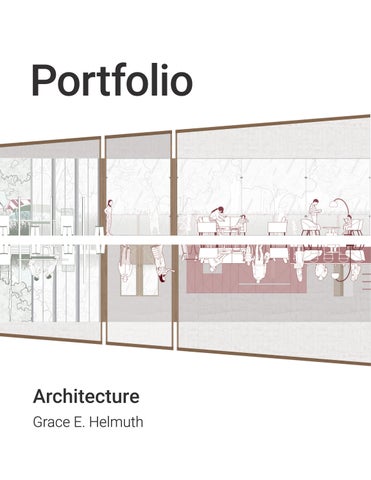
Grace E. Helmuth Architecture
Ann Arbor, MI grace@helmuth.net +1 (913) 953 - 6356 portfolio
University of Michigan
Master of Architecture (MArch)
University of Nebraska-Lincoln
Bachelor of Science in Design
• Major: Architectural Studies Minor: Product Design
Shawnee Mission East High School
High School Diploma / International Baccalaureate
EXPERIENCE
Actual Architecture Company (Actual AC)
Intern Architect
• Documented on-site measurements of existing buildings for schematic design
• Modeled projects, including existing site and building conditions for design development
• Expedited material library organization for efficient navigation and selection
UCARE Student Worker
• Developed precedent and historical analysis for a concept-based proposal
• Explored, reworked, and iterated key elements for envisioning a contemporary context
Ann Arbor, MI
May 2027
Lincoln, NE
May 2025
Prairie Village, KS
May 2021
Omaha, NE
May 2025 - Aug 2025
Lincoln, NE
May 2024 - Aug 2024
• Produced compelling drawings, diagrams, and documents over the process and final design
Peter Olshavsky IV, Ph.D.
Research Assistant
• Conducted background research on prospective interviewee contacts and drafted script
• Reviewed, edited, and discussed preliminary writings on an in-process book
• Provided sources and quotes for an essay in-process
The Kansas City Country Club
Assistant Pool Manager
Lifeguard
• Led exceptional service standards expected by club members
• Ensured safe, orderly and cleanly facilities while overseeing staff duties and conduct
Kansas City, MO
May 2024 - Oct 2024
Mission Hills, KS
May 2021 - Aug 2024
May 2019 - Aug 2021
• Crafted the employee handbook by compiling managerial responsibilities, operations, and guidelines
SKILLS
Hard: Rhino, Grasshopper, Revit, Vray, Adobe Creative Suite, ClimateStudio, Hand Drawing, Sketching, and Modeling Soft: Conflict Management, Decision-Making, Critical Thinking, Problem Solving, Learning Agility, and Cooperation
I am a current M.Arch student at the University of Michigan, with a passion for accessible design, user experience, higher-level ideation, and architecture’s ability to shape enriching spaces.
American Institute of Architecture Students (AIAS) - Member
The University of Michigan
American Institute of Architecture Students (AIAS) - Member
The University of Nebraska-Lincoln
The Gallery - Member
The University of Nebraska-Lincoln
Chi Alpha (XA) - Member
The University of Nebraska-Lincoln
Hauberk - Spread Designer, Clubs Co-Editor, and Website Co-Editor
Shawnee Mission East High School
Coalition Member
Shawnee Mission East High School
National Honor Society (NHS) Member
Shawnee Mission East High School
International Baccalaureate (IB) Program
Shawnee Mission East High School
DLR Group Scholarship
University of Michigan
UCARE Research Stipend
University of Nebraska-Lincoln
UNL Tribal Cultural Training Recipient
University of Nebraska-Lincoln
Nebraska Concrete and Aggregate Association Fund
University of Nebraska-Lincoln
Nancy Lee Smith Scholarship
University of Nebraska-Lincoln
George Beadle Scholarship
University of Nebraska-Lincoln
Husker Heritage Scholarship
University of Nebraska-Lincoln
Daisy Martin Scholarship
University of Nebraska-Lincoln
We Are Nebraska Commitment Scholarship
University of Nebraska-Lincoln
Norman Ochsner Scholarship
University of Nebraska-Lincoln
International Baccalaureate Diploma Recipient
Shawnee Mission East High School
Quill and Scroll Yearbook Excellence - Class A: People
Shawnee Mission East High School
Lincoln, NE
Fall 2025 - Present
Lincoln, NE
Apr 2023 - May 2025
Lincoln, NE
May 2024 - May 2025
Lincoln, NE
Feb 2024 - May 2025
Prairie Village, KS
Aug 2018 - May 2021
Prairie Village, KS
Aug 2018 - Mar 2020
Prairie Village, KS
Aug 2019 - May 2021
Prairie Village, KS
Aug 2019 - May 2021
Ann Arbor, MI 2025
Lincoln, NE
Summer 2024
Lincoln, NE
Fall 2024
Lincoln, NE
Fall 2023 - Spring 2024
Lincoln, NE
Fall 2024 - Spring 2025
Lincoln, NE
Fall 2021 - Spring 2025
Lincoln, NE
Fall 2021 - Spring 2025
Lincoln, NE
Fall 2023 - Spring 2024
Lincoln, NE
Fall 2021 - Spring 2023
Lincoln, NE
Fall 2021 - Spring 2022
Prairie Village, KS
May 2021
Prairie Village, KS 2020
06-11 20-31
12-19
32-43 44-47
48-55
LOCATION
DURATION
INSTRUCTOR
TEAM
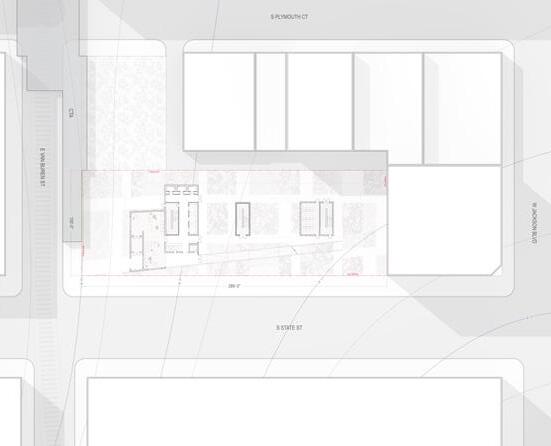
310 S State St, Chicago, IL 60604
11 weeks
Meredith Miller Individual
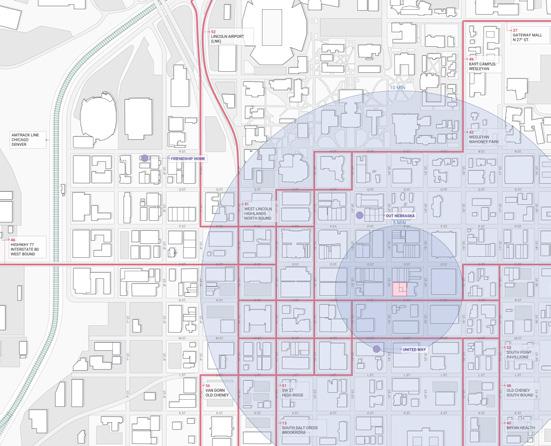
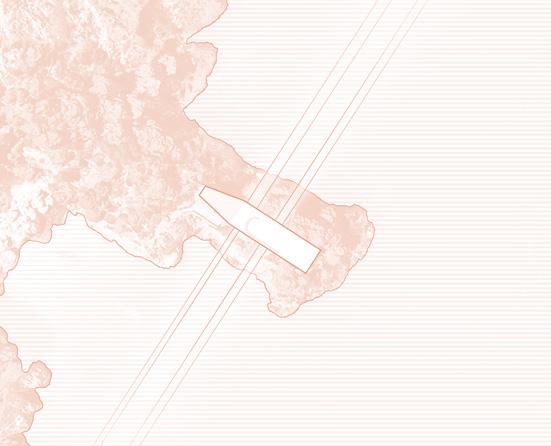
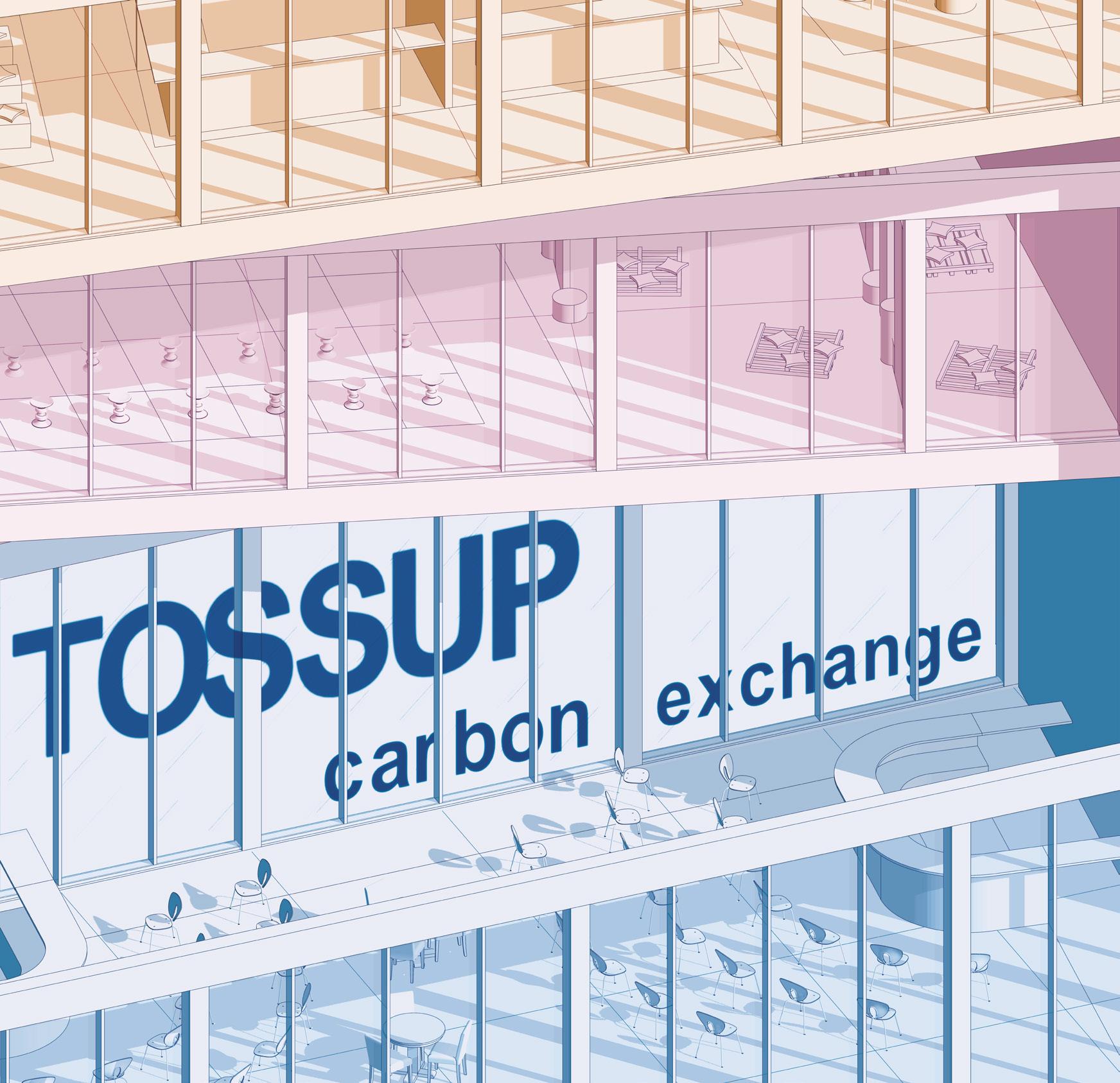
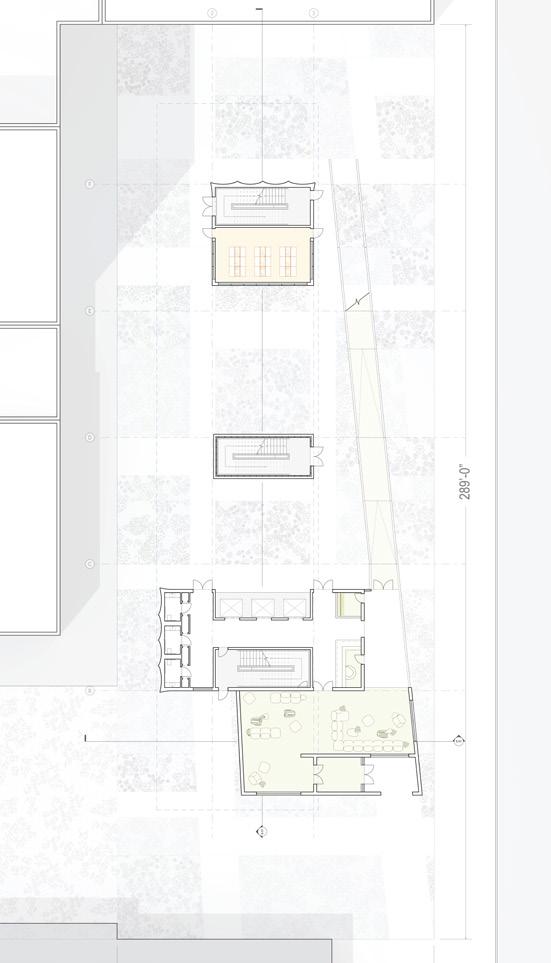
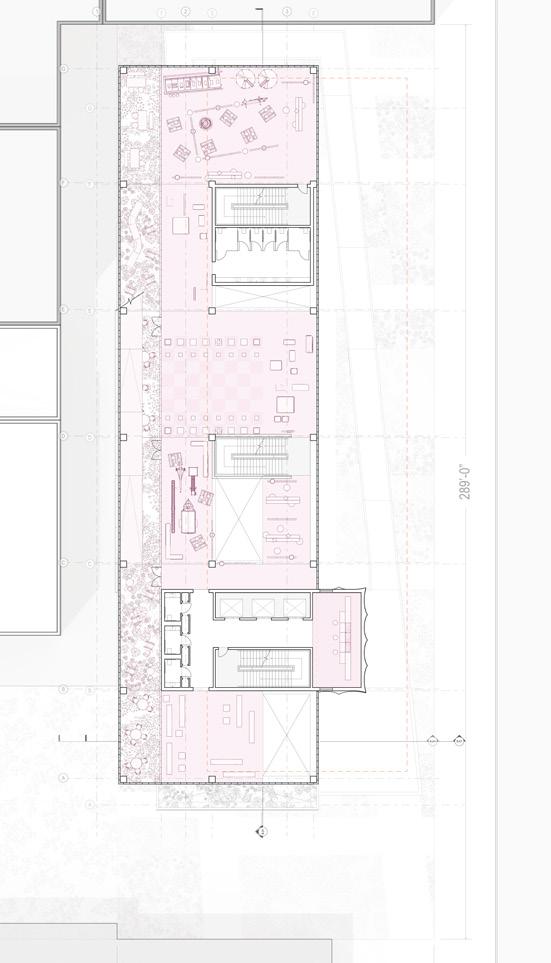
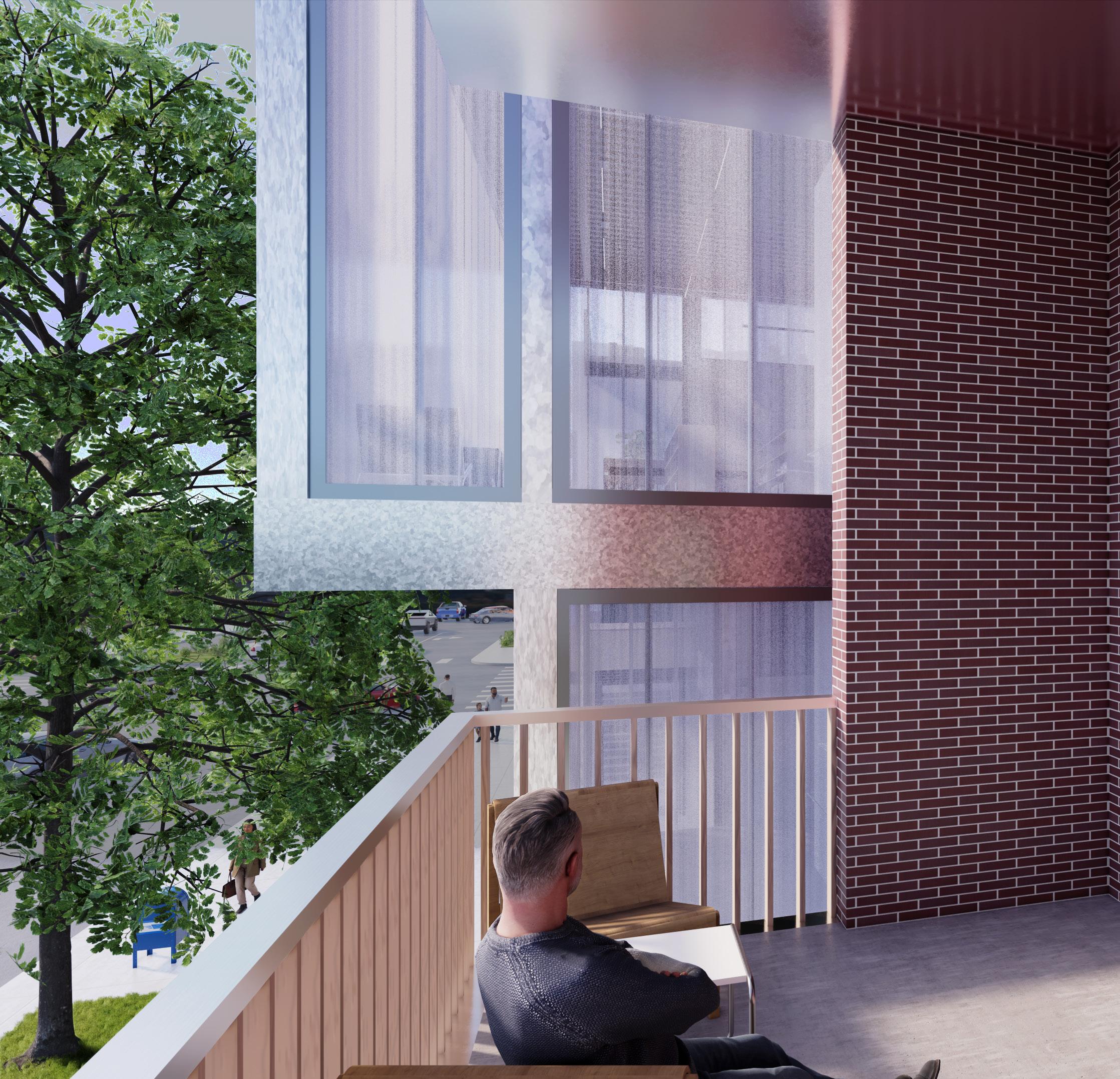
Located near the train station, surrounded by educational buildings, and a spot within Chicago’s Loop, the proposal augments the former urban park to serve as a physical space for emerging Carbon Markets.
Reminiscent, and at times showcasing, former trends in industrialization, the programs aim to host and support voluntary market segments. The intervention demonstrates the tangible and transitory nature of the Carbon Market, nudging the user’s grasp of the emerging demands. From trivial sales to global bids, the proposal emphasizes perceptible experience to focus and hone attention.
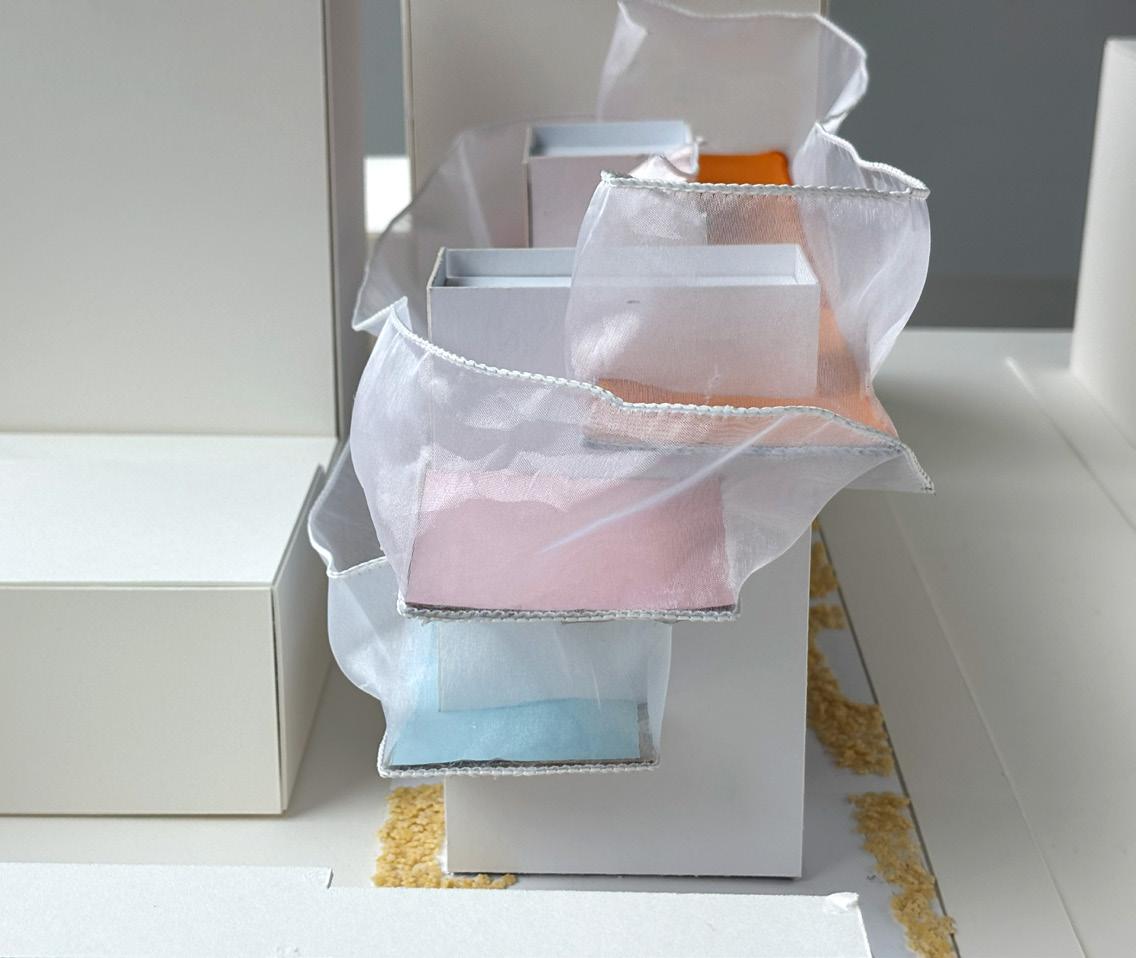
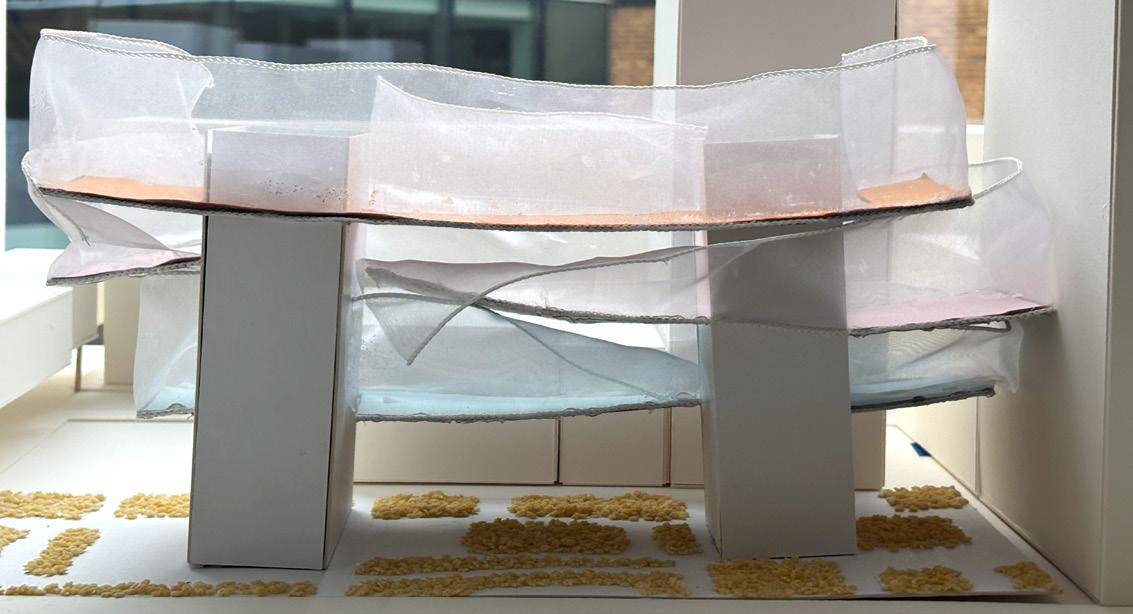
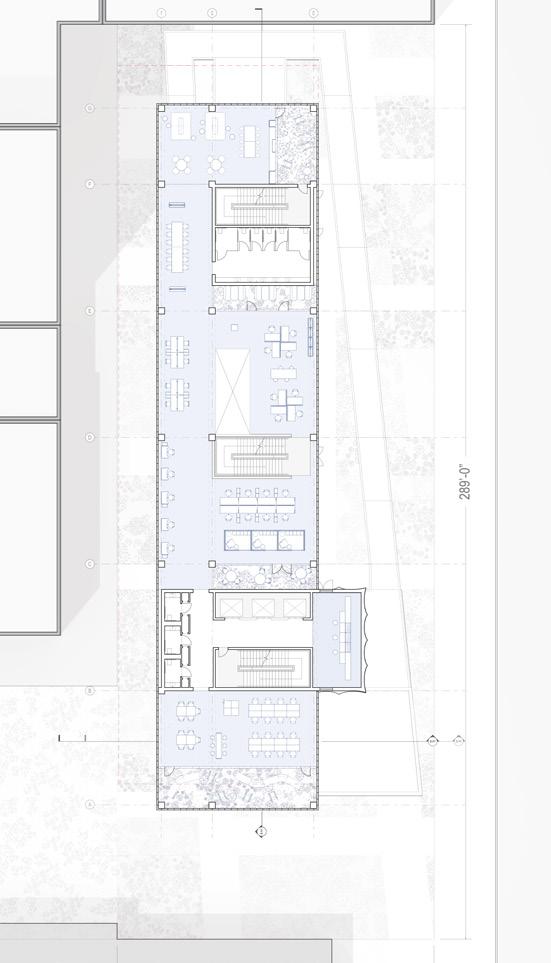
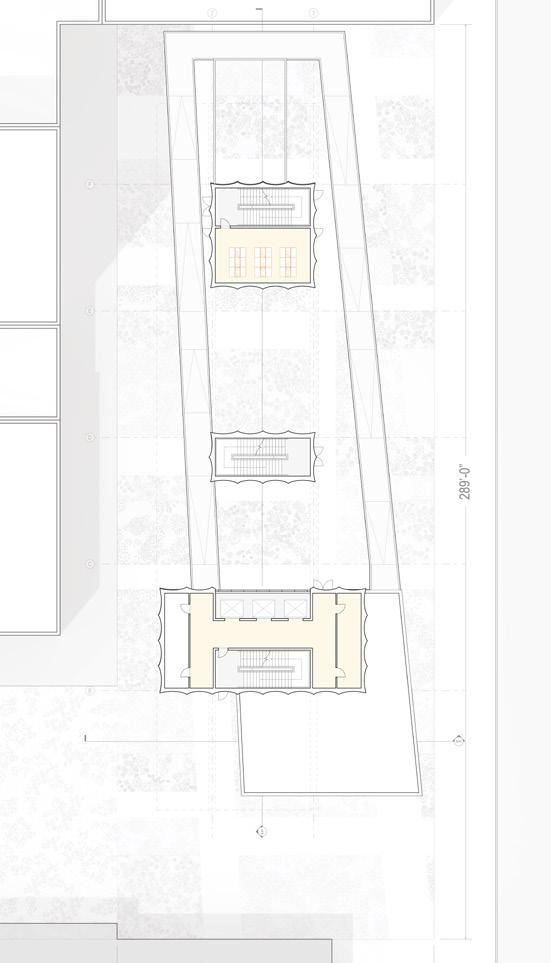
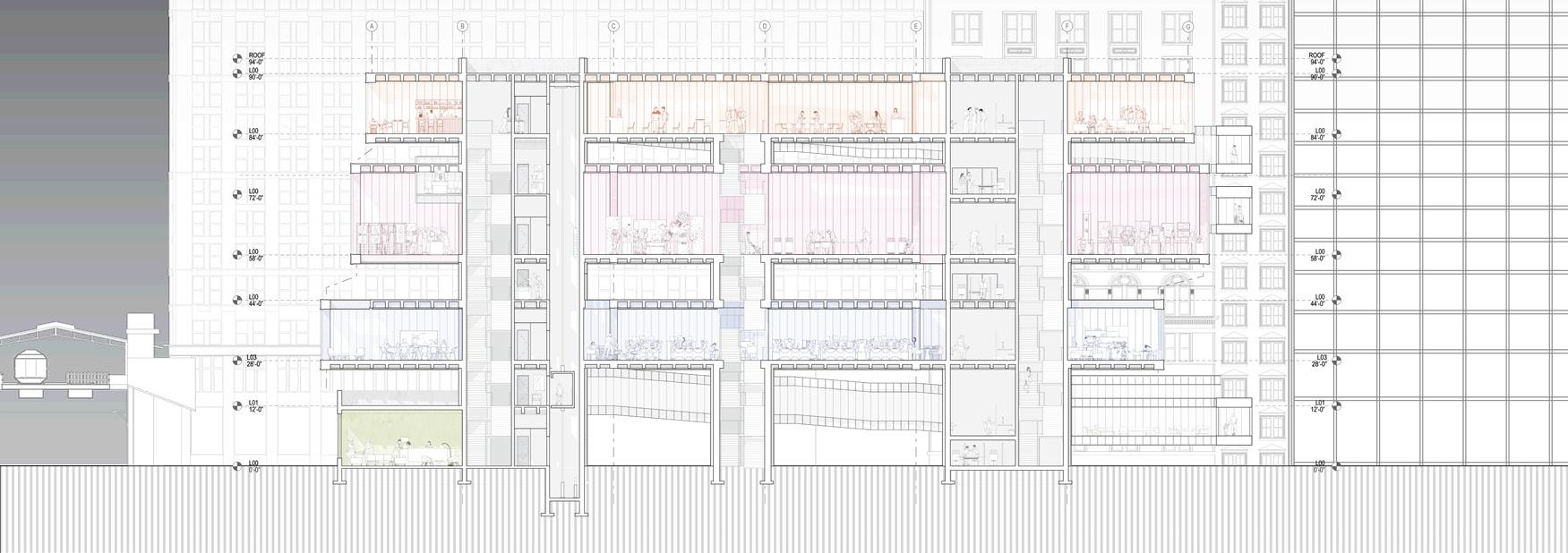
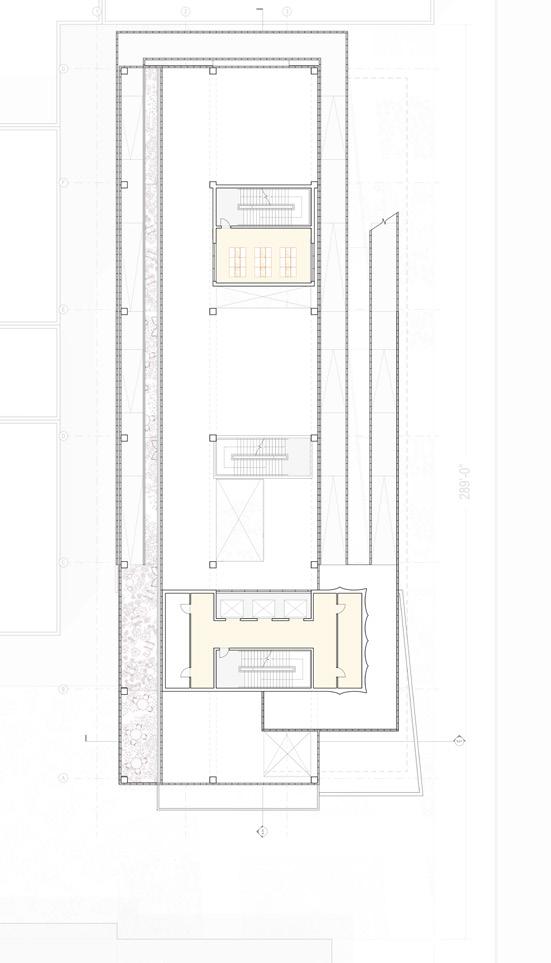
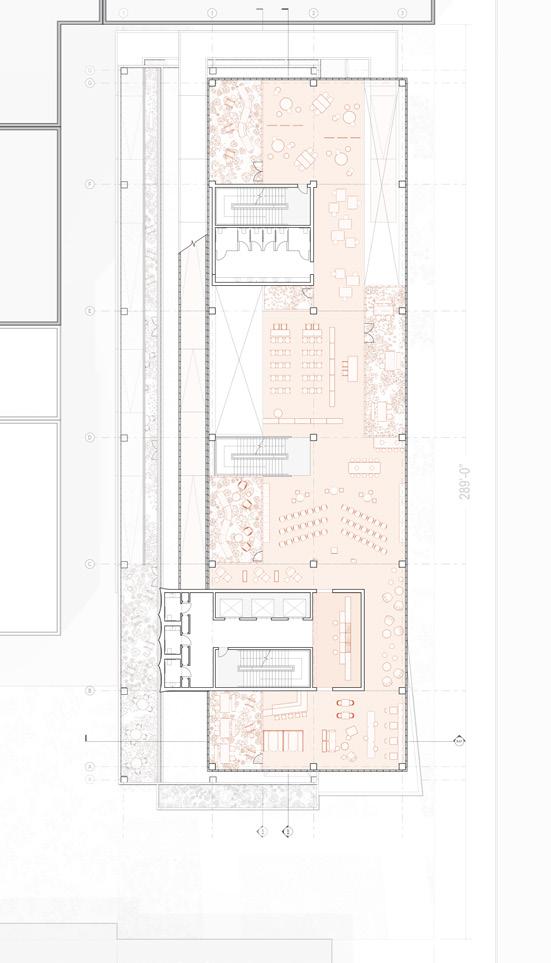
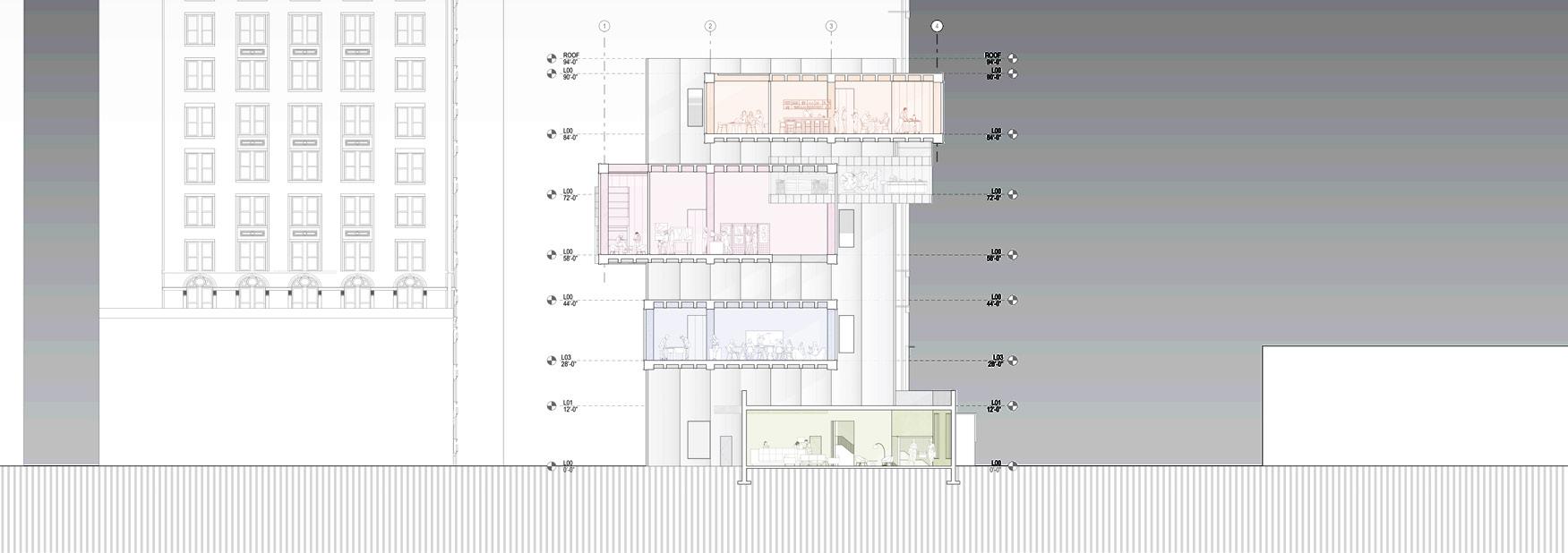
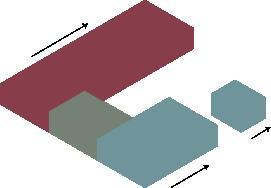
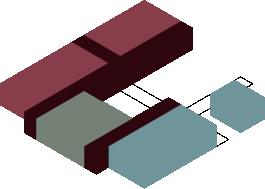
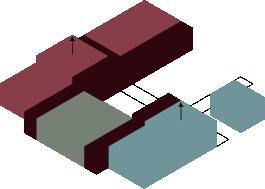
The compound form floats over the landscaped site, paralleling the architecture as consequential and action within as solemn. Divided into three main sectors, the bars insert themselves into the anchoring cores; housing space for office and meeting areas, public museum and exhibition, with the physical commerce space above. The exterior envelope wrap extends interstitial spaces between, softening the severed functions to link relations.
Featured activities provoke a conscious response by mirroring and actualizing the user’s transactions, both implicit and explicit. The internal program aligns thematically across the bars, each curated by material and architectural allusion. Unfolded along the spatial sequence, the circulation and layouts vary in complexity and in users’ exposure to multiple scales of interaction. Assorted programs offer small-scale engagement for museum visitors, grounding participants before engaging with large markets, and relating the physical, economic, and vulnerabilities at play.
The proposed Carbon Market aspires to create a dynamic platform for dialogue, learning, and innovation. By thoughtfully integrating educational elements, designated market areas, and community spaces, the proposal crafts an interactive environment to bridge the divide between physical space and the complexities of market dynamics. The design encourages participatory engagement while highlighting both the fragility and significance of individual actions in the broader context of sustainability.
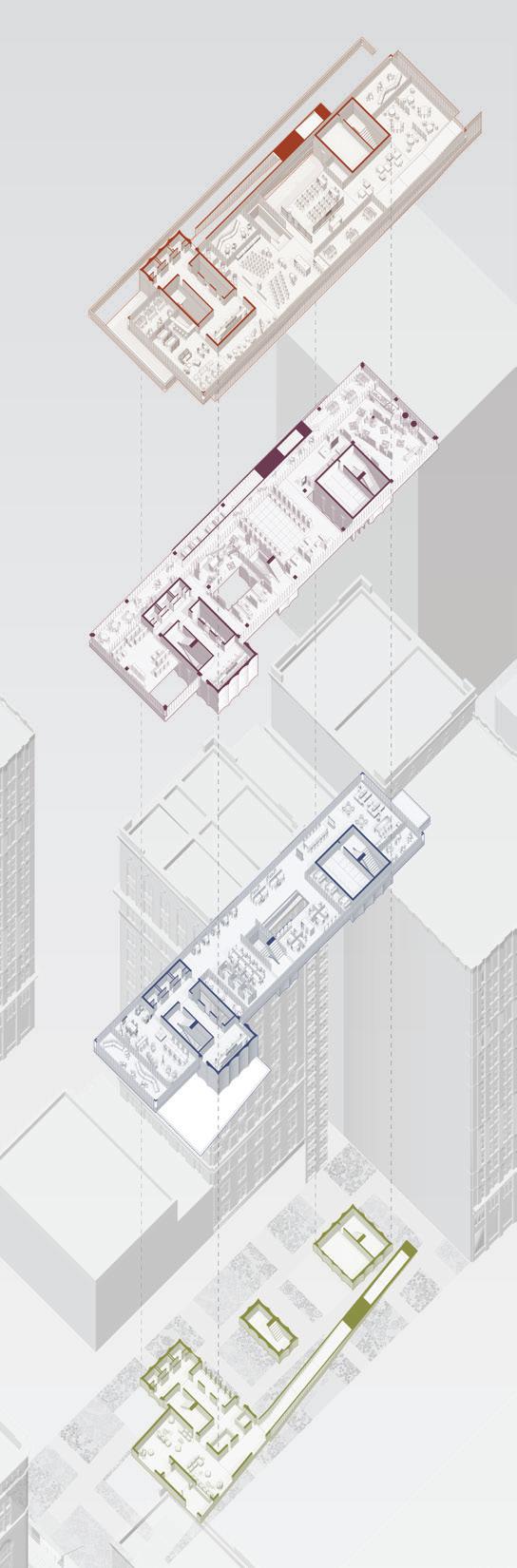
EXPLODED
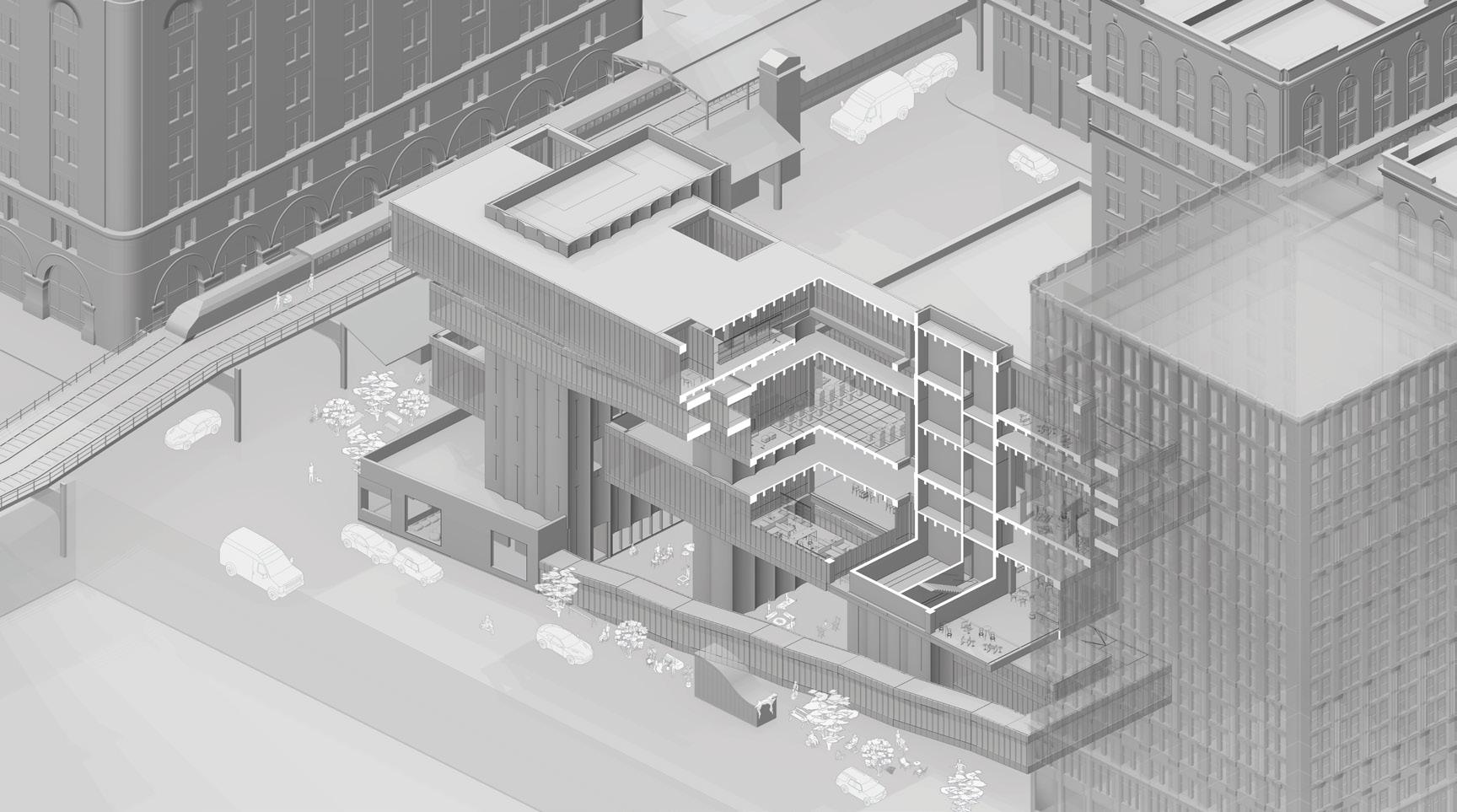
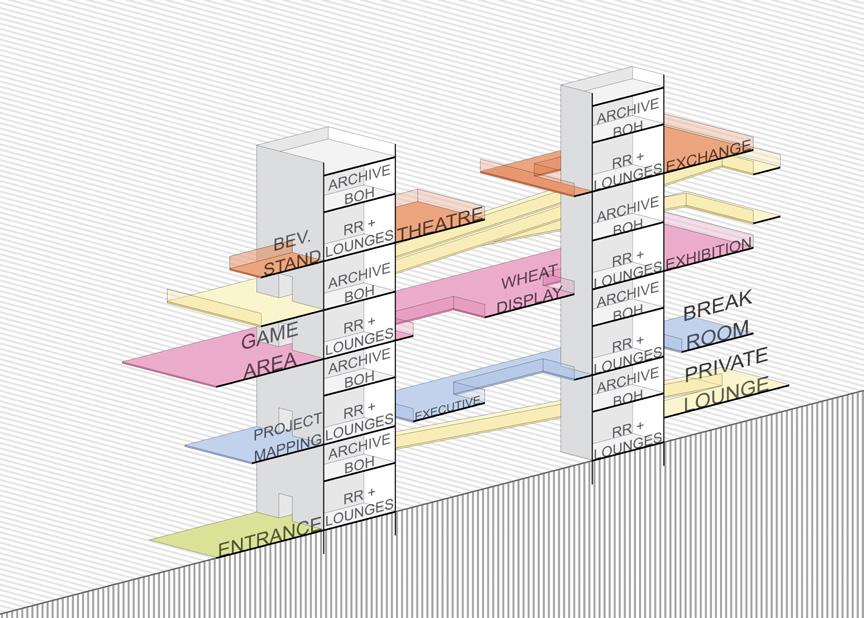
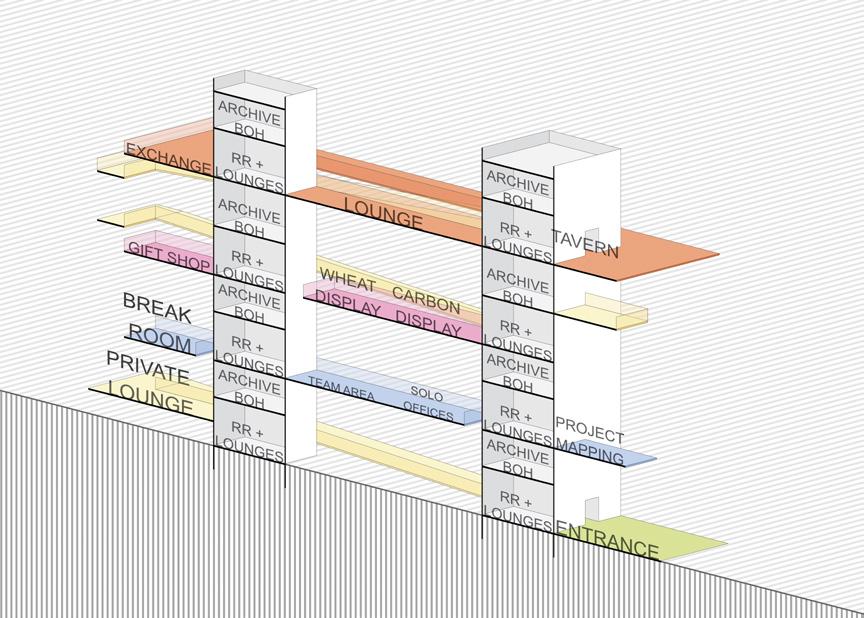
SECTION 02
SECTION 01
LOCATION
DURATION
INSTRUCTOR
TEAM
136 S 14th St, Lincoln, NE 68508
11 weeks
Bryian Kelly Callie Hike
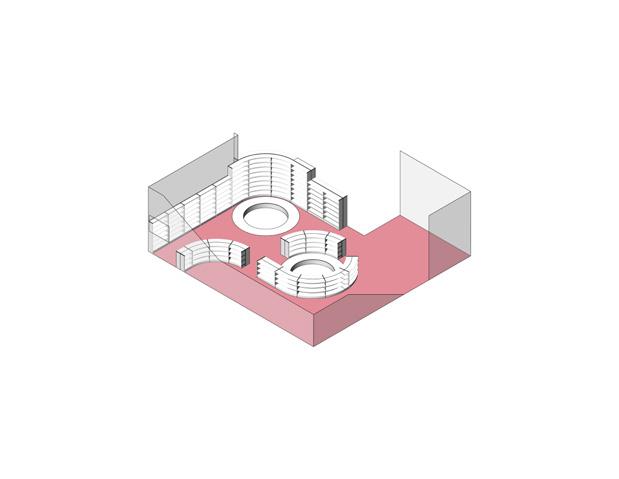
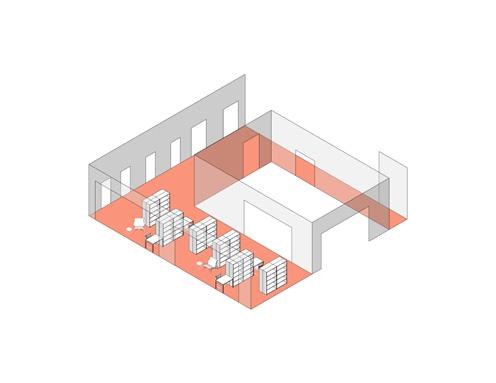
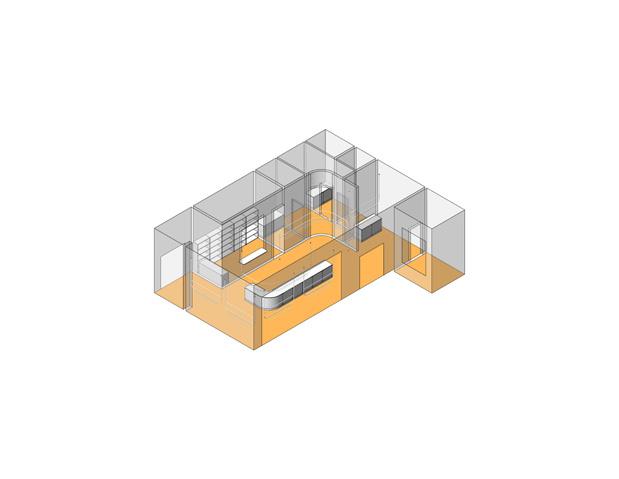
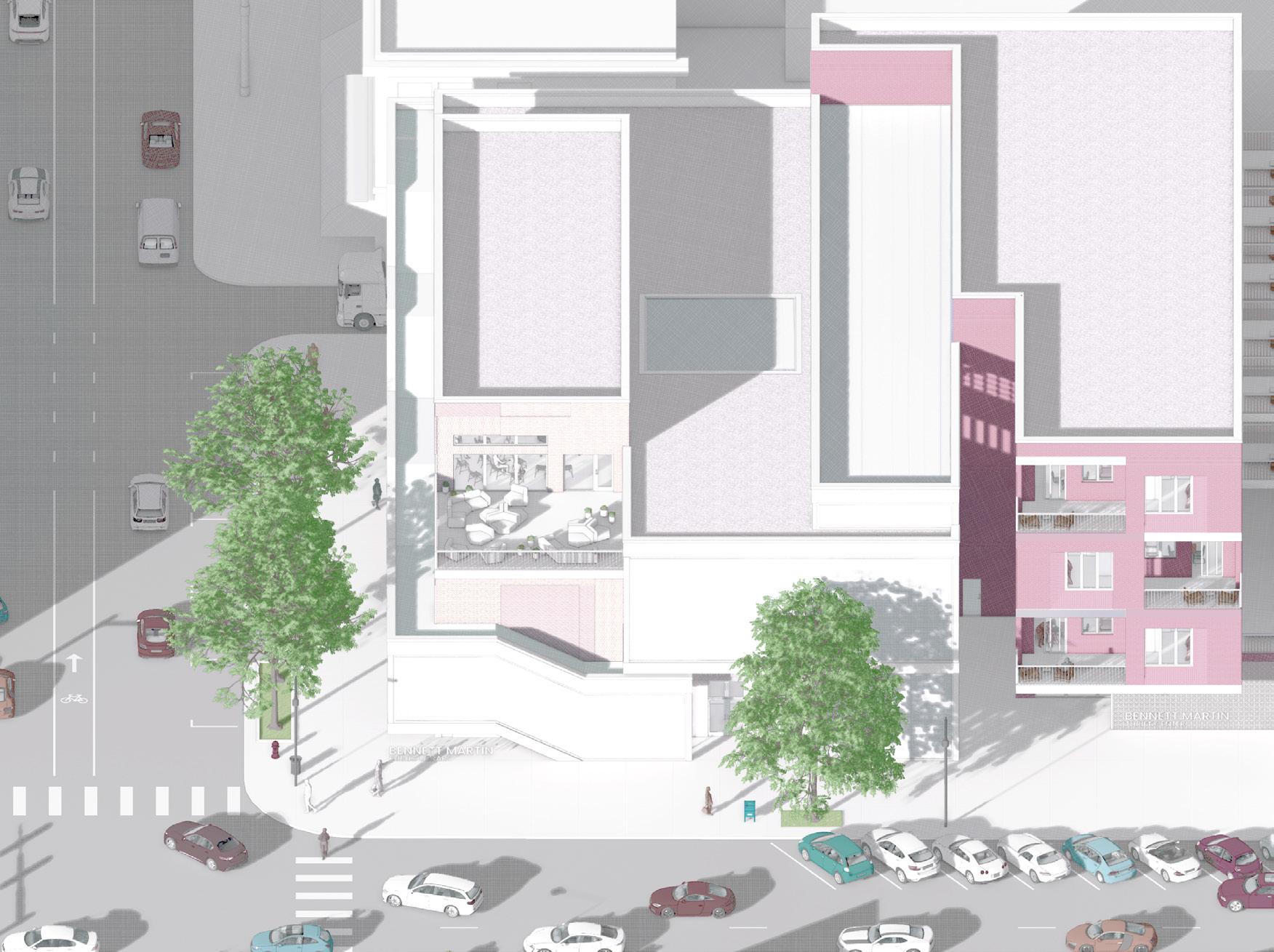
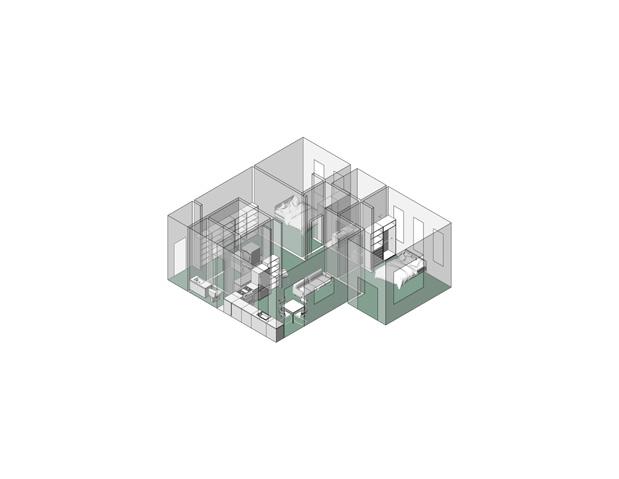
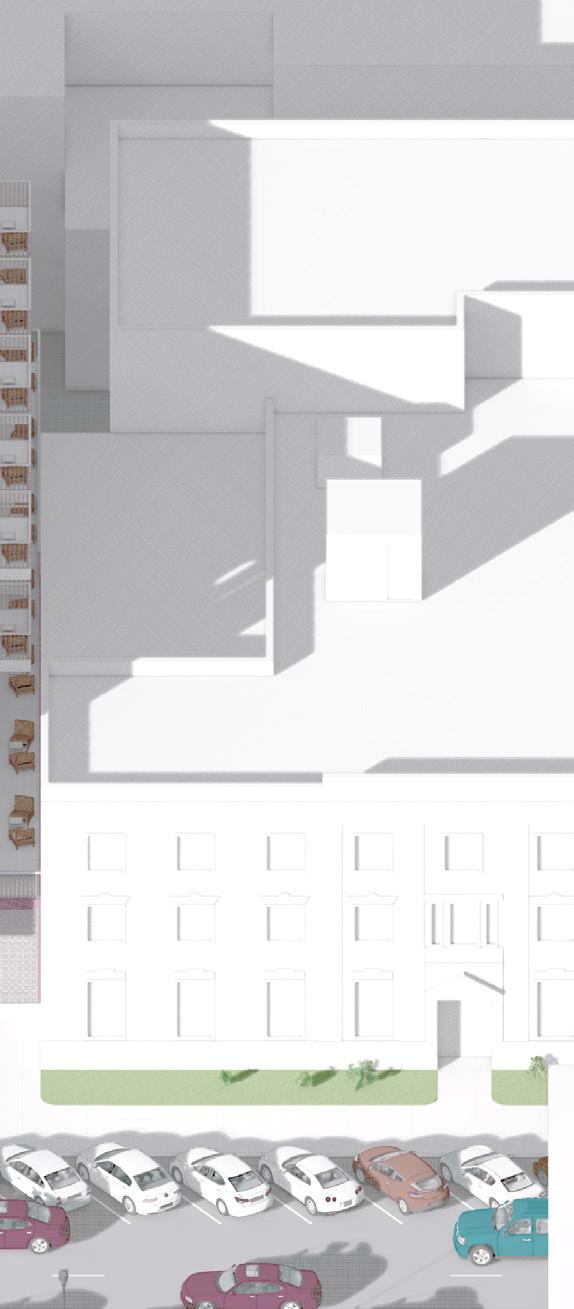
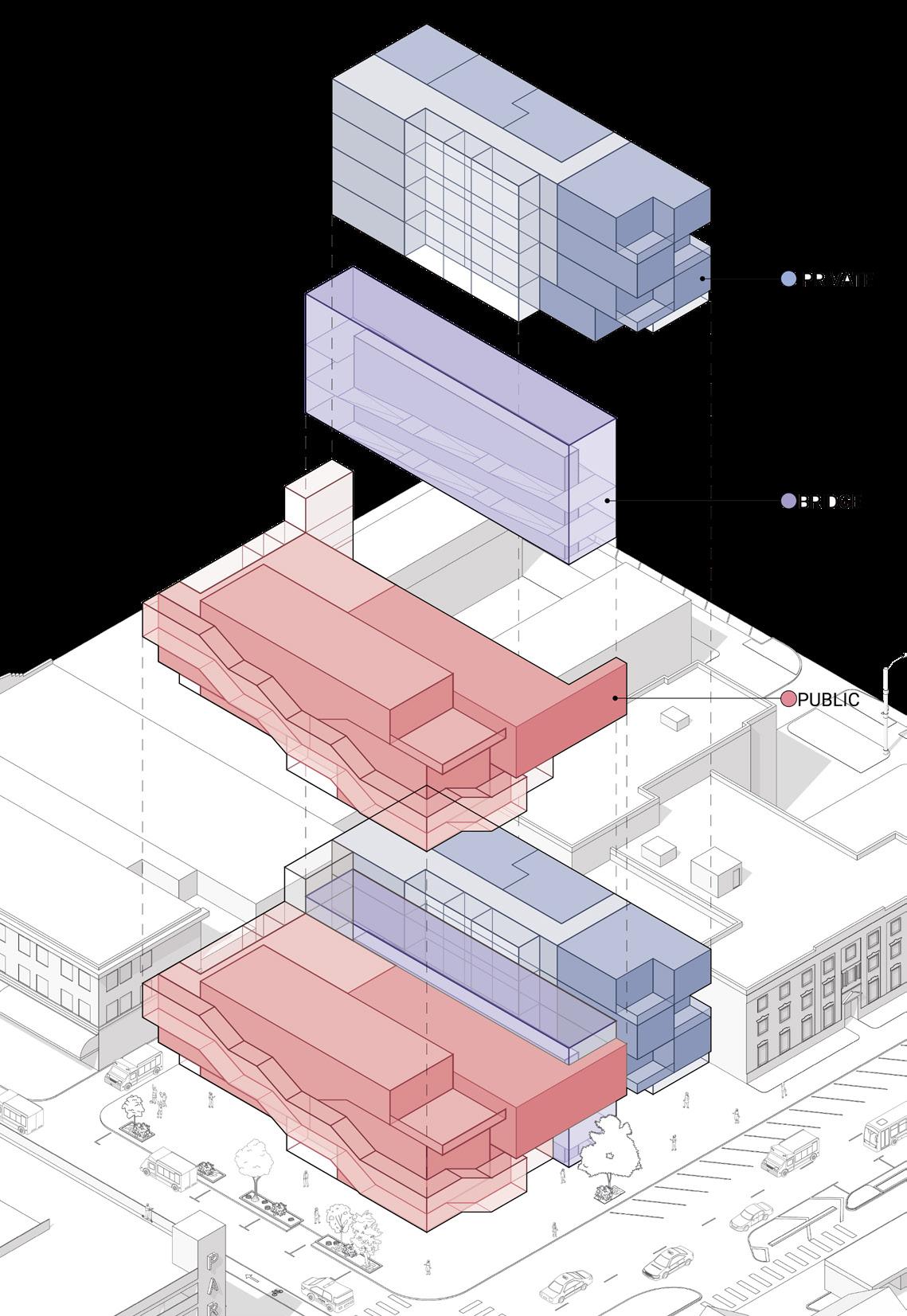
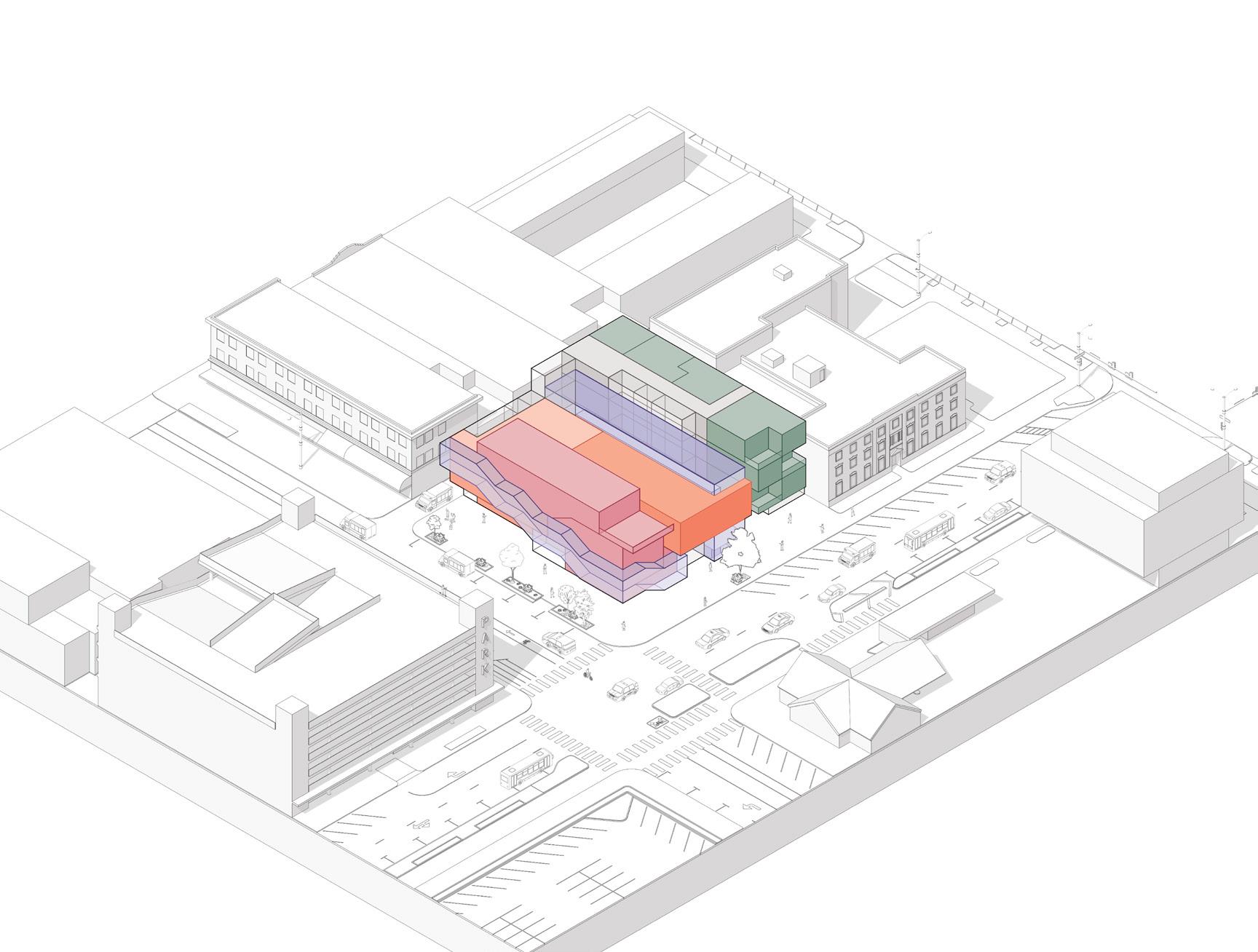
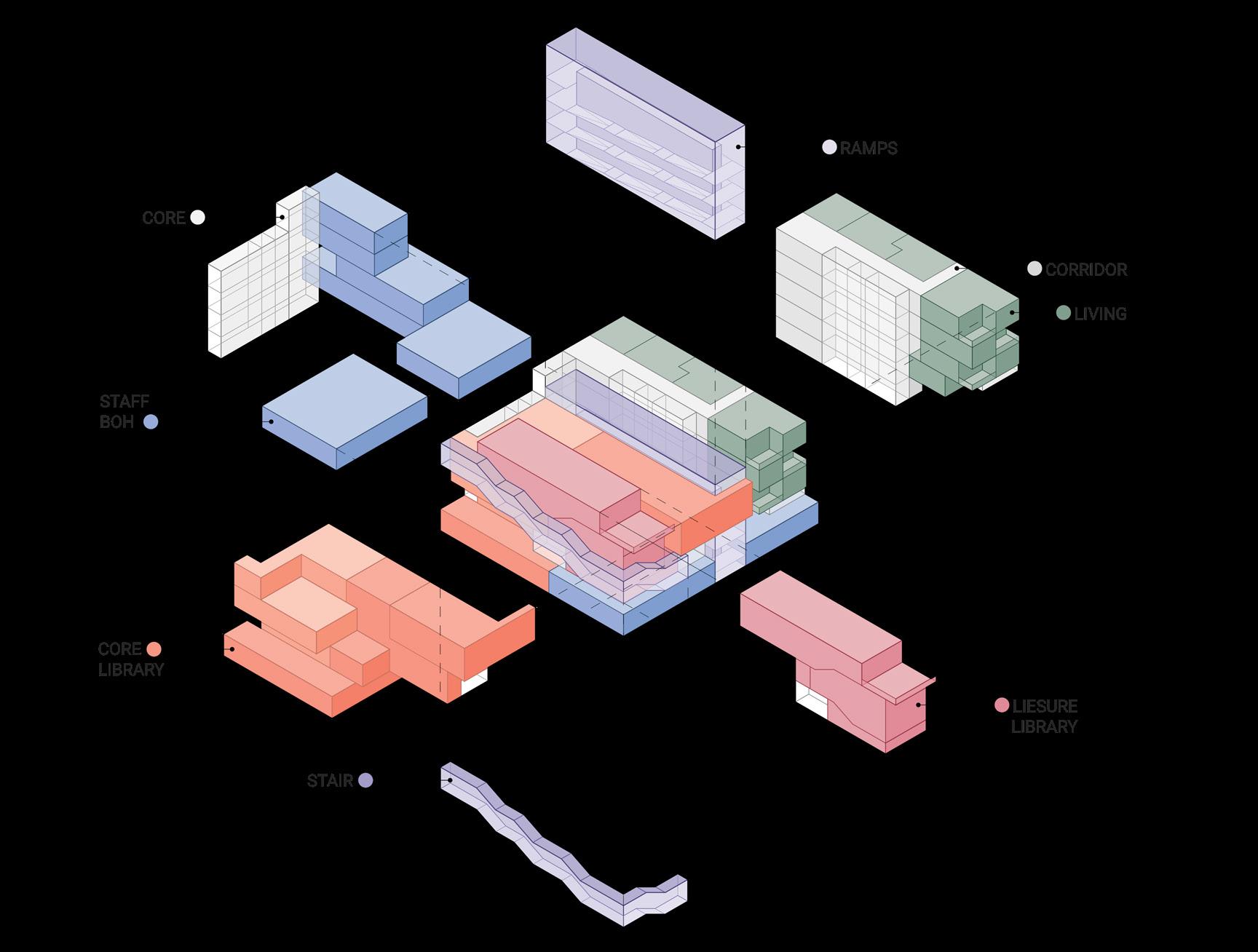
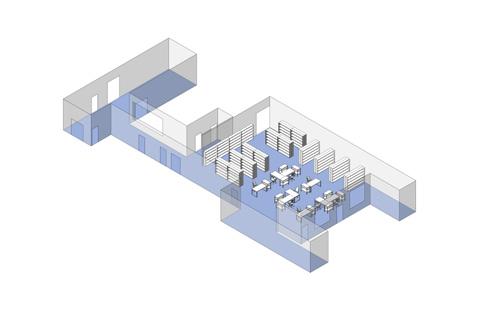
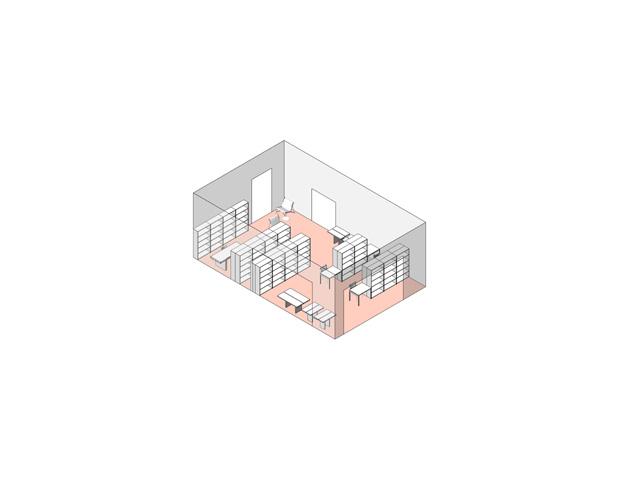
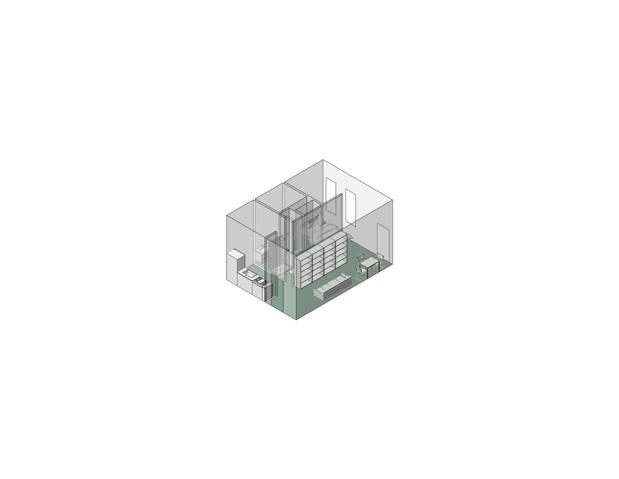
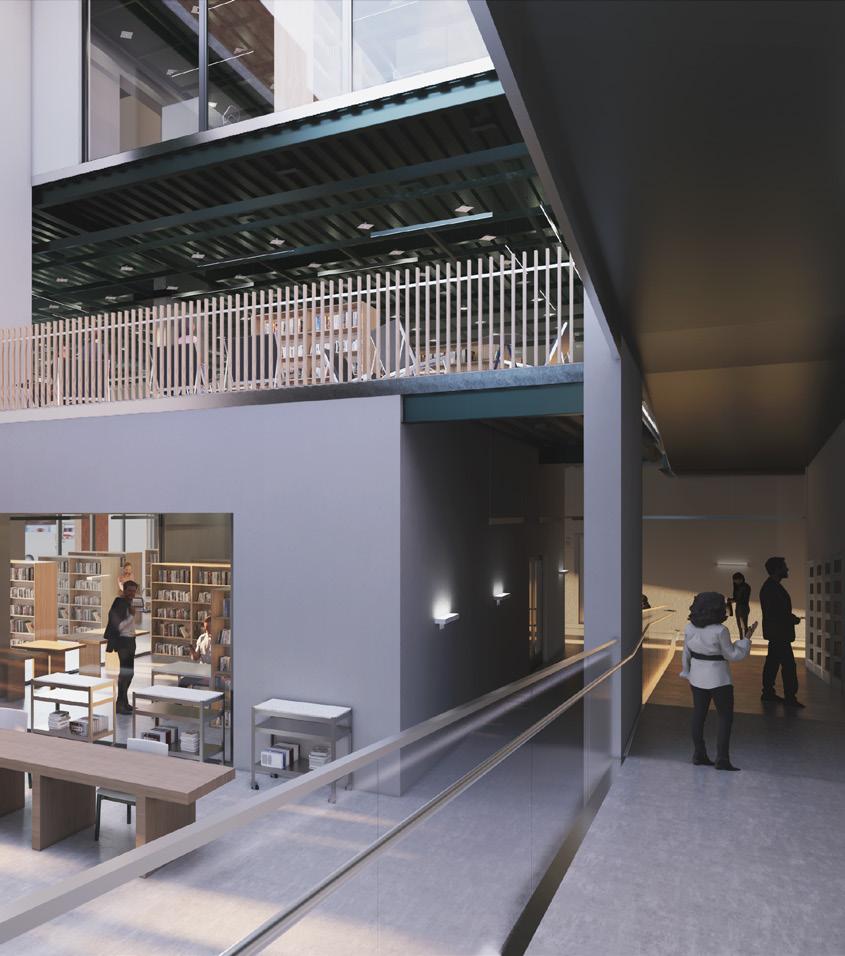
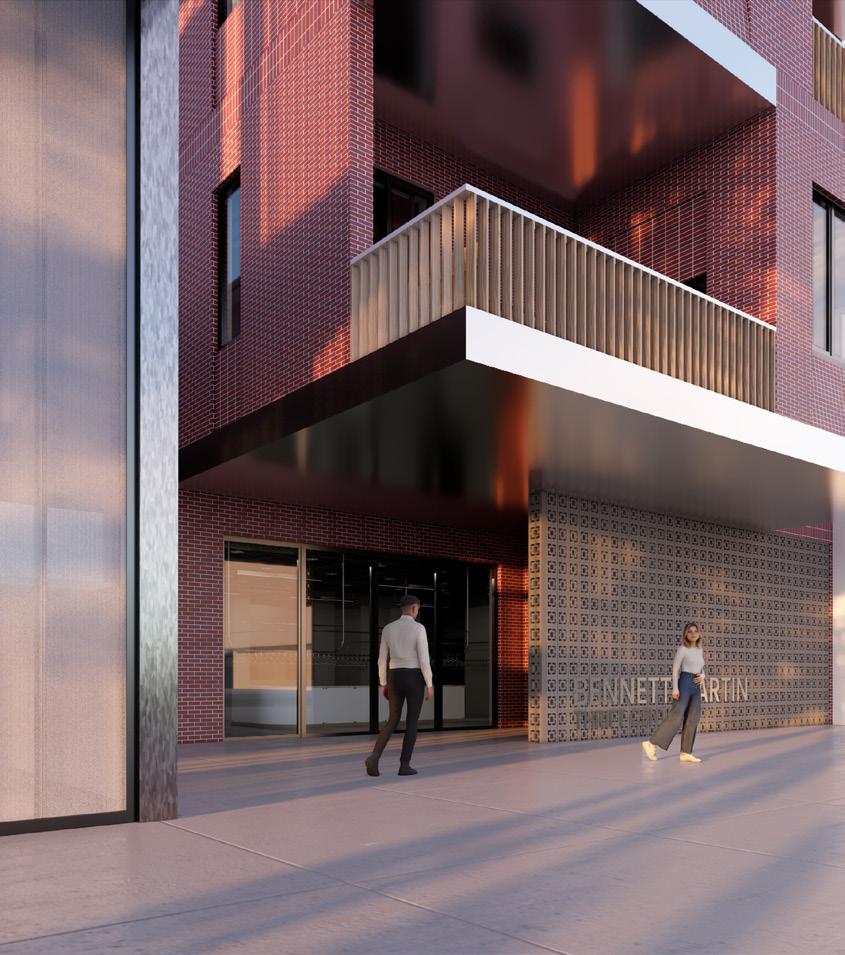
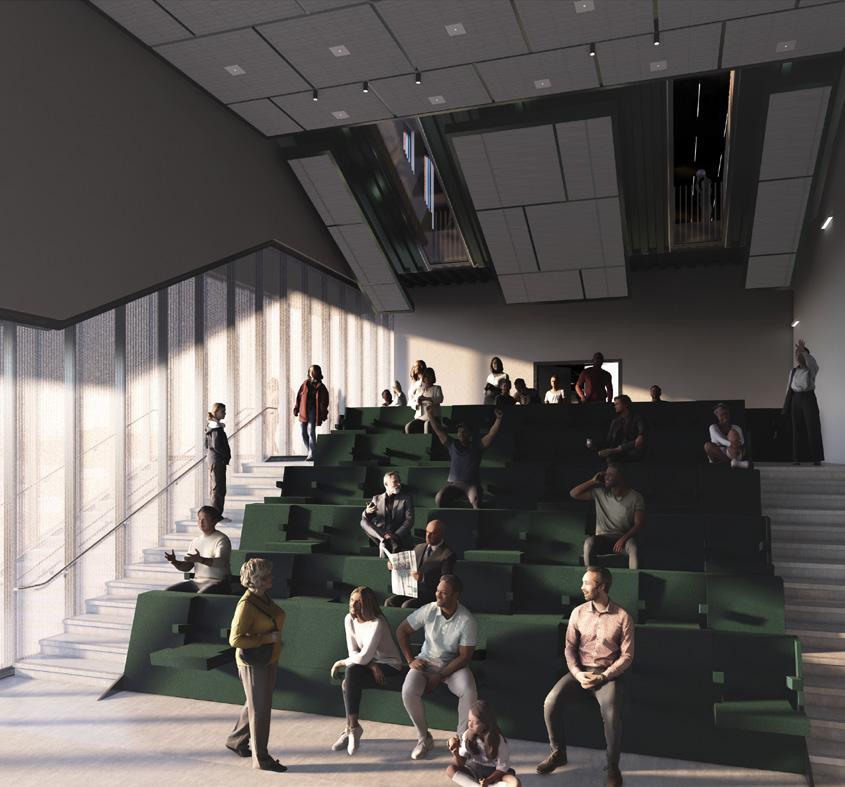
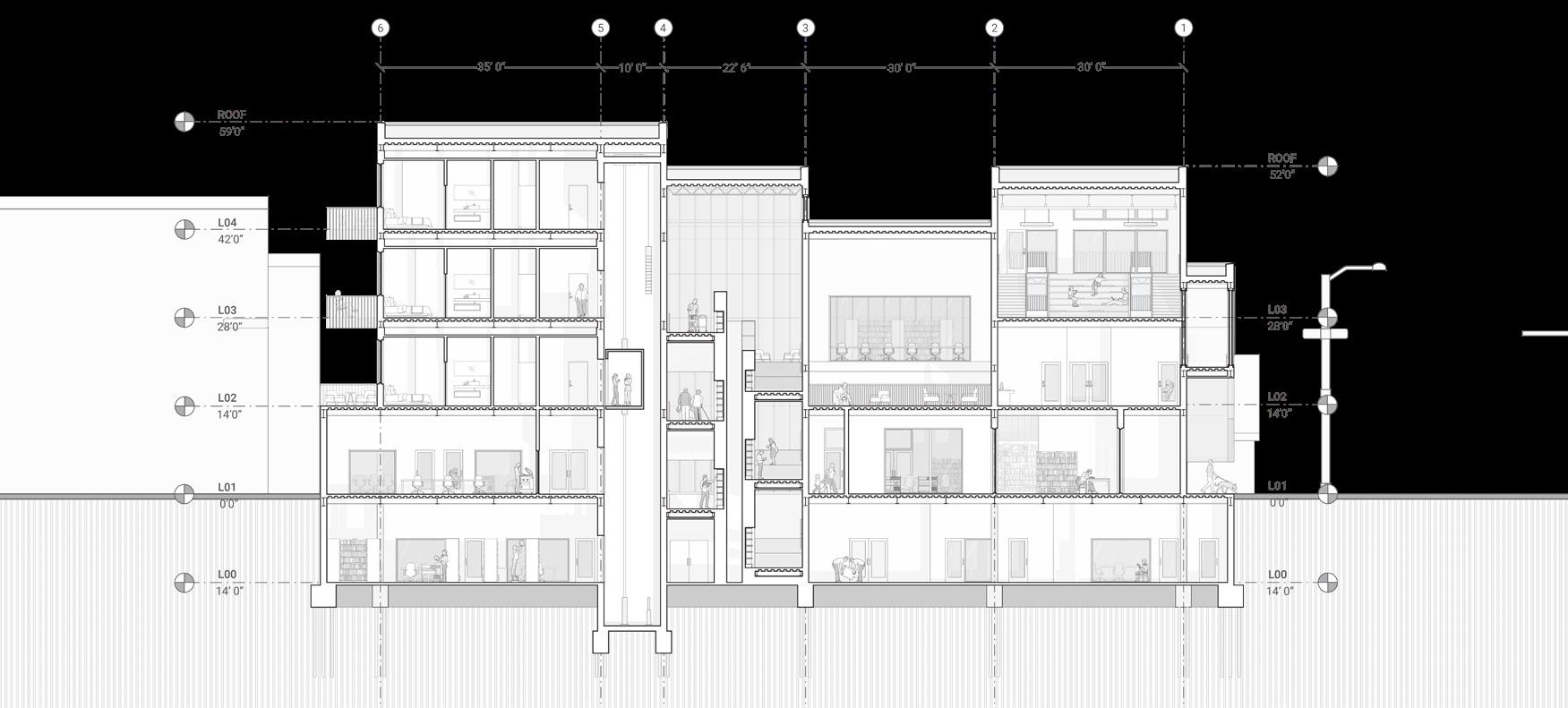
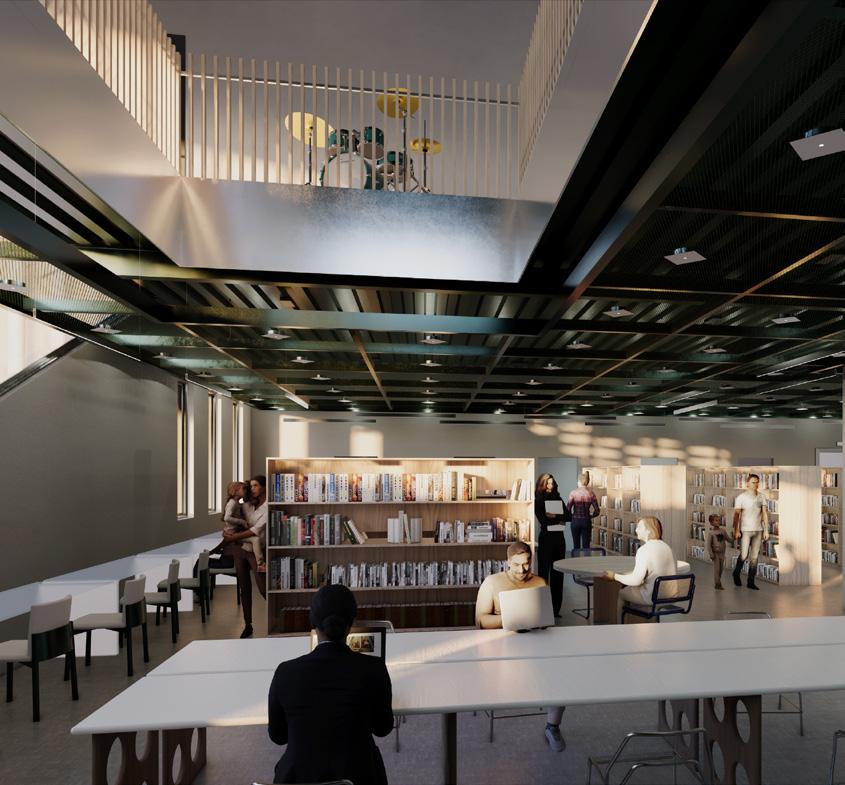
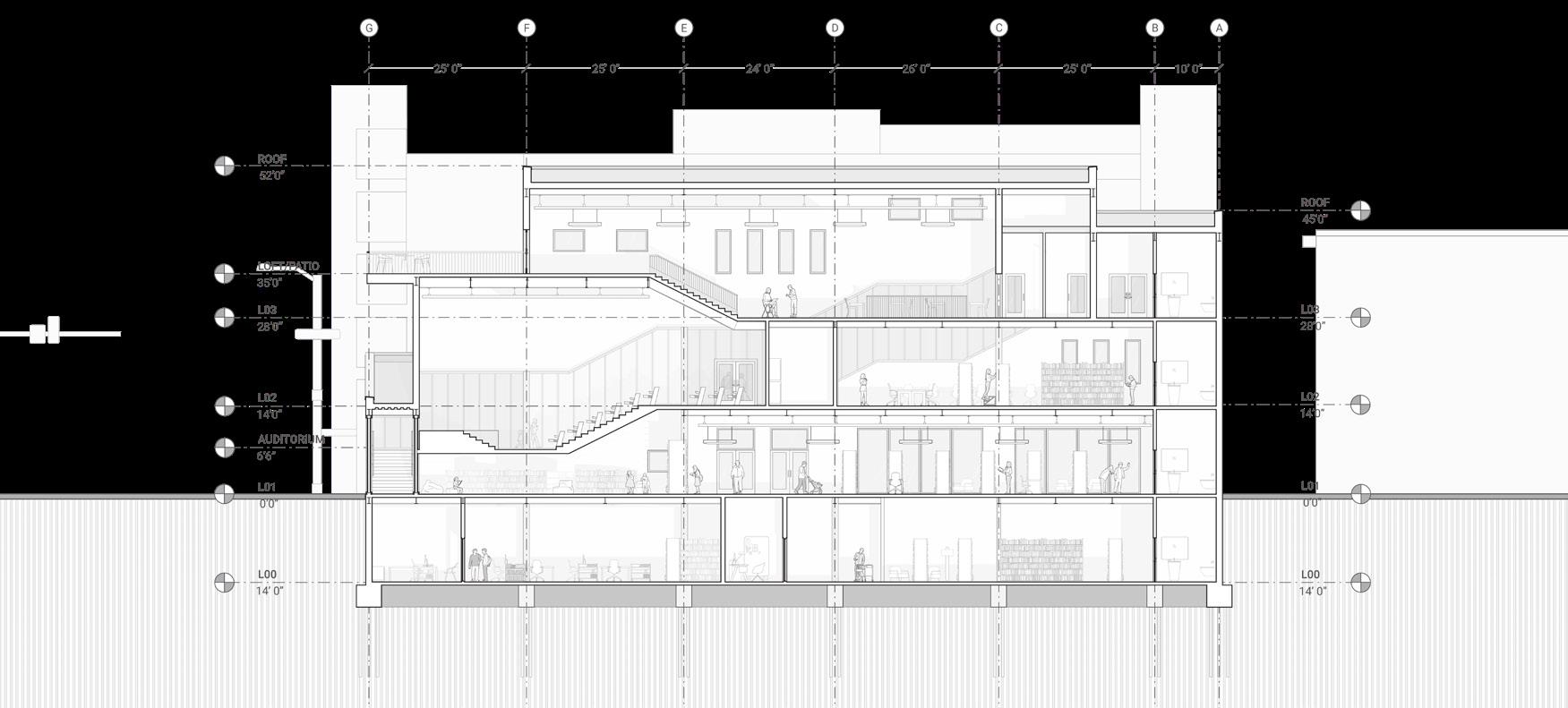
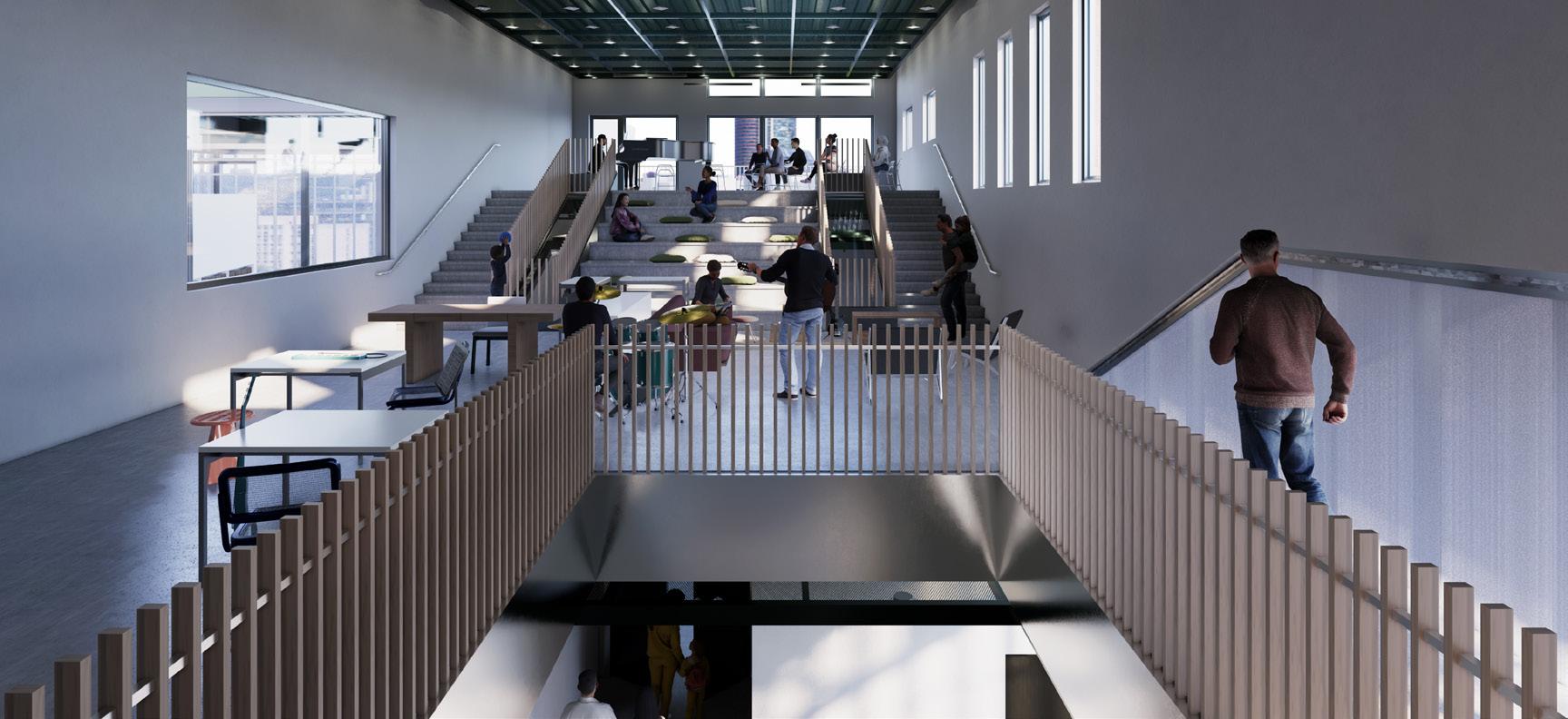
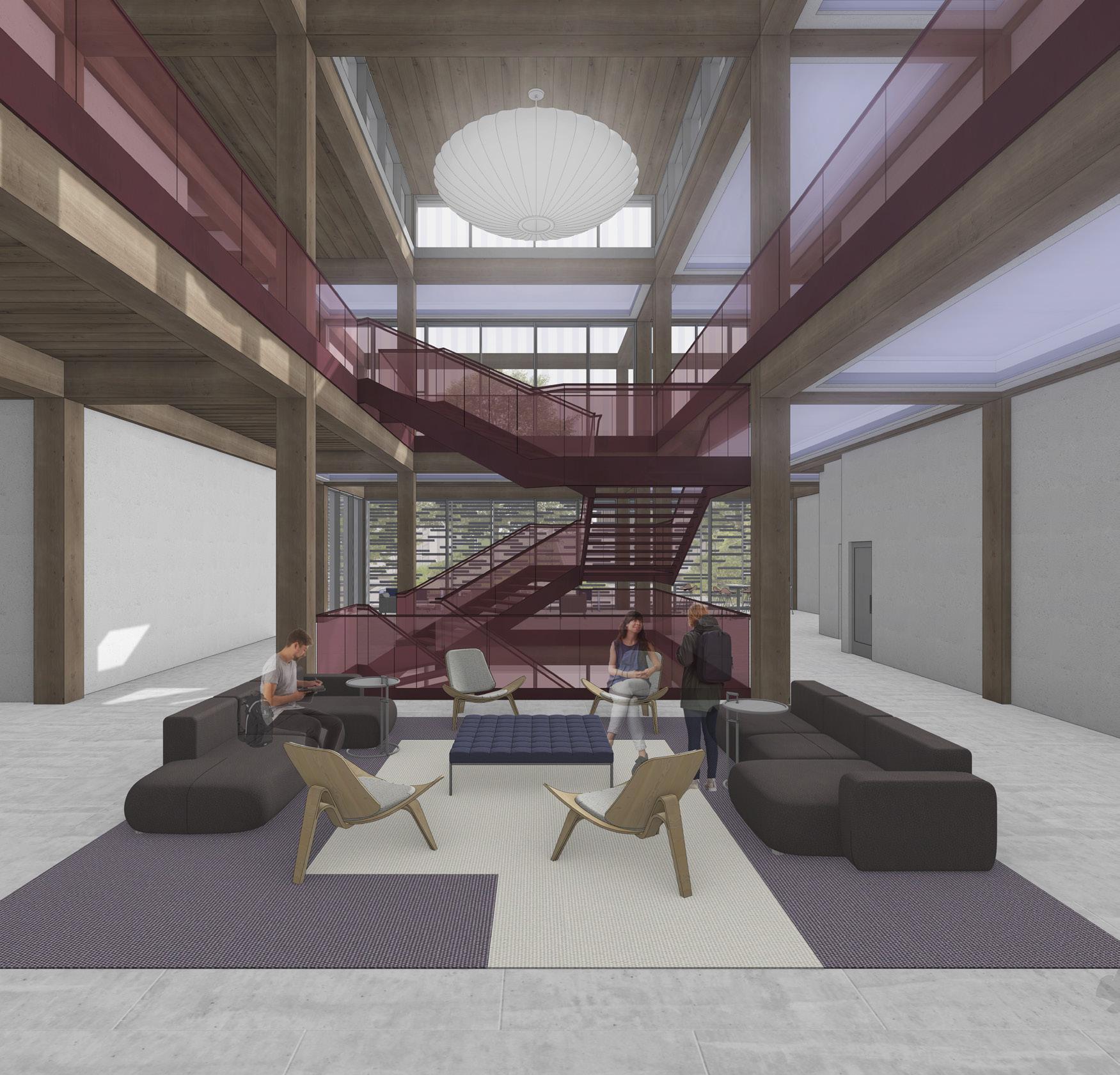
The reimagined Public Library extends beyond its traditional role as a place of knowledge, redefining it as a civic hub where learning, living, and community support intersect. Through a program gradient of interaction and privacy, the design fosters an environment where all users—library patrons, transitional residents, and staff—can meaningfully engage while maintaining space for focus and stability. A central ramp through the atrium serves as both an organizing element and a symbolic gesture of movement. The winding ramps guide users through the library’s varying levels and buffer the public activities and transitional living spaces. Key interventions include an expanded music library and auditorium, a thrift store staffed by transitional residents, and a heritage room relocated to street level for greater public engagement. The integrated transitional housing component offers dignified living spaces, communal amenities, shared lounges, and outdoor balconies. Ultimately, the project offers traditional library typologies a model that supports intellectual enrichment, personal growth, and
stability by integrating social infrastructure. The interior massing diagram divides spatial organization into distinct functional systems while arranging the spaces to support clarity, hierarchy, and interaction. Circulation is expressed volumetrically through ramps and vertical cores, reinforcing the role of movement as a central ordering device. The neutral wall becomes a threshold linking public programs and private units. Ramped circulation and mechanical ventilation entangle the central axis, acting as the building’s supporting spine. Tranquil reading areas are augmented by suspended lounges aligned with spaces for the performing arts. The dialogue of mass and void, service and served, results in an adaptable interior framework. We aim to integrate our diverse user needs into a unified architectural system that fosters connectivity, dignity, and purpose throughout the project. Our application reinforces the contemporary library shift: expanding primary offerings from books to community spaces, updating technologies, and incorporating multimedia forms of expression.

PROGRAM INTEGRATION
SPECIAL COLLECTIONS



LOCATION
DURATION
INSTRUCTOR
TEAM
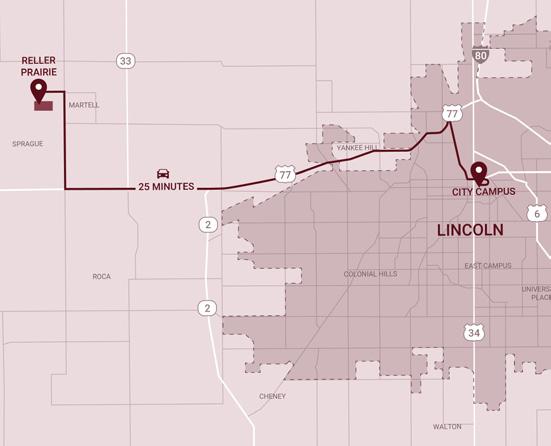
20210 SW 29th St., Martell, NE
16 weeks
Monique Bassey + Michael Harpster
Callie Hike, Jackson Myers, + Austin Pick
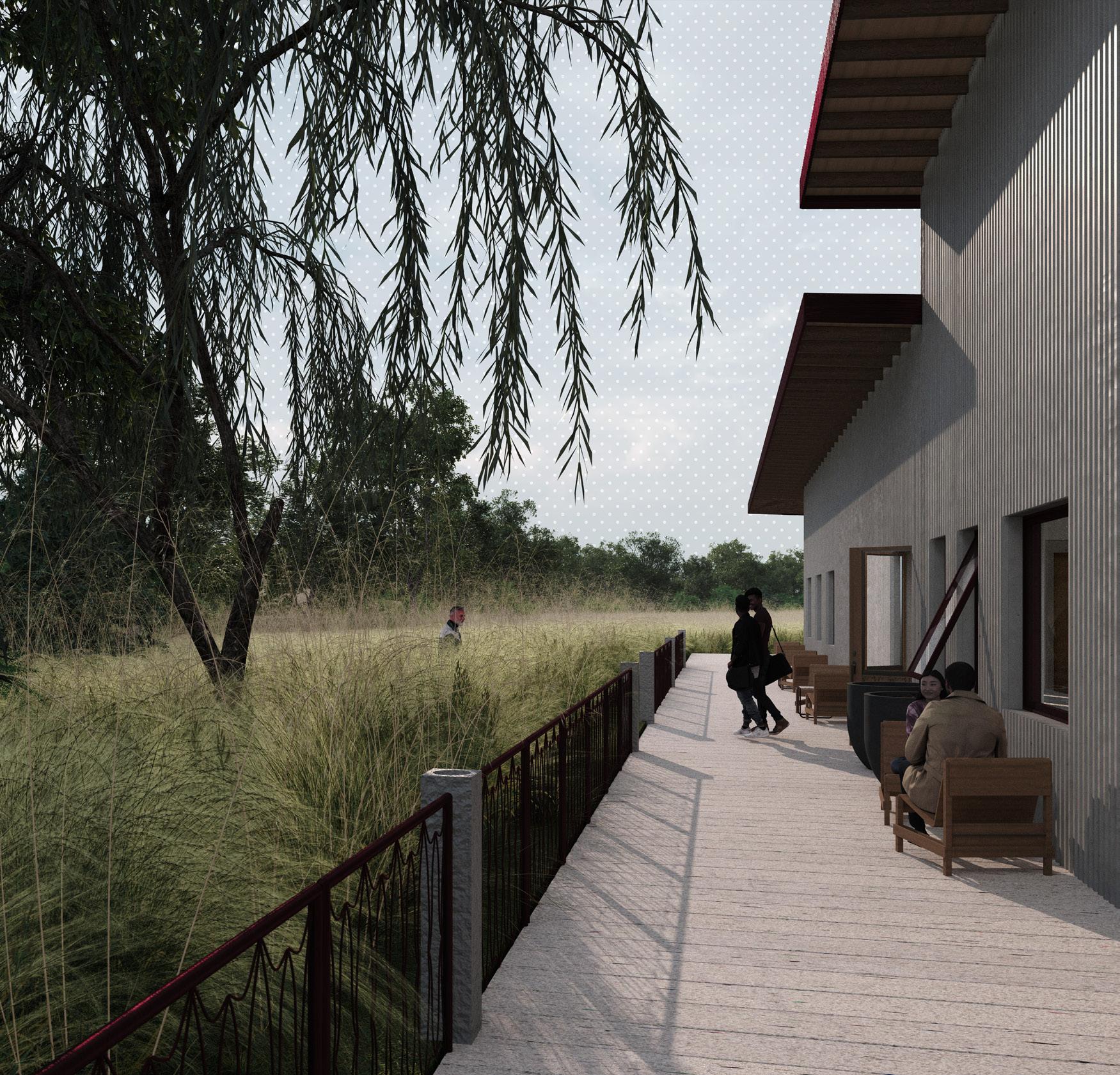
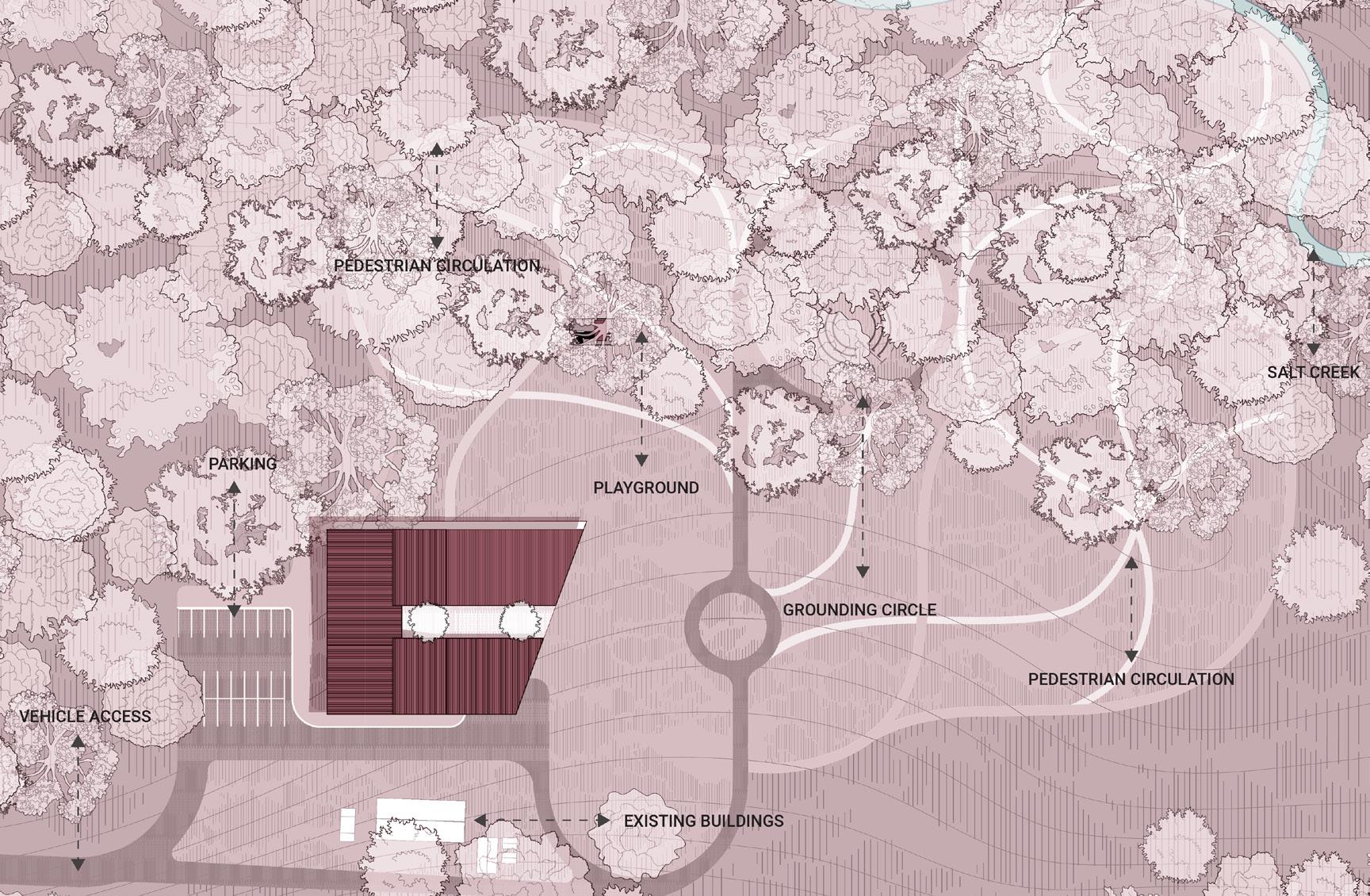
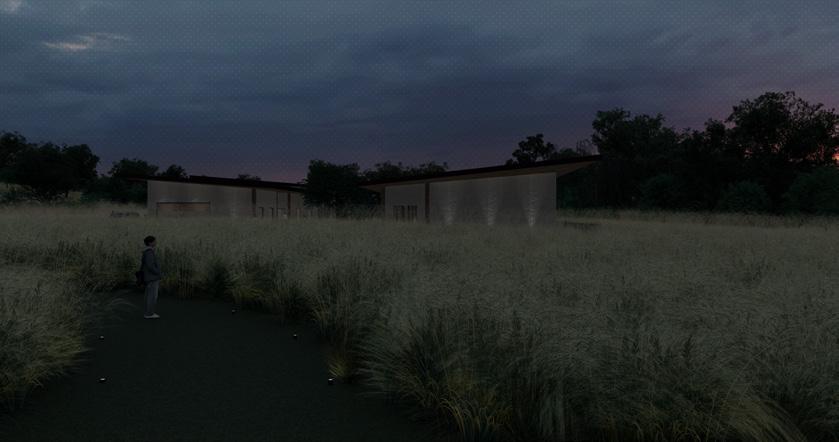
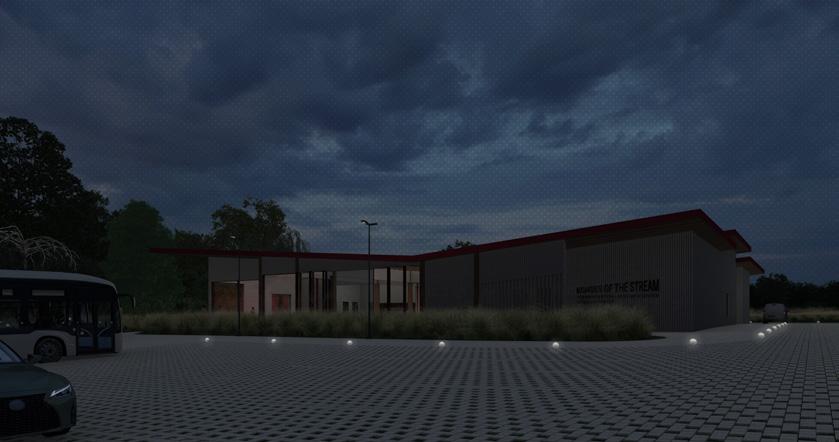
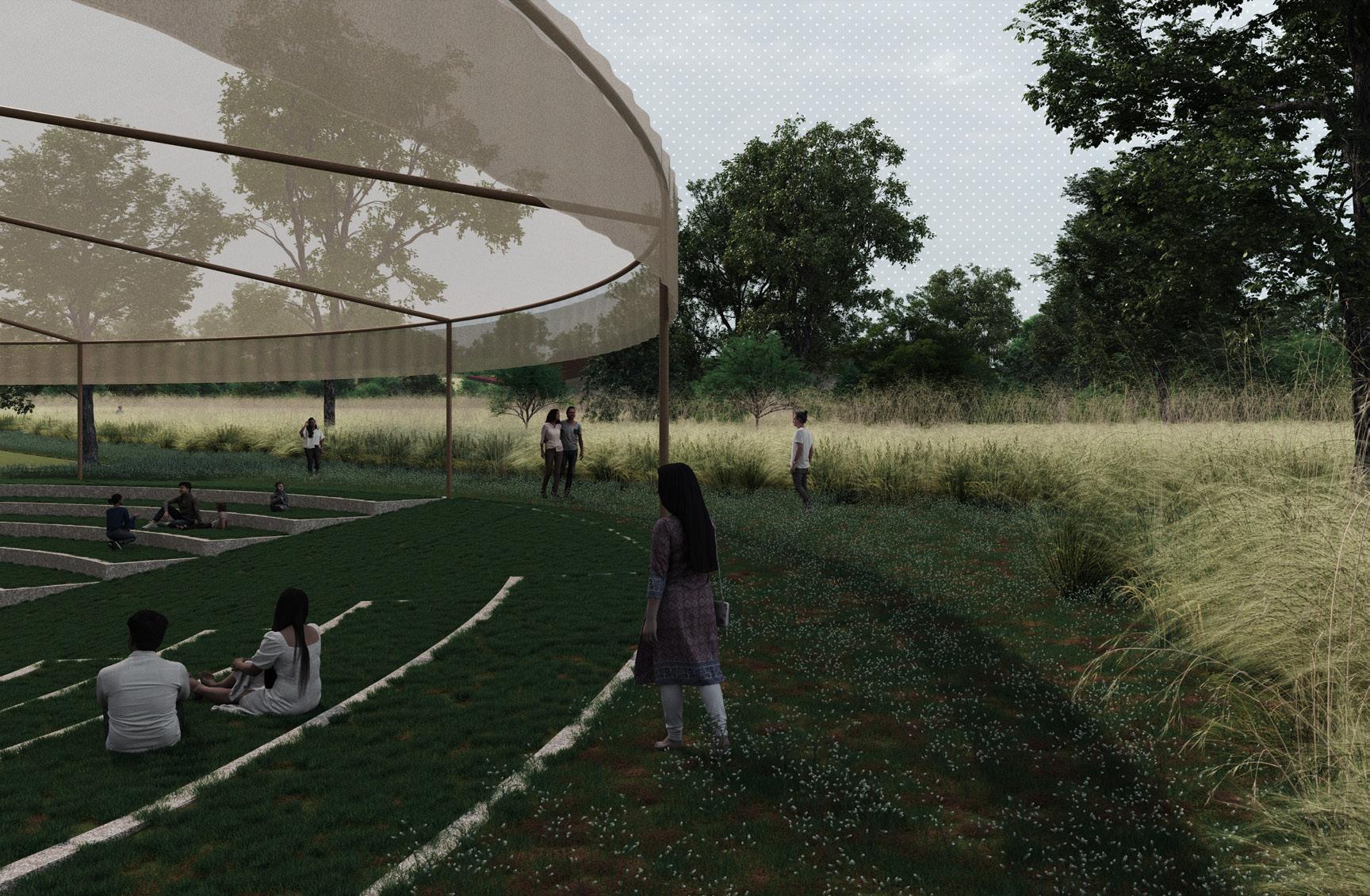
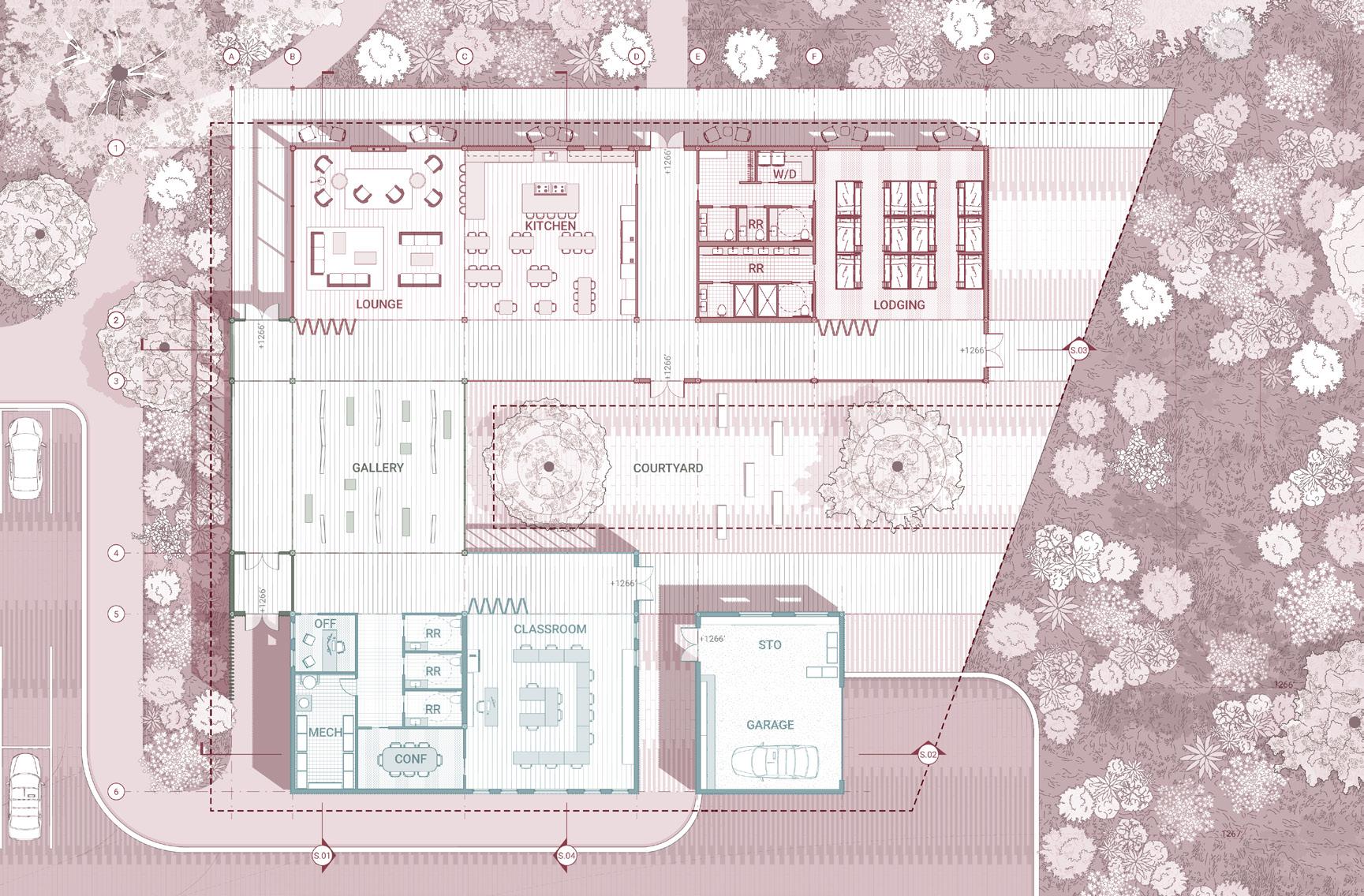
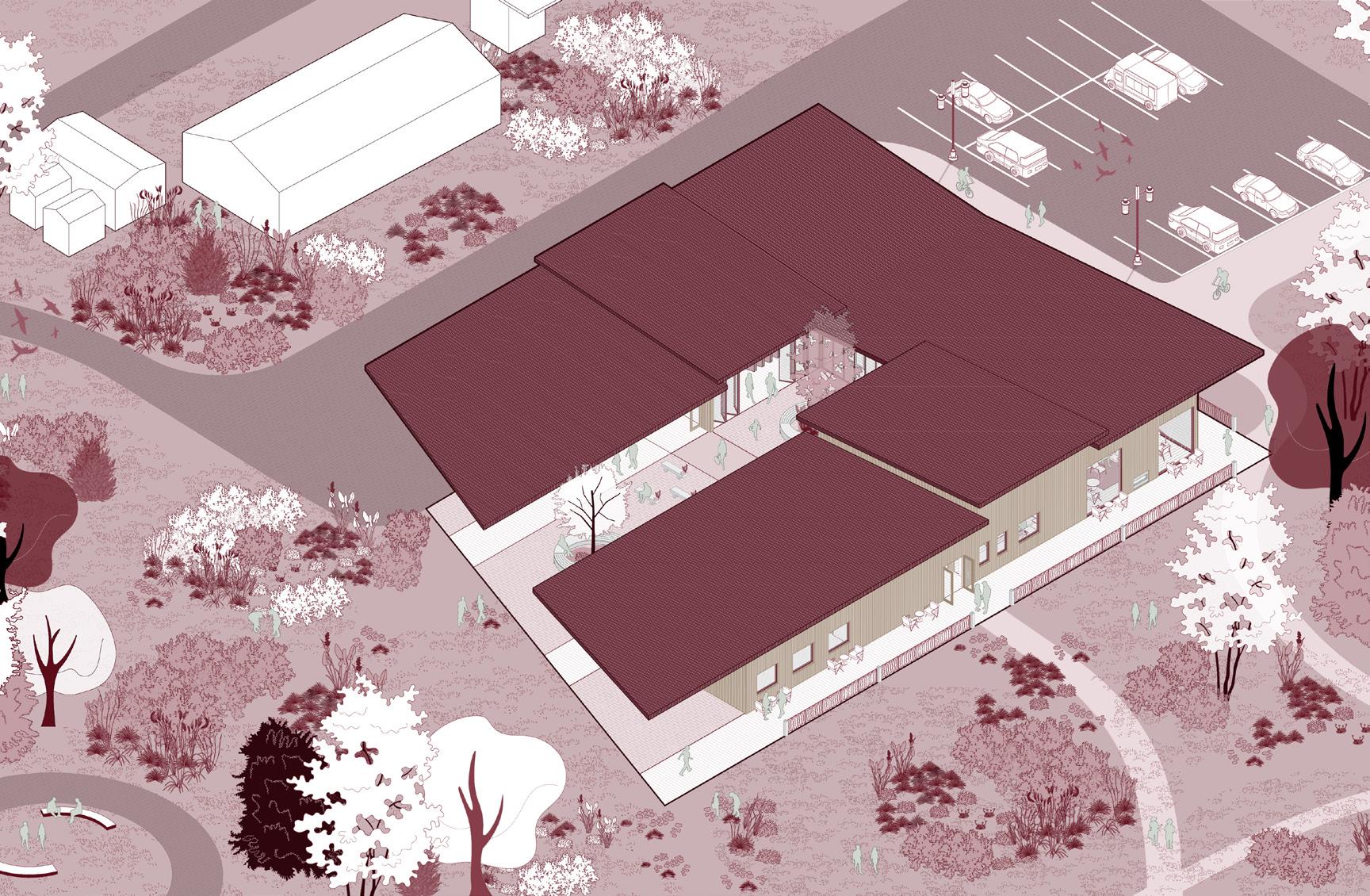
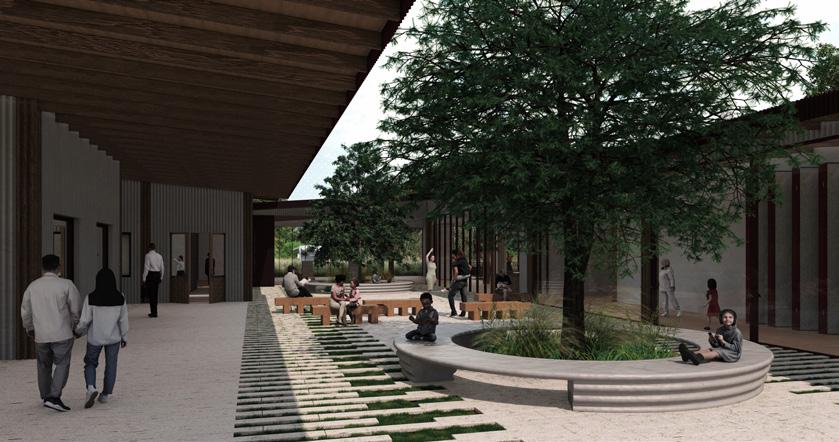
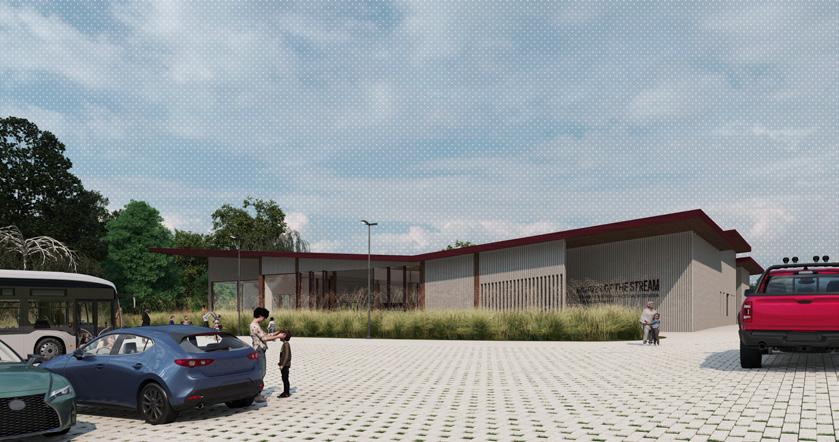
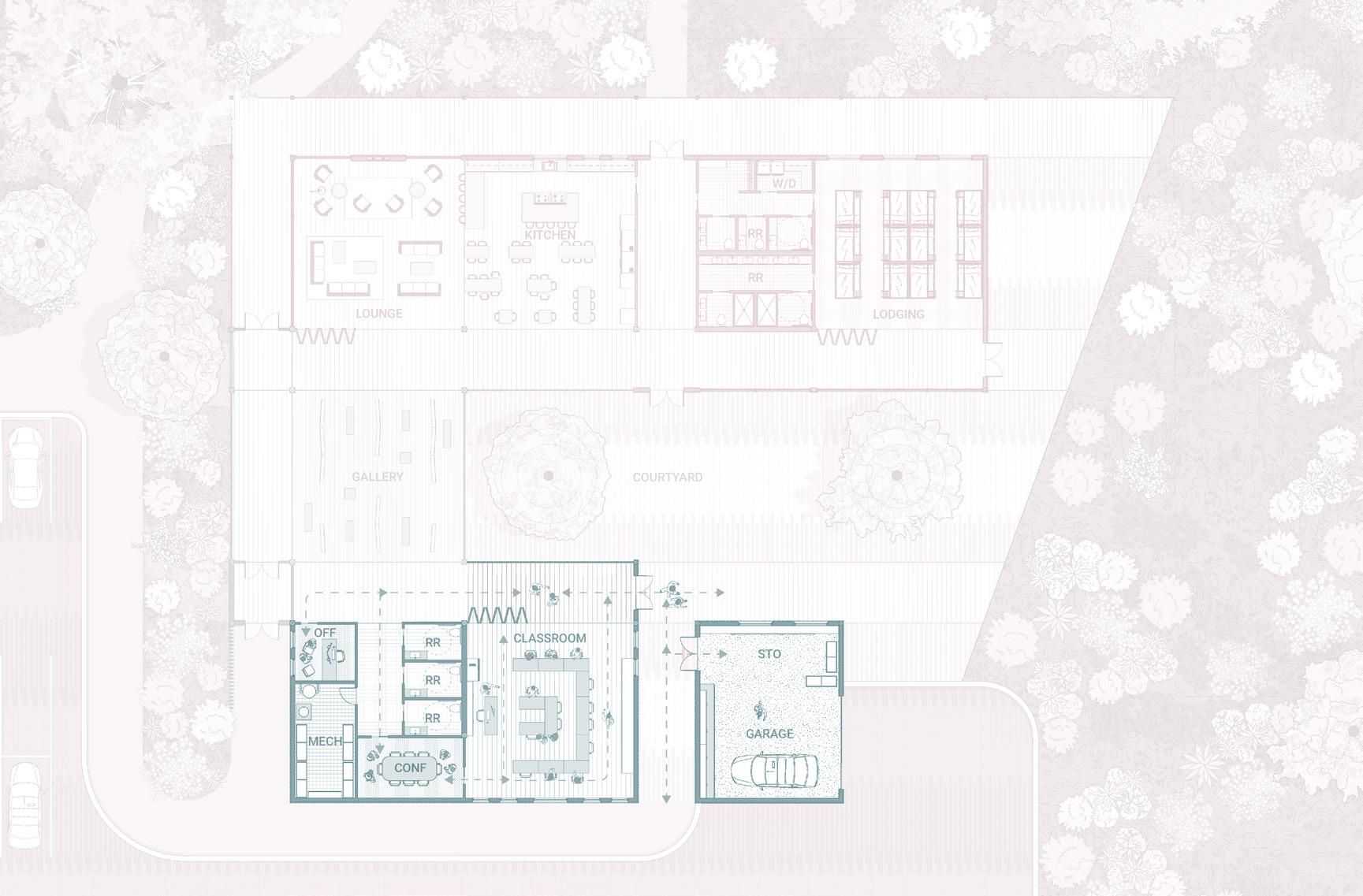
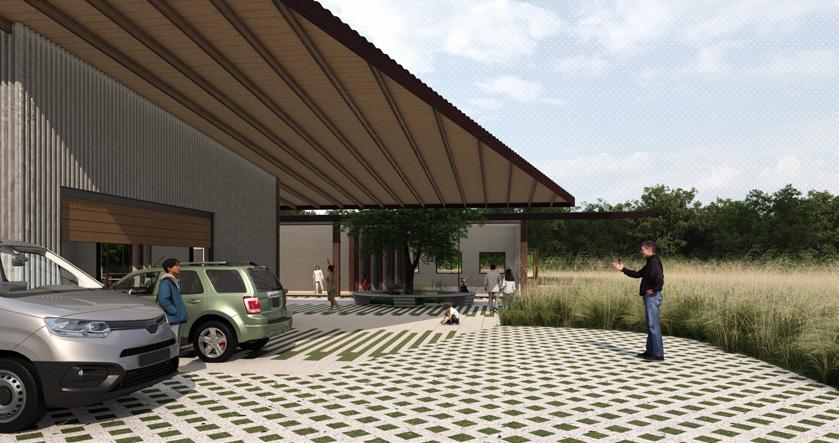
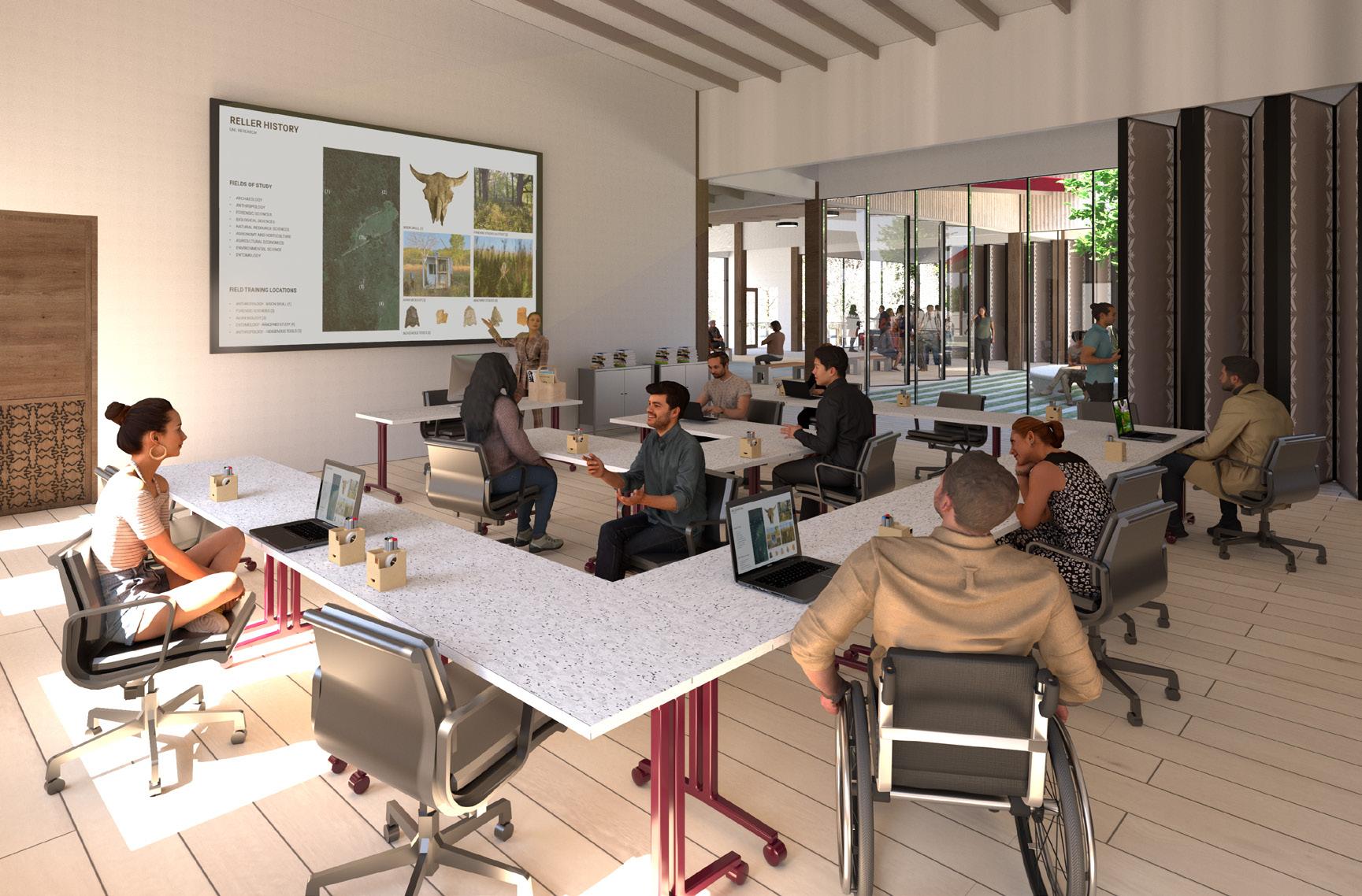
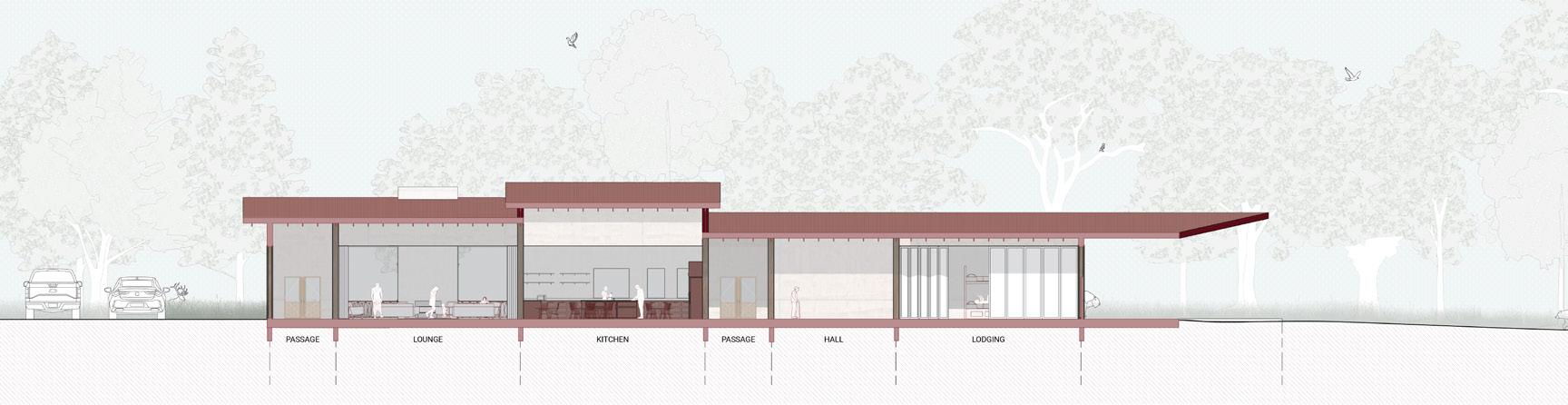
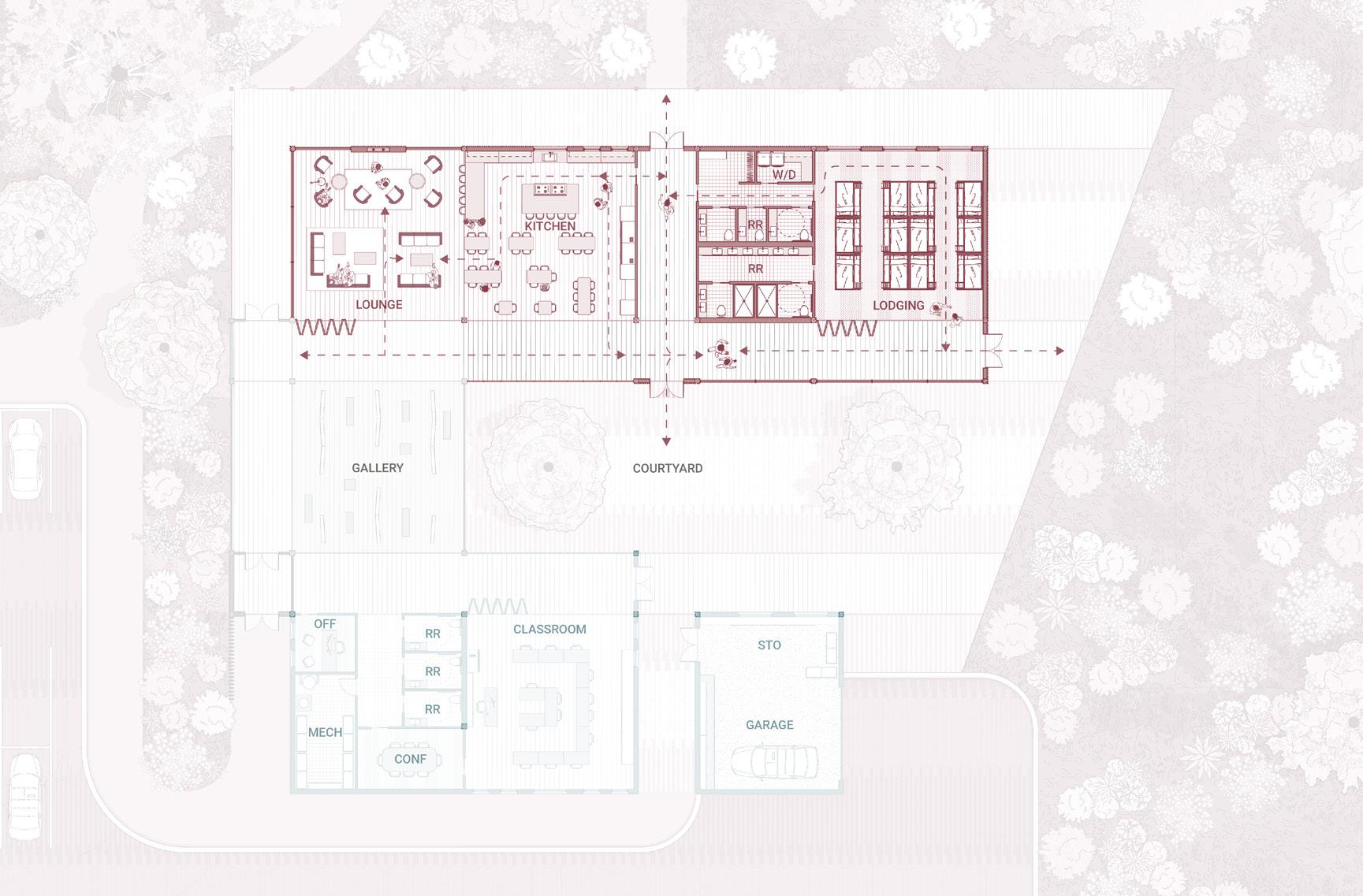
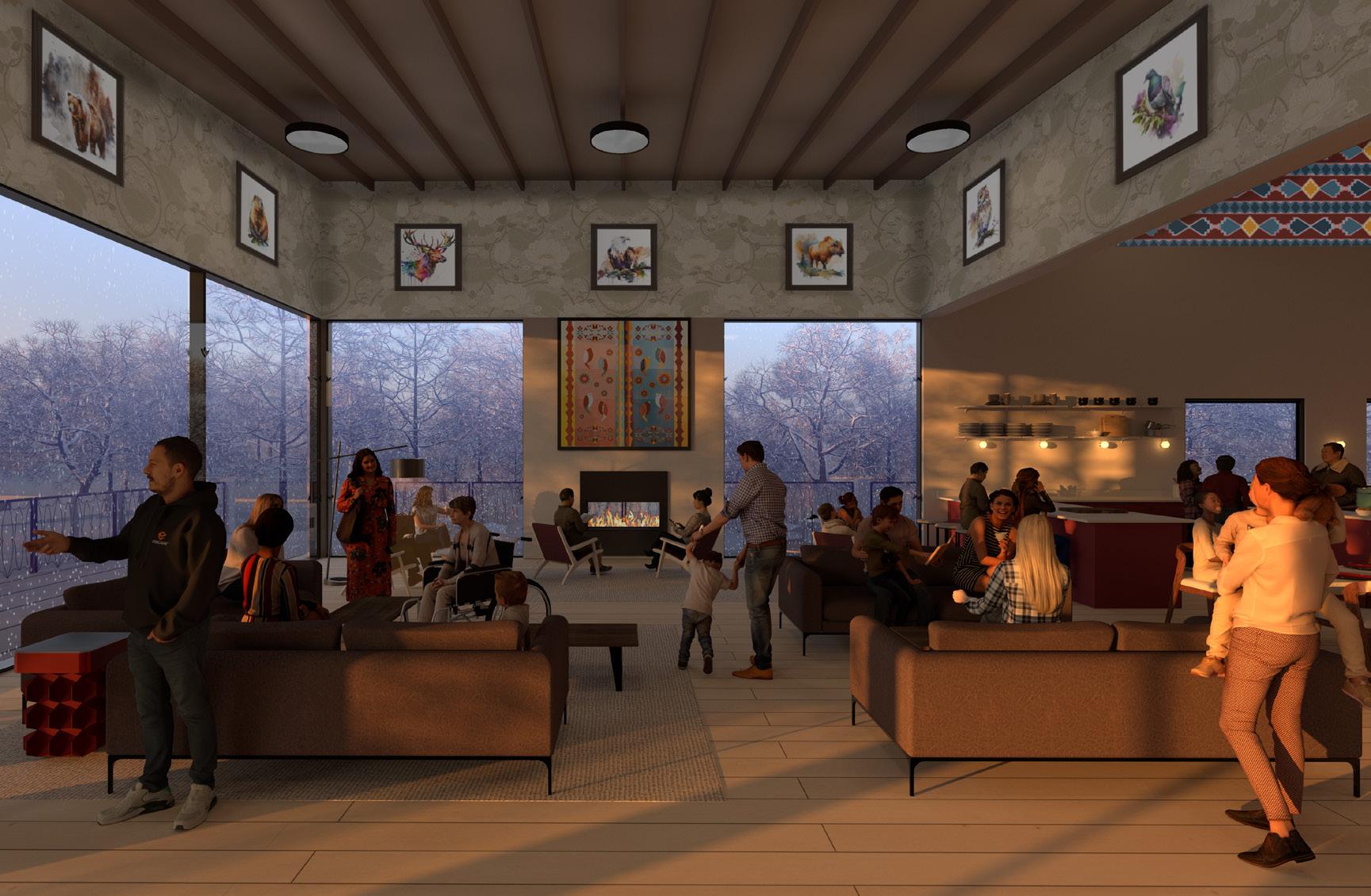
Reller Prairie is a field station owned and operated by the University of Nebraska-Lincoln. Home to multitudes of flora and fauna, the site is ideal for field research and is currently used by the forensic science, biology, archaeology, and entomology departments. By weaving cultural enrichment with academic exploration, students, researchers, and tribal members are encouraged to learn from one another.
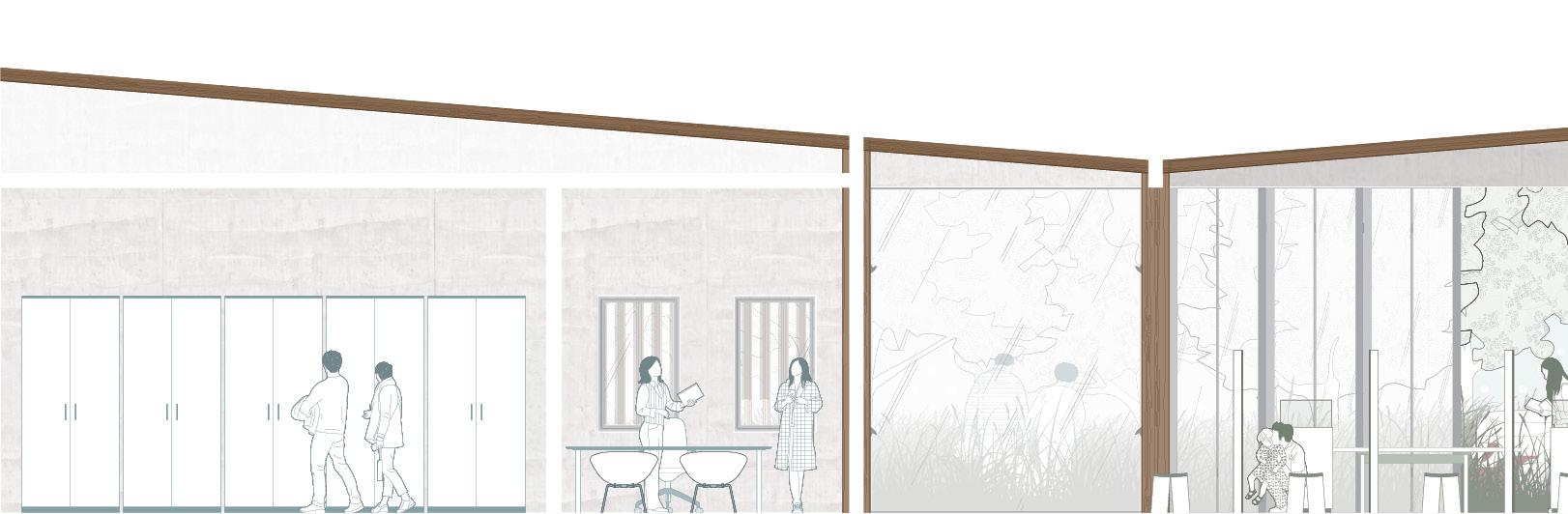
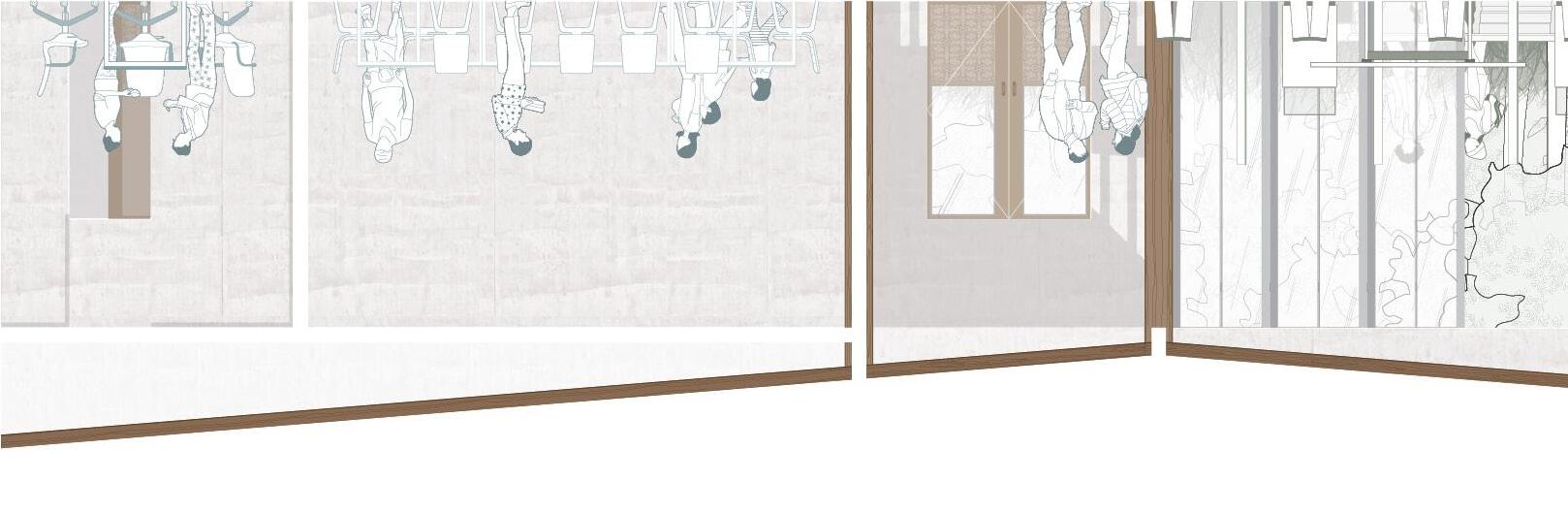
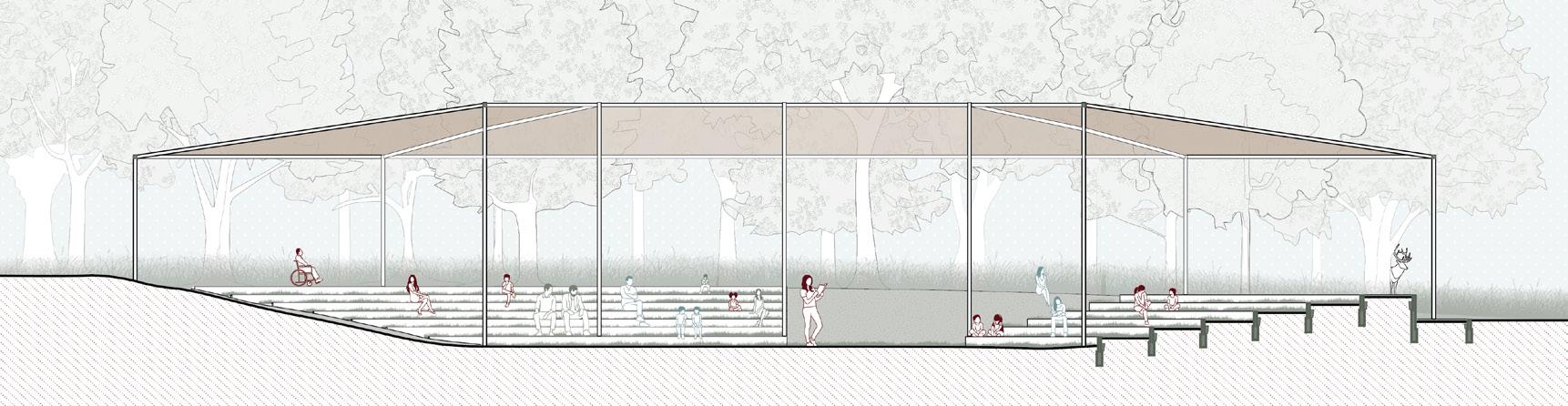
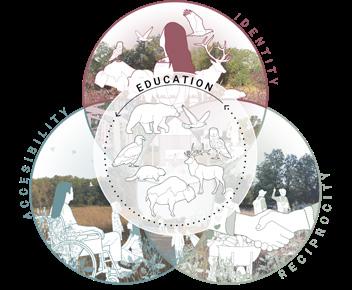
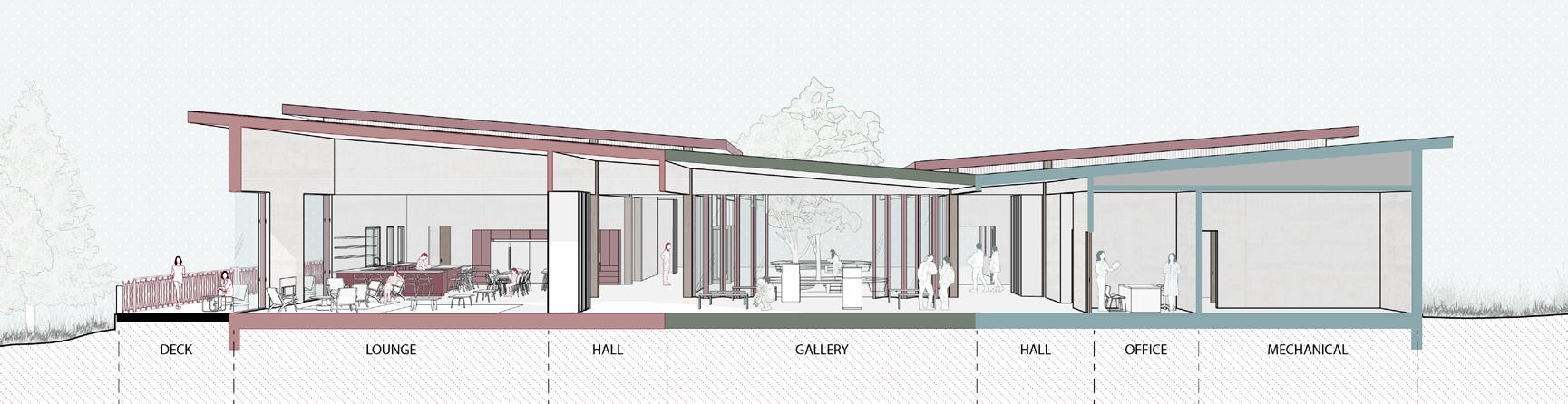
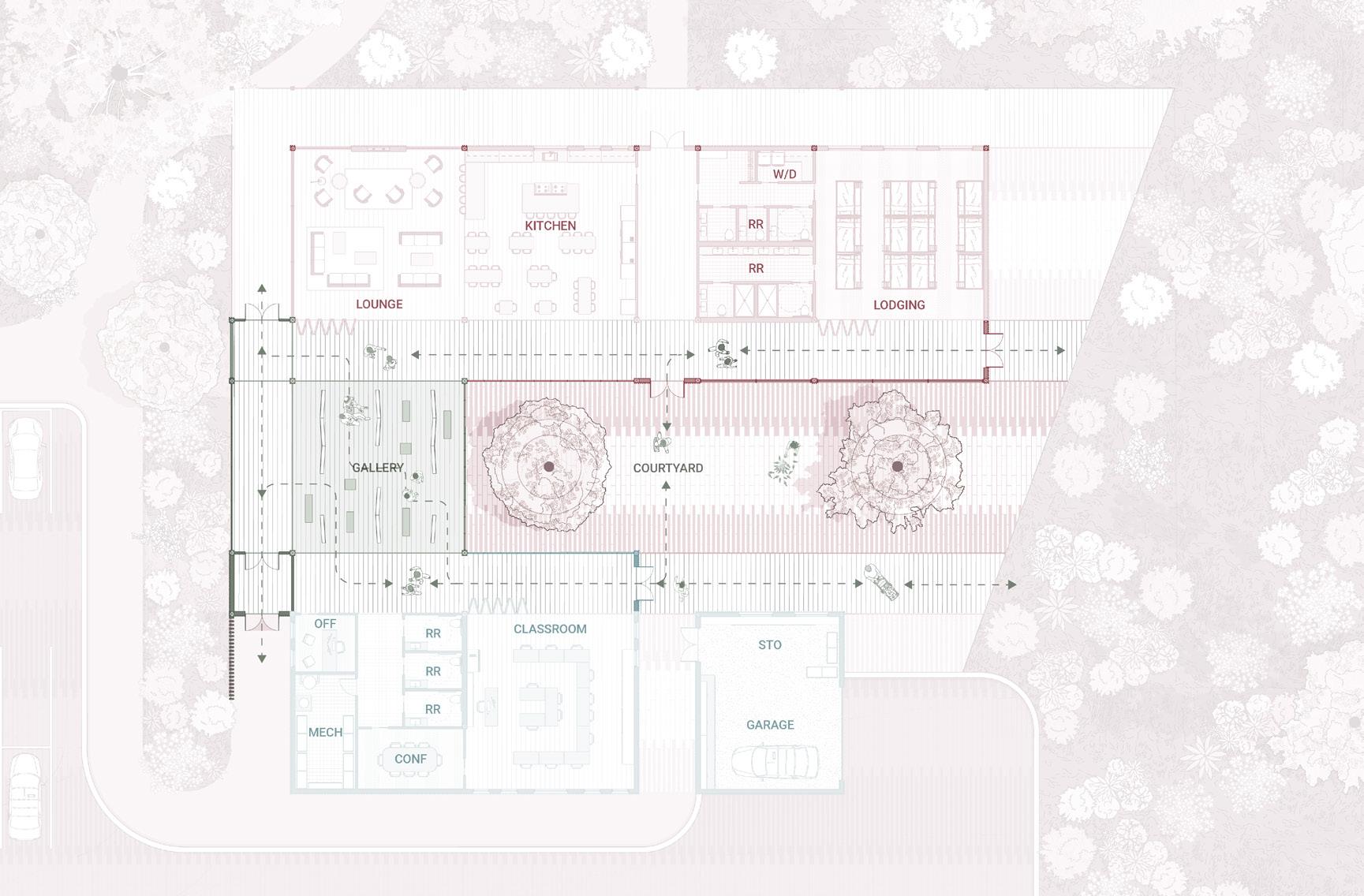
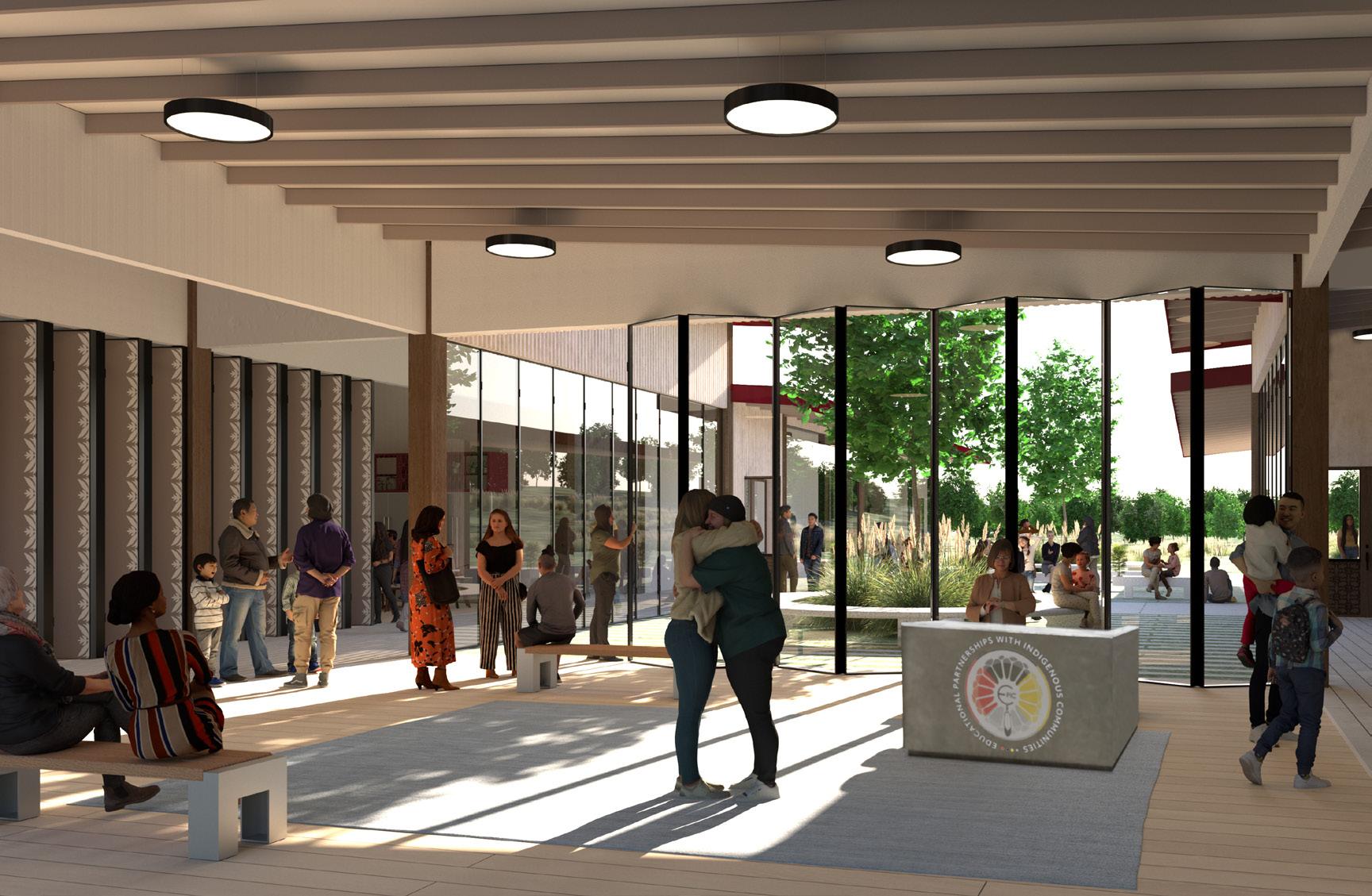
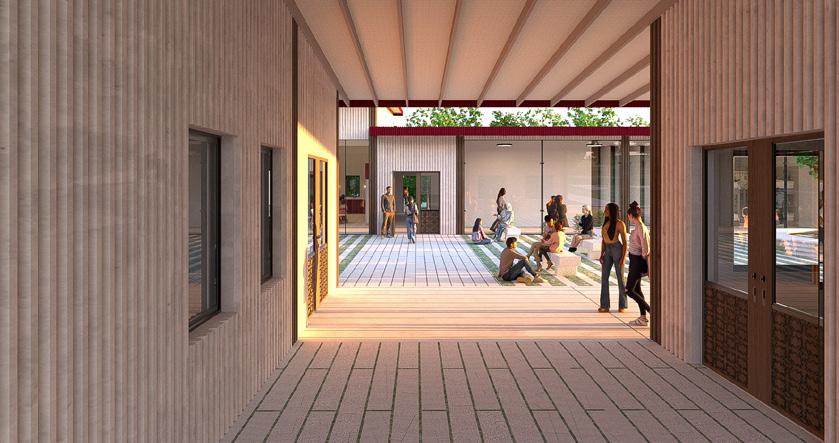
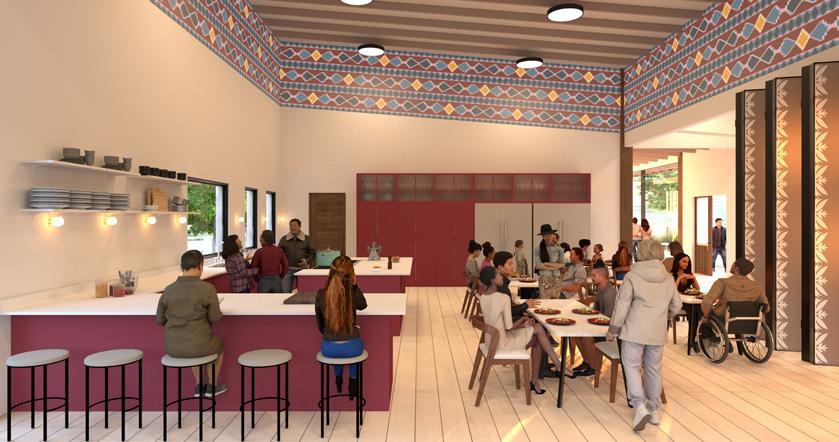
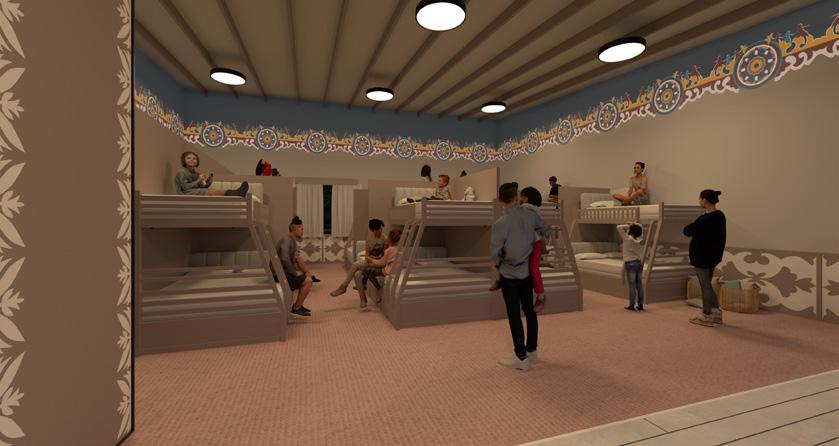
Named “Echoes of the Stream” to imply past wisdom flows along streams of thought and memory, uniting generations through the land. Guided by three central themes—Identity, Reciprocity, and Accessibility—our design emphasizes unity between interior and exterior, past and present, and all users. Identity focuses on storytelling, art, ceremonies, and intergenerational knowledge sharing. Reciprocity enables a partnership between the Jiwere-Nut’achi, UNL, and their ancestral land. Accessibility ensures inclusivity, focusing on easy navigation, cultural sensibility, and interactive learning. Education encompasses our three themes, providing a respectful learning space.
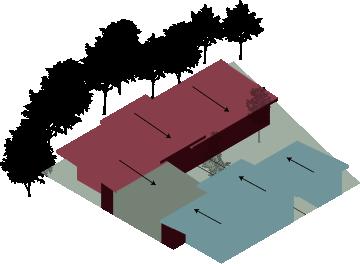
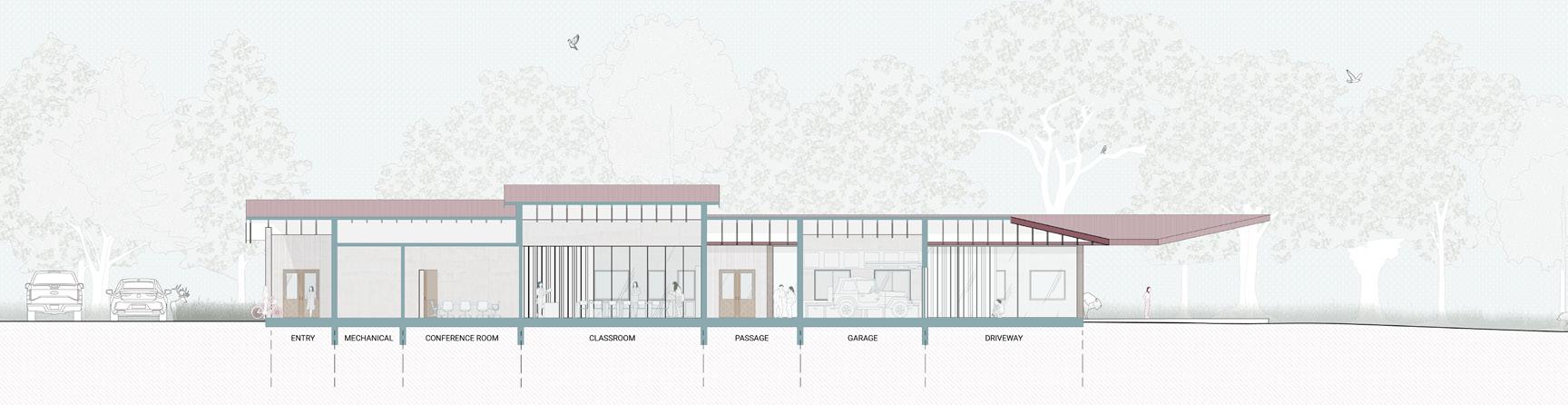
Programmatic needs fall into three user sectors, organized as a courtyard form to aid environmental performance and complement spatial organization. Details draw inspiration from Dr. Jessica Moore Harjo’s artwork, a member of the Jiwere Nut’Achi tribe and studio partner. Each detail is a reminder of the tribe’s presence, communicated through symbolic and material means. All design choices uphold the values of identity, reciprocity, and accessibility.
During the studio, sessions were held with tribe members and partners to provide feedback, direction, and guidance. We worked to implement their values of intergenerational spaces, land stewardship, culinary practices, and recovering their heritage. Tribal members commented favorably on thematic choices, programming for all age groups, synthesis of community voices, and cultural relevance.
This project taught me how to intentionally translate user needs and desires in the design process. I also learned the necessity of transparent communication to navigate existing and unfavorable site conditions.
LOCATION
DURATION
INSTRUCTOR
TEAM
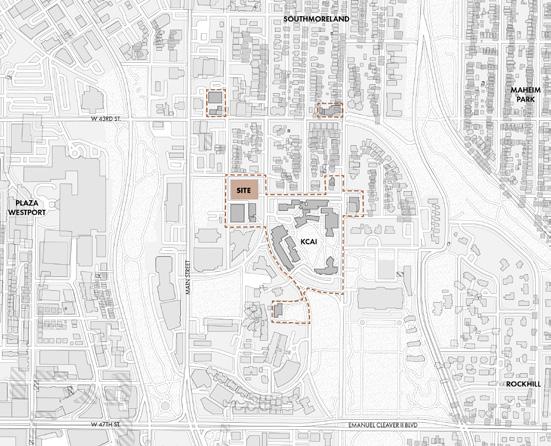
4400 Warwick Blvd., Kansas City, MO
8 weeks
Peter Olshavsky IV, Ph.D.
Noor Alsudani + Frank Meisinger
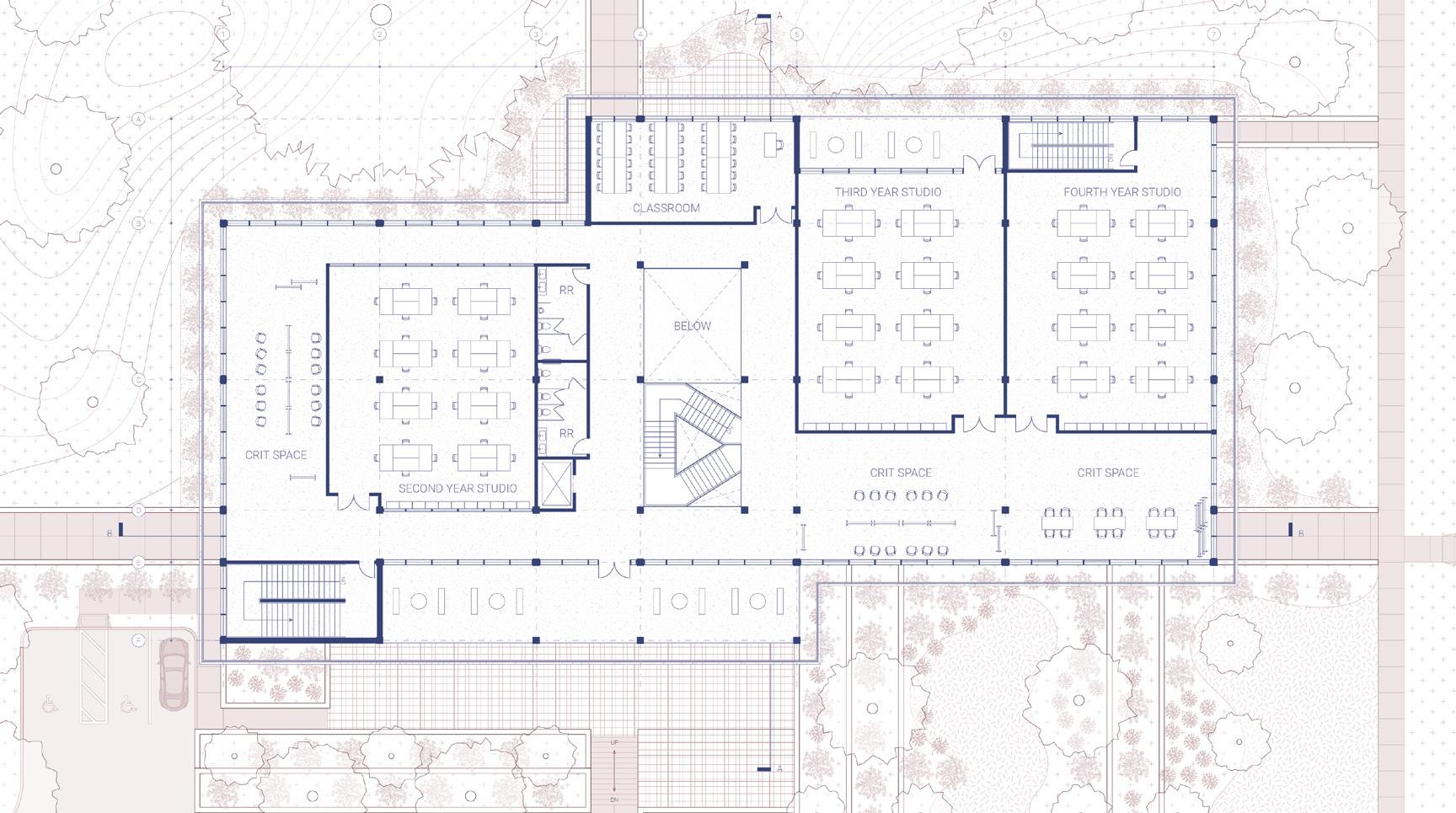
DoArc at the Kansas City Art Institute (KCAI) explores the role of architecture as a converging medium. Informed by the history of redlining in the Kansas City metro region, this convergence seeks to unite diverse minds and communities. DoArc promotes an educational approach to respectfully engage and build from surrounding contexts before ultimately diverging in career trajectory. By examining architectural design’s influence through postcolonial, critical race, and feminist theory, the program examines societal issues and challenges exclusionary design practices. By questioning notions of authority in architecture, we aim to elevate underrepresented voices and encourage collaboration, harmony, and intentional interaction.
Architecture draws from the arts, history, literature, law, philosophy, theology, and the sciences. At KCAI, an interdisciplinary approach is amplified through the liberal arts foundation, fostering critical dialogue, application, and a thoughtful evolution of architecture. Through pedagogy and practice, architecture becomes evidence for converging societal advancements.
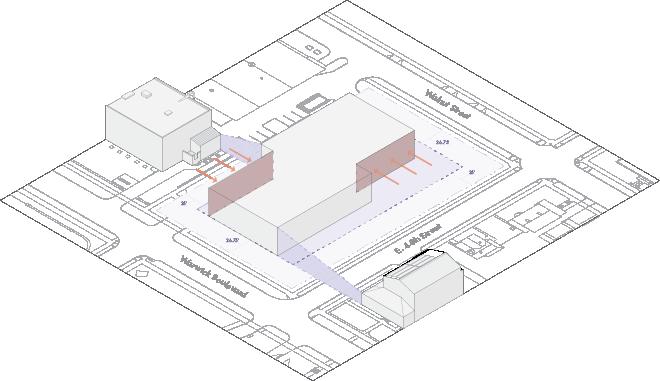
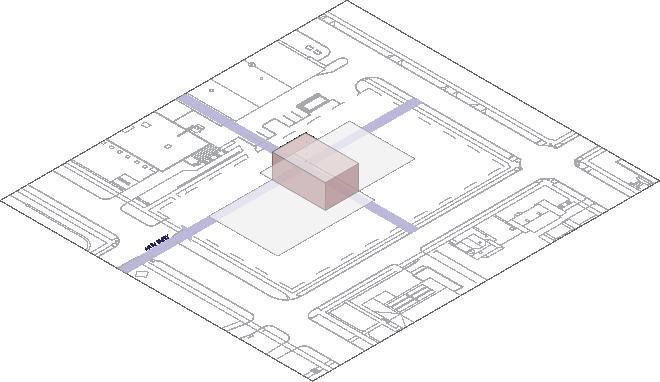
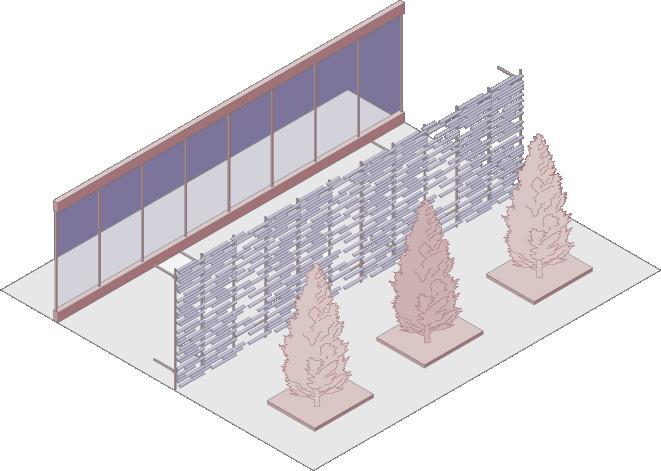
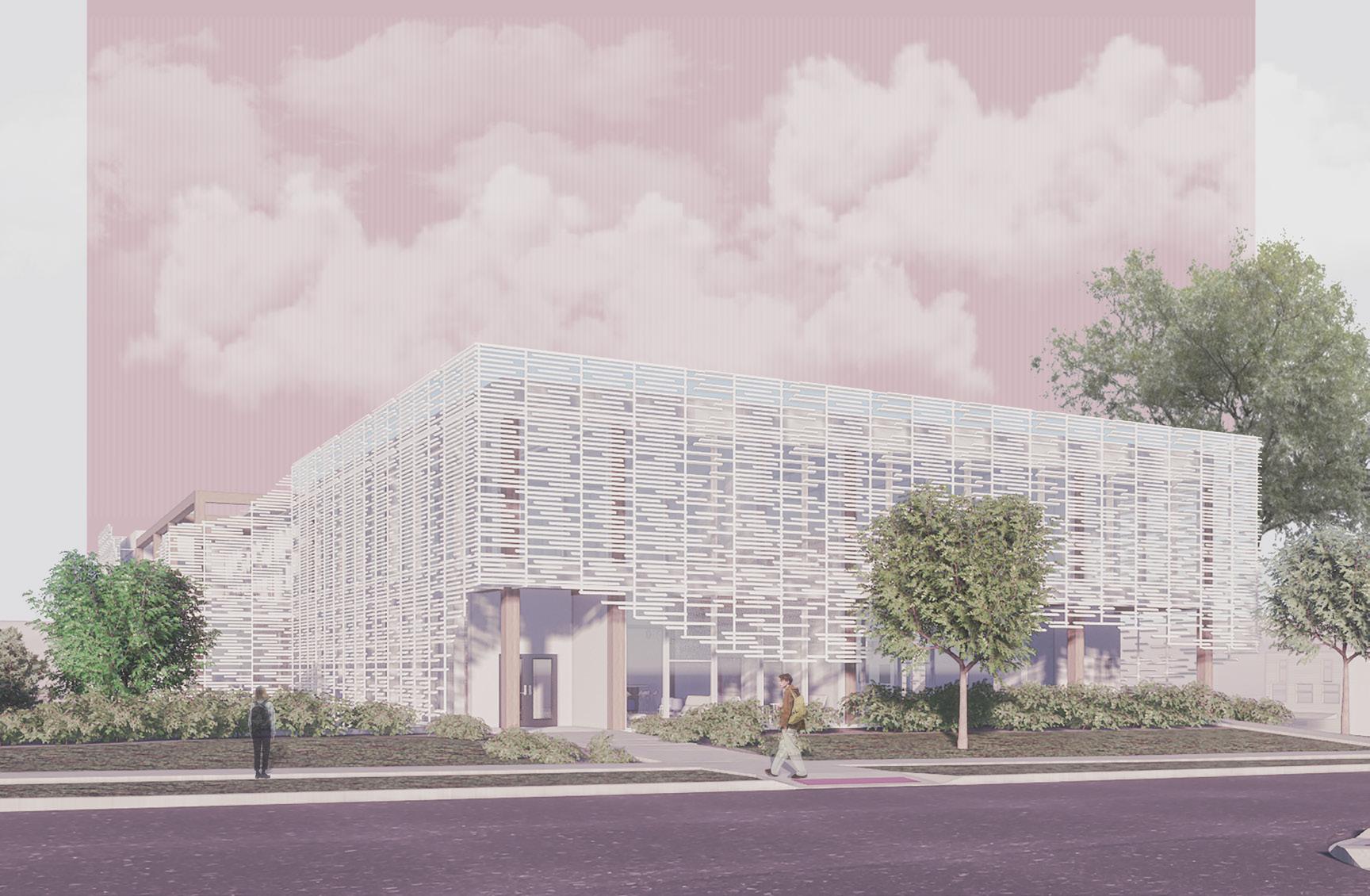
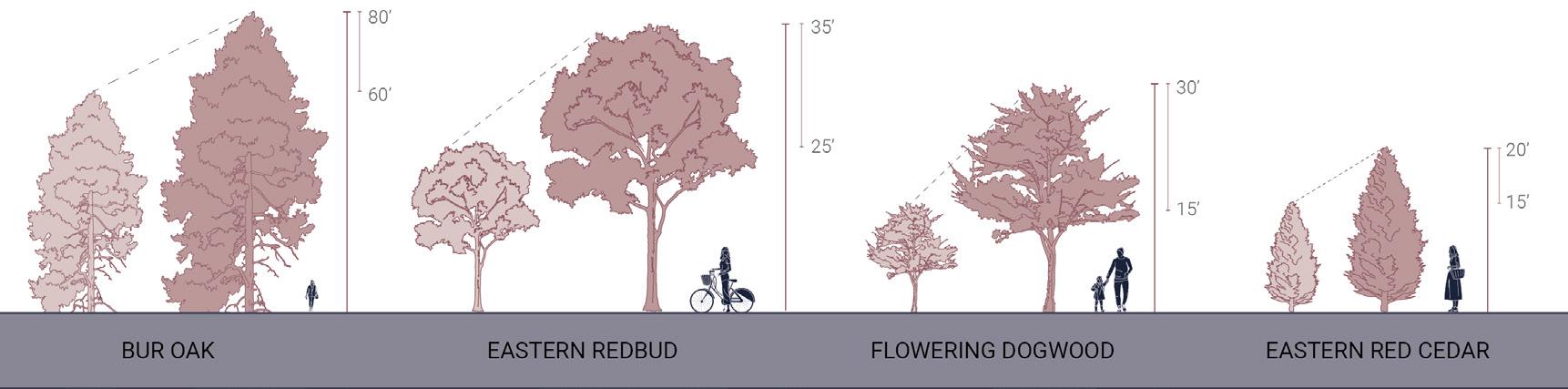
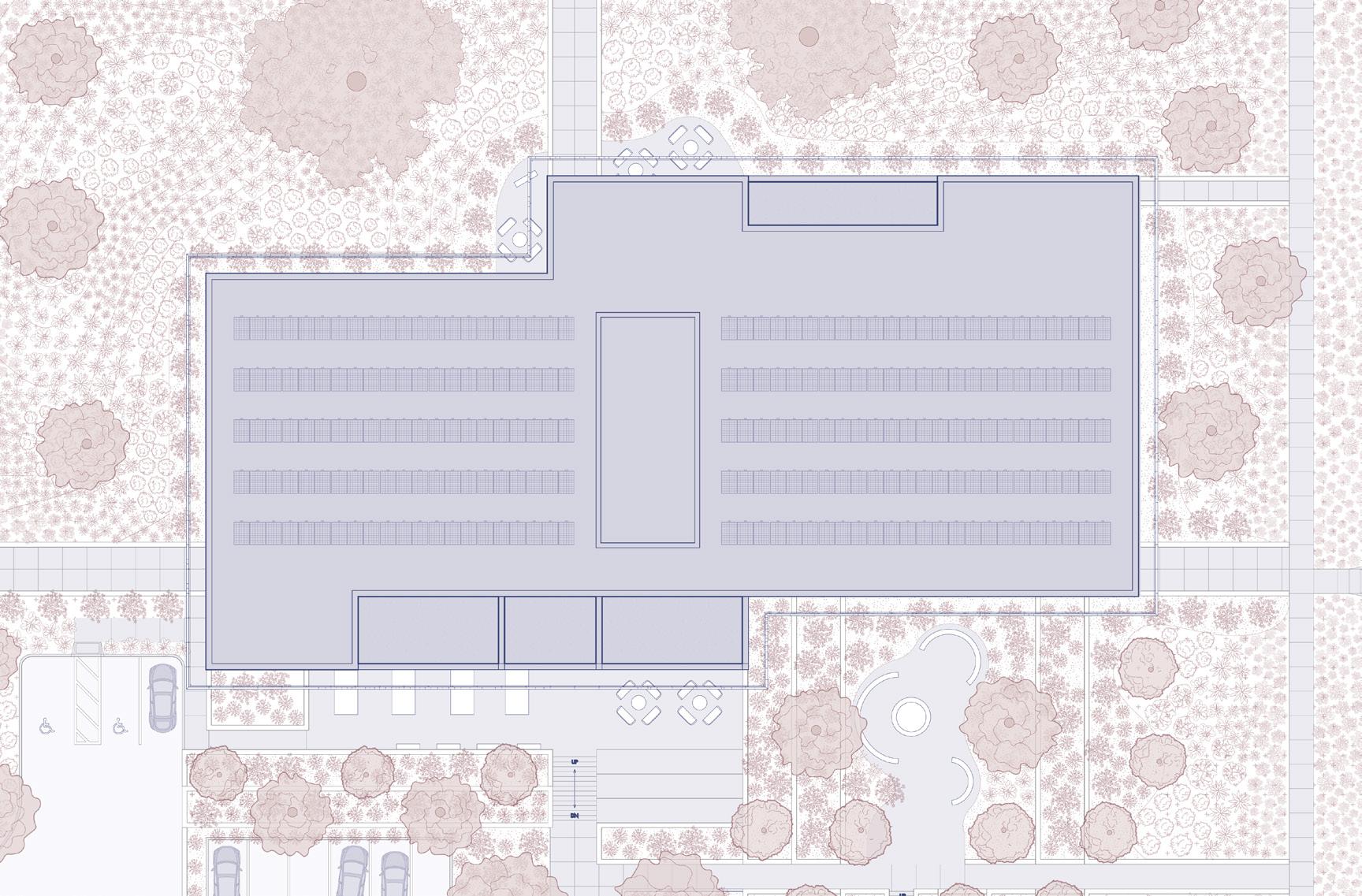
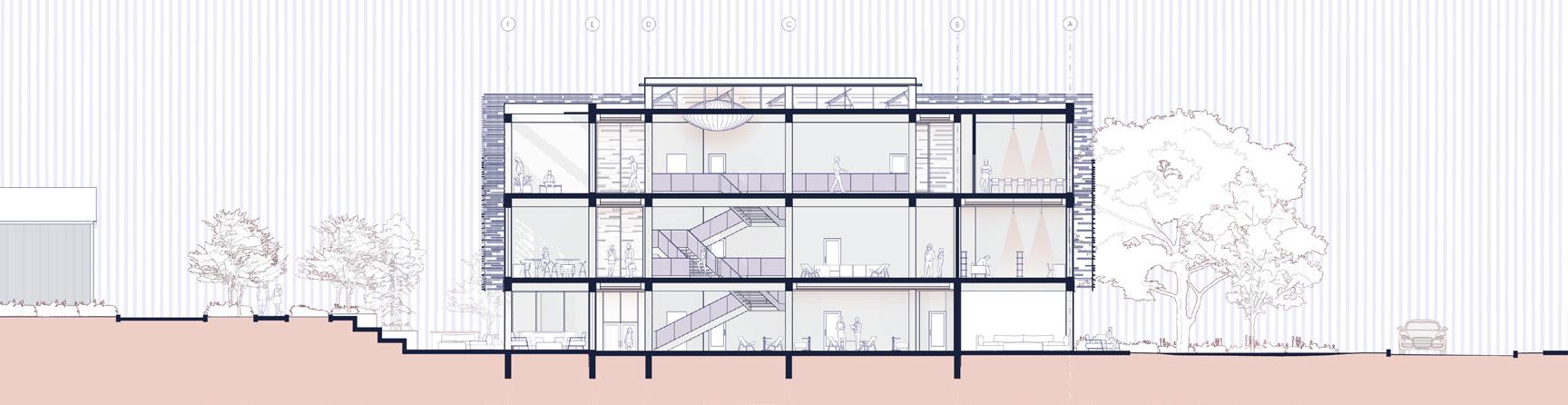
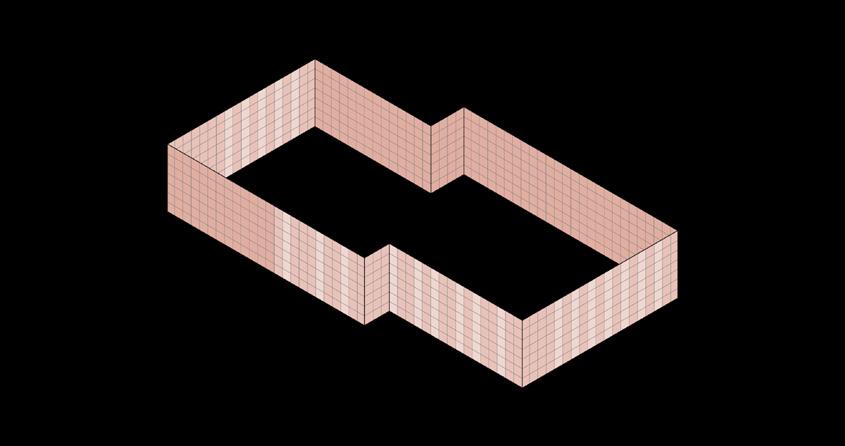
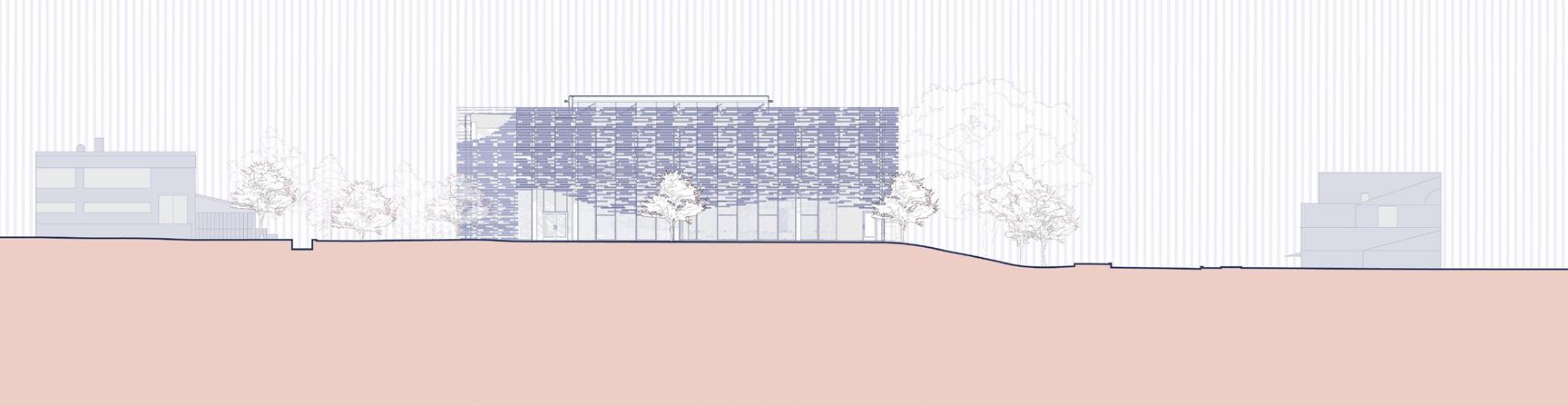
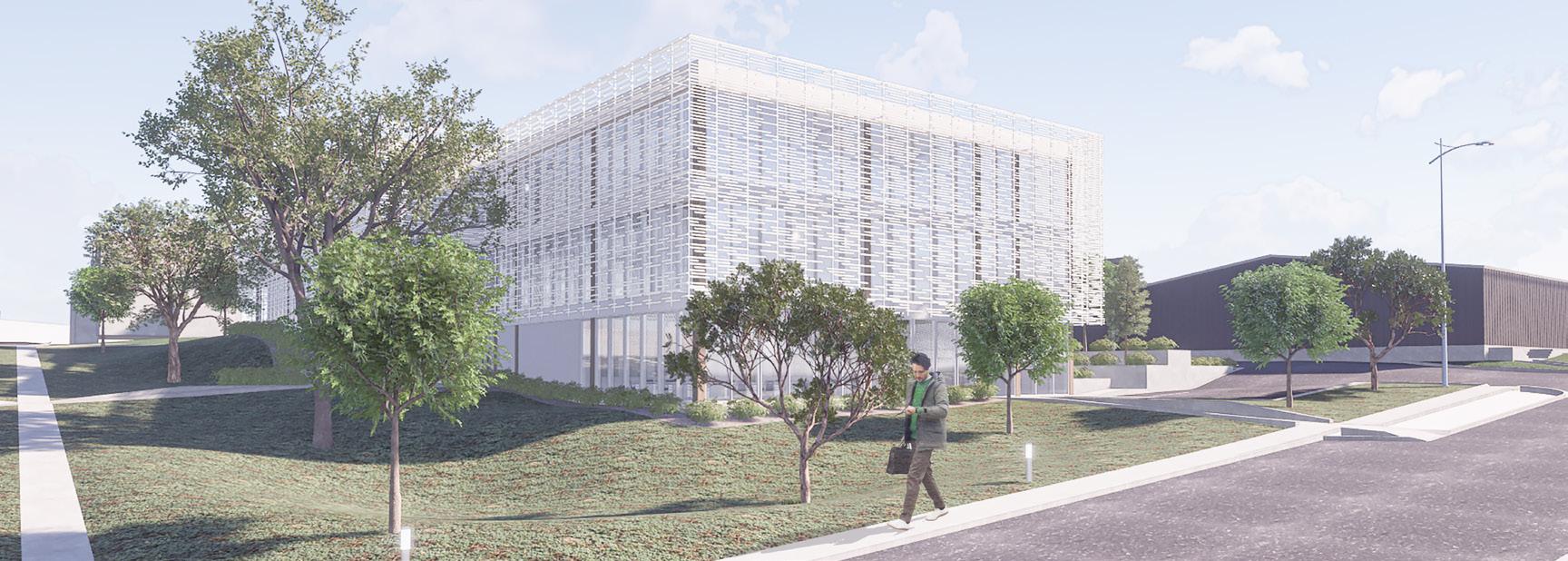
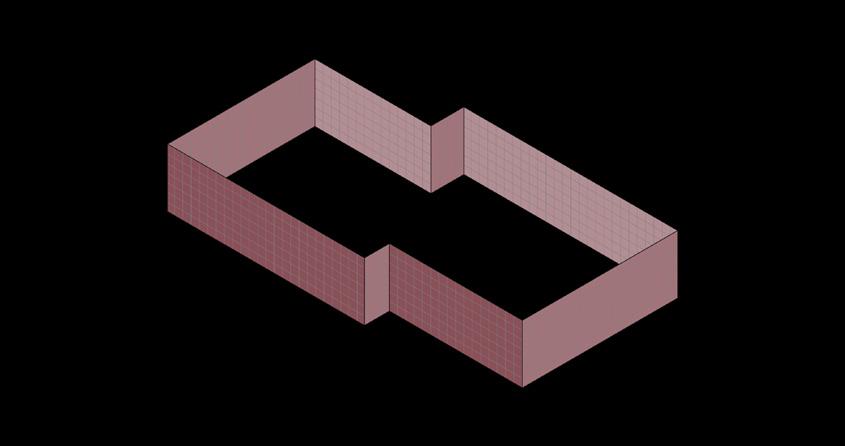
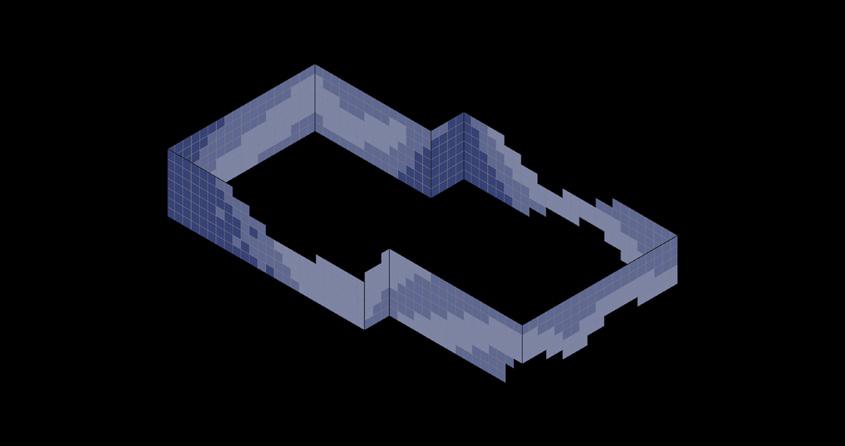
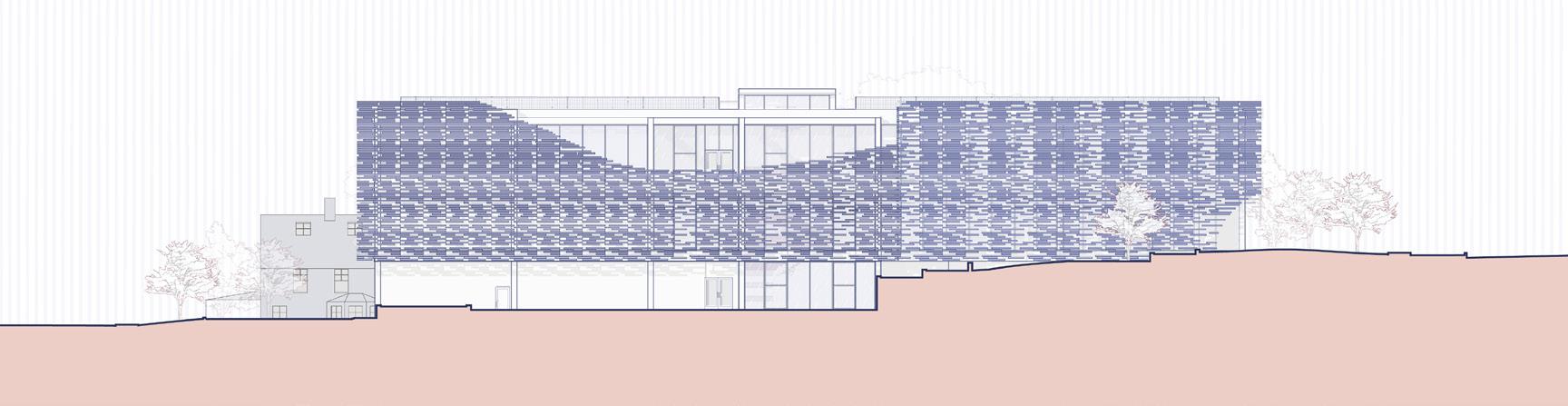
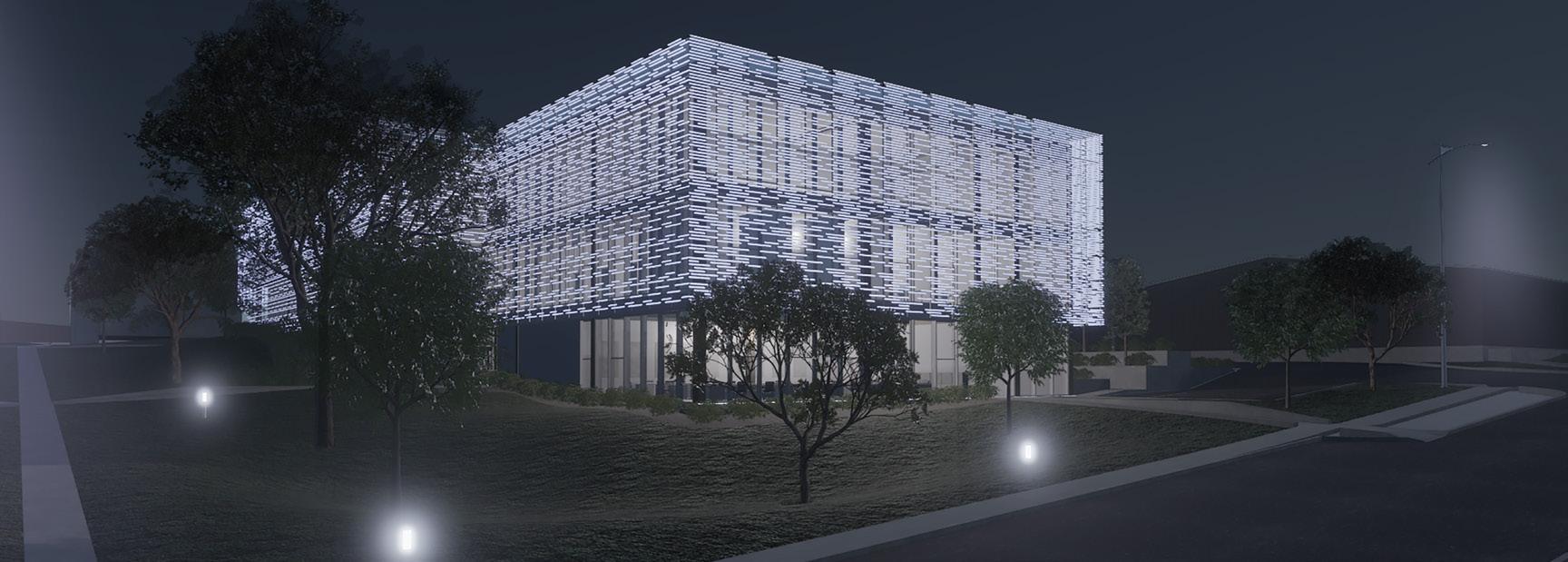
The landscape design gradually softens the transition between the sculpted terrain, blending the urban campus with the neighborhoods. The building leverages existing pathways, such as the alley to the south, attracting students and the public through various approaches and positioning architectural education as a pursuit of community progress, non-dependent on the means of access. Within the building, the studio spaces sandwich the faculty and public programs, promoting interaction beyond typical academic environments. The facade utilizes terracotta baguettes, selected for their durability, sustainability, and versatility, to define the building’s public face, patterned to maximize interior views, ventilation, and solar reduction.
This project helped me develop and craft a successful workflow, consistent styling, and the ability to coordinate a broad-ranging project. Furthermore, my group members and I held differing perspectives, areas of strength, and weaknesses. I learned from my peers by working collaboratively, incorporating their knowledge, and exercising honest communication.
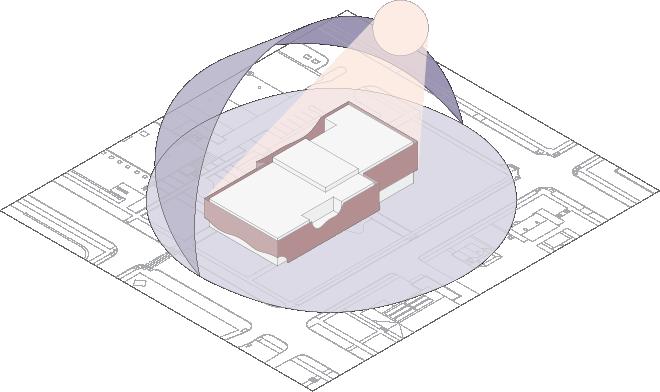
1 - CONTEXT ADJACENCY
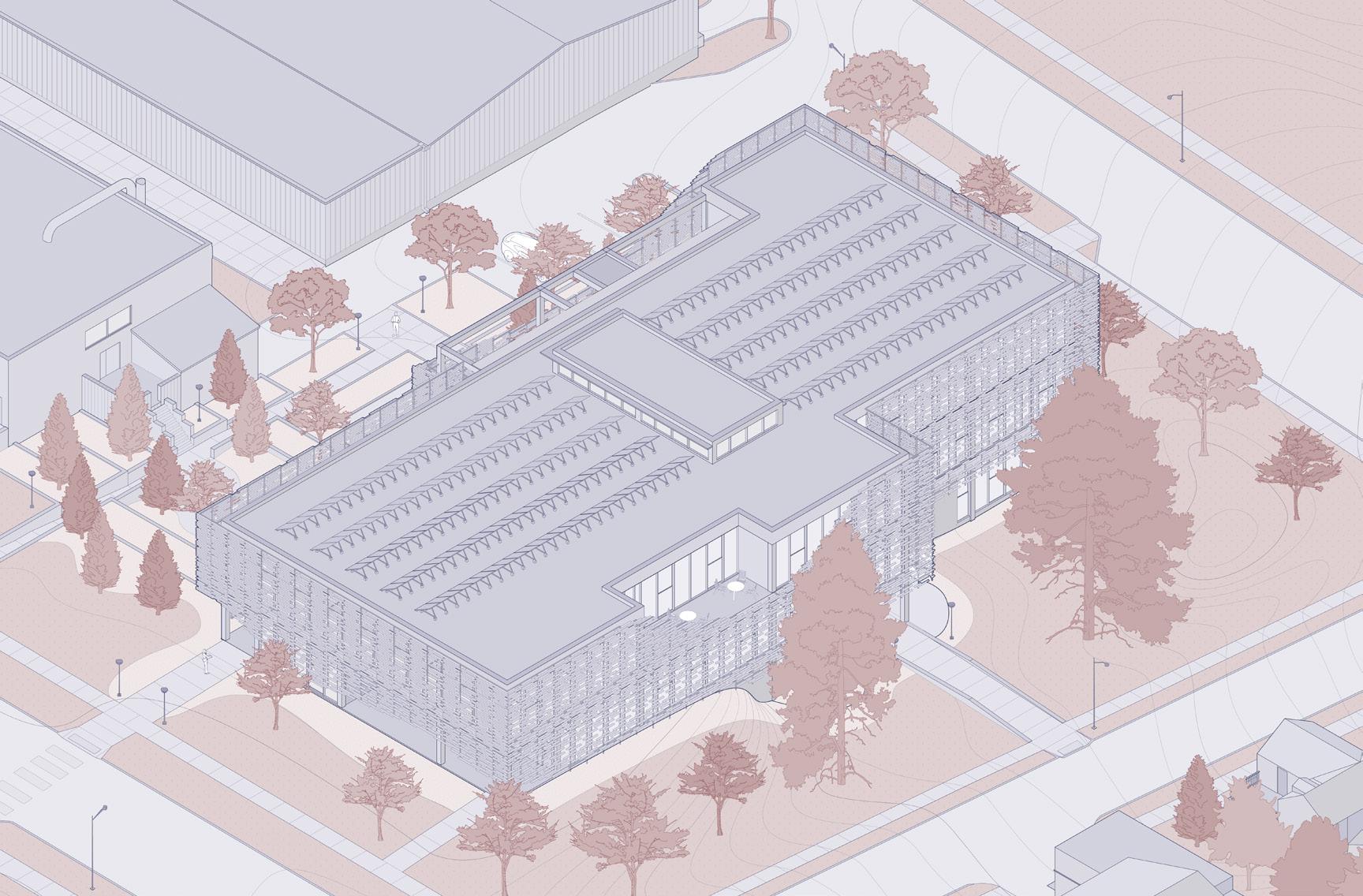
NORTHEAST SITE ILLUSTRATION
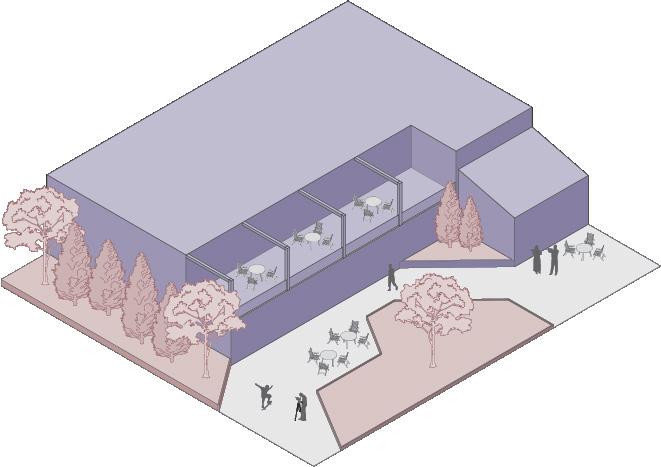
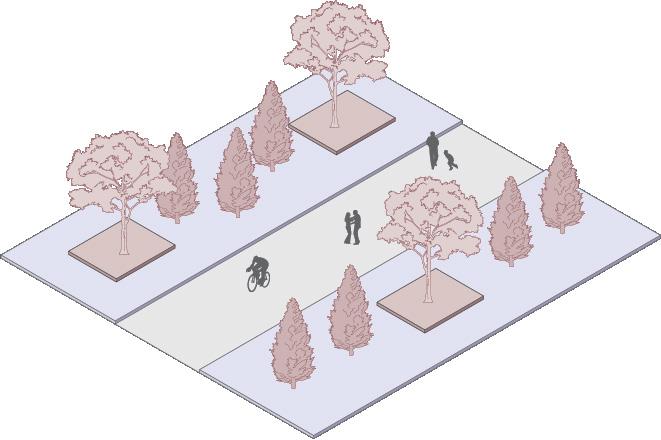
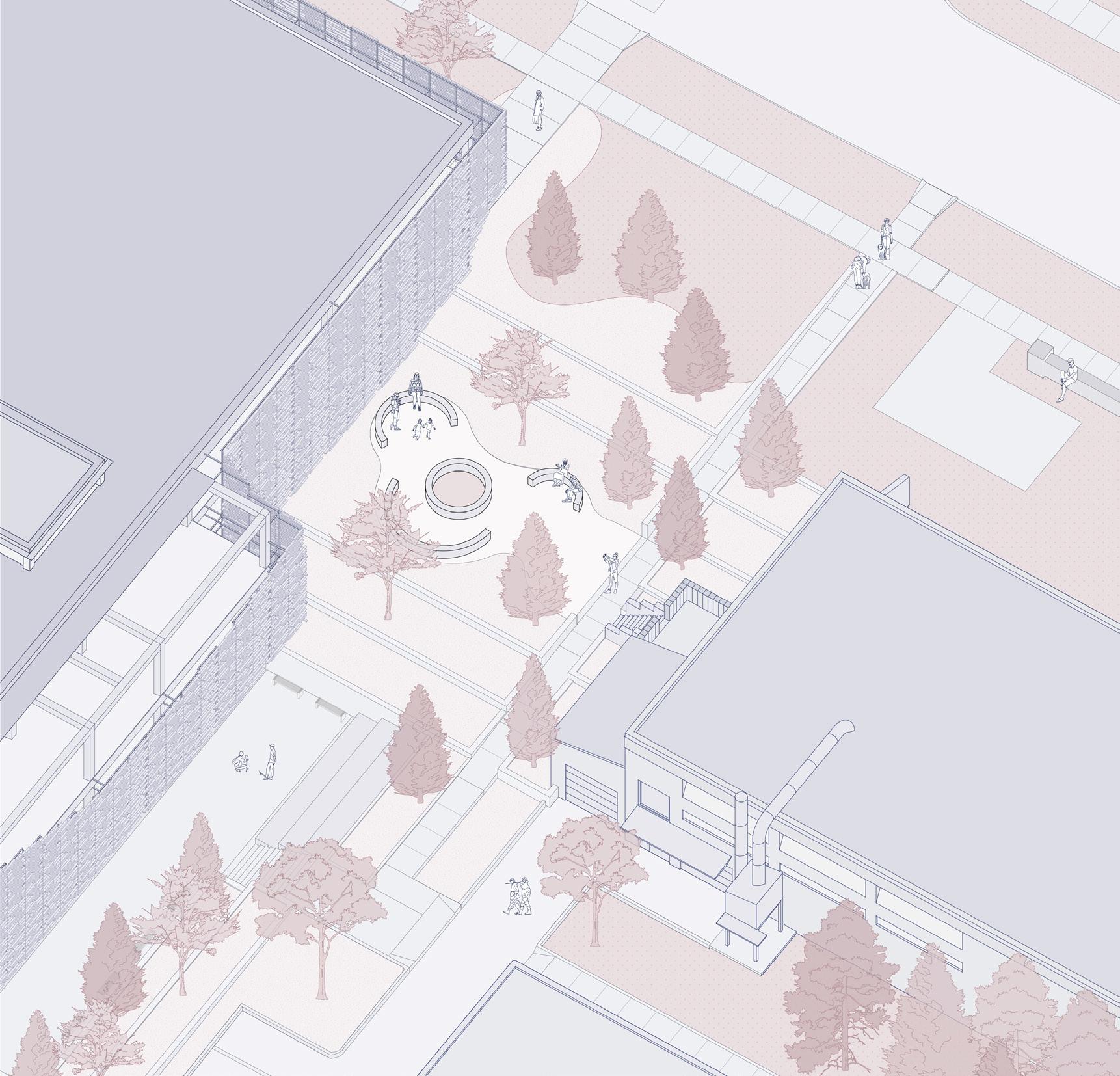
BIRD’S ISO VIEW
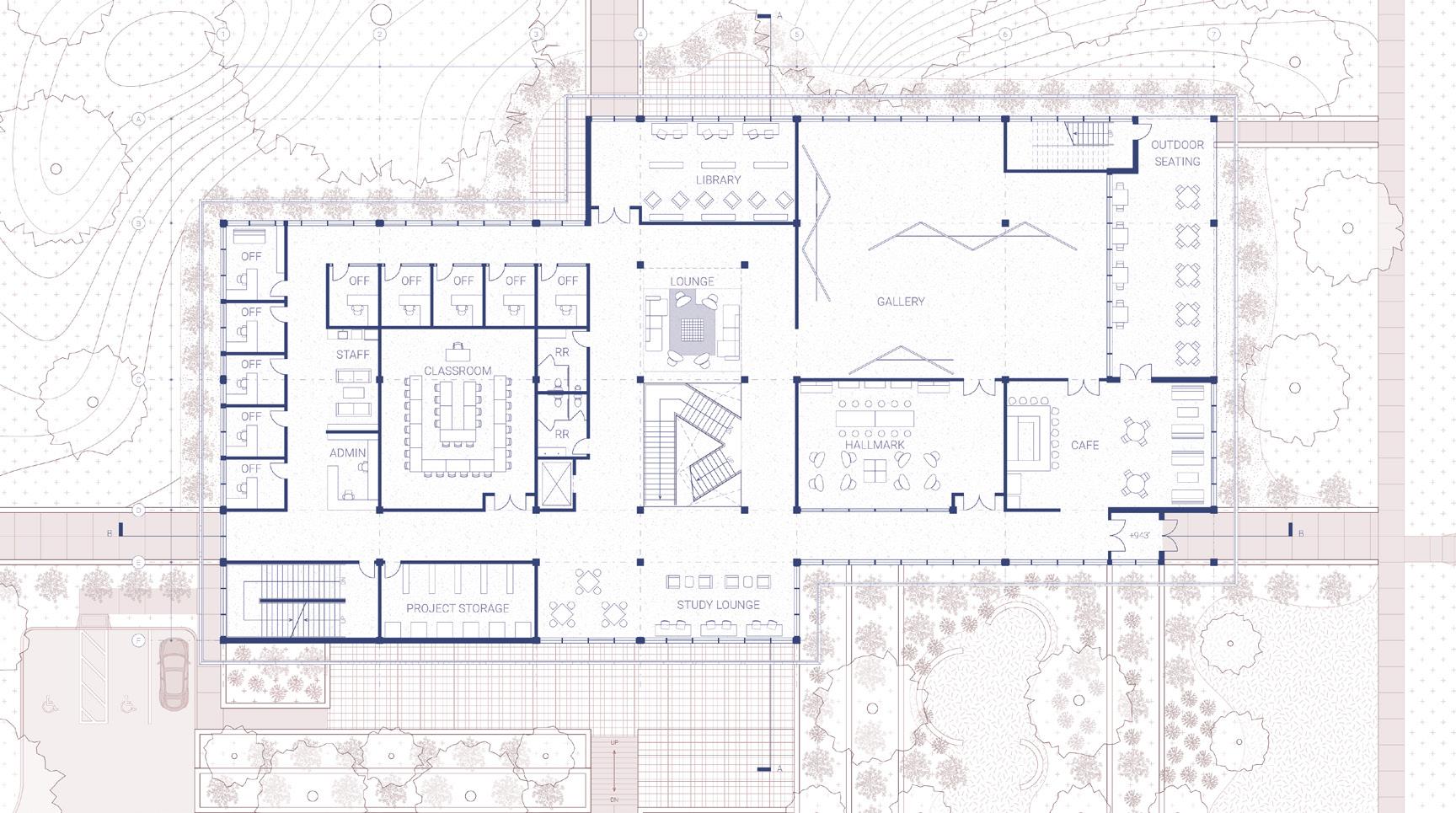
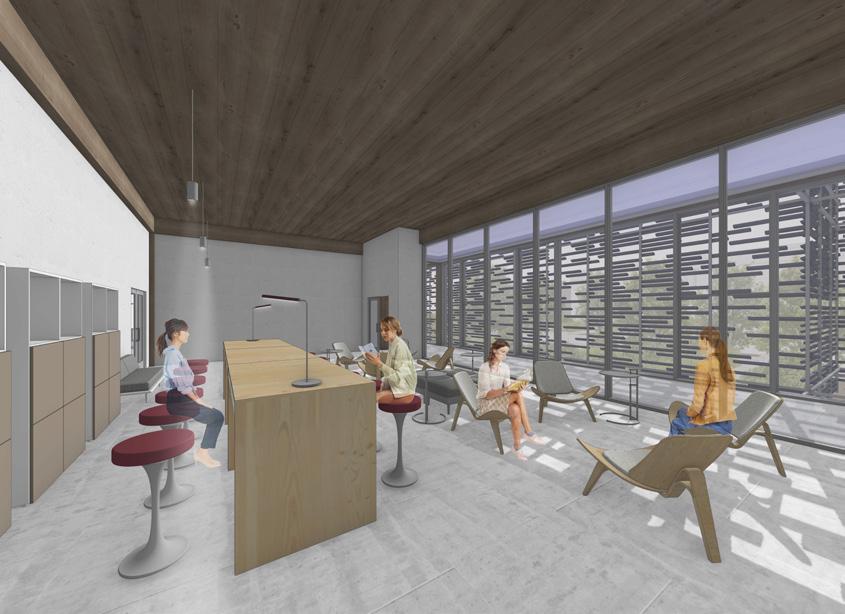
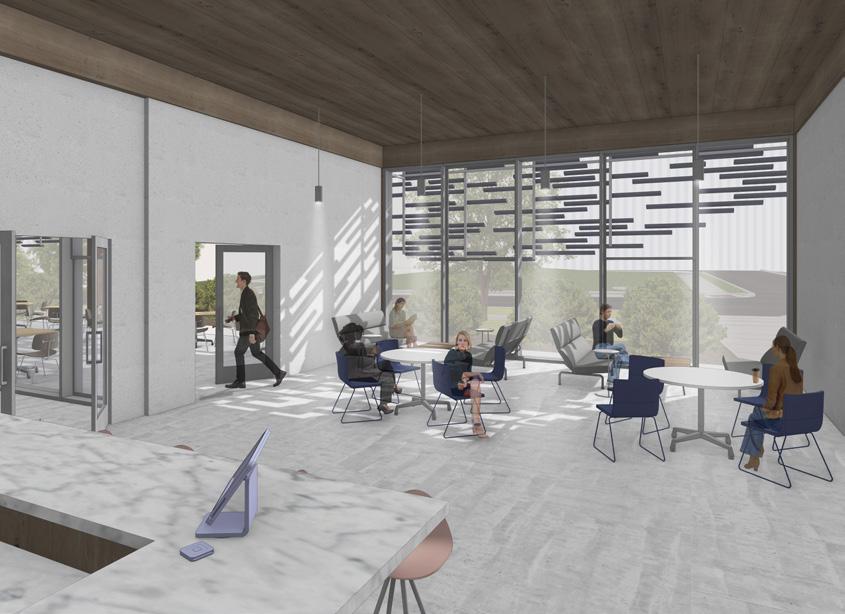
UPPER
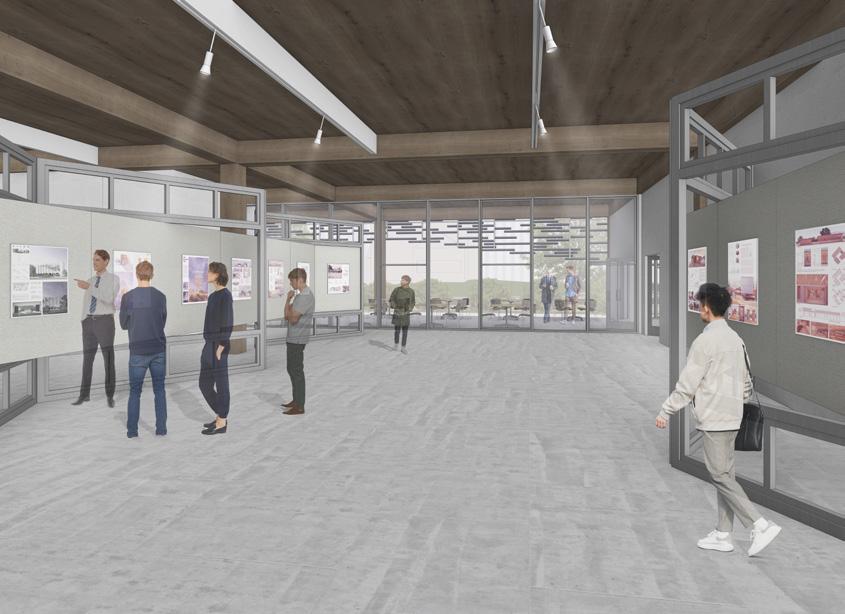
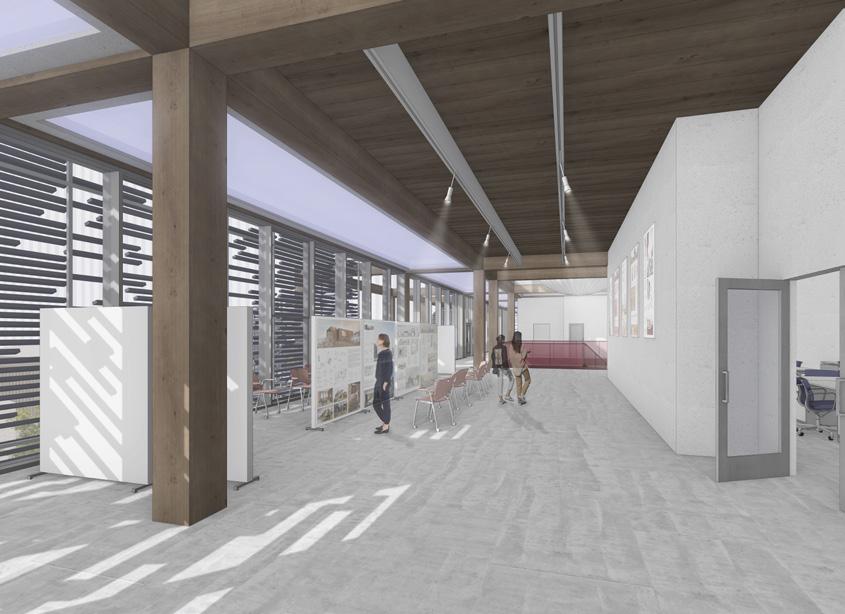
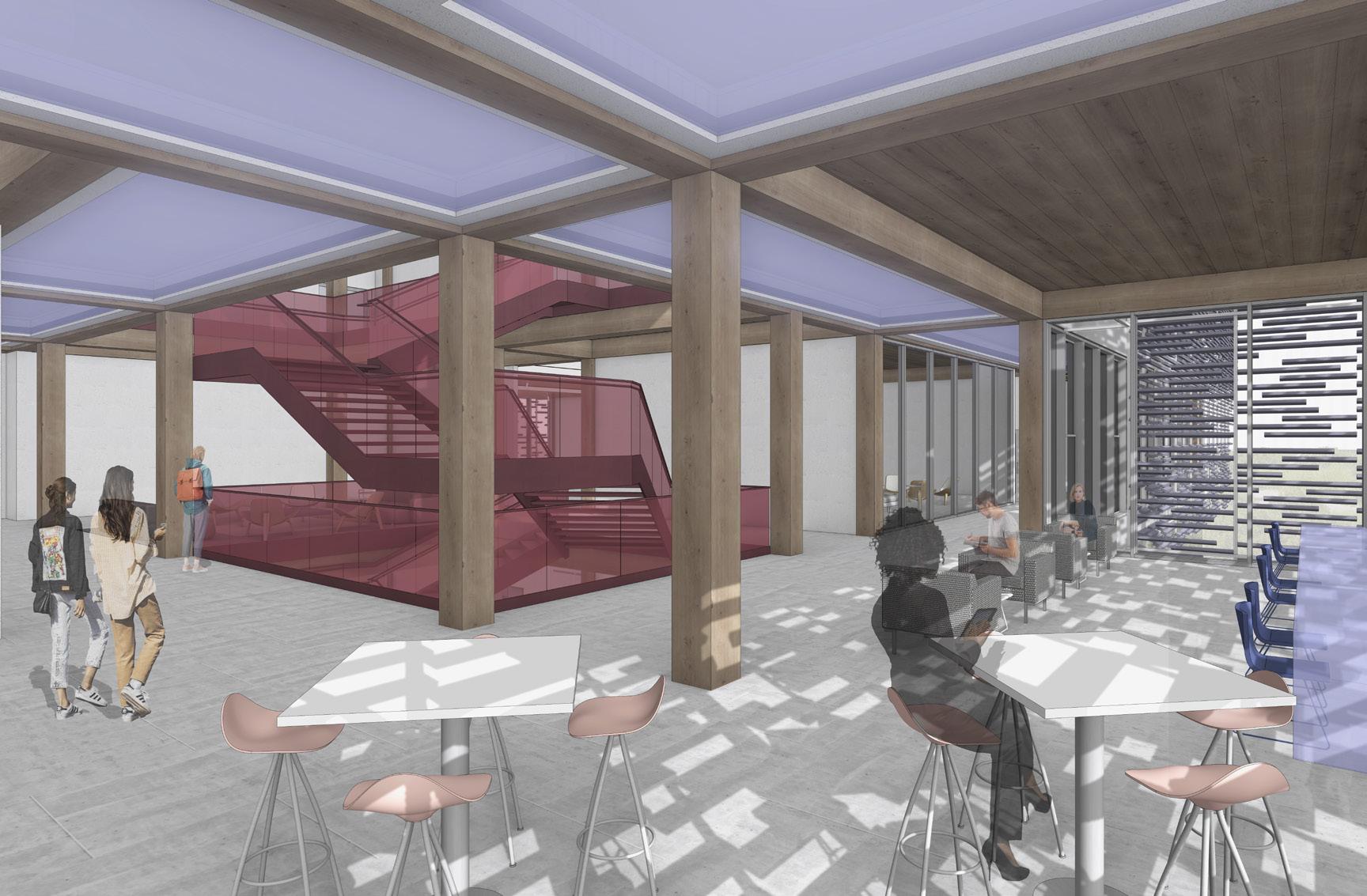
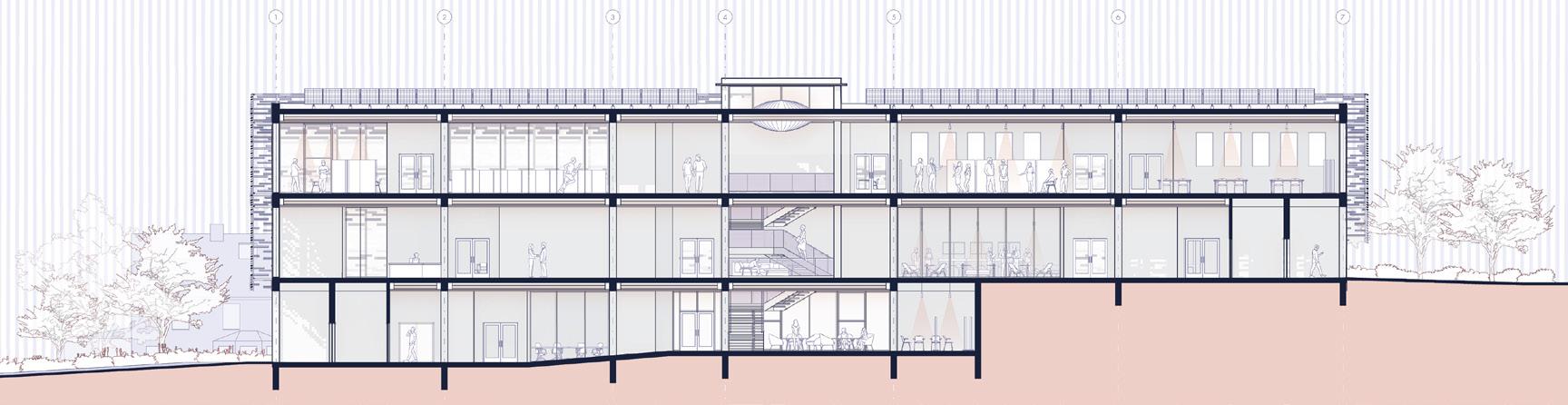
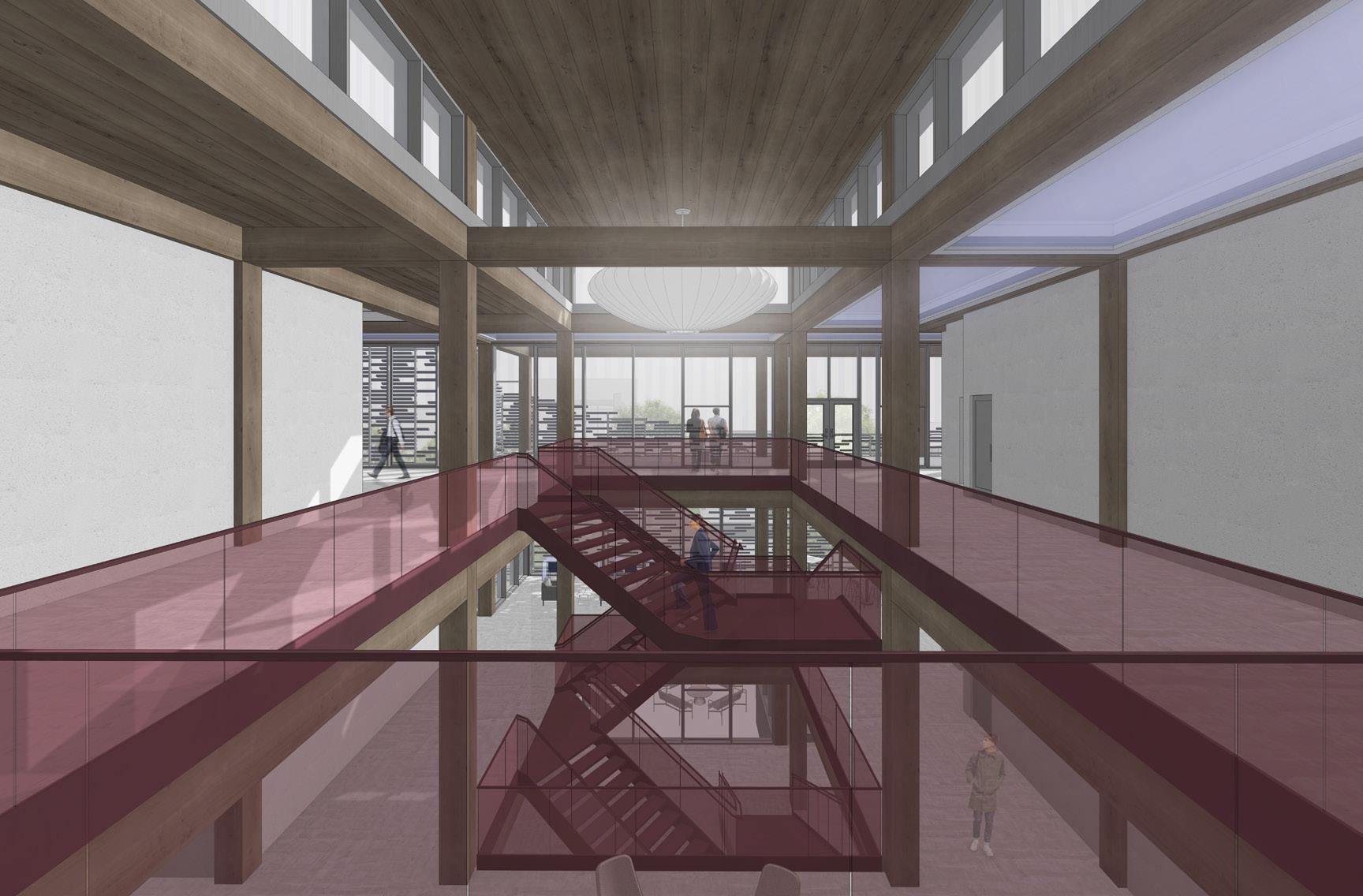
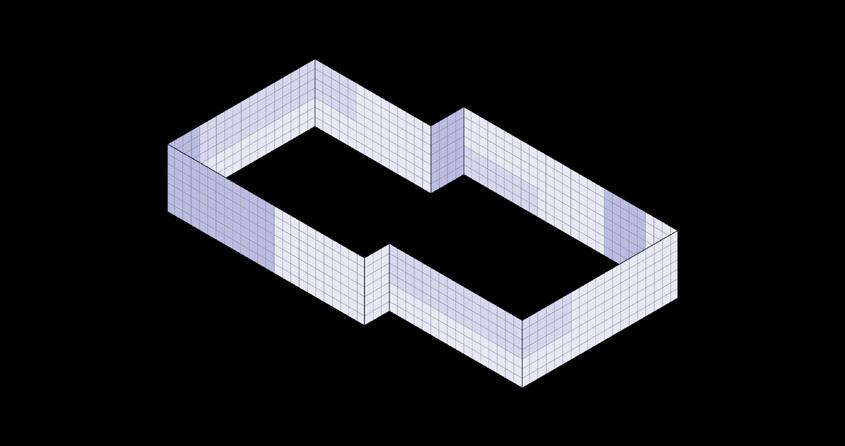
1 - INTERIOR VIEWS
2 - VENTILATION
5 - Table(au) as Urban Media
LOCATION
DURATION
INSTRUCTOR
TEAM
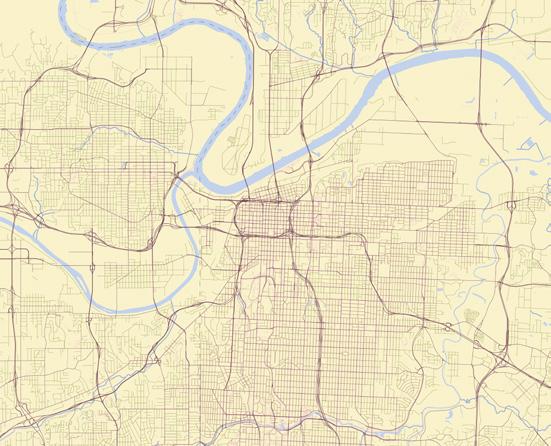
Kansas City Metro Area
5 weeks
Cyrus Peñarroyo Individual
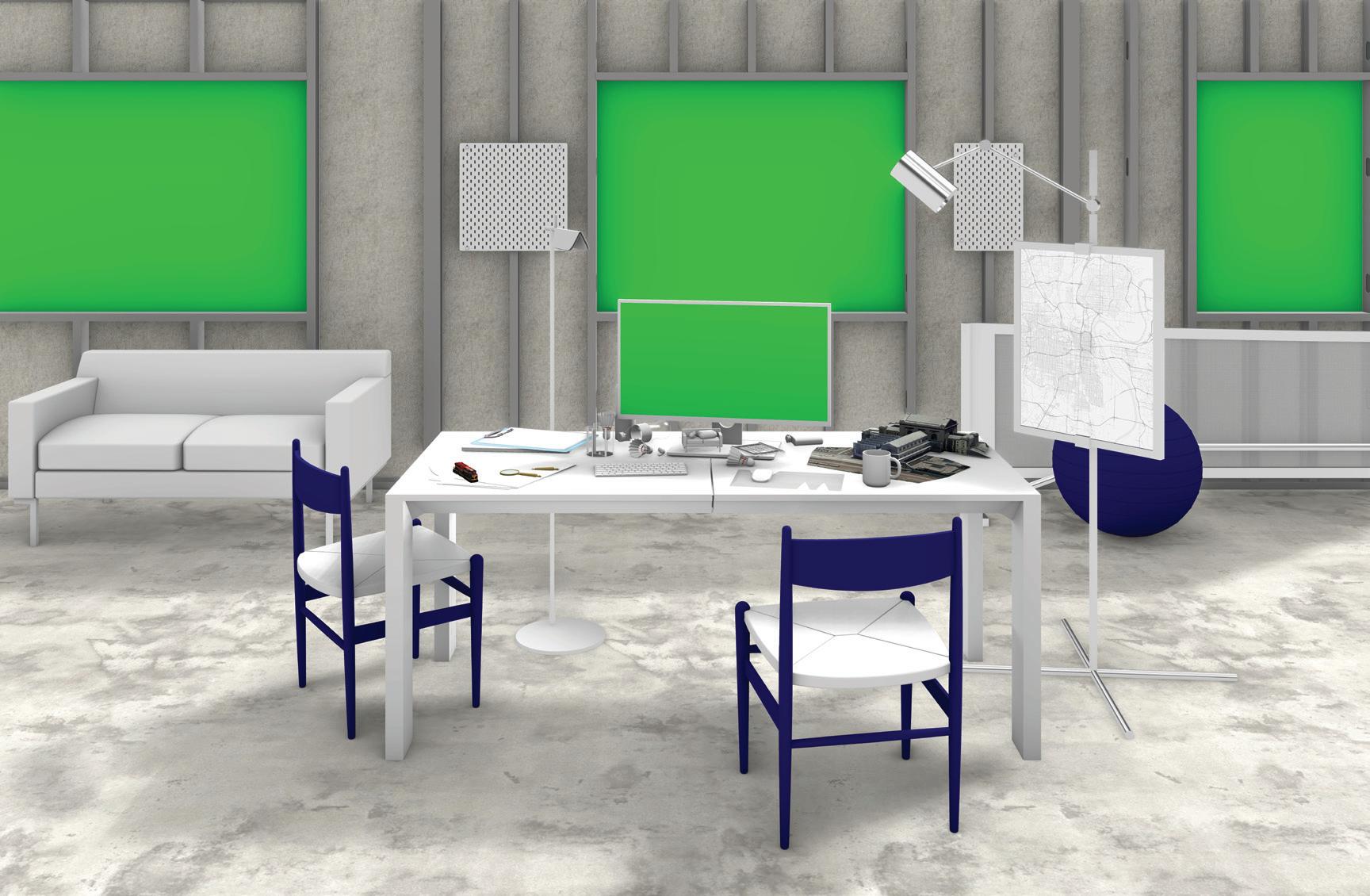
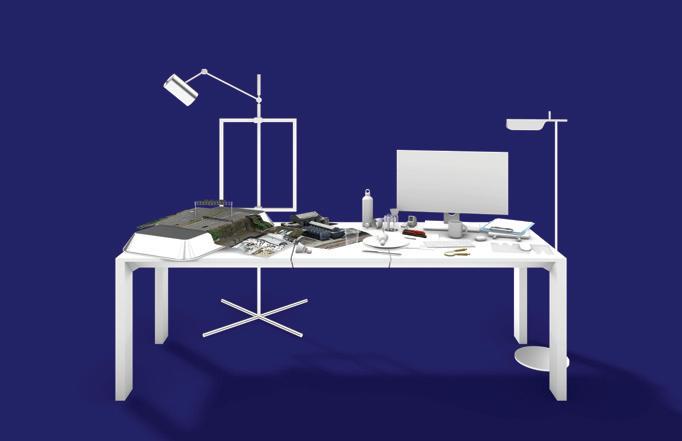
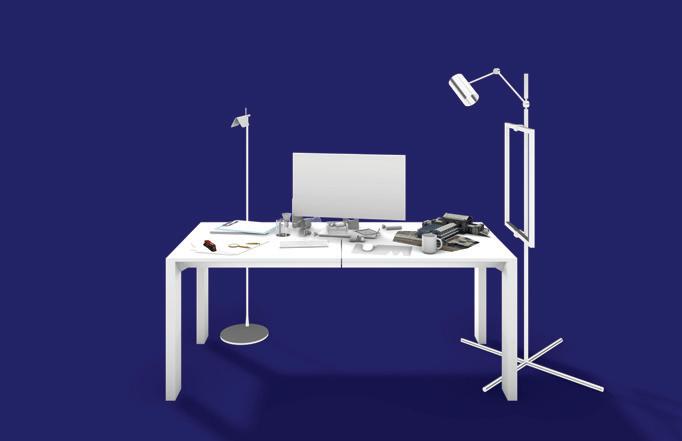
The project uses transscalar representation methods to foster critical inquiry into urban design and image/ drawing. By incorporating digital software techniques, such as Rhino and Google Earth’s seamless zoom, the project develops by integrating frames and screens of an expansive landscape beyond solely architectural scenes. In re-utilizing the spatial attributes of software itself, the work reorients how we see and represent urban space.
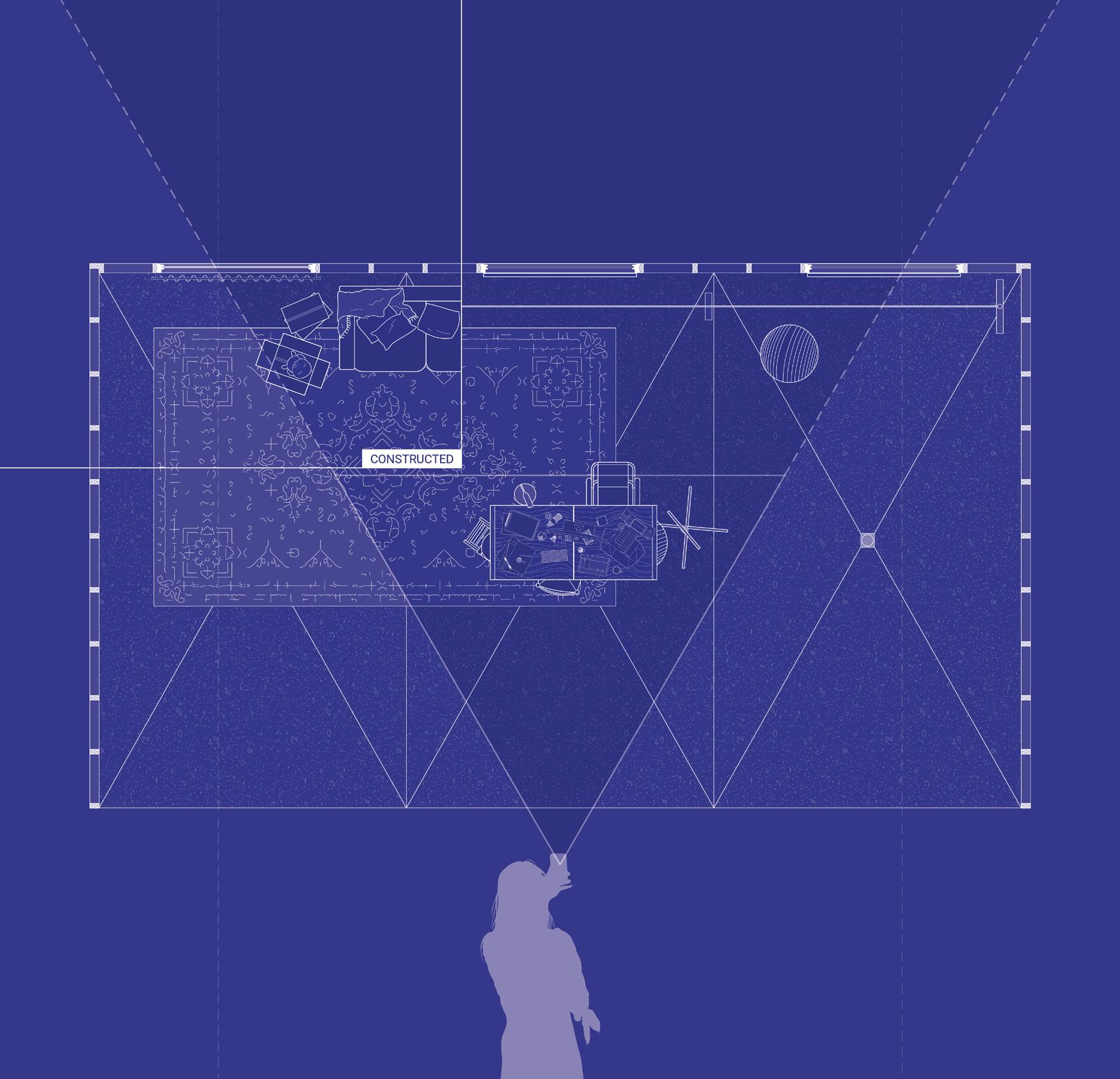
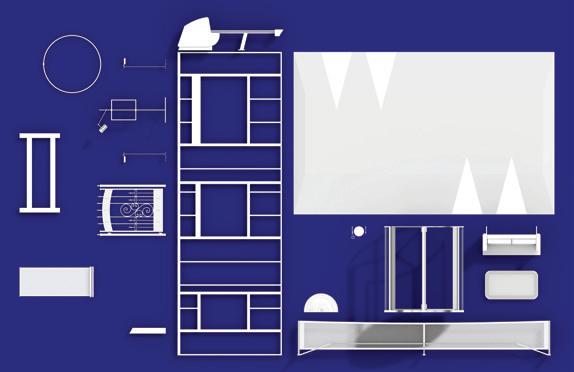
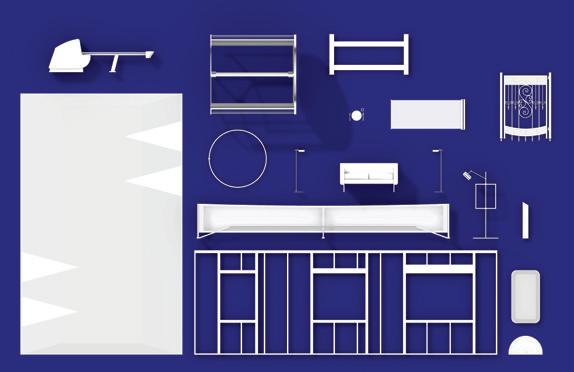
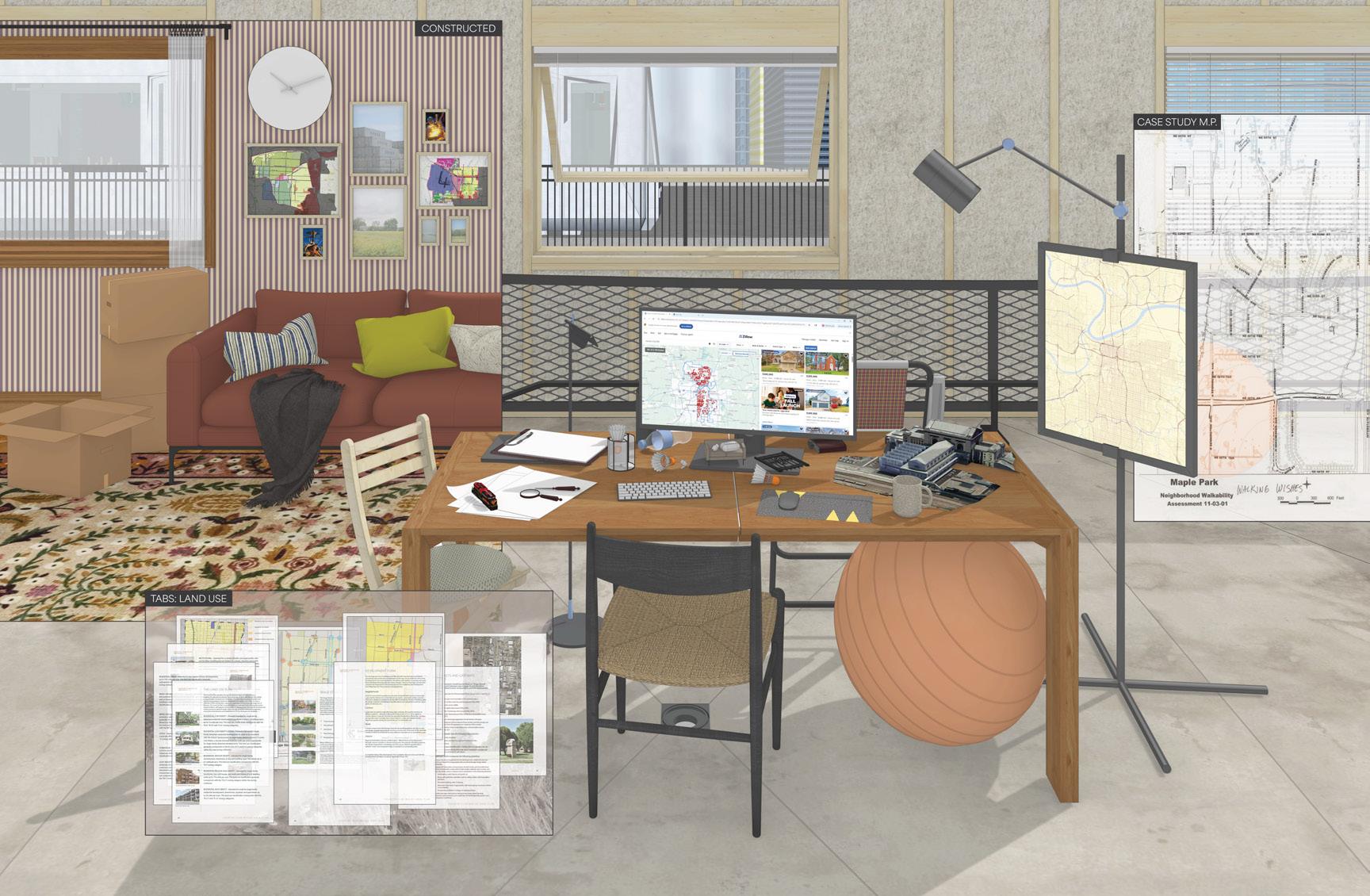
Illuminated for examination, the above image disassembles Kansas City’s urban components. The room obscures its socio-economic standing; objects, visual aids, and furnishings accumulate and are portrayed as items of study or as extra clutter. Objects scatter the scenes, framing an animated setting against barren examination space. The peripheral is adorned with family photos and supplemented with visual aids, morphing individual context and multifaceted x-urban frameworks. As the illustrations overlay across elements, the collected media and table-setting layer interchange palpable infrastructure, emphasizing the
unfinished to dissect urban complexity.
The collected media and table setting present the components of Kansas City; expressly layered and deflecting hierarchies in scale and relation to reflect and deconstruct assembled mediums.
The window scene layers the “backyard” with a streetcar and a city skyline in the rear, extending an individuated context to urbanity. Orchestrated as a garage, the space is re-purposed for analysis and work shopping urban conditions. Items on the desk relate to recreational activities, others resemble street scenery: a speeding table shrinks as the mouse pad and the lights mimic streetlights. The back call-out shows an idealized case study in walkability, connecting to the open tabs up front and the garage ensemble of sports equipment. As a composite, the image interchanges informal work patterns and standardized resources to dissect permanent infrastructure, emphasizing the unfinished to highlight the dynamic complexities of urban realities.
1 - TABLE TOP
5 - Table(au) as Urban Media
2 - TABLE TOP
LOCATION
DURATION
SPONSOR TEAM
N/A
10 weeks
UCARE
Zac Porter, Ph. D.
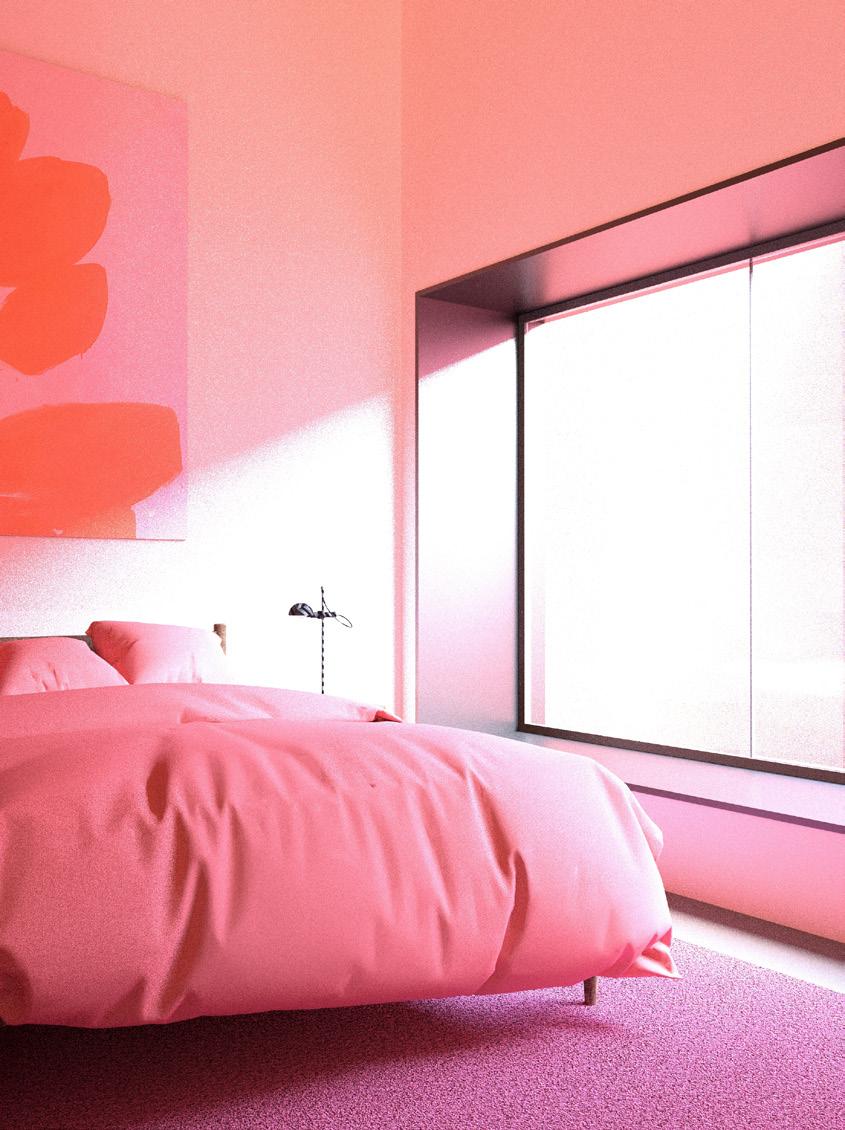
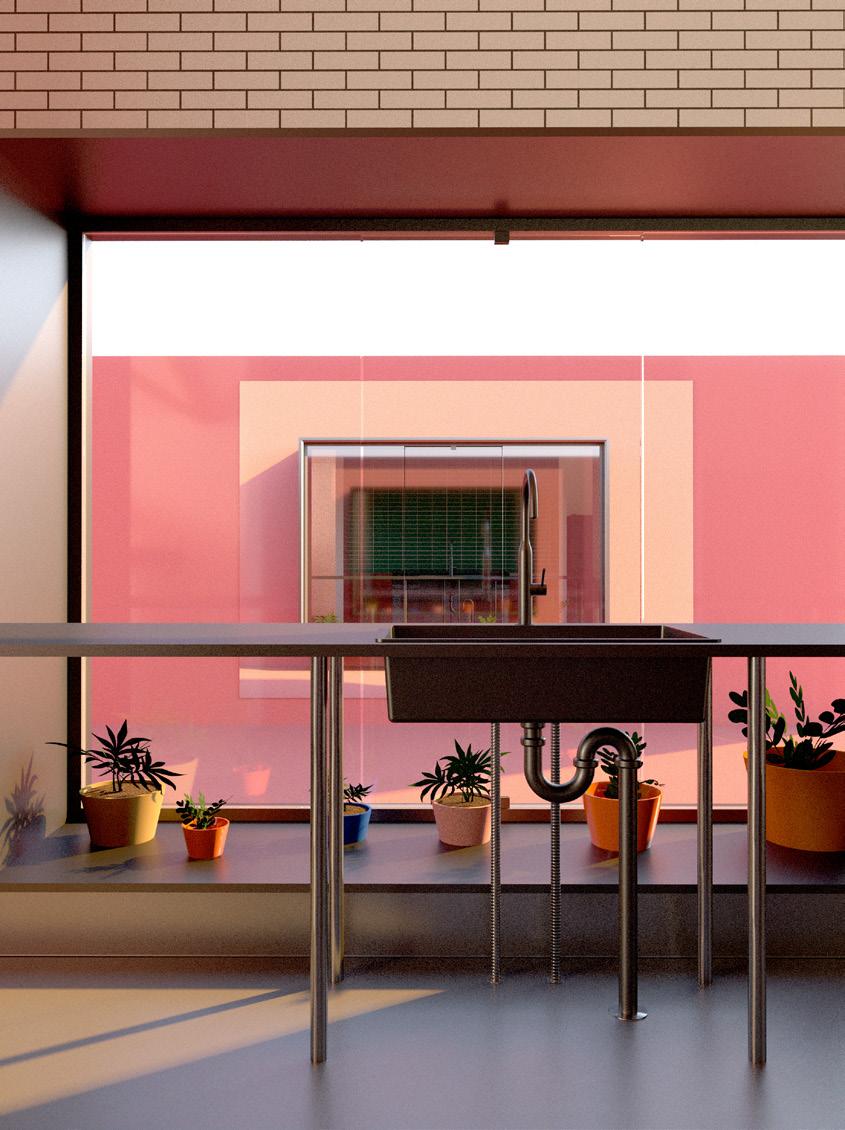
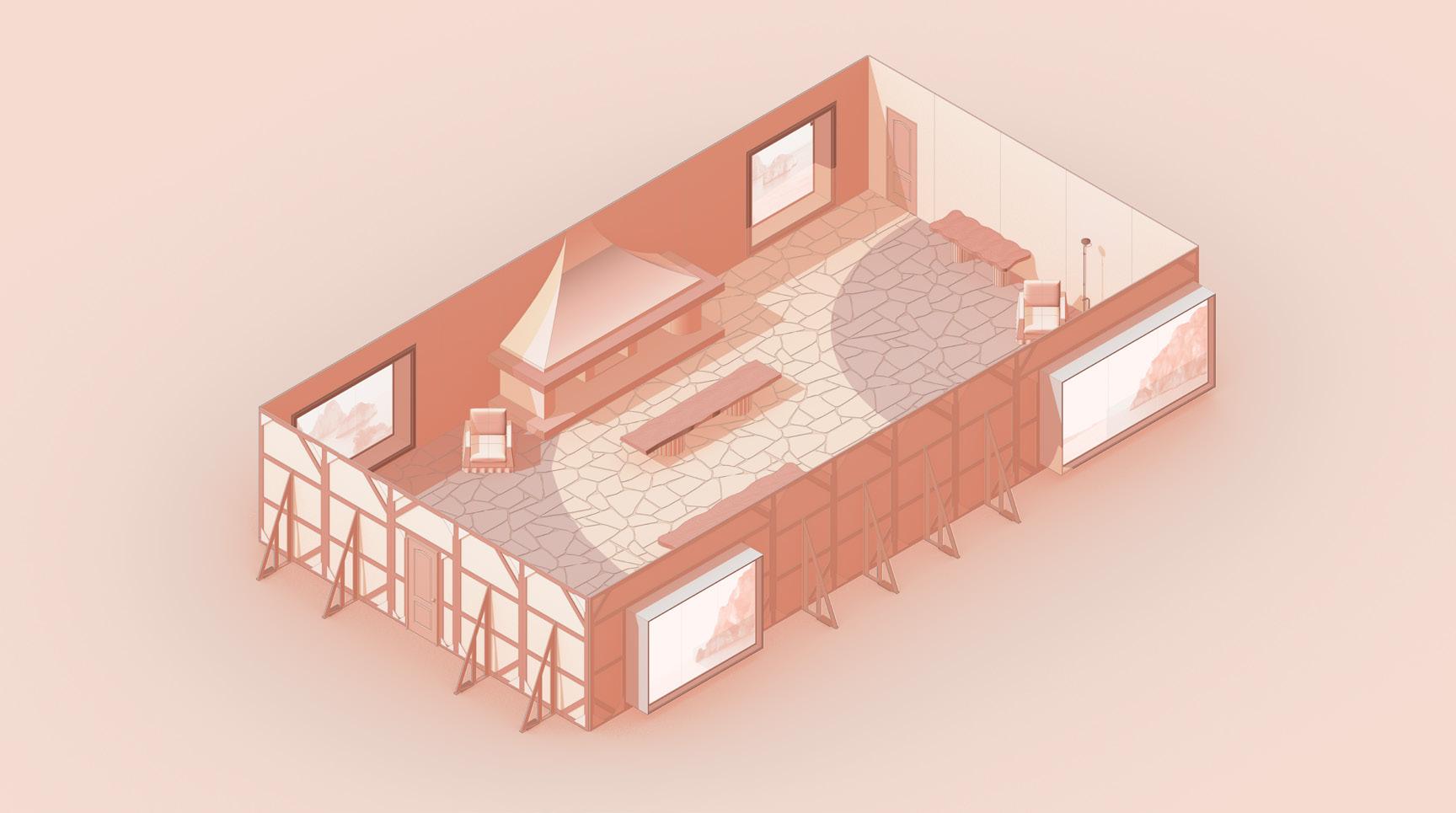
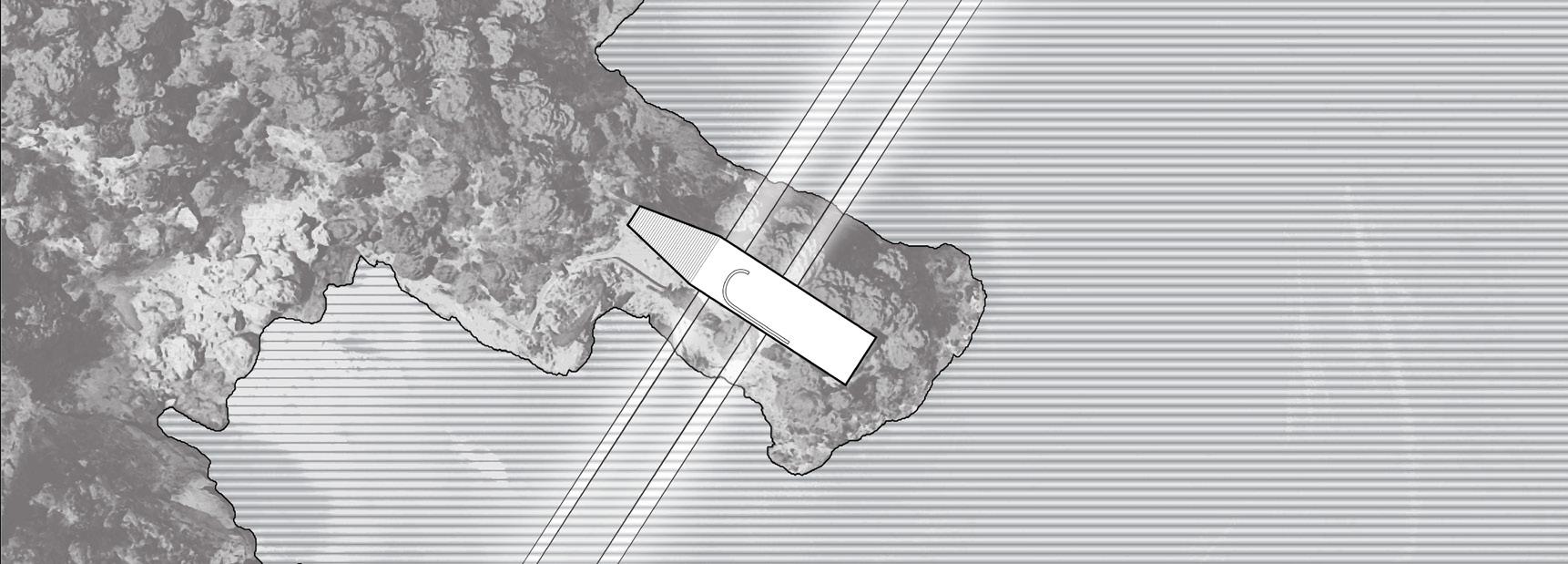
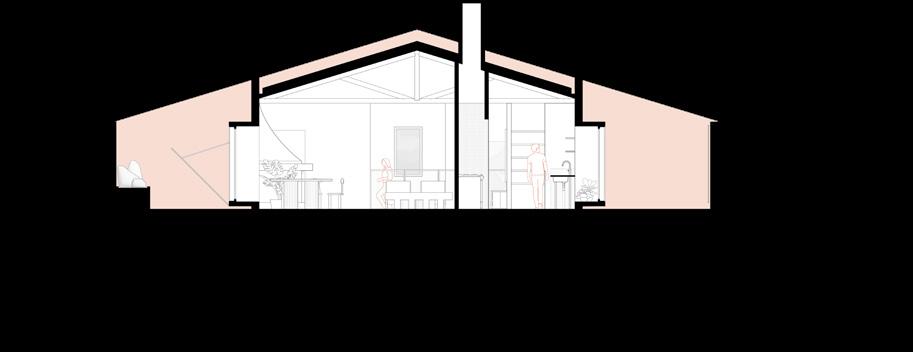
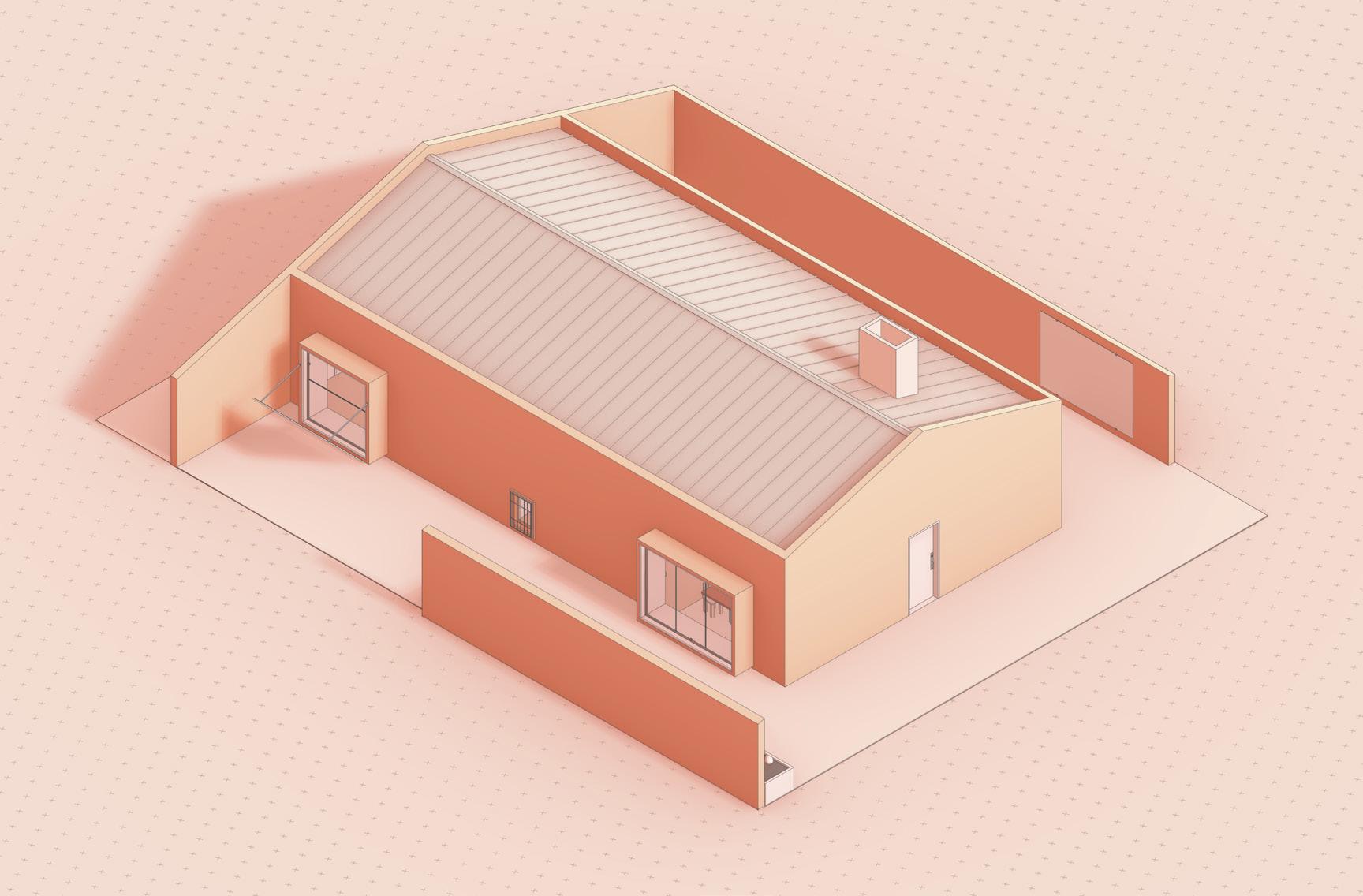
Casa Malaparte serves as a precedent for domestic scenes. The original work sits atop a cliff in Capri, capturing the surrounding terrain and seascapes as paintings. We’ve adapted the compositional technique to suit a contemporary fashion. Cuzio Malaparte’s work leans on scenery for the impactful gesture. Additionally, the home reflects the designer’s quarrelsome persona; evident in the anti-modernist approach, bold orange facade, and abandonment of the initial architect, Adalberto Libera.
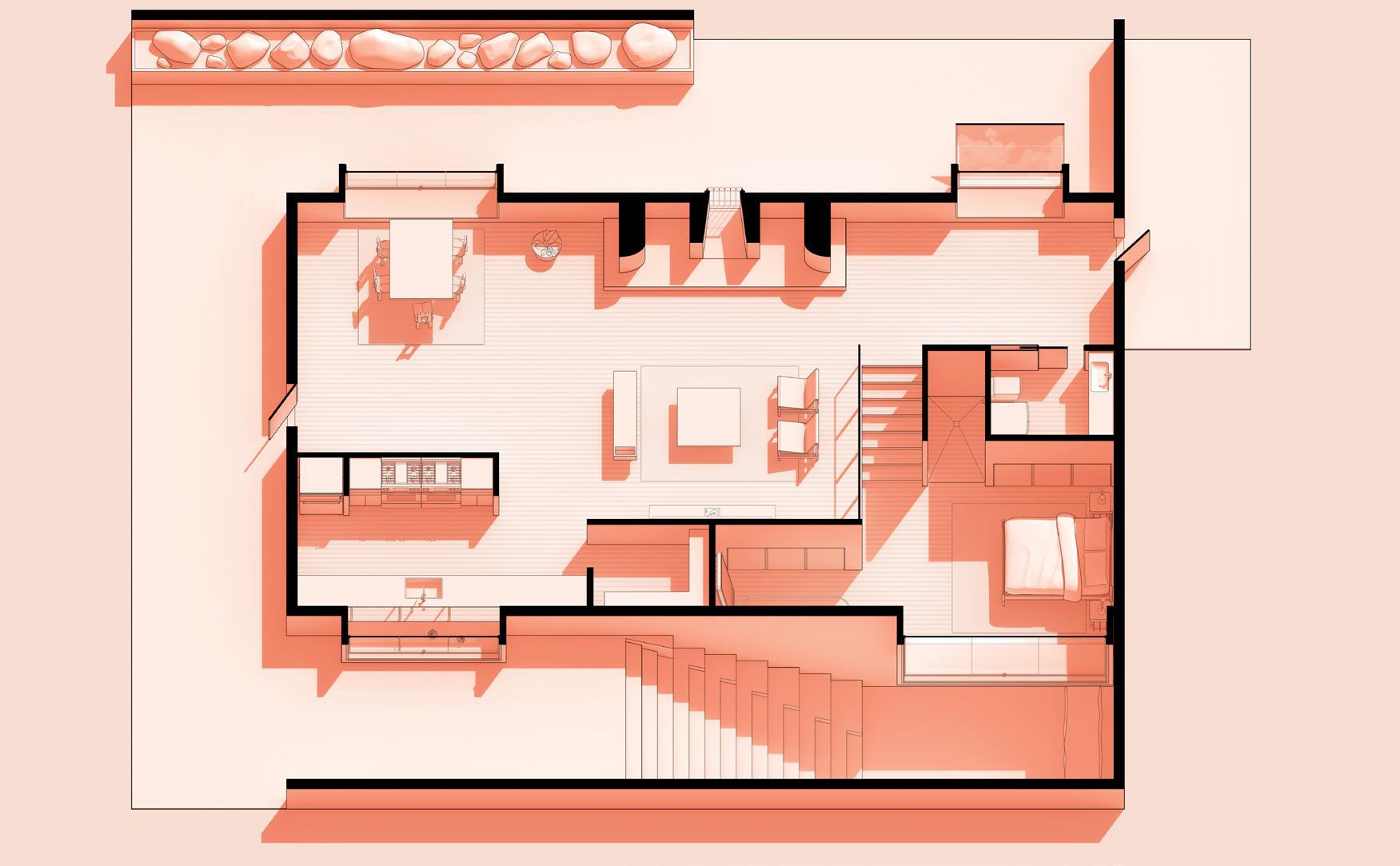
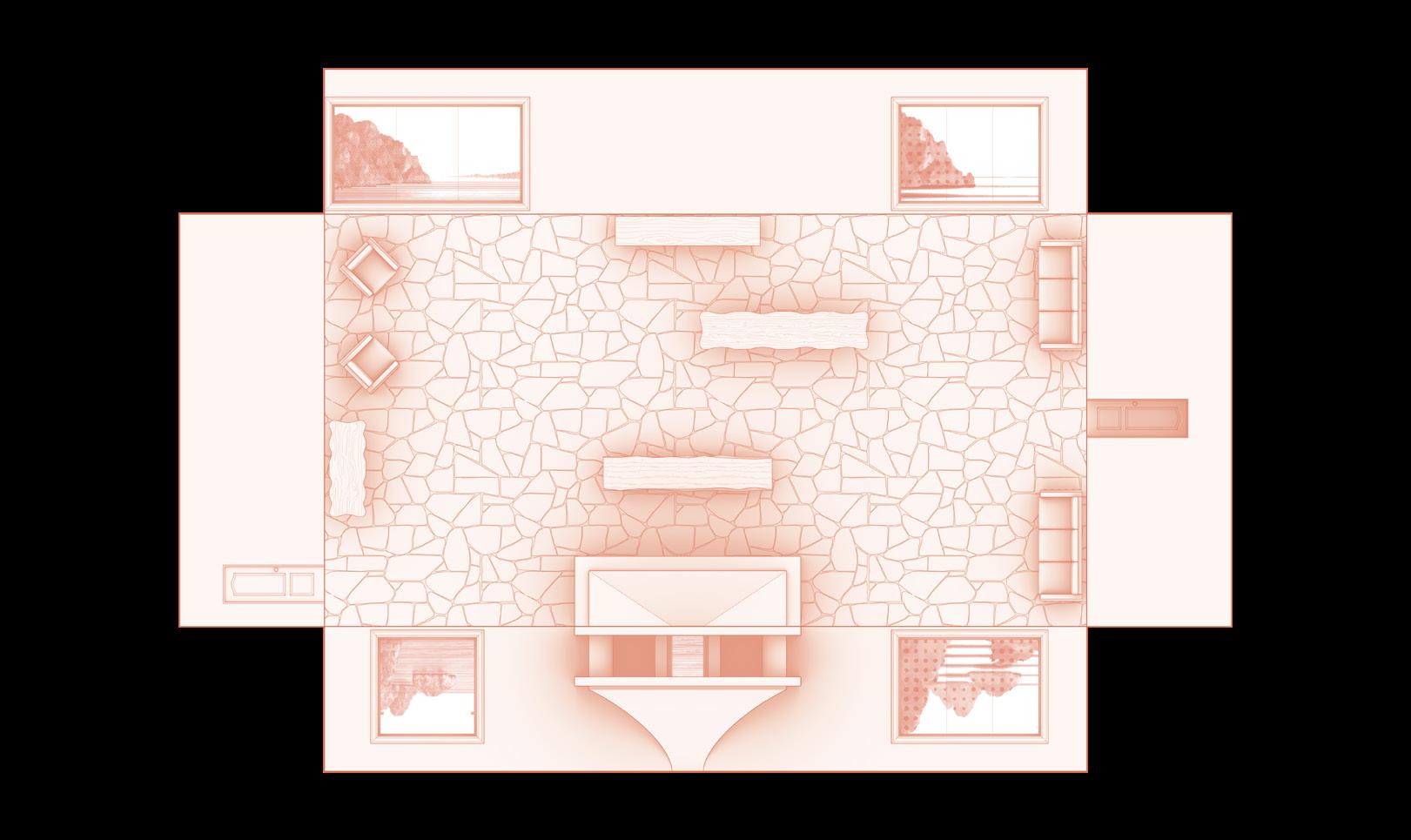
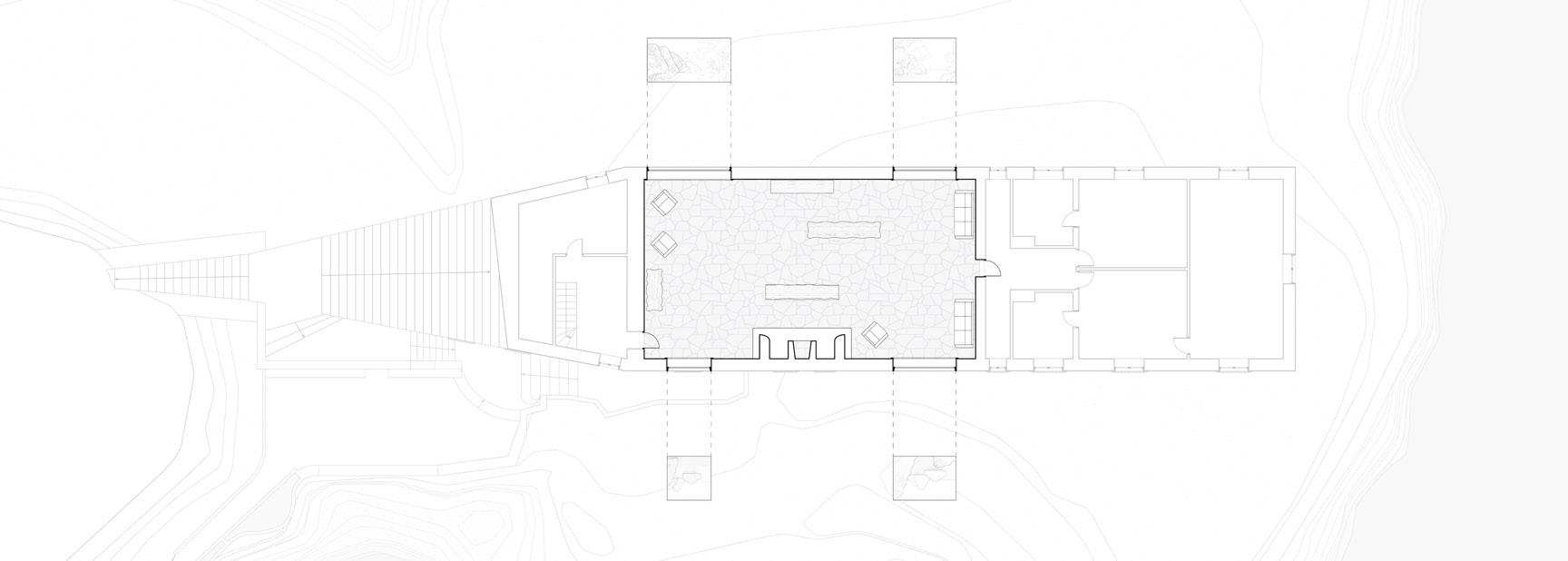
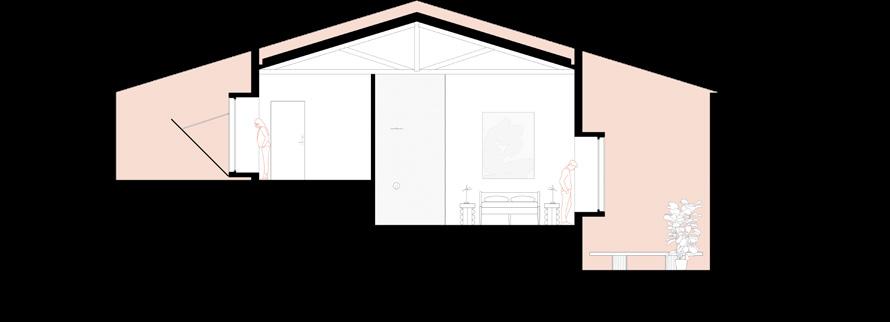
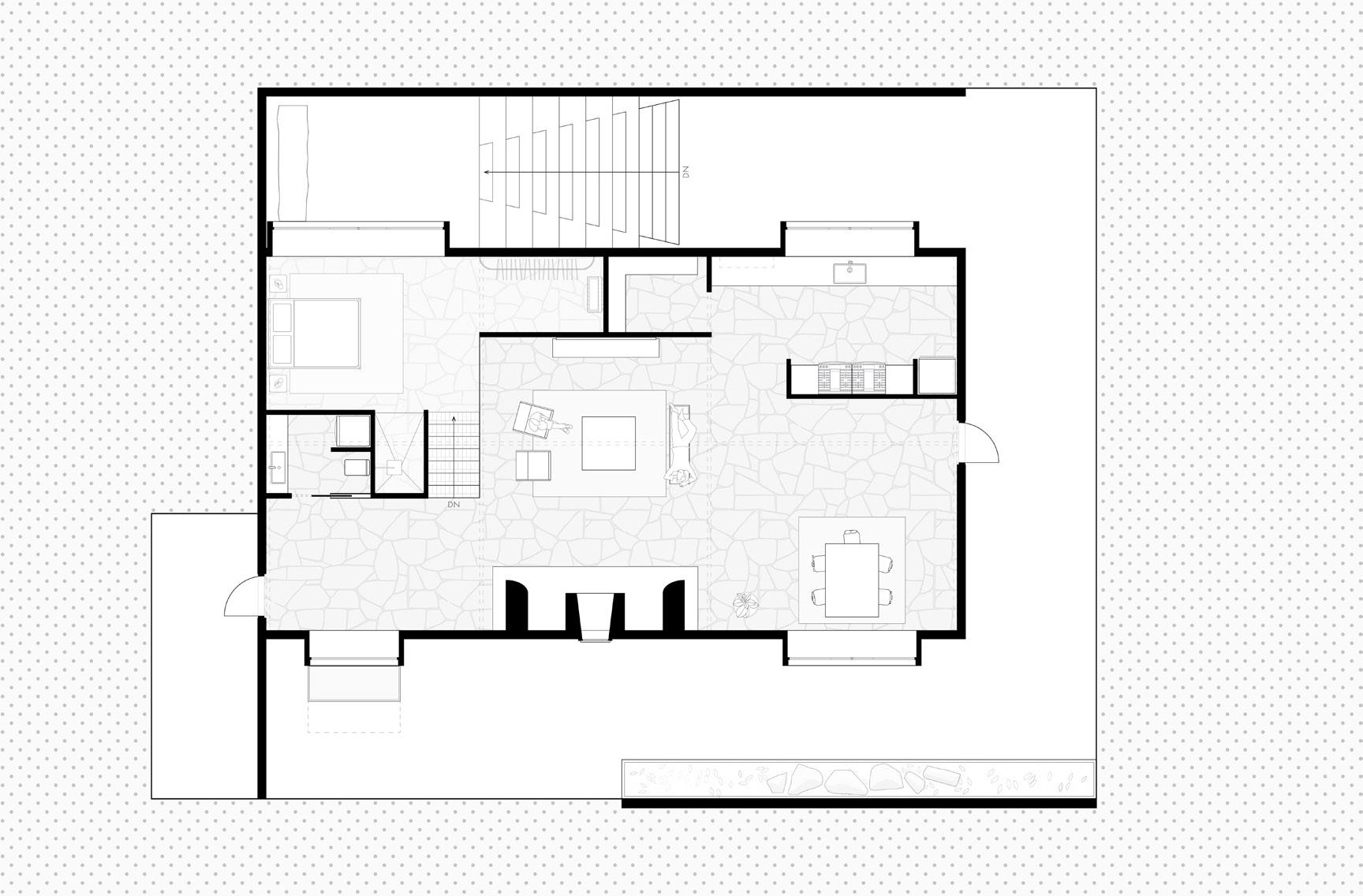
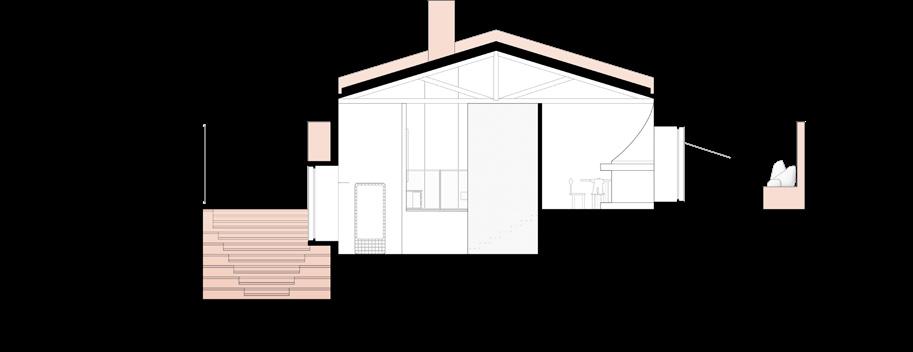
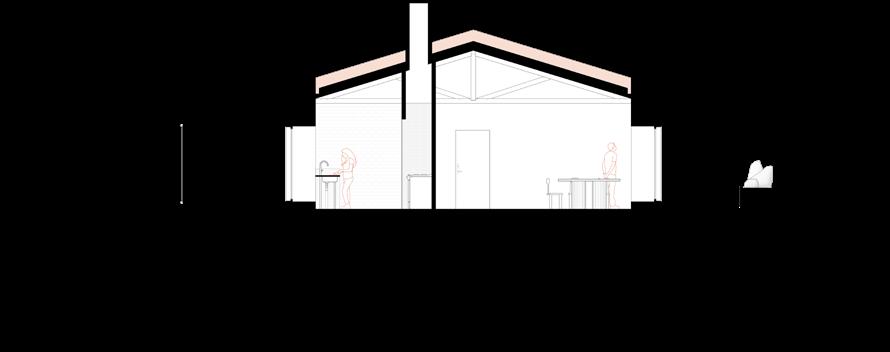
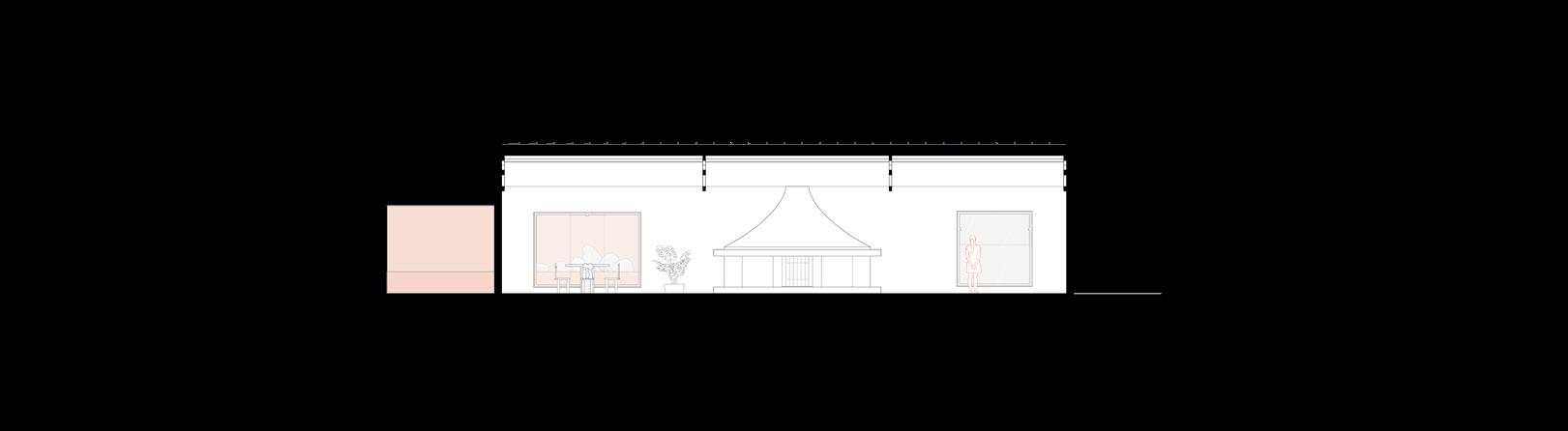
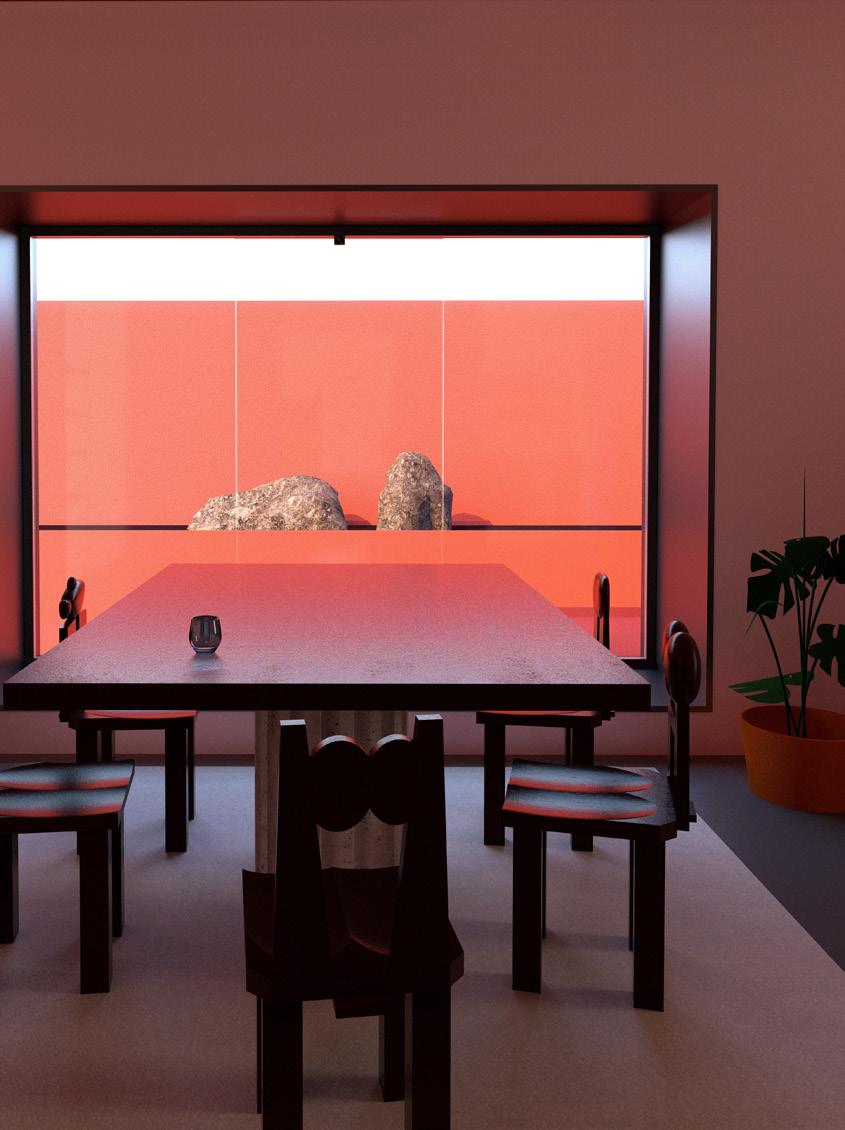
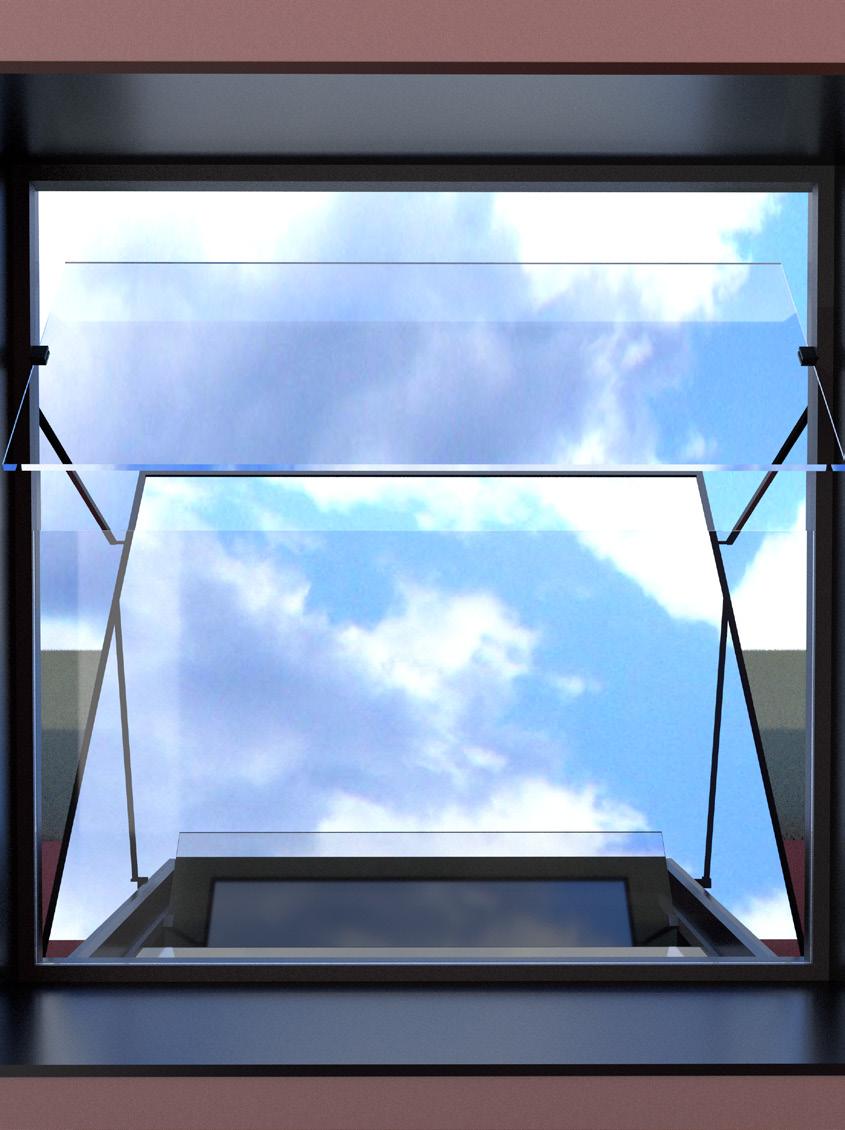
The modified work aims to show the versatility of architectural elements and their attraction. Casa Malaparte provides an antithesis: the character, pronunciation, and view quality are possible for outstanding landscapes, yet the experiential quality wanes at an alternate location. Contemporary designs may revisit window features for appeal, interactivity, and functional constraints in morphing urban conditions. The adaptation uses the size and proportion of the living room and windows as formwork for a singlefamily home. Floor plan dimensions are derived from
Casa Malaparte, using four window variants: one angled to the sky, one mirrored inside, one mock landscape, and one interaction. The work focuses on the living room because of its notoriety, non-sensible features, and presence in architectural discourse. The layout composes flow between iterations: facing up, out, back, and inward. Views between rooms are obstructed, emphasizing the interplay of the framed exterior.
Each scene uses distinct elements, subverting the surrounding land and contrasting the necessity of abundant land and existing greenery for vibrant features. The design suggests possibilities for relating interior and exterior qualities, employable in high-density regions, areas deficient in green space, as a shield, or as the means to leverage context.
This project was led by mentor Zac Porter, who developed the direction, provided feedback, and reviewed drawings. I honed my research capabilities, replicated and studied the home, diagrammed to communicate the key features, detailed the adapted home, and produced drawings to illustrate the intent.
- House with Four Views



- House with Four Views