
The Samaritan
FEAST & CELEBRATE
150 Years of Grace
GOOD SAMARITAN
CLERGY
RECTOR
The Rev’d Phillip
Channing Ellsworth Jr
VICAR
The Rev’d Dr
Matthew Kozlowski
ASSISTING PRIEST EMERITA
The Rev’d
Marcia Wilkinson
VESTRY
Andy Balsan
Becky Bowersox
Heather Dill
Mark Dixon
Mary Ernst
Bette Ferris
Whitney T. Kuniholm
Angela Linden
Jim McGuire
Janet Prichard
Jonathan Purifoy
Amber Skinner
Rusty Smith
Mary Anne Weightman
Louise B. Wennberg
WEEKLY SERVICES
THE SERVICE OF HOLY EUCHARIST
Sunday, 7:30 am Rite I, Chapel
Sunday, 9 am Rite II, Church
Sunday, 11:15 am New Chapel, Church
ADULT CHRISTIAN FORMATION CLASSES
Sunday, 10:15 am

STAFF
DIRECTOR OF STUDENT MINISTRY
Jessica Campbell
DAY SCHOOL DIRECTOR
Barb Condit
ASSISTANT TO THE DIRECTOR OF FAMILY MINISTRIES
Elrena Evans
DIRECTOR OF CHRISTIAN FORMATION
Jack Franicevich
DIRECTOR OF MUSIC
Connor Fluharty
EXECUTIVE ASSISTANT TO THE RECTOR
Missy Freiling
MAINTENANCE DIRECTOR
Connor Gisel
ORGANIST
Gary Gress
ASSOCIATE FOR CONTEMPORARY
LITURGY & DISCIPLESHIP
Josh Guenther
THEOLOGIAN-IN-RESIDENCE
Christopher A. Hall
DIRECTOR OF FAMILY MINISTRIES
Kimberly Lindquist
PHOTOGRAPHER-IN-RESIDENCE
Larry McGill
WRITER-IN-RESIDENCE
Christie Purifoy
CREATIVE DIRECTOR
Melodee Dill Stephens
DIRECTOR OF DANCE MINISTRY
Karen Watkins
FINANCIAL ADMINISTRATOR
Betsy Wolford
MAINTENANCE TEAM
Alphonse Campanese
Beau McFetridge
Mayrel Vargas
FROM THE RECTOR
150 Years of Grace: The Celebration Begins
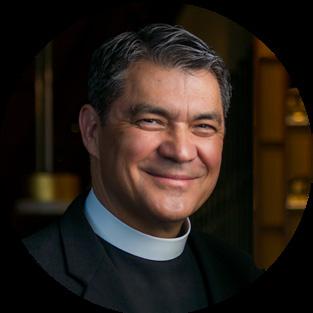
BY THE REV’D PHILLIP CHANNING ELLSWORTH JR, RECTOR
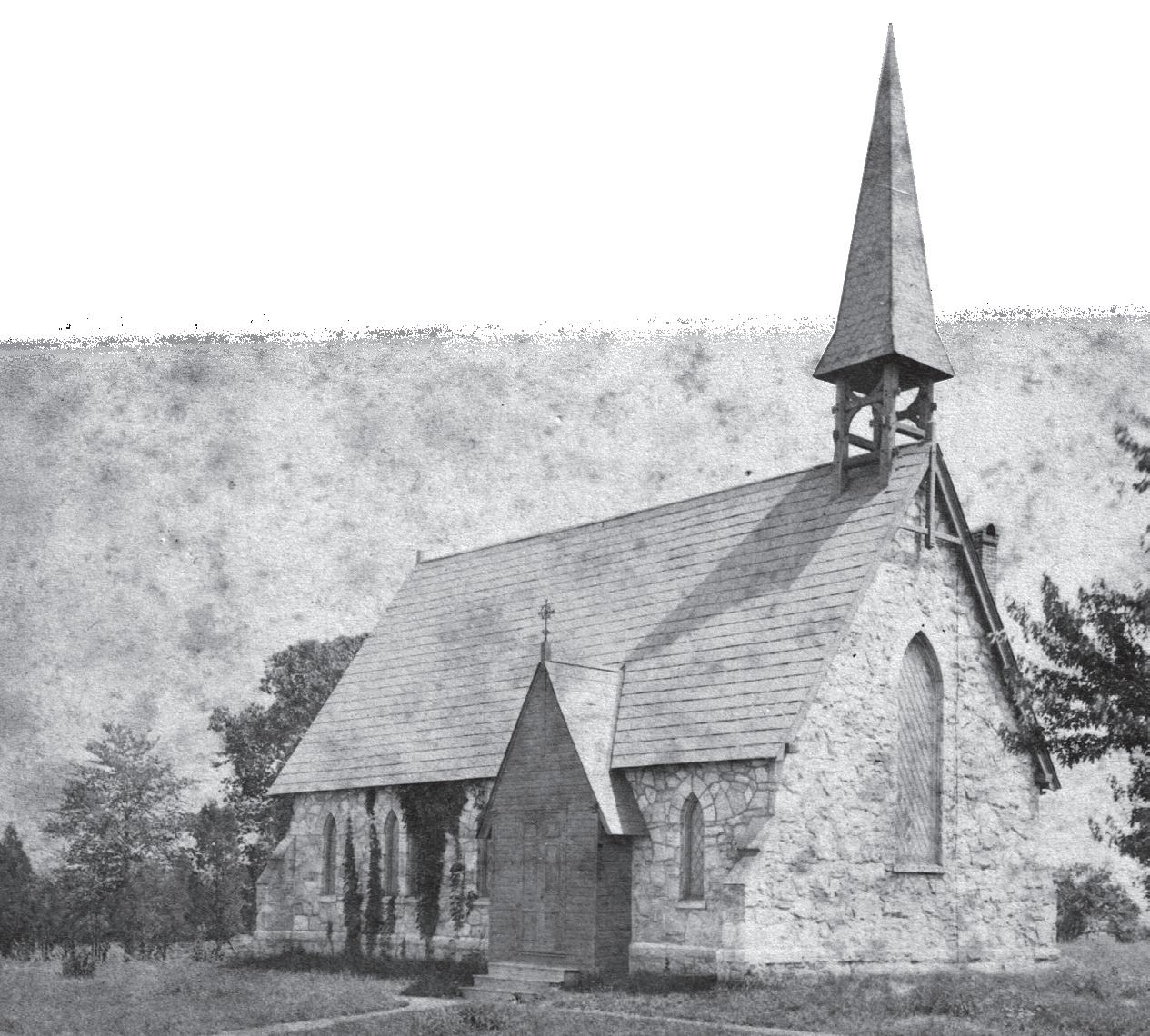
Previous to the year 1876 there is no record of any organized effort having been made to establish an Episcopal Church in Paoli. The little village at that time comprised a railroad station, one general store, a few scattered cottages, mainly occupied by railroad employees, a comfortable old stone tavern… On October 31, 1876, the cornerstone of a church building, to be called “The Church of the Good Samaritan,” was laid by the Rt Rev’d William Bacon Stevens, DD, LLD, Bishop of the Diocese. JOHN M WIRGMAN, FROM HISTORY OF THE CHURCH OF THE GOOD SAMARITAN , APRIL 1907
This All Saints Day we begin to celebrate our sesquicentennial!
Three years ago, Victoria and I heard Joe Kennedy, our institutional historian, give a delightful talk on our parish history, so for me this edition of The Samaritan is an homage to Joe and his beloved Joan, of blessed memory. I want to tell him what one of my mentors, Mark Noll, said to me and classmates in a historiography seminar. “Whenever someone says ‘history teaches,’ no matter what they say next, you can know this. They’re lying. History doesn’t teach a thing. Historians do.”
Why celebrate? Why, like the prodigal father, break out the best wine, turn on the stereo, throw open all the doors, ring up the neighbors, and say, Welcome home! English has one word for time. Greek, the language of the New Testament, has two: xρόνος (kronos), the kind of time you’re thinking of when you look at your watch. And kαιρός (kairos), event time, time which gives meaning to all your days, whether you’re holding your baby for the first time, getting married, holding your loved one lying in mortal weakness, or witnessing a baptism. Every now and then xρόνος and kαιρός kiss. What happens then is a solemnity, “a kind of gladness that makes you serious” (CS Lewis).
We’ll celebrate God’s faithfulness reflected in the people of this parish who... have made God credible by the way they lived and the way they died. It will steel us to go and do likewise.
This Samaritan unfurls a year-long series of events to laud and magnify the Most High’s provident hand over the Church of the Good Samaritan. We’ll fly flags over God’s glory reflected in the people of this parish who, for seven score years and ten, have made God credible by the way they lived and the way they died. It will steel us to go and do likewise
In baptism, every member of the Church of the Good Samaritan, the living and the living who have died, received the grace of our Lord Jesus Christ who rescues us from the principalities and powers of darkness. In Ephesians chapter 4, what St Paul writes is shot through with that, the Spirit equipping us and providing us opportunities to love and serve the Lord. St Paul uses language we borrow at every baptism.
I therefore, a prisoner for the Lord, beg you to lead a life worthy of the calling to which you have been called, with all lowliness and meekness, with patience, forbearing one another in love, eager to maintain the unity of the Spirit in the bond of peace. There is one body and one Spirit, just as you were called to the one hope that belongs to your call, one Lord, one faith, one baptism, one God and Father of us all, who is above all and through all and in all. But grace was given to each of us according to the measure of Christ’s gift.
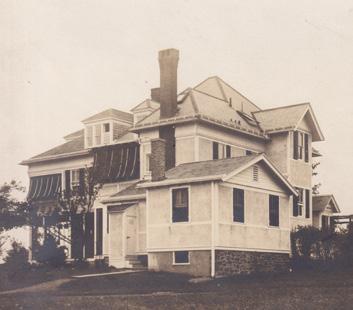
The Church of the Good Samaritan original Chapel, 1877
This is why it says: “When he ascended on high, he took many captives and gave gifts to his people” (Eph 4. 1 – 8) .
He refers to himself as a prisoner. This is strange, and we are meant to notice that. Paul, who held the coats so people could more vigorously stone to death the Church’s first martyr, Stephen, knows both sides of the story he’s living. He’s in league with the psalmist, and with our “keep church strange” Writer-inResidence Christie Purifoy, caught up in this mysterium tremendum mysterium fascinans that has all creation pouring forth speech.
Prisoner is what Stephanie Rousselle would call mot juste “Therefore it is said, ‘When he ascended on high he made captivity itself a captive; he gave gifts to his people.’” That’s Psalm 68 in paraphrase. “When you ascended on high, you took many captives; you received gifts from people, even from the rebellious, that you, LORD God, might dwell there.” In that Psalm, one of 150, you have this beautiful recital of God’s mighty acts, from when he first arose and scattered his enemies and delivered his people at the exodus and brought them into the promised land, and continued a work that took about 400 years, until at last it came to consummation with David’s reign, and nearly all of God’s enemies were put to flight.
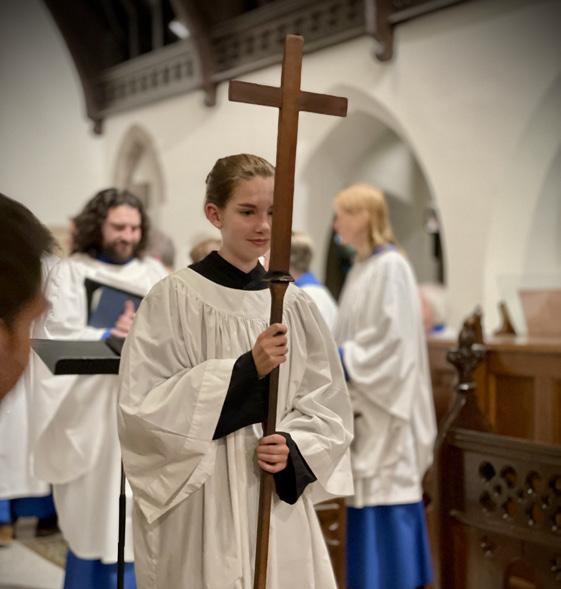
Crucifer and Gospel processions and our queuing up to make a throne of our hands to receive the Sacrament, a sacramentum being what Cicero called it, “an oath of loyalty sworn to the king.” We are all of us captive to something. What better to be captivated by than whoever rescued Israel from bondage to slavery in Egypt and raised Jesus from the dead?
St Paul in Psalm 68 sees a summary of how God redeemed his people Israel and how the splendour of that redemption has been escalated in Jesus Christ. The Son of God descended from heaven in his incarnation and humbled himself, taking on the form of a servant, becoming obedient unto death, even death on a cross, an etz (tree) in Hebrew. “Having disarmed the principalities and powers, he made a public spectacle of them, triumphing over them by the cross.” (Colossians 2. 15) Then he ascends into heaven and receives great glory and honor and a triumphal procession with all the captives in his train whom he has rescued from the kingdom of darkness.
What better to be captivated by than whoever rescued Israel from bondage to slavery in Egypt and raised Jesus from the dead.
No wonder Paul begins the chapter by describing himself as a prisoner. He’s a captive. So are you; so am I. It’s weird enough to make Madame Blavatsky’s hair stand on end. And it is wonderful.
We’re captives to the One “in whose service is perfect freedom,” as St Augustine said, who gives to his people gifts in celebration of his triumph. Paul writes, “in him and through faith in him we may approach God with freedom and confidence.” There’s the irony. Some gifts are natural and spiritual abilities. Some are God’s gifts of people to you. That’s why he goes on to write, “About those gifts, now it is he who gave apostles, prophets, pastors, and teachers to prepare God’s people for works of service.”
At baptism the Spirit ushers us into that eternal communion Jesus enjoys with the Father. Sursum corda, we lift up our hearts, “joining our voices with angels and archangels and all the company of heaven.” And the growth that we’re seeing at Good Samaritan? The growing numbers of people coming into this body of Christ? They are gifts the Spirit gives to you, as you are gifts to them, both to be together.
And at that point (see 2 Samuel 6) there’s a solemnity, a triumphal procession where they bring the ark of the covenant up to Jerusalem with the invisible presence of the glory of God seated above it on the cherubim throne with the ark as his footstool. The king is coming into his royal dwelling, into the holy city of Jerusalem, to dwell there.
In his train, as with all ancient kings who were victorious, behind the king, behind the ark of the covenant, are the “captives in his train.” In the ancient world the conquering king has all of his defeated enemies as the trophies of his victory tied together coming behind him. And the people of the city come out to welcome the conquering sovereign in these triumphal processions because they get to benefit from that victory.
That is what we are, Good Sam. Captives. That’s what’s dramatized liturgically by our
I dig what we sing in New Chapel. Death could not hold you / The veil tore before you / You silenced the boast, of sin and grave / The heavens are roaring the praise of your glory / For you are raised to life again // You have no rival / You have no equal / Now and forever, God You reign / Yours is the Kingdom / Yours is the Glory / Yours is the name, above all names // What a powerful name it is / What a powerful name it is / The name of Jesus Christ my King / What a powerful name it is / Nothing can stand against / What a powerful name it is / The name of Jesus.
I hear the same tune expressed by George Herbert, the Anglican priest and poet, in his The Temple, The H. Communion. Give me my captive soul, or take / My bodie also thither. / Another lift like this will make / Them both to be together.
It was said in the ancient world, “the greater the king, the greater his court.” God is extravagant with his people, divine glory lavished upon us in a radiant Body of Christ loose around the edges and solid at the core. And together we get to live the faith’s profundity and beauty by lifting it up to the Most High as praise and to the world as witness. This sesquicentennial year, Good Sam, let’s break out the best wine, turn on the stereo, throw open all the doors, ring up the neighbors, and say, Welcome home!
FROM THE VICAR
A Story of Grace
BY THE REV’D DR MATTHEW KOZLOWSKI, VICAR
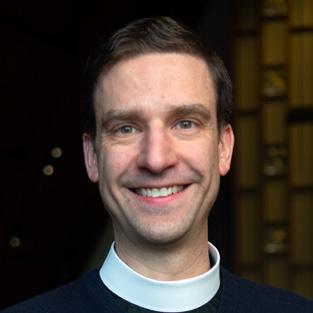
One of the best-selling Christian books of all time is called What’s So Amazing About Grace? by Philip Yancey. It is well worth your time. Compelling, challenging, and encouraging.
Interestingly, Yancey begins the book by reflecting on a lesser-known film, which is based on an even lesserknown short story. It’s called Babette’s Feast
Why start with such an obscure reference? The answer comes in the simple power of the story itself. Two middle-age sisters live in a Scandinavian fishing village, where they care for a small religious community. A woman comes to them having fled from war-torn France, offering to be their cook. Her name is Babette, and they take her in. After some years, something unexpected happens. Babette wins the lottery, 10,000 Francs. In her good fortune she has one request of the sisters: she would like to host a dinner, a full French gourmet meal, and invite the aged villagers as guests. After much preparation, Babette serves the feast— delicious courses, fruit, champagne. In the joy of the meal, old community grudges are healed, and a new spirit of love takes hold. Afterward, the sisters prepare to bid goodbye to Babette, but again she surprises them. “Where would I go?” says Babette, “for I have no money.” The sisters stammer, “But the lottery, the 10,000 Francs?” Babette smiles. “The money is spent,” she explains, “For that was the exact cost of the feast.”
What does it mean? Channeling Philip Yancey here, the story is an allegory for Christian grace. See, God’s grace is truly extravagant. In Jesus Christ, God literally spared no expense to love us, forgive us, and bring us home. So it is that when we experience this extravagant grace, we are moved to respond. To offer ourselves to God, holding nothing back. And to treat others with extravagant love and service. Through the forgiveness of sins, God has given us far more than we could ever ask or deserve. This is grace. How much easier it is to extend forgiveness and grace to others when we remember just how much we have received ourselves.
PRACTICAL APPLICATION
Do you ever sneer at other people? No, I don’t mean outward and visible nasty looks. I mean inward sneering. Seeing another person and thinking, “Why are they wearing that?” or “Can’t they move a bit faster?” or “How can they be so rude and inconsiderate—I would never act that way.” For this type of sneering, I sadly admit, I have at times in my life been a grave offender. Why? Perhaps in my sinful and self-conscious heart I’ve tried to boost my own selfimage by looking down on another. It’s the very opposite of sacrificial love.

Grace is a wonderful cure for sneering. It’s hard to sneer when you have recently confessed your sins and asked God to forgive you. I mean really confessed. Owned up to your faults. No excuses. And then really experienced forgiveness. Felt the weight and then the lightness of God’s grace. It’s hard to sneer at anyone after that.
THE FEAST
Every Sunday at church we have a feast. There are no courses or glasses of champagne. There is simple bread and wine. But this feast is offered for a price far higher than 10,000 Francs. This feast was paid for by the son of God himself, Jesus Christ. Indeed, the feast is his precious body and blood—his body broken for a broken world… his blood poured out to reconcile the world back to God. This is grace.
When we experience this extravagant grace, we are moved to respond. To offer ourselves to God, holding nothing back. And to treat others with extravagant love and service.
It’s hard to sneer at anyone during Communion—this great Sunday feast. That’s because each person, bold and broken enough to be in Christ, gets the same piece of bread—no more and no less. This is grace. Welcome to the feast.
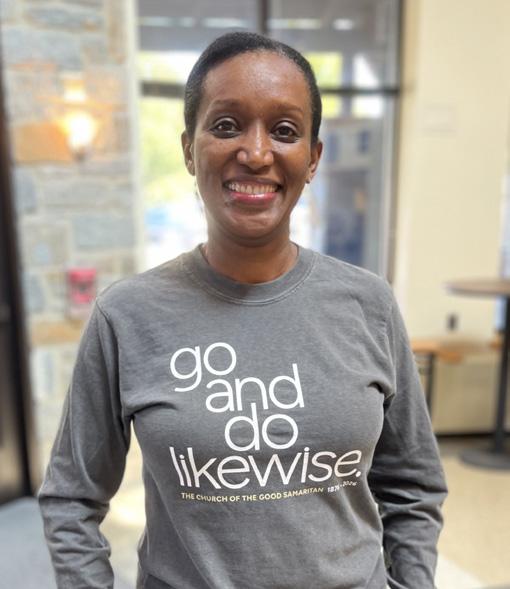
go and do likewise.
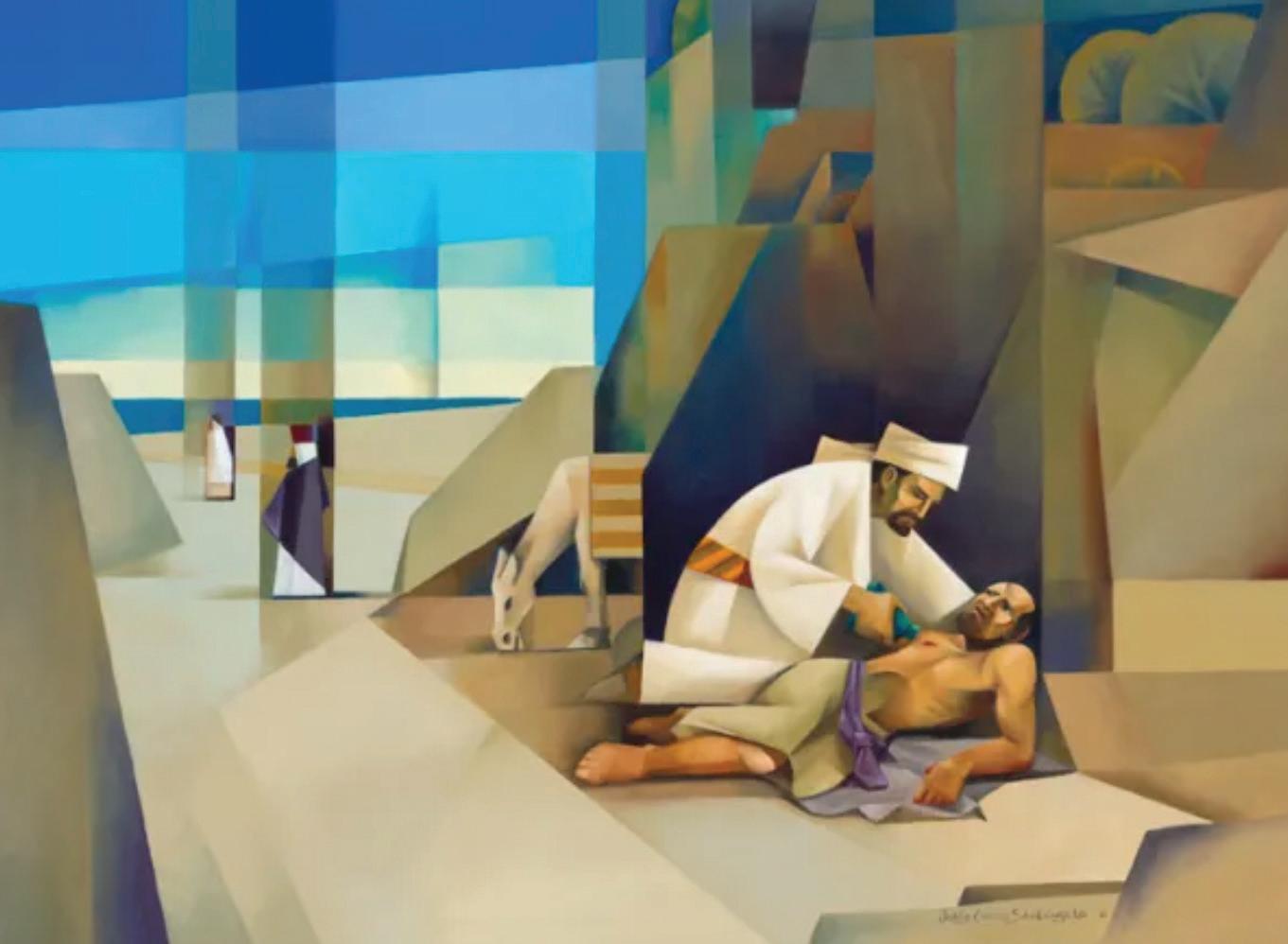
Jesus’ words at the end of the parable of the Good Samaritan call us beyond hearing into doing: Go and do likewise (Luke 10. 25 – 37). In this 150th anniversary year, our parish is seeking to live this charge together, taking it on as our shared mission. We’ve asked several people to share what this tagline means to them.
THE
REV’D PHILLIP ELLSWORTH, Rector
We need good attorneys, but the ‘lawyer’ in the parable of the Good Samaritan isn’t an attorney. He’s a Torah scholar. “He stood up to test Jesus.” There’s a stripe of piety uncomfortable with the idea that anyone would test Jesus. Jesus wasn’t. The man is doing exactly what Deuteronomy (13) told all God’s people to do when a prophet arises in their midst, especially one blessed with miracle-working power. Jesus accepts his question at face value. And as for me, when I heard ‘go and do likewise,’ Jesus’ voice as our new tagline? I felt what the two Marys felt in the early morning half-light of the resurrection when they ran through the rose-colored light of the new sun. They ran, Matthew writes, “with fear and great joy.”
JACK FRANICEVICH, Director of Christian Formation
Frankly, I’m thrilled we’re adopting this tagline, and I’d like to tell you three reasons why.
First, the New Testament brims with exhortations to imitate Christ and the saints. Paul calls on believers to ‘imitate’ (mime-tes) his example and the examples of others (1 Cor 4. 16; 11. 1; Eph 5. 1 – 2; Phil 3. 17; 4. 9; 1 Thess 1. 6; 2. 14; 2 Thess 3. 7). So do Peter (1 Pet 2. 21), James (5. 10 – 11), John (1 John 2. 6; 3. 16; 4. 11), and the author of the letter to the Hebrews (6. 12; 13. 7). They speak plainly and repeatedly: Look at these people, and do likewise.
There’s a real difference between having Christian values and imitating Christ and the saints that we often miss. Having values is individualistic; imitation is personal, and participatory. Watch how Jesus explains it. At John 5. 19, he says, “The Son can do nothing on his own but only what he sees the Father doing, for whatever the Father does, the Son does likewise.” That ‘doing likewise’ is the Son’s bodily and temporal expression of his eternal and essential participation in the life of the Father. Or, in his own words, it’s the way “I am in the Father, and the Father is in me” (John 14. 11). Then, when Jesus tells his disciples, “Just as I have loved you, you also should love one another” (John 13. 34), he invites them—and by extension, us—to join his own eternal life, the one enjoyed from eternity past by the Triune God.
To be clear, our imitation is our entry into eternal life. This is why, when the ‘Torah scholar’ from the Good Samaritan story asks Jesus how to inherit eternal life, Jesus replies with an invitation to imitation.
Second, this tagline is simply who we are. On the most basic level, we’re Good Sam. These words, and this story, are already ours. If we were ‘Holy Cross’ or ‘St Francis-in-the-Fields,’ it would take more creativity to come up
with the right tagline. As great as those church names are, they don’t come with a custom commission straight from the mouth of Jesus the way ours does.
On a more personal level, this tagline describes who (Amber and) I have known you to be. On last year’s men’s retreat, one of you told me, “Good Sam has always cared for me.” And now we know this for ourselves. You’ve welcomed us warmly, befriended us, and cared for us. Now when we hear this parable, it’s your faces that come into our minds. We’ve already adopted this tagline in spirit; it’s fitting that we make it official.
Third, Good Sam is a church committed to mission. One reason we’re a vibrant and growing parish is that you have always responded to the gospel by ‘going’ and ‘doing.’ For me, new to Good Sam, but a lifelong Anglican, I see our commitment to mission in the direction of our liturgy.
Every Sunday, we conclude our prayers by asking God to “Send us out to do the work you have given us to do.” Having been welcomed into God’s house, treated like his children, and fed at his table, we return to our daily work of keeping our eyes on our Father; our Savior; and our many saints, dead and living; and ‘doing likewise.’
FR MATTHEW KOZLOWSKI, Vicar
When I was a teenager I went to a funeral at a Methodist church in Bethesda, Maryland. This church had a tagline that immediately caught my heart, and after all these years it is still the best church motto I have ever encountered. It was this: “Wash more feet.” Simple, powerful, outwardfocused, and centered on Jesus. Everyone at the church could recite it, from the youngest to the oldest. I always hoped that I could be part of a church with a tagline like this. Guess what? Now I am! “Go and do likewise.”
CAROL KUNIHOLM, Parishioner since 1999
The Good Samaritan steps across national and cultural barriers to offer more than a quick fix or an easy handout. He puts himself, his own schedule, his own safety, at risk. He steps in to help without asking if the injured man deserves his aid, and inconveniences himself, not just for an hour or a day, but into the unknown future. He invests with no promise of a successful outcome or a grateful return. As he does so, he draws the unknown, injured man into the orbit of his care. That challenges me daily. Go and do likewise. Grace to you too. You are making a valuable contribution to our life at Good Sam.
COLIN HANNA, Parishioner since 1979
Pricie and I love Good Sam because it provides the awesome combination of rich liturgy, great music, and challenging biblical teaching, but… that’s just what we get from Good Sam. With that getting comes the obligation to do some giving, or we are just ministering to ourselves. When Jesus calls us to “do likewise,” he is asking us to serve others. We can each serve in different and unique ways, based on our own and others’ circumstances, but if we don’t serve others in some way, we’ve failed to understand the very parable that we claim as our parish’s name.
CHRISTIE PURIFOY, Writer-in-Residence
The first time I heard our new church tagline, my shoulders dropped as if I’d been carrying some burden but hadn’t realized it until that moment. I know that voice, I thought. I love that voice. When I hear Jesus telling me to go and to do “likewise,” that one word reminds me that he has already gone and done it all. He has suffered. He has shown mercy. He has made a way. Now we—his
bride, his church—are free to follow and, in following, to become an inn where all can be welcomed and all can be healed.
MARY ANNE WEIGHTMAN, Vestry member, People’s Warden, and Parishioner since 2003 I appreciate The Mitford Series by Jan Karon. Mitford is a place where everyone would want to live, filled with caring individuals and a few charmingly quirky characters. The main character, Father Tim, the Rector at Mitford’s Episcopal Church, genuinely interacts with and loves the residents, much like Christ loves. The book series features many wonderful sermons from Father Tim, and one of my favorites encourages the congregation to “Be blessed and be a blessing to others.” It is my prayer that The Church of the Good Samaritan will be a blessing to many, and through our love for others, we will share that blessing and go and do likewise, just as Christ blesses and loves us all.
JOSH GUENTHER, Associate for Contemporary Liturgy and Discipleship
“Who is my neighbor?” When Jesus shares the parable of the Good Samaritan, the “expert in the law” intends to trap him. Jesus, instead of giving a nuanced philosophical argument, answers with a story. The unlikely hero is a Samaritan, personifying an ethnoreligious group despised by the Jews. In Luke 10:37, the expert can’t even say the Samaritan’s name. But this expert couldn’t get past the mercy he showed. The same mercy that Christ gives us. The same mercy we are called to give our neighbors. Be the Samaritan, “the one who showed mercy.” Go and do likewise.
“The greatest issue facing the world today, with all its heartbreaking needs, is whether those who, by profession or culture, are identified as ‘Christians’ will become disciples— students, apprentices, practitioners— of Jesus Christ, steadily learning from him how to live the life of the Kingdom of the Heavens into every corner of human existence.”
DALLAS WILLARD, THE GREAT OMISSION
Go and Do Likewise (the Good Samaritan)
Jorge Cocco Santángelo, oil on canvas, 2016
FROM THE RECTOR’S WARDEN
The Long View of Church
BY WHITNEY T. KUNIHOLM, RECTOR’S WARDEN
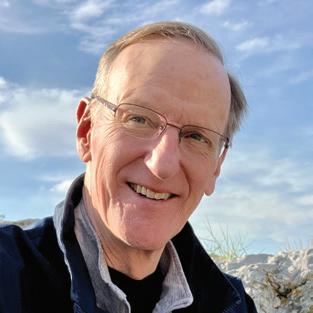
As Rector’s Warden, I probably shouldn’t admit this. But I didn’t start attending Good Samaritan because I thought it was a great church. In fact, I wasn’t even sure it was a good church. For me, it was more like an “Oh Well Church.” Let me explain.
When Carol and I moved to Pennsylvania in 1997, we began looking for a church. For a year and a half, we tried several—mainline, evangelical, large, small, liturgical, contemporary. At one point we settled into a non-denominational church down the street. It was solid but didn’t feel like home.
After one more failed youth group visit, I said, “Let’s just go to Good Sam. It’s not Truro, but it’ll do.” Truro had been our vibrant Episcopal church in Virginia for over a decade—strong preaching, lively worship, a touch of charismatic renewal. Even though Good Samaritan was 20 minutes away, I told our kids, “We’ll just go on Sundays. That’s it.” That was 1999. We’ve been here ever since.
And over time, you see the deeper truth: we’re part of “the communion of saints”—the great cloud of witnesses, living and dead, who belong to Christ. The local church isn’t just a Sunday gathering. It’s where imperfect people are formed into lifelong followers of Jesus. That kind of fruit takes time. Not six months—but give it ten years, and you’ll start to see it.
HOW TO STAY: TWO PRACTICAL TIPS
Maybe you’re hungry for that kind of long-term fulfillment but you think, “Yeah but, this place is the same old thing every week.” Let me share two simple practices that have kept my church experience fresh.
1. PREPARE FOR WORSHIP
May we become a congregation that is worshiping and serving “with gladness and singleness of heart.”
Being critical is a human tendency—and we don’t lose it when we come to church. On the drive home, we dissect the sermon, the music, the announcements. “Can you believe what they did… this time?” But worship isn’t something we grade; it’s something we give.
What changes things for me is preparing my heart ahead of time. Before I come to church, I take about 30 minutes to read and journal on the lectionary passages. I ask, “God, what are you saying to me?” That makes me more attentive to the Spirit as those same scriptures are read and preached.
Then I pray for all three services—and the clergy—that God would speak and work regardless of any glitches. And unless I’m preaching, I don’t check the news on Sunday mornings; I don’t want the noise. When I prepare for worship like that, I come ready to meet God. That’s what matters.
COMMITMENT IS COUNTERCULTURAL
We live in a Snapchat culture—everything is short-form, fast-moving, disposable. But the next generation is starving for models of longterm commitment. That’s why marriage matters. That’s why a long-term relationship with a church matters.
When you stay in a church, you begin to see things some people never see. You see children grow into teenagers, then young adults—some of whom become spouses and parents, others who serve and lead as single adults with deep faith and commitment. You watch friends grow older, walk through loss, and continue to show up in worship and service. You attend funerals— and remember baptisms. You realize it’s a spiritual family.
2. SERVE IN ‘MESSY
MINISTRY’
For several years, I was part of a Good Samaritan volunteer team that served at the St Barnabas Mission—a shelter for homeless women and their children. Once a month, we’d head downtown to serve meals, sing songs, play games with the kids, and create space for the moms to receive life skills training. Every month, I was tempted to bail because I felt too busy. But every time I went, after an evening of noisy, chaotic ministry, I came home thinking, “That was the most significant thing I did all week.” Living the parable makes attending Good Samaritan a much richer experience.
THE NEXT 150 YEARS
In 2026, we will celebrate our 150th anniversary—a remarkable milestone of God’s faithfulness across generations. As we look to the future, may we become a congregation that is worshiping and serving “with gladness and singleness of heart,” faithful not only to the Gospel and God’s Word, but also to one another. That’s the long view of church—calling for your long-term commitment.
MENU FOR A FEAST
BY CHRISTIE PURIFOY, WRITER-IN-RESIDENCE
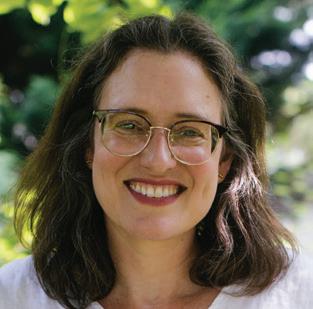
When I was a child growing up in Sunday School, we often sang a song based on lines from Song of Songs. With a full compliment of hand motions, we would sing, “I am my Beloved’s and He is mine. His banner over me is love. He brought me to his banqueting table, his banner over me is love.” Those words were more true than I could know at such a young age, but life has proved that God does indeed “prepare a table” before us even in the valley of the shadow of death and even in the presence of enemies. Everything we could need is provided on this table.
There are many things I love about the Church of the Good Samaritan and the Great Tradition to which we belong, but the thing I love most may be that we are given access to an abundant spiritual feast prepared not only in our own day but across the hundreds and even thousands of years since Jesus Christ established his church on earth. As our Rector is fond of saying, “It takes the whole church to tell the whole truth,” and we live that out whether we are studying the early Church Fathers with our Theologian-in-Residence, participating in Choral Evensong in our historic chapel as Thomas Cranmer envisioned it during the sixteenth-century, or singing contemporary praise with the talented musicians of New Chapel. We do not say that such-and-such is “too Catholic” or this-over-there is “too Orthodox.” Embracing the fullness of the one holy, catholic, and apostolic church, we know that the one hundred and fifty years of worship and devotion at Good Sam are a delicious drop in a wine-red sea.
GOOD SAMARITAN THE CHURCH OF
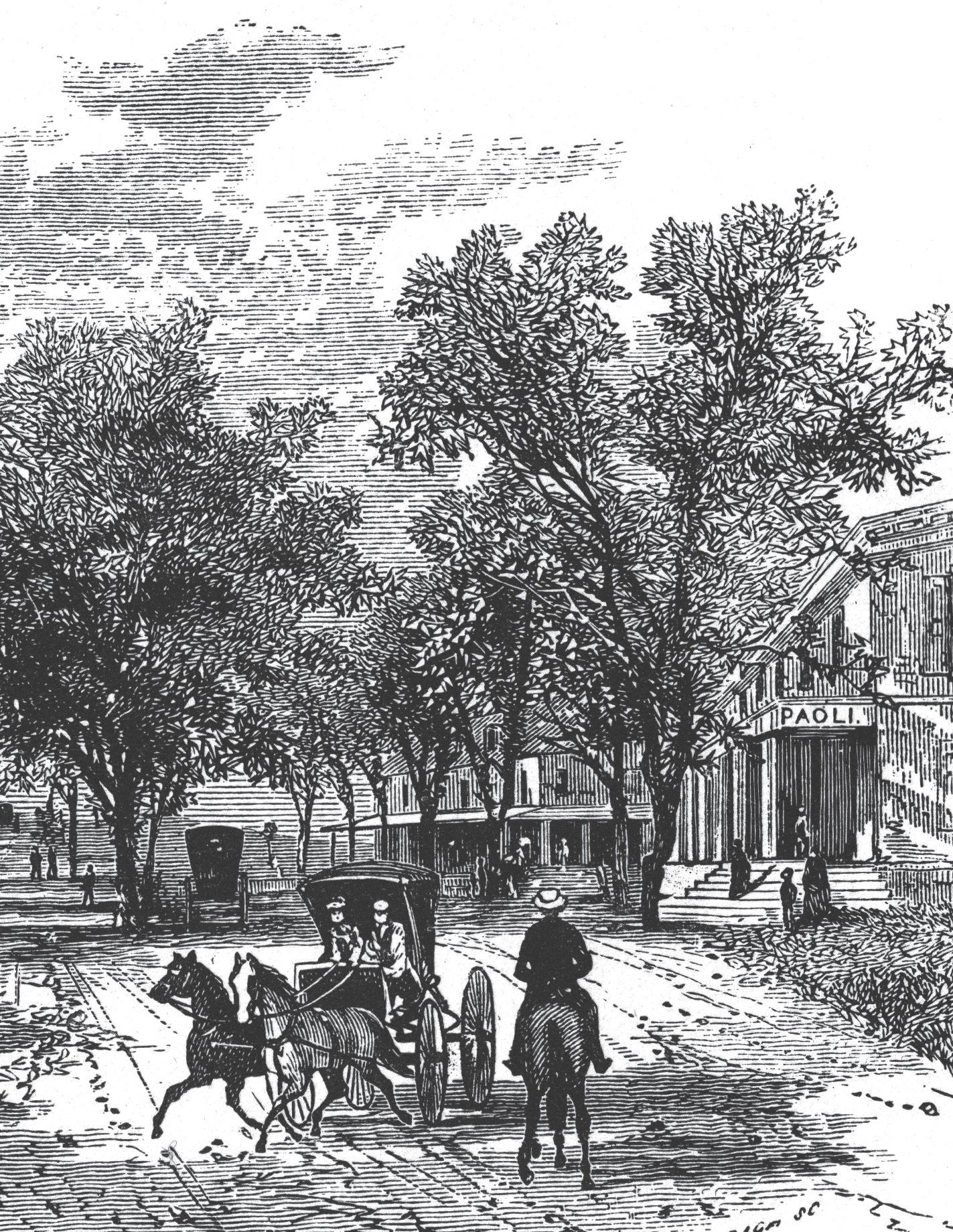
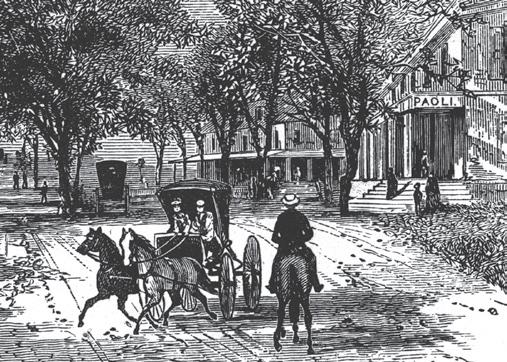
Illustration: Paoli Tavern prior to 1885
Key Moments in Good Samaritan’s History
From 1848 – 1876, services of the Episcopal Church were conducted from time to time in the parlor of the Paoli Inn by various clergy of the Church.
First Good Samaritan service held in the Chapel
Land given and cornerstone laid for a new church called The Church of the Good Samaritan (see photo on p 1)
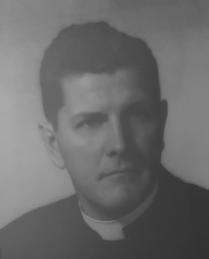
The Rev’d Elmore C. Young elected third Rector
New athletic field on Hilltop property dedicated (later sold)
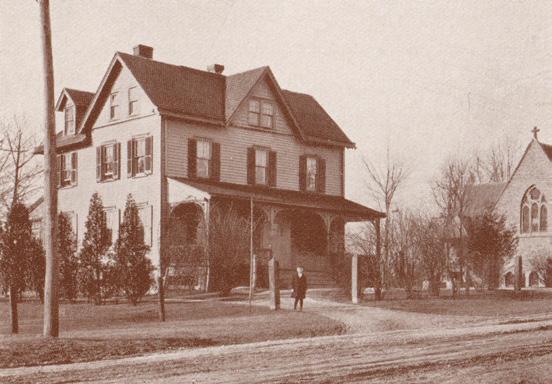
First rectory built, The Rev’d Edward T. Mabley, Vicar, and his family became the first occupants
First men and boys choir provided music during services
Horace Walton Memorial Hall completed
New Life Thrift Shop founded
Dakota Fair Days launched as a modest tailgate (evolving over the years into a large regional event)
Christian Education building expansion Dance Choir established
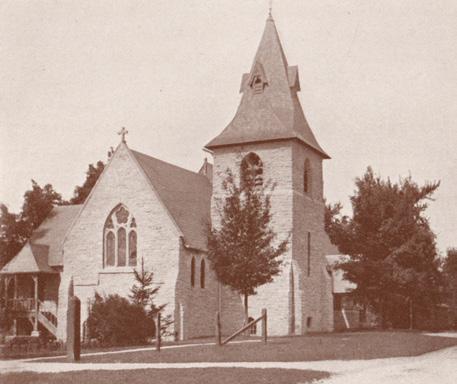
After five years of construction, the church grew to include a chancel and tower, south aisle, classroom, and vestry room
Church organized as a parish; The Rev’d Horace A. Walton called as first Rector
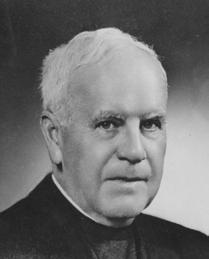
Good Samaritan Parish Day School opens using the newly renovated rectory
The Rev’d Alfred Whisler elected fourth Rector; planning begins for the new church building
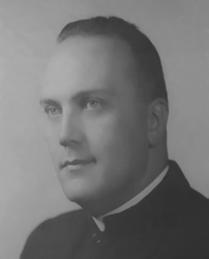
The Rev’d Gregory Brewer elected seventh Rector; rectory renovated
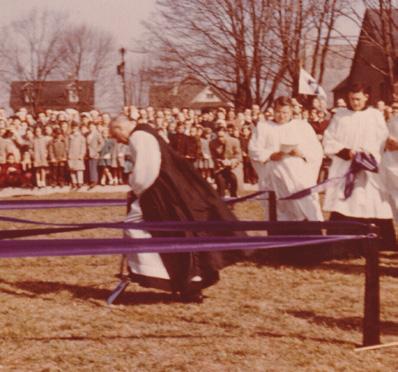
Groundbreaking for the new church building
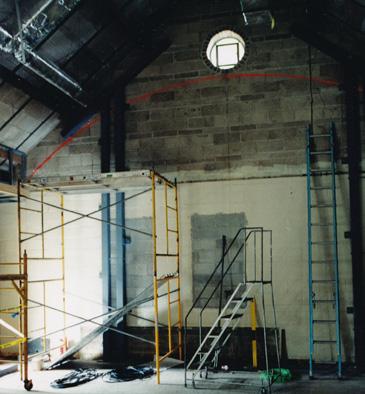
Walton Hall renovated
New Chapel contemporary worship service begins after two years of planning (see article on p 11)
Ten acres of land and parish house purchased
Men’s Club and churchyard cemetery established; pipe organ installed
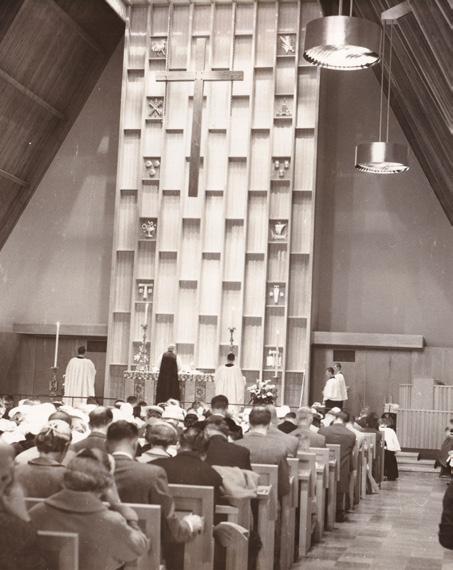
First service in the new church building held on Easter Sunday

Addition built on the parish house; Boy Scout Troop 1, established by its first Scoutmaster, Rector Walton
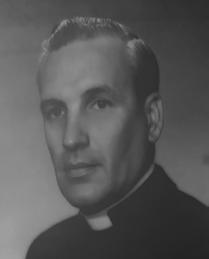
Christian education building completed
The Rev’d Harry Riddle Johnson elected fifth Rector
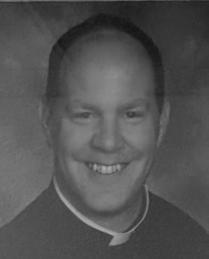
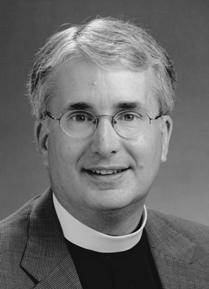
The Rev’d Richard T. Morgan elected eighth Rector
Major upgrades to the Nave; welcoming atrium connecting church to the education wing; relocated Thrift Shop; completed professional dance studio; new office space for staff and volunteers; Ashton Hall expansion
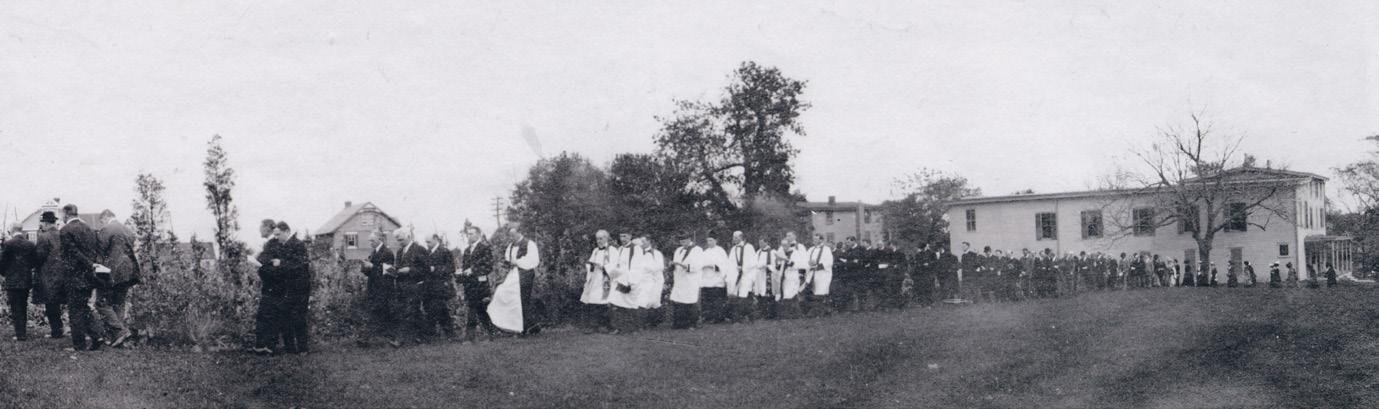
1912 consecration of churchyard cemetery. Building in background likely the Parish Hall, which served the church and the community. It had two bowling alleys, shuffleboard and tennis courts, and hosted movies and live theater.
West Rectory and Hilltop property purchased
Chimes placed in tower
Chapel, choir room, office and Sunday School room added
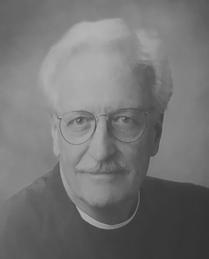
The Rev’d Daniel Sullivan elected sixth Rector
Boys’ choir reorganized under the direction of Richard Bouchett, followed by William Dickey
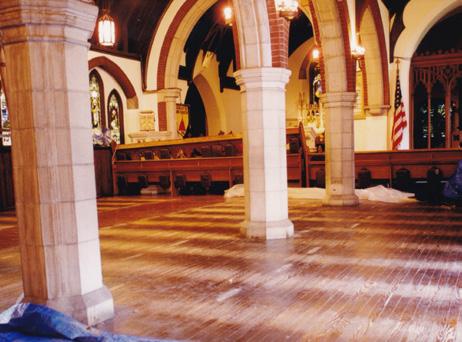
Chapel renovation
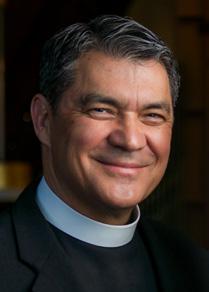
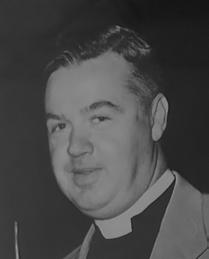
The Rev’d T. Norman Mason elected second Rector
William Evans appointed Choirmaster, continued choir program and developed five choirs (affiliated with the Royal School of Church Music) Dakota Committee established a ministry with the Pine Ridge reservation in South Dakota
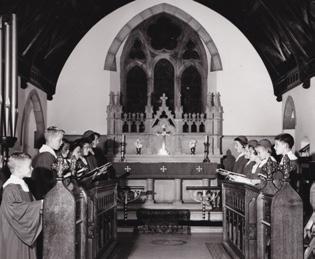
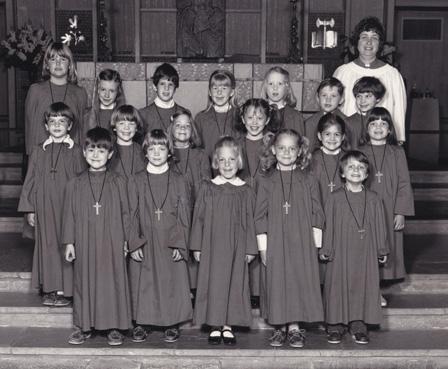
The Church of the Good Samaritan launches its Sesquicentennial celebration
The Rev’d Phillip Channing Ellsworth Jr elected ninth Rector
From the Archives: New Chapel Promised Land Journeying
In the fall of 1999 worship at Good Sam started a new, contemporary journey under the creative vision of priest, Fr Geoff Morin, with the launch of New Chapel—a bold experiment combining fresh music, creative expression, and Gospel proclamation. Each week delivered something unexpected for cradle Episcopalians and newcomers alike. A movie clip underscoring a point in the sermon. An artist painting a new canvas during the service. One would come for the beautiful uniqueness, and leave having met God. The early days of New Chapel even caught the attention of the Philadelphia Inquirer, calling it “casually upbeat, offbeat, musically rich Sunday services.”
Twenty-five years later, New Chapel continues in the spirit of Promised Land journeying as Fr Morin called it that first year. During our sesquicentennial celebration, look for New Chapel memories through video interviews and keepsake booklets.
For our 150th Anniversary video project, we have been interviewing several long-time members of Good Sam. Here’s a sneak peek from our conversation with some of the founding members of the New Chapel service.
Geoff Morin
“When I was first asked to serve at Good Samaritan, it was with a really specific purpose. Rector Greg Brewer had a vision that this church had to move from its legacy to what God had for its future. Good Sam was strong in its commitment to worship, kids, and youth. But there was a missing middle of people—these rising generations of college and young adults.”
“New Chapel was born as a concept of what was missing (and needed) from the life and history of Good Samaritan. It wasn’t, at that point, a known format for worship. It was pretty radical in its first days. We began asking what are the things we could try, where the stuff of people’s world would enter into the reality of our worship inside the church walls? We were willing to fail boldly. And we were unafraid to do it.”
“We mined the legacy of the church. There was a deep renewal history that was a part of Good Sam. We were asking, “what’s this generation’s newest, modern engagement with the ancient?” As Anglicans, we always marry those two things. We always want to allow for the deep, beautiful traditions of the ancient communion and church to thrive and live today.”
“A discipleship piece that launched alongside New Chapel was Alpha. Alpha didn’t exist here yet. It launched with the realization, oh, we have these people now. We should probably make sure they have some sense of what Christianity is all about for them. Another piece was the depth of community that shaped around New Chapel.... New Chapel lived out hospitality and authentic community. What we discovered is when people worship together, they believe they can change the world. And they absolutely can. Once I’m in this kind of community, I feel safe to deal with the junk of my life.”
“It took an expansion of the church to pull these pieces together without chaos. What made it possible was that core, unwavering commitment to the gospel being expressed here, by whatever means necessary. We were willing to step forward in agreement that this was what God wanted and needed for that time. And that hasn’t changed. That’s the same now for decisions about who Good Sam is, and asking how will they serve within this space and in this time?”
Tom Connett
“So Geoff Morin came to me in 1999 with an idea called New Chapel, which was going to have a contemporary base around it. I didn’t know at the time what that meant. But he asked me to be part of the band, and my original reaction was ‘we’re gonna be singing Kumbaya every week.’ Really wasn’t my bag. But Geoff was a good guy and I loved my church.”
“Allison and I were born and raised at Good Sam. We knew the core of Good Sam. It was our church. Entering into this new service, this new thing, it opened up a new window. I’d grown up singing in the choir and that was all fine and dandy. I loved it. But this was different. Something that was more up my alley.”
“New Chapel exploded pretty fast. We started in the chapel, which held a hundred people, and within six months people were literally standing outside the door. So we knew God was here and that was just so fun to watch. We didn’t have enough space for an Easter service and Geoff, whose wheels never stop turning, said, ‘Let’s get a tent.’ And we all just went ‘excuse me?’ But yeah, we ended up with 600 people in that tent.”
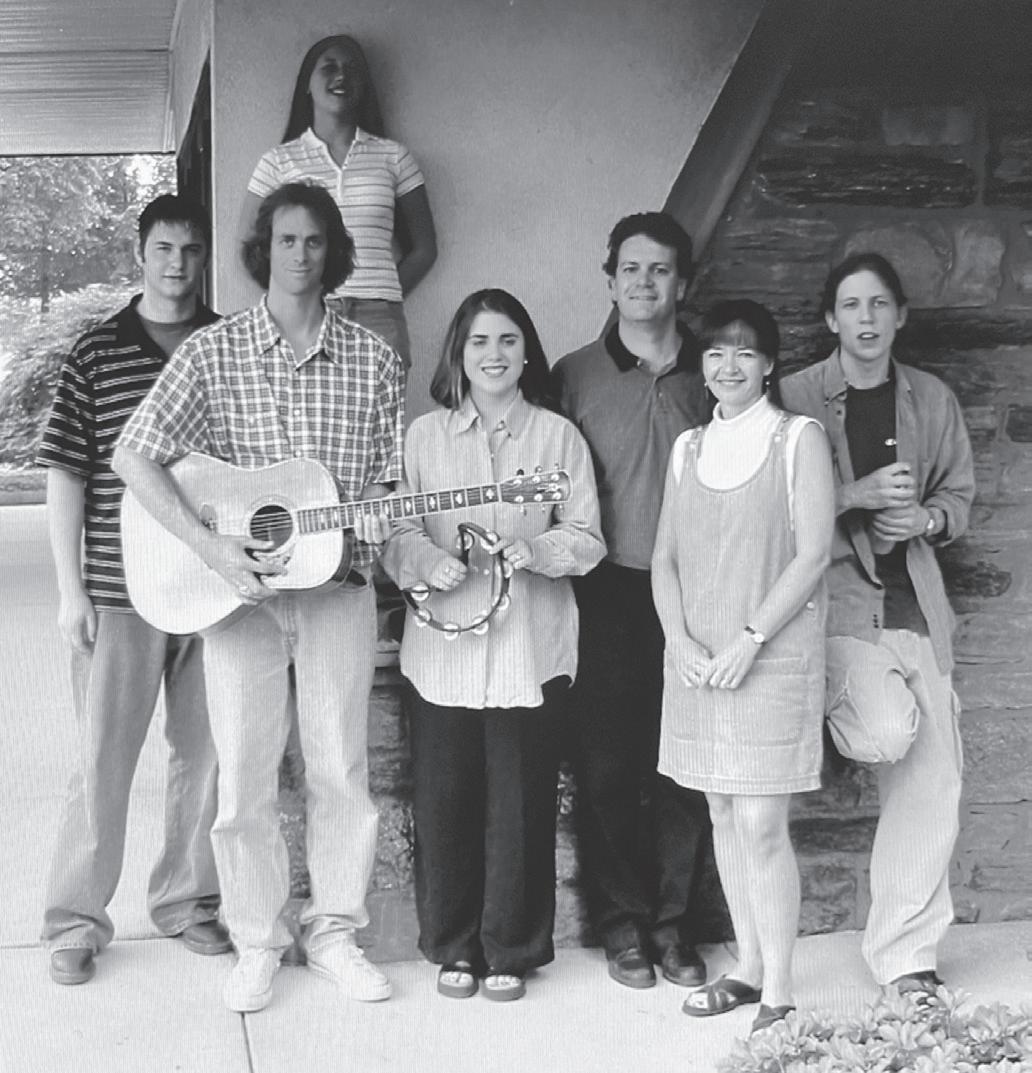
New Chapel Band, 2001. From left to right: Chris Wall, Tom Connett, Rachel McCausland, Alison Kunz (now Connett), Bob Toal, Bette Ferris, and Steve Kocher.
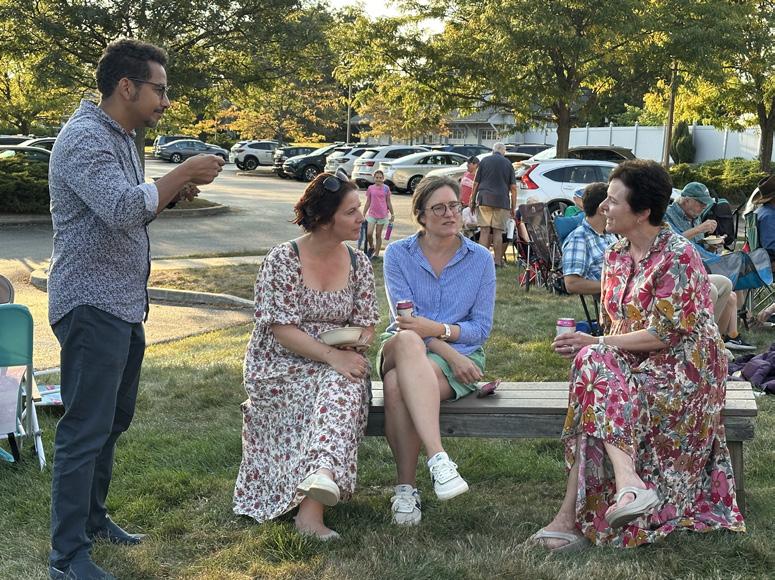
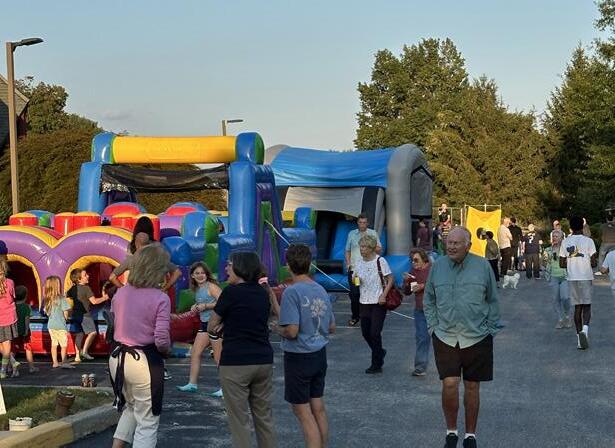
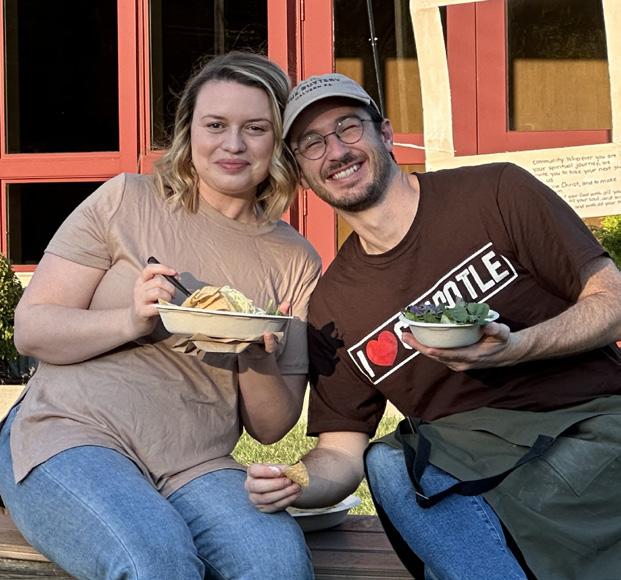
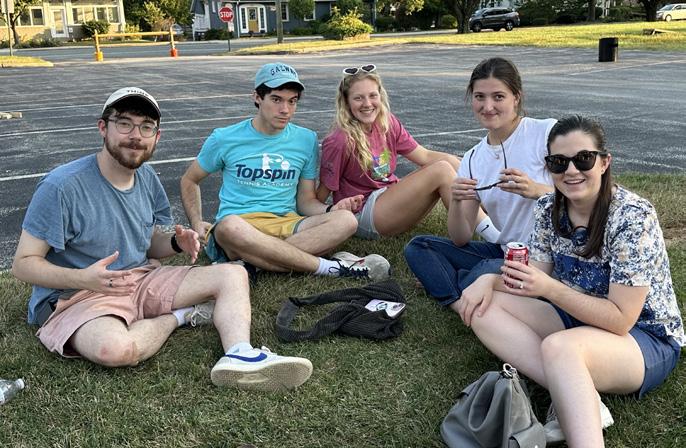
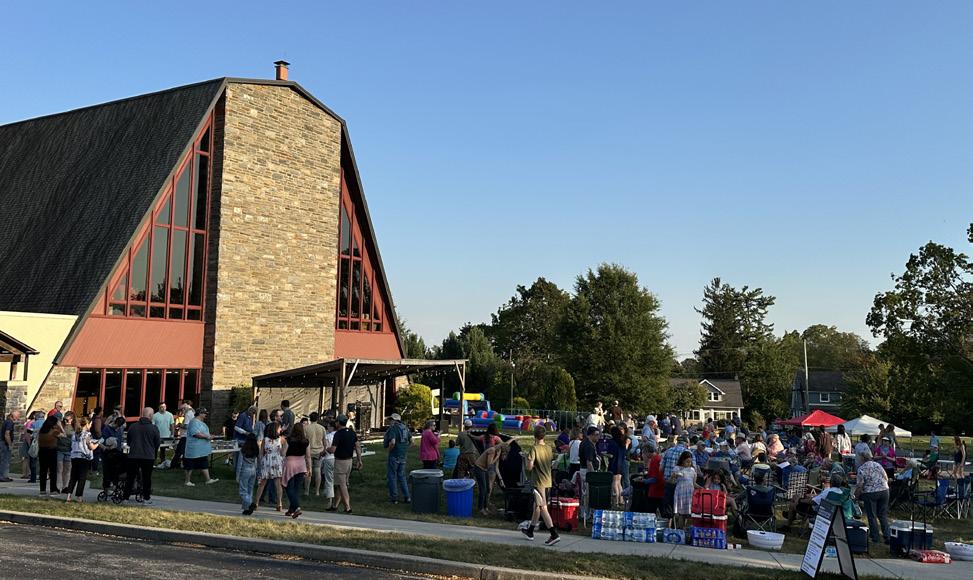
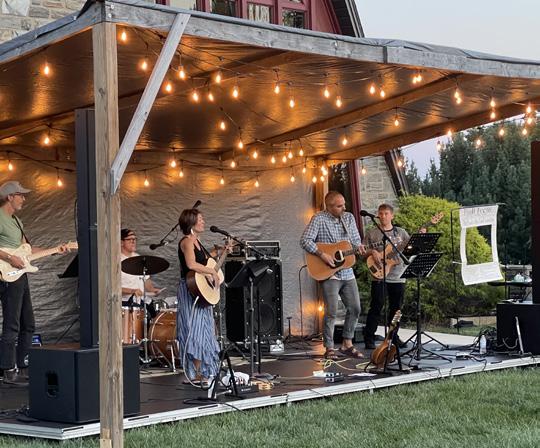
Good Samaritan is celebrating our sesquicentennial with a series of events that honor our history, deepen our community, and look forward with joy to the years ahead. The festivities began in September with our Launch on the Lawn picnic, a fun gathering of community that set the tone for the year. Here’s a look at what’s coming up next:
Celebrating 150 Years: All Saints Choral Concert
SATURDAY, NOVEMBER 1 / 7 PM IN THE
CHURCH
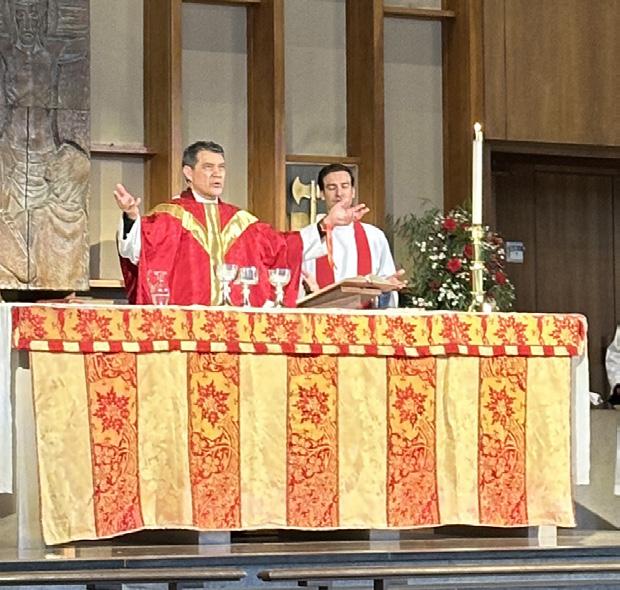
This year to celebrate the feast of All Saints, as well as the 150th Anniversary of our parish, we will be performing Fauré’s Requiem. All Saints’ Day, one of the principal feasts of the church calendar, takes place on November 1 each year, and commemorates saints, known and unknown. The following day, November 2, is All Soul’s Day, or the Commemoration of All Faithful Departed, when we remember those of our family and friends who have passed, and others. These two observances are already closely linked, but we will also tie them to the history of Good Sam, and sing a choral requiem in memory of those who have gone before us, both far and near in time.
Gabriel Fauré’s (1825 – 1924) Requiem is one of the most performed, and best loved, examples of the genre. What sets it apart from the other famous requiem mass settings (ie. Mozart, Verdi) is its gentleness, its consistent ethereality. There are dark moments; they pass. What we are left at the end of the piece is a beautiful setting of In Paradisum, showing us a vision of eternal rest with a harp and a quietly soaring soprano line.
With Gratitude: Joe Kennedy
FAITHFUL HISTORIAN AND STORYTELLER
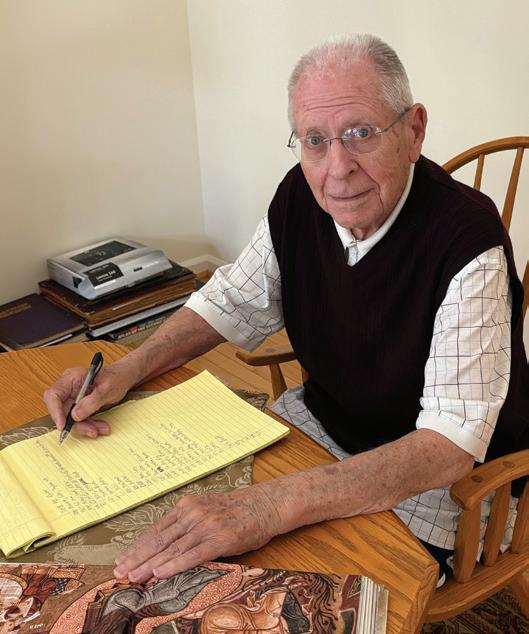
“Ask Joe; he’ll know,” remains a common refrain at The Church of the Good Samaritan. Faithful servant Joe Kennedy gave freely of his time in the Good Sam Archives.
Joe began as a public school teacher and, after retirement, joined the Philadelphia Inquirer, writing historical articles for 15 years. His wife Joan—who passed away earlier this year—introduced the family to Good Sam in 1999, where she often volunteered in the Thrift Shop. Joe soon joined after a born-again experience, both he and Joan touched by the warm welcome of the community. When he retired again, he put his skills to work as Good Sam’s Archivist and Historian.
We give thanks for Joe’s ministry. His countless hours of research and dedication preserved the story of The Church of the Good Samaritan. As he entrusts this work to the next generation, his legacy of love and devotion will endure.
Celebrating 150 Years: Voice of Sacred Imagination
with Malcolm Guite, guest preacher SUNDAY, NOVEMBER 9 / 9 AM AND 11:15 AM SERVICES, 10:15 AM ASHTON SEMINAR
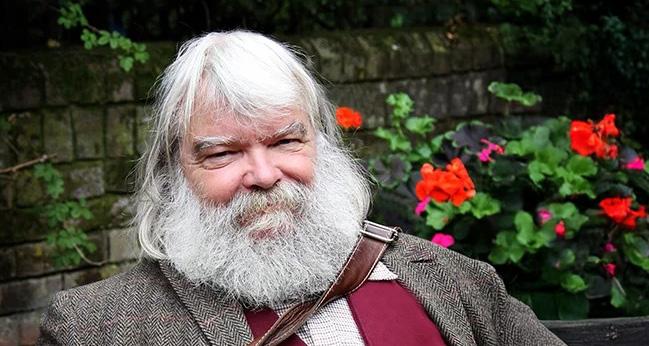
Malcolm Guite is an English poet, Anglican priest, and former chaplain at Cambridge University. He writes at the intersection of faith and the arts, drawing inspiration from CS Lewis, JRR Tolkien, and the great English and Anglican poets. He is the author of several books of poetry, including Sounding the Seasons and David’s Crown, as well as works of theology such as Faith, Hope, and Poetry. He is chiefly known for his sonnets—of which he has published hundreds!—and his ability to “be profound without ceasing to be beautiful.” In this sonnet, “Love’s Choice,” Guite reflects on the experience of receiving communion:
Love’s Choice
This bread is light, dissolving, almost air,
A little visitation on my tongue,
A wafer-thin sensation, hardly there.
This taste of wine is brief in flavour, flung
A moment to the palate’s roof and fled,
Even its aftertaste a memory.
Yet this is how He comes. Through wine and bread
Love chooses to be emptied into me.
He does not come in unimagined light
Too bright to be denied, too absolute
For consciousness, too strong for sight, Leaving the seer blind, the poet mute, Chooses instead to seep into each sense,
To dye himself into experience.
Joe Kennedy
Malcolm Guite
God Likes Stuff!
BY CHRISTOPHER A. HALL, THEOLOGIAN-IN-RESIDENCE

To be in relationship with God, created as God’s precious image-bearer, is to stand in intimate relation to the Creator of the universe, the God who with a Word has sprinkled galaxies across the sky and fashioned the tiniest sub-atomic particles. God plainly likes stuff: water, bread, wine, birds, blood, trees, rocks, zebras, lions, cells, stars, caterpillars, comets… God is no Gnostic.
What do I mean by that? Gnostic teachers claimed to possess a unique knowledge or gnosis that others didn’t. They taught that matter, what I call “stuff,” could not be saved or redeemed; it was by definition evil.
If so, Christ only seemed or appeared to be human, the early heresy Doceticism (from the Greek verb dokeo-, to seem). According to Gnostic teaching, Christ’s body only seemed to be like ours. If so, if God the Son was reluctant, even averse to assuming human nature in its entirety, then there must be something about bodies, about human flesh, that is irredeemable, so evil, so bent, so skewed, that even God cannot save it.
In fact, Gnostic teachers claimed, God has no desire to save it. For the Gnostics, and the Gnostics’ god, the human body—brain, bone, blood, skin, flesh—was a horrid mess that must be suppressed, denied, well-nigh obliterated, if spiritual growth is to occur.
In Gnostic cosmology, the body—indeed “stuff” in all its manifestations— can only be a hindrance to a human being’s relationship with the divine. Matter weighs us down. By its very nature it pulls us away from God. The assaults of the body with all their nastiness—the body’s ceaseless clamor for food, sex, sleep—must be transcended.
Ancient Christian teachers responded with a firm “No!” to the Gnostic view of matter or “stuff” as essentially evil. If Christ’s body was real in appearance only, he couldn’t possibly have saved us from our sins through the bodily sacrifice of his life on the cross.
Nor, as Irenaeus, among others, realized, could Christ commune with his church, his body on earth, in the Eucharist after his ascension into heaven, if he had no real body or blood. An incarnation in appearance only accomplished little.
Ignatius of Antioch, one of the great martyrs in the church’s history, warned against the ethical implications of Gnostic teaching, a topic I’ll return to at the end of this essay. To denigrate the body would undercut our concern about what we do with our bodies or the suffering of others in their bodies. Bodily life simply wouldn’t matter. “Gnostics have no concern for love, none for the widow, the orphan, the afflicted, the prisoner, the hungry, the thirsty. They stay away from the Eucharist and prayer, because they do not admit that the Eucharist is the flesh of our Savior Jesus Christ which suffered for our sins, which the Father raised up in his goodness” (Ignatius of Antioch, Letter to the Smynaeans 6).
Of course, the Gnostics didn’t believe that the Eucharist was in some manner the flesh and blood of Christ. If they had admitted such, their own theology would have imploded.
Ancient Christian leaders rejoiced to see God’s eternal Word creatively at work in the world and especially in the Eucharist. They are quick to discern similarities between the creation account of Genesis and God’s creative activity in the bread and wine of Communion. Ambrose, the bishop of Milan, writes, “Since the word of Christ, then, was able to make out of nothing what had not existed, can Christ’s word not change what already exists into what it had not been?” (Ambrose, On the Sacraments 9. 52) That is, to change the nature of bread and wine in order to facilitate deeper communion between God and God’s precious image-bearers fits the pattern of God’s creative acts from their very beginning.
many Fathers even physical nourishment—was available in the Eucharist. Cyril of Jerusalem reminded his catechumens that “Christ himself declared, speaking of the bread, ‘This is my body.’ Who will dare then to hesitate in the future? And when he himself asserts categorically that ‘this is my blood,’ who will doubt it and say it is not his blood’” (Cyril of Jerusalem, On the Mysteries 4. 1). Cyril sounds a little bit like Martin Luther. Luther taught that if Christ has promised that his body and blood are present in the Eucharist, who are we to dispute and disbelieve his promise?
The invitation to the Eucharist is a call to come to the table by faith, to commune with Christ by feasting in faith on his body and blood, with the happy result that our personal faith and trust in Christ is ever more deeply strengthened. Christ has promised to nurture our personal relationship with him as he offers his life to us in his body and blood. A personal encounter with Christ—a deeply intimate one—is available to us in the Eucharist.
For the church fathers, and for us today, the Eucharist is all gift, all grace, all feast. Here, in the humble elements of bread and wine, the incarnate Creator of the universe deigns to come, gracefully giving himself to all the faithful.
John Chrysostom, the great “golden mouth”, expresses the mystery of the Eucharist well, especially in its connection to the body of the ascended Christ. “This is the same body that was covered in blood, pierced by the spear, pouring forth the saving streams of blood and water for the whole world. Christ soared up from the abyss in dazzling light and leaving his rays there he went up to his throne in heaven. It is that body that he gives us to hold and eat now” (Chrysostom, Homily on 1 Corinthians 24. 5; Homily on Matthew 50. 3; Homily on 1 Corinthians 24. 4).
John 6. 51 – 54 is an extremely important text for our understanding of the Eucharist, as it was for ancient Christians. There Jesus teaches that “unless you eat the flesh of the Son of Man and drink his blood, you have no life in you. Whoever eats my flesh and drinks my blood has eternal life, and I will raise him up at the last day.”
Catechumens in the early church—those people being taught the basic principles of the Christian faith as they prepared for the initiatory rite of baptism—spent time studying Jesus’ teaching in John 6 and pondering its implications.
The church wanted its new members to understand that spiritual nourishment—for
Christians err if they believe that partaking is all that is required to be fed spiritually in the Eucharist. Sharing in the Eucharist must be accompanied by faith. Origen comments: “That which is ‘sanctified through the word of God and prayer’ (1 Tim. 4. 5) does not of its own accord sanctify the recipient. The benefits of the Eucharist come to those who receive the bread and wine with a pure mind and a clear conscience.” It is our faith and the holiness that results from it that bring blessing, just as “wickedness and sin” cause deprivation (Origen, Commentary on Matthew 11. 4).
For the Church Fathers, and for us today, the Eucharist is all gift, all grace, all feast. Here, in the humble elements of bread and wine, the incarnate Creator of the universe deigns to come, gracefully giving himself to all the faithful.
The Eucharist is all about Christ and Christ’s willingness to enter into union with all those who believe in him, a union that is both spiritual and material. In Christ, the material has become the conveyer of the spiritual. The Eucharist communicates Christ to us because Jesus has lovingly promised to be present in the elements of bread and wine.
What the church celebrates in the Eucharist should ripple through the ethical dimensions of its daily life. Here is the pattern: In the Eucharist we share sacramentally in the life of Christ. Similarly, on the basis of Christ’s own teaching, our own brothers and sisters in the church—especially the poor— are mini-sacraments. To care for our needy brother or sister is to care for Christ. To love them is to love Christ. To ignore them is to ignore Christ (Mt. 25. 40 – 46). No person felt more strongly about these ethical aspects of the Eucharist than John Chrysostom. Let’s close this essay with a word from him.
“Do you wish to honor the body of the Savior? Do not despise it when it is naked. Do not honor the church with silk vestments while outside you are leaving it numb with cold and naked. He who said, ‘This is my body,’ and made it so by his word, is the same that said, ‘You saw me hungry and your gave me no food. As you did not do it to one of the least of these, you did it not to me.’ Honor him then by sharing your property with the poor. For what God needs is not golden chalices but golden souls.”
God loves stuff. God loves his embodied creatures, his precious imagebearers. We feast on him in the Eucharist. I’m glad.
Keeping the Feast (with Cake!)
BY CHRISTIE PURIFOY, WRITER-IN-RESIDENCE

“To be sure, food keeps us alive, but that is only its smallest and most temporary work. Its eternal purpose is to furnish our sensibilities against the day when we shall sit down at the heavenly banquet and see how gracious the Lord is. Nourishment is necessary only for a while; what we shall need forever is taste.”
Are you team cake or team pie? Do you dream of frosted layers or flaky pastry? A perfect crumb or an exquisite custard? Those questions may sound like the start of a personality quiz, the kind that ends up telling you which animated Disney character you most resemble, but I mean it to be a theological as well as an epicurean inquiry. For though I know this will ruffle some feathers (and perhaps a few tastebuds), I must insist from the first paragraph of this essay that cake carries much more heavenly weight than pie.
Please hear me out, pie-lovers! Pie is nourishment. It is hearty and sustaining and if the pastry completely enfolds the filling, it can be enjoyed without plate or fork like the tin miners in Cornwall used to do with their famous, hand-held “pasties.” Of course, pie has its more poetic incarnations. It is a dish of gratitude for the harvest. It can dispatch a glut of berries and whole pumpkins with delicious ease. I admit, there is something of heaven-onearth about enjoying a slice of warm sour cherry pie on a perfect, blue-sky day in July. But cake? A frosted layer cake is never utilitarian, never concerned with vitamins, and generally must be served with plate, fork, napkin, and ideally a candle. Taste and time meet in a slice of cake, and few celebrations feel complete without one. My thesis as someone who is solidly team cake is this: pie is for chronos but cake is for kairos. Cake carries us right out of time. Cake tastes like eternity.
Like many newlyweds, my husband Jonathan and I saved the top tier of our beautiful ivory buttercream wedding cake to enjoy on our first anniversary. Even with a touch of freezer burn, a bite of that cake was like a golden thread stitching together the ordinary days of our marriage from vows to first anniversary. And though I’ve never mentioned this to Jonathan, I’ve always had this idea that I’d like to recreate our wedding cake—perhaps on a more petite
FR ROBERT FARRAR CAPON, THE SUPPER OF THE LAMB
scale—for a special anniversary. This year we will celebrate twenty-nine years of married life, so it might be nearly time for me to pull out the old photo and find a talented baker, because a wellmade, beautifully decorated celebration cake is feasting food par excellence. It is extravagant, excessive, and rather pointless. It is difficult to create, requires time, effort, and skill, and for all these reasons and more it seals the joy of a special day with extraordinary sweetness.
This year, I had big plans to bake a strawberry cake from scratch for my June birthday, but when the day arrived, I was too tired to shop and bake. I bought a chocolate cake from Costco instead. Anniversaries and birthdays can be very inconvenient things. They ask for celebration, but because they are fixed in place on our calendars, they do not ask whether we feel like celebrating. These special days and milestones come round and round as if to say that feasting is as much a discipline as fasting. This year I felt too worn out to go all out, but who hasn’t been tempted to ignore a birthday entirely during a season of sorrow? Who hasn’t wished for a quiet Christmas after a job loss—or, worse—the loss of a loved one?
Even when I have longed for a party cake with anticipation and joyful planning, the flurry of final preparations always brings at least some stress as well as the question I admit only to myself: “Is this worth the effort? Should I have bought my cake from Costco instead?” Sometimes we are right to forgo celebration, sometimes there is a good reason to choose the easy feast, but I hope I am at least on guard lest the easy road become the only road I ever choose.
something more than a sugar-sweet memory. If God asks that we “taste and see” his goodness, I’m not sure he’s promising to spoonfeed us like babies. Maybe he’s inviting us to get up and tie on our aprons. Maybe he’d love it if— at least now and again—we dug the icing bag from the back of the kitchen drawer. You know the one I mean. It has that special rosette tip and is a little tricky to clean.
This year our church turns a glorious one hundred and fifty, and I very much hope there will be cake. Whether or not I’ve persuaded you to choose fondant over pastry, I hope I have at least convinced you that an anniversary like this one is worth celebrating. A moment in time has been given to us, and we are invited to keep it. This moment holds the whole past of our church, and it is a moment of turning toward our church’s future. To attend to the present moment with faithful feasting is a sacred duty as well as a gracious gift. When we proclaim on a Sunday, “Let us keep the feast! Alleluia!” we are talking about much more than simply coming back again next Sunday. We are speaking of Holy Eucharist, and we are speaking of a whole new way of life. This life was inaugurated at a wedding when Jesus turned water into wine, and this new way of life will be fully realized when we take our seat at the wedding supper of the Lamb. The church on earth lives in the time between these two weddings. Surely there will be mile markers along the way that call for a celebration with cake?
Cake is celebratory because it is communal.
When we share a cake, we draw near to one another in joy.
My whole life I have heard those words of St Paul, “I have finished the race, I have kept the faith,” and worried that a faithful life might feel like some sort of miserable marathon. But what if we keep the faith, at least in part, by feasting? What if running the race means there will come regular moments when we throw the confetti and cut the cake and step out on the dance floor? There is a part of me now wondering whether, if I had pushed through and baked the strawberry birthday cake, I might have received
One thing we do very well as a church rooted in the Anglican tradition is to embody our faith holistically. At Good Sam, when we speak of “tasting” and “seeing” God, we mean it. Thoroughly. We bring our bodies to church, we kneel in prayer, we raise our hands in worship, and we take and eat the gifts of God given to us, the people of God. We keep the feast in big ways and small, and we do this with our minds, our spirits, and our bodies. As Christians, we cannot speak of bodies without acknowledging the body of God, present to us in the person of the Son. Jesus shared the life we live in our bodies and redeemed our bodies from death for life. He revealed himself and the nature of his kingdom by healing bodies and through miracles like the delicious transformation at Cana. Our redemption—our journey from death to life in Jesus Christ—is exactly that: a journey. I suppose God could have accomplished our redemption and instantly given us the gift of glorified bodies no longer subject to decay, but God does not override us in this way. God wants to give us life, but God also wants us to partner with him and to choose his gifts, becoming transformed in the process. And so we are on a journey prepared for us by Jesus. It will take us in these mortal bodies through death and into fullness of life. Of course, we need food of all kinds for that journey. Cake offers a taste of God’s good future right here and right now because it is delicious and because it is meant to be shared. Cake is celebratory because it is communal. When we share a cake, we draw near to one another in joy. This drawing together is another kind of foretaste, another glimpse of what will be completed and perfected one day.
I think in writing these words I have grown hungry for a taste of this kingdom reality. I’m fairly certain I have strawberries in my kitchen. I know I have sugar, flour, and eggs. I bet if I tried I could dig up a pastry bag. Care to join me? I’m not an expert baker, but I’m fairly certain it will taste—at least a little bit—like heaven.
Living in God’s Economy
BY JONATHAN PURIFOY, VESTRY MEMBER, PLEDGE CAMPAIGN CHAIR
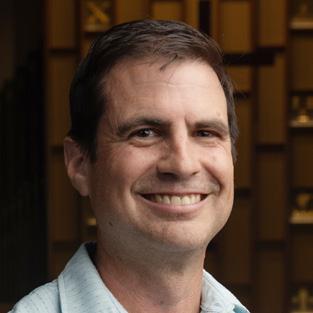
As I continue to serve on our Vestry’s Stewardship Committee, God is challenging my understanding of familiar economic concepts like ownership, value, access, and power. God has told us that “… every animal of the forest is mine, and the cattle on a thousand hills. I know every bird in the mountains, and the insects in the fields are mine. If I were hungry I would not tell you, for the world is mine, and all that is in it” (Ps 50. 10 – 12).
If everything belongs to God, am I free to loosen my fearful grip on what I own and consider mine? In Jesus’ parable of the bags of gold, the master is not pleased when the man who had received one bag of gold hid this treasure “in the ground” (Matt 25). It seems that God gives us gifts and expects that we can make good on his investment in us, participating in turning his abundance into greater abundance. There is the economy of our world, but I wonder if there is a holy economy in which familiar terms like value, investment, and return carry new, redeemed significance. After all, if anyone truly understands the concepts of exchange and purchase, it would be the One who ransomed us from death and exchanged his life for ours.
BY MARY ERNST, VESTRY MEMBER
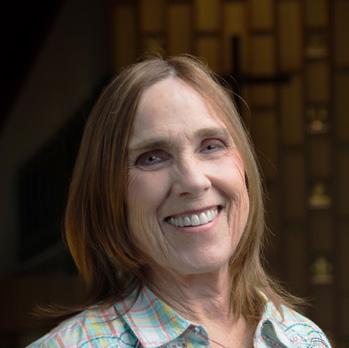
Jesus told his disciples, “Give, and it will be given to you. A good measure, pressed down, shaken together, and running over will be poured into your lap. For with the measure you use, it will be measured back to you” (Luke 6. 38). This church is committed to living out Jesus’ command to make disciples of all the nations, and I am called to give generously of all God has given me. If I receive God’s gifts with open hands, the blessings can flow from me to others. I don’t just give of my time, talent, and treasure to keep the lights on and pay staff salaries, but to further the many missions and ministries we have. My stewardship includes the Biblical standard of tithing as the minimum to give back to God. Tithing was not an overnight fait accompli but a progression; as I trusted in God’s provision for me, I could become a “cheerful giver.” God is that Giver we cannot outgive. As we consider God’s boundless goodness to us, may he touch our hearts with a fresh generosity towards the work of the Church. May we discover a new joy as we give of our time, talents, and treasure.
BY JACK FRANICEVICH, DIRECTOR OF CHRISTIAN FORMATION
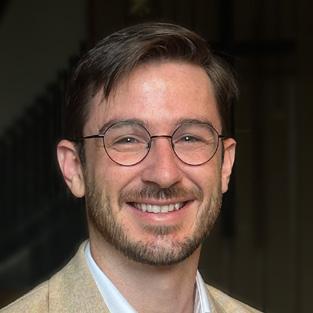
When we think about tithing in Scripture, it’s tempting to imagine the Old Testament as strict law and the New Testament as focused on the “cheerful giver” that God loves (2 Cor 9. 7). But the Bible’s witness is richer and more unified than that.
In the Old Testament, there were actually three tithes:
The First Tithe supported Israel’s worship. After Abram gave the high priest Melchizedek “a tenth of everything” (Gen 14. 20), God commanded land-owning Israelites to give the first tenth of their produce to support the priests and Levites, who served in and around the tent of meeting and didn’t own their own land (Num 18. 21 – 24).
The Second Tithe funded a nationwide celebration. In years one, two, four, and five in their seven-year cycle, God’s people brought a tenth of the rest of their produce to Jerusalem— or converted it to cash—to “rejoice before the Lord” with food, drink, and guests from every walk of their life (Deut 14. 22 – 27). Think of it as a community-wide feast where the rich and the poor ate together, like Jesus envisioned in Luke 14. 12 – 14.
The Poor Tithe came in years three and six, when that second tenth stayed home to feed “the Levites, the foreigners, the orphans, and the widows… so that they may be satisfied” (Deut 26. 12).
Far from cancelling this tradition, Paul draws on these patterns of giving when he pens his own vision for stewardship in 2 Corinthians 8 – 9, where joyful giving meets the needs of the saints, builds unity, and overflows in thanksgiving to God.
God has always loved a cheerful giver. And in Scripture, that “cheer” takes the form of worship, feasting, and ensuring everyone can celebrate at the same table.
GOOD



Sanctifying Time
The Sacred Work of God’s People
BY JACK FRANICEVICH, DIRECTOR OF CHRISTIAN FORMATION
In his seminal book, The Sabbath: Its Meaning for Modern Man, Abraham Heschel makes an observation about the character of Judaism. He writes,
Judaism is a religion of time aiming at the sanctification of time… Judaism teaches us to be attached to holiness in time, to be attached to sacred events, to learn how to consecrate sanctuaries that emerge from the magnificent stream of a year. The sabbaths are our great cathedrals. (Heschel, 8)
Christianity, I would argue, is no different. Although God has allowed us to build, rebuild, renovate, and maintain our church building, our primary calling is not to sanctify space, but to sanctify time. ‘Sanctifying time’ is our sacred work of building God a home among us.
In both the Jewish and the Christian traditions, God’s people have sanctified time by ‘keeping feasts.’ In Torah—the standard Hebrew name for the first five books of what we call the ‘Old Testament’—‘keeping a feast’ doesn’t simply mean ‘eating lots of food’ or ‘dressing up on Easter.’ Keeping the feasts is a rich liturgical practice, which I think we can more fully appreciate by studying three key Hebrew words.
The chapter continues by listing these môʿēḏim and ensuring his people get the time just right. Look, for example, at how carefully he describes the Passover a few verses down:
In the first month, on the fourteenth day of the month, at twilight, is a Passover offering to Yahweh. (23. 5)
This kind of communication isn’t so foreign to us. We try to be just as clear in our email announcements, our phone calls, and our text messages. Why? Because we look forward to seeing everyone! But God goes to shocking lengths to make sure his people are able to keep these ‘meeting times.’ He even goes so far as to build reminders into the fabric of the universe.
Basically, môʿēḏ means ‘appointment.’ When this word appears in Torah, it always refers to a non-negotiable, fixed time for Israel to ‘meet’ God for a feast.
The word môʿēḏ appears toward the end of Leviticus, when Yahweh tells Israel all the ‘fixed times’ he wants them to put on their calendar. Here’s what he says in the opening words of Leviticus 23:
“These are Yahweh’s meeting times (môʿēḏ) which you must proclaim as holy gatherings, my meeting times (mōʿăd).” (23. 2)
Our church often uses the NRSV, which translates môʿēḏ as ‘appointed festivals.’ That’s just as well.
We are told this in the verse that narrates the fourth day of creation. The first thing a reader will notice in this verse is that the fourth day begins just like the previous days. God says, “Let there be” something, and then that something appears. But the second thing a reader notices is that God adds, for the first time in the creation story, a statement about that thing’s meaning. He continues, “and let them be signs…” Here is the whole verse:
God said, ‘Let there be lights in the expanse of the heavens to divide the day from the night, and let them be signs to indicate meeting times (mōʿăd) and days and years.’ (1. 14)
There’s that word again! The moon and the stars may light the sky and help sailors navigate the seas, but their primary, God-given purpose is a liturgical one: to help his people keep his feasts on time. For many devout readers of Torah, the work of ‘creation’ was not finished on the seventh day; the work of ‘creation’ was finished when God indwelt the tabernacle (literally, the ‘tent of meeting,’ ʾōhel môʿēd) and began to live, in time and space, among his people.
What does it mean to ḥāḡaḡ? In our English Bibles, this verb, ḥāḡaḡ, is often translated ‘celebrate’ or ‘dance,’ and even ‘reel to and fro.’ This is because these feasts, these ḥagim, were notoriously joyful, can’t-miss affairs. Everyone was there. It lasted a week, so no one had work the next day. No expense was spared. (And no one was staring at their phones!) That is to say, they built God a house by sanctifying this time, and they sanctified it by raucously keeping the feast together. See how fondly the psalmist remembers these sacred times:
These things I remember as I pour out my soul: How I went with the throng, and led them in procession to the house of God, with glad shouts and songs of thanksgiving, a multitude keeping festival (ḥōgēg). (Psalm 42. 4)
The noun, ḥag, means ‘feast,’ and it comes from the verb ḥāḡaḡ, which means, generally, ‘to keep or hold a feast.’ In Torah, it also takes on the more specific connotation of a ‘pilgrimage.’ While some feasts could be celebrated by Israelites in their own homes and towns, three were singled out as ḥagim (the plural form of ḥag), or ‘pilgrimage feasts.’
The best way to get to know the ḥagim is to read Exodus 23. 14 – 17, where Yahweh lists the three ḥagim and explains why he wants his people to go through the hassles of travel:
Three times a year you shall celebrate a pilgrimage feast (tāḥōg) to me. You shall keep the Feast (ḥag) of Unleavened Bread… And you shall also keep the Feast (ḥag) of Harvest, the firstfruits of your labors that you have sown in the field, and the Feast (ḥag) of Ingathering at the end of the year when you have gathered in your harvest out of the field. Three times in the year, all your males will be seen before Yahweh your God.
Just as Genesis 1. 14 ended with a ‘purpose clause,’ so does this passage. In the final sentence, Yahweh explains why he sets aside three pilgrimage feasts in the first place: He wants to see everyone!
You may have noticed that that final sentence singles out ‘males.’ To be clear, even though Yahweh’s instructions only obligated men to make the pilgrimage, women and children were always invited and would attend as they were able. The Talmud, an authoritative Jewish commentary, clarifies, “A woman is not obligated [to attend]” (Yerushalmi Ḥagigah 1. 1). The ancient historian, Josephus, describes mixed crowds attending ḥagim (Antiquities 17. 213–218), and Luke records that both of Jesus’ parents “went to Jerusalem every year at the Feast of the Passover” (Luke 2. 41 – 42).
This is the same deep fondness Jesus expressed the night he founded our Eucharistic feast, when he told his disciples, “I have eagerly desired to eat this Passover with you before I suffer, for I tell you I will not eat it again until it is fulfilled in the kingdom of God” (Luke 22. 15 – 16). In the world of Scripture, there was nothing a man looked forward to quite so much as the opportunity to ḥāḡaḡ with all his friends and all his heart, at God’s môʿēḏ and at the house of God.
The word šĕlāmîm, pronounced “SHAY-la-meem,” might remind you of the word shalom, which means ‘peace’ or ‘wholeness.’ In Torah, šĕlāmîm is the liturgical nickname for what our English Bibles often call either the ‘sacrifice of well-being’ or the ‘peace offering.’
For our purposes, it’s important to know that the šĕlāmîm was the sacrifice most closely associated with feasts. Here are a few things it helps to know:
Another kind of šĕlāmîm is the thanksgiving offering, which works nearly the same way (Lev 7. 12 – 15). Whether or not you had made a vow, if you had personally experienced rescue, healing, a safe return, or some other tangible act of deliverance from God, you would have offered a šĕlāmîm as a thanksgiving. You’ll remember the way the parable of the Prodigal Son ends, with the Father explaining why he’s offering up a fatted calf. What he’s doing is offering the calf as a šĕlāmîm of thanksgiving. Notice his mention of his obligation and God’s tangible act of deliverance.
I had to celebrate and be glad, for your brother was dead and is alive; he was lost and is found. (Luke 15. 32)
In our own tradition, we refer to the Eucharistic ‘feast’ as a thanksgiving offering. Here are some words taken right from the Book of Common Prayer: “We celebrate the memorial of our redemption, O Father, in this sacrifice of praise and thanksgiving.” This is just one way that the Christian tradition has grown out of the vision for ‘feasting’ and ‘worship’ that comes from Torah.
I think, taking Abraham Heschel as a guide, that the Church should take seriously the charge to sanctify time. How could we keep our feasts more fully and with more joy? What might it look like to throw a feast of thanksgiving to celebrate God’s answers to your prayers, or to use your means to help a young, busy working parent celebrate God’s answers to their prayers?
a feast for
BY
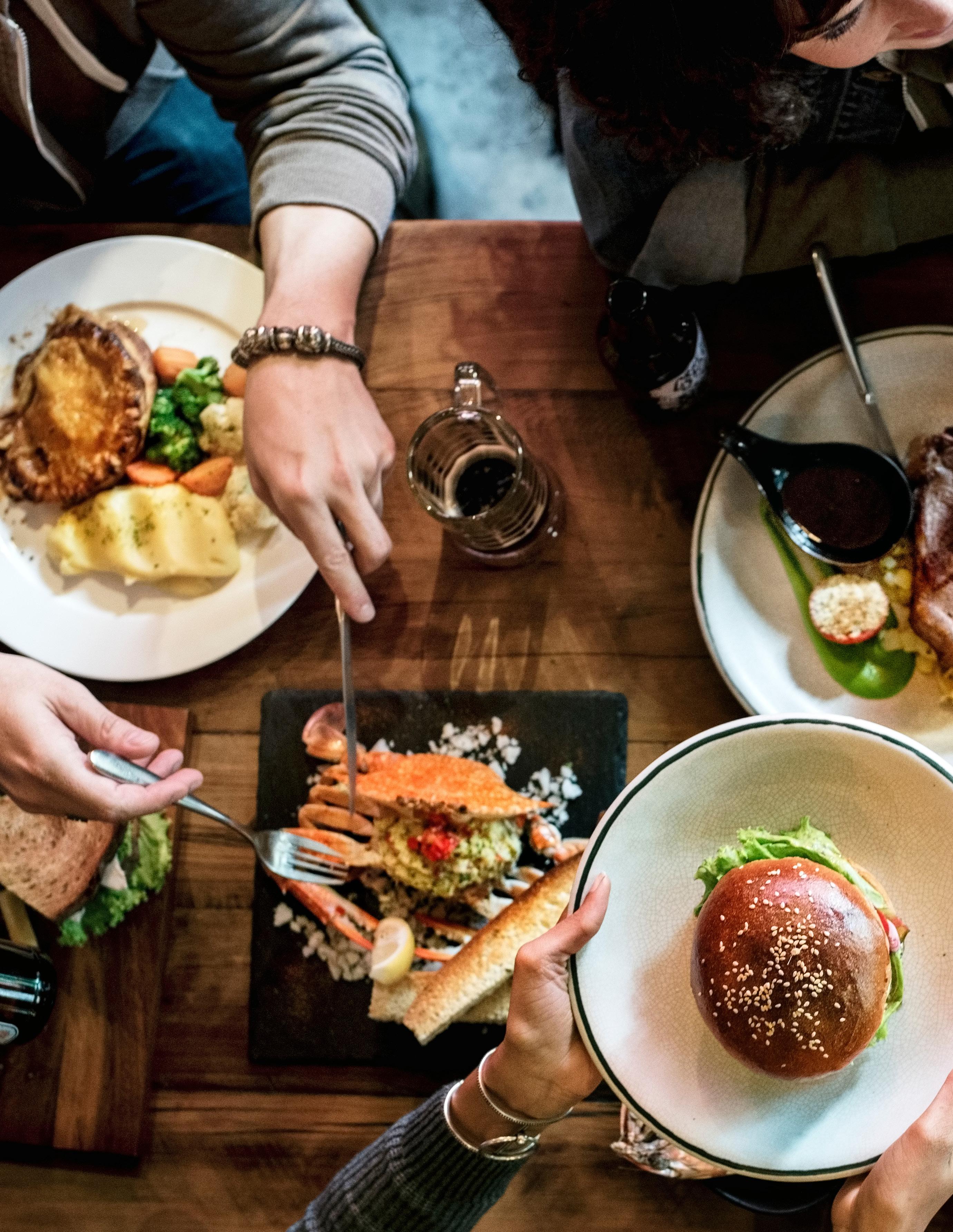
I’ve been to one true feast in my life. A few years ago, my friend Wade decided to roast a lamb for Easter. He sent a text out to everyone he knew, inviting them to his house on Easter Eve. There wasn’t an RSVP list or a spreadsheet coordinating the potluck. My wife Neeka and I didn’t know what to expect. Maybe there would be five people and they would all bring mac and cheese?
Instead of a dinner party disaster, something beautiful happened that evening. It felt like a hundred people—okay, probably closer to fifty—were crammed into this tiny rowhome. People came and went from this open table. Strangers quickly became friends. There was smoked pork, baked ham, stuffing, mashed potatoes, corn, salad, and of course, Puff’s famous mac and cheese. Someone even brought a cake decorated with wildflowers he’d found in a vacant Philly lot. We brought what we had. We gathered together. We feasted.
At some point in the evening, a thought struck me. This was a transcendent moment. On the surface, nothing had changed; this was still a group of friends eating a meal together. But as we ate and talked, my sense of reality expanded. I saw a glimpse of the future kingdom of heaven here on earth. The church’s unity was on full display—not in some dramatic tour-deforce, but through the quiet power of community.
All because some guy decided to have a meal with his friends.
When reading the gospels, I’m struck by how often the topic of food comes up. Fruit, bread, wine, fish, cows, pigs, wheat, mustard seeds, figs— Jesus uses these everyday materials to communicate spiritual truth. In the Gospel of Luke, nearly every chapter mentions food. Jesus’ fixation with food is readily apparent in Luke 14.
The scene begins with Jesus eating in a Pharisee’s house, and it’s clear that tensions are high. Jesus makes three attempts to engage with the dinner guests. They ignore the first two attempts, even though Jesus heals a man right in front of them. They are curiously silent. So Jesus tries again by offering two teachings: one about humbly choosing the “lower place” at a banquet, and the other about inviting the poor and marginalized to your feast. Jesus ends his teaching with a promise that those who invite the poor “will be repaid at the resurrection of the righteous” (Luke 14. 14).
Now the guests’ ears perk up. They blow right past Jesus’ teaching on humility and focus on the feast. One of them responds to his teaching by saying: “Blessed is the one who will eat at the feast in the kingdom of God.” Why? Perhaps they’re changing the subject because Jesus’ teaching is making them uncomfortable. Yep, that’s nice, Jesus. Now can we move on to dessert? Or perhaps they’re thinking about the feast that the prophet Isaiah foretold: “On this mountain the Lord of hosts will make for all peoples a feast of rich food” (Isaiah 25. 6, NRSV). Either way, they’re hoping this quick answer will satisfy Jesus and allow them to move on.
JOSH GUENTHER, ASSOCIATE FOR CONTEMPORARY LITURGY & DISCIPLESHIP
all people
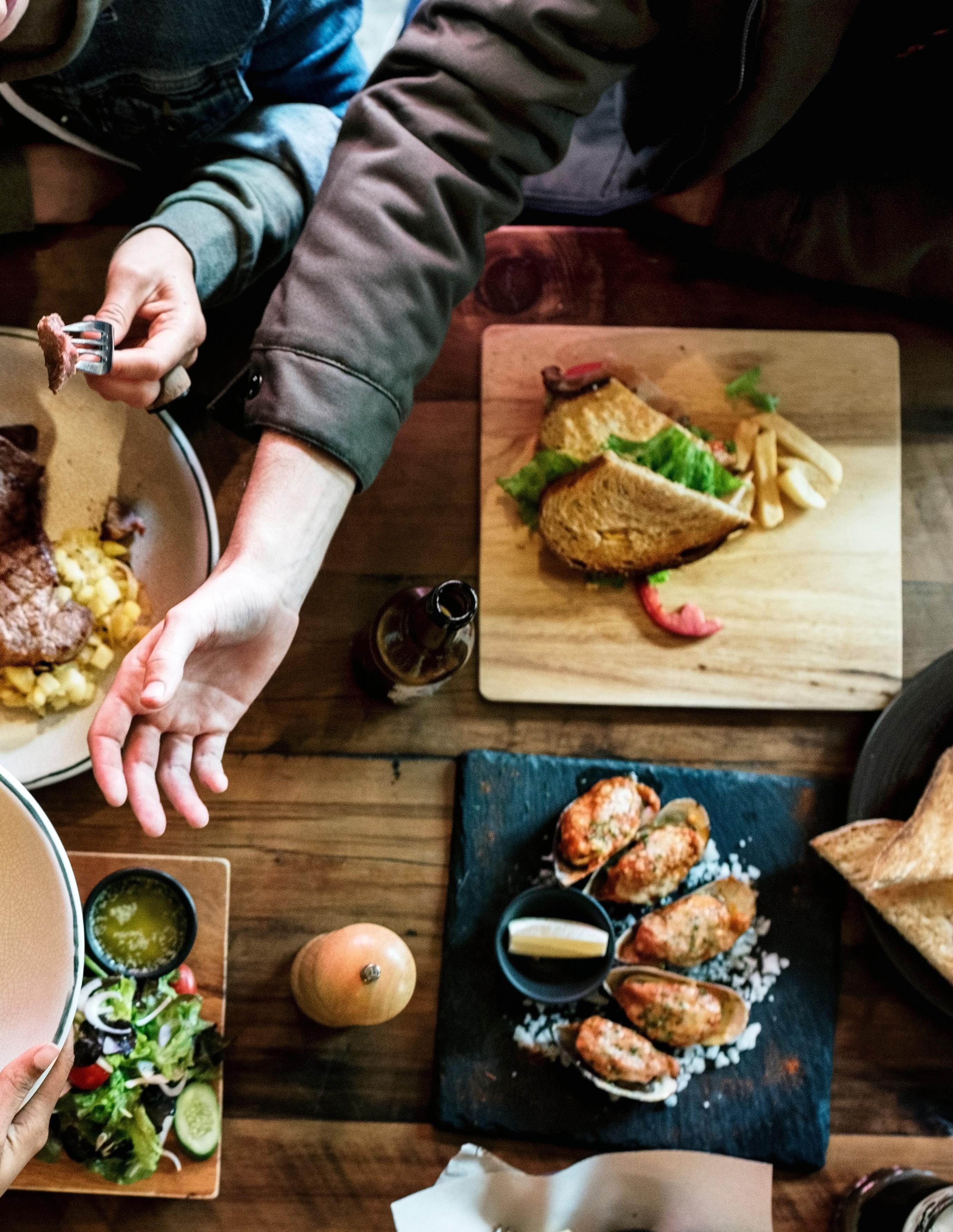
We brought what we had. We gathered together. We feasted.
Jesus is unsatisfied and unfazed. He expands his second teaching with a parable about a great banquet. The master sends out his servant, saying to the invited guests, “Come; for everything is ready now.” These guests quickly make excuses for why they cannot attend, which angers the master. He sends the servant back out into the streets to invite everyone from the streets and the alleys to his table— “the poor, the crippled, the blind, and the lame.” Everyone is invited, “so that the house will be full.” The only ones not invited? The ones who rejected the initial invitation.
We don’t get to hear the Pharisees’ response. And I’d venture that’s an intentional choice by Luke. The Pharisees’ silence at the beginning of the scene showcases their blindness to what Jesus is trying to tell them. What do they fail to see? The great feast of Isaiah 25 is right in front of them. Christ has prepared the banquet and “everything is now ready” (Luke 14. 17, NIV). Since the beginning of his ministry,
Christ has been ushering in the kingdom of God. Everywhere he goes, Jesus is healing the sick and bringing good news to the poor. And soon, through his death and resurrection, Christ will wipe away their tears and swallow up death forever. The irony of the Pharisee saying “Blessed is the one who will eat at the feast in the kingdom of God” is that the feast in the kingdom of God is right in front of him—if only he would accept the invitation
Every Sunday, we gather for this very feast. Our church meets around a table, eating bread and drinking wine. While this meal appears simple, it’s a feast of celebration, remembrance, and communion. As Anglicans, we believe that Christ himself is present in this meal. Just like Wade’s Easter feast, this meal—the Eucharist—is a transcendent moment. There’s a threefold reality to each eucharistic feast. It is a fulfillment of the great feast foretold in Isaiah. It is a foretaste of the culminating marriage supper of the lamb, where the church will forever be in communion with Christ. Yet it is also a call to bring this banquet to the streets. This feast, and thus this kingdom, is open to everyone. Christ invites us to his feast every Sunday. Are we willing to accept an invitation that has everyone at the table?
Nurturing Growth
CHRISTIAN FORMATION FOR EVERY AGE
Godly Play and the Importance of the Feast
BY KIMBERLY LINDQUIST, DIRECTOR OF FAMILY MINISTRIES
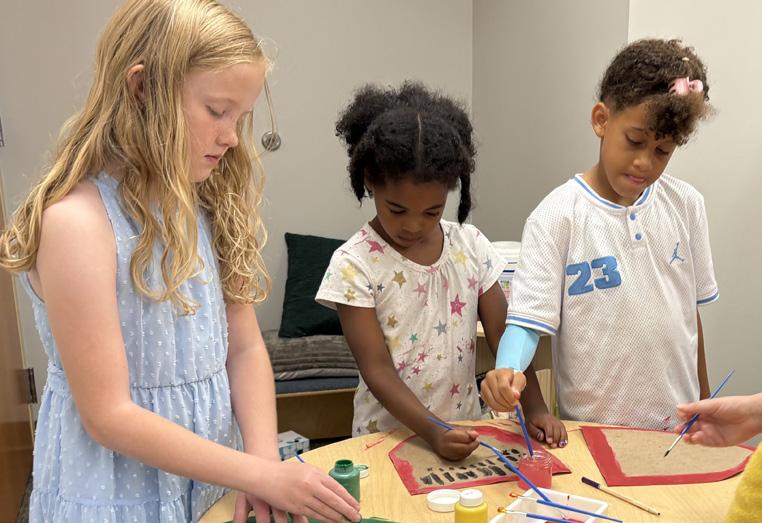
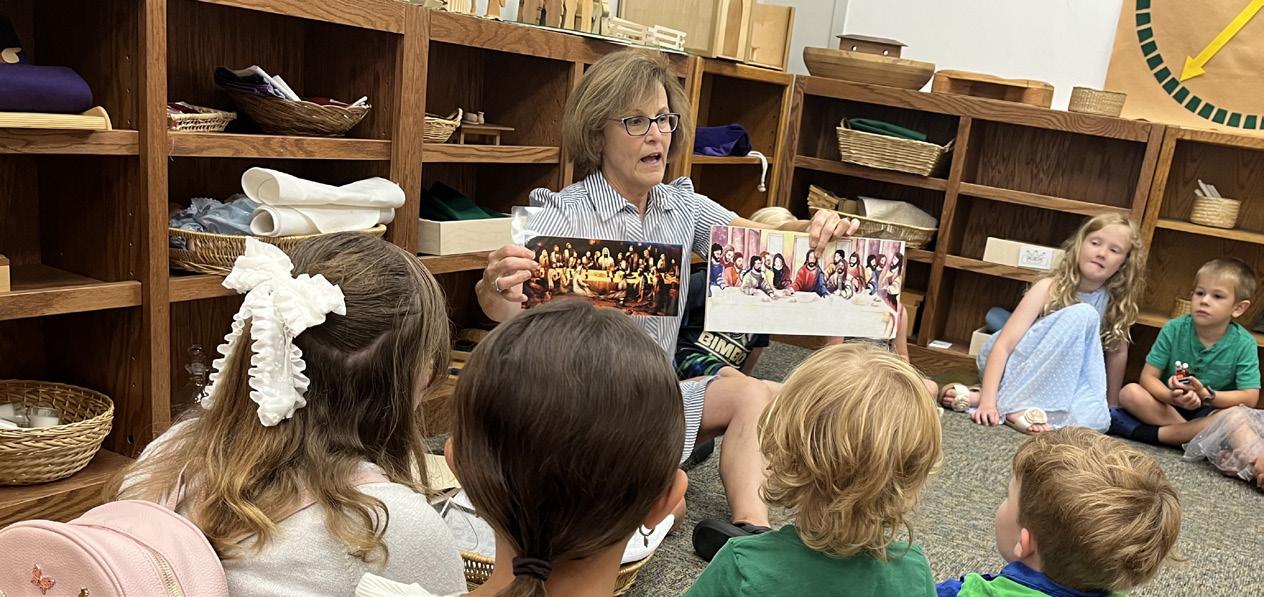
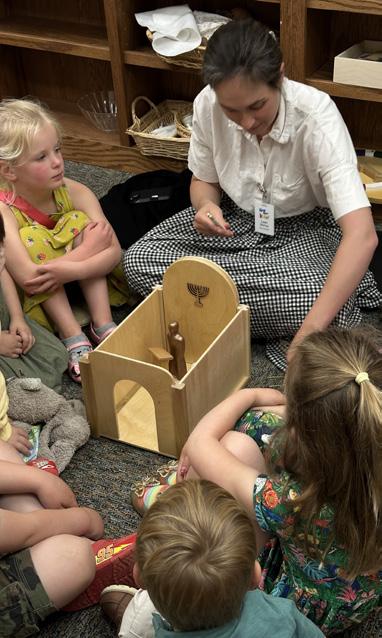
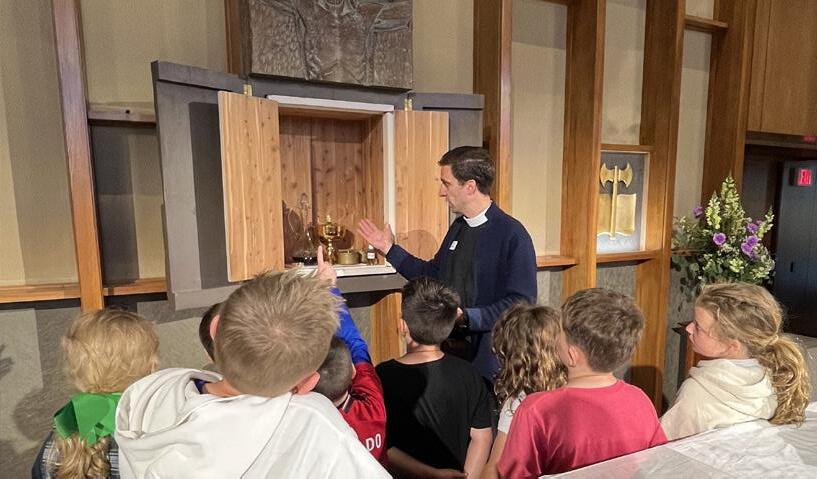
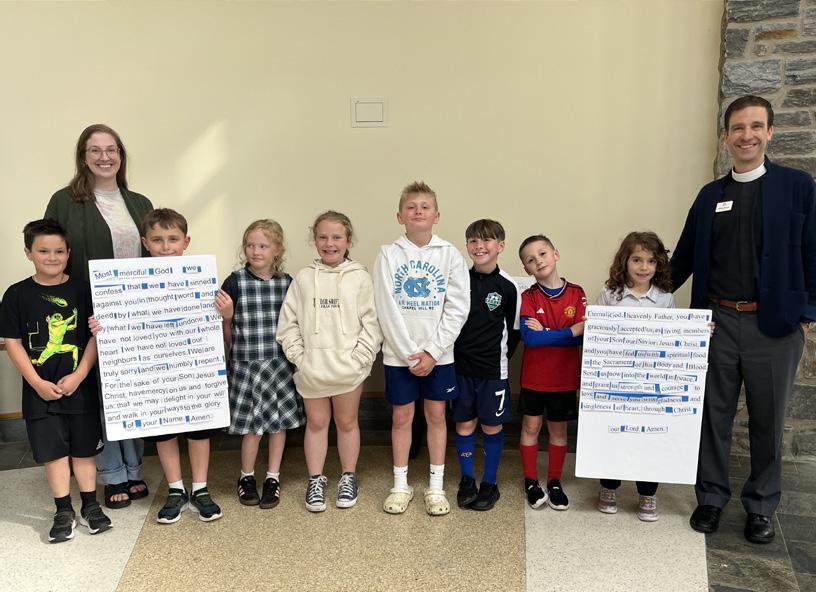
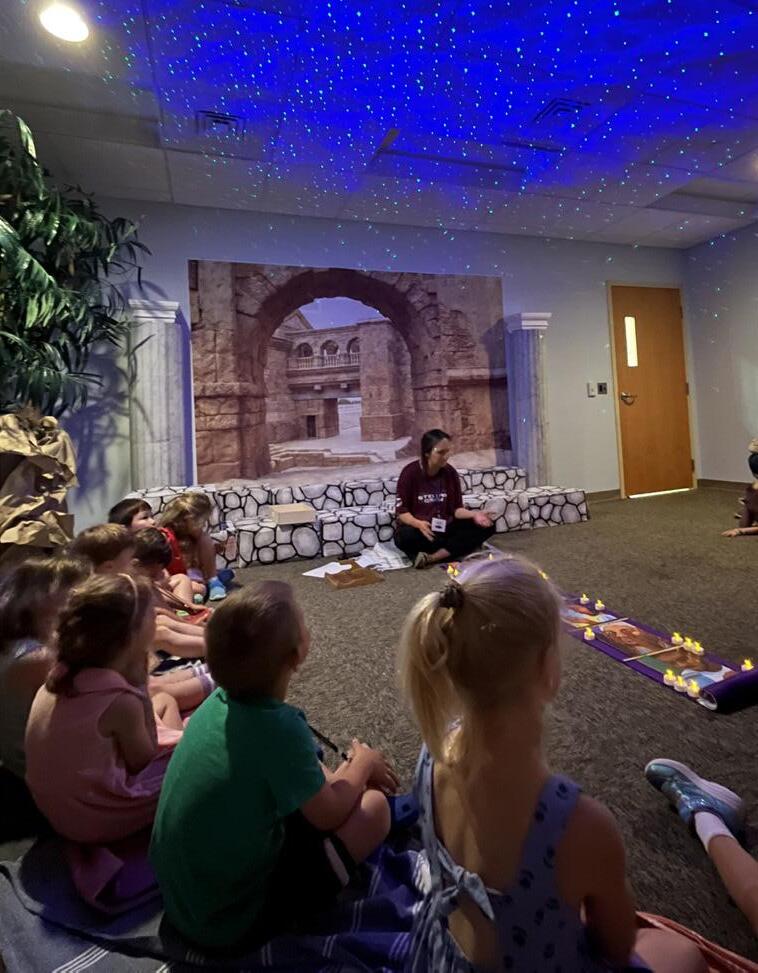
Godly Play, offered to our Pre-K and Elementary aged children, consists of distinct parts that work together to provide a rich experience for those who participate. After children get ready and enter the room, they gather in a circle to hear a Bible story and wonder about it together. This often looks like picturing themselves in the story or identifying a part that was their favorite or that they want to think about more. They are given time to respond to the story through art and other work material. Undoubtedly, all of these components are so important for the children to grow in their knowledge and understanding of the Bible and their personal faith. The final component of Godly Play is called the feast.
To end our time together, children serve each other this simple snack, typically crackers and water, and gather together again in a circle. From the outside, this looks like just a snack to end the “important” learning time happening on a Sunday morning, but we know it is much more than that.
The feast is a time to be together, to build and be a community of people coming together. We practice serving each other and being served. We share and listen to the things we’re excited about, nervous about, and looking forward to. This time is usually full of chatter, giggles, crunching (and sometimes spills and clean ups). It’s the time when relationships begin to bloom and connections are made. We start to see what it looks like to be the church. More than “just a snack” or something to breeze past or ignore altogether, this is a time where we learn that a real feast is not about what we have, it’s about who we are with.



VBS Stellar!
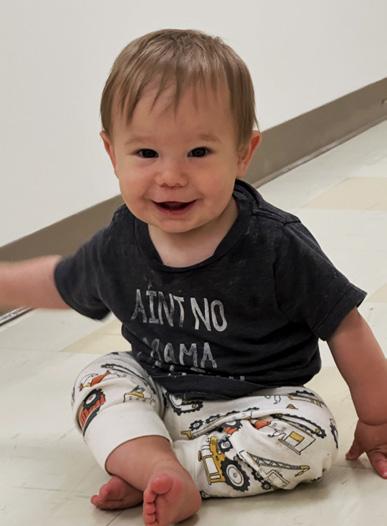
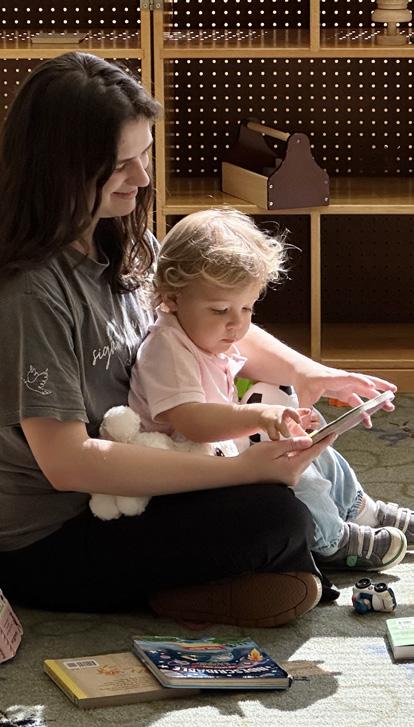
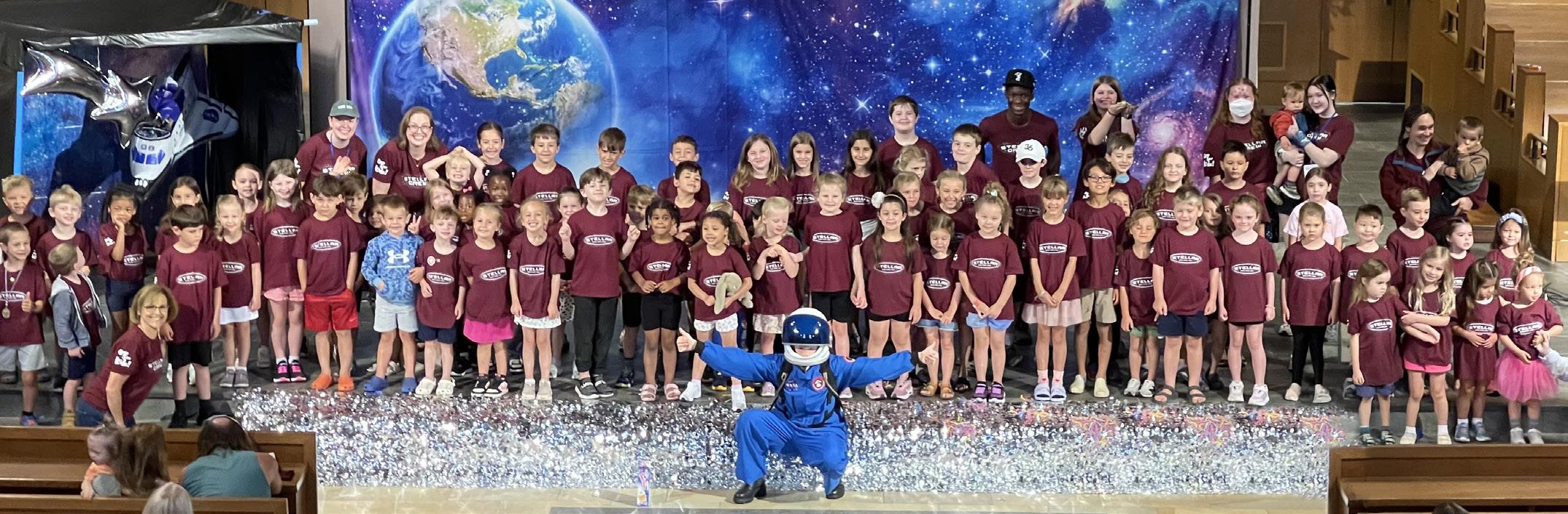
In June, we welcomed more than 100 children (Preschool – Grade 5) to our Stellar VBS! We had an amazing week learning about what it means to know God and to shine Jesus’ light. Each year, I’m so grateful for the opportunity to get a front row seat to how meaningful it is when so many pieces of our church community work together. We were able to create a wonderful experience not only for the kids who attend VBS, but also for their families! We are so thankful for the many prayers, our adult and youth leaders, volunteers from the Men’s Ministry, and members of staff who helped make it all happen! Thank you!
A NOTE FROM KIMBERLY
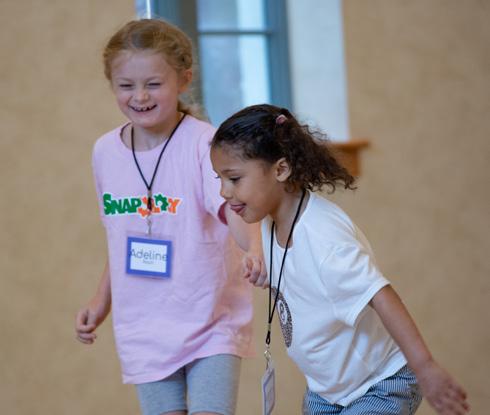
I’m so excited to kick off another program year in Family Ministry. Annie Defina has moved to State College to pursue her PhD in Neuroscience! We miss her! I am grateful to Elrena Evans who has joined us as Assistant to the Director of Family Ministries.


a



YOUTH MINISTRY
Shaped by Community
BY JESSICA CAMPBELL, DIRECTOR OF STUDENT MINISTRY
As we enter into this Sesquicentennial year at Good Sam, I have found myself reflecting on so many things about this community that have shaped me into the person and youth leader that I am today. How does my time at Little People’s Nursery School (as it was called in the 1980s) affect my interactions with our Day School students and staff today? What do the voices of Kid’s ministry volunteers like Rich Lunardi and Vince Attardi remind me on a Sunday morning? What did Eric Fialkoff and TJ Foltz teach me about crafting fun at my very first Youth Group in 1995, when they made it SPAM themed? Does Deacon Dorothy Jessup’s passionate proclaiming of the Gospel shine through when I have a microphone in my hand? How does Tom Davis’ Sunday School class now inform our students’ confirmation preparation? What about my philosophy of small groups was developed by Rosemary Chidester inviting middle school girls into her home for tea each week? Did the use of an Alpha framework and the Quest videos at Youth Group set the stage for my use of Alpha Youth? How did the Standing Rock trip couple with Carol Kuniholm’s deep passion for biblical justice and mercy to lead me to study Anthropology and Missions alongside Youth Ministry at Eastern?
For better or worse, the Good Sam community of the 80s, 90s, and early 2000s made an indelible mark on the youth minister I am today. Good Sam students currently have a leader who asks a lot of questions, and encourages them to ask questions, too. They have a leader who knows and loves the Holy Spirit and prays for them to seek an outpouring of miracles and spiritual gifts through relationship with the fully Triune God. And they have a leader who is passionate about missions and its power to change lives—both individual
team members on short-term missions and communities through long-term partnerships. This is evidenced in Good Sam Youth right now in pretty clear ways, with our most robust student engagement being in missions and serving. This year we saw an increase in student participation on summer missions trips of 50 percent for High School and 62.5 percent for Middle School. We also saw a larger increase in parish-wide support for our trips, raising around $10,000 for Youth Missions in addition to the $7,500 provided in the budget and $11,000 collected in team member payments. We are prayerfully working to execute a vision for youth ministry that listens to the wants and needs of the young people who encountered God this summer and want to continue to grow closer to him and each other this fall. We will continue meeting together on Sunday mornings for Middle School and High School Core Groups during Christian Formation (10:15 – 11:15 am). This time gives families from different services a chance to be together in community, avoids most conflicts with outside activities, and builds on times when students are already in the building. Youth Nights will continue on Tuesdays from 6 – 8 pm, and once a month, we will attend the new church-wide Tuesday Night Worship offering together. Youth leaders will continue to pursue and disciple students of all ages through DNA (Discipleship, Nurture, & Action) groups that pair smaller groups of students with a leader who coordinates with them the best time to meet together each month. We continue to be deeply committed to supporting all youth who attend, not just a crew that can participate in one program. The community driven, holistic approach of Good Sam through my formative years proves that Youth Ministry doesn’t happen in a vacuum for a few hours on a Sunday morning or a Tuesday night— neither the evangelism nor the discipleship.
During the MSWM I grew in my faith and I bonded with others. My favorite part was packing diapers. Maria Kozlowski
It was amazing to see the change that all these kids went through when taught about God.
Zoe Nesbitt
The MSWM was so awesome because we got to help with local ministries like Amnion and Giving Tree while also hanging out with a community of friends. Ben Watkins
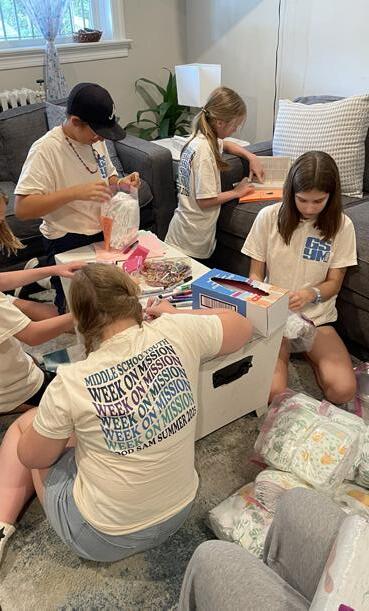

MIDDLE SCHOOL WEEK ON MISSION IN THEIR OWN WORDS
YOUTH MINISTRY


Middle School Week on Mission
The third annual Middle School Week on Mission, paired with serving at VBS, included serving Amnion Pregnancy Support Center, washing cars to raise money for Andree Collective, making packages for kids with food or housing insecurity through Giving Tree, baking for our fundraiser efforts, and a fun day at Dorney Park. Through service, fun, Bible reading, and journaling, students grew deeper in their faith and understanding of what it means to serve God and others.
High School Standing Rock Trip
This July, we had a unique opportunity to invite members of St Paul’s Chestnut Hill to partner with us again on a trip to the Standing Rock Reservation for a week of service to their camp and youth ministry. While a team of 27 people is much more to coordinate than last year’s team of 12, it was amazing to see so many people of various ages and backgrounds serving together. We again helped with Sunday worship service at our former partner parish, St Luke’s, in Fort Yates, where we also helped put on a community family fun night. This week was unbelievably valuable and impactful for our students, and they even got a day of fun at the water park before we returned home!

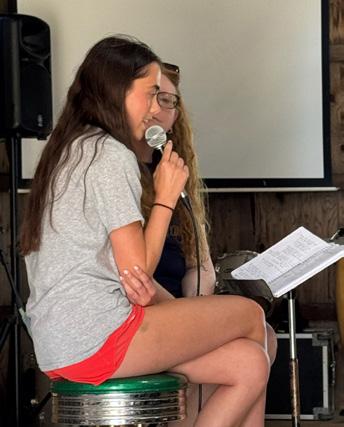

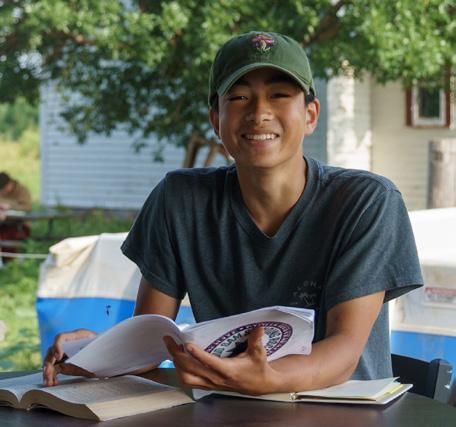
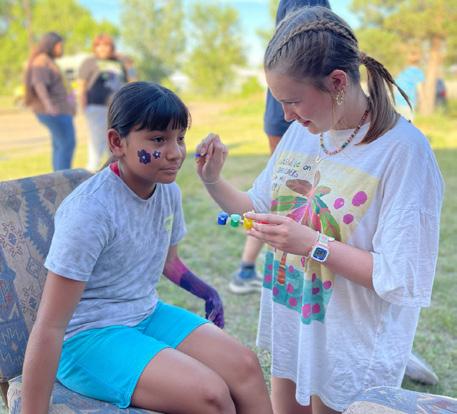
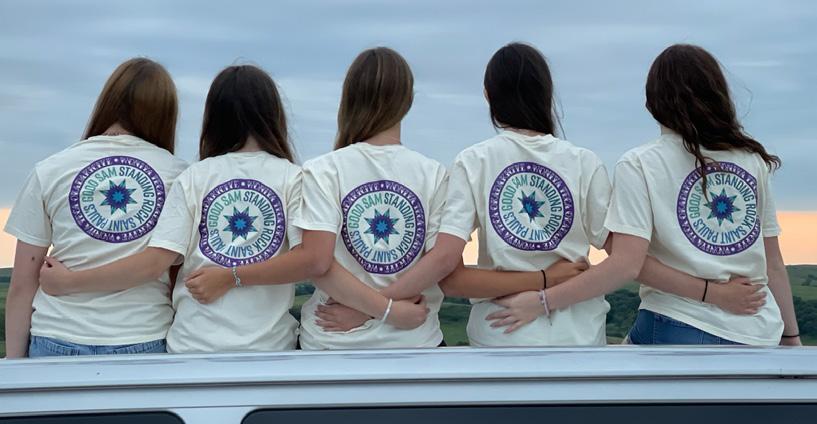
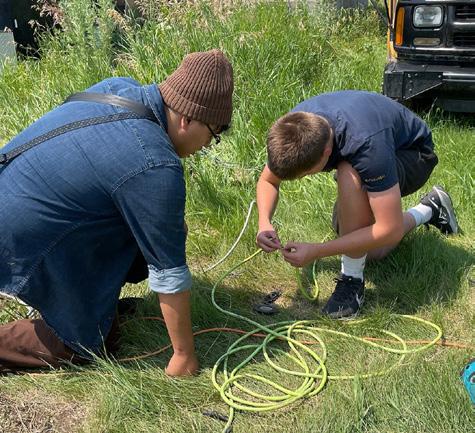
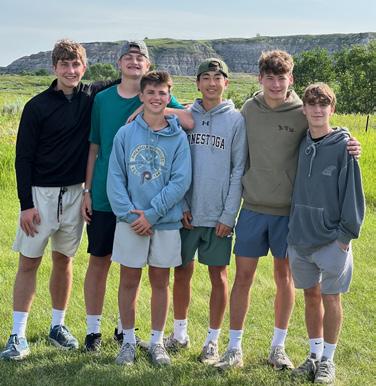
HIGH SCHOOL STANDING ROCK TRIP IN THEIR OWN WORDS
North Dakota was such a moving experience for me. I am beyond grateful for the opportunity to explore my faith in ways I never have before.
Renee Hoffman
It was a privilege to be able to experience this with the best group of people I know. This trip causes unity through good works, and forces us to come together even in adversity.
Matt Thompson
It was really cool to be out there for the first time and get to experience life on the reservation. It really puts our lives into perspective and made me realize just how much we take for granted.
Grant Hoffman
It was a blessing to watch our kids have fun and worship alongside our Native friends. It was inspiring to watch Jess and Josh lead and love our kids and our new friends so well!
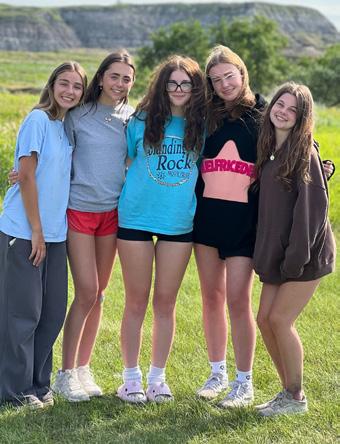
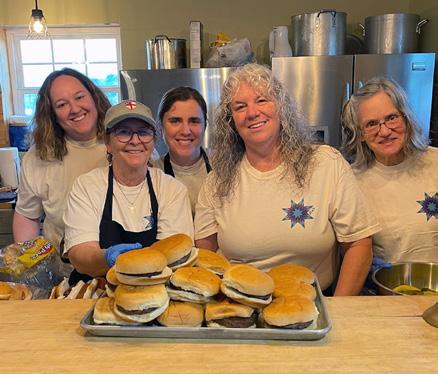
Barb Condit (Leader)
The Holy Spirit is working amongst his people. It’s beautiful to watch others becoming who God has called them to be.
Josh Guenther (Leader)
I loved reconnecting with familiar faces, watching my kids thrive and grow in their faith, and witnessing the powerful work Jess and Josh do with youth.
Allison Van Vliet (Leader and Parent)
Good Sam News
A Conversation with Jack Franicevich, Director of Christian Formation
WHAT DO YOU THINK ‘CHRISTIAN FORMATION’ MEANS? WHAT’S THE GOAL, AND HOW DO WE GET THERE?
I think you become a Christian the way you become a jazz musician. To become a jazz musician, you’ve got to master several areas of musicality: your instrument; theory, scales, reading music; and then, of course, ‘the standards.’ The thing is, you don’t really learn to play ‘Autumn Leaves’ by looking at the notes on the page. That’s elementary. You really learn to play when you listen closely to Oscar Peterson’s sweeping, manic riffs. Then you learn it afresh when you listen to Eva Cassidy’s haunting phrasing.
In the life of Faith, our instrument is our body. Our theory is historic Church teaching, the scales are our seasonal fasts and daily prayers, and the Scriptures are our sheet music. We really learn the Faith when we attend to the words and the lives of holy people, living and dead.
This training, taken together, develops in us a wise imagination rooted in the Christian tradition, which is what gives each of us our best shot at rejecting the inhumanity of the world and offering ourselves as a pleasing sacrifice to God.
HOW DO YOU SEE YOUR ROLE CONTRIBUTING TO THE MISSION AND GROWTH OF THE CHURCH?
In these early days, I have three priorities. I want to expand Adult Christian Formation, and work with our teachers to offer deep courses that help us develop the kind of imagination I’ve described above. I want to reinstate daily Morning Prayer in the Historical Chapel, and so be faithful to the vision of Malachi that was precious to the Early Church: “From the rising of the sun to its setting, my name will be great among the nations, and in every place incense will be offered to my name” (Mal 1. 11). Finally, I want to bring more Eastern University students to Good Sam and graft them into our life.
ARE THERE PARTICULAR BOOKS THAT CAPTURE YOUR APPROACH TO CHRISTIAN FORMATION?
I’m indebted to Bonhoeffer’s explanation of ministry in Life Together, especially his comments on taming the tongue and bearing one another. I resonate with Martin Buber’s notion of ‘devout spirituality’ in his Ten Rungs. Peter Leithart, an important mentor of mine, wrote two books on reading that set me on the course I’m on. Deep Exegesis is a bit higher shelf, but Theopolitan Reading is for anyone. I’d like to mention my own book, too: If you’d like to get to know me better as a Bible reader and liturgical theologian, I recommend picking up Sunday: Keeping Christian Time.

WHAT DO YOU ENJOY DOING APART FROM YOUR NEW WORK AT GOOD SAM?
My favorite form of physical exertion is tennis. At home, I enjoy curating a good ‘golden hour’ ambience—the right music, poetry, food, and drink. My most serious hobby is close-reading and writing about Scripture.
Most of all, I enjoy simply talking with my wife Amber. A favorite philosopher of ours once wrote, “Marriage is a long conversation.” One year into marriage, that seems right, and like a good and joyful thing!
I’ll add that I think the goal of Christian formation is to enjoy one another. Like St John wrote, “I hope to visit you and talk with you face to face, so that our joy may be complete” (2 John 12). Do invite me (or us!) to enjoy some gladsome faceto-face conversation with you!
YOU’VE SHARED THAT YOU THROW ‘LITURGICAL FEASTS.’ WHAT’S ON THE MENU FOR YOUR NEXT ONE?
Amber and I are keeping the Vigil of St Michael and All Angels late this September. It’ll be our spin on the traditional Michaelmas fare. Two highlights: For the second course, we’ll spit-roast a couple geese, glazed with a cherry-port sauce and surrounded by fall vegetables. For dessert, we’ll serve a homemade bourbon-ginger apple cake over vanilla custard with port-soaked pears.
For eschatological reasons, I think the exhortation—“Christ our Passover has been sacrificed for us; therefore let us keep the feast!”— must extend beyond Sunday mornings.
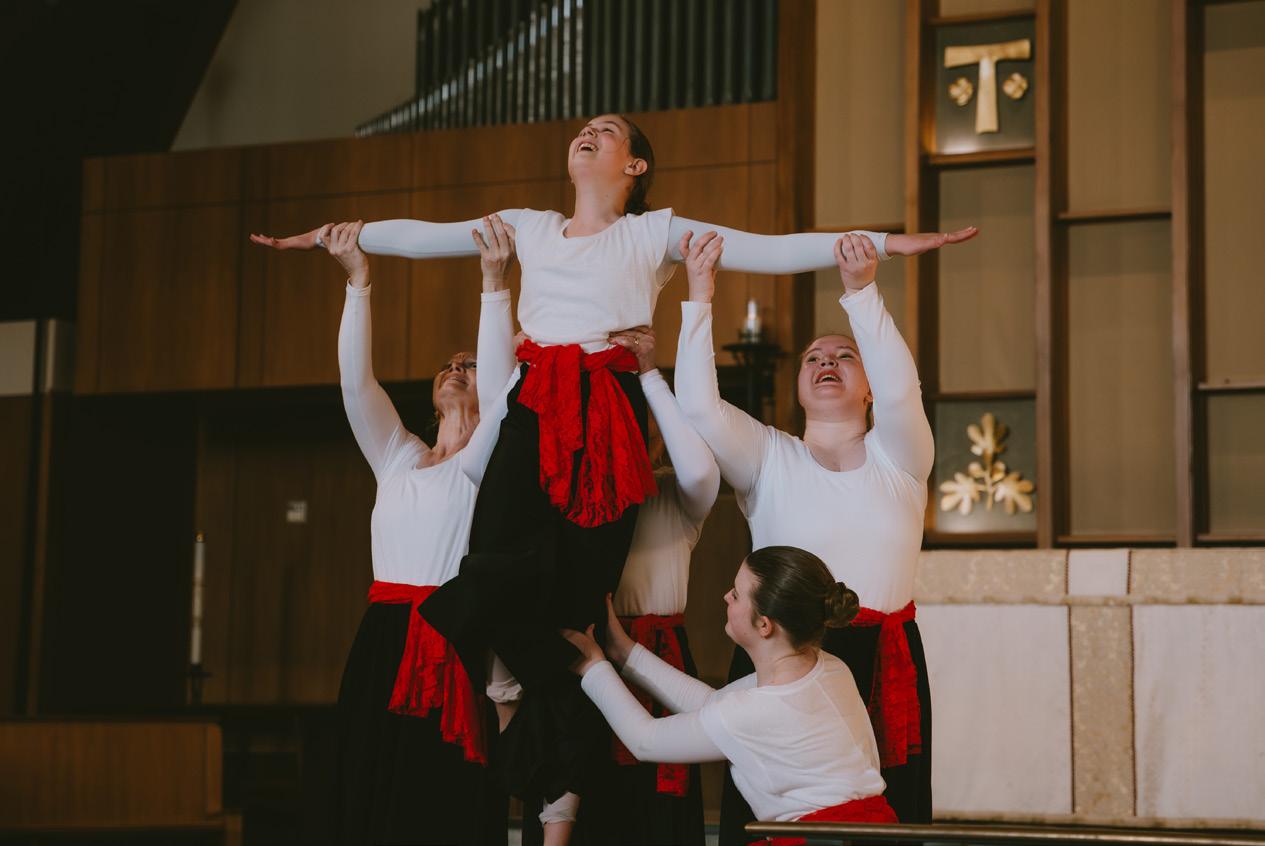
Good Samaritan Dance Academy
Let this desire become a fire, burning deep and bright in me, O Lord Fire, fall down; thunder, surround; glory, come down.
The Good Samaritan Dance Academy has had a wonderful year thus far, dancing at both the 9 am and 11:15 services, four special services for Holy Week with Project Dance in New York City, and finally for our spring concert. Whether rehearsing late at night on the chancel in an otherwise empty sanctuary or dancing on an outdoor stage in the middle of Times Square, we are so grateful for the opportunity to glorify our Lord through the art of dance.
The Dance Choir has also had the opportunity to perform with multiple guest artists this year, inviting dancers from Ornate in New Holland to perform with us for the spring concert, and then featuring color guard flags on Pentecost. It is a delight to join with others who worship the Lord through movement.
Although we are most visible in performance, the majority of our work takes place behind the scenes, in classes and rehearsals in our dance studio downstairs from the sanctuary. If you’ve ever been curious to check out our classes (including exercise-focused, nonperforming classes) we would love to welcome you!
CONTACT KAREN WATKINS FOR MORE INFORMATION AT DANCECHOIR@GOOD-SAMARITAN.ORG OR VISIT GOODSAMDANCE.ORG.

Good Samaritan Day School
Founded in 1955, the Day School is entering its 71st year of providing a developmentally appropriate learning experience for each child in a loving, nurturing, and Christian environment. The school begins the year under the leadership of its eighth Director, Barb Condit. A dedicated team of 39 staff members will welcome more than 200 children at the start of the school year.
Balance, strength, joy (and the promise that there would be no public performances) snagged me into registering for Adult Ballet last winter. I found a wonderful group of women who delivered on that promise. Some were long-time dancers and others, like me, last wore a tutu in childhood. If you are looking to find a strength training exercise that includes balance techniques, consider joining me on Saturday mornings for the Good Sam Adult Ballet class! Laughing required. Janet Prichard
Over the summer, the final phase of the playground renovation was completed. This multi-year project, spearheaded by Assistant Director Jennifer Mitchell with the expert guidance of Rusty Smith, Tom Connett, and Tad Turski, has significantly enhanced the outdoor space. The new poured-in-place surfacing and equipment are designed to support the physical, cognitive, social, and emotional development of the students.
Each day, the Day School is enlivened by meaningful interactions between children and teachers—moments of curiosity and discovery that shape learning and character. Students are gaining foundational skills and also experience the values of compassion, inclusion, and faith.
GOOD SAM NEWS
Pastoral Care Update
BY MARY CRAMER, PARISH NURSE
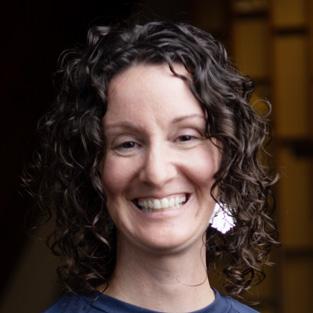
Our Pastoral Care team has been blessed to serve the Good Samaritan community in such impactful ways these past few months. Our primary focus has been to support those struggling within our community (physically, spiritually, emotionally, and financially) as well as to provide outreach to those unable to attend church regularly. Our intent has been to reach out with gentle hands as God leads us and offer support in the ways we are called. Home Eucharistic visits, meals delivered to those in need by the Meals Ministry, regular Caring Caller visits to those who are homebound, transportation to church, and support of those with acute and chronic health issues are among our primary outreach ministries. Our team desires to extend a message of genuine care and God-centered support to those who are suffering or isolated. Compassion and empathy being expressed through our actions. Things such as phone calls, cards, visits, and prayers. Simple acts such as these are all the caring hands of Christ reaching out to those in need through our imperfect human hands.
In the upcoming months, the Pastoral Care team is looking to expand our Caring Caller and Eucharistic Visitor ministries in order to more extensively support those who are homebound or ill. We are hoping for additional volunteer support as God calls on those within the community to be visitors of those in need. We are also looking to continue and expand our Grief Support Group, Living with Loss, connecting those in our community who are grieving through fellowship, prayer, and a book study that will be offered in the Fall.
IF INTERESTED IN SERVING ON THE PASTORAL CARE TEAM, PLEASE CONTACT MARY CRAMER, PARISH NURSE, AT MARY.CRAMER@GOOD-SAMARITAN.ORG.
The Order of the Daughters of the King AT THE
CHURCH OF THE GOOD SAMARITAN
BY DIANE GIBSON, ORDER PRESIDENT
You may have seen some women at Good Samaritan wearing an unusual type of cross or noticed the blue banner near the pulpit that refers to “The Order of the Daughters of the King.” Perhaps you have wondered about the order, who we are, what we do, and how we serve the parish.
The Order of the Daughters of the King, organized in 1885, is a spiritual order for women from 18 to 100+—no one is ever too old to be a Daughter— who are communicants of the Episcopal church, churches in communion with it or churches in the historic episcopate. Active chapters are located throughout the United States and in countries around the world.
Our motto is: For His Sake… I am but one, but I am one. I cannot do everything, but I can do something. What I can do, I ought to do. What I ought to do, by the grace of God I will do. Lord what will you have me do? Each Daughter makes a vow to follow a rule of prayer and service. She lives out her baptismal vows by following Jesus as her Savior and Lord through prayer, work, and witness and giving for the spread of his kingdom.
Here in the Good Samaritan chapter, we currently have 18 Daughters under the chaplaincy of The Rev’d Marcia Wilkinson. We are available to the parish for prayer that is powerful and shows the building of our faith and community.
Our highest obligation is to assist in the prayer life of the church—the prayer needs of church leadership and our congregation. Daughters pray continuously for our clergy, vestry, and staff members—everyone listed in the back of the weekly leaflets. We will also pray for you or make petitions on your behalf, when you request us by completing one of the Connect & Pray cards in the pews. We hold your requests in confidence and pray over them for one month after received.
As part of our commitment to prayer, Daughters routinely walk the church and grounds of Good Samaritan to pray for her physical structures and the Spirit of the Lord within her. During these walks, we give thanks for the work of the church and lift up specific ministries and activities.
The second part of our vow, service, is fulfilled when Daughters walk alongside the established ministries of Good Samaritan through volunteerism and charitable giving in the community. Our chapter runs collection drives periodically for items needed by other charitable organizations.
The work of the Order is best summed up by its hymn, Lift High the Cross (Hymn 473, The Hymnal 1982), which contains these powerful words: “Lift high the cross, the love of Christ proclaim till all the world adore his sacred Name. Led on their way by this triumphant sign, the hosts of God in conquering ranks combine… So shall our song of triumph ever be: praise to the Crucified for victory.”
TO LEARN MORE CONTACT DIANE GIBSON, PRESIDENT, AT DIANEGIBSON678@GMAIL.COM.
Missions
2025 Good Samaritan Mission Partners
Good Samaritan currently supports 17 mission partners, and nine of those ministries have been partners for 15 years or more. Youth Ministries supports an additional three ministries each summer. It is remarkable that many of these partnerships have grown out of parishioners’ involvement and commitment. As our namesake, the Good Samaritan, reminds us, we are called to take to heart the importance of serving others—there is nothing more fulfilling than discovering God’s purpose for our lives. If you are looking for an outreach to join, we encourage you to support our mission partners through prayer, volunteering, or giving.
LOCAL
Alpha Mid-Atlantic helps train and equip local churches to run the Alpha course. Parishioner Bonnie O’Neil is on Alpha staff.
Amnion Pregnancy Care Medical Center provides prenatal care, counseling, classes, adoption options, and post-abortion counseling. Former Good Sam priest, Fr Todd Cederberg and his wife Darla connected us to Amnion in the early 2000s. A favorite Middle School Week on Mission partner for Good Sam Youth.
City Team (Chester) serves in Chester and Delaware counties and provides meals, shelter, clothing, and addiction recovery to those in poverty. We have partnered with City Team for over 20 years, and former parishioner Kwinn Tucker served as executive director from 2012-2023.
FOCUS (Fellowship of Christians in Universities & Schools) connects with local independent schools through Bible studies and summer programs. For over 20 years parishioners including Pricie and Colin Hanna, Annette Toebe, Bill and Cheryl Wardle, Barb Condit, Fr. Geoff Simpson, Simon and Lucy Barnes, Dina Gibson, and Mark Brewer have supported or served on staff at Focus.
The Philadelphia Project provides service opportunities for students—offering home repair, children’s programming, and other assistance. Former Youth Director, Jonathan Hobbs has served on the board for many years.
Scripture Union (Valley Forge) helps people grow in faith through Bible guides, devotionals, videos, and programs for children. Current Rector’s Warden, Whitney T. Kuniholm was president from 1999-2016.
Young Life (West Philly Suburbs) raises up leaders to mentor middle and high school students through relationship and faith formation. Our partnership was strengthened in the early 2000s when Micah Hohorst had a Young Life office here. Several other parishioners have served on staff, including Lexi Condit Lindgren, and Youth Director Jessica Campbell.
Young Lives (Delaware Valley) ministers to teenage parents and parents-to-be. Pam Bennett has been a long-time supporter and fundraising coordinator.
NATIONAL
Neighborhood Church (South Jordan, UT) is a church plant in a rapidly growing, predominantly Mormon community. Their Lead Pastor is Good Sam Youth alumni, Dave Henderson.
Water Mission (Charleston, SC) builds safe water solutions around the world for underdeveloped communities, refugee camps, and areas struck by natural disaster. Rusty Smith, board member at Water Missions, has organized several Walk for Water events at Good Sam to raise awareness of the need for clean water.
INTERNATIONAL
Frank and Anne Bernardi (Tunis, Tunisia) have ministered with Frontiers for over 20 years.
Mwamba (Kitale, Kenya) awards scholarships to those living in extreme poverty so that they can attend high school or seminary.
Julie and Phil Steiner (Central Asia) serve through the Christian and Missionary Alliance.
Jeff Potts (Vancouver, Canada) serves with InterVarsity at the University of British Columbia. Jeff was active in the Good Sam/CCO Young Adults ministry from 2020-2022.
Niños Con Valor (Cochabamba, Bolivia) an orphanage for children and teens and a transition home for young adults founded by former parishioner Endel Liias in 2006. Kevin Hicks has served on the board.
The Rt Rev’d Ron Irene (Paraguay) While Ron currently serves as Bishop of Paraguay, Ron and his wife Nicky served the Diocese of Bolivia for many years.
Diocese of Bolivia The Rt Rev’d Walter Toro serves as Bishop of the Missionary Diocese of Bolivia.
YOUTH SUPPORTED
The Standing Rock Episcopal Community (North Dakota) Good Samaritan had partner parishes in Native communities in South or North Dakota from the 1970s – 2010, and supported current Youth Director Jessica Campbell as a missionary to Standing Rock from 2008-2017. Good Sam Youth relaunched a youth partnership in 2024.
Andrée Collective is a Philadelphia-based nonprofit event organization leveraging celebrations to provide employment and therapy to female survivors of intimate partner violence and human trafficking.
The Giving Tree is a 501 (c) (3) non-profit organization educating children to spread kindness and give back to those in need through hands-on service projects.
ADULT CHRISTIAN FORMATION
This spring and summer have been rich with opportunities for Adult Christian Formation in learning and discipleship during the 10:15 hour on Sunday mornings. Good Samaritan offers two options for adults: Ashton Seminar in Ashton Hall and Christian Life Forum in Rooms 263/264.
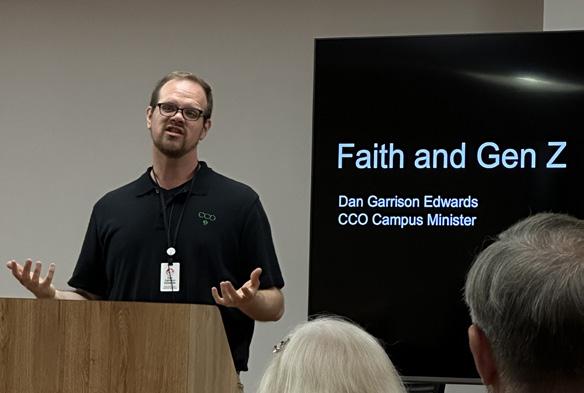
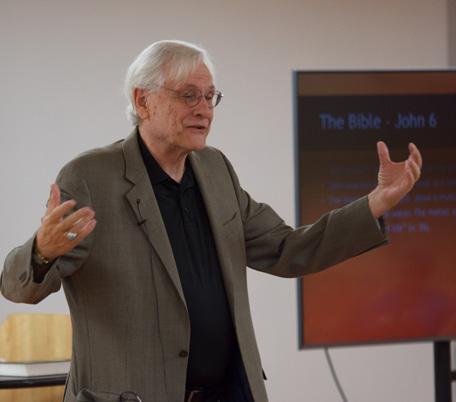
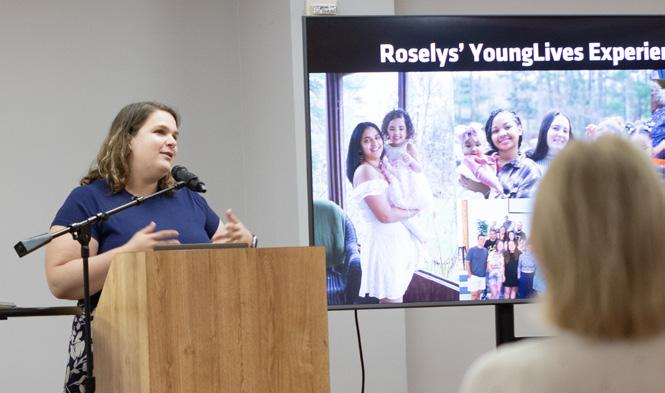
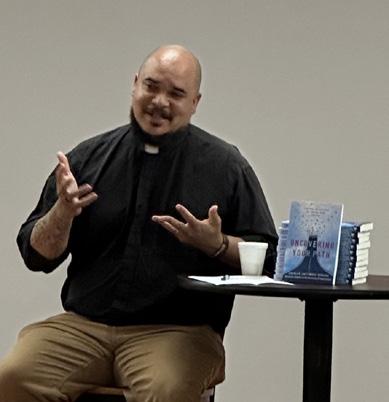
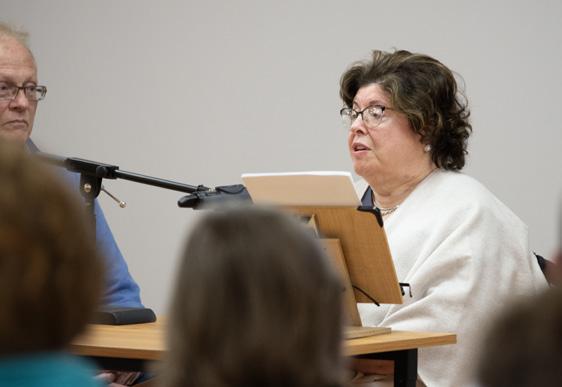
Ashton Seminar
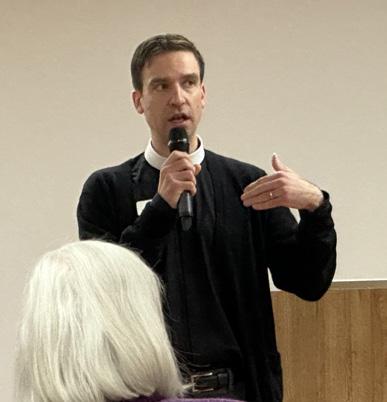
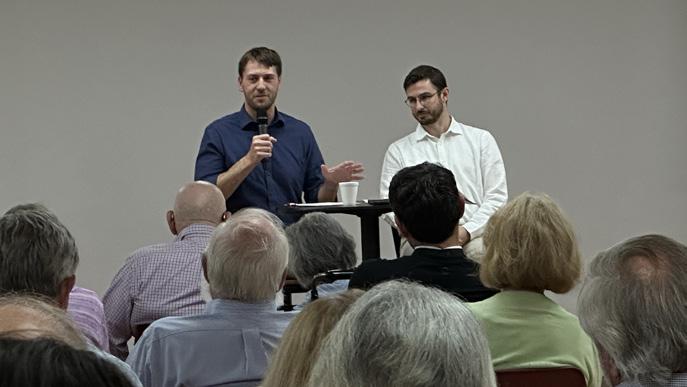
A highlight from the Spring was a five-part series called Roots, Shoots, and Common Prayer which explored the Book of Common Prayer. Presenters included Fr Matthew, Fr Ellsworth, Dr Christie Purifoy, and Dr Brian Williams. With plenty of time for questions, participants learned how the prayer book tradition is Biblical, sacramental, ‘catholic and apostolic’, liturgical, and evangelical/missional.
We also welcomed mission partners Richona McNight from CityTeam Chester and Marissa DaSilva from YoungLives. Leaders also included Dan Garrison Edwards (Faith and Gen Z), The Rev’d Dr Chaz Howard (Uncovering Your Path), and Alex Burns (Getting Tight with Titus).
This set the table for an exciting series on the parables of Jesus. Jack Franicevich and Dr Matt Messer dug deep into several parables, making rich connections with other Biblical texts as well as historical insights from great church thinkers like St Augustine and Thomas Aquinas.
Finally, Dr Chris Hall drew rave reviews from his powerful talks on Sacramental Realism, as well as a series on the Council of Chalcedon. Weaving in history, theology, and study of the Bible, Dr Hall helped us see how these ‘heady’ topics have real life implications for how we live and interact in the world.
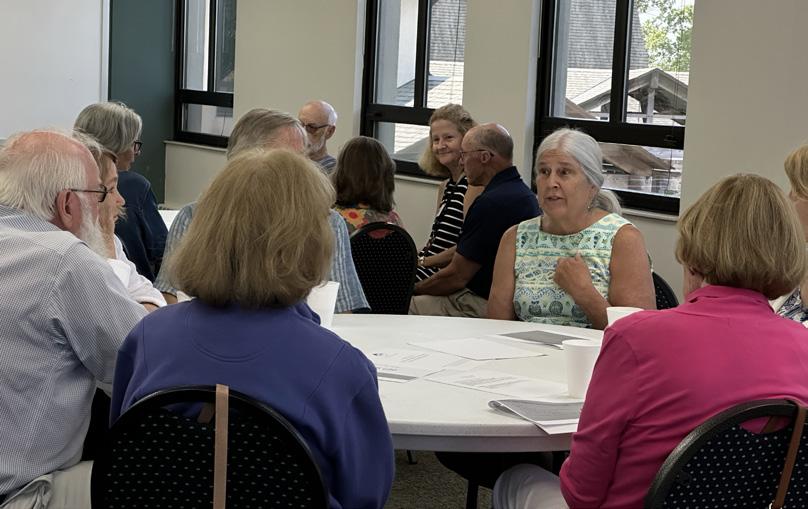
Christian Life Forum
Christian Life Forum is a discussion-based class that brings people together to learn and talk about practical applications for Christian faith. The format is simple: a presenter offers a short 10-minute talk which includes personal reflection from his or her own life journey. Participants then have table conversation about the topic, sharing their own thoughts or experiences through question prompts. The early results have been a big success, with 10-25 people attending each Sunday.
Special thanks to the leadership team of Christian Life Forum: Bill and Charlie Marquardt, Marty and Jeanne Irons, and Bill and Cheryl Wardle. Their contributions, commitment, and willingness to share personally have helped launch the new forum as a safe and engaging space for adults of all ages.
At Christian Life Forum, we always repeat the guiding statement: “We’re here together to grow, learn, discuss, and walk with Jesus.” Topics have included grace and forgiveness; how God provides; noticing God’s promptings; and the Book of James. We are currently in a new series on parenting.
Our prayer for Christian Life Forum is that God would use this forum to build connections among Good Sam folks: new, newish, or here for years; that new friendships, mentorships, and even small groups would form out of this forum; and that God would help all participants deepen their faith in practical ways.
Dan Garrison Edwards Marisa DaSilva, YoungLives
Chris Hall
Alex Burns Matt Messer and Jack Franicevich
Chaz Howard Fr Matthew
MEN’S MINISTRY
Men’s Ministry Building Relationships with Jesus and One Another
Men’s Ministry at The Church of the Good Samaritan invites all men to walk together in Christ through opportunities to grow in faith, serve others, and build deeper relationships with Jesus and one another. Whatever your age or stage of life, you are welcome! Our ministry comes alive through events that bring men together in fellowship, service, and spiritual growth. Looking ahead, we are especially committed to encouraging and empowering the next generation of leaders in our church community. Come join us!
GATHERINGS EARLIER THIS YEAR
• Men’s Breakfast with Dr Jonathan Yates talking about Staying True in a Post-Truth Culture
• Men’s Dinner where our then-new vicar, Fr Matthew, introduced himself and shared on So, What About My Soul Anyway?
• A three-week Breakfast Series on Faith and Work. Men of the parish shared brief stories of their lives and work, with engaging follow-up questions and discussion.
• Men’s Dinner with The Rev’d Andrew Damick who spoke on What Do Demons Have to Do With the Gospel?
GATHERINGS PLANNED FOR THIS FALL
• Men’s Retreat at Daylesford Abbey on Friday and Saturday October 11 – 12. We welcome Jack Franicevich as speaker this year. Some may remember Jack’s participation at last year’s retreat, when he rushed from his honeymoon to Daylesford to join us and led our closing Eucharist! This year he will be teaching on “When a Man Brings His Offering” based on the teachings in the book of Leviticus.
• Men’s Dinner on Wednesday, November 12. with speaker The Rev’d Dr Mark Garcia.
• Eagles Watch Party on Sunday, November 16. with Women’s Ministry at Connett’s farm.
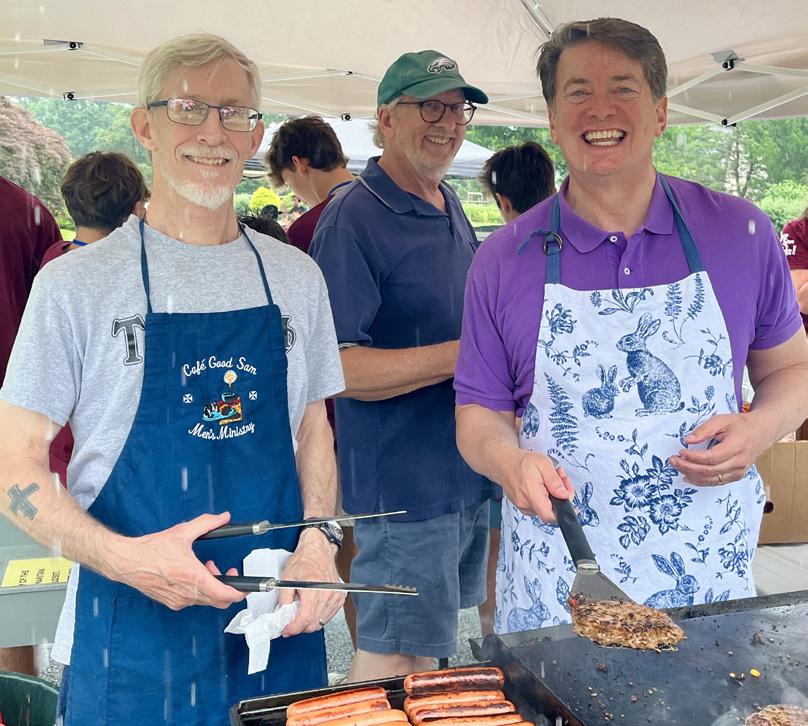
SMALL GROUPS
Currently five men’s small groups meet on a weekly basis. Along with the benefits of in-depth Bible study, the weekly contact also fosters deeper personal relationships. While these five groups meet in the morning, a new group is forming that will meet on a weeknight evening. This new group will be reading the book The Men We Need by Brant Hansen. For more information, contact Adam Kunz at adamhkunz@gmail.com.
PARISH AND COMMUNITY SERVICE
• Four Café Good Sam teams provide coffee and bagels on Sundays between the 9 am and 11:15 services.
• Partnered with the Youth Group Volunteers to cook lunch for VBS’s Family Day. Over 175 kids, parents and volunteers were served, despite an interrupting downpour!
• Served a delicious parish-wide Pancake Breakfast in late August.
• Serving breakfast again for the Family Ministry’s St Nicholas Brunch on December 6.
• Christmas Trees Sale planning is underway to benefit HELPS Ministry. Look for opportunities to help us exceed last year’s total.
STAYING TRUE DISCUSSION GROUP
Building on the momentum of Dr Jonathan Yates’s well-received talk, Staying True in a PostTruth Culture, a group of men and women gathered to dive deeper into the discussion. A new discussion group is starting in September. Contact Fr Matthew (matthew.kozlowski@ good-samaritan.org) or Jonathan at (jonathan.yates@ villanova.edu) for more information.
HOW I BENEFITED FROM JONATHAN’S CLASS
The “Principle of Charity” was an excellent reminder of how to treat others when we come into a disagreement or a post-truth situation. In our discussion that followed, I realized that we cannot live without The Truth, and felt a deep comfort in knowing that The Truth is God’s Truth. I found the desire to improve my discernment of subjective opinions and build processes on how to identify unproven ideas or hypotheses. Jay Powick
FOR MORE INFORMATION ABOUT THESE AND MANY OTHER SOCIAL AND FELLOWSHIP OPPORTUNITIES WITH MEN’S MINISTRY, CONTACT GEORGE SCHEFFEY AT MENSMINISTRY@GOOD-SAMARITAN.ORG. WE’D LOVE TO HEAR FROM YOU!
Growing in Intimacy with Jesus Highlights New Year of InSight Women’s Ministry
BY JANET PRICHARD
Every week, every month, every season InSight Women’s Ministry offers a way to Grow in Intimacy with Jesus. A weekly Bible study explores Isaiah 40 – 55 this fall. You may join via Zoom on Tuesdays from 7 – 8:30 pm or inperson at Good Sam every Thursday morning from 10 – 11:30 am. “The Zoom calls were meant to provide a meaningful touch point for those who were either working or place bound,” said Pam Bennett, InSight Women’s Ministry co-lead. “What we found were people reconnecting with Good Sam who have moved away, or family members joining a common study together, regardless of the miles,” she added. “It is inspirational.”
A month-long examination of the spiritual practice of Generosity begins October 29 and continues for four Wednesday evenings. Cheer the Eagles on November 16 during the joint event with Men’s Ministry. We will all gather around the bonfire at Connett’s farm. Prepare your hearts for Advent during a quiet evening on December 7 in the Chapel.
We have reserved the beautiful St Mary of Providence Center in Elverson, PA, for our Friday night and all-day Saturday InSight Spring retreat on April 17 – 28, 2026. Located on a historic property with more than 50 acres of rolling hills in beautiful Chester County, the retreat center can accommodate us as overnight guests or day trippers. Visit our website for the latest information on upcoming InSight Women’s Ministry activities.
WOMEN’S MINISTRY FOR MORE INFORMATION ABOUT WOMEN’S MINISTRY, CONTACT PAM BENNETT AND BONNIE O’NEIL AT WOMENSMINISTRY@GOOD-SAMARITAN.ORG.
Come Together, a morning of Women’s Ministry on October 4, brought 72 women to Ashton Hall, reveling in each other’s company, eating a delicious breakfast, praying, and singing. The event’s highlight was a panel discussion that delved deep into Growing in Intimacy with Jesus, InSight Women’s Ministry’s theme for the year. Table hosts decorated each table with treasured china from their past; home baked breakfast items complemented quiches and fritatas; and moderators guided their tables through discussions about relationships. Co-leaders for the event were Becky Bowersox and Janet Prichard.
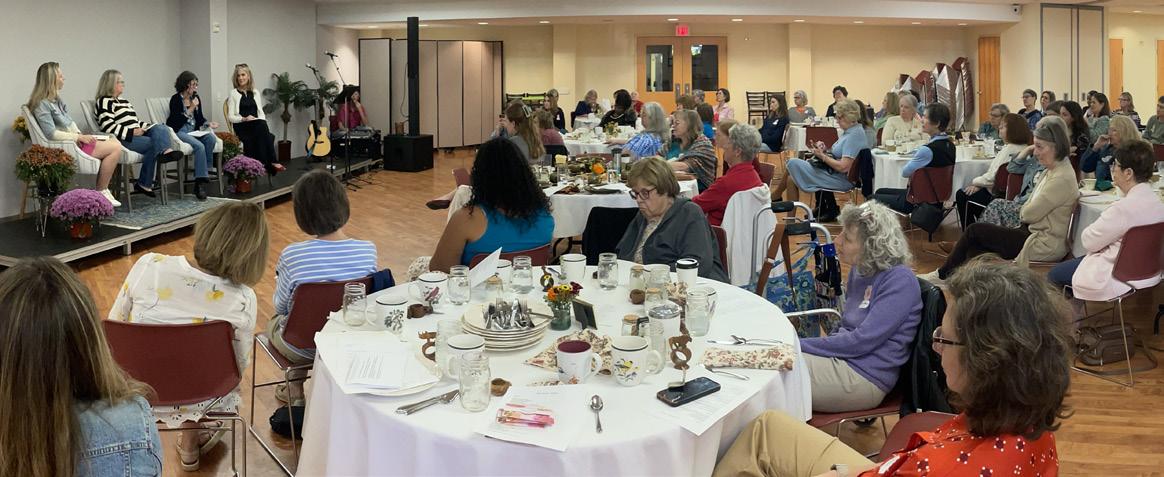
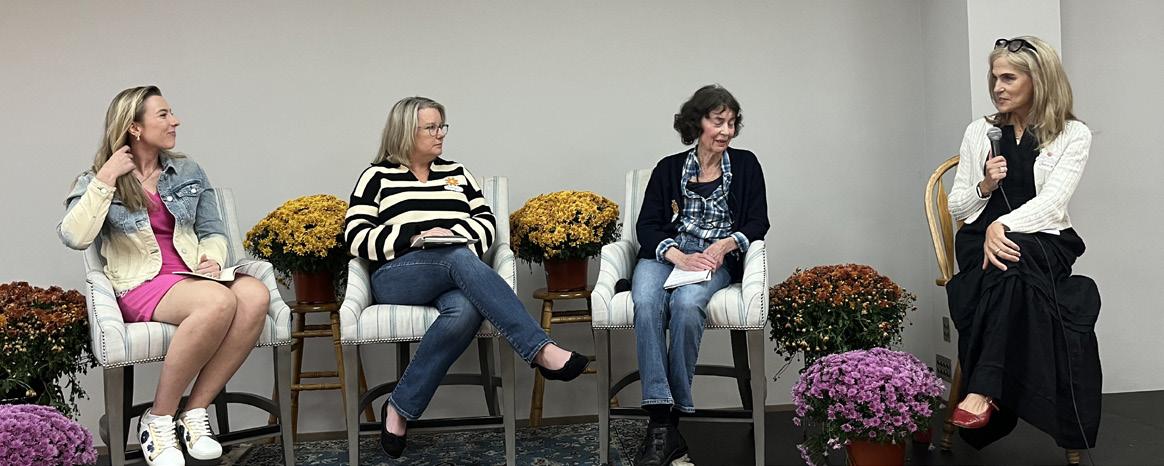
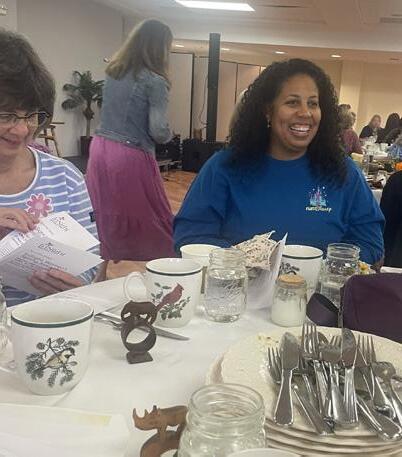
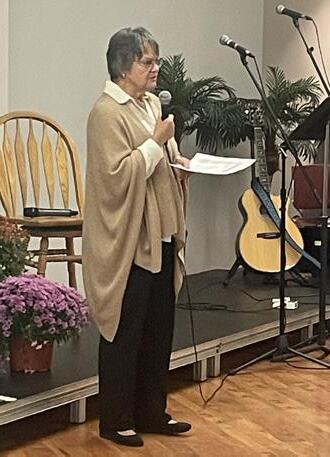
Genevieve Ellsworth, Tracy Defina, and Roxy Dunning (panelists); Bonnie O’Neil (moderator)
PROFILES
The Faces of Good Samaritan STORIES OF OUR COMMUNITY

Charlie and Bill Marquardt
We moved to Berwyn from Charlotte, NC four years ago. We were drawn to cooler weather and easy access to big cities in the Northeast as well as to be closer to our children who had gone to colleges in New Jersey and Massachusetts. We had a sneaking suspicion that our kids would not return to the South and it seemed like a good time to make a big move.
We attended another church for the first few years after our move but felt a call to Good Sam after attending a Christmas Eve service in 2023. We have been at Good Sam for about a year and we have enjoyed being a part of the community. We were drawn to the beauty of the liturgy and the power of the Eucharist offered each Sunday. The clear proclamation of the gospel with an eye toward loving our neighbors and caring for our immediate community aligns with where the Lord is calling us.
In prior church settings, we found the gospel comes to life in small group settings. We have been a part of the Christian Life Forum, leading some of the discussions on Sunday mornings. Charlie has gotten involved in the Women’s Bible Study last summer and is looking forward to continuing to study God’s word with the other women at Good Sam in the fall.
As new empty nesters, we feel the church is a great place to start this next chapter in our spiritual walks and we are excited to be a part of the growing community of Good Sam.
Eva and Kyle Sawdey
We are a family of five—seven if you count the dogs: Kyle, Eva, Hudson (9), Wesley (7), and Jack (2). Eva is originally from Vermont, while Kyle is a Pennsylvania native. We met in Philadelphia and moved to the Malvern area in 2021.
After settling into our new home, we went in search of a place to worship; specifically, a local community where we would feel at home. Eva had heard wonderful things about the children’s program at Good Sam, and after attending the Christmas Eve family service, we became weekly followers. We greatly value Good Sam’s inclusive community and the opportunity it has given us to explore our faith.
The fathers, parishioners, and broader community were exactly what we had been seeking. Our children have acclimated well, and attending the 11:15 am service has become a highlight of our week. Kyle has joined a men’s Bible study and has felt truly welcomed.
Our most meaningful experience at Good Sam so far was when all three of our boys were baptized this past April! It was an incredible moment for our family, and we deeply felt the love and support of the Good Sam community.
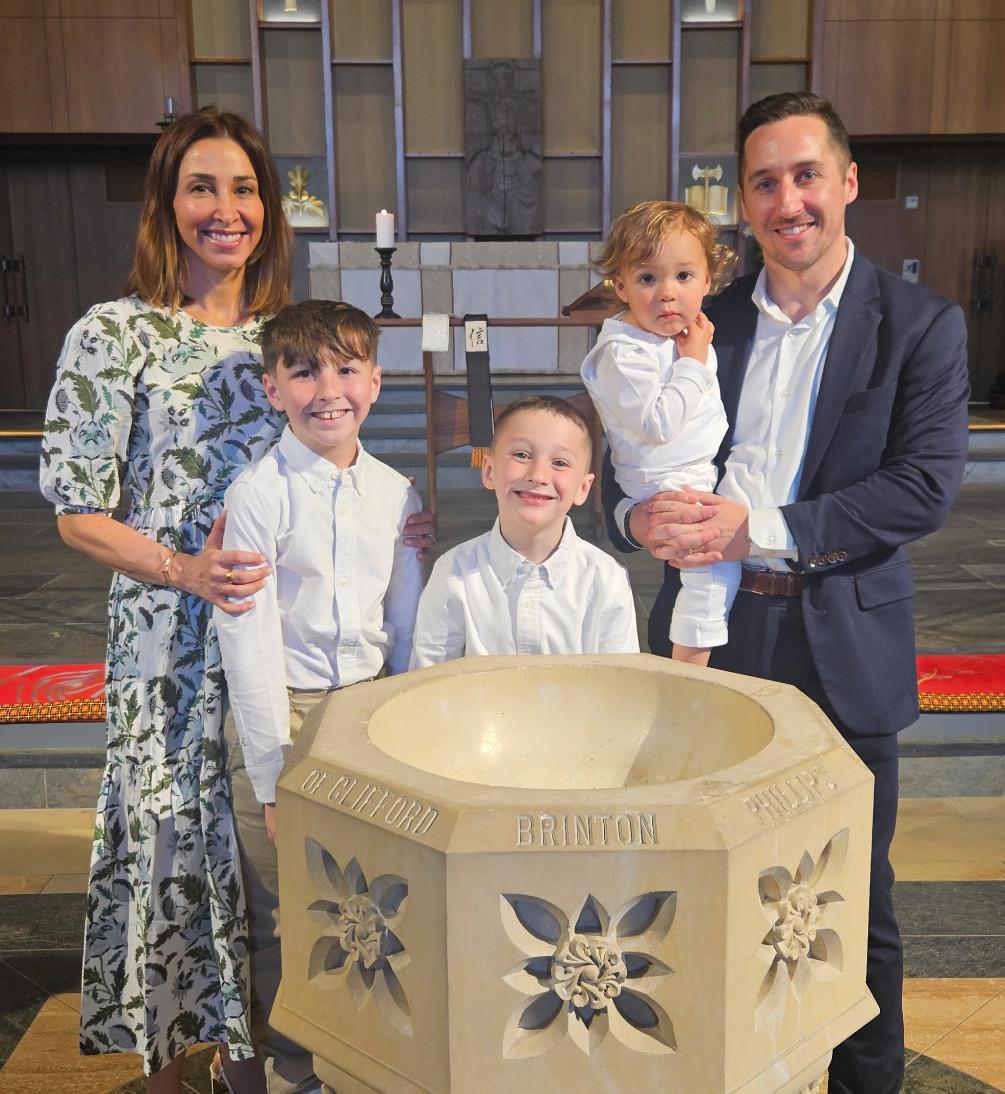
For our 150th Anniversary video project, we have been interviewing several long-time members of Good Sam. Here’s a sneak peek from our conversation with the Hannas.
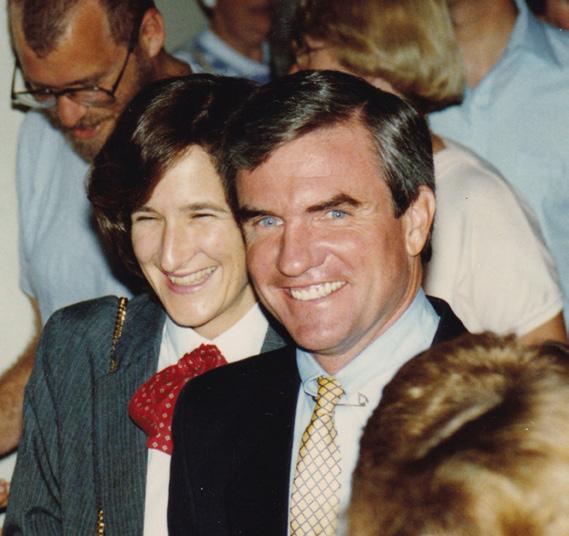
Pricie and Colin Hanna Members since 1979
In your opinion, what has contributed to Good Samaritan reaching this 150-year milestone?
“I think Good Sam really invites people to consider a relationship with the Lord Jesus and has always been looking for ways to invite people in. Not simply to attend church, but to know the Lord that draws us together.”
Pricie Hanna
“I wasn’t here for the first 100 years of Good Sam, but I’ve been here for nearly 50. It’s faithfulness, just not getting pulled in the direction of the latest fad, but staying faithful to the gospel. And combining that with excellent music as a way of not only supporting worship, but also involving the community because it’s an opportunity to use music to bring people into the church.”
Colin Hanna
Pricie and Colin Hanna, 1986
Charlie and Bill Marquardt
Eva, Hudson, Wesley, Jack, and Kyle Sawdey
go and do likewise.
212 West Lancaster Avenue | Paoli, PA 19301
Upcoming Events
hello@good-samaritan.org | 610.644.4040 good-samaritan.org go and do likewise.
October 21 | 6 pm
Worship Night
October 25 | 1 – 4 pm
Fall Fest / Trunk or Treat
October 28 | 6 – 8 pm
A Taste of Alpha
Begins October 29 | 7 pm
Women’s InSight Practice: Generosity
November 1 | 7 pm
CELEBRATING 150 YEARS: All Saints Choral Concert
November 2
All Saints Sunday
November 9 | 9 am and 11:15 am services 10:15 am ACF / Ashton Seminar
CELEBRATING 150 YEARS: A Voice of Sacred Imagination with Malcolm Guite, guest preacher
November 11 | 6 pm
Worship Night
November 12 | 6 – 8 pm
Men’s Dinner with Dr Mark Garcia
November 14 | 5 pm – 12 am
High School Long Night Event
November 16 | 7 – 9:30 pm
Women’s and Men’s Ministry
Bonfire and Eagles Watch Party
November 18 | 6 – 8 pm
A Taste of Alpha
November 25 | 6 – 8 pm
Good Sam Youth and HELPS Cookie Baking
November 27 | /9 – 11 am
Thanksgiving Morning Prayer
November 28
Christmas Tree Sale Begins
November 30 | 10:15 – 11:15 am
Advent Wreath Making
December 2 | 6 – 8 pm
A Taste of Alpha
December 6 | 10 am – 12 pm
St Nicholas Brunch
December 7 | 4 – 6 pm
InSight Women’s Ministry: Advent Quiet Evening
December 9 | 6 pm
Worship Night
December 12 | 6:30 pm
Good Samaritan Dance Ministry
Christmas Concert
December 16 | 6 – 8 pm
Youth Christmas Party
December 21 | 7 pm
Christmas Lessons and Carols
December 24 | 11:15 am
Christmas Eve Family Service
December 24 | 5 pm and 8 pm
Christmas Eve Services
For additional upcoming event listings, visit good-samaritan.org/events
Good Sam Connections
Looking for ways to get connected at The Church of the Good Samaritan? Our Connections guide is filled with opportunities to plug into the life of our church—whether through serving, growing in faith, or building community with others. Explore the many ministries happening here and take your next step in getting connected.
Pickup your copy of the Connections guide in the atrium or download by scanning the QR code.
We have a new Good Sam Store online! Shop apparel now—and stay tuned for more selections coming soon. Visit good-samaritan.org/store