








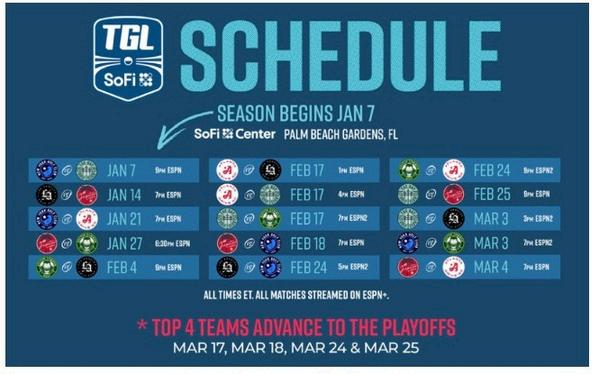
TGL presented by SoFi is a new golf league, combining advanced technology with teams of top players from the PGA TOUR for two-hour weekly competitions in prime time starting in January 2025.
Six TGL teams representing six different cities will go head-to-head in a season-long competition at SoFi Center, a first-of-its-kind venue built specifically for TGL on the campus of Palm Beach State College. Matches will air on ESPN and ESPN+ in the U.S. with every shot live and all the players mic'd up, bringing unprecedented access to the competition for golf fans.









Written by Drew Harris, The Hogan Award Trophy Foundation

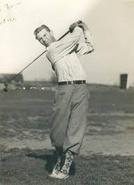
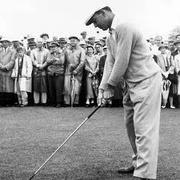
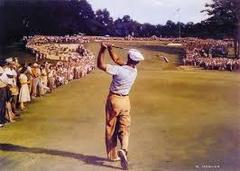
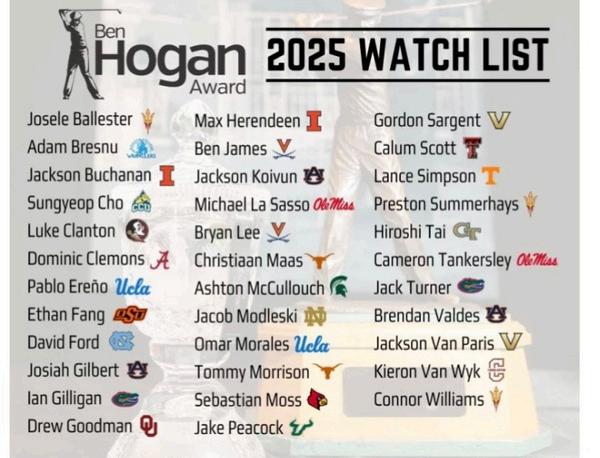
A total of thirty-five of the nation's most distinguished collegiate golfers have been selected for the watch list for the 2025 Ben Hogan Award. This announcement was jointly issued by the Hogan Trophy Award Foundation, the Friends of Golf (FOG), and the Golf Coaches Association of America (GCAA). The watch list for the 2025 Ben Hogan Award, as established by the award's subcommittee, features the following golfers: Josele Ballester (Arizona State), Adam Bresnu (Odessa), Jackson Buchanan (Illinois), Sungyeop Cho (Colorado Christian), Luke Clanton (Florida State), Dominic Clemons (Alabama), Pablo Ereño (UCLA), Ethan Fang (Oklahoma State), David Ford (North Carolina), Josiah Gilbert (Auburn), Ian Gilligan (Florida), Drew Goodman (Oklahoma), Max Herendeen (Illinois), Ben James (Virginia), Jackson Koivun (Auburn), Michael La Sasso (Ole Miss), Bryan Lee (Virginia), Christiaan Maas (Texas), Ashton McCullouch (Michigan State), Jacob Modleski (Notre Dame), Omar Morales (UCLA), Tommy Morrison (Texas), Sebastian Moss (Louisville), Jake Peacock (USF), Gordon Sargent (Vanderbilt), Calum Scott (Texas Tech), Lance Simpson (Tennessee), Preston Summerhays (Arizona State), Hiroshi Tai (Georgia Tech), Cameron Tankersley (Ole Miss), Jack Turner (Florida), Brendan Valdes (Auburn), Jackson Van Paris (Vanderbilt), Kieron Van Wyk (Charleston), and Connor Williams (Arizona State).
The Ben Hogan Award is presented annually to the leading male golfer from NCAA Division I, II, or III, as well as NAIA or NJCAA, based on performance in collegiate, amateur, and professional tournaments over the preceding year. This year's watch list comprises 16 seniors, 10 juniors, and nine sophomores Notably, nine institutions have multiple representatives, with Arizona State and Auburn each having three players Several individuals on the list have previous connections to the award, including Koivun, the 2024 recipient, and Sargent, who has been a finalist twice (2023 and 2024).
Additionally, Ford has been a semifinalist for the last two years, while Clanton, James, and Summerhays were semifinalists in the previous year. An esteemed committee, consisting of over 30 prominent figures in collegiate, amateur, and professional golf, conducts the voting at each stage of the selection process The announcement of this year's 10 semifinalists, which may include individuals not listed on the watch list, is scheduled for Thursday, April 17 This group will subsequently be narrowed down to three finalists




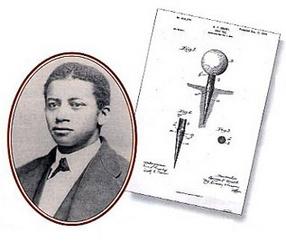
George Grant, a Boston-based dentist, was the inventor of the first golf tee that was officially registered with the United States Patent Office in 1899
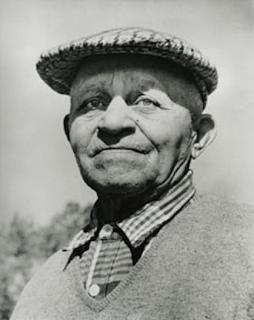
Dewey Brown, who acquired his knowledge of the game while working as a caddie, emerged as a distinguished golf club designer and instructor in the 1920s and 1930s Notably he was the first African-American to join The PGA; however, his membership was rescinded upon the organization's discovery of his racial background, despite his light skin tone
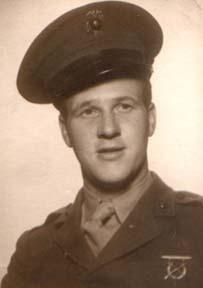
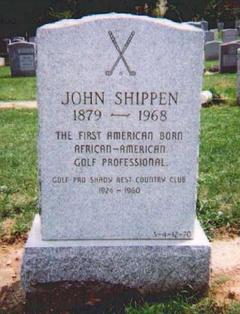
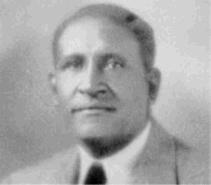
John Shippen is widely regarded as the first American-born golf professional, transcending the distinction of being merely the first African-American pro Prior to 1896, when John made his professional debut at the US Open on Long Island, the field had exclusively consisted of European-born players In spite of a potential boycott, John participated in the tournament, finishing in fifth place. He went on to compete in five additional US Opens and served as the teaching professional at several prestigious, predominantly White country clubs, such as Maidstone and Aronimink
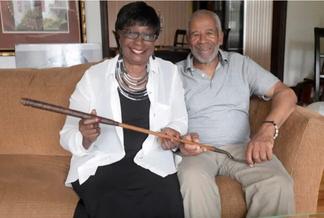
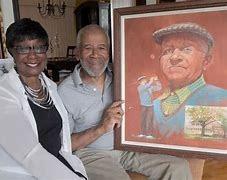
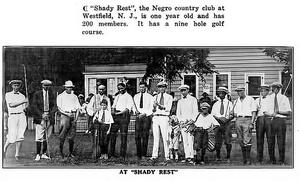
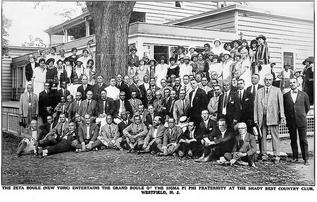
In 1931, John accepted a position as the golf professional and groundskeeper at Shady Rest Country Club, which is elegantly situated in Scotch Plains Township, New Jersey Shady Rest provided a comprehensive range of amenities Beyond golf; members had the opportunity to partake in tennis, horseback riding, skeet shooting, as well as access to well-appointed locker rooms and a dining room within the clubhouse What distinguished this club was its status as a Black-owned establishment, making it the first African-American country club in the United States Shady Rest drew an affluent and educated clientele, who arrived in luxury vehicles, including Packards and Studebakers, and contributed an annual membership fee ranging from $15 to $25 Numerous young individuals found their future spouses at the evening social gatherings, which featured performances by renowned 'Big Band' musicians such as Duke Ellington, Count Basie, Cab Calloway, Ella Fitzgerald, and Sarah Vaughan Additionally, W E B DuBois delivered speeches at the venue, which also served as a favored location for weddings, fashion shows, and luncheons organized by African-American community organizations The area surrounding the club was primarily inhabited by African-American residents; however, the club attracted members from various regions of Northern and Central New Jersey Guests; including Black sororities and fraternities, traveled from as distant as Manhattan and Brooklyn to enjoy a day in the countryside, along with groups from the South who were on extended vacations The clubhouse, originating in the mid-1700s, initially functioned as a farmhouse It briefly operated as a tavern until 1900, when the Westfield Golf Club transformed the adjacent farmland into a golf course Following the merger of the Westfield club with a Cranford club, plans were developed to establish a new 18-hole course, which would later be known as the Echo Lake Country Club. In 1921, when the owners opted to sell, a consortium of African-American investors named the Progressive Realty Co purchased the property and inaugurated Shady Rest For several years, the club thrived However, increasing tax liabilities, the onset of the Great Depression, and disputes among two factions of investors led to financial difficulties Consequently, in 1938, Scotch Plains Township acquired the Shady Rest property through a tax lien foreclosure, and the country club remained a central hub of African-American social life throughout the 1940s and 1950s In 1964, the municipality assumed control of Shady Rest, rebranding it as Scotch Hills Country Club and making it accessible to the public Over the years, the clubhouse fell into disrepair A new clubhouse was constructed, and there are now potential plans to renovate the original structure to accommodate a senior center and an exhibit dedicated to the history of Shady Rest John Shippen retired in 1960 Unfortunately, he spent his final years in solitude and financial hardship, passing away in a nursing home in Newark, New Jersey in 1968. Following his posthumous recognition by The PGA, this acknowledgment motivated Larry Londino, a professor at Montclair State University and filmmaker, to produce the PBS documentary titled, A Place For Us: The Story of Shady Rest and America's First Golf Professional Additionally, the artist Don Miller created an oil portrait of John Shippen A couple, Thurman and Ruby Simmons, established the John Shippen Memorial Golf Foundation Thurman serves as the chairman; and both he and Ruby oversee the Foundation from their residence Annually, they organize a golf tournament to generate funds for children aged 9 to 17 at the diverse Shippen Golf Academy Each child is provided with a set of golf clubs, a red shirt, and a tan cap featuring John Shippen's likeness along with the year 1896, which marks the year he participated in his first US Open The Simmonses also spearheaded an initiative to replace John Shippen's modest gravestone with a more distinguished one that reads: John Shippen 1879-1968 The First American Born

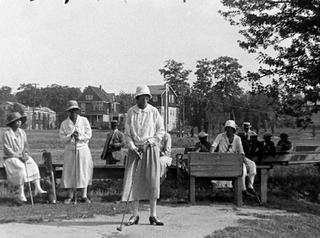


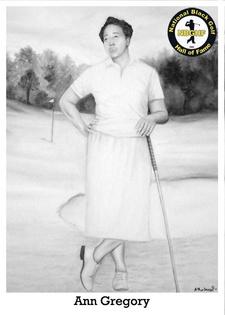
Ann Gregory's journey to golf is quite remarkable. Born in Aberdeen, Mississippi in 1912; she faced tragedy early in life when she lost her parents in a car accident at the age of four. Subsequently; she was raised by her parents' affluent former employers, where she worked as a maid as she grew older At the age of 26, she left the South with her husband for the industrial city of Gary, Indiana Mrs Sanders (her former employer), expressed concern that people in the North would treat her poorly; to which Gregory responded, “Mrs Sanders, you've prepared me very well for mistreatment ” This resilient spirit enabled Gregory to become a significant figure in Gary's African-American community, ultimately making history as the first African-American member of the public library board. There; Gregory rediscovered her passion for sports, initially taking up tennis and later transitioning to golf. Her natural athletic ability quickly became evident, as she soon claimed the title of Gary’s City Tennis Champion and began winning golf tournaments just four years after she started playing in her early thirties As she accumulated victories in segregated golf events such as the Chicago Women’s Golf Association Championship, the Joe Louis Invitational, and the United Golf Association Championship (the leading national association for black golfers); Gregory also had the opportunity to compete against white golfers at the 1947 All-American Open. Integrated tournaments of this nature were exceedingly uncommon, and Gregory continued to participate in and secure victories in the black championships for the subsequent decade In 1956, she finally received the chance to compete in the premier amateur golf tournament for women in the United States, the U S Women’s Amateur; organized by the USGA This tournament had never seen a black woman competitor, but it extended an invitation to Gregory, who was the reigning champion of the Negro Women’s Golf Association
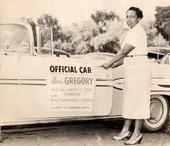


Despite facing criticism from the black community for opting to participate in this event instead of a UGA tournament; which some viewed as endorsing the perceived "superiority" of the USGA, Gregory chose to compete The reception from the predominantly white audience was also less than hospitable. The tournament format was match play, and although Gregory led for a significant portion of her opening match, she ultimately lost 2 and 1 to Carolyn Cudone. Nevertheless, this marked a significant moment in breaking the color barrier Even with this milestone, Gregory continued to face racism in subsequent U.S. Amateurs, including the 1959 tournament held at the Congressional Country Club near Washington, D.C. Due to the club's whites-only policy, she was not invited to the opening banquet; however, she still managed to win her first two matches before being defeated by Diane Hoke. Such encounters with racism were regrettably common for Gregory, including an incident in which she was denied her hotel reservation in Tulsa during the 1960 Women’s Amateur, as well as a notable occurrence in 1963 when fellow competitor Polly Riley mistakenly assumed she was a maid.
TheLegendaryCaddiesofAugustaNational:InsideStories fromGolf’sGreatestStagebyWardClayton
Beginning in the 1930s, the black caddies at Augusta National accompanied some of the most renowned golfers in the world This book chronicles their narratives, which are inextricably linked to the history of the sport They were known by quirky nicknames such as Stovepipe, Burnt Biscuits, Skillet, Skinny, and Marble Eye These individuals served prominent figures, including U S presidents, industry leaders, and legendary golfers Their actual names were Carl Jackson, Willie Perteet, and Matthew Palmer, and they were witnesses to every significant event, both intimate and public, at Augusta National from the 1930s onward ranging from Gene Sarazen's iconic "shot heard 'round the world" to Jack Nicklaus's remarkable achievement of winning five out of six Masters titles Discover why Nicklaus claimed he would not exchange caddie Willie “Pete” Peterson “for a million dollars” and what Willie “Cemetery” Perteet genuinely thought of President Eisenhower’s golfing skills The Black caddies of Augusta National also faced the challenges posed by the sports racist social structure while simultaneously experiencing its many exhilarating moments, albeit indirectly Ward Clayton captures their stories; and narratives as captivating as the game of
Gregory did not accept such treatment passively. In fact, she played a pivotal role in integrating Gary’s public course located in Gleason Park The facility featured a well-maintained 18-hole course for white residents, while black citizens were confined to a dilapidated 9-hole layout In the early 1960s, Gregory boldly entered the white clubhouse, paid the green fee, and informed the clerk that her taxes contributed to the maintenance of that course; if there were any objections to her playing, they could contact the police. They never did, and gradually, more black players began to utilize the course. Gregory continued to engage in the sport well into her 70s, participating in numerous Senior Women’s Amateurs and triumphing in the 1989 U S National Senior Olympics at the impressive age of 76, winning by a remarkable margin of 44 strokes She passed away the following year in her cherished city of Gary. A memorial dedicated to Gregory now stands at the South Gleason Park Golf Course, the very course she integrated over half a century ago. She is celebrated as a trailblazer in the sport she cherished.



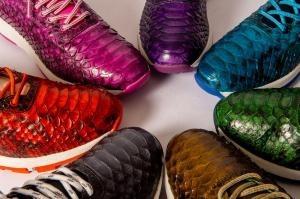
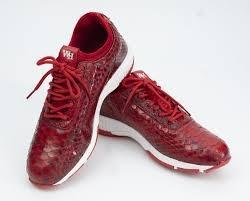
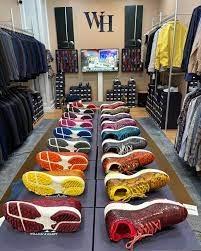


Thisnewcollectionofgolfshoesisdesignedwithpremium materialsandmeticulousattentiontodetail,merging elegance,comfort,andfunctionalitytooffergolfersan exceptionalfootwearexperience.incorporatingadvanced technologytoimprovestabilityandtractiononthegolf course,allwhilepresentingarefinedandstylishappearance. notonlyexcellinginperformance,buttheyalsocomeinan arrayoffashionabledesigns,colors,andpremiumleather options.Theseincludedeerskin,hand-paintedpython,and ostrichskin,allowinggolferstoexpresstheirindividuality andstylewhileonthecourse. TheWilliam&Harrypremiumgolfshoesarenowavailableon ourwebsitehttps://williamandharry.com/andatour storefrontinWilliamsburg,VA.Formoreinformation aboutthenewlineandtoshopthefullcollection,visit https://williamandharry.com/.