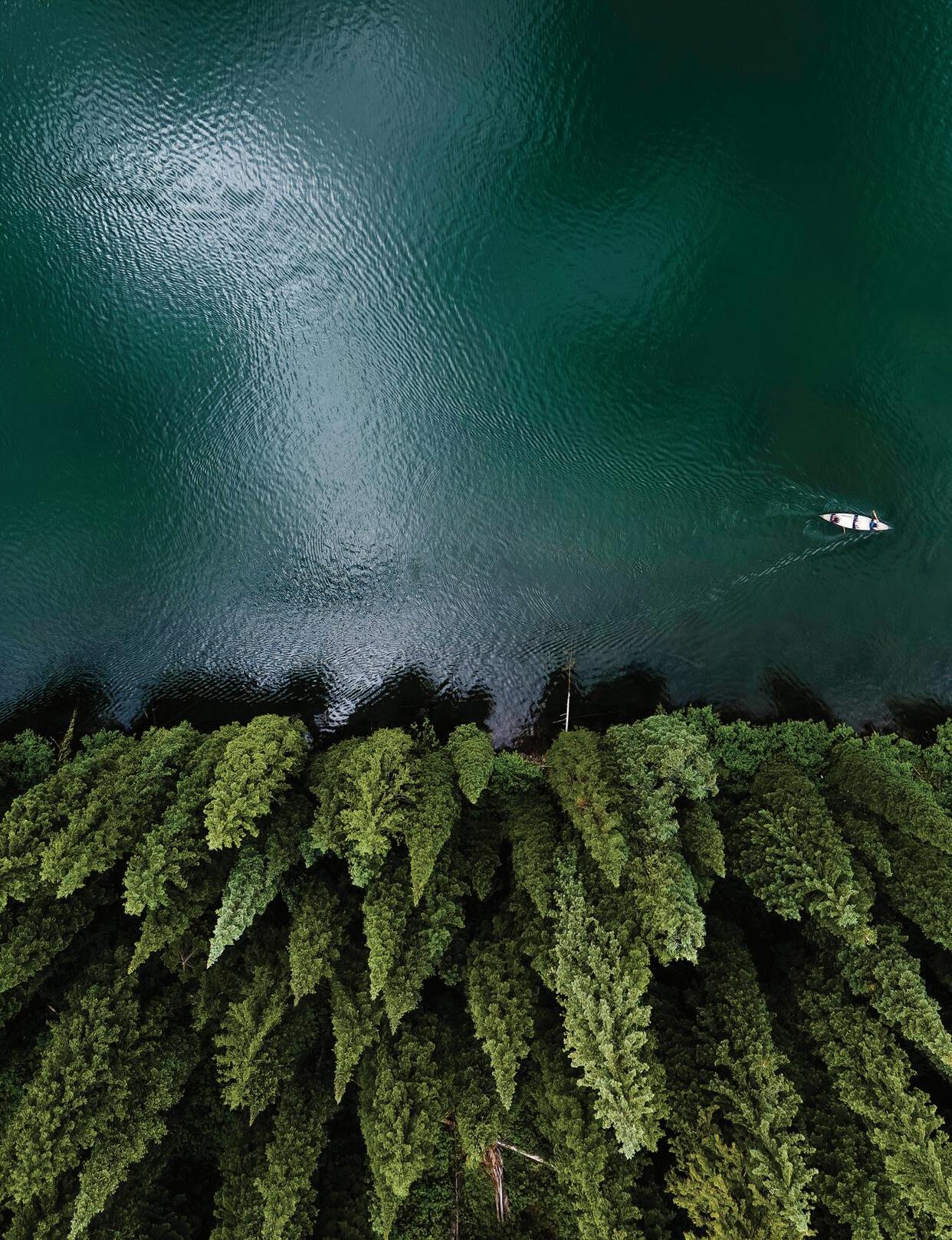
We are lucky to not get very many unwanted encounters with bears around Cranbrook. But we must still take the proper steps with handling garbage around our homes and businesses so we don’t create a problem.
And with the hot, dry and smokey summer we’ve had, we are already noticing increased bear activity. That means it is vital that you also properly manage your fruit trees to reduce the risk of unwanted wildlife encounters.
If you can’t manage your own trees, Wildsight has a great Apple Capture program. Learn more at https://wildsight.ca/branches/kimcran/.
kootenaymedia.ca
FOR ADVERTISING, DISTRIBUTION,OR GENERAL INQUIRIES, PLEASE CONTACT: grady@kootenaymedia.ca
For article submissions, please contact: monica@kootenaymedia.ca
Reproduction, in whole, or in part, is strictly prohibited. No part of this magazine may be reproduced or duplicated without the written permission of the publisher. All rights reserved on entire contents. GO Cranberley Magazine makes every effort to ensure the accuracy of the information it publishes and is not responsible for any consequences arising from errors or omissions. The opinions expressed in the articles are those of the authors.
GO Cranberley Magazine is published four times per year and is printed in Canada.
GO Cranberley is published by: Kootenay Media Ltd.
PUBLISHER
Grady Pasiechnyk
SALES & DISTRIBUTION
Grady Pasiechnyk
ART DIRECTION & DESIGN
Ashley Dodd
COPY EDITING & SOCIAL MEDIA
Monica Karaba
CONTRIBUTORS
Britt Bates
Dan Mills
Jeff Pew
Shenoa Runge
COVER PHOTO FALL 2022
Morgan Turner | White Boar Lake
8
MAYBE, WE WERE GIVEN WINGS: Spence Bisley, a Third-Generation Pilot Finds a New Way to Fly
12
LAKIT LOOKOUT: A Love Story
17
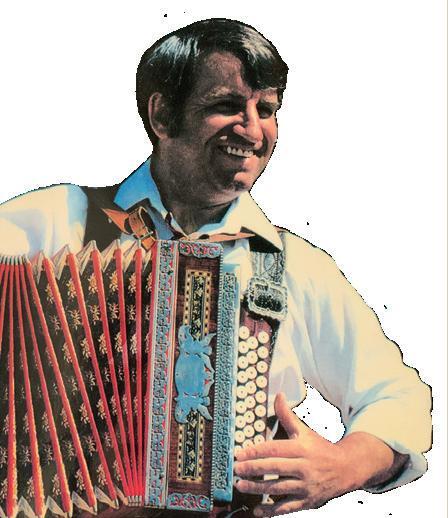
YODEL-AY-HEE-HOO: Adi Unterberger, the Eternal Yodel of Kimberley's Happy Hans
22 HEALTHIER TOGETHER
26 DURABLE BY DESIGN
32 A CAREER IN THE KOOTENAYS
OUR HOME IS OUR PLAYGROUND
We’ve learned a lot of things over the last two years, and if you’re anything like us, this vast mountain paradise that we call home has become more important than ever before. Fall days mean endless outdoor possibilities, and we’re not going to waste a second of it! Whether you need to stay warm, dry, fed, or maintained, we have all the gear you need to be outside.
Located in Kimberley’s Downtown Platzl | 15-196 Spokane Street
MAYBE, WE WERE GIVEN WINGS
SPENCE BISLEY, A THIRD-GENERATION PILOT, FINDS A NEW WAY TO FLY
W : Jeff Pew P: @biz_mctangles
“Sometimes I think gravity may be death in disguise. Other times I think gravity is love, which is why love's only demand is that we fall.”
–Shaun David Hutchinson, We Are the Ants
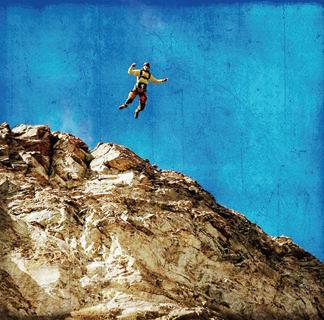
Wingsuit jumps from two perspectives Canmore, Alberta
KIMBERLEY’S Spence Bisley describes the moment before leaping from a cliff: “You’ve made all the necessary preparations. You’re confident you’ve done everything to mitigate the risks. Everything is heightened. In one moment, you push the fear down, right here, and turn it into energy,” he says smiling and calmly pointing to his chest.
“It’s glowing.”
Somewhere — deep within his being — is the faith that everything is going to be ok, that he’ll fall through the sky and, moments later, land safely on earth. And, so far, he’s been right. Since 1999, Bisley has made 1090 BASE jumps — an acronym that stands for four categories of fixed objects from which one can jump: Buildings, Antenna, Spans (bridges) and Earth (cliffs).
When I first contacted Bisley — an ICU/ER respiratory therapist and paramedic, who recently relocated with his wife, Sarah, and their three-year-old daughter, Maddy, to Kimberley — he was in Italy, leaping from the top of Monte Brento’s 1200-metre cliffs.
I wrote Bisley, “If the world was going to implode tomorrow, this is what I’d dream of doing.” But, like most of us, I’m reminded of the cautionary adage: “If we were meant to fly, then God would have given us wings.” I’m too scared of taunting death, which eagerly awaits us. So, instead, awake or asleep, I dream of flying, of sprinting along a country road awkwardly flapping my arms. Think wild turkey, ostrich, dodo bird. But, eventually, I get there, hovering above the ground, and with the faith required of miracles, soon I’m soaring above foreign streets, fragrant with the scent of meat cooking on coals. Sometimes, I’m just below clouds, windlessly quiet, smiling as I soar effortlessly. When I wake, I’m wistful, more mortal than just moments ago. Less ethereal. Less godlike.
But the man sitting across from me, quietly sipping a beer on a Platzl deck, doesn’t believe in these earthly constraints. His limbs are hollow bones. He doesn’t just dream of flying: Bisley’s one of 30 Canadian BASE jumpers who wingsuit soar through the sky, among birds and clouds and gusts of winds, until they pull their chute and float safely towards the ground. He’s made over 300 wingsuit flights around the world.
I’M CURIOUS and envious of Bisley, a man who’s never had to feel what it’s like to wake from a dream. He knows what it’s like to fly, to arch his back or drop an arm to guide his flight, to avoid a granite cliff, just 30 metres from his right.
Bisley, humble and soft-spoken, smiles when explaining his approach to what most of us dread and fear. He says it’s all about fear management and since having a daughter, his tolerance for risk has decreased significantly. But, it’s not something he feels that he can ever completely quit. “I just love to fly,” Bisley says. “It’s part of me.” As a third-generation pilot, flying is in his DNA.
At 22-years old, sick from Crohn's Disease, he thought I refuse to live like this. So, he decided to learn how to skydive.
Eventually, he he progressed to a level where he could solo freefall, and twelve seconds after leaping from the plane reach terminal velocity, falling to earth at 200 km/hr. It was an experience of total freedom from fear. “The first few times, I went from a state of ‘Shit. I’m going to die’ to this hyper-aware state of calm.” He describes the zen-like state he found, where the sky and mountains became his church. Over the next twelve years, he made 350 skydives and although he loved it, skydiving still felt controlled, requiring a licence, payment and a litany of rules to follow. In 1999, he travelled to Auburn, CA, to learn BASE jumping. Still illegal at the time, he did four moonlit jumps to avoid detection. “With BASE jumping, I felt like I had more control,” he says. “It had an edge to it. I felt like a bandit in the dark, navigating the way with flashlights.”
FOLLOWING that training, he returned to Alberta with a jump in mind: Mount Yamnuska, a 2240-metre wall of stone, the last mountain on the north side of the Bow River Valley. “There was no one around to mentor me,” he says. “I was told, ‘Just don’t jump in the wind.’ It was
Following that jump, any object above ground became his base: bridges, silos, cranes, mountains, and antennas. At 2 am, he’d leap from cranes and office towers still under construction. He performed at Evel Knievel Days in Butte, Montana, leaping from a crane, while an audience
The first few times, I went from a state of ‘Shit. I’m going to die’ to this hyper-aware state of calm.''
the old days when we’d drop rocks and count to determine if we could jump it. We felt like gunslingers.” It was the first BASE jump made in the Canadian Rockies. After leaping, he freefalled for one second, then threw his pilot chute, triggering the release of his main chute. Two minutes later, he was safely on the ground.
watched eagerly from below. He and his thrill-seeking friends would travel the world in search of new BASE adventures.
In 2008, while BASE jumping in northern Arizona, Bisley met wingsuit pioneers Dean Potter, Shane McConkey, and JT Holmes, who used wingsuits —
TOP LEFT: First BASE jump ever made in the Canadian Rockies | @dave.lundquist | 1999
TOP RIGHT: 132' Grain elevator BASE jump | @dave.lundquist | 2001
BOTTOM: Parachute opening after wingsuit jump in Canmore, Alberta | 2015
webbed-sleeved jumpsuits that fill with air to create lift upon jump and form a wing to create flight — to double their freefalling time. Now, they no longer had to descend vertically; instead, they could fly away from the rock face.
Having previously wingsuit flown from airplanes, this seemed like a natural progression for Bisley. “There wasn’t much to wingsuits back then. Flying wasn’t very efficient,” he says, describing the original materials that let wingsuit pilots fly two feet for every foot they fell. Eventually, he was BASE jump wingsuit flying, reaching speeds of up to 160 km/hr for 30-60 seconds before pulling his chute.
In 2018, Bisley and a friend were the second and third to wingsuit BASE jump from Mount Bryce (3507 m), the biggest wingsuit flight base in North America. As they crouched and pushed straight out from a 2400-metre ledge, they plummeted along the face, until their acceleration allowed their wing cells to inflate and become pressurized, resembling the shape of an airplane wing. Bisley smiles as he describes the process. “At that point,” he closes his eyes and smiles, “it’s fun time. I’m flying. That’s when your body relaxes.” Bisley flew for just over two minutes before reaching 150 metres above ground and pulling his chute.
As we finish our beer, I’m still obsessing over what Bisley’s accomplished and the risks of, arguably, one of the world’s most dangerous sports. I ask Bisley, “Aren’t you afraid of dying?”
Bisley smiles and says his approach is, “a combination of solid training, good equipment, and the right conditions. It’s never reckless.” He explains the physics of flight, how gear is constantly improving, and how fastidious he is when packing his chute. “Yet, still there’s an element of risk,” he says. “We’d be careless to assume otherwise.” Despite how cautious Bisley is, he’s broken bones and kneecaps. He’s lost twelve close friends. Now settled in Kimberley with his family, Bisley is much more cautious than in his younger days. Although he's drastically reduced his jumps and flights, he still can never imagine quitting the sport of flying. It’s too much a part of him.
We’ve
Come a Long Way
Franz Reichelt (1878-1912), The First Parachute Wingsuit
AUSTRIAN-BORN French tailor, inventor, and parachuting pioneer, Franz Reichelt (The Flying Tailor), leapt from the Eiffel Tower while testing a wearable parachute of his own design.
Reichel was obsessed with developing a suit for aviators that would allow them to survive should they be forced to leave their aircraft mid-air. His initial experiments conducted with dummies dropped from the fifth floor of his apartment building had been successful.
On Sunday, February 4, 1912, at 7:00 am, he arrived at the Eiffel Tower, already wearing his parachute. The weather was cold and there was a cool breeze blowing across the Champ de Mars. As he climbed the stairs he paused, turned to the crowd, raised his hand, and wished them a cheery "À bientôt" (See you soon).
After making adjustments to his apparatus and checking the wind by throwing a piece of paper taken from a small book, he placed one foot on the guardrail, 57 metres above the ground, hesitated for about 40 seconds, then leapt outwards, smiling. Reichelt’s parachute failed to fully deploy and he fell for a few seconds before plummeting to his death.
PHOTO: PUBLIC DOMAIN IMAGE
One of them smiled at me and my barely post-adolescent hormones began a-sloshing all of their own.
Lakit Lookout: A Love Story
W&P: Dan Mills
When I caught up to my hiking companion Nick, he was still sloshing a bit. It was the fall of 1978 and we were on our way to spend our first overnight in the newly refurbished Lakit lookout. Being the prepared teenagers that we were and being aware there would be no water on the top of the mountain, we brought in our own. Eighteen, heavy liters of the stuff to be exact, which in retrospect, may have been a bit excessive. However, we were young, excessive, and since Nick was carrying it all, not really a personal concern.
While we caught our breath and waited for the sloshing to subside, a group of hikers, hurrying down from the lookout in the evening light, met up with us on the trail.
I recognized Peter Warland and his wife Jimmy, who had been teachers at schools we had attended. With them was their lovely daughter Jill and two other attractive, young ladies whose identities were a mystery to both Nick and me. One of them smiled at me and my barely post-adolescent hormones began a-sloshing all of their own.
After exchanging pleasantries, they continued down the mountain and we resumed our climb, wondering what other magic — besides mysterious angels descending from on high — this Lakit Lookout place might have in store. Turns out, this hut on a hill was just getting warmed up.
as seen from lookout
Originally called Wildhorse Lookout and established by the B.C. Forest Service in 1955, its amazing, panoramic views of the Rocky Mountain Trench and Wildhorse drainage allowed for excellent early fire detection. Initially, the lookout attendant stayed in a cabin at the end of the rough but drivable road and climbed up to put in his shift every day of the fire season. By 1967, with the increased use of aircraft for fire spotting and other, strategically placed lookouts on Baker and Moyie mountains, Wildhorse (Lakit), was deemed redundant and left unstaffed and unmaintained.
Enter local outdoor legend, Denny Kerr, who, in July of 1974, was exploring on Lakit mountain and stumbled upon the abandoned lookout. Now in total disrepair — broken windows, peeling paint, and rat infested — it was not exactly love at first sight, However, after returning and witnessing a few sunrises and sunsets, Denny’s relationship with the hut began to warm up. With a little love and a lot of elbow grease, he realized this place had possibilities.
However, like so many romance stories, unforeseen circumstances occur and suddenly the love of your life is lost. Perhaps, when the Forest Service caught wind of their abandoned lookout being frequented by hikers and backpackers, they became concerned about the possibility of injuries and the liability that might bring. Regardless, a crew was dispatched in the fall of 1976 and the lookout dismantled and moved off the mountain. And with it went Denny’s stove, Kelly’s artwork, a lot of hard work, and a little piece of many people’s hearts.
Again, it was Denny Kerr who did much of the work painting, insulating, building, and installing a smaller, more efficient wood stove and even constructing a state-of-the-art outhouse.
Denny bought a small, airtight stove and hauled it up on his back and began refurbishing the lookout. In January of 1976 he and Tom Roberts did an overnight winter trip and there amidst the cornices and snow ghosts, fell utterly in love with the place.
Then, serendipitously, Denny returned with his hiking buddy Kelly Pearce, and together they spent a week there, exploring, watching sunrises, and doing more renovation. Both Kelly and Den were members of an outdoor club called Kootenay Nordic, which was thriving at the time. Initially a cross country ski club but eventually, the organization morphed into a year-round entity. This would prove important later as Kelly’s parents and their friends were on the executive board of the club and like Denny, could see the potential of having a hut on a mountain top.
When Kelly’s mom, Bernie Pearce, learned of what the Forest Service had done, she was incredulous. She and another member of Kootenay Nordic, Brenda Maudie, contacted the ranger responsible but were curtly told it was none of their, nor Kootenay Nordic’s concern. Then something if not magical, certainly fortuitous happened.
A short time after being rebuffed by the local Forest Service, it was learned that Tom Waterland, the then Minister of Forests, was going to be in Cranbrook to meet with a local forest company. Bernie Pearce and Brenda Maudie quickly put together a brief about their beloved Lakit lookout and asked to be given the opportunity to present it to the minister. He agreed.
Denny Kerr, winter expedition
Kelly Pearce, circa 1976 Winter cornice
After reading their passionate treatise, he told them that as a child he had his own memories of a mountain-top cabin. Wheth er it was his sentimentality or the opportunity to partner with a non-profit for some valuable positive spin, Waterland promised, “You will have your lookout back by next summer.”
The man was as good as his word. A replica of the original hut was indeed in place by the next hiking season, and Kootenay Nordic struck up the Lakit Renewal Committee, to maintain their treasured lookout that had miraculously risen like the Phoenix.
Again, it was Denny Kerr who did much of the work painting, insulating, building, and installing a smaller, more efficient wood stove and even constructing a state-of-the-art outhouse. In total, Den has now made a total of 675 trips to Lakit Lookout, these all crammed in between his many other outdoor adventures.
Like many well-meaning organizations, Kootenay Nordic is no more, but they and Denny Kerr have left behind an incredible legacy with an outstanding view. A quick perusal of the logbooks in the hut reveals that visitors from all over the world have driven up the still rough and narrow access road and hiked the steep two-kilometer trail to the top.
For we locals, the Lakit Lookout trail was often the hike we took visitors on because of its relatively close proximity to town and its high panorama-to-effort-expended ratio. For many of our children, it was the first mountain they ever climbed. An accom plishment like that leaves a mark on a wee soul. For my own son, Sean, it did so literally, as the image of the three-year-old him riding up in Dad’s backpack, is now tattooed on his arm.
If you ever visit Lakit Lookout, find the logbook and go back to 1978. There you will find the log entry of one of those mysterious girls we met that evening so long ago. It is right there above mine. Her first name is Lorrie and her last name — at least for some 40-odd years now — is the same as my own.
Postscript
A reconnaissance to the lookout late this last August found the access road rougher than ever. If you plan to visit, please take a high-clearance vehicle with good, all-terrain tires. Have an adventure, not a misadventure.
Denny Kerr with new
New paint job thanks to Denny
Sean and Dad, stove installed in lookout first trip together up Lakit
Fine homebuilding. Fine woodworking.
At Eisenhauer Woodworks we believe in leaving the human fingerprint on everything that we build. Whether that’s custom homes, or unique furniture pieces. We focus on engaging the principle of quality into everything we do.
Now booking projects in the Kimberley and Cranbrook areas for Spring 2023.
Yodel: a form of singing which involves repeated and rapid changes of pitch between the low-pitch chest register and the high-pitch head register or falsetto. 1939 2021
W: Jeff Pew P: Provided by Erika Unterberger
Erika Unterberger, 70, sits at a table on her sunny back deck atop the Yodelling Woodcarver shop, Kimberley’s arts and craft store she and her husband, Adi, ran for more than 40 years. Surrounded by tomato plants and marigolds, she sips lemon water, looks toward the sky, and sighs. Beside her are her life’s memories. She pulls a Canadian Geographic from a pile. “See,” she says pointing to an article. “He made it into Canadian Geographic. Who would ever have thought?” She holds up an album of Adi’s greatest hits,
In one colour-saturated postcard from the ‘80s, Adi stands beneath a 22-foot-high hut, where, for forty years, he’s been the recorded voice of Happy Hans — the Platzl’s lederhosened, beer-hoisting yodeller leaping from the world’s largest cuckoo clock.
The Yodelling Woodcarver, Springtime in the Rockies. On the cover, Adi, in lederhosen, serenades Erika, his foot on a tree stump, an accordion at his chest, and Erika gazing lovingly from a log cabin window in the foreground of the Rocky Mountains. They’ve sold thousands of this album throughout the years, with customers nostalgic for Adi’s alpine dreams and fairy tales.
In a scrapbook, she points to pictures of Adi yodelling and playing the accordion. In one shot, a crowd of smiling tourists surrounds him as he plays “Edelweiss” on Austrian cowbells. There are newspaper articles from China, letters of appreciation from the Austrian Olympic Committee, and international media clippings celebrating Adi. In one colour-saturated postcard from the ‘80s, Adi stands beneath a 22-foot-high hut, where, for forty years, he’s been the recorded voice of Happy Hans — the Platzl’s lederhosened, beer-hoisting yodeller leaping from the world’s largest cuckoo clock.
Erika tears up and pauses when she describes her life without Adi. “It’s like half of me is gone,” she says.
Born in Innsbruck, Austria (1939), Adi immigrated to Canada as a young adult. He ran the Cassiar, BC ski school then became a plumber for the Vancouver School Board. At 27, Adi discovered his artistic and musical talent, learning to carve, sing, and play guitar and accordion. Upon hearing a yodeller at a party, Adi told friends, “I would do anything to yodel like him.” After countless hours listening to a classic yodelling album, he developed his voice and formed the Tyrolean Mountain Boys, who went on to tour Canada and performed at Kimberley’s JulyFest, the city he would eventually call home.
In 1978, while touring in Edmonton, Adi walked into a restaurant kitchen where he met Erika, a young German chef. In typical Adi fashion, he spread his arms and began yodelling. Four years later, they married and moved to Kimberley — what was the Bavarian City of the Rockies — where his famous yodel was already the cherished voice of the Happy Hans cuckoo clock.
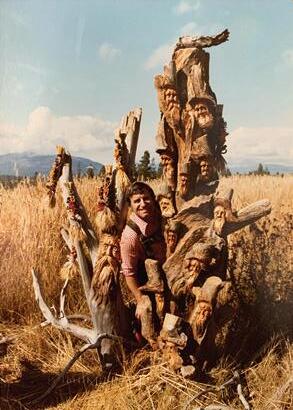
Springtime in the Rockies album cover Adi and his woodcarvings, 1984
Adi, Erika, & their three children: Franz, Christina, & Andreas, 1993
Kimberley, Bavarian city of the B.C. Rockies promotion, 1984
Left to right: Emily Smith & Carol Fergus (First Saturdays, Co-Chairs), Darryl Oakley (Kimberley City Council), & Erika Unterberger honouring Adi at Oktoberfest celebrations
He and Erika ran the successful Yodelling Woodcarver shop, where he sold his famous carvings and yodelled for tourists. He performed at Vancouver’s Expo ‘86 and for the Austrian Olympic Committee at the 2010 Winter Games. In Kimberley, Adi founded the Alpine Folk Dance Festival which featured traditional dance, song, yodelling, and alpine horns. When Adi performed across North America, he passionately promoted Kimberley wherever he went.
When he passed away in 2021, Kimberley lost an integral piece of the city’s history. To recognize Adi’s civic contributions, Kimberley’s First Saturday committee approached Mayor McCormick and the City of Kimberley to create an Adi Unterberger commemorative panel. The following year, hundreds gathered in the Platzl for Oktoberfest and the unveiling of the project. They paid tribute to Adi through music, food, and speeches. In addition, Kimberley Chamber of Commerce President, Matt Lamb, announced the “Cuckoo Clock Restoration Project” which will restore the iconic structure to its original Bavarian glory. As the festivities concluded, a lone alpenhorn echoed throughout the Platzl. Erika stood beside the stage, smiling at the audience, then gazing wistfully towards the ground.
Every morning, five days a week, she still walks downstairs and opens the Yodelling Woodcarver. “I can’t sell it yet,” she says. “When I look around, he’s everywhere.”
Photo: Jeff Pew
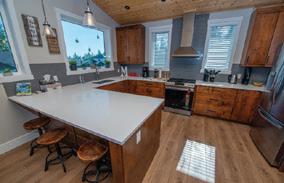
This beautiful Trickle Ridge home is a great deal for anyone looking for a spacious home close to all the amenities that Kimberley has to offer. Situated just steps away from the Trickle Creek Golf Course, this home features a ground floor family room, bedroom, bath, and laundry. The second floor has vaulted ceilings and an open concept kitchen with stainless appliances and quartz countertops. From the front deck you have a great view of the sunrise over the mountains. The master ensuite includes a beautiful large tile shower. There are two more bedrooms on this floor. In the backyard you will find a hot tub, BBQ, and plenty a spacious deck to enjoy after a long day of hiking or skiing. This is a must see! Call today to book your viewing.
$899,000 4 3 MLS 2467006 2739 sqft
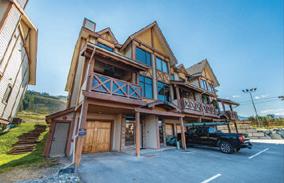
Wonderful condo backing onto the ski hill, ski from your back door! An incredible find, truly better than when it was built so many upgrades. Walk into the foyer and to the left is an amazing 40’ family/ bedroom with 2 pullouts for those extra guests and a full bath. Up to the living room, kitchen, and dining room with a deck, on the front for BBQing and a back deck, (newly enlarged) to sit in the sunshine and enjoy the sun going down. A half bath is here and a bedroom as well. Up to the large Master Bedroom, that has been partitioned to accommodate a family, with bunk beds for the kids. Views of the Rockies. Laundry is in the hallway. Additional bathroom with a new shower built with double shower heads. A walkway to another deck with newly refurbished hot tub an amazing place to sit and survey the entire hill. Close to miles of hiking and biking trails and just a two minute drive to a golf course. SULLIVAN STONE SULLIVAN STONE
HEALTHIER TOGETHER
W: Britt Bates
P: Nicole Leclair
A well-loved Cranbrook clinic is under new ownership — and offering collaborative and comprehensive care to community members.
WHAT BEGAN AS a sole physiotherapist following her dream of opening a treatment space almost twenty years ago has evolved into a flourishing, multidisciplinary clinic in downtown Cranbrook: the locally owned and loved Kootenay Therapy Center.
In 2005, Suzanne Thompson opened the doors to the clinic — one of the first multidisciplinary rehabilitation clinics of its kind in the region — in the Cranbrook RecPlex, now Western Financial Place. A team of caring and professional healthcare providers in the space offered services including physiotherapy, kinesiology, occupational therapy, and acupuncture — all of which are
still available today, along with the addition of Clinical Counselling.
Over the years, as more East Kootenay locals incorporated these services as integral parts of their holistic healthcare, the clinic grew. In December 2014, Thompson moved the clinic and became one of the first tenants at the Baker Street Professional Center. The move brought a big expansion: the clinic space doubled in size, and the 4,000-square-foot facility — where the clinic still is today — opened a large studio, which hosts community education classes as well as group classes such as yoga, Pilates, and adapted chair classes for seniors.
PAGE
ALL THE WHILE , Kootenay Therapy Center was driven by the same core values it was founded on, which include evidence-based practices, lifelong learning, professional development, and above all, client-focused care.
Now, eight years after that upgrade and expansion, Kootenay Therapy Center is going through another significant change as it enters a brand-new season: one with completely new ownership.
Thompson recently sold the clinic to Kari Loftsgard and Ryan Sleik, who are excitedly getting to know the team and envisioning a bright future for Kootenay Therapy Center.
Loftsgard and Sleik come to the clinic with extensive knowledge and experience and are no strangers to running a thriving interdisciplinary clinic. The two have been business partners for more than a decade: they opened Creekside Physiotherapy, located in Marysville, eleven years ago, and still co-own and operate it today.
Both Loftsgard and Sleik believe in the power and efficacy of interdisciplinary support and having a diverse and comprehensive team of practitioners contributing their expertise to a patient’s health.
Creekside, a well-established and well-respected clinic with a team of over twenty-five healthcare providers offering diverse services, will share a lot of its priorities with its new sister clinic, namely, the focus on practices informed by leading-edge science and contemporary research, and a commitment to collaborative and community-based healthcare that treats the patient as a whole. Both Loftsgard and Sleik believe in the power and efficacy of interdisciplinary support and having a diverse and compre-
hensive team of practitioners contributing their expertise to a patient’s health.
The vision the new owners hold for Kootenay Therapy Center is well supported by the clinic’s already well-established success and fantastic reputation. Over the years, it has received plenty of awards and accolades for its role in the community, such as the Community Futures Spirit of Entrepreneurship Small Business Award in 2008, the 2017 Chamber of Commerce Professional Services Excellence Award,
and multiple Best of Business awards in physiotherapy, acupuncture, and massage therapy. Not only that, but Thompson was voted a 2017 Finalist for the Kootenay Top 10 Women in Business and a 2018 Finalist for the Kootenay Top 10 Business People, and many staff have been presenters at various community events.
This is a clinic well loved by community members, and it’s easy to see why: a group of friendly and warm experts operate out of a modern and welcoming space, and care deeply about your holistic well-being. Whether you’re recovering from an injury, dealing with chronic pain, seeking support for your mental health, or simply want to improve your quality of life, the team at Kootenay Therapy Center, and its enthusiastic new owners, are here to help.
OPPOSITE
Left to right: Kari Loftsgard, Suzanne Thompson, Ryan Sleik.
PH: Morgan Turner SMALL
Snapshots:
Cranbrook Food Bank drives food security with efficient upgrades
For 15 years, the Cranbrook Food Bank’s trusty cargo van rolled through the town. The long-serving vehicle made countless grocery, supply and donation pickups, as well as food hamper deliveries for the bustling organization that supports over 2,000 residents with consistent access to healthy food.
A glimpse into the remarkable stories of people and places in the Columbia Basin.
While the faithful van was an integral part of operations, a variety of continuous challenges highlighted the need for a more efficient vehicle. That’s when the Cranbrook Food Bank reached out to the Trust for support in purchasing a new hybrid vehicle. In 2021, the Trust supported non-profit social services, food recovery and First Nation organizations to purchase a new EV or plug-in hybrid vehicle, as well as a charging station to help create clean transportation options for Basin residents. This was just the start of many upgrades that the Cranbrook Food Bank made in the past year. Read all about their improvements story online!
Durable by Design
Writing & Exercise Photos: Shenoa Runge
My six-year-old started diving off the dock last summer and for the first time in almost two decades, I found myself diving backwards and flipping into the water. I left the lake pretty proud of my rediscovered abilities and the cool mom points I must have scored with my little guy, but as we drove home from the lake, I started to feel a joint on the left side of my upper spine complain. As my neck and shoulder stiffened up, my husband suggested that I’m not exactly a spring chicken anymore.
I argued that it wasn't because of my age that diving backwards was an unwelcome activity for my spine. He giggled at what he saw as defensiveness about the realities of getting older, but it wasn’t my discomfort with getting older that was behind my argument. While there are certainly physiological changes that occur in our bodies as we age, many of the changes to our physical capacity come from changes in behaviour not biology.
My back rebelled at being thrown backwards repeatedly not because it was nearing 40 but because I stopped diving backwards long before that. So, after 15+ years of not doing anything remotely close to a back-flip, I went and threw down six or seven of them within a few minutes. It's no wonder things got a little perturbed.
Genetic Jackpot or Durable by Design?
I’m sure you’ve seen the videos of people doing amazing physical feats despite advancing age — the 82-year-old running half-marathons, the 90-year-old gymnast, or the 75-year-old deadlifting twice their body weight. Heck, we’ve got loads of examples right here in the Kootenays. Who doesn’t know an octogenarian who is still collecting their own firewood, hunting, skiing, hiking, or even rock climbing? Did they all hit the genetic jackpot? While there is certainly some luck and genetics that come into play, something quickly became clear to me long ago: These folks never seem to believe they are “too old.” They simply kept doing what they were doing. We stop being able to do the things that we stop doing. In other words, if you don't use it, you lose it.
Does Age Equal Loss?
For many of us, adulthood is a progressive journey away from the active play and varied activity of young life. For those who might have spent their twenties tree planting and ski bumming, careers and family life start to compete for time and energy. Advancement in our once-active occupations takes us from the field to the desk. Even if we are active as adults, we tend to move in more repetitive, predictable, and routine ways, so our bodies miss out on all sorts of positions, loads, speeds, reactions, and experiences over time.
It is movement and more specifically the forces we generate during movements that stimulate the cellular changes that build stronger muscles, adaptable tendons, resilient ligaments, and burly bones. It is the reaction to diverse and natural terrain with unpredictable obstacles and stimuli that builds and maintains our balance and reflexes.
We can look to astronauts to see why movement plus load is needed to maintain muscle mass, bone density, and even balance: despite 2+ hours of exercise and the most scientifically advanced nutrition possible, astronauts still lose up to 20% of their muscle mass during a space flight lasting only 5-11 days; 1-2% of bone mass is lost during flights lasting a month, and balance issues and vertigo are common aftereffects of space travel as the brain, vestibular (inner ear), and circulatory systems have to relearn how to move in a world with gravity. Even with gravity present, patients on bed rest can still lose 15% of their muscle mass in a week!
Without the stimulus of movement against external loads, our bodies simply degenerate at shockingly rapid rates.
“ The best time to plant a tree was twenty years ago. The second best time is now.”
The reality is our body builds tissues faster and easier in our youth (tissues equal bone, ligament, tendon, muscle, cartilage, etc). It is certainly easier to maintain a strong foundation than to try to build it up later, but the process of rebuilding and adapting is a physiological process that never stops.
The body you are currently living in will not be the same body a year from now. By that, I mean on a cellular and tissue level you will have new bits and pieces that make up the same old you.
You are, right now, shaping the future bits and pieces that make up your bones, joints, and muscles. The most powerful tool we have to influence these structures is movement.
We know that if we start reintroducing movement and forces to a previously underused part of our body, cells can be laid down as more dynamic and robust tissues. This doesn't happen quickly (which is why we can’t totally turn back time) or without ongoing commitment, but we are seeing evidence that we can not only maintain but improve the health of bones, tendons, muscles, and joints over time, and it’s never too late to start. The movements you are doing (or not doing) today are determining your movement possibilities tomorrow.
Steps to Start (or Restart) Safe Movement
1. Begin with baby steps.
Discuss changes in activity with your healthcare providers first. Start slowly and notice how you feel afterwards. Respect what your body is telling you and adjust as needed. Breathe when you move and avoid movements/positions that cause you to hold your breath.
2. Understand your relationship with gravity.
How do you hold yourself up in the world? When standing, where in your feet do you feel your weight? Do you lock your knees? Do you shift your weight to one side? Do you always cross your legs the same way when you sit?
Ideally, when standing, our centre of mass should align over the ankle joints with the rest of the major joints stacking on top. This allows for our skeleton and joints to be loaded in a way that supports a more balanced muscular response to the downward force of gravity while we move through life.
I’m not a big fan of cuing posture (e.g., “shoulders back and down” or “engage your core”) but starting to notice your own passive postural tendencies and trying to move towards a more centred and evenly distributed position (particularly during your exercise and harder physical work) will make the challenging stuff safer and more effective.
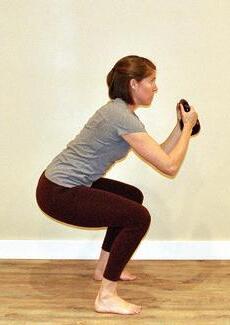
3. Start holding, carrying, and lifting heavy stuff. Work up to weights that feel pretty challenging but allow you to control your position and breathe.
Front Hold + March Farmer Carry
Stacked Goblet Squat
Slow Assisted Squat
Feeling a little apprehensive about weights?
Increase the challenge by slowing down or holding positions. Slowing down strength exercises (alternating a 3-6 seconds lift and 3-6 seconds lowering phase) is also a better way of targeting the tendons that attach muscles to bones.
4. Move your joints, each of them, often (but in a pain-free way).
Articular cartilage (the cartilage that lines our joints) does not have a direct blood supply. The only way that cartilage gets nourished and maintained over time is through movement. Take each joint through a little movement each day and practice being able to control a single joint on its own. Spend more time or do more reps moving the joints that feel limited or hard to control.
Continued...
4. Continued...
Avoid pain and pinch and don’t hold positions that create cramps for very long, but also don’t avoid moving into these positions altogether.
NOTE: CARs (Controlled Articular Rotations) are a great way to give your joints a little “motion lotion.” Visit moveonline.ascendmovement.ca for a free ‘Intro to CARs’ online course.
5. Walk more and in more ways.
• Embrace new terrain that is as natural, uneven, and complex as you can safely manage.
• Swing your arms when you walk.
• Embrace poles to help manage challenging terrain and enhance arm swing and associated torso movements.
• Step over, around, on top of, and under things.
• Add a prop, for example, try tapping a balloon or tossing or kicking a ball back and forth with a partner.
6. Move with others.
Find friends, family, or even a group program to move with. Moving with others provides more bang for your buck (i.e., gives you social connection, fun, variety, and safety).
The Kimberley Seniors Centre in partnership with Healthy Kimberley (with funding support from Columbia Basin Trust) is offering a group exercise program for seniors this fall. The Seniors Activity Program will be held on Tuesdays and Thursdays from 11:00-11:45 pm. For more information, contact activeliving@healthykimberley.com or call 250.427.6421.
A Career in the Kootenays
The time has come to pass on our beloved little magazine, GO Cranberley, and we’re on the hunt for the next person or group to carry the torch. Truthfully, we’ve been kicking around this difficult decision for well over a year, but the recent passing of our incredible leader, Karen, has finally pushed us to make it official.
GO Cranberley (and its earlier versions of GO Kimberley and GO Cranbrook) has become such an integral part of our community, something we’re consistently grateful for and overwhelmed by. Our team is endlessly touched to hear the stories of folks who have saved every issue, or who regularly mail them to friends and family in far away places. Four times per year, for a decade and a half, we’ve highlighted another handful of reasons to be incredibly proud of Kimberley and Cranbrook (without giving away too many of our secrets!). Internally, our loose ‘mission statement’ has always been “to make our community 10% happier.” After 74 issues, I think we can look back and say, “mission accomplished.”
Publishing this magazine offers an unparalleled opportunity to become part of the community. It comes with the ultimate flexible schedule, an incredible team of contributors, and a reputation that’s taken over 15 years to build. As a creative person, you’ll have the best outlet available, and you’ll get to support other artists along with you. As a business, the opportunity is unlimited; it really is the perfect foundation to build upon.
The honour, and frankly the responsibility, of curating these stories is never lost on us, and we’re determined to find the perfect person to take what we’ve built and carry the torch forward. Please reach out if you want to find out why this opportunity is as good as we say it is.
Cheers,
Grady
ACCEPTING NEW PATIENTS!
PROFESSIONAL DENTAL SERVICES FOR CHILDREN, ADULTS & SENIORS
Kimberley Family Dental is a dental practice serving clients of all ages from family-friendly dentists in Kimberley and surrounding areas of southeast British Columbia. We offer a full range of professional dental services to sustain your oral health and improve your smile, including routine care and restorative treatments such as crowns, bridges, and implants.
OUR SERVICES : GENERAL DENTISTRY
ORTHODONTICS
WISDOM TEETH
SEDATION DENTISTRY
DENTAL IMPLANTS
CROWNS AND BRIDGES
BOTOX®
DR. D. ERIC NELSON | DR. JORDAN ENNS | DR. SPENCER DUNN
SEPTEMBER
She Lives in the Mountains Group Art Exhibition
SEPTEMBER 30
Live@Studio64 WiL (Sold Out)
OCTOBER 26
Halloween Paint & Sip with Lori Joe
OCTOBER 29
Live@Studio64
Black Umfolosi
NOVEMBER 19
Live@Studio64
Mike Clarke Blues Band
NOVEMBER 22 - DECEMBER 23
“What did the Queen mean to you”? Open Art Exhibition
NOVEMBER 23
Christmas Ornament Origami with Steve Bondy
NOTE: The gallery will be CLOSED for maintenance October 25 – November 19
Fall Events
OCTOBER
OCT 4 – NOV 1 | Ceramics Foundations | Get Acquainted with the New Community Ceramics Studio | Kimberley Arts at Centre 64 | Tuesdays, 6:30-8:45 pm
OCT 12 – NOV 16 | Learn to Weave: Fiber Arts Guild Workshop | Kimberley Arts at Centre 64 | Wed. Evenings, 6-9 pm
OCT 14 –15, 20-23, 26-29 | Misery presented by Cranbrook Community Theatre | Directed by Trevor Lundy Produced by Michelle McCue | Stage Door Theatre | Cranbrook | Evenings, 7:30 pm & Matinee Oct 23 at 2 pm
OCT 15 | Golden Larch Hike at Kimberley Nature Park | Led by Struan Robertson | 9 am
OCT 15 | Spirit Rock Climbing Center Bouldering Competition for Youth & Adults | Kimberley Platzl | Youth at 2-4:30 pm & Adults at 6-8:30 pm
OCT 15 | Symphony of the Kootenays: The Three B’s | Key City Theatre | 7:30 pm
OCT 15, 22, 29 | Cranbrook Farmer’s Market | 10th Ave. S by Rotary Park 10 am - 1 pm
OCT 16, 23, 30 & NOV 6, 13, 20 In-depth Wheel Work | With Molly Bradford | Cranbrook Arts | 1401 Art Space | 2-5 pm
OCT 17 | Monster Mania — Create Your Own Monster Cup | Ages 12+ With Yvonne Vigne | Cranbrook Arts 1401 Art Space | 3:30-6:30 pm
OCT 18 | Rumours: Ultimate Fleetwood Mac Tribute Show | Key City Theatre | 7:30 pm
OCT 19 – 21 | Kootenay Outdoor Recreation Enterprise (KORE) Outdoor Rec-Tech Summit | Kimberley Alpine Resort Conference Centre
OCT 20 | Rockies Film Festival & Series: Peace by Chocolate | Key City Theatre | 7 pm
OCT 22 | The Washboard Union: Everbound | Key City Theatre | 7:30 pm
OCT 25 | Toddler Tuesday | Songs, Stories, & Crafts | Cranbrook History Centre | 10:30 am
OCT 25 | The Legendary Downchild Blues Band: The Longest 50th Anniversary Tour Ever | With Special Guest Miss Emily | Key City Theatre 7:30 pm
OCT 27 | Ktunaxa Business Showcase | Prestige Mountain Resort | Cranbrook | 7:30 am - 5 pm
OCT 26 | Halloween Paint & Sip with Lori Joe | Kimberley Arts at Centre 64 | 7:30 pm
OCT 27 | Spotlight Series: The Cave | Key City Theatre | 7:30 pm
OCT 28, NOV 4 & 25 | Intermediate Hand Build | With Colleen Routley Cranbrook Arts | 1401 Art Space 6-9 pm
OCT 28 | A Night of Bowie: The Definitive Bowie Experience | Key City Theatre | 7:30 pm
OCT 29 | Halloween Spooktacular | Fort Steele Heritage Town | 4 pm
OCT 29 | Spotlight Series: Classified — The Retrospected Tour (Hip Hop) Key City Theatre | 7:30 pm
OCT 29 | Black Umfolosi: Direct from Zimbabwe — Live@Studio64 Fall Concert Series | Presented by Overtime Beer Works | Kimberley Arts at Centre 64 | 8 pm
NOV 2 | Little Miss Higgins: The Fire Waltz | Key City Theatre | 7:30 pm
NOV 5 | Kimberley Horror Fest Kimberley Arts at Centre 64 | 7:30 pm
NOV 7 | An Intimate Evening with Tom Cochrane Live! | Key City Theatre 7:30 pm
NOV 11 | Spotlight Series: Ridge — Brendan McLeod and the Fugitives | Key City Theatre | 7:30 pm
NOV 12 | Murder Mystery Dinner — We Are Not Amused | Cranbrook History Centre | 7 pm
NOV 14 | Spotlight Series: A Celtic Family Christmas with Natalie Macmaster, Donnell Leahy, & Family | Key City Theatre | 7:30 pm
NOV 16 | Christmas Pop-up Art Market | The Laundromat Art Gallery Kimberley Platzl | 11 am
NOV 18 | Spotlight Series: Samantha Martin & Delta Sugar | Key City Theatre | 7:30 pm
NOV 19 | Mike Clark Blues Band — Live@Studio64 | Fall Concert Series Presented by Overtime Beer Works Kimberley Arts at Centre 64 | 8 pm
NOV 22 | Spotlight Series: The Barra MacNeils | Key City Theatre | 7:30 pm
NOV 26 | Christmas Craft Sale Kimberley Weavers & Spinners Guild Kimberley Arts at Centre 64 10 am - 4 pm
NOV 26-27 | Special Winter Farmer’s Market | Western Financial Place Cranbrook | Sat. 12-6 pm & Sun. 11 am – 3 pm
NOV 26 | Symphony of the Kootenays: Magic of the Nutcracker | Key City Theatre | 7:30 pm
DECEMBER
DEC 3 | Murder Mystery Dinner — We Are Not Amused — Encore Presentation | Cranbrook History Centre | 7 pm
DEC 16 | Opening Day (Pending Snow!) | Kimberley Alpine Resort
DEC 16 | Rockin’ Christmas with Pretty for the People & Friends | Key City Theatre | 7:30 pm
DEC 31 | Cabaret New Year’s Eve Gala | Key City Theatre | 7:30 pm
Our Commitment to Water Quality
Water treatment and monitoring activities have been important priorities at the Sullivan Mine for more than 40 years, and we are committed to continuing to implement innovative solutions for water management.
We have recently established the Sullivan Liaison Committee to share information about these and other important activities at the Sullivan and seek community input.