

Chip
Stand-up pouches
Packaging
Wiring, metal cords,
Clothing, textiles and shoes
Food
or compostable
Exclude batteries; medical sharps; bleach or aerosol containers with any contents remaining; compressed gas cylinders, for example used propane cylinders; containers for paint, motor oil, vehicle lubricants, or antifreeze; or containers for pesticides with the words DANGER, WARNING, or POISON, and precautionary octagon or diamond symbols with skull and cross bones.
FOR ADVERTISING, DISTRIBUTION,OR GENERAL INQUIRIES, PLEASE CONTACT: grady@kootenaymedia.ca
For article submissions, please contact: monica@kootenaymedia.ca
Reproduction, in whole, or in part, is strictly prohibited. No part of this magazine may be reproduced or duplicated without the written permission of the publisher. All rights reserved on entire contents. GO Cranberley Magazine makes every effort to ensure the accuracy of the information it publishes and is not responsible for any consequences arising from errors or omissions. The opinions expressed in the articles are those of the authors.
GO Cranberley Magazine is published four times per year and is printed in Canada.
GO Cranberley is published by: Kootenay Media Ltd.

MANAGING EDITOR
Karen Vold
CREATIVE DIRECTOR
Grady Pasiechnyk
SALES & DISTRIBUTION
Grady Pasiechnyk
ART DIRECTION & DESIGN
Ashley Dodd
COPY EDITING & SOCIAL MEDIA
Monica Karaba
CONTRIBUTORS
Ferdy Belland
Monica Karaba
Dan Mills
Jeff Pew Shenoa Runge
Sarah Stupar
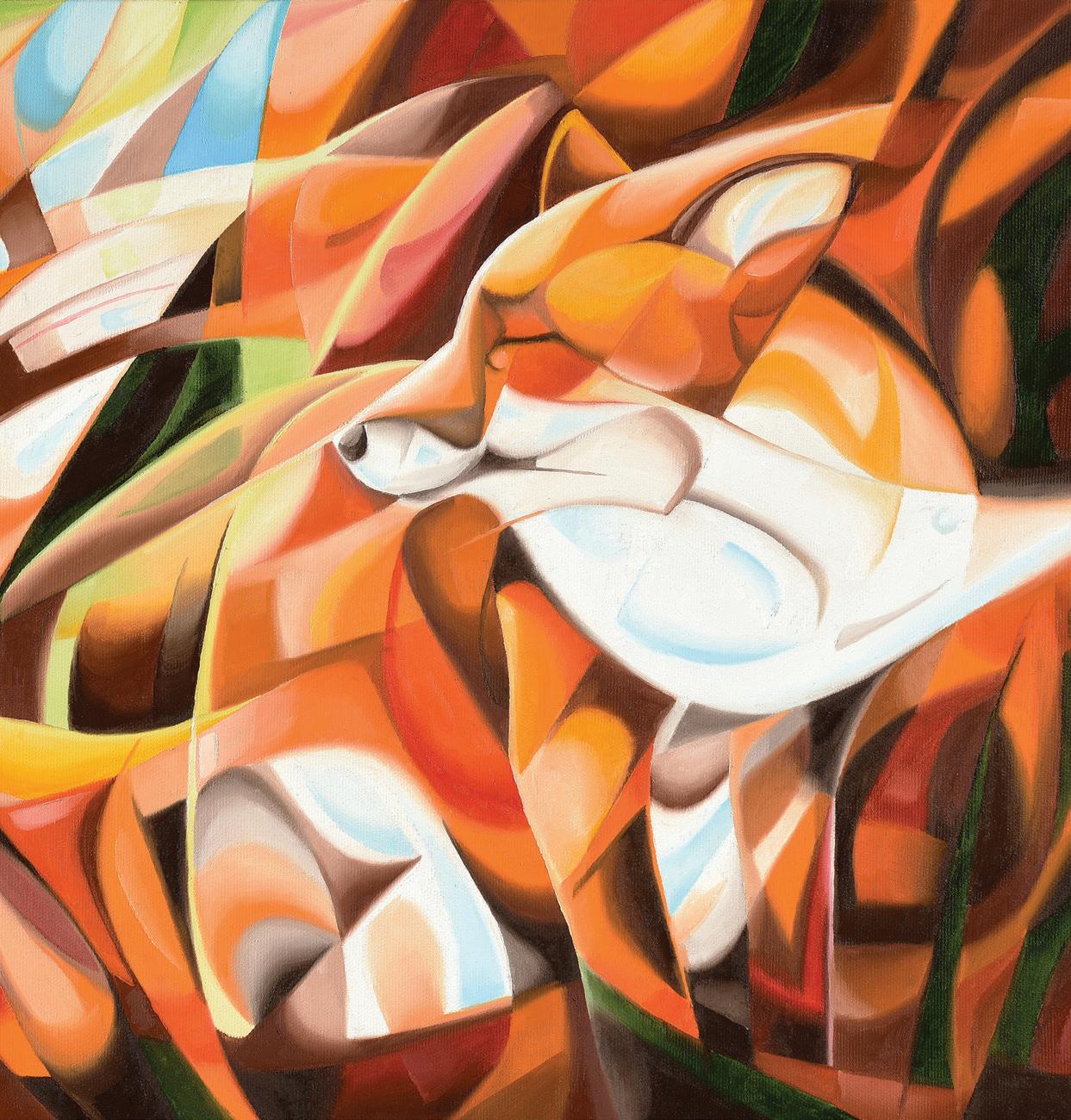
COVER SPRING 2022
Sam Millard
Fantastic Mr. Fox
14" x 18" / OIL / 2018
8 BACK IN THE SADDLE: The Cranbrook Pro Rodeo Stages a Comeback 15
LOCAL BOOK REVIEW: The Secret of My Hometown
18
LAWN ORDER: Special Futility Unit

22 WHEN WE DO WHAT WE LOVE TO DO: Clarence Uhll and the Jack Ratcliffe Commitment to Community Award 26 ART THAT ELEVATES
31 READY TO RIDE?






W: Sarah Stupar
P: Jenny Rae Bateman
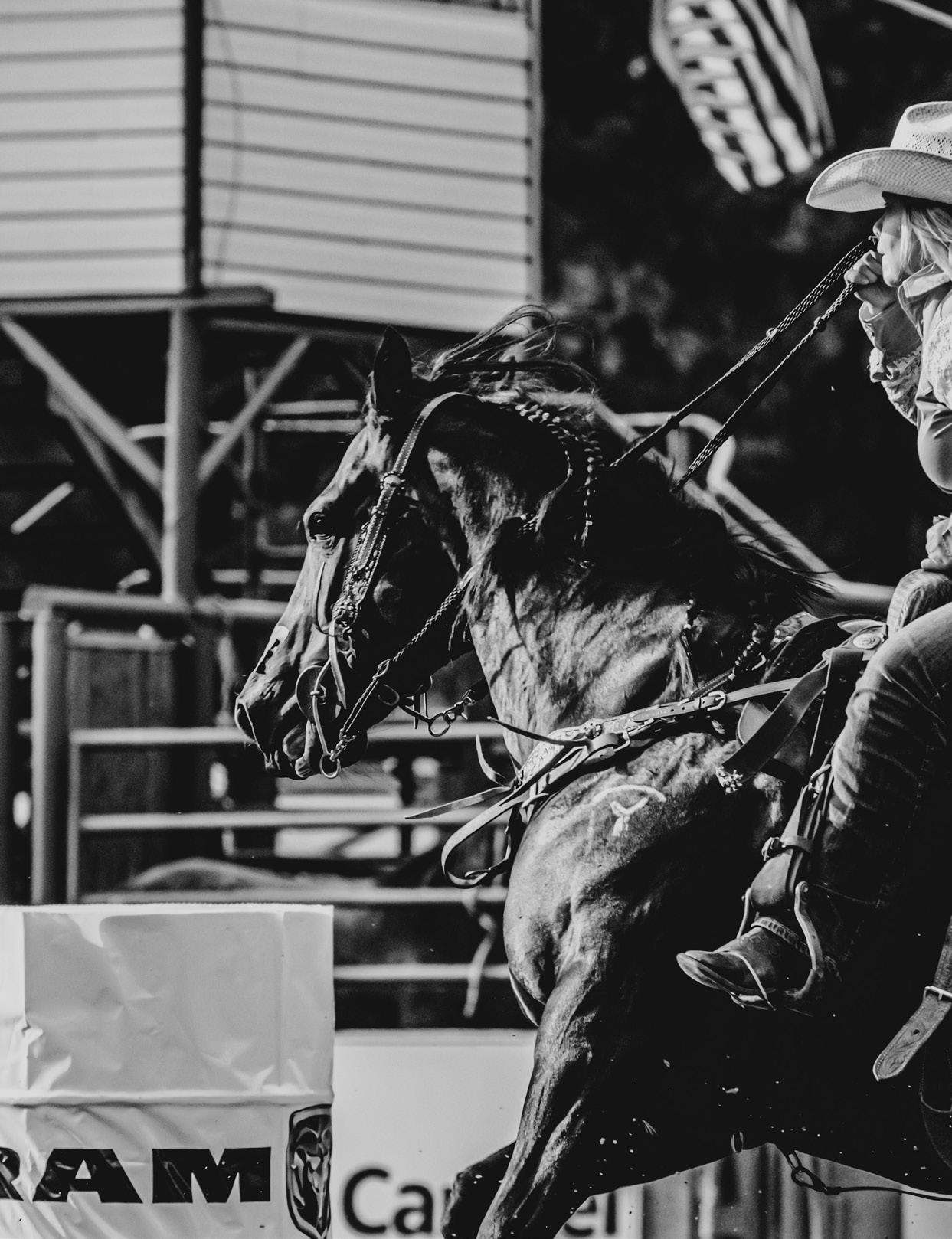
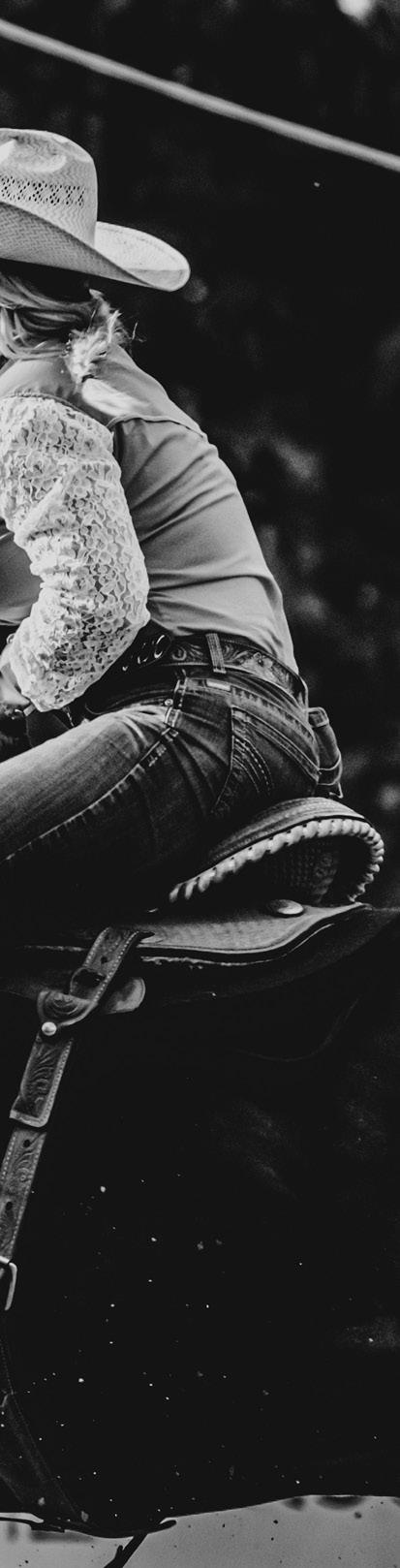
These past two years have proved challenging through all sectors. Doctors and nurses were the obvious front lines in the war against Covid, while grocery store workers found themselves perhaps unexpectedly catapulted to the front lines as well. But a certain “front” of our society disappeared almost completely: the one manned by performers, musicians, amateur and semi-pro athletes, and event planners. Covid ground these activities to a halt and sent event planners scrambling to figure out how, if at all, it would be possible to move events online. These same folks were also poised to spring into action at a moment’s notice when windows of opportunity opened again.
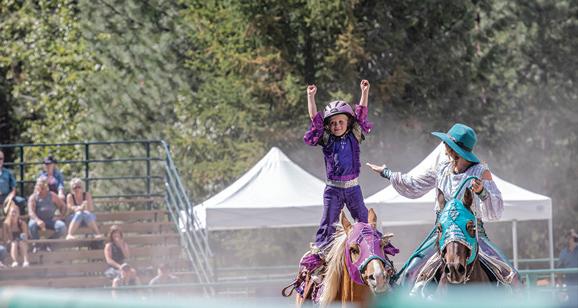
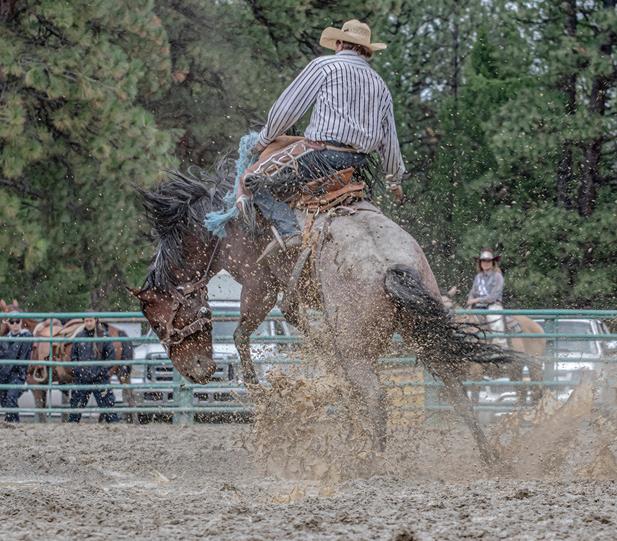
It was during one of those windows that the Annual Cranbrook Pro Rodeo was able to spring into action in its 34th iteration, after a one-year hiatus in 2020. The longevity of any event can encounter many obstacles even without the added challenges of a pandemic, so how was it that the Cranbrook Pro Rodeo weathered the storm, and perhaps came out even stronger on the other side?
Certainly, after one year of isolation, old and new rodeo fans alike jumped at the chance to get out and socialize, but it wasn’t just Covid fatigue that created such a successful event: it was a legacy of decades of hard work and planning. This year, that hard work and planning was recognized, as Cranbrook Pro Rodeo organizer Dallas Mackie was presented with a lifetime achievement award by the Canadian Pro Rodeo Association (CPRA). It’s not the first time that she has been honoured by the association either. In 2005, Mackie was named the CPRA’s Committee Person of the Year. Then, as now, Mackie was adamant in insisting that she was just one person among a large group that deserved the accolades for building such a successful event in Cranbrook. “It means a lot,” she told the crowd, “but it isn’t just for me; it’s for the whole committee.” It’s a regular occurrence with Mackie. If you want to speak to her about her achievements as an organizer in the rodeo world, the first thing she will do is try and spread the praise, downplay her own involvement, and invoke the names of others without whom the Rodeo could never have been successful.
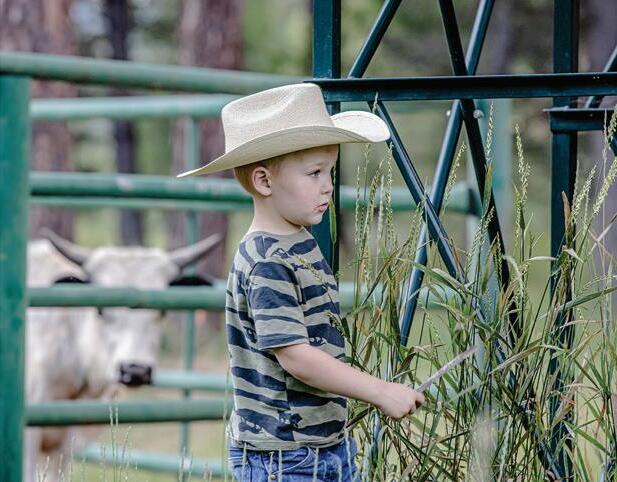
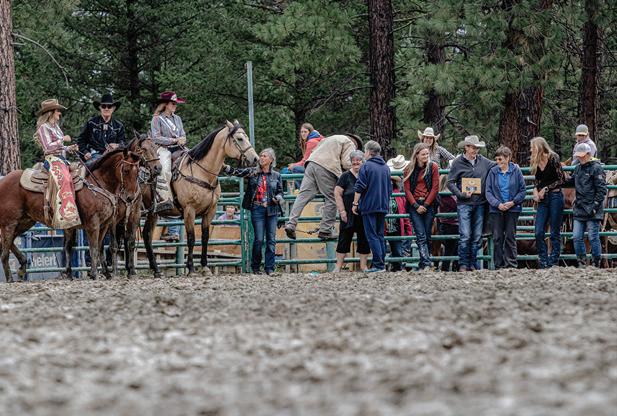
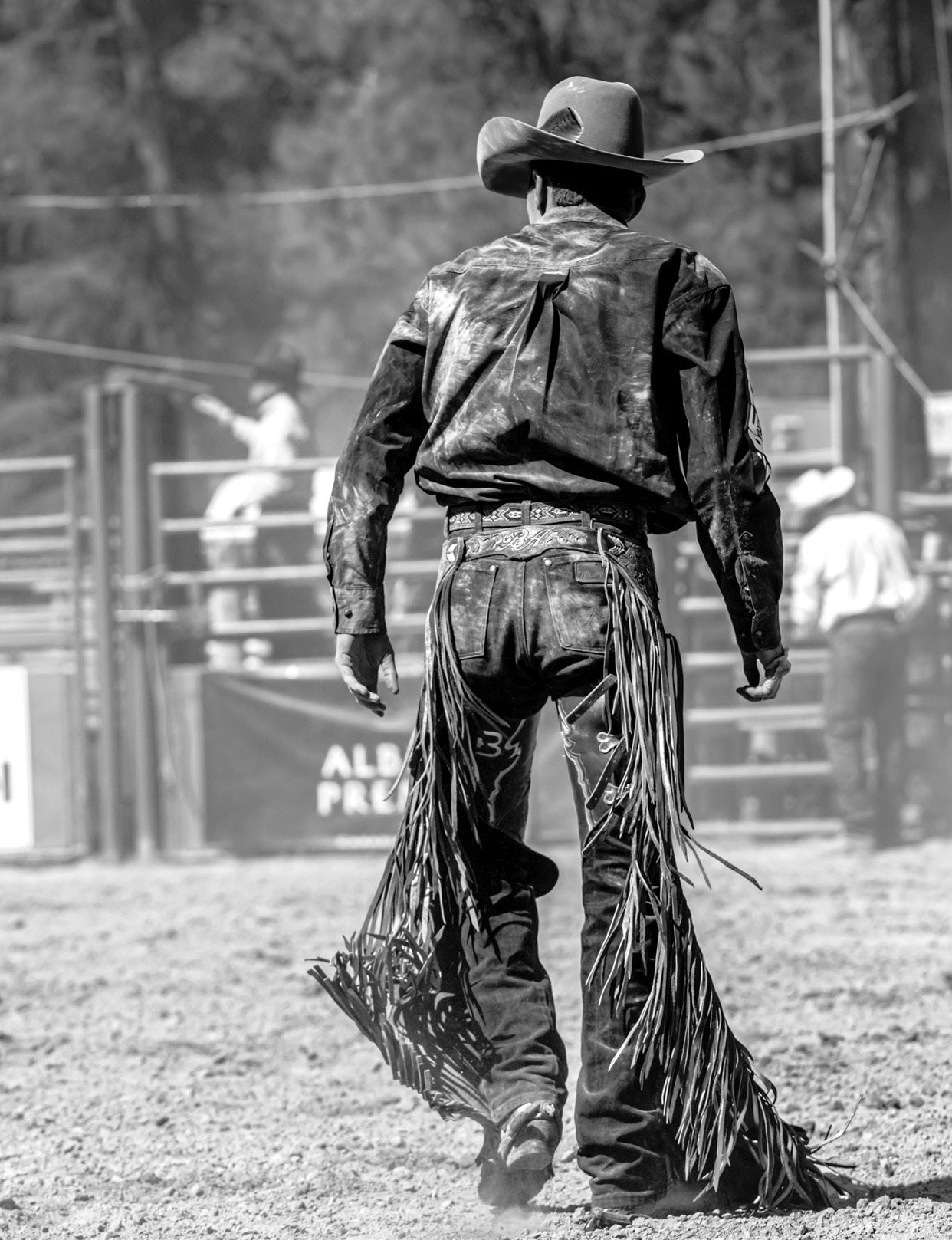
WHEN YOU TALK TO DALLAS ABOUT THE FOUNDING OF THE RODEO, IT’S CLEAR THAT THE TRICK TO PRODUCING A SUCCESSFUL RODEO, OR A SUCCESSFUL EVENT OF ANY KIND FOR THAT MATTER, IS ASSEMBLING THE RIGHT TEAM FOR THE JOB.
The origins of the Cranbrook Pro Rodeo stretch back to the 70s. When the Wycliffe facilities currently used for the rodeo were first built, it was a collaboration between around ten different clubs, groups like 4H, the Farmers Institute, a motorcycle club, and different kinds of “horse people” such as barrel racers, chuck wagons, and ropers. They formed the Wycliffe Exhibition Association (WEA) and each group appointed two representatives to attend meetings. These groups got together and asked the regional district for the use of the land, but after about fifteen years they faced a challenge: they had improved the land so much that they couldn’t afford the maintenance or insurance. In 1986, the WEA staged an amateur rodeo as a fundraiser, but it only managed to raise about $90. Mackie suggested a pro rodeo instead and the idea was widely panned, but WEA president Artha Campsall was onboard. Together, Mackie and Campsall recruited a few more like-minded women: Anna Mae Gartside, Marleen McMann, Corinne Storteboom, and Cheryl Olsen. According to Canadian Cowboy Country Magazine, they formed, quite possibly, the first all-women organizing committee of a rodeo. When you talk to Dallas about the
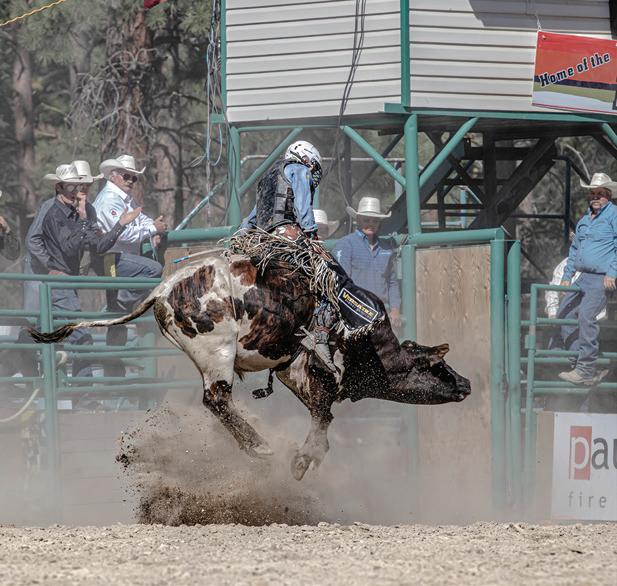
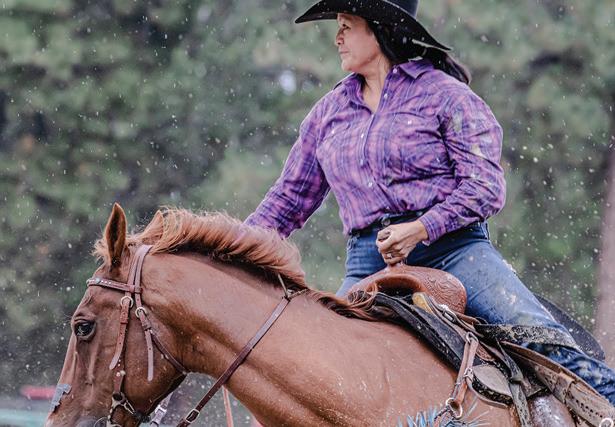
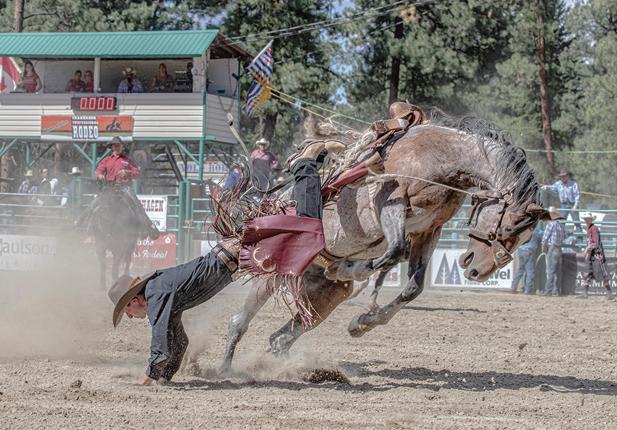
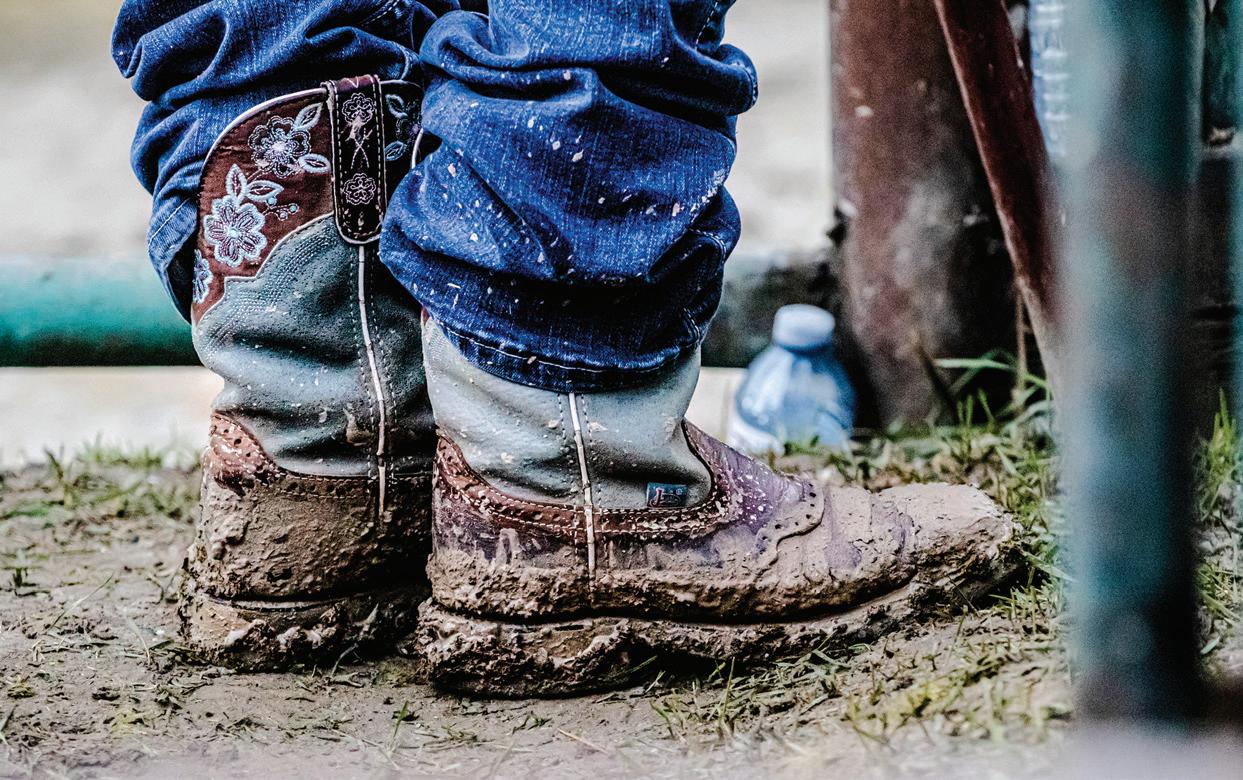
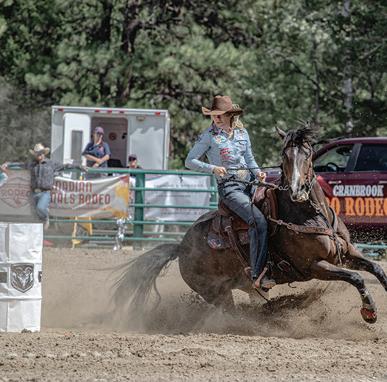
founding of the rodeo, it’s clear that the trick to producing a successful rodeo, or a successful event of any kind for that matter, is assembling the right team for the job. This means finding people with different skills and strengths that complement each other as a whole.
Of the utmost importance to Dallas? Get prepared! “You have to know what you’re doing! Do your research! When we women got together and said, ‘Let’s have a pro rodeo,’ we went to Calgary to attend the AGM of the CPRA and we asked what we had to have, and they told us, ‘You have to have somebody who knows about advertising, you have to have someone who knows about money, and so on.’”
The women weren’t just strictly drawing on their identities as “horse people.”
The women drew on their experiences as business owners and event planners, using their skills at networking, letter writing, and organization. Just knowing about horses wasn’t enough to throw a rodeo, the women had to consider things like parking
arrangements, managing ticket sales, and volunteer recruitment. They would divide the tasks among themselves, almost like informal department heads. “We all had our own little forte” recalls Mackie.
The committee has changed since the original days, with some members moving away or moving on to other volunteer groups, and even admitting two men, but the principles remain the same: “We all have our own little section to do and we do it, and we don’t try to tell the other people how to do theirs.” In December 2021, the Government of BC announced a new slate of one-time grants for event recovery and the Cranbrook Pro Rodeo was one of the recipients. “It’s a well-loved sport and there’s a lot of people making their living at it.” says Mackie. Thanks to the hard work of the Cranbrook Pro Rodeo organizing committee, it should continue to be an accessible sport here in the East Kootenays.
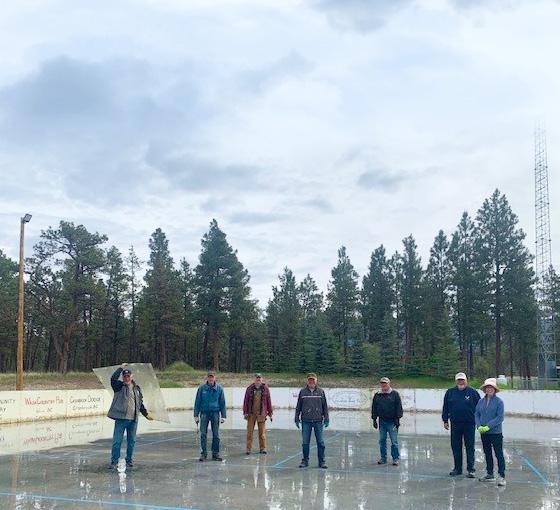
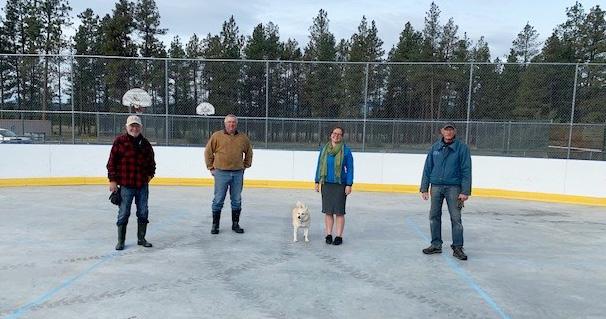
While lakeside Wasa is a summer destination, swelling from 300 residents in the winter months to approximately 1,000, the upgraded boarded rink is one of the few in the area.
“It's not quite NHL size, but it's a beautiful rink," says Wasa & District Lions Club (WDLC) President Terry Potter. "It's very nice to see the upgraded rink in action. I think we counted about 300 people there this winter on the ice for pickup games, team practices, or school and family skating outings — people enjoyed the improved LED lighting, fire pit for roasting marshmallows, and the comforts of the other park amenities too."

By Andrew Boden | Free Attic Press, 2021
Andrew Boden has recreated Cranbrook as a dazzling, cerebral-fantasy counterfactual crossroads of the past century-plus, and the stories are worth reading more than once.
LL TOWNS IMMENSE OR WEE HAVE THEIR OWN LEGENDS, myths, scandals, heroes, and villains. The older the town, the more colourful and convoluted the legends may warp. Cranbrook is as deserving of legends as any other city, and now, thanks to the amazing storytelling gifts of (former Cranbrook homeboy) Andrew Boden, our fair Key City has now been immortalized for literary posterity via his remarkable work, The Secret History of My Hometown
There’s a similar framework here to David Mitchell’s Cloud Atlas, with a collection of six interconnected short stories, each told from a first-person perspective — jumping from the 1890s to the 1980s from story to story, framing famous people and famous events with people who never existed and/or events which never happened, but it all feels so real. And (like Mitchell) early characters from previous stories reappear in the later ones, weaving the intrigue from tale to tale. Make no mistake: this is no pastiche. Andrew Boden has recreated Cranbrook as a dazzling, cerebral-fantasy counterfactual crossroads of the past century-plus, and the stories are worth reading more than once.
The anthology kicks off with “Mark Twain at the Edge of the World,” where the famed author of Tom Sawyer wanders through Fort Steele in the closing days of the 1890s to confer with a preternaturally-aware talking uber-fetus who refuses to be born: the haunting character of Charles Cunningham Jarvis continues the unnerving tradition of other compellingly-eldritch fictional children, such as Gunter Grass’ Oskar Matzerath and John Irving’s Owen Meany (or Damien Thorn from the Omen series).

“Hemingway and the Elephants” jumps ahead to the world-famous Elephant Stampede of 1926, and this time it’s as if Cormac McCarthy beat Charles Portis to the punch and wrote True Grit first. Feisty hunting guide Mary Lapointe, a crack shot with her father’s .303 Enfield, wielding a tongue sharper than her bowie knife, suffers no toxic-masculine fools. Even when it’s the obnoxiously macho demigod-writer Ernest Hemingway himself — seeking notoriety, publicity, and reward money for assisting in the confused search for the escaped pachyderms of the Sells-Floto Circus. Even when she’s heavy with the unwanted child of an absent father. Even when she holds her ground and demands her money for services rendered from a revered literary figure who’s revealed as a run-of-the-mill, deranged drunk with a gift for gab. You can almost smell the pine needles and the cordite and the whiskey (and the elephant dung) wafting off the pages.
You can almost smell the pine needles and the cordite and the whiskey (and the elephant dung) wafting off the pages.
“Letters to Trotsky” casts light on the radical-leftist pretensions of the Cranbrook Communist Party, all half-dozen members of it, boldly (if awkwardly) standing their ideological ground against the snooty, redneck-class elitism of the Depression-Era Kootenays — who then can’t decide whether to crap or go blind when on-the-run Bolshevik Revolutionary hero Leon Trotsky is tricked into believing that Cranbrook is the ideal haven for his exile. Renowned Cranbrook founding families like the Leasks and the Gilchrists find themselves at each other’s reactionary throats. Stalin’s agents crawl the town, along with suspicious butchers, contempt-engine society mavens, and the lonely adolescent-dreamer protagonist who seeks to shake off the Smalltown Blues before Lenin’s true heir gets any deeper into his mother’s bloomers. Hilarity ensues, for awhile.
“The Monkey King” starts on the eve of the Pearl Harbor attack, with the Empire of Japan now at war with the British Empire (and resultingly, at war with Canada). A beleaguered Chinese grocer and his family, already dealing with the slow-burning emotional agony of discrimination and racism flung from small minds in small towns, turn to the fading magic of the one and only Monkey King (who coin-
Andrew Boden
cidentally lives with them, to the oblivious unconcern of the grocer’s daily customers) to save their business and their property from government confiscation, and themselves from harsh internment in the gloomy camps of New Denver. Satan appears as a supporting character in the form of a black dog that transforms into a sleazy insurance salesman, which makes all the sense in the world.
“Everything Could Be Chet Baker Beautiful” takes place in early 1962, in the cheery New Frontier days before JFK was shot and before anybody had heard of the Beatles. This tale is told from the viewpoint of a young American jazz lover who dutifully follows his grimly determined, Mossad-wannabe girlfriend on the hunt to Cranbrook to apprehend an ex-SS officer, now a fugitive war criminal. The story then bounces over to said SS fugitive, who was ordered to the Kootenays by the Nazi High Command to find the ancient ancestor of the Aryans — the Sasquatch of Indigenous legend. Yes, you read that right.
The Secret History of My Hometown concludes with “Letters to Andropov.” Usually, when one thinks of post-apocalyptic tales told from the viewpoint of a telepathic dog (!), one thinks of gritty un-PC Harlan Ellison stories where Don Johnson starred in the un-PC movie version, but that’s not quite the case here: it’s 1983 and Ronald Reagan is casually calling the USSR the “Evil Empire,” with Cranbrook revealed as an imminent target for Soviet nuclear missile attack (which it truly was during the Cold War), and a distraught pair of mistreated siblings try in vain to convince the ailing Soviet premier not to reduce the Columbia Valley into black glass that glows in the dark. They also hurriedly construct a makeshift fallout shelter under the dimwitted nose of their besotted father, who later conspires with mutants and messiahs. And did we mention the telepathic dog? Akin to the original Richard Matheson story of I Am Legend, as squinted through the black-humor focus of Shaun of the Dead
All in all, The Secret History of My Hometown is truly one of the best works of fiction ever written by a local author. Six separate but interlocking chapters of a century-spanning story of a Cranbrook which never existed, but could have existed, and emotionally exists just under the dusty surface of the Strip, under the eternal shadow of Fisher Peak. Fans of alternative history, speculative fiction, regional history, and people who just plain like good stories will all enjoy Andrew Boden’s singular triumph here. This anthology deserves a much wider audience beyond the oftentimes-backwatered Canadian literary world, and if there’s any justice at all, this book will bask in the limelight like a well-received global Cinderella story, much like Emily St. John Mandel did with Station Eleven
We’ve learned a lot of things over the last two years, and if you’re anything like us, this vast mountain paradise that we call home has become more important than ever before. Warmer days mean endless outdoor possibilities and we’re not going to waste a second of it! Whether you need to stay warm, dry, fed, or maintained, we’ve have all the gear you need to be outside.
Located in Kimberley’s Downtown Platzl | 15-196 Spokane Street
W
& P: Dan Mills | I: Ashley Dodd
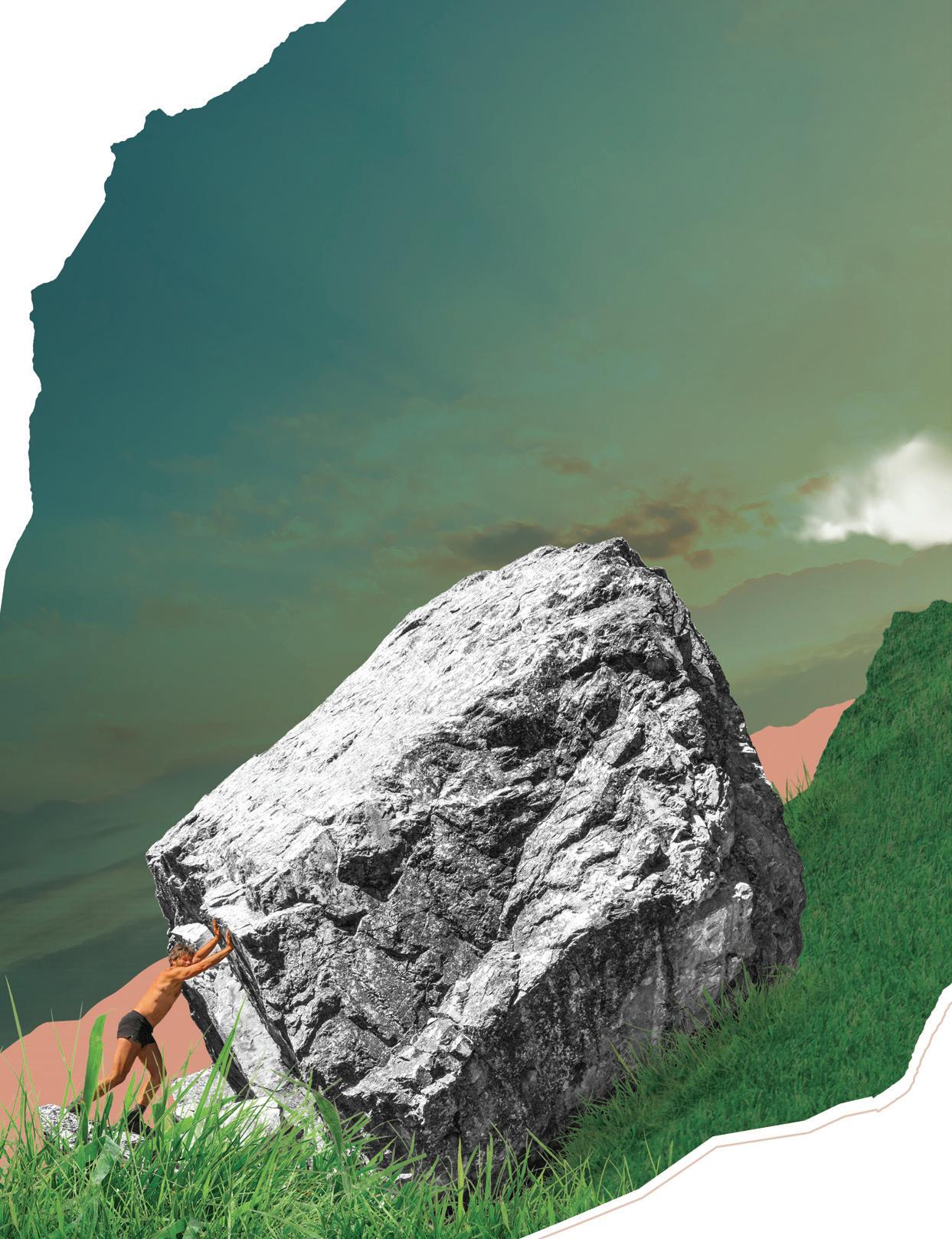
SISYPHUS WAS THE ORIGINAL KING OF ROCK AND ROLL: a tragic figure who, according to Greek mythology, was condemned by the gods to forever roll a huge boulder to the top of a mountain. However, each and every time the tormented soul nearly attained the summit, the rock would roll back to the bottom and he would be forced to once again take up his futile and hopeless labours. It had to suck to be Sisyphus.
“Because in the end, you won't remember the time you spent working in the office or mowing your lawn. Climb that damn mountain!” — Jack Kerouac
The gods were a creative lot to come up with such a devious punishment. What kind of heinous crime would one have to commit to warrant such condemnation? Sentenced to an eternity of performing a mundane and hopeless task that accomplishes nothing — forever.
As far as we know, Sisyphus might still be out there somewhere, bowling for dollars and never winning a cent. However, since misery loves company, it may be of some comfort to him that he is no longer alone. A good portion of modern society is also working away at tasks that are no less tragic in their hopelessness. What makes this even more absurd is that while our ancient hero toiled as penance for a grand indiscretion (tricking and cheating death not once but twice), we on the other hand, serve sentences that, for the most part, are self-imposed. Perhaps nowhere is our culture’s masochistic nature better demonstrated than in our bewildering quest for the perfect lawn.
The fetishization of closely shorn grass seems to have first begun in 17th century England on the estates of wealthy landowners. Pre lawnmower, only the rich could afford to hire the human labour needed to scythe, weed, and tend their grounds. This made having a lawn a mark of wealth, status, and needless to say, excess.
and the creation of a middle class. This newly formed group of upwardly mobile folks desperately wanted to demonstrate their newfound poshness and decided a patch of shortly trimmed grass out front would do just that.
Today, according to NASA, turf grass (lawn), is the largest cultivated crop grown in North America, surpassing corn, wheat, and fruit orchards combined. It is estimated that keeping our front yards green requires 50 to 70% of a residence’s water consumption. In the United States alone, tens of millions of pounds of chemical fertilizers and pest/herbicides are used on lawn care per annum. All this to produce a harvest of megatons of useless grass clippings. Sisyphus would have been proud.
It seems we have traded in our boulder for a lawnmower that we push slowly in circles forever. We toil behind — or sometimes ride on — these throbbing machines, shuffling like zombies in a nightmare of creeping conformity, all the while mumbling our mantra of, “I will keep up with the Joneses. I will keep up with the Joneses.” Our greatest fear being that we won’t meet the standards of the neighbourhood and the lawn police will descend at any moment. So, on hands and knees we attack the dandelions armed to the teeth with implements and poisons, desperate to keep the chaos of unwanted native and natural encroachment at bay.
Then, in the dying light of a summer evening, we step back from the now quiet Toro or Lawn-Boy and survey our perfectly manicured stretch of verdant, monocultural paradise. However, no sooner have we stowed the mower back in the shed, then it all begins again. Each blade of grass, already growing — the stone already rolling back down the hill.
If there is a purpose to this seemingly senseless obsession, it obviously stems from our false belief that conformity and social acceptance equals happiness. We may be growing grass but what we are really trying to cultivate here is status. Well, folks, for those of you who are so desperately trying to achieve the ideal lawn, I have some bad news for you. I have seen the perfect front yard, and it’s not yours.
Don’t believe me? Well, let me give you directions so you can see it for yourself. Firstly, find a back road that leads upward. Follow this rough mountain road until you can drive no further and park. Now on foot, try and find a trail or route that continues to ascend. Once you get to about 7,000 feet, (2,133.6 metres), you will have arrived at the correct address.
Today, according to NASA, turf grass (lawn), is the largest cultivated crop grown in North America, surpassing corn, wheat, and fruit orchards combined.
Continue to stroll along with both your eyes and heart open. Breaking through the thinning forest, you will come upon a glade with a small stream wandering back and forth through its lushness. Bright magenta monkey flowers grow thick along its banks, while the rest of the meadow is decorated with yellow avalanche lilies, white anemones and paintbrush fairly dripping with scarlet. The delicate texture of the scene is contrasted with the strength of stone. Huge gray boulders, either tumbled down from the surrounding peaks or left there by some long departed glacier, stand firm in the landscape. And they are not the only guardians here. In the soft earth near the stream, you will find the tracks of wolves and grizzly bears. Higher up on the rocky rim of this Eden-like basin you may spot mountain goats, elk, or mule deer, long after they have spotted you. Stock still on the skyline, they stand like ornaments. You won't find garden gnomes or lawn flamingos here, unless of course you have brought your own.
It is a humbling experience to wander this paradise. This natural world makes our own front lawns seem like some lifeless, green shag carpet from the seventies — tacky if not downright tasteless. All our toil is for naught, for we could no more capture the beauty of this landscape than we could build a rose. Confronted by nature's garden, our status as masters of the universe wilts like a just-poisoned dandelion.
In the end it may be this humility that saves us from ourselves. Accepting the futility of our struggle for lawn order means we can step out from behind the boulder — or at least the lawn mower — and smell the wildflowers. There is evidence that just perhaps, Sisyphus figured it out too. Remember that boulder in the meadow? I have a funny feeling it wasn’t left there by any glacier.
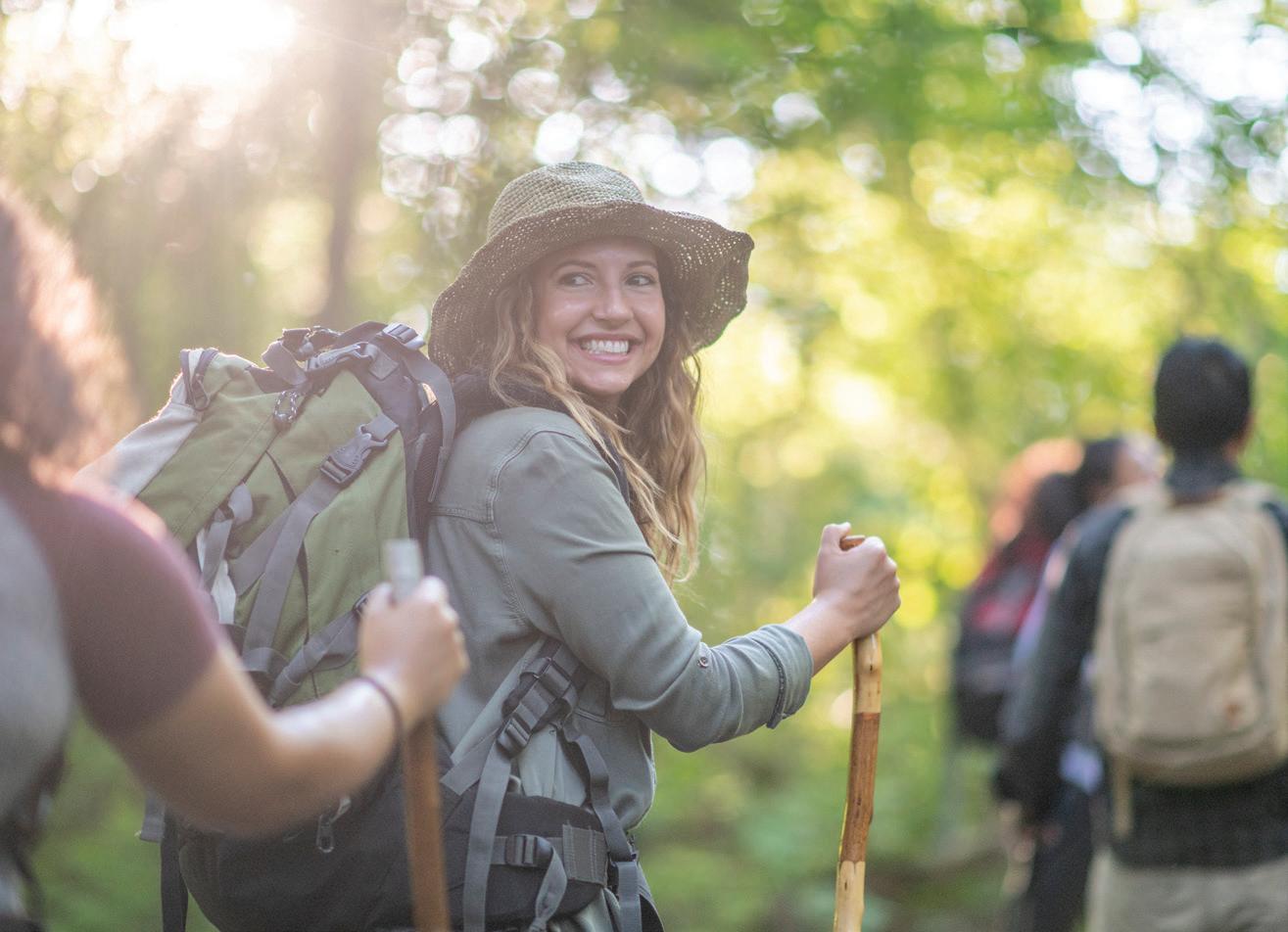
The Rocky Mountains have hosted many adventurers over the ages; people as interested in the journey as the destination. We take inspiration from those who came before, which is why our programs focus on a combination of academic and hands-on learning, providing real-world experiences that will expand your horizons and prepare you for future success in your field.
College of the Rockies. Let the adventure begin.
BACHELOR OF BUSINESS ADMINISTRATION
In Sustainable Business Practices
BUSINESS MANAGEMENT
Accounting | General Management | Marketing
TOURISM MANAGEMENT
RECREATION MANAGEMENT
ADVENTURE TOURISM BUSINESS OPERATIONS
HOSPITALITY MANAGEMENT
"It’s simply a matter of doing what you love doing," Uhll says.
That was a nice surprise,”
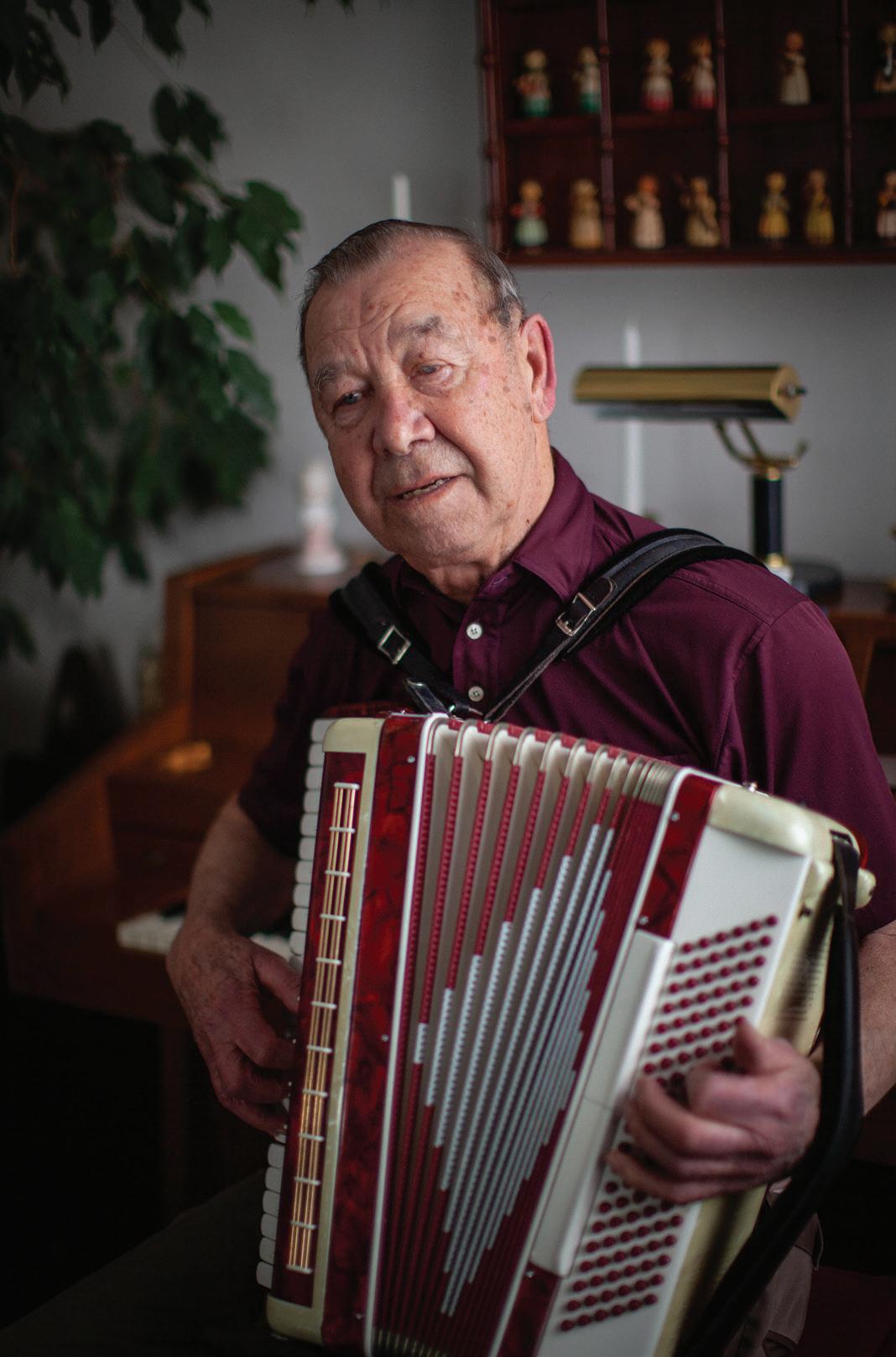
Kimberley’s Clarence Uhll, 84, says smiling and pointing to a plaque sitting on his coffee table. His award, the Jack Ratcliffe Commitment to Community Award, celebrates a Kimberley resident who’s made a significant impact on the community through volunteer work. “I felt really honoured by that,” Uhll says from his living room chair, surrounded by Hummel figurines, an organ, guitar, and the piano that his wife, Carole, used to play by his side.
Uhll, a self-taught musician and retired elementary school teacher, was recognized for the thousands of hours he’s volunteered over the past twenty years, playing accordion during the summer months at the Kimberley Underground Mining Railway Tour and the organ, year-round, for residents of The Pines, Kimberley’s special-care home.
“It’s simply a matter of doing what you love doing,” Uhll says. “Music’s always been a big part of my life.” Uhll grew up on a farm in Melville, Saskatchewan, surrounded by an array of instruments. “As a kid, my
W & P: Jeff Pew
brothers played guitar and my sister the old pump organ. I remember playing a one-octave, glass-tube xylophone,” he says. “Radio was all we had for entertainment, so we kept ourselves busy playing music.”
When Uhll was 10, his parents bought him a 120-key bass accordion. He had no idea how to play, but he’d study accordionists, see what they did, and go home and practice. “I never learned to study sheet music,” he says. “It was all by ear.” During high school, he taught himself to play the school piano. After teachers’ college and moving to Kimberley in 1963, he taught music and elementary school.
In 1992, after he retired from teaching at Marysville School, he returned for three years to teach music. He formed the grade 5 school rock band, equipping them with drums, a keyboard, electric piano, and guitars. They learned to play classic surfrock guitar tunes like the Surfaris' “Wipe Out.” “The kids were fantastic,” he says, talking about their performances at the
Kimberley Accordion Festival and Vancouver’s Hyatt Regency for the BC School Trustees Convention. “The only regret I have is that I didn’t give them enough credit for what they did,” he says. “I was too busy concentrating on their performances. Now, when I listen to their songs I recorded, I realize what they did and how outstanding they were.”
Uhll doesn’t have any plans on slowing down. Although he suffers from Spinocerebellar ataxia — a genetic disorder characterized by slowly progressive incoordination of gait and loss of balance — his routine won’t change anytime soon: three or four times a day this summer, he’ll drive his electric scooter to the mining railway, where the employees will pass him his accordion and he’ll entertain guests from around the world. “All things considered I’m not doing too bad,” he says. “As long as I have wheels, I get around doing what I love and if people get pleasure out of listening, well, that’s even better, I guess.”
W: Monica Karaba P: Chris Pullen
“THERE’S NOTHING LIKE nature tO GIVE YOU perspective. IT GETS YOU BACK TO YOUR roots AND HIGHLIGHTS your insignificance in A good way. IT’S A CHECK ON YOUR ego.”
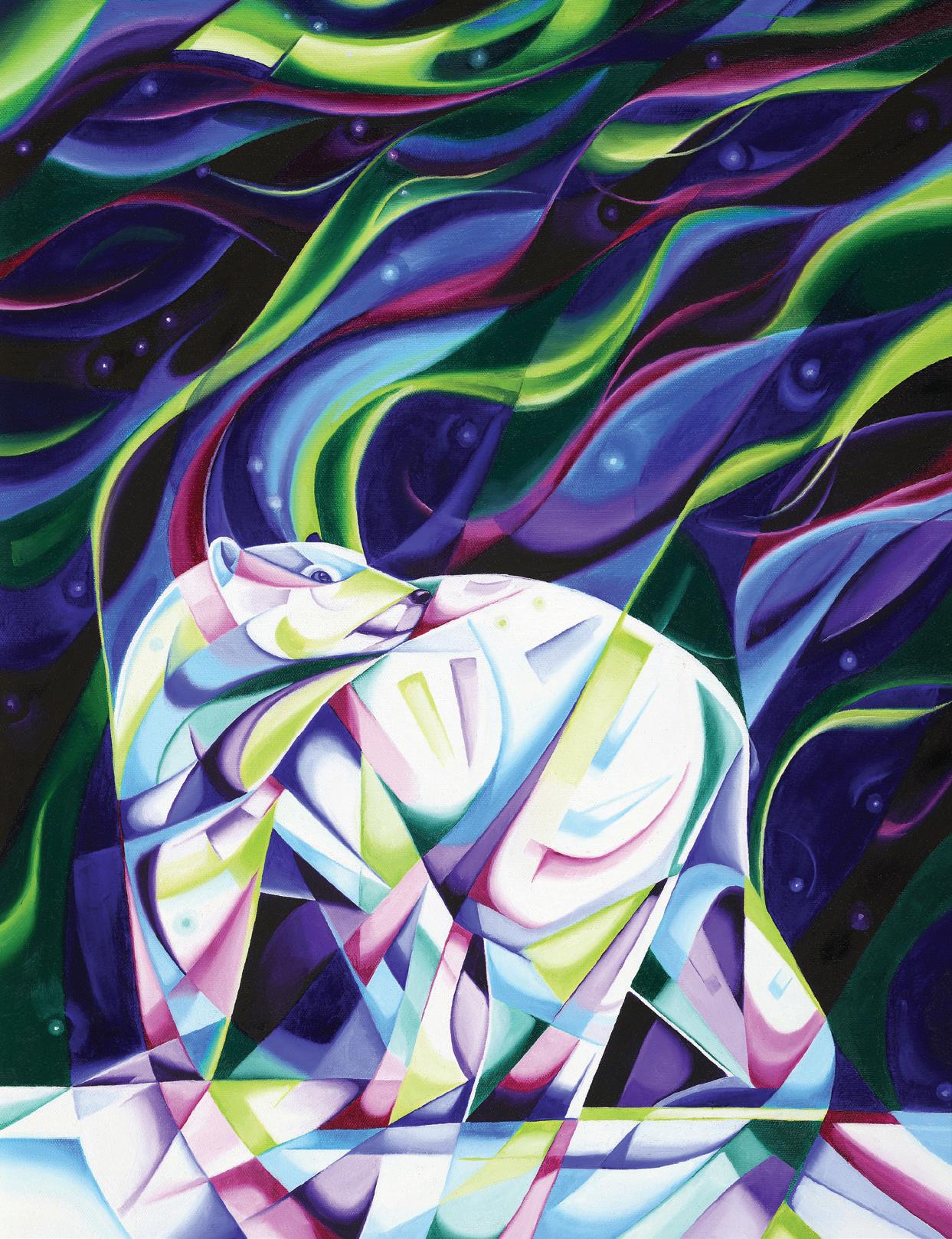
It's quite clear that the divine hand that drew British-born Sam Millard to our wilderness-infused region clearly knew what it was doing. One wonders if God, Source, Creator — whatever your chosen term — was so pleased by the beauty and majesty of our beloved alpine landscape, that a call went out across the lands to bring us someone of sufficient eye and spirit to immortalize the vibrancy that makes the Kootenays such a magical place to be. Sure there are historians and photographers who have done great work documenting our unique vector in spacetime, but we also needed someone who could capture something more ephemeral and evocative of the movement, colour, and joie de vivre of it all. Sam’s dancing, lyrical, and geometrical paintings seem to do just that.
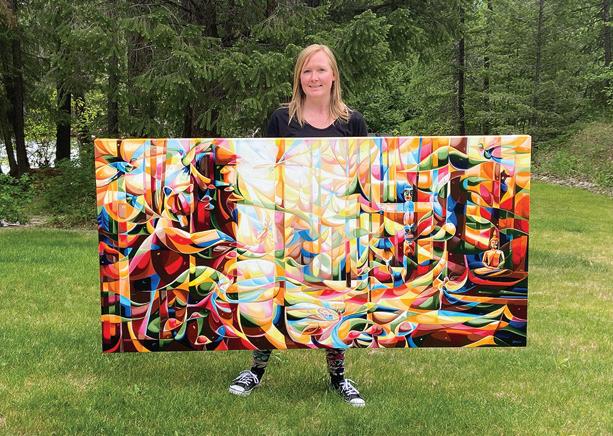
ABOVE: FAIRY FOREST / 36" x 72" / OIL / 2021
OPPOSITE: AURORA BEAREALIS / 18" x 24" / OIL / 2019
What is the story of this lovely lady who has such a commanding way with light, shapes, and forms that each work she produces makes you stop and stare and pulls you in, enough that you can get lost in wonder for a while and forget about the things that might be bothering you?
Sam was born in the United Kingdom to an expressive family that nurtured her creative aspirations from a young age. Her mother, a speech and language pathologist, was musically inclined and taught piano part-time to put herself through university, while her father loved to paint and draw whenever he could find time away from his plumbing and heating engineering job. With soggy UK weather being what it was, recess often got cancelled so Sam spent a lot of time indoors. “Drawing has always been my favorite activity, and my dad and I would often draw together, which I loved.” Sam recalls her primary subjects at that time were rainbows and mermaids.
What really sealed the deal on her artistic inclinations, however, came courtesy of some elder family members. “One Christmas when I was about nine or ten, my grandparents
bought me a very nice watercolour set. That was a turning point for me as I treated it with such reverence. Having special supplies as a child was very motivating for me.”
When Sam graduated secondary school, she went to study art at Long Road College in Cambridge, UK, where she discovered the magic and movement of cubist and futuristic painting techniques. These gave her a starting point for her complex artistic style, which continued to evolve with her immigration to Canada in 2008 and the discovery of an entirely new environment.
While the UK was more populated, Sam found that the Kootenay terrain was more dramatic and raw, and her happiest place was outside in nature. Encountering mountain wildlife for the first time amazed and thrilled her. Bears and moose feature in many of her paintings as do other area animals such as elk, wolves, and the now-extinct caribou. She explained, “There’s nothing like nature to give you perspective. It gets you back to your roots and highlights your insignificance in a good way. It’s a check on your ego.”
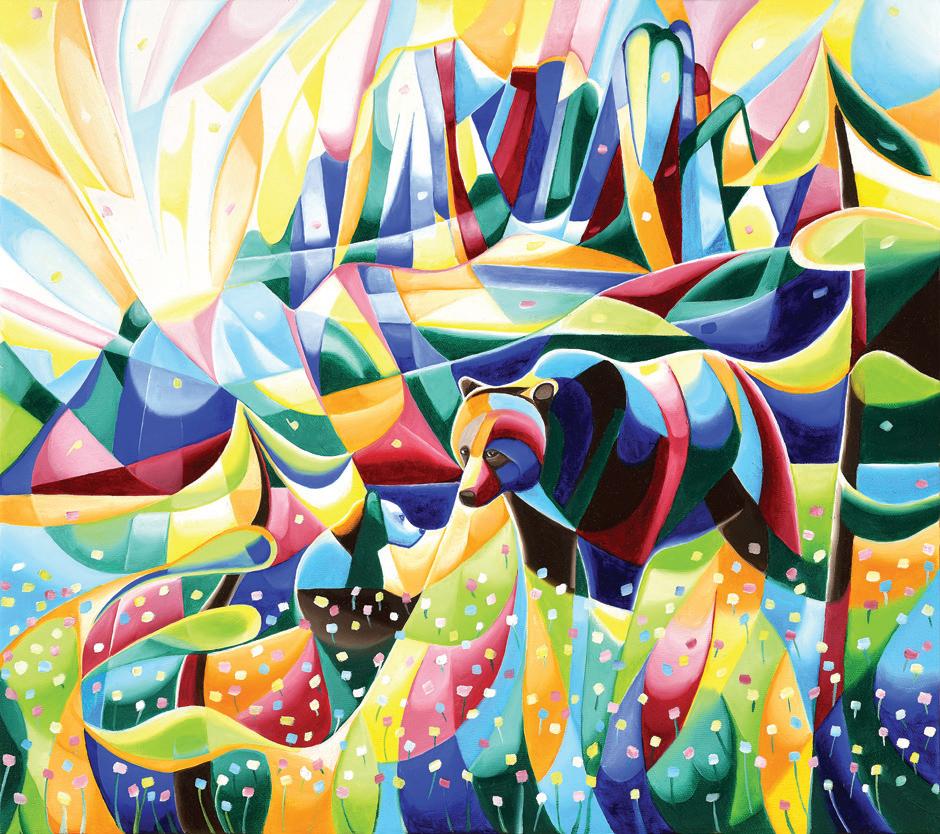
Manyother themes and influences inspire Sam’s imaginative paintbrush: freedom, peace, tranquility, cosmology, harmony, music, energy, adventure, connection, mystery, the unknown, spontaneity, astrophysics, laughter, cold crisp air, and light. The driving force behind everything Sam does however is joy, and this is the underlying energy that vibrates through her art.
The placement of forms and objects within Sam’s paintings is often surprising and hidden, which encourages the viewer to engage and probe deeper beneath the waves of colour and patterned layers where they are often rewarded with the discovery of other inhabitants and details in Sam’s vivid, dynamic, and imaginative worlds.
Sam’s preferred medium is oil paints because of their texture and ability to be brushed around the canvas longer, whereas acrylics dry too quickly for her taste. Her approach involves painting in layers; she usually paints everything three to four times to get the desired depth and colour and to create the fractal, flowing effect — a hallmark of her style. She also enjoys watercolour pencils for sketching.
How does such a dedicated master prepare herself for a day in the studio and what is her process? Sam’s routine consists of first getting all of her other tasks done like checking emails, so that
when she gets in the zone she can stay there as long as possible. She picks out an inspiring playlist of music or uplifting podcasts to set the mood. She warms up her body with neck and shoulder rotations and swings her arms around to loosen her muscles. The length of time she paints varies. “My work also depends on the season and hours of natural daylight we’re getting, so in winter, I tend to paint between six to seven hours, while in summer, I can go eight or nine.”
Sam spends time visualizing what she intends to create before she begins. One of her favourite paintings last year was inspired by Maya Angelou’s “Caged Bird” poem. “It came out almost like I envisioned it.” She would like to do more poetry-inspired pieces in the future and is interested in experimenting more with different textures using palette knives.
If you speak to Sam, you are easily charmed. I wanted to be friends as soon as I read her profile: “She likes to think she possesses the best of both worlds: English humour, sarcasm, and tolerance for inclement weather as well as Canadian kindness, sense of adventure, and a mild obsession with maple syrup.” I hope she keeps adding to her blog as I found her musings quite witty and insightful. One comment stood out to me, given the times we are living. Sam stated that in 2021 she alternated feeling like she was the “luckiest person in the world” to feeling like, “2021 can suck my balls.” She explained to me how she
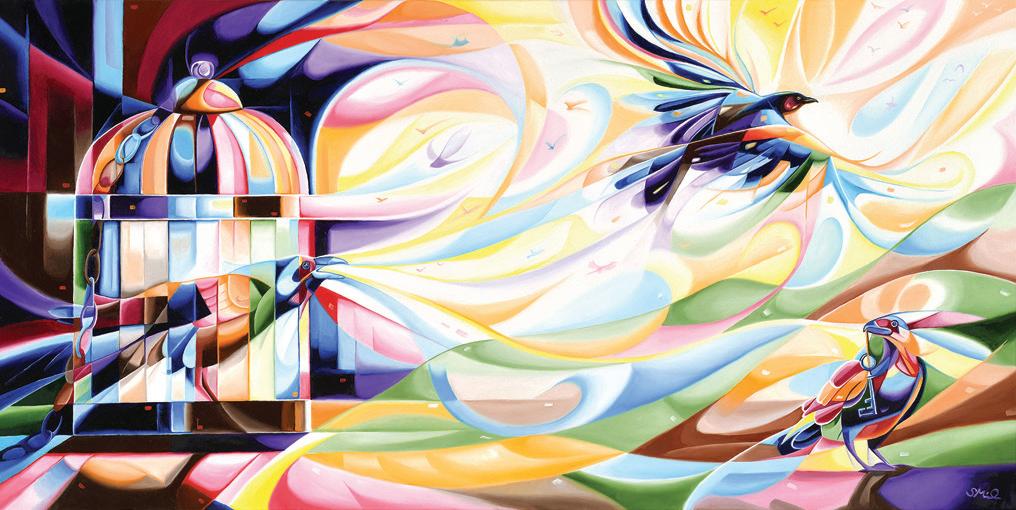
ABOVE: CAGED BIRD / 18" x 36" / OIL / 2021
OPPOSITE: BRUINS AND BLOOMS / 16" x 18" / OIL / 2021
had experienced a great art year with good projects and commissions, but she had also lost a dear friend.
In one of her recent posts, Sam wrote, “It seems inappropriate to focus on art while the world is in turmoil, but my studio feels like a temporary refuge. It’s the only way I can participate in the world right now.” Yet as I know many of us can agree and history attests, it is in such pivotal and challenging times where the role of the artist is perhaps most vital.
Besides being her biggest cheerleader and adviser, Sam’s husband Chris also plays a key role in helping Sam’s art get out to the world. Chris is a talented photographer who worked in the print trade in the UK, colour matching for high-end magazines such as Elle and Vogue. He currently photographs Millard's original paintings to produce her limited edition giclee prints, matching them to within 3% of the original colours. When I marvel over the synchronicity, Sam laughs and says, “That is definitely not why I married him, but it’s for sure a bonus that we can work and collaborate together.” In addition, lucky local artists can benefit from Chris and Sam’s expertise at Cranbrook Photo Framing and Art Supplies where the couple works part-time. Chris also has a business staining log homes.
And while some artists may prefer to stay behind the scenes with their art hanging at galleries, Sam really loves opportunities where she can directly interact with people, engaging their curiosity and responding to questions, such as at the Kimberley Farmer’s Market. We are lucky to claim Sam as one of our own and to benefit from her stunning art, good nature, and generous spirit. Do your eyeballs and soul a favor and pick up one of her pieces.
Don’t get hung up on specific techniques. Do it for joy. Don’t be afraid to explore. Learn to paint like a child again and bring back all the wonder.
If you are a perfectionist who cringes at the idea of wasting paper and supplies, get yourself two sketchbooks: one to practice in and one “real” sketchbook.
Copying other artists or their styles is fine to learn the process and for practice, but it’s important to challenge yourself with a blank canvas. There is something important about taking full responsibility and the creative decision-making that goes into a work.
In fact, you should do both often. Give yourself permission to fail and you learn through that. You can evaluate where you went “wrong” and re-do it.
If you have a budding artist in your life, get them art supplies. It could be life changing!
To connect with Sam Millard’s art, you can find her on Facebook at Howoriginal.ca Sam Millard Artist, Instagram, or her website at www.howoriginal.ca. You can also subscribe to her monthly newsletter to keep connected with her latest projects, shows, and blog posts.
ACCEPTING NEW PATIENTS!
PROFESSIONAL DENTAL SERVICES FOR CHILDREN, ADULTS & SENIORS
Kimberley Family Dental is a dental practice serving clients of all ages from family-friendly dentists in Kimberley and surrounding areas of southeast British Columbia. We offer a full range of professional dental services to sustain your oral health and improve your smile, including routine care and restorative treatments such as crowns, bridges, and implants.
OUR SERVICES : GENERAL DENTISTRY
ORTHODONTICS
WISDOM TEETH
SEDATION DENTISTRY
DENTAL IMPLANTS
CROWNS AND BRIDGES
BOTOX®
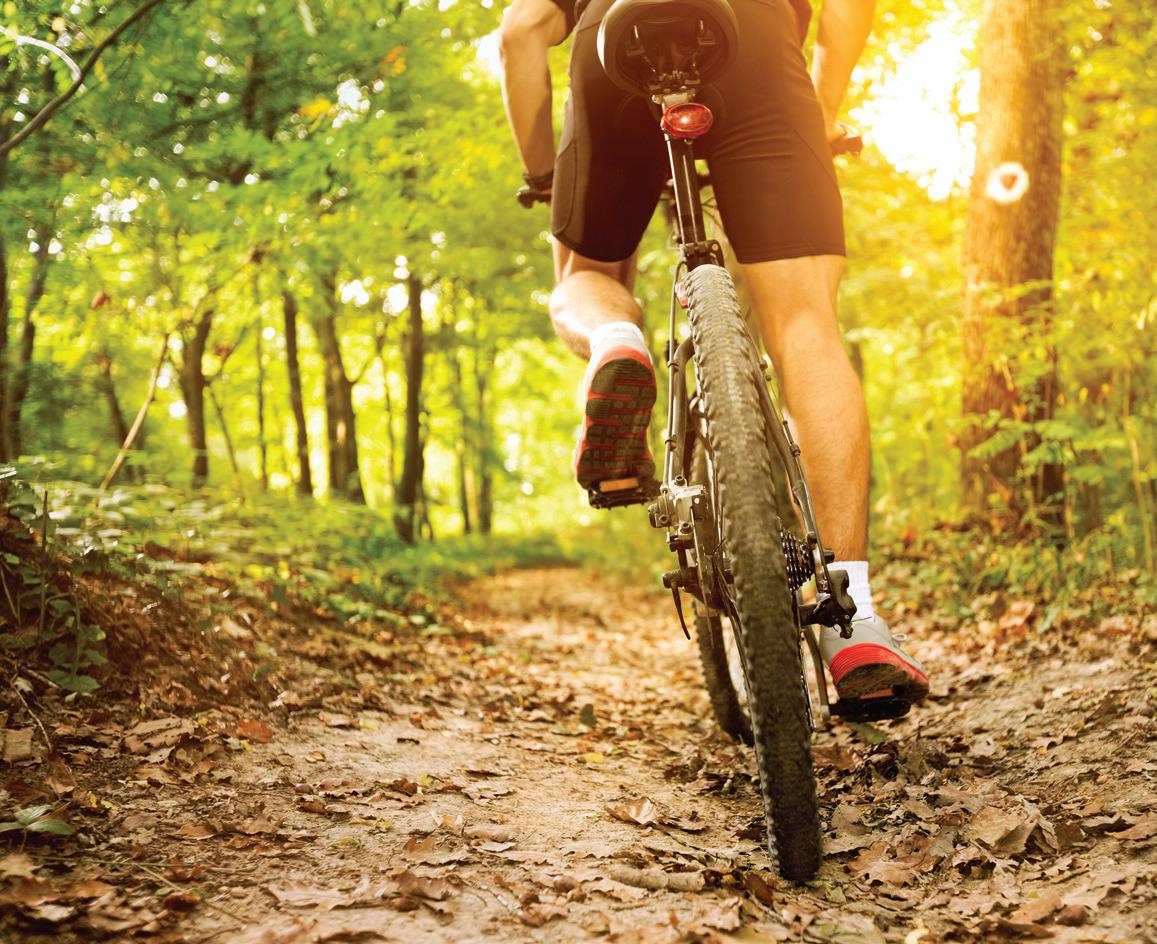
While fat bikes and studded tires mean we no longer have to take winter off from riding, for many of us, excitement to pedal builds as the days lengthen, skiing becomes all about the goggle tans, and corn snow and dirt reappear in the yard.
Do you prepare to pedal?
Biking isn’t all about pumping the pedals and leg power, it also needs a mobile upper body and an adaptable and responsive core. Let’s take a look at some movements that can help your body perform optimally and with less stress or strain on a bike.
Mobility and recovery are rarely prioritized, but this is where we can really understand and target our movement deficits while giving the body a dose of movements needed for riding (or because of riding). Many of the following movements can be used as self-assessment too. Notice what movements are limited or painful and observe if the two sides differ significantly. Work on or seek help with the movements that you find painful or aren’t so available to you.
Try a set of these as a daily mobility practice, before a ride or workout, or as part of a recovery:
Key Points
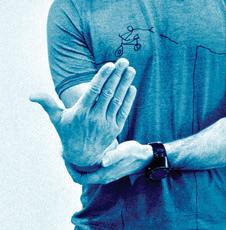
Rotation is at the heart of joint function for our ball and socket joints. Necks, shoulders, elbows, and hands will all be happier on a bike if your shoulders have adequate internal rotation (when palms rotate inward and down) to adapt to the demands of holding handlebars while navigating varied terrain and gravity. Hip rotation is key to maintaining joint health and is a critical aspect of compensation-free linear movements like flexion and extension and hip power and strength.
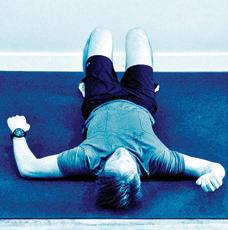
Key Points
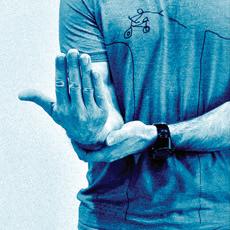
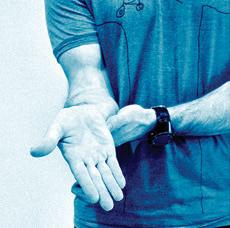
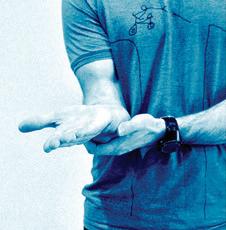
• Keep your forearm still (no rotation from the forearm bones/ at the elbow).
• Keep your hand open and long. (Don’t let hand cup or grip.)
• SLOWLY move your hand through the largest circle you can manage.
• Rotate your hand two times in each direction. (Repeat again with hand in a fist for a slightly different movement/sensation.)
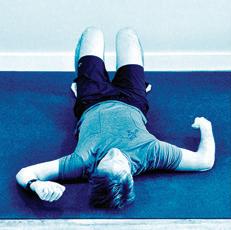
• Position arms 90 degrees out to the sides, elbows bent to 90 degrees.
• Isolate rotation, keeping shoulder blades stable and avoiding any twisting, arching of the back, or forward shifting of the shoulder.
• Pause and hold end position for a count of three.
• Repeat three times.
B. Hip Rotations
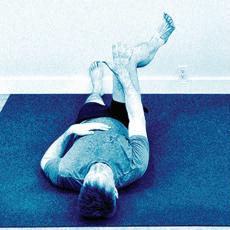
Key Points
• Lift one leg into a 90/90 position.
• Place hand lightly at end of thigh; this is simply a reference.
• Rotate thigh bone inward against hand, moving foot outward. (This is internal rotation.)
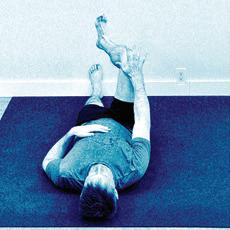
• Pause and hold end position for a count of three.
• Rotate thigh bone outward, moving foot inward (external rotation).
• Repeat three times on each side.
Key Points
• Lift one leg into a 90/90 position.
• Press hand into lifted knee and resist this pressure by pressing the knee back into the hand. Maintain this pressure between hand and knee throughout the bridging movement.
• Push the other foot straight down, lifting pelvis from the floor in a single leg bridge.
• Lower pelvis and release pressure between hand and knee.
• Lift pelvis ONLY if you can do so without losing baseline pressure between your hand and lifted knee.
• Repeat five times before switching sides.
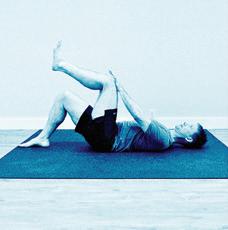
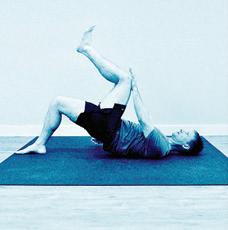
This one is sneaky hard!
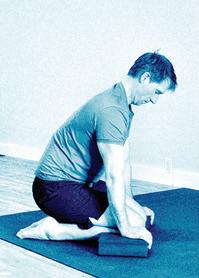
Key Points
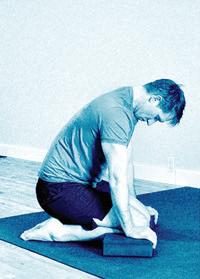
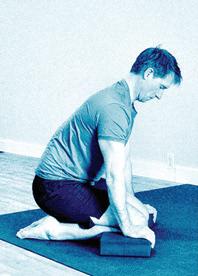
• Sit back onto heels. (This can be done seated on a chair, placing hands on a low table.)
• Lightly press hands into floor or yoga blocks/books; maintain this pressure throughout.
• Tuck your chin from the top of your neck and continue to curl as if you’re rolling your neck into a cinnamon roll (from the top down).
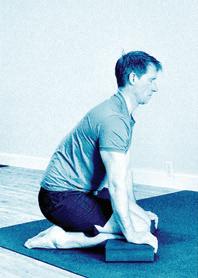
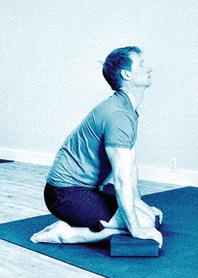
• Unroll in reverse (from the bottom up), finishing in an extension (looking up).
• Repeat three times, moving slowly and visualize moving each vertebrae individually in both the roll-down and roll-up.
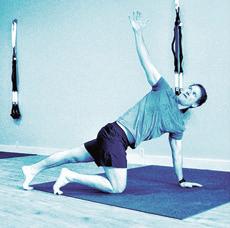
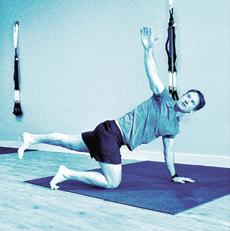
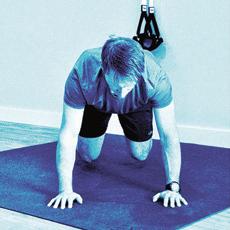
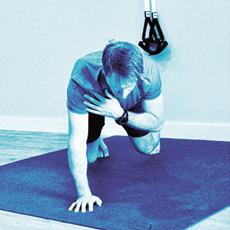
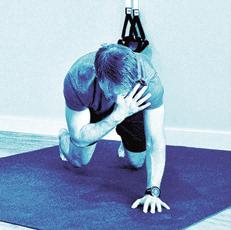
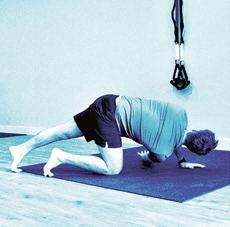
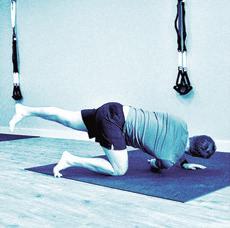
Key Points
• Extend one leg straight back and lift the opposite arm out to the side.
• Press support hand into the floor and rotate to the side.
• Avoid overreaching from the shoulder; focus on rotating the sternum out to the side.
• Rotate in the other direction; “thread the needle.”
• To increase the stability challenge, lift the extended foot from the floor.
• Do this three times before switching sides.
Key Points
• From your hands and knees, press hands into the floor and lift knees 1-2.”
• Keep your ribs aligned with your pelvis; don’t hunch the back.
• Minimize shifting while you lift one hand to tap opposite shoulder, then alternate.
• Repeat five to eight times.
Note:
Addressing mobility limitations in wrists, shoulders, necks/spines, and hips can not only improve performance and confidence on the bike but will support a long life of pedalling.
Pre-Bike Prep/Mobility Sample Workout
EXERCISE REPS
Wrist CARs* 3/side
Shoulder Rotations* 3/direction
Hip Rotations* 3/direction
Hip Flexion & Bridge 5/leg
Propped Neck RollUp and Down* 3-5x
Bird-Dog Thread the Needle* 3x/side
Bear Position Shoulder Taps 5x/side
*These would be great as a post-ride recovery.
• Work with your feet pointing straight ahead if you’re able to, but don’t force this position.
We don’t have to get too fancy with pre-season conditioning; basic movements like squats, split squats, deadlifts, and push-up and pullup variations are all great body weight movements to prep for biking (and life).
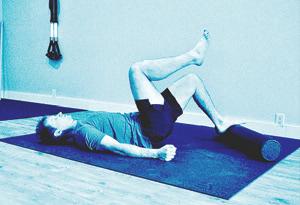
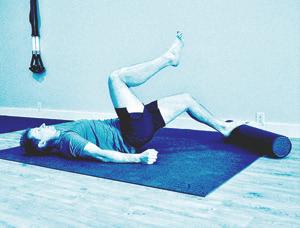
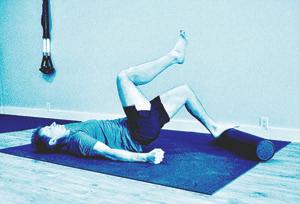
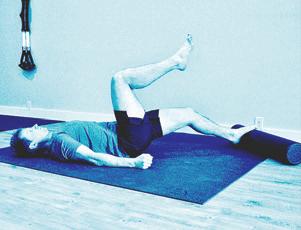
1. Single Leg Isometric Hamstring Bridge
• Place ball of foot on roller, start with knee bent ~90 degrees.
• Tuck pelvis slightly (Don’t arch the back.), and press into foot to lift pelvis from the floor.
• Hold and breathe for five to fifteen seconds.
• Repeat twice more, increasing angle at the knee each time.
• You can do this on a wall for an easier variation. Set-up is: ball of foot on wall, heel slightly lifted. “Pull the wall down” to lift your pelvis into a bridge; avoid “pushing the wall over.”
• Initiate hinges/deadlifts and squats from the hips, NOT the knees.
• Mix in some staggered stance or single leg versions.
• For upper body movements, choose a challenge that you can control, e.g., elevate hands for push-ups, find a horizontal bar (or even a vertical post/doorframe) for a reclined row/pull-up variation.
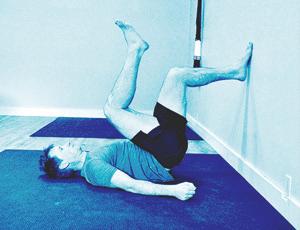
Note:
Cramps tell us you have some work to do. Be gentle and don’t torture yourself, but work to give your hamstrings some experience with these angles/positions.
Key Points
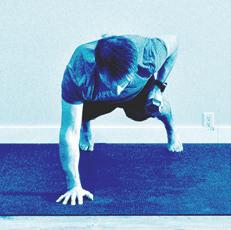
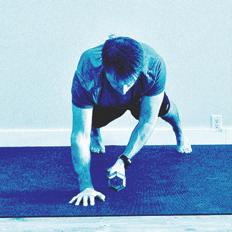
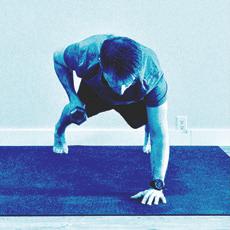
• Hold plank position with a dumbbell under one hand, keeping head, ribs, and pelvis aligned.
• Press the support hand into the floor as you pull your weight upward. (Think about pulling elbow toward hip.)
• Lower body and then pass the weight to the other side and repeat.
• Minimize any weight shift as you alternate.
• Alternate movement for eight repetitions per side.
Note:
Too challenging? Try this from an elevated surface or from your hands and knees instead.
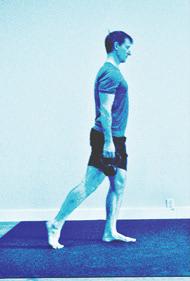
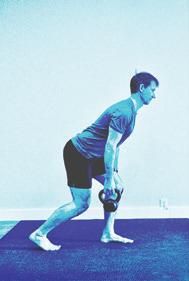
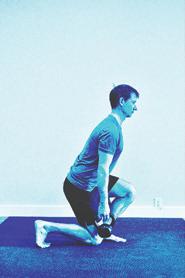
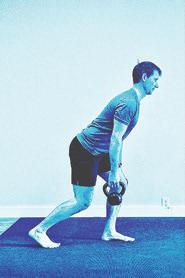
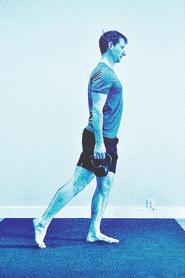
Key Points
• Take a staggered stance, hip aligned over front foot (nose over toes).
• Hinge over front foot by sending hips backward.
• Hold and bend knees to lower into a split squat.
• Extend knees to return to hinge position.
• Press into foot to extend hip and bring it back over front foot.
• Repeat eight times before switching sides.
Note:
To make this harder: lift heels off the floor slightly and do movement while balancing on the balls of the feet.
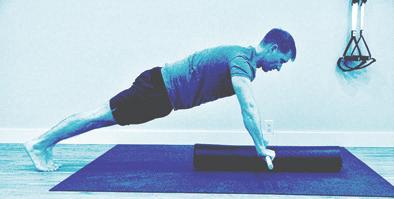
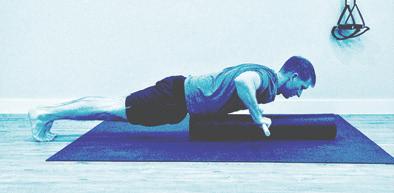
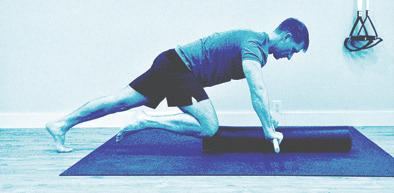
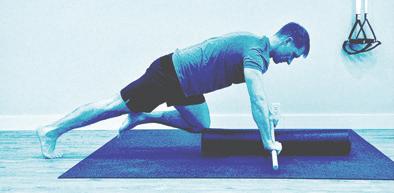
Key Points
• Assume plank position, holding dowel like handlebars; you can also do with dowel balanced on yoga block, foam roller, ball, etc.
• Lower into a push-up, controlling dowel and maintaining alignment of head, ribs, and pelvis.
• Press back to plank position and slowly drive one knee forward in mountain climber, then repeat with second leg before next push-up.
• Aim for eight to twelve repetitions.
• Adjust the challenge level by elevating the dowel on a bench or against a wall.
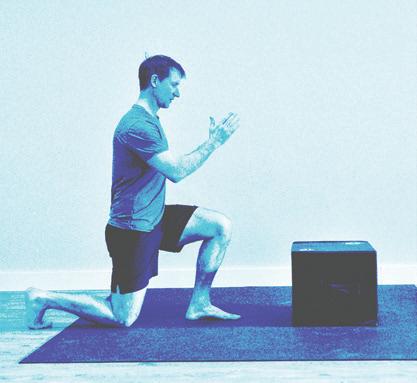
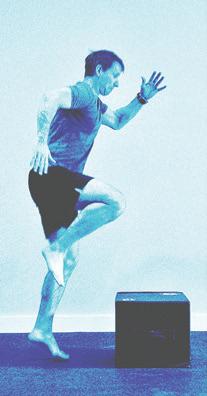
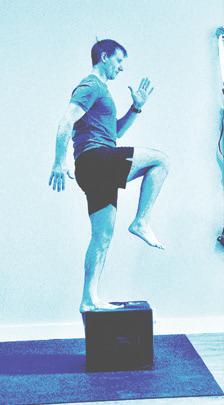
Key Points
• Plyometrics! This is advanced so take care that your body is ready for this one.
• From a kneeling position, press off of front leg, jumping up onto a box or step. You will land on the jumping leg. Take a moment to find your balance here.
• Return to floor set-up and repeat five to eight times on each leg.
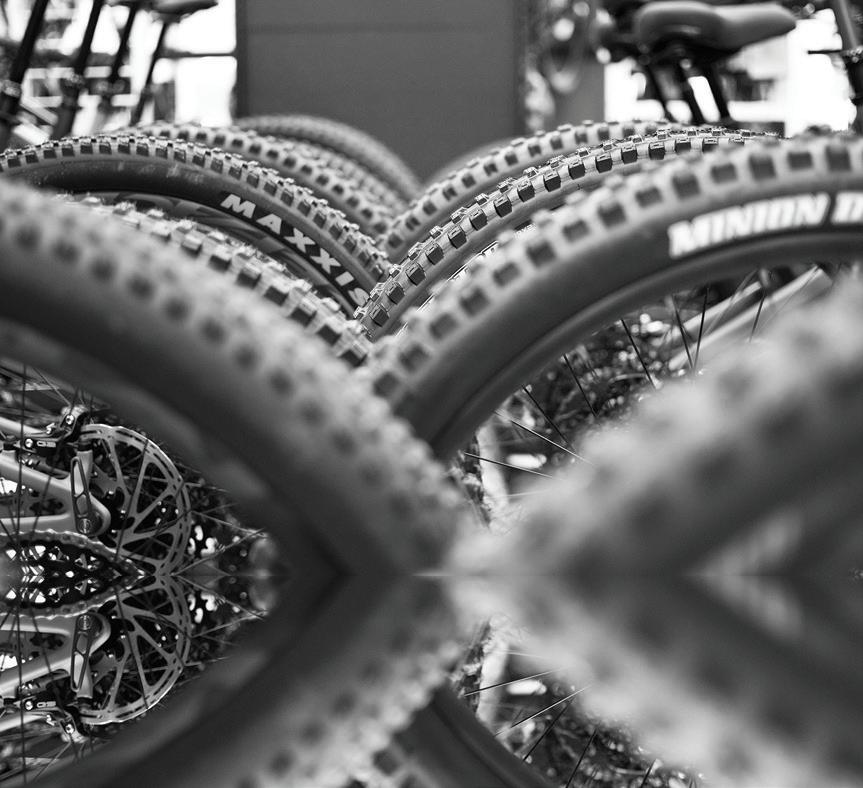
For more details on these movements and some additional pre-season bike movement videos, please visit www.ascendmovement.ca/moveonline.

As

Call me to get a second opinion.
John Reinarz, B.Sc., PFP, CIM Investment Advisor 250 489-6952 | john.reinarz@cibc.ca
Cranbrook Branch | CIBC Wood Gundy CIBC
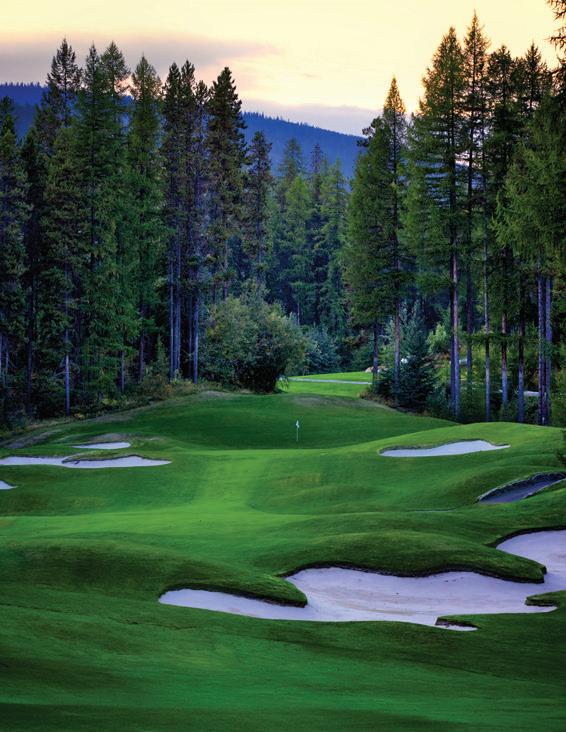




DEWBUSTER - starting at $89
Tee Times: Monday to Thursday tee times before 9am. Includes a $10 food voucher at the Club House Restaurant.
MONDAY NIGHT SOCIAL - $65
Tee times after 2pm. Includes a $10 food voucher at the Club House Restaurant.
FAMILY SPECIAL - $140
Tee times after 2 pm for two adults and up to two (2) children (under 18).
TWILIGHT - starting at $69
Tee times starting at 3pm.
ONE WEEK UNLIMITED PASS
Unlimited golf for the week.
Adult $449, Couple $799

La Cafamore: Tango King Live Music
Jeremy Furlong Standup Comedy Show
Victoria Page “My Friends & I”
Da-VIN-Ci Paint Night with Julie-Liu Melody Diachun Quartet
Adjudicated Young Artists
Live@Studio64 Red Dirt Skinners
Fabricated Works of the Artrageous – Open Art Exhibition
Live @ Studio 64: Performer TBA
Art Exhibition by Barbara Maye
Kimberley Kaleidoscope Juried
Kimberley Kaleidoscope Festival
Live Music, Vendors + More
July 2 | August 6 | September 3 | October 1
Creston Art Club
*All art exhibitions are subject to future Covid-19 requirements.
APR 1 | Da-VIN-Ci Paint Night with Julie Liu All Supplies Included! | Centre 64 | 64 Deer Park Ave. | 7 pm
MAR 1-26 | “Between Two Worlds” Art Exhibition by Judy Winter | Centre 64 Gallery & Online | Tuesday–Saturday | 1-5 pm
MAR 23 | Dave McCann and Ethan Askey with Opener The Confluentials | Fisher Peak Winter Ale Series | Key City Theatre | 7 pm
MAR 23 | Lacafamore — Tango King and the One-hit Wonder | Piano Trios by Arensky & Piazzolla | Centre 64 | 64 Deer Park Ave. 7:30 pm
MAR 25 | Shred Kelly with Megan Nash and Heather Gemmell | Kimberley Alpine Resort 4-7 pm
MAR 26 | Symphony of the Kootenays — Night at the Movies | Key City Theatre & Livestream | 7:30 pm
MAR 29 | The Celtic Tenors — Three Tenors, One Voice | Key City Theatre | 7:30 pm
MAR 29 | Toddler Tuesdays | Dinosaurs Cranbrook History Centre | 10:30 am
MAR 29 - APR 23 | Victoria Page “My Friends & I” Group Art Exhibition | Centre 64 Gallery & Online | 64 Deer Park Ave. | Tues. –Sat. | 1-5 pm
MAR 30 | Ed Talk — Fungus Among Us With Janice Armstrong and Jamie Levine Cranbrook History Centre | 6:30 pm
APR 2 | North Star Days — Retro Celebration Kimberley Alpine Resort | 9 am
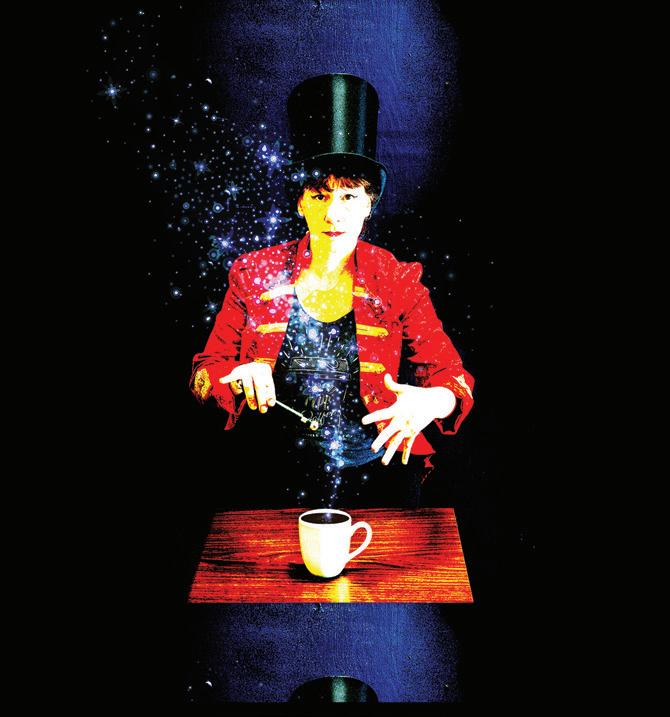
APR 2 | Spidey the Mentalist Presents — Make Believe: Magic of Your Mind | Key City Theatre | 7:30 pm
APR 8 | Triple Band Stand — An Evening with Take Four, littlejazz Orchestra, & Brass Roots Key City Theatre | 7:30 pm
APR 9-10 | Spring Splash Weekend — Skim Pond Challenge & Dummy Downhill Kimberley Alpine Resort | All Weekend
APR 13 | John Wort Hannam with Opener Heather Gemmell | Fisher Peak Winter Ale Series | Key City Theatre | 7 pm
APR 16 | The Music of Sting — Melody Diachun Quartet | Centre 64 | 64 Deer Park Ave. 8 pm
APR 17 | Easter Celebration | Fort Steele Heritage Town | TBD
APR 21 | Bromance — Barely Methodical, Acrobatic Troupe | Key City Theatre | 7:30 pm
APR 23 | Symphony of the Kootenays — Spanish Fiesta | Key City Theatre | 7:30 pm
APR 26 | Toddler Tuesdays | Trains Cranbrook History Centre | 10:30 am
APR 26 – MAY 21 | Adjudicated Young Artists Art Exhibition | 12-29 Years of Age | Centre 64 Gallery & Online | 64 Deer Park Ave. Tues. – Sat. | 1-5 pm
APR 29-30, MAY 1, 5-7, 11-14 | Mitch Albom’s Tuesdays with Morrie | Directed by Stephanie Kress, Produced by Amy Penney | Cranbrook Community Theatre 11 – 11th Ave., S Cranbrook | 7:30 pm, May 1 Matinee at 2 pm
MAY 5 | The Kootenay Fun 5 | Kootenay Christian Academy Fundraiser | 1200 Kootenay St., N. Cranbrook | Info. online at kootenayfun5.com
MAY 5-8 | High School Musical by Wild Theatre | Key City Theatre | May 5-7 at 7:30 pm, Matinee May 8 at 2 pm
MAY 7, 14, 21, 28 | Cranbrook Spring Farmer’s Market | 10th Ave., S, beside Rotary Park | 10 am – 1 pm
MAY 9 | Bee Gees Gold — A Tribute to the Bee Gees | Key City Theatre | 7:30 pm
MAY 10 | Shane Koyczan | Key City Theatre 7:30 pm
MAY 13 | Red Dirt Skinners (Band) | Live@ Studio64 | Outdoors | 64 Deer Park Ave. 8 pm
MAY 16 | The Debaters Live on Tour — Hosted by Steve Patterson | Key City Theatre | 7:30 pm
MAY 18-19 | Johnny Reid — Love Someone Tour | Key City Theatre | 7:30 pm
MAY 17 | Redgirl Trio with Opener Maddisun | Fisher Peak Winter Ale Series Key City Theatre | 7 pm
MAY 20 | Spring Fling: A Blooming Burlesque Show | Canadian Burlesque Cabaret Key City Theatre | 7:30 pm

JUNE 3 | ABBA Revisited — Tribute to ABBA Key City Theatre | 7:30 pm
JUNE 4, 11 | Cranbrook Spring Farmer’s Market | 10th Ave., S, beside Rotary Park 10 am – 1 pm
JUNE 11-12 | Just Liquid Sports’ Wasa Lake Triathlon | Wasa Lake Provincial Park | Info. online at rmevents.com
JUNE 11 | Queen — It’s a Kinda Magic Tribute | Key City Theatre | 8 pm
JUNE 18 – SEPT 8 | Kootenay’s Best Exhibit — 50+ Emerging and Established Artists from across the Region | Cranbrook Arts 1401 Gallery and Artspace | 1401 5 St. N. Info. online at cranbrookarts.com
JUNE 16-19 | Sam Steele Days — Cranbrook’s Largest Annual Community Festival Info. online at samsteeledays.org
JUNE 19 | Round the Mountain — 1 Day, 5 Challenges | Kimberley’s Premier MultiDiscipline Adventure Event | Mountain Biking, Trekking, Kids’ Events, Music, & Food Kimberley Nordic Centre | Info. online at roundthemountain.ca
JUNE 19 | Father’s Day Celebration and Opening Weekend | Fort Steele Heritage Town TBD
JUNE 25 | Cranbrook Summer Farmer’s Market | 10th Ave., S, beside Rotary Park 10 am – 1 pm
JUNE 25 | The Comic Strippers | Key City Theatre | 8 pm

UNLESS YOU only see potential.
UNLESS YOU can get past the gatekeeper.
UNLESS YOU have an opinion about the oxford comma.
UNLESS YOU can’t sit still.
UNLESS YOU are obsessed with the Kootenays.
UNLESS YOU can do work from a cafe, pub or boardroom.
UNLESS YOU could make a better ad than this.
If you still think a job as our Sales and Distribution Manager is for you, get in touch. grady@kootenaymedia.ca