1069 Shary Circle, Suite A, Concord, California, U.S.A
Tel : +1-925-265-1003~4
MEASUREMENT andCONTROL
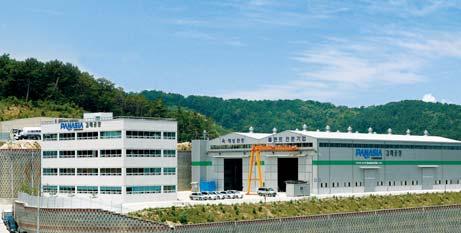
HEADOFFICE & FACTORY
GIMHAE FACTORY
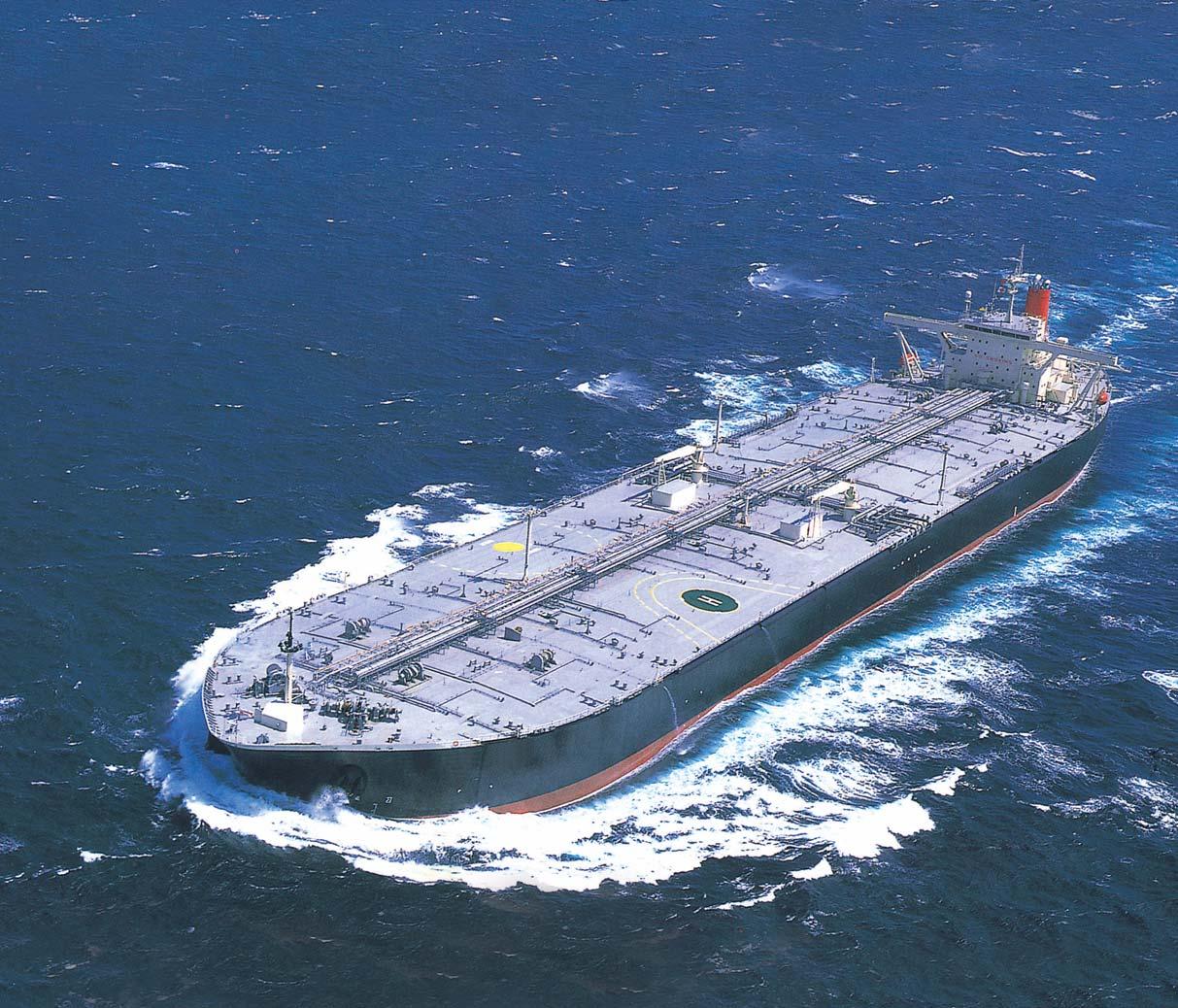
More than 10,000 ships More than 20 years
Company Profile
Since established in 1989, 20 Years of Experience, Partnership & Performance
2000 ~ Present
Aug. 2009 Acquired NET (New Excellent Technology) Certificate
Jun. 2009 Renewed ISO 9001/2008 & Certified ISO 14001/2004
Feb.2009 Constructed 2nd plant for Environment & Control division at Kimhae city.
Dec. 2008 Submitted an application for Final Approval of GloEn-Patrol Ballast Water Treatment Sys. to IMO MEPC 59 Session
Mar. 2008 Granted Basic Approval of GloEn-Patrol Ballast Water Treatment Sys. from IMO MEPC 57 session
Jan. 2007 Changed company name to PANASIA CO., Ltd
Jul. 2006 Contracted a high efficient DeNox System for IST project in New York
Jun. 2005 Collaborated the technical & marketing division with Endress+Hauser Korea Co., Ltd
Jun. 2004 UL certified for Level switch(PR-30 series) & Level transmitter(CPR-100)
Dec. 2003 Appointed as INNO-BIZ factory from the Government
Jun. 2003 Appointed as a promising exporting company from Export Assistance Center.
May. 2003 Achieved ISO 9001:2000 certificate(DNV).
Sep. 2002 Appointed as Clean Factory from Ministry of Labor.
Apr. 2001 Appointed as Superior Exporting firm from Export Assistance Center.
Apr. 2001 Awarded the prize from the Minister of Science and Technology.
Sep. 2000 Moved to New Factory in Nok-San Industrial Complex.
1989 ~ 1999
Jun.1999 Opened R & D Laboratory.
Jun.1998 Appointed as a promising venture company by Korea Electric Power Corp.
Jun.1998 Achieved ISO 9001 certificate (DNV).
Mar.1998 Registered Korea Electric Power Corp. as a supplier for Level Instruments for a nuclear power plant.
Nov.1997 Awarded a prize for "A Proud Korean" by the president of Korea.
May.1997 Appointed as a promising technical developing company from Government.
Mar.1997 Awarded the prize of an excellent technical development from Government.
Mar.1996 Registered as a sub-supplier of STX(Daedong) Shipbuilding Co.,Ltd.
Apr.1993 Appointed as a localizing manufacturer for Level Instrument by the Korean Government.
Feb.1993 Awarded the excellent development prize by Hyundai Heavy Ind.Co.,Ltd.
Jun.1992 Concluded the technical & marketing collaboration agreement with IPH MARINE AUTOMATION A/S in DENMARK.
Mar.1990 Registered as a sub-supplier of Hyundai Heavy Ind. Co., Ltd.
Oct.1989 Established PAN-ASIA PRECISION & ENGINEERING Co.,Ltd. as a manufacturer of Level Instrument in the field of marine industry.
COMPANY PERSPECTIVE
TheLeaderin Measurement & ControlTechnology
Long Accumulated Know-How and Technology are sure of satisfying customer s needs.
Hoping your business to be prosperous continuously, we sincerely appreciate your cooperation and support since its establishment in 1989.
Despite many setbacks and hardships over the past eighteen years,
We, PANASIA has managed to achieve solid growth by turning crisis into opportunity. And also grown into one of the leading companies in the field of level measurement & control technology of marine engineering.
Based on our slogan "Dream & Tomorrow",we have always been motivated by passion and a willingness to take on any challenge to make the future better.
We will secure world-class level measurement & control technology of marine engineering and understand changes in the markets and with customers.
Through this we will play a role as a global company that has the market knowledge to lead our customers. We will continue making innovations and changes.
We ask for your continued interest in PANASIA CO.,LTD and hope you will keep watching our ever-changing company.
Yours sincerely
President Robert SooTae,Lee
Contents
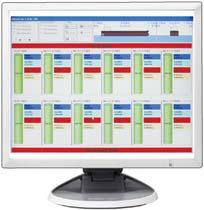
Radar Beam Type Cargo Tank Monitoring System
Magnetic Float Type Cargo Tank Monitoring System
Magnetic Float Type High & Overfill Alarm System
Acoustic Type High & Overfill Alarm System
Valve Remote Control System
Air Purge Type Tank Level & Draft Gauging System
Electric Pneumatic Type Tank Level & Draft Gauging System
Electric Pneumatic Type Tank Level & Draft Gauging System (Level Pride)
Electric Pneumatic Type Level Transmitter
1:1 Converter (Pneumatic Tank Level Gauge)
Electric Pressure Type Level Transmitter (LEVEL-3000)
Water Ingress Alarm System
Pressure Monitoring System
Vapour Emission Control System
Fixed Gas Detection System
Pump Room Bilge High Level Ararm System
Temperature Monitoring System
Flat Type Glass Level Gauge
Reflex Type Glass Level Gauge
Magnetic Float Type Level Gauge
Self-Powered Contents Gauge
Dial Type Float Level Gauge
Float Type Level Switch
Displacement Type Level Switch
Reed Switch Type Float Level Switch
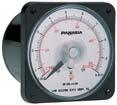
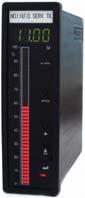
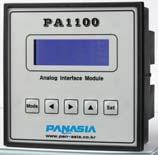
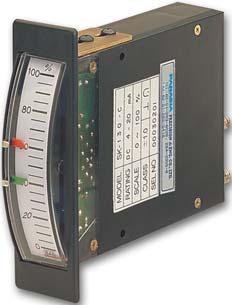
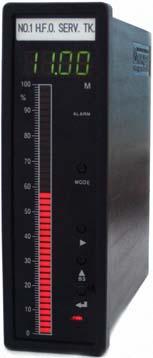
Electric Indicator
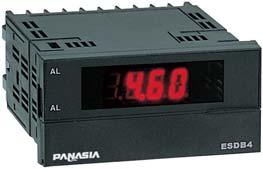
Digital Indicator
Class Approvals
Tank Monitoring System
Product List
01.Cargo monitoring System
Radar Beam Type
Magnetic Float Type
02.High & Overfill alarm system
Magnetic float type
Acoustic type
03.Valve Remote Control System
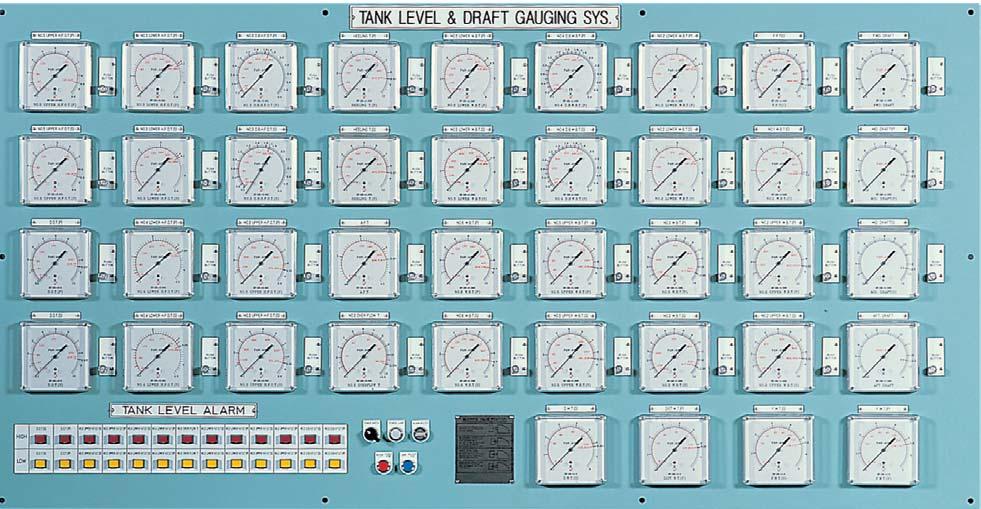
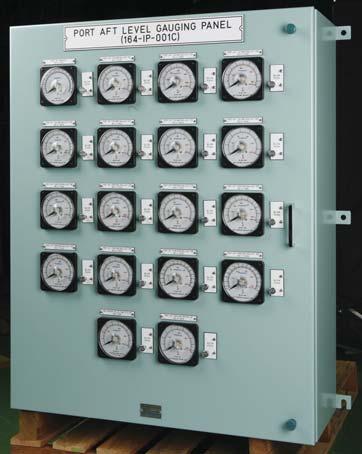
04.Tank Level & Draft gauging System
Air purge type / Electric pneumatic type
Electric pressure transmitter type
05.Vapor Emission control system
06.Fixed gas detection system
07.Water ingress alarm system
08.Pressure / Temperature monitoring system
09.Bilge high level alarm system
10.Local level gauge / switch
Radar Beam Type Cargo Tank Monitoring System
Application
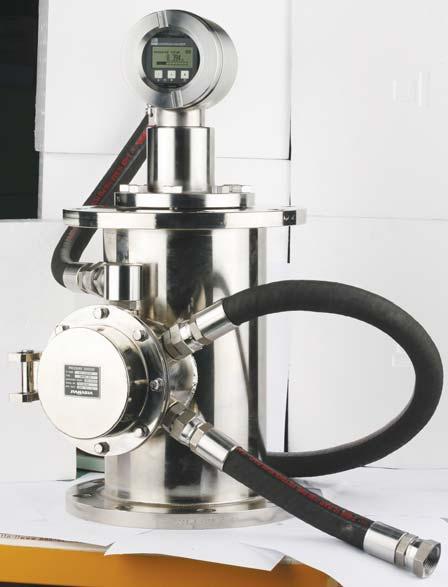
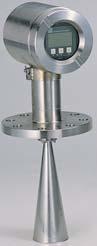
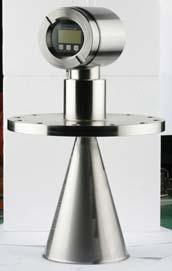
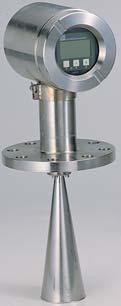
Level-Radar is used for continuous non-contact level measurement of liquids in Cargo Tanks and Slop Tanks of Crude oil carrier, Oil & Chemical Carrier.
The measurement is not affected by changing media, temperature changes, gas blankets or vapours.
Measuring Principle
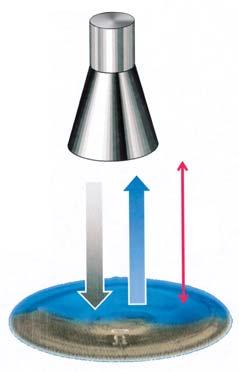
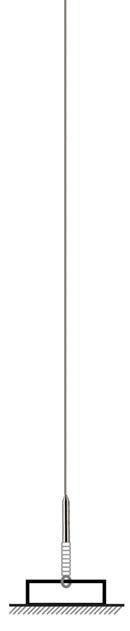
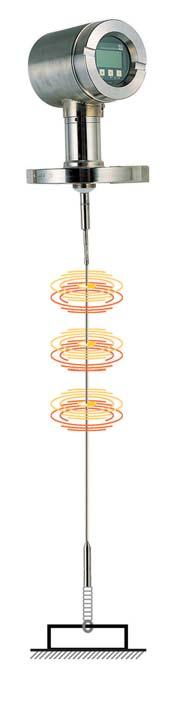
Level-Radar is a "downward-looking" measuring system, operating based on the time-of-flight method.
It measures the distance from the reference point(process connection)to the product surface.
Radar impulses are emitted by an antenna, reflected off the product surface and received again by the radar system. Principle
Technical data Your benefits
Measuring range Output
Measuring accuracy Measuring cycle
Product temperature Pressure Major material Beam angle Weight
Up to 35m depending on installation, product, surface conditions and antenna size
HART PROFIBUS PA, FOUNDATION Fieldbus.
2-wire technology, low price. a real alternative to differential pressure, floats and displacers. 2-wire technology reduces wiring costs and allows easy implementation into existing systems.
Non-Contact measurement: Measurement is almost independent from product properties.
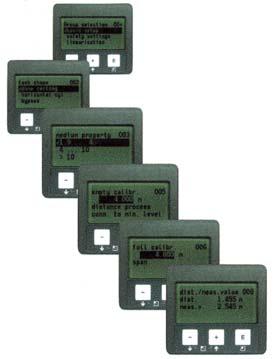
Easy on-site operation via menu-driven alphanumeric display.
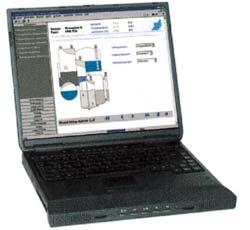
Easy commissioning, documentation and diagnostics via operating Software (ToF Tool) 2 frequency ranges-26GHz : No compromises, the right frequency for every application.
HART or PROFIBUS PA respectively FOUNDATION Fieldbus protocol.
of 2 Frequencies
Family-Commissioning
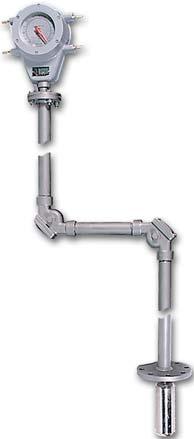
Magnetic Float Type Cargo Tank Monitoring System
General
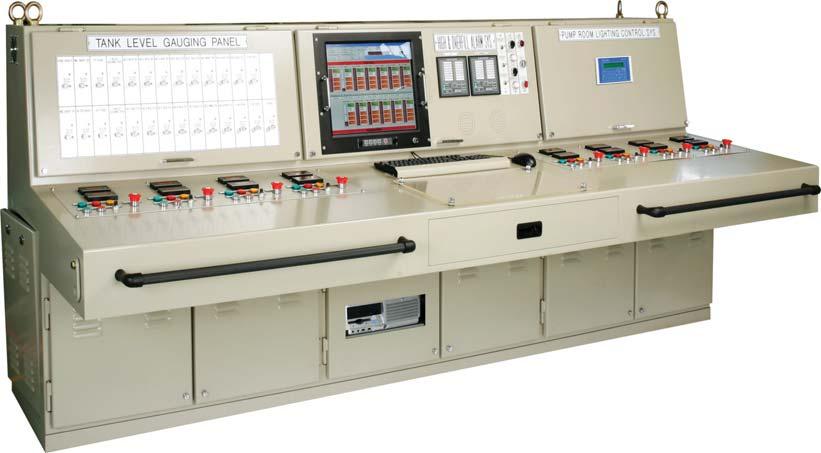
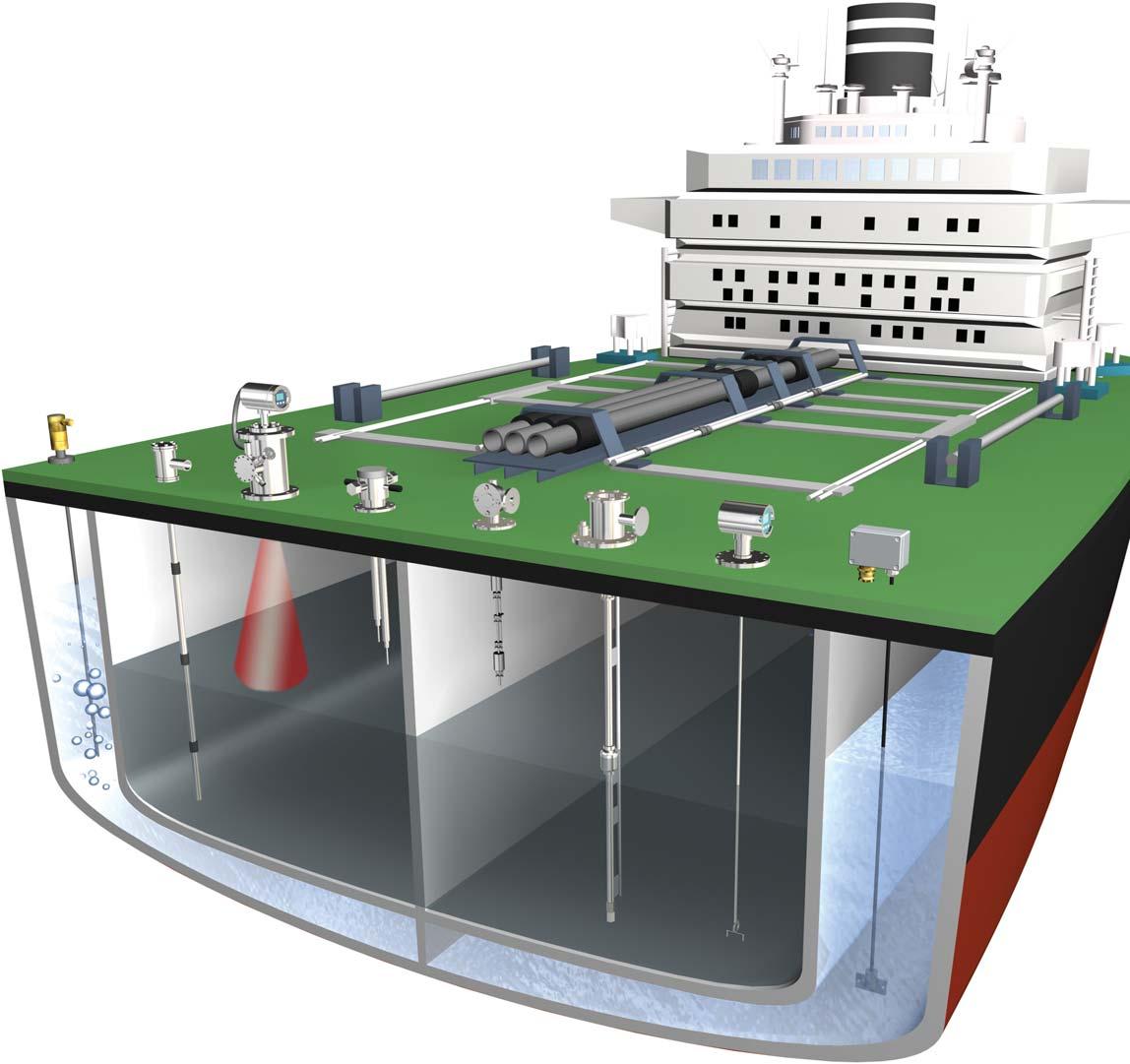
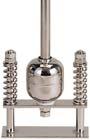
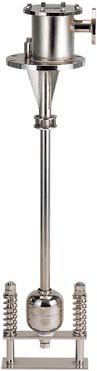
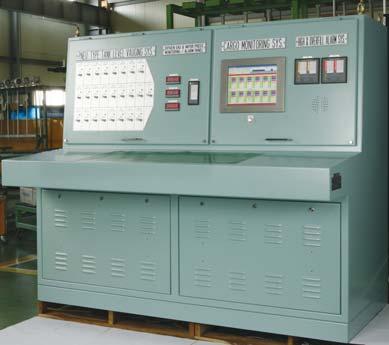
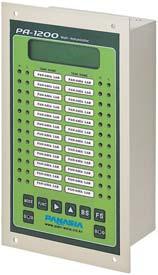
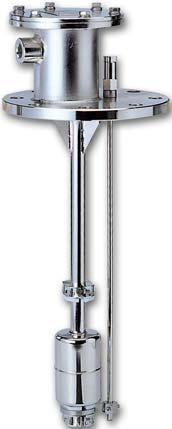
The Tank Monitoring System, named as PATROL system is a magnetic float type tank level gauge featuring an all-in-one detector that measures tank level, temperature,vapor pressure, as well as issuing alarm when limits are exceeded.
The TANK MONITORING SYSTEM monitors these tank conditions on various display units. Information on ballast tanks, fuel oil tanks and draft gauges, as well as cargo tanks can be comprehensively utilized by integrated ship operation control system via a loading computer.
A key feature of the Tank Monitoring System is its ease of handling, because the sensors in the detector are flexible, it can be lifted up by hand without the need to enter tanks, even in the case of cargo tanks of crude oil Tanker, Product oil Tanker, chemical carrier for repair and maintenance. Likewise, transportation and fitting of the Tank Monitoring System is also simple. For LNG carrier, this magnetic float type tank level gauge is usually provided in W.B.T & Draft gauge system and F.O tank level gauge system.
System
Working Principle
Sets of reed switches are positioned along the length of the guide pipe. As the float travels up and down the guide pipe in accordance with the level of the liquid in the tank, the flux emitted from magnets within the float works upon the reed switches ON or OFF. By measuring voltage across the transmitter circuit, the level of the liquid can be calculated according to the changes in circuit resistance. The converted signal is sent to the control box via I.S. barrier in the control room or to a local indicator as the case may be.
Standard Specification
Level Detecting Part
Anti-Explosion Structure
Measuring
Detecting Accuracy
Allowable Temperature
Allowable Pressure
Temperature Detecting Part Type
Measuring Range
0.5 and above(of liquid in tank) 15,000sec. Redwood No,1 max. 20mm(option:10mm) -60...+150 (stand.), -162 (option) 3kgf/ (option:80kgf/ ,max.)
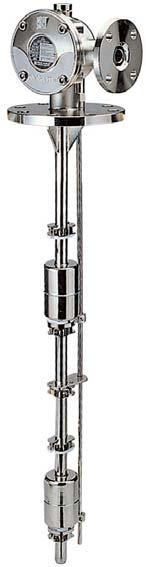
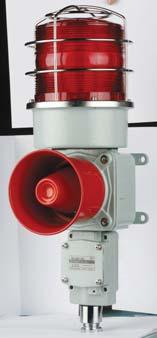
The PANASIA high level alarm sensor consists of magnetic float and reed switch built in guide pipe. When the magnetic float moves upward with rising level, the hermetically sealed magnetic reed switch inside the pipe will be de-activated.
This switch will be in an open-state position, which output alarms. When the magnetic float moves down ward with falling level, the reed switch switch will be activated and will be in a closed-state position (non alarm position).
This means a normally operated fail to safe loop.The 95% switch is normally for high alarm. The 98% Switch is normally for high-high alarm(overfill alarm)
A test lever is provided for manually functional test to check integrity of high level alarm system before cargo loading.
Remark
Cargo Tank High & Overfill Alarm system is throughly designed according to USCG latest requirements and are to be required by IBC Code
Technical Specification
Detection units
Detecting Accuracy
Specific
Housing-SUS316
Flange-SUS304/SUS316
Guide pipe-SUS304/SUS316 Float-SUS316, Titanium
Intrinsically safe type 6kgf/
Installation-JIS 5K 100A FF/125A FF JIS 5K 125A FF(with chamber)
Conduit-JIS 5K 32A or JIS 5K 40A
High alarm-at 95%of cargo volume
Over fill alarm-at 98% of cargo volume KR,ABS,DNV,LRS,BV,GL,NK,RINA
Acoustic Type High & Overfill Alarm System
Remark
Cargo Tank High & Overfill alarm system is throughly designed according to USCG latest requirements and are to be required by IBC Code.
Features
Maintenance Free
Design of no moving part and simplified structure resulted strong enough and maintenance free product, which is endurable sloshing wave or exces vibration in the tank.
For all kind of liquid
This equipment is sustainable to all kind of liquid in the tanks, such as crude oil, high viscous bunker oil, petroleum products, chemical, etc. And no correction is required for the specific gravity.
Check apparatus before loading
Speciallydesigned magnetic circuit is given for the operational check before loading cargo in the tank, which is required by SOLAS and Federal Rule for Coast Guard.
Tank Pressure Monitoring
Built-in type pressure sensor could be provided additionally in the housing for oil/chemical tanker as option.
Operating Principle
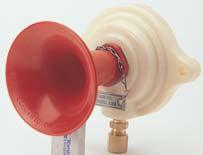
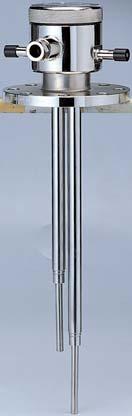
The sensor is based on the principle of distributed acoustic waves in a metal rod.
If the rod is not covered by liquid then the sound waves are dispersed freely without any interference. When liquid covers the rod then the emission of sound waves is muffled and his interference is picked up by the sensor and transmitted to the alarm and control panel.
On the alarm and control panel are displayed warning indication lights for set level 95% and alarm 98%signal when the set or alarm level is reached. The board contains relays which control the audio and visual alarms.
Applications
High level alarm and Overflow alarm under IBC code, USCG & IMO’s latest requirement in any type tanks, esecially cargo tanks on chemical /product tanker, crude oil carrier.
Electrical connection Flexible Hose
ELECTRICAL CONNECTION
Technical Specification
Repeatabillty
Output
I.S approval
Protection
Power supply
Operating temperature
Electrical connection
Material
Top mounting < 3mm
Side mounting < 1mm
current loop with 16mA no alarm 6mA alarm
EEX ia IIC T6
IP56
18 to 30V DC
Nominal 24V DC
Ambient -40 to +85
Liquid -40 to +150
Weight 2 or 4 wires
Stainless Steel 316L
0.7k g (with L=100mm)
Model:PA-LW2
Model:PA-LW2
Valve Remote Control System
Introduction
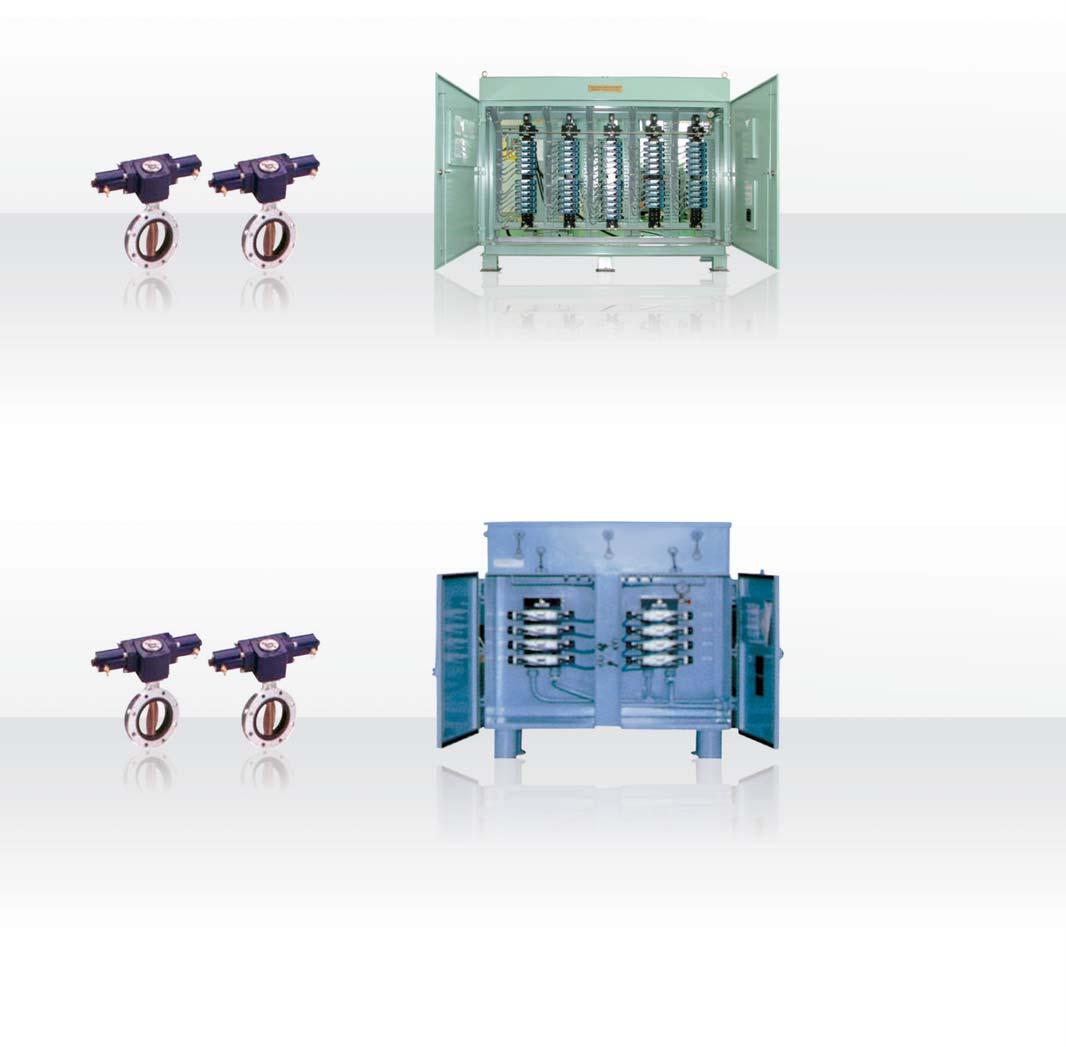
The AMRI-SEIL / PANASIA VRC system is designed for position indication and electro-hydraulic remote control of hydraulically actuated valves. The principle of the VRC system is that pressurized oil, generated by the power pack, is used to open or close the valve by means of the solenoid controlled actuator.
Safety Area
The actuated valves are installed in safety area. (Ballast and Engine room etc)
Hazardous Area
Solenoid Valve Rack
Solenoid valves are used to control the direction of oil flow to each actuators operated by an electric signal from control console installed in safety area.
Interface Panel
The interface panel consisting of relays, Power supplier, Converters and Barriers, etc., is required to communicate between valves and computerized control system.
The actuated valves are installed in hazardous area. (In-tank and On-deck)
Deck Box
The deck box controls the functions of each actuated valve installed in hazardous areas via explosion proof solenoid valves.
Hydraulic Power Pack
The hydraulic power unit consists of oil tank, electric motor & hydraulic pump which generates the required system operating pressure.
Control console & Mimic panel
Remote operation of the conventional type by the control console with mimic panel.
Automation System
Remote operation by the computerized system
Air Purge Type Tank Level&Draft Gauging System
Operating Principle
The operating principle is based on the measuring the hydrostatic head of the liquid by providing constant low flow of air into a probe (called as sounding pipe) which opens at the tank bottom. When a light quantity of air (supplied from flow regulator) is discharged through the purge mouth at the tank bottom, An air pressure corresponding to the liquid level (considering the viscosity) will be built up in the sounding pipe.
If the specific gravity of the liquid is known and a pressure in the sounding pipe is measured, it is possible to calculate the distance from the pipe opening to the surface by means of the above expression. The pressure is read on the indicator graduated scale in meters or volume or percent of full tank.
Specification
brass with protect cover(SUS304) one(1)-Line air purge system 1% of F.S, if drawn scaleindicator calss 0.5 -25 to + 75 (It must be secured that the dew point of the air lies below Min. Temperature)
to 7kg/
8mm
Electric Pneumatic Type Tank Level & Draft Gauging System
Operating principle
The operating principle is basically the same as the level measuement of air purge type tank level monitoring system. But Electric pneumatic type tank level gauging system has electric reading and P/I Converter that converts pneumatic input signal to 4-20 mA output signal in addition to air purge type system.
Application
Ballast tank level measurement. Draft measurement. Engine room tank level measurement. (F.O, D.O, L.O, etc)
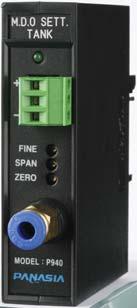
P/I converter
The upgraded P/I converts is provided to converter an pneumatic pressure into an electronic signal for remote display of tank level and draft gauge on CRT and /or Electric indicator.
Unlike the pneumatic indicator possible to be damaged by excess-pressure, this P/I converter is free from inlet excess-pressure without even Gauge saver.
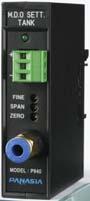
Model : P940
Output current : 4 to 20mA DC, 2-wire system. Protection against inlet excess-pressure.
Electric Pneumatic Type Tank Level & Draft Gauging System
Introduction
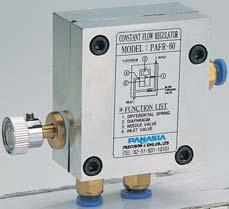
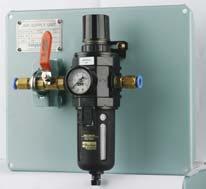
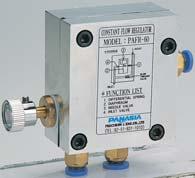
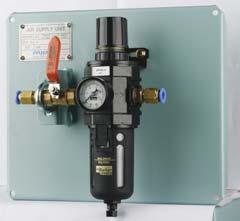
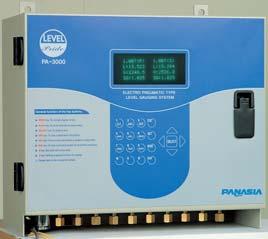
Level Pride is specialized on electric pneumatic air purge system. Level Pride is equipped with all the necessary components such as air supply unit, constant flow Regulator Module(PA-1500), sensor Module(PAMX-2000)in one module. You need just one module for measuring 10 tanks. If you have more tanks to monitor, just plugging each other with LAN cable and set the some configuration. One of the Level Pride module which is configured as master finds all the slave modules connected with and calculates information automatically.
Features
10 Tank interface without any additional components. (Air purge System)
-Built-in Air supply unit, Constant Flow Regulator Module (PA-1500)
-Sensor Module (PAMX-2000), 12 bit A/D converter.
Various kind of correction function.
-Specific Gravity, Trim & Heeling, Sensor position
-Volume converting according to the Volume table
Various display format of the tank information to the user Industrial standard serial link and Ethernet link
-10Mbps LAN 1 channel
-RS232/485 1 channel each
Windows based Configuration program for easy setting & calibration
-Module/Ship/Tank/Channel setting
Specification
Type
one-line air purge system
6~10bar, set to 4bar
1% of Full scale
Intel StrongARMTM SA1110-206MHz
Linux for embedded system
16MByte Flash ROM
64MByte SDRAM, PC100
4 20 character VFD (Vacuum Fluorescent Display)
10 air pressure from tanks
2 serials (built - in RS232/485)
1 LAN 10base -T
Analog output (4~20mA, 1~5V)-Option
Dry contact - Option
-10~45 (under dry air condition)
0~80RH
450 350 240(mm)
App. 20kg
85~250VAC, 50~60Hz
System diagram
Electric Pneumatic Type Level Transmitter
Features
High accuracy
Long term stability
4-20mA Output signal
EEx-version(EEx ia llC T6)
Easy installation
Easy maintenance
Application
The level transmitter can be used for measuring level contents in open such as WBT.
F.O TK. in E/R etc. Additionally the level transmitter is available in Ex ia-version.
It is easy to install in all types of vessels because all of the parts is in one.
The Electro-pneumatic transmitter has developed focused on saving on installation cost with best reliability.
Function
The principle of operation is based on the measurement of the hydrostatic pressure at the bottom of a tank where air is injected continously through a sounding pipe.
A pressure corresponding to the level of the liquid will be built up in the sounding pipe. This pressure will be measured by the transmitter and converted into a 4 to 20mA signal.
Technical data
2wire
20mm from 0 to 10meter level 40mm from 10 to 35meter level clean dry air 4~8bar 0.5bar above range approx. 30 IN /h Naval brass stainless steel -10 ..+70 <=0.5% for main range (overall temperture-range) range 10...30V
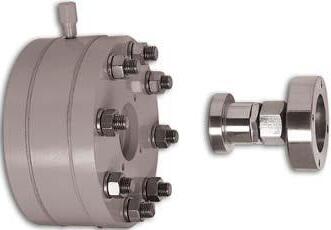
1:1 Converter (Pneumatic Tank Level Gauge)
Operating Principle
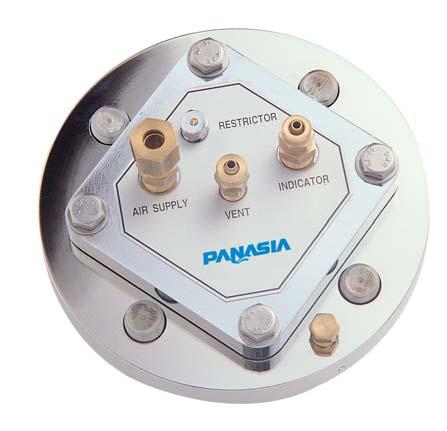
On one side, the diaphragm is affected by the medium in the tank which is to be measured. the pressure by which the diaphragm is affected is the hydrostatic pressure of the fluid or gaseous medium.
On the other side, the diaphragm is fastened with the pressure converter, forming so a pressure chamber. Via an air supply and a throttle, measuring air is applied to the pressure chamber where a pressure corresponding to the hydrostatic pressure of the medium develops. This pressure can be shown by an indicating Instrument. the pressure on the supply of measuring air must always exceed the highest media pressure.
Excess air is blown out through the nozzle in the center of the pressure converter.
To avoid distortion, the flange must be fastened at least 4points before final welding. Connecting tubes of stainless steel or copper are to be used between pressure converter and indicating instrument/air supply.
Application
Primarily for as an indirect continuous measurement of level and cubic contents respectively of liquid in containers and tanks.
Our 1:1 converter is espectaily suitable for hygienic purposes within the food, beverage and chemical industries as well as for potable water tanks.
Technical Data
Measuring range
Air supply
Air consumption
Viscosity
Tolerances
Temperature range Rasponse time
Air supply 1.4bar 1.4bar 1.4bar 1.4bar 2.4bar
0-30m H2O
1.4bar or minimum 1.2 measuring range
At 1.4 bar air supply approx.30 /h (emth tank, otherwize less at 2.5 bar air supply approx.40 /h 3500 Redwood 1 sec.
(measured with water)
Including reaction sensivity and hysteresis at 1.4 bar. at emtpy tank and free discharge nozzle : max.25mm
>0.1m tank level measured from middle of diaphragm : max. 25mm 0.75%
The O-point drift depends on the pressure loss caused by possible hose/tube mounted on the discharge nozzle.
-40 to + 200 (4bar)
Depends on tube dimension and tube length from pressure converter to indicating instrument as well as supply
Internal tube 6mm 6mm 6mm 6mm 6mm
Pipe length 30m 50m 100m 300m 100m
Reponse time approx.10s approx.20s approx.50s approx.4min approx.5s
Change in level
55mm/s
55mm/s
55mm/s
55mm/s 55mm/s
Electric Pressure Type Level Transmitter (LEVEL-3000)
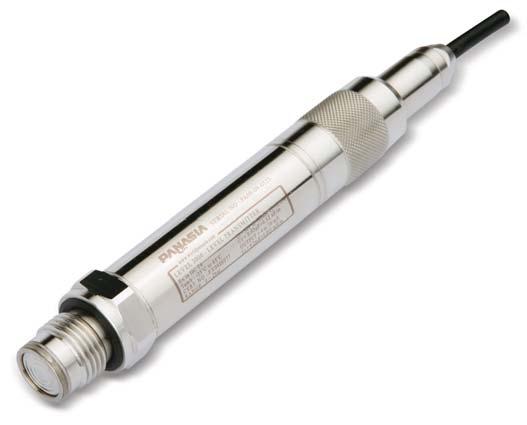
Tank Contents Transmitter
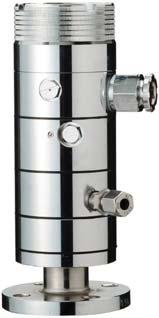
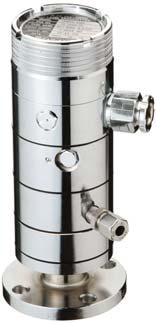
This is a 2-wire 4-20 mA level transmitter consisting of a transducer and an amplifier connected via a 6-core vented cable. The transducer is a pressure sensitive silicon micro strain gauge sensor mounted in a glass to metal seal. The sensor is protected by an isolation diaphram, electron beam welded to the transducer housing, with an oil filling between the sensor and the diaphragm. Pressure changes in the front of the diaphragm will bring a resistance change in the Wheatstone bridge of the transducer. This change in the Wheatstone bridge will be transmitted to the amplifier as a change in the electrical signal.
Application
BALLAST TANK REMOTE READING DRAFT REMOTE READING
HEELING AND TRIM REMOTE READING
FUEL OIL TANK REMOTE READING
WASTE WATER, WELLS, LOCKS, RIVERS ETC.
Feature
PIEZORESISTIVE SENSOR ELEMENT STAINLESS STEEL/TITANIUM MATERIAL
CONNECTABLE TYPE(CABLE CONNECTION PLUGGABLE)
TEMPERATURE MEASURING WITH PT100(OPTION) DIRECT OUTPUT TYPE(NO AMPLIFIER BOX)
HIGH MEASURING ACCURACY
HIGH TEMPERATURE STABILITY
NO HYSTERESIS
MARINE CLASS APPROVAL
Technicall specifications
Measuring Range
0~0.25bar, 0~0.5bar, 0~1bar, 0~2bar, 0~4bar, 0~6bar, 0~25bar, -1~5bar Each span range is programmable in use calibration kit.
@ 20
4~20 mA DC loop powered 2 wire Typically 20.8 mA (Programmable)
The Power supply can vary from 10 ~ 38 VDC. Permissible load resistance is shown graphically below.
Connection on junction box
Connection on junction box
Outline / Dimension
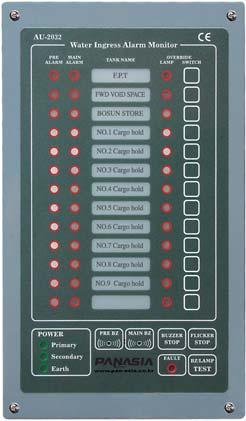
Water Ingress Alarm System
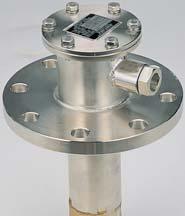
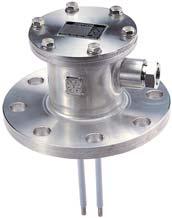
This system is designed to detect the presence of water in the cargo holds and intended for usage on bulk carriers. The system is in accordance with
SOLAS chapter XII/12
IMO Res. MSC.145(77)
IACS SC 180
Principle of Operation
Electrode type level switch is suitable for level detection in conductive liquid. If the electrode comes into contact with the liquid, the A.C current will flow through the liquid and complete the circuit. This AC current can be amplified and fed into electronic converter in sensor housing that detects changes in its input current caused by rising medium. this change are converted into a corresponding current change. If the changes exceeds an adjustable limit value, the output current rises discontinuously to > 3.4mA
The I.S.Barrier/signal converter in alarm panel uses this information to switch isolated contacts.
Feature
No moving part
Reliable
No damage by cargo
Easy to maintenance
Insensitive to cargo solids
Specification
Major Function
Pre-alarm at 0.5m
Main alarm at 2m
Fault/malfuncition alarm. (line monitoring)
Override/interlock function
Automatic cancellation of override condition
Override indication
Power failure alarm
Power automatic switchover
Lamp/buzzer test
Common alarm
Alarm time delay
Function test in-situ.
Configuration
The water detectors are installed at a height of 0.5m above inner bottom and another at a height not less than 15% of the depth of the cargo hold but not more than 2.0m. In any ballast tank forward of the collision bulk head, the detector is installed at a height not exceeding 10% of the tank capacity. In any dry or void space other than chain locker, any part of which extends forward of the foremost cargo hold and the volume of which exceeds 0.1% of the ship s maximum displacement volume, the detector is installed at a height of 0.1m above the deck.
Design to minimize a cost to shipowner
Least cost to retrofit
Pressure Monitoring System
General
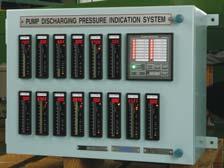
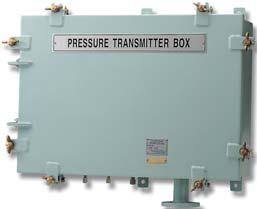
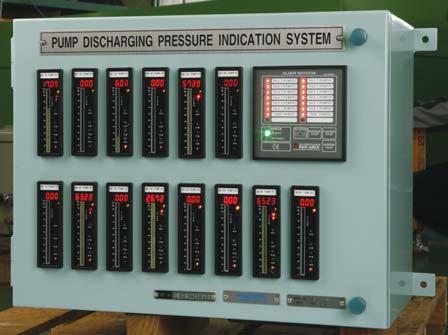
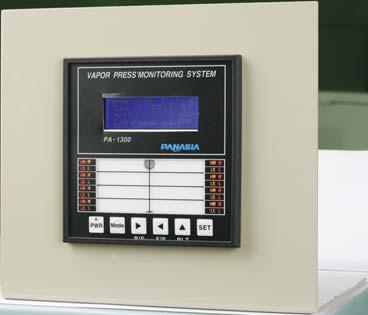
The pressure monitoring system is designed for cargo tank & manifold pressure monitoring for any number of tanks. The vapour pressure monitoring system is intended for pressure monitoring of waste return lines.
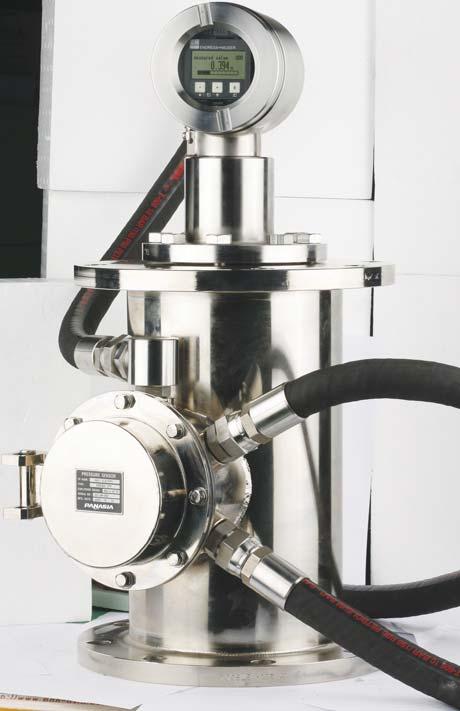
The PANASIA pressure transmitter is carefully designed to meet a harsh marine application for the tank pressure monitoring system in accordance with SOLAS II-2/59 amended in 1996, and vapour pressure monitoring system required under 46CFR part 39. 20-13 of VECS.
The transmitter is a high quality and accuracy semi-conductor type especially suitabe for the low pressure to be measured.
Operating Principle
The transmitter measures the pressure by means of a semi-conductor sensor. Pressure changes in front of the diaphragm will bring about a resistance change. The change in resistance is linearly proportional to the applied pressure and is amplified by an integrated electronic amplifier to give an output signal. The electrical signals from the pressure transmitters on deck are connected to zener barriers in the monitoring cabinet equipped with pressure alarm lamp, buzzer and pressure indicator in the cargo control room.
Technical Specification
Power supply
Accurcy
Response time
Measuring Range
Over load pressure
Burst pressure
Output signal
Process Connection
Approval
Enclosure
Ambient temperature
Medium temperautre
DC 10-30VDC
0.5% FS
<1ms/10...90% FS
0~25bar
Min.3xFS
200bar
4-20mA
G1/2A(PF 1/2 )
KEMA 03ATEX1127
IP65(DIN 43650)
-25~+85 (T4)
-25~+100 (T4)
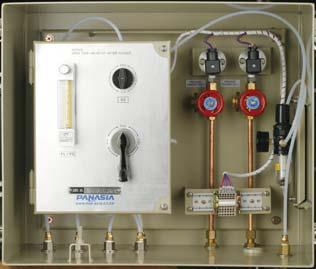
Vapour Emission Control System (O2 Content and Vapour Emission Pressure)
General
This is a complete system to monitor oxygen gas content and vapour pressure in the waste vapour and manifold lines from vessels. this system complies with USCG Regulation for Cargo vapour emission control system for tankers. All necessary parts are intrinsically safe protected.
Main Components
Operating Principle
The system has four(4) sample points and only one sample is directed and monitored individually through selecting valve at the time. The sampling lines are run from the respective sample point to the panel in a hazardous area. Sampling gas is purged to a atmosphere. Oxygen sensor is designed for monitoring content from 0 to 25 V%. Indicator in control room activates High O2 alarm at 8% which was preset and gives audible and visual. Flowsensor fitted on flowmeter monitors sampling gas low flow and activates alarm when flow rate is under minimum flow level.
Pressure transmitter monitors the pressure in waste vapour and manifold line.
Low and High pressure alarm is set at 10mbar and 120mbar respectively.
Technical Specification
Power
(50-60 Hz)
in air
Oil less carbon vane pump
Test gas from gas bottles
Version
Fixed Gas Detection System
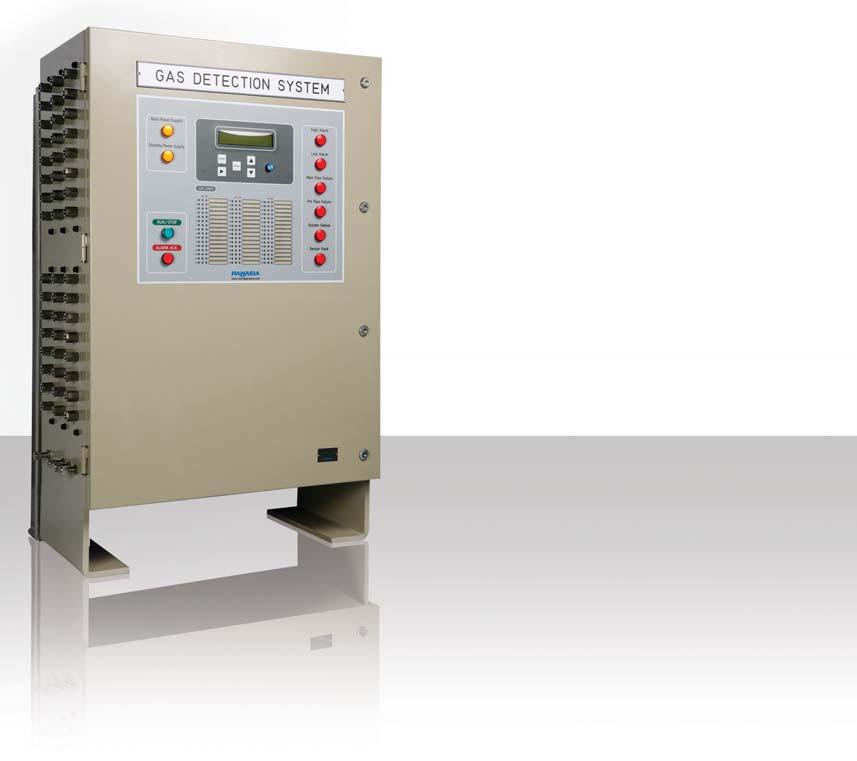
The sequential gas sample system is a multi point gas-sampling unit designed to detect and provide alarms for the presence of flammable and hydrogen sulphide gases within the water ballast tanks and void spaces.
The system is designed to extract a gas sample from each sample point via sample piping to the analysing unit where the flammable and hydrogen sulphide gas content is measured. By using solenoid valves, the unit provides an effective way of sampling multiple locations using only one sensor for gas detection.
The system utilises a heavy-duty sample pump to extract a sample of gas from each of the sample point locations. The extraction circuit incorporates a flow sensing device to annunciate a flow failure if the pump cease to operate or sample lines become blocked. Solenoid valves are used to select each sampling line for analysis in a sequential or pre-programmed sampling sequence. Furthermore, the system is extendable by adding additional valves, which are automatically recognised and activated. Flame arrestors are installed on all sample lines iaccordance with class regulations.
P & ID Program
Specification
The system can supply information to the vessels AMS system via a communications protocol which allows for a real time flow of information including the current location being sampled and the gas concentration level at this location.
The system is designed to provide protection of the following areas: Cargo pump rooms; Cofferdams ; Pipe tunnels ; Ballast tanks and double bottoms ;Void spaces ; Other empty area’s adjacent to slop tanks. Additionally, stool tanks and other empty areas adjacent to cargo tanks can be protected.
When locating fixedsampling points within ballast tanks, areas where an explosion is most likelyto occur must be assessed. The risk of explosion is mainly related to the release of cargo vapours through the ballast vents in the top of the tank, during ballast filling. Hence it is considered sufficient that detection takes place in the upper part of the spaces whengas concentrations reach detectable levels.
We advise that ballast tank-sampling positions belocated at the top of the tank.
The sampling system extracts gas samples from a maximum of 48 lines and the default sample sequence is to cycle from channel 1 to 48 and then back to channel 1 again. The time that thesystem samples on a channel can be altered for each sample line to compensate for varyingsample line lengths.
Flame arrestors are constructed from stainless steel and designed to prevent the propagation of flames from the analyzing unit if a fire occur within the unit. Flame arrestors are provided as loose items to avoid any damage to the unit during dispatch.
Pump Room
Bilge High Level Alarm System
General
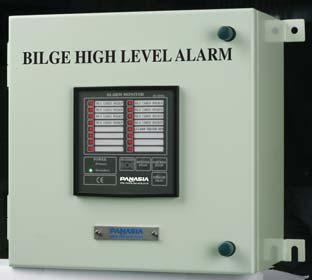
IMO MSC-67 issued a safety circular recommending measures to take to prevent explosion in oil tanker cargo pump room for new and existing tankers. OCIMF also recommends that all pump rooms shoud be provided with a high level alarm which activates audible and visual alarms.
Operating Principle
Level switch monitors level in bilge well. With rising level, switch gives output signal to alarm panel and then activates audible and visual alarms.
Application
Pump Room Bilge
E/R Bilge
Temperature Monitoring System
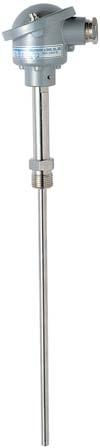
Temperature
Monitoring System
PATM-5000 series Module is designed for being integrated in a housing and fully compatible with RTD. thermocouple and thermister etc,. This module can be supplied as complete or partial system with later additions.
3 communication ports supported (COM 1:RS-232;COM2:RS-485:COM3/Programming Port:3-wire RS-232)
Distributed DA&C system Based on RS-485
Support master/slave communication
ASCII command/response
2-wire, multidrop RS-485 network
Transmission speeds up to 115.2Kbps
7-channel Thermocouplelnput Module
16-bit resolution
7 differential input channels
Software configurable for T/C, mV, mA input
3000 VDC isolation
External cold junction compensation
3-channel RTD Input Module
16-bit resolution
3 RTD input channels
software configurable for Pt or Ni RTD input
Input connection:2,3 or 4wires
Computer Monitor RS-232
Flat Type Glass Level Gauge
PA-FLG-P100 Series
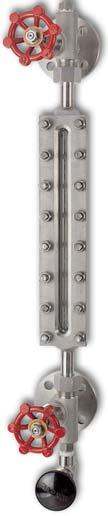
The PANASIA Flat type level gauge is designed according to JISstandard specifications. This type level gauge is used for marine oil tanks,excluding those of flash point of 60 below. Flat type level gauge allow an excellent observation of colorless liquid level through reflection of several parallel grooved glass.
Gauge Body Water space
Gauge glass
space
Operating principle
The principle of reflex glass is based on the difference in the refractive indices of liquid and gas or in particular of water and steam.. The liquid column is contained within the recess of the centre-piece behind the gauge glass which is clamped within the gauge body. If a ray of light encounters the surface of one of the 45 slanted grooves in the gas or steam space. It is reflected to the opposite surface of the groove and from there totally reflected-back into the direction of observation.
The steam or gas space therefore appears as silver-white.
The gauge glass has prismatic right angled grooves, On the side facing the water and steam spaces. Light rays entering from outside the gauge are either absorbed or reflected depending upon whether they enter the water or steam space.
The light ray which encounters the surface of a groove in the liquid space is almost totally absorbed. The liquid behind the reflex glass therefore appears back.
Model Classification and Specification
PA-FLG-P100
A B C Top vent Tank return self closing selfclosing selfclosing JIS 5K20A, 25A JIS 5K20A, 25A JIS 5K20A, 25A 3 / 3 / 3 /
The level gauges shall be classified into three type A,B,C according to the shape of the upper body Please contact our factory if other specification are required.
PA-FLG-P100
Installation
Support bracket to be placed and spaced Max. 1000mm between upper and lower valve.
Reflex Type Glass Level Gauge
PA-RLG-P100 Series
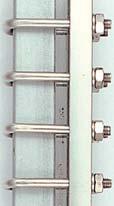
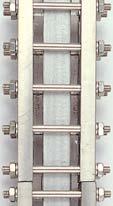
The PANASIA reflex type level gauge consists of a sturdily constructed body, glass and cover securely fixed by u-bolts to endure high pressure. This type level gauge feature serveral parallel grooves cut into the glass surface that is in contact with liquid. Thus the level of even transparent liquid can be clearly observed.
SUS304SUS304SUS304
SUS304SUS304SUS304
SUS304SUS304SUS304
SUS304SUS304SUS304
The level gauges shall be classified into three type A,B,C according to the shape of the upper body. Please contact our factory if other specification are
PA-TLG-P100
PA-RLG-P100
PA-RLG-P100
BALL CHECK
SELF-CLOSING
Magnetic Float Type Level Gauge
Operating principle
The measuring pipe (chamber) is connected to the tank to form a float chamber that has the same level as the tank. A float with a built-in magnetic floats freely on the surface of the liquid and transmits its movement in the pipe, without physical contact, to an externally mounted indicating strip (Indicator).
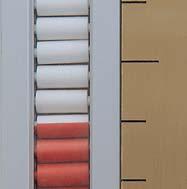
The indication strip is placed on the ou side of the pipe and consists of numerous magnetic flaps which are white on one side and red on the other, As the float passes the red/white flaps, the flaps are one after the other turned 180 around their own axis.
The flaps change from white to red with rising level and from red to white with falling level. The magnetic level gauge is particular advantage wherever dangerous and toxic media calling for careful level monitoring.
Features
No harms to the environment. Safety Guarantee. No leakage to atmosphere
No maintenance costs Easy to read.
Suitable for pressure tank
Alarm contacts.(option)
Analogue output signal, 4-20mA.(option)
Description of model
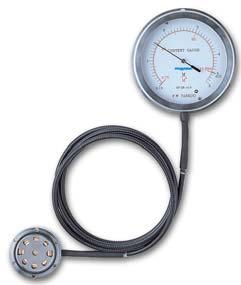
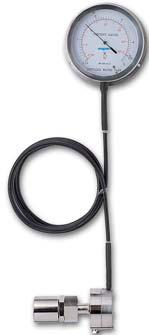
Self-Powered Contents Gauge
General
The PANASIA PCG-150 Series tank contents gauge requires no external power source for operation. The instrument is completely automatic and provides continuous indication of tank contents without the aid of batteries or hand pumps.
This gauge unit is simply composed of Diaphragm, capillary tube and dial type indicator.
Application
Generally applied to fresh water, Lub oil, Diesel oil, Heavy fuel oil and solvent gasoil and noncorrosive liquid.
Specifiation
Gauge size
Mounting type
scale of indication
Accuracy
Operating temperature range
Enclosure
Overload
Length of capillary tube
Dial 150, 100, 160
Side, submersible mounting
Height(m) &volume( )
1.5% of full scale
-20 to +100
Weather proof
Min,100% of full scale
5 meters, 2 meters (standard), other(option)
Operating principle
Model:PCG-150 Series
The diaphragm is affected by the hydrostatic head medium column in tank, which apply pressure to the oil filled capillary.
The pressure applied to capillary expands bourdon tube of indicator, so that the indicator displays the level corresponding to actual tank level.
Description of model
PCG- Type of sensor connection
S V F
: Socket connenction
: flange connection
: lsolating valve connection
Size of Indicator
: 100 dial gauge
: 150 dial gauge MS MT
Note Dimension H must be complied with because the indicator is sensitive to its mounting position.
PCG-150 Series
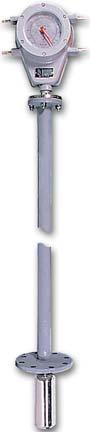
Dial Type Float Level Gauge
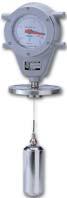
Operating principle
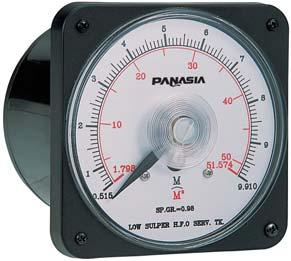
The PANASIA dial type float level gauge consists of float, measuring steel wire and indicating unit as main components.
A float accurately follows liquid level variations in the vertical direction (horizontal movement of the float is well restricted by guide pipe).
Vertical movement of the float is transmitted throught a measuring wire to the indicating unit, in which the measuring wire is wound around a tape pulley kept under constant torque by constant spring. the vertical movement is converted into rotation of the tape pulley in this way. This rotation is transmitted through a gear system to an indicator pointer which reads the liquid level on a scale dial of indicating unit.
Application
Generally applied to Water tank and L.O, D.O and H.F.O.tanks.
Besides, magnetic coupling type dial float level gauge is applicable to the liquids that emits corrosive, inflammable or poisonous gases.
Model : PDG-150 Series
Model
PDG-
PDG-150 Series
CASE-1
CASE-2
CASE-3
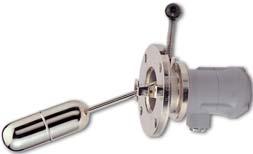
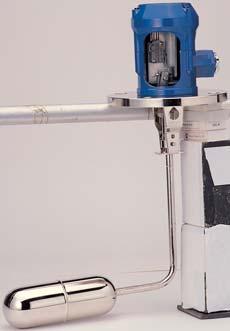
Float Type Level Switch
Operating principle
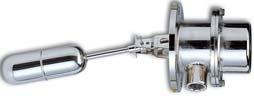
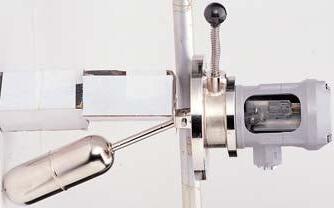
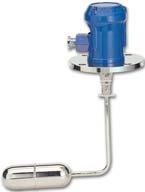
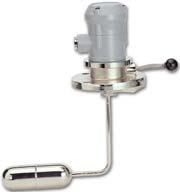
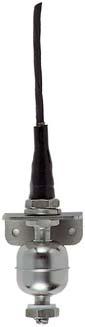
PANASIA magnetic float level switchs monitor and control liquid levels in open or closed tank.
A permanent magnet is part of a float which rises or falls with the changing liquid level. This magnet repells another magnet located opposite in the switch housing. In this way it causes a snap action contact effect. A switch unit provides on-off contacts.
Features
Easy maintenance
Safe operating conditions
Reliable
Application
Fresh water tank, Heavy fuel oil tank. D.O.tank, Sludge tank, Sewage tank, etc.
Installation Protection of Switch housing Float material
250V AC, 3A min. 0.7kg/d
20mm height at 0.9kg/d specific weight
-30 to +70
-25 to +135
3kg/ (standard), up to 12kg/ (option)
Flange, housing horizontal IP 56, IP 68(option) sus 316L SUS 304, ALDC 8 A(ROD LENGTh) :
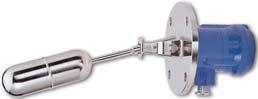
Float Type Level Switch
Operating principle
PANASIA magnetic float level switchs monitor and control liquid levels in open or closed tank. A permanent magnet is part of a float which rises or falls with the changing liquid level. This magnet repells another magnet located opposite in the switch housing. In this way it causes a snap action contact effect. A switch unit provides on-off contacts.
Features
Easy maintenance
Safed operating conditions
Reliable
Application
Fresh water tank, Heavy fuel oil tank. D.O.tank, Sludge tank, Sewage tank, etc.
-30 to +70 Medium temperature Rated Pressure 3kg/ (standard), up to 12kg/ (option) -25 to +135 Installation Protection of Switch housing Float material
Flange, housing horizontal IP 56, IP 68(option) SUS 316L SUS 304, ALDC 8
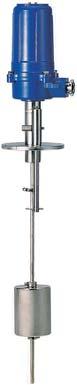
Displacement Type Level Switch
Operating principle
Operation is based upon a buoyancy principle whereby a spring is loaded with weighted displacers which are heavier than the liquid.
Immersion of the displacers in the liquid results in a buoyancy force change, which moves the spring upward. Since the spring moves only when the level moves on a displacer, Spring movement is always a small fraction of the level travel between displacers. A magnetic sleeve is connected to the spring and operates within a non-magnetic barrier tube. Spring movement causes the magnetic sleeve to attract a pivoted magnet, actuating a switch located outside the barrier tube. Switch set points are achieved by moving displacer modules up or down the displacer wire/rod.
Description of model
Specification
Displacer : Displacer
: With Test Device T
to 50
to 50
Optional informations
1.Special material(SUS316, SUS304) for weted parts including mounting flange, chamber is also available on request.
2.Switch contact type : SPDT, DPDT
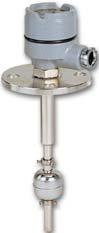
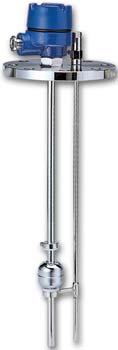
Reed Switch Type Float Level Switch
Operating principle
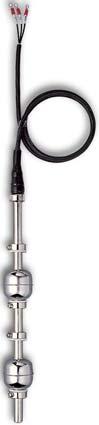
The reed switch type float level switches consist of a magnetic float and reed switch as main components. A float equipped with permanent magnet moves up and down with the fluid level between two stoppers and its magnetic field actuates a hermetically sealed reed switch incorporated in guide pipe.
The switches can be normally open, normally closed or change-over contacts.
The advantage of this principle;there is only one moving part, the float.
This actuates the reed switch with its magnetic field without causing any wear.
The reed switch is itself totally isolated from the media. These advantages give the user safe, repeatable, accurate and high operational reliability with low maintenance over a long and trouble free life.
Technical data
Operating temperature
Design pressure
Process medium S.G.
IP rating
Protection type
Switch output
Switch rating
-20 ~ 100 5kg/ ( 50float), 8kg/ ( 65 float above)
0.6~1.025
IP65, IP66, IP67, IP68
EX ia IIC T6 for PR-30EX and EX d IIC T6 for PR-30EXD
1.2A 200VDC(SPST), 2.5A 250VDC (SPST), 1A 200VDC(SPDT). sus 316 sus 304 sus 304 ALDC 8, sus 304 SPST, SPDT, DPDT(option)
Description of Model
PR-30S - : With chamber : No housing
Submergible type
Application
-Fresh water -Sea water -Low viscosity liquids
CONTACT TYPE : SPDT
All switches have three electric connections(black, blue,red)
The black wire is the common pole for both switching functions (black contact and make contact)
CONTACT TYPE : DPDT
This switch has two(2) SPDTcontact which is same as above.
PR-30S-2
PR-30S (with test device)
PR-30S-2 (with chamber)
Reed Switch Type Float Level Switch
PR-30S-1C (With chamber/IP67)
Contact Protection Requirements
When switching inductive loads such as relays, solenoids and transformers, reed switch contents require protection in order to ensure long, dependable life. when current is interruped, the inductance or electrical inertia of the load generates a large frequency voltage, which appears across the switch contacts. If the voltage is large enough, it can break down the medium in the gap between them, making a conductive path. this phenomenon, called arcing is the spark you see. Arcing can cause the contacts to burn, weld together or stick; thus, giving unreliable performance. The purpose of protection circuits is to prevent arcing, by shorting this voltage through an alternate path.
Recommended Protection
D.C.
A 1N4004 diode(or equivalent) connected cathode-to-positive, as shown in Figure 1, is recommended. The diode does not conduct when the load is energized, but conduts and shorts out the generated voltage when the switch opens. The generated voltage always acts in series with the applied voltage.
A.C.
A resistor and capacitor, connected in parallel with the switch, as shown in Figure 2, is recommended. The capacitor is a hight impedance to 60hertz, but is essentially a short circuit high prequencies of generated voltages. Transient suppressors or varistors may also be used to dissipate the transient and protect the switch contacts. For 130VAC rated devices, the following table may be used for selection.
Flgure 1 D.C Contact Protection (Drain the load)
Flgure 2 A.C Contact Protection (Protect the s/w)
Drain the Load Protection switch
Specifications
Mounting method
resistance
PAI-100A
110X110 Square Panel front mounting
4~20mA 1.5 1.5% F.SAT 20 0~100%(Standard) 250deg. 450g 0 to +40 Black Panel and local gauge box
SK-130-C
30 X 100 Panel front mounting DC 4~20mA 1.0%
1.3kg
On-alarm type, offalarm Type available for special specification
Black or white Panel and local gauge box Contact
Specifications
PAI-4000(Vertical type) 1% of F.S
%Display dual mode.(level & volume) %Display Max. 16 Gradient %Display A)DC 4~20mA(1-5V) or variable resistance B) RS-485
4Digit
Alarm contact, RS485 2point, 4point (option)
Dry contact normal open or close (option)
Dry contact normal open or close Dry contact normal open or close Dry contact normal open or close (option) ABS DC24V, 6W(MAX.) 0 ~50 1.0kg
Specifications
Press DC 4~20mA -0.1~+0.3bar(Free Scale) DC 24V
DISPLAY ONLY(SENSOSR : 0.3% of F.S) -0 ~50 ESDB4 250g High press:+0.22 bar, Low press:-0.05 bar
New Jersey Houston, Taxas Rio De Janeiro, Brazil
EUROPE RY, Denmark Rotterdam, The Netherlands Surrey, England Genova, Italy Piraeus, Greece Istanbul, Turkey Lisbon, Portugal Limmasol, Cyprus Vladivostok, Russia
MIDDLE EAST
Dubai U.A.E Oman ASIA Busan, Korea Nagasaki, Japan Dalian, China Shanghai, China Guangzhou, China Hanoi, Vietnam Kuala Lumpur, Malaysia Singapore Jakarta, Indonesia Kaohsiung, Taiwan Cochin, India