The Lyceum
A Publication of The Committee on Masonic Education
RW:.
WB
RW:.
WB:. Darin A. Lahners,
RW:.


RW:.
WB
RW:.
WB:. Darin A. Lahners,
RW:.
Brethren and Seekers of Light,
It is my distinct pleasure to welcome you to this edition of The Lyceum, the official publication of the Grand Lodge of Illinois, dedicated to enhancing our shared journey of Masonic education and growth.
As the crisp air settles upon Illinois and the early days of winter urge us toward hearth and kin, we reflect on the warmth and camaraderie found within the walls of our Lodges. This season reminds us of the enduring strength of Brotherhood and the many ways we, as Masons, embody the principle of giving.
In this edition, we shine the light on one of our Fraternity’s richest traditions: the Festive Board. Our curated articles delve into the origins and essential spirit of the Festive Board—an age-old custom and a joyful celebration of unity. Whether you are new to this tradition or seeking deeper understanding, you’ll find guidance on planning, etiquette, and the unique roles these convivial gatherings play in strengthening our Lodges. We also explore practical instructions, benefits of breaking bread together, and a historical glimpse into the festal customs of Colonial America, where Freemasons forged bonds at a shared table that shaped the fabric of a nation.
There is no better time than the beginning of winter, as light wanes and our homes and Lodges grow ever brighter with fellowship, to reflect on the importance of nurturing Brotherhood and giving to others. May these pages inspire thoughtful conversation, renewed tradition, and gratitude for the company of our Brethren.
On behalf of the editorial team, I wish you a very happy and peaceful start to the holiday season. May the lessons of our Craft and the spirit of generosity echo throughout your Lodge and your home.
Fraternally yours,
R.H. Johnson,

Editor-In-Chief
The Lyceum
The Grand Lodge of Illinois, Committee on Masonic Education

by WB:. Dr. Bernard Davis Jr., Chairman- Masonic Education Committee

Greetings Brothers. As we enter November, our thoughts naturally turn to gatherings of fellowship, gratitude, and reflection. In our Masonic tradition, the Festive Board is more than a shared meal, it is a symbol of abundance, unity, and the exchange of wisdom. Around that table, each voice contributes to the harmony of the whole, just as each dish contributes to the richness of the feast.
This month, I invite you to see the Lyceum itself as a Festive Board of Ideas. Here, we do not gather with food and drink, but with insights, experiences, and knowledge. Each essay, reflection, and contribution is a course in our banquet of wisdom. Some pieces may serve as appetizers, short reflections that spark curiosity. Others are hearty main courses, deep explorations of philosophy, technology, or education. Still others are desserts, creative works that delight and inspire. Together, they form a table of plenty, overflowing with the fruits of our collective labor.
The cornucopia, often associated with this season, spills its abundance onto the Festive Board. It reminds us that true wealth lies not in material possessions, but in the diversity of thought, the resilience of systems, and the fellowship of minds. Just as a well-prepared banquet requires balance, savory and sweet, light and rich, so too does our intellectual life require variety, perspective, and dialogue.
In our professional and personal lives, we can carry this metaphor further. In technology, we build systems that mirror the Festive Board: networks of servers, backups, and redundancies that together create resilience. In education, we mentor and teach, offering nourishment to those who hunger for knowledge. In community, we gather not only to celebrate but to strengthen the bonds that sustain us.
As Chairman, I see the Lyceum as our shared table. It is a place where ideas are served generously, where fellowship is renewed, and where gratitude is expressed not only for what we have received, but for what we can give. May this November edition remind us that we are stewards of abundance, called to share, to teach, and to inspire.
Let us raise a symbolic glass together, to the Festive Board of Wisdom that sustains us all.
Fraternally,
Dr. Bernard Davis Jr,
WB Dr. Bernard Davis Jr, Chairman - Committee on Masonic Education
Grand
Lodge
of the State of Illinois

W:. B :. Andrew Hammer, PM Master, Alba Lodge No 222 President, Masonic Restoration Foundation
Whatever action you do, whatever you eat, whatever you offer in sacrifice, whatever you give in charity, whatever austerities you perform, all that you do; make as an offering unto Me.
Bhagavad-gita 9:27
Dining and Freemasonry are inseparable. Historically, the Masonic banquet is an essential part of any assemblage of brothers, so much so that one of the stated reasons for convening a ‘Grand Lodge’ in London in 1717 was to restore the solstitial banquet held in the name of an adopted Christian saint. And in Scotland, just over a hundred years earlier, three of the thirteen points of the Second Schaw Statute of 1599 deal with the banquets held for ‘prentices and fellows of craft’.
In making such a statement, one certainly does not suggest that dining is more important than the ritual or philosophy of the Craft. Quite the contrary: early Masonic dining was intertwined with both, so the purpose of this document is not to retread a history that can be read more extensively elsewhere, but to examine the manner in which Masonic dining is to take place.
In other words, we are not discussing if or when to dine, but more importantly how to do so. How we dine speaks to who we are, and as with all of our other actions, it demonstrates who we seek to be as Masons. Simply put, how we dine should be as mindful as everything else we do when assembled together as craftsmen.
In my book Observing the Craft, published in 2010, I described these ideas in conceptual detail in the chapter entitled The Festive Board. This document will briefly revisit some of those ideas, towards the goal of providing a more specific idea of how to create a Masonic dining experience, as well as address the matter of what we should properly call such a thing. On that point, I will offer a different term; so here I’m not only asking you to consider changing your minds, I’m also asking me to change mine.
For many Masons who read this, the need to draw attention to Masonic dining will seem a bit strange. That is because in the world of Masonry outside of the United States, formal Masonic dining is as commonplace as the square and compasses, and always has been. However, in the United States, the practice has fallen away so noticeably that almost every document which has referred to it in the past hundred years laments the fact that it is in a state of disuse.
That is not to say that blame is to be placed anywhere for this lapse. So many brothers have just never learned that the meal after a Masonic meeting was ever supposed to be anything other than an inexpensive and informal dinner. But before the 20th century, it was just as common for American Lodges to practice some form of ceremonial dining at the end of their meetings, as one would find anywhere else in the world. And it was always meant to be more than just ‘dinner’.
The Masonic dining experience is actually meant to be a second Lodge meeting, where the things we do not do in the first one are allowed in the second—within the boundaries of our obligations, of course. Much like breathing, we contrast the inhalation with the exhalation, and both go together naturally. The same pride we take in the solemnity of the ritual meeting can become the considered joy of the fraternal banquet.
The event has a ritual, as well as its own etiquette, because it holds significance. Just as with everything else, Freemasons have developed a way of doing things in relation to dining which is meant to be observed. Otherwise one might just as well have a dinner with a group of friends. Masons are people who think about what they are doing and why; it only stands to reason that this would apply at table as well as in the temple.
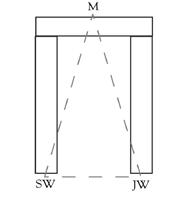
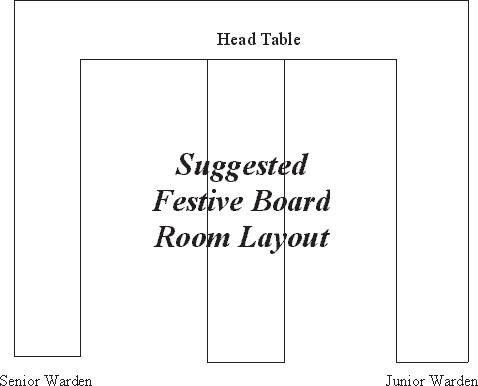
The form of this second meeting is a U-shaped arrangement of tables, with the Master at the head, or what would be the bottom of the U. The Wardens sit at the ends of the tables, at the top of the U. The Master is usually joined at the head table by his guests, or any Masonic dignitaries who might be in attendance that evening, at his discretion.
There is a reason for this particular arrangement. In operative Lodges, and indeed to this day in a few lodges throughout the world, both wardens are placed in the West, sitting at the end of the brethren on either side of the Lodge, not in the way we find them in most Lodges today. If we consider that each warden is responsible for his area of the Lodge, then we can see how the arrangement of the tables, with a warden on each end, evokes this older arrangement in the Lodge, where each warden was responsible for his column of brothers. The dining room, then, is arranged in the form of a Lodge, even if it is not the specific form of our Lodges. There is also something that might be said for the sense of fraternal connectivity communicated by a contiguous seating of brethren, as opposed to islands of round tables scattered about the room.
For that same reason, Non-Masons should not be invited. In the same way that a brother earns his place in the Lodge through initiation before he can take part in its assemblies, so does he earn his place at the Masonic table. The occasion is not for those who have not earned that place. This is also because the brethren have the right to feel secure in their surroundings should they wish to discuss the rituals and philosophy of Freemasonry.
No brother wants to feel as if he must be guarded in his discussion of the Craft when he sits down to refreshment after a meeting. After the labour of the Lodge is finished, the brethren are often eager to discuss the Craft amongst themselves, and they have every right to do so in the exclusive presence of their own company. In the presence of non-Masons, however, the mind of a courteous brother is always on the ability to include one’s guests in the discussion, and this cannot be achieved to the benefit of either Masons or non-Masons at the end of a Masonic meeting. Let the Lodge, then, provide special outside events to be shared with our families and friends, and let us have our internal events for ourselves.
The choice of food for the Masonic table need not be ostentatious. Filet mignon in a Périgord truffle sauce is not to be expected, but more important, neither are sandwiches and beans. The guiding idea is that the food should be of the same quality one would find in any respectable restaurant, and it should be presented and served in a way that conveys dignity even if served on paper plates. It is also important to consider the possible dietary restrictions of both members and visiting brethren. As would apply to any general event planning, religious sensitivities and allergic concerns should be accounted for in advance, so as to not make a brother feel unwelcome, and thus become an obstacle to harmony. [In other words, it might be better for each brother to enjoy pork or shellfish on his own time, and not seek it in the more universal atmosphere of the Lodge.]
As to the protocol of the evening, Masonic tradition confirms that whereas national songs, toasts to the head of state, or other forms of patriotic expression are not appropriate in the body of the Lodge room, they have quite commonly been found at the Masonic table since the late 1700s. It is here where brethren may express those good-natured and sincere salutations that we do not take into the universal and spiritual space of the Lodge.
The Masonic table, therefore, is where we may give voice to our own sentiments, as regards life cycle events, the acknowledgement of the particular accomplishments of a brother, and toasts to our respective nations and their leaders. When done properly, this takes nothing at all away from the Lodge meeting. On the contrary, bringing these things to the Masonic table instead of trying to insert them all into the Lodge meeting, adds a superb dimension of true brotherhood and friendship to the entire evening, where the brethren can enjoy a Masonic refreshment that is every bit as valid and hearty as their previous Masonic labour.
Throughout the world, there are many ways to conduct the event. Consequently, many Lodges have procedures and traditions that are unique to their particular Lodge. Some Lodges may follow very traditional forms of toasts, salutes, and songs, where other Lodges may have a more simpler protocol, one that has a more natural and spontaneous feel.
It is common in some Lodges to appoint a Master of Ceremonies, who will formally announce that ‘the Worshipful Master wishes to take wine with the brethren’; another Lodge may have the Master direct the proceedings himself, speaking directly to the brethren. Some Lodges will use the well-loved tradition of the ‘quick fire’ with every toast; others will prefer to use a different salute, or take a more subdued tone altogether.
It may be the custom of one Lodge to have the brethren process into the dining hall, where another might use the more common approach of having the Master of the Lodge announced as he processes in to the rhythmic applause of the brethren.
Regardless of how a Lodge goes about crafting a dining experience, any Lodge that does bring this important component of Masonic fellowship back to life within its walls, will immediately understand why so many of our most esteemed brothers thought it to be so necessary to our gatherings.
Now that we have established how we are going to dine formally, another question arises regarding what we should call this assembly, this additional meeting of the Lodge. A few terms have existed, both ancient and recent in their popularity. We need to consider this, because words matter to Masons. They always have, because it is through words that we form the very temples in which we sit. The terms we are going to deal with here are agape, which has been used by a handful of lodges in North America, and the previously mentioned festive board, which is used by a majority of English-speaking lodges that give a name to the dining experience.
Unfortunately, the Masonic Restoration Foundation at its inception was largely responsible for the use of the term agape in North America. But ideas evolve, and new information should overtake old misperceptions. So let us now be very clear on this point: an agape is a Christian religious feast. This is simply a fact. The adoption of the term into Masonry is an innovation in Masonic language, and derives from latter-day French Masonry, perhaps as a poorly veiled imposition—be it intentional or not—of sectarian religious or spiritual attitudes onto the Craft. Consequently, one should no more call a Masonic dining experience an agape than one would call a lodge meeting a mass. There is no precedent for the use of the term in English-speaking Masonry.
The use of the term in English-speaking lodges in North America would seem to be a result of innocent ignorance, and is likely to offend both Christians and non-Christians alike (the former because of the implication of assimilating their religious ceremony into the Craft, and the latter for the imposition of the same upon the Craft). Masons who wish to participate in an agape should seek it out in their respective religious institutions, and not attempt to manifest such a thing in the universalist atmosphere of Freemasonry, where all who believe in a Supreme Being are welcome.
Looking at it from an entirely different perspective, this author has also been to Masonic dinners in European lodges that are called agapes. The curious thing about those experiences, however, is that those agapes were simple dinners at round tables, with no intention
whatsoever to make them stimulating opportunities for either discussion or ceremony. The brethren were telling jokes and complaining about their jobs and other things, and serving themselves from open pots. In other words, they looked just like the kind of Masonic dinners one would find in any other lodge where eating is nothing special, and is done in the cheapest way at the cheapest cost. In fact, there is even a website for French lodges where one can buy what are essentially MREs, along with cheap plastic plates and plastic wine goblets, to be used for their agapes. So despite the romance of the word, the grass is not necessarily greener on the other side, no matter how much one might want it to be so.
But what is wrong with calling this an agape?
The reason explained above should suffice, but there is an even more important one than the problem of it being the name for a sectarian religious ceremony. That primary reason is very simply, because it is the wrong Greek word.
Masons misuse words just as well as other people. One only need mention the ridiculously overused word ‘esoteric’ and it should become obvious that so many Masons use this word incorrectly every time we want to say ‘philosophical’ or ‘exegetical’ in reference to the repertoire of Masonic thought.
But observant Masons should be concerned with accuracy. If we wish not only to be serious, but to be taken seriously, then we must be more concerned with what is correct than what some of us might find appealing. Further, if we are going to step outside of ourselves by using someone else’s language than our own, then it is absolutely necessary that we use it correctly, and understand what we are saying.
In an English-speaking Lodge, the use of the term agape appears as more of an attempt at affectation than respecting an actual tradition [because again, there is no tradition of an agape in English-speaking lodges]. That becomes clear when one considers that if the intention of using the term is to communicate a sense of brotherly love, then as stated above, the entire word is wrong. That word is not agape, but philia [φιλία], and no one has ever used that word to describe any ceremony in Masonry.
If one must use Greek, there are at least three other Greek words that are arguably more appropriate to describe a gathering of human beings who would see themselves as brothers, or which would denote an extension of unconditional hospitality to each other in a spirit of brotherly love. We have already touched on philia, so let us consider two others:
Storge [στοργή] reflects the reality of sitting down with those who you may not really like, or must live with despite disagreement. It is often translated as familial love, which one thinks of as being between parent and child, or amongst siblings. But that translation focuses on a certain unconditionality which avoids the more clinical definition of such love being one of obligation, without choice. As many of us know, that is sometimes a far more honest interpretation of most Masonic gatherings than any romanticised notion of an ethereal and perfect affection for one another. Whilst not optimal, it is soberly realistic.
Xenia [ξενία] may well be the most accurate description of an event where the goal is to make everyone feel happy and welcome. It means, quite surprisingly, ‘fraternal hospitality’,
and that is only surprising in the sense that one wonders why the brothers who brought you ‘agape’ either never knew or never gave any thought to that. It’s not as if this is in any way esoteric [yes, I did use the word correctly]; C.S. Lewis did an extensive study of comparative words for love in Greek over half a century ago. If the function of Masonic dining were purely exoteric, it would be the ideal word for it, even though difficult for some to pronounce.
What becomes clear now, with just a bit of examination, is that it is just not good enough to use a borrowed word—that is also not the correct one—merely because ‘we like it’. Innocent ignorance is one thing; wilful ignorance is quite another, and observant Masons cannot accept that under any circumstances.
The Greek language just doesn’t give us a singular or simple word for love. But perhaps the real problem is that we should not be using the word ‘love’ for the Masonic dining experience in the first place. It is—although not without love— not really the primary action taking place at this moment of the brotherly evening. Something else is taking place. Let’s come back to that, after we have discussed the more common term for Masonic dining, the festive board.
But the term festive board just doesn’t seem to communicate the more formal, or serious intent of our dinners.
Fair enough. But first let us understand that the more serious or profound portion of a Masonic gathering should properly take place within the tyled Lodge and not outside of it. This is where Masonic education was intended to be presented, as part of our work, and that principle should be adhered to in every possible instance, lest the tyled Lodge be diminished in importance in the eyes of the brethren.
The line between meditation and mastication becomes blurred historically when the 18th century Lodge is meeting at one table for both light and libations. This is what we now call the Table Lodge, which used to be—in many places—simply the Lodge. In today’s Masonic world, the idea that one might continue the discussion of whatever theme was presented in lodge at the table is perfectly in order, and should certainly be encouraged. However, what one does not want to happen is for the observant aspect of the evening to be found only at the festive board afterwards, because the Lodge is not doing its proper work.
It is understandable that some may find the term festive board to be inadequate, even though it is the term used for generations—as well as today—to describe a Masonic dinner. Our brethren in Canadian lodges have made the valid point that since their lodges commonly have festive boards, which, like the previously mentioned ‘agapes’, are just what the brothers in their jurisdictions call eating, there is no indication of quality or a specific tone to the event when a lodge says it will be having a festive board. While the addition of ceremonial toasts in one lodge may be the very element that raises the bar for an otherwise mediocre dinner, in other lodges it is merely what is expected, and sits in the midst of bad food and inappropriate humour. It is certainly festive, but not in the way that Masons intended.
What do we do then, for those brethren who would like their festive boards to be a bit less festive, and a bit more contemplative? What about the brothers who are dabbling with Greek, and who perhaps feel they must have an exotic language to validate their ideas?
Brethren, the answer to this semantic inadequacy may be found in Scotland, where most Masons call the Masonic dining experience by yet another Greek word, although one which long ago found its way into English, as well as the language of Freemasonry. That word is αρμονία, or harmony.
Before one advocates for the use of that term, let’s be clear about something. One can find the exact same degree of laxity and frivolity at a harmony in Scotland as one can find at one of the European agapes I mentioned earlier, or at a ‘too casual’ festive board in Canada. The clarification of terms offered here is meant to clarify the focus of our minds, when we consider what it is we are seeking to do at table. Structurally, a harmony can look as much like a first rate festive board as it can its own unique creation. It is proposed here as an ideal name for something, the quality of which is entirely up to each lodge. This is the reason why:
As thoughtful, observant Masons look for a meaningful term to describe the Masonic banquet, harmony, more than any other term, provides a perfect description of what is to be sought in that dining experience. Harmony speaks to the activity of the moment in both the literal and spiritual sense. The brethren assembled find harmony first by joining their voices in song, and then again in the expression of Masonic harmony by joining together in a conscious effort to create a shared experience. This now goes beyond the notions of both a ‘festive board’ or the ‘agape’ ceremony, to explicitly state a purpose for the banquet. Brotherly love is the by-product, but what is being made at the Masonic table is harmony, expressed more tangibly at that moment than in the Lodge room, where it is a no less deeper but yet intangible bond. We are making a harmony that we can sense more exoterically, as we prepare ourselves to return to the exoteric world.
While the tyled Lodge introduces the concept of harmony, and may realise it in different ways through ritual, the Masonic dining experience allows for the active manifestation of that concept through all of the senses. It completes the evening, and then once more harmonizes the two different modes of meeting experienced by the brethren. Harmony is thus expressed in multiple ways, and as one finds with overlapping circles, it finds a place in the centre to help unify the entire evening into a complete whole.
Therefore, I respectfully suggest that you consider that what we should rightly call the Masonic dining experience is a harmony, and by so doing, more enthusiastically install that noblest of Masonic aspirations into the regular practice of our Craft.
© 2017, revised 2020 - Andrew Hammer Excerpts from Observing the Craft, © 2010 This document may be freely distributed, with proper attribution. Observing the Craft: The Pursuit of Excellence in Masonic Labour and Observance is available from observingthecraft.com, and amazon.com
by Chad M Lacek
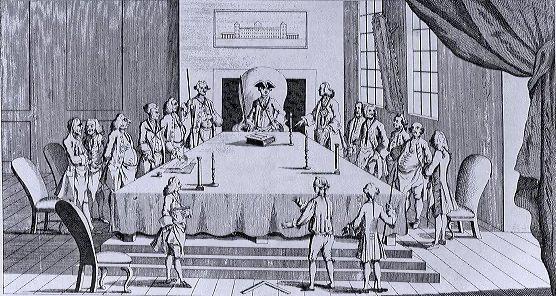
It felt like something was missing, and there was. When we first become a Mason, we’re introduced to wonderful rituals, but when the last words are spoken, and the Lodge is closed, everyone vanishes A new Mason has plenty of questions to ask, and this seems like the perfect time to address them. Instead, we congratulate them and say, “Good Night.”
Masonic education at a stated meeting should be thought-provoking. Each man in the room will have a diIerent perspective on the topic presented. It is this variety that makes our membership valuable. We have access to thoughts and points of view that we would never have ourselves. This is where real learning occurs. The format of the stated meeting does not allow for a free-flowing conversation, nor should it. Then where does that exchange of ideas take place?
Sadly, if it takes place at all, it’s in the parking lot or halfway out the front door of the Lodge. It’s ad hoc. Most of the members don’t even hear what was said. Everyone departs in their own direction, and all the insight that they might have shared on the topic presented is lost to us. It wasn’t meant to be that way.
It turns out that the Tyled Lodge meeting is only 50%
of a Masonic gathering. It may be the first half, as it usually is, or it could be conducted as the last labor of the evening. For most of my Masonic journey, I thought the Stated Meeting was all there was. What became of the rest? From what I have observed since joining, I can hazard a guess. See if this scenario is familiar to you…
One member of the Lodge always shows up early to turn the lights and heat on, while they set out the crock-pot of food for everyone else. They dutifully set the table and perform other chores as Masons filter in and help themselves to dinner. They indulge in some unstructured chit- chat as members come and go from the table at various times. When everyone has eaten, the Mason who was first to arrive is still in the kitchen, cleaning up. Do you know that guy? Are you that guy? Well, the time will come, and soon, when that guy stops doing it, and I don’t blame him.
When that Mason dies or quits, the Lodge dinners usually die with him. Masons used to meet in places that had commercial kitchens and staI. They would conduct the stated meeting and then retire to a catered meal. Everyone was able to enjoy it equally. The thoughts stimulated during the meeting would be explored in free form at the Festive Board dinner. There was a structure, a plan, an order of events. This
was the second half of the Masonic meeting. This second half is as important, if not more important, than the first half.
What happened? We got lazy, we got cheap, and then we got complacent. A decent catered meal delivered to your Lodge costs about $28 per person. That in itself isn’t too bad, but someone has to call the caterer with a head count and a date. Someone has to set the slate for the Festive board and arrange the table. Someone has to, someone has to, someone has to… so no one does.
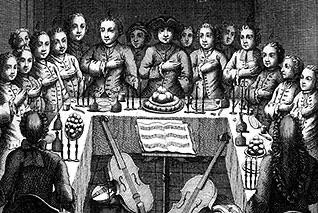
The first few times, the second half of the meeting is canceled, and it’s noticeable. After a while, it’s easily forgotten. New members joining during this period of neglect don’t know any better. For them, the Stated Meeting is all there is. But they feel that something’s missing. Lodges that continue this neglectful tradition notice something else is missing too: their new members. Why don’t they come back? Why would they come back? We give them a reason every time we see them. We provide a reason to leave or a reason to stay. If you’re curious what your Lodge is telling them, just observe their actions.
The Festive Board was dropped from many Lodges because it takes some eIort and expense to do it properly. Most worthwhile endeavors require that of us. It doesn’t take much, but a lazy man doesn’t need much to decide it’s too much. Many things in life will not change unless we are the agents of that change. Wishing we had something is a complete waste of energy. If you want it, you can have it. Recall the slogan for Nike shoes, “Just do it.” It’s worth mentioning that Nike is the Ancient Greek Goddess of Victory.
If you’d like to restore the missing half of your Lodge experience, but don’t know where to begin, I would
like to suggest a helpful documentary. It’s called, “The Masonic Table - The Art of Dining in Freemasonry.” You can find it on Amazon Video. It’s very well made and contains much more than just instructions on the Festive Board. It so happens that I was invited to be interviewed in the film, but I wish to make it clear that I receive nothing from it, then or now, but the satisfaction of participating in a worthwhile educational video. I hope that those of you who watch it find it enjoyable and interesting.
The traditions and rituals in our Stated Meeting have been preserved and passed down to make deep and lasting impressions upon us, and they do. The traditions and rituals of the Festive Board do no less than that, and perhaps a bit more. You will learn more about a Brother while seated next to him at a single Festive Board than you will in 10 Stated Meetings. Want more of the good stuI? Don’t settle for less. Bring back the Second Half of your Masonic meetings
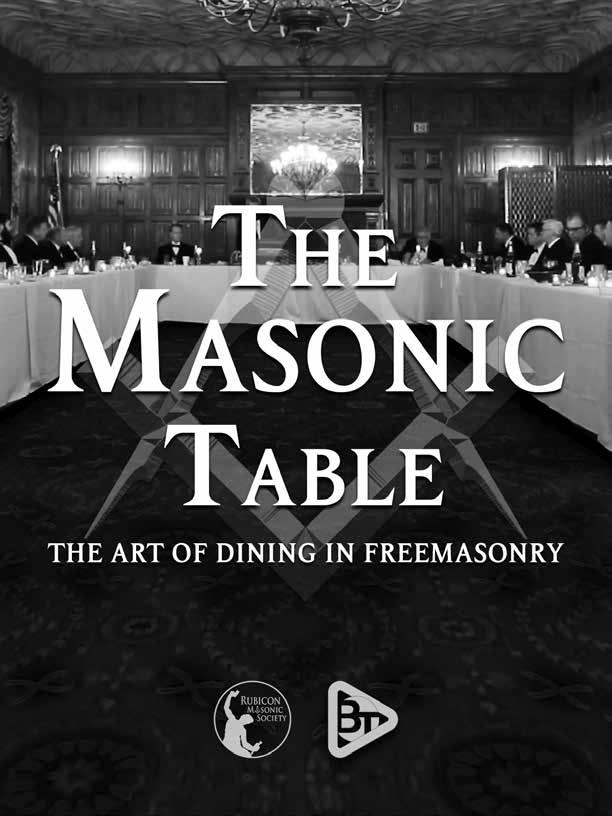
More @ https://rubiconmasonicsociety.com/the-masonic-table-documentary/

Watch the Trailer @ tinyurl.com/themasonictable
By Darin A. Lahners, PM, FILOR
A few years ago, I wrote a series of articles for a blog in which I re- examined Dwight L Smith's seminal work, "Whither are We Traveling?" For those of you who don’t know, Dwight Smith was a Past Grand Master and Grand Secretary of the Most Worshipful Grand Lodge of Indiana. He wrote "Whither are We Traveling?" in which he posed ten questions for self- examination regarding the state of Ancient Craft Freemasonry in 1963. You can find the essay hosted at various sites by using your favorite search engine. A visionary for his time, the questions he posed in this work are as important and relevant now as they were then. For the purposes of this article, anything in bold italic is a direct quotation from "Whither are We Traveling?" or another work, which I will credit directly in the article; otherwise, it is my commentary
For his seventh question in "Whither are We Traveling?", Dwight Smith asked:
Do we pay enough attention to the Festive Board?
MWB Smith begins this section with an examination of how Pisgah Lodge at Corydon was less than a month old when the time came to celebrate the Feast of St. John the Baptist in 1817. He states that there was every reason for them not to observe the holiday, having little money and having the brethren busy with their normal occupations. However, he states that the minutes tell a tale of a small number of Freemasons who assembled and marched to the courthouse to hear an oration, and after that, they marched to a local establishment and partook of dinner.
He goes on to mention that lodge records of any lodge that was around at that time or before will describe similar events, and that if there were minutes or secretary records about the amount spent on a jug of whisky, we chuckle and explain to ourselves that times "were di:erent then". He agrees that times were diZerent, but states he's not convinced that change has been for the better.
He then goes on to state that: "Should any reader have to ask what the Festive Board is, that in itself will serve to show how far we have strayed from the traditional path of Freemasonry." The problem is that while every lodge eats now and then, that is just the problem. We eat. He asks: “But how often are the Brethren permitted to meet around the Festive Board for the genuine, heartwarming fellowship of the traditional Masonic feast-the same kind of close-knit community of interest that a family experiences when it gathers for the Thanksgiving dinner?"
He states that for the most part, Lodges have abandoned the Festive Boards, and he goes on to quote a passage from H.L. Haywood's book More About Masonry, extolling the virtues of a Festive Board and how, when fellowship is restored, brotherly love will follow, and that members will fill the empty lodge rooms. He then goes on to ask: “What has happened?”
His answers are:
"1. First of all, we must not underestimate the Puritan influence on American Freemasonry. It is that influence which, almost without our knowing it, attaches some sort of holier-than-thou stigma to the Hour of Refreshment, frowns upon anything cheerful and festive, and gives us that grim and silent staring at a wall of which Haywood speaks. How many times have you heard a pious Brother refer sneeringly to the “Knife and Fork Mason” and to the “Six-Thirty Degree,” as if there might be something reprehensible in the enjoyment of fellowship? How silly can we become? The Brethren are not going to fill the benches until the walls bulge just to
see the pious Brother clown his part in the Master Mason degree, and why should they?
For some reason, Freemasonry overseas was able to escape the more dour e:ects of Puritanism, but on almost every facet of American life, we still su:er from it. The ramifications of its influence on Freemasonry in the United States are far too numerous and controversial to discuss here, and I must not elaborate on the subject except to say that a great many of our problems today can be traced back to the period when it was deemed almost a mortal sin to eat, drink, and be merry."
Traditionally, the Festive Board and its counterpart, a Table Lodge, have toasts. While you don't necessarily need to have alcohol to toast, traditionally, the toast is done with an alcoholic beverage. It may seem counterintuitive for a Grand Jurisdiction to publish rituals for a Table Lodge and include toasts in the ritual and then ask the Brethren to use sparkling grape juice while inside a lodge building. We forget, however, the hold that the temperance movement had on much of America during the late 1800s up to Prohibition. The rituals were originally written during a time when I believe that Alcohol was allowed in our Lodges or our lodges were meeting in taverns or other public houses.
Unfortunately, many lodges are already struggling to pay their building insurance, so adopting a European-style lodge with dining facilities and a bar would skyrocket the insurance costs. I realize there has been some loosening of the language around the Constitution and Bylaws regarding the prohibition of alcohol in the Lodge Buildings
in our Grand Jurisdiction, which would allow Festive Boards to be held in our lodge buildings However, there is no better way to display Masonic Brotherly Love and Fellowship in our communities than by having a well- organized and well-mannered Festive Board at local dining establishments in our community. The sound of the gavels, of the toasts, the sound of the cannons hitting the tables, the merriment of our brotherly love and aZection, the mirth, I can think of no better way to show men in our communities what Masonic Fellowship is.
Dwight continues:
"2. We must remember that this is the day of the service club. And, like it or not, our beloved Fraternity has members by the thousands who think Freemasonry should be made over to fit the Babbitt pattern; the glad-handing and first-naming, the perfunctory first stanza of “America” and the perfunctory Pledge of Allegiance, the raucous laughter, the ribald stories, the movie showing how corn plasters are manufactured. That kind of thing carried into Freemasonry becomes a travesty on Masonic fellowship, but it has crept into our Lodges, and we might as well face up to it."
How true it is that we have adopted patterns found in other organizations, all for the socalled betterment of Freemasonry. We want to be too many things for too many people. We have lost our sense of identity and with it, our purpose, because we are trying to please everyone. For an organization that holds so fast to our ancient landmarks, we somehow have lost how our forefathers met, and instead of holding fast to those traditions, we have decided that we need to reinvent
ourselves to keep up with the times. So, we have reached a point where Freemasonry is trying to be something it is not.
We are not a service club, and we should stop pretending to be. Our charity should be first and foremost towards ourselves, our families, our widows, and orphans. We need to invest in our membership and our own charities instead of investing in public charities, thinking that they will buy us goodwill, publicity, or more members. We are a Fraternity, and we need to start acting like one by holding Festive Boards with all their trappings.
While Masonic scholars opine and gnash their teeth about why Millennials and Gen-Z are not joining our Fraternity, the answer to me is clear. These generations value authenticity. How can we wonder why they are not joining us when we can't be authentic as an organization ourselves?
And on the oZ chance we do get a new member, how quickly we run them oZ by having most of our membership does not live up to those ideals inculcated into them during their degrees. We are our own worst enemy. Imagine their disappointment when they come to their first meeting. He's an unfortunate but all too familiar scenario.
They sit down at a "dinner" of cold cuts, cheese, chips, and stale bread, or if they are lucky, a warm meat dish served with Green Beans and another side. They sit through a dinner where they listen to their brethren discuss sectarian topics that they thought were forbidden to be discussed in a lodge. On the oZ chance they have enough courage to question this, they are quickly informed that the rule only applies "Between the
gavels". After dinner, they sit through a poorly run business meeting, where they are thrown into a chair without any explanation of what they are supposed to do, forced to listen to grown men argue about the roof repairs, and other banalities, followed by a Past Master who then comes over to "instruct" them in what they did wrong; often in front of the other brethren as they shuZle out of the lodge room.
Lodges must, as RWB Thomas Jackson stated (https://thecraftsman.org/wpcontent/uploads/2020/01/DONE-The-Stateof-Contemporary-American-FreemasonryTom-Jackson.pdf ): "Return to the premise of making good men better through a viable educational process so that at least our membership comprehends our purpose." Lodges also must embrace our heritage and work towards a common goal of changing Masonic culture to stress the importance of festive boards, and with them, the fellowship that they bring.
Smith then states:
"3. The casual living of our day. By this I mean the dress of the cookout supper, the manners of the truck stop café. No Lodge can experience the true joys of the Festive Board unless the Brethren are willing to adopt some of the ways of civilization. Hard words, perhaps, but the need to be spoken."
While MWB Smith is only discussing Festive Boards, and maybe it's only something that happens in the Midwest, but how many times have you shown up to a degree to see brethren in what could only be called their barn or beach clothes? When the candidate sees this, what do you think he thinks? If
members don't dress or act accordingly, how can we expect the candidate to take our degrees seriously? Our behavior and manner of dress should reflect the solemnity of our ceremonies. The Festive Board should reflect this. Suit and Tie should be required, not optional.
Dwight then continues:
"4. The over- emphasis on “togetherness.” (I approach the subject with fear and trembling.) Togetherness is to be encouraged, but it can be carried too far and has been carried too far in Freemasonry. In characteristic Midwestern style, we have gone overboard. Instead of inviting the ladies’ auxiliaries and the junior divisions to meet in our quarters and pursuing our own ways with dignity and restraint, we have literally abdicated in favor of the “family” idea. Masonic fellowship has been one of the casualties."
I am all for family events; however, I agree with MWB Smith. We must allow our members to have their own celebrations. Members need to have their own opportunities for true Masonic fellowship. These are opportunities for brethren to learn from each other's life experiences and enjoy each other's company. This is something that cannot be accomplished while wives and children are underfoot.
MWB Smith continues with his own solutions to the points he illustrated above.
"Then where do we go from here?
1. Well, first of all, we need to regain a sense of balance. For many Masons, fellowship is the most precious jewel in the Masonic diadem. It is necessary for the
very existence of our Fraternity. If Brethren cannot find it in their Ancient Craft Lodge, they will find it elsewhere, and the o:icers and workers who howl to high heaven when new members desert their Lodge in favor of appendant organizations might reflect on the fact that the Brethren simply may be in search of that which the Lodge denies them. We need to cultivate Masonic fellowship with all our zeal – not to choke it out with trivialities, nor speak of it with supercilious scorn. We need the Hour of Refreshment in all its beauty and dignity; we need to revive those noble old traditions of our Craft. We haven’t outgrown them; we haven’t found anything better; we have lost something and haven’t discovered what is wrong!"
It is my belief that one of the major reasons we see new members flock to certain appendant bodies is because their Blue Lodge Masonic experience is failing them. They vote with their feet. That is not on the brother, it is on the individual lodge. I cannot phrase it any better than what MWB Smith says when he states: "We need to cultivate Masonic fellowship with all our zeal – not to choke it out with trivialities, nor speak of it with supercilious scorn. We need the Hour of Refreshment in all its beauty and dignity; we need to revive those noble old traditions of our Craft."
Smith then illustrates his second answer to the above question he posed:
"2. But if the Festive Board is to serve its purpose, it must be dignified. I have said it before, and I repeat: A Masonic gathering is neither the proper time nor place for dirty language or suggestive stories. And just as lacking in propriety is the sectarian
preaching, and the rabble-rousing, and the political speech disguised as “Americanism."
Our lodge buildings need to be treated as a sacred space and kept distant from the concerns of the profane world. As I alluded to above when discussing a not-so -hypothetical scenario of that first meeting after a candidate is raised, as the Tyler guards against cowans and eavesdroppers, we should be guarding against divisive topics within our sacred halls. If we are to have Festive Boards, they must not dissolve into topics of conversation that undermine the strength and support of our institution's Harmony. Not only this, but in much of my writing, I have addressed how solemnity should be the number one priority for our candidates' degrees. There is no room for adlibbing, joking around, or horseplay. We need to treat the Festive Board with such solemnity as well.
Smith then lays out his third point:
"3. The Festive Board must be appropriate. It is not an occasion for comedians, nor variety shows, nor vaudeville troupes, nor tap dancers, nor magicians, nor barbershop quartets, nor homegrown movies, nor cute little child entertainers. They have their place, but their place is at the Family Night party, not at the Festive Board of Freemasonry. We cannot realize the by-products of Masonic fellowship when the stage setting is so inappropriate as to be ridiculous."
I agree, but I think MWB Smith could have included this in the above section. Clowns belong in the circus, not at a Festive board. Unless you are a shrine clown, in which case,
you can enjoy the festivities. I only ask that you do not wear your makeup or outfit. The Festive Board should be treated with dignity and respect. This means that we need to dress accordingly, we need to serve a proper feast, and have a proper toast. Nothing less is worth the energy to plan and execute such an event.
Smith concludes with:
"4. And finally, the Festive Board must be Masonic. Repeatedly, I am invited to Lodge banquets to deliver an address. “Give us one of those straight-from-the-shoulder Masonic speeches,” they tell me in advance. “We want you to lay it right on the line.” And then, lo and behold, when I arrive to deliver that so - called Masonic speech and “lay it on the line” to the Brethren, I find the room half filled with ladies and children! Bless‘em – I love them, too. But let’s acknowledge the most basic of all fundamentals: Freemasonry is for Freemasons. Surely, a few occasions can be set aside in the annual program of a Lodge when Master Masons can enjoy the fellowship to which they are entitled in a manner consistent with the traditions and practices of our ancient Craft.
I hope to see the day when the Table Lodge is authorized in Indiana, as it has been in the older Jurisdictions for two centuries and more. I hope to see the day when every Lodge takes pride in an appropriate observance of the Feasts of the Saints. John – something more imaginative than the tedious routine of the Master Mason degree with doughnuts and co:ee afterwards! Yes, and I hope to see the day when a Master Mason in the United States will have occasion to sing of his Lodge with
the same depth of feeling that Robert Burns felt when he sang of his:
Oft have I met your social band, And spent the cheerful festive night; Oft, honor’d with supreme command, Presided o’er the sons of light; And, by that hieroglyphic bright,
Which none but Craftsmen ever saw!
Strong mem’ry on my heart shall write
Those happy scenes, when far awa’."
I feel that this is a repeat of his point 4 above: The over- emphasis on “togetherness.” Can we and should we have Festive Boards that include our spouses or significant others? Absolutely. Should they be invited to every Masonic Festive Board? Absolutely not. They obviously would not be able to be invited to a Table Lodge. Yes, our families are important. Yes, we should have a Burns Dinner or Feast of the Saints John Festive Board with spouses or significant others, but no, they do not need to be at every festive board. Yes, our dues should allow for covering the festive boards for our membership, or at the very least, oZset enough of the cost for our membership to attend.
We must first and foremost reclaim this lost art in Freemasonry for its members. For many, their very first Festive Board should be an experience in which they should be unencumbered from having to worry if a spouse or significant other is having a good time. The sole focus should be on that member’s experience. As transformative as our degrees are, I sincerely feel that a well-
organized and run festive board can be equally transformative. Therefore, we should, whenever possible, associate Festive Boards with the completion of our candidates’ third degrees to celebrate them being raised to that Sublime Degree.
Furthermore, I would propose that to use the Grand Lodge of Illinois’ invitation to petition program to its fullest potential, lodges must invite potential candidates to festive boards to fully experience what Masonic fellowship should be firsthand. We have collectively, as a Fraternity, gotten away from this experience. It is time that we brought this tradition back to our lodges and into our communities. It is time to show ourselves as dignified, refined men, but also as men who can have a good time with each other.
I feel that for far too long, we have hidden in our buildings and temples, written checks, and not put in the sweat equity to really make an impact in our communities, and our lodges and our communities have suZered for it. If we want to bring in new members, we must show ourselves enjoying each other’s company. Being good men, wanting to become better men; that is the destination, but I feel that we often mistake the destination for the importance of the journey. The journey is only going to be pleasant when working as a team to make it pleasant for everyone. We need to build more opportunities for fellowship, and festive boards are a tried-and-true method used by our Masonic forefathers for doing that.
By Robert H. Johnson, PDDGM, FILOR
Introduction
First, let me say that I have been lecturing on this topic for almost 20 years, traveling all around the world, both demystifying the philosophy of our colonial brothers and putting a microscope on their values. The topic is something I’m passionate about. In the spirit of bringing just a hint of that presentation to the reader, I’ve put together this short piece for The Lyceum. I hope you enjoy it and that this inspires you.
In colonial America, the role of Freemasons extended beyond the crafting of stones to shaping societal structures and ideals. Within taverns and pubs, these Masons championed principles like brotherhood and equality. These establishments not only served as places for refreshment and nourishment but also became breeding grounds for revolutionary ideas and unity.
The Tavern and the Lodge Taverns in the 1700s were quintessential to the fabric of colonial life, serving as the primary venues for community gatherings. It was here that Freemasons and the general populace could transcend social hierarchies, engaging in discourse as equals. This environment fostered a sense of brotherhood and inclusivity, as the tavern's casual setting diminished barriers and encouraged camaraderie.
Influential Taverns: Nurturing Equality and Brotherhood
The Tun Tavern, a key meeting place for Freemasons, symbolized more than just a gathering spot; it was a crucible for unity and organizational growth. Located in Philadelphia, it was an emblem of Masonic tenets, where the pioneering U.S. Marine Corps was conceived. Here, Freemasons like Samuel Nicholas demonstrated leadership combined with the egalitarian spirit fostered by communal dining and discussion.
In Boston, the Bunch of Grapes Tavern illustrated how taverns nurtured revolutionary thinking. Freemasons and political leaders used this space for planning and governance, such as the Northwest Ordinance discussions. Dining together here, they transcended personal and ideological diXerences, united by a shared vision for a nation built on democratic ideals.
Dubbed "The Headquarters of the Revolution," the Green Dragon Tavern's legacy is cemented in American revolutionary history. It served not only as a meeting place but as a catalyst for action, with its basement hosting the Sons of Liberty’s plans for resistance against British rule. The bonds formed in its dimly lit rooms were strengthened over shared meals and drinks, breeding a fraternity whose collective courage sparked rebellion.
The act of breaking bread together is rooted deeply in human psychology, facilitating the formation of bonds and fostering trust. In communal settings like taverns, individuals feel more equal dining flattens social stratifications and opens channels for genuine communication. This context sets the stage for forging strong connections, enhancing cooperation, and boosting morale.
Historians and psychologists agree that when people eat together, barriers fall away, and a collective identity emerges. Taverns were thus ideal environments for nurturing the brotherhood central to Masonic philosophy creating a foundation upon which ideas of equality and shared destiny could flourish.
Pubs and taverns, historically inclusive spaces, allowed people of diXerent social standings to interact freely. Here, the Masonic idea that all men should meet "on the level" was practically realized. These establishments incubated dialogue that challenged existing class structures
In a world divided by social strata, taverns oXered a semblance of equality.
Freemasonry's inclusive tenets found fertile ground in these environments, which fostered a culture of merit over birthright. The psychological impact of such environments was profound, as they made abstract ideals like liberty and fraternity relatable and actionable.
The camaraderie and equality fostered in colonial taverns left an indelible mark on American society. While the original structures themselves may no longer physically exist, their legacy persists in the Masonic fraternity and the broader ethos of American democracy. "Tavern Masonry," with its ideals of fellowship and unity, remains a testament to how shared spaces mold values and inspire change.
By understanding the psychological dynamics at play in these settings, we gain insight into how Freemasonry and the conviviality of taverns helped shape a nation, eXectively blending the philosophical with the practical. The ongoing spirit of these establishments is a guiding light for those who continue to advocate for equality and brotherhood in today's world. So gather round the table for a little Brotherhood and be ready to change the world.
The Masonic Festive Board is a valued tradition in Freemasonry that celebrates brotherhood and camaraderie among members. Unlike the Table Lodge, which follows a specific protocol and requires a Grand Lodge Dispensation, the Festive Board is an informal gathering open to all members and sometimes to friends and family, showcasing Masonic inclusivity. Typically featuring dinner and toasts, it provides a relaxed setting for socializing and strengthening communal bonds.
This tradition dates back to the early 18th century, originating with four London lodges that met at the Goose and Gridiron Tavern, eventually forming the first Grand Lodge in 1717. Dining together symbolized equality among brothers and reinforced the core Masonic principles of brotherly love, relief, and truth.
The Festive Board, unlike the structured and ritualistic Table Lodge, oIers a simpler, more inclusive approach to Masonic gatherings, appealing to both members and non-Masons. It demystifies Freemasonry and promotes its philanthropic values.
Moreover, the Festive Board serves as an educational platform, where experienced members can share knowledge with new Masons, ensuring the continuity of Masonic traditions.
It also provides opportunities for charitable activities, often including fundraising for Masonic charities, reinforcing the principle of relief and demonstrating community commitment.
The Festive Board is more than a social event; it celebrates Masonic ideals, allowing members to engage beyond formal settings and enriching their experience while maintaining the organization's relevance.
This tradition is essential for reinforcing Masonic values. Lodges may hold Festive Boards after meetings or on significant days, such as St. John the Baptist and St. Andrew’s days, contributing to members' experiences and, in Illinois, earning points toward the Grand Master’s Award of Excellence. Enjoy and Cheers!
Where indicated, each toast is assigned to a proposer. The Master of Ceremonies (MC) will say, “Brethren, you will now give your attention to Brother , who will propose the next toast, i.e., ‘To the Worshipful Master”.
The Brother (proposer) will then stand and say, “Brethren, I have the honor of proposing a toast to our Worshipful Master… (he then would continue, with whatever he would like to say).” Following his comments, he would then say “Brethren, please be upstanding,” at which point everyone would rise except the person(s) the toast is being presented to. (In this case, the WM would remain seated). After everyone is standing, the proposer would then state, “To the Worshipful Master”. At which point all the brethren would reply, “To the Worshipful Master,” and then everyone would take a drink, and remaining standing for the “Quick Fire”.
Following the toast, the Brethren would perform a “Quick Fire”, which will be explained later
The MC will then say, “A response will now be given by the Worshipful Master”. The Master would arise and say something like…” I thank the brethren for the very fine toast, ……. continuing with whatever else he would like to say.”
This is basically the format for all the toasts. There are some toasts that will not require a reply, such as to the United States of America.
The toast to Grand Lodge Officers Past and Present - the response would be given by a Grand Lodge Officer (highest rank in attendance). If no line officer is in attendance, any representative, such as an ADGM, AADGM, DDGM, Grand Lecturer, CLI, or Appointed Committee member, is suitable. If none are in attendance, then no response will be given.
Some thought should be given to who will propose the toast. To make the evening memorable, it is nice to have a Brother who will give thought to the comments he makes regarding the toast he is assigned. For the toast to the United States, it is kind of difficult to give any more comments than just to propose the toast to the United States of America.
If you know of a visitor coming beforehand, he could be assigned the response to the Visitors’ Toast. He should be informed that he is responding on behalf of ALL visitors present.
Items required at the Festive Board
· A sheet listing the Toasts with the Proposer and the Brother giving the response.
Sheet listing the name of the Visiting Brethren with their title, Lodge, and Number.
Gavel for the Master / MC and for each Warden
That the meal should be sit-down and served; this can be done before the board or during (serving a course between each toast).
· Recommended format is below, but you can do as many toasts as you want. I’ve attended festive boards where each toast is to a Masonic theme or a Famous Freemason. It really is, up to each and every individual lodge to run with and make their own event.
· That we will HAVE FUN!!!!!!!
Brethren, before I call on the Chaplain for grace, I would like to explain the Working Tools, which are the Fork, Knife, and Tumbler.
First of all, Brethren, we are not assembled here today as Ancient Free and Accepted Masons, but rather as Energetic Masons, and the Working Tools are delivered to us as vehicles of moral instruction, and thus we apply them.
The Fork points out to us that as the prongs are all equal, and mutually assist each other, being joined together in one compact structure, so are we all equal when we meet as Masons. The Fork points out to us, that we should stand together shoulder to shoulder and practice those great qualities which cannot be to strongly recommended, namely:
· SYMPATHY with the failings of another Brother
STRAIGHTFORWARDNESS in all our dealings with one another
· GOOD TEMPER in all our differences of opinion
· FIDELITY to the Sacred cause with binds us together
The Knife points out to us the value of assiduity and patience. It teaches us not to cut off more than we can chew, but to limit our desires in every sphere of life, that rising to eminence by merit, that we may “Live respected and Die Regretted.”
The Tumbler indicates the necessity of moderation in all things, and as the perfect tumbler rings true, whether it be empty or filled with liquid, so should the Mason ring true after partaking in the labors of the Festive Board, as a cracked tumbler is despised and rejected by all men.
Thus, The Working Tools of the Festive Board teach us to bear in mind and act accordingly, to the cordial wishes of Prudence and Temperance, so that when we are summoned to drink the Tyler’s Toast after partaking of all good things which a bountiful providence has provided for us, may we rise and depart on our homeward way with the gratifying testimony of a Contented Mind, and Equable Poise, and an Equally Clear Head.
Before we apply this lesson of the Working Tools, for this evening, Brethren, let us stand and give our attention to our Chaplain, Brother , for the Invocation
DC: (Director of Ceremonies)
Brethren, before we continue, I would like to share some Festive Board Etiquette with you,
When the Proposer says: Brethren, please be upstanding;
· EVERYONE – (unless the toast is for you) will rise
With the Proposer, repeat in unison, to whom the Toast is for.
· IE: To the United States of America! To the Most Worshipful Grand Master!
· Those in attendance will then repeat whom the Toast is for.
· IE: To the United States of America! To the Most Worshipful Grand Master!
· Quick Fire Begins Here
· The MC will then say:
· READY. (The glass is raised breast high, arm extended forward)
· PRESENT ARMS. (The glass is brought to the second position in unison with the Worshipful Master The glass is brought to the left breast, then to the right breast, and then back to the second position, forming a triangle. This triangle is made three times: then the glass is brought to the table in three moves- it is first carried a little to the left, then to the right, and finally forcibly in unison to the table.) THE BATTERY, THREE TIMES THREE (Done)
· ALL: VIVAT. VIVAT. VIVAT (Right hand thrust upward with each VIVAT)
AIM. (The glass is brought to the lips)
FIRE or GOOD FIRE or FIRE ALL. (All Drink)
· Return your Cannons to the table (The foregoing should be done with the exactness and evenness so that everyone will execute all movements in unison, and the firing glasses shall strike the table simultaneously!)
· Finally, the Grand Honors will be accorded to the recipient of the toast except for the last toast.
At any time between toasts, anyone in attendance can ask to take wine with a specific subset of those gathered at the festive board.
Normally, to curb excessive drinking and such, I would recommend some ground rules for it:
1. No one person in attendance may ask to take wine more than 2 times during the evening.
2. The lodge putting on the festive board should make a monetary donation to the lodge’s charity fund, along with taking wine. IE, The cost of taking wine is a $20 donation to the Lodge’s charity fund.
Below are some examples of taking wine; note that these do not follow the quick fire rules. Instead, those named in the toast would simply rise, wait for the person who is proposing the taking of the wine to lead the toast, and then take their seats when done.
RAP GAVEL - “Brethren, the Worshipful Master wishes to take wine with the Officers of the Lodge for a job well done.”
RAP GAVEL - “Brethren, the Worshipful Master wishes to take wine with the Visiting Brethren, and he sincerely thanks you for joining with us this evening in fellowship.”
RAP GAVEL - “Brethren, the Worshipful Master wishes to take wine with our newly initiated Brother.”
Rap Gavel - “Brethren, the Worshipful Master now wishes to take wine with the Brethren of Lodge # .”
D.C. (***): Brethren, you will charge your glasses and be upstanding for the toast to the President of the United States.
W.M. Brothers Senior and Junior Wardens, cause the arms to be charged and aligned for the first toast.
S.W. Brethren on the column of the North in all your grades and stations, charge and align your arms for the first toast of obligation which the Worshipful Master is about to propose.
J.W. Brethren in the columns of the South in all your grades and stations, charge and align your arms for the first toast of obligation which the Worshipful Master is about to
propose.
W.M. Brothers Senior and Junior Wardens, are the cannons charged and aligned?
S&JW. Yes, Worshipful Master (In Unison)
W.M. (***) Brother Senior and Junior Wardens, announce to the Brethren that the first toast that I have the pleasure to present is that to the United States of America.
S.W. Brethren on the column of the North, the toast that the Worshipful Master has the pleasure to propose is that to the United States of America.
J.W. Brethren on the column of the South, the toast that the Worshipful Master has the pleasure to propose is to the United States of America.
W.M. Brethren – Will you please be upstanding?
W.M. To the United States of America!
Brethren: To the United States of America!
W.M. (*)
W.M. Brethren, partake of the first course.
Second Toast: To the Most Worshipful Grand Master & Grand Lodge of Illinois
D.C. (***): Brethren, you will charge your glasses and be upstanding for the toast to the Grand Master and the Grand Lodge.
(All Grand Lodge Officers, past and present, remain seated)
W.M. Brothers Senior and Junior Wardens, cause the arms to be charged and aligned for the second toast.
S.W. Brethren on the column of the North in all your grades and stations, charge and align your arms for the second toast of obligation, which the Worshipful Master is about to propose.
J.W. Brethren in the columns of the South in all your grades and stations, charge and align your arms for the first second of obligation which the Worshipful Master is about to propose.
W.M. Brothers Senior and Junior Wardens, are the cannons charged and aligned?
S&JW. Yes, Worshipful Master (In Unison)
W.M. Brother Senior and Junior Wardens, announce to the brethren that the toast that I have the pleasure to propose is that to the Most Worshipful Grand Master and the Most Worshipful Grand Lodge of Illinois
S.W. Brethren on the column of the North, the toast that the Worshipful Master has the pleasure to propose is that to Most Worshipful Grand Master and the Most Worshipful Grand Lodge of Illinois
J.W. Brethren on the column of the South, the toast that the Worshipful Master has the pleasure to propose is that to the Most Worshipful Grand Master and the Most Worshipful Grand Lodge of Illinois.
W.M. To the Most Worshipful Grand Master and Most Worshipful Grand Lodge of Illinois!
Brethren: To the Most Worshipful Grand Master and Most Worshipful Grand Lodge of Illinois!
Response:
W.M. (*)
(Response by the GM or presiding GL officer at this point, they may propose a toast using the same rules as taking wine)
W.M. Brethren, partake of the second course.
Third Toast: To the Worshipful Master
D.C. (***): Brethren, you will charge your glasses and be upstanding for the toast to the Worshipful Master.
W.M. (*) Brothers Senior and Junior Wardens, what do you desire?
S.W. Worshipful Master, the Junior Warden, and I beg to allow the arms to be charged and aligned for a toast that we wish to propose.
W.M. Brethren in all your grades and stations, charge and align your arms for a toast that our Brothers, the Senior and Junior Wardens, wish to propose.
W.M. Brothers Senior and Junior Wardens, are the cannons charged and aligned?
S&JW. Yes, Worshipful Master (In Unison)
W.M. The East yields to your desires. What is the toast that you wish to propose?
S.W. It is to you, Worshipful Master. (all present Worshipful Masters remain Seated) (***) Brethren on the columns of the North, the toast which the Junior Warden and I have the pleasure to propose is that to our Worshipful Master.
W.M. Brothers Senior and Junior Wardens, are the cannons charged and aligned?
S&JW. Yes, Worshipful Master (In Unison)
J.W. Brethren on the columns of the South, the toast which the Junior Warden and I have the pleasure to propose is that to our Worshipful Master.
S.W. To our Worshipful Master!
Brethren: To our Worshipful Master!
D.C. QUICK FIRE (COMMANDS)
Response: The Worshipful Master.
S.W. (*)
W.M. Brethren, partake of the third course.
FOURTH TOAST: To the Wardens
D.C. (***): Brethren, you will charge your glasses and be upstanding for the toast to the Wardens.
W.M. Brothers Senior and Junior Wardens, cause the arms to be charged and aligned for the fourth toast.
S.W. Brethren on the column of the North in all your grades and stations, charge and align your arms for the fourth toast of obligation, which the Secretary is about to propose.
J.W. Brethren in the columns of the South in all your grades and stations, charge and align your arms for the first fourth of obligation which the Secretary is about to propose.
W.M. Brothers Senior and Junior Wardens, are the cannons charged and aligned?
S&JW. Yes, Worshipful Master (In Unison) (All
present Wardens please remain seated)
W.M. Brother Senior and Junior Wardens announce to the brethren that the toast that the Secretary has the pleasure to propose is that to the Wardens.
S.W. Brethren on the column of the North, the toast that the Secretary has the pleasure to propose is that to the Wardens.
J.W. Brethren on the column of the South, the toast that the pleasure has the pleasure to propose is to the Wardens.
(Wardens sit)
W.M. Brother Secretary.
Secretary: To the Wardens!
Brethren: To the Wardens!
D.C. Quick Fire -- (COMMANDS)
Response: Senior Warden (rising)
W.M. (*)
W.M. Brethren, partake of the next course.
D.C. (***): Brethren, you will charge your glasses and be upstanding for the toast to the Wardens.
W.M. Brothers Senior and Junior Wardens, cause the arms to be charged and aligned for the fifth toast.
S.W. Brethren on the column of the North in all your grades and stations, charge and align your arms for the fifth toast of obligation, which the Treasurer is about to propose.
J.W. Brethren in the columns of the South in all your grades and stations, charge and align your arms for the fifth toast of obligation, which the Treasurer is about to propose.
W.M. Brothers Senior and Junior Wardens, are the cannons charged and aligned?
S&JW. Yes, Worshipful Master (In Unison) (All
Past Masters please remain seated)
W.M. Brother Senior and Junior Wardens, announce to the brethren that the toast that the Treasurer has the pleasure to propose is that to our Past Masters.
S.W. Brethren on the column of the North, the toast that the Treasurer has the pleasure to propose is that to our Past Masters.
J.W. Brethren on the column of the South, the toast that the Treasurer has the pleasure to propose is that to our Past Masters.
W.M. Brother Treasurer.
Treasurer: To our Past Masters!
Brethren: To our Past Masters!
Response:
W.M. (*)
W.M. Brethren, partake of the next course.
D.C. (***): Brethren, you will charge your glasses and be upstanding for the toast to the New Initiates and Visiting Brethren.
W.M. Brothers Senior and Junior Wardens, cause the arms to be charged and aligned for the sixth toast.
S.W. Brethren on the column of the North in all your grades and stations, charge and align your arms for the sixth toast of obligation, which the Senior Deacon is about to propose.
J.W. Brethren in the columns of the South in all your grades and stations, charge and align your arms for the sixth toast of obligation, which the Senior Deacon is about to propose.
W.M. Brothers Senior and Junior Wardens, are the cannons charged and aligned?
S&JW. Yes, Worshipful Master
(All new initiates and visiting Brethren, please remain seated)
W.M. Brother Senior and Junior Wardens, announce to the brethren that the toast that the Senior Deacon has the pleasure to propose is that to our new initiates and visiting Brethren.
S.W. Brethren on the column of the North, the toast that the Senior Deacon has the pleasure to propose is that to our new initiates and visiting Brethren.
J.W. Brethren on the column of the South, the toast that the Senior Deacon has the pleasure to propose is that to our new initiates and visiting Brethren.
W.M. Brother Senior Deacon.
Senior Deacon: To our new Initiates and Visiting Brethren!
Brethren: To our new Initiates and Visiting Brethren!
W.M. (*)
(A new initiate or visiting brethren may respond using the same format for taking wine)
W.M. INTRODUCES THE SPEAKER FOR THE EVENING AND HIS PRESENTATION. (IF APPLICABLE)
SEVENTH TOAST -- TO ALL MASONS WHERESOEVER SPREAD OVER THE FACE OF THE EARTH
D.C. (***): Brethren, you will charge your glasses and be upstanding for the toast to all masons wheresoever spread over the face of the earth.
W.M. Brothers Senior and Junior Wardens, cause the arms to be charged and aligned for the seventh toast.
S.W. Brethren on the column of the North in all your grades and stations, charge and align your arms for the seventh toast of obligation, which the Tiler is about to propose.
J.W. Brethren in the columns of the South in all your grades and stations, charge and align your arms for the seventh toast of obligation which the Tiler is about to propose.
W.M. Brothers Senior and Junior Wardens, are the cannons charged and aligned?
S&JW. Yes, Worshipful Master (In Unison)
W.M. Brother Senior and Junior Wardens, announce to the brethren that the toast that the Tiler is about to propose is that to all Masons wheresoever spread over the face of the earth.
S.W. Brethren on the column of the North, the toast that the Tiler is about to propose is to all Masons wheresoever spread over the face of the earth.
J.W. Brethren on the column of the South, the toast that the Tiler is about to propose is that to all Masons wheresoever spread over the face of the earth.
W.M. Brother Tiler:
Tiler: To all brethren of this venerable and ancient lodge, wherever they may be, on Land or Sea, wishing them a speedy relief from their sufferings, should they so desire it.
Brethren: To all brethren of this venerable and ancient lodge, wherever they may be, on Land or Sea, wishing them a speedy relief from their sufferings, should they so desire it.
D.C. (***): The next Toast is usually called the 9 O’clock Toast, because it is usually delivered at 9 O’clock. However, it must be 9 O’clock somewhere in the world.
Brethren, in times past, the custom arose for Freemasons in their Lodges to remember their Absent Brethren, and the terms of what is now the Tyler’s Toast were complied with to the effect that this remembrance so far as Brethren in need are concerned. As the Toast Does Not Include those Brethren who are absent due to other causes, our predecessors maintained a Toast on the subject. We know that at this time, our absent Brethren are thinking of the observance of this custom and are in unison of spirit with us. We wish them all good, and hope the time will shortly come when they can once more be in our company.
Brethren, would you please be upstanding?
W.M. Brothers Senior and Junior Wardens, cause the arms to be charged and aligned for the Eighth toast.
S.W. Brethren on the column of the North in all your grades and stations, charge and align your arms for the eighth toast, which the Tiler is about to propose.
J.W. Brethren in the columns of the South in all your grades and stations, charge and align your arms for the eighth toast which the Tiler is about to propose.
W.M. Brothers Senior and Junior Wardens, are the cannons charged and aligned?
S&JW. Yes, Worshipful Master (In Unison)
W.M. Brother Senior and Junior Wardens announce to the brethren that the toast that the Tiler is about to propose is that to our absent brethren.
S.W. Brethren on the column of the North, the toast that the Tiler is about to propose is that to our absent brethren
J.W. Brethren on the column of the South, the toast that the Tiler is about to propose is that to our absent brethren
W.M. Brother Tiler:
Tiler: To Our Absent Brethren!
Brethren: To Our Absent Brethren!
The Ninth Toast – The Tiler’s Toast
Tiler: Brethren, would you please be upstanding?
Tiler:
Brethren, then on to our final Toast tonight, our glasses freely drain. Happy to meet, Sorry to part, Happy to meet again.
The Masons' social Brotherhood, around the Festive Board, reveals a Truth more precious far than the Miser’s Hoard.
We freely share the bounteous gifts that generous hearts contain Happy to meet, Sorry to part, Happy to meet again.
We meet as Masons Free and True, and when our work is done, the merry song and social glass is not unduly won.
And only at our farewell pledge, is pleasure mixed with pain, Happy to meet, Sorry to part, Happy to meet again.
Amidst our mirth we drink, to all poor Masons O’er the earth, On every
shore our flag of love, is gloriously unfurled.
We prize each Brother fair or dark, who bears no Moral Stain, Happy to meet, Sorry to part, Happy to meet again.
We Masons prize that noble truth, the Scottish peasant told, that rank is but a guinea stamp, the man himself the gold.
We meet the rich and poor alike, the equal rights maintain, Happy to meet, Sorry to part, Happy to meet again.
Dear Brethren of the Mystic Tie, the night is waning fast, Our work is done, our feast is O’er, this Toast must be our last.
Goodnight to all, once more goodnight, again that farewell strain, Happy to meet, Sorry to part, Happy to meet again…..
Brethren, the last Toast of every Festive Board is that of the Tyler’s, and is both a Toast and a Supplication, and is delivered as such, leaving a due interval between the last words and the drinking of the Toast, for the real meaning to be impressed upon those present.
The Tyler’s office bears a symbolic meaning as does his sword which teaches us to set a watch at the entrance of our thoughts, place a guard at the door of our lips, and post a sentinel at the avenue of our actions. Our Brother Tyler reminds us of our duties as a Freemason when we are about to enter the Lodge, and, before we part at night, his Toast reminds us of our sacred task to be mindful of the needs of others.
Tiler: To all poor and distressed Masons!
Brethren: To all poor and distressed Masons!
There is no “Quick Fire” following the Tyler’s Toast.
Brethren, that concludes this evening’s Festive Board. On behalf of Worshipful Brother Master, the officers and Brethren of Lodge No. and last but certainly not least, Brother (who was initiated or Raised), I thank you for attending, and I bid you a safe journey home.




Since 1953, the Research Lodge of Colorado has been producing quality Masonic Education papers. Over the last three years, the Lodge has worked tirelessly to compile the transactions into an amazing volume that is beautifully curated and printed.

Masonic Week – February 3-8, 2026, Crystal City, VA www.MCME1949.org

Midwest Conference on Masonic Education – April 24-26 - 2026, Omaha, NE, www.MCME1949.org

Yes! Masonic Con Chicago will be back in September of 2026.

Texas Esoteric Summit – June 12-13 2026, Seguin, TX, www.TexasEsotericSummit.com

Esotericon - June 20, 2026, Manassas, VA Website coming soon!
For more visit, MasonicConferences.com
If your lodge or organization is having an Educational Event (not related to instruction or charities), please let us know. Email the details to: Admin@wcypodcast.com
Please give us at least a month notice so that we can ensure it is added.