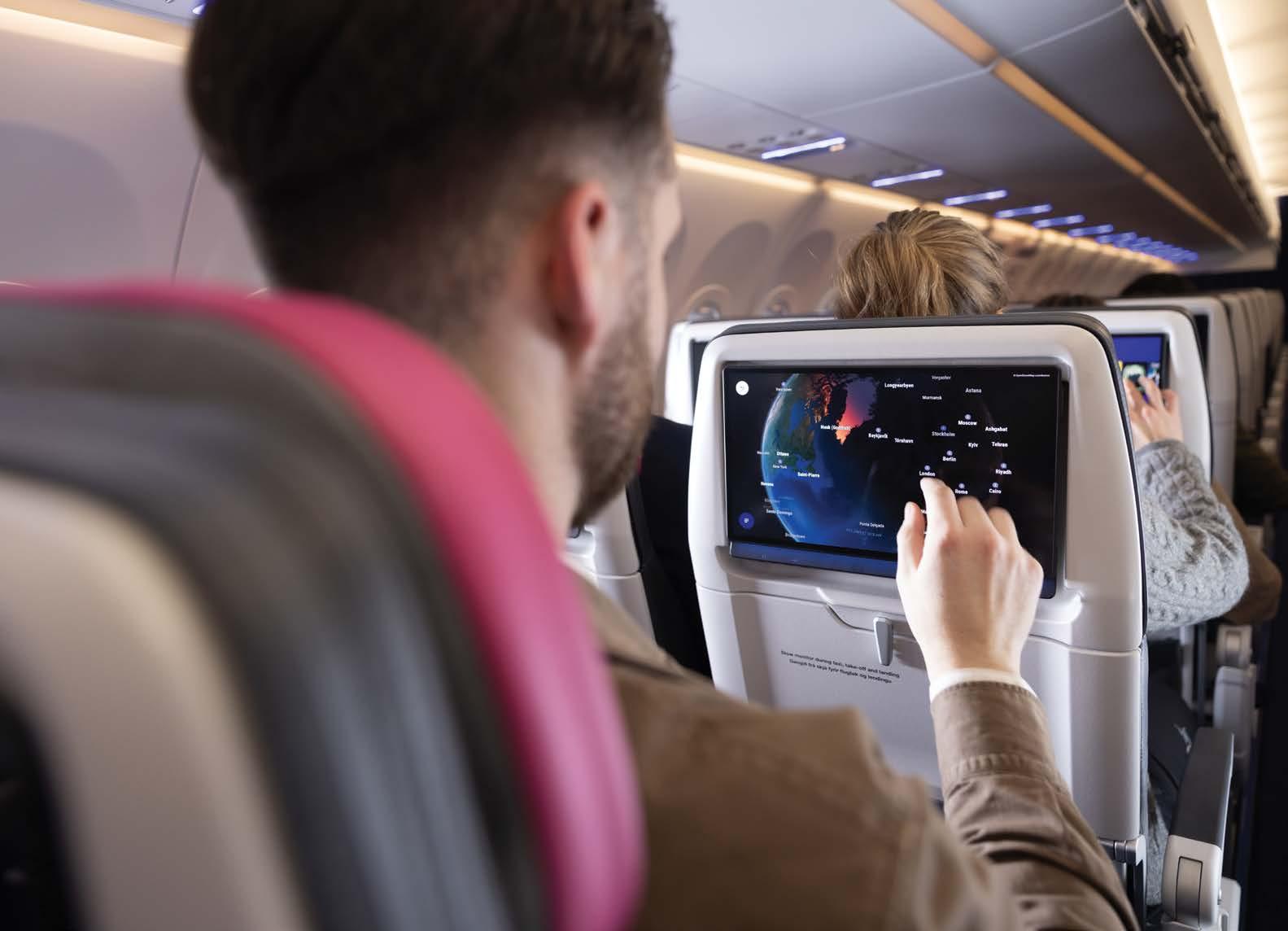
One intelligent solution. Every orbit. Unlimited potential. Viasat
Coming to AIX in Hamburg? Visit us at stand #2A08
PAX Tech
Mississauga, Ontario
Canada
Website: www.pax-intl.com
PUBLISHER
Aijaz Khan
E-mail: aijaz@globalmarketingcom.ca
EDITORIAL OFFICES
Jane Hobson, Managing Editor
Tel: (1 416) 997-3914
E-mail: jane@pax-intl.com
Robynne Trueman, Business Editor
Tel: (1 705) 471-4110
E-mail: robynne@pax-intl.com
Alex Preston, Senior Editor
Tel: +44 (0) 7969 092913
E-mail: alex@pax-intl.com
ART DEPARTMENT
Gayl Punzalan, Senior Graphic Designer
A COMPLETE CABIN ECOSYSTEM
It is hard to believe we are already returning to Hamburg this month for AIX 2026, but they say time flies when you are having fun–and it has been a pleasure to speak with all the suppliers and airlines gearing up for the expo. PAX Tech is proud to be a media partner for this event, highlighting many of this year’s exhibitors, both new and returning, in these pages.
As AIX marks its 25th edition this year, Event Director Archana Dharni says, “Today, cabin experience is a core competitive differentiator. Airlines are winning or losing customers based on comfort, connectivity and sustainability.” She calls this year’s expo a milestone moment for AIX and the wider cabin interiors community, demonstrating just how far the industry has come.
This is reflected in this issue of PAX Tech, where the cabin is consistently framed as an interconnected ecosystem–a space where suppliers and manufacturers must collaborate to deliver a cohesive passenger experience that accurately represents an airline’s unique brand identity.
As Honor Jennings, Senior Strategy Designer at PriestmanGoode explains, “There is an expectation from passengers to see and feel the brand reflected in their experiences. Our briefs involve embedding the brand’s DNA directly into the cabin alongside the experiences within it.”
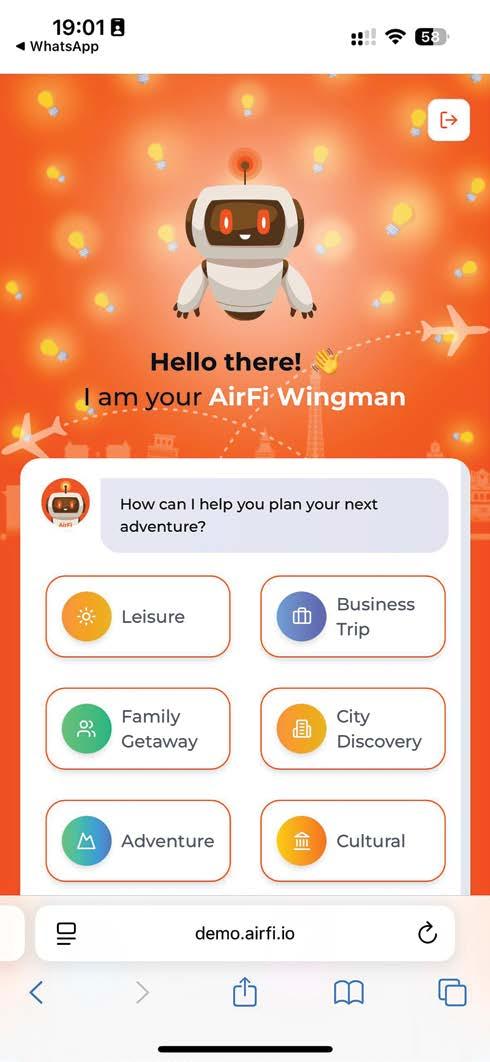
This issue also highlights the importance of intelligent data movement, with AirFi’s Laura Rösges noting that onboard data management plays “the essential and most integral role” in making content synchronization seamless across multiple devices inflight, while Quvia’s Benny Retnamony suggests that the prioritization of which data should move, and when, begins with defining “high value” and aligning system behavior accordingly.
At PAX Tech, we are looking forward to reconnecting with old friends and meeting new ones at AIX 2026 while covering your news and announcements live from the expo floor. Safe travels to Hamburg and see you soon!
PAX International and PAX Tech are published a total of 10 times a year by PAX International, Mississauga, Ontario, Canada. International
Distribution. ISSN 1206-5714
Key title: Pax International
Robynne Trueman Business Editor
PAX Tech
CONTENTS
Frank Meyer, Chief Digital Officer, Etihad, puts connectivity at the center of the airline’s digital transformation strategy
With free fleetwide Starlink connectivity, AI-driven operations and a €6 billion digital roadmap, the Spanish carrier is rebuilding the premium journey around seamless, always-on technology
Kenneth Chang, Executive Vice President and Chief Marketing Officer at Korean Air, talks to PAX Tech about embracing Starlink
22 PAX PERSPECTIVE VERIFIED AIRLINE REVIEW: IBERIA BUSINESS CLASS
In this Verified PAX Perspective Airline Review, PAX evaluates an Iberia Business Class multi-city flight from Heathrow to Madrid to Doha
24 CONNECTED COMFORT
With free gate-to-gate Wi-Fi and growing passenger demand for streaming and personal content, Porter Airlines is reshaping the Economy experience
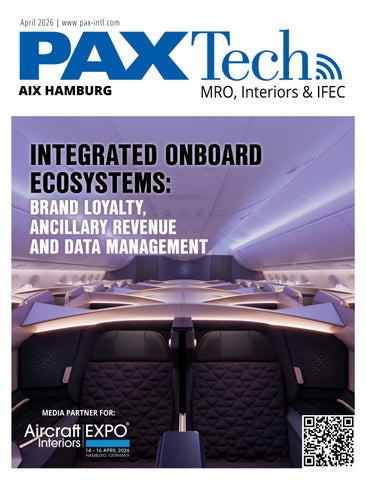
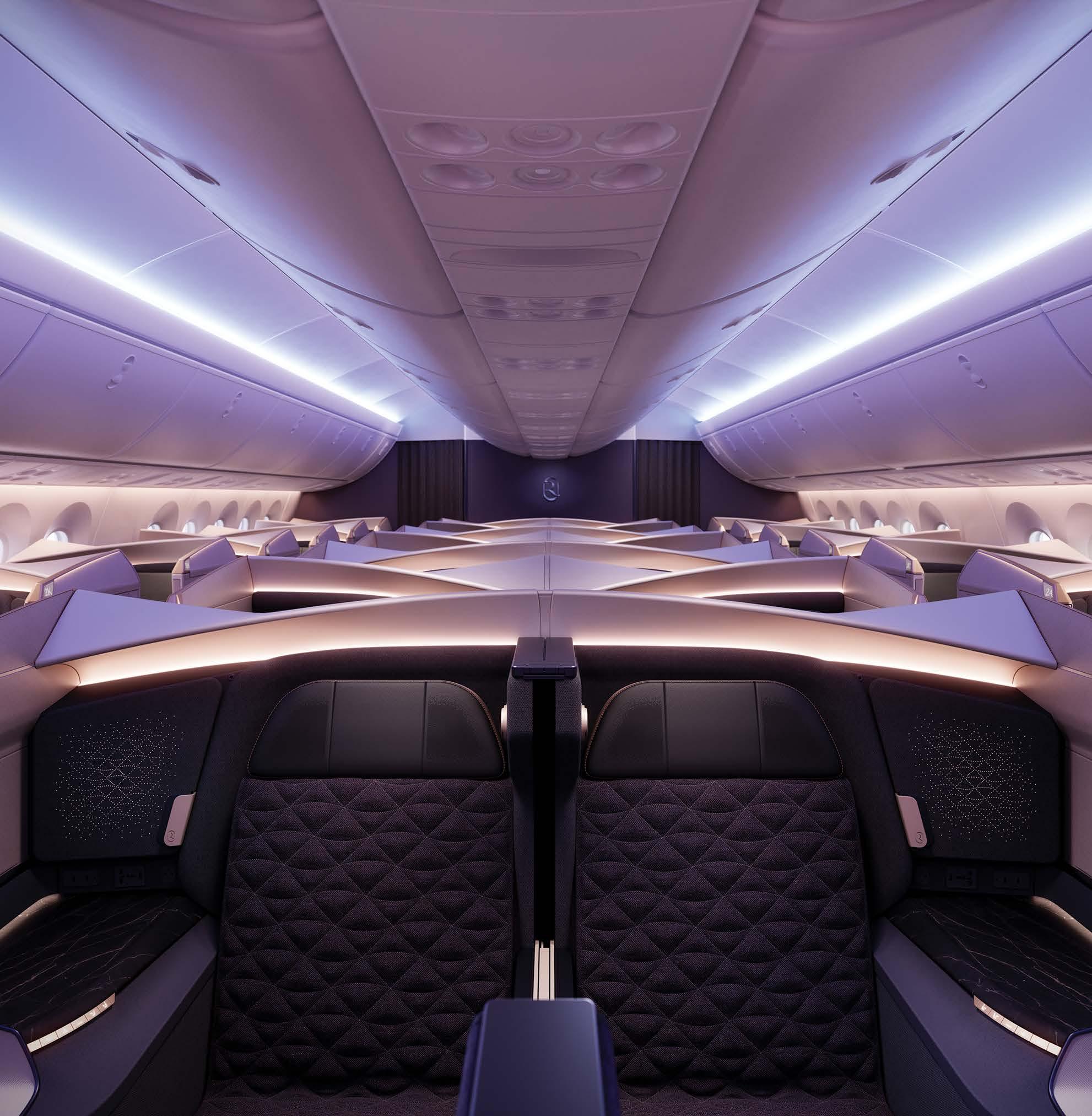
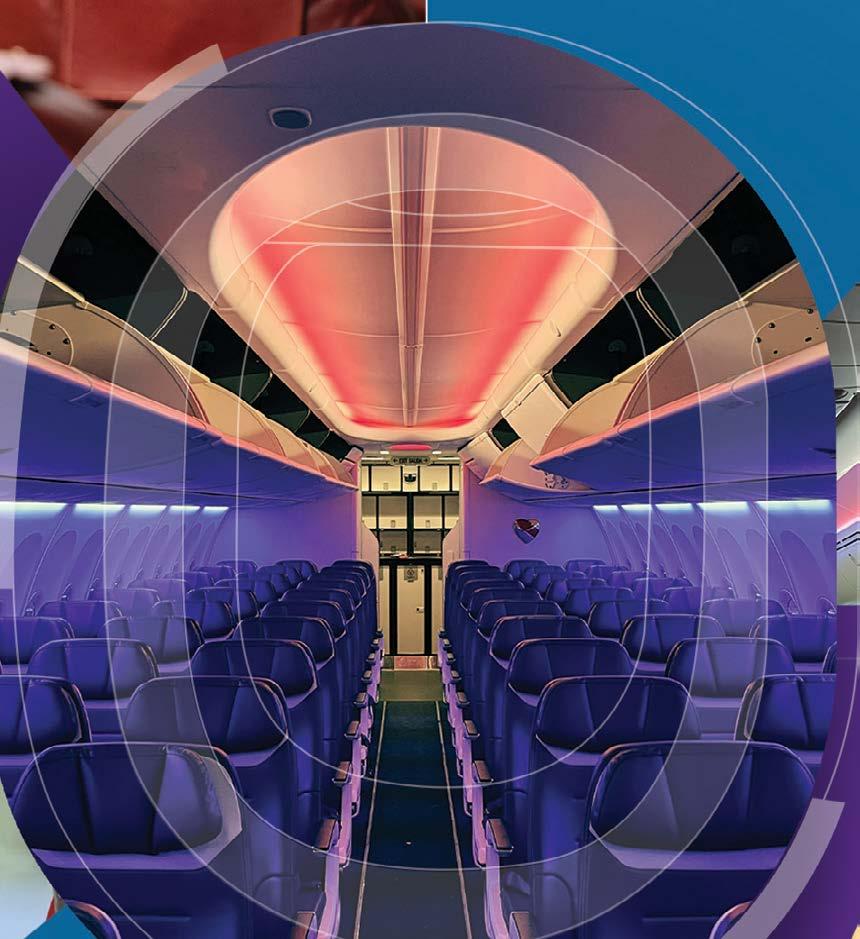
ON THE COVER Riyadh Air’s Canopy Twist serves as a unifying symbol across the airline’s ecosystem, blending heritage with modernity. Read more on page 52.
26 CHARTING THE NEXT CHAPTER
Philippine Airlines Marketing Vice President Alvin Miranda highlights how the airline is modernizing its fleet with upgraded cabin products 28 RELIABILITY AND GROWTH
In an interview with PAX Tech, Bamboo Airways CEO Truong Phuong Thanh says the airline is focused on consistency as it plans for growth
Lee Clark, Senior VP Strategy, Rosen Aviation, highlights the key UX/UI considerations in designing premium passenger experiences
Linstol discusses how delivering premium sound seamlessly at scale can deeply enhance the passenger experience
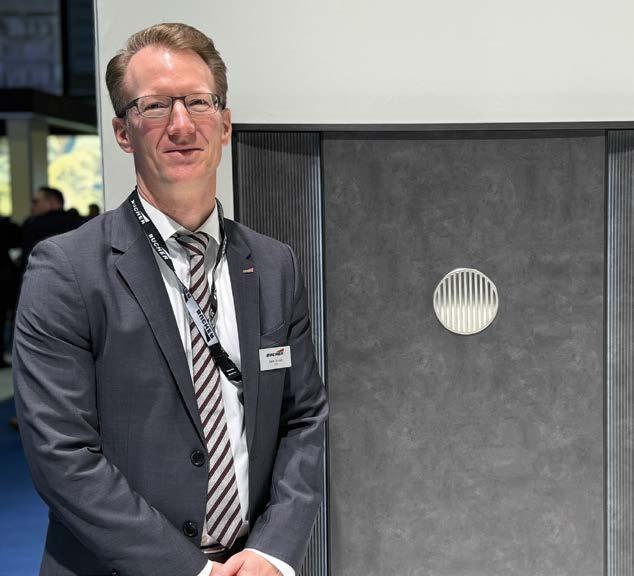
Bucher Group highlights expertise in design & branding elements with its extensive range of cabin solutions in Hamburg
DKA Aerospace positions itself as a partner in onboard solutions, showcasing carts that address current industry demands at AIX 2026
With the launch of its Lioni facility, ABC International strengthens its role in the aviation supply chain, adding composite manufacturing, upholstery and monument production to its established certification expertise
CTT Systems’ Ola Häggfeldt explains why controlling cabin humidity is becoming a key factor in passenger well-being, and how its Humidifier Onboard technology is changing the inflight environment
Meet us at AIX in Hamburg from 14 –16 April 2026 Hall B5, Booth 5D60
Living perfection down to the smallest detail
Astronics’ Dennis Markert discusses how passenger device use is shaping cabin power strategy and the broader connectivity ecosystem
IFPL Group’s Head of Design Dan Rust breaks down the adaptable design of Transform in-seat power and how it delivers consistent wattage to every seat onboard
CONNECTIVITY
LANDING LOYALTY
Viasat’s Laney Hind breaks down the various delivery models for IFC and its crucial role in building brand loyalty
DATA AND THE EDGE
Quvia’s Benny Retnamony breaks down the Edge to cloud communication that allows for the intelligent movement of data, relevant to the passenger experience
64
EXIT THROUGH THE GIFT SHOP
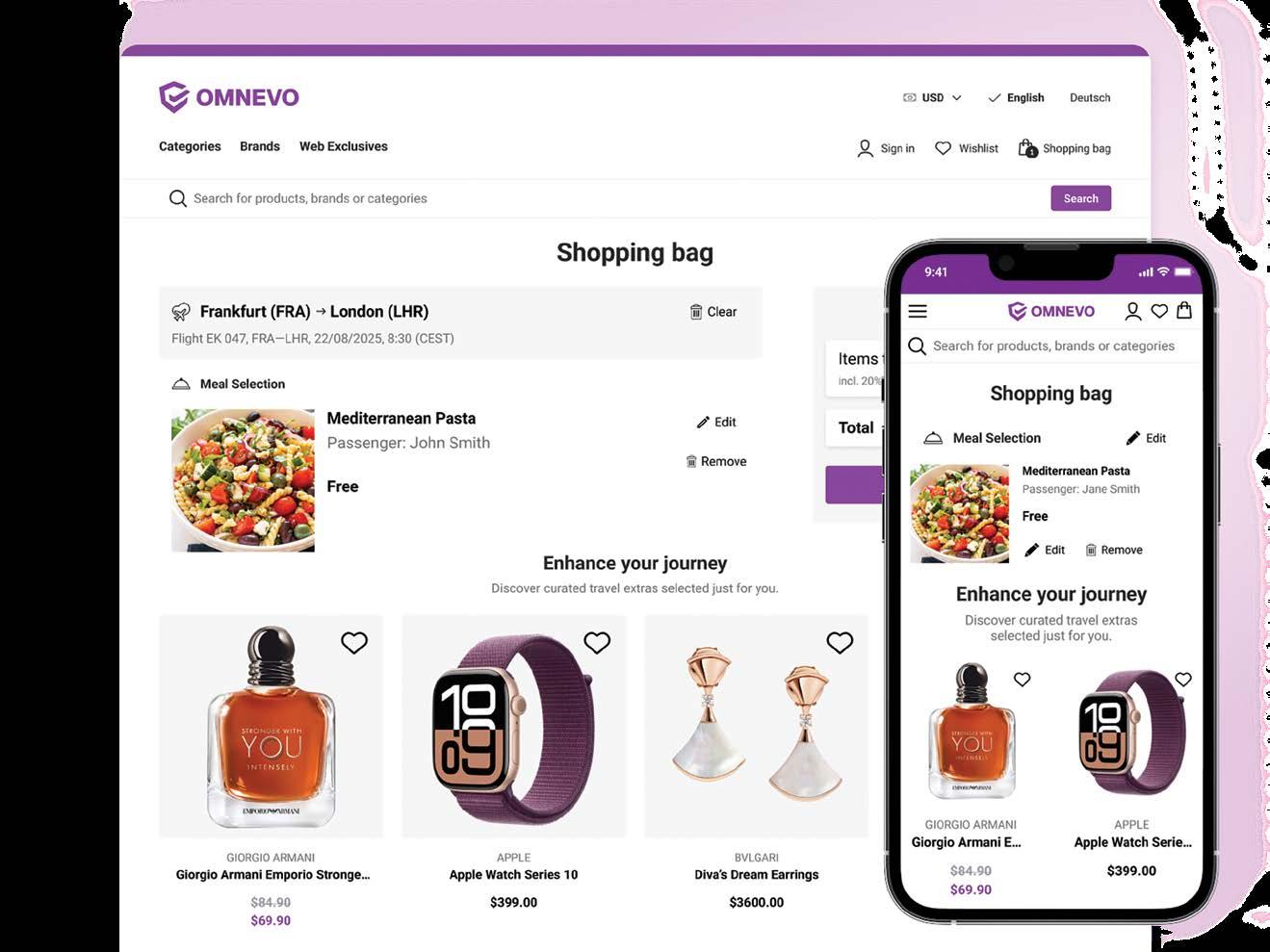
In this guest column, Daniel Haller, Program Director, Omnevo, highlights the benefits of an “exit via the gift shop” strategy for ancillary retail
AirFi CEO Laura Rösges highlights key talking points from APEX TECH and looks ahead to the company’s presence at AIX 2026
68 STEADFAST SEATBACK
RAVE Aerospace’s Ben Asmar emphasizes the critical role of seatback systems in the future of passenger engagement for airlines
Expliseat’s Antonio Ficca explains the recent “premiumization” of Economy Class cabins and the role of lightweight seats in this space 48 THE
Geven showcases made in Italy seating solutions at AIX amid consolidation in the European market
A look at how Muirhead is championing sustainability and circularity in the aircraft cabin with the introduction of an in-house BioPro Foam production facility
As social media reshapes passenger expectations, leading designers reveal how cabin branding is evolving 46 REBRANDING ECONOMY
70 LIVE WITH LUCI
FlightPath3D reframes the inflight map as an opportunity to improve passenger engagement, boost ancillary revenue and build brand loyalty
72 BEYOND BANDWIDTH
CEO Juraj Siska emphasizes IdeaNova’s role in delivering a seamless connected passenger experience
74
ASTROVA STRONG
Panasonic Avionics marks Astrova uptake milestone and supports IFE, connectivity and data services integration for carriers
76
CACHING CONTENT
Spafax’s Dimitrios Tsirangelos delivers insights on edge-caching and content curation as inflight entertainment evolves
Dr. Sean O’Kell, Business Director, at STG Aerospace, talks to PAX Tech about the environmentally sensitive design approach offered by its “Eco Everything” concept
F/LIST’s Anita Gradwohl spotlights the ideation behind the supplier’s Lightshifter concept and how it will shape conversations at AIX 2026
80
MARKING INNOVATION MILESTONES
As the industry prepares for the 25th edition of AIX, Event Director Archana Dharni looks back on its success and ahead to trends shaping the future
82 PAX READERS CHOOSE EXCELLENCE
The PAX Readership Awards return to celebrate the achievements of the industry, as voted by loyal readers
IFE
SAS Airlines brings BBC Nordic onboard
GOL appoints Anuvu to redefine IFE experience
Anuvu has been selected by Brazilian airline GOL Linhas Aéreas (GOL) as its new strategic partner to redefine its inflight entertainment offering.
The companies will work together to elevate the end-toend inflight entertainment experience, improving quality and delivery by leveraging Anuvu’s unique content partnerships, extensive entertainment portfolio and technical services teams. GOL passengers will enjoy a richer, more premium library of TV, film and exclusive partnership content from Anuvu including Formula 1 and HBO Max.
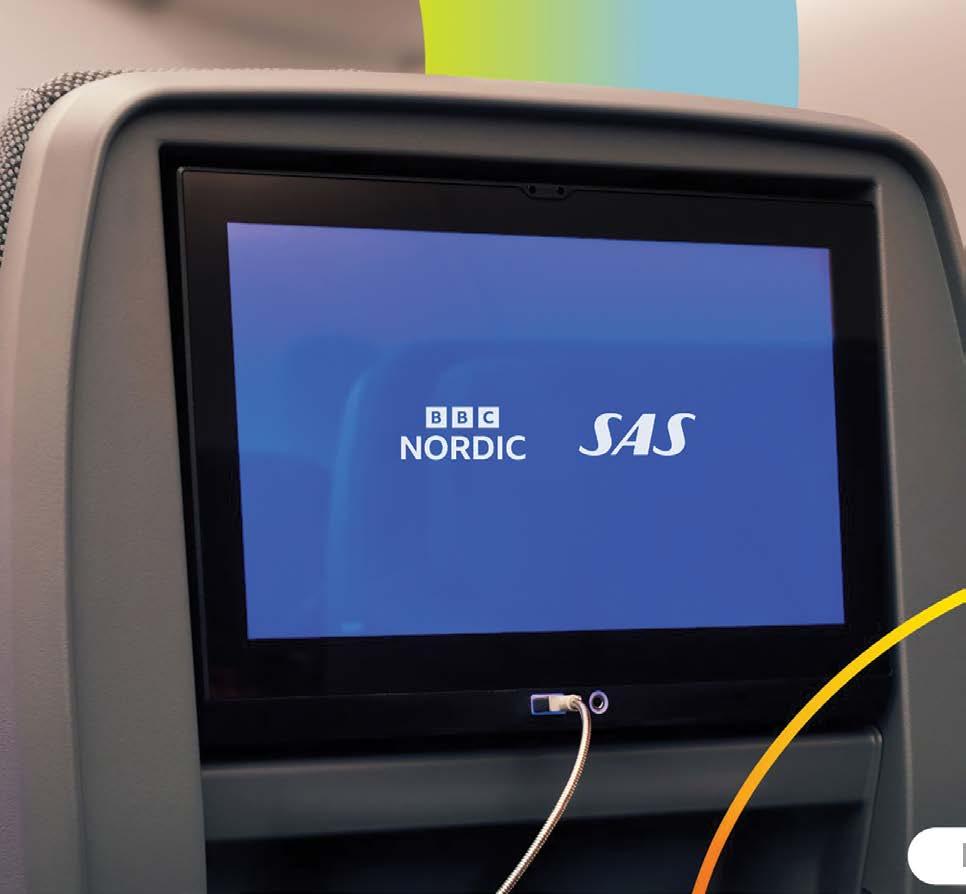
In a partnership brokered by Touch Inflight Solutions, Scandinavian Airlines (SAS) has become the first airline to launch a dedicated BBC Nordic on-demand channel onboard. Passengers can now enjoy a premium inflight experience packed with fan-favorite British titles, from murder mysteries to wildlife documentaries.
“Enhancing the inflight experience is a key part of how we continue to evolve SAS as a premium and customerfocused airline,” said Aron Backström, Vice President of Product and Loyalty at SAS Airlines. “Introducing BBC Nordic as a distinct, branded space within our inflight entertainment offering adds further depth and relevance, with high-quality content that resonates strongly in our home markets while appealing to our international travellers. By thoughtfully curating what we offer in the air, we aim to make every journey with SAS more engaging, comfortable, and memorable.”
Estibaliz Asiain, EVP Media & Content, Anuvu said, “GOL has always been a true pioneer in aviation in Brazil and Latin America. We are thrilled to support their next chapter by delivering a much-improved content library and more options for their customers to enjoy while onboard. Our teams have already collaborated on a flawless transition to Anuvu, executed with zero service interruption and immediate improvement in product quality and reliability.”
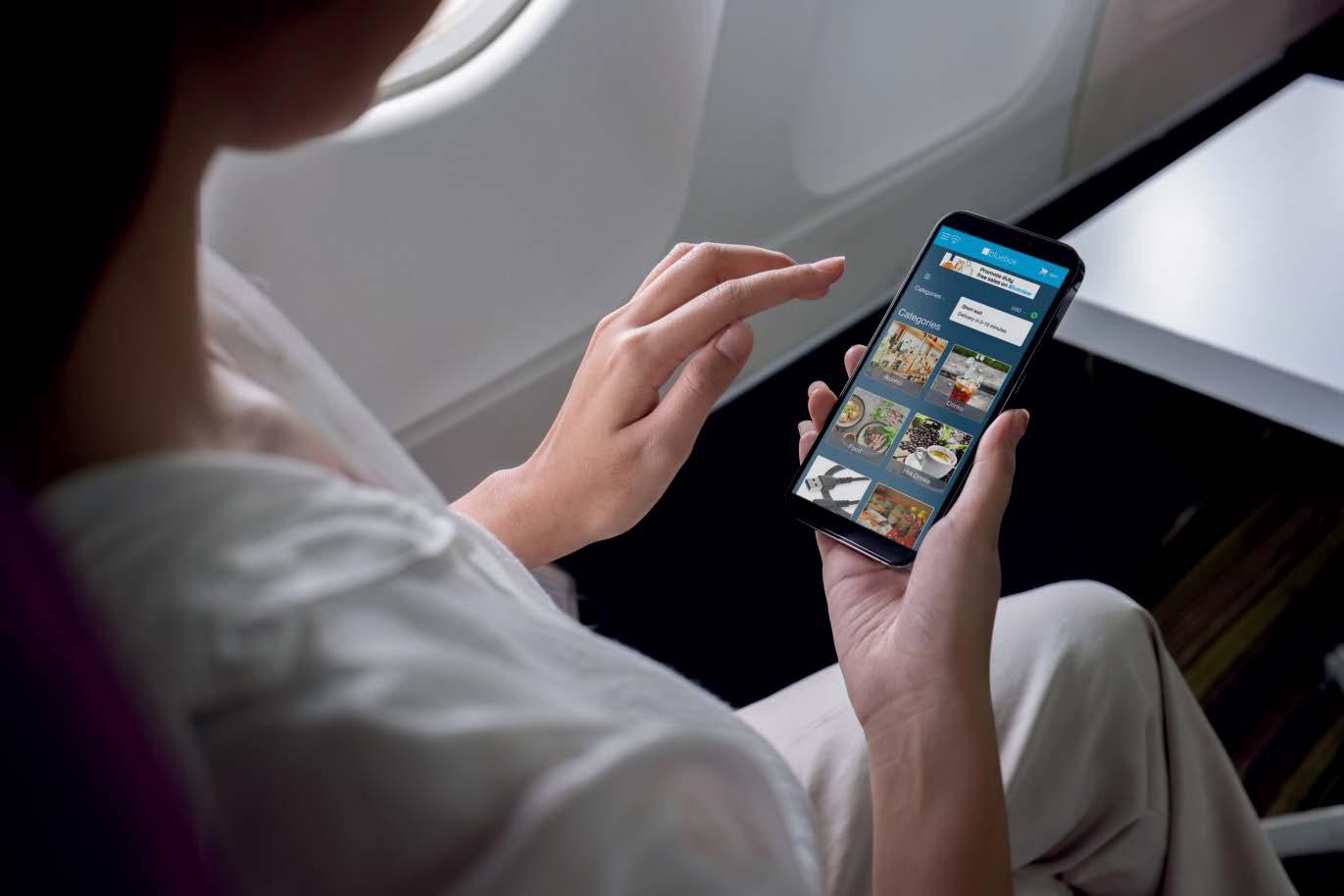
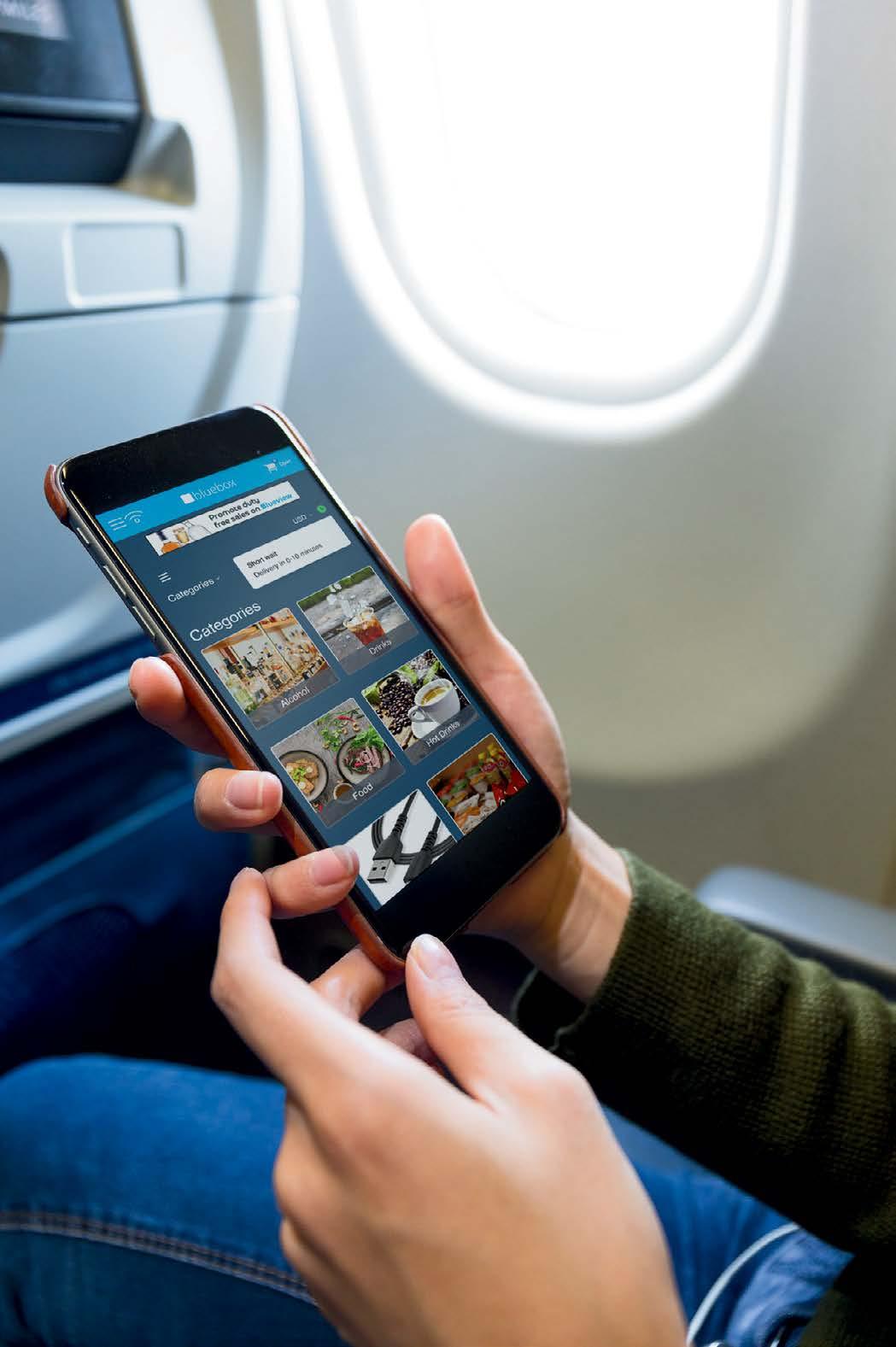
Launch inflight entertainment and retail using onboard connectivity, no additional hardware or servers required. Fast to deploy, easy to scale.
blueboxaviation.com
Touch brokers partnership for SAS to bring BBC Nordic on-demand channel onboard
IFE
EXHIBITOR
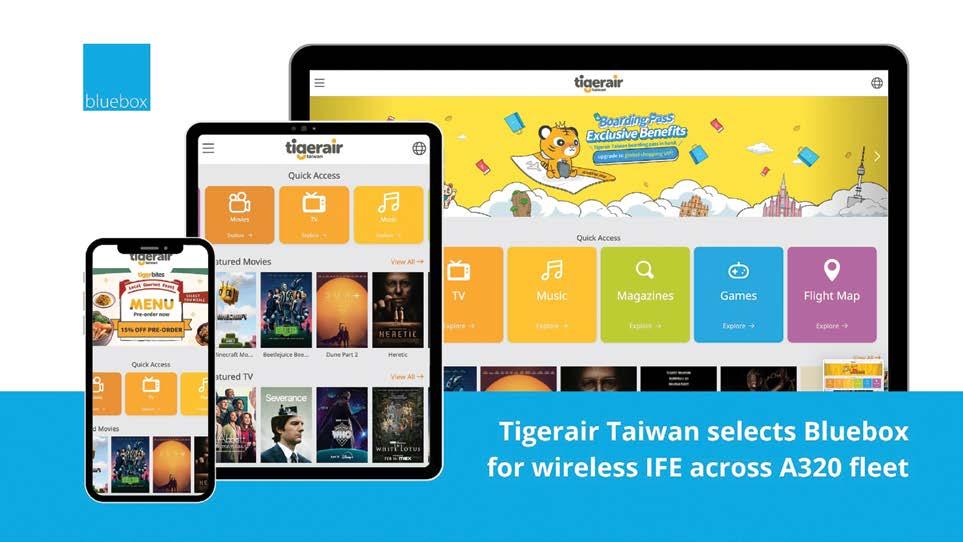
Bluebox and Tigerair Taiwan partner to bring wireless IFE to A320 fleet
Bluebox Aviation Systems will highlight its latest digital services platform at Aircraft Interiors Expo (AIX) 2026 following the announcement of a new partnership with Tigerair Taiwan
The collaboration will introduce a wireless inflight entertainment experience across the airline’s fleet of 17 A320 aircraft, marking Tigerair Taiwan’s first deployment of IFE. Passengers will be able to access a curated library of movies, television, audio and games streamed directly to their personal devices, including both regional content and DRM-protected Hollywood titles.
The new digital platform will also support Tigerair Taiwan’s future onboard retail ambitions, with orderto-seat services planned for a later phase as the airline continues to expand its ancillary revenue offering.
At the expo, Bluebox will demonstrate how its Blueview digital services platform enables airlines to launch inflight entertainment and retail quickly while evolving seamlessly across portable, embedded and cloud-based environments.
EXHIBITOR
Axinom reshapes IFE delivery with next-gen solution
Axinom Stream is designed to adapt to any fleet and infrastructure, transforming how entertainment and digital services are delivered to passengers
Axinom’s next-generation IFE solution, Axinom Stream will be introduced at AIX 2026.
Axinom Stream is designed to adapt to any fleet and infrastructure, transforming how entertainment and digital services are delivered to passengers. It unifies Axinom’s proven IFEC solutions into a single, modular platform with two deployment options that support airlines at any stage of connectivity readiness: Cloud Streaming and On-Board Streaming.
“Launching a new product is exciting – seeing it resonate with the industry is incredibly rewarding,” says Ralph Wagner, CEO of Axinom, tells PAX Tech. “Axinom Stream marks a fundamental shift away from rigid IFE architectures toward adaptive, future-ready delivery models.”
Axinom will exhibit at booth 3C55 at AIX 2026.
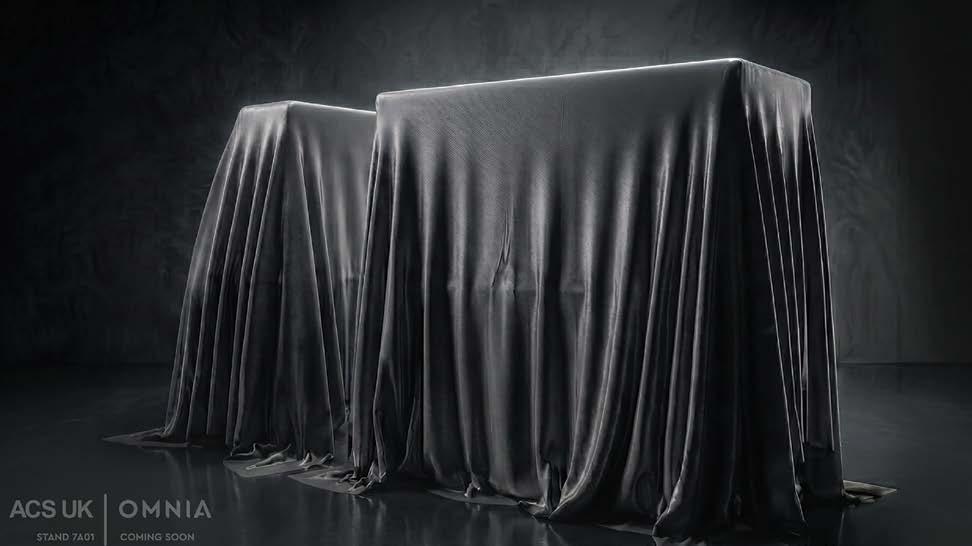
ACS UK showcases innovative OMNIA platform at AIX 2026
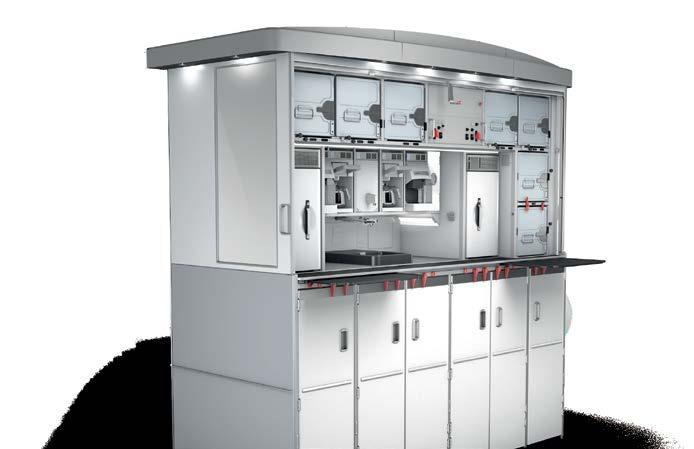
At AIX 2026, ACS UK will highlight its extensive custom aircraft interiors expertise through OMNIA, a concept comprising two hybrid units, a center galley and an outboard monument.
Derived from the Latin word meaning “all things” or “everything,” OMNIA encapsulates ACS UK’s design,
engineering and manufacturing capabilities in one cohesive solution. Moving beyond the catalog products or fixed concept packages typically on display, OMNIA serves as a flexible canvas to demonstrate a broad range of cabin design possibilities.
The center unit can function as a welcome panel, galley, bar area or branding panel, while the outboard unit offers flexibility as stowage, closet, bar, self-service area or integrated Front Row Monument.
Nigel McSorley, CEO of ACS UK, tells PAX Tech, “Cabin spaces must work harder than ever, serving multiple purposes for crew and passengers at different times. They also help airlines to differentiate from one another and to elevate the onboard experience. OMNIA demonstrates how collaboration between airlines, designers and manufacturers can optimize cabin space and deliver a premium feel to delight customers.” Visit booth 7A01 to learn more.
Your passengers expect personalization. Now your IFE can deliver it!
Introducing the first inflight AI platform that adapts to every passenger — delivering recommendations, dynamic UI, and tailored content entirely offline.
Experience real personalization — live at our AIX booth. Scan for an early look.
ACS UK will highlight its custom aircraft interiors expertise through OMNIA at AIX 2026
SUPPLIER
PriestmanGoode to highlight material designs in Hamburg
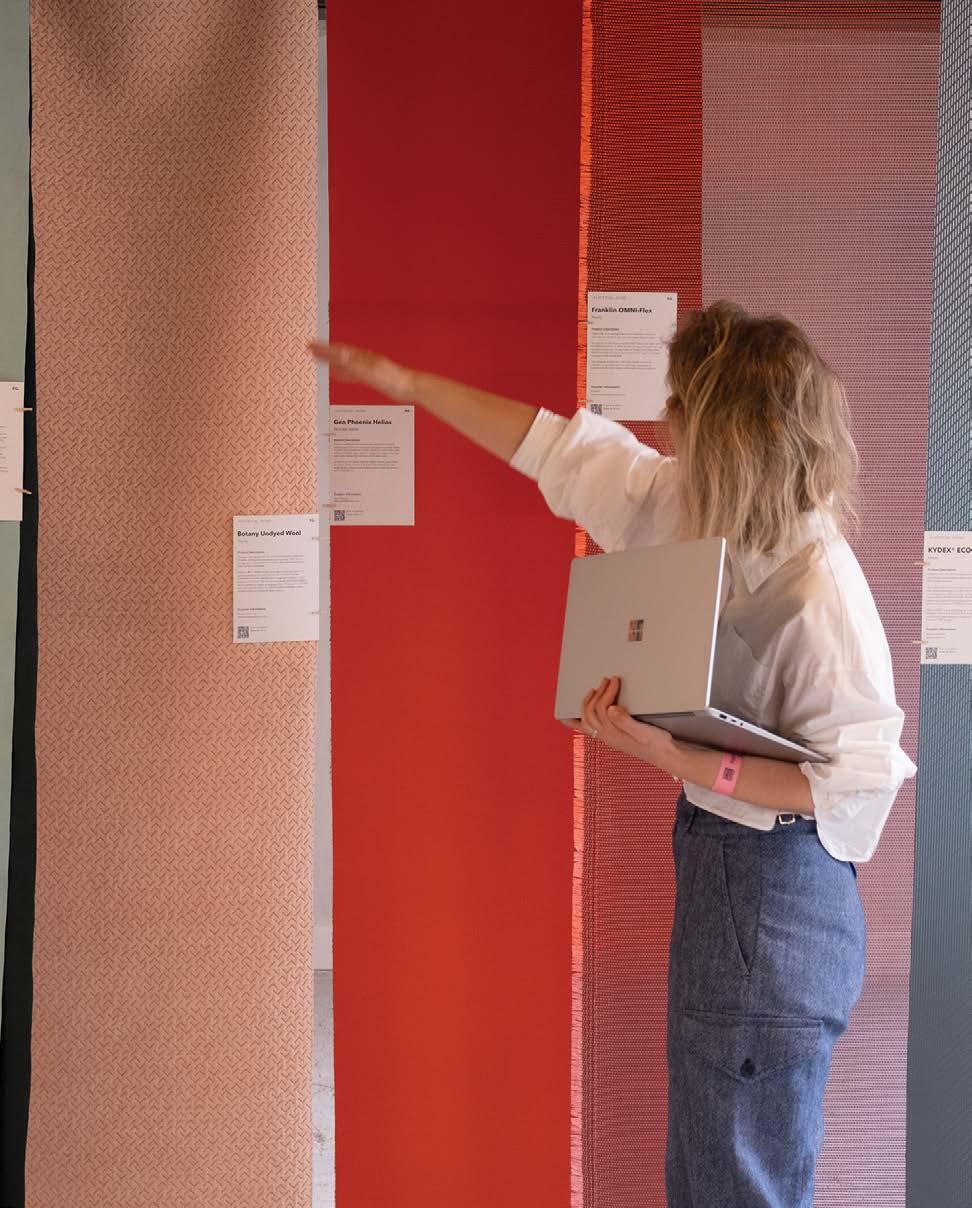
PriestmanGoode brings its multidisciplinary expertise to Hamburg this April. At the Passenger Experience Conference (April 13), Mike Davies and Hugh Wyeth will present the agency’s “Design to Availability” playbook, exploring how AI-driven visual and UX expertise can derisk innovation within complex frameworks.
PG will also be visible across the Aircraft Interiors Expo (April 14 to 16) through strategic collaborations. A key highlight is the Franklin Products booth (5B60), which features a physical seat demonstrator showcasing the Omni-Flex mesh diaphragm system, a high-performance alternative to traditional cushions.
Furthering a commitment to sustainability, the team is also collaborating with Boltaron (5A60) and Kydex (5D40), focusing on the Kydex ECO infused material panel. PriestmanGoode’s senior leadership will be on-site to support major client cabin launches and bridge the gap between visionary design and entry-into-service readiness, the company tells PAX Tech
EXHIBITOR
Eutelsat advances next era of IFC with OneWeb LEO
At AIX 2026, Eutelsat will showcase how its highperformance OneWeb LEO network, complemented by its GEO capabilities, are redefining inflight connectivity performance, offering airlines both flexibility and global reach.
At a glance, Eutelsat reports more than 600 aircraft equipped with OneWeb LEO connectivity today, 15+ airline commitments, including American Airlines and Air Canada, and 440 additional LEO satellites ordered to enhance performance and capabilities.
“Eutelsat’s model is designed to deliver flexible and tailored connectivity solutions that meet the diverse operational and passenger experience needs of modern airlines and business jets,” the company tells PAX Tech
Eutelsat will exhibit at Booth 2C10 and invites attendees to discover how airlines worldwide are leveraging their expanding network to deliver consistent, high-quality broadband experiences across every route and aircraft type.
Eutelsat’s high-performance OneWeb LEO network is complemented by its GEO capabilities
Products and materials from PriestmanGoode are visible at various booths, including Franklin Products and Kydex, at AIX 2026
LINSTOL NEXT-GENERATION INFLIGHT
HEADPHONES
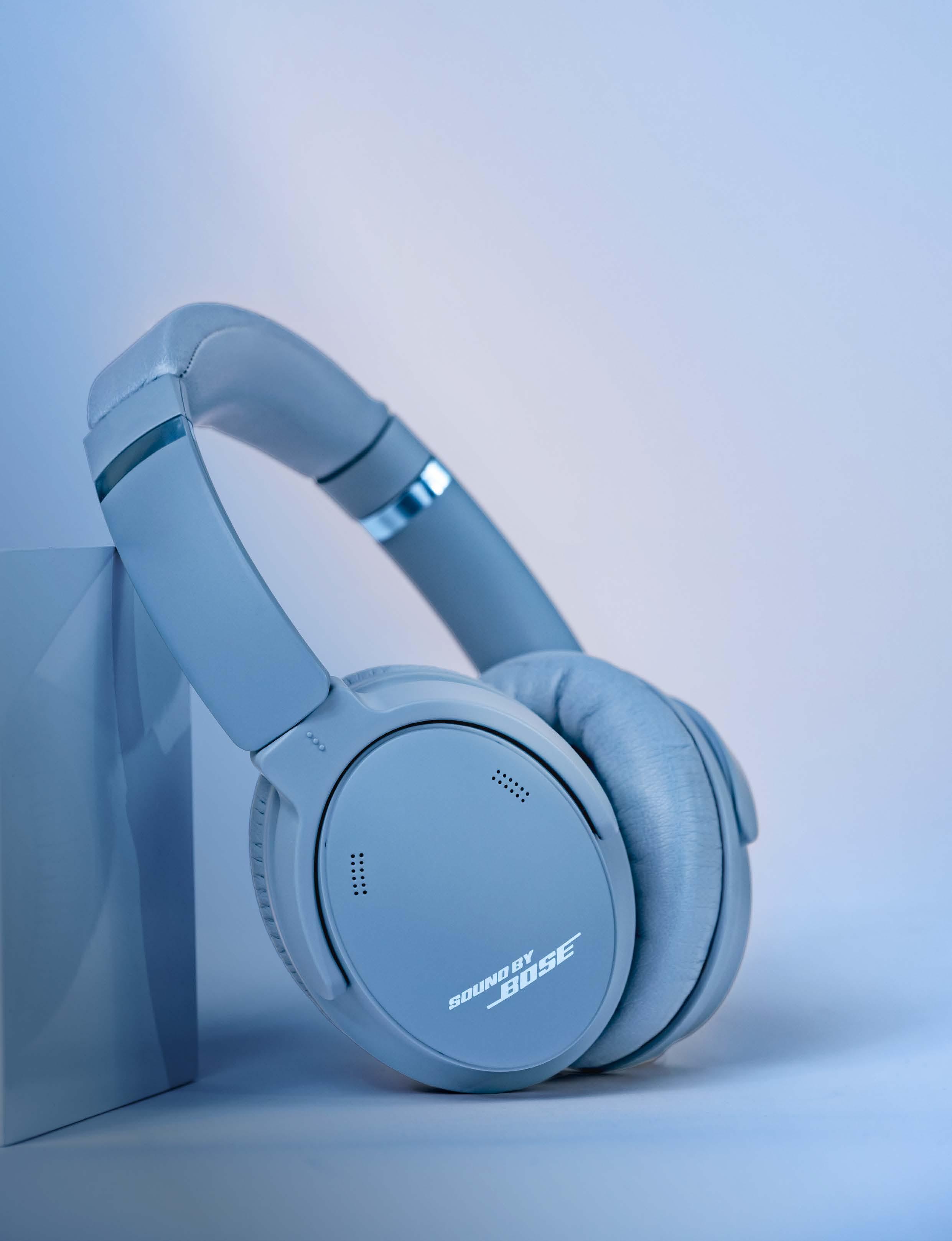
Designed to elevate every journey with Sound by Bose audio technology.
WTCE 2026 | Booth 4E30
Sound by Bose is a registered trademark of Bose Corporation used under license by Linstol.
EXHIBITOR
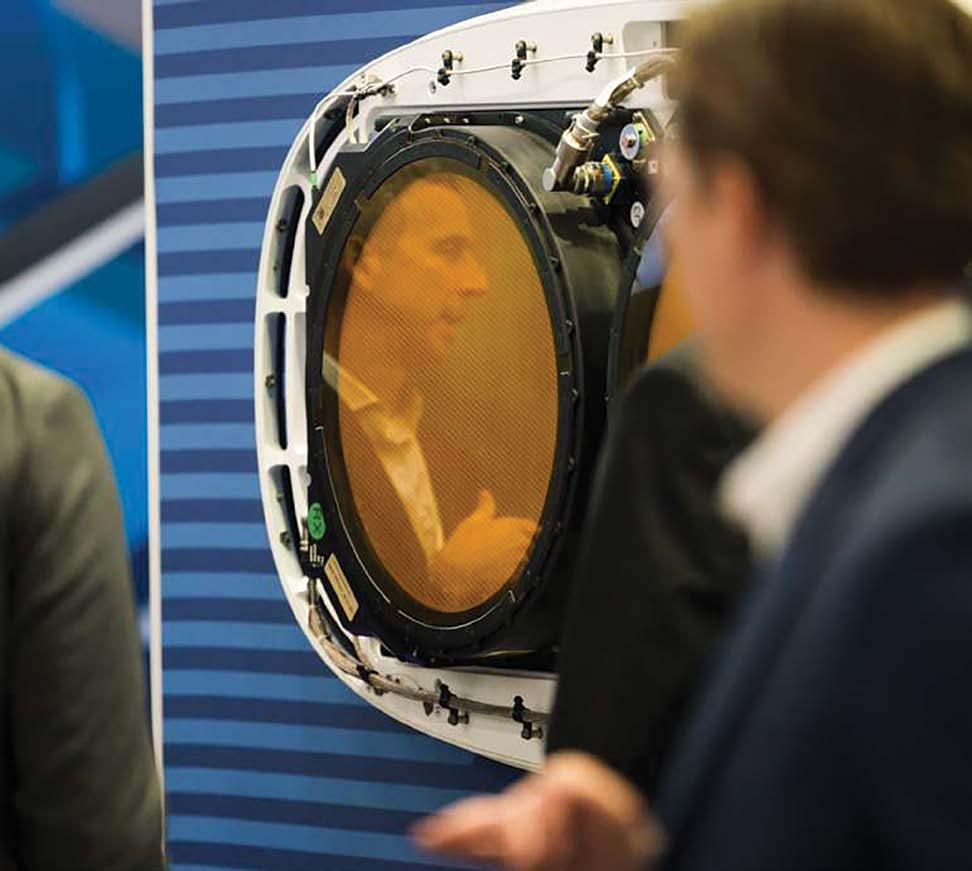
ThinKom to unveil small-form-factor terminal at AIX 2026
ThinKom Solutions Ltd. (ThinKom) is shaping the future of inflight connectivity with ultra-high-performance, multi-orbit, network-agnostic phased-array antennas that enable aircraft to connect reliably and intelligently to any network, anywhere. At AIX 2026, the supplier of commercial aviation satcom antennas will unveil a new small-form-factor terminal supporting ultra-fast GEO, MEO and LEO operation. Early information indicates that this hardware is engineered with a smaller footprint, lower cost, reduced weight and is expected to enter the market next year.
“We believe the future of IFC is multi-orbit, and we’re not alone,” said ThinKom CTO Bill Milroy. “ThinKom remains committed to constant innovation so our partners and customers can deliver superior online experiences with flexible, affordable and long-lasting hardware solutions.”
EXHIBITOR
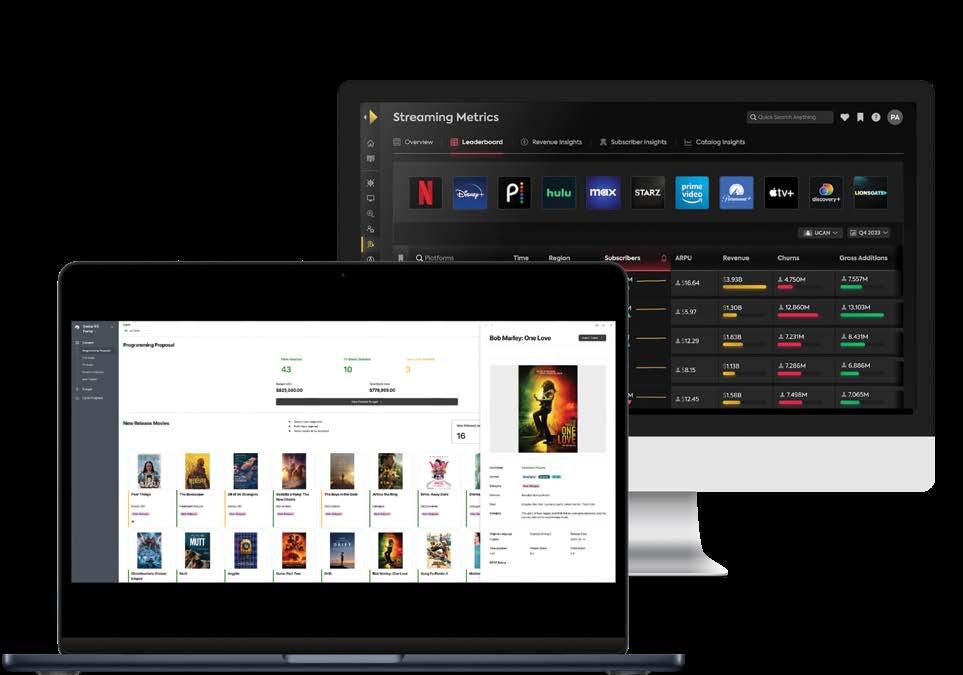
Stellar Entertainment partners with Parrot Analytics to integrate strategic intelligence into IFE management
Parrot Analytics has announced a multi-year customer partnership with Stellar Entertainment. This partnership integrates real-time, title-level strategic decision support
into the selection process, helping teams move faster and back their content investments with data.
“Airlines are increasingly selecting content in a selfserve environment, where budget decisions are made in real time,” said Sam Allen, CEO of Stellar Entertainment. “As that decision moment moves into the interface, we are replacing programmers’ intuition with objective demand signals. By integrating Parrot Analytics’ demand intelligence into our workflow, we are giving airline teams a trusted metric to make faster, more confident choices while keeping the selection process simple.”
Stellar’s data-driven approach supports its own licensing decisions and airline customers’ daily content choices. Parrot Analytics provides the global strategic intelligence layer that helps organizations understand content value, inform curation and licensing decisions and drive predictable success.
ThinKom will unveil its small-form-factor terminal supporting ultra-fast GEO, MEO and LEO operation at AIX 2026
Stellar and Parrot Analytics have entered a multi-year partnership
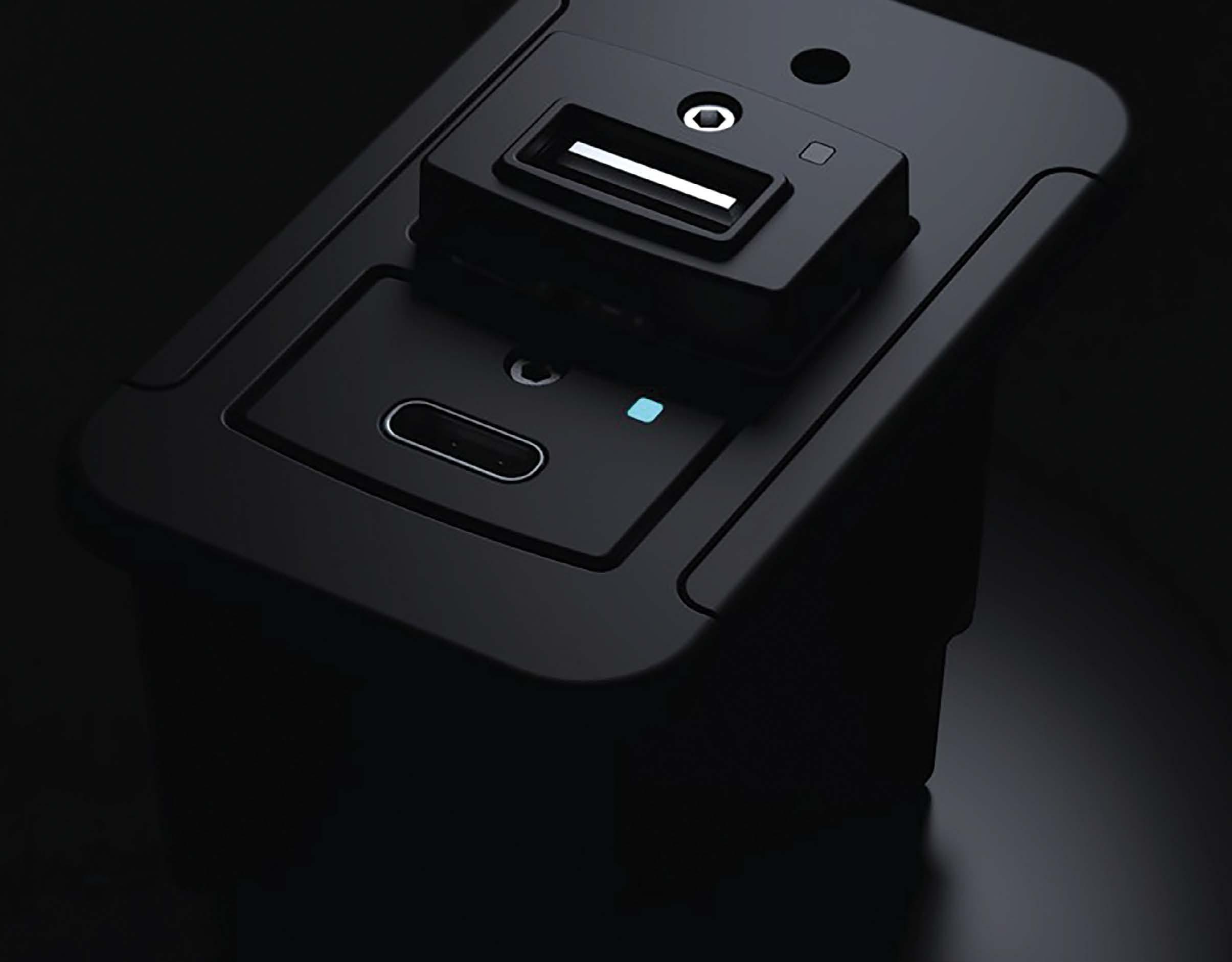
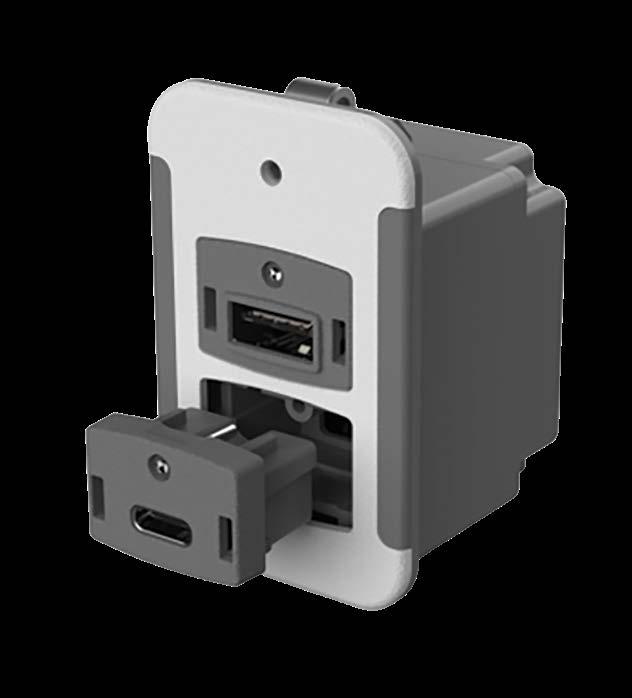
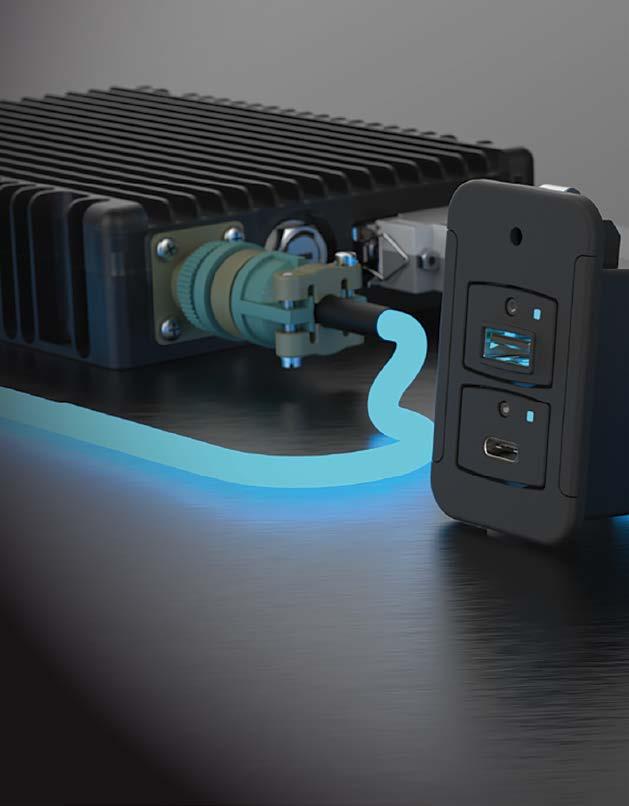
Not too long ago, passengers considered in-flight charging ports a pleasant surprise. Today, in-flight charging ports are an expected amenity for millions of passengers. Exceed their expectations with scalable, cutting-edge power solutions from Astronics, the industry’s trusted, low-risk power experts. Astronics delivers the highest available power with maximum efficiency, unmatched installation flexibility, and the lightest weight. This helps airlines reduce emissions and achieve best-in-class total cost of ownership. Keep your passengers connected, happy, and powered up with Astronics.
CONNECTIVITY AT THE CORE
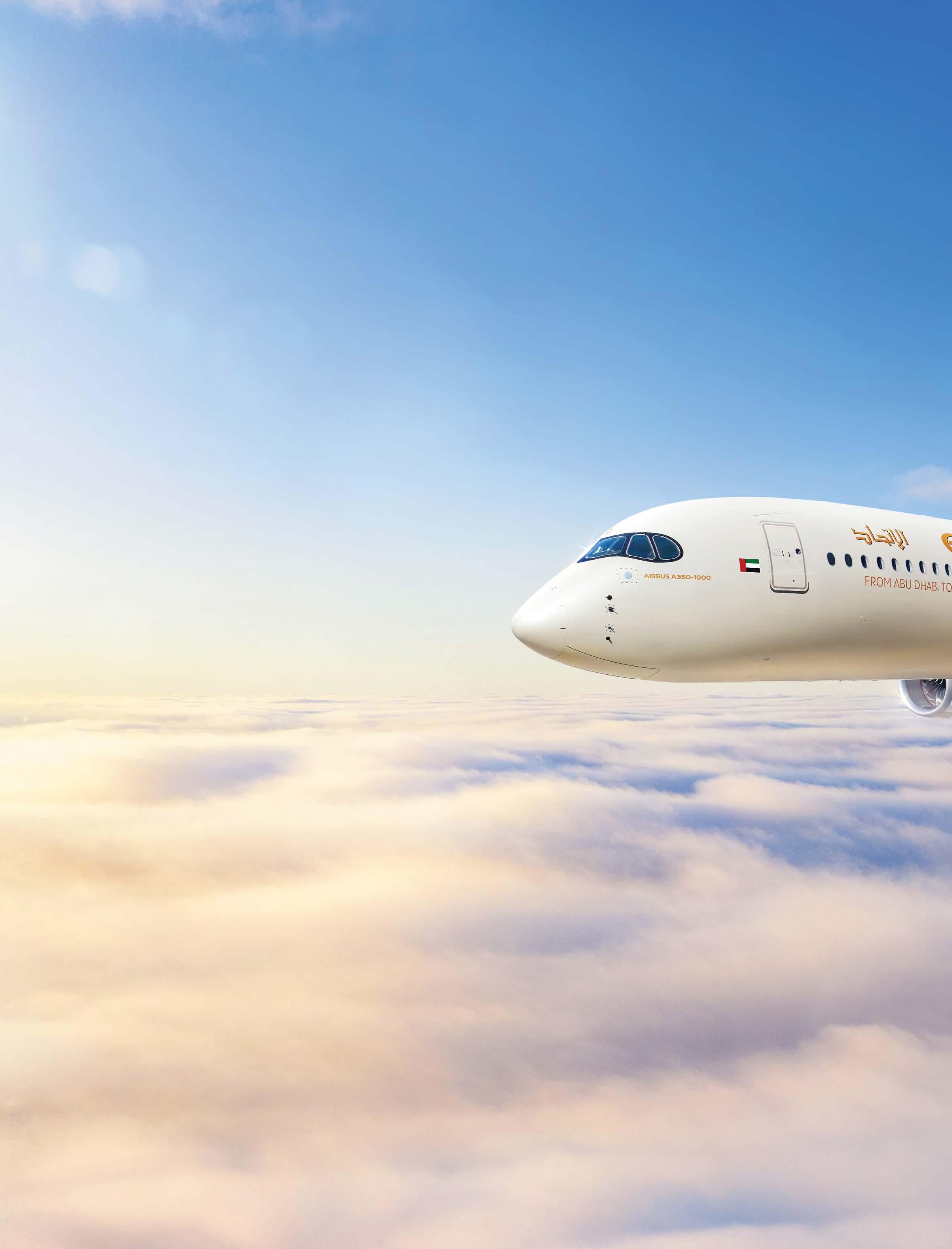
Frank Meyer, Chief Digital officer, Etihad, puts connectivity at the center of the airline’s digital transformation strategy
by ALEX PRESTON
Etihad Airways is flying high. Last year, the airline carried a record 22.4 million passengers, had a load factor for the full year of 88.3 percent and expanded its capacity with the addition of 29 aircraft – the largest single-year fleet expansion in the airline’s history, bringing the fleet to 127 aircraft. The year also saw an ongoing network expansion, with multiple new routes to Asia, Africa, Europe and North America.
But it is not just improved connectivity to a range of destinations that the airline is committed to. As Chief Digital Officer Frank Meyer tells PAX Tech, inflight connectivity is central to the airline’s broader transformation, enabling everything from a personalized digital passenger experience to operational efficiencies.
“The Middle East has become one of the world’s most dynamic and competitive aviation markets, with multiple carriers vying for the same premium passengers and connecting traffic. In this environment, differentiation comes down to the details of the guest experience, and connectivity has emerged as a genuine differentiator,” he says.
“Business passengers make carrier choices based on connectivity reliability,” Meyers continues. “They need to stay productive in the air, join virtual meetings, access company systems. Leisure passengers want to share their experiences in realtime, stream their content and stay connected with home. Viasat’s proven performance gives us a competitive edge in both segments.”
Seamless stability
In November 2025, Etihad announced it was extending its partnership with Viasat with the rollout of the supplier’s next-generation IFC solution, Viasat Amara, across the majority of its wideand narrow-body fleet, including linefit for all aircraft on order and retrofit for its existing aircraft.
In bringing connectivity to its shortand long-haul routes, Meyer says the airline is ensuring consistency and reliability as it grows. The keyword being consistency.
“One of the challenges in aviation is that passengers do not think in terms of aircraft types or route lengths; they think in terms of their experience with Etihad,” voices Meyers.
“Viasat’s comprehensive fleet certification was a decisive factor. They hold the certifications that we need for our fleet mix [787s, A350s and A321LRs]. This meant we could deploy immediately across our expansion aircraft without lengthy certification processes that would have created service gaps or inconsistent experiences.”
He adds that Viasat’s technology roadmap, particularly the simultaneous multi-orbit solution planned for 2027/2028, aligns perfectly with Etihad’s long-term vision. “As we look ahead, we will be positioned at the forefront of aviation connectivity technology, which reinforces our premium positioning and innovation credentials,” he says.
According to Meyers, what really sets Viasat apart is its approach to bandwidth management.
“Their technology guarantees bandwidth per passenger, not per aircraft. This is crucial because it means whether we have 160 passengers online on a regional A321LR flight or 400 on a long-haul 787, each passenger receives the same consistent, high-quality connectivity. There is no degradation during full flights.”
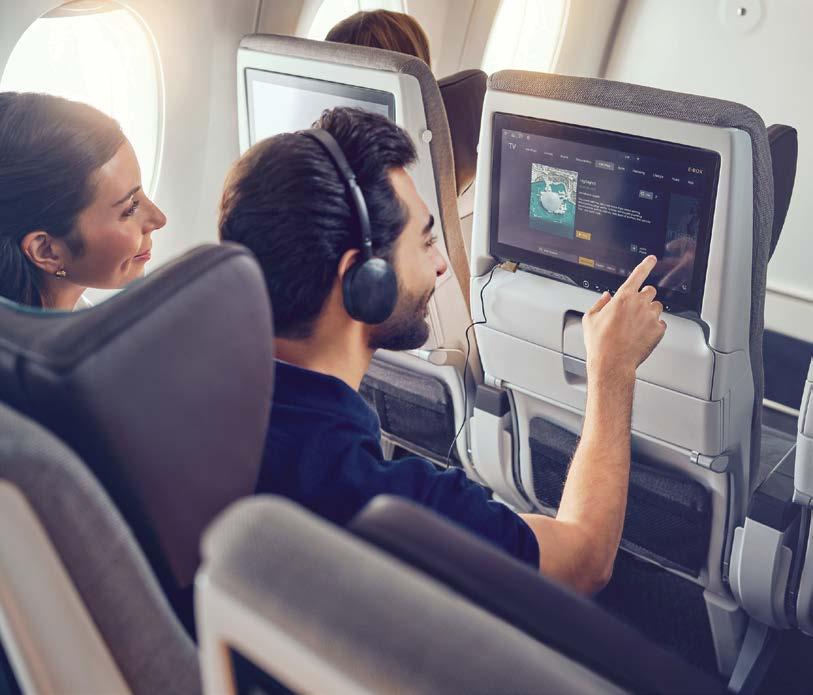
Beyond the raw connectivity, Meyer explains that Etihad is building a personalized digital ecosystem. “The reliable, high-bandwidth connection enables us to deliver tailored content recommendations, personalized entertainment options and customized service offerings based on passenger preferences.”
Frank Meyer, Chief Digital Officer, Etihad Airways
To this end, the airline is investing in “excellent seatback IFE systems and robust personal device streaming.” Meyer says Etihad is also exploring hybrid experiences, such as using seatback screens for certain functions like flight information, moving maps or interactive features, while enabling streaming to personal devices for entertainment.
“The key is flexibility. Some passengers want to use their tablet, others prefer the seatback screen, and many will use both at different points during the flight. Excellent connectivity is what makes that flexibility possible,” he explains.
Etihad is also looking beyond the passenger Wi-Fi experience.
New service categories
On the commercial side, advertising and digital media on seatback IFE screens represent an opportunity Etihad is actively exploring, with the prospect of more dynamic, targeted content rather than static campaigns. The airline has also identified significant potential in retail and e-commerce, with the ability to deliver personalized offerings at relevant moments during the journey, transforming how passengers interact with ancillary services and travel products.
For Meyer, connectivity also creates the foundation for deeper integration with travel ecosystem partners, whether hotels, ground
transportation or destination services, turning the aircraft into a platform for collaborative value creation.
Operationally, connectivity drives enhanced efficiency and cost savings. Real-time aircraft-to-ground data enables more efficient flight operations and better crew communication.
As Meyer muses, a successful IFEC strategy “means our passengers genuinely feel more connected – to their loved ones, to their work, to their entertainment, to the world belowwhen they fly Etihad. That emotional connection, enabled by technical connectivity, is what builds long-term loyalty and differentiates us in an increasingly competitive market.”
Last year, Etihad carried a record 22.4 million passengers, had a load factor for the full year of 88.3 percent and expanded its capacity with the addition of 29 aircraft
In November 2025, Etihad announced it was extending its partnership with Viasat with the rollout of the supplier’s next-generation IFC solution, Viasat Amara
Meyer says inflight connectivity is central to the airline’s broader transformation, enabling everything from a personalized digital passenger experience to operational efficiencies
Iberia switches on the future of Flight
With free fleetwide Starlink connectivity, AI-driven operations and a €6 billion digital roadmap, the Spanish carrier is rebuilding the premium journey around seamless, always-on technology
by JANE HOBSON
Iberia is accelerating its digital transformation as it redefines the premium travel experience through technology. From rolling out free high-speed connectivity across its fleet to embedding data-driven personalization and accessibility into the passenger journey, the airline is placing innovation at the core of its passenger strategy.
This spring, PAX Tech sat down with Beatriz Guillén, Chief Customer Officer at Iberia, to learn how advanced connectivity infrastructure and smarter digital integration are enabling the airline to deliver a more seamless, efficient and future-focused journey.
Digital transformation remains a central pillar of Iberia’s long-term strategy. As part of its €6 billion (US$6.9 billion) Flight Plan 2030 investment program, the airline is advancing initiatives related to digitalization, artificial intelligence and the development of Ciudad Iberia, an aeronautical innovation hub.
This year, Iberia will begin rolling out access to high-speed Wi-Fi across its fleet as part of parent group IAG’s recently announced strategic alliance with Starlink. The service will be free and available to all passengers, regardless of cabin.
The move aligns with Iberia’s goal of “standardizing access” and “redefining connectivity as a core component of the travel experience rather than a premium add-on,” she explains.
“Passengers no longer see connectivity as an optional extra — they expect to continue with their day-to-day activities when they board an aircraft, whether that means working, communicating or accessing entertainment,” says Guillén. “Free, high-speed connectivity removes one of the last barriers between air travel and everyday life.”
The always-on experience will also reshape passengers’ perception of flight time, Guillén says.
“Instead of disconnected downtime, time in the air becomes usable, flexible and integrated into passengers’ personal and professional routines.”
Due to individual certification processes for each aircraft, Guillén expects the full wide-body deployment to be complete by Q2 2027.
Beyond connectivity, Iberia’s digital agenda focuses on three areas:
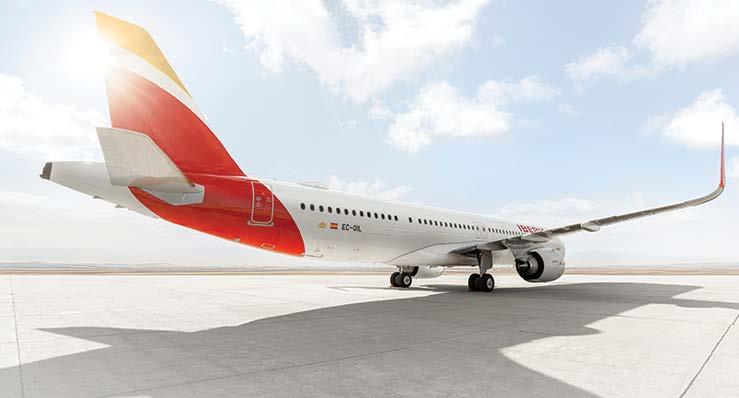
Iberia’s A321 XLR
Beatriz Guillen, Chief Customer Officer, Iberia
passenger experience, operational excellence and accessibility.
The carrier will also use technology to improve passenger services and transparency. This includes integration with Apple AirTag to improve baggage tracking visibility, as well as 3D SeatMapVR, which allows passengers to visualize the cabin before selecting a seat. Iberia is also expanding its omnichannel customer service, enabling passengers to interact with the airline across a range of digital platforms, including its website, mobile app and messaging services such as WhatsApp.
Through initiatives such as Háblalo x Iberia, the airline is leveraging technology to improve the travel experience for passengers with disabilities, reinforcing its commitment to inclusive mobility.
AI will also play an ongoing role in operations, including resource planning, improving disruption management and personalizing passenger interactions.
“For us, AI is not an isolated initiative, but an enabler embedded across the organization,” Guillén says.
By embedding connectivity, artificial intelligence and intelligent
systems across its operation, Iberia is transforming technology from a backend utility into a visible driver of passenger value. The
result is a travel experience that is connected, adaptive and built for the expectations of a digitally native passenger.
Iberia is rolling out free high-speed Wi-Fi across its fleet this year through IAG’s Starlink partnership
Iberia’s A350 Next Business Class
Connecting THE STARS
Kenneth Chang, Executive Vice President and Chief Marketing Officer at Korean Air, talks to PAX Tech about embracing Starlink
by ALEX PRESTON
In September 2025, Korean Air received the Best Cabin Service award at the Airline Passenger Experience Association (APEX) Best Awards 2026. It also walked away from the event as a Five-Star Global Airline for the ninth consecutive year.
These honors reflect the carrier’s commitment to elevating the travel experience and strengthening service quality.
Not resting on its laurels, the airline is enhancing its inflight connectivity (IFC) service for both passengers and crew.
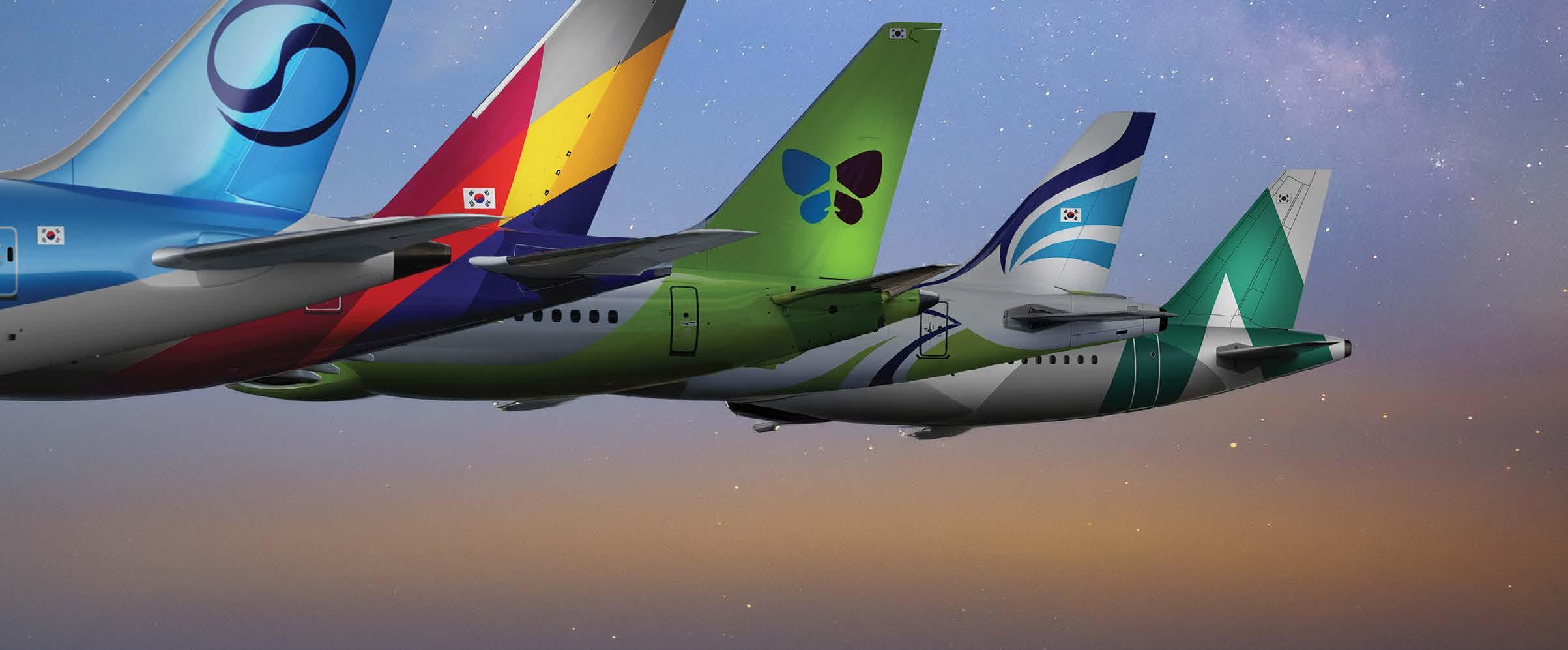
Korean Air introduced IFC in 2023, relying on Panasonic and Viasat connectivity solutions for the paid-for service. However, in December 2025, Korean Air, alongside other airlines part of Hanjin Group, gave passengers something to look forward to, announcing plans to address high bandwidth demands by adopting Starlink.
Starlink uses more than 8,000 Low Earth Orbit (LEO) satellites to provide high-speed internet, allowing passengers across all cabin classes to
Kenneth Chang, Executive Vice President and Chief Marketing Officer, Korean Air
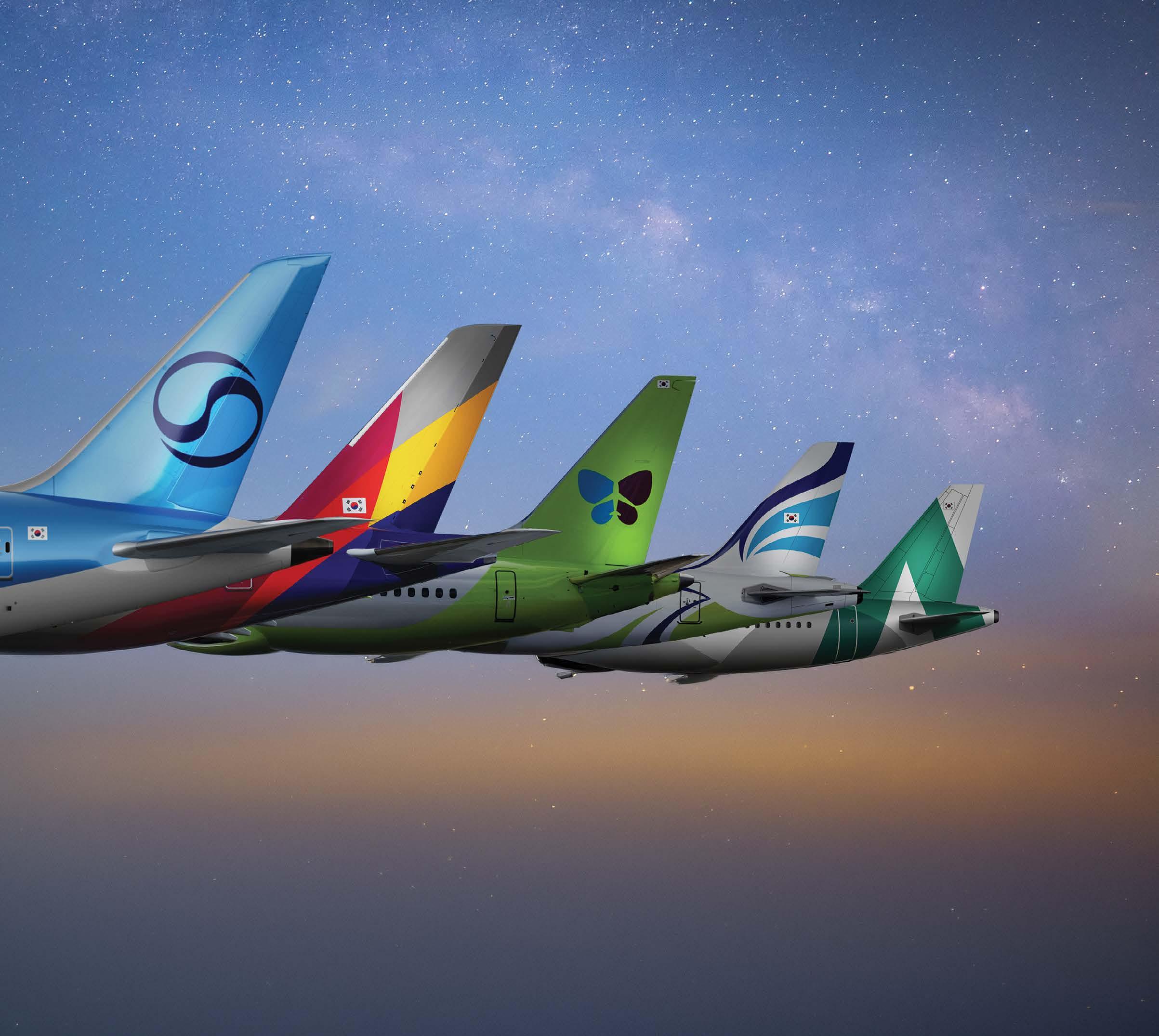
Korean Air and Hanjin Group airlines are introducing Starlink powered Wi-Fi
Unlock the Full Potential of Data at the Edge
Quvia is the digital fabric between aircraft and cloud, orchestrating data to improve IFC, enable new digital services and give airlines control of the in-flight experience.
• Independent, real-time data for connected aircraft
• Simple set up, easily accessible
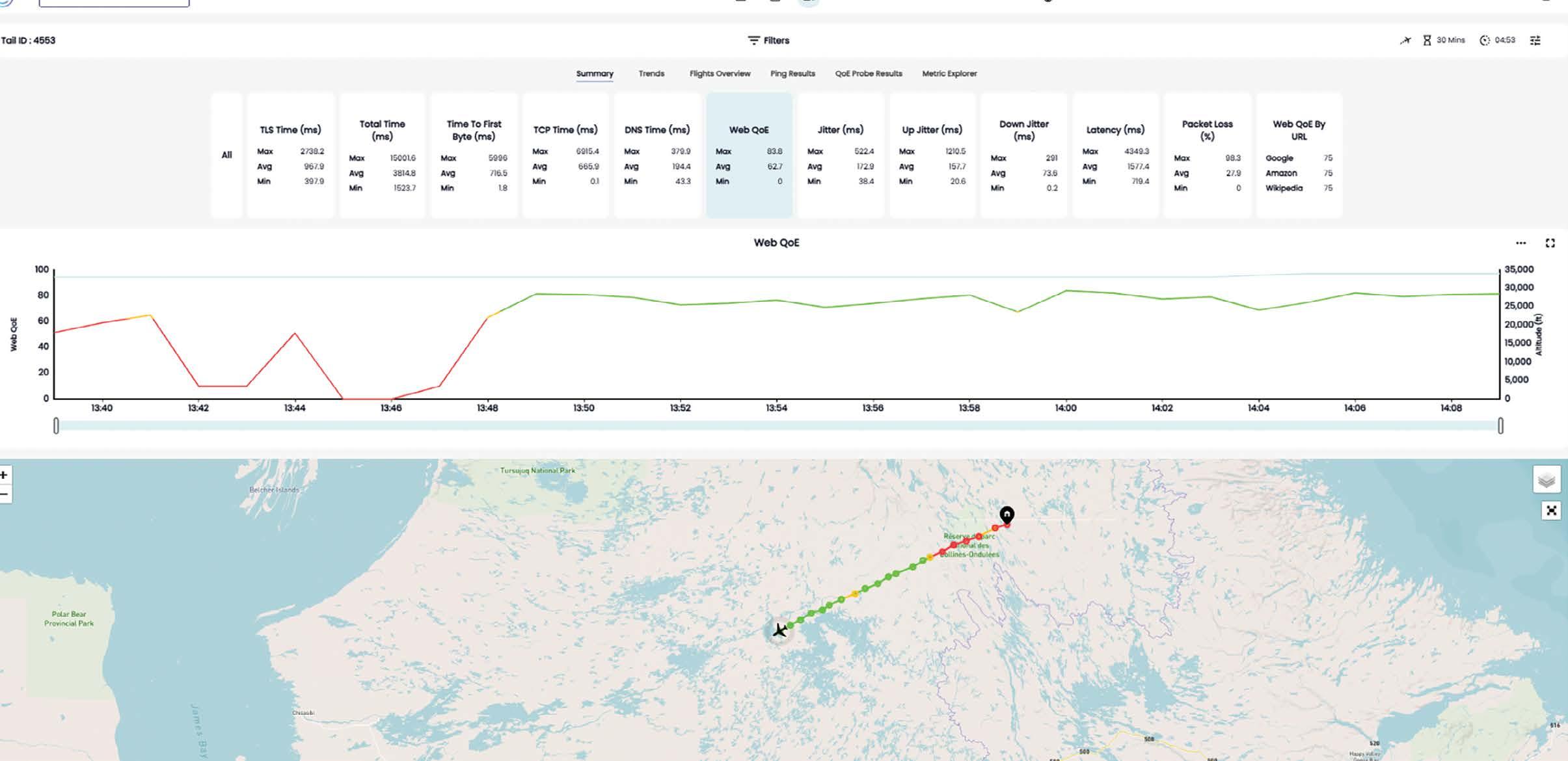
• Low-bandwidth proprietary QoE probe
GEO
unbounded
engage in data-intensive activities— such as video streaming, online gaming and cloud-based work— simultaneously without compromising connection quality.
Star bright
As Kenneth Chang, Executive Vice President and Chief Marketing Officer at Korean Air, explains, “The introduction of Starlink will fulfill the high expectations for groundequivalent connectivity.”
By offering stable, high-speed access of up to 500 Mbps, Chang says Korean Air expects a fundamental shift in cabin behavior. Passengers will transition from passive offline entertainment to active, real-time digital engagement. This includes seamless streaming, live social media interaction and uninterrupted cloudbased productivity.
Korean Air defines connectivity success as moving beyond the limits of traditional inflight entertainment to deliver a seamless and personalized passenger experience.
“Our goal is to transform the aircraft from a secluded media space into an unbounded digital environment that naturally extends our customers’ everyday digital lives into the air,” Chang explains.
He adds that, “Connectivity, for us, is not just a technical performance; it is about enabling continuity—allowing passengers to stay connected to what matters to them, whether it be work, entertainment or personal content.
Korean Air and Asiana Airlines will prioritize Starlink installation on its long-haul 777-300ER and A350900 aircraft. Following the integration with Asiana Airlines, the airline plans to complete fleetwide installation
by the end of 2027, “building a foundation for the next generation of inflight engagement and delivering a meaningful customer experience,” says Chang.
The path to love
The selection of Starlink is the latest tactic in Korean Air’s service enhancement strategy.
Referring to the Starlink partnership, Chang says Korean Air sees this moment as the foundation for what comes next.
“As the airline continues to evolve across its brand, operations and customer experience, its focus remains on building deeper emotional connections and delivering beyond excellence at every touchpoint— advancing steadily toward its ambition to become the world’s most trusted and most loved airline.”
Korean Air aims to transform the aircraft from a secluded media space into an
digital environment that seamlessly extends passengers’ everyday digital lives into the air
PAX Perspective Verified Airline Review:
Iberia Business Class
In this Verified PAX Perspective Airline Review, PAX evaluates an Iberia Business Class multi-city flight from Heathrow to Madrid to Doha
by AIJAZ KHAN
The first flight
Iflew Iberia from Heathrow (LHR) to Madrid (MAD) onboard the airline’s new A320neo aircraft in December 2025. This was the first leg of my journey before connecting at Madrid to Doha (DOH). Flight time for this short-haul segment was approximately 2.5 hours.
Iberia Business Class passengers receive access to the British Airways Club Lounge North at LHR before boarding. The lounge offered a pleasant start to the trip with excellent food and drink and a cheerful holiday atmosphere. My light breakfast of fresh fruit and pastries set the tone for the day. After some time to unwind, I headed for the gate.
Seating and interior configuration
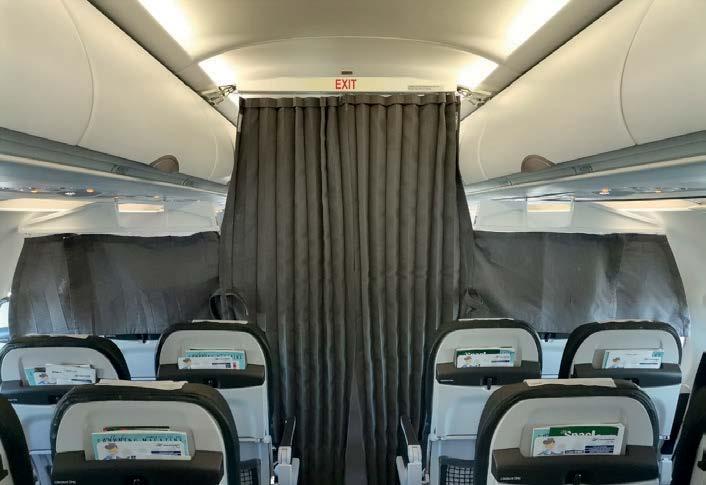
The A320neo features 186 seats. In Business Class, the cabin is divided by a curtain, and the middle seats remain unoccupied, giving passengers extra room to stretch out. The cabin felt polished and open with 18-inch seat width, 30-inch pitch and 3-inch recline. The familiar three-by-three layout suits short-haul flying and my mid-morning seat was comfortable. With fewer travelers up front and blocked middle seats, overhead bin space was plentiful, adding to the spacious experience.
Iberia tells PAX that the A320neo is one of the newest additions to its fleet. The aircraft operates at 50 percent lower noise levels than other single-aisle models and reduces CO2 emissions by 5,000 tons annually, delivering a more sustainable way to operate short- and medium-haul routes.
Inflight entertainment and connectivity
Iberia offers complimentary Wi-Fi for messaging apps to Business Class passengers, and to all Iberia Club
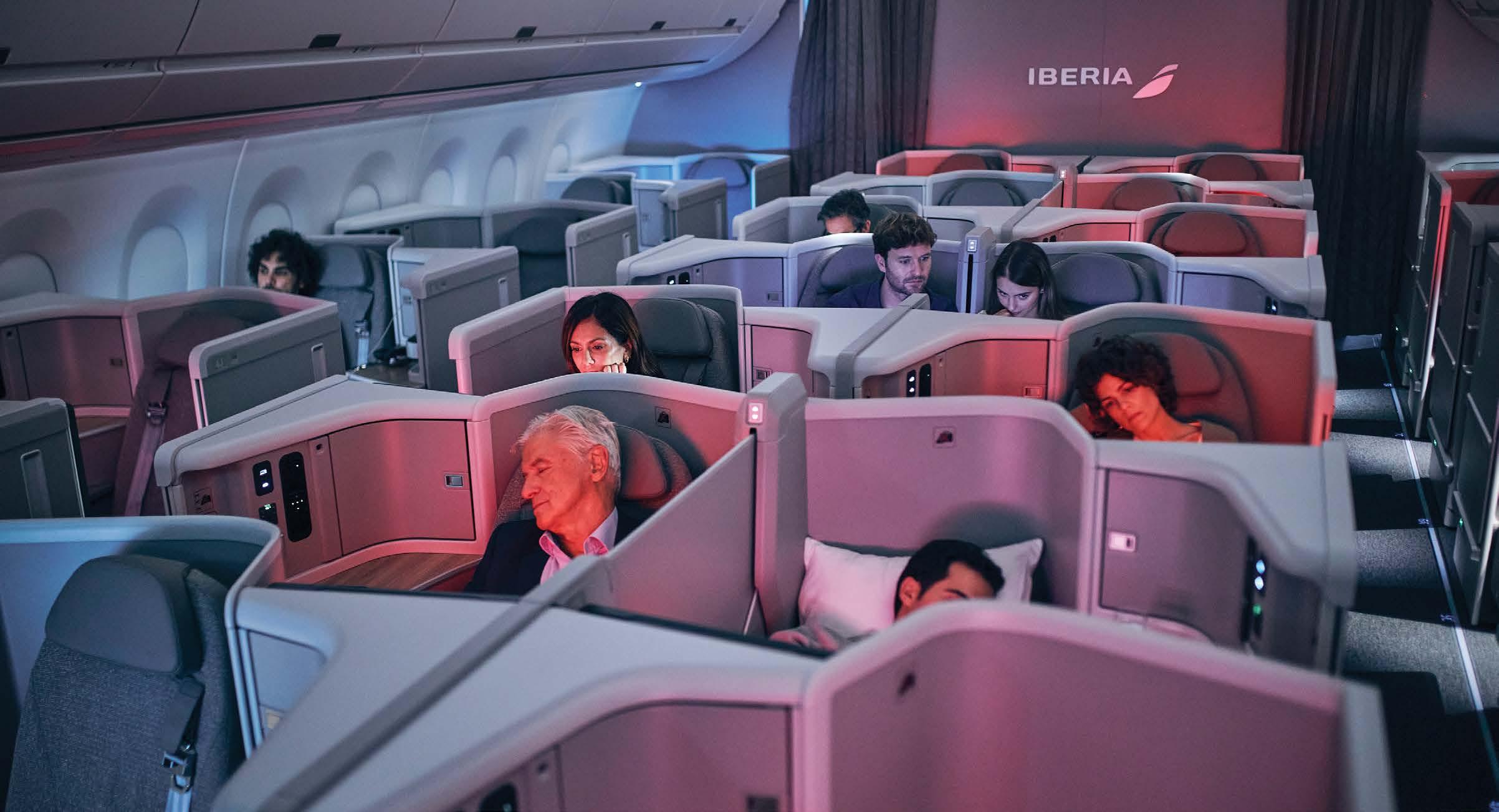
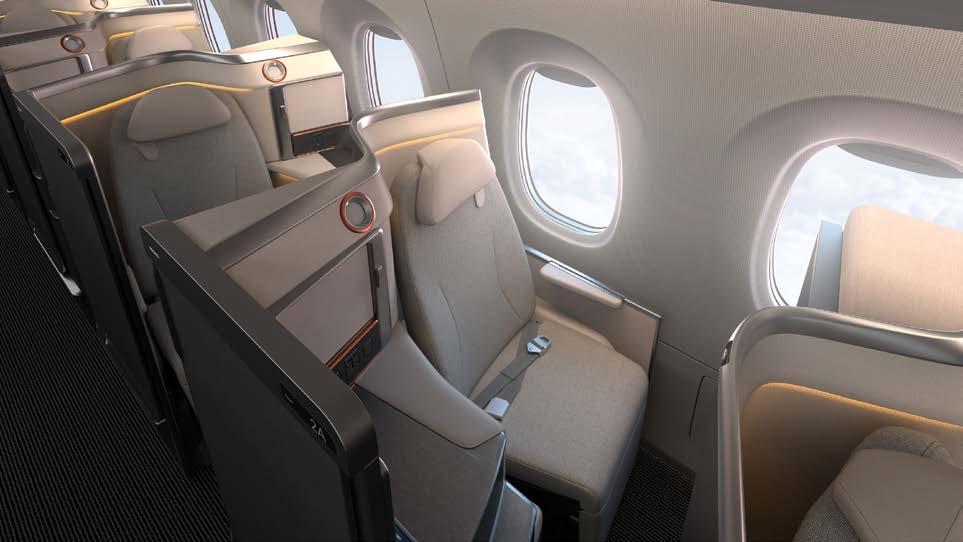
Business Class seats onboard flight from Madrid to Doha
members regardless of the cabin they are flying in. It worked consistently throughout the flight, which I appreciated.
Parent company International Airlines Group (IAG) announced an agreement with Starlink last month that will introduce high-speed connectivity to all Iberia flights. It will be available free of charge to all passengers in all cabins, marking a major step forward in the airline’s onboard experience. Implementation is expected to begin this year.
Food and beverage
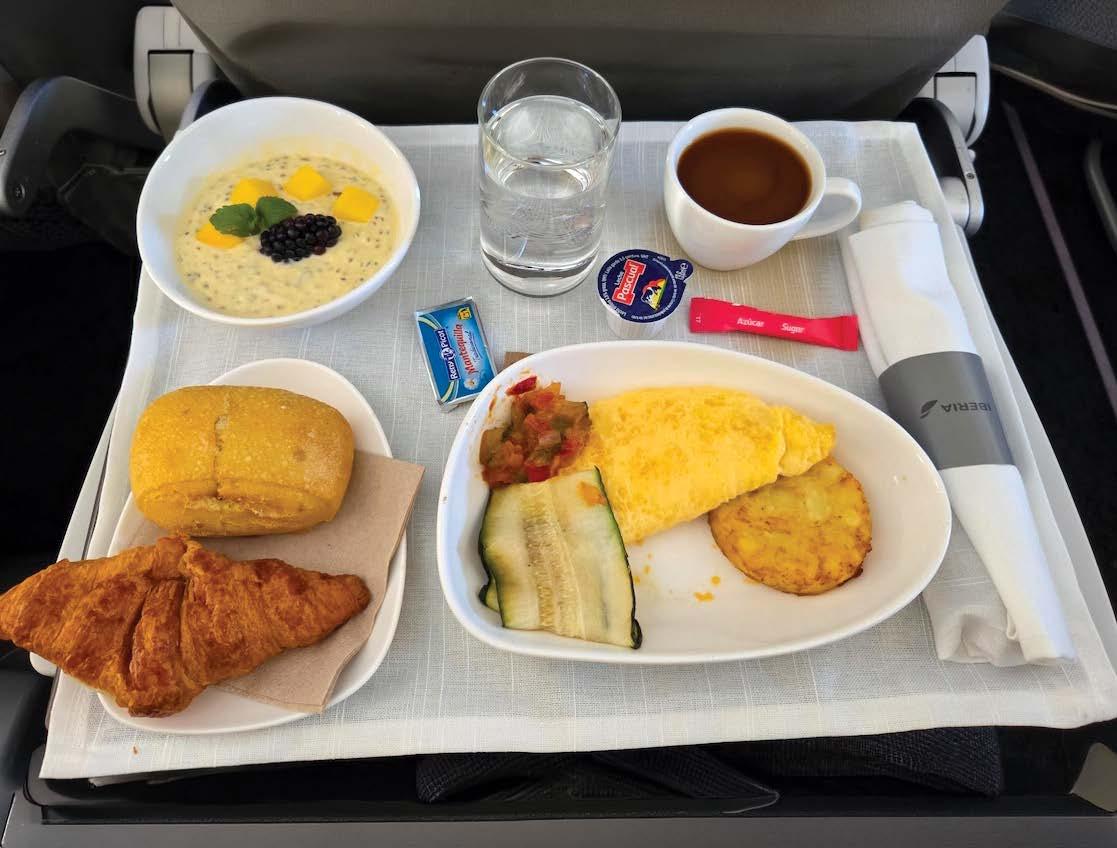
After takeoff, the crew served breakfast, available on European short-haul flights departing before 11:00 a.m. The meal included an egg omelet with vegetables, a selection of breads and pastries, and a chia seed pudding topped with fresh fruit. The hearty spread, served on ceramic tableware, made the quick flight feel more premium.
The second flight
After relaxing in the Iberia Velázquez Premium Lounge at MAD, I boarded the long-haul Business Class flight to Doha. This final leg was seven hours. Before departure, the crew offered a welcome drink of water, Cava or orange juice. The orange juice was a refreshing choice as I settled in.
Seating and interior configuration
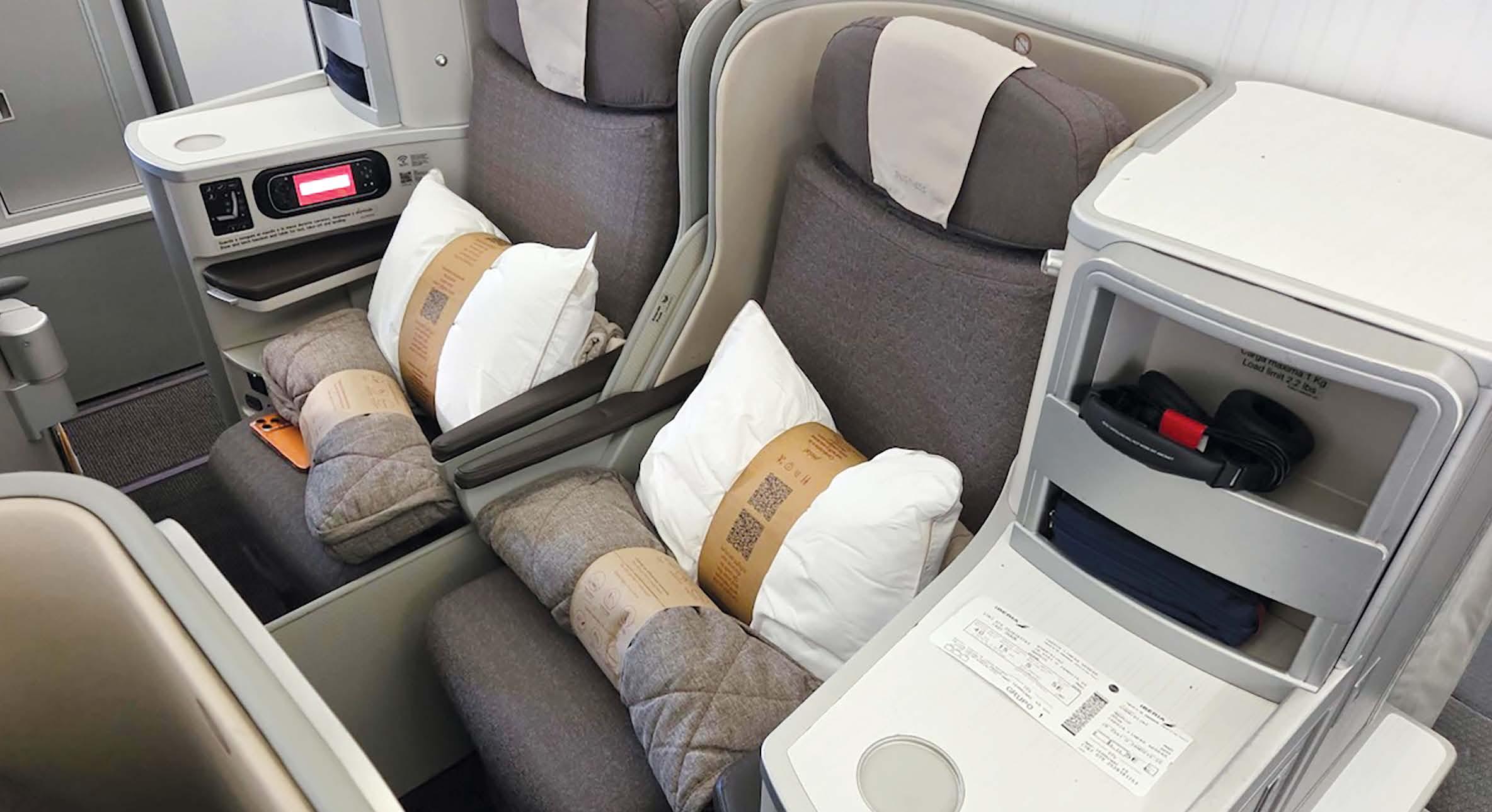
Iberia’s A330-300 Business Class cabin features 29 lie-flat seats arranged in a 1-2-1 configuration with curtains separating the cabin from Economy. I settled into my suite where a mattress topper, pillow and duvet were waiting for me.
The seat offered generous living space with a 78.7-inch pitch, 25-inch width and full 180-degree recline. A large tray table and a small side counter held the amenity kit and other essentials.
Inflight entertainment and connectivity
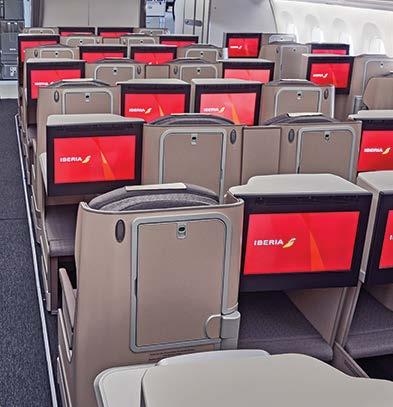
The 15.4-inch touch screen featured the Panasonic Avionics eX2 system.
What caught my attention was the 4.2-inch touch-screen controller placed beneath the side counter. Instead of the usual handheld remote with buttons, this felt more intuitive and modern. The crew also provided comfortable headphones for an enjoyable viewing experience.
Once in the air, I connected to Iberia Wi-Fi again for complimentary messaging.
Food and beverage
The inflight menu, catered by DO&CO, highlighted a mix of international flavors and Spanish culinary touches using local and seasonal ingredients. Service began with tapas-style hors d’oeuvres, including artisan cheeses and nuts, olives and a bag of Obando Artisan Picos Utreranos.
For the starter, I chose the baby zucchini, broccoli and spinach with Tudela lettuce hearts and sun-dried tomato salad served with creamy lemon yogurt sauce. It was a flavorful vegetarian option.
My main dish was the grilled cod in a creamy green sauce with spinach, raisins, pine nuts and roasted potatoes. It delivered a satisfying balance of richness and freshness.
Amenities and comfort
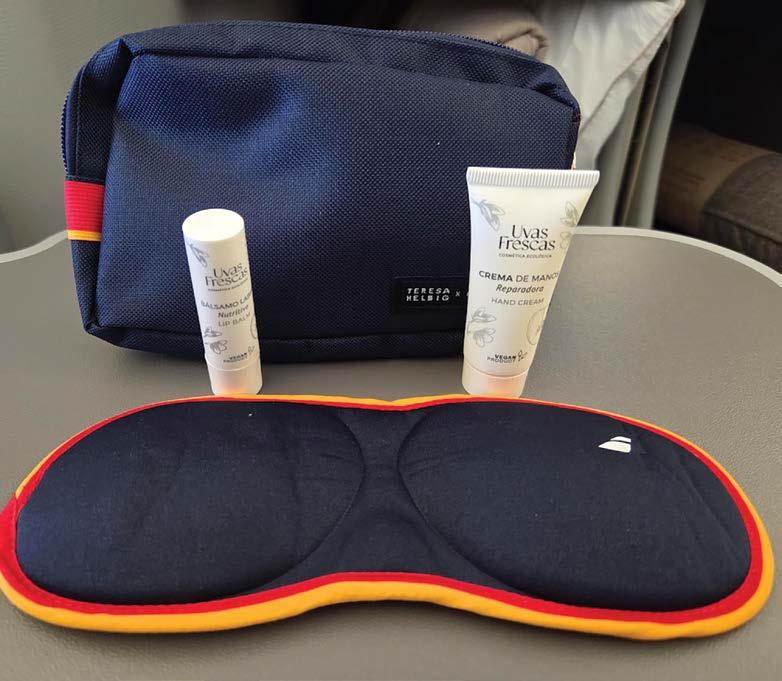
Amenity kits on this route are designed by Teresa Helbig and produced by Kaelis. Introduced last summer
and inspired by Iberia’s cabin crew uniforms, the pouches feature vibrant blue, red and yellow hues.
Inside, I received socks, an eye mask, a toothbrush, toothpaste, earplugs and skincare items from Spanish brand Uvas Frescas. The kits are made from rPET, produced using 7.5 million recycled 550-milliliter plastic bottles.
The PAX Perspective
The crew’s attentiveness throughout both flights delivered a smooth and enjoyable journey. Details from DO&COs thoughtful menu to the amenity kits by Kaelis and Uvas Frescas showcase Iberia’s strong sense of identity and hospitality. We highly recommend Iberia’s Business Class cabin for travelers flying between Europe and the Middle East!
Breakfast en route Heathrow to Madrid
The kits contain socks, an eye mask, a toothbrush, toothpaste, earplugs and skincare items from Spanish brand Uvas Frescas
Connected comfort
With free gate-to-gate Wi-Fi and growing passenger demand for streaming and personal content, Porter Airlines is reshaping the Economy experience
by JANE HOBSON
Over the past 19 years, Porter Airlines has built a reputation for passenger-first innovation—from free beer and wine to gate-to-gate connectivity.
The arrival of the E195-E2 aircraft— Porter received its 50th in December 2025—is accelerating those efforts as the airline expands its network beyond Canada and the United States for the first time, with flights to Mexico, the Caribbean and Central America.
Julian Low, Vice President, Corporate Development at Porter Airlines, says that when Porter launched the E195-E2 in 2023, the goal was to elevate the Economy travel experience.
“We wanted people to feel good about flying,” he says. “An important part of the offering was Wi-Fi. People expect access to the internet everywhere they go—we felt being on an aircraft was no different.”
Porter provides gate-to-gate, unlimited high speed connectivity free to all passengers, making it the first airline in Canada to do so.
“Which comes with some risk,” Low admits, adding that the airline felt strongly that the industry needed to evolve in that direction—and Porter was “happy to lead the charge.”
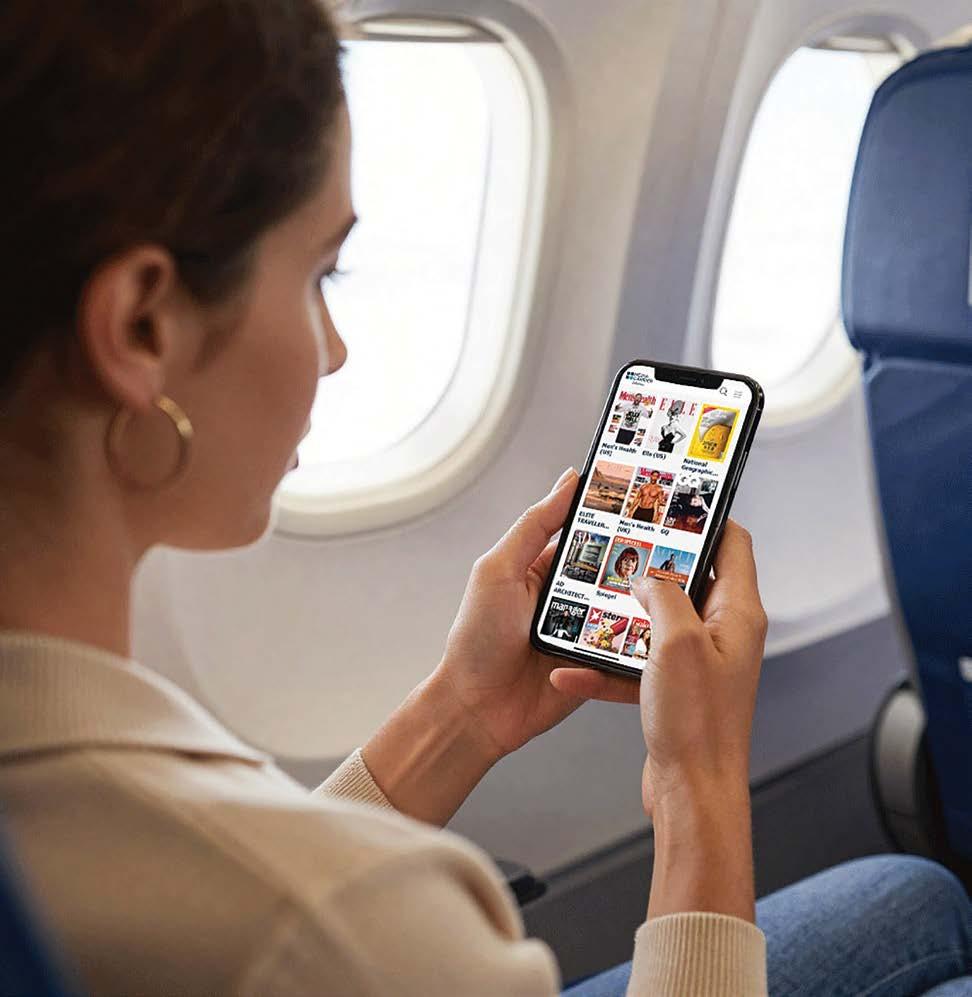
The airline’s connectivity service is delivered by Viasat and provides speeds of around 12 Mbps. VIPorter loyalty program members can access uninterrupted reliable Wi-Fi for the entire flight after watching a 30-second advert. This represents more than half of its Wi-Fi users, with many signing up in flight, Low reveals.
“This has been an excellent driver of loyalty engagement,” Low says. “Our data suggests that passengers prefer to interact with their own content and not to be limited by content curated by airlines; many connect multiple devices at a time.”
He notes that the rise of streaming platforms is also changing inflight entertainment habits, as passengers increasingly rely on personal electronic devices to access the latest movies and shows.
Low says Porter passengers are consuming significant amounts of data, with streaming services such as Netflix and Amazon Prime accounting for the largest share, followed by web browsing.
“Our passenger satisfaction scores are some of the highest in the industry and we receive a lot of positive feedback on the reliability of the product,” Low says. “Passengers are not limited by bandwidth and there are no barriers to staying connected to home or the office during flight, and we are proud to provide our passengers with that level of comfort.”
As competition intensifies across the Asia Pacific region, Philippine Airlines is advancing a strategic vision centered on modernization, consistency and a renewed expression of its Filipino identity. For Marketing Vice President Alvin Miranda, the evolution is as much about elevating the technical backbone of the fleet as it is about strengthening the emotional core of the brand.
Philippine Airlines has long been anchored in its reputation for warmth and care. Now, the airline is entering a new phase in which that philosophy is reinforced by technology, design and data. Miranda describes the approach as a harmonization of the entire passenger journey.
Philippine Airlines Marketing Vice President Alvin Miranda highlights how the airline is modernizing its fleet with upgraded cabin products
by JANE HOBSON
“Philippine Airlines takes pride in the heartfelt hospitality that has long defined our brand, and we are committed to making sure that level of care is felt on every flight,” he tells PAX Tech
Central to this strategy is an ambitious fleet modernization program. It includes next-generation aircraft equipped with upgraded cabin products, expanded entertainment options and enhanced connectivity.
“We are combining technology with genuine Filipino care to deliver a worldclass airline experience,” Miranda says.
Readiness for change
As the airline grows, its leadership strategy includes preparedness for a volatile global market. For Miranda, readiness is rooted in adaptability
and data-driven decision-making. Investments in skills, systems and customer-centric processes support Philippine Airlines’ pursuit of profitable growth and long-term resilience.
“We are committed to improving continuously. Our priority is the passenger, and we back that up with disciplined execution. This keeps our business resilient, helps us grow sustainably and builds lasting loyalty,” he says.
As Philippine Airlines advances its modernization efforts, it is redefining what it means to be a full-service carrier in Asia Pacific. With a blend of technological ambition and cultural intention, the airline is positioning itself to lead through disciplined innovation an operational strength.
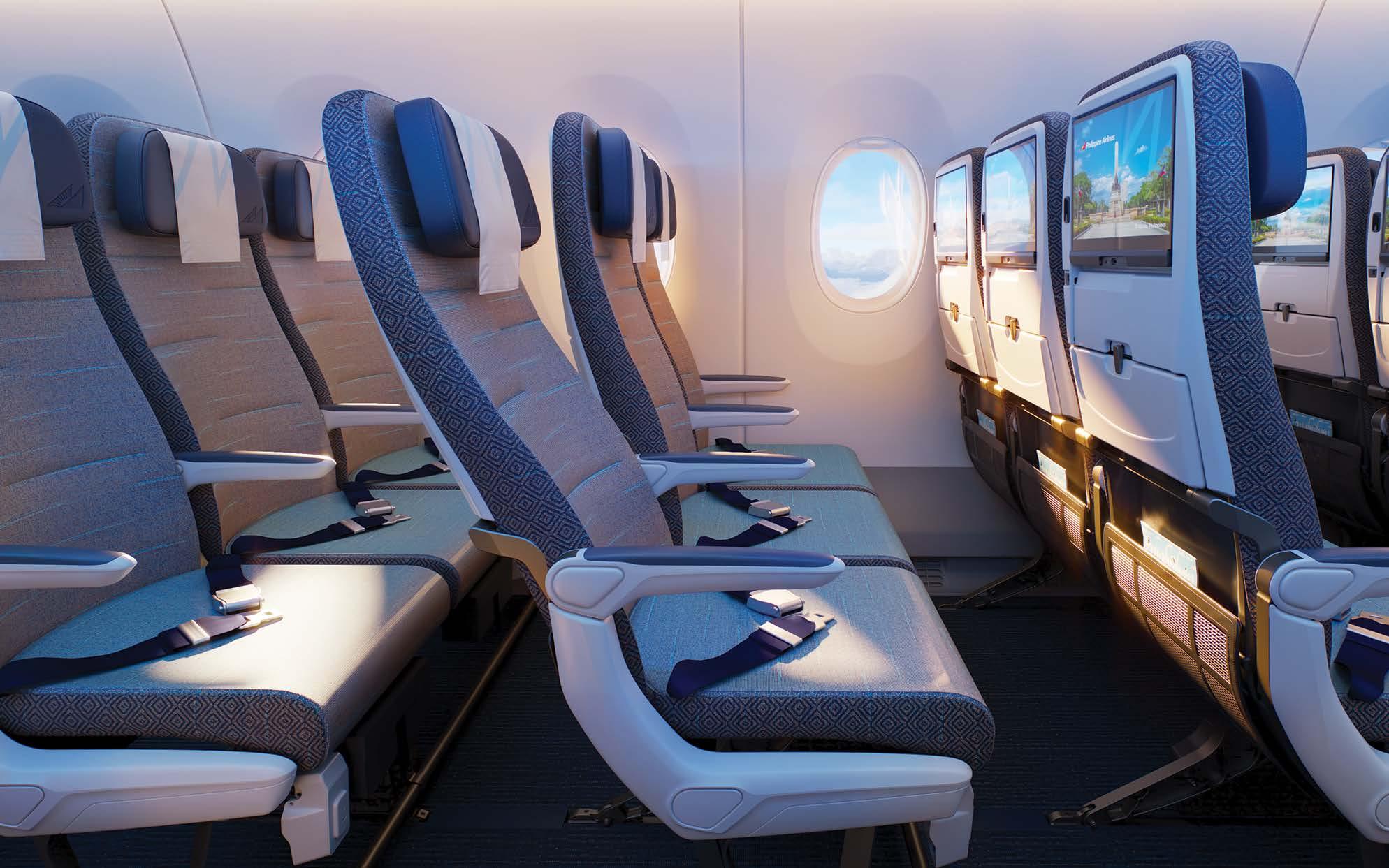
Economy Class cabin onboard Philippine Airlines
The sun is always shining with Porter!
Book a last-minute spring vacation or book your sunny summer travel plans with Porter’s year-round flights to Mexico, the Caribbean and Costa Rica!
Enjoy a plane with no middle seats, free WiFi, plus complimentary beer, wine and snacks!
Actually enjoy economy.
To/from Toronto Pearson
Cancun | Puerto Vallarta | Nassau | Grand Cayman | Costa Rica | Fort Lauderdale
Fort Myers | Las Vegas | Los Angeles | Miami | Orlando | Palm Springs | Phoenix San Francisco | Tampa | West Palm Beach
To/from Ottawa Airport
Cancun | Puerto Vallarta | Nassau | Grand Cayman | Costa Rica | Fort Lauderdale
Fort Myers | Miami | Orlando | Phoenix | Tampa
To/from Hamilton Airport
Cancun | Puerto Vallarta | Fort Lauderdale | Orlando
Reliability and growth
In an interview with PAX Tech, Bamboo Airways CEO Truong Phuong Thanh says the airline is focused on consistency as it plans for growth
by AIJAZ KHAN
For Vietnam’s Bamboo Airways, credibility comes from doing things reliably. A simple premise, but one that passengers can trust.
“Officially launched in 2019, Bamboo Airways positions itself as a full-service airline with a strong focus on service quality, fostering a warm and attentive hospitality culture deeply rooted in Vietnamese values, together with a strong commitment to on-time performance,” CEO Truong Phuong Thanh tells PAX Tech
At Bamboo Airways, on-time performance is not treated as a goal to chase, but as a baseline requirement.
“To date, Bamboo Airways is widely remembered by passengers as an airline known for hospitality and punctuality, with its On-Time Performance (OTP) consistently ranking among the top in the Vietnamese aviation industry from 2019 to the present,” says Truong.
From the airline’s perspective, the same discipline that underpins OTP is
what builds lasting passenger loyalty. Through Bamboo Club, Bamboo Airways concentrates on recognizing loyalty rather than driving short-term engagement. That includes offering status matching with equivalent programs worldwide and providing access to services across the Bamboo Airways–FLC Group aviation and resort ecosystem.
With plans for expansion, Bamboo Airways aims to add eight to 10 aircraft per year, with the goal of restoring the fleet to a scale of 30 aircraft. The airline positions this to maintain stable schedules, increase frequencies where demand is proven and reopen routes without putting pressure on operational performance.
Sustainability is handled in a similarly practical way. Internally, this includes a dedicated committee focused on fuel-saving solutions to reduce emissions. Bamboo Airways also partners on environmental
programs. To mark the airline’s seventh anniversary, it launched the “Van Dam Xanh” project with a community organization, planting thousands of bamboo trees in Yen Bai, Vietnam.
Looking ahead, Bamboo remains focused on what it sees as nonnegotiable: “Ensuring operational safety, which is always our number one priority at Bamboo Airways,” says Truong, while preserving “our culture of dedicated hospitality and on-time performance, which have become the ‘signature identity’ of Bamboo Airways.”
Investments are meant to protect what already works, because for Bamboo Airways, trust comes from consistency passengers can count on.
Truong Phuong Thanh, CEO, Bamboo Airways
Bamboo Airways combines Vietnamese hospitality with a strong focus on service quality and on-time performance
Enriching Travel
RAVE Aerospace is the creator of RAVE and offers innovative in-flight entertainment and connectivity solutions.
Meet us at Aircraft Interiors Expo Hall B3 | Booth 3A10 | 14 – 16 April 2026
HIGH-VALUE Innovation
Rosen Aviation advocates for seamless integration and consistent personalization across the passenger journey, supported by open system architectures that give operators greater control
Lee Clark, Senior VP Strategy, Rosen Aviation, highlights the key UX/UI considerations in designing premium passenger experiences
by ROBYNNE TRUEMAN
As airlines compete for the loyalty of high-value First and Business Class travelers, User Experience (UX) and User Interface (UI) are key to creating a seamless and intuitive premium cabin experience that meets the expectations of the discerning frequent flyer.
But as Lee Clark, Senior VP Strategy, Rosen Aviation, tells PAX Tech, “Premium suite design lands in a gray area in terms of innovation and evolution in that while there have been a variety of new designs, configurations and integrations, many of what is
deemed ‘new’ is mostly a reshuffle of currently available technologies.”
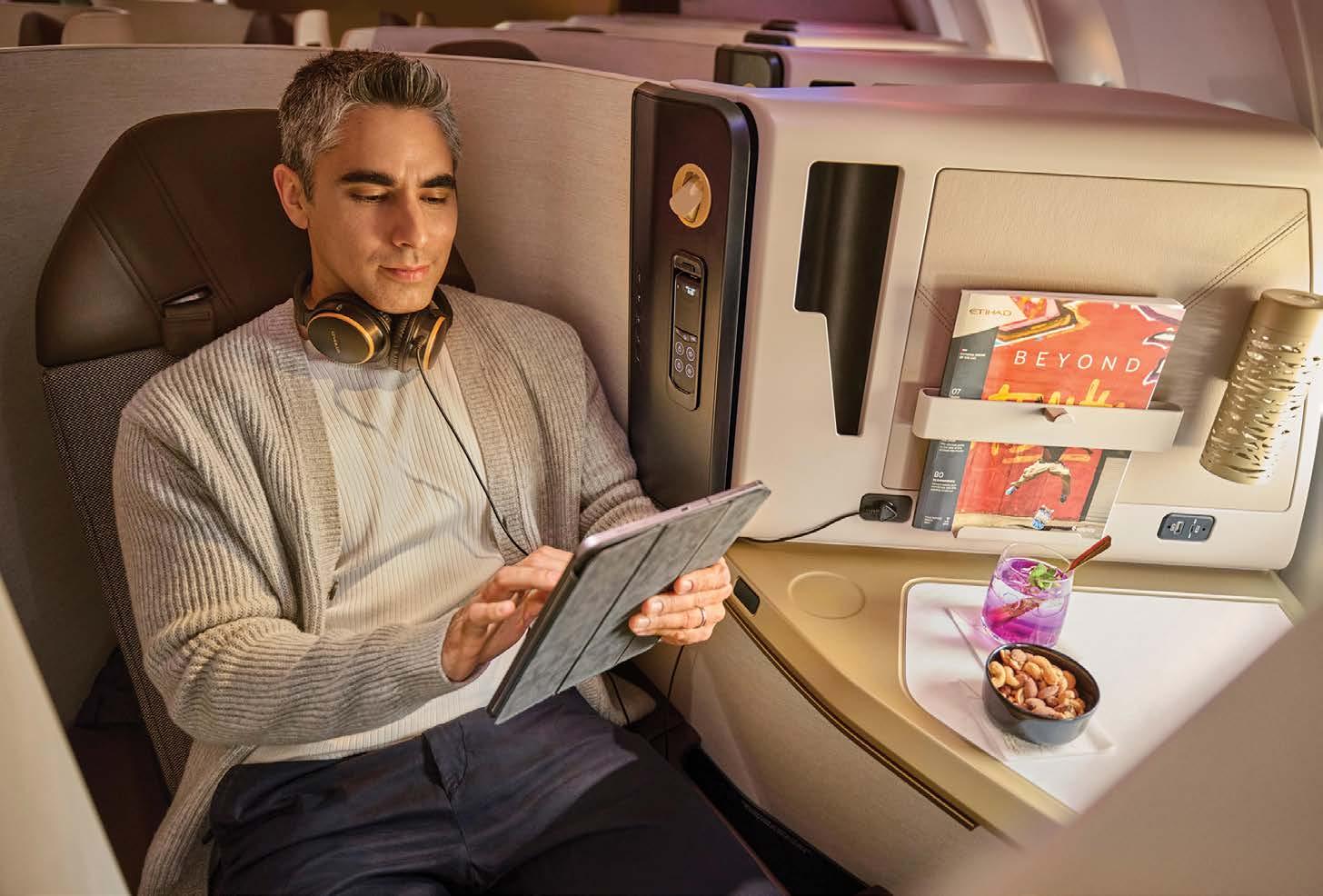
However, he points to Emirates’ Game Changer suites and Etihad’s The Residence as examples of truly unique products on premium airlines, for which Rosen Aviation is positioned to offer a wider array of premium VIP focused technologies.
For Clark, UI/UX has been and always will be the most important factor when designing any technology solution that leverages touchscreens or visual controllers. He notes that essential functions like lighting and window
shades must remain easily accessible, a challenge made simpler by today’s ultrafast, intuitive UX/UI designs.
First Class demands
Clark explains that designing UI/UX for First Class passengers is a delicate balance between providing more with less.
“Where Economy passengers are limited to seat recline or stowing the tray table, the First Class seating environment, especially for premium airlines, should have a multitude of options and controls,”
Lee Clark, Senior VP Strategy, Rosen Aviation
virtually unlimited range of cabin customization options.
This vision for the future is outlined in MOSAIC (Modular Open System Architecture In Cabin), and will open the door for OEMs, operators and suppliers to more easily collaborate in curating a distinct brand identity.
Clark frames the design as a tierone IFE/CMS system, customized to the OEM’s specifications, with third-party hardware and applications fully integrated.
from outside the aircraft and, with intentionally placed, highly focused Li-Fi transmitters, creates local privacy within a First Class pod or suite.
IFE for long-term growth
In a saturated market, Clark points out that passenger purchasing decisions often come down to what features are not offered, as opposed to those that are offered inflight. Airlines lacking the latest in IFE, connectivity, personalization, audio and premium seating will struggle to compete against industry peers.
“The data is clear that even the presence of contemporary technology solutions in the cabin has a significant impact on brand perception. For any airline looking to attract new passengers and retain current ones, investments in premium IFE and cabin experience upgrades are a no-brainer,” he tells PAX Tech
he says. “This then demands a UI specifically designed for each specialty environment.”
The challenge when introducing advanced UX/UI concepts into existing fleets lies in hardware limitations and component interoperability.
“We are changing that paradigm by designing open system architectures that are more easily upgraded and futureproofed,” Clark explains.
Personal and private
Rosen Aviation advocates for seamless integration and consistent personalization across the passenger journey, supported by open system architectures that give operators greater control. Clark notes that open systems built on modern, common communication protocols enable a
“Global leaders in the UI/UX industry can create really amazing effects with menu continuity, navigation, particle effects and an almost endless list of other contemporary features and benefits, all of which are ‘must-haves’ in the First Class Passenger Experience,” he says.
Clark also points to privacy as a major challenge in today’s connected cabin, noting that Li-Fi connectivity can enhance privacy while adding redundancy—reshaping CMS and IFE system architectures.
“By incorporating Li-Fi connectivity, like that offered by our partners at Spectrum Networks, the ability for personal device connection is physically constrained by visible light,” he says, adding that this improves privacy and data concerns
To be successful, airlines should also look at these investments through the lens of new revenue streams, says Clark. Creating an enhanced Passenger Experience continuum is not just about consistency through various phases of the journey; it is also about sponsorship opportunities, premium add-ons and loyalty rewards. The benefits of such investments are twofold, delivering a better passenger experience and more revenue opportunities for the airline.
As for what will shape the future of the next-gen premium suites, Clark says the elephant in every room is artificial intelligence (AI).
“Especially for VIP and premium passengers, there is a real opportunity to reimagine the UI/UX by almost eliminating it altogether with the help of AI assistants,” he suggests. “The ability for even today’s AI models to carry on completely normal conversations is nothing short of mind-blowing and will continue to rapidly improve at an exponential rate. Add to this multilanguage support and the level of personal passenger care will reach a point that was previously unimaginable.”
Rosen’s Maverick VR First Class/Business Class demo with Audiosphere
BOSE on board
Linstol discusses how delivering premium sound seamlessly at scale can deeply enhance the passenger experience
by JANE HOBSON
Linstol is introducing its latest addition to its growing audio portfolio: Sound by Bose, bringing one of the world’s most recognized audio brands into the inflight environment with Sound by Bose technology.
“Premium sound onboard an aircraft is no longer just a technical feature. It is a brand defining experience,” Jakob Levison, Global
Director of Audio at Linstol, tells PAX Tech. “Especially in premium cabins, sound can elevate the journey. Audio quality becomes part of the overall sensory experience.”
Renowned for its industry-leading acoustic performance, innovation and engineering excellence, Bose Corporation has long set the benchmark for premium sound experiences.
“The introduction of Sound by Bose technology further strengthens Linstol’s commitment to delivering high-quality inflight entertainment solutions that elevate passenger comfort and satisfaction,” Levison says.
As airlines continue to prioritize differentiated onboard experiences, audio quality remains a critical touchpoint, Levison expands. By integrating Sound by Bose into its
portfolio, Linstol offers airline partners access to globally trusted sound performance combined with the operational expertise, customization capabilities and supply chain reliability Linstol is known for.
The addition complements Linstol’s existing range of earbuds, headsets and headbands expanding options across cabin classes while maintaining a focus on innovation, sustainability and cost-efficiency.
“Audio plays a vital role in shaping the passenger journey,” Levison reiterates. “Introducing Sound by Bose technology to our portfolio allows us to combine world-class acoustic engineering with our deep understanding of airline operational needs. It is about delivering premium sound seamlessly and at scale.”
Jakob Levison, Global Director of Audio, Linstol
Linstol is expanding its audio portfolio with Bose’s industryleading acoustic technology
The Perfect Match
Step inside innovation
Bucher Group highlights expertise in design & branding elements with its extensive range of cabin solutions in Hamburg
by ROBYNNE TRUEMAN
Bucher Group is gearing up to showcase its cutting-edge cabin solutions at Aircraft Interiors Expo (AIX) 2026 in Hamburg, with a focus on design & branding elements. The supplier’s exhibit features a single-aisle aircraft fuselage highlighting new developments for the narrowbody market.
The narrowbody cabin is fast becoming aviation’s most competitive design area, Bucher tells PAX Tech. With airlines demanding greater efficiency and passenger appeal in equal measure, the Bucher Group is responding with a new generation of interior solutions tailored to the evolving single-aisle market.
To demonstrate this, Bucher’s AIX exhibit will feature a single-aisle fuselage. Inside, visitors can explore the Bucher G1B Galley for the A320 Family. The G1B Galley complies with CS 25.795 requirements, ensuring full flight deck security against cockpit intrusion and penetration.
The G1B shown at AIX 2026 is a prequalification prototype designed to meet specific airline requirements in collaboration with Airbus.
Bucher tells PAX Tech it is proud to serve as a Tier 1 supplier for clientspecific, highly customized monuments and has been selected to provide SFE Galleys and Stowages for the A320 Family. Bucher’s scope exclusively covers out-of-catalog SFE monuments.
A key innovation displayed is the IFE Drop Down Mechanism, engineered by Bucher. This lightweight, compact monitor deploys smoothly, offering controlled tilt and pivot for optimal viewing, with a secure button-release for reliable locking, all with minimal installation space. Other features include the Window Cabin Partition, integrated into the A320 fuselage to optimize visibility for cabin crew line- and enhance branding opportunities.
A standalone monument within the booth is the Door 2
Galley, developed for SWISS, showcasing craftsmanship with customized features for a premium, serene environment as part of the “Silent Luxury” concept.
Bucher will also showcase its medical solutions, including the ATS Stretcher equipped with ACE’s Oxygen Medical Unit, as part of its commitment to safety and operational efficiency.
The ARCTICart™ returns to AIX 2026 in half and full-size versions.
An inflight service cart with thermal insulation, Bucher tells PAX Tech that it meets ATLAS standards and is FAA TSO certified.
A central focus of this year’s exhibit is Bucher’s expertise in design & branding elements, demonstrating the company’s ability to deliver bespoke cabin solutions for both new installations and retrofit projects.
Bucher invites attendees to discover these innovations firsthand at booth 5D60, Hall B5.
Beat Burlet, CEO, Bucher Group, at AIX 2025 with a custom branding element
A Bucher single-aisle forward galley
Carts for every carrier
DKA Aerospace positions itself as a partner in onboard solutions, showcasing carts that address current industry demands at AIX 2026
by ROBYNNE TRUEMAN
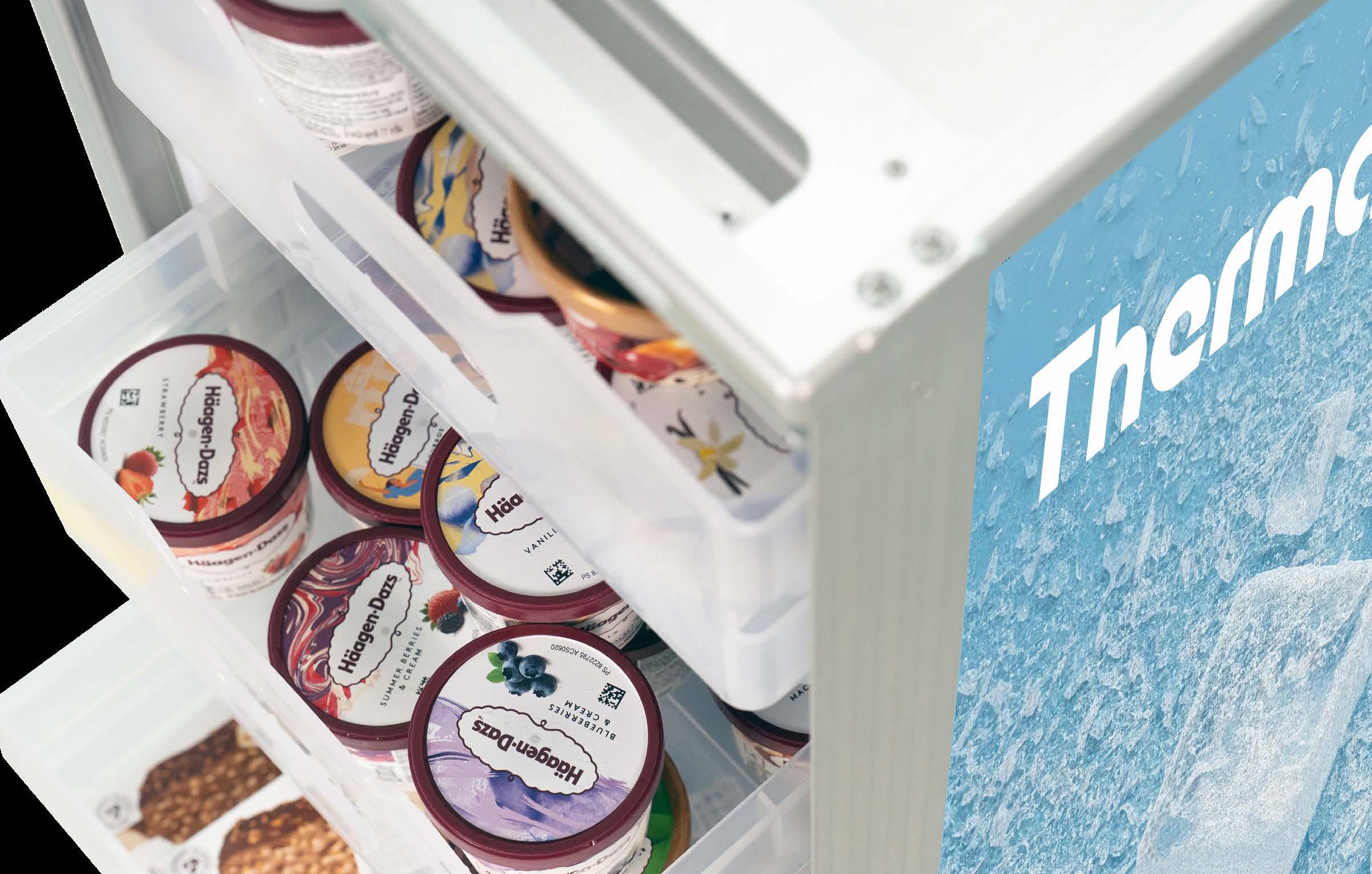
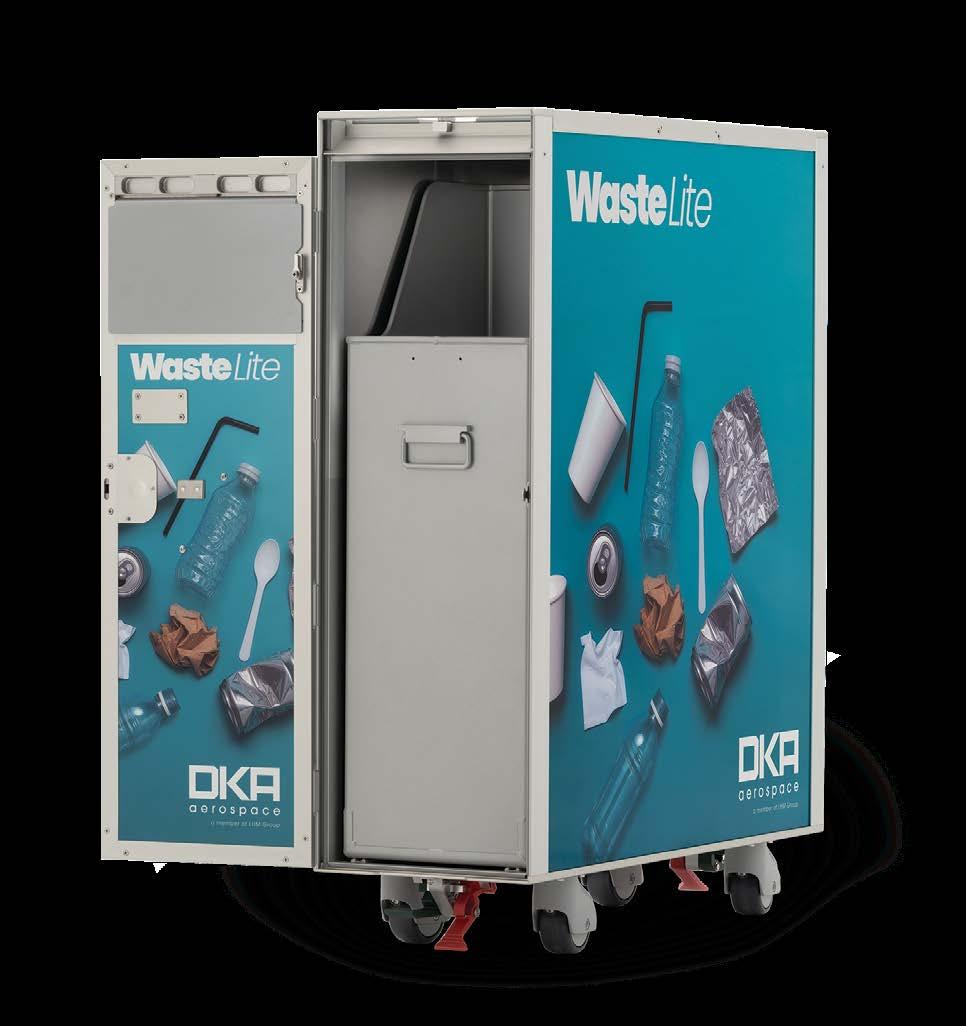
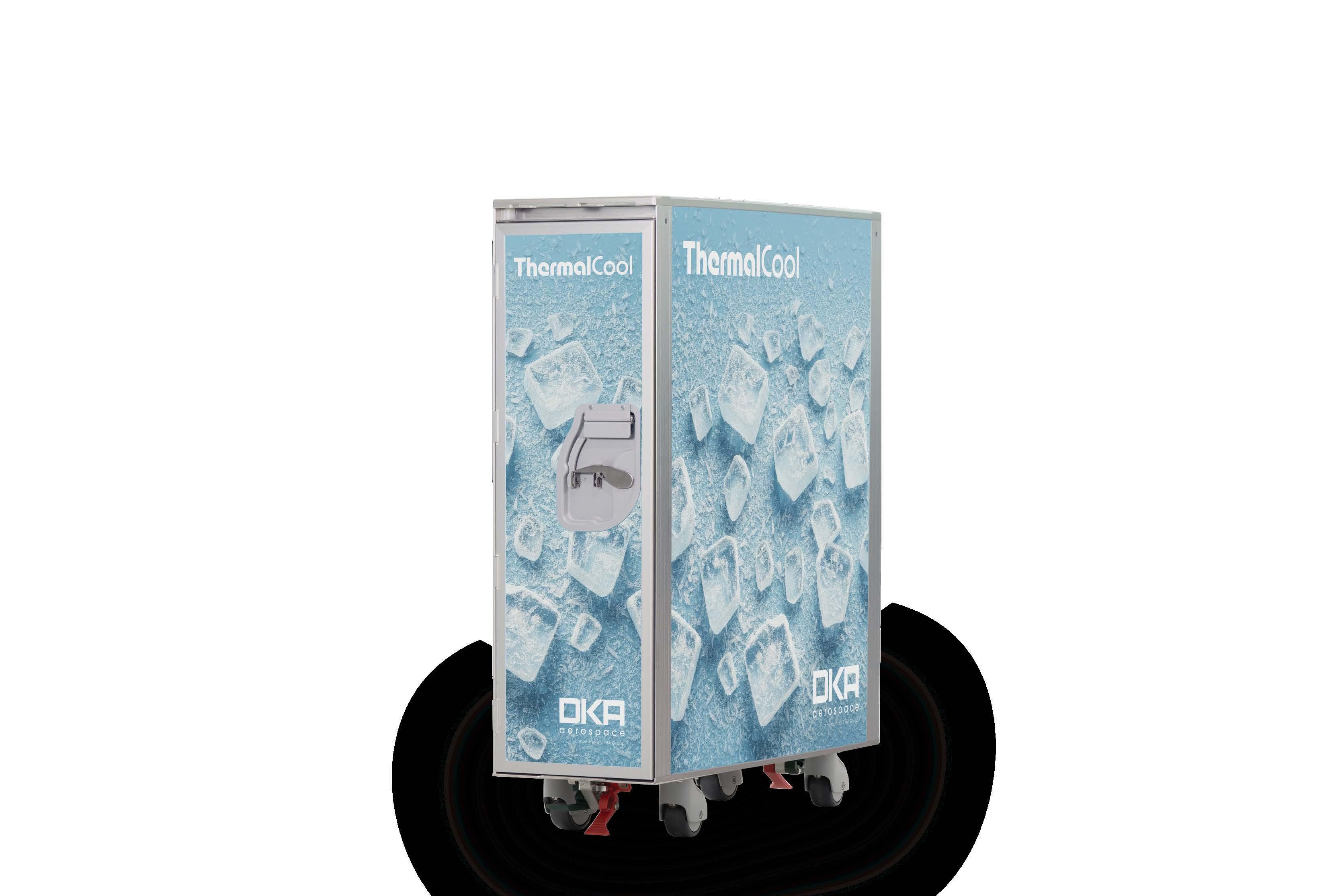
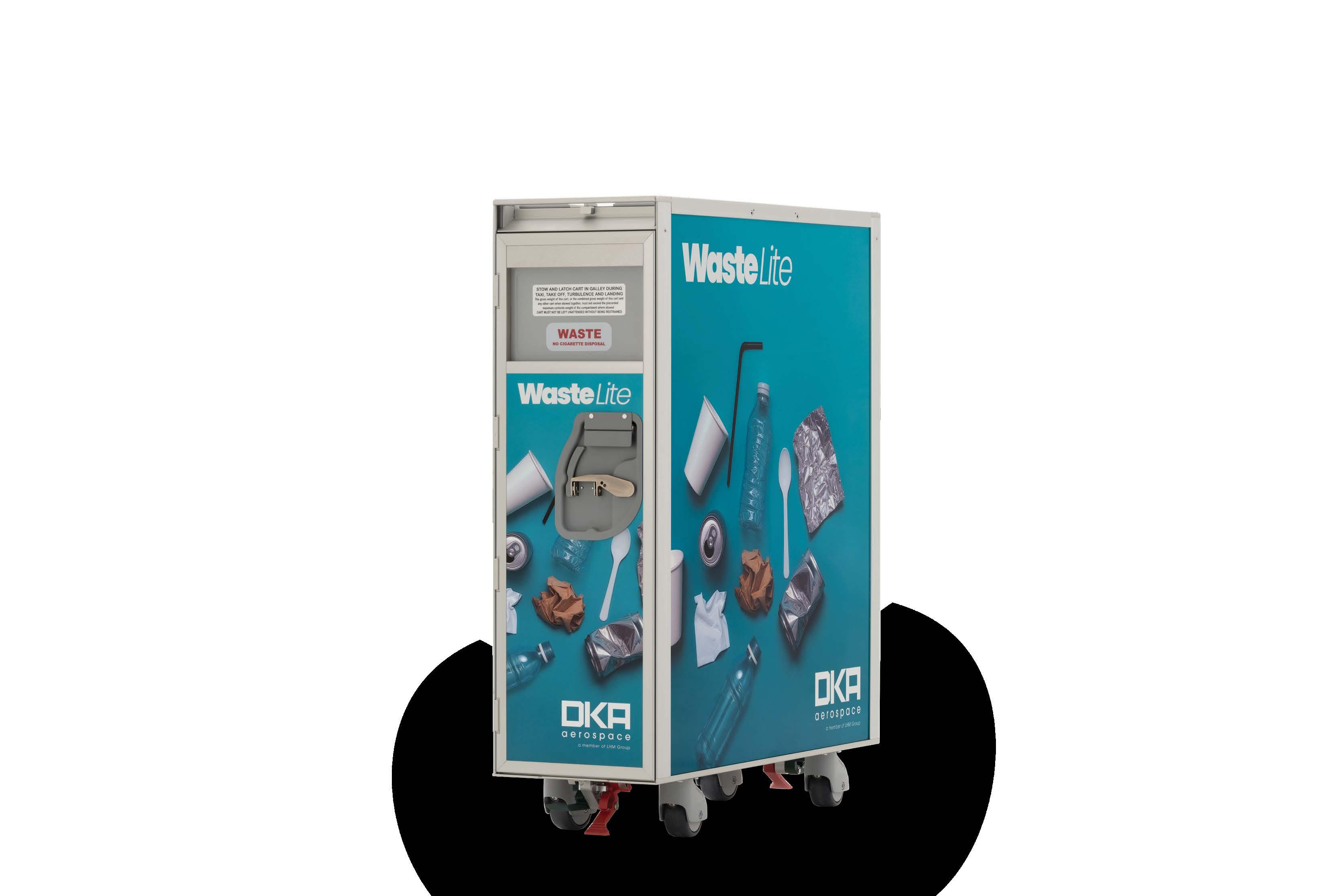
DKA Aerospace returns to the Aircraft Interiors Expo (AIX) 2026 this month, showcasing three products that address current market demands: The WasteLite waste cart, the ThermalCool insulated cart designed to keep food safely chilled for longer, and a new tracking solution for cart inventory management.
This product lineup represents DKA’s commitment to continuous innovation and design based on customer feedback. As Max Choong, R&D Manager, DKA Aerospace, tells PAX Tech, “DKA is excited to engage with airlines [at AIX 2026] to gain deeper insights into their expectations and requirements for galley inserts.”
He says DKA is also looking forward
to exploring next-generation cabin operations, from lightweight materials to smarter, more efficient solutions, and addressing industry challenges, including decarbonization, cost pressures and certification timelines.
No wasted weight
Through observation, communication and responsive action, DKA Aerospace has gathered customer feedback from last year’s AIX exhibition experience and translated it into meaningful and consistent product improvements that it will display at booth 7B41. One such product is the WasteLite waste cart.
Choong highlights the flexible use of the bin as a key feature. The cart can be used with or without waste bins, giving operators flexibility based on flight
length and service model, allowing for easier adaptation to different cabin waste volumes. This also reduces unnecessary weight when full bins are not needed. The cart’s lightweight construction is also a selling point.
“It is designed to be lighter than traditional carts, reducing overall aircraft weight,” Choong tells PAX. “Lower weight directly contributes to fuel savings and operational efficiency.”
The WasteLite cart is easy to maintain and clean thanks to its smooth surfaces and modular components that allow for a less labor-intensive process that minimizes turnaround delays and reduces ground handling effort.
Choong notes that the unique features of WasteLite address the
Max Choong, R&D Manager, DKA Aerospace
The ThermalCool insulated cart is designed to keep food safely chilled for longer
current environmental & ESG pressures facing carriers.
“Airlines are under growing scrutiny to reduce emissions and demonstrate responsible environmental performance,” he explains. “A lighter cart supports lower fuel burn and carbon emissions, helping carriers progress toward sustainability goals.”
Keep it cool
The ThermalCool insulated cart is designed to keep food safely chilled for longer.
“ThermalCool stands out in the market due to a combination of thoughtful design elements that ensure prolonged safe chilling of frozen food without reliance on ice or active cooling systems,” Choong says.
The ThermalCool cart is designed with an interior size and content capacity equivalent to a standard ATLAS Meal Cart, making it a direct functional replacement without sacrificing usability. The cart’s thick, high-efficiency insulated panels significantly reduce heat transfer, helping maintain cold temperatures for extended periods.
According to Choong, components are configured to avoid metal-to-metal
contact, minimizing thermal bridging and equipping the cart with a wide, door seal. This improves the thermal barrier at the most vulnerable access point and reduces warm air infiltration.
“These combined design choices allow the cart to keep frozen food below seven degrees Celsius for up to 24 hours without using dry ice or mechanical refrigeration — a major advantage in logistics, field operations and environments where ice and power are undesirable,” he explains.
A partner in onboard solutions
DKA Aerospace positions itself as more than a supplier in the aviation market, but a partner that understands the operational challenges airlines face. For Choong, customer feedback has played a significant role in shaping the design and continuous improvement of its products.
“Much of the innovation introduced by DKA is driven by the need to help customers overcome operational setbacks, improve performance and remain competitive in the respective markets,” he says. “By understanding real-world usage challenges, DKA refines product
features, enhances reliability and introduces improvements that directly address customer pain points.”
To obtain and implement customer feedback consistently, DKA relies on structured processes that include observation, communication, active listening and timely follow-ups. DKA’s teams gain insight into market gaps through close collaboration with airlines, cabin crew, aircraft manufacturers and maintenance workshops. Choong says listening to real-world operational challenges, understanding regulatory trends and analyzing cabin crew expectations allows the company to identify where current solutions are falling short.
After identifying these gaps, DKA draws its inspiration for delivering solutions from a combination of customer feedback, technological innovation and sustainability goals.
“We combine these insights with design to create products that not only address existing gaps but anticipate future needs—delivering smarter, lighter and more efficient cabin solutions that enhance both airline operations and passenger experience,” he reveals.
The WasteLite cart can be used with or without waste bins, giving operators flexibility based on flight length and service model, allowing for easier adaptation to different cabin waste volumes
DKA’s product lineup for 2026 includes showcasing its ThermalCool and WasteLite carts
The next phase of ABC International
With the launch of its Lioni facility, ABC International strengthens its role in the aviation supply chain, adding composite manufacturing, upholstery and monument production to its established certification expertise
by ALEX PRESTON
Since 2009, ABC International has been offering certification and modification services to airlines, lessors, MROs and OEMs. Its reliability, professionalism and continuous commitment to innovation have been rewarded by steady growth and the impressive delivery of more than 250 projects for major airlines and lessors over the past two years.
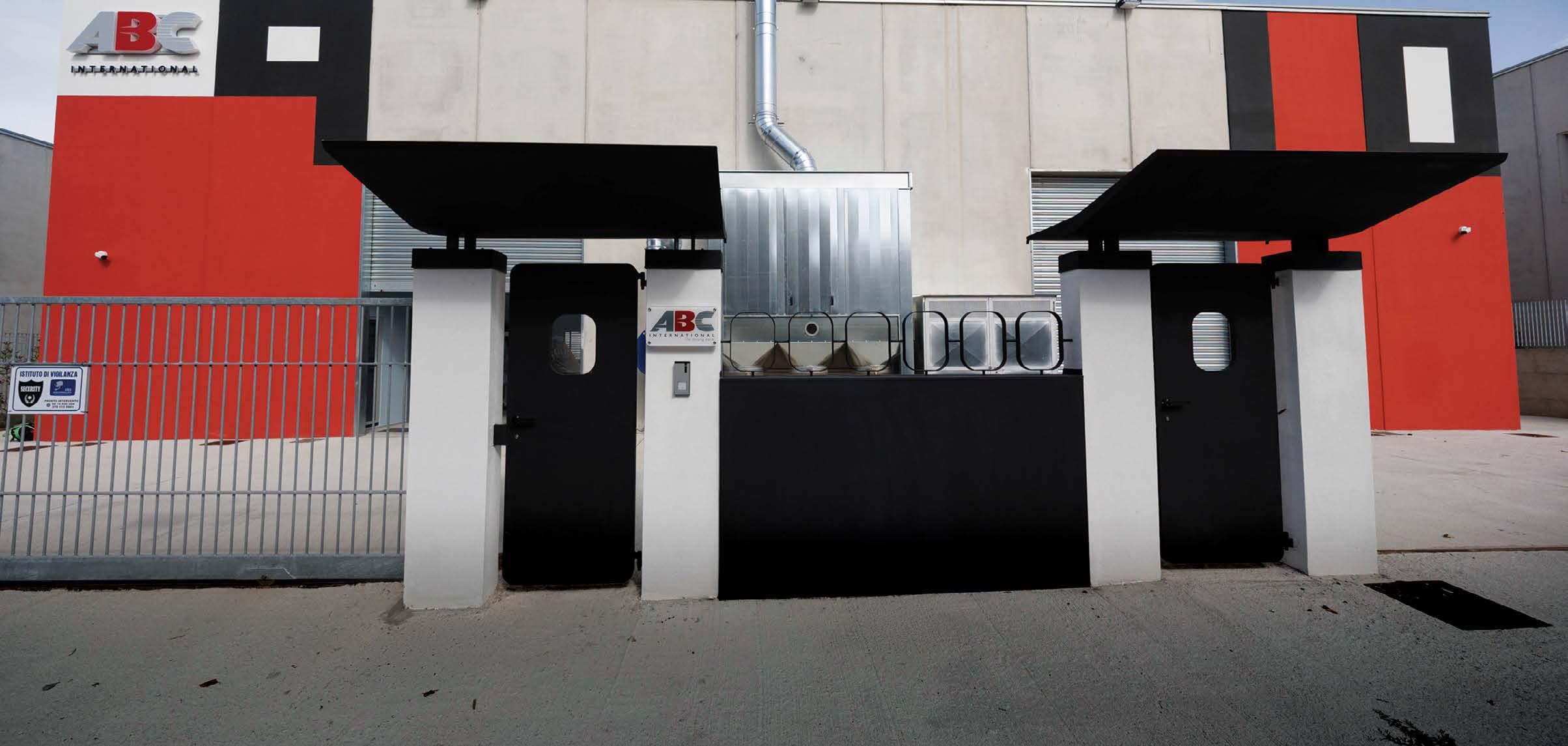
At Aircraft Interiors Expo 2026 (AIX) in Hamburg, the company will introduce new manufacturing capabilities for aircraft cabin interiors, supported by its recently established production facility in Lioni, Italy.
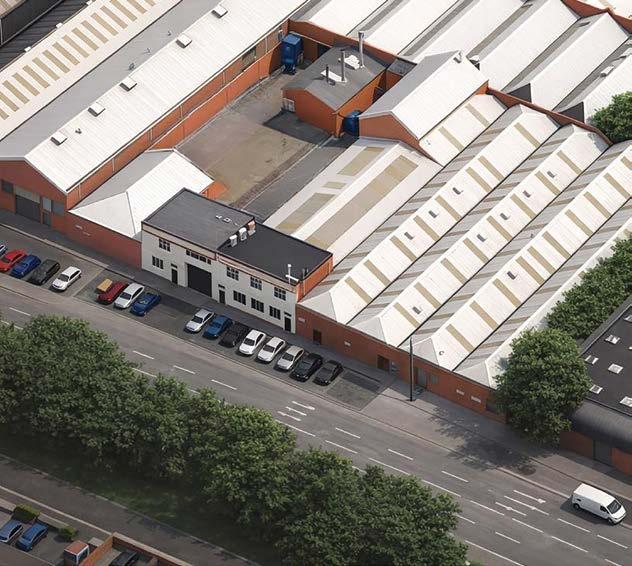
Inaugurated in September 2025, the 300-square-meter production facility is designed in line with EASA Part21G requirements. Approximately 100 kilometers from Naples International Airport, the site represents an important step forward in expanding the company’s manufacturing capabilities for selected aircraft cabin interior components.
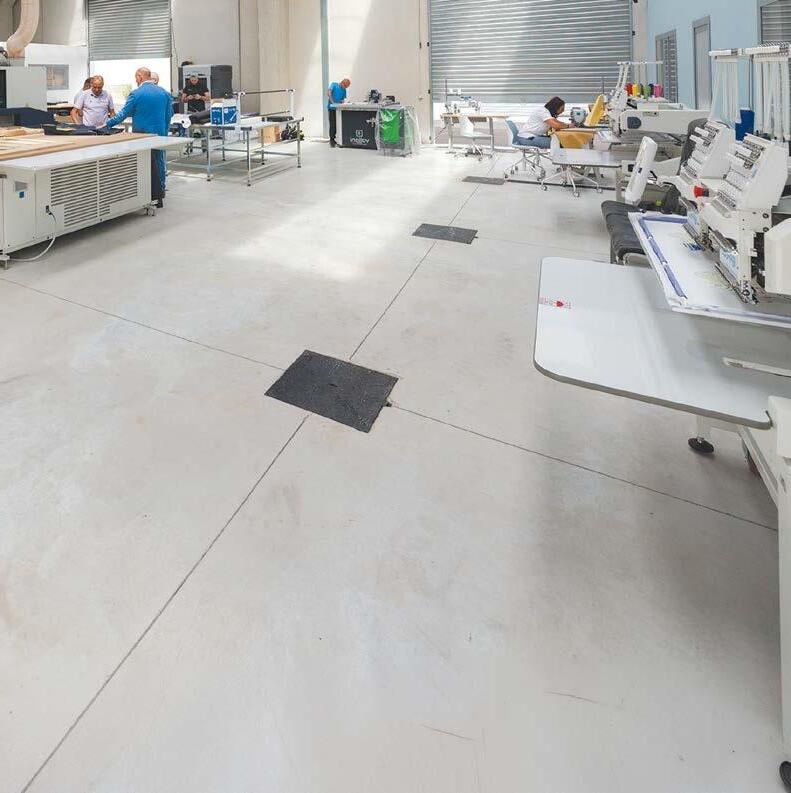
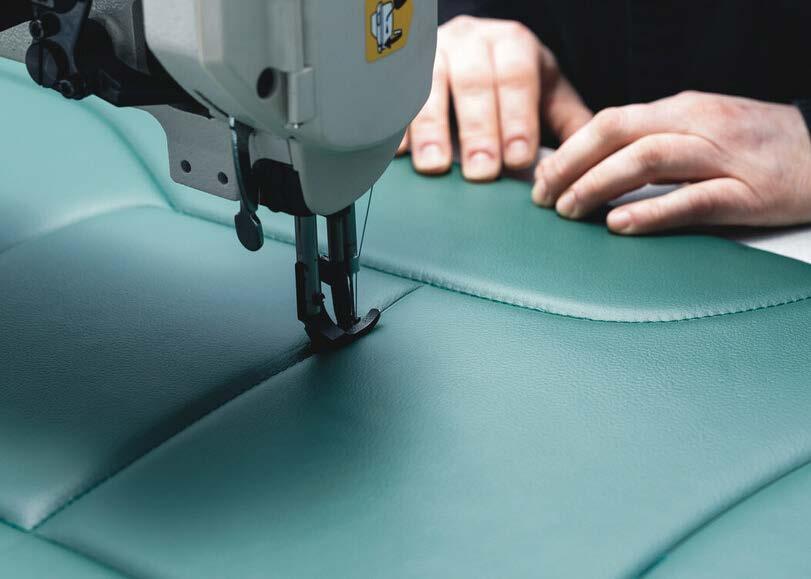
From the facility, ABC International supports upholstery products, including soft furnishings such as seat coverings, carpets and curtains, placards and branding elements (including labels and embroidered logos) for both line-fit and retrofit applications.
Crucially, it will also manufacture parts, both small series and customized, as well as partitions and small monuments for aircraft, in composite materials.
“The opening of the Lioni facility allows us to integrate design and manufacturing under one organization, moving beyond being just a qualified design partner with Design Organization Approval (DOA) services offered by our Naples headquarters,” says Rodolfo Baldascino, CCO, ABC International. “This move also strengthens our position within the international aviation supply chain.”
To this end, the Lioni site is the latest piece of ABC’s focus on providing a more diversified range of certified, airworthy products and
services with greater value. These enhancements are supported by improved lead times, flexibility and delivery reliability while progressing toward full production certification.
ABC International can apply, certify and approve minor and major changes and STCs (Supplemental Type Certificates) by performing the relevant design changes. The company provides turnkey solutions, including approved engineering data and installation kits with release certificates. The Lioni site will play a key role in the company’s approach to cabin modification projects, where technical integration, operational efficiency and collaboration with specialized partners are key elements.
ABC International’s Lioni, Italy facility strengthens the company’s ability to deliver upholstery products and customized cabin branding elements for both linefit and retrofit aircraft applications
Inside ABC International’s new Lioni, Italy production site, teams manufacture upholstery products such as seat coverings, carpets and curtains, alongside placards, labels and embroidered branding for aircraft interiors
Lightweight Aviation Leather
Sustainable, durable, and globally renowned
Seat Cover Service
Fully bespoke from prototype to cut-and-sew BioPRO® Foam
Revolutionary flame resistance and comfort
Fly dry no more
CTT Systems’ Ola Häggfeldt explains why controlling cabin humidity is becoming a key factor in passenger well-being, and how its Humidifier Onboard technology is changing the inflight environment
by ALEX PRESTON
With health and wellness major trends currently, cabin humidity control is emerging as the silent hero of premium travel, and CTT Systems is well positioned as an expert.
First Class comes with the wellearned reputation that passengers arrive refreshed and relaxed having done work inflight or watched a movie over a gourmet dinner with fine wines before drifting off to sleep on a lie flat bed.
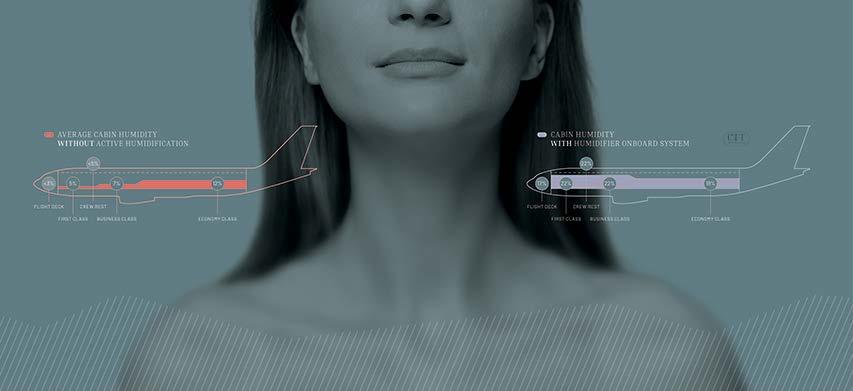
However, as Ola Häggfeldt, Chief Commercial Officer at CTT Systems, tells PAX Tech, the reality can be somewhat different. “Typical airline cruise altitudes are above most, if not all, of the water vapor in the atmosphere, so incoming air to refresh the cabin is extremely dry. That means the relative humidity (RH) is dependent on the number of passengers on board and the rate of air recirculation.”
Given the low passenger count in First Class, and depending on the
aircraft type, RH can drop to four to five percent—but the minimum comfort level for humans is above 20 percent, Häggfeldt shares.
During flight, the dry cabin air gradually irritates the nose and throat increasing risks of infection during flight and after arrival. There may also be problems with dry eyes, dry skin and allergies.
“And that good food and wine?” asks Häggfeldt, “Low RH levels change the taste in the mouth, alter the viscosity of saliva and reduce the sense of smell.”
Dry air also has a negative impact on sleep.
“Clearly there is a need to increase RH levels in flight, and this can be achieved using the Humidifier Onboard from CTT Systems,” says Häggfeldt. The unit is plumbed directly into the environmental control system supply duct and potable water is sprayed over the top of an evaporation pad for about two seconds every minute. The airstream in the duct evaporates the water and the now moistened air is directed back into the cabin.
It can be fitted in premium cabins to produce RH levels of 20 to 25 percent, with a slight increase to 16 percent in Economy.
Humidifier Onboard is flying with four airlines on the A350 with another four to follow on the A350 and 777X. As low RH levels can also affect crew, 70 airlines use it in cockpits and rest areas on A350 aircraft and 787, with the 777X to come.
Ola Häggfeldt, Chief Commercial Officer, CTT Systems
The CTT Humidifier Onboard increases cabin humidity, supporting hydration, improving sleep quality and enhancing sensory details, from taste to touch
The rapid expansion of airline fleets across the Middle East has resulted in a significant demand for advanced passenger amenities, with in-seat power systems becoming a top priority for airlines in the region. As inflight entertainment and connectivity (IFEC) increasingly define the competitive advantage among airlines, Middle Eastern carriers are leading the charge for innovation in in-seat power technology.
“As these carriers strive to position themselves as global leaders in aviation, passenger experience has become central to their strategy. Consequently, in-seat power has transitioned from a luxury feature to an essential offering, driven by
POWERING CONNECTIONS
Astronics’
Dennis Markert discusses how passenger device use is shaping cabin power strategy and the broader connectivity ecosystem
by ROBYNNE TRUEMAN
the ever-growing reliance on personal electronic devices (PEDs) carried and used by passengers throughout their journeys,” Dennis Markert, Director of Business Development, Astronics AES, tells PAX Tech.
Comfort and convenience for all cabins
With fleets that prioritize long- and ultra-long-haul operations, airlines in the Middle East are uniquely focused on scalable solutions that meet the needs of passengers across multiple cabin classes.
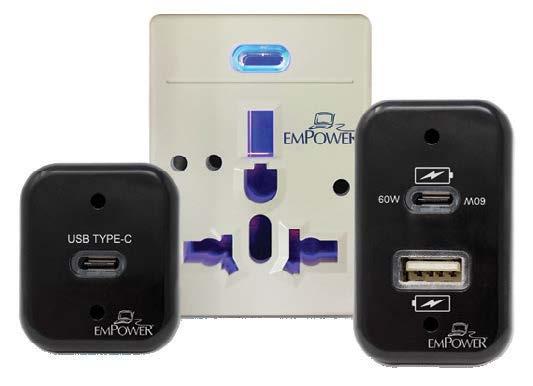
Markert points to Astronics’ EmPower® in-seat power systems as being precisely designed for this challenge, ensuring uninterrupted PED usage in all cabin configurations— from premium suites to high-density Economy cabins.
“Unlike some global carriers, where in-seat power may be restricted to select cabin tiers, many Middle Eastern carriers distinguish themselves by deploying universally accessible, high-power USB ports and 110VAC outlets across all seating classes. This widespread availability elevates the passenger experience and aligns with the region’s reputation for prioritizing comfort, convenience and connectivity,” he explains.
The demand for in-seat power is amplified by the growing prevalence of PEDs on long-haul flights, where passengers rely on these devices for entertainment, productivity and connectivity for extended periods. As IFE and connectivity are increasingly part of a complete IFEC ecosystem, Astronics’ in-seat power solutions are enabling airlines to support higher data
Dennis Markert, Director Business Development, Astronics AES
Astronics’ EmPower® in-seat power systems are designed to ensure uninterrupted PED usage in all cabin configurations
throughput, streaming services and future connectivity requirements.
“To support sustained device usage for streaming, browsing, gaming and productivity, Astronics integrates high-power USB-C outlets (up to 60 watts) and 110VAC outlets, ensuring reliable charging throughout the flight,” Markert explains.
He says Middle Eastern airlines also stand out for their investments in nextgeneration, fuel-efficient aircraft, where lightweight, energy-efficient systems are essential.
Markert reveals that Astronics’ UltraLite Generation 2 (ULG2) system, which offers up to a full 60 watts of
USB Type-C power to every passenger, has become the system of choice for these advanced fleets.
“The ULG2 system’s efficiency and versatility ensure airlines can deliver exceptional service while meeting sustainability and fuel savings goals.”
Markert notes that while full-service carriers dominate the regional landscape, low-cost airlines in the Middle East are also adopting in-seat power.
“This trend challenges global norms, where budget carriers often forgo such amenities, signaling that passenger expectations in the region are evolving across all airline business models,” he says.
Astronics supports these efforts through its range of scalable solutions, which align with the region’s vision for connected air travel.
“In this dynamic and fast-evolving market, the growing demand for PED power onboard represents an exciting opportunity for Astronics to continue helping airlines shape the future of passenger travel,” Markert says.
Scalable, sustainable, powerful
Astronics collaborates with leading aircraft OEMs, IFE providers, seat suppliers and airlines to ensure its power systems align with onboard connectivity infrastructure for easy integration via line-fit or retrofit.
Markert acknowledges that retrofitting in-seat power systems into aircraft cabins can be complex, requiring solutions that address space limitations, compatibility with existing seating and stringent regulatory standards.
“Airlines also prioritize rapid installation to minimize downtime and return aircraft to revenuegenerating service as quickly as possible,” he says. “Our engineering team collaborates closely with airlines to tailor layouts, ensure adherence to aviation standards and preserve cabin aesthetics. We deliver fast installation solutions, comprehensive training and ongoing technical support to reduce operational disruptions.”
Designed for scalability and efficiency, Astronics’ systems reduce aircraft weight and power demands, contributing to sustainable operations. Improved power supply efficiency translates to reduced emissions and lower operational costs while maintaining optimal passenger experience.
In terms of future-proofing aircraft cabins and designing for longevity, Markert points to Astronics’ ease of maintenance, with in-seat power outlets designed for rapid r eplacement, allowing maintenance crews to swap out units in less than five minutes, to minimize aircraft downtime. He also highlights Astronics’ Wireless Charging Module (WCM), designed for long-term durability and eliminating moving parts or physical connectors, which are common failure points in traditional wired systems.
“In-seat power is now a cornerstone of the connected passenger experience, and Astronics remains committed to advancing its innovative and reliable solutions to meet the future demands of evolving IFEC ecosystems,” Markert concludes.
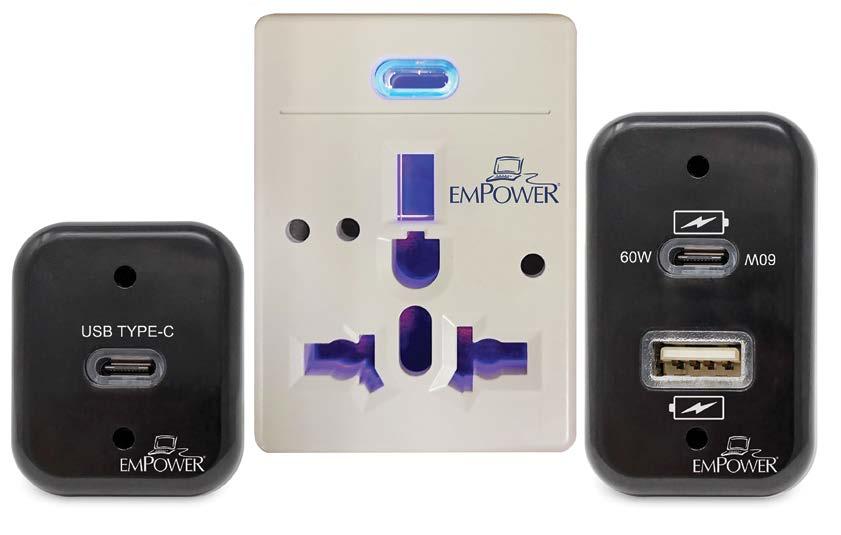
Astronics EmPower Type-C, Universal and Type-A in-seat power outlets
Power to every passenger
IFPL Group’s Head of Design Dan Rust breaks down the adaptable design of Transform in-seat power and how it delivers consistent wattage to every seat onboard
by ROBYNNE TRUEMAN
While operators have historically had to choose which seats receive power or limit output levels to stay within aircraft electrical constraints, IFPL Group’s wireless in-seat power architecture Transform eliminates the need to design around theoretical peak draw. Instead of assigning fixed wattage per seat, Transform operates as a coordinated, aircraft-wide power management network, monitoring real-time demand and ensuring total
power consumption remains within the certified aircraft electrical scope.
“The industry is moving beyond simply installing outlets. The next stage of cabin development requires power systems that are intelligent, lightweight and adaptable by design,” Dan Rust, Head of Design, IFPL Group, tells PAX Tech
Intelligent power allocation
IFPL’s Transform system allows every unit to communicate with the others
Passenger demand for powering PEDs is rising quickly, largely driven by the growing adoption of high-wattage USB-C power delivery
Dan Rust, Head of Design, IFPL Group
onboard and intelligently manage load in real time. As a result, the system can provide full output under normal conditions and modulate when demand approaches available supply, managing power as a shared resource onboard. This means that no passenger is left without the necessary power for their devices.
“Aircraft electrical generation and distribution capacity is finite, so historically airlines have either limited power provision to selected classes of seats or imposed fixed output caps per outlet so they guarantee the aggregate load will never exceed the supply available,” explains Rust.
This means that in-seat power systems have been designed to accommodate worst-case load assumptions – an approach that Rust says inevitably restricts what an airline can do with its in-seat power offering, limiting cabin flexibility and passenger access.
“Transform leverages distributed intelligence embedded within each power module, enabling every unit to operate as an autonomous sensing and decision-making node,” Rust says. “Rather than functioning as isolated outlets with predetermined allocations, each unit contributes to a self-managed power pool.”
For airlines, the advantage of intelligent, real-time load management
is full-seat power provision without electrical over-provisioning and reduced system weight through optimized power supply sizing. Rust also notes that Transform offers airlines greater installation flexibility across retrofit programs and simplified integration within existing certification frameworks.
“Combined with IFPL’s lightweight, modular cartridge-based design, and no requirement for a system MCU (Master Control Unit), this reduces installation time and complexity while maintaining compliance and serviceability,” he explains.
For passengers, the result is consistent, reliable access to power and high-performance charging regardless of where they are seated in the cabin. It introduces a future-proof platform that can adapt to the next generation of passenger power demands.
Extending life, protecting investment
Passenger demand for powering PEDs is rising quickly, largely driven by the growing adoption of high-wattage USB-C power delivery for laptops and other high-power electronics. Designing around fixed, seat-level allocations risks locking airlines into systems that become outdated within a single fleet cycle.
“Because intelligence is managed within each unit, Transform has no
requirement for a centralized MCU. Removing the MCU eliminates a single point of failure, reduces wiring complexity, lowers installation weight and simplifies integration for retrofit programs,” he explains. “In engineering terms, it extends the useful life of the installation. In operational terms, it protects the airline’s investment.”
Transform extends beyond power delivery by integrating seamlessly into Cabin Management Systems (CMS) and other on-board platforms, enabling airlines to monitor, control and configure in-seat power as part of the connected cabin environment.
“By supporting ancillary revenue opportunities, including pay-forpower capability, it allows operators to introduce flexible access models, or premium charging services aligned with commercial strategies,” Rust notes.
In this way, in-seat power evolves from a standalone hardware feature into an intelligent, connected service that contributes operationally, commercially and digitally to the modern aircraft cabin.
For Rust, the future of in-seat power lies not in central control, but in distributed intelligence designed to scale with the connected cabin.
“The next generation of cabin power will not be defined by hardware limits, but by how intelligently those limits are managed,” he concludes.
Transform can provide full output under normal conditions and modulate when demand approaches available supply
IFPL’s wireless in-seat power architecture eliminates the need to design around theoretical peak draw
IFPL’s Transform system allows every unit to communicate with the others onboard and intelligently manage load in real time
Rebranding economy
Expliseat’s Antonio Ficca explains the recent “premiumization” of Economy Class cabins and the role of lightweight seats in this space
by ROBYNNE TRUEMAN
One year after its rebrand, Expliseat is reporting strong momentum in the airline seating market. Antonio Ficca, VP Strategy, Marketing & Communications, tells PAX Tech that the French manufacturer’s progress is reflected in portfolio expansion, a strengthened presence in North America and endorsements from airline customers such as Air Canada, Air France and Jazeera Airways. Ficca also cites the establishment of a commercial office in Montreal as a key factor in Expliseat’s North American growth.
“That created a lot of traction. We have actively engaged with North American customers, promoting our products on the regional market, specifically on regional jets. The North American market is the biggest market for the regional platform and there is
a lot of interest for a new seat in that segment,” he reveals.
Premiumization and PEDs
Last year, Expliseat unveiled the V PED holder as a complement to inflight entertainment systems in Economy Class, for which Ficca says there is global demand. The accessory is a nonplastic, high-resistance solution that integrates entertainment and device charging capabilities.
“Over the past six months, many more airlines are talking about ‘premiumization’ of the cabin, upscaling the product offering, even on regional aircraft,” he says. “One of the features that is now expected by any passenger traveling on shortand medium-haul routes is the option to bring a device and watch content comfortably.”
The V PED Holder is part of Expliseat’s V product class, primarily linked with versatility and robustness.
“The V product family can be operated in different environments–most of the customers that are acquiring that product line are turboprop operators,” he explains, naming Air Canada and Air Tahiti among those that have selected the V PED Holder for Economy Class cabins.
Antonio Ficca, VP Strategy, Marketing & Communications, Expliseat
Last year, Expliseat unveiled the V PED holder as a complement to inflight entertainment systems in Economy Class
TiSeat2X takes off on Jazeera
Jazeera Airways is among the carriers investing in the “premiumization” of Economy Class, introducing Expliseat’s TiSeat2X seats across its A320 fleet. Operating mixed-class aircraft makes the carrier a distinctive case, Ficca explains.
“Jazeera Airways is traditionally a low-cost carrier, yet they operate two products: a fixed backrest, a slim design, and a more premium front-ofcabin design,” he says.
As a result, two of Expliseat’s product lines entered service with the airline: its TiSeat 2X lite product and its TiSeat 2X prime product for the A320 Family of Aircraft.
“The main reason why Jazeera Airways selected us was the flexibility we offer in that different product range, complemented with weight savings,” Ficca explains.
With Expliseat’s seating installed, Jazeera was able to achieve 1,200 kilograms in weight savings on an A320 aircraft while increasing cabin capacity, he says.
Expliseat’s seats are designed to deliver weight savings of up to 30 percent for airlines. As Ficca explains, this translates to a significant reduction of emissions at the seat level, particularly considering that approximately 97 percent of a seat’s lifecycle emissions occur during its operational phase.
“We are talking about millions of dollars of fuel savings just by operating a lightweight seat,” he says.
Ficca says these cost and emission savings are “banked” every time that seat flies, noting that retrofitting seats for weight reduction is one of the quickest and most impactful options for improving sustainability.
“Jazeera Airways managed to upscale their product, offer more features, add iPad holders, USB ports, headrest solutions and segment their layouts with different classes of product while saving weight,” Ficca explains, calling it a benefit that can be enjoyed by any A320 operator worldwide.
Building for brands
Expliseat works closely with its airline customers to align seats with the carrier’s unique brand identity.
Ficca notes that airlines are increasingly focused on extending and enhancing the passenger experience across all aircraft types, from widebodies to the smallest regional aircraft. The goal, he explains, is to ensure that whether a passenger begins or ends their journey on a smaller aircraft, the onboard experience aligns with that of a single-aisle or wide-body aircraft. “A widebody experience across classes and segments,” he calls it.
“That dialogue with the airlines is linked with the need
to ensure a consistent experience is maintained independent from the class and size of the aircraft,” Ficca emphasizes.
Take a seat
Expliseat is exhibiting at AIX 2026 in Hamburg, Germany this month at booth 6A110. Ficca says attendees should stand by for some “big surprises” from the seating manufacturer.
“AIX 2026 will be another pivotal moment for us. We will disclose strong customer endorsements, and we will update the industry on our ambitious product development,” he teases.
Air Tahiti is among the carriers that have selected Expliseat’s V PED Holder for Economy Class cabins
Jazeera Airways selected Expliseat’s TiSeat2X seats across its A320 fleet
THE CRAFTSMANSHIP PROMISE
Geven showcases made in Italy seating solutions at AIX amid consolidation in the European market
by ROBYNNE TRUEMAN
In today’s cabin environment, flexibility is currency. Geven is confident that modular platforms and disciplined weight management will define the next phase of premium and long-haul seating design.
Its latest seating platforms for both narrow-body and wide-body applications place particular emphasis on premium narrow-body Business Class solutions and next-generation long-haul Economy and Premium Economy seating.
“Airlines today demand flexibility, faster time-to-market, weight optimization and simplified maintainability. Our seats are engineered with modular architectures, optimized kinematics and certified monument integration to support these priorities,” Gianluigi Mormile, Sales Manager at Geven, tells PAX Tech.
He names maximized privacy within constrained footprints as one of the Business Class trends that Geven is currently seeing, as well as weight discipline without sacrificing perceived quality.
Mormile adds that integrated digital and power solutions are now a baseline in premium cabins.
“Airlines are demanding smarter use of volume—better living space,
improved direct aisle access and premium finishes—while keeping weight and lifecycle cost under control,” he explains.
Geven stays ahead of these trends through continuous investment in R&D, advanced structural analysis and close alignment with certification requirements.
Adds Mormile, “Our strength lies in balancing engineering precision with passenger experience design.”
Reinforcing presence in the European market
In recent months, Geven’s Comoda seat took off on Eurowings while Elemento took to the skies in the Edelweiss A350 Economy Class cabin. For Mormile, sending seats into service is a clear endorsement of Geven’s design approach.
“These partnerships strengthen our footprint in the European market by demonstrating proven performance in high-use operations, trust from established European airlines and capability across both short- and longhaul segments,” he explains.
Mormile points to Geven’s proven in-service performance as its’ strongest credential and says this year will bring greater program
visibility, with key updates coming in Hamburg.
“AIX remains the key global platform for meaningful industry dialogue. Last year, the most valuable aspect was the depth of technical engagement — not just visibility, but real engineering and program discussions with airlines, lessors and OEM stakeholders,” he says.
Geven’s booth strategy reflects that insight.
“We are designing the space as a functional environment for product immersion, rather than a purely visual showcase. The focus will be on direct product interaction, engineering storytelling and dedicated meeting areas for program discussions,” Mormile says.
Geven’s Elemento seat recently took to the skies in the Edelweiss A350 Economy Class cabin
Gianluigi Mormile, Sales Manager at Geven
Shaping sustainable comfort in the sky
A look at how Muirhead is championing sustainability and circularity in the aircraft cabin with the introduction of an in-house BioPro Foam production facility
by ROBYNNE TRUEMAN
For decades, the aviation industry has been caught between two competing pressures: delivering a premium cabin experience while making meaningful progress toward environmental responsibility.
As Mark Hooton, Business Development Director – BioFoam, tells PAX Tech, “Muirhead has long believed the industry should not have to choose. True sustainability must be built into the very foundations of how materials are conceived, engineered and manufactured.”
This philosophy underpins the next major step in Muirhead’s journey toward more circular cabin solutions, with the announcement of a new in-house BioPRO Foam production facility.
Purpose-built circularity, engineered in-house BioPRO first appeared at the Aircraft Interiors Expo (AIX) last year as a patented foam containing 20 percent protein content reclaimed from Muirhead’s manufacturing process, signalling a move towards materials that make use of existing resources rather than relying solely on synthetic inputs.
Now, Muirhead is taking BioPRO’s potential further by bringing full-scale production under the roof of Scottish Leather Group
“This marks far more than an operational progression. It reflects a broader commitment to closing loops within the supply chain and embedding circularity into the everyday reality of manufacturing,” says Hooton.
The new facility has been purpose-built alongside Muirhead’s cabin engineering specialists, the team responsible for designing, patterning and prototyping the seat covers that airlines use across fleets. By uniting foam with seat design expertise, the company has created a working environment where ideas can move more quickly, materials can be refined more effectively, and new seating concepts can be developed with a level of cohesion that is difficult to achieve when processes are separated.
“For airlines, this represents more than the arrival of a new foam on the market. It opens the door to integrated seating solutions designed from the
inside out, delivering lighter-weight performance, increased durability, reduced chemical content and lower lifecycle impact. It enables airlines to rethink cabin comfort and sustainability as a single, unified objective rather than a trade-off between passenger experience and environmental targets,” explains Hooton.
As the aviation sector continues navigating its sustainability ambitions, BioPRO Foam offers a tangible step toward a material that reduces reliance on traditional chemicals while meeting the demands of highperformance seating.
Beyond investment in manufacturing capability, the new facility reinforces a wider commitment to engineer better materials, lower environmental impact and supporting airlines on a path toward more circular cabins.
Mark Hooton, Business Development Director – BioFoam
The next major step in Muirhead’s journey toward more circular cabin solutions comes with the announcement of a new in-house BioPRO Foam production facility
BioPRO is a patented foam containing 20 percent protein content reclaimed from Muirhead’s manufacturing process
18-19 NOVEMBER 2026
Uniting the world in Singapore for the largest end-to-end passenger experience and innovation expo
| MARINA BAY SANDS, SINGAPORE
HEADLINE PARTNER: HELD IN: SUPPORTED BY: HEADLINE PARTNER:
For the first time, APEX Global EXPO and FTE Asia Expo unite as one mega-event to create the aviation industry’s largest end-to-end passenger experience & innovation expo. From airline and airport leadership to cabin experience, onboard services, content, connectivity, and travel technology, the full passenger journey across APAC and beyond come together under one roof at APEX FTE EXPO Asia.
3,OOO+ Attendees
12O+ Speakers 1OO+ Exhibitors
SCAN HERE
DO IT FOR THE GRAM
As social media reshapes passenger expectations, leading designers reveal how cabin branding is evolving
by ALEX PRESTON
Adam White, Director Factorydesign
Nathan Portlock, Associate Director at BMW DesignWorks
BMW DesignWorks relied on atmosphere and emotion to help create the brand for STARLUX
According to social media management platform Dash
Social’s 2026 Social Media Trends Report, audiences do not need to hit the “follow” button to feel a connection to a brand or content anymore.
The report notes that on Instagram, non-follower views nearly doubled from 2024 to 2025, as user-generated content (UGC) plays a bigger role in social performance year over year.
Creator-led content, particularly short-form, immersive content, increasingly carries reach and engagement, expanding how brands show up beyond owned channels.
In travel, UGC—from selfies to short-form video—has become a powerful force in destination discovery, inspiration and storytelling, prompting airlines and design teams to rethink cabin branding strategies.
All the cabin is a stage
An aircraft interior is the stage on which travelers, crew and content creators perform, so by default, there is an association with social media these days, Adam White, Director of Factorydesign tells PAX Tech
“The designers involved in cabin design have been resolutely creative for all the years we have been involved; social media can amplify the success of a cabin design, but do not necessarily contribute to the design process. Not yet anyway,” he adds.
While agreeing that the cabin is no longer just a product but a setting for storytelling and content creation, Nathan Portlock, Associate Director at BMW DesignWorks, takes a different approach to how social media is changing the way cabins are designed.
“A few shifts have happened alongside the rise of social media,” Portlock says. “We are seeing changing demographics in premium cabins, a greater willingness to spend on leisure travel and a growing awareness among the most forward-thinking airlines that
attracting younger, more culturally engaged passengers requires a different approach to branding.”
Honor Jennings, Senior Strategy Designer at PriestmanGoode, says social media has not just changed how passengers see the cabin; it has changed how designers light and sculpt it.
She explains, “Our role now is to create engaging environments where the airline’s identity is the backdrop to the passenger’s journey, and quite literally their stories.”
For Jennings, it is no longer about slapping a logo on something. “There is an expectation from users to see and feel the brand reflected in their experiences. Our briefs involve embedding the brand’s DNA directly into the cabin alongside the experiences within it.
Ready for the close-up
BMW DesignWorks’ Portlock says this reflects a more deliberate use of influencer and content-driven marketing among airlines.
“As a result, many established carriers now think carefully about how their brand appears in the cabin through moments that naturally end up in photographs, from aft bulkhead graphics to subtle seat branding and details that read well in a selfie without feeling overt,” he tells PAX
PriestmanGoode’s Jennings says that as the world of social media helps inform and influence the flights that younger generations choose, it amplifies the importance of considering the entire passenger experience and the touchpoints throughout.
“It is about facilitating moments for discovery and joy, and creating
Every passenger is a potential influencer on social media
Riyadh Air’s Canopy Twist serves as a unifying symbol across the airline’s ecosystem, blending heritage with modernity
memorable experiences that begin before booking, take place inflight and continue beyond arrival,” she says.
To create a truly immersive brand experience that goes beyond traditional markers such as color palette or logo, Factorydesign’s White suggests starting with what is most pertinent to the carrier.
“For instance, adding a prayer room space for Middle Eastern travelers reinforces the airline’s offer for the region, in the same way that adding a lounge and bar might reinforce the brand for other parts of the world. The brand is, after all, a sum of the parts beyond color, material and finish (CMF),” he explains.
Building mystique
Taiwanese airline STARLUX prides itself on “valuing every detail of each journey, aiming to satisfy passengers with every aspect of its services.”
BMW DesignWorks enjoys a longterm, ongoing relationship with the airline, a collaboration Portlock calls “a unique opportunity.”
He explains that as a new boutique airline without an established visual language, the focus was less on recognizable brand markers and more on creating an emotional and sensory experience.
“For the first-generation cabins in particular, we prioritized how the space feels rather than how it looks, allowing mystique and atmosphere to do the storytelling before the brand became widely known.”
STARLUX launched commercial services in 2020 with the narrow-body A321neo, and a theme of “Pure Tea” with custom-made designs for seating, fabrics and surfaces.
Aiming to provide privacy and comfort, Economy Class seating
STARLUX says it elevates the level of luxury and comfort for all passengers with its unique “Home in the Air” experience
Developed by Rohi, the custom fabric for the Economy dress cover was woven with an indigo base and peach and lavender threads, adding an elevated tactile and visual experience
features bright and natural colors, and ultra-thin seatbacks engineered to increase legroom. Every seat is equipped with a leather headrest.
The atmosphere of STARLUX Business Class is comparatively more settled and tranquil, employing dark and elegant colors to evoke the majesty of the galaxy. While the cushions and privacy dividers feature a classic dark grey, the Cashmere Silver color— inspire by BMW—adds a futuristic, high-tech touch to the back shells.
Meanwhile for STARLUX’s A350-1000 cabin interior, the theme is “Glisten.”
First Class and Business Class are designed around the theme of “Enchanting Sophistication,” suggesting sitting on a throne in a magnificent palace, with warm, woven fabrics and luxurious textures, embellished with a royal rose gold hue.
The earth-toned interior of STARLUX’s A350, with matte golds and brushed aluminums, was created in partnership with BMW DesignWorks
“There is an expectation from users to see and feel the brand reflected in their experiences.”
According to Portlock, the backlit secant graphics on the aft bulkhead of the Business Class cabin became a defining visual moment, while the arrival sequence at doors one and two are designed to signal a transition from the outside world into a more refined, curated experience.
Premium Economy Class and Economy Class are designed around a separate theme — Relaxed Elegance, with the seats in both providing significant extra legroom.
“In terms of extending brand experience beyond color and logo, we increasingly draw on our work in automotive and branded environments,” Portlock shares. “This includes research into scent design, integrated haptics that support comfort and recovery, and atmospheric and lighting strategies that influence mood and well-being. These elements work together so the brand is not just seen but felt throughout the journey.”
STARLUX customizes the ambient lighting on its A350s, depending on the time of year; there are three lighting modes — Chinese New Year, White Christmas and Moon Festival. The lamps beside each Business Class seat add a cozy, welcoming touch to the cabin.
According to Jennings, PriestmanGoode designs for the senses, using this approach to create more inclusive experiences that meet the diverse needs of passengers. Such haptics could be a notification for those with hearing loss, as well as enabling more immersive entertainment experiences.
“If the visual brand promises luxury, then the haptics, the cool [look] of a metal latch or the grain of a textile, actually need to provide the physical proof,” she emphasizes.
Uploading stories
Jennings believes that cabin branding ultimately resides in the storytelling. She explains that this means looking at the passenger journey alongside the brand journey, shaping every touchpoint not just in how it appears, but in how it makes passengers feel.
“Is it excitement, joy, discovery or even calmness, reassurance or relief?” she asks in conclusion.
While the cabin has always offered rich opportunities for content, social media has made it a hotspot for creators.
“The challenge is creating moments that are visually distinctive yet authentic to the airline’s identity. When done well, those moments feel effortless and invite sharing without being designed solely for the camera,” Portlock says.
SEEING GREEN
Dr. Sean O’Kell, Business Director, at STG Aerospace, talks to PAX Tech about the environmentally sensitive design approach offered by its “Eco Everything” concept by ALEX PRESTON
Dr. Sean O’Kell, Business Director at STG Aerospace, tells PAX Tech that choosing sustainable cabin interior options should be straightforward, without compromising on passenger safety, reliability, performance, aesthetics or sustainability benefits.
This is encapsulated by the company’s “Eco Everything” concept, which O’Kell says represents an environmentally sensitive design approach to its emergency floor path marking (FPM) systems.
Following the launch of the sustainable emergency FPM saf-Tglo® eco E1™ in 2024, STG continued its core research to enhance the sustainability content and ensure independent verification of its findings.
“The ‘Eco Everything’ concept is implementing these recycled and biodegradable materials across our entire saf-Tglo® SSUL-X™ photoluminescent range, for all four widths (11, 18, 23 and 36 millimeters) and color/finish options,” O’Kell reveals.
These products will be available by the end of the year. The aim, states O’Kell, is to have an FPM range that is sustainable and fully interchangeable with existing solutions, enabling easy replacement with an equally high-performing product that is aesthetically identical and offers all the sustainability benefits.
STG will showcase the sustainable qualities of “Eco Everything” and its contribution to net zero goals at AIX 2026. STG’s independently verified Life Cycle Analysis report provides a cradle-to-grave comparison of saf-Tglo® eco E1™ to its best-selling Encapsulated product. According to this report, the eco FPM has a 91 percent reduction in raw materials and 76 percent carbon footprint reduction, compared to Encapsulated.
“After a year of working with our eco product and more testing, we have successfully increased the recycled content from 50 percent to over 85 percent and aim to reach 100 percent in the next phase of the innovation,” says O’Kell.
The eco FPM has a 91 percent reduction in raw materials and a 76 percent carbon footprint reduction, compared to the company’s best-selling product,
He describes a long and challenging process to incorporate recycled materials and retain structural integrity.
“Our recycled materials are ISCC-certified, ensuring the highest environmental standards,” explains O’Kell.
The company is also demonstrating its transparency commitment by generating a public Environmental Product Declaration for saf-Tglo® eco E1™ initially. This is a standardized, verified document that follows strict international rules, (ISO 14025 or EN 15804). It is registered in the International EPD System (IES).
“‘Eco Everything’ is setting a benchmark for sustainable aviation products, ensuring that the path to safety in cabin interiors is also a path to a more sustainable future,” says O’Kell.
STG’s Eco Everything” concept represents an environmentally sensitive design approach to its emergency FPM systems
Encapsulated
Dr. Sean O’Kell, Business Director, at STG Aerospace
Put your passenger experience to the test. Invite a PAX reporter onboard and be featured in our PAX Perspective Verified Airline Review — where real journeys meet expert evaluation.
Our experienced editorial team assesses every detail, from food and amenities to comfort, entertainment and service, offering airlines the opportunity to earn the PAX Verified Award, declared by PAX Publisher Aijaz Khan.
Think your onboard experience stands out? Ready to fly us away?
Contact aijaz@globalmarketingcom.ca to learn more.
F/LIST’s Anita Gradwohl spotlights the ideation behind the supplier’s Lightshifter concept and how it will shape conversations at AIX 2026
by ROBYNNE
TRUEMAN
F/LIST is giving “shining a light” a new meaning with its Lightshifter concept, which enables wood veneer surfaces to become light sources with integrated lighting technology, elevating cabin textures and atmosphere.
“It was conceived as a human-centered lighting solution,” Anita Gradwohl, Group Director Customer Relations & Sales, F/LIST, tells PAX Tech. By transforming previously static surfaces into dynamic, softly illuminated touchpoints, she explains that Lightshifter can enhance spatial perception and adapt lighting to different phases of the passenger journey without visible hardware.
Customization and integration
The concept for Lightshifter originated from industry demand to improve passenger well-being via visual accents.
“Much of the industry conversation
focuses on adding more features, more technology and more content. Yet premium passengers evaluate cabins differently: They do not remember what was there — they remember how the space made them feel,” Gradwohl explains.
Lightshifter eliminates the limitations of visible components like mounting structures.
“The illumination is embedded directly within the wood veneer, allowing flat surfaces to morph into softly glowing, textured design features at the touch of a button,” Gradwohl says, sharing that this preserves clean design lines while creating dramatic bulkheads, monuments and feature walls.
Lightshifter supports programmable effects, including color and intensity sequences that can complement branding, ambiance or flight phases. It also enables customization of textures and illuminated patterns revealed within the surface and material selection, including natural woods or complementary surfaces from F/LAB’s portfolio.
“As with all F/LIST material innovations, including its fully heat-release-compliant wood veneers, airlines can customize surfaces to reflect heritage, locality or brand storytelling,” Gradwohl says.
She emphasizes that to maximize design integration, airlines should engage F/LIST early in the cabin development process, ideally during conceptual and monument - definition phases.
The intersection of value and experience
Exhibiting at AIX 2026, F/LIST is emphasizing its strategic commitment to shaping the future of First and Business Class environments in commercial aviation, viewing the cabin as an ecosystem that requires close collaboration.
“Our focus lies in bringing the mindset, craftsmanship and wellbeing expertise from Private and Business Aviation directly into the premium cabins of major airlines,” says Gradwohl. “This perspective strongly shapes how we interpret and respond to current market trends.”
F/LIST will showcase a range of innovations from its F/LAB, the company’s internal incubator, including the F/LAB Stone Inlay and fully heat-release-compliant wood veneers.
“Together, these innovations underline F/LIST’s ambition to transform every aircraft touchpoint into a premium, design-driven experience,” says Gradwohl.
Lightshifter eliminates the limitations of visible components like mounting structures
Anita Gradwohl, Group Director Customer Relations & Sales, F/LIST
JOIN PAX PANEL
The industry’s best virtual roundtable discussion series, featuring executives and representatives from the industry’s most iconic companies
Share key insights, learnings and experiences from your sector in PAX Panel: All episodes available online Featured in digital editions of PAX International and PAX Tech
Share on your website and social channels Attract new clients
PREVIOUS SPONSORS INCLUDE: FOR ALL EPISODES CLICK HERE!
ALL PAX PANEL EPISODES ARE AVAILABLE ONLINE SO THAT EVERYONE CAN WATCH AND SHARE
The PAX Panel concept is created and hosted by PAX International and PAX Tech Contact jane@pax-intl.com to become a panelist
Inflight connectivity (IFC) is a critical aspect of building brand value for airlines. As Laney Hind, Director of Airline Programs, Viasat, tells PAX Tech, “What is clear is that passenger expectations have soared: connectivity is no longer a luxury, but a fundamental expectation.”
She says airlines are increasingly recognizing IFC as a crucial strategic platform for building brand loyalty and differentiation, capable of extending the airline’s brand values and hospitality into the digital realm.
Viasat’s 2024 Passenger Experience Survey found that 75 percent of passengers are more likely to rebook with an airline that offers quality inflight Wi-Fi.
“Brand-building opportunities are abound if the IFC solution is strategically designed,” Hind notes. “This is where Viasat’s extensive digital product suite comes in. It enables airlines to create a customized digital environment that perfectly matches
Viasat’s Laney Hind breaks down the various delivery models for IFC and its crucial role in building brand loyalty
by ROBYNNE TRUEMAN
their customer, reflecting their brand and enhancing the customer journey.”
This digital environment ranges from delivering IFE experiences, such as live TV programming and hosting passenger and operational applications, to monetization through integrated advertising.
IFC in alignment
As onboard connectivity becomes an expected part of the journey, airlines must ensure that the IFC delivery model aligns with the broader passenger experience. According to Hind, this depends on several factors, including flexibility and personalization. When used effectively, connectivity can serve as a powerful platform—enabling airlines to curate experiences that reflect and reinforce brand identity.
“We know that every airline is unique. And therefore, the IFC experience offered can be as bespoke as the airline brand itself,” she explains.
For premium carriers, delivering a top-tier passenger experience requires seamless, high-speed streaming, access to live TV and connectivity mirroring what is available on the ground, which can also enable a host of applications. Hind says this could be free, highbandwidth access for everyone, or tiered access prioritizing premium cabins.
By comparison, she explains that value-focused carriers might find a “freemium” model more suitable and appreciate the opportunity to turn IFC into a revenue growth opportunity through services such as Viasat Ads.
“Ultimately, it is about empowering passengers to enjoy their flight time exactly as they choose, whether it is streaming, catching live TV or using other applications, ensuring the IFC platform naturally extends the airline’s brand values,” Hind says.
She points to Viasat Amara as one such IFC solution, designed specifically to allow airlines to curate ownable,
Laney Hind, Director of Airline Programs, Viasat
Both Etihad Airways and Azerbaijan Airlines recently selected Viasat Amara
distinctive journeys that honor brand identity.
Both Etihad Airways and Azerbaijan Airlines recently selected Viasat Amara, examples that Hind points to as airlines embracing IFC solutions aligned with passenger experience goals. Etihad is investing in a comprehensive digital platform that supports its hospitality-focused brand, using fast, reliable connectivity to curate more personalized passenger journeys. Meanwhile, Azerbaijan Airlines is introducing fast, streamingcapable IFC for the first time, marking an important milestone in the expansion of its onboard offering.
“In both cases, Viasat Amara provides the scalable, multi-orbit, high-capacity platform necessary to exceed current passenger expectations, while also futureproofing fleets. This proactive approach to enhancing the passenger journey is a powerful way for both airlines to differentiate their brands and build lasting passenger loyalty,” Hind says.
Leveraging loyalty
Airlines can also use IFC to strengthen passenger loyalty, with membership programs serving as a differentiator by offering frequent flyers complimentary high-speed Wi-Fi.
Based on Viasat’s research and experience, reliability and consistency are paramount to passengers when it comes to fostering lasting brand loyalty.
As each airline is unique, Hind maintains that IFC is not a one-sizefits-all proposition.
“A well-delivered IFC experience allows airlines to showcase the messages and positioning they seek to convey, bringing brand promises to life. It demonstrates, in real-time, that an airline prioritizes the passenger experience and understands modern traveler needs,” she explains.
Hind notes that offering fast, reliable and consistent connectivity— capable of supporting high-bandwidth activities such as streaming—signals an airline’s commitment to a premium passenger experience. It shows passengers that their digital comfort is treated with the same importance as their physical comfort.
In the next few years, she expects demand to accelerate as more airlines adopt connectivity and rethink how it can enhance both the passenger experience and business performance.
“We feel like we are in an excellent position to support airlines in this way,” Hind says of Viasat.
For premium carriers, delivering a top-tier passenger experience requires seamless, high-speed streaming, access to live TV and connectivity mirroring what is available on the ground
Viasat’s 2024 Passenger Experience Survey found that 75 percent of passengers are more likely to rebook with an airline that offers quality inflight Wi-Fi
DATA AND THE EDGE
Quvia’s Benny Retnamony breaks down the Edge to cloud communication that allows for the intelligent movement of data, relevant to the passenger experience
by ROBYNNE TRUEMAN
Reliable inflight connectivity may now be an expectation among passengers, but Benny Retnamony, Founder & CEO of Quvia, says the real differentiator for airlines will be how carriers use data and intelligence to shape the digital experience through open, flexible platforms.
According to Retnamony, in aviation, the Edge refers to the aircraft, positioning it as an intelligent platform that decides what data to prioritize, process locally and sync with the cloud. As such, the Edge and the cloud must work together to move data intelligently.
“[The Edge] is where applications run, operational systems live, where in-cabin passenger experience and IFEC systems run and where
data is generated every flight,” he tells PAX Tech.
Edge intelligence allows airlines to act on data where it is created and with context. Ultimately, Retnamony says the goal is to unlock connectivity and data and create value above the network so AI can act on available information.
Quvia uses AI and machine learning to generate a proprietary Quality of Experience (QoE) score that gives airlines an independent, real-time view of how passengers experience connectivity and IFE.
“When you control the data movement between the aircraft and the cloud, you can build dynamic services and new commercial models at scale. That is how value is created above the network,” he says.
Data-driven personalization
Data unlocking allows carriers to deliver a more consistent, personalized experience to passengers by presenting the onboard digital experience as a connected ecosystem, rather than siloing the information. The airline can use these real usage patterns to inform decision-making.
“By breaking down these silos, personalization becomes something airlines design at scale rather than something they have to manage flight by flight,” Retnamony explains.
Edge intelligence allows airlines to act on data where it is created and with context
Benny Retnamony, Founder & CEO of Quvia
He emphasizes that more bandwidth does not create unlimited data mobility, underscoring demand for intelligent data movement between the Edge and the cloud.
For Retnamony, the prioritization of which data should move, and when, begins with defining “high value” and aligning system behavior accordingly.
With access to the appropriate data, network-aware AI can treat performance as contextual, evaluating aircraft conditions such as route, market, time of day, application behavior, passenger demand and network conditions together. This allows the system to manage traffic behavior based on the current environment.
“The goal is not to generate more alerts; it is to enable earlier, informed action that stabilizes the digital experience,” Retnamony explains.
With Quvia, airlines can integrate one or multiple connectivity providers and manage that environment through a single orchestration layer. Once that foundation is in place, airlines can build on top of the network without impacting the passenger experience, turning IFC into a strategic airline asset.
“Our focus is to give airlines structural control over their connectivity stack and the flexibility to adapt as the technology and market continue to evolve,” he says.
Beyond the surface
We craft interiors through experienced hands and technologies of tomorrow. Crafted with precision and perfected to last. Since 1950.
Quvia uses AI and machine learning to generate a proprietary Quality of Experience (QoE) score
Exit through the gift shop
In this guest column, Daniel Haller, Program Director, Omnevo, highlights the benefits of an “exit via the gift shop” strategy for ancillary retail.
Almost every visitor to a museum, gallery or theme park knows the experience of exiting through the gift shop. It is not just about souvenirs, but extending the journey, creating one last moment of discovery and capturing value that adds to the overall experience.
What if airlines thought the same way? What if every flight did not just end at the destination, but with a seamless opportunity for passengers to engage with personalized retail? That is the essence of our Exit via the Gift Shop strategy, powered by Omnevo’s Pre-Order Pre-Select product.
Facing the challenge
Onboard retail has too often been treated as a bolt-on. The result? Low engagement, inconsistent passenger experience and missed revenue opportunities.
The exit via the gift shop strategy is enabled by Pre-Order, Pre-Select, launched by Omnevo at the end of last year. Pre-Order, Pre-Select presents a new way forward, treating ancillary retail as a connected ecosystem across the journey.
It offers retail opportunities everywhere, enabling seatback, mobile and crew-led sales, all part of one flow, and personalized experiences linked to loyalty, preferences and profiles. This strategy also delivers end-to-end fulfilment, ensuring the right product is in the right place at the right time. Simply, integrating retail into moments when passengers are already engaged.
For the industry, this marks the first time retail has been integrated directly into the complimentary F&B journey, transforming a simple pre-order into a natural upsell. This results in convenience for passengers and a powerful new revenue stream for airlines.
Service, not sales
Ancillary retail is no longer an afterthought. It is fast becoming the future of how airlines engage passengers, build loyalty and unlock commercial opportunities. The more personalized the experience, the more it feels like service, not sales.
There is also a powerful ripple effect: when a passenger logs in to choose their complimentary meal, they are already one step inside the airline’s retail ecosystem. That simple click-through drives organic traffic to the duty free store, turning a routine task into an invitation to explore. Once they are browsing, the chances of conversion skyrocket.
At Omnevo, we see this as the blueprint for the next evolution of inflight commerce: a retail experience that feels natural, personal and connected across the journey. This is just the start of how the “exit via the gift shop” strategy–anchored by preorder and pre-select–will reshape the way airlines think about retail.
Daniel Haller, Program Director, Omnevo
Pre-Order, Pre-Select presents a new way forward, treating ancillary retail as a connected ecosystem across the journey
THE MUST-ATTEND INNOVATION EVENTS
SHAPING THE FUTURE OF AIR TRANSPORT
9-11 JUNE 2026 DUBLIN
APEX
FTE EMEA & ANCILLARY & RETAILING
The definitive gathering of airline, airport and technology leaders driving digital, commercial and operational innovation at scale
18-19 NOVEMBER 2026 SINGAPORE
APEX FTE EXPO ASIA
This mega event will combine APEX Global EXPO with FTE’s long-established regional APAC event, uniting the world in Singapore for the largest end-to-end passenger experience and innovation expo
8-10 SEPTEMBER 2026 DALLAS, TEXAS
FTE GLOBAL CO-LOCATED WITH IFSA GLOBAL EXPO
Known as the ‘CES of Aviation’, FTE Global is the definitive event for innovators, technologists, designers, collaborators and gamechangers
NEW LOCATION: DALLAS, TEXAS
SCAN HERE TO LEARN MORE ABOUT EACH EVENT
Creating intelligent aircraft cabins
AirFi CEO Laura Rösges highlights key talking points from APEX TECH and looks ahead to the company’s presence at AIX 2026
by ROBYNNE TRUEMAN
At APEX TECH 2026
in Los Angeles, Laura Rösges, CEO at AirFi, spoke on the panel “Inflight Touchpoints in the Digital Ecosystem: Advancing Integration and Intelligence,” where themes of a personalized, cloud-driven future for IFEC emerged. There is momentum toward hyper-personalized, datadriven IFEC experiences that generate higher ancillary revenue for airlines.
Panelists noted that, at present, personalization efforts are constrained by AI processing limits and operational realities, requiring collaboration among providers to deliver practical implementation strategies.
PAX Tech sat down with Rösges following the panel to discuss the architectural shifts needed to move
from connectivity to intelligence in the connected cabin ecosystem.
“In order to go to the intelligence bit, you need to be able to process the information being captured. That very often has to happen locally. Right now, what aircraft and what ancillary hardware have is often not enough,” she explains. “[We] are building that additional infrastructure to be able to process, compute and playback.”
At AIX 2026, where the connectivity provider will showcase AirFi Wingman, Rösges hopes to see a willingness for this open dialogue and collaboration among suppliers.
The role of onboard data management
Rösges says that onboard data management plays “the essential and most integral role” in making content synchronization seamless across multiple devices inflight.
“The more connectivity you have access to, the smoother, the bigger your opportunities,” she explains, “But also, the more bandwidth you have, the more you will use, and eventually come to the end of the availability again. Being able to make a conscious choice on what data is important for the decision the passenger is making, is key.”
Rösges depicts what an inflight scenario using connectivity for entertainment, infotainment and an
ancillary purchase in one journey could look like: Watching a movie, streamed on a phone, made available by additional hardware in the overhead compartment; making a purchase with an order to the seat, using the cabin Wi-Fi; then planning what to do at the final destination, using bandwidth.
A software-driven approach to IFEC allows airlines to deliver a more personalized passenger experience, optimizing bandwidth and power. Rösges notes that AirFi carefully decides which tasks are handled by AI.
“If you have connectivity, especially in a low bandwidth, you do not want to jam that with requests coming
Laura Rösges, CEO, AirFi
AirFi Wingman is an AI travel assistant designed specifically for the constraints and realities of the aircraft cabin
There is momentum toward hyperpersonalized, data-driven IFEC experiences that generate higher ancillary revenue for airlines
back and forth. What we do is if we have, for example, the LEO antennas that we provide, or we know that the aircraft is otherwise equipped, we pass on the request to the ground,” she explains.
The request is then processed and applied back to the device.
“We only allow you to do that for something that is either gamification, personalization or connected to ancillaries,” she says of AirFi’s approach. “We are not using up the available bandwidth for something that could be done locally.”
Rösges notes that providers can anticipate these scenarios by analyzing passenger demographics on specific airlines or routes.
“We can already do pre-selections of what could become relevant. Then if somebody requests it, it is basically broadcast to them,” she explains, “That gives you a little bit more leeway to operate with your constraints.”
Collaboration driving innovation
As inflight entertainment becomes more software-defined, Rösges says she expects the relationship between IFE, connectivity and the broader digital cabin will evolve to a more collaborative approach across the industry.
“My personal opinion is that in the short to mid-term, an airline will expect us to become part of a joint task force with other providers with everybody contributing their best, and the airline orchestrating it,” she reveals. “All of us need to understand that in order to have an important role to play in that dialogue, we need to collaborate rather than defend.”
To futureproof cabin IFEC systems today, Rösges says airlines should prioritize understanding which investment or fleet type is the most important.
She emphasizes that consistency in IFEC services across all route types
can help minimize confusion for passengers, noting that finding a joint service layer and then communicating the airlines’ goals to providers should be the main focus.
Showcasing Wingman
AirFi will showcase Wingman, an AI travel assistant designed specifically for the constraints and realities of the aircraft cabin, at AIX this month.
“At AirFi, our focus is on making the IFE journey more relevant and seamlessly integrated into the overall cabin experience. We work closely with our customers—primarily airlines, as well as rail operators—to help them extract maximum value from their IFE platforms. Through tools like Wingman, low-bandwidth optionality and smart cabin integration, we enable operators to deliver a more immersive and connected onboard experience,” Rösges concludes.
Rösges depicts an inflight scenario using connectivity for entertainment, infotainment and an ancillary purchase all in one journey
Using SKYTRAC’s DLS-100 mid-band transceiver in conjunction with antennas mounted on either side window, AirFi directs the Iridium LEO network connection through the AirFi Venus in-cabin Wi-Fi network
RAVE is making a shift to support its customers in driving consistency with an open platform approach
RAVE Aerospace’s Ben Asmar emphasizes the critical role of seatback systems in the future of passenger engagement for airlines
by ROBYNNE TRUEMAN
Following the successful acquisition of Safran Passenger Innovations by Kingswood earlier this year, SPI has been renamed RAVE Aerospace, and will continue to build on its two-decade strong RAVE brand.
Amid this transition period, Ben Asmar, Vice President, Products and
Strategy, RAVE Aerospace, says that in the context of data-driven IFE, seatback systems are the “aggregation point,” making them a critical focus for airlines in the age of the connected aircraft cabin.
“Seatback IFE systems give airlines a really interesting opportunity to bring their brand to life in front
Ben Asmar, Vice President, Products and Strategy, RAVE Aerospace
of a passenger,” he tells PAX Tech. “Suppliers, like RAVE, have to build compelling digital experiences that convince people to go and use that channel, because it drives value for the airline. If there is a channel that is not interesting or does not have what the passenger wants, they will use the internet and their phone and disappear into the ether.”
Therefore, creating an engaging experience for the passenger that aligns with the airline’s brand and brings multiple touchpoints together, is key for suppliers. In future, Asmar suggests the seatback screen will do more than entertain, becoming a driver of onboard retail and airline loyalty programs.
Aligning architecture and digital strategy
In terms of airlines’ IFE architecture and broader digital strategy, Asmar says the two must be closely aligned to engage passengers.
“A lot of airlines are appointing Chief Digital Officers. That is not by mistake. I think these things used to either sit within the IT department or in a CTO role. It is evident that now someone needs to be looking at digital strategy across the board,” he explains.
RAVE is doing exactly that. Asmar says the supplier is examining its digital strategy and how that plays into supporting airline customers. He emphasizes the importance of an integrated approach.
“If you are building a website, that website should have continuity with your app. The app should have continuity with the IFE system. The IFE system should have continuity with the app as you get off the aircraft. It should know that you are departing and taking the next part of your journey. But also, remember for your return flight or your next flight what you did last time,” he explains.
This type of continuity helps build more meaningful passenger experiences and allows for personalization specific to each user. In turn, this can drive loyalty for the airline.
“At the end of the day, I think all airlines see loyalty as the winning recipe for continued revenue,” he says.
For Asmar, the loyalty thread ties right back into the IFE system. While he calls the personalization onboard today “rudimentary,” there is a potential for next-level engagement inflight where passengers are buying flights or burning points onboard, taking those actionable next steps while traveling.
Futureproofing with modularity
The ability to independently update, upgrade or replace various hardware and software components of IFE systems is integral to a system’s longevity. Asmar calls mixed fleets a challenge, particularly when there is IFE equipment onboard from multiple suppliers, resulting in differing passenger experiences across the network.
“In the past, the RAVE system has been a standard system. We make products that are modular and can be put together in a certain way, based on a set of standards,” he explains. “Our user interface is common and while it can be configured and set up brandwise for a particular airline, we have never gone down the path of a custom UI because that has not been our goal for our product concepts.”
But now, RAVE is making a shift to support its customers in driving consistency with an open platform approach. This essentially means inviting other third-party developers to make applications or UIs on top of the RAVE platform.
Asmar says that RAVE understands that to move at speed in the aviation industry, IFE suppliers cannot be responsible for building every software element or every application onboard.
“This approach allows us to have our customers harmonize their experience across multiple suppliers’ systems,” he explains. “The RAVE system is still standard. And then the UI is using our APIs to pull the RAVE features into a custom UI without the compromise of having to customize our underlying software. The openness is important in driving that consistency across digital ecosystems.”
Asmar says the goal for RAVE is to implement this approach to as many generations of product as possible so that all airline customers, regardless of the age of the equipment, can deliver a consistent passenger experience across all fleets.
RAVE Ultra OS seatback IFE system
Live with Luci
FlightPath3D reframes the inflight map as an opportunity to improve passenger engagement, boost ancillary revenue and build brand loyalty
by ROBYNNE TRUEMAN
There is an indescribable comfort that comes from watching the inflight map, a sentiment confirmed by Delta Air Lines reporting that the inflight map is the airline’s most popular piece of content. But today, the moving map is more than a way for passengers to situate themselves in the air – it presents an opportunity for improved engagement, loyalty and ancillary revenue.
FlightPath3D is personalizing and improving the passenger experience through its AI-powered inflight experience platform, Luci. Having delivered more than 200 million smart suggestions in 2025, Luci’s next evolution, Luci Live, is ready for boarding.
While Luci assists the cabin crew by answering common questions they receive throughout the flight, Luci Live takes this a step further, with the ability to answer open-ended questions with actionable responses.
“The passenger can ask in plain language, without browsing menus, to find answers,” Duncan Jackson, President, FlightPath3D, tells PAX Tech of Luci Live’s capabilities.
He explains that the personalization of Luci’s insights do not come at the expense of passenger privacy.
“Luci keeps personalization contextual and does not collect sensitive personal identifiers,” Jackson says.
The AI platform operates in two modes: connected and offline. Without internet access, Luci is powered by real-time flight data and an onboard database that is continuously updated with points of interest, airport information and destination content.
With connectivity, Luci Live adds real-time conversational intelligence to further personalize recommendations such as destination activities and hotel bookings.
Connected amongst the clouds
Cloud connectivity is reshaping the role of moving flight maps. FlightPath3D’s Cloud Map, deployed over Starlink, is now flying with United Airlines and WestJet.
Cloud connectivity transitions the moving map from a display to a connected, omni-channel experience that can live on seatback and personal devices as a complementary second screen, Jackson explains. Cloud Map drives discovery for passengers, engaging them with commerce and partner experiences based on the context of that flight route.
“Destination content can update in real time, programmatic advertising can be delivered through integrated ad infrastructure and passengers can explore and book tours before they land,” Jackson says. “The platform also supports contextual offers with loyalty plugins, such as seat upgrades for connecting flights.”
As FlightPath3D reimagines the function of the moving map, Luci is live on more than 1,000 aircraft, and Cloud Map over Starlink is active on more than 400 aircraft. Jackson says these features will be the focus of FlightPath3D’s exhibit at AIX 2026.
Duncan Jackson, President, FlightPath3D
Having delivered more than 200 million smart suggestions in 2025, Luci’s next evolution, Luci Live, is ready for boarding
READERSHIP AWARDS 2026
RETURN TO
HAMBURG!
From onboard caterers to connectivity and all the latest in aircraft cabins, the PAX Readership Awards will once again recognize those in the industry that go above and beyond.
The award winners will be announced on Wednesday April 15, 2026 at the Radisson Blu Hotel in Hamburg.
Award winners will be featured in our May 2026 special post-Hamburg Awards digital issue.
Beyond bandwidth
CEO Juraj Siska emphasizes IdeaNova’s role in delivering a seamless connected passenger experience
by JANE HOBSON
As connectivity continues to dominate the inflight entertainment (IFE) conversation, airlines face growing pressure to deliver faster installations, greater throughput and lower costs. While much of the industry remains focused on connectivity speed and efficiency, IdeaNova is looking at what comes next—the quality of the passenger experience once the connection is made.
“At this stage, it is not just about getting online faster,” says IdeaNova CEO Juraj Siska. “It is about ensuring that every passenger enjoys a seamless, personalized entertainment experience, regardless of connectivity conditions.”
That shift reflects a broader change in passenger expectations. Travelers now judge the inflight experience by how well it performs, not how fast the Wi-Fi claims to be. Recent Viasat and Moment surveys show that 41 percent of passengers prioritize access to personal streaming services like Netflix, while 75 percent say quality Wi-Fi alone would make them more likely to rebook—highlighting performance over
raw specs. Quality—not bandwidth— has become the true measure of a modern inflight experience.
Elevating inflight content performance
IdeaNova’s strategy focuses on enhancing the performance of inflight content. As airlines expand content offerings, IdeaNova is developing technologies that ensure content actually looks and feels great in the air—more stable live TV reception, channels in higher resolution, VOD titles that load quickly and play back in crisp 4K/HDR quality.
Even major streaming platforms—a staple of the passenger journey— benefit from IdeaNova’s optimized delivery, Siska tells PAX Tech
“The goal is simple: give passengers the smooth, responsive experience they expect on the ground, even when connectivity is uneven,” he says, referencing March research from SimpleFlying that reveals modern travelers judge IFE by its ability to deliver dropout-free personal streaming—reinforcing ground-like performance as the baseline.
The technology also works on legacy hardware. IdeaNova recently collaborated with Delta Air Lines running advanced AI features effectively on equipment more than 15 years old.
“This proves next-generation experiences do not require nextgeneration boxes,” Siska says.
These improvements signal a shift in the IFE landscape. It is no longer just about the network pipeline. It is about what happens once the data arrives and how intelligently the system adapts.
A smarter way to navigate content
As airlines expand content catalogs, passengers can feel overwhelmed by choice. IdeaNova is rethinking that experience with inflight AI capabilities designed to make discovery effortless. Instead of scrolling endlessly, passengers
Juraj Siska, CEO, IdeaNova Technologies
IdeaNova will showcase Inplay AI at AIX, a product that pushes beyond recommendations to become a genuine travel companion
receive intuitive guidance shaped by preferences, journey and past interactions with the IFE system.
What sets this approach apart is its resilience. Siska says IdeaNova’s inflight AI “will support fully offline mode, even for advanced technologies like AI,” ensuring personalization never disappears when bandwidth dips. Recent market analyses note congestion on high-traffic routes limits performance on many flights.
Siska says offline-first architecture is critical to maintaining consistent performance, particularly in environments where connectivity is limited. He notes that for many operators, especially in business aviation, data privacy is a priority. Several carriers prefer that data never
leaves the aircraft. Running AI offline, he explains, addresses both reliability and data control concerns without compromising functionality.
AI as a true travel companion
At Aircraft Interiors Expo (AIX), IdeaNova will showcase Inplay AI, a product that pushes beyond recommendations to become a genuine travel companion. Instead of just suggesting a movie, it offers destination insights, surfaces timely entertainment and adapts suggestions as the journey unfolds.
For airlines, this opens the door to new forms of engagement and revenue opportunities, from dynamic content
partnerships to interactive retail moments that feel natural.
As Siska puts it, “Inplay AI bridges the gap between inflight entertainment and inflight navigation, two most commonly used IFE components. It gives airlines the necessary edge to compete with large streaming media providers while generating ad revenue.”
In a marketplace dominated by connectivity conversations, Siska says IdeaNova is reminding the industry that the real magic happens after the aircraft comes online. The future of IFE is not just faster, it is smarter, more personal and designed to make every minute of the journey feel effortlessly connected.
As airlines expand content offerings, IdeaNova is developing technologies to ensure more stable live TV reception, higherresolution channels and VOD titles that load quickly in crisp 4K/HDR quality
ASTROVA STRONG
Panasonic Avionics marks Astrova uptake milestone and supports IFE, connectivity and data services integration for carriers
by ALEX PRESTON
Panasonic Avionics Corporation (Panasonic Avionics) closed out 2025 with a significant milestone as its Astrova inflight entertainment (IFE) solution achieved 100 individual airline programs across 30 airlines.
Speaking to PAX Tech, Andy Masson, Senior Vice President Product & Strategy at Panasonic Avionics Corporation, says the achievement is a strong validation of Astrova’s design philosophy and strength in a highly competitive market.
Among its customers are Emirates and flydubai, wins that Masson says underscore Astrova’s strong momentum, with adoption in the
Middle East outpacing Panasonic’s previous IFE solutions.
“We are talking about a region that continues to expand its influence within the global aviation market, showing no signs of letting up and making it an increasingly important area for Panasonic Avionics to establish and grow a strong footprint.”
He continues, “Importantly, our offerings in the region extend beyond IFE and Astrova. When you combine Panasonic Avionics’ inflight connectivity (IFC) solutions and our Panasonic Technical Services (PTS) team, which is the world’s most extensive MRO network, it positions us strongly to support airline partners end-to-end.”
Andy Masson, SVP Product & Strategy, Panasonic Avionics Corporation
In addition to Astrova, Emirates has also selected Panasonic Avionics’ 3D moving map, Arc™
With its repair station in Dubai and a line maintenance station in Beirut, Panasonic is uniquely equipped to deliver responsive, localized support across the Middle East, reinforcing its position in the region.
In addition to Astrova, Emirates has also selected Panasonic Avionics’ 3D moving map, Arc™, while flydubai has adopted Converix™, Panasonic’s new open and neutral application-hosting platform.
As Masson explains, Converix provides a complete, aircraft-wide solution for non-safety-critical services, supporting IFEC integration, cabin and galley operations, lighting and other in-cabin applications.
“We see Converix as a gamechanger in the industry and evolving the market for the next decade through its core elements, including the AI Virtual Assistant and Developer Platform,” he says. “These tools will allow airlines to maximize digital engagement, drive loyalty economics and improve operational efficiencies.”
Masson also highlights that Converix makes installation and
long-term upgrades far simpler for airlines and supports smoother integration between IFE, connectivity and data services.
“This positions flydubai to deliver a more seamless experience for passengers while also giving airlines smarter tools and better operational data. Ultimately, it lays an important foundation for the next generation of connected cabins, where systems work together more intuitively across the entire aircraft,” he notes.
Despite targeting different markets, Masson says both Emirates and flydubai made it clear to Panasonic that passenger expectations are becoming more demanding with higher levels of expectation for top quality inflight engagement.“Airlines today, whether they are full-service or more costfocused, are under pressure to reduce total cost of ownership while keeping up with fast-moving passenger technology expectations,” he explains.
In the past, airlines had to choose cabin technology years before an aircraft entered service, often leaving IFE systems outdated from day one.
Astrova changes that by letting airlines upgrade individual components over time, ensuring passengers enjoy a fresh, up-to-date experience while protecting long-term investment.
The flexibility is especially valuable for mixed fleets and different operating models. Full-service carriers can deploy premium configurations, while low-cost or hybrid airlines can choose a more streamlined setup and still benefit from the same underlying platform. The system is also designed to be retrofitted easily and costeffectively, which reduces downtime and operational disruption.
In conversation with PAX Tech, Masson says that the airline programs and expansion in the Middle East are both key milestones in Panasonic’s long-term vision for the future of IFEC. At its core, that vision is about transforming IFEC from a standalone cabin system into a fully integrated digital platform that airlines can use to enhance passenger experience, improve operations and unlock new sources of value throughout the life of the aircraft.
The rapid adoption of Astrova underscores a broader industry shift, with airlines moving away from static, one-time technology investments. Masson notes that carriers now “want flexible, scalable platforms that can evolve alongside changing passenger expectations, business models, tailored to their own digital strategies.”
Growth in the Middle East highlights this trend. “The region’s airlines are among the most innovative in the world when it comes to cabin experience,” he says, pointing to the adoption of Astrova, connectivity solutions and platforms like Converix as evidence of a strong appetite for integrated, data-driven IFEC ecosystems.
Combined with Panasonic Avionics’ global connectivity capabilities and full lifecycle support, Masson emphasizes that the company is positioned to serve airlines not just today, but throughout the entire life of the fleet.
Panasonic closed out 2025 with a significant milestone as its Astrova IFE solution achieved 100 individual airline programs across 30 airlines
Caching content
Spafax’s Dimitrios Tsirangelos delivers insights on edge-caching and content curation as inflight entertainment evolves
by ROBYNNE TRUEMAN
Spafax recently announced media and IFE wins with Cathay Pacific and Oman Air, starting 2026 strong. At APEX TECH in Los Angeles, Dimitrios Tsirangelos, Vice President Business Development IFE Technology & Innovation, Spafax, sat down with PAX Tech following his discussion panel, to share his outlook on the future of IFE and content rights.
The session, “Edge Caching and Streaming - Focus on Supply Chain Technology, Standards, Market Dynamics, and Technical Implications of Different Business Models,” saw
panelists agree that as airlines move toward hybrid cloud and edge-caching models, competitive advantage will depend less on streaming and content storage and more on intelligent curation, data-driven personalization and rights management.
“We have heard increasing discussion over the past year about whether consuming content onboard an aircraft constitutes viewing in a public environment, and that naturally introduces legal considerations,” Tsirangelos says. “Airlines license content with the help of their CSPs from studios for inflight exhibition across seatback screens and onboard portals. That licensing framework is distinct from the personal-use rights consumers receive through their streaming subscriptions.”
He adds that complexity can arise in certain technical environments.
“When content is edge-cached on an onboard server, the rights framework is clearly defined,” he explains. “If any content is stored, or edge cached,
through the aircraft system, it must be covered by the appropriate inflight exhibition rights. That is not about restricting passengers — it is about ensuring that the airline’s distribution model fully respects studio agreements.”
For Tsirangelos, the priority is straightforward.
“Whatever the delivery mechanism, the most important principle is protecting the rights of content owners while maintaining a compliant and sustainable ecosystem for airlines.”
Content curation for the cabin
As inflight content becomes more dynamic, there is a potential shift in the business models for licensing and monetization happening. Tsirangelos paints a picture of what this model could look like in a scenario where licensed content is stored on an aircraft’s cloud server and the technology identifies whether or not that specific piece of content has already been streamed. In the future,
Dimitrios Tsirangelos, Vice President Business Development IFE Technology & Innovation, Spafax
he suggests that technology may allow airlines and providers to consider new content purchasing models.
“Today we have specific packages we buy from the studios and provide to the airlines,” he explains. “But it might be possible in the future, if we start thinking about new pricing models, to have a model like pay-per-view or models where the CSPs are buying a bulk of rights and then they distribute these packages between multiple airlines.”
He adds that content curation is important, especially for airlines that want to embrace their brand through content selection.
“This is something that we at Spafax think would be valuable when it comes to small airlines with smaller fleets that do not have the curation capability or the IFE teams to do so. We could offer a specific package for them,” Tsirangelos explains.
For Tsirangelos, the future of content curation for airlines involves a shift to AI. When thinking about an infinite content library in the cloud,
he says curation can happen based on passenger data. He notes that at present, content curation is largely based on human-centered expertise, data-driven decision-making, and insight from previous content cycles. But, soon, recommendation engines and AI may be capable of taking the lead.
“We could have more automations, we could have more machine learning algorithms that consume audience data and curate specific content that is available through the cloud onboard the aircraft,” he predicts.
Four in focus for AIX 2026
As Tsirangelos tells PAX, Spafax will have four areas of focus at the Aircraft Interiors Expo (AIX) 2026 Hamburg, Germany, this month.
The first is a rebranding of Spafax’s core products and services, including internal products like its content management system, transcoding platform and IFE discovery microsite.
“This rebranding demonstrates that we consider all these tools as being
highly integrated on every level,” Tsirangelos explains.
He notes that the second part of Spafax’s pitch during AIX is the automation that the company is introducing, which offers a significant benefit to airlines in terms of cost.
“Automation significantly reduces operational complexity and provides cost efficiency for airline partners,” he explains.
The third element that Spafax will showcase at AIX 2026 is its cloud streaming capability, answering the question of supporting airlines that have purchased LEO connectivity solutions and creating a cloud streaming solution for infinite content libraries.
The fourth component of the exhibitor’s approach to the event is its data lake, data analytics and advertising capabilities.
“We have an industry-first product,” Tsirangelos notes, highlighting the Spafax Cortex platform “It is a revolution when it comes to advertising and generating revenue with first party data.”
Spafax will showcase a rebranding of its core products and services at AIX 2026, including internal products like its content management system, transcoding platform and IFE discovery microsite
If any content is stored, or edge cached, through the aircraft system, it must be covered by the appropriate inflight exhibition rights
Spafax will showcase its data lake, data analytics and advertising capabilities at AIX 2026
OMNIA – ACS UK: OMNIA is an innovative platform that highlights ACS UK’s custom aircraft interiors expertise. It comprises two hybrid monuments: a center unit featuring a reimagined galley, bar and integrated social hub with cabin branding, and a complementary outboard unifying elements from a self-service area to a fully integrated FRM. Booth: 7A01. www.aviccabinsystemsuk.com
Seating: RECARO will be showcasing a young and full portfolio of seating solutions with innovative designs and technological advancements. Visitors will also experience a touch of sustainability featured on select seats through upcycled and re-growable materials. Booth: 7B20. www.recaro-as.com
Blueview Cloud – Bluebox Aviation Systems:
Blueview Cloud is a ground-hosted platform enabling airlines to deliver inflight entertainment and onboard retail without dedicated onboard servers. Built for the connected aircraft era, it supports real-time content and retail updates and includes Bluebox’s automated Emergency PA Pause system, ensuring safety announcements automatically override passenger audio playback. Booth: 2D70. www.blueboxaviation.com
15 years of infotainment
– Media Carrier Solutions:
It has been 15 years since Media Carrier Solutions started to provide airlines with a customized infotainment platform fully equipped with tons of newspapers and magazines from 70 countries in more than 40 languages (plus podcasts). Now, even reading daily updated newspapers is possible. Passengers can access their preferred reading material via mobile device or the seat monitor, or save and read the content at a later time. Join Media Carrier Solutions on its personalized passenger experience journey and celebrate at AIX 2026. Booth: 3C52. www.media-carrier.com
Repair, Refinish, Revive – Mankiewicz Coatings: Mankiewicz presents efficient and sustainable coating solutions, giving worn cabin parts from armrests to lager panels a second life. Mankiewicz develops high-performance coating solutions for aircraft interiors that combine durability, lightweight application and design freedom. With its proven Cabin Coatings, Mankiewicz helps OEMs, TIERS and airlines meet the highest standards in FST compliance, appearance and efficiency – in production and MRO. Booth: 7E40. www.mankiewicz.com
RISE Power – Burrana: Redefined. Elevated. Foundational. At AIX 2026, Burrana marks a category shift. As in-seat power matures into critical infrastructure, RISE Power reframes the standard, demonstrating authority through scale, agility, engineering innovation, trust and long-term value. In addition, in partnership with Seamless Digital, a new advertising and engagement concept powered by RISE will be on display. Booth: 4D42. www.burrana.aero
Hughes Fusion In-Flight Connectivity Solution–
Hughes: Hughes Fusion introduces a new class of inflight connectivity, one designed for continuous performance across coverage gaps, congestion and network disruptions as airlines scale fast, free, reliable Wi-Fi. By blending capacity across multiple satellite networks at the same time, Fusion delivers consistently fast, reliable internet from gate to gate. Booth: 2B70. www.hughes.com
Skyted 320 & Sound Bubble app – Skyted: Skyted enables passengers to make phone calls from their seat without disturbing others or disrupting cabin quietness. Combined with the Sound Bubble app integrated into the IFE, users can visualize and control their privacy level in real time, ensuring truly confidential, disruption-free inflight conversations. Skyted is transforming onboard connectivity into a meaningful passenger experience. Booth: 3C35A. www.skyted.io
Marking innovation milestones
As the industry prepares for the 25th edition of AIX, Event Director Archana Dharni looks back on its success and ahead to trends shaping the future
by ROBYNNE TRUEMAN
The Aircraft Interiors Expo (AIX) returns to Hamburg for its milestone 25th edition this month. Looking back on how the event has evolved since its first edition, Event Director Archana Dharni tells PAX Tech it is the pace of change she finds most striking.
“When AIX launched in Cannes in 2000, cabin innovation moved in decade-long cycles. Today, we see refresh cycles of just three to five years, with technology evolving almost annually,” she explains.
Dharni says the strategic importance of the cabin has also transformed.
“In 2000, interiors were largely seen as a cost center. Today, cabin experience is a core competitive differentiator. Airlines are winning or losing customers based on comfort, connectivity and sustainability,” she notes. “The 25th edition is a milestone moment for AIX and the wider cabin interiors community. It is a celebration of how far the industry has come, from
traditional manufacturing to an era defined by digitalization, sustainability and cross-sector collaborations.”
Trends shaping themes
Dharni highlights three major trends shaping this year’s event: sustainability, digitalization and the continued rise of business aviation.
“Sustainability has moved from a ‘nice to have’ to a business-critical priority,” she says.
With airlines under pressure to meet net-zero goals by 2050, she emphasizes the impact this is having on procurement decisions.
“Lightweight materials, circular design and transparent supply chains are now top of mind. Hamburg Aviation’s FAIRcraft project, for example, is pioneering fully circular cabin prototypes designed for disassembly and reuse,” Dharni says.
In terms of digitalization, she notes that connectivity is changing how cabins are built and operated.
“It is no longer about Wi-Fi access points but designing integrated digital ecosystems where IFE, cabin management systems and passenger devices interact seamlessly. Airlines increasingly want connectivity-as-aservice rather than buying hardware outright,” Dharni explains.
A platform for the future
Co-located with the World Travel Catering and Onboard Services Expo (WTCE), Dharni says 30 percent of visitors attend both shows.
“This synergy allows teams to source everything from seating and IFE to catering and onboard service solutions in one trip,” Dharni says. “The crossover between cabin design and onboard service, particularly in sustainability, creates opportunities for collaboration that would not happen elsewhere. The innovations and partnerships being formed at AIX 2026 will define the next generation of passenger experience, smarter, more sustainable and more connected than ever before.”
The IFEC Zone at AIX 2025
Archana Dharni, Event Director, AIX
Stay in touch with
PAX Tech is the leading voice of news and analysis for the MRO, interiors and IFEC industries. We cover the trends, challenges and changes facing the aviation industry now and we’re always on the hunt for the latest news. Share exciting developments with us anytime by visiting www.pax-intl.com or contacting robynne@pax-intl.com.
IN PRINT
PAX issues are distributed at some of the biggest international onboard services, aircraft interiors and MRO trade shows around the world.
IN YOUR INBOX
Get breaking industry news weekly to your inbox, and copies of our digital issues as soon as they are available.
ONLINE
Our website is updated daily with content from the seating, interiors, IFEC and MRO industries, plus onboard catering and passenger services news.
For advertising queries, please contact robynne@pax-intl.com
The PAX Readership Awards return to celebrate the achievements of the industry, as voted by loyal readers by PAX MAGAZINE STAFF
The travel industry’s most prestigious awards ceremony will take place on April 15 at the Radisson Blu Hotel in Hamburg, Germany. The PAX Readership Awards recognize outstanding achievements across the aviation industry, as voted by readers of PAX International and PAX Tech. By invitation only, the ceremony brings together nominees, winners and select industry leaders for an evening of recognition.
“These awards truly reflect the voice of our readership,” says PAX Publisher Aijaz Khan. “With participation from suppliers, buyers, service providers, executives and key decision-makers across the industry, we are thrilled to celebrate the innovation and achievements of this year’s winners at the ceremony in Hamburg.”
This year’s sponsors and supporters
AMI Group is the 2026 PAX Readership Awards ceremony wine sponsor. AMI is a global food and beverage solutions company for the travel industry.
“Supporting moments that celebrate excellence across our industry is something we truly value and showcasing our globally recognized wine portfolio is the perfect pairing for the 2026 PAX Readership Awards,” says Jeremy Parsons, CEO of AMI Group.
GIC International Catering is the exclusive airline caterer sponsor.
“As a German airline caterer operating in a highly international market, we view our support of the PAX Readership Awards as a meaningful commitment — especially with the event being hosted in Hamburg,” says Göksel Yildirim, Managing Director, GIC International Catering. “Our boutique philosophy is rooted in German standards of quality and precision, combined with international expertise. We believe this approach allows us to contribute to an environment where innovation and craftsmanship are recognised and celebrated.”
Bayart Innovations joins 2026 PAX Readership Awards ceremony as the amenity sponsor. An inflight amenity specialist, the company designs and supplies premium comfort products — from stylish amenity kits and cozy textiles to children’s kits and branded accessories — all crafted to elevate the onboard passenger experience and make every flight more enjoyable. Its support of this year’s ceremony underscores a shared commitment to celebrating innovation and excellence in passenger comfort.
“At Bayart Innovations, passenger comfort is at the heart of everything we design. Supporting the 2026 PAX Readership Awards as amenity sponsor is a natural extension of our commitment
to elevating the onboard experience and celebrating the creativity and innovation that move our industry forward. We are proud to stand alongside partners who share our passion for thoughtful design, quality craftsmanship and delivering meaningful moments of comfort in the cabin,” Bayart’s Jean-Guillaume Pollet tells PAX
For the first time, PAX is welcoming an association supporter: the Airline Catering Association (ACA).
“We are delighted to support the world-renowned PAX Readership Awards this year. We firmly believe that peer and customer recognition of excellence is among the strongest forms of encouragement, and ultimately a powerful driver for the industry to continuously raise standards and innovate. As an international trade association dedicated to representing the interests of its members – inflight caterers worldwide – initiatives such as these fully align with ACA’s mission and objectives,” says Fabio Gamba, Managing Director of ACA.
AMI Group is the 2026 PAX Readership Awards wine sponsor
GIC International Catering is the 2026 PAX Readership Awards airline caterer sponsor
WHERE CABIN CONCEPTS TAKE OFF
450+ exhibitors. 190+ airlines. 13,000+ innovators. Three days. One essential destination
Size does matter...
A dozen 4K OLED displays ranging from 13-inch to the world’s largest 97-inch
Ultra sleek profiles measuring just 1-inch in depth.