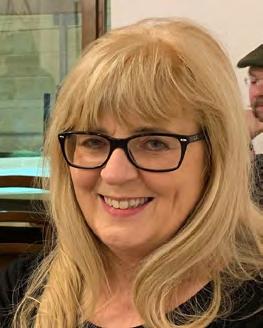
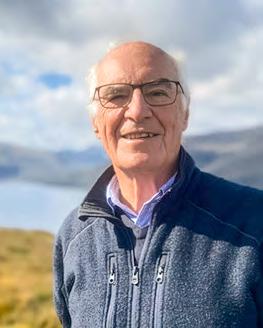
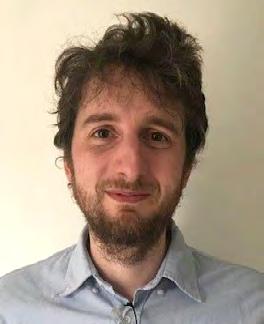
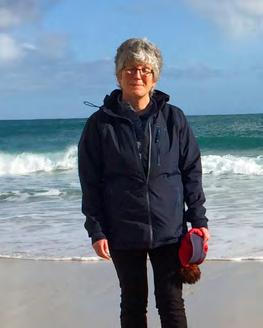
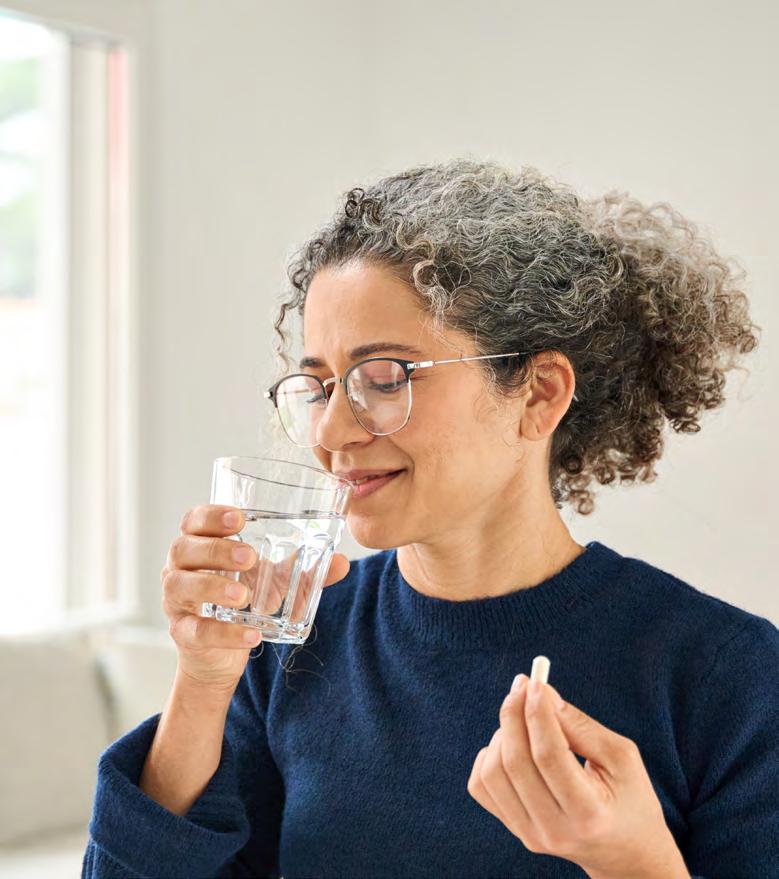
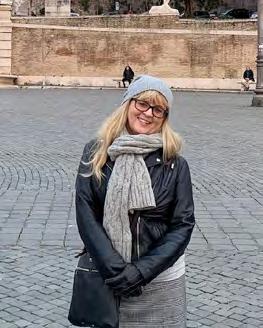
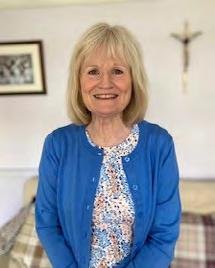
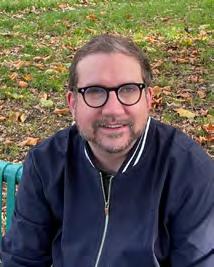
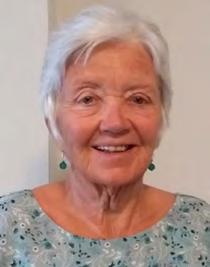
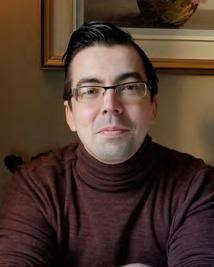
Participating in, and also helping in some small way to fund, research is a brilliant way to pay forward and hopefully mitigate impacts... for those who will come after us with glaucoma.”
Chris Hunton, Glaucoma UK member and trustee
Introduction “
Welcome to Glaucoma UK’s very first research impact report. I’m thrilled to present it to you. Funding and supporting research into all aspects of glaucoma has always been a core pillar of our work. Our founder, Ronald Pitts Crick, was an active glaucoma researcher and mentored some of the people you’ll read about in this report.
We want to do more to share with you the difference we’re making through funding research, and the very real impact it has on the lives of people living with glaucoma. We hope this report is a step towards that goal. We want you to feel a part of the research we fund, to feel inspired by it, and to give you hope that glaucoma sight loss can one day become a thing of the past.
In this report, we’re sharing some of the highlights of our research work from the past 10 years. You’ll learn how the research we’ve funded has changed national guidance for glaucoma care, made glaucoma monitoring more user-friendly and supported a new generation of glaucoma researchers.
But the work is far from done.
People are still losing their sight unnecessarily due to late diagnosis, inefficient care systems and treatments which don’t get at the root cause of sight loss. In most health sectors, large charities fund research. However, that’s not the case for eye research. Just 1.2% of public investment in medical research goes into eye research, despite vision being the sense people fear losing most. That makes the work of Glaucoma UK all the more important, and impactful.
We hope you’ll join us in the fight against glaucoma sight loss, whether by taking part in research, donating to help us fund more or becoming a member of our community.
Thank you.
Joanne Creighton Chief Executive
Our research impact in numbers
How can we measure our research impact?
At Glaucoma UK, we receive no statutory funding for our work, so your donations are the fuel that allow us to support sight-saving research. The impact these projects have extend beyond the lab, helping to change glaucoma care in many ways. Here are some highlights from the past decade:
What we’ve funded:
Of the grants we analysed... top 100
5 have been named in the Ophthalmologist magazine’s top 100 ranking ophthalmologists worldwide
Julian Exeter, Glaucoma UK member and former trustee
Improving diagnosis and monitoring of glaucoma
through partnerships
Taking the stress out of visual field testing
“ At present there is no way of reversing glaucoma damage to the optic nerve, the best outcome patients have is that
treatments
will slow
down the rate of vision loss. Participation in research
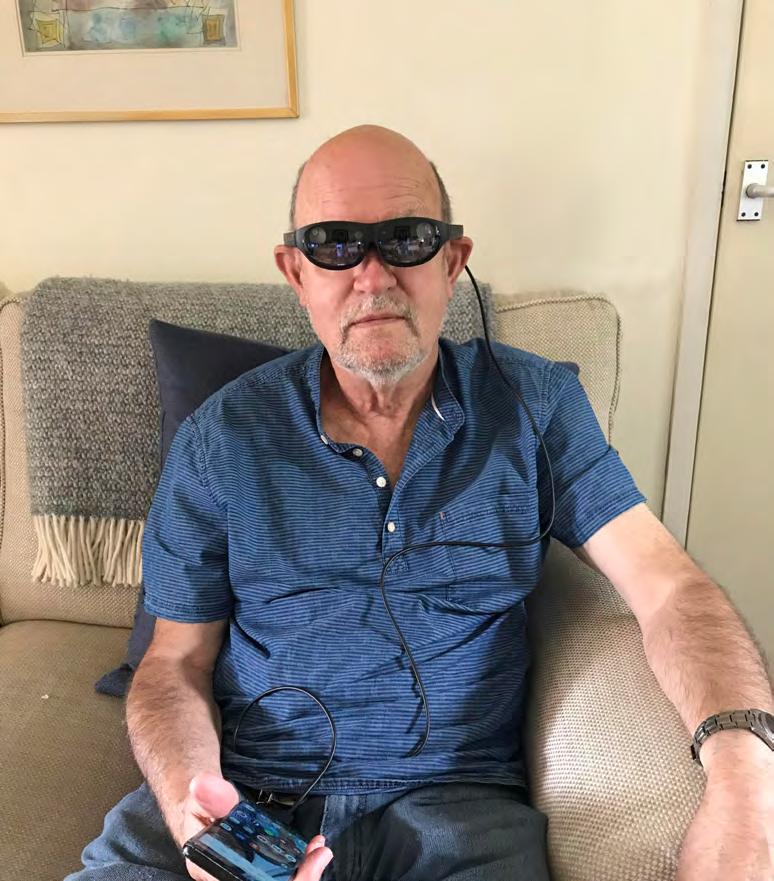
offers hope that better treatments will become available… I feel I am helping to improve outcomes and also gaining insights into my own glaucoma.”
Mark Wagstaff, participant in the Eyecatcher trial
Most people dread the visual field test. It’s a demanding test that many find difficult and stressful to complete. This can lead to a poor experience for patients and less reliable data for clinicians. Yet the test is incredibly important, as it provides crucial information about how glaucoma has affected a person’s vision. That’s why we’ve funded and supported research to make the experience less stressful, while still delivering the best possible data on how vision is impacted by glaucoma.
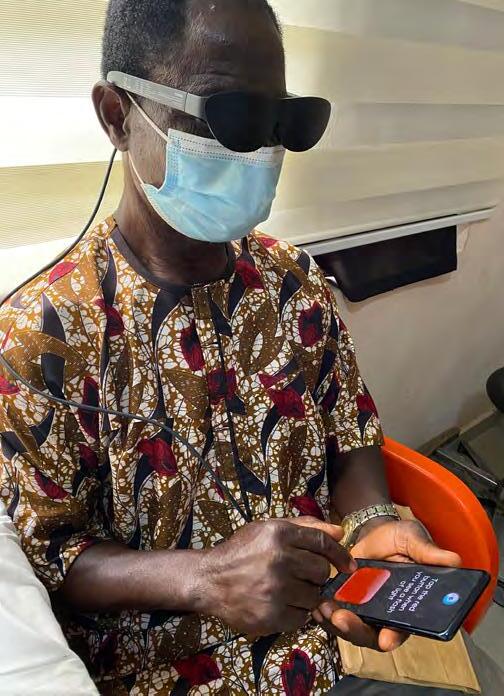
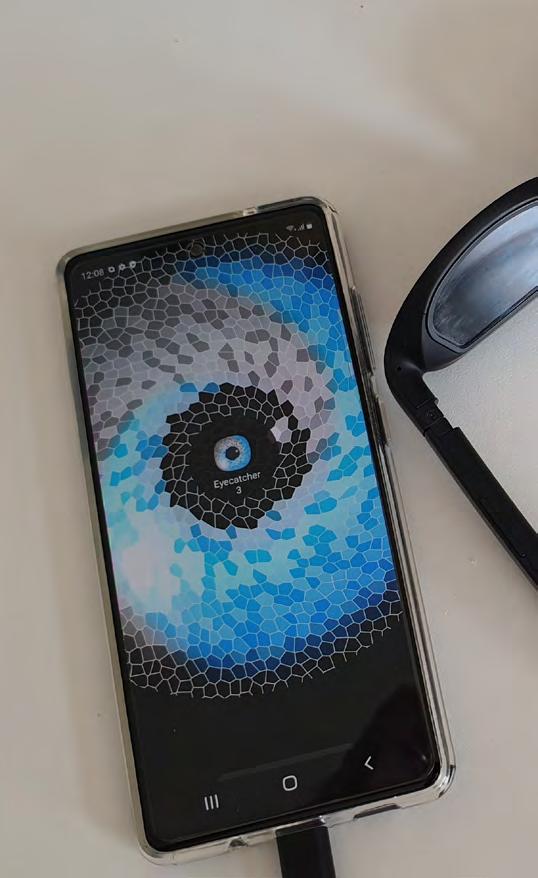
We’ve built a strong partnership with Professor David Crabb’s team at City St George’s, University of London, to address this challenge. In 2018, we funded David’s team at the ‘Crabb Lab’ to investigate whether home monitoring for glaucoma was feasible. With our help, they recruited people with glaucoma to test a tablet-based device called Eyecatcher.
This resulted in the world’s first published evidence that people with glaucoma are both willing and able to perform visual field monitoring at home, and that the results are comparable to data captured in clinic.
Since then, the team at City has formed a digital health-tech spin out, Irida Health, and raised over £600,000 in further funding from the UK government and other funders to advance this work.
Research into home monitoring of glaucoma continues. Thanks to our funding, we have evidence that it’s possible. Now, researchers are looking at whether it could be better than monitoring in a clinic, and who might benefit most.
Eyecatcher is being used in new research projects to help diagnose and monitor glaucoma worldwide, including the Australian outback and rural Nigeria.
Our partnership with the Crabb Lab goes beyond funding. We connect the team with people living with glaucoma – some of you reading this may even have taken part in research or shared your views in a focus group. This crucial input helps steer the research by identifying the challenges and opportunities people with glaucoma think are most important.
Pump-priming:
Our grant of £25,000
Funding generated as a result: £621,000
Dr
Pete Jones, Reader at City St George’s, University of London
“Glaucoma UK provides early stage(high risk) funding, the impact of which cannot be overstated. Although all this work is still early stage, I can hand on heart say that none of this would have happened without that initial investment.”
The challenge:
Visual field testing is stressful and results aren’t always accurate
Our research:
Funded the first evidence that people with glaucoma can monitor their visual field at home
Its impact:
Facilitated further funding, to turn the idea into a real tool
Still to do:
Identify how to deploy home monitoring so everyone benefits
Improving the pathway for glaucoma treatment through shared decision making
Helping people with glaucoma navigate glaucoma surgery
“
Cathy Surtees,
Glaucoma
UK member and volunteer “buddy”
I had a difficult time when I was diagnosed with glaucoma, and my consultant recommended surgery for me. It was very traumatic, because I didn’t understand why I needed surgery or what was involved. Effective communication would have made an enormous difference to me...
Learning about all the research into potential new treatments is exciting and gives me hope. And where we have hope, we have strength. I’m so grateful to Glaucoma UK for everything they do.”
We are lucky to have many treatment options for glaucoma. However, that means it’s often harder for people to make the right choice. They may not even know they have a choice. We’ve funded different projects looking at how people are affected by surgery, aiming to make it easier for someone to make their decision.
Glaucoma surgery improves fluid drainage from the eye and includes procedures such as trabeculectomy, tube surgery and minimally invasive glaucoma surgeries (MIGS). Usually, a doctor will recommend one or more of the options to someone. Thanks to previous research, there are now a lot of options available. But for someone to decide which is right for them, their eye specialist must clearly explain the benefits and risks.
Patients’ top three priorities
Maintenance of good vision
Independent lifestyle
Driving
Professionals’ top three priorities
Reduction of eye pressure
Maintenance of visual acuity
Stabilisation of vision field loss
We funded research carried out by Dr Bina Kulkarni, who investigated people’s experiences. She found that patients and doctors often define “successful” glaucoma surgery differently. More problematically, patients rarely question their eye specialists, instead assuming “the doctor knows best”. If the surgeon doesn’t know what the patient values most, they can’t advise them appropriately.
We funded follow-up research led by Professor Anthony King at Nottingham University, who investigated how a trabeculectomy affects patients’ quality of life. This surgery can be demanding for patients, needing frequent follow-ups and a substantial reduction in activity afterwards. Anthony found that although a trabeculectomy temporarily affects quality of life, it typically returns to normal within three months after surgery. This
information could be hugely empowering for a patient. We’re helping Anthony get this message out there through a new decision-making aid to guide conversations about surgery.
We also funded Dr Christin Henein to look at who benefits from devices used in tube surgery and different MIGS. She discovered that ethnicity is reported in only about half of the trials. Where it was reported, Black and Asian people were under-represented, even though we know these populations are more likely to lose vision. Christin has contributed to new guidance documents promoting more inclusive research practices and has developed decision aids to help people understand the risks and benefits of these surgeries.
The challenge:
People can’t make informed decisions about surgery when the risks and benefits aren’t well-communicated
Our research:
Helped identify what matters to people with glaucoma, and who benefits from different options
Its impact:
New decision-making aids have been developed, to help people make informed choices
Still to do:
Identify and address barriers to effective communication
“ It’s really just about helping patients and the clinicians ask the right questions of each
Dr Christin Henein,
ophthalmologist at Moorfields Eye Hospital
other. ...Glaucoma UK have been really important during this research. They have helped in finding participants in the research and allowed me to work with others in the field. These collaborations mean
I can work with them in future projects to generate more impact.”
Sharing research to improve glaucoma care
Dr
Andrew
Tatham,
UKEGS President 2025
“ The whole purpose of the meeting is to change people’s practice and improve care. It certainly has made a difference in my practice. And so, I know for glaucoma specialists it’s the notto-be-missed meeting of the year.”
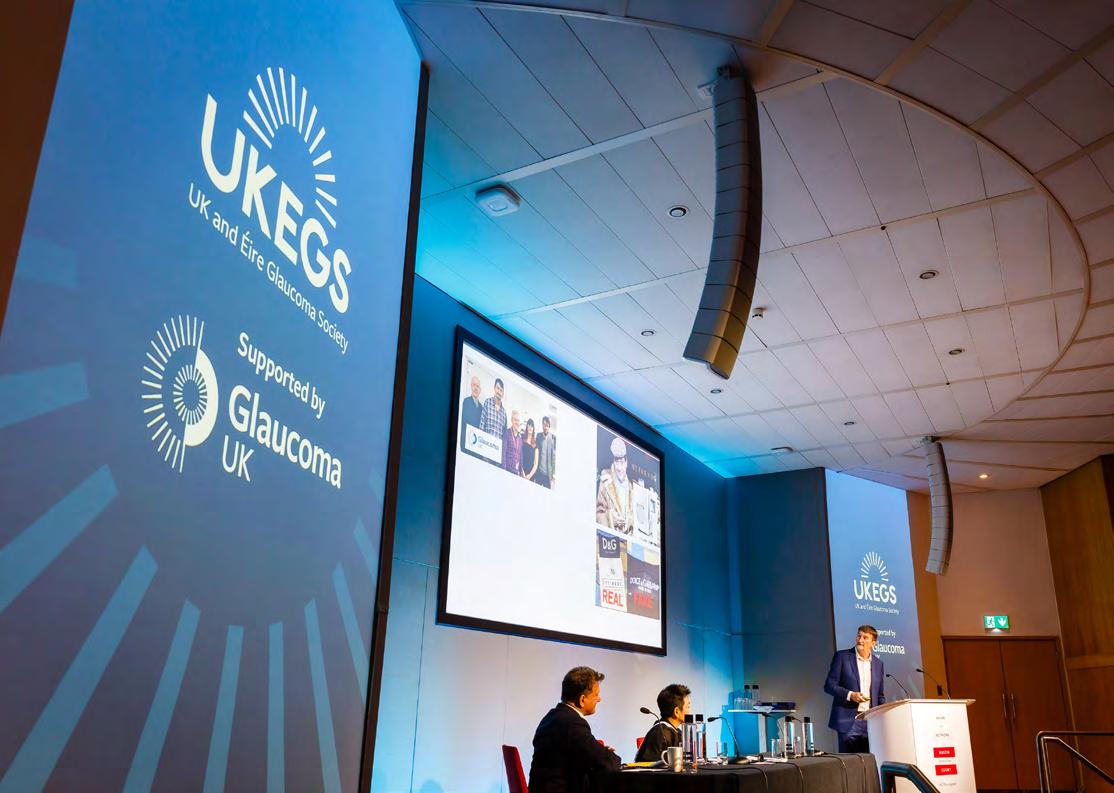
Funding research is important, but if the findings aren’t properly shared, their impact will be stunted. We run an annual conference for glaucoma professionals and researchers. The conference is delivered through the UK and Éire Glaucoma Society (UKEGS): a professional society for glaucoma specialists, which is part of Glaucoma UK. UKEGS serves as a crucial link between research and clinical care, so that each informs and improves the other.
More effective care pathways: the role of UKEGS
UKEGS has driven the evaluation of alternative models of glaucoma care, which can cope with the increasing number of people being seen.
One such model is the virtual clinic, where people have the tests done in person, but the results are reviewed separately by a specialist, with the patient being updated by letter or phone call. They allow around three times as many people to be seen within one clinic and are usually for those at lower risk of sight loss. UKEGS provides researchers and practitioners with an important opportunity to evaluate, discuss and improve the operations of new models such as virtual clinics.
• Early adopters of virtual clinics presented their findings at UKEGS conferences, showing they were effective and well-liked by users.
• Subsequent conferences brought discussion about how best to implement virtual clinics, drawing on practical insights from hospitals.
• During the COVID-19 pandemic, the need to rapidly assess people and prioritise those at greater risk became critical. UKEGS responded by developing a triage tool, which was endorsed by the Royal College of Ophthalmologists and is now widely used.
• Since 2020, virtual clinics or similar have become widespread. The conversation at UKEGS is no longer “if…?”, but “how best….?” - for example, how to utilise artificial intelligence or reduce environmental impacts.
“ Théa has been a partner at the UKEGS conference for many years. We have valued the possibility to
Irina Manoliu, Théa Pharmaceuticals
connect
with all glaucoma specialists, to learn about the latest news and developments and to hear the patient voice through Glaucoma UK. This has contributed to our commitment to developing products with patients in mind and sharing knowledge with specialists around the world.”
The value of UKEGS
Over the last 10 years, the stature of the UKEGS conference has grown significantly. Its large, influential and engaged audience means there is value for:
• Glaucoma specialists. They want to hear about cutting-edge research, learn from international experts and share best practice.
• Glaucoma researchers. They want to disseminate their work and identify new opportunities for collaboration.
• Industry partners, who might be sharing the results of their own research. They want the opportunity to engage with the country’s leading glaucoma decision makers and innovators.
Our vision for UKEGS
We want the virtuous circle between research and clinical care to continue, and improve further. Our plans for UKEGS include developing strategies to use research to inform our support for professionals and people with glaucoma, as well as promoting sustainability and inclusivity of care, to ensure we can protect the eye health of everyone, long into the future.
Attendees have increased from around 200 per year to over 500. The range of professionals attending has also widened, and now includes optometrists, vision scientists and nurses as well as ophthalmologists.
We’ve seen a 60% increase in the number of applications received from researchers wanting to present their work: 2015-2017
47 per year 2022-2024
76 per year
Sponsorship income received at UKEGS has increased by over 250% in real terms since 2015.
Finding the most effective treatment
Comparing selective laser trabeculoplasty and eye drops
“ The LiGHT trial has had a big impact on the treatment options for ocular hypertension and early glaucoma across the UK and the world. I am grateful to Glaucoma UK for the funding received, which allowed me to join the LiGHT trial research team as a clinical research fellow and contribute to the analysis of the clinical effectiveness of SLT.”
Dr Anurag Garg, consultant ophthalmologist, St Thomas’ Hospital London
Various treatments are available for glaucoma. One option, selective laser trabeculoplasty (SLT), had shown promise for treating open angle glaucoma and ocular hypertension. However, for a long time, there was not enough evidence to determine who would benefit most from laser treatment, or whether it was better than the usual treatment of pressure-lowering eye drops. In particular, we needed to know whether patients preferred SLT or eye drops.
For years, the most common treatment for people with glaucoma has been pressurelowering eye drops. But they come with challenges:
• Some people still lose vision despite using them;
• They can cause side effects such as sore eyes;
• There are practical barriers, such as remembering to put in the drops every day, or squeezing the bottle accurately.
SLT, which only takes around 10 minutes per eye and can control pressure for over six years, overcomes many of these barriers. But is it better than eye drops for people with glaucoma and for the healthcare system?
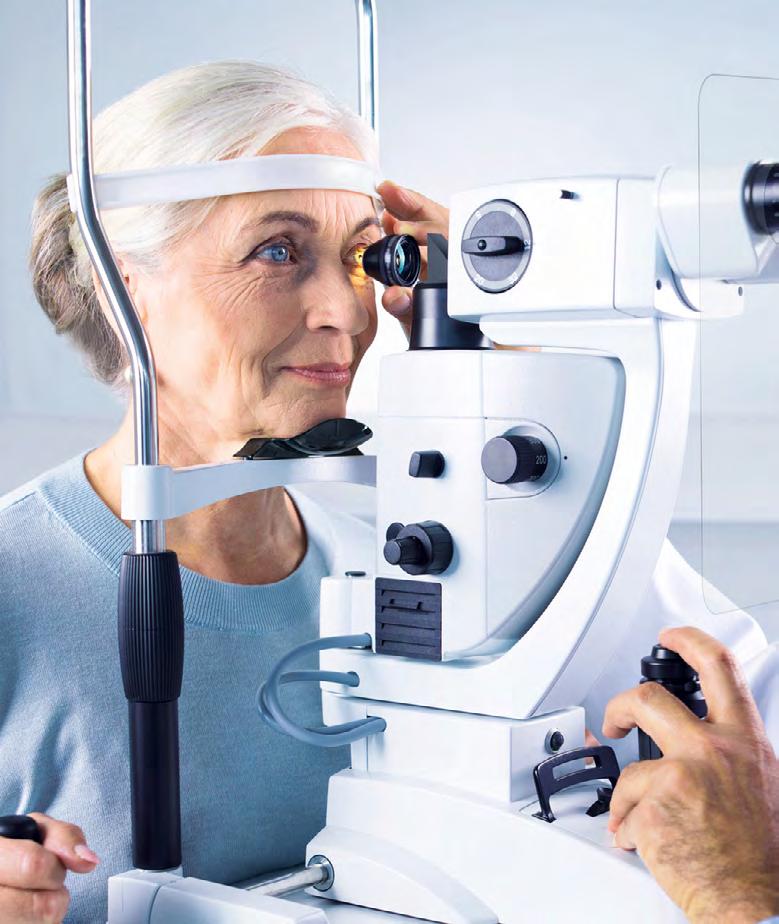
H Photograph provided by and used with permission from Zeiss, www.zeiss.co.uk
To answer this, the LiGHT trial (Laser in Glaucoma and Ocular Hypertension Trial) was launched. Funded largely by
the UK government, this randomised controlled trial compared eye drops and laser treatment for people newly diagnosed with open angle glaucoma and ocular hypertension (raised eye pressure with no damage to vision). The investigators wanted to find out which treatment gave a better quality of life to patients over three years. There was no clear winner, although SLT gave long-term freedom from daily eye drops.
We funded Dr Anurag Garg to carry out additional analyses of the trial data. He looked at which treatment was clinically more effective. For example, which provided better long-term pressure or reduced the need for further surgery. His findings? SLT was superior in several areas.
This additional evidence was presented to the National Institute of Health and Care Excellence (NICE), the body that sets the framework for NHS care in England and Wales. As a result, NICE updated its recommendations, and SLT is now advised as the first-line treatment for glaucoma instead of eye drops.
“Professor Gus Gazzard, Director of Surgery at Moorfields Eye Hospital, Chief Investigator of the LiGHT trial
Even though the LiGHT trial ended formally in 2018, we’re continuing to fund research that dives deeper into the vast quantities of data it generated. A major finding of the trial was that nearly four out of five people were drop-free three years after laser treatment. That’s an excellent outcome, unless you’re the other 1 in 5 who needs eye drops!
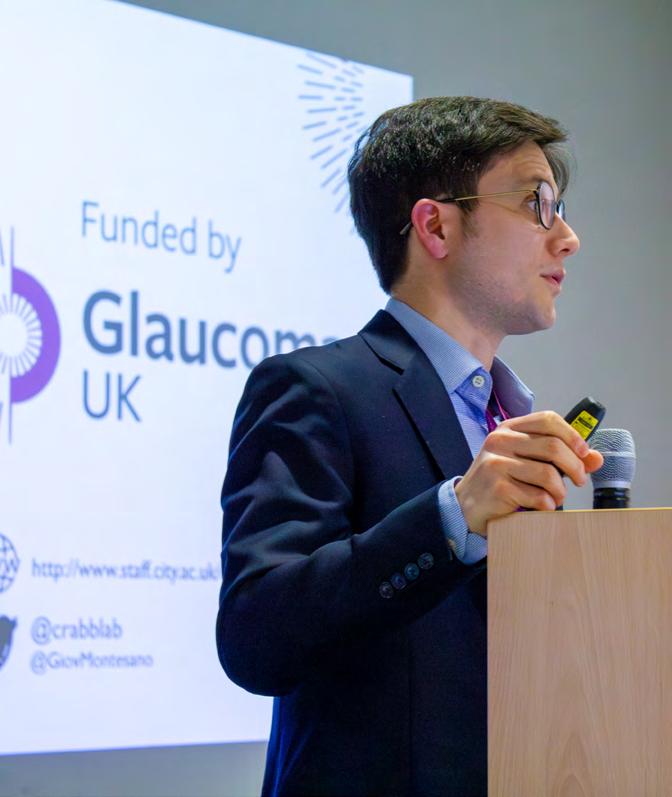
To address this, we funded Dr Giovanni Montesano to investigate who is most likely to benefit from different treatments, so that doctors can give more personalised advice to their patients. He has found that vision loss is 30% slower in the group of people treated with laser compared to those using eye drops – even though their eye pressures were similar. It’s a striking statistic, and is probably explained by the more consistent pressure control laser offers. While the project is ongoing, the insights which are already emerging are exciting and will help people decide about treatment options with more confidence.
Support from Glaucoma UK was vital for the LiGHT Trial Research Group to develop the capacity to really build on the wealth of data that the randomised controlled trial collected. Without that support we could never have managed to conduct the complex analyses which led to the successful body of published work that changed practice worldwide. The answer to the primary question posed in an RCT is only part of the value of any trial: it is in the supporting additional work (rarely funded by the primary funder) that so much value lies. Glaucoma UK helped keep our team together and the research going that produced that work.”
“John Ross, Glaucoma UK member and LiGHT trial participant
“I didn’t know anything about glaucoma when I was diagnosed, and was invited to take part in the LiGHT trial. My wife encouraged me to join. I’m pleased I did – it was the right thing to do, and the care I received was excellent. Sadly, I’m still losing vision to glaucoma, but I know that I’ve helped researchers improve our understanding of this condition, and who benefits from different treatments.”
Research we funded showed that, three years after initial treatment….
Nearly 4 in 5 people who received laser treatment were drop-free
Sight loss is nearly 30% slower in people who received laser compared to those on eye drops
The challenge:
Eye drops were the standard first line treatment for glaucoma but are inconvenient, difficult to use consistently, and may cause side effects.
Our research:
Provided the critical evidence showing SLT was more effective, and costeffective, than eye drops
Its impact:
SLT is now recommended by NICE as a first-line treatment for glaucoma, transforming glaucoma care.
Still to do:
Identify who benefits most from SLT and find new treatments for people who can’t receive laser treatment or haven’t responded to it.
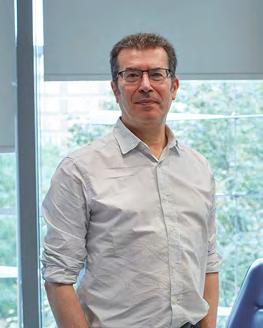
Professor David (Ted) Garway-Heath
A spotlight on leadership: Glaucoma UK Professor of Glaucoma and Allied Studies at University College London
For nearly 30 years, Glaucoma UK has part-funded the post of Professor of Glaucoma and Allied Studies at University College, London (UCL). The role was established following a major fundraising effort by the charity’s founder, Ronald Pitts Crick, who was determined to support a leader in glaucoma research. Since 2010, the position has been held by Professor David (Ted) Garway-Heath, a globally recognised researcher and a celebrated consultant ophthalmologist at Moorfields Eye Hospital. With more than three decades of experience, Ted has more than fulfilled the role’s founding ambition.
Our funding has enabled Ted to lead major clinical trials which have changed care, as well as scientific projects that have improved our understanding of glaucoma.
“ Glaucoma UK’s funding enabled me to not only be chief investigator on a number of exciting projects, but also a mentor for future leaders and researchers. There are further aspects of glaucoma that need exploring. I’ll be retiring in a few years, but Glaucoma UK have helped me support the next generation to take over.”
Perhaps equally important as his glaucoma research, Ted has also devoted a great deal of his time to mentoring promising clinicians and researchers – especially during his term as the European Glaucoma Society (EGS) president. He wants to empower the next generation of glaucoma professionals to take up the mantle and continue the vital work to improve the lives of people with glaucoma.
However, not even the best glaucoma professionals can work alone. Ted deeply values collaboration between researchers, doctors, the public, and beyond. Within Project Oriel - the current ambitious project to rebuild and combine both Moorfields Eye Hospital and the UCL Institute of Ophthalmology - Ted’s role is to ensure, fittingly, that the two organisations work closely and creatively together.
Ted’s work has led to over 90 published papers, leveraging over £14 million in grants and PhD studentships.
2015
The UKGTS (see below) was published in the Lancet and is within the top 1% of cited work in medicine.
20152016
2017
A dedicated mentor, Ted has supervised at least 25 researchers and guided more than 25 overseas fellows and 60 emerging clinical scientists across Europe, Asia, Australasia, and Latin America.
Ted launched the ‘Next Generation Partnership’, aiming to identify and mentor potential future leaders of the EGS.
2017
Project Oriel
2019
Ted led the first EGS members’ meeting with substantial input from people with glaucoma.
20182019
President of the EGS
Co-investigator of the LiGHT trial published in 2015 and its long term follow-up
Research into the links between
Ted was the chief investigator on the UK Glaucoma Treatment Study (UKGTS), a landmark trial investigating whether the most common eye drop treatment for glaucoma slowed sight loss. However you want to measure it, this trial was a success:
✓ Proved that eye drops do work to treat glaucoma and slow vision loss;
✓ Published in The Lancet, a high impact medical journal, and now one of the most cited papers across all medical research;
✓ Shortened the time required to show vision loss in glaucoma, from five years to two years, making subsequent trials easier and cheaper to run.
While funded by Glaucoma UK, Ted has earned at least 10 major awards and was repeatedly named in The Ophthalmologist magazine’s Power List Top 100. In 2023, he was inducted into their Top 10 Hall of Fame.
2019
Ted was recognised as the ‘Top Mentor’ Worldwide by The Ophthalmologist.
2021
Ted received a government grant of £1.9 million for a clinical trial to test the effectiveness of vitamin B3 as a treatment for glaucoma (NAMinG trial, see next page).
Ted has shared his insight contributing to 5 glaucoma clinical trials and delivering 24 international keynote lectures.
2024
Ted continues to give a voice to people with glaucoma, including efforts to welcome them as EGS members.
20202021202220232024 2025
“ “He’s been irreplaceable when it came to guiding me through the Fellowship application and promoting my career. He has introduced me to amazing opportunities and people who share glaucoma research interests.”
Dr Giovanni Montesano, Glaucoma UK Pitts Crick Fellow, on having Ted as a mentor
Building on previous research to find new treatments
Professor Ted Garway-Heath
“ The NAMinG trial, if successful, will deliver the first nonpressure lowering treatment for glaucoma. It’s
very attractive because one of the most common questions
patients ask when they’re told that they have glaucoma is “Is there anything I can do in my lifestyle or my diet to help?” The answer has always been “no”, but this trial might change that.”
The UKGTS trial may have shown that eye drops do slow sight loss from glaucoma, but it also raised important questions. Half of the participants received no treatment, yet 70% of them didn’t lose any vision during the study. On the other hand, 15% of the people who did receive eye drops did lose vision. Why?
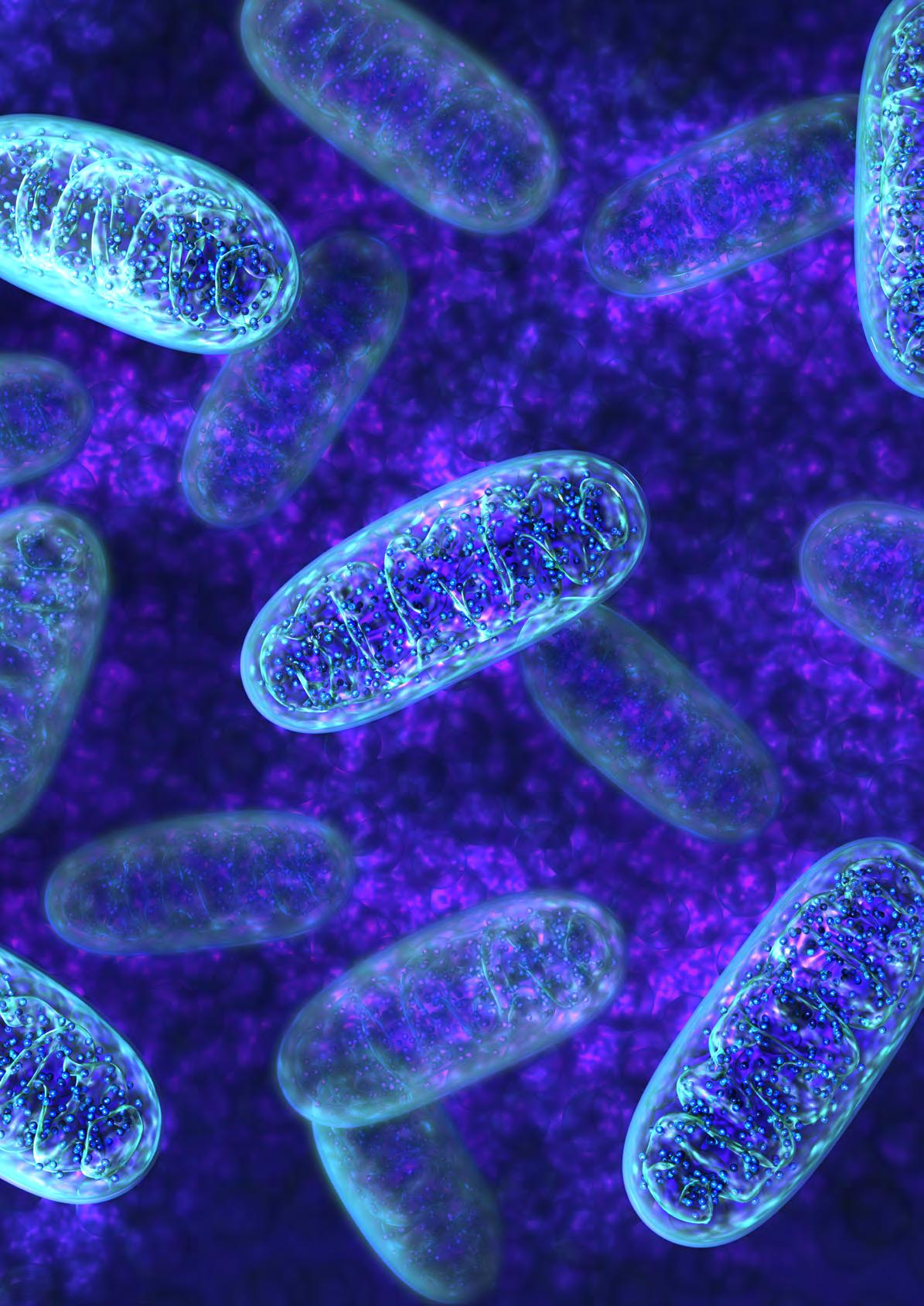
Researchers already knew that glaucoma damages the nerve cells that send signals from the eye to the brain – cells with especially high energy requirements. This led to a new line of questioning: could the function of mitochondria, the ‘batteries’ of our cells, play a role in causing glaucoma?
We funded several projects investigating the role of mitochondria in glaucoma.
One such project, led by Ted, investigated whether mitochondria have a role in normal tension glaucoma. They found that people with glaucoma have:
• lower mitochondrial function
• lower levels of a chemical called nicotinamide (NAD), which is important for mitochondrial function
In fact, they found that mitochondrial function may be as important as eye pressure for predicting how quickly someone will lose vision. These findings were published in Nature Medicine, one of the world’s most prestigious scientific journals.
The challenge:
Lowering eye pressure doesn’t always stop glaucoma from getting worse
Our research:
Identified another potential factor: how well the mitochondria in our cells are working
Its impact:
Led to a multi-centre clinical trial investigating whether daily vitamin B3 pills could slow glaucoma
Still to do:
Confirm who may benefit from vitamin B3 and by how much
How can we make the mitochondria work better? Perhaps we can give people high doses of vitamin B3, which our bodies use to make NAD. Ted set out to test just that as chief investigator of the NicotinAMide in Glaucoma (NAMinG) trial. This trial is testing whether vitamin B3 protects people with glaucoma from further vision loss. It’s part of an international effort, with similar projects being done in Australia, Singapore, Sweden and the USA. This has all been enabled by our support of Ted, both as Glaucoma UK Professor at UCL and in direct grants.
“
Mitochondrial function may be as important as eye pressure for predicting how quickly someone will lose vision
Sharing expertise: working together to learn more
How collaborations and mentoring drive our understanding of glaucoma
“ The consistent support from Glaucoma UK
Dr Sarah Atkinson, Senior Lecturer at Ulster University and co-supervisor of the project
has been vital in enabling us to uncover how miRNAs in the trabecular meshwork might be contributing to glaucoma and improving our understanding of how the genes involved are regulated. As a result of the funding, which has supported PhD students and early career researchers, we’ve run a series of projects which might lead to new ways of treating glaucoma.”
What causes glaucoma? Scientists have been asking this since classical times. While current treatments lower eye pressure, they don’t address the root cause of the increased pressure, and they don’t work for everyone. Our ongoing support of Professor Colin Willoughby’s lab at Ulster University has brought benefits well beyond just increased knowledge of important cell biology.
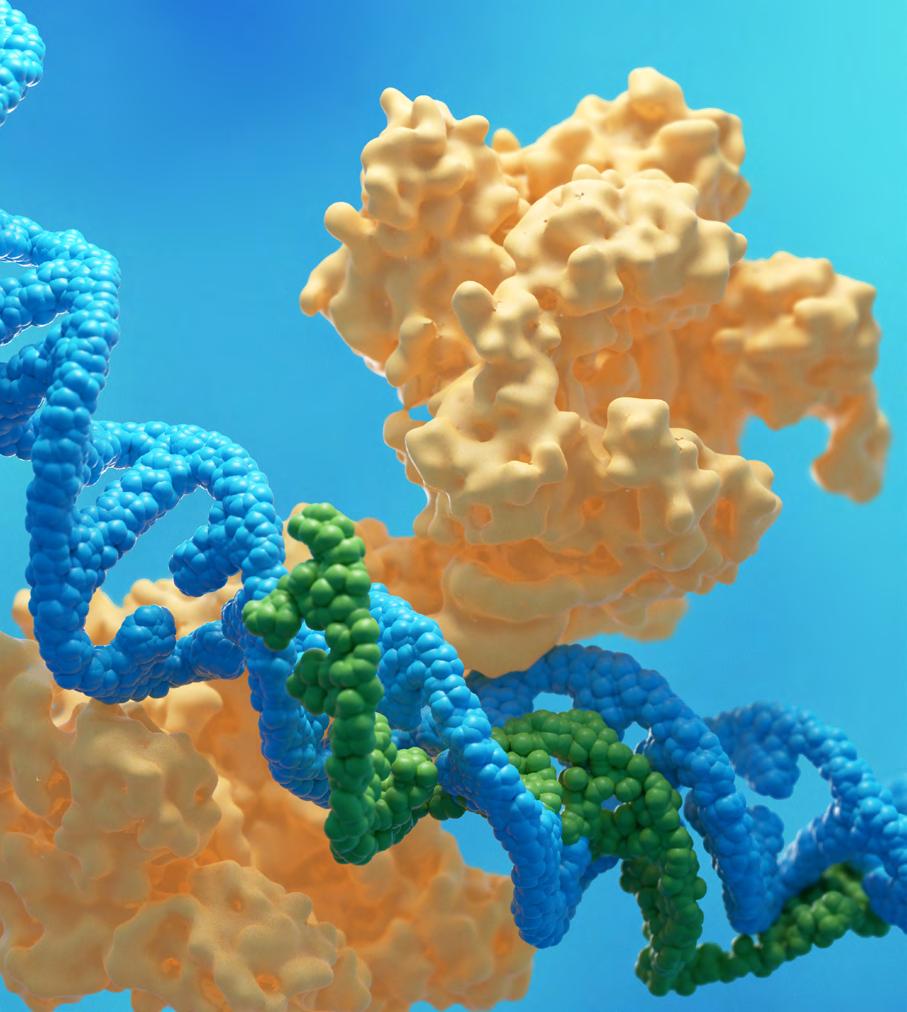
Colin’s recent work has focused on microRNA (miRNA), tiny snippets of genetic information which help with switching genes on and off in our cells. The scientists who discovered miRNA were awarded the Nobel Prize for Medicine in 2024 – it’s a hugely exciting area of research. Colin’s research is looking at the role of miRNA in the trabecular meshwork, and whether it is causing scarring or affecting how cells work together. It’s possible that by controlling miRNAs in the eye, we can keep the structures healthier, maintain drainage and avoid increased eye pressure.
The work in Colin’s lab is highly multidisciplinary, and has launched the careers of many young researchers. In the last 10 years, our funding of Colin’s lab has led to impacts including:
Three early-career researchers gaining a PhD.
The creation of a publiclyavailable database, which researchers worldwide can use to understand data regarding miRNA in glaucoma. This reduces the need for animal testing and means future work can be shared more easily.
£250,000 of further funding in the UK and India to investigate miRNAs in steroid-induced glaucoma, including an agreement to transferring data and cells internationally.
Collaborations with colleagues to supply particular cell types of interest and explore how findings about different parts of the eye are linked.
The development of unique models to mimic the development of glaucoma. One uses cow eyes which would otherwise go to waste and enable the group to observe how tissues respond to changes. The findings were used to develop a new consensus on how to develop these models.
Five publications, four keynote speaker events and a research prize.
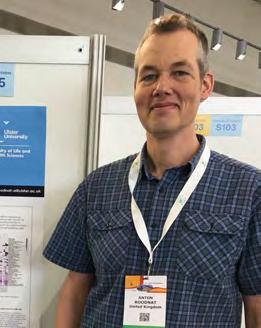
Anton Roodnat, PhD student
supported by the funding
““Glaucoma
UK’s support for my PhD has been transformative, enabling me to investigate of the role of microRNAs in glaucoma and contribute to important publications. It has also given me the training and opportunities I need to build my career as a biomedical researcher.”
The challenge: Glaucoma treatments address a symptom, not the root cause
Our research: Explored causes of increased eye pressure
Its impact: Enabled new collaborations and launched the careers of glaucoma researchers
Still to do: Turn promising ideas into effective treatments
Dr Giovanni Montesano
“
Supporting developing researchers: Glaucoma UK Pitts Crick Fellow
Dr Giovanni Montesano is a consultant ophthalmologist and glaucoma researcher of increasing renown. His research uses mathematical modelling to learn more from existing data, such as visual field test results and other data collected during appointments.
Giovanni had already established himself as one to watch in eye research when we first funded him in 2023. His project aims to create a way to predict the effect of different treatment strategies on someone’s visual field changes by linking their personal data with insights from large clinical trials. The project is already generating results (see the section on the LiGHT trial on page 21 ) and won a prize at a major international conference.
In a lot of countries there’s a big gap between no funding and multi-millionpound funding from a huge grant... I think that charities like Glaucoma UK make a big difference by promoting researchers in an early phase of their career… The more I move forward with this project, and the more I am looking forward to starting the new one, the more grateful I am that you’ve enabled that to happen in my career.”
Susan Edmunds, member of Glaucoma UK
“ This digital twin sounds brilliant! I still see glaucoma as a very old-fashioned condition where the only way to treat it is to give you some drops in the hope that the pressure will come down. The digital twin would take into account someone’s personal situation.”
We are excited by the potential for this research to transform lives, and so we were delighted to award Giovanni the first ever Pitts Crick Fellowship as part of our 50th anniversary celebrations in 2024. His project, “A digital twin for glaucoma” is a natural followon of his earlier work. A digital twin is an accurate digital replica of a person with glaucoma, which could enable doctors to simulate how the disease might progress and identify the most effective treatments for each individual. This cutting-edge research brings us one step closer to truly personalised glaucoma care.
Thank you!
The achievements listed in this impact report don’t just belong to Glaucoma UK or the researchers we fund. They wouldn’t have happened without the support and generosity of our members and donors. So thank you, from all of us.
“Glaucoma UK have a critical role within the research funding ecosystem. There are few resources allocated to smaller, exploratory studies in the UK despite their importance to making new discoveries. The funding provided by Glaucoma UK is vital to ensure that such studies can be performed.”
Dr Hari Jayaram, Director of Glaucoma Service and Clinician Scientist, Moorfields Eye Hospital, London
“
My father lost his vision to glaucoma. I’ve had glaucoma for years and have benefited from the progress that has been made through research. But at the moment the gold standard is still the trabeculectomy. It would be good to think there was something more that could be done. My two sons know they’re at risk of glaucoma, and I would love to know their vision is safe.”
Joan Dickson, member of Glaucoma UK for 25 years
“
I am deeply grateful for the support from Glaucoma UK because investment in research is vital — it drives innovation, transforms patient care, and brings us closer to a future where preventable blindness is eradicated.”
Associate Professor Kuang Hu, UCL Institute of Ophthalmology and recipient of 2025 project grant looking at using artificial intelligence to identify those most at risk of glaucoma sight loss
“
Research is invaluable. It’s fascinating reading the research applications and what people hope to achieve. It gives me hope that one day, thanks to Glaucoma UK’s research support, glaucoma might be as easy to deal with as a cataract.”
Dave Lawson, who volunteers as a patient representative on our research grant award panels
“
My dad has glaucoma and his sight was saved by many incredible individuals. I chose to fundraise for Glaucoma UK after doing my biomedicine dissertation on glaucoma and discovering this amazing charity.
I think everyone should be aware of how important further research is for glaucoma.
”
Freya Rushbrooke, fundraiser
“
I’ve been a buddy for Glaucoma UK for several years, talking to people about glaucoma surgery. I’m constantly struck by how little people know about their diagnosis or what’s involved in surgery, and the anxiety that causes. More research to help people understand their glaucoma and treatment options, for example, would make an enormous difference.”
Liz French, Glaucoma UK member and volunteer ‘buddy’
“ This wouldn’t be possible without Glaucoma UK. We are incredibly grateful for that funding. I emphasise to my PhD students where this money comes from and that it is not to be used lightly. We place a great amount of respect on every single pound that we have.”
Dr Ben Mead, Associate Professor at Cardiff University and supervisor of Glaucoma UK-funded PhD student, investigating stem cells to protect the nerve cells important in glaucoma
“
Within a few weeks of joining Glaucoma UK I needed to start daily eye drops and was considered to have suspect glaucoma. I strongly believe that research to help with diagnosis and treatment into glaucoma is fundamental to helping people in the future.”
Carole Bourne, staff member at Glaucoma UK
“I’m in the very privileged position of helping Glaucoma UK decide which research projects to fund. I’m so grateful to everyone who supports us – we couldn’t do this without you. New innovations such as artificial intelligence are the focus of glaucoma research, and could transform glaucoma care, with the potential to diagnose people earlier, provide better treatment and bring hope to everyone affected by glaucoma. Every donation fuels this transformation and helps us work towards a future without glaucoma sight loss. ”
Winnie Nolan, trustee, chair of Glaucoma UK’s clinical advisory panel and consultant ophthalmologist at Moorfields Eye Hospital
Three ways to donate: Online at glaucoma.uk/ donate
By phone
on 01233 648 164 Monday to Friday, 9.30am-5.00pm
By post
Send a cheque made payable to Glaucoma UK to Glaucoma UK, Kent House, 81 Station Road, Ashford, Kent TN23 1PP
“I hope you’ve enjoyed reading this report as much as I enjoyed writing it. If you take only one thing away, it should not be a sense of our accomplishments, but of how much more there is to be done. People still lose vision to glaucoma, and their lives are affected by the anxiety and stress of the disease.
Our research strategy, available on our website, sets out our ambitions for the next three years.
We want to continue :
• funding life-changing research;
• supporting promising researchers;
• helping people with glaucoma feel engaged with research by sharing findings or opportunities to participate.
For this we need your help. We need exciting research projects to support, and the funding available to do so. Whether you donate money, apply for funding or sign up to hear more from us, you can play a role in the fight against glaucoma sight loss.
Thank you for being part of our team.
Joanna Hodgkinson Head of Research at Glaucoma UK
Leave a gift in your will to shape the future
Our community has always looked out for one another. By leaving a gift in your will to Glaucoma UK, your compassion can go even further, supporting future generations and helping us move closer to earlier diagnosis, better treatments, and, one day, a cure. Your legacy will help fund the research that makes all this possible.
Visit our new-look legacy webpage to see how your gift can make a lasting difference: glaucoma.uk/leave-a-gift
Glaucoma UK is the operating name of the International Glaucoma Association. Charity registered in England & Wales no. 274681 and in Scotland no. SC041550