The GGPCollective
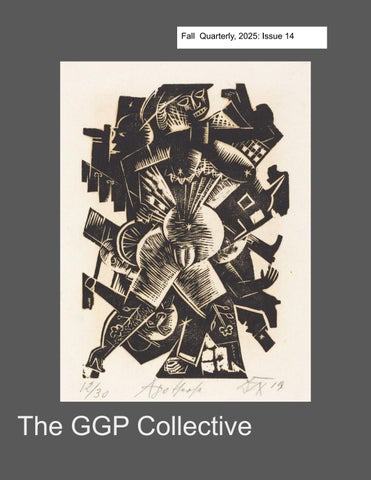
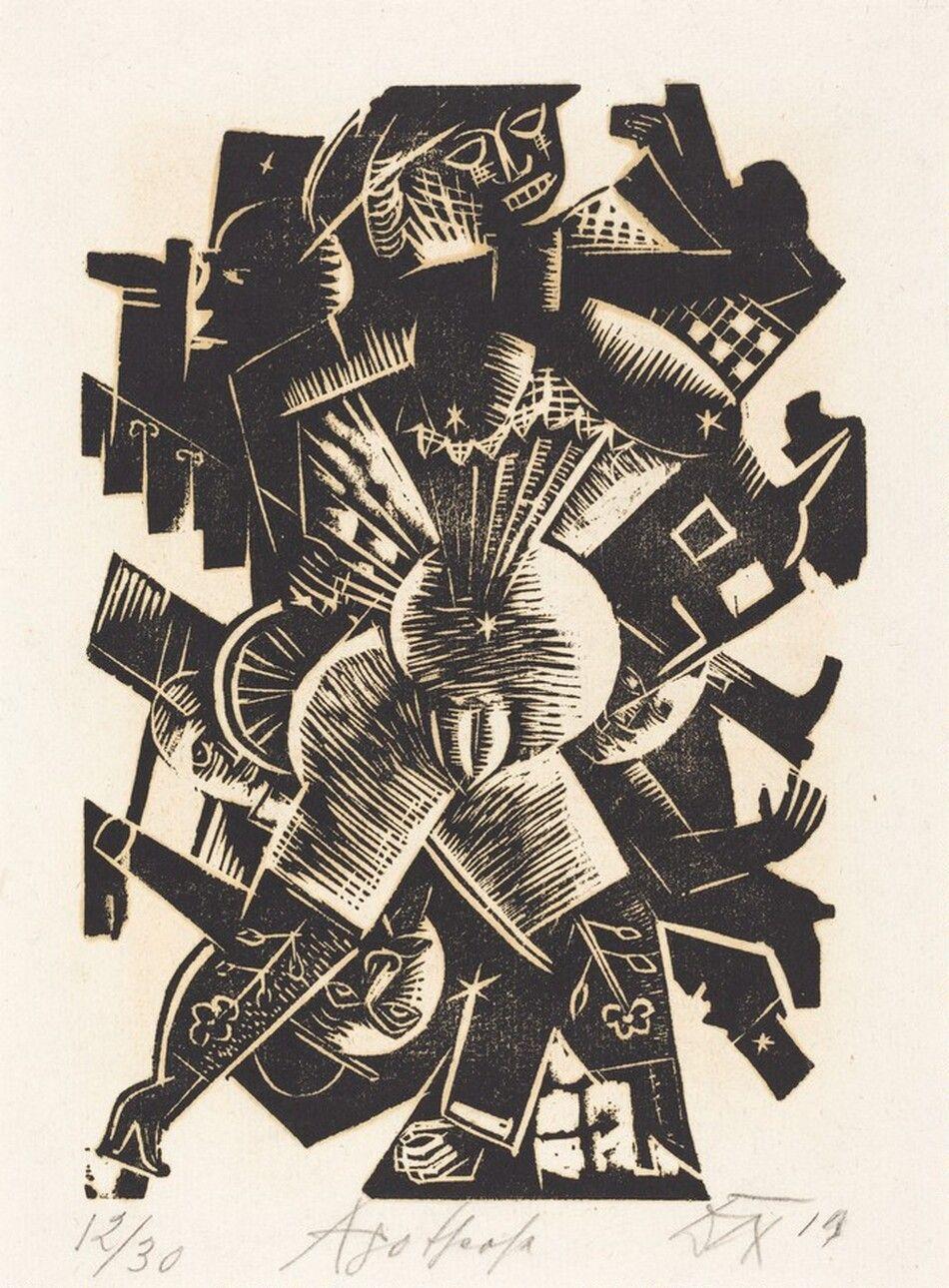
Apotheosa
Otto Dix 1919
Otto Dix, Apotheosa, 1919, woodcut in black on laid pape
Glass Gates Publishing, ⓒ2025
“We end up being strangers to those who have known us for too long.”
Luigina Sgarro
Acknowledgments
Avery special thank you to all of our contributing writers. Without the courage to share your words and work with others, our little publication could not exist.
Please find our contributors and follow their pages on social media for more!
Follow @glassgatespublishing on Instagram for more announcements and future calls for submissions
● John Grey
● DS Maolalai
● Bailey
● PulkitaAnand
● N.C.
● Dezmin
● Katt
● Adam Brooks
● ArbenAlovic
● linda m. crate
● Chelsey Jordan
● Naomi Ronner
Table of Contents
● FORMAL
● Abright afternoon – heavy traffic
● The Sound of Silence
● Time
● Sleep Eludes Me
● Broken Passion
● Angels on Earth
● 1/17/01
● after a time of forgetting
● WhenYour Recognize a Stranger
● Talent Show
● The Ones WhoArrive in My Sleep
● ABirthday Cake, or a Death Cake
FORMAL
Every evening meal is ritual by this. The silverware is placed on either side in proper order. The napkin is folded. Acandle flickers. Avase of flowers adds color. Awine glass awaits filling. You are the only one dining in tonight. That’s been the case for the past thirty years.
But you are also the cook. You are also the serving maid. You stir the pot. You plate the dishes. You pour the wine. You even unfold that napkin, place it on your own knee.
Each motion - lifting fork, sipping wine –is prayer without petition, a liturgy of endurance.
Sadly, the chair across from you says nothing. And mouthful after mouthful, you taste what you have made.
John Grey
Bio: John Grey is an Australian poet, US resident, recently published in Shift, River And South and Flights. Latest books, “Bittersweet”, “Subject Matters” and “Between Two Fires” are available through Amazon. Work upcoming in Rush, Writer’s Block and Trampoline.
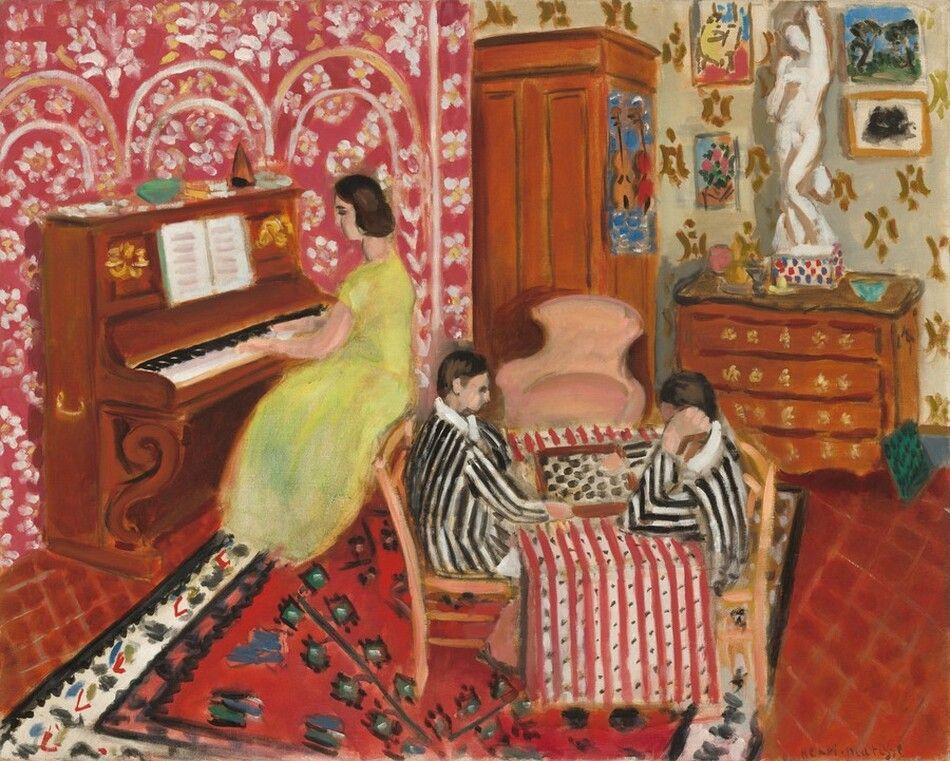
Pianist and Checker Players
Henri Matisse 1924
Abright afternoon – heavy traffic
on the corrugate motorway crash-proof fence siding the rain has made stripes on the dust. it's a bright afternoon – heavy traffic. I am more or less parked for a while. one car ahead a man rolls down his window. lets out a cigarette like a dog on a leash at the door. it hangs, is brought inward and hangs out again. in the median, flowers bent over from the air as it's drawn by the wake of the traffic begin to point up.
Bio: DS Maolalai has been described by one editor as "a cosmopolitan poet" and another as "prolific, bordering on incontinent". His work has been nominated fourteen times for BOTN, ten for the Pushcart and once for the Forward Prize, and released in three collections; "Love is Breaking Plates in the Garden" (Encircle Press, 2016), "Sad Havoc Among the Birds" (Turas Press, 2019) and “Noble Rot” (Turas Press, 2022)
DS Maolalai
The Sound of Silence
The kitchen light gleams, on the shattered glass scene, Abeautiful kaleidoscope of rainbows.
Abushel and a peck, and your hands around my neck, Begging me into the shadows.
Through gritted teeth, telling me to just breathe, Every word steeped in venom.
My open wounds on display, I’m your ragdoll with no name, Decorated in patchwork bruises.
Loving you was a curse, casual nights and cigarette burns, Adamaged gift wrapped in pretty paper.
Heavy steps and a slamming door, you won the battle not the war, Your angry words still ricochet and pulse.
My chance to escape into the night, sidewalks and endless street light, Surrounded by the sound of silence.
Bio: Bailey is a writer based in the Midwest ofAmerica. She enjoys slow mornings at home while keeping track of her small human and two dogs. She tries to fill her day with reading, writing, and spending time with family. She is best known for her writing on Instagram under “coffeestainedloveletters.”You can also connect with her onThreads.
Bailey
Time
Time is out of my mind, and history has been absent from my presence
My name is incognito. My boyfriend, a smart cooky
Sells my data to Meta
My life has been mortgaged by my relatives
I have been following and subscribing to them
Busy my days in liking and commenting
While they have been formatting my mind
Deleting the memories and moments
My mind fell into the ditch
I barely keep my heart intact
Rumours started growing around me
Just a part of speech is with others
The city has an overflowing fountain of deceit
While the truth remains aloof and immune to everything
Even at the crematorium of hope
Time, a foggy question stands dumb at the corner
Still alive, while
History comes and goes
Bio: Pulkita Anand is an avid reader of poetry. Author of two children’s e-books, her recent eco-poetry collection is 'we were not born to be erased'. Various publications include: Tint Journal, Origami Press, New Verse News, Green Verse: An anthology of poems for our planet (Saraband Publication), Ecological Citizen, Origami Press, Asiatic, Inanna Publication, Bronze Bird Books, SAGE Magazine, The Sunlight Press and elsewhere.
Pulkita Anand
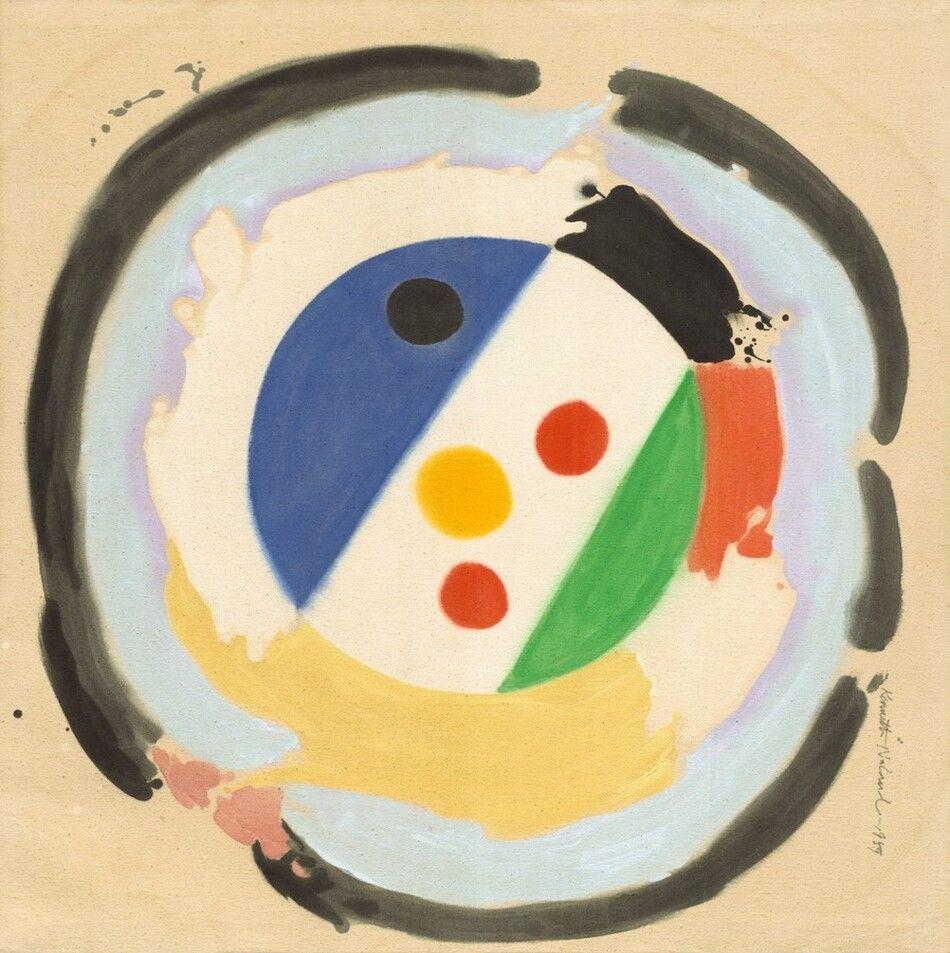
Kenneth Noland 1959
The Clown
Sleep Eludes Me
Sleep stands at the edge of my room, a stranger with no name tonight. I wait with open palms, but it slips between the fingers of time like water I cannot hold.
The ceiling becomes a canvas for all the things I didn't say, all the questions I folded into drawers during the day. They float there now, half-lit ghosts of could-have, should-have, never-did.
My body sinks, but my mind floats upward, spooling thought like thread from a spool that never ends.
The air hums with silence, but my heart thumps loud enough to argue with the night. Even the clock hesitates between ticks, as if it, too, is unsure what to do with this hour.
Outside, the world sleeps, cars pause, trees hush, the moon forgets to blink. But here I am, holding out a hand to something that once came easily, and now avoids me like a bird that knows better than to land.
Bio: Instagram: @poems2_inspire_u
Broken Passion
Sometimes I wonder why I even write.
Why I even fight For this.
I try with all my might, Despite Hitting roadblocks time After time.
I just want something to go right.
I just want something to Shine bright.
I just want my words To reach heights.
I just want to provide More than empty feelingsAll night.
Where has the fire gone?
Dezmin
Angels on Earth.
Angel.
That is the whisper- the nickname that rolled off your lips to get us to do anything you wanted.
Scripture can be interpreted anyway, anyone wants.
Justify the nail marks on my hands and wrists.
The wraps worn to hide them.
Blood that made you look sane. You took the only soul that gave us breath.
Why?
Because we tried to escape.
Forget that you were Romeo. We, the unassuming Juliet.
Say something Biblical.
You won’t be able to lie your way into those gates.
Bio: Katt is a somewhat anonymous, private newcomer to the world of writing. She resides in the Southern United States and writes about romance laced with allegories and her love for nature. Instagram: @the_greenlight_poetry
Katt

Breathing
Hope
Lou Stovall The Workshop, Inc. 1996
1/17/01
You will never trust another when I’m gone. I will lie to you, manipulate you and then leave. To make you break this mirror. And the dissatisfaction with yourself. Will make you see the error of your ways. You’ll hate what you’ve become. Only then can you understand me. My revenge is slow. What you did to me is unacceptable. When we part.
You will be the one in tears.
Life will never be the same again.
Adam Brooks
after a time of forgetting
they sky was painted orange and gold, reminded me of an october day even though it was november;
just a soft kiss of light in an otherwise dark month full of dreary gray skies and falling leaves but the beginning kissed us with some of the prettiest red leaves i saw all autumn—
i was sad when the snow came,
but that one orange and gold evening it felt like magic had returned to autumn's bones;
as if she remembered it was still her season and it wasn't quite time for winter yet and it made my soul happy—
because i know what it's like to remember who you are after a time of forgetting.
linda m. crate
Bio: Linda M. Crate (she/her) is a Pennsylvanian writer whose poetry, short stories, articles, and reviews have been published in a myriad of magazines both online and in print. She has seventeen published chapbooks the latest being: only the future knows (Alien Buddha Press, November 2025).
WhenYou Recognize a Stranger
There’s a certain heaviness when the face of someone you once knew is now that of a stranger. Do you reach out and say hello, like you once did, before the space grew between you two? What are the new rules of engagement when every move feels like a violation of an unspoken ceasefire? There’s never an official end, a surrender to fate. What do I do with all the stories I have yet to tell you?
Bio: You’ll find Arben Alovic somewhere on your adventure. Lost in NYC or walking around Yoyogi. His work has appeared here and there; time for a scavenger hunt. Explore all the lovely writers you find while searching! Till next time, may life treat you well.~
Arben Alovic
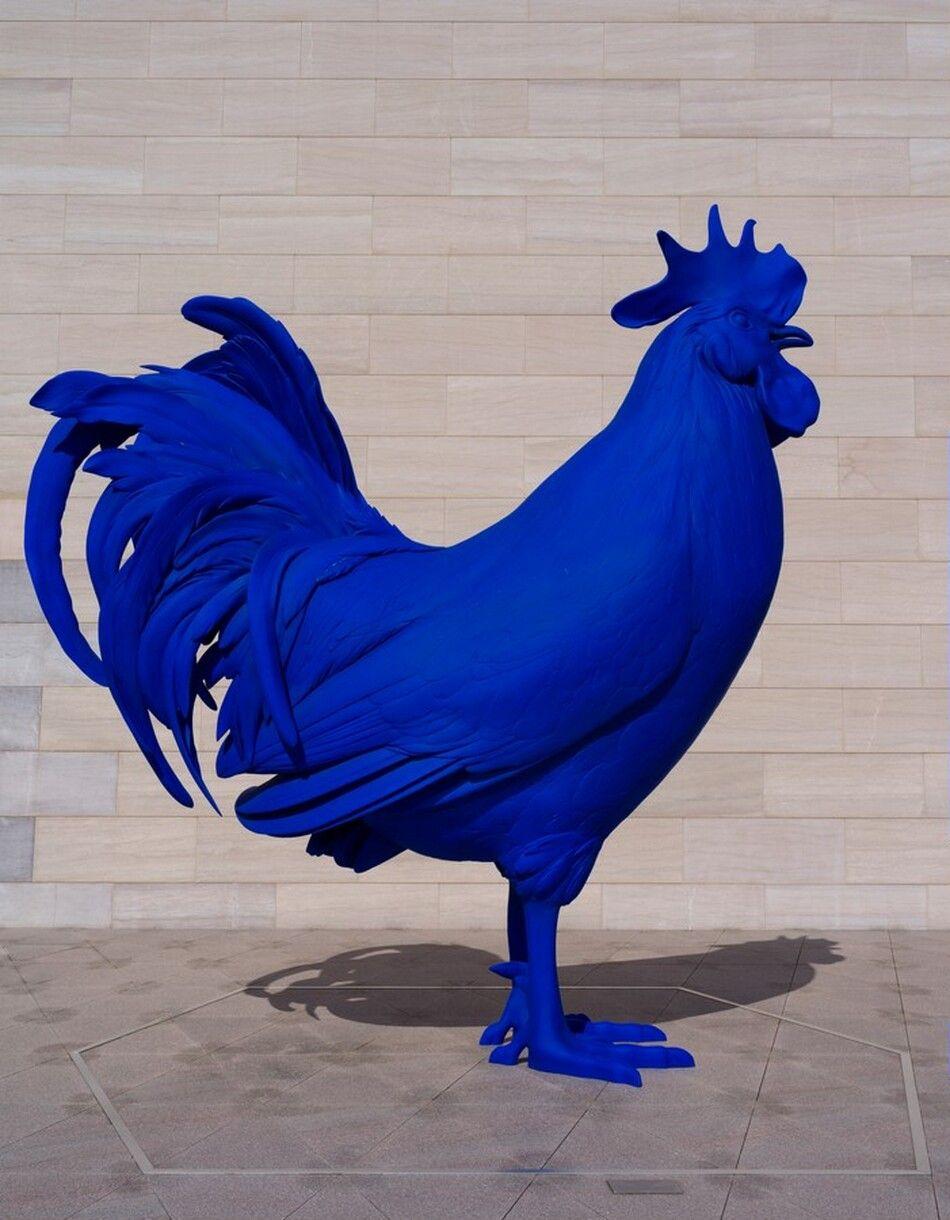
Hahn / Cock
Katharina Fritsch 2013
Talent Show
Such a talent you are, you creative being.
Did they know the price for it wasn't a clear way of thinking? Did they know the price for it was a girl left bleeding?
Do you know
I'm always stuck in my head, endlessly dreaming? Creativity—the master of my chaotic mind. Does it truly bring peace and order without borders?
Ahh, creative minds.
Do they know we're mere slaves to it?
Like a drug we decide to purge, then set ourselves free from it? It often feels like I'm stuck in a spider's web, forced to be eaten by it.
This compulsive need to organize babbled words onto straight paper— to make clear sense of our nonsense, known as human existence. The “why” of it all taking up space. Is this truly a gift or blessing— or some kind of compulsive force—here to rewrite my ending?
The price for artistic recognition is a life full of well-learned lessons. The only way out of our minds is to, frankly, be out of them.
My depression—the genius of the craft you're seeing. Without it, I'd be a happy woman, probably not worth reading.
Chelsey Jordan
Bio: Chelsey Jordan is a contemporary poet and artist from Michigan, known for her distinctive voice and playful watercolor doodles. Her work blends creativity and emotion, often exploring themes of self-expression and introspection. She transforms fleeting moments into unforgettable verse. Chelsey's work can be found on Instagram at cjwordsandotherfeelings.
The Ones WhoArrive When I Sleep
The first creature came to me when I was seven. I woke in the middle of the night because someone was breathing at the foot of my bed, soft and patient, as if waiting for permission. When my eyes adjusted, I saw a shape that looked like a dog but also not a dog. Its fur shimmered like dry river sand. Its tail curled in a way no real tail could. I expected fear, but instead my chest opened like I had finally been found.The creature stayed until morning without touching me once.
I spent years thinking I imagined it. My parents said I dreamed too much, that children see shadows and give them names. But shadows do not return the way living things do. Shadows do not learn your moods or sit beside you on exam result days like a quiet witness.
I grew older.The world sharpened. Somewhere between losing my grandmother and losing my belief that people always mean well, the creatures returned.
Not the same one. Never the same one twice.
Aheron showed up first.Tall, unreal, its neck long enough to lean toward the ceiling fan. Its wings were oily, black in some lights and blue in others, as if they had flown through two skies at once. It walked in slow circles around my bed. Every few steps it pecked the air, catching things I could not see. Dust. Memory. Fear. Something.
I whispered, What do you want?
The heron blinked.Then blinked again, slower this time, like someone shortening a sentence into a single word.The next morning, my body felt lighter, as if some small grief had been lifted from my ribs.
There were others.Adeer with translucent hooves that left no footprints on the floor.Afish that hovered in the air like a lantern, its belly glowing faintly.Ahorned lizard that curled beside my pillow and hummed in a pitch I could feel only in my jaw. None of them spoke. None asked anything of me. They came the way old relatives come during storms. Quietly. With purpose I could sense but not name.
Only later did I understand that the creatures visited on nights when I tried to pretend I was fine. When my face looked calm but my mind was a room with no air.They arrived when I was too tired to pray but too awake to give up.They came when the world forgot to be gentle.
My grandmother once told me that every family has an animal that watches over its children. We never chose ours.They chose us. She believed some creatures live between worlds and prefer to stand beside people who do not know how to ask for help. She believed they appear only to those who feel alone in a crowded room.
I did not believe her back then. Now I think she was giving me a map in a language I would learn only years later.
This year, I began seeing animals in places where they should not be.Asandhill crane in the parking lot of a cracked mall, knee-deep in a puddle that smelled of engine oil.Astray dog with rust-colored fur staring at me like it remembered my face from somewhere.Agrass snake curled in my windowsill during monsoon season, its body thin as a finger and shining like wet hair.
Sometimes I think they have been coming to me since that first night at seven, just changing their shapes the way dream water changes the look of a well. Sometimes I think they carry the parts of me I abandoned, returning them piece by piece.
I do not know what these creatures are. Not protectors. Not omens. Not ghosts. Maybe they are the animals I never learned to name. Maybe they are the ones I am still learning to let in.The world is not kind to those who feel too much, so the animals arrive in the dark, walking me back into myself.
Last week, a familiar shape waited at the foot of my bed. Not a dog. Not exactly.The sand-colored fur.The watching.The patience.After all these years.
I did not ask why it came back. Some creatures never leave.They only circle, waiting for you to finally see them.
This time, I reached out my hand, and the creature lowered its head as if to say, I have always been here.
So I whispered the only truth I knew. Thank you for returning.
Pravy Jha
Bio :Pravy Jha is a writer, student, and educator from Lucknow, India. Her work has appeared in literary magazines such as Lacuna Vox, Laundromat Literary, Silly Goose Press as well as in anthologies like Upon Learning That and Rooted In : Rite. She is inspired by the poetry of Rumi and Khalil Gibran, and loves the novels of Jane Eyre, Khaled Hosseini, and J.K. Rowling. While not writing, you can find her taking a stroll at the park with her dog, Mishti or baking cupcakes.
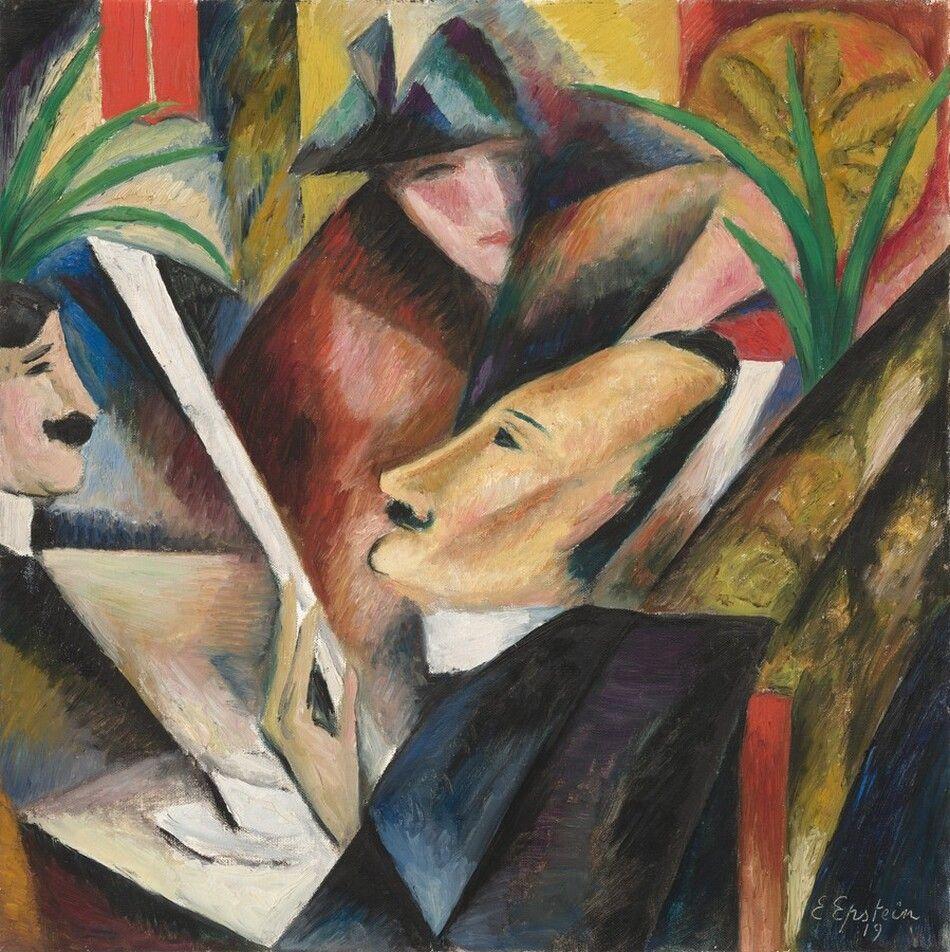
People on a CaféTerrace
Elisabeth Epstein 1913
ABirthday Cake, or a Death Cake
How do you bake a cake for a dying man? I suppose just like any other: you pour the flour, add the sugar and baking powder, the butter, and then the eggs.You stir or whisk as if it were any ordinary cake.
Except it isn’t.
This cake is intended to mark the date of his birth, and at the same time to blunt the sharp angle of death.Abirthday cake, yes, but also a death cake.
By that point, I had already said goodbye to him. I’d gone to the Jewish hospice where Wendy was staying: a place oppressively warm and scented with chicken soup.Aplace where the terminally ill spend the final months, weeks, or sometimes mere days of their lives.
Wendy has an aggressive form of cancer. He lives there now, alongside others with no remaining cure in sight, watching passively or, in his case, reluctantly, as sickness slowly drains every last trace of life from their brittle bodies.
When I first saw him at the hospice, he looked so thin, so frail. I was afraid of embracing him. He was like a bag of bones, covered only by the thinnest layer of flesh.
Wendy is a family friend. My mother grew up with him, though over the years, they drifted apart. Like my mother, he left their shared homeland of Ethiopia and moved to the Netherlands where at some point, he got married, had a child, and later divorced. It wasn’t until his diagnosis that my mother reconnected with him. She felt he lacked the kind of support a spouse, sister, or adult child might provide—so she took him under her wing.
Mum cared for him as if he were her brother. She visited him every day, made herself his primary contact, answered calls from doctors about medication and treatment.They knew her name. She picked up the phone in the middle of the night when he was crying and alone. She exhausted herself, but tiredness was never a good enough reason to ease her care.
‘Where are your wings?’my aunt once asked her. She was right.At times, the amount of care he silently expected from her felt inhuman.
I don’t have invisible wings like my mother does. My empathy and care don’t translate to the same grit she possesses. He’ll eat cake, I thought and so, that is how I’ll serve him.
Last time I visited, his room overflowed with sweets, chocolates, and candy. I suppose too much sugar is no longer a concern. It’s not as if a dentist is going to scold him about his teeth now. He’s allowed to indulge, because his days are numbered.And though all of our days are numbered, his seem more so.
I plug in the mixer.The batter is thick, stubborn. I work the whisk through it, breaking the lumps one by one.The hum drowns out every thought of the day: the odd job interview, the man on the bike with a parrot in a grocery bag, the blueberry scone staining the toothpaste purple in the sink. My mother says he doesn’t sleep at night. She says he doesn’t sleep at all. Instead, he roams the hospice corridors, as he roamed the hospital’s, doing God knows what.
‘Do you talk to him about the day?’I asked my mother after that first hospital visit. He’d seemed almost buoyant then, glad for the crowd in his small room, as if we’d gathered for some celebration. Wendy played along too, as though the laughter and small talk might secure him of sanity, until something small happened to remind us all that this was no celebration.
Around dinner, he’d suggest eating together at his sickbed, Wendy with his thin legs folded into his wheelchair like origami. When people declined, he’d bristle, urging them to stay.You have to eat, don’t you? he’d argue, but we all knew the real reason. It wasn’t hunger that kept us away, it was appetite’s death in the face of his, the sour taste of knowing that Wendy was dying. His frail body, the sterile room he now called home, both stripped the stomach bare.
He doesn’t sleep, not because he’s an insomniac. In good health, he once was able to surrender to sleep.
On my last visit, the pain had him in its teeth. He was gnashing his own in return, as if to bite back. Between the spasms and the violent contractions of muscle, he reached out a hand, open, grasping for something, or someone, the rest of us could not see. It was the gesture of a soldier on a battlefield, offering his palms in truce to an unseen enemy.
The sight gutted me. I felt the animal urge to turn, to flee the room, to leave the air sick with its struggle and ugliness, but that would have been cowardice, arrogance even. I owed him my witness.
I pour the batter into the tray, spreading it to the edges before laying slices of pineapple across its surface. It must be soft, easy for him to chew, my mum had said.
In the oven, the cake swells and lifts. Gradually, the cake rises like a golden chest, its crown of pineapple glistening under the heat.
‘All I can do is pray,’my mother said when I asked if death, spoken outside the safe liturgy of prayer, ever entered their conversations. Only prayer heals, builds, destroys, shatters, lifts up and tears down, she believes. It is as if prayer is like a cooking tool, within reach on the kitchen counter; the bowl waiting for my cake batter, the can opener for my tinned pineapple.This is what she believes and maybe she is right. I don’t know. What I do know is that she is a woman of quiet service; her care is born of pure compassion. But it is not in her to ask, Wendy, are you afraid of dying? Such is the unholy language of mortal humans: to speak fear aloud is to invite it in.And to invite it in, is to rot.
He doesn’t sleep.
In the lift, I cradle the cake swaddled in plastic wrap. Did I switch off the oven?The thought arrives just before the doors slide open, and I see it for what it is: irrelevant, mortal rumination. If I were to die now, or in the hours to come, what would it matter if the oven still burned, if the house stood empty, if no one lived there any more? Someone else’s death always drags us back to our own.
Sitting across from Wendy in his wheelchair I dare not to look him in the eyes. I dare not to talk to him, because I’ve decided that everything is the wrong conversational subject. Every kind of small talk or serious talk or even the simple question of ‘how are you?’feels brutally insensitive, despite its good intentions.The answers are so obvious, I thought. It all didn’t seem to matter. He’s dying and he wanders these hallways at night, because he’s afraid to die. He doesn’t want to. He cannot accept his own tragedy. His child only just started to bike to school, alone.
We’re all rotting. I know he’s rotting faster, but the same clock is ticking for the rest of us.The ones baking him cakes, the ones buying him candy and flowers. So why not talk about it? Death.
I could read fear in Wendy’s eyes the first time I saw him after his diagnosis and it split my heart clean in two. I’d brought him Hojica tea and he told me it would kill the cancer in his body. He’s double my age and has known to deal with his sickness for longer than I’ve known how to speak about it. I watched him perform his part; cracking jokes in front of his colleagues, family and church friends, indulging in lollipops and chocolates. But he suddenly turned into a child before my eyes, as I imagined him at night, alone and scared to lose his control to the whims of sleep. Sleep was treacherous, it could make him not be there anymore.
Today is Wendy’s birthday.And he is not ready yet.
My mother’s church community has organised a surprise party.They’ve all agreed to wear white.They’ll look like an army of angels.
You can let go. It’s okay to let go.That’s what I really want to say to him now. But instead, I brought him a birthday cake.And I embrace him.
‘It’s a little dry,’he said, his glasses slipping down his thin nose, the painkiller machine resting on his lap.
‘I’m sorry,’I whispered, smiling at him. ‘I’ve never been much good at goodbyes.’
Naomi Ronner