GIBRALTAR’S OWN COMMUNITY MAGAZINE FEATURING BUSINESS, MOTORING, SPORT, WOMEN’S SPOTLIGHT, HEALTH & WELLBEING, CULTURE,LOCAL EVENTS AND SO MUCH MORE.
Each month, Community Insight magazine is distributed across Gibraltar - from banks, gyms, and offices to the World Trade Center, clinics, the University of Gibraltar, the GFA, and major car dealerships. With engaging, high-quality content, each issue remains on display throughout the month and beyond, keeping your brand visible and top of mind.
means your brand connects directly with Gibraltar’s buying audience - in print, online, and across social media.
• Rates from just £60/month. Discounts available for 4+ months. • Free editorial with 4-month
JOIN THE GFSB
Are
SCAN TO JOIN THE GFSB
SMART WAYS TO SAVE MONEY WHEN THE COST OF LIVING KEEPS RISING
Across the world, households are feeling the pressure of rising prices. From food and fuel to rent, mortgages and insurance, the cost of living continues to climb faster than many incomes. Gibraltar is no exception. In fact, as a small and desirable jurisdiction with limited land and strong demand, some costs, particularly housing, can feel even more intense here.
While none of us can fully control inflation, there are many practical steps individuals and families can take to protect their finances, reduce waste and build resilience. Saving money today is not just about cutting back, it’s about spending smarter.
Re-think your monthly budget (and actually use it)
The first step to saving money is knowing where it goes. Many people underestimate how much they spend on small, recurring items such as subscriptions, takeaways, coffee, delivery fees and impulse purchases.
Create a clear monthly budget and review it every few months. Separate spending into:
In Gibraltar, where wages are often good but costs are high, people can fall into the trap of lifestyle inflation –spending more simply because income allows it. A written budget helps keep this in check.
Housing: The Biggest Financial Pressure for Gibraltar Residents
There is no escaping the fact that housing has become the single greatest financial challenge for many people living in Gibraltar. With limited land, ongoing development, and strong demand from professionals, remote workers and relocations, both rental prices and property values have risen sharply in recent years. For many households, accommodation now absorbs a disproportionate share of monthly income, leaving less room to absorb rising costs elsewhere.
In this environment, flexibility has become a valuable asset. Some residents are re-evaluating how much space they truly need, choosing smaller properties or different layouts that better match their current lifestyle. Others are turning to house-sharing arrangements, no longer seen as a short-term solution but a practical and increasingly common way to reduce costs while maintaining a good quality of life. For renters, securing longer leases can sometimes provide stability and protection against frequent increases, while also offering peace of mind in an uncertain market.
Homeowners are not immune to rising pressures either. Mortgage rates, service charges and insurance costs can quietly increase unless actively reviewed. Those who regularly reassess their financial arrangements rather than staying out of convenience, often find opportunities to reduce monthly outgoings or improve long-term security.
Food shopping is one of the areas where rising prices are felt most immediately, often week by week rather than month by month. Many households in Gibraltar have noticed that familiar items now cost noticeably more, even when buying the same products and shopping in the same places. While there is little we can do about global food inflation, there is still plenty of room to be more intentional about how and what we buy.
For many families, the biggest savings come not from switching to cheaper food, but from reducing waste. Unplanned purchases, oversized portions and forgotten items at the back of the fridge quietly drain budgets. Planning meals ahead of time, even loosely, helps align shopping with actual needs, rather than habits. Cooking at home more frequently, and preparing larger portions that can be used across several meals, also stretches food budgets further without reducing quality.
In Gibraltar, where shopping options are close together, it can be tempting to pick up small items daily. Over time, however, frequent “top-up” shops often cost more than a single, considered weekly shop. Comparing prices between local supermarkets and neighbourhood shops, buying seasonal produce, and resisting impulse purchases at the till all make a noticeable difference over a month. Many households are discovering that being more mindful at the supermarket offers one of the simplest and most immediate ways to regain control over rising costs.
Making Family Life Work When Costs Keep Rising
For many households in Gibraltar, the rising cost of living is felt most sharply not in headline expenses, but in the everyday realities of raising children and caring for pets. These are the parts of life that are non-negotiable, yet over time, they quietly become some of the largest drains on a family budget.
Children grow quickly, and with that growth comes a constant cycle of new clothes, shoes, books and toys. In a small community like Gibraltar, however, there is an opportunity that larger cities often lack: connection. Hand-medowns, swaps between friends, and community resale groups have become an invaluable resource for parents. Many items are barely used before they are outgrown, and choosing pre-loved goods not only saves money but also reduces waste. For younger children especially, the difference between new and second-hand is largely irrelevant, what matters is comfort and practicality.
Activities and enrichment are another area where costs can escalate without being fully noticed. After-school clubs, sports, music lessons and tutoring all have their place, but trying to do everything at once can strain both finances and family time. Many parents are now choosing to rotate activities by term or focus on those that genuinely engage their child, while leaving room for unstructured play. Gibraltar’s beaches, nature walks, sports areas and public spaces offer free opportunities for children to explore, socialise and stay active, often with more lasting value than scheduled sessions.
School-related costs can feel unpredictable, arriving in sudden bursts rather than manageable monthly amounts. Uniforms, trips and equipment can be less stressful when anticipated early. Families who quietly set aside small amounts throughout the year often find that September and January become far easier to manage. Buying items with longevity in mind, slightly larger uniforms, durable shoes, also reduces the frequency of replacement.
Daily spending habits add up quickly, particularly when it comes to food. Buying lunches, snacks and drinks on the go may seem convenient, but over a month it can significantly inflate household costs. Preparing meals and snacks at home not only saves money, but also gives parents more control over nutrition and waste. For many families, a little planning during the week translates into noticeable savings by the end of the month.
Pets, like children, are family members, and their care deserves thoughtful attention. Veterinary costs, food, grooming and pet-sitting can be substantial, particularly in a small market. One of the most effective ways to manage pet expenses is by prioritising prevention. Regular check-ups and early intervention often prevent much larger and more distressing bills later. Establishing a consistent diet and routine also reduces health issues caused by frequent changes or over-indulgence.
Many pet owners are rediscovering the value of simplicity. Pets rarely need constant new toys or accessories; what they truly need is time, exercise and companionship. Learning basic grooming skills at home and sharing care responsibilities within trusted networks can further reduce costs while strengthening community ties. In Gibraltar, informal arrangements between neighbours and friends often work better and more affordably than commercial alternatives.
Eran Shay, Managing Director Benefit Business solutions www.BenefitGibraltar.com
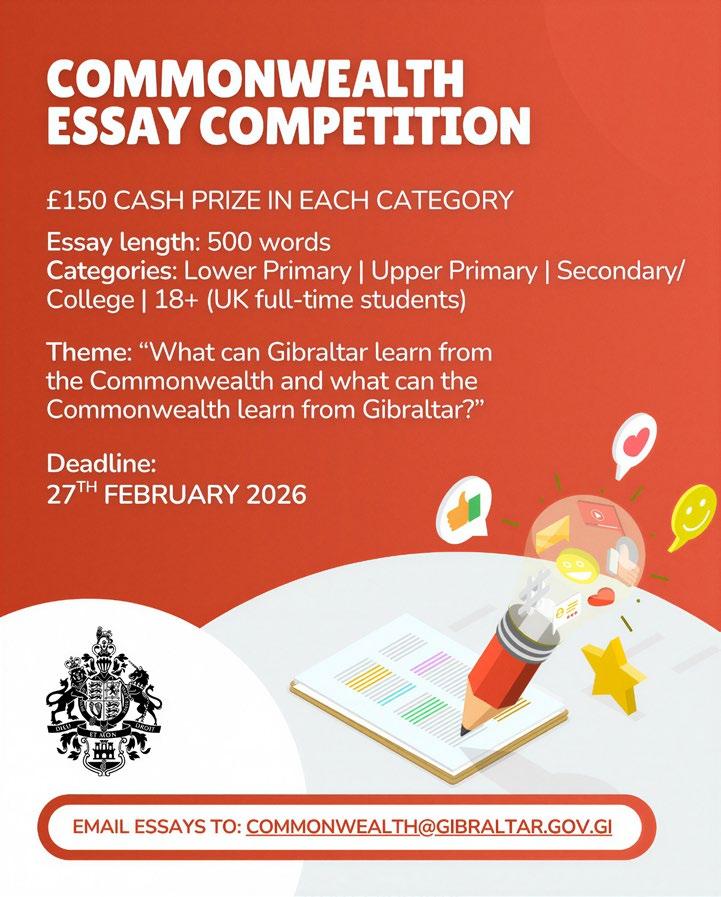
The Government is once again inviting entries from students who are attending school in Gibraltar, or further studies in the United Kingdom, for an essay competition on Gibraltar’s relationship with the Commonwealth.
There are 56 countries and 2.7 billion people in the Commonwealth, and His Majesty King Charles III is the Head of the organisation. Gibraltar’s association with the Commonwealth is through the membership of the United Kingdom, although in some of its bodies Gibraltar, and other Overseas Territories, participate in their own right.
This year Commonwealth Day is on Monday 9 March.
The essay entries will be divided into four categories so that younger children do not compete against older ones. The first category will be for Lower Primary, the second for Upper Primary, the third category for pupils of comprehensive and college age, and the fourth one for students from Gibraltar aged 18 or over in full time education in the United Kingdom.
The prize for the winning entry in each category will be £150.
Those who want to take part should write a short 500 word
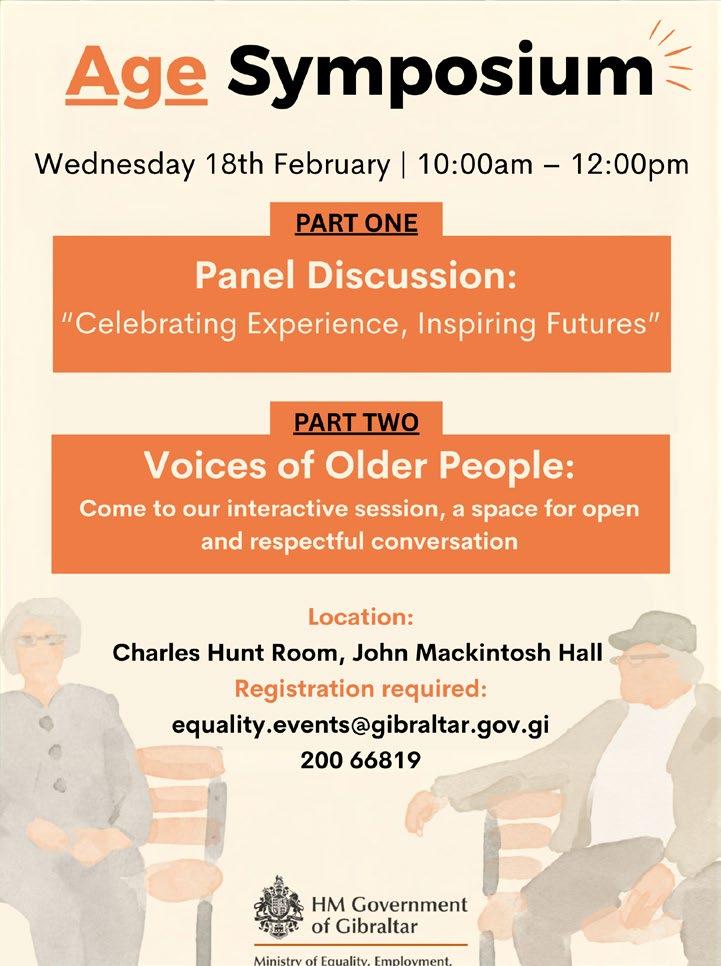
Ministry for Equality Announces Symposium for Older Persons
The Ministry of Equality has announced the launch of an Age Symposium, a new initiative focused on promoting inclusion, wellbeing and active participation for older persons in Gibraltar.
The Symposium will bring together stakeholders, service providers, community organisations and older persons themselves to explore the challenges and opportunities associated with ageing, share best practice and help shape policies that reflect the needs, experiences and contributions of older members of our community.
This initiative forms part of the Ministry’s ongoing commitment to ensuring that older persons remain visible, valued and supported. The Symposium builds upon and is the direct result of the work carried out by the Ministry in recent months to support this demographic including the International Day of Older Persons in October and Golden Week in December.
The first part of the Symposium will be a panel discussion, ‘Celebrating Experience, Inspiring Futures’, and the second part will be an interactive session during which attendees will have the opportunity to discuss key issues and make suggestions.
Minister for Equality, The Hon Christian Santos GMD MP, said, ‘I’m very happy to announce the very first Age Symposium which I hope will generate open and positive discussions and debate.
Older persons have a lifetime of experience, insight and contribution behind them, and it is essential that their voices are heard when shaping the policies and services that affect their lives. This Age Symposium is about listening, engaging and ensuring that older persons are active partners in decision-making, not passive recipients of support. A truly inclusive society is one where every generation has a seat at the table.
essay on the theme of “What can Gibraltar learn from the Commonwealth and what can the Commonwealth learn from Gibraltar?” and submit this by email to commonwealth@gibraltar.gov.gi
Submissions should contain the name, address, contact number, email address, age and the name of the educational institution as well as year of study.
The closing date for entries is 12 noon on Friday 27 February 2026.
The Deputy Chief Minister Dr Joseph Garcia, who is the Minister with responsibility for relations with the Commonwealth, said: “The policy of the Government is to raise awareness of the values of the Commonwealth among the younger generation. Over 60% of the population of the Commonwealth are young people under the age of 30. In this context, the Government will continue to encourage the participation of delegates from Gibraltar in the Commonwealth Youth Parliament and the Commonwealth Youth Forum, and we will explore other avenues for such engagement. This essay competition is part of that overall strategy."
This isNot Another P r e ss :esaeleR
INTRODUCING THE PUBLIC SERVICE PODCAST
HM Government of Gibraltar has launched a new podcast, Not Another Press Release, aimed at offering a more open, direct and conversational way for the public to engage with the work of the public service and the issues that matter most to the community.
Not Another Press Release will focus on big-picture discussion. Each episode will be divided into two parts so that content is both inward-looking to examine the issues affecting the public sector, and outward-facing to help inform and engage the wider community. It aims to provide direct, unfiltered access to the thinking, challenges and decision-making processes of Gibraltar’s leaders and public servants.
Not Another Press Release will be hosted on Spotify and YouTube in video and audio format, and available in audio-only format on Apple Podcasts.
The first episode, available now, features a one-to-one personal chat with the Chief Minister, and a round-the-table sit down with the Ministry for Equality team behind the Women’s Mentorship Programme. A second special episode
highlighting a sit-down with Chief Secretary Glendon Martinez will be aired later this week. The podcast will be published every other week going forward. The Director of Communications, Anton Calderon, said: ‘Not Another Press Release reflects the public service’s ongoing commitment to modernising communication, listening to public feedback,and finding new ways to engage meaningfully with the community. This podcast will give us the opportunity to discuss things from a more personal angle, and have the time and the space to dive into big picture conversations and the big questions of our time.
Welcome to Not Another Press Release.'
Focuses on Digital
Discussions covered the use of digital tools in parliamentary procedure, constituent engagement and internal administration, as well as the challenges associated with implementation, including cybersecurity considerations.
to technological change in order to enhance efficiency, transparency and public engagement, while safeguarding democratic principles and maintaining institutional integrity.
Participation in these webinars provides valuable opportunities to exchange experiences with representatives from other Commonwealth jurisdictions and to share best practice on the responsible adoption of digital solutions within parliamentary systems.
Clive Golt
A LIFE IN JOURNALISM, BUILDING BRIDGES ACROSS BORDERS
By any measure, Clive Golt has lived several careers in one lifetime. Actor, broadcaster, journalist, political interviewer, newspaper editor and communications strategist. For more than a decade, Clive was one of the most recognisable and influential media figures working quietly behind the scenes for Gibraltar.
Last year, he stepped down as Media Director for the Government of Gibraltar. Soon after, he received a distinction that says much about the kind of journalist, and person, he has always tried to be. He was honoured with the Insignia of the Spanish Federation of Press Associations, awarded for strengthening ties between Gibraltar and the surrounding region.
For a man who shrugs off medals and insists he is “not very much into that sort of thing”, it is nonetheless a fitting tribute to a career built on dialogue, respect and credibility.
Clive Golt’s story begins, as many Gibraltarian stories do, with family, hardship and resilience. “I was born and bred in Gibraltar,” he says simply. But his early years were not easy. Losing his father young meant going out to work early to help support his mother and elderly aunts who brought him up. That sense of responsibility would shape everything that followed. His first job was as a rep for Saccone and Speed, before going into public relations, but his heart was elsewhere, on stage. He became a founding member of the St Joseph’s Drama Group, which amalgamated with Group 56 and becameGroup 70, performing lead roles and nurturing what would become his most useful professional asset: confidence in front of an audience.
“I basically wanted to be an actor,” he recalls.That theatrical grounding soon led to something else. On the encouragement of his then girlfriend (later wife), Sonia, he applied for a part-time newscaster role at GBC and he got the job.
He started reading the news, learning the rhythms of television, getting comfortable with the camera. It wasn’t long before senior figures at GBC noticed he had something extra: composure under pressure and a natural ability to ask questions.“Manolo Mascareñas, the legendary head of television, decided I would be a good political interviewer,” Clive explains. Some thought he was too young, but Manolo Mascareñas said “No, he’s got it in him,” Clive recalls. Still in his early twenties, Clive was thrown into the deep end of political interviewing, tackling giants of the day such as Sir Joshua Hassan, and discovered that he loved the cut and thrust of politics, the challenge of holding power to account, the thrill of a good, honest debate. That’s when the “bug”, as he calls it, really bit. Clive developed a reputation for tough but fair questioning, never personal, always focused on policy and it’s a principle he still holds dear.“The only thing a journalist has
is credibility,” he says. “If you lose that, you lose everything.”
“I was taking on a lot of responsibility as the main political interviewer while I was still working at Saccone,” he states.“Then I was offered a job by top local businessman Pepe Holliday (former Government minister Joe Holliday’s dad ) to run a new companyhe was setting up in Madrid, and I thought I'll give it a go, do something else and come back to Gibraltar some other time,” Clive says. During his twelve years in Spain there was a lot of political upheavalwith the death of Franco and the new democracy coming in. “I started reporting for GBC from Spain during one of the most dramatic political transitions in modern European history.”
JO
WARD TALKS TO CLIVE GOLT, ABOUT HIS LIFE, CAREER,AND THE RECENT HONOUR AWARDED TO HIM FOR HIS CONTRIBUTION TO CROSS-BORDER JOURNALISM.
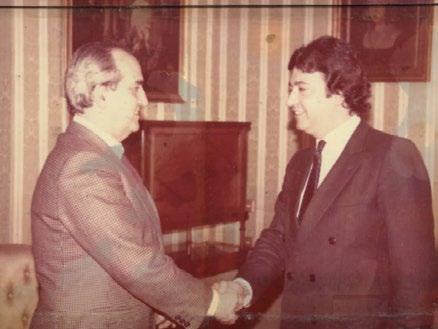
Clive landed exclusives, including interviews with key figures such as Spanish Foreign Minister Fernando Morán, the architect of the Brussels Agreement that paved the way for the reopening of the border. It was here that something else happened too: he built relationships and if there is a thread that runs through his career, it is connection.Returning to Gibraltar, Clive landed a junior job in the newsroom at GBC.
“After 12 years in the newsroom Joe Bossano asked me whether I would be interested in standing as a candidate for the GSLP in the 1996election,” Clive states. “GBC was going through a very difficult time, and I thought it would be a different challenge and something new for me, so I stood for election, but we lost.”
His journey into government itself reads like a political drama. After a stint in party politics and running the GSLP newspaper
The New People, often under intense pressure and even barred from official briefings, Clive later found himself approached by the very Chief Minister who had once been his political rival. Peter Caruana offered him the role of Media Director.
“I don’t expect your loyalty to the party,” Caruana told him, “but your loyalty to the government and to Gibraltar.” It was a mark of professional respect that spoke volumes. Clive accepted, later continuing under Chief Minister Fabian Picardo, someone he had once hosted as a young student on television debate programmes. Few people have witnessed Gibraltar’s political evolution from so many angles: reporter, interviewer, editor, a political candidate and government communicator. Long before “cross-border cooperation” became a political buzzword, he was quietly cultivating professional friendships with Spanish journalists. He joined the Campo Area Press Association and was one of the first Gibraltarians to do so, attending meetings, debates and exchanges, even with Moroccan journalists.Later, while working for the Government, he organised seminars
in Gibraltar to bring those voices together. Why did he do this? Because, he says, misinformation was everywhere.
“In Spain, people thought Gibraltar was a British colony full of military people and missiles,” he explains. “They didn’t realise we’re just normal people with normal problems.”
So he pushed for something practical: translating government press releases into Spanish, making it easier for Spanish media to access Gibraltar’s side of the story.“They respect me because I know the ropes,” he says. “I’ve been there.”
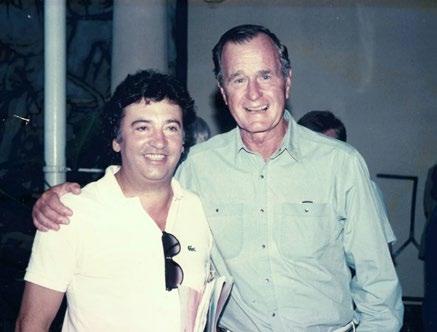
Asked what, looking back at his career, he is most proud of, Clive tells me: “some of the very important interviews, historic ones, that I've done with people like Geoffrey Howe, Douglas Hurd, Fernández Ordóñez (former Spanish Minister of Foreign Affairs) and Morán in Spain.”
When the Spanish Federation of Press Associations decided to honour him, the gesture caught him slightly off guard.“I’m not very much into medals,” he says, almost dismissively. “I’ve covered all the major events over many years, so it was nice to be recognised as somebody who contributed to journalism and democracy and freedom of the press in the area,” he adds modestly. With the relationship between Gibraltar and Spain sometimes being fragile, the symbolism of this honour matters. Here was a Gibraltarian journalist, firmly pro–self-determination, being honoured across the border for professionalism and fairness, and not because he compromised, but because he didn’t. Clive insists you can defend Gibraltar robustly and still treat others with respect.“I’ve always put my view across,” he says, “but with respect.”
Asked about today’s media landscape, Clive’s tone turns reflective.The immediacy of social media worries him. “Rumours spread before facts, credibility takes a back seat, and everyone with a phone thinks they’re a journalist,” he comments. “I would never publish anything I hadn’t contrasted and checked,” Clive says. “People now don’t feel they need that.”His advice to young Gibraltarian journalists is simple and almost old-fashioned. “Be honest, truthful and fair.”
Though he stepped down from his official post as the Government’s Media Director last March, retirement clearly isn’t on the cards.“I’m a political animal,” he laughs. He still works in an advisory capacity, particularly on relations with Spain and the unfolding post-Brexit treaty landscape, delicate territory that demands exactly the kind of cultural fluency and steady temperament he has spent decades honing.
It is, he admits, sometimes a thankless task, but he wouldn’t have it any other way.After all, for Clive Golt, journalism was never just about headlines. It was about building understanding, one conversation at a time.
EVENT
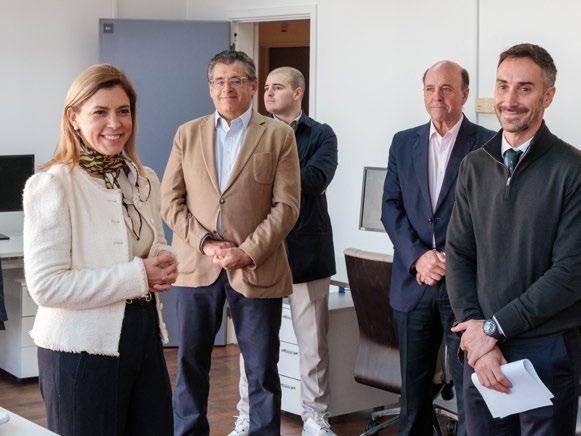
THE MINISTER FOR HEALTH, CARE AND BUSINESS, THE HON GEMMA ARIASVASQUEZ, HOSTED A SHOWCASE EVENT AT THE PETER J. ISOLA START-UP HUB AT EUROPORT, BRINGING TOGETHER KEY PARTNERS AND SUPPORTERS FROM GIBRALTAR’S BUSINESS COMMUNITY FOR A FIRST LOOK AT THE FULLY FITTED SPACE. The hub is part of the Government’s manifesto commitment to deliver a start-up hub offering accessible workspace and practical support for new founders.
The event gathered representatives from the Peter J. Isola Foundation, Europort, The Gibraltar Chamber of Commerce, the Gibraltar Federation of Small Businesses (GFSB), Young Enterprise, and other
supporting businesses, together with officials from HM Government of Gibraltar.
Located at Suite 842, Europort, the Peter J. Isola Start-Up Hub provides shared workspace for entrepreneurs who are developing early-stage business ideas and are not yet ready to take on dedicated premises. The Peter J. Isola Foundation has generously supported the project by funding the rental cost, with
Following this second announcement period, the Department of Business will review interest levels to determine the viability of taking the initiative forward.
John Isola, the President of the Gibraltar Chamber of Commerce said: “The Chamber supports this initiative as encouraging start-ups is a key driver of future economic growth. This is a welcome programme that helps new businesses cross the critical threshold from idea to launch, providing much-needed support at an early stage.”
internet
Daniel Delgado, Vice-Chairperson of the Gibraltar Federation of Small Businesses said: “We are very happy to endorse this initiative. It is exactly the kind of practical support we like to see as it encourages entrepreneurship, helps people turn ideas into bus nesses, and supports start-ups at the point when they need it most. It is particularly valuable for younger entrepreneurs.”
services provided by U-mee and security support donated by Focus Security and El Martillo.
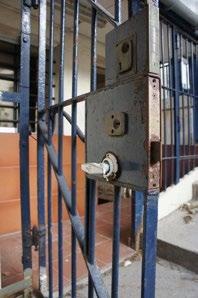
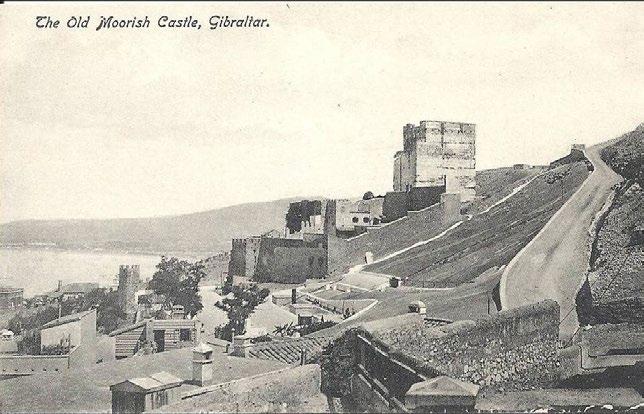
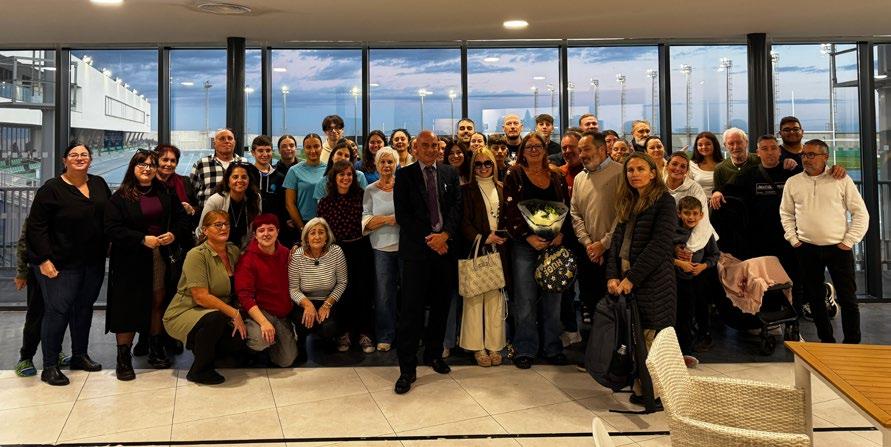
FORMER PRISON STAFF RETURN TO THE MOORISH CASTLE
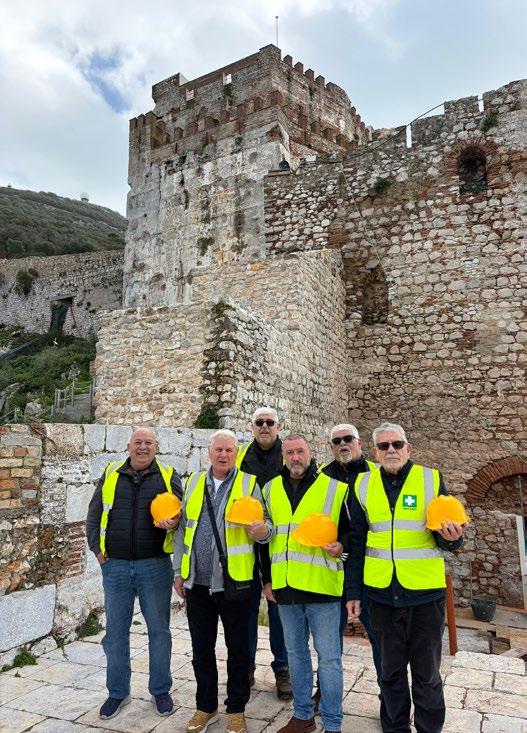
FORMER PRISON OFFICERS RETURNED TO THE OLD PRISON AT THE MOORISH CASTLE ON SATURDAY 31ST JANUARY.
The visit was organised by Professor Clive Finlayson of the Gibraltar National Museum. The officers were shown round the castle and the works being carried out by Fortress Attractions Ltd (FAL) under the supervision of the Gibraltar National Museum were explained.
Professor Finlayson said that: “It was a wonderful opportunity to show the works to those who had spent a large part of their working life here. It was a special moment that brought the site back to life. I have received a lot of help, especially from former Prison Superintendent Mr Gareth Coom, with regards to the recent history of the prison, including many anecdotes and details which could have easily been lost. I am also grateful to the current Superintendent Mr Nigel Gaetto for presenting the museum with historical artefacts which are of great heritage importance and interest. It will all add value to the site when it opens to the public.”
Commenting on the visit, Mr Coom said: “A group from the Retired Prison Officers Association was invited to visit the outstanding works that have transformed the prison’s ‘Old Military Yard’ to its original appearance. The walk brought back many memories of laughter amongst colleagues, difficult times and, personally, of friends and family members who worked there for many years but unfortunately are no longer with us. Our sincere thanks to Dr Clive Finlayson and the museum for arranging this.
Youth Service Launches New Social Media Campaign on Addiction Awareness
The Youth Service, on behalf of the Ministry of Youth, has launched a new social media campaign aimed at raising awareness around addiction and substance misuse among young people, developed in close collaboration with DARS Care Agency (Drug and Rehabilitation Services) and GAMPA.
The campaign was developed following input and encouragement from the Minister for Youth, the Hon Christian Santos GMP MP, in his role as Chair of the Drugs Advisory Council, highlighting the importance of cross-departmental collaboration in addressing substance misuse and early intervention.
The campaign features five short clips for a young audience, exploring addiction, recovery, and how substance misuse can affect life choices.
The content is informed by 2025 research conducted with individuals in recovery, ensuring the messages are authentic, relevant, and grounded in lived experience.
The research findings were developed into scripts and brought to life through campaign videos performed by young actors from GAMPA and the Youth Symposium group and produced by Alistair Sanchez. Participants described the project as meaningful and impactful, highlighting the value of sharing messages that resonate with their peers.
This initiative reflects the Youth Service’s commitment to preventative, youth-focused education delivered through platforms young people engage with daily, including social media.
The Youth Service extends its thanks to the DARS Care Agency team, GAMPA and the participants of the Youth Symposium for their collaboration in this project.
For more information, please contact Rebecca.figueras@gibraltar.gov
cinocIs aC b el raC
ratlarbiG
’
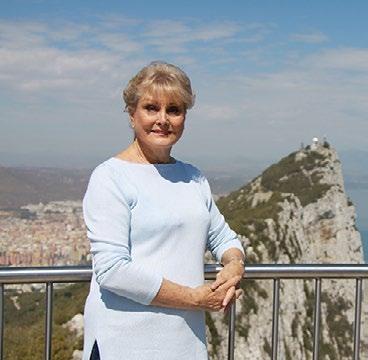
This year marks a milestone for one of Gibraltar’s most recognisable landmarks: the Cable Car turns 60!
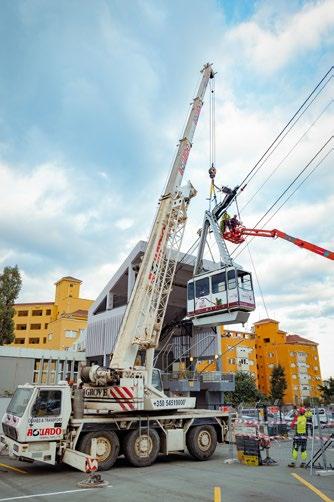
For six decades, those little cabins climbing the limestone face of the Rock have carried millions of residents, tourists, schoolchildren, newlyweds, film crews and the occasional mischievous monkey to the top of Gibraltar’s most famous view. Right now, though, the base station ticket line is empty. The cabins have been taken down. The stations are quiet. For the first time in generations, the Cable Car is closed - not in farewell, but in preparation for its biggest transformation yet.
Behind this anniversary sits a story of family vision, stubborn determination and a touch of serendipity, and no one tells it better than Mandy Gaggero, Marketing and Communications Director for M.H. Bland and daughter of the man who first dreamed it all up.
“The cable car was my father’s brainchild,” she says. “He was a visionary.”
The idea was born not on the Rock, but in the snow, when back in the early 1960s, Mandy’s father, John G. Gaggero, travelled to Austria on a skiing holiday. There, he saw the relatively new alpine cable cars gliding effortlessly up mountainsides and had an instant thought: Why not Gibraltar?
At the time, the Upper Rock was largely un-
der Ministry of Defence control. Access for civilians was limited. St Michael’s Cave was about as far as most people could go.Still, he took the idea home and pitched it to his father, Sir George Gaggero, then chairman of M.H. Bland. The response was simple: get the permissions, and they’d back it.
What followed was years of negotiation with the MOD. “It was very difficult because the Governor had just arrived, the Brigadier was just leaving, and the Admiral had things going on,” Mandy says,
“Nobody wanted to be the one to make the decision,” she recalls her father telling her. But eventually, after years of persistence, all the signatures lined up and the lease for the top station was granted.
There was even a quiet act of faith from Switzerland. When the company then known as Von Roll (now part of Garaventa/Doppelmayr) hesitated to take on such an unlikely project, one engineer, Mr Müller, offered to prepare the proposal in his own time. If it happened, they could pay him later. It did happen and true to their word, the cable car opened exactly on April 1, 1966.
Then came another test.Just three years later, in 1969, the frontier closed,tourism collapsed, flights were scarce, and cruise ships were few. For many businesses, it would have made sense to shut down.
“The Board actually discussed whether to close it,” Mandy says. “But once you close something mechanical like that, you might never open it again.”
So they kept it running.Staff improvised. Sunday lunches were introduced to tempt locals, and events were held. The Cable Car quietly endured through one of Gibraltar’s toughest periods, becoming less of a tourist attraction and more of a community lifeline. That decision to persevere is part of why so many Gibraltarians feel such affection for it today.
Some people will still remember the original two bright red cabins, each carrying just 15 passengers.They were replaced in 1986 with larger 30-passenger cars, only recently removed as part of the refurbishment. One of the vintage red cabins, which later served as the ticket office, has been carefully preserved and will live on in some form.
Of course, any true Cable Car story involves the macaques.Over the years, staff have dealt with more than their fair share of cheeky encounters. Mandy laughs as she recalls some of the classics: a young monkey accidentally riding down on the roof of an empty cabin, triggering a fire brigade rescue as it scrambled back up the cables.
Another developed a taste for muffins, watching patiently until staff stepped away before dashing in to steal its prize, which
occurred so frequently that employees had to start keeping an “account” of the stolen stock.
Then there was the infamous lollipop heist: one macaque making off with an entire tray of oversized monkey-face lollipops, only to fling them dramatically into the air when caught.
The Cable Car hasn’t just been about everyday memories. At times, it has found itself at the very centre of Gibraltar’s history. Perhaps most significantly, the Top of the Rock became the setting for the landmark Bilateral Summit Talks on 22 July 2009 which was a hugely symbolic political moment.
Then Chief Minister Peter Caruana, UK Foreign Secretary David Miliband, and Spain’s Foreign Minister Miguel Ángel Moratinos met at the top station under tight security. It marked the first time a serving Spanish Foreign Minister had officially visited Gibraltar.
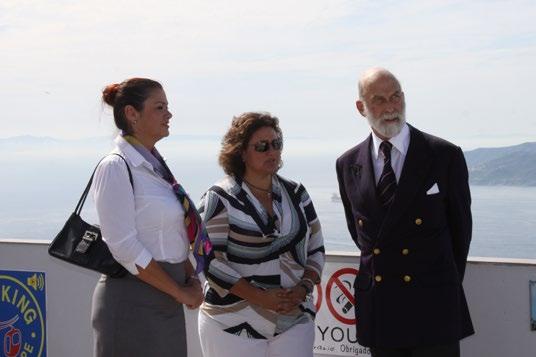
Over the decades, it has also welcomed a steady stream of royals and VIPs. HRH The Duke of Kent visited in 1989, followed in 2014 by HRH Prince Michael of Kent. Governors, dignitaries and official delegations have all made the ascent.
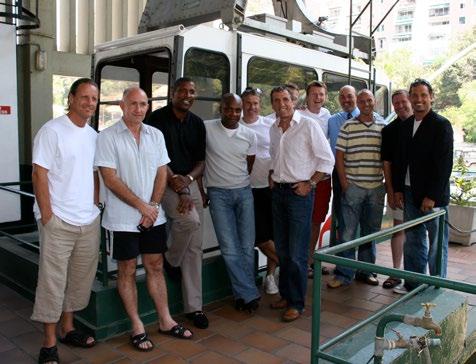
Then there are the wonderfully eclectic visitors that only Gibraltar could assemble including the first human to walk in space, cosmonaut Alexei Leonov; football royalty
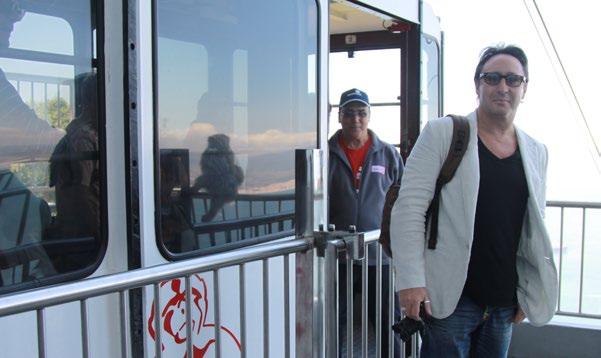
including Sir Alex Ferguson and Manchester United legends Mick Phelan and Bryan Robson (Club captain) in 2009; Liverpool greats in 2006 including Bruce Grobbelaar, Alan Kennedy, John Wark, Gary Gillespie, Ronnie Whelan, John Barnes, John Aldridge, Jan Molby, Michael Thomas, Mark Walters, Paul Walsh, David Fairclough, Jimmy Case, John Paul Durnin, as well as England Rugby captain Martin Corry in 2011. There were also performers like Elaine Paige and Julian Lennonwho came to Gibraltar in 2013 to visit an exhibition of his father's memorabilia. During this trip, he was hosted for lunch the Top of the Rock by Chief Minister Fabian Picardo.
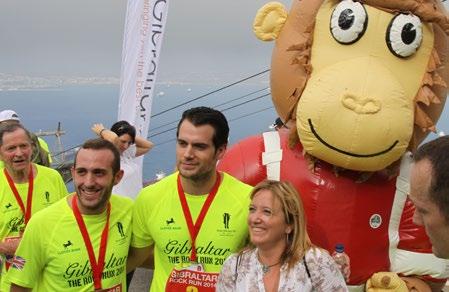
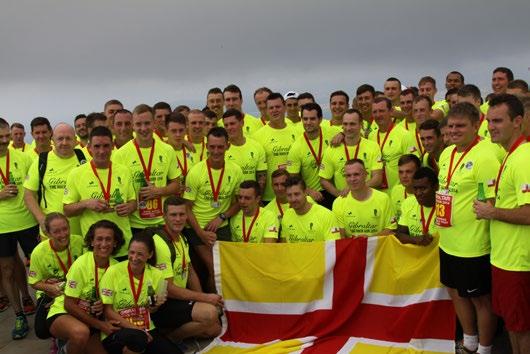
Even Superman, aka actor Henry Cavill, visited in 2014 when he took part in the Gibraltar Rock Run, hiking up to the top of the Rock with the Royal Marines then took the Cable Car down. Unlike Kryptonite, which weakens Superman, this Rock was a test of endurance!
Of course, the Rock has had its moments on the silver screen. Most famously, scenes from the 1987 James Bond film The Living Daylights were shot on the terrace, complete with borrowed Heineken sunshades from Lewis Stagnetto that ended up in the movie long before product placement was common.
Now, the Cable Car is entering its most ambitious phase yet.The new system will still have two cabins - one up, one down - but
capacity will jump from 30 passengers to 80 per cabin, dramatically reducing queues during the busy summer months.
There will be improved accessibility, too: space for prams, wheelchairs and mobility scooters, and easier movement around both stations. Solar power and greener technology will make the operation even more sustainable.
Construction is expected to take around two years, and it will be complex work, especially at the top of the Rock, but the aim is clear: a faster, more inclusive, more modern gateway to Gibraltar’s greatest natural attraction.
For Mandy and the Gaggero family, the Cable Car has always been about more than transport.It’s about belief in Gibraltar.
“M.H. Bland has always looked to the future,” she says. “We want Gibraltar on the world map. The cable car is a calling card to say: we are here, come and visit.”
Sixty years on, that original vision still feels intact. It’s strange right now to look up and not see the cabins gliding overhead, but if history tells us anything, it’s that the Cable Car has weathered closures, frontiers, bureaucracy and a few hungry monkeys, but it always comes back, and when it does, it’ll be ready to carry a whole new generation to the top.
EMOTIONAL SCENES SWEEP GIBRALTAR AS BUSINESS WOMAN AYELET MAMO SHAY REVEALS
"THE LADIES THAT ROCK THE ROCK 20 26" WINNERS
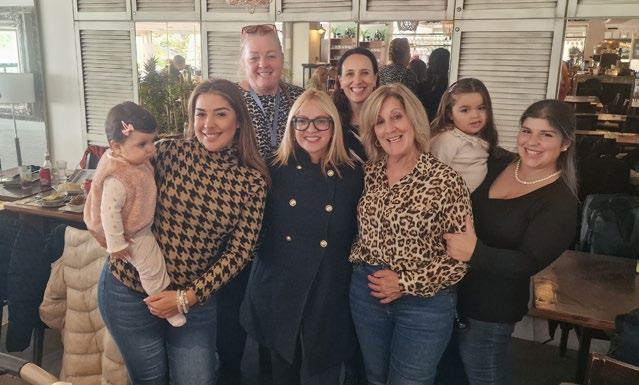
IN A SERIES OF HEARTWARMING AND UNEXPECTED MOMENTS ACROSS THE ROCK, THE WINNERS OF THE PRESTIGIOUS "THE LADIES THAT ROCK THE ROCK AWARD 2026" HAVE OFFICIALLY BEEN REVEALED.
What began with Ayelet Mamo Shay’s vision to document and shine a light on the unsung heroines of our community through her books has evolved into a significant community movement. The "Ladies That Rock The Rock" program started with a core mission: to create a platform where women from all sectors—business, philanthropy, healthcare, and community service—could be recognised for their silent but powerful contributions. Today, the program has captivated Gibraltar, transforming into a highly anticipated tradition. It has grown from the pages of a book into a collective opportunity for the public to pause and say "Thank you" to the women who make Gibraltar a special place to live.
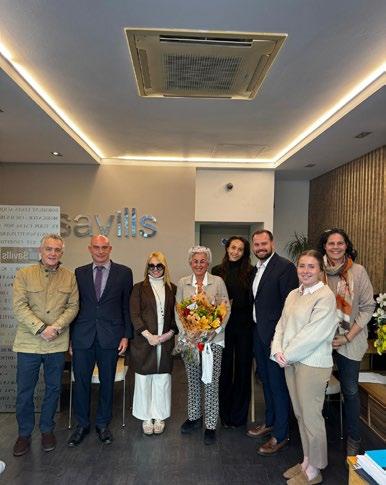
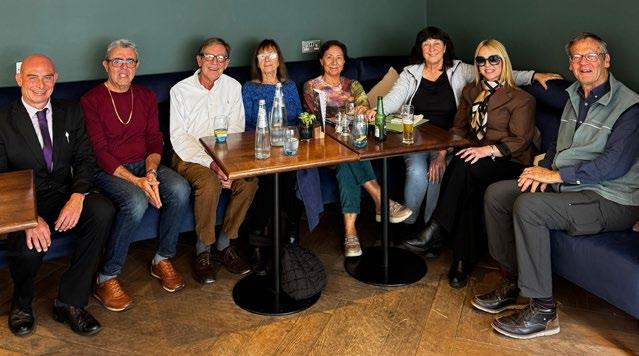
This year, the engagement from the Gibraltar public was remarkable. Many nominations poured in, highlighting diverse stories of resilience, leadership, and compassion. After the public had their say, the committee embarked on a "Surprise Tour" across Gibraltar. Catching the winners off-guard during their working day, over a business lunch, or during a coffee break, the scenes were filled with tears of joy, shock, and immense emotion. The surprise visits at offices, restaurants, and cafes turned ordinary days into unforgettable milestones for these women.
The distinguished recipients of the 20 26 awards are:
Business Leader Award: Sammy Armstrong
A driving force in the local property market, Sammy is recognised for bringing Savills, one of the world's leading real estate agencies, to Gibraltar, elevating the standards of the local industry.
Social Responsibility, Diversity & Inclusion Award: Galadriel McGrail Polston
Galadriel is the heart behind Mindspace, a unique coffee shop and inclusive hub that provides a supportive environment for individuals with special needs, championing their integration and true inclusion within the community.
Environment Contribution: Award Janet Howitt
As a leading figure in the Environmental Safety Group (ESG), Janet has dedicated years to protecting Gibraltar’s environment, campaigning for cleaner air and a sustainable future for generations to come.
Lifetime Achievement Award: Noelia Campos
A true unsung heroine, Noelia is honoured for her years of selfless dedication as a foster carer, providing a loving home and stability to countless children in Gibraltar when they needed it most.
Female in Finance Award: Valerie Holliday
A partner at Hassans International Law Firm and a specialist in fintech and banking, Valerie is celebrated for breaking glass ceilings and setting the standard for excellence in the financial sector.
Woman Leader in Online Gaming Award: Sasha Uman
As a leader at Playtech, Sasha stands out for her innovation and leadership in the competitive and fast-paced online gaming industry, proving that women can and do lead the way in Gibraltar’s technological hub.
Public Sector Female Employee Award:
Dr Elaine Flores
As a medical doctor and the Deputy Medical Director of the Gibraltar Health Authority (GHA), Dr Flores is recognised for her critical leadership in managing Gibraltar’s essential emergency lines, 111 and 999, ensuring public safety and health response during crucial times.
Woman Leader in Sport/Arts/Music Award: Moira Gomez
A powerhouse in local sport who has dedicated her life to Netball, Moira is celebrated for putting Gibraltar on the
global map by bringing world-class competition to the Rock and inspiring a new generation of athletes.
Woman Entrepreneurship Award: Jean King
Jean is recognised for her impressive leadership of Community Insight Magazine, establishing it as one of Gibraltar’s most prominent publications and a vital voice for the community.
Young Woman Leaders Award: Shania Robba
An inspiring role model, Shania serves as the Captain of the Gibraltar Women’s National Football Team, demonstrating leadership and excellence both on and off the pitch.
"When I started writing about these women and founded this initiative, my goal was simply to empower them and give credit where it is due," said Ayelet Mamo Shay. "To see how this has grown, and to witness the raw emotion on these 10 women's faces when we surprised them at their offices or over coffee, is the greatest reward. I want to extend a heartfelt thank you to my dedicated committee, who worked tirelessly to select the final winners from such an impressive list of nominees, and to the entire public of Gibraltar for voting and taking part in saying 'thank you' to these special women. Already, 57 women in Gibraltar have joined the prestigious and esteemed club known as 'The Ladies That Rock The Rock', and there is no doubt that this number will continue to grow year after year. Let this serve as a powerful reminder to every woman working hard behind the scenes: your efforts are seen, your impact is felt, and your story matters."
The 10 winners will be officially honoured at the upcoming Gala Dinner on March 5, 2026, International Women's Day, where they will receive their awards in the presence of dignitaries, family, and community leaders. The public is invited to take part in this Gala Dinner or join the workshops organised for International Women's Day.
For reservations and inquiries, please contact: TheLadiesThatRock@gmail.com or call +350 20073669.
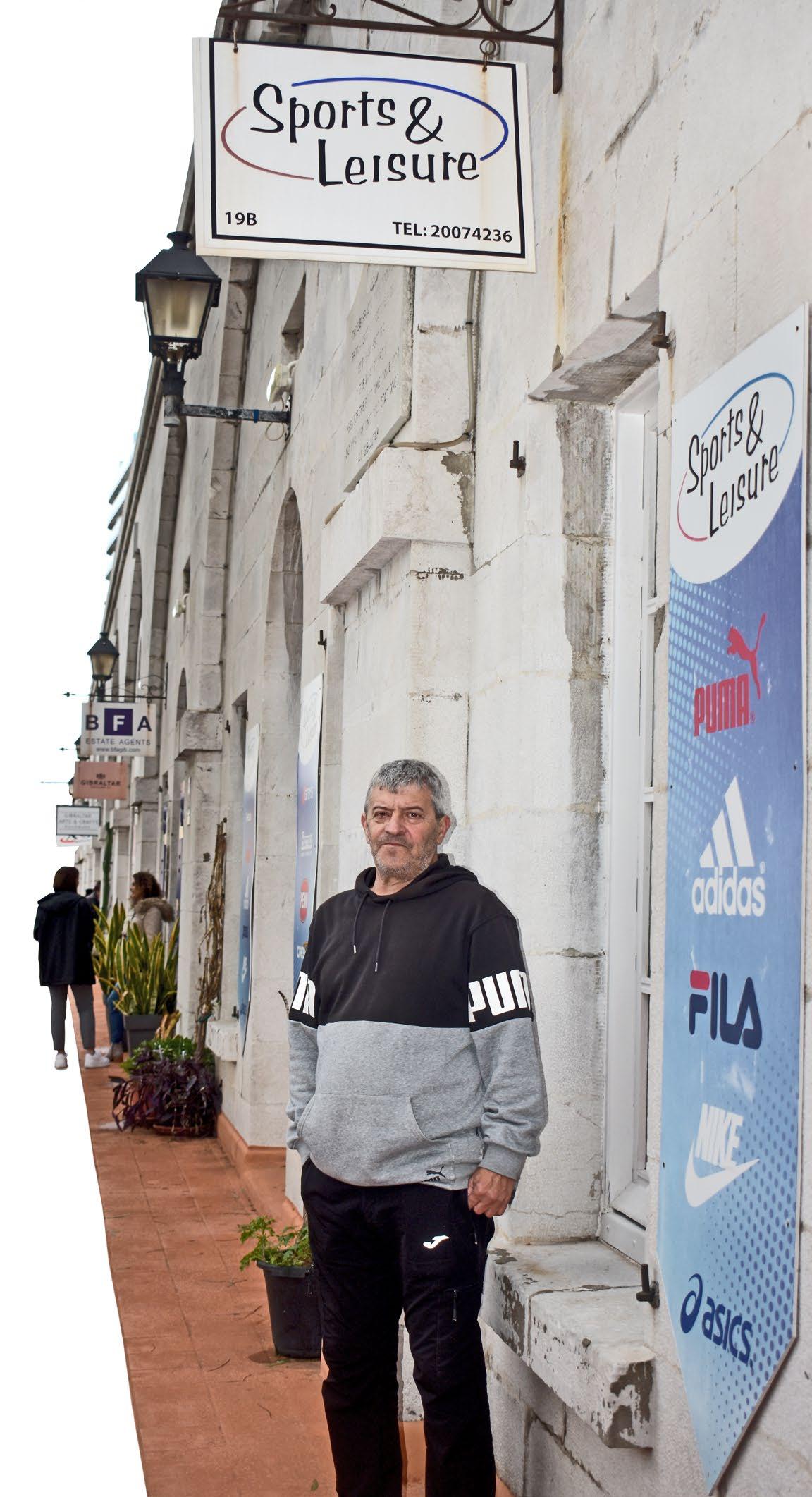
The Sports & Leisure Legacy.
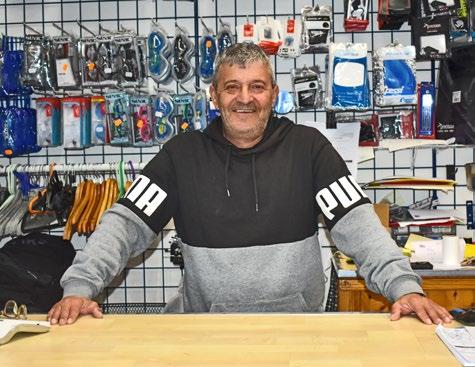
On our Main Street, where friendly shop fronts mark the rhythm of everyday life, Sports & Leisure has been a familiar presence for decades. Currently situated at the upper floor balcony at Casemates Barracks in Casemates Square since 2001, it’s valued as one of the town’s long- standing Businesses, and stands as a testament to local enterprise and longevity. What began as a modest venture has grown into a familiar landmark, serving customers across generations as its product’s evolved from everyday essentials and fishing tackle to the extensive range of sports and leisure equipment that the shop is known for today. However, it’s more than just a place to shop as it remains a small but enduring part of the town’s shared history, adapting with the times while staying true to its original purpose of providing quality service to the community. But the full story of the Sports & Leisure shop isn’t just in what it sells but in the people who have built and sustained the business over generations.
With that in mind, I spoke to Tito De Torresgether with the pride that comes from running a business rooted in the community for socame a long-standing presence, one must look back to its beginnings. Incredibly, the roots of the business stretch back to just before the 20th century, when it was first established by Andrew De Torres, the family’s grandfather, andtion, who is Tito’s father, Ernest, who took overtion. “Retail has been in the family since around 1892,” Tito says proudly. He explained that Sport & Leisure is one of the local businesses
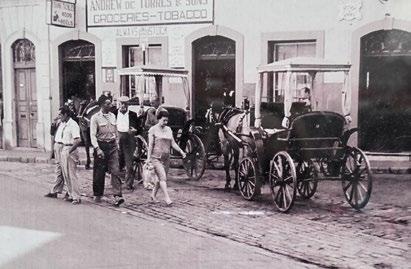
Tito formally joined his father in the shop in the mid-1980s, working at what was then known as Andrew Torres and Sons Ltd, which was located opposite modern-day Emporium. The opening of Sports & Leisure on 8 August 1988 marked the beginning of a significant new chapter, with the store initially located in Irish Town. Tito Recalled there was a party on the opening night but not really remembering much else!! The next morning, arriving at the new store Tito explained “It was an exciting time as this was something new. It was nowlivered stock. He recalls “That was a time that the family decided to focus more on sports items and sportswear”. Sport & Leisure then began its journey towards the popular shop that it is now, and father and son worked closely together speaking to local customersquirements.
With regard to taking over the running of the shop in 1988, Tito explains it was a very natural transition as the shop was so deeply tied to family memories and hard work. As a young child, Tito recalls he would kick a football in the small patio behind the family premises and be scolded in the process by the neighbours. Eventually Tito stood behind the counter of the family business. Tito explains he spent countless hours helping his father, selling equipment and assisting customers. “I grew
up in a shop, and I’m still in a shop” he says proudly. He continued to reminisce about how he would leave school early to work alongside his father and embraced the responsibility to help the business reach its next phase.
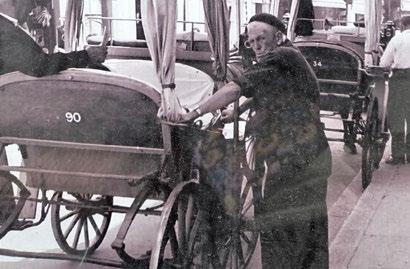
In its earliest days, the shop sold groceries and tobacco alongside fishing tackle which, as Tito describes, were practical goods that reflected the needs of local residents at the time. Gradually, sports equipment was introduced as a response to the growing local interest in activities such as hockey, football, and basketball. Tito explains how “there was a lot of sport going on as the frontier had just opened and hockey was really high on the list”. So, as Gibraltar’s sporting culture and interest expanded, the shop’s range swiftly followed.
“It meant getting everything into the shop and understanding what sports equipment people were looking for in Gibraltar, and making sure we stocked what was actually required.” At the time, sport played a central role in community life, particularly during a period when Gibraltar itself felt very different. He mentions that hockey and football defiantly dominated those times, He also spoke about how local businesses often supported one another in ways that feels rare today. The focus of the business gradually shifted to fishing and sports equipment which lay the foundations for the business as we know and love today.
So, like the town around it, Sports & Leisure has adapted to the ever-changing times, with consumer habits, the rise of online shopping, and shifts in sporting popularity which have all shaped Sport & Leisure. Tito explains “We used to try to cater for every sport being played in Gibraltar”. For example, we used to bring a lot of cricket equipment, but demand fell. Whereas football certainly remains dominant as well as basketball, netball and rugby, continue to grow. “You’ve got to diversify,” he explains. “You can’t overstock because you just can’t be sure what the next trend will be.”
Despite these challenges and like the dedicated people who built the business which has grown to become the friendly local sport shop that it is today, it remains one of the few dedicated sports equipment retailers in the area who cater to the local market. Tito says this has always been a priority, “We’ve always catered for our local community, that has never changed from the beginning.” And when asked, what Tito hopes customers feel when they walk through the door, his answer is immediate and firm: “Friendly and Approachable” which is a sentiment echoed by the shop’s long-standing relationship with the community and its loyal customers.
Looking back, his greatest source of pride is not just survival, but perseverance. “I’m proud we’ve managed to keep the shop going through difficult times,” he says. Tito confirms with cautious optimism about the future of Sport & Leisure. His hope is simple and admirable:
“I shall continue to serve my customers for as long as I have the strength to do so”.
So, in a town that has changed dramatically over the decades, the Sports & Leisure shop remains a reminder of the value of family, resilience, and valued community.
Gibraltar Spring Short Story Competition 2026
Gibraltar Cultural Services (GCS), in conjunction with the Gibraltar Chronicle, is pleased to announce the launch of the annual Spring Short Story Competition 2026. The competition is open to Gibraltarians and residents of Gibraltar. Participants may submit one piece of work of any subject matter.
There will be seven categories as follows:
A. School Years 4 to 5 (250 - 350 words)
B. School Year 6 to 7 (250 - 350 words)
C. School Years 8 to 10 (450 - 550 words)
D. School Years 11 to 13 (500 - 1000 words)
E. Adults (aged 18 and over) (story must not exceed 1,000 words)
F. Spanish (open to all ages) (story must not exceed 1,000 words)
G. Llanito (open to all ages) (story must not exceed 1,000 words)
Prizes are as follows:
• The Ministry of Culture prize for the Overall Winner – £1,000
• 1st Prize: English Language (adult) – £500
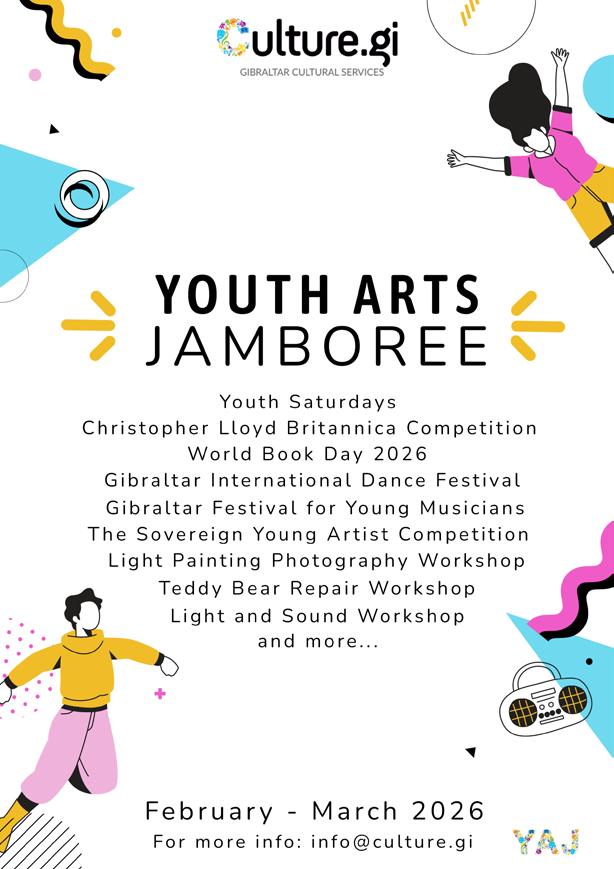
Youth Arts Jamboree 2026
Gibraltar Cultural Services (GCS), on behalf of the Ministry for Culture, is pleased to announce the 2026 Youth Arts Jamboree programme, which will take place throughout the months of February and March. As in previous years the aim of the Jamboree is to offer insights and opportunities in the arts, whilst inspiring young people to get involved and promote the industry. This year’s programme will include tours of our Galleries and Street Art, cultural competitions, a Mayoral Open Day, World Book Day and other literary, music and dance celebrations as well as various interactive workshops.
New this year will be a Youth Saturday in Town, that will bring together many young performers as well as the popular GFA playmakers programme.
Minister for Equality, Employment, Culture and Tourism, The Hon. Christian Santos GMD MP said:
“I am a firm supporter of any event that celebrates and promotes the arts, and especially, as in this case, aimed at inspiring young people to join in. I’m sure this year’s Jamboree programme will prove as popular as in previous years.”
For more information, please contact the GCS Development Unit on 20041839 or email: development@culture.gov.gi
• 1st Prize: Spanish Language (open to all ages) – £500
• 1st Prize: Llanito (open to all ages) - £500
Additionally, the winner in each school category will receive a voucher and a pen, kindly donated by the Gibraltar Chronicle, plus a trophy from the Ministry of Culture. The winning entries will be printed in the Gibraltar Chronicle. Entry forms and rules are available on www.culture.gi/forms, or at the John Mackintosh Hall reception.
Completed forms and entries are to be submitted via email info@culture.gi, or handed in at the John Mackintosh Hall reception. The closing date for receipt of entries is Friday 6th March 2026. For any queries, please contact GCS’ Events Department via email info@culture.gi or on Tel. 20067236
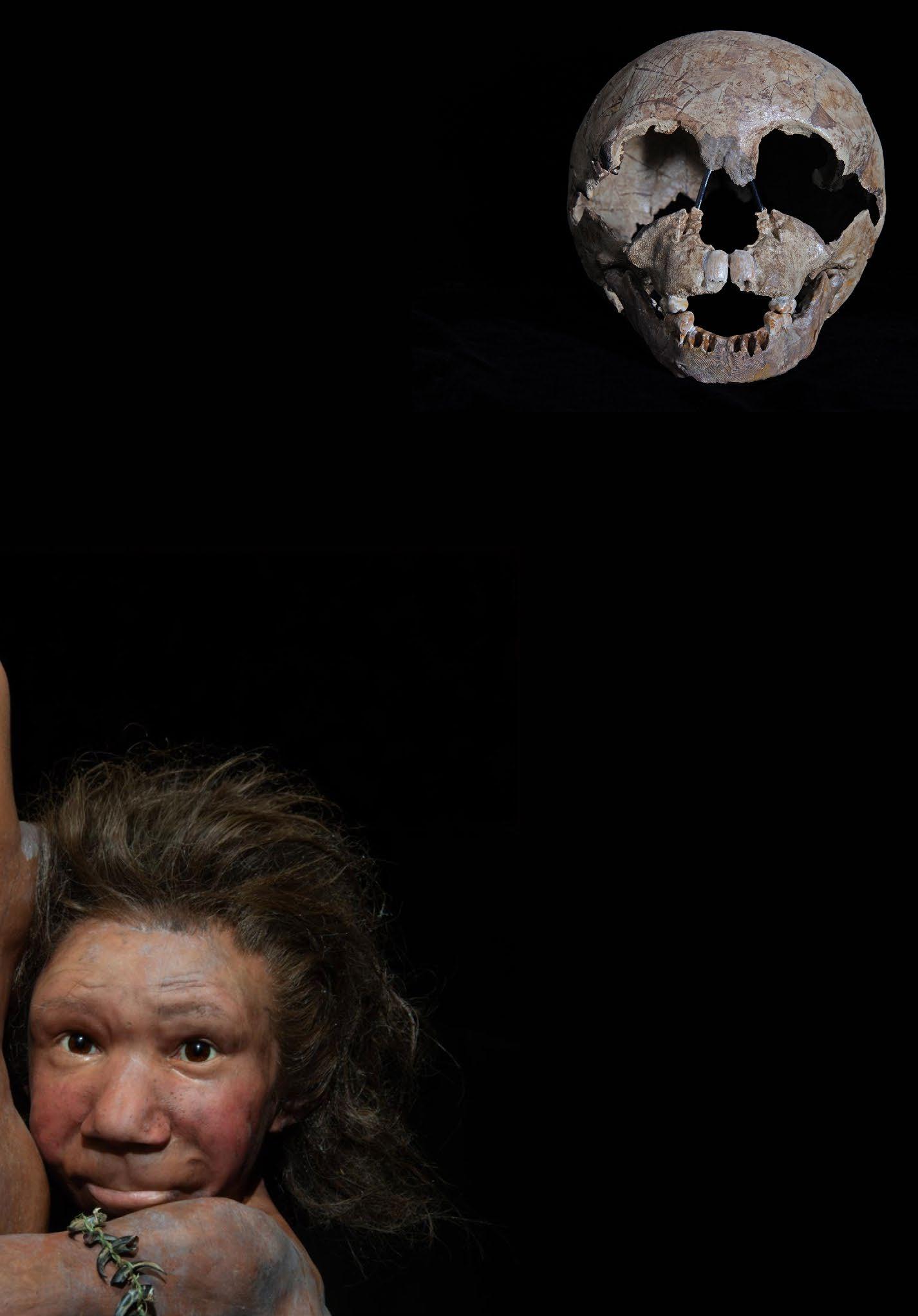
COMMEMORATING THE CENTENARY OF FLINT’S DISCOVERY
The second Neanderthal skull to have been found in Gibraltar was excavated by Dorothy Garrod from Devil’s Tower Cave one hundred years ago, 1926. The skull belonged to a four-year-old Neanderthal boy. In recent years, after the wonderful forensic reconstruction done for the Gibraltar National Museum by the Dutch brothers Kennis & Kennis, leaders in this field, the Neanderthal child has been known as Flint. Flint has become a household name, popular in particular with schoolchildren visiting the museum.
The Gibraltar National Museum will be marking this landmark year with a series of events which will culminate with a milestone Calpe Conference to be held in Gibraltar from the 1st to the 6th of September. Major researchers and speakers in the field of human evolution, and Neanderthals in particular, will be presenting the latest findings at the conference, which is also seen as marking a pivotal moment in which we will be able to reflect on how our understanding of these ancient humans has changed in recent years. In this respect, the work carried out in Gibraltar has been critical in changing our views of the Neanderthals and their cognitive capacities.
This year also marks the tenth anniversary of the inscription of the Gorham’s Cave Complex on the UNESCO World Heritage List, the first and only time that a site in Gibraltar has received such a major international accolade. The celebration of this particular anniversary, for a site that is the only World Heritage Site to be exclusively dedicated to
the Neanderthals, will fit in well into the overall centenary theme.
A series of events are being organized for the year, and details of these will be released during the course of the year. They will include a special themed museum open day on the 9th of May and a specific highlighting of the day of the discovery itself – the 11th June. A new set of displays is also expected for the museum. The commemoration of the inscription of the Gorham’s Cave Complex will be marked during the Calpe Conference, which will guarantee the presence of an international, as well as local, audience.
A special book, detailing the discovery of the skull and its historical background – Dorothy Garrod and the Devil’s Tower Skull - which has been written by Dr Alex Menez of the Gibraltar National Museum, will be released during the course of the year. A children’s story book- Flint wants to play - written by Professor Geraldine Finlayson, will also be published this year.
Minister for Heritage John Cortes said: “It is fitting that we should mark the hundredth anniversary of the discovery of these Neanderthal remains and celebrate the extraordinary work that has been done since then by the team from the Gibraltar National Museum and their associates. I am very much looking forward to what they have in store for us this significant year!”
To commence the year’s activities, a fourpart public lecture series has been arranged in which different aspects of Neanderthals, with special reference to the work being carried out in Gibraltar, will be presented by members of the museum team. These lectures will be held at the John Mackintosh Hall and are free and open to all those interested. The programme is as follows:
THURSDAY 19TH FEBRUARY @ 18:00
Professor Clive Finlayson, Neanderthals and Hyaenas – Exploring the Natural History of the First Gibraltarians
TUESDAY 17TH MARCH @ 18:00
Professor Geraldine Finlayson, Neanderthals –Behaviour, Culture, and Emerging Humanity
WEDNESDAY 8TH APRIL @ 18:00
Dr Alex Menez, Dorothy Garrod and the Devil’s Tower Skull
THURSDAY 7TH MAY @ 18:00
Dr Stewart Finlayson, The Last Neanderthal –The World Through Flint’s Eyes
Charles Hunt Room, John Mackintosh Hall.
Woman
NEW YEAR - NEW HOBBIES
INSPIRING HABITS
THE EVOLUTION OF HATS
REFRESHING OUR ROUTINES
New Year
NEW HOBBIES
Why 2026 is the perfect time to try something new.
Every January comes with a familiar mix of hope and pressure for the year ahead. We’re encouraged to practically reinvent ourselves overnight by eating better, moving more and basically achieve more. But this year, lets start a quieter, more sustainable trend like choosing hobbies that don’t “fix” us, but nourish ourselves instead. Across social media, wellness circles, and everyday conversations, women are increasingly swapping resolutions for curiosity and driven goals. However, perhaps instead of vowing to become a “new woman,” many should be asking “What would make my days feel richer, calmer, or more joyful?” The answer, for many, could lie in hobbies that are not productivity tools, but are spaces for creativity, movement, rest, and connection.
Why hobbies matter.
Unfortunately, modern life asks a lot of women where we juggle work, relationships, caregiving, emotional labour, and the ever-present pull of screens. Hobbies can offer something radically different but just as valuable: time that belongs to us. Research consistently shows that engaging in enjoyable activities can lower stress, support mental health, boost confidence, and improve overall wellbeing. But beyond the science, hobbies can remind us that we are more than what our roles dictate and that we are still our own person. They allow us to create without judgment, move without pressure, and learn without deadlines. So, as we step into a new year, lets encourage each other to take up hobbies that demonstrate self-connection instead of self-improvement. If you’re not sure which hobby to try, then keep reading for inspiration.
The rise of creative, hands-on hobbies. One of the strongest trends heading into the new year is a return to tactile, handson creativity. After years of digital overload, many women are rediscovering the calming power of making something with their hands. For example, pottery studios are getting full, knitting and crocheting needles are back in fashion, and scrapbooking, embroidery, and candle-making are enjoying a comeback. These activities all share something important: they slow us down and help us focus because craft hobbies encourage such things. The repetitive motions of knitting or stitching can lower anxiety, while painting or drawing provides an outlet for emotional expression. There’s also a deep sense of satisfaction in creating something tangible. Even traditionally “old-fashioned” hobbies, often referred to as “Granny hobbies”, are being embraced by younger generations, as baking sourdough, gardening, or sewing doesn’t feel so dated anymore, but rather it feels grounding. But why are hands-on hobbies good for us? To put it simply, creative hobbies activate the brain’s reward system, reduce cortisol levels, and foster a sense of accomplishment, all without the pressure of perfection.
Moving for joy, not punishment.
Fitness is another area that is seeing a shift in mindset. Rather than chasing extreme routines or rigid goals, many women are choosing a type of movement that feels good. For example, mind- body practises like Yoga and Pilates which continue to grow in popularity, especially styles that focus on mobility, breath, and nervous-system regulation rather than intensity. Additionally, dance from ballet-inspired workouts to freestyle classes are also becoming increasingly popular by offering both physical benefits and an emotional release whilst adding a touch of femininity. There’s also rising interest in wellness rituals such as cold plunges, saunas, and mindful stretching which are practices that emphasize recovery and resilience rather than focusing on something that will lead to exhaustion. What these trends have in common is intention. Movement is no longer about shrinking body sizes or earning a sweet treat and rest, they’re about building strength, flexibility, and comfort in our own skin. As to why they’re good for us, it’s because they are gentle, enjoyable movements which improve cardiovascular health, posture, mood, and confidence while reducing stress and burnout.
Reconnecting with nature.
Another powerful hobby trend is the desire to get outside. For some people, just being outside is enough but not everyone knows what to do. Some outdoor and nature-based hobbies are things like walking, hiking, gardening, birdwatching, and outdoor photography which are becoming everyday rituals for many women. These activities are accessible, low-pressure, and deeply restorative as spending time in nature has been shown to lower anxiety, improve sleep, and boost immune function. However, beyond the health benefits, outdoor hobbies also offer perspective. They can remind us of slower rhythms and help counter the constant stimulation of modern life. Gardening, in particular, has become symbolic of this shift by nurturing something over time, accepting seasons of growth and rest, and learning patience. Nature-based hobbies are good for us as they reduce mental fatigue, support emotional balance, and foster a sense of grounding and gratitude.
Creative expression in a digital world.
While the initial goal for many women is to step away from screens, others are instead redefining how they use them by writing, doing photography, and experimenting with digital art. Additionally, journaling and creative writing are increasingly popular, especially as mental-health conversations become more open. Writing allows women to process emotions, clarify thoughts, and tell their own stories. Photography, videography, and digital illustration also offer powerful forms of self-expression as rather than chasing perfection, many women are using these mediums to document everyday beauty and personal experiences which some might call therapeutic. Interestingly, there’s also a revival of slower communication: penpal clubs, handwritten letters, and memory-keeping journals which blend creativity with connection. This creative expression supports emotional regulation, builds self-awareness, and strengthens communication skills.
The appeal of slow living.
Perhaps the most defining hobby trend of the moment is the embrace of slow living. These are hobbies such as puzzle-solving, reading, baking, board games, and cozy crafts, as previously mentioned, which encourage us to be present rather than productive. These activities don’t demand constant progress, but they allow for pauses, mistakes, and enjoyment without any pressure to perform. Slow living hobbies are especially appealing during the winter months, when energy naturally dips and reflection feels more natural, which makes them perfect for the new year. Slow hobbies support mental clarity, reduce overwhelm, and help regulate the nervous system, which is why they’re good for us.
Choosing the right hobby for you.
The beauty of hobbies is that there’s no “right” choice and we can only do what feels supportive at this stage of our life. If you’re feeling mentally drained, creative or slow hobbies may help restore balance. If you’re craving confidence or energy, movement-based activities can be empowering. If you feel disconnected, community-based hobbies like classes, clubs, or group walks, can foster meaningful connections. Many women find the most benefit by combining different types: one physical, one creative, and one calming.
A gentler kind of resolution.
As the new year unfolds, perhaps the most radical resolution is this: do something simply because you enjoy it. Hobbies don’t need to be monetized, mastered, or shared, and they don’t need to serve a larger goal. Their value lies in how they make us feel and naturally we want to feel calmer, stronger, more curious, and more ourselves. In a world that constantly asks women to do more, choosing a new hobby is an act of self-kindness which might be the most powerful new- year resolution of all.
Adopting Inspiring Habits
The ability to adopt inspiring habits is incredibly important in a world where we can too easily become jaded and our routines, somewhat monotonous.
To develop good habits, it is best to start small. Pick one and only one thing first. Most people give themselves a multi-page list of things to change only to fail. Having one thing to focus out will naturally ripple out to other changes as well.
Meditation:
Your first step in your journey to developing good habits takes place in the mind. Your mind is like a control centre for your life. It controls your moods, your actions, and how you live your life. If your mind is chaotic, you will live a chaotic life. If your mind is racing with negative thoughts, you will always see the worst in everything. With meditation, you take back control of your mind. A negative thought may arise but instead of internalising it, it can come and then pass. That is the impact meditation can have. It gives you back your clarity, focus and positivity.
Enjoy the Outdoors:
Many people in colder climates are low in Vitamin D but it is essential to good health and you produce it naturally from the sun. While going for a walk on a cold day may be less than ideal,
spending time outdoors is crucial for good health. It is not just the sun. The fresh air you breath in and the ground your feet touch can help boost your mood and health. On warmer days, spend some time gardening or going for a stroll. Developing this good habit can help you live a long life.
Healthy Sleep Routine:
A vital good habit, essential to develop, is a proper night-time routine. Going to bed at the same time each night, including weekends, is a great way to help develop a pattern that will help you get your rest. Aim to go to bed at 9 or 10pm in the evening to wake up naturally in the morning, instead of being startled awake by your alarm.
Express Gratitude:
One of the positive habits you can build to increase your happiness is expressing gratitude each day. Compile a gratitude list each morning to reflect on what you have and to reap the benefits of gratitude. It has never been easier to lose sight of all the amazing things we have in our life.
Mental Peace:
When thoughts get louder than usual, it is usually due to an overactive left brain. So, to have some mental peace and stability you will want to strengthen your right brain. Thus, right brain activities are good habits to develop. The right brain is known as the creative brain so any creative activity will help calm the chatterbox in your head. Some examples of right brain activities include meditation, painting, drawing, colouring, gardening, cooking and fashion design. Keep in mind that writing also activates the left brain due its use of language, so you will want to minimise the amount you do.
Measured talking:
The ability to speak kindly – even during tough conversationsis a social skill that will help in all manner of situations. Aim to be empathic with people who may be disgruntled or frustrated. Sometimes people take out their frustrations on you. But it is important to remember that you have full control over your reaction of every event that happens to you. With that power knowing how much control you have; it is necessary to do your part in the world of spreading kindness. You cannot take back hurtful words and it is extremely difficult to undo the damage toxic words can have on people.
Time with Friends:
One of the most neglected worthwhile habits is spending time with friends. As we grow older, family life takes over and friends get replaced. The happiest people are those who have maintained their friendships into old age. Your friends are the people who knew you before you fell in love or started a family. They are important people too.
Find time to spend with your friends. Simple moments such as celebrating birthdays, mailing random thinking of you cards in
the mail, or enjoying a quick coffee can really help you strengthen your friendships. Unbelievably, you will immediately remember how much fun it is to hang out with your friends. All the fun, inside jokes you have, the wild memories you have shared together, and that feeling of being accepted and loved by someone who is not blood. It feels surprisingly good.
Mindful living:
This is all about being present in the world. If good habits do not involve real world living, what is the point? When was the last time you looked up while going out for a walk? Have you ever looked up from your phone to talk (phone-free) with your family? Paying attention to labels when buying food to ensure you are nourishing your body with vitamins, minerals, and nutrients, is a routine that can a significant impact on how you eat. Eating slowly, focusing on the food to properly taste it, instead of woofing it down can only help digestion. You are not just going to want to try these things but do it with attentiveness and focus. That is fully encompassing living.
Writing a Journal:
Journalling allows you to express yourself and it can take many forms. For some, they might be diary entries into your day-today life to reflect on at a later point, maybe for that memoir you will write someday. For others, it could be a creative outlet to design and plan your life, help you achieve your goals, or hold you accountable for an important practice, such as a gratitude journal or mindfulness journal. Journals do not need to focus on novel length stories, you can use drawings, calendars or bullet points to share your inspirational thoughts and ideas. Journaling can inspire you to self-reflect, achieve and share in one place. Every inspiring habit you adopt will add to your life in a positive way, no matter how significant or small. Each one will add another aspect of positivity and enrich your every day routines.
WHERE DID YOU GET THAT HAT?
IF, LIKE ME, YOU LOVE WEARING A HAT, HERE IS A JOYFULLY OPINIONATED HISTORY OF WOMEN’S HATS.
There are two kinds of people in the world: those who think hats are just practical objects to keep the sun out of your eyes, and those who understand that hats are wearable declarations of identity. Women, historically, have been very much in the second camp. For centuries, women’s hats have announced wealth, rebellion, mourning, flirtation, political allegiance, religious devotion, and occasionally the simple fact that it was cold. If clothing tells a story, women’s hats are the exclamation points, sometimes tasteful, sometimes outrageous, always saying something. Over the decades, certain women and their hats have fused so completely that the silhouette alone tells a story. Let’s take a stroll through time, peeking under brims, feathers, veils, and visors to see how women’s hats evolved alongside fashion, technology, and shifting ideas about womanhood itself.
Medieval Modesty (and the Art of Hiding Your Hair)
In the Middle Ages, hats weren’t so much a fashion choice as a moral obligation. For respectable women, covering one’s hair was a sign of virtue and social standing. Loose hair was associated with youth, sexuality, or scandal, none of which medieval society was particularly relaxed about.
Enter the wimple: a linen cloth wrapped around the neck and chin, often paired with a veil. It was practical, modest, and about as fun as it sounds. Later came towering constructions like the hennin, the cone-shaped hat often seen in fairy tales, complete with flowing veils. These weren’t exactly cosy, but they were dramatic, and drama has always been a key ingredient in hat history.
Renaissance: Bigger Hair, Bigger Statements
As Europe emerged from medieval austerity, hats became more expressive. The Renaissance brought structured caps, berets, and jewel-encrusted headpieces. Women’s hats began to work with hairstyles instead of hiding them completely. Hairlines were even plucked to create the illusion of higher foreheads.
Hats at this time were about status. Richer women wore richer materials: velvet, silk, embroidery, pearls. If you couldn’t afford jewels, you could at least admire them from a safe distance on someone else’s head.
The 18th Century: When Hats Went Wild
If there were ever a golden age of excess in women’s hats, the 18th century would be a strong contender. This was the era of enormous wigs with hats piled on top of them like architectural afterthoughts. Hats featured feathers, ribbons, lace, artificial flowers, and occasionally entire scenes featuring gardens and even taxidermy birds!
Millinery became an art form, and hats were often so elaborate they required careful manoeuvring through doorways. They were also expensive and labour-intensive, reinforcing class divisions while simultaneously proving that humans will always choose spectacle when given the chance.
The 19th Century: Bonnets, Respectability, and Restraint
The 1800s dialled things back, slightly. Queen Victoria popularised a range of hats, from delicate lace-trimmed bonnets to elegant mourning veils, turning them into symbols of propriety, femininity, and status in Victorian Britain. But don’t be fooled by
their demure appearance because bonnets evolved constantly in size, shape, and decoration. They could be trimmed with silk, lace, feathers, or flowers, and styles changed rapidly. Keeping up with bonnet trends was a subtle but serious social sport and the fashion for feathered hats peaked in the Victorian era. Later in the century, hats began to shrink and perch on top of the head rather than enveloping it, signalling the slow transition toward modern fashion and modern women.
Early 20th Century: Hats on the Move
The early 1900s brought dramatic change. Women were increasingly visible in public life, and their hats reflected that shift. Massive Edwardian hats still existed, often dripping with feathers and plumes, but practicality was creeping in.
In the 1920s, the cloche crowned the modern woman. Pulled low over bobbed hair, it symbolised independence and motion, worn by film stars like Gloria Swanson, Josephine Baker, Clara Bow, Louise Brooks, and Greta Garbo who danced, smoked, worked, drove cars, and voted. Snug, bell-shaped, and worn low over the forehead, it perfectly matched the flapper era’s sleek silhouettes and rebellious spirit. The cloche didn’t just complement short hair, it demanded it. For once, hats weren’t just towering statements. They were streamlined, modern, and mobile.
Mid-Century Glamour: Hats as Accessories, Not Armour
Fast-forward to the 1940s, when wartime practicality met glamour: turbans and headscarves, popularized by icons such as Carmen Miranda, turned necessity into exuberant style. Wartime austerity made styles simpler and more functional, but post-war fashion leaned hard into elegance. Think pillbox hats, wide-brimmed sun hats, and dramatic silhouettes that framed carefully styled hair.
This was the era of the hat as an accessory rather than the centrepiece of an outfit. Jackie Kennedy’s pillbox hat became an icon in itself in the 1950s, proof that a hat didn’t need feathers or foot-long brims to be powerful. It just needed confidence and good tailoring. It was clean, restrained, perfectly poised, and became shorthand for political elegance. It was less about warmth and more about authority, a quiet halo of power worn in a decade of upheaval. Around the same time, Audrey Hepburn’s wide-brimmed hats in films like My Fair Lady brought theatrical romance back into fashion, proving that drama could still feel refined.
The Great Hat Decline (and Casual Revolution)
Then came the 1960s and 70s, and every thing changed. Hairstyles grew bigger. Dress codes relaxed. Cars became ubiquitous, and hats became inconvenient. Feminism also played a role: many women rejected acces sories associated with rigid social expecta tions.
Hats didn’t disappear, but they lost their ev eryday status. They became optional, situa tional, and even quirky. Hats were no longer required to leave the house, which, histori cally speaking, was a radical development. Both the model Twiggy and dress designer Mary Quant popularised specific hats in the 1960s, with Twiggy often seen in chic cloche hats (reviving 1920s style) and Mary Quant designing and selling popular berets, often with her daisy logo,
Modern Era: Anything Goes
The late 20th century saw hats as tools of reinvention as evidenced by Diana, Princess of Wales, whose evolving hat choices mirrored her journey from shy royal bride to global style force. Or Madonna, who turned cowboy hats, fedoras, and veils into provocations. From Beyoncé’s sculptural headpieces to Rihanna’s fearless millinery, iconic hats continue to frame women not just as fashion figures, but as cultural authors, writing identity, power, and imagination, one bold brim at a time.
Today, women’s hats live in a glorious state of freedom. Baseball caps, bucket hats, beanies, wide-brimmed felt hats, fascinators, and designer headpieces all coexist. Hats are practical again, used for sun protection and bad hair days, but they’re also expressive in a deeply personal way.
Weddings and royal events keep the art of millinery alive, while street style and social media constantly reinvent how hats are worn. A hat can be ironic, nostalgic, political, or purely functional. There are no rules anymore, and that might be the biggest evolution of all.
Catherine, Princess of Wales, and Melania Trump have both significantly influenced contemporary fashion by bringing back and modernising specific types of hats, often using them as "diplomatic" or "statement" accessories. Catherine, the Princess of Wales can be credited with the revival of the Baker Boy hat, particularly for casual, countryside, and outdoor events, wearing it with tweed jackets.
Catherine has also brought back the 1960s classic pillbox hat which she has worn for formal, military-related, and church engagements. She is known for wearing designs by haute couture milliner Philip Treacy, and she has maintained the popularity of dramatic, large-brimmed hats at events like Royal Ascot, a trend she shares with Melania Trump who has often chosen large-brimmed, low-sitting hats that function as a ‘millinery shield’ or a statement of privacy.
The Final Word (Under the Brim)
Women’s hats have journeyed from obligation to ornament to optional expression. They’ve mirrored changes in technology, gender roles, and social norms, sometimes lagging behind, sometimes boldly leading the way. Whether towering or tiny, practical or absurd, hats have always been more than just something you put on your head.
They’re history you can wear. And occasionally, they’re history you have to duck under a doorway to survive. So the next time you throw on a hat, any hat, know that you’re participating in a long, strange, and stylish tradition.
Refreshing our Routines
The start of a new year is a wonderful time to explore new activities and refresh existing routines. Revisiting our rituals will bring our health and wellbeing into sharp focus. These are a few key areas where refreshing our routines can be particularly beneficial.
Benefits of balance:
The start of a new year is a wonderful time to explore new activities and refresh existing routines. Revisiting our rituals will bring our health and wellbeing into sharp focus.
These are a few key areas where refreshing our routines can be particularly beneficial: Benefits of balance:
It is important to work on our balance as it naturally deteriorates over time. A great exercise that can benefit individuals of all ages is toe raises. To perform this exercise, stand tall and hold onto a rail or the kitchen sink for support. Then, raise your toes while keeping your weight on your heels and avoiding sticking your bottom out. Hold this position for three seconds, then lower with control. Repeat this exercise ten times to improve your stability and prevent falls.
Strengthening our connections:
Life is constantly busy and demanding, so maintaining strong personal links can be challenging. Our social and family relationships are essential for good emotional and mental health so create time to nurture them and keep them strong. Confiding in people, as well as sharing laughter, is a natural tonic we all benefit from.
Work with weights:
Building your strength is important at any age. Resistance training or adding small weights to any exercise is a simple way to keep bone density higher, which helps improve strength. Strength training can protect your joints from injury and contribute to better balance.
Get outside:
Going for a walk is not only good for your physical health but also for your mental wellbeing. It helps release endorphins which induce positive emotions and reduce stress levels. For an older person, this is a great way to help build confidence back up after a fall while improving balance and mobility. Taking the first step to being active after a fall will give a natural boost to anyone as they learn to be more confident in their body again. If you feel unsteady, a walking aid may be helpful.
Joys of swimming:
Swimming is a low-impact, high-benefit activity that aids in building endurance, muscle strength, and cardiovascular fitness. Its accessibility and comfort make it an excellent choice, especially for individuals with arthritis. Many local pools now have better accessibility options available.
Nurture body and mind:
Physical activities significantly impact mental wellbeing. Yoga and Pilates are particularly good for your body and mind. They can help you to improve core strength, aiding people with back issues.
Find a small class:
Small group workouts or one-on-one sessions offer personalised attention and modifications, making exercises more tailored to individual needs and comfort levels. Those may also be less intimidating if you are trying a new class for the first time.
Explore local classes:
If you are looking for exercise classes in your local area, council websites and social groups are often good places to start. These classes not only help you stay fit and active, but also provide an opportunity to socialise, which is great for both your physical and mental wellbeing. General movement and stretching classes are notably good options.
Keep hydrated:
Staying hydrated is fundamental for overall health. It enhances cognition, reduces joint pain, and boosts energy levels. Keep water intake consistent throughout the day.
Stay Active, Stay Healthy. Activity does not necessarily mean taking gym classes. Find an activity you enjoy - staying active increases confidence and keeps both body and mind engaged. Regular exercise promotes a healthy weight, strengthens muscles and bones, and contributes to good heart health.
Embrace new goals:
Spring is all about renewal, and it’s the perfect time to set new goals or revisit old ones. Whether it's taking up a new project at work, learning a new skill, or simply spending more time with loved ones, establishing clear, achievable goals can give you a sense of purpose and motivation. It is also important to practise positive self-talk and chal-
lenge any negative beliefs that may be limiting you.
Start small by setting one or two achievable goals this season and celebrate each milestone along the way. Positive reinforcement can help build confidence and mental resilience.
Reconnect with nature:
After months of winter, it is easy to feel disconnected from the outdoors. Spring is the ideal time to get outside and reconnect with nature. Studies have shown that spending time in natural surroundings can reduce stress, improve mood, and boost overall wellbeing. Whether it is a walk in the park, a weekend hike or simply spending time in your garden, take advantage of the warmer weather to step outside and soak up some fresh air and sunshine.
If you are feeling overwhelmed, try a mindful walk in nature. Focus on the sights, sounds, and smells around you, allowing your mind to clear as you walk.
Scent to promote your mood:
Spring is all about renewal and scent can be a powerful mental reset. Try diffusing citrus or floral essential oils in the morning, like grapefruit or neroli and calming ones at night like lavender or chamomile. The scent of your home is undoubtedly important and can help create the ambiance you feel comfortable in.
Include micro movements:
If you do not have the time or motivation for a full gym session, there are other, positive routes to physical health. Try a micro-movement. Ten minutes of activity a few times a day. Perhaps stretching between meetings, dancing while cooking or a quick walk after lunch. It is more impactful than you might imagine.
Refreshing your habits and routines for 2026 is not merely about doing more. It is about aligning your actions with how you want your life to look and move forward. It can sometimes be the simplest of revisions that make a notable difference to how we feel and think. Tweaks can be invaluable and it is always worthwhile to take a look and evaluate what we do regularly - and improve them.
Austria is a country full of imperial history, art, culture and breathtaking landscapes. Malaga airport flies directly to Vienna and Salzburg, making it easy for a long weekend escape. Once you are in the country, it is very easy to move around the country via trains to explore the best the country has to offer.
In this guide, we will be exploring the capital city of Vienna, Mozart’s birthplace Salzburg and the fairy-tale village of Hallstatt.
VIENNA
Vienna constantly ranks as one of the world’s most livable cities, and it is easy to see why. It’s a great city for anyone interested in museums, art, music and great coffee.
Things to see and do:
• Visit the Ringstabe, a circular boulevard featuring some of the city’s most important sights, including the State Opera, the Parliament and the City Hall.
• Visit Schönbrunn Palace, arguably one of the prettiest and most impressive palaces in Austria. This used to be the Habsburgs’ summer residence, and you can take a tour of the inside of the palace as well as the gardens. In the winter months, the palace hosts their Christmas Market, complete with food stalls, Christmas decorations, play areas for children and of course, Gluhwein.
• St Stephen’s Cathedral is located in the heart of the city and is worth visiting, its multi-coloured tiled roof is an iconic symbol of Vienna.
• In the Museums Quartier, you will find several major museums, including Leopold (Austrian Modernism), Mumok (Modern Art), Kunsthalle Wien (Contemporary Art) and the Architekturzentrum Wien (Architecture).
• The Sigmund Freud museum is worth visiting for anyone interested in psychology and the life of the founder of psychoanalysis. The museum is open everyday apart from Tuesdays.
• If you’re travelling with children, why not try being a chocolatier for a day at BO-YO? Here you can design your own chocolate bars to take home. Trying their thick hot chocolate is also a must!
Food Recommendations:
• For coffee and Sachertorte (dense chocolate cake with apricot jam), head to either Cafe Central, Cafe Sacher or Cafe Aida.
• For wiener schnitzel, Figlmüller is the most famous spot for this.
• Via Toledo Enzopizzeria won an award in 2025 for the 20th best pizzas in the world, and 3rd best in Europe. That’s very impressive!
• For a fast food bite, try XO smash burgers
• For breakfast coffee and pastries, Salz & Zucker Bakery is the spot.
Where to
stay:
Vienna is a fairly large city but it’s easy to get around with their metro system. A beautiful hotel in the heart of the Museums Quartier is the 25hours Hotel. Leonardo has a few hotels dotted around the city, so you can select one depending on where most of your activities are.
SALZBURG
A 3 hour train ride west of Vienna leads to Salzburg, the birthplace of Wolfgang Mozart, or for musical fans, the setting for The Sound of Music. The city is filled with quaint streets, markets and has the stunning backdrop of the mountains.
Things to see and do:
• Visit Hogensalzburg Fortress, which is one of the largest medieval castles in Europe and holds over 900 years of history. If you choose to walk up, it will take you 30 minutes and the path starts right next to the FestungsBahn.
• Walk through Mirabell Palace and Gardens, one of the filming locations for The Sound of Music. In December, you will also find a Christmas market set-up behind the gardens.
• Getreidegass is a narrow shopping street, where you can find Mozart’s home.
• If you’re a fan of The Sound of Music, then you can’t leave without embarking on the official Sound of Music bus tour. This will take you around some of the movie's filming locations (including the 16 going on 17 gazebo), have you singing along on the bus, and you will also learn some behind the scenes secrets from the guide.
Food Recommendations:
• Meissl & Schadn is a great place for wiener schnitzel, and is featured on the Michelin Guide. Whilst you’re there, you should also try the Salzburger nockerl, a sweet fluffy soufflé shaped like the three mountains surrounding the city. Of course, apple strudel is also on the menu.
• For more traditional Austrian dishes, head to Zwettler's Wirtshaus. Here you can try kasnocken (cheese dumplings with fried onions), Austrian sausages, goulash and more. For dessert you can finish off with another Austrian dessert, kaiserschmarrn (shredded pancakes).
Where to stay:
Salzburg is a smaller city than Vienna, so wherever you stay you won’t be too far from all the places of interest. However, the best
A QUICK GUIDE TO
BY GIANA SPITERI
location is near the train/tram station. The Cocoon Salzburg is located just a 4 minute walk from the station, and guests will receive a ticket for free transport around the city.
HALLSTATT
Hallstatt is arguably one of the most photographed villages in Europe, with its snow topped houses on the mountain and its reflective lake. The village is a 1 hour drive from Salzburg, and there are plenty of tour operators that take you there and back if you don’t wish to rent a car or stay overnight.
Things to see and do:
• The Skywalk is located 350 metres above the village, and allows you to view the village and lake from above. The price for adults is 29 euros and 14 euros for children.
• Visit the Salt Mines, which claim to be the oldest salt mine in the world. The tour includes an underground slide and a subterranean lake. The price for adults is 49 euros and 23 euros for children.
• Near the church at the end of the main street, you’ll find the Beinhaus (Bone House). Due to limited space in the cemetery, Hallstatt has a unique tradition of painting skulls with floral motifs and storing them in the 12th-century Michael’s Chapel.
Food Recommendations:
• Schirmbar is a casual lakeside spot for traditional meals like schnitzel, strudel and other Austrian classics. Note that this place is cash only.
• Cafe Maislinger is a cafe that serves freshly baked goods as well as a range of cakes.
Where to stay:
There isn’t really a need to stay in Hallstatt overnight, but if you’re after a couple of days of tranquility by the lake, then one of the most popular hotels is the Heritage wHotel, located at the end of the main street.
I hope this article has inspired you to travel to Austria this year!
Venice in Spring
Few places in the world capture the imagination quite like Venice. A city built on water, where every corner feels like a painting and every bridge leads to a new story, Venice remains one of Europe’s most enchanting destinations. At Elite Travel, we have spent years guiding travelers through the world’s most extraordinary places, and Venice continues to be one of our most heartfelt recommendations — especially during Easter and the spring season.
A City That Feels Like a Dream
Venice is not a place you simply visit; it’s a place you experience. The moment you step into the city, the sound of water replaces traffic, narrow alleyways invite you to wander, and centuries of history unfold around you.
Spring brings a special charm: mild temperatures, blooming balconies, and a gentle light that makes the canals shimmer. It’s the perfect time to explore without the intense summer crowds or the winter chill.
Must Visit Places in Venice
St. Mark’s Square and Basilica No trip to Venice is complete without standing in the iconic Piazza San Marco. In spring, the square feels more relaxed, allowing you to appreciate the golden mosaics of the Basilica and the elegant arches of the Doge’s Palace.
The
Grand Canal
Whether you choose a vaporetto ride or a private water taxi, gliding along the Grand Canal is one of the most unforgettable experiences in the city. Palaces rise from the water like marble sculptures, each with its own story.
Rialto
Bridge and Market
The Rialto area is vibrant and full of life. The historic market is a feast for the senses — fresh produce, colorful flowers, and the daily rhythm of Venetian life. It’s a wonderful place to feel the city’s authentic pulse.
The Islands: Murano, Burano, and Torcello
• Murano: worldfamous for its glassmaking tradition.
• Burano: a photographer’s paradise with its brightly painted houses.
• Torcello: peaceful, ancient, and perfect for travelers seeking quiet beauty.
Hidden
Venice
One of the joys of Venice is getting lost. Wander through Dorsoduro, Cannaregio, or Castello, where small cafés, artisan shops, and quiet canals reveal a more intimate side of the city.
Things to Do: Experiences You’ll Remember
Take a Gondola Ride at Sunset
It may be iconic, but it’s iconic for a reason. The soft evening light, the gentle movement of the water, and the reflections on the buildings create a magical moment.
Enjoy Venetian Cuisine
Spring brings fresh seasonal dishes:
• artichokes from the island of Sant’Erasmo
• seafood risotto
• cicchetti (Venetian tapas) paired with a glass of local wine
Visit Museums and Palaces
From the Peggy Guggenheim Collection to the Galleriedell’Accademia, Venice is a treasure chest for art lovers. Spring’s pleasant weather makes it easy to combine indoor visits with outdoor strolls.
Attend Easter Celebrations
Easter in Venice is a beautiful blend of tradition and spirituality. Churches are filled with music, and the city feels especially alive. It’s a wonderful moment to experience local culture in an authentic way.
Why Visit Venice During Easter and Spring?
1. Perfect Weather: Temperatures are mild, ideal for walking, exploring, and enjoying outdoor cafés.
2. Fewer Crowds: Compared to the busy summer months, spring offers a more relaxed atmosphere. You can enjoy major attractions without long waits.
3. Seasonal Beauty: Flowers bloom on balconies, the light is soft and golden, and the city feels fresh after winter.
4. Cultural Events: Holy Week brings concerts, special masses, and local traditions that add depth to your visit.
5. Better Travel Conditions: Hotels and flights often offer more availability and better value than in peak season — something Elite Travel always highlights for smart travelers.
Elite Travel’s Professional Recommendation
At Elite Travel, we believe Venice is a destination that every traveler should experience at least once — and spring is one of the most rewarding times to do so. Whether you’re seeking romance, culture, gastronomy, or simply a place to slow down and reconnect with beauty, Venice offers it all.
Our team of travel experts can help you design a personalized itinerary that balances iconic landmarks with hidden gems, ensuring your journey feels both effortless and unforgettable.
A Timeless Escape Recommended by Elite Travel
is living her dream in Nashville
Layla Rose
NEXT MONTH SHE’S GOING TO BE TWENTY FOUR AND AS A YOUNG GIRL, LAYLA BUGEYA SET HER SIGHTS ON NASHVILLE. THE US MUSIC CAPITAL OF THE WORLD AND COUNTRY AND WESTERN MUSIC IS NOW HOME FOR THE DARLING FROM CATALAN BAY. SHE WENT TO UNI OVER THERE AND GRADUATED LAST YEAR IN MUSIC PRODUCTION AND MANAGEMENT, WHILE HER SPARE TIME AND ENERGY WAS USED WISELY, WRITING SONGS, PERFORMING AND HONING HER VOCAL CHOPS ANYWHERE THAT WOULD BOOK HER.
As long as she was being seen and heard on ‘the Strip’ (Nashville’s golden music street- the hub of C&W live music venues), she was getting nearer to achieving her goal. Fast forward to now and she plays six or seven shows per week, sometimes two shows per day and earns her living performing music while still hoping that the big break will come to her - getting signed up to be a recording artist. She was the youngest local girl ever to front a band here and currently she is gigging in Nashville, the music mecca which attracts thousands of young music hopefuls. That is a huge achievement which I wanted to learn more about as we sipped coffee and chatted in Europort.
“From the beginning of last year till May I focussed on finishing my studies and once I got my degree and work permit, I started working on music full time. It was basically singing in bars every day and using my voice so much that I had to stay silent for a few hours every day in order to recuperate. In some venues I played solo acoustic which is good as you don’t have to share the tips. On the strip there is a bar owner who owns five bars and some shows were with other musicians in a band, however I couldn’t keep that up for long as I was playing too many shows and my voice couldn’t handle that, so I started focussing more on acoustic stuff. The challenge was gigging with perfect strangers in his bars because the shows are four hours long and music is non-stop. It was great experience playing cover songs with different musicians. It’s a huge learning curve.”
Half of the money Layla makes from gigs is tips-based, so if she pleases the punters with classic covers she does well. Requests can fetch $20 a song but she doesn’t hustle or barter. She puts her own spin on the song requested and trusts that her performance is judged kindly. She tells me that her stage craft has improved a lot and that she fits in well with the mainly tourist audiences. Being busy has meant that she can’t dedicate too much time to song writing and I wondered whether this was stifling her creativity.
quested, so I don’t really get that much time free to write.”
There is a strong possibility that Layla could come back to the Rock for a while to try and save money to record her songs. Living with her parents short term would avoid the high rentals here and she and her partner could both work and save quicker than they do in Nashville. “I have thought about this a lot and right now there is a lot in the air and things could develop in different ways. We’re not sure what to do next but even that is exciting and motivating too.”
I had to ask Layla what artists she likes to cover given a choice, (which there isn’t really as audiences out for a good time have to be catered for and variety in repertoire is always paramount). “When I prepare my repertoires I cater for different age groups. I have set lists with 70s to 90s songs for older audiences and current artists for younger people, however my favourite artists to play are probably Dolly Parton, Merle Haggard, Chris Stapleton other classic C&W artists. I prefer to put my own spin on their songs. That is a lot easier for male artist covers than for females, but I can manage to put my own spin on classics likes ‘Jolene’ and audiences appreciate that.
“In the last six months that I have been doing music full time I’ve probably learnt about a hundred new songs. Whenever someone requests a song that I don’t know, I go back home and learn it because it’s bound to come up again in requests and I like to be well prepared. My ultimate dream is to be signed and release my own songs. I don’t have songs recorded yet, I only have them demoed because I can’t afford to record them in Nashville.
“ When I write a new song I normally send it to my dad over(Jonathan Bugeya) here and he makes a demo for me. If I want to record it properly in Nashville I would have to save up as it can cost $600 per song for a basic production and three times as much if you want a full production. When I sit down to write a song I will probably have a theme or a title in mind and almost certainly a rough melody which I have recorded on my phone. I then work out the chords on my guitar and complete the shape of the tune and my performance ideas. I give dad a rough idea of what I hear in my head and then he works out a demo for me. I am quite involved in music most days either performing or learning songs which have been re-
“At the end of the day playing covers in Nashville is not going to get you discovered as an artist because things have changed so much in music. You need to have a strong media presence as music executives are not going out to bars to scout for potential artists. Playing music in bars on the Nashville strip is my day Job and it pays the rent but recording my songs and offering them to recording companies will give me a better chance of getting signed up, so that’s why I am rethinking my strategy for the future.”
Whatever that future holds for Layla Rose, she deserves to complete her dream and record an album of her songs. She has already succeeded where many have failed. She is good enough to earn a living playing the music she likes. Now as the next step on her journey looms closer, the next twelve months could decide whether she can find recognition if not stardom. Whatever the outcome, she has our hearts and we wish her all the success that she deserves and has worked for thus far.
PETE THOMPSON'S
1969 SIMCA 1100 COUPE
Pete Thompson owns and runs ‘Hatched Brands’ a long established company that supplies vehicles for TV and Film.
Every time you put your telly on, or go to the cinema, there will generally be vehicles in it, and these have probably been supplied by Pete.
Petes First Car was a 1969 Simca 1100 Coupe that was six years old when he bought it. The colour he describes as Silver and Rust. You could see the road through the passenger floor and the whole car was just covered in rust.
Pete was a cycle mechanic in Stretford, Manchester, and would regularly go on a bike from his home to Blackpool. But the purchase of the Simca changed all that, with him and his mates, up to six passengers would do the same journey on a weekend in his new mode of transport, albeit, a bit cramped. Pete says the Simca was very unreliable, forever breaking down, refusing to start and the bonnet was up, more than it was down. It even broke down on the way back from Blackpool, good job he’d got all those mates with him, to help push it.
He didn’t keep the Simca 1100 for very long, he sold it for a much more reliable Mini Clubman.
He also supplies vehicles for ‘Period’ TV and film such as dramas set in the 60’s, 70’s and 80’s. If the Producers need an old Mini, Morris 1000, Ford Capri or anything, Pete tries to source the correct vehicle for the scene it’s in.
MY 1ST CAR
Putting vehicles onto TV or the big screen is called ‘Product Placement’ and Pete works closely with the Writers, Producers and Directors to give advice on what sort of car or Van a certain character may use, to be as accurate as possible and believable when it is seen by the Public.
The amount of different shows he’s been involved in are endless, but he has regular vehicles in : Coronation Street, Eastenders, Emmerdale, Silent Witness, Slow Horses and many James Bond films over the years. He has a Fleet of Police Cars that are seen in a wide variety of dramas, that are fully working with all the lights and sirens.
Pete has a Dream Car and that is a Ford Mustang V8 Bullitt Anniversary Edition, he likes the power, the sound and similarities to the original 1968 car driven by Steve McQueen in the Bullitt film.
After quite a few years of no Defender being available, the all-new was unveiled in September 2019, with first deliveries late 2020.
The new one was regarded by many as just being a bit too posh for a Defender, and the traditional buyers of the rugged, go anywhere, vehicle. Five years later, and the doubters were probably right, you don’t see many farmers using them anymore.
The new Defender is available with ether a 90, 110 and 130-inch wheelbase
I drove the new Defender on the UK Press Launch, and it proved beyond any doubt it would literally go anywhere. Up and down slippery slopes, doing a bit of rock-climbing, or going swimming.
I drove the slightly ‘refreshed’ one recently, but did not get chance to do any off-roading, just did like most other Defender drivers, going to the supermarket and picking the kids up from school.
The model I drive was the 110-inch with seven seats, a popular choice with customers. But with all three rows of seats in use, there is very little room in the luggage area for any luggage, and more importantly, any shopping.
Land Rover have certainly got the design absolutely right, it looks great from every angle, rugged, yet has loads of fantastic styling, and is proving to be a huge success for the company.
The Land Rover name was created in 1948 by the Rover Company who wanted to make a utilitarian four-wheel drive off-road vehicle. This original 4x4 stayed in production for around fifty years, with only a few minor changes being made to the vehicle.
The new Defender is much more sophisticated in every aspect to the original, but customers must be aware that have such a versatile off-road vehicle does come with consequences, and some comfort is compromised by it being a go-anywhere car, you simply can’t have it all ways.
But the latest version is a great looking, multi- talented, practical 4x4, that is loved by customers all around the world.
ELECTRIC LADYLAND
LEXUS RZ 300e
Lexus GB Press Department sent up a RZ 300e, a very stylish large five-door Hatch, in a very nice bronze metallic colour. It did have an unusual black bonnet, and this reminded me of when a lot of cars had their bonnets painted black. Now as young lads we were told it made cars go faster, and made them look like rally or racing cars. But we later found it it was something as simple as stopping the sun blinding the driver, black didn’t reflect as much as a standard colour.
The RZ 300e is a full-electric Car, and during the time I had it on test it usually had a range of 238 miles(383km) when fully charged.
I have had many EV’s recently and almost all of them have ‘fiddly’ controls, usually operated by using the touchscreen on the dash. I’m sure you would get used to it all after a while, but does take some thinking about. But a refreshing change to have a car with proper buttons, switches, dials and levers, as the Lexus does have. To turn up the heating, you turn a dial, and not having to go through endless operations on the screen to get a bit warmer, or cooler. It even has proper door handles that are easy to use, and don’t try and take your fingers off when you try and open the door. So nice to have some good old fashioned features, though I’m sure some prefer the more modern approach in car design and usability.
The level of quality in this Lexus RZ is the same as every other Lexus, very good, with fit and finish and materials used throughout up to a extraordinary high standard.
The electric systems all worked well, no issues at all, it wasn’t the quickest car I’ve had to charge, but was efficient.
The RZ measures 4.8m long and 1.89m wide, so plenty of interior space, and a nice big boot too, for lots of luggage or shopping. While I had the car it seemed to attract lots of attention wherever I went, with no negative opinions.
Prices in the UK for the Lexus RZ 300e Range from £50,145 to £61,245.
If you regularly drive into Spain, there is a new road safety rule now in place that may affect your travel. From January 2024, Spain began allowing drivers to use a V-16 emergency beacon as an alternative to the traditional warning triangle when stopping due to a breakdown or emergency.
The V-16 beacon is a small, flashing amber light that is placed on the roof of the vehicle. It can be switched on from inside the car and sends the vehicle’s location to Spain’s traffic authority, the DGT. This allows roadside services to respond more quickly and helps reduce the risk of drivers stepping out onto busy roads.
What’s Changing in 2026
From 1 January 2026, all vehicles registered in Spain must carry a DGT-approved V-16 beacon with built-in geolocation. From that date, warning triangles will no longer be accepted as legal emergency signalling equipment for Spanish-plated vehicles.
The beacon must meet DGT standards and include a geolocation function that sends real-time information to Spain’s traffic system when activated.
What About Vehicles from Gibraltar?
At the time of writing, the regulation does not formally apply to foreign-registered vehicles visiting Spain, including those from Gibraltar. Some sources suggest that warning triangles remain valid under international agreements such as the Vienna Convention. However, others believe there could be increased roadside checks after 2026, with police expecting all vehicles to carry a beacon regardless of registration.
V-16 Emergency Beacons
Now in Use on Spanish Roads
Fines for non-compliance are reported to range from €80 to €200, although specific enforcement rules for foreign vehicles have not yet been confirmed.
What to Consider
If you drive into Spain frequently, you may wish to stay informed about the new requirements and decide whether to add a V-16 beacon to your vehicle in advance of 2026.
When purchasing a beacon, make sure it is DGT-approved and includes the correct technology, as some early models may not meet the full requirements for use after 2025.
It may also be a good time to check that your motor insurance includes cover for driving in Spain and access to roadside assistance while abroad.
Final Note
Spain’s adoption of the V-16 beacon is part of a wider push to improve roadside safety and reduce the risks faced by drivers and emergency services. Whether the rule will eventually apply to Gibraltar-registered vehicles remains to be confirmed, but it is a development worth monitoring.
Disclaimer: This article is for informational purposes only. Please check official sources, including the Dirección General de Tráfico (www.dgt.es), or speak with a legal or motoring adviser for the most current guidance.
BrIAn scott hAs rEcEntL y Brought hIs 1994 Ford
BrIAn scott hAs rEcEntL y Brought hIs 1994 Ford
Escort cABrIoLEt From hIs prEvIous homE In spAIn,
Escort cABrIoLEt From hIs prEvIous homE In spAIn,
to gIBrALtEr. But BEForE hE Bought It, thE cAr hAd
to gIBrALtEr. But BEForE hE Bought It, thE cAr hAd
spEnt mAny yEArs, unusEd And storEd In A gArAgE
spEnt mAny yEArs, unusEd And storEd In A gArAgE
thE Escort cABrIoLEt wAs A vEry popuLAr FoursEAt opEn top cAr BAcK In thE 1990’s, As It oFFErEd good chEAp motorIng And you couLd gEt onE fixEd vIrtuALLy AnywhErE. And hAd thAt mAgIc-BluE ovAL on thE Front grILLE, And most pEopLE BAcK thEn, lovEd A BluE-ovAL.
I personally went on a Press Launch of one of the many variants of the Cabriolet, and to say I was a bit disappointed in the ride is an understatement. It was a hard ride, the body seemed to flex every time you hit a bump in the road. Ford put this down to it not having a solid roof, and this characteristic was inevitable. But it was fun and allowances have to be made for having fun, apparently.
Brian’s Cab has only covered a genuine 70,000km in 31 years, so has plenty of life left in it yet. It is powered by a 1.6-litre petrol engine, so more than enough power.
Like all 1980 and 1990 Classic Fords, the values continue to rise, and Brian is sat on a potential ‘Gold-Mine’ - better than money in the bank, and a safe investment.
Most Escort Cabs have an electrically operated Roof, and when you look at the motors, and mechanism involved it makes you wonder how it all works, and if it goes wrong, then there could be trouble getting it fixed.
But I saw Brian’s Ford, and now has Gibralter Registration Number G1112H, last summer, and it is in lovely condition both interior and exterior.
The Escort Cabriolet is A real Ford Classic, and now Brian’s is a Rock Classic
A HUGE MONTH OF INTERNATIONAL FOOTBALL KICKS OFF 2026 FOR GIBRALTAR’S NATIONAL TEAMS.
Get ready for a bumper month of International football this month with Gibraltar’s Women’s National Team, Men’s National Team and Men’s U21 National team all in action in UEFA competitions.
Kicking the month off are Gibraltar’s Women’s National Team as they compete for the first time ever in the Women’s Qualifiers, ahead of the 2027 FIFA Women’s World Cup. Head Coach Stella Gotal and her Gibraltar squad begin away in Kosovo on Monday 2nd March before returning home to the Europa Point Stadium to face Bulgaria on Friday 6th March. Tickets for the game are priced at just £5.00.
Gibraltar’s Men’s National Team face one of their most important one off international windows ever, as they take on Latvia
in the UEFA Nations League promotion and relegation playoff. The playoff which will decide if Gibraltar get promoted into League C once again or remain in League D of the 2026 edition of the Nations League will be played over the traditional two leg format. The all-important first leg takes place on the 26th March at the Europa Point Stadium when Scott Wiseman’s Gibraltar team will be raring to go. Kick-off is at 6pm.
Finally in March, Gibraltar’s Men’s Under 21 National Team face Bulgaria at the Europa Point Stadium on Friday 27th March. David Ochello’s youngsters will be looking to build on some impressive performances in the campaign so far, most notably in their home game last autumn against Czechia. Tickets for Gibraltar U21 v Bulgaria U21 are priced at £5.00.
Tickets for all matches can be bought online at www.tickets. gibraltarfa.com
YOUTH NATIONAL TEAMS FINDW OUT THEIR 2026 OPPONENTS:
Three Gibraltar Youth National Teams have found out their upcoming opposition for their official UEFA Championship Qualifiers in 2026.
Firstly, Gibraltar’s U19 Men’s National Team have been drawn into Group B2 of League B in Round 1 of the 2026/27 UEFA U19 Championship Qualifiers, alongside Türkiye, Kosovo and Armenia.
This qualifying mini group - which is set to take place in Türkiye with matches on the 24th, 27th & 30th of March 2026 - will be another good opportunity for new U19’s Head Coach Ashley Taylor to get to grips with his squad, following their Qualifying Round matches in Croatia this November.
Gibraltar’s 2025/26 U17’s Men’s National Team also found out their Round 2 opposition for their UEFA Championship Qualifi-
ers, being drawn into Group B4 of League B alongside Finland, Bosnia & Herzegovina and Moldova.
This follows their Round 1 matches back in October of this year in North Macedonia, with Round 2’s matches taking place in Moldova between the 23rd, 26th & 29th of April 2026.
Finally, Gibraltar’s 2026/27 U17’s Men’s National Team (the current U16 Elite Youth Development Programme age group) found out their opposition for competition in late 2026.
Gibraltar were drawn into Group 7, alongside Iceland, Greece and Bosnia & Herzegovina.
This will be the age group’s first-ever official UEFA competition, with matches taking place between the 23rd, 26th & 29th of September 2026 in Bosnia & Herzegovina. zKick-off times, & match information for Gibraltar’s youth Internationals is to follow shortly once UEFA confirm dates and venues.
ROYAL GIBRALTAR REGIMENT SUCCESS
ROYAL GIBRALTAR REGIMENT JUDO TEAM SUCCESS AT THE ARMY CHAMPIONSHIPS
On Friday January 9th 2026, the Royal Gibraltar Regiment Judo Team competed at the Army Judo Championships held in Aldershot, delivering an outstanding performance across multiple categories.
This year, WO2 Ethaniel Jeffries-Mor, RG Coach, took charge of a small but highly committed team of four. During the Christmas stand down period, the team continued to train throughout their leave, a true testament to their dedication, discipline, and commitment to the Regiment. The results achieved at this championship clearly reflected that hard work.
WO2 Jeffries-Mor led from the front, winning Gold in the Over 100kg Masters category and cementing his status as the Army Heavyweight Champion. He dominated the competition, winning all of his fights in under two minutes.
Maj Dayan Pozo, now a regular competitor on the Army Judo circuit, secured a well earned Silver medal in the Under 90kg Intermediate category. Fighting a series of tough and closely contested matches, narrowly missing out on the gold.
LCpl Blythe Reeves, a newcomer to Army Judo, delivered an exceptional performance in the Under 90kg Novice category. Competing against nine challenging opponents, he achieved an impressive Gold and Silver medal finish, marking a strong start to his competitive career.
Pte William Cross also a newcomer performed admirably, battling through a very demanding field in the Under 90kg Intermediate category to claim a Bronze medal after a series of hard fought matches.
Overall, the team’s performance reflected the professionalism, resilience, and commitment developed through their intensive training, they represented both the Royal Gibraltar Regiment and the Army with distinction.
In a landmark season for Gibraltarian football, Mons Calpe Women have secured the 2025/26 League title with two matches to spare. This achievement is more than a triumph of talent; it is a validation of systems built specifically for women, rather than those simply adapted from the men’s game.This victory—defined by consistency, attacking brilliance, and strategic clarity—arrives as the global discourse around women’s football intensifies. At the center of this shift is the Her Prime philosophy, which argues for a fundamentally different approach to training, biology, and support in the female game.
Breaking New Ground in Gibraltar, Mons Calpe’s dominance this season marks a new chapter for the Gibraltar Women’s Football League. Traditionally a developmental platform, the league has grown in visibility, providing a stage for athletes to shine even while it works toward future UEFA competition status.
From clinical performances—highlighted by a 6-1 victory over Lynx—to maintaining a relentless lead at the top of the table, Mons Calpe combined tactical discipline with an unfiltered attacking flair that rivals simply could not overcome.
The Winning Formula: Systems over Imitation. What lies behind this success?
The answer aligns closely with the arguments set out in the landmark article “Her Prime: Why Women’s Football Needs Its Own System” (January 15, 2026). The core thesis is clear: copying male models and adjusting them superficially is a flawed strategy. Success requires systems designed around female biology, development timelines, and injury risk profiles.Mons Calpe’s season exemplifies the "Her Prime" approach through:Intelligent Preparation: A sustained focus on fitness and match readiness that avoided the "peaks and valleys" of less structured programs.
The Champions: The 2025/26 Squad
A championship is won by the collective. This squad combined veteran leadership with emerging talent: PlayerRole / Impact Karyn Barnett. The ever-present Captain and leader. Gianelle Hanglin our top scorer; a clinical finisher. Saskia Phillips, A young star in the making with immense potential. Africa Melero Olivencia A hard worker, great shot-taker, and consistent scorer. Nicole NashA tireless engine and a vital scoring threat. Kyrelle Joelle RevagliatteThe defensive anchor and strength of the backline.Caitlin Robba Our goalkeeper who could not feature due to work committments in . Sally Barton A consistent and reliable presence throughout the campaign.The Full Championship Squad:Josie Angeles Cummings, Vanessa Fernandez, Alba Gonzalez Rufino, Karima Louise Gracia, Lauren Hernandez, Mary Alexa Hink, Zarajan Lopez, Arianne Parody, Erica Nicole Petrie, Beau Lily Reyes, Pheobe Pearl Reyes, Kathryn Ann Rocca, Beverley Shing, and Joely Joaquin.
Her Prime Principles Meet Real-World Success: Mons Calpe Women Crowned Gibraltar Champions
Contextual Development: Tailoring tactics to the specific strengths of female players to unlock higher performance ceilings.Elite Load Management: While the club acknowledges there is always room for growth, their intelligent approach to recovery and training volume was a key differentiator in player health.
The Architects of the TitleThe success of the squad was driven by a professional coaching unit that brought elite standards to the local game:Daniel Amaya (Head Coach): The tactical mastermind who instilled a culture of strategic clarity. Maria Hidalgo (Assistant Coach): Providing vital technical support and squad cohesion. Greg Birnie (Strength & Conditioning): Formerly of Liverpool FC, Birnie brought world-class expertise in sports science, ensuring the players were physically optimized for the demands of the modern game.
A New Paradigm for Growth
Mons Calpe’s success serves as a "living bridge" between theory and practice. It proves that when you move beyond imitation toward innovation, the results follow. By aligning strategy with the specific needs of female players—echoing Her Prime—Mons Calpe has set a new benchmark for emerging leagues worldwide.The real winners are those who recognize that how women are coached, supported, and nurtured matters as much as how they play.
The future of the game lies in engineering systems built specifically for the players of tomorrow.
Narcissism is a very real and very damaging thing but the term has been mediocritised and bandied about in such a way that it is now used vicariously as a label for what is actually just bullying and bad behaviour. It is also used by people to excuse their own bad behaviour by calling others out as narcissists. This has been encouraged by a society that thrives on mediocrity and on elevating people for their mediocrity at the expense of them delving into their own depths and becoming authentic versions of who they truly are. It is safer, in current society, to stay shallow, to put ourselves on pedestals created by ego and avoid responsibility by pointing the finger at others. Division is encouraged, abnegating responsibility is encouraged, deriving a sense selfworth is promoted through ‘things’ that we can accumulate rather than through recognising our actual divinity, our true essence, and embracing our connection with wholeness and oneness.
The world has become narcissistic, thriving on division and promoting fear. Fear is the fuel that darkness needs to trick us and cuckold us into believing that value is to be found outside of ourselves rather than in the only place of true peace which is deep within. We are taught to fear ourselves as sovereign beings and to sell our souls to the god of materialism who despises us and wants nothing more than our downfall. Somebody reminded me recently of that old saying “There are no pockets in shrouds”. The next time you feel the urge to buy something you don’t ‘need’, to purchase some short term gratification, remember that we can only take with us what lives within. And all we need, in this case, is love.
So what does all this have to do with trauma and ancestral healing?
Anger, in itself, is a healthy reaction to having our boundaries violated. Rage is what happens when anger remains suppressed and eventually boils over. It is the result of cumulative anger.
Shame and guilt cause us to suppress anger and then are exacerbated when that anger demands to be heard. And so, the cycle continues and is passed on.
The term trauma (or PTSD) was first used to describe the appalling terrors and flashbacks that Vietnam vets experienced upon returning from war. There was no treatment and it only gradually became recognised that this was also what our fathers and grandfathers going back through the ages, lived with through war after war after war.
Over the last five decades the research and understanding of trauma has broadened and we now have people like the wonderful Gabor Mate who taught us that ‘trauma is not what happens to us, it is what remains
in the body after the event’. We have Peter Levine, (Awaken the Tiger) who has spent almost 40 years research-
Intergenerational trauma refers to the apparent transmission of trauma between generations of a family. People who experienced neglect, abuse or overwhelm growing up, or who survived historical disasters, may pass the effects of those traumas on to their children or grandchildren, through their behaviors, their beliefs, their survival techniques, leaving the next generations carrying anxiety, depression, hypervigilance and a myriad of other emotional and mental health issues.
As Bruce Lipton taught us, epigenetics is the study of how our environment can change the way that our genetics express themselves and, therefore, we have more power over how we grow and develop than we are led to believe. We are not ‘stuck’ with our genetics as such. While epigenetic changes do not alter the sequence of a person's genetic code, they can play an important role in devel-
trauma HEALING
IF ‘NARCISSISM’ WAS THE BUZZWORD OF 2025 THEN ‘TRAUMA’ IS SET TO BE THE BUZZWORD OF 2026. CLOSELY FOLLOWED BY THE TERM ‘ANCESTRAL HEALING’.
ing, understanding and teaching the tools to navigate life with love, acknowledgement and self-respect.
Trauma is now recognised as something that most of have experienced to a greater or lesser extent and the world in which we now live (to the best of our abilities) is assaulting our souls and our nervous systems in ways unprecedented in history.
No wonder we are angry! Family abuse is now spoken about more openly, though still shrouded in the guilt and shame which the perpetrators used to blame shift and keep us quiet. The manipulation of responsibility carves deep into the soul and all we need to do is take a look at the behaviour patterns within our families to see immediately just how behaviours and beliefs are passed down the generations. We never have a problem with acknowledging and recognising the comfortable attributes we inherit ….. wisdom, kindness, intelligence, talents etc but not so easy to acknowledge the darker ‘virtues’.
Thus, we arrive at the concept of ‘ancestral healing’.
Anger can be related to having the trauma of previous generations dumped on us and kept hidden by shame and guilt. Rage is unexpressed anger.
opment. Scientists like Joe Dispenza and Gregg Braden are constantly exploring the mechanisms that affect us in ways previously unknown to us. Check them out.
I firmly believe that the chaos and upheaval, and yes, the evil that is terrorising our beautiful world, at this time, is a spiritual transition. It can be almost impossible, at times, to hold this belief and so, I pray. I pray for healing which will bring the peace that we all crave. I believe we can go a very long way to bringing about that peace by healing the baggage we all carry. By healing the shame and guilt we were imbued with by those who had power over us. By learning about trauma therapy and somatic release. By releasing the trauma stored in our bodies. By respecting our anger and claiming self-respect and by understanding that the only real law is the law of love and healing starts with self-love.
Thankyou.
Kate McHardy MA(Hons) PGCE MSPH
Spiritual coach, teacher and healer.
Email: katemch@gmail.com
FB: The University of Light Group Tel: +44 7712889534
Married on the Rock Adam & Kyranne
Married in Gibraltar on 5th December
Photographs by Jenna Brown
Bringing Stories to Life:
Why PACS Joined the Cavalcade
When PACS decided to participate in the Cavalcade, the decision was driven by one simple question: how can we show the community who we really are and what we do every day for families and children? The Cavalcade felt like the perfect opportunity to step beyond our usual sessions and venues and bring the heart of PACS into the public space.
PACS is built around connection, creativi ty and inclusion. Every group we run is designed to support families, encourage children’s development, and create a welcoming environment where everyone feels they belong. Taking part in the Cavalcade allowed us to celebrate these values openly and visibly, while involving the very people PACS exists for — the children.
From the outset, it was important that our participation was not just a display, but a true reflection of PACS. We wanted children to be actively involved, not simply watching from the sidelines. The Cavalcade gave us the chance to include children as performers, creators and storytellers, showing that their voices and experiences matter.
represent PACS in a way that resonated with families of all ages. Characters such as the Gruffalo, Stick Man and Zog are more than just book characters — they are tools for learning, bonding and creativity. These stories are already part of our sessions, shared during story time, crafts, singing and imaginative play. Using them as our theme allowed us to show, rather than explain, what PACS does.
The Cavalcade became a moving snapshot of PACS in action: children engaged and confident, families working together, volunteers supporting and encouraging, and stories woven into every detail. It reflected our belief that learning happens best when it is joyful, shared and rooted in imagination.
When it came to choosing a theme, the answer felt natural. Storytelling sits at the heart of so much of what we do at PACS. Through stories, children learn language, develop imagination, explore emotions and build confidence. Few authors capture this magic as perfectly as Julia Donaldson. Her stories are familiar, loved and inclusive, and they reflect the playful, nurturing approach that PACS takes to early years learning.
By bringing Julia Donaldson’s stories to life, we were able to visually and emotionally
What's On @ PACS
TOTALLY TODDLERS - MONDAYS 9.45AM - 11.45AM
Mid Harbours Family Centre. Come join us for Storytime, craft and play.
PLAY SENSE - TUESDAYS 9.45AM - 11.15AM
Mid Harbours Family Centre. A quieter play session for those children who may find our other sessions overwhelming. To book, please email pacsgib@gmail.com.
BUMPS & BABIES - WEDNESDAYS 9.45AM - 12.00PM
The Methodist Church. Our regular social catch up for parents to be and babies in a home from home atmosphere. This is a relaxed session where parents can meet up with their young babies to enjoy a cup of tea, make friends and talk about the highs and lows of parenting.
PLEASE LIKE AND FOLLOW OUR FACEBOOK PAGE FOR REGULAR UPDATES ON ALL OF OUR GROUPS: @ PACS GIBRALTAR
Ultimately, PACS joined the Cavalcade to celebrate community. To show that early years support is not just about milestones, but about memories. About laughter, stories, friendships and feeling part of something bigger. By bringing Julia Donaldson’s stories to life, we were able to share our own story too — one of inclusion, creativity and putting children at the very centre of everything we do.
COOKING CLUB – WEDNESDAY & FRIDAY 12.30 - 2.15PM
The Methodist Church. A fun session aimed at toddlers aged from 2.5 yrs upwards giving children the chance to make and try different foods. Booking required.
SENSORY STORYTIME – THURSDAYS 12.30 - 2PM
The Methodist Church. Come join us for some interactive Story Time Fun! Different themes every week!
DIDDY DISCOVERERS – FRIDAYS 9.45 - 11.45AM
The Methodist Church. Come join us for free play, story time and song time fun!
MONTHLY CRAFT CLUBS
Ages 2.5 upwards. Details will be announced on our Facebook page.
VOLUNTEERS ALWAYS NEEDED!
If reading that inspired any of you, we are always on the lookout for new volunteers. Any help is always well received, and you’ll be working with a great bunch of people. There is never a dull moment! Please contact us through our Facebook Page if you’d like more information!
Contact Us for more information!
PHARMACY INSIGHT MEDICAL DIRECTORY
USING THE GHA APPOINTMENT SYSTEM
Same day appointments – Only when necessary:
If you need a same day appointment call 200 52441 between 8:15am and 11:00am
If you need an emergency evening clinic appointment call 200 52441 between 4:00pm and 6:00pm
Advanced Appointments:
Patients who wish to make an advanced appointment or a telephone consultation with their named or preferred GPs may do so for up to 4 weeks in advance by; Calling 200 52441 between 11:00am and 3:00pm
Booking online via Gov.gi: By using the Gov.gi eServices app
Other Services:
Patients who wish to use the following services,
• Over70’s Driving Medical
• Blood Clinic
• Well person or Sexual Health Clinic
• Smoke Cessation Clinic
May either
a) Call 200 52441 between 11:00am and 3:00pm,
b) Book online via Gov.gi
c) On the Gov.gi eServices app
Other Primary Care services:
Cancel an appointment - please call 200 72355 between 8:15am and 3:00pm or do so online via www.gha.gi
Repeat Prescriptions – please call 200 07909 between 11:00am and 3:00pm or do so online via Gov.gi or in the Gov.gi eServices app
Sick Note - please fill in the required form online via www.gha.gi or Gov.gi
General enquiries - please call 200 72355 between 8:15am and 3:00pm.
For urgent medical advice, patients can call 111 at any time.
MIND BODY SOUL
(What's New…)
MBS WELLNESS CENTRE
“The Living Well With” Program has been created to support individuals living with Parkinson’s, MS, Post-Stroke and other neurological or long-term health conditions, addressing physical symptoms, nervous system dysregulation, emotional wellbeing, and stress-related challenges through a truly wholesome Mind, Body and Soul approach. The programme also recognises the vital role of carers and family members, offering supportive guidance, education, and emotional wellbeing support to help them feel informed, empowered, and supported throughout the journey.
The programme is led by specialised holistic practitioner Lori Hillman and supported by the MBS Team, founded by Monique Grambow.
Aligned with this holistic philosophy, the Mind Body Soul Pain Clinic has been created to support individuals living with chronic pain, inflammation, nervous system dysregulation, and stress-related conditions, also using an integrative Mind, Body and Soul approach.
Our programme allows healing to unfold gently and sustainably, supporting long-term relief, improved mobility, and a deeper sense of balance, resilience, and overall wellbeing.
For enquiries, please contact us at team@mindbodysoulglobal.com or contact +35054096898 to request a booking.
Scan to enrol in the Living Well
Scan to request a booking for the
Pain Clinic.
With... Program
When Resolutions Fade
Finding Balance in Healthy Eating and Exercise
As January fades into February, there’s a familiar feeling many of us recognise. The gyms are a little quieter, the enthusiasm of New Year’s resolutions has softened, and those promises to “eat better” or “exercise more” may already feel harder to keep. And that’s okay. Healthy eating and regular movement aren’t about perfection or an all-or-nothing mind-set, they’re about finding small, realistic habits that fit into everyday life.
Exercise, for example, doesn’t have to mean hours in a gym or intense training plans. At its heart, it’s simply about moving your body more. Regular movement can help boost energy levels, improve mood, and support better sleep. Many people notice that even gentle activity can help reduce stress and clear the mind, something especially valuable in our busy, always-connected world. Here in Gibraltar, we’re lucky to have natural advantages on our doorstep. A walk along the Eastside, a stroll through Casemates, or a hike up the Rock can all count as meaningful exercise. Even short bursts of movement, like a 20minute walk during lunch or choosing the stairs instead of the lift, can make a difference over time.
Diet is another area where resolutions often stumble, especially once routine life kicks back in. A healthy diet doesn’t need to be complicated or restrictive. At its simplest, it’s about balance, enjoying a variety of foods and fuelling the body regularly. For those juggling work, family, and social commitments, planning can be key. Preparing simple meals ahead of time, keeping healthy snacks on hand, or choosing grilled and fresh options when eating out can all help.
One of the biggest challenges people face is consistency, not motivation. Life gets busy, routines change, and energy dips. Rather than giving up when things don’t go to plan, it can help to reset expectations. Missing a workout or enjoying a few indulgent meals doesn’t undo progress. Health is built over weeks and months, not days.
For those looking for support, there are plenty of options locally. GSLA facilities, fitness classes, walking routes, and wellness initiatives, including Gibraltar’s new outdoor gyms, offer a social and supportive way to stay active, while friends and family often make the best accountability partners. Even small changes made together, like meeting for a walk instead of coffee, can feel more enjoyable and sustainable.
As February begins, perhaps it’s time to rethink resolutions. Instead of aiming for drastic change, focus on habits that feel achievable and kind. Healthy eating and exercise should enhance life, not add pressure. And if January didn’t go to plan, February is simply another chance to start again, this time, with a little more balance.
I, Robot I, Robot
GHA launches robotic-assisted surgery in major advancement for patient care.
The Minister for Health and Care, the Hon Gemma Arias-Vasquez MP, hosted a press conference earlier today to announce the official commencement of the Gibraltar Health Authority’s programme of robotic assisted surgery, marking a major milestone in the evolution of surgical care in Gibraltar.
The Gibraltar Health Authority has formally introduced robotic assisted surgery at St Bernard’s Hospital following a groundbreaking collaboration with leading international medical technology developer MicroPort and charity partners Kusuma Trust and Prostate Cancer Gibraltar, whose generous donations helped fund the procurement and implementation of an advanced surgical robotic system and associated ancillary equipment.
Over recent weeks, the GHA’s surgical teams have already successfully undertaken the first local robotic surgery cases, in the purpose built Kusuma Robotic Surgery Suite, which have focused on General Surgery cases, demonstrating the immediate impact and clinical benefit of this state-of-the-art technology for patients in Gibraltar, with a view to expanding its use for more complex cases in Urology, Colorectal, Upper Gastrointestinal and Gynaecology specialties.
The robotic system - designed for both conventional robotic procedures and with tele-surgery capabilities - forms part of a comprehensive, phased training pathway developed in conjunction with international partners to ensure safe, high-quality implementation of cutting-edge surgical technology, with the telesurgery functionality to be activated in a later phase.
Robotic-assisted surgery - which enables a surgeon to control instruments with more precision and flexibility - has been widely adopted across the world for nearly two decades, particularly for complex operations. Advances in technology have rapidly
expanded its use across a broad range of surgical specialties. The system’s enhanced visualisation, high-resolution magnification, and articulated “robotic wrists” deliver superior control and access in confined anatomical spaces, significantly benefiting both patients and surgical teams.
GHA Acting Director General, Lysandra Debono, said: “We are hugely proud to see robotic surgery now taking place here in Gibraltar. This extraordinary technology brings real, tangible benefits to our patients and represents a major leap forward for our clinical teams. My sincere thanks go to MicroPort, and our dedicated staff, whose leadership and collaboration have been instrumental in making this possible.”
The Minister for Health and Care, the Hon Gemma AriasVasquez, added: “This is exactly what we want to see in the Gibraltar Health Authority. It is a clear signal of the direction of travel for our health service. One that is modern, ambitious and focused on delivering better care for patients here in Gibraltar. I want to thank the GHA’s clinical and managerial teams and the local charities whose generous donations have helped make this possible. The introduction of robotic surgery marks the beginning of the future of the GHA, built on investment in our people, our facilities and the highest standards of clinical practice.
“With robotic procedures now underway and further expansion planned throughout 2026, the GHA’s robotic-assisted surgery programme positions Gibraltar at the forefront of modern surgical care, offering patients access to advanced treatment options previously available only in major international centres.”
Snack Attack Snack Attack
MOST OF US ENJOY SNACKING! A WELL-CHOSEN SNACK CAN UPLIFT OUR MOOD AND ALLEVIATE STRESS, BUT THERE IS A DOWNSIDE TO SNACKING FOR OUR HEALTH. IF WE EAT SNACKS TOO FREQUENTLY IT CAN LEAD TO UNWANTED WEIGHT AND IF PORTIONS ARE TOO LARGE, IT CAN ADD EXCESS CALORIES.
Too much snacking can reduce hunger at meal times, which increases the risk of losing out on important nutrients. While many common snacks are high in unhealthy fats, there are plenty of nutritious options for tasty snacks that can be good for you. These can include nuts and seeds which are good sources of protein, healthy fats, fibres, vitamins and minerals.
Pumpkin seeds (also called pepitas de calabaza) are full of nutrition and come with some pretty unexpected benefits, and whether you choose sweet or savoury, they’re super versatile. Pumpkin seeds are rich in protein, fibre, vitamins, minerals, and polyunsaturated fats and are a good source of zinc and selenium, both linked to a healthy immune function. Buy a pack of Holland & Barrett Pumpkin Seeds and sprinkle them on just about any food you like for a natural crunch, or add them to your salads, yoghurts, porridge or when baking muffins.
Pistachio nuts contain more antioxidants than most nuts and seeds. In fact, the pistachio nut is only beaten by walnuts and pecans per serving. Adding more antioxidants to your diet can help your cells to rejuvenate, potentially reducing the effects of ageing and even disease. Holland & Barrett Pistachio Kernels are sweet and earthy and are perfect for snacking on or using in tasty recipes. You can pick up Roasted Pistachios and Lightly Salted Pistachios from Holland & Barrett for a guilt free snack.
Walnuts are often cited by experts as being a ‘superfood’. They are rich in alpha-linolenic acid (ALA), polyphenols, and antioxidants, and have natural an-
ti-inflammatory effects that help fight against silent stress placed on the body. We should all look to include more walnuts in our diet, considering they’re jampacked with vitamin E, folic acid, vitamin B6, and many more minerals. Eat them on their own (the recommended serving size is a small handful or 1½ ounces (45 grams) a day), or chop them up and add them to dishes: add ground walnuts to mince to enjoy some brain-boosting nutrients while tucking into chilli or Bolognese; enjoy with yoghurt and apple, or another fruit, for an energising snack; sprinkle on your breakfast – you’d be surprised how well walnuts complement avocado toast and poached eggs (they're also great with porridge); crumble on salads to add a refreshing crunch; bake inside cakes or breads to reap the health benefits of walnuts while indulging in your favourite baked goods and finally, you can add them to ice cream for a decadent dessert. Holland and Barrett have a selection of Walnut Whole Halves or Convenient Pieces for you to choose from.
You may be familiar with peanut butter, but have you tried almond butter? As they’ve grown in popularity, nut butters have been touted as a wellness food. Almond butter can be used as a healthy snack because it’s packed with protein, fibre, and heart-healthy fats that help keep you full and energised. Holland and Barrett have a large selection of almond butters including Pip & Nut Smooth Almond Butter which is a deliciously moreish blend of freshly roasted almonds, expertly crafted into a silky smooth almond butter.
When it comes to breakfast, a meal that some people may skip, porridge is a really good go-to option that is healthier than sugary cereals. There are five health benefits that come from eating oats and oatmeal. Oats contain fibre, manganese, phosphorous, copper, iron, zinc, and are one of the most nutritious-packed foods around. They are rich in carbs and fibre –as well as higher in protein and fat than most other grains. Oats contain a specific type of fibre - known as beta-glucan - which is a soluble fibre that can lower cholesterol and blood sugar levels and increase the growth of good bacteria in the digestive tract, among many other things. Oats can help balance blood sugar levels and fill you up. The beta-glucan that’s present in oatmeal is also responsible for delaying the time it takes for the stomach to empty the food that’s in it. As a result, this can make us feel fuller for longer after we’ve eaten it.
Holland and Barrett Organic Jumbo Oats are high in zinc, magnesium and fibre and they’re also a source of potassium, iron and protein. Combine with milk and drizzle with honey for a comforting porridge, or use them to make tasty flapjacks that are the perfect lunchbox addition.
Finally, don’t despair if you want a chocolate treat. Dark chocolate can be a healthy snack that may support heart health while satisfying your sweet tooth. It’s rich in antioxidants and packed with flavonoids, which help fight cell damage and reduce inflammation. These antioxidants may also help improve blood flow and lower blood pressure and dark chocolate can stimulate feel-good chemicals like serotonin, which may help you feel happier and more relaxed. Try the Holland and Barrett Dark Chocolate Brazil Nuts. A small handful goes a long way, so think of it as a treat with benefits!
ADVISORY INFORMATION: Food supplements must not be used as a substitute for a varied and balanced diet and a healthy lifestyle. If you are pregnant, breastfeeding, taking any medications or are under medical supervision, please consult a doctor or healthcare professional and always read the label before use.
A New Hope for the Hardest Cases
For many people living with depression, finding the right treatment can feel like a long, uphill journey. Traditional antidepressants often take several weeks to make a difference - and for a vast number of people, they don’t bring any relief at all. This is especially true for those with what is known as TRD (treatment-resistant depression), which is when depression persists despite the trial of two or more antidepressant medications.
Esketamine stands out as a true game-changer. Approved in 2019 as a nasal spray for adults with TRD, Esketamine offers a fast-acting, innovative treatment option. This treatment can enable mood improvement without hours or a few days instead of the usual weeks a standard antidepressant would require taking effect.
What Is Esketamine?
Esketamine is a nasal spray medication derived from ketamine, an anaesthetic that has been safely used in medicine for over 50 years. It has a unique mechanism that makes it especially suited for adults who haven’t responded to two or more traditional antidepressants. It is always administered under medical supervision in a certified clinical setting, where patients are monitored for about two hours after each dose. The treatment is combined with an oral antidepressant to enhance its effects and sustain improvement over time.
How Does It Work?
Esketamine works in the brain in a truly fascinating way. It activates certain receptors that activate brain cells more and help them communicate better leading the brain to release chemicals that help it grow new and stronger connections. Depression typically causes these brain connections to weaken, making thoughts feel stuck and emotions flat. Esketamine serves as a tool to ‘wake up’ the brain so it can send signals the way it’s supposed to. Patients often describe the change as if a “Fog has lifted” or “The volume of sadness has finally turned down”. This biological reset gives people the mental space to reconnect with their emotions, relationships, and life goals.
A Window of Plasticity
One of the most remarkable effects of Esketamine is that it seems to open a “window of plasticity”, which is simply a period lasting several days or even weeks after treatment when the brain is particularly receptive to change. During this time, new habits, emotional insights, and coping strategies can take hold more easily, making Esketamine a catalyst for deeper psychological healing as well as a medication that relieves symptoms of depression. Because of this, combining Esketamine with psychological therapy can significantly enhance and prolong its effects. Therapies such as Cognitive Behavioral Therapy (CBT), Acceptance and Commitment Therapy (ACT), or experiential integration therapy are especially effective in helping patients consolidate new emotional and cognitive patterns during this window. As researchers describe it: “Esketamine may open the door; therapy helps you walk through it.”
Who Can Benefit from Esketamine?
Esketamine is particularly recommended for those who:
* Experience chronic or recurrent depression
* Have treatment-resistant depression (TRD)
* Need rapid relief from severe symptoms
* Have not improved with standard medications or therapy alone
When Do Results Appear?
One of the greatest advantages of Esketamine is its speed of response. While traditional antidepressants may take 4–6 weeks to show improvement, Esketamine can produce noticeable results within hours or days.
In clinical trials, about 70–80% of patients experienced a significant reduction in depressive symptoms within the first 4-6 sessions - typically over the first month
ESKETAMINE:
An Innovative Breakthrough for Chronic Depression
of treatment. Many patients report feeling lighter, more focused, and more emotionally balanced within just a few weeks.
A large study published in The American Journal of Psychiatry found that patients taking Esketamine alongside an oral antidepressant were about 50% less likely to relapse compared to those who took an antidepressant alone. Another real-world study from Spain (INTEGRATE, 2024) reported that over 80% of participants achieved either response or remission during the first four weeks.
Fast Action and Suicidal Ideation
The Treatment Process
Esketamine treatment typically involves three phases:
1. Induction Phase (Weeks 1–4)
* Doses are given twice per week.
* Each session lasts about two hours, supervised by trained medical staff.
For many who had spent years struggling without progress, Esketamine became the first treatment that truly makes a difference.
One of the most critical aspects of Esketamine is how quickly it can help people who are in acute emotional crisis or experiencing suicidal thoughts. In these cases, time is everything. Traditional antidepressants can take a month or more to start working; a dangerous delay when someone feels life is unbearable. Esketamine, on the other hand, can bring improvement within the first few days. A clinical study conducted in Spain in 2024 found that 28% of patients showed measurable improvement in depressive symptoms during the first week of treatment, with many reporting a noticeable reduction in suicidal ideation. This rapid effect makes Esketamine a vital tool for crisis stabilization, offering patients a lifeline during their most vulnerable moments. While it is not a substitute for crisis intervention or long-term therapy, it provides the urgent relief that can make recovery possible.
* Patients rest in a calm, private space after inhaling the nasal spray.
* Many begin noticing improvements in mood, energy, and perspective during this period.
2. Optimization Phase (Weeks 5–8)
* Dosing frequency usually decreases to once per week.
ESKETAMINE:
* Improvements in sleep, concentration, and emotional regulation continue.
* Psychological therapy and lifestyle changes are reinforced during this stage.
3. Maintenance Phase (After Week 8)
* Once symptoms stabilize, sessions may reduce to every two weeks or monthly.
* The goal is to sustain remission and prevent relapse.
* Treatment plans are highly personalized, adjusted to each individual’s needs, response, and life circumstances.
Safety and Monitoring
Esketamine is generally well tolerated, but because it temporarily alters brain activity, sessions are carefully supervised. Common short-term effects include mild dizziness, dissociation, nausea, or changes in perception - most of which resolve within an hour or two. Blood pressure and heart rate are also monitored before and after each session to ensure safety. Clinical studies involving thousands of patients worldwide have confirmed the long-term safety of Esketamine when used under medical supervision. Studies lasting up to 4.5 years have not revealed new safety concerns, making it a reliable option for ongoing care.
Scientific Support and Global Guidelines
Esketamine’s inclusion in national and international treatment guidelines reflects its solid scientific foundation:
NICE (United Kingdom, 2024, TA854)
“The administration of Esketamine should be integrated into a supervised treatment plan that includes ongoing psychiatric evaluation, psychological support, and management strategies for treatment-resistant depression.”
CANMAT (Canada, 2023)
“It is recommended that treatment with Esketamine form part of a multimodal approach with structured psychotherapy, preferably cognitive-behavioral or behavioral activation therapy.”
APA Draft Guidelines (2024)
“Evidence supports incorporating psychotherapy sessions focused on behavioral activation, emotional processing and meaning integration around ketamine or Esketamine administration.”
Together, these recommendations highlight that Esketamine works best as part of a comprehensive, multidisciplinary plan addressing both the biological and psychological dimensions of depression.
Looking Ahead
Esketamine represents a revolution in the treatment of depression. It acts quickly, restores brain plasticity, and offers relief to those who have not benefited from other treatments. Combined with psychotherapy and comprehensive care, it can help patients not only recover but also rebuild a more fulfilling and connected life. In the evolving field of mental health, Esketamine is more than just another antidepressant — it’s a symbol of how science and compassion can come together to renew hope and healing.
Cognitive Behavioural Therapy:
From Viennese
Couches to Waiting Rooms in Leeds
If you’ve ever been told to “challenge that thought”, filled in a worksheet with boxes labelled Thoughts, Feelings, Behaviours, or found yourself rating your mood out of ten on a Tuesday afternoon, then congratulations: you’ve already met Cognitive Behavioural Therapy, or CBT as it is more commonly (and mercifully) known.
CBT is everywhere. It’s recommended by NICE, embedded in the NHS, taught in universities, regulated by professional bodies, and referenced casually in conversations that begin, “My therapist says…”. It is arguably the most recognisable psychological therapy in the UK today. But CBT didn’t just appear fully formed with a stack of thought records and a helpful acronym. Its journey has been long, occasionally controversial, and, at times, surprisingly human.
So where did CBT come from? What is it now? Why is it so heavily embedded in UK mental-health services? And what does it actually take to become a CBT therapist under the watchful eye of the BABCP?
Let’s start at the beginning, though thankfully not on a couch.
Before CBT: When the Unconscious Ruled the World
To understand CBT, you first have to understand what it was reacting against.
In the early to mid-20th century, psychology and psychotherapy were dominated by psychoanalysis. Freud, Jung, and their intellectual descendants were deeply interested in the
unconscious mind, childhood experiences, dreams, slips of the tongue, and, somewhat inconveniently for busy health services, very long therapies.
While psychoanalysis offered rich narratives and powerful insights, it had a few practical issues. It was expensive, time-intensive, difficult to test scientifically, and often vague when it came to outcomes. Asking a health service to fund several years of exploratory therapy for each patient was never going to be a winning argument, even before budgets became tight.
At the same time, another movement was brewing: behaviourism.
Behaviourism: If You Can’t See It, It Doesn’t Count
Behaviourism emerged in the early 20th century with figures such as John Watson and B.F. Skinner. Their view was refreshingly blunt: psychology should study observable behaviour, not invisible mental states. Thoughts? Feelings? Internal experiences? Interesting, perhaps—but scientifically messy. Behaviourists focused on learning through conditioning: rewards, punishments, reinforcement, extinction. If a behaviour could be learned, it could also be unlearned.
Behaviour therapy proved effective for specific problems such as phobias, compulsions, and habits. Techniques like systematic desensitisation and exposure worked well, particularly for anxiety disorders.
But something was missing.
Patients didn’t just behave differentlythey thought differently. And ignoring that inner experience felt increasingly artificial. Enter cognition.
The Cognitive Revolution: Thoughts Matter After All
The cognitive shift in psychology began in the 1950s and 1960s, influenced by developments in linguistics, computer science, and neuroscience. Humans, it turned out, were not passive responders to stimuli but active interpreters of the world.
One man, in particular, would change psychotherapy forever.
Aaron T. Beck and the Birth of CBT
Aaron Beck was a psychiatrist trained in psychoanalysis. In the 1960s, while researching depression, he noticed something that didn’t quite fit the psychoanalytic model.
His patients weren’t just depressed because of unconscious conflicts—they were depressed because of how they were thinking. They described automatic, negative thoughts about themselves (“I’m useless”), the world (“Everything is against me”), and the future (“It’ll never get better”). These thoughts were fast, habitual, and taken as fact rather than opinion.
Beck proposed a radical idea: depression is maintained by distorted thinking patterns, and if you help people identify and test these thoughts, their mood improves.
Importantly, he tested this idea empirically. He ran trials. He measured outcomes. And the results were compelling.
Around the same time, Albert Ellis was developing Rational Emotive Behaviour Therapy (REBT), which focused on irrational beliefs. While Ellis was more confrontational (some might say cheerfully abrasive), Beck’s approach was collaborative, structured, and practical.
Thus, CBT was born—not as a grand theory of human nature, but as a working model designed to reduce suffering.
What Is CBT, Really?
At its core, CBT is based on a deceptively simple idea:
It’s not events themselves that cause distress, but how we interpret and respond to them.
CBT focuses on the interaction between thoughts, emotions, physical sensations, and behaviours. These elements influence one another in self-reinforcing cycles—often referred to as “vicious cycles”, though “annoying loops we’d quite like to get out of” might be more accurate.
For example:
• A person feels anxious
• hey think, “I can’t cope”
• Their heart races
• They avoid the situation
• Short-term relief occurs
• Long-term anxiety increases
CBT aims to interrupt these cycles through:
• Identifying unhelpful thoughts and beliefs
• esting them against evidence
• Modifying behaviours that maintain problems
•Developing coping strategies and skills
It is structured, goal-oriented, and time-limited. Sessions have agendas. Homework is set. Progress is reviewed. (Yes, therapists really do care about your thought records.)
From One Model to Many: The Expansion of CBT
Modern CBT is not a single, rigid approach. Over time, it has expanded into a family of therapies, often referred to as the “third wave” of CBT.
These include:
• Mindfulness-Based Cognitive Therapy (MBCT)
• Acceptance and Commitment Therapy (ACT)
• Compassion-Focused Therapy (CFT)
• Dialectical Behaviour Therapy (DBT)
While differing in emphasis, these approaches share CBT’s core principles: a focus on present-day functioning, psychological processes, and evidence-based intervention.
CBT is now used to treat:
• Depression
• Anxiety disorders
• PTSD
• OCD
• Eating disorders
• Chronic pain
• Insomnia
• Psychosis
• Long-term physical health conditions
• Neurodevelopmental difficulties (adapted CBT)
It has also found its way into schools, work-
places, primary care, and digital platforms— sometimes in forms its original founders might scarcely recognise.
The Evidence Base: Why CBT Became the NHS Favourite
CBT’s dominance in the UK is not accidental. It is, quite simply, one of the most extensively researched psychological therapies in the world.
Hundreds of randomised controlled trials support its effectiveness, particularly for anxiety disorders and depression. Meta-analyses consistently show moderate to large effect sizes, especially when CBT is delivered competently and according to protocol.
This strong evidence base made CBT highly attractive to:
• NICE, which prioritises evidence-based interventions
• The NHS, which needs treatments that are effective, time-limited, and scalable
• Commissioners, who understandably like measurable outcomes
CBT’s manualised nature, often criticised as rigid, is actually what allowed it to be tested, refined, and implemented at scale.
That said, evidence does not mean perfection. CBT does not work for everyone, and dropout rates are not insignificant. Good CBT requires skill, formulation, and flexibility—not just worksheets and enthusiasm.
CBT in the UK: Enter the BABCP
If CBT is the engine, the British Association for Behavioural and Cognitive Psychotherapies (BABCP) is the quality control.
Founded in 1972, the BABCP is the lead organisation for CBT in the UK. It:
• Sets standards for training and practice
• Accredits CBT therapists and supervisors
• Accredits CBT training programmes
• Maintains a public register
• Promotes research and ethical practice
Unlike some professional titles, “CBT therapist” is not legally protected. BABCP accreditation, therefore, has become the gold standard, particularly within NHS services.
Training to Become a CBT Therapist in the UK
Becoming a BABCP-accredited CBT therapist is not a casual undertaking. It requires academic grounding, supervised practice, and a strong tolerance for reflective writing.
Typically, the pathway includes:
1. A Core Professional Background
Most trainees come from professions such as:
• Psychology
• Nursing
• Occupational therapy
• Social work
• Counselling
Some enter via the Knowledge, Skills and Attitudes (KSA) route, which allows experienced practitioners to demonstrate equivalence.
2. Postgraduate CBT Training
This is usually a:
• Postgraduate Diploma or MSc in CBT
• Accredited by the BABCP
• Involving academic teaching, clinical practice, and supervision
Courses are demanding. Expect:
• Intense reading
• Role-plays
• Video-recorded sessions
• Regular feedback (some of it humbling)
3. Supervised Clinical Practice
Trainees must complete a required number of:
• Client hours
• Supervision hours
• Assessed therapy cases
Sessions are often recorded, reviewed, and dissected with forensic attention. (“Let’s pause there, what was your formulation in that moment?”)
4. Accreditation with the BABCP
After training, therapists can apply for individual accreditation. This involves:
• Detailed logs
• Case reports
• Evidence of competence
• Ongoing CPD commitments
It is thorough. It is rigorous. It is not something one completes “over a quiet weekend”.
Criticisms, Misconceptions, and the “CBT Is Just Positive Thinking” Myth
CBT has its critics. Some argue it is too focused on the individual and not enough on social context. Others feel it can be overly structured or dismissive of emotional depth when delivered poorly.
There is also the persistent myth that CBT is about “thinking positively”. It isn’t. CBT is about thinking accurately—which often involves acknowledging pain, loss, and limitation rather than pretending everything is fine.
Good CBT is collaborative, compassionate, and formulation-driven. Bad CBT is formulaic, rushed, and heavy on worksheets with little understanding.
As with any therapy, the therapist matters as much as the model.
CBT Today: Still Evolving
CBT continues to evolve alongside developments in neuroscience, trauma-informed care, and neurodiversity-affirming practice. Adaptations are increasingly sensitive to culture, context, and complexity.
Digital CBT, group-based CBT, and blended models are expanding access, though questions about quality and relational depth remain.
What has remained constant is CBT’s core commitment: to reduce psychological distress through understanding, collaboration, and evidence-based change.
Final Thoughts
CBT did not replace psychoanalysis because it was more elegant or poetic. It replaced it because it worked, could be tested, and could be taught.
From Beck’s early observations to today’s BABCP-accredited practitioners, CBT has grown into a sophisticated, adaptable, and deeply practical approach to human suffering.
It may not involve couches or dream interpretation, but it has helped millions of people live fuller lives.
And if that sometimes involves a worksheet and a biro, well, there are worse legacies to leave.
Jacob Kuyuate (Bsc. Msc. PgCert. | Qualified Psychological Wellbeing Practitioner)
KIMA
Kima arrived at the pound in November 2024, only about eight months old at the time. Friendly and affectionate, she loves being around people and has happily shared her space with different male dogs. She is well-behaved, walks nicely on the lead, and travels calmly in the car. Lively and full of joy, Kima would thrive in a family with prior dog experience and is now ready to explore the world with her loving forever home.
www.spanishstraydogs.org.uk
Pura is a beautiful 6-year-old crossbreed who arrived at the pound in November. She is gentle, affectionate, and loves being near people. Pura gets along well with other dogs and has a calm, sweet nature. Now in foster care, she is settling in wonderfully, is housetrained, and can be left alone. Pura deserves a loving home where she can feel safe, cherished, and truly part of the family.
www.spanishstraydogs.org.uka
Tuki arrived at the pound in October 2024 at around six years old. Gentle and deeply affectionate, he walks beautifully on the lead. Tuki longs for affection and would thrive as the only dog in a loving home, where his golden years can finally be filled with the care and companionship he so deeply deserves.
www.spanishstraydogs.org.uk
Noel is around 9 years old and was abandoned at a shelter just before Christmas. He was very underweight and scared and he is still a little timid, but he is starting to trust people again now. He gets on well with other dogs and loves snacks and snuggles on the couch. Could you give this boy a forever home?
One of those common ailment pets present with all year round is diarrhoea. In this article I will attempt to summarise the different types and causes of diarrhoeaand hopefully help you clear up those simple cases and indicate when you should seek veterinary help.
Fundamentally there are two different types, small intestine and large intestine diarrhoea. Both present with different symptoms but on occasion one can develop into the other.
Small intestine diarrhoea is large quantity voluminous diarrhoea and large intestine is small quantity diarrhoeaoften with mucous and fresh blood.
There are multiple causes of diarrhoea, here is a brief list of the most common causes:
• Change in diet
• Food intolerance
• Ingestion of garbage or spoiled food
• Ingestion of poisonous substances or toxic plant material
• Ingestion of foreign body (for example, toy, rubber band, plastic bag, etc.)
• Allergic reaction
• Bacterial or viral infection
• Internal parasites, such as roundworms, coccidiaand giardia
• Inflammatory bowel disease
• Kidney or liver disease
• Cancer or other tumors of the digestive tract
• Certain medications
• Stress
Not all cases require veterinary attention immediately, if your pet is bright and alert and has the runs then starve it for twenty four hours, administering water only and after that give it a very plain diet of white meat with a plain carbohydrate such as rice.
However if your pet has diarrhoea for one day combined with any of these clinical signs then seek veterinary assistance:
- Lethargy/weakness
- Fever
- Malaena / sticky black often pungent faeces
- Vaginal discharge
- Vomiting
- Decreased appetite
- Weight loss
Additionally if it is a young puppy or kitten then get treatment promptly. A common cause of death in very young animals is hypoglycaemia(low blood glucose) .
A simple case of diarrhoea that in adult dogs would be shaken off can be life threatening. It is particularly common in newly acquired pets;
HOW SOLID ARE THOSE STOOLS?
WORDS BY MARK PIZARRO
often stress plays an important factor. This is one of the reasons that great care must be taken not to mix young unvaccinated animals with others. These cases require emergency veterinary assistance.
Treatment of diarrhoea as a general rule if fast and successful but chronic cases can be a bit of a medical minefield, there is multiple causes so a diagnosis could require blood tests, faecal cultures ,endoscopy amongst others, generally in paediatricor geriatric animals.
Here are some steps that you can take to try and prevent episodes of diarrhoea:
Keep in mind that even perfectly healthy dogs will sometimes get diarrhea. Here are tips to reduce the likelihood of occurrence:
• Keep up to date with your dog’s vaccinations.
• Make sure your dog is free of parasites by following your veterinarian’s recommendations.
• Don’t let your dog have access to garbage, spoiled food, etc.
• When walking your dog, watch that he does not eat anything off the street, does not eat plant material or drink from puddles.
• Do not allow him to ingest feces from other animals.
• Minimize stress in your dog’s environment.
• If you decide to switch your dog’s food, it’s a good idea to introduce it gradually, mixing it with his current food to ensure an easier transition for your pet’s GI tract.
For more information please phone Gibraltar Vetinary Clinic on 200 77334
Adoption
Chico | Male, 11 months old
Chico is a little shy at first - a classic slow blink, gentle pats only kind of guy. With patience and soft strokes, he’s already learning that humans aren’t so scary after all. He plays nicely with other cats and would be a lovely addition to a calm, caring family who enjoys winning trust one purr at a time
Visit: www.kittycatrefugio.org
Tel: 0034 613 851 679
Email: refugekittycat@gmail.com
Sara - Female | born 01/06/24
Sweet, gentle, and wonderfully calm. Sara is the type of companion who will quietly choose her favourite spot and make it her own. She’s affectionate with both people and other cats, and perfect for someone looking for a peaceful, loving presence in their home
Kitty Luna | Female, born 14/03/25
An absolutely stunning Snowshoe Siamese with beauty and brains! Luna is playful, clever, and full of curiosity. She’s the kind of cat who likes to be involved in everything (yes, even what you’re doing). She’s looking for a home that can give her plenty of attention, stimulation, and love, and she’ll repay you with endless entertainment. Follow Us: facebook.com/kittycatrefugio
1. The line along which anything lies, faces, moves, etc. (9)
5. _ _ _ _ riya, ancient city in Sri Lanka. (4)
7. A naval officer of the highest rank. (4)
9. To perform. (2)
11 _ _ _ _olent, evil; harmful; injurious. (5)
12. A female given name. (4)
13. To distribute or apportion by measure; allot; dole. (4)
14. Type of aloholic liquor. (3)
15. Important part of cameras. (4)
16. Short for, Let it stand. (4)
1. An article of furniture having a broad, usually level, writing surface. (4)
2. Capital of Latvia. (4)
3. A shy person. (9)
4. Lazily careless; offhand. (9)
6. _ _ _ _ _ _ _t, a person who is guided more by ideals than practicality. (7)
8. Used in citations to indicate an author or word that has just been mentioned. (4)
10. Traditional toy for girls. (4)
11. _ _ _ _um, a large wine bottle having a capacity of two ordinary bottles or 1.5 litres. (4)
ENTER & WIN
Celebrate the flavours of Latin America
Celebrate the flavours of Latin America
Email your completed entry along with your name and contact number to jeaninsight@gibtelecom.net.
Entries to be received on / before 24 February.
The winner will be drawn from all correct entries and will receive a £50 voucher to spend at Las Iguanas, Gibraltar.
Entrants must be 18 years or older.
JENIFER CARLIN
Take the time to seek serious advice
BMI Group are an established and a leading real estate agency with a strong presence in Gibraltar. Over the past three decades we have successfully played a key role within the local property market and acted as consultants for major residential and commercial developments such as, Atlantic Suites, Kings Wharf, Buena Vista Park Villas, The Sanctuary and The Anchorage to name but a few.
BMI offers sales, lettings, commercial, management and consultancy services to a wide portfolio, including banks, law firms, accountancy firms, gaming, high net worth clients and private clients.