




The Gibraltar Federation of Small Businesses is a non-profit organisation that exists to help small businesses and entrepreneurs to start, grow and thrive.
Gain access to this dynamic network and grow your business from as little as £75 per year.
Contact: gfsb@gfsb.gi
How to Handle Google Ratings P.09
Ted Baker is Back! P.24
Q&A Julian Sheriff P.31
Business Plan Essentials P.42




EDITOR IN CHIEF
Thrive is Edited by David Revagliatte. David is a media communications specialist, business writer and podcaster. editor@gfsb.gi @dgrevagliatte
CONTRIBUTORS
DAVID REVAGLIATTE
PETRA BODDINGTON
KATIE BULLER
REBECCA JACKSON
RAJU PURSWANI
GFSB TEAM
Owen Smith
Kim Chang
Marianne Ballester
DESIGN
Piranha Designs
PRINTING
Printed in Gibraltar by Chronicle Printing
Reach new clients - advertise in the print and digital editions. Small prices, big impact.
Contact: admin@gfsb.gi
Dear Members,
I’m writing this introduction hot off the heels of returning from an exciting and productive week in London. Although I’ve attended many times before on behalf of my firm, TSN, this year was the first time I did so wearing my GFSB hat as well. The principal reason for this was the new Gibraltar–London Conference, organised by the Department for Business together with the Minister for Business. In a change to the normal Gibraltar in London events, this inaugural business event sought to place nonfinancial services business at its core — introducing Gibraltar as a place to live, work, and do business.
The conference was a great success, with a marked presence from non-Gibraltar-based businesses, showing clear confidence and interest in the “Gibraltar as a place to do business” proposition. It also saw the Chief Minister and Gibraltar’s Chief Brexit Negotiator, Michael Llamas, take to the stage to answer questions on the forthcoming Brexit treaty.

Some important insights were shared with the audience, including that the treaty text will be around 250 pages long and accompanied by some 40 annexes and protocols – with the latter containing many of the practical arrangements for the treaty’s implementation. The updated date by which we now expect to see the treaty text is November 2025, pushed back from the earlier projection of October.
A slight ripple before the conference was, of course, the announcement in October of a pause on the current system for approving residency applications to Gibraltar. The announcement, which arrived without any accompanying press release or explanation, caused serious concern in the business community — and rightly so. Even though the treaty text remains unpublished, it is vital for all businesses to understand, as soon as possible, what the Government is negotiating for - even as negotiations continue. Afterall, the EU published its negotiating aims years ago.


It is now more important than ever that we move swiftly from acknowledging that Gibraltar has achieved a historic and highly beneficial treaty (certainly when compared with the alternative), to understanding how the Government intends to capitalise on it. The key questions for our members include:
How will cross-border fluidity of goods function in practice?
How will our ports of entry and transport infrastructure be improved to accommodate an expected increase in visitors?
What provisions will be made to ensure that people can easily relocate to and live in Gibraltar, whether to work or to set up a business?
And what support will be provided to those businesses most exposed to the effects of the Brexit treaty — particularly those in retail and other goods-based sectors that will feel the full impact of the transaction tax when it arrives?
These are crucial questions that require timely answers. The GFSB continues to work hard to represent its members and to share whatever information we receive. However, we would strongly urge the Government to move quickly to put as much information as possible into the public domain — or, at the very least, to provide a clear direction of travel in respect of these key points of concern.
As we move into one of the busiest times of the year for our retail members, it is encouraging to see an uptick in visitors to Gibraltar, buoyed by the publicity surrounding treaty developments. At this moment — more than at any time in recent years — it’s important for businesses to come together around shared interests for the collective benefit of the business community. With this in mind, if you’re not already a member of the GFSB, I would urge you to join us, take part in our events, contribute to our discussions, and help shape our advocacy for a stronger Gibraltar business community.

Owen Smith CHAIRPERSON
Kind regards,
Owen Smith Chairperson

















David Revagliatte EDITOR IN CHIEF
Welcome to the Autumn Winter edition of Thrive magazine.
As we head into the final stretch of the year, this is the time to reflect and set the tone for what’s next.
This edition kicks off with a timely reminder that adaptability is a strength. I spoke with entrepreneur James Barton about diversification as a business strategy and how thinking differently can help local businesses navigate change. We also take a closer look at business ratings, what they mean, how they’re used, and what to do if yours needs a boost.
Petra Boddington explores menopause in the workplace and how employers can create supportive environments where everyone can thrive. We’re also delighted to welcome back Rebecca Jackson, whose latest piece brings leaders back to what really matters.
Following up on his deepdive into the fall of Ted Baker, local businessman and regular contributor Raju Purswani returns to examine the brand’s unexpected revival. Meanwhile, Katie Buller explores the intersection of AI


and GDPR with commentary from the GRA’s Bradley Tosso on what businesses need to keep in mind.
As always, a big thank you to our community of advertisers. Your support powers this publication. If you’re enjoying Thrive, there is plenty more to explore at gfsb.gi/ thrive. You can also sign up for the Thrive EDIT weekly newsletter for regular insights and updates. Just scan the QR code below.
And finally, if you’ve got something to say and a knack for writing, we’re always on the lookout for new voices. Get in touch. We’d love to hear from you.
Enjoy the read!
David Revagliatte
Editor in Chief editor@gfsb.gi










NOV - DEC
6th November
(4:00PM - 6:00PM)
Self-Employed Group Meeting
12th November
(9:00AM - 11:00AM) Speed Networking
19th November
(9:00AM - 5:00PM) Pensions Clinic (drop in sessions)
11th December
(6:00PM - 9:00PM)
Christmas Celebration (GFSB members only)
Save the dates above and keep an eye out for more to come.
GFSB events are designed to help its members thrive. From business briefings to social meetups and seasonal celebrations, the calendar ahead offers something for everyone.
The dates below were provided at the time of printing and may change – please check the GFSB website for details, updates, and booking instructions for all upcoming events.
WE RECOMMEND YOU CHECK THE GFSB’S EVENTS PAGES FOR THE LATEST UPDATES.
SCAN THE QR CODE OR HEAD TO WWW.GFSB.GI/EVENTS

DAVID REVAGLIATTE

We all have bad days, right? In business, that can mean we don’t bring our A-game to work and perhaps our service slips. Maybe a dish takes too long to reach a table or a staff member sounds distracted at the till. This could lead to negative Google Reviews or on ‘that’ Facebook group that we all know about... In a world where customers check ratings before they buy, one bad comment can feel like it cancels out all the good work you do and takes the wind right out of your sails.

In Gibraltar, feedback travels fast and in the days before online reviews, local businesses have always had to be mindful of positive and negative word of mouth. Around the world, online reviews began to take hold in the early 2000s with sites like TripAdvisor and Yelp enabling users to leave public feedback online. It wasn’t until later that decade that the online review reached Gibraltar with the rise of Google Reviews and Facebook recommendations. Today, online reviews are now part of everyday business life and a feature on most client-facing sites and apps. Whether you run a busy morning cafe, a legal practice or a shop, people are likely to look you up before they walk through the door.
Good reviews act like word of mouth on steroids. They reassure new customers and remind regulars why they keep coming back. Negative ones sting, but they also give you a chance to show your character. A single comment can shape perception, so businesses that handle feedback well stand out.
When someone leaves a positive review, acknowledge it. Thanking the customer by name makes them feel valued and shows others you are listening. A beauty salon might respond to praise with a warm, simple note: “We’re delighted you enjoyed your visit. Thank you for choosing us and we look forward to seeing you again.”
Small gestures like this build goodwill. They also create content you can reuse. Many businesses now share customer quotes on social media or frame them in-store. It is free marketing with real credibility.
The hard part is dealing with criticism. It is natural to feel defensive when you see a one-star rating pop up. Resist the urge to fire back. Read the comment, check the facts, then respond calmly.
Take a restaurant on Main Street. If a diner posts that their food was cold and service slow, a good response might be: “We are sorry your experience did not match our usual standards. Thank you for raising this. Please get in touch so we can make it right.”
It acknowledges the problem, apologises, and offers to fix it. No excuses and no argument. That tone shows professionalism, which other potential customers will notice.
When a customer posts a complaint, reply briefly in public and then move the details to a private channel. For example: “Sorry to hear about this. Please message us your details so we can arrange a replacement or refund.” Quick action turns frustration into trust, and often the customer will come back online to say the issue was handled well, which is more powerful than any advert.
It is also worth looking beyond the single review. One bad comment is not a disaster, but if you start to see the same feedback appearing again and again, it is a signal to act. A salon with repeated complaints about waiting times might need to rethink its booking system. A café that hears regular comments about unfriendly service could benefit from staff training. Reviews are more than reputation management. They are free market research that helps you spot where your business can improve.
Do not wait for reviews to appear. Invite them. Many customers are happy with their experience but never think to leave a review unless you ask. A polite prompt can make all the difference. This could be as simple as a small sign at the till, a follow-up message after purchase, or staff asking directly at the end of service.
For shops and cafés on Main Street, where cruise ship visitors often choose where to spend money based on ratings, even a few extra reviews can tip the balance. And if your business already has a loyal customer base who are satisfied, encouraging them to share their views online can be especially powerful. Their feedback gives new visitors confidence and builds momentum behind your reputation.
Your team should be part of the conversation around reviews. Staff shape the customer experience every day, so share feedback with them, celebrate the good comments, and talk openly about the bad ones. This keeps reviews from feeling like blame and instead makes them a tool for learning.
It helps to celebrate milestones together, such as reaching a set number of positive reviews in a month, or to spotlight individuals when their name is mentioned in feedback. A small reward or even public recognition can go a long way in showing staff that their efforts matter. These moments build pride and encourage consistency in service.

And remember, no business has a perfect record. Customers know this. What matters is how you respond. Being open and honest about mistakes often earns more respect than staying silent. In a place as connected as Gibraltar, the way you handle one review on Google or TripAdvisor can influence many future decisions.
Think of reviews as an ongoing conversation with your customers. The positive ones are an opportunity to amplify what you do well. The negative ones are a chance to show how you put things right. So next time you see a new review, take a breath before you reply. Thank people when they are kind, and when they are critical, listen carefully. How you respond will speak louder than the review itself.

Respond to every review
A simple thank you for the good ones, and a calm apology with a solution for the bad ones.
Take your time
Pause before replying to criticism so your response is measured, not defensive.
Move detail offline
Offer a call or direct message to resolve issues without a public back-and-forth.
Look for patterns
Repeated complaints usually signal something you can fix. Treat reviews as free feedback.
Share the positives
Use good reviews in your marketing. A genuine customer quote carries more weight than any advert.
Involve and reward your team
Celebrate staff who get mentioned in reviews, set small team goals, and recognise achievements. Incentivising reviews at team level keeps service standards high and gives employees pride in their role.
In holistic nutrition, trust is every Reviews, testimonials, and visible transformations are essential to building credibility in a field often met with doubt. They are the heartbeat in my business. One negative review could be businessthreatening, however, it’s also an invaluable tool for reflection and growth. Harnessing both praise and criticism with integrity ensures resilience, stronger client relationships, and a thriving practice.






CANCER RELIEF GIBRALTAR
When a colleague is diagnosed with cancer, the impact is felt far beyond the individual. For the person affected, work can be a lifeline - offering routine, connection, and a sense of normality. But without understanding and support, it can also become a source of stress at an already overwhelming time. Colleagues, too, may feel unsure how best to respond: should they step back, lean in, or say nothing at all?
These uncertainties are common. Left unspoken, they can create silence, distance, or even unintentional exclusion in the workplace.
To bridge this gap, Cancer Relief Gibraltar, in collaboration with MACH, has developed Cancer in the Workplace training. The programme gives organisations practical tools and greater awareness to help staff feel supported - not only during treatment, but through the long months of recovery as well.
One of the managers who took part reflected: “The course was extremely relevant and succinct; we left feeling that our team was on the right path for supporting employees who have experience with cancer.”
Organisations can choose between a half-day session for in-depth learning, or an express 1.5-hour version designed for busy teams. Both formats can be delivered online or in person, making the training accessible to workplaces of all sizes.
Importantly, every training session helps fund Cancer Relief’s vital free services for the community - from specialist nursing and counselling to children’s support and Holistic therapies. By investing in training, organisations are also directly sustaining the services that ensure no one in Gibraltar faces cancer alone.
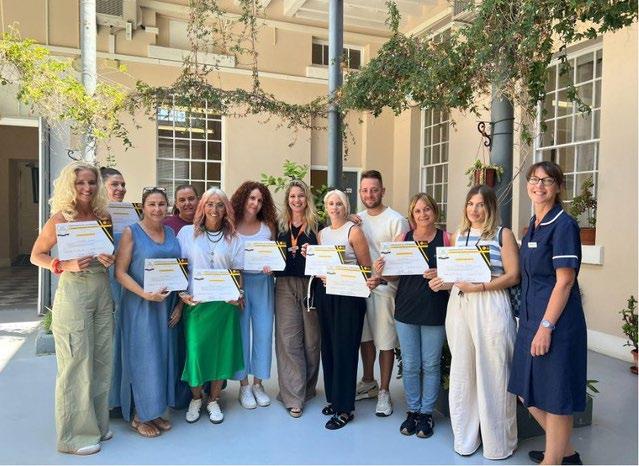
Surviving cancer is not the end of the story. With understanding and the right support, individuals and workplaces can move beyond surviving to truly thriving. Creating a workplace where no one feels alone during cancer is not just good for employees, it builds stronger teams and a stronger community.
To learn more about Cancer in the Workplace training or to book a session for your organisation, visit cancerrelief.gi or contact the team at fundraising@cancerrelief.gi or call +350 200 42392.
It’s not every day you hit the big four-oh.
But every day since 1985, our commercial insurance solutions have helped Gibraltar’s businesses be ready for t he unexpected.
Our solutions include:
Business Insurance
General Liability
Employer’s Liability
Contractors All Risk
Motor Fleet
Cyber Liability
Professional Indemnity
Directors and Officers
Holistic Practitioner

Entrepreneur James Barton explains how he is building ventures across multiple sectors and shares what other businesses should think about before switching lanes.
Walk along Main Street and you will find businesses that have survived not by sticking to one idea, but by adapting and adding new strings to their bow. A family shop might start out selling fabrics, then branch into school uniforms, stationery, or gifts. In Gibraltar’s small and competitive market, this kind of diversification has often been the difference between fading away and thriving.


From a business point of view, diversification means expanding into new products, services, or even entirely different sectors. It spreads risk, creates fresh revenue streams, and can make a company more resilient when markets shift. It is not without challenges, but when done well it can be a powerful strategy for growth.
That is what makes the story of James Barton so striking. At the age of 27, the founder of Barton Solutions has already spread his wings across four very different industries, from immersive media to food and retail. His journey shows both the energy and the strain that comes with chasing opportunities in a small market like Gibraltar.
“I’m a local 27-year-old with a strong passion for business,” James says. “Since a young age, both from being around my father’s own business and creating pseudo-businesses in video games, I’ve always known this is what I wanted to do.”
That early drive led James to launch Gibraltar’s first online directory, iMap.gi, while still a teenager. By 2023 he had founded Barton Solutions, specialising in high-end 3D visualisation and premium video production. It soon became the launchpad for a growing cluster of ventures.
“Right now, I run four main ventures across technology, retail, and food,” he explains. “Barton Solutions focuses on digital and immersive

media. Under Superfoods Ltd, I’ve launched Oakberry Gibraltar, a health-focused açaí concept; Candy Castle, Gibraltar’s first thematic sweet shop; and SnackStation, a new approach to vending machines built around cashless payments and premium standards of stocking and maintenance.”
On the surface these ventures look unrelated, but James sees a common thread. “They all share a focus on spotting gaps in the market and building something distinctive to fill them, with a strong focus on marketing and expanding the reach of those markets.”
Diversification was not the original plan. “It evolved organically,” James says. “I didn’t set out with a plan to operate in multiple sectors. Barton Solutions was my sole focus at the beginning, but once I spotted opportunities, like the gap in Gibraltar for quality açaí or an experiential retail concept, I acted on them.”
Oakberry came from a simple frustration. “I found myself regularly driving to Spain just to have an açaí bowl, and at a certain point I thought, we should have this here.” That concept paved the way for Candy Castle and then SnackStation.
Running multiple businesses is demanding. “I’ve worked seven days a week for the last two years, even on holidays, because that level of oversight is simply what’s required to run multiple businesses at once,” James admits.
The key has been support. “People like Jarod Vassallo, who’s been with me from day one, play an integral role in making everything run smoothly. Another crucial element is creating strong systems and processes. We’re increasingly integrating automation and AI tools to streamline workflows and improve efficiency, which is essential in a market like Gibraltar where labour costs are high.”
Convincing people to try something new has been tough. “With Barton Solutions, virtual tours were completely unfamiliar here, so getting clients to understand their value took time and persistence,” he recalls. In food and retail, the biggest hurdle is often securing the right location at the right price.
The experience has also reinforced the value of patience. “The biggest lesson is that depth matters as much as breadth. It’s easy to chase the next big thing, but if the foundations aren’t strong, growth becomes fragile.”
James is now preparing his next move. “I’m currently building a new concept alongside my team, and we’re in the very early stages of preparing to launch it. It should be live within the next nine months, and I’m extremely excited about it. This project is something brand new: it is a culmination of all the skills I’ve developed from launching previous ventures, combining tech, architecture, and operations into one new and proprietary concept.”

Even with international ambitions, Gibraltar remains home. “Its size allows you to build strong relationships quickly, and the mix of disposable income and tourism makes it a great environment to test and scale ideas. At the same time, I see Gibraltar as the ideal launchpad for something much bigger.”
James’s story shows what is possible when ambition meets opportunity. But diversification is not for everyone. Business owners considering this path should pause and ask themselves:
DO I HAVE THE RESOURCES TO EXPLORE A NEW SECTOR WITHOUT HARMING MY CORE BUSINESS?
AM I DIVERSIFYING TO SEIZE AN OPPORTUNITY, OR TO ESCAPE PROBLEMS IN MY MAIN BUSINESS?
DO I HAVE THE RIGHT PEOPLE TO MANAGE MORE THAN ONE VENTURE?
DOES THIS ALIGN WITH MY LONG-TERM VISION?
CAN I TEST THE IDEA ON A SMALL SCALE BEFORE COMMITTING FULLY?
James’s story shows what is possible when ambition meets opportunity. But diversification is not for everyone.


Gibraltar is brilliant at offline community. We see it in charity events, sports clubs, and the way word-of-mouth still powers so many businesses here. But online?
Many great local businesses haven’t turned that neighbourly energy into a digital community that drives loyalty, referrals and repeat revenue. The good news: you don’t need a big budget, a marketing team, or a complicated platform. You can build a simple, useful online community in 90 days, with tools you already have. I’ve built communities for years (including a 7,500-member Facebook group for coaches and consultants) and helped dozens of businesses do the same.
Building a community, not just a group of followers, matters because trust beats advertising. People are far more likely to act on recommendations from someone they know, and a true community concentrates that trust. It’s also more sustainable. Deepening relationships is more cost-effective than constantly chasing new attention. And perhaps most valuable of all, an engaged community gives you insight on tap. They’ll tell you what’s working, what’s not, and what they want to see next.
Trainers like Raul Mesa at Hybrix Gibraltar show how a clear identity and steady encouragement can build real community, both online and in person. His approach proves that when people feel seen and supported, they stay engaged. Imagine taking that same energy into a simple WhatsApp or Facebook group, where weekly challenges and client spotlights keep people connected. It’s low cost, easy to manage, and creates the kind of loyalty that no paid ad can buy. A small, active group can go a long way in a place like Gibraltar. My own Facebook group, Everyone Hates Marketing, started with a simple promise, no jargon, just practical advice. That focus helped it grow steadily and showed me how powerful small, useful communities can be.


Weeks 1 - 2: Frame it
1: Promise: one sentence your audience cares about. Eg: “A space for Gibraltar’s small businesses to swap proven growth ideas and support.”
2: Who’s in / who’s not: clarity builds safety.
3: Platform: start where your people already are: WhatsApp (micro, daily), Facebook Groups (broad, familiar), or LinkedIn (B2B). Don’t overthink it.
Weeks 3 - 4: Set the table
4: Welcome ritual: pinned post + 3 starter questions (name, what you do, what you need).
5: Cadence you can keep: e.g.
● Mon: “Wins & What Worked” thread
● Wed: “Ask & Offer” (questions + help)
● Fri: “Local Spotlight” (member or charity partner)
6: Simple house rules: kind, practical, no spam, real names.
● Mistake: trying to serve everyone.
Fix: name a primary group (e.g., “Gibraltar microbusiness owners under 10 staff”).
● Mistake: inconsistent posting.
Fix: pre-write next week’s three prompts on Friday.
● Mistake: no spotlight on members. Fix: one member story a week - photo + 4 questions.
Gibraltar responds to purpose. Consider inviting a local charity to contribute a short, practical post monthly - e.g., Cancer Relief Gibraltar, GibSams, or a cause your members nominate. Offer one volunteer day or a fundraising challenge each quarter. It builds pride and gives your community a reason to show up beyond business.
You don’t need a perfect plan; you need the first 20 people who care. Give them a place to meet, two useful posts a week, and a reason to help each other. In Gibraltar, that’s enough to spark something real. One of the biggest drivers to my community growth was contributing sparkling content to other online communities, with the permission of owners/admins,
Weeks 5–8: Create momentum
7: Weekly mini-challenge: “Post your best local collab,” “Share your 30-sec pitch.”
8: Member spotlights: short Q&As with locals (a café owner, PT, bookkeeper).
9: Offline touchpoint: a coffee morning or “walk & talk” at Commonwealth Park—post photos back into the group to tighten bonds.
Weeks 9–12: Make it valuable
10: Small problem - small solution: run a 45-minute Zoom on one issue members keep raising (e.g., “How to get real reviews without nagging”). Record it and pin it.
11: Partner for purpose: invite a local charity to share a short “how businesses can help” slot (see below).
12: Measure & tidy: archive dead posts, promote your best three threads, ask members what they want next.

of course. This gets you recognised as an expert in your field by the very people who need you most.
If you launch a group after reading this, drop me a line - I’ll happily share a simple welcome post template you can copy and paste. Here’s to making Gibraltar’s famous community spirit work online for your business, too. jonny@cib.global

KATIE BULLER
We’ve said it before and it looks like we’ll keep saying it: AI is changing everything. From AI-driven customer service chatbots and decision-making aids to automated content creation and smart analytics, these tools help small businesses compete more effectively with larger competitors. However, the increasing reliance on AI brings with it a new level of responsibility particularly when it comes to data privacy. Under the General Data Protection Regulation (GDPR), businesses must ensure they handle personal data legally and ethically, or risk hefty fines and significant reputational damage.
GDPR is designed to protect the personal data of individuals within the European Union and the UK, applying strict rules to businesses that collect, process or store this data. Small businesses in Gibraltar that use AI tools must follow the seven key GDPR principles:
1. Lawfulness, fairness and transparency
2. Purpose limitations
3. Data minimisation
4. Accuracy
5. Storage limitation
6. Integrity and confidentiality
7. Accountability
In simple terms, AI should only process the data it actually needs, and businesses must be upfront about how they’re using it. Transparency is key here, your customers and employees should know how their data is handled, and in some cases, they must give explicit consent before AI tools can be used. And don’t forget to check where the AI platforms you are using store your data, because if it’s outside of the EU or UK, you will likely need to have extra safeguards in place to stay compliant.


AI tools can be incredibly useful, but they also come with hidden compliance risks. Many small businesses unknowingly risk GDPR breaches by using free or third-party AI platforms like ChatGPT, transcription services, or automated content generators. These tools often require large amounts of data input, which could be stored, processed, or even used to train future AI models without your knowledge.
Here’s a hypothetical scenario to illustrate some of the pitfalls you’ll need to be aware of. Imagine a legal firm testing a free AI-powered tool to transcribe client meetings, summarise key points, and draft legal documents. It streamlines admin tasks and speeds up workflows. However, it also raises serious GDPR concerns.
In this scenario, the AI tool transcribes a confidential client meeting in real time, picking up sensitive details about a potential legal strategy. It summarises key points, extracts follow-ups, and then generates a draft contract.
1. Sensitive data handling
The AI tool, being free and cloud-based, may store data on overseas servers with limited transparency about who accesses it. GDPR requires firms to process data lawfully and transparently. In this example, the firm hasn’t told the client AI tools will be used. This could breach consent rules.
2. Cross-border data transfer
If the tool stores data in the US or other nonGDPR jurisdictions, this could be a violation unless strict safeguards are in place. Key questions arise:
Where is the data stored?
Is it encrypted?
How long is it retained?
Can it be deleted on request?
If the firm can’t answer these confidently, it risks non-compliance.
3. Data rights and retention
GDPR gives clients the right to access, correct or delete their data. Free AI tools rarely offer this level of control. In some cases, data may even be used to train the AI, putting legally privileged information at risk.
4. AI-generated outputs and liability
In this case, the AI also drafts a contract. If it misinterprets something or leaves out critical details, the resulting document could be flawed. Without human review, there’s a risk of legal or reputational fallout.
Lessons (hypothetically) learned
Firms considering similar tools should:
Use GDPR-compliant services
Choose providers with servers in the UK or EU and clear privacy policies.
Gain informed consent
Update client onboarding materials to explain how AI may be used.
Review AI-generated content
Never send legal documents to clients without human oversight.
Control data storage and deletion
Ensure you can remove data on request and avoid using tools that retain or repurpose it.
While AI offers significant benefits for small businesses, this example case study highlights why businesses must vet their AI providers, understand data storage policies, and implement strict compliance measures. For data-sensitive industries like legal, finance, or healthcare, ensuring GDPR compliance when using AI is not just a legal requirement, but a fundamental part of maintaining client trust.
AI is revolutionising the way small businesses operate, but it is also introducing new data privacy challenges. Small businesses must integrate AI tools with care, ensuring that innovation doesn’t come at the cost of compliance. By understanding GDPR obligations, adopting best practices, and using trusted resources like the GRA, small businesses in Gibraltar can embrace AI while keeping customer trust. It is also important to remember that data protection laws are evolving just as fast as AI technology. Staying informed and proactive will keep your business ahead of the curve in a world where AI and privacy must go hand in hand.
1 https://www.gdpreu.org/7-main-data-protection-principles-under -gdpr/
To stay compliant while still benefiting from AI, small businesses in Gibraltar should follow these five steps: Avoid the input of personally identifiable information and sensitive business data into AI tools.
Inform customers, employees, and other stakeholders about AI usage and obtain consent where required.
Regularly assess and audit your AI tools, reviewing data handling and storage policies, as well as any potential risks.
of local
and resources, in particular the Gibraltar Regulatory Authority (GRA), which offers guidance on data protection best practices and GDPR compliance. For more information and helpful resources,

“Initiatives from associations on data protection are both welcome and essential. Data protection law is not simply a regulatory obligation, but a framework that protects individuals, empowers businesses, enables technology, strengthens society, and generates value through trust. From this perspective, the responsible use of AI is paramount to enabling both business and technology.
The GRA supports local associations through workshops and other forms of engagement to help address challenges relating to AI within the context of data protection. Our aim is to respond to common issues and challenges faced by organisations, provide guidance and support, and foster collaboration by creating synergies around shared challenges.
Bradley Tosso Director of Information Rights and Operations, GRA



Do you remember names like Laura Ashley, Woolworths, Miss Selfridge, Naf Naf or Kookai? These were once powerhouses on British high streets, brands that defined decades of fashion and lifestyle. But like many icons of their time, they eventually faded into the background, becoming nostalgic footnotes in retail history.
Last October, I wrote a heartfelt piece for this very magazine about the sad demise of Ted Baker, a brand I not only stocked in my store but one I felt a deep personal connection to. It was one of those brands that stood for something: quality, quirkiness and quintessential British charm.
So, you can imagine my surprise (think emoji with hand over face) when, just a couple of months later, I received a call from the new owners of Ted with a proposal to partner on their relaunch.
We have all seen what can happen when iconic brands get bought out. Often, it is less about revival and more about exploitation: logos slapped on low-quality products with little thought for heritage or integrity. The brand gets diluted, the customer disillusioned and the story ends in disappointment. The owner walks away with a wad of cash and a once much-loved brand’s identity is left in tatters.
That was my biggest concern walking into that first meeting with the new Ted Baker team in London. But what I found gave me hope.
We had a long, honest conversation about what went wrong and, more importantly, how they planned to make it right. Here are just a few of the commitments that stood out:
The team is focused on reclaiming Ted’s original identity by designing for the loyal customer who fell in love with the brand’s unique voice. They have done their homework and even brought back several ex-employees who deeply understand what Ted is really about.
Great brands are instantly recognisable not just by a logo, but by the feel of a product. Think Apple, Dyson and yes, the old Ted. The new collections aim to bring back those iconic, detail-rich pieces that speak volumes without shouting.
Fashion is not just about numbers, it is about nuance. The new team understands the delicate balance between quality, price, distribution and storytelling. They have successfully revitalised other struggling brands and this gave me hope that they could deliver on their promises.
With that, we agreed to take a measured, thoughtful approach to reintroduce Ted Baker in Gibraltar. And I am thrilled to share that, just twelve months after saying farewell, we are proudly welcoming Ted back to Marble Arc.
We are especially excited to be one of the first retailers worldwide to stock the new range. And here is the cherry on top: Ted Baker’s women’s clothing and accessories will launch by the end of October, perfectly timed for the festive season.
The initial collection has landed to a warm reception by our team, with Ted’s signature subtle detailing and wearable, stylish pieces. We cannot wait to hear what our customers think.
As for me, I am cautiously optimistic but deeply encouraged. Ted is back. And maybe, just maybe, this phoenix has a few more lives left in it.
Raju Purswani is the Founder of Marble Arc on Main Street and a regular Thrive contributor.

At NatWest International our Commercial teams are here to support you with all aspects of your banking needs.
We provide everything from timely movement of payments through our multi-currency electronic banking platforms, to satisfying complex liquidity and borrowing needs. Across our four jurisdictions we’re proud to help our 14,000 customers, spanning from sole traders and SMEs to large corporates. Our dedicated team of experienced Relationship Managers are on hand to offer support and guidance.
The local team are introduced below, with each being a key member of the NatWest International team…

Bianca Lester Head of Corporate and Commercial, Gibraltar
E: Bianca.Lester@rbsint.com
T: +350 56001476
Bianca started her career in RBS Gibraltar 27 years ago. After having fulfilled several different roles within the Bank, Bianca joined the Corporate Team in October 2003. She’s been involved in several key local transactions over the years and 5 years ago took up the role of Head of Corporate and Commercial for Gibraltar.
Bianca comments, “I am delighted to have been given the opportunity to develop and support our corporate customers, ranging from the small business in the high street to the largest corporate businesses in their everyday banking needs. I am committed to providing an excellent customer service and delivering the best customer experience.”

Mark Stevens
Relationship Manager, Top 25 Portfolio
E: Mark.Stevens@rbsint.com
T: +350 20014438
Mark has been with the Bank for over 30 years. He worked in the UK, before moving to work in Guernsey, Isle of Man, Jersey and now Gibraltar. Having started his career in the retail side of the business, Mark transitioned across to the Commercial team when he moved to Jersey. He has taken on roles in both Real Estate Finance and Corporate and Commercial.
Mark says, “My attitude and drive has always been centred around putting the customer first and treating our customers in the way I would like to be treated. My desire to help all bank customers means I am always happy to help find practical solutions and to collaborate with colleagues to ensure we find the right outcomes to support our local communities.”

Sylvana Balestrino
Relationship Manager
E: Sylvana.Balestrino @natwestint.com
T: +350 20014617
With over 33 years of service at NatWest International, Sylvana Balestrino brings a wealth of experience and expertise to her new role as Commercial Relationship Manager. Her career spans a wide range of positions, most recently as a Senior Mortgage Specialist, where she delivered tailored financial solutions to personal and business clients.
Sylvana’s strong local market knowledge, meticulous attention to risk management, and unwavering commitment to customer service enable her to build trusted, long-standing relationships, underpinned by integrity, care, and a genuine passion for helping clients achieve their financial goals. Sylvana comments, “I’m passionate about building lasting relationships and being a trusted partner who genuinely supports customers through every stage of their journey.”

Amanda Cid de La Paz
Assistant Relationship Director E: Amanda.CiddeLaPaz @natwestint.com T: +350 57302000
Amanda started her career in retail banking over 23 years ago and has held various customer-facing roles within NatWest International. She has diligently worked on developing her communication and leadership skills, earning the trust of both colleagues and customers as a trusted advisor. Transitioning onto the Corporate and Commercial team to become a Senior Assistant Relationship Director 3 years ago, she has committed to building enduring relationships with her customers and understanding their needs to provide tailored solutions.
Amanda comments, “I am a proud advocate of our NatWest International brand, bringing a wealth of knowledge and experience in both the personal and non-personal sectors of the bank. I strive to provide an exceptional service to our customers and support them with their banking needs.”

Cheryl Neale
Assistant Relationship Manager, Commercial Banking
E: Cheryl.Neale@rbsint.com
T: +350 58009610
Cheryl started her banking career in 2001 at the age of 19 where she was part of the operations team. Over the years she has worked in several different departments including voucher processing, payments and cashier. Through these roles she has gained a lot of knowledge on systems and processes.
Cheryl has been part of the Corporate Banking team for the past two years and she likes to ensure that her clients receive a high standard of service and works to form a close working relationship with them.
Cheryl believes, “Excellent customer service is the key to a great relationship with the customer.”
NatWest International House, 57 Line Wall Road, Gibraltar. Tel. 200 77737 or 200 73200. Regulated and authorised by the Financial Services Commission, Gibraltar to undertake Banking and Investment Business from 55 and 57 Line Wall Road, Gibraltar. Calls may be recorded. Internet e-mails are not necessarily secure as information might be intercepted, lost or destroyed. Please do not e-mail any account or other confidential information.



After several cautious quarters, Gibraltar’s property market is beginning to show renewed signs of stability and life. That said, it’s not exactly been the Frankenstein-style jolt to life comeback we were all hoping for, but it’s a start according to Louis Montegriffo, MD at BMI Group Estate Agents.
While much of the attention has focused on Gibraltar’s residential fluctuations, it is the commercial sector that has held up and, in some cases, stood firm through recent uncertainty. The past few years have seen a mix of falling values, nervous buyers, and deferred deals, especially in the residential segment. But commercial tenants have largely stayed put. As Louis explains, “We have not seen any exits as such, or companies leaving the jurisdiction. They’ve all stayed.”
While much of the attention has focused on Gibraltar’s residential fluctuations, it is the commercial sector that has held up and, in some cases, stood firm through recent uncertainty. The past few years have seen a mix of falling values, nervous buyers, and deferred deals, especially in the residential segment. But commercial tenants have largely stayed put. As Louis explains, “We have not seen any exits as such, or companies leaving the jurisdiction. They’ve all stayed.”
That resilience speaks volumes. Despite little headline growth, frontline commercial units have maintained their value and demand. There’s also quiet movement behind the scenes, with tenants not just staying, but in some cases planning to expand.
BMI’s update for Q3 suggests that while activity over summer was predictably slow, interest began to pick up again in September. Sales across the board have softened in the past two years, and Louis noted a drop in property values of around five per cent annually, higher in some areas. But for commercial stock, the floor has held.
Retail is another story. While still absorbing the impact of changing consumer patterns and upcoming changes like the proposed transaction tax, the sector may also benefit from a new type of buyer.
“Retail has a great deal of scope,” Louis said, pointing to the spending power of new high-value residents. “We’re no longer a brass plating jurisdiction, far from it. These are individuals who are actually spending time in Gibraltar and therefore spending money.”
This shift from offshore to on-the-ground residency is changing how retail businesses plan. In areas where
As confidence builds, expectations are also shifting. Louis believes the thresholds for residency-linked status, including Category 2 and HEPSS, are likely to rise.
“I would imagine that the finance centre is already looking at changing those thresholds too,” he said. “The value that one would need to declare in so far as net worth, to be able to apply for residency in the Cat 2 or Hep status in Gibraltar will rise.”
Commercially, that matters. Higher thresholds mean that those who qualify are more likely to invest, spend, and build connections locally. It may also shift demand toward better-located, better-fitted spaces, particularly in mixed-use developments or office hubs.
At the same time, smaller properties historically approved for tax residency purposes may no longer qualify. Louis confirmed this: “Properties (of the smaller nature) that may historically have been approved for high-value, Cat 2 and HEPSS clients, are being looked at on a case-by-case basis.”


Gibraltar heads into Q4?
Cautiously optimistic. Rental yields have fallen slightly, from five per cent to closer to four, but demand for well-located space remains high. The office sector has avoided the pullback seen in other regions, and high-value tenants are still in the market for flexible but credible space.
Even in the residential segment, the most significant market movement has been at the extremes. Studio apartments and off-plan units bought by speculators have seen oversupply, while larger homes and waterfront properties continue to attract long-term buyers.
The realignment, as Louis calls it, may be painful in places, but it’s also making room for more realistic pricing and longer-term planning. “We can’t ignore the fact that the market grew by up to 50 to 100% between 2020 and 2022, so it’s not really been a recession but more of a realignment.”
Commercial property continues to reflect something fundamental about Gibraltar: a place where companies may pause, but rarely pull out.
Louis sees opportunity in that consistency. “The key factor to take is that they stay and they are seeking to grow, and we are experiencing this with our commercial tenants. It’s a good sign.”
Retailers will need to adapt, especially as cross-border flows evolve under the new agreement. Offices may need to become more flexible, and landlords more responsive to the needs of resident-driven businesses. But the fundamentals remain sound.
With new residency routes set to enhance Gibraltar’s appeal and potential funding support for affected sectors still on the table, the question now is whether the coming year will finally bring the bounce many have been waiting for.
In Louis’s words, “We’ve been able to breathe easier since June, and we now take the opportunity if you like, to plan forward on what generally everyone believes will be a positive next few quarters and years to come.”


From cafés to cloud services, reliable connectivity is now at the heart of how every business operates. At Gibfibre, Head of Operations Julian Sheriff is helping companies of all sizes make the most of new tools, from Microsoft Teams voice services to secure data centre hosting. We sat down with him to talk about his role, the latest services on offer for GFSB members, and what small businesses in Gibraltar should know about data, technology, and staying competitive.
I’m Head of Operations at Gibfibre, which means I wear quite a few hats. My role spans strategy, service delivery, and ensuring our customersboth residential and business - get the reliability and quality they expect from a modern telecom provider. On any given day I might be meeting with enterprise clients to understand their needs, overseeing our data centre operations, analysing business performance, managing new business initiatives, or working with the marketing team on campaigns that showcase what we do. A lot of my time is also spent planning ahead - looking at the next step in Gibraltar’s digital infrastructure and how Gibfibre can be at the forefront of that journey.
I’ve always been fascinated by how technology connects people. Telecoms is an industry where you see that impact immediately - from a family streaming their favourite show to a business trading across continents in real time. What I enjoy most is the mix of challenge and innovation: you’re solving highly technical problems on one side, while also shaping how communities and businesses communicate and grow on the other. Gibraltar is unique because of its size, so decisions we make can have a very direct, visible impact on people’s daily lives. That’s a responsibility I enjoy carrying.
YOU RECENTLY LAUNCHED A NEW TEAMS SBC VOICE SERVICE. WHAT IS IT, AND HOW DOES IT HELP BUSINESSES?
Our Teams SBC Voice service is essentially a bridge between Microsoft Teams and the traditional phone network. It lets businesses use Teams not just for internal collaboration, but also as a fully functioning phone system with Gibraltar numbers. For small businesses, this means fewer systems to manage, cost savings, and the ability to handle calls from anywhere - office, home, or on the move - all through the same platform they’re already using for chat and video. It makes communication much simpler and much more flexible.
MEMBERS NOW BENEFIT FROM SPECIAL PACKAGES - WHO ARE THEY FOR AND WHAT’S INCLUDED?
We wanted to make enterprise-grade infrastructure accessible to smaller businesses. The GFSB member packages give companies rack space in our secure Gibraltar data centre, backed up by high-speed connectivity, resilient power, and 24/7 monitoring. This is ideal for businesses that need to host servers, manage backups, or comply with data regulations but don’t have the scale to build their own facilities. We include connectivity, power, and support in a straightforward package so members can get the benefits of a modern data centre without the complexity or cost barrier.
The campaign is about showing that whether you’re running a café, an investment firm, or a global office, connectivity underpins everything. We used the 3D format to make it engaging and to show the “worlds” of different businesses - how each one looks different but all depend on reliable telecoms to function. The key message is that Gibfibre is not just about broadband: we’re an enabler of business growth, helping companies of every size to stay connected, secure, and competitive.
Data protection and compliance are becoming stricter worldwide, and Gibraltar is no exception. Small businesses sometimes assume these rules only affect larger firms, but that’s not the case. Whether it’s storing customer details securely, ensuring backups are GDPR-compliant, or knowing where your data physically resides, there are obligations that apply to everyone. My advice to small businesses is to treat data as an asset: protect it, know where it is, and make sure your service providers can demonstrate compliance.
We’re seeing a hybrid world becoming the norm. Businesses want the flexibility of remote work and cloud tools, but they also want the reassurance of local presence and security. The biggest trend is convergence: instead of multiple disconnected systems, companies are moving towards integrated solutions where voice, data, security, and collaboration tools work together. For local businesses, that also means thinking about resilience - having proper backups, diverse connectivity, and plans in place if one link goes down.
Start small, but start somewhere. The worst thing you can do is ignore technology because it feels overwhelming. A good first step might be something as simple as moving your phone system to Teams or setting up proper data backups. Once you see the benefits - efficiency, peace of mind, cost savings - it becomes easier to take the next step. And don’t feel you have to do it alone: that’s exactly what providers like Gibfibre are here for, to guide and support businesses through the process.
We’re working on expanding our voice services even further, giving businesses more choice in how they handle calls and communications. We’re also developing new enterprise connectivity products that link Gibraltar directly to cloud providers like AWS, Microsoft, and Google, so businesses here can have the same level of access as companies in London or Madrid. For smaller businesses, we’re looking at simplified packages that bundle internet, voice, and backup together so they can get everything in one place without having to manage multiple providers.
One that stands out was a local café that upgraded its Wi-Fi and added a basic IPTV package with us. It might sound small, but suddenly customers stayed longer, ordered more, and the café became a spot for sports fans to gather. Their revenue jumped just from that simple change. It shows that sometimes, a small tech upgrade can transform how a business operates and how customers engage with it.
REBECCA JACKSON
The Political Agreement between the EU and the UK over Gibraltar is finally giving us some clarity, and yet, it also reminds us just how much sits outside our control. The finer details will take months to surface. Political tides may shift. Promises will be tested by practicalities. The uncertainty isn’t gone, it has simply changed form.
As business owners, it’s tempting to fixate on these big developments. They feel important; and they are. But they’re also largely outside our control. And spending too much time ruminating on them can quietly drain us and become all consuming.


Because it’s not just border politics. Every day, we face issues beyond our reach: new legislation, competitor actions, market trends, customer behaviour, staff turnover, illness, family responsibilities, global events. All of it lives in what Stephen Covey calls the Circle of Concern - things we care about, but cannot directly change.
The more we fixate on them, the more frustration can grow. Not because we’re weak or negative, but because our minds are wired to search for control. The problem is when we look for it in the wrong places.
Stephen Covey’s Circles of Concern and Influence offer a helpful frame. A third circle - Control - is often added to make the distinction even clearer:
● The Circle of Concern includes everything we care about but can’t directly affect: economic conditions, government policy, the past, how others behave and react, even the weather. Trying to control this circle leads to frustration, worry, and often, paralysis.
● The Circle of Influence includes the things we can affect indirectly: our business relationships, reputation, team culture, supplier networks, client loyalty. These take time to build but can be shaped through our actions.
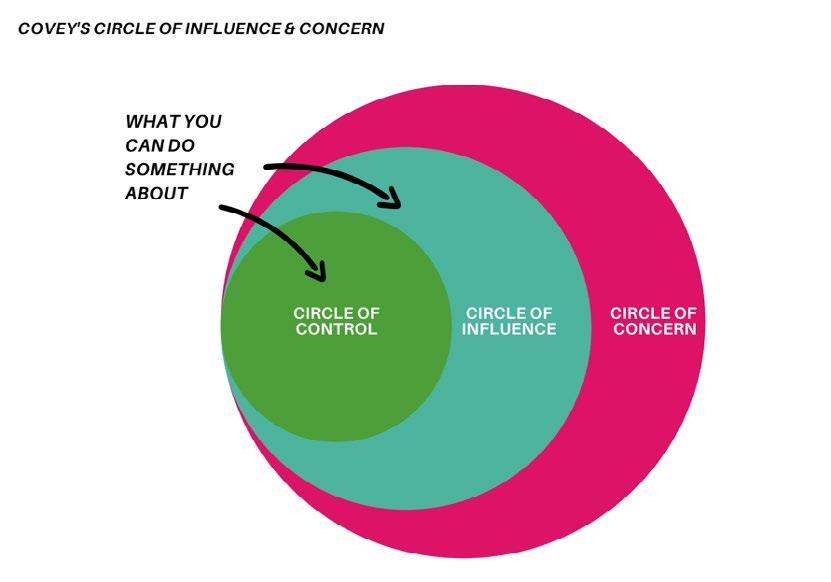
● The Circle of Control is the smallest circle, but most powerful: how we lead, how we respond, the standards we hold, the decisions we make, the effort we bring, how we spend our time, where we place our attention.
When we focus on what we control and influence, we build momentum. When we dwell in what we can’t control, we lose energy. Over time, our sense of agency shrinks - and so does our resilience.
“Proactive people focus their efforts in the Circle of Influence. The nature of their energy is positive, enlarging, and magnifying.” Reactive people, Covey warned, “focus their efforts in the Circle of Concern... Their focus results in blaming and accusing attitudes and increased feelings of victimisation.”
Before reading on, take a moment to reflect:
● Do you naturally lean towards a particular circle in the model above? How does that serve you?
● What is in your Circle of Control right now?
● What is occupying you in your Circle of Concern that you can let go of?
A powerful insight for business leaders is this: action within your Circle of Control can ripple outward. The choices you make - how you communicate, how you treat people, how you invest your time - affect not only you, but your team, your clients, and the wider business environment you operate in.
Consistently showing up well in your Circle of Control builds credibility, trust, and influence. And that influence, over time, allows you to shape more than you could before. It expands your Circle of Influence - and with it, sometimes, even your Circle of Control.
In practice, this might mean that by handling uncertainty with calm and clarity, your team begins to engage more proactively. Or that by resolving a customer issue with integrity, you rebuild trust that leads to new opportunities. Small acts compound, and quiet consistency earns influence.
So while it can feel narrow to focus only on what you control, that focus is anything but passive. It’s what creates the conditions for your leadership to grow.
Letting go of the Circle of Concern is not the same as ignoring it. It’s not about sticking your head in the sand or pretending everything is fine. It’s about consciously choosing not to spend your best energy and headspace where it won’t make a difference.
Many business owners are natural problem-solvers; analytical, focused, driven. These strengths can become liabilities if we keep trying to solve problems that aren’t solvable - at least, not by us, and not right now.
That’s when rumination creeps in: What if the deal changes? What if my competitor undercuts me? What if my best staff member leaves? These are real concerns. But they only help us when they lead to productive action. Beyond that, they just deplete us.
Letting go takes discipline. But it frees you to reinvest that energy into something useful - your people, your priorities, your next move.
Start small. If something is keeping you awake at night, ask yourself:
● Is this in my control?
● Can I influence it?
● Or do I simply care about it?
Then act accordingly. If it’s in your control, take action. If you can influence it, engage, explore, plan. If it’s only in your concern, acknowledge it, then let it be.
You don’t need to solve everything. But where you choose to place your attention — that’s leadership.
Rebecca Jackson is an executive coach and leadership consultant working with leaders and executive teams in fast-growing, complex businesses - large and small - in Gibraltar, Europe and the US. She helps leaders build trust, think clearly, and lead with resilience - even when the path ahead isn’t obvious.
Find more resources at rebeccajackson.substack.com
Draw three circles in the same way as the model - like a target. Label the centre Control, the middle Influence, and the outer Concern.
Write down what’s occupying your headspace - everything from strategic decisions to day-to-day worries.
Place each item in the right circle: Control = things you can act on directly Influence = things you can shape over time Concern = things you care about but can’t change
Then reflect:
● Where am I spending most of my energy?
● What am I trying to control that I can’t?
● What’s one action I could take this week in my Circle of Influence?
Small shifts here can help you lead with more clarity - and protect your energy for where it counts most.










On a Saturday morning you might see a group of colleagues in company t-shirts joining a beach clean at Eastern Beach. Another team might be helping set up an event for Cancer Relief. Corporate Social Responsibility (CSR) has long been a way for Gibraltar’s businesses to connect with the community, but it is no longer something reserved for the big corporations.
The most meaningful CSR often comes from companies that give their time, skills, and energy in ways that feel personal and authentic. In a community as close-knit as Gibraltar, that effort makes a lasting impression. It’s about recognising the impact your business has on the world around it and choosing to make that impact a positive one. It can be as simple as supporting a local charity, sharing expertise with a school, or committing to reduce waste.
In a place like Gibraltar, reputation is everything. Companies that consistently show up for their community often find that loyalty is returned. It can mean word-of-mouth referrals, repeat business, and employees who are proud to work for a business that gives back.

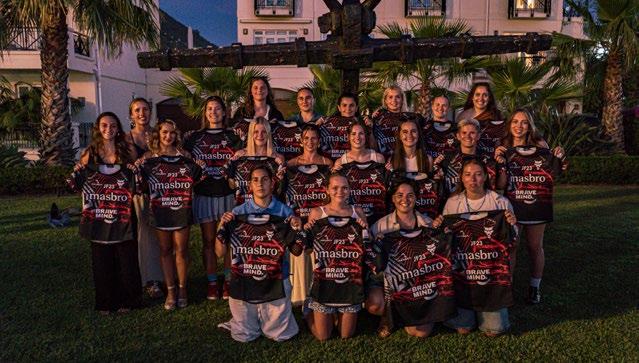
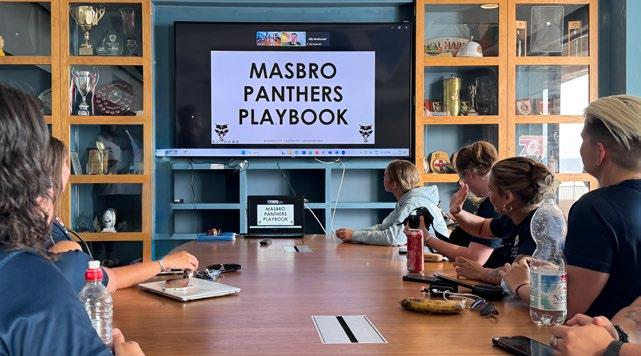
One local company that goes beyond the ‘charity cheque’ approach is Masbro Insurance Brokers. Its Wellbeing Committee, which is formed of employees from across the business, oversees the company’s cultural and charitable programmes including its support of sporting initiatives. The group meets regularly and decides on how the firm can have a positive, lasting impact on the community. Earlier this year, Masbro supported the creation of a new pathway into elite rugby for women through a partnership with UK team Akuma Savvy Panthers. The new team benefited from a structured training programme delivered by expert coaches and players, including sessions focused on strength and conditioning, game awareness, and sevens-specific skills. The team debuted, and won, the elite division at the 2025 Gibraltar 7s tournament. Masbro is now in its third year of also sponsoring a women’s netball team throughout the 2025/26 season. Named the Masbro Panthers, the partnership looks to support Gibraltar’s young players as they compete and develop their skills.

It also champions cultural projects like the Rock Retreat and is currently displaying artwork by local artists in its client-facing reception area through a collaboration with Gibraltar’s Fine Arts Association. Fresh exhibitions of original work by locally-based artists are curated every three months with all proceeds of art sold going directly to the artists.
Acquarius, a corporate services firm, has also put CSR at the heart of its operations. In 2024 it won Startup Grind’s Sustainable Rising Star Award and has been recognised for supporting community projects
ranging from cultural events to youth rugby. Staff regularly join environmental initiatives such as local beach cleans. By combining financial support with hands-on volunteering, Acquarius has built a reputation as a company that contributes widely and consistently.
Of course, Masbro and Acquarius are not alone in this. Across the Rock there are many other firms investing time and love into causes that matter. From sponsoring youth sports and supporting the arts, to volunteering with charities and taking part in environmental projects, local businesses are showing that CSR is not a side project but an important part of how they operate.
The organisations that do CSR well usually follow three guiding ideas:
When your approach reflects your own values, it feels genuine. A fitness brand might choose to support Clubhouse Gibraltar through health and wellbeing activities. A tech firm might volunteer to teach coding in schools. The point is to link your efforts to what you care about most.
A single event is helpful but lasting change comes from commitment. Regular volunteering days or a long-term partnership with a local charity builds trust and shows that your business is serious about making a difference.
Even modest actions can be measured. Tracking the hours your team volunteers or the amount of waste reduced gives a clear picture of progress. Sharing that information in a simple way helps customers and colleagues understand the difference being made. CSR is not about size or show. It is about consistent actions that reflect who you are and what you value. In Gibraltar those actions are noticed quickly, whether it is an employee volunteering at a helpline, a team helping at a local event, or a business committing to reduce waste.
Start with what you can realistically offer. Keep it regular and keep it genuine. Over time your efforts will not only help the community but also strengthen your reputation with loyalty, trust, and pride.
CSR does not have to mean signing a large cheque. There are many ways to give back that fit the scale of a local company.
Offering employees paid time to volunteer can boost morale and teamwork while supporting vital services. Opportunities in Gibraltar are varied, from beach cleans with The Nautilus Project to helping the Horticultural Society care for the Alameda Gardens. Charities like Childline Gibraltar, Cancer Relief, and GibSams are also always looking for practical support.
Every organisation has expertise that could benefit others. Mentoring young people, giving talks in schools, or offering free professional advice to start-ups are powerful ways to strengthen the community while building your reputation as a trusted voice.
Simple steps such as cutting down on single-use plastics or improving recycling add up. Partnering with groups like The Nautilus Project shows your commitment to protecting Gibraltar’s natural environment.
Posting online is fine but it only goes so far. Real impact comes when awareness is matched by action. Hosting a fundraising event, matching staff donations, or actively supporting a cause will carry more weight with your customers and colleagues.
A versatile, welcoming workspace in the heart of Gibraltar ideal for everything from formal meetings to casual drop-in work sessions. Located within the Gibraltar Federation of Small Businesses premises at 122 Main Street, this recently refreshed hub houses the Gibtelecom Conference Hall, justbank Boardroom, TTMS Meeting Room, and TTMS Library—each equipped with high-speed Wi‑Fi, air conditioning, and complimentary tea & coffee.
Whether you're planning a workshop, hosting a client pitch, or simply seeking a quiet, professional environment to get stuff done, the hub offers flexible room bookings daily.


CHECK OUT HIRE PRICES AND ROOM SPECS:






You have a brilliant idea. You can picture the logo, the customers, maybe even the first sale. But without a clear plan for how to get there, the idea risks staying exactly that – an idea.
Starting a business without a plan is like setting off on a trip with no map. You might eventually arrive somewhere, but it is unlikely to be where you hoped. A business plan is not just paperwork. When written with care, it is a roadmap that guides every decision, a pitch that wins support, and a source of confidence on the days when challenges mount.
Eran from Benefit Business Solutions puts it well: “For my business, the plan isn’t just a document we wrote and filed away. It’s the compass we use to navigate the unpredictable waters of international markets. When things get busy, it keeps us anchored to our original vision and reminds us of our targets.”

A business plan sets out your goals and the steps you will take to reach them. It turns vague ideas into something tangible, forcing clarity on how you will operate, who you will serve, and how you will measure success.
As Toby from Artimus Business Services explains:
“A clear and realistic business plan is essential. It keeps you focused, helps you spot problems early, and shows others, like banks or investors, that you’re serious and capable.”
Plans can be written for different purposes. An internal plan is practical, focused on daily operations and decision-making. An external plan, for banks or investors, needs to be persuasive, with more detail and evidence. The structure is similar, but the tone will shift depending on the audience.
Think about your audience before you begin.
● Internal readers: founders, managers, employees. They want clarity on your vision and how it translates into day-to-day work.
● External readers: banks, investors, potential partners. They want proof that your market exists, that your numbers are realistic, and that your team has the skills to deliver.
A strong plan usually covers these essentials:
Executive Summary
One or two pages that capture who you are, what you do, why it matters, and how you stand out. Many readers will only scan this section, so make it count.
Business Overview
A fuller description of your company. Include structure, location, history, and mission.
Market Analysis
Show you understand your sector. Identify your target market, customer profile, competitors, and trends. This is where you prove there is real demand.
Explain what you sell, how it solves a problem, and why customers will choose you. Include your pricing strategy and how you plan to stay competitive.
Operations Plan
Set out how things will run day to day. Who are your suppliers? How will you deliver your product or service? This is where ideas turn into practical steps.
Revenue forecasts, profit and loss projections, and cash flow statements. Be honest, even cautious. Toby suggests showing a range of scenarios – best case, median, and worst – to demonstrate that you have thought about challenges as well as opportunities.
Beyond the basics, consider including:
● Founding Team: Introduce the people behind the idea. Their skills and experience matter to investors and partners.
● Marketing Plan: How will you reach and keep customers, both online and offline?
● Growth Plans: Outline your ambitions for the next three to five years.
● Risk Analysis: Highlight possible risks and explain how you will manage them. No business is risk-free.
● Keep it simple. Write in plain English, avoid jargon, and get to the point.
● Use evidence. Support your claims with data, research, or customer feedback.
● Add visuals. Charts, tables, and infographics help readers understand your numbers.
● Review it regularly. A plan should evolve with your business, not gather dust.
● Show personality. A business plan can still reflect your brand voice and values.
Eran says: “It’s what helps us stay proactive instead of reactive, ensuring every step we take is a purposeful one towards achieving the performance we envisioned.”
A business plan is not a one-off task. It is a living guide that grows with you. Writing it will sharpen your ideas, highlight opportunities, and flag risks before they become problems.
There is no such thing as a perfect plan, so do not wait. Start with what you know, get it down on paper, and refine as you go. The important thing is to have a compass that keeps you moving forward with clarity and confidence.
And remember, you do not have to do it alone. The GFSB offers events, resources, and connections that could help guide this process. You can also use the free template from Kings Trust:
Kings Trust Business Plan Template www.kingstrust.org.uk/how-we-can-help/toolsresources/business-tools/business-plans





GTCS offers licensed trust and company management services, backed by experienced professionals, serving Gibraltar based and international clients since 1968.
• Company Formation and Management
• Trust and Estate Planning
• Corporate Banking Services
• Client Accounting Services
• Yacht Registrations
Regulated by the Gibraltar Financial Services Commission
Menopause directly affects half the population and the other half indirectly, yet it is still a topic that makes people lower their voices. A natural life stage known as perimenopause, the start of the change arriving for most women in their forties and continuing until, well, forever, known as post menopause. The life-long subscription you never signed up for! And let’s not leave out those who may have medical, surgical or treatment induced menopause which can start overnight and even younger too.
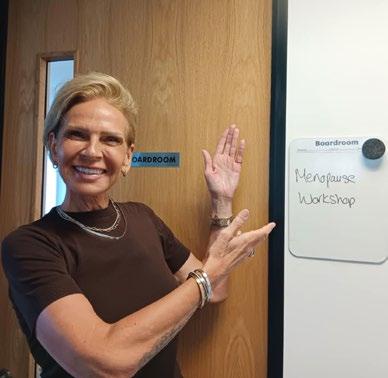
Menopause is actually just one day; officially the 365th day without menstruating. Perimenopause, the years leading up to it and post menopause, the years beyond, can span decades. Hormones fluctuate and then decline rapidly over time, first mainly estrogen and progesterone, causing symptoms to worsen throughout the journey. We’re talking brain fog, anxiety, joint pain, poor sleep, fatigue and a plethora of other lesser-known symptoms too. The sort of symptoms that can make even the most organised person feel as if their life admin folder has been thrown out of the window.
Testosterone, yes, women have that too, is a much slower decline leading to potentially worse cognitive function and a loss of libido throughout the menopause experience.
In 2002, the Women’s Health Initiative (WHI) study made headlines claiming that Hormone Replacement Therapy (HRT) increased the risk of breast cancer and heart disease. Overnight, millions of women stopped taking HRT. What the media didn’t shout as loudly about, and still don’t, was that the study involved women much older than the average age of menopause who used oral estrogen and not transdermal estrogen, which is more commonly now used and far safer. Results were misinterpreted and later data showed that the risks were far smaller than reported and for most women, the benefits far outweigh them.
Fast forward to today and experts agree transdermal, body-identical HRT can be life changing and is protective against osteoporosis and heart disease for many women. The stigma, however, lingers like a bad rumour from the office Xmas party!
Despite all the progress in conversations about mental health, menopause remains a taboo, especially in the workplace. Many women still feel embarrassed to talk about symptoms, fearing it will be seen as weakness or a career liability. The result is women suffering in silence, reduced productivity and in some cases, talented women leaving their roles early.
Workplaces that embrace openness and provide support retain talent and create cultures that thrive.
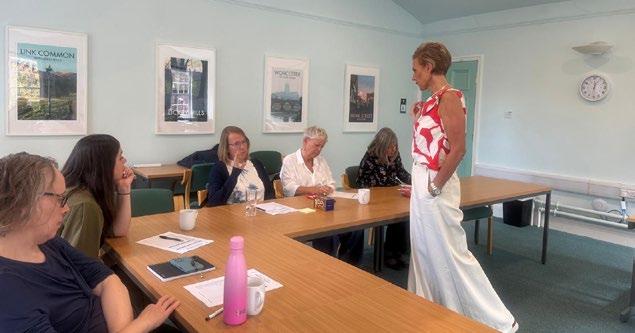
Managing menopause well means looking at the bigger picture. Here are the key pillars every woman and every workplace, should understand:
Nutrition
Blood sugar balance is the goal so reduce processed carbs and added sugars. Focus on protein, healthy fats and plenty of fibre, cut down caffeine and increase water.
Movement
Strength training is queen because muscle loss accelerates ageing. Strength training supports metabolism, bones, and confidence. Add some cardio for heart health and flexibility for joints.
Sleep
Easier said than done when night sweats join the party, so a cool bedroom, a wind-down routine and cutting late-night screen time can make a difference.
Stress
Menopause and stress are a toxic combo, increasing Cortisol which makes symptoms worse. Think breathing exercises, walks in nature and the radical act of saying no sometimes.
Not a magic fix, but helpful in some cases: Magnesium for sleep and mood, vitamin D for bones, and Omega-3 for brain health. Always seek advice before adding new supplements.
Menopause doesn’t have to be the end and with the right mindset, it’s a recalibration. A great opportunity to reprioritise, redefine and thrive and with the right support, it can be a powerful time of growth.
Hormone Replacement Therapy can be life-changing for many women, especially when paired with the full spectrum of menopause support as outlined above. And no, you’re not too old!
Myth: Menopause only affects women.
Truth: It affects everyone; colleagues, partners, teams, families, friends and even strangers! Understanding menopause makes you a better leader, partner, and all round human.
If you want your business to attract and retain talent, reduce absence and foster wellbeing, here’s where to start:
Open the conversation
Create a safe space for discussions about menopause, normalising it.
Review your policies
Add menopause into wellbeing strategies, not just a tick box exercise. Think flexible working, access to support and manager training.
Educate your teams
Workshops and resources go a long way and menopause literacy is the new competitive edge.
Promote a culture of empathy
Small gestures matter: understanding when someone needs a fan on their desk or a quiet space after a night of poor sleep.
Where to go from here
Menopause is not a niche issue, it’s a workplace reality. Businesses that lean into this conversation will see happier, healthier and more productive teams. And let’s face it, it’s about time we stopped whispering about menopause and started leading the change.
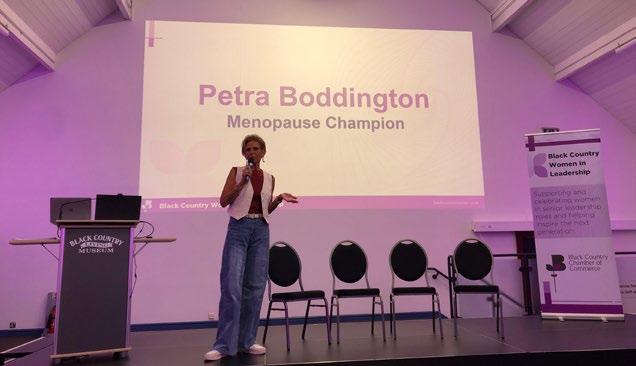
If you want your workplace to take the next step, connect with me. I’m Petra Boddington, Gibraltar’s Menopause Champion. Dedicated to improving understanding, breaking down stigma and creating supportive environments for everyone affected by menopause.
LinkedIn: Petra Boddington
Socials: Menopause With Petra



Welcome to our curated collection of goodies selected by our editorial team each quarter. Everything featured is available right here, right now at prices that are better than or compete with the internet.
Want to get a product featured in our next edition? Join the GFSB and get access to free advertising and a host of other member benefits.
Zesty, tangy, and totally sippable. The Marksologist Margarita blends blanco tequila, agave syrup, and lime for a ready-to-drink cocktail that tastes like it came straight from the bar.
Marks & Spencer
FROM: £3.50

Tough on the outside, smooth on the move. The Khaki Rock Suitcase is built for long-haul durability and serious storage, with smooth wheels and sleek looks to match.
Emporium Home
FROM: Check in store

The Apple Watch Ultra 2 keeps you connected, active and safe wherever the day takes you. With a rugged design, advanced fitness tracking and dive-ready durability, it’s the ultimate wrist upgrade.
Newtons Store
FROM: Check in store

Dior Sauvage Elixir is rich, intense, and magnetic. A bold twist on a modern classic, ideal for party season evening wear or when first impressions count.
Available at SM Seruya
FROM: Check in store

From creamy cappuccinos to bold espressos, the Ninja Luxe Café gives you café-quality coffee at home with 3-in-1 brewing power. A must-have for caffeine lovers who want choice without compromise.
Carlos.gi
FROM: £549

Locked in a cell with only 60 minutes to escape and destroy the evidence. Prison Break at Escape Room Gibraltar is one of their most popular challenges for a reason. Gather your team. Think fast.
Rock Escape Rooms
FROM: Book online

Slip into something more relaxing. The Twilight Spa & Dinner experience at the Sunborn Wellness Centre offers exclusive evening access to the hydrotherapy pool, steam room and sauna. Robes and calm included.
E1 Spa
FROM: £60