F
Measuring digestion In Vitro measurement of Glycaemic Index and Resistant Starch using a simulated enzymatic digestion analyser
E
by Phillip Clancy, Next Instruments Pty Ltd, Sydney, Australia.
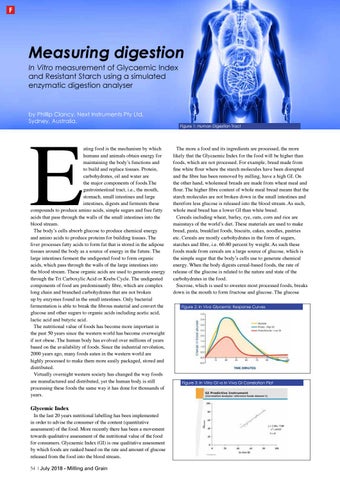
ating food is the mechanism by which humans and animals obtain energy for maintaining the body’s functions and to build and replace tissues. Protein, carbohydrates, oil and water are the major components of foods.The gastrointestinal tract, i.e., the mouth, stomach, small intestines and large intestines, digests and ferments these compounds to produce amino acids, simple sugars and free fatty acids that pass through the walls of the small intestines into the blood stream. The body’s cells absorb glucose to produce chemical energy and amino acids to produce proteins for building tissues. The liver processes fatty acids to form fat that is stored in the adipose tissues around the body as a source of energy in the future. The large intestines ferment the undigested food to form organic acids, which pass through the walls of the large intestines into the blood stream. These organic acids are used to generate energy through the Tri Carboxylic Acid or Krebs Cycle. The undigested components of food are predominantly fibre, which are complex long chain and branched carbohydrates that are not broken up by enzymes found in the small intestines. Only bacterial fermentation is able to break the fibrous material and convert the glucose and other sugars to organic acids including acetic acid, lactic acid and butyric acid. The nutritional value of foods has become more important in the past 50 years since the western world has become overweight if not obese. The human body has evolved over millions of years based on the availability of foods. Since the industrial revolution, 2000 years ago, many foods eaten in the western world are highly processed to make them more easily packaged, stored and distributed. Virtually overnight western society has changed the way foods are manufactured and distributed, yet the human body is still processing these foods the same way it has done for thousands of years.
Glycemic Index
In the last 20 years nutritional labelling has been implemented in order to advise the consumer of the content (quantitative assessment) of the food. More recently there has been a movement towards qualitative assessment of the nutritional value of the food for consumers. Glycaemic Index (GI) is one qualitative assessment by which foods are ranked based on the rate and amount of glucose released from the food into the blood stream. 54 | July 2018 - Milling and Grain
Figure 1: Human Digestion Tract
The more a food and its ingredients are processed, the more likely that the Glycaemic Index for the food will be higher than foods, which are not processed. For example, bread made from fine white flour where the starch molecules have been disrupted and the fibre has been removed by milling, have a high GI. On the other hand, wholemeal breads are made from wheat meal and flour. The higher fibre content of whole meal bread means that the starch molecules are not broken down in the small intestines and therefore less glucose is released into the blood stream. As such, whole meal bread has a lower GI than white bread. Cereals including wheat, barley, rye, oats, corn and rice are mainstays of the world’s diet. These materials are used to make bread, pasta, breakfast foods, biscuits, cakes, noodles, pastries etc. Cereals are mostly carbohydrates in the form of sugars, starches and fibre, i.e. 60-80 percent by weight. As such these foods made from cereals are a large source of glucose, which is the simple sugar that the body’s cells use to generate chemical energy. When the body digests cereal-based foods, the rate of release of the glucose is related to the nature and state of the carbohydrates in the food. Sucrose, which is used to sweeten most processed foods, breaks down in the mouth to form fructose and glucose. The glucose Figure 2: In Vivo Glycemic Response Curves
Figure 3: In Vitro GI vs In Vivo GI Correlation Plot