F
Antibiotics in chicken feed spark food safety concerns
F
by Gro Intelligence, New York, USA
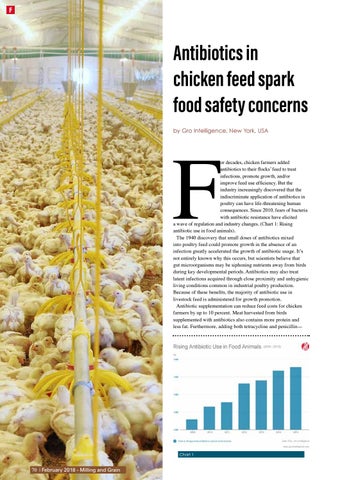
or decades, chicken farmers added antibiotics to their flocks’ feed to treat infections, promote growth, and/or improve feed use efficiency. But the industry increasingly discovered that the indiscriminate application of antibiotics in poultry can have life-threatening human consequences. Since 2010, fears of bacteria with antibiotic resistance have elicited a wave of regulation and industry changes. (Chart 1: Rising antibiotic use in food animals). The 1940 discovery that small doses of antibiotics mixed into poultry feed could promote growth in the absence of an infection greatly accelerated the growth of antibiotic usage. It’s not entirely known why this occurs, but scientists believe that gut microorganisms may be siphoning nutrients away from birds during key developmental periods. Antibiotics may also treat latent infections acquired through close proximity and unhygienic living conditions common in industrial poultry production. Because of these benefits, the majority of antibiotic use in livestock feed is administered for growth promotion. Antibiotic supplementation can reduce feed costs for chicken farmers by up to 10 percent. Meat harvested from birds supplemented with antibiotics also contains more protein and less fat. Furthermore, adding both tetracycline and penicillin—
Chart 1
70 | February 2018 - Milling and Grain