F
Impact of dietary potassium diformate on swine performance is backed by analysis of worldwide data sets
S
by Christian Lückstädt, ADDCON, Germany
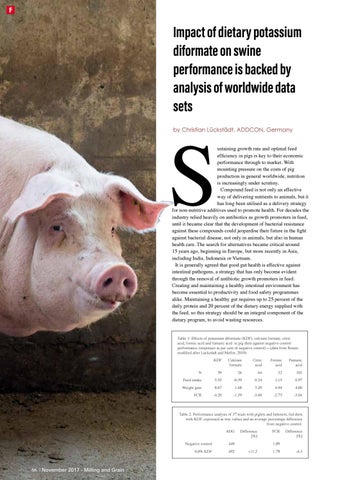
ustaining growth rate and optimal feed efficiency in pigs is key to their economic performance through to market. With mounting pressure on the costs of pig production in general worldwide, nutrition is increasingly under scrutiny. Compound feed is not only an effective way of delivering nutrients to animals, but it has long been utilised as a delivery strategy for non-nutritive additives used to promote health. For decades the industry relied heavily on antibiotics as growth promoters in feed, until it became clear that the development of bacterial resistance against these compounds could jeopardise their future in the fight against bacterial disease, not only in animals, but also in human health care. The search for alternatives became critical around 15 years ago, beginning in Europe, but more recently in Asia, including India, Indonesia or Vietnam. It is generally agreed that good gut health is effective against intestinal pathogens, a strategy that has only become evident through the removal of antibiotic growth promoters in feed. Creating and maintaining a healthy intestinal environment has become essential to productivity and food safety programmes alike. Maintaining a healthy gut requires up to 25 percent of the daily protein and 20 percent of the dietary energy supplied with the feed, so this strategy should be an integral component of the dietary program, to avoid wasting resources. Table 1: Effects of potassium diformate (KDF), calcium formate, citric acid, formic acid and fumaric acid in pig diets against negative control performance (responses as per cent of negative control) – (data from Rosen; modified after Lückstädt and Mellor, 2010) KDF
Calcium formate
Citric acid
Formic acid
Fumaric acid
N
59
26
64
32
103
Feed intake
3.52
-0.59
0.24
1.15
0.97
Weight gain
8.67
1.68
3.29
4.94
4.00
FCR
-4.20
-1.39
-3.60
-2.75
-3.04
Table 2. Performance analysis of 37 trials with piglets and fatteners, fed diets with KDF, expressed as true values and an average percentage difference from negative control. ADG
66 | November 2017 - Milling and Grain
Negative control
449
0.8% KDF
492
Difference [%]
FCR
Difference [%]
1.89 +11.2
1.78
-6.3