F
FLOURMILL OF THE
FUTURE
T
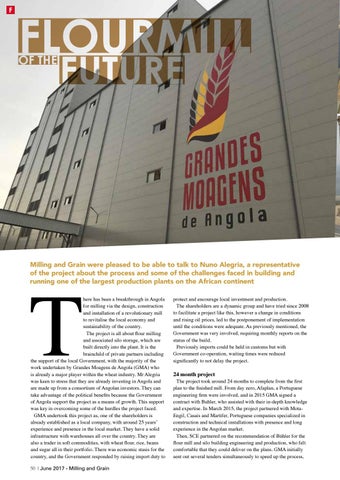
Milling and Grain were pleased to be able to talk to Nuno Alegria, a representative of the project about the process and some of the challenges faced in building and running one of the largest production plants on the African continent here has been a breakthrough in Angola for milling via the design, construction and installation of a revolutionary mill to revitalise the local economy and sustainability of the country. The project is all about flour milling and associated silo storage, which are built directly into the plant. It is the brainchild of private partners including the support of the local Government, with the majority of the work undertaken by Grandes Moagens de Angola (GMA) who is already a major player within the wheat industry. Mr Alegria was keen to stress that they are already investing in Angola and are made up from a consortium of Angolan investors. They can take advantage of the political benefits because the Government of Angola support the project as a means of growth. This support was key in overcoming some of the hurdles the project faced. GMA undertook this project as, one of the shareholders is already established as a local company, with around 25 years’ experience and presence in the local market. They have a solid infrastructure with warehouses all over the country. They are also a trader in soft commodities, with wheat flour, rice, beans and sugar all in their portfolio. There was economic stasis for the country, and the Government responded by raising import duty to
50 | June 2017 - Milling and Grain
protect and encourage local investment and production. The shareholders are a dynamic group and have tried since 2008 to facilitate a project like this, however a change in conditions and rising oil prices, led to the postponement of implementation until the conditions were adequate. As previously mentioned, the Government was very involved, requiring monthly reports on the status of the build. Previously imports could be held in customs but with Government co-operation, waiting times were reduced significantly to not delay the project.
24 month project
The project took around 24 months to complete from the first plan to the finished mill. From day zero, Afaplan, a Portuguese engineering firm were involved, and in 2015 GMA signed a contract with Buhler, who assisted with their in-depth knowledge and expertise. In March 2015, the project partnered with MotaEngil, Casais and Martifer, Portuguese companies specialized in construction and technical installations with presence and long experience in the Angolan market. Then, SCE partnered on the recommendation of BĂźhler for the flour mill and silo building engineering and production, who felt comfortable that they could deliver on the plans. GMA initially sent out several tenders simultaneously to speed up the process,