A new partnership between Highbrook Medical Centre and Beyond Radiology is bringing faster workplace healthcare and advanced imaging to local businesses.
Highbrook Medical Centre — Business Health. Simplified.
Highbrook Medical FP Ad
At Highbrook Medical Centre, we know a healthy workforce is the foundation of a thriving business. We offer comprehensive Occupational Health Services for businesses of every size — from pre-employment medicals and health checks to flu vaccinations and injury management.
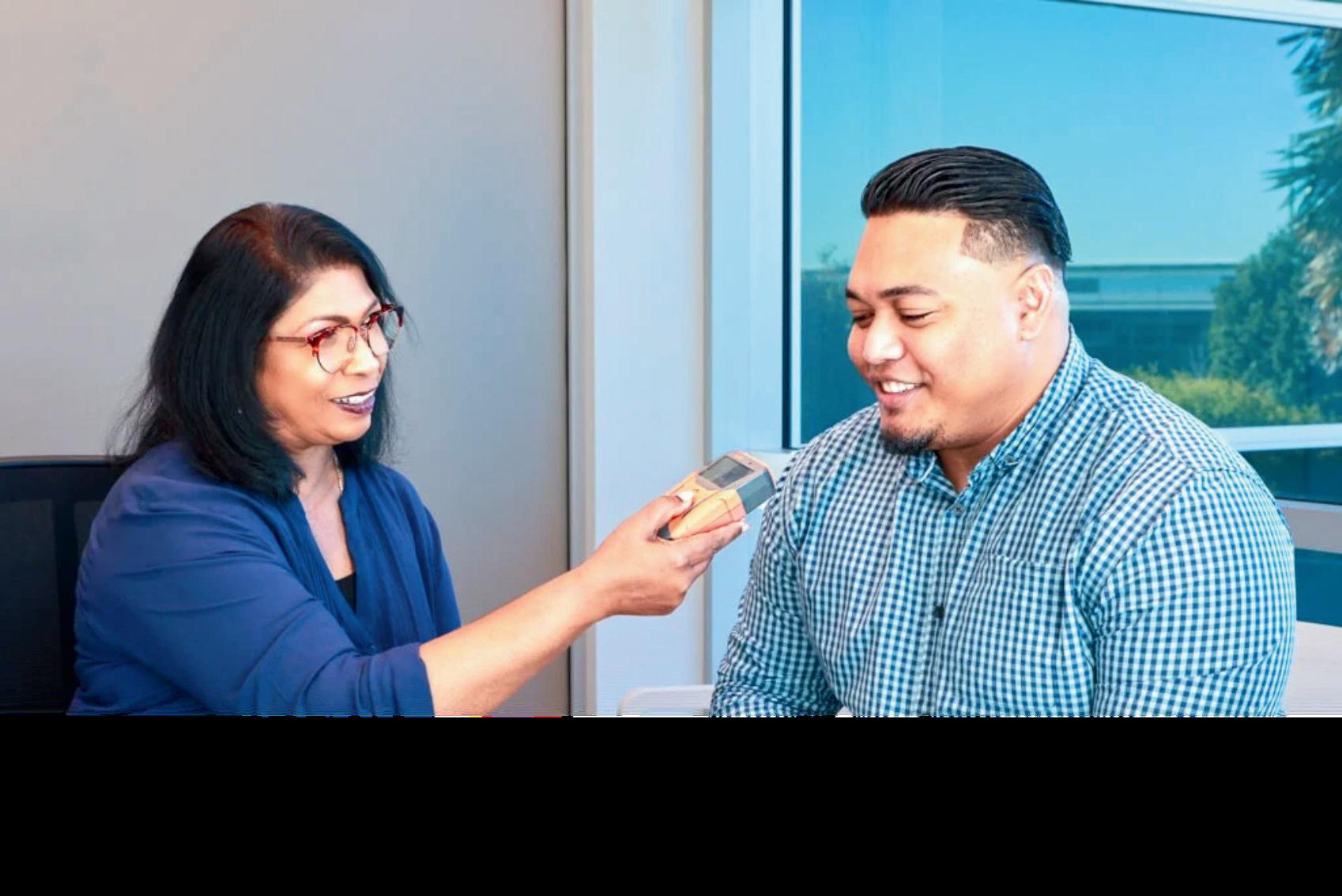
Our dedicated Occupational Health Coordinator Pushpa will build a programme that fits your team and budget, with sameday bookings for acute injuries so your people get care without delay.
We also offer on-site diagnostics including Xray, ultrasound, MRI, specialist injections, and full imaging — all in partnership with Beyond Radiology, right here in the same building. No unnecessary waiting — just faster diagnoses, quicker treatment, and less time away from work.
Located at 31 Highbrook Drive with easy access and ample parking, we're your complete one-stop health solution for teams of any size.
Give us a call to find out how we can support your needs: 09 273 4876

Beyond Radiology — now open at Highbrook, right where you need it
Beyond Radiology is proud to announce the opening of our brand-new Highbrook practice, co-located with Highbrook Medical Centre at 31 Highbrook Drive. As a 100% New Zealand-owned provider, we're committed to delivering high-quality, clinician-led radiology care using state-of-the-art imaging technology — and we're excited to bring that standard of care directly to the Highbrook community and its businesses.
Whether you're referred through Highbrook Medical Centre's Occupational Health team or walking in off the street, our on-site X-ray service requires no booking and carries no ACC surcharge for X-ray or ultrasound — making expert imaging faster and more accessible than ever. Free on-site parking means one less thing to worry about.
To book or enquire, call us on 09 975 3590 or email highbrook@beyondradiology.co.nz








“I
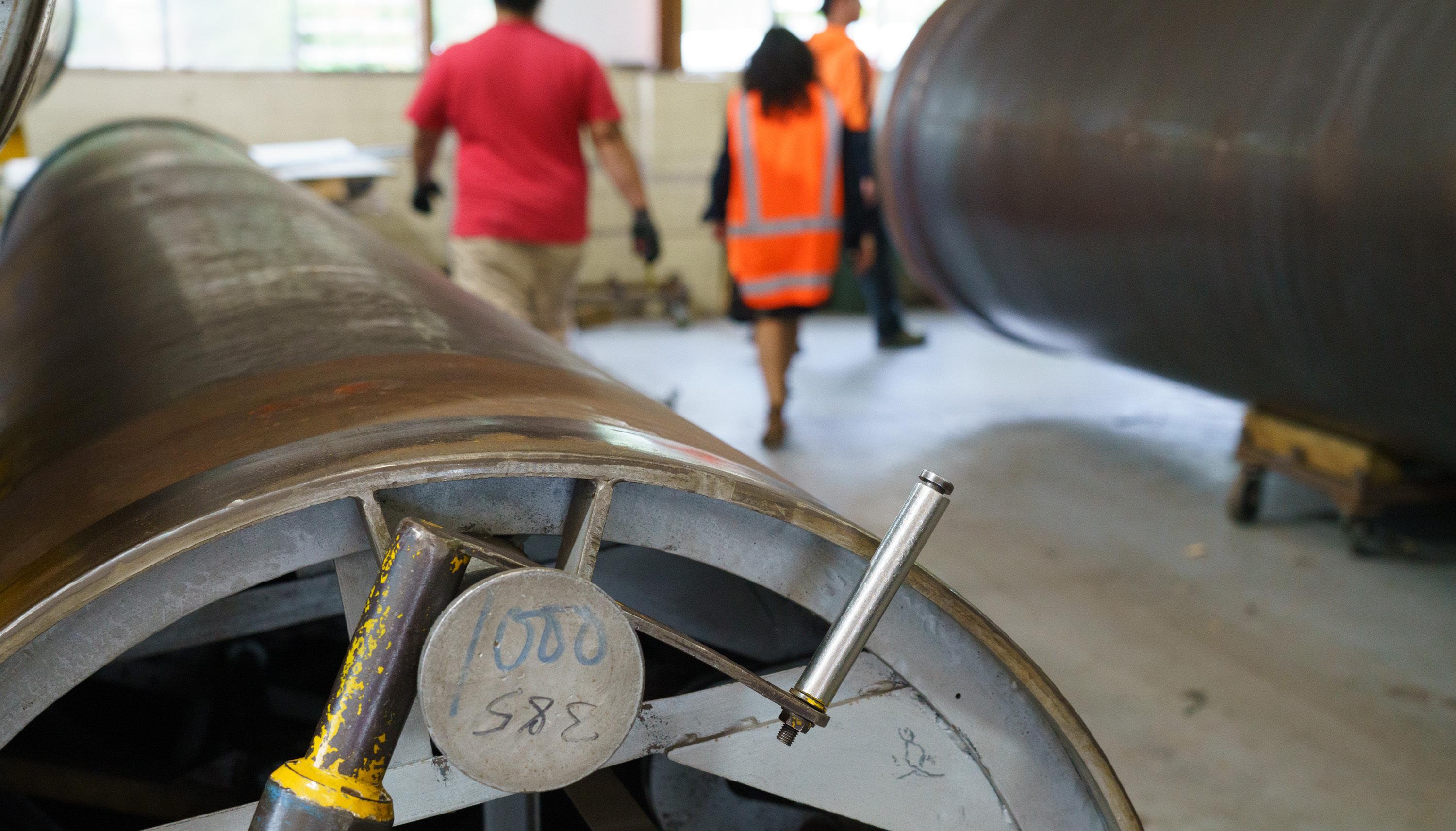
That’s what the research tells us employees commonly say after an incident at work.
Nobody wants anyone to get hurt at work. But when operational constraints combine (or even conflict) with safe work practices, we need to equip our kaimahi with critical thinking skills to make the right choices in the moment. And we need an organisational culture that values safety hand in hand with productivity. These are not mutually exclusive.
The 2025 State of a Thriving Nation report from the New Zealand Business Leaders Health and Safety Forum (Eaqub, 2025) is urgent reading to shift our poor workplace safety record in this country.
This research tells us that since 2025, 50% of New Zealand’s business innovation practices have been motivated by health and safety. Improving health and safety and operational performance are fundamentally linked – 25% of OECD countries have better productivity than New Zealand – and 80% of those countries have a lower fatality rate per 100,000 employees than our country.
The report emphasises the importance of leaders understanding ‘work as done’ versus ‘work as imagined’ and how cultural responsivity needs to underpin this approach. ‘Work as Imagined’ is a health and safety term which refers to how managers and regulators think the work should happen. You find it in procedures, standard operating procedures, training manuals, etc. ‘Work as Done’ is how mahi actually happens in the real world, under real conditions, operational pressures and constraints. A quote from one of the Forum’s members brings this into sharp focus: “We’ve got to close the gap between work as imagined and work as done. That’s where safety and productivity are won or lost.”
Cultural norms are strong in relation to perceived power, authority, speaking up and notions of respect – leaders at all levels of business require the cultural context to get to the heart of what frontline staff think and feel. Using true co-design principles can help move the dial on safety practices.
How can we improve the health and safety scorecard in NZ?
Our perspective from a learning and training point of view:
• Embrace codesign of work practices following shared, real understanding of ‘work as done’
• Embed two way communication and psychological safety into everyday operations. Prepare front line leaders with open ended questions and a curiosity when it comes to ‘errors’ to embrace a learning rather than a blame mindset
• Equip all staff with the fundamentals of health and safety communication. Where English is an additional language, create extra guidance and training support to ensure key messages have truly been understood. It’s not enough to say ‘we trained them’ if your staff didn’t understand.
• Communicate safety as an operational priority. Make this priority visible through all levels of the business.
• Train and refresh health and safety practices in real scenarios to build confidence making health and safety decisions under pressure. Unpacking scenarios, discussing, and engaging critical thinking in a training environment can support your team when it comes to making the right real time decision.
• Ensure staff really understand all the graphs and slides at monthly staff meetings to genuinely engage them in the team effort of building a safe workplace.
Committee Elected Members
Howick Local Board - Damian Light Ōtara-Papatoetoe Local Board - tbc
Business East Tāmaki Team
Ruth White General Manager
Shanu Gounder Marketing, Communications and Events Manager Andrea Crawford Membership Liaison
As we reflect on the past quarter, it’s a pleasure to celebrate the incredible achievements of our East Tāmaki business community.
This year’s RSM East Auckland Business Awards have once again showcased the innovation, resilience, and excellence that define our local businesses. Congratulations to all the winners and finalists—you are a testament to the strength and vibrancy of our region.
A heartfelt thank you also goes to our sponsors and judges, whose support and expertise made this event possible. Your commitment to recognising and celebrating business excellence is invaluable.
In addition to celebrating success, we’ve also been focused on ensuring we continue to deliver meaningful value to our members. I’m pleased to share that the committee has recently completed its strategic planning process, identifying key priorities to guide our efforts in the coming years. These priorities are firmly rooted in our purpose: to make it easier for businesses to do business. From enhancing safety and security, to fostering collaboration and providing resources to support growth, we are committed to addressing the needs of our members in practical, impactful ways.
One area of focus is the power of networking. Strong connections are the foundation of a thriving business community, and we’re proud to offer a range of opportunities to bring our members together. Events like ‘Meet Your Neighbours’, Business Breakfasts, and our International Women’s Day celebrations are just some of the ways we encourage collaboration and connection.
As we move forward, we’ll continue to assess how we can strengthen these offerings and fill any gaps to ensure we’re meeting the evolving needs of our members.
We’d love to hear from you—what would help your business thrive? What opportunities or challenges should we focus on? Your feedback is invaluable as we work to implement our strategic priorities.
Please don’t hesitate to reach out to Ruth White, our General Manager, or myself directly with your thoughts and ideas.
As we look ahead to the rest of the year, let’s continue to celebrate the power of connection, collaboration, and community.
Together, we can ensure East Tāmaki remains a vibrant and prosperous place to do business. Thank you for your ongoing support, and I look forward to seeing many of you at our upcoming events.
Warm regards,

Lucy Hall Chairperson, Business East Tāmaki
Editor Rachel Sturges rachelsturges@gmail.com
Graphic design
Chris Phillips | Design Distillery chris@designdistillery.co.nz
Advertising enquiries
Shanu Gounder p 09 273 6274 e comms@businesset.org.nz
April
14 May Meet Your Neighbours, sponsored and hosted by Olea Café, Highbrook
22 May Pink Ribbon Lunch, BNZ Partners Centre, Highbrook
10 June First Aid Level 1 Course, BNZ Partners Centre, Highbrook
For more information and/or reserve your spot visit our website at businessET.org.nz/whats-on

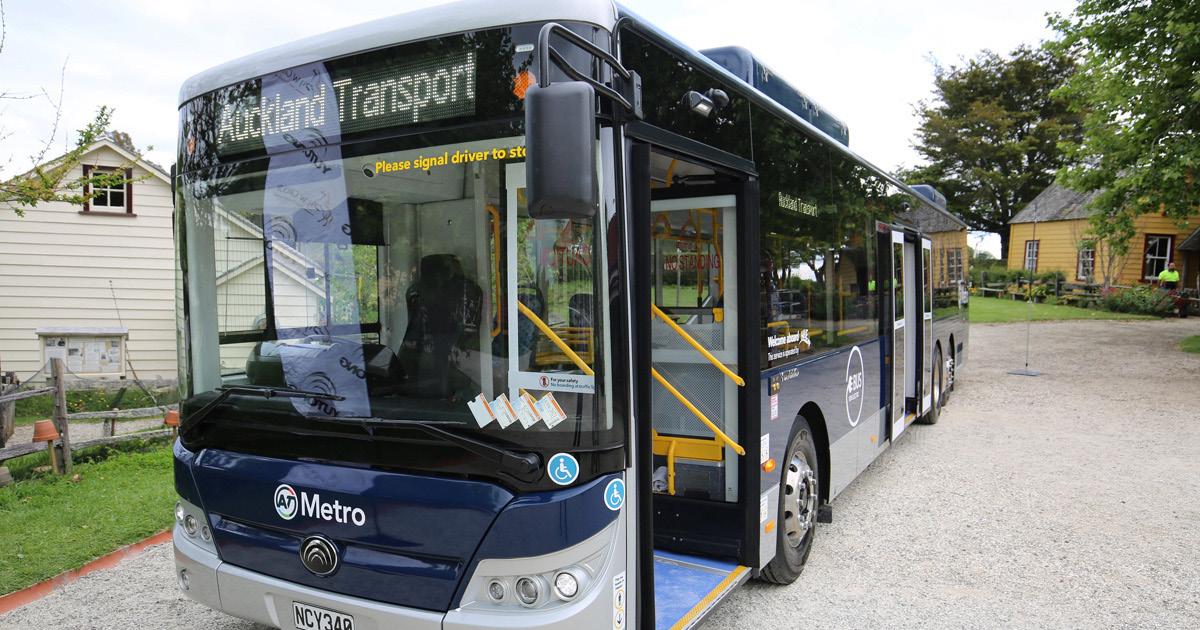
The Eastern Busway is set to open in 2027, extending the current Panmure–Pakūranga busway all the way to Botany Town Centre.
The busway allows large numbers of people to move on a specially built corridor separated from traffic to provide quicker, more reliable journeys meaning Aucklanders have more travel choices to make their everyday lives better.
With strong connections to the rail network already in place, when the City Rail Link opens later this year, people will be able to easily get to even more places. For example, on a quick bus then a direct train to Eden Park, New Lynn and Henderson.
Existing bus services will be modified to make the most of the new busway, giving easier access to more destinations.
Public engagement on these changes and other East Auckland bus improvements will take place in March. If you want to be updated about this and have your say on bus route improvements, email busreview@AT.govt.nz.
Cost savings and additional funding have allowed the final stretch of the Eastern Busway to be built, enabling buses to directly connect to Botany Town Centre on a corridor separate to other traffic.
The final section of busway to be built from Tī Rākau Drive through Whakamaumahara - Guys Reserve was previously unfunded, with a plan to provide an interim bus route in general traffic for the final section where Tī Rākau Drive meets Botany Town Centre.
NZ Transport Agency Waka Kotahi (NZTA) and Auckland Council confirmed $101 million in funding to enable construction of the Botany link route.
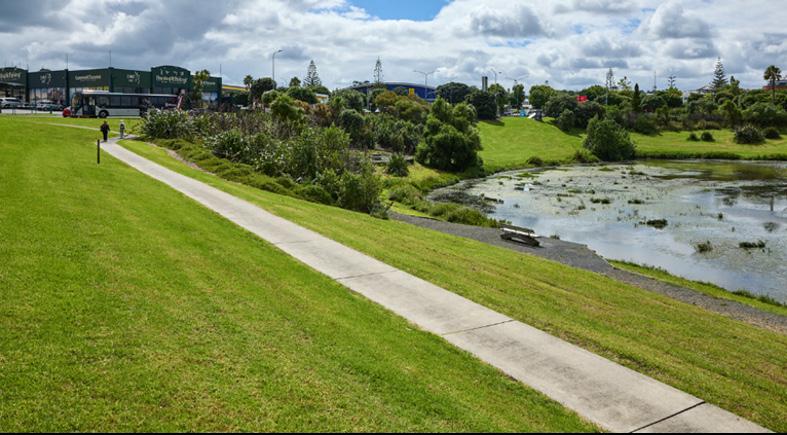
This is more than just a transport project, while delivering work, the Eastern Busway team will enhance the stormwater pond in Whakamaumahara - Guys Reserve to support the growth of native plants and construct a 600-metre walking and cycling path, enhancing access for the Huntington Park community.


Construction on major projects like the Eastern Busway requires temporary disruptions, which impacts the community. One way disruption can be minimised is through innovative planning.
The end of year holiday season is a time when there are less vehicles travelling across the Auckland road network. The Eastern Busway alliance found an opportunity to compress five months of traditional construction into just over two weeks for a vital upgrade at Tī Rākau Drive/ Pakūranga Highway intersection.
After months of planning the intersection was closed and teams worked 24/7.In this time crew deconstructed the existing infrastructure, installed new traffic signals, laid special heatabsorbing material alongside Transpower's underground 220kV cable, completed earthworks, installed drainage systems, constructed the concrete pavement, placed tonnes of asphalt, installed signage along with landscaping, and completed line marking.
• 102 people were on site at work’s peak
• 780m³ of concrete was poured for pavement (the largest single pour for the project)
• 1,800 tonnes asphalt was laid
• 4 concrete plants were used and 30 trucks, with 4 pumps coordinated simultaneously
As the project is delivered the alliance works closely with utility providers to deliver benefits for East Auckland in a joined-
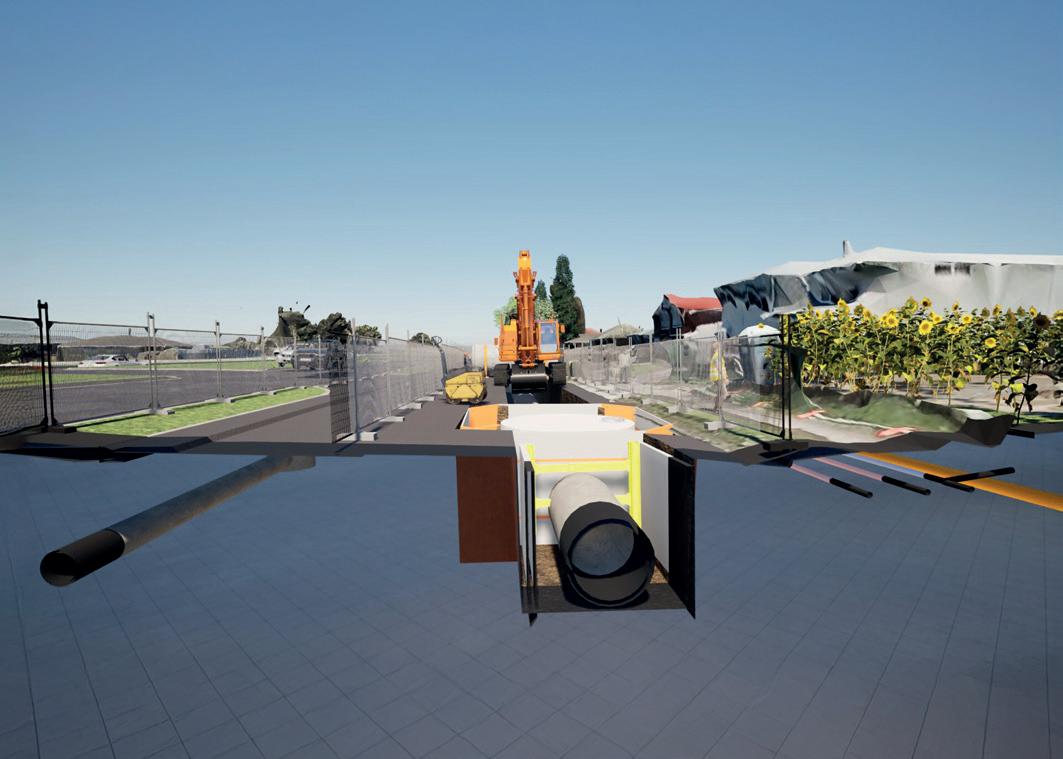
Stormwater pipe installation along Tī Rākau Drive
up approach. Until the end of the year we will be installing approximately 850 metres of larger, higher - capacity stormwater pipes along Tī Rākau Drive (between William Roberts Road and Gossamer Drive). This will improve flood resilience and support future growth in the area.
Construction on Tī Rākau Drive has got one ‘stage’ closer to completion. Until the end of 2026, traffic will temporarily use the newly constructed busway lanes in the middle of the road while utilities work is completed. Two vehicle lanes will remain open in both directions throughout construction, and bus routes will continue as normal. Footpath access for cyclists and pedestrians along Tī Rākau Drive will be maintained.
We continue to undertake further design and traffic modelling reviews along Pakūranga Road at the intersection with Rā Hihi - flyover. We acknowledge that there is support for us to start improvements to the intersection as soon as possible. While this additional investigative work is expected to take several more weeks to complete, it will provide confidence that robust analysis was undertaken and considered as part of the decision-making process.
Information about work in progress and detours is available at www.easternbusway.nz/construction
Thank you for your ongoing support while the Eastern Busway is built and a more connected, accessible future is created for East Auckland.
If you have any questions or would like to talk to the team, please email info@easternbusway.nz or call 0800 287 929.
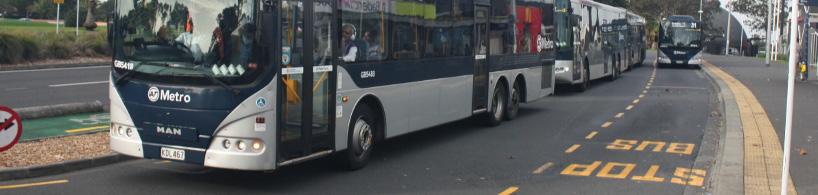
Getting to and from Highbrook by public transport is about to get
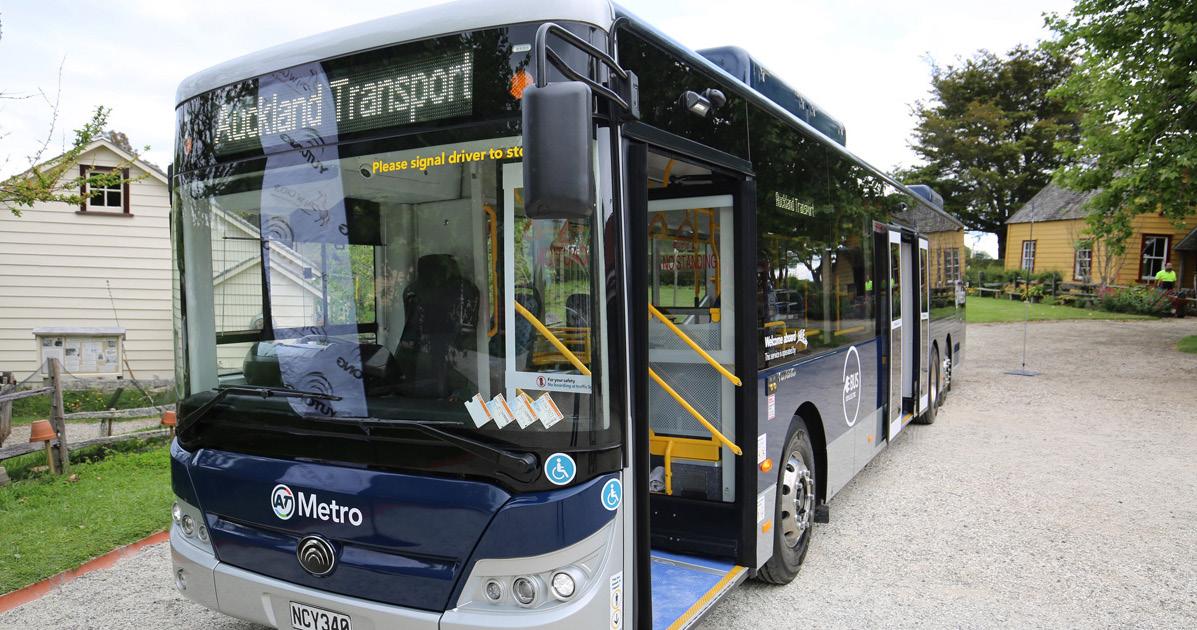
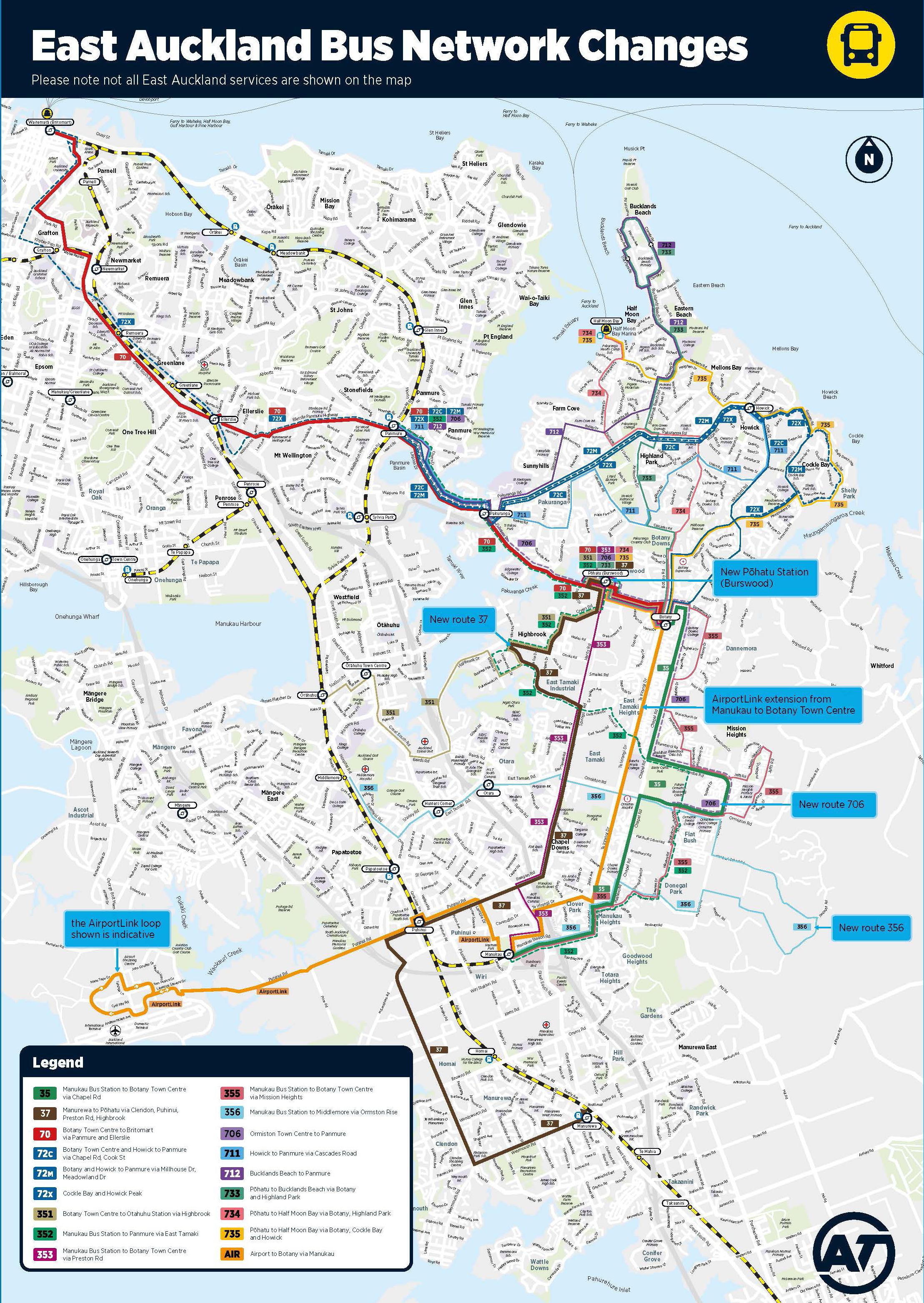
In mid-April, Auckland Transport is introducing a new frequent bus service – Route 37 – improving connections between Manurewa Interchange and the Highbrook business area. The new route is designed to better link South Auckland neighbourhoods with major employment hubs along Roscommon Road and Highbrook in East Auckland.
Route 37 will deliver a simple, reliable service that runs:
• Every 15 minutes from 7am–7pm
• and then every 30 minutes early morning to midnight
• Seven days a week
This regular frequency means people can travel when it suits them and what to expect – whether starting early, finishing late, or heading out during the day.
The route also strengthens public transport options for communities in Clendon and along Preston Road, supporting more reliable journeys across South and East Auckland.
A key benefit of Route 37 is improved access to Puhinui Station, making it easier to connect to Auckland Airport and the wider rail network.
To support the new service bus route 352 will be modified to run via Greenan Drive, Bellingham Road, and Accent Drive, providing a more direct link from Flat Bush and Ormiston to Highbrook
For businesses and staff in Highbrook, Route 37 offers a convenient alternative to driving:
• Reliable, frequent services throughout the day
• No long waits – the timetable stays consistent all day
• Easier access for staff, visitors, and customers
The new service will significantly expand the public transport catchment for Highbrook. This means people living in parts of Flat Bush, Clover Park, and Ōtara will be within a 30-minute peak- time bus commute of the area.
When the Eastern Busway opens in 2027, Route 37 will be extended to terminate at the new Pōhatu Station in Burswood, creating a frequent connection between Highbrook and the wider premium bus network.
Together, Route 37 and the Eastern Busway are part of a broader plan to give Aucklanders more travel choices –improving access to jobs, education, essential services, recreation, whānau and friends.
Plan your trip using the Journey Planner or AT Mobile app, and don’t forget to let your colleagues know about these upcoming changes.

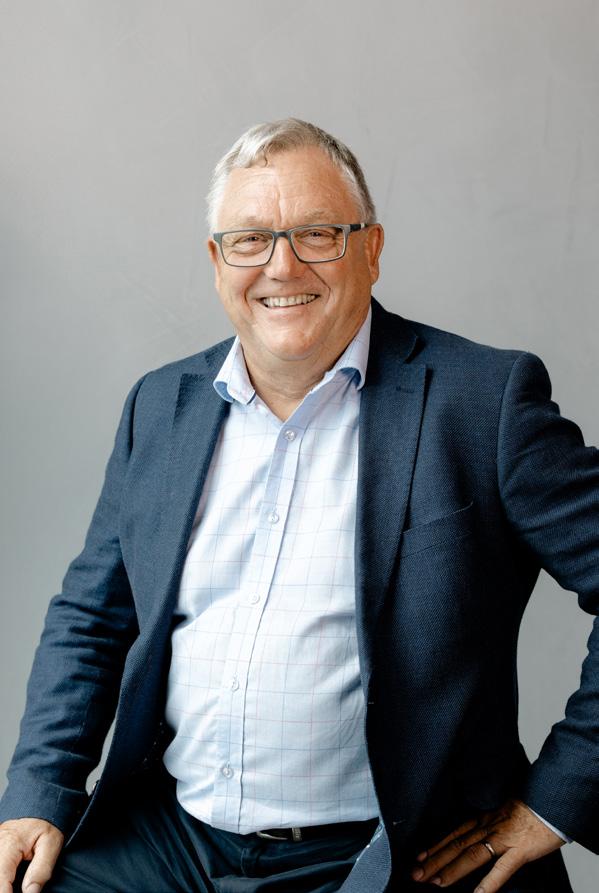
At the end of March, Kevin Obern retired as OfficeMax’s managing director. Although a hands-on, extremely busy executive at a large corporation, Kevin always made time for Business East Tāmaki, supporting our events and offering constructive advice and feedback on business news and strategy.
When Kevin Obern pulled his hand out of the "bucket of water" in March, the ripples at OfficeMax may have settled quickly, but the impact of his tenure will be felt for much longer. Retiring to the Coromandel with a world tour on the horizon, Kevin leaves behind a business transformed not just by technology, but by a profoundly human approach to leadership.
Kevin’s leadership is rooted in a "get it done" mindset that began long before he joined the corporate world. In 1984, after being told he was too young for high-level sales, he co-founded his own office products business in the UK. Operating out of a windowless WWII fumigation chamber with just three vehicles, he grew the startup into a $20 million enterprise with 80 employees.
"I believe everyone should have their own business at least once," Kevin reflects. "You learn everything from the ground up—debt collection, inventory, and dealing with the bank. It gives you a toolset that a narrow corporate path simply can’t provide". This entrepreneurial grit remained his North Star when he took the helm of OfficeMax New Zealand in 2012.
What captured those who worked with Kevin wasn't a "Managing Director persona," but his authenticity. He rejects the idea of a corporate mask. "I am exactly the same person at work as I am at home—much to my wife’s occasional concern regarding my sense of humour," he jokes.
This transparency allowed him to lead through immense challenges, including a deep recession and the upheaval of Covid. For Kevin, leadership is about "one-on-one" connection. A regular fixture in the Highbrook cafeteria, sometimes sitting with the distribution team to stay grounded in the social fabric of the company. "You can technology the backside out of a business and make it the most boring place to work, or you can use it to enable your people to grow," he says.
Under his watch, OfficeMax moved beyond stationery to become a high-tech, purpose-led organisation. He oversaw the implementation of wearable "glove" scanners and automated box-making technology, but he is most proud of the human results. He championed support and development for employees, including a money management course that empowered a long-term employee to take her first-ever overseas holiday.
Kevin also operationalised sustainability, achieving a staggering 69% reduction in Scope 1 and 2 emissions since 2019 and installing nearly 800 solar panels at the Auckland DC. For him, a successful business is a "conduit for people to develop" and a force for good in the community.
As he transitions into advisory and governance roles, Kevin’s goal is simple: to share the "boardroom wisdom" gathered over 30 years without simply telling the next generation what to do. He leaves a business that is "gold and malleable," capable of flexing to meet whatever challenge comes next.
Business East Tāmaki would like to thank Kevin for his advice, his support, and for being a great friend to the organisation.
The Business East Tāmaki Small Business Networking Group continues to go from strength to strength. Membership has grown to around 16 business owners, managers, and leaders, spanning a diverse range of industries, including:
• Printing and publishing
• Boats and marine – sales and service
• Plumbing
• Industrial sealing products
• Legal services
• Adhesive labels & label printers
• Air compressor suppliers
• Fabrication
• Business consulting
• Motor technologies – Electric Motors
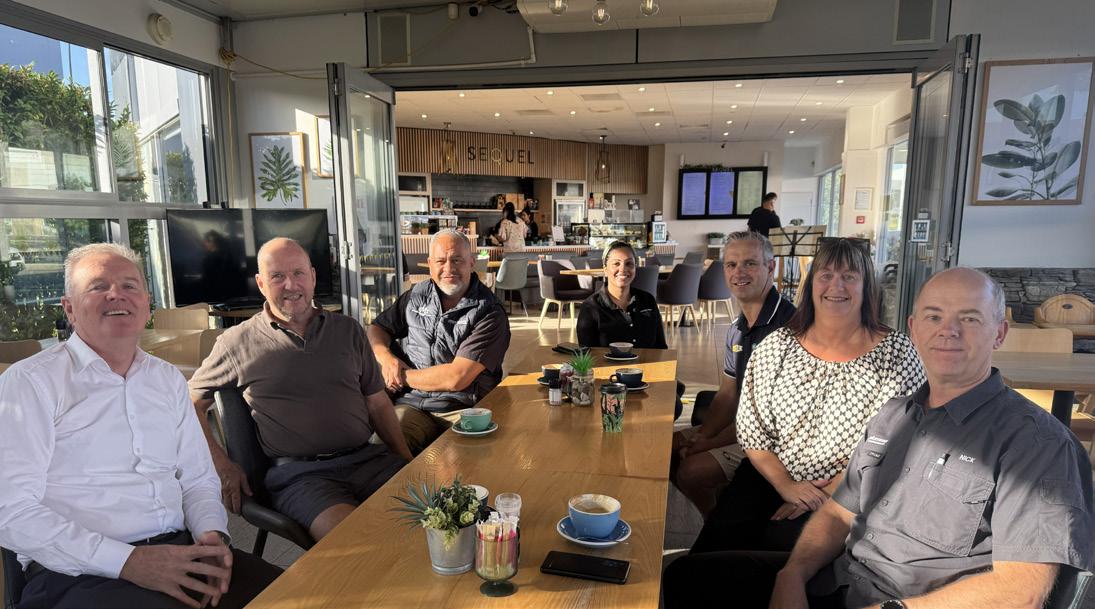
Running a small business can be rewarding, but it can also feel isolating at times. Connecting with fellow business owners who understand the same challenges offers real value – both professionally and personally. The Business East Tāmaki Small Business Networking Group brings together owners, operators, and professionals from across all trades and sectors, with a shared focus on exchanging ideas, offering peer support, and addressing the issues that matter most to small businesses.
Meetings are held every six weeks in a relaxed, informal setting. Sessions vary in format –from visits to fellow East Tāmaki businesses, to discussions with subject matter experts on shared challenges, or simply gathering over a coffee at a local café to talk through what’s on everyone’s mind. It’s a great way to support local hospitality businesses at the same time.
Interested in finding out more, or ready to join? Contact Andrea at membership@businesset.org.nz
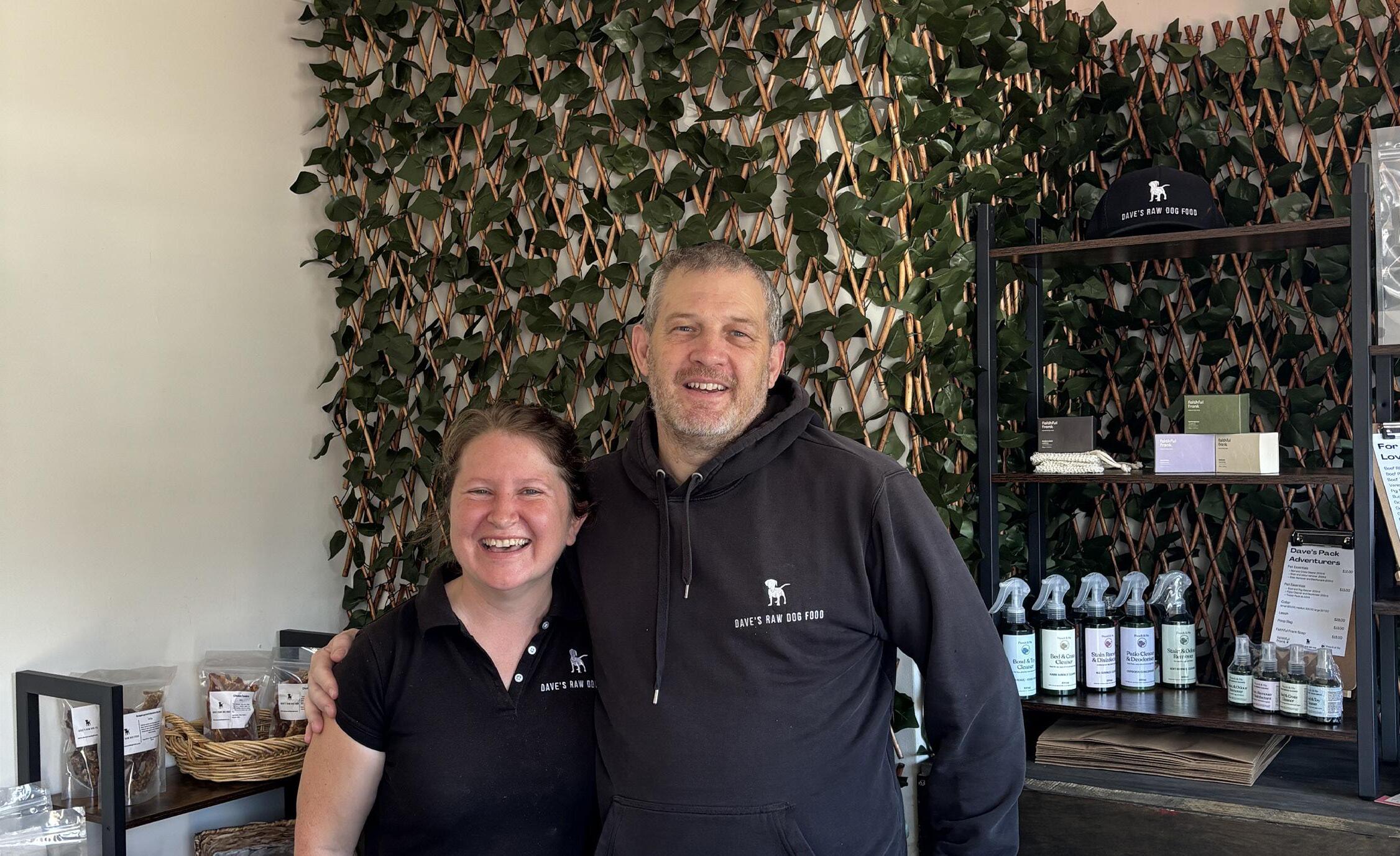
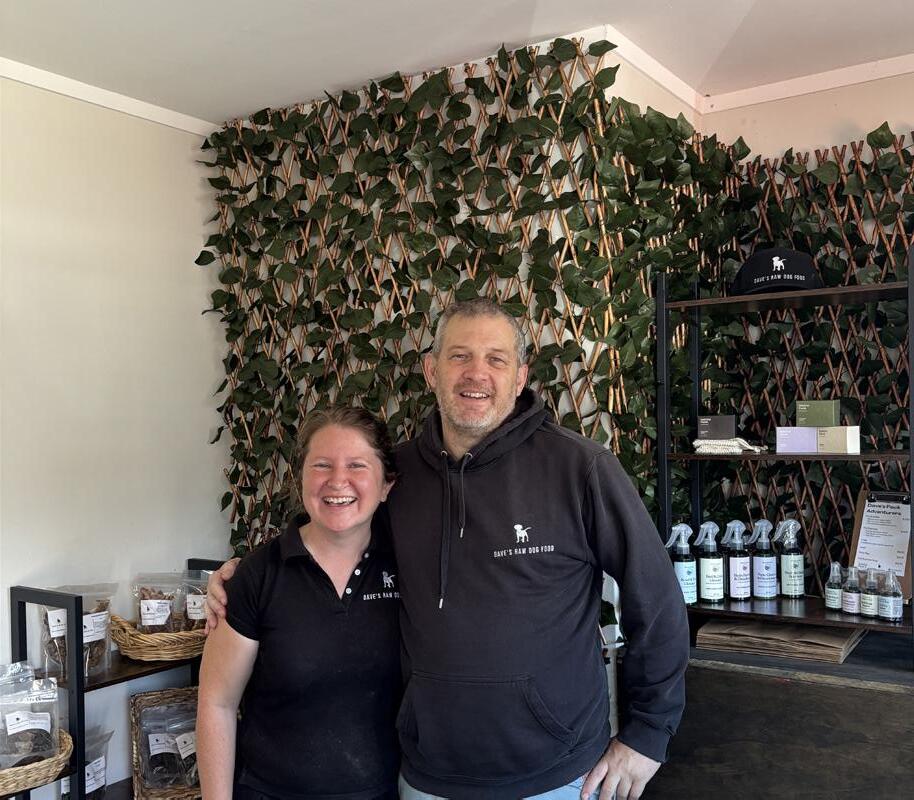
For many in the hospitality industry, the transition from managing fine dining to manufacturing pet food might seem like a bit of a leap. But for Alex and Heather, the owners of Dave’s Raw Dog Food, it was a natural evolution driven by a very discerning—and very fussy—customer: their Schnoodle, Dave.
Alex’s culinary journey began 21 years ago, spending six years as a chef before moving to the "front of house" to run restaurants for the next 15 years. Heather mirrored this path, moving from restaurant service into HR for major hotels. Together, they built a career on the architecture of a good experience.
However, three and a half years ago, they faced a unique challenge: Dave. "He was the world’s fussiest eater," Alex recalls. Drawing on his chef background, Alex began crafting bespoke raw meals to get Dave eating again. The results were so successful that they realised a gap in the market existed for other "dog parents" facing the same struggle.
Launched in April 2022, the business grew with a speed that caught even the owners by surprise. "We weren't expecting to be in the market so quickly," Heather says, noting they were at the Howick market and the Clevedon Village Farmers Market (CVFM) within the first 10 days of the business.
The scale of growth tells the story: in their first week, Alex produced 20kg of food;
today, they are manufacturing three-quarters of a ton every single week. While they have expanded their reach to the Parnell market and a robust online store, they remain a staple at the Clevedon Farmers Market.. "It’s really my only face-to-face time with customers," says Alex. "Usually, I'm just in the back making the food".
The business operates under a unique value: "One paw of connectivity". The phrase is inspired by Dave himself, who has a habit of resting a paw on Alex or Heather whenever they are on the couch.
"That’s how we feel about our customers —they’re an extension of the family," Heather explains. This hospitality-first approach means they provide advice, support, and a "family value" of service that has seen their word-ofmouth reputation skyrocket.
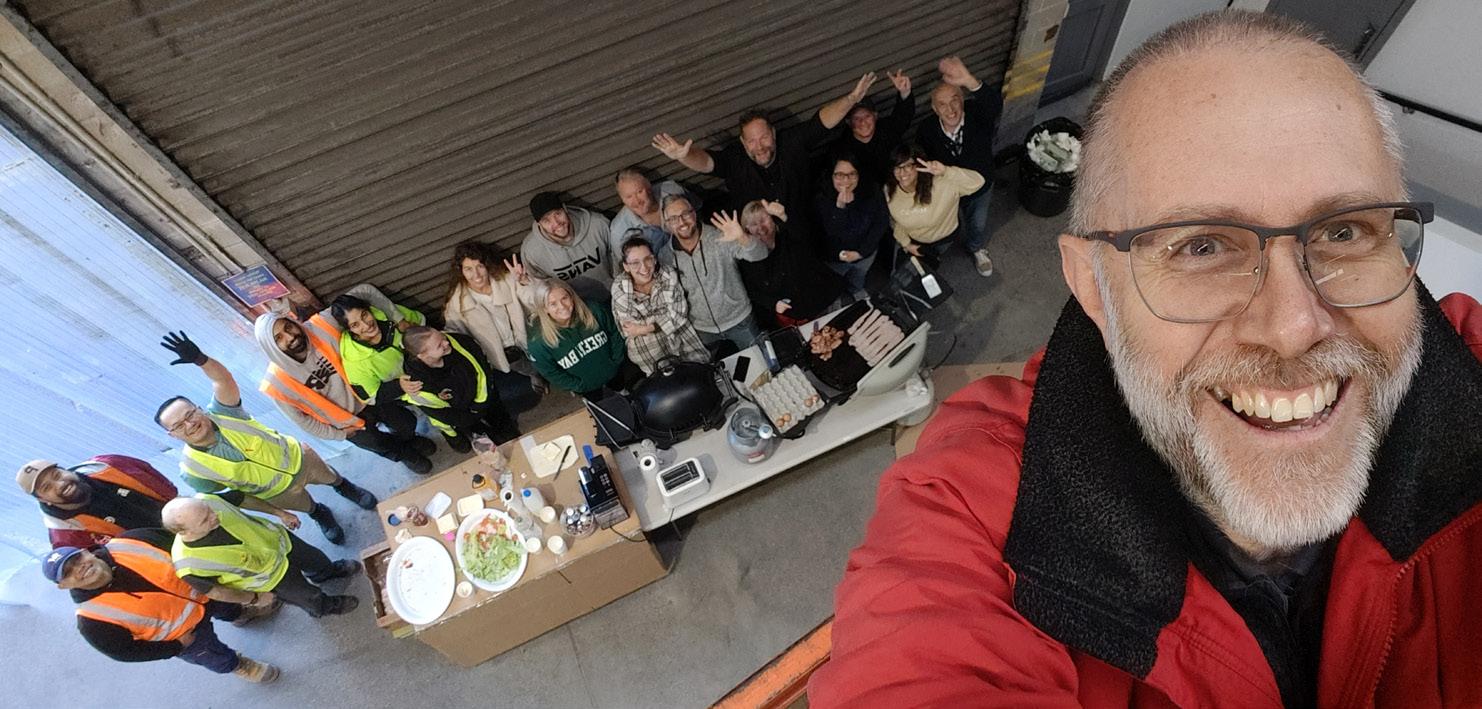
When the need to upscale production became unavoidable, staying local was a non-negotiable. Having started the business in Bucklands Beach, they chose a site in East Tāmaki to maintain their roots while gaining essential "back of house" capacity.
While their premium ingredients—including their best-selling Venison Mix—are sourced from MPI-approved hunters and free-range farms in the South Island, Alex notes that the logistics hub of East Tāmaki is what makes the operation work. "Having the logistics companies right here just down the road is really good for us".
As they look toward the rest of 2026, the duo is already planning new product lines, continuing to treat every local dog with the same culinary care that saved Dave’s appetite.
Dave’s Raw Dog Food’s mission is to provide healthy Raw food and natural treats to aid in your dog’s growth and happiness.
• MPI-approved
• NZ-sourced ingredients
• NZ-owned
• Online orders at davesrawdogfood.co.nz
• Retail shop at Unit D, 11 Stonedon Drive, East Tāmaki
• Opening hours: Tuesday - Friday 10 am to 6 pm Saturday 10.30 am to 4 pm

n the world of Mediterranean food, there is a profound difference between a product and an original. For Marco Canegallo, Managing Director of Prodotti New Zealand, his mission since taking the reins in 2016 has been to ensure that New Zealanders only experience the latter. While the company has deep roots dating back to 1992, Marco has transformed the business into a specialised bridge between the old world and the new.
Look inside the Prodotti warehouse, and you'll see every ingredient needed for a perfect "Quattro Stagioni" (Four Seasons) pizza.
From premium flours and cured meats to specialty antipastos and polenta, Marco and the team have curated a catalogue that serves as the backbone for major supermarkets, independent food stores and boutique hospitality providers across the country.
Beyond the pantry staples, Prodotti is rapidly growing the alcohol division, importing a carefully chosen selection of Mediterranean wines, beers, and spirits. "Food brings people together," Marco says,
and his goal is to provide every component needed for that connection.
At the heart of the business is cheese — Prodotti’s number one import. Marco is particularly passionate about the distinction between authenticity and imitation. He often uses the analogy of Parmigiano Reggiano versus generic Parmesan.
"In Italy, using the word 'Parmesan' is forbidden," Marco explains. "It is a bad copy of the original". True Parmigiano Reggiano must follow strict European standards regarding its origin and production. By bringing the original Italian wheels straight to New Zealand, Prodotti ensures that local chefs and home cooks aren't settling for a substitute but are instead tasting the heritage of the Mediterranean.
Marco’s commitment to these standards is mirrored in his personal dedication to the business’s physical growth. When he originally moved Prodotti from St. John’s to East Tāmaki—and again during the shift to their current facility in Lady Ruby Drive—he
wasn't just overseeing the logistics from an executive office.
Instead Marco was on the floor, personally moving 720 pallets of stock. It was a feat so physically taxing that it required a month of chiropractic care and four months of recovery. While he jokes to his team that "the day we need to move again, we sell the company," that grit is a testament to his "El Presidente" leadership style. For Marco, the business is a personal passion that requires him to be hands-on at every level.
Operating from East Tāmaki remains a strategic necessity. Despite the area's increasing congestion, the proximity to the port and motorway is vital for the heavy vehicle distribution required to get fresh, authentic ingredients straight from the wharf to the warehouse.
Today, those ingredients can be found right across Tāmaki Makaurau, from the shelves of major supermarkets to your favourite neighbourhood deli. As Prodotti prepares to launch a new online shop, the focus remains on innovation through "Tradition 2.0"—finding new ways to deliver old-world quality without ever compromising the "original".
To find out more, go to their website, pdi.co.nz, email sales@pdi.co.nz or call 09 276 7140. 32/36 Lady Ruby Drive, East Tāmaki, Auckland 2016




Thomas Papesch
Asset Manager 021 0334 267
Thomas.Papesch@goodman.com
Robyn Barfoot
Portfolio Manager 021 428 446
Robyn.Barfoot@goodman.com
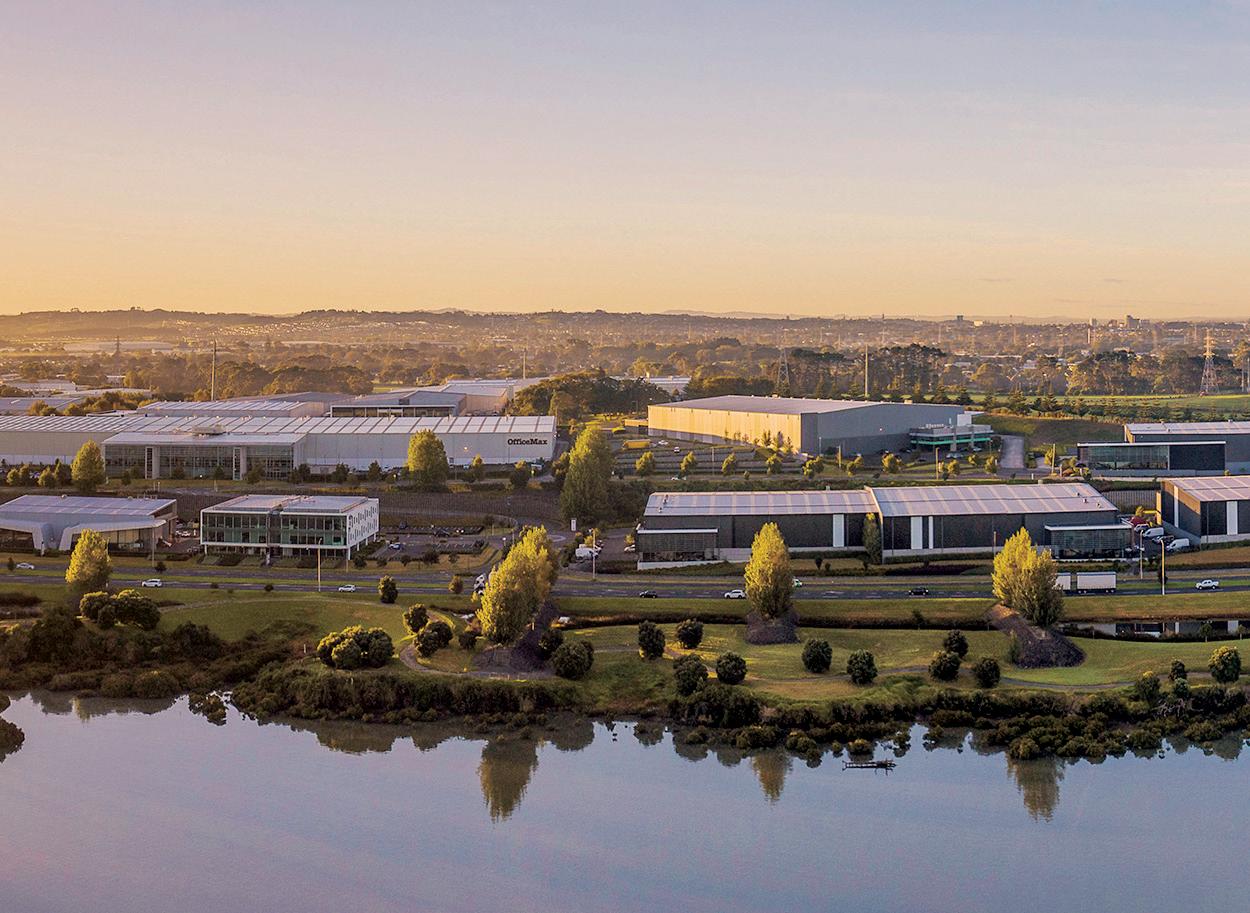
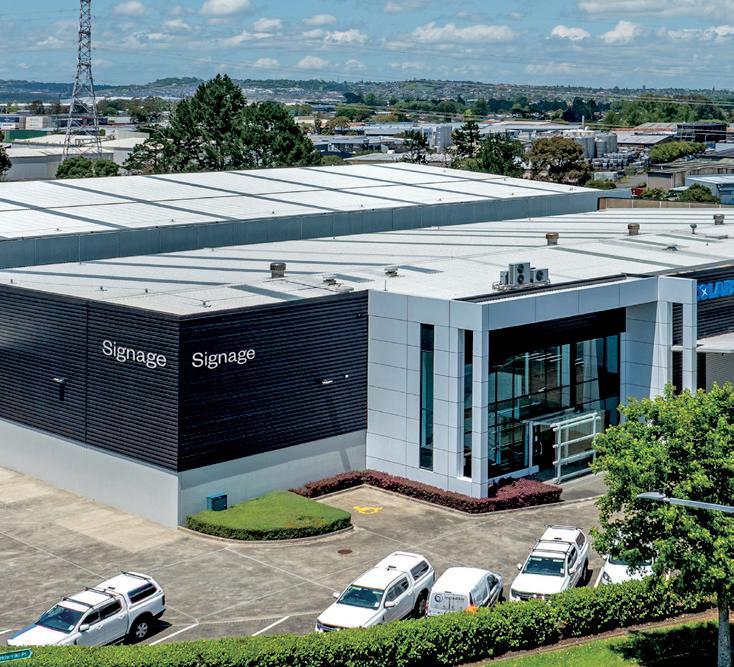
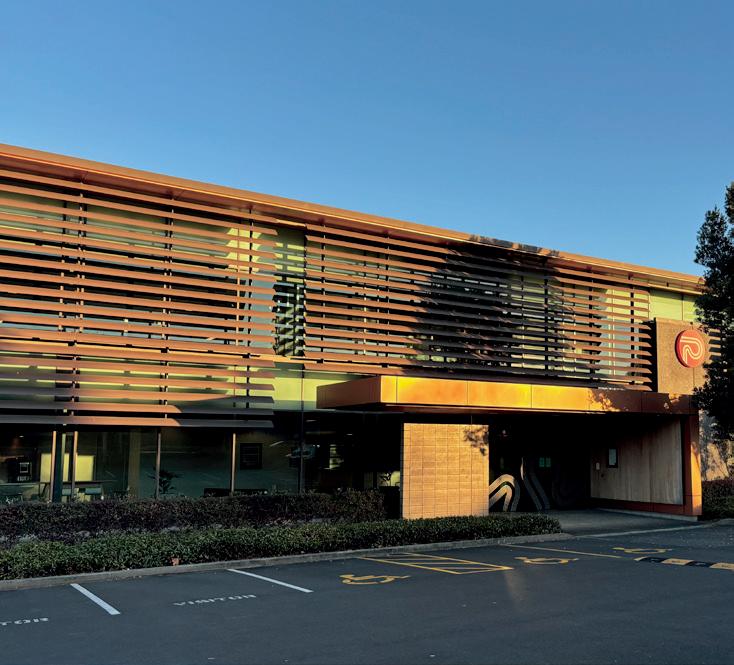
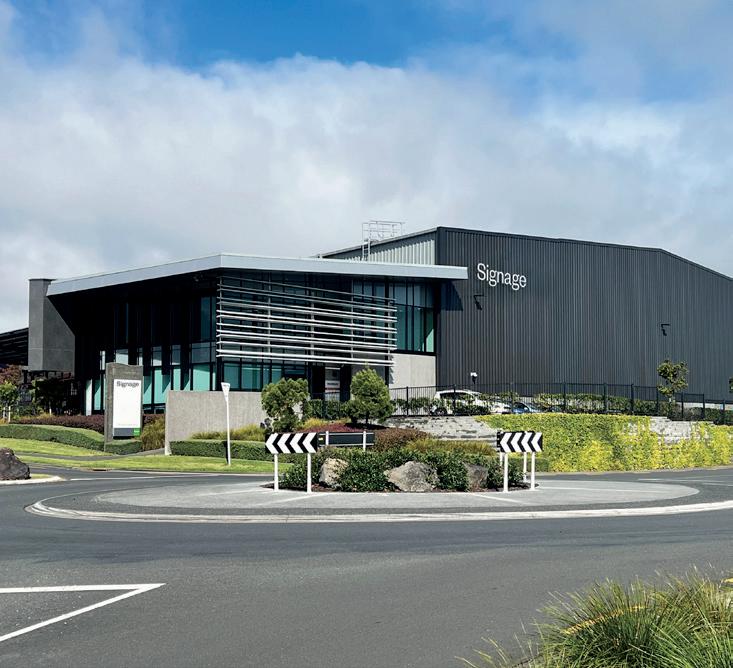
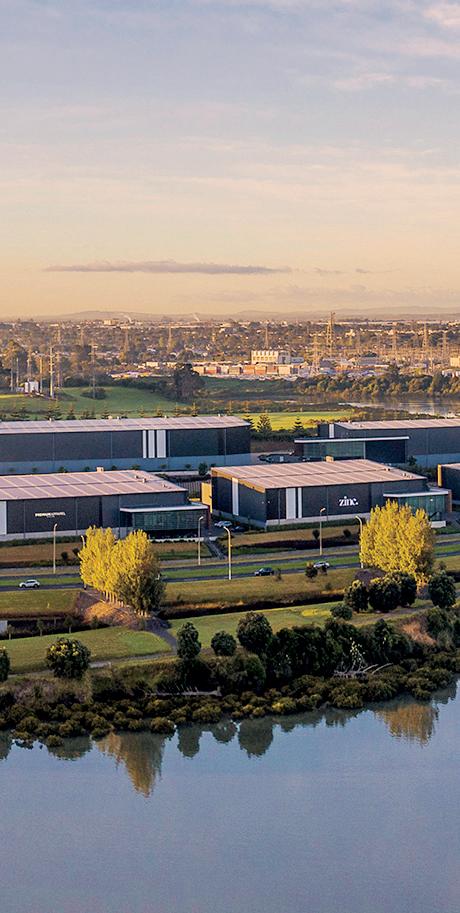
Highbrook’s world-class business park has room for big ideas, new connections, and audacious goals. With over 140 successful businesses calling it home, Highbrook’s the smart choice — right next to SH1 in Auckland, it’s a prime spot for business and distribution.
At its hub is convenience — lunch spots, a gym, a variety of professional services, even serviced apartments. Time to explore Highbrook’s quality energy-efficient warehouses for lease from 600 – 11,000 sqm.
HIGHBROOK.CO.NZ
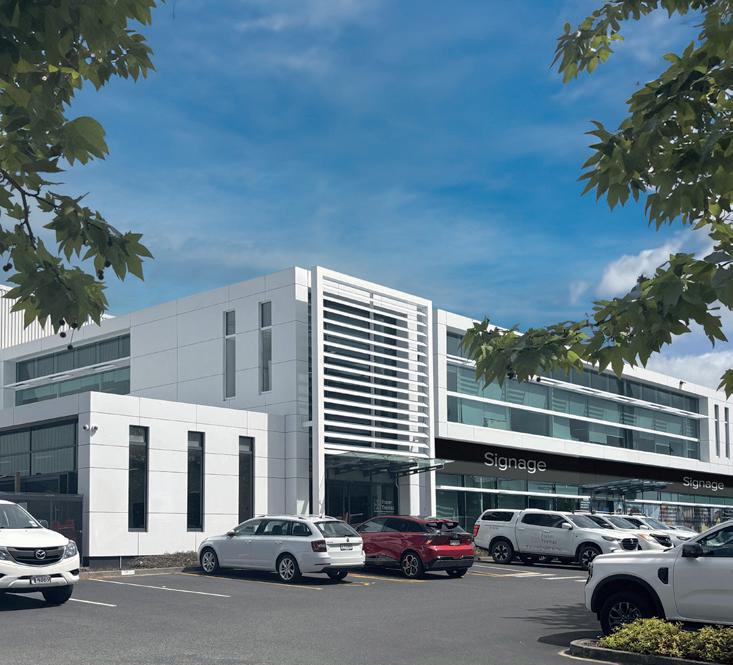
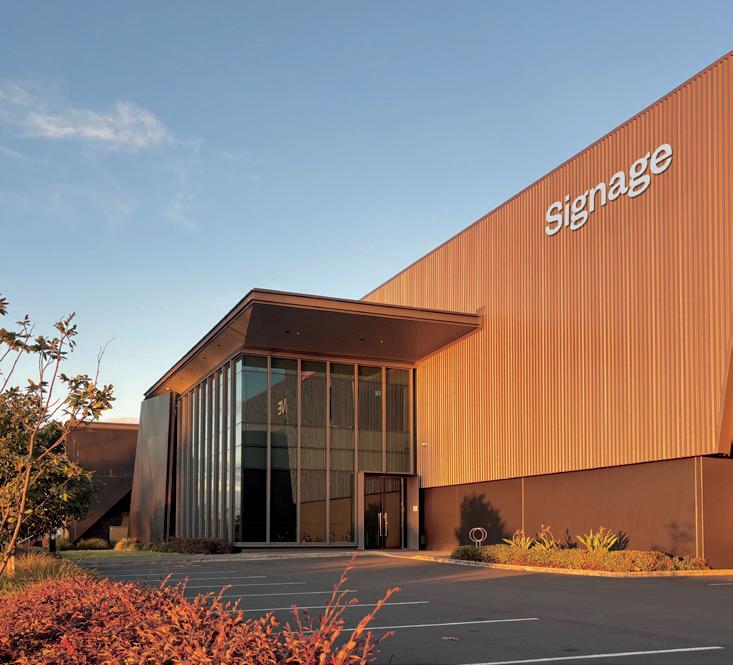
21 El Kobar Drive
+ 4,473 sqm warehouse
+ 1,521 sqm office (over 2 levels)
+ 772 sqm canopy
+ 710 sqm yard
+ Available April 2026
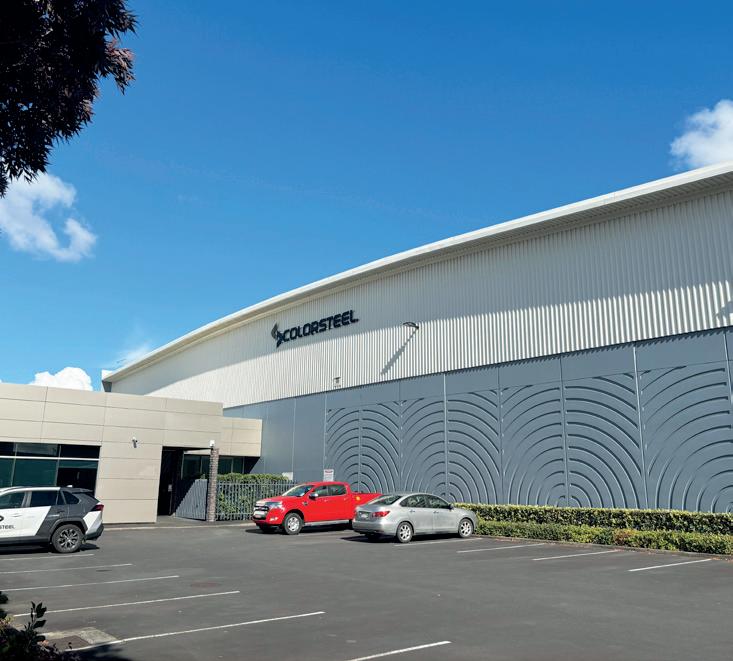
72 Highbrook Drive
+ 1,398 sqm warehouse
+ 357 sqm office (over 2 levels)
+ 277 sqm canopy
+ 139 sqm yard
+ Available May 2026
126 Kerwyn Avenue
+ 5,847 sqm warehouse
+ 419 sqm office
+ 983 sqm canopy
+ 1,658 sqm breezeway
+ Available mid 2026

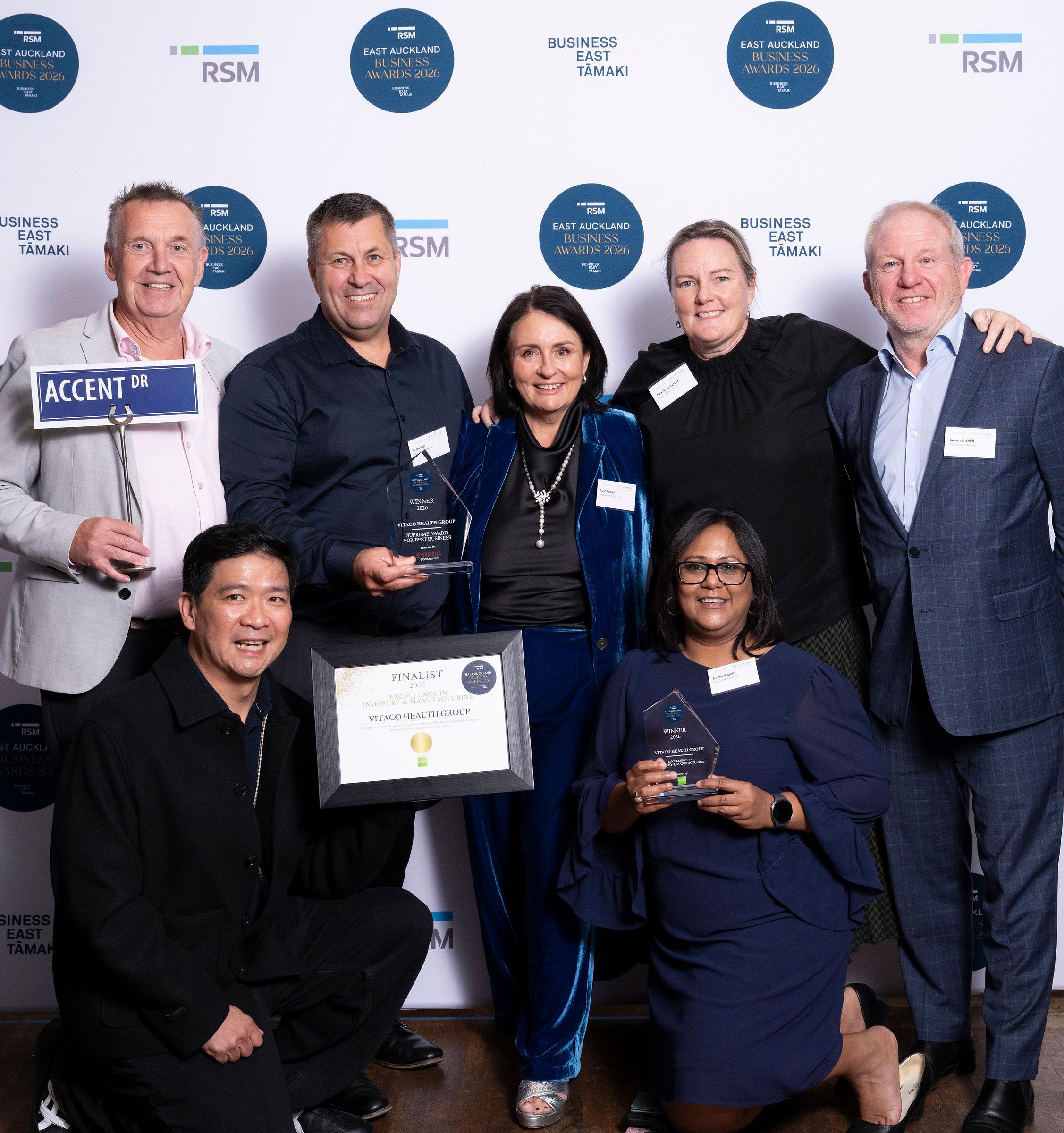
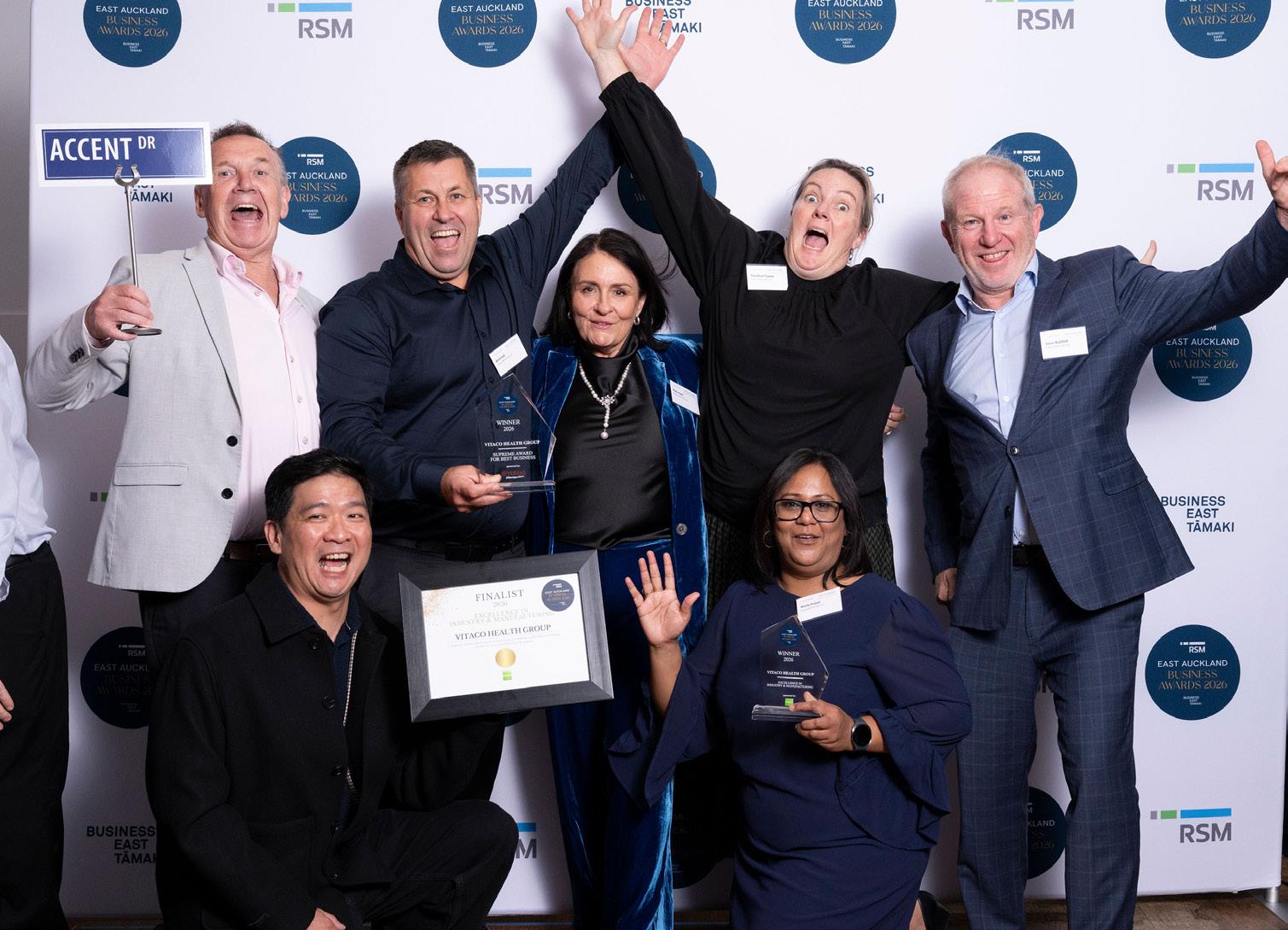
Congratulations to the winners and finalists of the RSM East Auckland Business Awards 2026 - A celebration of local excellence
The winners and finalists of the RSM East Auckland Business Awards 2026 were announced at a celebratory awards dinner in March.
The RSM East Auckland Business Awards 2026 celebrate the resilience, innovation, and community spirit of our local business landscape. A collaboration led by Business East Tāmaki and supported by the Howick Local Board, these awards showcase the business enterprises that set the standard for excellence across our region.
With RSM as the overall sponsor, category awards were sponsored by individual businesses, each a standout in its own industry.
SUPREME AWARD FOR BEST BUSINESS
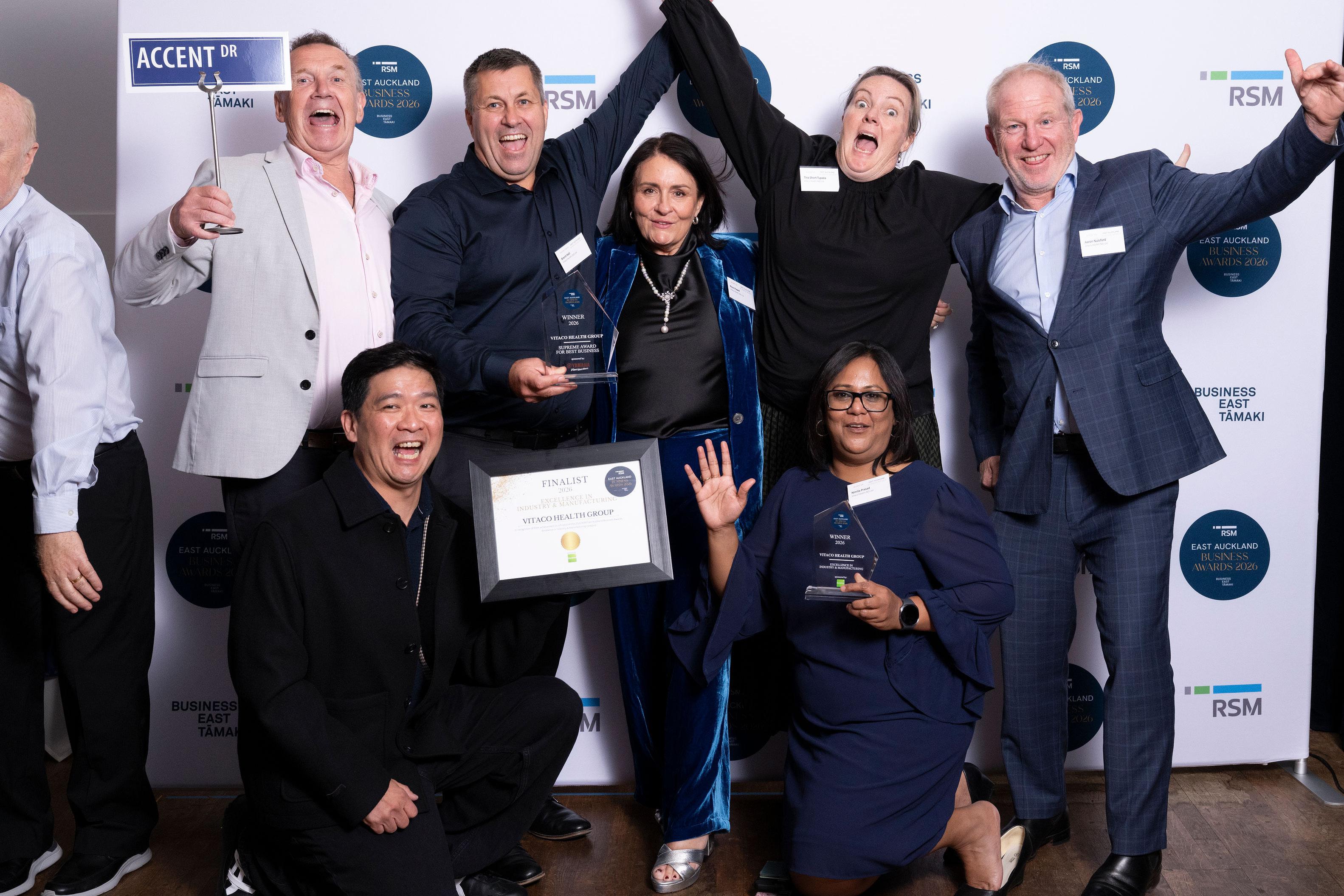

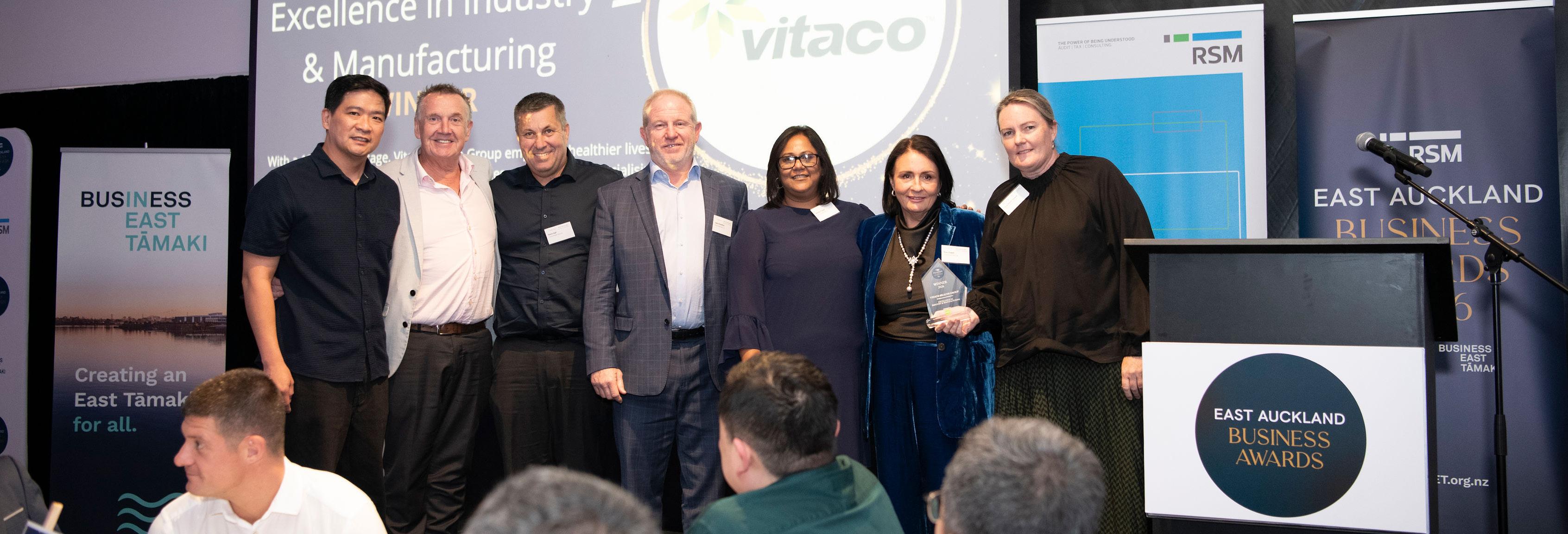
JUDGES: Jim Doyle, Catherine Lye
Sponsored by Goodman Property Trust

Plytech Panels: New Zealand’s leading specialist supplier of high-performance plywood and architectural panel solutions.
W. Wiggins Ltd: Established in 1866, this family-owned company is a leading innovator in specialised textile products across the marine, transport, and upholstery industries.
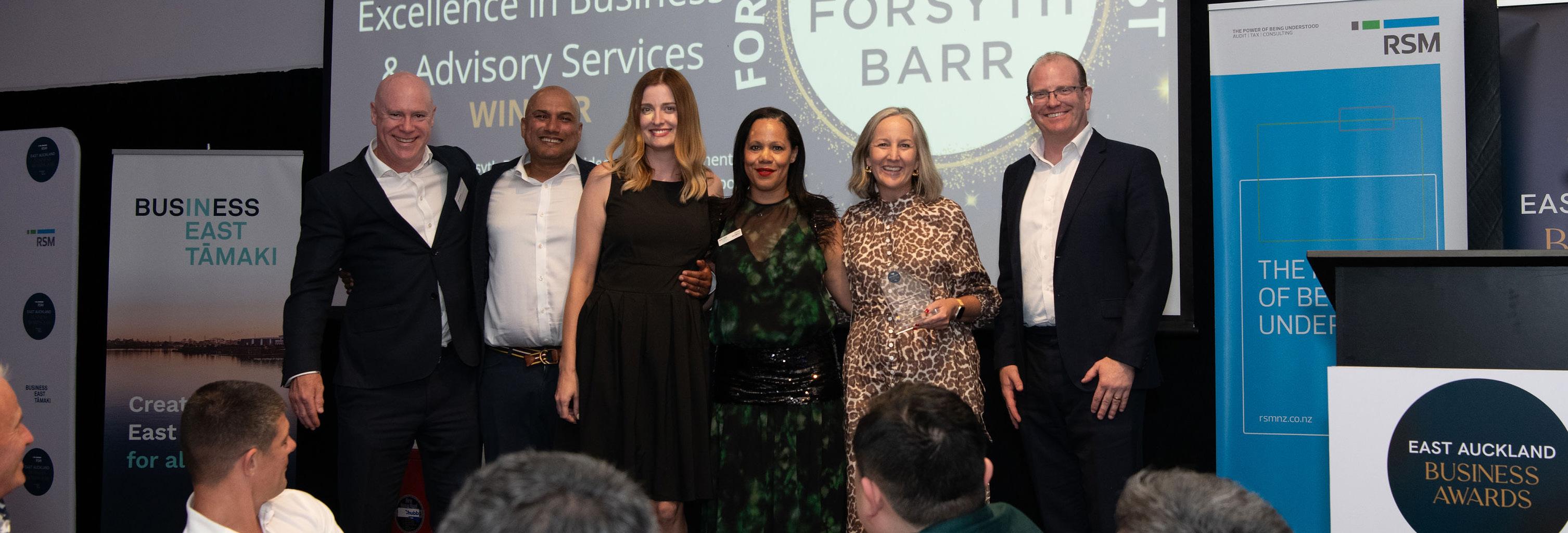
Forsyth Barr stands as a pillar of the New Zealand investment landscape, boasting a majority staff-owned legacy that spans over 85 years. Their Auckland East office has established a massive regional footprint, extending from Franklin through to Pokeno, by providing comprehensive wealth management and financial planning to families and charitable trusts.
The judges were particularly impressed by their "partnership approach," noting that their strong growth is built on a foundation of word-of-mouth credibility and deep client trust. Beyond traditional advisory, the firm has embraced digital innovation with a specialised app designed to make investing accessible to those with lower capital. Their commitment to the eastern suburbs is further evidenced by their community contributions, including hosting local meetings and supporting financial literacy programmes at Macleans College.
Sponsored by NXP
JUDGES: Angela Calver, Denis Gianoutsos
HIGHLY COMMENDED | PIC Insurance Brokers:
New Zealand’s largest 100% locally owned independent brokerage, providing tailored insurance solutions with a comprehensive range of products, including business insurance.
Freerange Works: A Human Resources (HR) consultancy specialising in delivering outsourced and fractional HR support, focusing on building leadership skills and strong people and culture practices.
Lowie Recruitment: A trusted recruitment and labour-hire partner specialising in high-volume, safety-critical, and compliance-heavy environments where pastoral care and reliability matter.
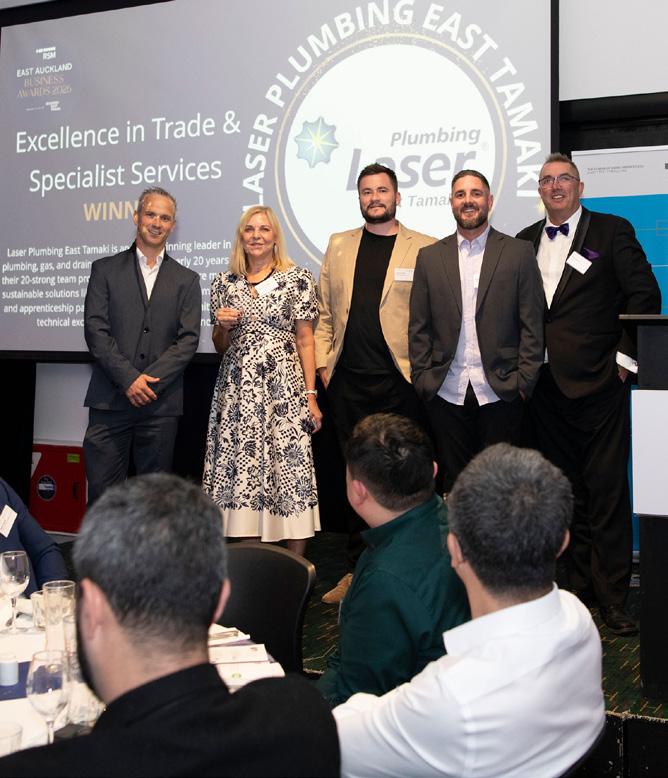
As the largest franchise in the Laser Group’s national network, Laser Plumbing East Tāmaki has set a gold standard for reliability and technical excellence in Auckland’s residential and industrial sectors. The judges attributed their continued success to a highly talented team and the sophisticated use of modern IT systems that allow for continuous monitoring and efficient service delivery. This technical prowess is matched by a formidable internal culture; longserving staff members serve as clear evidence that the business is a premier place to work.
With clear messaging around delivery standards and a robust succession plan in place, the leadership team demonstrates a profound understanding of customer needs and market drivers.
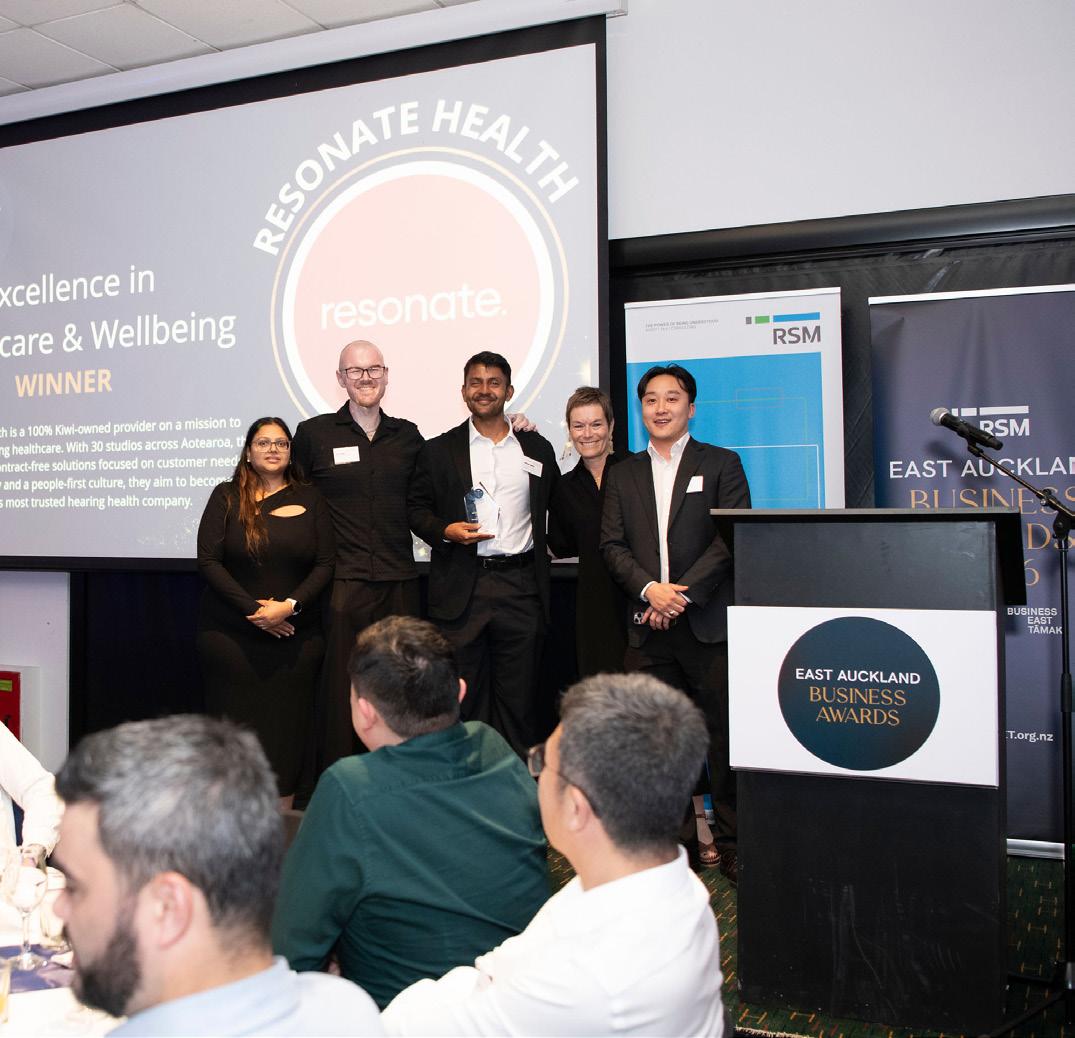
Resonate Health has achieved "staggering" growth since its success at the 2024 awards, successfully disrupting the hearing healthcare market with its mission to democratise ear health.
The judges noted that Resonate has redefined the "Best New Business" category through reliable, high-speed growth and a culture that remains remarkably transparent. To keep the team aligned during this rapid expansion, the company holds whole-company standing meetings every morning, fostering an amazing culture of information-sharing. By making brilliant hearing solutions more accessible than ever, Resonate prides itself on being a values-led business actively changing the way New Zealanders age.
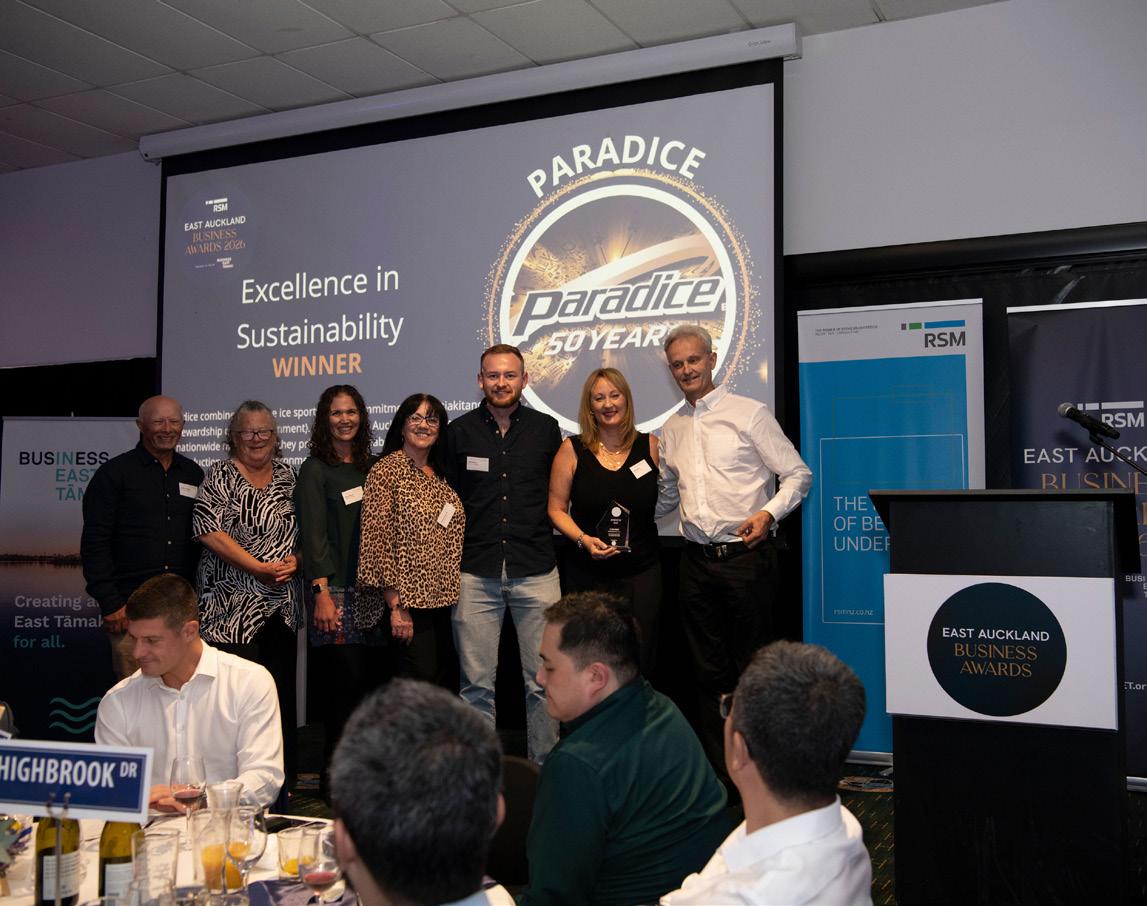
Celebrating its 50th anniversary, Paradice is a family-owned institution that has successfully embedded sustainability into the core of its entertainment operations. The judges recognised Paradice as a leader in responsible operation, noting that environmental stewardship is not a side project but a day-to-day commitment.
The business has made significant investments in practical upgrades and measurable improvements, particularly in the areas of water conservation, reuse, and waste reduction. By integrating these green initiatives into their two permanent ice rinks and their mobile "turnkey" event packages, Paradice demonstrates that large-scale community facilities can operate with a minimal environmental footprint. Their genuine, ongoing focus on "doing the right thing" sets a powerful example for other family-run businesses across the region.

JUDGES: Nick Biland, Muneesh Mudaliar
Finalists:
RAMS Group of Companies: A New Zealand-owned business that has built a two-decade reputation for excellence in facility services, including cleaning, pest control, and grounds maintenance.
Sponsored by Karm Safety Management

JUDGES:
HIGHLY COMMENDED | Eliette’s Music Academy: Established in 2016, this academy has grown to 1,000 students across multiple locations, including their most recent Botany branch.
Vivea Skincare: High-end sensorial skincare specifically designed for efficacy and elegance for women navigating the journey of menopause.
The Psychology Group: A multidisciplinary mental health collective grounded in evidence-based practice and compassion, offering extensive psychiatric and psychological care.

Judges: Carolyn Cox, Tori Calver
Pact Recycling: Provides onshore recycling services for rigid plastics, converting thousands of tonnes of material annually into food-grade packaging and industrial products.
Sponsored by Waste Management

Sponsored by ClearEdge and Business East Tāmaki
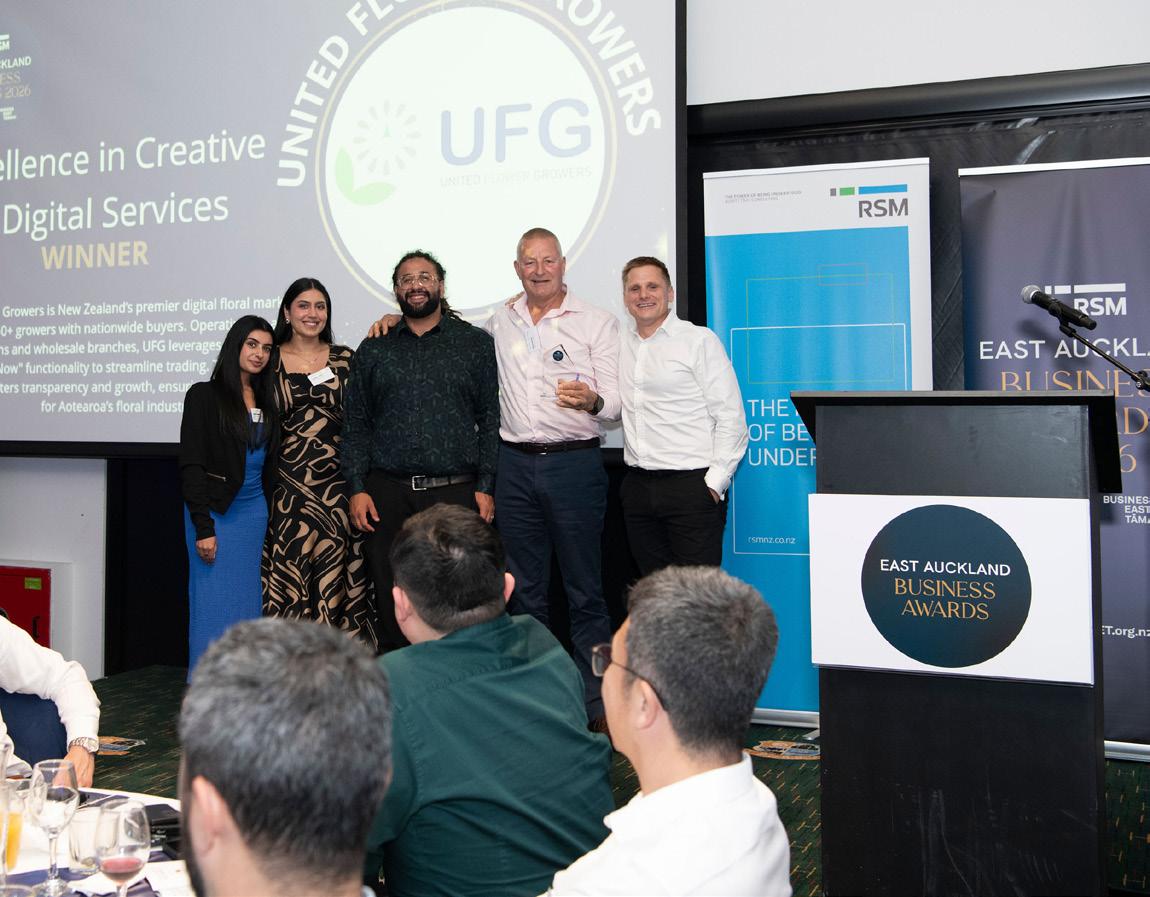
United Flower Growers has executed one of the most impressive digital transformations in the sector, successfully evolving from a traditional auction house into New Zealand’s largest and most advanced digital flower marketplace. By looking to international categories for inspiration, the leadership team made brave decisions to move their operations online, creating a powerful suite of tools that connect over 350 local growers with more than 1,000
The judges praised the "slick" nature of the operation, noting that even as the business moved into the digital realm, it ensured that traditional growers and buyers were not left behind. UFG represents a business that never stands still—constantly testing, learning, and innovating to improve absolute efficiency and better serve its nationwide market.


Eastern Times represents a remarkable "survival and revival" story in the independent media landscape. As a community news publisher, it goes far beyond profit to provide a platform for local schools, clubs, and small businesses to be seen and heard.
The judges recognised its vital role in strengthening local identity and cohesion by sharing neighbourhood stories that might otherwise go unnoticed. Whether through its digital content or its printed papers, the publication provides an essential service, particularly for demographics that are less digitally connected. By ensuring that key local information and community narratives remain accessible and inclusive, Times Media has created a positive and measurable impact on the social and cultural fabric of East Auckland.

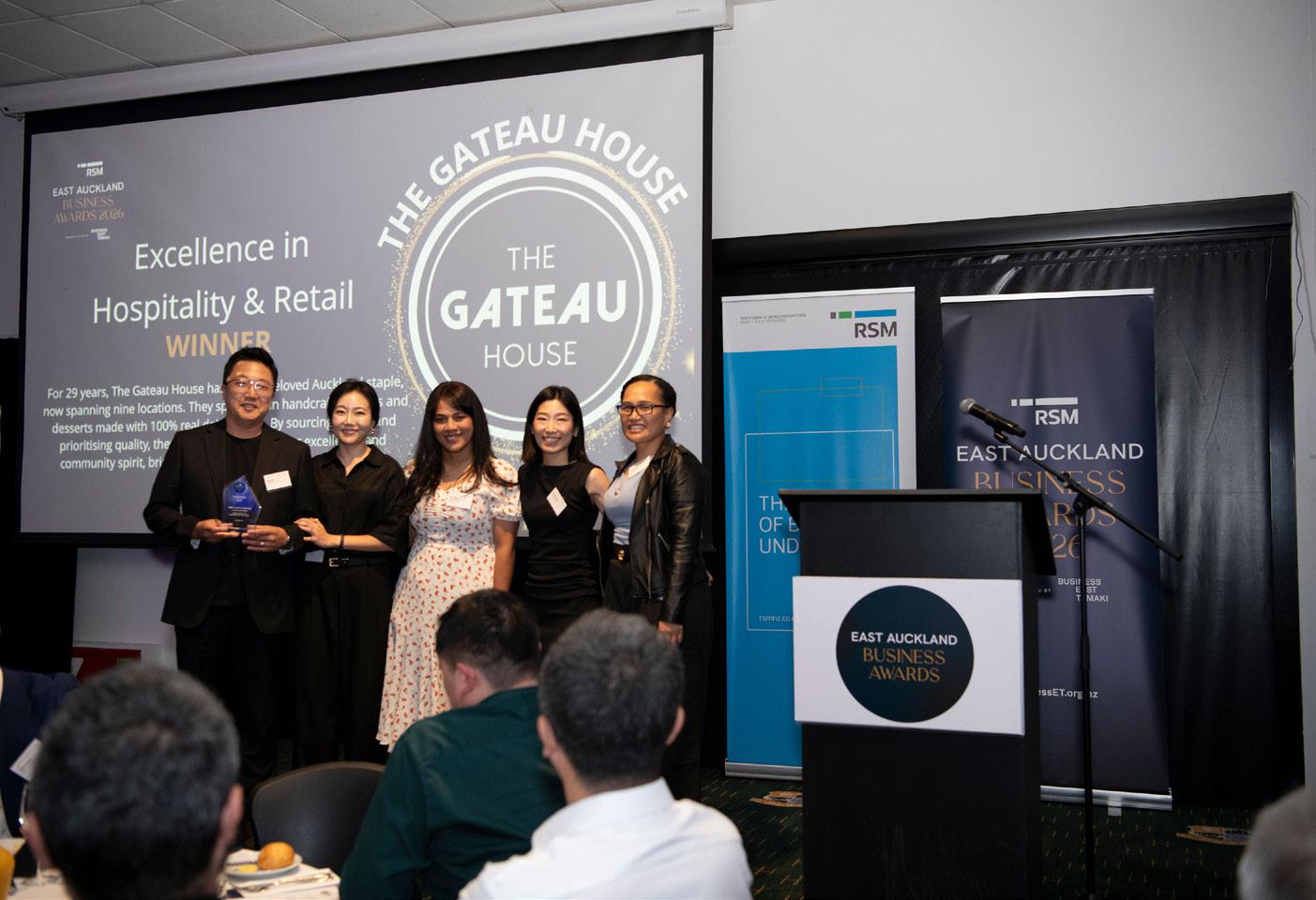
With 29 years of serving the community and nine stores across the city, The Gateau House has demonstrated the scale and maturity of a true market leader. The judges found the business to be an "outstanding contender," noted for its strong capability, consistency, and ability to operate at a
Supported by a central factory on Harris Road, their operations are built on a foundation of passion, integrity, and uncompromising quality. Their awards entry was uniquely well-documented and supported by measurable results, providing clear evidence of their performance and execution. As a highly credible and well-established business, The Gateau House continues to set the benchmark for excellence and leadership within the hospitality

Judges: Brett Lawson and Jim Doyle; Candice Baker and Emma Fern
HIGHLY COMMENDED | Alpine Print: A family-owned creative production company providing full-service partnerships across print, packaging, and digital display.
Snap Print Solutions East Tāmaki: A trusted provider for over 30 years, offering professional print and design solutions ranging from business cards to large-format signage.
Oceania Beauty Limited: An innovation-led manufacturer transforming New Zealand’s unique agricultural resources into high-value, science-backed botanical skincare for global markets.

Judges: Dame Ranjna Patel DNZM, QSM, JP; Margi Mellsop
HIGHLY COMMENDED | Paradice: Celebrating its 50th anniversary, family-owned Paradice is a cornerstone of the community that provides extensive ice sports and entertainment facilities in Botany and Avondale, while delivering bespoke mobile event packages to councils, schools, and local groups across the region.
Edvance Workplace Education: Partners with employers to design tailored learning programmes that lift skills and improve productivity for the wider community.
Habitat for Humanity Northern Region: A social enterprise that blends compassionate mission with business acumen to provide safe, decent homes for whānau in need.
The Prospect of Howick: A multi-use site hosting community events, live music, and functions, serving as a hub for local social connection.
Judges: Brendan Kelly and Miranda Burdon
Finalists:
HIGHLY COMMENDED | E-PACS Wholesale Limited: An authentic Southeast Asian supermarket offering authentic groceries and vegetarian foods with a mission to make plant-focused Asian cuisine accessible to all.
Hancock’s Café: A locally owned neighbourhood café specialising in fresh, hearty food and friendly service that makes every customer feel at home.
Sponsored by Quest

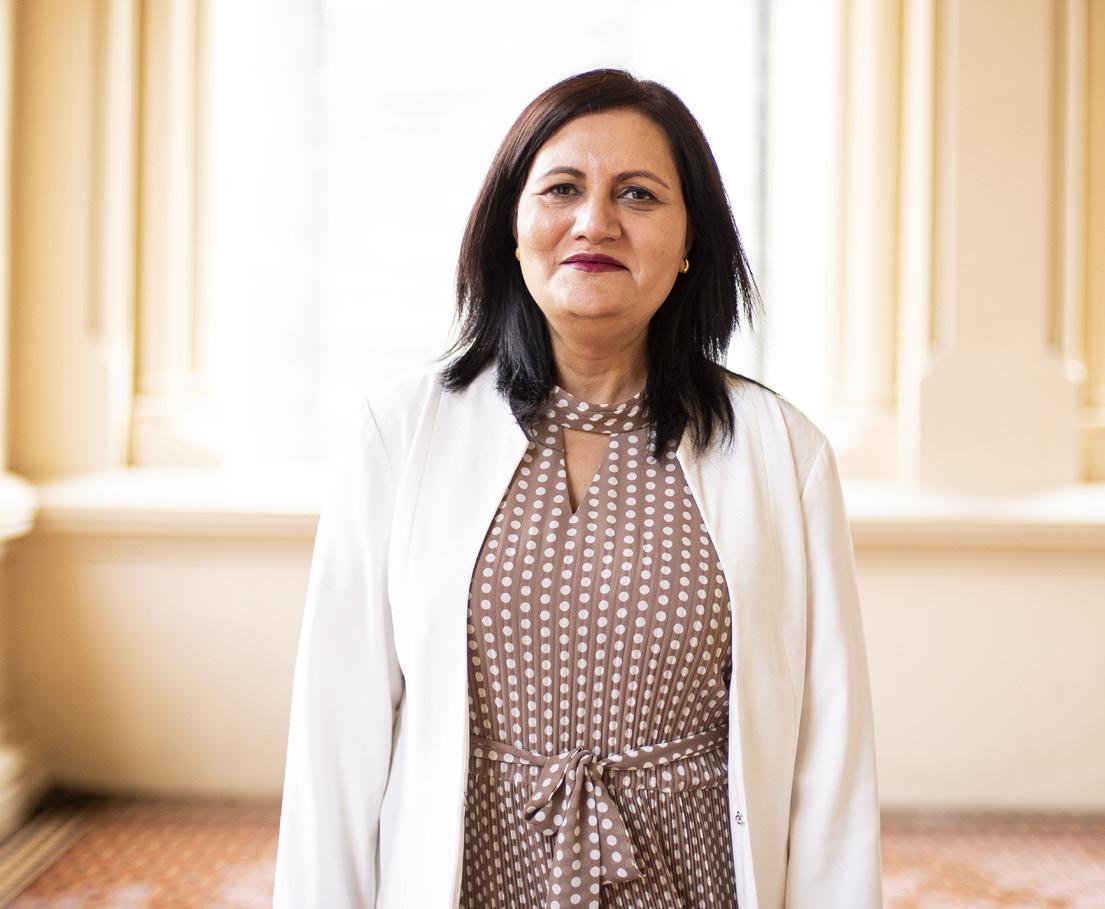
Spokesperson for Social Development, Research, Ethnic Communities, Commerce and Consumer Affairs, Tertiary Education and Skills, Immigration, and Trade
In late November, I visited East Tāmaki, spending time with two organisations that have little in common except their postcode.
BCITO (Building and Construction Industry Training Organisation) is New Zealand's largest construction apprenticeship provider – over 55,000 trade-qualified professionals across 16 trades. People earn while they learn, carry no student debt, and come out with skills the industry values. In a sector facing persistent workforce shortages, that pipeline matters, and it was useful to see how the organisation operates on the ground rather than just read about it in a submission.
1919 Distilling is a different kind of operation. Soren Crabb founded it after a career at sea, built the copper pot still onsite in East Tāmaki, and sources botanicals from around the country: Otago cherries, manuka honey, Waitakere Range water. The name comes from New Zealand's 1919 prohibition referendum, which failed by 50.3%. It's a good story, and the craft behind the product is evident the moment you walk through the door.
Both visits covered similar ground. We talked about workforce needs, what helps businesses grow, and what can sometimes get in the way. None of the themes were entirely new, but hearing them directly from people on the ground is always valuable. It adds practical context that you don’t always get from formal feedback.
East Tāmaki is one of Auckland's most productive industrial areas, and it was good to spend time there. Thanks to the Business East Tāmaki team for making it straightforward.
Dr Parmjeet Parmar
Hon David Seymour – Leader of the Act Party, MP for Epsom, Deputy Prime Minister
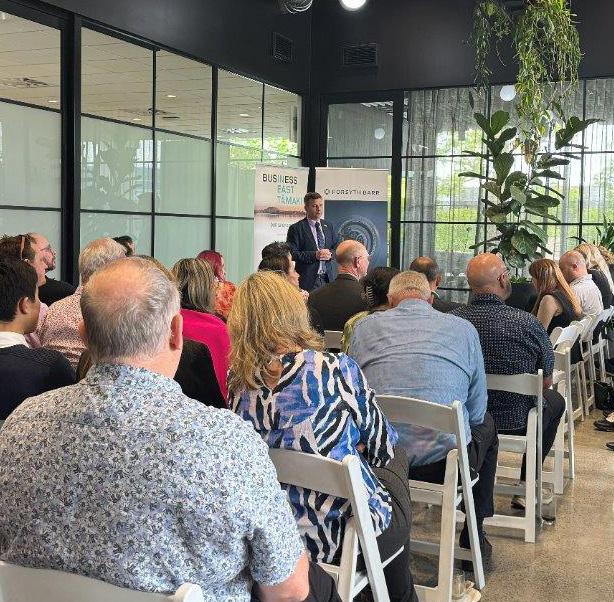
Thank you to Business East Tāmaki for the opportunity to speak with members at your October lunch in Highbrook. It was a valuable forum to connect directly with businesses that are central to Auckland’s productive economy.
I appreciated the engaged discussion and the practical questions raised during the session. Conversations touched on the broader economic and regulatory environment facing businesses, as well as the importance of creating conditions that support growth and innovation.
Opportunities like this are important. They provide a direct line between policymakers and the businesses experiencing these settings day to day. I particularly valued the constructive and solutions-focused tone of the discussion.
I remain focused on improving the regulatory environment, lifting productivity, and supporting the conditions that allow businesses to succeed and employ more New Zealanders.
Thank you again to Business East Tāmaki for the warm welcome and for the work you do representing this important business community.
- Hon. David Seymour Minister for Regulation

it’s not “someone else’s
Illegal dumping in East Tamaki isn’t just untidy—it’s dangerous and costly. We’re seeing more pallets, timber and unwanted furniture left on berms and footpaths, blocking access and creating trip, injury and fire risks for staff, visitors and pedestrians.
It’s also illegal. Auckland Council can issue instant fines up to $400, and serious cases may be prosecuted under the Litter Act, with penalties up to $30,000. Reporting promptly helps Council investigate and take action.
Even if you didn’t dump it, your business and the wider area can be affected:
• Reputation: Roadside rubbish sends the wrong message to customers and staff.
• Health & safety: Unstable stacks and sharp debris increase risk.
• Cost: When offenders aren’t identified, clean-up often falls to property owners or the community. Council spends millions each year removing dumped waste.
• Secure waste and pallets onsite - tidy, contained, and not accessible after hours.
• Use reputable contractors or take advantage of Business East Tamaki’s free collections: businesset.org.nz/ better-business--less-waste
• If you witness dumping, note the vehicle rego, time and location, and take a photo if it’s safe to do so.
To report concerns, email admin@businesset.org.nz
Protect our waterways – know your trade waste responsibilities
Our waterways, our infrastructure, and our communities are under threat — and local businesses have an important role to play. Watercare is grappling with ongoing challenges across parts of the East Tāmaki wastewater network, caused by the discharge of harmful substances from industrial and commercial sites. Chemicals, solvents, and heavy metals entering the system are damaging infrastructure, endangering workers, and putting the environment at risk.

This is a shared responsibility. Here’s what you need to know, and what you can do
What is Trade Waste?
Trade waste is any commercial or industrial liquid waste discharged into the wastewater network for treatment. Unlike residential wastewater, it carries a significantly higher risk — which is why it’s governed by the Auckland Trade Waste Bylaw 2013 and the Trade Waste Control 2019.
When trade waste is mismanaged, the consequences can include:
• Sewer blockages and overflows
• Damage to the wider wastewater system
• Serious health hazards for workers and the public
• Lasting harm to the environment
Solvents and heavy metals entering the network not only cause environmental harm, but they also create safety risks for the workers who maintain that infrastructure, and can result in regulatory action against your business. Taking proactive steps to understand and manage your trade waste is the right thing to do.
Business East Tāmaki has made it easy to get informed. Visit businesset.org.nz/ better-business--less-waste to access a series of free pollution prevention videos:
• Water pollution – explained in Mandarin
• What is water pollution, and how can you avoid it?
• Common causes of accidental water pollution
• How to prepare for and respond to an accidental spill
Small actions by individual businesses add up to a cleaner, safer network for everyone. Make sure your team knows the rules — and knows what to do if something goes wrong.
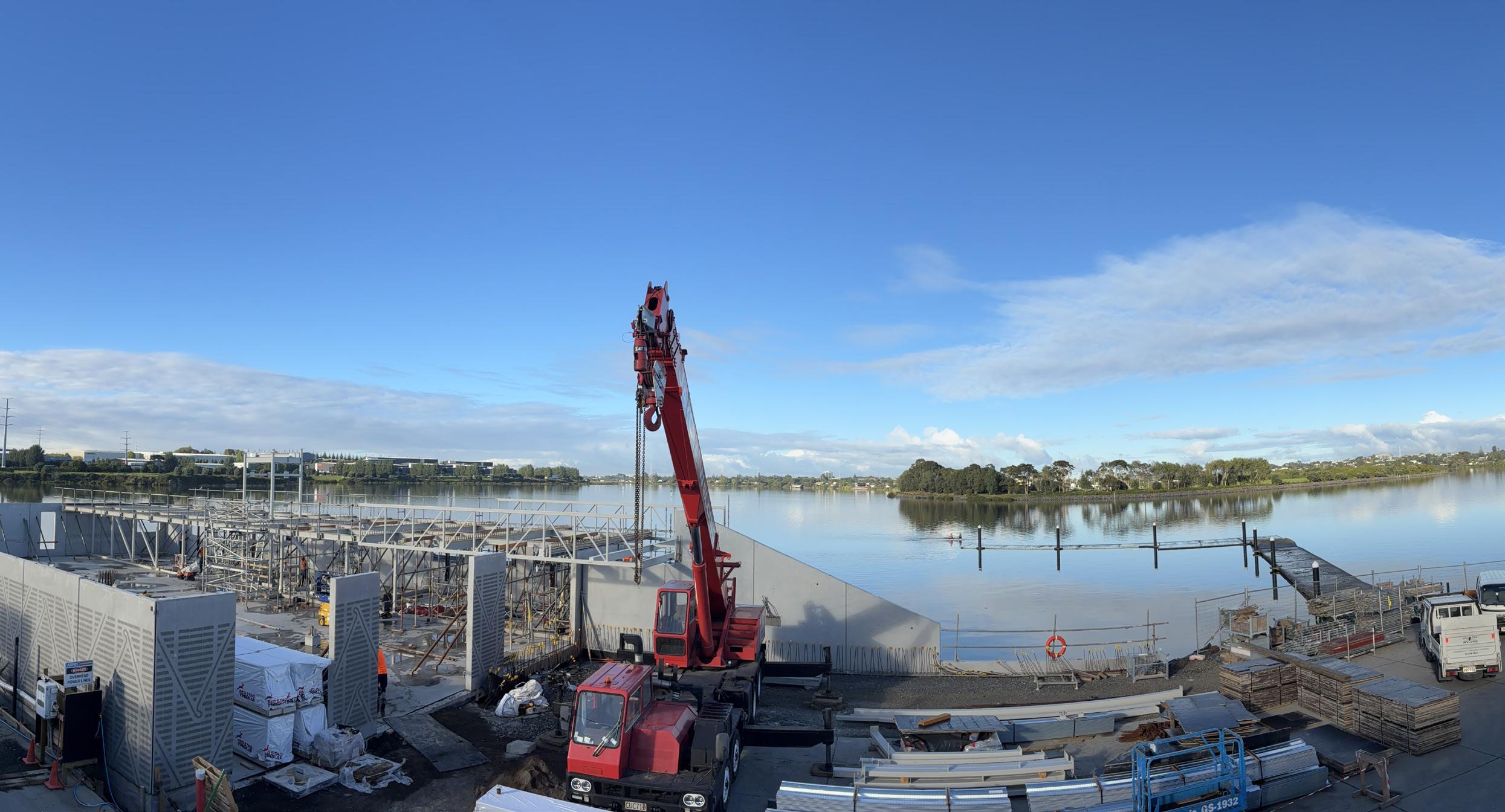
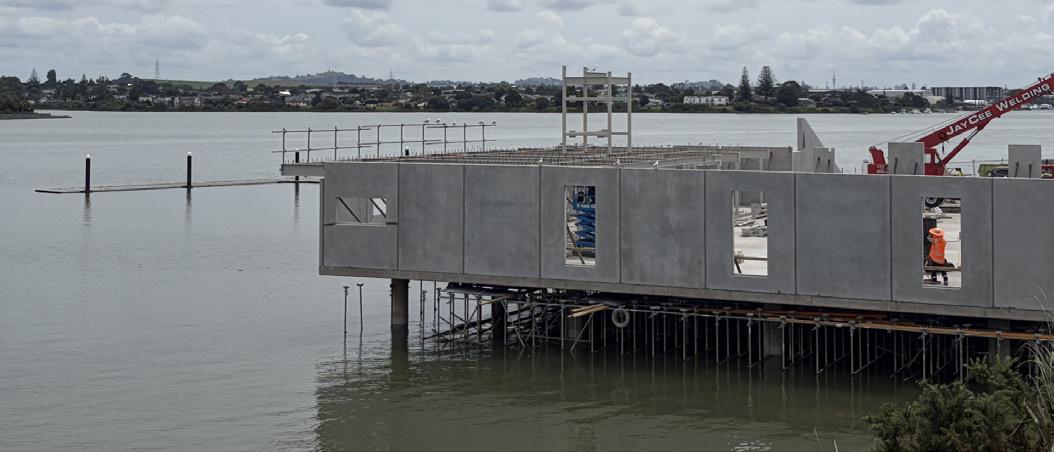
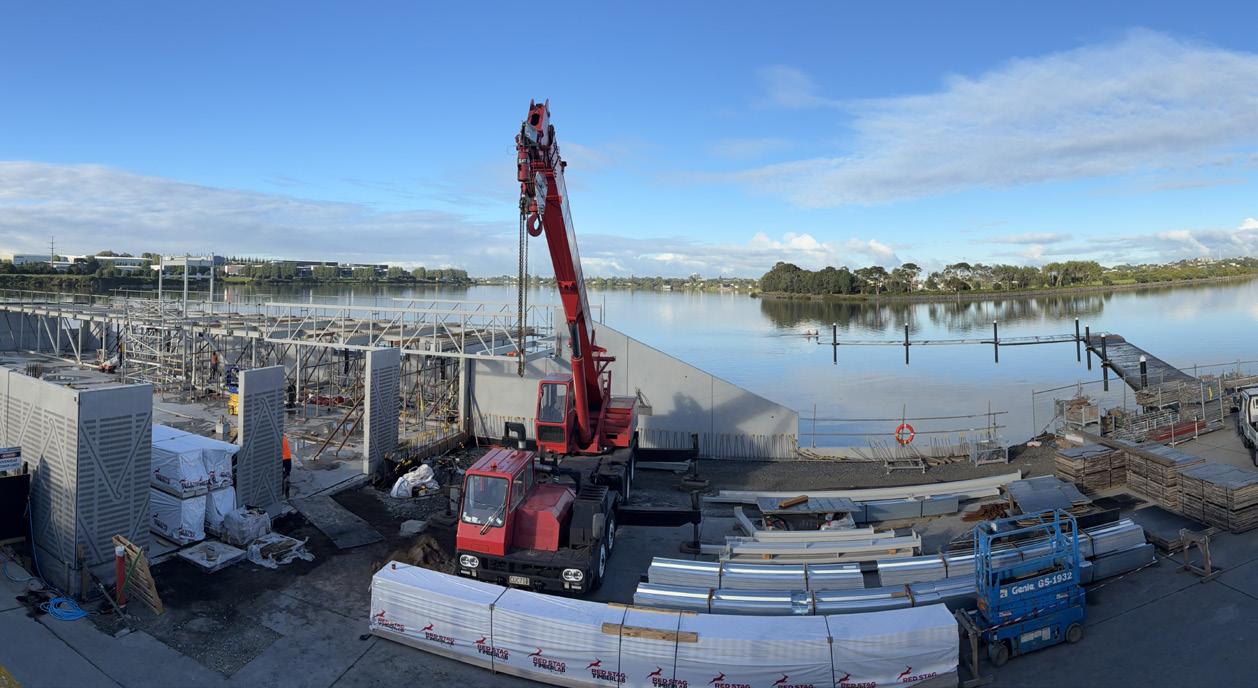
On a clear morning at the Waiouru peninsula, the vision for the Highbrook Regional Watersports Centre (HRWC) is finally becoming a physical reality. For Murdoch Dryden, Chair of the HRWC Trust, and Secretary Graeme Marshall, the project represents a decade-long mission to provide "pathways to the river" for the South and East Auckland communities.
Following the successful "big slab pour" in late 2025, the project has moved into a high-visibility phase. The arrival of the timber frames marks the start of the building's vertical rise, with Stage One and Two scheduled for completion by September 2026. Once finished, the clubhouse will stand as the premier facility of its kind in the country, featuring a 75-person capacity Club Lounge, dedicated ergometer rooms, and high-tech boat storage.
The heart of this project lies in its commitment to equity in sport. Currently, students from local high-need schools like Manurewa High, Ōtāhuhu College, and Papatoetoe High face significant geographical barriers to watersports. Many must travel across the city just to access the water, a logistical hurdle that limits participation and drains school budgets.
"The Tāmaki River recreation area is an incredible 400-hectare resource, yet access has historically been limited to the northern shore," Murdoch explains. By providing a high-quality base on the southeast side of the inlet, the Centre will reduce travel times for these schools by two-thirds, allowing up to 1,500 engagements with students every week.
The Highbrook Regional Watersports Centre is a catalyst for community health and youth development. By becoming a Platinum Corporate Member, your business can directly support local high-need schools while gaining access to a unique asset for your own team.
The benefits of partnership:
• Brand visibility: Gain prominent signage placement both on and inside the high-profile clubroom facility.
• Exclusive facility access: Utilise the premium mezzanine Club Lounge for off-site meetings, providing your team with a refreshing, natureconnected alternative to the standard boardroom.
• Staff wellbeing & team building: Access structured "learn-to-paddle" or rowing sessions led by top-tier coaches—a powerful tool for building morale and fitness.
• The annual showdown: Secure entry into the exclusive annual corporate paddling and rowing regatta, fostering healthy competition and networking across the Highbrook business family.
Get involved: To discuss membership levels or potential naming rights opportunities, please contact Graeme Marshall (Secretary) at graeme.marshall@ highbrookwatersports.co.nz or 027 704 7606.
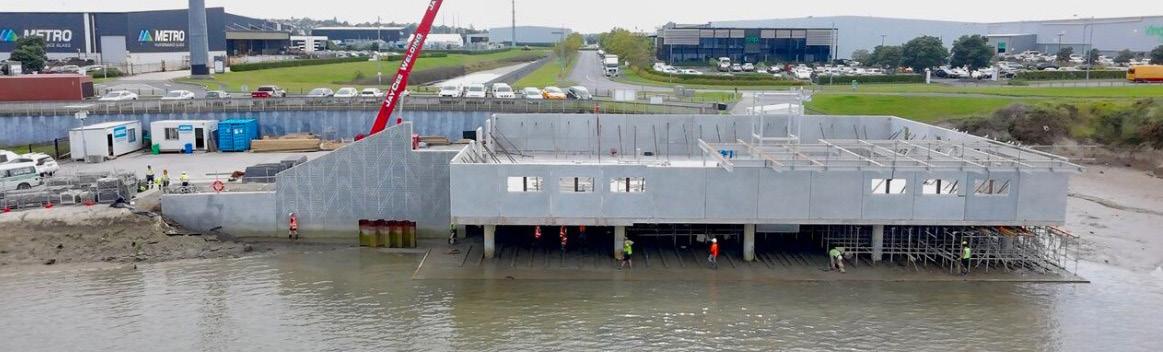
While the project has reached significant funding milestones— supported by the likes of Goodman, Auckland Council, local boards, several gaming trusts and many generous individuals and smaller entities offering various sums—the journey to the finish line continues. With a total project cost of approximately $12 million, the Trust is actively seeking long-term corporate partners to ensure the facility's sustainability.
For Highbrook-based businesses, the opportunity for involvement is twofold. Beyond the obvious corporate social responsibility benefits, the Centre offers a Corporate Platinum Club Membership. This provides local firms with a unique staff wellbeing asset right on their doorstep, including access to the Club Lounge for off-site meetings and structured team-building sessions on the water.


As the Waiouru peninsula continues its transformation, the HRWC serves as the missing link between the industrial hub and the natural environment. The facility is designed to be a "gold and malleable" asset for the community, capable of supporting everything from competitive rowing to traditional waka ama and dragon boating.
"Everything is finally connecting up," says Murdoch. "We’re not just building a clubhouse; we’re building a future where every student, regardless of their postcode, has the chance to thrive on the Tāmaki".
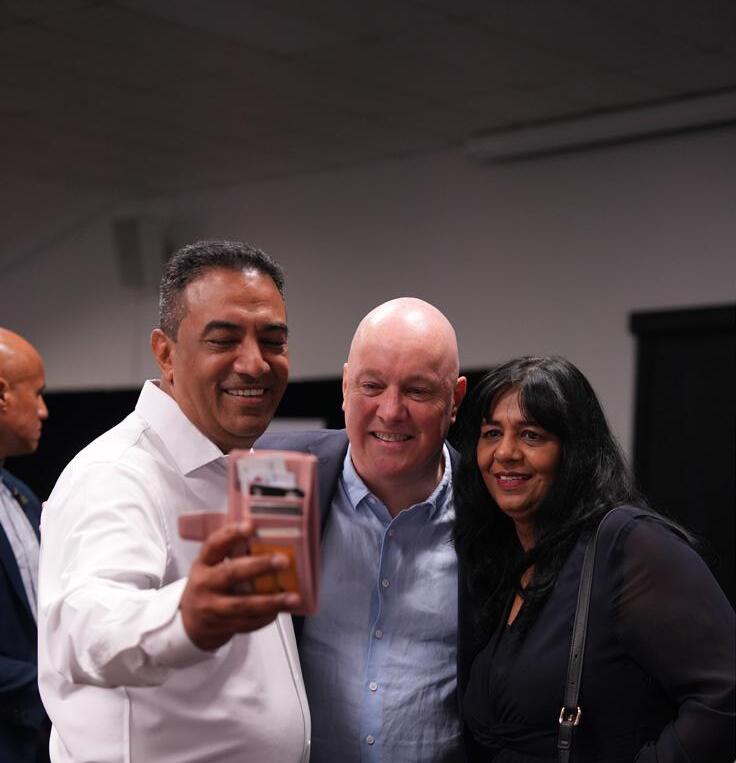
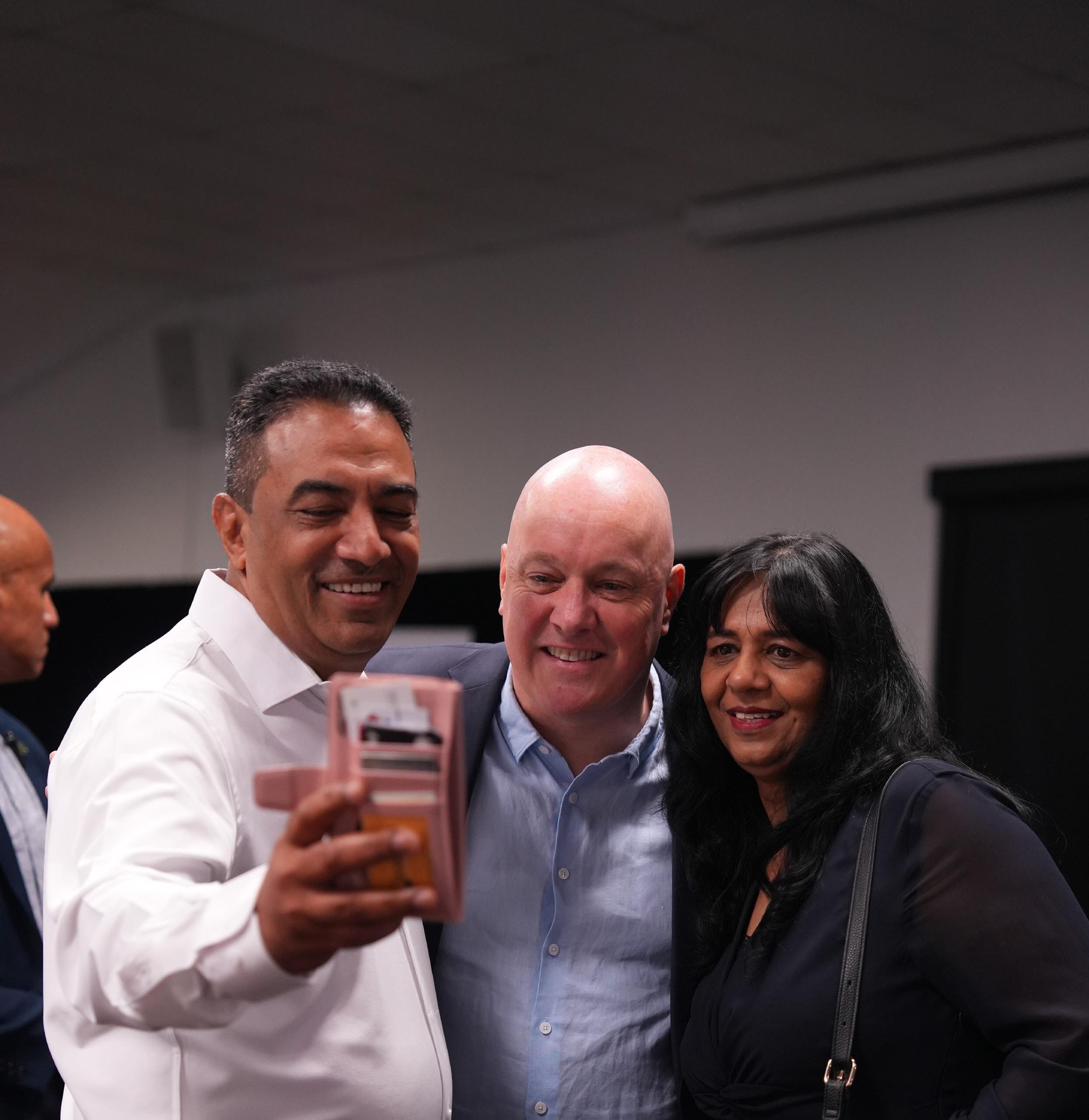
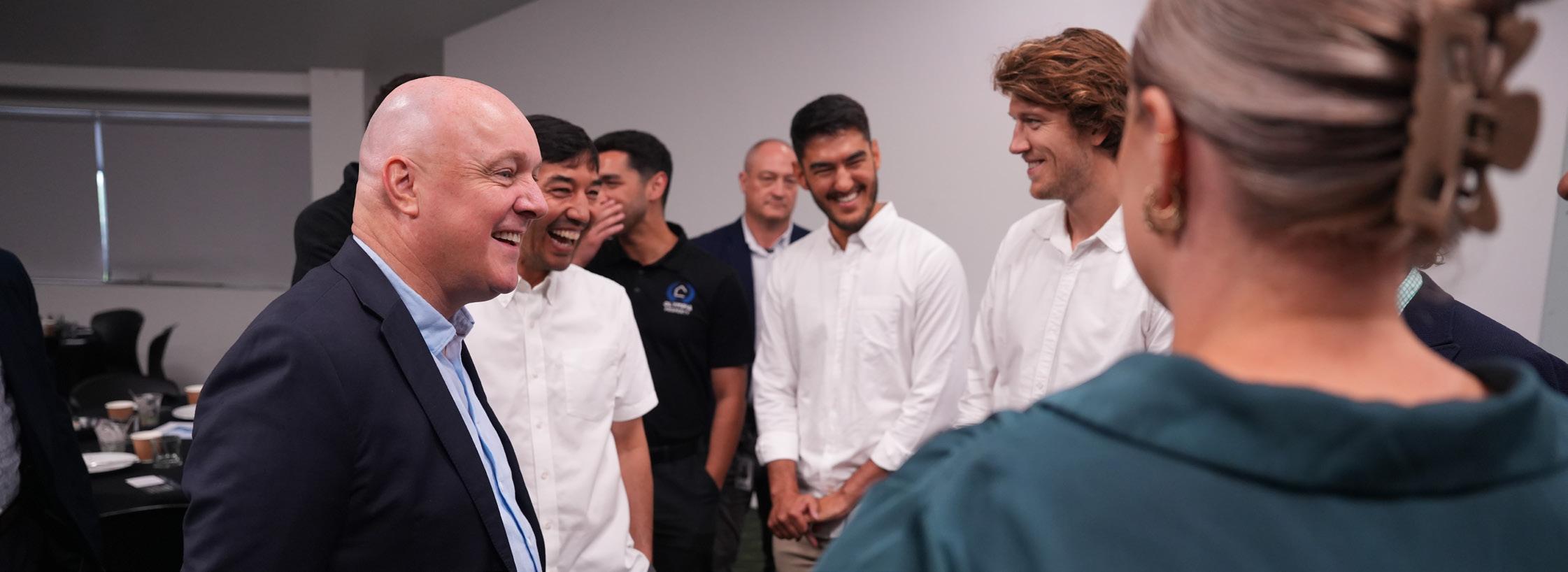
Prime Minister Christopher Luxon was in an assertive, upbeat and determined mood when fronting a sold-out breakfast for East Auckland business leaders and owners late last year.
The nation’s economy was on the menu at Business East Tāmaki’s breakfast event at Pakuranga United Rugby Club in November, where plenty of information, analysis and detail was served up by the MP for Botany, for the engaged audience to digest on his home political patch.
He described Botany as “the best electorate in the country” at one point in his wideranging question-and-answer chat with Zoe Wallis, investment analyst for breakfast sponsors Forsyth Barr Investment Advice Auckland East.
Warmly received by his audience, Luxon presented with his customary energy and quick, knowledgeable answers to questions from Wallis, one of the best economic strategists and commentators going around.
The discussion began where it has started out for many Government representatives over the past two years – speaking about the poor economy and financial state of the books they inherited in 2023 from “those muppets” – the Labour Party, which coincidentally was about to hold its annual congress in Auckland last weekend.
Luxon reiterated that the last Government increased spending by 84 per cent and national debt extended to alarming record levels, so too the size of the public service, and it has been the responsibility of his coalition to first “fix the basics of the fiscals and get spending under control”.
And as many mortgage holders know, by making payments on time, no extra fees are incurred, and this National Party-led Government’s view is the same: to pay off debt on time and keep working it down until the country is back to surpluses in five years.
Luxon talked about the United States’ tariffs issue, and New Zealand’s “two-speed economic recovery that’s under way – the rural sector where there is record exports in red meat and horticulture”, while in places such as Auckland it has been “difficult” on the construction and development sector for which the region is reliant on driving economic prosperity, but “it’s coming”.
One man from a well-known, large construction company told the Eastern Times that his business has again “taken off in the last six weeks – going gangbusters”.

(This abridged article has been reproduced with the kind permission of Phil Taylor and the Eastern Times - times.co.nz)
Luxon said he does not favour “slash and burn austerity” measures, such as those employed by Britain’s Conservatives under David Cameron in the 2010s, but “we can’t run up debt”.
The strategy is to continue cutting spending and red tape regulation, while investing in essential areas such as health (“One dollar in every $5 is spent on healthcare.”), and education (where the budget is $40 billion over the next two years), reducing “back office” workforce numbers and having those resources “deployed” to the publicserving front line.
He said the Government is firmly focused on “economic productivity – technology, cutting red tape, and
building modern, reliable infrastructure and public services, because we haven’t done those things well in a long time”.
He also cited Australia, Ireland and Singapore as good examples for New Zealand to look at in turning around a negative economic situation. This nation should be working harder at attracting foreign investment, such as “sovereign wealth funds”, out of countries such as Korea and Japan, to work together on big jobs in public-private partnerships (PPPs) to construct much-needed infrastructure.
Luxon also stated the goal to “lift savings and investment savings” for Kiwis, explaining the recent announcement and reasoning behind KiwiSaver minimum contributions being phased in over the coming years for retirement.
“We want to keep national superannuation” and have people think to “augment it with
personal savings and investment income”, and he says a “big conversation” needs to happen soon about raising the pension qualification age from 65 to 67, with one reason being “every decade we live a year or two longer”.
And concluding the hour-long discussion, Luxon said “we shouldn’t have an energy crisis”, and his Government is unravelling the “mess” created by the last administration that banned oil and gas exploration projects and seriously put off overseas investors.
There was good news, too, as “the renewable energy space is on fire with wind and solar projects”, and the goal for the country is to have “affordable, abundant energy for everyone”.
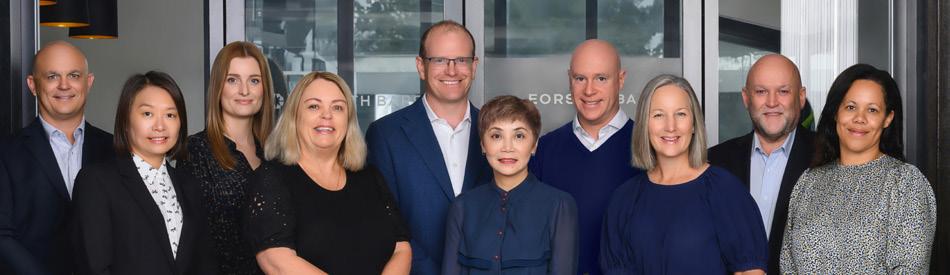
A world of research, knowledge and advice is at your front door. Whether you’re starting out, or you’re an experienced investor, our advisers can help you build a portfolio to match your personal ambitions.
It may be to maintain a certain level of income, or to grow funds to help future generations reach their financial goals. Whatever your requirements, they can provide expert help.
Contact your local Auckland East Investment Advisers for a no-obligation review of your existing investment arrangements.
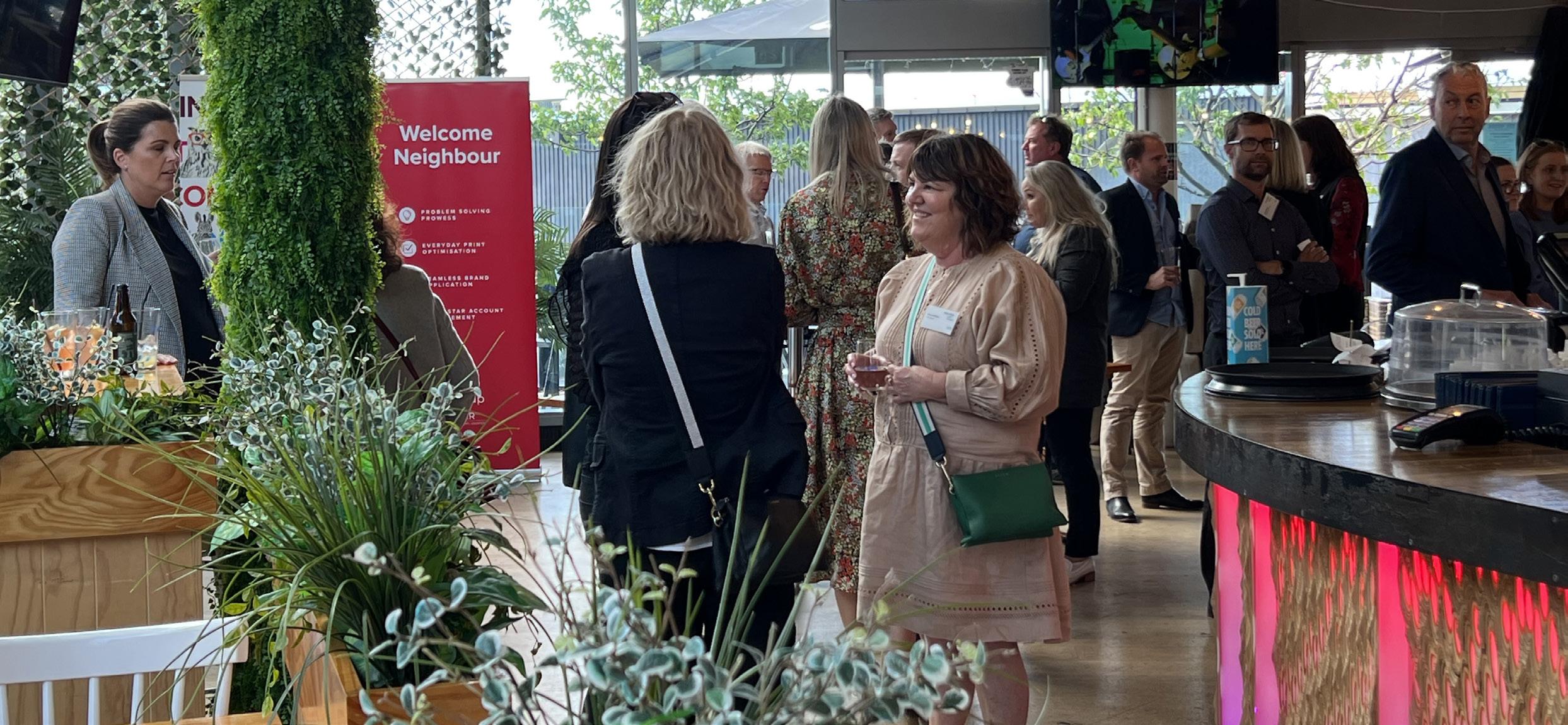
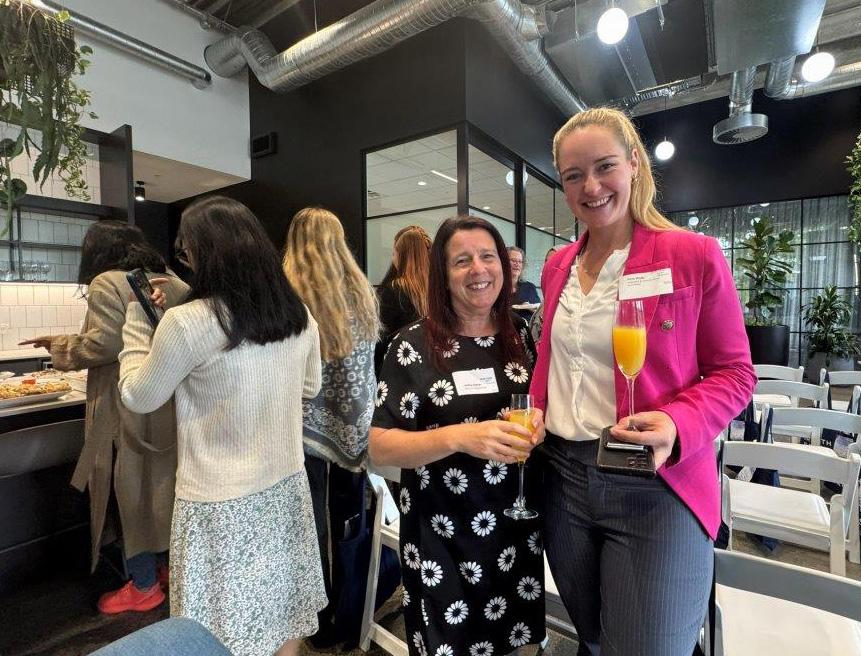
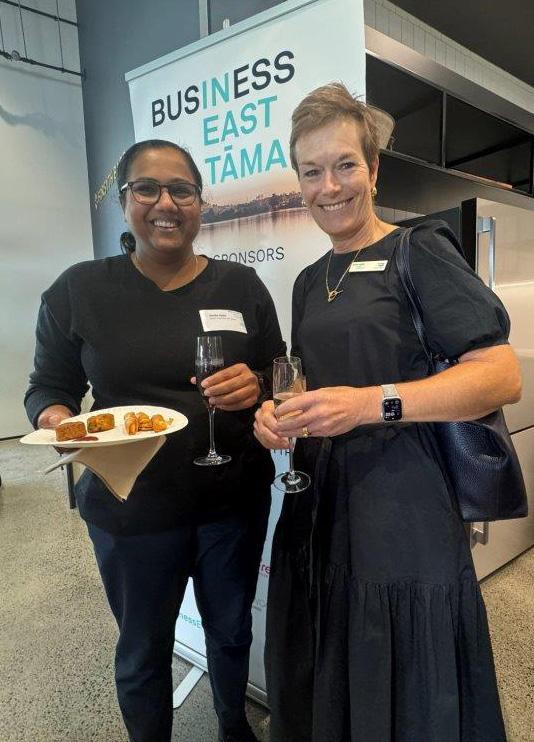
In the dynamic business landscape of East Tāmaki, your most valuable asset isn’t just what you know, but the community you build around you. While some see networking as a ‘to-do’ list item, savvy professionals recognise it as a powerful tool for unlocking opportunities, fostering innovation, and building long-term resilience.
As Business East Tāmaki (BusET) General Manager Ruth White highlights, networking is an essential pillar of professional success, especially for small to medium-sized business owners. A strong network provides a competitive edge, helping you stand out and establish the partnerships necessary for sustained growth.
The true beauty of networking lies in its dual nature. While it can open doors to new business contracts and career paths, it can also contribute significantly to your overall well-being. Building a community of like-minded individuals offers a unique support system—providing mentorship, emotional support, and a platform for knowledge sharing that enhances both your professional and personal life.
Networking is not a one-size-fits-all endeavour. The secret to mastering it is finding the format that aligns with your specific goals and personality. In East Tāmaki, we have a diverse ecosystem of options tailored to wherever you are on your business journey.
1. High-connection,
For many, the best place to start is close to home. Business East Tāmaki organises several informal events, offering a welcoming, low-pressure environment. The beauty of these events is that everyone shares a common bond: doing business in our local area.
a. Meet Your Neighbours: These popular bi-monthly events are the ‘gold standard’ for proximity-based networking. They allow you to build organic relationships with the businesses operating right next door.
b. The Small Business Group: This peer-to-peer forum is dedicated to the ‘community’ aspect of networking, offering the emotional support and shared wisdom that helps small businesses thrive. (Find out more on Page 11)
c. EmpowHer: Our dedicated women’s networking group focuses on ‘connection over competition,’ creating a supportive space for professional growth and collaborative success.
To find out more about these events, go to businesset.org.nz/whats-on
If you are looking for a high-accountability business referral environment, focused on measurable results, structured groups like Business Networking International (BNI), or All Round Networking (ARN) may be your ideal fit. ARN is currently exploring an East Tāmaki presence, offering a different type of ‘return on investment’ for those ready to make a significant commitment. This commitment includes:
a. Consistent engagement: Weekly meetings that build deep trust and reliability.
b. Targeted deliverables: A focus on specific goals and high-quality referrals.
c. Professional investment: A commitment to the group's financial and growth objectives.
3. Networking beyond the boardroom:
3. Networking beyond the boardroom:
Finding connection in the everyday
Sometimes, the most impactful professional connections happen when you aren't strictly ‘at work.’ Expanding your networking horizons to include social or interest-based groups can offer a more relaxed environment to build deep, authentic relationships.
• The power of the keynote: The Auckland Executive Club
For those who enjoy a blend of professional development and social connection, groups like the Auckland Executive Club provide a sophisticated platform. These ‘dinner and learn’ events combine the structure of a keynote speaker with the opportunity to sit down and engage with other women in leadership.
• The walk and talk: Morning Meet-up
On the other end of the spectrum is the ‘active relaxation’ of groups like Morning Meet-up. This is a relaxed environment where men of all ages can walk, chat, and simply spend time together. While it may not feel like ‘formal networking’ in the traditional sense, it is an incredibly effective way to meet new people and build a community.
It is important to remember that networking is a skill you can develop and grow—it’s about practice, not just personality. To make the most of your next event, try these three simple strategies:
1. Start with a partner: Bring a friend or colleague for initial support as you navigate the room.
2. The ‘Listen First’ approach: Focus on listening more than speaking. You’ll find common interests more quickly and take the pressure off yourself to ‘perform’.
3. Refine your pitch: Have a ready-to-go, punchy, clear summary of what you do, so you can focus on the conversation, not the introduction.
By being brave and embracing the networking opportunities around you, you are investing in a community that will support your ongoing development. Whether you prefer a casual coffee or a structured weekly board meeting, the ‘networking advantage’ is waiting for you to claim it.
While the magic of networking often happens in person—perhaps over a coffee at a "Meet your Neighbours" event or a lively discussion at our women's networking group, EmpowHER — the relationship shouldn't end when the room clears. In 2026, the "digital handshake" is just as critical as the physical one. Transitioning an in-person connection to a digital platform like LinkedIn ensures that your business remains top-of-mind long after the event.
The best time to connect digitally is while the conversation is still fresh. Aim to send a LinkedIn connection request within 24 hours of meeting. This demonstrates professionalism and a genuine interest in the partnership.
Avoid the generic "I’d like to add you to my professional network" message. Instead, reference a specific detail from your conversation. For example:
"Hi [Name], it was great meeting you at the BusET event yesterday! I really enjoyed our chat about the new logistics hubs in East Tāmaki. Let’s stay connected here."
Once you’ve connected, don’t let the relationship go cold. Engaging with your new connection’s content—liking a post or leaving a thoughtful comment—is a low-pressure way to maintain visibility. Over time, these small digital touchpoints build the trust necessary to transition back to a one-on-one meeting or a potential business collaboration.
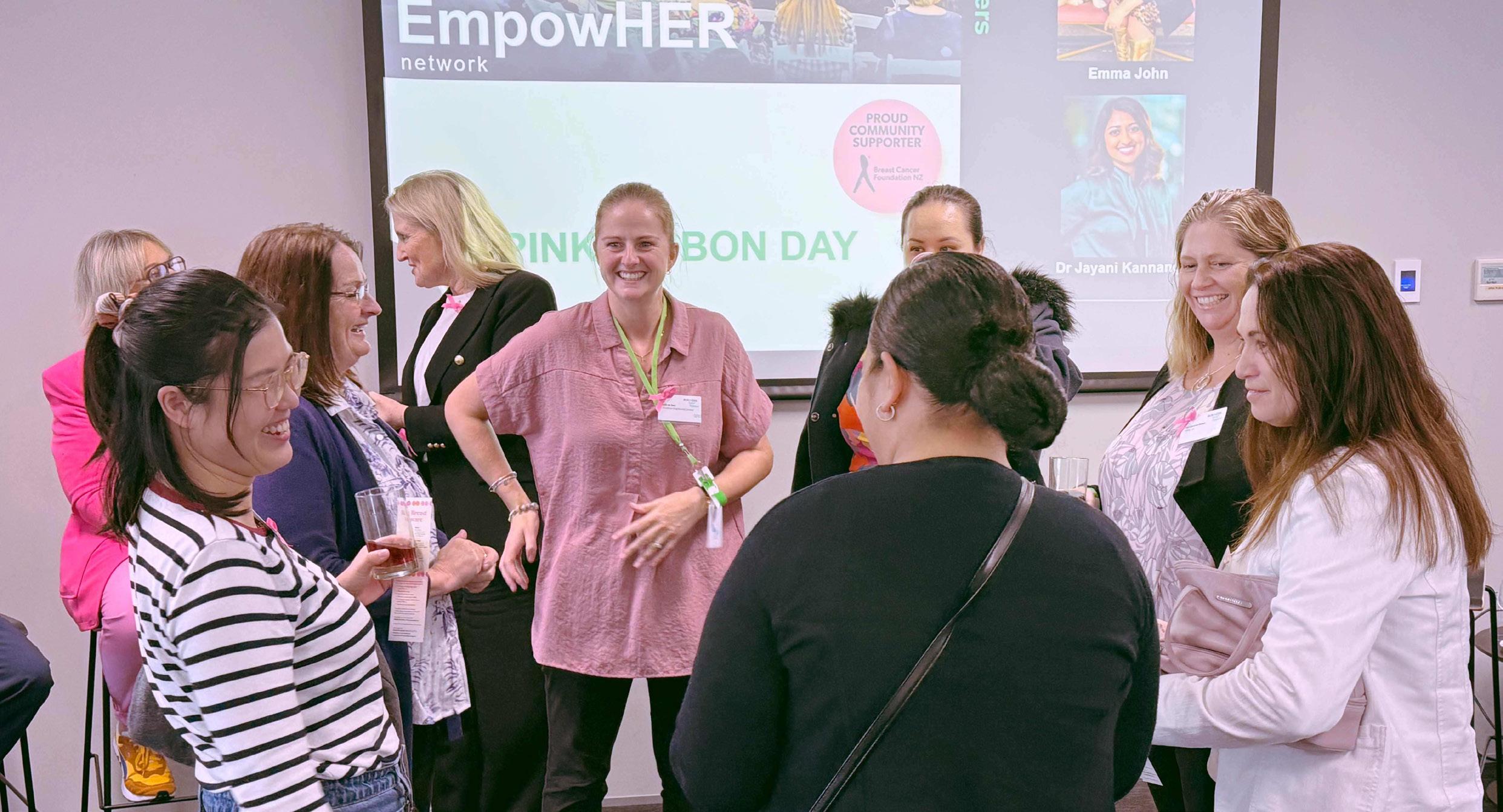
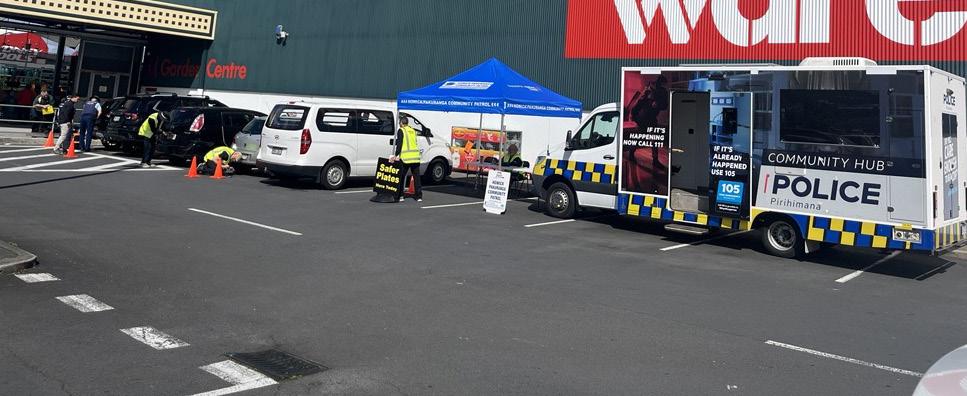
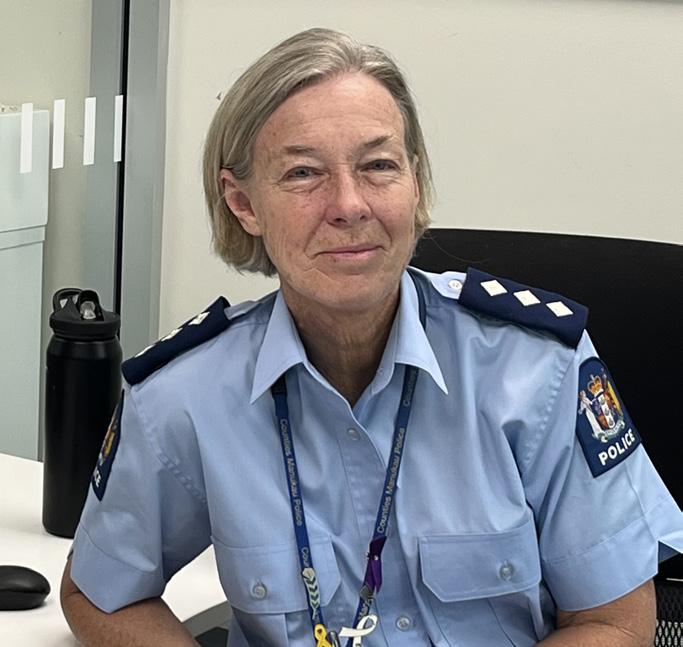
As we head into autumn, there’s reason for cautious optimism. Contrary to the seasonal spike we sometimes see over the Christmas break, offending this summer remained lower than previously recorded levels — a result that reflects the hard work of our communities, partners, and officers. Even petrol drive-offs are down, which is encouraging to see.
That said, we know crime doesn’t take a holiday, and a number of specific theft trends continue to demand our attention. Your continued vigilance and willingness to report suspicious activity remain one of our most powerful tools.
While overall offending is down, certain items continue to attract thieves. Registration plates, trailers, copper wiring, and air conditioning units are among the most frequently stolen commodities in our area. These items are often targeted because they are easy to remove and have strong resale or scrap value.
If you own a trailer, consider using a hitch lock and parking in well-lit, visible areas. Businesses with copper infrastructure or air conditioning units should look at securing or caging these assets where possible. And as always — if you see someone behaving suspiciously around vehicles or equipment, please report it.
Every report matters — even if it feels minor. When community members report offences or suspicious activity, it helps police identify patterns, connect incidents, and respond more effectively. We’re asking everyone in the area to make reporting a habit, not an afterthought.
Call 111 for anything requiring an immediate response. or non-urgent matters, use the 105 phone service or report online at police.govt.nz. Together, we build a far clearer picture of what’s happening in our community.
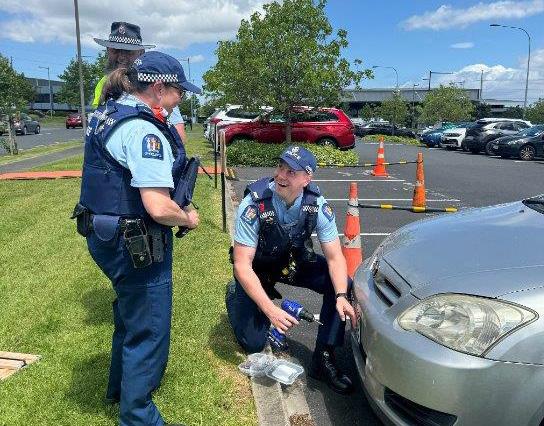
Registration plate theft remains a persistent issue — stolen plates are commonly used to disguise vehicles involved in other crimes. That’s why we’re keen to gauge interest among local businesses in hosting a Safer Plates visit.
The Safer Plates team fits specialised security screws to vehicles, making plates significantly harder to remove. There would be a small cost associated with this service to cover the community volunteers’ materials, but the protection it offers is well worth it. If your business would like to arrange a visit for staff and company vehicles, please get in touch — we’d love to hear from you.
As businesses prepare for 2026–27, several employment-related changes will affect payroll costs, HR compliance, and workforce planning. Key developments include KiwiSaver contribution increases, new employer obligations for younger workers, and minimum wage rises, making early preparation essential.
From 1 April 2026, the default KiwiSaver contribution rate will increase to 3.5% (from 3%) for both employers and employees. This is part of a staged uplift, with a further increase to 4% scheduled for 1 April 2028. Employers should expect higher payroll costs for employees contributing at the default rate.
A temporary contribution rate reduction will be available from 1 February 2026, allowing employees to apply to remain at 3% for three to twelve months. Approved reductions take effect from the first pay period after 1 April 2026.
Inland Revenue will notify employers of approved reductions. If an employee has an approved rate reduction, the employer's compulsory contribution will also be at the reduced rate. This may result in varying employer contribution rates across the workforce and will require payroll systems to be updated.
While the default legal position is that employer KiwiSaver contributions are paid in addition to salary, businesses can manage costs through 'total remuneration'— structuring pay to include the employer's contribution. Employment agreements must explicitly state this arrangement for it to be legally effective.
This structure allows businesses to forecast wage costs with certainty. Employers should review employment agreement templates and update them for new employees or negotiate variations with existing staff.
From 1 April 2026, employers will be required to make KiwiSaver employer contributions for employees aged 16 and 17 who are KiwiSaver members. Currently, compulsory employer contributions apply only from the age of 18.
Auto-enrolment into KiwiSaver will remain at 18, meaning employer contributions for younger workers will apply only where the employee has actively opted in. Businesses employing younger staff, particularly in retail, hospitality, and entrylevel roles, should budget for increased payroll costs from April 2026.
The adult minimum wage will rise to $23.95 per hour from 1 April 2026, up from $23.50. The starting-out and training minimum wage will increase to $19.16 per hour, remaining at 80% of the adult minimum wage.
Employers with multiple minimum-wage staff should review labour budgets and consider flow-on effects across pay structures.
It's essential to remember that an employer's KiwiSaver contribution cannot be used to meet minimum wage obligations. An employee's gross wages, before any KiwiSaver deduction or employer contribution is accounted for, must be at or above the minimum wage
for all hours worked. This applies even where a total remuneration package is in place.
Beyond confirmed cost increases, several HR risk areas continue to attract regulatory attention:
• Holidays Act compliance remains a priority, particularly around accurate leave calculations
• Worker classification is under ongoing scrutiny, especially where contractors or gig workers are used
• Privacy, workplace monitoring, and flexible work practices also require clear policies and transparent communication
With multiple changes taking effect within a short timeframe, businesses should update payroll systems, review employment agreements, communicate changes to staff, and complete financial modelling. Early preparation will help manage rising labour costs while maintaining compliance and workforce stability in 2026.
Freerange can help you plan for a confident transition.
Reach out to our team to get started and stay ahead of the changes: sarah@freerangehr.co.nz.