POSSIBLE FUTURES
Selected Works_German Penaranda
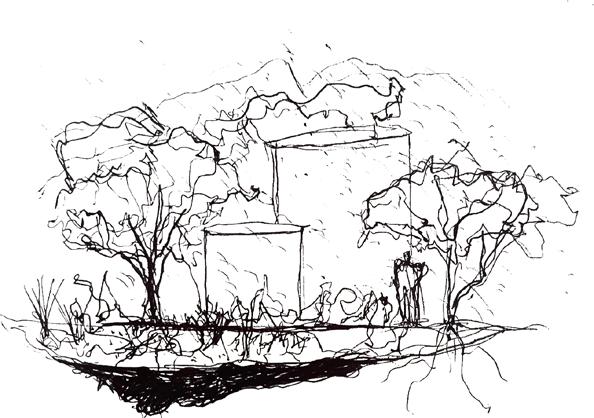
PALIMSETS
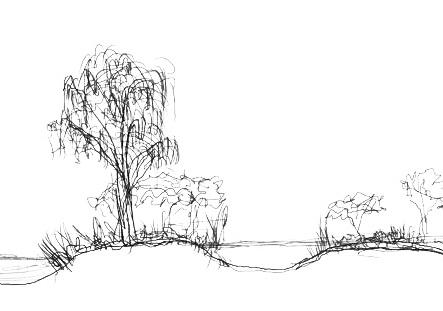
ONCE IT WAS A WETLAND
PG 34
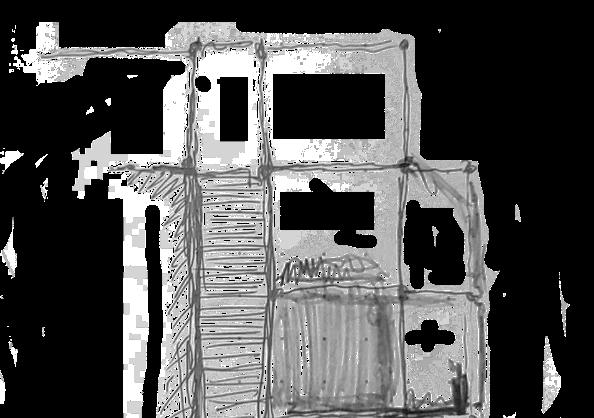
CANTERA_TALLER DE ARQUITECTURA
PG 44
“If we start with the presupposition, striking perhaps but not totally far fetched, that the contemporary world can be considered a massive design failure, certainly the result of particular design decisions, is it a matter of designing our way out?"
Designs for the Pluriverse, Arturo Escobar
Research Collaborator :
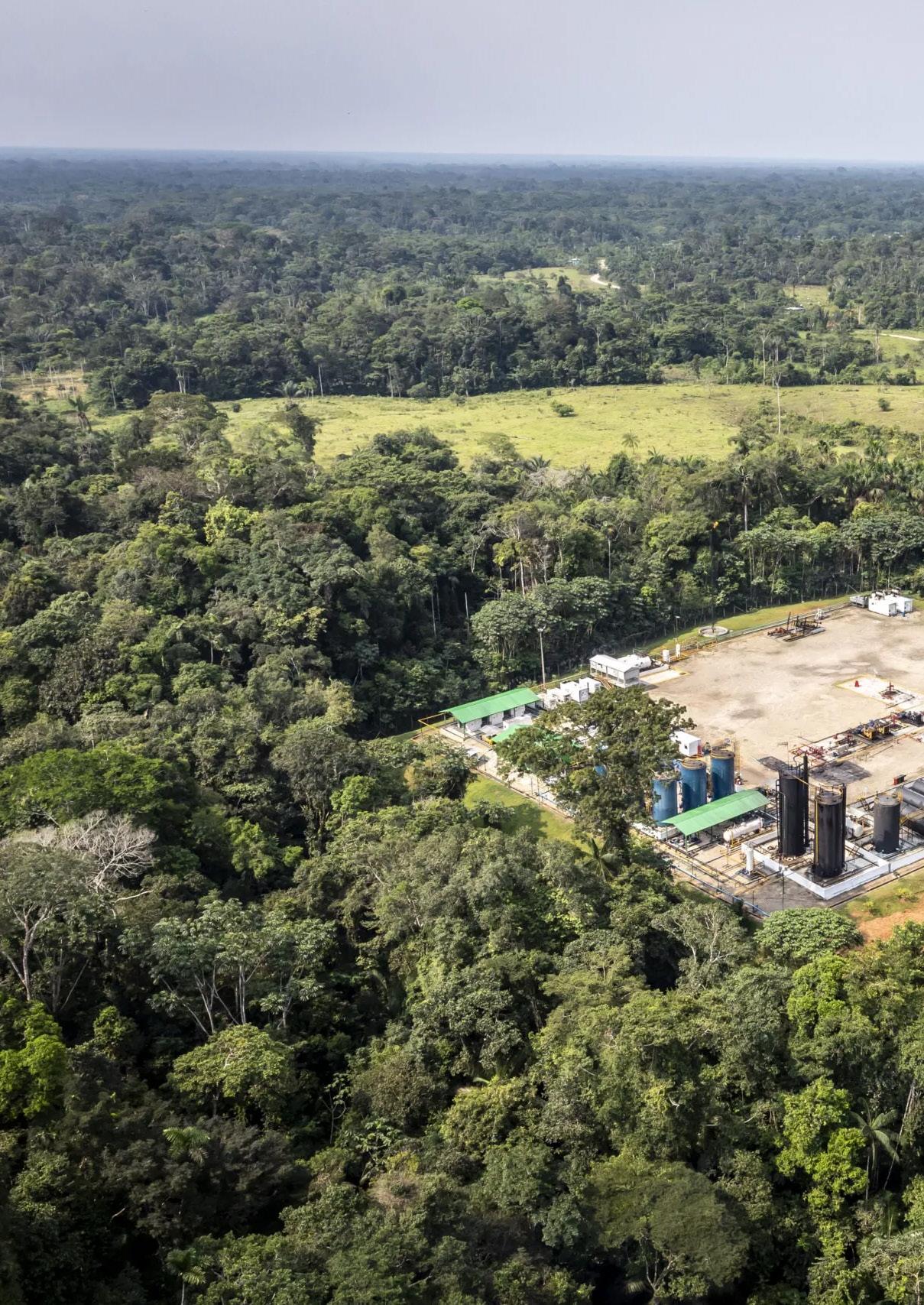
Buenavista Indigenous Reservation or PUT 12 Oil Well Putumayo, Colombia
Sebastian Conejo
November
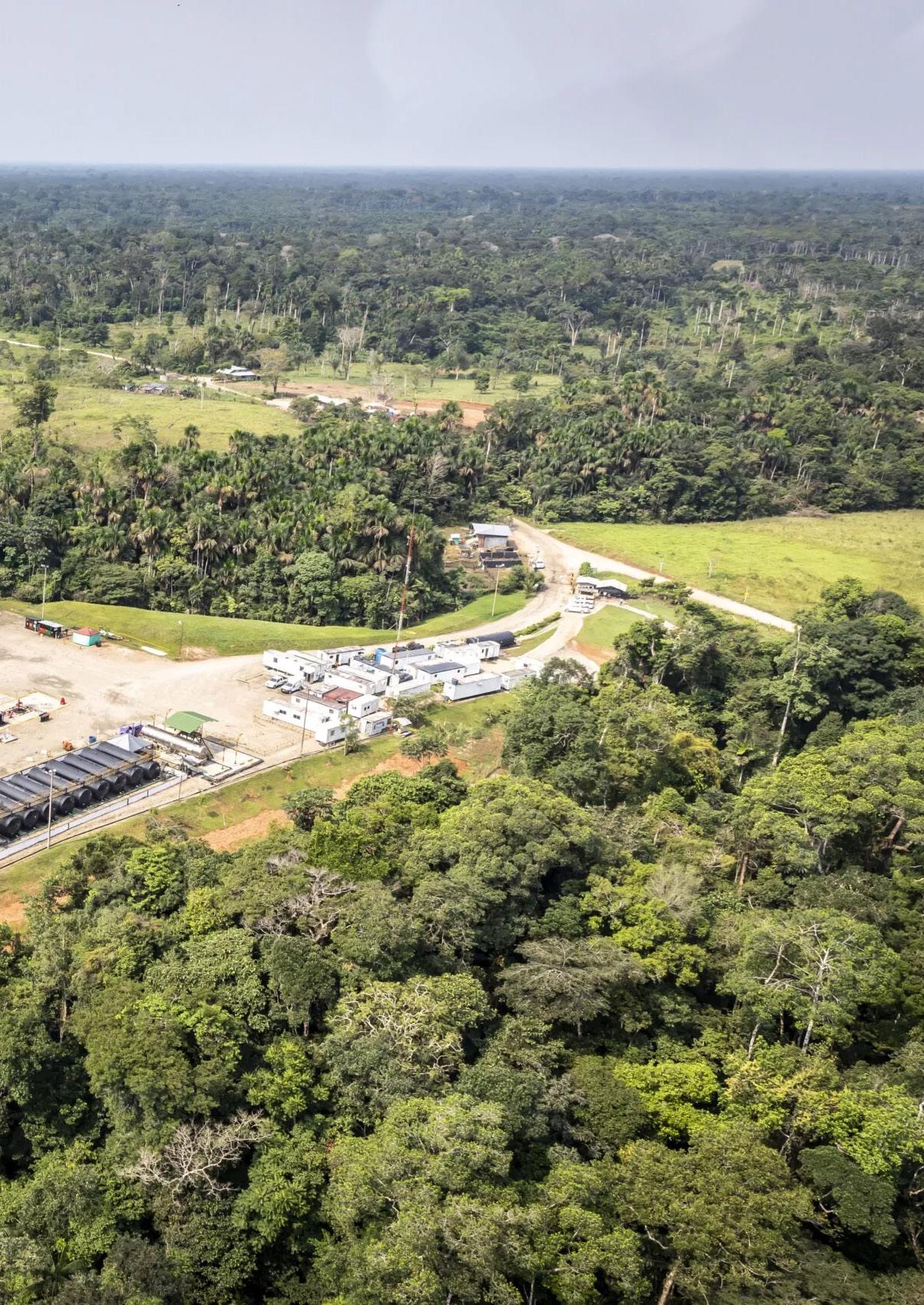
British oil company Amerisur released a press statement reiterating that “all its operations in the Amazon jungle are carried out under the highest socio-environmental and operational standards(...) with full respect for human rights.” This is the photo used in that press release.





















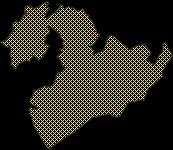

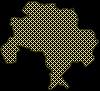


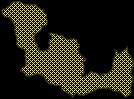
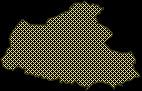








FROM RUBBER TO OIL




The Sionas, an Indigenous Amazonian culture nearly eradicated by the rubber extraction industry in the 1920s were recognized in 2010 in threat of “physical and cultural extermination” by Colombia’s Constitutional Court.

Confined to the ‘Buenavista Indigenous Reservation’, the Sionas resisted British oil company Amerisur’s exploration of the PUT-12 oil block amidst escalating threats of oil spills, noise pollution, deforestation and assimilation into capitalism.

AIRU is a speculative project proposal of a Possible Future in which, the Sionas, preempt cultural extinction by repurposing an oil infrastructure well into a ‘chagra’, an ancient agricultural system embodying traditional knowledge and cultural practices.



By 2030, once the “chagre” is consolidated, a physical representation of the Siona worldview is built as an infrastructure to perpetuate their knowledge and culture, using the old oil drilling pipes.


PUTUMAYORIVER

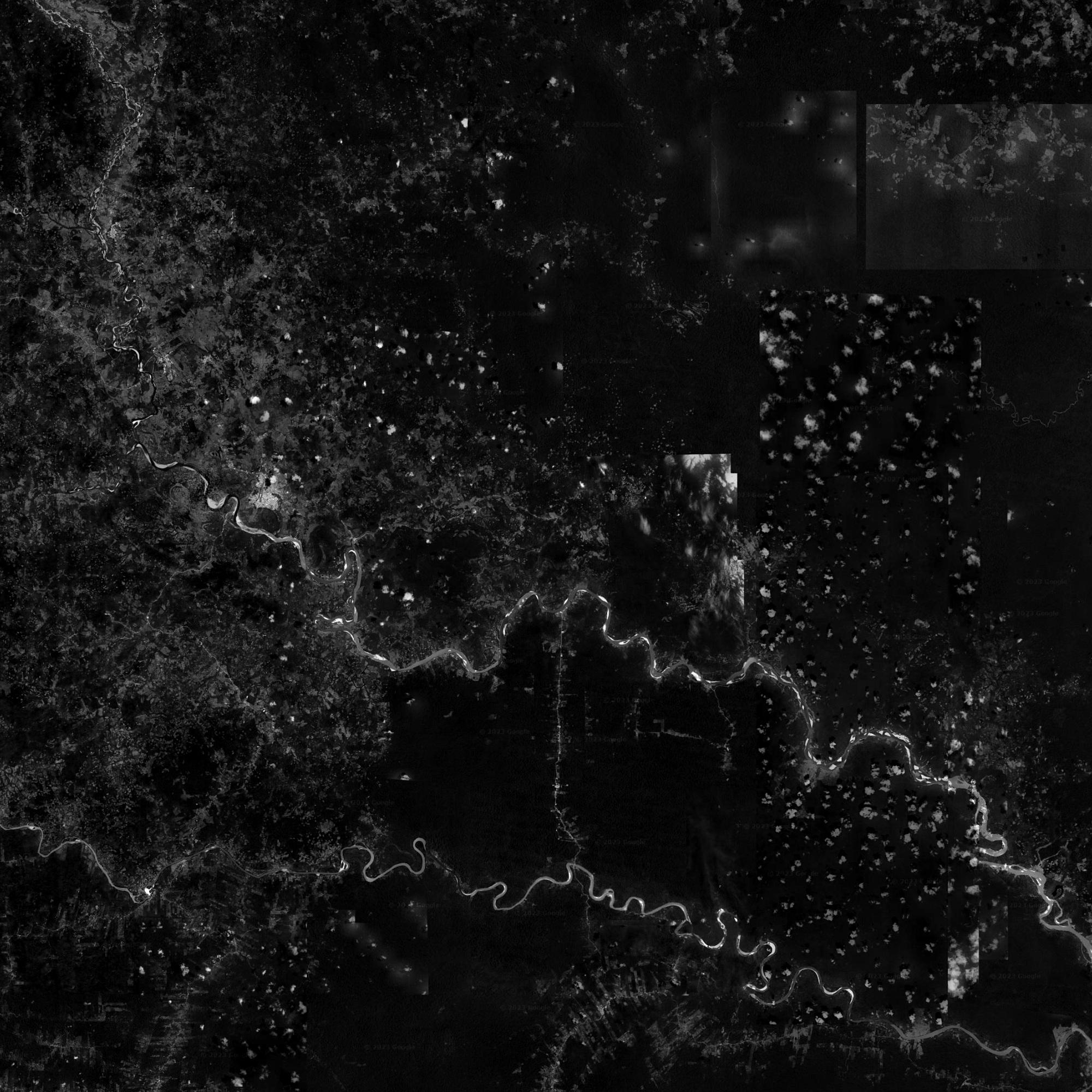
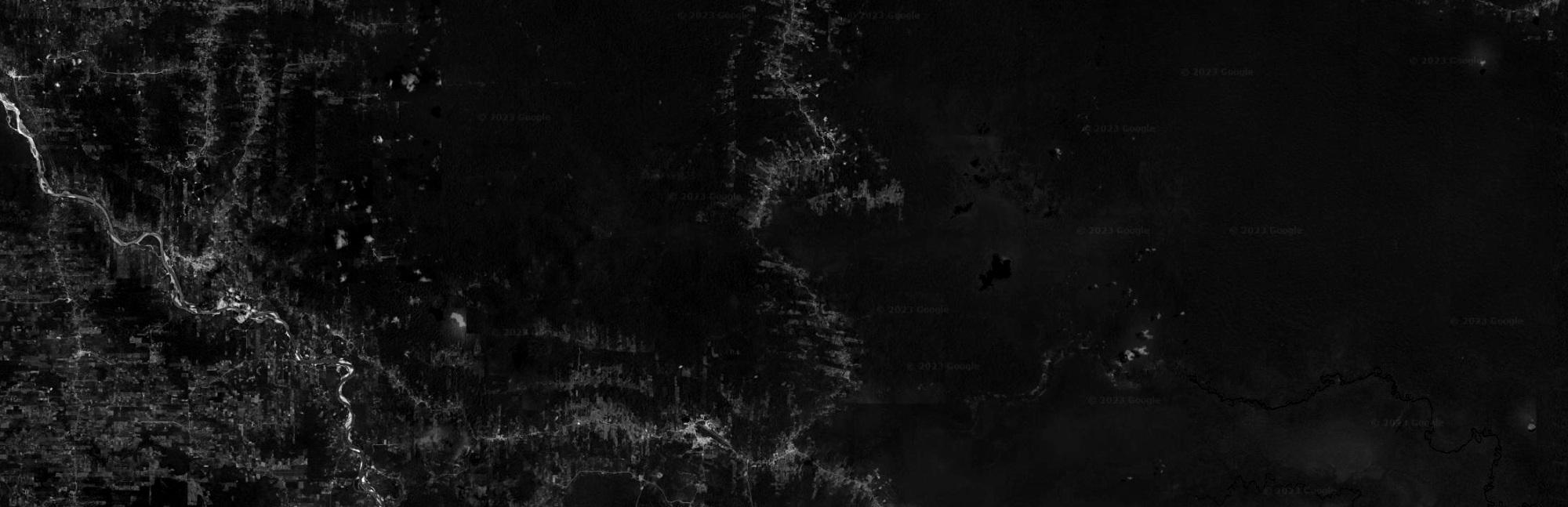
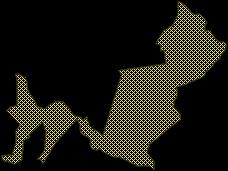
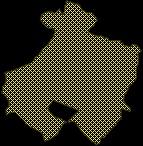
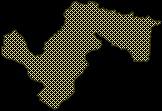
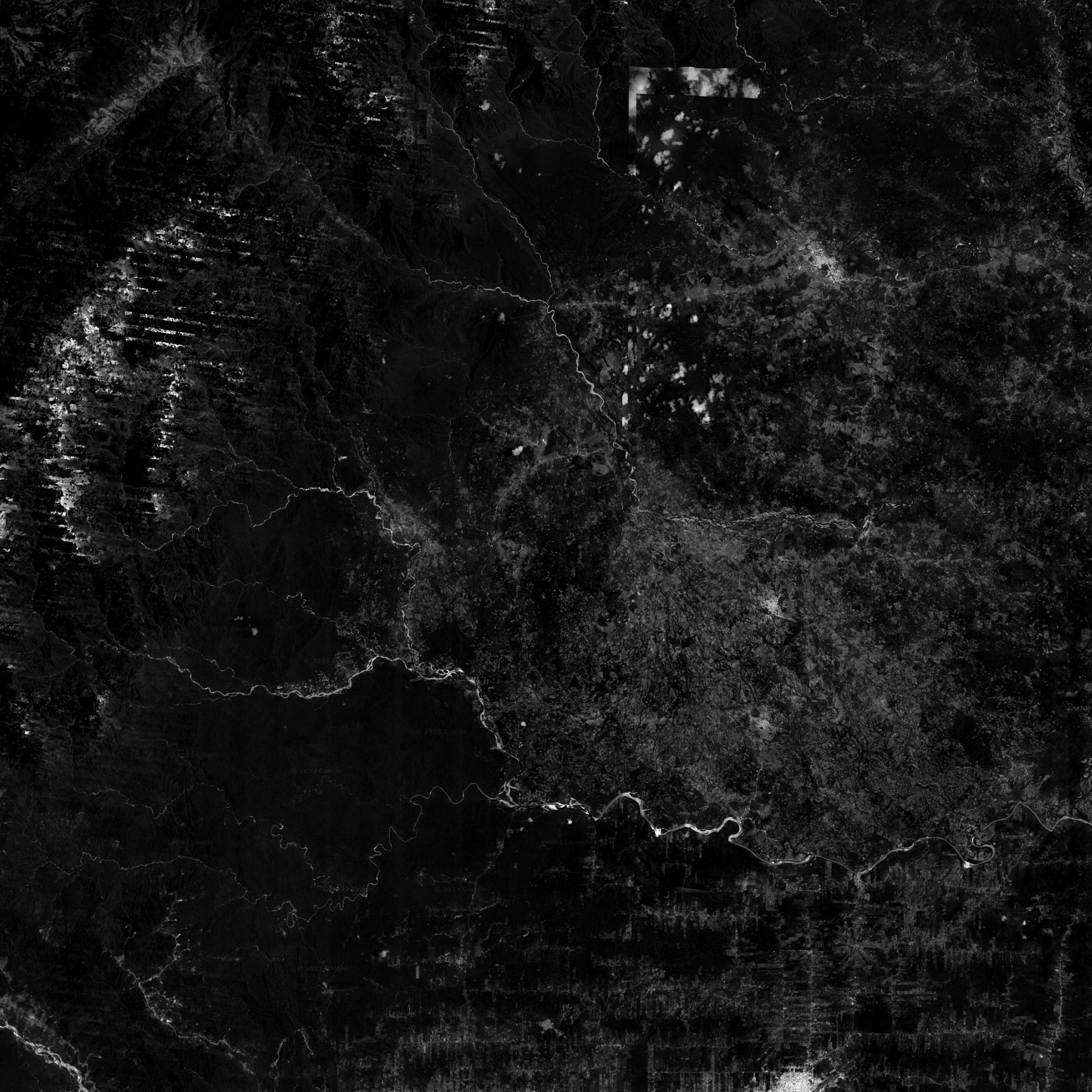
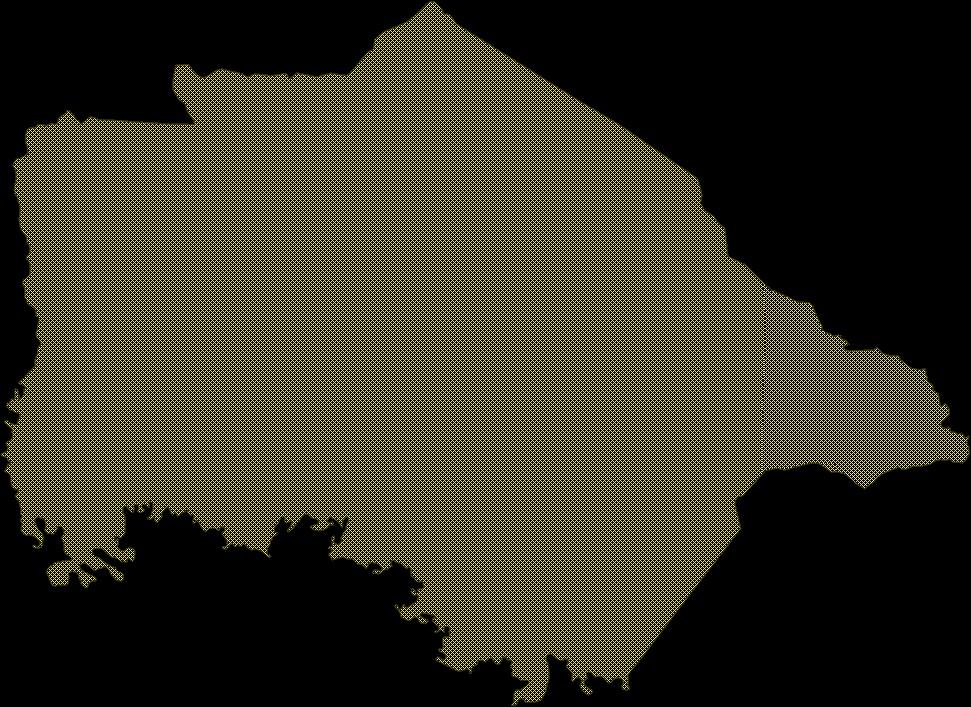
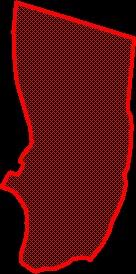
Fig. 6 / Cartography: Putumayo today: oil exploration
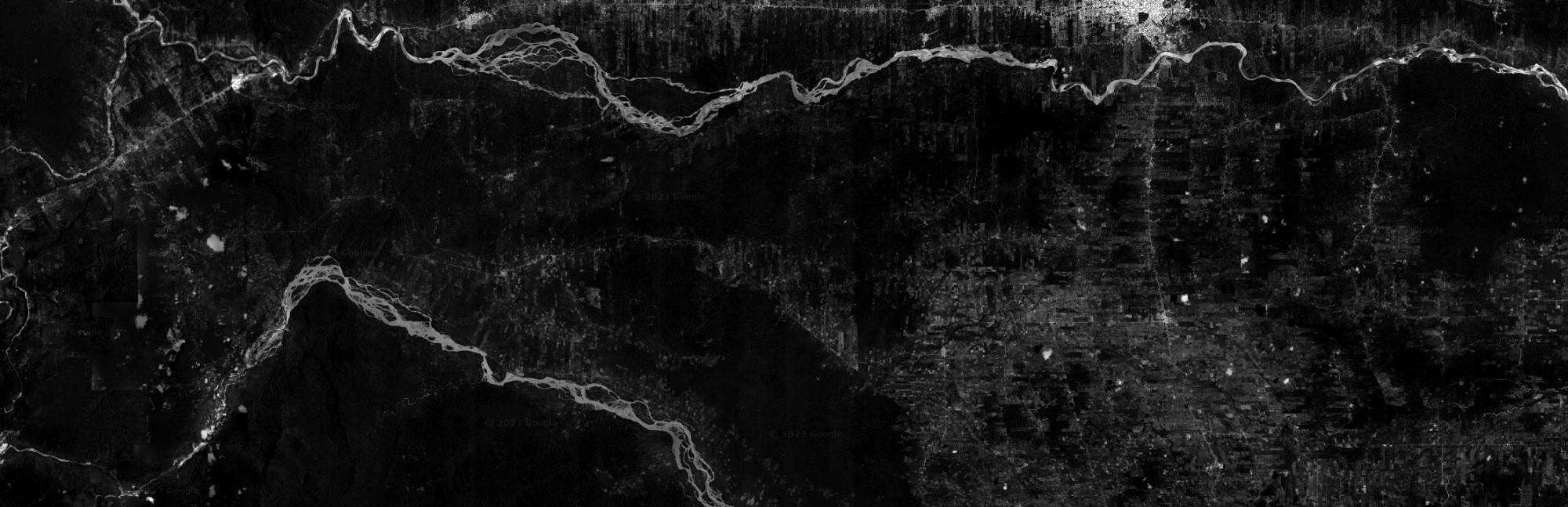
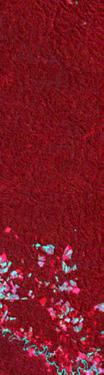
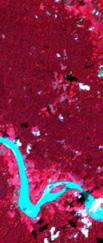
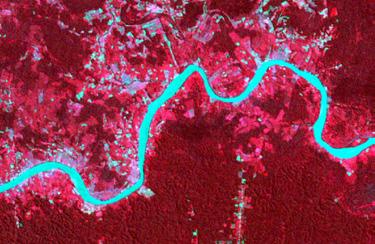
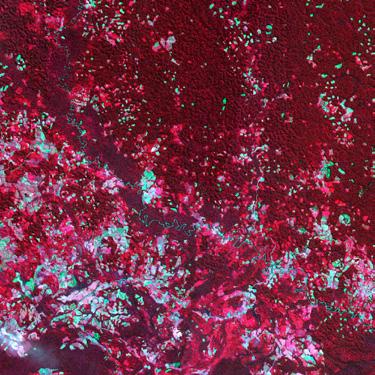
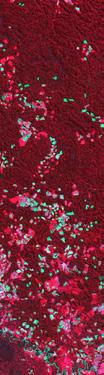
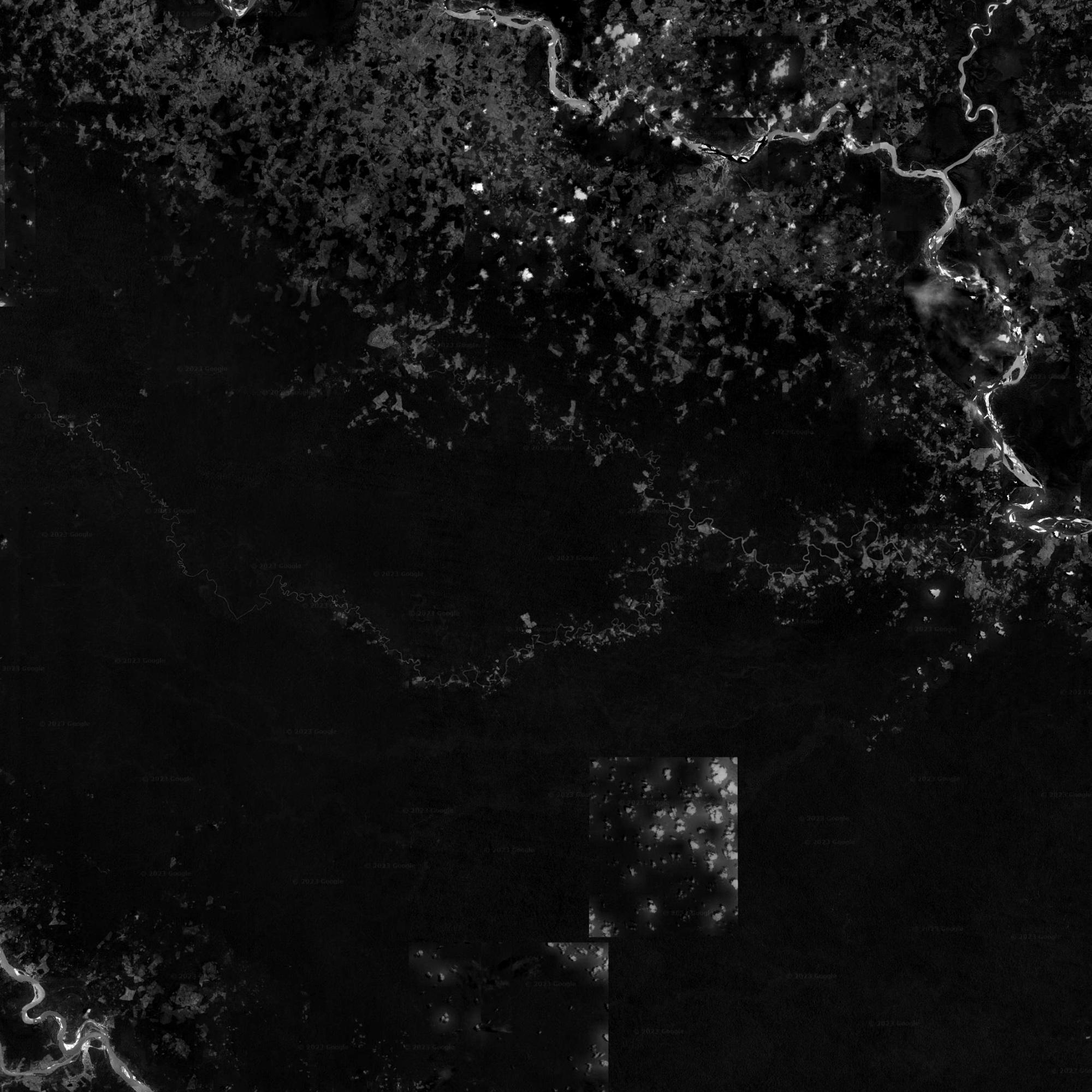
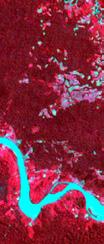
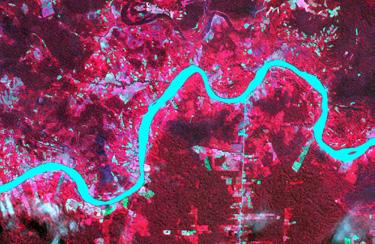
Fig. 7 / Landsat imagery portraying amazon deforestion around Bellavista Indegenous Reservation




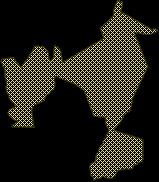



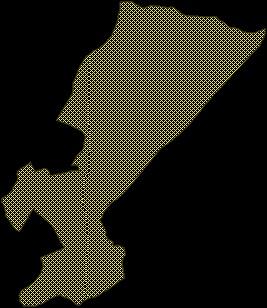
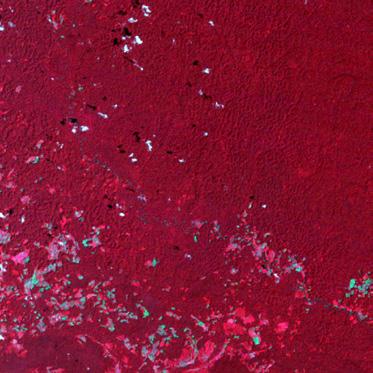
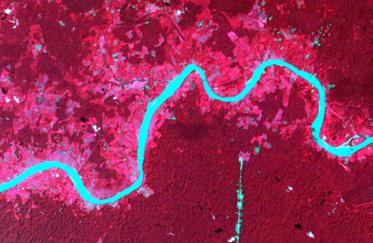


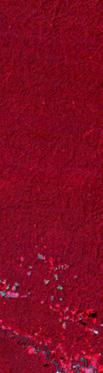
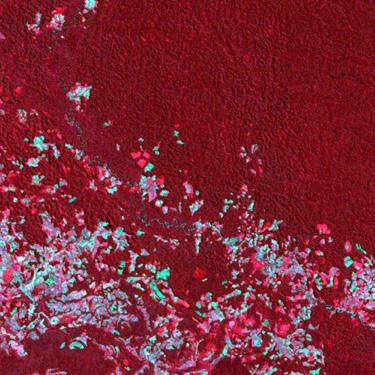


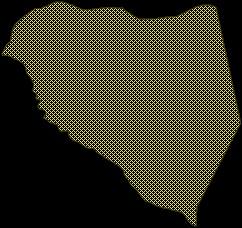
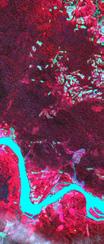
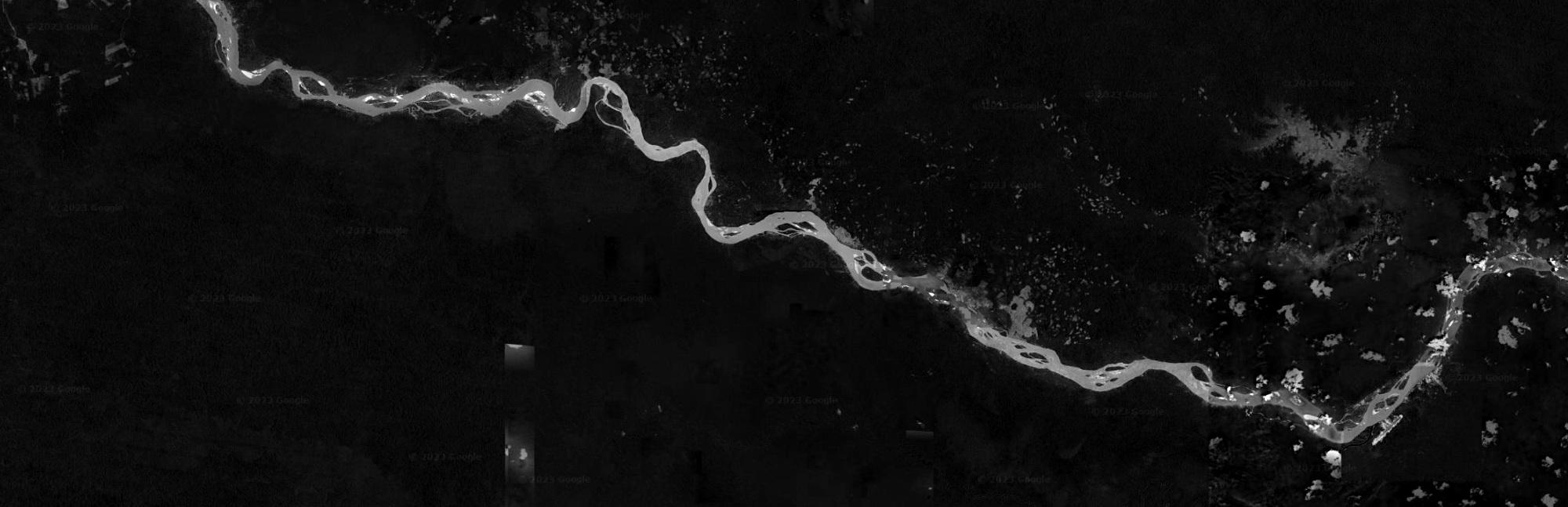
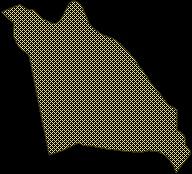
Year 2030. The Sionas occupy the PUT12 oil well. The forest cleared by the oil well is used to create a ‘chagra’, a multicrop farming system/infrastructure that provides food on a 10 year cycle and allows the jungle to regenerate itself.
The following are a series of research drawings of this infrastructure, applied to the PUT-12 Oil Well.
Fig. 1 / Chagra’s crop planting scheme, each color respresnts a different species.
CHONTADURO
crops on year 1
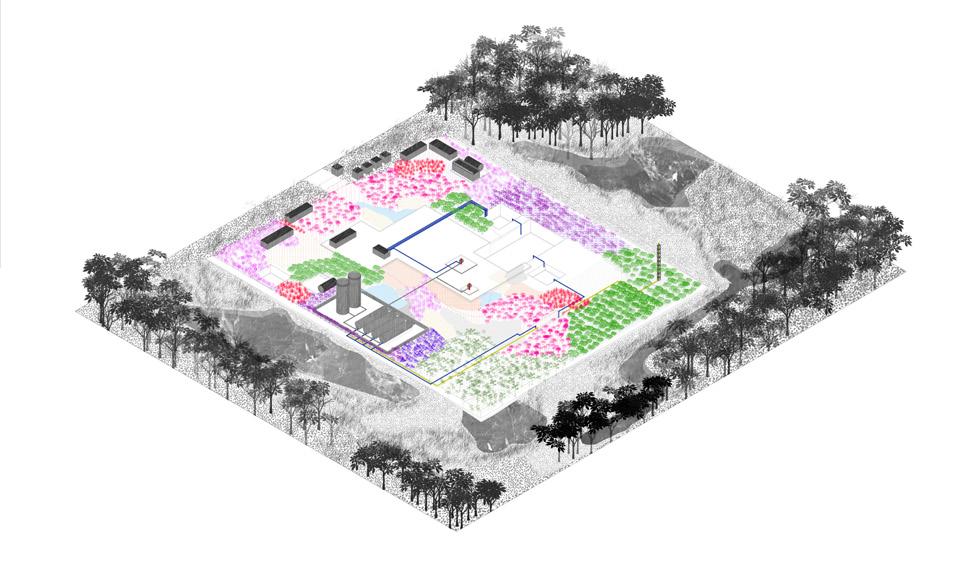
Over its lifespan, the project anticipates ecological succession where various species will flourish, transforming the area.
crops on year 5
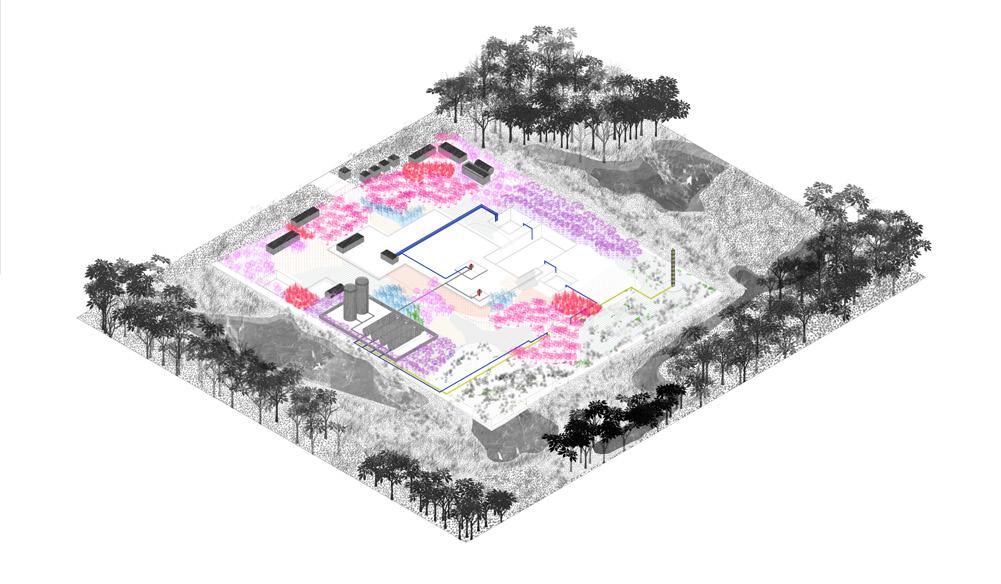
Within ten years, fruit trees will attract wildlife, eventually converting the site back into a jungle once its productive phase concludes.
crops on year 5
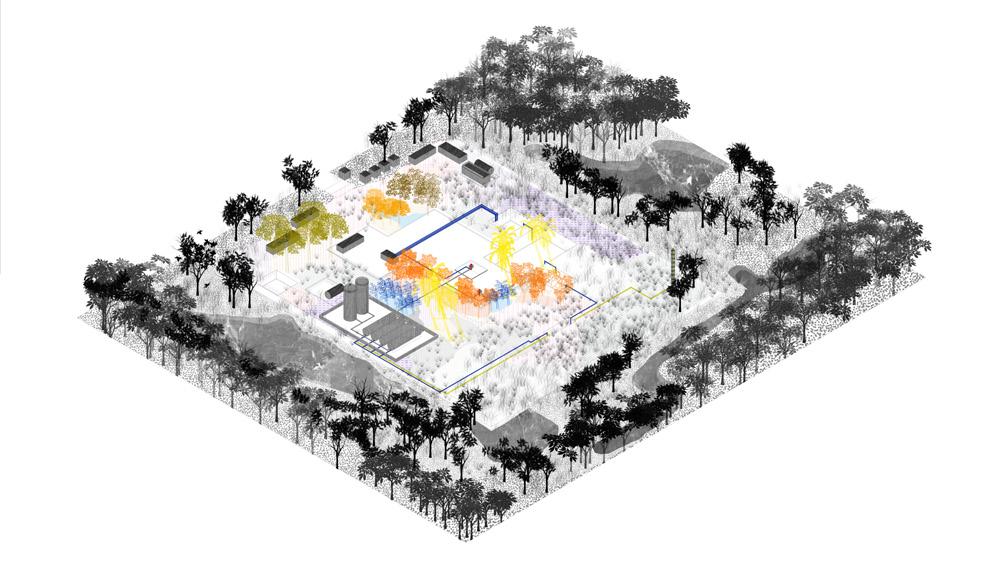
Chagra
Chagra
Chagra
Fig. 2 / Chagra’s 10 year cycle, from plantation to jungle
Fig. 3 / Plant inventory for a Chagra
Maraca (Theobroma bicolor)
Yuca Dulce (Manihot aipi )
Yuca
Brava (Manihot utilissima) Yuca Manicuera
Piña (Ananas comosus) Mafafa
Guamo (Inga edulis)
Guacuri (Poraqueiba sericea)
Uva Caimarona (Pourouma cecropiifolia)
Coca (Erythroxylum coca)
Caimo Lechero (Pouteria caimito)
Chontaduro (Bactris Gasipaes)
Platano (Musa Paradisiaca) Caña Brava (Gynerium sagittatum)
Maíz (Zea Mays) Tabaco (Nicotiana Tabacum)
(Xanthosoma sagittifolium)
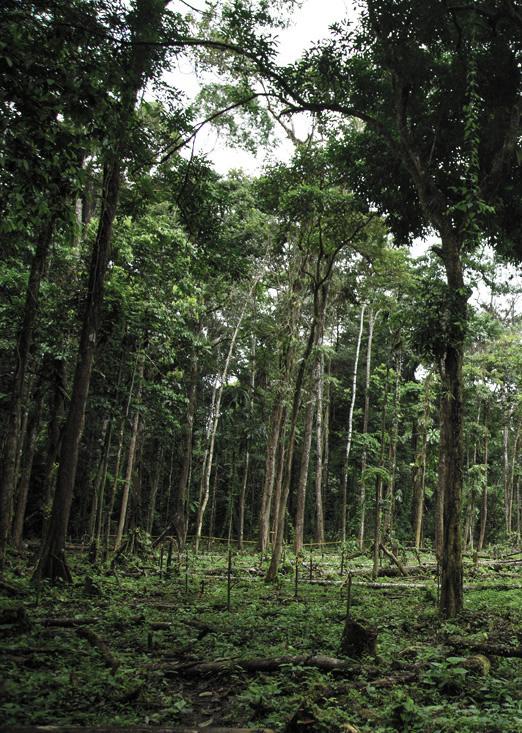
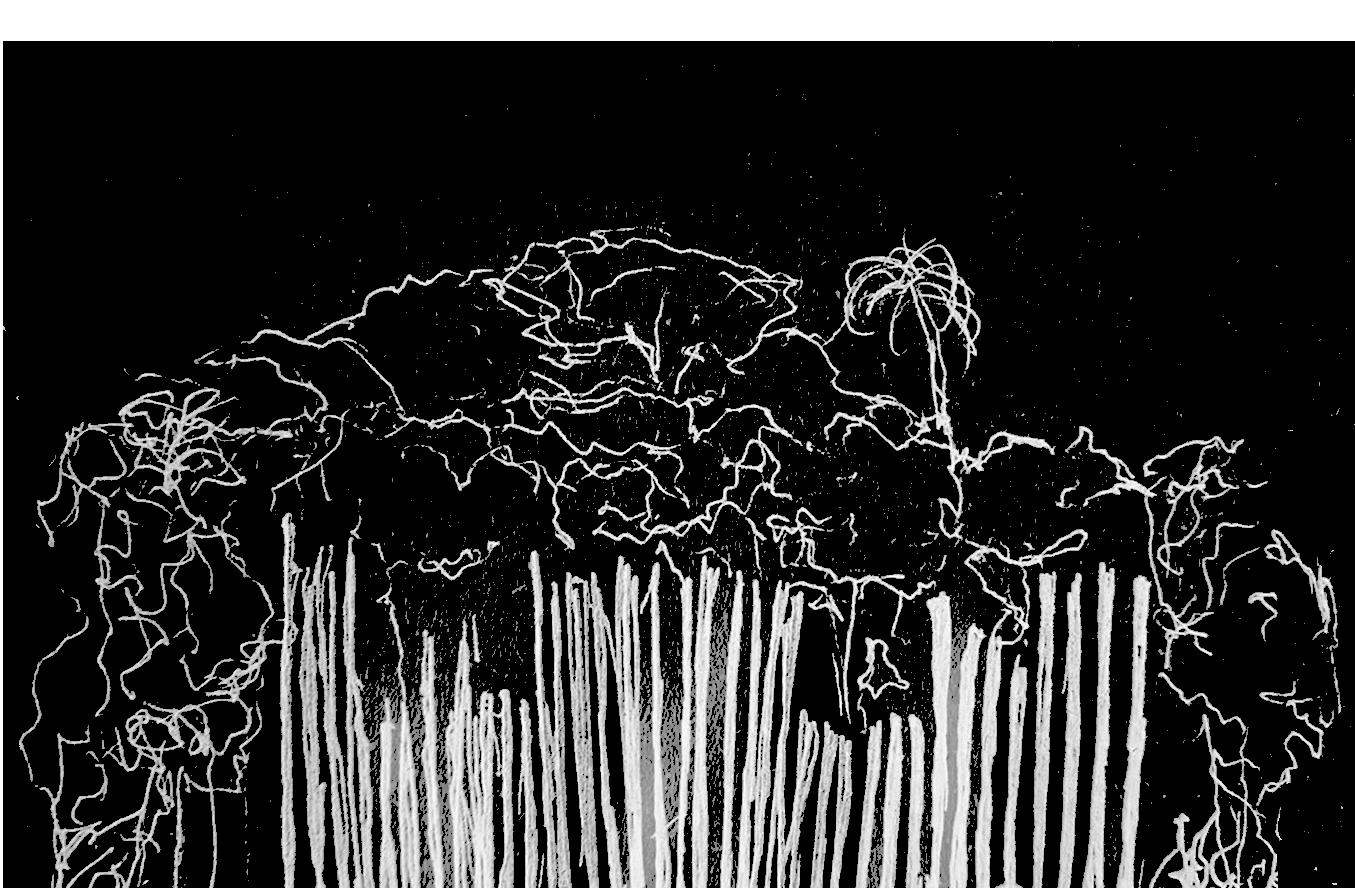
Fig. 4 / Digital Collage of AIRU infrastructure
Garden Design Studio: Seeds, Scaffolding and
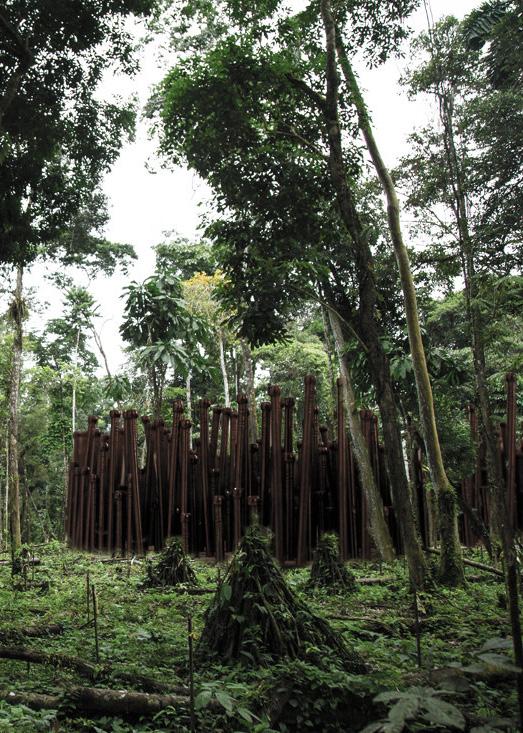
Airu [ˈai.ru] noun
The natural world, encompassing all living things (animals, plants), elements (air, water, wind), and the guardians of sacred places. It signifies the source of everything essential for survival and cultural development.
Having weathered quinine hunters, rubber tappers, fur traders, missionaries, loggers, guerrillas, ranchers, miners, and oil companies, AIRU rises and stands at the heart of the Chagra (Fig. 1) as a physical representation of Siona’s understanding of the universe. Five intertwined worlds, or discs, that can only be known through shamanic ritual. A place created from oil well pipes for the perpetuation of their culture
“For us, the territory is life, not money” -Siona spokesman.

Garden Design Studio: Seeds, Scaffolding and
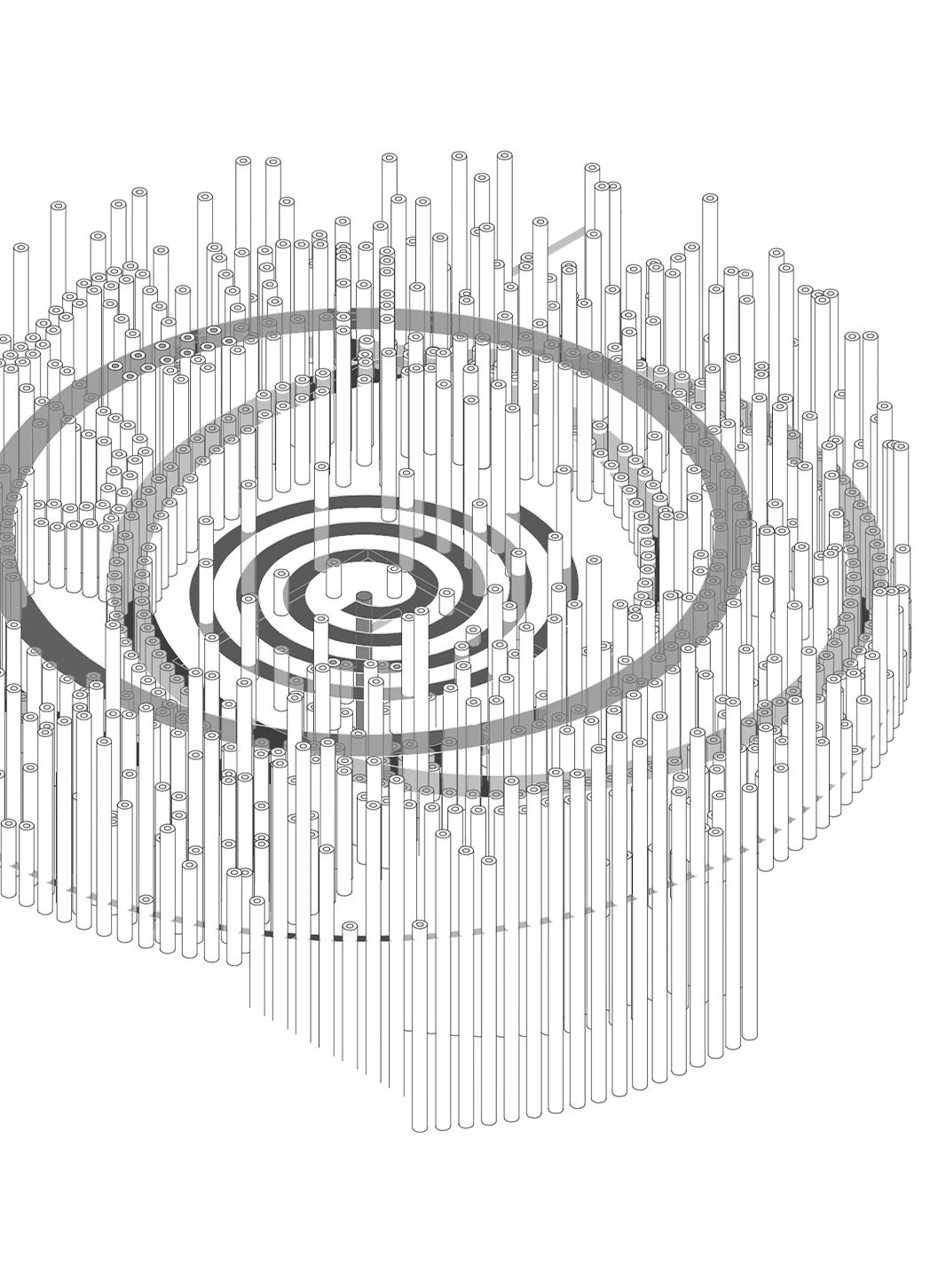
Fig. 5 / Axonometric view of Oil tubes turned into AIRU.
The research outlined below, which examines the rubber extraction industry’s operations in the Peruvian Amazon during the 1920s and its detrimental effects on indigenous cultures and the environment, predated and inspired the subsequent project FROM RUBBER TO OIL.
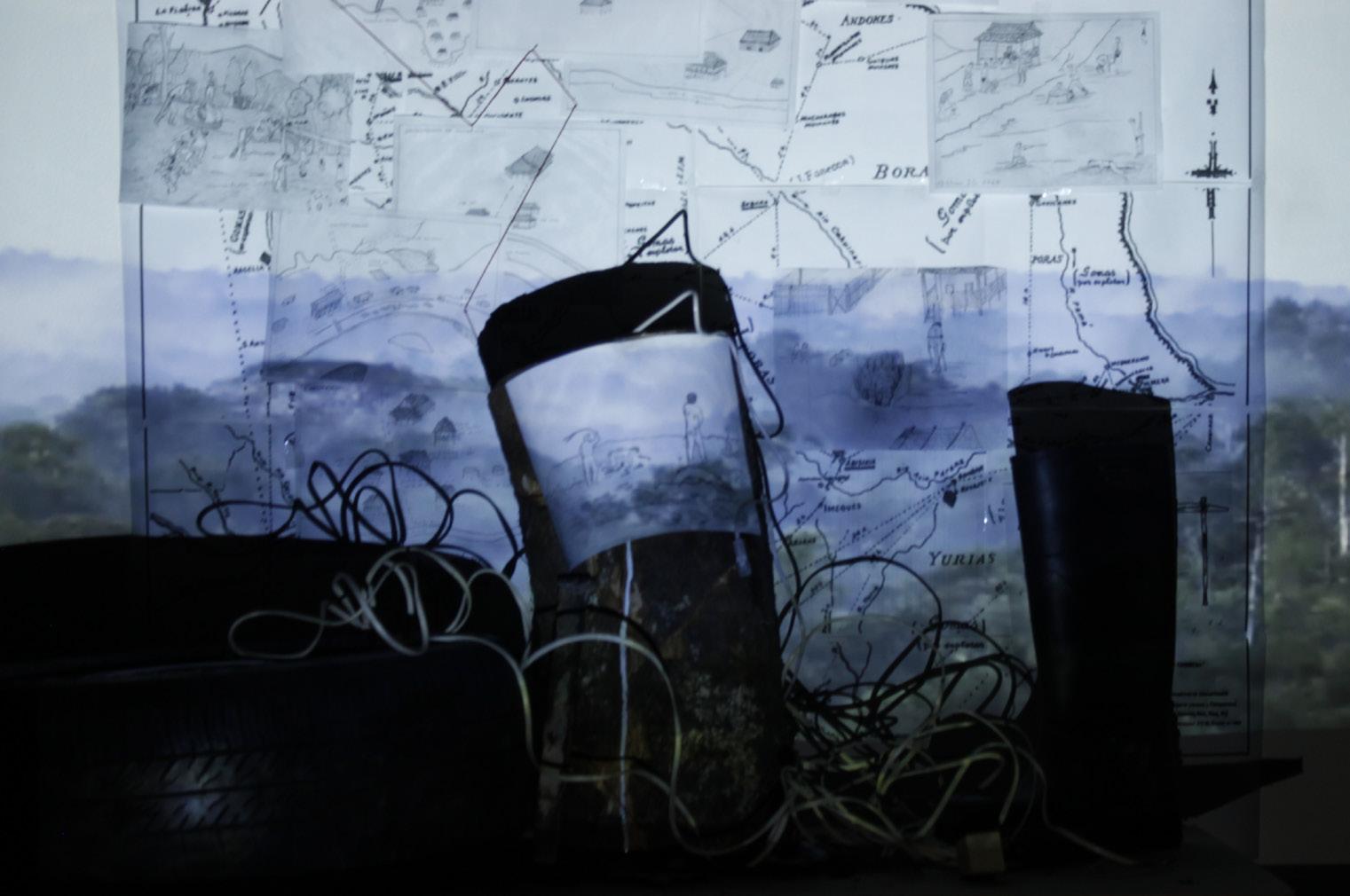
The start point of this project, a research on what extractive industries have done in the Colombian Amazon Jungle.
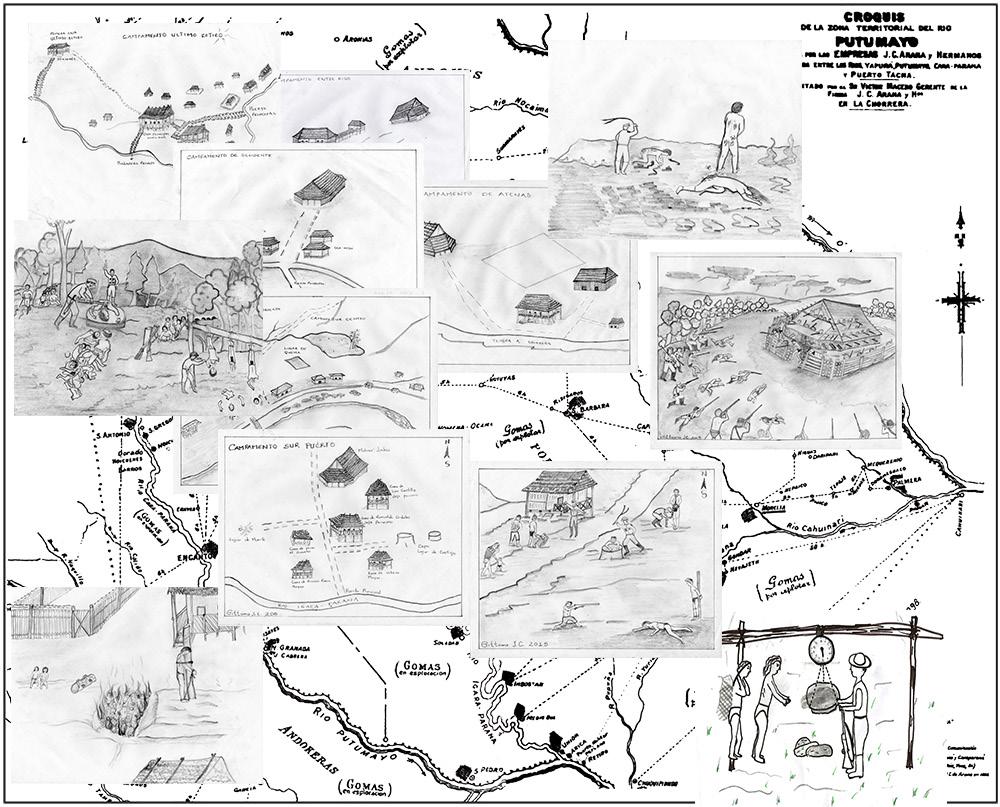
Fig. 10 / 1907 map of Peruvian Amazon Company's (PAC) rubber extraction centers overlaid with survivor drawings portraying the tortures endured in these centers.
FROM RUBBER TO OIL EXTRACTION IN THE AMAZON JUNGLE

Palimsests: beneath of what we call soil
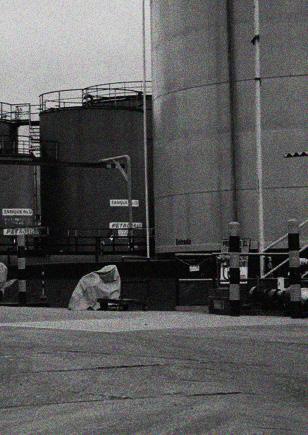
Puente Aranda Petrochemical Complex
Bogotá, Colombia
4°38’17.3”N 74°06’18.8”W
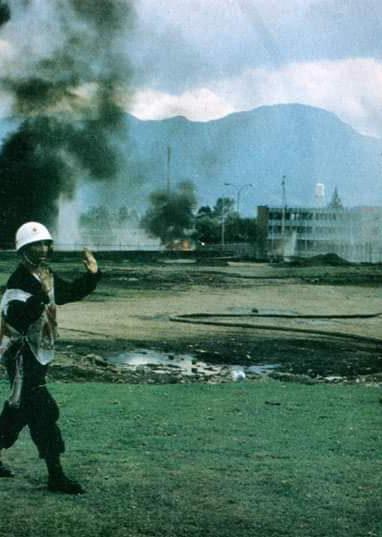
December 13th, 1982. At 10.30pm Puente Aranda’s Oil Complex caught fire. This image was taken 4 days after, the fire wasn´t controlled yet.
A LIQUID TALE OF “PROGRESS”
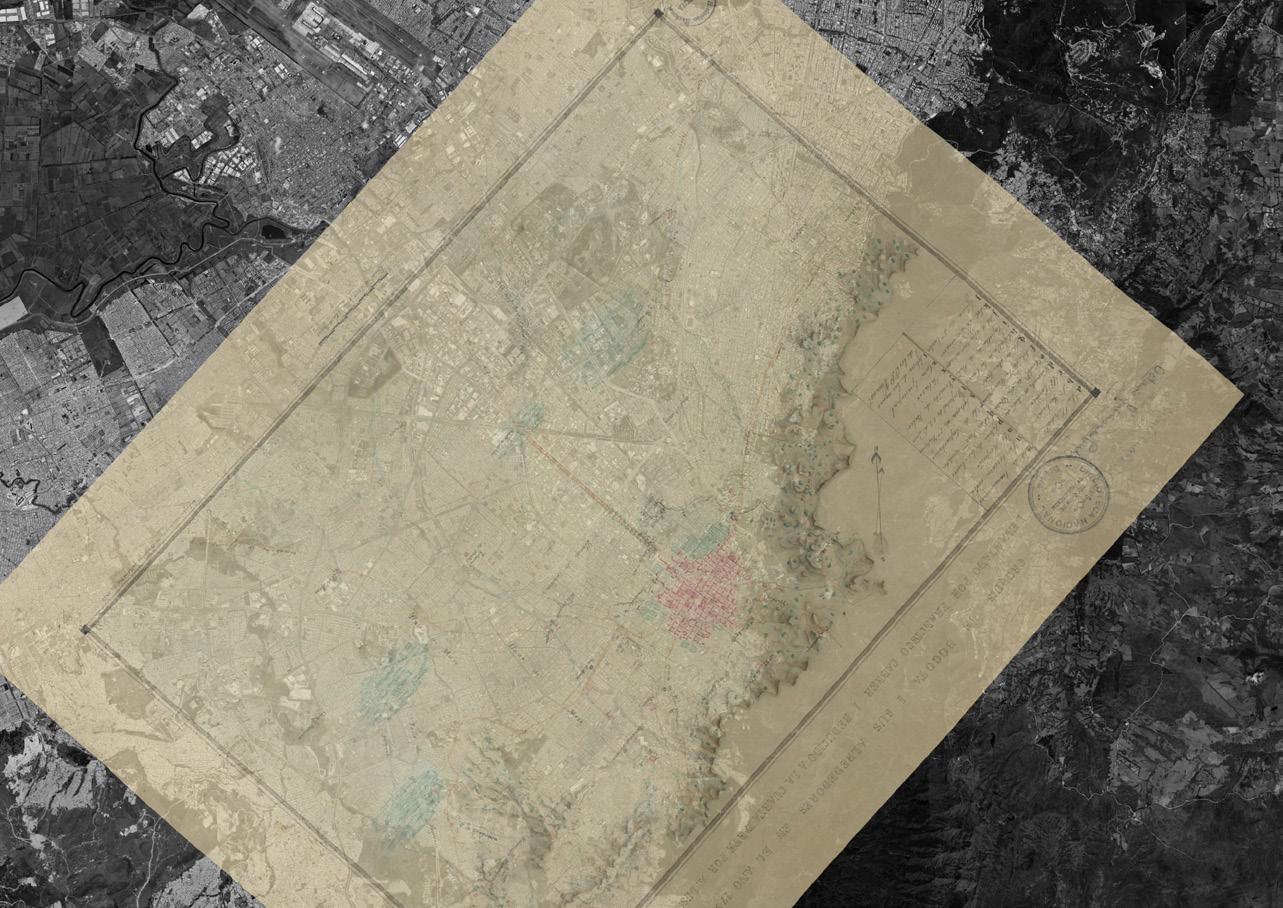
The small colonial stone bridge, constructed in the estate of Jorge Aranda, was the sole means of communication between Bogotá and the town of Honda in 1786. The latter was the largest port on the Magdalena River. This bridge spanned a vast wetland, formed by the San Agustin River.
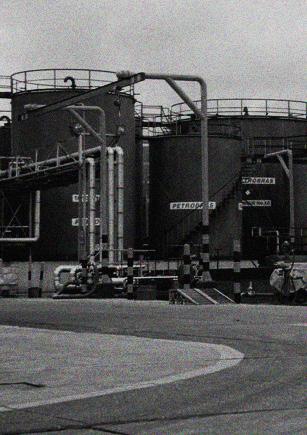
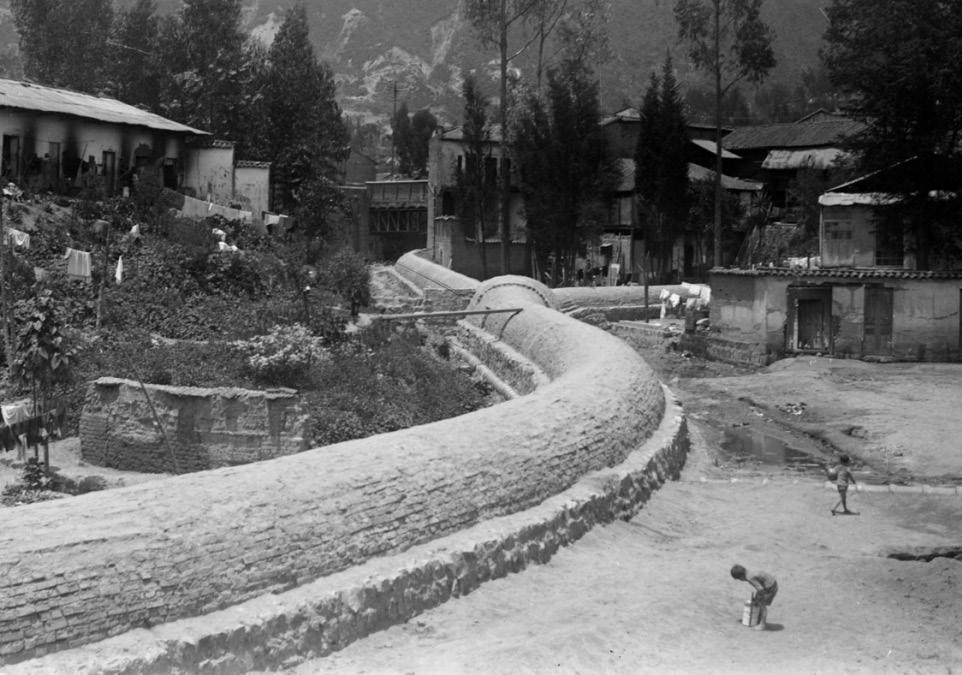
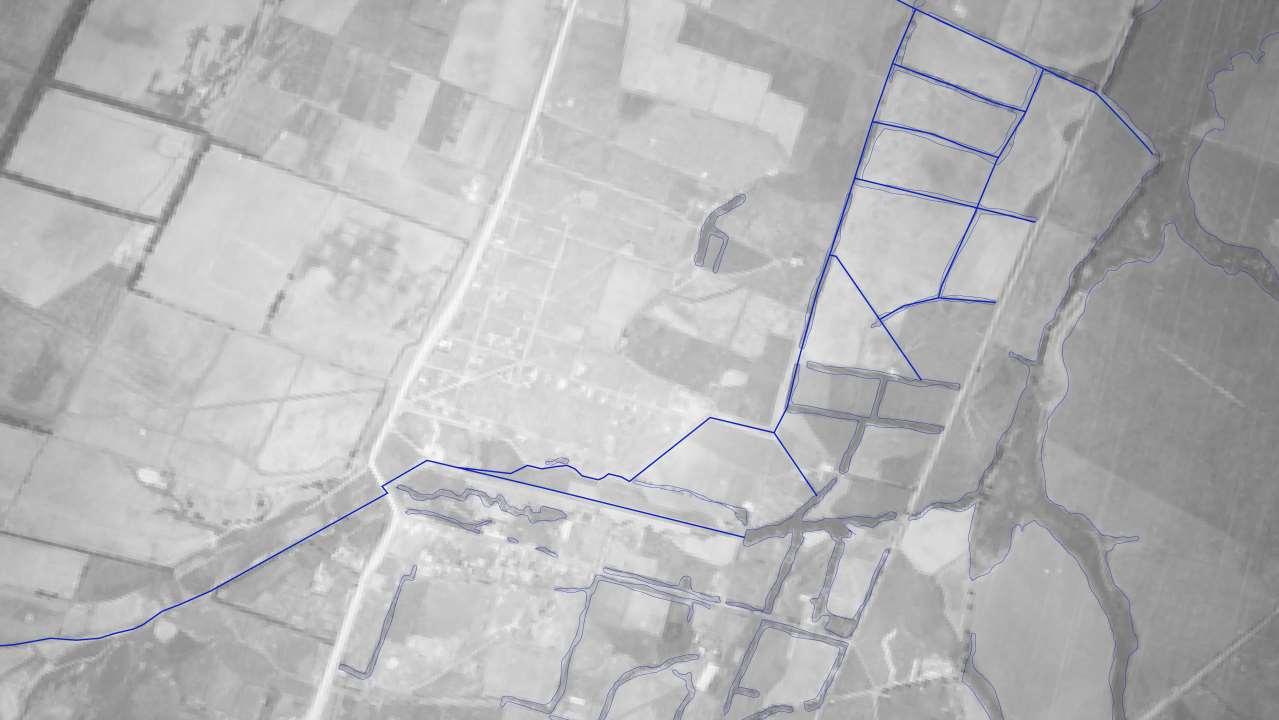
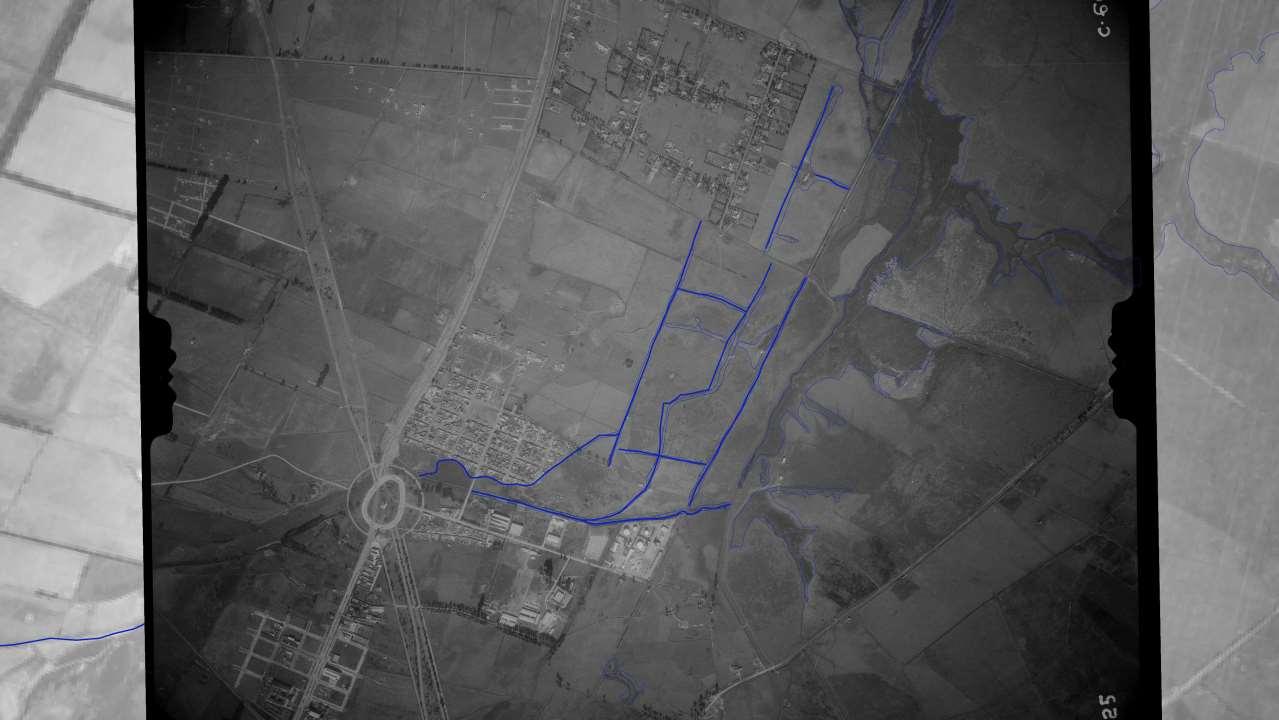
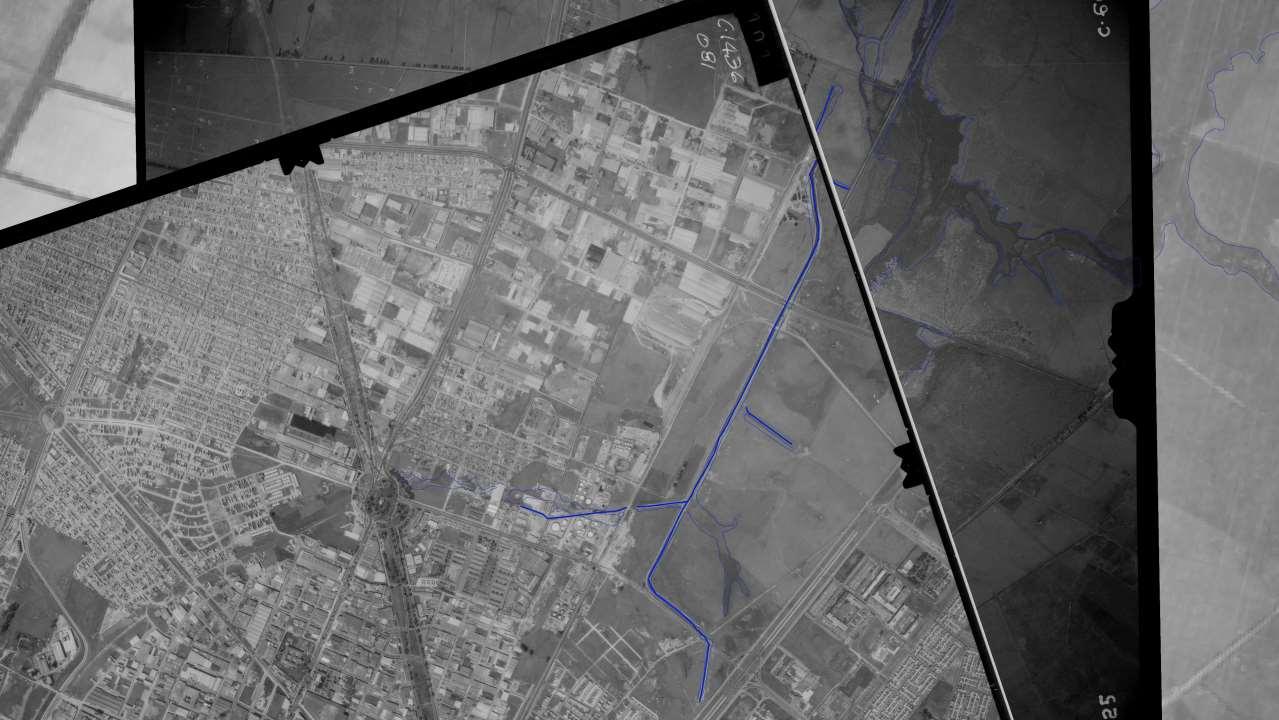
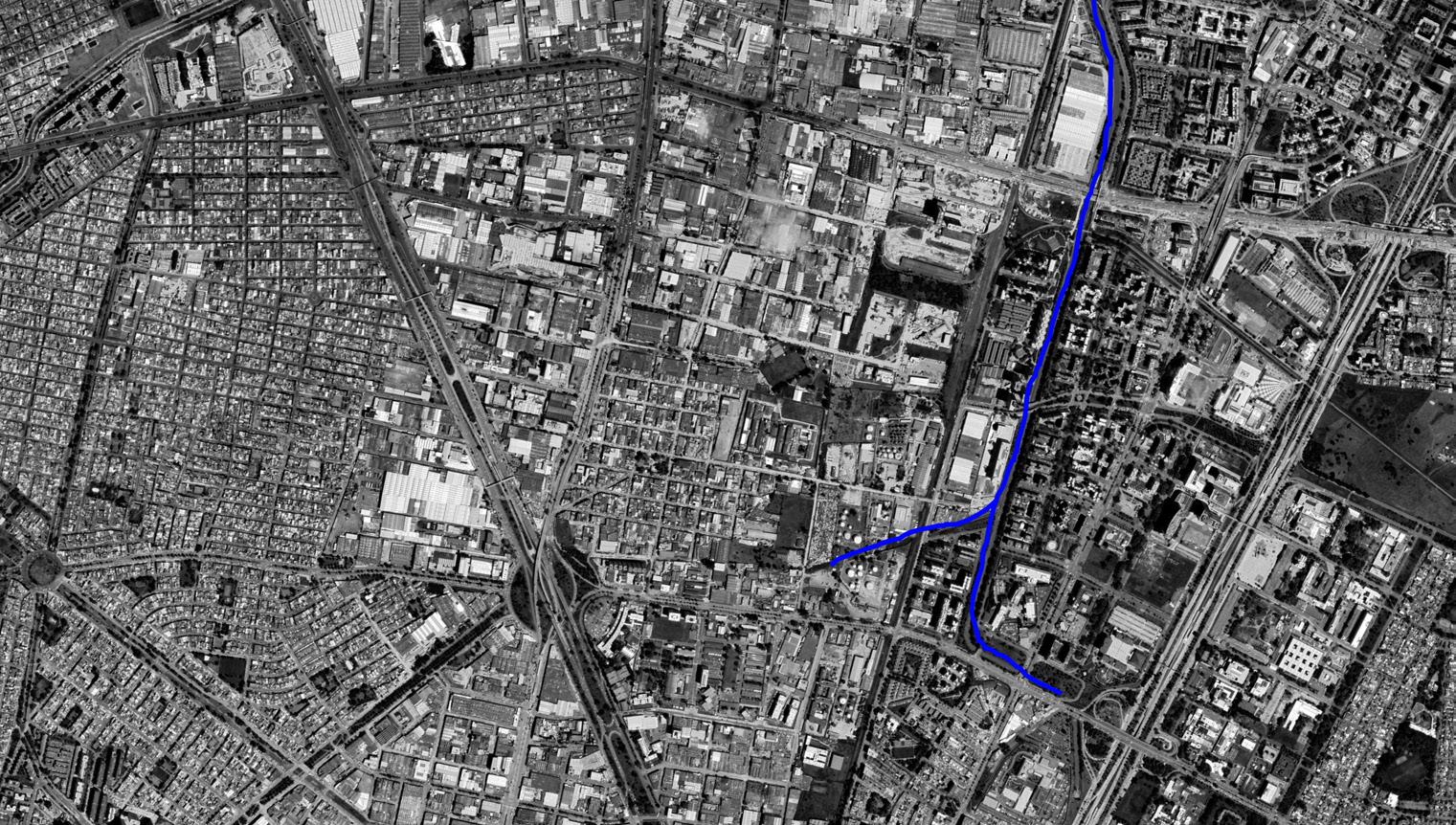
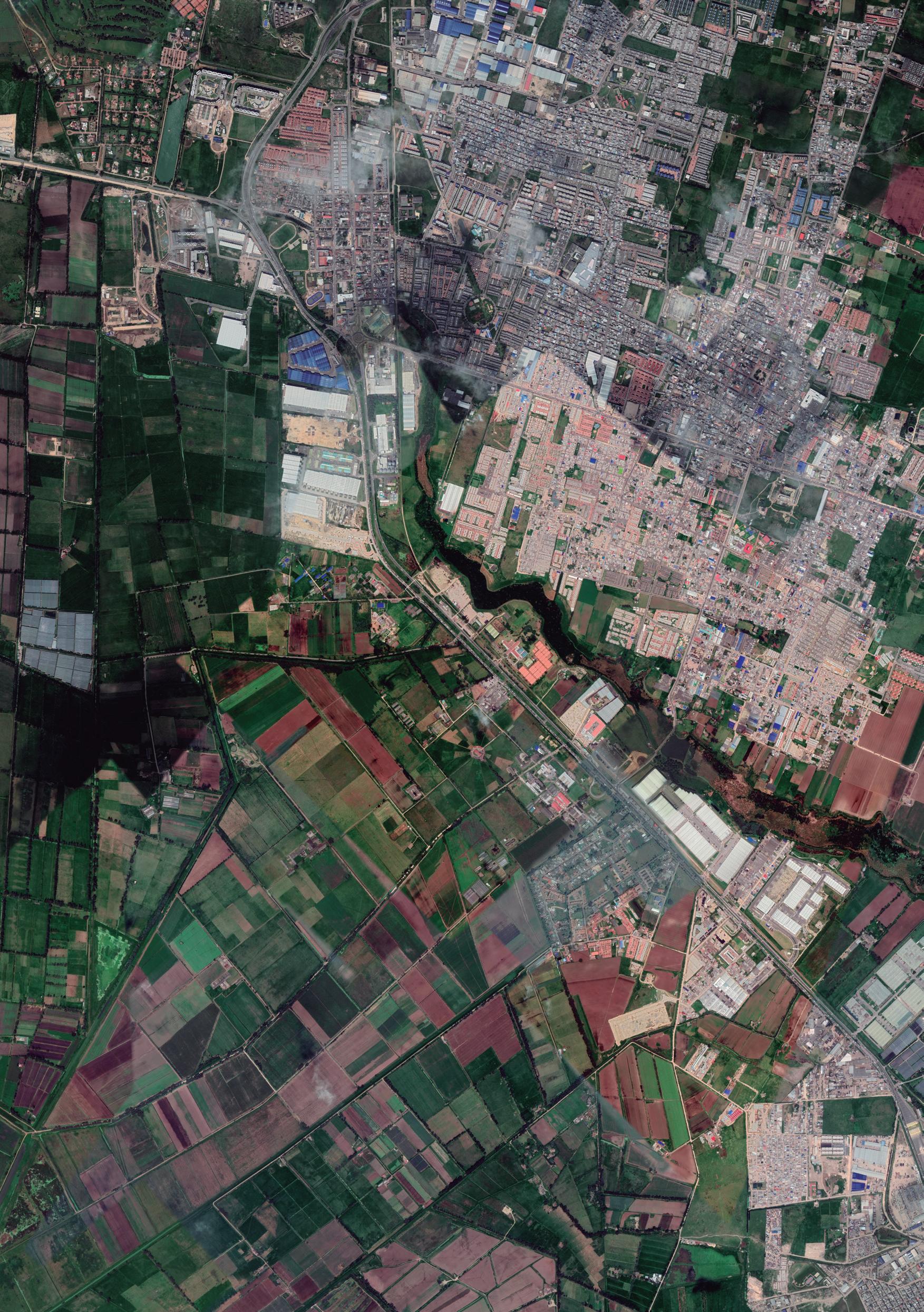
By 1910, the majority of rivers in the city were so contaminated that the municipal government decided to transform them into a sewage system that is still in use today. In 1933, irrigation canals were created to sustain different estates. By 1973, the land had been completely dried out. Once it was dried, the industrial district of Puente Aranda was createdIn 1978, the dry land around Puente Aranda was being used to store a variety of liquids, including kerosene, lubricants, liquid gas and oil.
PALIMPSEST then seeks to introduce water-based approaches to mitigate these long-standing environmental impacts, protect the remaining aquifers and habitats, and restore the ecological balance of the area.
1. If you flush a toilet in Bogota today, it’s contents will go directly into the Bogota “river”, a dead river as soon as it enters the city.
Fig 11 (UP). 1783 map of Bogotá (red) Puente Aranda Wetland as the gate to the city
Fig 12. (DOWN) 1918 Canalization of the San Francisco River
KILL THE WETLAND. KILL THE WETLAND. KILL THE WETLAND. KILL THE WETLAND. KILL WETLAND. KILL THE WETLAND. KILL THE WETLAND. KILL THE WETLAND. KILL THE WETLAND. THE WETLAND. KILL THE WETLAND. KILL THE WETLAND. KILL THE WETLAND. KILL THE WETLAND. KILL THE WETLAND. KILL THE WETLAND. KILL THE WETLAND. KILL THE WETLAND. KILL WETLAND. KILL THE WETLAND. KILL THE WETLAND. KILL THE WETLAND. KILL THE WETLAND. THE WETLAND. KILL THE WETLAND. KILL THE WETLAND. KILL THE WETLAND. KILL WETLAND. KILL THE WETLAND. KILL THE WETLAND. KILL THE WETLAND. THE WETLAND. KILL THE WETLAND. KILL THE WETLAND. KILL THE WETLAND. KILL THE WETLAND. KILL THE WETLAND. KILL WETLAND. KILL THE WETLAND. KILL THE WETLAND. THE WETLAND. KILL THE WETLAND. KILL THE WETLAND. KILL THE WETLAND. KILL THE WETLAND. KILL THE WETLAND. KILL THE WETLAND. KILL THE WETLAND. KILL WETLAND. KILL THE WETLAND. THE WETLAND. KILL THE WETLAND. KILL THE WETLAND. KILL THE WETLAND. KILL THE WETLAND. KILL THE WETLAND. KILL THE WETLAND. KILL WETLAND. KILL THE WETLAND. THE WETLAND. KILL THE WETLAND. KILL THE WETLAND. KILL THE WETLAND. KILL THE WETLAND. KILL WETLAND. KILL THE WETLAND. KILL THE WETLAND. KILL THE WETLAND. THE WETLAND. KILL THE WETLAND. KILL THE WETLAND. KILL THE WETLAND. KILL THE WETLAND. KILL WETLAND. KILL THE WETLAND. KILL THE WETLAND. KILL THE WETLAND. KILL THE WETLAND. THE WETLAND. KILL THE WETLAND. KILL THE WETLAND. KILL THE WETLAND. KILL THE WETLAND. KILL THE WETLAND. KILL THE WETLAND. KILL THE WETLAND. KILL THE WETLAND. KILL WETLAND. KILL THE WETLAND. KILL THE WETLAND. KILL THE WETLAND. KILL THE WETLAND. THE WETLAND. KILL THE WETLAND. KILL THE WETLAND. KILL THE WETLAND. KILL THE WETLAND. KILL THE WETLAND. KILL WETLAND. KILL THE WETLAND. KILL THE WETLAND. THE WETLAND. KILL THE WETLAND. KILL THE WETLAND. KILL THE WETLAND. KILL THE WETLAND. KILL THE WETLAND. KILL THE WETLAND. KILL THE WETLAND. KILL WETLAND. KILL THE WETLAND.
THE WETLAND. KILL THE WETLAND. KILL THE WETLAND. KILL THE WETLAND. KILL THE WETLAND. KILL THE WETLAND. KILL THE WETLAND. KILL WETLAND. KILL THE WETLAND.
THE WETLAND. KILL THE WETLAND. KILL THE WETLAND. KILL THE WETLAND. KILL THE WETLAND. KILL WETLAND. KILL THE WETLAND. KILL THE WETLAND. KILL THE WETLAND. THE WETLAND. KILL THE WETLAND. KILL THE WETLAND. KILL THE WETLAND. KILL THE WETLAND. KILL WETLAND. KILL THE WETLAND. KILL THE WETLAND. KILL THE WETLAND. KILL THE WETLAND. THE WETLAND. KILL THE WETLAND. KILL THE WETLAND. KILL THE WETLAND. KILL WETLAND. KILL THE WETLAND. KILL THE WETLAND. KILL THE WETLAND. THE WETLAND. KILL THE WETLAND. KILL THE WETLAND. KILL THE WETLAND. KILL THE WETLAND. KILL THE WETLAND. KILL THE WETLAND. KILL THE WETLAND. KILL THE WETLAND. KILL WETLAND. KILL THE WETLAND. KILL THE WETLAND. KILL THE WETLAND. KILL THE WETLAND.
THE WETLAND. KILL THE WETLAND. KILL THE WETLAND. KILL THE WETLAND. KILL THE WETLAND. KILL THE WETLAND. KILL THE WETLAND. KILL THE WETLAND. KILL THE WETLAND. KILL WETLAND. KILL THE WETLAND. KILL THE WETLAND. KILL THE WETLAND. KILL THE WETLAND.
Fig.12 Sequential aerial photographs documenting the Puente Arnada Wetland’s decline.
THE WETLAND. KILL THE WETLAND. KILL THE WETLAND. KILL THE WETLAND. KILL THE WETLAND. KILL THE WETLAND. KILL THE WETLAND. KILL THE WETLAND. KILL THE WETLAND. KILL WETLAND. KILL THE WETLAND. KILL THE WETLAND. KILL THE WETLAND. KILL THE WETLAND. THE WETLAND. KILL THE WETLAND. KILL THE WETLAND. KILL THE WETLAND. KILL THE WETLAND. KILL THE WETLAND. KILL THE WETLAND. KILL THE WETLAND. KILL THE WETLAND. KILL WETLAND. KILL THE WETLAND. KILL THE WETLAND. KILL THE WETLAND. KILL THE WETLAND. THE WETLAND. KILL THE WETLAND. KILL THE WETLAND. KILL THE WETLAND. KILL THE WETLAND. KILL THE WETLAND. KILL WETLAND. KILL THE WETLAND. KILL THE WETLAND. THE WETLAND. KILL THE WETLAND. KILL THE WETLAND. KILL THE WETLAND. KILL THE WETLAND. KILL THE WETLAND. KILL THE WETLAND. KILL WETLAND. KILL THE WETLAND. THE WETLAND. KILL THE WETLAND. KILL THE WETLAND. KILL THE WETLAND. KILL THE WETLAND. KILL THE WETLAND. KILL THE WETLAND. KILL THE WETLAND. KILL WETLAND. KILL THE WETLAND. KILL THE WETLAND. THE WETLAND. KILL THE WETLAND. KILL THE WETLAND. KILL THE WETLAND. KILL THE WETLAND. KILL THE WETLAND. KILL THE WETLAND. KILL WETLAND. KILL THE WETLAND. KILL THE WETLAND. THE WETLAND. KILL THE WETLAND. KILL THE WETLAND. KILL THE WETLAND. KILL WETLAND. KILL THE WETLAND. KILL THE WETLAND. KILL THE WETLAND. KILL THE WETLAND. THE WETLAND. KILL THE WETLAND. KILL THE WETLAND. KILL WETLAND. KILL THE WETLAND. KILL THE WETLAND. KILL THE WETLAND. KILL THE WETLAND. THE WETLAND. KILL THE WETLAND. KILL THE WETLAND. KILL THE WETLAND. KILL THE WETLAND. KILL THE WETLAND. KILL THE WETLAND. KILL THE WETLAND. KILL THE WETLAND. KILL WETLAND. KILL THE WETLAND. KILL THE WETLAND. KILL THE WETLAND. KILL THE WETLAND. THE WETLAND. KILL THE WETLAND. KILL THE WETLAND. KILL THE WETLAND. KILL THE WETLAND. KILL THE WETLAND. KILL THE WETLAND. KILL WETLAND. KILL THE WETLAND. THE WETLAND. KILL THE WETLAND. KILL THE WETLAND. KILL THE WETLAND. KILL THE WETLAND. KILL THE WETLAND. KILL THE WETLAND. KILL THE WETLAND. KILL WETLAND. KILL THE WETLAND. KILL THE WETLAND. THE WETLAND. KILL THE WETLAND. KILL THE WETLAND. KILL THE WETLAND. KILL THE WETLAND. KILL THE WETLAND. KILL THE WETLAND. KILL WETLAND. KILL THE WETLAND. KILL THE WETLAND. THE WETLAND. KILL THE WETLAND. KILL THE WETLAND. KILL THE WETLAND. KILL WETLAND. KILL THE WETLAND. KILL THE WETLAND. KILL THE WETLAND. KILL THE WETLAND. THE WETLAND. KILL THE WETLAND. KILL THE WETLAND. KILL WETLAND. KILL THE WETLAND. KILL THE WETLAND. KILL THE WETLAND. KILL THE WETLAND. THE WETLAND. KILL THE WETLAND. KILL THE WETLAND. KILL THE WETLAND. KILL THE WETLAND. KILL THE WETLAND. KILL WETLAND. KILL THE WETLAND. KILL THE WETLAND. THE WETLAND. KILL THE WETLAND. KILL THE WETLAND. KILL THE WETLAND. KILL THE WETLAND. KILL THE WETLAND. KILL THE WETLAND. KILL THE WETLAND. KILL THE WETLAND. KILL WETLAND. KILL THE WETLAND. KILL THE WETLAND. KILL THE WETLAND. KILL THE WETLAND. THE WETLAND. KILL THE WETLAND. KILL THE WETLAND. KILL THE WETLAND. KILL THE WETLAND. KILL THE WETLAND. KILL THE WETLAND. KILL THE WETLAND. KILL THE WETLAND. KILL
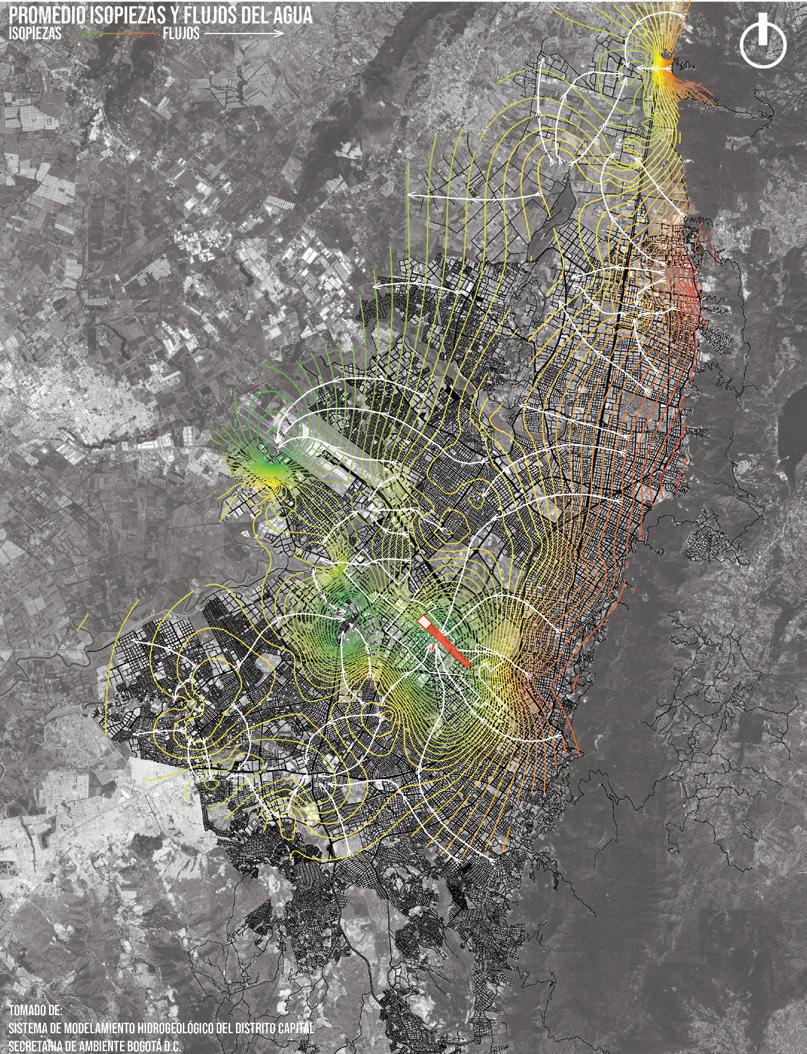
The geomorphology of Bogotá not only resulted in the formation of a wetland in this area, but also serves as the conduit for underground water, thereby creating a regional aquifer.
It’s, literally, pumping and
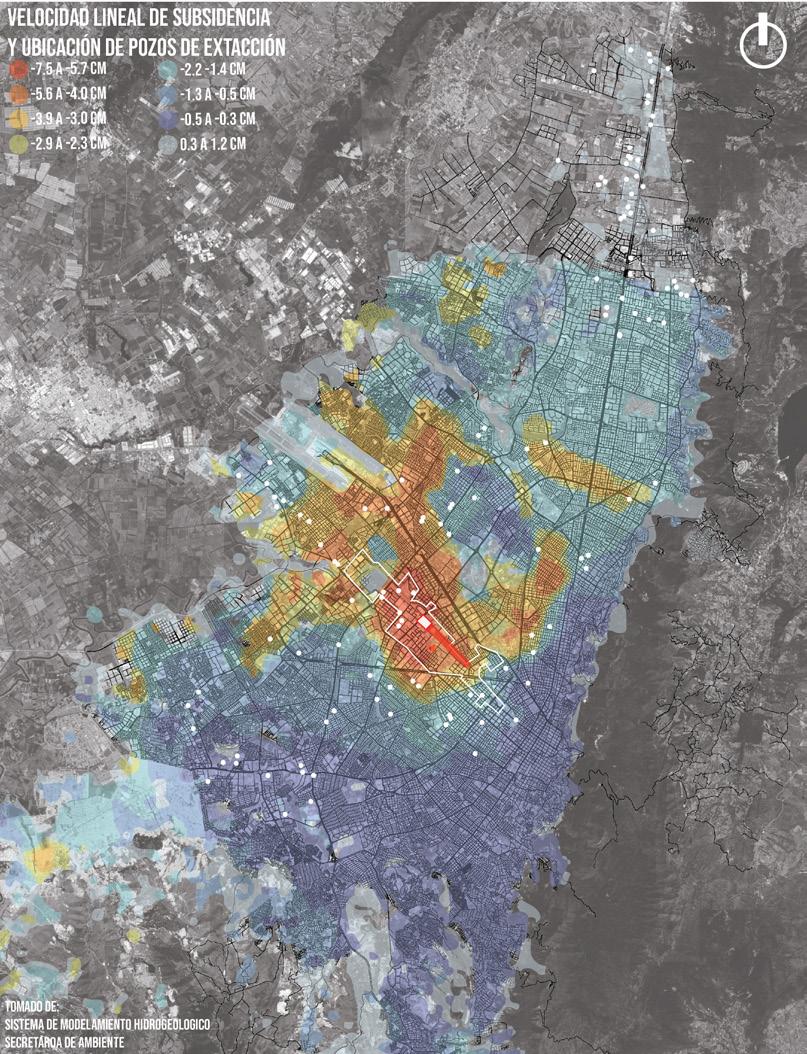
The industrial complex of Puente Aranda makes use of the groundwater, which is naturally accumulated in the area due to the topography. This results in the most rapid subsidence rate within our territory. In essence…
PUMPING AND DROWNING
Fig.14 Hidrogeological data of Bogota’s groundwater.
ACQUIFER? HOW COULD URBAN DEVOLPMENT BE GUIDED BY UNDERGOUND WATER?
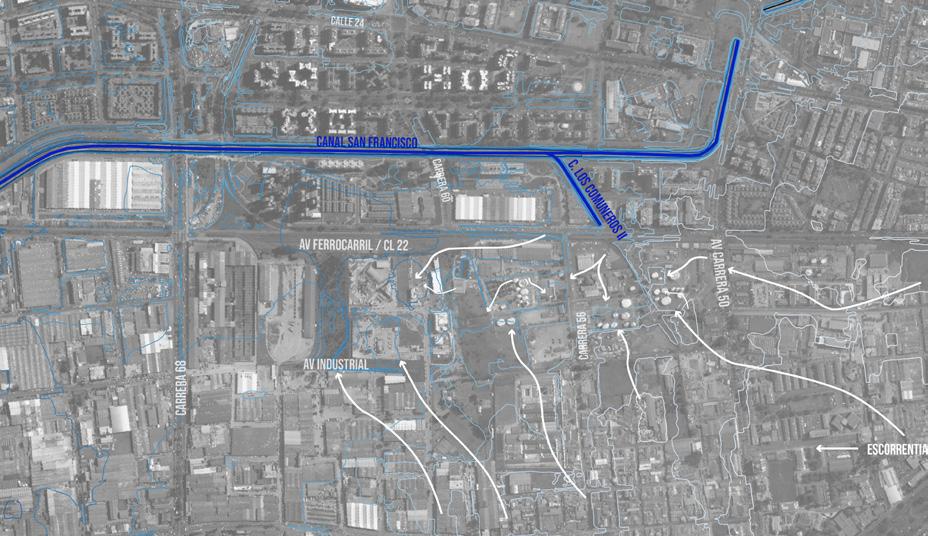
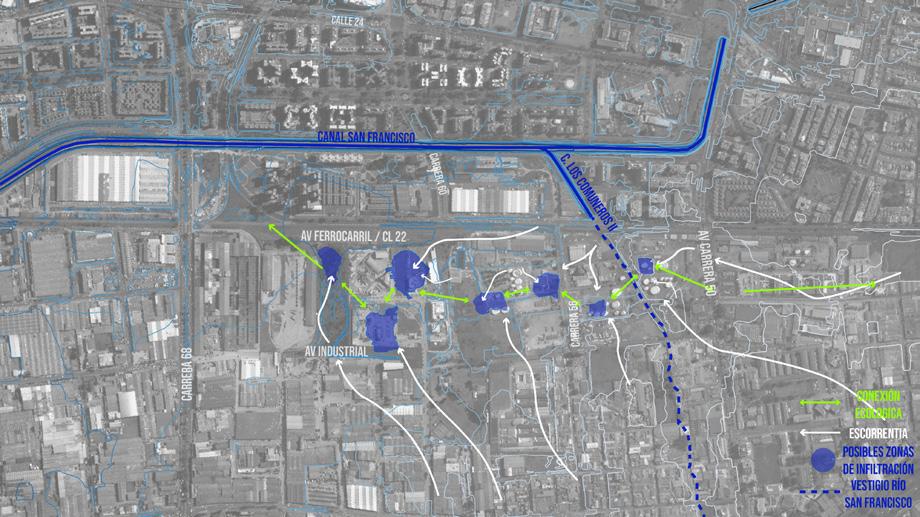
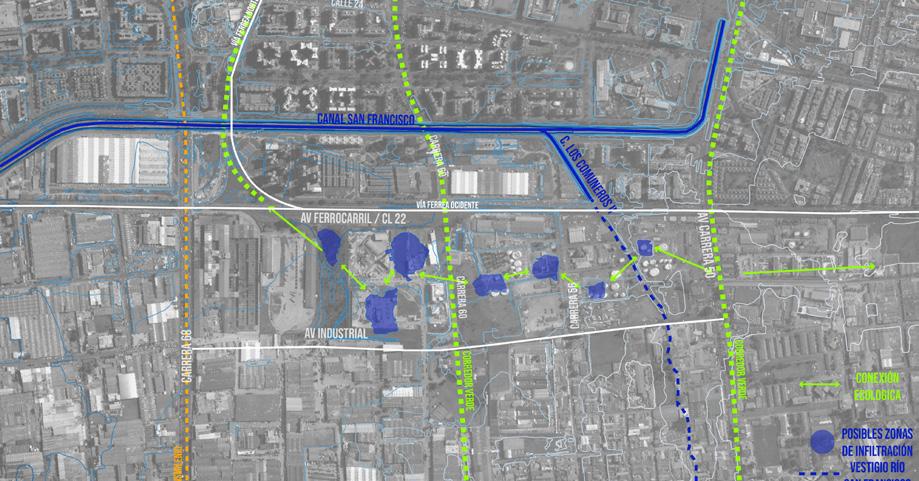
Using water as a strategic element to redefine the geographical centre of Bogotá, a development strategy is proposed based on aquifer recharge and the restoration of the original flow path of the San Francisco River. This initiative aims to forge a new urban landscape network that fundamentally transforms Bogotá’s interaction with its water resources.
Continuous aquifers of regional extent formed by consolidated sedimentary rocks of marine origin with primary and secondary porosity.
Discontinuous aquifers of regional and local extent formed by unconsolidated sediments, mainly of lacustrine and fluvial origin.
Confined aquifers
Guadas Formation
Lenteja de agua Lemna Gibba
Concreto modelado in-situ
Tierra negra (30cm)
Tierra negra (30cm)
Tuberia de drenaje pvc (1/2")
Tuberia de rebose pvc (2")
Junco Juncus Effussus
Enea
Typha latifolia
Rethinking the design of public spaces for more than human entities
Perico / Paula Ferro / Victor
Research
Collaborators :
/ Daniel Bermudez / Miguel Steiner
Gualí Wetland Funza, Colombia
Natalia
Mosquera
ONCE IT WAS A WETLAND
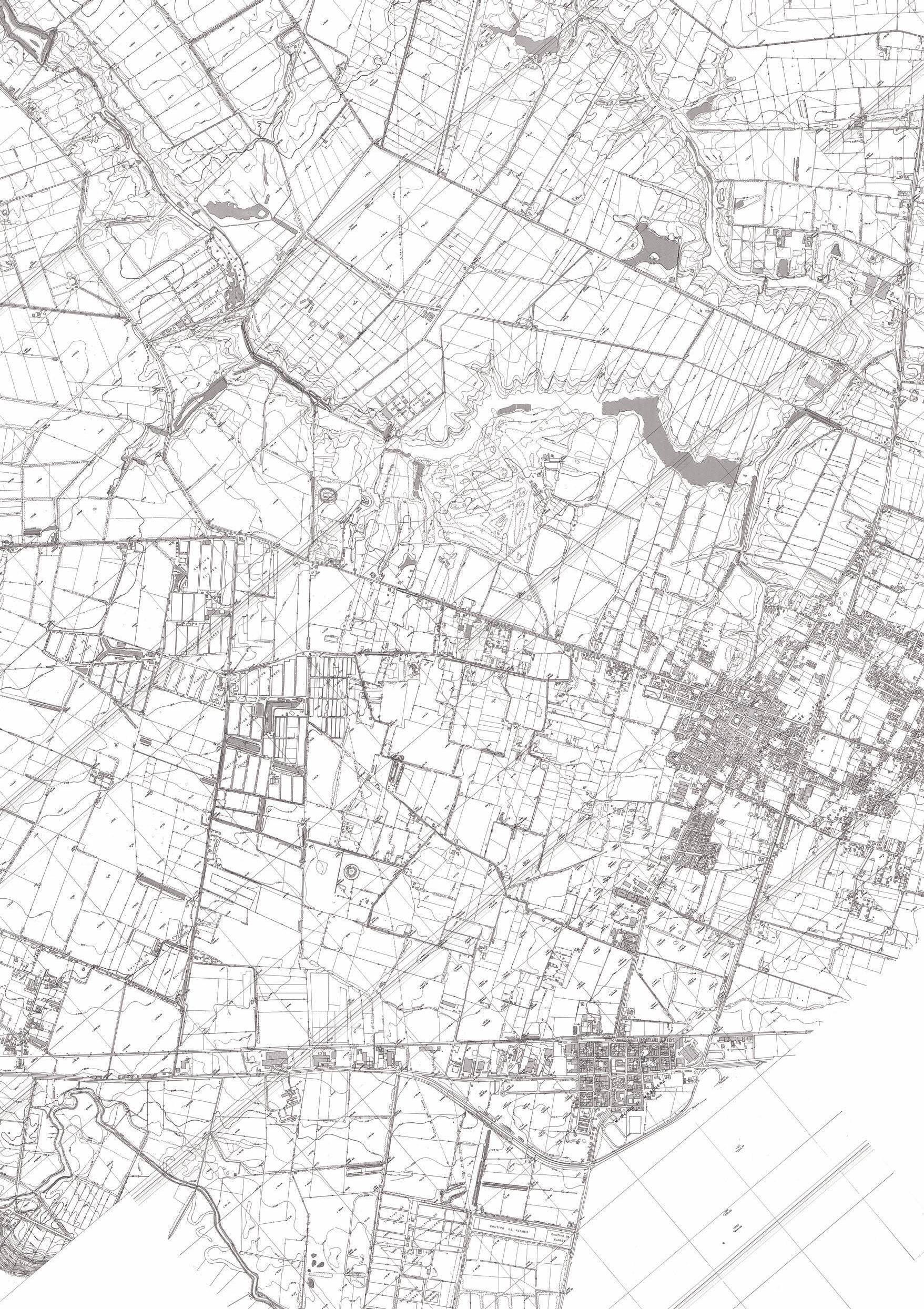
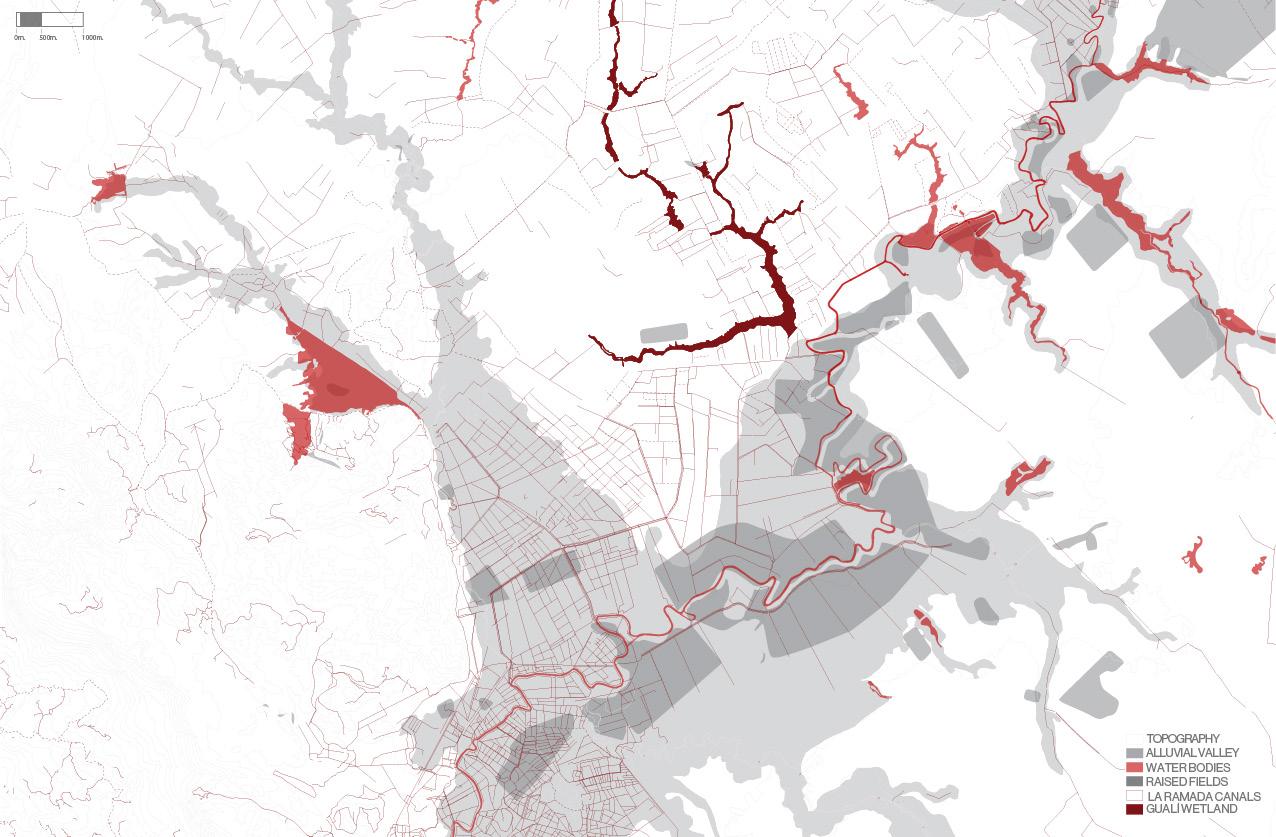
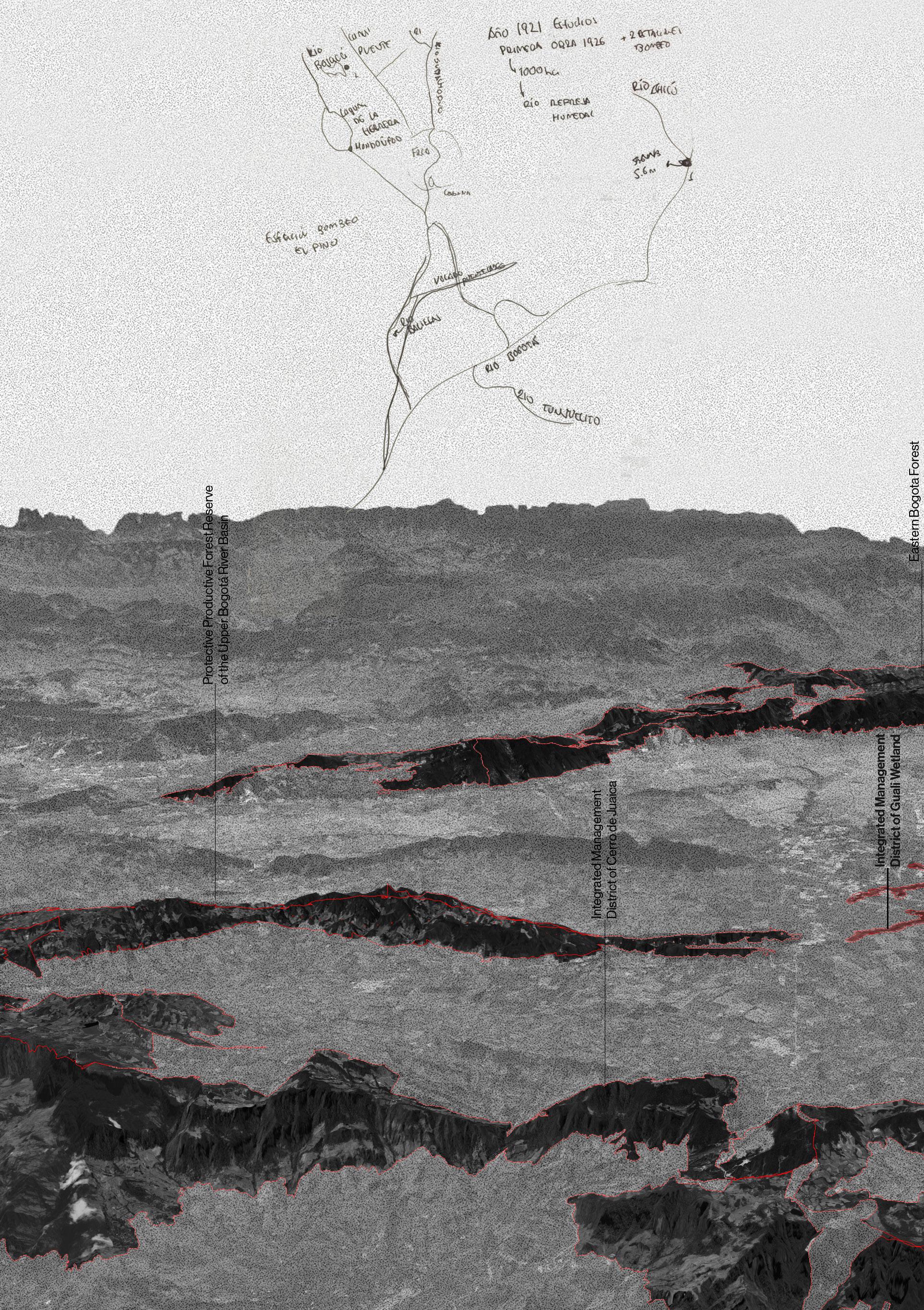
In 1920, the “Ramada Irrigation and Drainage District” was created. A series of canals were constructed with the dual purpose of controlling flooding on the aluvial valley of the Bogotá river and increasing land value by increasing crop production.
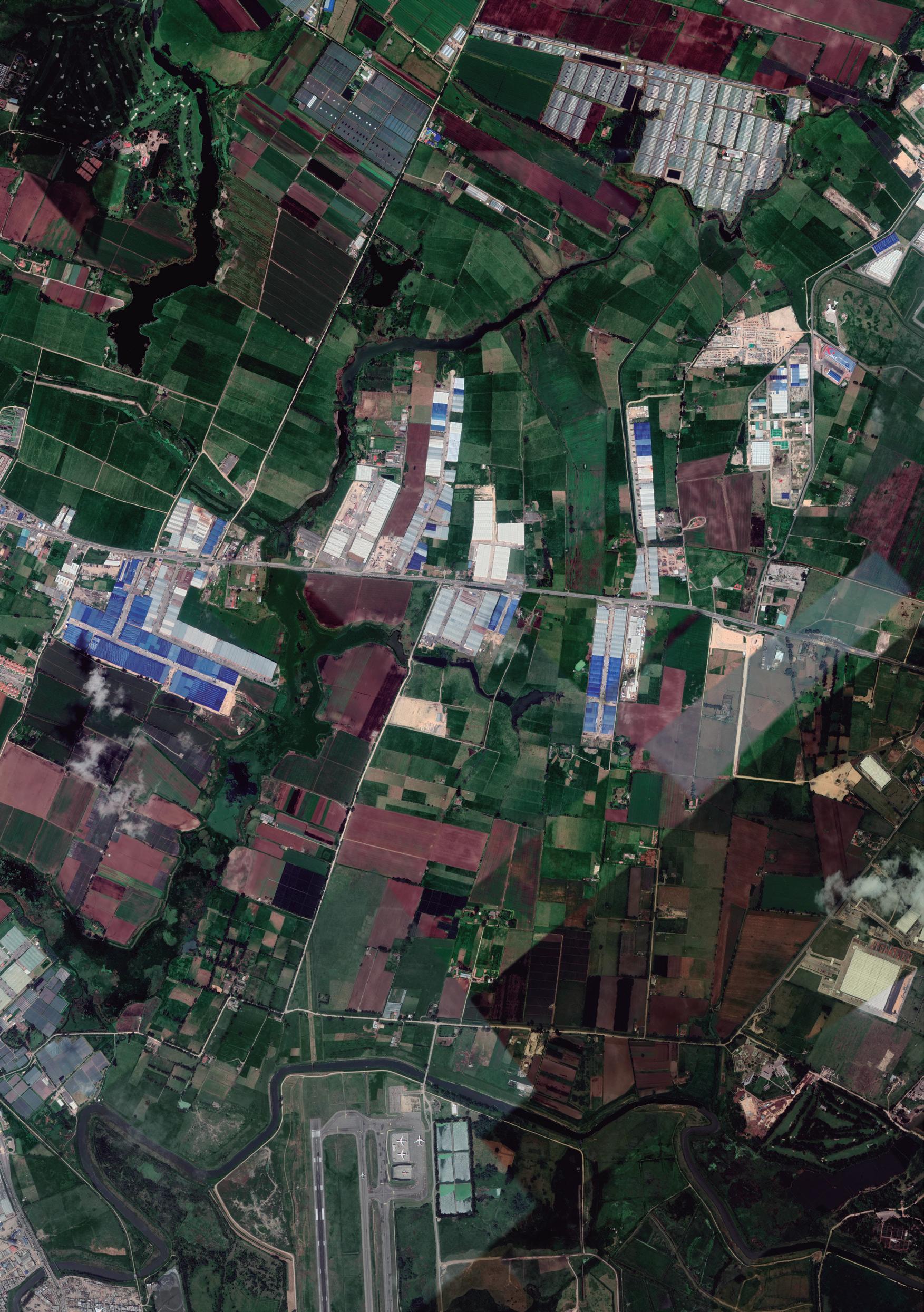
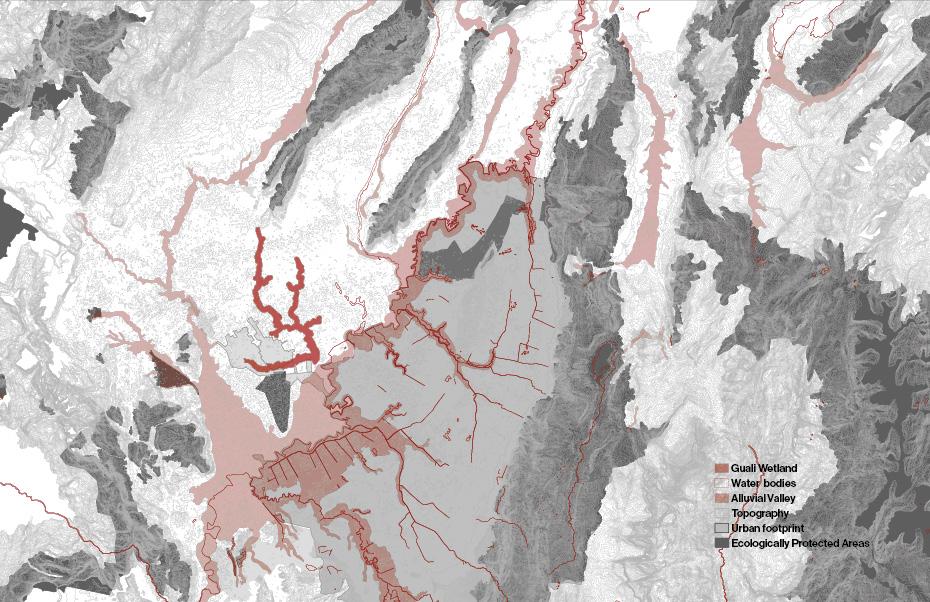
An offset line of 30 metres around the border of the 1196-hectare Gualí Wetland was designated to protect the area. However, canals were constructed with the intention of extracting water from the wetland and receiving runoff from agricultural activities. This resulted in the wetland becoming a stagnant and contaminated body of water.
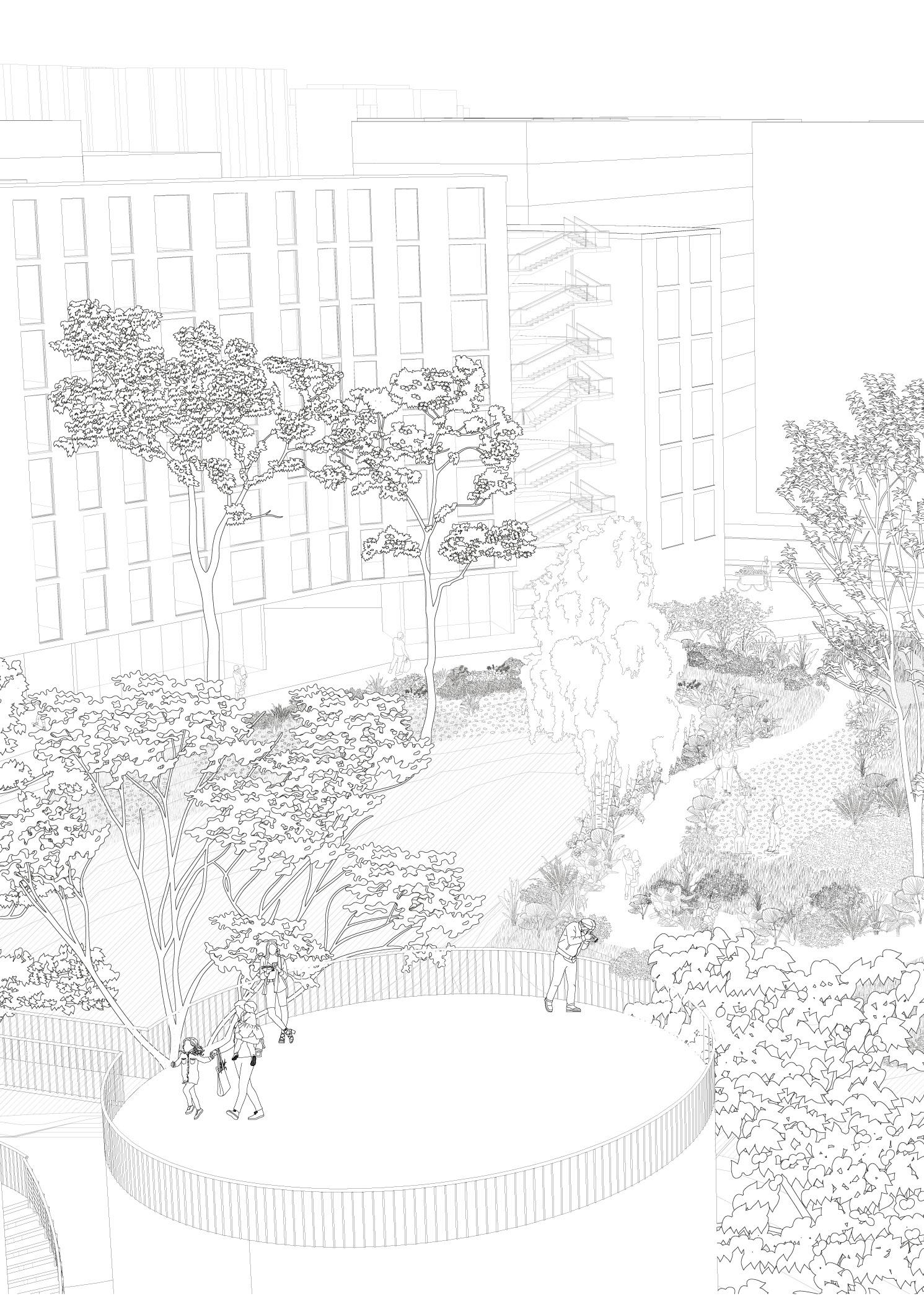
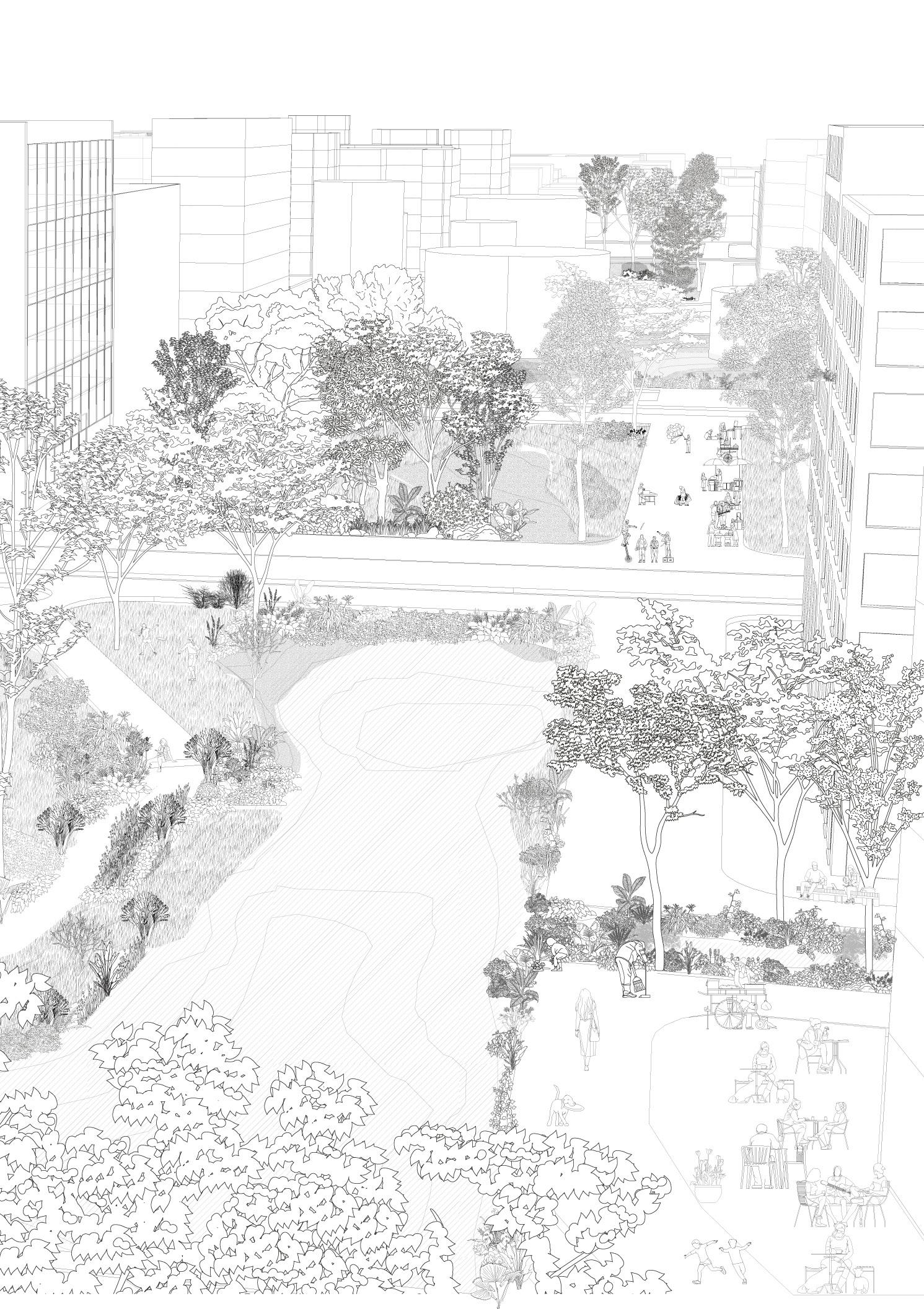
By understanding the wetland and its channels as a single body of water, the Once It Was a Wetland project aims to resdesign one of the main canals of this infrastructureo to integrate the wildlife and ecological structure of the region.
DRAWING PRODUCED BY GROUP OF
Fig.20(UP) Former alluvial valley of the Bogotá River Fig.21 (DOWN) “La Ramada” Irrigation District canal infrastructure
COLLABORATIOS
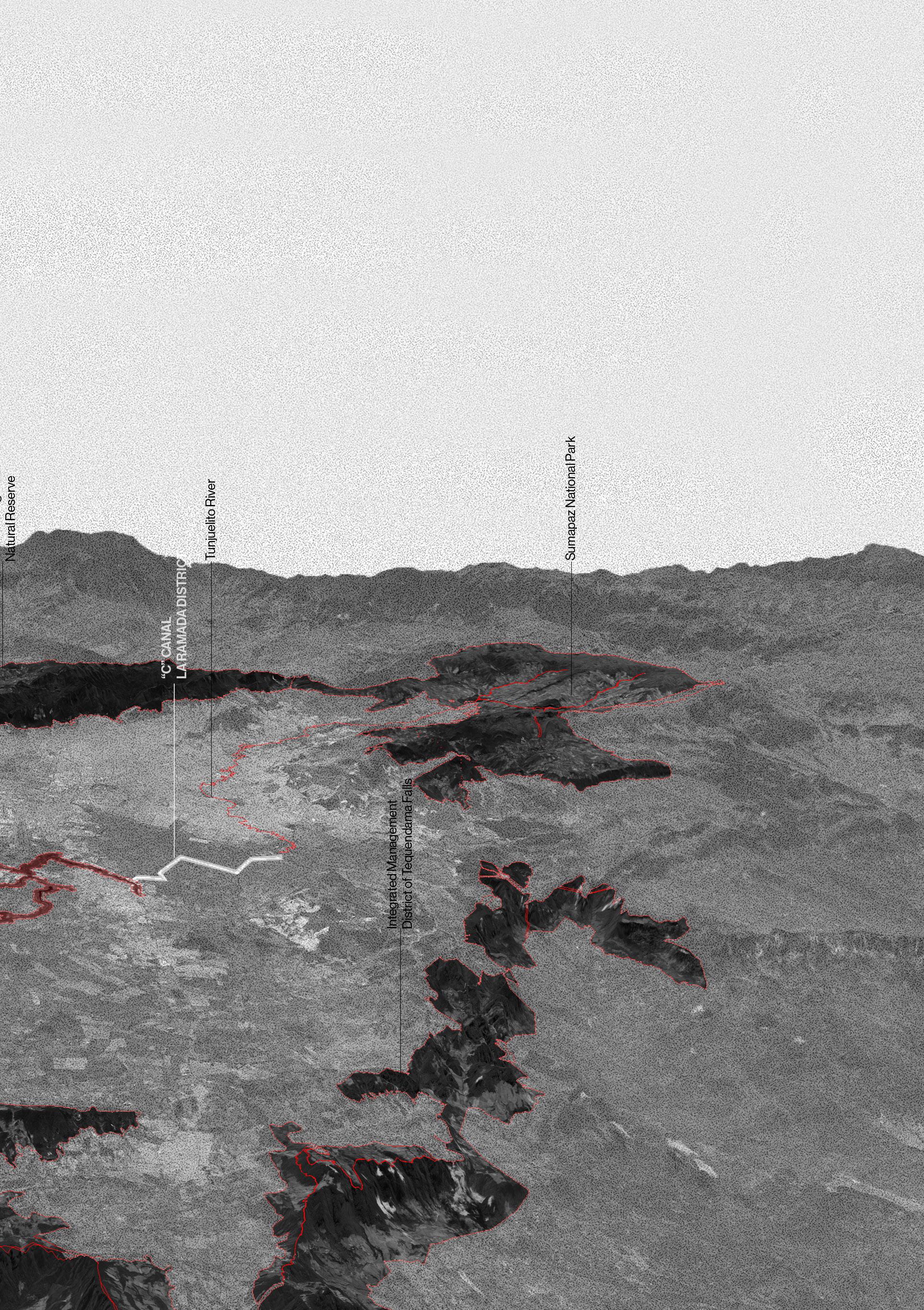
The project focuses on “CANAL C” to create a regional ecological connection between protected natural areas around the Bogotá region.
By redesigning the section of the canal, an ecological corridor is formed.
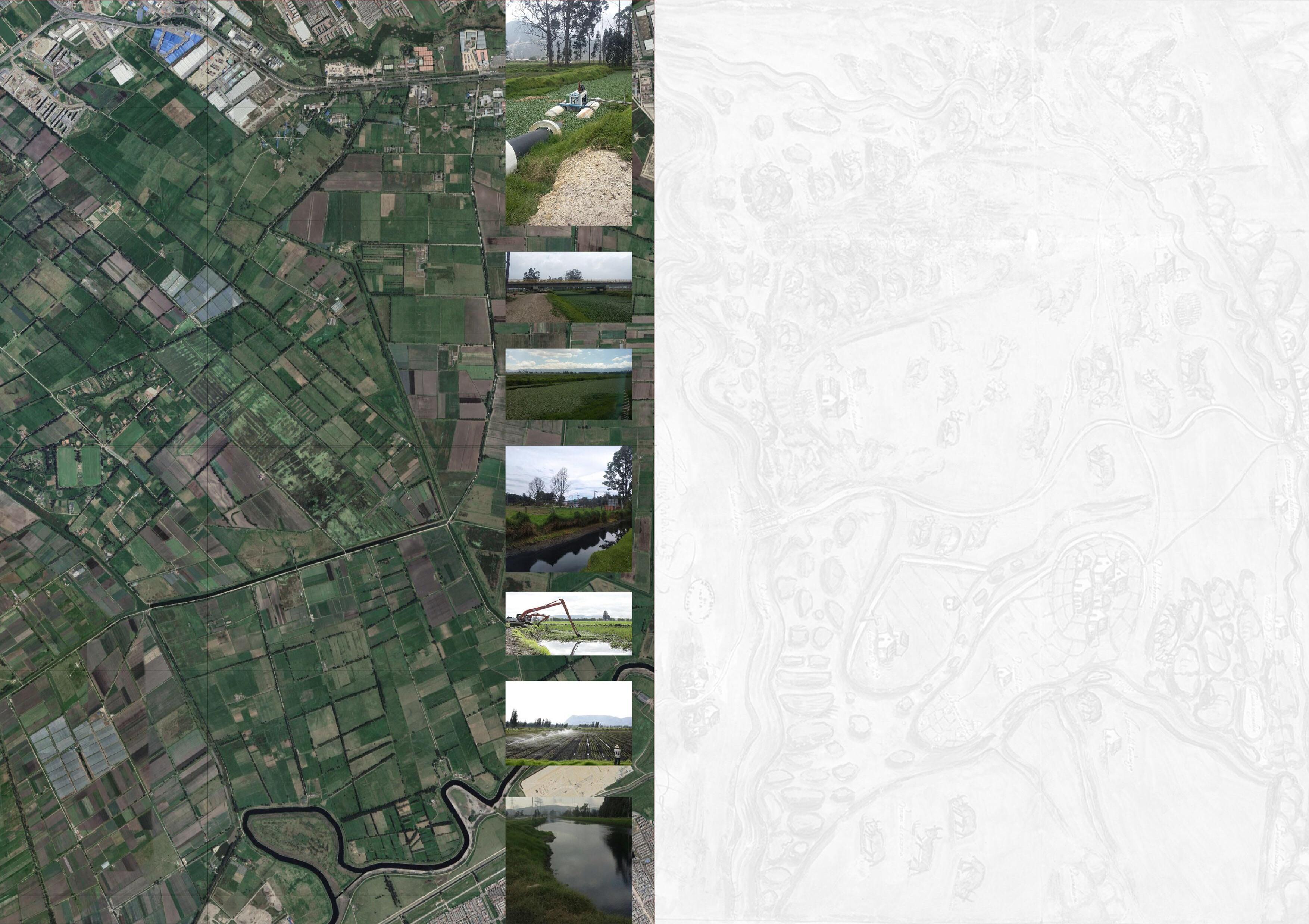
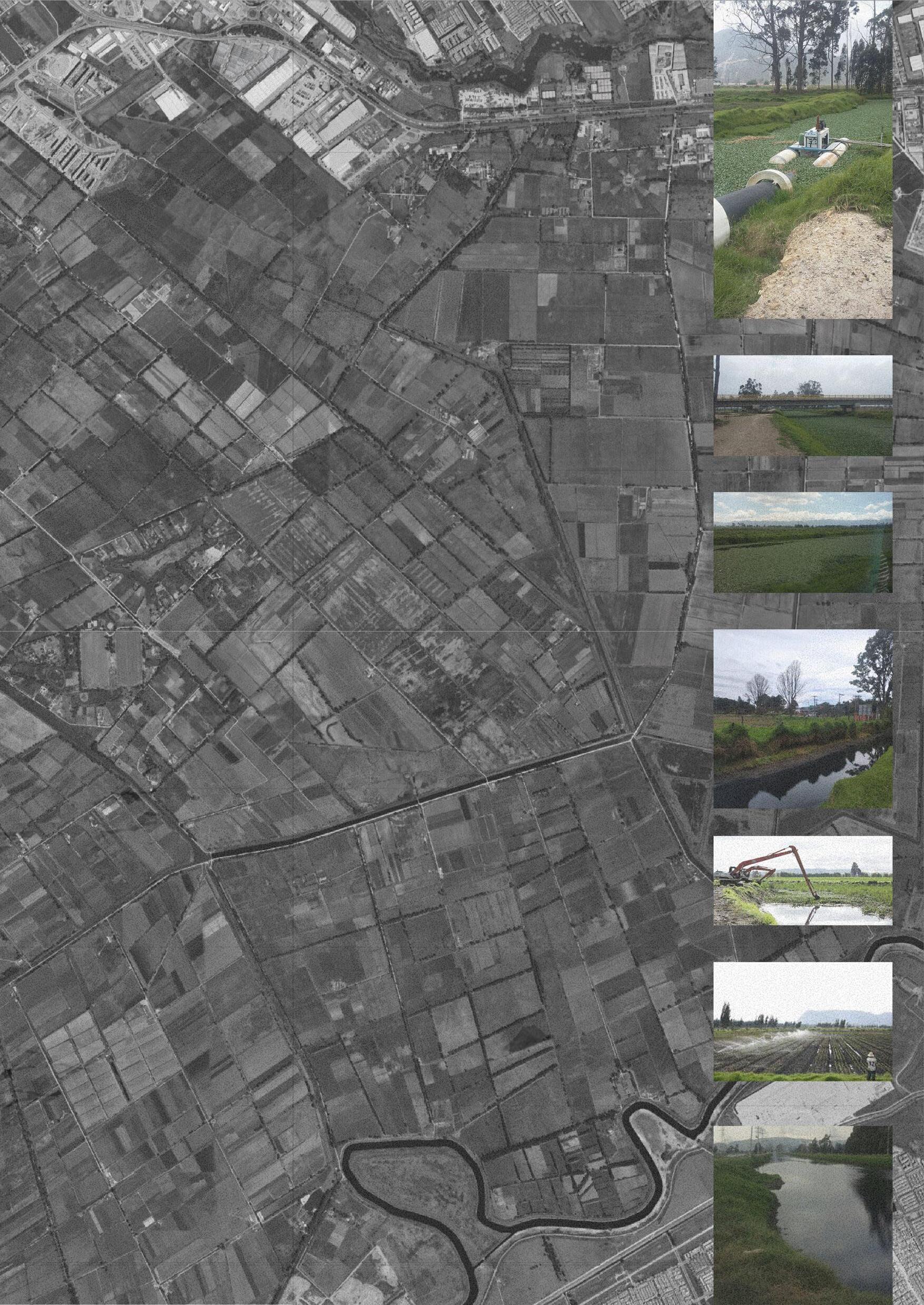
Fig. 23. (LEFT) Existing canal section, floor plan, and photographic record. (GOOGLE IMAGES) Fig 24. Proposed canal section, floorplan and flora species specification.
Transforming a territory designed only for human needs
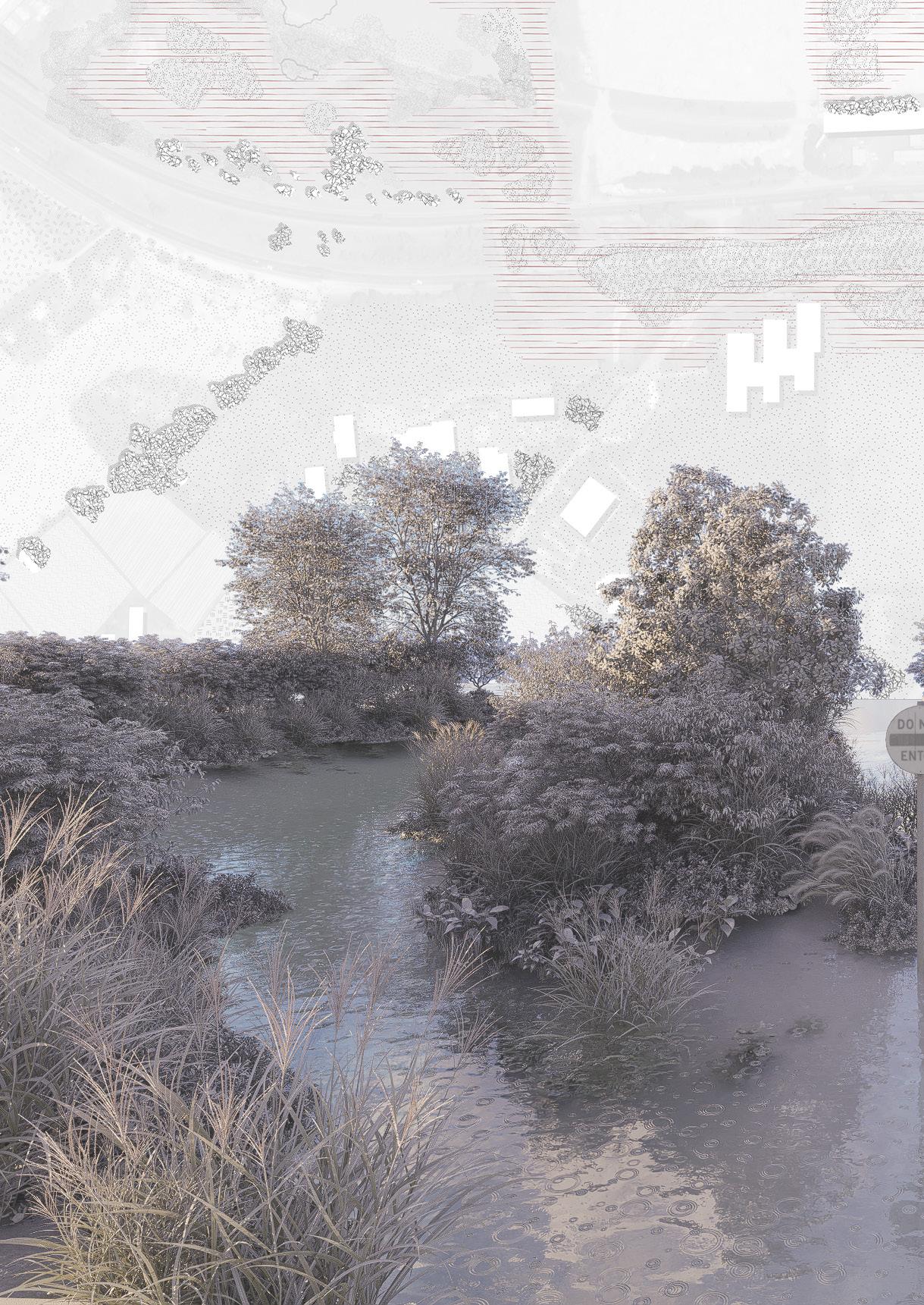
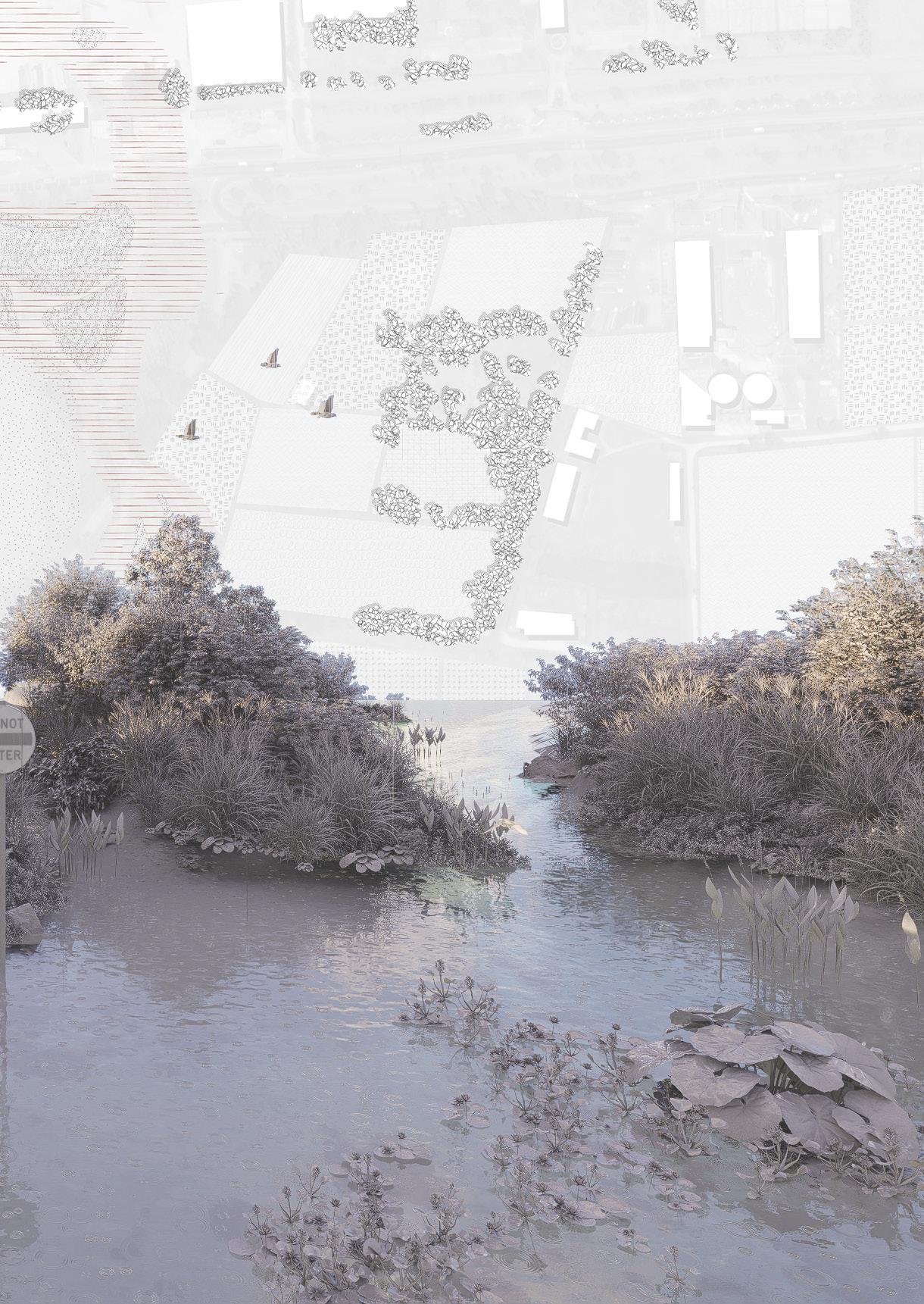
Towards an interconnectedness of more than human entities.
Collaborators:
Bogotá, Colombia
Victor Mosquera / Andrea Reyes / Humberto Mejia
The following projects have been developed by:
CANTERA_TALLER DE ARQUITECTURA
Cantera (Quarry in Spanish) is an architectural design collective co-funded by me and Victor Mosquera. We try to navigate the complexity and bureaucracy of the built environment, understanding that all architecture is a process of extraction, working at the intersection of architecture, interior design and landscape. We understand these as materially expressed ontological practices. We believe in historical, cultural and/or personal research as method to develop site-specific architecture for each territory and agent and way of seeing, seeking to understand the ways in which we design the world, and it designs us and trying to answer the question:
How to design a world where multiple worlds fit?
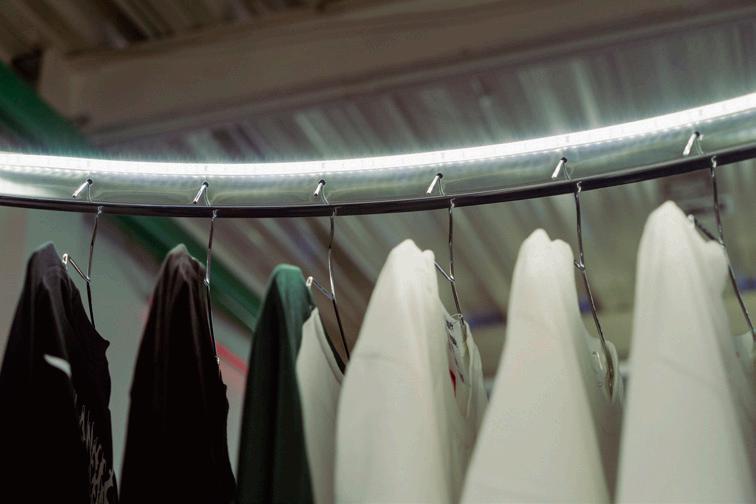
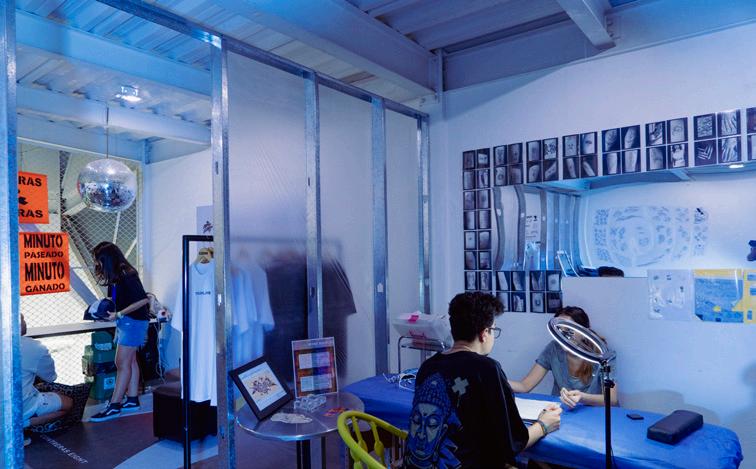
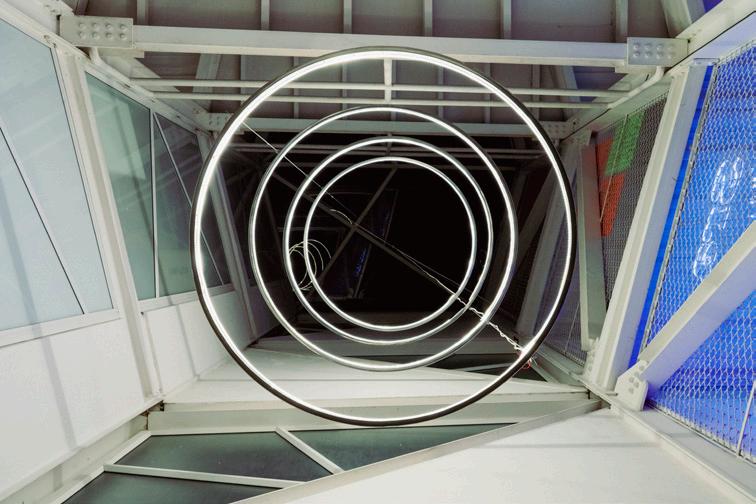
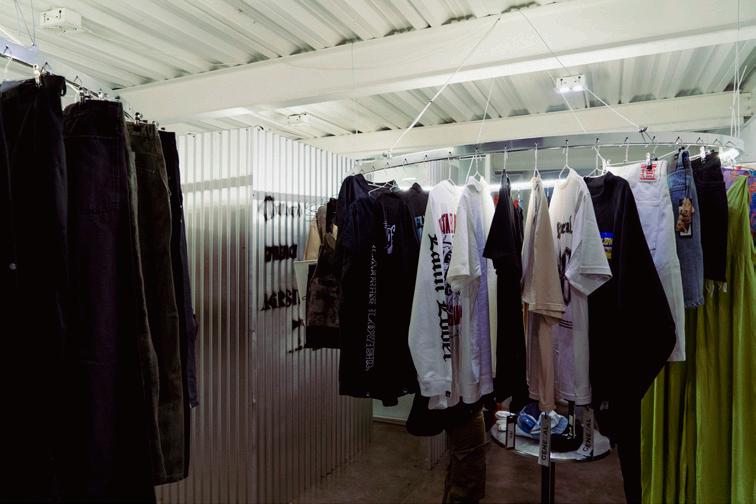
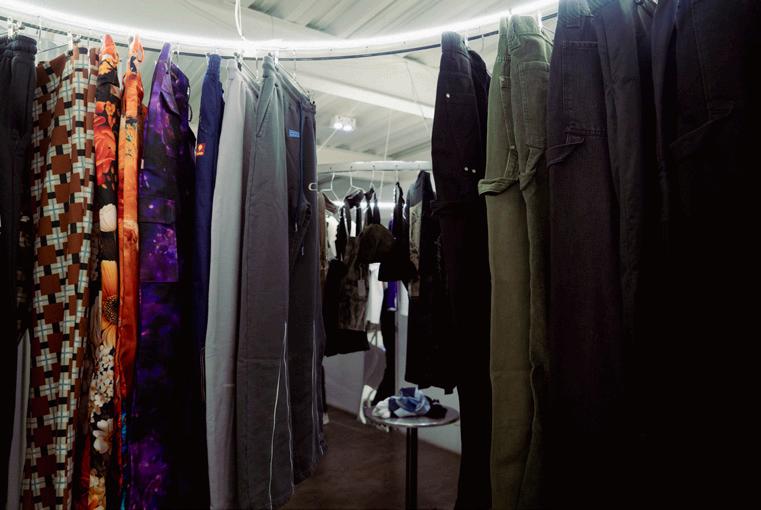
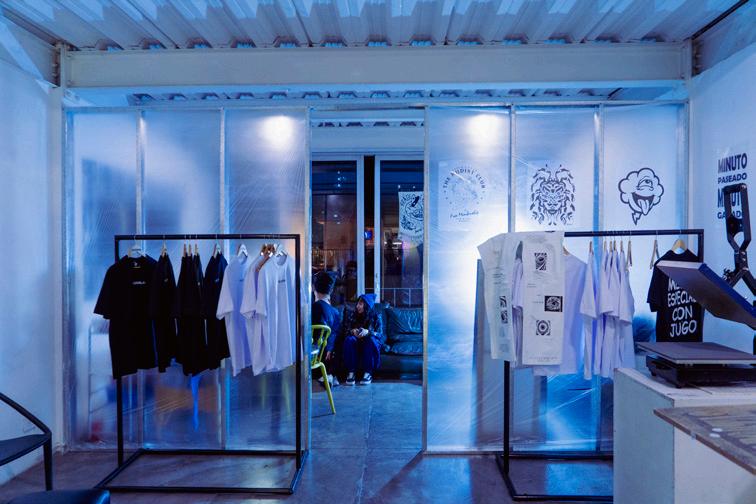
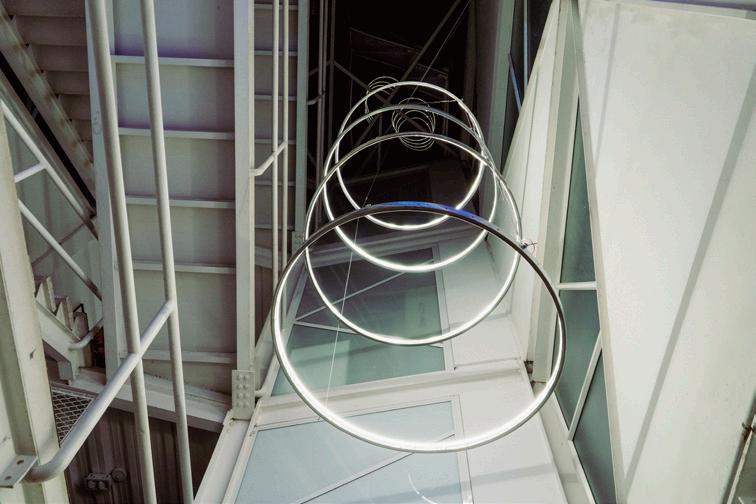
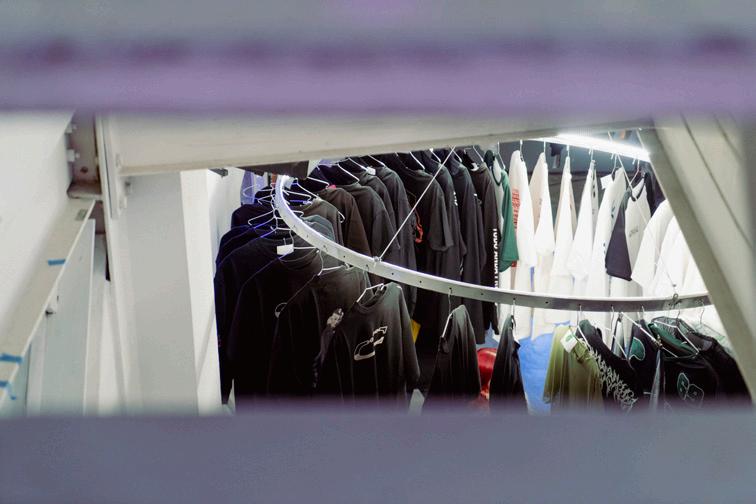
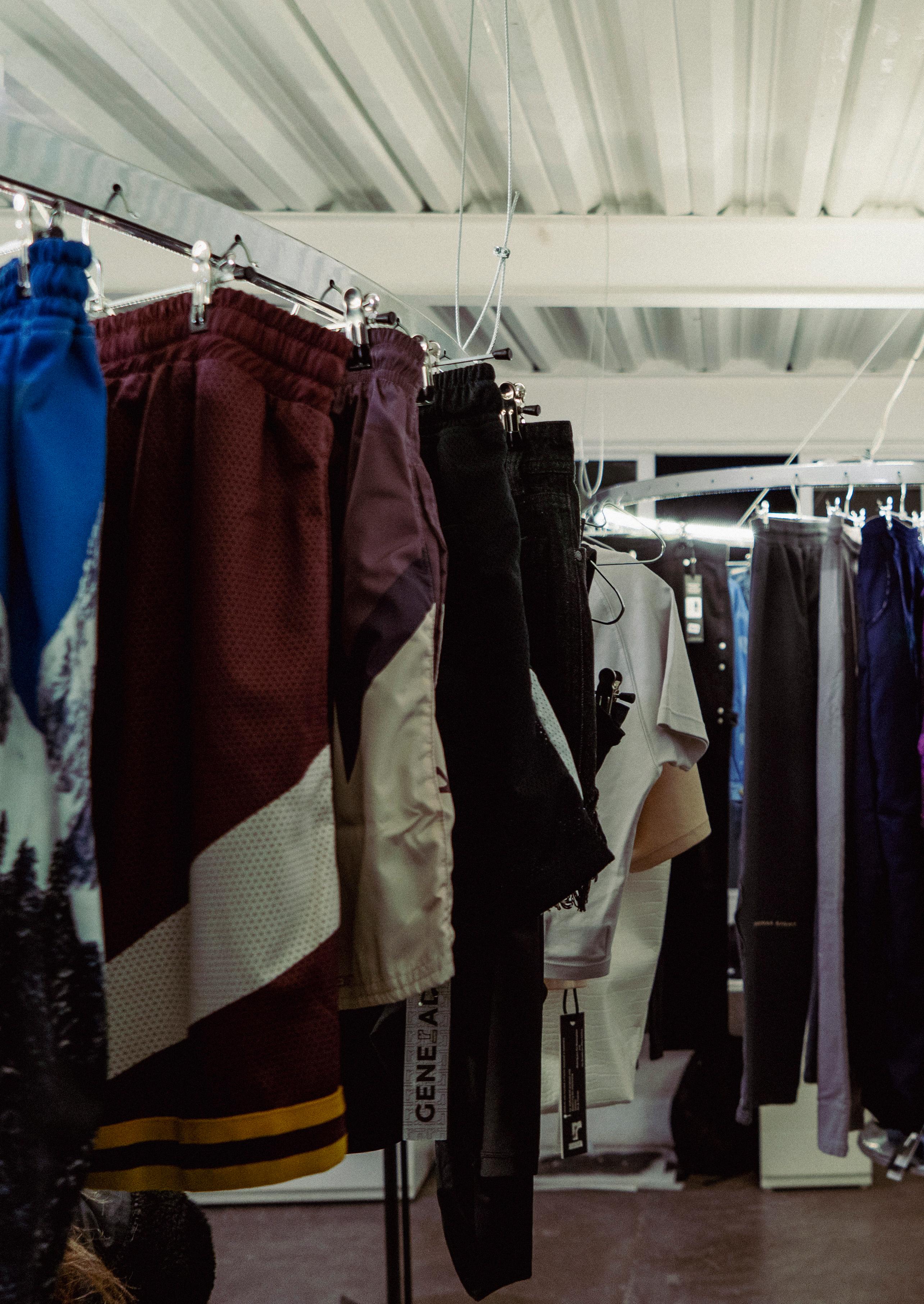
360 LAB POP UP STORE
Developed for an independent Colombian streetwear collective, the project interprets the brand’s identity and urban essence using recycled materials.
This is a demountable and transferrable project, yet not temporary. In the event of necessity, the materials can be recycled and utilized in conventional constructions.
MEDIDAS EN MILIMETROS
Collaboration with_HUMBERTO MEJIA
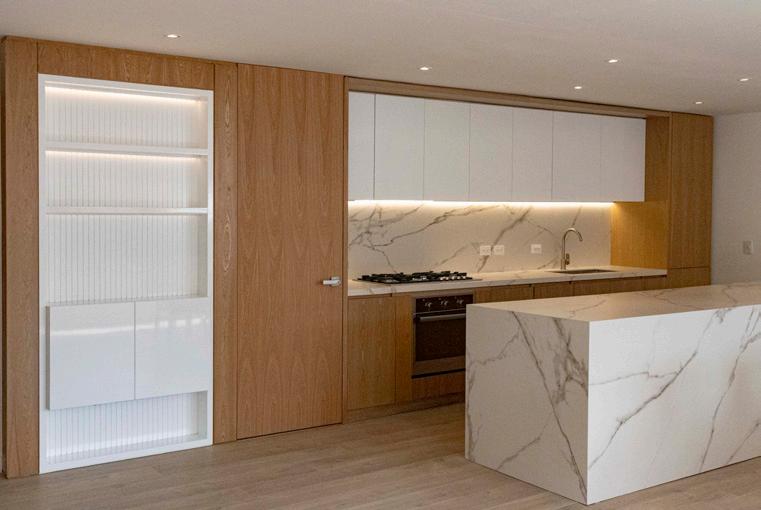
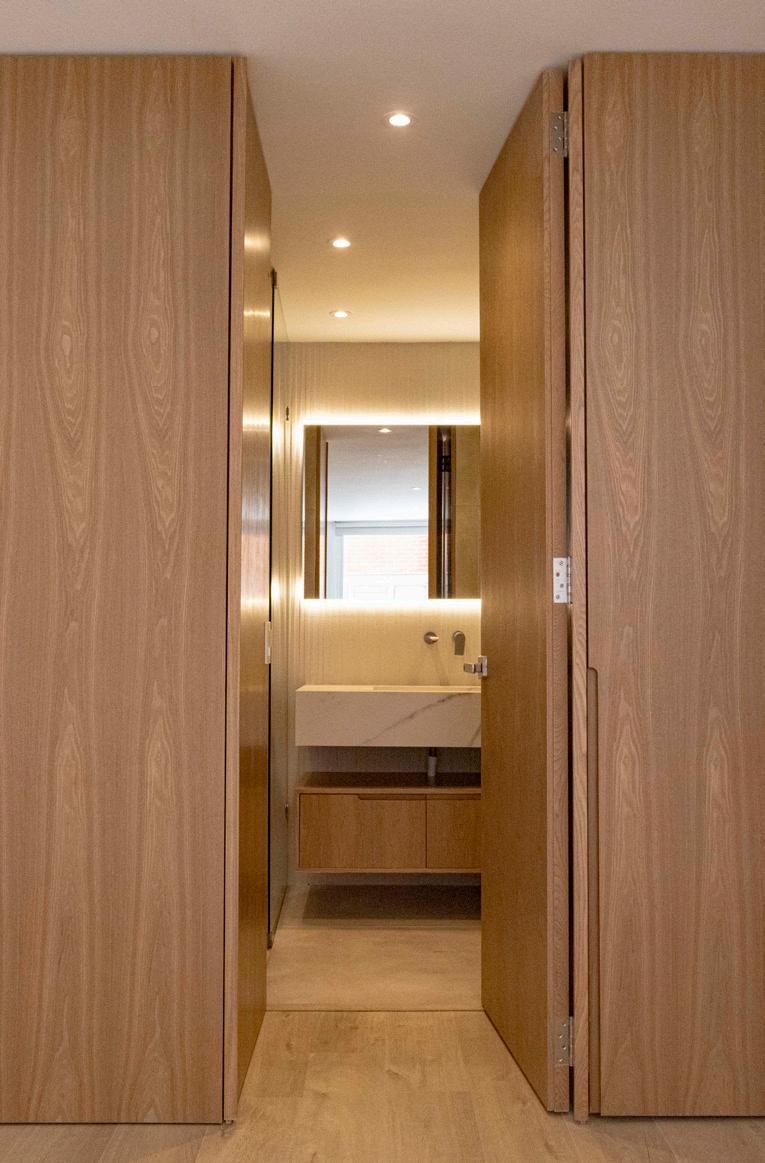
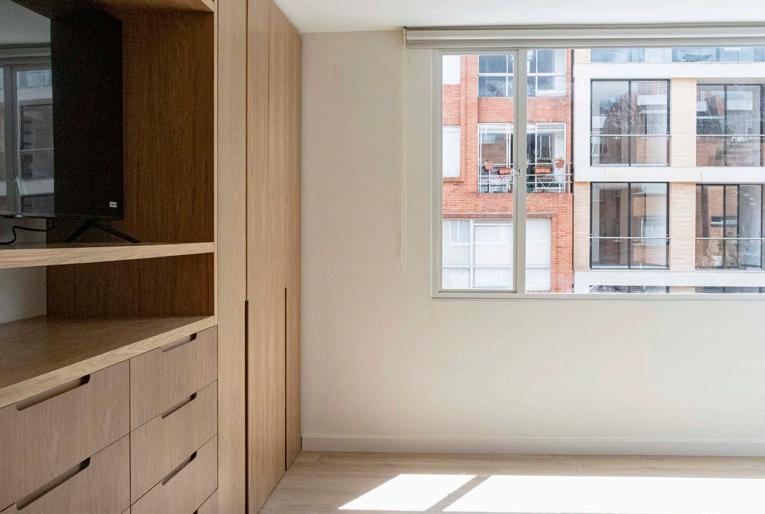
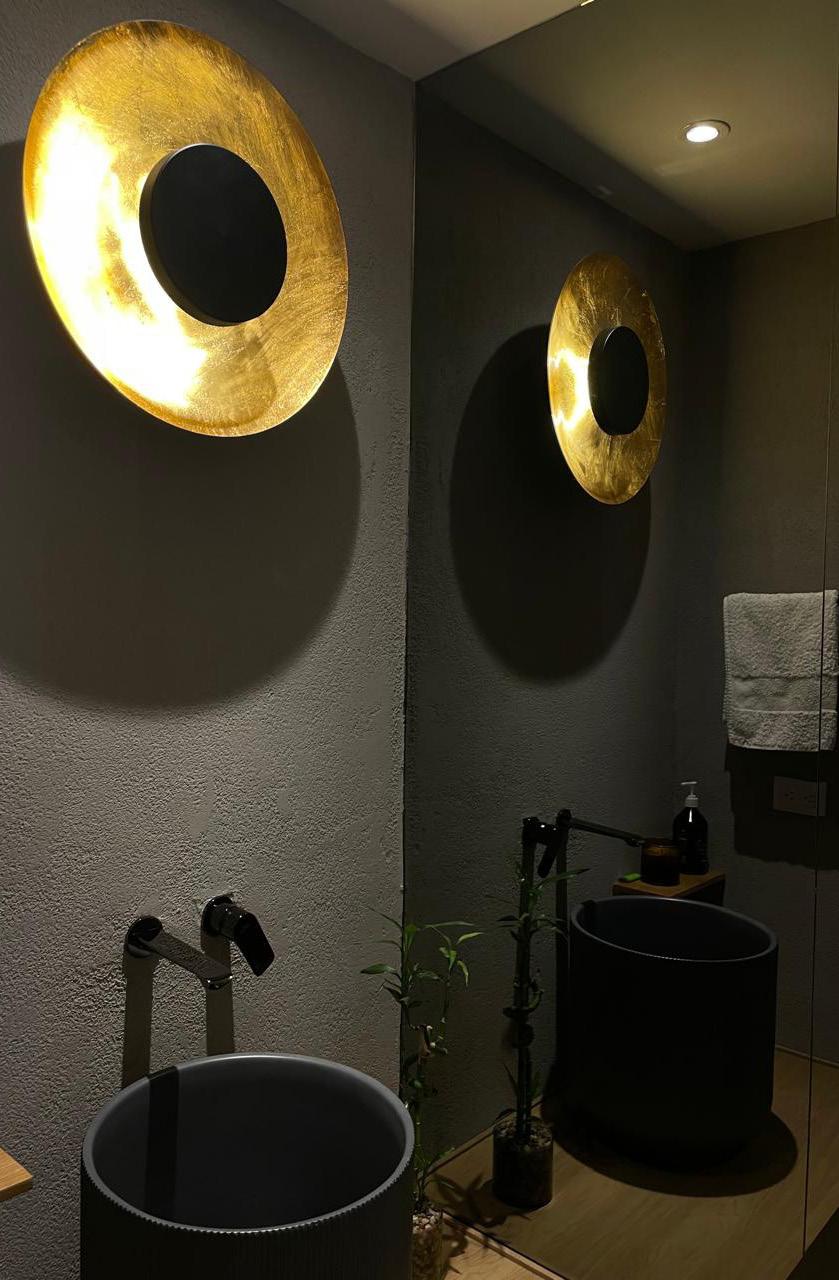
MIGUEL´S HOME
Apartment renovation for Miguel. The project focuses on the development of details to achieve the architectural space. The materials are mostly local and natural, with the lamp being one purchased by the client and repurposed for the project.
Collaboration with_Victor Mosquera and Andrea Reyes


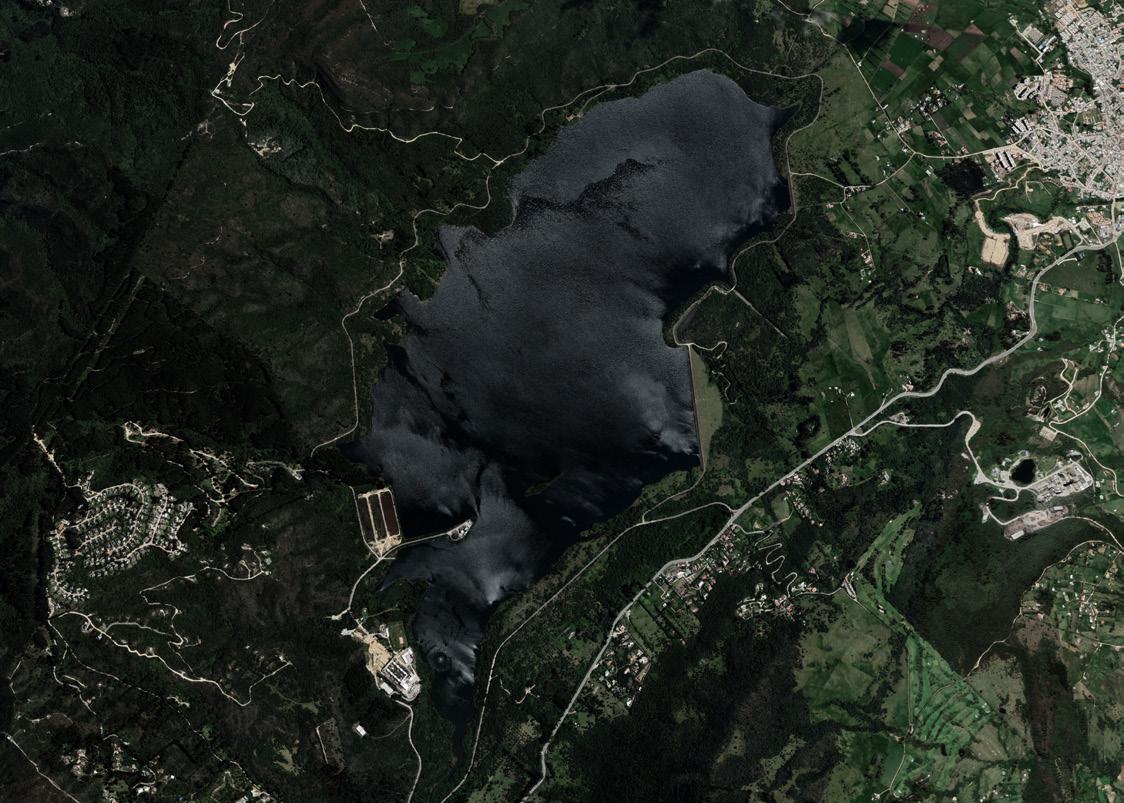
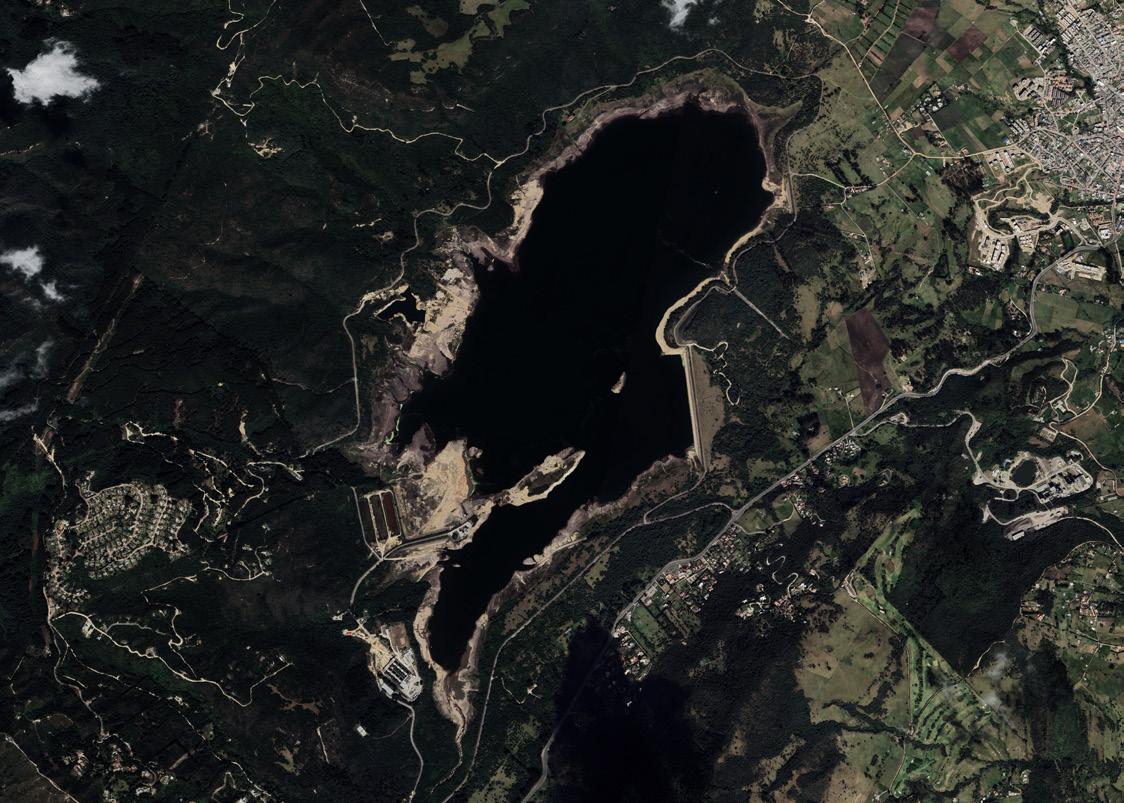
Villapinzón, Colombia
Fig.4 Google Satelite Image, July 2022 / August 2024 (own production)
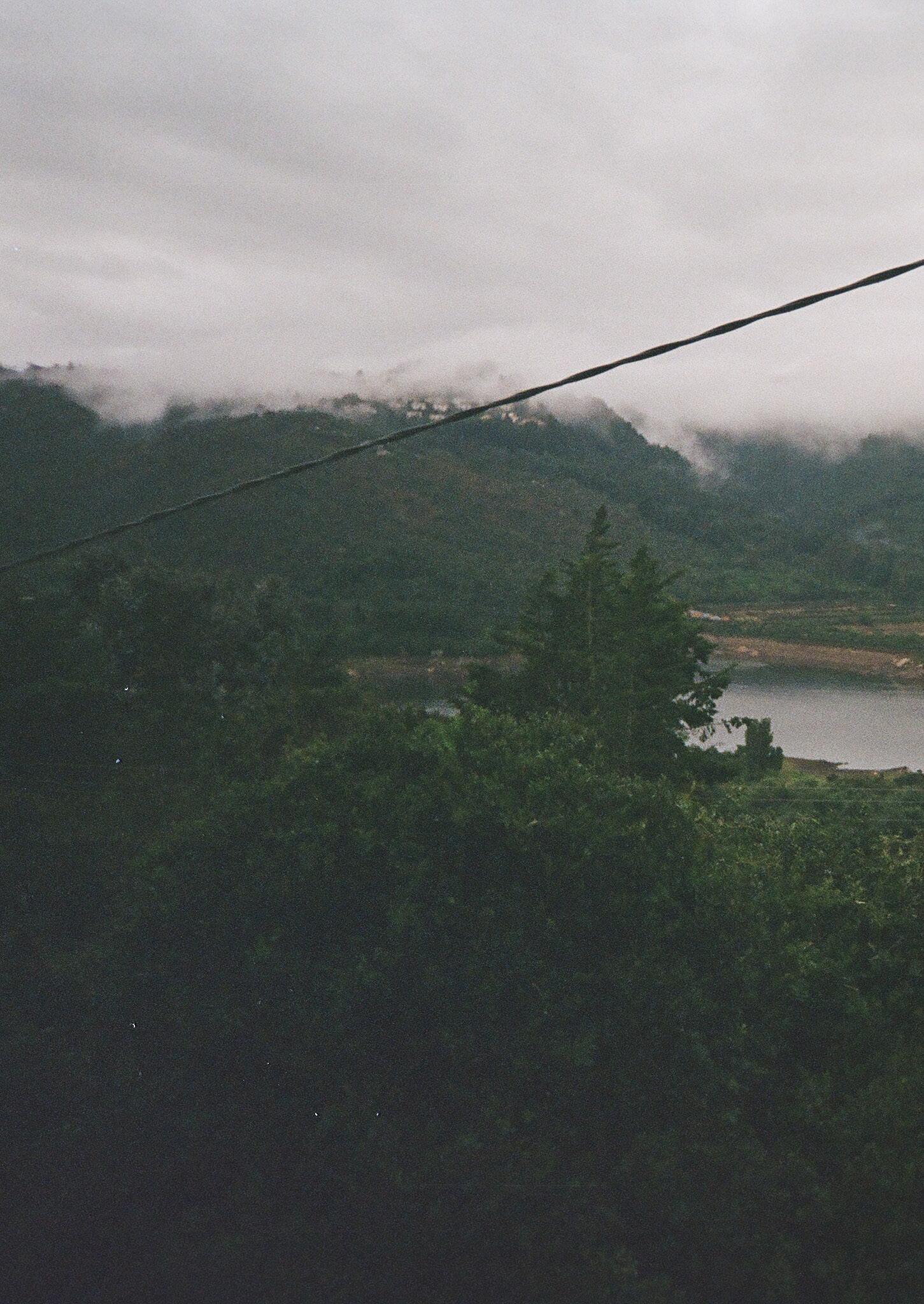
Photos of the San Rafael Reservoir, which provides 70% of Bogotá’s water and its current draught levels.
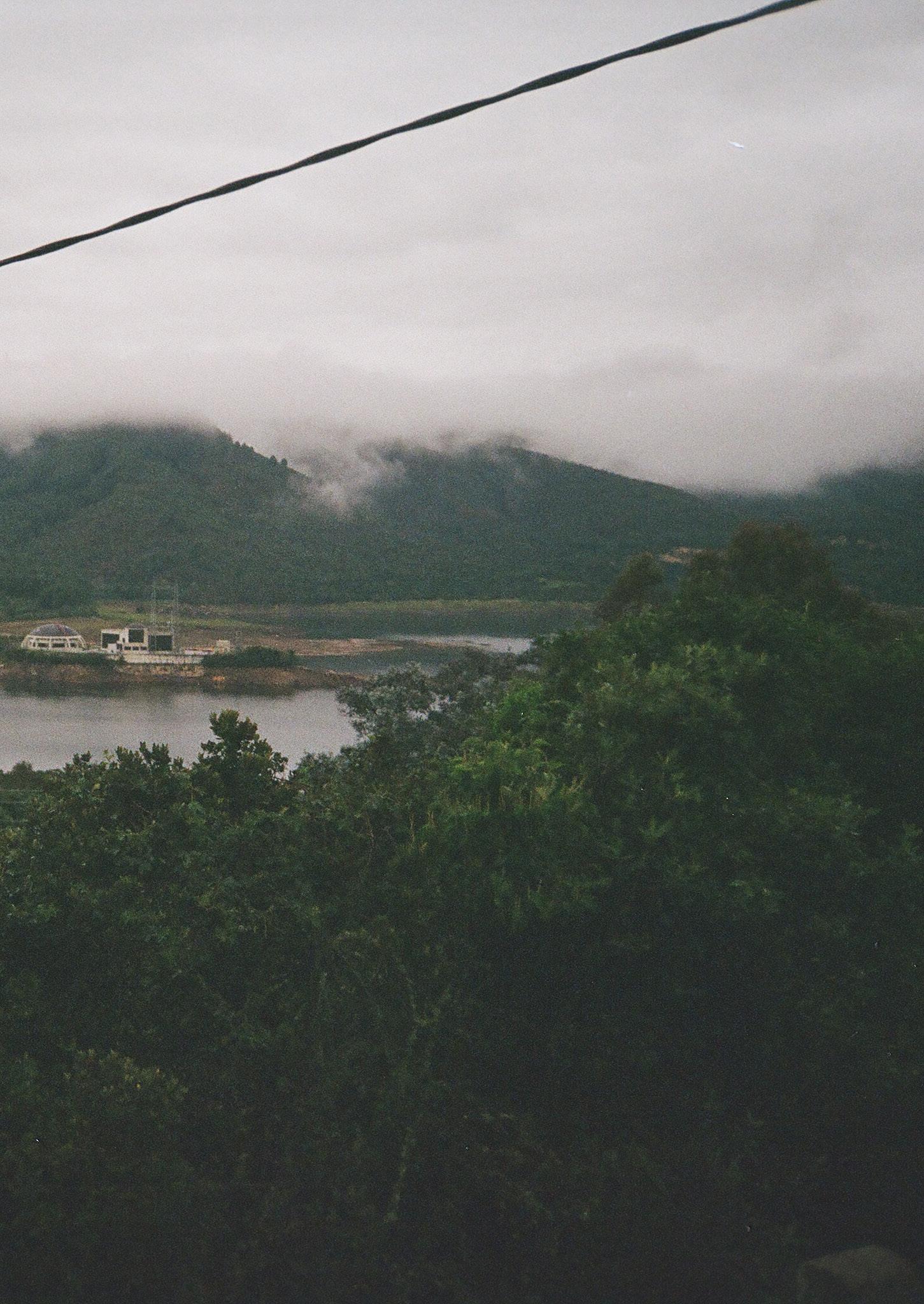
Tales of Water, Soils and Potaotes
UN-BUILDING THE PLANTATION
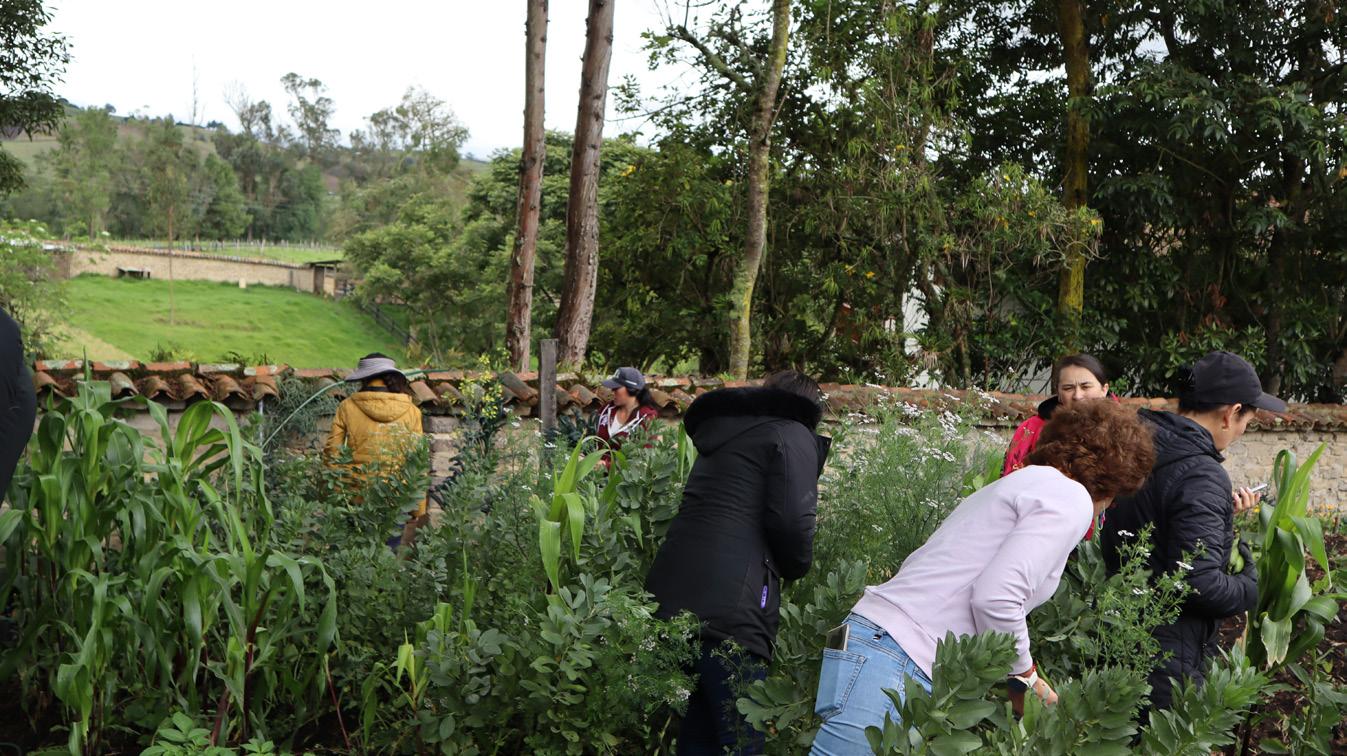
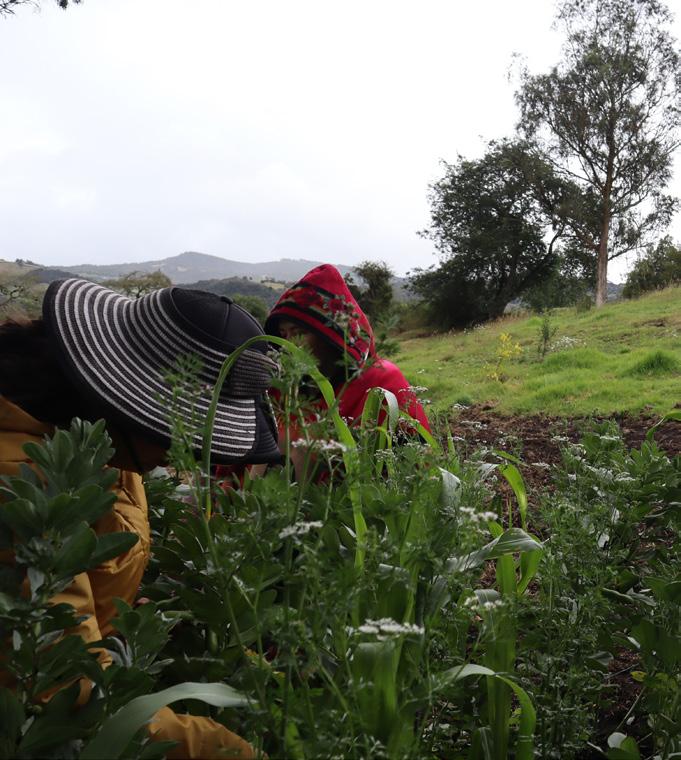
Challeging dominant agricultural narratives to address water runoff and chemical contamination created by monoculture farming and weaving around the work of Ecomaga, a collective of ten women farmers at the forefront of climate change, the project aims to co-design radio broadcasts and composting infrastructures that foster the expansion of ecological and communal networks, validating situated women’s knowledge, and expand organic, traditional agricultural practices and other ways of being.
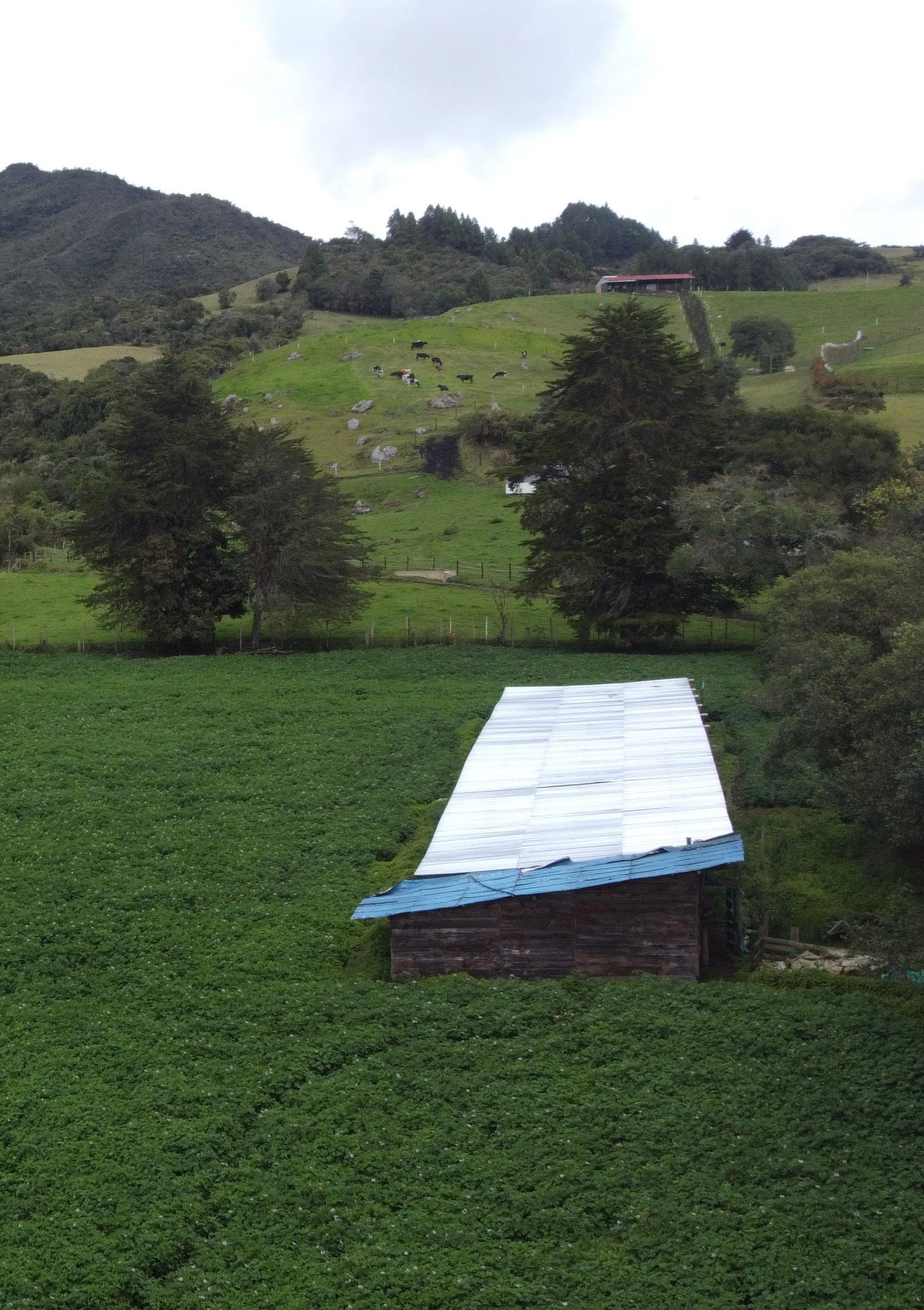
Ecomagma is based in Villapinzon, a rural town in Colombia located in the Upper Basin of the Bogota River, which provides 25% of the potable water to Bogotá, a city of 10 million people currently facing water rationing due to an unprecedented drought. Within this critical context, Ecomagma -which means “caregiving women protectors of the most precious goods”- is telling an alternative story around the current agricultural practices in this town, where potato monoculture continuously contaminates the river due to the extensive use of chemical fertilisers and pesticides. Through organic polyculture, the production of organic fertilisers and reforestation practices, Ecomagma advocates for the care of soil as a way of being as soil is what sustains life. However, despite Ecomagma’s dedicated work and vision, the eco-social context in which they operate, and infrastructural challenges impede the dissemination of their impact, project, and knowledge. How can the soundscape of a town change to tell other stories? What is the agency of architecture when faced with these challenges? Who, how and what is designed in our current geological epoch? How do we value what we eat?
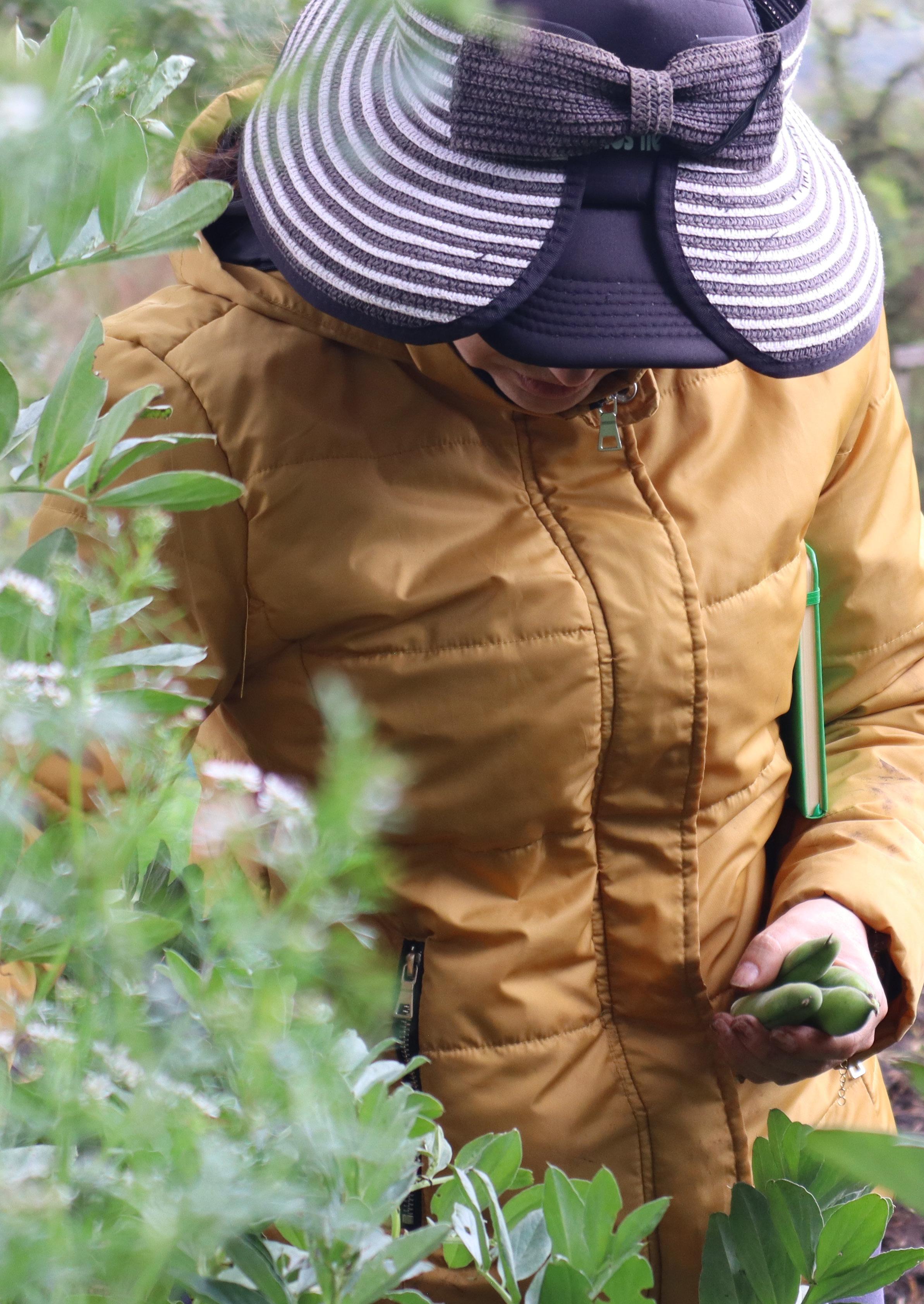
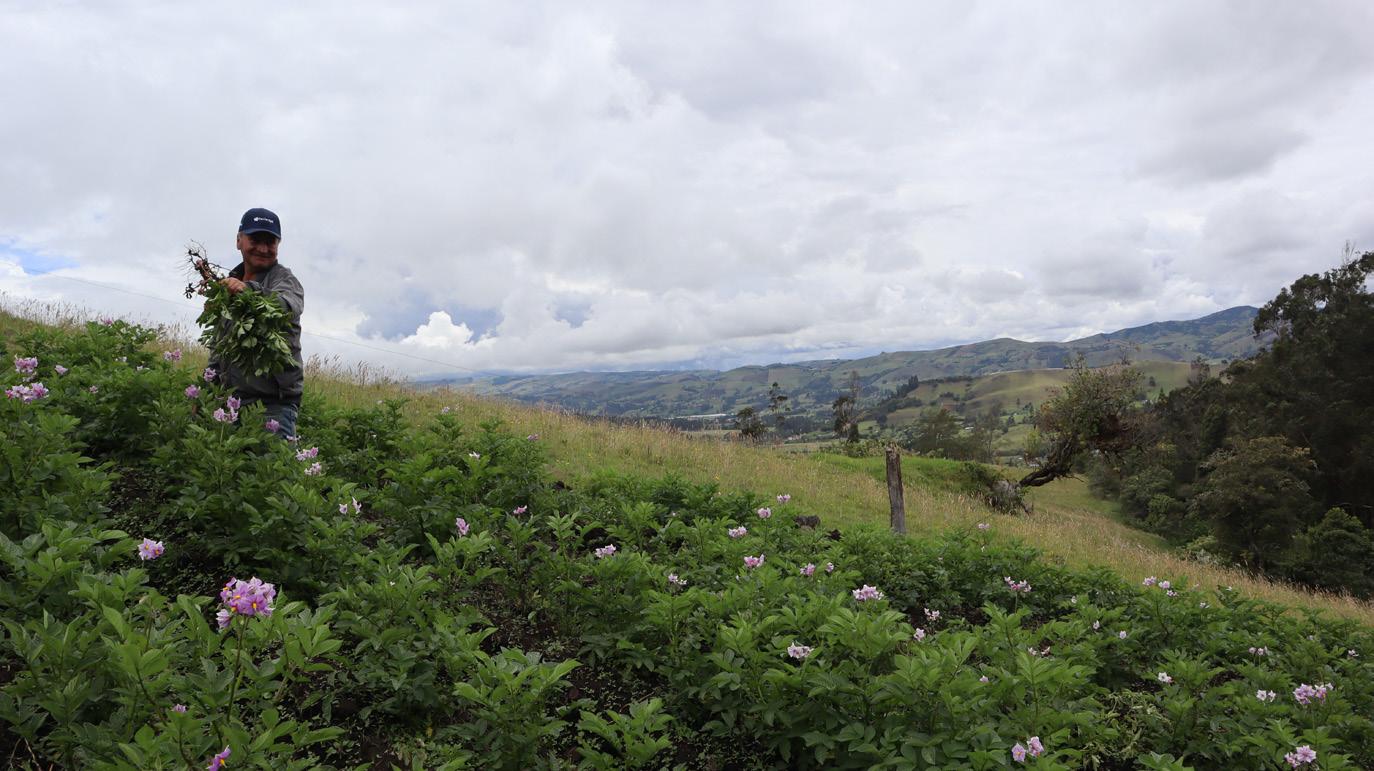
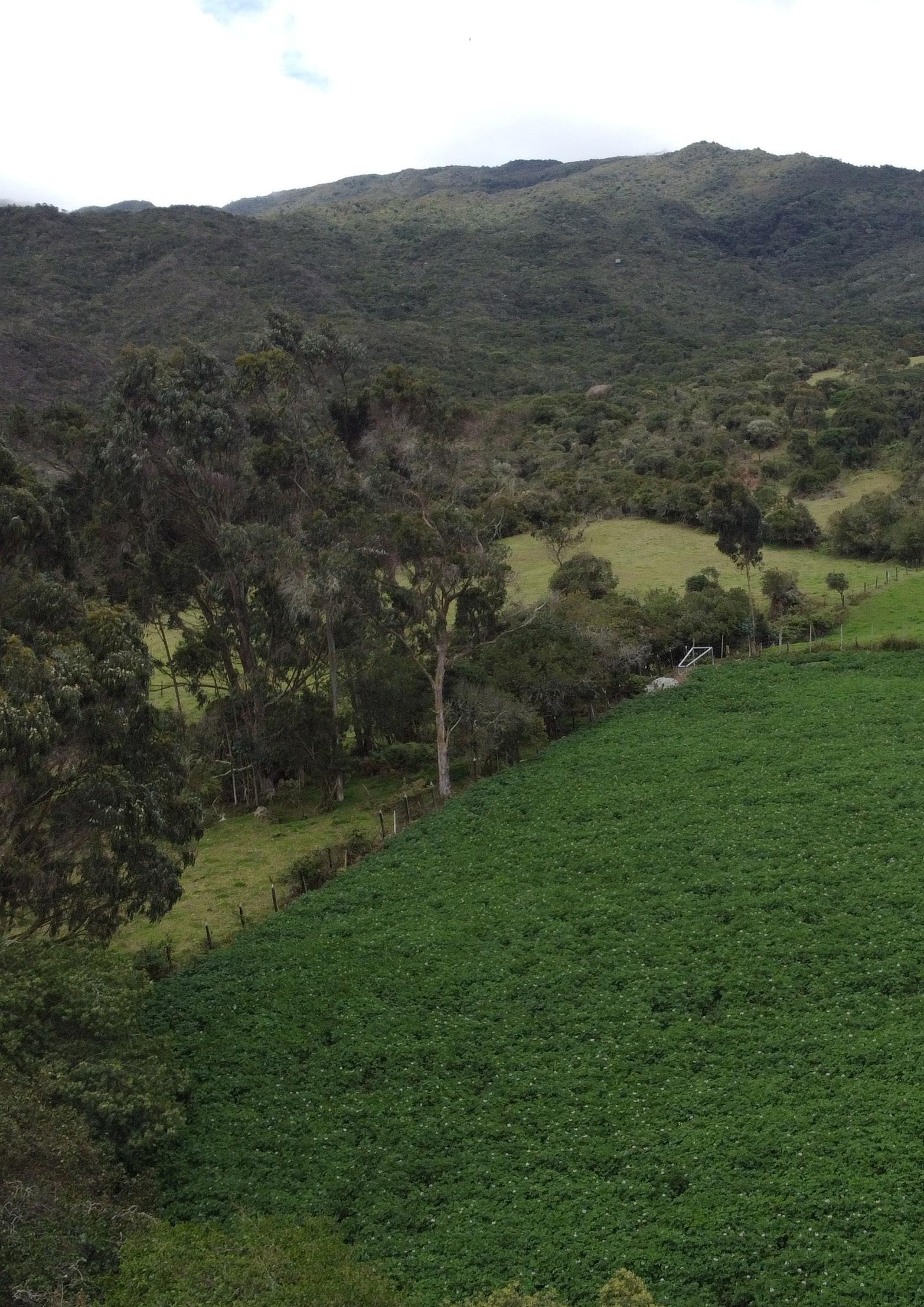
“When you enter the municipality, you see that the potatoes are reaching the corners of the town because, people to find new spaces to continue farming" Says Stella, one of Ecomagma’s member
Villapinzón manages to produce 11% of Colombia’s potato through intensive use chemical fertilizers, pesticides and monocrop fields. However, having a deep knowledge of the territory they inhabit, Ecomagma’s narrative is not one of good vs bad. They want to show the town, even their own families, that another way of agriculture and treating soils is possible, one where the human is not understood apart from nature and therefore, we need to care and give back to other than humans. In this sense, pushing this narrative in the radio, through messages and traditional music aims to use culture and education as a way to fight against the plantation as an infrastructure.
because, of course, they need to let the soils rest but they don’t rotate the crops and the chemicals force
Tales of Water, Soils and Potatoes
Radio Output 3
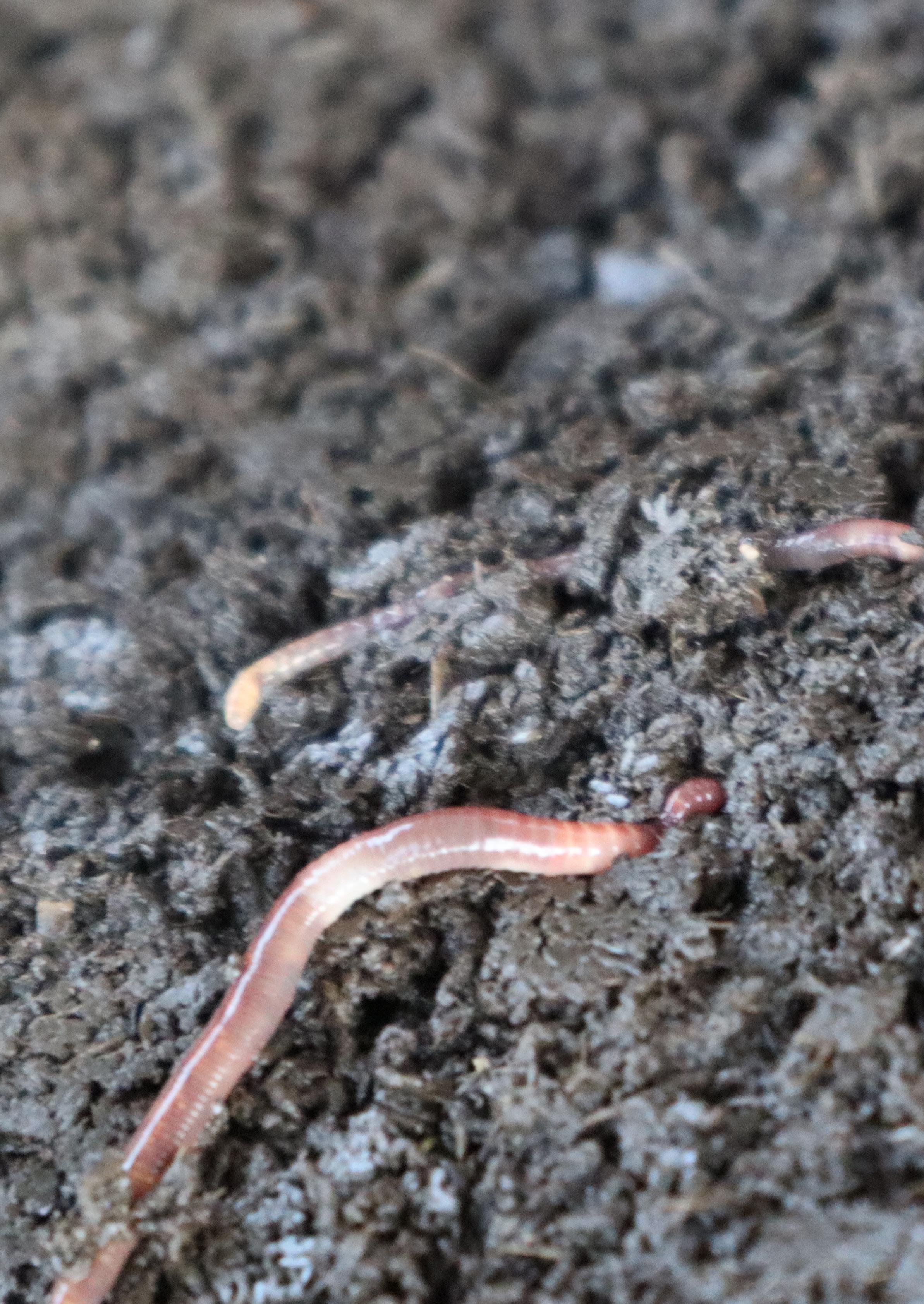
We need to restore our soils to guarantee Villapinzon’s future, with organic processes like the production of worms humus, we are betting on our regions future.
We are Ecomagma, and we work everyday on this transformation, join us.
Spanish Carranga (traditional farming music)
Between neighbor and ‘comadre’, something importan was created
A group that goes ahead, its called Ecomagma ‘comadre’ Creek after creek, as a heard gathering
Watering the potatoes and meeting with rosita
Long live our joy, for being farming women
We dance together to the tune of ‘long live Villapinzón’
Working in joy, recovering the life that gives us sustenance
Long live our joy, for being farming women
We dance together to the tune of ‘long live Villapinzón
Radio Output 3
I want you to form part of Ecomagma, it doesn’t matter where you are, making community is what makes us stronger, that way we can build a new future where everyone will care for the enviroment with unity and effort. Womens, you are invited to Ecomagma, to support and care for our soil, join us. Ecomagma in action for a fertile soil in Villapinzón.
The following are some of the songs and radio messages that have been codesigned with Ecomagma to promote their way of living and being, where soil is alive and humans need to give back to it, another ontlogy. (Messages have been translated)
Radio Output 1
Do you want to give life to your crops?
We need something new, it’s time and moment for Villapinzón to TAKE CARE OF IT’S SOILS
Worm Humus, Ecomagma, friendly with your enviroment, food for your soil, efficient, long lasting and with rapid effects,
Join Ecomagma to learn more
Radio Output 2
(Off voice of monocrop farmer):
A sea of feelings comes to me, things are not going well, time flies by and doesn’t come back, the future without water nor food it’s not hopefull, the illusion of future generations is lost. But all of the sudden I hear an Eco (Effects of eco)
(Voice of Ecomagma)
The time for the future is now. We are Ecomagma, we combine ecology with the magma of a feminine force, protector and caring that fights for a respectful work with nature, we know how to protect our most precious treasures, convinced that harmonious and respectful work in our rurality. However, it is here where one decision can change everything, we invite you to join us , know our work and to be part of Ecomagma’s community. Together we sow awareness, knit knowledges and defend all life.
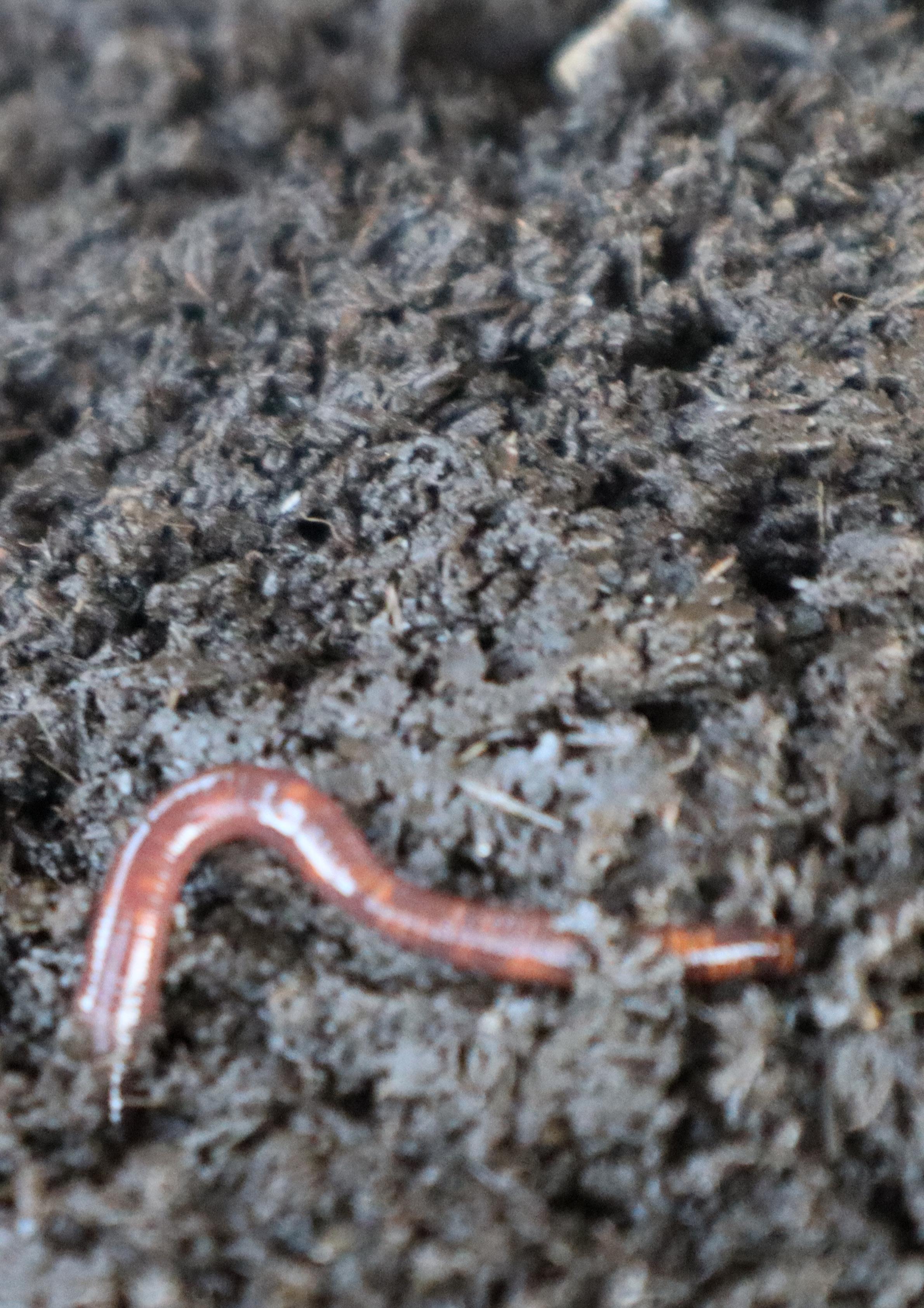
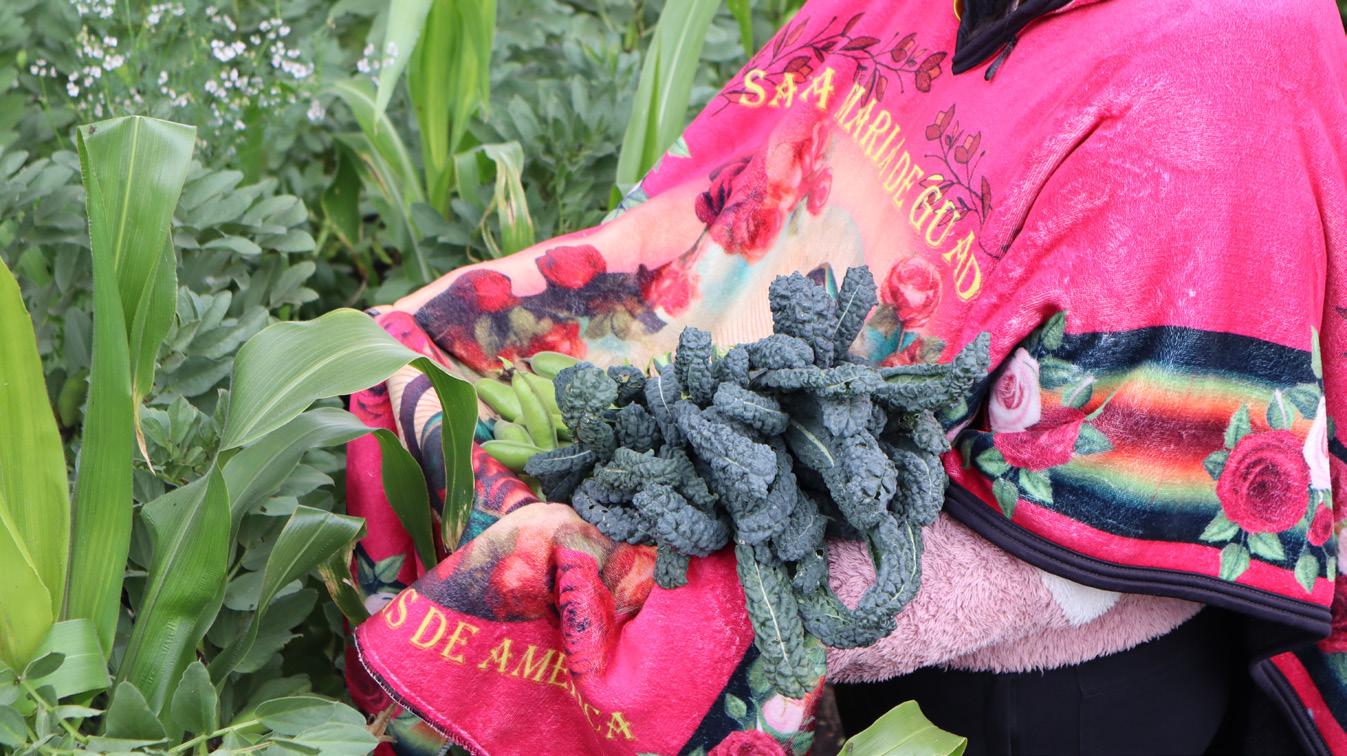
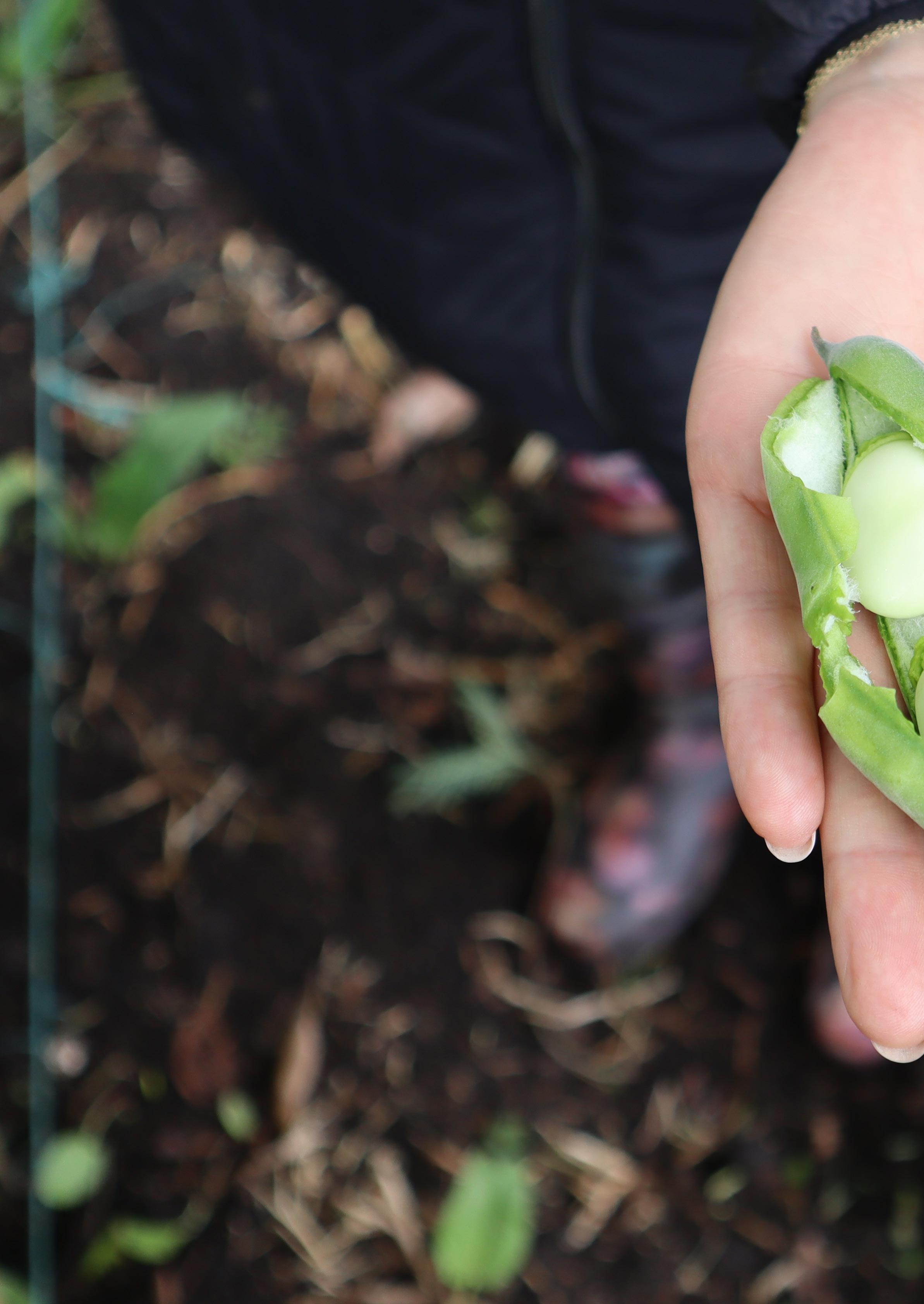
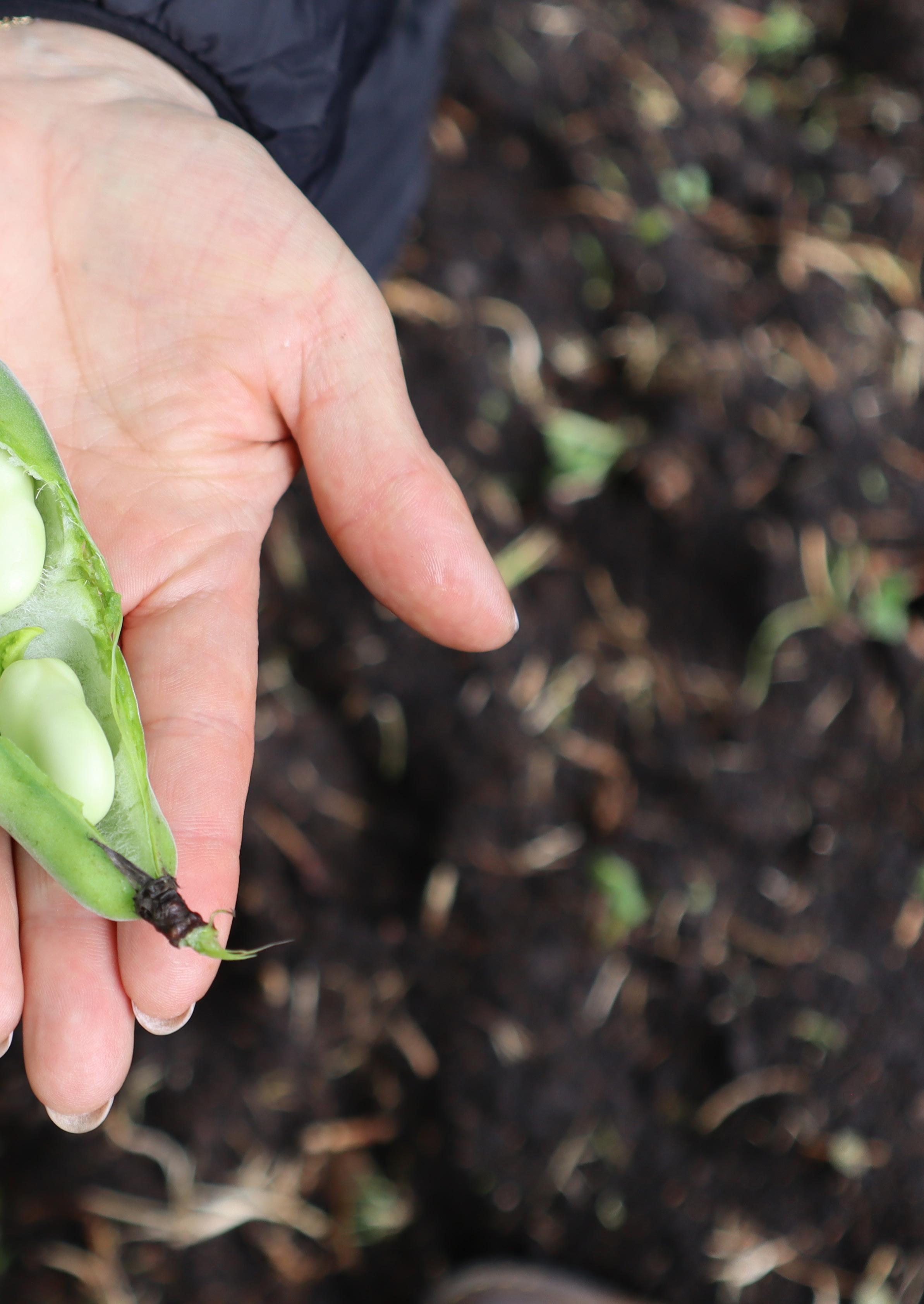
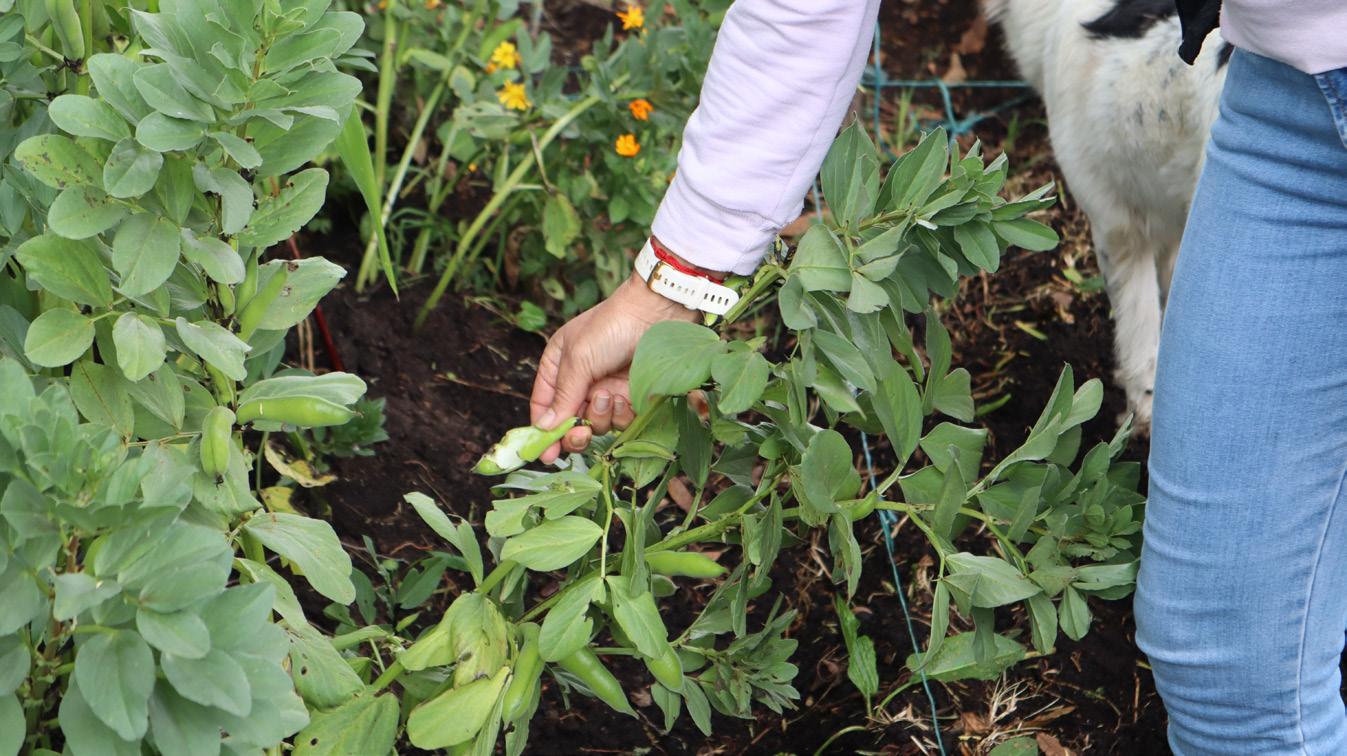
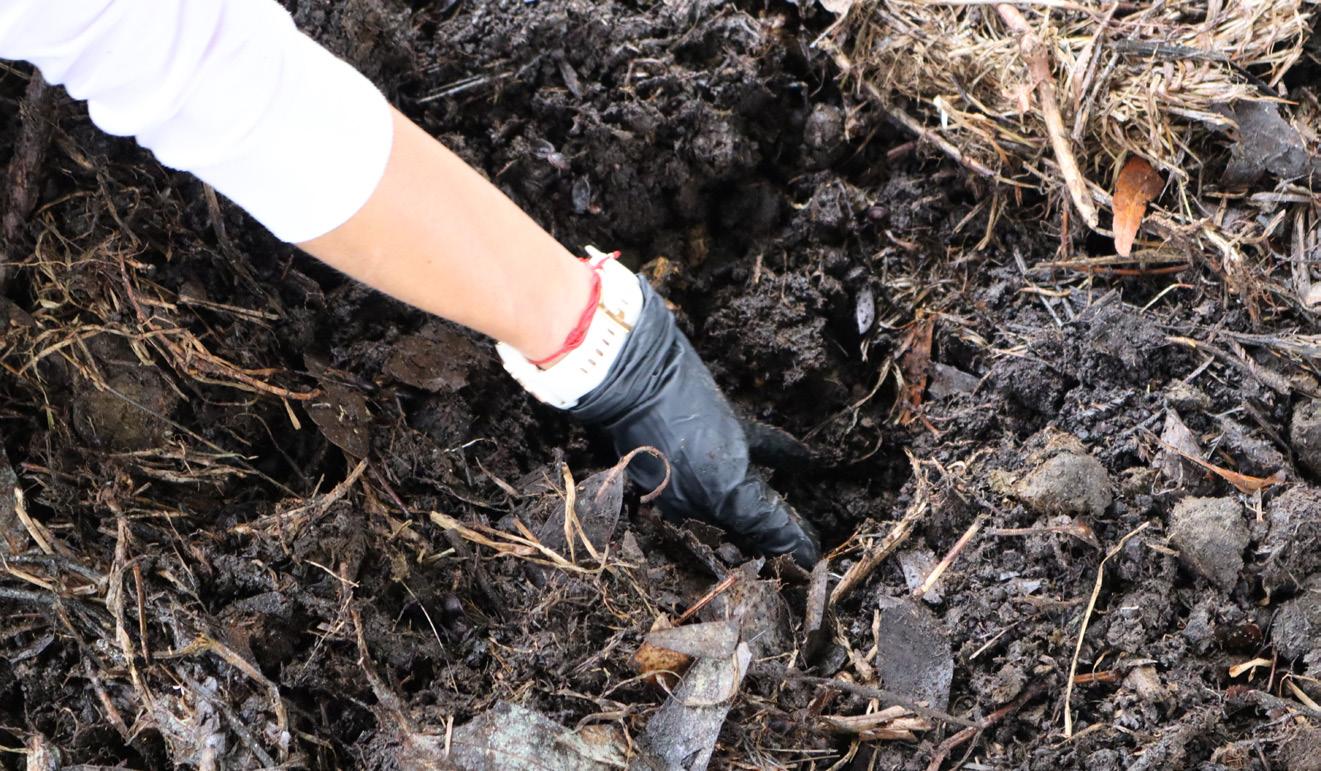
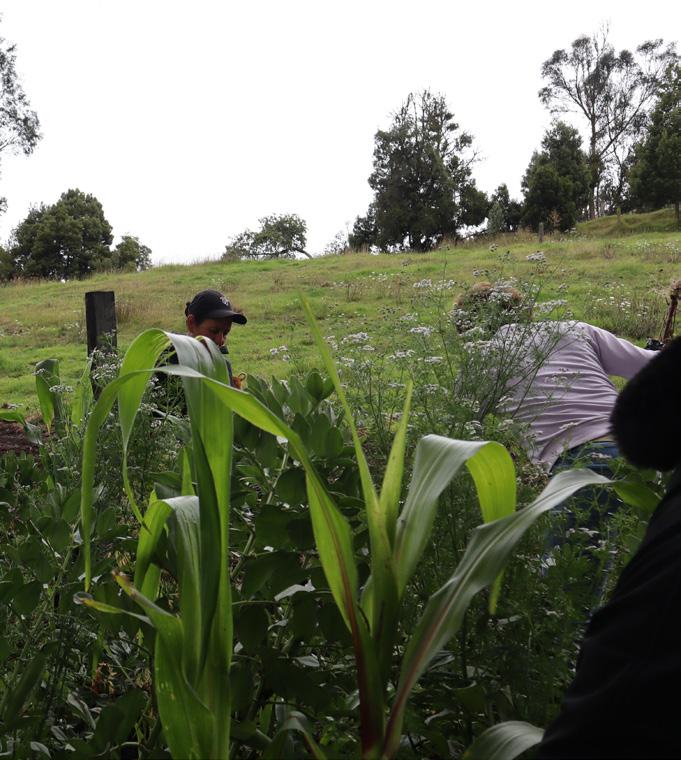
Besides trying to tell an alternative story to chemical farming and monoculture, we have designed a composting infrastructure and a chagra (see project 1) The chagra, an edible polyculture garden, has allowed communal networks to expand (due to the initiation of this project), and will involve a native endangered species seed exchange, making Ecomagma a polyculture, organic, endangered seed-bank.
Who and how is cultivating what you eat?