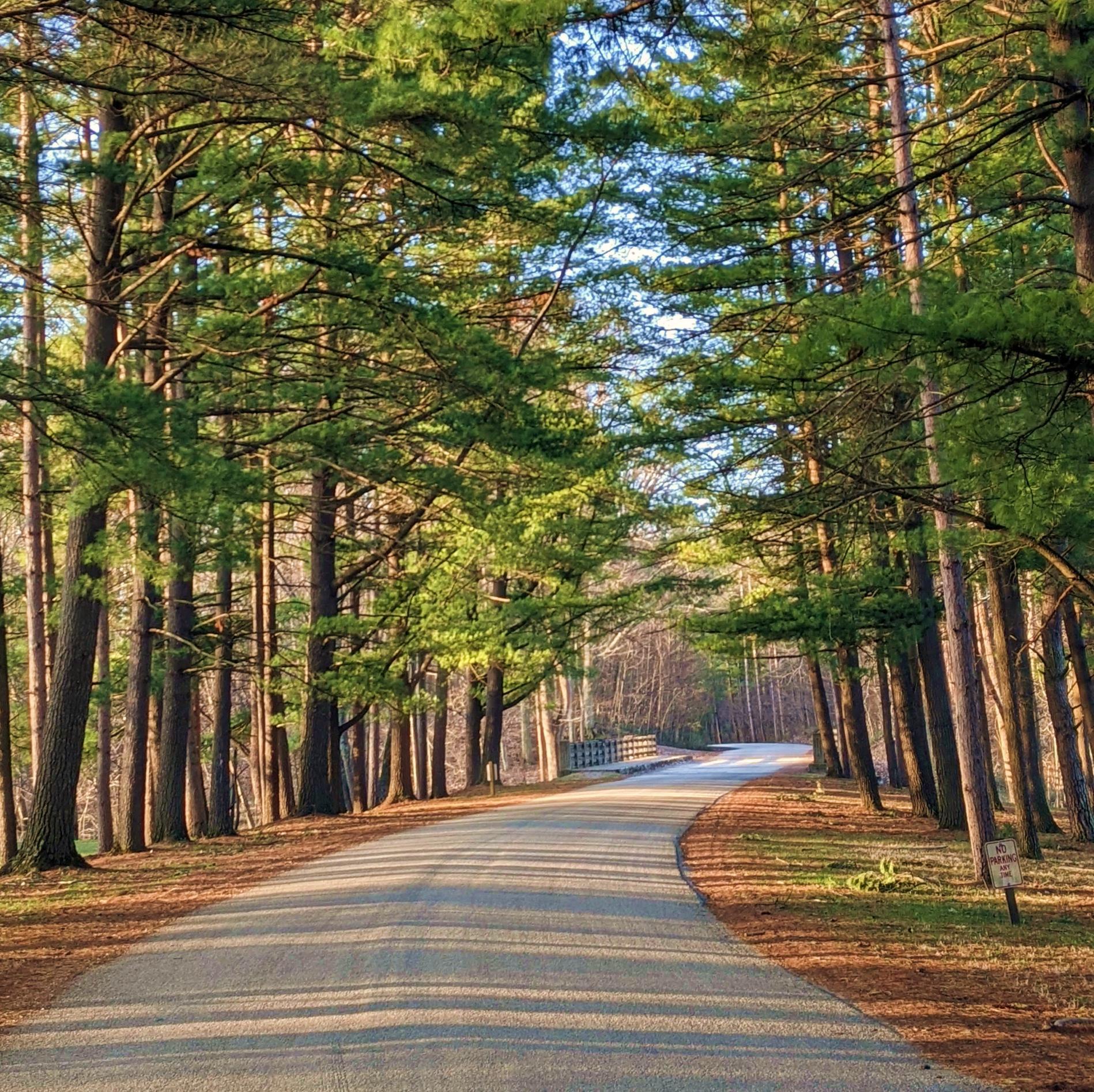

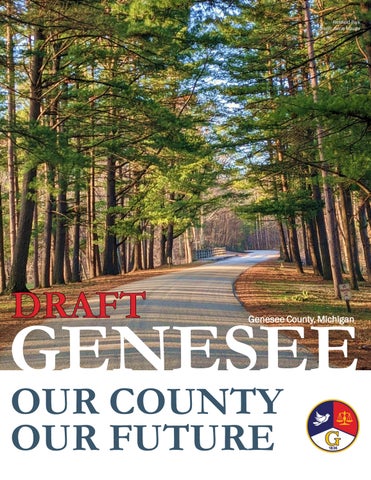
Genesee County, Michigan
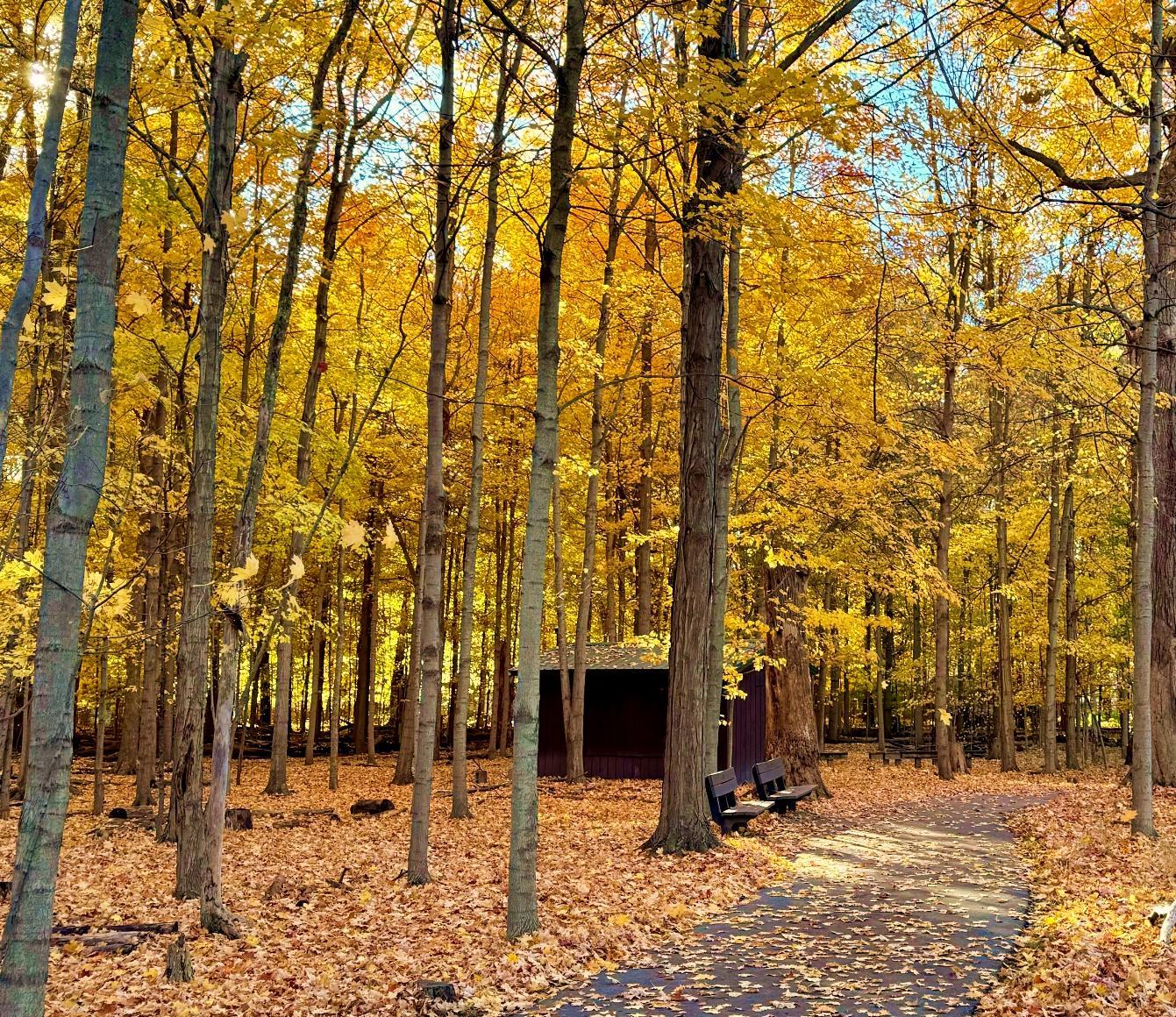
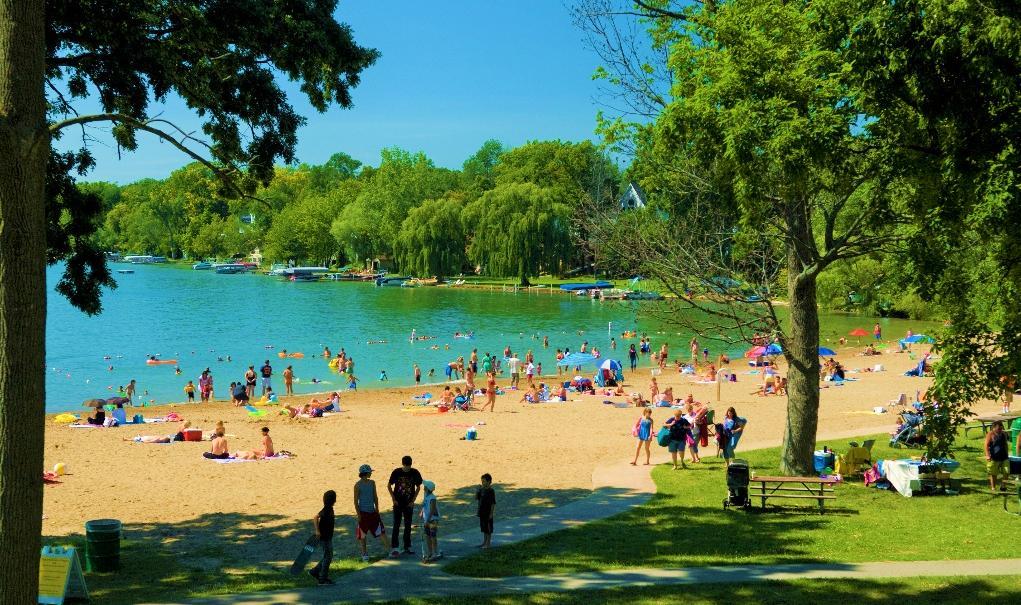
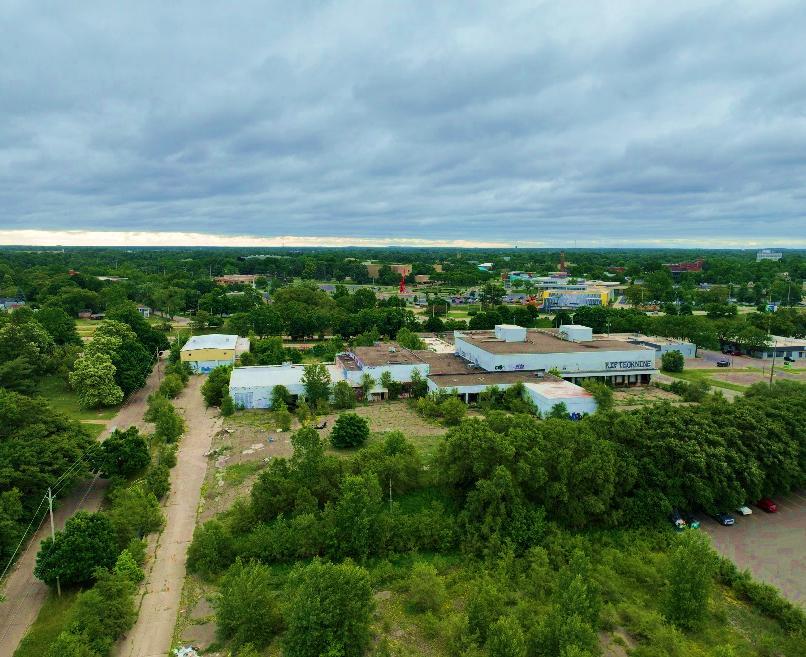
Richfield Park
Credit: Jacob Maurer




A Master Plan is a comprehensive document created to address transportation, community development, housing, infrastructure, and the environment.
This document is a guide for our local communities and be a resource for our residents. The Genesee: Our County, Our Future document is the Genesee County Master Plan and the 2050 Long-Range Transportation Plan (LRTP) for the Genesee County Metropolitan Alliance.
Genesee County wishes to extend our sincere gratitude to everyone who participated in the creation, development, and publication of this Plan. We would like to thank the Genesee County Master Plan Steering Committee, Genesee County Board of Commissioners, Genesee County Metropolitan Alliance, Municipalities, and Local Road and Transit Agencies. Special thanks shall be given to talented Genesee County Metropolitan Planning Commission staff for creating this document independently.
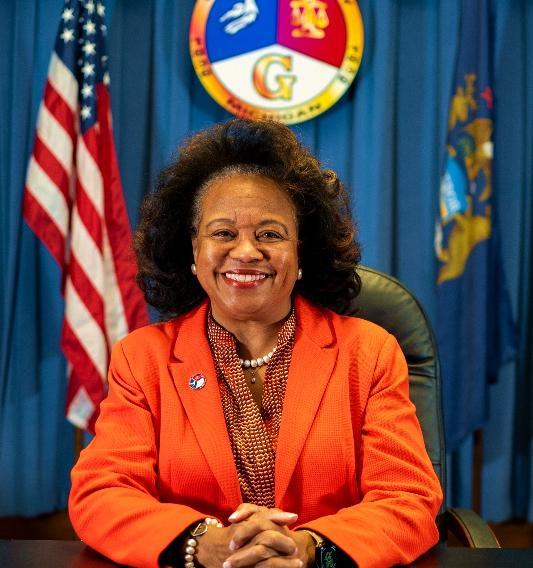
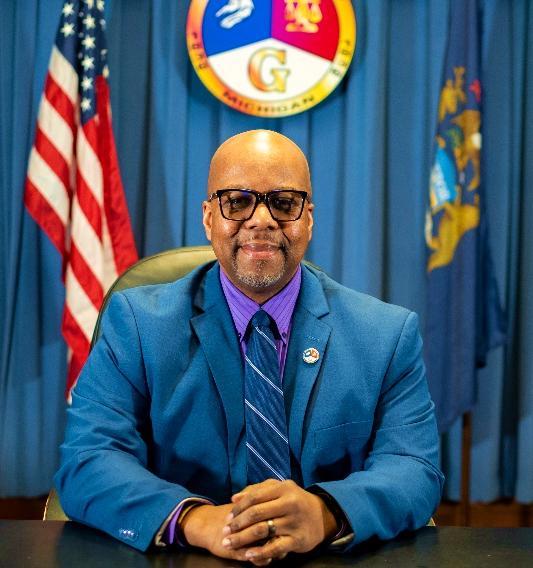
Alan Himelhoch, Chairperson
Jeffrey Peake, Vice-Chairperson
Deborah Cherry, Secretary
Dr. Beverly Brown
Martin L. Cousineau
Cheryl Sclater
Ian Shetron
Tyler Rossmaessler
Derelle Blake
William Brandon
Lesly Foreman
The Metropolitan Alliance is the Metropolitan Planning Organization (MPO) made up of local units of government, Michigan Department of Transportation (MDOT), Genesee County Road Commission (GCRC), Federal Highway Administration (FHWA), Mass Transportation Authority (MTA), Michigan Department of Environment, Great Lakes, & Energy (EGLE), Genesee County Metropolitan Planning Commission (GCMPC), Genesee County Drain Commission and Genesee County Board of Commissioners.
Brad Dick, Chairperson, City of Linden
Joel Arnold, Communities First
Bill Bain, Metropolitan Alliance
Ben Blazen, Mass Transportation Authority
Dr. Beverly Brown, Genesee County Commissioner
Dylan Campbell, Genesee County Road Commission
Shawnice Dorsey, Mass Transportation Authority
Nancy Edwards, United Way
Thomas Hutchison, Genesee County Habitat for Humanity
Dennis McDonagh, Mass Transportation Authority
Duane Mosher, City of Clio
John O’Brien, Genesee County Water & Waste Services
Joe Rizk, Vienna Township
Nichole Smith-Anderson, Greater Flint Health Coalition
Tonna Wilcox, Consumers Energy
Andy Pickard, Federal Highway Administration
The Allocation Committee makes recommendations to the Genesee County Board of Commissioners regarding housing, community and economic development funding. The committee consists of county board members, local units of government, and planning and housing representatives.


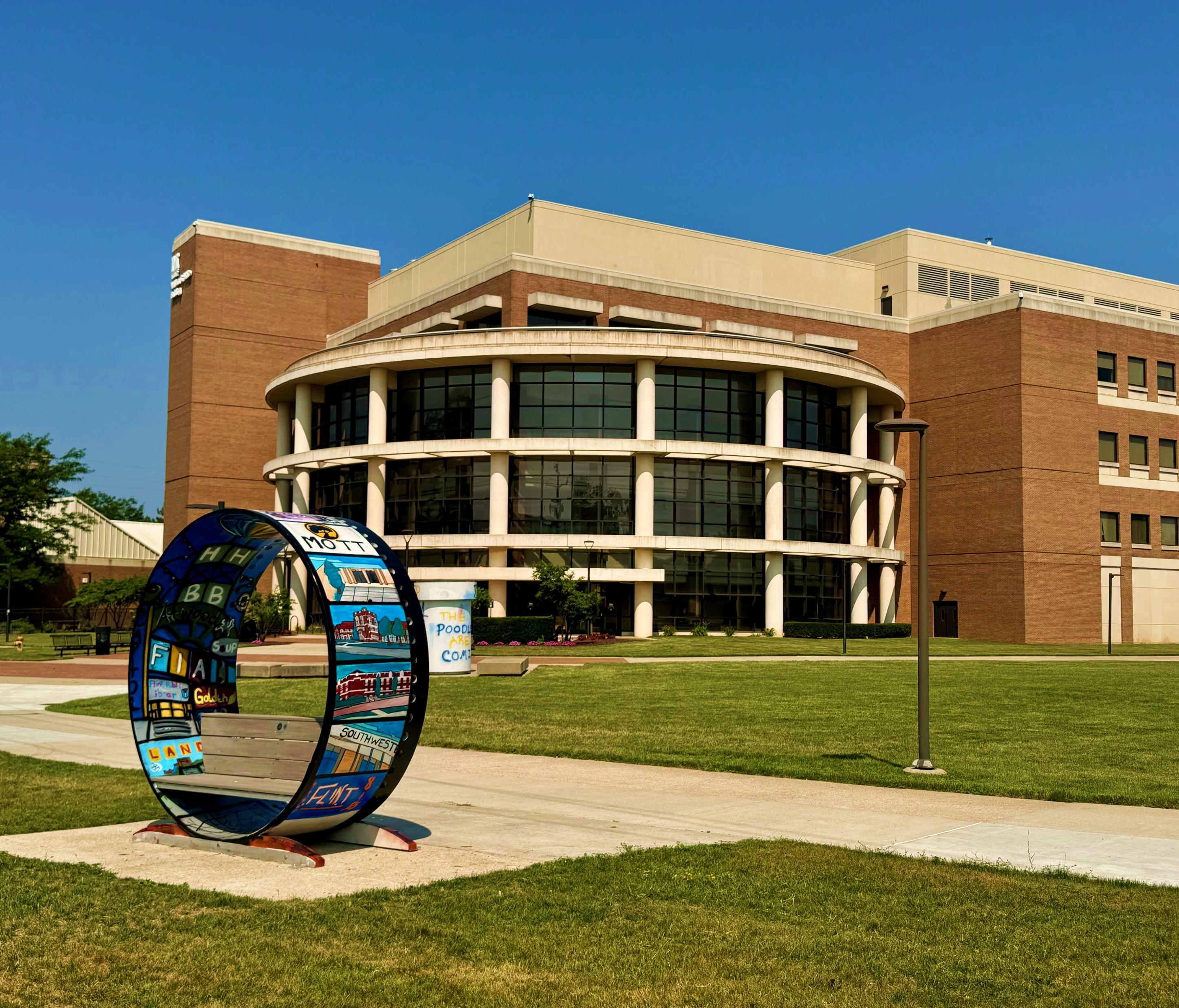
Our County
Genesee County is the fifth most populated county in Michigan. Home to 33 local units of government, each community in Genesee County offers its own vibrant character and sense of place. Perfectly positioned at the crossroads of I69, I-75, and US-23, Genesee County is only an hour’s drive from major destinations like Lansing, Ann Arbor, Saginaw, Detroit, and Canada.
As a regional hub, Genesee County offers a dynamic mix of opportunities. With three highereducation institutions, three top-tier medical facilities, and a wide range of recreational options, residents are able to enjoy big-city amenities while maintaining a distinct sense of community in each local municipality.
Built on the automotive legacy of the past, Genesee County is now the home to innovative developments such as Technology Village in Grand Blanc, the Advanced Manufacturing District in Mundy Township, and the Flint Commerce Center development in the City of Flint. These developments are paving the way for the next generation of economic growth as they will equip Genesee County with a tech-forward approach to future investment. They are also creating fresh opportunities for population and economic growth, broadband, infrastructure, and housing.
These unique assets make Genesee County an appealing and attractive place to live, work, and play.
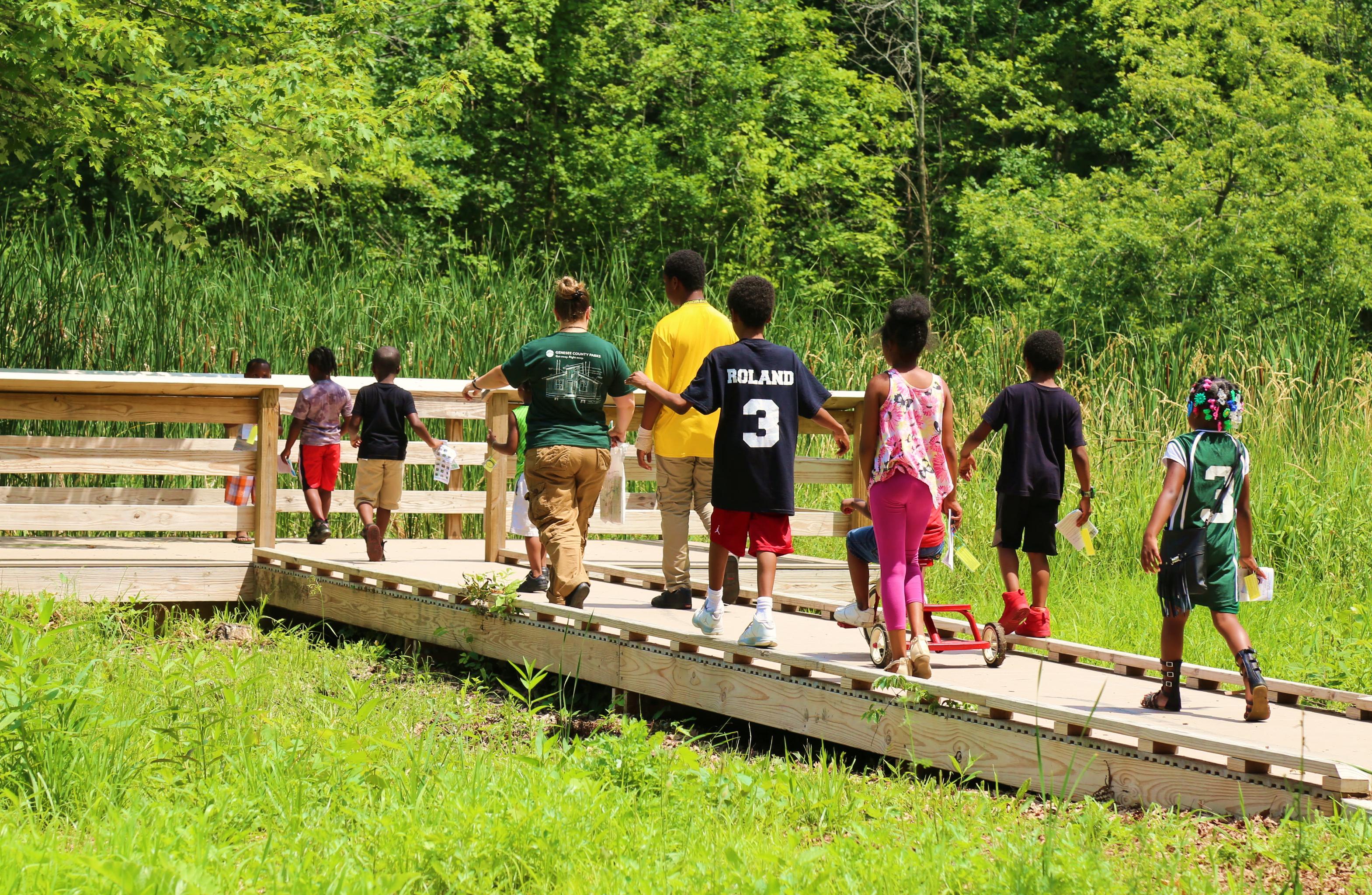
Genesee County has a population of 406,211 and is the fifth largest county in Michigan. Genesee County, like many counties in Michigan, are facing a growing aging population. While these demographic shifts present challenges, they also offer an opportunity to reimagine how we attract new residents, retain young talent, and support all generations living in our communities.
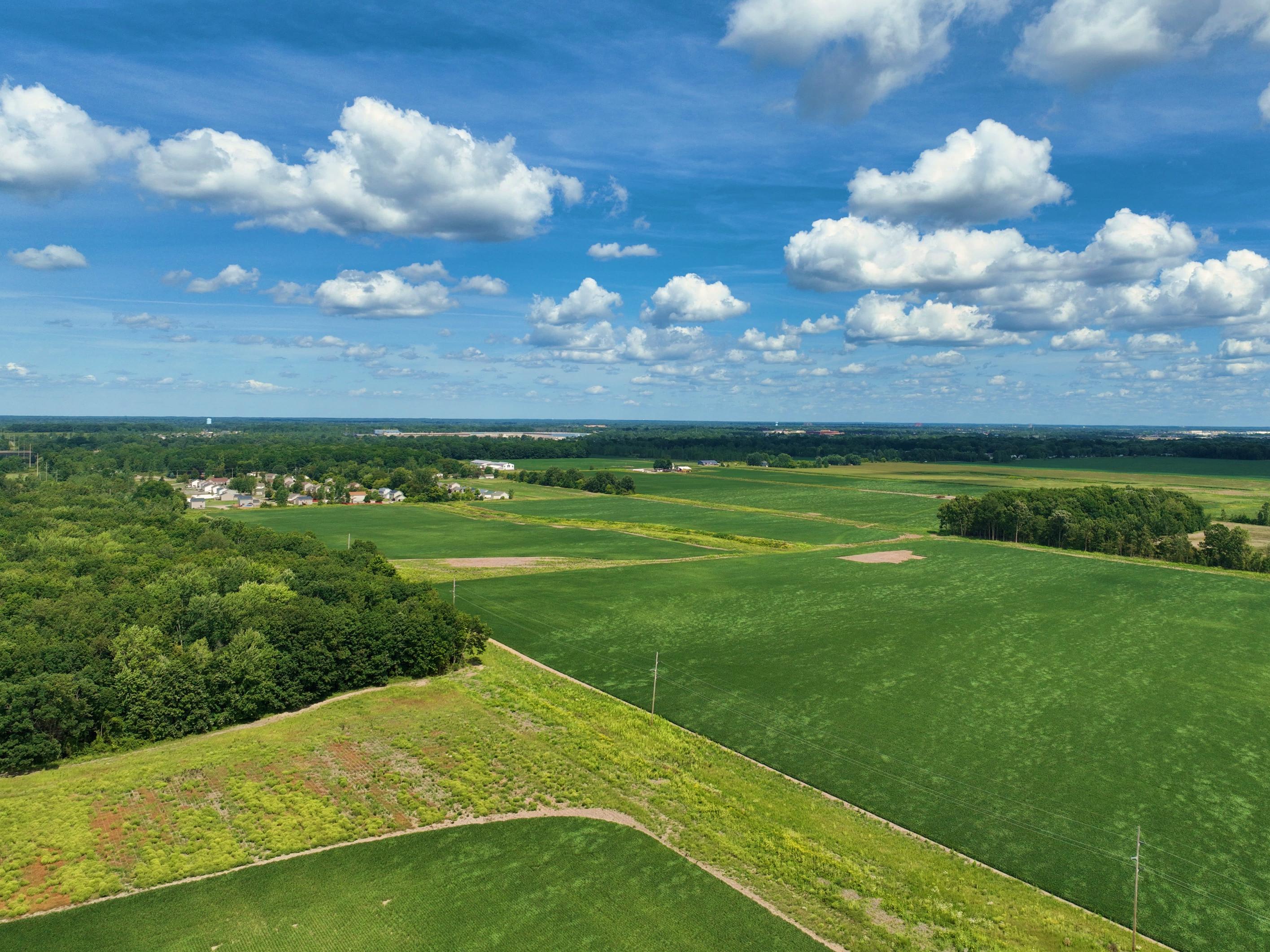
Genesee County is home to one of the most premier Advanced Manufacturing Districts in the United States of America. This 1,300-acre property is located at the crossroads of I-69 and I-75, in close proximity to Bishop International Airport, and has a major international rail line running through the property. This transformational investment will create thousands of jobs and pump millions of dollars of new revenue into our region. This project is being led by the Flint & Genesee Economic Alliance.
Genesee County is committed to expanding our broadband infrastructure and fiber network to support the growing need. Currently, only 14% of the county has access to Fiber networks for internet options. Genesee County is working on a broadband initiative aimed at extending fiber connectivity throughout the region for businesses and residents alike.

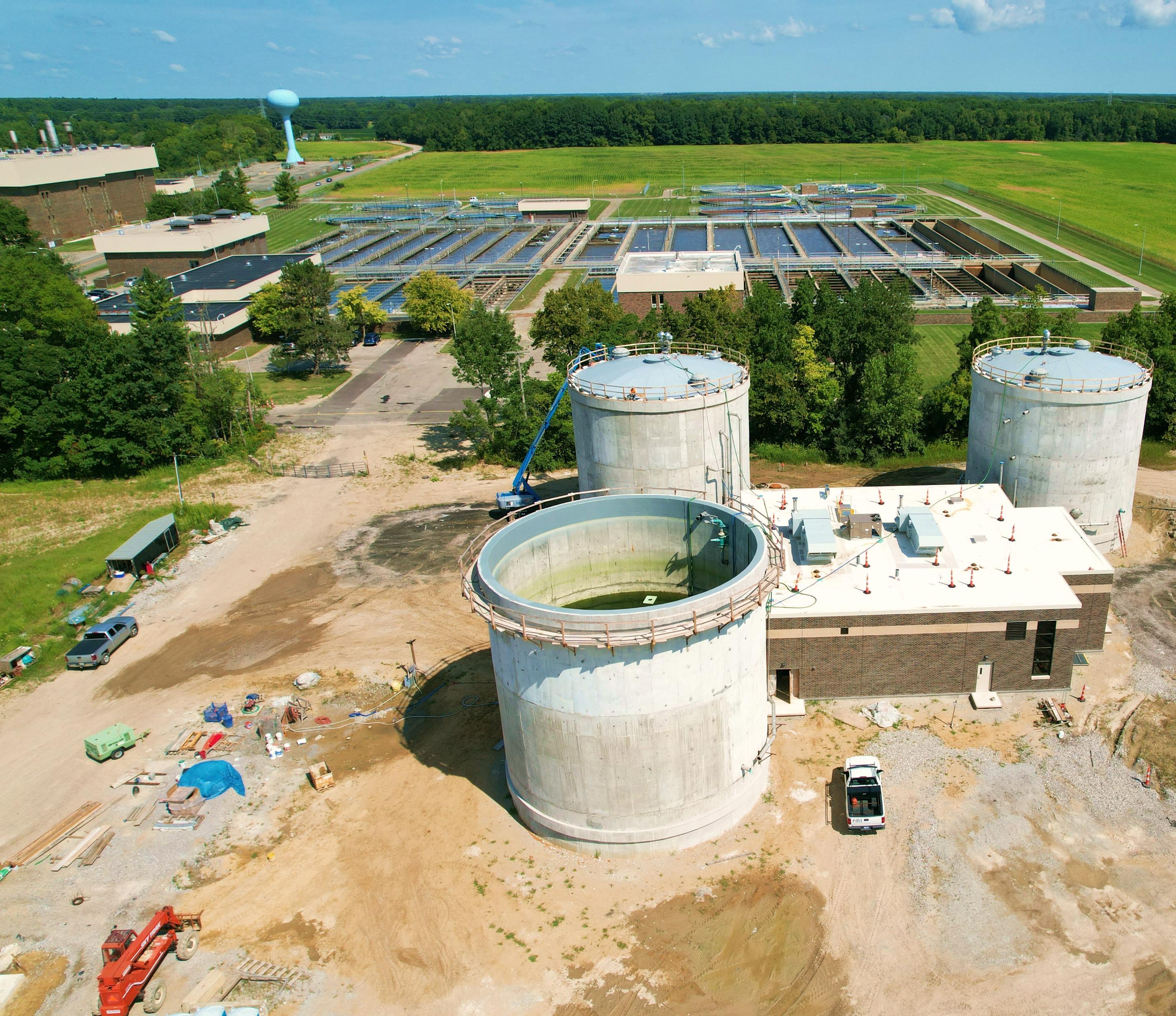
Genesee County has invested over $426 million in expanding our water infrastructure throughout 16 communities within the county. Paired with our robust system of expressways and major thoroughfares, Genesee County is well-positioned to partner with new economic opportunities.
Genesee County is well-situated to address key housing challenges, such as; affordability, maintenance, and availability over the coming decades. As a participant in the State of Michigan’s Regional Housing Program, the county is actively working to expand housing options and increase affordability. With a current shortfall of approximately 7,000 affordable housing units, Genesee County is taking proactive steps to close that gap through initiatives like the Housing Impact Fund, which provides targeted investment in housing development and housing repair.
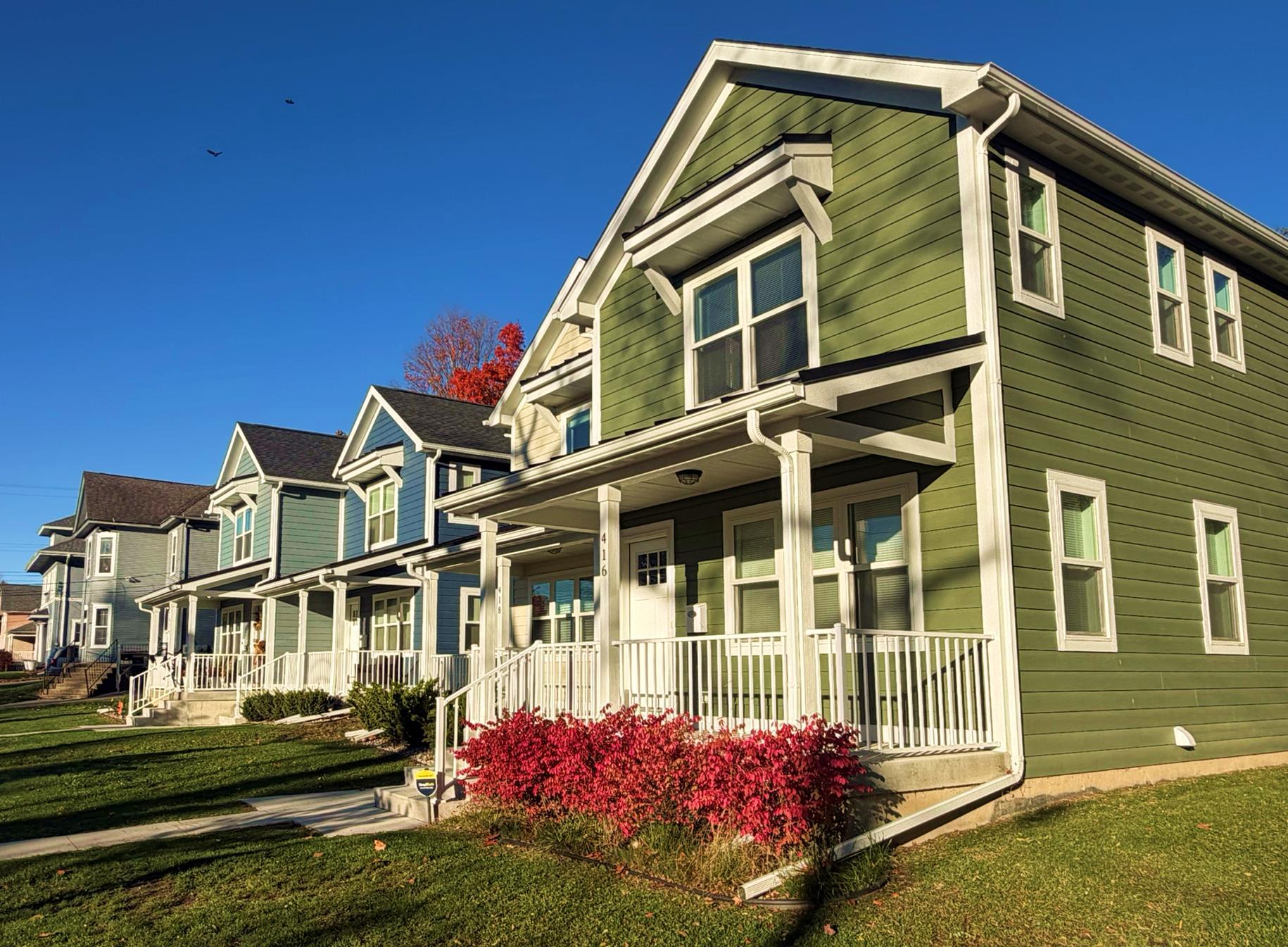
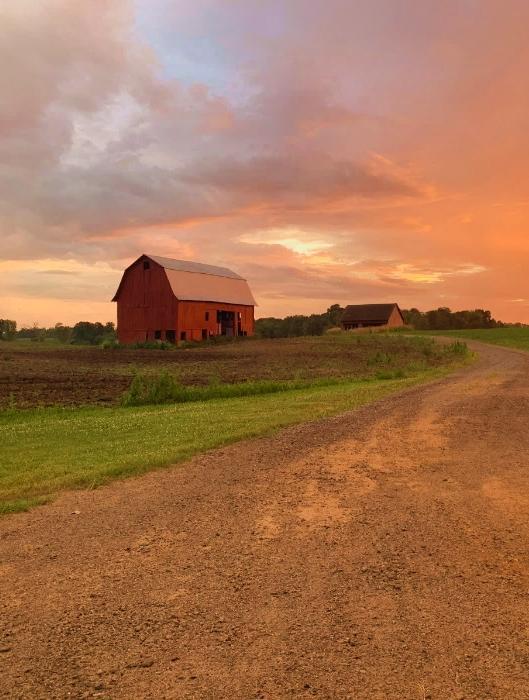
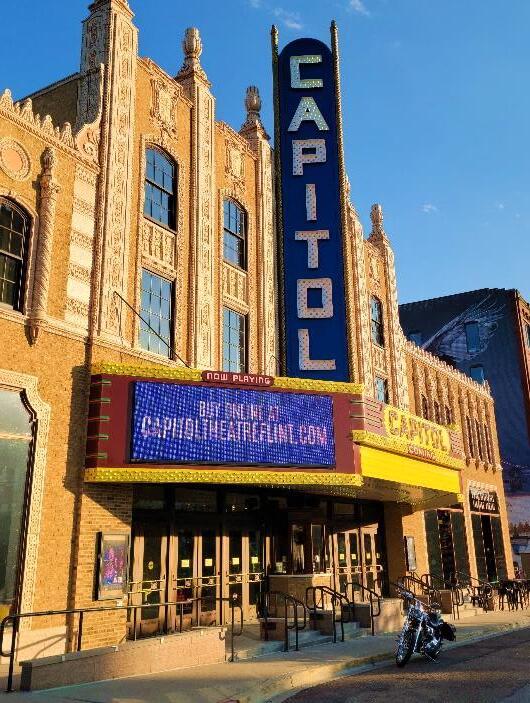

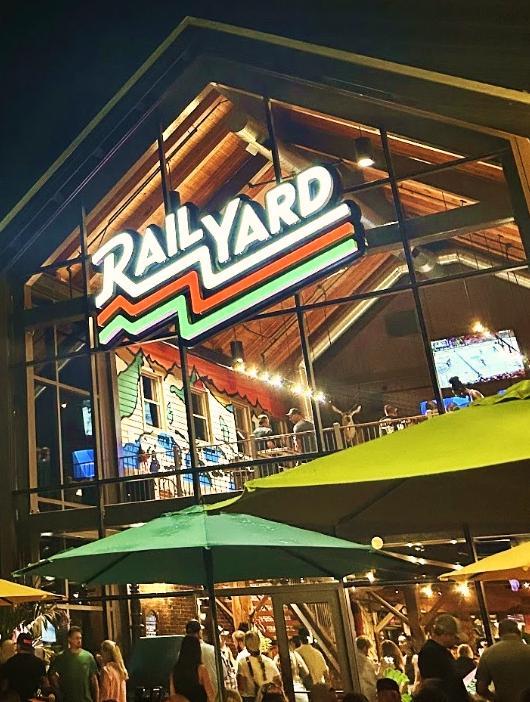


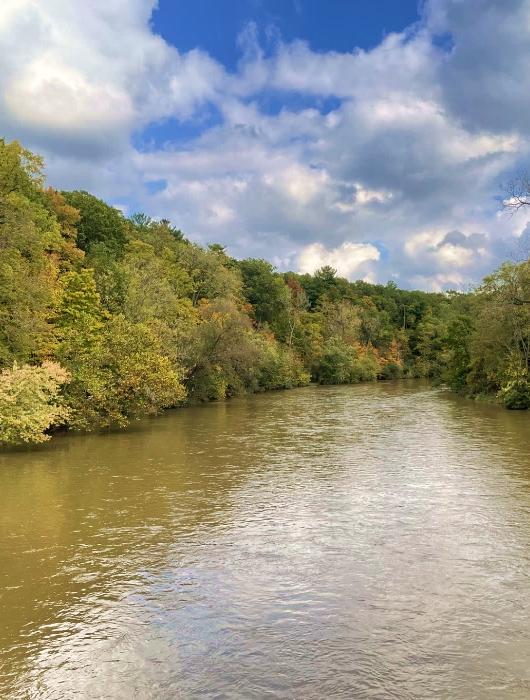
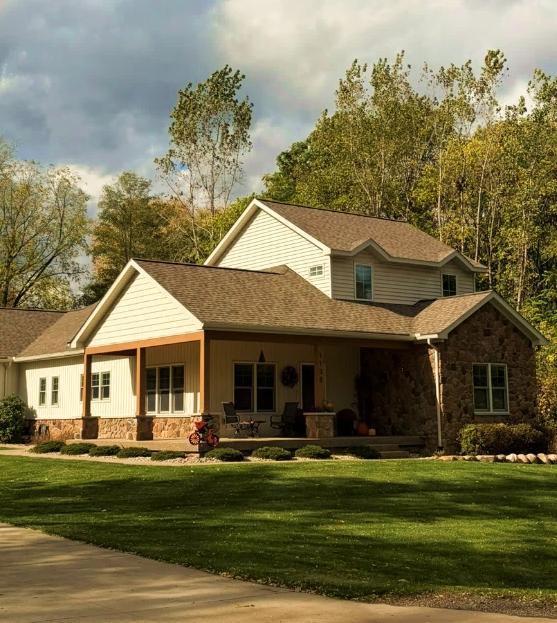
Our communities span rural, urban, and suburban settings, including small to medium sized cities. Rural areas in our county feature a mix of large acre single-family homes, family farms, large-scale agriculture, and wooded lots. Suburban neighborhoods consist of apartment complexes, single-family homes, and subdivisions, with commercial and businesses spread throughout.
In contrast, our small- to medium-sized city downtowns are more densely developed and urban in character. Residents living in and near our downtowns benefit from a blend of residential and commercial uses, making it easy to walk to nearby shops, restaurants, and other services.
The median age of homes in Genesee County is 56 (2020 Census). This is significantly older than the average age of homes in Michigan at only 40 (ACS 2023 Data). Rents and housing prices in Genesee County have ballooned since 2020, with the average rent now over $1,000, with an average home costing over $210,000 (Zillow). For many families, this has created an affordability crisis, with 69% of households spending one third or more of their income on housing costs alone (2020 Census).
Despite affordability concerns, Genesee County offers a wide variety of housing types. Of the 164,905 occupied housing units in our County, about 81% are single-family, 14% multi-family, and 5% mobile homes. Based on a housing conditions survey conducted in 2022, about 81% percent of houses are in good condition while 19% need some degree of repair or are dilapidated.
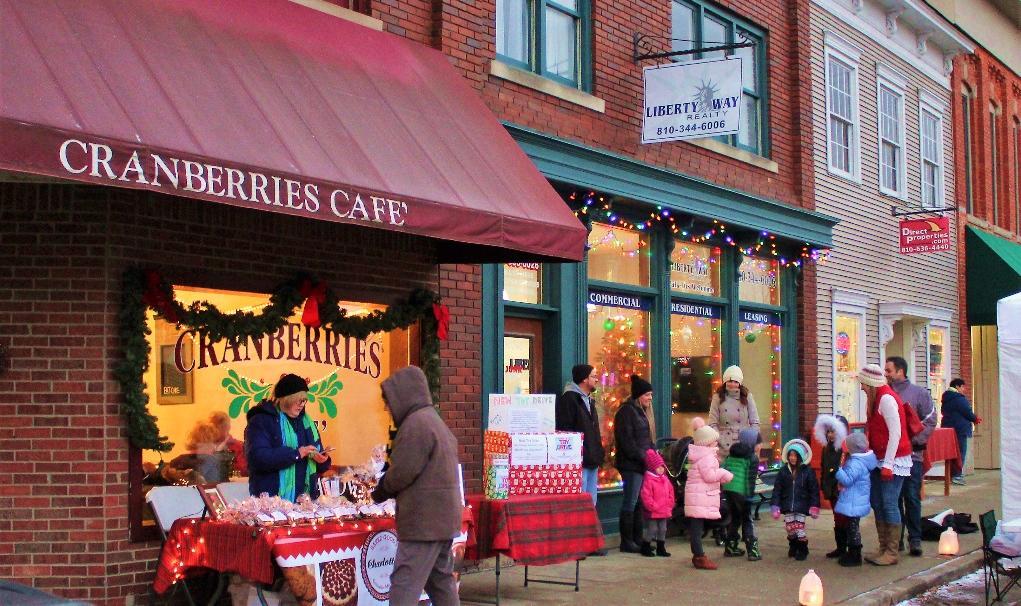
Flint Township
Credit: Tracey Tucker
Genesee County offers a variety of amenities that attract people to our community outside of housing. Genesee County has several non-motorized pathways and sidewalks that connect to core services, such as grocery stores, schools and hospitals. Genesee County is also located in a prime area with the interstate system crossing through it making it a ideal location for residents to access in and out-of-county employment opportunities.
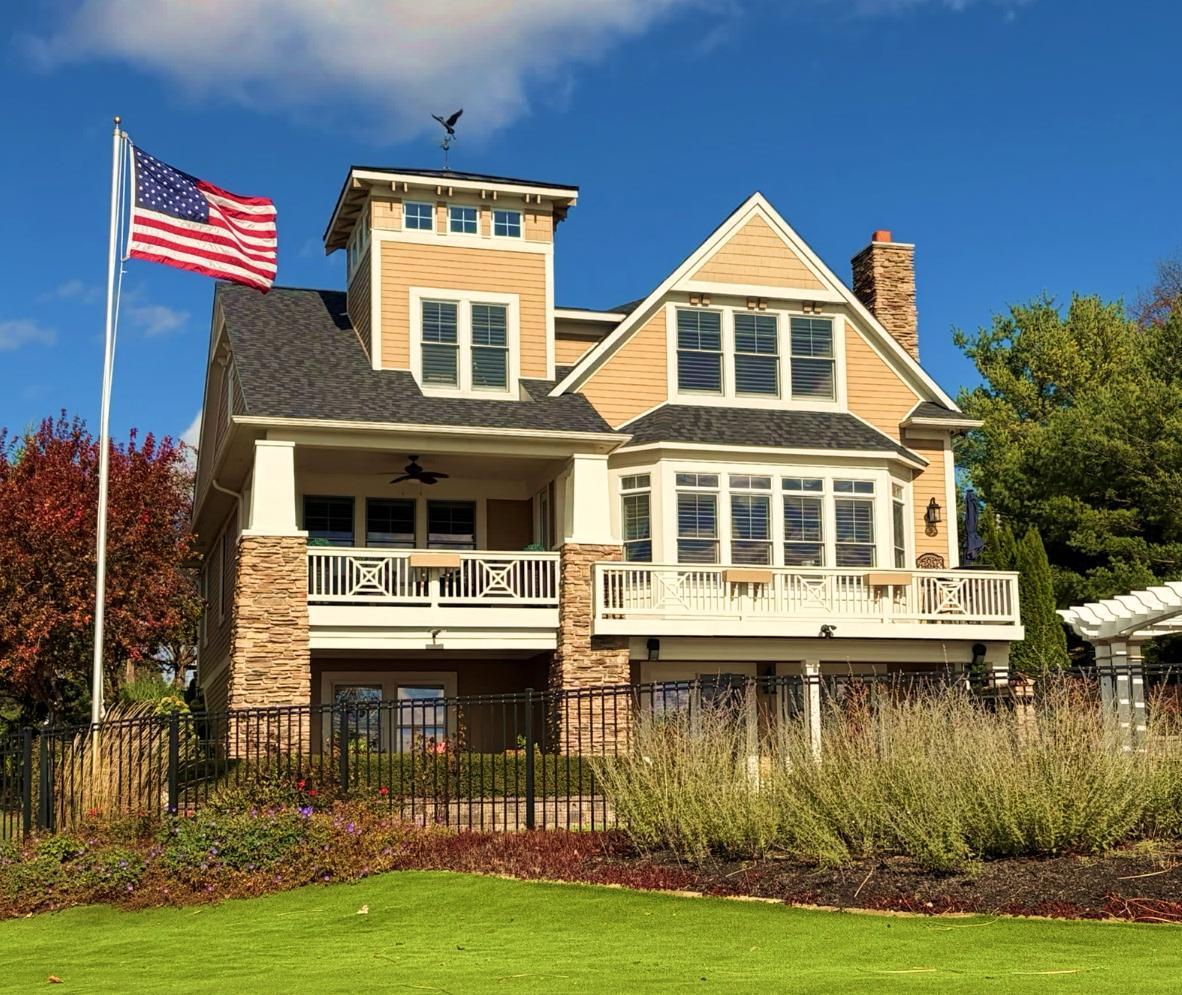

Genesee County offers a wide range of opportunities for both businesses and employees. According to the 2020 Census, our largest employment industries include manufacturing, healthcare, and education; accounting for 54% of jobs in Genesee County.
Manufacturing in Genesee County is largely built on the automotive legacy of the area. While traditional automotive manufacturing remains a component of Genesee County’s economy, manufacturing employment is also evolving. New developments, such as the Advanced Manufacturing District in Mundy Township and Flint Commerce Center development at the former Buick City site are providing opportunities for diversification and innovation within the manufacturing sector.
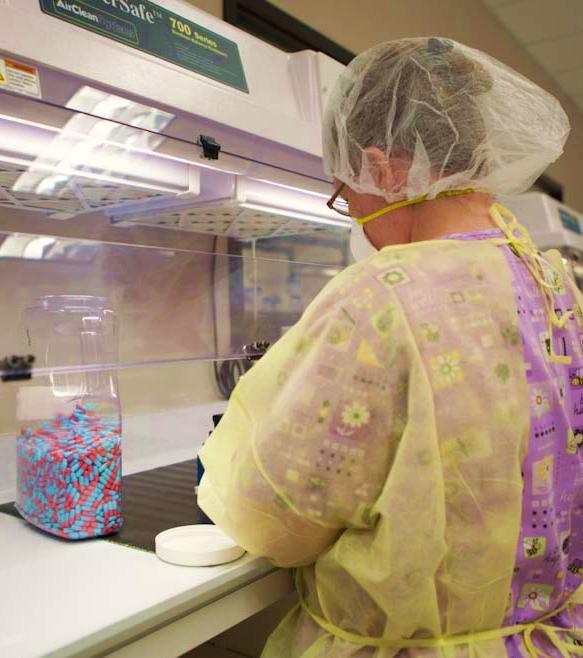
Healthcare is another major employment sector in Genesee County, driven in part by an aging population and the community’s broader health needs. Genesee County is home to three hospitals and combined they employ over 11% of the entire workforce. In addition, numerous smaller medical offices, clinics, urgent care, and assisted living facilities significantly contribute to healthcare employment across the region.
Supporting both current industry needs and future workforce demands, education plays a vital role in
the county’s economic landscape. Each year, more than 13,000 students are enrolled across Genesee County’s three post-secondary institutions, giving businesses access to new talent alongside an already skilled workforce. These institutions also employ more than 2,200 individuals, adding to the county’s diverse employment base. Kettering University has been a historic starting point for engineers and is considered one of the best engineering universities in the Country. U-M Flint and Mott Community College also produce an industrial trade workforce with various program certificates targeting many skilled trade areas.
Connectivity further enhances Genesee County’s economic potential. Our extensive highway and transit systems allow for mobility of people, goods, and services in and out of the region. The Mass Transportation Authority (MTA) offers fourteen primary routes and three regional service routes that take residents to and from Brighton, Howell, and Auburn Hills. Despite this, Genesee County still experiences a net outward migration for work, meaning more residents leave the County to go to work than out-of-county people coming in. With 33,872 workers traveling outside the county each day, the need for continued economic development within Genesee County is clear.
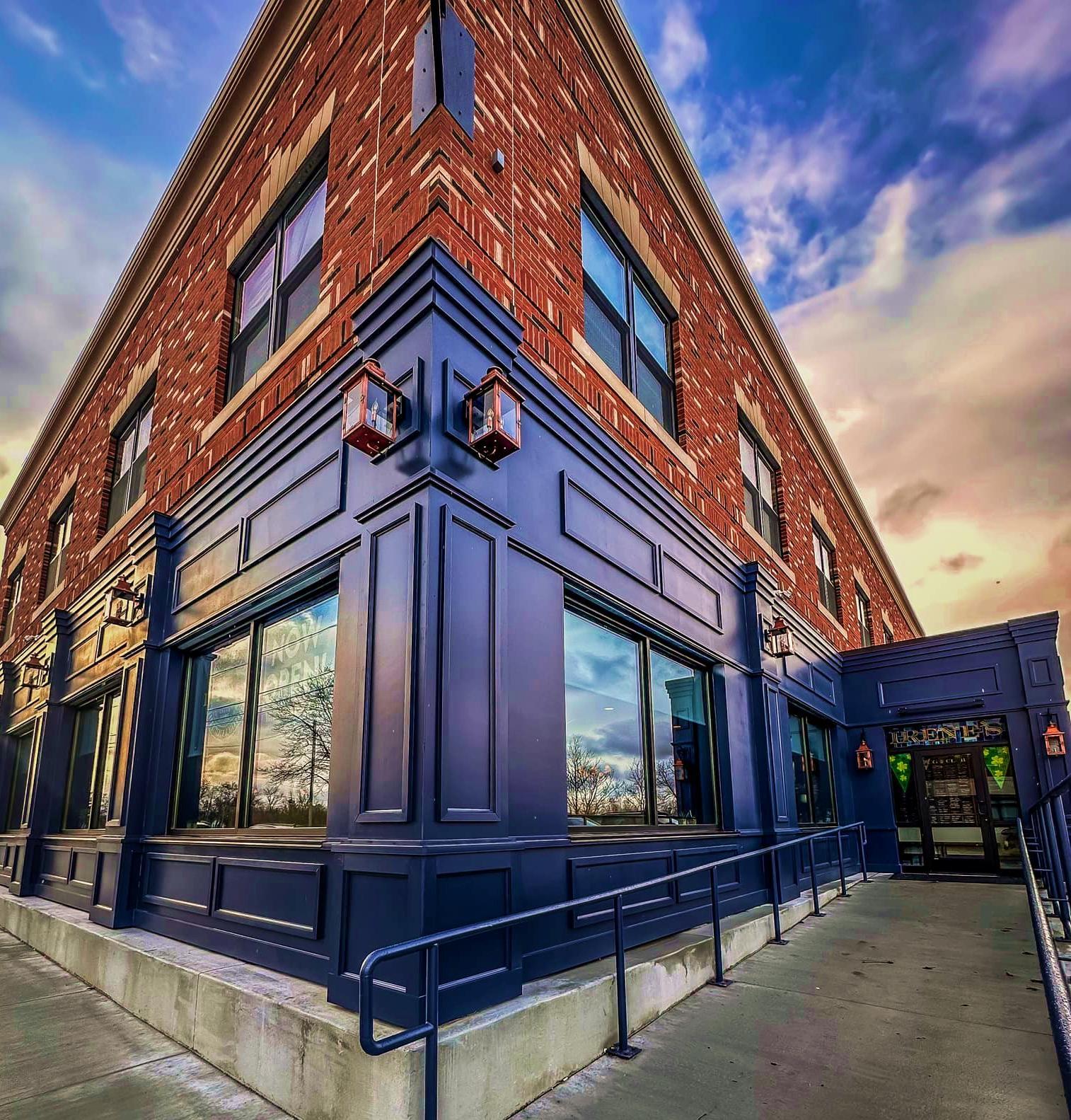
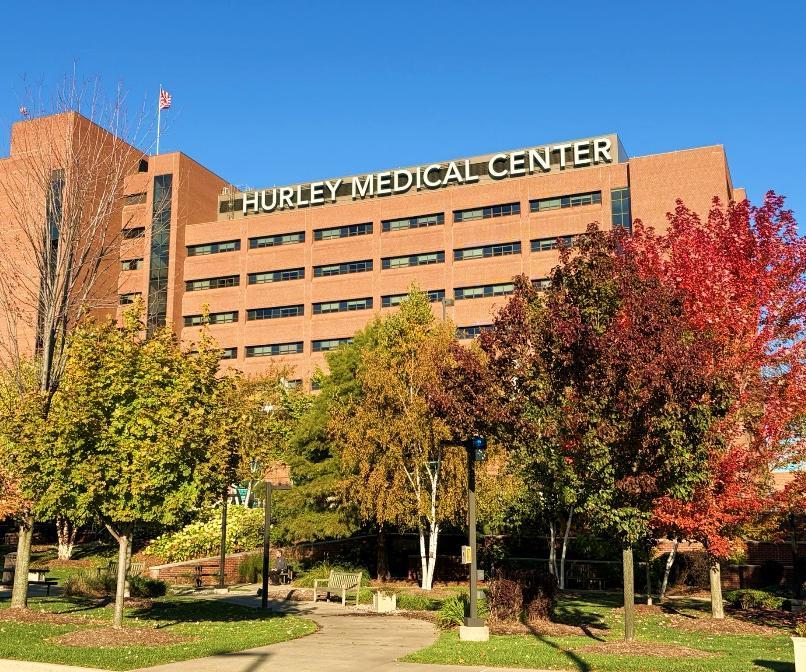
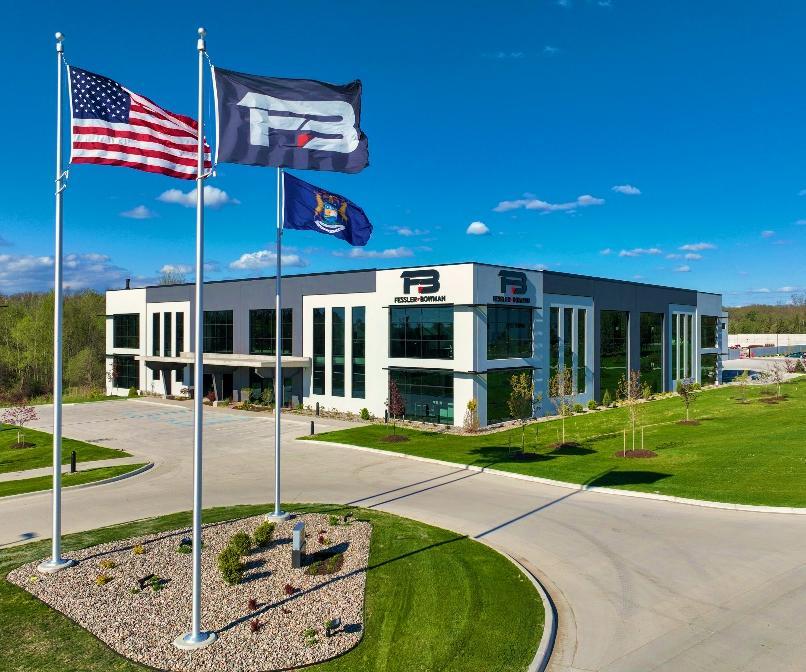
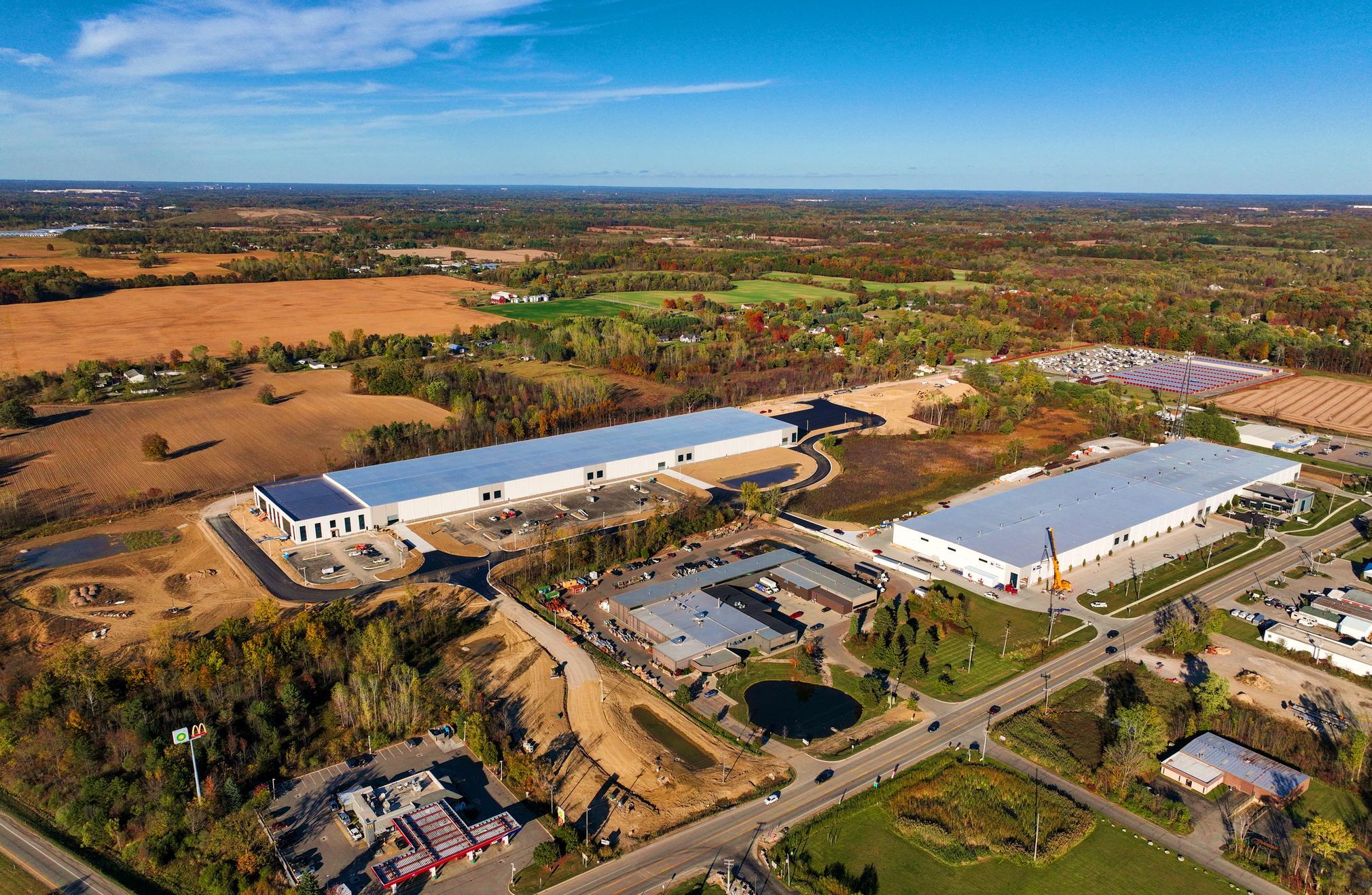
Genesee County has been focused on the redevelopment of vacant and underutilized spaces to generate more jobs and expand opportunities for its residents. Currently, about 54% of Genesee County’s working-age residents commute outside the county for employment opportunities. Developments such as the Advanced Manufacturing District, Miller Industries, the Grand Blanc Enterprise Park, and the Flint Commerce Center revitalization are expected to bring over 12,000 jobs to multiple employment sectors. These initiatives set up the county for a vibrant future, helping to keep talent local, provide good paying jobs, while welcoming new residents to our community.
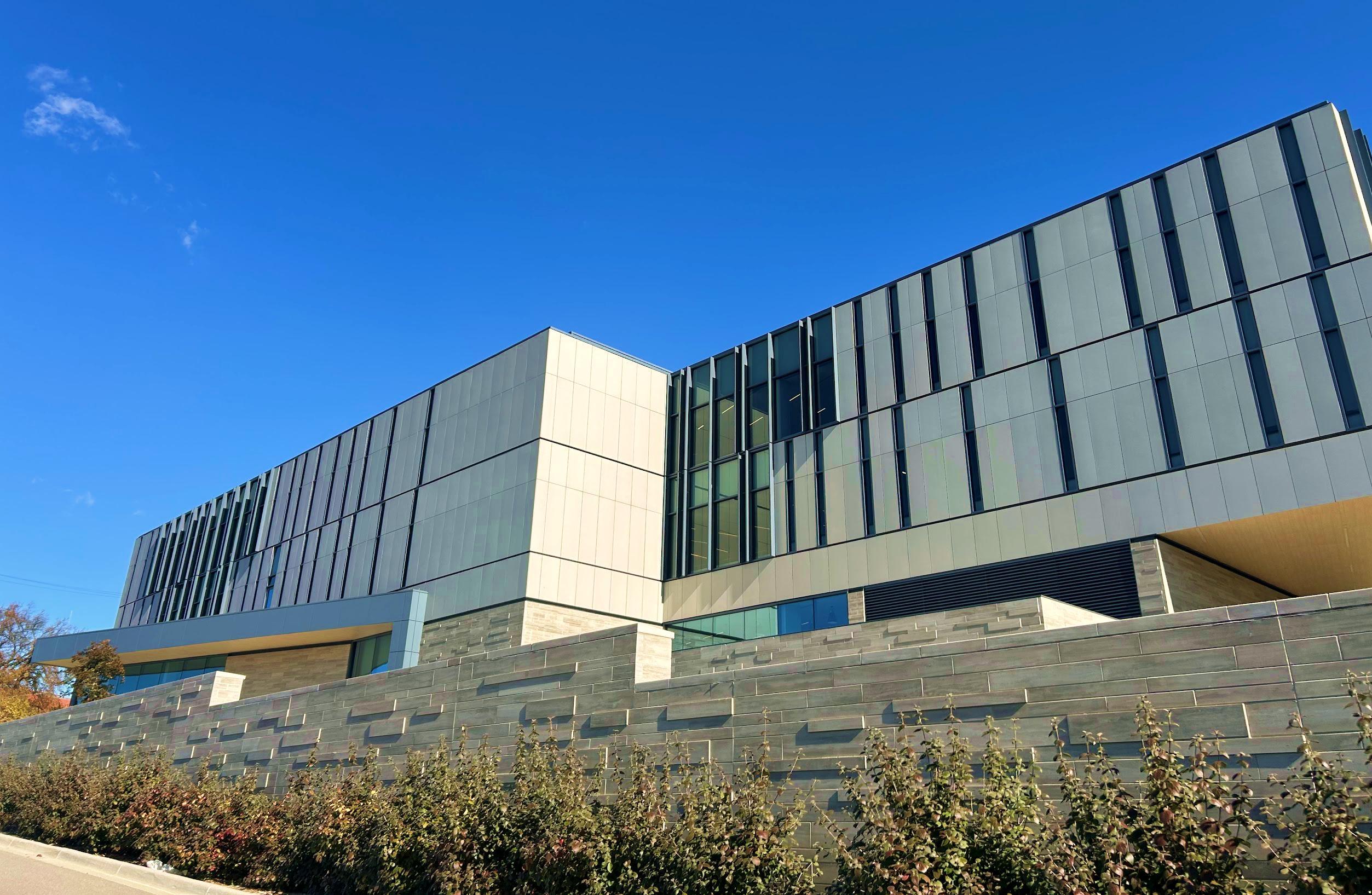
There are a wide variety of activities for residents of Genesee County to enjoy. Our history can be experienced first-hand by seeing what life was like in the 19th century at Crossroads Village or the historic Montrose Telephone and Pioneer Museum. The Flint Cultural Campus provides many opportunities for patrons to experience art and live music first-hand. Additionally, we have a variety of local sporting events including the Flint City Bucks soccer club and the Flint Firebirds hockey team. Genesee County’s proximity to Lansing, Ann Arbor, Detroit, and Canada provide for entertainment opportunities that can be reached in an hour or less.
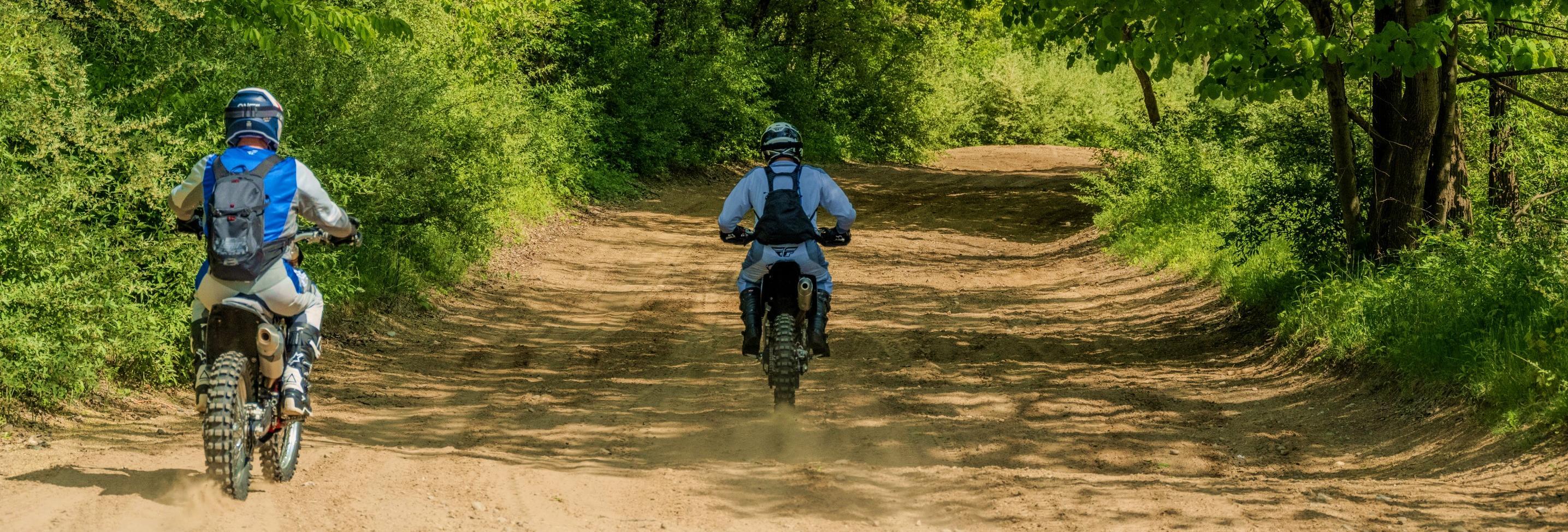
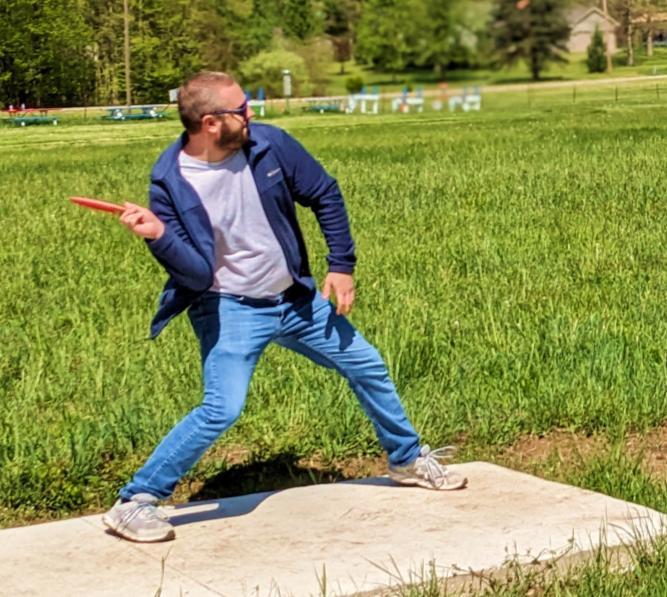
Home to the largest county parks system in Michigan with over 11,000 acres, our County has outdoor activities for all to enjoy. In 2022, Genesee County Parks opened the new obstacle course at the Mounds ORV park in Richfield Twp. In 2026, Genesee County’s first State Park is scheduled to open. This park will be comprised of Flint Chevy Commons, Happy Hallow Nature area, and many other riverside Parks within Flint. No matter the season, our communities offer a variety of outdoor activities such as golfing, hiking, fishing, or cross-country skiing. Many of our communities have organized recreational activities, encouraging residents to make the best possible use of our parks system. Our County’s unique placement in the state allows us to be a springboard to Michigan’s “Up North.”
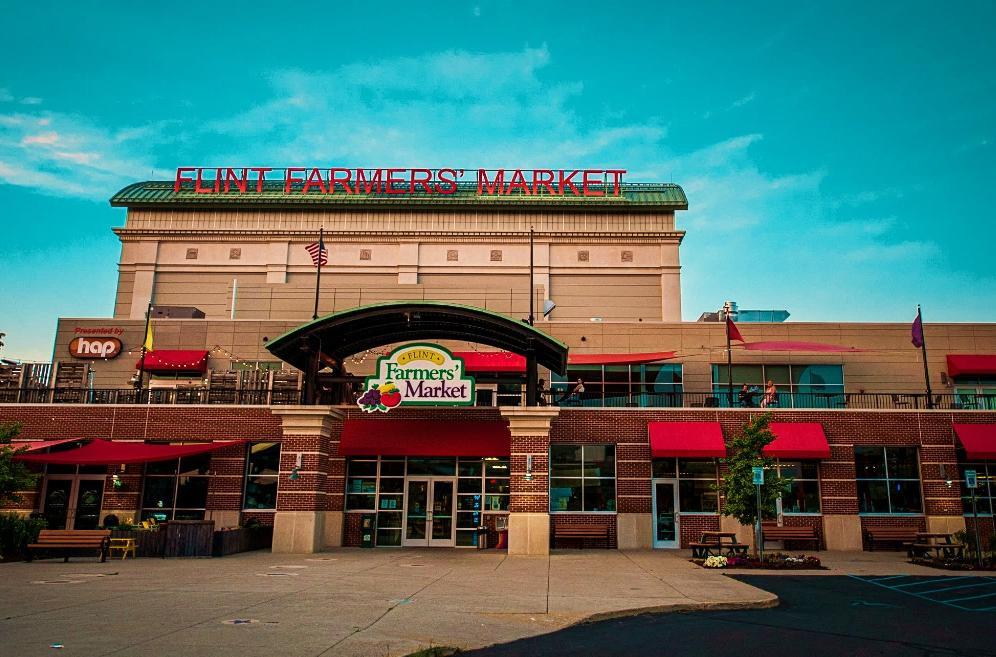
Each community in Genesee County offers a variety of restaurants, shopping destinations, and local cultural events that create memorable entertainment experiences. Many restaurants in Genesee County are highly rated, with a few being recognized as some of the best in the state. Across the county, communities promote access to live music, museums, and public art installations. Many communities also hold farmers’ markets in their downtowns during the summer. Cities, like Davison and Flint, offer year-round farmers’ markets in indoor venues. Communities also encourage active lifestyles by supporting recreational sports leagues, running clubs, and organized hike, bike, or paddle opportunities.
Genesee County is home to a variety of events and festivals that attract people from across the state, country, and the world. Venues like the historic Capitol Theatre, The Whiting, and The Machine Shop host performances ranging from local talent to nationally recognized acts. The Crim Festival of Races brings in approximately 55,000 participants and spectators each year from around the globe, while Back to the Bricks draws nearly 500,000 classic car enthusiasts from across the country. Another event with national acclaim is the Ally Challenge, a PGA Tour Champions event hosted at Warwick Hills Golf and Country Club in Grand Blanc raising over $7 million towards charity since its inception in 2018. These events not only celebrate the county’s rich culture but also play a vital role in boosting the local economy.

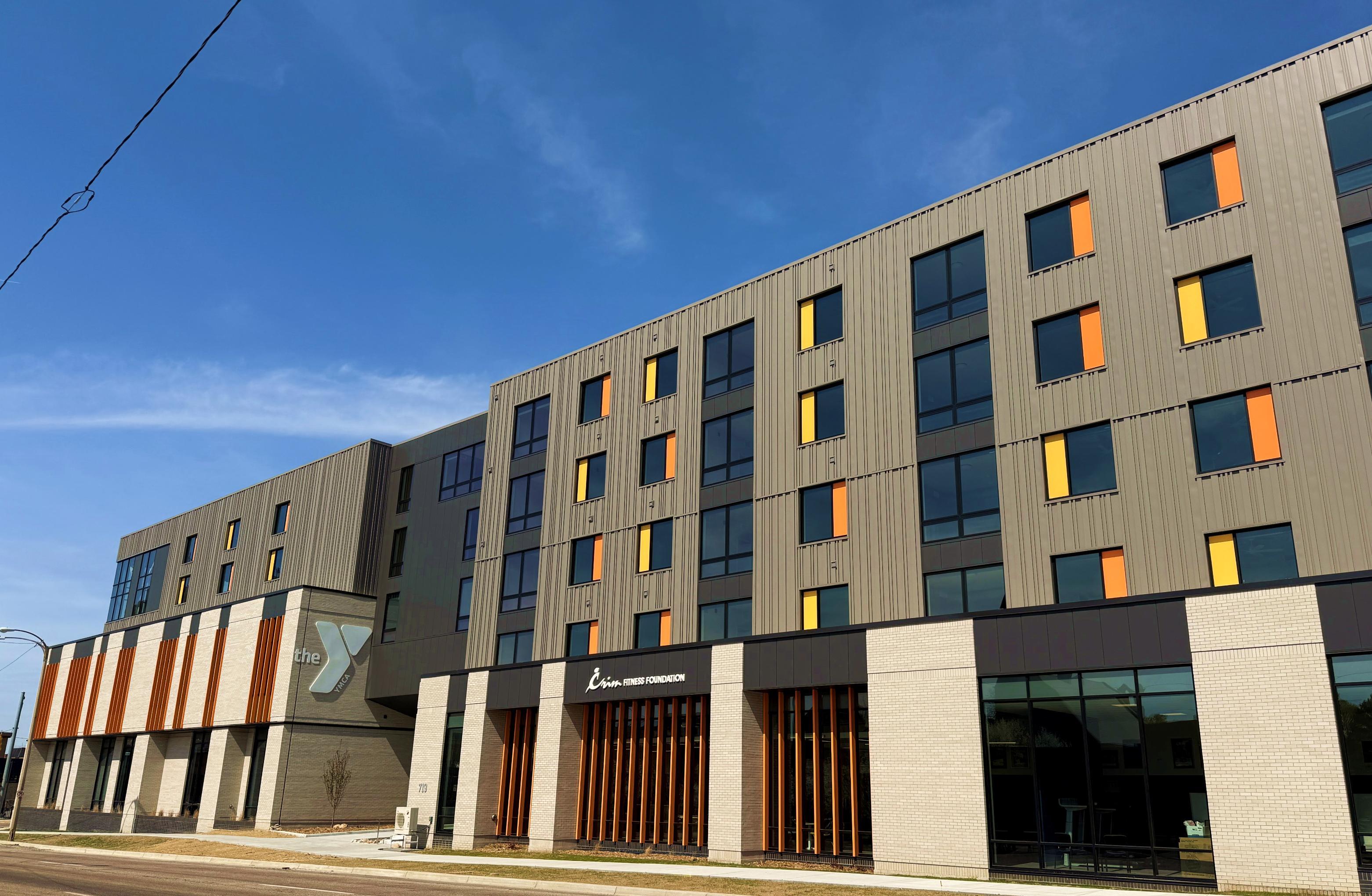
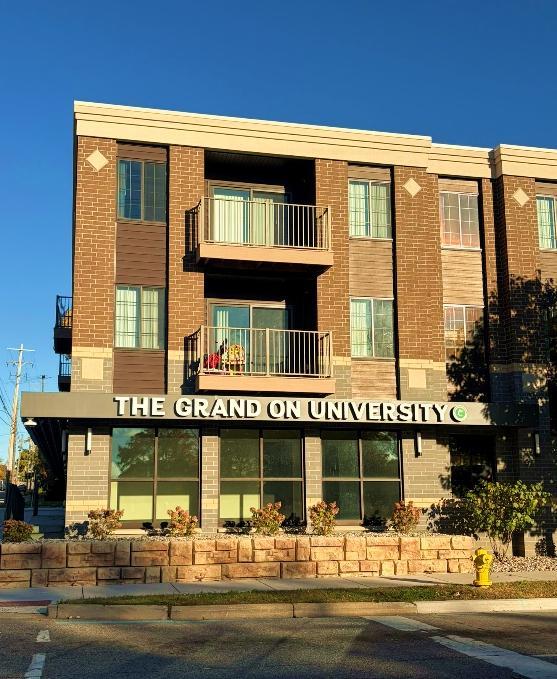
2025 welcomed the new YMCA facility of Greater Flint. This unique development is a mixed-use building including offices, apartments, and a fitness facility.
The future of Genesee County is in our hands. Now is the time to make meaningful change in the communities where we live, work, and play. Across the county, communities are taking important steps to improve quality of life for their residents. These efforts are supported in large part by ongoing investments from local foundations, neighborhood volunteer groups, and public-private partnerships. While the full impact of these contributions may not always be measurable, their positive influence on community well-being is undeniable.
Looking ahead, this Master Plan will serve as a valuable resource for community leaders, agencies, and residents. It will also provide guidance for local planning efforts by offering realistic visions and actionable strategies to help foster a more vibrant, strong, and thriving Genesee County.
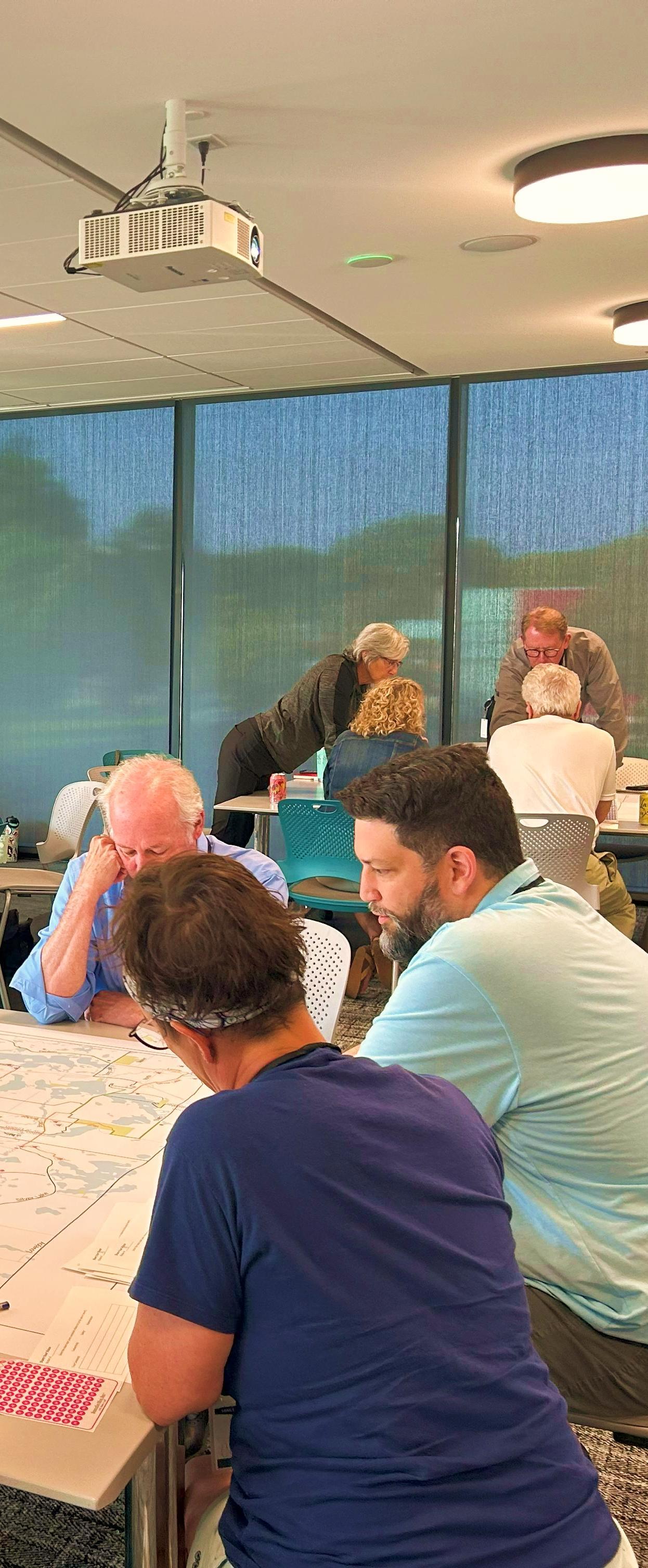
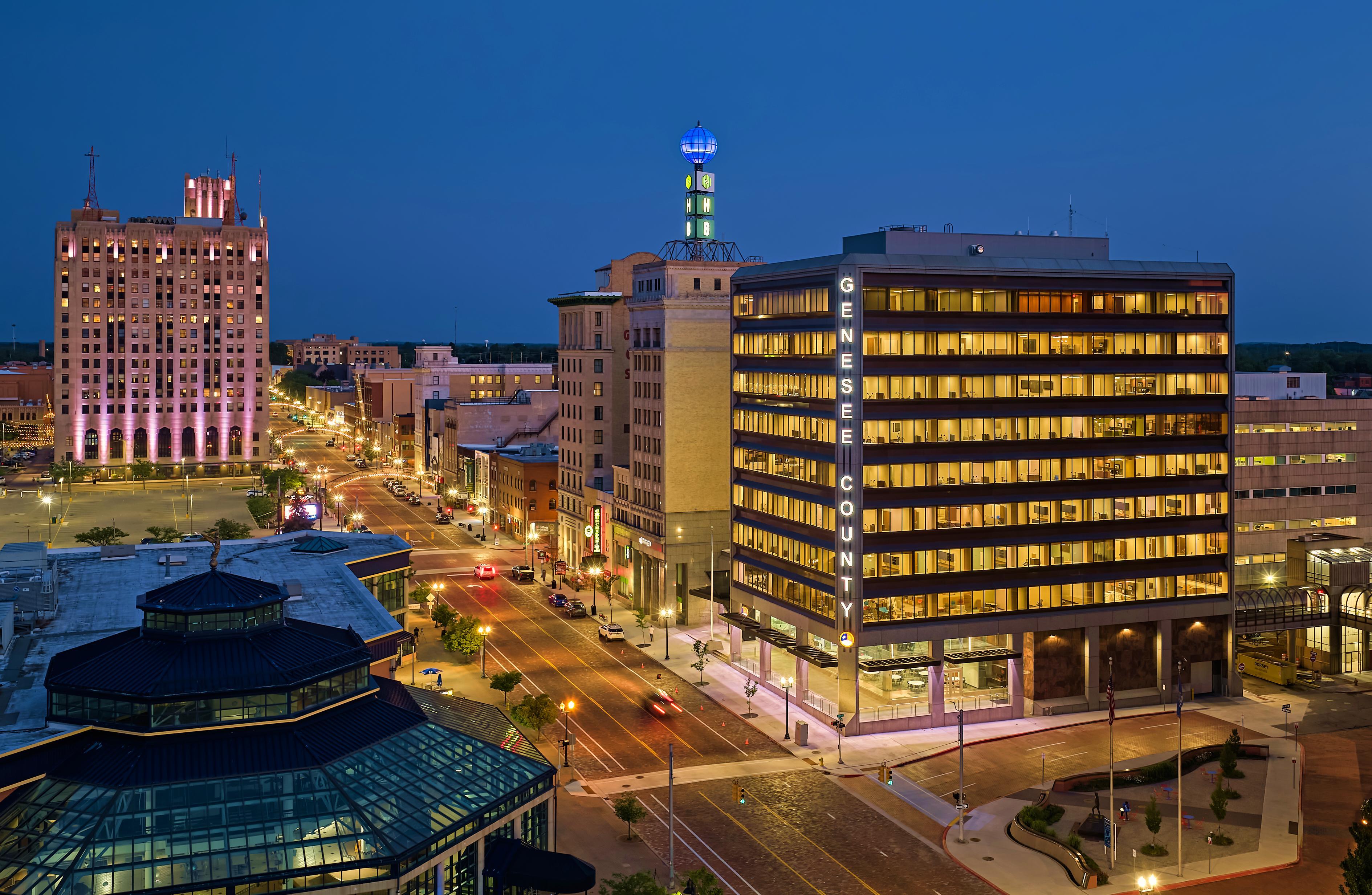
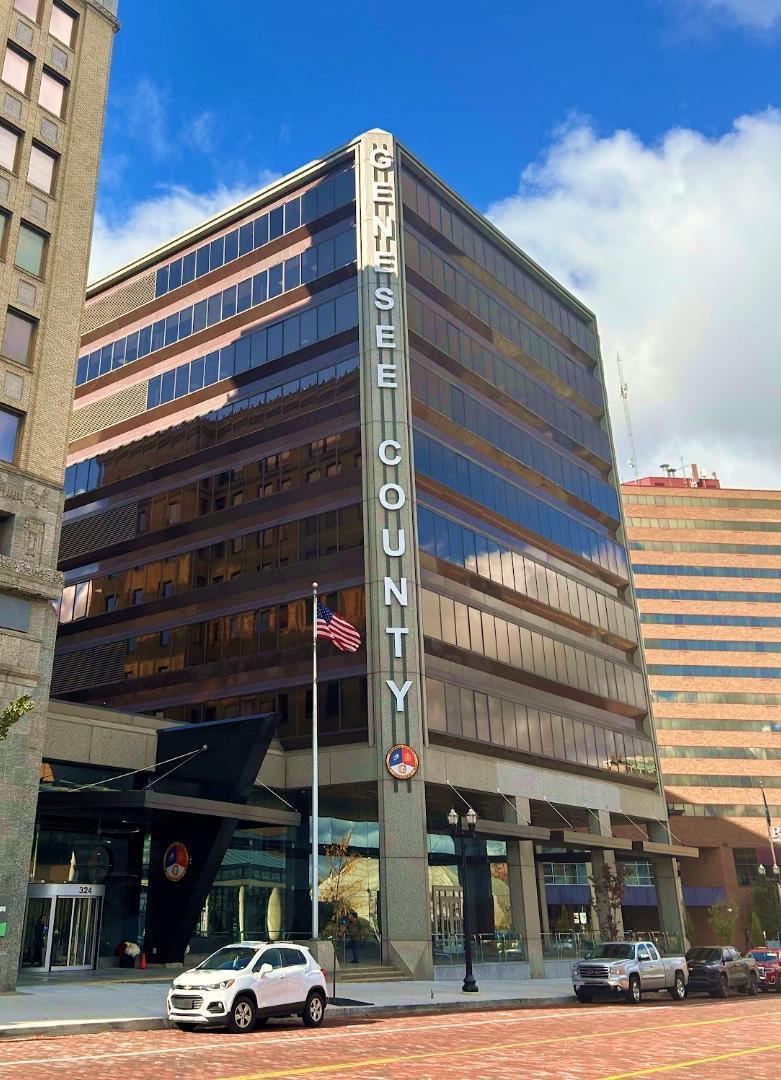
2025 welcomed the completion of the Genesee County Building located in the heart of downtown Flint. This move centralized approximately 325 staff in one facility to provide a one-stop shop for services for Genesee County residents.
Genesee: Our County, Our Future is a Master Plan for Genesee County residents, government, elected officials, and business owners that provides information and analysis on the current and future state of the County. In 2023, Genesee County established a set of core priorities that have since guided countywide activities and initiatives. These priorities also serve as the foundation for developing the Countywide Master Plan.
Genesee County receives federal and state grants for transportation, community revitalization, and materials management. These funding sources require that a plan is developed to show long-term efforts and results of these programs. These plans are the LongRange Transportation Plan (LRTP), the Community Development Consolidated Plan, and the Material Management Plan. The Genesee: Our County, Our Future plan meets all federal and state requirements of the three core plans and serves as the master plan for the County.
Establishing a plan that lays the foundation for future growth could not be possible without input from the public. The people who live, work, and play in Genesee County have valuable insight into what is working well and where improvements are needed. Considering the importance of community input, a meaningful public engagement process was essential to plan development. Staff made a deliberate effort to spark public interest and participation through creative and traditional outreach methods. From digital surveys distributed through community newsletters, outreach in colleges, and during Genesee County’s largest trick-ortreat event, opinions of all ages were reached.
The Genesee County Master Plan steering committee was formed to guide plan development. The steering committee is made up of 17 members who represent numerous agencies including local units of government, transportation agencies, the chamber of commerce, waste, water, and utilities agencies, as well as housing and community organizations. Committee members played a key role in blending public input with data collected to steer staff forward in producing visions and actions that are realistic and usable, especially by communities.

Facebook was used to strategically spread important messages and promote the plan to our residents.
2,800+ engagement
Households and businesses located along all proposed project corridors were mailed project notifications.
14,000+ communications
Community Surveys
Surveys filled out by residents.
650+ completed
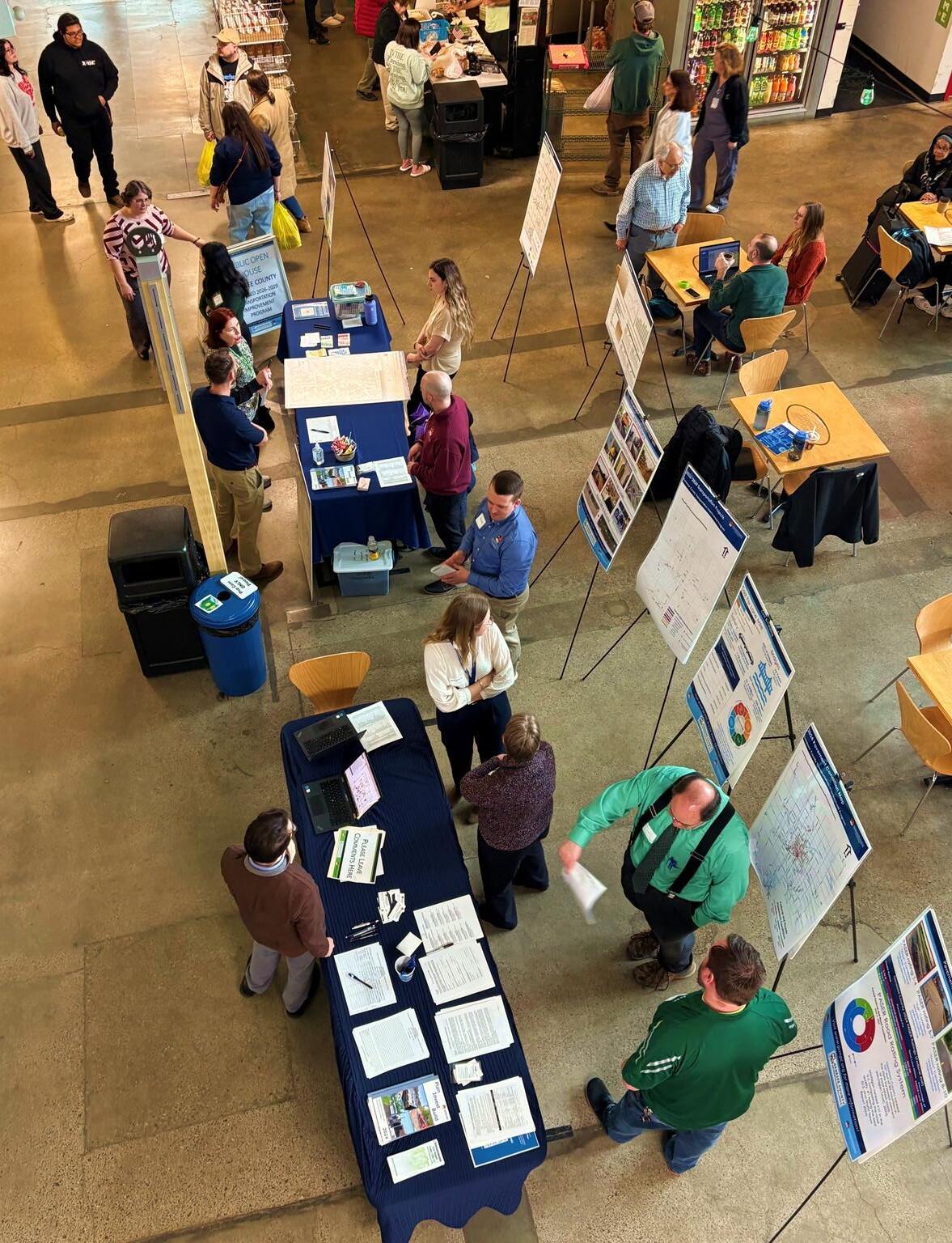
Community Open Houses
held throughout the community to get direct input from attendees and provide plan updates.
2000+ attendees
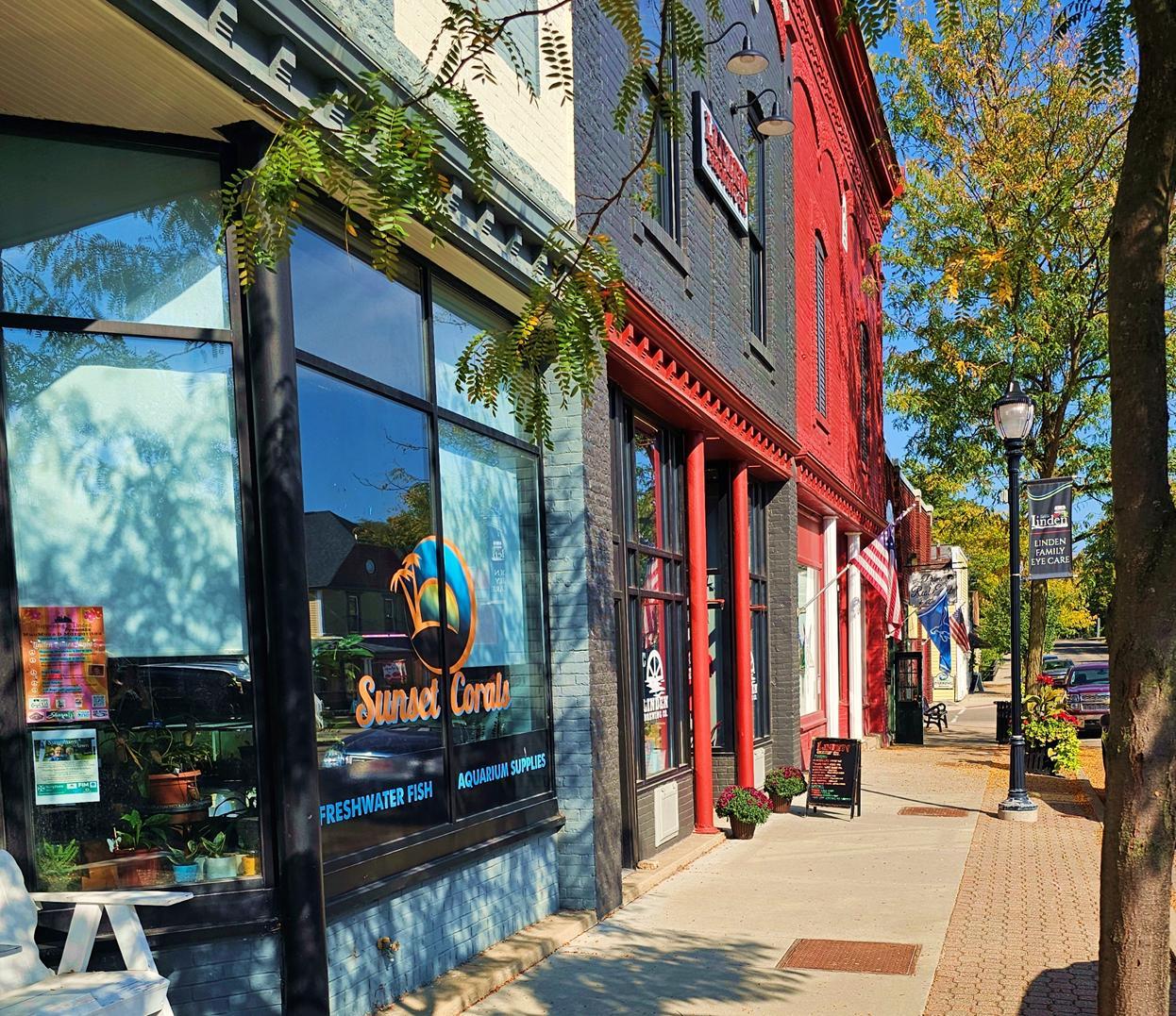
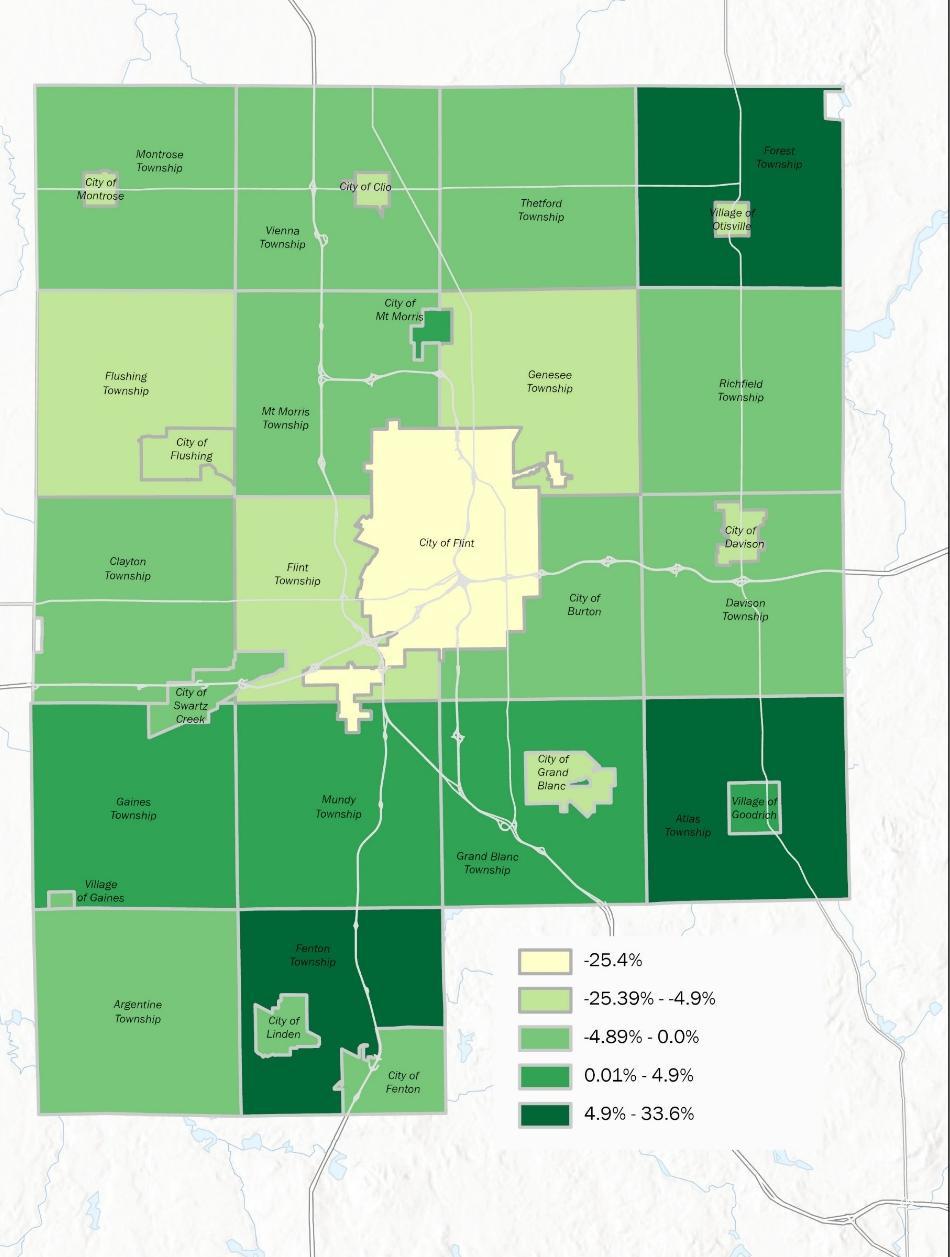
Genesee County’s population, size, and composition are shaped by a variety of demographic and economic factors. Per the 2020 Census, the county’s population was estimated at 406,211 residents. The median age is 41 and is projected to continue rising through 2050, largely due to a higher death rate compared to the county’s birth rate (2023 ACS estimates). These projections suggest a decrease in K-12 enrollment over time, alongside a growing demand for services that support the county’s aging population.
Despite these demographic shifts, Genesee County remains a vibrant and welcoming community, rich in amenities and opportunities for all ages. Residents and visitors can enjoy a wide range of outdoor activities such as; hiking, biking, kayaking, and golfing, along with yearround events that foster a strong sense of community. The county also boasts a variety of local businesses, restaurants, and shopping destinations, complemented by top healthcare facilities, an expanding manufacturing industry, and respected higher education institutions.
Genesee County is a place where residents can thrive, businesses can flourish, and visitors can feel welcome.
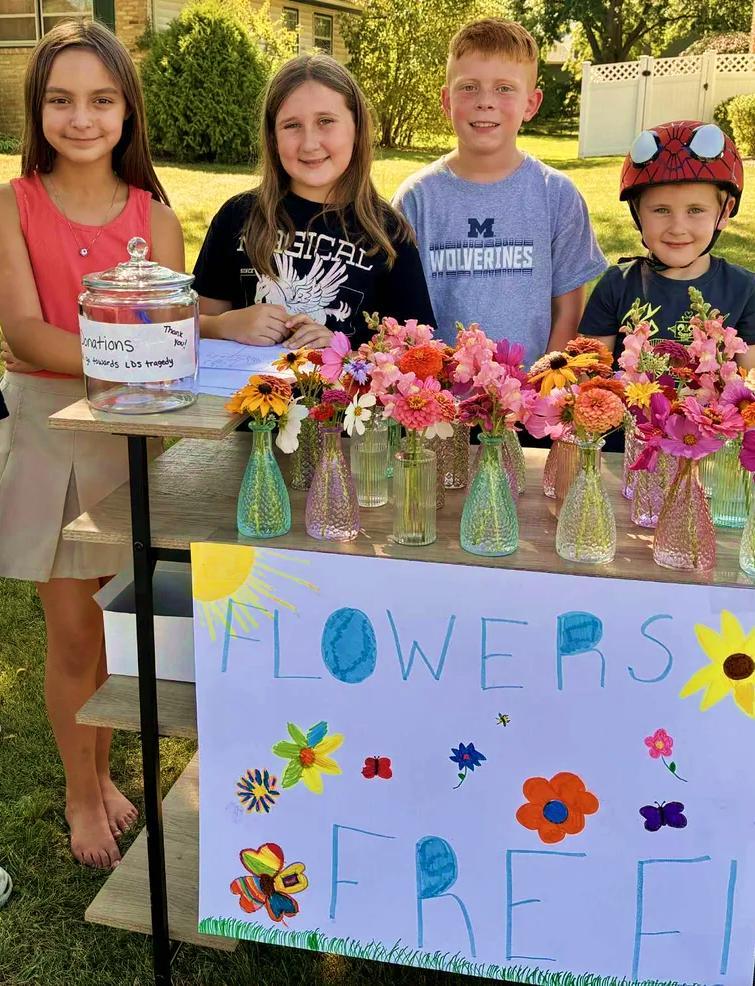
Genesee County’s demographic landscape has shifted significantly in recent decades, reflecting both local challenges and broader regional trends. The population has gradually declined, influenced in part by economic changes, low birth rates, and increased out-migration and patterns from young demographics seeking employment outside of the county. As a result, a large portion of our current population is comprised of older adults, retirees, and seniors.
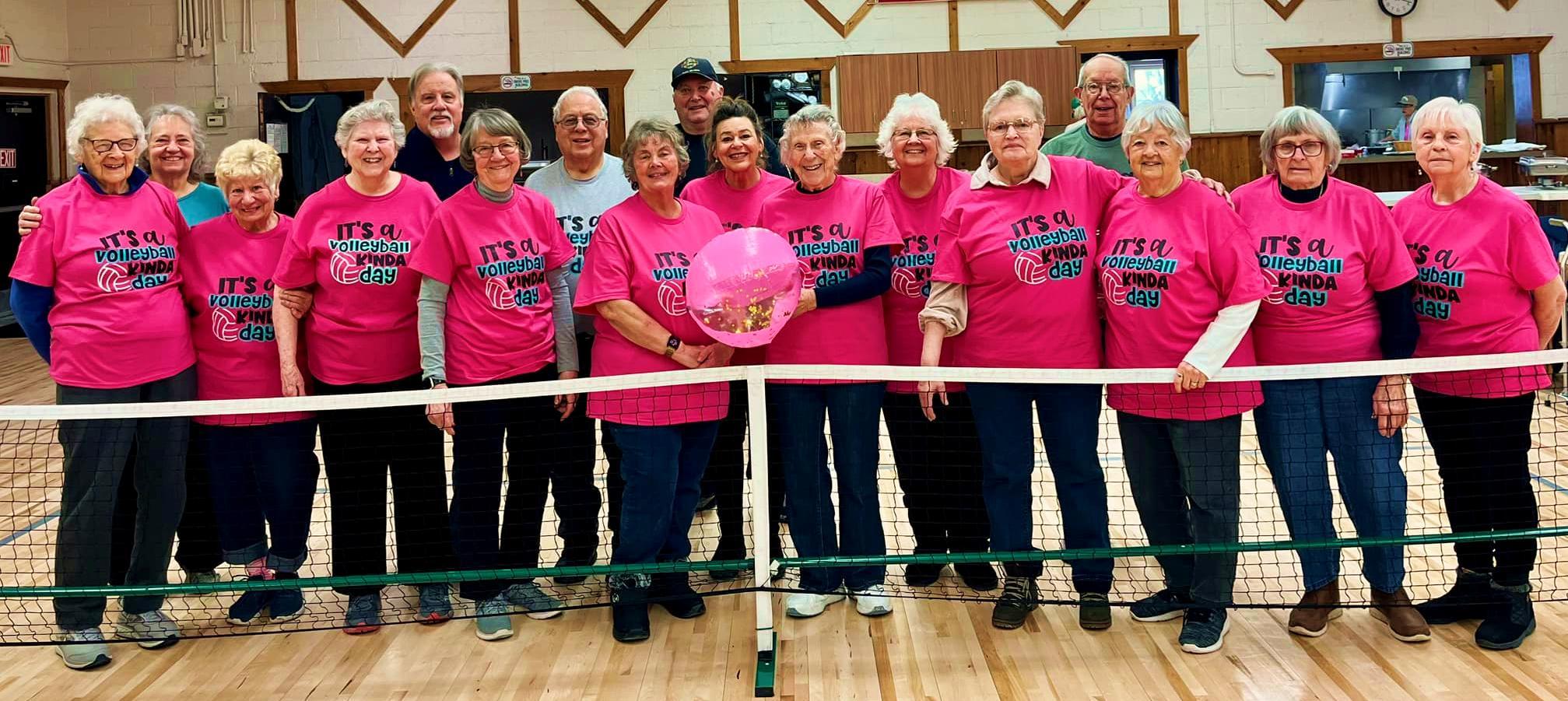
In response to the population shift, Genesee County has increased investments towards resources and infrastructure to support its aging residents. Genesee County supports 16 senior centers and offers a variety of programs designed to meet the needs of older adults. Additionally, there are now over 50 senior living facilities here in Genesee County, many of which have been constructed in the last 10 years. Nearly 1/5 of the County’s population is over 65, which closely aligns with the state average.
While Genesee County continues to invest in resources for its aging population, attention is also turning towards the needs and potential of younger demographics through economic development, increasing childcare options, and housing development. Genesee County is home to 178 child care centers, five of which are accredited through the National Association for the Education for Young Children (NAEYC), reflecting a commitment to quality early childhood education.
Genesee County is home to a large population of individuals living with health conditions or disabilities.
While the county currently ranks 82nd out of 83 Michigan counties in overall population health, local leaders and organizations are taking meaningful steps to improve health outcomes. Collaborative efforts led by the Greater Flint Health Coalition and the Genesee County Health Department are actively identifying community health needs through a comprehensive assessment process. At the same time, the county is continuing to expand access to outdoor recreational spaces and promoting active lifestyles as part of a broader commitment to creating healthy, livable and safe communities for all residents.
These demographic changes highlight the importance of long-term planning to ensure that the community addresses the needs of all ages and abilities.
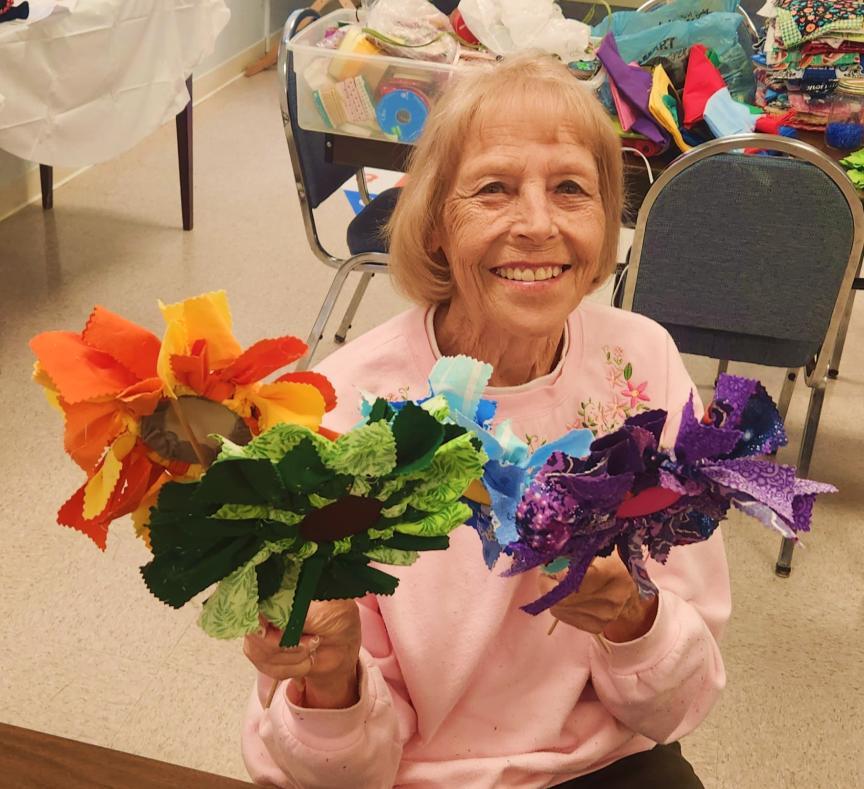
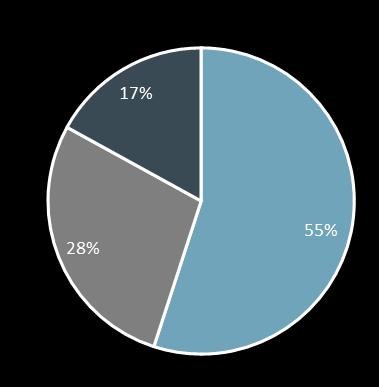
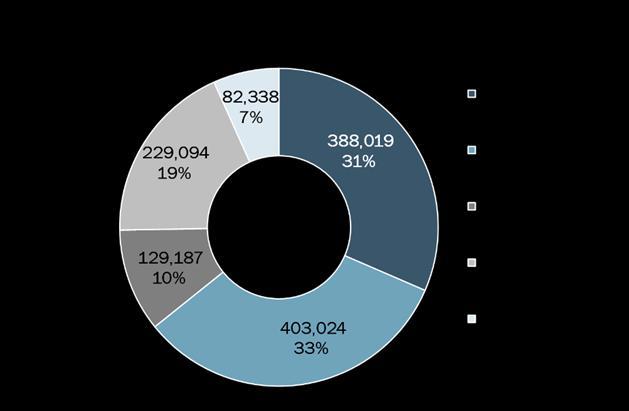
A significant portion of Genesee County residents face challenges in affording necessities, with over 45% of residents struggling to meet essential needs (Figure 3-2). In 2023, the median income in Genesee County was $60,027 (2023 ACS). A family of 4, including 2 children, is living in poverty if their annual income is $30,000 or less (2023 MI ALICE Report). Currently, 17% of households in Genesee County live at or below the poverty line - higher than both the Michigan rate of 14% and the U.S. rate of 11% (2023 MI ALICE Report). However, poverty statistics alone do not fully capture financial hardship. United Way, a nonprofit organization focused on covering basic needs for individuals and families, develops an annual ALICE (Asset Limited, Income Constrained, Employed) report for the Genesee County area. ALICE considers households that earn above the poverty threshold but still struggle to afford basic needs. Approximately 28% of households in the County are considered ALICE. Housing affordability is a major contributor to challenges with cost of living. Notably, 69% of renters are spending 30% or more of their income on housing (2023 MI ALICE Report). While a variety of housing options exist across income levels, many families still struggle with housing cost burdens. Daily, there are an estimated 576 people that are homeless or require some type of housing services within the County (Flint/Genesee Continuum of Care), showing a greater need for affordable living and transitional housing.
2023 Households in Poverty/ ALICE

In addition to housing costs, the cost of transportation is typically the second highest expense for households. Being unable to afford transportation or spending a significant portion of your living wages on transportation affects many aspects of daily life, including having access to fresh food, education, and medical facilities. It is estimated that 16% of Genesee County residents lack consistent access to enough food for an active, healthy lifestyle as recently as 2023.
Due to a high cost of living, many young adults are deciding to either delay or reconsider starting a family. Those that do have a family are faced with an increased cost burden. Outside of the typical costs of living, families must make some difficult decisions when it comes to childcare. For many families, having both parents in the workforce is not by choice, but a financial necessity. Childcare for many parents may be the deciding factor on where to live. This makes childcare a growing concern in planning, specifically in retaining population in a community, and creating a stable and effective workforce. In response, communities and employers across the country are increasingly prioritizing childcare in their planning efforts by reviewing how well they can accommodate daycare centers, inhome providers, and after school programs.
Fixing these trends requires a coordinated effort from many local partners and agencies. Attracting younger demographics through increased job opportunities, encouraging new housing developments, and fixing local issues are essential for population growth and change.
In 2023, Genesee County conducted a comprehensive assessment of its communities and neighborhoods to better understand quality of life across the region. As part of a county-wide housing survey, staff found that over 83% of neighborhoods either lacked sidewalk infrastructure entirely or had sidewalks in need of repair. This lack of pedestrian infrastructure forces many residents to walk along roadways, increasing safety concerns. Between 2017 and 2023, there were 537 pedestrian-involved traffic accidents resulting in injury or death, according to the Michigan State Police.
To establish a stronger sense of community, factors such as walkability, building appearance, housing availability, and the diversity of local businesses all play a critical role in shaping vibrant, livable downtowns. These elements not only enhance day-to-day life for current residents but also contribute significantly to how attractive our communities are to prospective residents and businesses.
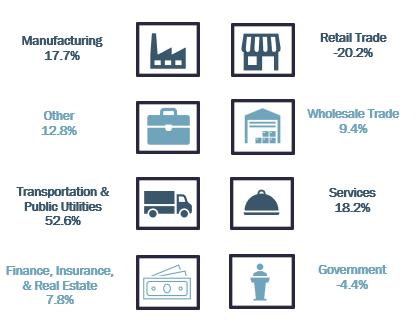
As of 2020, there are an estimated 125,000 people employed across Genesee County, with the largest employment sectors being services, public utilities, and manufacturing (Figure 3-3). Examples of careers in the services sector include waste management, education, healthcare and social services. Employment within healthcare and educational institutions make up a large portion of jobs within the services sector, accounting for over 42,000 employees (ACS 2023). The services sector contains almost four times as many individuals as any other sector.
The mobility of people and goods is crucial to our economy and as our employment sectors grow and shift into new industries.
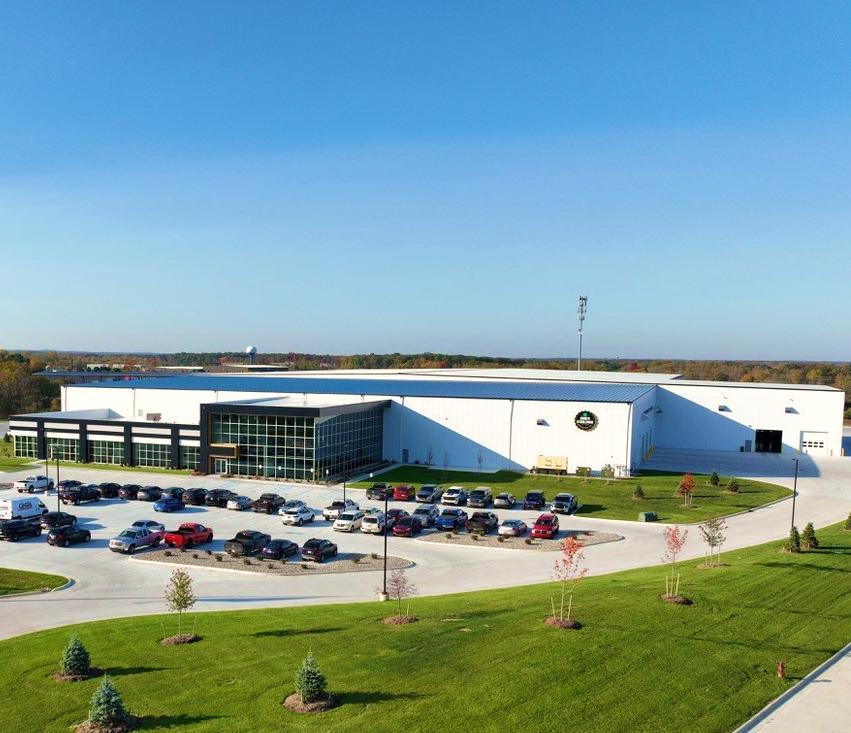
Supporting the Genesee County workforce is a wellconnected transportation network. Of the over 125,000 people that are employed in the County, about 56% percent live within the County, while the remaining commute from outside of the county (OntheMap, LODES). The county’s transportation infrastructure enables efficient commuting both within and across county lines and plays a vital role in supporting regional employment. In addition to a network of roads and highways, Genesee County benefits from international air and rail connections that help move both people and goods. Bishop International Airport is a major freight hub for the region, carrying over 25 million pounds of freight in 2024. (Bishop International Airport). Freight movement by rail is possible with four major railroad companies operating on 86 miles of rail lines in the County.
Manufacturing jobs are projected to increase in Genesee County by almost 18% by 2050. Many existing manufacturers in our County, such as General Motors (GM), are modernizing their facilities by increasing automation to perform tasks that are repetitive, hazardous, or physically demanding. In 2023, GM invested over $1.7 billion into facility and machine improvements in Genesee County. These technological advancements help reduce production costs and improve efficiency, all while enhancing workplace safety. As automated production increases, new job opportunities are emerging in areas such as equipment operation, systems oversight, and machine maintenance. With continued investment, Genesee County is positioned to lead in the next generation of advanced manufacturing.

Retail trade, once the second-largest employment sector in Genesee County, is now the fastest-declining industry. Jobs such as cashiers, sales associates, and shelf stockers are becoming less common. The industry is undergoing significant transformation, with employment in the retail trade projected to decline by approximately 20.2% in Genesee County by 2050. The continued rise of online shopping poses a growing challenge to local brick-and-mortar stores. Additionally, many stores were unable to stay open during the Covid-19 pandemic. This only sped up the loss of physical retail. As in-person sales decrease, more retail spaces are expected to become vacant. In response, Genesee County encourages municipalities to proactively plan for the revitalization and reuse of these spaces to support the evolving local economy.
The Genesee Valley Center opened in 1970 and is the largest mall in Michigan outside of the Detroit metro area. The mall had over 50 tenants for much of its early life and contributed greatly to the cultural and economic foundation of Genesee County in the late 20th century.
Over time, shifting retail habits have significantly impacted in-person shopping habits. Once a major shopping destination that drew visitors from both within and beyond the county, the Genesee Valley Center has seen less foot traffic and shoppers over the past decade. As the online shopping industry continues to grow, many retailers are choosing to focus on their digital presence, shifting the focus from traditional inperson storefronts to meet current and future market trends.
Despite changes in the retail market, recent trends throughout the country demonstrate exciting opportunities to transform aging shopping centers into housing or mixed-use destinations. With strong collaboration between public and private partners, there is potential to reimagine the site into a valuable community asset. Its strategic location near the I-69 and I-75 corridors positions the property as a prime candidate for reinvestment and economic growth that could benefit the entire region.
As Genesee County’s economy evolves, local governments are using development tools such as tax incentives to help fund Downtown Development Authorities and Corridor Improvement Authorities to attract investment and revitalize struggling areas.
One of the most widely used tools are tax incentives, which help reduce initial costs for businesses and encourage redevelopment. A commonly used tax incentive is Tax Increment Financing, which initially lowers taxes for the developer. As property values increase near the redevelopment site, the additional tax revenue is used to fund improvements around the area. Tax incentives can only be used in designated areas, such as through the creation of Downtown Development Authorities and Corridor Improvement Authorities.
Communities often establish Downtown Development Authorities to focus on increasing investments to the designated downtown district. The City of Fenton’s Downtown Development Authority, created in 1993, has leveraged Tax Increment Funding (TIF) to fund nearly $7 million in infrastructure upgrades and $1.8 million in property acquisition, contributing to the transformation of its downtown into a thriving and inviting destination.
While DDAs target traditional downtowns, Corridor Improvement Authorities (CIAs) focus on the redevelopment of major commercial corridors. These authorities can span multiple jurisdictions and are designed to improve the appearance, accessibility, and economic vitality of high-traffic areas. In 2017, Flint Township established a CIA along Bristol Road utilizing tax increment funding to reduce blight, preserve historic character, and encourage economic activity along a key gateway corridor.
Together, these tools provide local governments with strategic mechanisms to attract private investment, enhance quality of life, and support the long-term economic vitality of Genesee County’s communities.
Tourism plays a vital role in Genesee County’s economy through a wide variety of events, venues, and recreational opportunities.
Popular annual events such as the Crim Festival of Races, Back to the Bricks, and numerous local fairs and festivals attract thousands of visitors across the region.
Sporting events, such as the Flint City Bucks soccer team, Flint Firebirds hockey team, and the Ally Challenge golf tournament also garner major appeal to sports enthusiasts throughout the state.
In addition to events, the County contains numerous cultural and educational attractions that serve a broad regional audience.
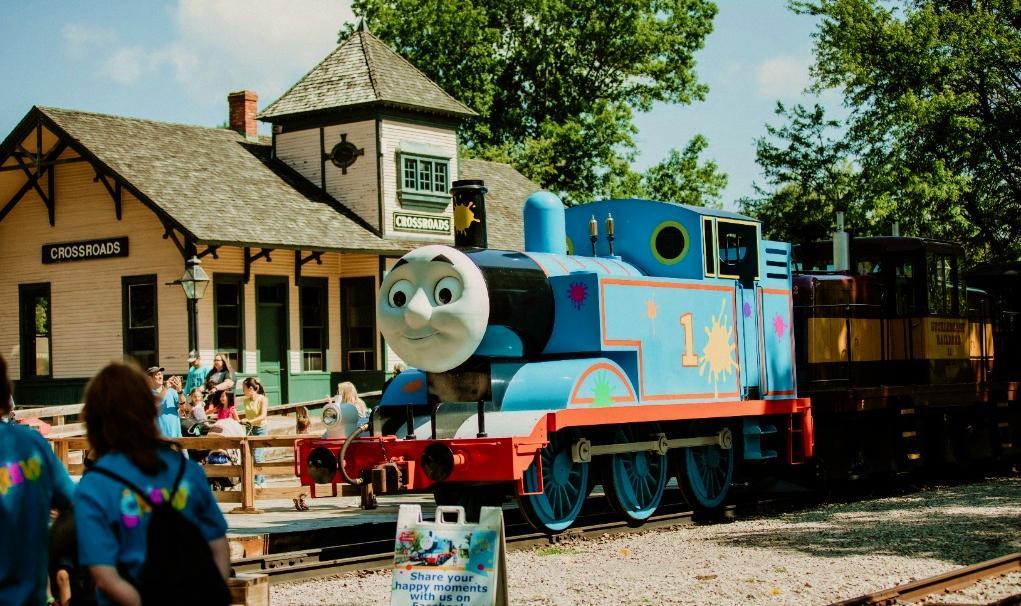
Destinations such as the Sloan Museum, Longway Planetarium, and the Capitol Theatre offer year-round programming focused on the arts, sciences, and history. The Genesee County Parks system also contributes to local tourism, featuring many events at the historical Crossroads Village & Huckleberry Railroad. Signature events like Ghosts and Goodies, a Halloween-themed celebration, and Day Out with Thomas, featuring the iconic storybook train, consistently draw large crowds from throughout Michigan.
To supplement Tourism spending, Genesee County levies a 5% on lodging tax (bed tax) accommodation within the County. This tax is used to help fund tourism initiatives throughout the County, including the Explore Flint and Genesee Tourism agency. The agency actively markets the region to both instate and out-of-state travelers through newsletters, visitor guides, itineraries, and “best of” guidebooks.
These efforts by Explore Flint and Genesee, as well as Genesee County Parks, contribute to a growing tourism industry. In 2023, Genesee County generated approximately $615.8 million in tourism spending with visitors generating profits in most sectors of the economy (Flint and Genesee Group). Tourism spending directly supports over 5,000 jobs in the county, highlighting the importance that tourism has on regional economic growth.


3-4
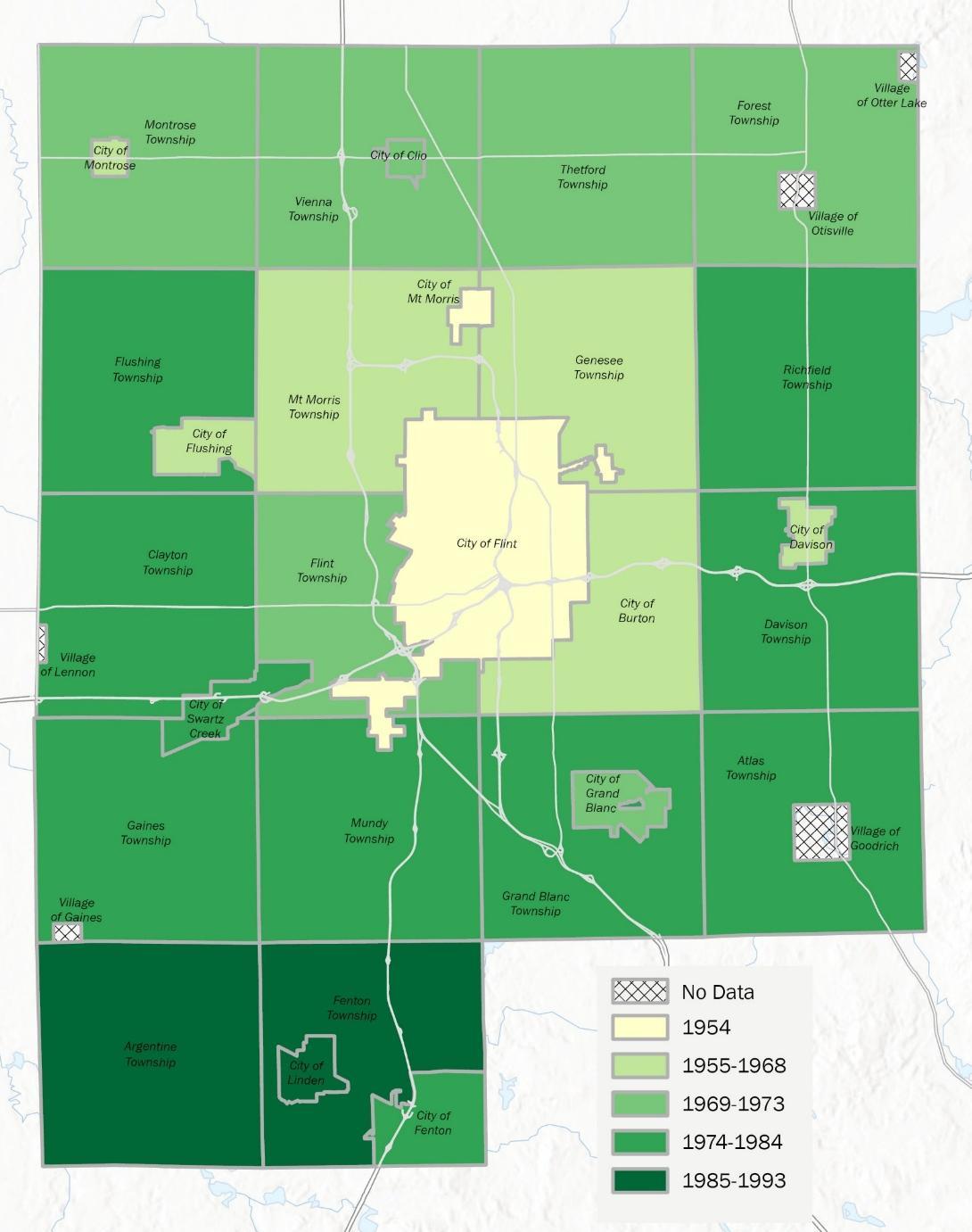
Genesee County offers a variety of housing options that support a range of living styles, from rural homesteads to suburban neighborhoods and urban apartments. However, the availability of new housing is limited. The county currently faces a shortage of more than low-tomoderate income 7,000 homes, which has contributed to rising housing costs across the area. Most of the existing housing stock is aging, with 78% of homes built before 1990 with the majority of homes over 35 years old (Figure 3-6). As a result, ongoing repairs and regular maintenance are essential to ensure these older homes remain safe, functional, and livable.
To address challenges posed by aging housing and affordability, Genesee County has taken proactive steps to improve housing accessibility and quality. In 2024, Genesee County launched the Our Housing Future program which is utilizing $12.8 million in funding to expand opportunities for safe and affordable housing in our communities. There are two focus areas of Our Housing Future-: the Housing Impact Fund and the Roof Revitalization Program. The Housing Impact Fund is a program for developers to construct new affordable housing options.
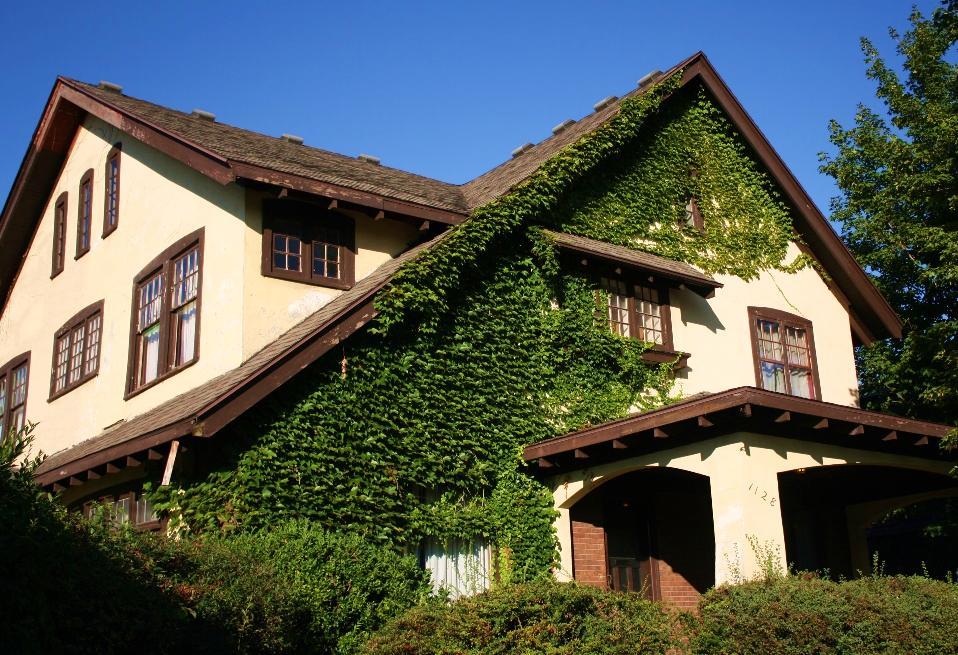
This program aims to build 500 housing units for individuals and families across multiple income levels. The Roof Revitalization Fund will assist approximately 100 homeowners with roof replacements through forgivable mortgages.
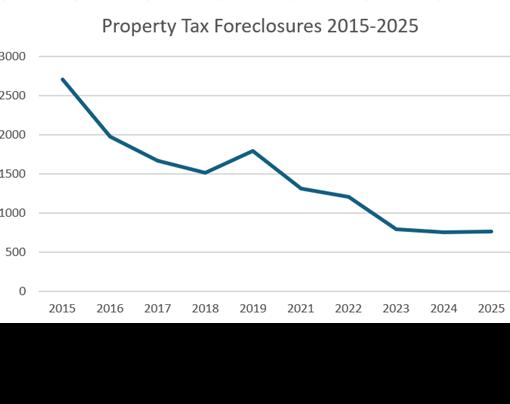
3-5
Source: Genesee County Treasurers Office
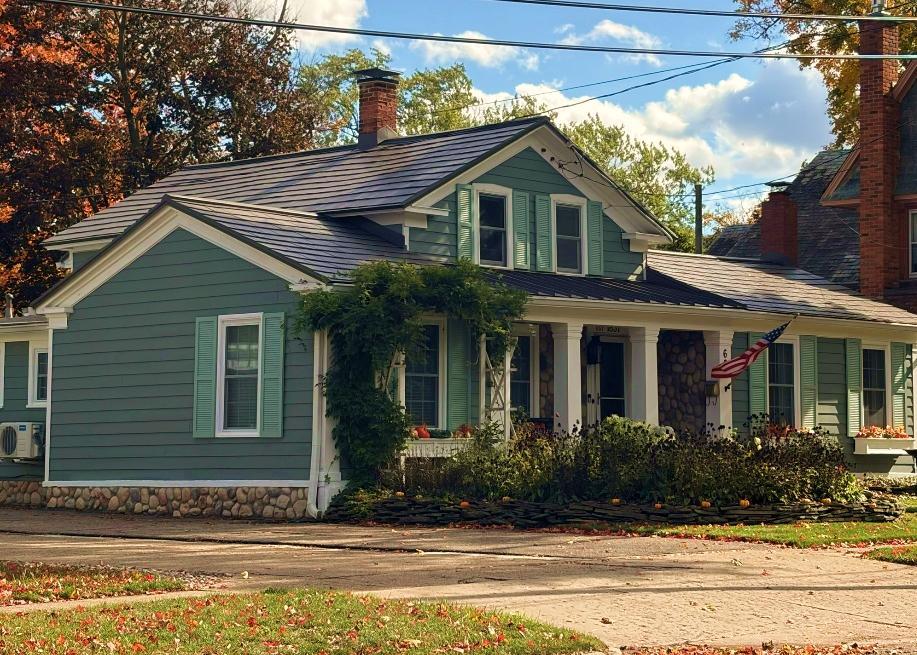
While these new initiatives offer long-term solutions, Genesee County has also focused on addressing the more immediate consequences of housing instability, such as tax foreclosures and neighborhood blight. Tax foreclosure can lead to vacant and deteriorating properties, contributing to blight, increased crime, and declining neighborhood conditions. However, Genesee County has made notable progress in addressing this issue over the past five years. On average, 1,447 tax foreclosures occur on an annual basis (Figure 3-5). This has decreased from the 2010-2019 average of 2,157 tax foreclosures annually, reflecting progress made towards helping more people stay in their homes. One program that was utilized to help lower tax foreclosures was implemented through the American Rescue Plan Act (ARPA). Genesee County used ARPA funding to provide tax assistance to over 1,800 properties to help avoid foreclosure since 2022.
In addition to prevention efforts, the County has also focused on mitigating the physical impacts of foreclosure through strategic demolition and neighborhood stabilization. About 450 of these dilapidated houses are demolished annually by the Genesee County Land Bank Authority. Additionally, through the American Rescue Plan Act (ARPA) an additional 400 Land Bank Demolitions were completed since late 2022.
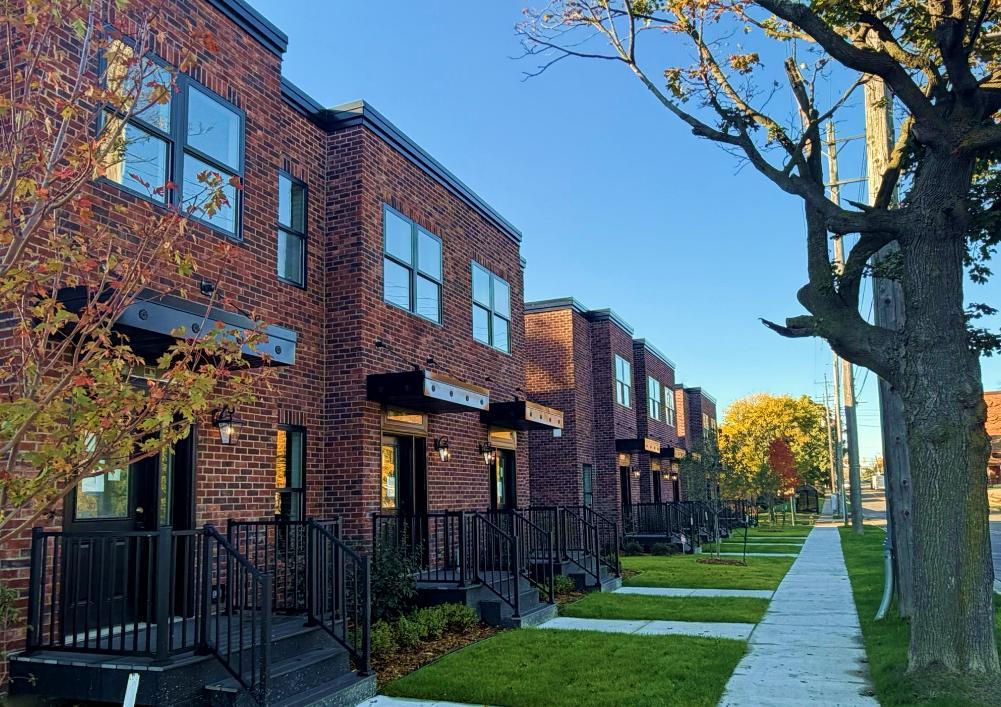
Environmental assets play an important role in providing recreational opportunities, natural habitats, and a buffer between man-made and natural features. In Genesee County, there are 94 lakes; approximately 360 rivers, streams, and drains; 86,000 acres of woodlands; and 14,000 acres of public park land. With a population of over 400,000 people living in the county, construction projects are an inevitable consequence of development. As Genesee County grows, the primary challenge will be to continue balancing the preservation of environmental assets without inhibiting economic development.
In addition to land use considerations, the success of agricultural operations largely depend on stable weather patterns. While a variety of weather conditions are needed for harvest, unpredictable and severe weather pose serious risks to both agricultural operations and the built environment. Due to the abundance of water resources in the county, flooding has historically been the most expensive natural disaster, costing hundreds of millions of dollars in damages to residential properties, farmland, and critical public infrastructure. In 2025, lower portions of the I-75/I-69 interchange flooded, shutting the entire freeway down. This affected traffic on a critical trade corridor for multiple hours. Storms and tornadoes also present significant hazards. In July 2023, a severe thunderstorm brought baseball-sized hail to parts of eastern Genesee County, leading to $4 million (MLive) of property damage and subsequent increases in home and auto insurance rates. Winter and ice storms are
another recurring threat, with impacts on roads and airports that can disrupt transportation, farm operations and other services for several days.
As weather patterns become more intense, communities must take strategic action to be ready for all types of extreme weather.
To help protect our environmental assets, GCMPC led an extensive environmental mitigation and consultation process for Genesee: Our County, Our Future plan projects.
As part of this process GCMPC consulted with local, state, and federal agencies to define and inventory the environmentally sensitive species and resources in Genesee County, and to identify and assess likely impacts of plan projects. Staff further consulted with these agencies to identify possible ways to help mitigate the impact of plan projects. Over 200 entities were consulted during this process.
The Environmental Assets, Mitigation, and Consultation Technical Report includes general guidelines to be considered during the planning, design, construction and maintenance of all projects. These guidelines represent good planning practice and will help achieve quality projects while avoiding or mitigating negative environmental impacts.

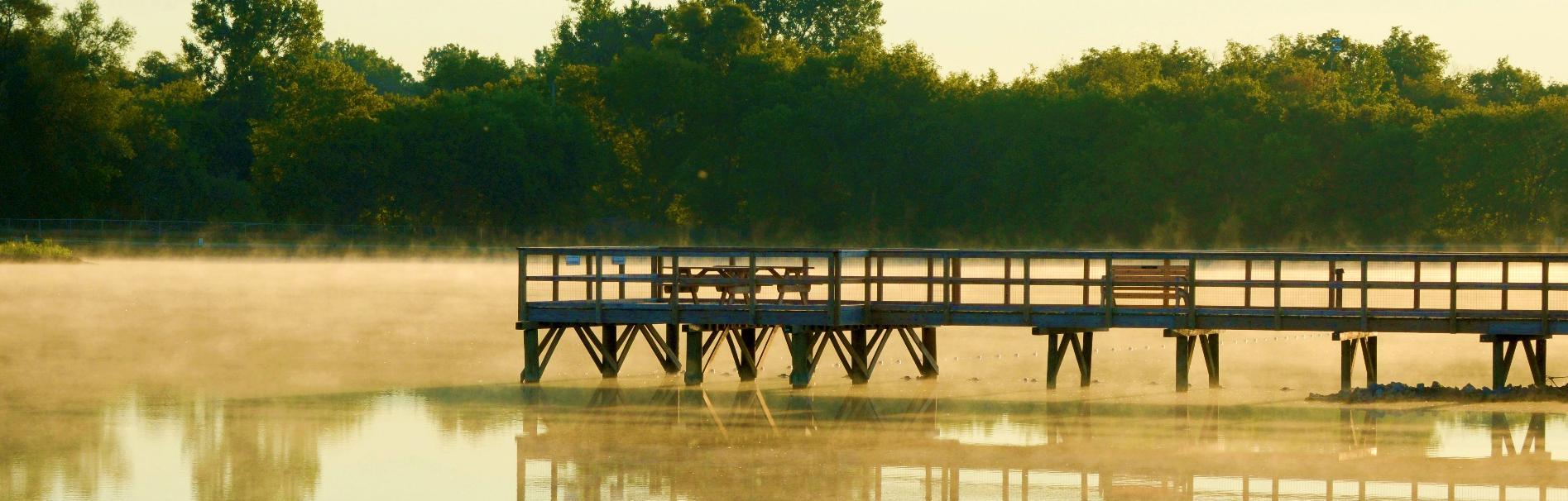
To promote public health and conservation, it is essential that proper steps are taken to dispose of waste. Every community in Genesee County is serviced by one of four Waste Haulers for curbside trash removal. This assists in reducing pollution by providing an effective way to dispose of waste (Figure 3-7). To help reduce the amount of waste going to landfills, houses also have access to curbside recycling with about 69% of residents participating. Although many residents recycle, a lot of waste still ends up in landfills. The two landfills in our County collected over 1.23 million cubic yards in 2023 alone (Figure 3-8). This is much lower than the 10-year high of 3.5 million cubic yards in 2015. Presently, only 60% of the waste disposed in landfills was generated in Genesee County. It is expected that the County will continue to see a small decrease in waste generation in the coming years. At current rates, it is expected that there is 32 years left of Genesee County landfill capacity.
Source: Michigan Department of Environment, Great Lakes, and Energy Report of Solid Waste Landfilled in Michigan
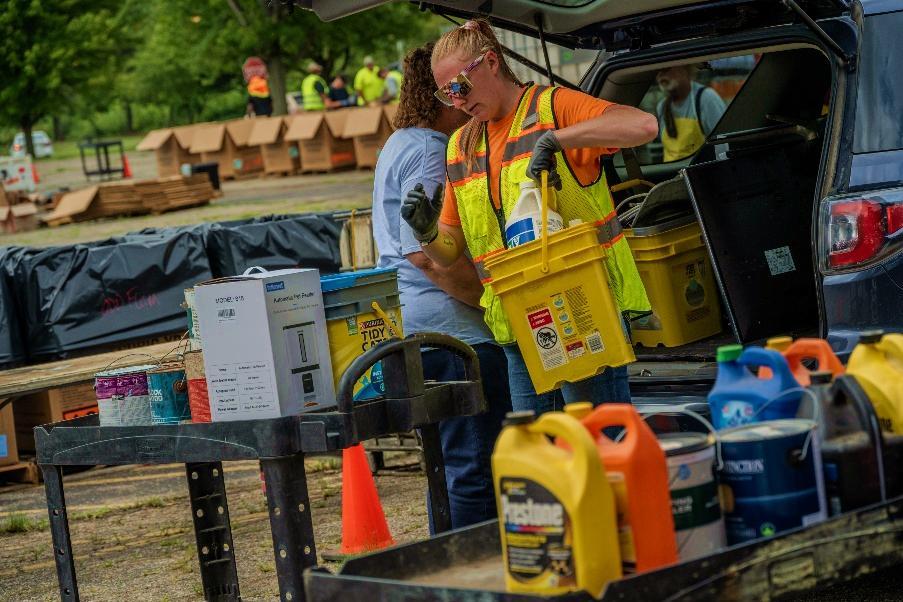
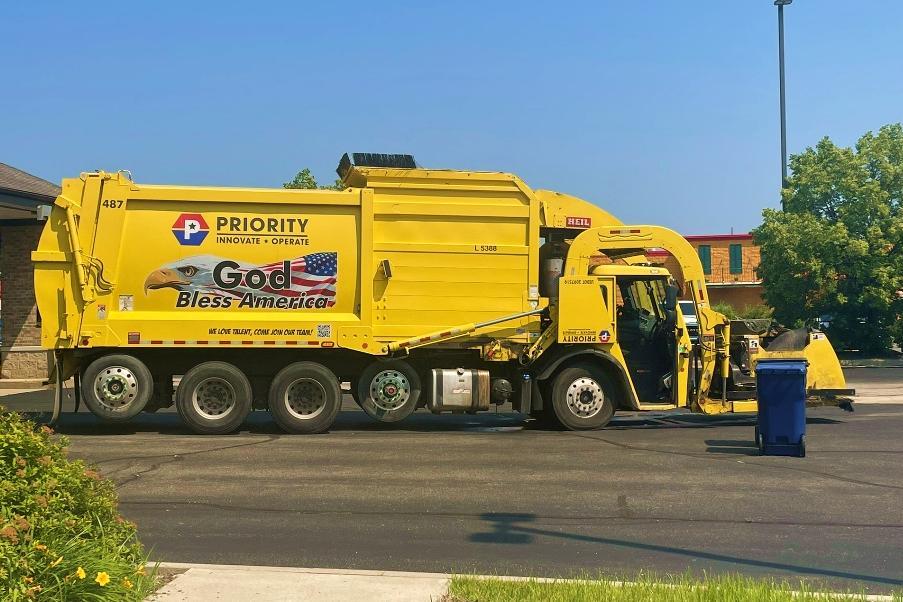
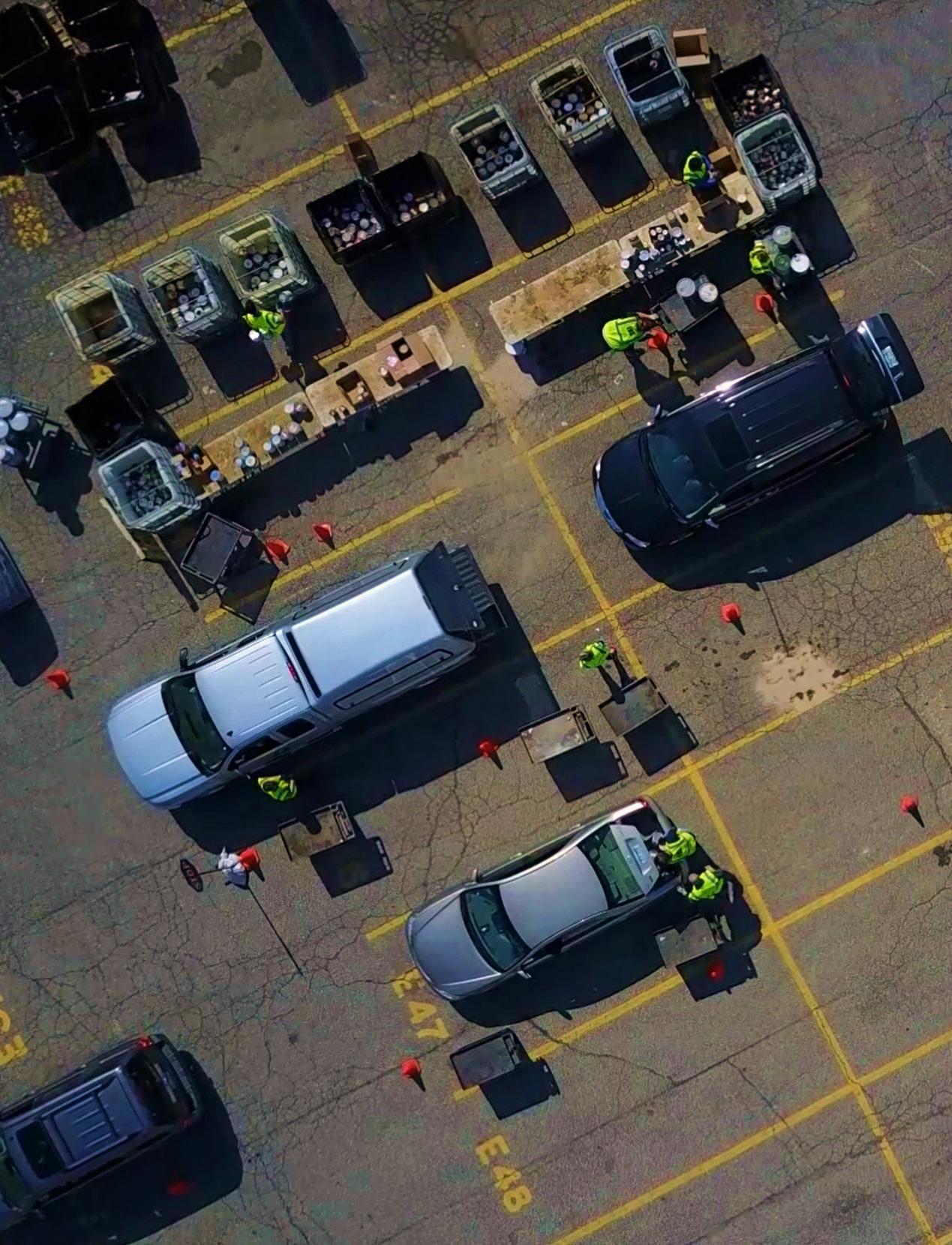
The Genesee County Board of Commissioners, the Genesee County Treasurer's Office and the Genesee County Land Bank formed a partnership to acquire property for the future site of a permanent recycling and education center for the county. Site preparation and demolition of the existing buildings on the site was completed in 2025. The vision for the recycling and education center is to create a state-of-the-art facility that will provide a centralized location for the drop-off of recyclable materials. The center will also serve as an educational resource for the entire community, providing information on the benefits of recycling and sustainability. This facility will help us reach our goals of improving education and awareness of proper material management and disposal.
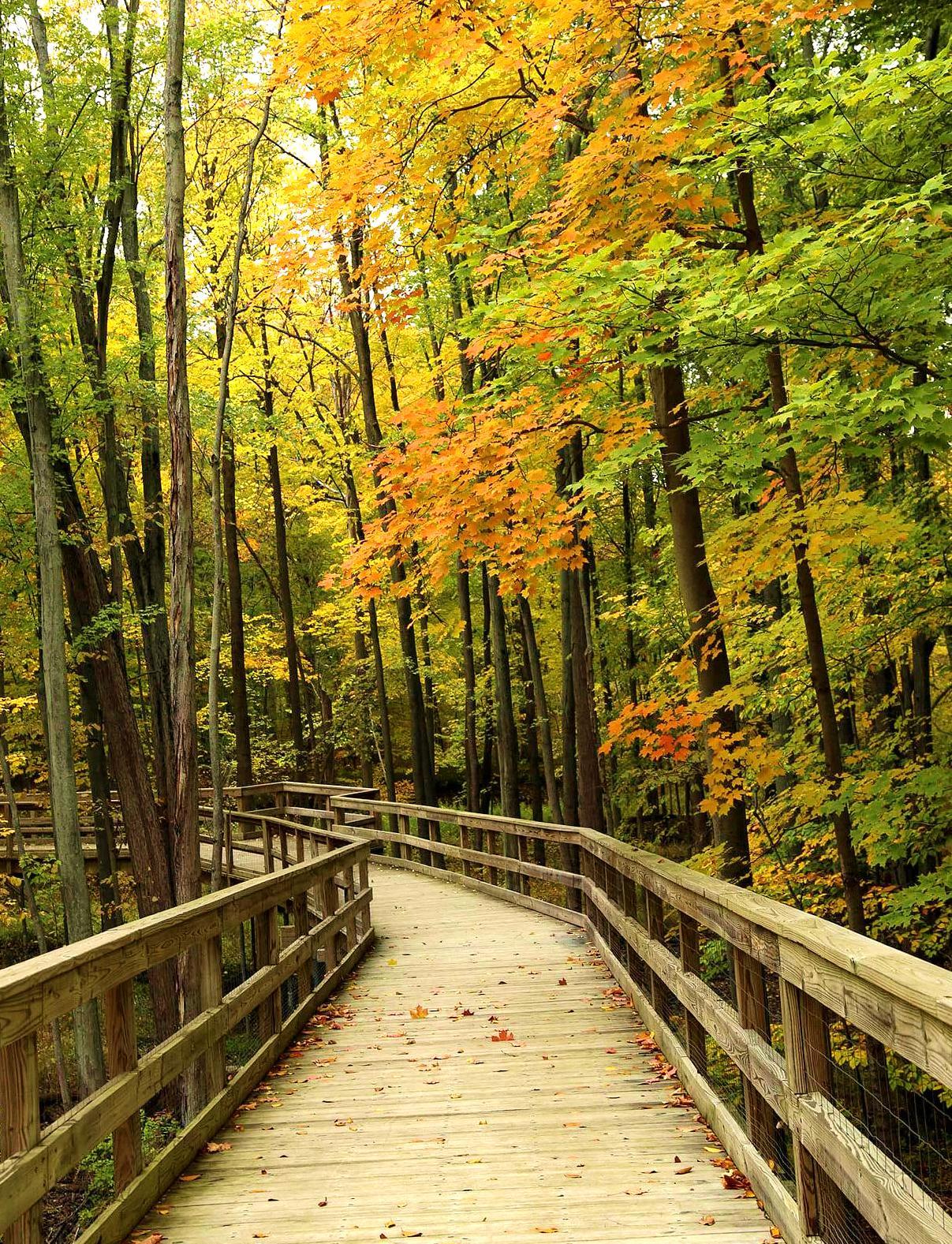
Local communities continue to expand their network of nonmotorized pathways, a great example of this being the Iron Belle Trail extension along Perry Road in Atlas and Grand Blanc Townships. New segments were completed in 2024 and 2025 with plans for future expansion. The Iron Belle Trail extends beyond the Genesee County limits, as the name suggests, connecting communities between Ironwood in the Upper Peninsula and Belle Isle in Detroit. This trail helps make progress towards our goals of providing transportation access for all users, while promoting healthy lifestyles and an attractive community image.
Communities throughout Genesee County are making strong progress in building a connected non-motorized transportation network. As interest in active lifestyles, such as; walking, biking, jogging, and paddling continue to grow, so do the social, health, and economic benefits these facilities bring to local residents. Genesee County currently boasts over 80 miles of hiking and biking trails, with more being added each year. Since the release of the 2014 Genesee County Regional Non-Motorized Plan, more than $24.4 million in engineering and construction funding has been invested in expanding and enhancing the region’s non-motorized infrastructure.
Based on strong public interest, GCMPC is committed to tracking non-motorized trail activity along regional routes. Genesee County’s trail count program helps establish a baseline and continuing knowledge of non-motorized trail usage. Genesee County municipalities may borrow trail counters to measure current use, assess economic impact, and strengthen applications for future grant funding.
Trail counts also provide insight into user patterns by studying the time of day, which day of the week and what month of the year activity is recorded. This data allows staff to document the need for new trail connections, support funding efforts, and equip communities with information needed to enhance local walking and biking opportunities.
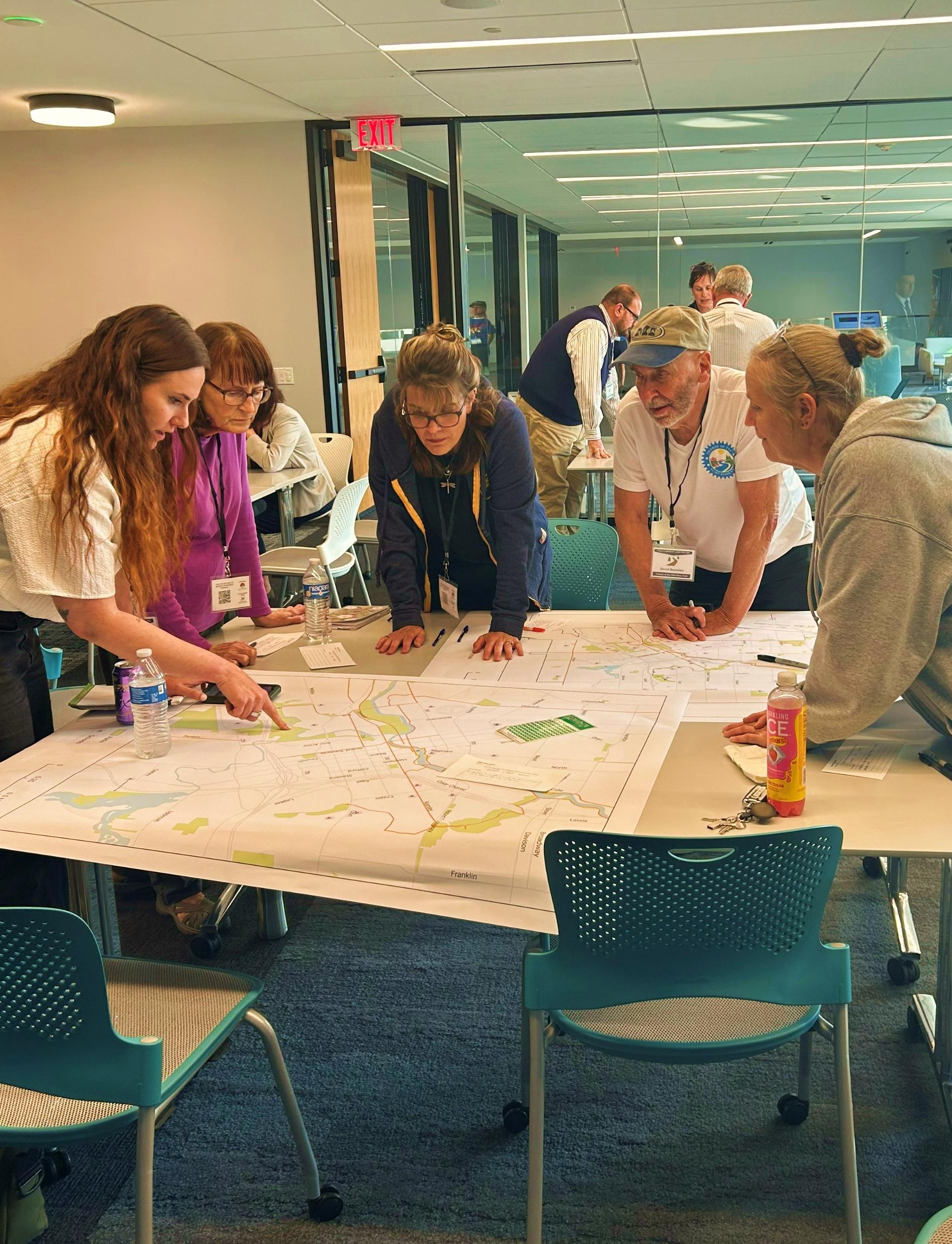
In June 2025, the Genesee County Metropolitan Planning Commission held a trail symposium in collaboration with the Mott Foundation. This symposium brought together trail advocates, government representatives, and citizens to establish trail priorities throughout the County. The information gathered from this event will provide guidance for future trail development ensure consistent non-motorized connections throughout the county.
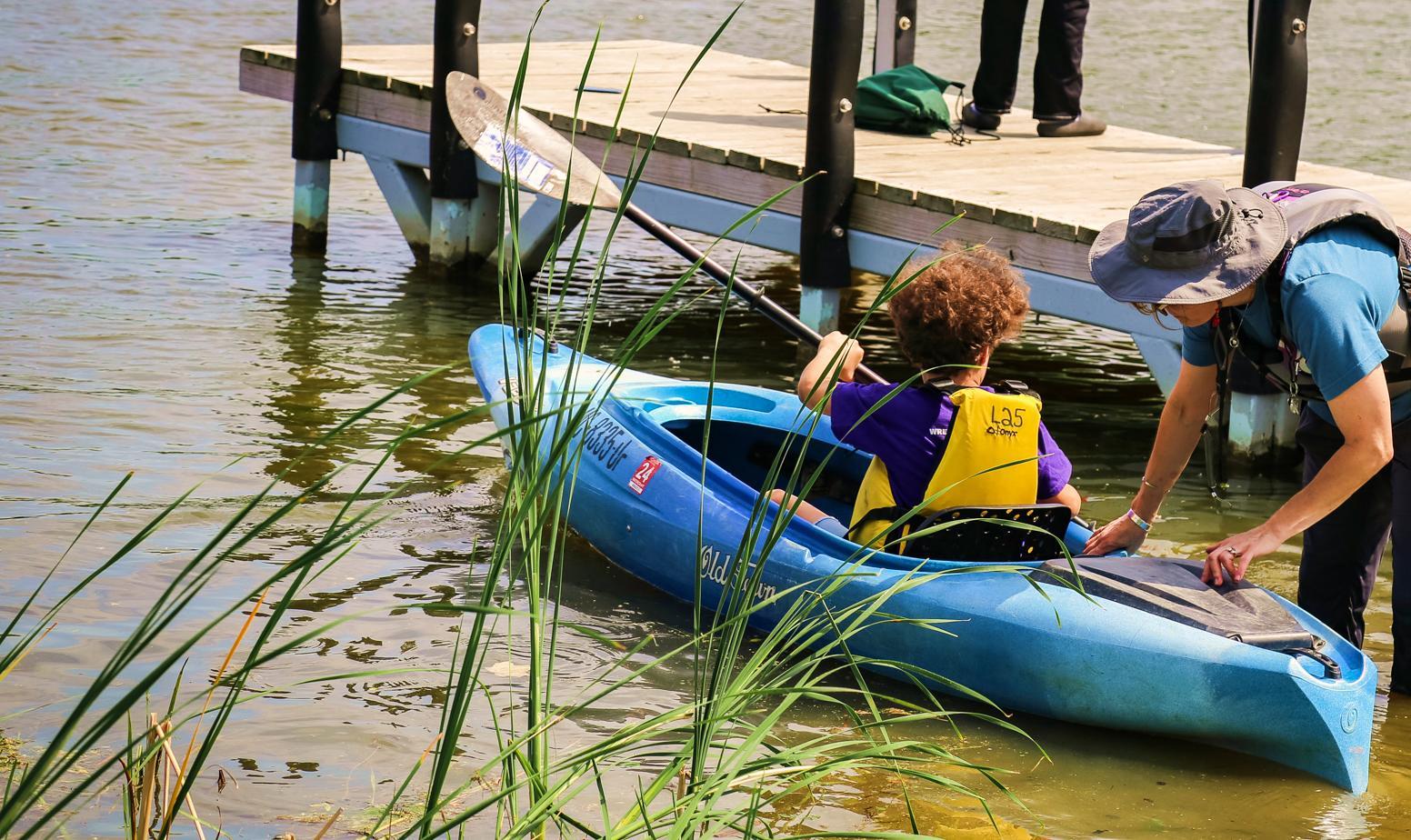
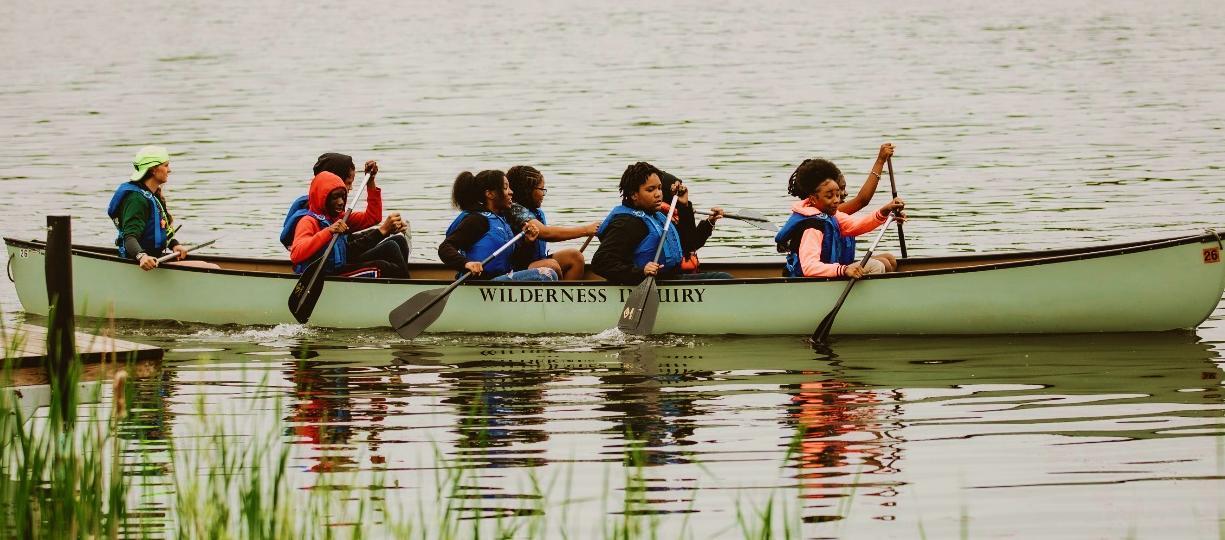
Genesee County is home to two major waterways, the Flint River and the Shiawassee River. Each provide recreational, environmental, and economic benefits to the surrounding communities. These two rivers have been designated by the National Parks Service as Water Trails in 2020. This special designation means the rivers are open to non-motorized watercraft, have publicly accessible launch sites, and include key cultural, historical, and environmental significance. The water trails include multiple public access points, accommodating a range of trip lengths and difficulty levels while providing access to various recreational opportunities.
Genesee County Parks have invested heavily into the Water Trails providing facilities along the rivers, rental opportunities for kayaks, and new signage. Bluegill Boat Launch is one such location, featuring a new kayak launch, pavilion, educational resources on invasive species, and proximity to the cross-state IronBelle Trail. The water trails are also supported by communitybased organizations and citizen-led groups that share a commitment to conservation, environmental stewardship, education, and expanding public access for recreation. Most importantly, the Water Trails provide connections between communities across multiple county boundaries and even up to the Shiawassee National Wildlife Refuge.
According to the Outdoor Industry Association, Americans spend $887 billion on outdoor recreation each year. We can expect this number to grow as interest in water recreation grows and people become familiar with Genesee County’s waterways. A Flint River Water Trail paddlers’ guide was developed as part of an effort to increase and maintain water trail usage.
A Flint River Water Trail Development Guide was also developed to provide guidance to agencies and individuals on how to improve the trail. Currently multiple goals from this plan are being met, including promote and improve river access sites and user experiences, and support local and regional efforts to increase water-based recreation and tourism.
The Flint River is a 142-mile river running through Genesee, Saginaw, and Lapeer Counties. The Flint River is a part of the larger Saginaw Bay Watershed, which is home to 1.4 million people and many important wetland areas north of Genesee County, including the Shiawassee National Wildlife Refuge. As the river passes through the City of Flint, it enters the most environmentally impacted section of the entire watershed. This urban stretch is considered the watershed’s most degraded area due to extensive deforestation, urban development, and high levels of pollution into the river system.
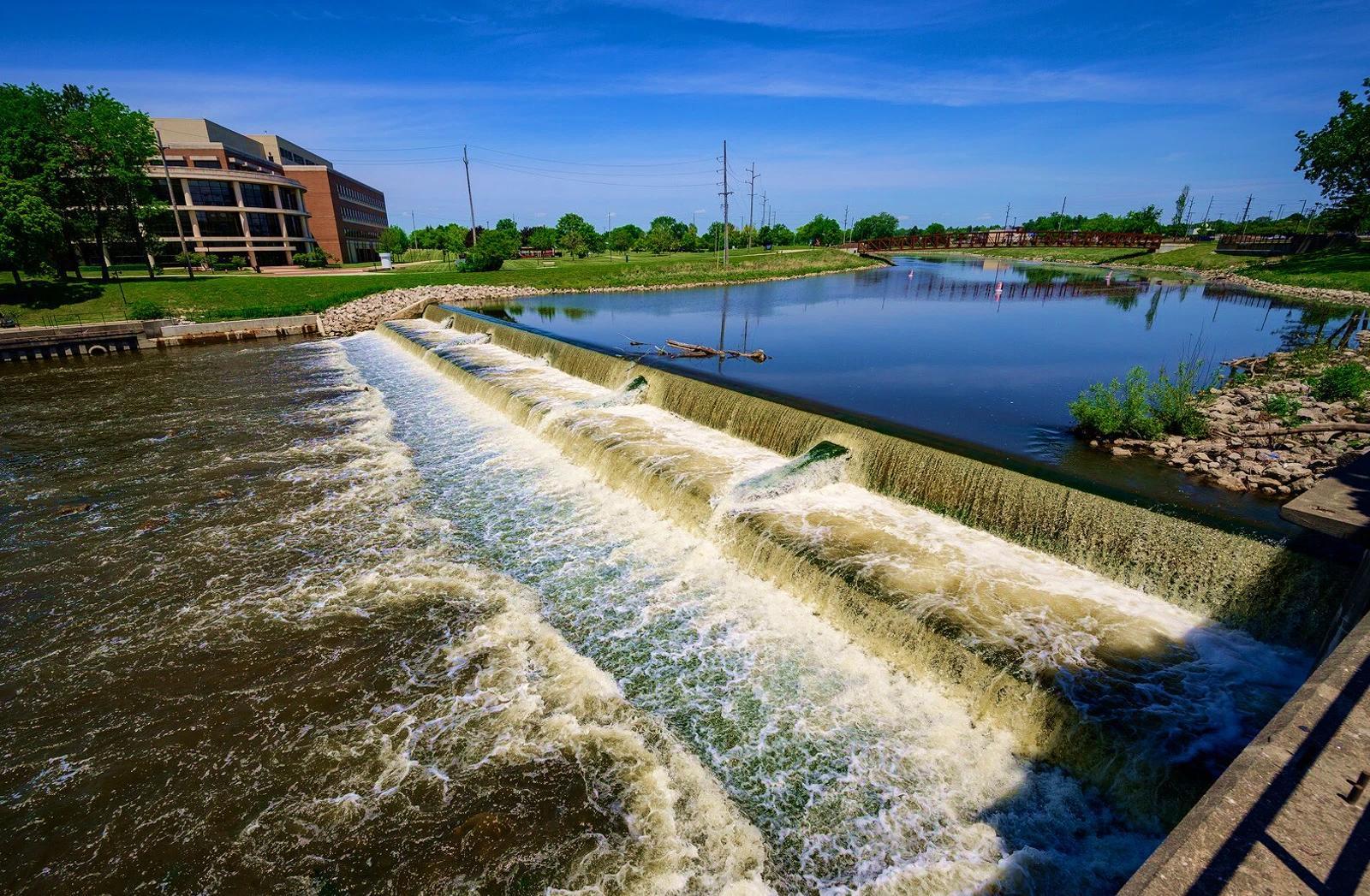
To address issues related to the Flint River within the City, Genesee County Parks developed the Flint Riverfront Restoration Project which aims to clean and preserve the area surrounding the Flint River. More than $40 million in state and local funding have been allocated to this project, producing a measurable impact on river condition and surrounding infrastructure improvements. In recent years, the Hamilton and Fabri Dams were removed
from the Flint River near downtown Flint. They have been replaced with six riffles in the river which improve flood control, allow for easier paddle craft access through the City, improve habitat for fish and wildlife, and restore contiguous river passage for the downtown portion of the Flint River.
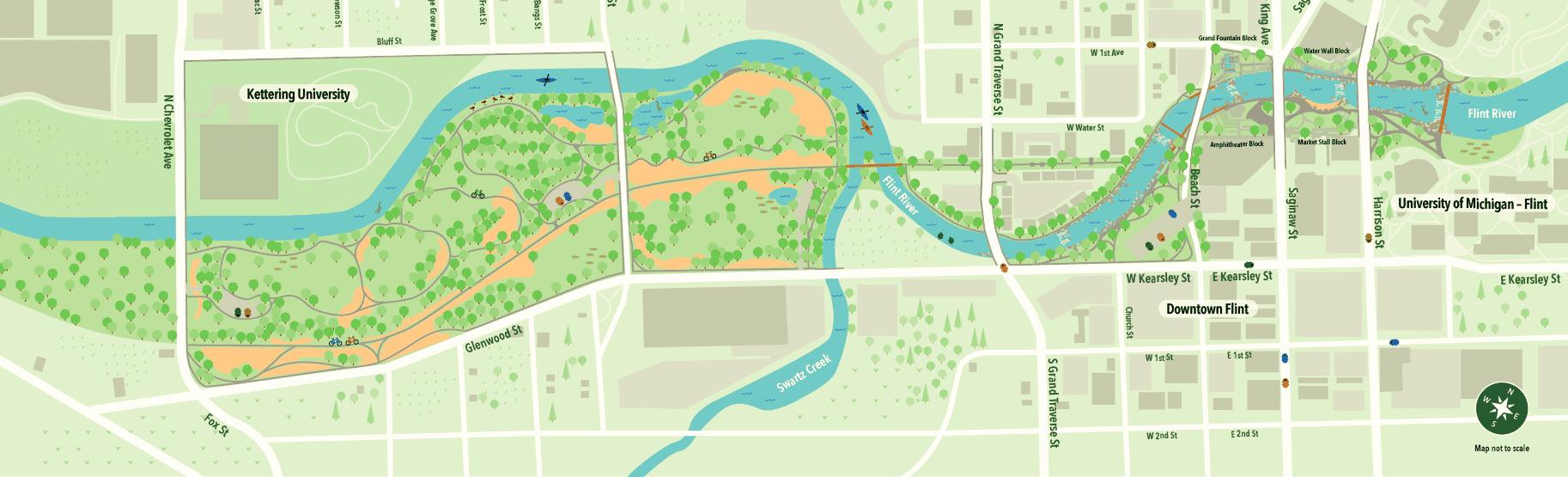
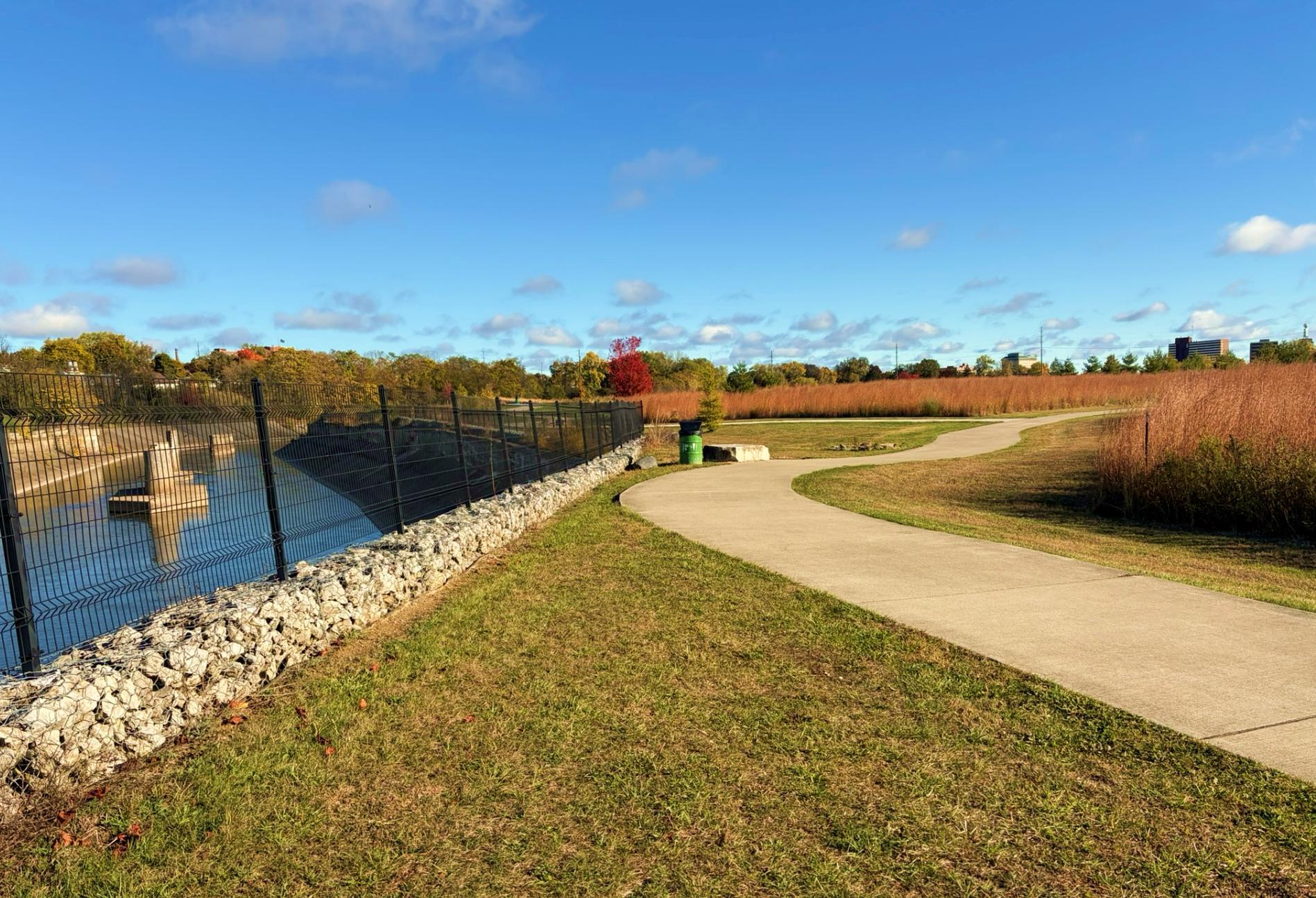
Complementing these improvements, efforts to revitalize the surrounding area have also made significant strides. In 2021, the Chevy Commons park was completed along the riverfront west of downtown near Kettering. This park is located where the “Chevy-In-The-Hole” plant used to exist along the riverfront. Instead of paved over asphalt as it was after demolition of the GM factory, this area is now home to green space, walking and biking trails, riverfront access, and beautiful views.
Another component of this project is the creation of the Flint State Park which will be the first state park in Genesee County. This park will encompass many existing parks along the Flint River and combine them into one 230-acre state park. New connections between different areas of the park will increase pedestrian access near the river, and improvements to the Chevy Commons will be included too, such as a new play structure, pavilion, and parking improvements.
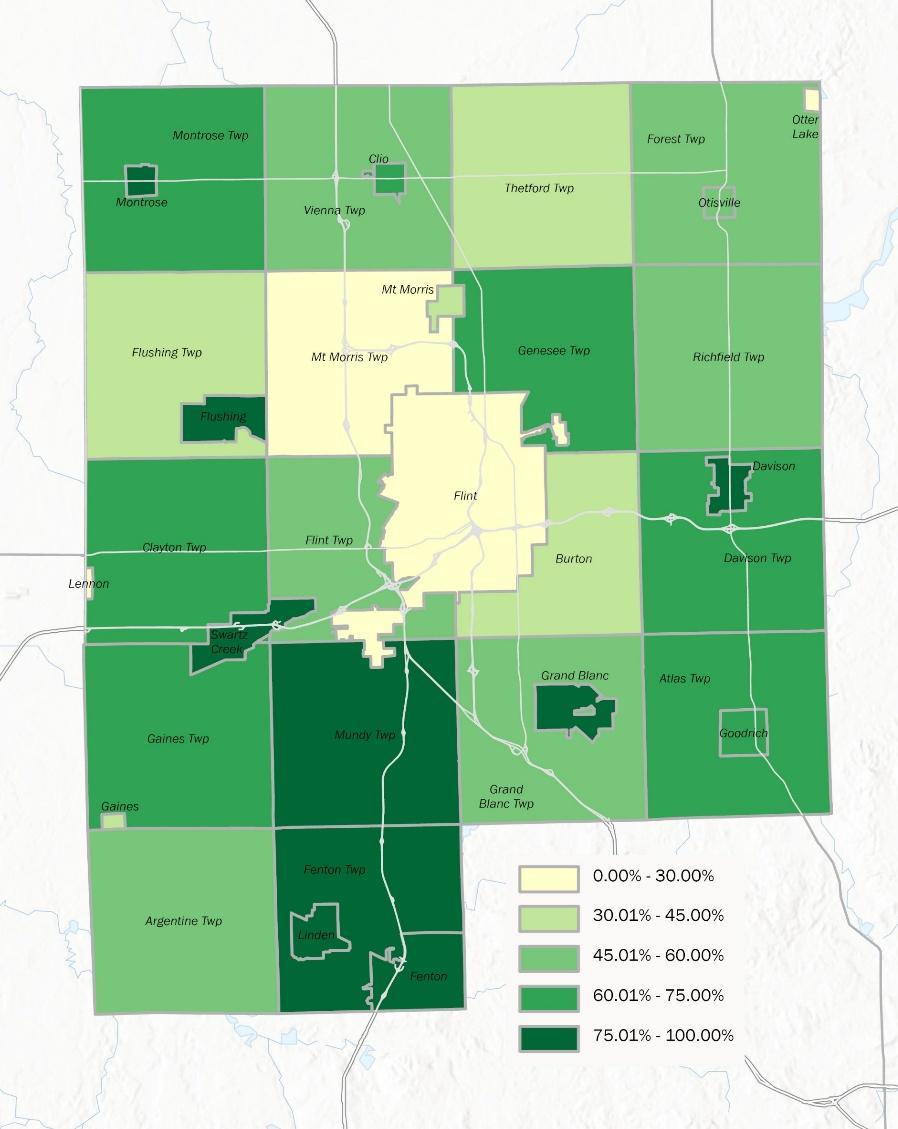
The landscape of communities in Genesee County continues to change as population fluctuates, shopping preferences change, and new developments arrive. Currently 46% of our County’s land use is considered built-up. While we are projected to see an approximate 6% decrease in population, we are projecting to experience a 19% increase in developed lands to the year 2050 (Figure 3-9). This development will result in over 35,000 acres of farmland, forests, and wetland lost, primarily in the townships (Figure 3-10).
Communities must carefully balance short and longterm benefits when making land use and zoning decisions. Too often decisions are made primarily for short-term benefits rather than what is best for the community as a whole in the long run. Zoning and land use plans should serve as the framework guiding development in a community. Special use and zoning exemptions should be used sparingly. However, in practice they are allowed far too often as a short-term solution to community issues such as filling vacant retail space. Enforcing permitted uses in land use and zoning plans helps to avoid quick reactions to shortterm problems and ensures decisions are made in the best interest of the community in the long run. It is also important to review these plans on a regular basis to make sure they continue to reflect long-term community needs and values.
Similarly, communities are sometimes encouraged to extend infrastructure or offer tax incentives to attract prospective businesses. While these strategies can support economic development, it is important to carefully consider the long-term financial implications. Before making decisions that diverge from approved plans or carry long-term financial consequences, communities should conduct a thorough and honest cost-benefit analysis to ensure sustainable growth and fiscal responsibility.

Argentine Township
Atlas Township
Burton City
Clayton Township
Clio City
Davison City
Davison Township
Fenton City
Fenton Township
Flint City
Flint Township
Flushing City
Flushing Township
Forest Township
Gaines Township
Gaines Village
Genesee Township
Goodrich Village
Grand Blanc City
Grand Blanc Township
Lennon Village
Linden City
Montrose City
Montrose Township
Mt. Morris City
Mt. Morris Township
Mundy Township
Otter Lake Village
Richfield Township
Swartz Creek City
Thetford Township
Vienna Township
3-9
Population included in Township

As development opportunities present themselves, Genesee County will support its communities and landowners to make sure there is a balance between the urban and rural landscape. To ensure that farmland is protected, Genesee County has identified a potential future land use strategy called the “Purchase of Development Rights (PDR)”. This program would allow communities to become eligible for the Michigan Agricultural Preservation Fund Grants.
Urban farming in Genesee County is primarily focused within the City of Flint. The City’s current master plan highlights the desire for Green Neighborhoods and Green Innovation zones, which will unlock the agricultural potential of swaths of vacant land within the City.
One urban farming initiative in Genesee County is Edible Flint, which has an urban educational farm in the City. This community landmark provides education and resources for people to acquire fresh food, and the means to start backyard gardens themselves.
Zoning is key to effectively managing land use and wider planning efforts in a community. As views on zoning continue to develop and change, it is the role of the County Planning Commission to act as a source of guidance for municipalities looking to make change within their communities.
Every community in Genesee County has adopted their own unique zoning ordinances that are approved by local boards and Planning Commissions. Zoning ordinances and changes must meet the requirements of the Michigan Zoning Enabling Act of 2006, which outlines key legislation for zoning information in the state of Michigan.
At the County level, there is no comprehensive zoning document. However, it is a role of the County Planning Commission to review zoning changes. One thing that is considered when reviewing zoning changes are impacts to adjacent municipalities. These border areas are closely looked at to ensure the feel from community to community remains consistent. It should be noted if there are drastic changes for zoned uses between and across municipal boundaries. In addition, special care is
taken in reviewing non-conforming uses, and what the local unit’s plan is to permit them. For example, a township’s zoning ordinance may classify a parcel of agricultural land as low-density residential. This may be done to accommodate population trends or to provide opportunity for housing development. During the County’s review process, this should be noted. A recommendation in this case would be to continue to permit agricultural uses in that zoning classification or make a special exception for parcels that were agricultural before the new zoning ordinance takes effect.
A local unit of government’s zoning ordinance is also compared with its’ current Master Plan document to determine if there is anything inconsistent between the two. It should be noted if there are drastic differences between them. If there are large disparities, the County Planning Commission may suggest to the municipality to make changes on their zoning ordinance or Master Plan to better align with the goals of either document.
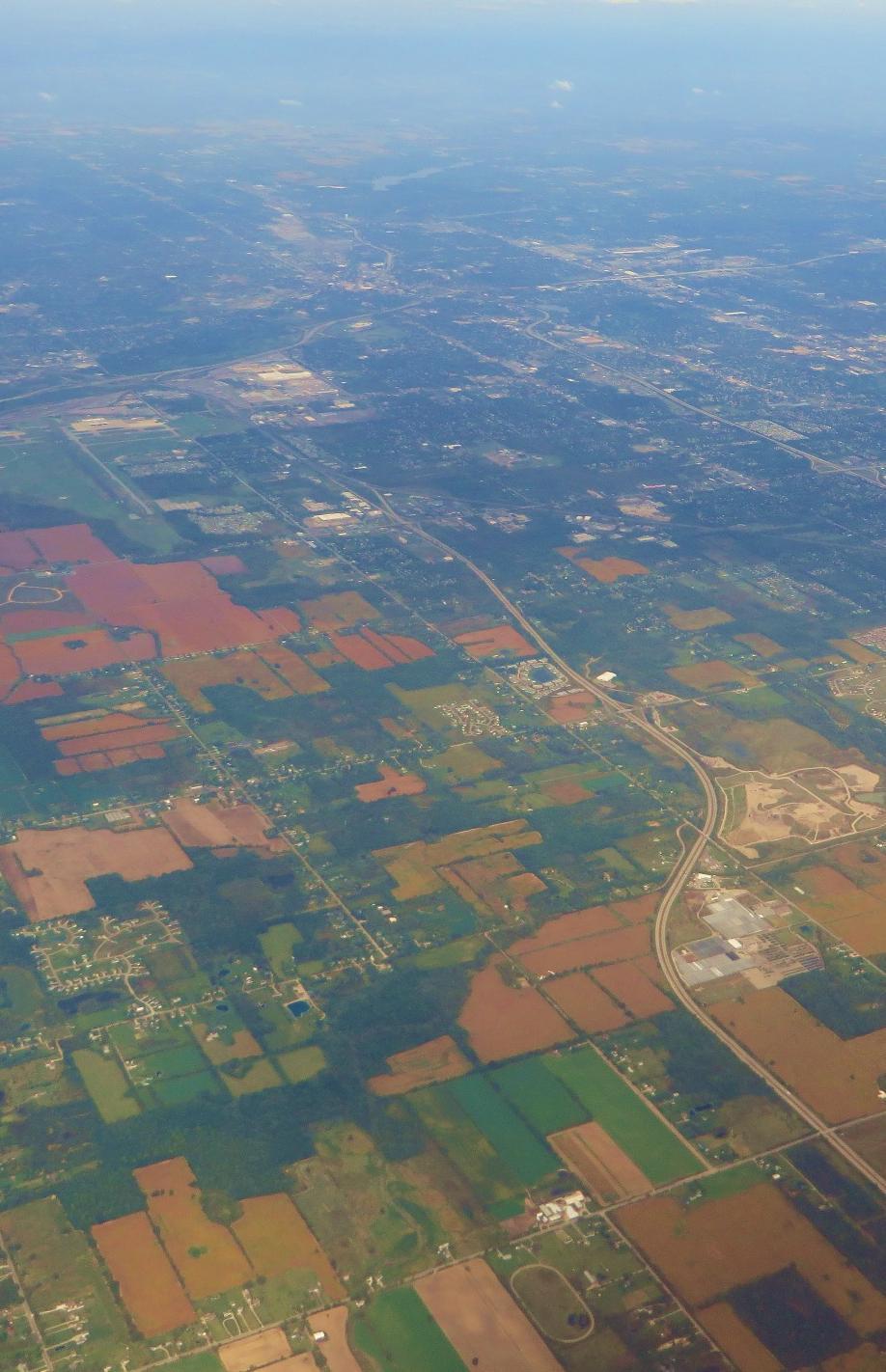
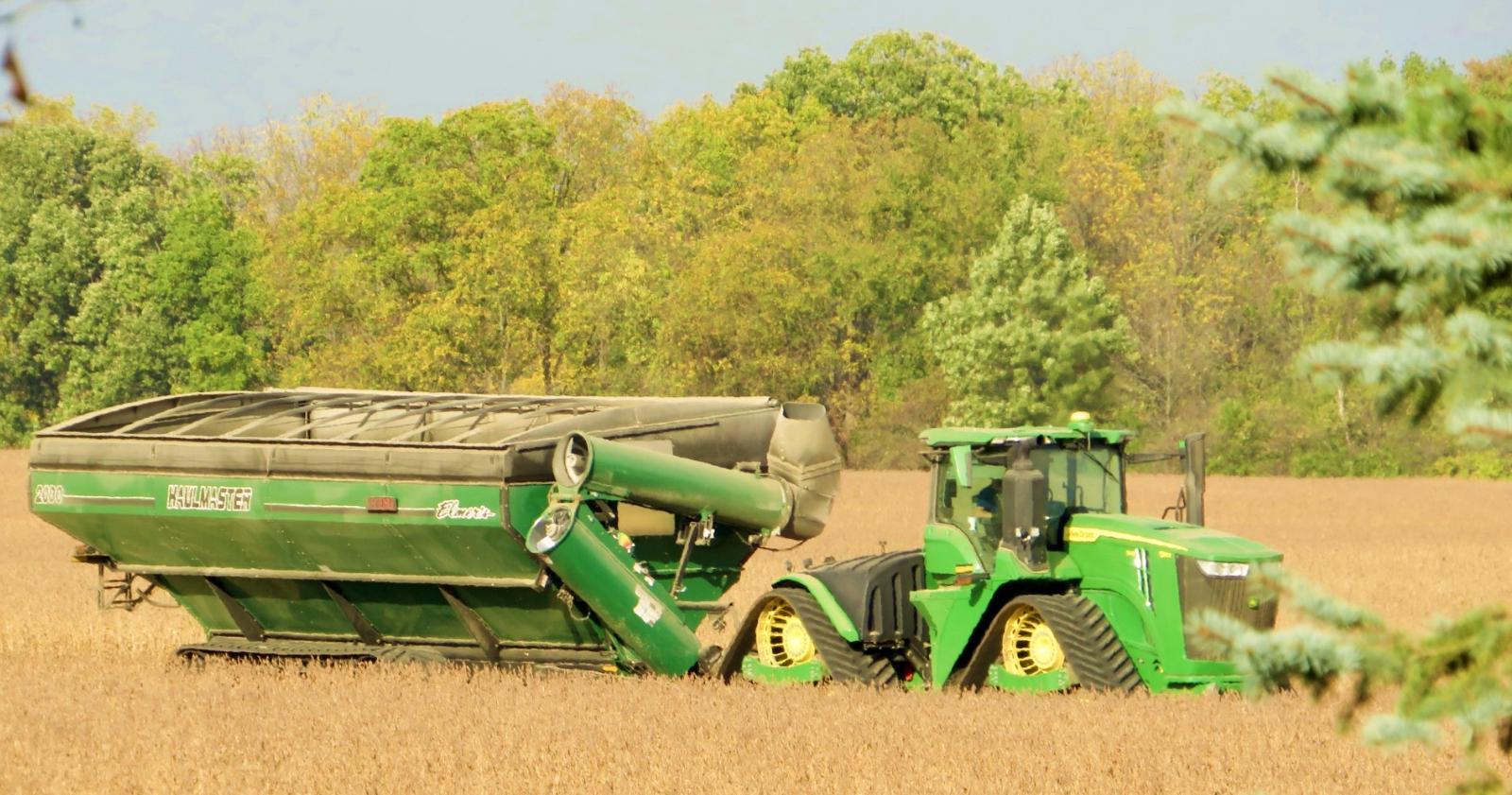
Some of the earliest settlers in Genesee County began agricultural operations as land was cleared from the old growth forests that existed prior to the 1800s. Since then, agriculture has remained constant in the economic output of the County.
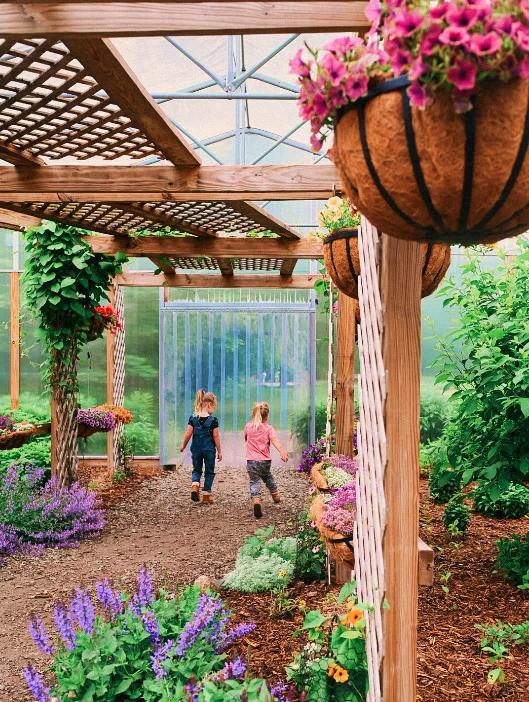
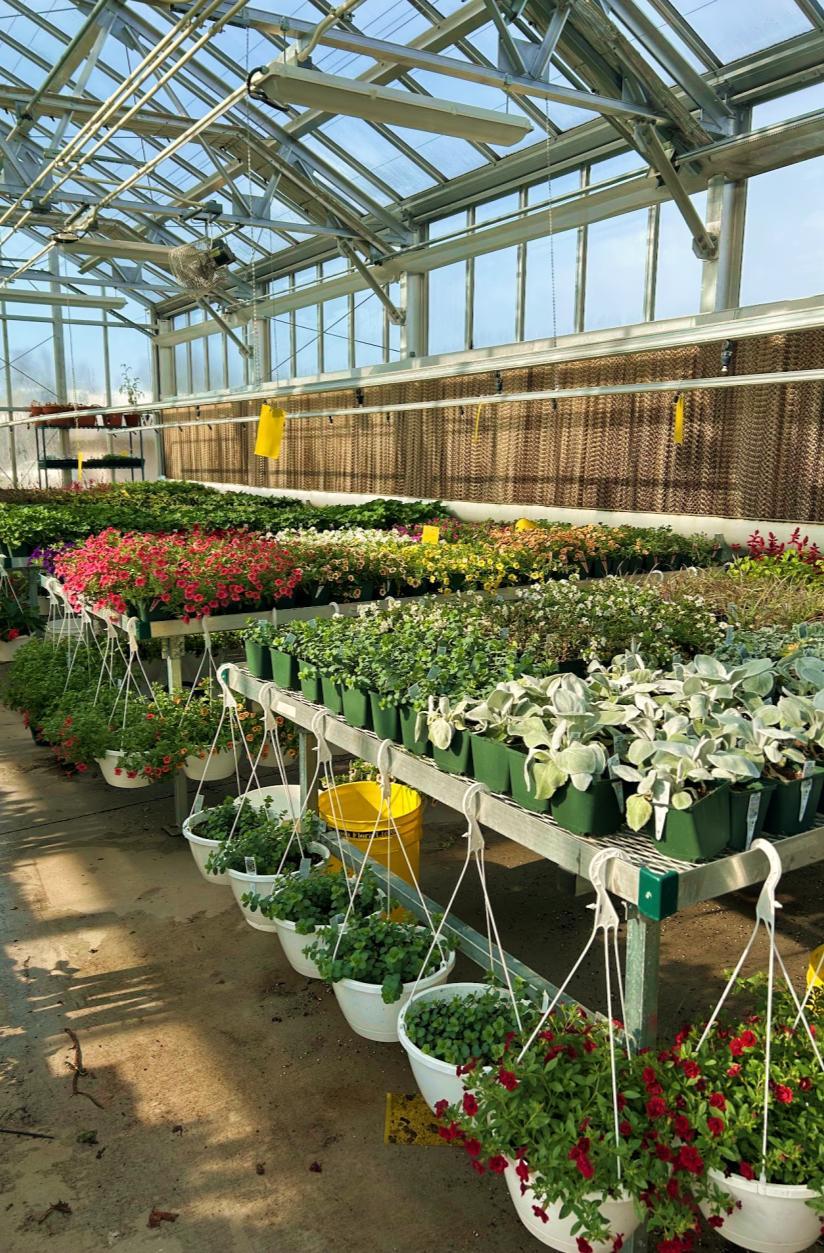
There are approximately 120,000 acres of land used for farming in Genesee County with over 1,000 producers. When looking at output across the state, our County is a major producer of cash crops, with the market value of products sold topping $74 million annually (USDA). Agriculture also poses the opportunity for tourism. In Genesee County there are over 30 agritourism destinations, including orchards, specialty farms, and greenhouses. Agritourism can supplement farmers’ incomes in addition to standard farming practices.
Due to the extensive farming and agritourism industry, preserving farmland in Genesee County is important to make sure that these businesses continue to flourish. However, there needs to be a careful balance between preserving farmland and urban expansion to ensure the county can continue to grow while maintaining its character.
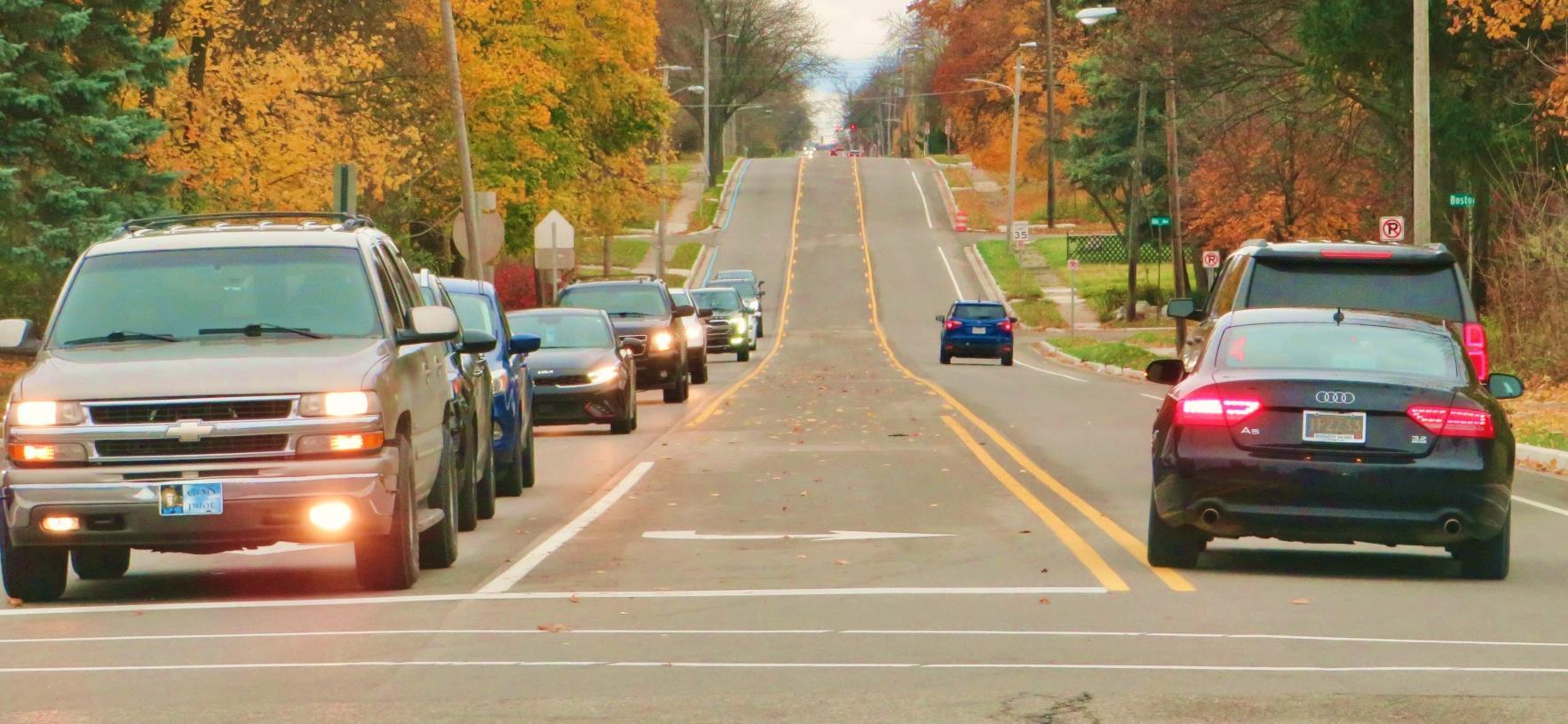
In the 20th century, Genesee County rapidly developed extensive road and bridge networks to accommodate growing population and economic development. This once robust infrastructure is now in need of repair. The demand for infrastructure improvements far exceeds the available resources. With limited funding, communities face difficult decisions each year by prioritizing which roads or waterlines to repair now and which must wait until funding becomes available.
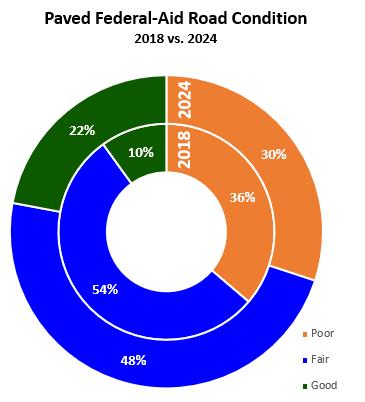
Genesee County surveys and tracks the condition of our roads. The Genesee County paved road network, including both local and federal aid roads, spans approximately 5,500 lane miles. As of 2024, over 50% of our paved road network is in failing condition. To support road improvements, Genesee County allocates an average of $12 million in federal funds per year to local municipalities and road agencies to improve the federal aid network. This funding is supplemented by additional resources provided through the state’s Act51 allocation, bonds, and local road millages. However, the total available funding remains insufficient to meet the full scope of infrastructure needs across the county. With the average cost to reconstruct a onemile, two-lane road at approximately $3 million, current funding levels fall significantly short of what is required to restore and maintain the entire county network. On average, it is estimated that an additional $1.07 billion is needed per year to properly maintain local roadways throughout the state of Michigan (The Asset Management Council).
Due to limited funding, many road agencies have used innovative fixes to extend the life of our roads. Quick repairs provide a temporary fix to road conditions, but a more expensive reconstruction will still be needed in the future.
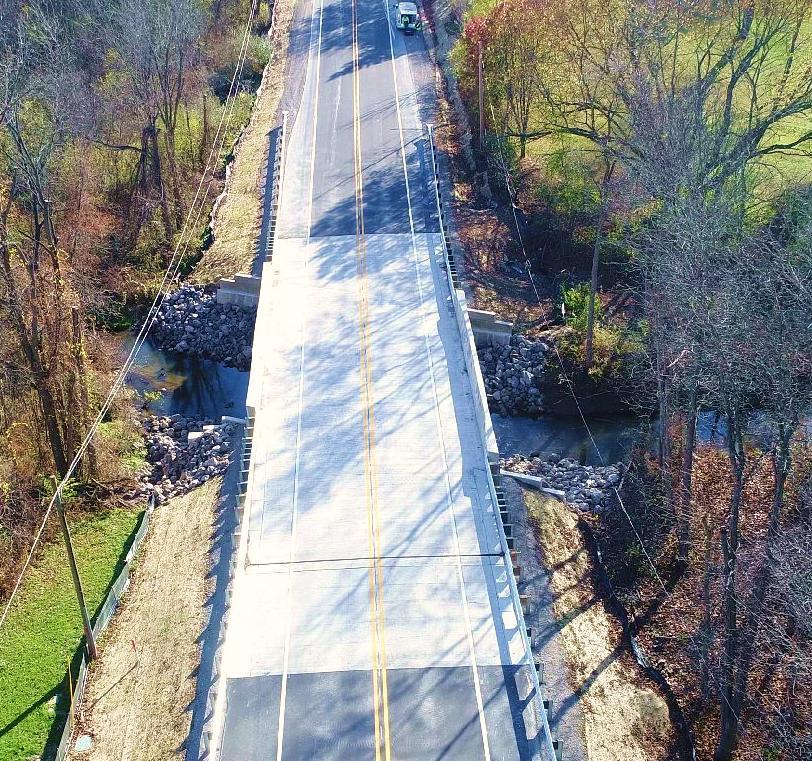
Bridges and dams are a growing concern due to aging infrastructure and the absence of a dedicated funding mechanism for ongoing maintenance. In Genesee County there are 369 bridges and 11 dams (US Army Core of Engineers). The average cost to replace a twolane bridge is $1.7 million with only $50 million available statewide each year for local bridges (Genesee County Road Commission).
When compared against the statewide average of 11%, Genesee County has a higher percentage of bridges in poor condition at 15% (Figure 3-12). 35 percent of bridges are over 50 years old with the typical lifespan of a bridge at only 70 years (MI Local Technical Assistance Program). Unlike roads in poor condition that will stay open to traffic, bridges in poor condition are subjected to weight restrictions or are closed to traffic entirely. This not only is an inconvenience to daily drivers but raises significant safety concerns. Emergency vehicles may need to take longer alternate routes due to restrictions and closures, potentially delaying their response during critical emergencies. The economic impact of bridge closures must also be considered. If key bridges along local and regional trade routes were to close, re-routing truck traffic along suitable routes may add lengthy delays on deliveries, thus reducing the economic output of businesses along these key routes.
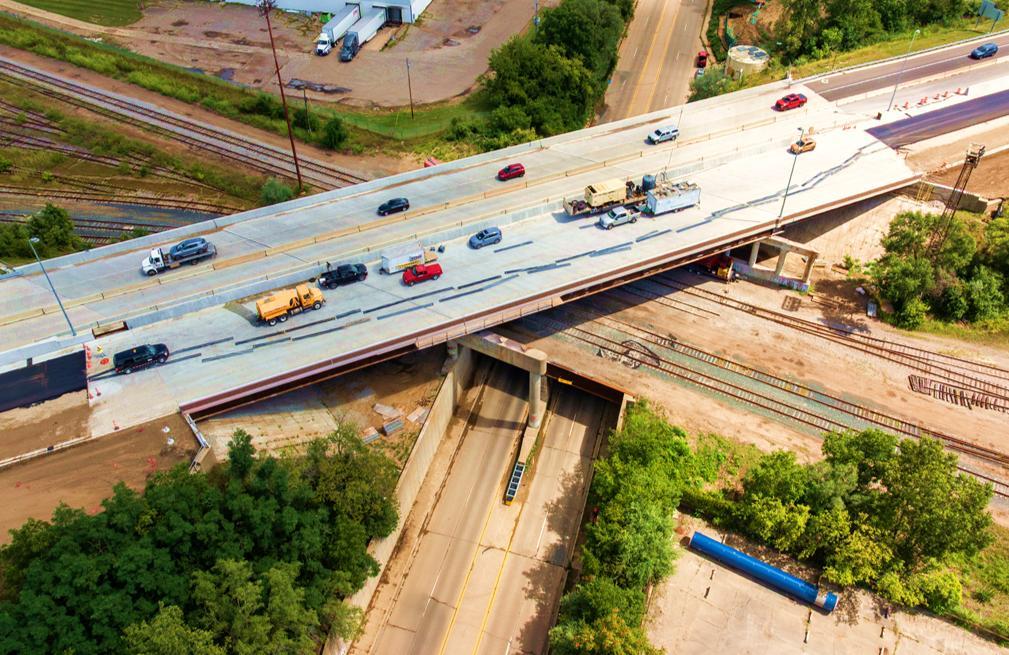
It is estimated that over $2.5 billion will be needed to properly maintain and replace bridges including major interchanges in Genesee County through 2050. Genesee County’s largest interchange, the I-75/I-69, is in need of a compete rebuild, which would involve the replacement of 33 bridges and cost $1.3 billion.
Using current funding levels, we can reasonably expect to receive approximately $222 million through the year 2050, leaving a shortfall of over $2.3 billion.
It is estimated that Michigan communities currently have an $800 million annual gap in water and sewer infrastructure needs, amassed from decades of deferred maintenance and a lack of knowledge of current conditions (21st Century Infrastructure Commission Report). Like other infrastructure, much of the existing infrastructure needs to be replaced, but few revenue sources are available. In recent years, Genesee County pledged over $21 million in American Rescue Plan Act dollars for water and sewer infrastructure projects across 16 communities. This investment has led to the completion of many historic water and sewer projects, such as the Southern Lakes Water Extension in Fenton Township, the Kearsley Creek Sewer Project in Eastern Genesee County, and the LaFontaine, Funds, and Lehman Project in Mundy Township. Together, these projects will be responsible for water and sewer tie-ins to thousands of homes and facilitate millions of dollars in economic development.
Genesee County is facing ongoing challenges with broadband infrastructure and internet coverage. Recognizing the importance of reliable high-speed internet, the County plans to design a network that will enhance community connectivity and support infrastructure investment
In 2023, Genesee County created a broadband task force. This task force was created to get fiber to every address in the County. In 2024, this task force produced the NextGenesee Broadband Resident survey. This reached over 2,100 households in the county and established the need for reliable and affordable internet access. Over one-third of respondents without home internet cited cost as the primary reason. Over 25% of respondents mentioned that they changed or cancelled their internet service in the last 12 months. This can also be partially attributed to cost. The County is playing a major role in broadband infrastructure investment to meet the needs of County residents.
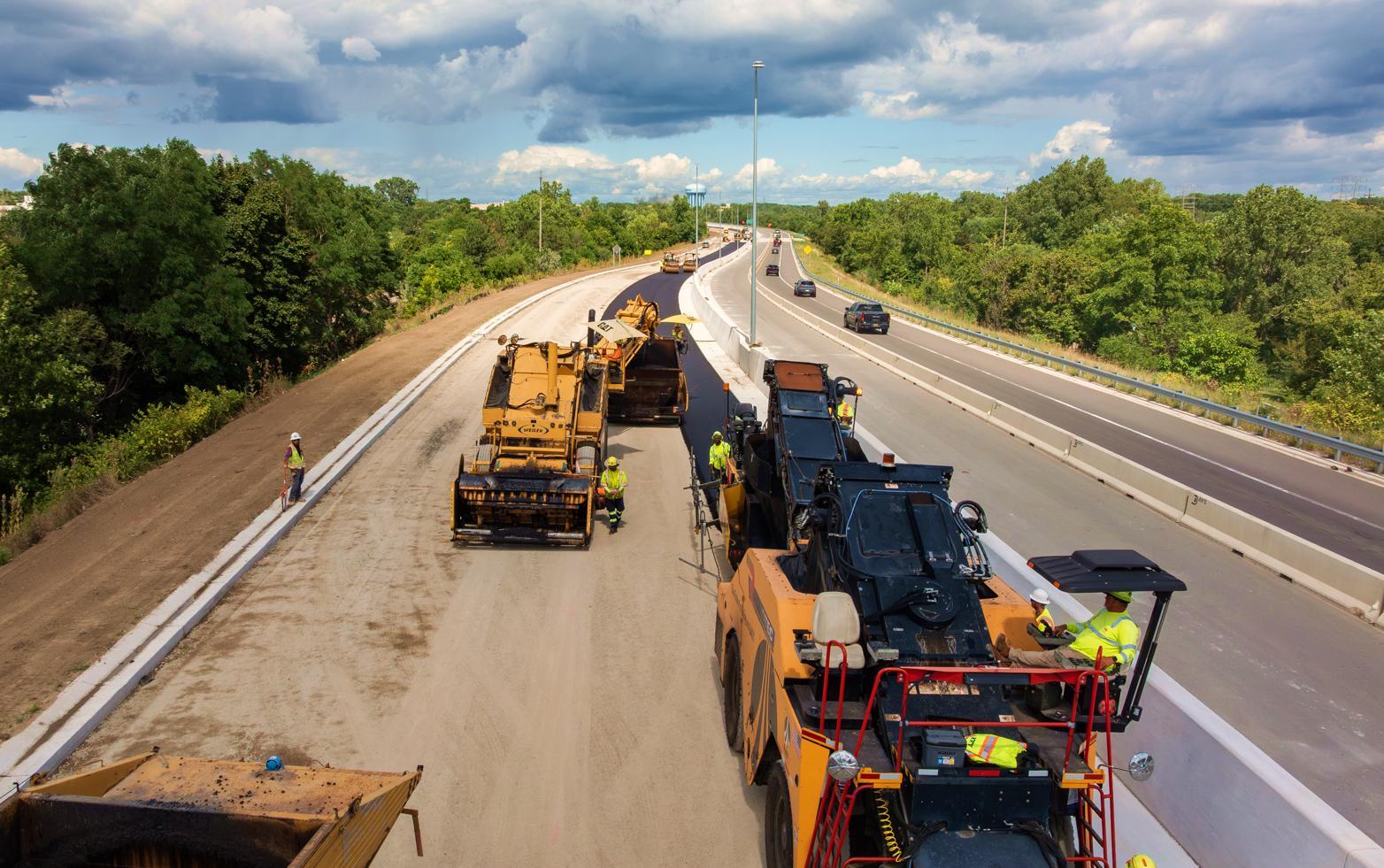
The Michigan Department of Transportation (MDOT) received $300 million from the Rebuilding Michigan Bond Program to restructure the I-475 corridor. After receiving funding, MDOT conducted a Planning & Environmental Linkage (PEL) study in 2021 to explore solutions for addressing the corridor's aging infrastructure, improve safety, and strengthen connections between neighborhoods and key cultural, institutional, and commercial activity centers.
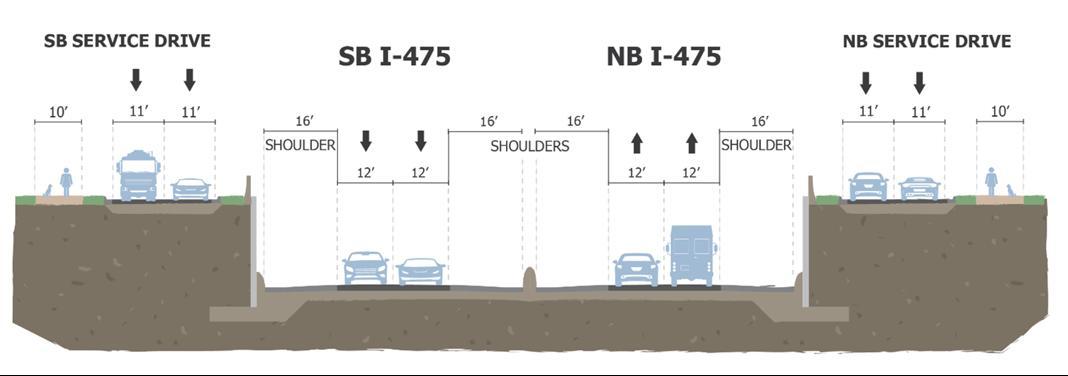
To ensure the proposed redesign reflected the different community values, MDOT led a comprehensive public engagement effort inviting both residents and stakeholders to provide input and reshape the vision of the I-475 corridor. Along with three in-person open houses, MDOT offered ondemand virtual meetings and provided online opportunities for public comment, allowing multiple outlets for the surrounding communities to provide feedback and ideas. MDOT also formed a Local Advisory Council (LAC) and Business Advisory Council (BAC) to share project updates and receive feedback throughout the entire process. Based on extensive public input, the Reduced Footprint Alternative (Figure 3-13) was the preferred option for the redevelopment of the corridor due to its cost effectiveness and positive public support.
Due to the overall size of the project, the State of Michigan divided the I-475 corridor into three segments, north, middle, and south, to better manage design, funding, and construction efforts.
The north segment, located from the Flint River to Carpenter Road, included a road diet from 6 lanes to 4 lanes along I-475, as well as removal and replacement of 13 bridge structures over the I-475 corridor. Funding for this section of the I-475 project was received in 2023, with construction occurring through 2025.
The middle section, located from Bristol Rd. to Thread Creek also contains a six-lane to four-lane road diet and includes the rehabilitation or replacement of 21 structures within its limits. Planned improvements include storm sewer and noise wall replacement, as well as multiple bridge replacements or repairs. Additionally, dedicated non-motorized funding has been set aside for two non-motorized bridge crossings along this section located at Carman St. bridge and Oakley St. bridge promoting neighborhood connection and safety. Funding for this portion of the project is expected in 2026, with construction occurring through 2028.
The southern section, located from I-475 from Thread Creek to the Flint River, like the northern and middle structures includes a road diet to 4 lanes and 15 structure replacements or rehabilitations. Planned improvements include sewer and noise wall replacement, in addition to multiple bridge structure repairs. Dedicated non-motorized funding has also been set aside towards the creation of a shared use pathway along Chavez Dr. from Avon St. to 5th St. and a pedestrian bridge along 2nd Street. Funding for this segment is also expected in 2026, with construction occurring through 2028.
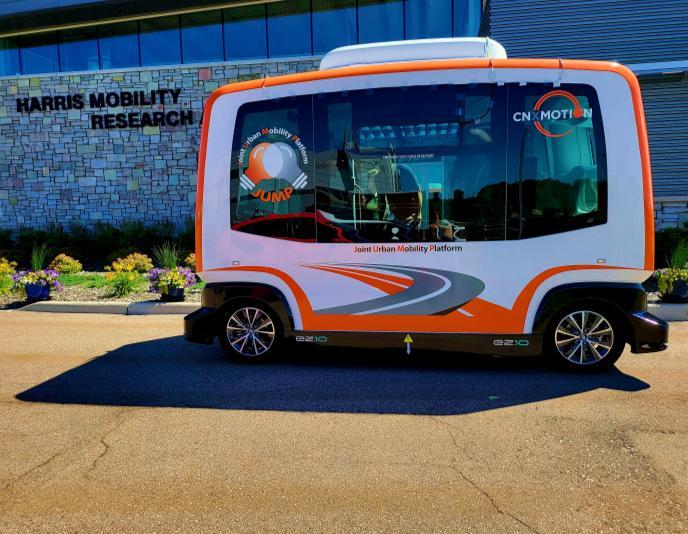
Intelligent transportation systems (ITS) are another piece of infrastructure being introduced into our everyday lives that aim to ease traffic congestion and reduce the number of preventable crashes. ITS is made up of a combination of smart infrastructure such as electronic message boards, flex routes, ramp signaling and vehicle technology such as selfdriving, lane departure warnings, driver-sourced hazard warnings, automatic braking, and back up cameras. The continued push toward full vehicle automation will yield increased traffic safety for people across the country. Cooperation between planning departments, road agencies, and third-party vehicle and software vendors will be crucial in the continued development of this system.
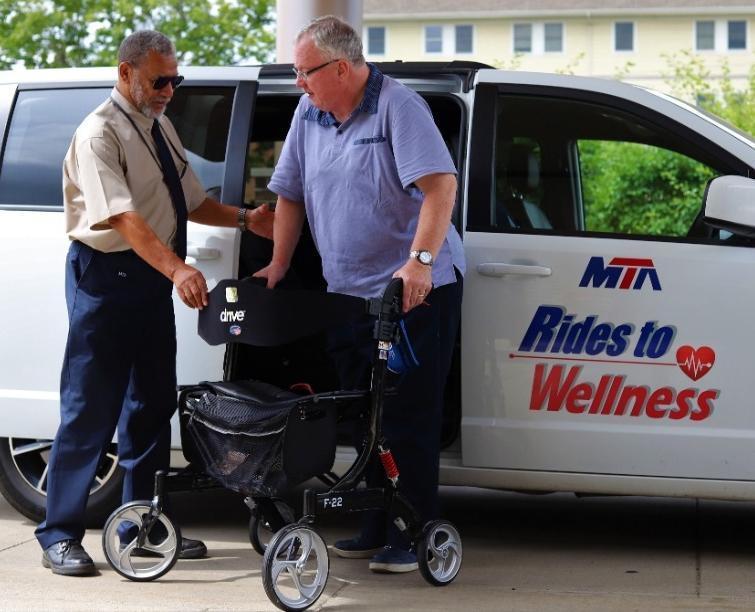
Locally, the Mass Transportation Authority (MTA) is equipping their vehicles with automatic vehicle location components and instituting online trip planning that will improve the information available for passengers. Furthermore, the Genesee County Road Commission has begun to integrate ITS into traffic signals, with signal syncs (strings of traffic lights being programmed together) and adaptive control (intersection lights detecting a car’s arrival) into traffic projects Countywide.
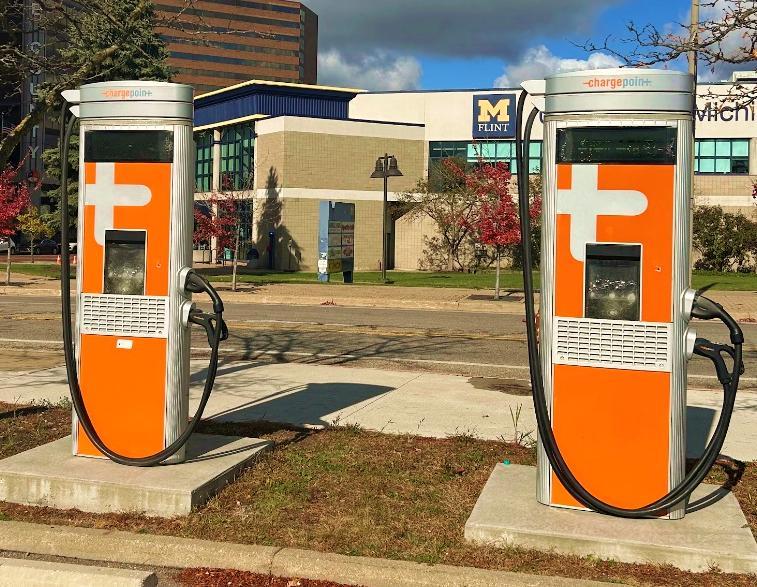
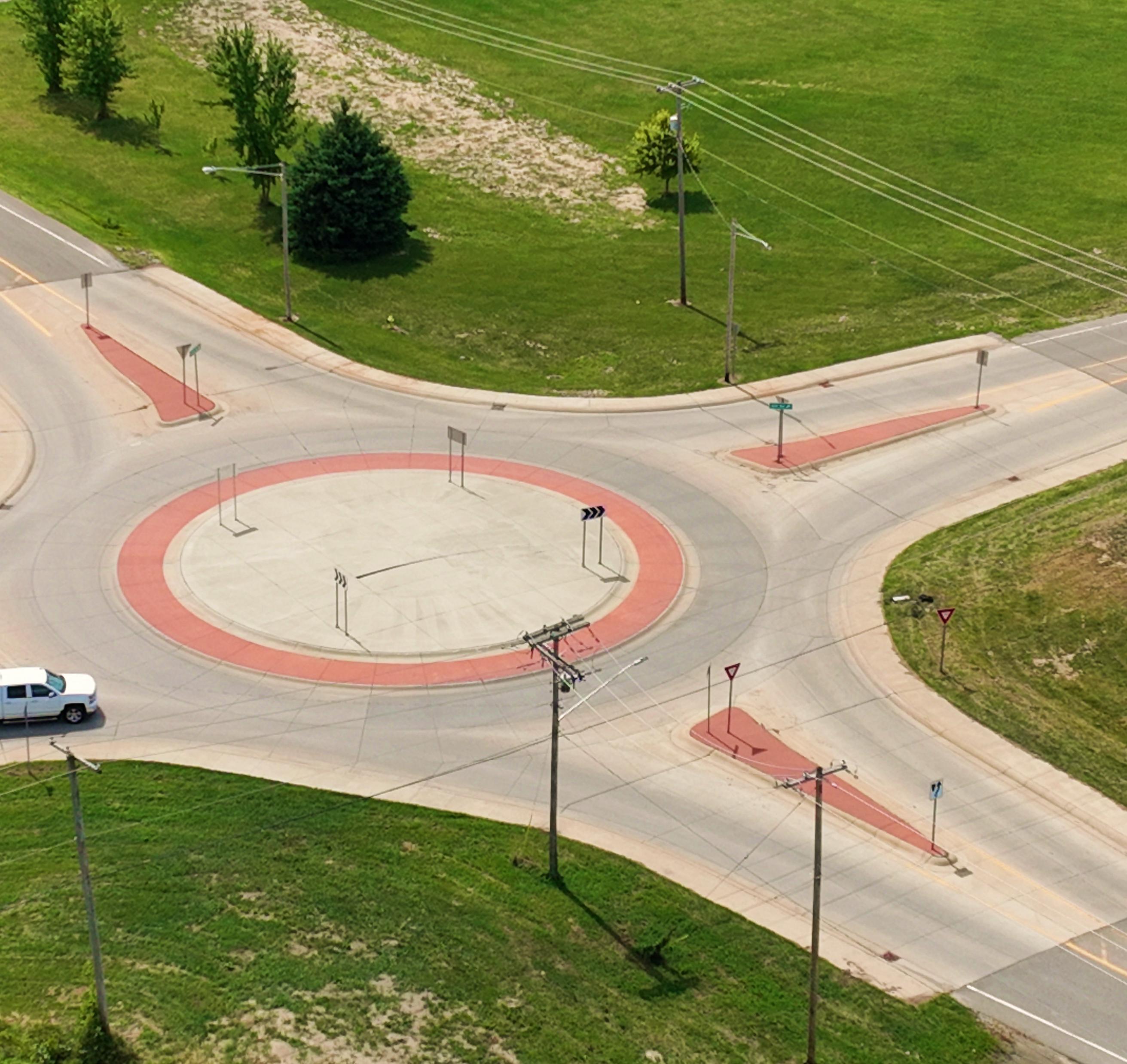
Genesee County is also leading the way in advancing mobility and new energy capabilities locally. Genesee County is seeking to work with local public and private partners for the installation of 45 EV charging stations across 14 sites.
In the past 5 years, ITS systems have grown as advancements in technology are made and integrated into our everyday lives. Connected vehicles, automatic incident detection, and intelligent cruise control are all key advancements made in the last few years.
A Capital Improvement Plan (CIP) is a multi-year planning document used to identify the needs and financing sources for infrastructure improvements. The CIP document relates to the Genesee County Master Plan as it is generated to highlight the status of County-owned municipal buildings. The CIP also bridges the gap between the planning and budget process by identifying possible expenditures years ahead. This allows for orderly planning of countyowned buildings and infrastructure. The Capital Improvement plan also provides a roadmap for the timeframe of building improvements and provides recommendations as to budget savings.
In 2023, a Capital Improvement Plan was created for Genesee County owned assets. It was determined that all County-owned buildings required improvements, with more than $55 million of repairs required in the next 5 years for just the four worst buildings. County structures were inefficient, costly, outdated, and confusing for residents. To achieve a goal of long-term financial stability, it became clear that the best option was to reduce under-utilized space by eliminating the use of four buildings. This process began in 2021 with the purchase of the former Citizen’s Bank Headquarters in downtown Flint. In the following years, this building was completely renovated and opened to the public in August 2025. Over 400 county staff are now located in the building.
In 2025, two county-owned buildings were sold and the former Genesee County Administration Building was closed. Two satellite courts also closed in 2025 and a bond was approved for jail, courthouse, and parking lot improvements. More locations are expected to be condensed in the coming years as the County continues to downsize.
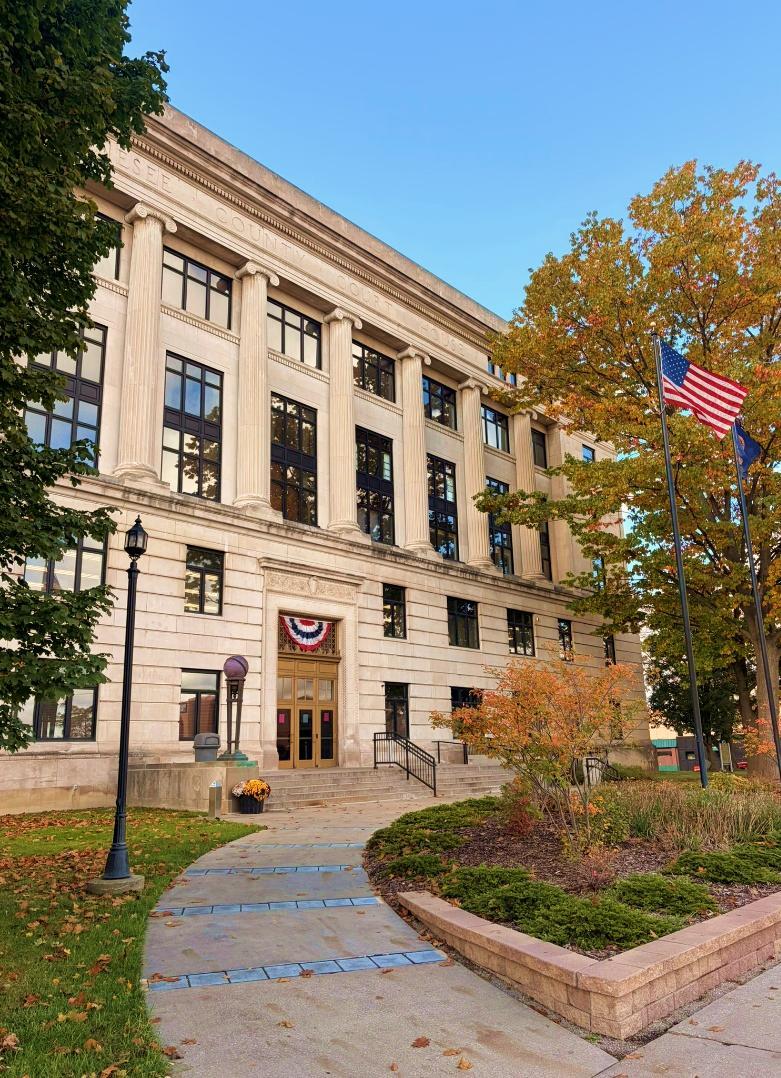
Despite this consolidation, concerns still linger with the remaining County-owned properties. The 2023 Capital Improvement Plan outlines the state of disrepair the County Jail is currently in, which requires constant maintenance despite only being 38 years old. Genesee County’s Circuit Court, the oldest Countyowned building, is in need of ongoing maintenance as well. Genesee County’s municipal infrastructure is in better shape than it was even a few years ago. However, thoughtful planning and careful budgeting will be critical in the years to come, and an update to the CIP will need to be completed to stay on the right track.
Recycling has become a key component of materials management planning in recent years. While many communities have options for standard recycled items like paper, plastic, and metal, many multi-family housing units like apartment complexes do not offer recycling services. For both homeowners and multi-family housing units, there are not many resources for hazardous waste recycling at the County level. Household Hazardous waste items include paint and chemicals, batteries, electronics, and more. Household Hazardous Waste recycling demand reached a peak in 2022. After this peak was reached, Recycle Day events were moved to an appointment-only process. These smaller events booked up only minutes after registration opened. Demand for Household Hazardous Waste recycling remains high.
To remedy this need and meet the demands of recycling for Genesee County residents, the County is working towards developing a permanent recycling drop-off center in the City of Flint. This center will be available to county residents to properly dispose of various materials including household hazardous waste (HHW), electronics, paper, cardboard, and plastic.
There will also be an interactive educational experience for residents to learn more about recycling and material management. The center will be open for tours for school groups providing an educational opportunity for both kids and adults.
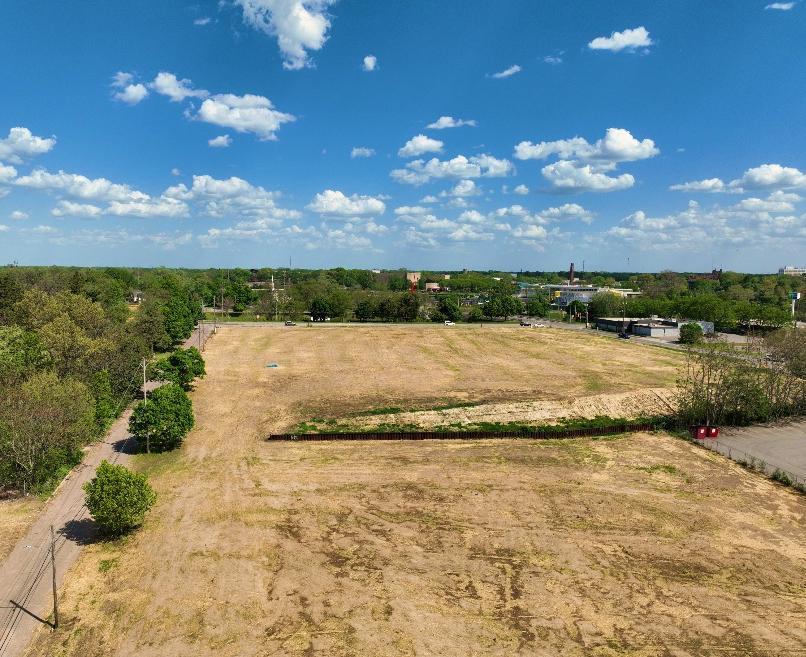
In 2024, a former processing site was acquired from the Genesee County Land Bank Authority. The onsite building was demolished and the site now ready for construction of the new Genesee County Recycling Facility. The location is located on Chavez Dr. in Flint near I-475 and across from the Flint Cultural Campus. This building will help serve as a gateway into the City of Flint and be an appealing new location in a community calling for revitalization.
Established in 1836, Genesee County has a rich history, closely tied to General Motors and the labor movement that gave rise the United Auto Workers. Durant-Dort Factory One is a key historical site, as it is the original factory where GM began. Renovated in 2016, this building stands as a historical archive and conference center. There are many other auto-related historic landmarks throughout the greater Flint and Genesee County area, including the Sitdowners Monument, the Durant Hotel, and Applewood Estate.
While much of the historical legacy of Genesee County is tied to General Motors, there are also plenty of historical locations that showcase early-Michigan settlements as well. These include prominent railroadrelated buildings, like the Gaines Station, as well as early farmsteads, like the Laing-Mason, William Ray Perry, and Stockton Houses.
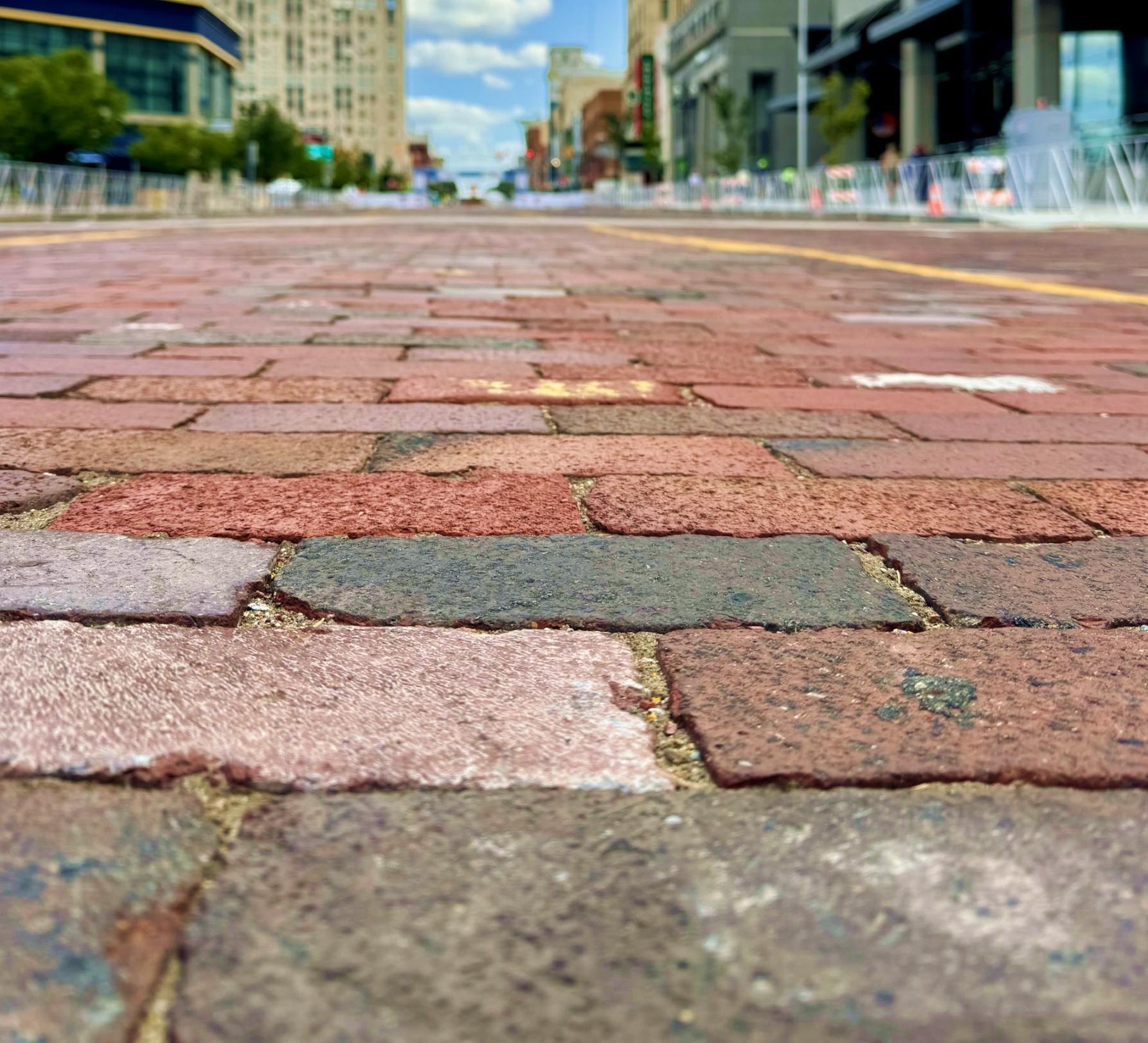
Outside of industrial and rural landmarks, many urban areas in the county preserve historical landmarks that are unique to their community. For example, the bricks on Saginaw street have been a fixture of downtown Flint for almost 130 years and were renovated in 2023 to preserve the original surface. Additionally, the Berston Fieldhouse, a community athletic facility, has also been renovated and preserved north of downtown Flint.
Genesee County is home to 56 historical markers, and 72 locations on the National Register of Historic Places. These marked places are locations of historical importance not only in County and State history, but nationally as well. Genesee County is also part of the MotorCities National Heritage Area, which is a nonprofit organization whose goal is to preserve the legacy of Michigan’s Automotive past and labor movement. Flint’s Sloan Museum of Discovery and GM Factory One are two member sites.
Historical preservation is essential to planning efforts made Countywide through maintaining the cultural identity, architectural character, and historical continuity of communities. Preserving historic buildings and districts not only honor the past but contribute to a municipality’s sense of place. From a planning standpoint, preservation can encourage economic revitalization through heritage tourism,
increased property values, and the attraction of economic revitalization through heritage tourism, increased property values, and the attraction of investment to established neighborhoods. Many communities include historical preservation in their master plans. For example, Swartz Creek and the City of Montrose both identify the need for preserving the historical character of their downtowns while also encouraging modern development. Integrating historic preservation into planning efforts ensures that growth and development respect the legacy of the past while creating inviting environments for future generations.
Genesee County Parks maintains Crossroads Village and Huckleberry Railroad, a 35-acre park in Genesee Township. This park was dedicated in 1976 to preserve historical buildings from across Genesee County and the region. Today, the park looks and operates as an early 1900s village, similar to how many small communities functioned in Genesee County at that time. To remain period correct, Genesee County Parks sources all wood for repairs from Genesee County parkland. This wood is then processed by the sawmill and drying shed located inside Crossroads. This process is sustainable, efficient, and cost-effective all while maintaining the regional connection the buildings all share.
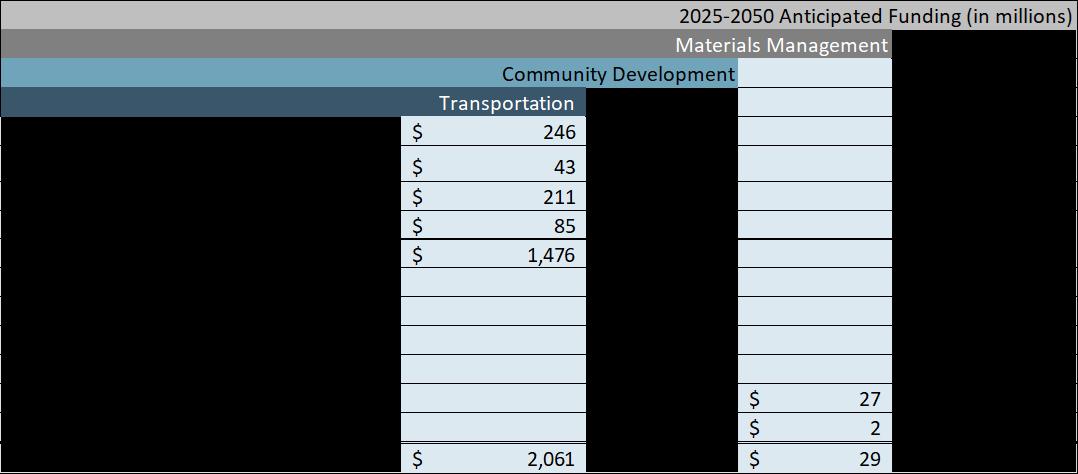
Understanding the location and condition of community assets, such as roads, parks, and public facilities, help agencies prioritize future investments while continuing to provide essential services to residents. Based on current funding levels, it is estimated that over the next 25 years, approximately $2.1 billion in funding is programmed towards supporting transportation, community development, and solid waste management programs. This funding is critical since it assists in carrying out a variety of projects that make our communities a better place to live, work, and play.
While funding is limited, local agencies and communities continue to make meaningful progress through proper project management and responsible implementation. Projects for Genesee: Our County, Our Future were identified by our local municipalities and community agencies. Proposed improvements throughout Genesee County consist of community services, roads/bridges, safety, trails, transit, and housing. While funding may be targeted to a specific need, such as road or housing improvements, it has a more general and positive impact on the entire community. For more information about financial constraint, visit www.ourfuturegenesee.org to view the transportation, community development, and solid waste financial reports.
Figure 4-1 on the next page provides a visual representation of where anticipated investment will be taking place throughout Genesee County and how funding is distributed throughout different programs.
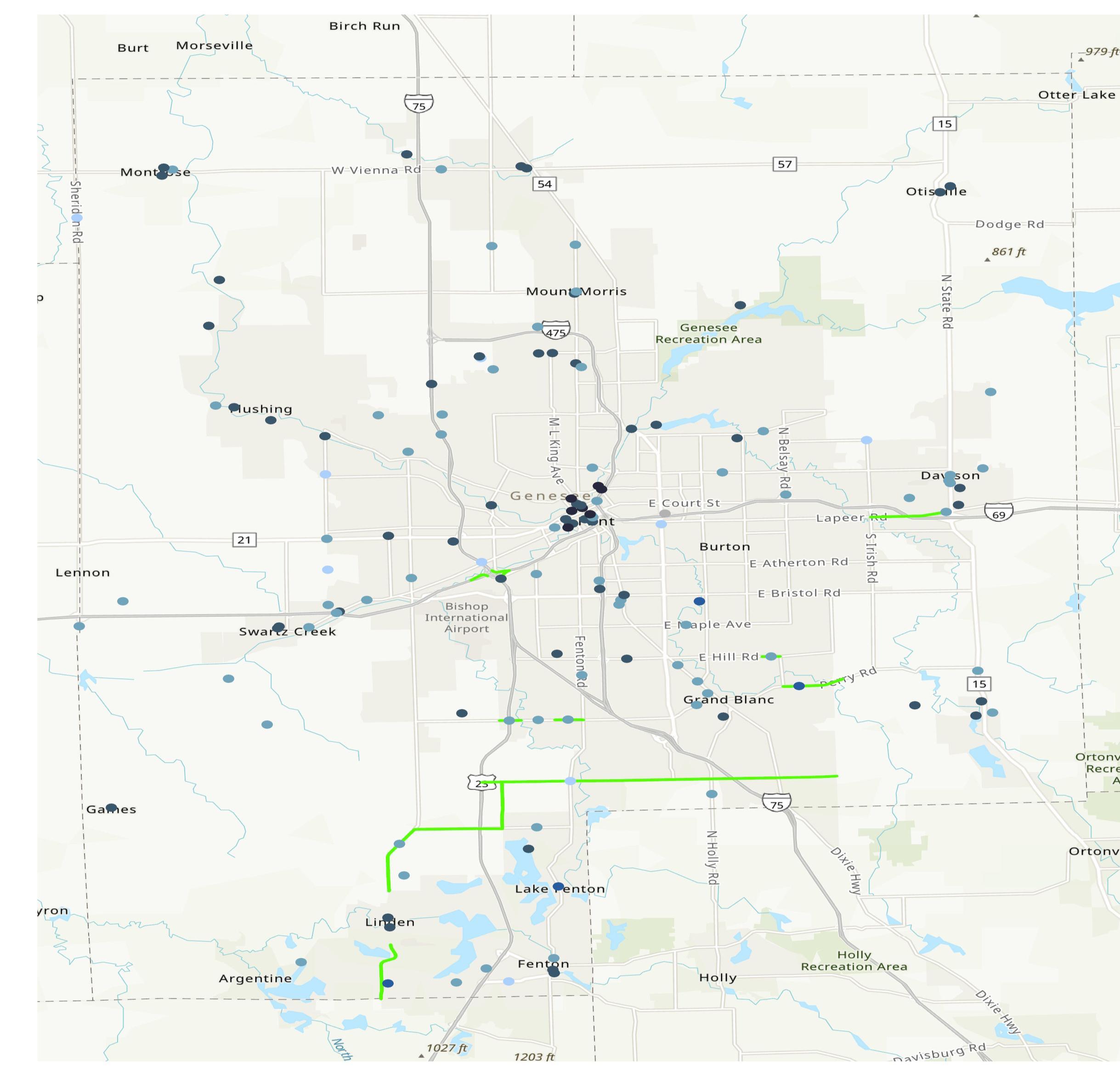
Future Investments $2.1 Billion 2050 Illustrative Long Range Plan Widening Projects
CATEGORY Community Services Roads/Bridges Safety Trails Transit
While many of our roads, utilities, and public facilities need repair or ongoing maintenance, the available funding falls short of what is required to address these needs comprehensively. For example, the county currently has a 7% shortage in available housing, and more than 20% of existing homes need repairs. Our expansive transportation network also demands considerable investment, with estimates indicating an additional $100 million annually would be required to maintain it at an optimal level. Despite these funding gaps, Genesee County is committed to making the most of its available resources while maintaining financial constraint.
.
Through collaborative efforts led by groups such as the Transportation Technical Advisory Committee, Genesee County Board of Commissioners, and the Community Development Allocation Committee, the county prioritizes strategic distribution of funds and lead the way in prioritizing the needs of Genesee County residents. This is through funding secured for Genesee County’s Housing Impact Fund, transportation projects like the US-23 study, and community development block grant projects across the County. For all future project funding allocations see the Figure 4-2 below or see the Financial Plan Appendix for more details.
Once projects are selected for the plan public input is gathered on all proposed projects. Notifications are mailed to all property occupants who are adjacent to each project; and ads are posted in local papers and on social media to notify residents about public meetings where they can provide feedback. The public participation mailing list that is used includes core community organizations including neighborhood block groups, senior centers, area churches, academic institutions, public libraries, and bilingual organizations to help spread awareness of the plan and projects to hard-to-reach populations. For those who were unable to attend in person, comments could be submitted through interactive public engagement software on the Genesee County Metropolitan Planning Commission website. Furthermore, staff conducted an analysis of the impact of projects on the natural environment as well as all populations to ensure the integrity of investments and avoidance of negative impacts
To view all the project documentation, please visit the 2050 Long Range Transportation Plan Projects Technical Report and the 2025-2029 Consolidated Plan Projects Technical Report at ourfuturegenesee.org.
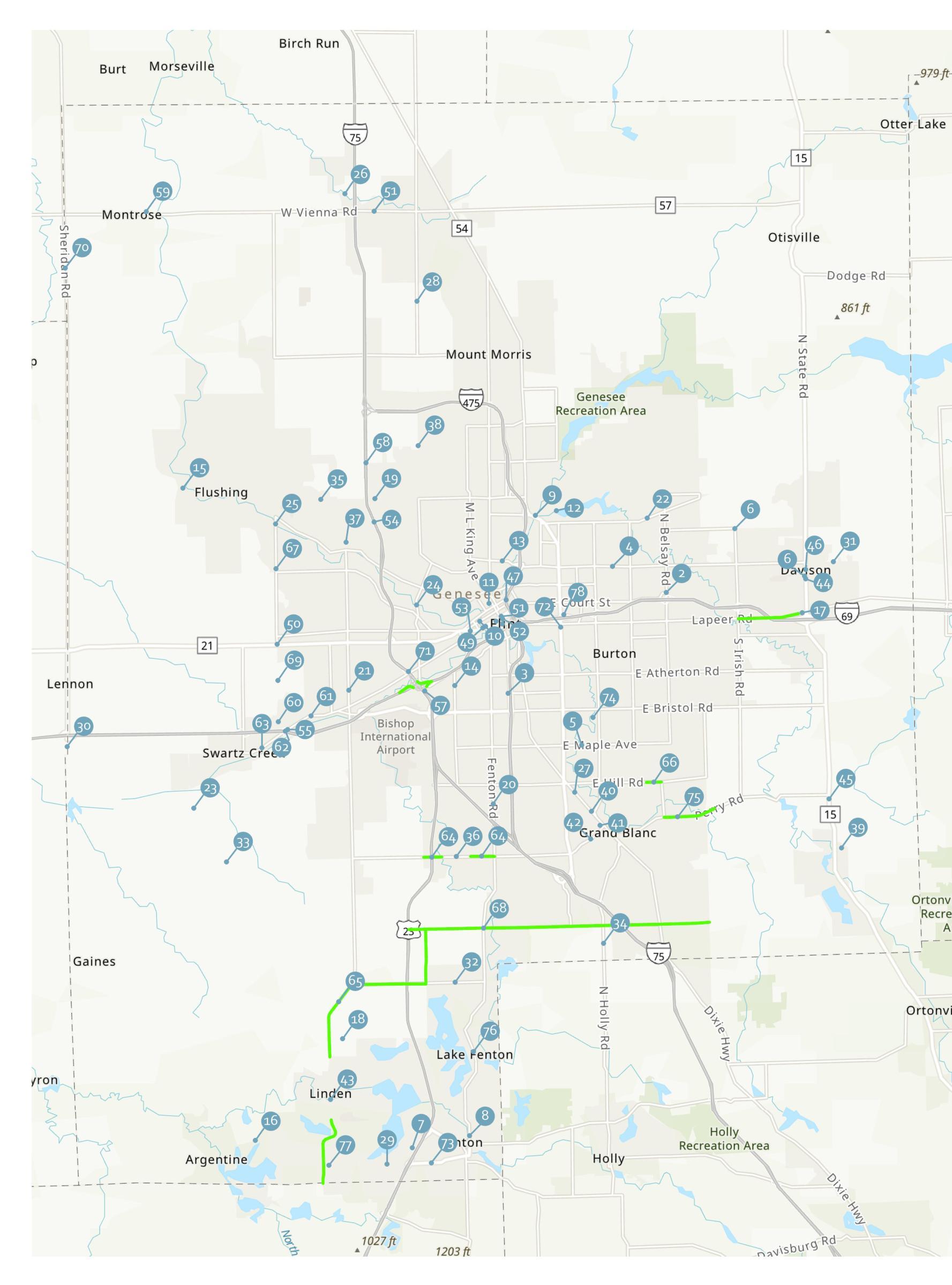
2050 Illustrative Long Range Plan Widening Projects Transportation Projects
Figure 4-3
Federal and state funding plays an important role in supporting local initiatives and addressing infrastructure needs in Genesee County. These financial resources help bridge funding gaps at the local level, enabling investments in road & bridge restoration, transit capital and operations, non-motorized pathways, and safer streetways for Genesee County residents. Grants from programs like the Federal Highway Administration (FHWA), Federal Transit Administration (FTA), and the Michigan Department of Transportation (MDOT) allow the county and its partners to implement projects that would otherwise be financially out of reach. Continued access to state and federal funding is essential to making a positive impact for Genesee County.
1
GCMPC – Rideshare Program– 2026-2029
MDOT –MichiVan Program– 2026-2029
GCMPC – Air Quality Program– 2026-2029
Roads/Bridges
City of Burton – Court St – Road Repair –Genesee St to City Limits – 2026
City of Burton – Maple Ave – Road Repair – Dort Hwy to Center Rd – 2027
City of Burton – Hemphill Rd – Road Repair –City Limits west to Saginaw St – 2028
City of Burton – Davison Rd – Capital Preventative Maintenance – Center Rd to Genesee Rd2029
City of Davison – W Rising St –Reconstruction –State St to Flint St – 2027
City of Fenton – Silver Parkway –
Capital Preventative Maintenance – Owen Rd to Silver Lake Rd – 2026
City of Fenton – N Leroy St – Resurfacing – 2nd St to North Rd - 2027
City of Flint – E . Boulevard over Kearsley Creek –
Bridge Maintenance – 2026
City of Flint – W. Second St over Swartz Creek –
Bridge Replacement – 2026
City of Flint – Beach & Garland St over Flint River –
Bridge Maintenance – 2026
City of Flint – Western Rd Str #$2853 – Bridge Maintenance – 2027
City of Flint – E. Hamilton Ave – Reconstruction – JP Cole Blvd to North St - 2028
City of Flint – Van Slyke Rd – Reconstruction –Atherton Rd to Hemphill Rd – 2029
City of Flushing – Seymour Rd – Road Repair –Emily St to Northern City Limits - 2028
GCRC – Silver Lake Rd – Capital Preventative Maintenance - 150 ft W of McCaslin Lake Rd to Linden City limits – 2026
GCRC – Lapeer Rd – Road ExpansionCL Ward Driveway to M-15 – 2026
GCRC – Lahring Rd – Capital Preventative Maintenance – Linden Rd to Ripley Rd –2026
GCRC – Pierson Rd – Road Repair – I-75 to Jennings Rd – 2026
GCRC – Fenton Rd – Resurfacing – Grand Blanc Rd to Hill Rd – 2026
GCRC – Linden Rd – Capital Preventative Maintenance – Bristol Rd to 200 ft north of Lennon Rd - 2026
GCRC – Richfield Rd – Rehabilitation – Genesee Rd to Belsay Rd – 2026
GCRC – S. Ballenger Hwy – Bridge Maintenance –2026
GCRC – N Elms Road Str #2737 over Flint River –2026
GCRC – Str # 2818 over Pine Creek Run– Bridge Replacement – 2026
GCRC – Seymour Rd – Road Repair – Reid Rd to Hill Rd – 2026
Continued
GCRC – Saginaw St – Road Repair – Hill Rd to Grand Blanc City Limits – 2026
GCRC – Clio Rd – Road Repair – Frances to Dodge Rd – 2026
GCRC – Owen Rd – Road Expansion– Silvercrest Dr to Jennings Rd – 2027
GCRC – Thompson Rd – Road Repair – Torrey Rd to Fenton Rd - 2027
GCRC – Sheridan Rd – Shoulder Widening –Old Miller Rd to I-69 – 2028
GCRC – Davison Rd – Road Repair – Davison City Limits to Oak Rd – 2028
GCRC – Grand Blanc Rd – Road Expansion –Seymour Rd to Morrish Rd – 2028
GCRC – Holly Rd – Road Expansion – Ray Rd to Baldwin Rd – 2028
GCRC – Pierson Rd – Capital Preventative Maintenance – Luce to Linden Rd – 2029
GCRC – Grand Blanc Rd – Road Expansion –Bridge over Swartz Creek (Str2709) to Murray St2029
GCRC – Linden Rd – Road Repair – Flushing Rd to Pasadena Ave – 2029
GCRC – Clio Rd – Road Repair – Carpenter Rd to Coldwater Rd – 2029
Village of Goodrich – E Hegel Rd –
Capital Preventative Maintenance – M-15 to Village Limits - 2027
City of Grand Blanc – Saginaw – ResurfacingCity Limits North to Church St -2026
City of Grand Blanc – Reid Rd – Resurfacing –Railroad Crossing to Saginaw St – 2027
City of Grand Blanc – Grand Blanc Rd –
Capital Preventative Maintenance – City Limits to Railroad Crossing – 2028
City of Linden – Bridge St & Ripley St –Bridge Maintenance – 2026
MDOT – M-15 – Culvert – South St to Rising St –2026
MDOT – M-15 – Capital Preventative Maintenance –South Genesee County Line to I-69 – 2026, 2028
MDOT– M-15 – Reconstruction– Rising St to Flint St –2027
MDOT – I-475 – Reconstruction & Structure Work –Thread Creek to Flint River & 15 Structure Locations –2026
MDOT – I-475 – Pin and Hanger Replacement – Avon St Walkover over I-475 – 2026
MDOT – I-475 – Overlay Epoxy – Fifth St, M-21 Over I475 & Ramps C&D – 2026
MDOT – I-475 – Deck Replacement – Court St West Bound over I-475 – 2026
MDOT – I-475 – Overlay Epoxy – Third St over I-475 –2026
MDOT – I-475 – Overlay Epoxy – Second St over I-475 – 2026
MDOT – I-475 – Overlay Epoxy – Kearsley St over I475 – 2026
MDOT – I-475 – Overlay Epoxy – East and West Bound Longway Blvd over I-475 over I-475 – 2026
MDOT – I-475 –Deck Replacement – I-475 and Ramp B over Chavez Dr – 2026
MDOT – I-475 – Bridge Removal – I-475 over Davison/Broadway Avenues– 2026
MDOT – I-475 – New Structure Over Existing Route–NB I-475 Over Davison – 2026
MDOT – I-475 – New Structure Over Existing Route –SB I-475 Over Davison – 2026
MDOT – I-475 – New Structure Over Existing Route –SB I-475 Over Broadway Ave – 2026
MDOT – I-475 – Deck Replacement – B to EB 475 Over Chavez Dr – 2026
MDOT – I-475 N – Reconstruction & Bridge Work –Bristol Rd to Thread Creek & 17 Structures – 2026
MDOT – I-475 N – Deck Replacement – I-475 over Thread Creek – 2026
MDOT – I-475 N – Bridge Removal–I-475 Over CSX Railroad & Northbound Service Road – 2026
MDOT – I-475 N – Bridge Removal– GTW Railroad and Service Dr Over I-475 – 2026
MDOT – I-475 N – Bridge Removal– GTW Railroad and Service Dr Over I-475 – 2026
MDOT – I-475 N – Deck Replacement– I-475 SB Over I-75 – 2026
MDOT – I-475 N – Overlay Epoxy – Hill Rd Over I-475 –2026
MDOT – I-475 N – Overlay Epoxy– I-475 SB Over Maple Rd – 2026
MDOT – I-475 N – Overlay Epoxy – Bristol Rd (Old M121) Over I-475 – 2026
MDOT – I-475 N – Deck Replacement– Hemphill Rd Over I-475 – 2026
MDOT – I-475 N – Deck Replacement – I-475 Over Atherton Rd – 2026
MDOT – I-475 N – Deck Replacement– GI-475 Over
2026
MDOT – I-475 N – Bridge Removal– Left Turn Lane Number 1 over I-475 – 2026
MDOT – I-475 N – Bridge Removal–Left Turn Lane Number 2 Over I-475 – 2026
MDOT – I-475 N – Bridge Removal–Left Turn Lane Number 2 Over I-475
MDOT – I-475 N – Bridge Removal–Left Turn Lane Number 3 Over I-475 – 2026
MDOT – I-475 N – Bridge Removal– 14th St Over I475 – 2026
MDOT – I-475 N – Substructure Patching –GTW Railroad and Service Dr Over I-475 – 2026
MDOT – I-475 N – New Structure on Existing Route–NB I-475 Over Service Dr – 2026
MDOT – I-475 N – New Structure on Existing RouteSB I-475 Over Service Dr – 2026
MDOT – I-475 N – New Structure on Existing Route–Oakley St Pedestrian Crossing Over I-475 – 2026
MDOT – I-475 N – New Structure on Existing Route–Oakley St Pedestrian Crossing Over I-475 – 2026
MDOT – I-475 N – New Structure on Existing Route–Oakley St Pedestrian Crossing Over I-475 – 2026
MDOT – M-21 over Swartz Creek – Bridge Replacement -2026
MDOT – M-21 – Capital preventative maintenance –Morrish Rd to I-75 – 2027
MDOT – M-57 – Capital Preventative Maintenance –Clio City Limits to Linden Rd – 2027
MDOT – M-21 – Reconstruction - Over Swartz Creek to I-475 – 2027
MDOT – M-21 – Reconstruction – I-75 to over Swartz Creek – 2027
MDOT – I-75 – Capital Preventative Maintenance –Court St to North Junction I-475 – 2028
MDOT – M-21 – Capital Preventative Maintenance –Morrish Rd to I-75 - 2027
MDOT – M-21 over CSX Railroad – Culvert Replacement – 2027
MDOT - N. I-75 & I-69 W Ramp – Deck Replacement –2028
MDOT – I-75 – 2 Structures in Genesee County –Bridge Maintenance - 2028
City of Montrose – Nanita Dr– Reconstruction –M-57 to Alfred St - 2029
City of Swartz Creek – Elms Rd – Capital
Preventative Maintenance – S. City Limits to N. City Limits – 2027
City of Swartz Creek – Miller Rd – Capital
Preventative Maintenance – Tallmadge St to Dye Rd –2029
City of Swartz Creek – Miller Rd – Road Repair –E. Elms Rd to 475’ East of Tallmadge Ct - 2029
City of Swartz Creek – Miller Rd – Capital
Preventative Maintenance – Morrish Rd to Elms Rd2029
GCRC - Grand Blanc Rd. - Road Expansion – Torrey Rd to Structure 2709 & Murray St to Fenton Rd – 2050
GCRC - Linden Rd – Road Expansion – Linden City Limits to Thompson Rd – 2050
GCRC - Hill Rd – Road Expansion – Georgetown Rd to Belsay Rd – 2050
GCRC – Elms Rd/Beecher Rd IntersectionRoundabout Construction
GCRC - Fenton
2026
2026
GCRC - Elms Rd/Lennon Rd Intersection –Roundabout Construction – 2026
MDOT – M-13 – Sign Replacement – TSC Wide –2028
MDOT – I-75 – Freeway Sign Replacement –Genesee County – 2028
MDOT – Safety/Signals – 3 locations in TSC area –2027-2028 City of Fenton – Owen Rd – Safety/Signals – S Jennings Rd to S Adelaide St - 2029
City of Burton - Iron Belle Trail – Construct Multi Use Path – Maple Rd to Hemphill Rd - 2026
GCRC – Perry Rd Trail – Construct Multi Use Path –Mancour Dr to the Grand Blanc Middle School- 2026
GCRC - Fenton Rd Trail – Construct Multi Use Path –Fenton City Limits to N. Long Lake Rd - 2027
GCRC – Owen Rd Trail – Construct Multi Use Path –Eleanor Dr to Linden County Park – 2029
MTA – Computer software/hardware – 2026-2029
MTA – 35-39 ft expansion bus – 2026-2029
MTA – Vehicle/Van Expansion – 2026-2029
MTA – Bus Shelter Construction/Improvement – 20262029
MTA – JARC Preventative Maintenance – 2026-2029
MTA – New Freedom Operating – 2026-2029
MTA – Facility Improvements – 2027-2029
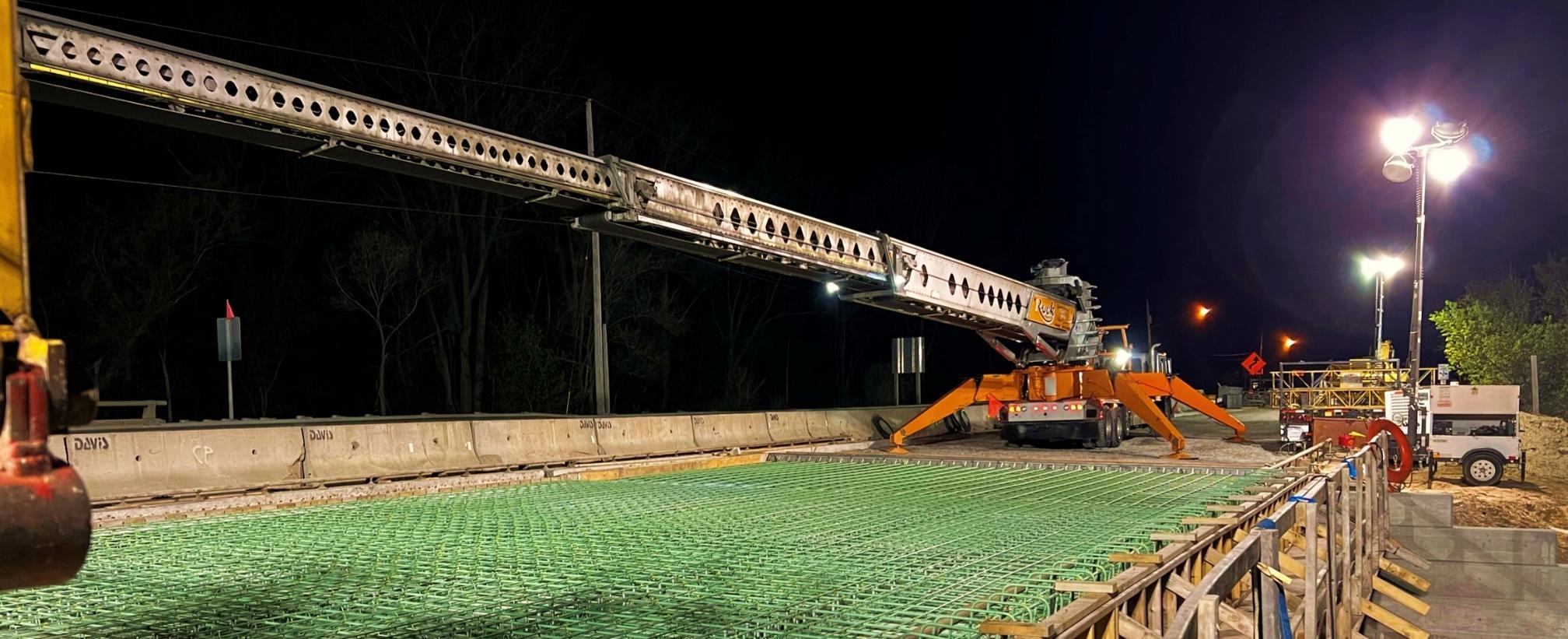
The Genesee County Metropolitan Alliance (GCMA) serves as the designated Metropolitan Planning Organization (MPO) for the Flint/Genesee Metropolitan Area. The Genesee County Metropolitan Planning Commission (GCMPC) provides staff support to the GCMA and is responsible for managing the distribution of transportation funds from the Federal Highway Administration (FHWA), the Federal Transit Administration (FTA), and the Michigan Department of Transportation (MDOT). GCMA committees are composed of representatives from local cities, villages, townships, the county road commission, state and federal agencies, the transit authority, and the airport authority.
Genesee: Our County, Our Future is guided by a performance, outcome-based planning approach to ensure transportation system investments will make progress toward the achievement of national goals identified in the 2021 Infrastructure, Investment, and Jobs Act (IIJA).
For the FY 2026-2029 TIP and LRTP 2050 project selection, a thorough and comprehensive public involvement process was conducted. Every project was carefully reviewed at the time of the application to ensure that there were no major impacts on any of Genesee County populations. Project applications also receive consideration if they meet state and federal performance targets for things like congestion mitigation and freight transportation. For more information, please see the Performance Measures Technical Report.
Genesee County currently meets the federal air quality standards, and all TIP and LRTP projects have been evaluated and confirmed to comply with U.S. Environmental Protection Agency (EPA) air quality conformity requirements.
Performance measures for transportation are established by the Federal Highway Administration, Federal Transit Administration, and the Michigan Department of Transportation as targets towards specific areas of transportation planning. Progress performance goals and the performance targets adopted by the MPO are documented in the System Performance Technical Report. Genesee County’s report is updated annually and incorporated into the County’s Long Range Transportation Plan (LRTP), which is revised every five years. These annual updates evaluate both the current condition and overall performance of the transportation system.
This report outlines the common types of projects that support progress in each performance area, along with ongoing efforts by the Genesee County Metropolitan Alliance (GCMA) to assist local road and transit agencies in improving system performance. Figure 4-4 provides a summary of the performance areas, specific measures, baseline conditions, performance targets, general trends, financial investments, and expected impacts.
The condition of roadways are a high priority item for consideration on transportation project applications. Projects with higher traffic volumes and projects that can incorporate performance principles receive higher priority. Performance principles may include transit design elements such as bus shelters and bus turnouts; complete streets design elements such as sidewalks and bike lanes; safety upgrades; and/or area-wide impacts such as improved connections to the community’s downtown. Staff will continue to make a focused effort to educate member road agencies, collect and analyze pavement condition data, and refine the criteria used for prioritizing future projects. Through our committees we continually evaluate how projects are selected and how we can better work toward meeting Genesee County’s performance targets.
Although Genesee County does not directly select safety projects for MDOT’s annual call for projects, staff play a key role in prioritizing the submitted proposals. Each project undergoes a time-of-return (cost-benefit) analysis and a review of annual crash data to assess its potential impact. In 2025, Genesee County Metropolitan Planning Commission staff and AECOM created a Safety Action Plan whose goal is to foster a community that prioritizes and safeguards every life, ensuring proactive and comprehensive safety across all modes of transportation. This document is a valuable resource for local units across the County looking to prioritize safety in transportation projects.
Within the Genesee County Transportation Improvement Program (TIP), priority is given to projects that incorporate safety enhancements alongside standard roadway improvements. These enhancements may include converting four-lane roads to three lanes, upgrading traffic signals, implementing access management strategies, adding turn lanes, constructing bus turnouts, and installing roundabouts.
To support informed decision-making, staff will continue to educate local municipalities about safety improvement options and share guidance based on local, regional, and state-level policies specifically those outlined in the Region V Traffic Safety Plan and the Michigan Strategic Highway Safety Plan.
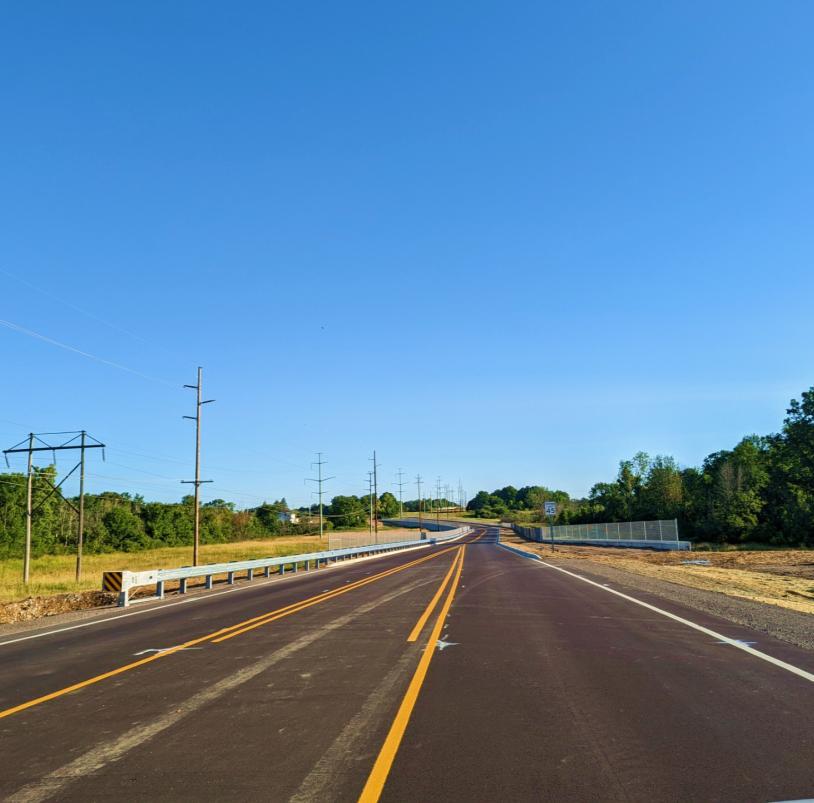
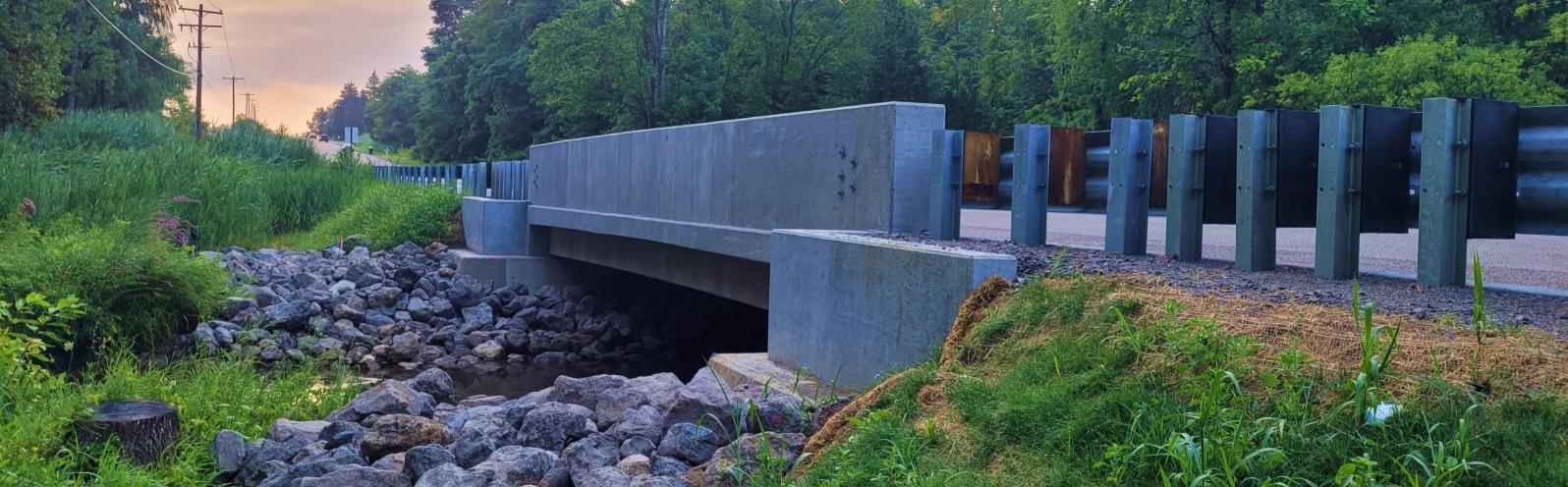
While Genesee County’s transportation network is generally reliable, certain roadways continue to experience recurring congestion. The Congestion Management Process (CMP) is used to identify system deficiencies that affect reliability and to evaluate potential projects aimed at addressing those issues. Only the most critical areas are considered for capacityincreasing projects.
Capacity improvement strategies may include shifting automobile trips to alternative modes such as transit or non-motorized travel, optimizing traffic signal timing, or adding through-lane capacity. Road and transit agencies are regularly provided with data to help identify congestion patterns and assess which improvements would have the greatest impact within a corridor. Staff will continue to collaborate with these agencies prior to each TIP and LRTP project selection cycle to evaluate and recommend the most effective CMP strategies for each application. These coordinated efforts contribute to a more efficient transportation system and help support the economic vitality of Genesee County communities.
Genesee County receives funding through the Federal Highway Administration called Congestion Mitigation and Air Quality (CMAQ) program. This funding is designated for areas that do not meet federal air quality standards (nonattainment or limited attainment areas) and is intended to support transportation projects that help reduce congestion and improve air quality. Air quality can become poor due to a variety reasons such as wildfire smoke, traffic, and agriculture. As a CMAQ funding recipient, the Metropolitan Planning Organization (MPO) is responsible for evaluating performance targets related to congestion mitigation and air quality. MPO staff will continue to monitor air quality conditions throughout Genesee County and prioritize projects that contribute to reduced traffic congestion and enhanced air quality.
Current projects are designed to enhance transit performance through vehicle replacements and facility upgrades. Technological advancements have made it more cost-effective for the MTA to modernize its fleet. By diversifying fuel sources, the MTA can reduce costs, improve maintenance of vehicles and facilities, and deliver higher-quality service to residents. GCMA will continue to collaborate with the State, MTA, and other transit stakeholders to address key issues, secure funding, and prioritize transit initiatives. Our technical and policy committees remain committed to allocating federal funding for transit asset management projects that expand residents’ access to community resources. Roadway improvement projects that include transit-friendly features, such as bus stops and pull-outs, are given higher priority.
In Genesee County, 77% of our bridges are considered in "fair” condition or worse (MI Local Technical Assistance Program). While ongoing rehabilitation or reconstruction efforts are improving the overall condition of many bridges, older structures will naturally age and transition out of the 'good' category over time. Typical projects involve preventative maintenance or rehabilitation efforts. Temporary solutions often include imposing weight limits or closing lanes. While rehabilitation is more cost-effective than a full replacement, it is usually only a short-term fix.
As an MPO, GCMA will continue to prioritize projects and assist in securing bridge funding. MPO staff will continue to educate citizens and local officials about the importance of bridge repair and monitoring, as well as the impact of closing or restricting bridges. A strategic approach must also be instituted by road agencies when trying to secure funding to prioritize the most important structures.
Impact on Condition Safety Performance Area Measures
Reduced potential for motor vehicle crashes and nonmotorized crashes, injuries and fatalities in relationship to vehicle miles traveled (VMT)
Number of fatalities
Rate of fatalities (per 100 million VMT)
Number of serious injuries
Rate of serious injuries (per 100 million VMT)
Number of nonmotorized fatalities and serious injuries


Improvement in surface condition and the international roughness index (IRI). Eliminate issues with cracking, rutting, and faulting on the interstate and non- interstate national highway system (NHS)
Percent Interstate pavement in good condition
Percent Interstate pavement in poor condition

Improvement in freight movement, reduction in traffic congestion, and associated user delay costs
Reduction in the number of structurally deficient and functionally obsolete bridges on national highway system (NHS)
Reduction in percentage of vehicles, equipment, and facilities that are past useful life benchmark (ULB)
Interstate travel time reliability
Non-Interstate travel time reliability Freight Reliability Measure on the Interstate
Percent NHS Bridges in good condition
Percent NHS Bridges in poor condition
Small Bus and Van under service life
Large Bus/Motorbus under service life
Service Vehicles under service life
Reduced potential for traffic delays and congestion due to more carpooling or other congestion mitigation practices
Percent Non-Interstate NHS pavement in good condition
Facilities – all classes under service life
Percent Non-Interstate NHS pavement in poor condition Pavement System Reliability Bridge Transit Asset Management Congestion Mitigation and Air Quality
Annual Hours of Delay per Capita Percent of Non-Single Occupancy Vehicle travel
$39,440,752 $211,082,280 $1,476,142,581 $84,655,010 $211,082,280 $3,432,326
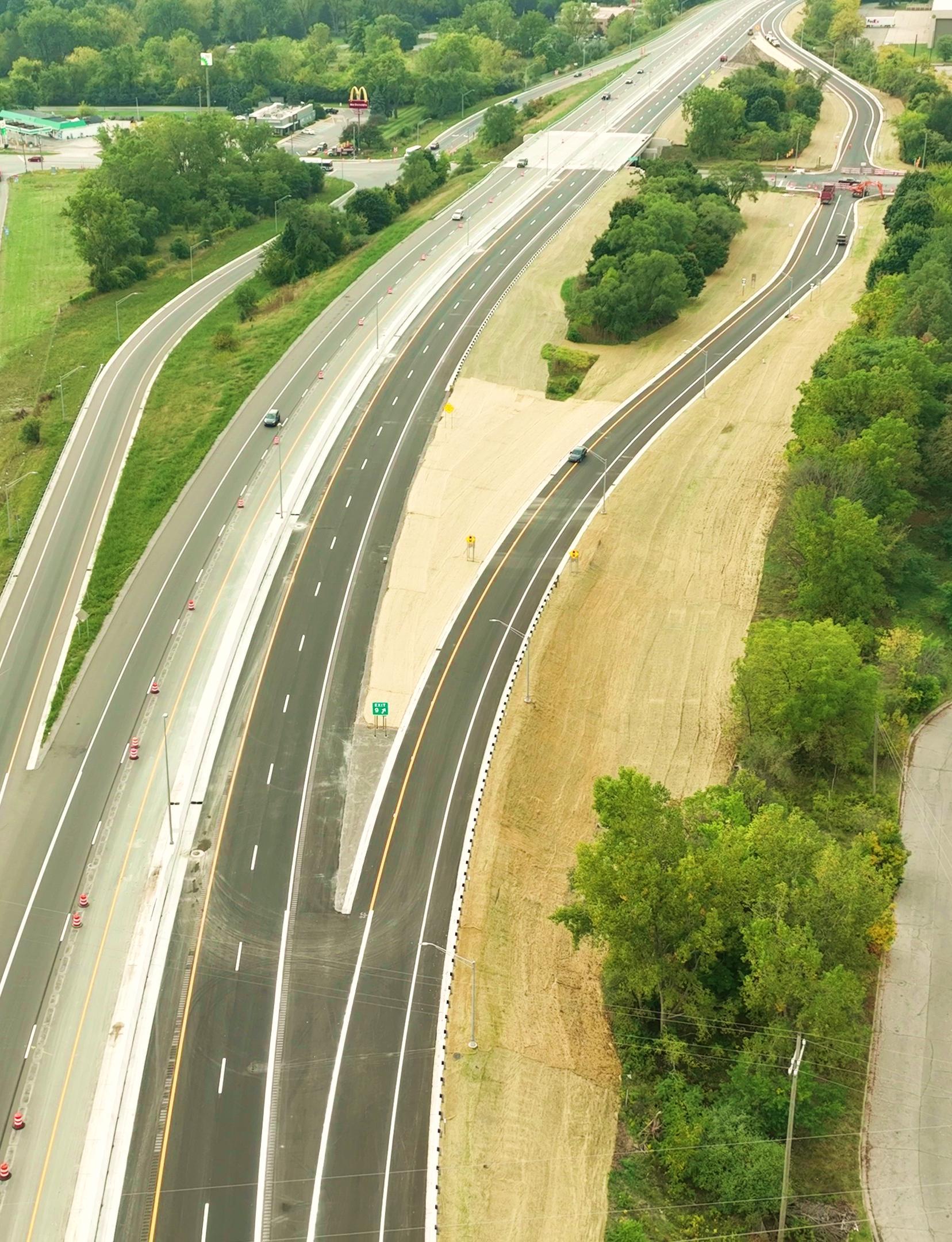
Genesee County is an entitlement grantee for the Department of Housing and Urban Development (HUD) and oversees administration of Community Development Block Grant (CDBG) funds, Home Investment Partnerships (HOME) funds and Emergency Solutions Grant (ESG) funds. These funds are managed by the Genesee County Metropolitan Planning Commission. CDBG funds are distributed to local units of government to benefit low-to-moderate income populations throughout the County, which are determined by factors given by HUD. HOME funding is utilized to provide affordable housing for low-tomoderate income residents, and ESG funding has a strong focus on homelessness prevention.
Genesee County’s Community Development Block Grant (CDBG) must align with one of three national objectives: benefiting low- to moderate-income individuals, preventing or eliminating slums and blight, or addressing an urgent community need. The County primarily focuses on the first two objectives, with many projects aimed at supporting low- to moderate-income populations.
To ensure alignment with these objectives and to guide effective project implementation, five goals were established through public input and consultation. Each goal includes several priority needs that help identify which projects should be prioritized within the community. These goals are to improve housing for homeowners and renters, promote access to public facilities and services, improve public facilities and Infrastructure, increase homeownership opportunities, and address the needs of homeless and at-risk persons.
As part of the project selection process, local governments are required to hold a public hearing to gather resident input. This ensures that proposed projects meet a national objective, align with one of the established goals, and address the community’s most pressing needs.
CDBG, HOME and ESG projects can be found in the project listing. These projects, in addition to the goals and priority needs for Genesee County, can be found in the 2025-2029 Consolidated Plan Technical Report.
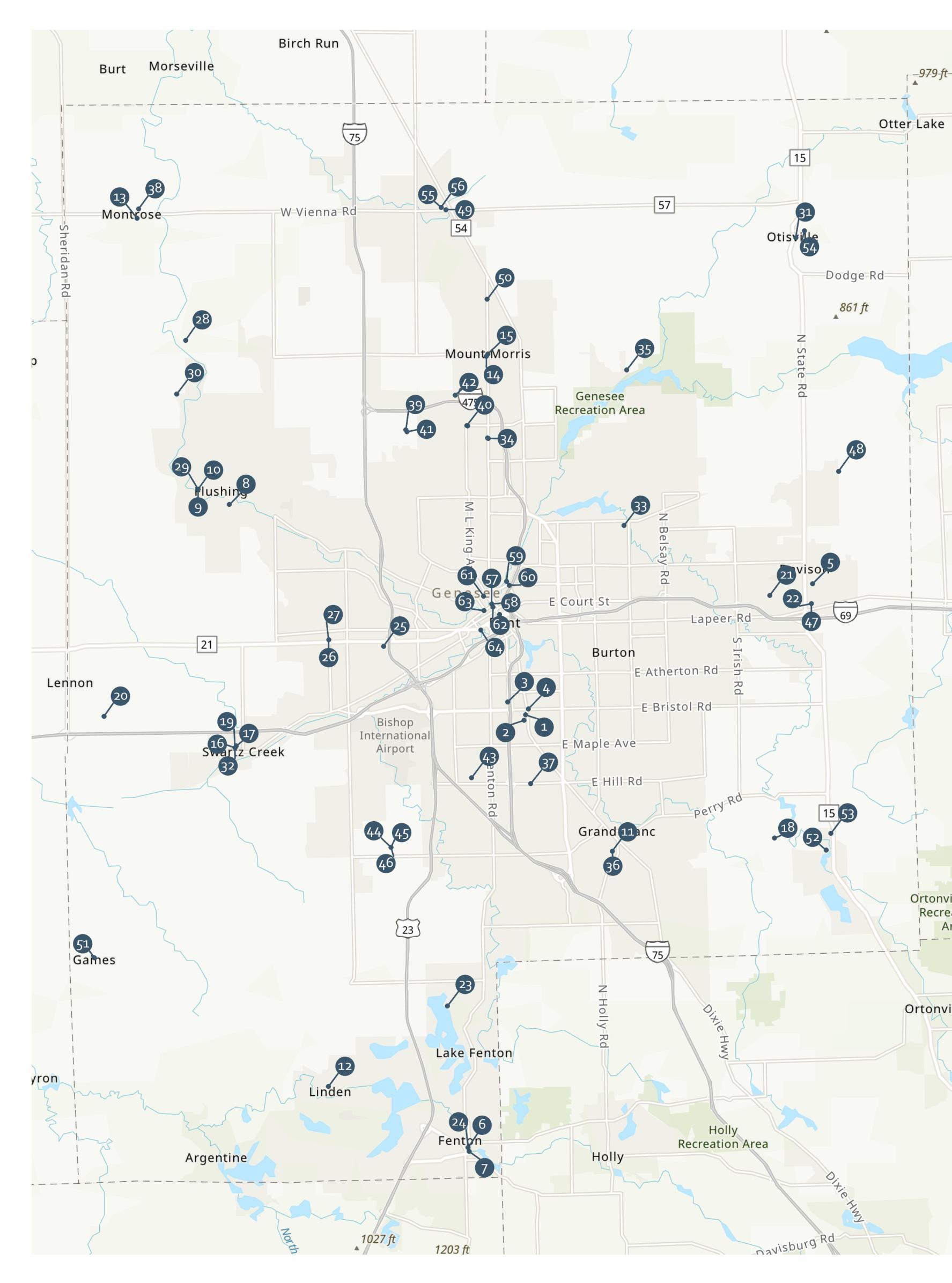
4-5
Federal and state funding plays an important role in supporting local initiatives and addressing infrastructure needs in Genesee County. These financial resources help bridge funding gaps at the local level, enabling investments in areas such as affordable housing, infrastructure improvements, and resources for aging populations. Grants from the U.S. Department of Housing and Urban Development (HUD) allow the county and its partners to implement projects that would otherwise be financially out of reach. Continued access to federal funding is essential to ensuring making a positive impact for Genesee County.
Community Development Block Grant (CDBG)
City of Burton – Homestead St – Gravel Repaving –Parkwood Rd to Boatfield St – 2025
City of Burton – Buder St – Gravel Repaving –Saginaw St to Morrison Rd – 2025
City of Burton – Senior Center Operations – 20252027
City of Burton – Water Tower Park Equipment Upgrade – 2026
City of Davison – Clark St – Sidewalk Repairs –2025
City of Fenton – Senior Services including lunches and events – 2025-2027
City of Fenton – Blight Elimination – 2027
City of Flushing – ADA Playground equipment at 4 parks- 2026
City of Flushing – Park Facility Renovation - 2027
City of Flushing – Senior Center Improvements –2027
City of Grand Blanc – Senior Center Operations –2025-2027
City of Linden – Senior Center Improvements –2026
City of Montrose – Oak St, Perry St, & Ash St Sidewalk Installation – 2026
City of Mount Morris – Police & Fire Department Facility Improvement – 2026
City of Mount Morris – Downtown Façade Improvements – 2027 h
City of Swartz Creek – Senior Center Operations –2025-2027
City of Swartz Creek – ADA ramp at Pajtas Amphitheater – 2025
Atlas Township – Senior Services – 2025-2027
Clayton Township – Senior Center operations for Swartz Creek & Flushing Senior Centers – 2025-2027
Clayton Township – Bristol Rd – Gravel repaving –M-13 to Duffield – 2025
Davison Township – Gale Rd – Resurfacing –Lapeer Rd to Railroad – 2026
Davison Township – Senior Center Improvements –2027
Fenton Township – AudioEye web tool installation –2025
Fenton Township – Senior Center Improvements & Recreation Programs – 2025-2027
Flint Township – Senior Food Pantry Services –2025-2027
Flint Township – Crime & Fire Prevention – 20252027
Flint Township – Blight Elimination – 2027
Flushing Township – ADA Kayak Launch – 2027
Flushing Township – Senior Center Improvements & Operations – 2026-2027
Flushing Township – Blight Elimination – 2027
Forest Township – Senior Center Improvements –2027
Gaines Township– Senior Center Operations –2025-2027
Genesee Township – Senior Center Operations and Improvements 2025-2027
Genesee Township – Cornell St – Road Resurfacing – Saginaw St to George St – 2026
Genesee Township – Blight Elimination – 2027
Grand Blanc Township – Senior Center Operations – 2025-2027
Grand Blanc Township – Hill Rd– New Sidewalk –From Knollwood Apartments and Elga Credit Union –2026
Montrose Township– Senior Center Improvements & Operations – 2025-2027
Mount Morris Township – Senior Center Operations and Activities – 2025-2027
Mount Morris Township– Youth Programming –2025-2027
Mount Morris Township – Code Enforcement –2025-2027
Mount Morris Township – Blight Elimination –2026
Mount Morris Township – McAlpine Dr – Road Repair – South of Stanley Rd – 2025
Mundy Township – Park Programming – 20252027
Mundy Township – Senior Center Operations –2025-2027
Mundy Township – ADA Picnic Tables– 2025
Mundy Township – Blight Elimination – 2027
Richfield Township – Senior Center Operations2025-2027
Richfield Township – Oak Rd – Resurfacing –Richfield Rd to Carpenter Rd - 2025
Thetford Township – Library ADA Improvement2026
Thetford Township – Saginaw Rd – Bike Path Construction – Dodge Rd to Francis Rd – 2027
Village of Gaines– ADA seating, picnic tables, and playground equipment – 2025
Village of Goodrich – Historic Preservation of Ladies Library – 2025
Village of Goodrich – Senior Services – 2025-2027
Village of Otisville – ADA Picnic Tables and playground equipment– 2026
Vienna Township – Senior Center Operations –2025-2027
Vienna Township – Senior Center Improvements –2025-2026
– 2025-2027
Habitat for Humanity – New Construction –Affordable Housing – 2025-2027
Metro Community Development – Tenant Based Rental Assistance, Homeless Management Information Systems – 2025-2027
Emergency Solutions Grant (ESG) GCCARD – Homelessness Prevention – 2025-2027
Carriage Town Ministries– Emergency Shelter –2025-2027
Legal Services of East Michigan – Fair Housing Center – 2025-2027
My Brother’s Keeper – Emergency Shelter – 20252027
Shelter of Flint– Emergency Shelter, Homelessness Prevention, Rapid Rehousing – 2025-2027
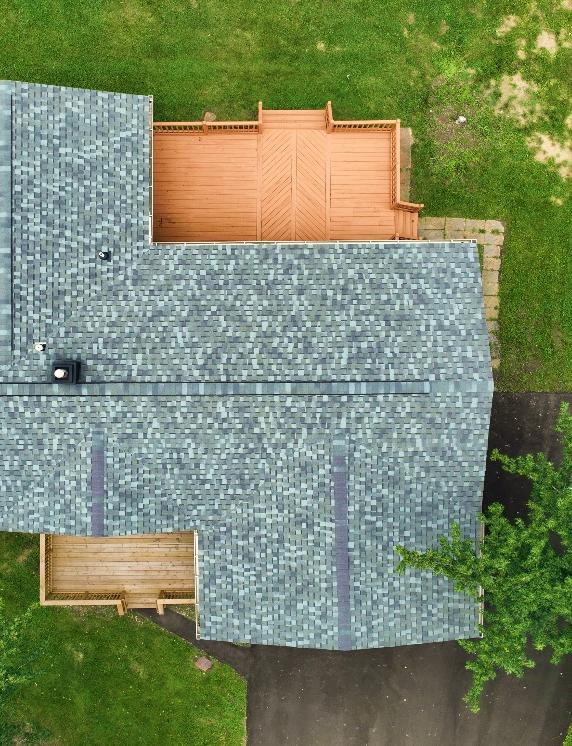
In 2024, Genesee County announced the Roof Revitalization Program made possible through a $1.7 million MSHDA MI Neighborhood grant. The program is being administered by the Genesee County Metropolitan Planning Commission, in partnership with Genesee County Habitat for Humanity. The program focuses on single-family homes with failing roof systems. Repairs may include fascia, soffits, gutters, and downspouts when necessary. Homeowner eligibility is primarily based on household income, going up to 120% of Area Median Income.
Each year through the Consolidated Annual Performance and Evaluation Report (CAPER), the goals and priority needs of each community are reevaluated to ensure that project selection is addressing current needs and needed improvements which can be found at the following link: http://gcmpc.org/wpcontent/uploads/2025/07/2024-Draft-CAPER-PublicComment.pdf
Project performance is evaluated to assess the goals achieved as well as the number of individuals who benefited from the projects completed during the previous program year. These evaluations serve as a way for staff to ensure that the projects being selected are addressing the needs of our communities. A summary of performance measures is included in Figure 4-6.
Many low-to-moderate income families across Genesee County face challenges in affording the cost of homeownership. Projects that help increase homeownership opportunities include the construction of new housing units for low-to-moderate income residents, direct financial assistance to homebuyers, and fair housing assessments. Fair housing is a high priority need in Genesee County. Staff will continue to work with the Legal Services of Eastern Michigan Fair Housing Center to continue efforts to provide fair housing opportunities for all demographics. GCMPC will also continue to promote services such as the Down Payment Assistance Program for low-tomoderate income residents that are seeking help with purchasing a home.
Homelessness is something that effects families and individuals in virtually every community. Addressing the needs of homeless and at-risk persons is accomplished through providing support and funding for homeless shelters and service providers. Staff will continue to work with the Continuum of Care, a dedicated group of organizations that provides assistance to the homeless and near homeless populations in the County.
Access to public services is an essential part of maintaining a high quality of life. Public service projects include the funding of senior and youth services, safety resources, crime awareness and job training for low-tomoderate income residents. To assure that public service projects are carried out in the most effective manner; staff will continue to assist with and monitor the implementation of projects. It is important that there is continued communication between community organizations and local units of government, so that funds are being used for the highest priority services in each community.
Public Facility improvements include upgrades to sewer and water infrastructure, public parks and community spaces, roads, and sidewalks. This can also include ADA accessible improvements to existing public infrastructure. GCMPC staff and local governments must work closely together to ensure that projects are eligible, effective, and complete in a reasonable timeline.
For low-to-moderate income residents of Genesee County, housing can be a key issue in family finances. Many families spend a large portion of their annual income on housing each year. Housing repairs can be unaffordable for owners already paying large amounts towards mortgages, taxes, and insurance. To help ease the burden, programs exist such as the Home Improvement Program, which helps homeowners with health and safety repairs. This program is funded by CDBG and HOME funds. GCMPC must continue to promote and partner with agencies who can assist in managing and facilitating the housing programs that come from these funding sources.
Housing rehabilitation
Energy efficiency improvements to housing
Accessibility and barrier free improvements
Demolition, clearance and remediation
Code enforcement
Public facilities and services
Supportive services
Fair housing
Economic development
Accessibility/Barrier Free Improvements
Public
Housing rehabilitation Down
payment assistance
Energy efficiency improvements to housing
Accessibility and barrier free improvements
Fair housing
Production of new units
Public facilities and services
Permanent supportive housing
Emergency shelters
Accessibility and barrier free improvements
Supportive services
Fair
and Services $1,374,812 $2,125,000
2,150
$3,400,000 $2,902,930 $1,529,175
Waste generated or disposed of in Genesee County must be considered in planning efforts to manage Genesee County’s waste. In Genesee County, Material Management programs are funded by the Genesee County Solid Waste Ordinance. Through the Ordinance, local landfills, waste haulers, and transfer stations pay $0.45 per cubic yard on all waste collected or disposed of within our County. Annually, this generates about $1,060,000. Most of the funding is used on Recycle Day events where residents can drop-off hard to dispose-of items including household hazardous waste and electronics. Other programs that use this funding include a free latex paint recycling drop-off for residents, recycling education, and outreach.
Solid Waste initiatives in Genesee County are guided by the Materials Management Plan (MMP). The purpose of the MMP is to foster sustainable practices that ultimately lead to increased waste diversion from landfills. This is done through outreach and education about recycling as well as providing opportunities for residents to properly dispose of their waste. The plan also addresses existing waste management shortfalls to provide recommendations for improvement. The County evaluates its goals on a regular basis and creates an open dialogue between communities, agencies, and residents about how to improve materials management. Genesee County Solid Waste Ordinance dollars are also used in implementing this plan.
Approximately every five years, the Genesee County Materials Management Plan is updated to ensure there are efficient disposal and recycling services available to manage the waste generated within the County and to provide recommendations for improvement. The materials programming and events are evaluated annually to ensure any public concerns are being addressed and that funding is being utilized in the most efficient way.
A key component to increase waste diversion in our County is through education and outreach. Staff provides presentations to students, seniors, and other
groups to enhance their knowledge about reducing, reusing, and recycling. Community events are also attended to distribute information about recycling programs available to residents. Social media is another effective strategy.
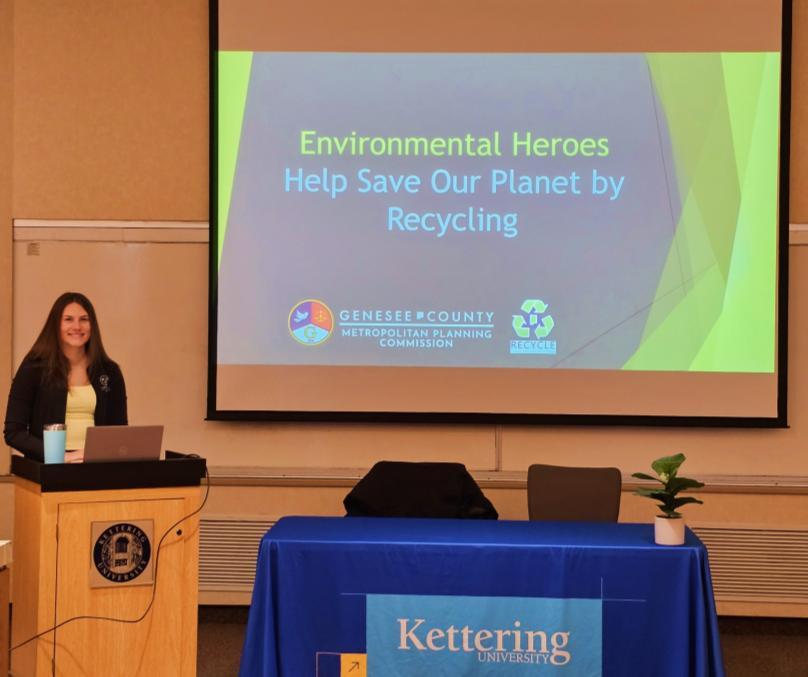
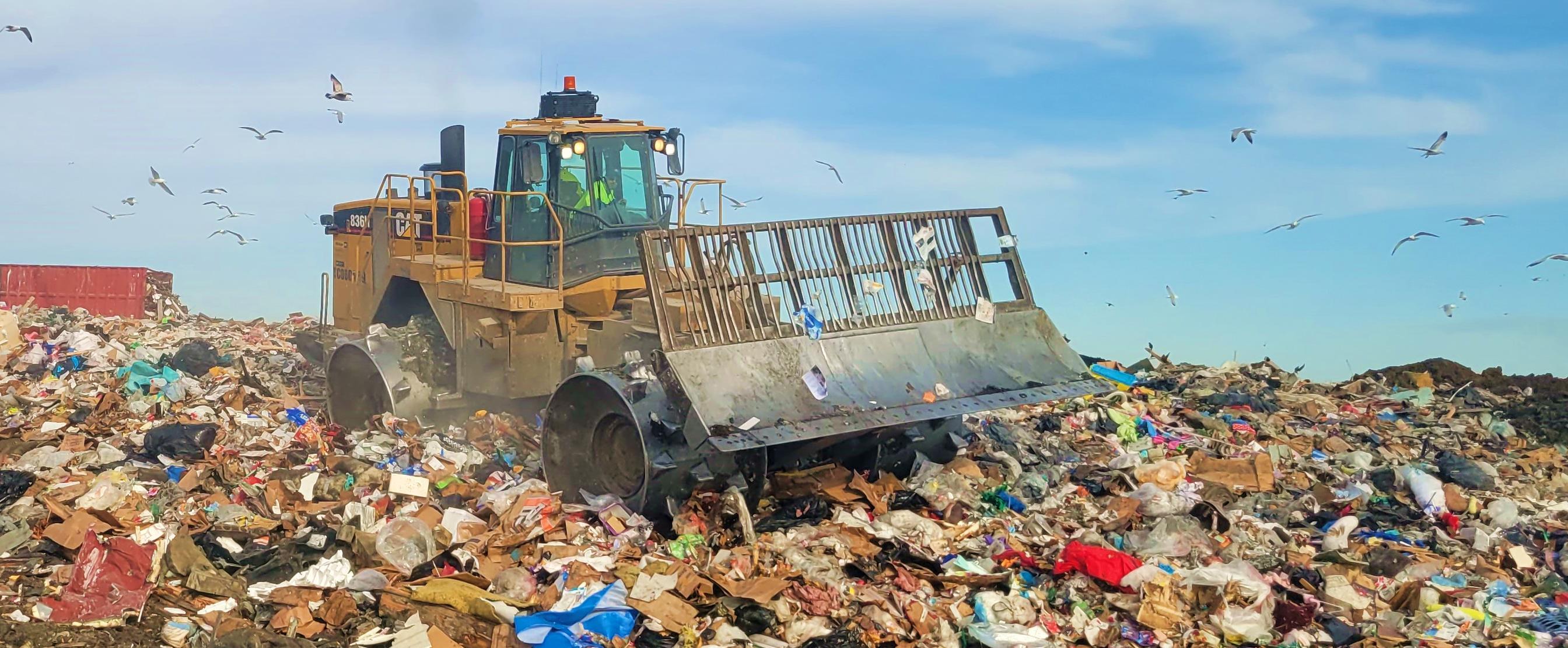
Providing waste services is a large cost for many communities. Local units of government should develop partnerships with each other to help reduce the cost of these services, while at the same time providing increased recycling opportunities for residents. Recycling can also have a large economic benefit in terms of jobs and value of materials collected. In Genesee County, millions of dollars' worth of recyclables are thrown away every year. If these resources were diverted from the landfill, they could be very beneficial in stimulating the County's recycling industry. Agencies and municipalities should review the best practices used by others to track revenue and expenditures for material management.
Each community has access to curbside residential recycling for items such as paper, cardboard, and plastic. There are four residential curbside recycling waste haulers in Genesee County: Priority Waste, Emterra Environmental, Republic Services, and Waste Management. In 2023, GCMPC conducted a recycling participation survey for all communities utilizing a curbside recycling service. It was determined that in areas with curbside wheeled carts, 69% of residents
utilized the service, displaying a greater need for a permanent recycling facility. A permanent drop-off site where residents can take latex paint has been established at Habitat for Humanity in the City of Flint. Genesee County is currently in the process of funding and constructing a permanent household hazardous waste facility within the City of Flint.
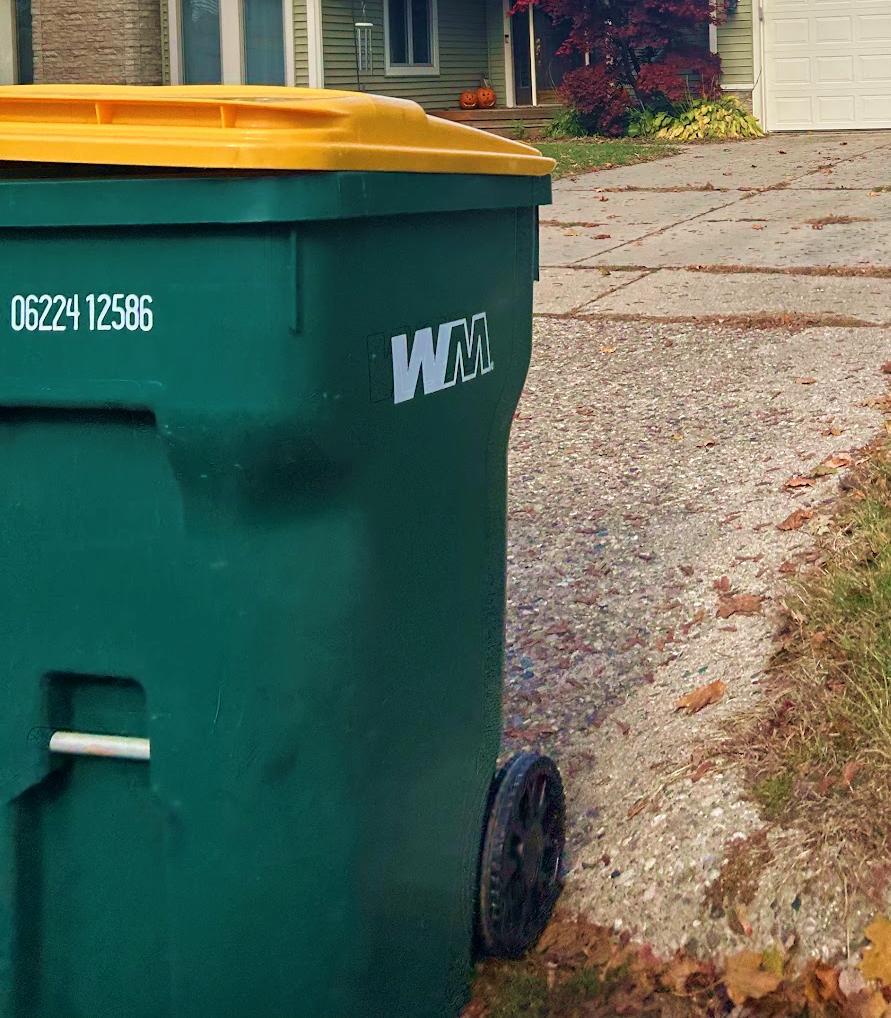
Monitor solid waste imports and exports to track long term disposal capacity
Improving the quality and accuracy of solid waste data
Evaluate existing materials management programs to make improvements moving forward
Determine best practices from other agencies for education programs
Expand recycling education to include a recycling curriculum that is available to teachers
Increase outreach to adult populations through presentations, websites, and social media
Educate local municipalities and businesses with the cost benefits of reducing waste generation
Create partnerships with other agencies for educational and staff support
Establish annual goals for evaluation of waste generation creating a metric system to measure progress
Increase participation in curbside residential recycling programs
Conduct waste assessments within the commercial sector to recommend methods to increase recycling
Support the development of materials management facilities in Genesee County
Utilize comparable organizations as examples to formulate a plan for potential revenue and expenditures based on their programs and facility operations
Develop partnerships with and between local communities to reduce cost, increase recycling opportunities, and minimize the overall environmental
Support job creation through the development of a
Promote the reuse of materials to subsidize costs
Solid Waste Ordinance
Materials Management Plan
Solid Waste Evaluation Study
Data Maintenance
Recycling Presentations
Social Media Marketing
Education Outreach
Event Attendance
Curbside Residential Recycling Recycle Day Events
Latex Paint Recycling Drop-off
Recycle Education and Waste Audits
Solid Waste Evaluation Study Municipality Coordination’
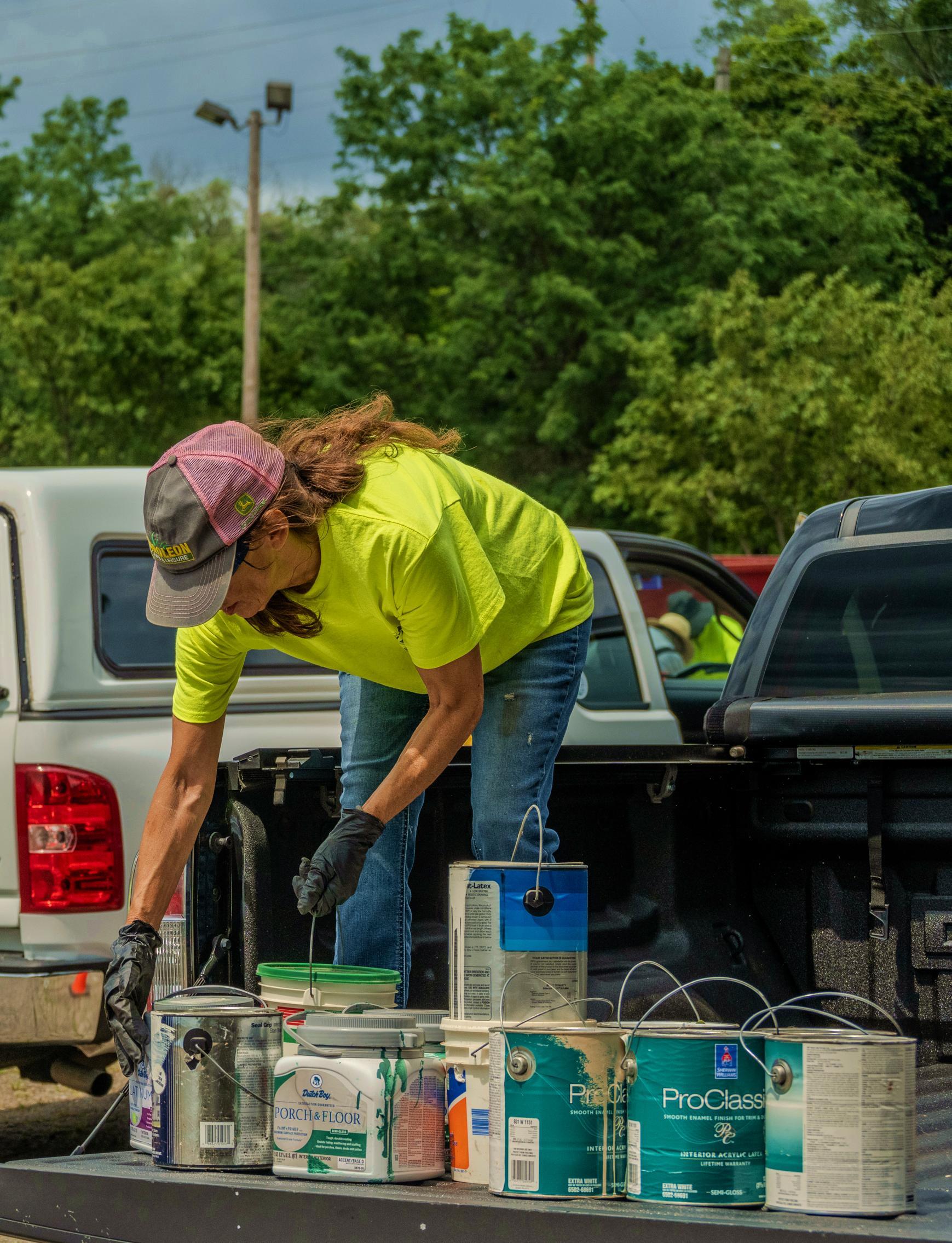
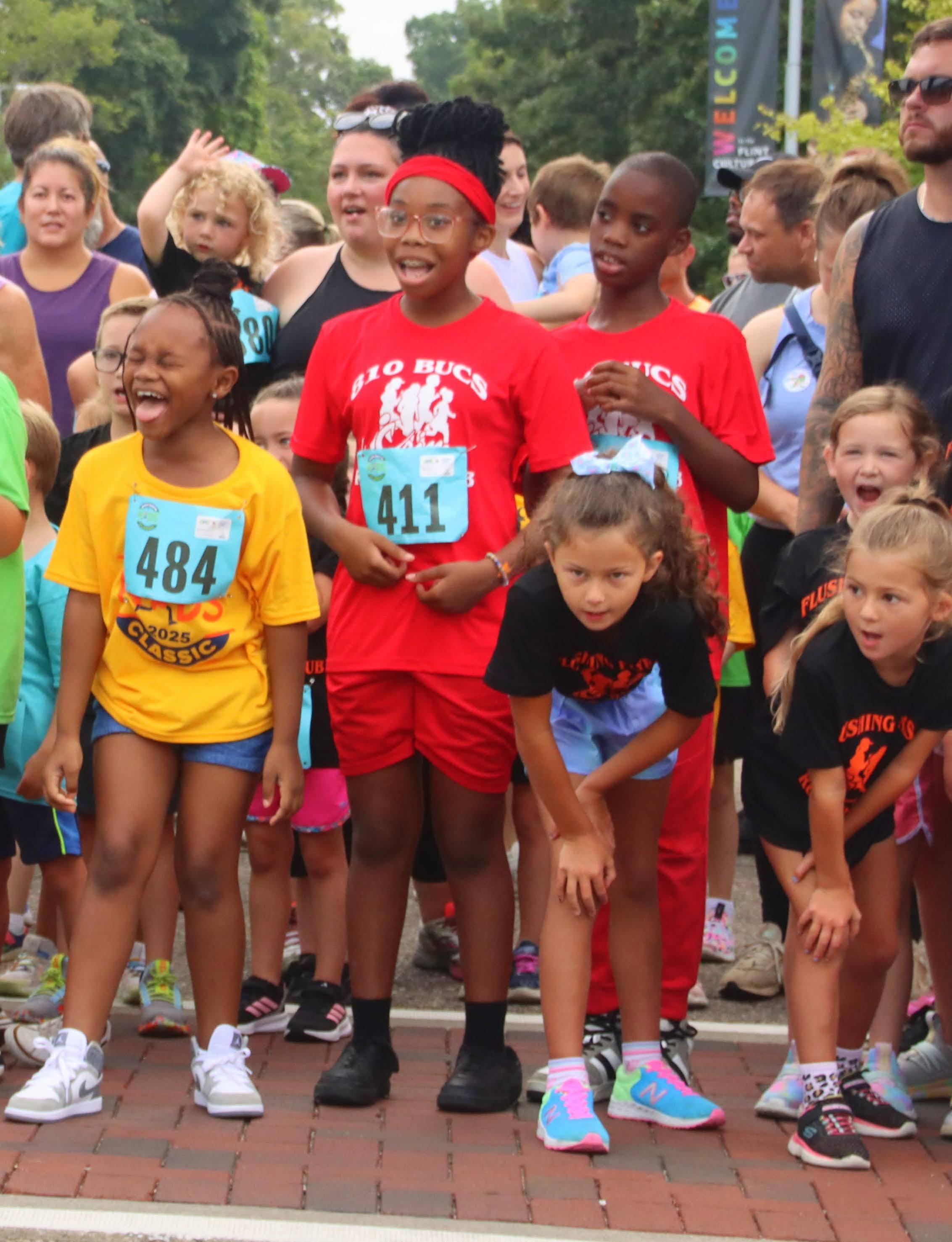
Genesee County is committed to a policy of nondiscrimination in the conduct of its business, including meeting its responsibilities under Title VI of the Civil Rights Act, the Americans with Disabilities Act, and other federal and state laws. Title VI of the Civil Rights Act of 1964 is the over-arching civil rights law prohibiting discrimination based on race, color, national origin, sex, income, and mental or physical ability in any program, service or activity that receives federal assistance. Genesee County is committed to ensuring that no person is excluded from participating in, be denied the benefit of, or be otherwise subjected to discrimination under any Genesee County service, program, or activity. All Genesee County investments meet Title VI requirements. The GCMPC Title VI NonDiscrimination Plan describes how GCMPC complies with Civil Rights legislation and principles, and outlines procedures for discrimination related complaints. The Organizational Development Coordinator and GCMPC Title VI Coordinator is the primary Genesee County and GCMPC contacts for discrimination related complaints and ensures compliance with Title VI regulations. Please review the Genesee County Non-Discrimination Statement and GCMPC Title VI Non-Discrimination Plan for more information.
Organizational Development Coordinator
Jerome Threlkeld, Genesee County
Phone: 810-257-3020
Fax: 810-257-3008
Email: JThrelkeld@geneseecountymi.gov
Genesee County Metropolitan Planning Commission Title VI Coordinator
Christine Durgan, Assistant Director
Phone: (810) 257-3010
Fax: (810) 257-3185
Email: CDurgan@geneseecountymi.gov

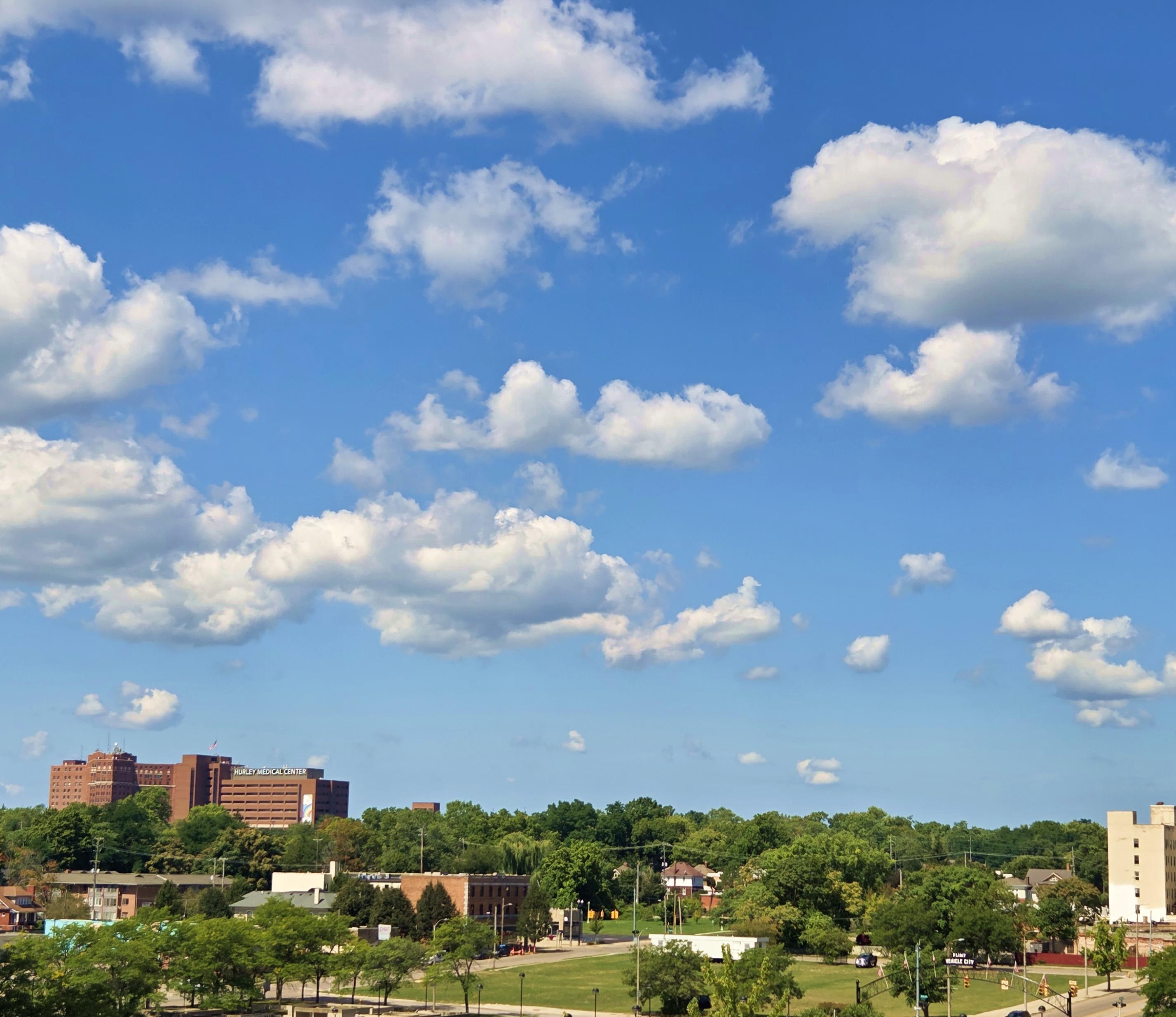
To ensure that future efforts are as effective as possible, staff have developed four overarching visions aligned with our County Priorities, each accompanied by specific actions. The following pages explain the rationale behind each action and outline steps that local officials, community organizations, and residents can take today to begin making a meaningful impact. (see Figure 5-2) Staff also evaluated what has been accomplished since our last plan update, as well as what we can continue to improve upon.
Elected and appointed members of cities, villages, and townships who are making decisions for communities.
Organizations including road agencies, planning commissions, advocacy groups, foundations, and educational institutions.
The people that live, work, and play in our communities.
In late 2023, Genesee County developed a set of common goals and values based on what is important to our community. The graphic on the right identifies the Genesee County Common Purpose. This Purpose, “Making a Positive Impact for Genesee County”, is quantified by the county priorities: healthy, livable & safe communities; long term financial stability; inclusive, collaborative culture; and community growth. These are reflected in the projects that the Genesee County Metropolitan Planning Commission (GCMPC) completes on an annual basis. The Visions and Actions listed in the next section all relate back to one of these four overarching priorities. A detailed description of each purpose can be found in Figure 5-1.
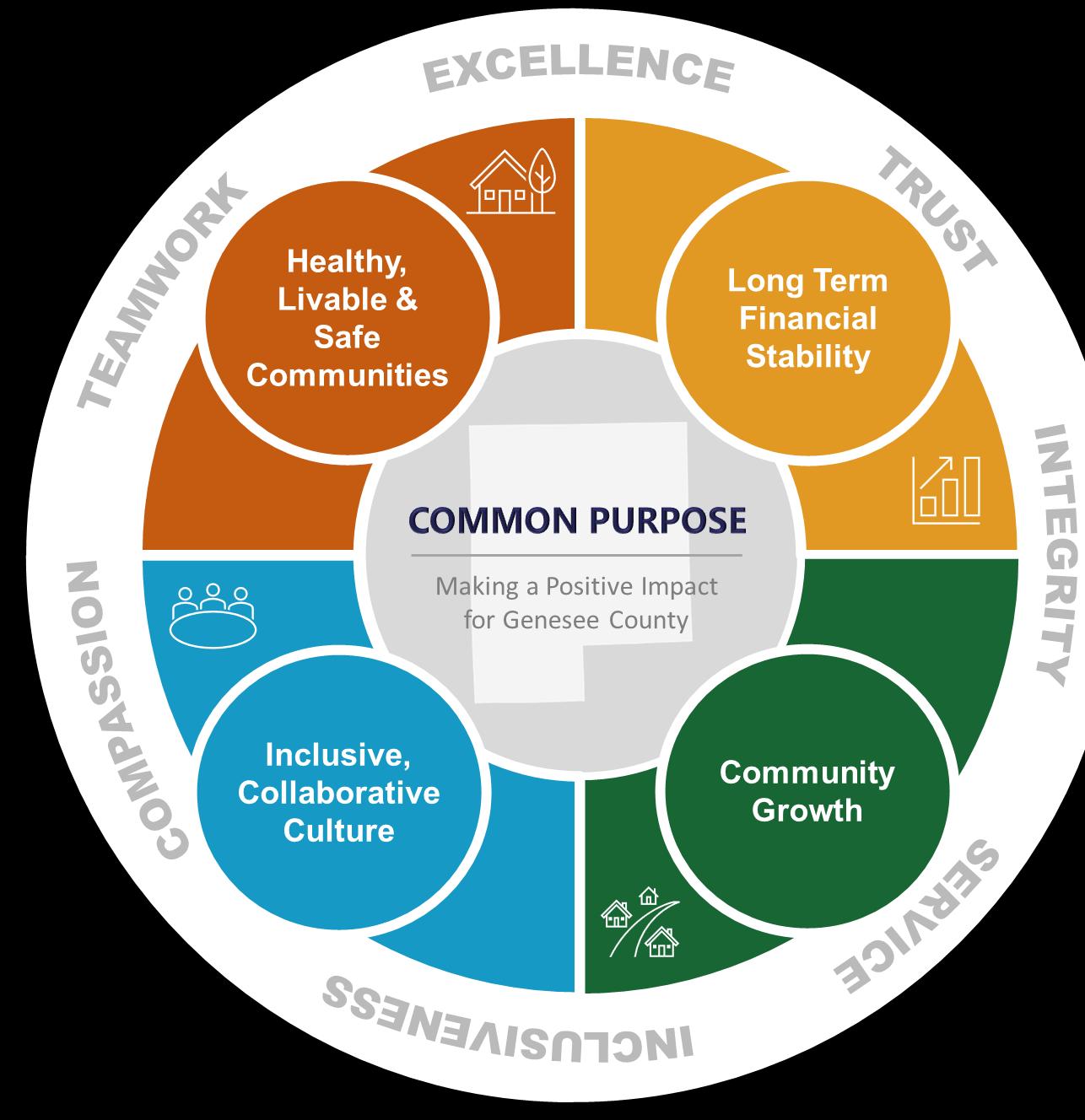
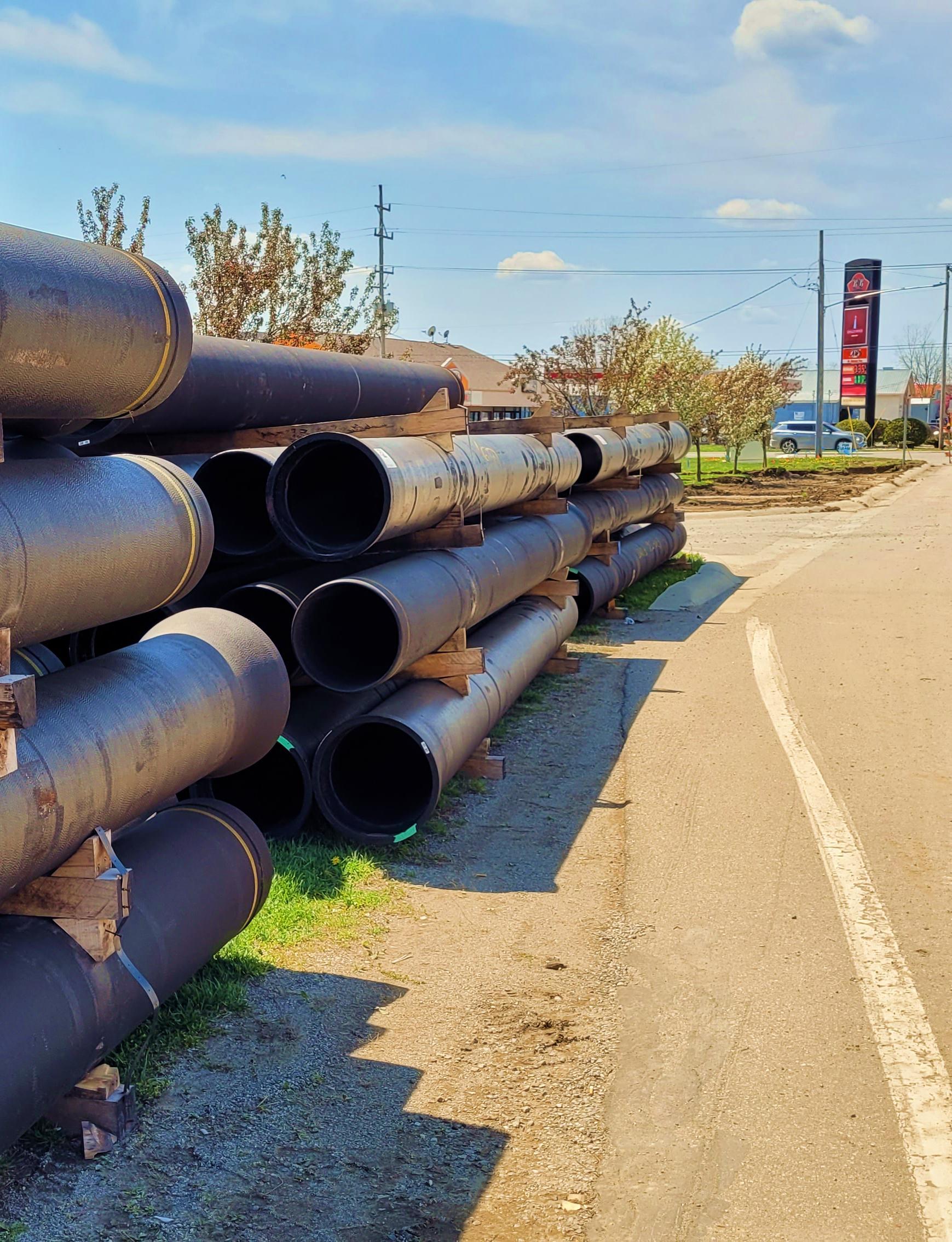
As part of the 2020 Our County, Our Future plan, staff established a series of vision statements and corresponding actions based on plan objectives and public input. In preparing the 2025 update, the original Vision statements were retained to allow for analysis of progress made since the previous plan’s adoption.
In creating the 2025 update, staff also reviewed all visions and actions to ensure that they align with the Genesee County Priorities and federal and state plans.
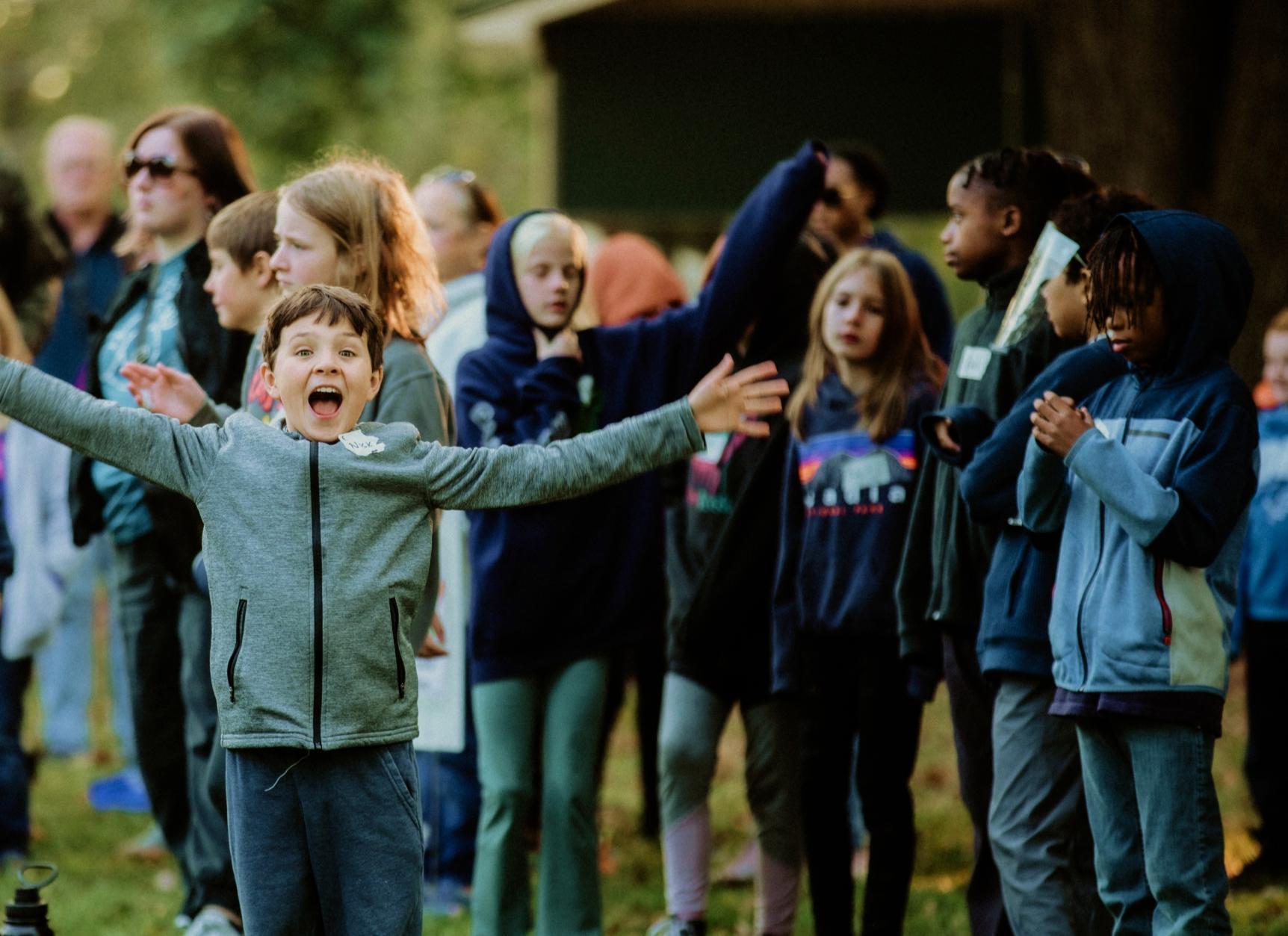
Continue to support public services such as crime prevention, code enforcement, and demolitions that promote safe neighborhoods.
Expand awareness of the resources available for community stabilization/revitalization through marketing available programs.
Increase affordable housing options with down payment assistance, home rehabilitation, new constructions, energy efficiency, and funding for low-to-moderate income households through programs such as the Housing Impact Fund.
Continue to support the Continuum of Care to provide funding for the needs of the homeless and near homeless populations.
Support mixed-use, higher density development opportunities in downtown areas by establishing new public-private partnerships.
Continue to encourage public facility improvements that enhance vital community structures.
Foster a rewarding environment for business attraction, workforce development, and talent retention
Enhance existing intermodal facilities to create a more efficient network for people and freight.
Grow connections between the private sector and educational institutions.
Support the strategic development of vacant land including the Advanced Manufacturing District; as well as repurposing of existing commercial spaces such as Genesee Valley Center.
Support economic vitality by preparing our communities to attract a skilled labor force to live, work, and play.
Assist our communities with best practices to attract and retain young professionals.
Prioritize projects that improve multi-modal access to employment, education, and core community resources.
Cultivate a sustainable linkage between man-made and natural assets
Continue to promote transportation and community development projects that preserve and minimize impacts to critical environmental areas.
Coordinate with the State and local units of government to develop a system to prioritize Farmland and Agricultural Preservation.
Implement a sustainable materials management program with the main objective of reducing the overall amount of waste generated in Genesee County, utilizing resource conservation technologies such as recycling and composting.
Continue to monitor local air quality and prioritize projects that will help reduce the impact of the transportation system on the environment.
Plan, monitor, and mitigate for natural and man-made hazards to reduce potential negative impacts on our communities.
Improve education and awareness of proper material management such as reducing, reusing, and recycling.
Construction of a permanent Recycling and Education Facility for Genesee County residents.
our unique identity and sense
Continue to invest in travel and tourism to improve the quality of life for current residents, while attracting new residents through marketing.
Continue to encourage complete street principles in all projects by prioritizing projects that foster a safe and comprehensive transportation system for all users.
Ensure access to core community services to reduce food insecurity, improve economic status, and promote healthy lifestyles.
Foster distinctive, attractive communities with a strong sense of place through Community Development Programs.
Encourage local zoning ordinances and master plans that seek commonality with adjacent municipalities.
Increase public awareness of all resources and attractions in our community.
Incorporate findings from the NextGenesee broadband study into future investments to make Internet services available for all Genesee County residents.
Provide a safe, secure, reliable, and efficient transportation network for all by working with local agencies to identify issues and prioritize projects to maximize use of limited resources.
Maintain and improve upon the existing transportation network and prioritize projects that work towards the bridge, pavement, safety, transit, and system reliability performance target conditions.
Encourage coordinated and strategic infrastructure improvements in conjunction with housing and job creation efforts.
Implement a Strategic Trails Plan to enhance non-motorized transportation routes throughout the county.
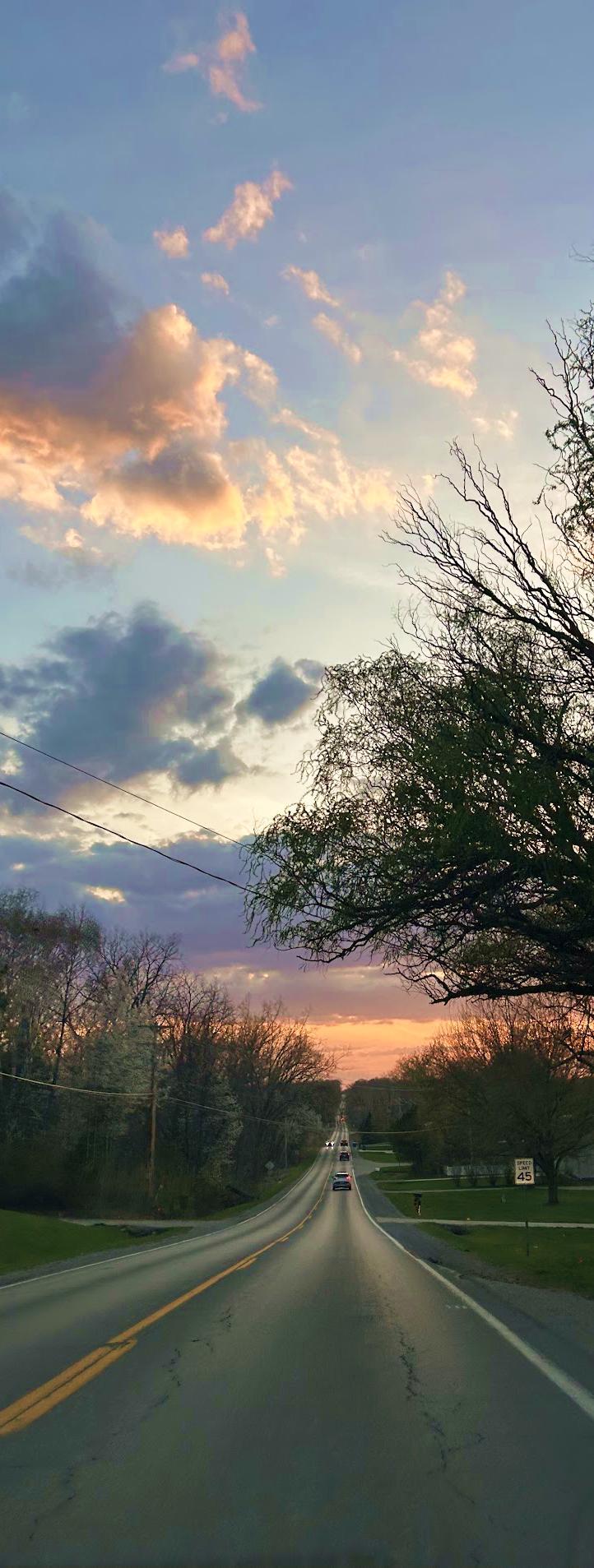
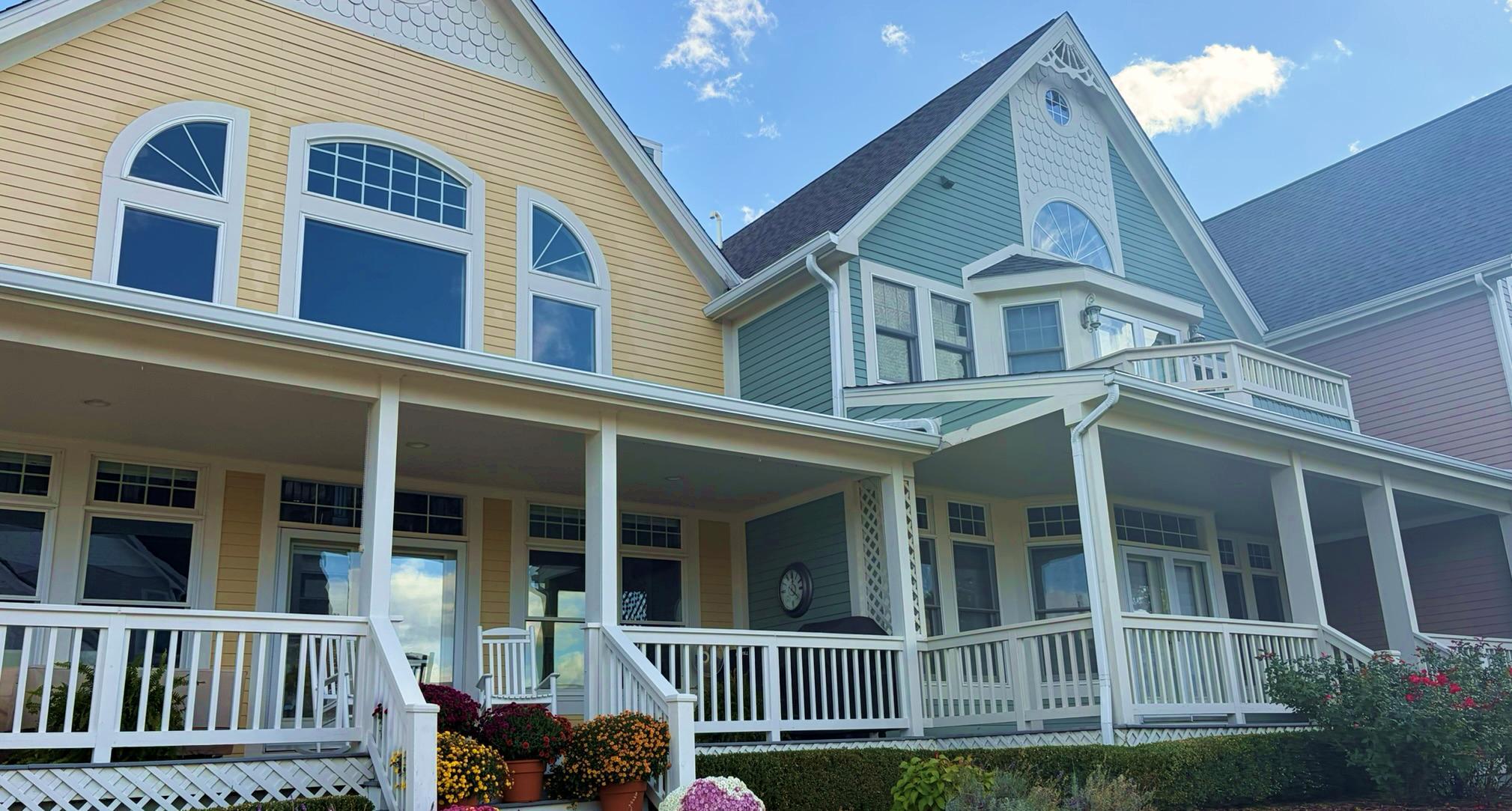
Action: Continue to support public services such as crime prevention, code enforcement, and demolitions that promote safe neighborhoods
Throughout our County, there are blighted properties which tend to attract crime and negatively affect neighborhoods.
Officials:
• Update local zoning ordinances to include policies that strengthen nuisance abatement and property maintenance standards.
• Prioritize demolitions in areas most impacted by crime or disinvestment.
• Apply for public funds, update master plans, and restructure budgets.
Agencies:
• Organize community safety workshops, neighborhood watches, and block clubs.
• Secure blighted structures to prevent further dilapidation and crime.
Residents:
• Report code violations and concerns to local officials.
• Participate in neighborhood cleanups.
• Stay up-to-date on home maintenance.
• From 2022, Genesee County Land Bank secured $57 million for approximately 1900 demolitions of dilapidated homes.
Action: Expand awareness of the resources available for community stabilization/revitalization through marketing available programs
Habitat for Humanity Credit: Damon Fortney
Every municipality has areas that can be improved but residents may not be aware of the resources available to them.
Officials:
• Talk with neighboring communities about best practices or to gather information on resources available.
• Local governments should partner with local agencies such as schools, libraries, churches, etc. to raise awareness on programs.
Agencies:
• Evaluate how programs are currently being marketed so that improvements can be made.
• Build stronger inter-agency relationships with community development institutions.
• Explore MSHDA programs.
Residents:
• Follow your local municipality on social media or attend local board meetings to stay informed.
• Share program information with neighbors, friends, and community.
• Genesee County’s Roof Repair Program has a goal of assisting 100 homes.
• Over $2 million has been invested in home repairs and rehab projects countywide.
Action: Increase affordable housing options with down payment assistance, home rehabilitation, new construction, energy efficiency, and funding for low- to moderate-income households
There are residents within every community that are spending more than 30% of their income on housing. Low-to-moderate income households may not be aware of resources available to them.
Officials:
• Partner with developers to provide mixed income housing & energy efficient construction.
• Streamline permitting to lower cost to build and speed up timelines.
Agencies:
• Energy efficient organizations should offer weatherization, energy audits, and retrofit programs for qualifying income households.
Residents:
• Apply for programs such as HIP downpayment assistance.
• Total cost of $25.1 million for 84 mixed income units invested in Orchard Grove and Orchard Manor apartments.
• Over $40 million of Housing Choice Voucher funding has been used in Genesee County since 2020.
• Genesee County has set aside $100,000 for downpayment assistance.
• Genesee County has set aside $10 million in grant funding for new home construction.
Action: Continue to support the Continuum of Care to provide funding for the needs of the homeless and near homeless populations
On any given night, there are people that are homeless or require housing services in every community throughout the County.
Officials:
• Review and create priorities in master plans that aim towards a solution for homelessness, housing, and shelter.
Agencies:
• Participate in the Continuum of Care point-in-time count. This will allow for more accurate reporting of statistics and potentially increase funding opportunities.
Residents:
• Volunteer and make donations to your local shelter.
• Development of a phone app that showcases available resources related to affordable housing, Emergency Housing, Food, Clothing, Transportation, and other resources.
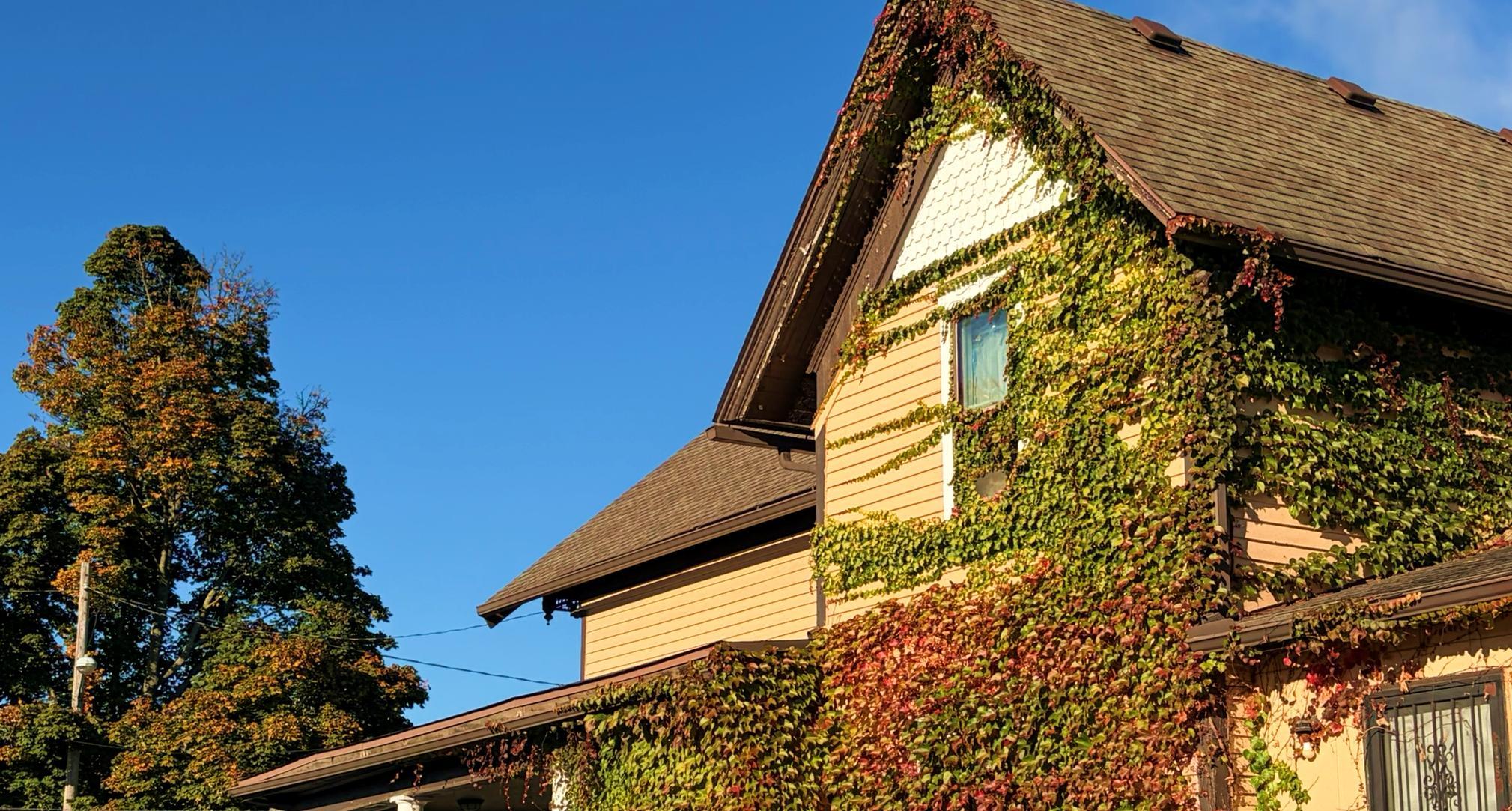
Action: Support mixed-use. higher density development opportunities in downtown areas by establishing new publicprivate partnerships
To prevent unnecessary development by utilizing existing infrastructure and to offer housing options that are attractive to varying ages, family sizes, and income levels.
Officials:
• Update your municipality’s zoning ordinance to allow for mixed use and higher density.
• Invest in streetscape utilities and fiber for development-ready locations.
• Explore development incentives like TIFs and Opportunity Zones.
Agencies:
• Financial institutions can provide financial tools for downtown mixed-use projects.
• Chambers of Commerce can advocate for downtown business attract and retain.
Residents:
• Prioritize shopping, dining, and spending time in your downtown.
• Upcoming $23 million-dollar mixed-use development called La Piazza in the City of Grand Blanc. This will consolidate several existing businesses with a modern, 3 story 49,000 sq ft development.
• Over $16 million of Low-Income Housing Tax Credit (LIHTC) dollars allocated to Genesee County since 2020.
• In 2025, multiple mixed-use buildings in City of Fenton were completed.
Action: Continue to encourage public facility improvements that enhance vital community structures
Public facilities including libraries, schools, and parks are essential to retain and attract residents and businesses, which will improve your community’s tax base.
Officials:
• Inventory the condition of vital community structures and determine which need improvements. Seek out funding to make needed improvements.
• Budget maintenance dollars locally to support public facilities investments.
• Maintain exterior façade of facilities to keep clean and presentable.
• Create a capital improvement plan for your municipality.
Agencies:
• Review non-motorized and transit connections to public facilities to ensure connections from schools and libraries to neighborhoods.
Residents:
• Visit your local park, check out a book at your closest library, or volunteer in your community.
• Continue to support millages for libraries, schools, and parks.
• Progress is being made towards the development of a Recycle and Education center. In 2025, Genesee County completed the demolition of the former McDonald Dairy site. An architect was hired and has been working on the layout of the new building. A Recycling Infrastructure grant was received in the amount of $900,000.
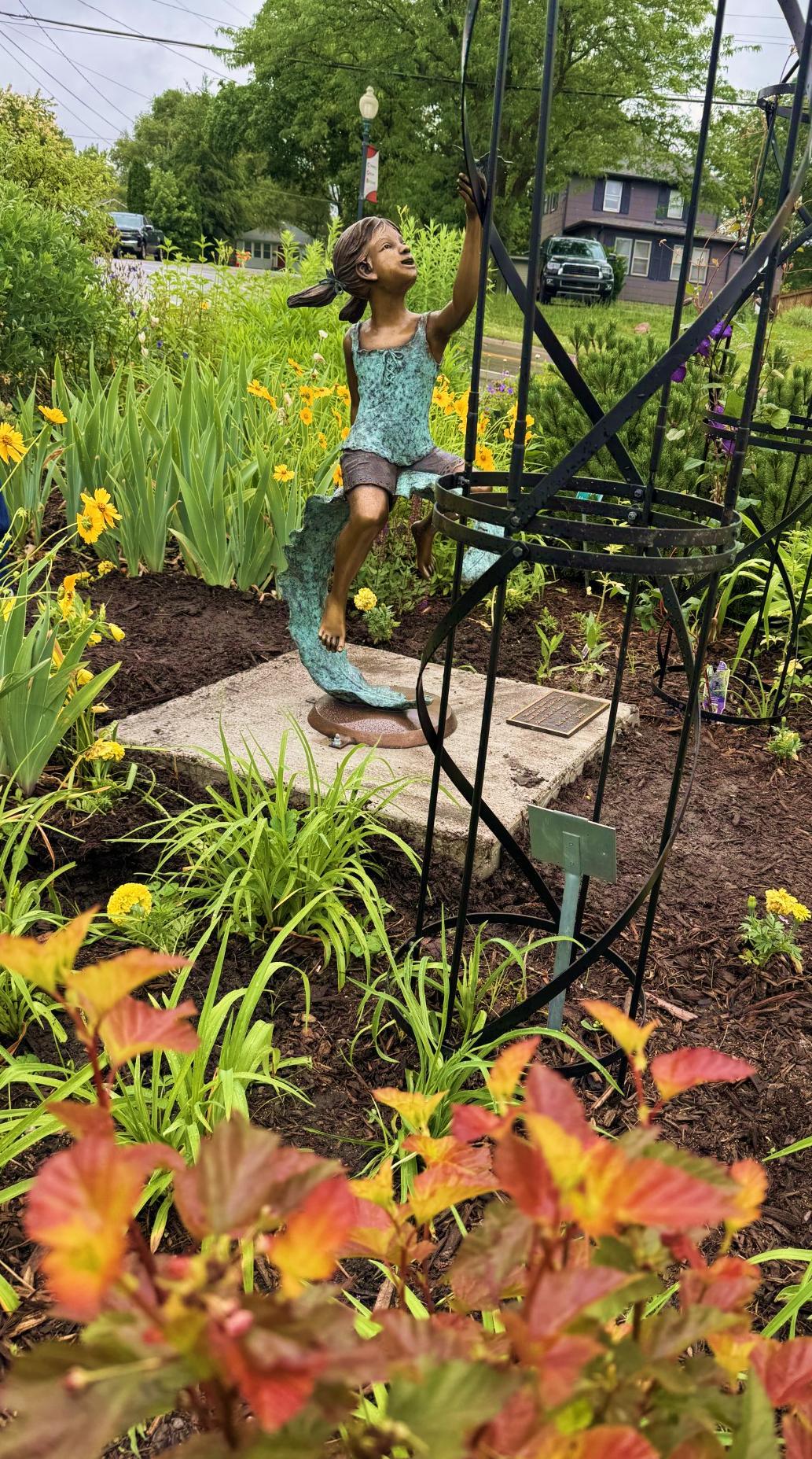
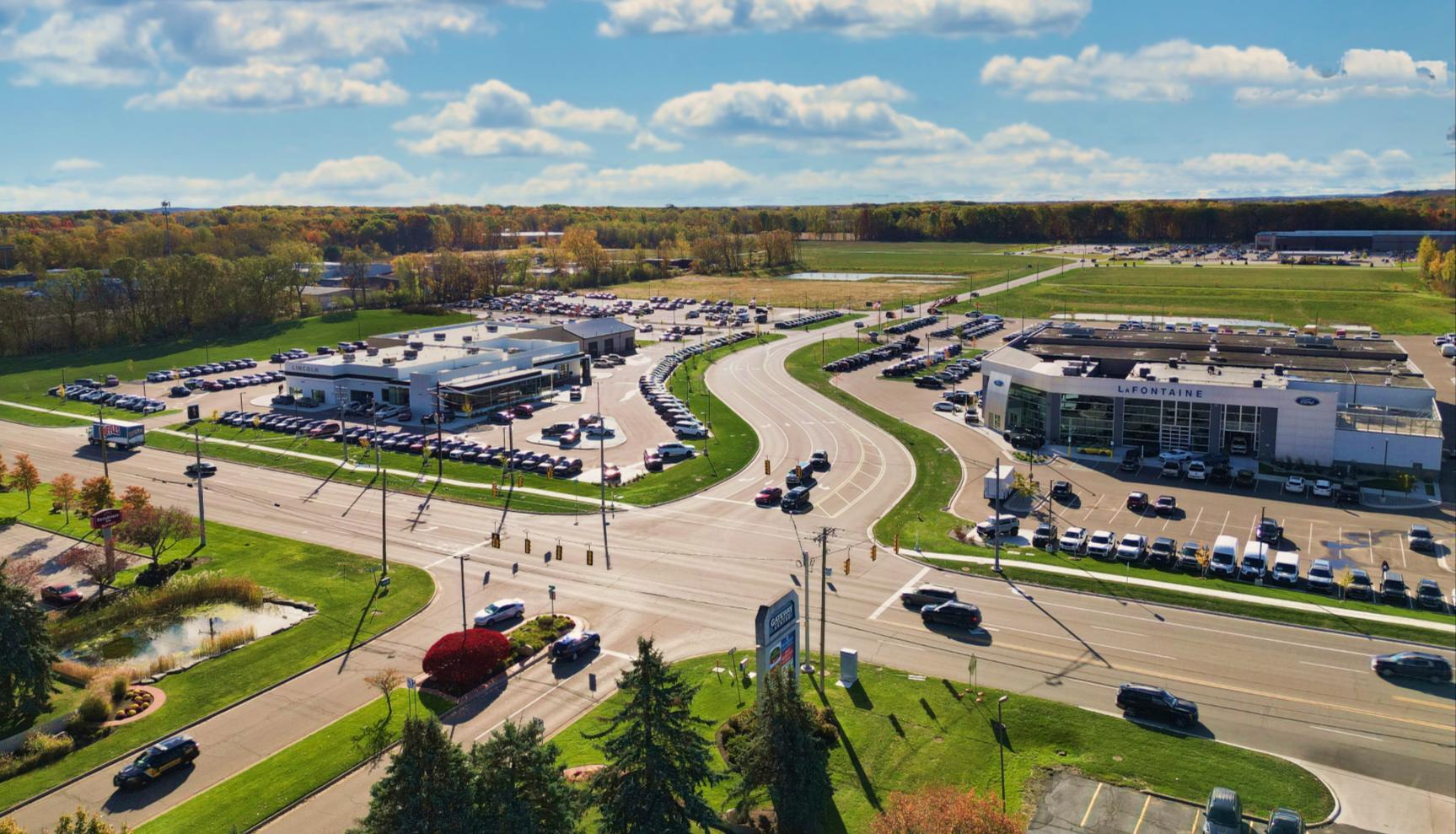
Fostering a Rewarding Environment for Business Attraction, Workforce Development, and Talent Retention
Action: Enhance existing inter-modal facilities to create a more efficient network for people and freight
Having a more efficient network will increase economic incentives for businesses and individuals while reducing environmental impacts.
Officials:
• Identify travel and commute trends in your community to prioritize investment.
Agencies:
• Gather results from traffic studies – use these results to evaluate, prioritize, and recommend investment.
Residents:
• Pay attention to local freight rules in your community. Follow Board Communications in your local unit of government.
• Bishop Airport recently received a $4.9 million grant to support infrastructure improvements, assisting to reconstruct 80,500 sq ft of old terminal roofs and improve signage.
Action: Prioritize projects that improve multi-modal access to employment, education, and core community resources
Not everyone has a personal vehicle or can afford transportation to reach a grocery store, medical facility, employment, or school.
Officials:
• Municipalities should apply to Safe Streets for All or other grants to improve transit connectivity.
• Work with transit agencies to request additional bus stops and services in your community.
• Require new developments to install sidewalk or nonmotorized infrastructure.
• Reach out to businesses for sponsorship opportunities.
Agencies:
• Transit agencies can schedule signage and real time information to provide accurate service for riders.
Residents:
• Use non-motorized and public transportation whenever you can to support the expansion of current services.
• Notify officials of any additional stops or connections that could be beneficial to your community.
• MTA programs including Rides to Wellness, Rides to Groceries, and Your Ride transports residents in Genesee County to their destinations.
Online shopping has become more prevalent due to retail habits and the Covid-19 pandemic, leading to the closing of department stores which leaves vacant buildings behind.
Officials:
• Provide tax incentives and expedite permits to allow for redevelopment of vacant land.
• Keep redevelopment in mind during facility improvements to plan for the future
• Check current and future zoning maps to ensure that development matches land use.
• Genesee County/Flint Township partnership on Genesee Valley Mall redevelopment.
• Genesee County promotion and support of the Advanced Manufacturing District.
Agencies:
• Evaluate the repair and rehabilitation costs of existing structures before considering new construction.
Residents:
• Support local businesses by shopping in person.
• Ashley Capital is currently in the process of redeveloping Buick City, one of the largest Brownfields in the Country.
• Advanced Manufacturing District has obtained $261 million to spur development.
Action: Support economic vitality by preparing our communities to retain and attract skilled labor forces to live, work, and play.
Action: Support the strategic development of vacant land; as well as repurposing of existing commercial spaces such as big box stores and shopping centers. Update
An efficient transportation network, a variety of housing options, and recreational amenities are qualities that prospective employees and their families look for in a community.
Officials:
• Offer beautification grants to encourage local businesses to enhance storefronts.
• Research and evaluate community with high retention rates to see what they do.
Agencies:
• Housing and community development organizations should invest and advocate for housing options such as tiny homes and accessory dwelling units.
• Conduct studies to gather information and community needs.
Residents:
• Take part in community surveys during master plan or rezoning plan process to voice opinions of what you want to see in your community.
• In 2025, City of Flint awarded 20 small businesses with a one-time grant to support economic vitality.
• The City of Linden is updating their zoning ordinance to allow for a variety of housing types.
Action: Grow connections between the private sector and educational institutions
Increasing the amount of research activity, job training, and entrepreneurship that occurs within your community can improve economic development and tax base.
Officials:
• Determine if there are any private businesses in your community that would benefit from having ties with an educational institution.
• Offer a day in the life of tours to youth interested in government.
Agencies:
• Continue scouting for apprenticeships for skilled trades.
Update
• Make sure trade certifications and job trainings through local universities match the needs of commercial businesses.
Residents:
• Attend open forums hosted by schools and colleges.
• Consider jobs in fields that have local training opportunities.
• Continue to support millages that promote educational opportunities.
• Participate in educational programming.
• Genesee County staff attends the Genesee Network of Informal Educators and participates in the Flint River GREEN program to teach about water pollution and testing.
• In 2025, MSU extension expanded their public health research facility in downtown Flint.
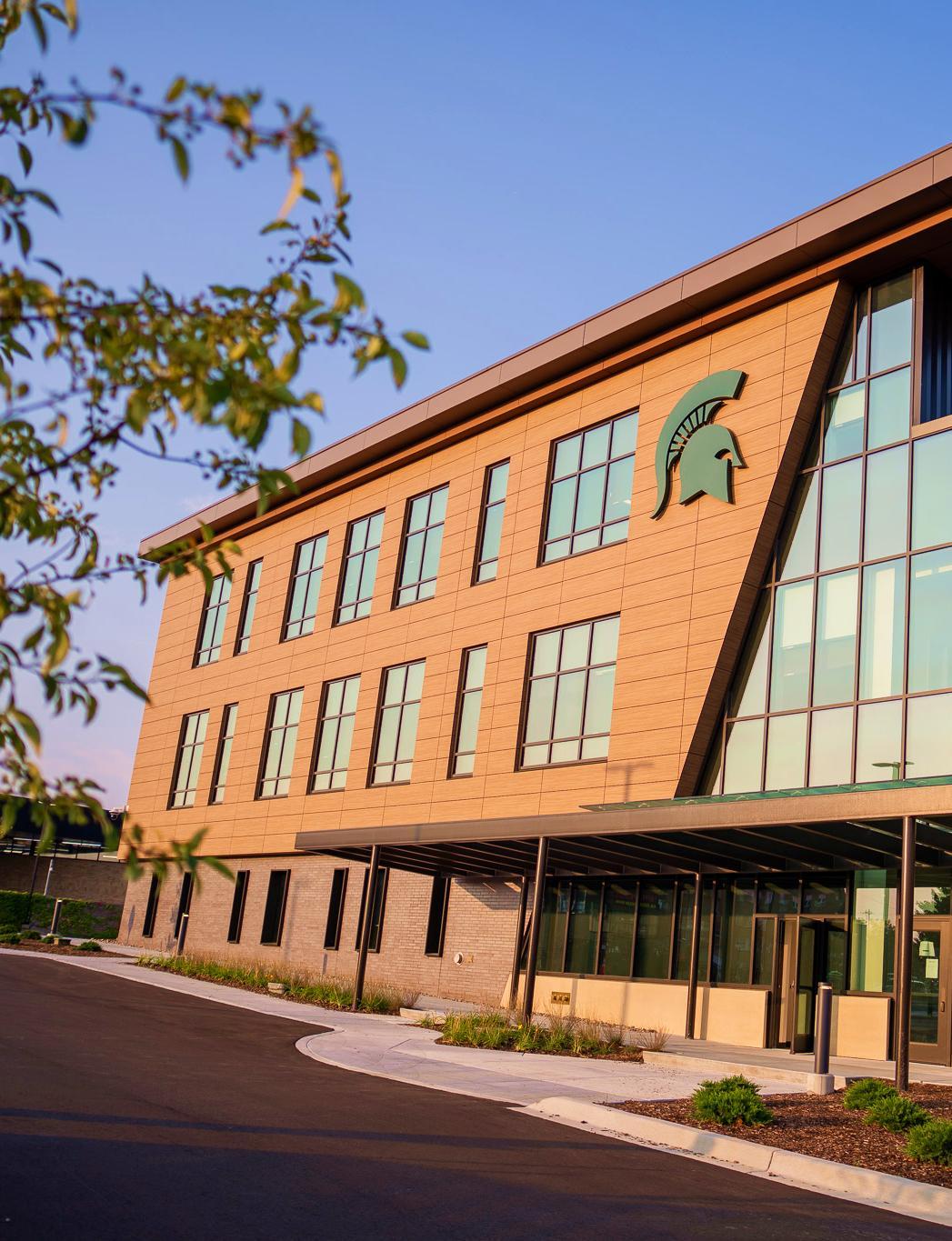
Action: Assist our communities with best practices to attract and retain young professionals
There is a talent shortage for skilled positions due to the retirement of current position holders and an insufficient population of incoming skilled workers. Although we have a strong presence of educational intuitions, we struggle to retain students after graduation.
Officials:
• Facilitate development of different types of housing styles to meet the needs of all demographics.
• Provide a variety of entertainment and restaurant options.
• Invest in opportunities for outdoor recreation.
Agencies:
• Sign-up for local and regional career fairs to highlight your organization to aspiring job seekers.
Residents:
• Participate in local and regional career fairs. Encourage your local employer to participate.
• U of M – Flint is pioneering a program called INSPIRE which focuses on equipping the future workforce to learn new technologies that will benefit businesses.
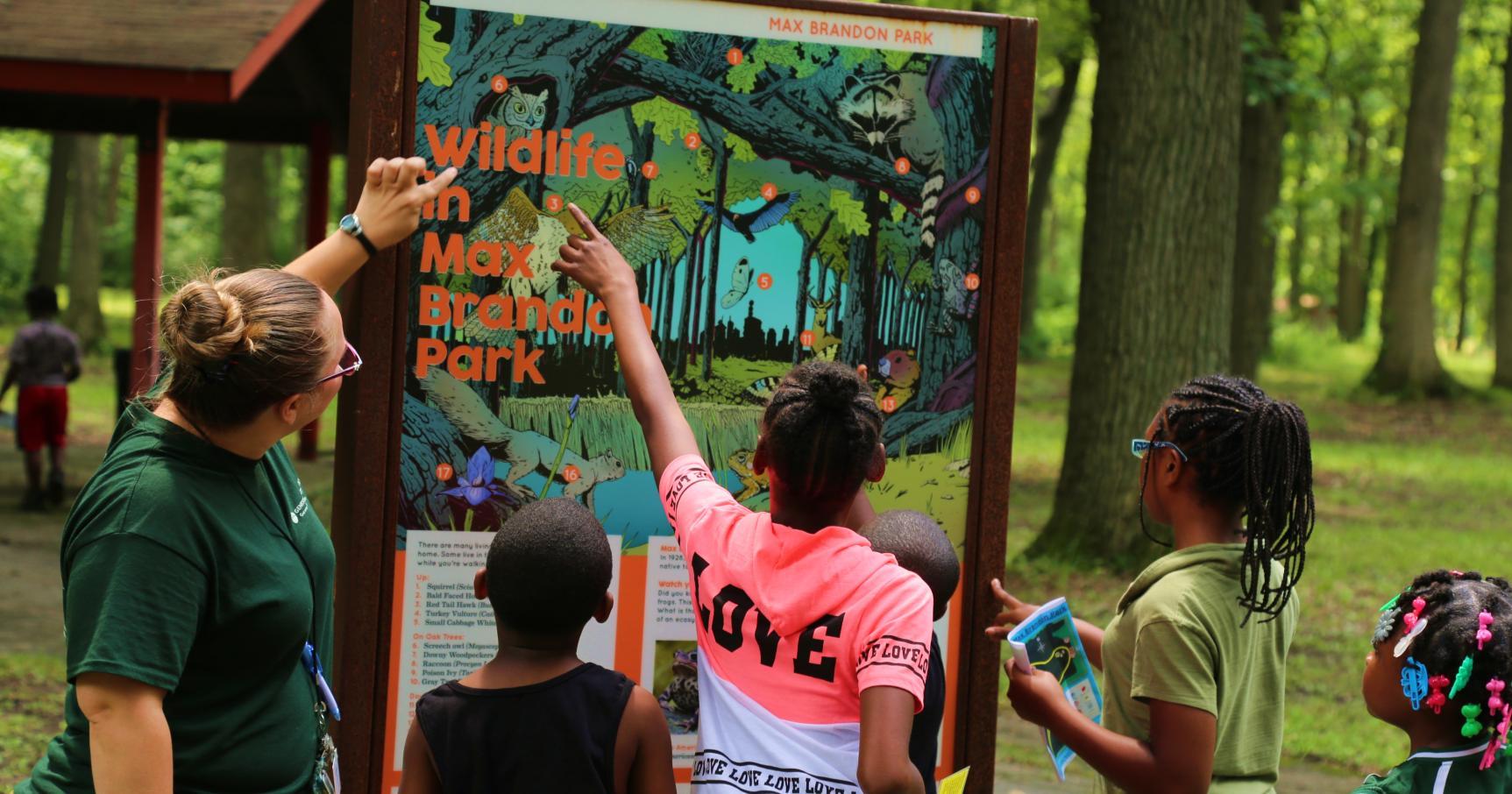
Cultivate a Sustainable Linkage between Manmade and Natural Assets
Action: Continue to promote transportation and community development projects that preserve critical environmental areas
Environmental assets provide recreational opportunities, natural habitats, and a buffer between manmade and natural features.
Officials:
• Perform environmental assessments to determine feasibility of projects.
• Review floodplain map to ensure new buildings are not in a high-risk area.
• Ensure that developments do not hurt protected wetland areas.
Agencies:
• Review projects in consideration of environmental features.
• Create a checklist that project applications must meet to ensure environmental safety.
Residents:
• Don’t litter, pick up trash in your community that you come across.
• Properly dispose of hazardous materials such as oil, chemicals, batteries, etc.
• Environmental reviews are conducted for all federally funded projects to ensure no negative impacts.
• As part of the Flint City Commerce redevelopment, Oak Park in Flint was revitalized, including new pavilions, grills and trees.
Action: Improve education and awareness of proper material management such as reducing, reusing, and recycling
It is important for people in our County to understand that reducing, reusing, and recycling lessens the impact of pollution on our natural environment and increases landfill capacity.
Officials:
• Require your municipality’s contract waste hauler to provide metrics on waste diversion. Then, report those numbers out to residents.
• Consider utilizing the same waste hauler as adjacent communities so information is consistent.
• Put educational materials about recycling on your website.
Agencies:
• Increase education efforts for residents on what can be recycled through websites, social media, and flyers.
Residents:
• Utilize the recycling services provided in your community.
• Educate yourself on what materials could be recycled.
• Properly dispose of hazardous materials.
• Approximately 54,000 households were provided educational recycling materials & flyers in 2023.
• City of Flint started recycling program in 2024 providing residents with one 64-gallon wheeled cart per household.
Action: Coordinate with the State and local units of government to develop a system to prioritize farmland and agricultural preservation
Agricultural land is an important asset in municipalities and can be threatened by urban sprawl.
Officials:
• Take inventory of parcels currently protected as agricultural and determine what should be in the future, update future land use plans and maps accordingly.
• Ensure P.A. 116 applications are consistent with Current and Future Land Use Plans.
Agencies:
• Plan future developments strategically to prioritize the preservation of farmland.
Residents:
• Apply for PA116 to protect parcels.
• Genesee County has created a map showing where PA116 protected parcels are located, as well as areas that are zoned for current and future agricultural use.
Action: Continue to monitor local air quality and prioritize projects that will help reduce the impact of the transportation system on the environment
Assuring that development does not negatively impact air quality is important for sustaining our natural environment in the future.
Officials:
• Consider establishing more air quality friendly transportation such as roundabouts throughout communities.
• Provide other modes of air quality friendly transportation in communities.
Agencies:
• Consider changing signal timings on road networks.
• For transit agencies, consider alternative fuel for multi-modal transportation.
Residents:
• Consider taking transit, non-motorized transportation, or carpooling to reduce your carbon footprint.
• Genesee County has invested $2.8 million into 4 roundabouts installed in past 5 years.
Action: Implement a sustainable materials management program with the main objective of reducing the overall amount of waste generated in Genesee County, utilizing resource conservation technologies such as recycling and composting
Household Hazardous Waste (HHW) is difficult to get rid of, harmful to the environment, and needs to be disposed of properly. Also, recycling options are not immediately available to every County resident, such as those in apartments.
Officials:
• Offer curbside recycling and require waste haulers to have wheeled recycling carts.
• Create a list of recycling resources for residents.
Agencies:
• Start a collection program for common recycling items in your community.
Residents:
• Become familiar with recycling rules in your community.
• Use reusable food and drink containers when possible.
• In 2024 – 3k tires and 1,250 gallons of paint were collected for proper disposal.
• Since 2020, we have collected 1.13 million pounds of HHW and chemicals from residents.
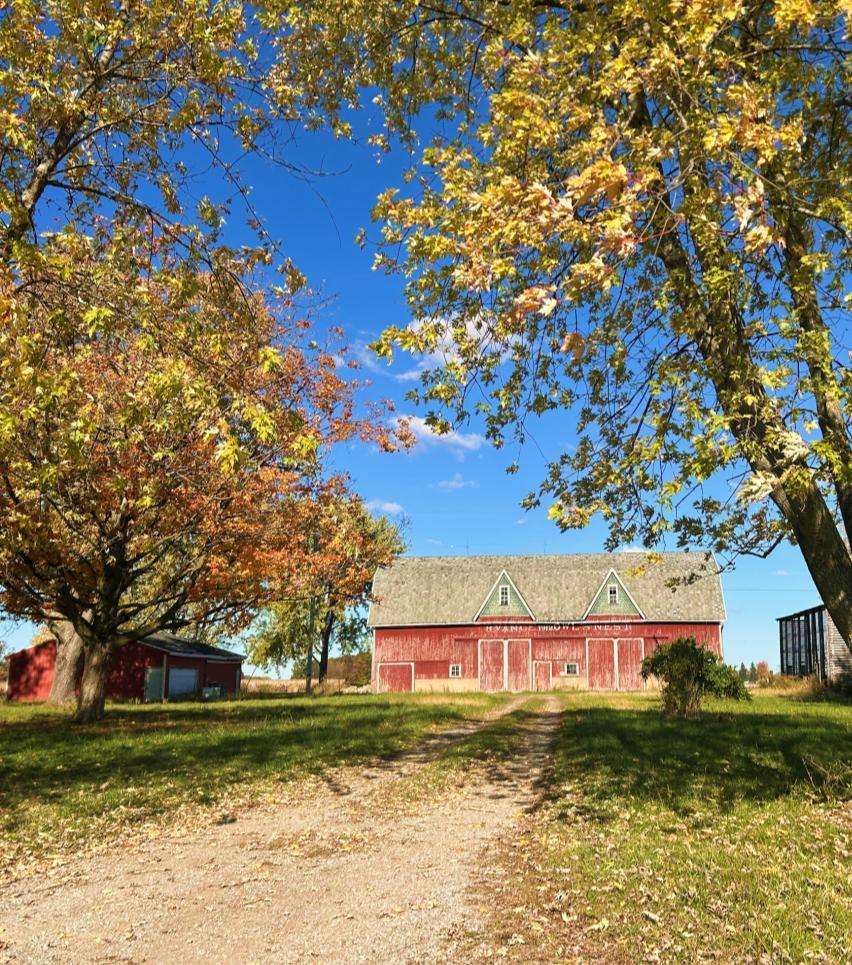
Action: Plan, monitor, and mitigate for natural and manmade hazards to reduce potential negative impacts on our communities
Natural and man-made disasters are a very real threat to our County Disasters such as flooding and tornadoes occur every year, causing millions of dollars in damages
Officials:
• Implement strategy from Genesee County’s upcoming hazard mitigation plan.
• Add a section hazard mitigation to your master plan.
• Include disaster mitigation in waste hauler contract.
Agencies:
• Provide data for local units to make informed decisions on how to mitigate disaster threats
Residents:
• Consider purchasing a generator or regrading your yard to be better prepared for extreme weather events.
• Genesee County plans to add hazard mitigation to Materials Management Plan to help guide communities' best practice.
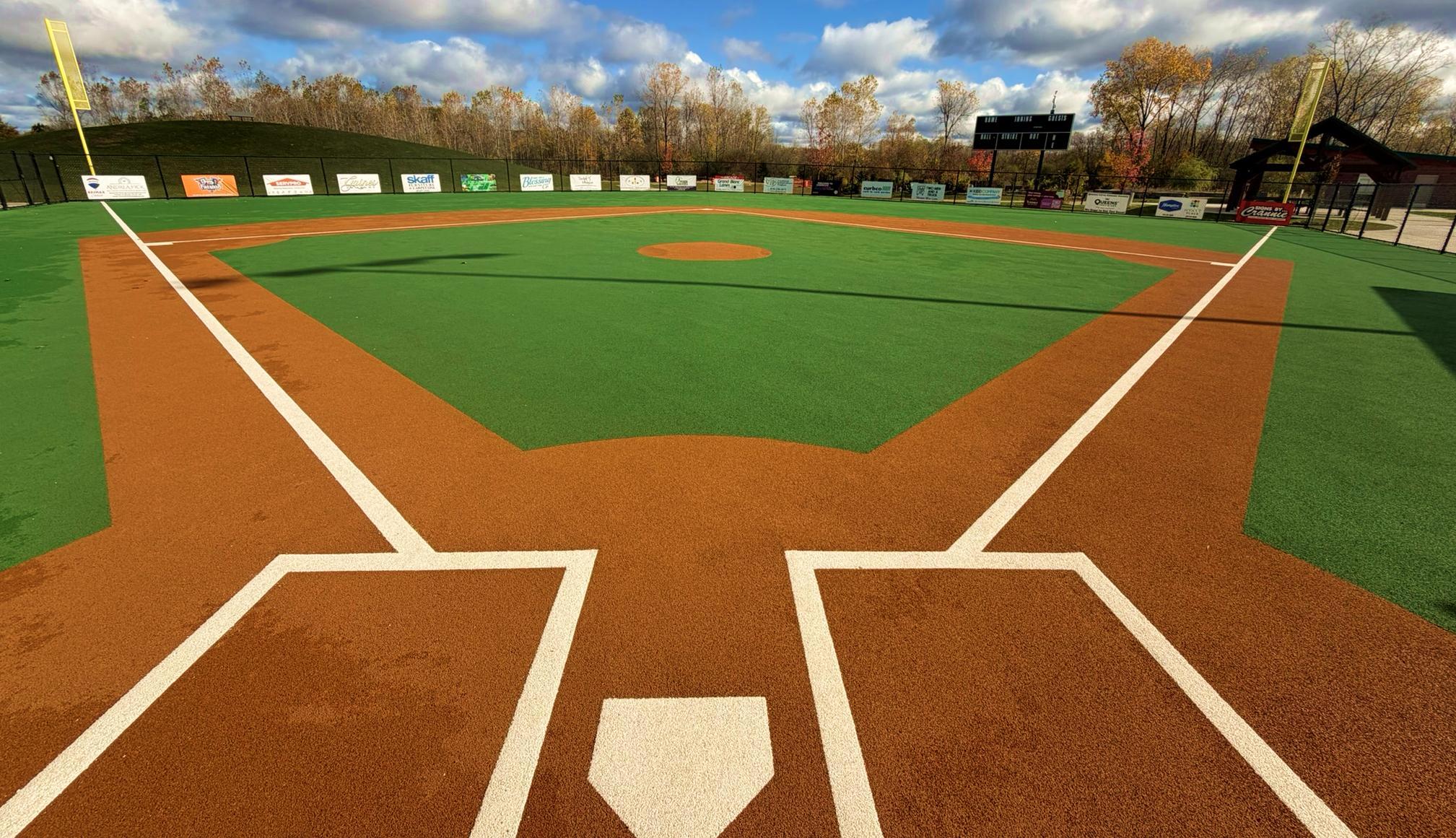
Action: Continue to invest in events, facilities, and parks to improve the quality of life for current residents while attracting new residents
To attract customers for local businesses and create a community that is desirable to live in and visit.
Officials:
• Organize community clean up events at local parks to engage with community.
• Get feedback from residents on what quality of life improvements they want to see.
Agencies:
• Assist in the maintenance of community infrastructure.
• Consider financial assistance in in the development of new community infrastructure.
Residents:
• Seek out and attend community events which support your community.
• $30.2 million from state and local funding sources to support first state park in Genesee County.
• Many communities host farmers market and concerts in the summer months.
• Over $3.5 million invested into the Mundy Miracle Commons. The Mundy Miracle League has been established to create competition sports opportunities for kids and adults with special needs.
Action: Continue to encourage complete street principles in all projects by prioritizing projects that foster a safe, secure, and comprehensive transportation system for all users
People want to get to places in a convenient and safe manner. It is important that options such as vehicle, bus, bike paths, and walkways exist to make our County a safer and more attractive place.
Officials:
• Focus on all modes of transportation infrastructure in master planning documents.
• Refer to complete streets policy in transportation planning.
Agencies:
• Invite all relevant parties to participate and comment in public meetings.
• Consider all modes of transportation when applying for funding.
Residents:
• Continue to use transit services, bike trails, sidewalks to show need for continued complete streets in Genesee County.
• In 2025, Genesee County hosted a trail symposium with the C.S. Mott Foundation to establish priorities for trail development across the County
• The C.S. Mott Foundation awarded over $1 million in funding to key trail connections in Genesee County.
Action: Ensure access to core community services to reduce food insecurity, improve economic status, and promote healthy lifestyles
There are some residents who may not have access to needed community resources such as fresh food, recreation, education, and health care. Having access reduces food insecurity, improves economic opportunities, and promotes healthy lifestyles.
Officials:
Locate new development near core services.
Agencies:
• Add additional bus routes to groceries and other necessities.
• Promote the Genesee County health plan in communities to promote a healthy lifestyle.
Residents:
• Consider how easy it is for you to access the services you need. Report any issues you find to your local officials.
• Genesee County allocated $250,000 of American Rescue Plan Act funding to the Food Bank of Eastern Michigan.
• Millions have been raised in public and private partnership to fund the North Flint Food market, which will address food availability issues on Flint’s north side.
Action: Encourage local zoning ordinances and master plans that seek commonality with adjacent municipalities
Assures that future development has a seamless connection between land use in communities and that one community is not negatively impacting another.
Officials:
• Meet with adjacent municipalities prior to creating a new master plan to ensure cross border similarities.
• Ask for assistance from county or state to ensure you meet all the requirements when updating documents.
• Work with Genesee County to leverage infrastructure improvements.
Agencies:
• Use the Genesee County Master Plan as a resource for developing your own master plan.
Residents:
• Monitor zoning ordinance change notifications and participate in public input sessions.
• In May 2025, representatives from Genesee County attended the Michigan Association of Plannings’ Zoning Reform for Housing Session. This event focused on housing reform goals statewide.
Action: Foster distinctive, attractive communities with a strong sense of place through Community Development Programs
Our communities need to be attractive to maintain a healthy tax base.
Officials:
• Seek funding that supports community engagement.
• Incorporate placemaking goals into community master plan.
• Conduct surveys to determine resident thoughts.
Agencies:
• Arts and cultural organizations can activate public spaces.
• Reference Genesee County’s Consolidated Plan for Community Development projects and programs.
Residents:
• Volunteer for beautification projects, park cleanups, and community events.
• Take a walk!
• Create or join a neighborhood group social media for your area.
• In 2023, Mt. Morris Township utilized CDBG funding to add neighborhood signs to subdivisions establishing a sense of place within the neighborhood.
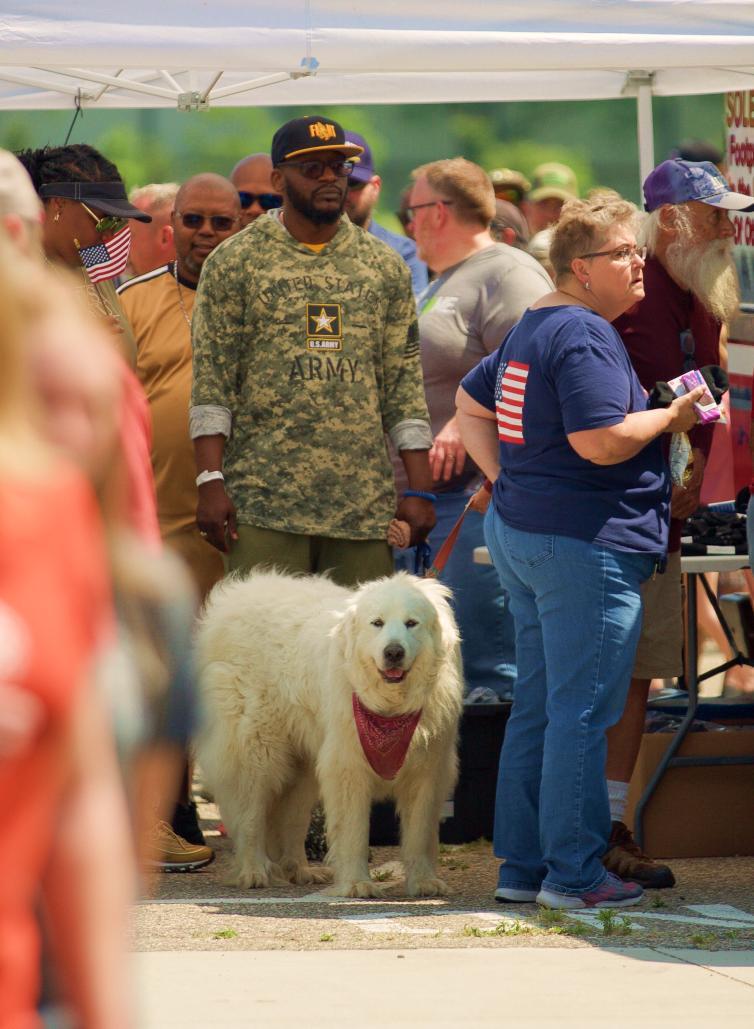
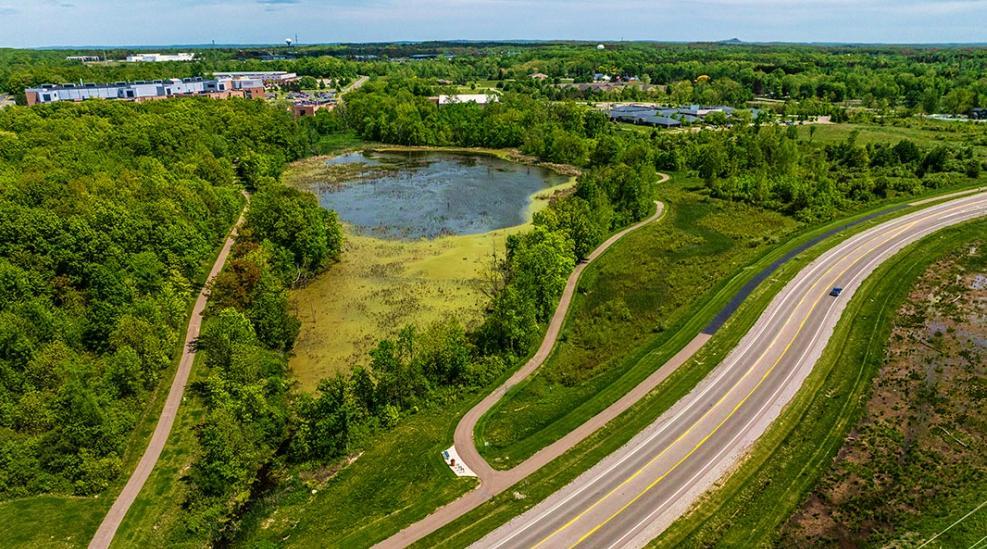
Develop and preserve a safe, secure, reliable, and efficient transportation and utility network
Action: Maintain and improve upon the existing transportation network and prioritize projects that work towards the bridge, pavement, safety, transit, and system reliability performance target conditions
The condition and safety of our infrastructure is not adequate for our current needs. For example, roads are deteriorating faster than funding can be sourced to repair them.
Officials:
• Develop an asset management plan for your community.
• Implement a road millage or a bond to help maintain their roads.
Agencies:
• Take traffic counts in your community.
• Use RoadSoft to track pavement data, crash statistics, and traffic counts.
• Take PASER certification training to learn how roads are rated.
Residents
• Contact your legislator for funding.
• Travel safely and follow traffic laws through construction zones.
• Good Conditions of pavement increased by 13%. between 2018 – 2024.
• Poor conditions decreased by 7%.
• City of Flushing received funding to perform a culvert assessment.
Action: Incorporate findings from the NextGenesee broadband study into future investments to make internet services available for all Genesee County residents
Communities have aging infrastructure or lack broadband altogether at the speeds necessary to improve their quality of life for the 21st Century.
Officials:
• Update policies and permitting to reduce barriers to fiber installation.
• Take inventory of the current broadband infrastructure in your community.
• Coordinate fiber installation with other infrastructure projects like water and road improvements.
Agencies:
• Economic development organizations can highlight broadband availability as a key factor in business attraction.
• Internet and utility companies should collaborate on shared infrastructure.
Residents:
• Advocate for universal broadband access.
• An $87 million dollar fiber route is being built through Genesee County. This will deploy fiber from Flint through Genesee, Lapeer, Macomb, and St. Clair Counties.
Action: Provide a safe, secure, reliable, and efficient transportation network that is accessible for all by working with local agencies to identify issues and prioritize projects to maximize limited resources
There is limited funding available for infrastructure improvements, and our infrastructure needs repair so improvements must be prioritized. Technology is available that can enhance the system in a costeffective way.
Officials:
• Monitor and publicly report on transportation project progress and outcomes.
• Adopt complete streets and vision zero policies.
• Work on multiple projects in one area at the same time to save money.
Agencies:
• Analyze pavement, crash, and traffic data to guide projects.
• Transit agencies can expand service reliability, accessibility, and modernize their fleet.
Residents:
• Report unsafe conditions and damage.
• Since 2020, Genesee County has invested over $960 million into the Genesee County transportation network.
Action: Encourage coordinated and strategic infrastructure improvements in conjunction with housing and job creation efforts
Infrastructure improvements can encourage economic growth that may not otherwise happen. By proactively and strategically expanding your community’s utility service area, new industry and housing developments will be attracted to your community.
Officials:
• Work with agencies to encourage economic development.
• Ensure schools, utilities, and anyone who would have a stake be involved with the development.
Agencies:
• Reward project applications and/or provide financial incentives to communities that incorporate elements that consider housing, complete streets, etc.
Residents:
• Attend planning commission meetings.
• Watch local news to stay up to date with committee meetings.
• Genesee County invested $8.5 million of their American Rescue Plan Act (ARPA) funding, which will provide hundreds of parcels with access to a clean and safe drinking water source.
• Ensure that utilities and facilities related to economic development meet or are on track to meet demand before the project has started.
Action: Enhance the integration and connectivity between all transportation modes by working with communities to write grants and encouraging complete street elements in project applications
Our transportation system is primarily built for vehicles resulting in other users such as bicyclists, pedestrians, and public transit users being left out.
Officials:
• Pair road projects with non-motorized and transit improvements by leveraging resources.
Agencies:
• Award extra points to projects that incorporate other transportation modes with road projects.
Residents:
• Write a letter supporting the inclusion of alternative transportation modes in your community.
• Since 2022, staff have provided grant writing assistance that has amounted to over $3 million.
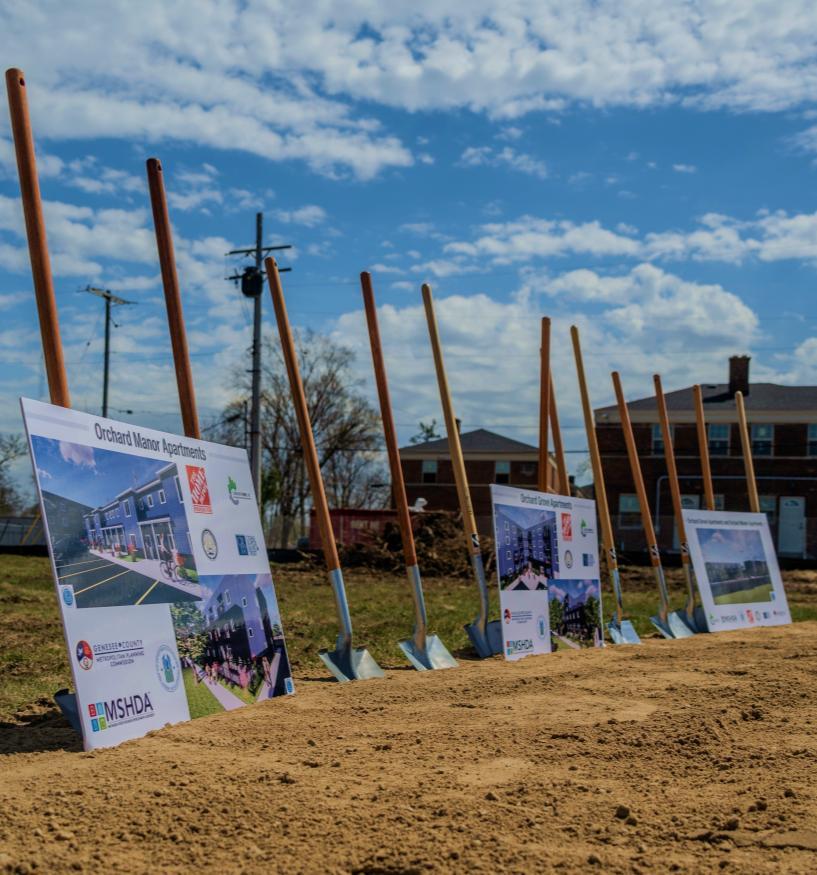
Genesee County Metropolitan Alliance approval date:
Genesee County Board of Commissioners approval date:
Genesee County Metropolitan Planning Commission approval date:
State of Michigan approval date:
Federal Approval date:
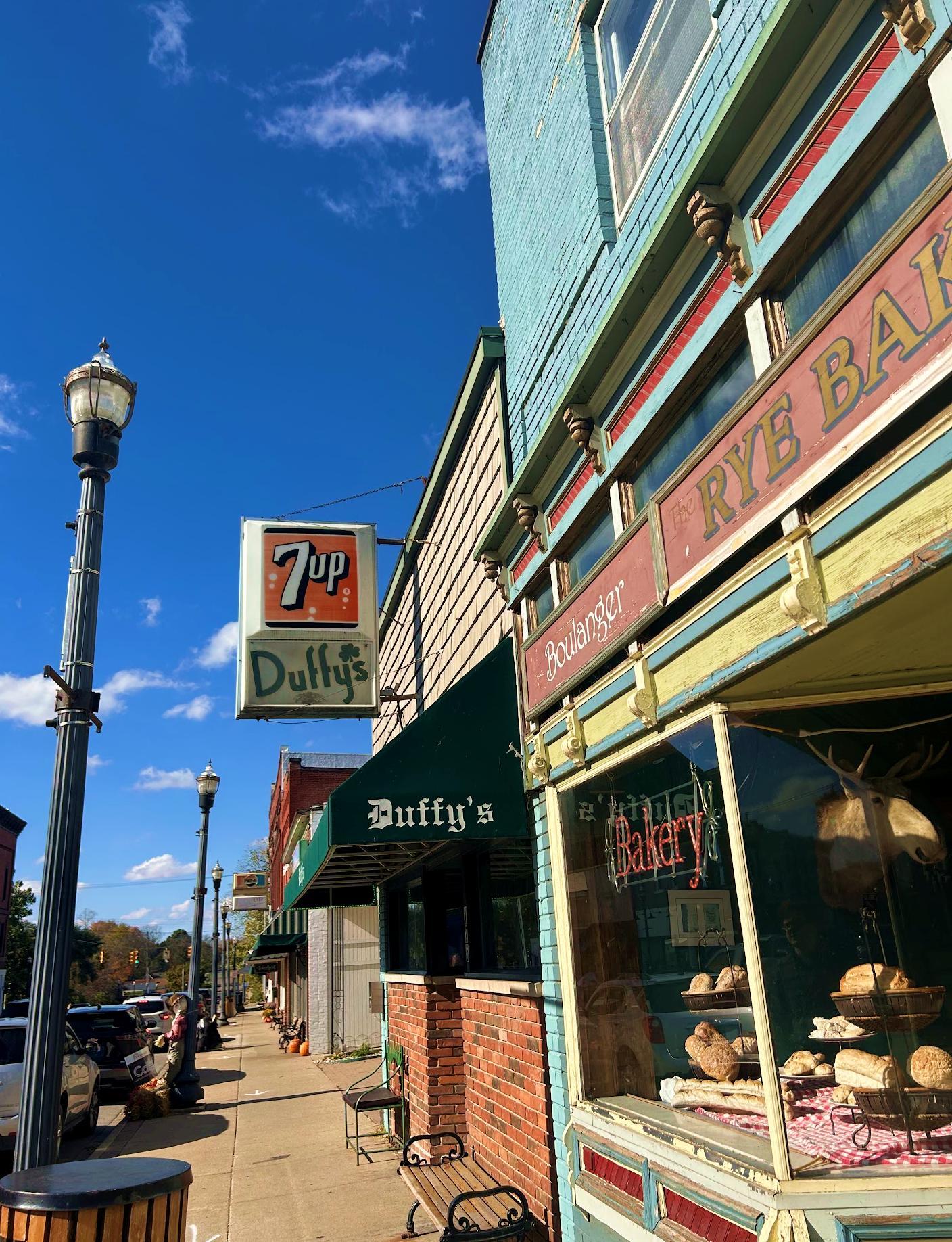
The preparation of this document has been financed in part through the Federal Highway Administration, the Federal Transit Administration, the Michigan Department of Transportation, and Genesee County (including Genesee County Solid Waste Ordinance funds) under provisions of the Infrastructure Investment and Jobs Act (IIJA). U.S. Department of Housing and Urban Development funding has also been used for the development of this plan under provisions of the Housing and Community Development Act of 1974, as amended; the McKinney Act of 1987, and the National Affordable Housing Act of 1990.
Even though the Genesee: Our County, Our Future Plan is presented in a style that is reader friendly, it is the result of extensive technical analyses and public outreach efforts. For those interested in the more technical details of the plan, the following technical reports can be found on the plan website at: https://ourfuturegenesee.org/2025-technical-reports/
• 2025-2027 CD Projects
• 2050 LRTP Projects
• Air Quality Conformity Report
• Access to Core Services
• Barriers to Affordable Living
• Bridge Conditions
• Community Development Consolidated Plan
• Community Downtown Survey
• Community Housing Report
• Congestion Management Process Report
• Coordinated Transit Plan Report
• Economic Development Report
• Environmental Assets, Mitigation, and Consultation Report
• Farmland Preservation Report
** Will be included in final submittal of document
• Interconnectivity Report
• Land Use Report
• Materials Management Report
• Natural Disasters Report
• Non-Motorized Trails Report
• Pavement Conditions Report
• Public Involvement Report **
• Resolutions & Approvals**
• Safety Report
• Socio-Economic Report
• Title VI Policies
• Tourism Report
• Transportation System Performance Report
• Transportation Model Update Report
• Transportation Monitoring Requirements
A web-based GIS mapping tool is available that allows residents and municipalities to view technical plan data in more detail. For more information, the following maps can be found on the map web page at https://gcmpc-plan-gccountymi.hub.arcgis.com/.
• Agritourism
• Bridge
• Congestion Management
• Crash Data
• Core Services: Proximity to Transit
• Core Services: Groceries
• Core Services: Libraries
• Core Services: Medical
• Core Services: Parks
• Core Services: Schools
• Cemeteries
• Floodplains
• Groundwater
• Non-Motorized
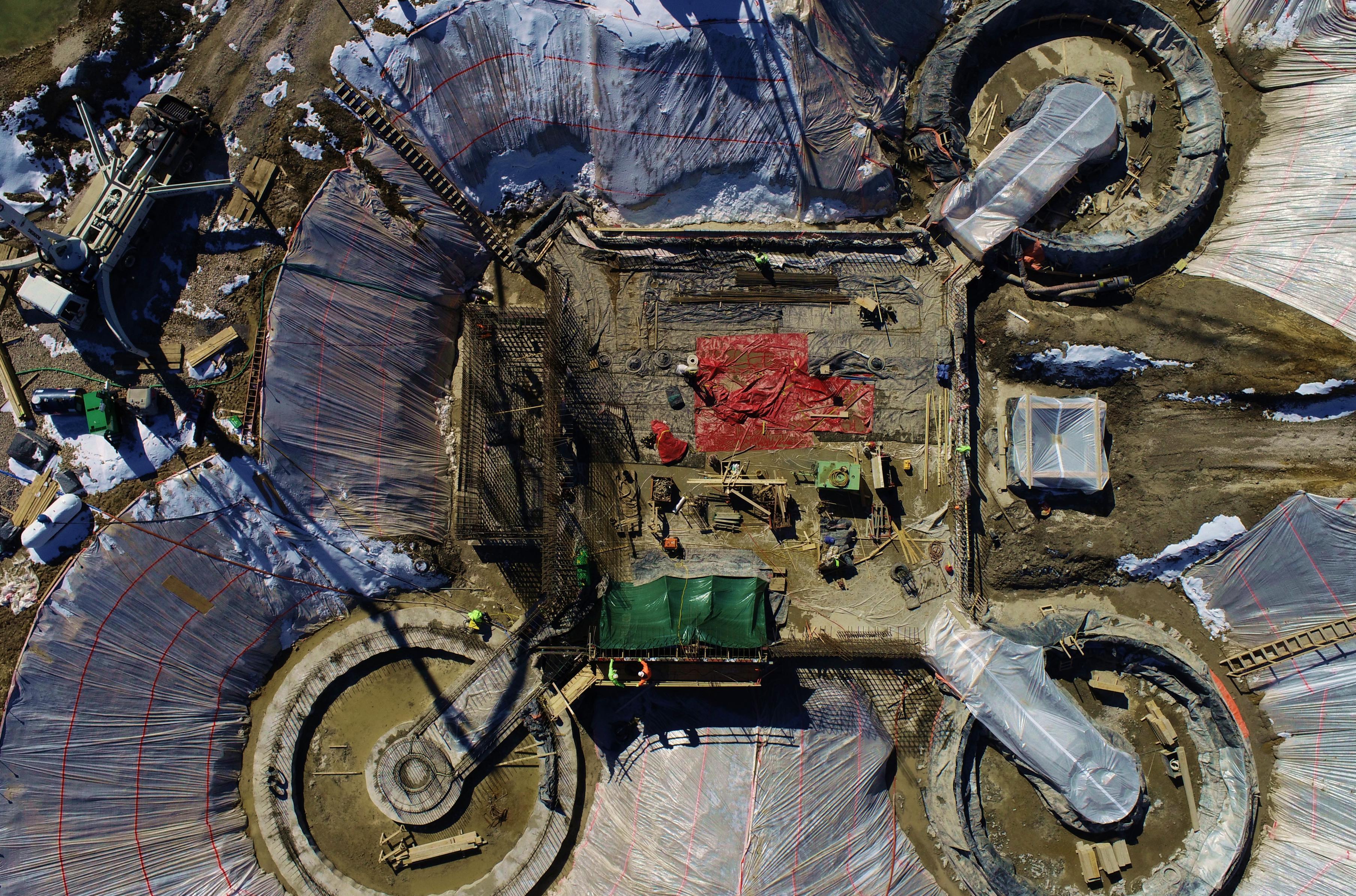
• Historic Bridges
• By-ways
• Parks
• Water Resources
• Wetlands
• Woodlands
• Employment Change
• Environmental Assets
• Farmland Usage: Current & Future
• Transit Access to Facilities
• Structures in Floodplain
• Land Use 1978, 2023, 2050
• Low Mod
• Median Household Income
• Median Rent
• Median Home Value by Tract
• Parks
• PASER
• Population Projections
• 65 and Over Population
• Regional Transit
• Truck Trips
• Waste Haulers
• Water Infrastructure
• Water Resource
• 2025-2050 Projects
Genesee County, Michigan

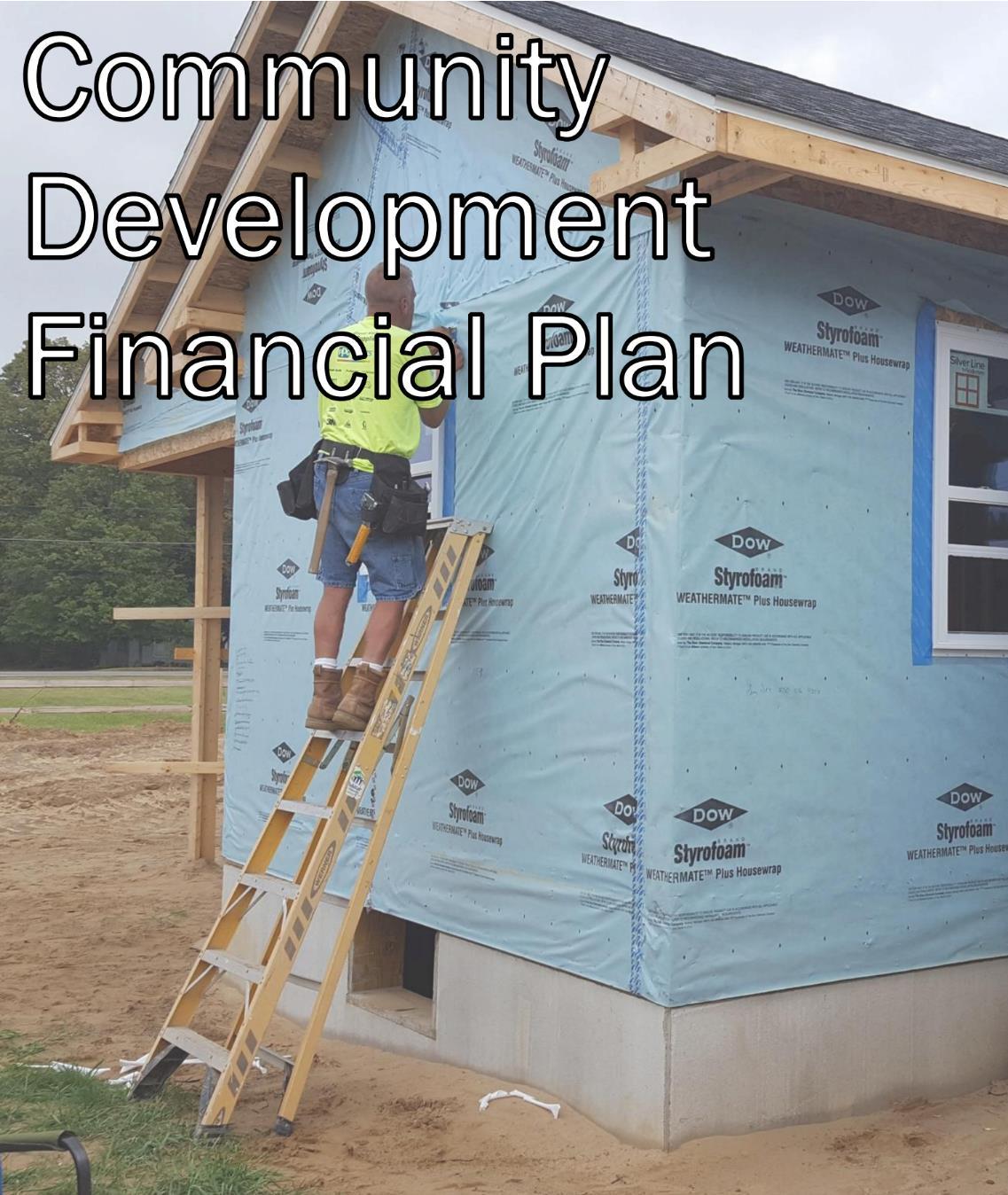
The Community Development Block Grant Program expects to receive an annual allocation of $1,820,353. Funding shall be utilized for acquisition/demolition, infrastructure improvements, grant administration, single-family housing rehabilitation, public improvements and public service projects throughout the 29 participating communities throughout the County.
The HOME Investment Partnership Program anticipates receiving $810,808 annually to be utilized for rehabilitation of single-family homes, construction of affordable housing, tenant based rental assistance, and grant administration.
The Emergency Solutions Grant funds are expected at $161,105 annually which will be utilized for emergency shelter operations, HMIS administration, grant administration, rapid rehousing, and homeless prevention services.
The Housing Impact Fund anticipates $5,000,000 to address housing needs of various household income levels, first-time home buyers, and qualifying populations facing housing instability.
All funding estimates are based on the 2025 annual allocation and will be adjusted according to the actual allocation provided by HUD per year
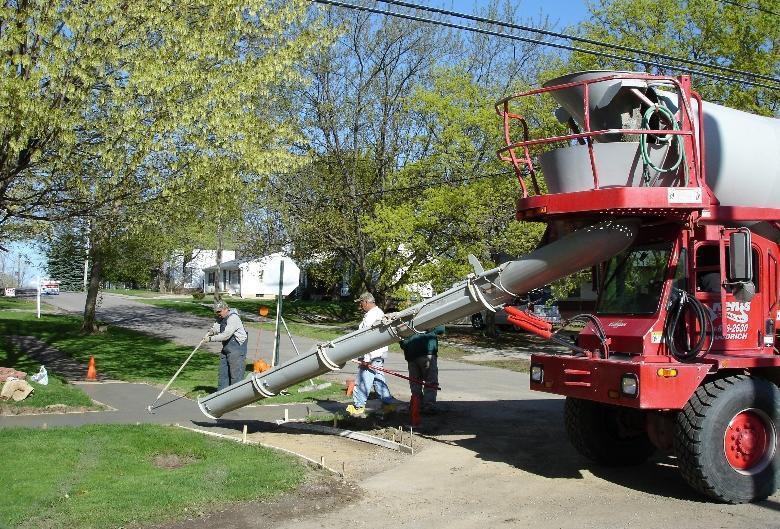
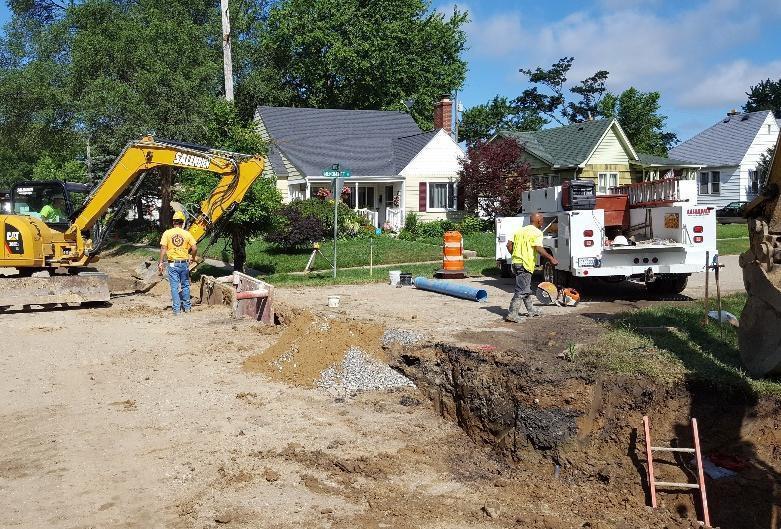
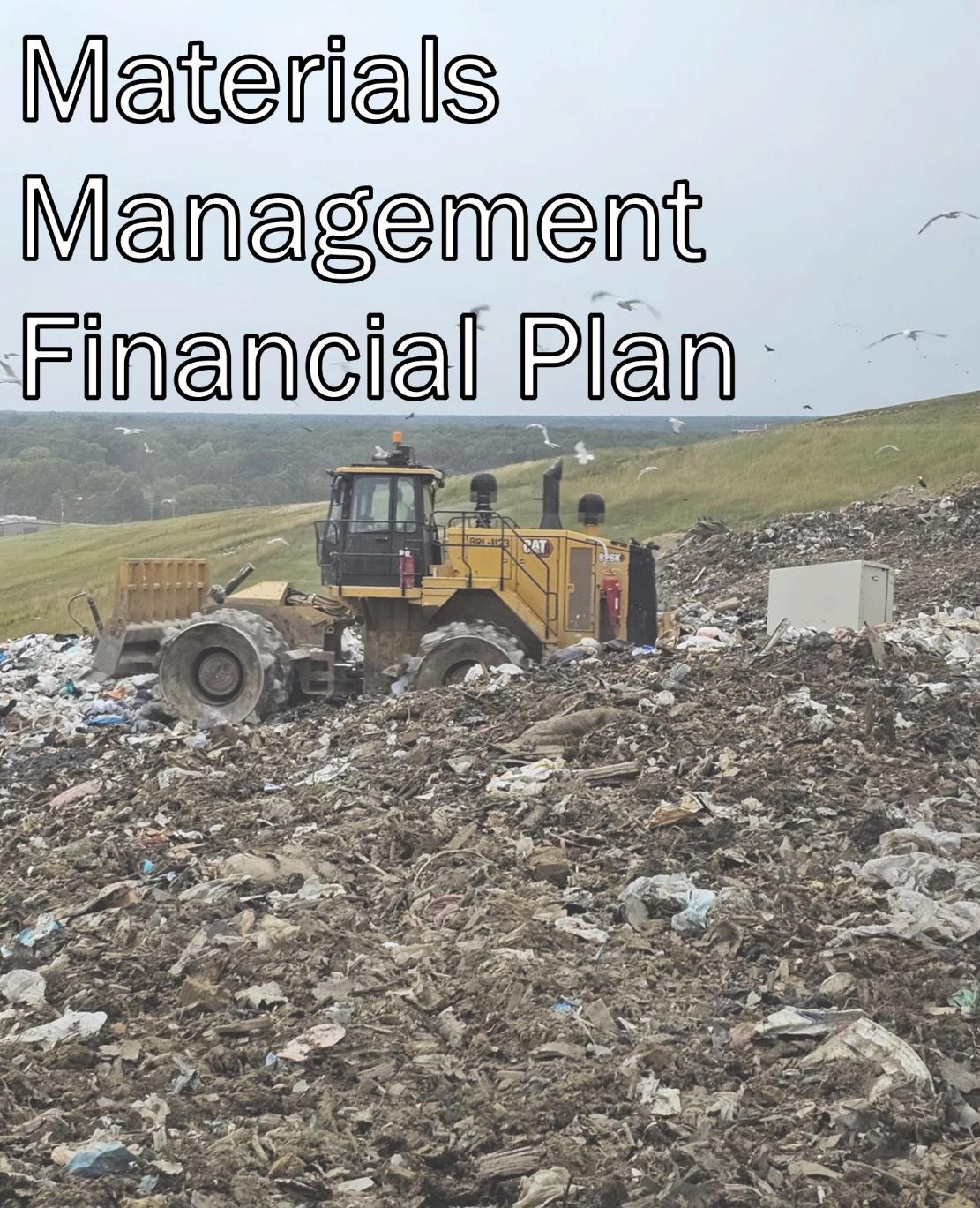
Solid Waste Ordinance - $26,500,000
Materials Management Planning - $2,109,317
All Genesee County materials management educational and recycling programs are funded through the Genesee County Solid Waste Ordinance. Through the Ordinance, local landfills, waste haulers and transfer stations pay $0.45 per cubic yard on all waste collected or disposed of within Genesee County. Materials haulers pay $20 to permit each vehicle annually that is hauling waste within Genesee County. Annually this generates approximately $1,060,000. Much of the funding is utilized on Recycle Day events, development and future operations of the Genesee County Recycling and Education Center, and staff time to organize events and implement educational programs. Staff will also seek out available grant funding to increase materials management programs throughout the County.
Genesee County also receives funding from the Michigan Department of Environment, Great Lakes, and Energy (EGLE) to develop and implement the Genesee County Materials Management Plan. Over the first three years for development, the county will receive $789,317. Thereafter, $60,000 will be received annually for implementation.
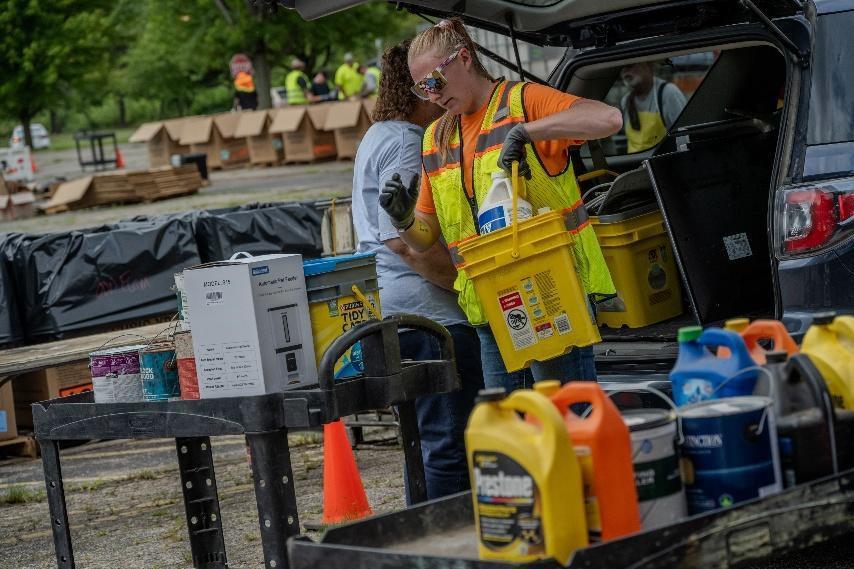
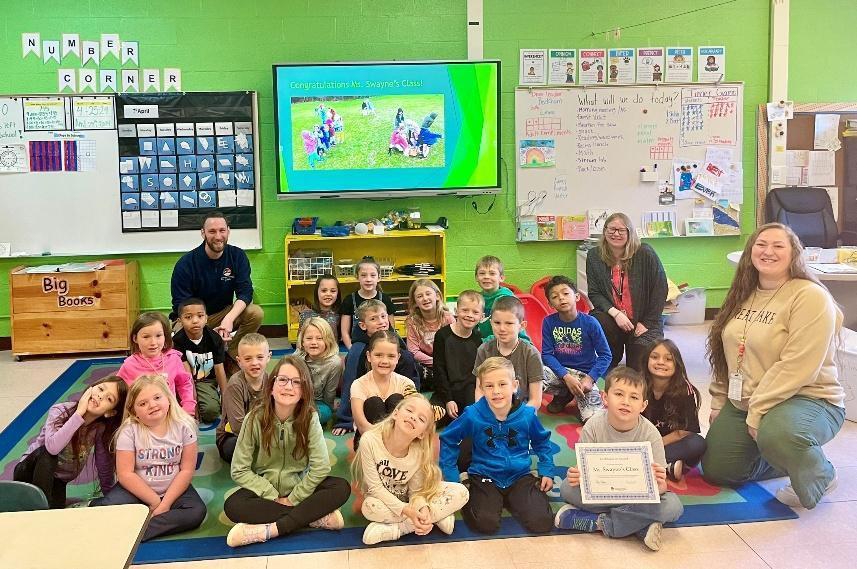
The Genesee County 2050 Long Range Transportation Plan (LRTP) lists road and transit projects that communities and agencies plan to implement through 2050 The list is required to be fiscally constrained; that is, the cost of projects programmed in the LRTP cannot exceed the amount of funding “reasonably expected to be available” during that time The financial plan is the section of the LRTP that documents the method used to calculate funds reasonably expected to be available and compares this amount to proposed projects to demonstrate that the LRTP is fiscally constrained. The financial plan also identifies the costs of operating and maintaining the transportation system in Genesee County
The basic sources of transportation funding are motor fuel taxes and vehicle registration fees Both the federal government and the State of Michigan tax motor fuel, the federal government at $0.184 per gallon on gasoline and $0.244 per gallon on diesel and Michigan at $0.30 per gallon on gasoline and diesel Michigan also charges sales tax on motor fuel, but this funding is not applied to transportation The motor fuel taxes are excise taxes, which means they are a fixed amount per gallon The amount collected per gallon does not increase when the price of gasoline or diesel fuel increases. Over time, inflation erodes the purchasing power of the motor fuel tax
The State of Michigan also collects annual vehicle registration fees when motorists purchase license plates or tabs. This is a very important source of transportation funding for the state. Currently, slightly less than one-half of the transportation funding collected by the state is in the form of vehicle registration fees
Cooperative Revenue Estimation Process
Estimating the amount of funding available for the LRTP is a complex process. It relies on several factors, including economic conditions, miles travelled by vehicles nationwide and in the State of Michigan, and federal and state transportation funding received in previous years Revenue forecasting relies on a combination of data and experience and represents a “best guess” of future trends.
The revenue forecasting process is a cooperative effort. The Michigan Transportation Planning Association (MTPA), a voluntary association of public organizations and agencies responsible for the administration of transportation planning activities throughout the state, formed the Financial Working Group (FWG) to develop a statewide standard forecasting process FWG is comprised of members from the Federal Highway Administration (FHWA), the Michigan Department of Transportation (MDOT), transit agencies, and metropolitan planning organizations, including GCMPC It represents a cross-section of the public agencies responsible for transportation planning in our state The revenue assumptions in this financial plan are based on the factors formulated by the FWG and approved by the MTPA. They are used for all LRTP financial plans in the state.
HIGHWAY FUNDING FORECAST - FEDERAL
Sources of Federal Highway Funding
Receipts from federal motor fuel taxes (plus some other taxes related to trucks) are deposited in the federal Highway Trust Fund (HTF). Funding is then apportioned to the states Apportionment is the distribution of funds through formulas in law The current law governing these apportionments is the Infrastructure Investment and Jobs Act (IIJA), sometimes also referred to as the Bipartisan Infrastructure Law (BIL). Through this law, Michigan receives approximately $1.4 billion in federal-aid highway funding annually
This funding is apportioned in the form of several programs designed to accomplish different objectives, such as road repair, bridge repair, safety, and congestion mitigation. A brief description of the major funding sources is as follows.
National Highway Performance Program (NHPP):
This funding is used to support conditions and performance on the National Highway System (NHS) and to construct new facilities on the NHS The National Highway System is the network of the nation’s most important highways, including the Interstate and US highway systems. In Michigan, most roads on the National Highway System are state trunk lines (i e , “I-,” “US-,” and “M” roads), however, the NHS was expanded to include all principal arterials (the most important roads after freeways), whether state or locally owned Although Genesee County is not expected to receive an allocation of NHPP funding, the county is committed to supporting maintenance and improvements to the National Highway System
Surface Transportation Block Grant Program (STBG, STBG Flex, STBG Rural): This program funds construction, reconstruction, rehabilitation, resurfacing, restoration, preservation, or operational improvements to federal-aid highways and replacement, preservation, and other improvements to bridges on public roads. Michigan’s STBG apportionment from the federal government is split, with slightly more than half allocated to areas of the state based on population and half that can be used throughout the state Genesee County also receives STBG Flex that can be used similarly to STGB, and STBG-Rural funding, which can only be used on federal-aid roads in rural areas. Genesee County will receive approximately $245.95 million in Local STBG funds between FY 2026 and FY 2050 which will be used by cities, villages, and the Genesee County Road Commission STBG can also be flexed (transferred) to transit projects
Mitigation and Air Quality Improvement (CMAQ – CM & CMG): Intended to reduce emissions from transportation-related sources There is currently an emphasis on certain projects that reduce particulate matter (PM), but funds can also be used for traffic signal retiming, actuations, and interconnects; installing dedicated turn lanes; roundabouts; travel demand management such as ride share and vanpools; transit; and nonmotorized projects that divert non-recreational travel from single-occupant vehicles. The State of Michigan has allocated funding to Genesee County based on population. MDOT uses half of the funding for CMAQ-eligible projects on the state trunk line system; the other half, or Local CMAQ, is distributed by GCMPC to eligible projects based on a scoring system. Traditionally, GCMPC has divided the local funding as follows: 39.3% for road projects; 39.3% for transit projects; 13% for nonmotorized projects; and 8 4% for Ridesharing, vanpooling, carpooling, and air quality awareness programs Genesee County will receive approximately $19 38 million in Local CMAQ funds between FY 2026 and FY 2050.
Transportation Alternatives Program (TAU): Funds can be used for several activities to improve the transportation system environment, including (but not limited to) non-motorized projects, preservation of historic transportation facilities, outdoor advertising control, vegetation management in rights-of-way, and the planning and construction of projects that improve the ability of students to walk or bike to school The funding received by the State of Michigan will be split, 50 percent being retained by the state and 50 percent to various areas of the state by population, much like the STP distribution. Genesee County will receive approximately $27.76 million in Local TAU funding between FY 2026 and FY 2050
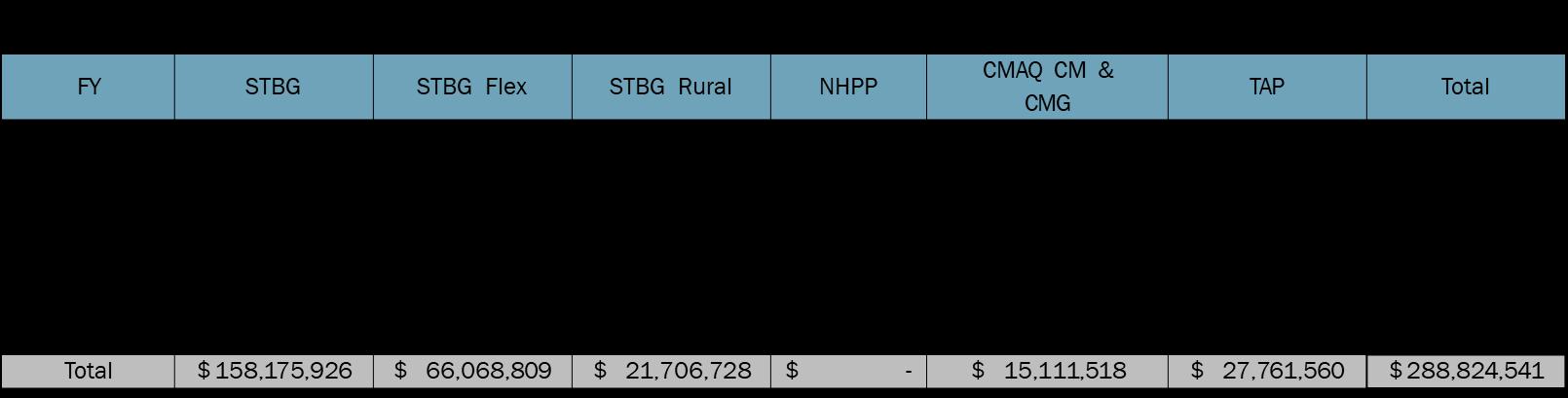
Each year, the targets (amount Genesee County is expected to receive) are calculated for each of these programs based on federal apportionment documentation and state law. Targets can vary from year to year due to factors including how much funding was received by the Highway Trust Fund, the authorization (the annual transportation funding spending ceiling), and the appropriation (how much money is approved to be spent) FY 2026-2029 Transportation Improvement Program (TIP) funding levels were used to estimate locally administered funding between FY 2026 and FY 2050 The Financial Work Group of the MTPA developed revenue growth rates for various years out to the year 2050 as a basis for projecting future revenues. For federal funds, a rate of 1.9% growth is used from fiscal years 2028 to 2033, then a 0.8% annual increase from fiscal years 2034 to 2050 Financial Work Group rates were used unless more accurate rates were available Table 1 contains the federal transportation revenue projections for the 2050 LRTP plan period
There are two main sources of state highway funding, the state motor fuel tax and vehicle registration fees. The state law governing the collection and distribution of state highway revenue is Public Act 51 of 1951, commonly known as “Act 51 ” All revenue from these sources is deposited into the Michigan Transportation Fund (MTF)
Funding from the MTF is distributed to cities, villages, and county road commissions, known as “Act 51 agencies”, based on population and public road mileage within each jurisdiction Act 51 contains a number of complex formulas for the distribution of the funding, but essentially, once funding for certain grants and administrative costs are removed, 10 percent of the remainder is deposited in the Comprehensive Transportation Fund (CTF) for transit The remaining funds are then split between the State Trunkline Fund, administered by MDOT, county road commissions, and municipalities in a proportion of 39.1 percent, 39.1 percent, and 21.8 percent, respectively.
Several years ago, major changes to the State of Michigan’s surface transportation revenue collection were enacted. Beginning January 1, 2017, these changes included increasing motor fuel tax rates on gasoline and diesel annually by the lesser of the U S inflation rate or 5 percent, increasing vehicle registration fees, onetime by an average of 20% and redirecting up to $600 million of Income Tax revenues from the General Fund to the Michigan Transportation Fund (highways).
When these changes took full effect in the state 2020-2021 fiscal year, MTF revenues were anticipated to increase to over $4 billion annually The financial impact of COVID-19 shutdowns resulted in less than expected collections MDOT Cash Receipts in the 2021-2022 fiscal year totaled $3.537 billion. Cash Receipts in the 2022-2023 state fiscal year totaled $3.681 billion.
MTF funds are critical to the operation of the road system in Michigan Since federal funds cannot be used to operate or maintain the road system (items such as snow removal, mowing grass in the right-of-way, paying the electric bill for streetlights and traffic signals, etc.), MTF funds are local communities’ and road commissions’ main source for funding these items Most federal transportation funding must be matched with 20 percent non-federal revenue. In Michigan, most match funding comes from the MTF. Finally, federal funding cannot be used on local public roads, such as subdivision streets Here again, MTF is the main source of revenue for maintenance and repair of these roads
Calculations of State Highway Funds
The base for the financial forecast of state funding is the FY 2026 distribution of MTF funding as found in MDOT Report 139. This report details the distribution of funding to each eligible Act 51 agency in the state Adding all the distributions to cities, villages, and the Genesee County Road Commission in Genesee County provides an overall distribution total for the region That amount was just over $74 2 million in FY 2026
The Financial Work Group predicted an increase of 3.4% in state revenues for fiscal years 2028 to 2033, then a 2.1% annual increase for fiscal years 2034 to 2050 Table 2 shows the amount of MTF funding cities, villages, and the road commission in Genesee County is projected to receive between FY 2026 and FY 2050, based on the agreed-upon rates of increase
Table 2: Projected MTF Distribution to Act51 Agencies for Highway Use FY 2026 through FY 2050
$1,218,242,896
$2,601,661,840
HIGHWAY FUNDING FORECAST
HYBRID STATE/FEDERAL FUNDING
Sources of Hybrid State/Federal Funding
Michigan has various programs that use both state funding and federal funding These programs are collectively known as the Transportation Economic Development Fund (TEDF). TEDF is split into several categories, depending on what that category is designed to accomplish. These are:
• TEDF Category A: Highway projects to benefit targeted industries.
• TEDF Category B: Road work in Villages and Small Cities.
• TEDF Category C: Congestion mitigation in designated urban counties (including Genesee County).
• TEDF Category D: All-season Road network in rural areas.
• TEDF Category E: Forest roads; and
• TEDF Category F: Roads in cities that are in rural counties.
Categories A, B, and F are awarded on a competitive basis, and Categories D and E are not awarded in Genesee County. Therefore, this discussion will be limited to Category C.
Base and Assumptions Used in Forecast
Calculations of Hybrid State/Federal Highway Funds
The annual average from the FY 2026-2029 TIP was used to calculate the TEDF Category C funding which are fixed amounts set in Act 51. The forecast assumes no change in Act 51 during the LRTP period, so the state portion is not increased Table 3 provides a summary of the expected TEDF funding over the FY 2026-2050 LRTP period
Table 3: Projected Transportatoin Economic Development Funds, Category C, FY 2026 through FY 2050
Local highway funding can come from a variety of sources, including transportation millages, general fund revenues, and special assessment districts Locally funded transportation projects that are not of regional significance are not required to be included in the LRTP. This makes it difficult to determine how much local funding is being spent on roads in Genesee County Additionally, special assessment districts and millages generally have finite lives, so an accurate figure for local transportation funding would require knowledge of what millages and special assessment districts are in effect during each year of the TIP period. Given that there are 33 local units of government in Genesee County, this level of accuracy is difficult to achieve
Table 4: MDOT Long Range Preservation Revenue Forecase FY 2026 through 2050
$ 1,052,040,550
The State of Michigan maintains an extensive network of highways across the state and within Genesee County. All highways with an “I,” “M,” or “US” designation, such as I-75, US-23, or M-15, is part of this network, which is known as the State Trunkline System The portion of the State Trunkline System in Genesee County is comprised of over 802 lane-miles of highway, hundreds of bridges and culverts, signs, traffic signals, safety barriers, soundwalls, and other capital that must be periodically repaired, replaced, reconstructed, or renovated The agency responsible for the State Trunkline System is the Michigan Department of Transportation (MDOT) MDOT provides each MPO, including GCMPC, with projections of estimated trunkline highway funding out to 2050 which is shown in Table 4.
Several innovative financing strategies have been developed over the past two decades to help stretch limited transportation dollars. Some are purely the public sector; others involve partnerships between the public and private sectors. Some of the more common strategies are discussed on the next page
Toll Credits: This strategy allows states to count funding they earn through tolled facilities (after deducting facility expenses) to be used as “soft match,” rather than using the usual cash match for federal transportation projects. States must demonstrate “maintenance of effort” when using toll credits in other words, they must show that the toll money is being used for transportation purposes and that they’re not reducing their efforts to maintain the existing system by using the toll credit program Toll credits have been an important source of funding for the State of Michigan in the past because of the three major bridge crossings and one tunnel crossing between Michigan and Ontario. Toll credits have also helped to partially mitigate the funding crisis in Michigan, since insufficient nonfederal funding is available to match all the federal funding apportioned to the state
State Infrastructure Bank (SIB): Established in most states, including Michigan. Under the SIB program, states can place a portion of their federal highway funding into a revolving loan fund for transportation improvements such as highway, transit, rail, and intermodal projects Loans are available at 3 percent interest and a 25-year loan period to public entities such as political subdivisions, regional planning commissions, state agencies, transit agencies, railroads, and economic development corporations Private and nonprofit corporations developing publicly owned facilities may also apply
Transportation Infrastructure Finance and Innovation Act (TIFIA): This nationwide program provides lines of credit and loan guarantees to state or local governments for development, construction, reconstruction, property acquisition, and carrying costs during construction. TIFIA enables states and local governments to use the borrowing power and creditworthiness of the United States to fund finance projects at far more favorable terms than they would otherwise be able to do on their own
Repayment of TIFIA funding to the federal government can be delayed for up to five years after project completion with a repayment period of up to 35 years Interest rates are also low
Bonding: Bonding is borrowing, where the borrower agrees to repay lenders the principal and interest Interest may be fixed over the term of the bond or variable The amount of interest a borrower will have to pay depends in large part upon its perceived credit risk, the greater the perceived chance of default, the higher the interest rate. To bond, a borrower must pledge a reliable revenue stream for repayment For example, this can be the toll receipts from a new transportation project In the case of general obligation bonds, future tax receipts are pledged
States are allowed to borrow against their federal transportation funds, within certain limitations. While bonding provides money up front for important transportation projects, it also means diminished resources in future years, as funding is diverted from projects to paying the bonds’ principal and interest Michigan transportation law requires money for the payment of bond and other debts be taken off the top before the distribution of funds for other purposes. Therefore, the advantages of completing a project more quickly need to be carefully weighed with the disadvantages of reduced resources in future years
Advance Construct/Advance Construct Conversion:
This strategy allows a community or agency to build a transportation project with its own funds (advance construct) and then be reimbursed with federal funds in a future year (advance construct conversion) Tapered match can also be programmed, where the agency is reimbursed over a period of two or more years. Advance construct allows for the construction of highway projects before federal funding is available; however, the agency must be able to build the project with its own resources and then be able to wait for federal reimbursement in a later year
Public-Private Partnerships (P3): Funding available through traditional sources, such as motor fuel taxes, is not keeping pace with the growth in transportation system needs. Governments are increasingly turning to public-private partnerships (P3) to fund large transportation infrastructure projects. An example of a public-private partnership is Design/Build/Finance/Operate (DBFO) In this arrangement, the government keeps ownership of the transportation assets, but hires one or more private companies to design the facility, secure funding, construct the facility and operate it, usually for a set period. The private-sector firm is repaid most through toll revenue generated by the new facility
Construction, reconstruction, repair, and rehabilitation of roads and bridges are only part of the total cost of the highway system It must also be operated and maintained Operations and maintenance are defined as those items necessary to keep the highway infrastructure functional for vehicle travel, other than the construction, reconstruction, repair, and rehabilitation of the infrastructure. Operations and maintenance include items such as snow and ice removal, pothole patching, rubbish removal, maintaining the right-of way, maintaining traffic signs and signals, clearing highway storm drains, paying the electrical bills for streetlights and traffic signals, and other similar activities, and the personnel and direct administrative costs necessary to implement these projects. These activities are as vital to the smooth functioning of the highway system as good pavement.
Federal transportation funds cannot be used for operations and maintenance of the highway system. Since the LRTP only includes federally funded transportation projects (and non-federally funded projects of regional significance), it does not include operations and maintenance projects
While in aggregate, operations and maintenance activities are regionally significant, the individual projects do not rise to that level However, federal regulations require an estimate of the amount of funding that will be spent operating and maintaining the federal-aid eligible highway system over FY 2026 through 2050 LRTP period This section of the Financial Plan provides an estimate for Genesee County and details the method used to estimate these costs.
MDOT Bay Region estimates that its operations and maintenance costs were approximately $10,357 per lane mile in FY 2024 Using the FY 2024 estimate as a baseline, costs increased 4% per year over the life of the FY 2026 through FY 2050 Long Range Transportation Plan to adjust for inflation to provide a total of $356.89 million estimated operations and maintenance costs on the state trunkline system (roads with “I-,”, “US-,” and “M“ designations) in Genesee County from FY 2026 through FY 2050
Local Act-51 road agencies (county road commissions incorporated cities, and incorporated villages) are responsible for operating and maintaining the roads they own, including those roads they own that are designated as part of the federal-aid system. The main source of revenue available to these agencies to operate and maintain the roads is the Michigan Transportation Fund (MTF) The estimate of available funding assumes that each lane mile of road in the system has an approximate equal operations and maintenance cost. There are 1,895 lane miles of locally-owned road on the federal-aid network in Genesee County.
Therefore, applying the per-lane-mile cost of maintenance derived from MDOT Bay Region’s FY 2024 estimate to the number of lane miles of locally owned federal-aid eligible road in Genesee County yields an annual maintenance cost of $19.6 million in the base year of FY 2024, or a total of $884.06 million over the life of the FY 2026-2050 LRTP, adjusted for inflation
Finally, adding together the trunkline and locally owned per lane mile costs yields a total of $27.5 million in the base year of FY 2024 for estimated operations and maintenance costs on the entire federal-aid system in Genesee County, or a total of $1,240 95 million over the life of the FY 2026-2050 LRTP, adjusted for inflation as summarized in Table 5.
Table 5: Projected Available Highway Operations and Maintenance (O&M) Funding, Federal-Aid Eligible Roads, FY 2026 through 2050
Likewise, state funding from the Michigan Transportation Fund (MTF) and the hybrid state/federal programs, Transportation Economic Development Fund Category C, are also expected to be available between FY 2026 and FY 2050. Funds from other programs are generally awarded on a competitive basis and are therefore impossible to predict In these cases, projects are not amended into the TIP until proof of funding availability (such as an award letter) is provided Funds from federal competitive programs are not included in the revenue forecast.
All federally funded projects must be in the LRTP. Additionally, any non-federally funded but regionally significant project must also be included In these cases, project submitters demonstrate that funding is available and what sources of non-federal funding are to be utilized.
2041-2050
$ 1,240,954,155
HIGHWAY COMMITMENTS AND PROJECTED AVAILABLE REVENUE
The TIP must be fiscally constrained; that is, the cost of projects programmed in the TIP cannot exceed revenues “reasonably expected to be available” during the relevant plan period Funding for core programs such as NHPP and STBG are expected to be available to the region based on historical trends of funding from earlier, similar programs in past federal surface transportation laws
Projects programmed in the LRTP are known as commitments. As mentioned previously, commitments cannot exceed funds reasonably expected to be available Projects must also be programmed in year of expenditure dollars, meaning that they must be adjusted for inflation to reflect the estimated purchasing power of a dollar in the year the project is expected to be built. The MTPA/Financial Work Group has decided on an annual inflation rate of 4% for projects over the plan period This means that a project costing $100,000 in FY 2026 is expected to cost $104,000 in FY 2027, $108,160 in FY 2028, and $112,486 in FY 2029, and so on. Since the amount of growth in available funding is forecasted to be less than the rate of inflation, less work can be done each year with available funding
Table 6 on the next page is known as a fiscal constraint demonstration The demonstration is provided to the Michigan Department of Transportation, Federal Highway Administration, and Federal Transit Administration to show that the cost of planned projects does not exceed the amount of funding reasonably expected to be available over the 25-year plan period
Table 6: Summary Highway Fiscal Constraint Demonstration for the FY 2026 Through 2050
$5,224,794,437
*Net Balance = Available funding less cost of programmed projects
A positive net balance means that available funding exceeds programmed project cost; a negative balance means that programmed project costs exceed available funding; and a zero net balance indicates that programmed project costs equal available funding
TRANSIT FINANCIAL FORECAST - FEDERAL
Sources of Federal Transit Funding
Federal revenue for transit comes from federal motor fuel taxes, just as it does for highway projects Some of the motor fuel tax collected from around the country is deposited in the Mass Transit Account of the Highway Trust Fund (HTF). Federal transit funding is similar to federal highway funding in that there are several core programs where money is distributed on a formula basis and other programs that are competitive in nature Here are brief descriptions of some of the most common federal transit programs.
Section 5307: This is the largest single source of transit funding that is apportioned to Michigan Section 5307 funds can be used for capital projects, transit planning, and projects eligible under the former Job Access Reverse Commute (JARC) program (intended to link people without transportation to available jobs) Some of the funds can also be used for operating expenses, depending on the size of the transit agency One percent of the funds received are to be used by the agency to improve security at agency facilities. Distribution is based on formulas including population, population density, and operating characteristics related to transit service
Urbanized areas of 200,000 population or larger receive their own apportionment Areas between 50,000 and 199,999 population are awarded funds by the governor from the governor’s apportionment. In Genesee County, the Flint Mass Transportation Authority receives the apportionment.
Section 5310, Elderly and Persons with Disabilities: Funding for projects to benefit seniors and disabled persons when service is unavailable or insufficient and transit access projects for disabled persons exceeding Americans with Disabilities Act (ADA) requirements. Section 5310 incorporates the former New Freedom program Urbanized areas of 200,000 population or larger receive their own apportionment The State of Michigan allocates its funding on a per-project basis for the rest of the state. In Genesee County, the Flint Mass Transportation Authority receives the apportionment
Section 5311, Non-Urbanized Area Formula Grant: Funds for capital, operating, and rural transit planning activities in areas under 50,000 population Activities under the former JARC program (see Section 5307 above) in rural areas are also eligible The state must use 15 percent of its Section 5311 funding on intercity bus transportation. The State of Michigan operates this program on a competitive basis.
Section 5339, Bus and Bus Facilities: Funds will be made available under this program to replace, rehabilitate, and purchase buses and related equipment, as well as construct bus-related facilities. Each state will receive a fixed amount with the remaining funding apportioned to transit agencies based on various population and service factors
In addition to these funding sources, transit agencies can also apply for Surface Transportation Block Grant Program, Transportation Alternatives Program (TAP), Carbon Reduction Program (CRP), and Congestion Mitigation and Air Quality Improvement (CMAQ) program funds In Genesee County, approximately 39 3% of each year’s local CMAQ allocation is reserved for transit projects.
The federal portion of the transit financial forecast is developed in partnership with GCMPC, MDOT’s Office of Passenger Transportation (OPT), and the MTA based on the amount of federal funding the MTA has historically received The MTA is allotted 39 3% of CMAQ funding over a 4-year TIP cycle; however, for the purpose of these estimates a yearly average is used Table 7 shows the federal transit forecast for FY 2026 through FY 2050.
Most state-level transit funding is derived from the same source as state highway funding, the state tax on motor fuels Act 51 stipulates that 10 percent of receipts into the MTF, after certain deductions, is to be deposited in a subaccount of the MTF called the Comprehensive Transportation Fund (CTF)
This is analogous to the Mass Transit Account of the Highway Trust Fund at the federal level Additionally, a portion of the state-level auto-related sales tax is deposited in the CTF Distributions from the CTF are used by public transit agencies for matching federal grants and for operating expenses
The base for calculations of state transit funds is the amount the MTA received in 2024 The table below represents the amount of state-level funds the MTA can reasonably expect to receive for the FY 2026 through FY 2050 period. The state-level CTF distributions to the MTA are shown in Table 8 on the next page.
Table 8: State Transit (CTF) Revenue Projections for FY 2026 through
Sources of Local Transit Funding
Major sources of local funding for transit agencies include farebox revenues, general fund transfers from city governments, and transportation millages. The MTA collects fares from riders. This farebox funding totaled approximately $5.23 million in FY 2024 The MTA also receives funds from a dedicated transportation millage In FY 2024, the MTA received $14 55 million from the millage. In FY 2024 the MTA received a total of $19.78 million for farebox and millage funding.
Base and Assumptions Used in Forecast
Calculations of Local Transit Funds
The amount of local transit funding projected is provided by the MTA based on historic funding received and MTA internal projection factors.
Table 9: Local Transit Revenue Projections for FY 2026 through FY 2050
Sources of funding for transit are not limited to the federal, state, and local sources previously mentioned As with highway funding, there are alternative sources of funding that can be utilized to operate transit service. Bonds can be issued (see discussion of bonds in the “Innovative Financing Strategies Highway” section) The federal government also allows the use of toll credits to match federal funds Toll credits are earned on tolled facilities Regulations allow for the use of toll revenues (after facility operating expenses) to be used as “soft match” for transit projects. Soft match means that actual money does not have to be provided the toll revenues are used as a “credit” against the match This allows the actual toll funds to be used on other parts of the transportation system, thus stretching the resources available to maintain the system.
Transit expenditures are divided into two basic categories, capital and operations. Capital refers to the physical assets of the agency, such as buses and other vehicles, stations and shelters at bus stops, office equipment and furnishings, and certain spare parts for vehicles Operations refer to the activities necessary to keep the system operating, such as driver wages and maintenance costs. Most of the expenses of transit agencies are operations expenses.
Table 10: Anticipated Amounts to be Expended on Transit Capital and Transit Operations for FY 2026 through FY 2050
TRANSIT COMMITMENTS AND PROJECTED AVAILABLE REVENUE
The LRTP must be fiscally constrained; that is, the cost of projects programmed in the LRTP cannot exceed revenues “reasonably expected to be available” during the 25-year plan period Funding for core programs such as Section 5307, Section 5339, Section 5310, and Section 5311 are expected to be available to the region based on historical trends of funding from earlier, similar programs in past federal surface transportation laws Likewise, state funding from the state’s Comprehensive Transportation Fund (CTF), and local sources of revenue such as farebox, general fund transfers, and millages, are also expected to be available during the FY 2026 through FY 2050 LRTP period. Funds from other programs are generally awarded on a competitive basis and are therefore impossible to predict In these cases, projects are not amended into the LRTP until proof of funding availability (such as an award letter) are provided. Funds from federal competitive programs are not included in the revenue forecast.
All federally funded projects must be in the LRTP Additionally, any non-federally funded but regionally significant project must also be included In these cases, project submitters demonstrate that funding is available and what sources of non-federal funding are to be utilized.
Projects programmed in the LRTP are known as commitments As discussed previously, commitments cannot exceed funds reasonably expected to be available Projects must also be programmed in year of expenditure dollars, meaning that they must be adjusted for inflation to reflect the expected purchasing power of a dollar in the year the project is expected to be built The MTPA/Financial Work Group has decided on an annual inflation rate of 4% for projects over the LRTP period. This means that a project costing $100,000 in FY 2026 is expected to cost $104,000 in FY 2027, $108,160 in FY 2028, and $112,486 in FY 2029, and so on. Since the amount of growth in available funding is forecasted to be less than the rate of inflation, less work can be done each year with availablefunding
Table 11 shows the summary financial constraint demonstration for transit The demonstration is provided to the Michigan Department of Transportation, Federal Highway Administration, and Federal Transit Administration to show that the cost of planned projects does not exceed the amount of funding reasonably expected to be available over the FY 2026 through FY 2050 LRTP period
Table 11: Summary Transit Fiscal Constraint Demonstration for FY 2026 through FY 2050
Balance = Available funding less cost of programmed projects