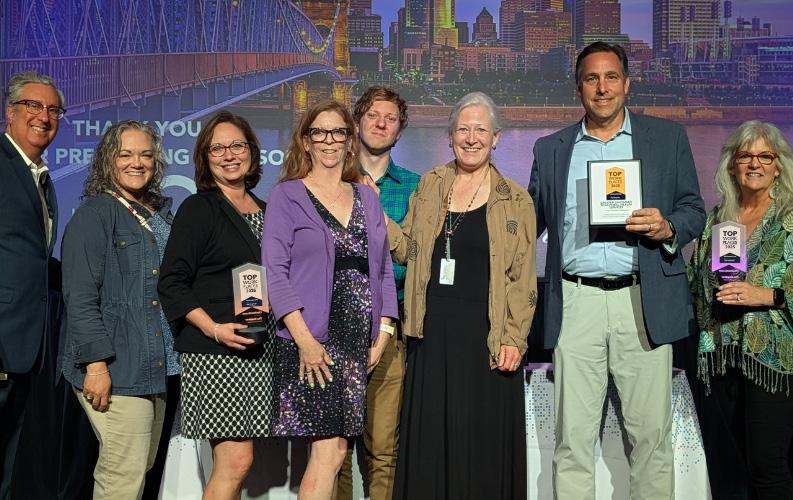
Greater Cincinnati Behavioral Health Services (GCBHS) was named a Cincinnati Top Workplace for the 15th year. The Top Workplaces program surveys workplaces and celebrates people-first organizations nationally and across 60 regional markets.
In addition to being named a Top Workplace, GCBHS was also honored with a Top Workplaces Culture Excellence award which recognizes organizations that excel in specific areas of workplace culture:
Work-Life Flexibility
This award celebrates how GCBHS provides options to our employees in how and where they work, as well as having managers who care about the concerns of our employees. Top Workplaces awards are based on feedback from a research-backed anonymous employee engagement survey.
“Earning a Top Workplaces award is a badge of honor for companies, especially because it comes authentically from their employees,” said Eric Rubino, Energage CEO. “That's something to be proud of. In today's market, leaders must ensure they’re allowing employees to have a voice and be heard. That's paramount. Top Workplaces do this, and it pays dividends.”
One of Cassidy’s goals was to create a “hub” so to speak, for all substance use disorder (SUD) services in Hamilton County. Earlier this year, a remodel to our Glenway building allowed that vision to become a reality.
At GCBHS I get to make a difference in the lives of my clients and the community... I feel like we make the world better for people.
- HAMILTON COUNTY BEHAVIORAL HEALTH WORKER
Hamilton County SUD Teams call Glenway
Home.
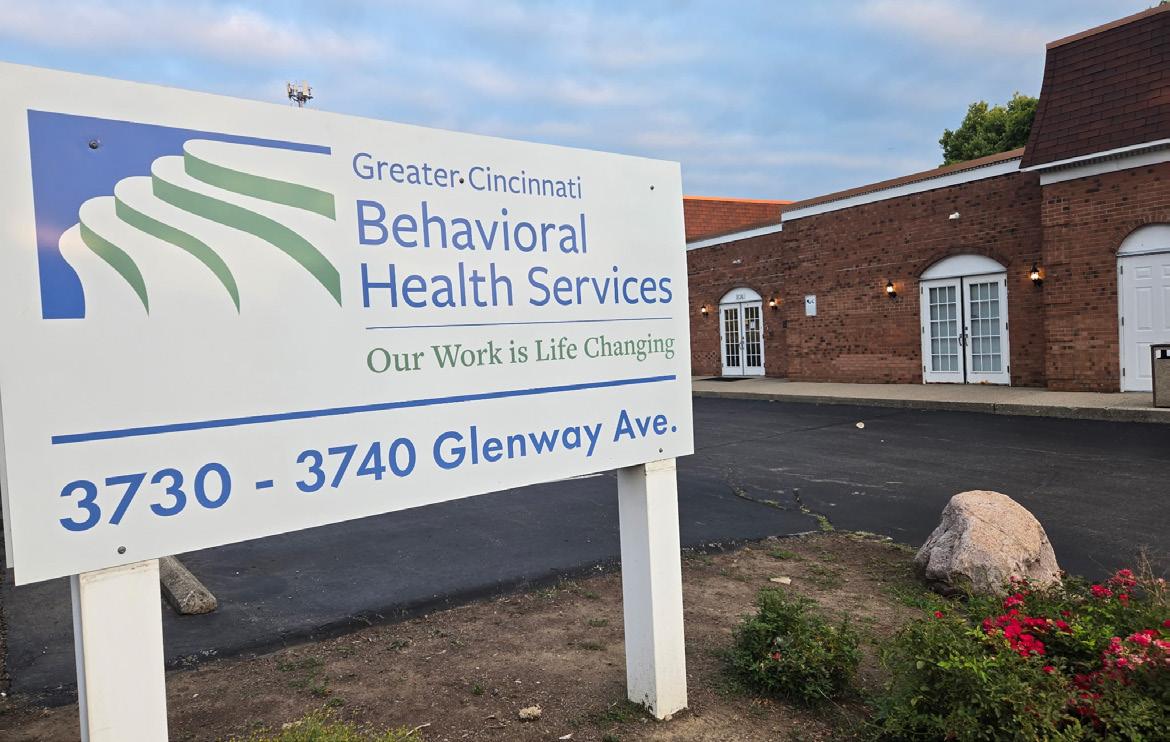
When Cassidy Lekan joined Greater Cincinnati Behavioral Health Services (GCBHS) as the VP of Recovery Services, our Hamilton County substance use disorder teams were spread out in multiple locations such as Shelterhouse, St. Anthony’s Center in OTR, our Madison location, and at Glenway, as well as in the community. One of Cassidy’s goals was to create a “hub” so to speak, for all substance use disorder (SUD) services in Hamilton County. Earlier this year, a remodel of our Glenway building allowed that vision to become a reality.
Addressing the Need for Clients to Access High Quality Integrated Care
This fall, Greater Cincinnati Behavioral Health Services launched integrated primary care services at its Madison and Amelia locations. National statistics show that integrated care provided through community health centers (CHC) has a proven track record of reducing overall health costs by decreasing the impact of chronic diseases, which eliminates costly hospitalizations and unnecessary visits to emergency rooms. In fact, community health center costs account for only 1% of US healthcare spending.
We have long known that people experiencing severe mental health and/or substance use conditions have a higher risk of physical health issues which may involve complex medication regimens and side-effect management. Offering these additional services to our clients ensures cost-effective, high-quality comprehensive primary care that is integrated with behavioral health and other health services.
Although GCBHS has worked with other care partners in the past allowing clients access to primary care while on-site, only one in six psychiatric patients had been utilizing it. By providing primary care in addition to our other services, we hope to better serve the community.
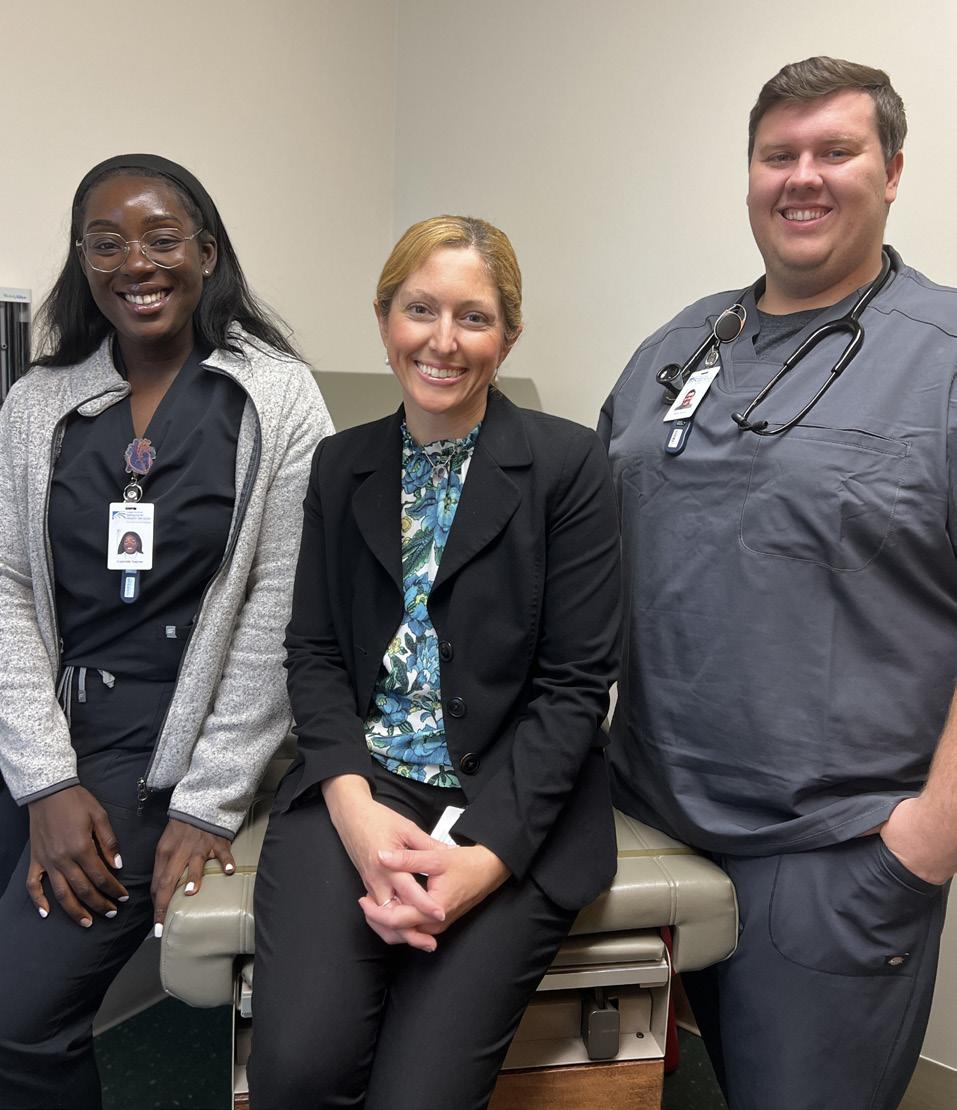
According to Catherine Engle (pictured above, center), Associate VP of Health Services at GCBHS, “This transformative step reflects our commitment to improving care coordination and outcomes by fully integrating physical and behavioral health services. By enhancing our care integration, we can streamline communication between providers, offer more timely interventions, and better support the overall wellness of our clients.”
Hamilton County SUD Teams call Glenway Home
Cont. from page 1
Julie Kubin is the Director of Addiction Services for Hamilton County, “We wanted a specific location for individuals seeking services to be able to come complete their assessment and connect immediately into their service recommendations – whether that is individual counseling, groups, case management, peer recovery support, or Medication Assisted Treatment (MAT).” Julie emphasizes that it’s important for some clients to actually “see” the space where they will be accessing treatment and meet the staff they will be working with during services. “We’re in a trial phase now,” she shares.
“This will be a gamechanger moving forward as we anticipate more people being able to access services through our new 'hub' model.”
According to health department statistics, the zip codes of 45205 and 45211 are considered overdose hot spots, which means having services readily available gives more people on the West Side a place to seek help close to home. Our teams also offer life saving measures such as test strips and naloxone. Julie says the goal will be to have counselors on-site every day, allowing staff to bring individuals in for assessments. “Our peers work with many people who are not yet in services. This way, when they are out in the community and someone says to them ‘I’m ready’ they will be able to come to Glenway in real time and be set up for services.”
If you or someone you know needs help with a substance use disorder, you can call our Recovery Service Line number at 513-302-0070, email hcaddictions@gcbhs.com or bring them into either Glenway or Madison Open Access for services.
Julie adds, “We’re trying to create a structure of ‘no wrong door.’ If they come to Glenway, we will help – even if it’s not SUD related, we will get them to where they need to go.”
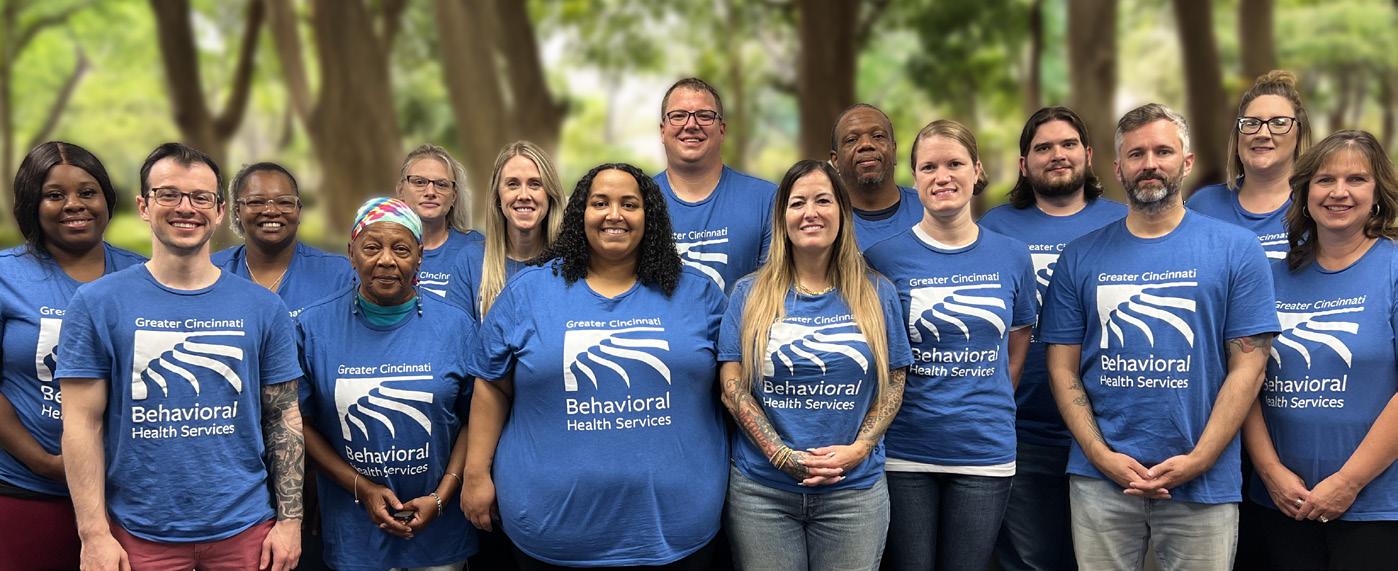
The GCBHS Hamilton County Substance Use Disorder (SUD) Team.
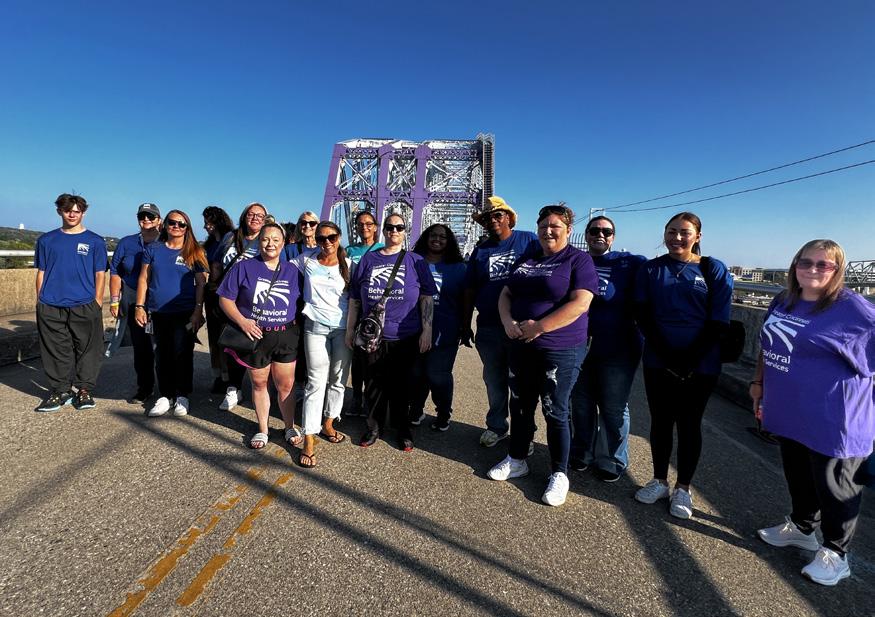
GCBHS SUD staff at a recovery event on the Purple People Bridge in September.
It was a very good experience for me. I got to do stuff that I never did before, like tour the Reds stadium! I learned a lot too, like how to communicate better with people. They teach you in a way where it's fun.”
- OLIVIA, 8TH GRADE
The Burrow Foundation helps with Summertime Fun!
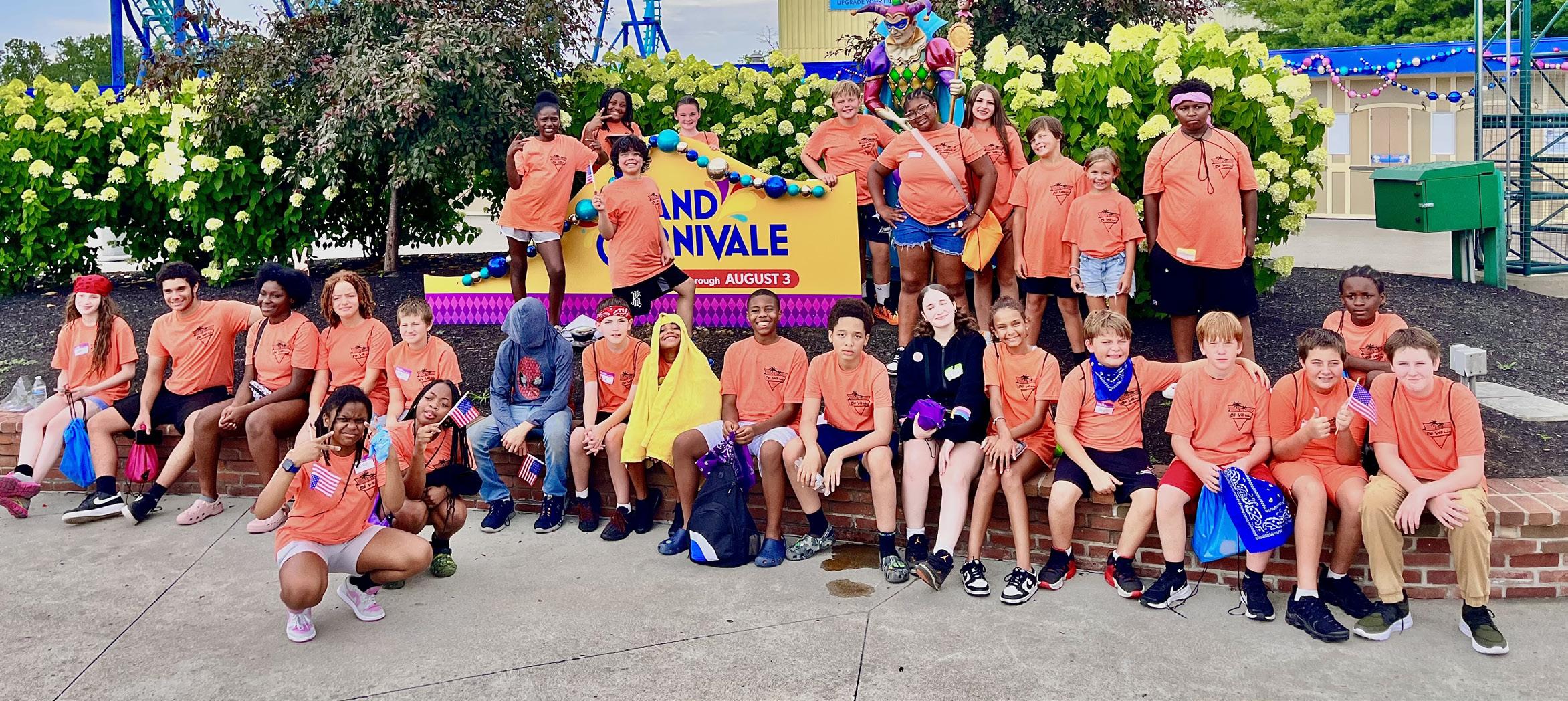
A two-year grant courtesy of the Joe Burrow Foundation allowed Greater Cincinnati Behavioral Health Services (GCBHS) to offer a summer camp through our school-based services program.
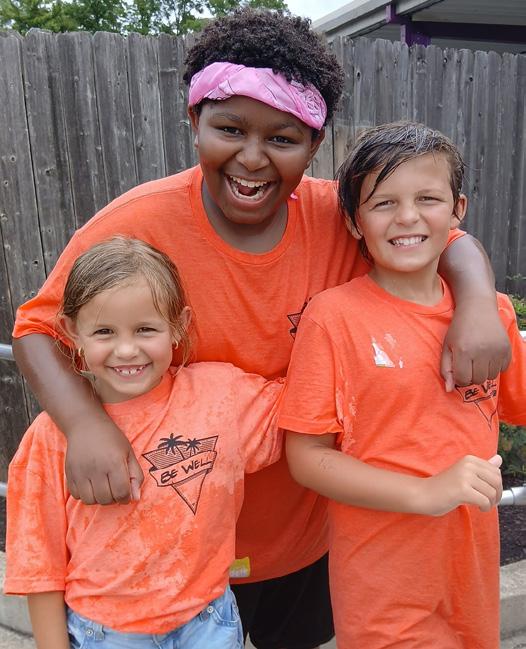
The two-week camp provided funding for staff, food, transportation, field trips, and activities for underprivileged children in the St. Bernard Elmwood Place school system.
According to Carlie Yersky, Director of School-Based Services for GCBHS, without the Burrow Foundation’s support, these children would not have been able to have these experiences. “These are kids whose families do not have the luxury of being able to go to Kings Island or the Aquarium, or even a local pool – things many of us take for granted.”
Carlie and her team also used these field trips to weave in social/emotional lessons to assist with self-esteem, social comfort, and an overall well-being in addressing mental health. The camp also took the opportunity to allay fears for those students transitioning from elementary to jr. high by introducing them to new friends/classmates and exposing them to new buildings so they had time to build familiarity.
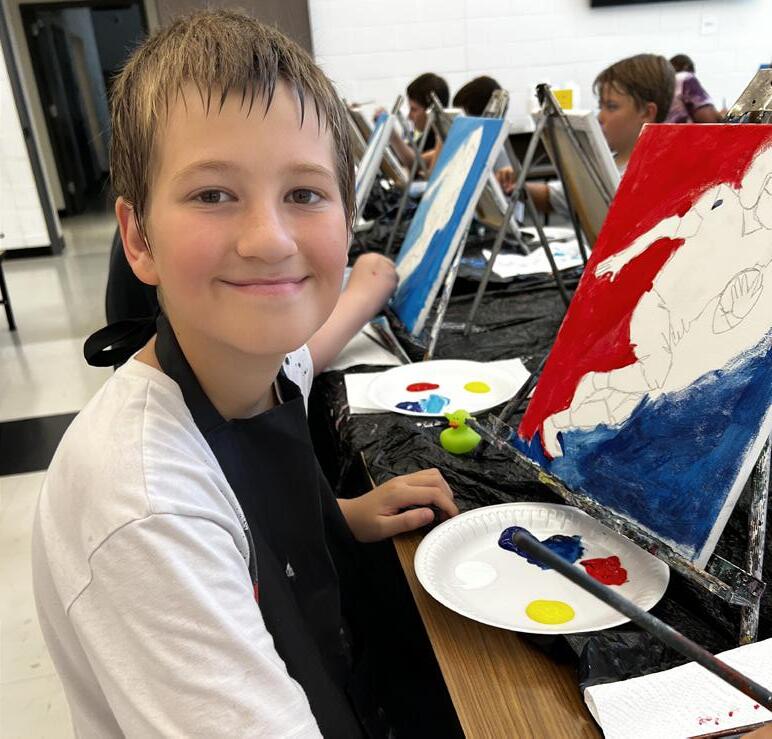
The key says Carlie, is to “…incorporate mental health lessons and support, into fun activities that they otherwise would never have been able to experience.” The students were also able to tour Great American Ballpark, play laser tag, take a painting class, go to the movies, and experience a trampoline park!
1501
www.gcbhs.com
Proud to be a United Way Funded Partner
Greater Cincinnati Behavioral Health Services (GCBHS) extends our sincere gratitude to the United Way of Greater Cincinnati for their continued partnership and generous support. Through their generous funding of $550,000, GCBHS is able to offer services for individuals who might otherwise go without care.
The funding provided by the United Way is used by several GCBHS programs.
• Our school-based program offers mental health services to students whose families face insurance barriers. Due to the United Way financial support, we can cover costs and offer resources to students who might not have access to these much-needed services.
• Counseling services are subsidized for individuals who are not Mental Health Board funded or eligible for Medicaid. The United Way grant allows access to vital mental health services for people regardless of their funding eligibility.
• In our Employment division, United Way funding assists clients with resume writing, interviewing skills, job search assistance, intensive job coaching and long term follow along support. It also helps them understand how employment can affect their benefits and helps them plan accordingly.
Says Penny Middaugh, GCBHS VP of Child & Family Services, “These programs directly touch the lives of countless individuals and families in our community, helping people access mental health care, supporting students’ well-being in schools, and connecting individuals with the skills and opportunities they need for meaningful employment.”
Greater Cincinnati Behavioral Health Services would like to thank the United Way for helping to ensure that these critical services remain available for those who need them most.