Gardener News Gardener News
Serving the Agricultural, Environmental, Horticultural & Landscaping Communities

A Tree Growing Out of a Tree
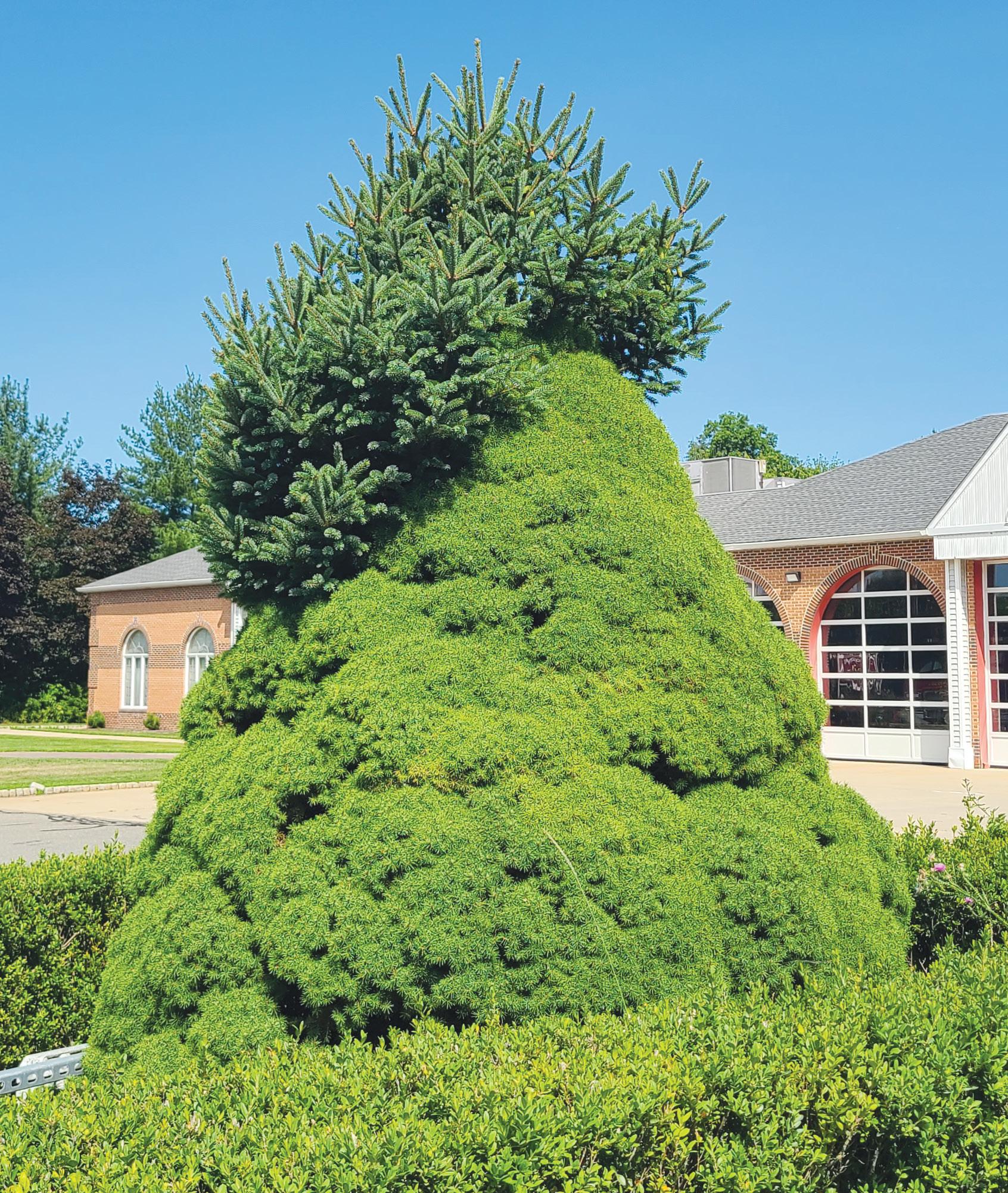
This is an awesome picture of a very unusual botanical occurrence. Alberta spruce, Picea glauca ‘Conica’, is genetically reverting back to its parent, a white spruce, Picea glauca var. glauca.
By Tom Castronovo Executive Editor/Publisher Gardener News
Many ornamental tree cultivars, especially dwarf varieties, are derived from naturally occurring genetic mutations.
In the case of the Alberta spruce, Picea glauca ‘Conica’, two Arnold Arboretum botanists found the dwarf in 1904 as a naturally occurring mutation of a white spruce, Picea glauca var. glauca At the time, they were waiting for a train at a railroad station in Alberta, Canada – hence the name Alberta spruce.
As the genetic mutation occurred to produce the cultivar in the wild, a reverse mutation can occur and portions of the tree can “revert” back to the parent. It often looks like there is a tree growing out of a tree.
If this mutation occurs to your spruce, a quick pruning cut below the odd-looking limb can often remedy the problem. However, some individual plants may keep reverting and must be removed if you aren’t interested in the “normal” growth habit. If it has grown quite large, removing it will likely leave a large gap that will disfigure the tree and/or take years to fill in. If left unpruned, one branch that reverted back to the parent white spruce tree can establish itself as the main leader of the tree.
Biologists, botanists, and nursery growers constantly look for abnormal growth patterns. They then use that mutation to help develop new cultivars or sub-species
through techniques like cross breeding or grafting. The resulting tree often looks very different from the original parent tree.
Today, dwarf Alberta Spruce is one of the most common dwarf conifers in cultivation. It is an evergreen conifer with a dense classic pyramidal form.
This spruce grows best in welldrained acidic soil and does not like soggy soil. It is best suited for a climate with cold winters, and cool to warm summers.
This popular cultivar is both versatile and adaptable. It’s easy to care for and can fit almost anywhere – on a small property, or at least temporarily, in a deck pot.
Genetics plays an important role with all living things.
This phenomenon occurs not only in humans, but also in animals and plants. If you see an Alberta spruce with funky growth, most likely it will be fine.
Editor’s Note: Tom Castronovo is executive editor and publisher of Gardener News . Tom’s lifelong interest in gardening and passion for agriculture, environmental stewardship, gardening, and landscaping, led to the founding of the Gardener News, which germinated in April 2003 and continues to bloom today. He is also dedicated to providing inspiration and education to the agricultural, gardening, landscaping, nursery, and outdoor living communities through this newspaper and GardenerNews.com.

Tom Castronovo/Photo

New Jersey Legislators Introduced Bill to Combat Organized Retail Crime
Assemblyman Danielson (D-17), Assemblyman Sauickie (R-12), Senator Burzichelli (D-3) and Senator Schepisi (R-39) have introduced A-4755/S-3587, which includes a number of provisions designed to reduce Organized Retail Crime. The key provisions are summarized here:
• Allows prosecutors to request enhanced sentencing for persistent offenders.
• Provides for a one-year look back period for the aggregation of the value of the amount of stolen goods to determine the grade of the offense when separate incidents are indicative of a common scheme.
• Upgrades the crime of leader of organized retail theft enterprise to a crime of the first degree.
• Increases the penalty for tax evasion in connection with being a leader of an organized retail theft enterprise to a crime of the second degree.
• Establishes a unit or other office in the Department of Law and Public Safety to investigate and prosecute cases concerning retail theft and assist county prosecutors in doing the same. One million dollars would be appropriated to facilitate the staffing of this unit.
• Combats gift card fraud by doing the following: instituting new tamperproof packaging requirements; requiring the NJ Division of Consumer Affairs (NJDCA) to publish a notice regarding the risk of gift card fraud and information regarding where assistance can be obtained; and requiring third-party gift card resellers to keep certain records regarding sellers and consumers.
• Creates the offense of fostering the sale of stolen property.
• Clarifies that the existing fencing statute applies to online sales of stolen goods.
• Protects retail workers by creating the crime of aggravated assault of a retail worker. This legislation will help garden centers, farm stands, farmers markets, food markets and all horticultural operations, as well as many other retail businesses.
Red Toolbox Recalls StanleyBranded Jr. Kids Garden Sets Due to Lead Poisoning Hazard; Violation of Federal Ban for Lead
Description:
This recall involves the long hoe and rake in the Stanley Jr. Kids Wheelbarrow and 7-piece Garden Set, model number 1662178. The Stanley Jr. Kids Wheelbarrow and 7-piece Garden Set includes a wheelbarrow, apron, gloves, rake, hoe and hand tools. The wheelbarrow has a white label on the bottom that states “Red Toolbox” and the manufacturing date of 12.2023. The recalled long hoe and rake have a yellow-painted long wooden handle with the words “Stanley Jr.” painted in black. The hoe and rake are black-painted metal. Only the long hoe and rake in the set are included in this recall.
Remedy:
Consumers should stop using the long hoe and rake in the garden set immediately. Visit Red Toolbox’s recall website, https://www.recall-rtb.com/, for information on how to obtain a free replacement long hoe and rake. The consumer will need to fill out a form and upload photos of disposing these items and the white label on the bottom of the wheelbarrow showing the 12.2023 manufacturing date. Costco is contacting all known purchasers directly.
Hazard:
The painted long hoe and rake of the recalled garden set contain levels of lead that exceed the federal lead paint ban, posing a lead poisoning hazard to children. Lead is toxic if ingested by young children and can cause adverse health issues. Learn more from the U.S. Consumer Product Safety Commission website at https:// www.cpsc.gov/. CPSC.gov is an official website of the United States government.




When you think of New Jersey’s agritourism, you probably think of classic favorites like hayrides in a farm field, picking fresh, crisp apples, selecting just the right pumpkin for the Halloween season, and navigating through a corn maze.
These and other agritourism attractions have, over the past few decades, become more integral parts of a commercial farm’s income stream. The evolution of New Jersey’s agritourism element has added tens of millions of dollars to the overall agricultural economy.
It has become such a force that laws (especially the Special Occasion Events law) recently have been passed to ensure that all farms – preserved and non-preserved – can operate agritourism attractions with the same rights to conduct a farm’s business as their longstanding practices of growing, raising, and harvesting crops and livestock.
While these agritourism innovations are all fantastic choices to share with family and friends, when you talk about agritourism to horticulturalists and gardeners, you might get some different options. Agritourism events and attractions with a specific appeal to those of us who love plants, flowers, and
There’s nothing quite like fall in New Jersey. The air gets a little crisper, the leaves light up with color, and there’s this unmistakable feeling of change. It’s the season when our farmers get to see the fruits of their labor come to life.
The hard work, the long days, and those moments of uncertainty in the fields all start to pay off when harvest time rolls around. It’s a time to celebrate, but it’s also a time to think ahead.
For many of our farmers, this season brings a mix of relief and preparation. There’s the satisfaction of bringing in the crops and the knowledge that winter is just around the corner. As the harvest wraps up, the planning for the next season begins. And that’s where the Farm Service Agency steps in—to make sure you’re not going at it alone.
Whether it’s dealing with unpredictable weather, market fluctuations, or just the day-to-day challenges of running a farm, the FSA has programs to help. Our loan programs, for instance, are designed to support farmers who need a bit of financial backing. Maybe you’re looking to invest in new equipment, expand your operation, or just make it through a tough season—our loans can help you get there without feeling like

NJ Dept. of Agriculture
By Joe Atchison III Assistant Secretary of Agriculture
Planting Seeds of Agritourism for Garden Enthusiasts
trees, and who work hard on our own homes to incorporate them into our lives can be found around the Garden State as well.
Agritourism is a great way for agriculturalists of all sorts to supplement their income and remain a viable agricultural operation. It provides an excellent opportunity for visitors and farmers, nursery operators and gardeners to communicate and share an appreciation for the quality of life agriculture provides. It also allows some growers to extend their business to the “shoulder” seasons on either side of their main harvest season.
One of the pioneers in this space in New Jersey was Raj Sinha, owner of the Sussex County Sunflower Maze at Liberty Farm in Sandyston. For several years, this was the largest sunflower maze on the East Coast and

remains an institution for people from states all over the Northeast and beyond. There are special days for photographers to capture sunrise hitting the dew on the flowers’ petals.
A few years ago, we saw the emergence of tulip farms becoming accessible to the public to see wide-open rainbow-hued fields of tulips in breathtaking displays across the acres. In this age of social media, people flocked to locations like Holland Ridge Farms in Cream Ridge and Dalton Farms in Swedesboro. Photos and videos were posted across the social platforms, which encouraged more people to visit the farms in person and while there, pick a few stems for home or to share with others.
During the pandemic, these outdoor events allowed families to escape the dreary indoor confines
and enjoy these vibrant, colorful displays. The overwhelming crowds caused growers to reshape their operations and move to online ticketing to meter the crowds so that all could enjoy their visit to the farm.
Another great option for horticultural-based fun is a visit to one of New Jersey’s many arboretums and botanical gardens. There you can explore a wide variety of plantings and enjoy diverse plant life, trails, water features, and more.
From the majestic Skylands New Jersey Botanical Gardens in the northern part of the state, to the free-admission Rutgers Botanical Gardens in the center of New Jersey, to the Frelinghuysen Arboretum in Whippany, there are many choices for you to discover.
And for the simplest form of horticultural agritourism, I like to
USDA Farm Service Agency
By Bob Andrzejczak State Executive Director
Celebrating the Harvest Season with a Helping Hand from FSA
you’re carrying the weight of the world on your shoulders.
We also know that the end of the season doesn’t mean the work stops. The Conservation Reserve Program (CRP) is here to support farmers looking to protect their land for the future. Whether it’s planting cover crops or enhancing soil health, there are ways to keep your fields productive while also taking care of the environment. And with programs like the Noninsured Crop Disaster Assistance Program (NAP), we’re here to provide peace of mind when the unexpected hits, ensuring you have a safety net to fall back on when you need it most. What I love most about this time of year is seeing how our community comes together. From hayrides and pumpkin patches to families out picking apples, it’s a time when we’re reminded of the connection between the land and
the people who work it. It’s time to take stock of where we’ve been and where we’re headed. And it’s a time for all of us at the FSA to step up and support you, our farmers, in any way we can.
So, as you enjoy the fall season, know that we’re here, ready to help. Because when it comes to farming, it’s not just about getting through today; it’s about building a future that’s bright and bountiful—for you, your family, and our entire community.
NJ Farm Service Agency Seeks Dedicated Loss Adjusters
NJ FSA is on the lookout for individuals passionate about agriculture to fill crucial positions as Loss Adjusters. These roles play a vital part in supporting farmers facing crop losses due to unforeseen circumstances.
Role Overview: Loss Adjusters are integral to the
visit a local mum grower and pick up some beautiful fall decorations that are hearty throughout the season.
Our state’s nursery/greenhouse/ sod/Christmas tree sector is indeed a marvel, being our leading agricultural sector and accounting for approximately $500 million per year of the state’s $1.2 billion farmgate sales. Nationally, New Jersey ranks fourth in floriculture production and seventh in overall horticulture production.
As more of the growers in that realm expand into agritourism events and attractions, the future appears bright indeed for those who provide the raw materials and expert advice to all of us who make gardening around our homes a priority.
Wherever you go to enjoy horticulture-related agritourism, enjoy!
Editor’s Note: Joe Atchison III is the New Jersey Assistant Secretary of Agriculture. Atchison is also the Director of the Division of Marketing and Development for the New Jersey Department of Agriculture. He can be reached at (609) 292-3976.
maintain certification.
For inquiries or to express interest in these positions, individuals can contact Aly Dyson, NJ FSA Farm Program Disaster Specialist, at Alyson.Dyson@usda. gov or 609-438-3147.
October Deadlines
FSA’s Noninsured Crop Disaster Assistance Program (NAP) and Tree Assistance Program (TAP). They must possess a solid understanding of field and specialty crops, coupled with expertise in executing crop adjusting guidelines and program provisions.
Qualifications and
Responsibilities:
Prospective candidates should have at least two years of college education or relevant agriculture-related experience. Key responsibilities include conducting field inspections, measuring fields, discussing findings with farmers, and thoroughly documenting crop damage investigations.
Training and Certification:
To become certified, individuals undergo specialized training, including classroom sessions and field exercises. Additionally, annual update training is mandatory to
October 2: Deadline to file your 2024 Dairy Margin Coverage (DMC) contract if you’ve chosen not to lock in for the duration of the program.
October 15: Final date to file acreage reports for all fall-seeded crops (such as wheat, rye, and barley) and perennial forage crops. October 31: Deadline for producers to apply for the Emergency Conservation Program (ECP) if their farm or ranch suffered damage due to natural disasters.
Editor’s Note: Bob Andrzejczak is the State Executive Director of the USDA Farm Service Agency (FSA) in New Jersey. He can also be reached at 609587-0104 during regular business hours. For more information, please visit https://www.fsa.usda.gov/ state-offices/New-Jersey/ sed-biography/index


RUTGERS NJAES/RCE

Bee-ginner’s Beekeeping: The Basics of Apiculture
Learn how to start and care for a honey bee colony! This course includes 14 hours of online content that you can complete at your own pace and fulfills the legal requirements of the State of New Jersey for beekeeper education

State and Local Laws Affect How We Manage Our Landscapes
When we’re gardening or working in our yards, we’re not usually thinking about how state and local laws could potentially affect these activities. However, there are some laws that can impact how we manage our gardens, lawns, and landscapes. This article explores three of them.
There will also be a live Q & A Session on Zoom with the instructors on Wednesday, October 23, 2024 from 6:30 pm – 8:00 pm.
*Discounts available for Master Gardeners and NJ/PA Beekeepers Association Members
Atlantic County
Phone: 609-625-0056
Bergen County Phone: 201-336-6780
Burlington County Phone: 609-265-5050
Camden County Phone: 856 216 7130
Cape May County Phone: 609-465-5115
Cumberland County Phone: 856-451-2800
Essex County Phone: 973-228-2210
Gloucester County Phone: 856-224-8040
Hudson County Phone: 201-915-1399
Hunterdon County Phone: 908-788-1339
Mercer County Phone: 609-989-6830
Middlesex County
Phone: 732-398-5260
Monmouth County Phone: 732-431-7260
Morris County Phone: 973-285-8300
Ocean County Phone:732-349-1246
Passaic County Phone: 973-305-5740
Salem County Phone: 856-769-0090
Somerset County Phone: 908-526-6293
Sussex County Phone: 973-948-3040
Union County Phone: 908-654-9854
Warren County Phone: 908-475-6505

Of recent interest, municipalities in New Jersey, in coordination with the New Jersey Department of Environmental Protection (NJDEP), have been adopting tree removal and replacement ordinances. Eligible municipalities were required to adopt such an ordinance earlier in 2024. The point of this requirement reflects the importance of trees across the landscape and their role in controlling stormwater.
Each municipality can tailor their own ordinances, but a model ordinance was provided by the state, and can be found at https:// dep.nj.gov/wp-content/uploads/ njpdes-stormwater/ordinances/ model-tree-removal-replacementfinal-2023.pdf.
In general, removing mature trees may require a municipal permit and property owners may be required to plant a suitable replacement tree. However, there may be exemptions for removing a limited number of trees. Likewise, exemptions may be available for properties with a woodland management plan, and for farms and orchards.
Municipalities are allowed to design their own application process and fee schedule, as well as establish fines for violations, and they are empowered to enforce these ordinances.
Because each municipality can tailor its own ordinances, accurate information for your specific municipality can be obtained by looking up ordinances on sites such as https://ecode360.com/, contacting your local zoning officer, or contacting Rutgers Cooperative Extension (RCE) for assistance.
When planting trees, RCE is a good resource to determine which trees are appropriate for your region of New Jersey, the site-specific conditions of your landscape, and which trees may or may not be native to New Jersey. However, note that municipalities may designate a list of allowed tree species, time for planting, and planting procedures.
Another New Jersey law important to many landowners regulates how turfgrass lawns can be fertilized. Passed in 2011, this was part of a series of laws to help protect water quality in our rivers, lakes, and bays. The statute regulating how lawns could be fertilized was enacted statewide and was intended to preempt local laws. This was important for statewide uniformity, so that landscapers would not need to deal with a variety of rules that change from municipality to municipality. The text of the law is easy to find by searching online for NJSA: 58:10A-61
The law applies to both homeowners and commercial landscapers and anyone who maintains turf areas as part of their job, such as individuals who maintain parks, sports fields, or school grounds. While the rules vary somewhat between these two groups, perhaps the largest difference is that professional landscapers need to pass a state-administered test and earn continuing education credits. For more information on the commercial landscaper program, visit the Rutgers ProFACT website https://profact.rutgers.edu/
Much of the law outlines common sense limitations. Homeowners cannot fertilize before March 1 or after November 15. Nitrogen or phosphorus fertilizer cannot be applied to frozen ground, to impervious surfaces, such as driveways and sidewalks, or during heavy rains or to saturated soils. Also, fertilizer cannot be applied within
25 feet of a waterbody, with certain exceptions. In most cases, a soil test is required prior to applying phosphorus fertilizer.
While the law specifies the amount of nitrogen and phosphorus fertilizer that can be applied to turfgrass, it makes it easy for homeowners by regulating the nitrogen and phosphorus content in fertilizers sold for turfgrass use in New Jersey. The idea being, if a homeowner buys a fertilizer intended for lawns and follows the label, the homeowner will be in compliance with the law, which is enforced by a variety of state, county, and local government agencies.
Another topic we get questions about in Cooperation Extension is the ability of residents to own animals usually considered farm animals in a residential setting.
In recent years, there has been a lot of interest in backyard chickens and other poultry for egg production and as an educational activity for children. And occasionally there’s someone interested in having a pet pot-bellied pig.
The legality of keeping these kinds of animals in residential areas falls to municipal zoning ordinances. Unfortunately, people will sometimes adopt these animals only to find out afterwards that local zoning laws do not permit it. Often, municipal ordinances address common domestic animals like dogs and cats but may not address other types of animals in residential areas. Sometimes, ordinances may specifically allow livestock only in agricultural zones.
If you’re interested in keeping any animal, check local ordinances, your town’s zoning map, and consult your municipal zoning officer. General recommendations for keeping residential livestock can be found in this Rutgers factsheet, Recommended Guidelines for Domestic Livestock in Residential Areas https://njaes.rutgers.edu/ e353/.
LAND-GRANT UNIVERSITY NEWS RUTGERS NJAES/RCE
Pollinator Peril? Rutgers Researchers Tracking Decline in Crop Yields
A team of researchers led by Rutgers University-New Brunswick scientists has analyzed crop yields of more than 1,500 fields on six continents, and found that production worldwide of important, nutritionally dense foods such as fruits, vegetables, nuts and legumes is being limited by a lack of pollinators.
The results, detailed in Nature Ecology & Evolution, showed that across diverse crops and locations, one-third to two-thirds of farms contain fields that aren’t producing at the levels they should be due to a lack of pollinators. The phenomenon of a low crop yield because of insufficient visits by insects is known as pollinator limitation.
The study is especially timely given recent concern about global declines in insect abundance.
“Our findings are a cause for concern and optimism,” said Katie Turo, an author of the study and a postdoctoral fellow in the Department of Ecology, Evolution and Natural Resources in the Rutgers School of Environmental and Biological Sciences. “We did detect widespread yield deficits. However, we also estimate that, through continued investment in pollinator management and research, it is likely that we can
improve the efficiency of our existing crop fields to meet the nutritional needs of our global population.”
The scientists reached their conclusions by conducting a statistical analysis of more than 200,000 “bee visitations” to crop flowers, contained within one of the most comprehensive databases on crop pollination in the world. Rachael Winfree, the senior author on the study and a professor in the Department of Ecology, Evolution and Natural Resources, collaborated with several colleagues from Europe and South America to compile the most comprehensive database of crop pollination studies in the world. The open-source database incorporates three decades of field observations of bees and other pollinators visiting plants.
The recent Rutgers study doesn’t apply to major food crops, such as rice and wheat, which don’t require pollinators to reproduce. But pollination by bees and other animals is critical to the proliferation of what Turo describes as “nutrient-dense and interesting foods that we like and are culturally relevant,” such as fruits, vegetables, nuts, and legumes.
“If you look through a list of crops and
think about which fruits and vegetables you’re most excited to eat— like summer berries or apples and pumpkins in the fall—those are the crops that typically need to be pollinated by insects,” Turo said.
Pollination is the process of transferring pollen from the male part of a flower to the female part, which allows a plant to become fertilized and produce seeds, fruits and young plants. Pollen can be moved by wind, water or pollinators such as honeybees and wild bees and other insects and other animals, such as bats.
Pollinators support the reproduction of about 88 percent of the world’s flowering plants and 76 percent of the leading global food crops, according to previous research by Rutgers professor Rachael Winfree and other scientists. Bees are generally considered the most effective pollinators because they visit more flowers and carry more pollen than other insects.
Rutgers scientists identified that blueberry, coffee and apple crops were most frequently affected by pollinator limitation. Researchers found yield deficits for 25 unique crops and in 85 percent of the countries evaluated.
On the bright side, Turo said that scientists believe current yield deficits could be remediated with realistic increases in pollinator visitation across individual crop fields. The study revealed in some cases an adequate number of bees were already visiting some fields.
If field managers could improve consistency across high- and low-yield fields, much of the observed yield problems could be addressed, she said.
“The findings are significant because crop yields, which measure the amount of crops grown per unit area of land, are relevant to assessing the adequacy of the world’s food supply relative to its population,” Winfree said. “Our findings show that by paying more attention to pollinators, growers could make agricultural fields more productive.”
James Reilly, a data analyst in the Rutgers Department of Ecology, Evolution and Natural Resources also was an author on the study. Other authors included Ainhoa Magrach of the Basque Centre for Climate Change in Leioa, Spain, and Thijs P. M. Fijen of Wageningen University & Research in the Netherlands.
This article first appeared on Rutgers Today.
Rising Temperatures and Poor Air Quality Signal Future Impacts
Canadian wildfires that severely impacted the air quality in New Jersey and other regions of the United States in June 2023 provide a glimpse into how climate change may affect future environmental conditions in the state, according to a new report released by researchers at Rutgers University–New Brunswick.
The report, The State of the Climate: New Jersey 2023, illustrates the unique challenges global climate change presents to residents of the state and details specific New Jersey climate trends, Rutgers scientists said. The report also synthesizes analyses and projections from across the climate change field.
“The Canadian wildfire event demonstrated the linkages between climate change which exacerbates events like wildfires that can occur hundreds of miles away and the health impacts here in New Jersey,” said James Shope, an applied climatologist with the Department of Environmental Sciences and the New Jersey Climate Change Resource Center at Rutgers and
a coauthor of the report. “The event also serves as a harbinger of how climate change may affect future wildfire potential and air quality in the Garden State.”
Shope said the yearly report provides an updated resource for how climate change hazards can affect human health, ecosystems and agricultural production in New Jersey.
“Climate change has increased temperature extremes, sea level and rainfall intensity within New Jersey,” Shope said. “These changes are projected to continue to have downstream effects for everything from agriculture to public health.”
By the end of the century, with moderate levels of greenhouse gas emissions, annual temperatures are projected to increase 4 to 6 degrees Fahrenheit above the average temperature levels that were seen between 1991 and 2010, according to the report. If high carbon emissions continue, annual temperatures will increase by between 7 and 12 degrees Fahrenheit, raising the
likelihood of heat waves and heat-related illness for New Jersey’s citizens.
“2023 was the third warmest year on record in New Jersey,” said study coauthor David Robinson, a distinguished professor in the Department of Geography in the Rutgers School of Arts and Sciences and the state climatologist. “Our annual temperatures have increased by about 4 degrees Fahrenheit since 1900, roughly twice the global average.”
As projected temperatures throughout the northeast United States are expected to increase and summer rainfall is projected to remain relatively unchanged, the frequency and magnitude of future summer drought conditions are likely to increase, the scientists said. These conditions are expected to increase the scale and intensity of local wildfires, they added.
The report pointed to other coming changes. Sea levels have risen by about 1.6 feet in Atlantic City since the early 1900s. By 2100, with moderate greenhouse gas emissions, sea levels
are projected to rise between 2-5.1 feet compared with the year 2000 baseline. As a result, by 2100 residents will experience more destructive coastal storms and increasing numbers of “sunny day” flooding – flooding at high tide even without a storm – in tidal areas most of the year during high tide.
The Rutgers New Jersey Climate Change Resource Center led the production of the report in partnership with the Rutgers Climate and Energy Institute and the Office of the New Jersey Climatologist, with the support of the New Jersey Agricultural Experiment Station. This is the fourth such report produced by Rutgers, and the third led by the resource center.
The New Jersey Climate Change Resource Center was created by statute in 2020 to address climate change issues in the state by providing actionable science, planning tools and technical guidance to policymakers, practitioners and communities.
This article first appeared in Rutgers Today.





Recently, Democratic Presidential candidate Kamala Harris called for a federal ban on price gouging on food products sold at grocery stores. Some of the rhetoric that accompanied this proposed ban focused on the “greedy corporations” who are the root cause of this sudden rise in food prices.
Sure, prices for many items are higher than they have been, but is corporate greed really the cause? And, even if food companies are the cause, or even part of the cause, should it be illegal?
As a grower and marketer of fresh fruits and vegetables, I know how volatile the prices for these items can be. There are many variables that come into play, and they all factor into helping to decide how much these perishable fruits and vegetables are worth at any given time. Weather events such as freezes, floods, droughts and hail storms can all wreak havoc on fruit and vegetable crops and have the ability to raise the value of any of these items overnight. In contrast, great or merely good growing conditions can create an oversupply of a product and cause prices to plummet. If a

The Town Farmer
By Peter Melick Agricultural Producer
Price Gouging
grower does not have a contract or arrangement with a buyer, they are forced to take what that product is worth at that time. And with these perishable items, time is never on the side of the grower. All it takes is a few more sellers than buyers to depress prices.
But things can go the other way as well. There is an old saying that states, “There is never an ill wind that doesn’t blow someone some good.” And if market forces should align and happen to favor the grower, then maybe they will make some money. That is the way a free-market system works. But consumers should not be too concerned by this. Time after time after time, farmers have shown an uncanny ability to take
Axiom Releases
a profitable crop, over produce it, and then cause the sudden increase in supply to drive prices below the cost of production.
These are just some of the reasons why I am skeptical of Vice-President Harris’ plan to somehow put artificial limits on what companies can charge for their products. I know that the general public has little sympathy for large faceless corporations, and calling them opportunistic and greedy makes for catchy sound bites, but how in the hell is the federal government going to decide how much is too much? Are they going to say a company made too much money, and therefore they must have overcharged? Is someone going to arbitrarily decide what the price of eggs should be, and
2024 Lawn Fertilizer Study
Homeowners remain concerned about the safety of lawn fertilizers for children, pets, wildlife and the environment. Because of this, 47.6% report using and continuing to use natural/organic lawn fertilizers and an additional 25.6% want to try them. Increasingly, they’re turning to lawn fertilizer ingredient lists to help them determine what they perceive as safe.
Key Axiom study findings include:
• 70% are concerned or highly concerned about lawn fertilizers polluting lakes, streams and rivers.
• 95%+ say it’s important to apply fertilizers that are safe for children, pets and the environment.
• 61.5% are concerned about applications of lawn fertilizers and pesticides in nearby yards, parks, sports fields and golf courses.
• 59.9% remember seeing lawn signs warning people and animals to stay off treated turf for 24 hours.
• When asked what they think natural and organic fertilizers contain that make them safer: 51% say plant and animal nutrient sources like soybean meal and fish meal.
• 60.5% prefer fertilizers made from the same ingredients as are in pet
food or livestock feeds vs. 35.5% for manure and 4.2% for petrochemical ingredients.
• 59.9% see lawn protection chemicals as harmful to the environment, pets and humans.
• 67% report applying fertilizers containing weed killers and insecticides.
• When asked why they don’t use natural pesticides on their lawns, the top three responses included: Doesn’t work 29.1%, Didn’t do a good job 20.3%, and Cost prohibitive 19%.
• The top two most credible information sources for natural fertilizers are independent garden centers 53.7% and university extension/county agents 43.5%.
Axiom is a market strategy consulting company founded in 1993. They provide market research, channel strategy, new product development and marketing communication services to Fortune 500 manufacturers and service providers in agriculture, horticulture, building products and energy.
For more information on the Axiom 2024 Lawn Fertilizer Study, visit https:// axiomcom.com
force marketers to adjust their prices accordingly? If a government bureaucrat somehow decides that prices should be lower for lettuce, and lettuce growers can not make any money, then lettuce growers will stop growing lettuce. And then there will be a lettuce shortage. In a free market system, other growers would be enticed by the potential for higher prices and attempt to get in on growing something that could make them some money, which in turn, would probably causes prices to decrease again. But with a “Price Czar” in place to oversee this commerce, these markets would no longer be able to function in a rational and equitable manner. I can see it already. It’s an election year, let’s keep the price
of milk low so that all of the milk-drinkers will vote for us! But the cheese producers wrote us a big check for our reelection campaign, so we will let them do what they want. Okay, maybe I am over-simplifying this a little bit, but I do not think that a scenario like this is too farfetched. That is why government intervention into the marketplace is an extremely slippery slope and should be avoided at all costs. Instead of worrying about companies making too much money, we should be thankful that we have such an abundance of items from which to choose.
Editor’s Note: Peter Melick is co-owner of Melick’s Town Farm in Oldwick and a 10th-generation New Jersey farmer. Peter is a member of the Tewksbury Township Committee, Hunterdon County, NJ. He also served as a director for the New Jersey Farm Bureau and is a past president of the New Jersey State Board of Agriculture. Peter has also been featured on NJN, News 12 New Jersey and on the Fox Business Network.
USDA Measures Northeastern Region Vegetable Chemical Usage
Interviewers from the U.S. Department of Agriculture’s National Agricultural Statistics Service (NASS) will interview more than 680 vegetable growers in the northeastern region to gather information for the 2024 Vegetable Chemical Use Survey this fall.
The survey will collect information on bearing acreage, pest management practices, acres treated, and application rates, fertilizer and pesticide application, acres treated, and rates applied to 12 vegetable crops. In addition to Pennsylvania, New York & New Jersey, vegetable growers in 12 other states will also hear from NASS as the agency collects comprehensive U.S. vegetable production practices information.
“Growers benefit from providing their information because the resultant data will illustrate the industry’s environmental practices and assure the quality of U.S. food to consumers here and around the world,” said Kevin Pautler, acting director of the NASS, Northeastern Regional Field Office. “I encourage every grower to take the time to respond, if they receive this survey.”
The data will paint a detailed picture of fertilizer, pesticide use, and other pest management practices used by the vegetable growers across the nation. To conduct the survey, NASS representatives will call growers to arrange phone or in-person interviews. Growers are encouraged to have their spray records available for reference. If these services were contracted, growers should be prepared to give consent to access these records.
NASS safeguards the privacy of all respondents. The information growers provide will be used for statistical purposes only. In accordance with federal law, responses will be kept confidential and will not be disclosed in identifiable form.
The data will be published online in NASS’s Quick Stats database next year.
Gardener News

In the Chef’s Corner
By Andy Lagana Chef
Smoked Baby Back Ribs with Easy Baked Beans
Hello Gardener News readers. It’s hard to believe that summer has already come and done – not sure how that happened! I hope you all had an enjoyable one. This month, I’m sharing my recipe for Smoked Baby Back Ribs, perfect for this time of year. If there is one food that could win the crown for being true American cuisine, it would be BBQ. The tradition of cooking the meat slow and low over indirect heat has become so popular that it has started a dedicated following.

There are many cuts of ribs, but the baby back variety comes from the top of the rib cage between the spine and the spare ribs, below the loin muscle. The rack is shorter at one end, due to the natural tapering of the pig’s rib cage. A rack of back ribs contains a minimum of eight ribs but can include up to 13.
There has been some controversy of beef vs. pork (this recipe calls for pork.) Residents of the BBQ Belt, an area that stretches from the Carolinas to the East to Texas and Missouri in the West, and from Kentucky in the North down to the South would argue that pork BBQ is the only BBQ. Purists go a step further even to discount the beefbased BBQ of Kentucky and Texas as inauthentic. The pork supply in the south was cheap, easy to raise and required many fewer resources than raising cattle – hence, the pork popularity. Ingredients needed are 10 pounds of baby back pork ribs, ¼ cup salt, ¼ cup
white sugar, 2 tablespoons packed brown sugar, 2 tablespoons ground black pepper, 2 tablespoons ground white pepper, 2 tablespoons onion powder, 1 tablespoon garlic powder, 1 tablespoon chili powder, 1 tablespoon ground paprika and 1 tablespoon ground cumin. For the sauce, set aside one cup apple juice, ¼ cup packed brown sugar and ¼ cup barbeque sauce.
To start, gather all the ingredients. Prepare the ribs by stirring salt, white sugar, brown sugar, black pepper, white pepper, onion powder, garlic powder, chili powder, paprika, and cumin together in a small bowl. Rub the spice mixture all over the ribs, then cover them with plastic wrap and refrigerate for at least 30 minutes.
To make the sauce, stir the apple juice, brown sugar, and barbeque sauce together until they are well combined, then set the mixture aside. Unwrap the ribs and arrange in a single layer onto the wire racks of the smoker. Place the racks into a smoker, fill the smoker pan with apple, grape, pear, or cherry chips, and heat it to 270° F (130° C).
Start to cook the ribs and brush them with sauce. Continue cooking them, basting with sauce every 30 to 40 minutes until the meat is no longer pink and begins to shrink back from the bones, approximately three to four hours. Brush sauce onto ribs one last time and remove them from the smoker. Wrap the ribs tightly with aluminum foil and allow them to rest until
the juices reabsorb into the meat, 10 to 15 minutes.
As a side dish, you’ll love these quick and easy baked beans. You’ll need 8 slices bacon – halved, 1 medium onion – chopped, ½ medium green pepper – chopped, 3 (28-oz.) cans pork and beans, ¾ cup barbecue sauce, ½ cup brown sugar, ¼ cup distilled or cider vinegar and 2 tsp. dry mustard or 2 tbsp. Dijon mustard. Adjust the oven rack to the lower-middle position and heat the oven to 325° F. Fry the bacon in a large, deep sauté pan until it has partially cooked and released about ¼ cup of drippings. Remove the bacon from the pan and drain onto paper towels. Add the onion and pepper to the drippings in the pan and sauté until tender, about 5 minutes.
Add the beans and remaining ingredients to the pan, then bring to a simmer. (If the pan is not large enough, add the beans and heat to a simmer then transfer to a large bowl and stir in the remaining ingredients). Pour the flavored beans into a greased 13-by-9-inch (or similar) ovenproof pan. Top with bacon, then bake for about two hours until the beans are bubbly, and the sauce is the consistency of pancake syrup. Let it stand to thicken slightly and serve. A good wine pairing for this dish is a mediumbodied red wine such as a Syrah or California Zinfandel. The smokiness of the meat brings out the lush, fruit-forward flavors of these wines. Enjoy!










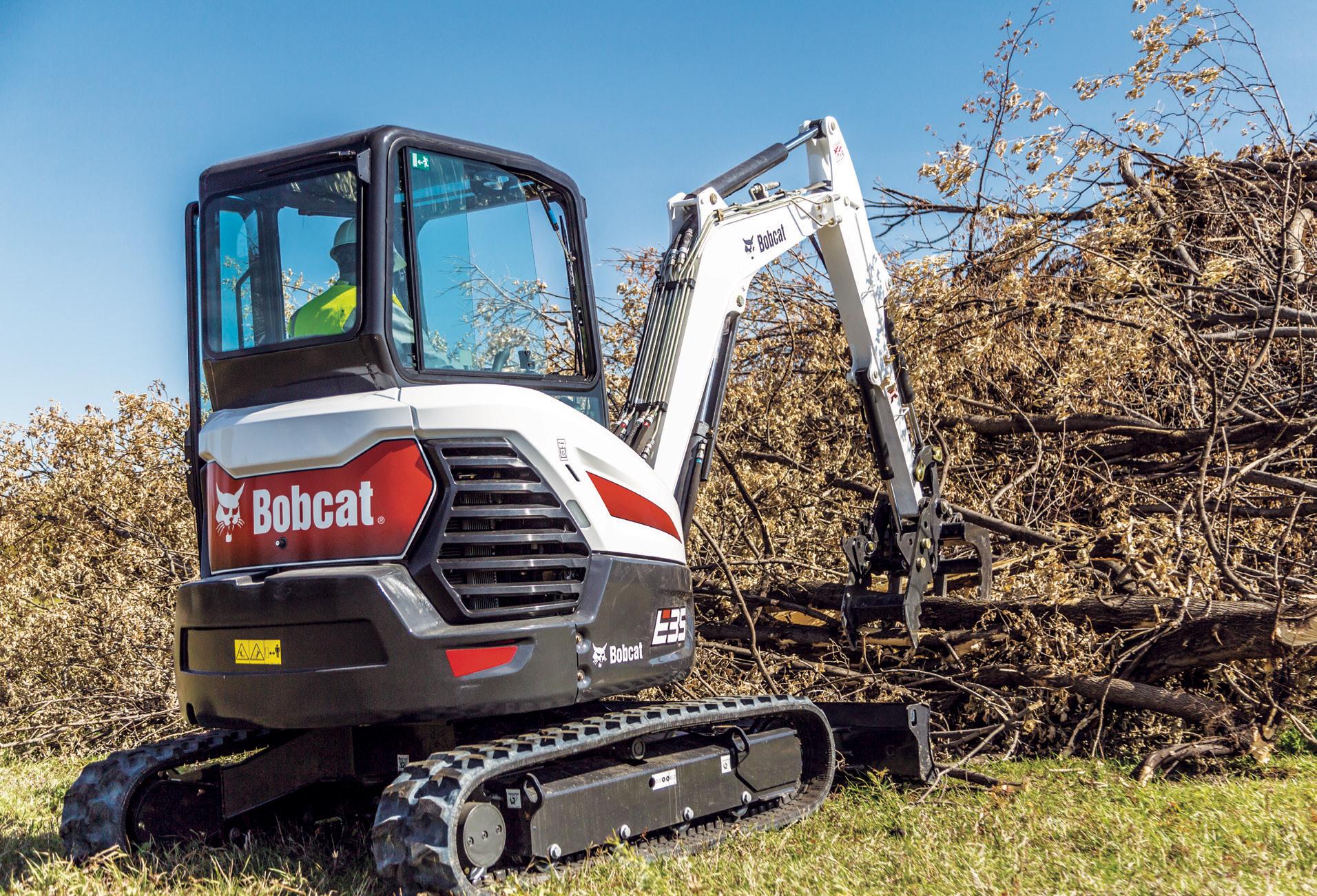
This zero-tail-swing excavator provides unrestricted rotation, giving operators more room to work in close proximity to walls and other
The 3-ton compact excavator market is highly competitive with a high retail volume. R2-Series compact excavators are designed to excel in this marketplace by providing the performance, durability, quality and versatility necessary to push operator productivity and profitability to the next level.
Lease for as low as $765 per month
The Bobcat® E35 (25hp) compact excavator includes not only the enhancements that make R-Series compact excavators great, but also R2-Series innovations that make these high-performing and durable machines leaders in their size class.
measure up and then some.




As we all know, unless we’ve been living in a secret garden with no internet access, there is a very contentious election coming along in just a month. I promise not to get political in this column, but I do want to talk about legislative issues and how important it is to get involved in your local, regional, state, and federal legislative issues.
Recently the NJLCA President, Chair of the NJLCA Legislative Committee and I (along with other allied association leadership) attended a hearing of the NJ Senate Environment and Energy Committee in Trenton. There was over two hours of testimony on the proposed Gas Leaf Blower Ban. The industry was represented in a professional manner, and we voiced our concerns and offered viable recommendations. Unfortunately, the bill did still move through the Committee and is on its way to the Budget and Appropriations Committee. We have been assured that our concerns and recommendations will still be considered.
However, on the side of those in favor of this bill, were many residents who voiced their support of the bill, while very few residents spoke in opposition. We have always said that generally, those in the minority opinion tend to be the loudest. What we would like to see is more residents who represent the majority opinion, as we get phone calls from residents generally outraged that they too will
Blue is the least common color in nature (animals and plants) and is found only in 10% of flowers. Deep blue is even less common but is found in our native gentians. Gentian color ranges from white, to pale blue, to sky blue, to dark blue, to purple. I have written on gentians before so some of this may sound familiar.
Gentians are named for King Gentius of Illyria, which was a region north of Greece now called the Balkan Peninsula. There are three bottle or closed gentians in NJ: Gentiana andrewsii, G. clausa, and G. saponaria. Gentiana clausa can be distinguished easily from its closest relative G. andrewsii since andrewsii has white tips on mature flowers (see www. awesomenativeplants.info for pictures).
This article will concentrate on the closed bottle gentian, Gentiana clausa, which comes in all the colors listed above except for a very deep blue and will be simply called bottle gentian. The species name clausa is Latin for closed.
Bottle gentians are relatively rare in the US, only found in

The Importance
The NJLCA Today
By Gail Woolcott Executive Director
of Active Participation in Legislative Matters
be forced to switch over to battery powered equipment and/or be the ones to pay for increases in landscaper fees due to having to switch to this more expensive equipment in a short period of time. However, those voices are rarely heard at legislative hearings.
But I digress. My actual point is that it is so important for every one of you to get involved in issues that affect all of us. Be aware of the issues your municipality and state are talking about. Let them know how you feel. Your voice matters more than anything because it is your vote that matters come election time.
Active participation in legislative matters allows us all to influence the outcome of policies that directly impact our lives. Legislators rely on input from their constituents to understand the real-world consequences of the laws they are drafting and voting on. By engaging in the legislative process,

you can help shape policies that are important to you.
Unfortunately, the legislative process is often dominated by wellfunded groups and lobbyists who may not represent your interests. By getting involved, residents and businesses can offset these powerful influences, ensuring that more voices are heard in policy discussions. We have often heard from legislators, “We haven’t heard from anyone that states they agree with your side of this discussion, just the opposition.” It is not that no one agrees, just that they are not standing up and making their voices heard.
Legislators are more likely to be effective and accountable when they understand the issues that matter most to residents. Take a moment to give your local legislators a call, get to know their staff, just say “hello” and establish a relationship with them.
They will then listen to you when you have valuable insights that might otherwise be overlooked. I have found that our legislators are much more “regular people” than they seem and can understand better when you talk to them about the real-world issues that you are facing!
The legislative process can be complex and intimidating, especially for those unfamiliar with how it works. Start by just picking up the phone and reaching out to your legislators. And if you don’t know how to do that, reach out to NJLCA or other organizations you align with.
Most importantly, vote in the direction of your issues. Even if you don’t like the people running for office, one of them will be more aligned with your opinions than another. Don’t say “I don’t like either of them, so I’m not voting.” This will only hurt you and those with similar
The Native Plant Society of New Jersey
By Hubert Ling Horticulture Chair
Blue, Blue, Blue
nine states in New England and the Mid-Atlantic. NatureServe lists it as secure in two states and uncommon or rare and endangered in the other seven. In NJ it is only uncommonly (S4) found in the northern half of the state.
This bottle gentian is so tightly closed that even a burly bumblebee must bully its way inside to collect nectar and pollen. While this is entertaining for some to watch, a more intimate way of nature participation would be to procure a butterfly kiss (see ‘Butterfly Kisses’ Gardener News July, 2020).
Perennial bottle gentians grow to 1-2 feet tall and form multistemmed colonies. The leaves are lance-shaped, opposite, dark green, and waxy. In late August, September, and early October
the plants form dense clusters of iridescent blue jellybean shaped flowers which look like swollen buds but these 1 to 1½ inch flowers never open. Even closed, these flowers are really welcome since most plants have finished their displays before October. The flowers turn a blue-violet color as they age, and the foliage takes on a pleasant reddishbronze glow after frost.
Bottle gentians grow in moist, slightly acidic, rich soil, in sun or partial shade. They are generally found along path edges of moist slopes, moist meadows, and stream and pond edges. They are often in anthropogenic (manmade or disturbed) habitats. Although these gentians can be found in full sun, they need to be heavily shaded by companion plants. So partial shade is best in
circumstances. Vote Every Time. It’s the most important thing you can do as a citizen of this country! Happy October, Happy Halloween, and Happy Voting!
Editor’s Note: Gail Woolcott is the Executive Director for the New Jersey Landscape Contractors Association. Gail received the New York State Turf & Landscape Association 2022 “Person of the Year” award on December 1, 2022. Gail also received a proclamation from the Westchester County, New York Board of Legislators proclaiming December 1, 2022 as “Gail Woolcott Day” in Westchester County. Gail has also been presented with a community service award from the Borough of Fairview, New Jersey for her assistance in leading the 9-11 Memorial Park project and the Legislative Champion of the Year award from the Federation of Employers and Workers of America. She can be reached at 201-703-3600 or by emailing gwoolcott@ njlca.org.
your garden. The plants are clay tolerant and somewhat deer and rabbit resistant, but not drought resistant. The roots are white, thick, and fleshy; much like orchid roots, gentian roots are presumably also mycorrhizal. Thus, your gentians will need supplemental watering with non-chlorinated water during prolonged dry spells. Chlorine in the water tends to kill fungi and thus destroys mycorrhizal roots and your gentians.
Propagation is easily carried out by dividing large clumps with a sharp knife in spring or fall. Be sure to leave a large amount of soil around the root mass to protect the brittle fleshy roots.
Propagation is best done by seed since you can easily get hundreds of plants. Gentian
seeds are minute so they must be handled with care. Thinly sow the seeds outdoors in trays in late October. You can lightly scratch the seeds in, but they need light to germinate. Cover the seed trays over winter with straw. Remove this cover gradually in March but keep the trays and pots moist at all times. This is easily accomplished by placing the seeding tray (with drainage holes) inside a second deep tray (without drainage holes) half filled with soil. Keep the outside tray half filled with non-chlorinated water. The developing seedlings are thus kept 2 or 3 inches above the water line. I also fill in any cracks with soil so no free water shows and therefore discourages mosquitoes. Plastic containers which are used for salad greens are ideal. I use this method for all my moisture loving plants. Let me know how it works for you.
Editor’s Note: Hubert Ling is Past President of The Native Plant Society of NJ and Horticulture Chair. He can be reached at milhubling@verizon.net.
One plant I remember well from my youth is Heuchera sanguinea, commonly called Coral Bells due to the red, bell-shaped flowers. At the time, it was the primary selection of Coral Bells available to homeowners but, similar to the plight befalling Daylilies and Hostas, that has long changed!
Today the selection of Coral Bells has grown immensely, with the focus now on foliage colors. Fortunately, one great garden species combining green foliage with a wonderfully long flowering period remains available to gardeners – Heuchera villosa
The genus Heuchera is a member of the Saxifragaceae or Saxifrage family and consists of around 37-50 species, all native to North America barring the exception of one species native to far Eastern Russia. The plants are typically shallow rooted and rhizomatous with coarse, round foliage ranging from 1-2” to upwards of 6” in diameter. The genus was named in 1753 by the Swedish botanist Carl Linnaeus (1707-1778). The name honors a contemporary botanist and physician, Johann Heinrich von Heucher (1677-1746). Heucher was involved with the development of the Wittenburg Botanical Garden and his botanical pursuits focused mostly on the medicinal use of
It was a rather difficult summer, wouldn’t you say? Do you have many areas of your lawn that died and need to be re-seeded from all of the heat, drought and humidity? I’m sure most of you would say “yes” to this question. Let’s see what we should do.
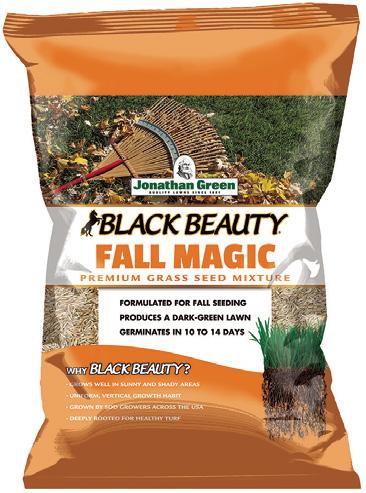
You are reading this article in October. If you are thinking of re-seeding areas of your lawn you should have started the process in early fall. Remember the slogan the Green Industry came out with 30+ years ago, “Fall is for Planting!” This doesn’t mean it’s too late to apply grass seed, but having the three plus months of the fall growing season is the best time of the year for growing grass. Please do not wait until November or later to apply grass seed, do it now. Take advantage of the cooler temperatures, warm soil from summer heat, and hopefully, normal rainfall patterns to grow a great lawn and fix damaged areas.
I’ve outlined the reasons why this is a great time to apply grass seed. But, in

Morris County Park Commission
By Bruce Crawford Horticultural Manager
Heuchera villosa Remains a Green Foliaged Garden Winner
plants and herbs.
Heuchera villosa was described posthumously by the French botanist André Michaux (17461802) in 1803. Michaux found Heuchera villosa in the Appalachian Mountains and the species epithet of villosa is from the Latin villōsa meaning hairy and describes how much of the plant is covered with small hairs. It is native from Virginia south to northern Georgia and west to Arkansas and Missouri, with the greatest concentration in the Appalachian Mountains! The villose or hairy nature of the plant contributed to its common name of Hairy Alumroot. Alumroot is another name for Heuchera species and refers to how the tannin rich roots and foliage were used as an astringent to stop bleeding, much like the mineral salts of Alum. The

order to maximize your efforts let’s go over the process one more time. Like painting a house, preparation prior to applying paint or grass seed is critical. Cut the grass down to a low setting in the areas you want to seed. Vigorously rake out the dead material or rent a dethatching machine to clean out the dead grass and debris. You need to create a good seeding bed so the grass seed you apply has good seed-to-soil contact. Scratch up the soil to loosen it and spread the proper amount of seed to do the job right. Too much seed is better than too little particularly if you are going to all this effort. Once you’ve applied the grass seed, lightly rake
tannins also create a bitter taste, reducing predation by deer and rabbits.
This plant is one of the largest species of Heuchera, with each leaf reaching from 4-6” in diameter and plants stretching to 2’ tall and slightly wider. Rising above the foliage, the wispy white flower panicles appear from late June through October. The panicles reach from 18-36” tall with the upper 5-9” of the peduncle (flower stem) presenting the floral display! The flower panicle consists of a central stem from which upwards of 30, 1” long floral branches appear in a radial fashion around this stem. Each of these branches display from two to twelve small florets measuring roughly ¼” long by ⅛” wide.
Interestingly, the white flower
Turf
color is not produced by the petals, but by the cup-shaped calyx and the glistening white hairs that cover the calyx. The main body of the ‘cup’ transitions to white as it matures, although the tips and base of the calyx retain splashes of green. Although each floret is small, with so many blooming simultaneously along the panicle, the effect is very airy and impactful! The flowers are also admired by native bees and butterflies.
Of the several named selections on the market, I’ve always had great success with ‘Autumn Bride’, especially as a groundcover. The plant and flowers are slightly larger than the species while the foliage is a lighter green, enabling the plant to brighten shady niches. The plants are also seed grown, allowing for some variation in leaf color.
‘s Up
By Todd Pretz Professional Turf Consultant
Got seed?
it into the soil no more than ¼” you really want to be able to still see the seed. Turning your rake upside-down and then dragging it across the soil works well.
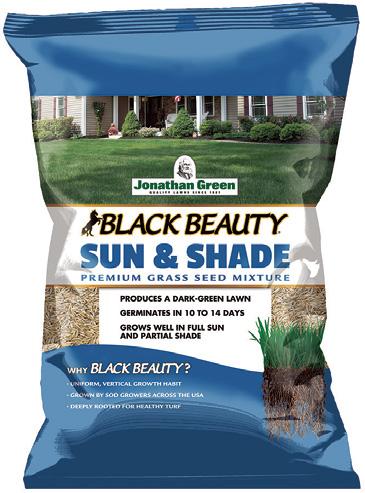
Buying quality grass seed is wise. Why go to all of this effort for C- quality grass seed? Avoid quick-growing mixtures which contain a lot of Annual Ryegrass. It’s cheap but it only lasts one year, why bother! I assume most gardeners and lawn enthusiasts know that adding a “starter-type” fertilizer helps grow plants. Farmers don’t just plant the corn, they add nutrients to make it grow its best. New Seeding-Starter fertilizers will usually have a higher middle number in the formula like 12-18-8. This
Heuchera villosa retains good vigor without division and is superb when massed or blended with other shade lovers like Sedges, Carex spp., the bold dark green foliaged Christmas Fern, Polystichum acrostichoides, or Jack-in-thePulpit, Arisaema triphyllum Best planted in dappled shade or morning sun where soils are moist yet well-drained, it prefers a pH between 6 and 7. Plants are hardy in zones 4-9.
Coral Bells have certainly seen dramatic changes since my youth. Although Heuchera villosa bears green foliage, it is easily grown and long-lived with a prolonged, multiseasonal display of white blossoms! A great plant for enduring hot, humid summers of the south and cold winters of the north, this green foliaged Alumroot remains a garden winner!
Editor’s Note: Bruce Crawford is a lover of plants since birth, is the Manager of Horticulture for the Morris County Parks Commission, and a Past President of the Garden State Gardens Consortium. He can be reached at BCrawford@ morrisparks.net
middle number represents the Phosphorus amount. Phosphorus is the key to helping new roots develop. What about watering?
Well, if you have a large area you are seeding and do not have an irrigation system, this can be quite daunting. Do the best you can or do what most people do, nothing. Natural rainfall will help the grass grow. If you have the ability to water the new seedlings, do so each day for 10-15 minutes, but not too much to cause runoff for the first few weeks. Then you can back off of the watering as it grows and reaches mowing height. Of course, if it rains you can skip a few waterings. Do not forget to mow these
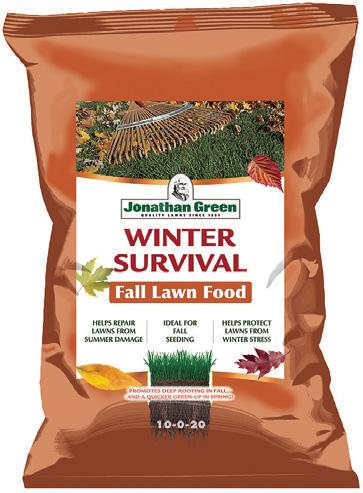
new areas after the grass height reaches 3-4 inches and do not scalp the areas. Consider applying another winter-type lawn fertilizer to help continue lawn growth and thickening well into the fall and even into next spring. This last application needs to be done by November 15th for homeowners according to NJ lawn fertilizer laws. Licensed Lawn Professionals can apply fertilizer up to December 1st.
Many items in the market seem higher than they should be, gas, food, cars, etc. Grass seed prices may start to come down next year to give us some relief, let’s hope so. Remember, investing in your house and property yields benefits years later by adding value to your home. Just like your health, give you lawn a little love this fall.
Editor’s Note: Todd Pretz is Vice President of Jonathan Green, a leading supplier of lawn and garden products in the northeast. For more information, please visit: www.jonathangreen.com























































































USDA to Measure Quarterly Bee Colony Loss
HARRISBURG, PA -- The U.S. Department of Agriculture’s National Agricultural Statistics Service (NASS) will be collecting information about colony loss in the honey industry throughout the United States. The next Quarterly Colony Loss survey will be conducted during October of 2024. This survey collects information about colony inventory and loss from more than 400 producers with honeybee colonies in the Northeastern Region of the United States.
“The information from these surveys directly impacts our region’s beekeepers and honey producers,” said Kevin Pautler, acting director of the NASS Northeastern Regional Field Office. “Beekeepers and producers can use the survey results when making business plans and marketing decisions. Cooperative Extensions use the data to provide needed outreach and education and State Departments and Agencies of Agriculture use the information to set insurance values,” added Pautler.
To ensure all survey participants have an opportunity to respond, NASS interviewers will contact producers who do not respond by mail or online to conduct interviews. NASS safeguards the privacy of all respondents and publishes only aggregate data, ensuring that no individual operation or producer can be identified.
Results of these quarterly surveys are published annually in the Honey Bee Colonies report, which will be available on August 1, 2025. These and all NASS reports are available online at www.nass. usda.gov/Publications/.
The Annual Duke Farms Butterfly Count
Each year, Duke Farms in Hillsborough, Somerset County, NJ, partners with the New Jersey chapter of the North American Butterfly Association (NABA) to survey the property and count the number of butterfly species and individuals observed. Like birds, butterflies serve as effective indicators of habitat type and health; a greater diversity of species and higher population numbers typically point to a variety of healthy habitats.
This year’s count recorded 31 species and 672 individual butterflies (580 excluding the non-native/invasive Cabbage White butterfly). While the total number of butterflies was lower than usual, the species count was slightly above average. Factors like temperature, weather, and even the number of participants and their level of expertise can all influence the results.
Notably, the Sleepy Orange butterfly was once again counted in significant numbers. Though native to New Jersey, this species is relatively uncommon. Its recent presence at Duke Farms can be attributed to the mass planting of two of its host plants—Partridge Pea Chamaecrista fasciculata and Wild Senna Senna hebecarpa.
Monitoring biodiversity is essential to understanding the health of ecosystems and guiding conservation efforts. Duke Farms plays a key role in restoring natural resources and creating habitats where native species can thrive, reinforcing the importance of preserving biodiversity for future generations.
The mission of the Doris Duke Foundation (DDF) is to build a more creative, equitable and sustainable future by investing in artists and the performing arts, environmental conservation, medical research, child well-being and greater mutual understanding among diverse communities.
The Doris Duke Foundation operates Duke Farms and Shangri La, two centers that serve the public directly, and funds Rough Point, which is operated by the Newport Restoration Foundation. These properties, all former residences that belonged to Doris Duke, now serve the public in ways that extend her legacy and advance the DDF mission. For more information, visit www.dorisduke.org.
EPA Publishes New Resources on Bilingual Pesticide Labeling
The Pesticide Registration Improvement Act of 2022 (PRIA 5) requires the safety and health portions of pesticide product labels to be translated into Spanish. Spanish is the primary language for most American farmworkers. This effort advances environmental justice by making health and safety information on pesticide labels more accessible, fostering better understanding and compliance with label instructions.
Beginning on December 29, 2025, product labels on restricted use pesticide products and agricultural use products with the highest toxicity will be required to bear Spanish language translations for the health and safety sections. Following this first phase, pesticide labels must include these translations on a rolling schedule depending on the type of product and the toxicity category, with the most hazardous and toxic pesticide products requiring translation first. All pesticide labels must have translations by 2030. The translations must appear on the pesticide product container or must be provided through a hyperlink or other readily accessible electronic method.
The new and updated resources include guidance on implementation timelines of these bilingual labeling requirements for various types of pesticide products based on their toxicity, as well as frequently asked questions and answers related to this requirements.
EPA wants to ensure the transition to bilingual labeling increases accessibility for pesticide users, pesticide applicators and farmworkers to make pesticides safer for humans and the environment. The Agency intends to update these website resources as various PRIA 5 requirements and deadlines are met, and new information is available. The resources will be available in English and Spanish on the Agency’s website at https://www.epa.gov/pesticide-labels/bilingual-labeling
La EPA publica nuevos recursos sobre el etiquetado bilingüe de los pesticidas
La Agencia de Protección Ambiental (EPA) de Estados Unidos está publicando nuevos recursos y actualizando los existentes para ayudar a los titulares del registro de pesticidas a traducir las etiquetas al español. La Ley de Mejora del Registro de Pesticidas de 2022 (PRIA 5) exige que las secciones de seguridad y salud de las etiquetas de los productos pesticidas se traduzcan al español. El español es la lengua materna de la mayoría de los trabajadores agrícolas de Estados Unidos. Esta iniciativa promueve la justicia ambiental al permitir que la información sobre la salud y la seguridad de las etiquetas de los pesticidas sea más accesible, lo que mejora la comprensión y el cumplimiento de las instrucciones.
A partir del 29 de diciembre de 2025, las etiquetas de los productos de uso agrícola y los productos pesticidas de uso restringido con la mayor toxicidad (categoría 1) deberán incluir la traducción al español de las secciones de salud y seguridad. Después de esta primera fase, las etiquetas de los pesticidas deberán incluir estas traducciones de forma gradual, según el tipo de producto y la categoría de toxicidad. Los productos pesticidas más peligrosos y tóxicos serán los primeros que requerirán traducción. Todas las etiquetas de los pesticidas deben incluir la traducción antes de 2030. Las traducciones deben aparecer en el recipiente del producto pesticida o deben proporcionarse a través de un hipervínculo u otro método electrónico fácilmente accesible.
Los recursos nuevos y actualizados incluyen orientación sobre los plazos de implementación de estos requisitos de etiquetado bilingüe para diversos tipos de pesticidas, según su toxicidad, además de preguntas y respuestas frecuentes en relación con estos requisitos.
La EPA quiere garantizar que la transición al etiquetado bilingüe aumente la accesibilidad para los usuarios de pesticidas, los aplicadores de pesticidas y los trabajadores agrícolas, a fin de que los pesticidas sean más seguros para los seres humanos y el medioambiente. La Agencia tiene la intención de actualizar estos recursos del sitio web a medida que se cumplan diversos requisitos y fechas límite de la PRIA 5, y se disponga de información nueva. Los recursos estarán disponibles en inglés y español en el sitio web de la Agencia.
Visite el sitio web de etiquetado bilingüe de los pesticidas de la EPA: https:// espanol.epa.gov/seguridad-pesticidas/etiquetado-bilingue
In the Mid-Atlantic area, one of the most dazzling and interesting of all our native birds is the Rubythroated Hummingbird. This small fast-moving bird has iridescent green with a bright red or “ruby” throat. It overwinters in southern Mexico and Central America. In the spring it starts to move north, arriving for the summer and mating season in late April to Early May. From the time of its arrival, it is in search of nectar-rich flowers and is especially attracted to those that have tubular flowers and are in bright colors, especially orange and red.
Some of the earlier flowers that are attractive food sources for the Ruby-throated Hummingbird are the native cross vine, Bignonia capreolata. ‘Dragon Lady’ is a Pennsylvania Horticultural Society Gold Medal Selection. This fast growing, native, self-clinging, semi-evergreen vines is covered in tubular orange-red flowers in early May and are a great initial food source for the returning hummingbirds. Another early flowering native vine is the Carolina jessamine, Gelsemium sempervirens. This twining vine grows best in full sun. In April to May it is covered in an amazing abundance of bright yellow tubular flowers. The native redbuckeye, Aesculus

Pennsylvania Horticultural Society
By Andrew Bunting Vice President of Horticulture
Attracting Hummingbirds to Your Garden
pavia has upright clusters of bright red flowers. This small flowering tree is an understory tree in native habitats, but in cultivation will thrive in both sun and shade. One of the earliest of the perennials to welcome the hummingbirds in a woodland columbine, Aquilegia canadensis. The reflexed red petals with a yellow center are highly attractive nectar sources in the early part of the spring.
Many other excellent perennials can be used to create the perfect habitat for hummingbirds in the garden. There are several species of beebalms that are good; perhaps one of the best is the selection Monarda didyma ‘Jacob Cline’. This beebalm is a quick-spreading species that reaches five feet tall and is covered with tubular red flowers in mid-summer. Another perennial that can grow in saturated soils is the hummingbird magnet, the cardinal flower, Lobelia cardinalis which is a summer
flowering perennial with spikes of red flowers in the summer. In recent years, Spigelia marilandica has been planted for attracting hummingbird. This bushy perennial to two feet tall becomes covered in bright red tubular flowers that have recurved tips revealing five yellow petals. While there are many annual salvias that are great hummingbird plants, there are also several perennial salvias or sages. The autumn sage, Salvia greggii tends to bloom later in the summer as the common name would suggest. This small stature salvia is characterized by an abundance of small flowers including the red flowering, ‘Furman’s Red’, ‘Violet’ with rich purple flowers and ‘Pink Preference’ with clear pink flowers.
There are many shrubs that are also important for attracting hummingbirds to the garden. Many of the shrubs have tubular flowers, including the native Direvilla sessilifolia, Southern bush
honeysuckle with tubular yellow. For an array of different flower colors throughout the growing season, the native azaleas should be considered. Depending on the species, their native range extends through the northeast to the southeastern Appalachian Mountains and Florida. In general, the native azaleas are medium-sized deciduous shrubs that thrive in full shade to part sun. Rhododendron austrinum , the Florida azalea and Rhododendron calendulaceum are characterized by open faced clusters of orange to orange-red to orangeyellow flowers and are one of the best native plants for attracting hummingbirds and butterflies. Rhododendron prunifolium, the plum leaf azalea is native to Georgia and Alabama and has bright orange-red flowers. In the nearby Pine Barrens growing along the side of streams and rivers is the swamp azalea, Rhododendron viscosum This white flowering azalea
reaches up to five to six feet tall and is covered in intensely fragrant white flowers in late spring to early summer. In the fall all of the species of native azaleas have exceptional fall color.
Creating hummingbird habitat in the garden is relatively easy since there are many brightly colored flowers that have a tubular structure.
Editor’s Note: Andrew Bunting is Vice President of Horticulture for the Pennsylvania Horticultural Society. He is one of the most recognized horticulturists in the Philadelphia, Pa., region and a highly regarded colleague in the world of professional horticulture. Bunting has amassed a plethora of awards, including the American Public Gardens Association Professional Citation, Chanticleer Scholarship in Professional Development, Delaware Center for Horticulture’s Marion Marsh Award, and the Certificate of Merit from the Pennsylvania Horticultural Society. In addition, Bunting has lectured extensively throughout North America and Europe, and participated in plant expeditions throughout Asia and Africa. Learn more at https://phsonline.org/team/ andrew-bunting
Beech Leaf Disease: Groundbreaking New Treatment Strategies
Research scientists at the Bartlett Tree Research Laboratories – the research arm of Bartlett Tree Experts – have broken new ground to protect beech trees by developing novel Integrated Pest Management (IPM) strategies to treat Beech Leaf Disease (BLD).
Dr. Andrew Loyd, plant pathologist and mycologist leading Bartlett’s BLD research commented, “At times in the past seven years, while researching beech leaf disease, I’ve felt as if there would be no hope for management. But through painstaking and tedious work, we have now been able to find two successful treatment options: a foliar application program designed for smaller trees, and a root flare injection suitable for large trees. And, although frustrating at times, it has been a very rewarding process.”
This follows the discovery and publication of the research team’s first successful foliar treatment option that successfully targets the invasive microscopic worm, a nematode (Litylenchus crenatae mccannii), causing BLD. Further, a new injectable treatment discovery shows excellent potential to protect larger beech trees for up to several seasons, staving off the defoliation and canopy dieback that results from severe infection.
“It is important to keep our goals in mind with
integrated pest management development,” says Dr. Matthew Borden, another plant pathologist on the research team. “This disease-causing nematode has spread at an astounding pace, quickly climbing into the ranks of other ecosystem-shifting catastrophes we have seen over the past century, like chestnut blight and emerald ash borer. Where containment and eradication are no longer feasible, we strive to develop IPM tools and techniques to protect individuals or groups of susceptible trees.”
While these discoveries and treatment options are not designed to address beech leaf disease at the forest level, scientists at Bartlett now feel confident that we can protect many beech trees in places such as landscapes and arboreta where beech are valued as shade trees, historic specimens and represent genetically diverse collections that should be preserved for future work.
Over time, the scene will change, leading to the development of new resistant or tolerant beech varieties. In addition, Bartlett shall continue to develop new management strategies to conserve beech culture. The ongoing work of other scientists investigating the nematode’s life cycle, how it spreads, and physiological impact on beech trees is also critical to finding future solutions.
Bartlett’s new treatment builds upon the work of scientists and arborists who developed treatments for Dutch elm disease in the 1970s and 80s, particularly the “Tree Doctor” R. Jay Stipes, professor emeritus at Virginia Tech, as well as a good friend and mentor to the Bartlett company. Jay was thrilled that the chemistry and tree injection techniques he helped pioneer to preserve many elm trees will find new success against yet another tree epidemic.
“Beech leaf disease is unlike any other widescale tree disease we have ever had to face,” Dr. Borden adds. “As Jay likes to say, ‘Tree medicine, as human medicine, is an uncertain art.’ The nematode poses unique challenges we have had to overcome with out-of-the-box thinking. It takes a full year to properly evaluate a single treatment in the field, and we have conducted many field studies to test a wide range of management options and fine-tune treatments that show potential. The ongoing support of our research department, New England Division leadership, and especially Robert A. Bartlett, Jr. has made these discoveries possible.”
Learn more at https://www.bartlett.com/
NORTHEASTERN ASSOCIATION OF STATE
The Northeastern Association of State Departments of Agriculture convenes the following 10 states: Connecticut, Delaware, Maine, Massachusetts, New Hampshire, New Jersey, New York, Pennsylvania, Rhode Island, and Vermont.
NEW YORK DEPARTMENT OF AGRICULTURE
State Agriculture Department Urges Horse Owners to Vaccinate their Animals Against Disease
State Agriculture Commissioner Richard A. Ball today urged horse owners across New York State to vaccinate their horses against Eastern Equine Encephalitis (EEE) and West Nile Virus (WNV), both of which are caused by a virus spread through the bite of an infected mosquito. This is especially important since parts of New York have mosquito activity into late November. So far this year, New York has already seen cases of EEE found in horses in Clinton, Franklin, Saint Lawrence, Washington, Madison, Oneida, Orange, Ulster, Cayuga, and Wayne counties. There has been one confirmed case of WNV in Oswego County. The Department of Agriculture and Markets has made veterinarians across the state aware of these confirmed cases of EEE and WNV.
Commissioner Ball said, “A simple vaccination can go a long way toward protecting horses against mosquito-borne diseases. If you’re a horse owner and your horse is in need of a vaccination, I encourage you to make an appointment with your veterinarian as soon as possible.”
Both EEE and WNV are spread by mosquitoes that carry the disease from infected birds. There is no cure for EEE or WNV, which can both be fatal in unvaccinated horses. Owners are urged to ask their veterinarian about recommended vaccines that protect against these viruses. The vaccines are effective for up to one year, but in areas where these diseases occur year round, veterinarians may recommend vaccination every six months. For the vaccine to be effective, it must be handled and administered properly, prior to an anticipated increase in mosquito activity in a local area.
In addition, horse owners are encouraged to use other prevention methods, which include:
Eliminating all standing water where mosquitoes can breed; Using insect repellents and following the directions on the label; and Removing animals from mosquito-infested areas during peak biting times, usually dawn and dusk.
Typical symptoms of EEE in equines include staggering, circling, depression, loss of appetite and sometimes fever and blindness. If a horse contracts the WNV, it may show signs of lethargy, weakness in the hind quarters, stumbling, lack of awareness, head tilt and head twitching, convulsions, circling, partial paralysis, and coma. staggering, circling, depression, loss of appetite, fever, and blindness. Horses exhibiting these symptoms should be reported to the State Department of Agriculture and Markets’ Division of Animal Industry at (518) 457-3502 and the local health department right away. Horses suffering from neurologic problems must always be handled with extreme caution, since they may be unpredictable.
While mosquitoes can pass West Nile Virus to humans, horses and other animals, an infected horse cannot spread the disease to other animals. Humans are not susceptible to West Nile by handling a horse that is infected, however the virus is a concern for humans and there are no vaccines for humans. Preventing mosquito bites is the most important way to minimize the threat of this and other mosquito-borne diseases.
More information on West Nile Virus, EEE and Rabies Virus in Horses can be found at https://agriculture.ny.gov/animals
CONNECTICUT DEPARTMENT OF AGRICULTURE
Connecticut Local Food Spending Insights Revealed: Room for Growth Needed in Regional Food Consumption
The New England Food System Planners Partnership just released a new detailed analysis of local food spending in Connecticut– Local Food Count 2022. The report reveals that $709 million of the state’s total $26.3 billion in food, beverage and alcohol expenditures were directed towards local and regional products. This equates to approximately $195 per person, per year, highlighting a critical area for potential growth and investment.
In this report, ‘local’ is defined as food grown or produced in Connecticut and ‘regional’ is defined as food grown or produced in New England. The report estimates the region’s spending on local products at grocery stores at $239 million (4.2% of total grocery store spending), spending via direct sales channels—farmers markets, CSAs, farm stands—was considered 100% local, as were home production (e.g., gardens) and donations. Spending on local products at full-service restaurants was estimated at $120 million (3.0% of total fullservice restaurant spending), while schools and colleges accounted for $51 million (6.9%).
“Food furnished and donated,” which includes food served at hospitals, prisons, and assisted living facilities, accounted for $30 million (3.9%). Accompanying the local food count, is an interactive data dashboard, enabling a look at the Regional and State level results.
The 2022 local food counts project was funded in part by the Connecticut Department of Agriculture through the Community Investment Act (C.G.S. Sec. 22-26j) and managed by the Connecticut Food System Alliance with research provided through the University of Connecticut’s Zwick Center for Food and Resource Policy.
Learn more at https://nefoodsystemplanners.org/dashboard_posts/local-food-count/
VERMONT DEPARTMENT OF AGRICULTURE
Three Invasive, Non-Native Pests Threaten Vermont’s Trees
The Vermont Department of Forests, Parks and Recreation (FPR), the Vermont Agency of Agriculture, Food and Markets (VAAFM), and UVM Extension are once again alerting the public about threats from non-native, invasive insects to the state’s trees and ecosystem. Among them is the spotted lanternfly, first found in Pennsylvania in 2014, and slowly making its way north with established populations already in southern New York and much of Connecticut and Massachusetts. This pest, which is emerging into the environment now, to date has no known infestations in Vermont, but could easily be established here.
A new effort by FPR, VAAFM and UVM Extension seeks to educate gardeners, grounds managers, landscape professionals and anyone travelling into Vermont about all three pests, but especially the spotted lanternfly. A new poster, “Help Protect Vermont’s Trees,” will be hung around the state at welcome centers, state parks, historic sites, and other locations to raise awareness of the threat of these non-native insects, and what to look for to prevent their spread. The other two highlighted in this effort are the emerald ash borer and the Asian longhorn beetle.
The “Help Protect Vermont’s Trees” outreach works in conjunctions with the Arrive Clean, Leave Clean campaign, which debuted in June, promoting ways to help slow the spread of invasive, non-native insects and plants. In addition to checking vehicles for spotted lanternflies, the campaign encourages anyone spending time outdoors this summer and fall to clean their gear and avoid moving firewood. It’s a joint effort of University of Vermont Extension; the Vermont Department of Forests, Parks and Recreation; and the Vermont Agency of Agriculture, Food and Markets.
To learn more about the Arrive Clean, Leave Clean campaign and measures to control the spotted lanternfly and other non-native invasive insects, go to www.vtinvasives.org/ arriveclean. The website also has a link to report any sightings of these invasive pests.
DEPARTMENTS OF AGRICULTURE NEWS
NEW JERSEY DEPARTMENT OF AGRICULTURE
Federal Grant Awards $801,000 to Promote Garden State Agricultural Products
The USDA has awarded New Jersey agricultural organizations $801,000 in Specialty Crop Block Grants to fund 14 projects to benefit Garden State crops such as fruits, and vegetables, as well as horticulture and nursery.
The grants are part of the United States Department of Agriculture’s (USDA) efforts to promote specialty crops in the nation and stimulate food and agriculturally based community economic development. Specialty crops include fruits, vegetables, tree nuts, horticulture, nursery crops and floriculture and account for more than 80 percent of the $1.5 billion in agricultural sales annually in the Garden State.
“The Specialty Crop Block Grant program not only helps New Jersey promote our ‘Jersey Fresh’ program,” New Jersey Secretary of Agriculture Ed Wengryn said. “We use these program dollars by supporting additional marketing activities across commodities and organizations to maximize the messaging for local healthy foods. We are pleased to continue this relationship with the USDA.”
To be eligible for the grant, projects are required to “enhance the competitiveness” of specialty crops and might include, but are not limited to research, promotion, marketing, nutrition, trade enhancement, food safety, food security, plant health programs, education, “buy local” programs, increased consumption, increased innovation, improved efficiency and reduced costs of distribution systems, environmental concerns and conservation, product development, and developing cooperatives.
The New Jersey Department of Agriculture will use $390,572 of the funding to support the popular Jersey Fresh program. A majority of the projects support agricultural marketing and cooperative development. Several research projects also are included.
“We are happy to once again be partnered with New Jersey on the Specialty Crop Block Grant Program,” said USDA Under Secretary for Marketing and Regulatory Programs Jenny Lester Moffitt. “The innovative projects funded through this program will strengthen U.S. specialty crop production and markets and ensure Americans have sustained access to fresh, locally grown fruits, vegetables, and other specialty crops and support the region’s specialty crop growers to help ensure their long-term success.”
The projects to be funded by New Jersey’s grant include:
The Rutgers New Jersey Agricultural Experiment Station had four projects approved for funding. They include a request for a TraitFinder sensor to be housed at the P.E. Marucci Center for Blueberry and Cranberry Research, to allow for automated and precise measurements to be taken continuously on cranberry vegetative growth rates and habit, and hence the selection of material to be evaluated in field for weed competitiveness. The evaluation of this trait is economically important to the NJ cranberry industry as it has the potential for identifying and breeding for crop
sustainability.
Other Rutgers Extension projects include:
The New Jersey Beekeepers Association (NJBA) to increase public awareness and consumption of locally produced New Jersey honey and provide beekeepers with the skills necessary to increase honey production and marketability while producing a top-quality product. The NJBA will promote local New Jersey honey with outreach and marketing strategies for both beekeepers and consumers, focusing on the honey production process and informing New Jersey residents where they can purchase honey from a local New Jersey beekeeper.
The New Jersey Vegetable Growers Association to plan, implement, and execute the annual convention that also includes participation by other specialty crop producers for the purpose of networking, educating, providing grants for specialty crop research, and disseminating Land Grant University published specialty crop production recommendations for beginner farmers, organic farmers, small farmers, large farmers and all persons interested in specialty crop production.
The Franklin Food Bank to increase child and adult nutrition knowledge and consumption of specialty crops through the delivery of a nutrition program that will provide hands-on training and material.
Geogreens Charities, with The College of New Jersey, to conduct an innovative research endeavor aimed at significantly shortening the growth cycle of key vegetable crops to improve agricultural productivity, distribution, and food security.
Rolling Harvest Food Rescue (RHFR) to enhance awareness for produce specialty crops and encourage increased consumption and purchase by providing educational workshops featuring specialty crop identification, nutrition, preparation, and growing information for low-income families at HomeFront (Mercer County), where the focus is on food security, access, and sovereignty.
The New Jersey Blueberry Growers Association to promote awareness and purchase of local Jersey Fresh Blueberries.
The Garden State Wine Growers Association for the marketing of its Find NJ Wines initiative.
The New Jersey Peach Promotion Council to implement a marketing campaign shifting towards more digital marketing to gain “top of mind” awareness leading up to and during the peak Jersey peach season.
The funding to New Jersey is part of a total of $72.9 million in non-competitive FY 2024 funding awarded to 54 states, territories, and the District of Columbia through the Specialty Crop Block Grant Program. The funding supports farmers growing specialty crops, including fruits, vegetables, tree nuts, and nursery crops. The USDA’s support will strengthen U.S. specialty crop production, expand markets, and ensure an abundant, affordable supply of highly nutritious fruits, vegetables, and other specialty crops is available to all Americans.
DELAWARE DEPARTMENT OF AGRICULTURE
Delaware Launches Agricultural Financing Program
The Delaware Department of Agriculture (DDA), in partnership with the Division of Small Business, officially launched the Delaware Agricultural Financing Program (DAFP) today. This new program aims to increase the viability of Delaware’s agricultural industry by broadening lending opportunities across the agricultural sector.
“Attracting new farmers and producers into our number one industry is a critical need for Delaware,” said Secretary of Agriculture Michael T. Scuse. “We are excited to offer this new loan program, in cooperation with the Division of Small Business, as a way to help farm and aquaculture producers purchase the equipment they need to get started or expand their operations.”
Delaware farmers, producers, and food processors actively engaged in crop, livestock, aquaculture, and/ or food production in Delaware are eligible to apply. Low-interest equipment loans will be available for supporting activities, including production, processing, packaging, aggregation, and distribution for small and large operations.
The DAFP currently has $1.5 million in funding available. The program will provide loans of $25,000 to $250,000 with a maximum loan amount of 50% of a project’s total cost. Applicants must demonstrate eligibility from a private lender for the balance of project costs. Final closing will be contingent on the approval of all participating lenders. All loans will have a term of up to seven (7) years, with interestonly payments due in the first year, followed by full amortization. Interest rates will be fixed at 3.35% for first-time farmers and aquaculture projects and 4.25% for all other projects.
The applicant must provide proof of farm or food business or an IRS Schedule F tax form from the previous year. DAFP requires that all work be performed by experienced and qualified contractors licensed by the State of Delaware, whose primary business location is in Delaware.
Those interested in applying for a DAFP loan can find more information and an application online at https://de.gov/dafp.
Gardener News
2024 Person of The Year Nominations Now Being Accepted
Do you know someone in the “Outdoor Living Industry” whose contributions deserve recognition? Gardener News is accepting nominations for its 2024 Person of the Year Award.
Nominee must be from the agricultural, gardening, garden center, landscape, outdoor living or nursery industries who best epitomizes concern for, involvement in, and dedication to those pursuits. Or a person who performs exemplary outstanding service to the environment and/or outdoor living industry.
The deadline for receiving nominations for 2024 is November 1, 2024.
Gardener News annually bestows our “Person of the Year” Award in our January edition.
Nominations can be submitted at GardenerNews.com under the “Awards” link on the navigation bar.






7500-G SERIES ZERO-TURN
96” TURBO FORCE ® CUTTING DECKS
PRODUCTIVITY TO A NEW LEVEL
Impressive 96” wide cutting deck folds to 75” to fit in
REVOLUTION HANDHELD PRODUCTS
ALL DAY PERFORMANCE
The fully interchangeable 60V Max*
Flex-Force battery system powers the entire line of Revolution commercial grade handheld tools. The backpack, available as a power source for the leaf blower, string and hedge trimmers, and is built for comfort and ready to keep jobs moving all day.
STAND-ON MOWERS
TRACTION & HANDLING
A wide stance and optimal balance enhance hillside stability and control.
CUSHIONED SUSPENSION
Flex-Ride operator platform suspension self-compensates for operators of all sizes, resulting in less fatigue and higher productivity throughout the day.
SPRAYMASTER®
Dual
Provide
A variety of attachments and accessories such as Mulch Dump, Pro-Force blower, snow thrower, power broom, tine rake, dethatcher and BOSS snow blade all provide the ultimate in productivity.