What Happened to the Arborvitae?
By Tom Castronovo Executive Editor/Publisher Gardener News

The heat and drought of summer 2022 were brutal to many plants in our landscapes.
Arborvitae, (genus Thuja), (Latin: “tree of life”), is one of the more popular screening evergreen plants that recently suffered from exposure to harsh

summer weather conditions. Late last fall, I knew that a lot of them were in trouble.
Drought conditions often cause arborvitae to turn brown. Last summer, dry soil and intense heat from the sun contributed heavily to the browning and eventual death of many arborvitae. As the 20222023 winter months started to settle in, brown and dead arborvitae began showing up all

over the Garden State.
Last summer, the rate of transpiration for arborvitae increased so that more moisture was exchanged with the atmosphere. If your arborvitae was not provided with sufficient water, they probably were unable to replenish the moisture drawn from their leaves into the hot air, resulting in their turning brown and eventually declining.
According to the Rutgers, NJ, Weather Network, the July 2022 heat was joined by quite limited precipitation, something not often seen in recent years. The statewide average temperature of 78.1° was 2.7° above the 1991–2020 normal, ranking 6th warmest since records commenced in 1895. Eight of the ten warmest Julys have occurred since 2010, leaving only 1955 and 1999 as
top ten outliers. The statewide average maximum was 88.6° (+2.9°, 6th warmest) and the minimum 67.5° (+2.4°, 4th warmest). Northern counties averaged 75.9° (+2.2°, 9th warmest), southern counties 79.5° (+3.0°, 3rd warmest), and coastal areas 78.8° (+2.6°, tied as 4th warmest).
Statewide July precipitation averaged 2.19”, which is 2.52” below normal, (Cont. on Page 21)
April 2023 No. 240 Read the Gardener News Online at GardenerNews.com Gardener News Gardener News Proudly Serving the Agricultural, Gardening, Landscaping & Nursery Communities TAKE ONE 20 ANIVERSARY ISSUE th
Tom Castronovo/Photo
Alive and Dead Arborvitae Screening a Parking Lot and a Residential Neighborhood in Garfield, Bergen County, New Jersey.


GardenerNews.com 2 April 2023 All Purpose Houseplant Food Succulent & Cactus Plant Food Orchid Plant Food African Violet & Blooming Plant Food
Around The Garden
By Tom Castronovo Gardener News
The Calendar
There are lots of events and happenings during the month of April and beyond.
Right out of the gate, Gardener News celebrates its 20th Anniversary on April 1, 2023.
A special heart-felt thank you goes to all of the advertisers who support the online and print versions of the publication. A big thank you also goes out to all of the talented columnists and contributing writers. And thank you for reading the Gardener News!
The first horticultural related event that I can think of is the 2023 Essex County Cherry Blossom Festival that will run from April 1 - April 16 in Branch Brook Park.
The park is noted for the largest collection of cherry blossom trees in the United States. If you’re looking to catch the trees at “peak bloom” this year, it’s expected to happen between April 1 and April 5, according to the Essex County Park System.
Branch Brook Park is distinguished by being the first county park to be opened for public use in the United States. It has been placed on both the New Jersey (1980) and National (1981) Registers of Historic Places.
Please remember Earth Day is April 22.
On Sunday, April 24, you can enjoy one of the largest daffodil collections in New Jersey, from 11 am to 4 pm. The collection, planted in the Reeves-Reed Arboretum’s glacially carved ‘kettle’ or bowl, was started in the early 1900s by the original owners of the property, the Wisners. Today the collection boasts more than 50,000 bulbs, and Daffodil Day has become one of the most eagerly anticipated signature events at the Arboretum, bringing visitors from all over the tri-state area.
Each year in April, National Arbor Day encourages us to celebrate and plant trees. In New Jersey, the observance takes place every year on the last Friday in April.
Newspaper editors are great people, I have to say. A Nebraska newspaper editor — and resident of Nebraska City, NE — J. Sterling Morton, had an enthusiasm for trees and advocated strongly for individuals and civic groups to plant them. Once he became secretary of the Nebraska Territory, he further spread his message of the value of trees. And on January 4, 1872, Morton first proposed a tree planting holiday to be called “Arbor Day” at a meeting of the State Board of Agriculture.
Arbor Day was officially proclaimed in 1874 by Nebraska’s Governor, Robert W. Furnas, and the day was observed April 10 that year. In 1885, Arbor Day was named a legal state holiday in Nebraska, and April 22 was selected as the date for its permanent annual observance.
Today, Arbor Day is celebrated in all 50 states. The most common date for the state observance is the last Friday in April — National Arbor Day — but a number of states observe Arbor Day at other times to coincide
with the best tree planting weather, from January and February in the south to May in the far north.
Peaony’s Envy, a nursery and display garden in Bernardsville, Somerset County, New Jersey, offers one of the most extensive collections of tree, herbaceous and intersectional peonies in the Northeast.
The gardens are laid out over a seven-acre property with trails that meander throughout the peony collections. Four major types of peonies are highlighted in the garden: woodland, tree, herbaceous, and intersectional. Over 700 different cultivars are planted in the garden, each of which will bloom for a period of 7-10 days over a six-week bloom period. The bloom sequence opens with the woodland and tree peonies and is followed by the herbaceous and intersectional bloom. The largest array of color comes during the herbaceous peony bloom, which weather dependent, often corresponds with Memorial Day. Cool weather will prolong the bloom, hot weather and heavy rain will shorten the bloom.
Opening day at Peony’s Envy is schedule for April 28.
Rutgers, the Land Grant University of New Jersey, also has something to offer in April. Rutgers Day, which used to be called Rutgers AG Field Day, is set for Saturday, April 29, 10:00 a.m. - 4:00 p.m. on the Busch Campus in Piscataway and the College Avenue and Cook/Douglass campuses in New Brunswick.
I’m hoping the day still features animal-handling exhibits and environmental and agriculture-related activities.
This is the 95th year of Iris blooming at the Presby Memorial Iris Gardens, with opening day scheduled on May 12, weather depending. I’ve visited the gardens several times during the blooming season. It’s quite fascinating! Presby is located at the base of the 7 1/2acre Mountainside Park in Essex County.
Presby contains over 14,000 irises of approximately 3,000 varieties and produce over 100,000 blooms over the course of the season. The annual spring Bloom Season is typically mid-May through the first week of June. Certain beds will bloom in October. You can see by the arching slope of the garden beds as to why Presby is often referred to as the “rainbow on the hill.”
A recent addition is the PresBee Sanctuary at Presby, which currently supports ten active hives with well over 100,000 Italian honeybees. I wonder what the honey tastes like.
In 1927, the Presby Memorial Iris Gardens were established in the name of Frank Presby — a local resident known for his stewardship of the American Iris Society. These gardens were tended by curator Barbara Walther for more than five decades and are now maintained by a volunteer society, the Essex County Presby Memorial Citizens Committee.
For superior pictures from all of these events, please make sure the lens is clean on your cell phone.

Editor’s Note: Tom Castronovo is executive editor and publisher of Gardener News. Tom’s lifelong interest in gardening and passion for agriculture, environmental stewardship, gardening and landscaping, led to the founding of the Gardener News, which germinated in April 2003 and continues to bloom today. He is also dedicated to providing inspiration, and education to the agricultural, gardening, landscaping and nursery communities through this newspaper and GardenerNews.com.

GardenerNews.com April 2023 3 Gardener News is published and disseminated monthly. *Whether you are looking to promote your business, a sale or event, celebrate an expansion, enhance your image or maintain relationships with customers, Gardener News can help meet your advertising goals. Germinated in 2003 Gardener News is written by amazing, credentialed industry professionals, industry leaders and brilliant industry specialists. Gardener News covers local, national and regional farming, forestry, horticultural, landscaping and outdoor industry news. We also feature a wide variety of interesting reading material and great educational tips. Gardener News Gardener News is the leading Agricultural, Gardening, Landscaping and Nursery industry publication, both online and in print, in the New Jersey metropolitan area. SIGN UP TODAY for an E-Newspaper Subscription It’sFastandEasy! Please visit the top right-hand corner of www.GardenerNews.com
We are all, on any given day, bombarded with information that can be facts or conjecture, and in such volume that it may be hard to discern what we can even accept or reject.
This happens with such frequency that many become desensitized to the point of not paying attention to any number of issues that, deep down, we do really care about, and have concerns and want to do something about. It’s simply difficult, with so many opposing views being thrown at us daily, to settle on a course of action shaped by those views.
I am going to focus a bit on one area we all hear constant references to, which is climate change. Think about all the ink that flows on the mounds of paper and the amount of energy that floods the airwaves trying to explain what is happening all around us.
Sure, icebergs are melting, sunrays are stronger, lakes are shrinking, sea levels are rising, plant and animal species are disappearing, temperatures are rising, and so on. This can be so overwhelming to us as individuals and might lead us to despair. Oh my, what can we do?
In addition, there is much
NJ Dept. of Agriculture
By Douglas H. Fisher Secretary of Agriculture
Climate Change – You and Me
finger-pointing and public outpouring of opinion not only on what is occurring but whose fault it is that these conditions are happening.
Crusaders, reformers, world leaders, and more are all telling us what has to happen to change the world in which we live for the better of the planet. Generally, though, changes are moving at a pace we have come to expect when we hear of top-down pronouncements, directives and programs from government and think tanks. Throughout history, things move when people truly rally around an idea, show their faces, and march with their feet. THEN great leaders listen.
But it is also important to know our own true stance on how we feel individually, and take personal responsibility and action.
If more people made individual changes to how they conduct their own lives, much of what we think we want to get better will do so on its own, just by taking small, helpful actions.
Think about the trends that are already organically causing things to shift because more people are doing them. It might start as a craze, or fashion, but when those things take hold, they ultimately become seismic actions.
So, why wait? You can make a change in your life, just like others can as well, while we wait for wider change. In doing this, you know you have been doing your part to make the world a better place for your children and grandchildren.
The smallest action can have a profound effect.
Many of you are gardeners and are driving movements
U.S. National Arboretum Offers Solution to Hemlock Woolly Adelgid Pest
Hemlocks, Tsuga species, are evergreen trees that can be found in forested ecosystems and in landscape plantings. They are in the pine family and often assume a conical shape. Hemlocks are not poisonous and may even be used as Christmas trees during the holiday season.
Unfortunately, hemlocks in the U.S. are vulnerable to attack by a small insect called the hemlock woolly adelgid (HWA). This insect looks like tiny cotton balls on the needles of the tree and can kill the trees by feeding on the sap. The adelgid has decimated stands of hemlocks in the eastern U.S. While insecticides and biological control measures can offer some relief, the best way to combat HWA is to develop genetic resistance in the trees.
To address this agricultural challenge, USDA-ARS researchers at the U.S. National Arboretum, led by Horticulturist Susan Bentz, developed hybrids between the native (susceptible) Carolina hemlock and a resistant Asian species, Tsuga chinensis. Two of these hybrids, Tsuga ‘Traveler,’ and Tsuga ‘Crossroad’ – were recently released to the nursery industry. Both have resistance to HWA and have outstanding ornamental and growth characteristics, including symmetrical, upright habits. These hybrid hemlocks are the first to be introduced to the horticultural trade and represent new strategies for managing HWA in landscape settings.
“This has been a long-term project that utilized the Arboretum’s horticultural, scientific, germplasm and collaborative resources,” said Susan Bentz. “We are excited to have developed a sustainable approach to this problem.”
Both ‘Traveler’, now patented, and ‘Crossroad’ are hardy in U.S. Department of Agriculture Zones 6 and 7 and will perform well in moist, well-drained soil in full sun to partial shade. These cultivars can be clonally propagated by cuttings taken in December or January or in early summer. Rooting occurs slowly and the resulting plants transplant well from containers into the landscape.
Propagating nurseries interested in ‘Traveler’ or ‘Crossroad’ should contact usna.comments@usda.gov for more information.
Editor’s Note: The Agricultural Research Service is the U.S. Department of Agriculture’s chief scientific in-house research agency. Daily, ARS focuses on solutions to agricultural problems affecting America. Each dollar invested in U.S. agricultural research results in $20 of economic impact.
without much more thought than knowing you are doing the right things.
Making compost with kitchen scraps and lawn waste, collecting rainwater in barrels, planting rare seeds and native plants, developing butterfly gardens, reusing glass clippings, developing habitat for nesting birds. See what I mean? All these actions can change the world, one spade, one blade, one bug, one bird at a time.
Forget all the naysayers, blame-throwers, and deniers, and just do
Instead, think, “Do I use reusable bottles and eschew oneuse plastics when possible? Do I recycle whenever I can? Do I use recyclable grocery bags (YES, especially now in New Jersey)? Do I walk more? (Good for you, good for the environment.) Have
I really worked on wasting less food?”
Anne Frank may have put it best when she said, “How wonderful it is that nobody need wait a single moment before starting to improve the world.”
And think of what President John F. Kennedy added: “Every person can make a difference and every person should try.”
Leave it to the man whose name is synonymous with genius, Albert Einstein, who posited, “I wish to do something Great and Wonderful, but I must start by doing the little things like they were Great and Wonderful.”
Editor’s Note: Douglas H. Fisher is New Jersey’s Secretary of Agriculture. He is the department’s executive officer, secretary to the State Board of Agriculture and a member of the Governor’s cabinet. Secretary Fisher fulfills executive, management and administrative duties prescribed by law, executive order or gubernatorial direction. He can be reached at 609.292.3976. For more info, please visit: http:// www.state.nj.us/agriculture

Draft assessment titled “Evaluation of non-Buxus plants as hosts of the box tree moth, Cydalima perspectalis
Walker (Lepidoptera: Crambidae)” is available for public comment
USDA APHIS has developed a draft assessment to determine the hosts of box tree moth (Cydalima perspectalis). On May 26, 2021, APHIS issued a Federal Order amending the entry requirements for the importation of boxwood (Buxus spp.), Euonymus spp., and holly (Ilex spp.) plants for planting from Canada to prevent introduction of box tree moth into the United States. The purpose of this assessment is to critically examine associations of the box tree moth with non-Buxus plants reported in the literature. This document will be used to update restrictions for nursery plants that could serve as pathway of introduction for box tree moth. APHIS is sharing the draft assessment to determine whether stakeholders have information that might lead us to revise the assessment before we update our requirements for hosts of box tree moth.
The draft assessment will be available for review and comment until April 6, 2023. To view the assessment or submit comments, go to https://www.aphis.usda.gov/plant-health/risk-assessmentconsultation.
GardenerNews.com 4 April 2023
Support NJ Agriculture
JERSEY GROWN Nursery Stock
JERSEY GROWN Sunflower Birdseed

JERSEY GROWN Firewood

JERSEY GROWN Annuals & Perennials


for trees, flowers quality, and Garden soil
shopping for GROWN know the trees, and flowers for quality, pest free, and the Garden climate and soil
When you’re shopping for JERSEY GROWN nursery stock, you know the trees, shrubs, plants and flowers checked for quality, disease, are pest free, and accustomed to the Garden State’s climate and soil conditions.
Made With JERSEY GROWN Wood Birdhouses & Bird Feeders

Governor
Secretary of Agriculture Douglas H. Fisher
jerseygrown.nj.gov
Governor
Phil Murphy
Secretary of Agriculture
Douglas H. Fisher
jerseygrown.nj.gov
April 2023 5
Magnolias are one of the most versatile groups of plants that are cultivated nearly worldwide. They range from trees to shrubs; evergreen to deciduous; are available in most colors except true blues and reds; and, there are many selections that are native.
For spring flowering magnolias, the choices are truly endless, however the following are some of my favorites that will thrive in most climates. One of the most common magnolias offered in garden centers is an old selection, ‘Leonard Messel’. It only reaches 15-20 feet tall, making it a good selection for the smaller garden. In early spring, it is covered with soft pink, starlike flowers that are fragrant. The flowers emerge before the leaves. It is related to the star magnolia, Magnolia stellata, which is another excellent choice. ‘Leonard Messel’ and the star magnolias, including ‘Centennial’ with pure white flowers, are very hardy and thrive in the upper Midwestern states. ‘Wild Cat’ is closely related to the aforementioned, but becomes more tree-like over time, reaching 20 feet tall with a pyramidal habit and covered in exquisite, white, camellialike flowers. And, Magnolia x kewensis ‘Wada’s Memory’ is another early flowering white magnolia with exceptional
Pennsylvania Horticultural Society
By Andrew Bunting Vice President of Horticulture

Magnolia Season
fragrance. This fast-growing magnolia which will bloom at an early age is upright and pyramidal for decades, and then with maturity will become more broad in its stature. Magnolia denudata, the Yulan magnolia, is one of the hardiest of all magnolias and also one of the earliest to flower. It can reach 40 feet tall and has upright, pure white, chalice-like fragrant flowers with a maroon center. Blooming so early, it has the risk of getting hit by cold weather and frosts. There is a great upright selection called ‘Swarthmore Sentinel’.
A great group of magnolias for more mid-Spring are the “yellow magnolias.” Over the last 30 years, considerable hybridizing work has resulted in many exemplary cultivars of magnolias. ‘Elizabeth’ was one of the earliest to be released by the Brooklyn Botanical Garden and remains one of the best today, with a slightly sweet fragrance and
soft, sulphur-yellow flowers. ‘Lois’ is more compact in its habit and has brighter yellow and chalice-shaped flowers. ‘Butterfly’ is one of the hardiest and earliest to flower of the yellow magnolias and has a profusion of rich yellow flowers. Because one of the parents of the yellow magnolias is the cucumber magnolia, Magnolia acuminata, which can reach over 100 feet tall, many of the yellow magnolias can reach 30-50 feet tall over time.
One of the shortcomings of the earliest flowering magnolias is that they bloom so early in the spring or late winter that they run the chance of having the flowers killed by frost or freezes. Magnolia Mercury™ is a new, largeflowered magnolia that is deep pink in bud and then opens to a lighter lavender-pink. It also has a very upright habit. ‘Coral Lake’ also blooms later and is more compact in its habit. The flowers are upright
and cup-like with a pleasant fragrance.
For the small garden or perfect for a city backyard is a New Zealand introduction, ‘Genie’. At maturity ‘Genie’ only reaches 13 feet tall with a spread of 6 feet. The flowers are a stunning deep magenta to maroon color and are fragrant. An older series of magnolias commonly referred to as “the girls” were introductions made by the National Arboretum. They come in varying shades of pink and purple, but too, are good for the smaller garden and include such selections as ‘Betty’ with pinkishpurple flowers; ‘Ann’ with outer flowers that are deeper pink and a lighter pink inner flower; and ‘Jane’ with bubble gum pink flowers and pure white in the inner part of the flower.
Magnolias require little care. They love the acid soils of the East Coast. Many are grafted so be mindful of
“suckering” at the base of the tree, and you should prune away the “suckers.”
This only represents a cross section of some of the best magnolias. There are literally hundreds of wonderful cultivars and species to choose from. For more information on magnolias, go to the Magnolia Society International website.
Editor’s Note: Andrew Bunting is Vice President of Horticulture for the Pennsylvania Horticultural Society. He is one of the most recognized horticulturists in the Philadelphia, Pa., region and a highly regarded colleague in the world of professional horticulture. Bunting has amassed a plethora of awards, including the American Public Gardens Association Professional Citation, Chanticleer Scholarship in Professional Development, Delaware Center for Horticulture’s Marion Marsh Award, and the Certificate of Merit from the Pennsylvania Horticultural Society. In addition, Bunting has lectured extensively throughout North America and Europe, and participated in plant expeditions throughout Asia and Africa. Learn more at https://phsonline.org/team/ andrew-bunting
Pennsylvania Horticultural Society Announces Award Winners for 2023 Philadelphia Flower Show
The Pennsylvania Horticultural Society (PHS) announced its list of award winners at the 2023 Philadelphia Flower Show, “The Garden Electric.” The Flower Show returned indoors this year to the Pennsylvania Convention Center after a twoyear hiatus. This year’s Show incorporated the most beloved aspects of the past two outdoor Shows to create a familiar, yet innovative, experience for guests.
For the first time in the Show’s history, many designers were tasked with creating gardens between 2,200 and 2,900 square feet in size, making them the largest gardens ever displayed at the event. This new design direction is meant to mimic the feel of being outdoors and immersed in nature, offering a 360-degree blooming wonderland that can be viewed from all angles.
“The PHS Philadelphia Flower Show Cup for Best in Show,” “The Philadelphia Trophy” and the “Governor’s Trophy” are among the many coveted awards bestowed. The 2023 exhibitor lineup placed emphasis on highlighting and uplifting garden and landscape designers from a variety of professions,
experiences, and specialties, giving them an opportunity to share and showcase their unique perspectives.
The design inspiration for “The Garden Electric” is dedicated to the spark of joy that comes from flowers and gardens. Designers created works of art featuring a dazzling array of colors, unique shapes and textures, rich fragrances, multi-media elements, and innovative designs focused on the opulent and celebratory aspects of flowers and gardens.
“The exhibits at this year’s Flower Show reflected the wide-ranging viewpoints of many of the industry’s preeminent names. From peaceful landscapes to overthe-top floral installations, designers took the theme to heart and created electrifying works of art that thrilled judges and the public,” said Seth Pearsoll, Creative Director of the Pennsylvania Horticultural Society.
“The PHS Philadelphia Flower Show Cup for Best in Show - Landscape” was presented to ILLExotics, a Philadelphia-based boutique store that specializes in exotic plants such aroids, orchids, and captive-bred creatures. The boutique’s exhibit, “Studio Exotica,” is a Studio-54-inspired nightclub fully overtaken by
tropical greenery and flowers, complete with a floral DJ, bartender, and dancers.
“The PHS Philadelphia Flower Show Cup for Best in Show - Floral” was awarded to Harijanto Setiawan, an architect-turned-florist from Singapore and the creator of Boenga Floral Studio. His installation, “Florid Electron,” merged cutting-edge floral design, lighting, and experiential elements to create an immersive environment merging the world of floral design with interactive art.
The Philadelphia Award was presented to Newfields, led by renowned designer Jonathan Wright, the director of The Garden and Fairbanks Park at Newfields. This was Newfields’ first year exhibiting at the Flower Show, and their exhibit utilized mixed media projections to captivate guests.
The Silver Award was presented to Mark Cook of Mark Cook Landscaping & LLC, which has previously received numerous prestigious honors at the Flower Show, including Best in Show in 2022 and 2020.
The 2023 Philadelphia Flower Show took place from March 4 - 12. (Cont. on Page 7)
GardenerNews.com 6 April 2023
LANDSCAPE DESIGN WINNERS

The PHS Philadelphia Flower Show Cup –ILLExotics; The PHS Philadelphia Flower Show Silver Trophy – Mark Cook Landscaping & Contracting LLC; The Governor’s Trophy –ILLExotics; The Philadelphia Trophy – Newfields; The PHS Council Trophy – Newfields; Pennsylvania Landscape & Nursery Association Trophy – Mark Cook Landscaping & Contracting LLC; Men’s Garden Club of Delaware Valley Award – Susan Cohan Gardens; The American Horticultural Society Environmental Award – Treeline Designz; The Kate and Robert Bartlett, Jr. Award – Laurel Brook Gardens; PHS Gardening for the Greater Good Award – Apiary Studio.
FLORAL DESIGN WINNERS
The PHS Philadelphia Flower Show Cup –Harijanto Setiawan; The Philadelphia Flower Show Silver Trophy – Schaffer Designs; The Mayor’s Trophy – Harijanto Setiawan; American Orchid Society Award – Waldor Orchids; The Emile H. Geschick Memorial Award – Arrange Floral and Event Design; Society of American Florists Flower Show Award – Schaffer Designs; The Phyllis M. Craig Award – Polycarp Flowers; PHS Gardening for the Greater Good Award – Black Girl Florists.
EDUCATIONAL EXHIBIT WINNERS
The Alfred M. Campbell Memorial Trophy –Temple University; Chicago Horticultural Society Flower Show Medal – Mercer County Community College; PHS Sustainability Award – University of Delaware; Pennsylvania Landscape & Nursery Association Trophy – Temple University; The Bulkley Medal of The Garden Club of America –Temple University; The PHS Gold Medal Award –Mercer County Community College; PHS Gardening for the Greater Good – Temple University.
PHS MEDAL WINNERS
PHS awards medals for all three categories of exhibitors based on different criteria to celebrate creativity and exceptional execution. Exhibits are scored and awards are given based on design, horticultural excellence, construction and craftsmanship, and educational value (for educational exhibits).
“The PHS Philadelphia Flower Show Cup for Best in Show - Landscape” was presented to ILLExotics, a Philadelphia-based boutique store that specializes in exotic plants such aroids, orchids, and captive-bred creatures. The boutique’s exhibit, “Studio Exotica,” is a Studio-54-inspired nightclub fully overtaken by tropical greenery and flowers, complete with a floral DJ, bartender, and dancers.

GOLD MEDAL
Harijanto Setiawan, ILLExotics, Jennifer Designs, Lakeside School Greenhouse, Mark Cook Landscaping & Contracting LLC, Mercer County Community College, Newfields, Schaffer Designs, Temple University, and W.B. Saul High School of Agricultural Science.
SILVER MEDAL
Black Girl Florists, Irwin Landscaping and Prairie Wind, Laurel Brook Gardens, Polycarp Flowers, and the University of Delaware.
BRONZE MEDAL
American Institute of Floral Designers (AIFD), Apiary Studio, Arrange Floral & Event Design, Delaware Valley University, EMY Custom Flowers, The Men’s Garden Club of Philadelphia, Nature’s Gallery, Petite Jardin en Ville, Susan Cohan Gardens, and Treeline Designz.
“The PHS Philadelphia Flower Show Cup for Best in Show - Floral” was awarded to Harijanto Setiawan, an architect-turned-florist from Singapore and the creator of Boenga Floral Studio. His installation, “Florid Electron,” merged cutting-edge floral design, lighting, and experiential elements to create an immersive environment merging the world of floral design with interactive art.

GardenerNews.com April 2023 7
Tom Castronovo/Photo
Tom Castronovo/Photo
Andrew Bunting, left, Vice President of Horticulture for the Pennsylvania Horticultural Society, and Tom Castronovo, Executive Editor and Publisher of the Gardener News, in the Entrance Garden of the Philadelphia Flower Show.



GardenerNews.com 8 April 2023 Espoma. A natural in the garden since 1929. Watch your garden bloom and grow with all natural soil mixes and fertilizers from Espoma Organic ® , the leader in organic gardening for over 90 years. www.espoma.com the #1 brand in organic gardening BILL RANDOLPH AGENT 908.782.4028 SERVING THE AGRIBUSINESS COMMUNITY LIFE • PROPERTY DISABILITY INCOME INSURANCE American National is a group of companies writing a broad array of insurance products and services. Products and services may not be available in all states. Terms, conditions and eligibility requirements will apply. Life insurance and annuity products may be underwritten by American National Insurance Company, Galveston, Texas. Property and casualty products and services may be underwritten by Farm Family Casualty Insurance Company, Glenmont, New York. Form 11094 | 12.18 12 Center Street, Chatham, NJ 07928 www.ChathamPrint.com (973) 635-1880 Graphic DesiGn | printinG | Direct mail Establish ed 1978 SUBSCRIBE TO THE Gardener News Please visit the top right-hand corner of www.GardenerNews.com
The United States Department of Agriculture (USDA) is proud to announce the launch of its simplified direct loan application for farmers. This new application allows farmers to apply for USDA direct loans in a more streamlined and user-friendly manner.
In addition, the USDA is encouraging all farmers to update their records information at their local service center. Updating records can help ensure farmers have access to the most current and accurate information when applying for loans and other USDA programs.
Simplified Direct Loan Application
The U.S. Department of Agriculture (USDA) has developed a simplified direct loan application to provide improved customer experience for producers applying for loans from the Farm Service Agency (FSA). The simplified direct loan application enables producers to complete a more streamlined application, reduced from 29 to 13 pages. Producers will also have the option to complete an electronic fillable form or prepare a traditional, paper application for submission to their local FSA farm loan office.
Approximately 26,000 producers submit a direct loan application to the FSA annually, but there is a high rate of incomplete or withdrawn applications, due in part to a
USDA Farm Service Agency
By Bob Andrzejczak State Executive Director

Simplified Direct Loan Applications
challenging and lengthy paper-based application process. Coupled with the Loan Assistance Tool released in October 2022, the simplified application will provide all loan applicants access to information regarding the application process and assist them with gathering the correct documents before they begin the process. This new application will help farmers and ranchers submit complete loan applications and reduce the number of incomplete, rejected, or withdrawn applications.
In October 2022, USDA launched the Loan Assistance Tool, an online step-by-step guide that provides materials to help an applicant prepare their farm loan application in one tool. Farmers can access the Loan Assistance Tool by visiting farmers. gov/farm-loan-assistance-tool and clicking the ‘Get Started’ button. The tool is built to run on any modern browser like Chrome, Edge, Firefox,
or the Safari browser. A version compatible with mobile devices is expected to be available by the summer. It does not work in Internet Explorer.
The simplified direct loan application and Loan Assistance Tool are the first of multiple farm loan process improvements that will be available to USDA customers on farmers.gov in the future. Other improvements that are anticipated to launch in 2023 include an interactive online direct loan application that gives customers a paperless and electronic signature option, along with the ability to attach supporting documents such as tax returns, and an online direct loan repayment feature that relieves borrowers from the necessity of calling, mailing, or visiting a local Service Center to pay a loan installment.
USDA provides access to credit to approximately 115,000 producers
who cannot obtain sufficient commercial credit through direct and guaranteed farm loans. With the funds and direction Congress provided in Section 22006 of the Inflation Reduction Act, USDA took action in October 2022 to provide relief to qualifying distressed borrowers while working on making transformational changes to loan servicing so that borrowers are provided the flexibility and opportunities needed to address the inherent risks and unpredictability associated with agricultural operations.
Soon, all direct loan borrowers will receive a letter from USDA describing the circumstances under which additional payments will be made to distressed borrowers, and how they can work with their FSA local office to discuss these options. Producers can explore all available options on all FSA loan options at fsa.
What Are Toothworts?
By Hubert Ling
Obviously, toothworts should look like a teeth. However, it is not immediately obvious where the teeth are. You might think that the leaves with deeply cut teeth would be the source of the name; but the literature states that the name comes from the brittle rhizomes of this plant which readily break into short, white, lumpy sections which resemble teeth.
NJ has four native toothworts (Cardamine but formally Dentaria). These are C. maxima, C. angustifolia, C. diphylla, and C. concatenate (cut-leaf toothwort); all of these are relatively uncommon, but cut-leaf toothwort is the most frequently encountered in the wild and my remarks here will apply to this readily available plant. Cardamine is Greek for cress and concatenate means joined together like beads on a string (lumpy rhizomes). In
New Jersey, cut-leaf toothwort is found in our central and northern counties. This plant has a wide range in North America and is found in scattered locations in the Midwest and all of Eastern US and Canada.
Cut-leaf toothwort grows rapidly in early spring to a total height of 3-10 inches before deciduous trees leaf out. The plant then rapidly forms clusters of white flowers, sets seed, and withers completely before July 4th. Thus it is a true spring ephemeral like spring beauty, trout lily, Dutchman’s breeches, squirrel corn, and dwarf ginseng.
After a long winter, toothwort’s cheerful white blooms in April are much appreciated. The numerous fragrant flowers are about ½ -1 inch in diameter and have four petals, which is a characteristic of the mustard family. The flowers are rather floppy, but elongate and straighten out somewhat as they mature. They are predominately white
but occasionally are tinged with purple or pink. There are six stamens and one pistil. These flowers, which last about two weeks, are rapidly replaced by slender seed pods, each with a single row of small seeds which is also characteristic of mustards. The seed pods mature and yellow by late spring, and twist when they ripen to fling out the seeds.
By growing very rapidly in early spring, toothworts do well on the forest floor while light for photosynthesis is still available. Spring ephemerals thus have a unique solution to the problem of how a six inch plant can grow in the same area as a 100 foot tree and still compete very nicely for sunlight.
Toothwort is happiest on the forest floor in slightly acid to basic soil (pH 6-8). In nature it is found in rich woods, rocky outcrops, and limestone cliffs. Since the plants are true spring ephemerals and have thick storage rhizomes, they do well in areas which tend to dry out
usda.gov or by contacting their local USDA Service Center.
Update Your Records
FSA is cleaning up our producer record database and needs your help. Please report any changes of address, zip code, phone number, email address or an incorrect name or business name on file to our office. You should also report changes in your farm operation, like the addition of a farm by lease or purchase. You should also report any changes to your operation in which you reorganize to form a Trust, LLC or other legal entity.
For more information about FSA loans or programs visit farmers.gov, call, or visit your local service center. Our friendly and knowledgeable team is always available to answer any questions you may have or assist with filling out applications.
Editor’s Note: Bob Andrzejczak is the State Executive Director of the USDA Farm Service Agency (FSA) in New Jersey. He can also be reached at 609587-0104 during regular business hours. For more information, please visit https://www.fsa.usda.gov/ state-offices/New-Jersey/ sed-biography/index
in summer.
The plant is easily propagated by splitting sections of the rhizomes which often fragment spontaneously. Propagation can also be done from the minute seeds. This process is much slower and the seeds must be sown as soon as they are ripe; otherwise they will go into dormancy and refuse to germinate in any reasonable timetable, if ever. Why many spring ephemerals go dormant so quickly is a little hard to understand. Seedlings take three or four years to mature and flower. Toothworts have no significant problems with diseases or pests.
Mustards such as toothworts are an important part of the ecosystem. The spring flowers attract a variety of shorttongued bees, long-tongued bees, and flies to collect nectar and pollen. A spot which is highly visible in the ultraviolet is located at the base of each petal and acts as a nectar guide for pollinating insects. Various white and yellow cabbage
butterfly larvae and spring azure larvae are adapted to feed on toothwort foliage. In addition, white-footed mice and the extinct passenger pigeon used toothwort as a food source.
Careful studies of herbarium specimens and photographs in West Virginia have shown that the spring blooming of toothworts has gradually advanced about three days over the period 1904-2015. Consider adding cheerful toothworts to your gardens. They are easy to grow, are long lasting, and promote a healthy environment. For pictures and information on toothworts see our website: https:// awesomenativeplants.info/ photo_galleries/photo_pages/ cardamine_concatenata.html
Editor’s Note: Hubert Ling is Horticultural Co-Chair of the Native Plant Society of New Jersey. He can be reached at milhubling@ verizon.net.
GardenerNews.com April 2023 9
Rutgers Cooperative Extension Phone Directory


Atlantic County
Phone: 609-625-0056
Bergen County
Phone: 201-336-6780

Burlington County
Phone: 609-265-5050
Camden County
Phone: 856 216 7130
Cape May County
Phone: 609-465-5115
Cumberland County
Phone: 856-451-2800
Essex County
Phone: 973-228-2210
Gloucester County
Phone: 856-224-8040
Hudson County
Phone: 201-915-1399
Hunterdon County
Phone: 908-788-1339
Mercer County
Phone: 609-989-6830
Middlesex County Phone: 732-398-5260
Monmouth County
Phone: 732-431-7260
Morris County
Phone: 973-285-8300
Ocean County
Phone:732-349-1246
Passaic County
Phone: 973-305-5740
Salem County
Phone: 856-769-0090
Somerset County
Phone: 908-526-6293
Sussex County
Phone: 973-948-3040
Union County Phone: 908-654-9854
Warren County Phone: 908-475-6505
Provided by Brian Schilling Director
Want to protect our forests? Start with using New Jersey natives in your yard.
Since 2012, the United Nations General Assembly has dedicated March 21 as International Day of Forests. The theme for 2023, “Forests and Health,” is a timely reminder about how we can protect forest health by avoiding the use of invasive plants in our landscapes.
Approximately 40%—just under two million acres—of New Jersey is forested. Forests provide us tremendous value by filtering pollutants from the air and water, soaking up floodwaters, absorbing and storing carbon from the atmosphere, providing habitat for wildlife, and recreational opportunities. Research on forest therapy has shown that time spent in the woods helps reduce blood pressure, improves stress management, and may also boost your immune system.
Bee-ginner’s
Beekeeping: The Basics of Apiculture
April 3 - 30, 2023 | $300
Self-Paced Online | Optional Live Q&A
Learn how to start and care for a honey bee colony! This course includes 16-17 hours of online content that you can complete at your own pace and fulfills the legal requirements of the State of New Jersey for beekeeper education
Featured Topics:
Bee Biology
Disease & Mite
Prevention
Honey Extraction
Hive Assembly & Management
Queen Bee Purchasing And Much More!
Last day to register is April 19, 2023!
*Discounts available for Master Gardeners and NJ/PA Beekeepers Association Members
Learn More & Register Online at: go.rutgers.edu/beekeeping
Many of the familiar plants we see in our forests are not native to New Jersey and, in fact, cause ecological harm and threaten forest health. These “invasive plants” grow out of control because they have no diseases or predators controlling their spread. It’s tempting to think that all green plants are good, but that would be a mistake when it comes to invasive plants. Left unchecked, invasive plants rapidly invade natural areas, often forming monocultures (communities of just one plant), and outcompete diverse, native plant communities. Invasive vines and shrubs choke out native plants, thereby limiting forest succession. When native plants are pushed out, food and habitat for wildlife such as pollinators, migrating songbirds, and small mammals are limited.
A major cause of the invasive plant problem is the increase in white-tailed deer populations, which have skyrocketed in New Jersey from a normal average of 10-20/mi2, to in some cases 150-200/ mi2. Deer rarely eat invasive, exotic plants, leading to heavy browse pressure on their natural diet of native plants. The result is that few native plants can grow to maturity when continually browsed, giving invasives an added advantage.
We can all help stop the spread of invasive plants by not planting them in our landscapes and replacing them with native species. For example, Berberis thunbergii ( Invasive Barberry) is a common landscape shrub that has spread into understory forests. Research has shown it changes soil chemistry and harbors ticks. Burning Bush, Euonymus alatus, is an invasive shrub popular as an ornamental for its fall red color. Linden viburnum, Viburnum dilatatum, popular for its large white blooms and colorful fall berries, is an emerging species of concern. Many species
of Privet, Ligustrum sp, ornamentals popular for their fast growth, are also invasive. These invasive shrubs do well in the shade, which gives them an advantage for invading understory forest habitat.
Popular ornamental vines that invade understory forests include Wisteria, both Wisteria sinensis and Wisteria floribunda, and English ivy, Hedera helix. These vines smother natural features and girdle trees.
Ornamental trees that threaten forests include Norway Maple, Acer platanoides, popular for its hardiness as a large shade tree. Callery or Bradford pear, Pyrus calleryana, has been popular because it is fast growing and inexpensive, has a uniform shape, and flowers in the spring. This tree invades old fields and roadsides all over New Jersey, forming dense thickets that shade out native plants.
When making New Jersey native plant selections remember “right plant, right place,” meaning choose native species that are appropriate for your local site, including light conditions and soil. New Jersey has more than 2000 native plants that are a beautiful addition to any landscape. Options for replacing invasive shrubs include New Jersey’s native Inkberry holly, Ilex glabra. An evergreen, it is good for foundations and hedges, and is deer resistant. Another native plant is Virginia sweetspire, Itea virginica. Sweetspire has long lasting red fall color, is deer resistant, and can tolerate moist soil. Blackhaw viburnum, Viburnum prunifolium, is an underutilized native shrub that is excellent for hedges, has large white blooms in the spring, and does well in full sun to part shade.
A native vine alternative is Coral Honeysuckle, Lonicera sempervirens, which has bright pink/ orange trumpet shaped flowers that attract hummingbirds. It does well in full sun to part shade, and is excellent for arbors or fences. There are also many native ground covers, including Golden ragwort, Packera aurea, which does well in the shade, is a perennial, semi-evergreen, and has yellow spring flowers.
Developers, landscapers, property managers, and residents can have an impact on the spread of invasive plants by choosing native plants that support habitat and replacing known invasives. Start by making an inventory of the invasives on your property and developing a removal and replacement plan. Upcoming Rutgers fact sheets will provide additional details on native alternatives to invasive plants. Your local County Cooperative Extension office can also guide you in using native plants on your property.
GardenerNews.com 10 April 2023 RUTGERS NJAES/RCE From the Director’s Desk
Rutgers Outreach
Editor’s Note: This month’s contribution was written by Michele Bakacs, Rutgers Cooperative Extension agent, Middlesex and Union counties, and statewide coordinator of the Rutgers Environmental Stewards Program.
LAND-GRANT UNIVERSITY NEWS
Announcement: Jean Epiphan Joins RCE in the Agriculture and Natural Resources Department
Announcement by Nick Polanin, chair of the NJAES Department of Agriculture and Natural Resources
I am very excited to announce Jean Epiphan as the newest faculty member of the ANR Department, joining the RCE team in Morristown on Feb. 1.
Jean holds a Masters in Ecology and Evolution from Rutgers and a Bachelor’s in Forestry from University of Vermont. She most recently held the position of Ecologist and Research Project Coordinator at the Center for Urban Environmental Sustainability (CUES) here at Rutgers, and since 2015 has been engaged in numerous eco-research projects. Concurrently, and since 2019, she also serves as the Director and Curator at the Thielke Arboretum in Glen Rock; a 2019 NJ Licensed Tree Expert (#692) and a 2018 ISA Certified Arborist (#NJ-1247A).
In her new tenure-track faculty position, Jean will be focusing on commercial nursery production and sustainable landscape management, while also assisting with both the Rutgers Master Gardener and Environmental Stewards programs.
Please join me in welcoming Jean to Rutgers Cooperative Extension!
Thierry Besançon Wins 2023 Weed Science
Outstanding Educator Award
Thierry Besançon, associate extension specialist in weed science for specialty crops, received the 2023 Outstanding Educator Award from the Northeastern Weed Science Society (NEWSS). He was also elected vice president of the NEWSS board.
Besançon was characteristically modest and credited the support of his Rutgers NJAES colleagues for the recognition he received from the weed science community at the 2023 joint annual meeting of the Weed Science Society of America (WSSA) and NEWSS in Arlington, VA.
Besançon also received additional accolades at the same meeting that was held from Jan. 30 to Feb. 2. This included the 2023 Outstanding Weed Science Journal Reviewer Award from the WSSA. He joined the WSSA Public Relations Committee, continuing his outstanding service to the weed science community.
For the past six years at Rutgers, Besançon has focused on developing Integrated Weed Management strategies for vegetable and small fruit cropping systems. Of particular interest to him is developing efficient management strategies for Carolina redroot, a native species that is a problematic weed of New Jersey cranberry bogs.
He is also actively engaged with students, teaching “Introduction to Weed Science” and “Introduction to Horticulture,” and advising undergraduates and mentoring graduate students.
Besançon has been recognized with the Rutgers Extension Specialist of the Year award in 2019, the Rutgers Merle V. Adams Award for outstanding achievements by junior faculty in 2020 and the NEWSS Outstanding Researcher Award in 2021.
Rutgers and NJDA Report on Strategies for Urban Agriculture in New Jersey and Launch the Urban Agriculture Web Portal
The New Jersey Department of Agriculture (NJDA) and Rutgers Cooperative Extension (RCE) Office of Urban Extension and Engagement invite urban farmers and growers to explore, use and share the new Urban Agriculture Strategies for the State of New Jersey Report and its associated web portal (https://urbanag.rutgers.edu/).
The portal and the report that frames the Garden State’s challenges and opportunities, were developed as a partnership among NJDA, Rutgers, urban farmers, growers and other stakeholders engaged in urban agriculture advocacy, preservation, resources and policy.
“This work is a culmination of extensive input from numerous stakeholders, including community gardeners, community organization leaders, businesses and academia,” NJDA Secretary Douglas H. Fisher said. “A highly collaborative approach allowed diverse perspectives to be weaved together and create a strong cohesive report.”
Secretary Fisher noted that the five case studies in the “many-layered report” demonstrate the variety of pathways that the Garden State can take to create greater food security for its residents.
“It is imperative, now more than ever, that New Jersey comes together as a state to foster an effective alliance of growers, purveyors and consumers in order to tackle the gap that exists between the millions of pounds of food New Jersey produces and distributes each year and our communities that experience food insecurity,” Secretary Fisher said.
The web portal is designed to help bridge that gap by offering available state and local resources, sharing knowledge among farmers and growers, and providing a range of interactive maps related to urban agriculture around the state.
“Identifying communities experiencing food insecurity within our state is the first step in addressing these issues with a hyper-focused strategy,” Secretary Fisher said. “Defining what it means to be urban agriculture will allow programs to support the specific needs of individuals and organizations pursuing these ambitious and necessary endeavors.”
According to Richard Alomar, associate professor and director of the Rutgers Office of Urban Extension and Engagement, “the portal contains a wealth of information and resources to aid urban farmers and, along with the report, will go a long way towards supporting New Jersey ag industry.”
As the nation’s most densely populated state, New Jersey farming happens in and around large cities and suburban communities, and its agricultural practices take many forms.
Rutgers Office of Urban Extension and Engagement is focused on serving constituents in urban agriculture—defined by the food security, social, economic and environmental justice outcomes they seek to achieve—and working with community partners to identify significant urban agricultural sites across the state, Alomar explained.
“The launch of this new, interactive tool demonstrates Rutgers Cooperative Extension’s larger commitment to the development of healthy communities and the health, nutrition and wellbeing of all New Jersey residents,” Alomar said.
GardenerNews.com April 2023 11 RUTGERS NJAES/RCE
RECYCLE THE Gardener News SHOW IT TO A FRIEND
The Garden Historian
 By Lesley Parness Garden Educator

Late Bloomers: Ladies of a Certain Age in the Garden
This is an issue which celebrates anniversaries. Firstly, the 20th anniversary of Gardener News. I am proud to have been a part of this publication since its inception, look forward to reading every issue, and am amazed at the talented writers and the depth and variety of knowledge they present.
Another anniversary of note is that of the Chelsea Physic Garden, London’s oldest botanic garden. Founded in 1673, this year marks its 350th anniversary. Located near the Thames on four acres of land, it was first established by apothecaries in order to grow medicinal plants, and functioned as a living medicine chest in which they could sharpen their identification skills. The Worshipful Society of Apothecaries, a kind of trade union or guild created in Queen Elizabeth’s I reign, chose this Chelsea location for several reasons.
The river provided warm air currents, and with it a microclimate that allowed plants not frequently found growing outdoors in England to thrive. Previously the site of a market garden, the soil was of a good quality in which to foster the many seeds and plants arriving from countries around the globe. Moreover, its proximity to the Thames permitted ships just back from plant finding expeditions to dock nearby. The garden thereby received plant material first and propelled its international reputation. Acknowledged as the nexus of global seed exchanges, the Garden’s Index Seminum began in the 1700s and continues to this day.
Many luminaries of garden history have passed through its outdoor “rooms.” Among these are Sir Hans Sloane, Irish physician and naturalist, whose collection
of 71,000 items helped found The Natural History Museum, the British Library, and the British Museum. In 1712, Sloane purchased the struggling garden and surrounding lands and leased it to the Worshipful Society of Apothecaries for a paltry five pounds a year in perpetuity.
It is in this garden, in 1737, that we meet the first character from my new talk, “Late Bloomers –Ladies of a Certain Age in the Garden,” hard at work drawing plants. Elizabeth Blackwell (17071758?) is the author of “A Curious Herbal,” first published in London in 1739 with the support of Sloane and the garden’s Praefectus Horti, Isaac Rand. She had no formal botanical training, nor had she any formal art training beyond that of what young women of the upper class would have received. Ms. Blackwell, however, was no longer a young woman. She was in fact, a 30-year-old wife, and the mother of two young children, now recently deceased. Her husband, Alexander, was in jail. And it was for his freedom that she convinced these extremely sophisticated gentlemen to be her patrons and then drew like a woman possessed. Her husband, a physician, had decided to change careers and try out printing. But he had not the license to do so and found himself dunned. Unable to pay the fine, he was summarily sent to the clink. Elizabeth “presold” copies of her forthcoming book with Sloane’s help and raised enough money to set her husband free.
Blackwell’s herbal, one of the earliest English botanicals with copperplate engravings, is even more amazing because the entire production of each plate –drawing, engraving, and coloring – was done by the author herself in
her modest Swan Walk bedsit, just a few minutes’ walk from Chelsea Physic Garden. It contains 500 engravings. She completed four a week for 125 weeks in a row. Did I mention that the text was engraved as well! The text, written by Alexander from his jail cell (how Elizabeth managed to convince his jailors to allow this remains a mystery) was in Greek, Latin, and French. Alexander was a scholar but also a jerk. Once the pages were printed, Elizabeth would hand color each plate with inks she ground and mixed in that cold, little room.
Newly freed but never one to learn from mistakes, Alexander then rushed them off to Sweden where he committed yet another faux pas, this time of a political nature, and got himself beheaded in 1747. All of her efforts in vain, Elizabeth Blackwell returned to Swan Walk where she lived not another 20 years, (the date of her death is disputed) alone and in relative poverty, but with the comfort of the plants she had grown to love.
Ms. Blackwell’s accomplishments have largely been ignored by history, but her spectacular book with its first looks at “exotick” plants from the “Nieuw” World such as Cacao and Lycopersicum Esculentum (cocoa and the tomato) survives and can be viewed at biodiversitylibrary. org. The story of Elizabeth and a dozen other women – spinsters, widows, divorcees, and dissolute socialites, are all part of “Late Bloomers,” tales of ladies who discovered a passion for plants late in their lives, but nevertheless, left their marks in horticultural history. Happy Anniversary, Tom, and congratulations on your wonderful achievement!
Editor’s Note: Lesley Parness offers a variety of presentations and workshops for garden clubs, plant societies, and horticultural gatherings. Recently retired from her position as Superintendent of Horticultural Education at the Morris County Park Commission, and with four decades of teaching environmental science and garden education, her focus now is garden history. A complete listing of her talks can be seen at lesleyparness.com and she can be reached at parness@verizon.net. This column will appear in the paper every other month.


GardenerNews.com 12 April 2023
Celebrate Easter with us! Celebrate Easter with us! *Award Winning Wine List* Seafood, Steaks, Pasta. Are Our Specialties Daily Lunch & Dinner Specials Family Style Meals To-Go Curbside Pickup and Takeout






GardenerNews.com April 2023 13 18 Hamilton Rd., Hillsborough, NJ 08844 (908) 359-4652 • CentralJerseyNurseries.com GARDEN CENTER HARDWARE LANDSCAPE MATERIALS NURSERY STOCK POWER EQUIPMENT Read The Gardener News Online GardenerNews.com Magni cant Flowers in All Colors Beautiful Selection of Easter Flowers Vegetable Garden Headquarters *CALL AHEAD FOR HOURS font Compacta Bd BT 21pt, 20-40 tracking Rose Bushes


GardenerNews.com 14 April 2023 of Nort h Jersey Bobcat of North Jersey 201 MALTESE DRIVE TOTOWA , NJ (973) 774-9500 http://www.njbobcat.com Bobcat , the Bobcat logo and the colors of the Bobcat machine are registered trademarks of Bobcat Company in the United States and various other countries. ©2021 Bobcat Company. All rights reserved. 14520937 Bo B cat .com/Large e xcavators When your work calls for big performance and productivity for difficult jobs, step into new large excavators from Bobcat. Sometimes, bigger challenges demand a bigger excavator. New Bobcat ® large excavators will measure up and then some. Available of Nort h Jersey Bobcat of North Jersey 201 MALTESE DRIVE TOTOWA , NJ (973) 774-9500 http://www.njbobcat.com Bobcat ® , the Bobcat logo and the colors of the Bobcat machine are registered trademarks of Bobcat Company in the United States and various other countries. ©2021 Bobcat Company. All rights reserved. 14520937 Bo B cat .com/Large e xcavators When your work calls for big performance and productivity for difficult jobs, step into new large excavators from Bobcat. Sometimes, bigger challenges demand a bigger excavator. New Bobcat ® large excavators will measure up and then some. 0% Financing Available Contact our Sales Specialists Patrick Barckett 201-446-0127 Patrick.Barckett@NJBobcat.com Craig Dahl 201-788-4838 CraigD@NJBobcat.com Steve Caputo 973-800-5097 Steve.Caputo@NJBobcat.com Sean Kunkel 973-800-7109 Sean.Kunkel@NJBobcat.com When your work calls for big performance and
for
new large excavators
Bobcat.
bigger
bigger excavator.
Bobcat® large excavators will measure up and then some. 201 Maltese Drive, Totowa, NJ www.njbobcat.com • (973) 774-9500 Leasingfor aslowas $785permonth (BasedonE32Bobcat MiniExcavator) Proudly Supporting the Entire New Jersey Agricultural, Gardening, Landscaping and Nursery Communities. A Proud Sponsor of the SEE EQUIPMENT! TOUCH EQUIPMENT! OPERATE EQUIPMENT! TRY US OUT AT THE SHOW! Save the Date Wednesday, August 2, 2023 Visit NJCSE.com for Show Information
productivity
difficult jobs, step into
from
Sometimes,
challenges demand a
New


GardenerNews.com April 2023 15







GardenerNews.com 16 April 2023 NJ’S #1 EVENT & MEETING FACILITY – NJBIZ MAKE 2023 YOUR BEST YEAR YET There has never been a better time to plan an inspiring team kick-off at Crystal Springs Resort, considered Best in Class in all areas of operation. EVENT EXECUTION • TEAMBUILDING • ACCOMMODATIONS CULINARY • WINE CELLAR • GOLF OFFERINGS • SPAS NATURAL SETTING • SUSTAINABILITY • LOCATION {1 HOUR FROM NYC} For more information and to schedule a tour, call the Resort sales team at 888.592.9091. CrystalGolfResort.com/meetings Sussex County, New Jersey
In the Chef’s Corner
By Andy Lagana Chef
Baby Spring Stuffed Breast of Veal
Hello Gardener News readers. After what has been a mostly uneventful winter, I am looking forward to the warmer weather and longer days of spring with a change in menus to reflect the new season.
This month, I am sharing my recipe for Baby Spring Stuffed Breast of Veal. Growing up, stuffed breast of veal was an Italian American kitchen standard. It was often the dinner of a large family with limited finances.
The veal breast was little more than the thin remains of meat along the ribs of the calf after all the good pieces were removed. Back in the day, that remaining breast was one of the most inexpensive cuts in the butcher shop. To make it something more substantial, you would have the butcher slice a “pocket” between the bones and the thin layer of flesh. Then, the talent of the kitchen (mom or grandma) would work her magic to make a delicious family meal.
The ingredients needed for this dish include 5 lbs. of veal breast, 1 lb. ground beef or pork or mixed, 1 cup of stale bread or Progresso Italian bread crumbs, 2 cups of chopped spinach, 1 glass of milk, 1 shallot, 2 cloves of garlic, chopped parsley, 1 egg, 1 tsp each of rosemary, thyme, and oregano, 1/8 cup of grated parmesan cheese, 1 glass of white wine, salt, pepper and extra virgin olive oil.
Directions are easy to follow. First, start preparing
USDA to Measure Quarterly Bee Colony Loss
The U.S. Department of Agriculture’s National Agricultural Statistics Service (NASS) will be collecting information about colony loss in the honey industry throughout the United States. The next Quarterly Colony Loss survey will be conducted during April of 2023. This survey collects information about colony inventory and loss from more than 400 producers with honeybee colonies in the Northeastern Region of the United States.
the recipe by soaking the stale bread or breadcrumbs (add more bread or crumbs if too wet) into the milk and wait until it is completely soaked In the meantime, chop the shallot and garlic finely and cook it with the spinach into a pan for about 10 minutes. Add a tablespoon of some white wine, water, or stock.
When the spinach has cooled, add the squeezed bread, the egg, parmesan cheese, chopped parsley and lastly the ground beef. Mix the stuffing, add a bit of salt and pepper, oregano, thyme, and rosemary. You have to cut the veal in the narrowest part, through the length. Be careful not to break it and try to make a pocket as deep as you can.
Fill the veal pocket with the stuffing, being sure to fill it all the way. Also, make sure to get the filling in the narrowest part. Now close the pocket, sewing it or tying it with kitchen twine. Put the stuffed veal breast in a baking pan with extra virgin olive oil, a glass of white wine, salt and pepper. Then bake at 350 degrees F for one hour covered with a sheet of aluminum. Remove it a quarter of an hour before the end of the cooking to brown the veal roast a bit. Let the stuffed veal breast rest covered for one hour so it becomes almost warm, and slice about 1 inch thick. Top it with the strained pan juices.
As a side dish, I am a fan of sautéed spring fiddleheads. Just what is
a fiddlehead you may be wondering? Fiddleheads or fiddlehead greens are the furled fronds (leaf-like part) of a young fern, harvested for use as a vegetable. Left on the plant, each fiddlehead would unroll into a new frond. As fiddleheads are harvested early in the season before the frond has opened and reached its full height, they are cut fairly close to the ground.
Ingredients needed for this side are 3 cups of fresh fiddlehead ferns with the ends trimmed, 3 tbsps. of unfiltered extra-virgin olive oil, one clove of garlic minced, ½ tsp of sea salt, ½ tsp of black pepper and 1 tbsp. of fresh lemon juice. Bring a large pot of salted water to a boil. Then, cook the fiddlehead ferns in the boiling water until barely tender, approximately 7 to 10 minutes. Drain, and then heat the olive oil in a large skillet over medium-high heat. Stir in the prepared fiddlehead ferns, garlic, salt, and pepper. Cook and stir until ferns are lightly browned and tender, about 5 minutes. Remove from the heat and sprinkle with lemon juice.
With regard to wine pairings, this dish is very wine friendly and goes well with white or red wines such as gently oaked chardonnays, rich Alsace whites and in reds, anything from fruity pinots or fragrant cabernetbased wines, to more gamey flavored Châteauneufs or Barolos. To the table and buon appetito!
“The information from these surveys directly impacts our region’s beekeepers and honey producers,” said King Whetstone, director of the NASS Northeastern Regional Field Office. “Beekeepers and producers can use the survey results when making business plans and marketing decisions. Cooperative Extensions use the data to provide needed outreach and education and State Departments and Agencies of Agriculture use the information to set insurance values,” added Whetstone.
To ensure all survey participants have an opportunity to respond, NASS interviewers will contact producers who do not respond by mail or online to conduct interviews. NASS safeguards the privacy of all respondents and publishes only aggregate data, ensuring that no individual operation or producer can be identified.
Results of these quarterly surveys are published annually in the Honey Bee Colonies report, which will be available on August 1, 2023.
USDA Proposes New Requirements for the “Product of USA” Label
The U.S. Department of Agriculture (USDA) released a proposed rule with new regulatory requirements to better align the voluntary “Product of USA” label claim with consumer understanding of what the claim means. The proposed rule allows the voluntary “Product of USA” or “Made in the USA” label claim to be used on meat, poultry and egg products only when they are derived from animals born, raised, slaughtered and processed in the United States. Today’s announcement delivers on one of the key actions in President Biden’s Executive Order on Promoting Competition in the American Economy, and a commitment made in the Biden-Harris Administration’s Action Plan for a Fairer, More Competitive, and More Resilient Meat and Poultry Supply Chain. The increased clarity and transparency provided by this proposed change would prevent consumer confusion and help ensure that consumers understand where their food comes from.

USDA’s comprehensive review shows there is a clear need to revise the current “Product of USA” label claim so that it more accurately conveys U.S. origin information.
Under the proposed rule, the “Product of USA” label claim would continue to be voluntary. It would also remain eligible for generic label approval, meaning it would not need to be pre-approved by USDA’s Food Safety and Inspection Service (FSIS) before it could be used on regulated product, but would require supporting documentation to be on file for agency inspection personnel to verify. The rulemaking also proposes to allow other voluntary U.S. origin claims we see on meat, poultry and egg products sold in the marketplace. These claims would need to include a description on the package of all preparation and processing steps that occurred in the United States upon which the claim is made.
USDA encourages stakeholders, both domestic and international, to comment on the proposed rule. The proposed rule will be open for public comment for 60 days after publishing in the Federal Register. Public comments can be submitted at www.regulations. gov.
GardenerNews.com April 2023 17
Editor’s Note: Andy Lagana is a Chef at Crystal Springs Resort in Hamburg, Sussex County, N.J. For more information on its culinary program, visit www.CSResort.com.

GardenerNews.com 18 April 2023 Gardener News is published and disseminated monthly.
you are looking to promote your business, a sale or event, celebrate an expansion, enhance your image or maintain relationships with customers, Gardener News can help meet your advertising goals.
in 2003 Gardener News is written by amazing, credentialed industry professionals, industry leaders and brilliant industry specialists. Gardener News covers local, national and regional farming, forestry, horticultural, landscaping and outdoor industry news. We also feature a wide variety of interesting reading material and great educational tips.
News is the leading Agricultural, Gardening, Landscaping and Nursery industry publication, both online and in print, in the New Jersey metropolitan area. SIGN UP TODAY for an E-Newspaper Subscription It’sFastandEasy! Please visit the top right-hand corner of www.GardenerNews.com
*Whether
Germinated
Gardener News Gardener
Botanical names often prove to be a stumbling block for gardeners. They are meant to impart descriptive details about the plant, yet understanding or pronouncing the Latin roots of the names can prove troublesome.
In some instances, the botanical name even honors individuals who were important in horticulture. One plant that should instinctually draw recognition is Jeffersonia diphylla, commonly called Twinleaf and honoring Thomas Jefferson.
Jeffersonia is a member of the Berberidaceae or Barberry Family and is native from Minnesota to Ontario, south to Alabama and Georgia. Despite its broad native range, it is relatively uncommon throughout. The genus contains only two species, and although the plant ultimately came to honor Thomas Jefferson, it is a rather storied tale of how the name came to be!
The plant was first collected by John Clayton (1694-1773), the Clerk for the County Court of Gloucester, Virginia. Clayton was a prodigious collector of plants and frequently sent dried specimens, together with Twinleaf, to European naturalists including the Swedish botanist Carol
Morris County Park Commission
By Bruce Crawford Horticultural Manager
A Flowering Ode to Jefferson
Linnaeus (1707-1778). Linnaeus described it as Podophyllum diphylla in 1753. Podophyllum is the genus for Mayapples and although it too is a member of the Barberry family, it proved to be incorrect.
Fortunately, study of this plant was not over! The French plant collector Andre Michaux (1746-1802) found and gave a plant of Twinleaf to his friend and American botanist William Bartram (1739 -1823) who in turn planted it in his garden. A frequent visitor to Bartram’s Garden was Dr. Benjamin Smith Barton (1766-1815), a botany professor at the University of Pennsylvania. Barton was also a friend of Thomas Jefferson. Recognizing the plant was not a Mayapple, in 1792 Barton suggested placing Twinleaf under
a new genus named Jeffersonia, honoring Jefferson’s knowledge of botany.
Jefferson could not have been honored with a nicer plant for the woodland garden. The flower buds and unfurling foliage appear together in mid-April. Initially both are a reddish-purple in color from anthocyanin pigments that serve to protect the tender young tissues from UV light. The flower buds quickly stretch to 8” tall and consist of four outer sepals that rapidly fall away as the flower swells, revealing eight brilliant white 1” petals. When fully open, the flowers measure 1” or slightly larger in diameter. At the center of the flower lie eight golden yellow anthers that tightly wrap around the central balloon-like ovary. Flowers are pollinated by several bee species and remain effective
for 2-6 days, with the overall floral display lasting for two weeks.
As attractive as the flowers appear in April, the seed capsules are as unique in June. After blooming, the capsule assumes a shape very similar to that of a ‘teapot’, complete with a lid. A suture develops along one edge of the lid, which splits open at maturity exposing a vessel full of rich brown seeds! At this point, the stem proceeds to develop a crook just under the capsule, dumping the contents onto the ground. The seeds have a lipid rich appendage on the surface called an elaiosome that is a food source for several species of ants. They carry the seed, complete with the elaiosome, back to the nest to feed their young. Once devoured, the uninjured seed is discarded into an underground refuse bin where it is
free to germinate!
The blue-green leaves are equally as dramatic! Reaching 12-15” tall and 3-5” across, each leaf appears to consist of two leaflets, prompting the common name of Twin Leaf. In actuality, it is one leaf that is tightly pinched in the middle, appearing much like a butterfly with its wings outstretched. Twinleaf grows best in well-drained yet moist, humus rich soils in the shade of tall trees. Hardy in zones 5-7, plants are tolerant of a pH ranges pf 4.5-7.
Jeffersonia may be a name with great recognition, yet it remains as scarce in gardens as it does in nature. I have grown this plant since the 1980’s and the plant always provided a healthy clump of beautiful foliage, flowers and those unusual captivating capsules, making it a wonderful flowering ‘Ode to Thomas Jefferson’.
Editor’s Note: Bruce Crawford is a lover of plants since birth, is the Manager of Horticulture for the Morris County Parks Commission, and a Past President of the Garden State Gardens Consortium. He can be reached at BCrawford@ morrisparks.net

The Agricultural Research Service is Breeding a Better Potato for a Better Potato Chip
Potato chips are America’s classic snack: crunchy, salty, greasy and tasting of potato or flavored with sour cream, vinegar, BBQ, maple bacon or Cajun dill. And on March 14, chip lovers across the country celebrated them on National Potato Chip Day.
It shouldn’t be a surprise that Americans eat more potato chips than any other nation; more than four pounds a person a year, according to Potatoes USA. About 22 percent of the U.S. potato crop—nearly 7,500 million pounds annually—are made into chips. Consumers spend more than $7 billion dollars buying potato chips at retailers. And USDA’s Agricultural Research Service helps ensure that the country always has the perfect potato for frying into chips.
ARS’ potato breeding program has already produced some major winners in the potato chip category. One is Atlantic, a variety ARS developed and released in 1976, that remains the number two chipping variety in the United States.
But potato producers have been ready for an Atlantic replacement for years. Atlantic is vulnerable to internal heat necrosis, where darker spots or flecks form in the flesh of the potato particularly in sandy soils during warm, dry seasons. It is also susceptible to Hollow Heart, a condition in which a hollow depression forms in the center of the potato when moisture levels are very uneven while the potatoes are growing.
“But diseases and pests keep evolving, so we need to keep breeding new varieties to stay ahead of them,”
explained Research Geneticist Richard Novy, with the Small Grains and Potato Germplasm Research Unit in Aberdeen, Idaho.
Every year, scientists in the ARS potato breeding program make thousands of chipping potato crosses with an eye to improving not only disease and pest resistance, but also achieving perfect potato chip color and proper sugar levels, good storage ability and a whole host of superior agronomic traits such as yield, time to harvest and tuber size.
Novy has a very promising new chipping potato in the pipeline at Aberdeen, known right now as A131253C, which is showing much potential in Idaho and in the National Chip Processing Trial (NCPT). ARS participates alongside universities and industry in the NCPT, which is run through Potatoes USA, to test potatoes simultaneously at sites all over the country.
A13125-3C won’t get a catchy variety name until after it successfully completes several years of trials and then goes through a tissue culture process to remove any viruses and bacteria to allow the production of certified seed for producers.
“By sharing access to germplasm and testing nationally, you can more quickly identify candidates having variety potential for the chipping industry,” Novy said. “Such a program helps regional chip companies to identify promising new potato varieties for their production of chips.”
Across the country from the Aberdeen lab, ARS
Plant Research Geneticist Paul Collins in Orono, Maine, is concentrating on breeding chipping potatoes with better disease resistance for eastern potato growers. One major focus is potatoes that can better withstand Late Blight, a fungal disease that causes an annual loss of $210 million.
“Most diseases we are working on can affect the farmer’s ability to produce a potato crop and they can have a staggering economic impact,” Collins said. “Potato Virus Y, for example, causes annual losses of $103 million in yield and tuber quality.
While ARS scientists are breeding potatoes to fight diseases, most consumers do not have to worry about their snack being affected by any of these viruses. The chipping varieties for the snack aisle, usually Atlantic, Snowden and Lamoka, are not found in the grocery store’s produce bins.
“Our goal is to breed potato varieties which are resistant to these diseases, and with other agronomic traits that are important to farmers while also having quality traits like color, shape and size that are important to consumers and processors,” Collins said.
Editor’s Note: The Agricultural Research Service is the U.S. Department of Agriculture’s chief scientific in-house research agency. Daily, ARS focuses on solutions to agricultural problems affecting America. Each dollar invested in U.S. agricultural research results in $20 of economic impact.
GardenerNews.com April 2023 19
William Shakespeare did not have to worry about a lawn in his day; at least I don’t think his lawn was of much concern, but perhaps his pastures? However, in this day and age, if you are trying to keep up with the Joneses, or just want to have a nice lawn to enjoy, read on.
Of course, I am in favor of feeding your lawn at this time of year. Your off-color winter lawn wants to be fed 3-4 times during the growing season of spring through fall. Fertilizer is very important for a healthy lawn. Just like you need to engage in a healthy diet to stay well, so does your lawn. If you only feed yourself once a day or eat bread and water for six months, you would be pretty thin and spindly, just like your lawn would be if fed only once a year.
Grass plants need Nitrogen more than any other fertilizer ingredient to look good and grow properly through photosynthesis. Nitrogen is the first number you will see listed on a fertilizer bag like 22-0-3, and generally is the highest number of the big three. The second number on a bag of
One of the most common ways to promote food items is to offer customers recipes which call for the usage of a product. This is a “tried and true” method of marketing that has been around for a very long time. These instances of recipes as a way of promoting products are so common that they are almost unnoticeable unless you really look for them.
If you start in the produce section, carefully placed recipe cards next to different fruits and vegetables are very common. For example, a display of butternut squash might have near them a recipe for butternut squash soup. Or a sweet potato pie recipe might be printed on a bag of sweet potatoes. Of course, now we have apps and popup ads which may contain recipes as well. All of this is done with the hope that if customers see these recipes, they will, in turn, purchase more of these products. Industry groups and trade organizations are famous for promoting recipes that feature their products. Magazines that are focused on cooking and the culinary arts often times have entire sections dedicated
Turf ‘s Up
By Todd Pretz Professional Turf Consultant
To feed or not to feed, that is the question?
fertilizer is Phosphorus. This ingredient is frequently a “0” unless you are using a new seeding-starter type fertilizer formula. Phosphorous is frequently tied up in the soil and not available to the plant, so we do not want to introduce more than we need. No-Phosphorus formula fertilizers also help reduce water quality issues. You need Phosphorus when seeding or sodding for best results, such as a 12-188 formula. Potash, the last number listed on a fertilizer bag, promotes plant hardiness and stress relief. Frequently this number is low unless you are using a fall-winter feeding formula like 10-0-20.
At this time of year, you need to consider if you want to apply to your lawn
a fertilizer plus crabgrass preventer product. These are referred to as “combination” products since they do two things with one application to your lawn. If you have had a crabgrass problem over the years, you should consider this strategy. Crabgrass only grows in sunny areas of the lawn and germinates when soil temperatures reach about 55 degrees. If you have a thick, healthy growing lawn, perhaps you do not need to apply crabgrass preventer over every inch of your lawn year after year. When you grow a great lawn, you can reduce the need for fertilizers and chemicals on your lawn. Preemergent crabgrass products work by interrupting the crabgrass seeds from properly
germinating and establishing. Do not apply them too early in the spring if weather patterns are cold and rainy. If this happens, this will delay soil temperatures from reaching 55 degrees. Pre-emergence controls applied too early can “run-out-of-gas” in late spring when crabgrass can still be germinating. Be sure to follow label directions, and most preemergent controls should not be applied when seeding. Apply grass seed in spring to bare spots or to upgrade your whole lawn before the hot summer weather arrives. Prepare the area to be seeded properly by scratching the soil to loosen it up. Compact soil can reduce successful seeding efforts. Be sure to achieve good seed-to-soil contact for best
The Town Farmer
By Peter Melick Agricultural Producer
Recipes for Success
to promoting one type of food or another.
Another way of promoting a product is to feature its use in a totally different food product altogether. Campbell’s Soup is famous for doing this. I have seen meatloaf recipes that call for tomato soup to be utilized. Of course, these are printed on the side of the soup cans. And what would Thanksgiving be without that famous recipe for string bean casserole that calls for using cream of mushroom soup? One other soup product that is probably used more for a recipe than for an actual soup is dried French onion soup mix. I’m sure everyone is very familiar with the hack that calls for combining the soup mix with sour cream and making
sour cream and onion dip. And if you are not familiar with it, just look on the soup mix box, it is spelled out very clearly!
Sometimes recipes will call for very specific types of produce or food products to be used. In many instances, the specificity is there for a good reason. For example, if a recipe calls for “Russet” potatoes, it is probably a good idea to use “Russet” or “Baking Potatoes” because they are much starchier and drier than red or white potatoes. And the same would be true for a recipe that asked for Roma or plum tomatoes. Although they are not that dissimilar to regular red round tomatoes, they are not as juicy, which could definitely impact the outcome of the recipe.
results. As I mentioned above, when seeding, for best results, use a new seeding-starter type lawn fertilizer to grow a great root system.
Does your lawn respond quickly after you feed it? Does it “green-up” in a week or so after you fertilizer it? If not, you may have a soil problem. Is your soil pH too low? Is the weather still very cool, less than 50 degrees? Fertilizer will not respond and green the grass quickly if chilly weather conditions are present. Once fertilizer is applied to our lawn and it is warm enough and some moisture is present, your lawn should start to green up in 10 to 14 days. If you’re still thinking, “Should I feed my lawn?”, Hamlet’s response would be yes, because nature taught us to nurture the earth. Welcome Spring!
Editor’s Note: Todd Pretz is Vice President of Jonathan Green, a leading supplier of lawn and garden products in the northeast. For more information, please visit: www.jonathangreen.com


revolutionizes an industry. One of my favorites, both as an example and as a food, has to be Buffalo wings. In the last forty years or so, the once lowly chicken wing has transformed from an under-utilized, almost throwaway by-product to the most valuable part of the chicken. If growers could engineer a chicken with two sets of wings instead of one, they would do it in a second.
There are other instances where chefs get a little hung up on using very specific items when they do not have to be so precise. As an example, one day a customer asked me if we had any Granny Smith apples. Because it was rather early in the season and Granny Smiths were not ready yet, we did not have any for sale. As he turned to walk away, I asked him what he needed them for. He stated that his wife was making a pie and needed Granny Smiths. I explained to him the current situation, and also pointed out a couple of very capable substitute varieties which would make excellent apple pies.
Every once in a while, a recipe or a new food item will emerge that changes or
So, the next time you are perusing your local produce section, take some time and look at some of the creative recipes that are available. You might find something for dinner!
Editor’s Note: Peter Melick is co-owner of Melick’s Town Farm in Oldwick and a 10th-generation New Jersey farmer. Peter is Mayor of Tewksbury Township, Hunterdon County, NJ. He also served as a director for the New Jersey Farm Bureau and is a past president of the New Jersey State Board of Agriculture. Peter has also been featured on NJN, News 12 New Jersey and on the Fox Business Network.
GardenerNews.com 20 April 2023
TIME TO SPRING INTO ACTION WITH YOUR LAWN!












What Happened to the Arborvitae?
ranking as the 13th driest on record.













The August average temperature of 77.4° was 3.8° above the 1991–2020 normal, ranking as the hottest on record. Eight of the ten warmest Augusts since 1895 have occurred since 2001. The average maximum of 88.5° was 4.7° above normal, the hottest on record, while the average minimum of 66.2° was 2.9° above normal, tied for 5th warmest. North Jersey averaged 75.7° (+3.8°, warmest on record), the south 78.4° (+3.8°, warmest on record), and the coast 77.9° (+3.2°, 3rd warmest).













































I’m sure this contributed to the recent arborvitae decline. I remember several days over 100 degrees. It felt like I lived in a desert last summer.







Heat and drought are not the only offenders in arborvitae decline. Severe cold winds can also cause browning. If your arborvitae turned brown during the winter, freezing winds and freezing temperatures are often to blame. As temperatures drop
and the ground freezes, the roots of the arborvitae freeze as well. It becomes difficult to take in water and more difficult for water to reach the higher parts of the tree, causing desiccation (dehydration). The top of the tree is still producing energy irrespective of not having access to enough water. This coupled with sunlight can cause parts of the tree to die. It’s important to water arborvitae before the ground freezes so the roots are well-hydrated before freezing. There are several other factors that can also result in your arborvitae turning brown. These include transplant shock and fungal disease.
If your arborvitae trees are freshly planted and yellowing, and browning or wilting at the tips, the most likely cause is transplant shock. Because these evergreens often lose many of their roots when dug up at the nursery, they will need time to grow out more and probably will continue to look somewhat unhappy until they do.

(Continued from page 1)











If your arborvitae is growing poorly, turning to reddish brown foliage, and seems to be dying, it could be root rot caused by soggy or saturated soil conditions. Let the soil line get a little dry between waterings. Arborvitae prefers well drained soil. If you have clay soil, you can also have your soil tested for water content. Susceptibility to phytophthora root rot is a common side effect of wet soils. The presence of soggy soil due to poor soil conditions or overwatering prevents roots from breathing. Fungal disease can spread to infect other plants.
Water in the mornings so the soil has time to dry out during the day. Also check to make sure you don’t have a leaky water pipe or irrigation water nearby.









Arborvitae prefers soil that is slightly acidic to slightly alkaline within a pH range of 5 – 8. Arborvitae will not tolerate salt.
Tree crowding and exposure
to pesticides, pollution, and weather weaken arborvitae. So, nobody really knows the true lifespan of arborvitae.




One of the best ways to determine if an arborvitae is dead is the scratch test. Just beneath the dry, outer layer of bark in a tree’s trunk lies the cambium layer of bark. If its alive, this is soft and green; if its dead, this is brittle, brown and dry.
Arborvitae also like to be mulched with organic material, but without mulch volcanoes. Mulching mimics the natural environment found in forests where leaves and branches blanket the soil surface, replenishing nutrients as they decompose and creating an ideal environment for root growth.
According to the International Society of Arboriculture, mulching, when done correctly, is one of the most beneficial practices a homeowner or a property manager can do for the health of arborvitae.
If you have dead arborvitae on your property, I would consider visiting your local garden center or nursey, or contacting your landscape professional as soon as possible this season. I’m being told that arborvitae shortages are persisting in 2023 due to the demand, the expensive supply chain, and labor.
Editor’s Note: Tom Castronovo is executive editor and publisher of Gardener News . Tom’s lifelong interest in gardening and passion for agriculture, environmental stewardship, gardening and landscaping, led to the founding of the Gardener News , which germinated in April 2003 and continues to bloom today. He is also dedicated to providing inspiration, and education to the agricultural, gardening, landscaping and nursery communities through this newspaper and GardenerNews.com.
April 2023 21 Available at garden centers and hardware stores in your area. Ask for a free copy of our Lawn Care Guide. 4/22 Discover the “Jonathan Green” Difference on your lawn today.
IT’S
NORTHEASTERN ASSOCIATION OF STATE
The Northeastern Association of State Departments of Agriculture convenes the following 10 states: Connecticut, Delaware, Maine, Massachusetts, New Hampshire, New Jersey, New York, Pennsylvania, Rhode Island, and Vermont.
MASSACHUSETTS DEPARTMENT OF AGRICULTURE
New Agricultural Resources Commissioner Named
Ashley E. Randle named Commissioner of the Department of Agricultural Resources (MDAR). MDAR supports, regulates, and enhances the rich diversity of the Commonwealth’s agricultural community to promote economically and environmentally sound food safety and animal health measures and fulfill agriculture’s role in energy conservation and production. Randle started on March 6, 2023, as the twenty-first Commissioner and the first woman appointed to lead the Department.
“I’m grateful for the opportunity to continue my service to the Commonwealth as a member of the Healey-Driscoll Administration,” added Randle. “We will continue to work to ensure a safe and secure food supply while building a more equitable, robust, and resilient local food system. Agriculture has laid the foundation for my career, and I have a deep appreciation for the dedicated members of our Massachusetts agricultural sector. It’s truly a privilege to work with our MDAR team, farmers, fishers, and stakeholders in this new role.”
“The National Association of State Departments of Agriculture commends the appointment of Ashley Randle as Massachusetts agriculture commissioner and welcomes her as the new NASDA member,” said Ted McKinney, CEO of the National Association of State Departments of Agriculture. “We know her well from her great work over the years and have witnessed her excellence as a leader in Massachusetts. We look forward to working with her to help create state and federal policy that best serves farmers, ranchers, urban agriculture, and all communities.”
Randle served as Deputy Commissioner of the Massachusetts Department of Agricultural Resources, where she oversaw legislative and policy affairs. Prior, Randle was the Member Services Director for Northeast Dairy Producers Association, Inc. and the Marketing Specialist/Special Projects at the Maine Department of Agriculture, Conservation, and Forestry. She graduated from Cornell University with a Bachelor of Science in Applied Economics & Management and Animal Science and received her Juris Doctorate from Western New England University School of Law. She currently serves as a Trustee to the Massachusetts 4-H Foundation Board and was named to Worcester Business Journal’s 40 Under Forty class in 2022. Randle was born and raised on her family’s fifth-generation dairy farm in South Deerfield and resides in Sterling with her husband.
CONNECTICUT DEPARTMENT OF AGRICULTURE
Farmers’ Market Nutrition Program Transitions to Electronic Platform
The Connecticut Department of Agriculture (CT DoAg) is pleased to announce the transition of the Farmers’ Market Nutrition Program (FMNP) from paper benefits to a mobile closed loop, EBT payment solution for the 2023 season. In September 2022, CT DoAg received $250,000 through the U.S. Department of Agriculture (USDA) Benefit Delivery Modernization Grant to invest in technology that will streamline benefit delivery for participants and improve equitable access to locally grown fruits and vegetables. CT DoAg will utilize SoliSYSTEMS to administer and redeem FMNP benefits.
FARMER CERTIFICATION & TRAINING
All fruit, vegetable, and honey producers selling at Certified Connecticut Grown Farmers’ Markets must be certified with the Connecticut Department of Agriculture’s Farmers’ Market Nutrition Program (FMNP).
The certification allows farms to accept the FMNP benefits for only Connecticut Grown fresh fruits, vegetables, fresh-cut herbs, and eggs for WIC participants and income-eligible seniors over the age of 60. Seniors may also use their benefits for honey. Attend one of the below farmer certification meetings to become certified, learn about the SoliSYSTEMS platform, grant funds available, and accepting SNAP to expand sales.
To ensure a smooth transition, ALL certified farmers, farmers’ markets, and distribution partners will be required to attend an in-person training to participate in the program.
Questions can be directed to Erin Windham at Erin.Windham@ct.gov or 860-5196083 or Ally Hughes at Allison.Hughes@ct.gov or 860-500-8918.
PENNSYLVANIA DEPARTMENT OF AGRICULTURE
Department of Agriculture Adds Six Counties to Pennsylvania’s Spotted Lanternfly Quarantine
Agriculture Secretary Russell Redding announced that six counties have been added to Pennsylvania’s spotted lanternfly quarantine zone ahead of the 2023 spring hatch. With this addition, the quarantine for this invasive pest now includes 51 counties.
“Spotted lanternfly is an invasive pest that is disruptive and damaging to our agriculture commodities and a nuisance pest for all Pennsylvanians,” said Redding. “Through collective and intentional efforts, including instituting quarantine zones, we continue to slow the spread of this insect, and I call on all Pennsylvanians to assist. This time of year, before the eggs hatch in spring, do your part to help manage the pest by scraping egg masses and reporting where they are found. Each egg mass destroyed eliminates 30-50 lanternflies before they have an opportunity to hatch and spread.”
Spotted lanternflies have not been found throughout the entirety of each of the new six counties, but rather have been found only in a few municipalities. Butler, Clearfield, Clinton, Fayette, Lawrence, and Somerset counties are new to the quarantine for 2023.
“The purpose of expanding the quarantine is to raise awareness and slow the spread of the spotted lanternfly,” said Dr. Ruth Welliver, director of the department’s Bureau of Plant Industry. “Thanks to an actively engaged community, and aggressive treatment and monitoring by the Department of Agriculture and our partners, we are limiting the spread and impact of this pest across the Commonwealth and are assisting our commodity growers in protecting their crops.”
For more information on spotted lanternfly, visit agriculture.pa.gov/spottedlanternfly.
GardenerNews.com 22 April 2023
DEPARTMENTS OF AGRICULTURE NEWS
NEW JERSEY DEPARTMENT OF AGRICULTURE
NJDA to Provide Assistance to Rowan University Veterinary School
New Jersey Secretary of Agriculture Douglas H. Fisher and Rowan University Founding Dean of the School of Veterinary Medicine Dr. Matthew Edson announced the NJDA will assist the Rowan program. The veterinary school is the first in the state and is scheduled to begin classes in the fall of 2025.
“There is high demand for well-trained veterinarians, especially here in New Jersey,” Secretary Fisher said. “We are excited to have this collaboration with Rowan University as it embarks on its journey of excellence and innovation.”
The shortage of veterinarians has been expected for quite some time. In 2006, the Association of American Veterinary Medical Colleges predicted a shortage of 15,000 veterinarians in the United States within two decades. According to the American Veterinary Medical Association, 57 percent of households in New Jersey own a pet or large animal livestock. Rowan is scheduled to begin accepting applications with 70 students in the fall of 2025, eventually reaching 90 students per class. There are 33 accredited veterinary schools in the U.S., but only five on the East Coast. The primary goals of the NJDA assistance are to have the Rowan veterinary students and faculty access the NJDA’s Animal Health Diagnostic Lab and to make the NJDA’s lab services available to the Rowan veterinary school to protect and promote animal and public health.
“We’re excited to partner with the NJDA to train the next generation of veterinarians,” Dr. Edson said. “Access to their state-of-the art animal health diagnostic laboratory will be an invaluable educational resource for our student doctors and we appreciate the opportunity to collaborate. The demand for both small and large animal veterinarians is growing, and we’re eager for the Rowan University School of Veterinary Medicine to help to fill that need both in New Jersey and across the country.”
Rowan University’s School of Veterinary Medicine will be the first in New Jersey and is currently seeking accreditation from the American Veterinary Medical Association Council on Education. Once accredited, the school will offer New Jersey’s first Doctor of Veterinary Medicine (DVM) degree, as well as related degree programs designed to shape the future of veterinary medicine and animal health care in the state. With the addition of the School of Veterinary Medicine, Rowan will be one of only two universities in the nation offering Doctor of Veterinary Medicine, Doctor of Medicine, and Doctor of Osteopathic Medicine degrees.
“This is an exciting time for veterinary medicine in our state,” said State Veterinarian Dr. Amar Patil, who is the NJDA Director of the Division of Animal Health. “That we will play a role in training the first veterinary school graduates in New Jersey is one way we can help accelerate filling the veterinary void.”
Focused on practical research at the intersection of medicine, engineering, science, business and the environment, Rowan University’s School of Veterinary Medicine plans to advance the health and wellbeing of animals and humans through the “One Health Concept.” That is, there is “one medicine” supporting “one health” with graduates addressing societal concerns while improving patient outcomes.
For more information about the Rowan University School of Veterinary Medicine go to https://svm.rowan.edu/. For more information about the NJDA Animal Health Diagnostic Lab go to https://nj.gov/agriculture/ ahdl/.
NEW YORK DEPARTMENT OF AGRICULTURE
More Than $3.8 Million Awarded to Improve Seniors’ Access to Locally Grown Foods
Governor Kathy Hochul today announced the Department of Agriculture and Markets has been awarded over $3.8 million from the USDA Food and Nutrition Service to help New York seniors better access locally grown food. The funding comes from the American Rescue Plan Act and is part of $50 million the FNS is awarding in grants to 47 states and tribes to modernize and expand the Senior Farmers’ Market Nutrition Program at farmers’ markets, roadside stands, and community supported agriculture programs. It is one of many programs Governor Hochul is facilitating to source more locally grown and produced foods.
“One of our biggest strengths as a state is the wide scope of what we have to offer, and our farms’ bounty is at the top of that list,” Governor Hochul said. “With a fifth of our land used for farming for our 33,000 family farms, we’re bringing more of New York’s fresh produce and products not only to our seniors, but also to schools and State agencies -- supporting our farms and promoting healthier lifestyles.”
In addition to the expansion of the Senior Farmers’ Market Nutrition Program, Governor Hochul will be issuing an Executive Order later this year to direct New York State agencies to source 30 percent of their food from New York producers while also inviting local governments and school districts to strive to meet this goal. The Governor’s proposed FY24 Executive Budget allocates $50 million to a grant program that will support scratch cooking facilities for schools using New York Farm products. The Budget also sets aside $10 million in funding for grants providing for expanded food access to farm markets, food co-ops, and other retail food stores in underserved communities, as well as over $2.2 million to expand urban agriculture infrastructure and community gardens across the state.
New York State Commissioner of Agriculture Richard A. Ball said, “There’s no age limit on eating well. However, whether they are dealing with increasing mobility constraints or the loss of a steady income, many of our older residents find purchasing local, farm-fresh food more and more challenging. Programs like the Seniors Farmers’ Market Nutrition Program are essential to ensuring some of our most vulnerable New Yorkers have access to fresh, healthy foods at affordable prices. This grant funding from USDA will help ensure even more seniors are able to take advantage of the program this year, while supporting the hundreds of farmers that take part in the community markets.”
Farmers’ markets fill an essential gap in New York’s local food supply chains by improving access to and encouraging consumption of locally grown foods and supporting direct farmer-to-consumer transactions. Farmers’ markets, farm stands, and mobile markets are crucial components to a healthy food system. Today, New York has more than 400 farmers’ markets, 250 farm stands, and 10 mobile markets. They provide outlets for agricultural producers to meet the rising consumer demand for a variety of fresh, affordable, and convenient products grown directly from the farm. New York State—through the Department of Agriculture and Markets, Department of Health, Office for the Aging, and Office of Temporary Disability Assistance— administers several programs that help low-income families, seniors, and Veterans access fresh, healthy food at participating markets. To learn more about the Department’s farmers’ market programs or to find a market near you, visit agriculture.ny.gov/farmersmarkets.
GardenerNews.com April 2023 23
The NJLCA held its 45th Annual Landscape New Jersey Trade Show and Conference at the Meadowlands Exposition Center on March 1, 2023. As the executive director of the association, I am excited to announce that the show sold out of booths and the trade show floor was full of attendees.
The annual show is a one-day, one-stop look at what is new and exciting in the landscape and outdoor living industry, as well as an opportunity to learn from top-notch speakers about the latest advancements in
The NJLCA Today
By Gail Woolcott Executive Director

NJ Landscape Show Sells Out!
technology, lawn care and more!
With over 325 exhibit booths and approximately 170 exhibitors, there was a touch of everything you would ever need in the industry. From battery-powered equipment
to hardscape materials, handheld power tools to heavy excavation equipment, trucks to synthetic lawn material, seed to sod, mulch to organic pesticides and herbicides, solar energy to trailers, insurance to mowers,
nurseries to holiday lights, traditional pesticides and power equipment, and so much more.
The floor was busy and buzzing all day with landscape contractors, municipal workers, hardscape
professionals, educators and more. Classes were held with topics such as building a safety program for tree operations, turfgrass stress management, landscape equipment sanitation, innovations in hardscape, incorporating native plants into the landscape, permeable paver solutions, Rutgers Diagnostic Lab updates, and drainage. Credits available included NJ DEP Pesticide, Licensed Tree Expert and Operator, ProFACT Fertilizer and Landscape Industry Certified. Speakers included Rutgers professors and County Agricultural Agents,
All 62,000 square feet of the Meadowlands Exposition Center exhibit space was filled with equipment and attendees for 2023 Landscape New Jersey Trade Show and Conference.

successful contractors, the Director of Rutgers Gardens, Bartlett Tree Experts and Downes Tree Service professionals, etc. Students from Essex Valley School in West Caldwell came with their instructors to learn more about the industry. Students from Bergen Community College and County College of Morris were welcomed as well.
In the afternoon, NJLCA held its annual Latino Mixer at the show, which has grown in popularity and this year
filled the room! The purpose of this mixer is to educate the Latino community on the best ways to succeed in the business, as well as how they should properly follow state and federal guidelines, hold the proper insurances, and why it is important to become a more professional company charging competitive rates.
The NJLCA Education Fund also held its 8th annual Silent Auction, which helps to pay for scholarships for those in the landscape and outdoor living industries, as
well as family members of those who are members of the NJLCA. Throughout the years, the fund has provided over $20,000 in scholarships due to the success of the silent auction, as well as the NJLCA’s Annual Golf Challenge (held in October).
And most of all, the Landscape New Jersey event is a great time to network with suppliers, dealers, educators and other professionals in the industry. It was wonderful to see returning and many new faces at the event.
The NJLCA Board and I thank all of our vendors for their support and dedication over the last 45 years at Landscape New Jersey, as well as the attendees who support them and the association. I personally thank Pix 11 News Reporter Jim Vasil for the terrific news coverage. Landscape New Jersey 2024 returns on February 28!
Next up, we have exciting news…coming this August 2, join us at County College of Morris for the NJLCA’s
new and improved outdoor event, NJ Contractors Showcase Expo! This event will offer everyone the opportunity to test drive some of the equipment they were able to see at the Landscape New Jersey show and take part in hands-on, interactive education. Stay tuned for more info about this upcoming show. Have a wonderful spring out there everyone. I know I can’t wait for the sunny and warm weather and the smell of fresh grass!
Editor’s Note: Gail Woolcott is the Executive Director for the New Jersey Landscape Contractors Association. Gail received the New York State Turf & Landscape Association 2022 “Person of the Year” award on December 1, 2022. Gail also received a proclamation from the Westchester County, New York Board of Legislators proclaiming December 1, 2022 as “Gail Woolcott Day” in Westchester County. Gail has also been presented with a community service award from the Borough of Fairview, New Jersey for her assistance in leading the 9-11 Memorial Park project and the Legislative Champion of the Year award from the Federation of Employers and Workers of America. She can be reached at 201-703-3600 or by emailing gwoolcott@njlca.org.
GardenerNews.com 24 April 2023
Tom Castronovo/Photo
Bobcat
Company Opens New Aftermarket Parts Distribution Center in Atlanta
Bobcat Company, a global leader in the compact equipment industry, has expanded its nationwide aftermarket parts distribution center (PDC) network with the opening of a new, 396,000-square-foot facility in Atlanta.
This new facility, located in the West Fulton Commerce Park (1850 Oak Lawn Ave.), recently celebrated its grand opening. It is the second, new Bobcat PDC opened in the past months to meet growing demand for Bobcat equipment in the marketplace. Bobcat also opened a new PDC in Reno, Nevada, in September 2022. These two new facilities join the company’s existing Bobcat PDC near Chicago in Woodridge, Illinois.
Strategically located in Atlanta with accessibility to major airports and highways, the new PDC provides Bobcat dealers and customers with enhanced service options, increased inventory and faster parts delivery.
“The opening of this new facility in Atlanta is reflective of Bobcat’s growth and our ongoing commitment to providing a level of service befitting of a longtime, industry leader,” said Mike Ballweber, president of Bobcat Company North America. “This facility is intentionally located in Georgia so we can support the businesses of our customers and dealer partners throughout the Southeast region and beyond – all while providing them with greater parts availability and faster deliveries.”
Bobcat’s PDC facilities support same-day order processing and extended order hours; expanded dealer support programs and customer service hours; improved speed of delivery times; and additional shipping carrier options.
“This new facility demonstrates our continued commitment to providing best-in-class uptime and service to our customers across the United States and Canada,” said Brad Claus, Bobcat Company vice president of aftermarket parts and service. “We know these investments – first in Reno and now in Atlanta – will positively impact our dealer network and equipment owners by ensuring we can deliver the right parts at the right time in a more expedited manner thanks to geography and proximity.”
With the opening of these two state-of-the-art facilities in Reno and Atlanta, Bobcat has nearly doubled its warehouse footprint. Between the three locations (Woodridge, Reno and Atlanta), Bobcat’s combined warehouse footprint in North American is now 896,000 square feet. The Bobcat PDC facilities are managed and staffed by APL Logistics, with the Atlanta location employing 85 people.
Bobcat parts are available to order through local Bobcat dealers or at shop.bobcat.com.
About Bobcat Company
Since 1958, Bobcat Company has been empowering people to accomplish more. As a leading global manufacturer of compact equipment, Bobcat has a proud legacy of innovation and a reputation based on delivering smart solutions to customers’ toughest challenges. Backed by the support of a worldwide network of independent dealers and distributors, Bobcat offers an extensive line of compact equipment, including loaders, excavators, compact tractors, utility products, telehandlers, mowers, attachments, implements, parts, and services. Headquartered in West Fargo, North Dakota, Bobcat continues to lead the industry, all while helping people succeed and build stronger communities and a better tomorrow.
Growing Gardeners
By Diana Dove Environmental Educator
Take Kids OUTSIDE into a Garden!
Children and teens need to spend more time outdoors! Children love to play outside. Consider a garden as a destination where they can stretch their imagination surrounded by changing colors, sounds, scents, and the beauty of the outdoors. It has been found that when children play outside daily, their health and mental attitude improve. When we spend time taking children outdoors to explore a garden, they may become Growing Gardeners!
Gardening gets a child outdoors. For some, a garden may be in a backyard or within walking distance. For others, getting to a garden may involve cycling or traveling on public transportation to a park or other green space. Whether gardening in the ground, or planting in containers on a balcony, or visiting a community garden... a garden presents unique opportunities to spend time outdoors. As children engage in garden activities, they problem solve, and make nature and science discoveries. Through handson learning they make connections about living things in their environment. These young observers become “Nature Detectives,” who are excited to discover abundant life in a garden.
If you don’t have a garden of your own, look for a community garden program. Consider a garden volunteer program which offers gardening training and encourages participation by families with children. Children and teens who volunteer may become our future gardeners. Garden volunteers learn gardening skills and earn community service hours while doing something meaningful. Check your local library, school, the Y, or visit a nearby nature center, arboretum, or zoo. Ask your municipality’s Green Team if they are involved with a community
garden. Gardens may be sites for a variety of outdoor activities such as special events, green festivals, farmers’ markets, art shows, lawn concerts, movies under the stars, or outdoor-based educational nature and garden programs for families.
Studies report that only half of all preschoolers are taken outside by a parent daily, according to www.livescience.com. Families need to make time to enjoy the outdoors. One way to increase outdoor activity is for children to join a youth group that gardens. Organized youth garden groups will have garden tools and be prepared to teach gardening skills and tool safety to children. Garden gloves and drinking water may be all you need to provide. Some suggestions of groups who may offer outdoor gardening experiences include Youth Garden Clubs of New Jersey (www. gardenclubofnewjersey.org) camps, scouts, the Y program, 4-H, Future Farmers of America, ecology clubs, service clubs, and college gardens who offer family/kids’ gardening programs.
A garden becomes a hub for children’s fun outdoor activities. Enjoy nature exploration and outdoor science lessons using observation and sensory skills How many kinds of bees, birds, or butterflies do you observe? Use field guides. Plan a scavenger hunt. Our school garden coordinates an annual July Butterfly Count featuring Lepidopterists (butterfly experts) from NABA, (the North American Butterfly Association.) They walk families through the garden to identify and record butterfly species. Birding and nature walks are popular in the garden. Invite special guests to provide kids’ outdoor environmental programs. Our most popular featured visitors
included a beekeeper and later, a raptor rehabilitator. We had a spotted lantern fly hunt, capturing them in a jar, which noticeably reduced our garden’s pest population. Look for insects and eggs under a leaf or along the stem. Can you find a praying mantis egg mass called an ootheca? Search for monarch caterpillars. Outdoor garden crafts are fun! Enjoy making steppingstones, painting rocks, or painting garden scenes on canvas boards. Bark and leaf rubbings encourage children to examine textures and patterns in nature. Press flowers and leaves to make floral book markers or leaf art. Set up tables by the garden and invite a Garden Club member to teach floral design. If there is lawn space, plan lawn relay race games or play croquet or bean bag toss games. Use math in the garden. Measure the height of plants. Kids may explore rocks in the garden by using a Rocks and Minerals Field Guide, by Herbert S. Zim, to classify garden rocks into groups: igneous, sedimentary, or metamorphic. Make rock piles for wildlife. The National Wildlife Federation has details. Sit in a shady garden spot and read or, with a group, enjoy a Garden Storytime. Organize a spelling bee in the garden using botany and garden vocabulary words. Offer garden photography taking closeups of flowers, or long shots of seasonal garden scenes. Youth gardeners should draw, illustrate, and record info in their unique garden journal. Plan a garden visit with a child and enjoy the outdoors. Walk, look, listen, and take in the scents of the garden plants and flowers. Spending time outdoors helps children and Growing Gardeners live a healthier life... Experience a garden, Go Outside!
Editor’s Note: Diana is an Environmental Educator with award-winning programs for all ages who has been teaching since 1975. She can be reached at dianadove13@gmail.com She currently co-teaches, “Wildlife & Litter” programs with her husband Mike that are free to NJ groups when sponsored by Clean Communities. This includes guided nature walks, pond studies, education booths at town festivals, and outdoor programs for youth & adult garden clubs, schools, camps, libraries, and service organizations with a message about not littering. She is a former Sr. Naturalist for Somerset Co. Parks. In October, 1996 Diana founded a schoolyard, wildlife habitat garden at Memorial School in Washington Boro, Warren County, NJ. Please ‘Like” the FB page of the Karen Nash Memorial Butterfly Garden. Diana volunteers as Youth Chair on the Bd of the Garden Club of NJ and is a First Place National Winner of the NGC Youth Leader Award. She has a BS in Forestry & Wildlife Mgt, with a concentration in Biology, plus a BA in Communications from Va Tech.

GardenerNews.com April 2023 25
Toro Introduces
New Groundsmaster® e3200


A

world-class out-front rotary mower — now with battery power
Toro is excited to announce that its world-class out-front rotary mower, the Groundsmaster 3200 two-wheel drive unit, will be available as a battery-powered option in 2023. Building on a 50-year history from the introduction of the Groundsmaster 72 back in 1973, the battery-powered Groundsmaster e3200 features the same rugged chassis, commercialgrade mowing deck and intuitive operator controls as the current dieselpowered platform.
“We are very excited to offer Toro’s proven Groundsmaster mower platform with a battery- powered option for golf course maintenance crews,” says Tony Ferguson, senior product manager for Toro. “We understand that customers who want to eliminate engine exhaust emissions and reduce operational noise by transitioning to electricpowered equipment will not sacrifice power, functionality or performance in any way — and the new Groundsmaster e3200 achieves that goal.”
This mower is powered by Toro’s proprietary HyperCell™ battery technology which must pass extensive environment and third-party certification testing. The distributed Battery Management System (BMS) optimizes battery performance to enhance reliability and longevity. Because the BMS is integrated, HyperCell lithium-ion batteries communicate with each other to optimize efficiency and extend the lifecycle, well beyond the 5,000-hour design life of the traction unit. HyperCell batteries provide diagnostic information to simplify and streamline any service needs. A
Full Moon
April 6, 2023
Eastern Daylight Savings
third-party recycling program is available for batteries that reach end-oflife.
The all-new Groundsmaster e3200 comes standard with 11 HyperCell batteries, but can be configured with up to 17 HyperCell batteries for heavy-users in more demanding applications to achieve all-day runtime. Equipped with a 3.3 kW on-board charger, the Groundsmaster e3200 makes recharging overnight easy and ready to tackle another day.
Smart controls optimize power consumption by providing continuous and efficient power without bogging down the mower. Additionally, the customizable reserve power setting allows the superintendent to establish a minimum discharge level, notifying the operator of low battery charge status and ensuring plenty of power to safely return the mower to the charging location.
This mower comes with Toro’s InfoCenter™ display with battery charge status, hours, alerts, customizable settings and more. It features the same rugged 60-inch (152 cm) side or rear discharge mowing deck options built with high-strength steel for ultimate durability, and impact bumpers as featured on our popular diesel-powered Groundsmaster models.
The newly electrified Toro favorite offers battery-powered, go-all-day productivity with the legendary Groundsmaster reliability golf course superintendents know and appreciate. The Groundsmaster e3200 is a perfect addition to the mowing fleet for any golf course operation.
For more information on the new Groundsmaster e3200, please visit: www.toro.com/e3200.
GardenerNews.com 26 April 2023 The Premier Gardening Monthly Newspaper Number 240 Published Monthly RESERVE AD SPACE Website: www.GardenerNews.com E-Mail: Mail@GardenerNews.com Staff Executive Editor/Publisher ..... Tom Castronovo Art Director ................. Susan F. Kessel Advertising .................. Tom Castronovo Gardener News is published monthly by Gardener News, Inc. 16 Mount Bethel Road #123 Warren, NJ 07059 The Gardener News invites correspondences on gardening subjects of interest. Gardener News, Inc, and its Publisher reserve the right to accept, refuse, or discontinue any editorial or copy, and shall not be liable to anyone for printing errors, misinformation or omissions in editorial or copy. The information contained in articles herein represents the opinions of the authors and, although believed to be accurate and complete, is not represented or warranted by Gardener News, Inc. to be accurate or complete. All advertising is subject to the Gardener News advertisement rates, and must be PAID IN FULL at time of submission. Publisher reserves the right at its absolute discretion, and at any time, to cancel any advertising order or reject any advertising copy whether or not the same has already been acknowledged and/or previously published. In the event of errors or omissions of any advertisement(s), the newspapers liability shall not exceed a refund of amounts paid for the advertisement. NOTE: All editorial, advertising layouts and designs and portions of the same that are produced and published by Gardener News, Inc., are the sole property of Gardener News, Inc. and may not be reproduced in any form unless written authorization is obtained from the publisher. POSTMASTER: Send all address changes to: Gardener News, 16 Mount Bethel Rd - #123, Warren, NJ 07059. (c) 2023 Gardener News, Inc.
Hubert
Tom Castronovo Todd Pretz Gail Woolcott Andrew Bunting Brian Schilling Peter Melick Bob Andrzejczak Douglas H. Fisher Bruce Crawford Andy Lagana Diana Dove Lesley Parness Advertise in the Gardener News Please visit www.GardenerNews.com and click on the Advertising Link in the center of the Navigation Bar to view our Media Kit. We can be contacted through our Contact Us Form, also on the Navigation Bar. Thank you!
April 2023 Contributing Writer
Ling April 2023 Columnists
REVOLUTION
HANDHELD PRODUCTS
ALL DAY PERFORMANCE
The fully interchangeable 60V Max* Flex-Force battery system powers the entire line of Revolution commercial grade handheld tools. The backpack, available as a power source for the leaf blower, string and hedge trimmers, and is built for comfort and ready to keep jobs moving all day.



Z MASTER
7500-G SERIES ZERO-TURN
96” TURBO FORCE ® CUTTING DECKS
PRODUCTIVITY TO A NEW LEVEL
Impressive 96” wide cutting deck folds to 75” to fit in most trailers. Vented hood keeps the engine cool with direct air induction from the top. Comes standard with Horizon Technology to help choose the right operating mode for mowing conditions.


GRANDSTAND®
STAND-ON MOWERS


36”-72” TURBO FORCE ® CUTTING DECKS
TRACTION & HANDLING
A wide stance and optimal balance enhance hillside stability and control.
CUSHIONED SUSPENSION
Flex-Ride operator platform suspension self-compensates for operators of all sizes, resulting in less fatigue and higher productivity throughout the day.
GRANDSTAND® MULTI FORCE™

WITH MULCH DUMP
ALL-SEASON USE
A variety of attachments and accessories such as Mulch Dump, Pro-Force blower, snow thrower, power broom, tine rake, dethatcher and BOSS snow blade all provide the ultimate in productivity.


PROLINE™
36”-60” CUTTING DECKS
NO-HASSLE SULKY
2-wheel sulky rotates 360º and folds away when not in use; no need to remove for trailering!
Reliable

GardenerNews.com April 2023 27
See your local servicing Toro dealer at Toro.com/local
MID-SIZE MOWERS
MOWING MUSCLE
Kawasaki engines drive .204” blades for a gorgeous, professional cut.
SPRAYMASTER®
Dual Smart Hour Meters and Lean-to-Steer Provide Precision Dispersement White Tanks Simplify Fuel Level Monitoring TURFMASTER® HDX 30” WIDE AREA WALK POWER MOWER Commercial-Grade Kawasaki® Engine Larger, More Powerful Kohler Engine Available Spin-On Oil Filter & Dual Element Air Filter CHARGED BY R EV OLUTION COMPLETE LINEUP INCLUDES GrandStand Stand-On Mowers Z Master Zero Turn Mowers 60V Heavy-Duty 21” Walk Behinds 60V Commercial Handheld Tools NEW! ALL ELECTRIC. ALL DAY POWER. Learn more at Toro.com/revolution
STAND-ON TURF RENOVATION
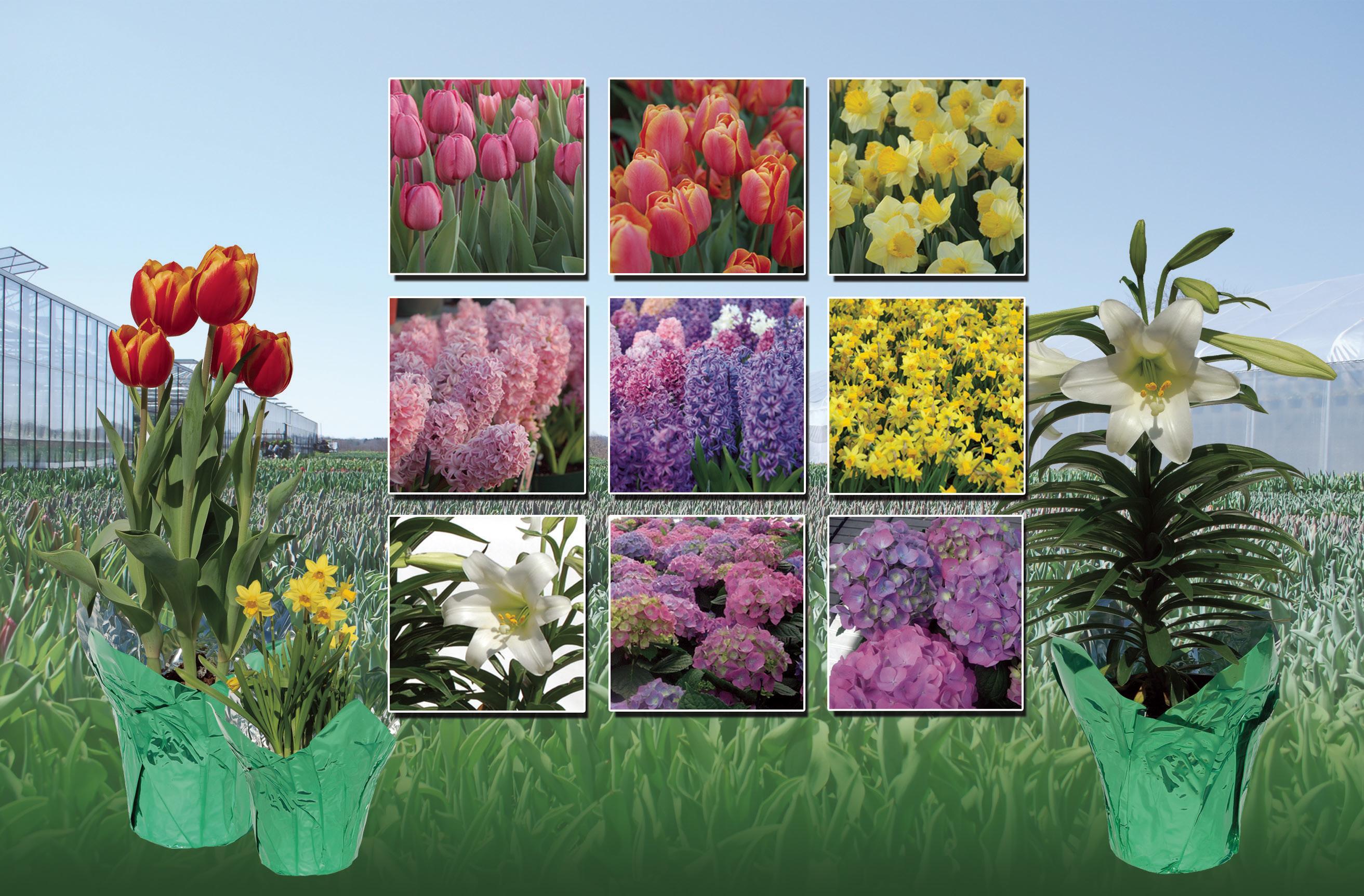
GardenerNews.com 28 April 2023 4 Coddington Rd. Whitehouse Station, NJ 08889 908.534.7710 www.HionisGreenhouses.com & Garden Center Buy Direct From One Of New Jersey’s Largest Growers Of Plants & Flowers! 287 202 206 202 206 202 Hunterdon Somerset North Branch Bridgewater Somerville 28 22 4CoddingtonRd. Oldwick Solberg Airport Lamington Pluckemin Raritan Whitehouse Station Oldwick Rd. LamingtonRd. OldYorkRd. ReadingtonRd. 78 78 Six Acres Under Glass/Garden Center Tropical Plant and Succulent Headquarters Thousands to choose from!
