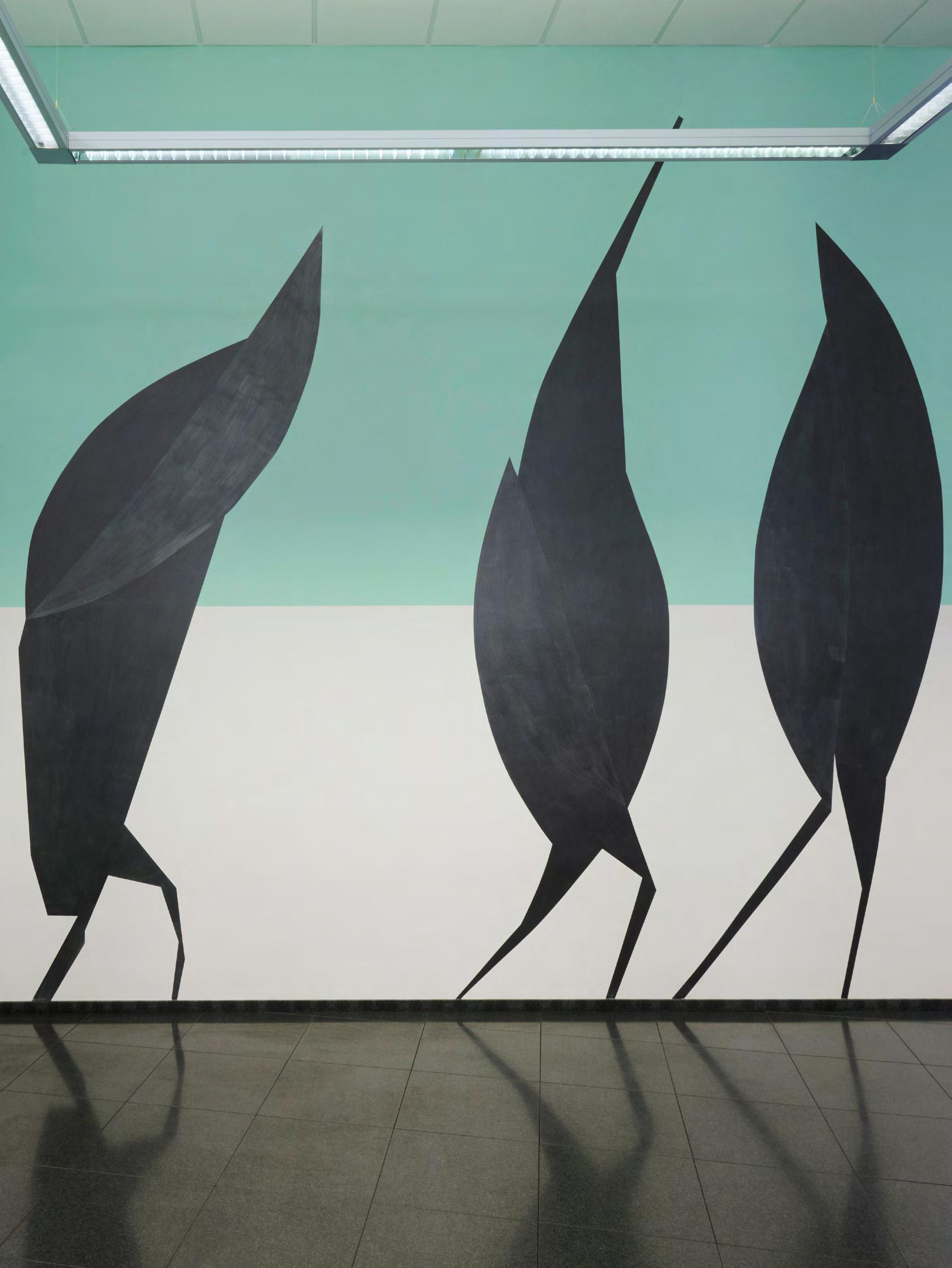
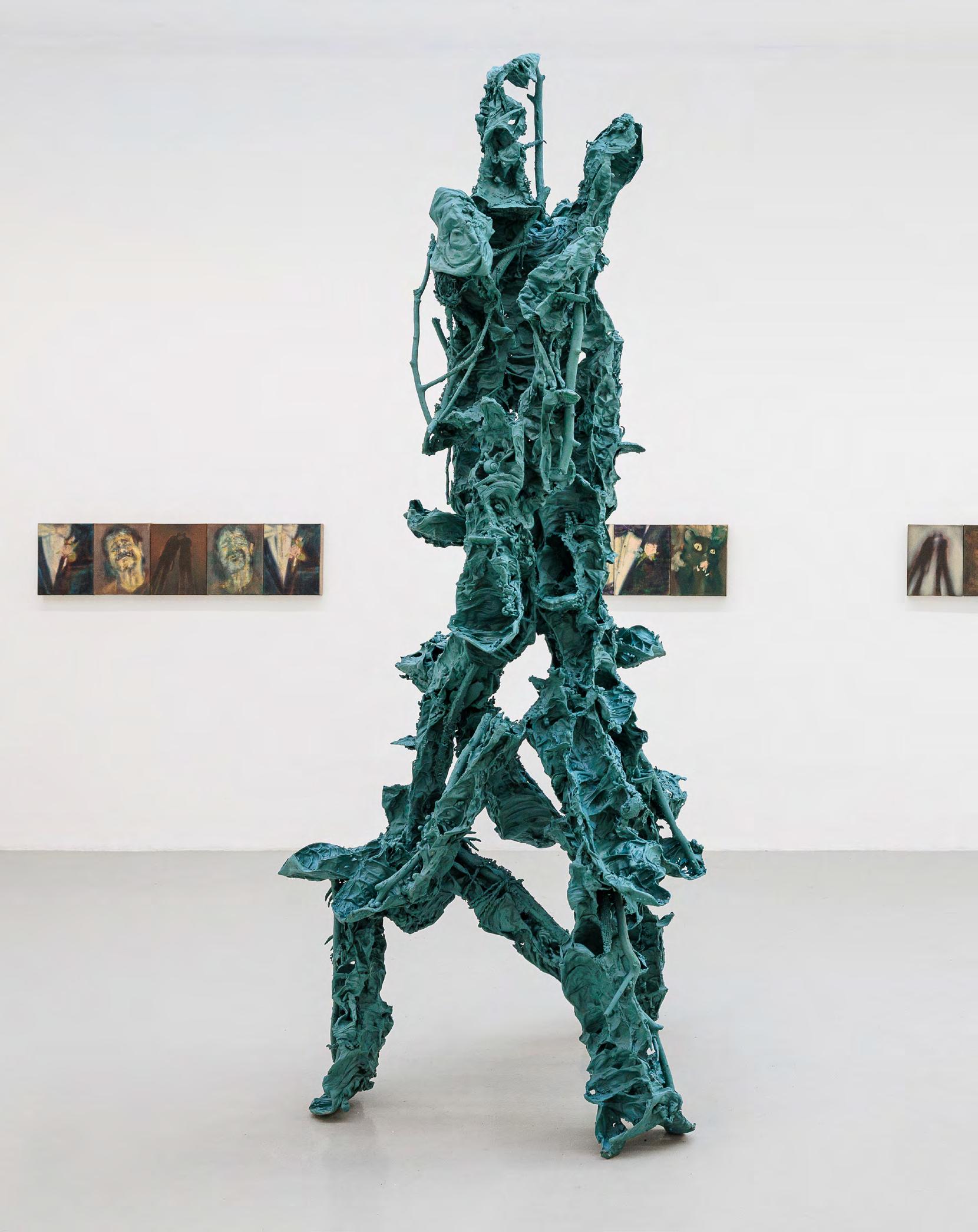
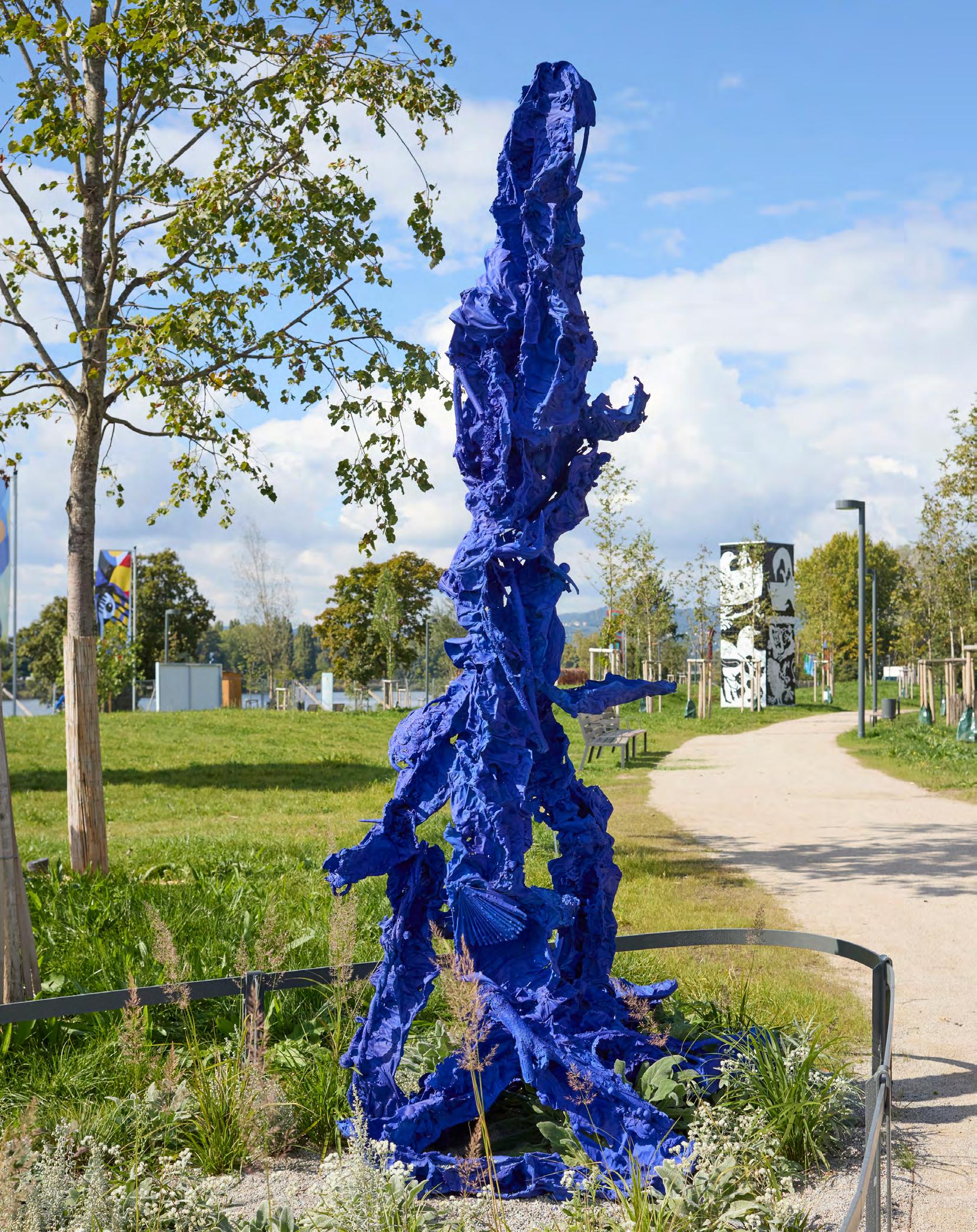
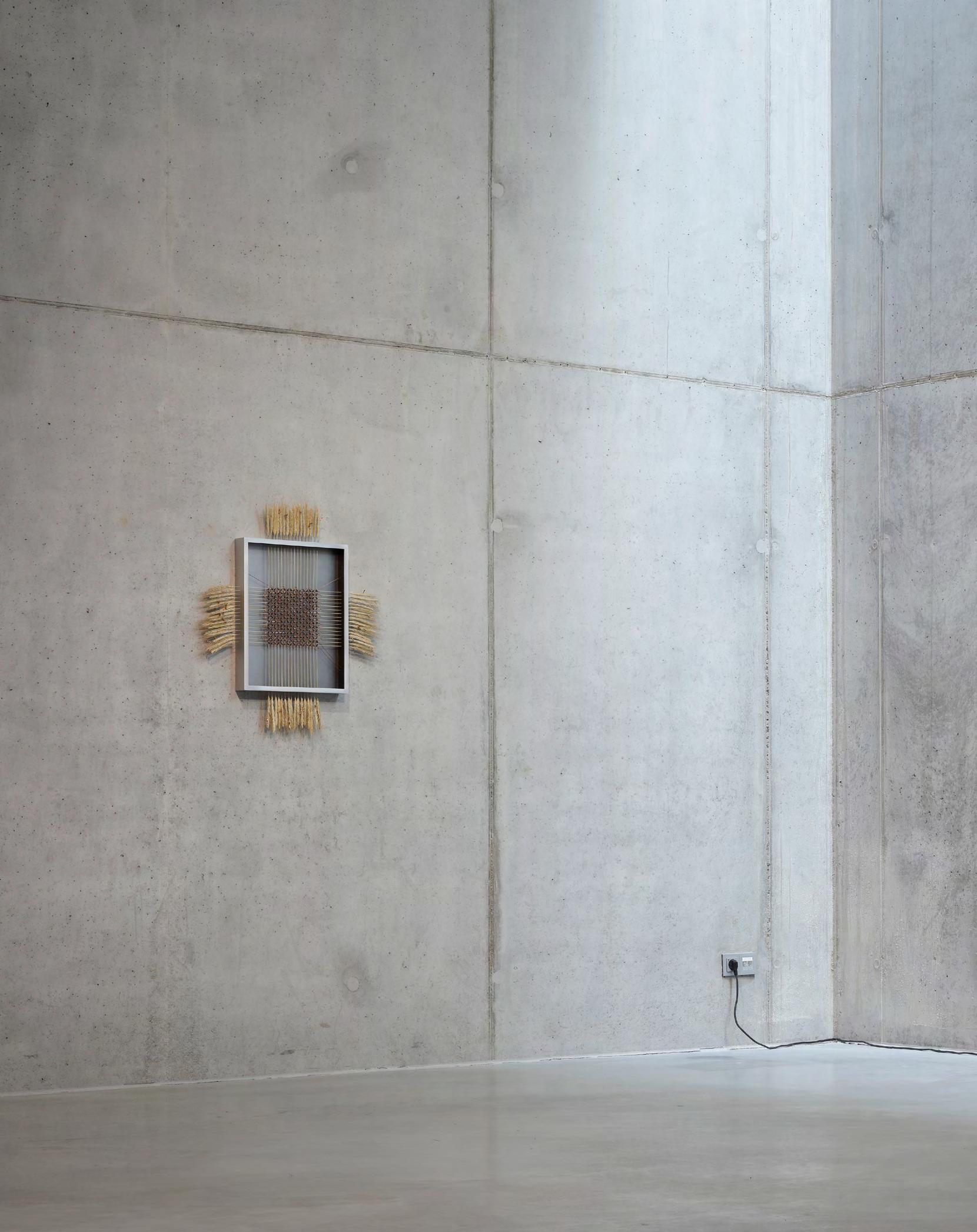
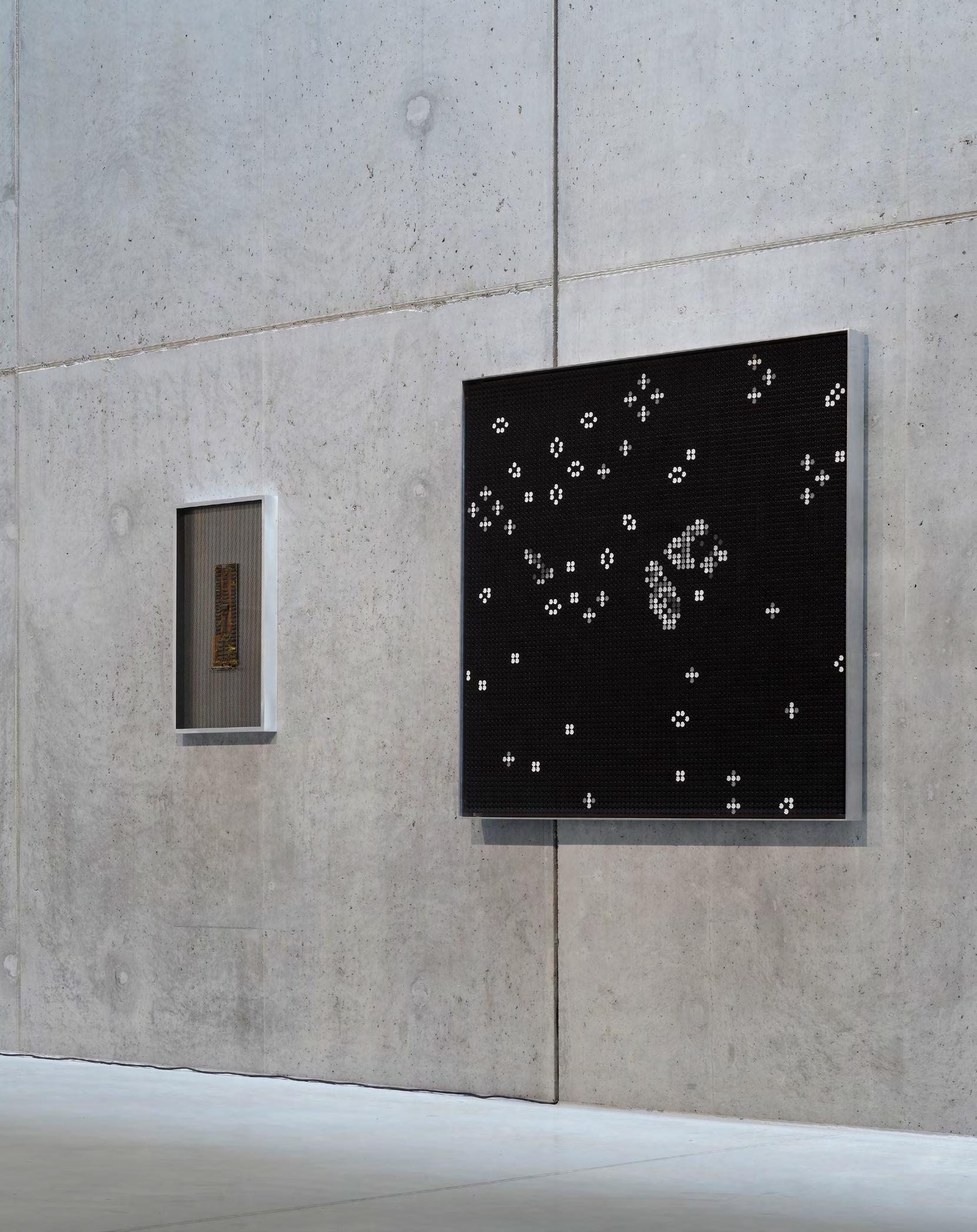
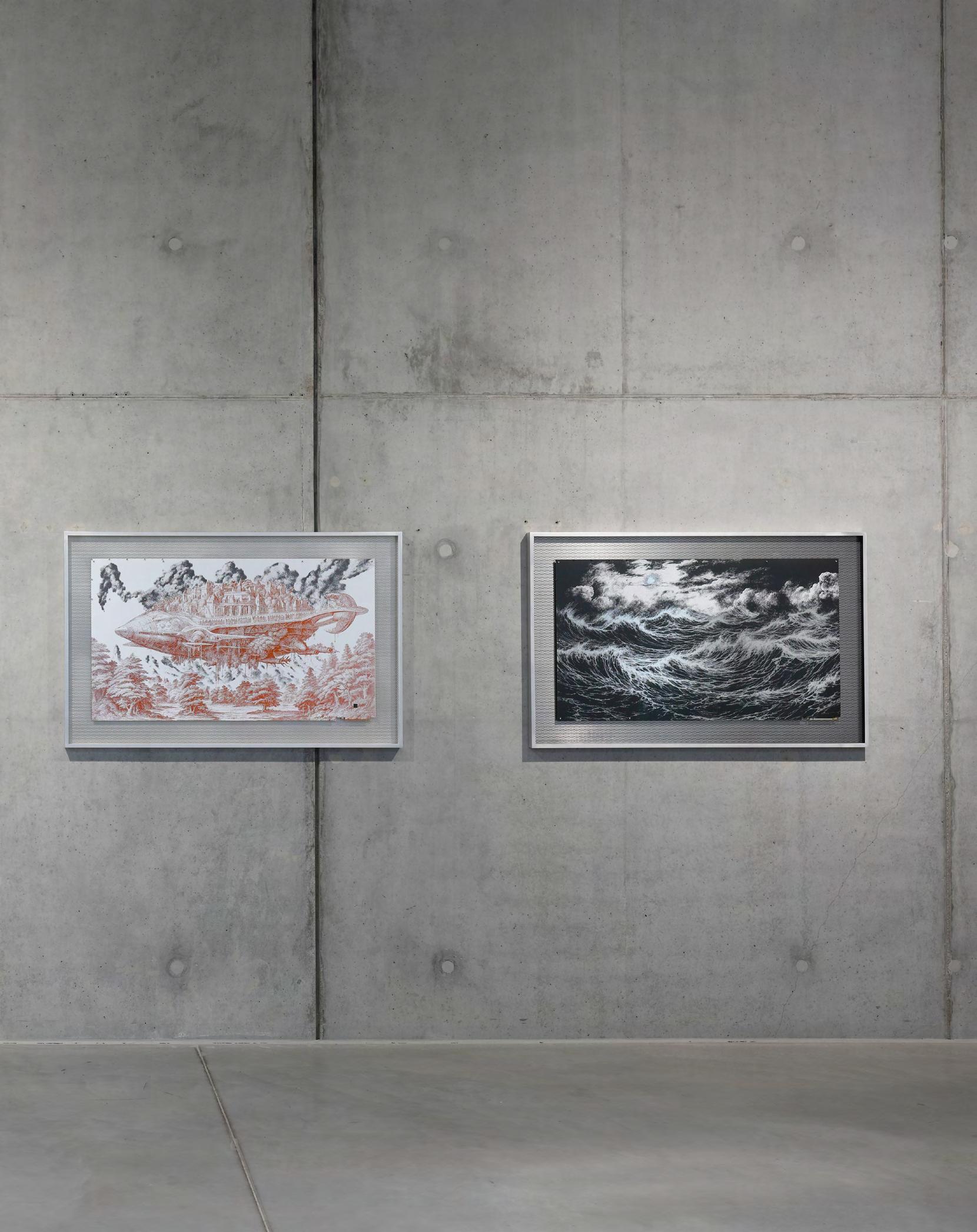
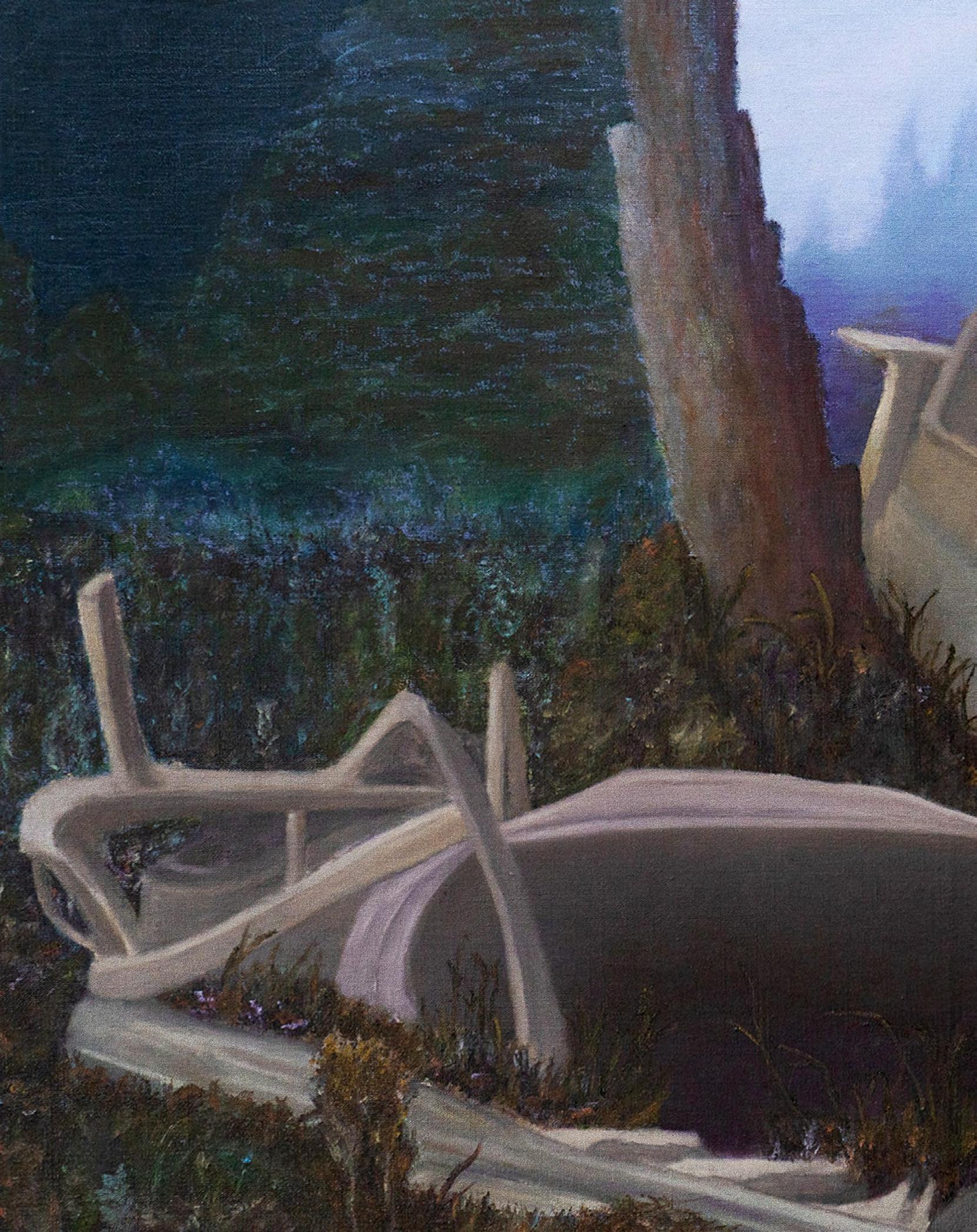
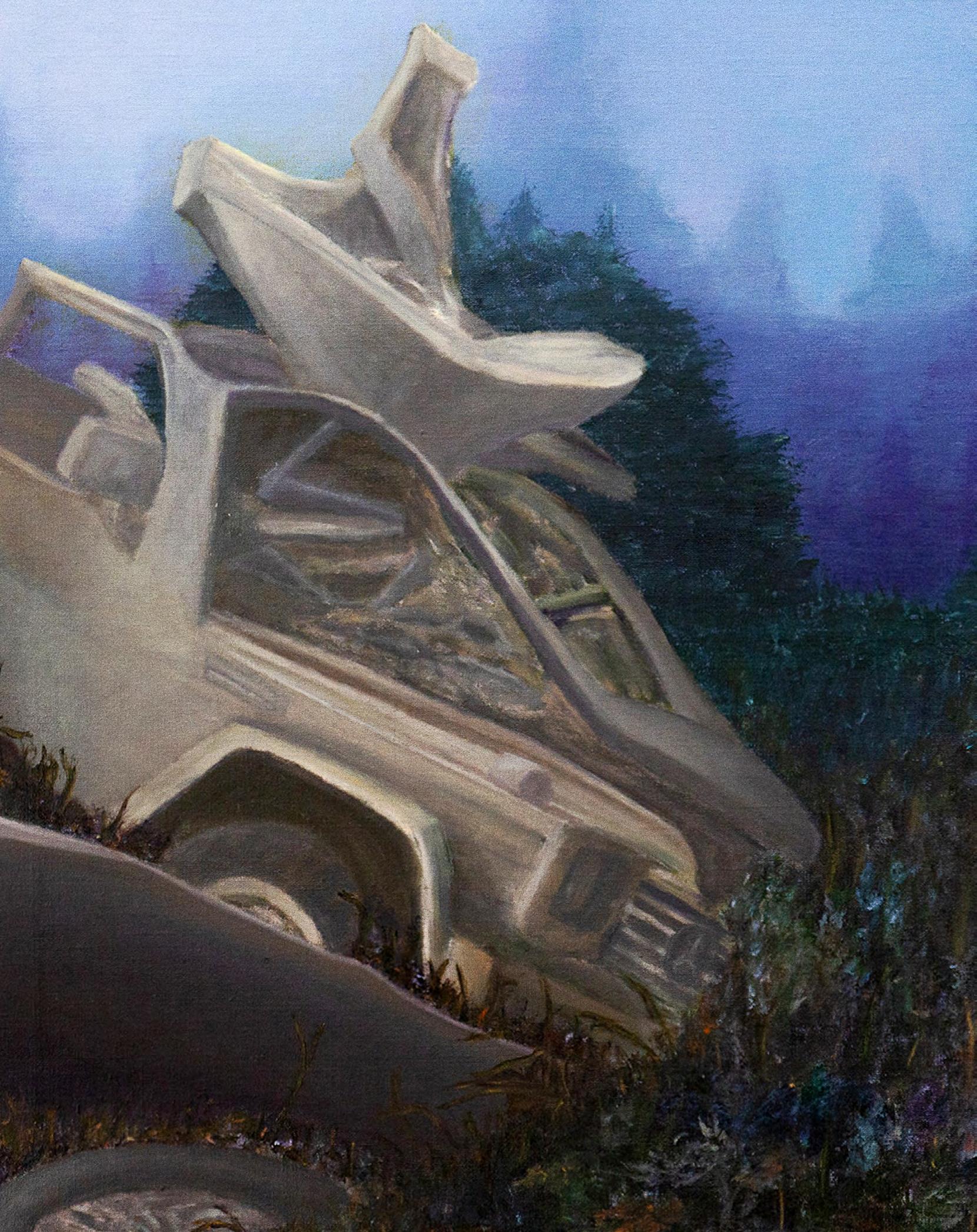
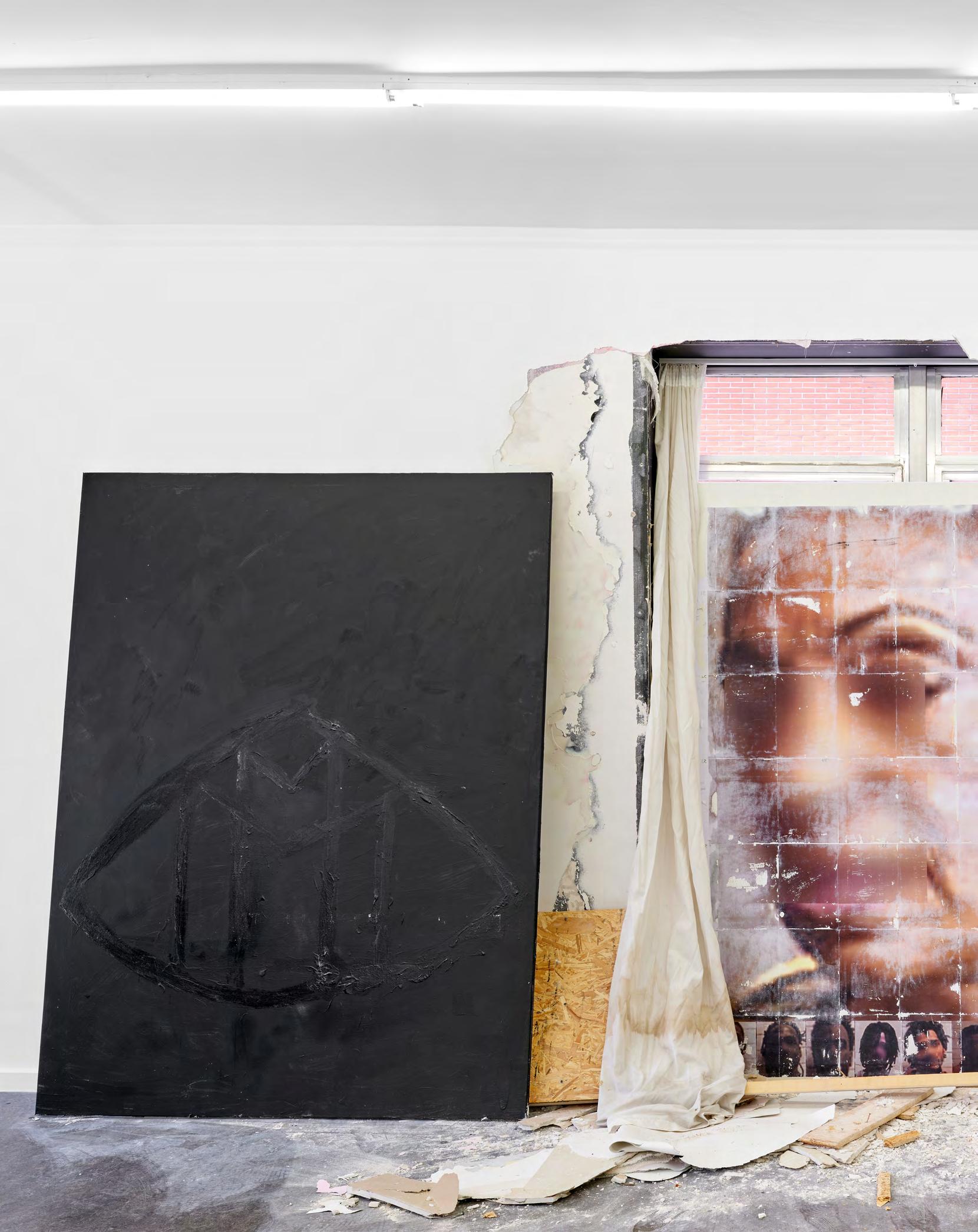
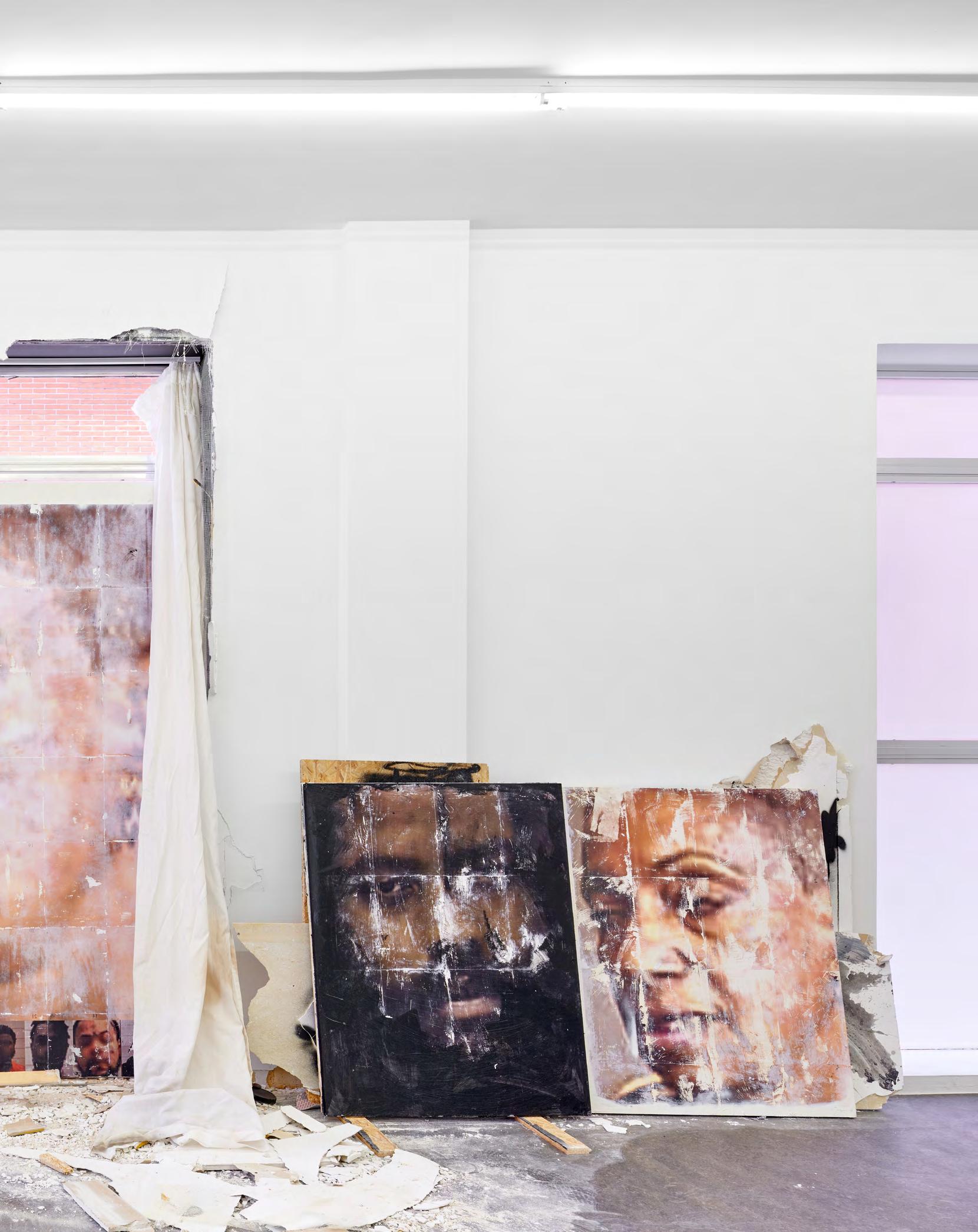
Frauke Dannert, Installation View: EINE STRASSE zur Zukunft der Innenstädte am Beispiel der Graf-Adolf-Strasse, 2024
EXHIBITIONS
FOCUS ON
Prix Marcel Duchamp
CURATED BY 2025 at Galerie Kandlhofer
DONNA HUANCA PERFORMANCE
Metropolitan Museum of Art, New York
ACAYE KERUNEN
The Institute of Fine Arts, New York University
FRAUKE DANNERT Professorship at Alanus University
MAXIMILIAN PRÜFER
Interview in Les Nouveaux Riches
NANA MANDL
Kunst in der Post Exhibition
KARL KARNER
Skulpturenpark Vienna
ANDREAS GREINER
Institutional Exhibitions
MARC HENRY
Wien Museum Acquisition
PAULINA AUMAYR, ALLEN-GOLDER CARPENTER, THOMAS SUPPER
27 November 2025 – 16 January 2026
PACO KOENIG
22 January – 21 February 2026
FRAUKE DANNERT
26 February – 2 April 2026
THÉO VIARDIN
9 April – 22 May 2026
ELIAS JOCHER
27 November 2025 – 16 January 2026
MELISSA STECKBAUER
22 January – 21 February 2026
A HOUSE THE SIZE OF A SHELL
26 February – 2 April 2026
SO YOUNG PARK
9 April – 22 May 2026
XIE LEI
Prix Marcel Duchamp
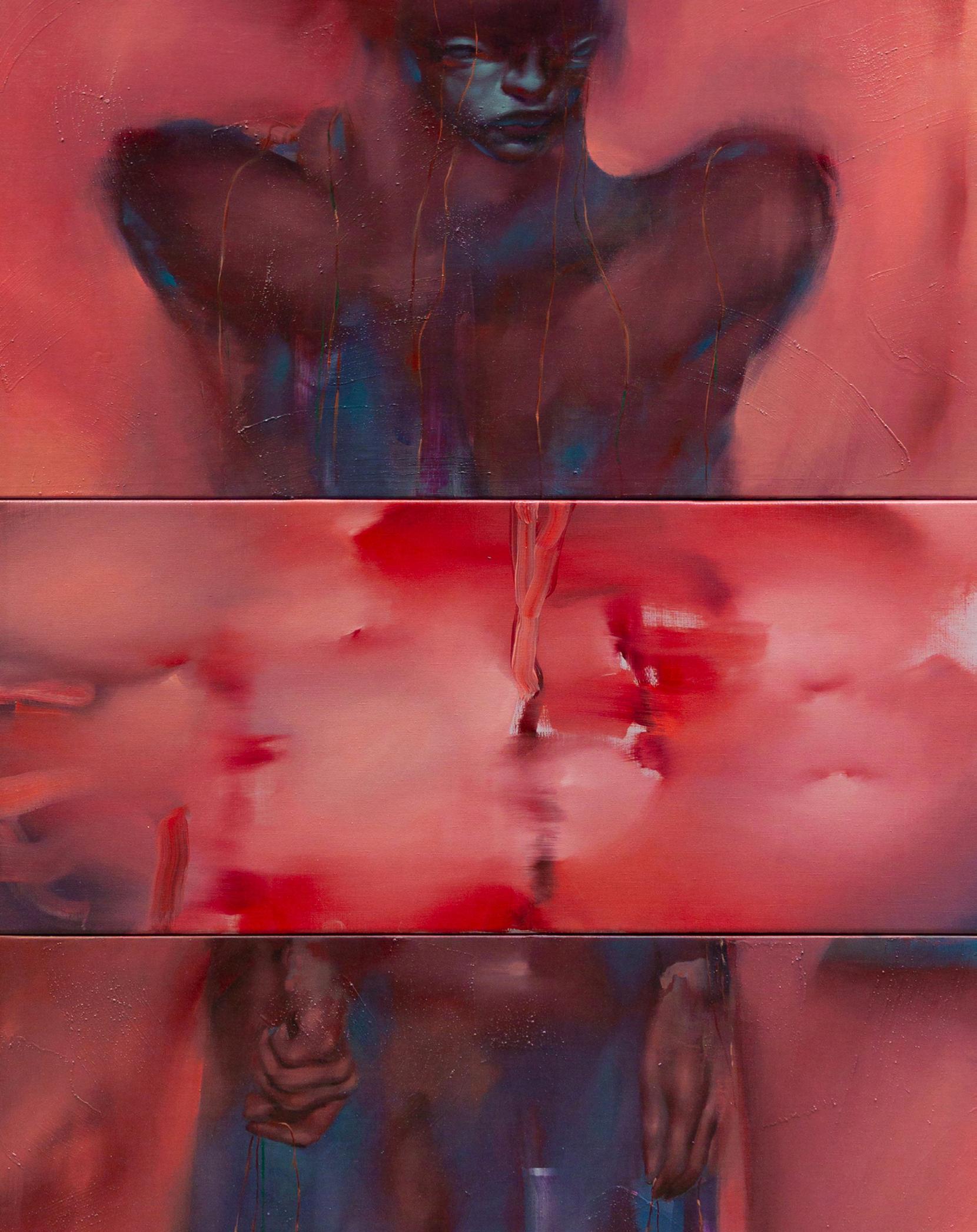
We are pleased to congratulate Xie Lei on being awarded the 2025 Prix Marcel Duchamp, one of France’s most distinguished honours for contemporary art. His work is currently on view at the Musée d’Art Moderne de Paris until 22 February 2026.
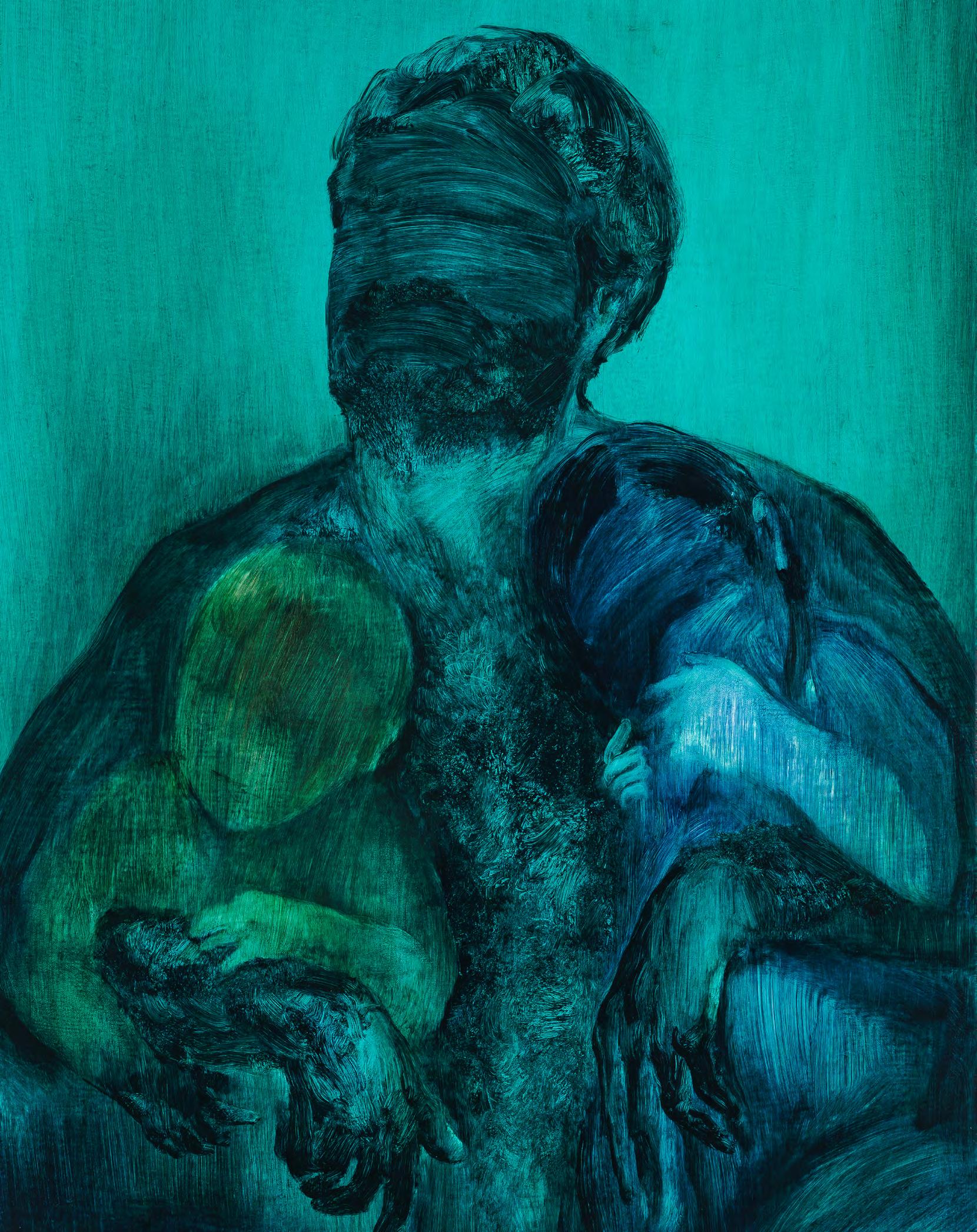
Born in Hunan, China, and based in Paris, Xie Lei has developed a painterly language that is both sensuous and elusive. His practice centres on the tension between visibility and evanescence—how images materialise, dissolve, and hover on the threshold of legibility. Approaching painting as a field of continuous experimentation, Xie draws on echoes from literature, cinema, and collective imagery, interwoven with deeply personal emotional undercurrents. The resulting works are microcosms: immersive, psychologically charged spaces that dwell on the ambiguous, often fragile nature of existence.
For the Prix Marcel Duchamp, Xie Lei presents seven monumental, luminous green canvases, a suite that transforms gravity and orientation into a dreamlike, suspended realm. Figures and forms seem to emerge and recede in shifting light; boundaries blur between body, landscape, and atmosphere. The works resist fixation, instead offering an experience of duration, of drifting through a space where images flicker at the edge of recognition.
CURATED BY DJ HELLERMAN
Shored Against My Ruins, 4 September – 4 October 2025
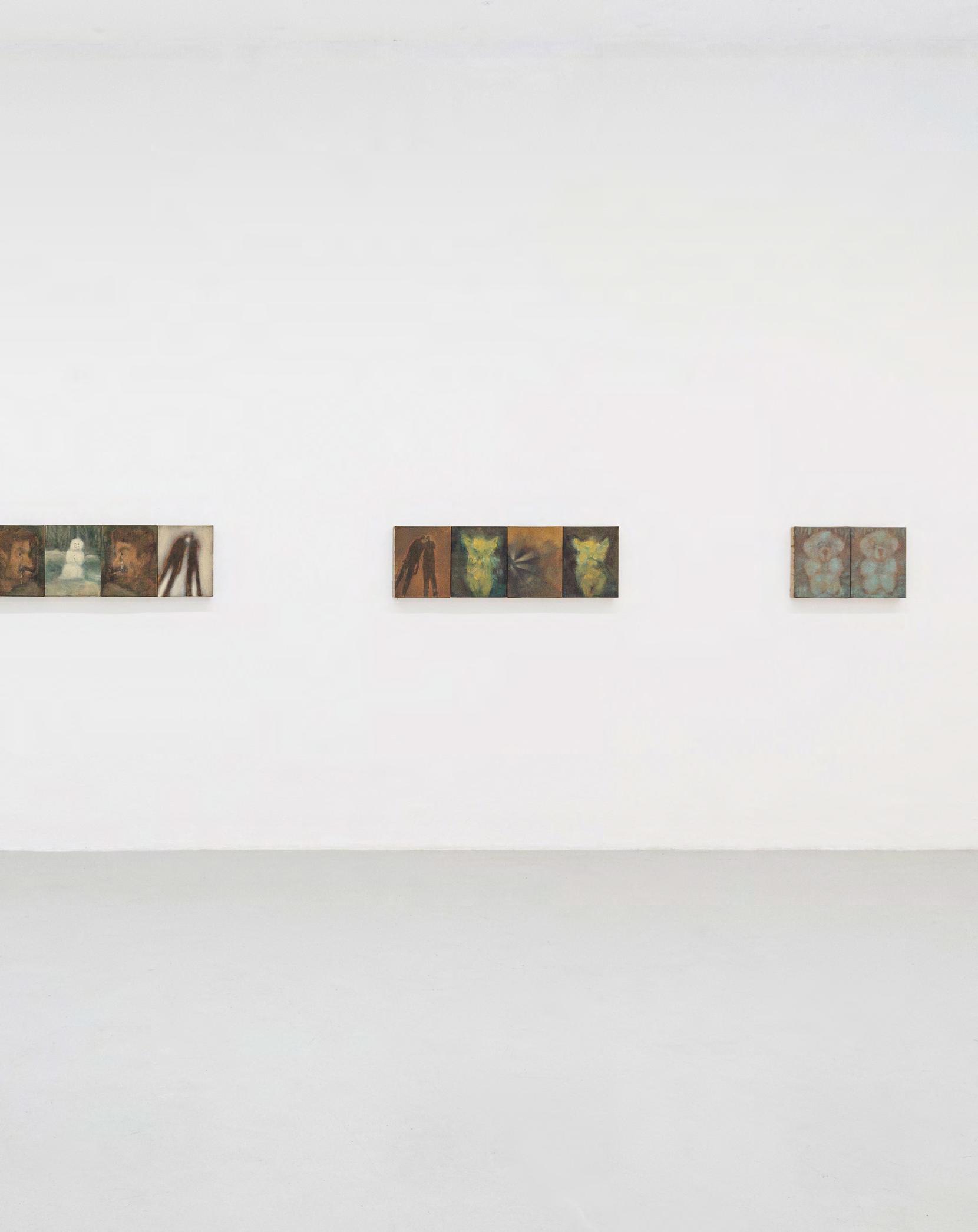
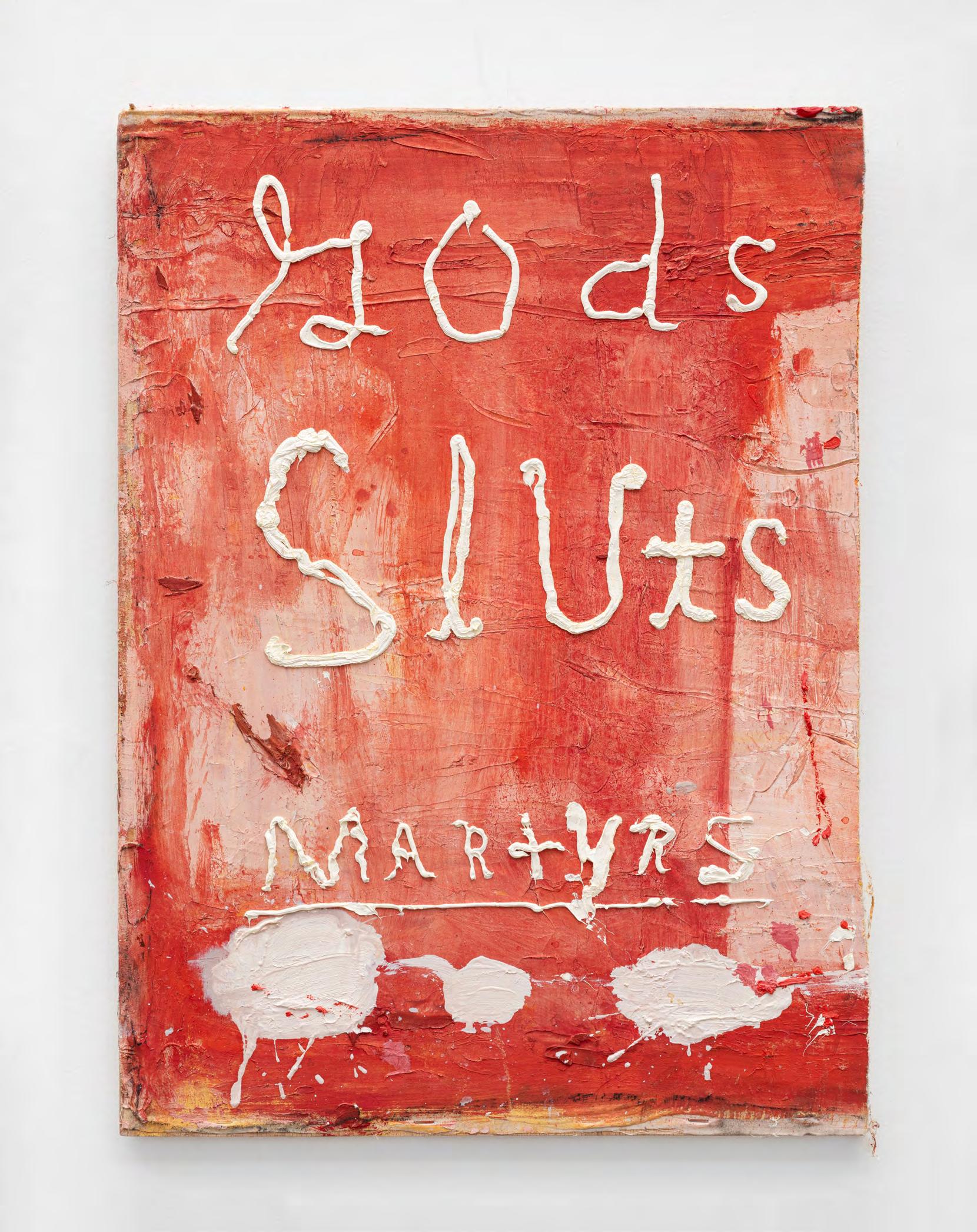
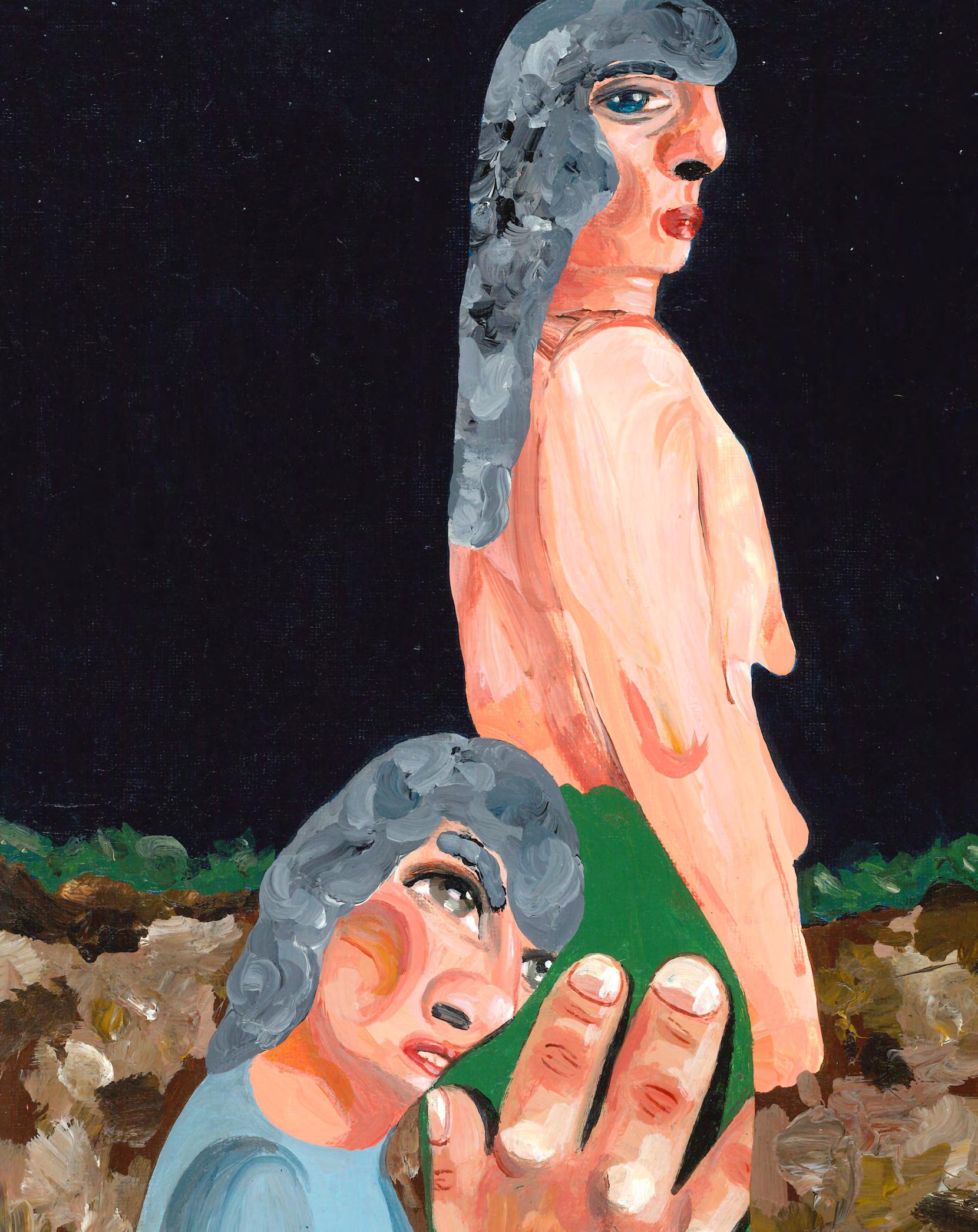
Galerie Kandlhofer invited DJ Hellerman (Deputy Director & Senior Curator at moCa Cleveland) to curate an exhibition on the occasion of Curated By 2025. Hellerman’s group show presented works by Franco Andrés, King Cobra, Maxime Cavajani, TR Ericsson, Peter Gallo, Karl Karner and Maja Ruznic. Curated By is a contemporary art festival that takes place every year across Vienna’s leading galleries. Each participating space invites an international curator to develop an exhibition in response to a shared theme, this year’s was Fragmented Subjectivity
These images persist They work on me As I glean and gather And work on them, too For a new, or at least another
Fragmentation is ultimately an illusion. It is a ruse, a mirage that makes itself known through the melancholy and the euphoric, as life separates and splinters. Sometimes the stuff of daily life–a moonrise, an unassuming meal, an unyielding lament, the folding of freshly laundered things–becomes a ritualized act from which we glimpse the sublime. Catching these tiny fleeting shards is everything, wholeness.
Shored Against My Ruins features work by seven artists who embrace loose ends, the indecipherable, and the untidy. Their work is deeply connected to the process of coming undone. With a distinct relationship to the physical and psychic archive, each artist tackles the notion of reassembling. Their work is built of personal and communal objects, memories, and autobiographical experiences reminding us to pay close attention to what we collect during our own process of endless reconstruction.
Scan here to watch a curator lead tour and listen to an interview with DJ Hellerman about the exhibition
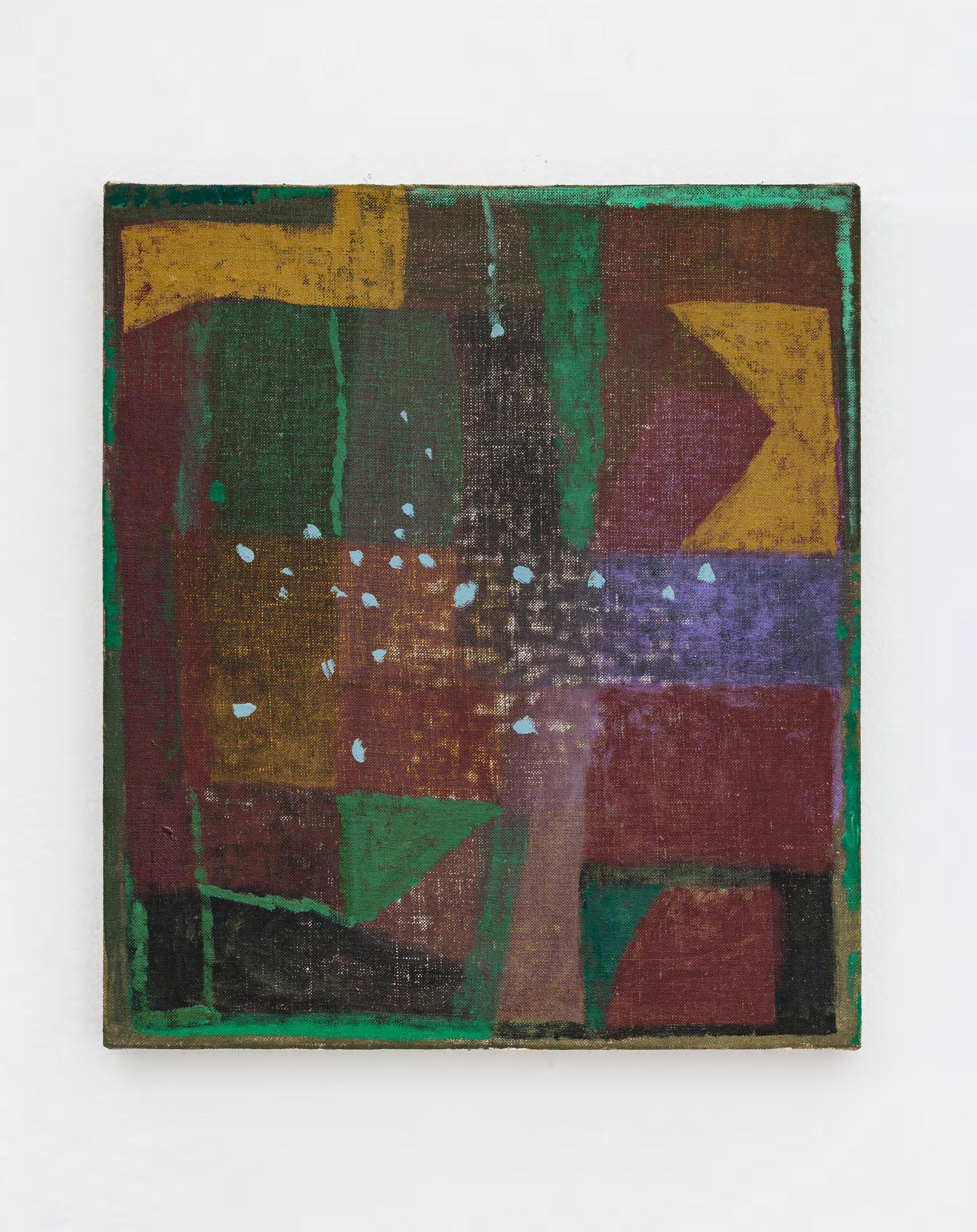
Maja Ruznic, The Fading Memory of Your Grandfather, 2025
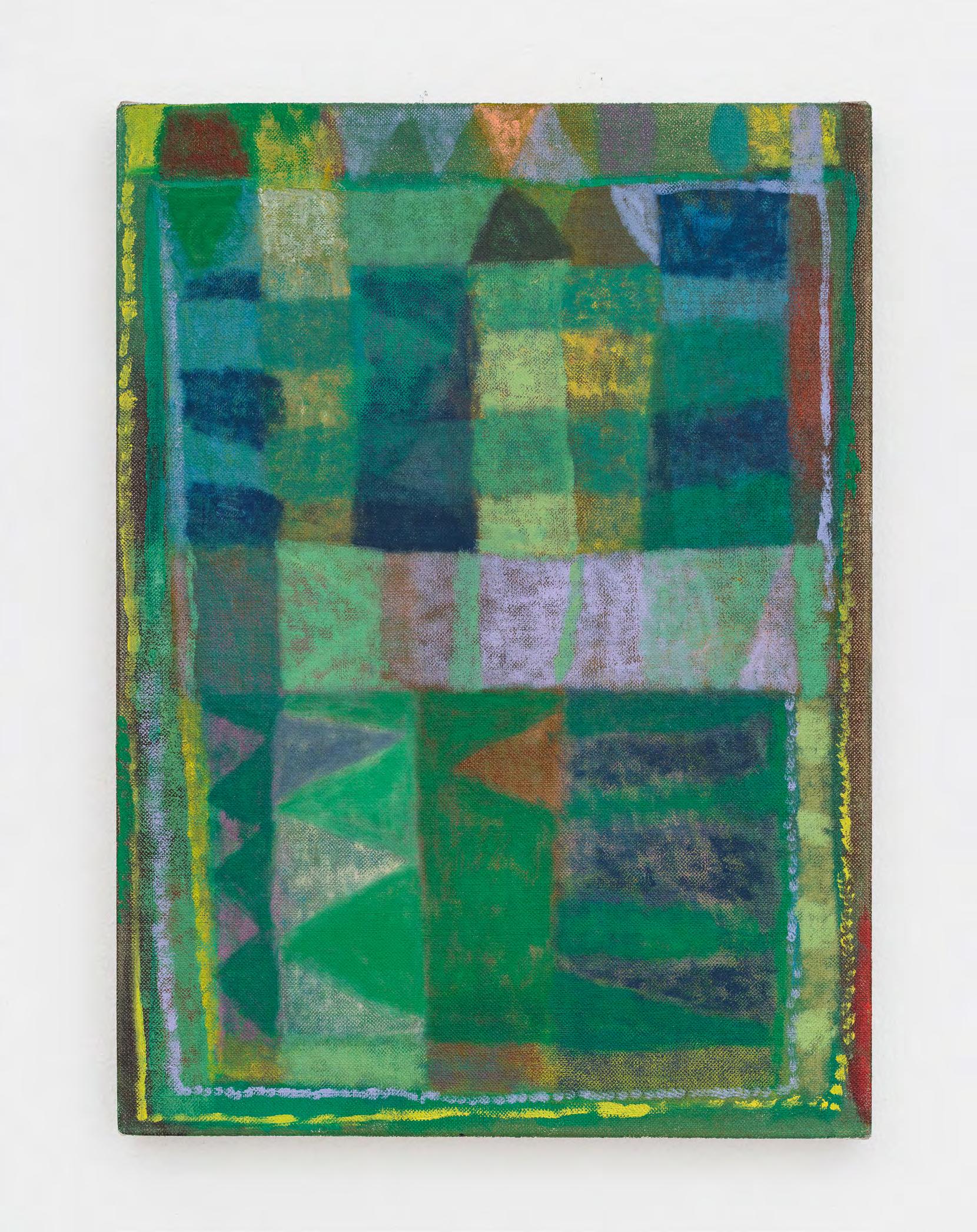
Maja Ruznic, NANA,
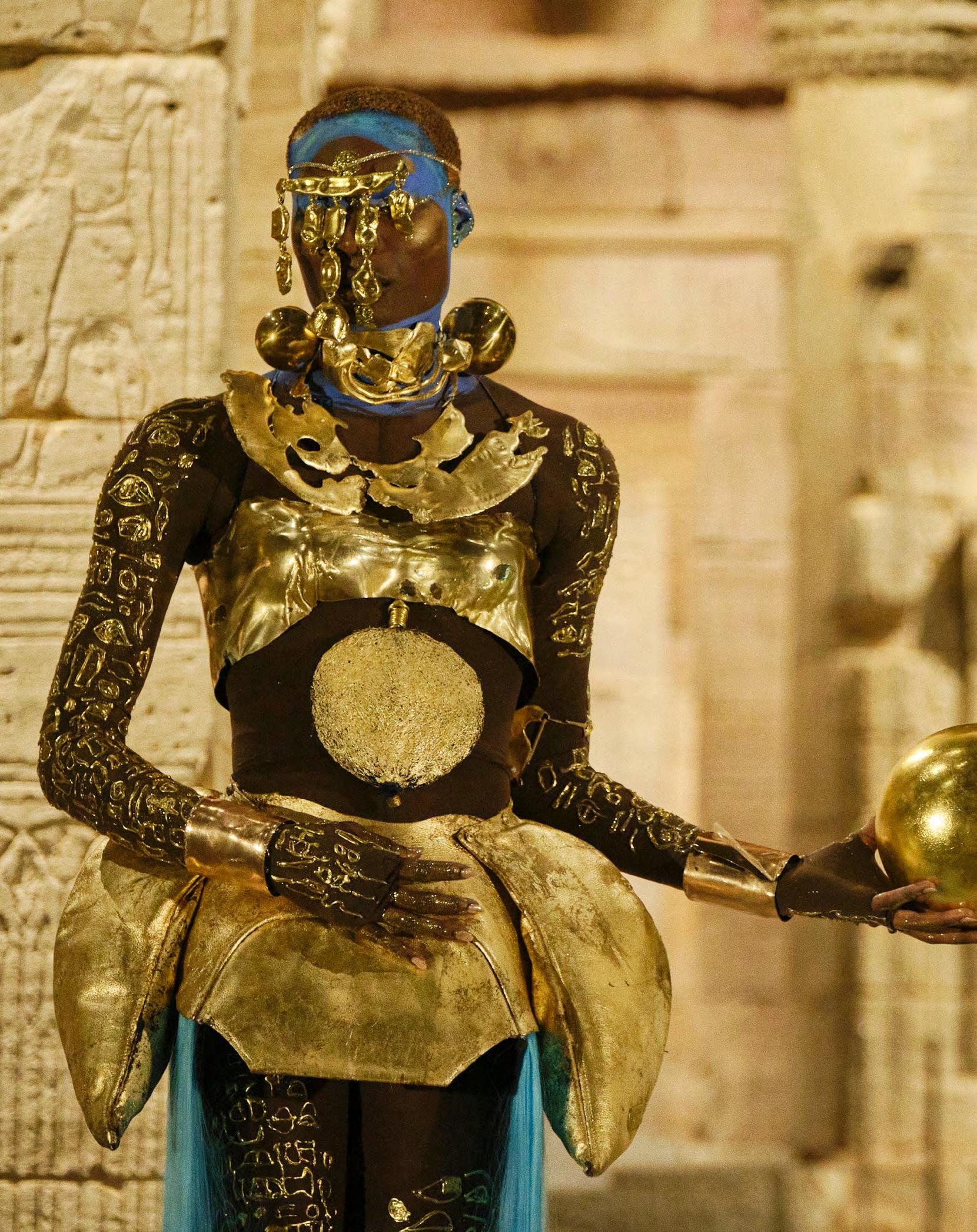
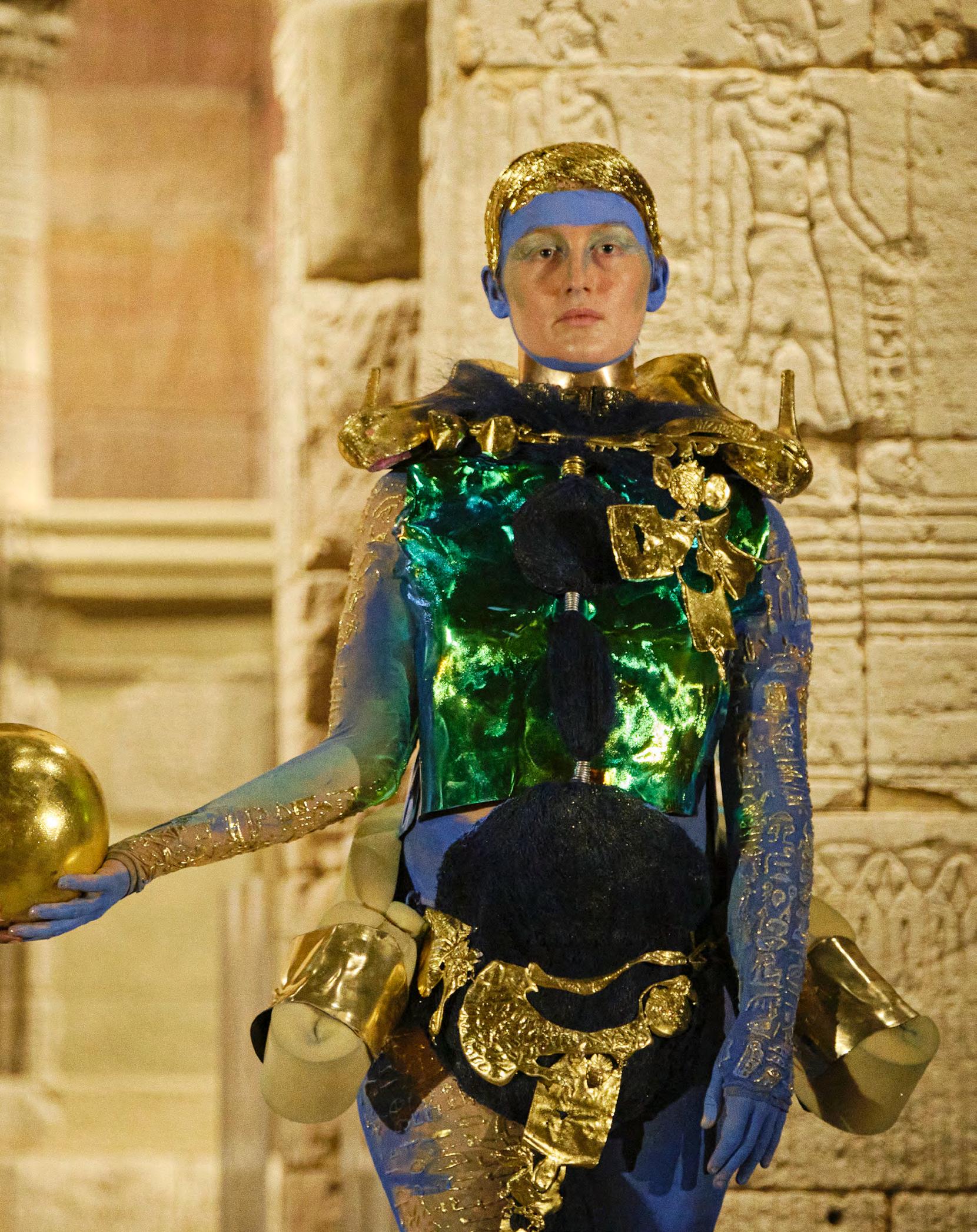
DONNA HUANCA
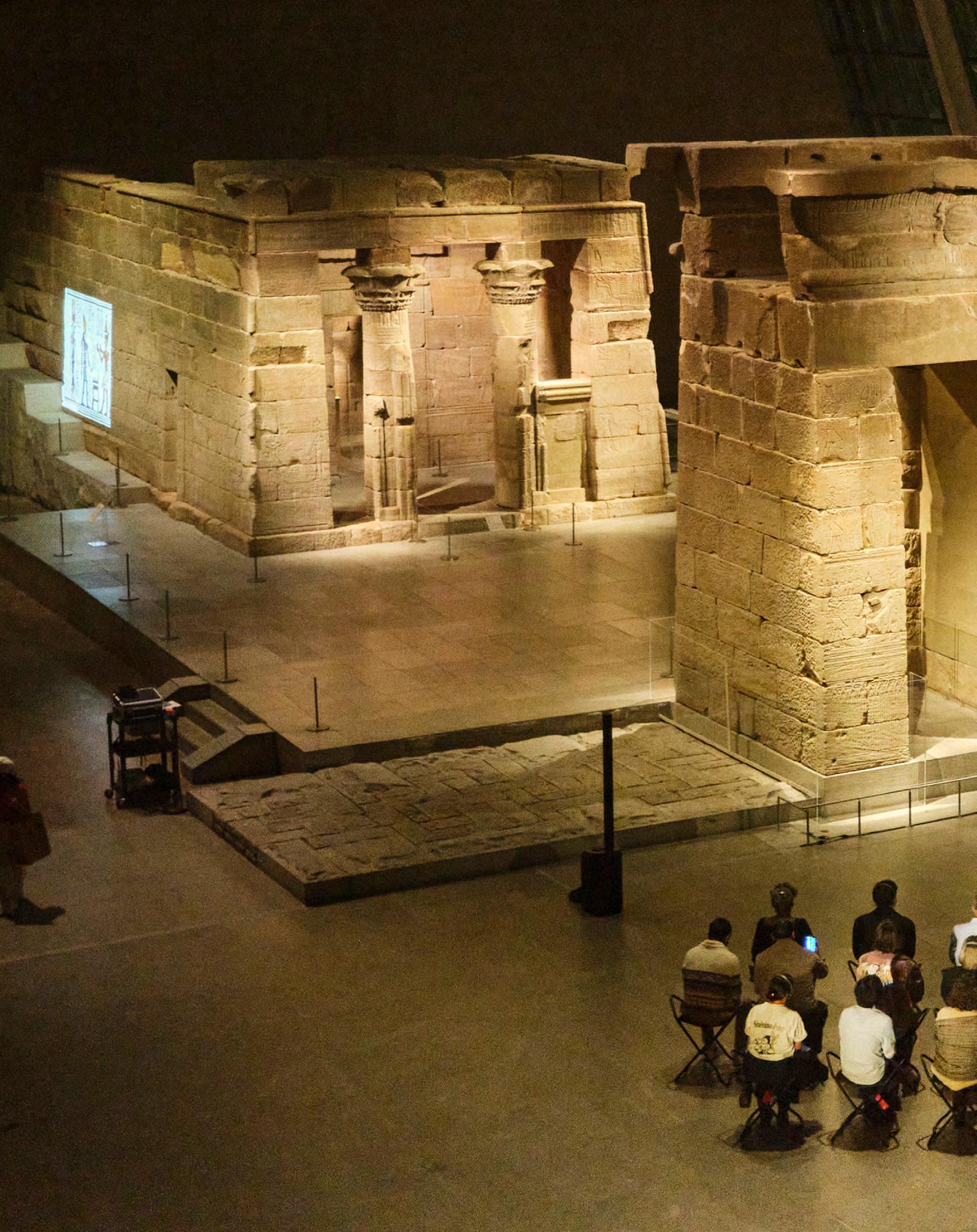
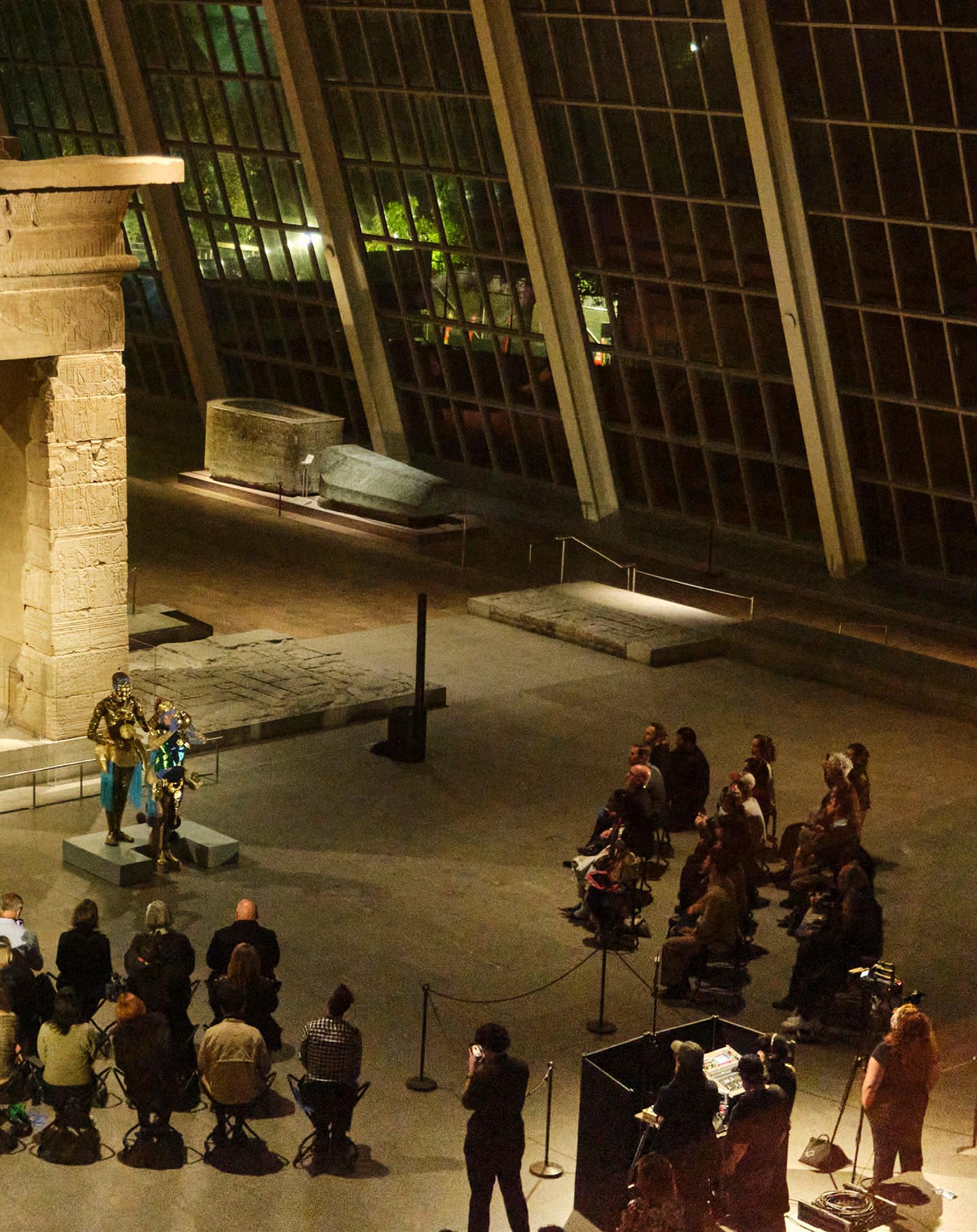
Performance at the Temple of Dendur, Metropolitan Museum of Art, NY October 24 2025
In her performance at the Metropolitan Museum of Art, Donna Huanca reimagined the Temple of Dendur as a living body, linking its architecture to the human body, both subject to cycles of renewal and decay. The immersive programme included an audio tour guiding the audience from the Nile to the temple’s gate, where two performers (Huanca’s living sculptures) embodied the temple’s ancient inscriptions, awakening the monument as a site of ritual, memory, and continual transformation. Performers: Yves B. Golden, Bobbi Salvör Menuez
Donna Huanca, Performance at Metropolitan Museum
Art
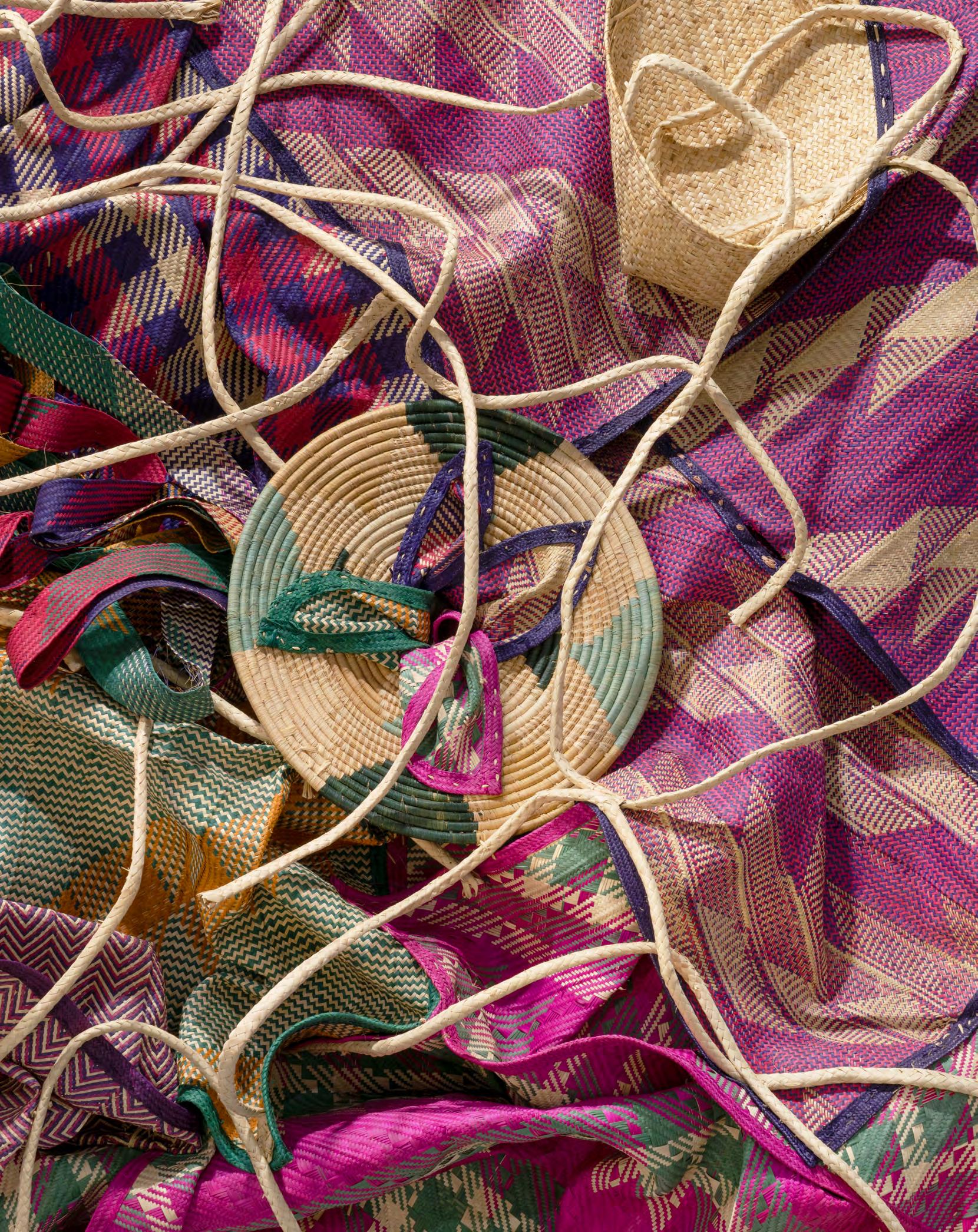
Detail: Acaye Kerunen, Wanen I (We are seen), 2022
ACAYE KERUNEN
1246 Days Around the Sun Exhibition at New York University’s Institute of Fine Arts 12 November 2025 – 22 May 2026
Acaye Kerunen’s first solo institutional presentation in New York takes place at the Institute of Fine Art, New York, offering a powerful perspective on the intellectual and ecological labours of making and the colonial afterlives of gendered space.
Kerunen’s sculptural works are composed of plants from the wetland ecosystems of Nalubaale (Lake Victoria) and the Great Lakes region of East Africa. To make these works, Kerunen engages the collaborative labour, expertise, and artistry of women’s weaving to transform organic materials into a new sculptural language of relation and care. Her practice engages both the mathematical structures of pattern and architecture and the temporal cycles of growth, harvest, creation, and display.
Kerunen’s art is situated within traditions that highlight “women’s work” as a site of important intergenerational transmission. Her practice is rooted in hand stitching, knotting, weaving, and braiding natural fibres. Such skills have long been devalued under patriarchy, but are in fact a sophisticated language of mathematical sequences made visible in the woven fractals that traverse her sculptures’ surfaces. Together, they articulate what the artist calls the “hidden knowledge of land and ecologies,” creatively dismantling colonial systems of extraction and masculism. Foregrounding diverse inheritances, Kerunen reclaims craft as an act of reverence and resistance.
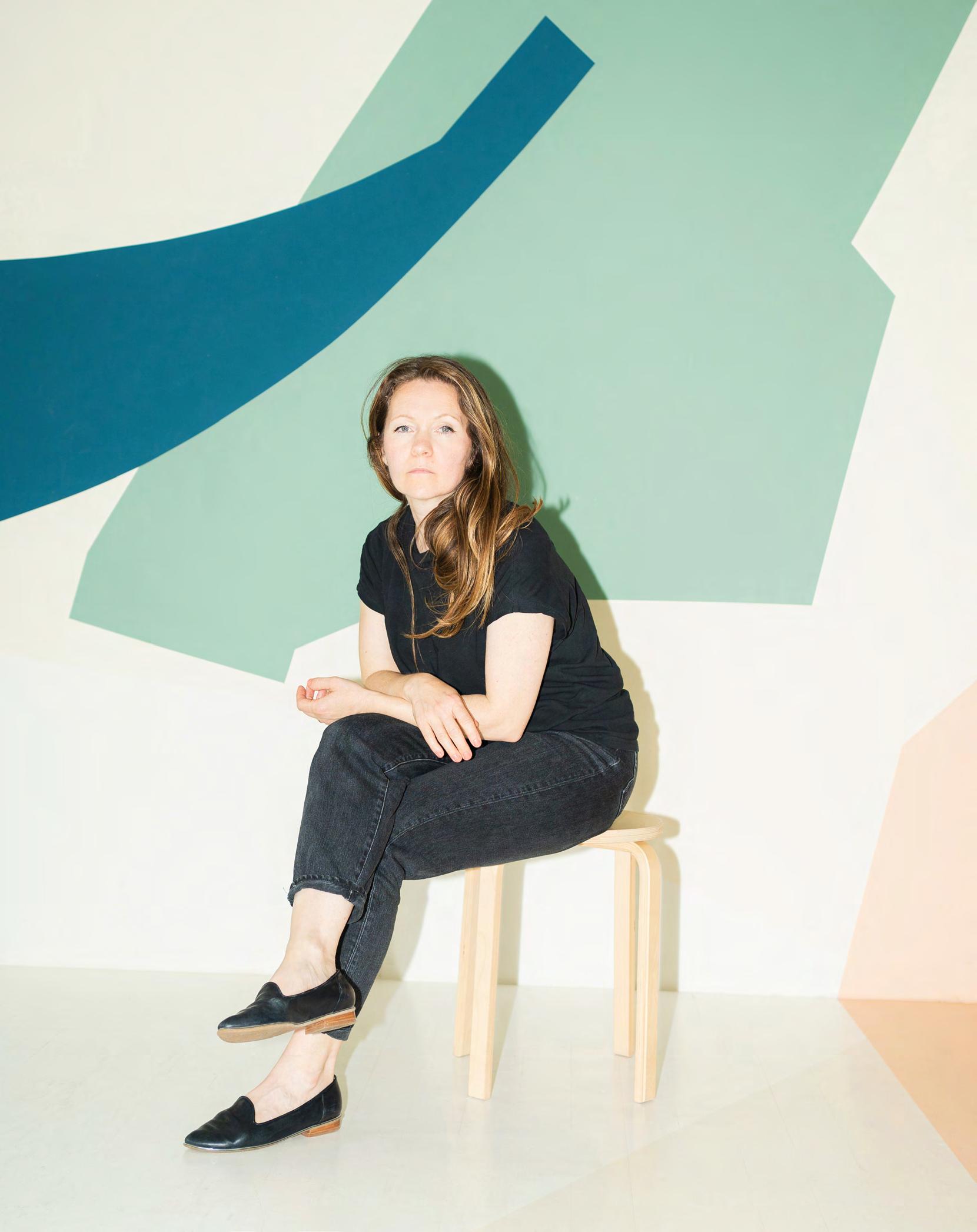
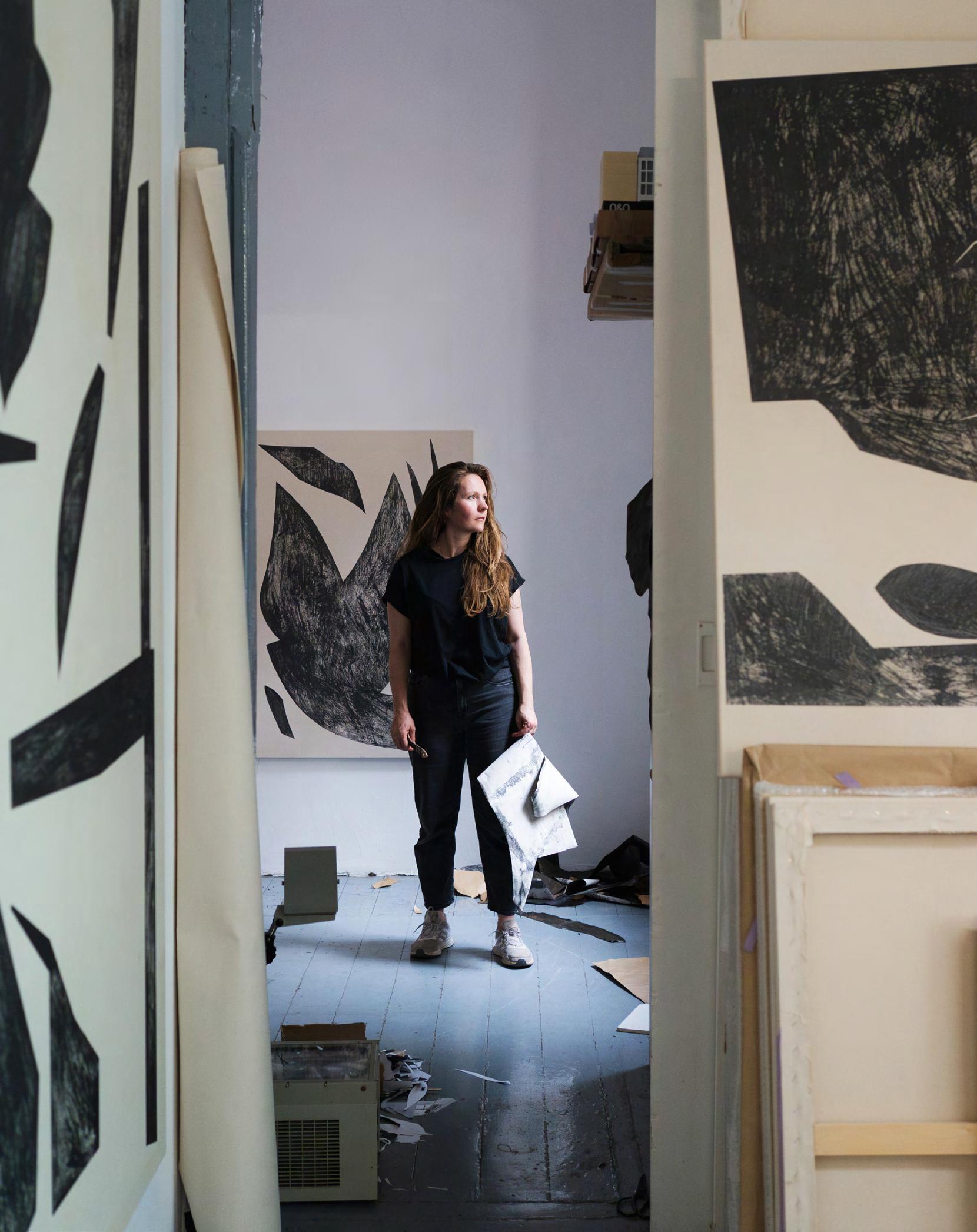
FRAUKE DANNERT
Appointed Professor at Alanus University of Arts and Social Sciences, Alfter.
We warmly congratulate Frauke Dannert to her appointment to the position of Professor at the Alanus University of Arts and Social Sciences.
Frauke Dannert’s artistic practice is centred around the principle of collage, regarding today’s digitised world as a mosaic of perspectives and images. In her search for formal elements she dissects architecture, subverting prevalent structural conceptions or highlighting selected attributes, always changing the form and size of the found material. Through wall painting, projections, curtains and carpets she manifests her vision by transforming rooms into awe inspiring spaces that oscillate between reality and illusion.
MAXIMILIAN PRÜFER
Interview in Les Nouveaux Riches Magazine
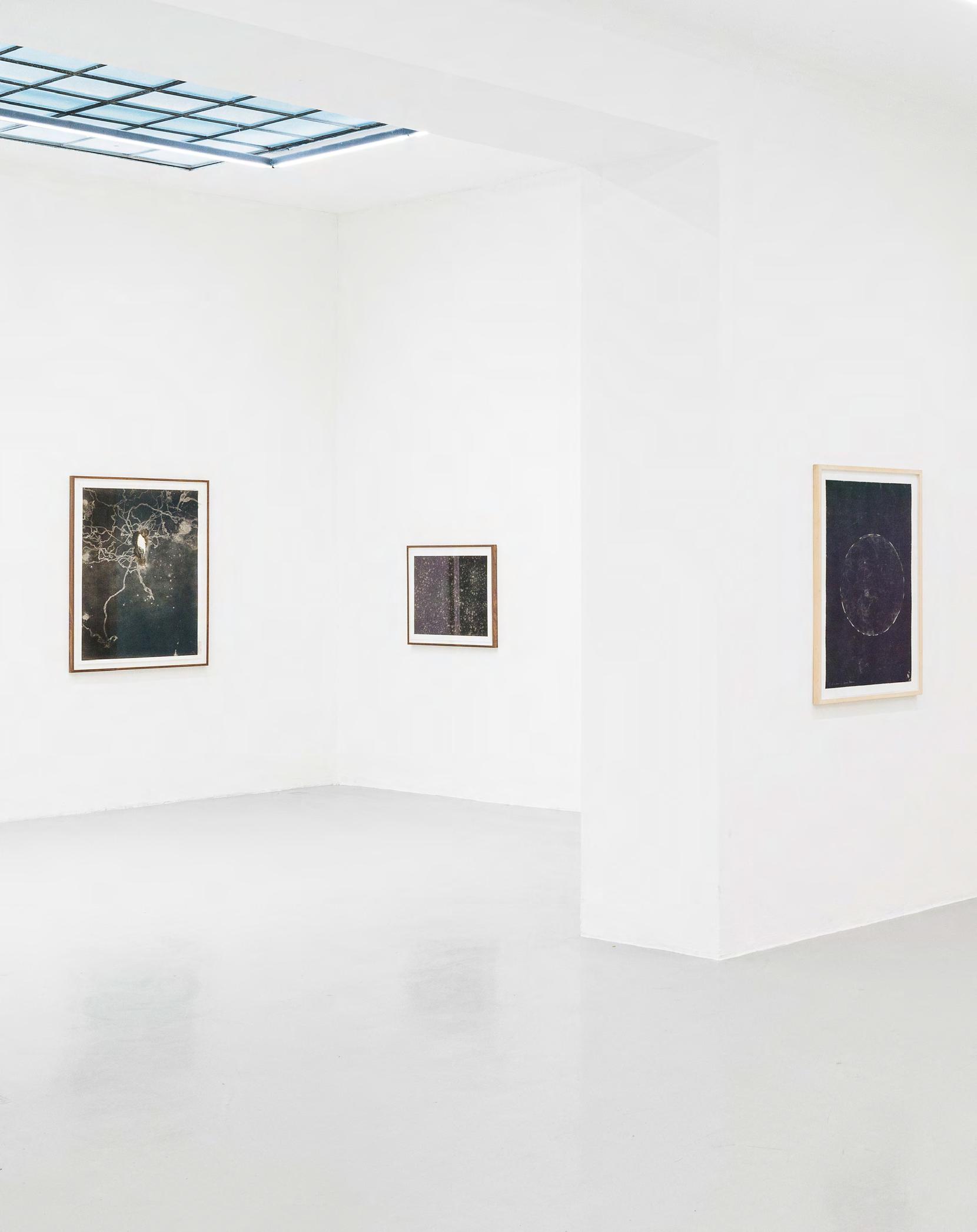
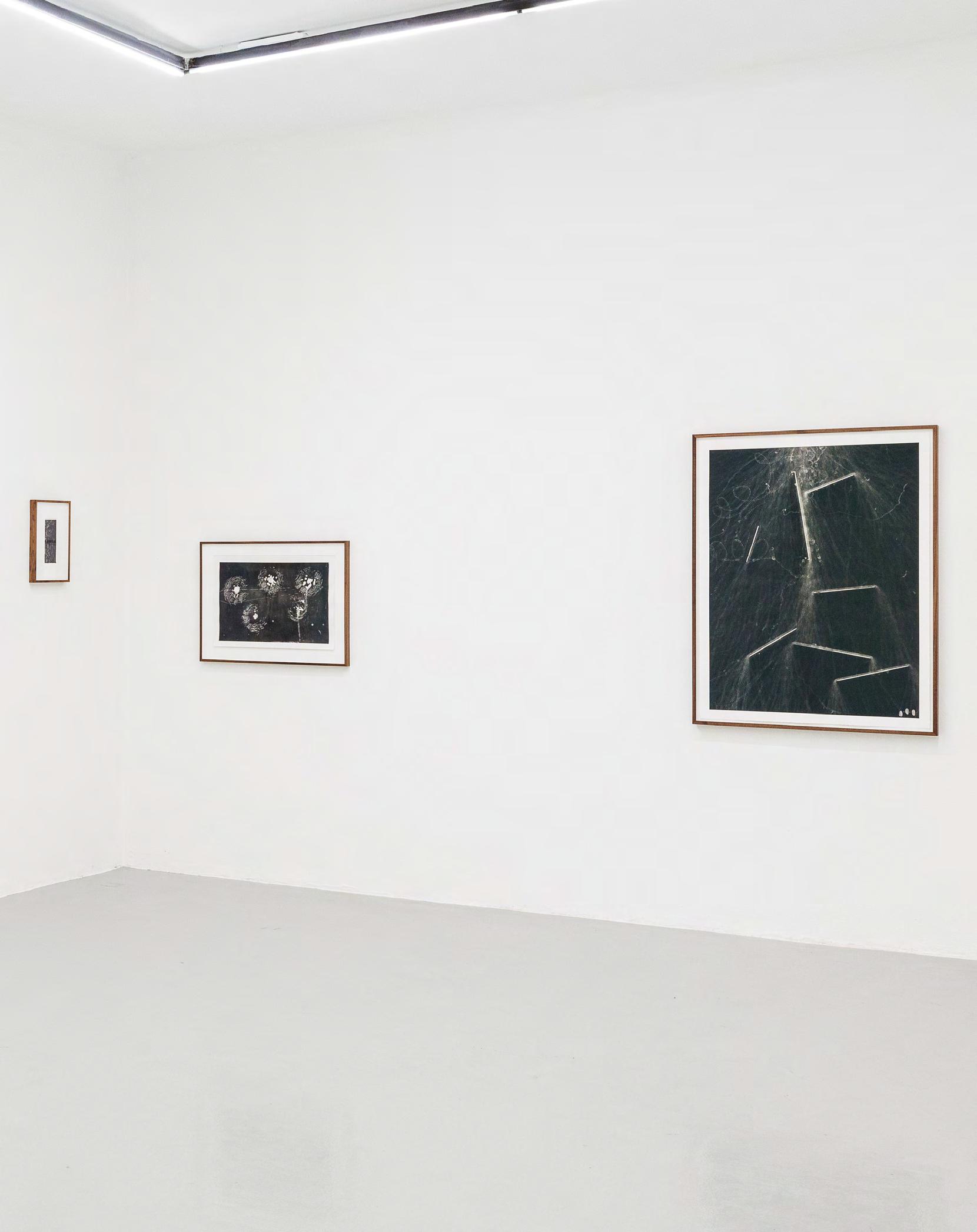
Maximilian Prüfer’s solo exhibition at Galerie Kandlhofer (9 October – 21 November 2025) spans fifteen years of experimentation, from his early abstractions to his current precise Naturantypie works. His practice deals with movement, traces, and nature through human and animal marks.
Installation View: Maximilian Prüfer, Nebenlinien - 15 Jahre
“NEBENLINIEN- 15 Jahre Naturantypie” is almost a “retrospective” of your work in the last fifteen years. Even if you are very young, you began making art at a very early age. The exhibition already opens at the gallery desk in the front with your very early work. Tell us more about this work.
I made the work “Acrylbild (Kunstakademie Trier)” back in 2000, when I was fourteen years old. I was at the European Art Academy in Trier (West Germany) back then. Already then, I began creating these abstract, graphic works. I tried to make this very deep black effect using deep blue and black. I was using metal sheets to mask off areas of the paper. I had rolled it up because it was on cardboard; I needed to do it to get it transported home by train.
How would you describe Naturantypie and how you came to this term?
I met a linguist on the train and asked him what this actually was. And he said he would call it Naturantypie — from naturata and naturans, meaning “coming forth from itself,” and -typie, from printing and drawing, since it’s the same root. Because you can’t really categorize it, is it an imprint, because something leaves its trace? Or is it a wiping gesture, or more like drawing? It exists in this in-between world. I was incredibly grateful for this input.
What was your first attempt at something that could go in the direction of the Naturantypie technique that you are using today?
“The world through… pigeon eyes.” It has an incredibly sentimental title, but it was actually meant as a pun—because of “Taub” [which means both “deaf” and “pigeon” in German]. That work I did in 2009 was when I was in Bologna, where I spent a semester at the European Art Academy. We were working with etching, and I had prepared a plate using vernis mou (a soft-ground etching) while sketching pigeons outside and making nature studies. At some point, I placed the plate between my legs, at my feet, and fed the pigeons directly on it, just as I had been doing while drawing them. And then I realized—on one side, I had my own nature studies of the pigeons, but the pigeons themselves were also drawing with their feet, with their claws. And that duality—the essence of both—one being a human perspective, and the other, through their movement, a form of drawing of its own. Not long after that, maybe about half a year later, I started with my first experiments exploring what I now call Naturantypie.
Did everything work out immediately? Were you satisfied with the work at that point? How did you make the works fixed and preserved till today?
I experimented a lot, and I was letting things just happen. I did attempts where snow fell from a branch, or I let water flow over the surface and then freeze, just to see what would happen in that process. And from water, I slowly moved on to rain. On view in the exhibition are also the first rain Naturantypie works, which are pretty great because you can see how the effect of rain growth has changed over the years. I found technical ways to make it look very detailed in the last year. Back then, I didn’t really have any proper way to fix the surface; I poured all kinds of things over it, simply because I didn’t have the right materials.
You were working outdoors the whole time?
Yes, always. Out in the open, in all kinds of places, partly because I had no money and also no studio. So I worked outside.
In terms of location, how often did you work in other places other than your studio and garden outside?
Not that often. But there is one work in the exhibition where I worked with very limited technical capacities on the beach in Brazil. Usually, I work in the garden, but also in the forest and such places. But I always had a few spots I kept returning to.
And when are you most productive in which period of the year?
Whenever everything starts to move. And in winter, I usually tried to progress technically—to see how I could change the technique.
In the earlier works, there are also self-portraiture motives. You mentioned you did draw a lot of nature studies, but are you also interested in human anatomy?
I was also very interested in anatomical drawings. Somehow, anatomy, technique, and nature studies all came together— and on top of that, I was also studying European calligraphy at the time. It became about movement as a way of creating marks and marks as a way of generating narrative or information. Movement as a carrier of information kept coming together more and more in my work. In the exhibition, some works are still completely static—no movement yet, but very quickly, I started doing my first movement-based experiments, for example, pressing my face into the paper, creating a kind of multidimensional view of something, like a 360-degree perspective. I also placed dead bodies of animals on paper and let them be walked over by animals that are alive. So that was where the first bodily imprints appeared, imprints of movement and also the first animal traces.
How do you decide on compositions in your work?
The composition is always as simple as possible so that the complexity that’s already there can come forward. That’s why I never worked with color. The best combination to bring out something so delicate is a light line on a dark background, not the other way around. To work in color is also distracting—it always becomes emotional. And the emotionality, or what I associate with it, for me lies in the movement, not in the color.
I noticed in one of your earlier works that you had written something on it. It wasn’t printed but handwritten; can you tell me what it is?
I always write notes directly onto the work. In a way, it’s similar to the nature studies. A motif, and then next to it some text. I try to see drawing and language as analytical tools, as ways of understanding how something works. These here were some of the first attempts that actually succeeded, where I managed to fix Naturantypie in a matt coat.
Do you also keep a diary of your processes?
Yes, I do. These days, I often record little video logs on my phone, but those are mostly private. And I still write every morning. And of course, I keep a diary of weather and chemical, and technical conditions for each work. It is good to have an overview; it brings me forward.
At one point, your work started to appear photographic or graphic, not so much traces and more a conscious product, more curated, and intentional. How did it come to the point where the format itself holds a very strict form of a picture?
Maybe around 2013 or 2014. And that’s when I really started to look for a central motif, to ask: there’s this active white border here, how do I activate it? For me, it’s quite sculptural in understanding, thinking beforehand about what the image will be, not faking it later through cropping. With the earlier ones, I could of course crop them, and through that framing, select the image and composition afterward. But here, I wanted to show that the image was determined in advance, that I had already clearly decided what would happen on the surface. And that decision, what becomes the image, feels necessary to me; it gives the work a kind of seriousness.
Traces are the key to your practice? Why are you so fascinated with it?
I actually want all this symbolic emotionality that we connect, for example, with colors to be forgotten. So that people
start using their abilities to read traces again. This was absolutely vital in prehistoric times. When they follow an animal for weeks and only ever see it on the horizon, the only way to understand what the animal is is through its tracks. If I imagine wolves, for example, they can tell from the footprint of a deer which one is sick. They pick that one out and follow it for weeks. We used to do the same. That means everything that defined us—our entire existence—depended on traces. But we hardly have any overlap in everyday life anymore, where we use those abilities. And to forget everything else, to return to that completely original perspective, that’s really where I like to work most. When I really feel it, okay, I forget that it’s an image, and I start reading it.
There is also your fingerprint starting to appear in your works at one point. How did you decide to incorporate such a private “touch” into it?
Sometimes I left a fingerprint on the work unconsciously; I always held the sheets somehow, so the fingerprints stayed there. But at some point, it became a kind of principle: I thought I could just use my fingerprint as my signature.
Tell us about the paper and frames you use. What role do they play in the process and “finishing” the work and taking care of its longevity?
I am in countless discussions with restorers. It is a totally controlled process when it comes to the paper or framing. Alongside everything you see here, the paper first appears as material, then the technique. I think deeply about the conservation aspects. Walnut wood I use in making frames for my works, is incredibly high-quality wood, and it ages the most interestingly. I wanted to make works that age beautifully, to use materials whose aging process is beautiful, so that in a hundred years you can look at it and see it’s a hundred years old, but it still has a completely universal aesthetic. What I’m showing is basically universal vitality. That’s the essence of life—it’s just movement, and every living being functions completely independently.
The passepartouts of your works are very special; I noticed those shapes that precisely follow the edges of the paper. How do you make them? Do you collaborate with someone who cuts them for you?
I photographed each piece to scale, with reference marks, then digitized them, traced the paths, and sent those paths to a CNC passepartout cutter. In the end, it’s also part of my practice; it’s about accepting the form that’s there, accepting the mistake, and taking it as seriously as possible. Like a folded sheet of paper—I could have just cropped the damaged part, or ironed it flat again, or cut off the tear. But that’s not my way.
When was the point at which you introduced a machine to your process?
I developed a machine that produces the coating for me. It allowed me to control this ultra-precise coating even more accurately. More and more precise each time. And that’s also when I started working directly with my assistant. Meaning, I was able to produce many more studies. Like, twenty times as many. And that’s when all the technical innovation processes really started taking off. And of course, the amount of work just kept increasing.
How many factors are there to make the work what it is in the end? How does scale influence your work?
It’s insane how many factors you have to consider here. It’s brutal. Just being able to even get to the point where you can reproduce this—that’s very complicated. There are years of development in between works you see in the exhibition. Sometimes you can really see fine tiny dots in the work. The animals (ants) are the same ones I was working with before, but due to a technical advancement, the print is more detailed. And now, at the point where I stand today, I sometimes have to make a difficult decision: do I continue to push the machine forward? Now I have so many possibilities—to consider how I orient myself, what I actually want to show: the essence of the animal, and so on. I work with feeding sources, and they moved toward them—forming these newly painted structures.
You also work with animals that can able to be seen with the microscope, such as mites. Is there a way to control them, or how do you work with them?
Yes, working with them, we’ve reached something special, because these are all living creatures that you can only really grasp through a microscope. You have no direct access to their real world. You don’t know how many are crawling around. You don’t know what they’re actually doing. You can only look at one thing at a time. But here, you can enlarge it to two meters, and then you see hundreds of living beings interacting, doing things together. It’s truly a gateway into a completely different world. And that fascinated me—because at the beginning in the studio, we were thinking, “Where do mites go now?” So we just placed it on the floor, and the next day, they were there. And they’re literally everywhere. It’s like there are thousands of these creatures, and we have no idea about them.
Can you tell us more about the newest works we see in the show? The work that looks almost like a cherry tree might be my favorite.
The effect of the “tree” comes from the snail trails. There were forty filthy snails on the paper, making the image we see now. Normally, I control them, but here I just tried to “paint” with them—placing them in positions and leaving them to make the trace. You can see the trails here fading out, darker at the edges. I don’t just randomly compress things, throw some insects on them, and call them cool— it’s about taking it as seriously as a painter with a brush.
“Regen Leinwand, 2025” is the work that you worked on for the first time on canvas instead of paper.
There was the leap to see if the whole thing could work on canvas—and that’s what I’m currently working on developing. Canvas is such a raw material. Getting a smooth surface so that it works like it does on paper is also very difficult. But now we’ve figured out a really good technical thing—how to make a canvas completely smooth. And now I’m kind of back to just looking at things, because technically, I went so far. I am exactly where I imagined myself to be.
How do you feel about the “imperfections” of the works?
Well, it’s really interesting—in the exhibition here, when we make a round through the fifteen years of evolution in my practice, we end up with a piece that’s technically completely perfect. But I still don’t find it satisfying, because now it’s too perfect again. It’s really always a kind of balancing, striving toward something that you can never actually reach. But that’s completely fine with me, because that’s exactly what defines it for me. I don’t need to arrive. What has always interested me is how you can work something out as clearly as possible. How can you dive as deeply as possible into that world—and still keep that tension, that feeling of joy, when something works out again?
Text and photography: Kristina Deska Nikolic (Kristina Pucher). Originally published in Les Nouveaux Riches on 17 October 2025, www.les-nouveaux-riches.com/interviewwith-maximilian-prufer
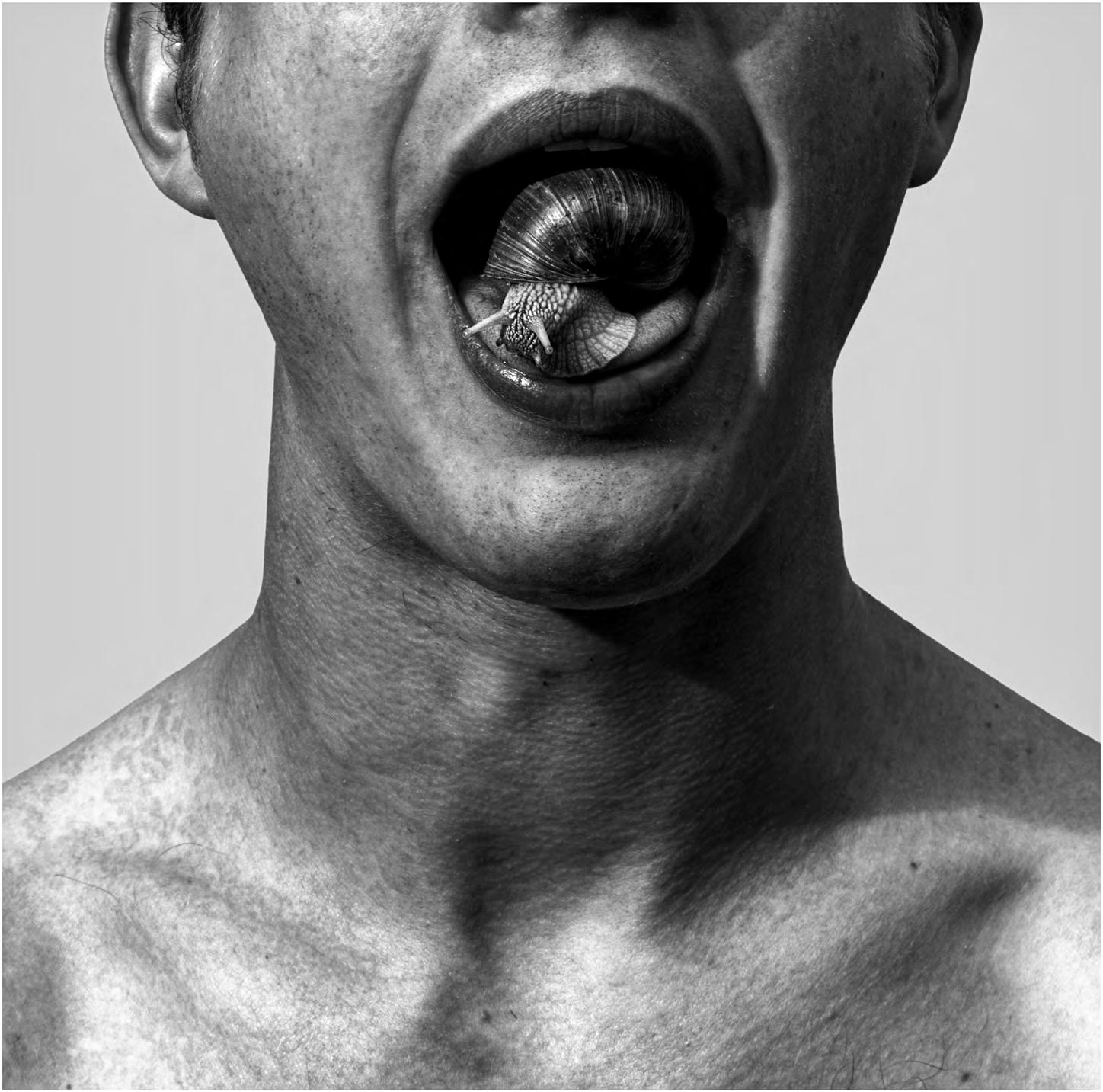
Maximilian Prüfer, Zungenkuss, 2015, Photography, Edition of 20 + 5 AP, 40 × 40 cm. € 900 (excl. VAT)
NANA MANDL
At Kunst in der Post am Rochus: Elisa Alberti, Kater D., Nana Mandl and Hermann Nitsch, Austrian Post AG Headquarters 11 December 2025 – 28 February 2027
Nana Mandl will be showing six recent large scale works in a group exhibition together with Elisa Alberti, Kater D. And Herrman Nitsch. Visits by appointment only.
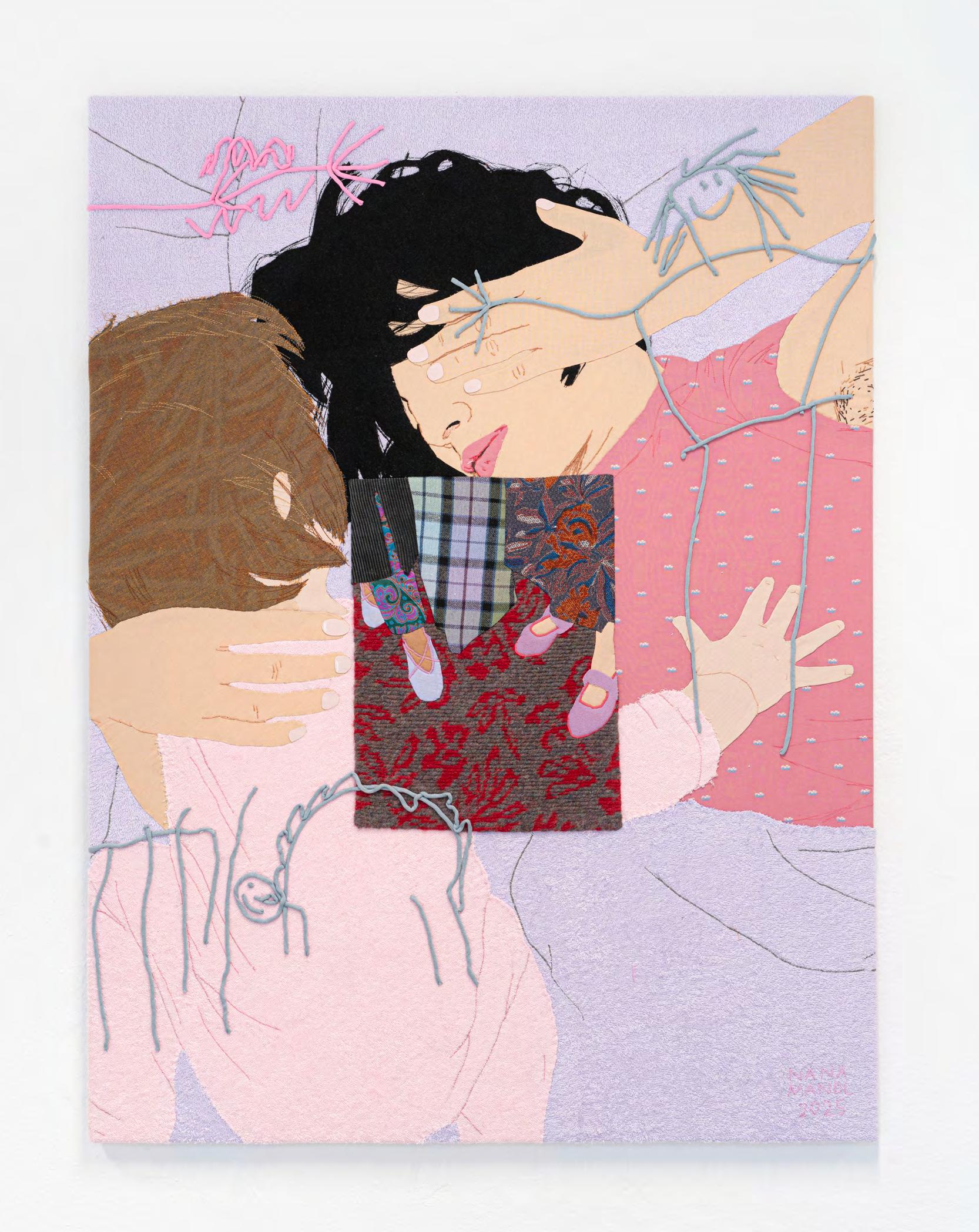
In Nana Mandl’s artistic practice multi-layered images come into existence through the combination of analog and digital source material archives interpreted through material-intensive, colourful collages. Mandl’s position lives between the collective memory of her generation and her own private experiences. Through the use of pixelated surfaces, digital renderings and photographic references she alludes to digital picture technologies, while antithetically portraying the subject matter in the form of sewn and embroidered surfaces. In doing this Mandl’s artistic practice explores themes of technology, female empowerment and pop culture while still tightly conversing with formalist principles and materiality.
KARL KARNER
Skulpturenpark Vienna
Karner’s work continuously discusses bodily perception and the concept of corporeality itself, finding a position between the disciplines of visual arts, performance and dance theatre. In his installations and art environments viewers frequently become players, bringing to life the cast iron fantastic creatures that are often the subject of Karner’s works. By using recurring motifs he references the serial production of industrial objects, while enthralling viewers in the interactive environments that are arranged akin to theatre props, complemented by their own performative gestures. Karl Karner’s multi-sensorial, fictional fairytale worlds tell a story of incessantly repeated settings of everyday life, albeit with their function deconstructed, which clearly point out the absurdity of certain processes and element.
Karl Karner, Blue lumes
ANDREAS GREINER
Institutional Exhibitions
Andreas Greiner’s work has been included in a number of notable institutional group exhibitions in Germany and the Czech Republic. Greiner is a Berlin-based ecological artist whose multidisciplinary practice spans time-based works, living and digital sculptures, photography, and video art. His practice explores the intersection of biology, technology, and the natural world, with special attention to non-human forms of subjectivity and climate change.
Installation View: Andreas Greiner, Kino Kosmos, PLATO Ostrava, 2025
X-Ray, Völklinger Hütte, 9 September 2025 – 16 August 2026
Marking 150 years since Röntgen’s discovery, X-Ray brings together art, science, film, politics, fashion, music and architecture, marking various visualisations of hidden structures which continue to inspire scientists and artists to this day. It is the first exhibition dedicated to the phenomenon of X-rays and the comprehensive cultural aspects it can offer.
Utopia, Kunstmuseum Wolfsburg, 27 September 2025 – 11 January 2026
The exhibition is based around the concept of hope and confidence in how a better and more equitable life can succeed for all on the planet. This is not about the new big world design, but rather about a variety of micro-utopias, which together can have a positive effect. The exhibition spans architectural designs, objects of design and examples from the applied field, which present utopian projects or ideas within various media.
Festival of Future Nows, Neue Nationalgalerie Berlin, 31 October – 2 November 2025
The Neue Nationalgalerie presents the Festival of Future Nows more than ten years after its first edition in the iconic building designed by Mies van der Rohe. The interior and exterior space of the museum will be transformed into an open field for artistic encounters, experiments and visions.
Kino Kosmos, PLATO – City Gallery of Contemporary Art, 29 May – 26 October 2025
Curated by Daniela and Linda Dostálková, Kino Kosmos explores the unique nature of place and its overlaps through audiovisual works, sculptures, and photographs by both artists directly connected to Třinec and those active on the international scene.
Installation View: Andreas Greiner, Kino Kosmos, PLATO Ostrava, 2025
MARC HENRY
Acquisition of work to the Wien Museum Collection
Marc Henry’s painting It’s a Wrap (Medusa) has been acquisitioned to the collection of the Wien Museum. Henry’s work explores the nuances of reality and its malleability in our post-factual era. His multifaceted academic foundation underscores his engagement with societal dynamics, macroeconomics and politics, reflected in an expansive approach to the pictorial space. This perspective is shaped into a narrative-driven artistic position that delves into the realm of digital image manipulation with a profound curiosity. Henry uses a personal archive of reference collages, AI-powered image generators and 3D rendering software to find and recursively manipulate iconography that eludes to fabricated, digital realities.
Marc Henry, It’s a Wrap (Medusa), 2024
EXHIBITIONS AT GALERIE KANDLHOFER
SYSTEMS OF SUBVERSIONS
Paulina Aumayr, Allen-Golder Carpenter, Thomas Supper 27 November 2025 – 16 January 2026
Freedom should not be an individual state but a practice of sharing. Those who are free bear the responsibility to pass that freedom on—to other bodies, voices, and materials. In this sense, the exhibition brings together three artistic positions that do not depict freedom but practice it as movement and collective experience. Systems of Subversion shows how art can shift entrenched structures, and how freedom can be understood as a process, transgression as a method, and subversion as a shared practice. What unites Allen-Golder Carpenter, Paulina Aumayr and Thomas Supper is that they dissolve boundaries across different media and transform systems from within rather than merely criticizing them.
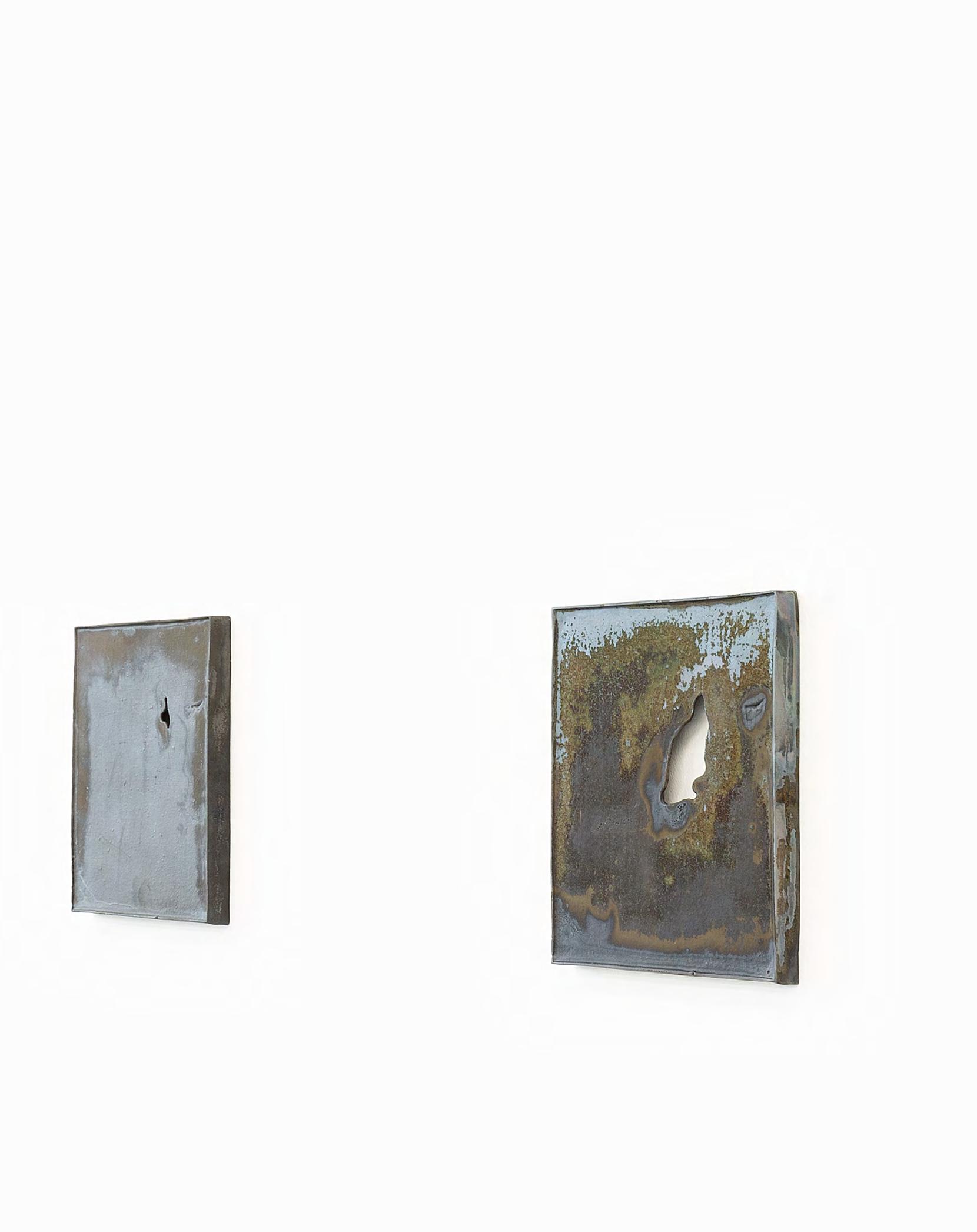
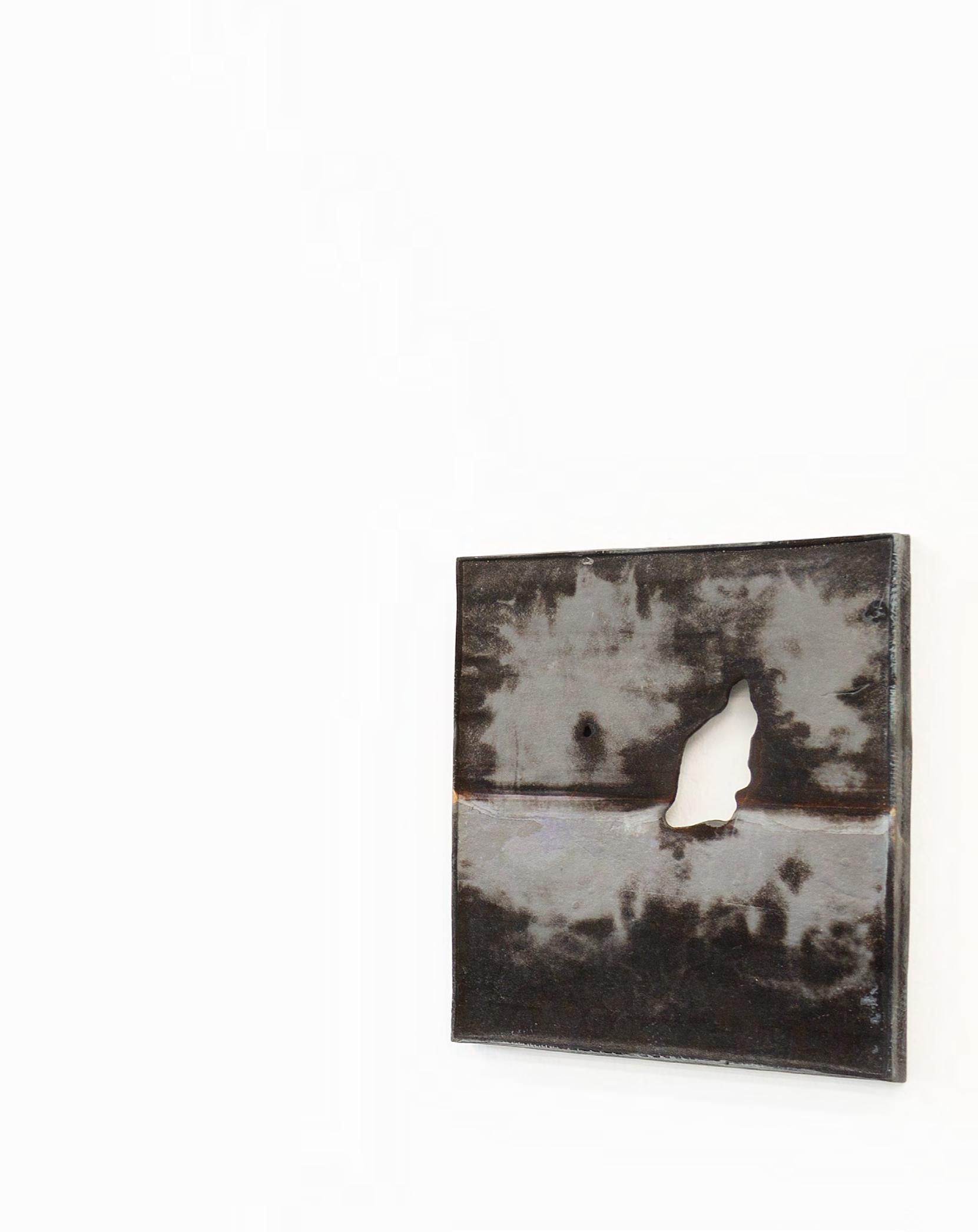
Thomas Supper, Reduktionen Series,
Born in Washington D.C., Allen-Golder Carpenter combines sculpture, sound, painting and photography into a polyphonic network that explores cultural identity, surveillance and movement. At its center lies the question of how physical and symbolic borders emerge and how they can be dissolved again. In the installation Jazz Window (2025), this principle becomes directly tangible. Printed film panels with fence motifs hang freely in the space and are set in motion by fans. The supposed barrier begins to breathe, and border structures start to flow. The illusion of the fence refers to national control, deportation and state violence, while at the same time pointing to the utopian moment of freedom of movement. Another work shows masks on the floor as relics of violent, anonymous authority, referencing and inverting the aesthetics of urban subculture.
The installation is accompanied by jazz melodies by Carpenter himself, hip-hop, rap, clarinet, and saxophone recordings. For him, jazz is not only a musical genre but a historical medium of Black self-empowerment, improvisation and resistance. In his newly composed pieces, the boundaries between genres dissolve and the dynamics between origin and appropriation—from “Black Protest Sound” to white high culture—are renegotiated.
Through painting and photography, Carpenter also examines visibility and censorship of Black experience. While his blackened paintings and screen prints resemble censored images, his photographs show scenes from Washington D.C., such as Go-Go music festivals, street protests and family moments. The coexistence of community life and military presence, of music and surveillance, becomes a metaphor for social contradictions. Carpenter’s transmedial work combines sound, movement and imagery into a political manifesto on borders, and on individual and collective identity.
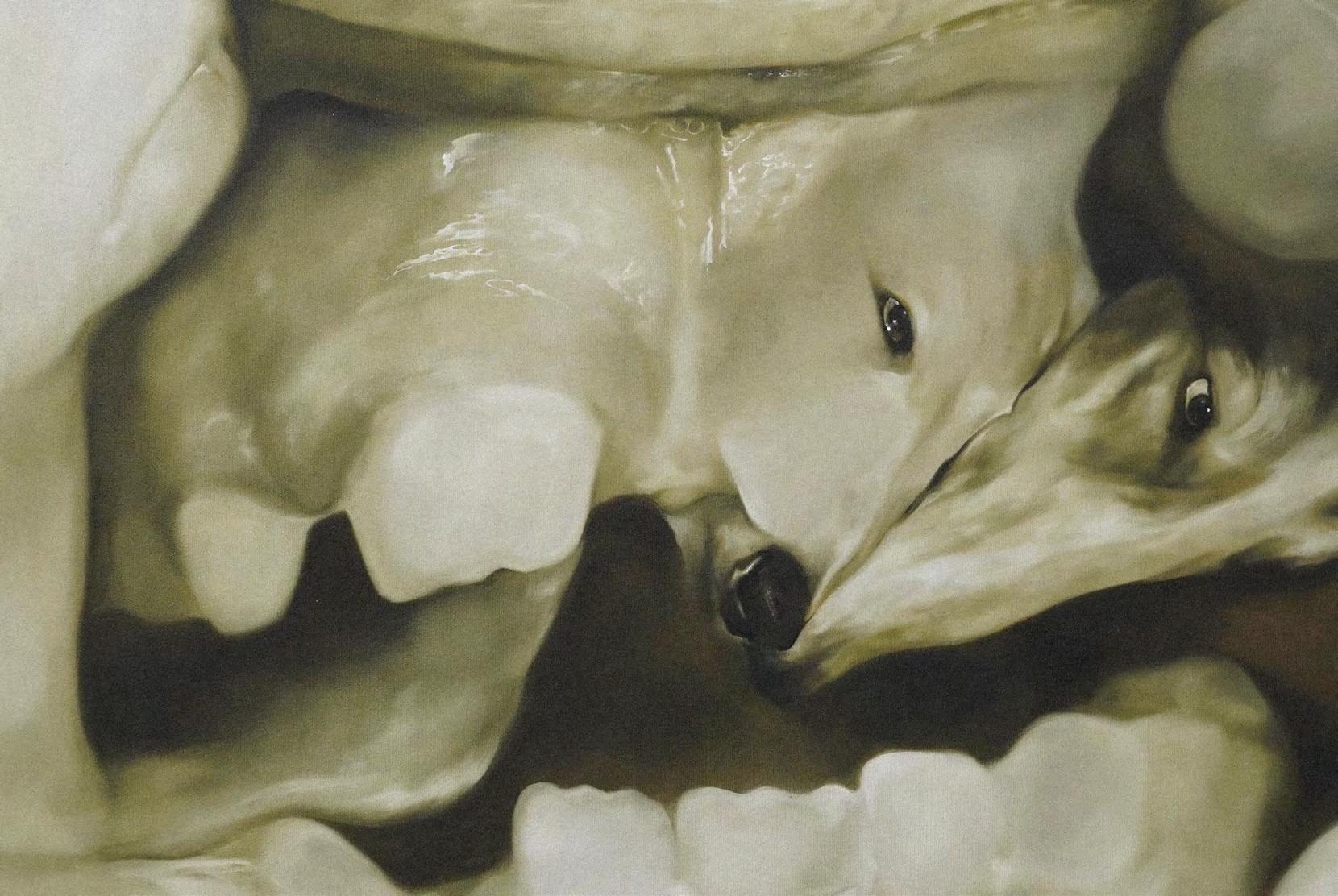
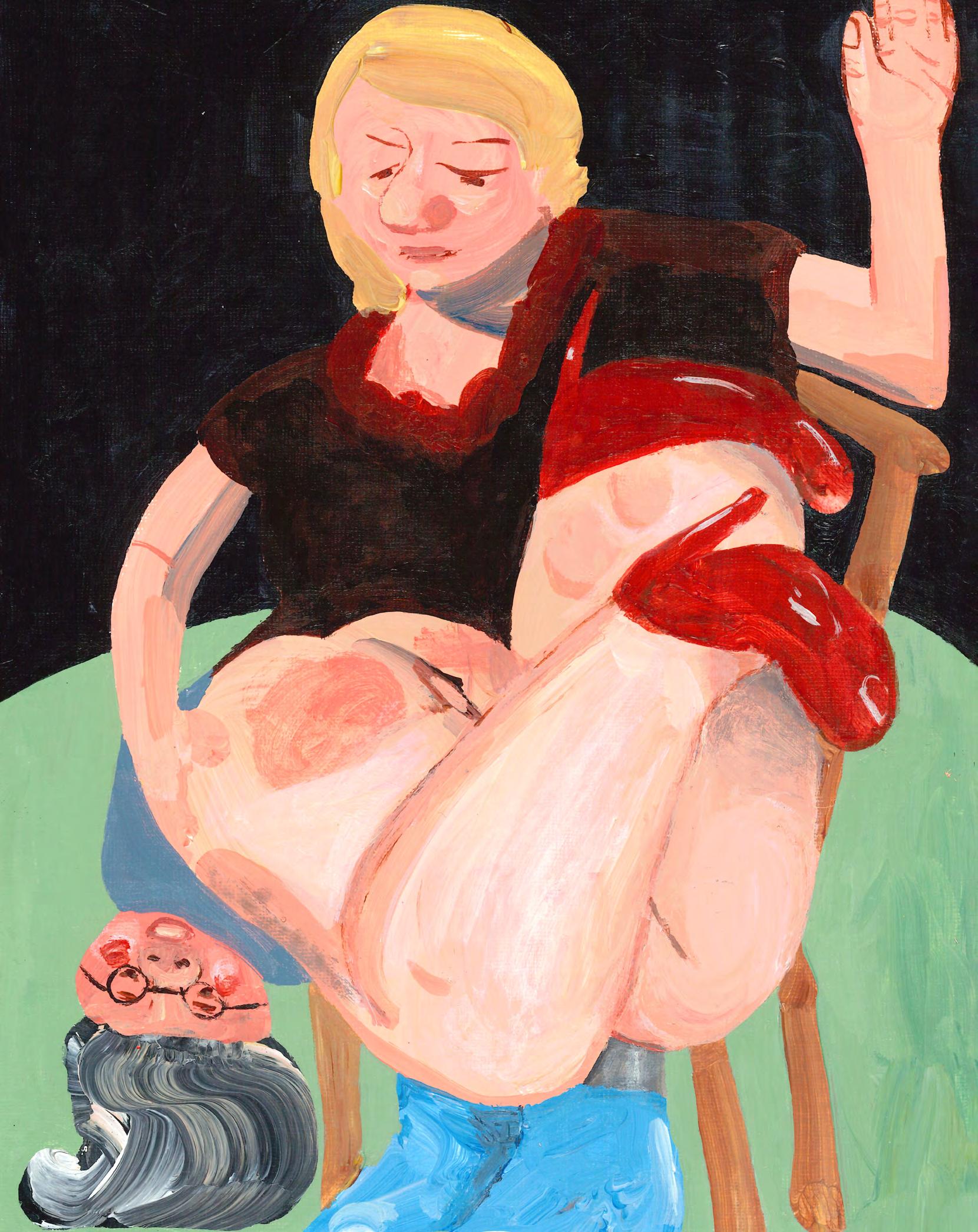
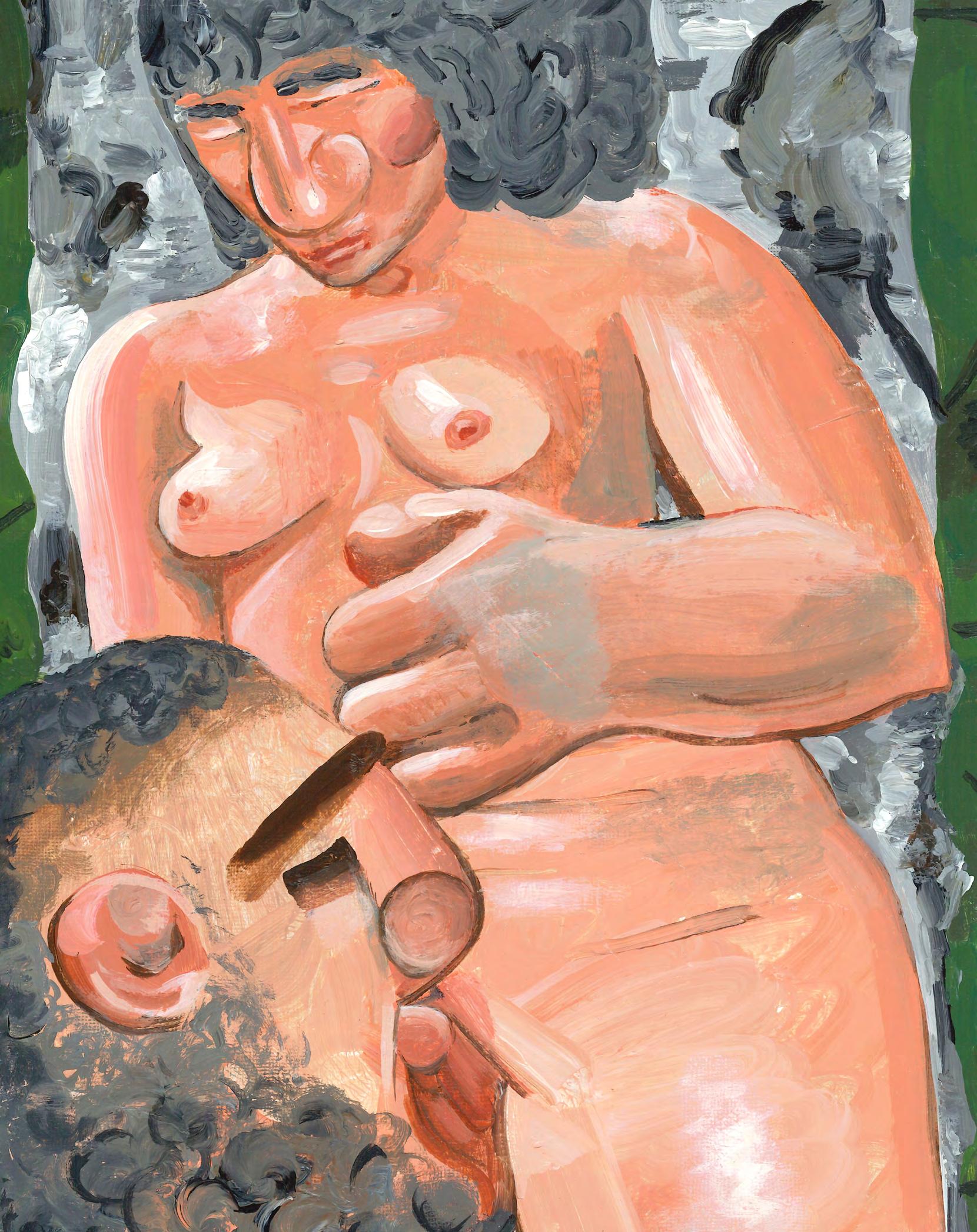
Paulina Aumayr explores the mechanisms of power and corporeality through a visual language that always stands on the threshold between intimacy and aggression. In the series Bis meine Haut zu Leder wird (2025), she condenses this tension into a body-political image. The skin as a boundary between inside and outside, as a site of touch and injury, of romantic tenderness and sexual threat.
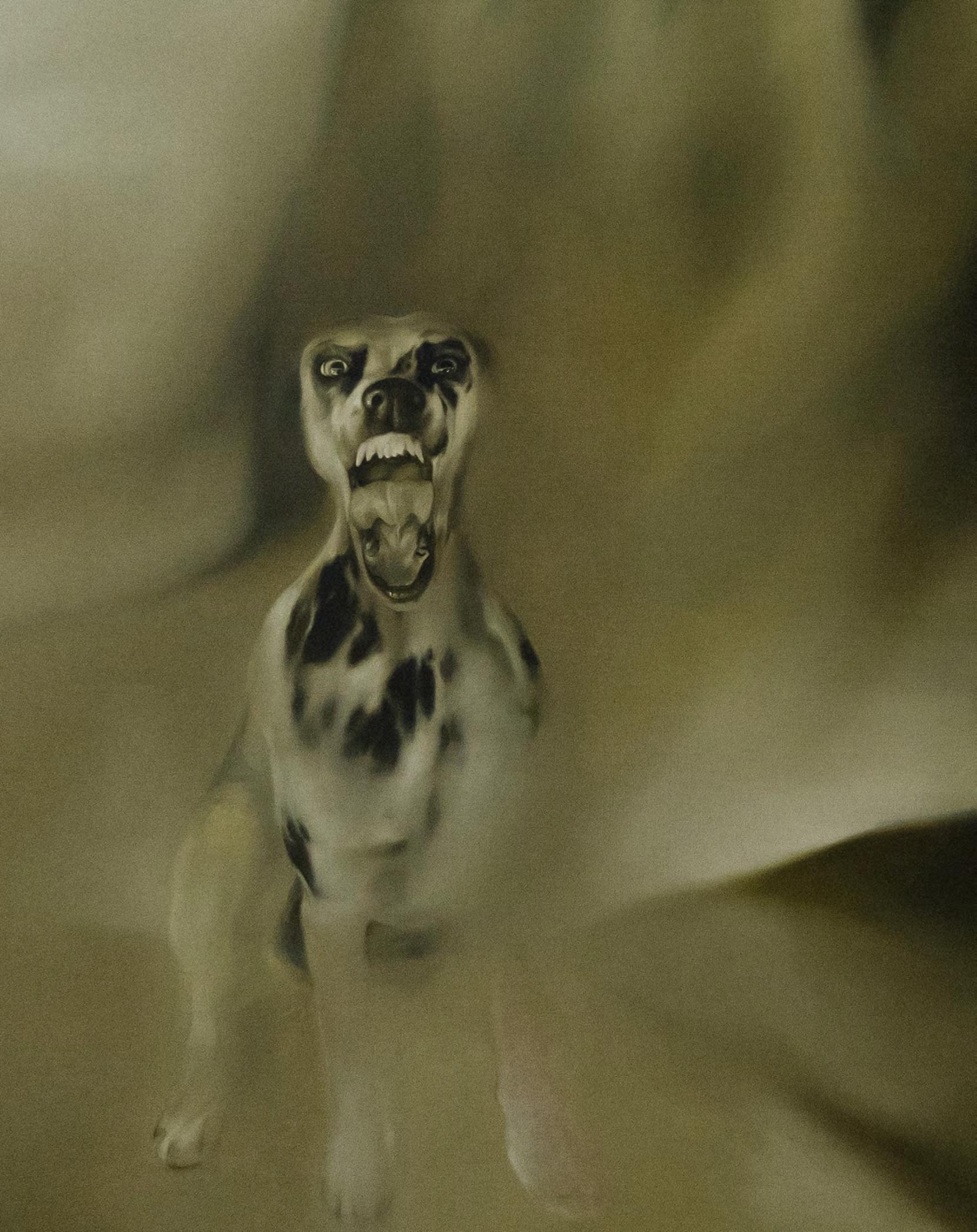
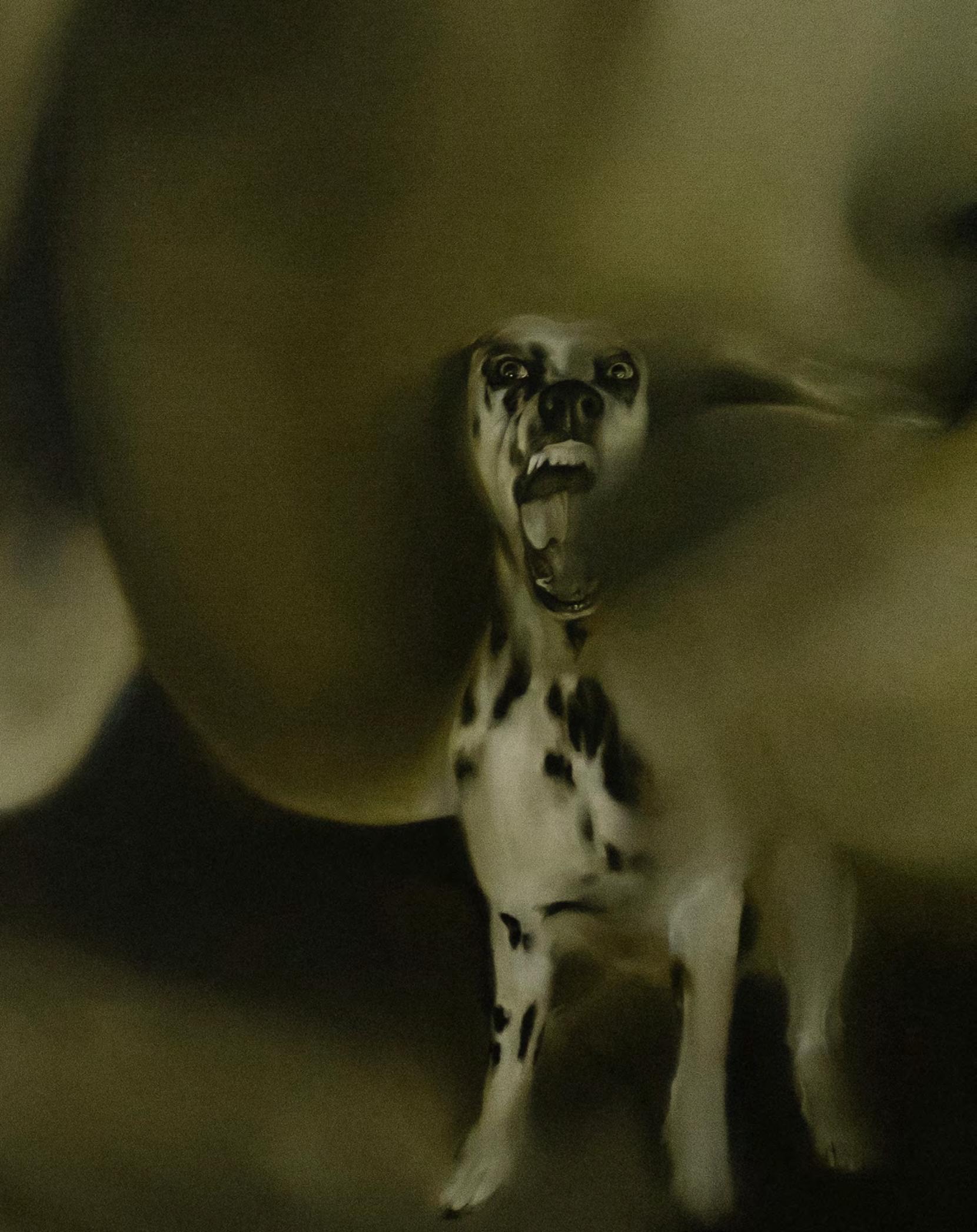
Aumayr’s painting makes violence felt, not just visible. Dogs with bared teeth appear repeatedly as ciphers of threatening masculinity. At the same time, her work is about certain bodies that endure and keep going until what feminist theorist Sara Ahmed calls “affective exhaustion.” A fatigue that arises from resistance itself, and which Aumayr processes in her new work Bis ihr genauso müde seid wie ich. / Männer (Hunde) (2025). Her series are thus shaped by repetition as resistance and exhaustion as a form of protest. “It happens because it does not stop happening,” says Aumayr.
In the installation works Der Geschmack von Metall, erstick daran (2025) and Eintausendeinhundert Klingen für dich (2025), the artist translates painting into three-dimensional space. The bed and the pillow, symbols of comfort and safety, are covered with the confrontational imagery of her paintings or even with sharp blades. Softness meets danger, intimacy meets injury, and the private meets exposure. These moments of tension run throughout her entire work. Aumayr reveals how structures of violence infiltrate everyday life and how art can create spaces where anger, pain and strength can coexist.
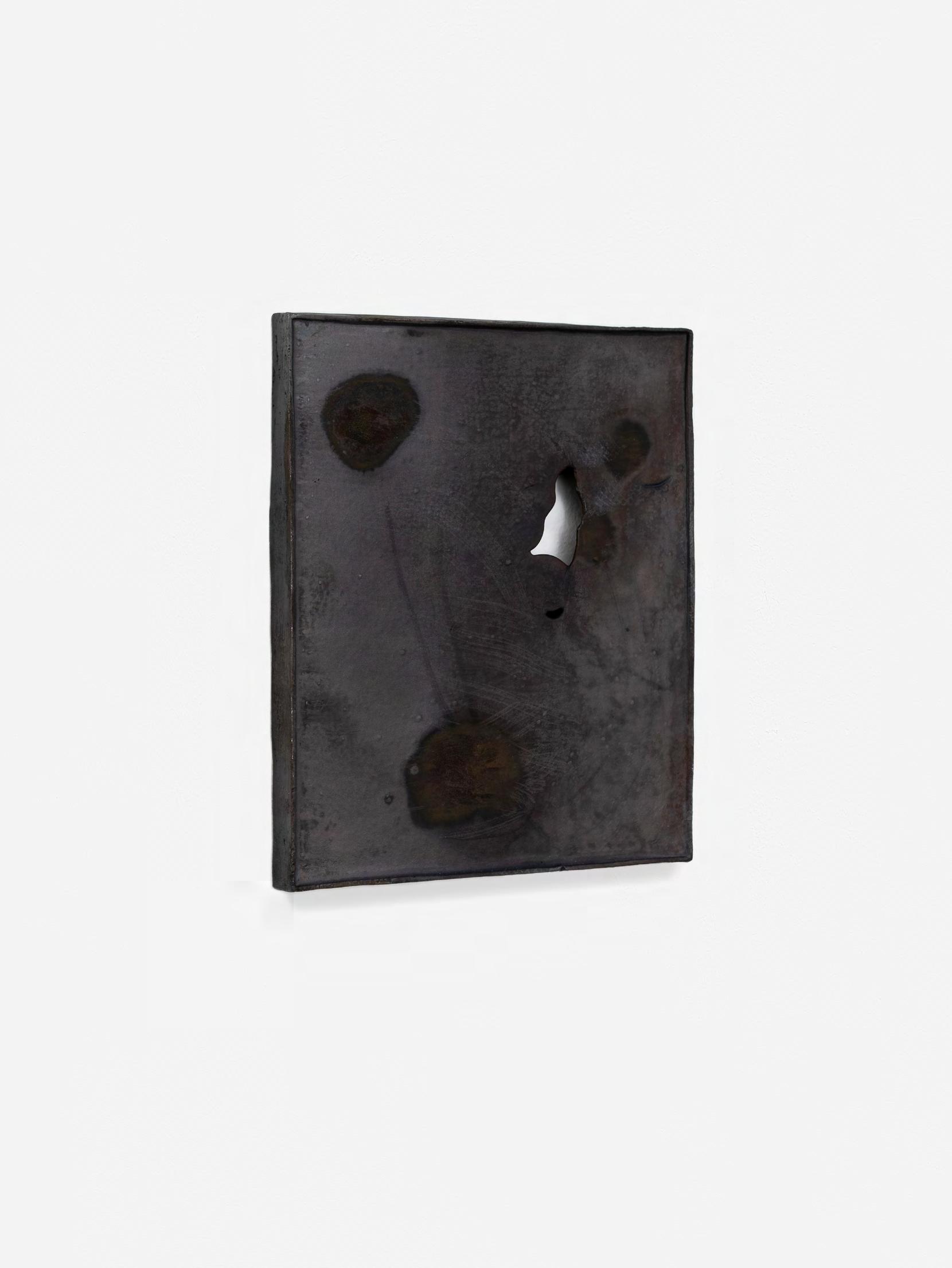
Thomas Supper deals with the question of how material decays and what remains when form and substance dissolve. His series Reduktionen (since 2023) begins with a single black painting that is repeatedly cast in bronze. With each casting, the image shrinks, losing sharpness, mass
and contour. The work documents its own decline—a gradual abstraction in which reproduction becomes reduction. Each bronze bears traces of the previous one, forming a cycle of loss and transformation until it disappears completely. Supper describes this work as “a painting that cancels itself out.” After casting, he applies a patina to each surface, allowing painterly elements to merge into sculptural form.
Supper’s artistic practice usually moves between concept and process, between control and chance. His works emerge from observing material reactions and physical transformations—almost as if the work creates and dissolves itself at the same time. Like Carpenter and Aumayr, Supper undermines existing systems—not social or political ones, but material ones. He shows that subversion does not always have to be loud; it can also lie in the quiet erosion of form.
Together, the three artists create a dense network of sound, material, color and body, crossing medial and semantic boundaries. The interdisciplinary works of Aumayr, Carpenter and Supper share an aesthetic and political gesture. They subvert existing systems by exposing their structures and making them permeable.
Systems of Subversion shows that freedom does not lie in the absence of systems but in their constant renegotiation. Transmediality, hybridity and subversion become practices of seeing, feeling and making, and freedom a continuous process—something that must always be passed on.
Text by Dr Luisa Seipp
Paulina Aumayr, Nach nur dreissig Tagen war meine ganze Haut schon nicht mehr die, die du berührt hast, 2024
Paulina Aumayr, Bis meine Haut zu Leder wird, 2025
PACO KOENIG
22 January – 21 February 2026
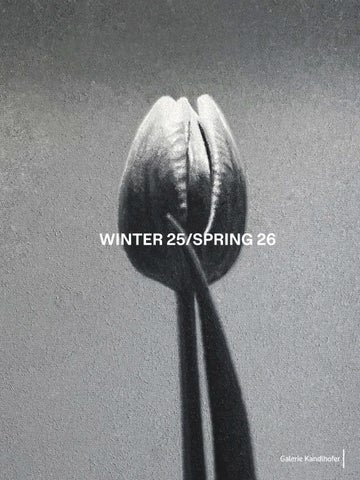
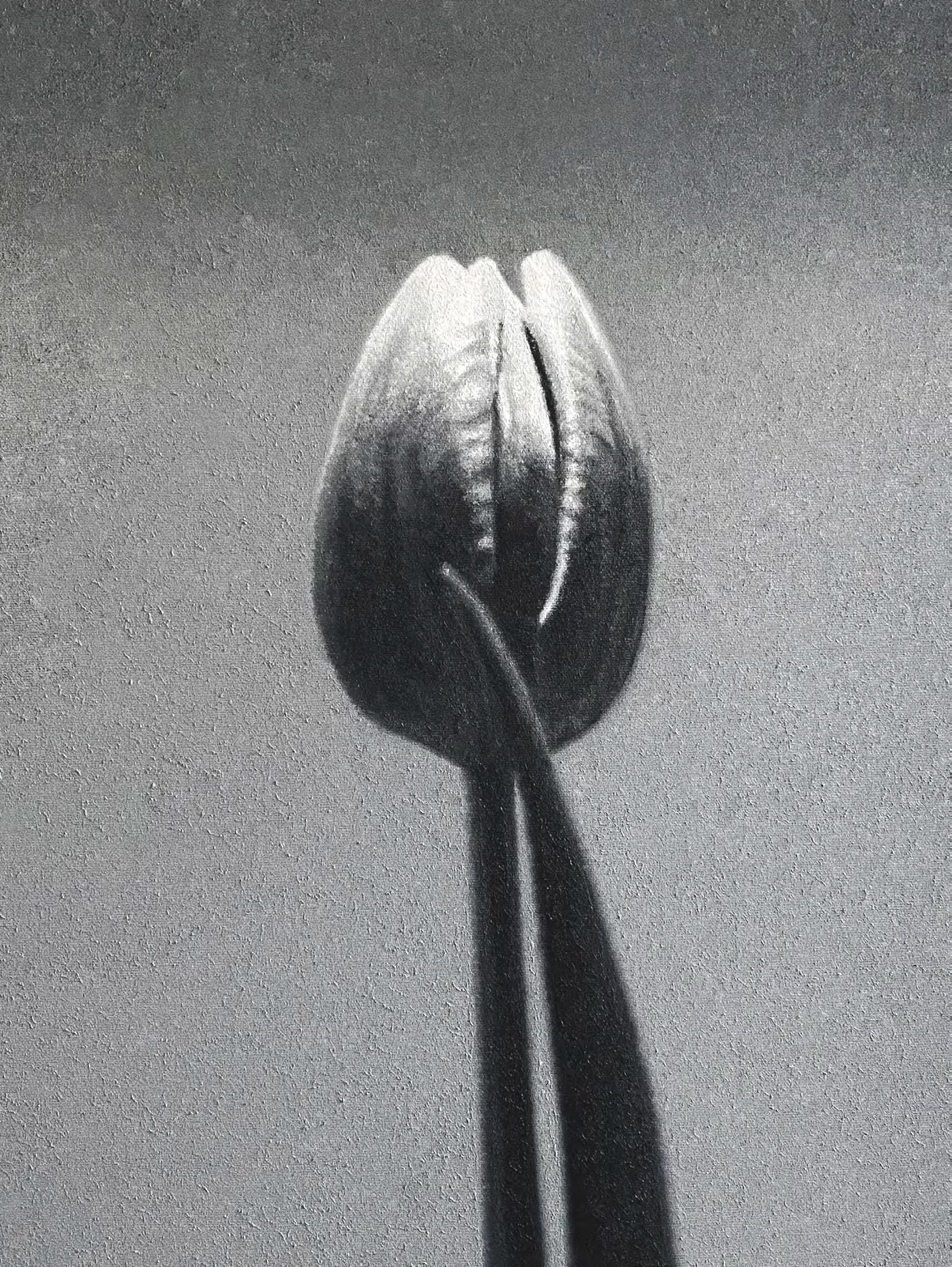
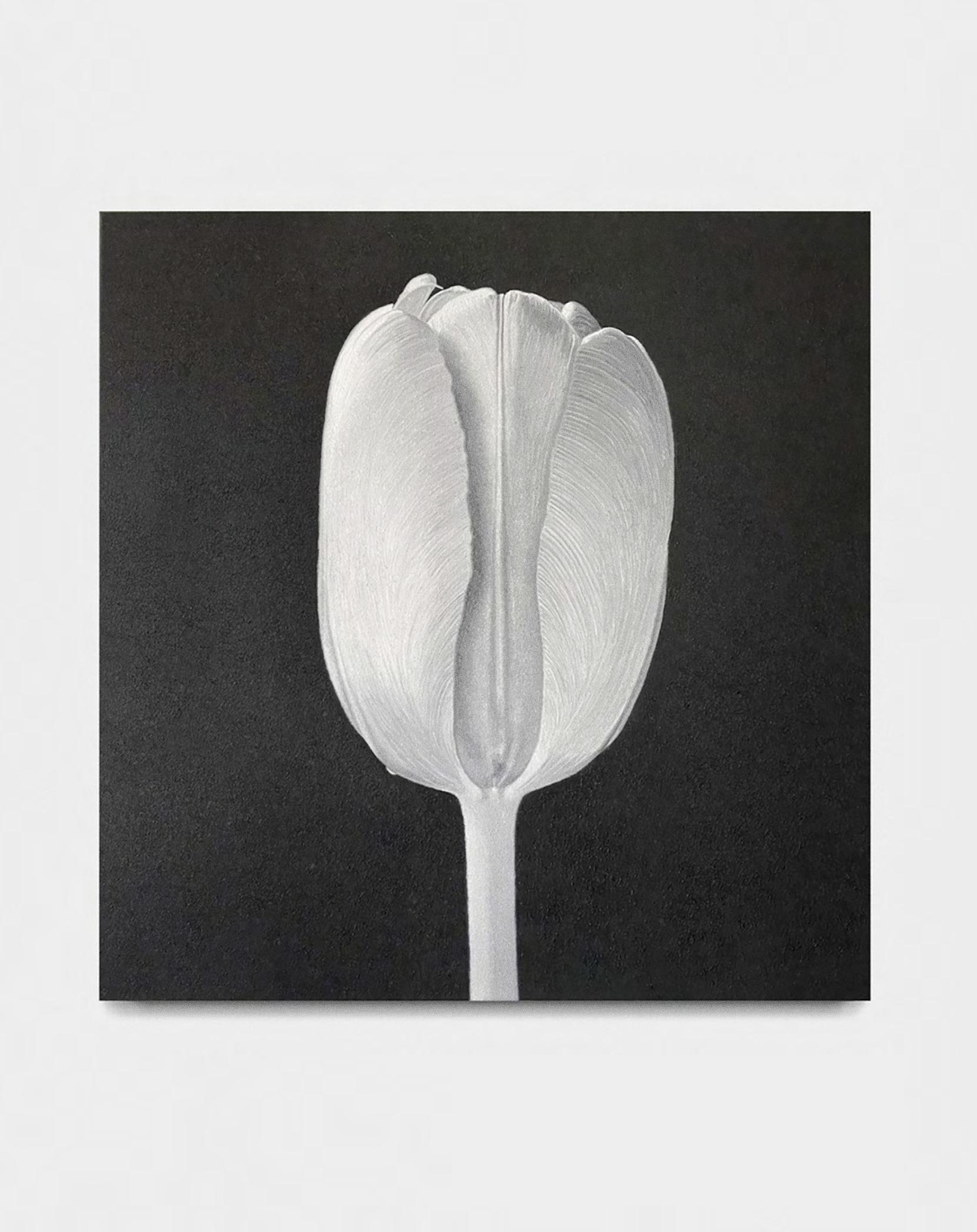
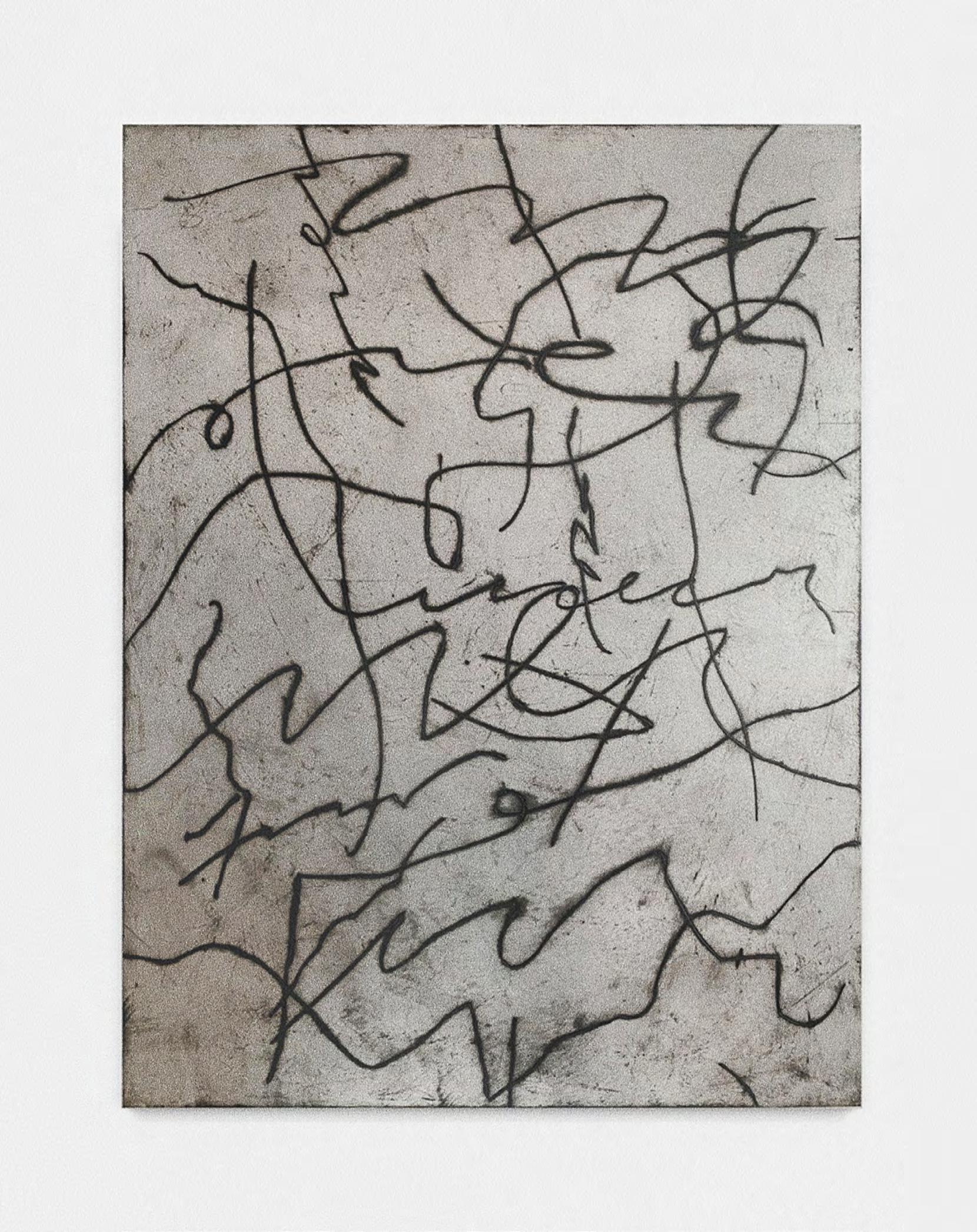
If Koenig had a conceptual constant, it would be the way he treats the the art-historical canon like a library of references to be called on: the legacy of gestural expressionism is evident in his abstract aluminium panels, nods to Primitivism and etchings are visible in his scrappy, drawing-like paintings. Koenig’s work is grounded in an investigation of abstract painting through a postmodern repurposing of signs and symbols. His work is in constant dialogue with what came before and what is happening around him. It’s like sampling from history and culture, remixing it into his own unique sound. Gestures and figures are entangled with lines in the paintings to test the meaning and visual resonance of language. The etched lines are the foundation of the abstract works on top of which he employs an array of techniques including dragging, rolling, washing and stencilling – to control increasingly dynamic iterations from his established repertoire. This approach has become more complex over time, as the artist explores the effects of repetition, scale, rhythm, and different means of overpainting, to achieve the desired surface.
The paintings highlight the essential connection of the artist’s practice, in which he continues to engage with the boundaries of abstraction. The visual clutter, the raw energy of mark making, the way things get worn down and layered over time, the works seem to capture the energy and the entropy of the urban environment. It makes you wonder, how much of the city’s pulse, its vibrant mess and subtle decay, flow into the works? The framing of his works as abstract paintings is designed to question what painting is, how it should be produced, and how an image can incorporate multiple layers of meaning that are revealed by the viewer’s attention. Process and subject go hand in hand.
Koenig has continued to experiment with painting as both medium and subject, consciously positioning it as a metaphor through which to probe the perceptions of image and the conventional boundaries of what constitutes art. The paintings based on photographs have sustained as an integral part of his painting practice, combining his inherently process based and conceptually rigorous approach. A continuation to explore the foundations of modern painting – the directness and immediacy of human mark making with the mediating effects of mechanical and photographic reproduction.
Text by Fabio Korbus
Artist Portrait
FRAUKE DANNERT
26 February – 2 April 2026
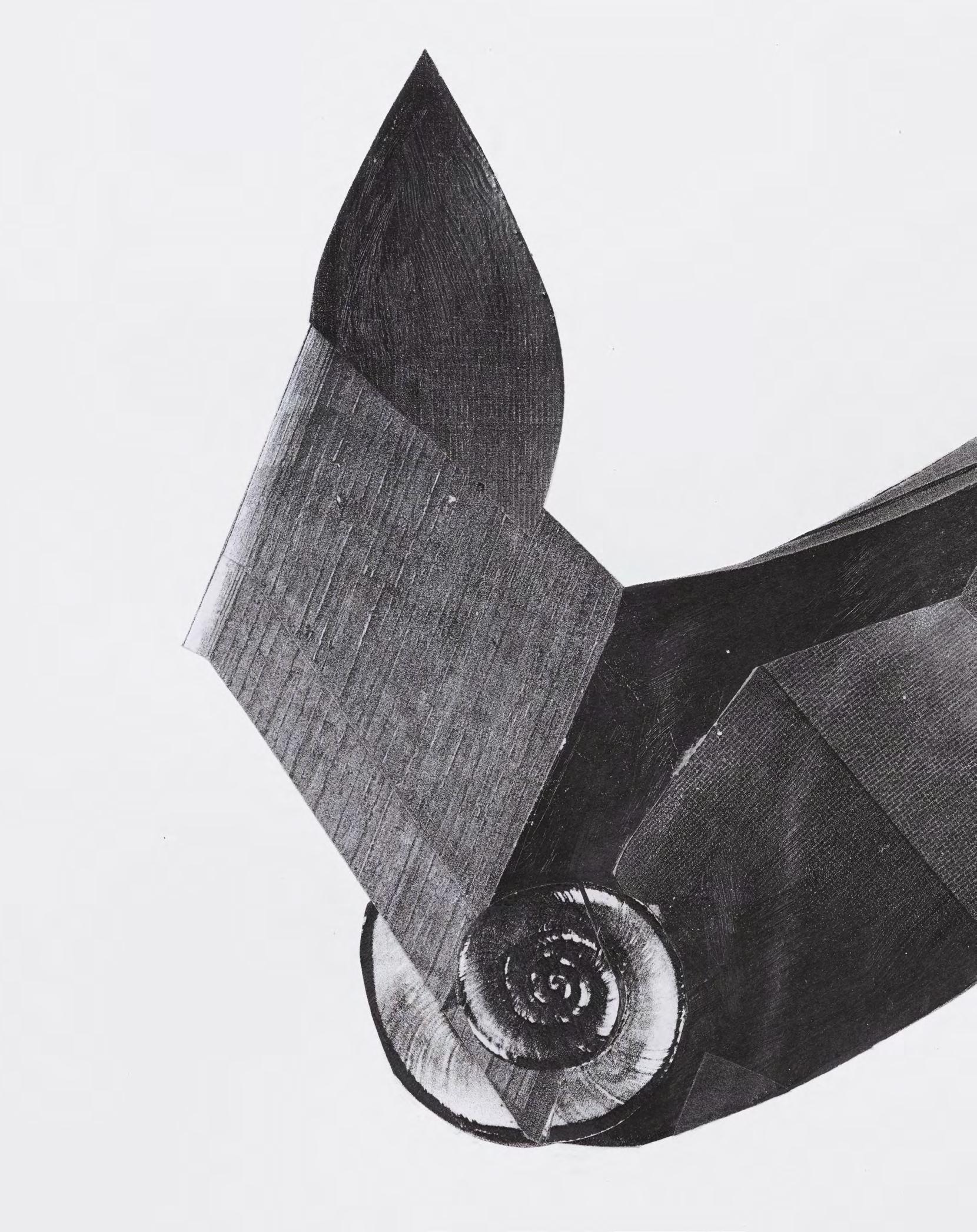
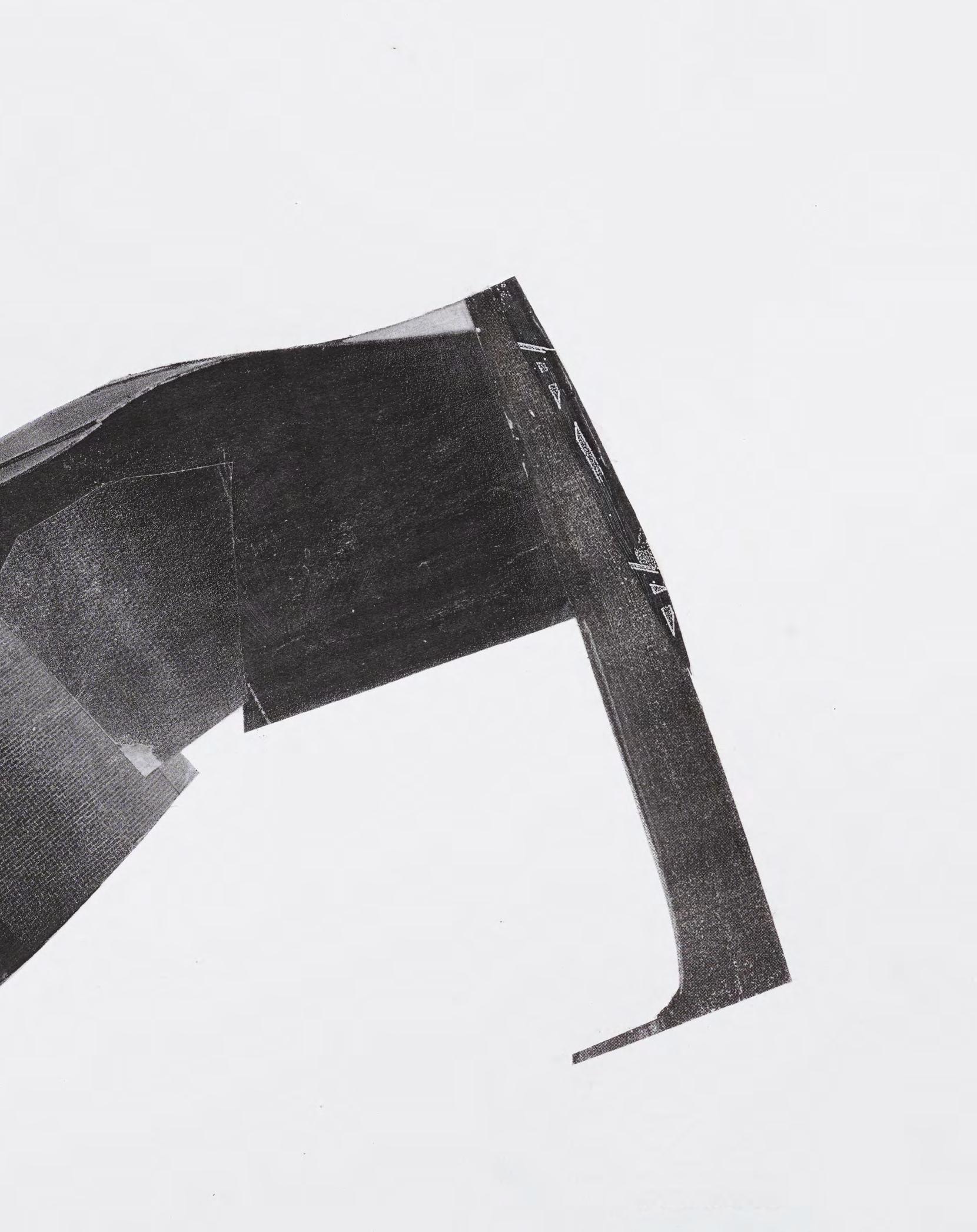
The genesis of Dannert’s practice lies in her interest in the architectural space and the medium of collage. These collages manifest themselves on paper, wall paintings, carpet inlays, curtains, projections, films and photographs. Through this she dissects architecture, examining it as to its sculptural potential, pointedly heightening particular features or else subverting preconceived structural assumptions. By altering the scale and shapes of the building materials depicted, Dannert produces creations that oscillate between the organic and the architectonic, illusion and reality.
Within her collage practice Dannert creates the initial compositions and then replicates them using a photocopier. The loss in the clarity and other nuances created by this process consciously transforms the original image. By reducing the photocopies to black, white and grey tones she distances the works from the original material reality. After duplication, Dannert further determines the shapes and thus the greater degree of alienation of the original motifs. She continues these optical illusions in her installations by overlaying the existing architecture with photographic architectural fragments, thus alienating spaces and the viewers experience of the space.
Frauke Dannert (b.1979 in Herdecke, Germany) lives and works at Cologne. Dannert studied at the Kunstakademie Düsseldorf and Goldsmiths in London. Her work can be found in many institutional collections including Museum Kunstpalast, Düsseldorf; Kunstsammlung Deutsche Bundesbank, Frankfurt; Märkisches Museum Witten; Sammlung der Stadtsparkasse, Düsseldorf; Landesbank Hessen Thüringen, Sammlung Philara, Düsseldorf; Sammlung Kunst aus NRW (Kornelimünster), Aachen.
Frauke Dannert, Gelenk, 2024
THÉO VIARDIN
9 April – 22 May 2026
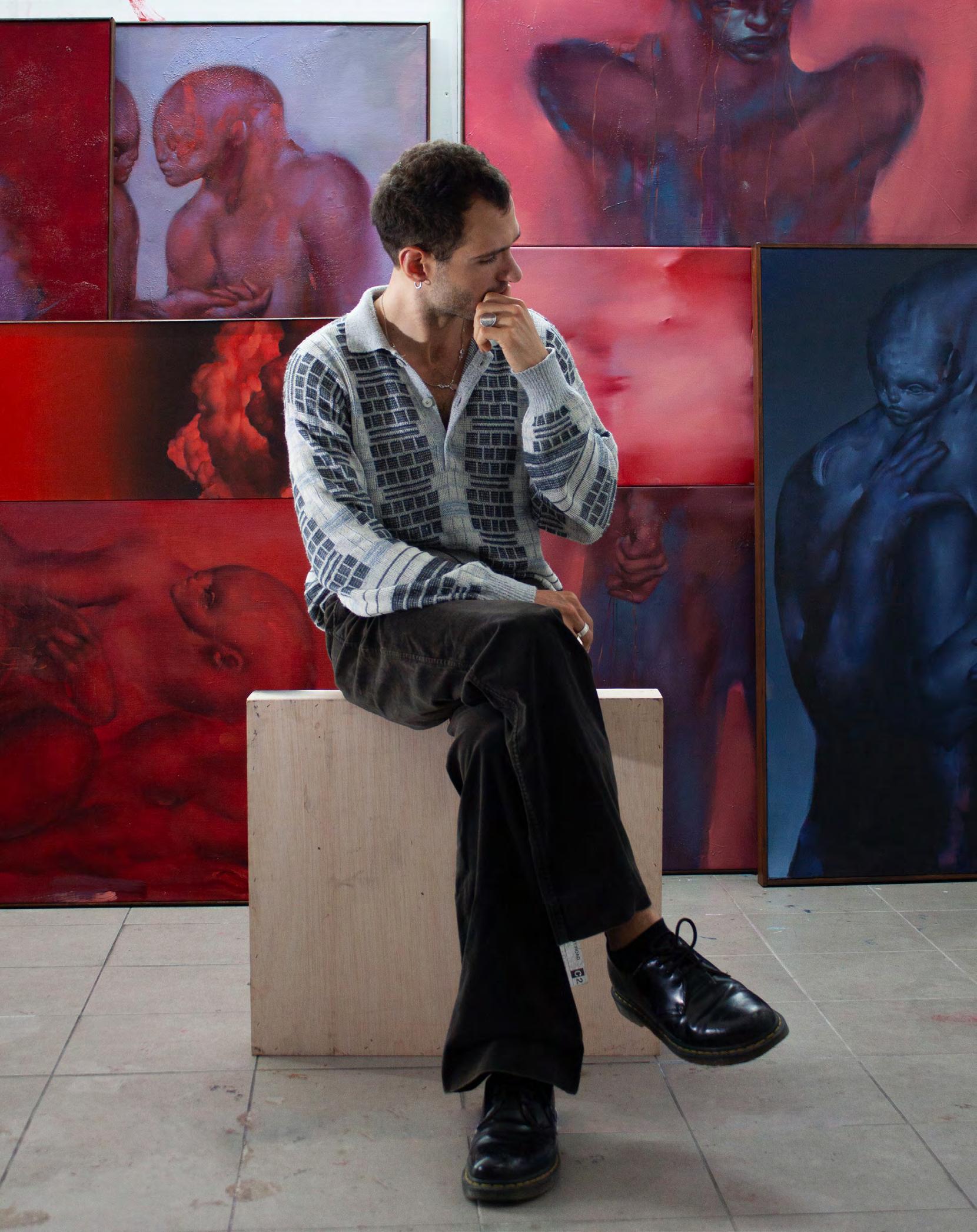
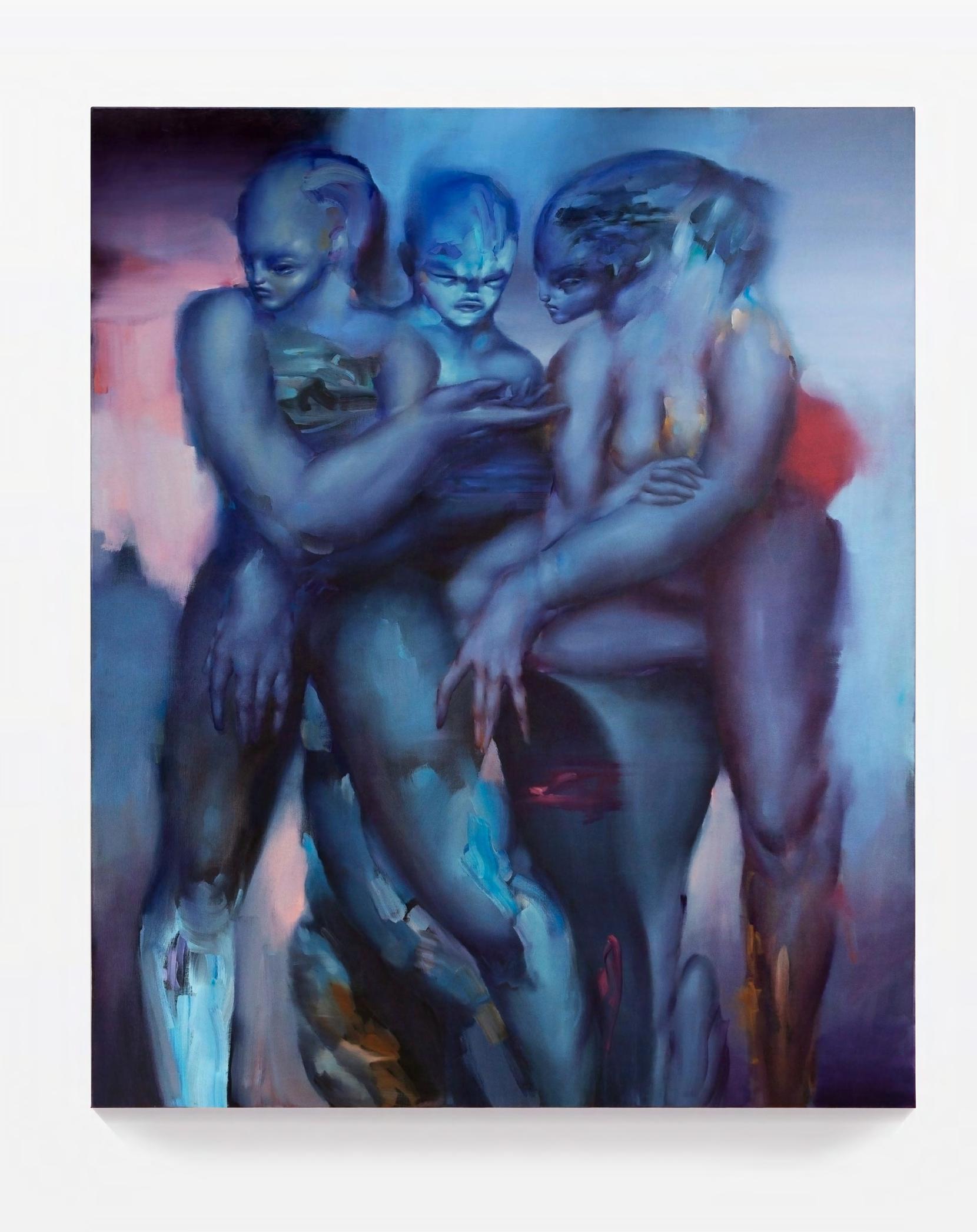
Théo Viardin is a French painter born in Paris in 1992 and currently working in Marseille. In his enigmatic figurative paintings, Viardin presents beings in mutation, colossal human figures seemingly watching over one another. His treatment in successive layers of oil, alternating gestural brushstrokes and ethereal glazes, reveal the oppositions inherent in his work: nourished by a dialogue with philosophy seeking to capture the essence of the human condition, his paintings do not exist without dichotomies, without the complexity of the contrast. This tension manifests itself in figures as massive as they are vulnerable, in group scenes set in stripped-down worlds, and in the stark color contrasts between form and space.
Continuing the research engaged by Mark Rothko and Francis Bacon, Théo Viardin is convinced that painting is a means of capturing the artist’s raw sensation, seeing the result as the synthesis of his own sensory homunculus. His minimalist, sculptural way of composing forms - configuring beings thus becomes a deliberate attempt to convey direct emotion, through the materiality of the body and its sensations.
His work is rooted in various pictorial references from ancient and classical art history, actively engaging with the genealogical heritage of human representation. This aspect of his work necessarily enters into dialogue with influences drawn from the genre of anticipation fiction and fantasy. Taking a post-humanist approach and using it as a means to address contemporary issues, Viardin uses the formal freedom afforded by the biopunk movement to explore the scope of the human form and the emotions that run through it.
His recent exhibitions includes : New Art dealers (group), Pact gallery, New York (2025); “SPHINX | SILENCE” (solo), Blank Gallery, Tokyo (2025); “Unveiling the unknown” (Duo show with Lou Jaworsky), Tempesta, Milano (2025); “The guiding thread” (group), Suzanne Tarasieve, Paris (2024); “Enigma” (solo), Pact, Paris (2024); “EARLY MAN 2” (group), The hole, NYC (2024); “Apocalyptic changes of state” (group), BWG, London (2024); “Beautiful Chaos of Existence” (solo), L21, Palma de Mallorca (2023); “Solitudes” (solo), NBB, Berlin (2023); “Et in Arcadia Ego” (solo), Kandlhofer, Vienna (2022); “Jusqu’à ce que nous redevenions sauvages” (solo), Linseed, Shanghai (2022); “Gado Gado” (group), Everyday Gallery, Antwerp (2022); “ARCO 2022” (group), L21, Madrid (2022); “ARCO 2021” (group), L21, Madrid (2021).
Public collection : X Museum, Beijing (CN).
Théo Viardin, Victorious Oedipus, 2024
FOCUS ON AT GALERIE KANDLHOFER
Elias Jocher, chamber
ELIAS JOCHER: SILVERY GAZES
Elias Jocher (b. 2001, Italy)
27 November 2025 – 16 January 2026
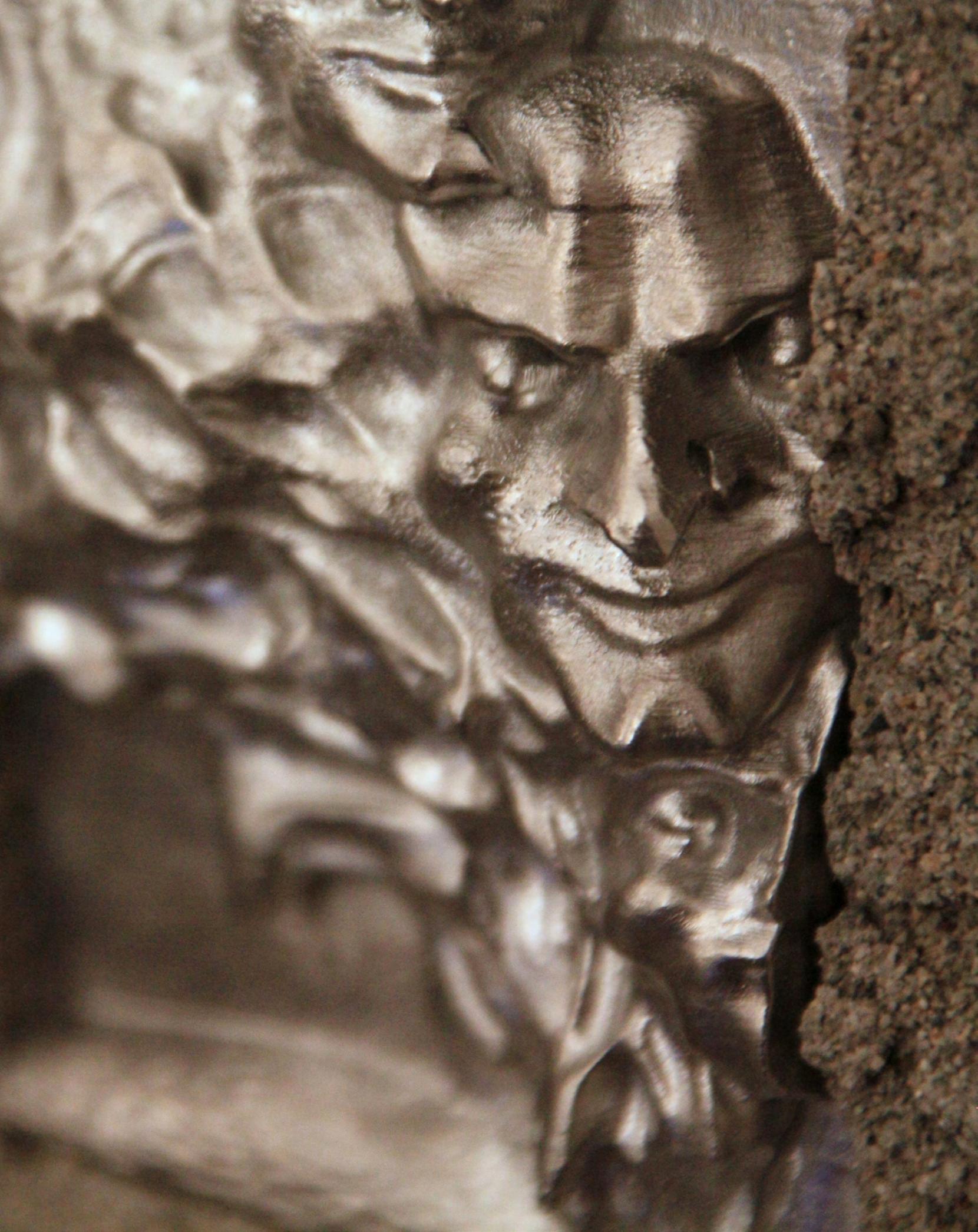
Through sculptural installations and object series, Elias Jocher (*2001, Italy) establishes a formal language in which ornament, body, and landscape merge into surreal compositions. A training in printmaking and his studies at the University of Applied Arts Vienna under Brigitte Kowanz and Jakob Lena Knebl shaped his interest in both technological and artisanal production methods. Building on this foundation, Elias Jocher works with a wide range of techniques in a hybrid process that bridges the digital and the analog. This methodology extends to the conceptual level of his works, becoming a metaphor for ambiguity and complexity.
The starting point for the work is the grotesque as an ornamental form of antiquity. It represents a historically developed formal principle and can also be read as a conceptual model for ambivalence. It acts by linking supposed opposites. Originally found in Roman wall paintings, the concept of the “grotta” (cave) developed in many different ways, leading to the idea of the contradictory, the surreal, the monstrous, and the uncanny. As a figure of thought, the grotesque represents a place in between.
This tension is reflected in the materials themselves: concrete, made from minerals and shaped through technological processes, meets tin, recycled from historical objects and culturally charged. The production begins with analog sketches, which are then translated into a digital archive of sculptures. From this archive, forms are continuously revisited, reconfigured, and returned to physical material, allowing each work to evolve through the interplay of handcraft and digital modeling. The resulting objects occupy space as part of an open, fragmentary narrative, creating a landscape that is both precise and enigmatic, familiar yet unsettling.
Silvery Gazes expands upon these artistic investigations, deepening the interplay between the familiar and the uncanny, where the beautiful intertwines with the grotesque. This ambivalence unfolds into a poetic, narrative language that refuses resolution and remains held in suspension.
MELISSA STECKBAUER
22 January – 21 February 2026
By centering more-than-human affect, transgressive behaviour, and somatic psychology, Steckbauer’s work explores ecstatic potential and the unpacking of shame in culture. Moreover, she seeks a language to better describe a multiplicity of consciousness, at the intersection of the immaterial (mystical) and the material (felt world).
As a painter, she is without a singular voice or position and instead follows a cacophony of red threads. In the background of the work are considerable ethical concerns while equal homage is paid to outliers, wily social torrents that are “more than” positions — beyond that which is uniquely hers or what we could classify as ethically ideal.
Visually, she is responding equally to the polarity felt when identifying strongly with community, e.g., expansive “togetherness” properties and the sense of solidarity — beside feelings of isolation and autonomy as experienced when holding a singular position, e.g., as a body, a vocalisation, or a clarity about where one stands — however egregious. This feeling runs parallel to those one finds in body-werk communities (massage, reiki, yoga, bioenergetics, BDSM, etc.) in that a too-close identification can often feel cultish; however, without a framework to closely identify in or with — we may feel lost. This stretch between positions is a recognisable and important aspect of her work.
Formally, there are concerns here which are purely about paint, egomaniacal quests for great material excision and or building. She builds quickly over a series of works as opposed to within a singular body; trial is favoured over excellence in recurrence. And as the viewer, to feel “touched,” squished, or aroused by these results — the aim.
Melissa Steckbauer has studied at Utrecht University and the University of Wisconsin-Madison and was the founder of The Wand and The Sensorium Institute in Berlin. Her work has been featured in Alternative Space LOOP, Seoul; West Den Haag, Den Haag; Castello di Rivoli, Museum of Contemporary Art, Rivoli; KW, Institute for Contemporary Art, Berlin; Galerie im Turm, Berlin; Deutsch Bank KunstHalle, Berlin; Latvian Centre for Contemporary Art, Riga; Teatr Studio at the Palace of Culture & Science, Warsaw; District, Berlin; & Le Salon Du Dessin, Paris. She is represented by Skopia Art contemporain in Geneva, Switzerland.
Melissa Steckbauer, Untitled,
Melissa Steckbauer, Untitled,
Melissa Steckbauer, Untitled,
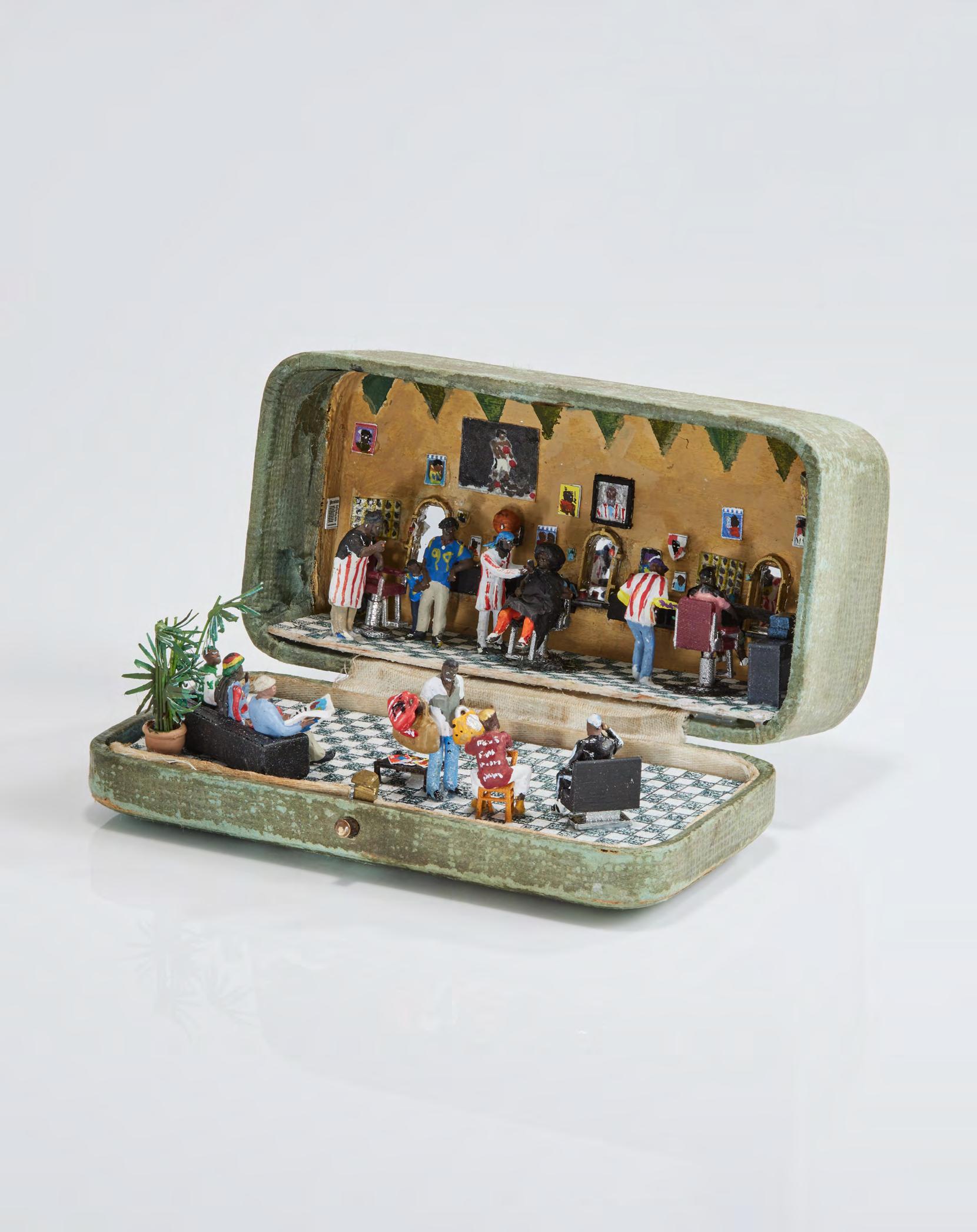
A LINEUP FOR LINEUPS MUST BE FRIDAY (…), Curtis Talwst Santiago, 2022
A HOUSE THE SIZE OF A SHELL
Lisa Braid, Chris Oh, Zayn Qahtani, Curtis Talwst Santiago
(further artists to be confirmed)
26 February – 2 April 2026
A House the Size of a Shell brings together artists who use small-scale formats to create concentrated, self-contained scenes. Taking its title from the writer Gaston Bachelard, the exhibition explores how small spaces can hold entire worlds of memory and imagination. These works operate at a scale that invites proximity and careful looking.
In miniature, details become heightened: a gesture, a surface, the relationship between one object and another. The viewer is asked to adjust their pace, to come nearer, to look longer. The small becomes a tool for intimacy and for holding complexity in a contained space. As Susan Sontag observed, we are drawn to the miniature as a way of keeping something close as a form of attachment, a wish to stay near. These works propose that the world can be assembled from fragments, that vastness can be felt in something that fits in the palm of a hand.
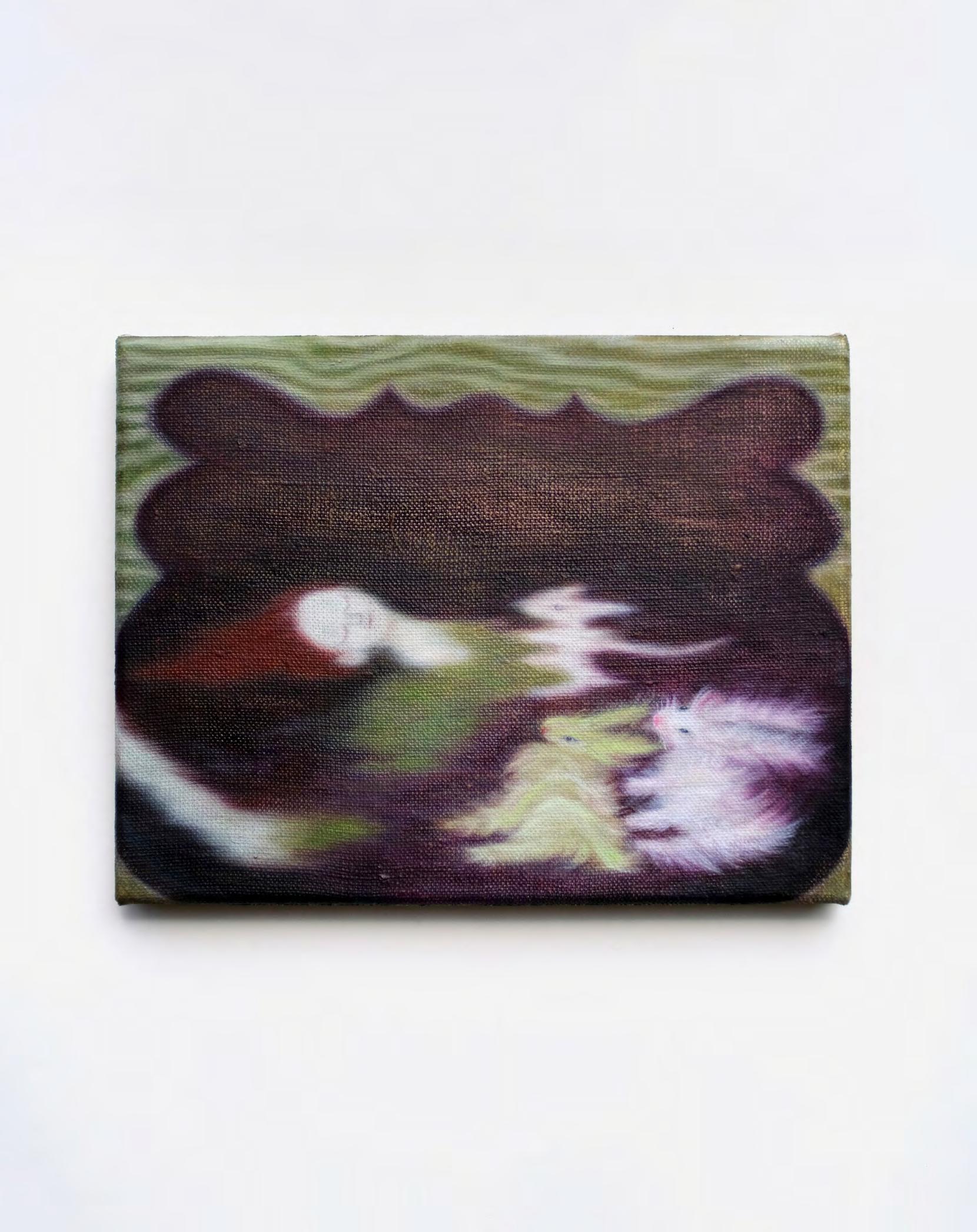
Lisa Braid, Zumindest versunken mit den hasenzwillingen, Springmaus ruht sich aus auf meinem Herz. Ich Lächle, 2025
SO YOUNG PARK
9 April – 23 May 2026
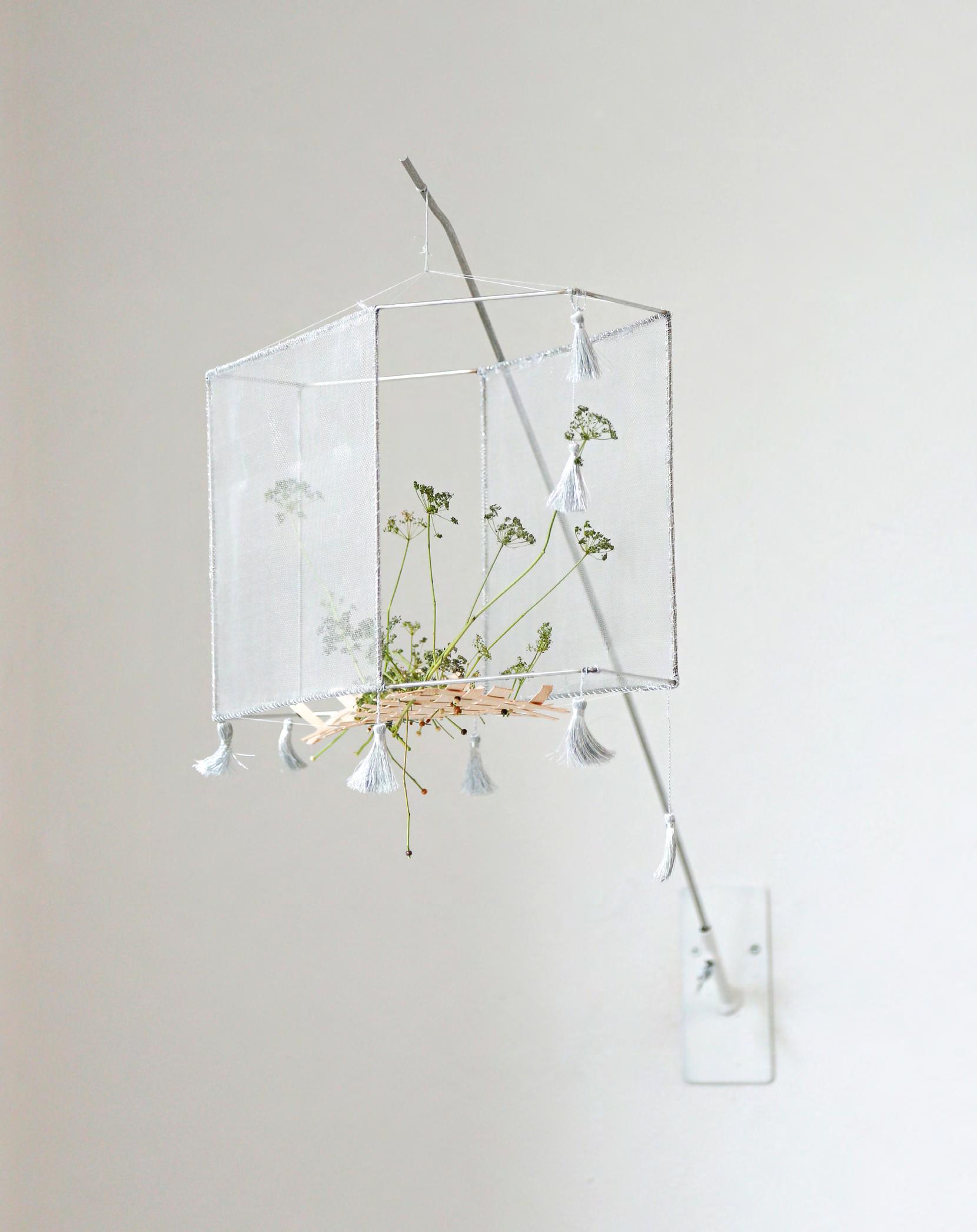
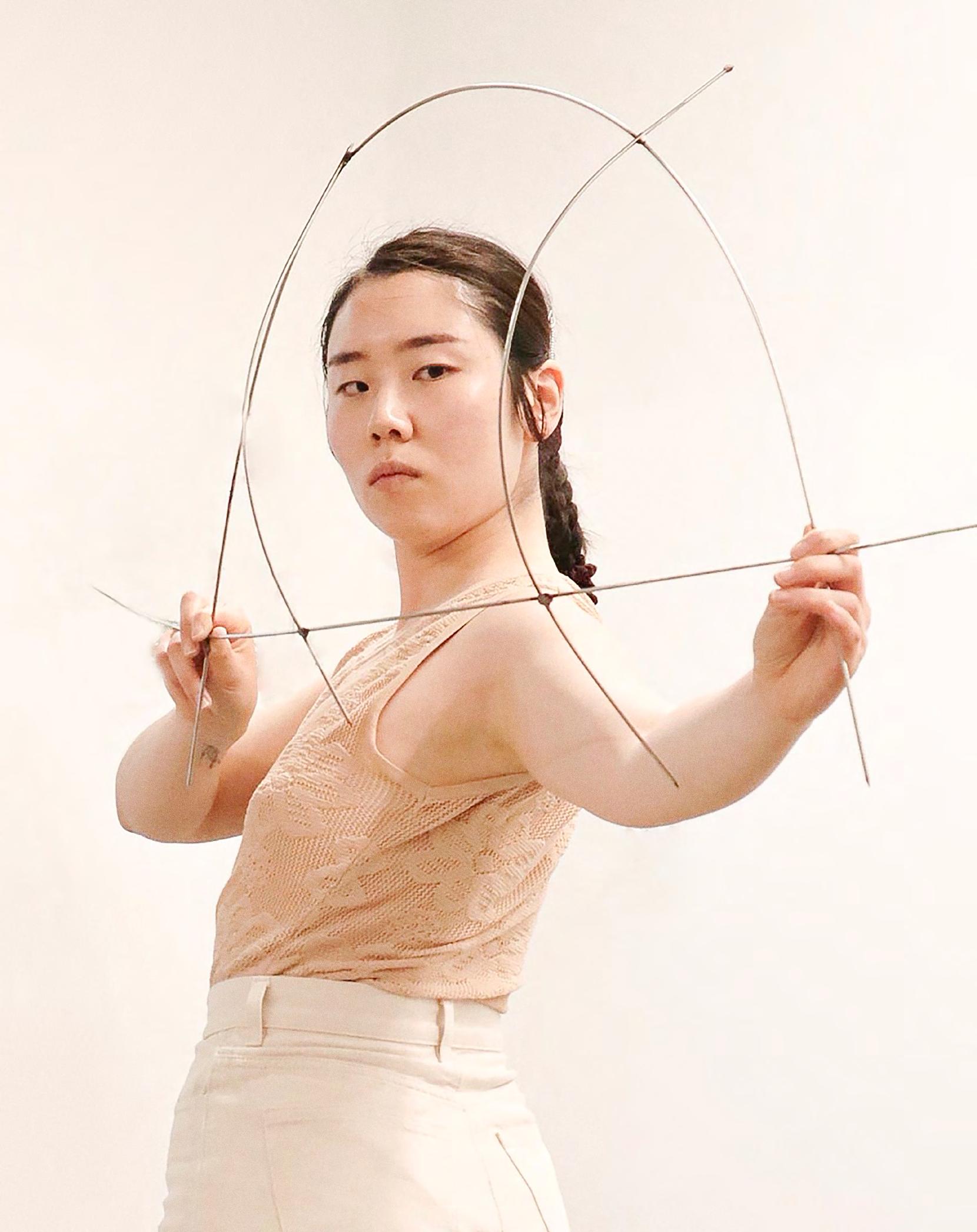
So Young Park is a Vienna-based Korean artist working at the intersection of performative installation and live performance. Her practice explores the in-between state of living and dying, deconstructing the binary of life and death. By tracing the memories inscribed in her own body, Park re-experiences the time her body has witnessed and lived through, sensing how presence and absence co-exist. This embodied act of remembering forms the core of her methodology, allowing her to encounter the liveness of the present and the fragility of existence.
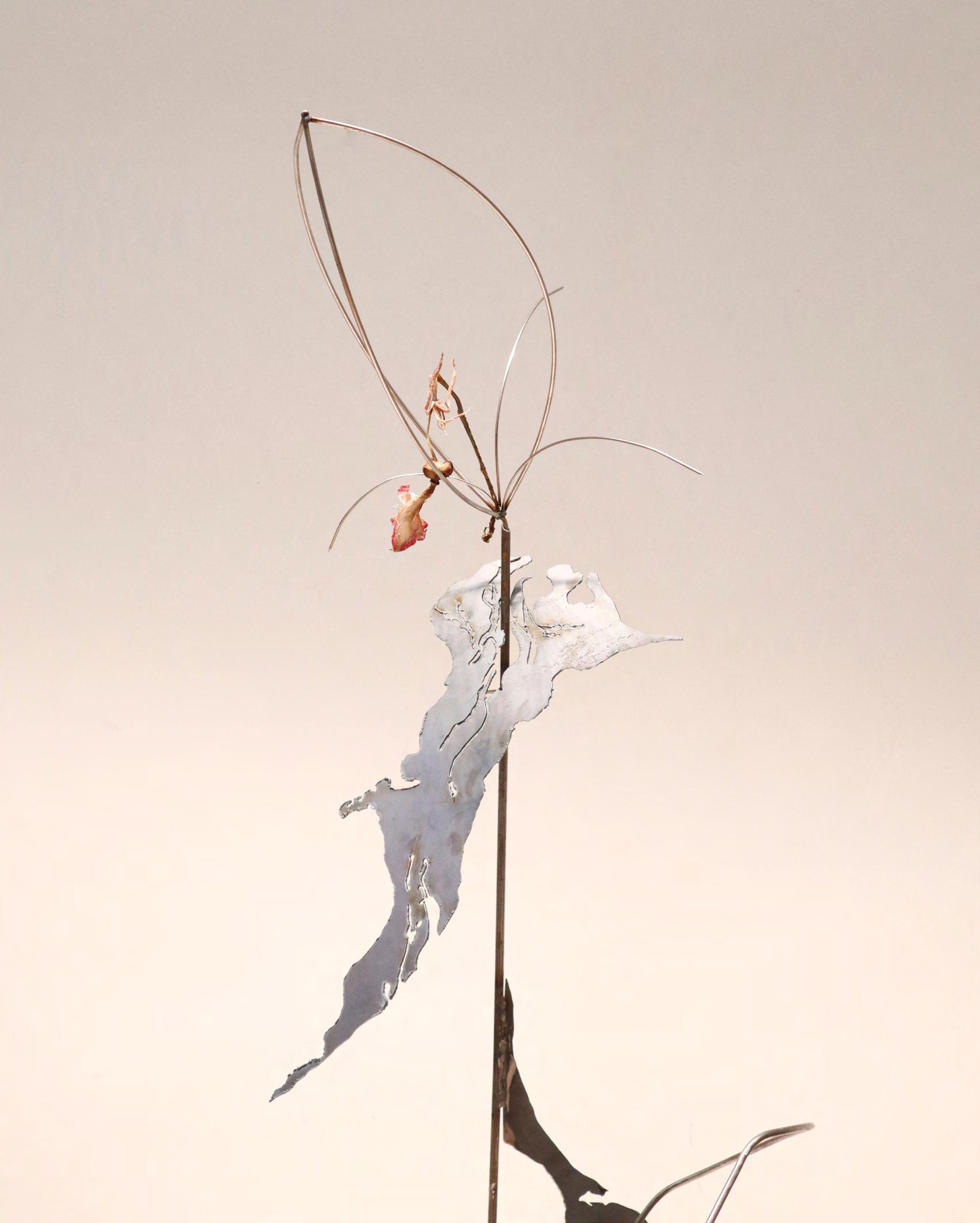
Her performative installations translate these bodily experiences into time-based and spatial forms, where gesture and objects generate new living narratives. Working with fragile materials such as dried plants, flowers, and seeds holding both vitality and vulnerability, Park creates spaces for ephemerality, mourning, and the resonance of absence.
With the term ‘Warm-Death’, Park describes her approach to integrating death into daily life with tenderness and attentiveness, embracing the ways fragility and transience are woven into everyday existence.
So Young Park, If my body could tremble after death, 2025,
Paco Koenig, TULIP, 2023, oil on canvas, 70 × 60 cm. Courtesy the artist. Photo by Paco Koenig
Frauke Dannert, Installation View: EINE STRASSE zur Zukunft der Innenstädte am Beispiel der Graf-AdolfStrasse, 2024. Photo by Mareike Tocha, Köln
Xie Lei, Protection, 2023, oil on canvas, 90 × 65 cm.
Installation View: Shored Against by Ruins, curated by DJ Hellerman, 2025. Photo by Manuel Carreon Lopez
Peter Gallo, Gods, Sluts, Martyrs, 2024, oil on canvas stapled to panel, 53 × 38 cm. Courtesy the artist and Adams and Ollman. Photo by Area Array
Maja Ruznic, The Fading Memory of Your Grandfather, 2025, oil on linen, 28.73 × 33.66 cm. Courtesy the artist and Karma. Photo by Manuel Carreon Lopez
Maja Ruznic, NANA, 2025, oil on linen, 46.36 × 33.35 cm. Courtesy the artist and Karma. Photo by Manuel Carreon Lopez
Donna Huanca, Performance at Metropolitan Museum of Art, 2025. Courtesy the artist. Photo by Donald Stahl
Acaye Kerunen, Wanen
I (We are seen), 2022, palm leaves, raffia and mixed media, 162.6 × 215.9 × 30.5 cm. Courtesy the artist. Photo by Dawn Blackman
Artist Portrait. Courtesy the artist. Photo by Chris Hoßbach
Installation View: Maximilian Prüfer, Nebenlinien - 15 Jahre Naturantypie, 2025. Photo by Manuel Carreon Lopez
Maximilian Prüfer, Zungenkuss, 2015, photography, edition of 20 + 5 AP, 40 × 40 cm. Photo by Maximilian Prüfer
Nana Mandl, no time for regrets, 2025, textiles, embroidery and tube yarn on canvas, 90 × 120 cm. Photo by Nana Mandl
Karl Karner, Blue lumes cg, 2025, aluminum, 305 × 110 × 110 cm. Courtesy Bank Austria. Photo by Wolfgang Thaler
Installation View: Andreas Greiner, Kino Kosmos, PLATO Ostrava, 2025. Selmeci Kocka Jusko: Nenásilné nástroje: Sledované a přenesené / Uncombative tools: Traced and Transferred. Courtesy PLATO. Photo by Martin Polák
Marc Henry, It’s a Wrap (Medusa), 2024, oil on linen burlap blend, 140 × 170 cm. Courtesy the artist. Photo by Jana Perusich
Thomas Supper, Installation View: Reductions, 2025, Photo by Theo Bartenberger
Paulina Aumayr, Nach nur dreissig Tagen war meine ganze Haut schon nicht mehr die, die du berührt hast, 2024, oil on canvas, 80 × 80 cm. Courtesy the artist. Photo by Paulina Aumayr
Paulina Aumayr, Bis meine Haut zu Leder wird, 2025, oil on canvas, 110 × 155 cm. Courtesy the artist. Photo by Paulina Aumayr
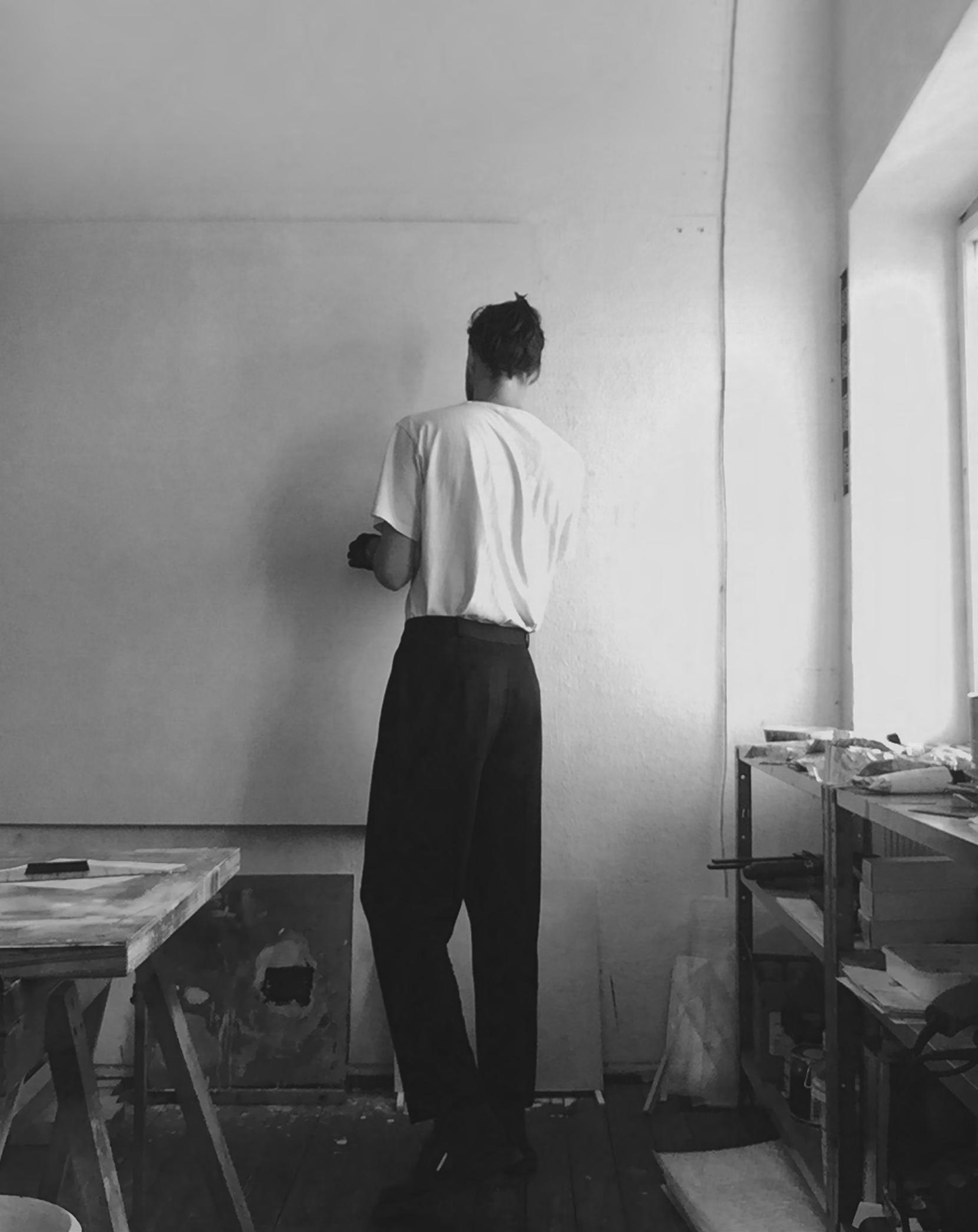
Artist Portrait. Courtesy the artist. Photo by Paco Koenig
Paco Koenig, TULIP, 2025, oil on linen, 100 × 100 cm. Courtesy the artist. Photo by Paco Koenig
Paco Koenig, UNTITLED, 2025, oil on aluminium, 80 × 60 cm. Courtesy the artist. Photo by Paco Koenig
Artist Portrait. Courtesy the artist. Photo by Chris Hoßbach
Frauke Dannert, Gelenk, 2024, paper collage, 24 × 33 cm. Courtesy the artist. Photo by Maraike Tocha
Artist Portrait. Courtesy the artist. Photo by Théo Viardin
Théo Viardin, Victorious Oedipus, 2024, oil on canvas, wooden frame, 212 × 89 cm. Courtesy the artist. Photo by Théo Viardin
Théo Viardin, Research an encounter, 2024, oil on canvas, 205 × 170 cm. Courtesy the artist. Photo by Théo Viardin
Detail: Elias Jocher, chamber 2 of 9, 2025, concrete, pewter, 18 × 14 × 5 cm. Courtesy the artist. Photo by Elias Jocher
Melissa Steckbauer, Untitled (Lady 557), 2025, acrylic on paper, 30.5 × 23 cm. Courtesy the artist. Photo by Melissa Steckbauer
Melissa Steckbauer, Untitled (Lady 530), 2025, acrylic on paper
30.5 × 23 cm. Courtesy the artist. Photo by Melissa Steckbauer
Melissa Steckbauer, Untitled (Lady 590), 2025, acrylic on paper
30.5 × 23 cm. Courtesy the artist. Photo by Melissa Steckbauer
Curtis Talwst Santiago, A LINEUP FOR LINEUPS MUST BE FRIDAY. ALWAYS THAT ONE
BARBER ON THE DAMN PHONE! BRUH, CAN YOU PLEASE FINISH MY FADE?!, 2022, mixed media in reclaimed jewellery box on custom coloured Finnish birch plywood pedestal. Diorama 15.2 × 15.2 × 20 cm, pedestal 112.4 × 35.6 × 35.6 cm. Courtesy the artist. Photo by Holger Albrich
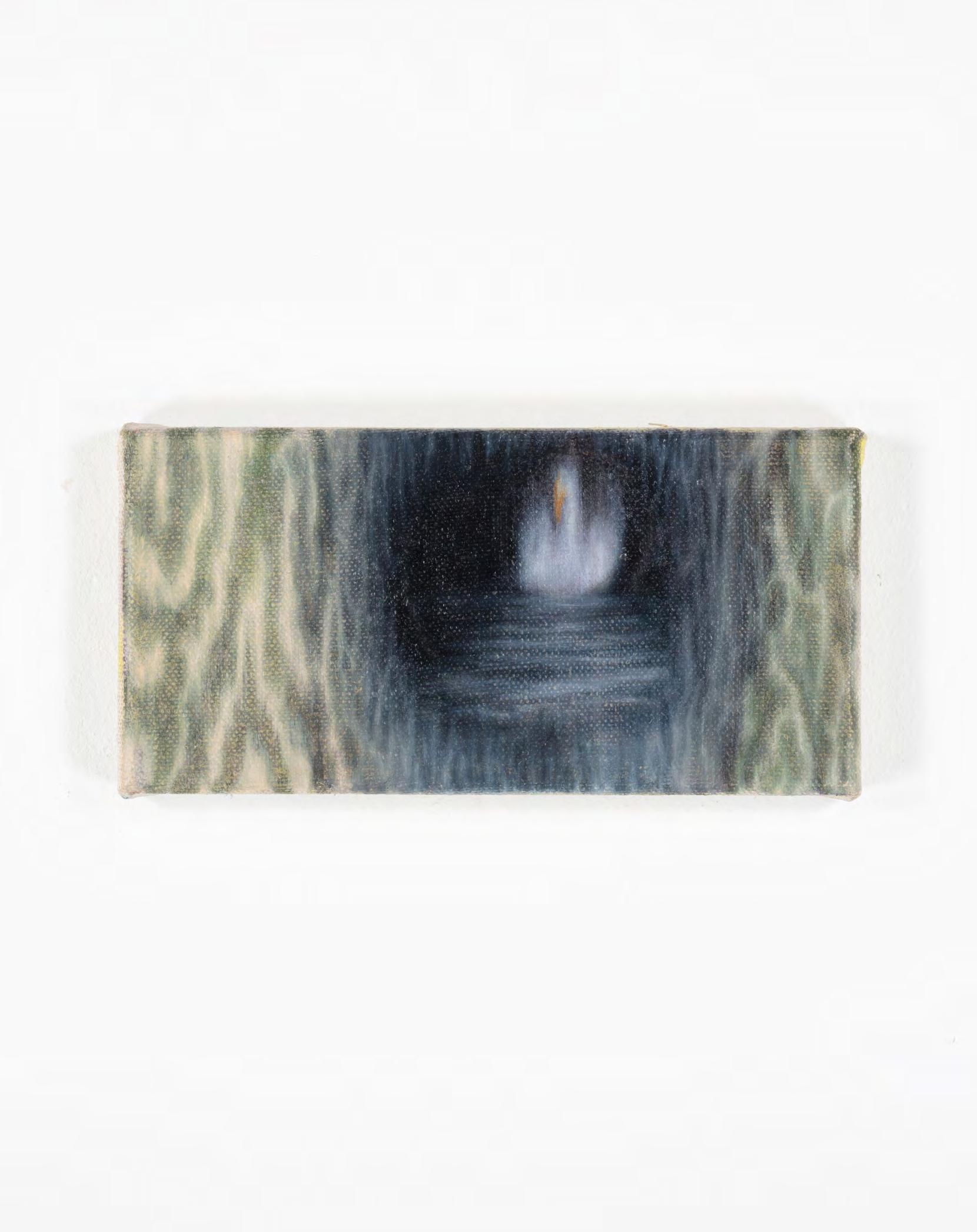
Lisa Braid, Zumindest versunken mit den hasenzwillingen, Springmaus ruht sich aus auf meinem Herz. Ich Lächle, 2025, oil on canvas, 30 × 20 cm. Courtesy the artist. Photo by Lisa Braid
Lisa Braid, Untitled, 2024, oil on canvas, 14 × 20 cm. Courtesy the artist. Photo by Lisa Braid
So Young Park, If my body could tremble after death, 2025, metal structure combined with wood plate, beads and ammimaius flower, 25 × 60 cm. Courtesy the artist. Photo by Esther Stern
Artist Portrait. Courtesy the artist. Photo by Sunggu Hong
Detail: So Young Park, Visitors with no names, 2025, metal structure combined with metal plate and amaryllis flower. Courtesy the artist. Photo by So Young Park
Thomas Supper, Installation View: Reductions, 2023 - ongoing, Photo by LBZ-Art-Photo