THE UNBOUND MIND
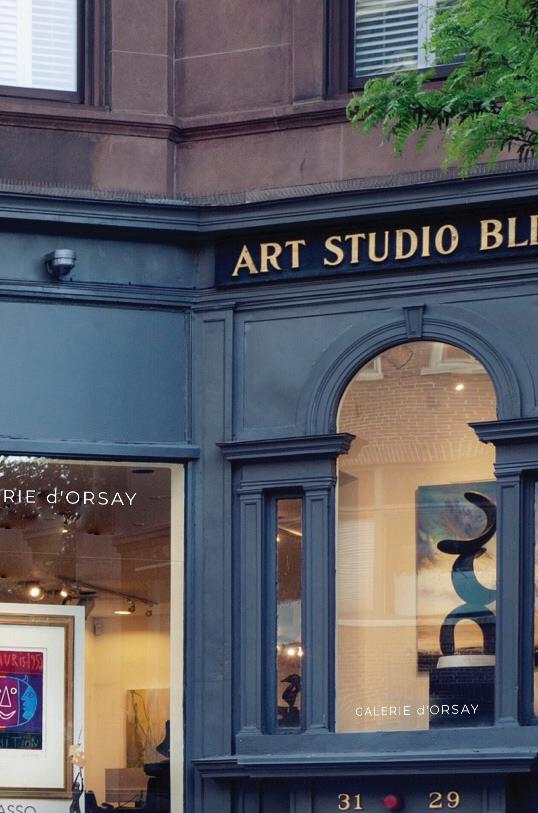
GALERIE d’ORSAY PRESENTS
THE UNBOUND MIND
Galerie d’Orsay is pleased to introduce our first exhibition of 2026, The Unbound Mind. This show brings together works by five extraordinary artists—Desmond Morris, Grace Pailthorpe, Salvador Dalí, Joan Miró, and Fermin Castro—to examine Surrealism’s enduring influence from its early pioneers to its contemporary interpreters.
Showcasing drawings, paintings, prints, and sculptures, The Unbound Mind invites viewers to explore the limitless terrain of the subconscious and the imaginative power that characterizes Surrealism. The exhibition includes works by Desmond Morris, the last living member of the original Surrealist movement, whose distinctive biomorphic forms evolved from his early zoology studies. Also featured is Grace Pailthorpe, a pioneering British surrealist, surgeon, and psychologist, whose work merges psychoanalytic theory with artistic experimentation.
Striking works by Salvador Dalí and Joan Miró highlight their masterful draftsmanship and bold imagery, further cementing their status within the Surrealist canon. Completing the collection is Fermin Castro, an emerging Cuban-born sculptor and painter based in Massachusetts. Castro’s abstract-figurative wooden forms draw inspiration from Cuban and Afro-Cuban traditions, mythology, and nature—transforming wood from a wide range of geographical areas into imaginative sculptural worlds.
Together, these artists illuminate Surrealism’s evolution over a century. We invite you, our cherished friends and collectors, to view this extraordinary collection at our Galerie d’Orsay. We are delighted to share The Unbound Mind, which celebrates a movement that remains vibrant, exploratory, and deeply connected to the mysteries of the mind.
Isabel Schuler Fine Art Consultant
DESMOND MORRIS B. 1928
THE LAST LIVING
MEMBER OF THE ORIGINAL SURREALIST MOVEMENT
Desmond Morris is a renowned zoologist, anthropologist, best-selling author, and the last surviving artist of the Surrealist movement. While studying zoology at the University of Birmingham, he began drawing the biological forms he observed under a microscope, which evolved into his distinctive Surrealist imagery—a “menagerie of creatures that were all his own” according to David Attenborough. Though informed by biology, Morris’s invented biomorphs are irrational and imaginative, developing freely on the canvas while remaining meticulously executed. Influenced by artists like Joan Miró and Yves Tanguy, this visual language has remained central to his work throughout his career.
In the late 1940s, Morris became associated with the final group of British Surrealists and exhibited alongside leading figures of the international movement, including Miró. As his career progressed, Morris focused professionally on zoology, earning a doctorate from Oxford and achieving worldwide fame through television and landmark publications such as The Naked Ape. His artistic career gained renewed recognition from the late 1980s onward, with major museum exhibitions and acquisitions by the Tate, the National Galleries of Scotland, and the Ashmolean Museum. Today, Morris’s work is celebrated for its unique fusion of science, imagination, and Surrealist vision.
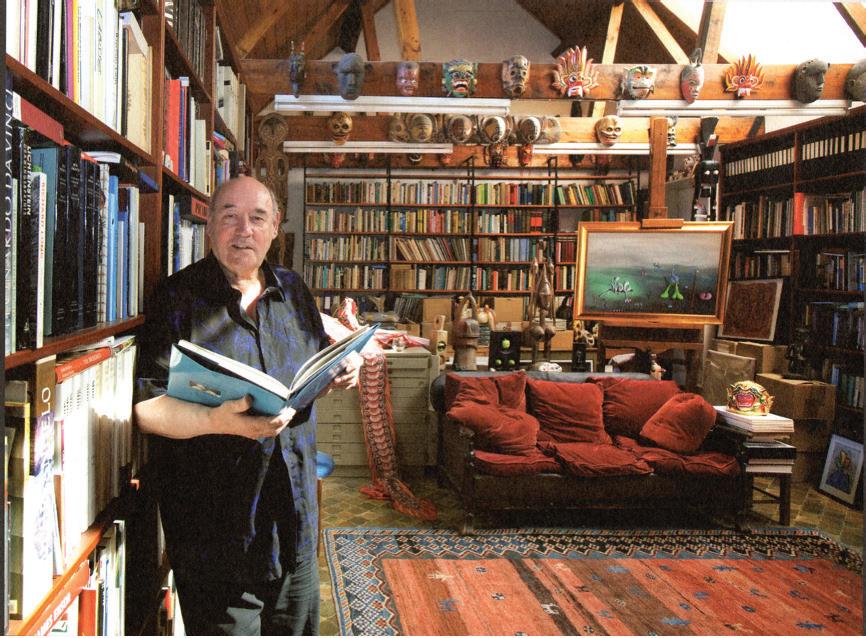
Desmond Morris in his personal library, Ireland
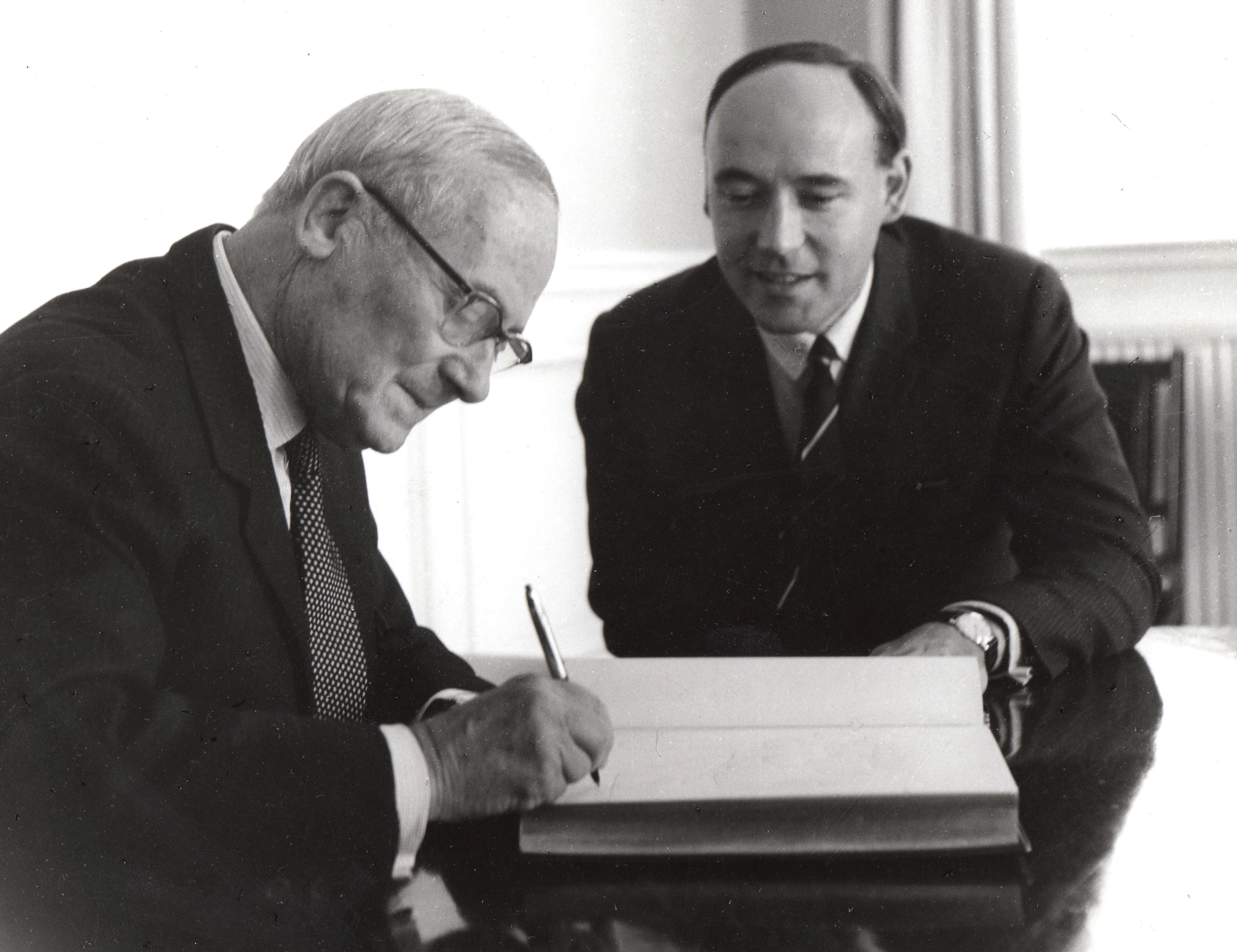
Joan Miró and Desmond Morris, 1964, photograph by Lee Miller
Courtesy Desmond Morris
DESMOND MORRIS & JOAN MIRÓ
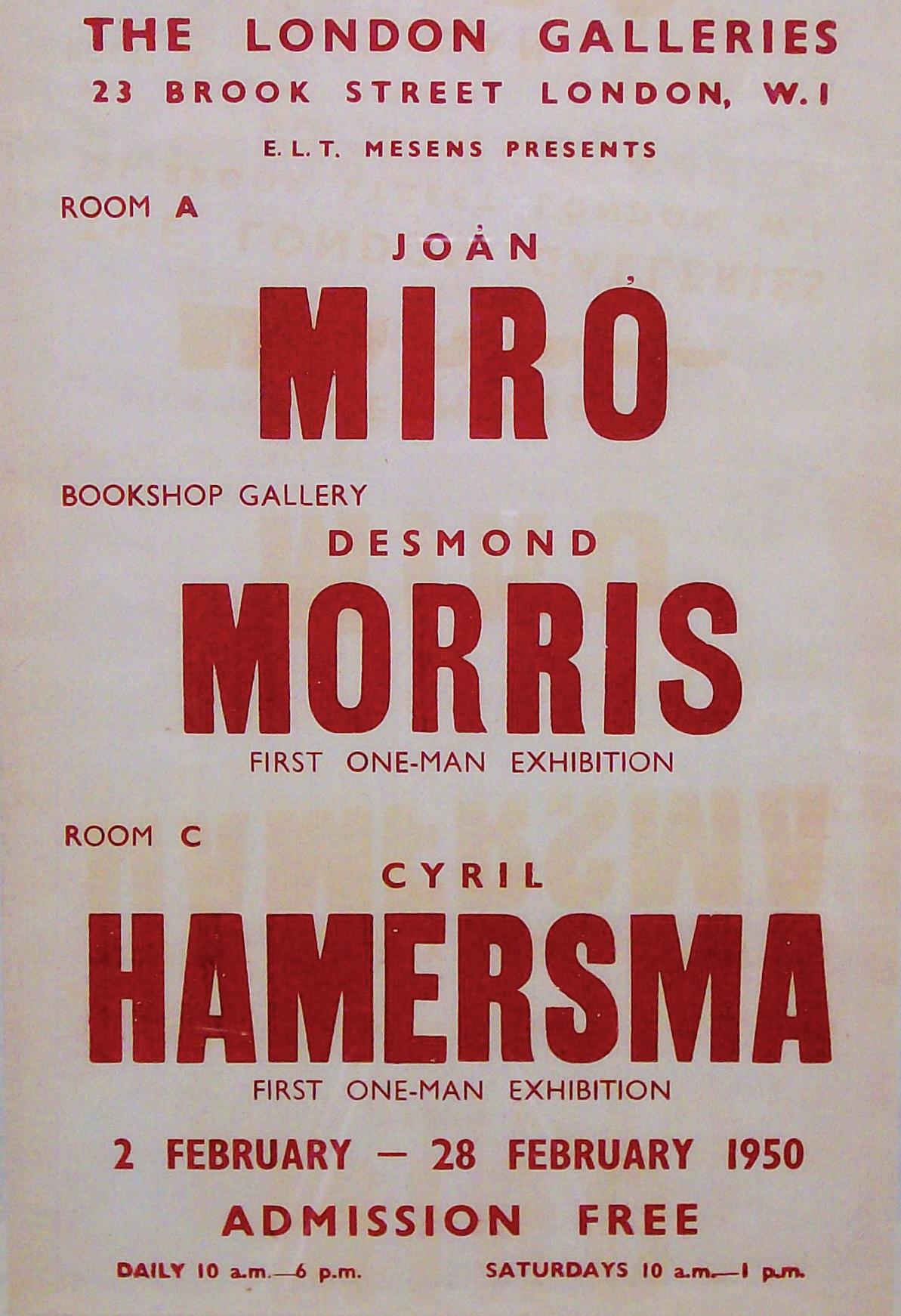
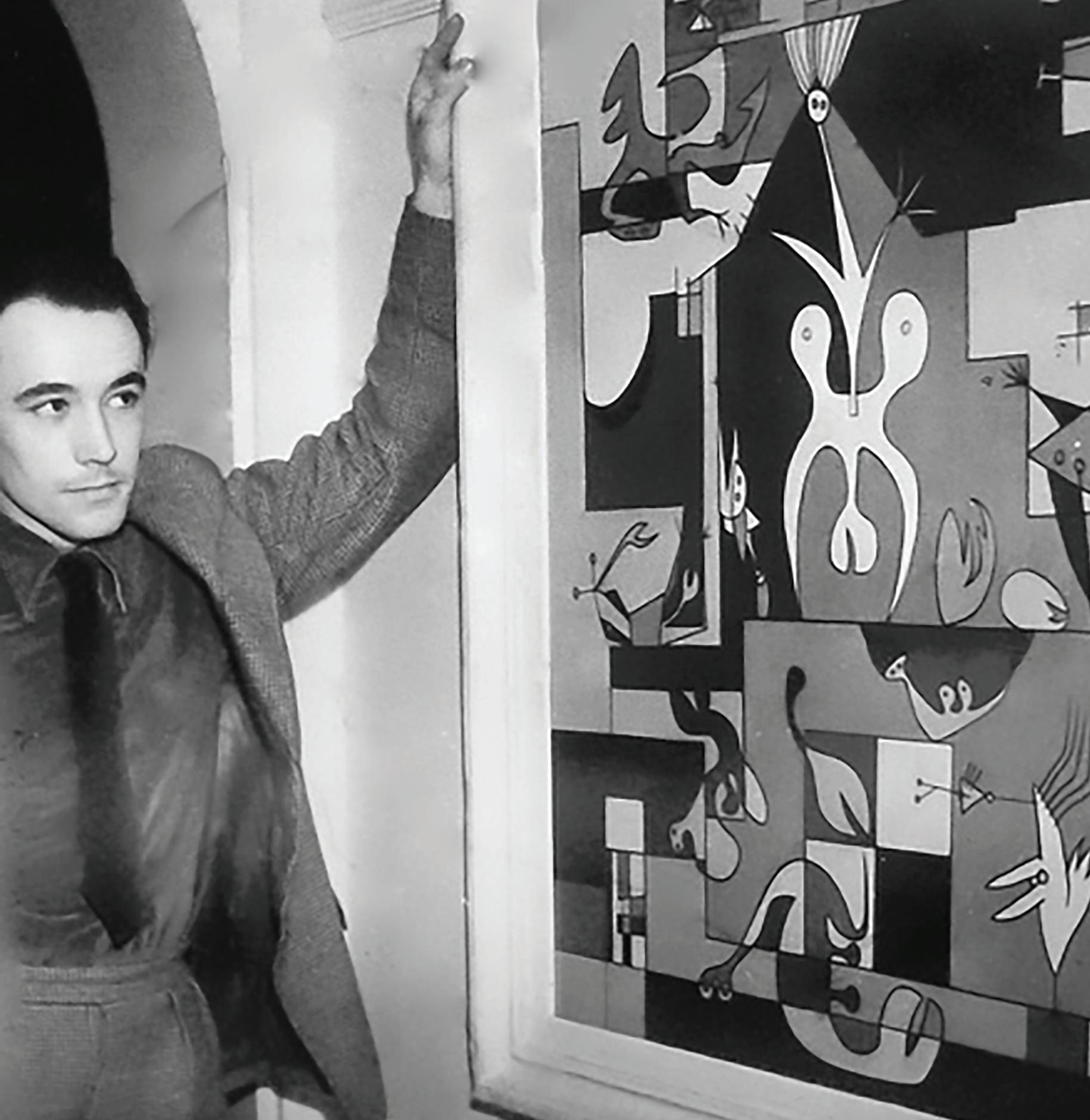
Desmond Morris at The London Galleries exhibition in 1950
Courtesy Desmond Morris
THE A4 BIOMORPHIA: THE “F” SERIES
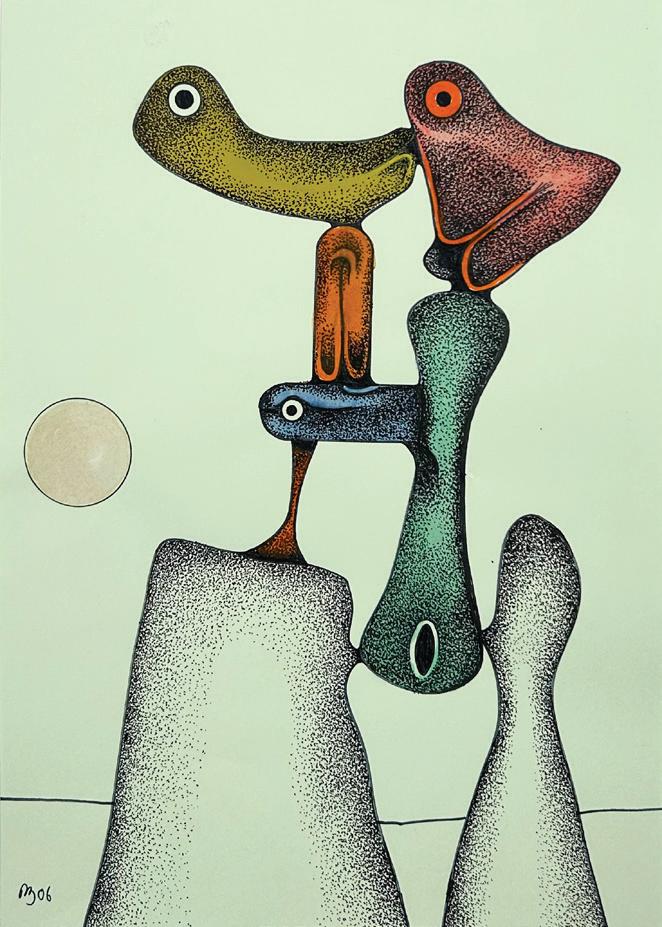
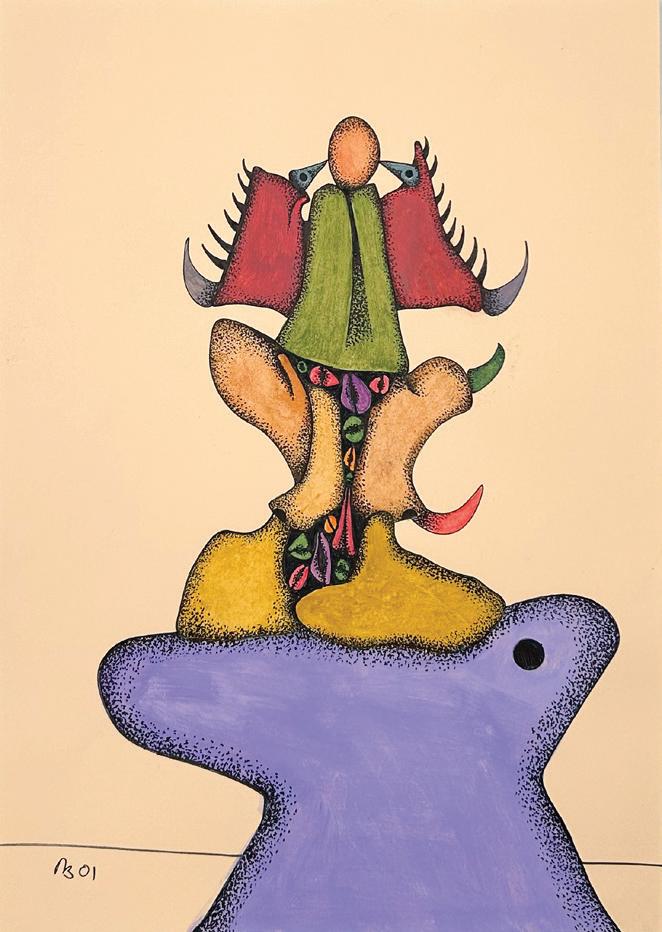
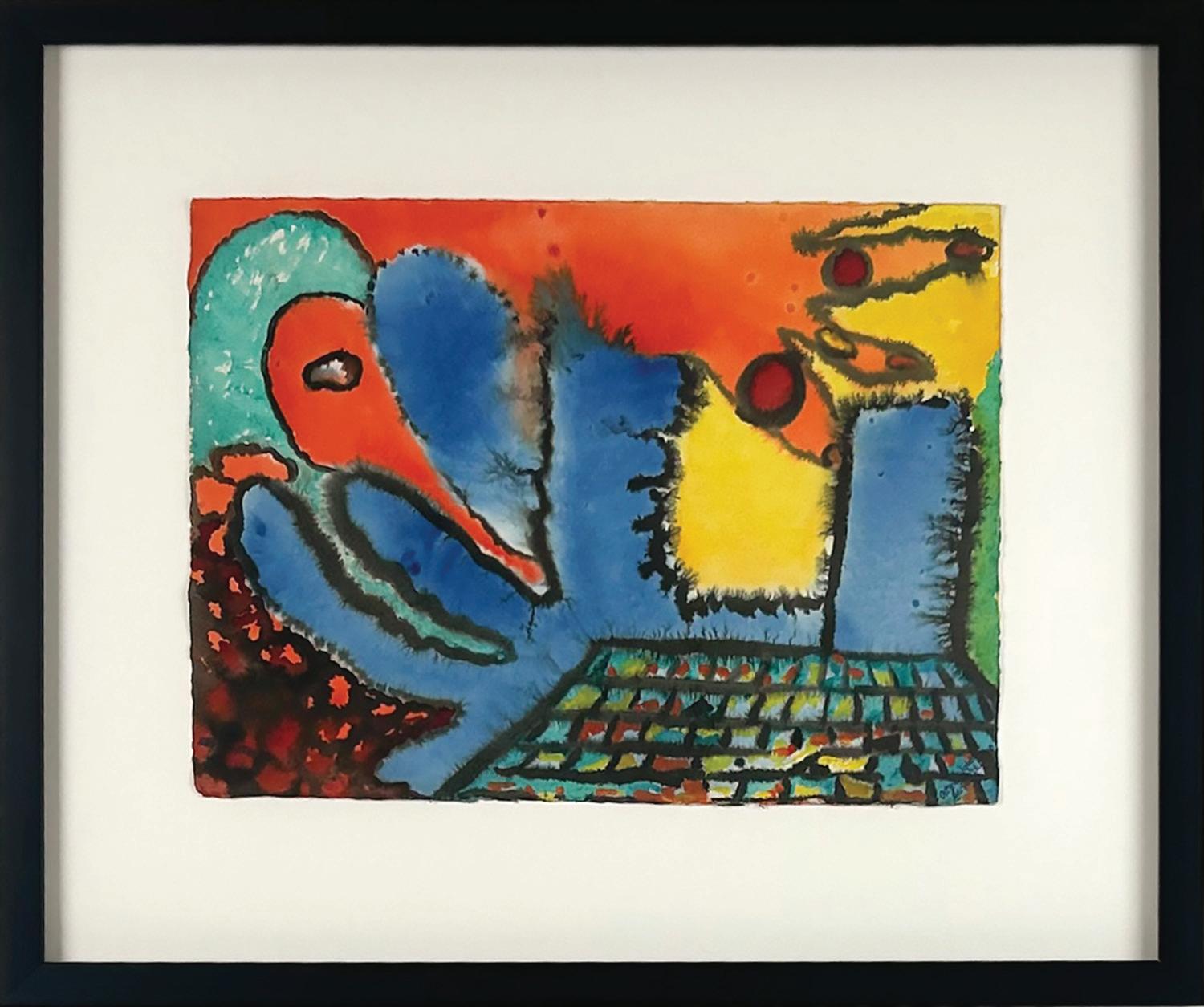
Following the celebrations for his 95th birthday on January 24th, 2023, Morris began a long series of biomorphic A4 watercolours on paper. These were of a special kind. In previous years, he had made many black ink drawings. These were stored in drawers, one drawer for each year. Searching though these, he selected some that he felt could be improved by the addition of watercolour. The backgrounds were left untouched and only the figures themselves had the coloured paints added. Once the paint had dried, inkstippling was applied to give the shapes more solid bodies. The dates on these watercolours refer to the original black ink drawings. They are relevant because they indicate when the actual image was first created. The added colours and stippling all date from January to May 2023.
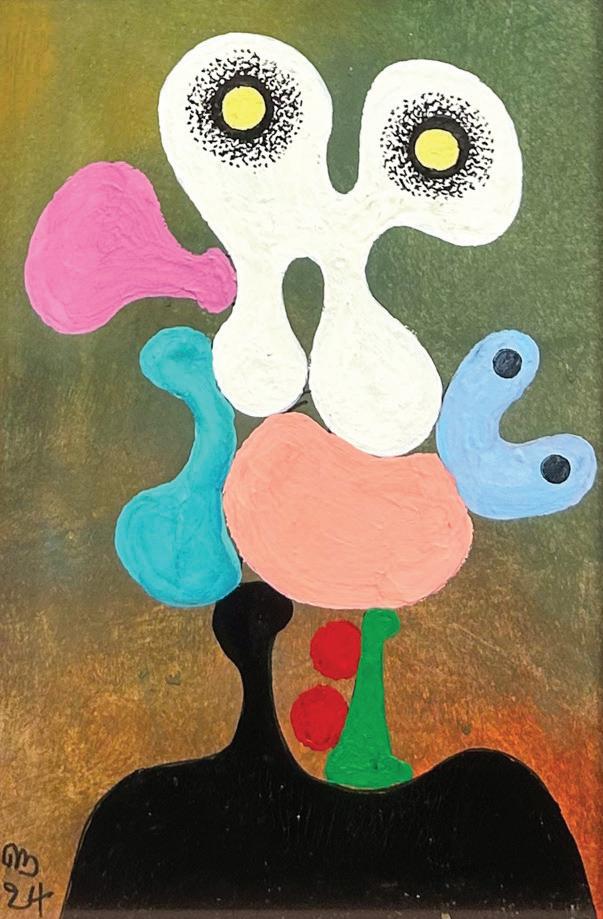
8th August, 2024
THE FORMER LOVE
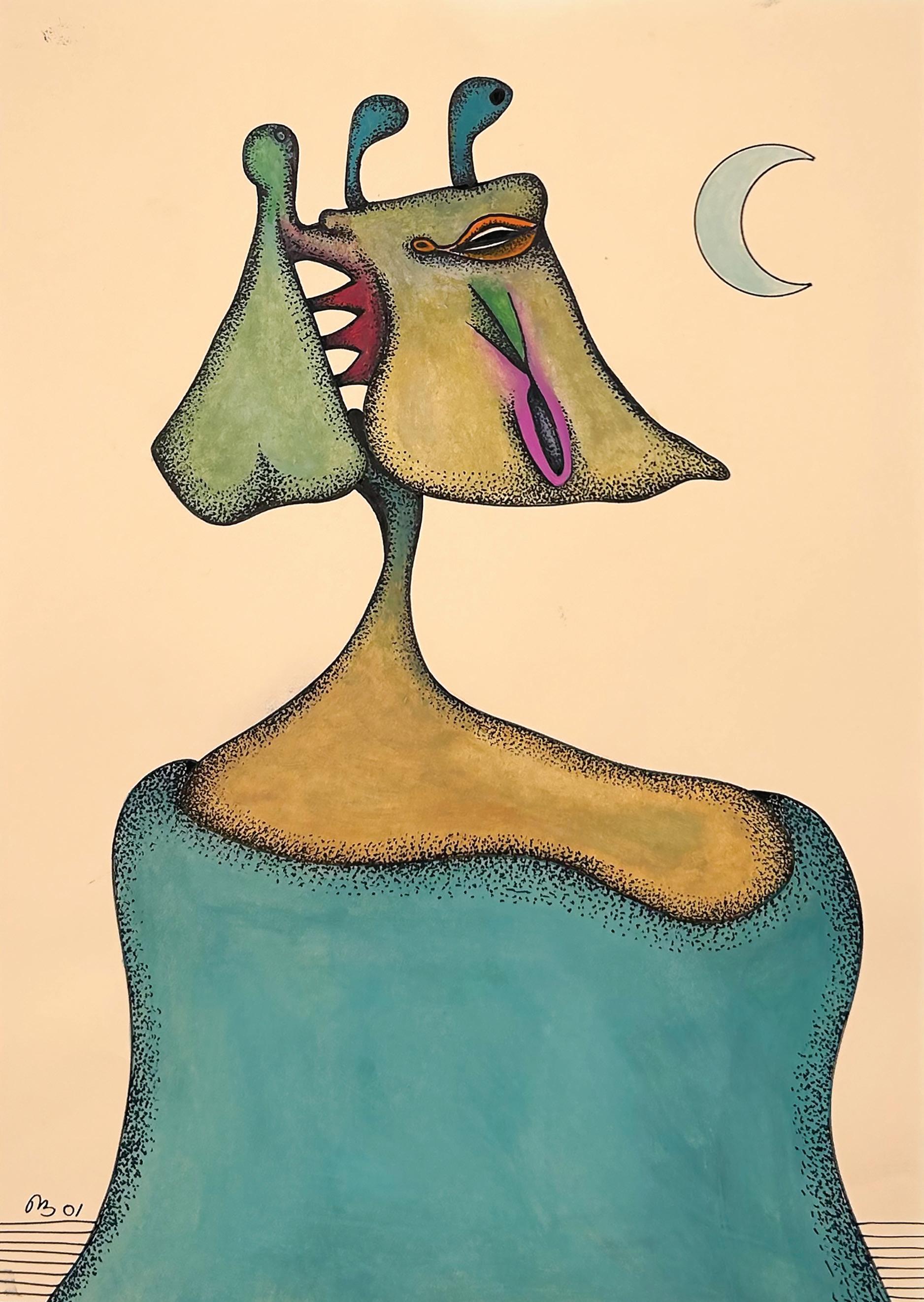
Watercolor and Ink on Paper, 11.5” x 8”
Gouache on Card
5.5” x 3.5”
THE A4 BIOMORPHIA: THE “F” SERIES
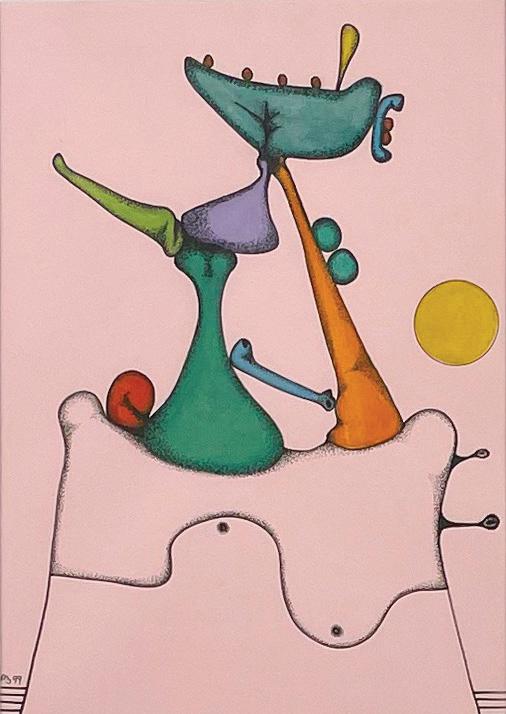
FEMALIST
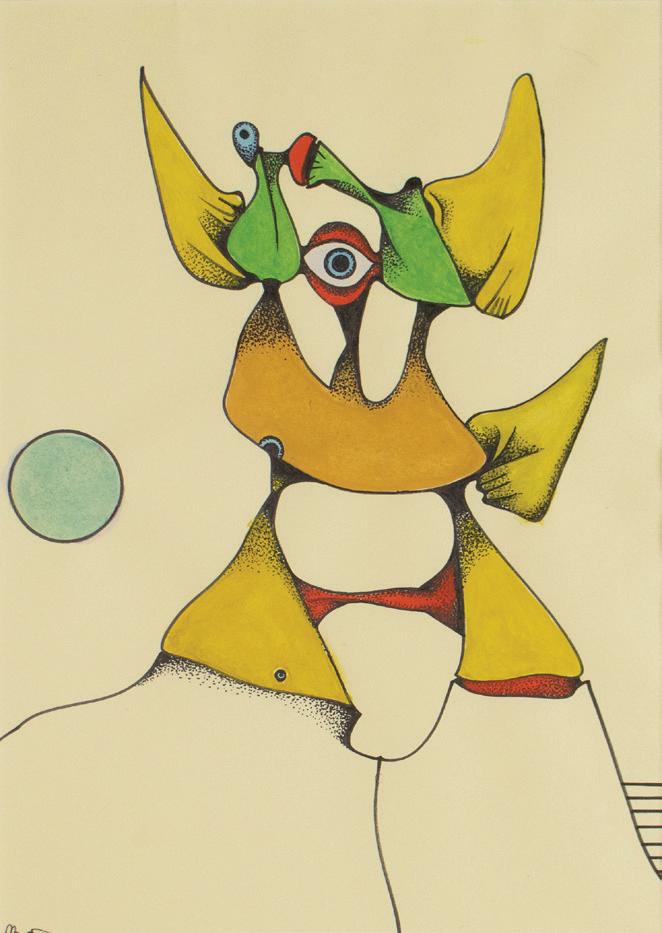
FUNCTIONARY
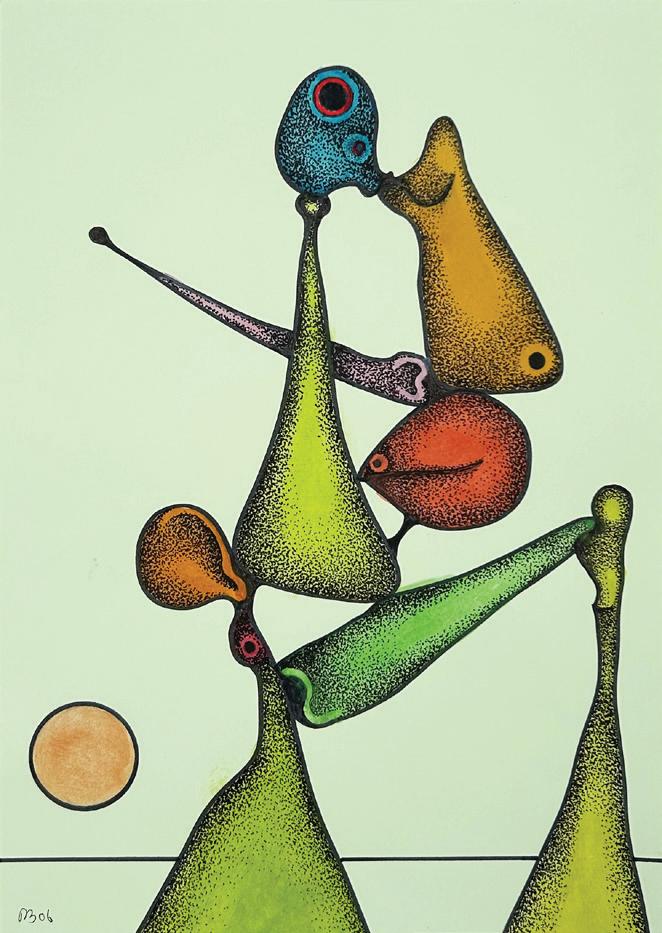
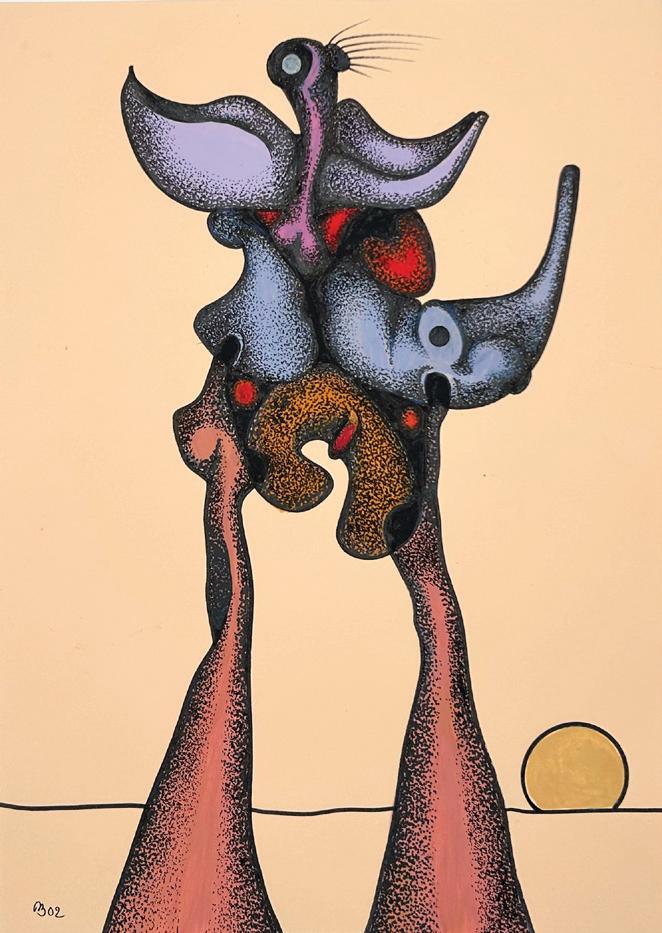
FORTIFIER FINDER
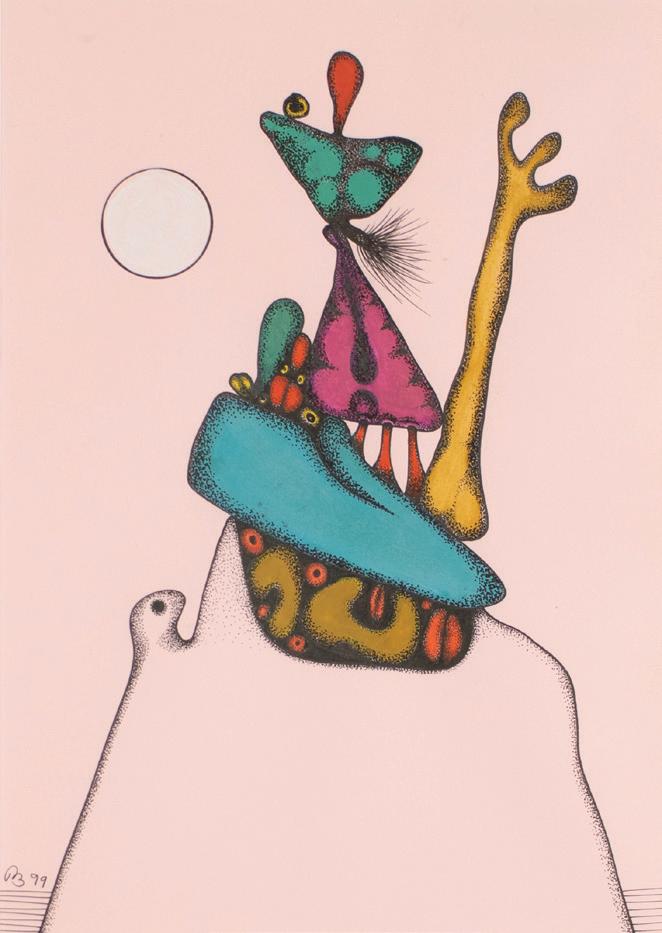
FEARER
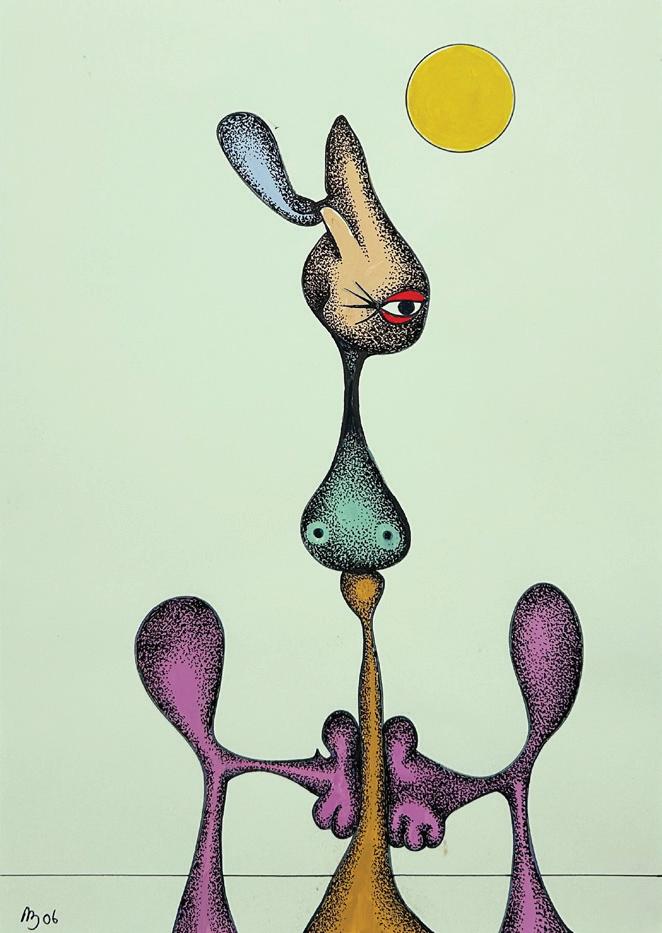
FOUNDER
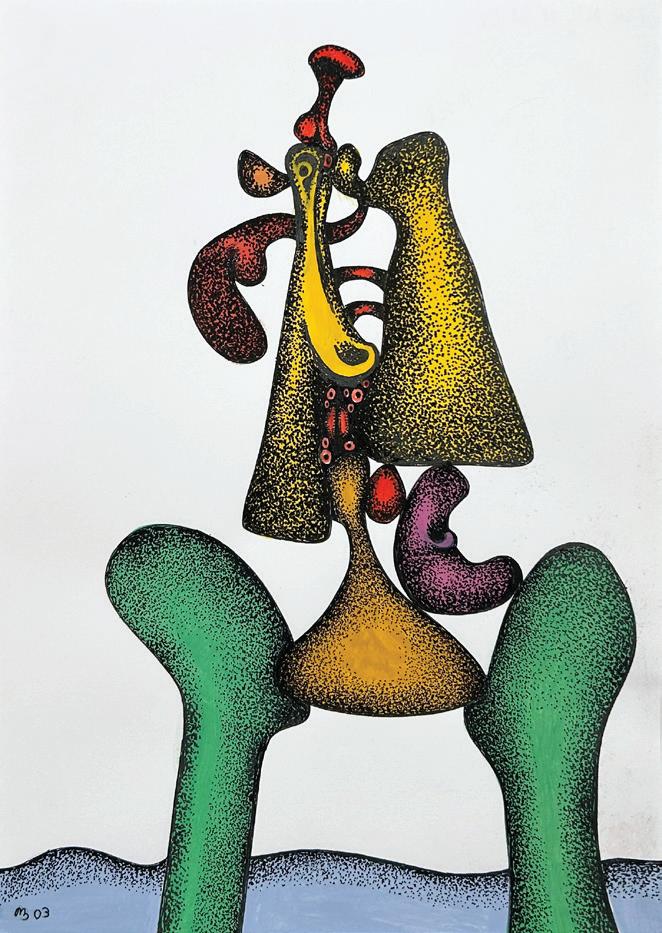
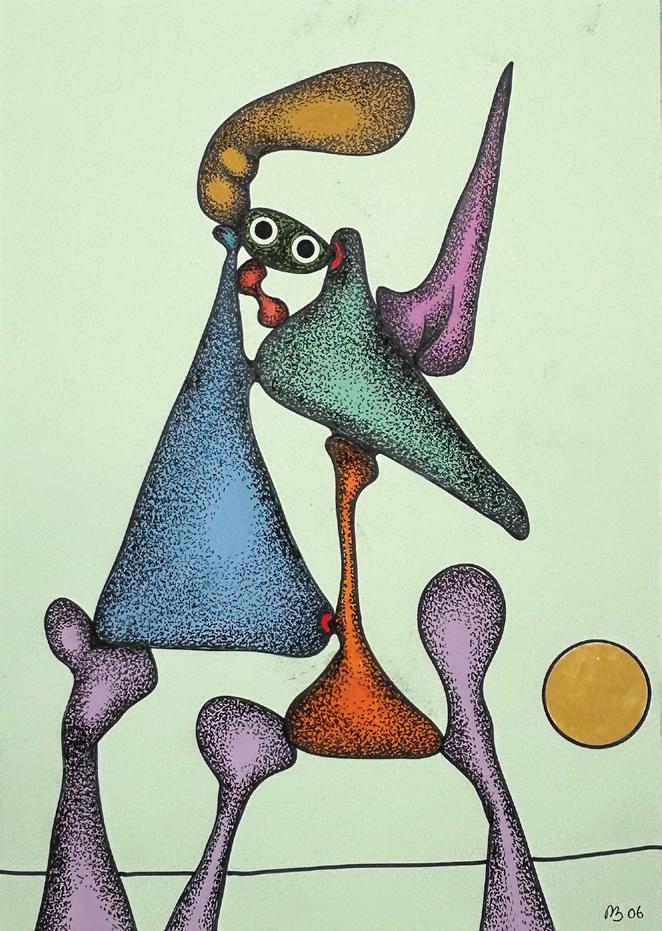
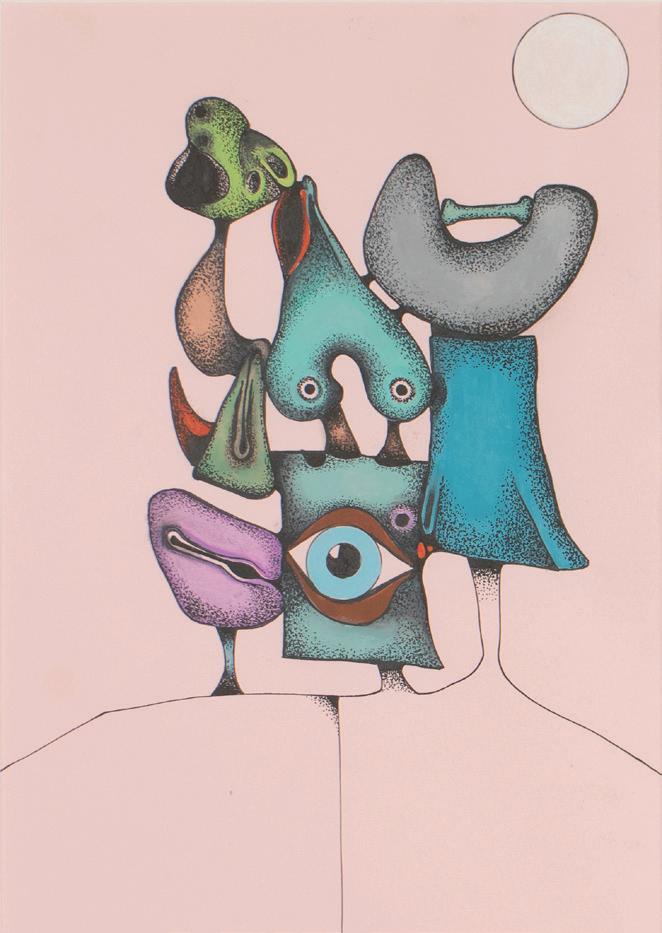
FREMMAN FORMALIST FLIMMER
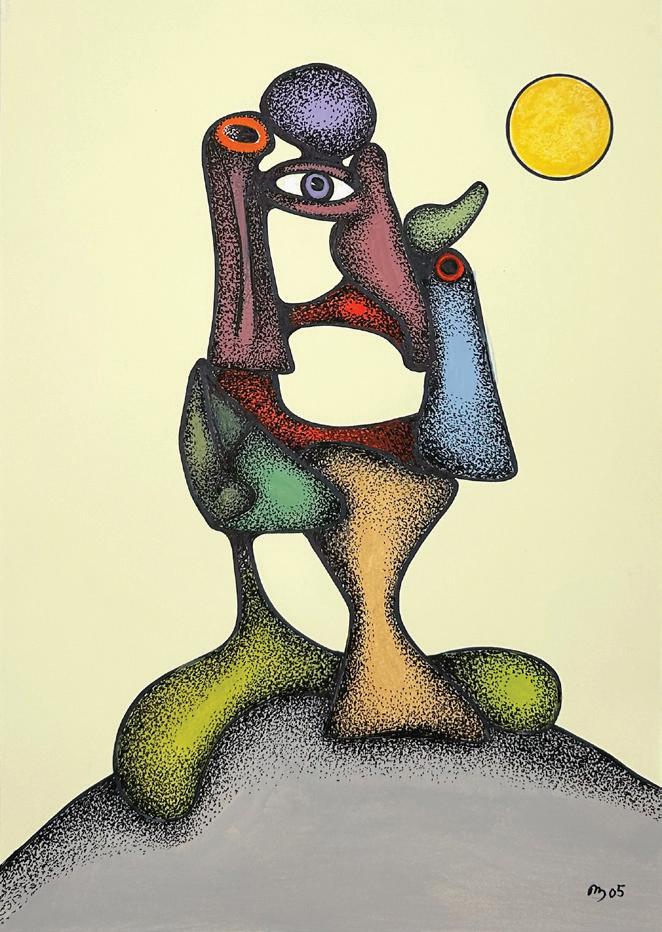
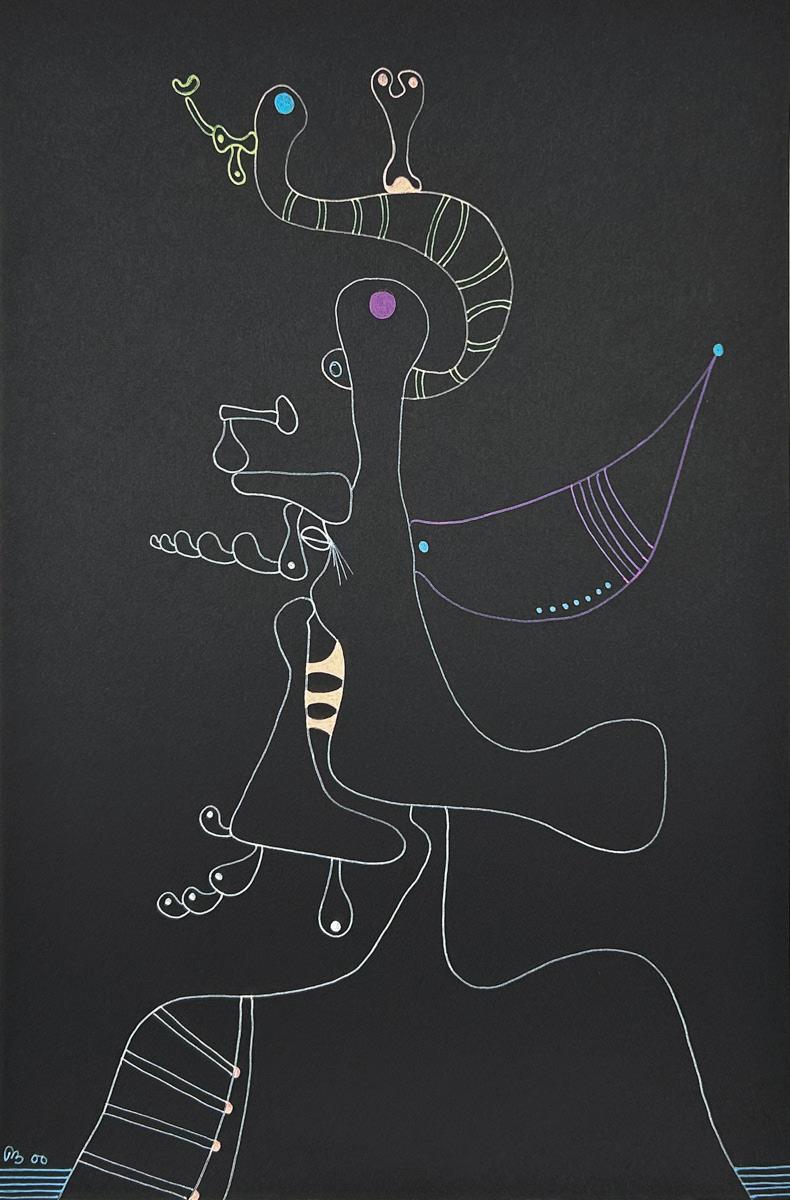
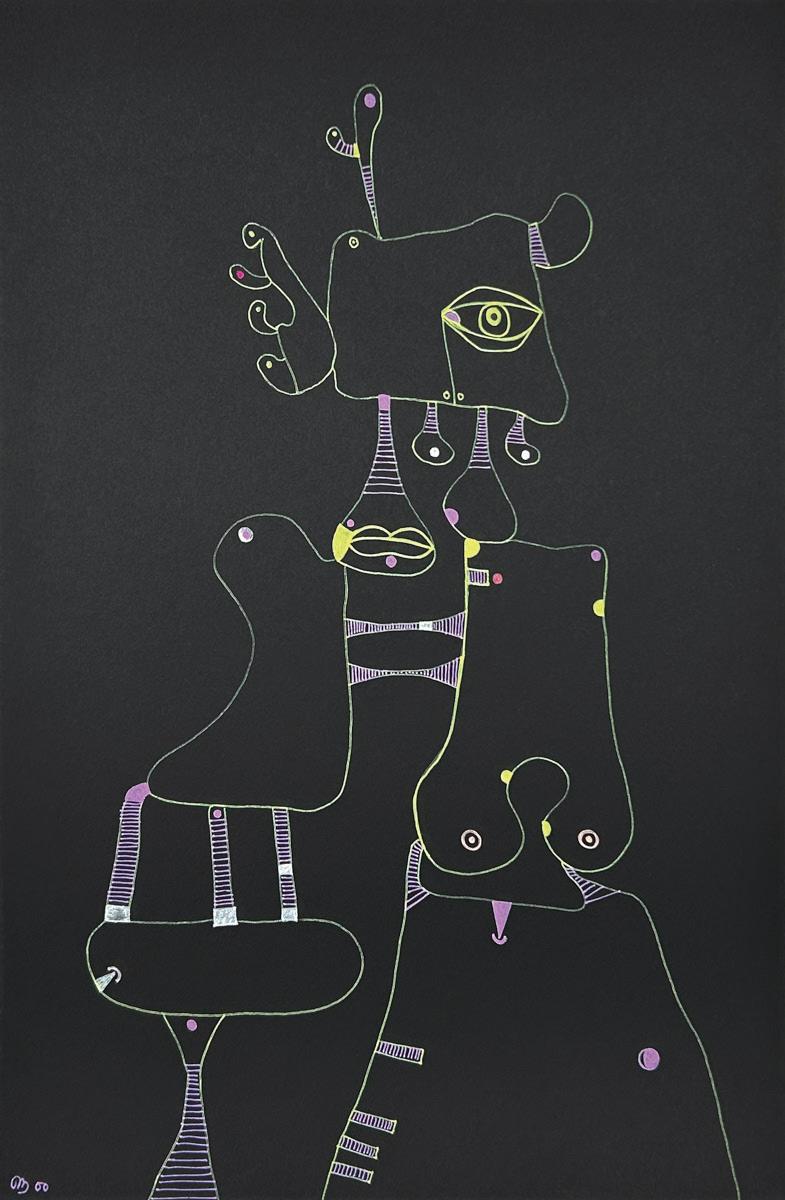
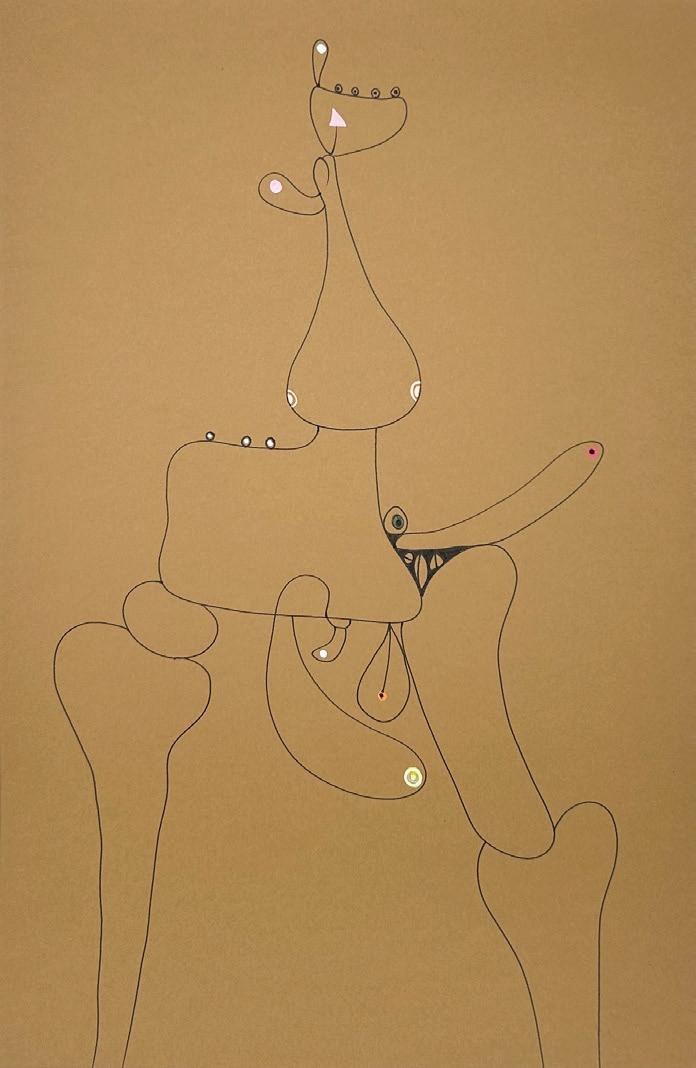
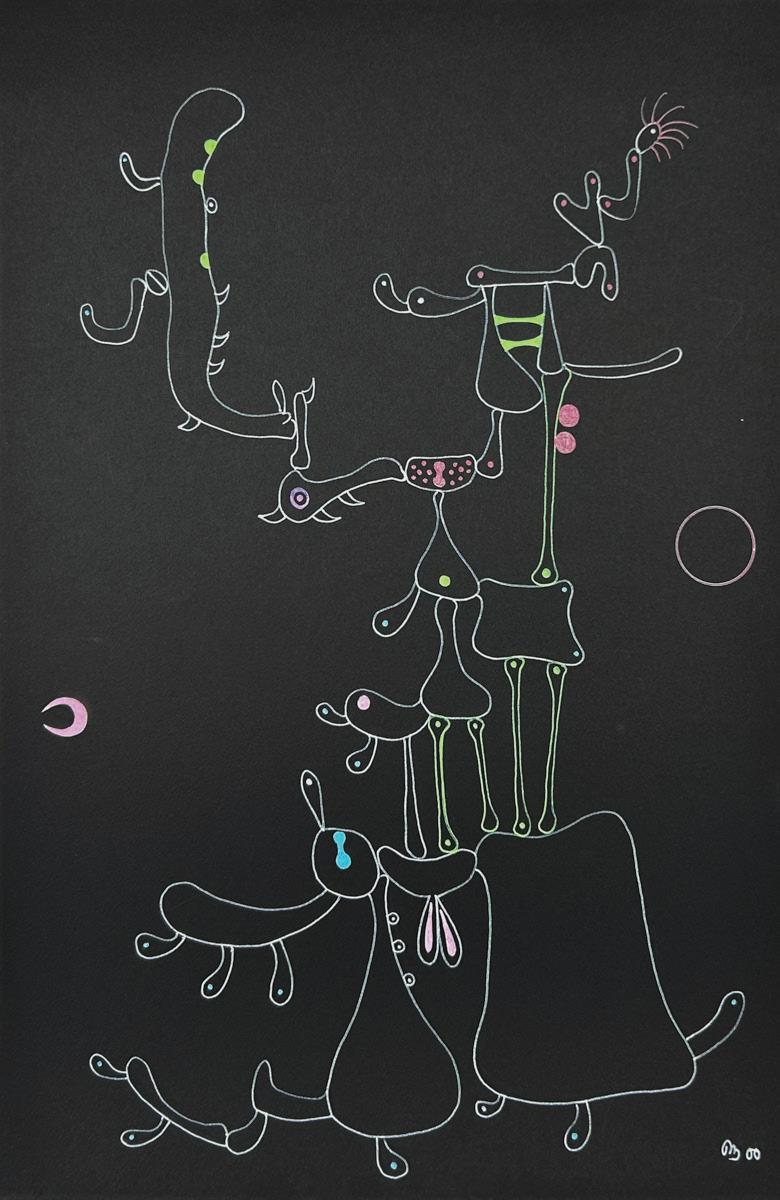
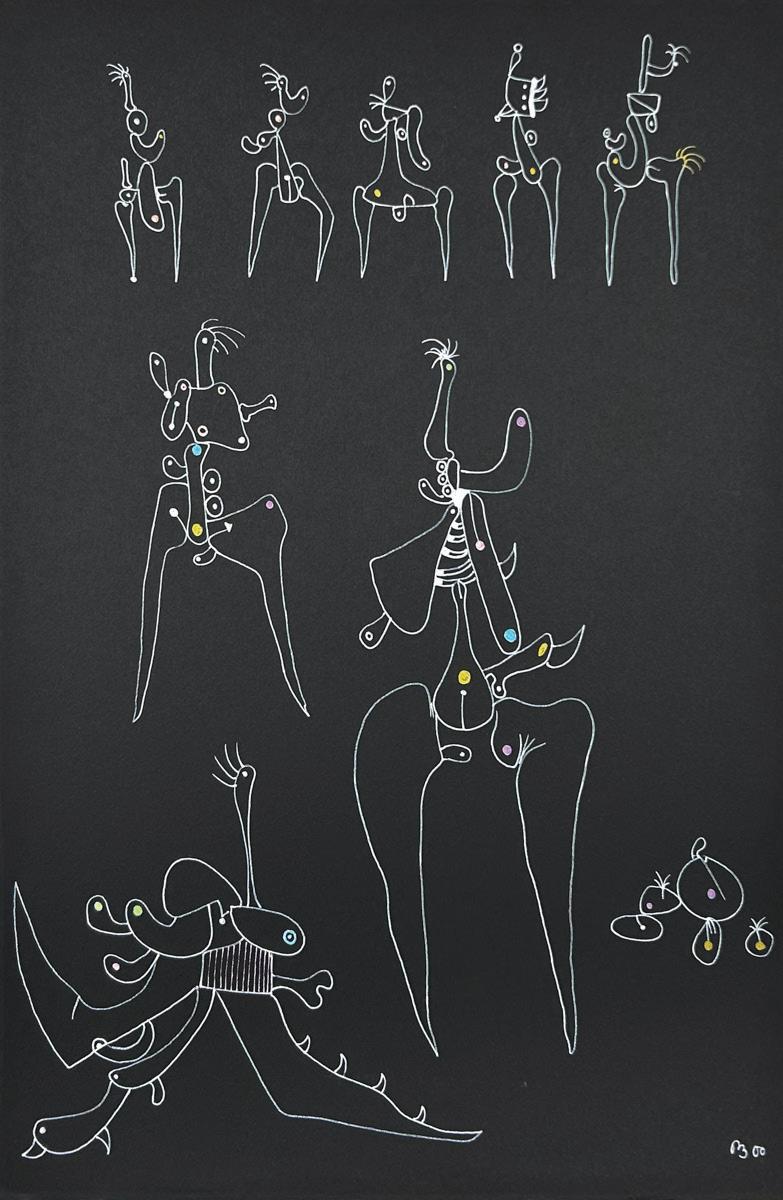
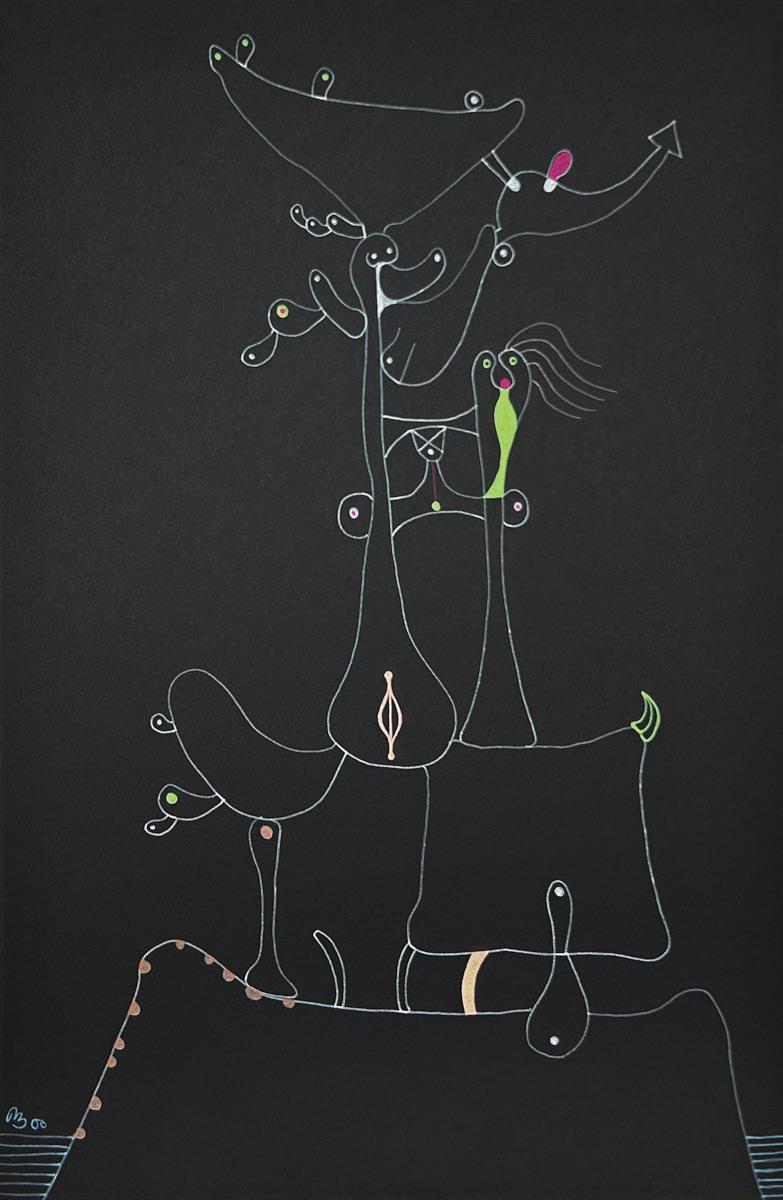
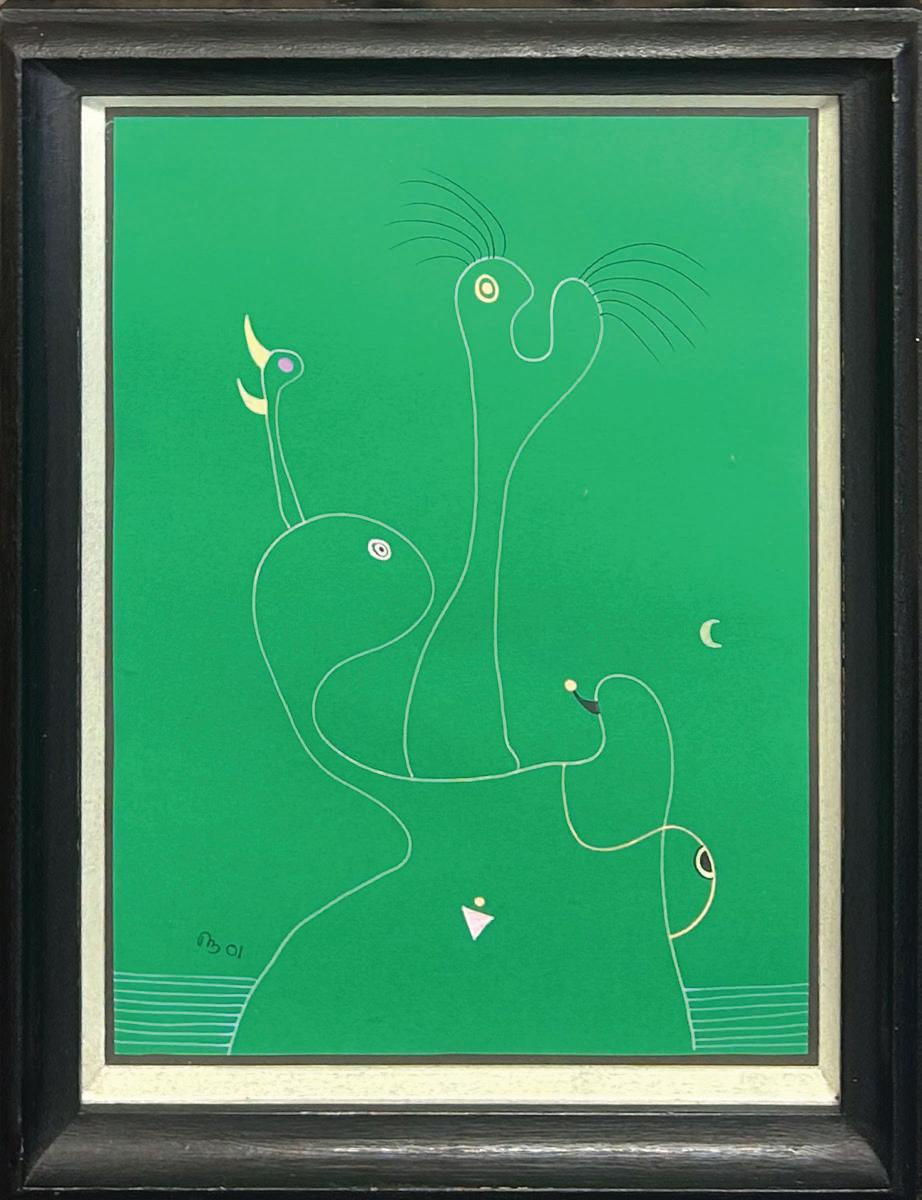
Left, clockwise: All Untitled, 2000, White Ink and Gouache on Black Paper, 15” x 10”, Left, Top center: Untitled, 2000, Watercolor and Ink on Brown Paper, 15” x 10”
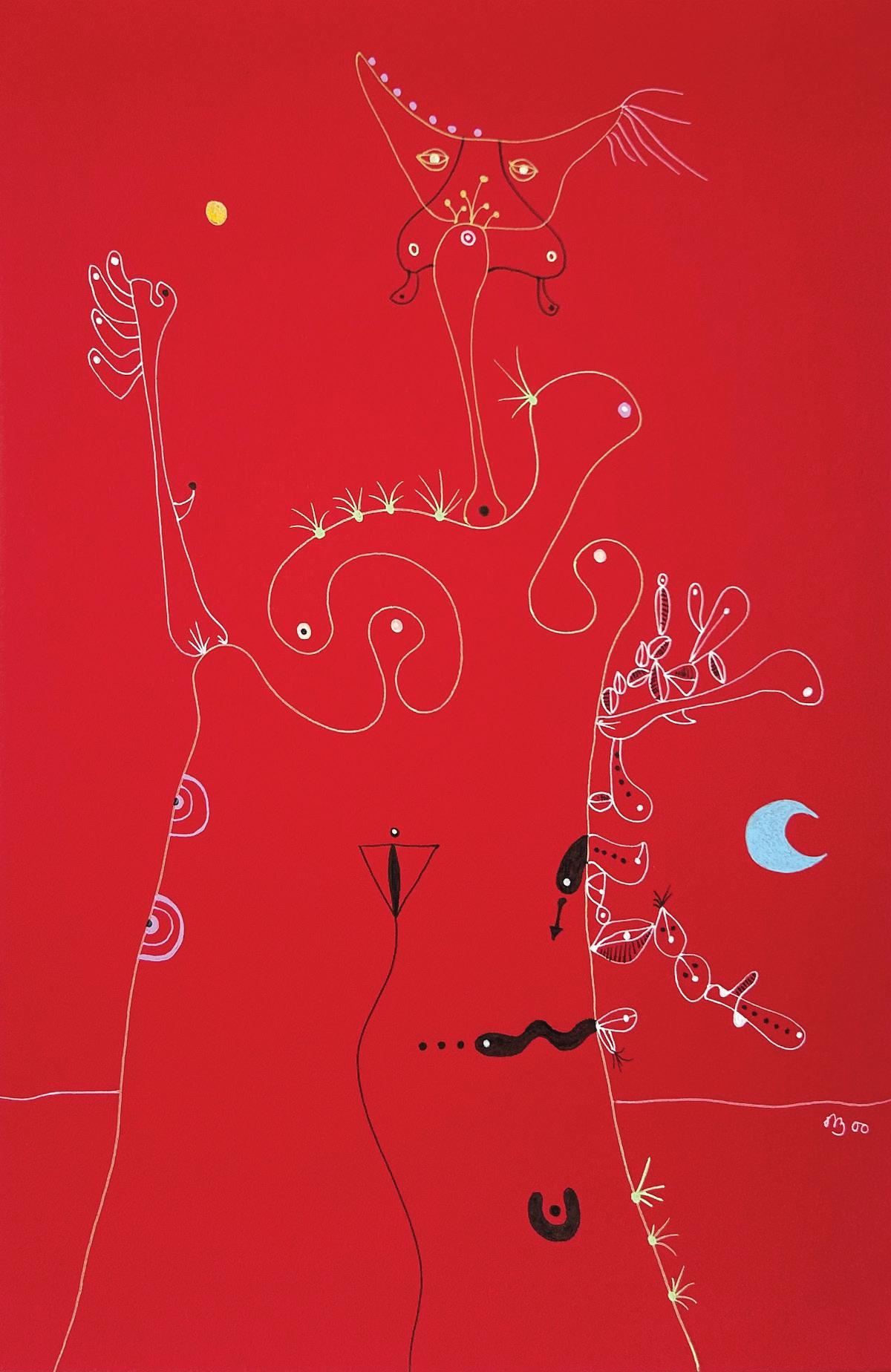
Above: Untitled, 2000, White Ink and Gouache on Red Paper, 15” x 10”, Untitled, 2001, Gouache and Ink on Green Paper, Framed: 12.5” x 9.75”
The Zoo Period
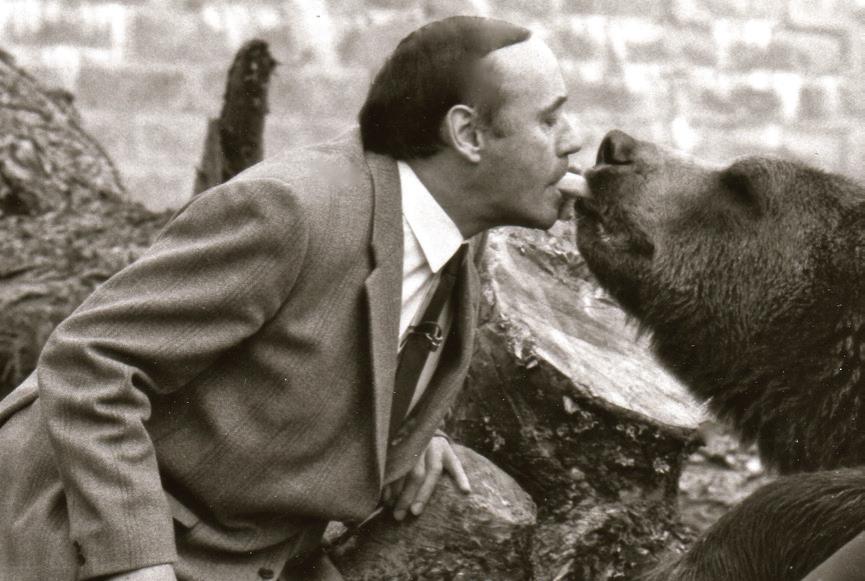
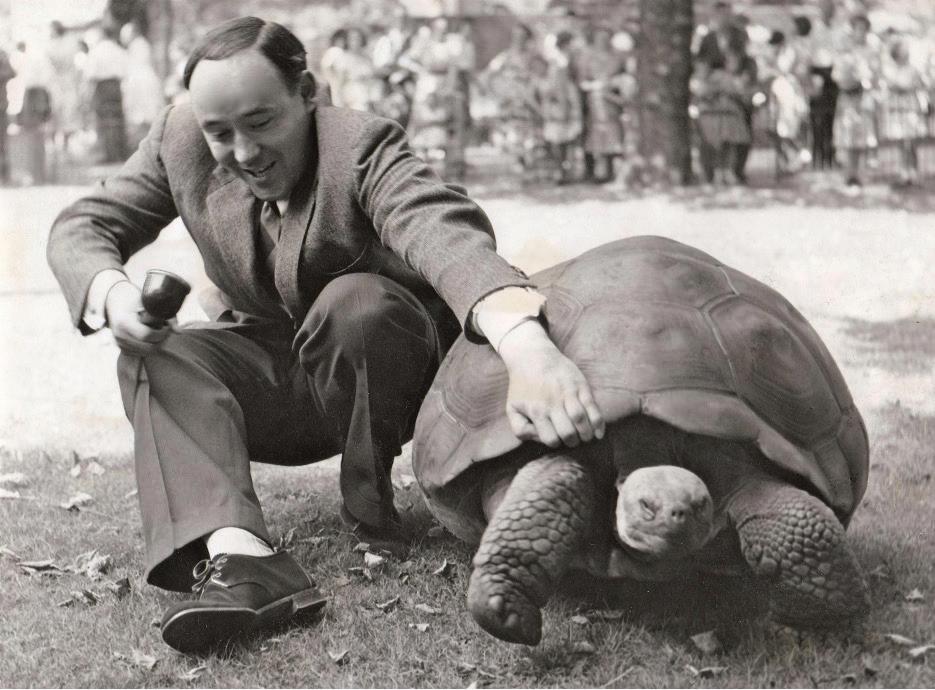
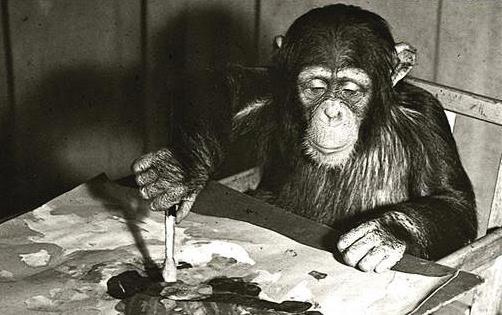
The work from 1956-1968 was created while Desmond Morris was Curator of Mammals at London Zoo.
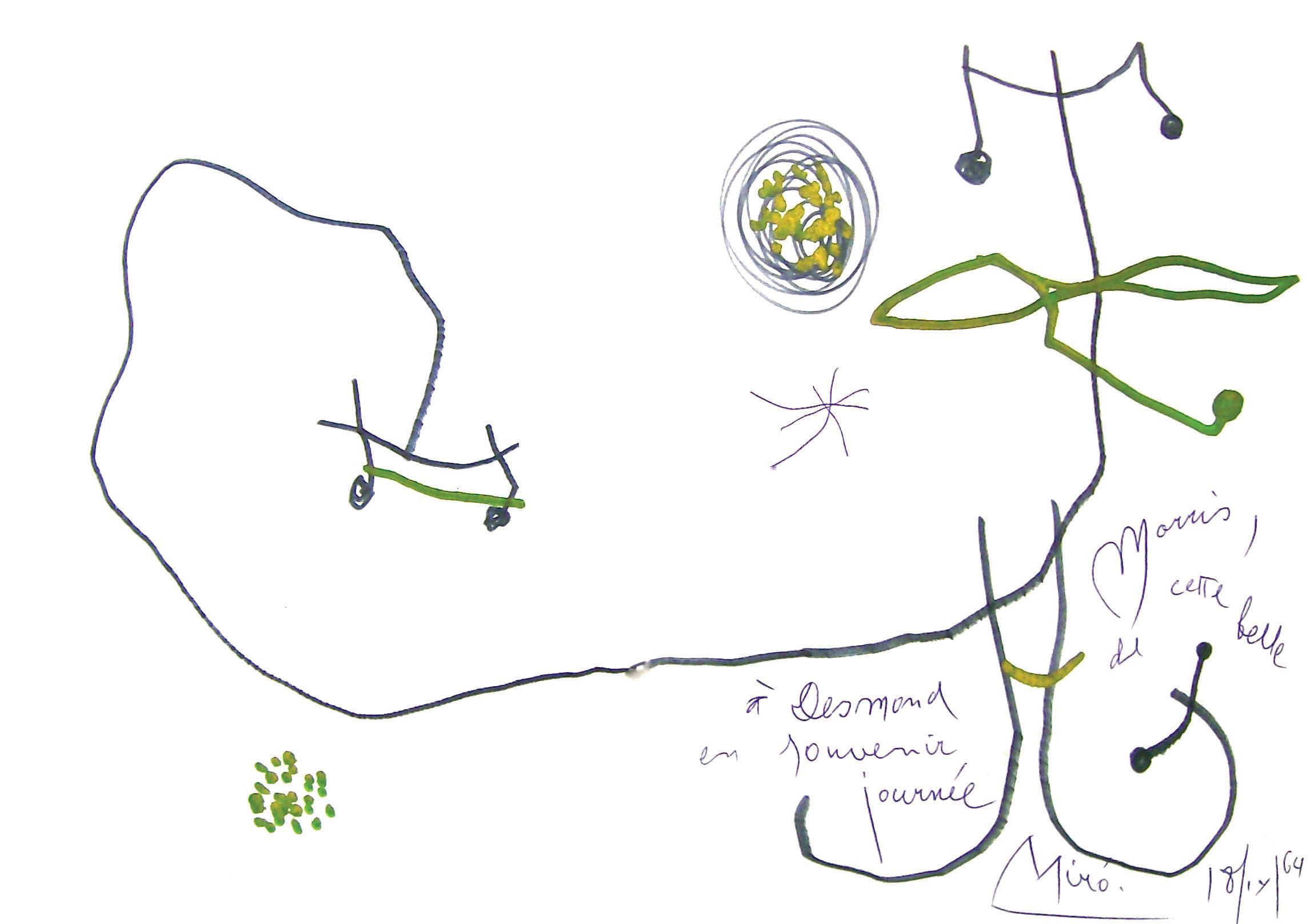
In 1964, Joan Miró visited Desmond Morris at the zoo. As a souvenir of their time together, Miró created this drawing above for Morris, depicting a chameleon eating a fly.
Left, top to bottom: Desmond Morris pictured feeding a grizzly bear a banana; Morris pictured with a large tortoise; Congo, the chimpanzee, painting at London Zoo in 1957.
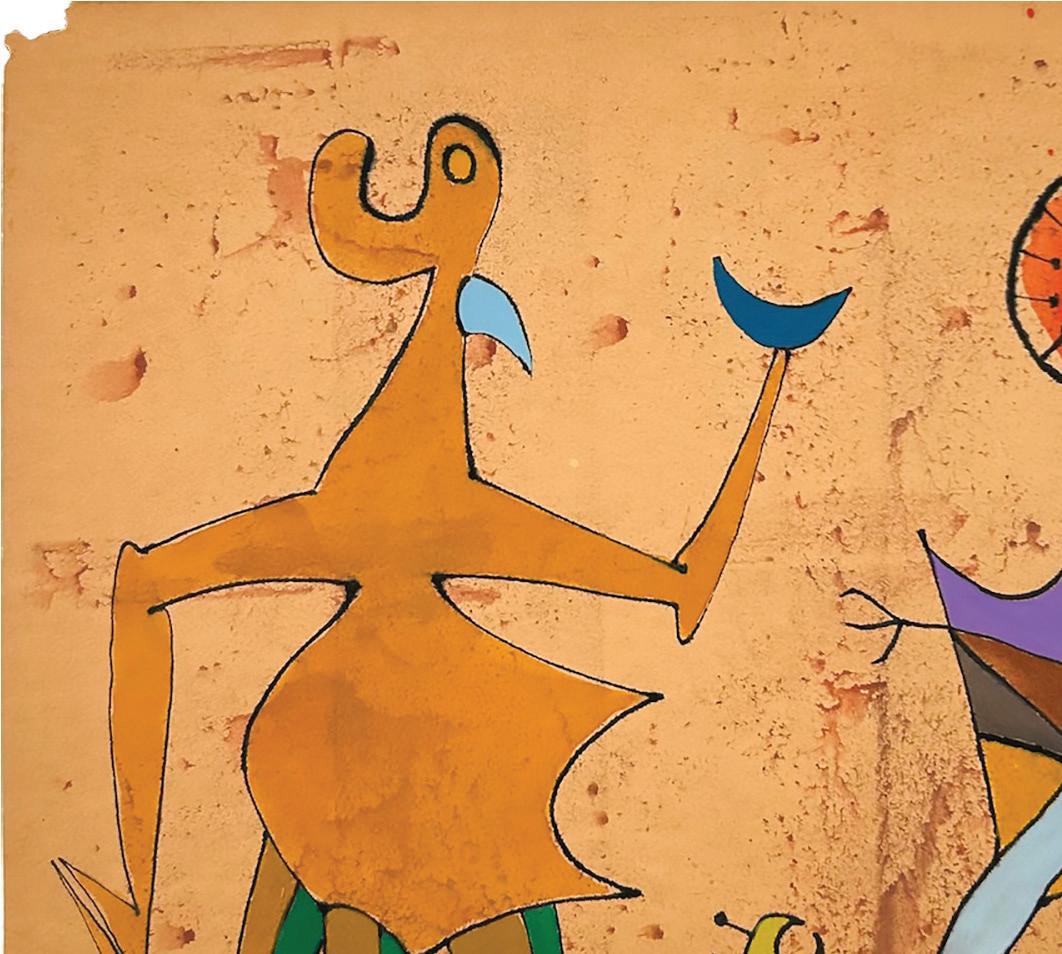
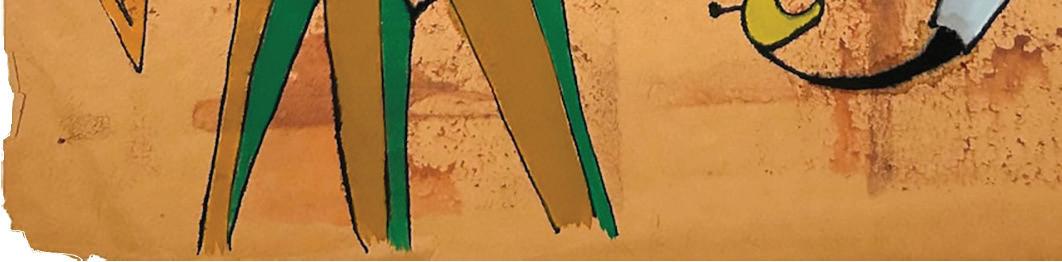
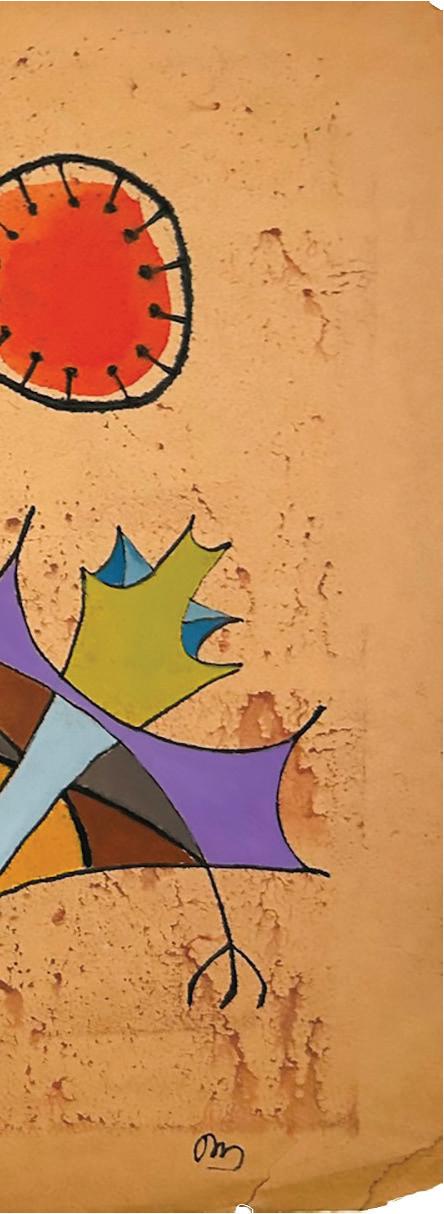
Birdmaster, 1960, Gouache and Ink on Paper, 8” x 10”
JOAN MIRÓ
1893-1983
A leading figure in Surrealism, Miró was born in Barcelona in 1893. After his early studies in art and a brief stint in business, Miró suffered a breakdown that led him to pursue painting fulltime. His early work was influenced by Fauvism, Cubism, Catalan folk art, and Romanesque frescoes. After moving to Paris and meeting the Surrealist poets and painters, his style evolved into a unique fusion of fantasy, memory, and the irrational. Known for his organic shapes and bold colors, Miró explored etching, lithography, ceramics, and mixed media. He earned major accolades for his artwork, including the Grand Prize at the Venice Biennale (1954) and the Guggenheim International Award (1958). Miró passed away in Majorca, Spain, on December 25, 1983.
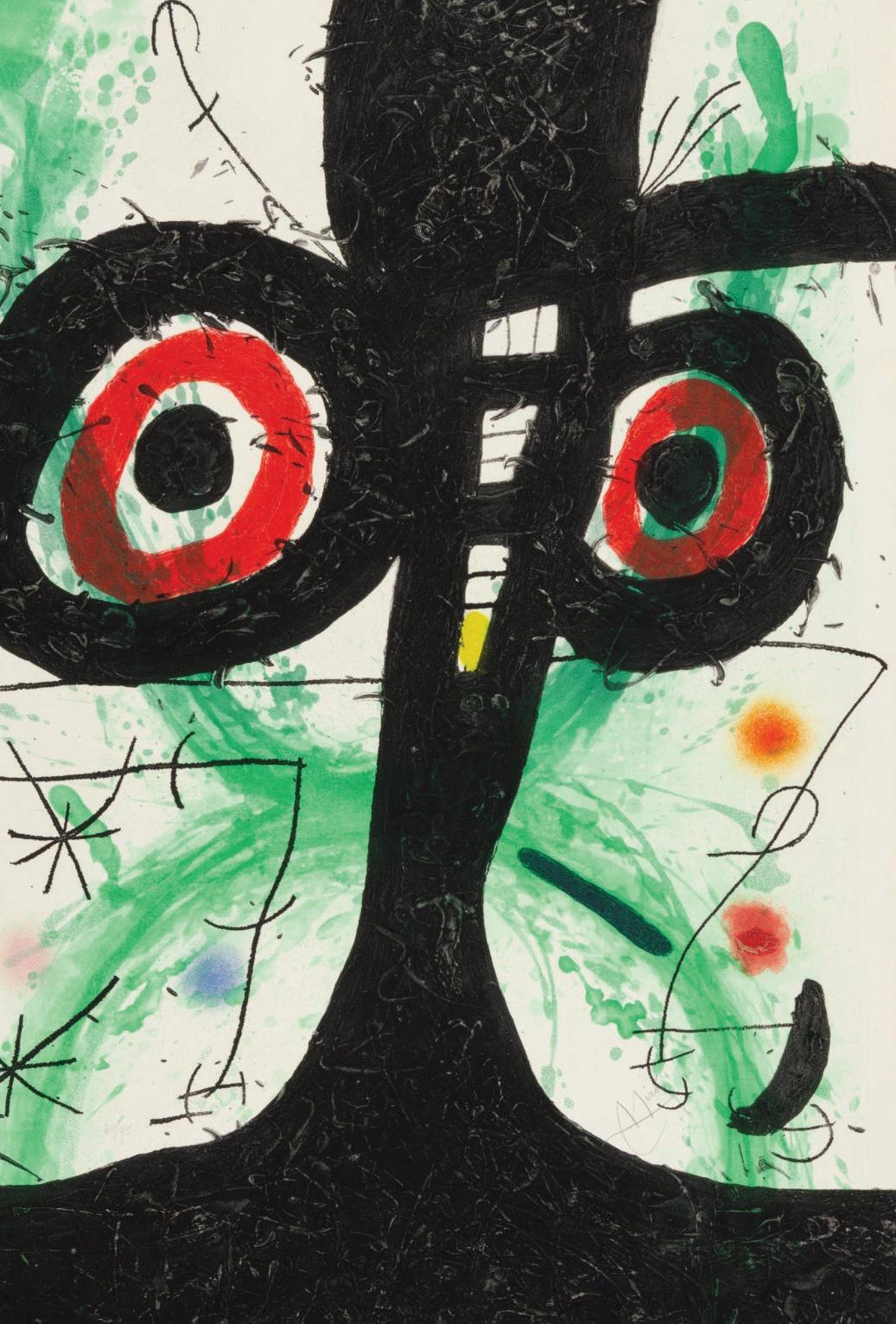
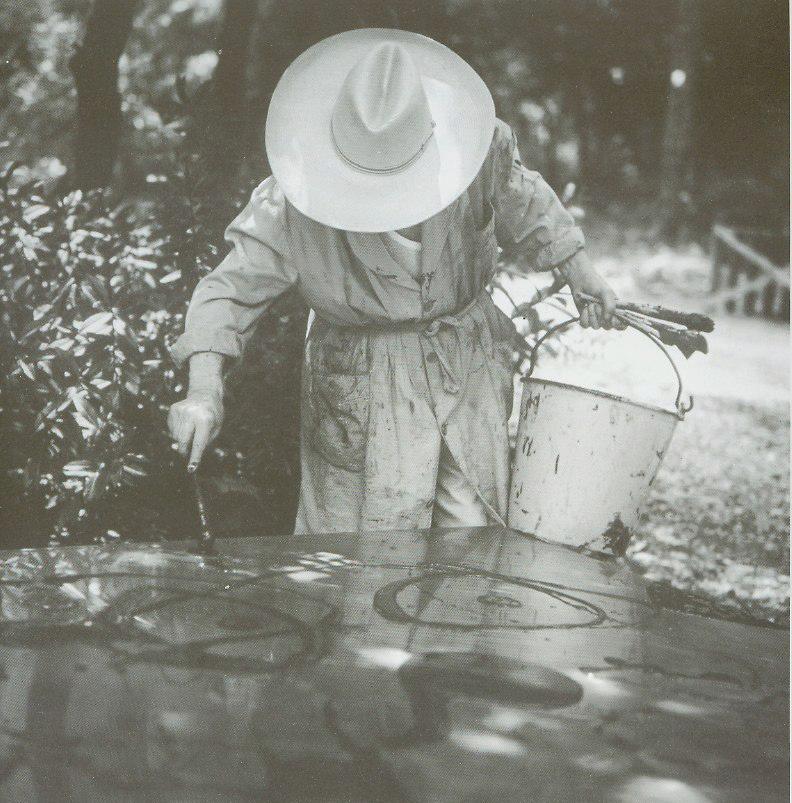
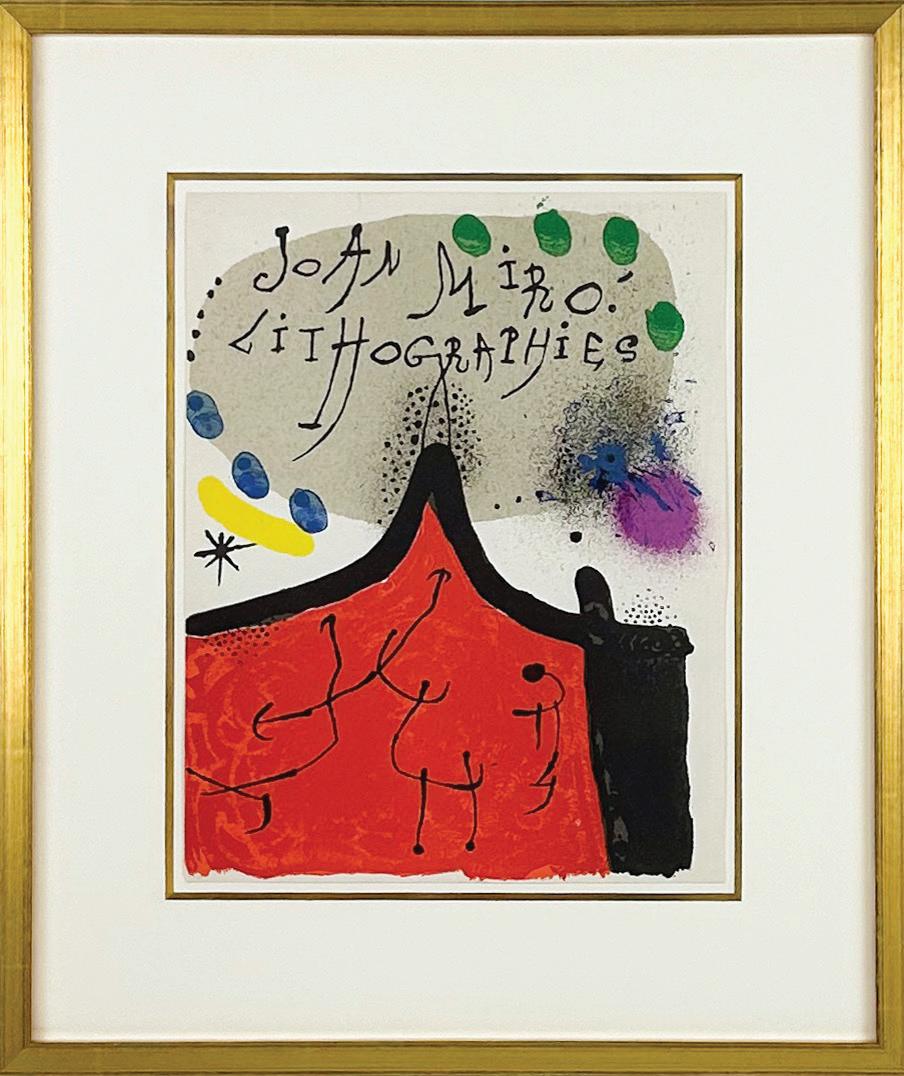
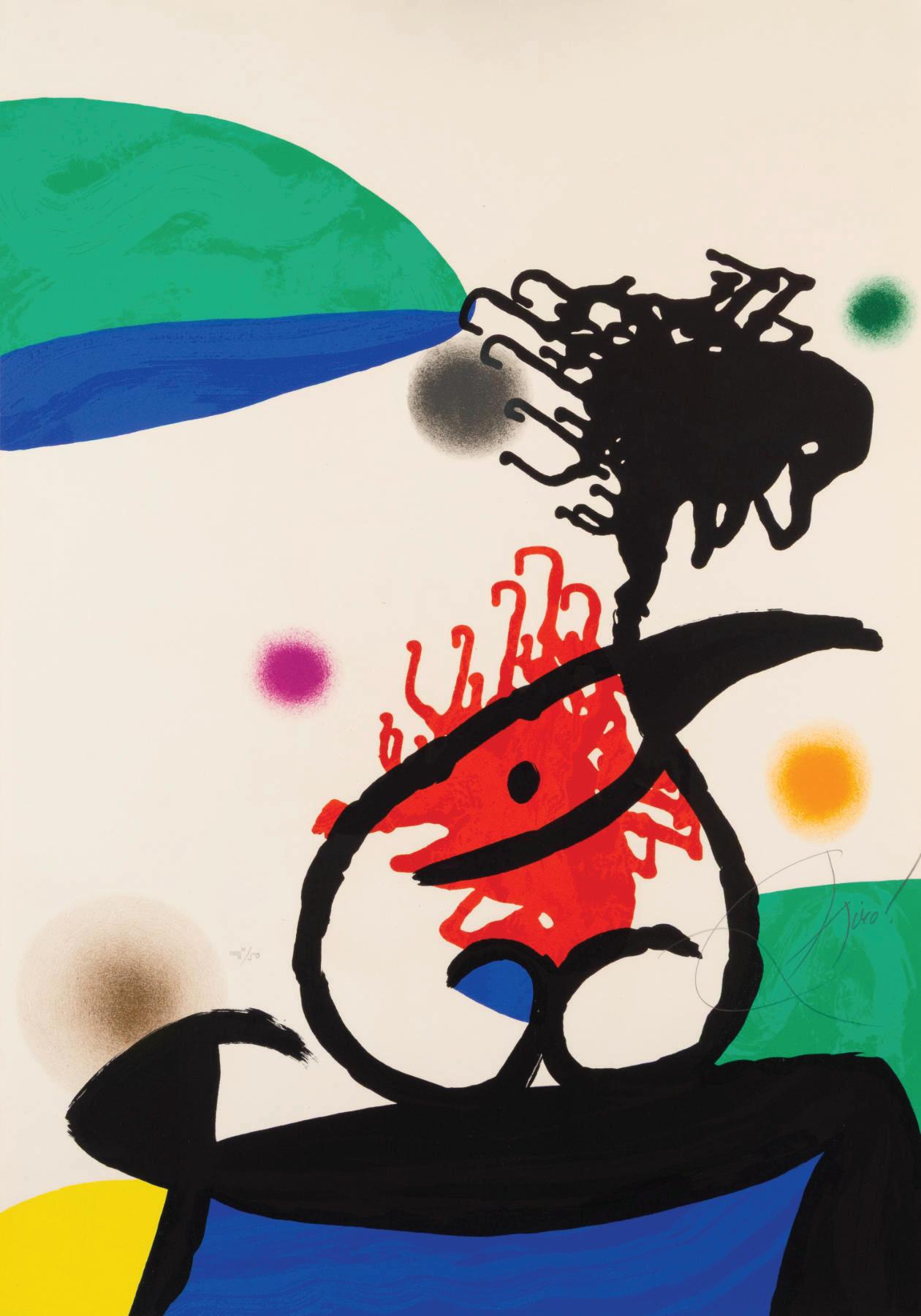
Miró was as avid a printmaker as he was a painter. Major museums around the world cherish not only his paintings but also his lively and enigmatic etchings, lithographs, and carborundum editions. Intentionally leaving us in the lurch, Miró often gives us a circle that we may interpret as an eyeball. Our minds begin to develop the eyeball into a creature. Is it a seahorse? A cat? A scorpion? Here we see Miró working on one of his highly celebrated carborundum prints.
Above: Untitled, 1972, Lithograph, Framed: 20” x 17”
Left: The Old Irishman, 1969, Original Etching, Aquatint and Carborundum
Printed in Colors on Arches Wove Paper, 39” x 23.38”

“I
still find the contrast between the neat, polite, quietly charming man and his wild, rebellious paintings rather extraordinary.”
– Desmond Morris on Joan Miró
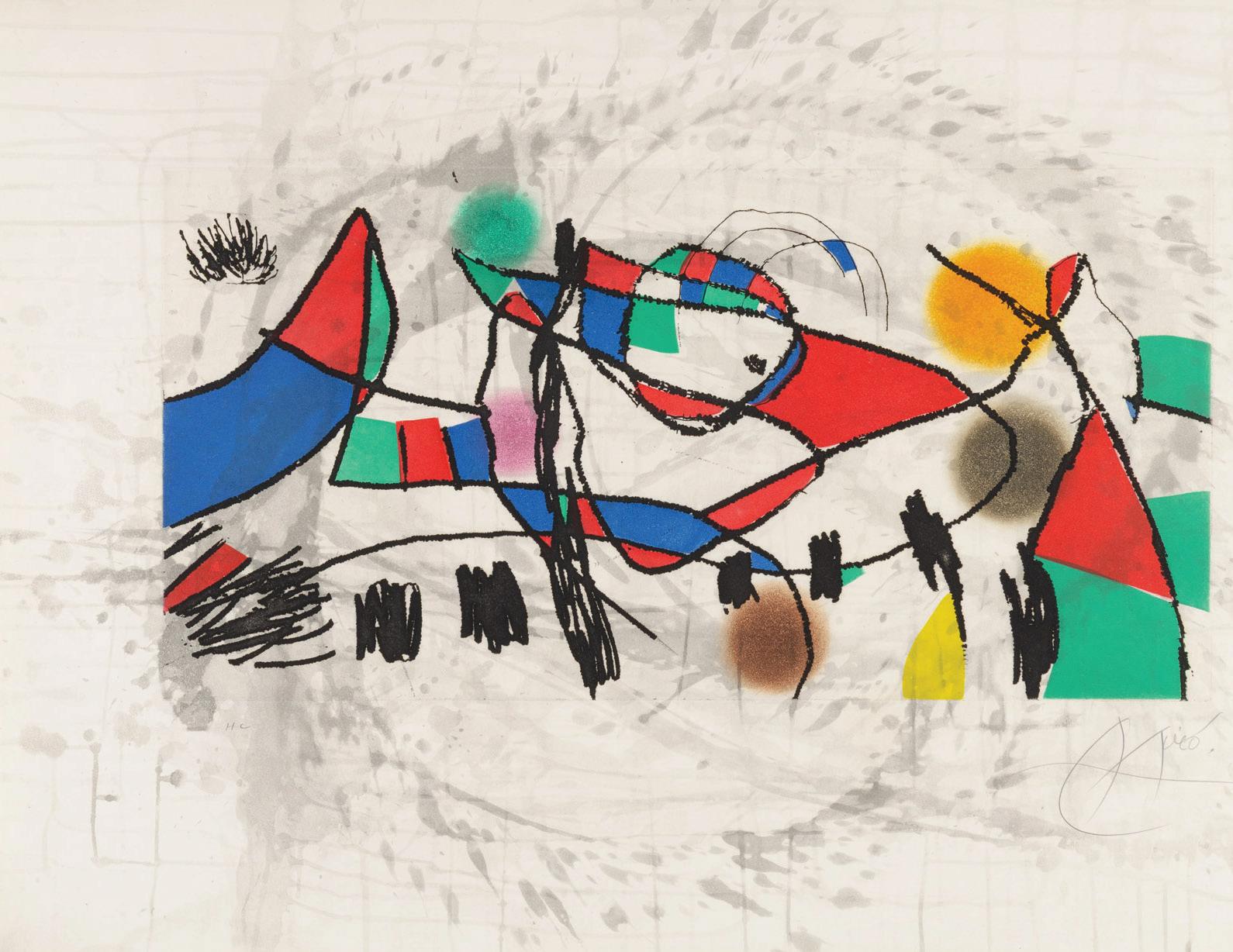
Left: Drawings for an exhibition I, 1973, Original Etching and Aquatint
Printed in Colors on Arches Wove Paper, 24.75” x 35.63”
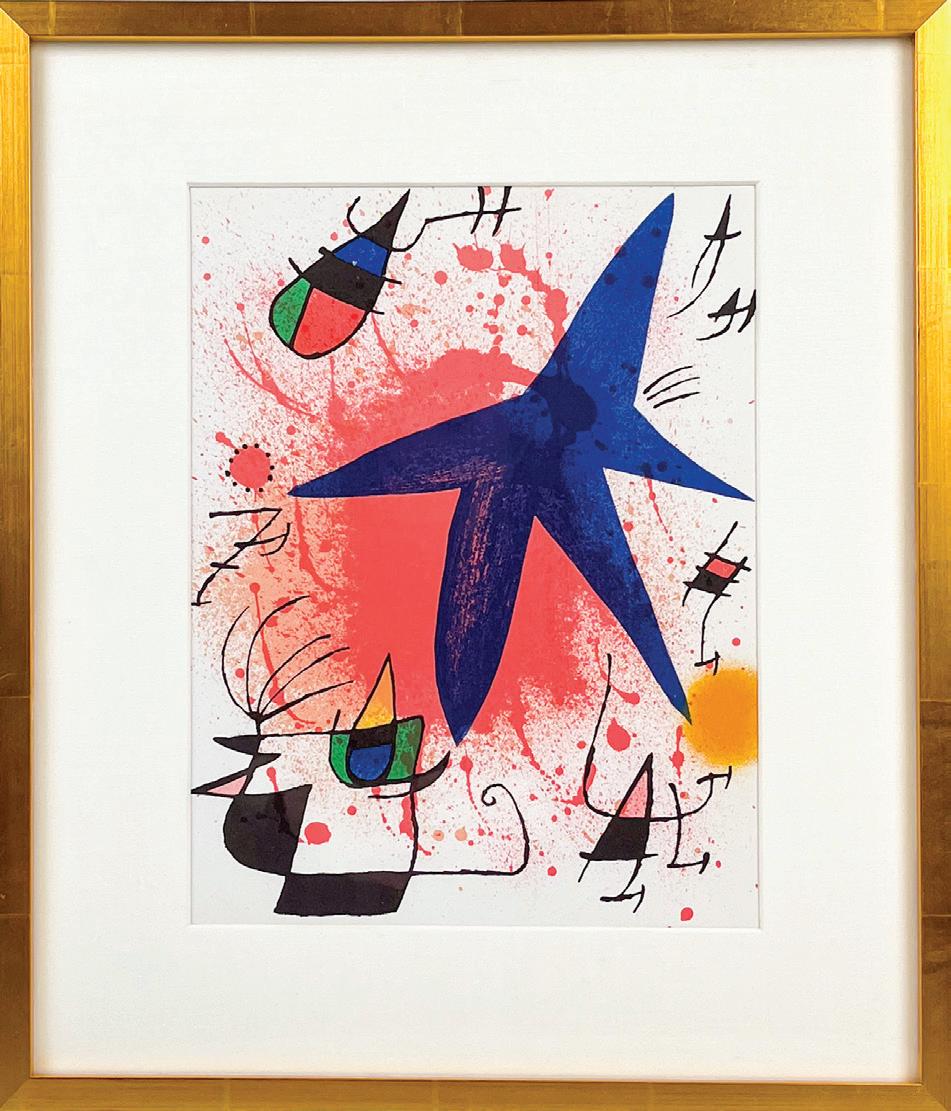
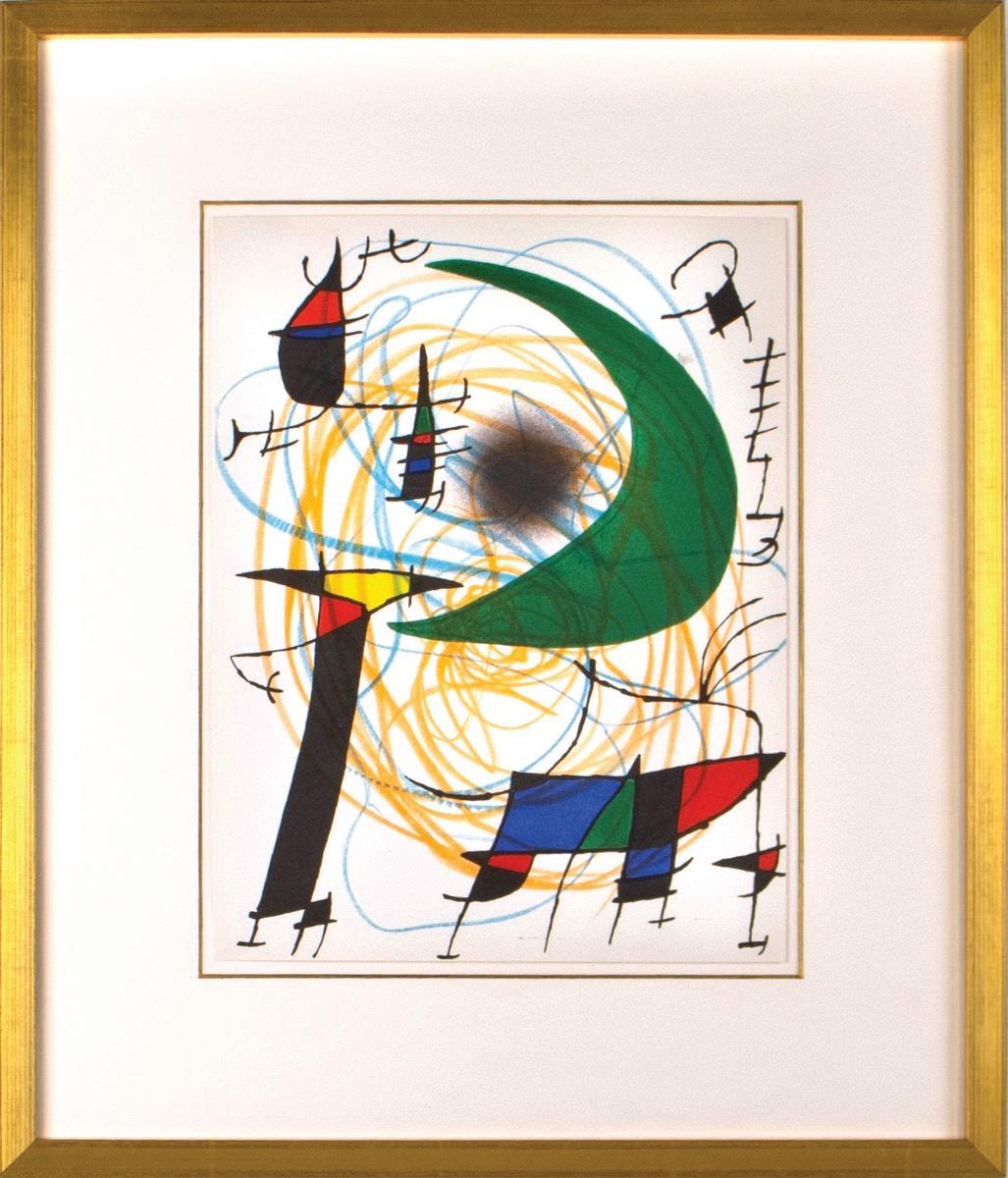
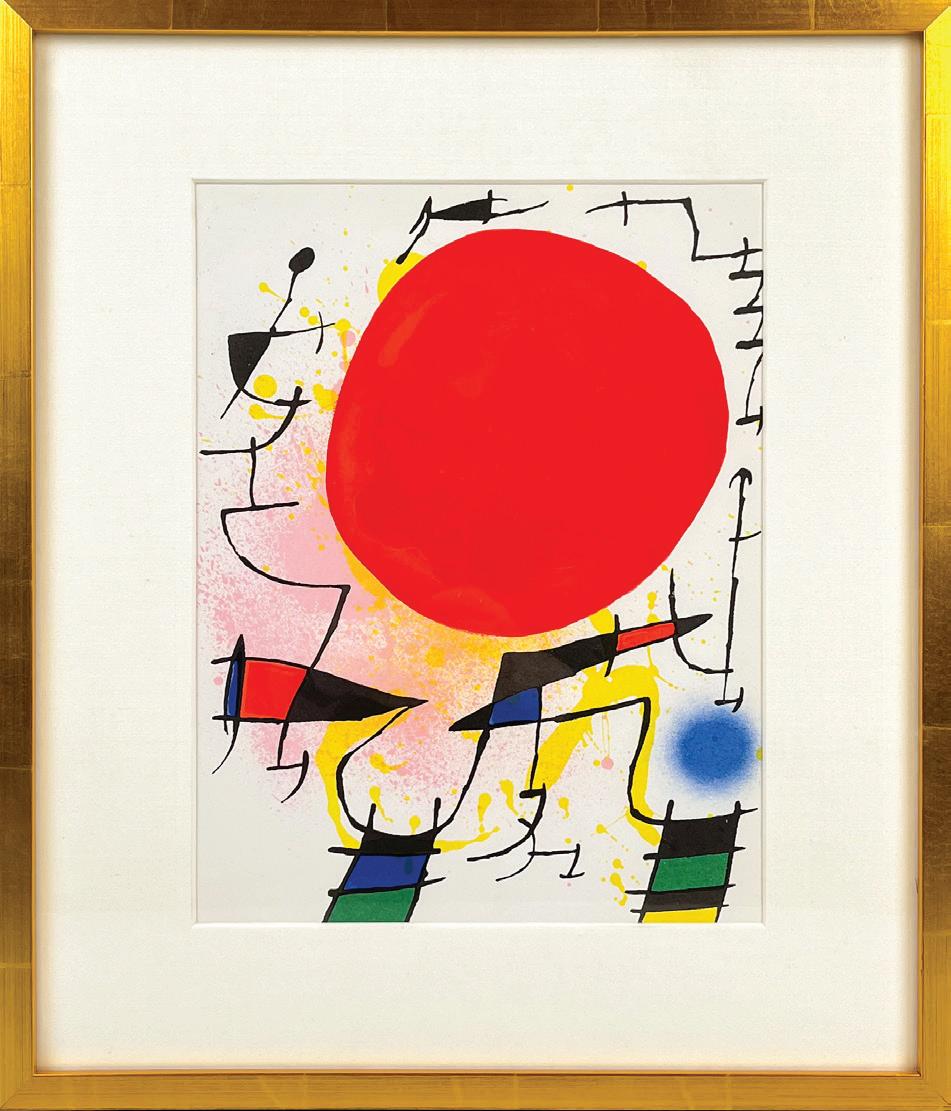
“The spectacle of the sky overwhelms me. I’m overwhelmed when I see, in an immense sky, the crescent of the moon, or the sun.”
- Joan Miró
All three: Untitled, 1972, Original Lithographs, Printed in Colors on Wove Paper, Framed: 20.13” x 17.13”
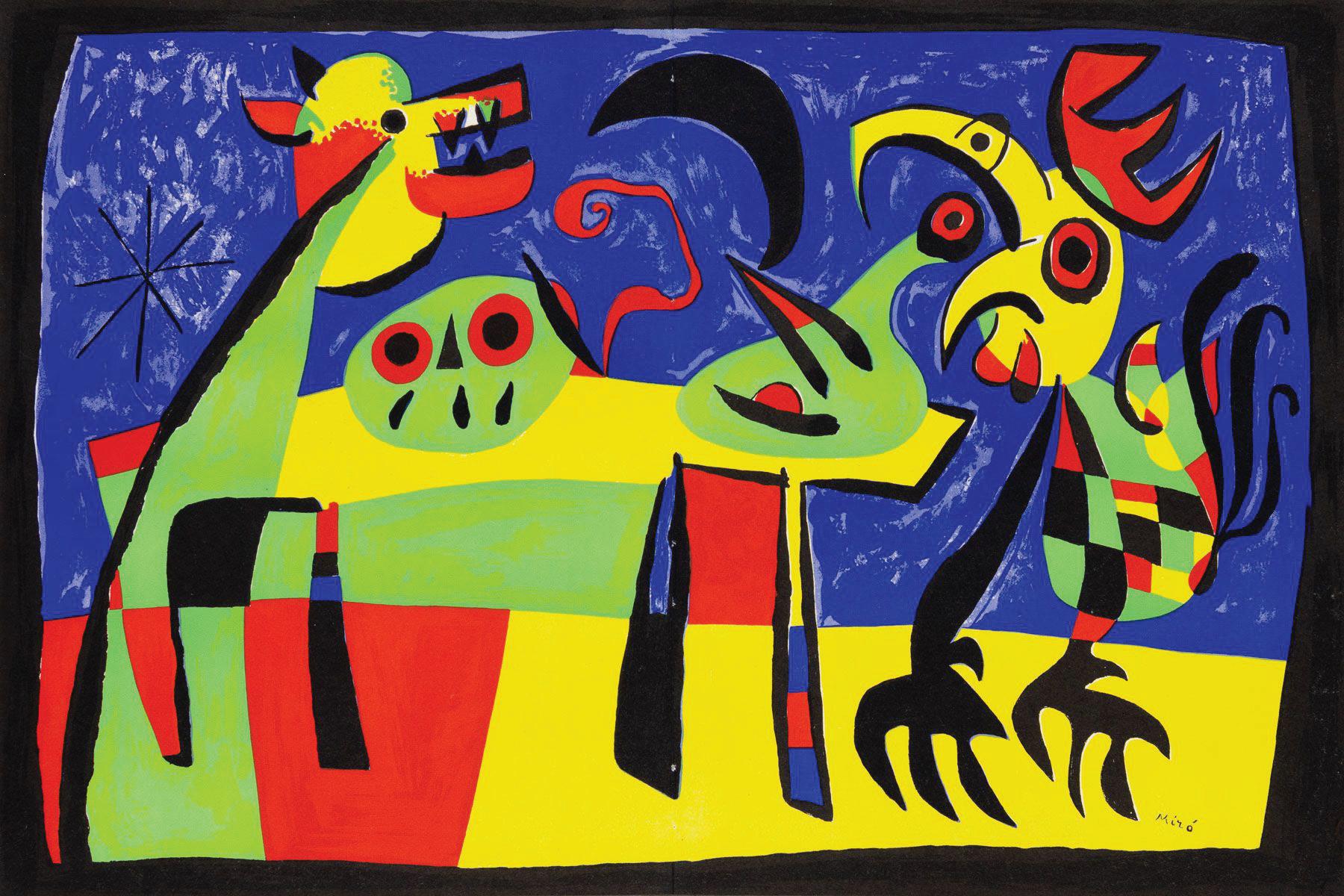
Dog Barking at the Moon, 1952, Original Lithograph Printed in Six Colors on Wove Paper, Framed: 20” x 26.75”
“We went to the bird house where, to Miró’s joyful if somewhat alarmed surprise, I had a huge hornbill placed on his wrist. I had chosen this bird because the bright colouring around its eye could have been painted there by Miró’s hand. He gave me a nod that indicated he understood this. Lee took a splendid photograph of him feeding the hornbill, and we moved on to the nocturnal house. There I arranged for him to watch in close-up as a chameleon shot out its unbelievably long tongue, which had a sticky knob on the end, to catch a large insect. Miró’s response was that of an excited child, his eyes lighting up as the chameleon struck.”
̶Desmond Morris
(“Say hello to my python,” 2011)
Mandarin of the North, 1976, Original Lithograph Printed in Colors on Arches Wove Paper, 31.75” x 22.25”
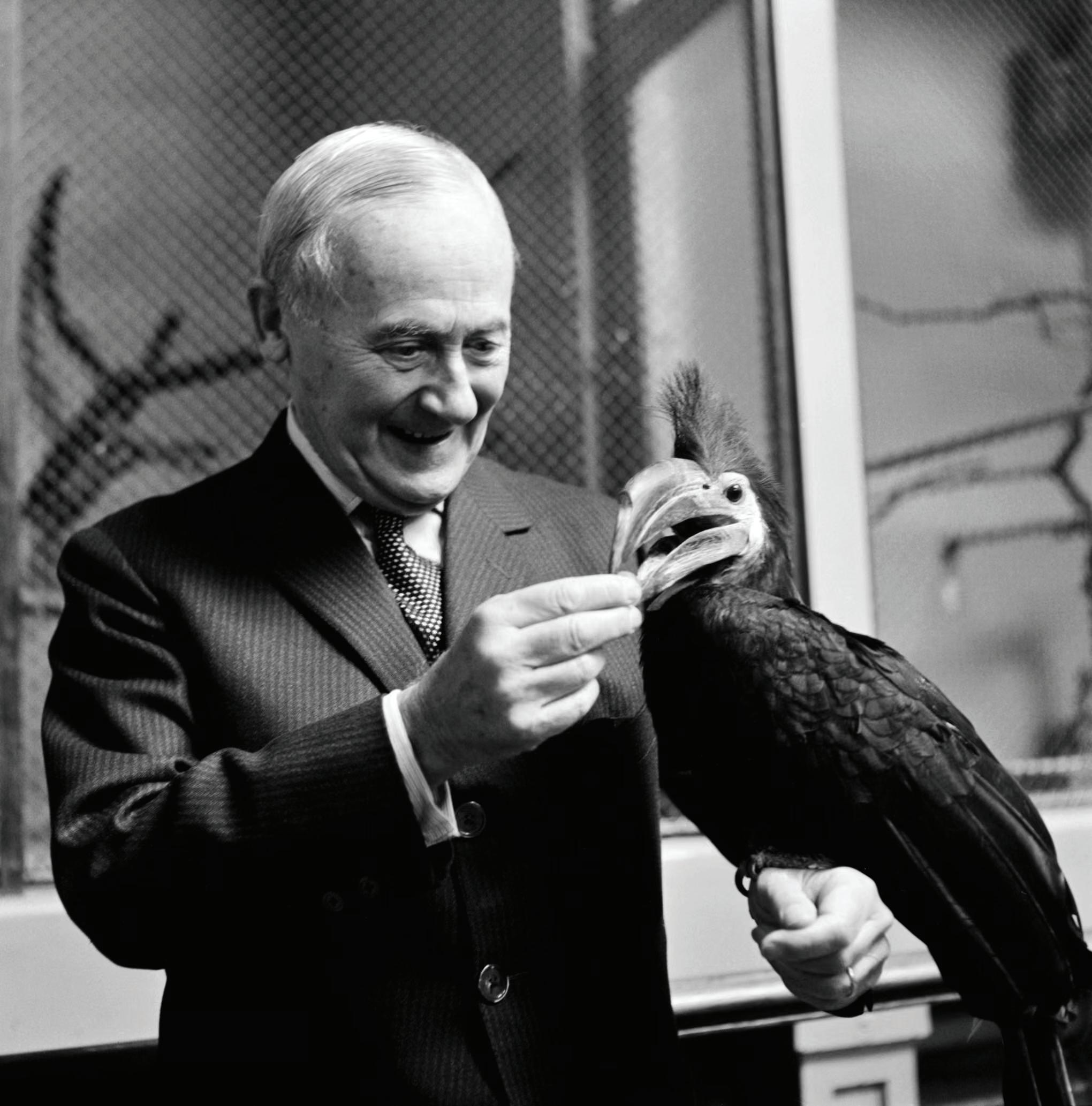
Joan Miró feeding a hornbill at London Zoo, 1964, photograph by Lee Miller
Courtesy Desmond Morris
GRACE PAILTHORPE
1883-1971
Born in St. Leonards-on-Sea, Sussex, Grace Pailthorpe was a British surrealist painter, surgeon, and psychology researcher. She is considered one of the seminal artists who helped develop Psychorealism. Pailthorpe enrolled at the Royal College of Music in 1908 but soon decided to pursue medicine, and by 1914, she had qualified as a doctor at the Royal Victoria Infirmary. During World War I, she served with distinction as a surgeon at military hospitals in Paris, London, and Liverpool.
Pailthorpe’s artistic work advanced her exploration of the unconscious, connecting her professional interests with her surrealist practice, which she saw as psychologically liberating. It led her to pioneering work in the development of art therapy later in her life. Pailthorpe’s work has been exhibited at several of the world’s most prestigious fine art institutions, such as the Museum of Modern Art in New York, and The Tate and Victoria and Albert Museums in London.
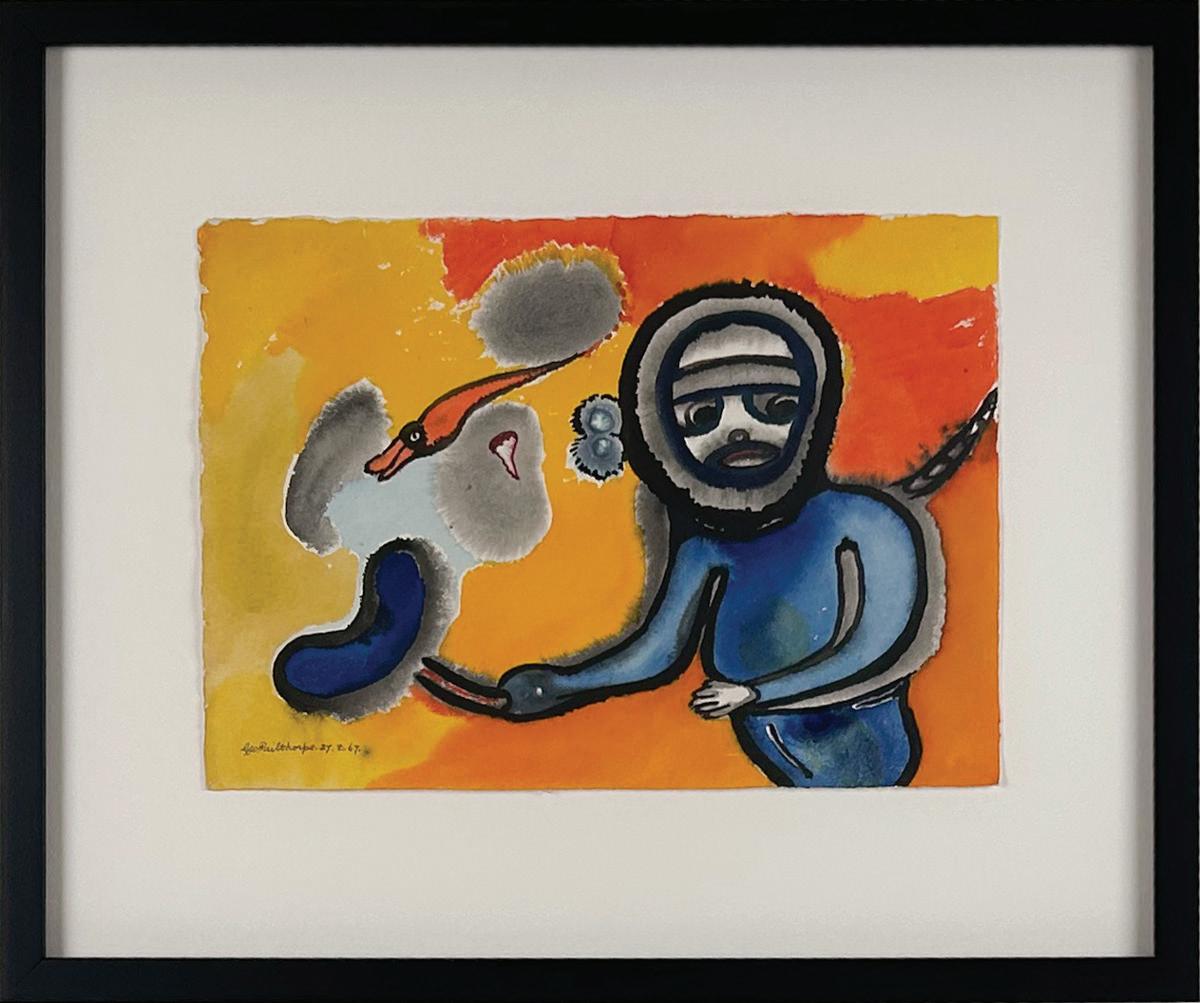
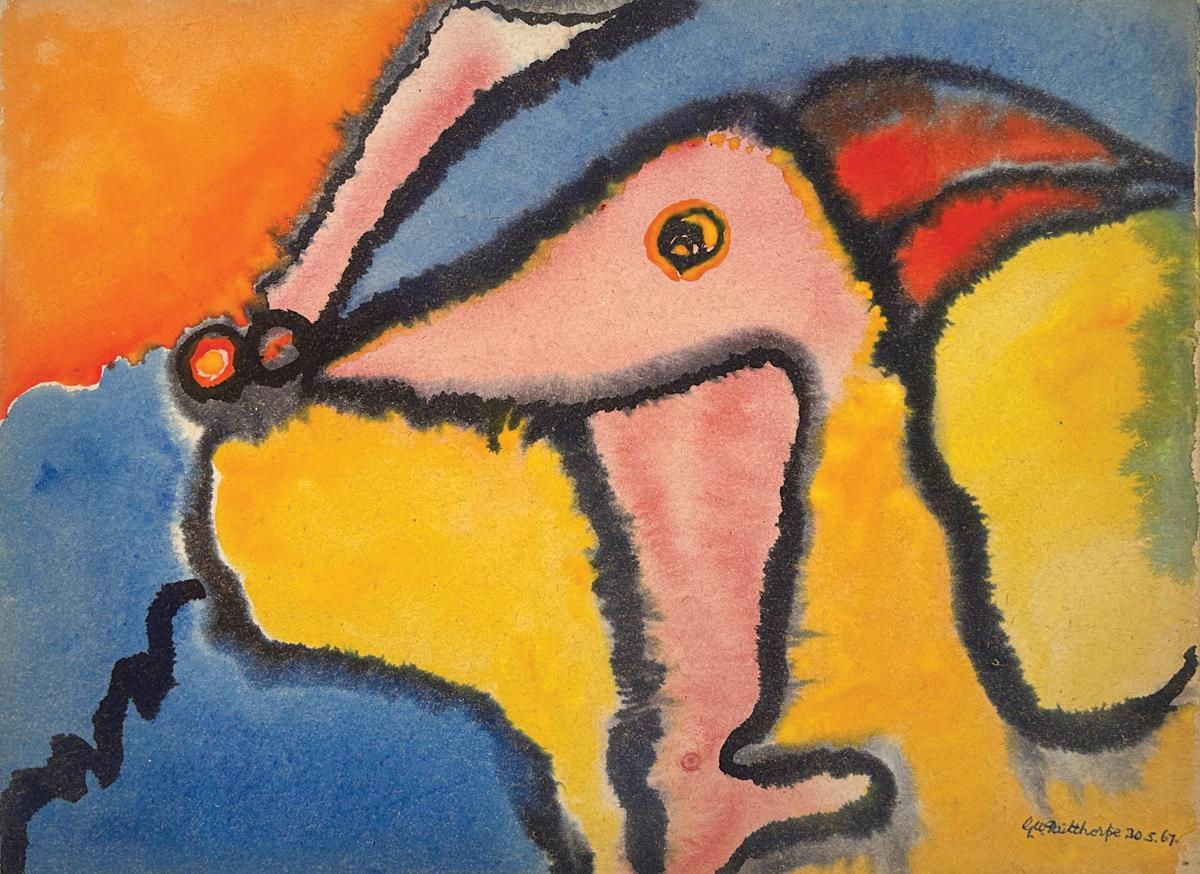
, 1967, Watercolor, 11” x 15”
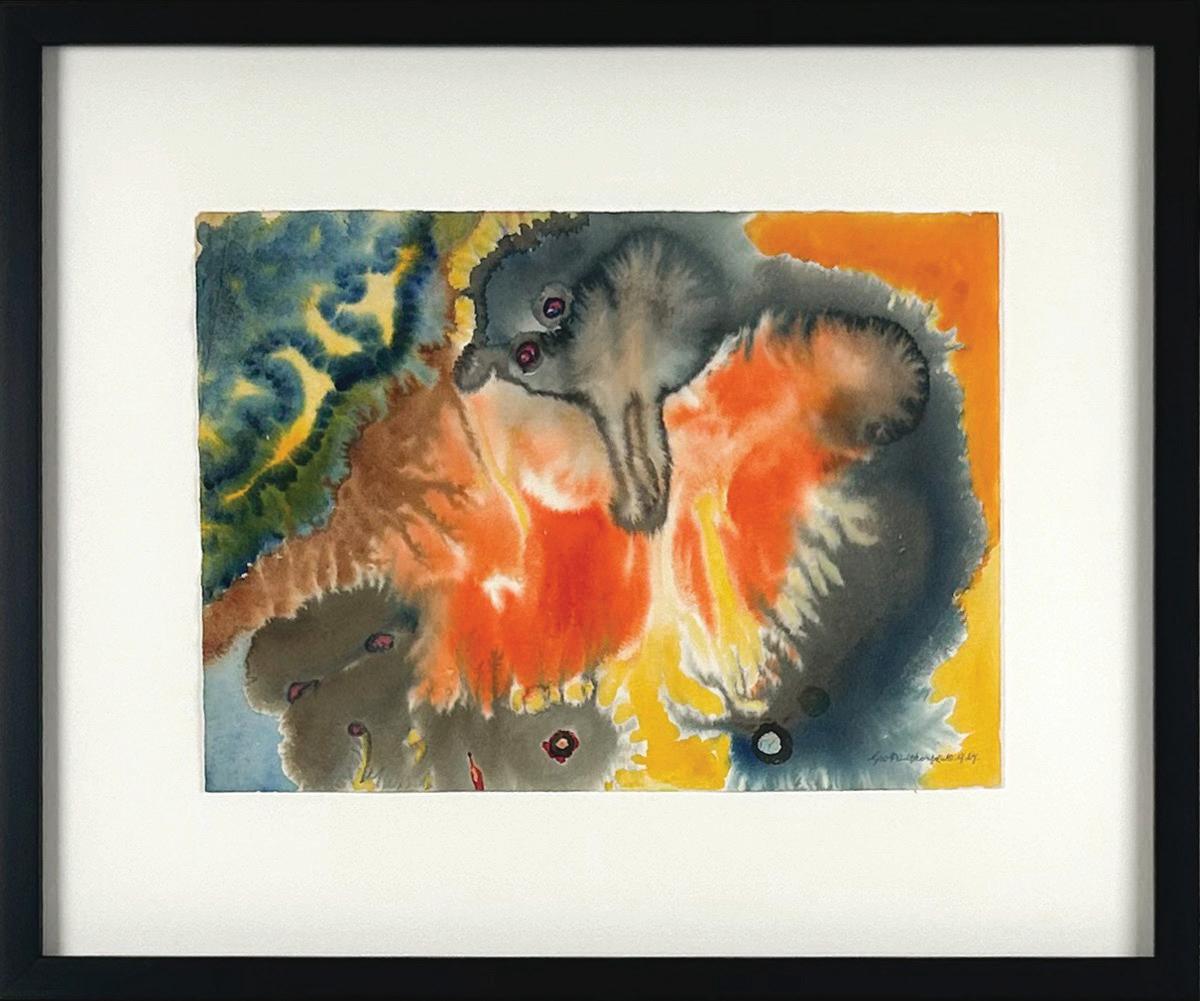
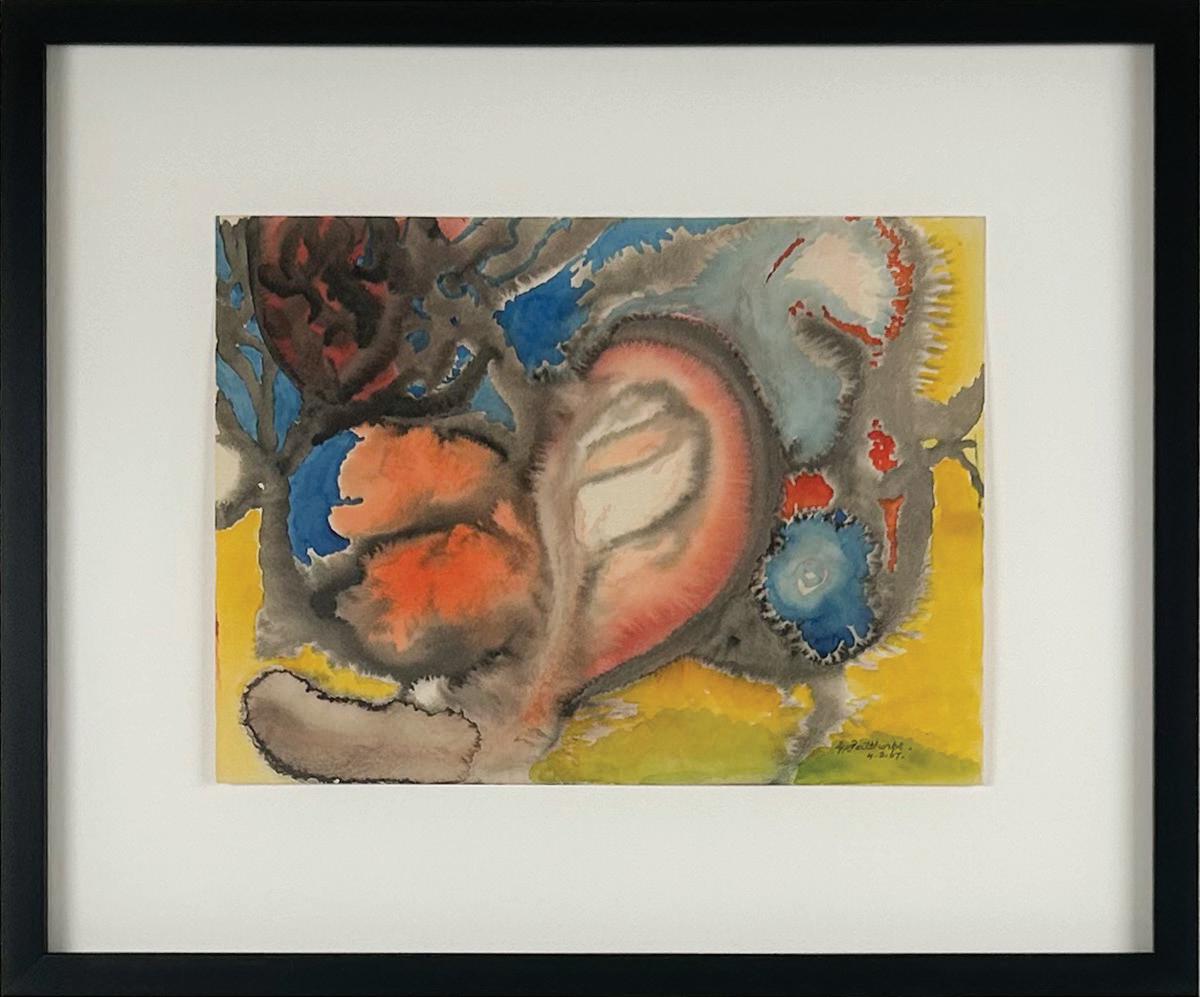
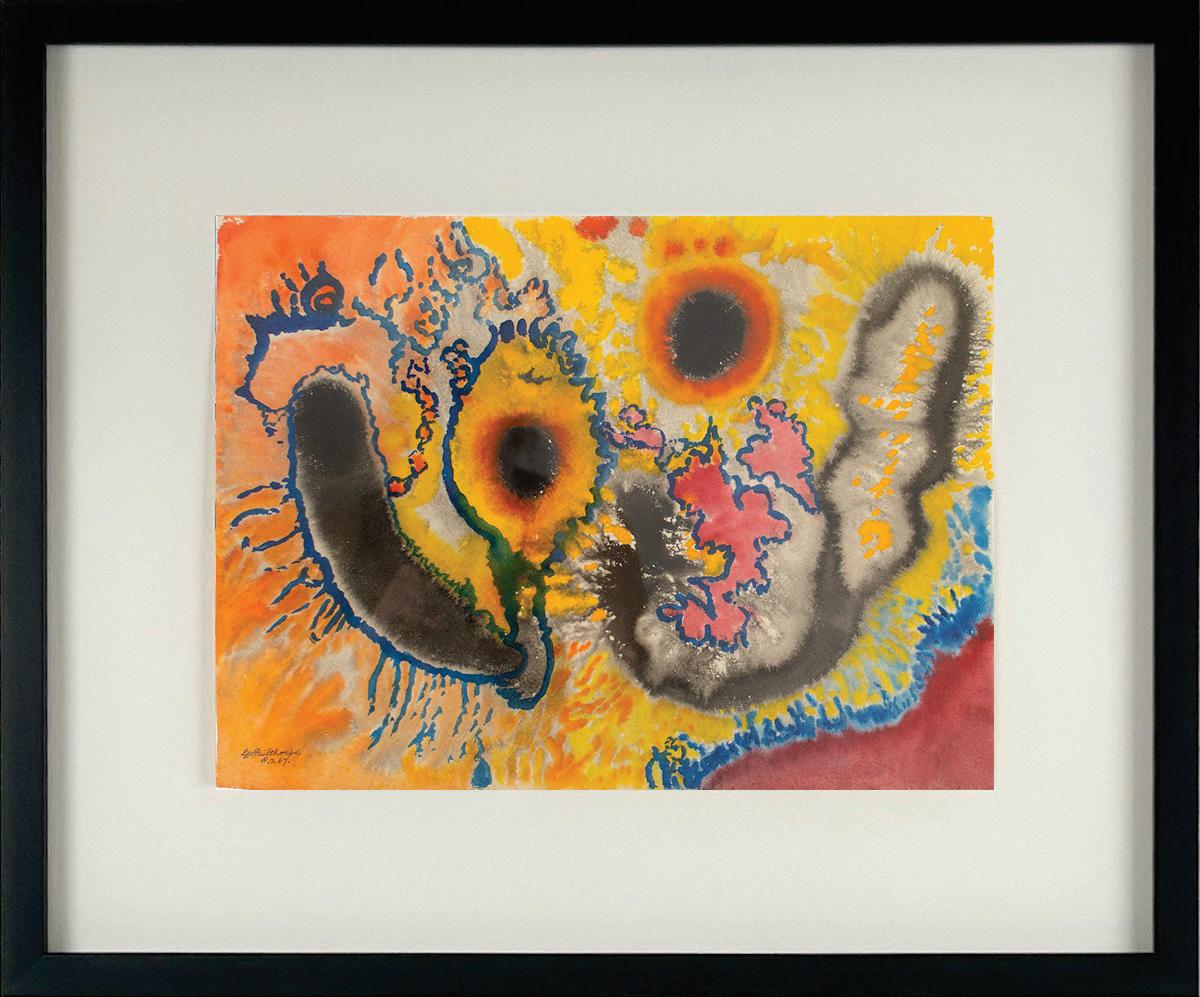
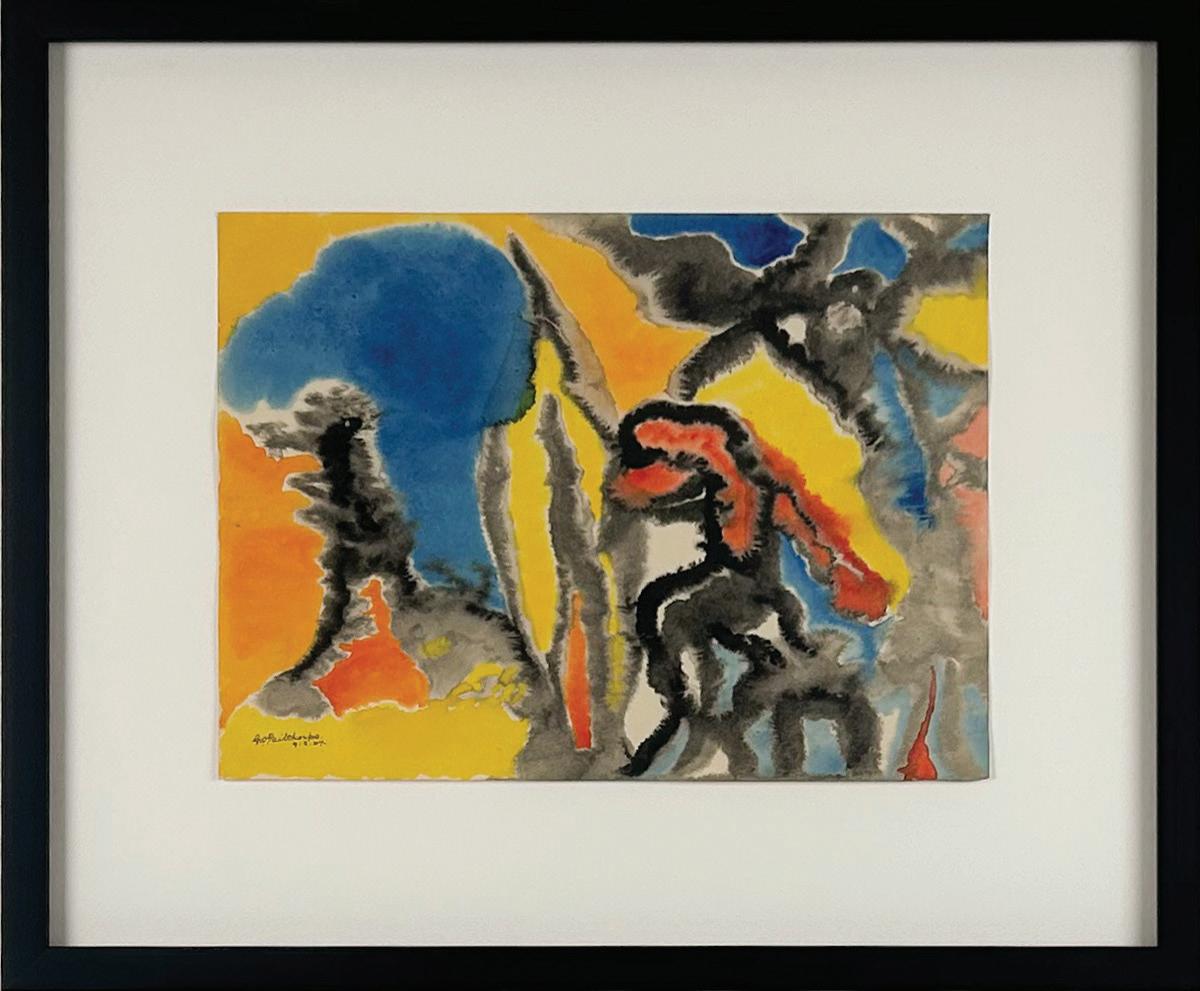
L to R clockwise from top: 10.9.67, 4.3.67, 18.3.67, 9.3.67, 1967, Watercolor, Framed: 19.25” x 23.25”
Pailthorpe’s work explores inner psychological landscapes, making the unconscious observable and connecting viewers with shared human experiences.
Oct 8 1966, 1966, Watercolor, Framed: 19.25” x 23.25”
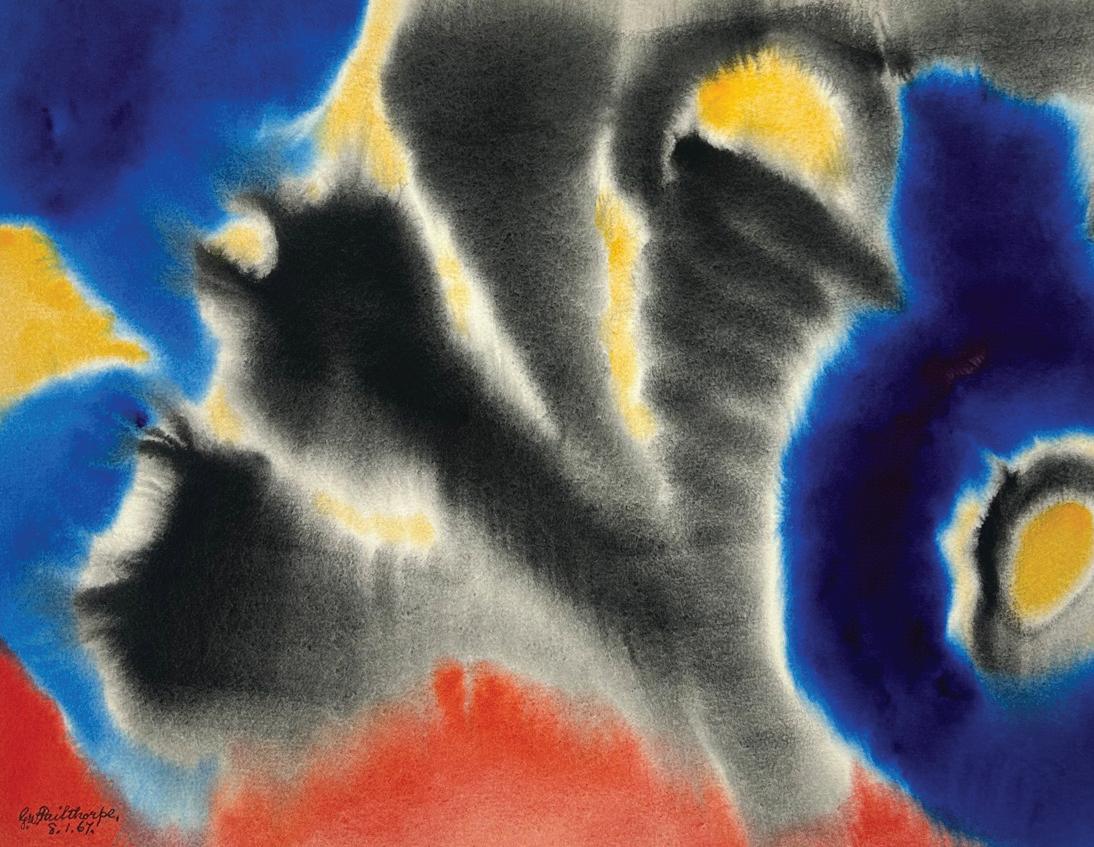
8.1.67, 1967, Watercolor, 11” x 15”
GRACE PAILTHORPE & REUBEN MEDNIKOFF
From 1936 to 1940, Grace Pailthorpe and her partner Reuben Mednikoff were members of the British Surrealist Group. Their first exhibition took place at the Guggenheim Jeune gallery, run by Peggy Guggenheim, in London in 1939.
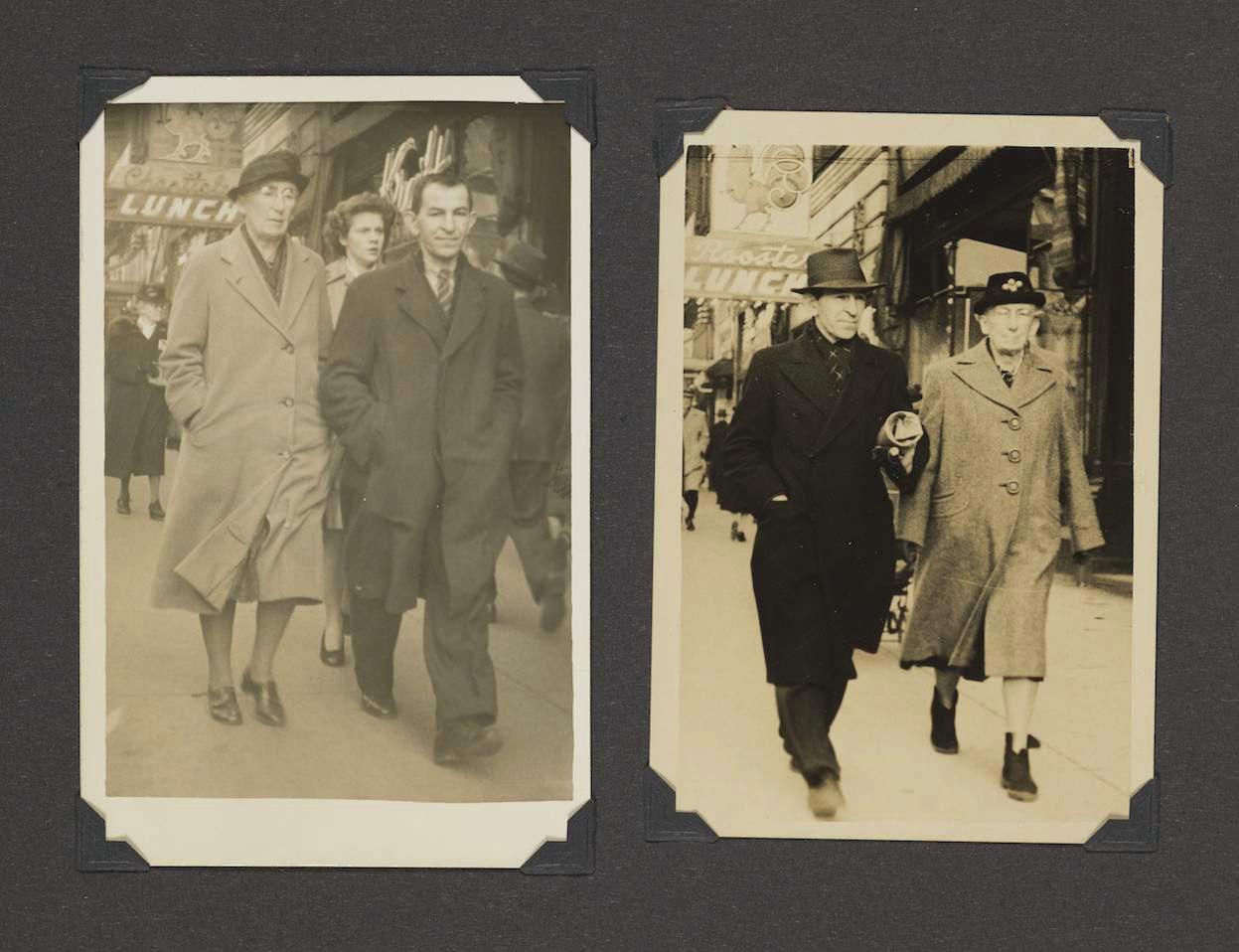
From the day the couple met in 1935 they were rarely apart. Mednikoff taught Pailthorpe the fundamentals of art, and she taught him the basics of interpretative analysis. This unique 35-year-long collaboration produced a phenomenal number of drawings and paintings.
Source: Michele Remy, Lives of the Artists Grace Pailthorpe and Reuben Mednikoff, 2018


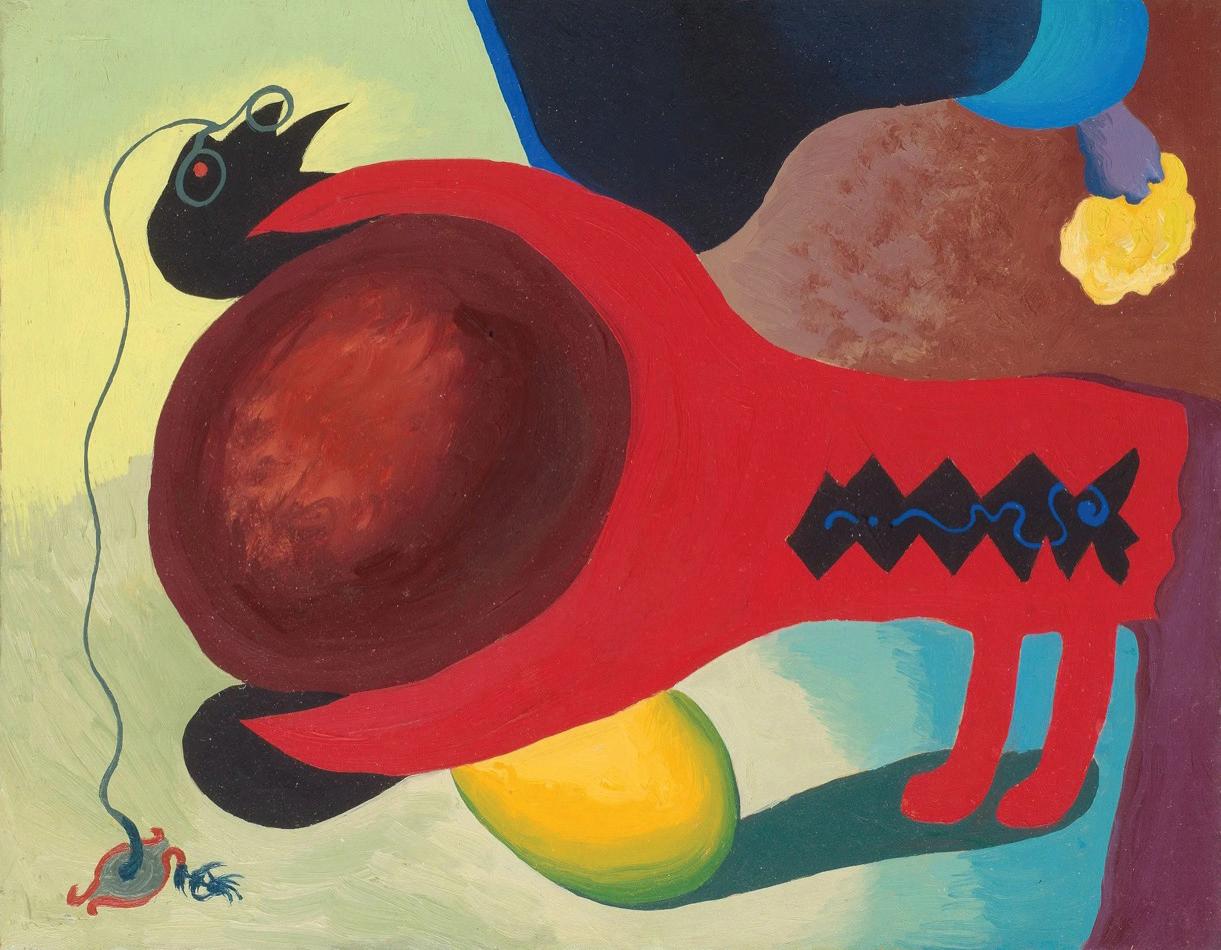
Reuben Mednikoff, Oct 27th 1946, 1946 Oil on Board, 9.25” x 11.63”
Private Collection
Courtesy Paul Conran
SALVADOR DALÍ
1904-1989
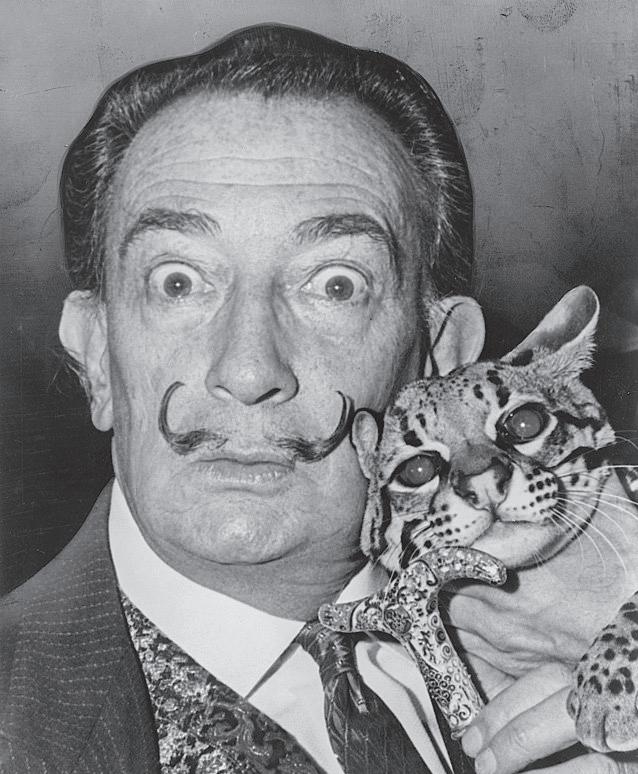
The most enigmatic of the Surrealists, Dalí cloaked himself in the guise of an eccentric magician who used the alchemy of his paintings and graphic works to conjure up bizarre and fantastic worlds. Gifted from a young age, Dalí studied art in Madrid before developing his distinctive style, drawing inspiration from cubism, the metaphysical art of Giorgio de Chirico, and the Surrealist movement in Paris. He introduced the “Paranoic-Critical method,” a technique of tapping into the subconscious to transform perception and meaning. Dalí was a superb draftsman and engraver, creating images that combine the sensual and the macabre in playful visions of his creative realities.
“A true artist is not one who is inspired, but one who inspires others.”
̶Salvador Dalí
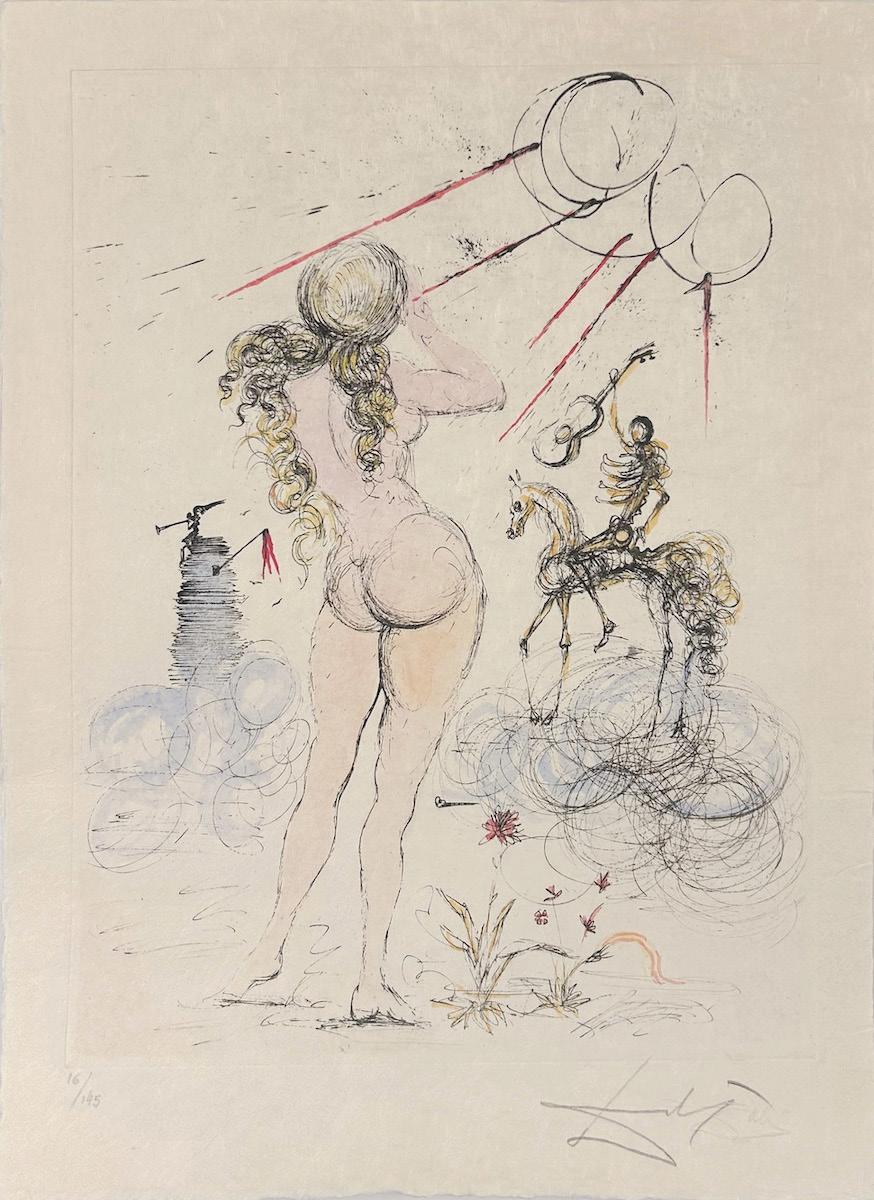
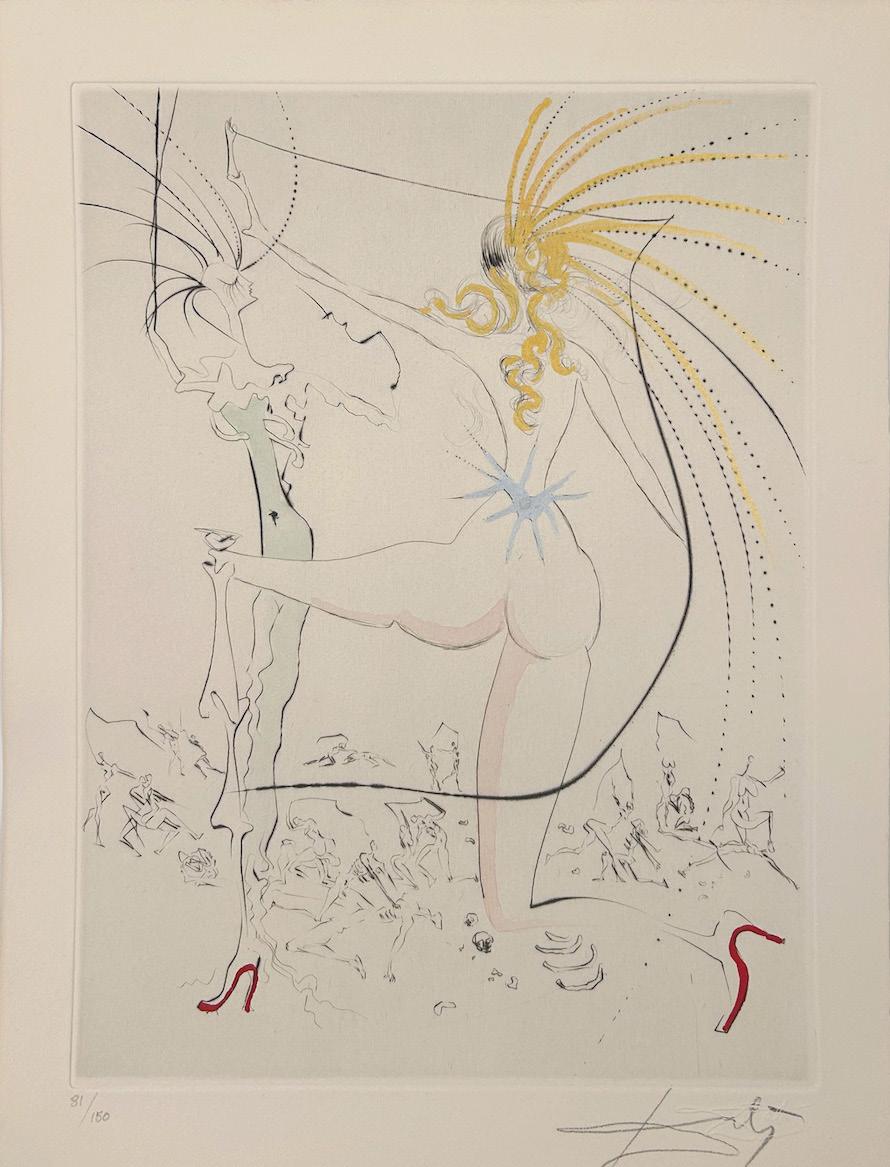
Woman, Horse, and Death, 1967, Original Etching and Engraving Printed in Black Ink on Japan Paper, with HandColoring Added, Sheet: 15” X 11”; The Egrets, 1969, Original Drypoint Printed in Black Ink on Arches Paper, with Hand-Coloring Added, Sheet: 14.75” X 11.25”
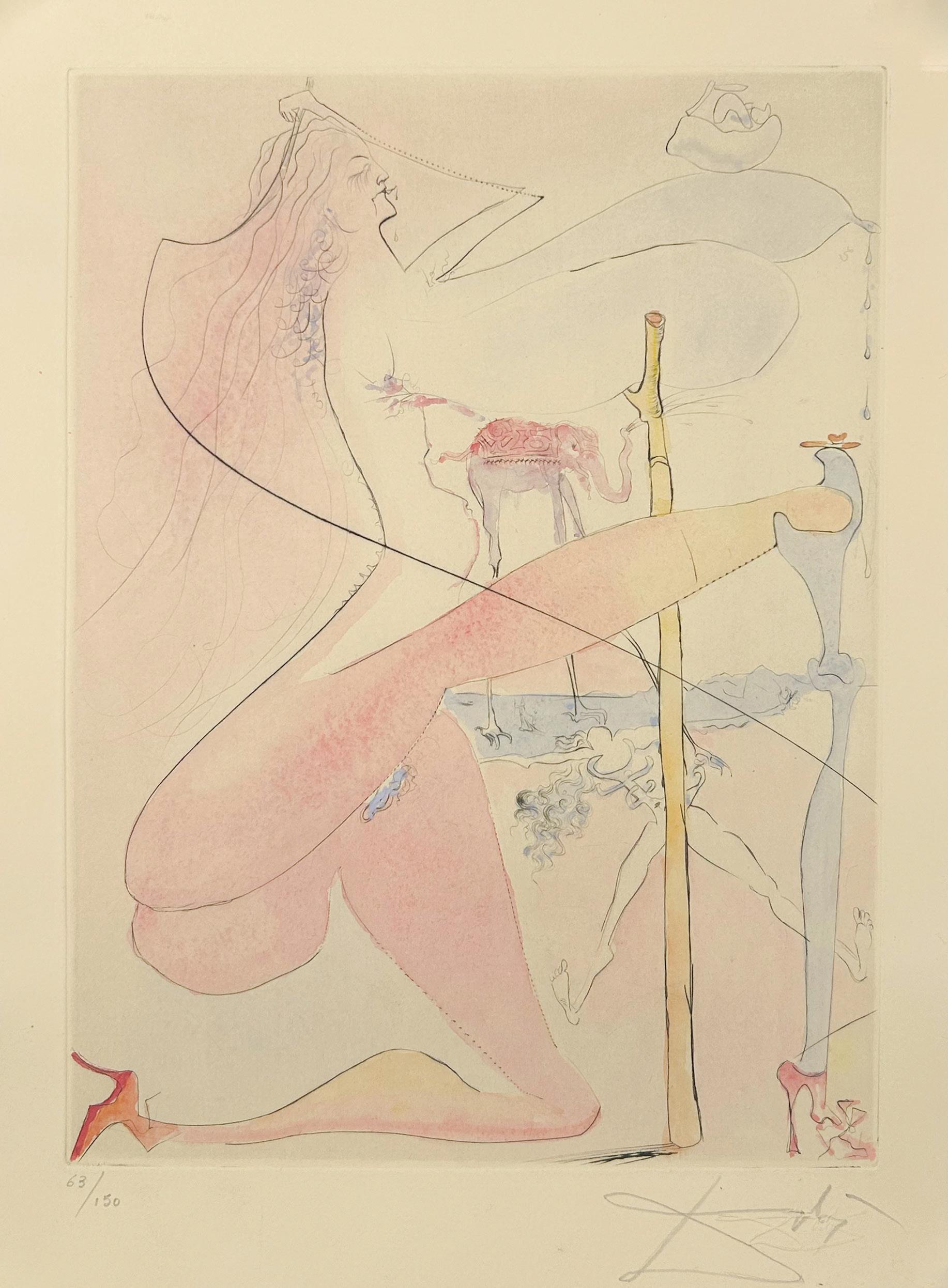
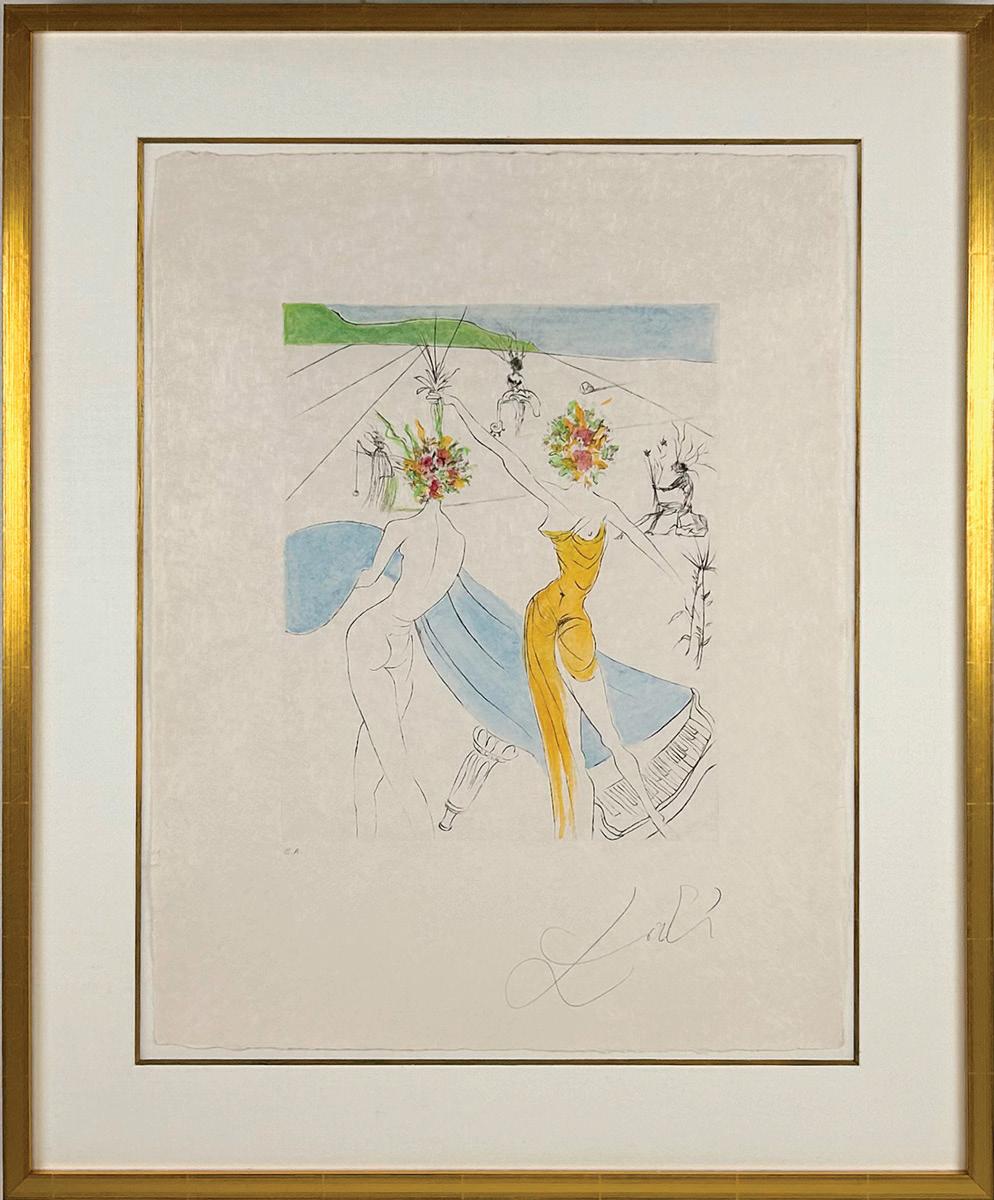
Left: Woman with Crutch, 1969, Original Drypoint Printed in Black Ink on Arches Wove Paper, with Hand-Coloring Added, Sheet: 15 x 11”
Right: Flower women with soft piano, 1969-70, Original Etching Printed in Black Ink on Japan Paper, with Hand-Coloring Added, Framed: 34.13” x 28.38”
GALERIE d’ORSAY & THE ARGILLET COLLECTION
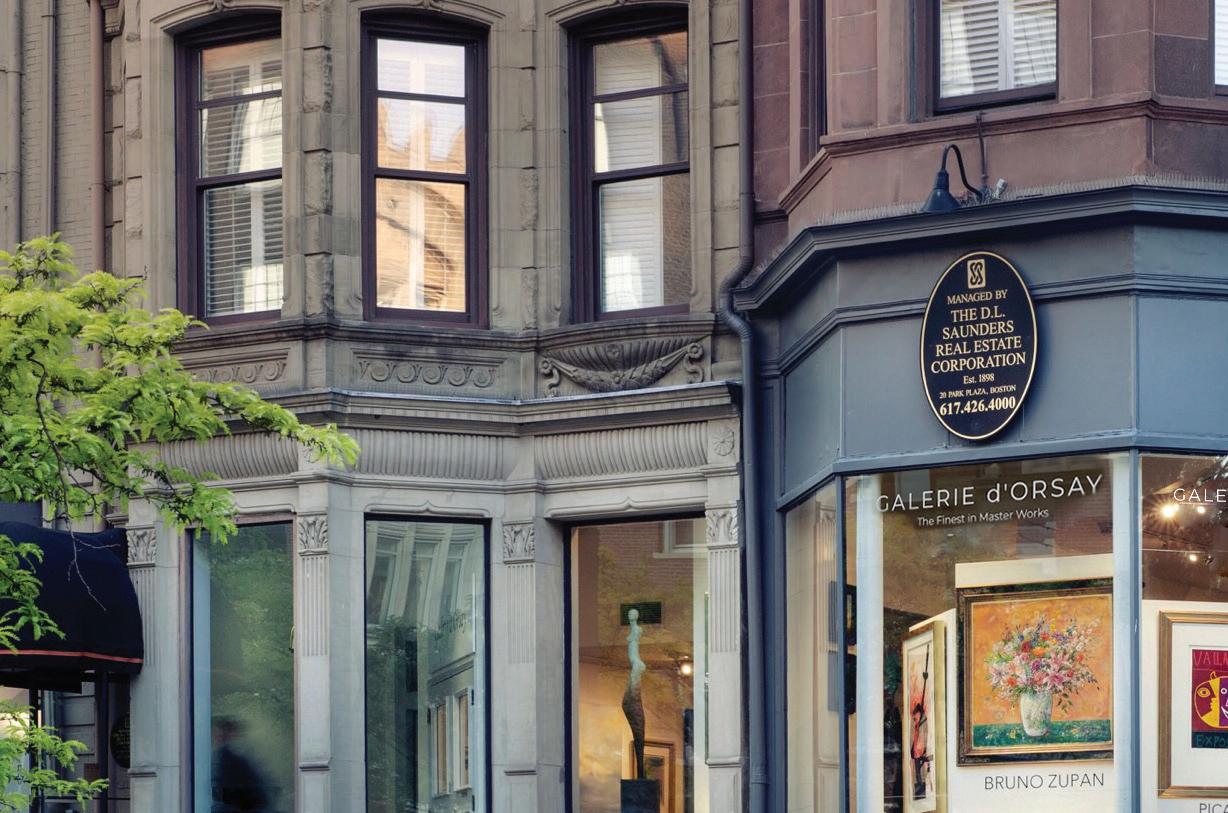
In 2005, Galerie d’Orsay introduced Dalí’s masterworks to Newbury Street and the Boston fine art gallery community.
Pierre Argillet, a prestigious publisher of great renown, worked with Dalí for more than fifty years creating many of the most sought-after editions of Dalí’s career. The Dalí masterworks offered by Galerie d’Orsay are acquired directly from Argillet’s personal collection, boasting an impeccable provenance and remarkable beauty from their most creative period together, 1963–1973.
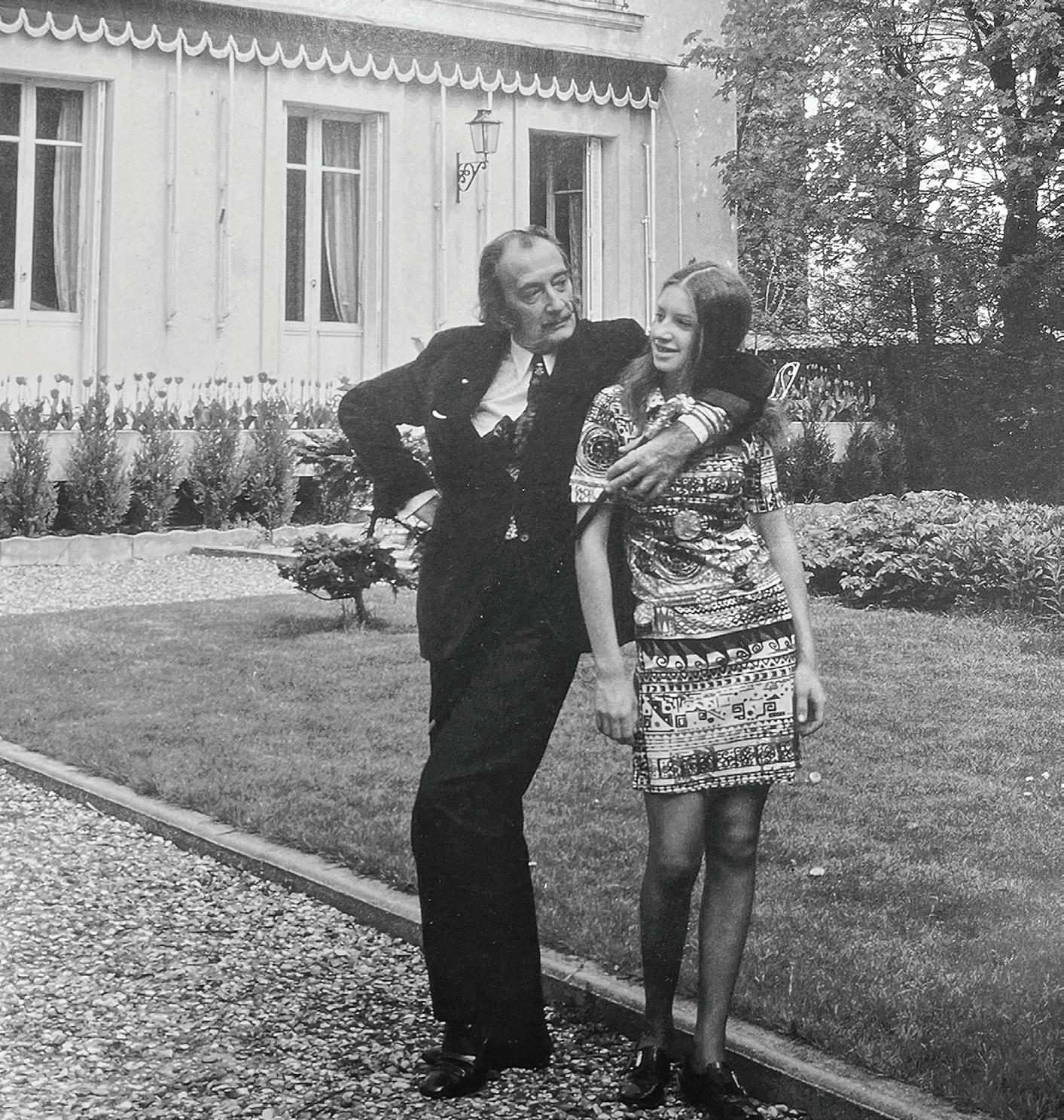
Over the years, Pierre’s daughter, Christine, has joined several of Galerie d’Orsay’s events and enthralled our collectors with anecdotes from her childhood summers she and her family spent with Dalí and intimate memories of the iconoclastic artist.
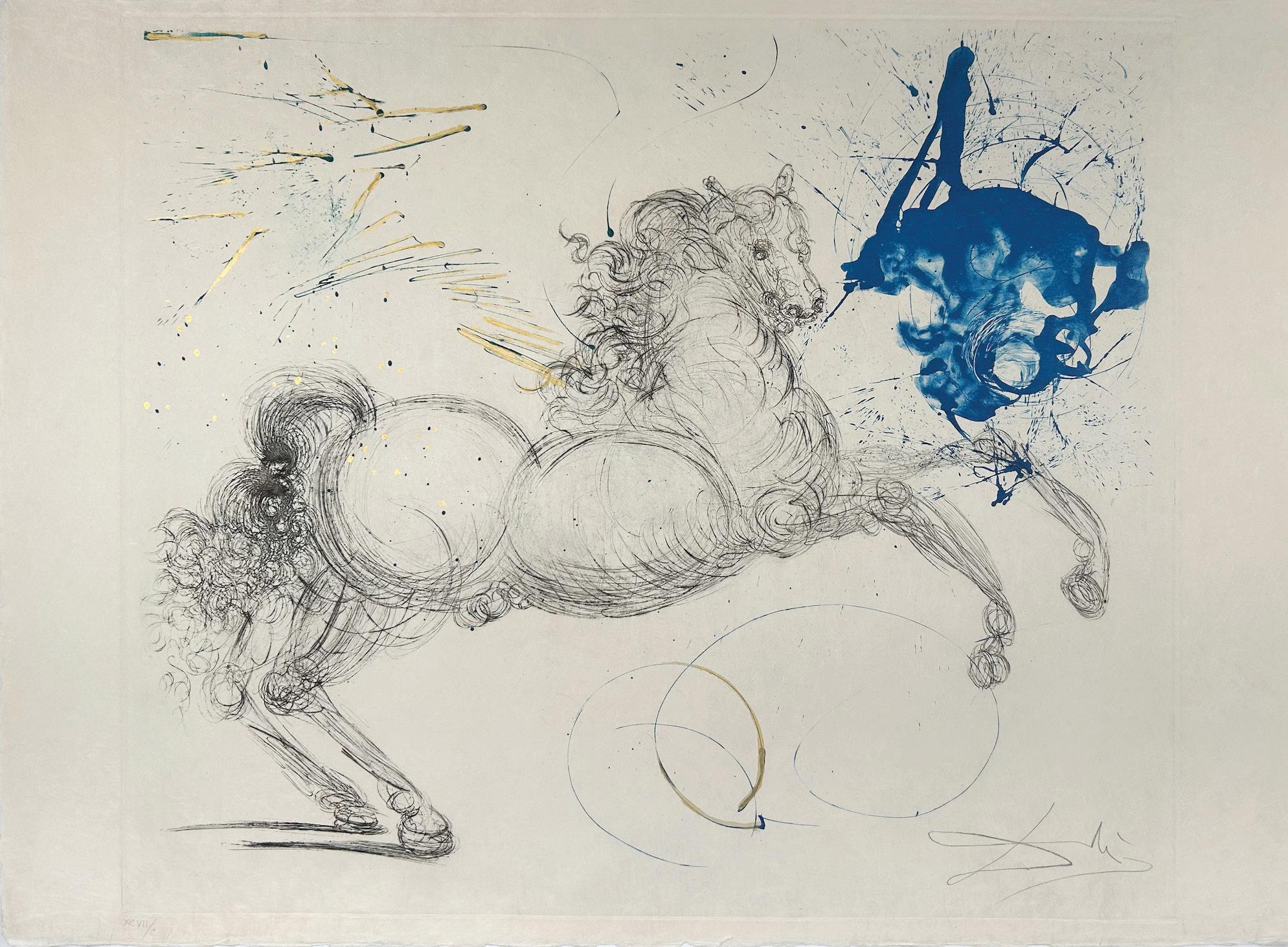
Top: Pegasus, 1963-65, Original Etching and Aquatint Printed in Colors on Japan Paper, Sheet: 22.25” x 30.25”
Bottom: Salvador Dalí & Christine Argillet
FERMIN CASTRO
B. 1965
Fermin Castro is an emerging self-taught artist whose abstract sculptures evoke both reverie and mysticism, often conveying his own vision of evolution. His sculptures depict images conceived in abstractfigurative forms, transcending the imagination and awakening fantasy. His art is influenced by his Caribbean roots, drawing inspiration from Cuban and Afro-Cuban sculptors and painters, blending primitive and modern Latin American elements with contemporary European artistic expressions.
“Sculpture
originated as a primal representation of language, in which form and volume were manifested in this genuine act of human expression.”
- Fermin Castro
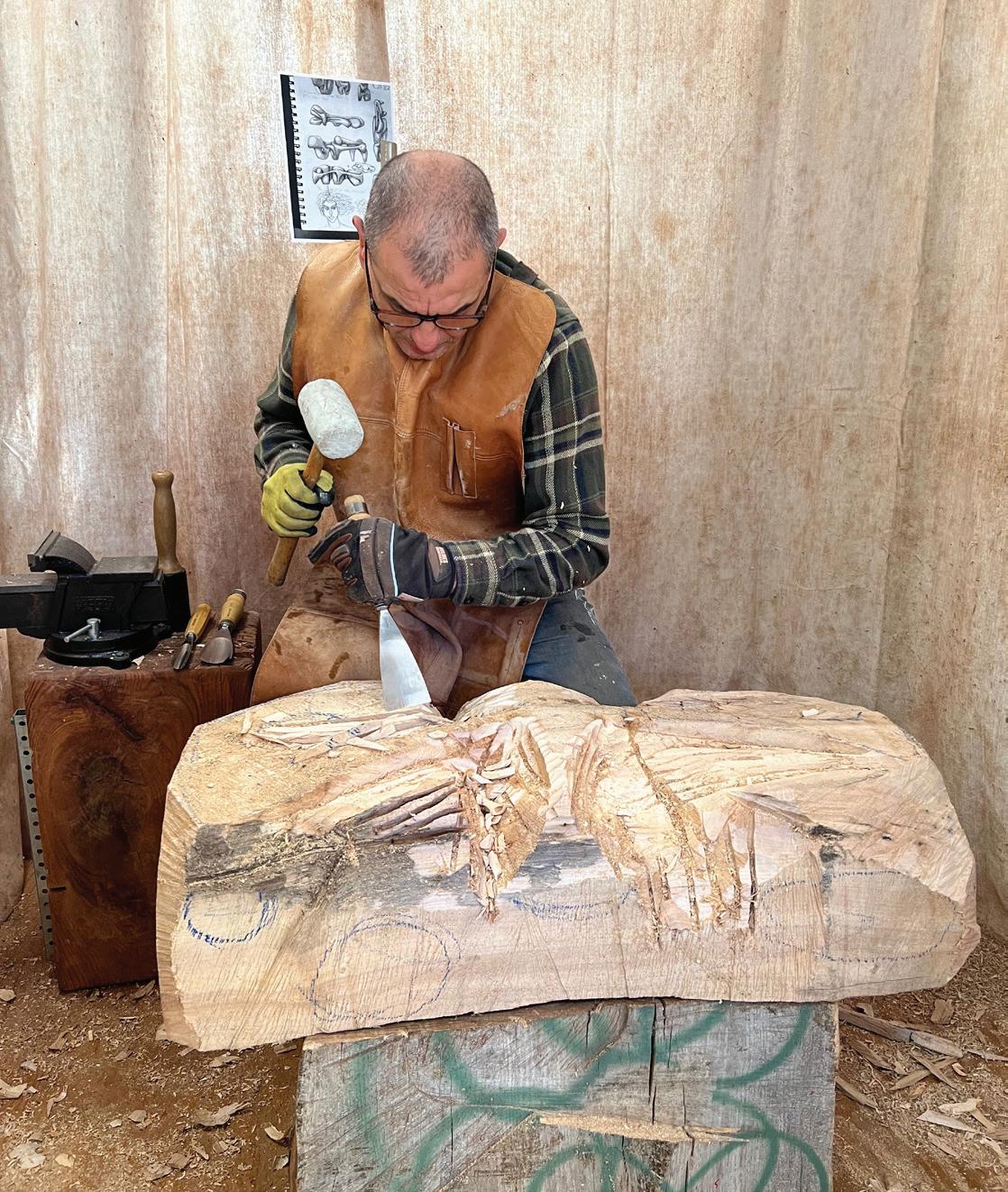
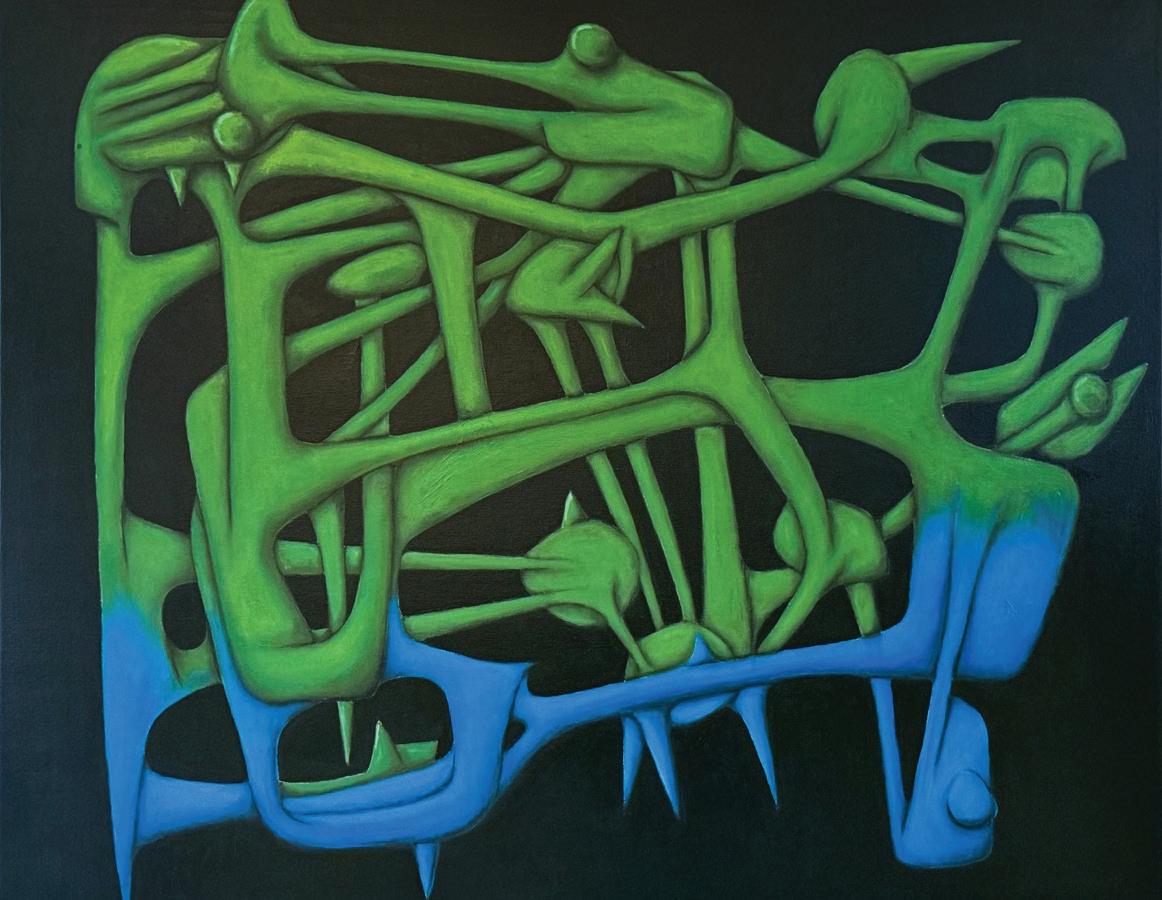
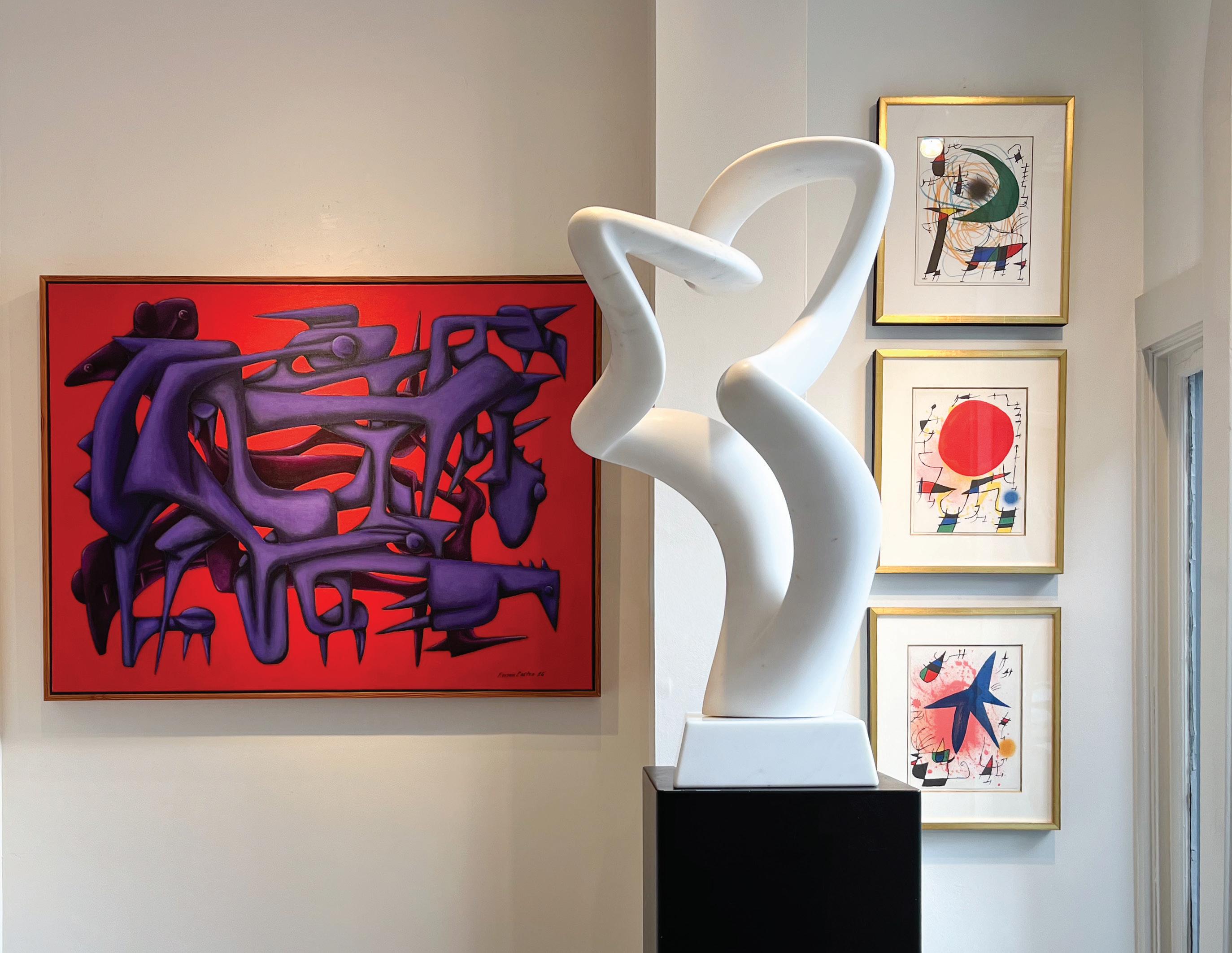
Figure Transforming to Blue, 2024, Acrylic on Canvas, 42” x 50”
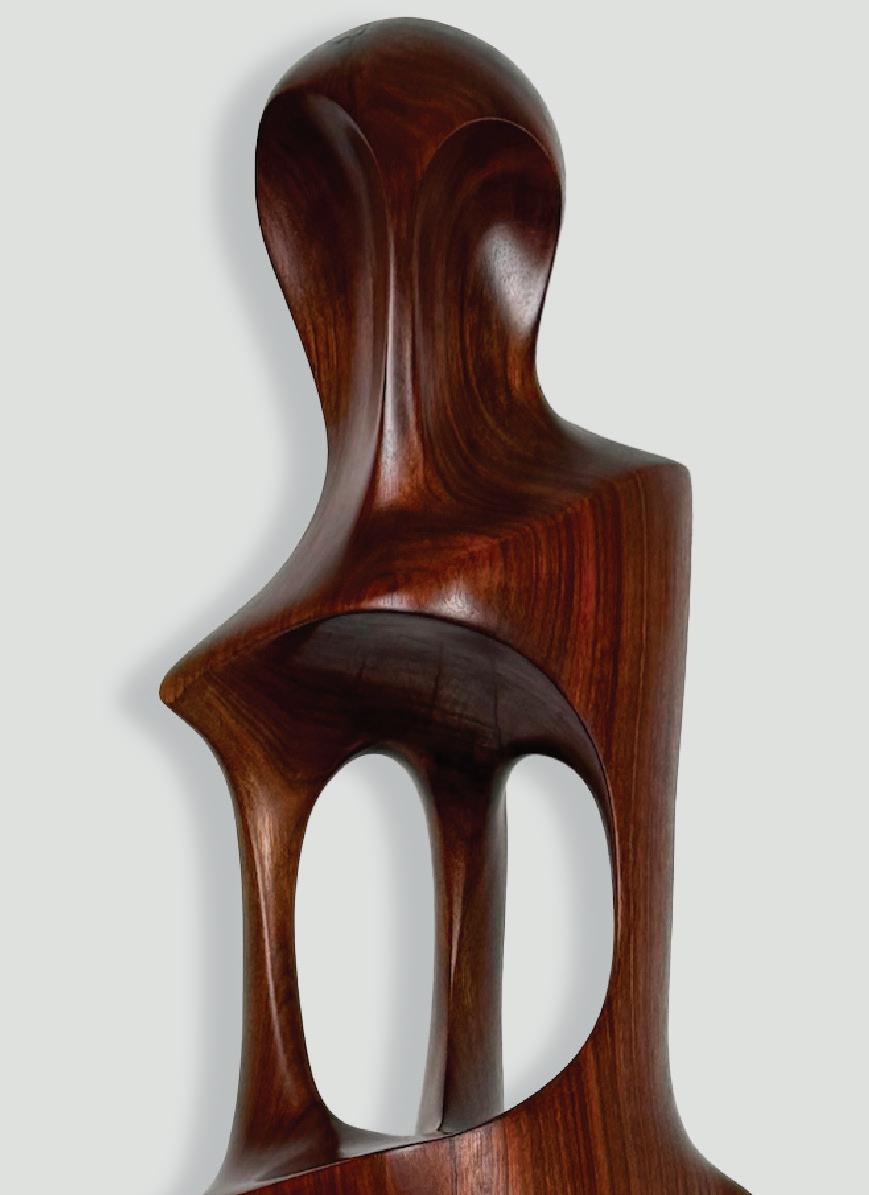
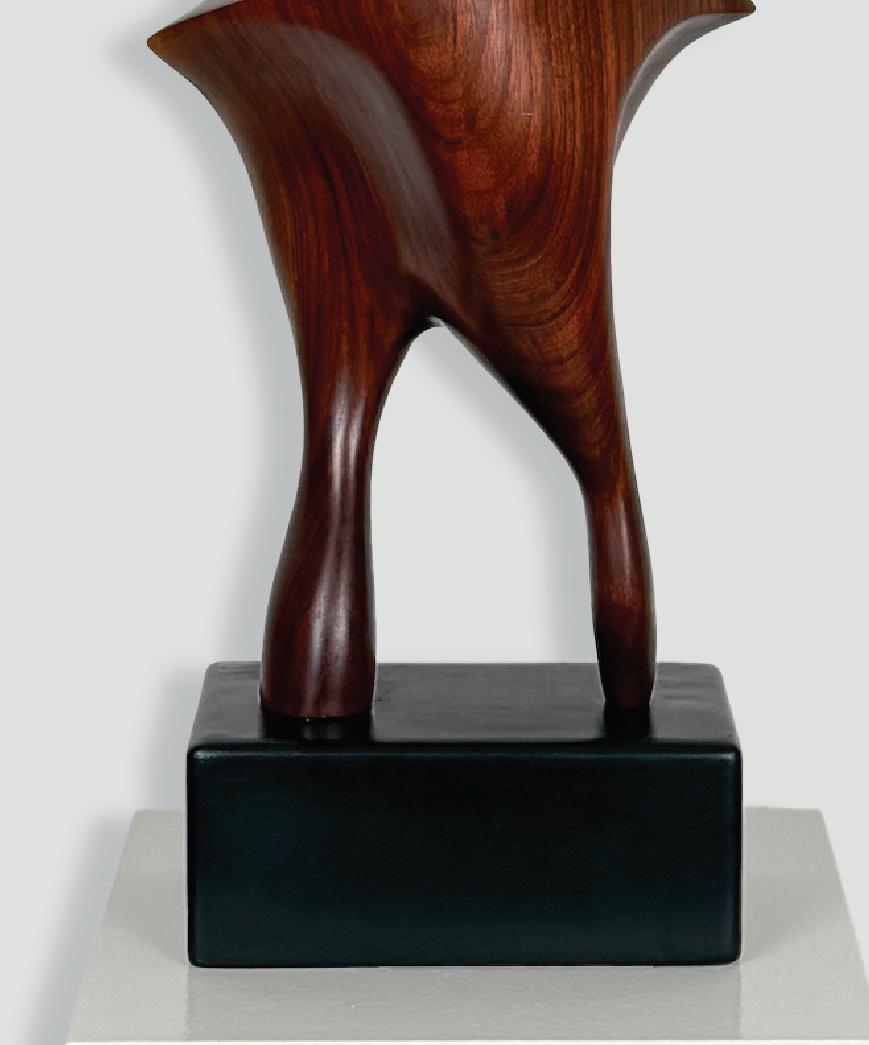
An Ordinary Gardener, 2020
Black Walnut
32.25” x 9” x 6”


FERMIN CASTRO

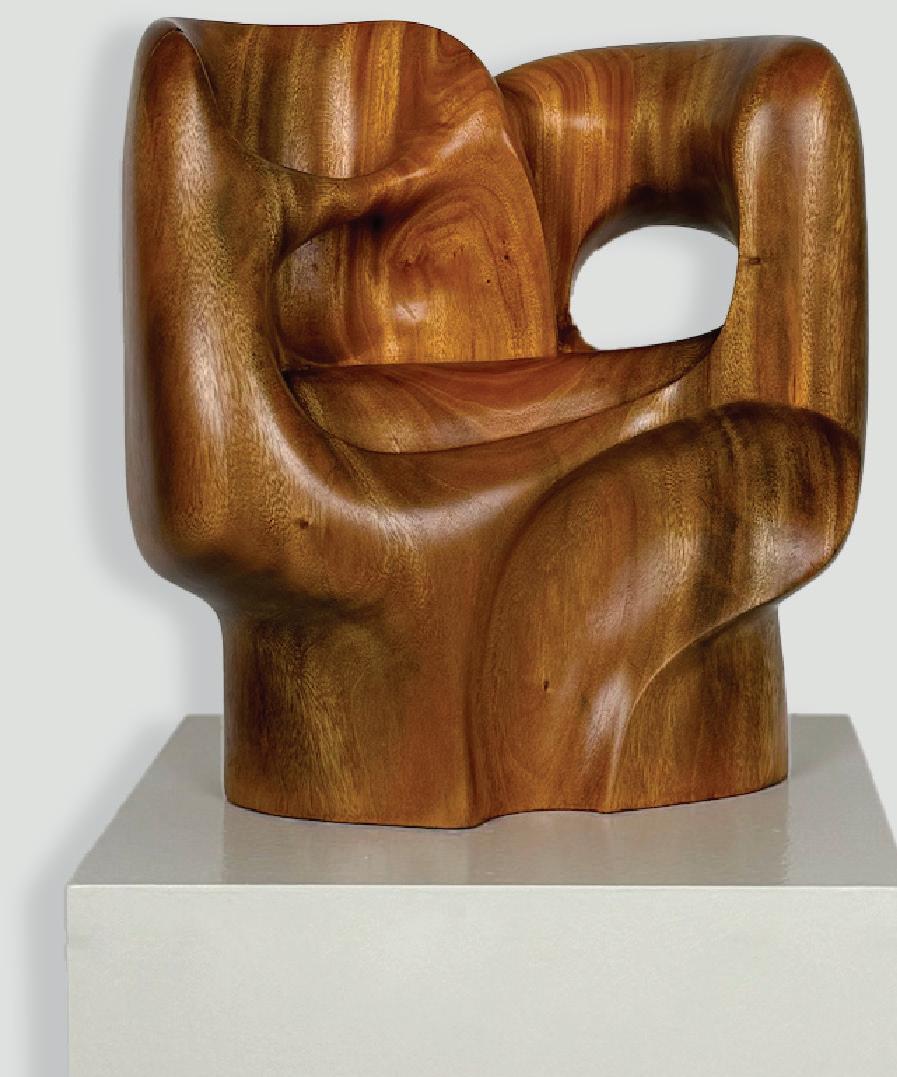
Synchronized, 2023 African Limba
13” x 11.5” x 6”

Peaceful Moment, 2019
Black Walnut
15” x 11.5” x 8.5”

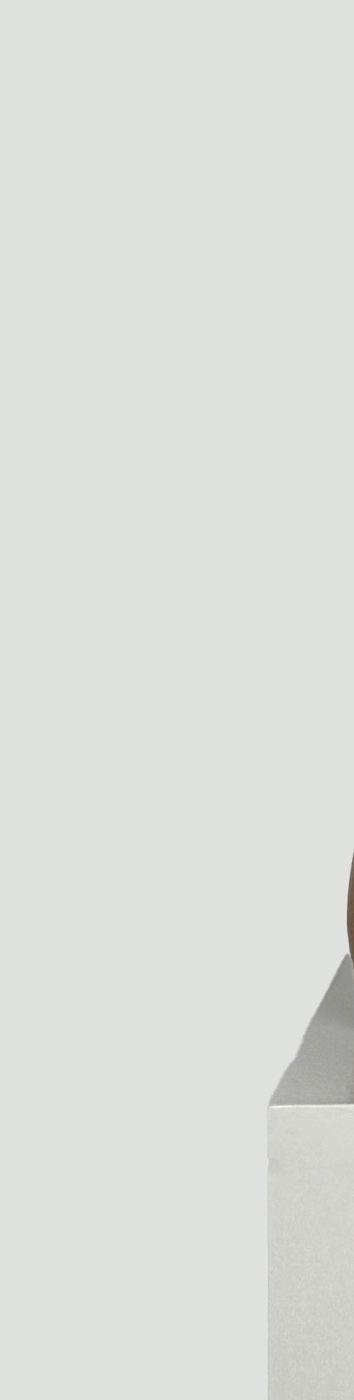
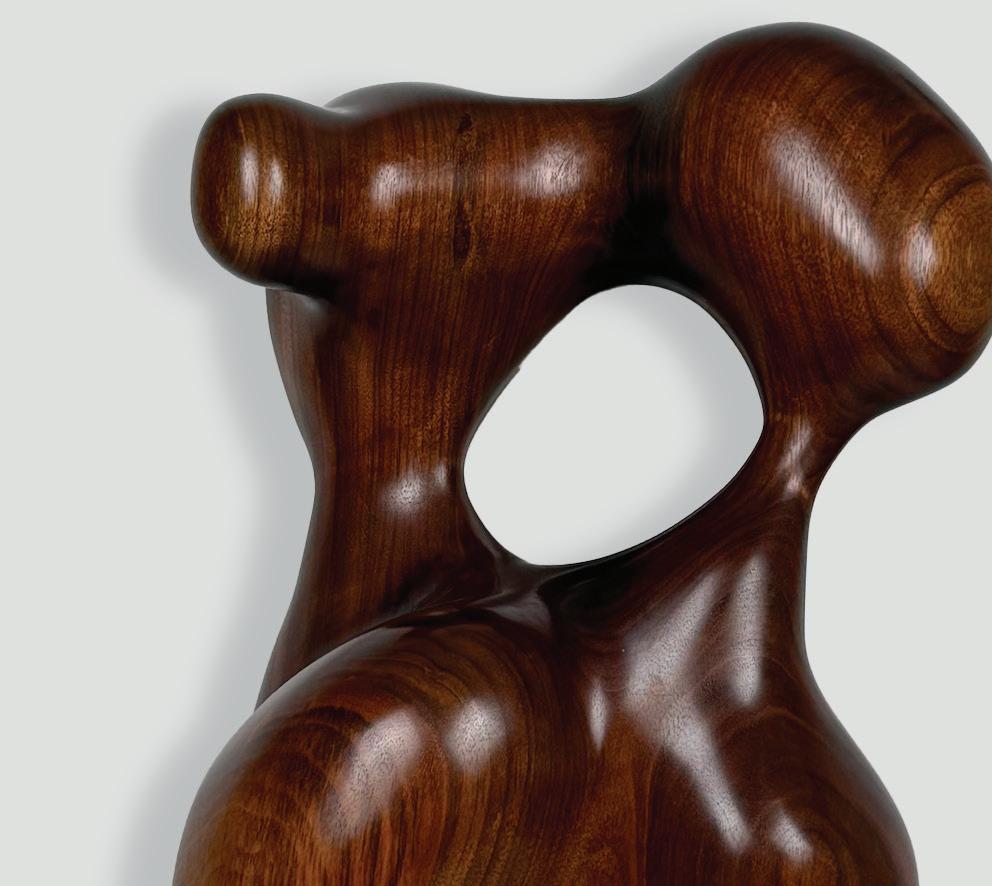
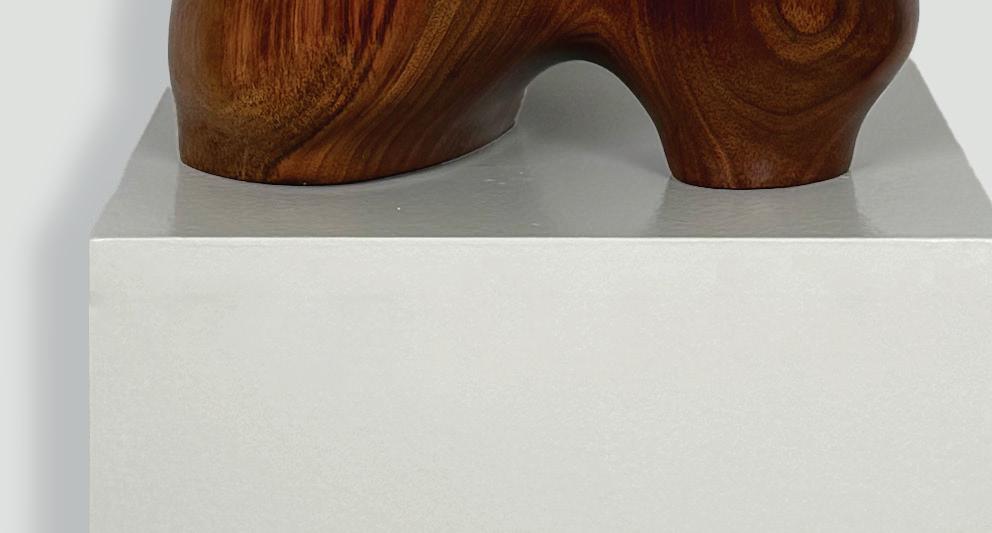
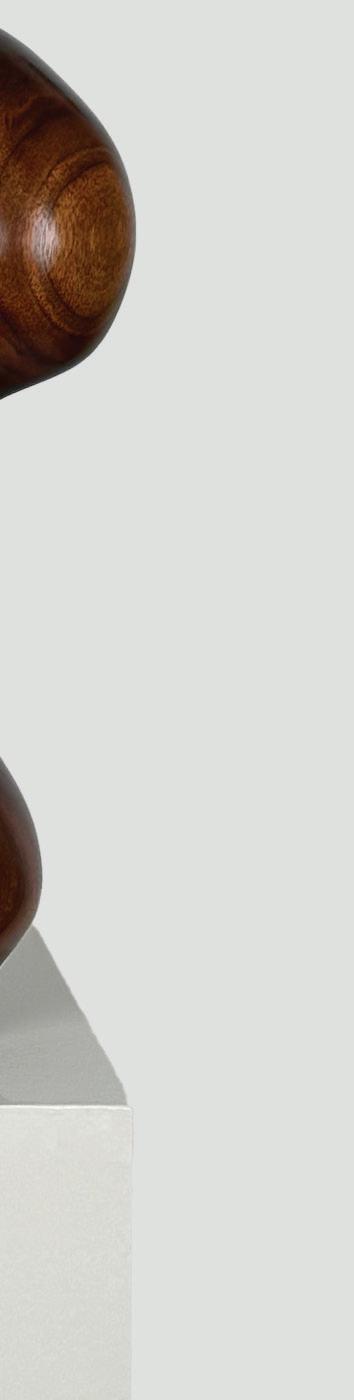


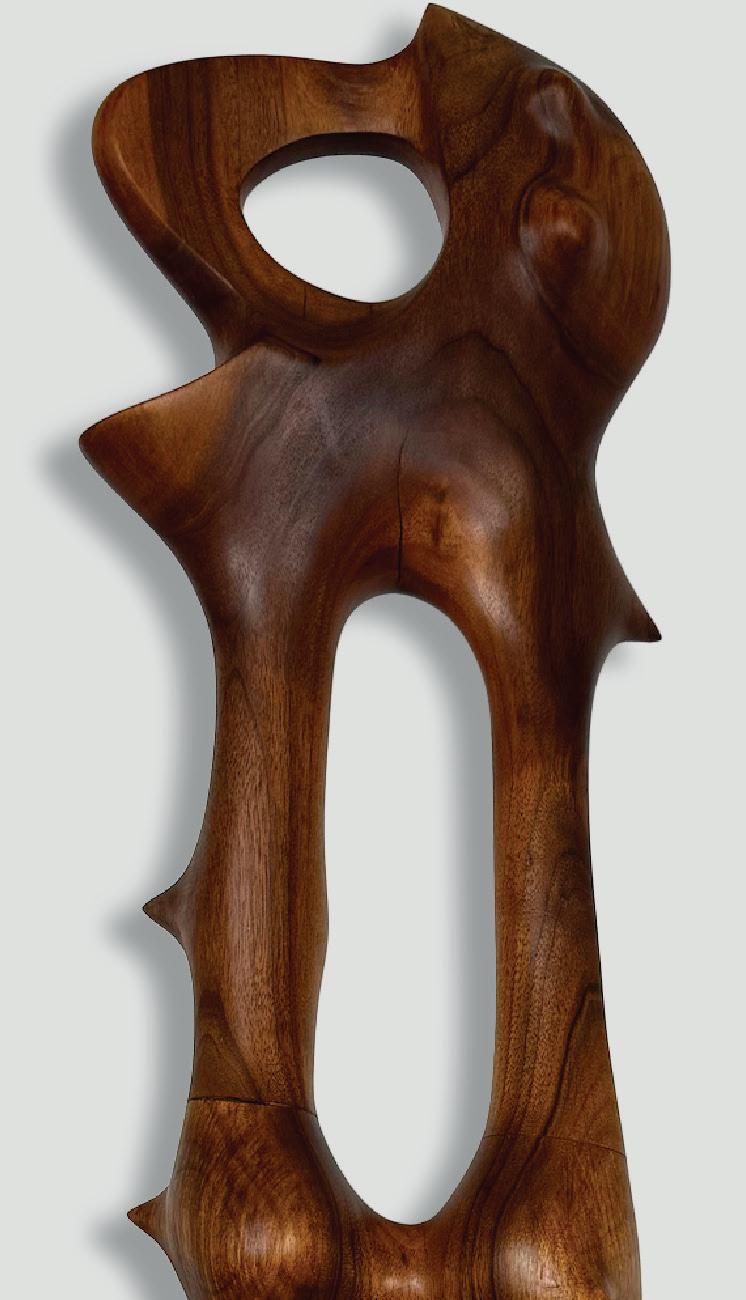
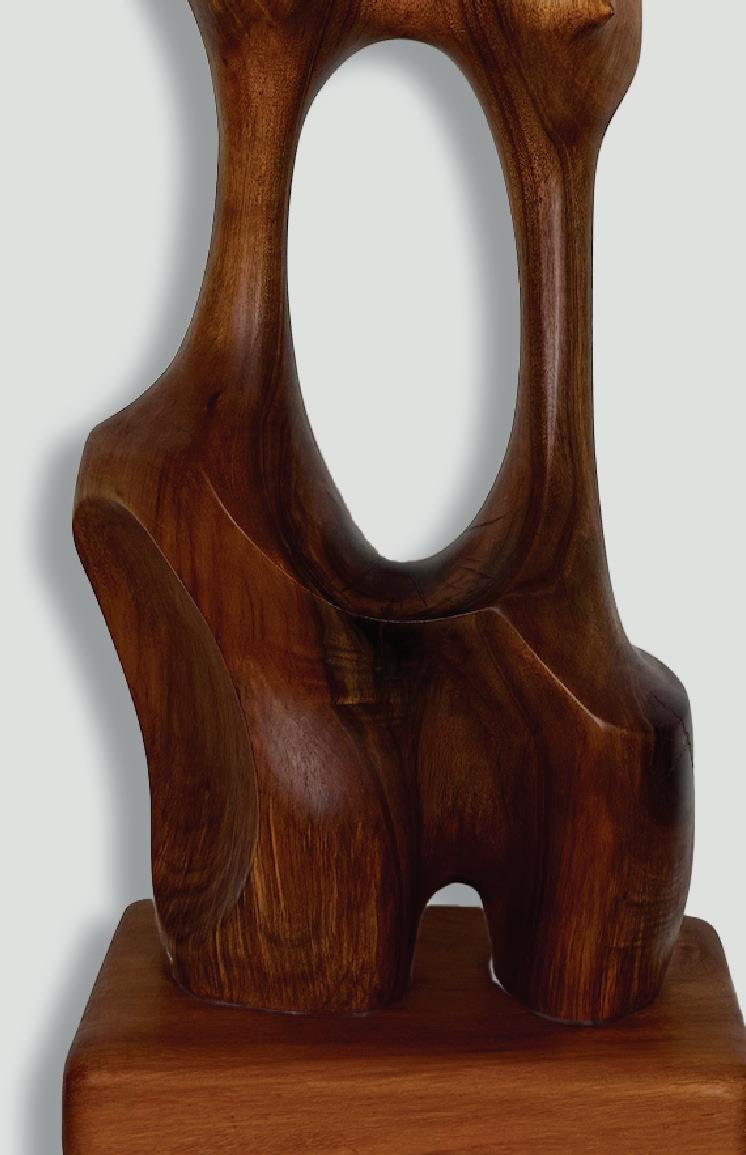

Guardian I, 2020
Black Walnut
38” x 10” x 7.5”
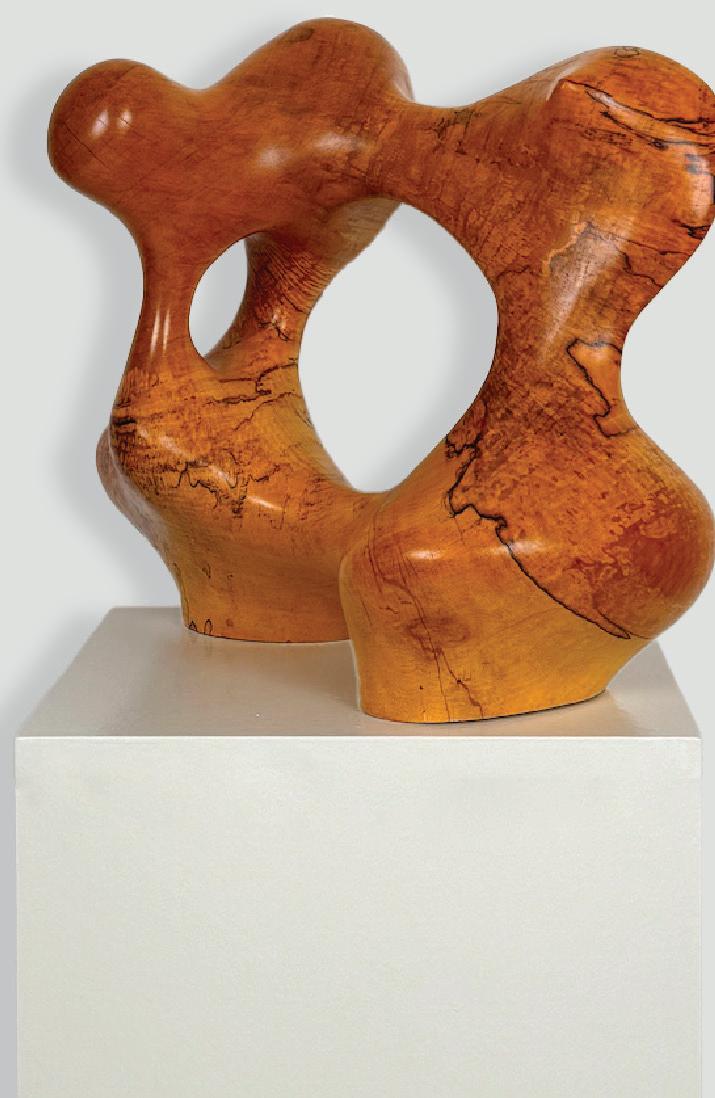
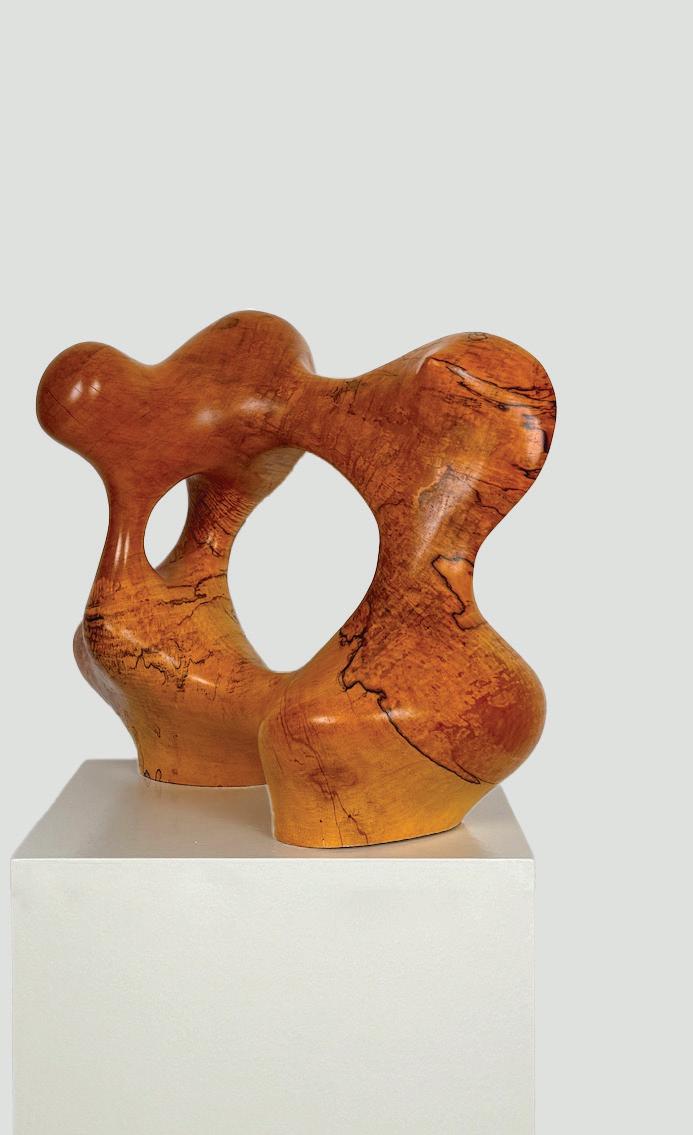
Tales Within, 2021
Spalted Maple
13.25” x 15” x 9.25”
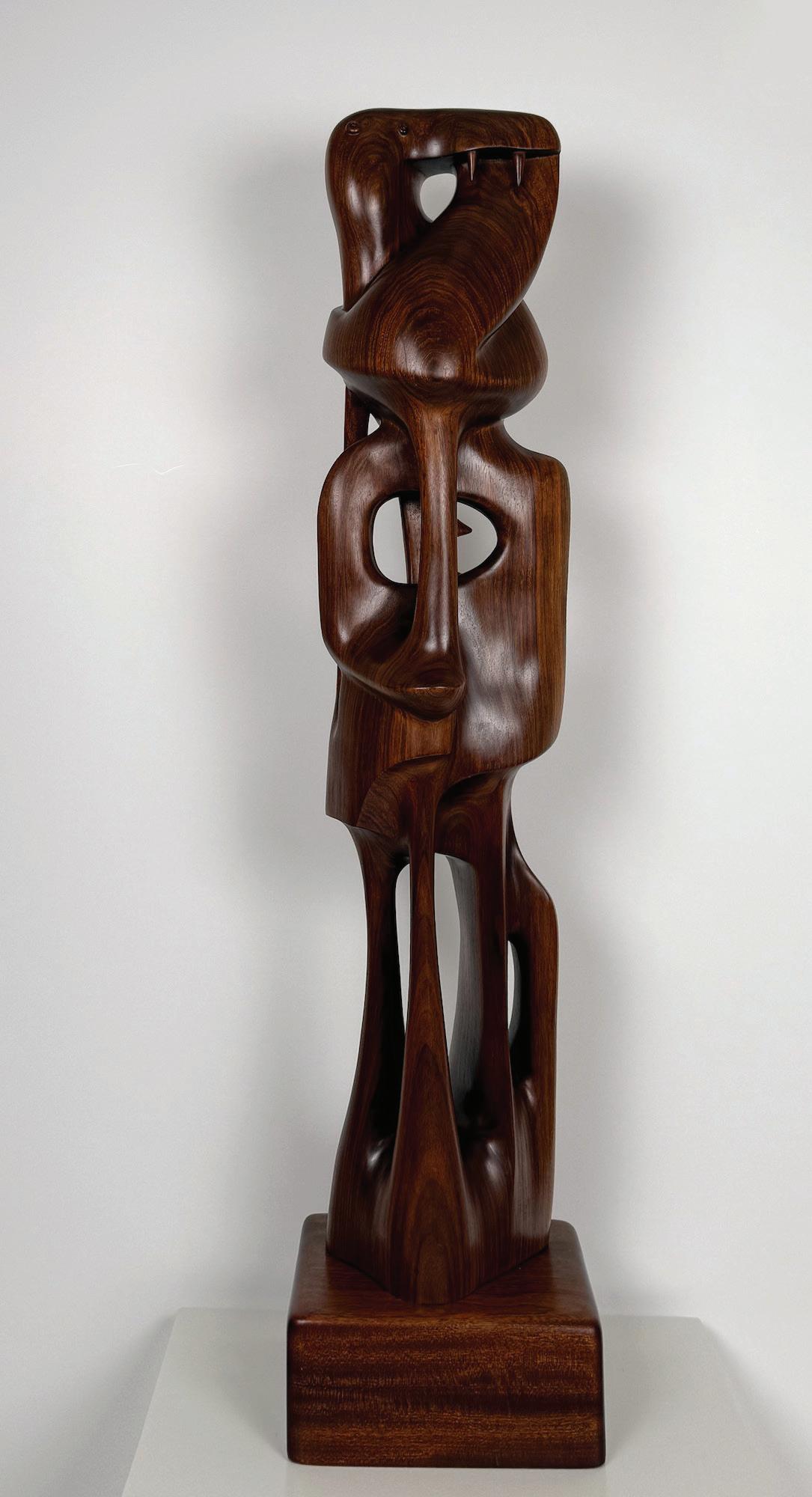
GUIJES SERIES
“Guijes” are imaginary beings originating from popular mythical stories told by residents of Cuba’s northeastern provinces in the 19th century. Castro’s “Guijes” sculpture series reimagines this fantasy and his interpretation of these mythical creatures, which he learned about from stories shared by his father, who was born and raised in northeastern Cuba.
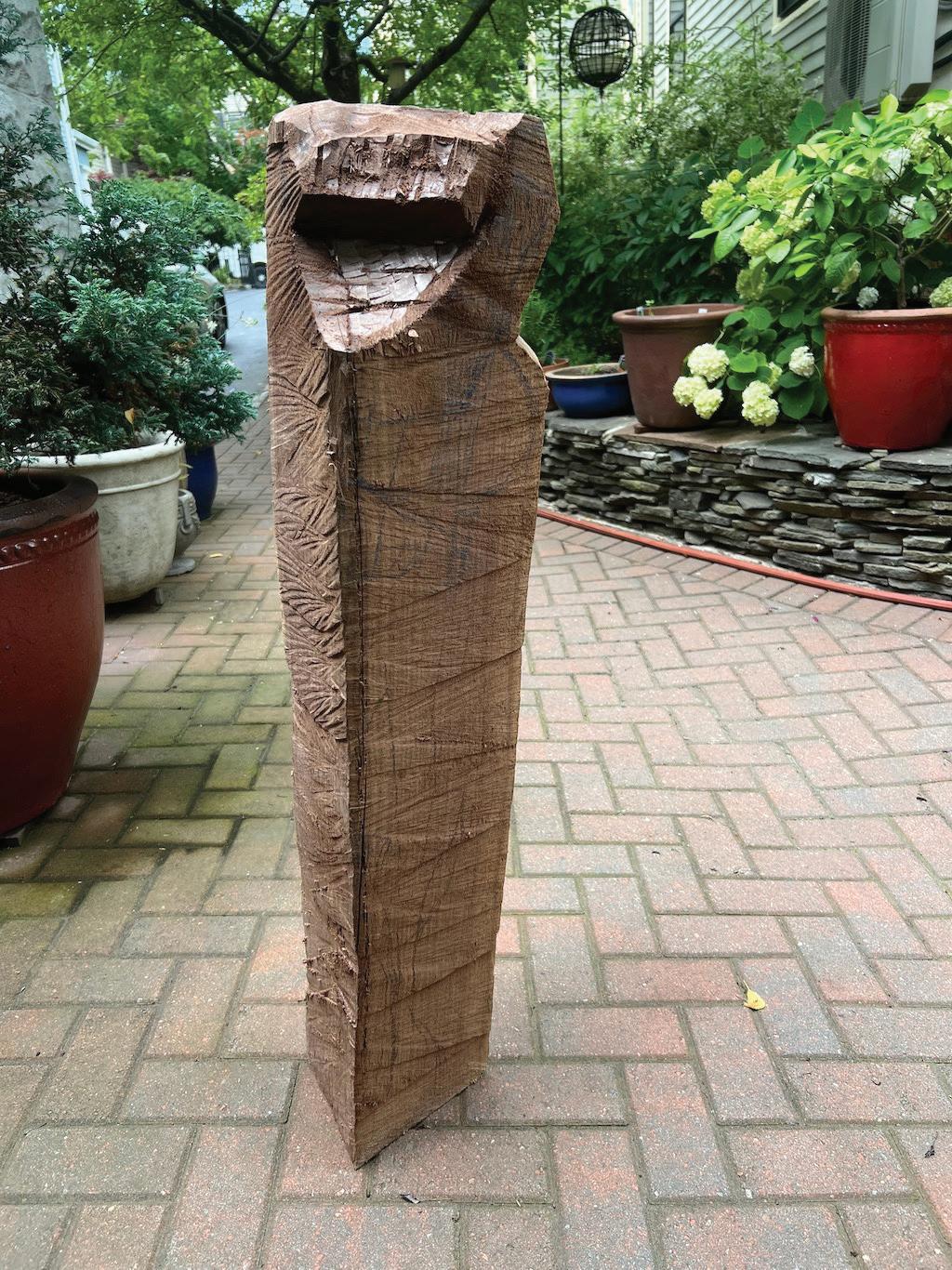
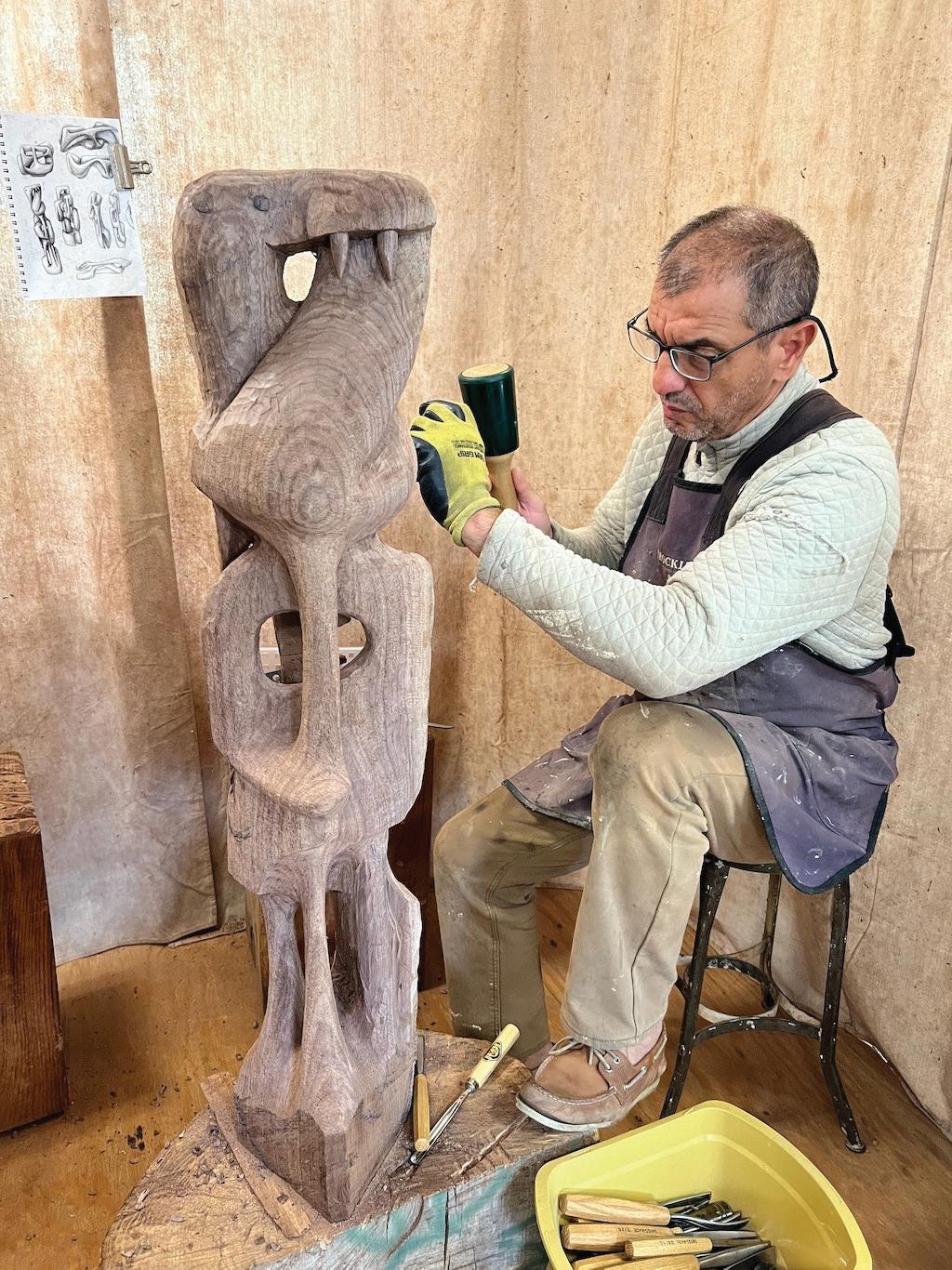
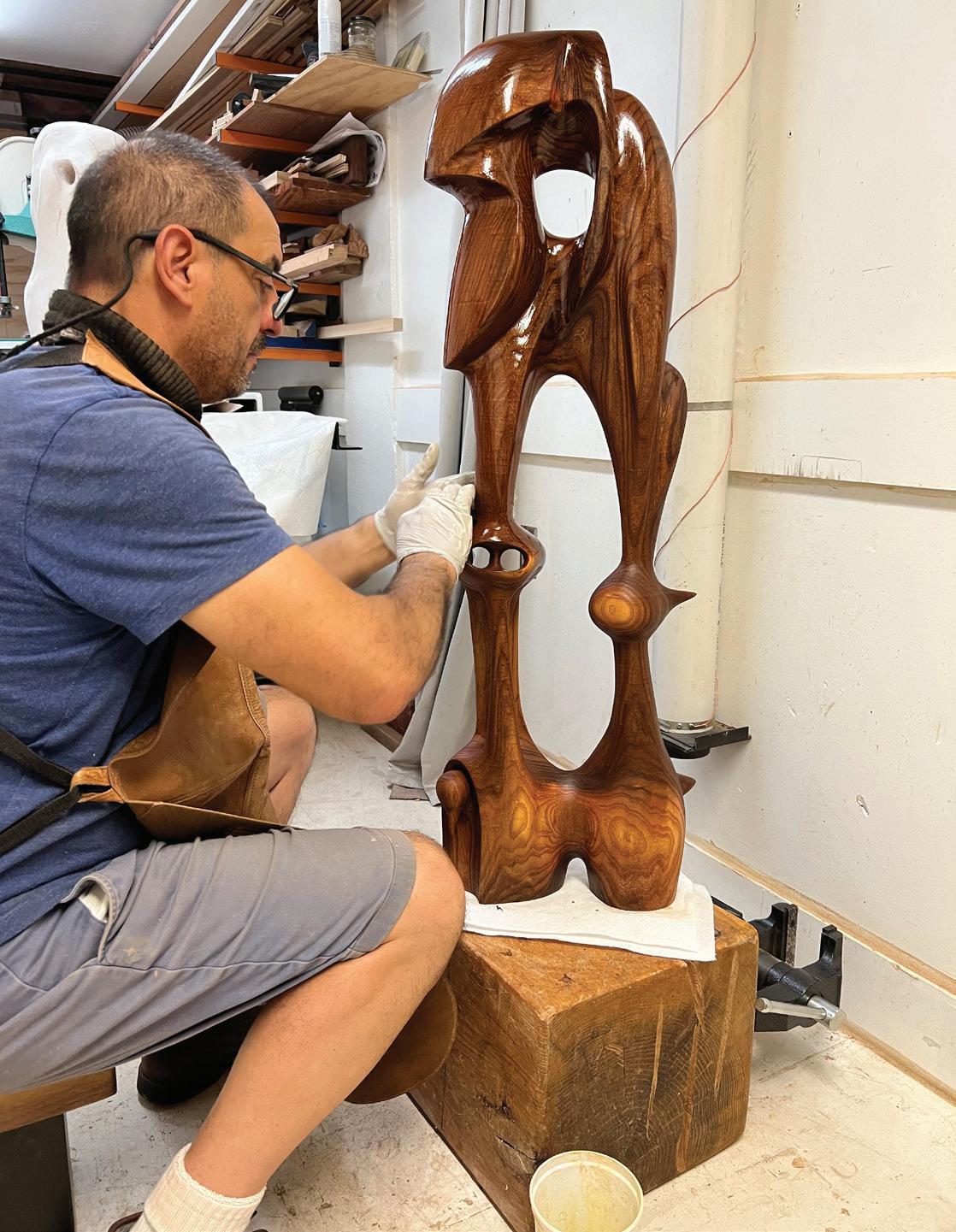
The Forgotten Idol, 2024, Black Walnut, 45” x 9” x 8”
Proccess photos of Fermin Castro creating The Forgotten Idol Courtesy Barbara Castro
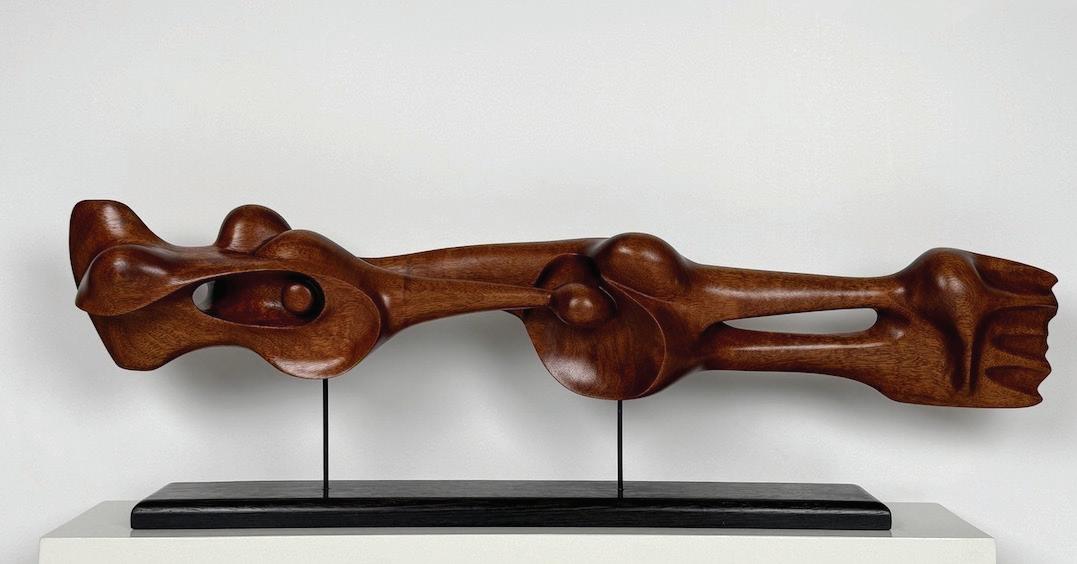
ANCESTORS SERIES
Castro’s “Ancestors” series serves as a diversion by creating imaginary ancestral forms of fish and amphibians, illustrating their endless adaptations to their aquatic environment. These sculptures feature locomotory extensions, elongated muscle protuberances, spiny tails, fins, scales, and delicate gills, representing unique versions of zoological species.
Fish from the Antilles, 2023, African Mahogany, 11.5” x 36” x 4.5”
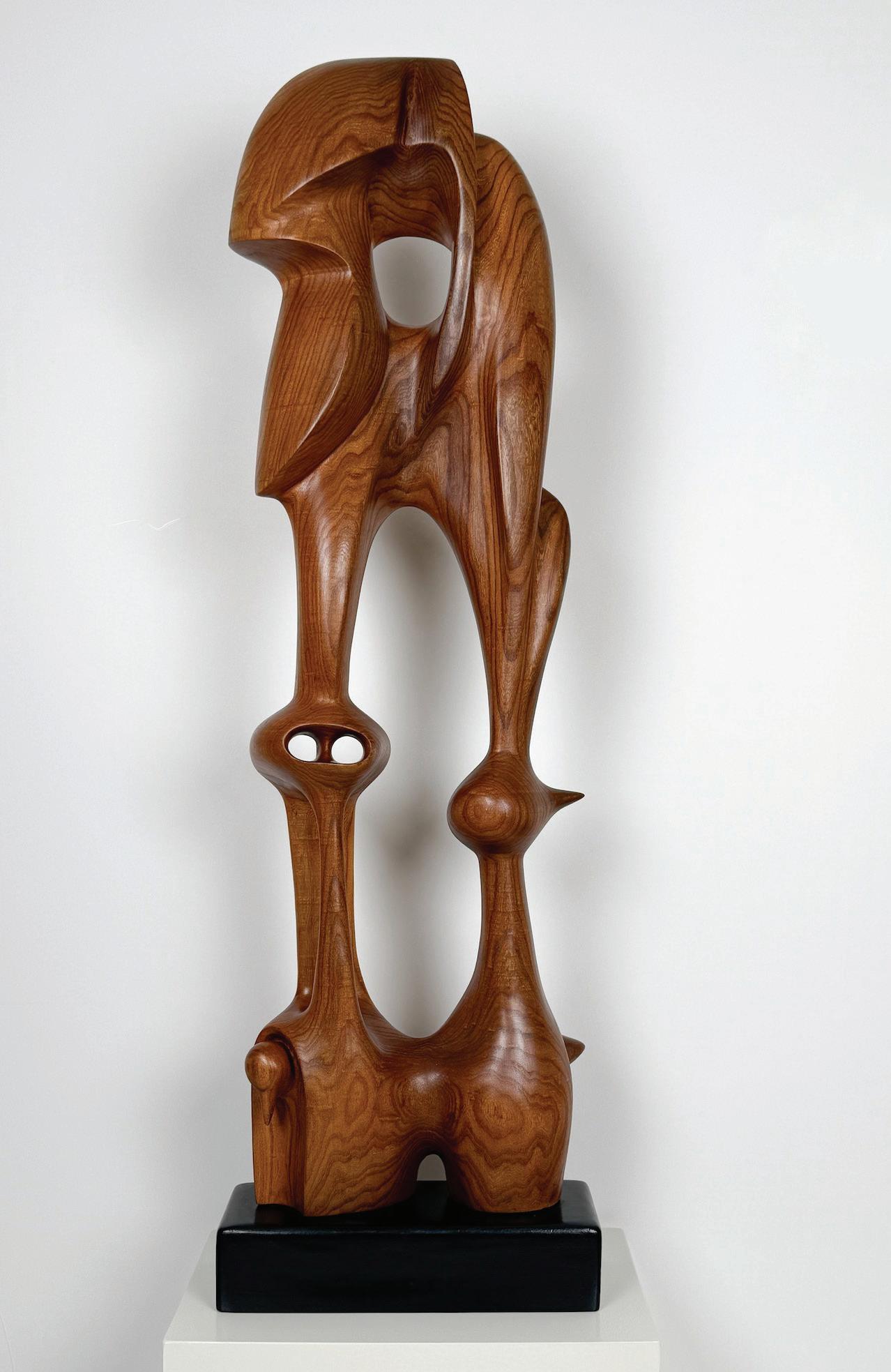
Protector of the Fantasies
2022, Red Elm, 45” x 14.5” x 5.5”
In this sculpture, Castro reflects on the legacy of his predecessor, Cuban sculptor Rogelio Rodríguez Cobas, conveying a message about the continuity of AfroCuban roots. Protector of the Fantasies defends these roots by safeguarding the ancestral fantasies, legends, and stories passed down through generations. The work powerfully balances the need for protection while inviting contact and connection.
FERMIN CASTRO
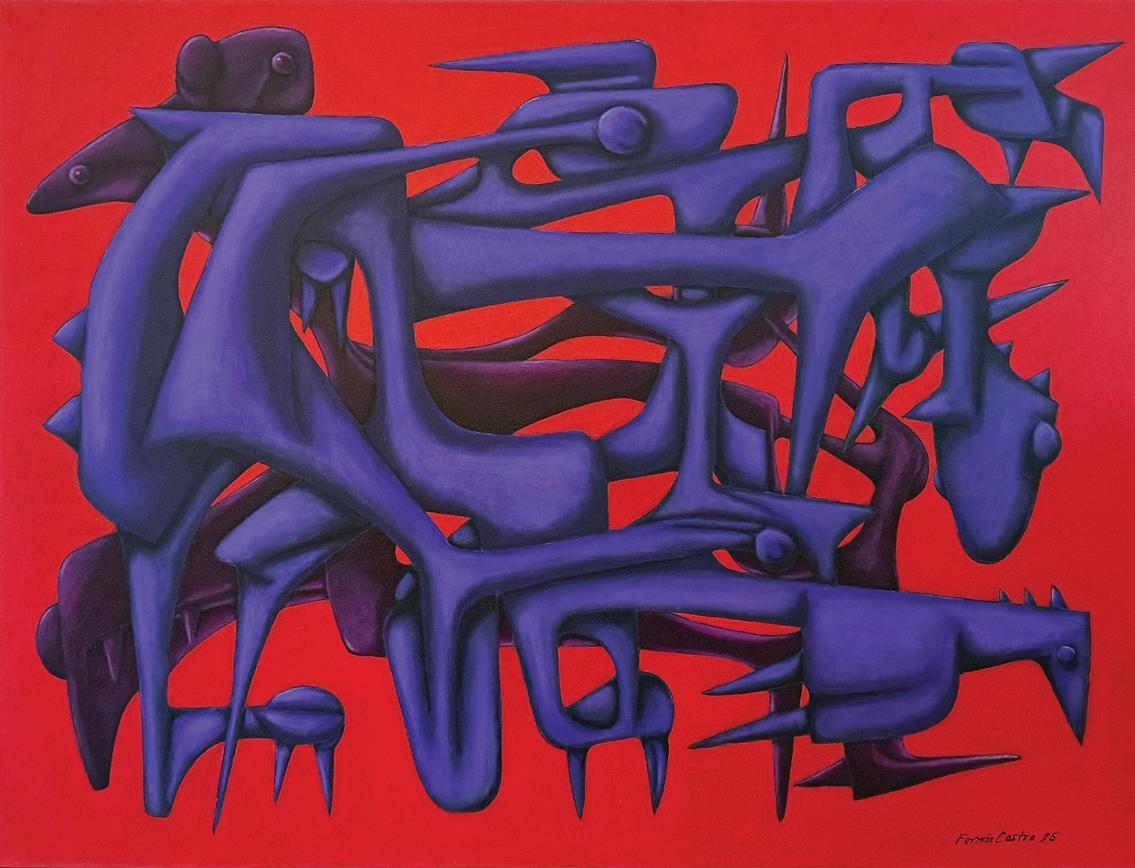
La Apoteosis de las Sombras al Ocaso, 2025, Acrylic on Canvas, 36” x 48”

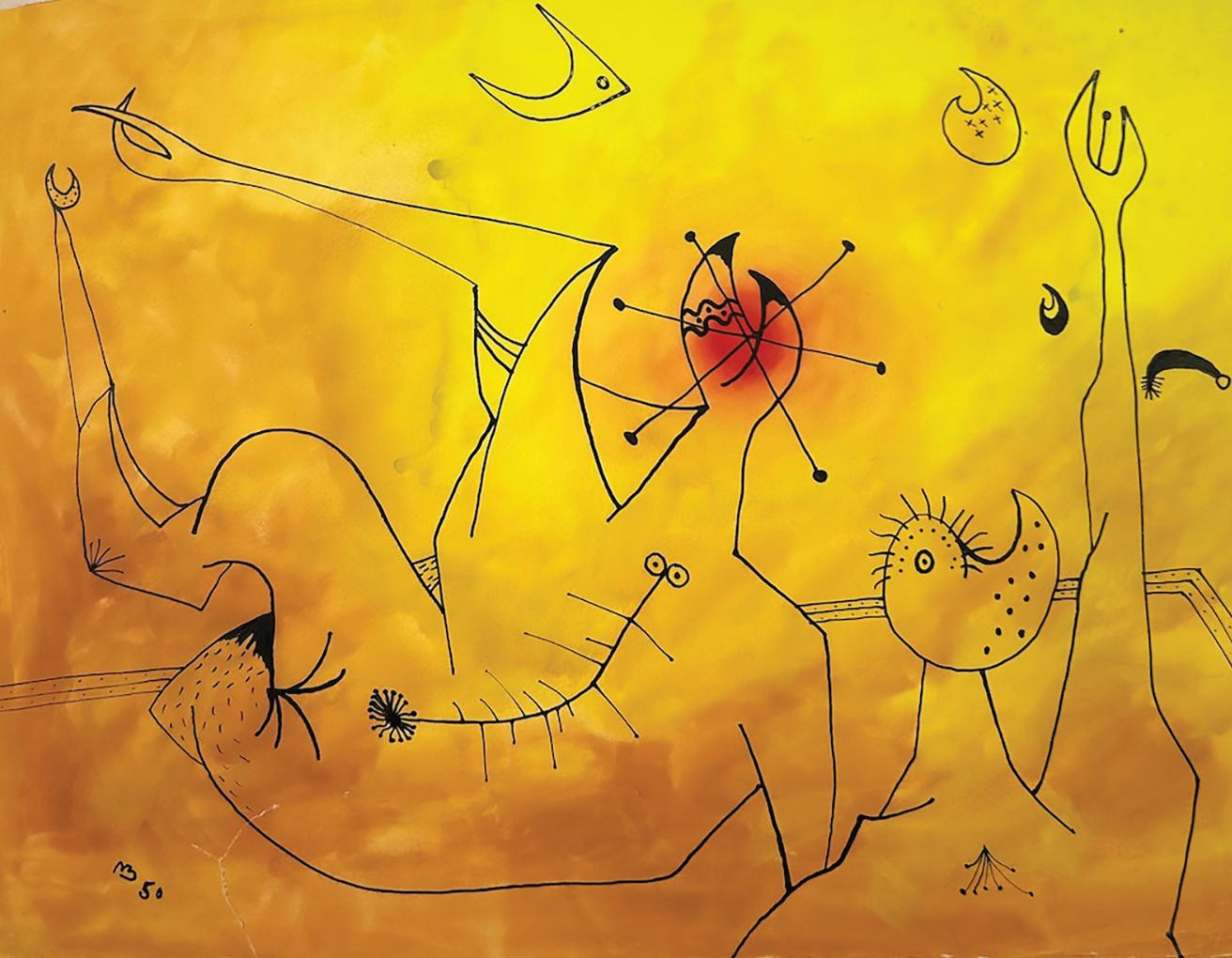
Front cover: Desmond Morris, Untitled, 1960, Mixed Media on Paper , 10” x 14”
Back cover: Photo by Ben Flythe