Re-Imaging Neighborhood Spaces Through Reprogramming, Placemaking, and Reconnecting
ARCH 5100-5200 | Masters Thesis Studio
ARCH 5110-5210 |Thesis Supplement
Fall 2021-Winter 2022
University of Detroit Mercy School of Architecture and Community Development
Thesis Candidate: Galal Abdullah
Studio Advisor: Claudia Bernasconi
Outside Advisor: Christina Heximer
ABSTRACT
Urban vacancy is a continuing problem in many cities across the nation. Vacant lots greening helps improve neighborhood conditions and the opportunity to transfer vacant lots into valuable space in the neighborhood where the residents benefit from. Although the urban vacancy issue is not new to the world, with the world trend toward urbanization, many cities are working on vacancies. For decades, economic decline, especially in the heavy industry cities such as Detroit. The vacancy impacts the city, which lost 65% of its population. But many successful projects have been done across the city, such as Fitzgerald neighborhood.
The research builds on two main questions how vacant lot can reconnect people back through designing new green spaces? Two, how can the residents benefit from the empty lands next door? The idea is to creatively reuse vacant lots and re-purpose them into neighborhood assets. The overall methodology of the thesis is through mapping, interview, and data analysis of the Neighborhood. Studying the resident’s social life and understanding how the vacant lots affect their daily lives.
This report identifies four primary goals for reusing vacant lots in the Midwest neighborhood through the process of work, precedents studies, and literature review. The first goal is to create a Sustainable & Productive Landscape in the neighborhood by promoting food garden production. Goal two is to improve the residents’ quality of life by using Vacant lots As a Platform for Education and skill-building. Goal three is to create a safe and activated open space in the neighborhood by designing for visibility. Finally, to create a healthy neighborhood by providing equal access to the public. Each of these goals is accompanied by a number of recommendations that highlight strategies for reusing vacant lots into community assets. This work aims to improve the quality of life and sustainability in Midwest and Detroit neighborhoods.
ACKNOWLEDGMENT
I would first like to thank my thesis advisor
Claudia Bernasconi, for all of the guidance throughout this thesis.
I would like to thank my thesis, external advisor
Christina Heximer for all the extra guidance.
Lastly, I would like to thank my family for all the support and love all over those years.
Detroit Timeline
Vacancy in Detroit
Landscape Changing Neighborhoods Strategies
BACKGROUND
Fitzgerald Revitalization Project
Reclaim Clairton: Vacant Land Assessment Report
NEIGHBORHOOD ANALYSIS
Midwest Neighborhood: Analysis
Midwest Neighborhood: Characteristics
Midwest Neighborhood: Demographic
Midwest Neighborhood SWOT Analysis
METHOD / FRAMEWORK
Midwest Neighborhood Framework
Midwest Neighborhood Strategies
PROPOSAL
Vacant to Value
Phasing Timeline
Midwest Neighborhood Proposal
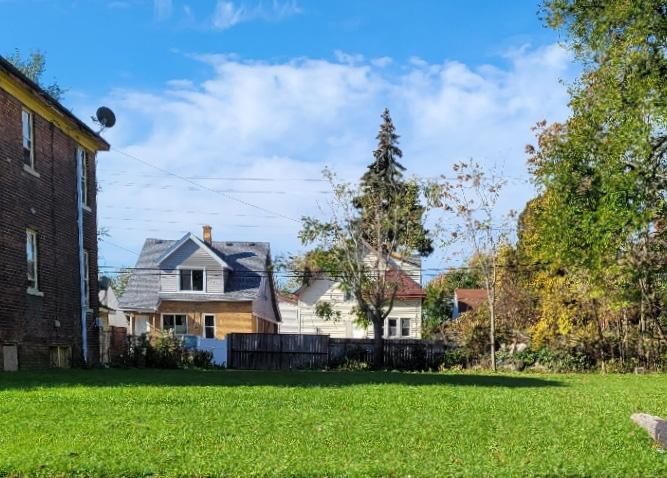
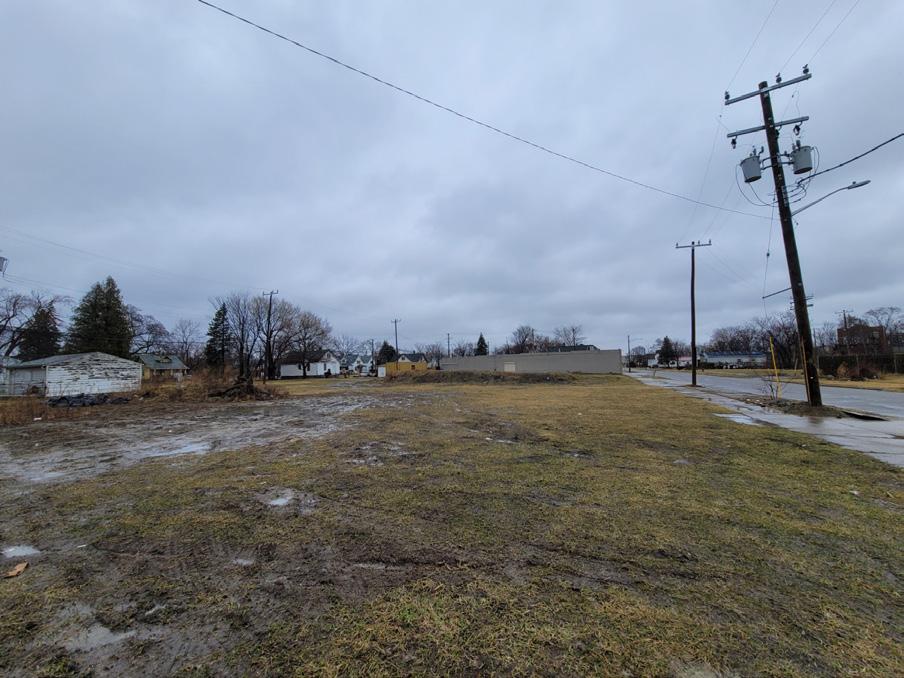
The general focus of the thesis is vacant lots in Detroit. Vacant lots are a huge problem that the post-industrial cities are facing now. This problem began when significant industrial movements left for the suburbs, other states, and other countries. This thesis mainly focuses on reusing vacant lots to connect the neighborhood back together. Also, it focuses on using green spaces as a method to bring people out and get them together to interact. The empty land in the city can help fight against many issues that the city's residents have been facing for a long time. Overgrown lots, garbage-strewn undeveloped spaces, and high crime areas that most urban residents consider blights in the neighborhood.
The issue of vacant lots is not new; it has been studied in many different cities across the nation. Many studies have been done about the issue and how to solve it using different methods to help the residents and the city. The concept of reusing vacant lots to develop new green spaces in the neighborhood includes One, using vacant lots to create jobs. Two, using vacant lots to create community hubs. Three, using vacant lots to create energy. Some of the strategies have been used, and they have been successful works in other neighborhoods. For example, one of the projects that have been done in the city is the Fitzgerald Neighborhood Project, which used vacant lots to create new spaces for the community and create a new green pathway to connect the neighborhood. Another project in Clairton, Pennsylvania, studied how vacant lots could contribute to communities' social, economic, and environmental well-being. This thesis research is about how vacant lots can reconnect the residents back together. Can the residents benefit from the empty lands next door? Can vacant lots help a resident with mental health, crimes, and social issues in the community? The thesis aims to find comprehensive strategies to redevelop vacant lots in Midwest neighborhoods.
This thesis investigates the issue of vacant lots in Detroit, especially in the Midwest neighborhood. The vacancy is widely spread in Detroit, especially in poor neighborhoods. Vacant land is often considered a cause of blight and disinvestment in the neighborhoods. Vacancy, in general, serves as a barrier to urban revitalization. The vacancy is considered an economic failure that begets additional problems for the communities. In addition, blight and injustice have been affecting the residents of Detroit. However, cities may use urban growth to encourage infill development on vacant land or greening to reduce the negative appearance of vacant land in the neighborhoods. The overall methodology of the thesis is through mapping, interview, and data analysis of the neighborhood. Studying the resident's social life and understanding how the vacant lots affect their daily
lives. Understanding the condition of the vacant lot to find or approach the perfect design strategies that can be accomplished in the neighborhood. The purpose of this will benefit the neighborhood's social, economic, environmental, and mental health issues.
The critique of the project approach will focus on the residential area only. What other aspects will be benefits the residents in the neighborhood? The other aspects, such as commercial development on the corridor. Also, there is no community engagement to view their opinion about the strategies approach. The project's limitation is timing, where there is no time to do large-scale neighborhood engagement and do neighborhood surveys.
The project identified a series of goals and strategies for adapting vacant lots in the Midwest neighborhood. Also, this thesis proposes a framework that addresses the gap between vacancy and development in the Detroit neighborhoods. The thesis purpose was to dig deeper into the issue of vacant lots in Midwest neighborhoods and identify some of the vacant land characteristics and relationships to the neighborhood situation. There are many findings from this research. One finding is that the neighborhood has significant vacant land that can be opportunities for transforming into green spaces.
INTRODUCTION
Detroit’s history has been changing over time. However, in many post-industry cities across the nation, a vacancy occurs and faces challenges of abandoned factories. Such as Detroit, many industrial factories, and depopulation happened in the city over the last century. Detroit declined beginning in the 1950s, and the big hit in 2008 when the economy crashed and many of the residents lost their jobs. As a result, the vacancy in the city rose, and the number is high. Detroit is grappling with a vacancy issue. Many of the small businesses have relocated and moved to a safer areas. All that has affected the residents’ lifestyle and overall well-being. The decline affected the values of homes in the neighborhoods and made the value go down, and many homes have been foreclosed since no one sold or bought those homes.
Detroit is the largest U.S. city to lose more than half its population. The population declined from 1.8 million to over 600,000 million people in 2022(U.S. Census Bureau, 1950 & 2020). In 1950 the depopulation began. Many of the residents followed the jobs, but many were unable to relocate, resulting in the homeowner not paying the mortgages and taxes. Many events led to depopulation, and have the city been with many abandoned homes. The city of Detroit hosts a disproportionate
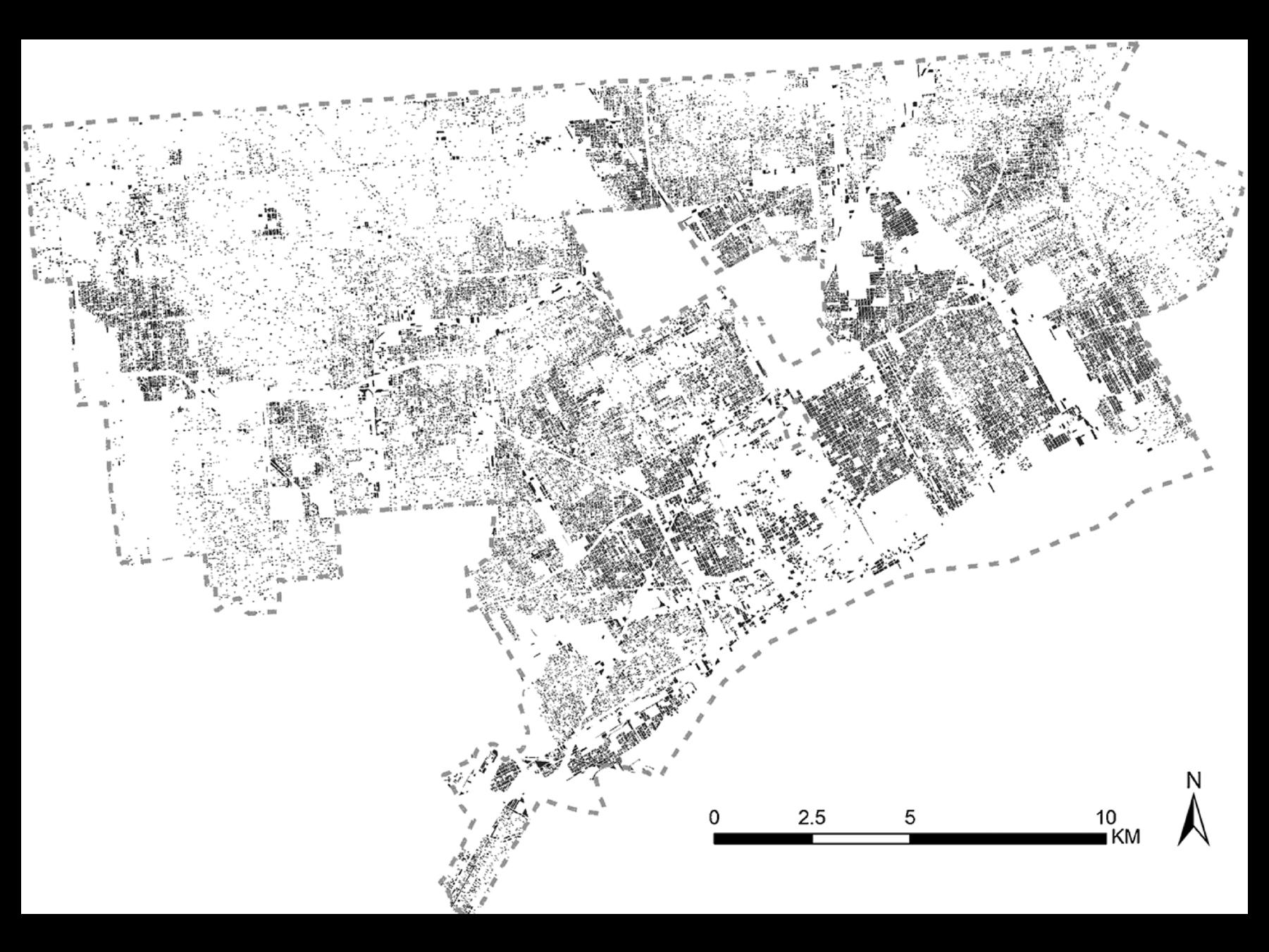
amount of vacant lots. In addition, a significant portion of these vacant lots is unimproved, unsafe, and unmaintained. Vacant lots represent a significant barrier to community progress. Vacant lots reduced the property values and diminished the residents’ overall quality of life. At least 24 square miles of vacant lots in Detroit, representing over 17% of the city’s total area. The impact of these factors has included a wave of disinvestment and abandonment, commonly referred to as blight. Blight contributed to further disinvestment, crime, and numerous other issues that reduce the well-being of the residents.
The city has been challenging the vacancy issue and working with communities to redevelop and improve the open lands. According to data provided by the City of Detroit, approximately 11 square miles of this vacant land consists of more than 72,000 parcels publicly owned by the Detroit Land Bank Authority (DLBA) and the city’s Planning and Development Department (PDD).
The condition of vacant lots is varied significantly; many of the vacant lots are left for illegal dumping; where is the city now working to attract those illegal activities.
Figure 1. Detroit Timeline from 1950 to 2020
After the 2008 economic crisis, Detroit made the news headlines when it became the largest municipality in U.S. history to declare bankruptcy in 2013. The declaration of bankruptcy affects the city’s urban revitalization. The vacancy widely spread across the city. After the post-war years, tens of thousands of houses and commercial structures were empty. Blight claimed many of them. Over the decades, the city demolished numerous structures leaving the entire blocks as ghost streets in some neighborhoods, which resulted in vacant lands. “The amount of vacant land and its location in the city drives what a realistic vision could be for the city” ( John Mogk, free Press -2019). The long decline in the city has impacted the overall population, new businesses, and redevelopment.
Detroit’s vacant land became widely spread because of limited resources. As a result, many neighborhoods struggle with vacancy issues and disinvestment. A vacancy is the primary source of many crimes, thefts, and public health problems. The city conflict and decline are resulting in what is happening in Detroit today. The city remains with a significant number of vacant land. The unequal distribution of resources and redevelopment between the neighborhoods resulting un-
safe communities. In some neighborhoods, the vacancy rate is high; almost 90 percent is empty land. As Galster describes, most of the city consists of: “residual neighborhoods characterized by generic, obsolete housing stocks, vacant buildings and land, high concentrations of African-Americans in poverty, and high crime rates. They have experienced a continuation of the net population loss and concomitant deterioration and abandonment of residential and retail properties. This last group of neighborhoods evincing no change in the long-term disinvestment patterns that still predominates in Detroit” (Galster, 2017, p48).
Figure 2. Vacancy in Detroit, 2020
Midwest neighborhood urban vacancy is widely spread. The changing that happens in Detroit neighborhoods has effect the lifestyle of the residents. Therefore, over time vacancies take place in the neighborhood. Midwest has an impact from depopulation and disinvestment over time. Like many other neighborhoods, Midwest is struggling with urban vacancy, disinvestment, and public health issues.
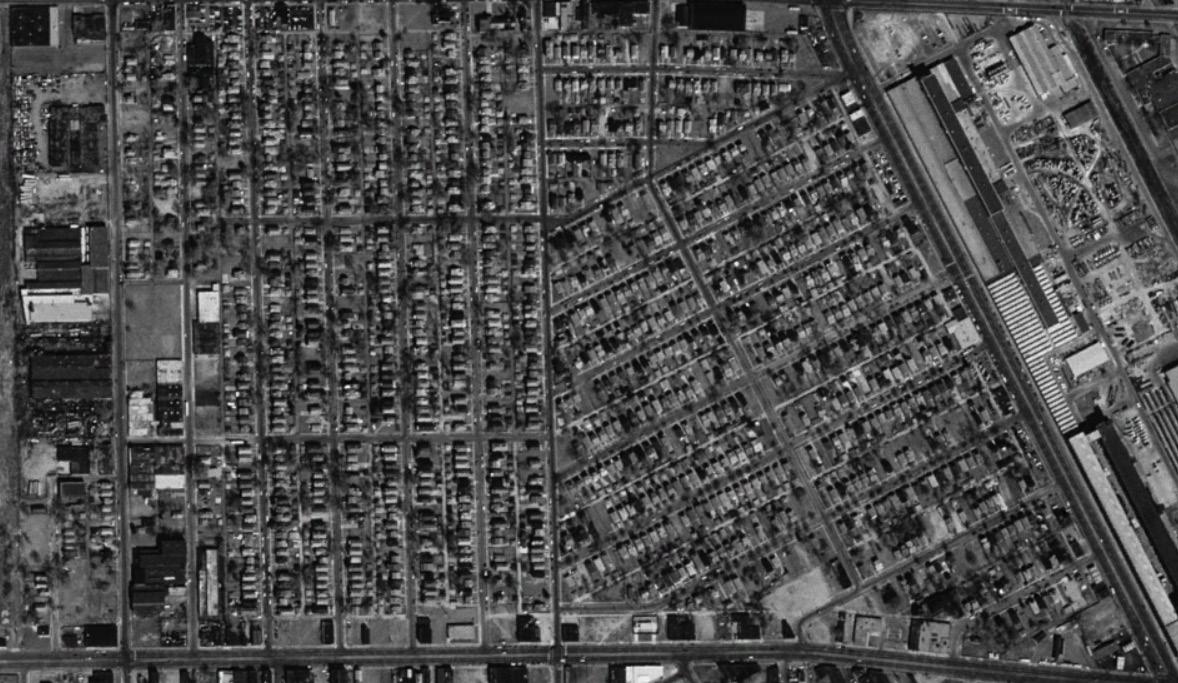
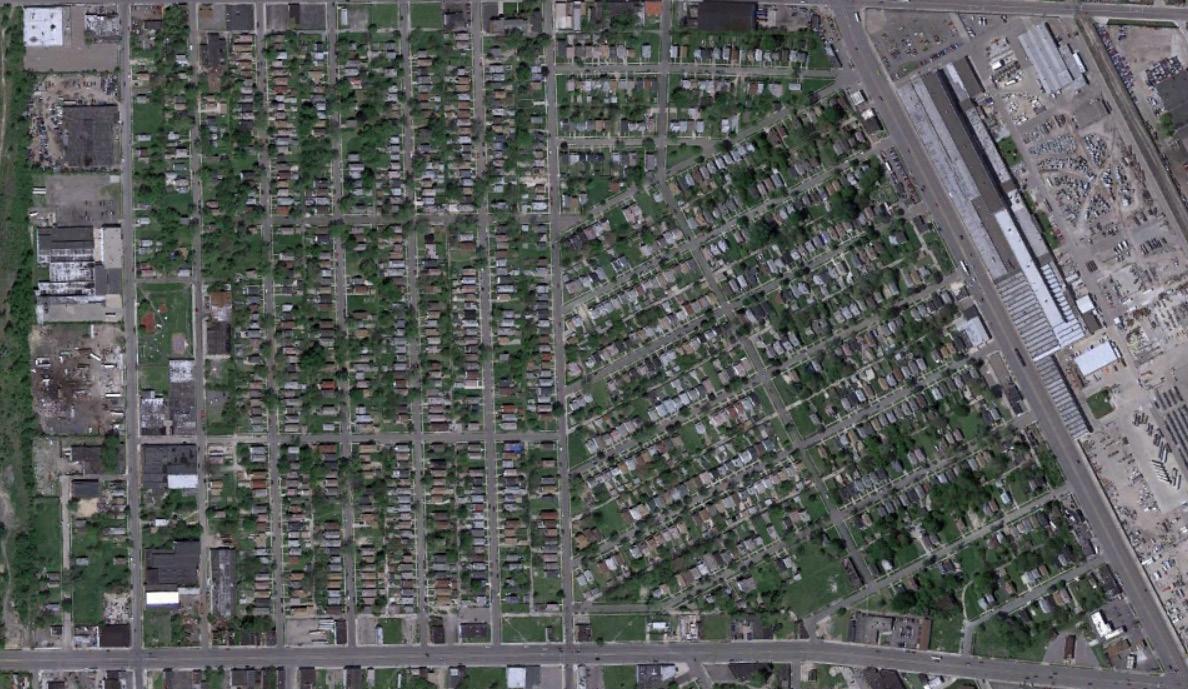
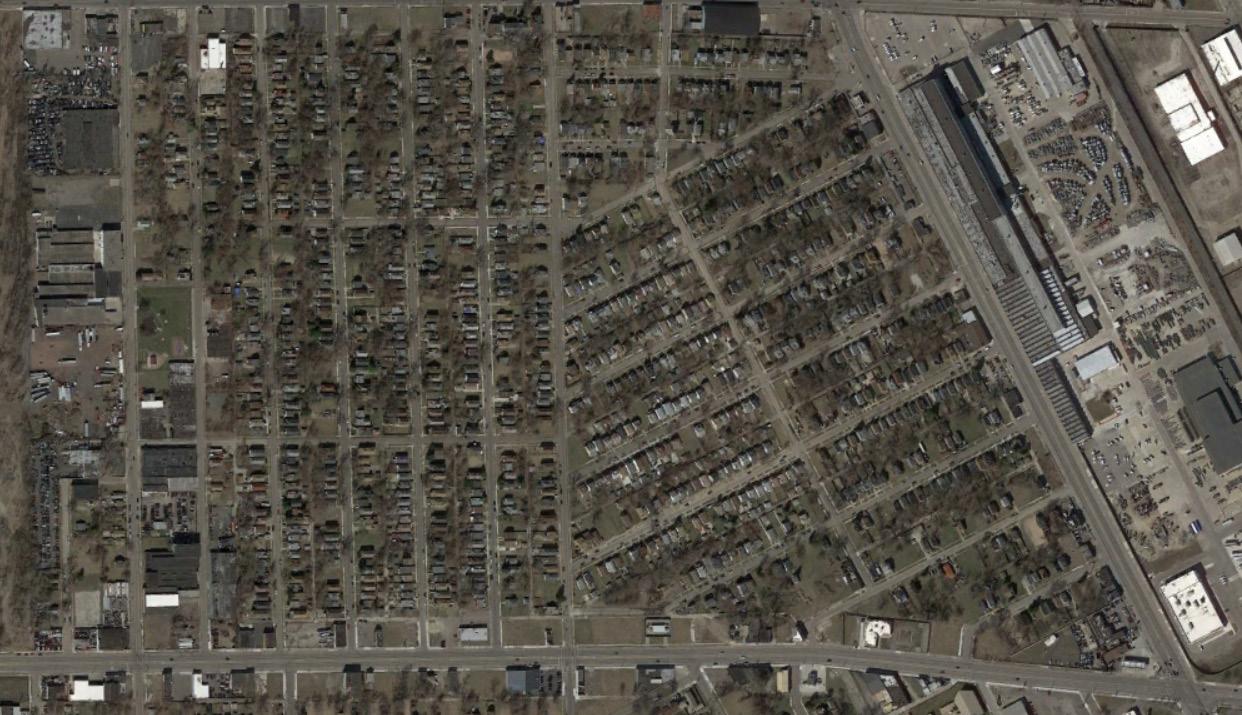
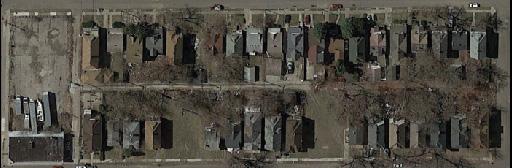
A vacancy is shaping the neighborhoods. Over time, the urban landscape has changed where the vacant land is more than structures in the neighborhoods. Many open spaces have been grown in the neighborhood without planning for maintenance. Resulting in increasing in crimes and public mental health issues. We can see vacant land throughout the neighborhood blocks more than structures in residential and commercial areas.
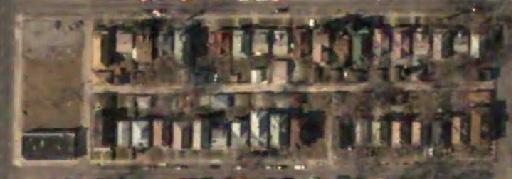
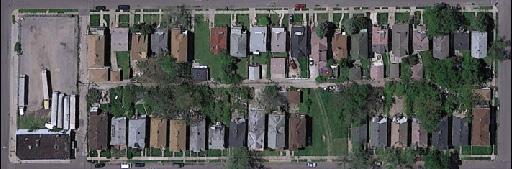
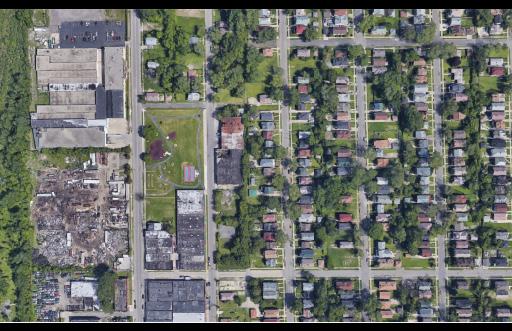
Source: Aerials of 1999, 2010, and 2020: Google Earth Figure3: Midwest Historical Aerials 1999-2020
1999 2010 2020
Vacant Land
The city of Detroit Planning and Development amid increasing public and private investment. The city is now in a position to develop and implement citywide strategies for addressing the city's legacy of depopulation and disinvestment. The Strategic Neighborhood Fund, developed in 2015 to fund com-munity-based planning in Detroit neighborhoods (City of Detroit 2019), provides a new platform for improving the physical realm of highly vacant neighborhoods. This represents Detroit's key opportunity to link urban green to efforts with communities.
The Strategic Neighborhood Fund (SNF) is now five years old. Its neighborhood investment model has matured into a suite of tools that includes commercial corridor revitalization, catalytic park investment, streetscape improvements, and housing stabilization. Each of these aims is shaped ahead of time by a year-long neighborhood framework plan to ensure the work to be
implemented has been identified in partnership with the residents of each SNF geography. Yet even now, we continue to iterate, adapt, and respond to the unique needs of each neighborhood. (snf.com, 2021)
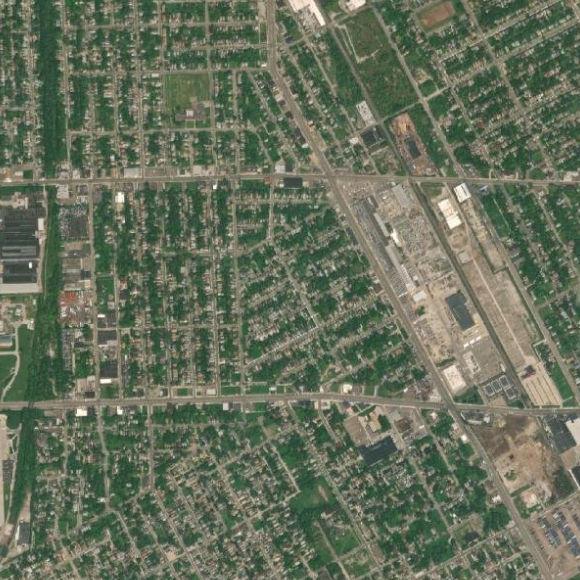
The citywide development strategies include ten neighborhoods for new urban development, but Midwest neighborhoods are not one of these neighborhoods. As a result, the neighborhood still needs a lot of attention from the city planning team. In addition, the neighborhood is located in the South-west, and there is not much redevelopment happing in the area. The Midwest neighborhood is one of the poorest neighborhoods in Detroit. The neighborhood needs a lot of redevelopments, such as the conditions of the streets, the vacancy issue, and overall the neighborhood conditions.
Figure: SNF Neighborhoods Frameworks Planning Areas
Source: SEMCOG Open Data, Arcgis.com, City of Detroit Open Date.
Midwest Neighborhood
SNF Planning Area
BACKGROUND 02
DATE: 2016 - ongoing
LOCATION: Detroit, MI
Associates, Live6 Alliance, City of Detroit SIZE: 160 acres (0.25 square miles)
Literature Cited:
ASLA. (2017). Fitzgerald Revitalization Project: Landscapes as the framework for community reinvestment. Retrieved from https://www.asla. org/2017awards/327798.html
Spackman Mossop Michaels. (2016). Fitzgerald Neighborhood Revitalization Project for the City of Detroit, Michigan. Retrieved from http://www. fitzgerald-detroit. com/wp-content/uploads/Final-Presentation_small.pdf
City of Detroit. (2016). Fitzgerald Neighborhood Revitalization Project: Productive landscape development RFP. Retrieved from http://www.fitzgerald-detroit.com/wp-content/uploads/CityofDetroit_RFP_ProductiveLandscape.pd
BACKGROUND
The Fitzgerald Revitalization Plan envisions a new way to help distressed neighborhoods: focus on the landscape of the entire neighborhood rather than blighted properties on a lot-by-lot basis. The project considers all vacant and blighted properties in the entire one-quarter-square-mile neighborhood, envisioning an entirely blight-free community.
Healthy landscapes became the framework that holds together all the other initiatives in the neighborhood—affordable housing, crime reduction, improved health outcomes, and workforce development, among others. The vision of a healthy, walkable, vibrant neighborhood with access to parks, green ways, and community spaces is the idea around which the other initiatives revolve.
An extensive community engagement process is at the heart of this project. Early on, the City of Detroit committed to a transparent process where the neighborhood is involved
in every step of the project. Beyond the community and stakeholder meetings that formed the basis of the engagement process, the community was involved in the selection of the community development team that will implement a large portion of the plan. The planning process also addressed multiple issues simultaneously, such as landscape strategies, workforce development, crime reduction, and affordable housing, in an acknowledgment of their interconnectedness.
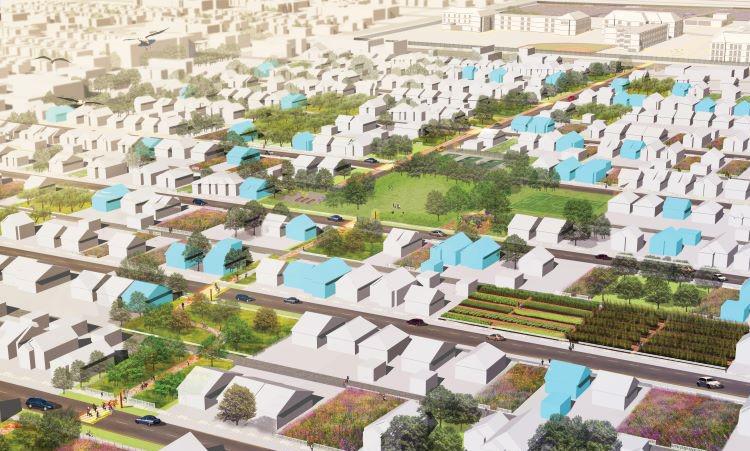
The Fitzgerald Revitalization Plan will build resilience into the landscape by increasing the coverage and quality of the urban tree canopy, creating pollinator habitats with native meadows, and naturally managing storm-water. A clear and consistent goal of the community is to restore the landscapes and bring back lush, vibrant landscapes.
(Source: ASLA 2017)
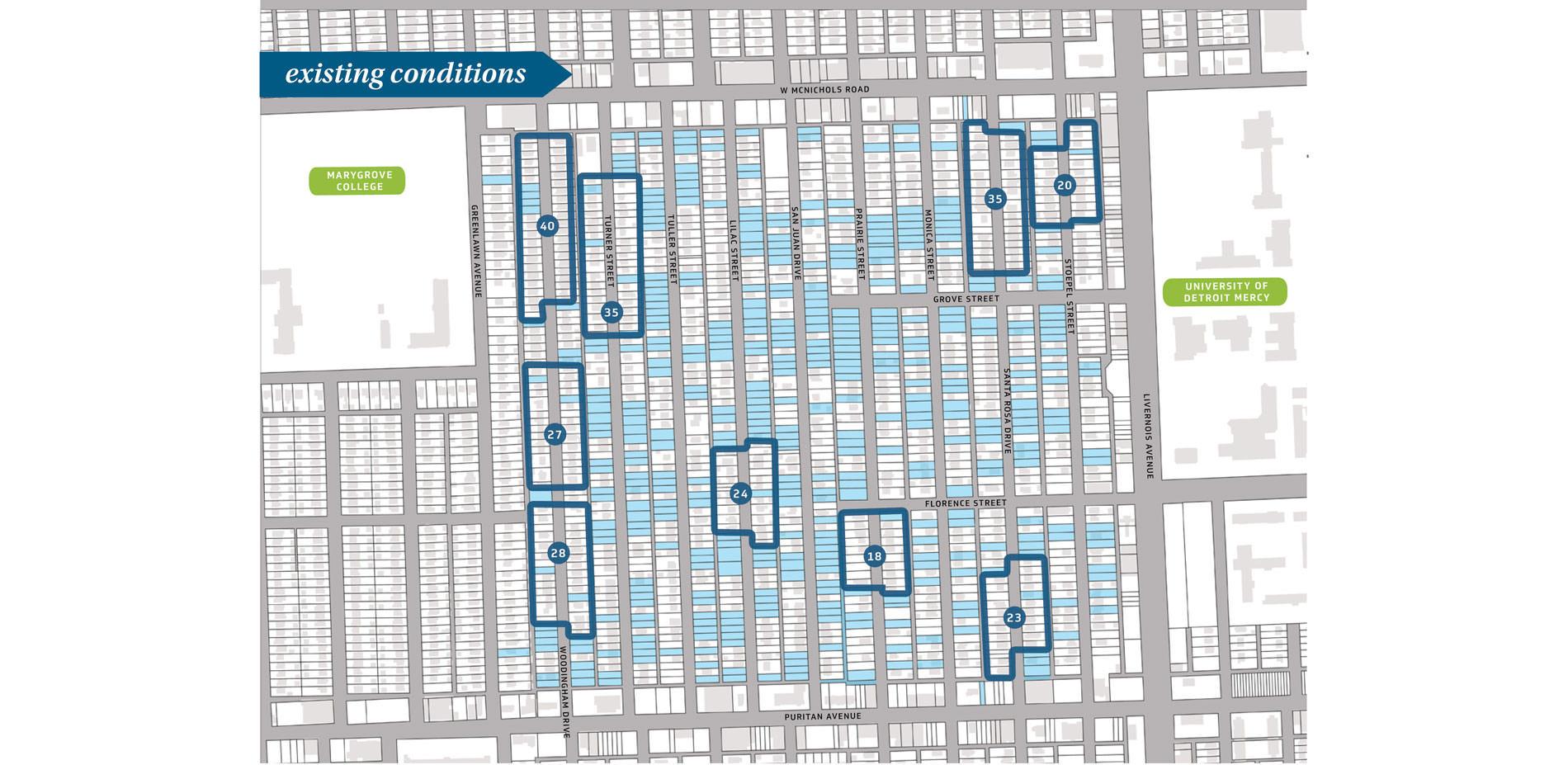
Figure 6: Existing Conditions in Fitzgerald Neighborhood
The landscape framework plan for the neighborhood, developed with extensive community engagement, focuses on addressing every parcel in the ¼ square mile neighborhood. There are four primary initiatives in the plan:
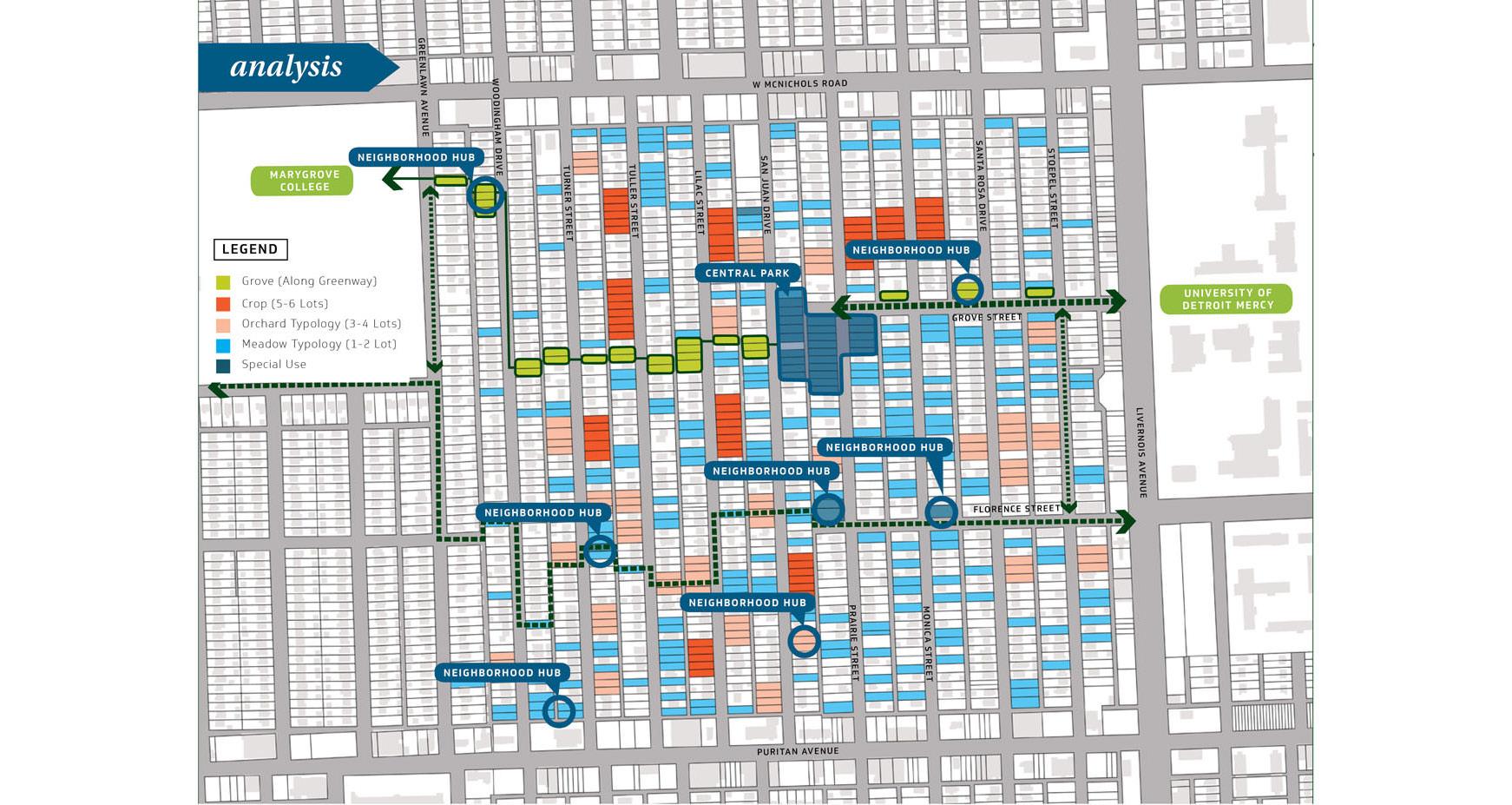
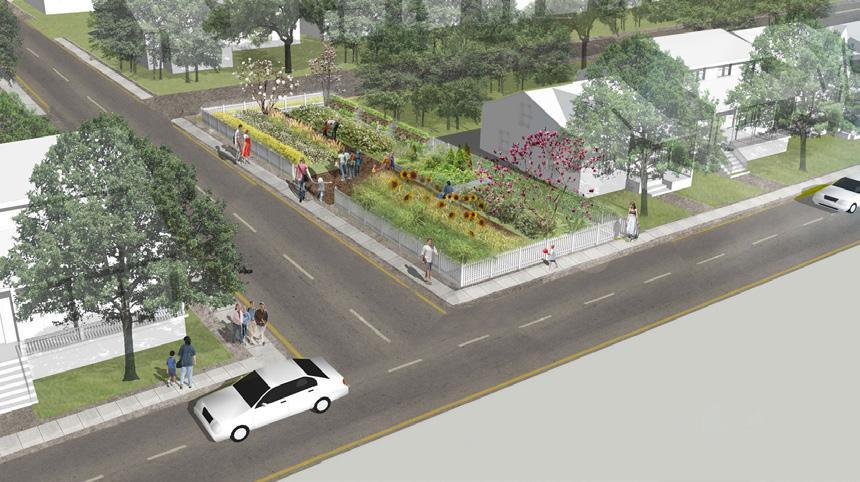
1. Ella Fitzgerald Park: In the center of the neighborhood, over 2-acres of vacant parcels will be consolidated to create a new community park with access to the green-way. This park will serve as a central gathering space for the community.
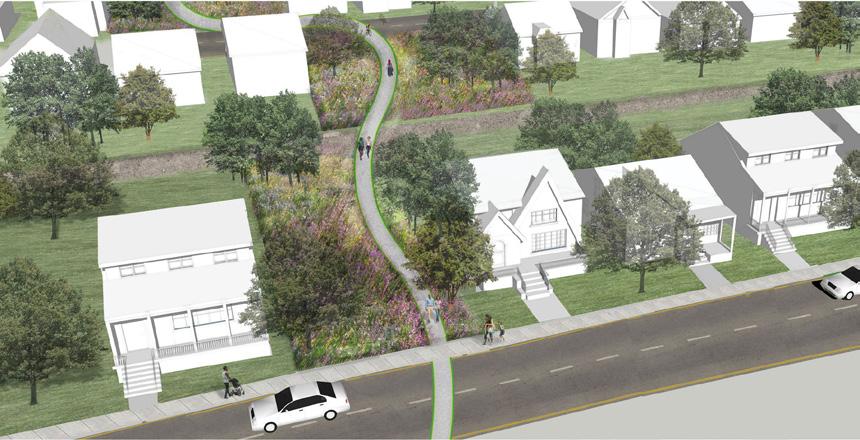
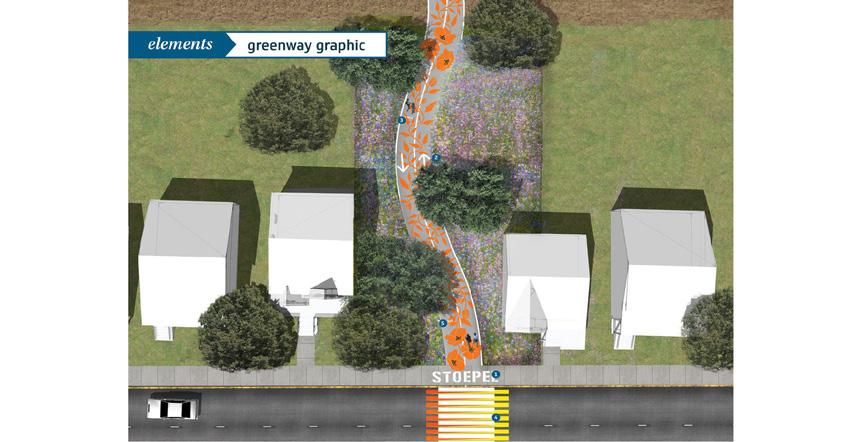
2. Fitzgerald Green-way: Connecting the two universities on either end of the neighborhood, the green-way uses vacant parcels to weave a new pedestrian and bicycle route through the neighborhood. An urban forestry initiative to plant new canopy trees in the neighborhood will be a key feature of the green-way.
3. Landscape Stewardship Plan: Integrat-
ed into the development of affordable housing in the neighborhood as a public/private partnership, the Community Developer will implement and maintain a series of landscape typologies on vacant parcels. This includes a range of landscape types, including orchards, pollinator meadows, community gathering spaces, and community gardens.
4. Productive Landscapes Initiative: In another public/private partnership, a productive landscape initiative for market-driven landscape-based businesses, such as local food production, hops production for local breweries, or cut flower production, will turn many of the larger, consolidated parcels into economic opportunities for local entrepreneurs.
TAKEAWAY
The Fitzgerald Neighborhood and Midwest neighborhood share the complex challenges of existing blights and vacancy. Both neighborhoods have been challenging the urban vacancy for a long time. Fitzgerald Project is the inspiration for other neighborhoods in Detroit. A project is a holistic approach to reuse vacant lots for neighborhood revitalization. The project provides guidance on adapting the vacant land into a community asset.
The project serves as a model of creative approaches to community assets. In addition, the project team works with the community and has community engagement during the planning process and after the planning process. For example, the Fitzgerald planning team worked with the community to select a Community Development Team tasked with implementing much of the plan.
“ The comprehensive approach to the project, where the entire neighborhood is considered a whole, allowed the community greater input into the overall development and planning process. Furthermore, focusing on the landscapes, including streets and social spaces, helped to focus the planning process on tangible outcomes and a shared vision for the future of the neighborhood.”
In the Midwest neighborhood planning area, use Fitzgerald Project as inspiration for creating a comprehensive plan for the neighborhood. In the Midwest, the project didn’t have time to do overall community engagement but used Fitzgerald Project to compare the community interest and needs in those areas. In addition, vacancy rates and distribution may be different in both neighborhoods. Also, strategies as well are different approaches. However, both projects were working with vacancy to redevelop the neighborhood brightness.
Source: ASLA 2017 Figure 7: Fitzgerald Revitalization Project Framework Plan
Source: ASLA 2017
Figure 8: Example of Design Typologies ( Community Garden, Green-way
02 RECLAIM CLAIRTON: VACANT LAND ASSESSMENT REPORT
INVESTIGATION AND STRATEGIES TO REDUCE BLIGHT IN CLAIRTON
PREPARED BY
GTECH Strategies
Growth Through Energy + Community Health
6587 Hamilton Avenue | Pittsburgh, PA 15206 gtechstrategies.org
THE TEAM
James Snow, Project Manager: Planning and Analysis
Tom Mulholland, Project Associate
Denise Johnson, Data Collector
Glenn Ford, Data Collector
Lindsey DelCotto, Data Collector
RECLAIM CLAIRTON
Reclaim Clairton is a Neighborhood Scale
ALL VACANT LOT CLASSIFICATIONS
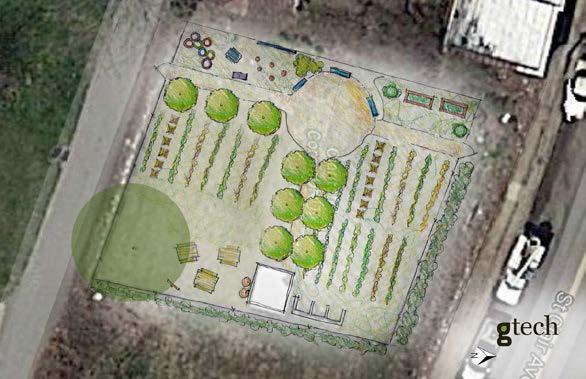
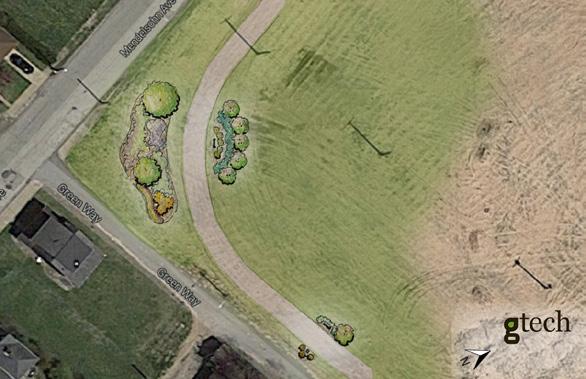
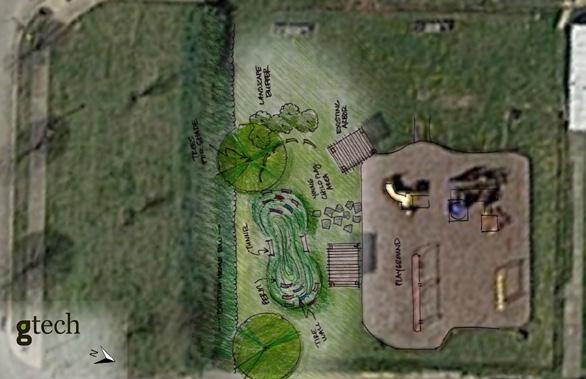
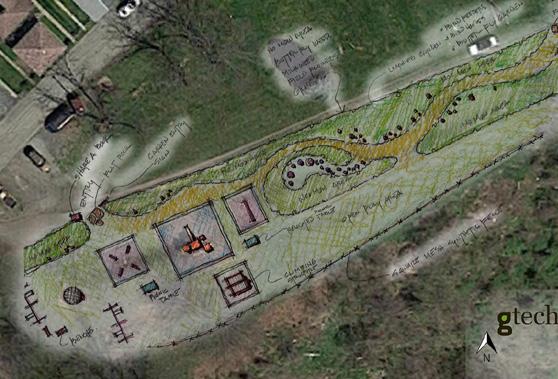
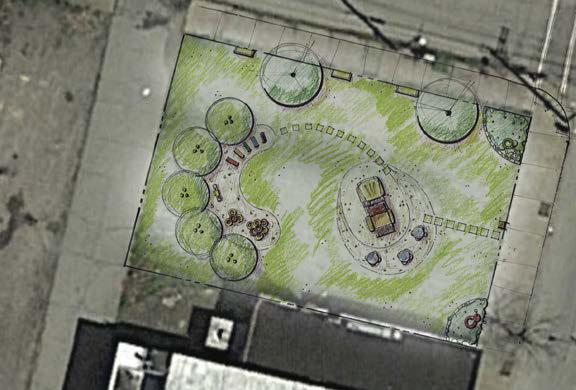
Initiative (NSI) that seeks to engage, equip, and empower 10-12 residents from Clairton (ReClaim Ambassadors) to participate in a place-based training program that provides them with the educational and financial tools needed to engage their own communities in green-space projects using vacant land as their platform. These small-scale greening projects often take the form of food gardens, community gathering areas, recreational spaces, and green infrastructure installations. The GTECH team, composed of designers, policy specialists, social innovators, landscape architects, and community organizers, offers technical support to ambassadors as they work towards a sustainable reuse for each vacant lot. The overall goal of this initiative is to enable tangible, resident-driven transformation of vacant/blighted places.
METHODOLOGY
Our methodology is a core component of our programming. We facilitate a systems-based approach to investigate critical issues, take action where action is possible, connect people to resources and opportunities, and sustain progress through innovative and collaborative partnerships. Our four-pronged approach has been refined through our nearly 10 years of experience in program development, planning, community engagement, capacity building, and on-the-ground implementation. This section of the report will outline the steps taken in
GTECH’s investigation process in Clairton. The investigative element in GTECH’s methodology serves as a road map for all further action, including later components of Reclaim Clairton. The comprehensive data set that we generated in this phase is critical for creating vacant lot remediation strategies, operationalizing those strategies, and, as a living data set, is serviceable for future projects by us, our partners, or anyone doing community development work in Clairton.
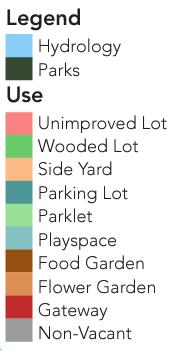
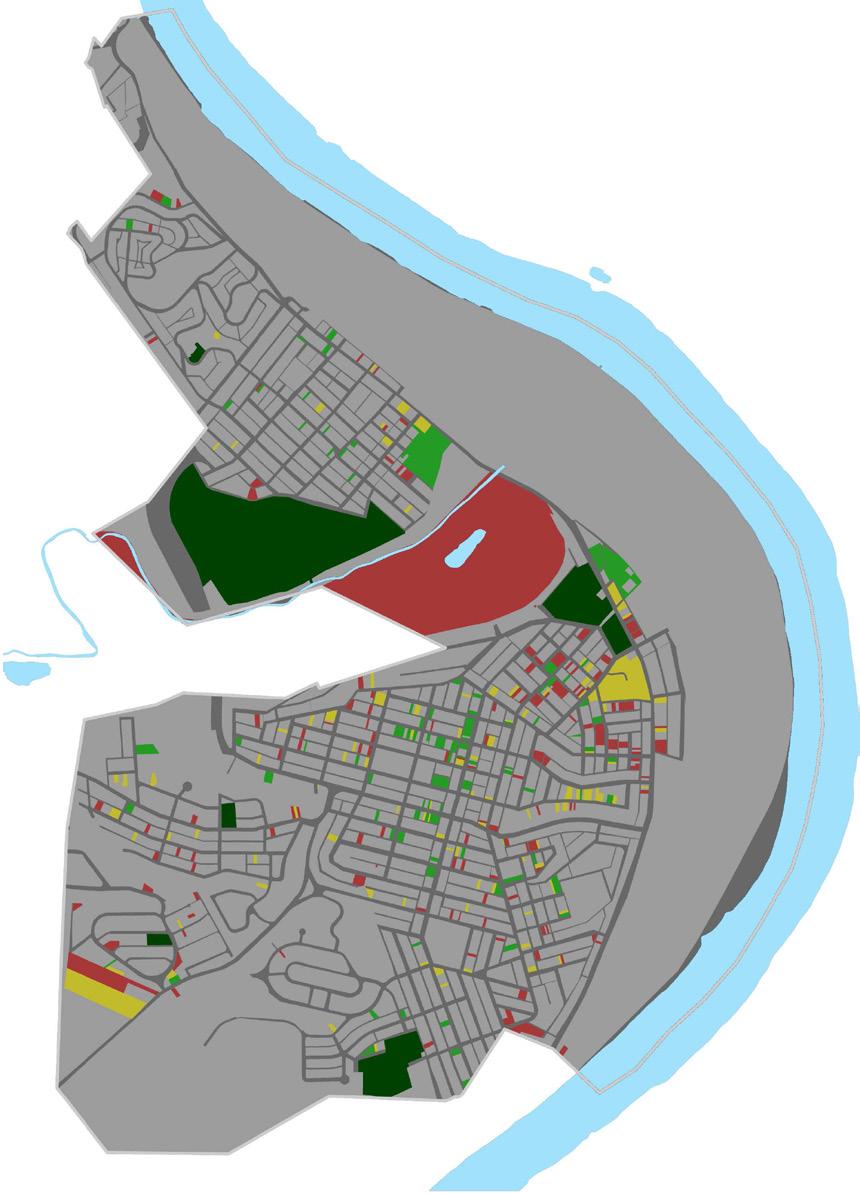
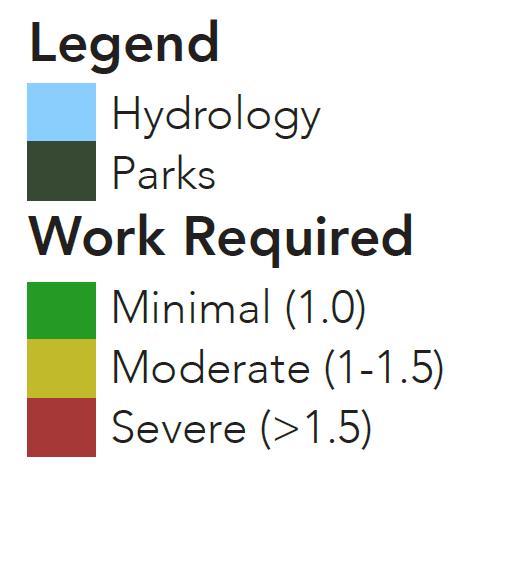
STABILIZATION NEEDED ON UNIMPROVED LOTS
Source: Data collected using platform provided by Loveland Technologies in June 2016. Supplemented with 2016 Allegheny County Real Estate Assessment Data.
Figure 9: All Vacant Lot Classifications
Figure 10: Unimproved Lots and Amount of Work Required to Stabilize
Source: Data collected using platform provided by Loveland Technologies in June 2016. Supplemented with 2016 Allegheny County Real Estate Assessment Data.
Greening strategies are methods of land enrichment that improve quality of life, enhance neighborhood interactions, increase recreational opportunities and stimulate economic revitalization through smart growth plans that emphasize environmentally friendly land management. Greening strategies to address vacant properties can take a number of forms, depending on the location, condition, and classification of each lot, as well as the number of resources available for remediation. With the information from this study in hand, it is possible to take steps towards reclaiming unimproved land, activating those spaces to address deficiencies in each neighborhood and support existing assets. Strategies for action, as well as potential challenges, can be divided in terms of their scope and position on a larger timeline.
The amount of time necessary to implement a greening strategy on a vacant lot or across several vacant lots is dependent on the current objectives, resources, and skills available, and also the condition of the vacant land stock. Short-term projects can demand several hours for initial work (clearing site, disposing of waste, etc.) and a minimal amount of time to maintain and clean the parcel over time depending on the site. Short and mid-term strategies are viable projects for residents and community group management (where land access is permitted,) and should also be considered by the municipality and other larger community organizations. Long-term projects ultimately require at least the same amount of time for the physical preparation work, but will likely demand more in research, planning, implementation, maintenance and care. Therefore, long-term projects and strategies should be considered as a substantial investment of resources and generally not pertinent strategies for individuals or small groups to pursue without support from larger organizations.
TAKEAWAY
This education and engagement model adds a layer of personal connection and ownership to the process and equips Ambassadors with the technical skills and process knowledge needed to make positive action happen in their community. Reclaim Clairton is a project investigating strategies to reduce blight in Clairton city. The project provides a complete inventory of vacant land broken down by classification and condition. Also, identify an action plan for a long-term strategy in the city. The Midwest neighborhood project looks at the Clairton city project as a vision of how to study the vacant lots' condition. First, following some of the steps they did in Clairton city's urban vacancy strategy to find the best use of vacant lots in the neighborhood. Then, by providing detailed data on the condition of these lots in an open-source platform, begin to work on new frameworks that will be helpful in the community. Finally, both projects aim to do a comprehensive community plan and goals to reuse the vacant land.
Figure 11: Ambassador Site Design
Source: Data collected using platform provided by Loveland Technologies in June 2016. Supplemented with 2016 Allegheny County Real Estate Assessment Data.
Source: Data collected using platform provided by Loveland Technologies in June 2016. Supplemented with 2016 Allegheny County Real Estate Assessment Data.
Figure 12: Ambassador Site Design
03
NEIGHBORHOOD ANALYSIS
LOCATION
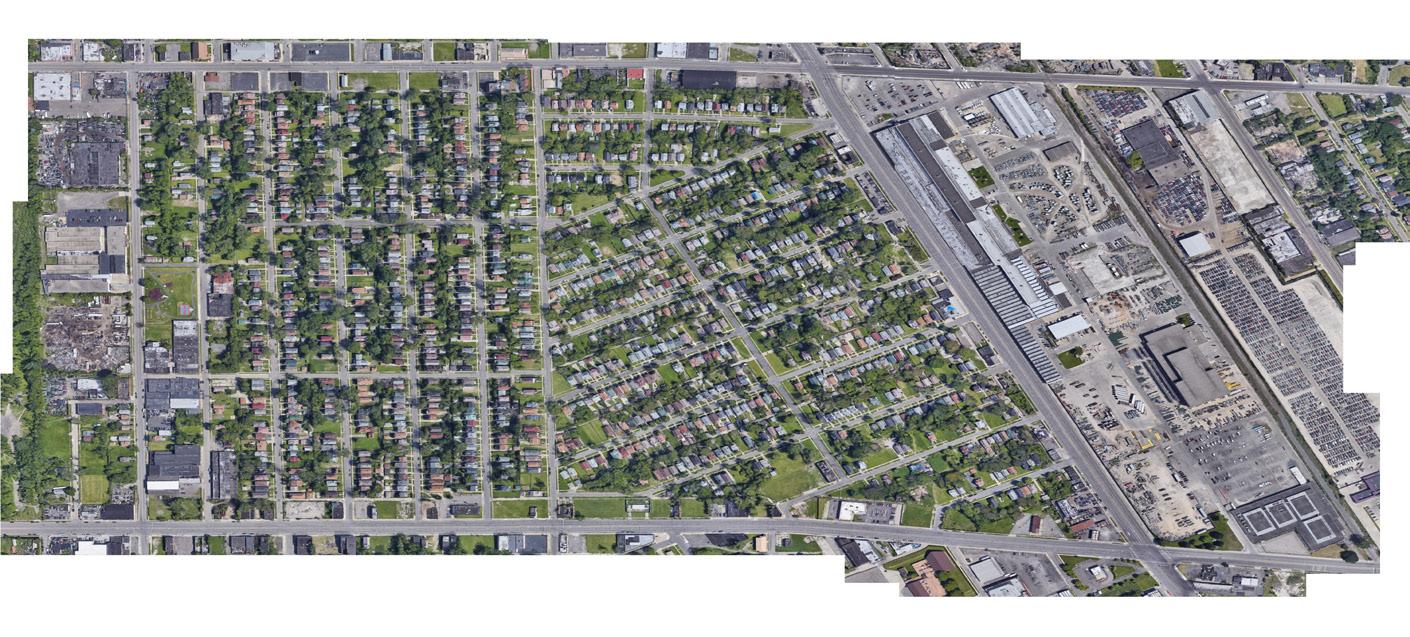
The Midwest neighborhood is located in Southwest Detroit; the neighborhood planning area is bounded by W Warren Ave to the South, Livernois Ave to the east, Tiremen Ave to the north, and Central Ave to the west. Warren Ave is one of the city’s main streets. The neighborhood is only five minutes from downtown Detroit.
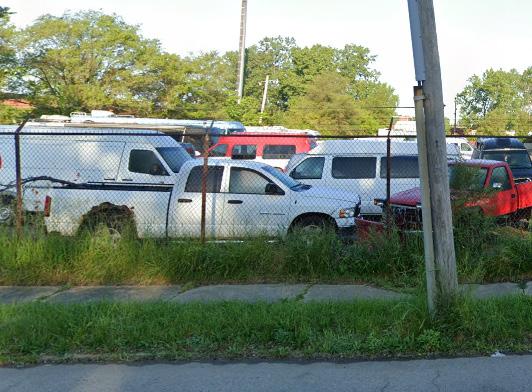
The neighborhood is surrounded by relatively high-density auto shops and commercial uses. In addition, the neighborhood is located next to arterials or highways that are known for auto industrial uses. The neighborhood is filled with a vacancy and limited development. There are about 32 auto shops in the neighborhood. As a re-
sult, the number of crimes and thefts in the neighborhood is high. Also, the neighborhood condition is blowing average where is the sidewalk is in poor condition. (Figure 14)
1. T&A Auto Service
2. Eureka Auto Glass
3. Popas Auto Sales
4. Lakeside Supply
5. Father & Son Collision
6. 4x4 Auto Parts
7. W Warren Market
8. Meade Distributing
9. USA Collision
10. Gray & Son Hardware
11. Motorama Dealer
12. D Town Auto Clinic
13. Majestice Auto Care
14. Dependable Battery Co
15. Shottys Kitchen
16. Specialized Shipping
17. Onasis Coney Island
18. A & D Auto Care
19. Sky Collision
20. Discount Auto Clinic
21. A Rocks towing
22. Rocks Tires Shop
23. Abe Auto Repair
24. Sunshine Collision
26. Detroit Car Center
27. Land Trucking
28. Jank Yard
29. Taraq Collision
30. Michigan Brush
31. Demmy Auto
32. Superior Used Cars Sales
33. St Francis Missionary Baptist Church
34. Detroit Community Health
35. Detroit Community Temple
36. Jesurun Christian Center
37. Celestial Church
38. New Jerusalem Apostle Faith
39. Unity Baptist Church
40. Central CME
41. True Holiness Church
42. Dte Energy
43. Dover Park
44. Laker Park
Figure 14:Existing
The Midwest neighborhood contains two parks: Laker Park and Dover Park. Laker Park is the largest in the neighborhood. The park serves as a community hub and children's playground. In addition, there are two parks within walking distance from the neighborhood, the first one Bieniek Park. The second is Atkinson Park. However, there are not many open spaces in the neighborhood or the surrounding except those three main parks. The lack of green spaces in the neighborhood results in an increase in public mental health, crimes, and family violence in the community. Many studies find that the open space decreases the neighborhoods' mental health. “Too often, open space is thought of as a ‘consolation prize’ for disinvested neighborhoods that do not have the market to attract traditional brickand-mortar development. Open space is a solution for Detroit’s future, not an unwelcome result of Detroit’s past.”(Mallach, 2018).
Open space is the solution for many issues that the communities are challenging due to increased vacancy in the neighborhoods. The neighborhood has many open lots that can be returned to community assets to help reduce the mental health and crimes in the communities. In addition, many cities are now working on increasing the green space in abandoned property to fight against blight. Also, the cities now make the residents buy next door open space that can help keep the vacant lots maintained and clean. The city of
Pittsburgh researched how to make the resident buy the open lots with easy steps, the city called the “ Pittsburgh vacant lot toolkit.
The Vacant Lot Toolkit is a comprehensive overview of the goals, policies, processes, procedures, and guidelines for transforming vacant, blighted lots into temporary edible, flower, and rain gardens.
Residents of the City of Pittsburgh can refer to this toolkit when thinking about creating a vacant lot project on City-owned land and will find it useful throughout the process. The toolkit can also be a resource for projects on other public and privately owned land throughout the city. (The city of Pittsburgh)
ADOPT-A-LOT LEASE APPLICATION
Source: Pittsburgh City Planning
Midwest Neighborhood
Bieniek Park
Atkinson Park
Tiremen Ave
W Warren Ave Livernois
Figure 15: Open Spaces Context
Source: City of Detroit Open data, Arcgis.com
There are two parks in the neighborhood. The two parks are Laker and Dover Parks. The main park is laker park is located on the west side of the neighborhood. The park is surrounded by vacancy and auto shops. The park is a community hub and children's playground. Unfortunately, the vacancy rate next to the park is significantly high. The park is in poor condition, as well as the sidewalks. Abandoned structures are the park's main issue because it attracts illegal activity in the area.
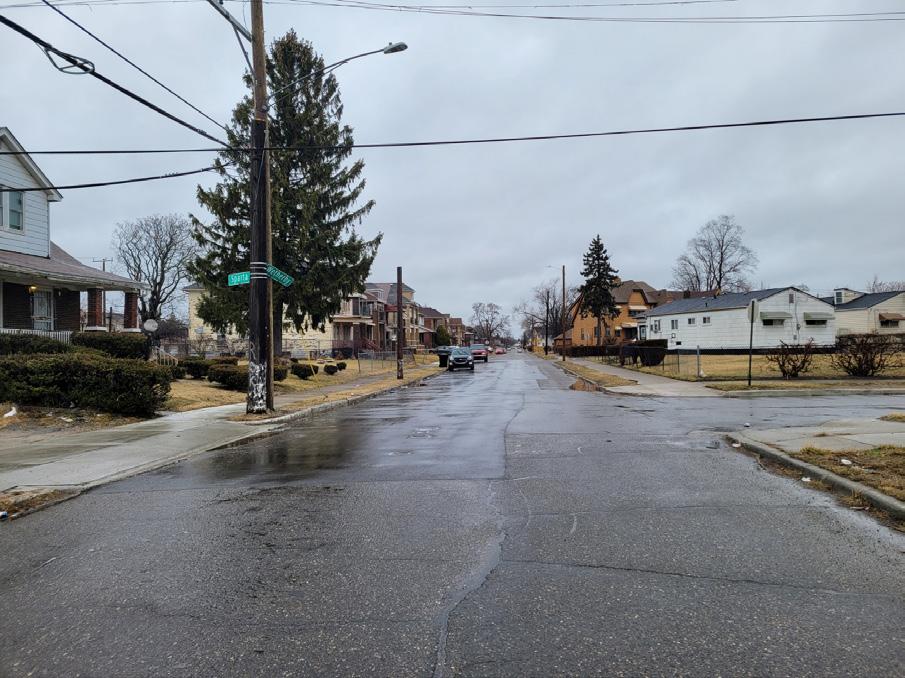
Midwest neighborhood zoning is mixed-used between the residential, industrial and commercial. As a result, the neighborhood is surrounded by commercial uses from the four sides. Most residential areas are single-family homes. As a result of overusing the auto commercial, the neighborhood lacks development. The resident's life has been affected by the auto industry that surrounds the neighborhood. Also, that affects the streetscape in the neighborhood; the streets are in poor condition. In addition, that’s limited for any other commercial use neighborhood, ending the neighborhood's economic decline.
Figure 16: Laker Park Context
Source: City of Detroit Open data, Arcgis.com, Google earth.com
Figure 17:Midwest Neighborhood Zoning
Source: City of Detroit Open data, Arcgis.com
HOUSING CONDITION
Housing conditions in the Midwest neighborhood area vary significantly. However, most homes are occupied and in good condition, particularly in the southeast part of the neighborhood next to the focus areas. On the other hand, there are many blighted homes, especially on the west side of the neighborhood next to the Auto collision shops. The blighted homes are in various conditions; some are burned, some are overgrown with vegetation, or some collapsed halfway.
Occupied Homes Condition
Unoccupied Homes Condition
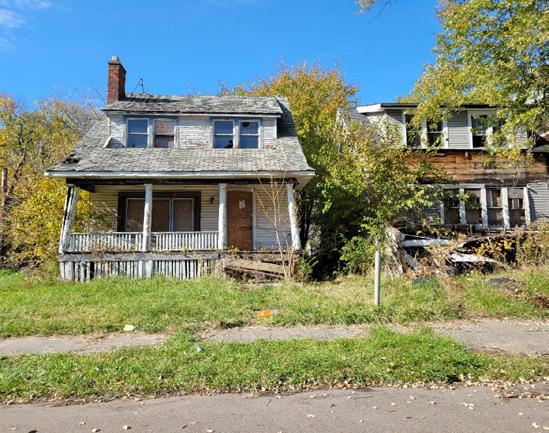
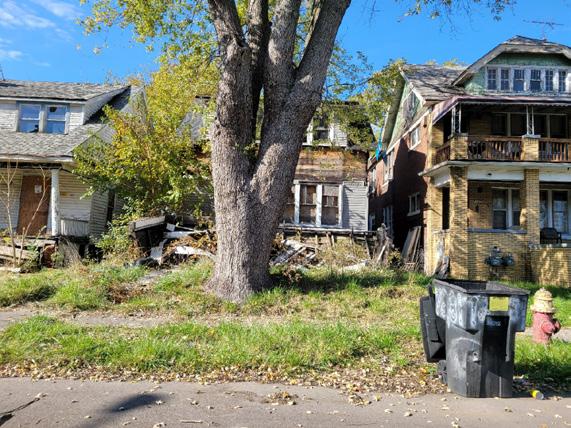
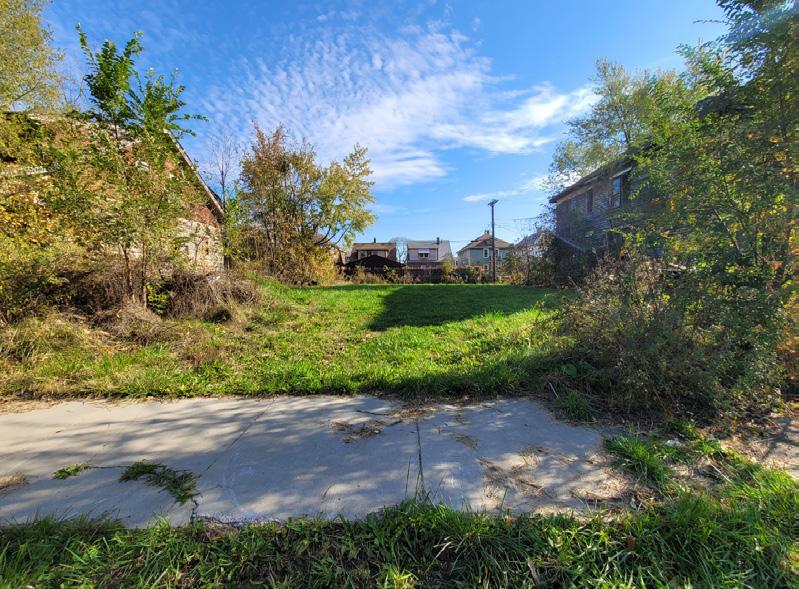
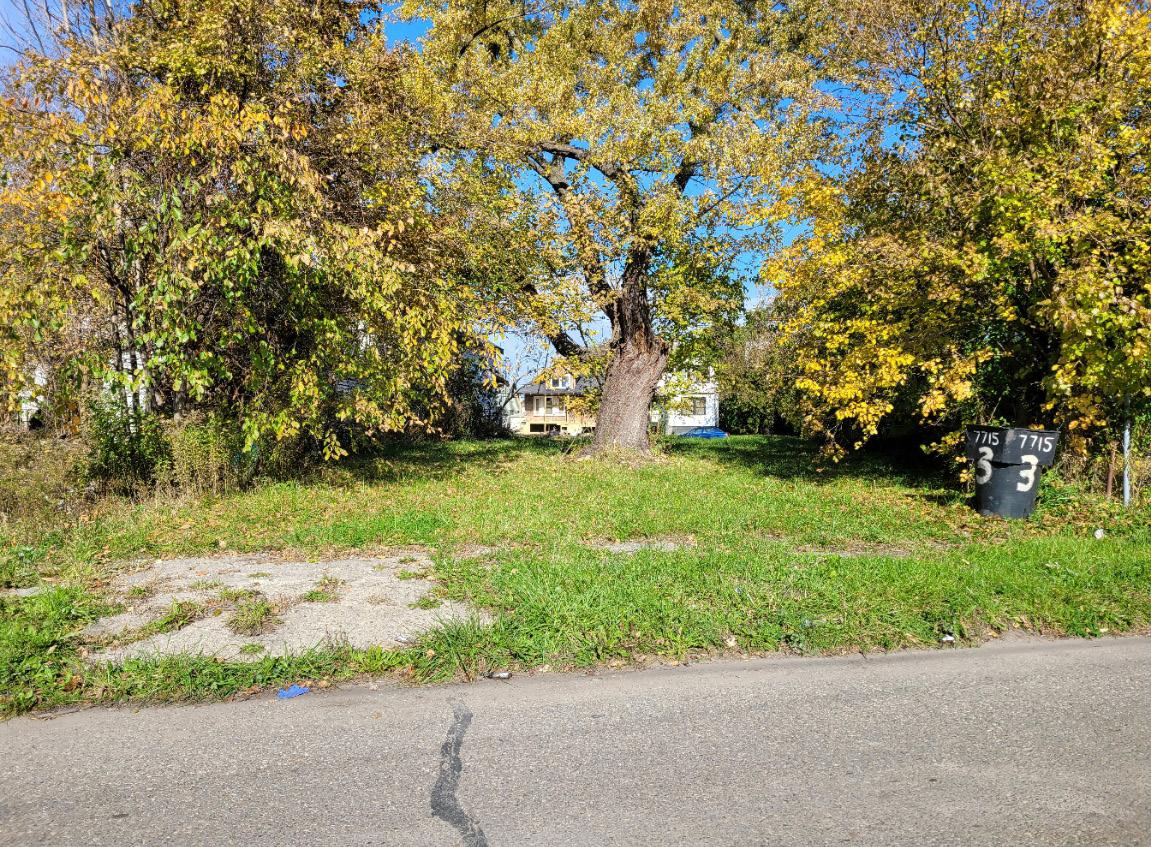
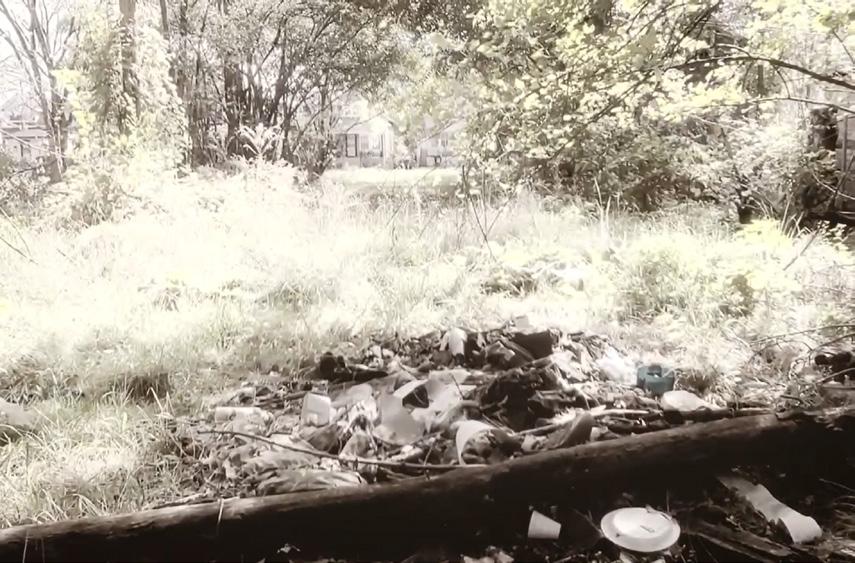
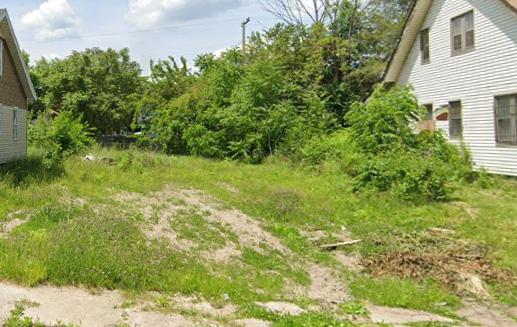
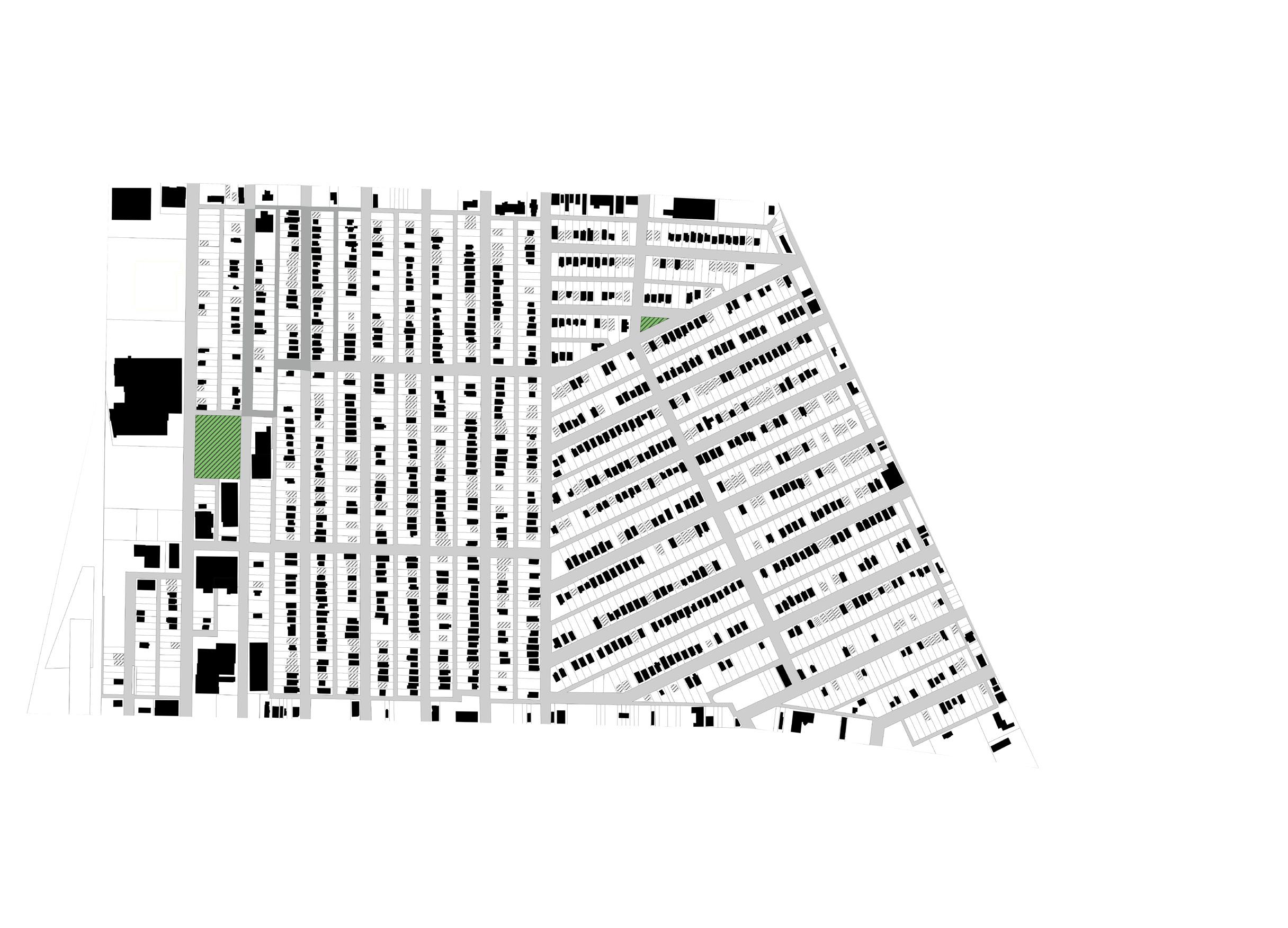
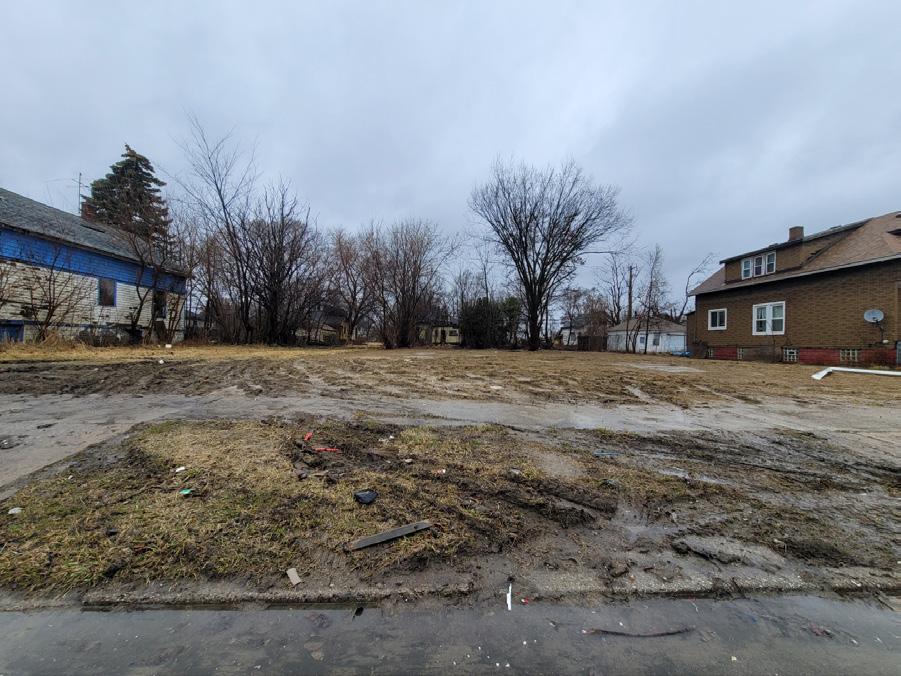
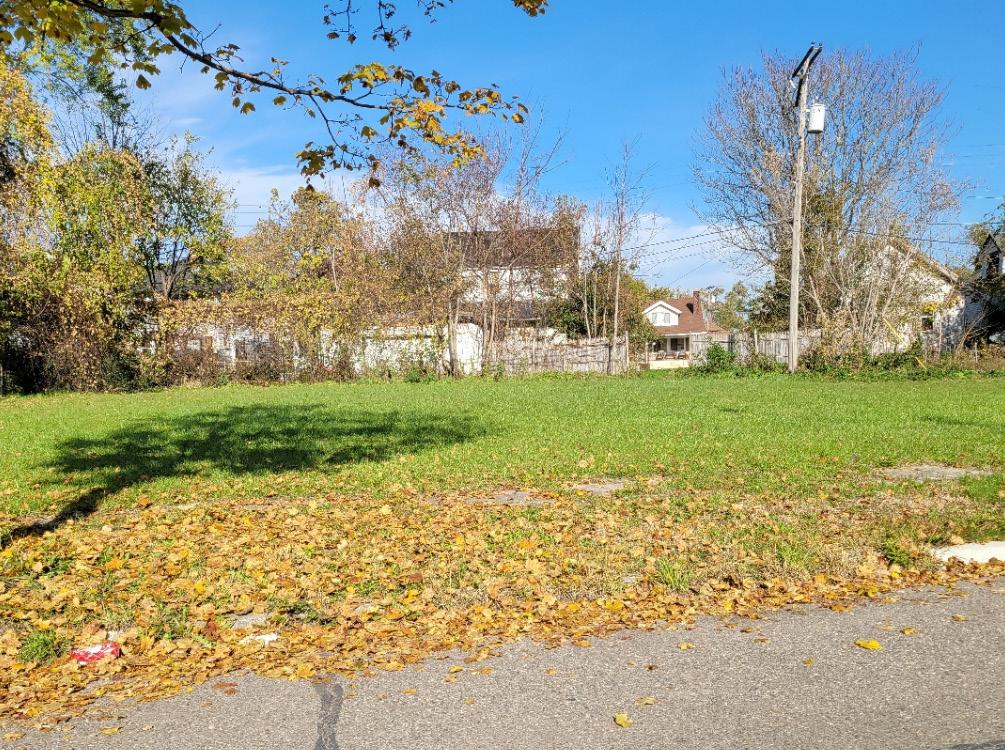
Most vacant lots are currently without structures throughout the Midwest neighborhood, resulting in open spaces with the diverse condition and use. Many vacant lots are actively unmaintained, which results in overgrown vegetation, illegal dumping, and illegal parking. Some of the vacant lots are regularly maintained and mowed by the city. In addition, some of the vacant lots are being used by the resident for gardening or small neighborhood social gathering spaces.
Unimproved Lots
• Unmaintained Lots
• Over-Growth
• Litter and Dumping
Wooded Lot
• Large or Mature Growth
• Flatlands
• Not Buildable
Park Lots
• Worn and Bald Areas.
• Oil Kill Weeds
• Bad for Soil
Figure 18: Housing Condition Source: Graphic Create By the Author
Partial Demolition
• Unfinished Demolition
• Materials le on the Lots
• Hazard Materials
RACE & AGE
The racial makeup in the Midwest neighborhood reflects Detroit's city as a whole, with up to 68% of the residents being black, 28% of the residents being Hispanic, and the remaining 4% being white and other races. In addition, there is significant youth in the neighborhood, with up to 31% of the residents being 18 years old or younger. Also, about 18% of the residents are over 65 years old or older. (U.S. Census Bureau,2020)
Play-spaces
• Currently use
• Children Playground
Side-yard
• Personal Use
• Maintained
• Personal Garden
EDUCATION & GENDER
The education level in the Midwest neighborhood mirrors Detroit's city as a whole. But unfortunately, the school system in Detroit is broken, reflecting on the residents. For example, 55% of the residents in the neighborhood only have a high school degree or don’t have one. In addition, the gender in the neighborhood is fifty-fifty.
Figure 19: Vacant Lots Condition
Source: Graphic Create by the Author/ Open Data Detroit
Figure 20: Demographics: Race & Age
Source: U.S. Census Bureau, Statistical Atlas
Figure 21:Demographics: Education & Gender
Source: U.S. Census Bureau, Statistical Atlas
Midwest neighborhood median household income level is less than $23462.00 per year, which is the less income in the city of Detroit. According to the U.S. Census, an estimated 23% of households in the Midwest fall below the poverty level as of 2020. In addition, the income in the neighborhood affects the ownership; which estimated 40% of the residents own their homes, and 34% of the residents are renters. (U.S. Census Bureau,2020) Owner-Occupied Renter Abandoned
Source: U.S. Census Bureau, Statistical Atlas
PUBLIC & PRIVATE
22: Demographics: Income & Ownership
The city of Detroit owns more than 50% of the vacant land in the neighborhood. However, the Land Bank owns most of the vacant land in Detroit, making it easy for new development in the neighborhoods. “The Detroit Land Bank Authority offers Detroit residents an abundance of home and land ownership opportunities.”(Detroit Land Bank Authority)
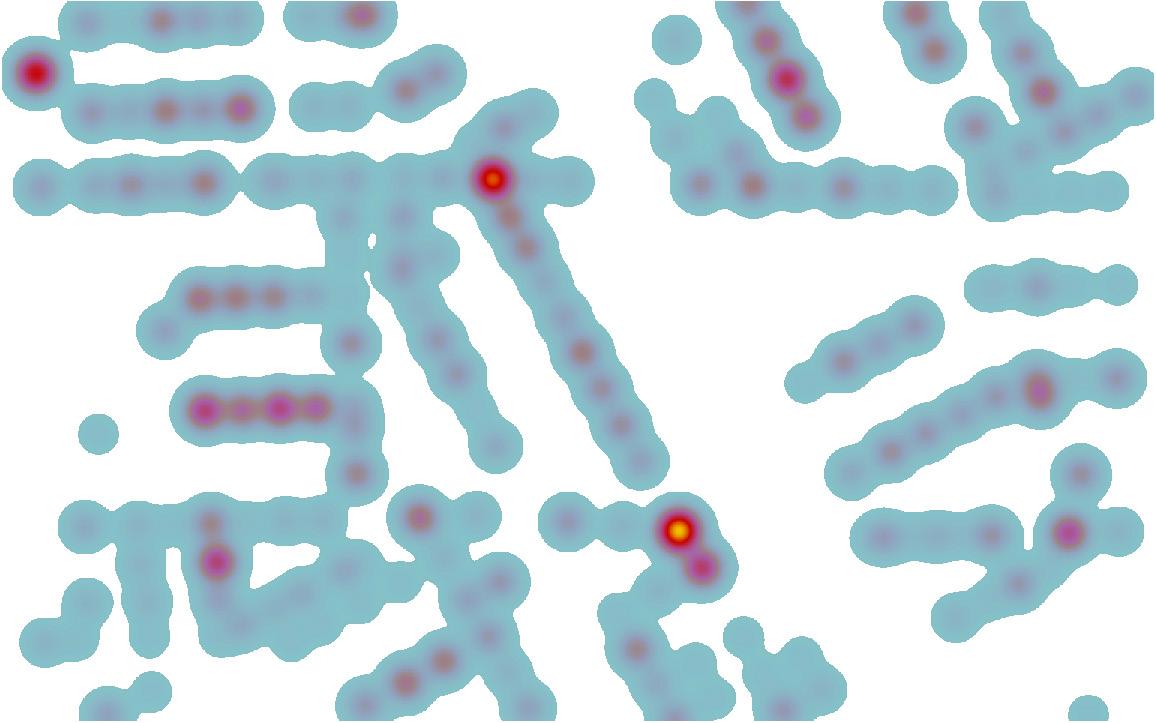
The crime rate in the neighborhood is high. Like other neighborhoods in Detroit, the number of crimes has increased in the past ten years. Because of the blight in the city, many criminal activities are happening in the neighborhood. The crimes appear alongside the Warren corridor area next to the gas station in the neighborhood
Figure
Figure 23: Public & Private
Source: City of Detroit Open data, Arcgis.com
Figure 24: Crime Heat Map
WEAKNESSES
STRENGTH
The strength of the neighborhood comes from the surrounding businesses. For example, there are many auto shops and collisions in the neighborhood that can be used to help the community. Those elements help the economic growth in the neighborhood. Also, it can bring new developments and new investments to the community. In addition, the strength in the neighborhood comes from the availability of vacant corridor land, which will be used to open new investments.
1. Auto Service:
• Beneficial economy
• Strong profitability levels
• Supporting many new customers
• Bringing new stores to the area
2. Public Space:
• Bringing residents together
Detroit Car Center
Superior Used Auto Sales
• Reducing stress level
• Helping with mental health
3. Food Service:
• Offering quality service
• Diversity
• Close to the neighborhood Residential Area
R&R Complete Auto Care
Motorama Used Car Dealer
Every community has its weaknesses. These might include lack of unity, lack of communication and engagement, lack of services and resources, and poverty, pollution, and crime problems. In addition, the community face issues such as unemployment and environmental hazards. All of those have to happen in Midwest neighborhood where most of the residents are under the poverty line. The neighborhood needs a lot of services, such as new sidewalks and new open spaces for community engagement.
1. Commercial:
• The streets are in poor condition
• Poor service levels
• Slow to change and adapt
• Weak/no relationships neighborhood
• Poor service culture
2. Residential:
• Poor homes condition
• No open spaces
• Luck of connection between residents
• Poor sidewalk condition
• Poor with public service
3. Services:
• Don’t have community center
• Don’t have schools in the neighborhood
• Don’t have market in the community
Cars Junk Yards Streets Condition
Source: City of Detroit Open data, Arcgis.com
26: Midwest SWOT Analysis: Weakness
Source: City of Detroit Open data, Arcgis.com
Figure 25: Midwest SWOT Analysis: Strength
Figure
The vacancy is a big challenge in every neighborhood. But unfortunately, vacant lots only see the physical challenges and neglect the opportunity these lots offer to cultivate any community’s primary resource. Moreover, vacant lots can be the start point for a comprehensive community development process because these lots are available to reuse. In addition, vacant lots can still be used as the value of engaging the resident in learning how to redevelop the neighborhood works. Finally, vacant lots are an opportunity for environmental justice in the neighborhoods.
1. Commercial Activity (Growth):
• Become a first-mover in an emerging markets
• Build stronger customer relationships
• Grow market share
• Attract new customers through special offers
2. Vacant Lots:
• Separate between residential and Commercial area
• Attracts new develop into the area.
• Create new spaces for the residents
• Create new jobs in the community.
• United the community
3. Civic: Religious Spaces
• Become reference for families.
• Become small market fair for families.
• Provide resources for the families.
• Crimes: Decrease in crimes rates in the community
• Mental Health: Increase health come from practice religious
THREATS
Vacant lots can foster criminal activity, and urban residents, especially those in low-income neighborhoods, often view vacant lots as a threat to public health and safety. In addition, vacant lots can contribute to high levels of stress in the community. Vacant lots are linked to increased rates of crimes and declining property values. Vacant lots can attract illegal dumping in the neighborhood, resulting in public health issues, such as pollution and hazardous materials.
1. Commercial: (Economics)
• Motor vehicles theft.
• Rising fixed costs
• Business model becoming Outdated
• Too slow in the development of new services
2. Environmental:
• Effect economics growth in the community
• Effect the street condition
• Effect on the green condition
• Effect on climate change
3. Behavior:
• Violent Crime
• Auto Theft
• Property Crimes
4. Abandoned Homes:
• Lowering property values in the neighborhood
• Attract illegal activities in the community.
• Becoming criminals hide spots.
• Attract unwanted animals in the neighborhoods
Auto shops Abandoned Homes
Source: City of Detroit Open data, Arcgis.com Figure 27: Midwest SWOT Analysis: Opportunity
Source: City of Detroit Open data, Arcgis.com Figure 28: Midwest SWOT Analysis: Threat
As a result of the SWOT analysis, Midwest neighborhood resources and growth have been identified in the neighborhood. There are a lot of sources that will help the neighborhood to grow. In addition, the neighborhood has great opportunities to use the resources to improve the economy and the overall health of the residents.
• Auto Shops
• Restaurants
• DTE Center Social
• Community Churches
• Detroit Health Center
• Tireman Hall Center
Environment
• Laker Park
• Dover Park
Source: City of Detroit Open data, Arcgis.com
Figure 29: Midwest Resources and Growths
Adaptive The Feeling of Empty Lots
How do we feel about vacant lots?
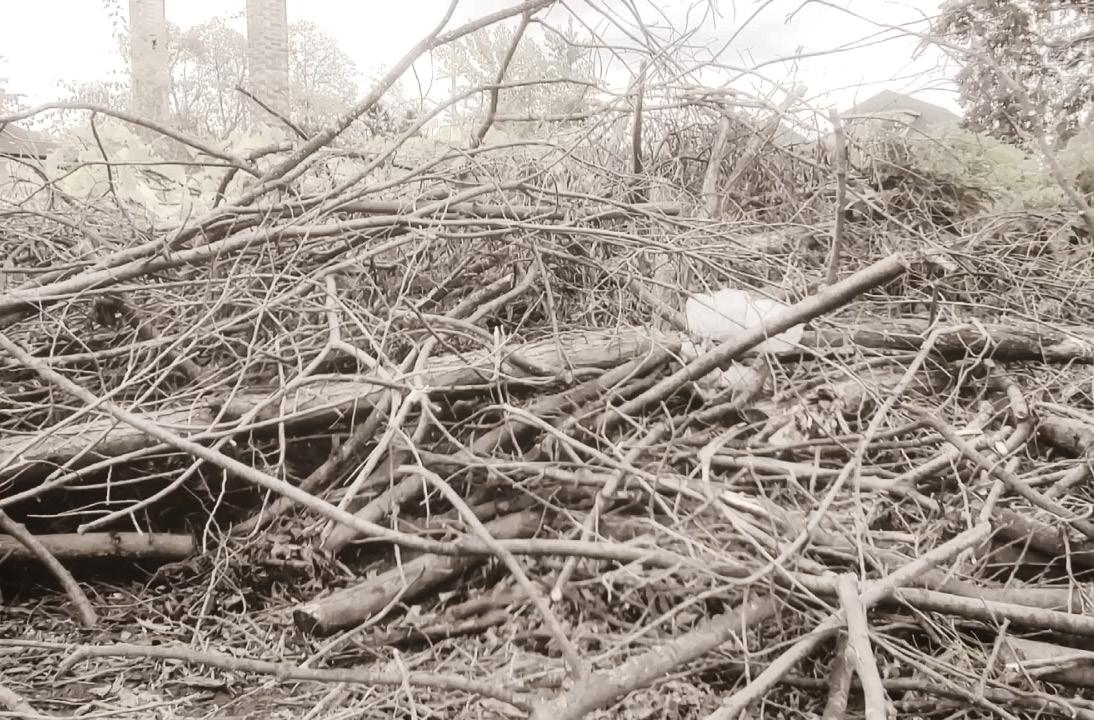
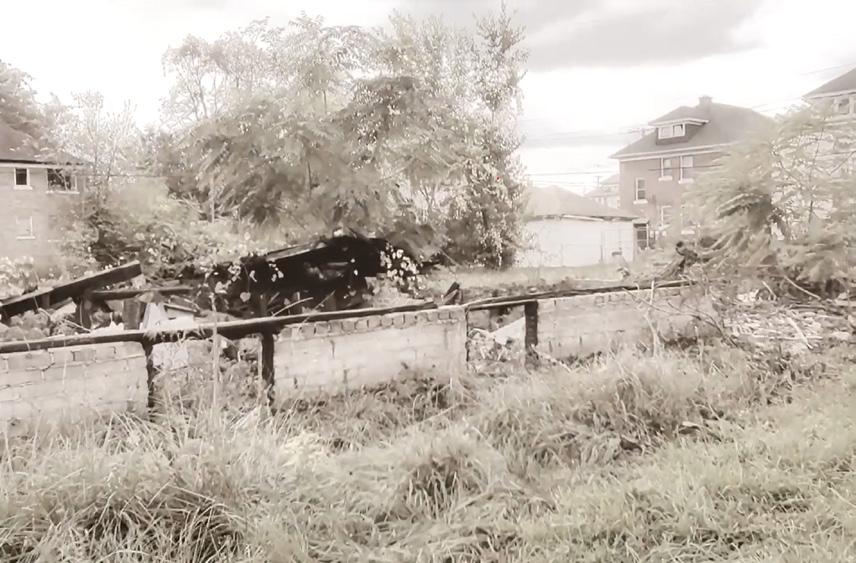
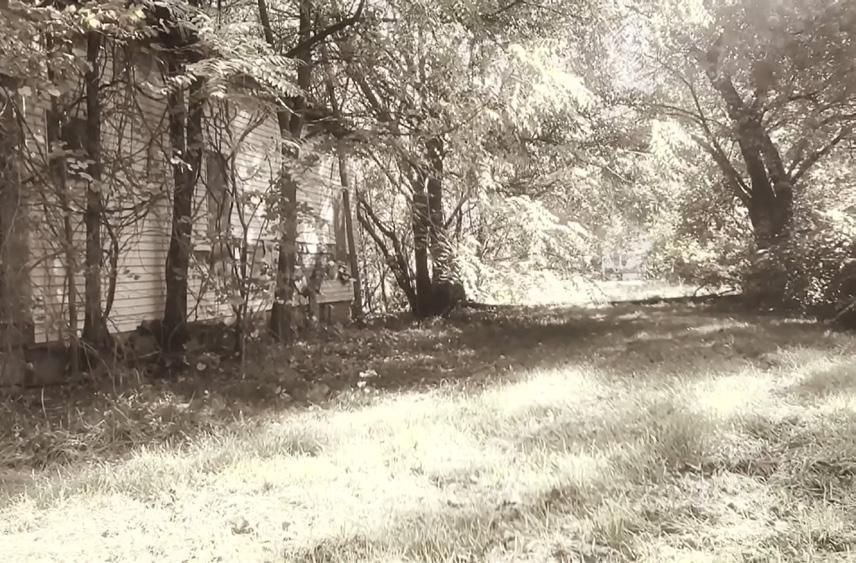
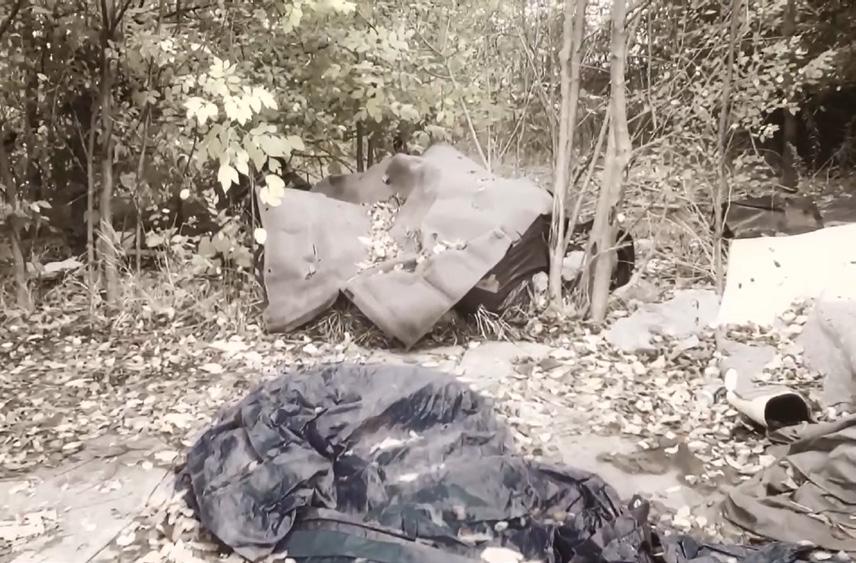
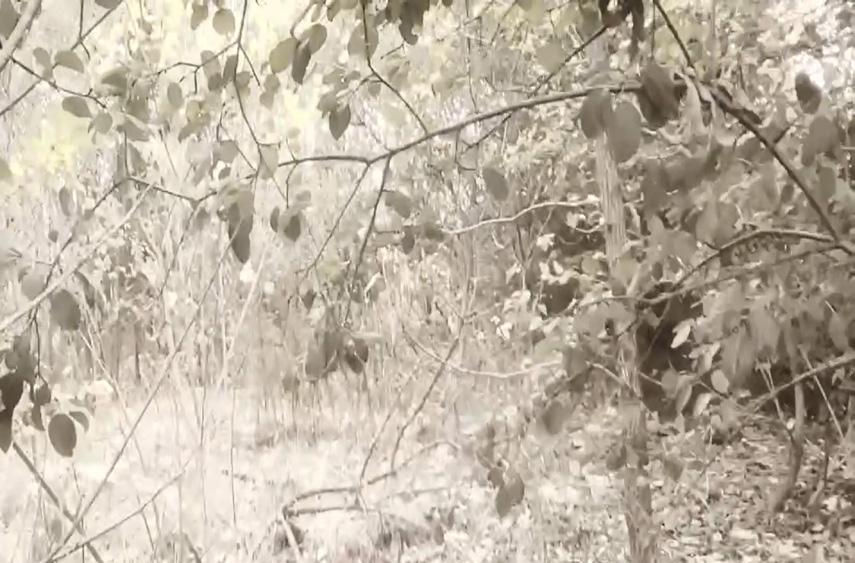
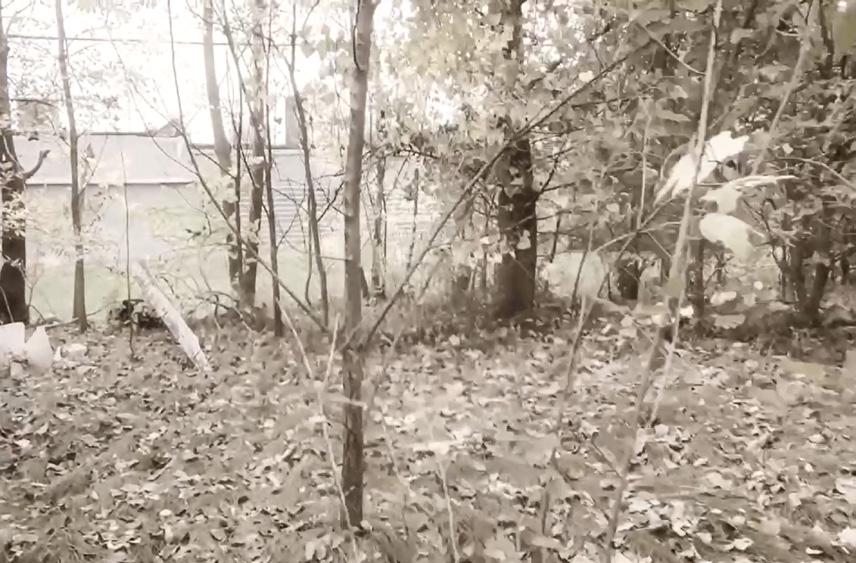
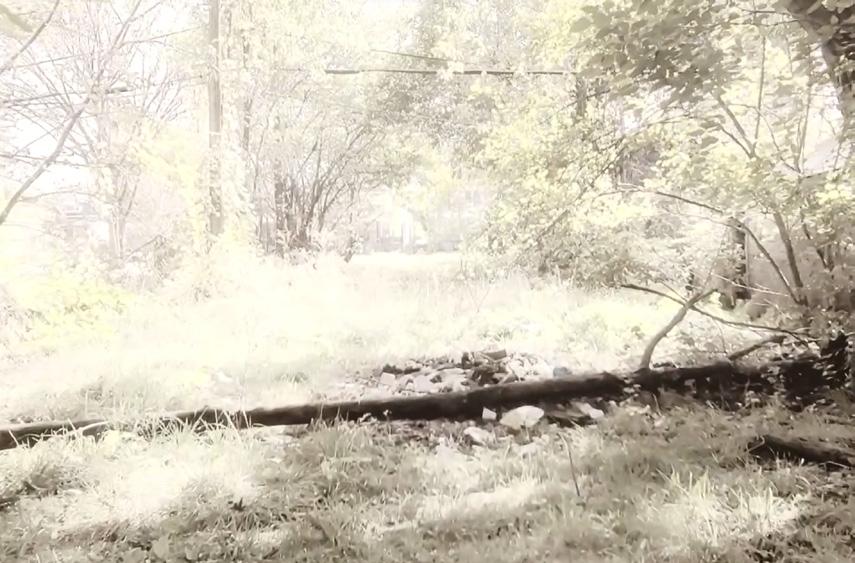
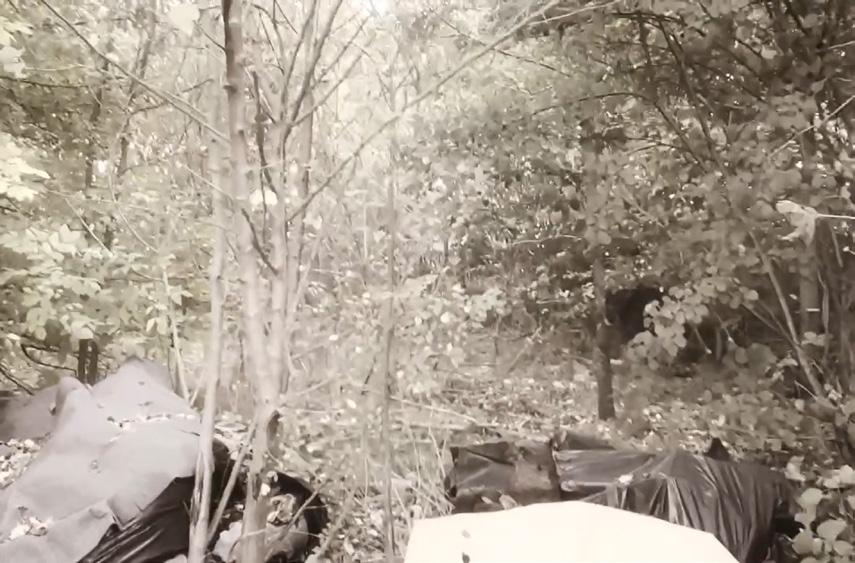
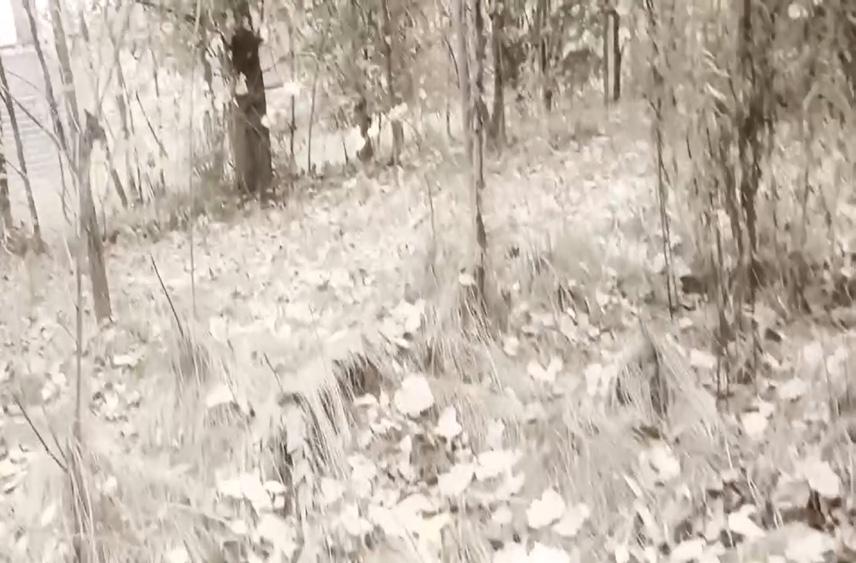
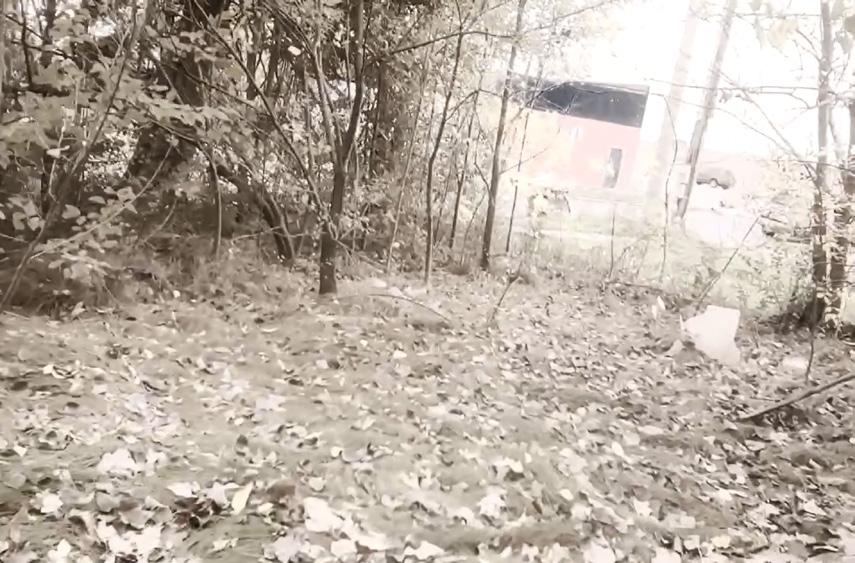
The main focus is showing vacant lots left behind after the demolition of homes. Those lots become the resource for many issues of public health and safety. Vacant lots are an issue of concern because they attract or be subjected to illegal dumping of litter and other solid wastes. Vacant lots are often contaminated with hazardous wastes such as lead, cadmium, arsenic, and asbestos, which result in unsafe conditions for children and adults. These vacant lots are not just unsightly blights in the neighborhoods, but they are breeding grounds for rats; they are a wasted resource. The vacant lots have constantly felt scary and not safe to be there. It feels sketchy and hollow. Those vacant lots always felt creepy and strange and not safe.
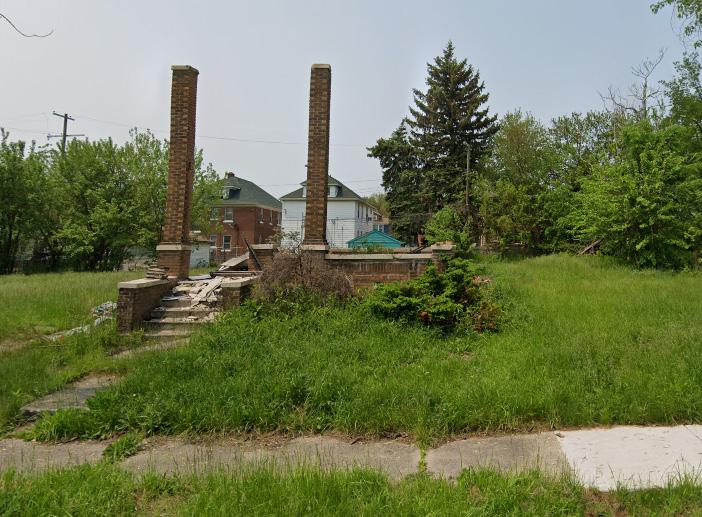
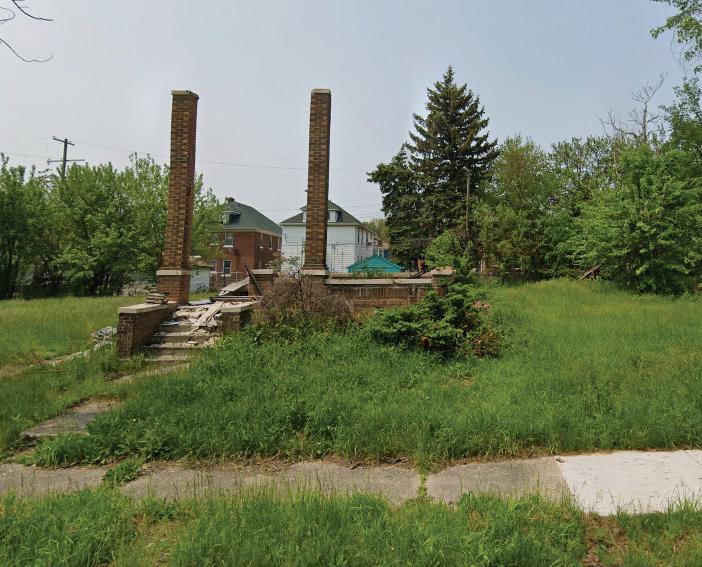
To watch the video: https://www.youtube.com/watch?v=gvMsmewEkSQ
METHOD / FRAMEWORK
VACANCY TYPES
Properties may become vacant for various reasons. Some of the reasons are being abandoned or not being maintained over time. If responsible owners well maintain these properties, they will not become eyesores or depress neighboring property values. In general, a vacant property becomes a problem when the owner abandons the basic responsibilities of ownership, such as routine maintenance or mortgage and property tax payments, including the physical condition of the property. For example, in Baltimore, the city building code defines residences as vacant only if they are uninhabitable, not if they are merely unoccupied. (Evidence Matters)
Vacant properties have a negative effect that impacts neighboring properties. In addition, vacant properties always affect the neighborhood's sales values. In the Midwest, neighborhood vacancy types are between land and structures. Vacant land is widely considered to attract illegal dump-
ing because of the overgrown vegetation. Also, vacant structures attract crimes because of the unoccupied and broken doors. The abandoned corridor affects the neighborhood's economic growth because it seems to be a barrier to new investment.
According to the US Postal Office Service reported 2020, 74,313 total vacant properties in Detroit are equivalent to a 19 percent vacancy rate. Increased vacancies leave the communities with fewer monitors and combat criminal activity. In addition, vacant properties can be costly to maintain maintenance from the local government. Therefore, vacant properties in the neighborhood are the primary source of many issues that the residents are challenged with daily.
Source: huduser.gov
Source: City of Detroit Open data, Arcgis.com Figure 30: Midwest Vacancy Types. Homes In Use Abandoned Homes Vacant Lots Focus Area
The Effects of Vacant Lots on Neighborhood Health.
The health of the land in a neighborhood directly impacts the people’s health in the neighborhood. For example, vacant lots after demolition homes are filled with trash and debris, littered with invasive spaces. As a result, vacant lots have been overgrown and become homes for the rats in the neighborhood. Therefore, the life next to vacant lots is unsafe due to the conditions of the lots. In addition, many health-hazardous materials have been thrown into those lots. Therefore, the low quality of the vacant lots impacts the life in a neighborhood. Furthermore, it affects the lifestyle in many different ways, increasing crimes and decrease of homes values. Therefore, the lifestyle decline and the social connection between the people will become lost
because of the impact of the vacant lot.
Many cities had to manage declining populations in past decades and adjust planning activities, especially regarding blight and vacancy. The overarching population decline in the city has led to numerous challenges for infrastructure. In addition, the vacant lots affect public health and public safety. Therefore, it’s essential to understand the vacant land impact on the residents and the communities. The physical of the lots has been linked to poor health outcomes in the neighborhood, including disease and mental illness.
CRIMES
Community Vs Vacant Lots.
Vacant properties continue to be a persistent problem in Detroit. After the economic crash in 2008, many properties became vacant. The more the property becomes vacant, the values of the surrounding homes decrease. In addition, the vacancy can impact the jobs, the development, and the mental health of the neighborhood.
The impact of vacant land on surrounding property value is well-established; multiple studies find that vacant and/or foreclosed properties decrease the value of surrounding properties, often using foreclosure as a proxy for the vacancy. (Mikelbank, B.A. 2008). However, the impact of a vacant on other aspects of community life and well-being is more challenging to understand and quantify.
There are few studies that explore the relationship between property vacancy and
crime. Several studies include vacancy of as one of many attributes of a neighborhood in examining the relationship between neighborhoods and crime. One study in Austin Texas in the early 1990s, during a wave of underwater mortgages and property abandonment, examines the connection between vacant residential structures and crime. The study uses administrative data on crime incidents, finding that blocks with vacant properties overall were twice as likely to experience drug and theft crime as blocks with no vacant properties. ( Spelman, W. 1993). In addition, the study finds a 19 percent increase in violent crime in the high rates of vacancy neighborhoods.
Source: City of Detroit Open data,
Source: City of Detroit Open data, Arcgis.com
Figure 32: Midwest Crimes Activity
GOALS / OBJECTIVES
Transforming vacant land into community assets throughout reprogramming, reconnecting, and Placemaking. A vacancy is a big challenge in the neighborhoods. So it is understandable that apply big solutions like rebuilding or letting the vacant land go back to nature. However, vacancy space can be an excellent opportunity for the neighborhood to grow and redevelop again. These spaces offer to be the primary resource for any community. Reusing vacant lots to turn the community into green space and attract new residents. Reprogram the vacant lots
Sustainable Strategies
to help the neighborhood grow by bringing new economic growth by using vacant lots as community gardens. These gardens will help the residents with their income. Reselling and buying fresh produce from the community garden will help the residents. Reusing vacant lots to reconnect the residents of the neighborhood. By creating green space in the community, the people will put and reconnect through greener activities. Green spaces bring people together. Transforming vacant lots into community hubs, playgrounds, and community gardens. GOAL ONE
The number of vacant lots in Midwest neighborhoods allows for various landscape interventions that could be implemented in the neighborhood landscape that provide a range of services. One, Sustainable and productive landscapes. Creating a landscape that helps the community by promoting food production. Promoting neighborhood security by improving the neighborhood landscape. The vacant lots can be transferred into the production of renewable energy. Two, improve the quality of life of the residents. First, vacant lots can be converted to
connect the community assets. Second, use vacant lots as a platform for education and skill-building in the community. Finally, use vacant lots to create jobs in the community.
Create Sustainable & Productive Landscape in the
1. Promot Food Garden Production
2. Promote Security
3. Promote the Oppoerunities for the production of Renewable Energy
• Create Community Garden.
• Create Program for Argicultural training and education
• Create Policies Support Solar Energy
1. Connect the Community Assets
2. Use Vacant lots As Platform Education and skill Building
3. Use Vacant lots as Jobs Creation
• Partner with community organization to develop long-term educational and skills building programs.
• Expand opportunities for residents to acquire vacant lots
• Provide agricultural job training and skill building.
Source: City of Detroit Open data, Arcgis.com
Figure 33: Midwest Sustainable Strategies
Source: City of Detroit Open data, Arcgis.com
Figure 34: Midwest Goals and Objectives
Safety is a big concern in Midwest neighborhoods. Safety, in general, is a big concern in the city of Detroit as well. Creating safe and activity open spaces in the neighborhood will help reduce the criminal activities in the community. In addition, green spaces improve overall life quality and the surrounding environment. However, crimes are a serious challenge to many urban areas. Research finds that crimes number increased in the blighted neighborhoods. Other research found that green space positively impacts neighborhood life. Thus, urban green spaces can motivate people to spend more time
on the streets of their time. This increases the eyes on the streets and can help prevent criminal behavior. As a result, that will provide a healthy neighborhood. In addition, green space improves the environment in the neighborhood. Therefore, green space has the potential to reduce violent crime and gun violence while making communities safer and keeping residents healthier.
ECONOMIC DEVELOPMENT
1. Adaptively reuse vacant lots to create community gardens to increase resident’s income.
2. Leverage the DLBA lots to make it easier for the residents to purchase lots next to them.
3. Encourage the production of renewable energy by using solar panels.
1. Provide Space for Recreation
2. Provide Equal Access to Public Spaces
3. Provide Community wellness Center.
• Recycle and reuse materials from demolish
• Design and activity open space to prevent dumping
• Provide lighting in all new public spaces and pathways.
• Remove lower growing trees.
• Create well-maintained pedestrain and bicycle network
• Repair and maintain existing sidewalk
• Install new playground and sport fields.
• Increase the amount of public spaces.
• Distribute parks and facility for equal access
1. Green Pathway. 2. Open Public Space
Light Streetscapes
Source: City of Detroit Open data, Arcgis.com Figure 35: Midwest Goals and Objectives
Source: City of Detroit Open data, Arcgis.com Figure 36: Midwest Economic Development
1. Transform vacant lots into community green spaces.
2. Strength existing facilities and connecting to new spaces.
3. Improve access to public spaces by creating safe pedestrian routes through the neighborhood.
D: CONNECTIVITY
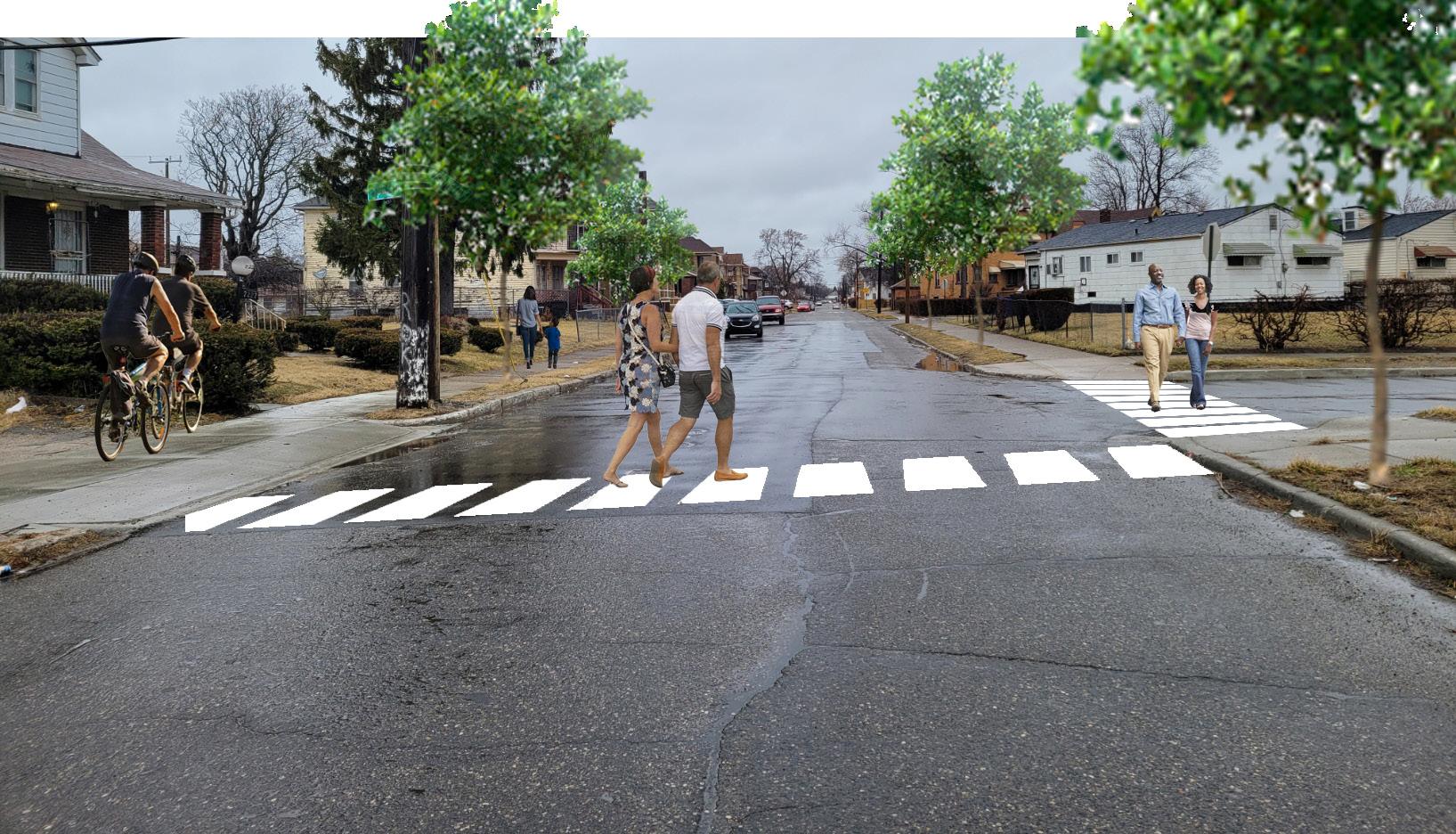
1. Improve pedestrian safety by enhancing Crossings on major streets.
2. Use vacant lots to establish new bike/Pedestrian routes throughout the Neighborhood.
3. Enhance traffic measures to reduce speeding in a residential areas by adding new speed bumps.
Source: City of Detroit Open data, Arcgis.com Figure 37: Midwest Open Spaces and Community Nodes
Source: City of Detroit Open data, Arcgis.com Figure 38: Midwest Connectivity
Green spaces and other nature-based solutions offer an approach to increasing the quality of urban neighborhoods, enhancing local resilience, and promoting sustainable lifestyles, improving the residents' health and well-being. In addition, transforming vacancies can improve environmental hazards such as air pollution and climate change. As a result, the live quality of the neighborhood will improve. Furthermore, the health and well-being of the residents are also improved. Therefore, it is necessary to ensure that public green spaces are easily accessible for all population groups and distributed equitably within the neighborhoods.
Three Sustainability Benefits
SOCIAL
• Equity
• Health • Crime
• Quality of Life
ECONOMIC • Employment • Cost • Property Value • Business Opportunities ENVIRONMENTAL
Air
Soil
Water
VACANT TO VALUE
1. IDENTIFY AREAS TO TARGET FOR GREEN SPACES, GREEN PATHWAY, AND COMMERCIAL REDEVELOPMENT IN THE SHORT & LONG-TERM
2. IDENTIFY AREA TO TARGET FOR MENTAL HEALTH, SAFETY, ENVIRONMENT, AND CRIMES REDUCTION IN THE NEIGHBORHOOD.
Source: City of Detroit Open data, Arcgis.com
Figure 40: Midwest Vacant to Value
PHASE TWO: 5-10 YEARS
PHASE ONE: 0-5 YEARS
Vacant lots activation: Barriers and Opportunities.
Implementing green spaces in vacant will have several issues of site access, ownership, and evaluation before any implementation can begin on any vacant lots. The first step is to identify the property's current owner; most of the vacant land is owned by the Detroit Land Bank Authority in Midwest neighborhoods. Then, in phase one, find partners and funding that will support the first design strategy, which is to create food production and education skill builder in the community. The neighborhood has many resources that will contribute to the growth and redevelopment. The first phase will include the following, a community garden, a children’s grand, a temporary garden, and a community park.
After the partnership with the locals, phase two of the design strategy begins in the Midwest neighborhood, including the following community play spaces for all age groups and a community farmers market. In addition, implementing new green spaces will help the community to improve. The overall well begins of the residents will improve. Those green spaces can serve as a way to connect in the neighborhood. In addition, open activity spaces can be a safe getaway for the youth from involvement with crimes activities in the community. Activate, and maintain open space to create safer, more social neighborhoods
Source: City of Detroit Open data, Arcgis.com
Figure 41: Midwest Phase One
Source: City of Detroit Open data, Arcgis.com
Figure 42: Midwest Phase Two
Looking further ahead, strategize to support larger-scale planning projects and missions around the specific elements in the neighborhood. Phase three design strategy might include renewable energy production, a community water park, and a community gathering space. The comprehensive community plan outline several goals and objectives that be addressed by strategies that involve the reuse of vacant lots in the Midwest neighborhood. the objectives include providing equitable access to opportunities, transforming Midwest into attractive destinations, and connecting communities and amenities throughout the green-way. Projects that act on these objectives can serve a vision on land uses such as walkable neighborhoods and open spaces.
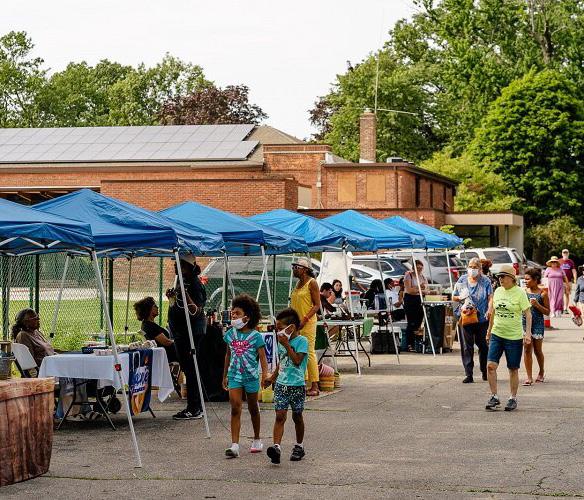
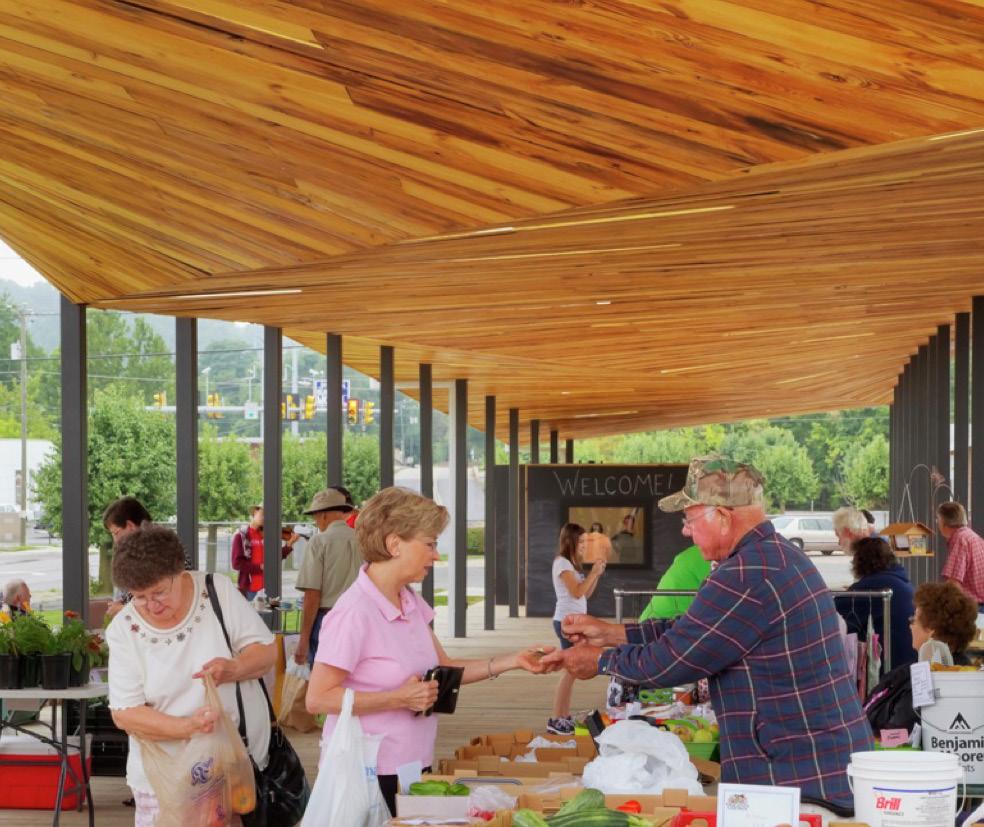
Northwest Detroit farmers market Covington Farmers Market
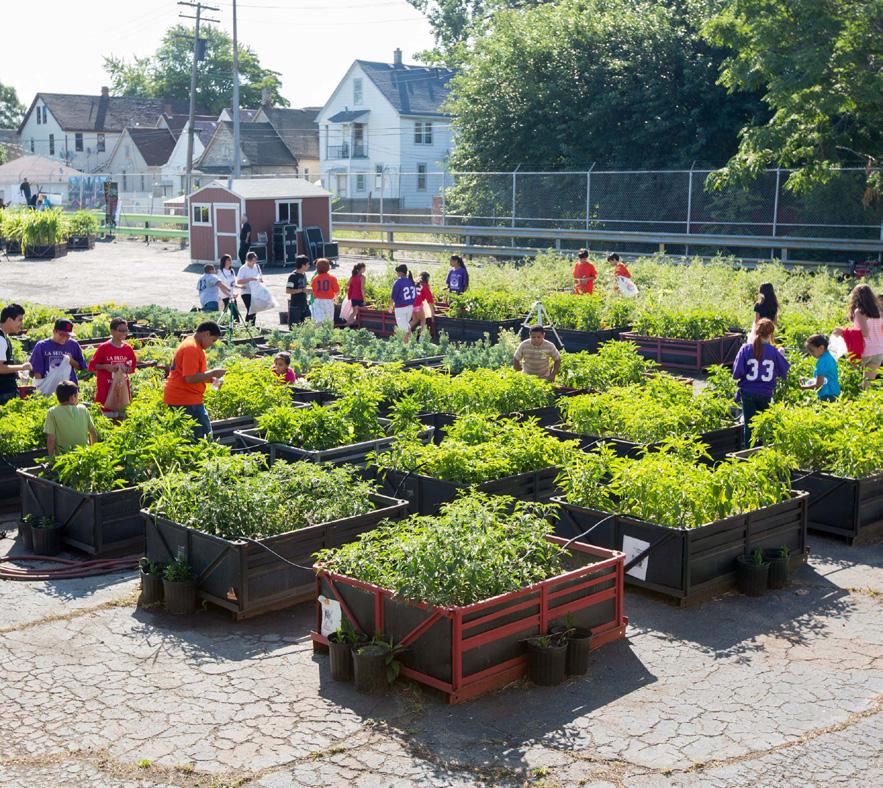
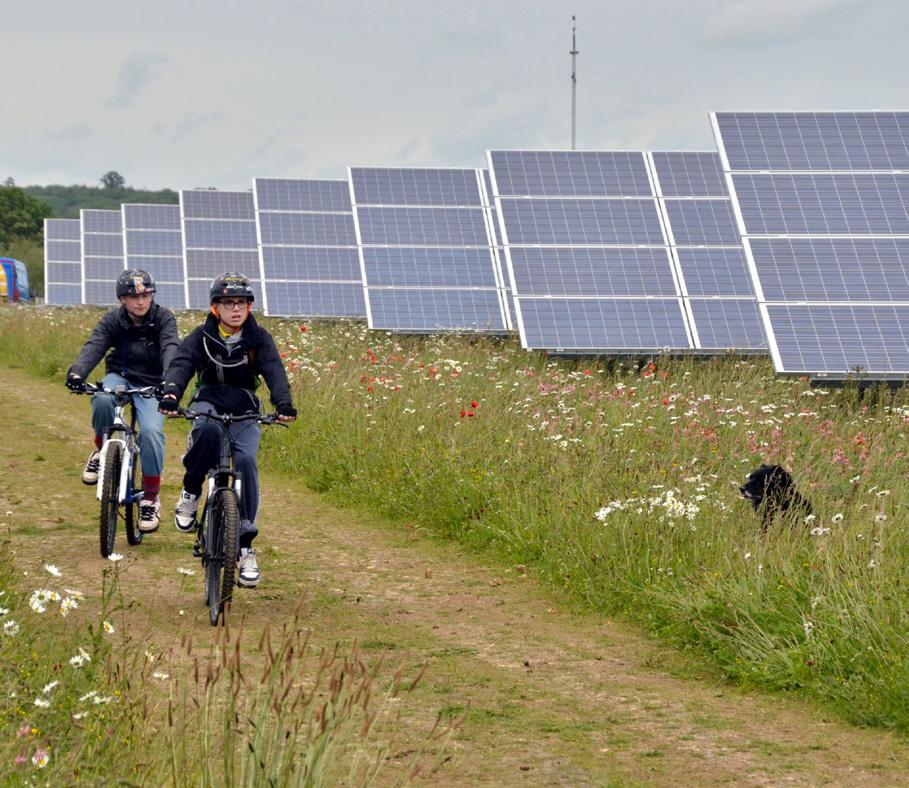
GM Opens Community Urban Garden in Southwest Detroit Community solar farm
Source: City of Detroit Open data, Arcgis.com Figure 43: Midwest Phase Three
Source: Northwest Detroit farmers market Figure 44:Northwest Detroit farmers market
Source: https://media.gm.com/ Figure 46: Southwest Detroit Community Garden
Source: Westmill Solar Park in Oxfordshire, England (2012) Figure 47: Community Solar Farm
CREATE SUSTAINABLE AND PRODUCTIVE LANDSCAPES IN THE NEIGHBORHOOD:
Recommendation
Promote food production and agriculture training
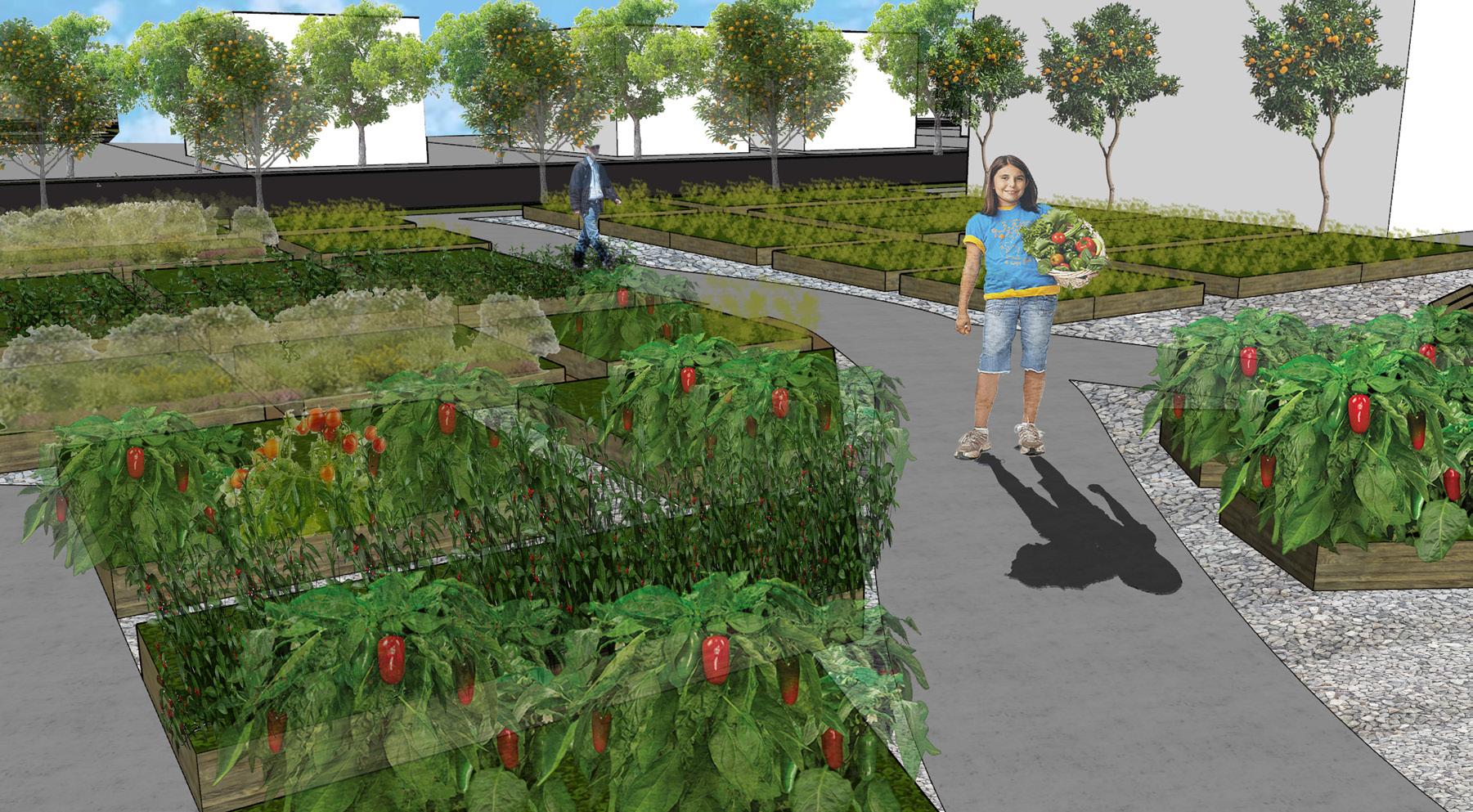
Urban agriculture can provide access to healthy food, skill-building, and jobs in the community. In addition, urban agriculture can activate the neighborhood's vacant lots and improve the resident's health. Urban farms play a significant role in the communities, providing access to local food and green space that benefit both the body and the mind. “As the garden began to take shape, it started to generate lots of attention. People would pull over in their cars to watch the transformation. Folks from the local homeless shelter came over to lend a hand and learn more. Neighbors stopped by to tell us stories of the gardens they used to grow. In short, the farm became a nucleus of a newly forming community.”( Francey Slater, a co-founder of Mill City Grows).
Having spaces to grow and share food is especially important in the neighborhood because it’s a great way to connect people in their communities. In addition, using the opportunity of vacant lots in the undeveloped neighborhood to grow food will help to improve the community's overall well-being in the long term. Urban agriculture provides neighbors with places to come together, strengthen bonds, and build community cohesion. Also, urban ag-
riculture connects people with the earth and the source of their food production.
Urban agriculture can provide a flexible source of income, especially in Midwest neighborhoods where the income level is not high. However, the living expenses are rising recently, and most families can not offer to buy healthy food from the supermarket. In addition, urban agriculture improves environmental health and climate resilience in the face of increasing climate change. Furthermore, urban farming can help with water management by absorbing the rainfall and preventing stormwater from overloading the sewer system. Also, increasing vegetation and tree cover in the neighborhoods. Finally, urban agriculture improves neighborhood security.
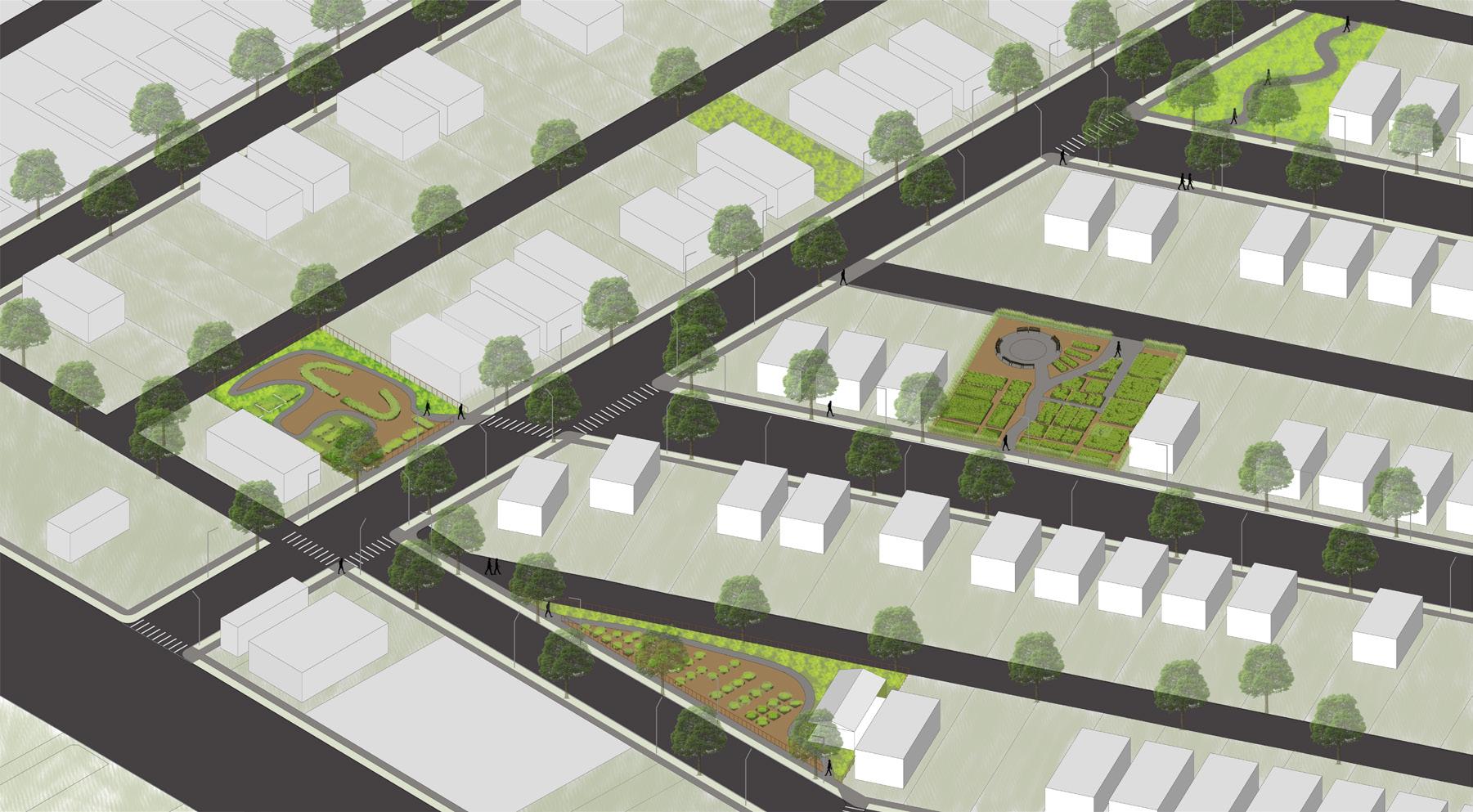
Children Garden Pedestrian Crossing Flower Meadow Community Park
Path Lights Temporary Garden & Agriculture Training
Community Garden
Figure 48:Recommendation: Sustainable and Productive Landscape
Figure 49: Recommendation: Propose Community Garden
Figure 50: Recommendation: Propose Streetscape
CREATE SAFE AND ACTIVATED OPEN SPACES IN THE NEIGHBORHOOD
Recommendation
Promoting Physical and Mental Well-Being & Design for Visibility
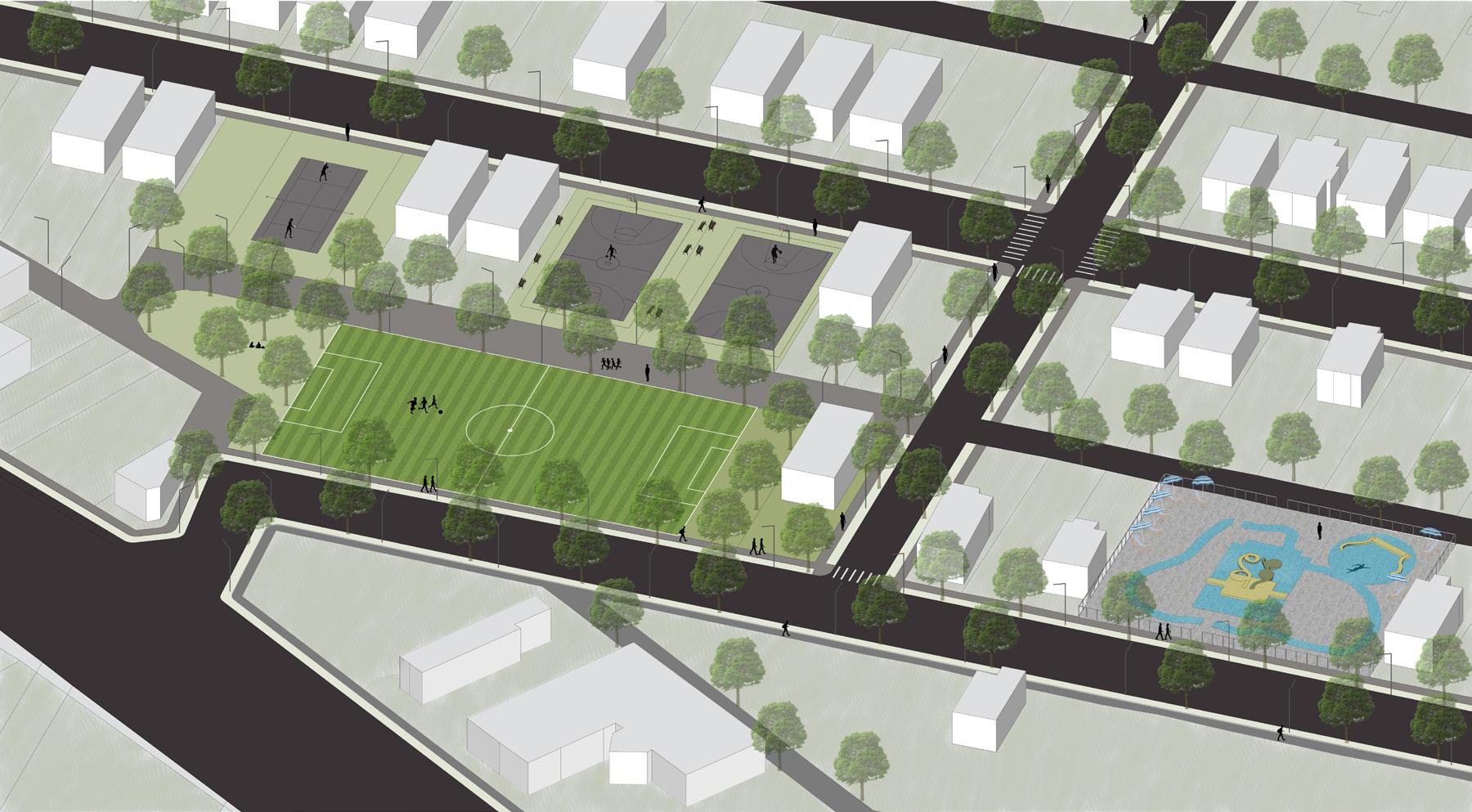
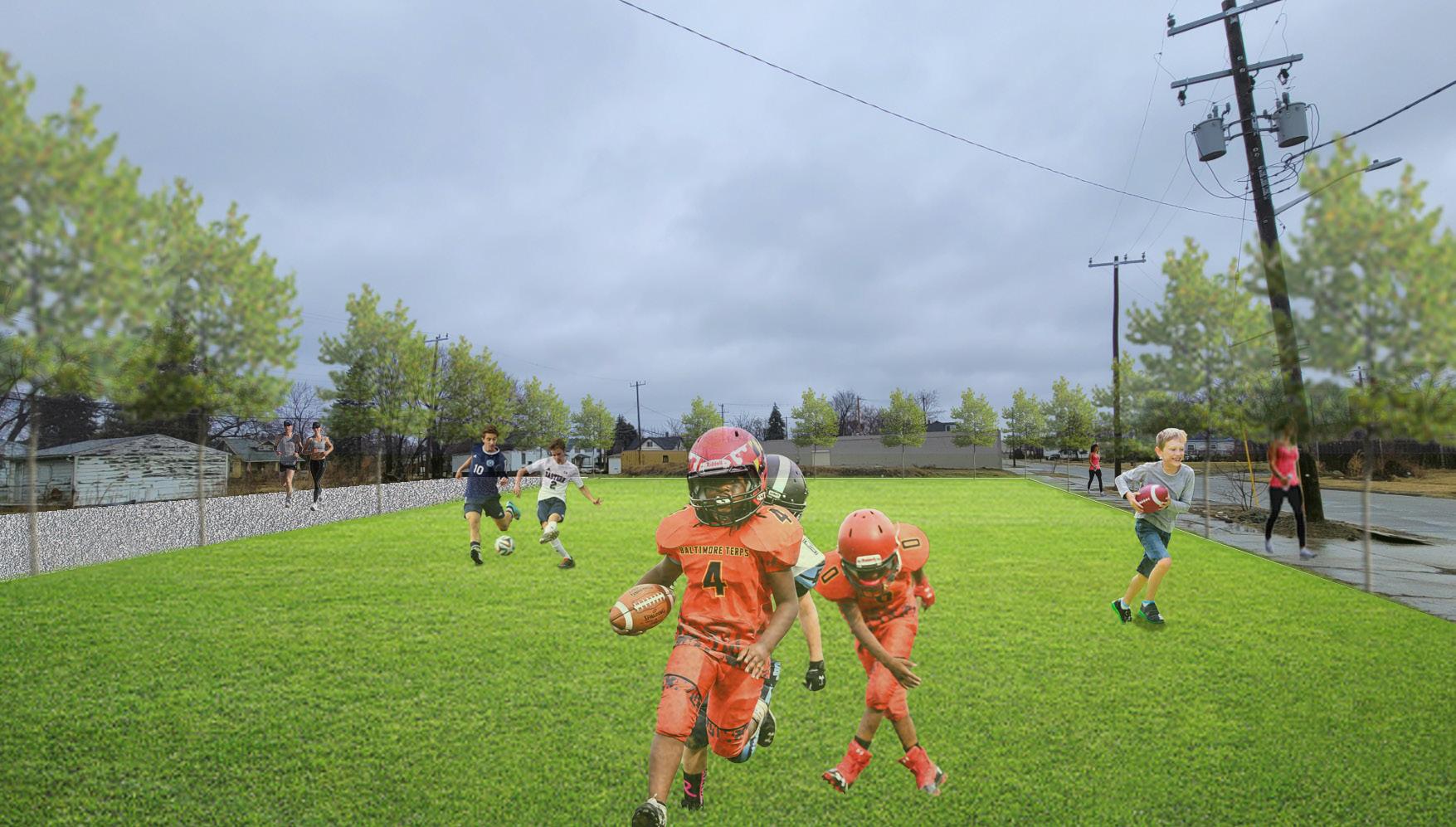
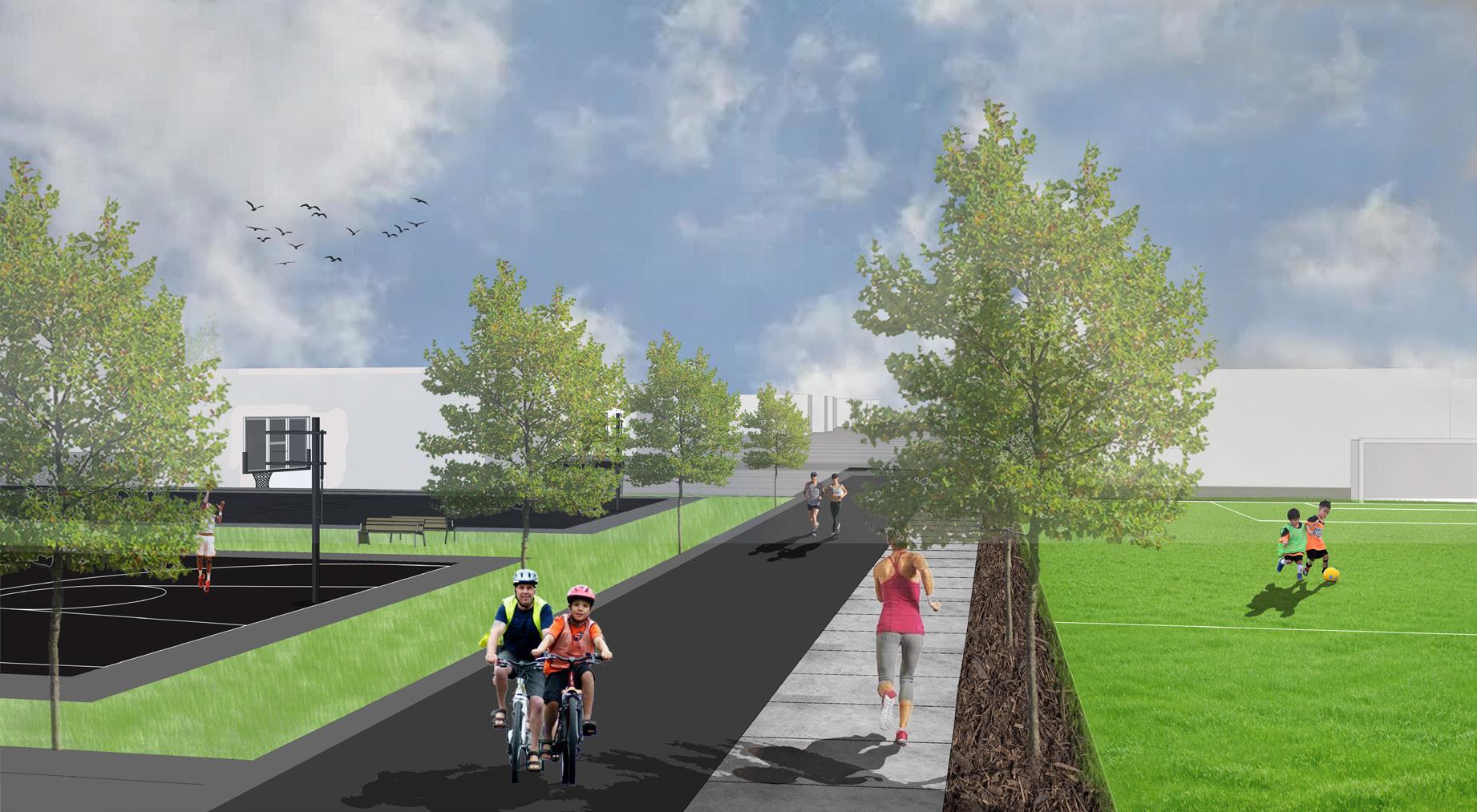
Community open green spaces are socially valuable. Walkable neighborhoods, parks, and sports facilities draw people outside and foster social interactions. In addition, activated spaces in the communities are attractive for economic benefits for the local community. The economic benefits from safe open spaces play an essential role in neighborhood development. Activated spaces can be an excellent place for community members to meet, interact and enjoy their community. Open spaces such as sports fields and water parks provide economic benefits to residents and local businesses. Open spaces can be a hub for local businesses. Increasing open spaces in the neighborhood area will encourage more interaction in the community.
Physical activity and mental health should be encouraged among the neighborhood's residents. Activate spaces are emerging as important public health solutions in communities. Open space can provide social interactions with people from different backgrounds. Individual benefits, improved public health, and social resilience are the potential positive outcome. In addition, strong community relationships may result in increasing individuals' well-being. Finally, open space can help stress reduction in the neighborhood.
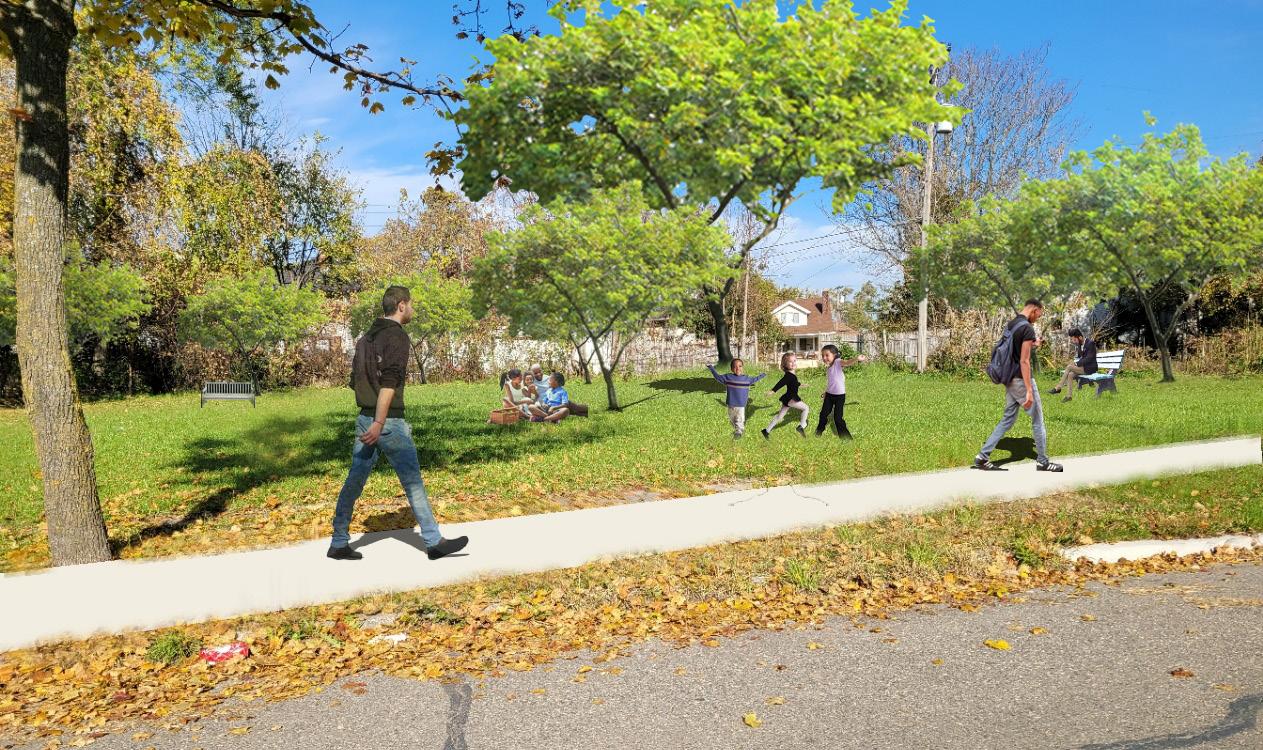
Safety is a big concern in Midwest neighborhood. Open space increases eyes visibility in the neighborhood. The benefits of creating open spaces in neighborhoods contribute to the health and wellness of the community. Open space can become the heart of the community. Open space can make the neighborhood safer by allowing the residents to meet with their neighbors. Open spaces can be for all the ages in the neighborhood. Finally, open green spaces help to improve the neighborhood property value.
Figure 51: Recommendation: Propose Community Park
Green pathway
Basketball Court
Tennis Court
Soccer Field Water Park
Figure 52: Recommendation: Safe and Activated Open Space
Figure 53: Recommendation: Propose Green Open Space
Figure 54: Recommendation: Propose Green pathway
CONCLUSION
The study of vacant lots in Midwest neighborhoods has identified several goals and strategies for adapting vacant lots. Therefore, this study proposes to address the vacancy issue challenging in the Midwest neighborhood and Detroit as a whole. The study provides an entire inventory of the vacant lots broken down by classification and condition. In addition, it has been identified several strategies for converting vacant lots into productive use in the short-term and long term.
The effect of vacant land are numerous and are complicated in the neighborhood. This study has identified the condition of the vacant lot through an iterative process of site analysis, precedents studies, and literature review. The effect of vacant lots in the neighborhood is significant. The vacancy has impacted the neighborhood economically, environmentally, and socially. The social effect of the vacant land may be good or bad, and it depends on the use of vacant lots in the neighborhood. However, the condition of the vacant lot in the Midwest neighborhood poorly conditions. The study has found that the crimes are increasing in blighted neighborhoods such as Midwest. Therefore, Midwest neighborhood frameworks have identified strategies for transforming vacant lots into community assets, such as the use of urban greenery and urban infrastructure development.
Midwest neighborhood vacant lots play an important role in the redevelopment and improve the overall well-being of the residents. The adaptation of lots that used to apply the framework's strategies. The vacant lots can be activated through community parks, green-ways, productive land uses, and stormwater management. The adaptation of vacant lots can help to improve the economy in the Midwest neighborhood by attracting new businesses to the community. Midwest neighborhood needs these strategies to continue developing and improving in the short-term and long-term. This study aims to assist in implementing the comprehensive framework's strategies to improve the life qualities of Midwest neighborhood residents.
BIBLIOGRAPHY
1. Perkins, Tom. “The Detroit Land Bank Authority and Its Many Controversies, Explained.” Curbed Detroit, 30 Apr. 2020, detroit.curbed.com/2020/4/30/21166791/ detroit-land-bank-authority-vacant-house-for-sale.
2. Vacant and abandoned properties: Turning liabilities into assets: HUD USER. Vacant and Abandoned Properties: Turning Liabilities Into Assets | HUD USER. (n.d.). Retrieved December 14, 2021, from https://www.huduser.gov/portal/periodicals/ em/winter14/highlight1.html.
3. Detroit future city working with Lots Program 2020: Detroit Future City. Detroit Future City |. (2021, March 24). Retrieved December 14, 2021, from https://detroitfuturecity.com/our-programs/wwl-2020/.
4. Burgess, Jacquelin, et al. “People, Parks and the Urban Green: A Study of Popular Meanings and Values for Open Spaces in the City.” Urban Studies, vol. 25, no. 6, Dec. 1988, pp. 455–473,
5. “Cities and the Environment (Cate).” Cities and the Environment (CATE) | Center for Urban Resilience | Loyola Marymount University and Loyola Law School, digitalcommons.lmu.edu/cate/.
6. Abbott, J. (2013, November 5). Sharing the City | Community Participation in Urban Management | John. Taylor & Francis. https://www.taylorfrancis.com/books/ mono/10.4324/9781315070759/sharing-city-john-abbott
7. Addressing the vacant and abandoned property problem. Taylor & Francis. (n.d.). Retrieved April 24, 2022, from https://www.tandfonline.com/doi/ abs/10.1111/0735-2166.00058
8. Fitzgerald Revitalization Project: Landscapes as the Framework for Community Reinvestment: 2017 ASLA professional awards. Fitzgerald Revitalization Project: Landscapes as the Framework for Community Reinvestment | 2017 ASLA Professional Awards. (n.d.). Retrieved April 24, 2022, from https://www.asla. org/2017awards/327798.html
9. Detroit: City of hope. In These Times. (n.d.). Retrieved April 24, 2022, from https:// inthesetimes.com/article/detroit-city-of-hope
10. Han, M. J. N., & Kim, M. J. (2019, September 1). Green environments and happiness level in housing areas toward a sustainable life. MDPI. Retrieved April 24, 2022, from https://www.mdpi.com/2071-1050/11/17/4768/htm
11. Cities and the environment (cate) - digitalcommons.lmu.edu. (n.d.). Retrieved April 24, 2022, from https://digitalcommons.lmu.edu/cgi/viewcontent. cgi?httpsredir=1&article=1157&context=cate
12. Combating climate change through vacant lot restoration. American Planning Association. (n.d.). Retrieved April 24, 2022, from https://www.planning.org/ blog/9218357/combating-climate-change-through-vacant-lot-restoration/
13. Eugenia C. South, M. D. (2018, July 20). Effect of greening vacant land on Mental Health among urban residents. JAMA Network Open. Retrieved April 24, 2022, from https://jamanetwork.com/journals/jamanetworkopen/fullarticle/2688343
14. Openlands. (2020, November 30). The Vacant Lot Phenomenon: How vacant lots affect a community’s people, places, and Ecosystems. Openlands. Retrieved April 24, 2022, from https://openlands.org/2020/11/23/the-vacant-lot-phenomenon-how-vacant-lots-affect-a-communitys-people-places-and-ecosystems/
15. New Detroit Field Guide released to help residents with ... (n.d.). Retrieved April 24, 2022, from https://nextcity.org/urbanist-news/detroit-new-field-guide-released-vacant-land-problem
16. Lorah, K. (2019, March 22). How to turn a vacant lot into a community garden: A Primer. ioby. Retrieved April 24, 2022, from https://blog.ioby.org/how-to-turn-avacant-lot-into-a-community-garden-a-primer/
17. Sarah Williams |Saturday, J. 24, & By, S. (n.d.). Resilient neighborhoods: This Detroit Farmers Market is reuniting neighbors isolated by the pandemic. Model D. Retrieved April 24, 2022, from https://www.modeldmedia.com/ features/northwest-Detroit-farmers-market-grandmont-rosedale-development-corporation-pandemic.aspx
18. City of detroit - east warren / cadieux neighborhood framework plan. OHM. (n.d.). Retrieved April 24, 2022, from https://www.ohm-advisors.com/projects/ city-detroit-east-warren-cadieux-neighborhood-framework-plan
19. Doucet, Brian. Why Detroit Matters : Decline, Renewal, and Hope in a Divided City. Policy Press, 2017.
20. Mallach, A. (2018). The Empty House Next Door: Understanding and reducing vacancy and hypervacancy in the United States. Lincoln Institute of Land Policy.
21. Northwest Detroit Farmers’ market. Grandmont Rosedale Development Corporation. (n.d.). Retrieved April 24, 2022, from https://grandmontrosedale.com/ ndfm/
22. GM Opens Community Urban Garden in Southwest Detroit. media.gm.com. (2012, August 1). Retrieved April 24, 2022, from https://media.gm.com/media/us/ en/gm/news.detail.html/content/Pages/news/us/en/2012/Aug/0801_urbangarden. html#:~:text=DETROIT%20%E2%80%93%20General%20Motors%20is%20unveiling,converted%20into%20raised%20garden%20beds.
23. Westmill Solar Park in Oxfordshire, England (2012)
24. Resources archive - GTECH. GTECH Strategies. (n.d.). Retrieved April 24, 2022, from https://gtechstrategies.org/resources/
25. A healthy and beautiful Detroit, built on inclusionary growth, economic opportunity, and an atmosphere of trust/ https://detroitmi.gov/