Was, Is, Will Be
Wind Ensemble 11’ 2023
Gabriel L. Newvine
Text By: Ella Wheeler Wilcox Glacier Pools Publishing, ASCAP
Was, Is, Will Be
Wind Ensemble | 11’
Gabriel L. Newvine | Text by: Ella Wheeler Wilcox
Glacier Pools Publishing, 2023 (ASCAP) https://gabriellnewvine.squarespace.com/home
1 Piccolo
3 Flute
2 Oboe (Ob. 2 doubles Eng. Horn)
2 Bassoon
1 Clarinet in Eb
3 Clarinet in Bb
1 Bass Clarinet
1 Soprano Sax
1 Alto Sax
1 Tenor Sax
1 Baritone Sax
Percussion I Timpani
Percussion IV Crotales
Temple Blocks Bass Drum
Bucket of Water and String
Instrumentation
3 Trumpet in Bb
3 Horn in F
3 Trombone
1 Bass Trombone
2 Euphonium
1 Tuba
1 Double Bass
1 Piano
5 Percussion
Percussion II Marimba
Percussion III Vibraphone
Percussion V Glockenspiel
Suspended Cymbal Tam Tam
Doubling:
- This piece is ideally performed by one performer per part, but can be expanded to multiple performers per part at the conductor's discretion.
Performance Notes

- Denotes speaking in a calm and unmetered manner.
- This doesn’t apply to mm. 64-65. See pg. 3.
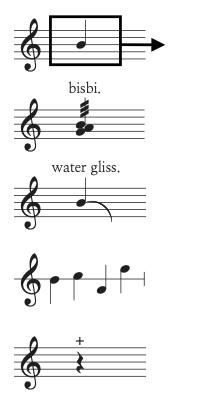
- Denotes performing the directions written in the text box.
- Denotes singing the written note on an “ah” vowel.
- Sung notes are written in concert pitch.
- The pitches may be sung in any comfortable octave.
- Denotes a free accel. for the duration of the beam.
- If the feathered beam is facing the other way, it denotes a free rit.
- For the Double Bass, this denotes col legno battuto, or striking it with the wood of the bow.
- For the Flutes, this denotes a dental pizz.
Conductor Speaking:
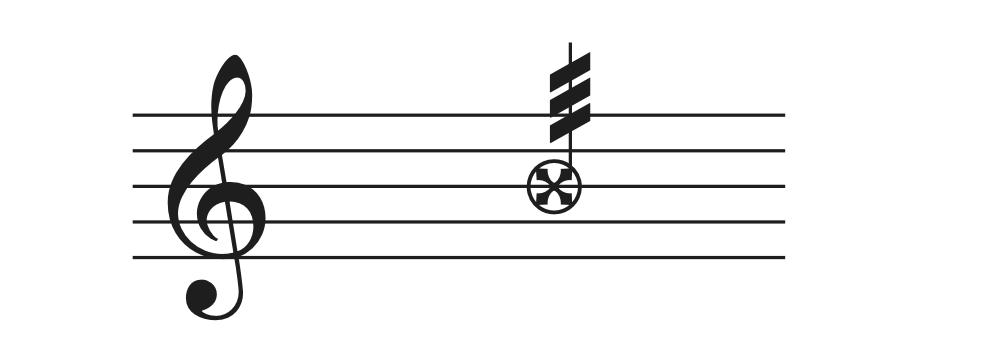
For the Timpani, this denotes dragging a superball mallet across the head of the drum to create a wail like noise.
Denotes repeating the enclosed gesture for the duration of the arrow in an unmetered manner. See below for additional information.
For the Crotales, this denotes striking a crotale and then dunking it into water to cause a portamento.
Denotes free pitch improvisation. The center line denotes any note that the performer considers to be a pitch in the middle of their range.
- Ex.: A flutist may play B4, C5, G4, E5 They could also play G5, A5, E5, D6
Denotes choking a percussion instrument.
- At the beginning and end of the piece, the conductor is required to turn towards the audience and recite part of the poem. Although the text is included in the score, there is a document attached to this score that will facilitate this action.
- All of the conductor's speaking parts should occur within each fermata and are indicated by a square containing C and then a number. The text for each of these cues can be found on the Conductor's score.
- At the beginning of the piece, the conductor should start facing towards the audience and allow the pianist to provide a sense of time.
- Once the conductor finished speaking in mm. 3, they should turn around and begin conducting.
- At the end of the piece, the conductor should stop conducting a few bars before their speaking part and turn around to ready themselves. The conductor should then cut off the ensemble with an theatrical and aggressive cutoff.
- The conductor should not turn around for the last measure, and allow the pianist and percussionist to perform it alone.
- When the conductor delivers this, they should be as natural as possible, and avoid becoming “sing-songy” in their delivery.
- Depending on the venue, the conductor may do this with or without a microphone, but it is preferred that the conductor use one if possible.
Box and Arrow Notation:
- Boxes and arrows are used throughout the piece to denote unmetered and free repetition throughout the piece.
- At mm. 64 and 65, the performers should improvise gestures based off of the directions in the box for around 15”.
- E Whole Half Octatonic refers to the scale consisting of the notes: - E, F#, G, A, Bb, C, Db, Eb (Some notes are spelled enharmonically for ease.)
- At mm. 66 - 76, the performers should perform the gestures written in the box until they encounter a new one or they make it to m. 76.
- Time moves forward at the discretion of the conductor using the cues written in the score.
- The amount of time between each cue should be ~5-10” but may be longer or shorter at the discretion of the conductor.
- For example, the Piccolo should perform the first gesture freely until the conductor cues number 1, at which point the Piccolo will move onto the next gesture. The Eb Clarinet will continue performing their first gesture because they have no new gesture at cue 1.
- For instruments that cannot sustain without a tremolo or a roll, unless a roll is indicated, the performer should freely repeat the written note in an unmetered manner for the duration of the arrow.
- At mm. 104 - 124, the performers should speak freely for the duration of their arrow.
General Notes:
- Throughout the sung portion, instruments gradually begin playing amidst the singing. They should try to blend as much as possible.
- Overall, a lot of the gestures in this piece are reminiscent of a sound cloud. The performers should try to be similarly light.
- Mm. 66 - 72 should be quickly repeated and aggressive.
- Mm. 72 - 76 should be perform warmly and with no break in sound, like a warm blanket of Db Lydian.
- From mm. 101 - End, the speaking should slowly enter and overtake the playing. This is the desired effect and the speaking shouldn’t be quieted for the sake of hearing the instruments.
- In m. 120, the mp dynamic should match the p dynamic of m. 118.
- I wrote the mp to combat the sparser orchestration, but you know those tubas and euphoniums. Anything above a piano and they’re at blastissimo.
- The conductor may stretch m. 123 for as long as they want.
- Please listen to “Change” by Meredith Monk. That, as well as the poem “Change” by Ella Wheeler Wilcox, inspire everything in this piece.
Program Notes
Was, Is, Will Be is a piece for Wind Ensemble. As I grow as a person and as a composer, I find myself constantly returning to the idea of change. All we do as people is change; we change jobs, we change temperament, we change opinion, we change for the better, we change for the worse. It seems like at the end of the day, the only thing that doesn’t change is change itself. This piece attempts to capture these ideas of change and personal growth by creating a sonic experience that reminds you where it was, where it is, and where it will be, much like the journey we all go through in life.
A Note from the Composer
Hello! Thank you for choosing to program this piece! If you’d like to learn more about me, you can go to my website: https://gabriellnewvine.squarespace.com/. Additionally, please contact me at gabriellnewvine@gmail.com and let me know when and where the performance is, as well as who is performing it! I would love to attend, whether physically or virtually!
Piccolo Flute I Flute II Flute III Oboe I Oboe II Bassoon I Bassoon II Clarinet in E♭ Clarinet in B♭ I Clarinet in B♭ II Clarinet in B♭ III Bass Clarinet Soprano Sax Alto Sax Tenor Sax Baritone Sax Trumpet in B♭ I Trumpet in B♭ II Trumpet in B♭ III Horn in F I Horn in F II Horn in F III Trombone I Trombone II Trombone III Bass Trombone Euphonium I Euphonium II Tuba Double Bass Percussion I Percussion II Percussion III Percussion IV Percussion V Piano Gently, = 60 C1 C2 C3 Sing (on "ah") Sing (on "ah") Sing (on "ah") Sing (on "ah") Sing (on "ah") Sing (on "ah") Sing (on "ah") Sing (on "ah") Sing (on "ah") Sing (on "ah") Sing (on "ah") Sing (on "ah") Sing (on "ah")
Is, Will Be Gabriel L. Newvine ©Gabriel L. Newvine 2023, Glacier Pools Publishing, All Rights Reserved Transposed Score (ASCAP) For Wind Ensemble Text by: Ella Wheeler Wilcox
Was,
Picc. Fl. I Fl. II Fl. III Ob. I Ob. II Bsn. I Bsn. II E♭ Cl. B♭ Cl. I B♭ Cl. II B♭ Cl. III B. Cl. S. Sx. A. Sx. T. Sx. B. Sx. B♭ Tpt. I B♭ Tpt. II B♭ Tpt. III Hn. I Hn. II Hn. III Tbn. I Tbn. II Tbn. III B. Tbn. Euph. I Euph. II Tuba D.B. Perc. I Perc. II Perc. III Perc. IV Perc. V Pno. 8 Sing (on "ah") Sing (on "ah") Sing (on "ah") Sing (on "ah") Sing (on "ah") Sing (on "ah") Sing (on "ah") Sing (on "ah") Sing (on "ah") Sing (on "ah") Sing (on "ah") ord. Sing (on "ah") Sing (on "ah") Sing (on "ah") Sing (on "ah") Sing (on "ah") ord. ord. Sing (on "ah") Sing (on "ah") Sing (on "ah") Sing (on "ah") Sing (on "ah") Sing (on "ah") Sing (on "ah") ord. ord. 2 Was, Is, Will Be
Picc. Fl. I Fl. II Fl. III Ob. I Ob. II Bsn. I Bsn. II E♭ Cl. B♭ Cl. I B♭ Cl. II B♭ Cl. III B. Cl. S. Sx. A. Sx. T. Sx. B. Sx. B♭ Tpt. I B♭ Tpt. II B♭ Tpt. III Hn. I Hn. II Hn. III Tbn. I Tbn. II Tbn. III B. Tbn. Euph. I Euph. II Tuba D.B. Perc. I Perc. II Perc. III Perc. IV Perc. V Pno. 15 ord. ord. ord. ord. Take Eng. Hrn. 3 Warm, = 52 21 3 Was, Is, Will Be
Picc. Fl. I Fl. II Fl. III Ob. I Ob. II Bsn. I Bsn. II E♭ Cl. B♭ Cl. I B♭ Cl. II B♭ Cl. III B. Cl. S. Sx. A. Sx. T. Sx. B. Sx. B♭ Tpt. I B♭ Tpt. II B♭ Tpt. III Hn. I Hn. II Hn. III Tbn. I Tbn. II Tbn. III B. Tbn. Euph. I Euph. II Tuba D.B. Perc. I Perc. II Perc. III Perc. IV Perc. V Pno. 22 3 3 3 Eng. Hrn. 3 arco arco Crotales | sempre l.v. Vibraphone Marimba 3 3 Glockenspiel 3 3 3 3 3 Timpani Harmon mute (No stem) 4 Was, Is, Will Be
Picc. Fl. I Fl. II Fl. III Ob. I E. Hn. Bsn. I Bsn. II E♭ Cl. B♭ Cl. I B♭ Cl. II B♭ Cl. III B. Cl. S. Sx. A. Sx. T. Sx. B. Sx. B♭ Tpt. I B♭ Tpt. II B♭ Tpt. III Hn. I Hn. II Hn. III Tbn. I Tbn. II Tbn. III B. Tbn. Euph. I Euph. II Tuba D.B. Timp. Mrb. Vib. Crt. Glk. Pno. 29 3 ord. 3 straight mute 33 3 remove mute Harmon mute (No stem) Harmon mute (No stem) 5 Was, Is, Will Be
Picc. Fl. I Fl. II Fl. III Ob. I E. Hn. Bsn. I Bsn. II E♭ Cl. B♭ Cl. I B♭ Cl. II B♭ Cl. III B. Cl. S. Sx. A. Sx. T. Sx. B. Sx. B♭ Tpt. I B♭ Tpt. II B♭ Tpt. III Hn. I Hn. II Hn. III Tbn. I Tbn. II Tbn. III B. Tbn. Euph. I Euph. II Tuba D.B. Timp. Mrb. Vib. Crt. Glk. Pno. 36 3 3 ord. remove mute remove mute remove mute 3 3 no mute 3 3 3 3 3 40 Eng. Hrn. Eng. Hrn. 6 6 3 6 3 6 Was, Is, Will Be
Picc. Fl. I Fl. II Fl. III Ob. I E. Hn. Bsn. I Bsn. II E♭ Cl. B♭ Cl. I B♭ Cl. II B♭ Cl. III B. Cl. S. Sx. A. Sx. T. Sx. B. Sx. B♭ Tpt. I B♭ Tpt. II B♭ Tpt. III Hn. I Hn. II Hn. III Tbn. I Tbn. II Tbn. III B. Tbn. Euph. I Euph. II Tuba D.B. Timp. Mrb. Vib. Crt. Glk. Pno. 43 3 3 3 3 3 3 3 3 3 3 3 3 3 3 Suspended Cymbal no mute no mute no mute Take Ob. straight mute 3 3 5 49 7 Was, Is, Will Be
Picc. Fl. I Fl. II Fl. III Ob. I Ob. II Bsn. I Bsn. II E♭ Cl. B♭ Cl. I B♭ Cl. II B♭ Cl. III B. Cl. S. Sx. A. Sx. T. Sx. B. Sx. B♭ Tpt. I B♭ Tpt. II B♭ Tpt. III Hn. I Hn. II Hn. III Tbn. I Tbn. II Tbn. III B. Tbn. Euph. I Euph. II Tuba D.B. Timp. Mrb. Vib. Crt. Perc. V Pno. 50 3 3 5 3 3 3 remove mute 3 3 3 3 5 6 3 3 3 3 3 3 3 5 3 3 3 3 3 3 3 3 3 3 3 3 3 56 c.l.b. Breath when necessary 8 Was, Is, Will Be
Picc. Fl. I Fl. II Fl. III Ob. I Ob. II Bsn. I Bsn. II E♭ Cl. B♭ Cl. I B♭ Cl. II B♭ Cl. III B. Cl. S. Sx. A. Sx. T. Sx. B. Sx. B♭ Tpt. I B♭ Tpt. II B♭ Tpt. III Hn. I Hn. II Hn. III Tbn. I Tbn. II Tbn. III B. Tbn. Euph. I Euph. II Tuba D.B. Timp. Mrb. Vib. T. Bl. T.T. Pno. 57 3 3 5 3 5 3 3 3 3 5 3 3 3 3 3 3 3 5 3 Tam Tam T. Blocks 3 [t] [t] [t] 3 [t] [t] [t] 3 3 5 3 3 3 3 3 3 3 3 3 3 3 Ob. 3 [t] [t] [t] 3 [t] [t] [t] 3 3 5 3 3 3 5 3 3 3 3 3 3 3 5 3 3 3 superball, random pitch changing no mute m.s.p. 3 [t][t] [t] 3 [t][t] [t] 3 [t][t] [t] 3 [t][t] [t] 3 3 5 3 3 3 3 3 3 3 3 3 3 3 flz. 3 3 3 5 3 5 3 3 3 5 3 3 3 3 3 3 3 3 3 3 3 3 3 3 9 Was, Is, Will Be
Picc. Fl. I Fl. II Fl. III Ob. I Ob. II Bsn. I Bsn. II E♭ Cl. B♭ Cl. I B♭ Cl. II B♭ Cl. III B. Cl. S. Sx. A. Sx. T. Sx. B. Sx. B♭ Tpt. I B♭ Tpt. II B♭ Tpt. III Hn. I Hn. II Hn. III Tbn. I Tbn. II Tbn. III B. Tbn. Euph. I Euph. II Tuba D.B. Timp. Mrb. Vib. Crt. Glk. Pno. 64 Begin playing quick and staccato figures using the E whole half octatonic scale that gradually become louderandmore frequent. E, F#, G, A, Bb, C, Db, Eb Begin playing quick and staccato figures using the E whole half octatonic scale that gradually become louderandmore frequent. E, F#, G, A, Bb, C, Db, Eb Begin playing quick and staccato figures using the E whole half octatonic scale that gradually become louderandmore frequent. E, F#, G, A, Bb, C, Db, Eb Begin playing quick and staccato figures using the E whole half octatonic scale that gradually become louderandmore frequent. E, F#, G, A, Bb, C, Db, Eb Begin playing quick and staccato figures using the E whole half octatonic scale that gradually become louderandmore frequent. E, F#, G, A, Bb, C, Db, Eb Begin playing quick and staccato figures using the E whole half octatonic scale that gradually become louderandmore frequent. E, F#, G, A, Bb, C, Db, Eb Begin playing quick and staccato figures using the E whole half octatonic scale that gradually become louderandmore frequent. E, F#, G, A, Bb, C, Db, Eb Begin playing quick and staccato figures using the E whole half octatonic scale that gradually become louderandmore frequent. Db, Eb, E, F#, G, A, Bb, C Begin playing quick and staccato figures using the E whole half octatonic scale that gradually become louderandmore frequent. F#, G#, A, B, C, D, Eb, F Begin playing quick and staccato figures using the E whole half octatonic scale that gradually become louderandmore frequent. F#, G#, A, B, C, D, Eb, F Begin playing quick and staccato figures using the E whole half octatonic scale that gradually become louderandmore frequent. F#, G#, A, B, C, D, Eb, F Begin playing quick and staccato figures using the E whole half octatonic scale that gradually become louderandmore frequent. F#, G#, A, B, C, D, Eb, F Begin playing quick and staccato figures using the E whole half octatonic scale that gradually become louderandmore frequent. F#, G#, A, B, C, D, Eb, F Begin playing quick and staccato figures using the E whole half octatonic scale that gradually become louderandmore frequent. Db, Eb, E, F#, G, A, Bb, C Begin playing quick and staccato figures using the E whole half octatonic scale that gradually become louderandmore frequent. F#, G#, A, B, C, D, Eb, F Begin playing quick and staccato figures using the E whole half octatonic scale that gradually become louderandmore frequent. Db, Eb, E, F#, G, A, Bb, C Begin playing quick and staccato figures using the E whole half octatonic scale that gradually become louderandmore frequent. F#, G#, A, B, C, D, Eb, F Begin playing quick and staccato figures using the E whole half octatonic scale that gradually become louderandmore frequent. F#, G#, A, B, C, D, Eb, F Begin playing quick and staccato figures using the E whole half octatonic scale that gradually become louderandmore frequent. F#, G#, A, B, C, D, Eb, F Begin playing quick and staccato figures using the E whole half octatonic scale that gradually become louderandmore frequent. B, C#, D, E, F#, G, A, Bb Begin playing quick and staccato figures using the E whole half octatonic scale that gradually become louderandmore frequent. B, C#, D, E, F#, G, A, Bb Begin playing quick and staccato figures using the E whole half octatonic scale that gradually become louderandmore frequent. B, C#, D, E, F#, G, A, Bb Begin playing quick and staccato figures using the E whole half octatonic scale that gradually become louderandmore frequent. E, F#, G, A, Bb, C, Db, Eb Begin playing quick and staccato figures using the E whole half octatonic scale that gradually become louderandmore frequent. E, F#, G, A, Bb, C, Db, Eb Begin playing quick and staccato figures using the E whole half octatonic scale that gradually become louderandmore frequent. E, F#, G, A, Bb, C, Db, Eb Begin playing quick and staccato figures using the E whole half octatonic scale that gradually become louderandmore frequent. E, F#, G, A, Bb, C, Db, Eb Begin playing quick and staccato figures using the E whole half octatonic scale that gradually become louderandmore frequent. E, F#, G, A, Bb, C, Db, Eb Begin playing quick and staccato figures using the E whole half octatonic scale that gradually become louderandmore frequent. E, F#, G, A, Bb, C, Db, Eb Begin playing quick and staccato figures using the E whole half octatonic scale that gradually become louderandmore frequent. E, F#, G, A, Bb, C, Db, Eb Begin playing quick and staccato figures using the E whole half octatonic scale that gradually become louderandmore frequent. E, F#, G, A, Bb, C, Db, Eb Begin playing quick and staccato figures using the E whole half octatonic scale that gradually become louderandmore frequent. E, F#, G, A, Bb, C, Db, Eb Begin playing quick and staccato figures using the E whole half octatonic scale that gradually become louderandmore frequent. E, F#, G, A, Bb, C, Db, Eb Begin playing quick and staccato figures using the E whole half octatonic scale that gradually become louderandmore frequent. E, F#, G, A, Bb, C, Db, Eb Glockenspiel Begin playing quick and staccato figures using the E whole half octatonic scale that gradually become louderandmore frequent. E, F#, G, A, Bb, C, Db, Eb Crotales ~15" 3 3 5 5 3 5 3 3 5 5 5 5 3 5 Quickly, Con Fuoco 66 1 3 3 5 3 5 5 3 3 3 3 5 3 5 3 2 3 3 3 3 5 3 3 5 3 3 3 3 4 5 5 3 3 5 3 3 3 5 5 10 Was, Is, Will Be
Picc. Fl. I Fl. II Fl. III Ob. I Ob. II Bsn. I Bsn. II E♭ Cl. B♭ Cl. I B♭ Cl. II B♭ Cl. III B. Cl. S. Sx. A. Sx. T. Sx. B. Sx. B♭ Tpt. I B♭ Tpt. II B♭ Tpt. III Hn. I Hn. II Hn. III Tbn. I Tbn. II Tbn. III B. Tbn. Euph. I Euph. II Tuba D.B. Timp. Mrb. Vib. Crt. Glk. Pno. 6 7 Cantabile, No breaks in sound ~2"
8 9 Gently, = 60 76 11 Was, Is, Will Be
before "Gently"
Picc. Fl. I Fl. II Fl. III Ob. I Ob. II Bsn. I Bsn. II E♭ Cl. B♭ Cl. I B♭ Cl. II B♭ Cl. III B. Cl. S. Sx. A. Sx. T. Sx. B. Sx. B♭ Tpt. I B♭ Tpt. II B♭ Tpt. III Hn. I Hn. II Hn. III Tbn. I Tbn. II Tbn. III B. Tbn. Euph. I Euph. II Tuba D.B. Timp. Mrb. Vib. Crt. Glk. Pno. 79 3 3 3 3 6 12 Was, Is, Will Be
Picc. Fl. I Fl. II Fl. III Ob. I Ob. II Bsn. I Bsn. II E♭ Cl. B♭ Cl. I B♭ Cl. II B♭ Cl. III B. Cl. S. Sx. A. Sx. T. Sx. B. Sx. B♭ Tpt. I B♭ Tpt. II B♭ Tpt. III Hn. I Hn. II Hn. III Tbn. I Tbn. II Tbn. III B. Tbn. Euph. I Euph. II Tuba D.B. Timp. Mrb. Vib. Crt. Glk. Pno. accel. 86 Picc. 3 3 3 3 3 3 3 3 3 3 3 3 13 Was, Is, Will Be
Picc. Fl. I Fl. II Fl. III Ob. I Ob. II Bsn. I Bsn. II E♭ Cl. B♭ Cl. I B♭ Cl. II B♭ Cl. III B. Cl. S. Sx. A. Sx. T. Sx. B. Sx. B♭ Tpt. I B♭ Tpt. II B♭ Tpt. III Hn. I Hn. II Hn. III Tbn. I Tbn. II Tbn. III B. Tbn. Euph. I Euph. II Tuba D.B. Timp. Mrb. Vib. B. Dr. T.T. Pno. cresc. cresc. cresc. cresc. cresc. cresc. cresc. cresc. cresc. cresc. cresc. cresc. cresc. cresc. cresc. cresc. cresc. cresc. cresc. cresc. cresc. cresc. cresc. cresc. cresc. cresc. cresc. cresc. cresc. cresc. 93 3 3 Bass Drm. Tam Tam 3 3 3 3 3 3 3 3 3 3 3 3 3 3 3 3 3 3 3 3 3 3 3 3 3 3 3 3 3 3 3 3 3 3 3 3 3 3 3 3 3 3 3 3 3 3 3 3 3 3 3 3 3 3 3 3 3 3 3 3 3 3 3 14 Was, Is, Will Be
Picc. Fl. I Fl. II Fl. III Ob. I Ob. II Bsn. I Bsn. II E♭ Cl. B♭ Cl. I B♭ Cl. II B♭ Cl. III B. Cl. S. Sx. A. Sx. T. Sx. B. Sx. B♭ Tpt. I B♭ Tpt. II B♭ Tpt. III Hn. I Hn. II Hn. III Tbn. I Tbn. II Tbn. III B. Tbn. Euph. I Euph. II Tuba D.B. Timp. Mrb. Vib. Crt. Glk. Pno. 3 A tempo 101 3 The birds, the flowers, the foliage of the trees, The stars which seem so fixed, and so sublime, Vast continents, and the eternal seas, All these do change, with ever-changing time. | p The birds, the flowers, the foliage of the trees, The stars which seem so fixed, and so sublime, Vast continents, and the eternal seas, All these do change, with ever-changing time. | p The birds, the flowers, the foliage of the trees, The stars which seem so fixed, and so sublime, Vast continents, and the eternal seas, All these do change, with ever-changing time. | p Slowly and warmly, senza mizura The face our mirror shows us year on year Is not the same; our dearest aim, or need, Our lightest thought, or feeling, hope, or fear, All, all the law of alternation heed. | p The face our mirror shows us year on year Is not the same; our dearest aim, or need, Our lightest thought, or feeling, hope, or fear, All, all the law of alternation heed. | p The face our mirror shows us year on year Is not the same; our dearest aim, or need, Our lightest thought, or feeling, hope, or fear, All, all the law of alternation heed. | p Crotales | sempre l.v. 3 3 The birds, the flowers, the foliage of the trees, The stars which seem so fixed, and so sublime, Vast continents, and the eternal seas, All these do change, with ever-changing time. | p The birds, the flowers, the foliage of the trees, The stars which seem so fixed, and so sublime, Vast continents, and the eternal seas, All these do change, with ever-changing time. | p The birds, the flowers, the foliage of the trees, The stars which seem so fixed, and so sublime, Vast continents, and the eternal seas, All these do change, with ever-changing time. | p Glockenspiel 3 3 The face our mirror shows us year on year Is not the same; our dearest aim, or need, Our lightest thought, or feeling, hope, or fear, All, all the law of alternation heed. | p The face our mirror shows us year on year Is not the same; our dearest aim, or need, Our lightest thought, or feeling, hope, or fear, All, all the law of alternation heed. | p The face our mirror shows us year on year Is not the same; our dearest aim, or need, Our lightest thought, or feeling, hope, or fear, All, all the law of alternation heed. | p The face our mirror shows us year on year Is not the same; our dearest aim, or need, Our lightest thought, or feeling, hope, or fear, All, all the law of alternation heed. | p 15 Was, Is, Will Be
Picc. Fl. I Fl. II Fl. III Ob. I Ob. II Bsn. I Bsn. II E♭ Cl. B♭ Cl. I B♭ Cl. II B♭ Cl. III B. Cl. S. Sx. A. Sx. T. Sx. B. Sx. B♭ Tpt. I B♭ Tpt. II B♭ Tpt. III Hn. I Hn. II Hn. III Tbn. I Tbn. II Tbn. III B. Tbn. Euph. I Euph. II Tuba D.B. Timp. Mrb. Vib. Crt. Glk. Pno. 108 3 3 The birds, the flowers, the foliage of the trees, The stars which seem so fixed, and so sublime, Vast continents, and the eternal seas, All these do change, with ever-changing time. | p The birds, the flowers, the foliage of the trees, The stars which seem so fixed, and so sublime, Vast continents, and the eternal seas, All these do change, with ever-changing time. | p The birds, the flowers, the foliage of the trees, The stars which seem so fixed, and so sublime, Vast continents, and the eternal seas, All these do change, with ever-changing time. | p The birds, the flowers, the foliage of the trees, The stars which seem so fixed, and so sublime, Vast continents, and the eternal seas, All these do change, with ever-changing time. | p 3 3 3 3 113 16 Was, Is, Will Be
Picc. Fl. I Fl. II Fl. III Ob. I Ob. II Bsn. I Bsn. II E♭ Cl. B♭ Cl. I B♭ Cl. II B♭ Cl. III B. Cl. S. Sx. A. Sx. T. Sx. B. Sx. B♭ Tpt. I B♭ Tpt. II B♭ Tpt. III Hn. I Hn. II Hn. III Tbn. I Tbn. II Tbn. III B. Tbn. Euph. I Euph. II Tuba D.B. Timp. Mrb. Vib. Crt. Glk. Pno. 115 The birds, the flowers, the foliage of the trees, The stars which seem so fixed, and so sublime, Vast continents, and the eternal seas, All these do change, with ever-changing time. | p The birds, the flowers, the foliage of the trees, The stars which seem so fixed, and so sublime, Vast continents, and the eternal seas, All these do change, with ever-changing time. | p The birds, the flowers, the foliage of the trees, The stars which seem so fixed, and so sublime, Vast continents, and the eternal seas, All these do change, with ever-changing time. | p The face our mirror shows us year on year Is not the same; our dearest aim, or need, Our lightest thought, or feeling, hope, or fear, All, all the law of alternation heed. | p The face our mirror shows us year on year Is not the same; our dearest aim, or need, Our lightest thought, or feeling, hope, or fear, All, all the law of alternation heed. | p The birds, the flowers, the foliage of the trees, The stars which seem so fixed, and so sublime, Vast continents, and the eternal seas, All these do change, with ever-changing time. | p The birds, the flowers, the foliage of the trees, The stars which seem so fixed, and so sublime, Vast continents, and the eternal seas, All these do change, with ever-changing time. | p The birds, the flowers, the foliage of the trees, The stars which seem so fixed, and so sublime, Vast continents, and the eternal seas, All these do change, with ever-changing time. | p The face our mirror shows us year on year Is not the same; our dearest aim, or need, Our lightest thought, or feeling, hope, or fear, All, all the law of alternation heed. | p The face our mirror shows us year on year Is not the same; our dearest aim, or need, Our lightest thought, or feeling, hope, or fear, All, all the law of alternation heed. | p The face our mirror shows us year on year Is not the same; our dearest aim, or need, Our lightest thought, or feeling, hope, or fear, All, all the law of alternation heed. | p The birds, the flowers, the foliage of the trees, The stars which seem so fixed, and so sublime, Vast continents, and the eternal seas, All these do change, with ever-changing time. | p The birds, the flowers, the foliage of the trees, The stars which seem so fixed, and so sublime, Vast continents, and the eternal seas, All these do change, with ever-changing time. | p The face our mirror shows us year on year Is not the same; our dearest aim, or need, Our lightest thought, or feeling, hope, or fear, All, all the law of alternation heed. | p The face our mirror shows us year on year Is not the same; our dearest aim, or need, Our lightest thought, or feeling, hope, or fear, All, all the law of alternation heed. | p Prepare Eb Crt. for Water Gliss. 120 The birds, the flowers, the foliage of the trees, The stars which seem so fixed, and so sublime, Vast continents, and the eternal seas, All these do change, with ever-changing time. | p The birds, the flowers, the foliage of the trees, The stars which seem so fixed, and so sublime, Vast continents, and the eternal seas, All these do change, with ever-changing time. | p 17 Was, Is, Will Be
Picc. Fl. I Fl. II Fl. III Ob. I Ob. II Bsn. I Bsn. II E♭ Cl. B♭ Cl. I B♭ Cl. II B♭ Cl. III B. Cl. S. Sx. A. Sx. T. Sx. B. Sx. B♭ Tpt. I B♭ Tpt. II B♭ Tpt. III Hn. I Hn. II Hn. III Tbn. I Tbn. II Tbn. III B. Tbn. Euph. I Euph. II Tuba D.B. Timp. Mrb. Vib. Crt. Glk. Pno. 122 The face our mirror shows us year on year Is not the same; our dearest aim, or need, Our lightest thought, or feeling, hope, or fear, All, all the law of alternation heed. | p The face our mirror shows us year on year Is not the same; our dearest aim, or need, Our lightest thought, or feeling, hope, or fear, All, all the law of alternation heed. | p The face our mirror shows us year on year Is not the same; our dearest aim, or need, Our lightest thought, or feeling, hope, or fear, All, all the law of alternation heed. | p C4 water gliss. ord. 18 Was, Is, Will Be This water gliss is dedicated to Dr. Baljinder Singh Sekhon II, for dedicating a measure of Remembering to me. Well, I guess half a measure since it was also dedicated to Tyler Kline. 2/14/24 | State College, PA | 2:55 am