2026 Annual Conference
February 19-20, 2026
Sea Palms Resort
“GATE Strong: Shaping the Future of Education Together”
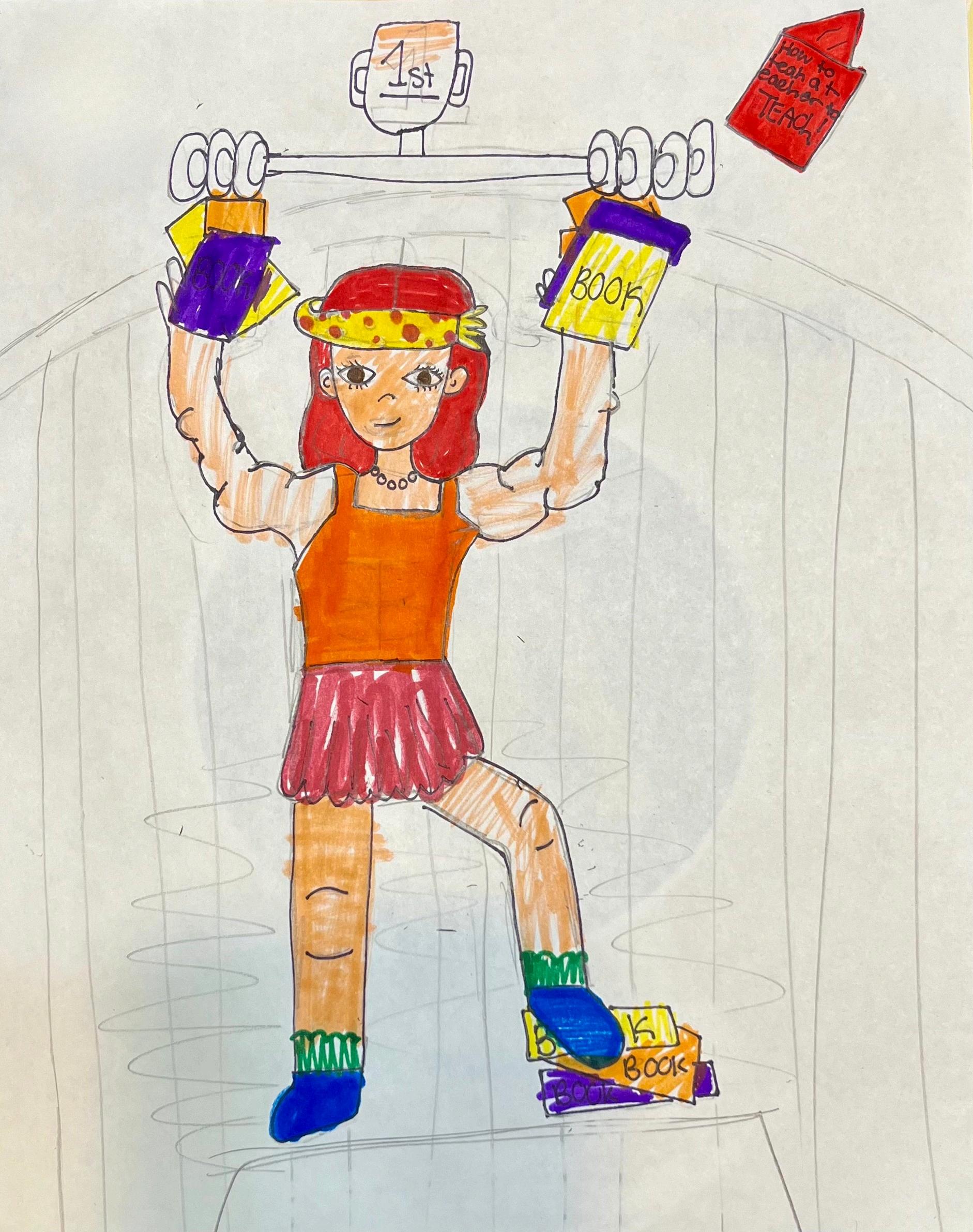
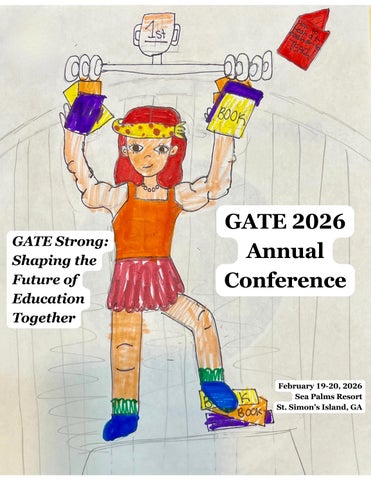
Cover Art Designed by Mary Grace Burbridge, age 11
2026 Annual Conference
February 19-20, 2026
Sea Palms Resort
“GATE Strong: Shaping the Future of Education Together”
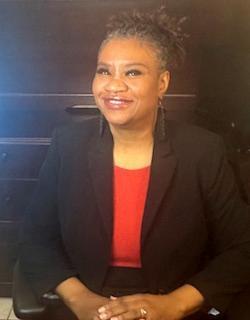
Welcome to the 2026 annual conference of the Georgia Association of Teacher Educators! As we gather at the historic Sea Palms Resort, we do so with an unwavering spirit of determination to advance teacher education and create a more just and equitable world for our children. This year ’ s conference theme, “GATE Strong: Shaping the Future of Education Together” reminds us of our unified strength
GATE Strong is more than just a conference theme. It reminds us of the critical need to understand and own our strength as we persevere and push the boundaries to surpass limitations placed on us. GATE Strong is about increasing the range of our knowledge, skills, understanding, and experiences to shape the future of education together.
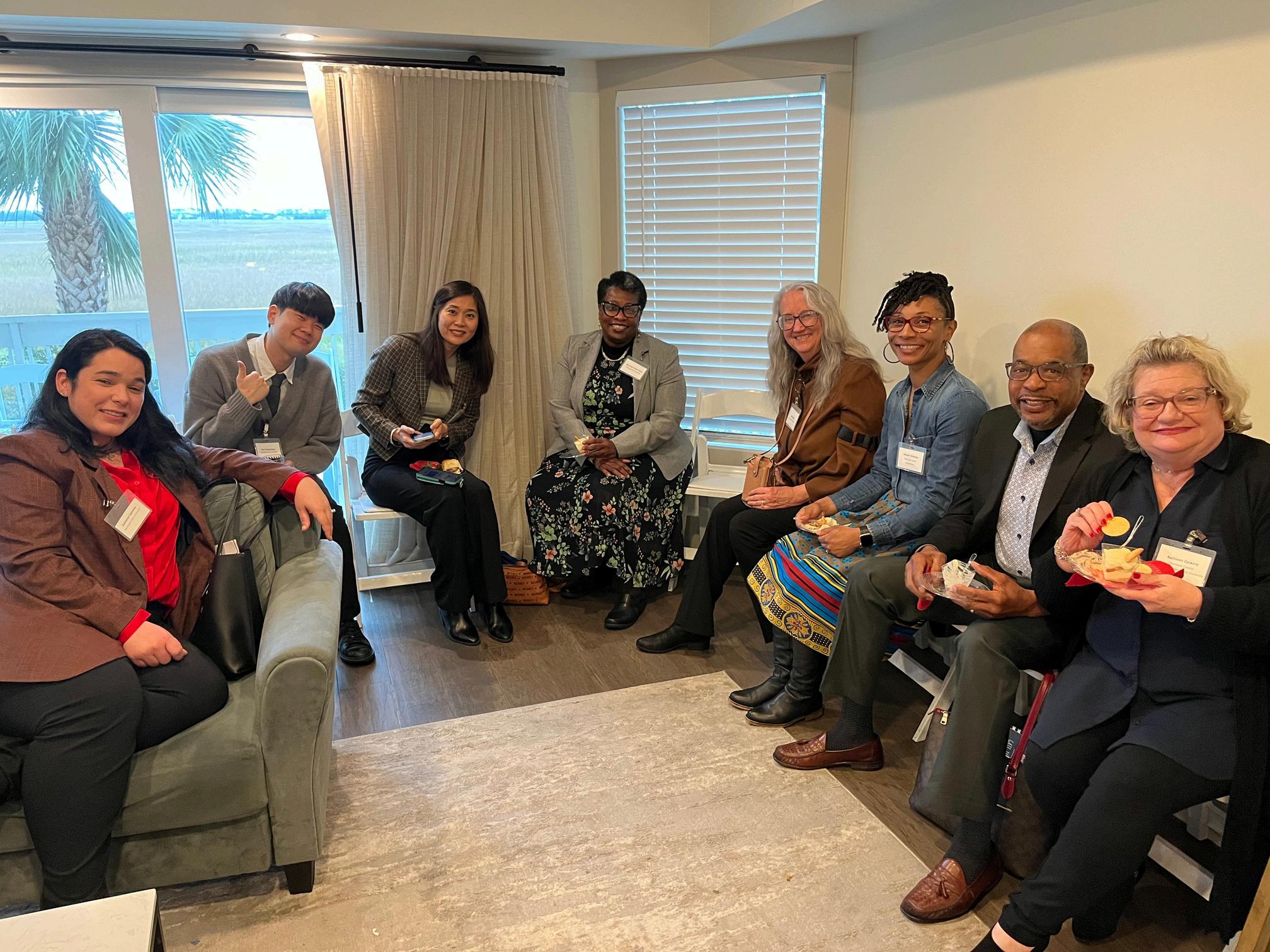
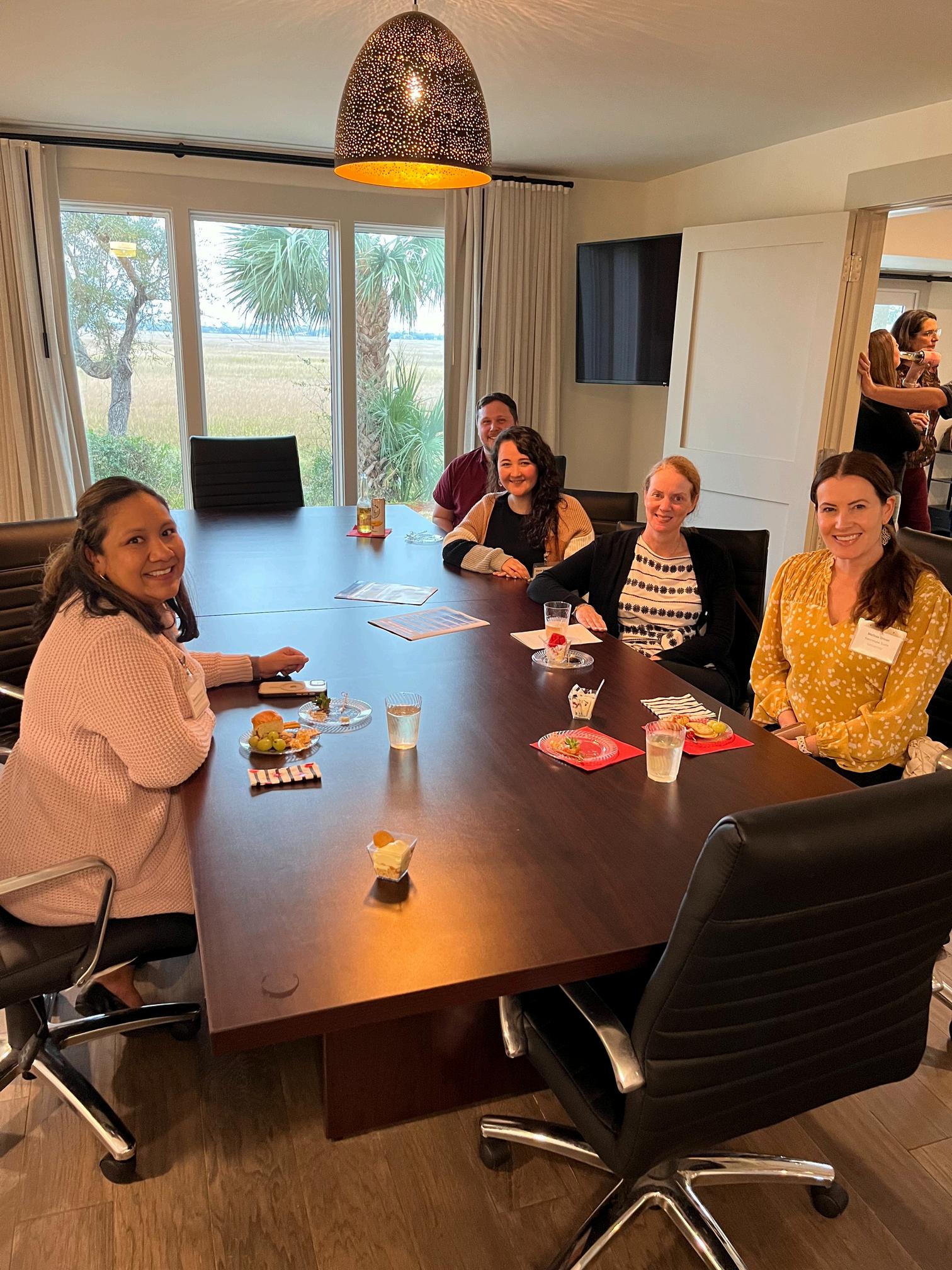
Guided by five strands, our sessions shine a light on digital literacy now and for the future, teaching and learning in K-12, and best practices in curriculum development and instruction. The sessions afford educators with opportunities to share how they move from ideas to actions in transforming the current classrooms and the communities, and address the need for wellness, resilience, and social-emotional learning in teacher education. The diversity of these topics will enrich our conversations when we socialize during the GATE Hospitality, located in the Dogwood Hospitality Suite, on Thursday afternoon This social gathering will also be a time to learn more about GATE and how you can become a part of an organization dedicated to a brighter future for teacher education in Georgia.
As you peruse the conference program, you will find the names of those who contributed to making our conference a success. Please join me in thanking them for their service!

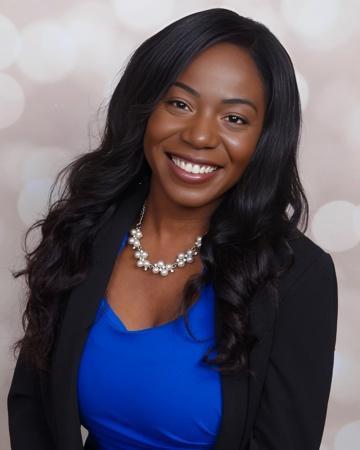
Dr. Virginie Jackson
Kennesaw State University President-Elect, GATE

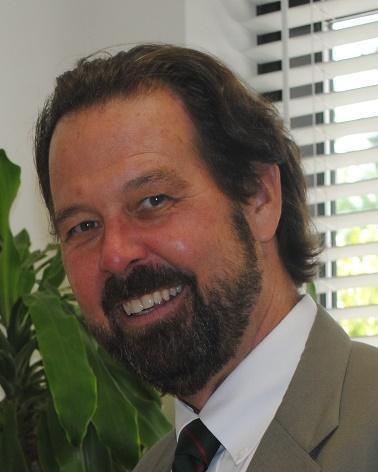
Dr. Don Livingston
Lagrange College
Immediate Past President, GATE
On behalf of the GATE Planning Committee, we warmly welcome you to the 2026 GATE Conference here on beautiful St Simons Island, GA This year ’ s theme, “GATE Strong: Shaping the Future of Education Together” reflects our collective journey into the future of education We are here to explore fresh perspectives, embrace innovation, and forge new paths as we shape the future of education together
As co-chairs of this important conference, we are honored to be part of a gathering that brings together educators, researchers, and practitioners from across Georgia who have made significant contributions to teacher education This year ’ s program offers a rich variety of sessions, along with inspiring speakers from diverse disciplines, all designed to help us explore and navigate these new horizons In addition to engaging in thought-provoking discussions, there will be ample opportunities to network, collaborate, and enjoy the breathtaking scenery and local attractions of St Simons Island
We want to extend our heartfelt gratitude to the Chairs and Committee members who have worked tirelessly to organize this event We also deeply appreciate the contributions of our guest speakers, session facilitators, and exhibitors, whose insights and expertise are invaluable Finally, to all of the participants: you are the heart of this conference. Your presentations, ideas, and conversations are what make this event meaningful, and we are excited to embark on this journey together.
Welcome, and we hope you have a productive and enriching experience at the 2026 GATE Conference!
Awards:
Chair Tammy Haislip
Don Livingston Catherine Lawrence
Elijah Porter II
Jillian Ogundele
Conference Keynote Speakers:
Andrea Crenshaw, Chair
Virginie Jackson
Natasha Ramsay-Jordan
Rhonda Amerson
Conference Planning and Program:
Natasha Ramsay-Jordan, Co-Chair
Virginie Jackson, Co-Chair
Don Livingston, Lagrange College, Printing
Elizabeth Keohane-Burbridge, Program Design/Layout
Conference Proposals:
Rebecca Bowman, Co-Chair
Virginie Jackson, Co-Chair
Rhonda Amerson
Reviewers of Proposals:
Jane Strong
Ewa McGrail
Carina De Fazio
Thelma Sexton
Jennifer Curl
John Hobe
Samanta Mrstik
Tammy Halslip
Brian Hibbs
Forrest Parker
Vicki Pheil
Don Livingston
Dorene Medlin
Gertrude Tinker-Sachs
Rhonda Amerson
Marissa Merrell
Jerry Sanders
JW Good
Catherine Lawrence
Elijah Porter
Rebecca Bowman
Sharon Livingston
Conference Site Selection:
Don Livingston
Exhibitors and Sponsors:
EwaMcGrail,Chair
Alicja Rieger
Hospitality:
Laura Smith, Chair
Registration:
Janet Strickland, Chair
Elizabeth Burbridge
Alicja Rieger
Rebecca Keeter-Lee
Natasha Ramsay-Jordan
Virginie Jackson
Andrea Crenshaw
Janet Strickland
THANK YOU TO OUR EXHIBITORS
Skylar Nunley (he/him/his)
UniServ Director for Aspiring Educators, Higher Education and Early Career Educators
Georgia Association of Educators Cell: 470-356-6661
skylar.nunley@gae.org
Mike Zarem
Outreach Program Manager
Communications & Outreach Division Teachers Retirement System of Georgia www.trsga.com mike.zarem@trsga.com (404) 425-6616 Cell (404) 680-8469

Carla L Tanguay, Ph D , Assistant Dean for Educator Preparation and Accreditation
Georgia State University, College of Education & Human Development ctanguay@gsu.edu https://education gsu edu

Bachelor of Science inElementary/Special Education
Master of Arts inTeaching with Initial Certification
Master of Education with Literacy Focus
For more information about our programs go to www.mga.edu
Dr Rhonda Amerson at rhonda amerson@mga edu

Dr Joseph Jones, Department Head Department of Teacher Education
Valdosta State University jjones5@valdosta.edu (229)333-5611
https://www valdosta edu/colleges/educatio n/teacher-education/

THANK YOU TO OUR UNIVERSITY EXHIBITORS

ELECTED OFFICERS, REPRESENTATIVES, AND DELEGATES
ELECTED OFFICERS
President
President-Elect
Immediate Past President
Secretary
Treasurer
ELECTED REPRESENTATIVES
College Representative 1
College Representative 2
Public School Representative 1
Public School Representative 2
Representative at large 1
Representative at large 2
Natasha Ramsay-Jordan
Virginie Jackson
Don Livingston
Forrest Parker
Janet Strickland
Rhonda Amerson
Rebecca Bowman
Catherine Lawrence
Marissa Merrell
Ewa McGrail
Elizabeth Burbridge
ELECTED REPRESENTATIVES/DELEGATES
ATE/PS Rep/Delegate 1
ATE/PS Rep/Delegate 2
ATE/PS Alt Rep/Delegate
ATE/College Rep/Delegate 1
ATE/College Rep/Delegate 2
ATE/College Alt/Delegate
EXECUTIVE SECRETARY
Elijah Porter II
Jillian Ogundele
Jerry Sanders
Sharon Livingston
JW Good
Alicja Rieger
University of West Georgia
Kennesaw State University
Lagrange College
Valdosta State University
University of West Georgia
Middle Georgia State
University of West Georgia
Clayton County Schools
Dooley County Schools
Georgia State University
West Georgia
Fulton County Schools
Black Teacher Collaborative
Dougherty County Schools
Lagrange College
Georgia College and State
Valdosta State University
Barbara Benson Piedmont College (Retired)
EDITORS AND STANDING COMMITTEE CHAIRS
Website
GATEways Journal
Membership
Proposal Chair
Awards Committee
Site Coordinator
Elizabeth Keohane-Burbridge
Forrest Parker II, Editor
Andrea Crenshaw (Chair)
Rebecca Bowman (co-Chair)
Virginie Jackson (co-Chair)
Don Livingston (Chair)
Tammy Haislip
Catherine Lawrence
Elijah Porter II
Jillian Ogundele
Marrisa Merrell
Don Livingston
University of West Georgia
Valdosta State University
University of West Georgia
University of West Georgia
Kennesaw State University

Lagrange College
Middle Georgia State
Clayton County Schools
Fulton County Schools
Black Teacher Collaborative
Dougherty County Schools
Lagrange College
“GATE
Wednesday, February 18:
Noon - 8:00pm
Thursday, February 19:
7:30 am - 5:00 pm
8:30 am - 9:20 am
Conference Registration----------Foyer
Conference Registration---------- Foyer
Opening General Session----------Musgrove Hall
Welcome: Dr. Natasha Ramsay-Jordan, President of GATE
Keynote Speaker: Dr. Rob Sumowski,
GeorgiaCollege&StateUniversity
9:30 am-10:20am
10:30 am-11:20am
11:30 am-1:20pm
1:30 pm-2:20pm
2:30 pm-3:20pm
3:30 pm-4:20pm
4:30 pm-6:30pm
Friday, February 20:
7:30 am - 10:00 am
8:00 am - 8:50 am
9:00 am - 9:50 am
10:00 am - 10:50 am
11:00 am - 12:00 pm
Break-out session 1* (pages 19-20)
Break-out session 2* (pages 21-23)
Awards Luncheon----------MusgroveHall (page 24)
Break-out session 3* (pages 25-27)
Break-out session 4* (pages 28-30)
Break-out session 5* (pages 31-33)
GATE Members’ Social & Hospitality Dogwood Hospitality Suite
Conference Registration---------- Foyer
Break-out sessions 6* (pages 35-37)
Break-out sessions 7* (pages 38-40)
Break-out sessions 8* (pages 41-43)
Closing Session: Take Ten Talks ----------Musgrove Hall (pages 44-45)
GATE 2026 Annual Conference Evaluation Survey (page46)
*Break-out Session Rooms: Musgrove Hall, Harrington Hall, Frederica Hall, McKay Hall, Cypress Hall
Thursday, February 19, 2026
Thursday,February19th,BreakoutSession1
Time

9:3010:20
MusgroveHall HarringtonHall TechnologyandReading: UnderstandingNew LiteraciesintheDigital Age(RoundTable)
ExploringNew Teachers' Preparednessfor StudentBehavior Management
PLCBeliefsforEnhanced Collaboration (RoundTable)
Hands-OnActivitiesina TechnologicalWorld: HelpingTeacher EducatorsValue"Old School"Methods
(RoundTable)
FredericaHall McKayHall Showcasing MixedMethods ActionResearch inPractice
CypressHall Breakingthe Pattern: ConfrontingMath AnxietyinFuture Teachersand Exploring Solutions
Thursday,February19th,BreakoutSession2
MusgroveHall Time Safeguarding StudentData WhenUsing PublicAITools forAssessment

HarringtonHall
FredericaHall
McKayHall
CypressHall
ScaffoldingPreServiceTeachers’ Journeysintothe ScienceofReading 10:3011:20 (RoundTable)
Redesigning Secondary Literacyfor studentswith limitedor interruptedformal (RoundTable)
Groundedin Experience, GuidedbyScience: PreparingTeachers forReading Instruction (RoundTable)
EngagingStudents inServant Leadership:ItAll Beginswith Literacy
FromStandardsto Stories:Preparing Elementary Teacher Candidates Through Collaborative Literacy Instructionin HigherEducation
Co-Creating Teaching Competencies:A Three-Year, Stakeholder-Driven RedesignatVSU
Thursday,February19th,BreakoutSession3

Time
1:302:20
MusgroveHall InteractiveJournalsina DigitalWorld:AHands-on InstructionalApproachin TeacherEducation(Round Table)
TheDataSpeaksforItself: ConnectionsandToolsthat IgniteHopeforAllStudents (RoundTable)
TheRoleofExecutive FunctioninginLiteracy Development:Differentiated StrategiesforStudent Success.(RoundTable)
HarringtonHall Strengthening NoviceTeach supportto AdvanceStudent Successand Retention
FredericaHall Strengtheningthe SpecialEducation WorkforceThrough StrategicEducator Preparation
McKayHall “Beyond Access:Latinx Parents’Voices onSchool Choiceand Strugglein Georgia”
CypressHall AnEndangered Profession: Elevatingthe Lived Experiencesof Currentand RetiredBlack Teachersin Georgiato Confront Retention Challengesand Reimaginethe Legacyof Teaching
Thursday,February19th,BreakoutSession4
Time

2:303:20
MusgroveHall ExploringAIinQualitative DataAnalysis:CanItWork orisItaWasteofTime (RoundTable)
MissionProgress-ion: TrackingTeacher CandidateswithPurpose (RoundTable)
ReachtheUnreachable (RoundTable)
HarringtonHall FredericaHall
FromScaryto Strategic:Using theCARE Frameworkto GuideAIin Elementary Classrooms
In-person,Virtual, Hybrid?What SupervisionModels DoOurTeacher CandidatesPrefer? McKayHall
LEARNIEP: Measuringthe ImpactofParent PanelsonPreserviceTeachers
CypressHall Teacher Leaders’ Storiesof Classroom Bullyingand the Psychological Effectson theirStudents
Thursday,February19th,BreakoutSession5
Time

MusgroveHall AIinAction:A Toolkitfor Teacher Educators& Teacher Candidates (RoundTable)
ExploringAIfor Literacy:How TeachersCan UseAIToolsto CreateReading PassagesforK12Students
3:304:20 (RoundTable)
Supporting LatinxTeacher Candidates duringUnusual Times:Insights fromSpanish Language Teachers (RoundTable)
HarringtonHall InclusiveReading Comprehension StrategiesforGrades 4-5Groundedinthe CALITheoryof Change:A Partnershipbetween MiddleGeorgia StateUniversityand BleckleyCounty ElementarySchool
FredericaHall Changingthe Narrative: Developing LearnerProfiles forStrengthsBased,Culturally Sustaining Instruction
McKayHall WalkingtheWalk: DeepeningCritical Consciousness ThroughExperiential Place-basedTeacher Education CypressHall Grace,SEL,andthe OnlineMAT Classroom:Student Perceptionsofa RedesignedCoursein Classroom Management
Friday, February 20, 2026
Friday,February20th,BreakoutSession6
MusgroveHall Time “TheFutureof TeachingisNow” (RoundTable)
Power& Persistence:Black Women’s Experiencesas TechnologyLeaders inUS Public Schools(Round Table)
8:00-8:50 (RoundTable)
Leveragingthe Strengthsand Accommodatingthe Strugglesof Neurodivergent Preservice Educators

HarringtonHall Comeand Review Research ExplainingHow toTeach GrammarUsing Readingand Writing Research ExplainingHow toTeach GrammarUsing Readingand Writing FredericaHall McKayHall TheRoleof Teacher Perspectivesin MotivatingBlack boystoReadin MiddleSchool
CypressHall AStitchinTime: VocationalTrainingin TransitionPlanningfor Studentswith Disabilities
Friday,February20th,BreakoutSession7

Time
9:009:50
MusgroveHall Developingcritical consciousnessinLatinx doctoralcandidates: Testimoniosofthree noviceLatinxScholars (RoundTable)
Communicating Effectivelywith PreserviceTeachers AreWeAllSpeakingthe SameLanguage? (RoundTable)
FromAccessto Belonging:Empowering First-YearScholarswith theVSUCAMPModel (RoundTable)
FredericaHall HarringtonHall ShapingtheFuture: Implementingand Assessing ExperientialLearning Outcomesin University Instruction Integrating Math,Science, andLiteracyin Teacher Preparation: Building StudentCentered Classrooms
McKayHall Fostering Culturally Relevant Mathematics Pedagogy Through Collaborative Inquiry
CypressHall ALiberatory Consciousnessof Languages: Luminaries, Contemporaries andNewbiesThat'sUs
Friday,February20th,BreakoutSession8
Time

10:0010:50
MusgroveHall OurTriptoTybeeIsland:Engaged PedagogiesforTeachingFreedom (RoundTable)
AddressingDisparitiesinSTEM FieldsthroughHighSchool Seniors’MathematicsBackgrounds andSelf-Efficacy
HarringtonHall AUnitedFront:USG’s CollaborativeSolution toGeorgia’sSpecialEd TeacherShortage
FredericaHall FromOpento Outstanding: Designingand RefiningOERfor LiteracyTeacher Preparation
McKayHall MakingMeaningofthe Content:Exploring Strategiesfor Connecting,Extending, andChallenging StudentsinEvery Classroom
Time
11:0011:50 (RoundTable)
BuildingScienceofReading AwarenessUsingaHands-on Approach(RoundTable)
Friday,February20th,ClosingSession:TakeTenTalks
MusgroveHall

BridgingtheGap:SupportingTeachersthroughLiteracyChangesCulturally
ResponsivePBIS:InfluencesonAfricanAmericanMaleSuccess
Thursday, February 19th,2026
8:30 am
Presiding:
Introduction of Speaker:
Keynote Speaker:
Announcements:
OPENING GENERAL SESSION (Musgrove Hall)
Dr. Natasha Ramsay-Jordan, GATE President
Dr. Virginie Jackson, GATE President-Elect
Dr. Robert F. Sumowski, Georgia College & State University
Dr. Don Livingston, GATE Immediate Past President
OPENING GENERAL SESSION SPEAKER
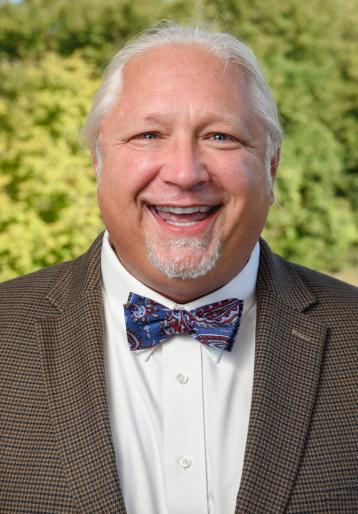
A member of the faculty at Georgia College & State University since 2011, Rob Sumowski is a Professor of Special Education. He holds a B. A. in Psychology and Music from Mercer University, M. Ed. and Ed. S. degrees from GCSU, and a Doctorate in Educational Leadership from the University of Georgia. A leader in Georgia’s efforts to implement Positive Behavior Interventions and Supports (PBIS), he served on the PSC’s Task Force that led to the creation of Georgia’s Teaching Certificate Endorsement in PBIS, the first of its kind in the nation. He then co-authored the PSC’s Endorsement Standards and Guidance Documents. Sumowski has been called upon by the Georgia Attorney General’s office to testify as an expert witness in PSC hearings involving classroom management. Sumowski was a 2022-2023 Governor’s Teaching Fellow and has served as Presiding Officer of GCSU’s University Senate He is GCSU’s voting member on the University System of Georgia Faculty Council. In 2021, Sumowski was awarded the national Charles Dunn Award by the Council of Public Liberal Arts Colleges for “service to students above and beyond the traditional role of professor.” Sumowski serves as Co-PI and Co-Director of GCSU THRIVE, an Inclusive Post-Secondary Education Program in which adults with intellectual disabilities attend GCSU. He serves as a S.T.A.R. Ally and is a Student Conduct and Title IX Hearing Panelist. Prior to entering higher education, Sumowski spent 21 years as a Special Education teacher, administrator, behavior specialist, district-level director of student safety, and student evidentiary hearing officer. Sumowski’s areas of research interest lie in the prevention of teacher burnout, PBIS, and teacher induction programs. In 2024, he authored or co-authored four referred publications and delivered a TEDx Talk on transformative teaching. As a percussionist, Rob has performed throughout the U.S. and has appeared on over 70 albums, including releases by Grammy-nominated singer-songwriters Shawn Mullins and Brent Cobb.
Are you presenting at this year ’ s GATE Conference? Do you have a presentation idea for next year ’ s conference?
Turn your presentation into a publication!
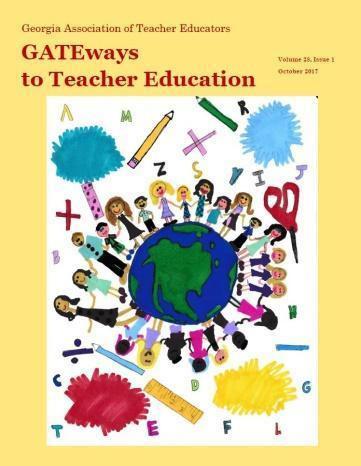

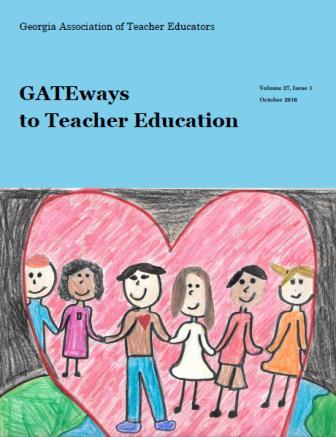


GATEways to Teacher Education is the peer-reviewed online journal of the Georgia Association of Teacher Educators. It is published twice each academic year, in October and April, with approximately six manuscripts accepted per publication. Your presentation topic could be just what the journal needs!

Each issue is non-thematic, with articles relating to teacher education. The editors solicit manuscripts with topics that include teaching and learning, induction, in-service education, and pre-service education. Project descriptions, research reports, theoretical papers, debates, papers espousing a particular point of view, and descriptions of activities or issues in teacher education are appropriate topics for the journal; action research papers are encouraged, especially those involving school partners.
Submissions are accepted on a rolling basis throughout the year. The length can vary since this journal is online. Manuscripts should follow APA (7th edition) style guidelines.
For more information:
refer to the main journal page on the association webpage, www.gaate1.org contact the journal editors
THURSDAY, FEBRUARY19
BREAKOUT SESSION 1
Musgrove Hall am TH 9:30 - 10:20
Joyce Many, Georgia State University
The purpose of this session is to explore the new literacy processes, tools, and considerations which are continually emerging hand in hand with technological innovations in the digital age. Participants will engage in ongoing discussion throughout the presentation to share the ways in which they explore digital tools, digital literacy strategies, online research and comprehension processes, and collaborative and participatory online literacies with preservice and in-service educators Examples of Gen-AI programs which can be used by teachers and by students will be explored and critiqued together and the GaPSC for ethical integration of AI (GaPSC, 2025) will be discussed
JW Good, Georgia College & State University
Cheryl Reynolds, Georgia College & State University
Yomeka Smith, Irwin County Elementary School
This session will focus on identifying and understanding the factor most critical for Professional Learning Communities (PLCs) in improving and sustaining student academic achievement, each teacher’s mental model and beliefs about collaboration. Drawing on research and practical examples, the presentation will explore how these mental models and beliefs shape a teacher's approach to working within a PLC and how they directly impact collective efficacy and student outcomes. The role of psychological safety will be a key discussion component. This session will equip participants with strategies to cultivate a culture where educators can safely reshape their beliefs.
William Cole, Middle Georgia State University
Sumitra Himangshu-Pennybacker, Middle Georgia State University
Modern emphasis on digital learning, while valuable in its own way, was exacerbated by dependence on virtual learning during the COVID-19 pandemic, which in turn increased the need for students to participate in engaging, hands-on learning experiences (Maughan, 2021). ands-on activities have shown important benefits with modern students (Trundle, et al, 2023; Garner, et al, 2018). However, teacher candidates often rely on digital teaching activities, or traditional methods. This presentation will support helping pre-service teachers learn to value the use of hands-on activities, along with several examples of engaging, hands-on activities audience members can share with their own pre-service educators across grades and content
Arpan Bosmia, Columbus State University
Classroom management is a crucial skill for new teachers, yet many enter the profession feeling unprepared to handle student behavior effectively. My research examines factors contributing to student misbehavior and potential gaps in teacher preparation programs. I identify potential solutions that programs can adopt to enhance training. Implementing these evidence-based strategies may bridge the gap between theory and practice, ultimately equipping new teachers with the skills to foster a productive classroom.
Don Livingston, LaGrange College
Sharon Livingston, LaGrange College
Leslie N. Chadwick, Muscogee County
Margaret Horne, Coweta County School System
Dacia Logan Sheffield, Muscogee County School System
This session explores how Mixed Methods Action Research (MMAR) empowers educators to address authentic problems of practice in their schools and classrooms. Three classroom teachers will present their action research studies, highlighting how they designed MMAR-informed interventions, analyzed data using mixed methods, and generated meaningful improvements in teaching and learning Attendees will gain practical insights into MMAR as a research approach for curriculum and instructional improvement, with particular attention to catalytic validity and how the research process itself fosters professional growth and meaningful change.
Summer Funk, Kennesaw State University
Paula Guerra, Kennesaw State University
Math anxiety is a widespread issue among teachers, especially pre-service teachers. Studies show math anxiety in teachers can harm their students’ math performance, foster avoidance, and lower achievement. Yet, teacher training programs often fail to address it. This study investigates how pre-service teachers define math anxiety, available strategies, and its lasting impact. So far, surveys have revealed that 93% see it as a common issue, 80% want more course support, 73% seek conceptual understanding, and 80% need coping strategies, highlighting the need for early intervention in teacher preparation programs
THURSDAY, FEBRUARY 19TH
BREAKOUT SESSION 2
Musgrove Hall am 10:30 - 11:20
Karen Ochoa, Middle Georgia State University
Luminita Hartle, Middle Georgia State University
This roundtable invites educators to examine the opportunities and challenges of using public AI platforms (ChatGPT, Gemini, Claude) in assessment contexts Together, we will explore how these tools handle student data, what risks arise when inputting student work, and strategies to safeguard privacy while still leveraging AI for feedback and instructional planning. Participants will share experiences, discuss school policies, and co-create practical guidelines for safe and effective AI use. The session emphasizes collaborative dialogue and problem-solving to shape responsible digital practices in education.
Haimanot Wright, Georgia State University
As schools welcome an increasingly diverse student body, educators face the growing challenges of supporting learners whose formal education has been limited or interrupted (DeCapua & Marshall, 2011). These students, often referred to as SLIFE (Students with Limited or Interrupted Formal Education), include refugees, recent immigrants, and those affected by displacement or other life disruptions. Addressing their unique academic, linguistic, social, and emotional needs requires careful consideration of culturally responsive approaches that recognize and value students’ experiences and foundational literacy skill needs. By reimagining literacy instruction and adopting inclusive strategies, educators can help bridge educational gaps, foster a sense of belonging, and empower SLIFE to succeed both in school and beyond.
LaTasha Adams, Clayton State University
Grounded in Experience, Guided by Science: Preparing Teachers for Reading Instruction explores how pre-service teachers’ lived experiences and identities shape their engagement with the science of reading. This interactive roundtable examines a reflective, practice-based course design that integrates evidence-based literacy instruction with sociocultural perspectives on teacher learning. Participants will discuss strategies for honoring teacher identity while strengthening preparation in systematic, research-informed reading instruction to support equitable literacy outcomes across diverse classroom contexts
,
At one PreK-12 Independent School in Western Georgia, they are transforming their love for literacy and wonderful stories into a schoolwide passion for serving others in their community. Learn how the teachers and students in this school community work together to learn through story and then translate that into action by serving their greater community.
Tamara Moten, Wesleyan College
Virginia Wilcox, Wesleyan College
Moriah Lavender, Wesleyan College
This proposal examines how three faculty members in an elementary teacher education program collaboratively designed and co taught literacy methods courses in response to new state literacy standards While the initial goal was alignment, the process evolved into a collaborative space where storytelling connected standards to equity, identity, and lived experience. Guided by sociocultural and critical literacy theories, faculty analyzed syllabi, assignments, and mentor texts. Findings show that collaboration increased faculty agency, reframed standards as flexible and equity focused, and modeled authentic professional practice for teacher candidates by integrating accountability with meaningful literacy instruction.
Regina Suriel, Valdosta State University
Forrest R. Parker III, Valdosta State University
Over three years, Valdosta State University faculty partnered with local teachers and administrators to co-create a shared set of teaching competencies defining what candidates should know and be able to do Through iterative design faculty retreats, district workshops, and structured feedback cycles the team refined competencies that now anchor course updates, clinical expectations, and assessment plans. We will share the cocreation process, the resulting competencies, and early lessons from piloting in one certification program, with expansion planned across all initial teacher preparation programs in Spring 2026. Attendees receive templates and facilitation tools to replicate a stakeholder-driven competency build.
Virginie Jackson, Kennesaw State University
Sanjuana Rodriguez, Kennesaw State University
Megan Adams, Kennesaw State University
Karla Ramirez, Kennesaw State University
Paula Guerra, Kennesaw State University
Emma Bonner, Kennesaw State University
Judith Varras Fernandez, Kennesaw State University
This presentation explores a research study that examined how scaffolding pre-service teachers’ knowledge of structured literacy instruction within a summer literacy camp context shaped their experiences, perceived benefits, and challenges. Pre-service teachers who took part in the study will share short presentations about their experiences learning to teach structured literacy to all students, highlighting knowledge acquisition, instructional confidence, perceived successes, and challenges encountered when applying evidence-based strategies in real classroom contexts.
Thursday, February 19th, 2025
11:30 am
Presiding:
Awards:
Announcements:
Dr. Natasha Ramsay-Jordan, GATE President
Dr. Don Livingston, GATE Immediate Past President
Dr. Virginie Jackson, GATE President-Elect
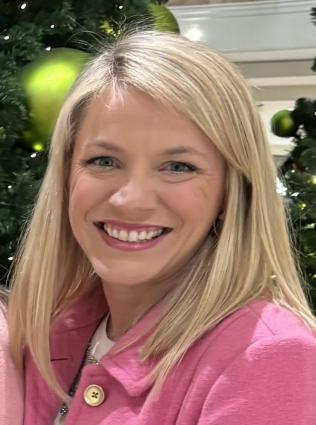
Dr Chelsea Marelle is an assistant professor at the University of North Georgia where her research and teaching focuses on preparing future educators to support students with autism and other exceptionalities. She earned her Ph.D. from Georgia State University where her dissertation explored the use of mixed-reality simulation technology to increase preservice teachers’ behavior management skills. Dr. Marelle pulls from her personal experience as a special education teacher to provide evidencebased practices, technology enhanced teacher training opportunities, and strategies for fostering inclusive learning environments to her preservice teachers She continues to improve teacher preparation by exploring the impact and options for incorporating more “real-life” exposure and experiences into her instruction. Her work has been disseminated through peerreviewed publications, national and international conferences, and innovative projects funded to advance teacher preparation.
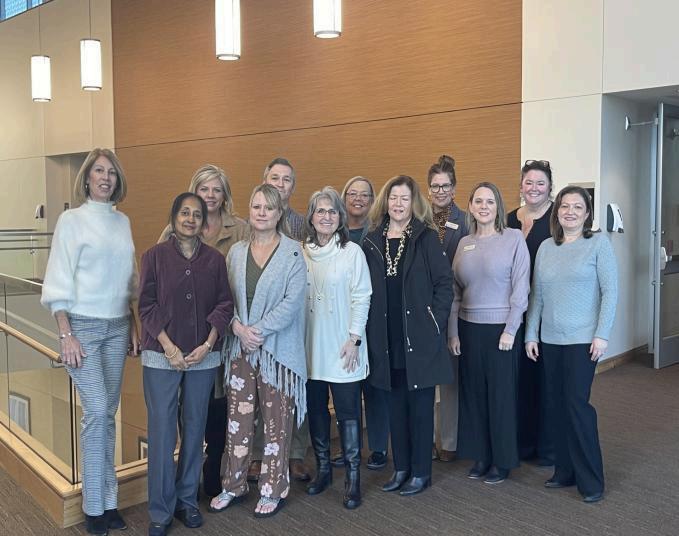
: MGA’s Teacher
Education Faculty is a small, but mighty team comprised of seasoned educators who are dedicated to preparing future educators with the pedagogical skills and content knowledge necessary to inspire and lead students in a wide range of learning environments. Their expertise spans the fields of curriculum development, instructional strategies, special education, and educational technology. Drawing on extensive experience as K–12 classroom teachers, school and district administrators, and educational researchers, they design robust, meaningful assignments and foster a collaborative learning community that emphasizes equity and lifelong learning With a strong focus on student success and professional growth, MGA’s Teacher Education Faculty ensures graduates across all programs are well-prepared to make a meaningful impact in schools and the surrounding communities.
Faculty members include: Dr Rhonda Amerson, Dept Chair, Dr Luminita Hartle, Dr Sumitra Himangshu-Pennybacker, Dr. Jane Strong, Dr. Karen Ochoa, Dr. Tammy Haislip, Dr. William "Gary" Cole, Dr. Angela Storey, Dr. Kelly Causey, Dr. Melissa Purvis, Ms. Sharon Beck, and Ms. Nancy Greene.
THURSDAY, FEBRUARY 19
BREAKOUT SESSION 3
Musgrove Hall pm TH 1:30 - 2:20
Kathleen Crawford, Georgia Southern University
Heather Huling, Georgia Southern University
This session will demonstrate how digital interactive journals (DIJs) can be integrated into teacher education programs. Using Google Slides, DIJs support both synchronous and asynchronous learning in content courses or practicum settings Attendees will explore ways teacher educators and students use DIJs to document and reflect on learning, connect theory to practice, and enhance instructional design. Participants will leave with practical strategies for implementing digital journals that increase engagement and reflection across instructional contexts.
Towanda Harris, Clark Atlanta University
Ayniah Payne, Clark Atlanta University
Azjoni Breeland, Clark Atlanta University
This session examines humanizing assessment through the perspectives of a former classroom teacher, a professor, and current teacher candidates. Participants will explore how quantitative data offers only a partial view of learning and how qualitative insights such as observations, conversations, and daily interactions reveal students’ full stories. Using equity centered frameworks, the session highlights practical strategies for building relationships, engaging families, and creating culturally responsive assessment practices Teacher candidates will share how their learning shapes their dispositions and their approaches to supporting student growth Attendees will leave with tools to rethink assessment as a pathway to equity, connection, and meaningful learning.
Erin Tankersley, Georgia State University
Data from the NCES reflects that national literacy rates for students in middle and high school have been trending downward for the past decade. Middle and high school educators are not given the training needed to support the wide range of needs these students present (unless they specifically go looking for it). This roundtable discussion will show how modeling executive functioning strategies will help lighten the cognitive load of students while also showing teachers how to integrate differentiated reading instruction into daily teaching practices to help facilitate growth in students
Kimberly Dion, Bay Path University
Novice teacher attrition continues to challenge schools nationwide, with serious consequences for student learning and stability. This session shares findings from an action research study in an urban high school that examined organizational supports for novice teachers. Participants will explore strategies such as structured mentorship, culturally responsive professional development, and collaborative peer observation. The presentation connects these supports to student success, equity, and workforce sustainability, providing attendees with practical ideas for strengthening novice teacher retention and shaping the future of education through collaborative and systemic approaches
Fanica Young, Clark Atlanta University
Annette Teasdell, Clark Atlanta University
Nucian Butler, Clark Atlanta University
Jamilah El-Amin, Clark Atlanta University
Betty Kennerson-Fowler, Clark Atlanta University
Shauna Mitchell, Clark Atlanta University
Jennifer Williams, Clark Atlanta University
The ongoing shortage of qualified special educators remains a pressing concern, with Georgia’s highest-need districts experiencing the greatest shortages. Strengthened recruitment practices, redesigned coursework, and targeted supports serve as key strategies for improving special education preparation across educator preparation programs and school districts. This presentation examines how three federally funded initiatives are helping an HBCU educator preparation program attract, prepare, and retain special educators by applying these best practices in curriculum development and instruction.
“Beyond Access: Latinx Parents’ Voices on School Choice and Struggle in Georgia”
James Martínez, Valdosta State University
Sean Lennon, Valdosta State University
Jacob Horne, Benedictine Military School
School choice policies are expanding rapidly, but whose voices are shaping the conversation, and what happens after families choose? Drawing on testimonios from Latinx parents in Georgia, this session examines how families used Georgia’s Tax Credit Scholarship program to enroll their children in Catholic schools and the obstacles they encountered along the way. Participants will leave with a deeper understanding of equity, access, and family voice in today’s school choice landscape
Sharese Colbert, Kennesaw State University
Black teachers have long been essential to student success and cultural identity, yet their numbers continue to decline. This study elevates the lived experiences of current and retired Black educators in Georgia to uncover factors influencing retention. Through interviews and field notes with ten participants, findings reveal a cultural and spiritual calling to teach, persistent systemic racism, the role of mentorship and community, and the transformative power of representation. Retention emerges not as recruitment alone, but as a justice imperative requiring systemic change to ensure Black educators remain central to the future and legacy of teaching
THURSDAY, FEBRUARY 19TH
BREAKOUT SESSION 4
Hall pm 2:30 - 3:20
Ewa McGrail, Georgia State University
Josh McCall, Georgia State University
In this presentation, we will share our experience of exploring one specialized AI application for qualitative data analysis. Specifically, we will review the possibilities and challenges we encountered when co-coding with a non-human AI agent and the ways we negotiated this process
Melissa Driver, Kennesaw State University
Angela Lewis, Kennesaw State University
This roundtable will present the Bagwell College of Education’s comprehensive, data-driven approach to monitoring candidate progression each semester. The session will explore how analyzing student trends at programmatic milestones leads to targeted supports, reduces achievement gaps, and improves retention and graduation rates Participants will learn how the ongoing refinement of these practices cultivates a responsive, caring learning environment and supports continuous improvement in teaching and learning. Initial findings and practical strategies for implementation will be discussed.
Nakita Foreman, Gwinnett County Public School

Reach the Unreachable is an energizing, hands-on experience designed to help educators build authentic, lasting connections with their most challenging students Through real stories, practical tools, and guided reflection, participants will discover how relationship-centered teaching transforms engagement, behavior, and academic outcomes This session equips educators with strategies they can use the very next day to cultivate trust, belonging, and motivation. Attendees will leave inspired, empowered, and ready to create classrooms where every student, especially the hardest to reach, feels known, valued, and capable of success.
Sophia E. Sharpe, Georgia State University
Billie Hix, Rockdale County Public Schools
Artificial Intelligence is already shaping elementary classrooms, but many educators are unsure how to use it critically and responsibly In this interactive workshop, participants will engage with the CARE Framework to explore meaningful ways AI can support teaching and learning. Teachers and leaders will actively practice using AI for instructional planning and student learning, examine bias and identity, and leave with practical strategies that center justice, culture, and 21stcentury skills.

Heather Huling, Georgia Southern University
This session presents a research study that examines teacher candidates’ perspectives on practicum supervision models ranging from in-person to virtual and hybrid approaches. Prompted by shifts during the COVID-19 pandemic, these models now incorporate tools such as video observations, simulations, and virtual reality. Using a mixed-methods design, the study explores how candidates experience evaluation and support across different models. Preliminary findings and implications for future supervision practices will be shared, followed by audience discussion
Chelsea Marelle, University of North Georgia
Alyssa Barnes, University of North Georgia
The LEARN (Lived Experience to Advance Real-World Navigation) IEP project examines how parent perspectives shape pre-service teacher learning. This project focuses on the impact of parents of individuals with disabilities sharing their lived experiences of the Individualized Education Program (IEP) process with preservice teachers. Through participating in the parent panel, pre-service teachers will be exposed to authentic challenges and successes in the IEP process. This study explores how experiencing the parent panel influences pre-services teachers’ understanding of the IEP process, importance of involving family members in the process, and effective and empathetic practices
Janet Strickland, University of West Georgia
McKenna Strickland, Alabama State University
This session presents preliminary research findings examining teacher leaders’ stories of classroom bullying and their understanding of the psychological effects on their students. We looked at five semesters of data from graduate students in a teacher education degree program that included more than 450 stories of bullying, and discussions of commonly used resources and procedures to address problematic bullying behaviors. Findings suggest many teachers lack an understanding of how victims, perpetrators, and by-standers are impacted. Graduate and undergraduate teacher education programs should prioritize preparing in-service and preservice teachers with the knowledge and skill set to minimize Adverse Childhood Experiences (ACEs).
THURSDAY, FEBRUARY 19
BREAKOUT SESSION 5
Musgrove Hall pm TH 3:30 - 4:20
Heather Huling, Georgia Southern University
Kathleen Crawford, Georgia Southern University
This session will describe a variety of useful generative AI tools for both teacher educators and teacher candidates and how to effectively integrate these into courses and practicums within teacher education programs. The AI tools discussed range from assisting with material creation and lesson planning to enhancing overall teacher efficiency and reducing burnout. Attendees will explore ways teacher educators and teacher candidates can utilize some (or all) of the varied generative AI tools within their courses and practicums Participants will leave with an understanding of generative AI tools and practical strategies for implementing them in coursework
Omer Ari, Georgia State University
This presentation invites teachers and teacher educators to explore how AI tools like ChatGPT or Claude can be used to create instructional-level, high-interest reading passages for K–12 students. We will share examples, highlight potential benefits and challenges, and engage participants in a dialogue about how AI can support literacy instruction across grade levels
Supporting Latinx Teacher Candidates during Unusual Times: Insights from Spanish Language Teachers
Paula Garrett-Rucks, Georgia State University
With the 2025 increase in U.S. immigrant detainments, several provisional Spanish language teachers expressed concern and overwhelm in a teaching methods course. These concerns informed a study to better understand the current experiences of Spanish language teacher candidates in a changing landscape of increased anti-immigrant sentiment. Findings from this study are intended to help attendees gain a better understanding of the needs of Latinx teachers within and beyond the language classroom and the concerns Latinx students bring to them Suggestions on the support needed for candidates to be more successful in their certification program and schools will be discussed.
Hartle Luminita, Middle GA State University
Katherine Beauchat, Middle Georgia State University
This presentation highlights a collaborative university–school partnership between Middle Georgia State University and Bleckley County Elementary School aimed at strengthening inclusive reading comprehension instruction in grades 4–5. Grounded in the CALI Theory of Change, the project integrates evidence-based strategies such as Question–Answer Relationships (QAR), reciprocal teaching (RT), and visualization within an MTSS framework Findings demonstrate how sustained professional learning and data-informed instructional practices support all learners, including students with disabilities, while improving student engagement and reading comprehension.
Changing the Narrative: Developing Learner Profiles for Strengths-Based, Culturally Sustaining Instruction
Rachael Smith, Georgia Southern University
Kathi (Mary) Maxwell, Georgia Southern University
This session examines how asset-based Learner Profiles can transform “data use ” from deficit labeling to culturally and linguistically sustaining instruction. Grounded in funds of knowledge, community cultural wealth, and educational neuroscience, we share how teacher candidates created living profiles that center students’ identities, strengths, language assets, and family/community resources to inform planning and assessment. Participants will practice drafting a mini Learner Profile and analyzing deficit vs. asset language, leaving with concrete strategies to humanize instruction and support more equitable outcomes.
the
Rhina Williams, Georgia State University
Attendees will learn about and engage in a discussion about a study on a community-based teacher preparation residency institute centered on entangling local knowledge and educational theory. The institute centered the work of Ella Baker, Lugenia Hope, and Septima Clark while engaging preservice teachers in experiential learning that deepened their critical consciousness and orientation to education as movement building. Findings underscore the importance of integrating local movement organizers and sustaining engagement with community-based teacher educators to advance transformative teacher education and foster authentic community connections
Grace, SEL, and the Online MAT Classroom: Student Perceptions of a Redesigned Course in Classroom Management
Forrest Parker, Valdosta State University
This presentation explores student perceptions of a newly developed online Classroom Management course within a Master of Arts in Teaching (MAT) program. Designed for pre-service teachers across K-12 grade levels and content areas, the course centers on social-emotional learning (SEL) and a Grace-centered teaching mindset. Using student surveys and reflective responses, this study investigates how useful teacher candidates found the SEL micro-lessons and how likely they are to implement them in daily practice. The study also explores their evolving understandings of grace in classroom leadership Findings will inform future iterations of online teacher education courses rooted in empathy and equity
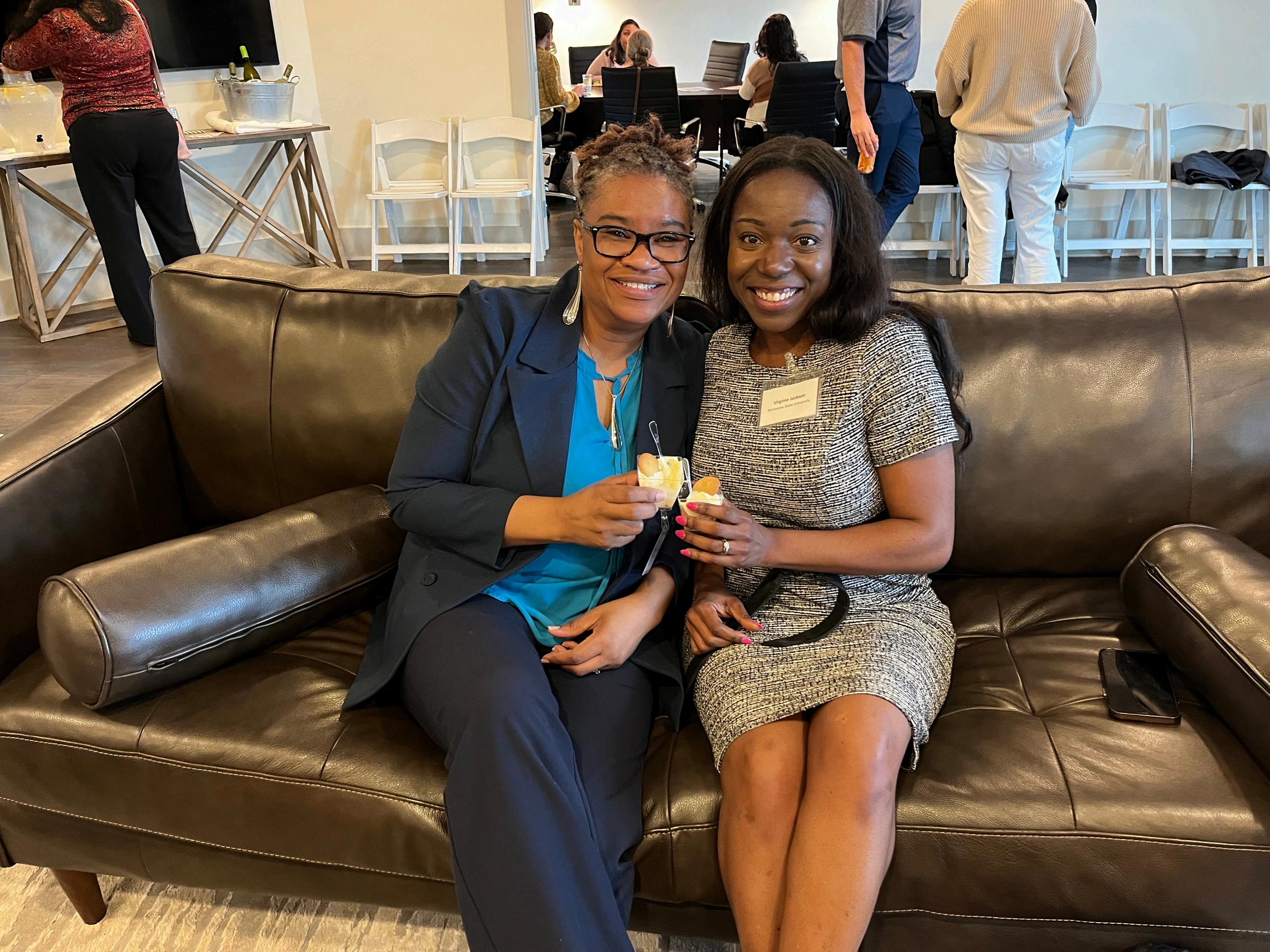
4:30-6:30 pm
Open to all GATE membersand conference participants interested in joining GATE (Dogwood Hospitality Suite)
FRIDAY, FEBRUARY 20
BREAKOUT SESSION 6
Musgrove Hall am TH 8:00 - 8:50
Rebecca Cooper, Georgia Gwinnett College
Samantha Mrstik, University of West Georgia
Joye Cauthen, Georgia Gwinnett College
As educators, our goal is to equip future teachers with the skills and knowledge to effectively use AI-powered tools in their classrooms, enhancing student engagement and learning outcomes This session will present the functionalities and benefits of AI-powered tools like Padlet, Nearpod, Quizlet, and Quizizz, explore practical strategies for incorporating these tools into lesson planning and classroom activities, and discuss best practices for preparing pre-service teachers to use these tools effectively with K-12 students.
Dr. Senica Troutman, Valdosta State University
Dr. James Martinez, Valdosta State University
Dr. Nicole Gunn, Valdosta State University
This presentation powerfully centers the voices of Black women serving as technology leaders in U.S. P–12 school districts. Guided by Critical Race Methodology and counter storytelling, the study elevates participants’ lived experiences to reveal how intersecting identities shape leadership practices, professional agency, and resistance to systemic inequities Findings illuminate the transformative contributions of Black women and offer critical insights for reimagining equitable, inclusive, and future-focused technology leadership in education.
Lily Inglima, Georgia State University
Neurodivergent preservice teachers bring strengths such as empathy, creativity, and dedication to the field, but teacher educators aren’t always sure how to support them. In this session, participants will gain strategies to scaffold university classroom environments to promote success for neurodivergent future educators, including physical adjustments, communication strategies, and learning opportunity adaptations. These approaches also model accommodations preservice teachers can use in their own classrooms. Participants will engage in discussion, sharing observed strengths, experienced barriers, and accommodations utilized to overcome those barriers, as well as being invited to share accommodations they use themselves or request from others.
John Hobe, Georgia Southern University
Come and review research explaining how to teach grammar using reading and writing. Participants will receive, review, and use materials to teach grammar using reading and writing. Participants will discuss their experiences teaching grammar while integrating reading and writing
What do Teacher Candidates Need to Be Successful? An Examination of Perceived Support Needs
Jane Strong, Middle Georgia State University
Angela Storey, Middle Georgia State University
This presentation will highlight research results from teacher candidates, university supervisors and cooperating teachers who provided data during a recent national focus group about the perceived support needs of special education teacher candidates. The audience will also participate in a real-time survey to compare local experiences of EPP to support teacher candidates Come share your thoughts on how EPP prepare teacher candidates!
Michelle Hall, Risley Middle School/Valdosta State University
This presentation explores middle school teachers’ perspectives on motivating Black boys to read, a group that continues to face systemic barriers to literacy achievement. Drawing on interview data, findings highlight key instructional strategies such as structured routines, independent reading, student choice, and modeling effective reading. Equally critical are classroom conditions including representation, positive relationships, high expectations, and trust. Themes of fear of failure and teacher perceptions further illuminate the challenges Black boys encounter Implications for culturally responsive teaching, curriculum development, and teacher preparation are discussed to support more equitable and engaging literacy experiences
Kaitlin Thomas, Brenau University
This presentation highlights the importance of early, meaningful vocational experiences as a foundation for successful transition outcomes for students with disabilities. It explores how intentional skill-building, real-world practice, and student-centered planning can be embedded across grade levels to promote independence, employability, and selfdetermination. Participants will leave with practical strategies, concrete examples, and actionable ideas for integrating vocational training into transition planning before gaps become long-term barriers.
FRIDAY, FEBRUARY 20
Musgrove Hall am TH 9:00 - 9:50
Developing critical consciousness in Latinx doctoral candidates: Testimonios of three novice Latinx Scholars
Andres Restrepo, Valdosta State University
This roundtable explores the experiences of three novice Latinx scholars engaged in critical mentorship with two Latinx professors at a traditionally White institution of higher education (TWIHE) in the Deep South. Mentorship by Latinx faculty helps bridge cultural gaps and fosters engagement, motivation, and learning. Grounded in critical race studies, this discussion draws on a critical collective autoethnography (CCAE) involving five geographically dispersed Latinx scholars with professional backgrounds as teachers, professors, and administrators As both researchers and participants, the authors serve as instruments of inquiry and sources of data through their shared reflective process
Communicating Effectively with Preservice Teachers—Are We All Speaking the Same Language?
Kelly Causey, Middle Georgia State University
Sharon Beck, Middle Georgia State University
Many of our students in Teacher Preparation Programs across the state of Georgia (and the nation) were the students who struggled through COVID as high school students; their expectations, communication styles, response to stress, and ability to work with others is different than most of the students with whom we have worked in the past. In addition to training the young future educators about classroom management, content, literacy, students with special needs, and all of the other things that preservice teacher have to learn, we need to work together to help them become effective communicators.
Rosalyn Martinez, Valdosta State University
James Martinez, Valdosta State University
Forrest R. Parker III, Valdosta State University
This session highlights Valdosta State University’s College Assistance Migrant Program (CAMP), a culturally sustaining model that promotes first-year success for students from migrant and seasonal farmworker backgrounds. CAMP integrates a summer bridge, proactive advising, learning communities, mentoring, academic coaching, financial literacy, and family engagement to foster access, belonging, and persistence Findings from a mixed-methods evaluation across cohorts are shared Attendees will gain practical tools including onboarding checklists, advising protocols, and a CAMP Handbook to support replication and strengthen campus–community partnerships that improve retention and expand educator pathways.
Jennifer Beal, Valdosta State University
Anne Price, Valdosta State University
Many universities require experiential learning (EL) across courses, yet few empirical studies document EL implementation and outcomes. We present how EL was implemented across courses in six colleges at one university through faculty interviews and quantitative analyses of EL student outcome assessments Activities included equine leadership, community art, storybook creation, Model United Nations participation, pedestrian safety, plant physiology, fingerprint analysis, community nursing, and business simulations We address challenges, such as planning and funding, as well as successes, such as increased student skills, confidence, real-world connections, and professional responsibilities. Finally, we address future directions for EL implementation at the university level.
Luminita Hartle, Middle Georgia State University
Sumitra Himangshu-Pennybacker, Middle Georgia State University
Teacher preparation programs face the challenge of equipping future educators with strategies that are clear, consistent, and responsive to all learners. This interactive session presents findings from a pilot study of teacher candidates’ perceptions of interdisciplinary instruction across mathematics, science, and literacy. Themes included clarity of content, scaffolding, hands-on applications, co-teaching, and varied assessment. Preservice teachers valued integrating constructs, using visuals and manipulatives, and seeing collaboration modeled in authentic contexts. Presenters will share strategies for embedding collaboration, differentiation, and authentic assessment into coursework to strengthen teacher preparation
Paula Guerra, Kennesaw State University
Jennifer Perez, Kennesaw State University
Sandra Alvarez, Kennesaw State University
Judith Varas, Kennesaw State University
Virginie Jackson, Kennesaw State University
Sanjuana Rodriguez, Kennesaw State University
Megan Adams, Kennesaw State University
This project chronicles the pedagogical journeys of three Latinx preservice teachers as they designed and implemented culturally relevant mathematics instruction. Through a collaborative, reflective process, the teachers created lessons connecting mathematical concepts to their students; lived experiences and cultural backgrounds. The study highlights how their shared commitment to culturally relevant pedagogy fostered significant professional growth, leading to profound “aha!” moments about the power of integrating identity and culture into the curriculum This presentation will explore the strategies, challenges, and successes of these preservice teachers, providing a model for preparing future educators to serve all students.
Gertrude Tinker Sachs, Georgia State University
Eun Cho, Georgia State University
Kyla Harris, Georgia State University
Lily Inglima, Georgia State University
Josh McCall, Georgia State University
Tram Nguyen, Georgia State University
Jermal Riggin, Georgia State University
Katherine Samford, Georgia State University
Joan Silvestrini, Georgia State University
Huan Zhan, Georgia State University
In this presentation, doctoral students from EDLA8330, Language Variation and Learning class, will explore the liberation of language(s) and language uses through the liberatory lens of some of the luminaries (e g Shirley Brice Heath, Geneva Smitherman, Studs Terkel and William Labov) and their contemporaries (e g Samy Alim, John Rickford, S Arnetha F. Ball, Ofelia Garcia, Jim Cummins, Lisa Delpit, Carol Lee) and their own liberatory consciousness as educators and professors to be.
FRIDAY, FEBRUARY 20
BREAKOUT SESSION 8
Musgrove Hall am TH 10:00 - 10:50
Gertrude Tinker Sachs, Georgia State University
Eun Cho, Georgia State University
Lily Inglima, Georgia State University
Josh McCall, Georgia State University
Marie Ojofeitimi-Gillard, Georgia State University
Yetunde Quadri, Georgia State University
April Remy, Georgia State University
Lisa York, Georgia State University
Huan Zhan, Georgia State University
In this roundtable discussion, we (re)member and (re)enact engaged pedagogies for teaching freedom. We draw on our Fall 2025 Trip to Tybee Island to experience engaged pedagogy in action as we learned about the Gullah-Geechee people as we lived in community near the beach Future teacher educators and their professor (re)tell the story of the Gullah- Geechee, and the experiences of living in community that impacted their relationships, intellectual, and spiritual development as well as the expansion of their cultural and self-knowledge. Attendees will experience what it means to live in a transformative educational community space that aspires to be liberating.
Elaina Johnson, Valdosta State University
James Martinez, Valdosta State University
Jiyoon Jung, Valdosta State University
Kristie Lister, Valdosta State University
This quantitative study examined how prior mathematics experiences influenced high school seniors’ math self-efficacy and interest in pursuing STEM majors, and whether these relationships were moderated by student ethnicity. Structural equation modeling was used to analyze the effects of gifted status, 8th-grade math placement, and Advanced Placement (AP) enrollment. Grounded in Critical Race Theory and Social Cognitive Theory, the research explored how students’ educational backgrounds and beliefs shaped their participation in advanced mathematics. Findings aimed to inform early interventions and placement policies that strengthen math pathways and expand diversity in STEM fields.
Gretta Milam, LaGrange College
Recent changes to standards necessitate that teacher candidates in MAT and other programs preparing grade 6-12 teachers demonstrate an awareness of the Science of Reading Concepts. One method of providing this awareness is through a series of station activities.
Kymberly Harris, Georgia Southern University
This session highlights an innovative collaboration among eight University System of Georgia institutions spanning R1s to HBCUs to deliver a fully online undergraduate degree in special education In response to statewide enrollment declines and persistent teacher shortages, this shared model leverages faculty expertise across institutions to offer highquality preparation while allowing students to remain in their home communities for fieldwork. Designed to appeal to both paraprofessionals and traditional undergraduates, the program maintains institutional identity while pooling instructional talent to strengthen the pipeline of certified special educators in Georgia.
Michelle Amos, Georgia Southern University
Elizabeth Prosser, Georgia Southern University
This roundtable shares the ALG grant-funded transformation of Literacy Instruction and Diagnosis to an OER framework. Presenters will share how they curated and developed materials to support literacy knowledge and experiential practice Grounded in adult learning theory (Kolb, 1984), the course fosters experiential practice, reflection, and feedback, offering students a “holding space ” (Drago-Severson, 2009) to explore their roles as instructors and assessors. Student feedback from Critical Incident Reports (Brookfield, 2009) and midterm discussions, guided refinements. The session will outline the course transformation process, then invite participants to reflect on their curriculum challenges and consider opportunities to adopt or adapt OER.
Natasha Ramsay-Jordan, University of West Georgia
Andrea Crenshaw, University of West Georgia
Rebecca Bowman, University of West Georgia
Elizabeth Burbridge, University of West Georgia
Janet Strickland, University of West Georgia
Although teachers bring diverse perspectives to classrooms, there is evidence that many teachers continue to struggle with bridging students’ cultural referents with school curriculum This practice of teaching in responsive ways is critical to the teaching and learning of all students as it affords students opportunities to address their positions in society This presentation shares instructional strategies for how students can connect, extend, and challenge curriculum in ways that promote critical thinking. It focuses on students' funds of knowledge as strengths to support student learning and represents a pedagogical shift from seeing students as “empty vessels” to “promises and possibilities”. Strategies from mathematics, social studies, science, and other content areas will be shared.
FRIDAY, FEBRUARY 20
11:00 am
Presiding:
Closing Remarks:
CLOSING SESSION (Musgrove Hall)
Dr. Natasha Ramsay-Jordan, President, GATE
Dr. Virginie Jackson, President-Elect
Dr. Natasha Ramsay-Jordan, President, GATE
11:00–11:50
Alkina Avery, LaGrange College is an elementary school teacher, Family Engagement Coordinator, and doctoral candidate in Curriculum and Instruction. Her research focuses on culturally responsive PBIS and its influence on African American male students' academic and behavioral success. She is passionate about equity, culturally responsive pedagogy, and building strong school-family-community partnerships Her session, Culturally Responsive PBIS: Influences on African American Male Success, explores how culturally responsive Positive Behavioral Interventions and Supports (PBIS) can improve academic and behavioral outcomes for African American male students. Participants will gain insights into research-based strategies that connect PBIS with equity- driven practices, fostering stronger student engagement and achievement. Practical examples will be shared to demonstrate how culturally responsive PBIS can build inclusive school climates that support both learning and belonging. Attendees will leave with actionable strategies to implement in their classrooms and schools.
Jennifer Chestnutt, Sarah Smith Elementary is a literacy coach in Atlanta Public Schools with 23 years of experience in K–8 education. She is pursuing a Doctorate in Curriculum and Instruction at Valdosta State University and holds endorsements in gifted education, reading, and dyslexia Jennifer is dedicated to supporting teachers in implementing research-based literacy practices to ensure that all students have equitable learning experiences. Her session, Bridging the Gap: Supporting Teachers through Literacy Changes, will focus on supporting teachers as they transition from balanced to structured literacy practices in response to the Georgia Literacy Act. Participants will gain practical strategies to build teacher knowledge of structured literacy and evidence-based practices, with specific guidance for coaches, administrators, and teacher educators. The session will highlight ideas for building teacher capacity through planning, coaching, professional learning, and the development of teacher leaders. It will also highlight the benefits of highquality curricular resources and offer practical suggestions for helping teachers incorporate them into their daily teaching practices Through the lens of teacher support, this session aims to enhance literacy instruction and improve outcomes for students and families across Georgia.
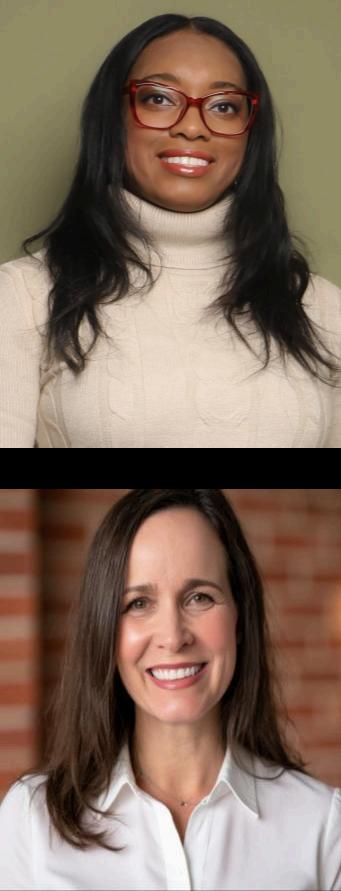
Dr. Natasha Ramsay-Jordan is an Associate Professor of mathematics education in the Department of Early Childhood through Secondary Education at the University of West Georgia, where she currently serves as an Assistant Chair. Dr. Ramsay-Jordan earned her Doctorate from Georgia State University and her Bachelor of Science in mathematics from the University of Nebraska-Lincoln. She has several years of teaching experience in K-12 Mathematics. Dr. Ramsay-Jordan's teaching philosophy centers on love and logic, respect, critical empathy, great determination, and personal integrity. Some of Dr. RamsayJordan's recent publications are in the Journal of Economics, Race, and Policy, Urban Review, International Journal of Science and Mathematics, Multicultural Education, International Journal of Educational Reform, Kappa Delta Pi- The Educational Forum, Teaching for Excellence and Equity in Mathematics, Association of Mathematics Teacher EducatorsConnections, and the Journal of Underrepresented and Minority Progress.
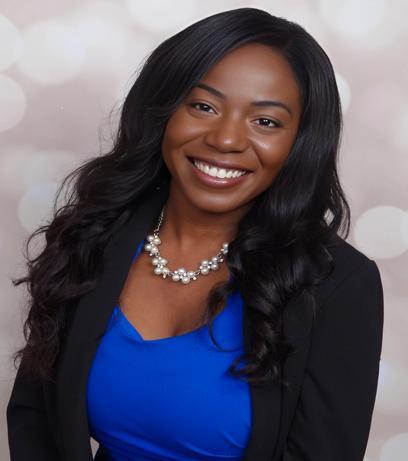
Dr. Virginie Jackson is an assistant professor of literacy education in the Department of Elementary and Early Childhood Education at Kennesaw State University's Bagwell College of Education. In 2023, she was honored with the GATE Distinguished Research in Teacher Education Award, a recognition that reflects her deep commitment to advancing the field. Dr. Jackson also serves on GATE’s executive committee and was recently elected to the National Council of Teachers of English (NCTE) Elementary Section Nominating Committee, where she began her term in September 2024. Her dedication extends to her work with the NCTE Professional Dyads and Culturally Relevant Teaching (PDCRT), where she continues to advocate for culturally responsive teaching practices. Dr. Jackson’s research focuses on early literacy development and equipping preservice teachers to effectively teach culturally and linguistically diverse students. She is passionate about creating engaging and dynamic learning environments that honor students' unique backgrounds and experiences.

Dr. Natasha Ramsay-Jordan, University of West Georgia President, GATE
IMPORTANT: GATE 2026 Annual Conference Evaluation Survey
Dear Conference Attendees,
The conference organizing committee would like to invite you to take a moment to complete our conference evaluation survey at https://forms.gle/wyLwhE6baguS4NVM7
We appreciate your time completing this evaluation as we use your feedback when planning future conferences and programs.
Thank you for a wonderful conference! We’ll see you next year! (details will be announced at www.gaate1.org)