TOURING
ITINERARIES TO DISCOVER
FRIULI VENEZIA GIULIA
48 hours or 7 days of excitement, culture and... fun. A single Card for il Friuli Venezia Giulia, starting from 30€!


What are the ADVANTAGES for you?
A weekend or a week in Friuli Venezia Giulia allows you to visit iconic sites such as the Basilica of Aquileia, Miramare Castle in Trieste, the Giant Cave in the Karst, or the Lombard Temple in Cividale del Friuli.
With the 48-hour or weekly FVGcard, you can easily access all this and much more!
Included with the FVGcard free of charge
• Access to the main museums and attractions in Friuli Venezia Giulia
• Guided tours
• Audio tours
• Hiking tours in the mountains and hills
WHERE the FVGcard is sold
• PromoTurismoFVG Infopoints
• Affiliated sales partners
• Online at www.turismofvg.it/fvg-card
The FVGcard also extends its benefits to 1 child under the age of 12. Free admissions can be used only once for each facility or service. The discounts are only granted to FVGcard holders.

PORDENONE
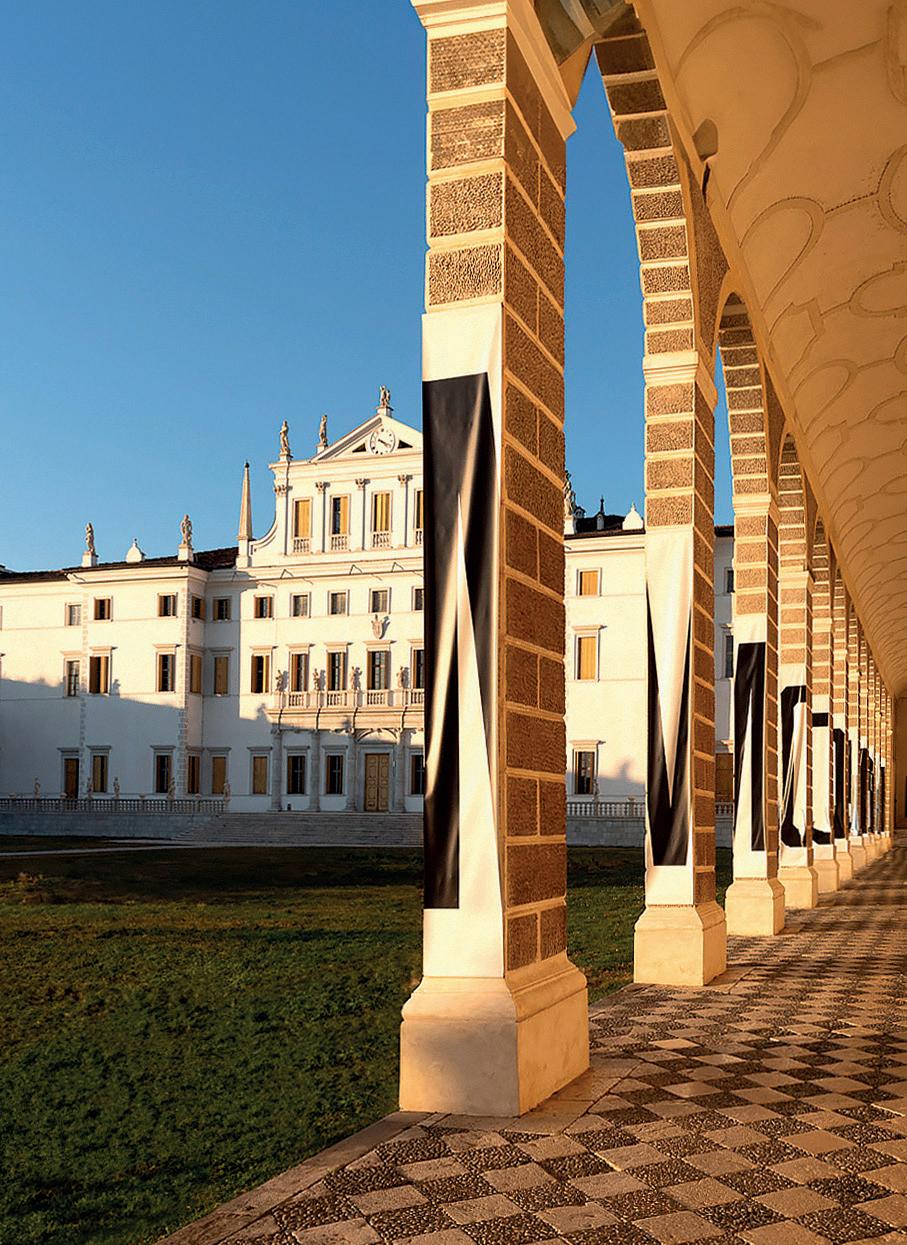
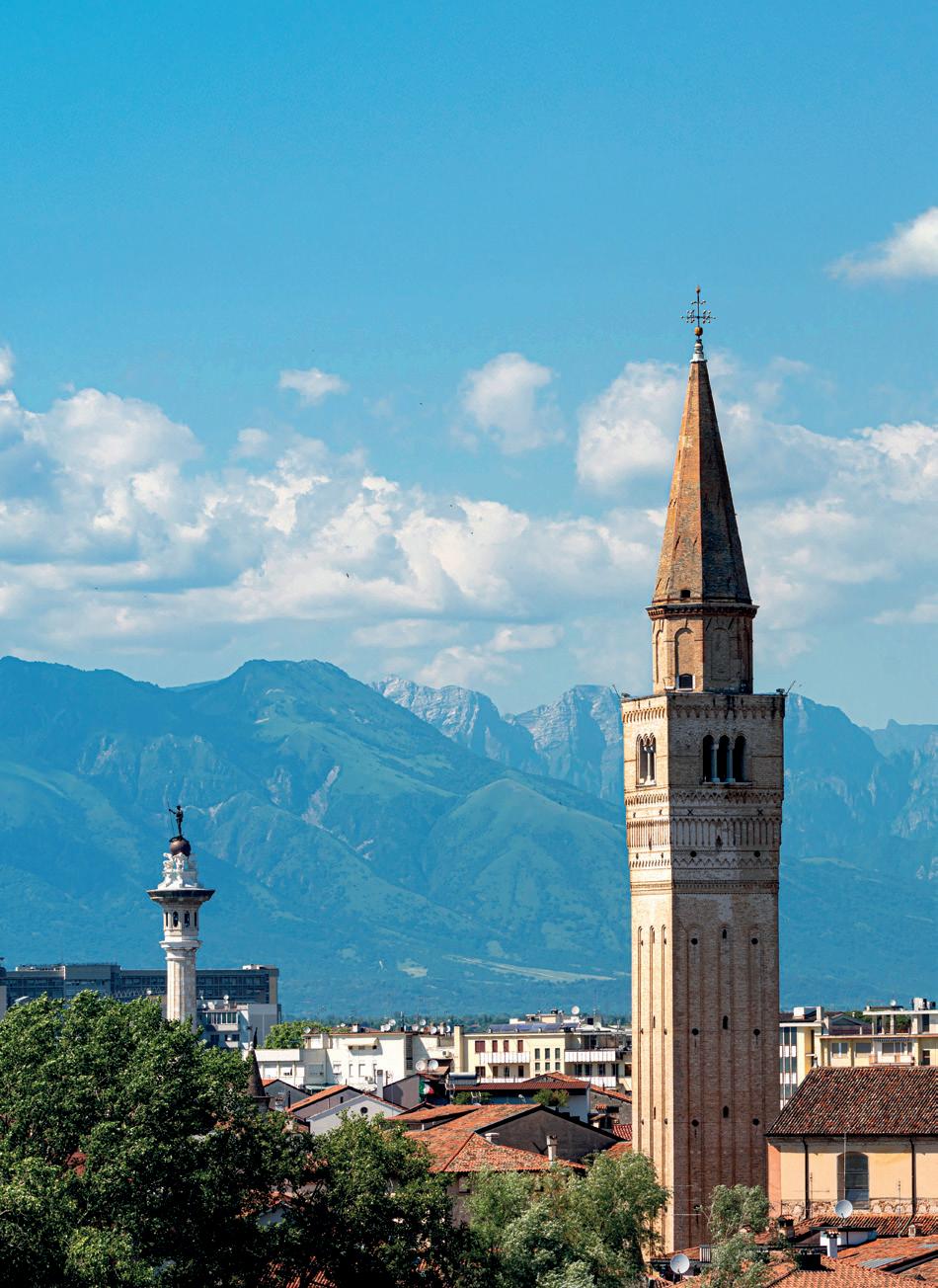
At the heart of Friuli Venezia Giulia, between the mountains of western Friuli Venezia Giulia and the luminous horizon of the Adriatic, Pordenone emerges as a city capable of preserving and narrating an extraordinary heritage of history, art and identity. Here, the urban dimension engages in harmonious dialogue with the natural landscape, shaping a place where past and present coexist with ease, offering an authentic and timeless charm. Far from the clamour of the most crowded tourist routes, Pordenone presents itself as a sincere and surprising destination: a discreet jewel of north-eastern Italy that invites slow and mindful discovery. It is a city that does not simply put itself on display, but reveals itself step by step, through its elegant architecture, frescoed palaces, lived-in squares and the deep marks of a history that has evolved without losing its roots. Pordenone is not merely a place to visit, but a cultural experience to be fully lived. Its more intimate corners, precious artistic testimonies, a widespread museum network, theatres, libraries and spaces devoted to contemporary creativity intertwine with a lush and accessible natural setting, offering visitors a complete, authentic and engaging journey. The city
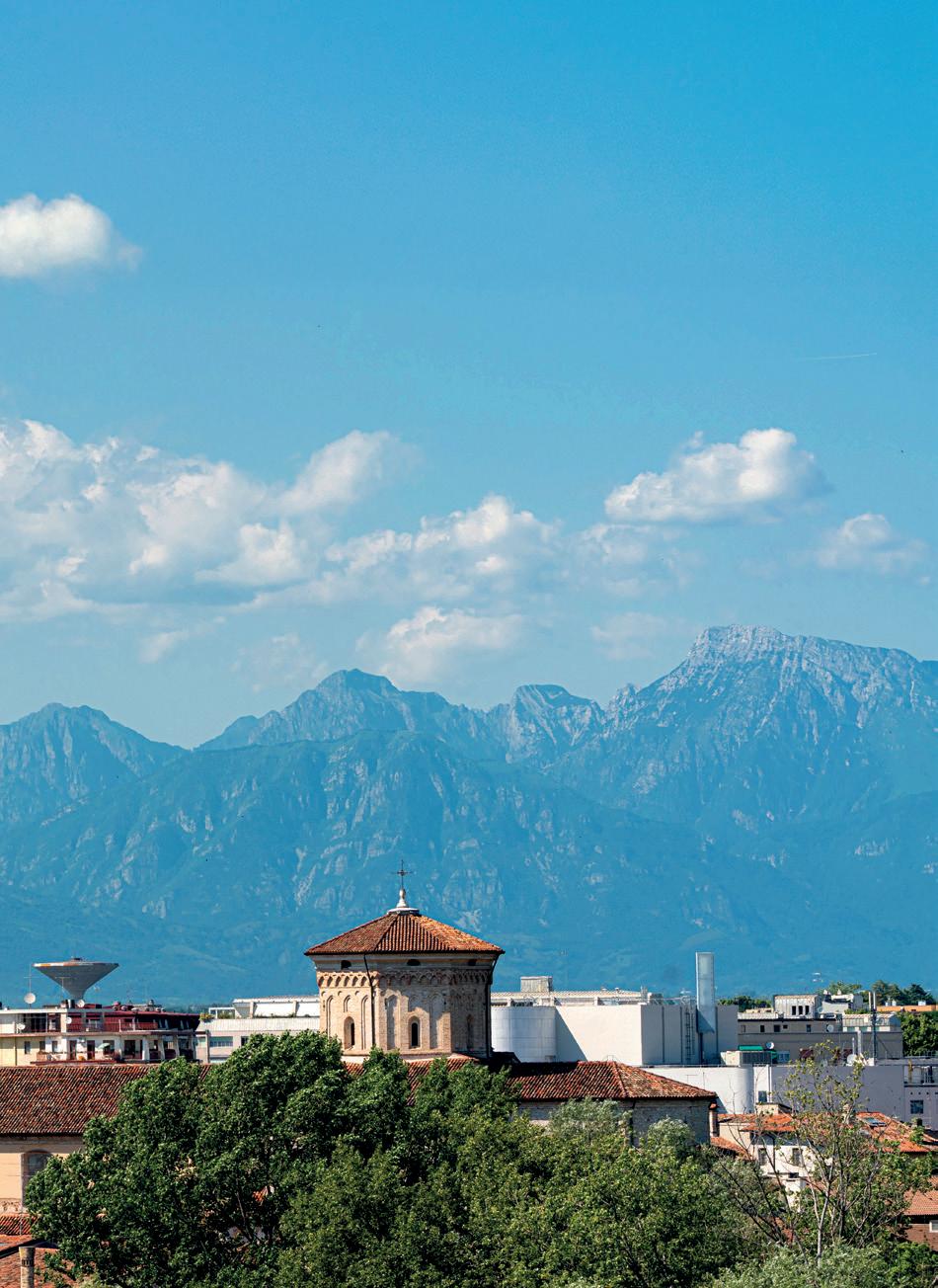
stands out for its ability to make culture an integral part of everyday life, shared and actively participated in by the community. It is precisely this vitality, combined with a far-sighted and inclusive vision, that has earned Pordenone the prestigious title of Italian Capital of Culture 2027. A recognition that rewards not only the excellence of its historical and artistic heritage, but also the strength of a dynamic cultural fabric, capable of innovation, of engaging with the territory and of promoting culture as a driver of social, economic and human development. Pordenone thus establishes itself as an open-air cultural laboratory, a virtuous example of how a medium-sized city can shape the future by enhancing its identity and opening itself to the world.
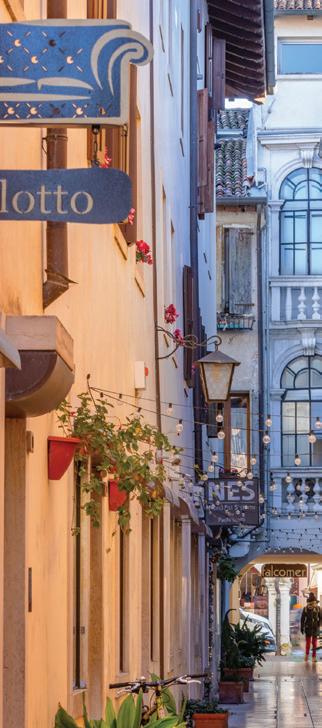
The “Painted City”: this is the name given to Pordenone because of the numerous frescoed palaces that can be admired along the main avenue that crosses the historical centre. But the past is only visible in the architecture, churches and museums: today Pordenone is actually a city open to the challenges of the present and the future. Dynamism and creativity are evident in its artistic, musical and literary production, as well as in the many international events that take place here. Festivals of letters and films,
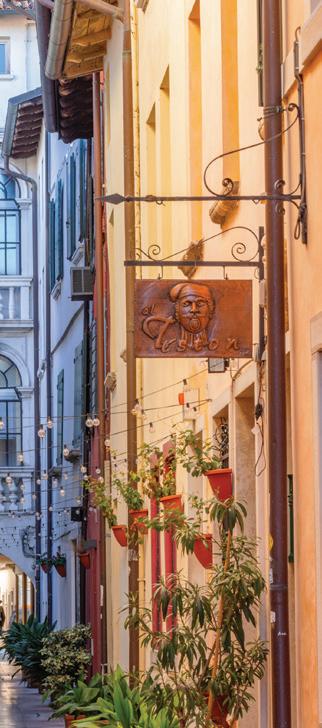
such as “pordenonelegge” the “Giornate del Cinema Muto” (Days of the Silent Movie) and the journalism award “Pordenone Docs Fest - Le voci del documentario” (The voice of documentary), have established Pordenone as a unique and varied artistic and cultural destination. The heart of the city, with its cafés, pastry shops and elegant boutiques, is ideal for a stroll that combines shopping and art. Giovanni Antonio de’ Sacchis, better known as “Il Pordenone”, the great Renaissance painter, was born in the city. His
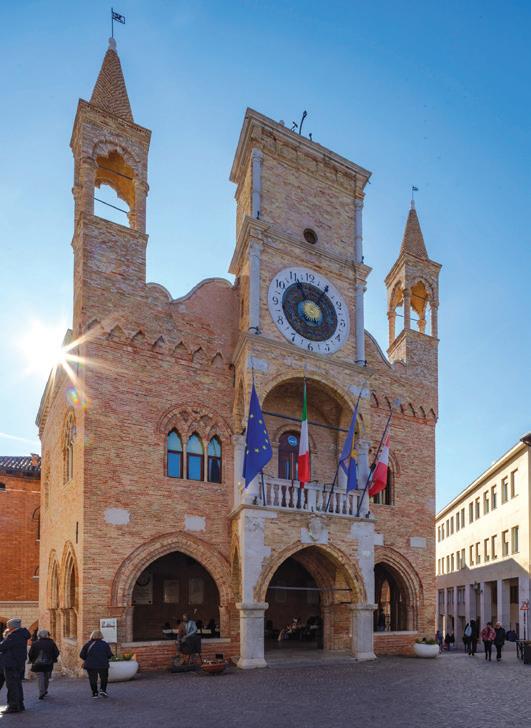
masterpieces can be seen in St Mark’s Cathedral and the beautiful Civic Art Museum in Palazzo Ricchieri, not far from the ancient loggia in the Gothic style that is now the Town Hall. Pordenone has an extraordinary artistic vitality, which is not only enlivened by the various festivals held in the city but also by a 30-year tradition of comic strip culture, featuring many national and international talents. It is no coincidence that Pordenone is the home of the Palazzo del fumetto, the first Italian Comics Centre and one of the few of its
Pordenone, Town Hall
kind in Europe. This is where temporary exhibitions by major international authors are staged, as well as niche, local or experimental exhibitions, creating authentic and engaging experiences in the arts.
In Pordenone, art also takes to the streets: we are not in Bristol, but Pordenone also has some murals that deserve to be discovered: some ragged walls have been restored to beauty thanks to graffiti artists (some local, others from all over the world) who wanted to give the city a moment of participatory
art. The Torre district has been literally invaded by giant animals painted on the façades of its buildings. The Verdi Theatre of Pordenone is one of the cultural hubs of the Region. Open and dynamic, it organises an annual programme that goes beyond the traditional seasonality of theatres, creating itineraries that range from prose to contemporary theatre, from classical music to jazz, from opera to dance, as well as shows, conferences and children’s theatre. Promoting the next generation of artists and audiences is also at the
heart of these activities. The Theatre hosts the major cultural events of the city and the Province and it also features a modern and bright design.
Pordenone Infopoint Palazzo Badini
Via Mazzini, 2 – 33170 Pordenone
Tel. +39 0434 520381
Cell. +39 335 1516948
info.pordenone@promoturismo.fvg.it
FVGcard
Guided tours
Audio guides
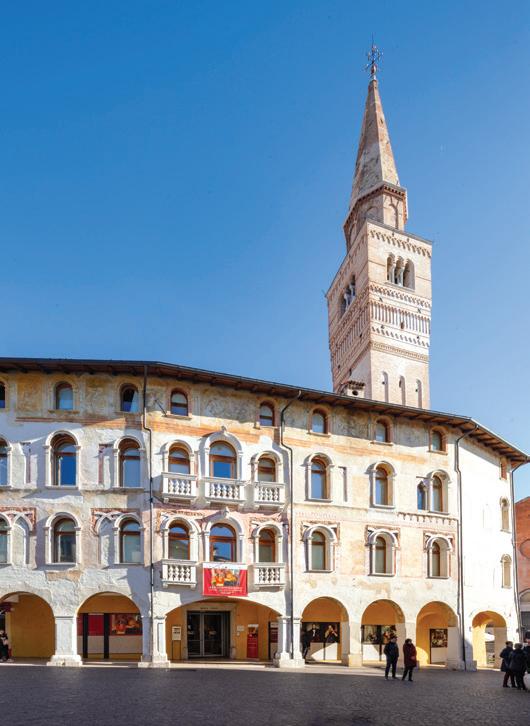
Palazzo Ricchieri
IN
THE SURROUNDING AREA OF PORDENONE
The surrounding area of Pordenone, with its castles and small towns that are authentic pearls of art and beauty, is an invitation to take a journey through the Middle Ages and the Renaissance.
But if art and history are the main features of this itinerary, there is no shortage of traditional fine artisan crafts as well as an exceptional natural environment: the “Magredi”, a rare example of European steppe. These are the ‘”terre magre”, the meagre lands: stony and gravelly soils that look like steppe on the surface but are actually surprisingly rich in underground water. A unique natural habitat, with plant and animal life that is impossible to find anywhere else. The symbol
of the Magredi is the stonecurlew, a bird whose feathers and eggs blend in perfectly with the terrain.
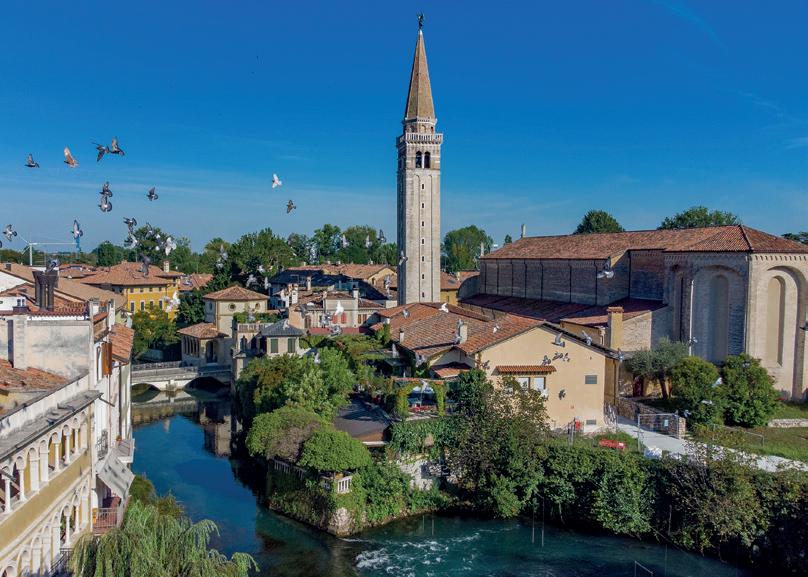
Sacile, with its alleyways, bridges and noble palaces, is instead a perfect combination of land and water. A walk through the historical centre, built on the two islands formed by the Livenza River, which divides and branches off right at this point, reveals the grace of Renaissance architecture in the Venetian style, which earned this city the title of the “Garden of the Republic of Venice”. Be sure to visit Palazzo Ragazzoni, an authentic aristocratic palace. San Vito al Tagliamento is a beautiful and elegant town with a medieval character. Its castle is decorated with many valuable
frescoes and still retains its original moat and three access towers that date back to the middle ages. Noteworthy are the beautiful palaces with elegant architecture and the religious monuments, including the Duomo, a true art gallery thanks to its many paintings and frescoes. The Church of Santa Maria dei Battuti is a jewel of the Friulian Renaissance, with excellent frescoes by Pomponio Amalteo; while the Church of Santa Maria di Castello is home to a cycle of frescoes from the second half of the 14th century. To conclude, we suggest a visit to the fascinating Antico Teatro Sociale Gian Giacomo Arrigoni, a theatre that reflects the artistic influence of 18th-century Venice.
Sacile
PIER PAOLO PASOLINI AND CASARSA
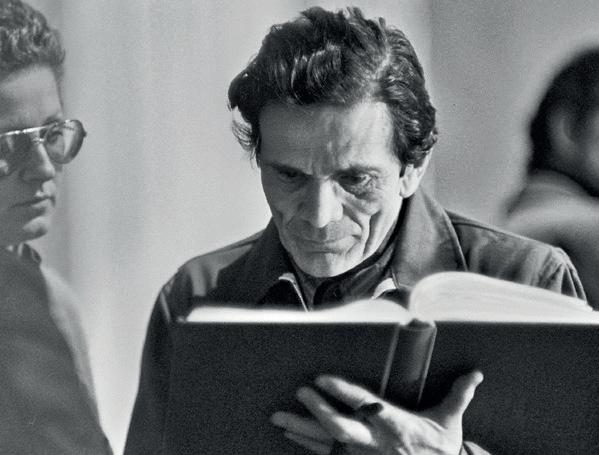
Pier Paolo Pasolini, one of the most important intellectuals of the 20th century, spent a large part of his life in his mother’s birthplace, Casarsa della Delizia. His family home, now the seat of the PPP Study Centre, is the starting point of an itinerary to discover the areas of this territory that he loved so much: the precious Church of Santa Croce, where the plaque from 1529 that inspired the writer to write his drama in the Friulian language “I Turcs tal Friúl”
is preserved; the nearby village of Versuta, with the beautiful Church of Sant’Antonio Abate, where the frescoes that Pasolini himself helped to restore can be admired; the small hamlet of San Giovanni, where his political commitment was forged. A compulsory stop and a sentimental destination for intellectuals, scholars and admirers of the writer and poet is the cemetery of Casarsa, where Pier Paolo Pasolini rests with his family.
Pier Paolo Pasolini
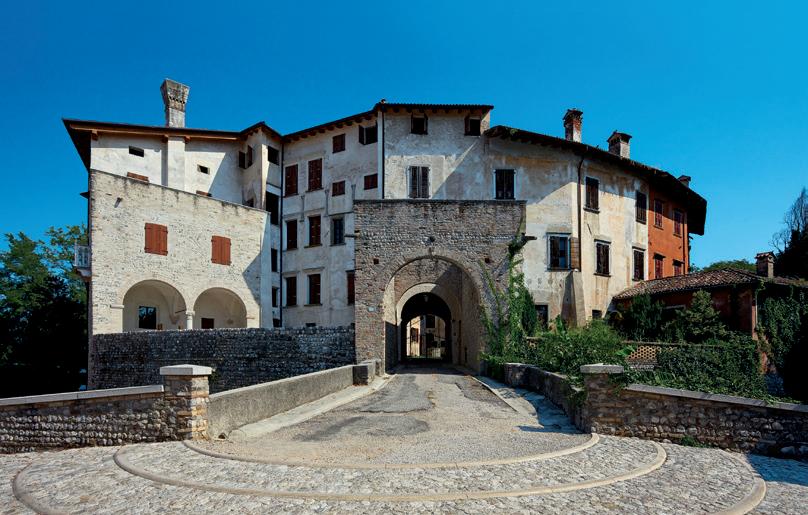
At a short distance from each other, no less than four different town centres have been included in the list of the Most Beautiful Villages in Italy.
Sesto al Reghena is home to the Benedictine Abbey of Santa Maria in Sylvis, founded by the Lombards. It is one of the most important monastic institutions in this territory. The Abbey was particularly important and influential in the early Middle Ages and was later transformed into a castle defended by towers and moats. The 13th-century frescoes that decorate it are truly remarkable.
Cordovado and Valvasone Arzene are also fascinating fortified medieval centres.
Cordovado preserves several buildings from the 12th and 14th centuries, one of which is surrounded by an ancient park. In addition to the elegant noble
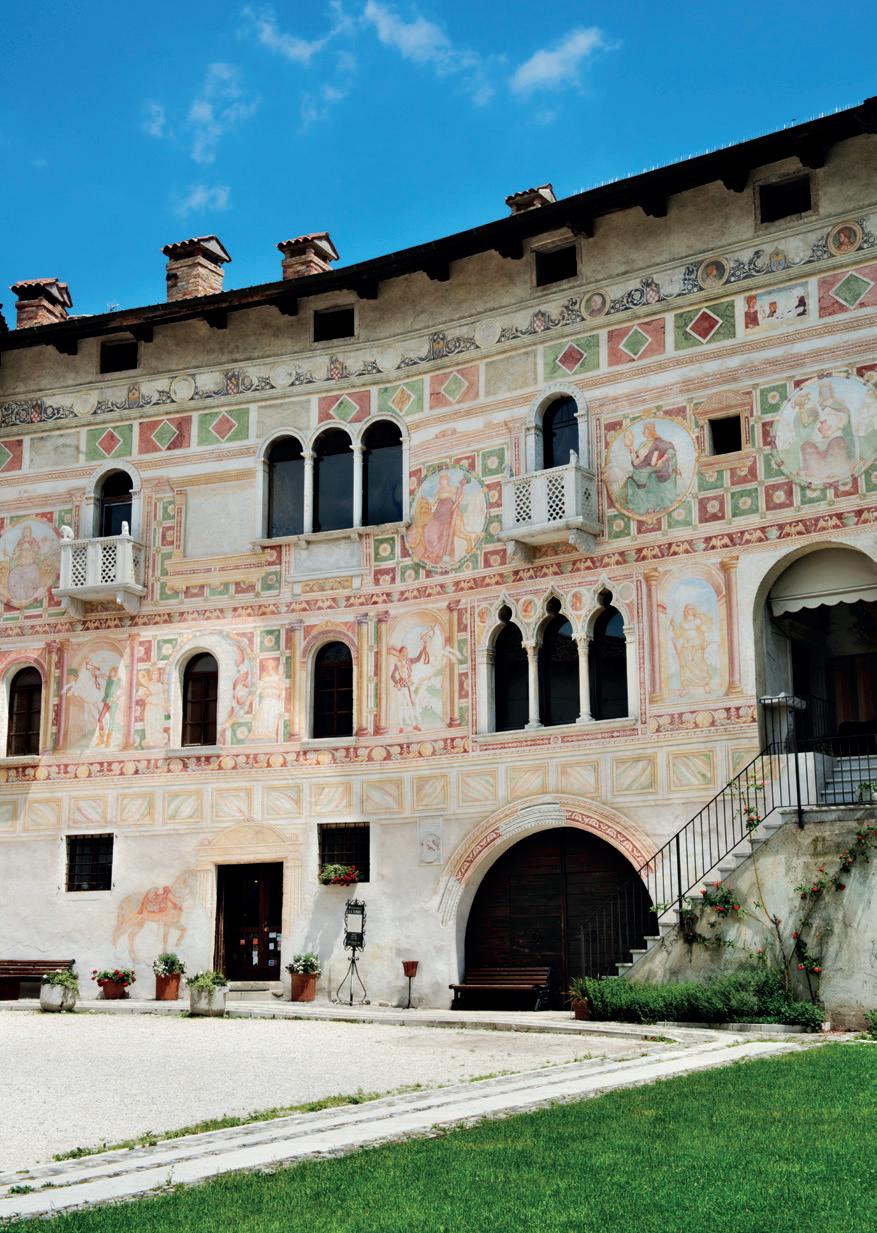
residences, Valvasone Arzene also boasts an 18th-century theatre and, in the parish church, the only 16th-century Venetian organ still in working order in Italy. Spilimbergo is known throughout the world as the “City of Mosaics”: it is indeed the capital of mosaic art in Friuli Venezia Giulia. The important Mosaic School of Friuli is located in the city, which is a unique point of reference and experimentation in this discipline on a global scale.
The Mosaic School of Friuli is a renowned and avant-garde organisation, both in terms of working techniques and the materials used.
But Spilimbergo is also a jewel of art, with its beautifully decorated palaces and the magnificent Duomo “with seven eyes”, which contains authentic masterpieces
such as the 16th-century organ with panels painted by Giovanni Antonio de’ Sacchis, known as “Il Pordenone”, and the impressive cycle of 14th-century frescoes. Maniago is the last stop on this itinerary. It is famous throughout the world for being the centre of a highly skilled artisan craft: the production of knives. The Museum of Blacksmiths’ Art and Cutlery elegantly retraces the centuries-old history of the artisan soul of this town. In the last century, its fame has even reached Hollywood: the swords used in the films Braveheart, Robin Hood and Indiana Jones and the Last Crusade were all forged in Maniago!
In Malnisio (Montereale Valcellina) visitors can tour the former Pitter, hydroelectric power station, an outstanding example of early 20th-century industrial architecture.
Valvasone Arzene
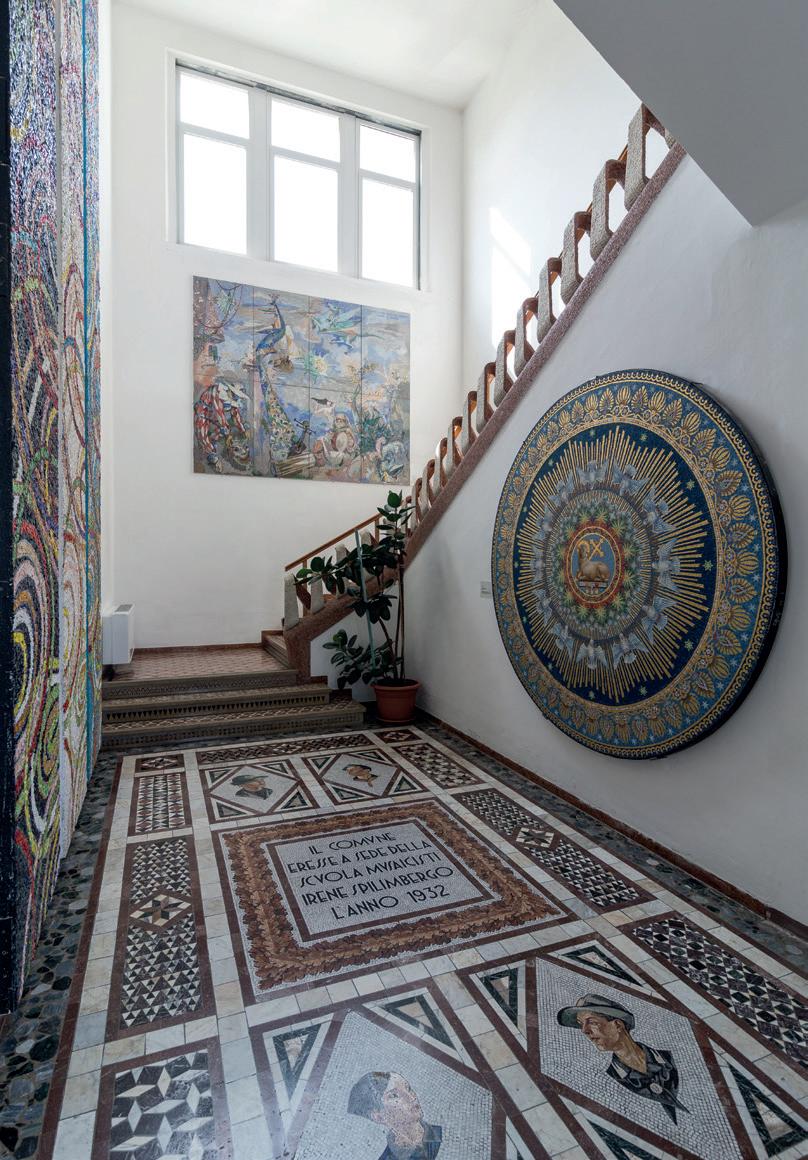
Mosaic School of Friuli
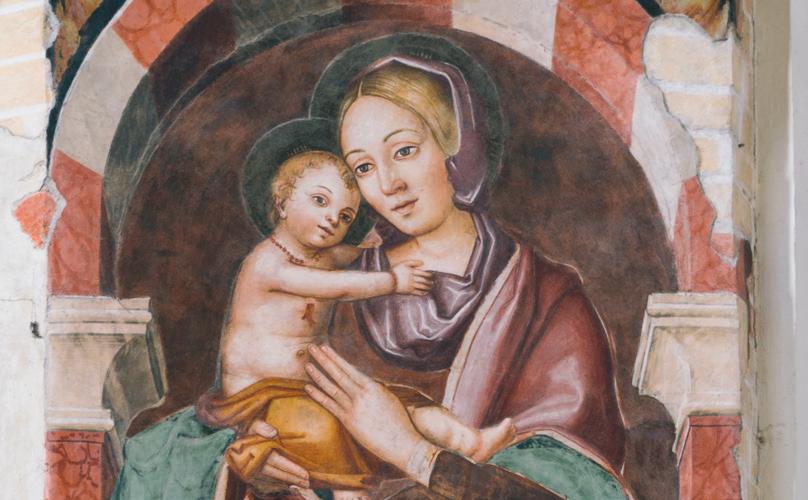
On the trail of the great Renaissance painter Giovanni Antonio de’ Sacchis
AN ARTISTIC ITINERARY IN WESTERN FRIULI
The territory that stretches between the Municipalities of Castelnovo del Friuli, Clauzetto, Pinzano al Tagliamento, Sequals, Travesio and Vito d’Asio in Western Friuli, holds a very valuable artistic heritage: a series of Renaissance works created by famous artists, starting with Giovanni Antonio de’ Sacchis, known as “Il Pordenone”, one of the greatest fresco painters of the early 16th century. Indeed there are several records documenting the activity of “Il Pordenone” in this area. In particular, his first work is dated and signed (1506) in the Church of Santo Stefano in Valeriano. Ten years later he worked in the Parish Church of San Pietro in Travesio and then again in the churches of Valeriano. In the Church of San Martino in Pinzano al Tagliamento, Pordenone frescoed a monumental Madonna and Child and the Martyrdom of Saint Sebastian; an altarpiece by Giovanni Antonio Guardi, one of the leading figures of 18th-century Venetian
painting, is also preserved there. In Travesio, the Parish Church of San Pietro Apostolo houses the largest cycle of frescoes painted by Il Pordenone. It illustrates the stories of Saint Peter in the apse, where challenging and spectacular scenes feature a wide array of characters and lively movements. The church also preserves an altarpiece by Pomponio Amalteo, a pupil and collaborator of Pordenone. In the church you can also admire as well as a portal and a baptismal font with putti musicians, which are some of the most skilfully executed sculptures by Giovanni Antonio da Carona known as “Il Pilacorte” (1525-1528). He was a masterful exponent of a renewed classical art style in the design of portals, altars, and holy water fonts. The artist sourced the precious stone he used from the nearby quarries in the foothills of this territory and created the largest monumental stone altar in Friuli Venezia Giulia for the Parish Church of Vito d’Asio.
Madonna col Bambino, Pordenone, Duomo
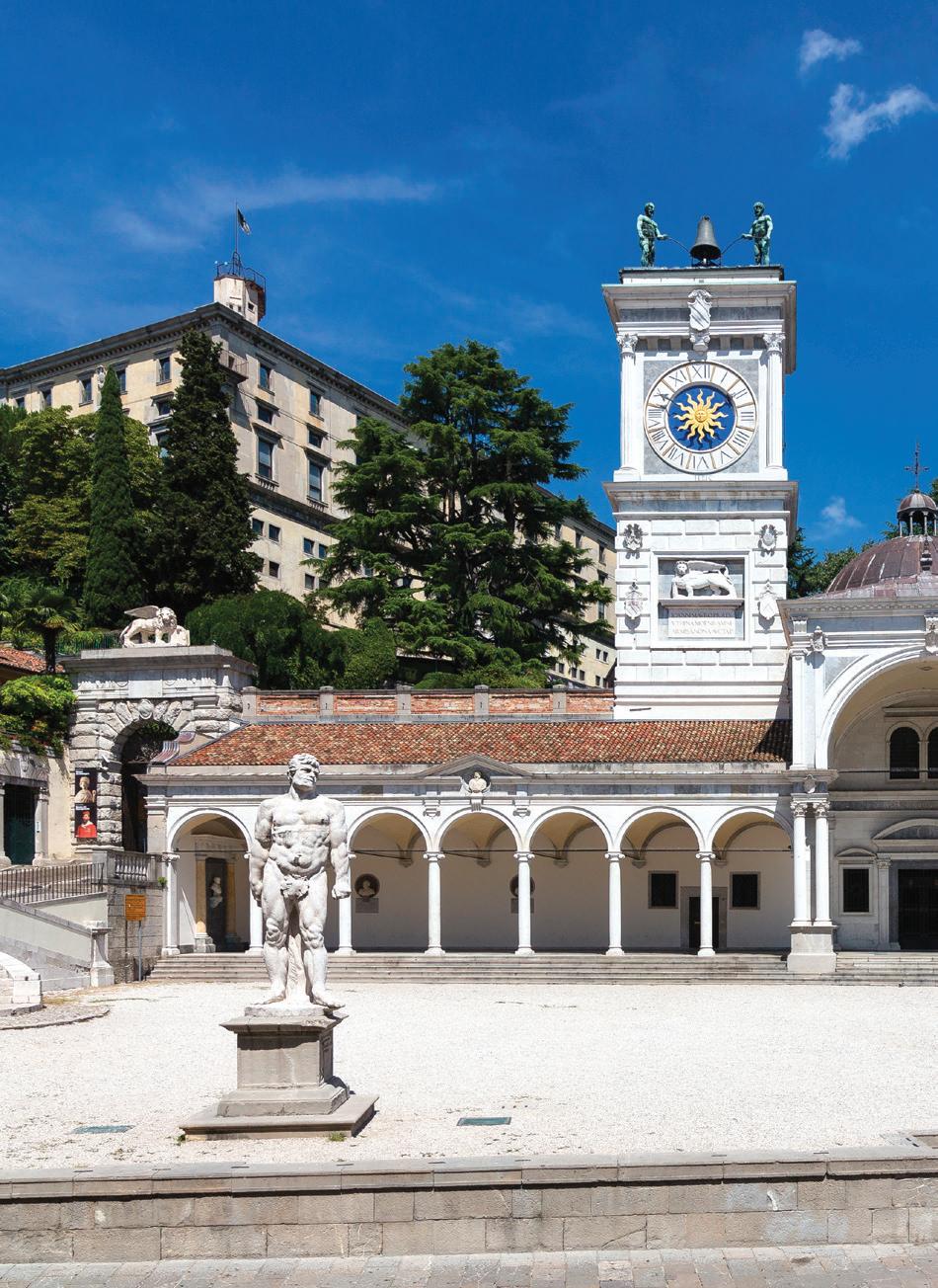
UDINE
A city of bookshops and taverns, with a mysterious name and many faces, Udine is both popular and refined, friendly and at the same time culturally vibrant. Udine is also the “City of Light”. In January 1889, it was the third European city (after Milan and London) to have electric city lighting. This was thanks to the genius of one of its citizens: Arturo Malignani (1865-1939), who invented the method of creating a vacuum in incandescent light bulbs, making them brighter and prolonging their service life. Working on the incandescent bulb invented by Thomas Edison, which at the time lasted only a few hours before burning out, he created a vacuum inside the bulb. An idea that improved the quality of light (Malignani’s was white, Edison’s was yellow), increased the average life of light bulbs tenfold and simplified their production. Interest in these results attracted the attention of Edison who convinced Malignani to sell the patent to him.
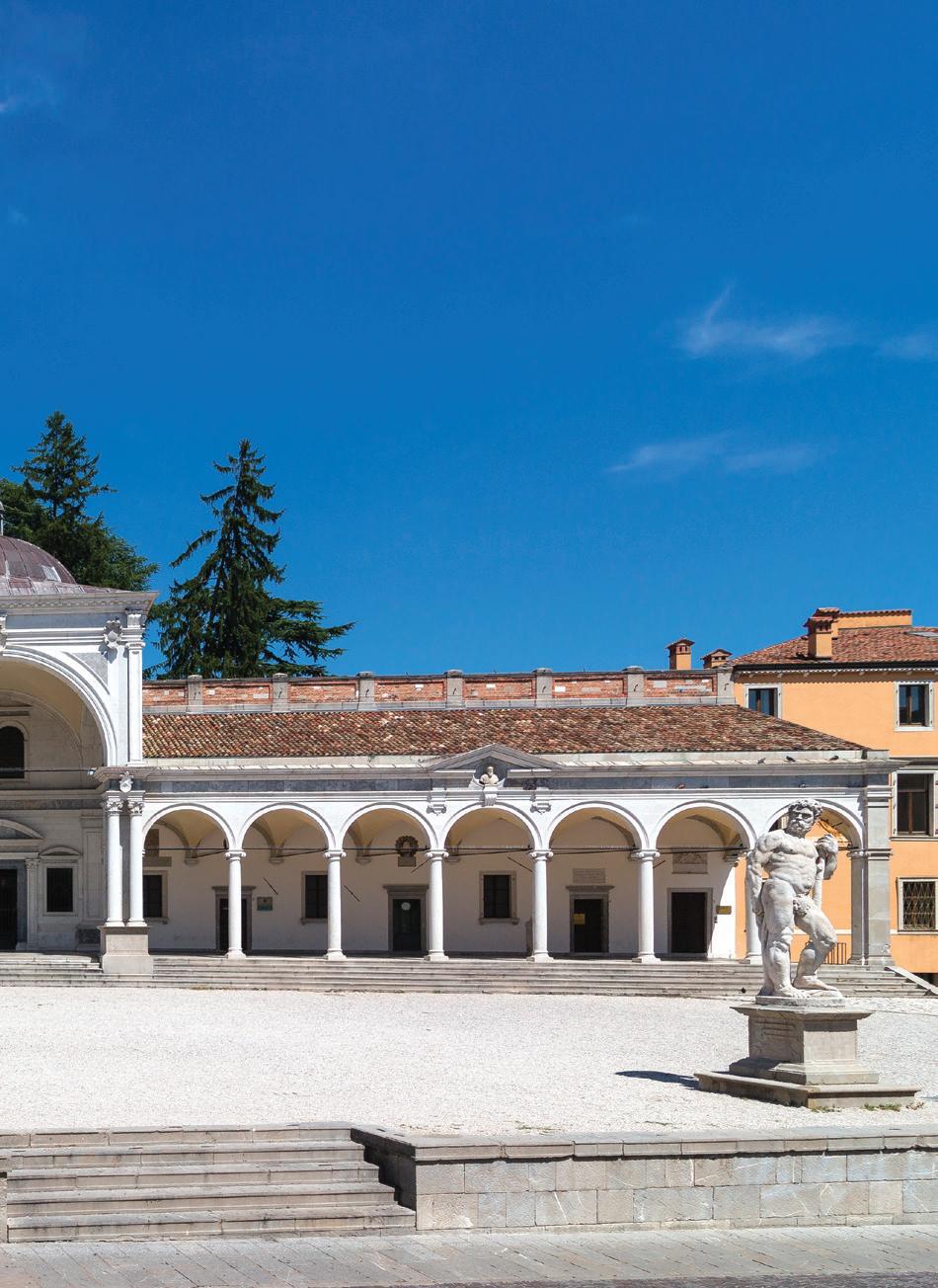
A good starting point for a cultural tour of Udine is the Castle: once the seat of the Patriarch of Aquileia and the Venetian Lieutenant of the Patria del Friuli patriarchate, it is now home to the Civic Museums, including the Archaeological Museum and the Gallery of Ancient Art, with precious works from the 14th to the 19th centuries, including paintings by Carpaccio, Caravaggio and Tiepolo. Built on the top of a hill, the Castle is reached along a route that starts from the spectacular Piazza Libertà square, a testimony of the historical association of the
city to the Republic of Venice. The path to the Castle follows the Lippomano Portico, the Venetian Gothic structure that flanks the slope and reaches the summit. The Portico was commissioned by the Venetian Lieutenant Tommaso Lippomano in 1487. The Udine Cathedral, the most important and impressive church in the city, is also located nearby. It was built in 1236 on the site of a pre-existing church dedicated to Saint Jerome. It was extensively modified over the following centuries. The Cathedral Museum, on the ground floor of the bell tower, exhibits sculptures,
paintings and frescoes from the 14th and 15th centuries, including the remarkable cycle of paintings by Vitale da Bologna with the Stories of Saint Nicholas, as well as gold artefacts and jewellery from the Cathedral Treasury. A fascinating route through medieval alleyways and picturesque irrigation channels leads to Piazza Matteotti, also known as Piazza delle Erbe. This square is home to the beautiful Church of San Giacomo, with its unique external balcony from which, during the Saturday market, a mass was celebrated from above so that the merchants
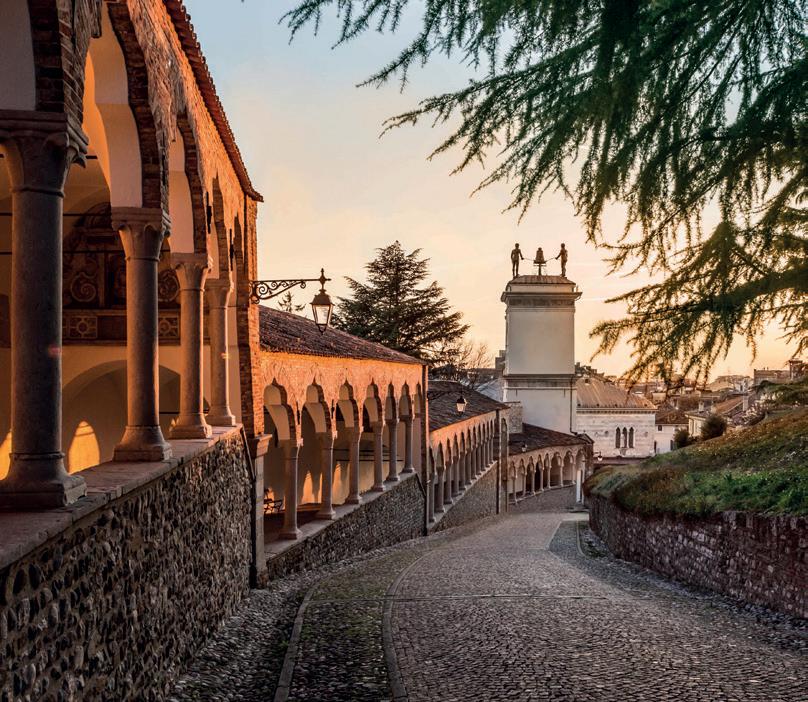
Udine, ascent to the Castle
who had set up their stalls under the porticoes and in the square could continue their business activities. The square is a kind of urban living room, surrounded by porticoes, where people from Udine and beyond like to stop for a coffee or a traditional aperitif, called tajut in the local dialect. A great source of pride for the city is the Casa Cavazzini - Museum of Modern and Contemporary Art. One of the many highlights of the exhibition is represented by the works of the brothers Dino, Mirko and Afro Basaldella, who were from Udine and among the most important artists of
the 20th century on the Italian and international scene. Udine is also a land of important festivals, including the Far East Film Festival (FEFF), an event dedicated to cinema from Asia, which is considered the richest and most significant review of cinema from the Eastern World in Europe, and the Vicino/LontanoPremio Terzani. Inspired by a strong bond with the figure of the journalist and writer Tiziano Terzani, the Vicino/Lontano Festival brings together international scholars, journalists, writers and artists with the public to analyse, through a variety
of viewpoints, the processes of transformation currently underway in the globalised world.
Udine Infopoint
Piazza I° Maggio, 7 – 33100 Udine Tel. +39 0432 295972 Cell. +39 335 1088307 info.udine@promoturismo.fvg.it
FVGcard
Guided tours
Audio guides
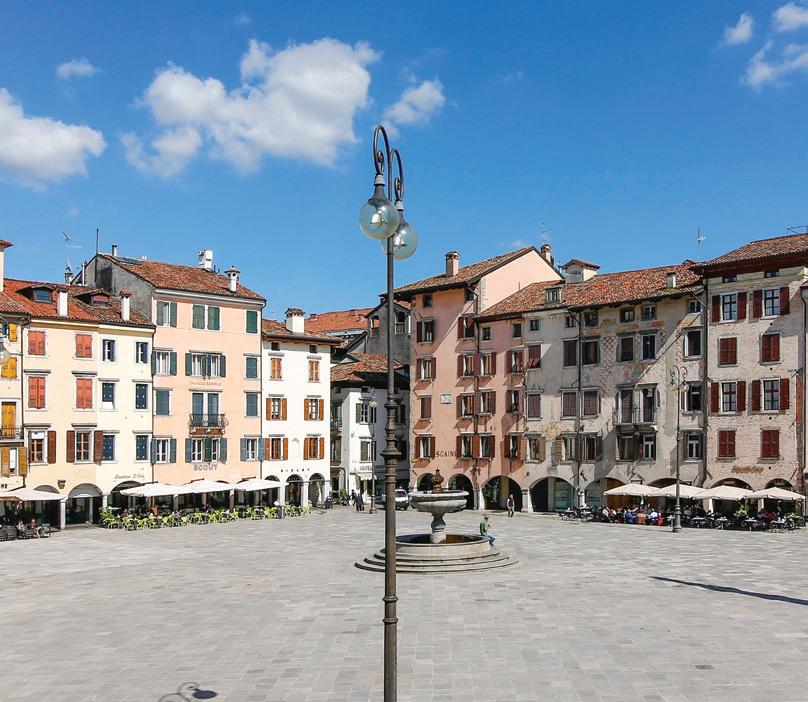
Udine, Piazza Matteotti
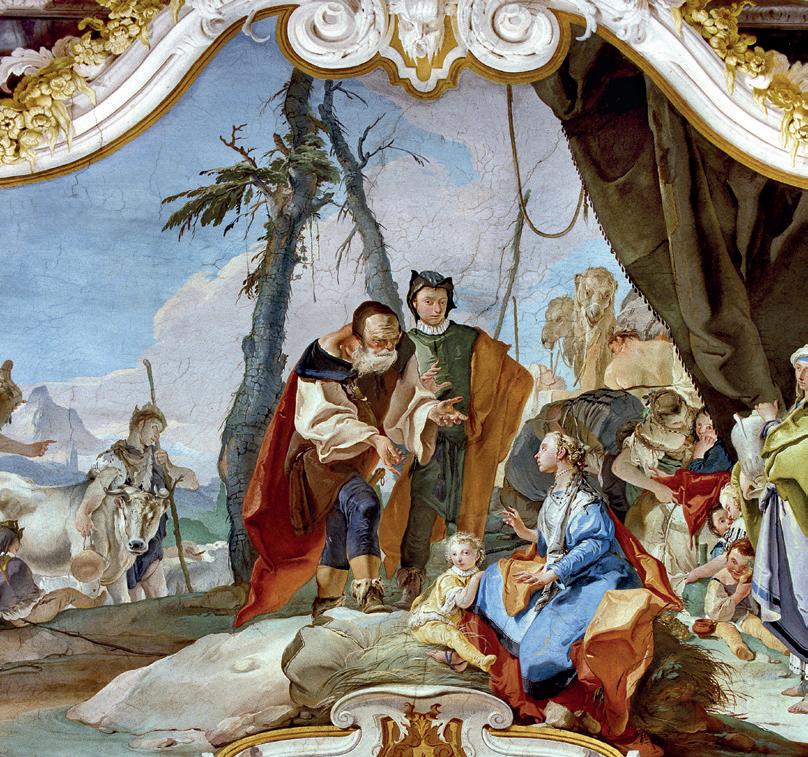
THE COLOURS OF GIAMBATTISTA TIEPOLO
Born in Venice in 1696, Giambattista Tiepolo travelled to Udine in 1726 at the request of Patriarch Dionisio Dolfin to decorate the Patriarchal Palace, which today houses the Diocesan Museum and the Tiepolo Galleries. Inside, visitors have the opportunity to admire an impressive cycle of frescoes starting with the ceiling decoration of the central staircase, which depicts the “Fall of the Rebel Angels”, an absolute masterpiece. The Galleria degli Ospiti hall, the artistic
highlight of the museum, was frescoed between 1727 and 1729 by Tiepolo, who created a narrative sequence based on the stories of the ancient patriarchs Abraham, Isaac and Jacob. The entire work covers over 240 square metres. In the Sala Rossa, which was once an ecclesiastical courtroom, Tiepolo painted a fresco on the ceiling portraying the Judgement of Solomon. The artist also decorated the Chapel of the Blessed Sacrament in the Udine Cathedral.
Udine, Palazzo Patriarcale
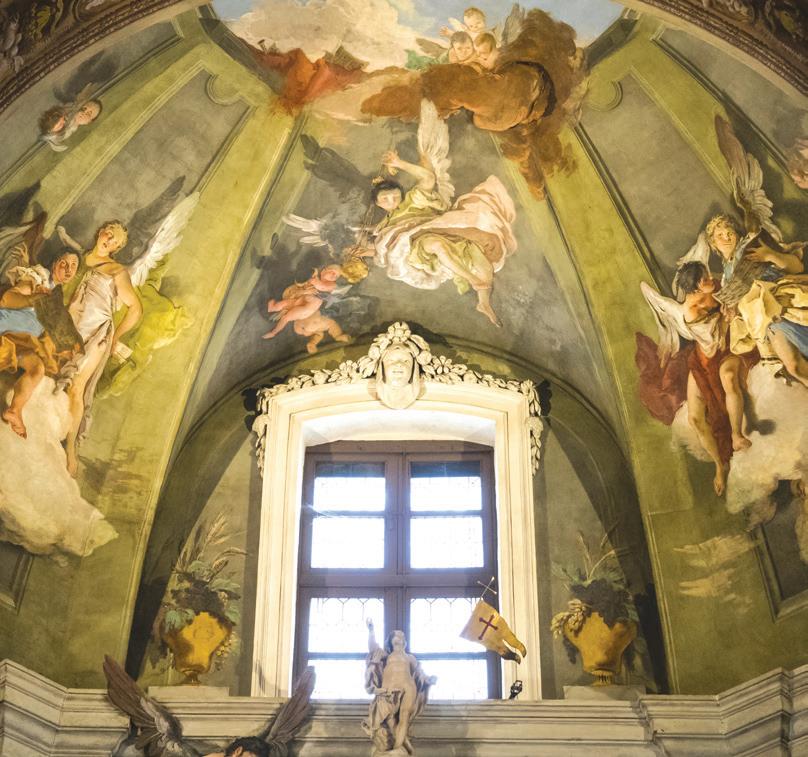
The Sacrifice of Isaac and the Dream of Abraham adorn the walls, but the most powerful emotion is experienced when we look up at the light coming through the window and see the moving beauty of the singing angels appearing from above, playfully gazing at us in their bright, fresh colours, absorbing the light streaming in from the outside, amplifying it and illuminating the entire chapel. In the Oratory of Purity church, next to the Cathedral,
another masterpiece by Tiepolo: the ceiling fresco which portrays the Assumption of the Virgin Mary. Three of the artist’s works are presented in the Castle Museums of Udine: “The Guardian Angel”, “Saint Francis De Sales”, and “Allegory of Virtue and Nobility Triumphing over Ignorance”. The venue is also home to “Consilium in arena”, painted by Giambattista in collaboration with his son Giandomenico.
Udine, Duomo
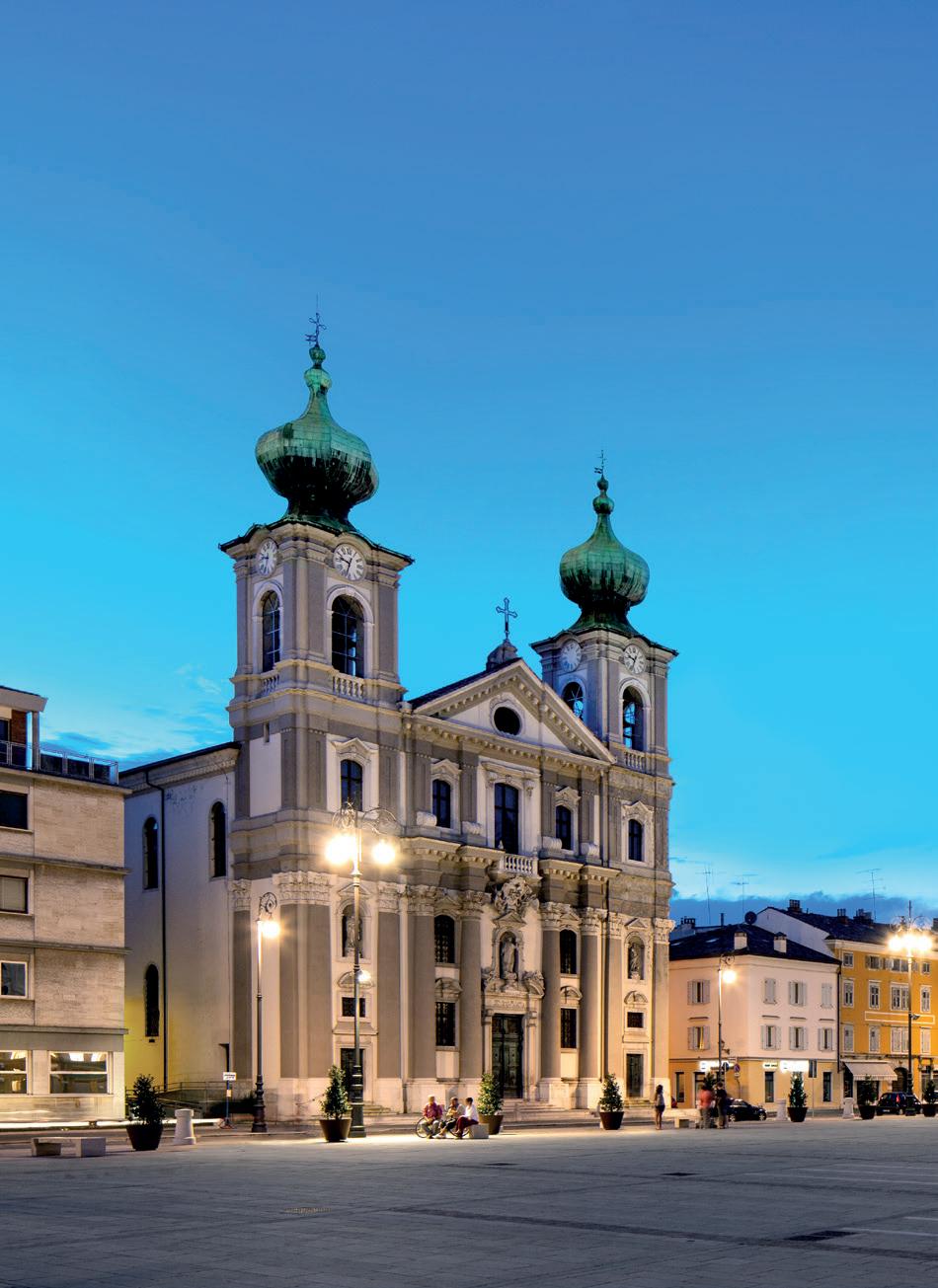
GORIZIA
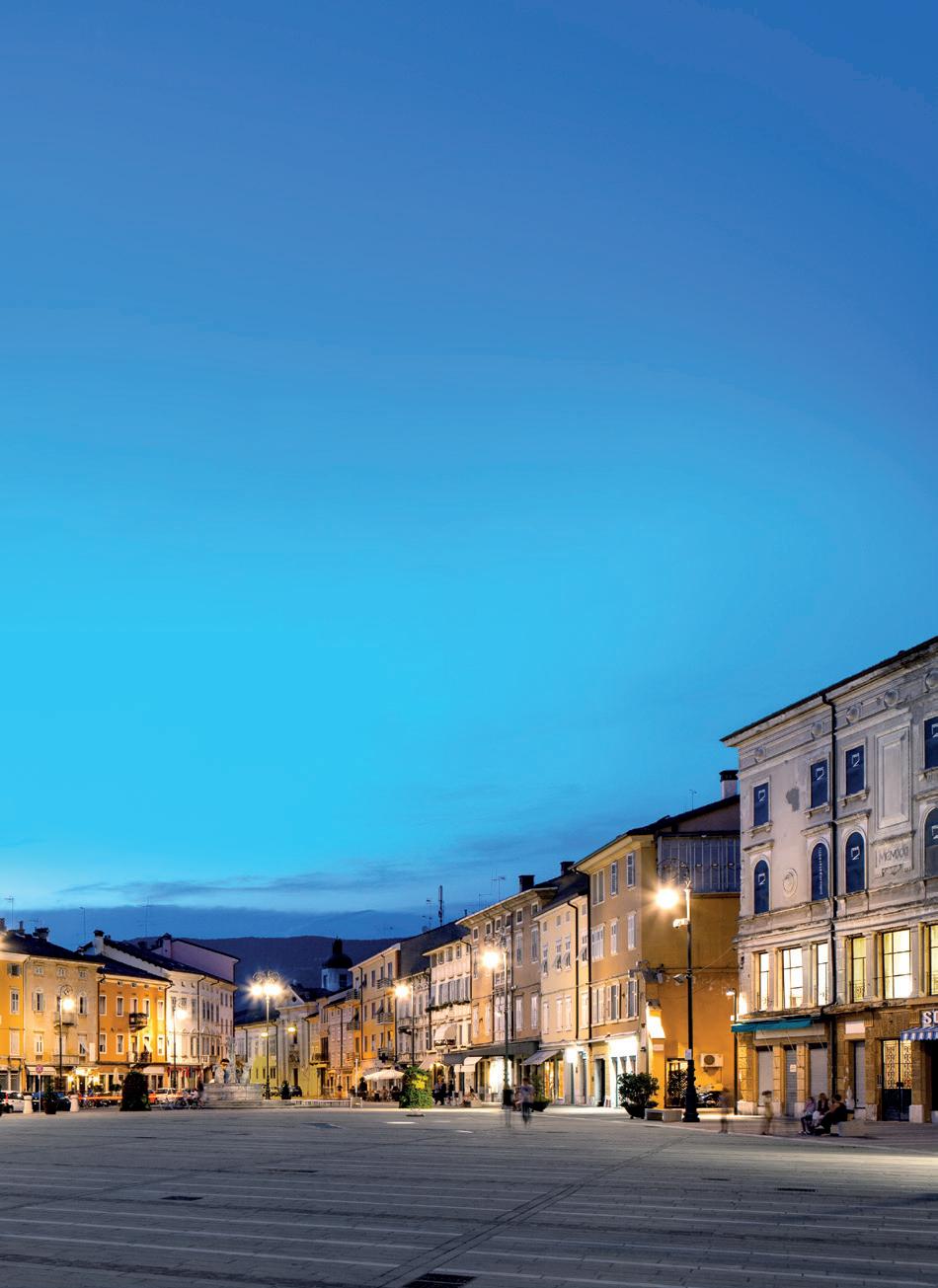
Gorizia, Piazza della Vittoria
A city on the border, a symbol of the turbulent history of 20th century Europe. And yet its Habsburg past can still be felt here, in the elegant architecture of the palaces and squares of Gorizia. A territory of the Austro-Hungarian Empire before the Great War that was annexed to Italy in 1918, Gorizia experienced first-hand the dramatic events involving the eastern border of Italy during Fascism and World War II. At the end of the conflict, it lost part of its suburban area to what was then Yugoslavia. The city was divided by the so-called “Gorizia Wall”, which was
erected in Piazza della Transalpina. It became one of the symbols of the political and ideological division between Western and Eastern Europe during the years of the Cold War. The dividing fence was torn down when Slovenia joined the European Union in 2004 and today the border is a meeting place and centre of cultural exchange.
In 2025, Nova Gorica and Gorizia were the first European Cross-Border Capital of Culture, an event that further strengthened the ties between the two cities.
History can be experienced and retraced in the city by following the “Topographies of Memory” itineraries, a diffused museum of the border area, the first example of an open-air cross-border museum in Italy: an interactive and multimedia route that links places significant not only for the official history but also for the personal experiences of the citizens of Gorizia and Nova Gorica. The history of the city can also be discovered in its museums, which are concentrated in the Castle and the hamlet built around it. The Museum of Fashion and Applied Arts and the Museum of the Great War are also located there.
The elegant aristocratic Palazzo Coronini Cronberg, surrounded by a large and magnificent park, is also highly recommended. Among its many treasures, it houses the only two works of art exhibited in Italy by the Bavarian sculptor Franz Xaver Messerschmidt, the famous Character Heads. The building was also briefly
the residence of Charles X of Bourbon, who, after his abdication and various travels in Europe, settled in Gorizia with his royal family and court. Charles X and his descendants are buried in the Franciscan Monastery of Castagnevizza, which is today in Slovenia. Palazzo Attems Petzenstein, with its beautiful Italian-style garden, hosts temporary exhibitions and the Pinacoteca, an art gallery on the main floor. The rooms contain almost one hundred works of art, including paintings, drawings, engravings and sculptures, which follow a chronological path from the mid-eighteenth to the mid-twentieth century. Piazza Vittoria (formerly Travnik Square) welcomes visitors with the Neptune Fountain and the beautiful Church of Saint Ignatius. A stroll along the ancient Via Rastello, once full of small stores and workshops, introduces visitors to the medieval past of Gorizia and the history of the Jewish community, which is
interwoven with the events of the young intellectual Carlo Michelstaedter
The first evidence of Jewish people in the County of Gorizia was recorded at the end of the 13th century. A permanent settlement in the city dates back to the 16th century. The Synagogue, located in what is now Via Ascoli, was built in 1756. It was used by the Jewish community until 1969 when it was incorporated with the one in Trieste; today it is not used for worship. The museum, located on the ground floor of the building, presents the history of Judaism in Gorizia through the centuries. The Jewish Cemetery of Valdirose is instead located on the territory of present-day Slovenia. Between the second half of the 19th century and the first half of the 20th century, one district of Gorizia became its economic centre. It was called Straccis and it was built as a working-class district: from the large Park of Villa Ritter to the underground walkways that led to the
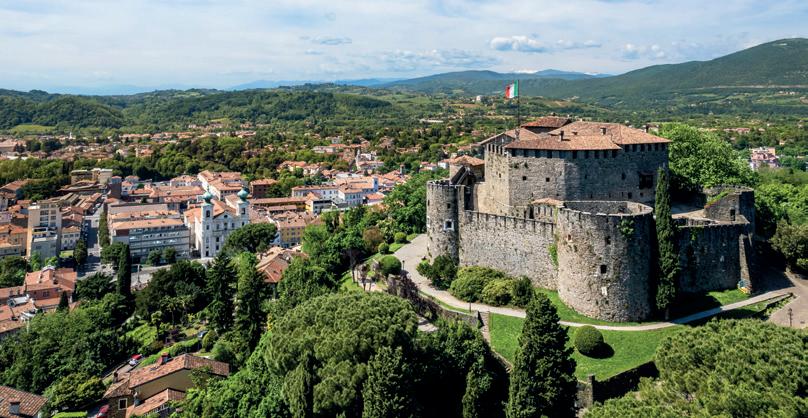
Gorizia, Castle
factories, the mill, the artisan workshops and the silk mill. Returning to the theme of the BORDER, we recommend a visit to the Lasciapassare/ Prepustnica Museum located at the Rafut border crossing, which gives voice to the stories and memories of the people who saw this boundary drawn by foreign hands in a distant part of the world, and who then suffered the effects and repercussions of the border in their daily lives. This checkpoint was first established when the new border between Italy and Yugoslavia was established after the 1947 Paris Treaty. Rafut takes its name from a variation of the German word “raff holz” (literally “fallen branches”), as it was customary for the townspeople to gather firewood on the nearby Rafut Hill. One of the many stories tied to the border is the famous case of a family whose house (in Italy) was separated from the cowshed (in Yugoslavia) by the Allies when they drew the border line with chalk, as evidenced by the famous
photograph of a cow with one leg in Italy and the other in Slovenia. A museum in Slovenia tells the story of how the border shaped the everyday lives of the people who lived there, what could be brought in or taken out, and what tricks were used to get certain products across. This is the Museum of Smuggling, in the Municipality of Nova Gorica. From the display windows of the exhibition, set up in the former barracks of the crossing, visitors can see women’s shoes with hollow heels and a banknote rolled up inside, bicycle tubes used as hiding places and bras with secret pockets. Also displayed on a wall is a newspaper page with the headline: “The crowd breaks through the border”. This is a first-hand account of what has been remembered as “Broom Sunday”.
It was August 13 1950, the Holy Year, at the Casa Rossa border crossing. After three years of darkness, it was decided that the border could be reopened, but only for one day. Thousands of people streamed into
Gorizia, pouring through the rather rudimentary Casa Rossa checkpoint. It was a spontaneous and peaceful invasion that forced its way through the initial controlled transit that had been granted. It was Sunday, but the Italians opened their shops. The town was alive again, people had no money and exchanged eggs and butter for the beautiful sorghum brooms that were nowhere to be found on the other side of the border. As darkness fell, the carts headed home. Families held up their brooms as if they were precious trophies.
Gorizia Infopoint Palazzo Paternolli, Piazza della Vittoria, 48 34170 Gorizia
Tel. +39 0481 535764 Cell. +39 335 1084763 info.gorizia@promoturismo.fvg.it
FVGcard Audio guides
Guided tours
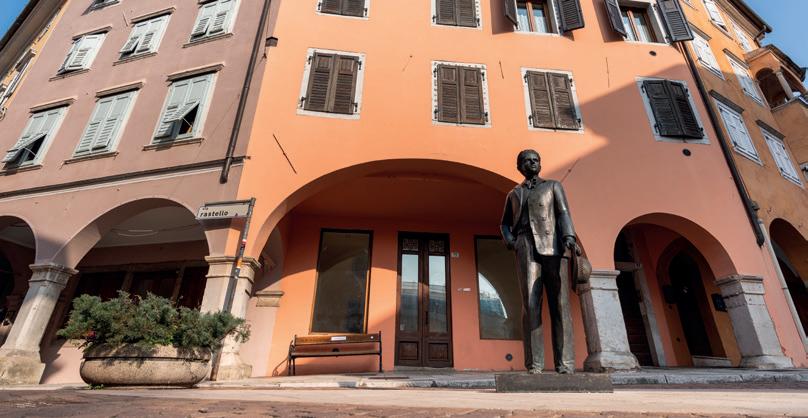
Gorizia, via Rastello
Darko Bratina, an intellectual and Senator in the Italian Parliament, who passed away in 1997, wrote: “Towards evening, as the sun went down, we returned to the city centre again, observing long lines of people neatly walking back towards the Casa Rossa border crossing. From time to time, out of the procession of people, brooms held firmly on their shoulders would appear from the crowd. All without the slightest incident. An extraordinary image. An unforgettable Sunday, one that has gone down in history and into our collective memory as Broom Sunday. For one day at least, the border was “swept away” and the brooms gave the moment a special and symbolic signature. I truly understood the tragedy of borders. From that moment on, I began to dream of the erasure of our border, also because I had never seen one in the past years of my very early childhood.”
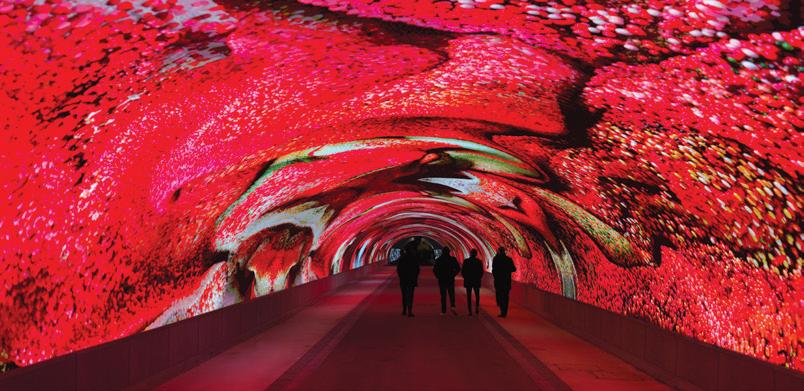
In Gorizia, Europe’s largest digital gallery can be visited
free of charge: the DIGITAL ART GALLERY. The historic Bombi Gallery, originally built to provide an easier connection between two districts of the city, was used for decades as a cycle and pedestrian passage by residents of Gorizia and Slovenia. Over time, however, the gallery gradually suffered from wear and deterioration. For this reason, on the occasion of GO2025 (Nova Gorica–Gorizia European Capital of Culture), it became the focus of an extensive urban regeneration and cultural innovation project, transforming it into the largest digital gallery in Europe. The technological heart of the DAG – Digital Art Gallery is its impressive LED Wall: a stateof-the-art curved installation covering approximately 1,000 m², capable of enveloping walls and ceiling in a continuous stretch of almost 100 metres in the central section of the gallery. The first installation to inaugurate the DAG is Data Tunnel by Refik Anadol, on view free of charge until 31 December 2026.
Refik Anadol has transformed the Digital Art Gallery into a living digital organism. His work generates real-time organic forms inspired by nature: botanical textures, oceanic movements and atmospheric rhythms become visual flows in constant metamorphosis. At the core of the project is the Large Nature Model, an artificial intelligence trained on millions of visual and sound data collected directly from the planet’s diverse ecosystems. These materials feed algorithms that do not merely imitate nature, but reveal dimensions normally invisible to the human eye. Data Tunnel is conceived as a sensory journey in which passing through the gallery becomes an immersive experience. Technology engages in dialogue with the site’s historic architecture, transforming a transitional space into one of contemplation. The images generated by artificial intelligence flow across the LED surfaces, making perceptible the hidden processes that
Gorizia, Digital Art Gallery
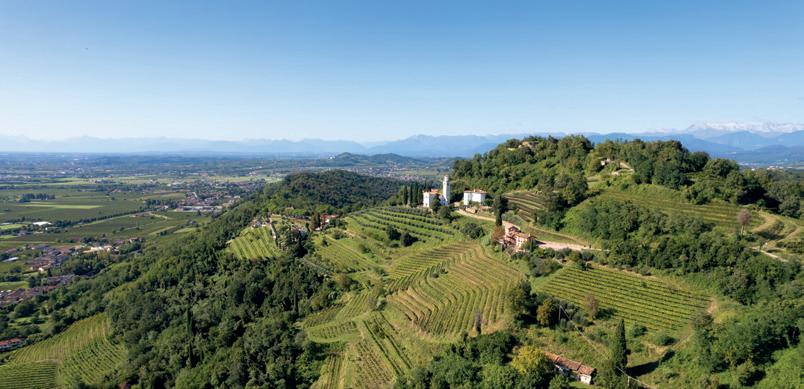
animate the natural world. In this way, the installation translates environmental data into an aesthetic experience accessible to all, creating a bridge between the memory of the place and technological innovation.
Piazza Transalpina today, it is the symbol of the removal of the borders between Italy and Slovenia. However, when the new border between Italy and Yugoslavia was drawn in 1947, the square was divided into two separate parts. Crossed by the so-called “Gorizia Wall”, the Transalpina Square became one of the symbols of the political and ideological division between Western and Eastern Europe during the years of the Cold War: until 1954 barbed wire ran along the boundary line and the entrance gate to the railway station did not open onto the square. The barbed wire was later replaced by a fence made up of a low wall with posts between which a wire mesh was stretched. At the end of the Second World War, the area of the
suburbs and the railway station overlooking the square were assigned to Yugoslavia, separated from the rest of Gorizia, which remained in Italy. Nova Gorica, or “New Gorizia”, was founded on the territory of Yugoslavia and built close to the border to demonstrate the success of the socialist model on which the country was rebuilt after the conflict.
Until 1991, the red star and the Serbo-Croatian inscription “Mi gradimo socijalizam” (We are building socialism) dominated the façade of the station.
It was only fifty years later, on May 1 2004, that the wall was torn down. In remembrance of the border that no longer exists, a plaque on the ground of the square traces the line that once separated the territories of Slovenia and Italy, so that it is now common for people to come here and literally “stand with one foot in Italy and one in Slovenia”, crossing from one country to the other without difficulty.
We return to Gorizia and climb up to the Castle to admire the
stunning and breathtaking panorama. From here you can see the profile of the gentle hills of Collio, a world-famous wineproducing area, the heart of which is Cormòns, a beautiful town in the Hapsburg style. Small, characteristic villages such as Dolegna del Collio, San Floriano and Savogna d’Isonzo frame this area of rare beauty, which can also be explored by hiring a bicycle.
A recommended itinerary touches the vineyards of Oslavia. Here, in the hilly area divided between the territory of Collio Goriziano and the Slovenian Goriska Brda, traces of the Great War can be seen (the Ossuary of Oslavia, the Brigata Azzurri Memorial Stone, the Obelisk of the Four Generals, the Grenadiers of Sardinia Memorial Stone) as well as a world of forests and woodland. Above all, the vineyards represent the excellence of Friuli Venezia Giulia, with seven local wineries producing Ribolla di Oslavia, an orange wine.
Cormòns
THE ISONZO RIVER AND PARKS
Isonzo for the Italians, Soča for the Slovenians. Its emerald-green waters unite two nations, speaking to us of the world of nature but also reminding us of war, conflict and the border of the past. Today, the Isonzo River is a great place for outdoor activities and has become a symbol of peace and fun.
THE VIATORI GARDEN
It was created in the mid-1970s by Luciano Viatori, a teacher and passionate botanist. Over time, the garden has been enriched with thousands of plants, especially azaleas.
THE PIUMA ISONZO PARK
It covers an area of 32 hectares between Mount Calvario and the right bank of the Isonzo River. The several paths of the Park guide visitors to the discovery of chestnut, oak, wild cherry and ash trees.
THE MEMORIAL PARK
Created to commemorate the victims of the First World War, it covers an area of about two and a half hectares in the city centre, along Corso Italia. The site was formerly used as a cemetery in the mid-19th century. The Park has several paths that, in the shade of the many trees, lead to the various monuments that have been placed there, including the
Gorizia is home to a series of great events focused on culture, food and wine.
The èSTORIA International Festival, a series of meetings aimed at hosting the most prestigious voices in the field of cultural and historical research and debate at an international level. The days of the Festival feature a series of book presentations, performances, exhibitions, screenings and interviews.
Lapidarium commemorating the people deported from Gorizia in May 1945
THE GARDENS OF CORSO VERDI
With the idea of making the city more welcoming and pleasant, this Park was created as early as 1863. The first public gardens of Gorizia are home to busts and inscriptions commemorating the great men and women of the city and its territory.
BASAGLIA PARK
Close to the border that once divided the city, it is now an oasis of green with no barriers to Slovenia, including the building of the former psychiatric hospital and the blocks that once housed the patients. It was here that Franco Basaglia, in the 1960s, launched, not without difficulty, the revolution that ultimately led to the closure of mental asylums in Italy.
THE GARDEN OF PALAZZO ATTEMS SANTA CROCE
A small, elegant corner of greenery in the city centre, but also a multifaceted botanical and educational itinerary. It is located beyond the gate of Palazzo Attems Santa Croce, a large but sober 18th-century building created by the architect Nicolò Pacassi, which today serves as the City Hall of Gorizia.
GUSTI DI FRONTIERA, a food and wine festival that showcases flavours and fragrances from all over the world.
Gorizia, but not only, is the realm of the PICCOLO OPERA FESTIVAL, an unmissable event for people who love the musical world of opera. The event takes place every summer between Friuli Venezia Giulia and Slovenia, in evocative castles, historical residences of the period and among the vineyards of the Collio and Brda wine districts.
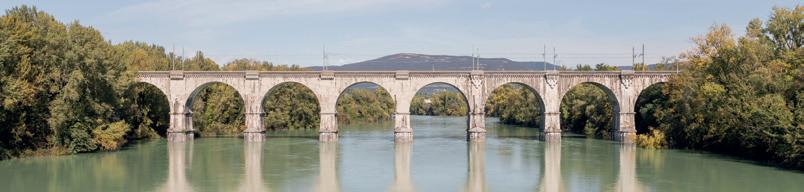
Gorizia, Isonzo river
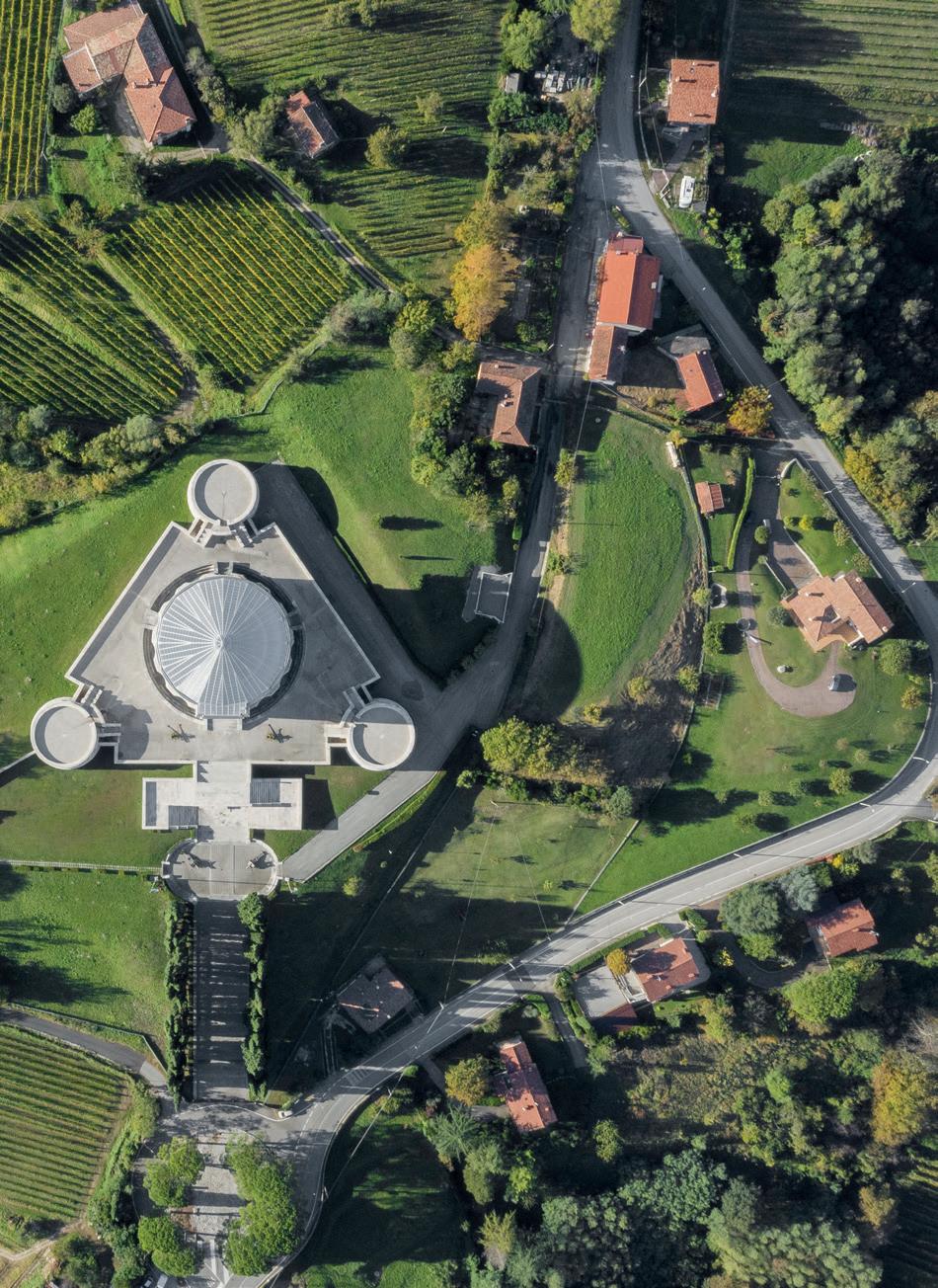
THE GREAT WAR
MOUNT CALVARIO
On the summit of this hillside, which overlooks the northern part of the city, there are several monuments and memorial stones commemorating the brigades and soldiers who fought here during the Great War. This is one of the few war graves left on the original site where they were built during the conflict. It is the funerary monument commemorating Scipio Slataper, writer and active member of Italian irredentism in Trieste, who lost his life here on Mount Calvario in December 1915.
OSSUARY OF OSLAVIA
The Memorial was built in 1938 at Height 153 of Mount Calvario and it preserves the remains of more than 57,000 soldiers who died in the various battles of the Great War that were fought in the area of Gorizia and Tolmino (now part of Slovenia). The Ossuary covers a triangular area. It consists of four towers connected by underground tunnels and crypts.
MOUNT SABOTIN, THE PEACE PARK
Located on the border between Friuli Venezia Giulia and Slovenia, today it is a cross-border Peace Park where traces of the many battles fought during the Great War between 1915 and 1916 are still clearly visible, including trenches, walkways and tunnels. A new visitor centre stands a short distance from the summit and provides an insight into the events that took place during the conflict.
TRIESTE
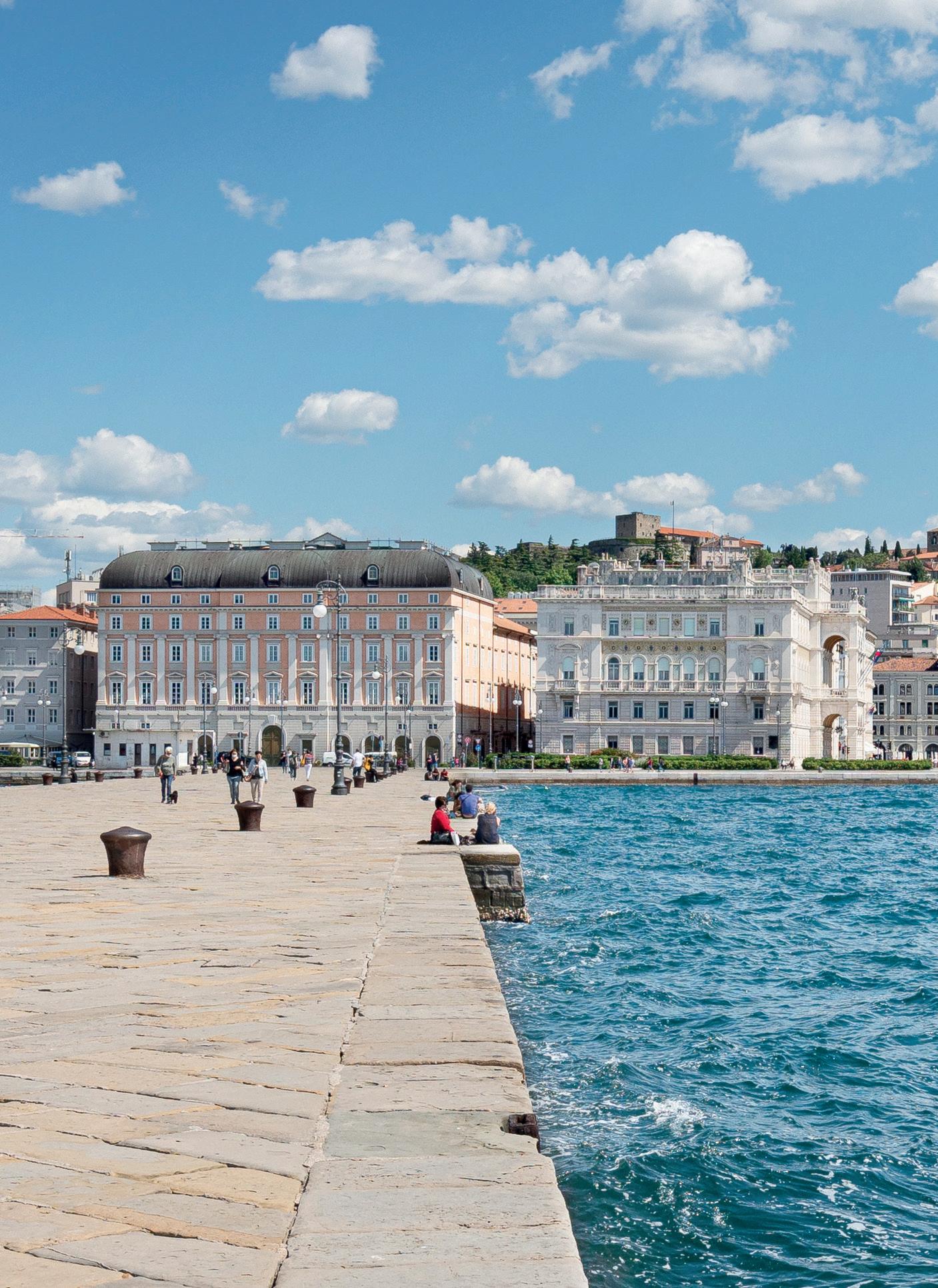
The soul of Trieste has a free spirit, and it is simply unmissable, as Jan (James) Morris tells us in “Trieste and the meaning of nowhere.” Morris, who lived here after serving as a British officer during World War II, writes: “... its visitors often leave it bewildered and, returning home, remember this city with a vague sense of mystery, as something that cannot be grasped.” And it is with this very breath that the city of the Bora wind and coffee will bewitch and seduce you.
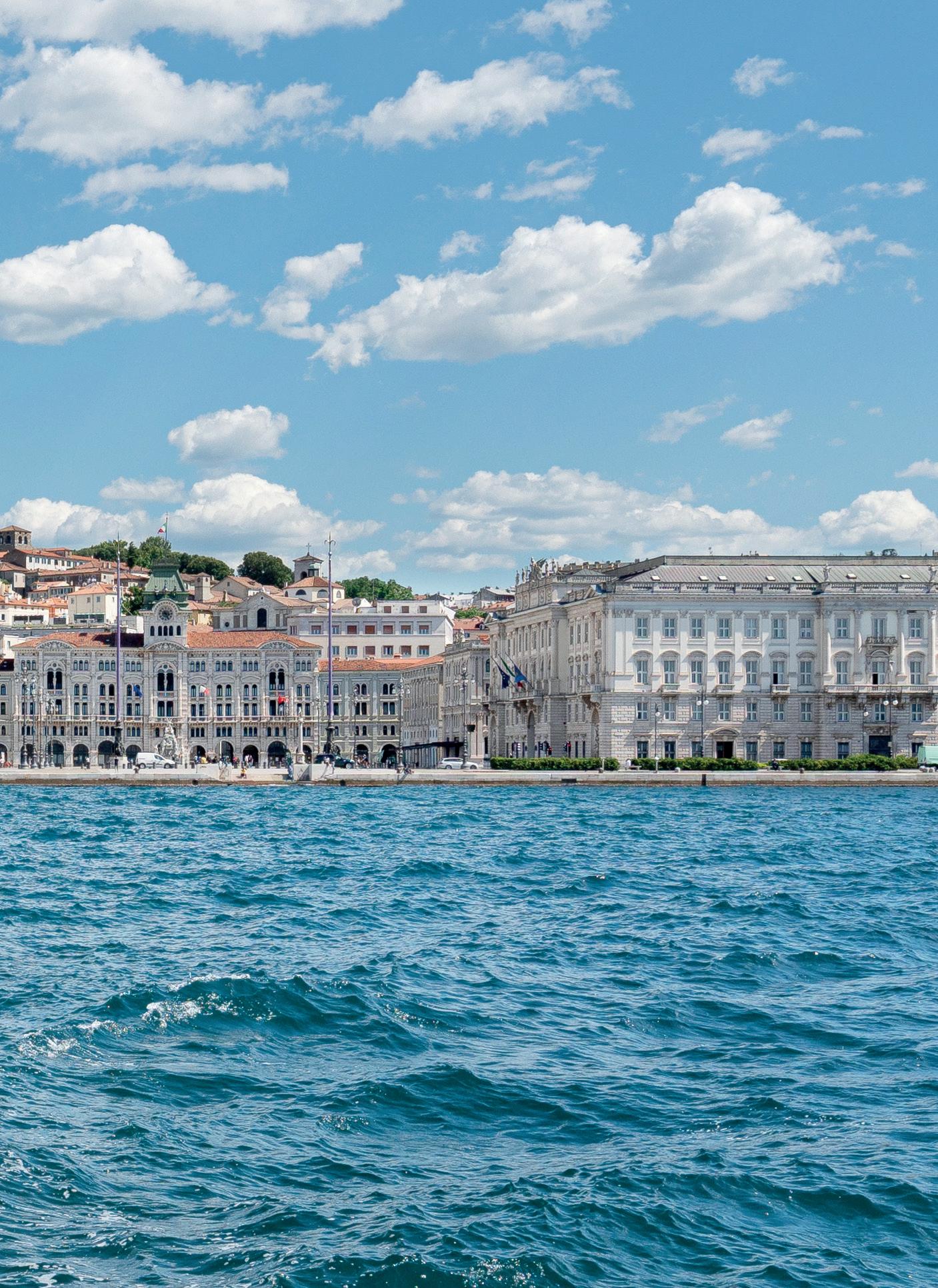
Trieste is one of the most cosmopolitan cities in Italy, facing the deep blue waters of the Adriatic Sea. At the crossroads of languages, peoples and religions, it is easy to feel how this place vibrates with the soul of both Central Europe and the Mediterranean. The heart of the city is its beautiful and symbolic square, dedicated today to the Unity of Italy. The buildings facing it are a perfect synthesis of the history of Trieste. The most spectacular side of the square is the one facing the sea, where the Molo Audace pier extends for more than two hundred metres.
From here we look across
Piazza Unità to the monumental buildings, the Greek Orthodox Church of San Niccolò and the Grand Canal, the centre of the district created by Maria Theresa of Austria, whose churches bear witness to the happy coexistence of many different religions. Trieste is also the city of coffee. A free port for imports since the 18th century, Trieste is still the most important centre for this trade in the Mediterranean. But coffee in Trieste also rhymes with literature: there are many beautiful literary cafés here, historical places with a retro charm, once frequented by great writers
such as James Joyce, Italo Svevo, Umberto Saba and many others, still loved by writers and intellectuals today. Taking a break in one of these historical cafés in Trieste is a ritual not to be missed, a moment that also requires a special jargon: here an espresso is called “nero”, but what is a “gocciato” or a “capo in b”? Discovering the answers will truly be a pleasure!
One of the most important industrial archaeological sites in Italy related to port activities covers an area of more than 600,000 square metres in the heart of the city. In the Old Port of Trieste, built between 1868 and 1887, among the hangars,
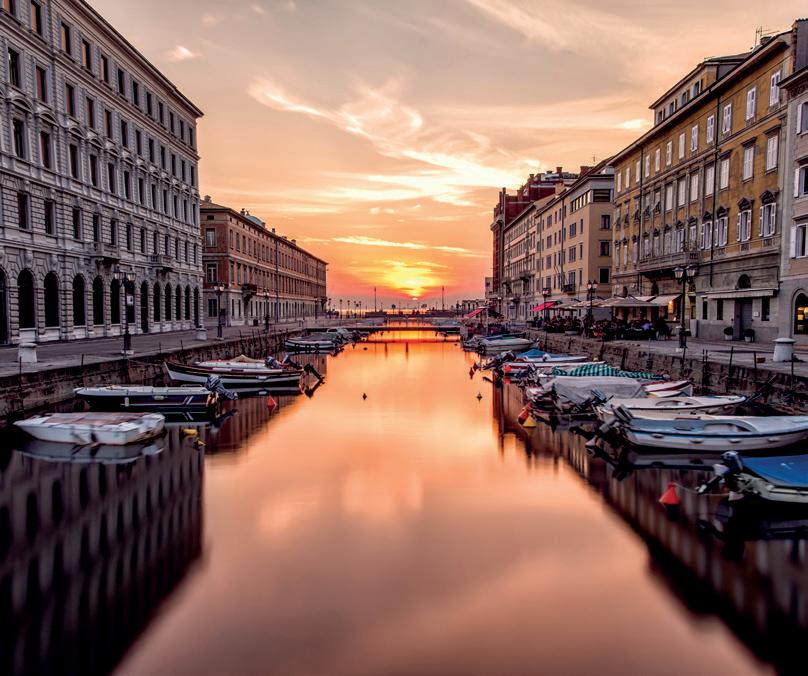
Canal Grande, Trieste
warehouses and cranes, the most technologically important building is the Hydrodynamic Power Station, an authentic masterpiece of industrial archaeology, which still preserves its top-of-the-range machinery (Breitfeld & Danek - Karolinenthal of Prague, 1891) for the production of the energy that once powered the mechanical equipment of the port. If you instead look towards the coastline from the Molo Audace pier, you will discover in the distance the white towers of the Miramare Castle, once the residence of Archduke Ferdinand Maximilian of Habsburg and his wife Charlotte of Belgium.
A visit to the Castle gives visitors the opportunity to admire the magnificent original furnishings of the state rooms and private apartments, which are lavishly decorated with works of art, furniture and precious objects. The Park of the Castle, which covers an area of 22 hectares, is also open to the public. The WWF Marine Nature Reserve is located nearby, a protected area where you can enjoy guided excursions on the seabed and visit the BIO.MA (the Biodiversitario Marino), is an immersive exhibition space to discover and learn about the depths of the sea and the many species that live there.
Trieste Infopoint
Via dell’Orologio, 1 angolo Piazza Unità d’Italia 34121 Trieste
Tel. +39 040 3478312
Cell. +39 335 7429440
info.trieste@promoturismo.fvg.it
Guided tours
Audio guides
FVGcard
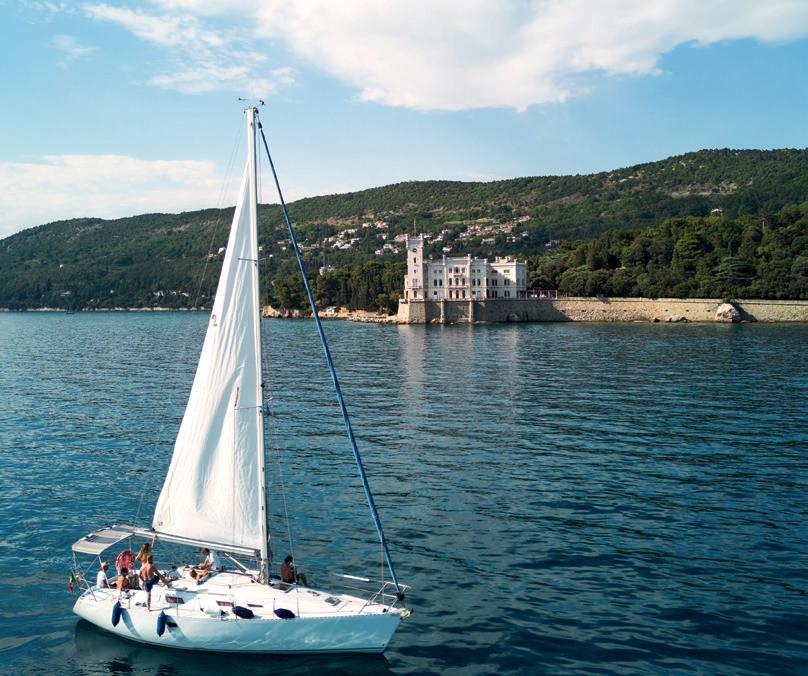
Castello di Miramare
Boat to Grado, Muggia, Sistiana and Miramare
TRIESTE AND ITS MUSEUMS *
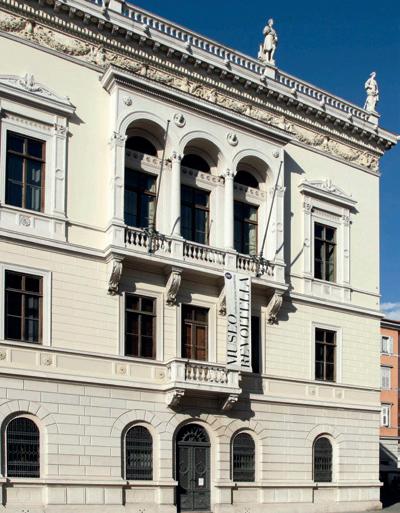
A city of a thousand faces, Trieste also tells its story through its museums, including the Revoltella Museum, an important gallery of modern art that is also an elegant Renaissance-style private residence that belonged to Baron Pasquale Revoltella, who donated it to the city to be used as a museum when he died in 1869.
The Carlo Schmidl Theatre Museum, which also houses the personal archive of Giorgio Strehler, presents the history of theatre and music in Trieste from the 18th century to the present day. The relationship of the city with great international literature is reflected in the Museums dedicated to Italo Svevo and James Joyce, who lived and worked in the city.
The trading tradition of Trieste and the great cultural exchanges that were intertwined with the shipping routes can be experienced in the magnificent Museum of Far Eastern Art, featuring a rich collection of masterpieces from China and Japan. The Museum of Natural History is one of
the oldest in Italy, with more than 2 million objects, mostly from the area between the Adriatic Sea and the Karst. It contains exhibits that are truly unique in the world: Antonio the dinosaur (Tethyshadros insularis), the largest and most complete specimen ever found in Italy, and the oldest example of dental care in the world: a human jawbone from over 6,400 years ago, with a beeswax filling.
Another interesting venue is the living history museum which documents the life of a 19th-century bourgeois family: we are at Villa Sartorio, which preserves original furnishings, a collection of valuable ceramics and rich art collections, including one of the most significant series of drawings by Giambattista Tiepolo in the world.
For children, a stop at the Immaginario Scientifico, an interactive, multimedia science museum, is definitely recommended.
Revoltella Museum ITS Arcademy
The turbulent history of the 20th century in Europe is captured by two sites that have both been declared National Monuments: the San Sabba Rice Mill and the Foiba di Basovizza.
The San Sabba Rice Mill, originally a rice processing plant, was the only concentration camp and crematorium located in Italy.
The Foiba of Basovizza is the main memorial site and symbol for the families of the people who were deported and who lost their lives in the concentration camps of Yugoslavia. It also commemorates the associations of exiled Italians from Istria, Rijeka and Dalmatia, who remember the victims of the violence of the Yugoslav communist partisans of Tito between 1943 and 1945. We have shared some insight on only some of the Museums in Trieste. There are also other very interesting venues: the San Giusto Castle, the Diego de Henriquez War Museum for Peace, the Carlo and Vera Wagner Museum of Jewish History, the Museum of the Greek Orthodox
Community, and the Sea Museum. And for the most curious, there is also an amazing museum dedicated to the iconic wind that blows through the city, the Bora
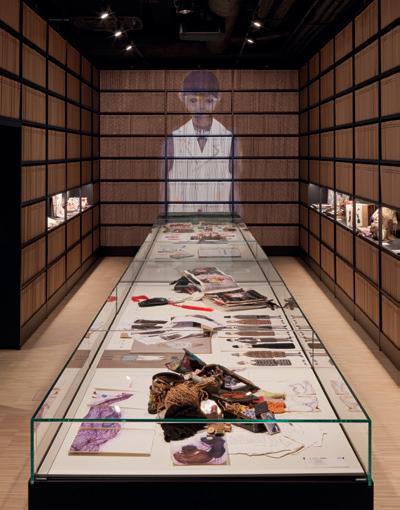
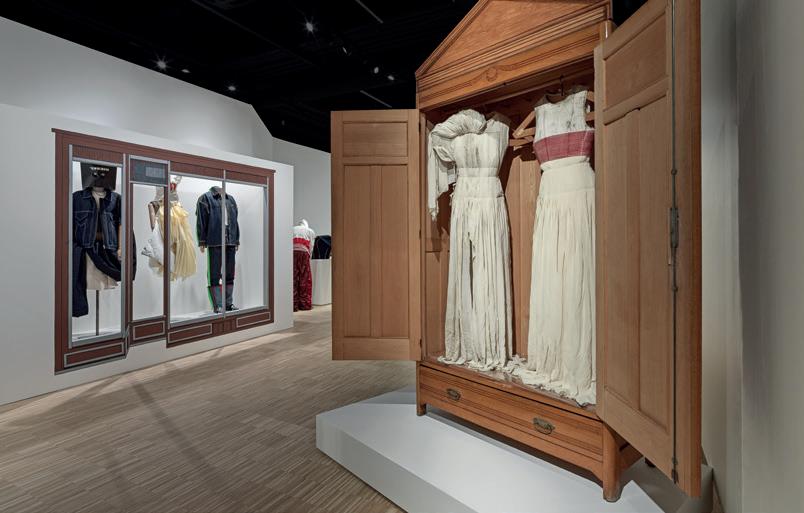
The ITS ARCADEMY - Museum of Art in Fashion is the first museum dedicated to Art in Fashion in the world. It is a special highlight for the city and an exclusive project for Italy and beyond. This is a place for everyone, where the future of design is transformed into an extraordinary source of inspiration for visitors of all ages. The exhibition features “The Many Lives of a Garment”, an inspiring visual journey curated by Olivier Saillard and Emanuele Coccia, as well as “Born to Create”, an insight into the brightest emerging talents in international design, including the winner of the GO! 2025 Borderless Award powered by Regione Friuli Venezia Giulia.
* This is a representative and non-exhaustive list of the museums in Trieste.
ITS Arcademy
Teatro Verdi
THE CITY AND ITS THEATRES
The Teatro Lirico Giuseppe Verdi Trieste Foundation
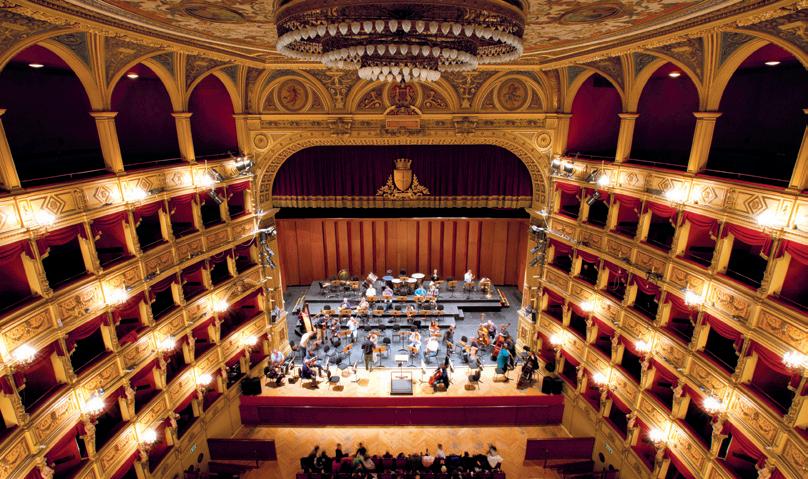
One of the oldest opera houses in activity today - it was originally built between 1798 and 1801 by the architects Giannantonio Selva (who also worked on the “La Fenice” opera house in Venice) and Matteo Pertsch - it was the first theatre in the world to be named after Giuseppe Verdi, just a few hours after his death. Giuseppe Verdi had a very special bond with this theatre. After the extraordinary public success of Nabucco in 1844, he composed two operas for this venue: “Il Corsaro” and “Stiffelio” (1850), the performance of which he personally supervised.
Politeama Rossetti
Founded in 1954, it is one of the oldest Permanent National Theatres and is considered one of the most prestigious and important public theatres in Italy. It is housed in the Politeama Rossetti, a building built in 1878 in the eclectic style. The Rossetti Theatre hosts all kinds of shows, alternating between drama, musicals, operettas, dance productions and recitals. It is dedicated to the memory
of Domenico Rossetti De Scander (17741842), patron, scholar, geographer and public prosecutor of Trieste.
Teatro Instabile Miela
The unique and fascinating story of the Teatro Miela began in 1988 when a group of friends who loved art decided to give life to a new and different space: an “artistically daring and lively container” where cinema, theatre, music, figurative art and video would intertwine. A dream that found its home in the halls of the former Aldebaran cinema, facing the Gulf of Trieste, which became the stage for theatre, music, concerts, cinema, festivals, exhibitions, conferences and congresses.
The Slovene Permanent Theatre
The Slovene Permanent Theatre, the only public theatre in Italy with a non-Italian language, is the most important cultural institution of the community of citizens from Slovenia living in the Provinces of Trieste, Gorizia and Udine. As a theatre on the border, it is an important bridge between the two cultural worlds that meet in Trieste, bridging the gap between Latin and Slavic cultures.
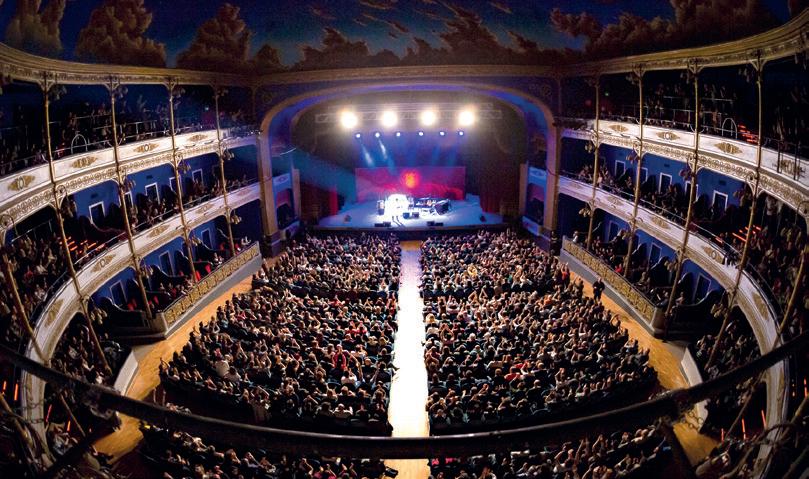
A curious, cultured and stimulating city, Trieste hosts some of the most prestigious international festivals.
The Trieste Film Festival is the most important event in Italy dedicated to Central and Eastern European cinematography, offering not only an overview of film productions from the area but also competitions and retrospective programmes.
The Trieste Science+Fiction Festival is dedicated to science fiction, fantasy and horror in film, television and new media productions. The festival features national and international premieres of the best productions in the genre.
The Maremetraggio - International ShorTS Film Festival celebrates the best of international short films. It includes a “Nuove Impronte” section dedicated to young Italian cinema and the new ShorTS Virtual Reality section dedicated to short films produced using Virtual Reality.
Trieste Next, the Festival of Scientific
Research, is a “showcase of innovation” and applied research, where scientists and entrepreneurs share their experiences and explain how new solutions can be developed thanks to the technological transfer of cutting-edge research.
The ITS Contest is one of the most important international platforms for emerging talent in fashion, accessories and jewellery design. Since 2002, the event has attracted visionary creatives, the press and key fashion and art personalities from around the world to the city.
BLOOMSDAY. In June, a red thread links Dublin to Trieste and many other cities around the world. It is Bloomsday, the annual celebration of June 16. It is the day in 1904 when all the events described in James Joyce’s masterpiece Ulysses took place.
* This is a representative and non-exhaustive list of festivals that take place in Trieste.
Politeama Rossetti
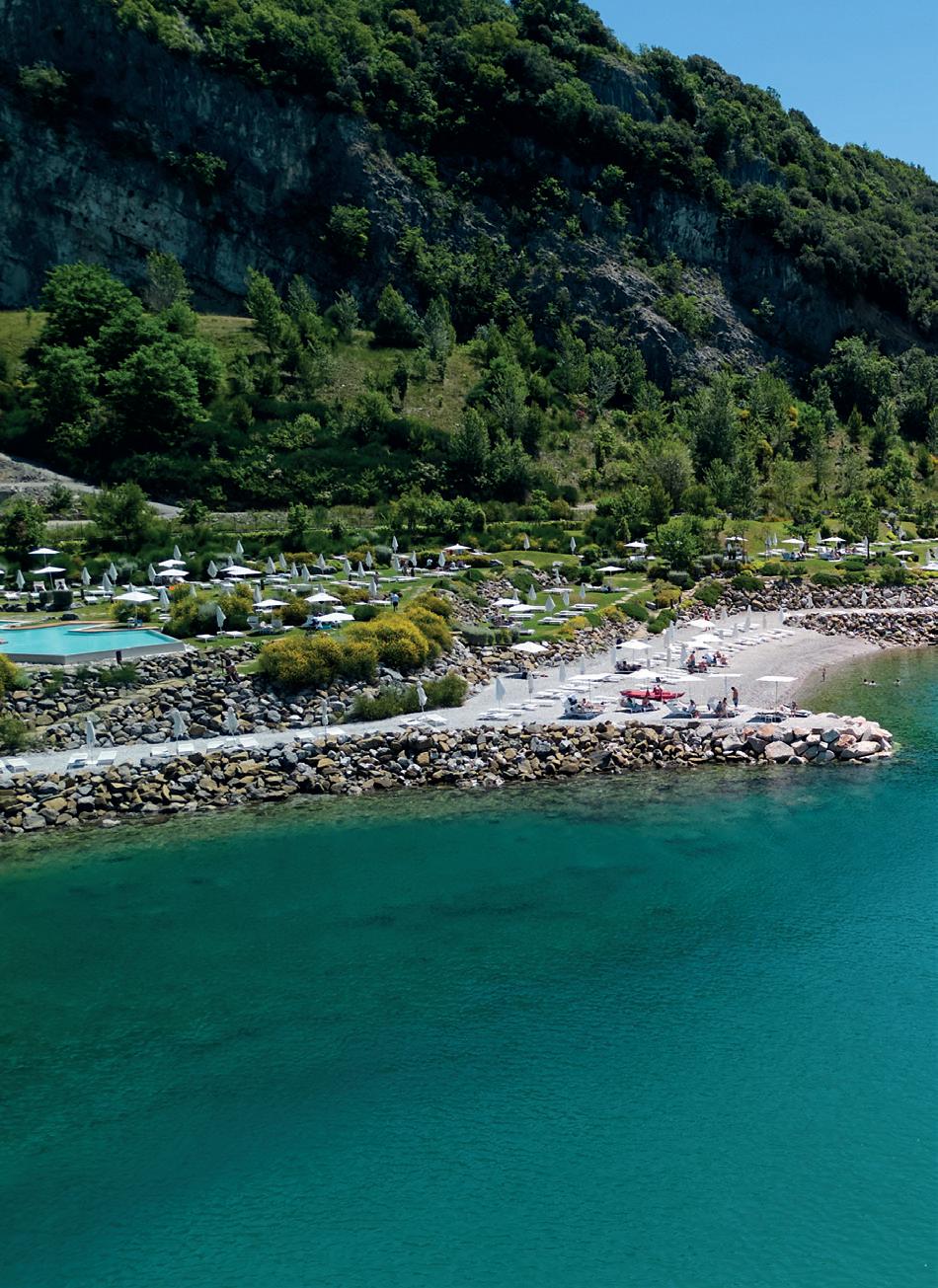
ON THE BEACH IN TRIESTE TRIESTE, THE CITY OF SCIENCE
You are spoilt for choice: the 15 kilometres of coastline from Duino to the city are a succession of reefs, coves, small pebble beaches and secluded coves. But you can also go to the seaside in Trieste: the most famous of the bathing establishments is the La Lanterna, which the people of Trieste call Pedocìn. It is the only beach in Europe that still enforces a strict separation between men and women with a wall. A wall that, in a city that has always welcomed and respected the diversity of languages, cultures and religions, is a symbol of freedom and certainly not of bigotry. “In the Pedocìn, you are actually always free to do what you want without upsetting anyone”, is what people say in Trieste.
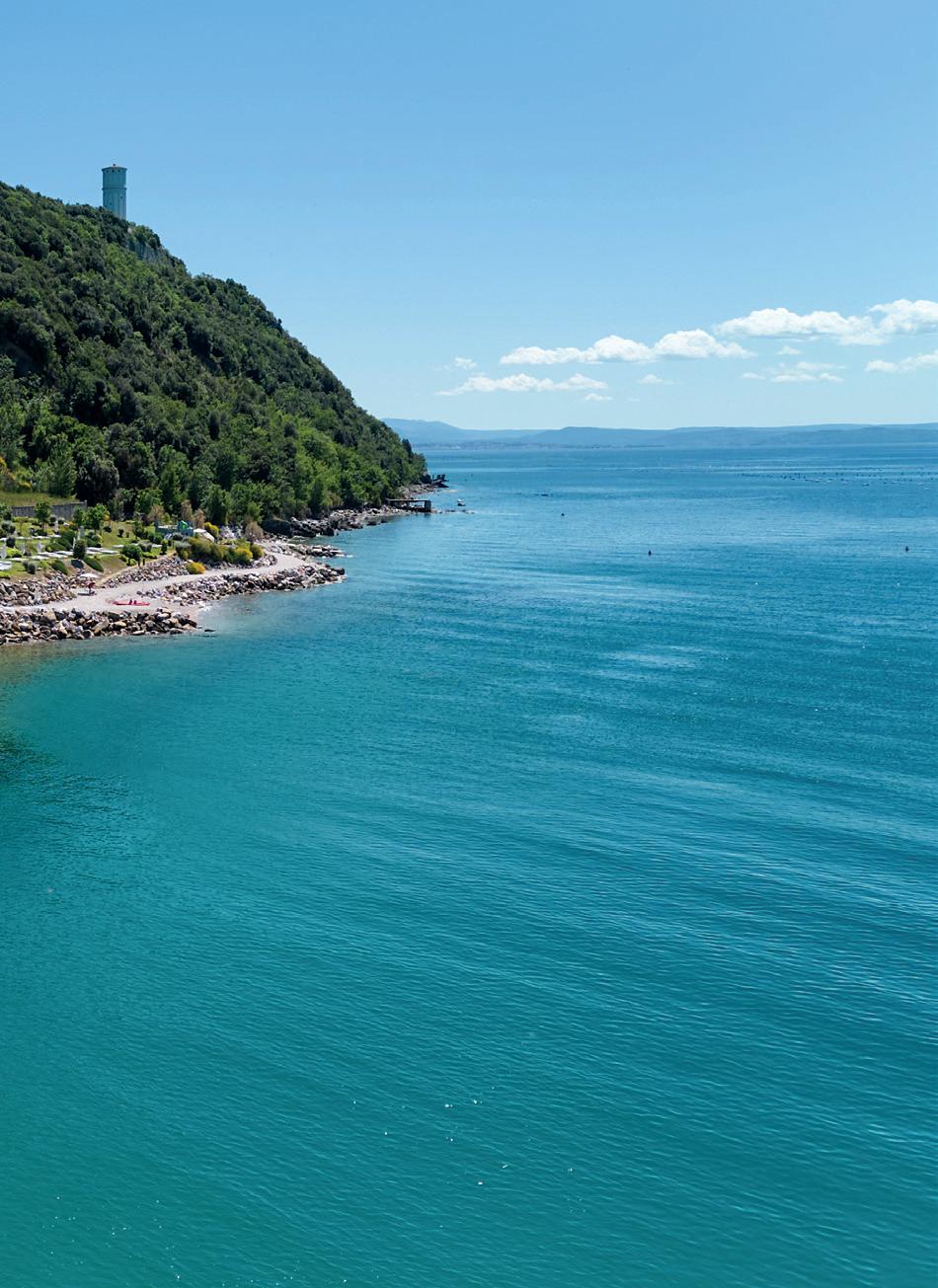
Trieste is the European city with the highest number of researchers. This scientific tradition dates back to 1753, when the Astronomical Observatory was founded, and was consolidated throughout the 20th century. The city is home to prestigious scientific institutions of international standing: the International Centre for Theoretical Physics in Miramare; the Area Science Park, one of the most important scientific centres in Europe, which includes the International Centre for Genetic Engineering and Biotechnology and the Elettra Sincrotrone Laboratory for the study of matter; the Observatory of Oceanography and Experimental Geophysics in Aurisina.
THE KARST PLATEAU
The area surrounding the city of Trieste, which extends almost to Gorizia and even to the south-west of Slovenia, is the Karst, a geographical region so exceptional that it has given its name to a natural phenomenon known throughout the world: Karstification.
Inhabited since the Bronze and Iron Ages (in fact, there are many prehistoric “Castellieri”, or fortified villages, in this area), the Karst is now home to a number of sites that bear witness to its history, which goes back thousands of years. Duino Castle stands high above the sea. A fascinating place, rich in history, it preserves many precious testimonies of the original
owners, the family of the Princely House of Thurn und Taxis. In the park of the Castle, there is a path that leads to a bunker built in 1943 by the German Kriegsmarine to defend the military base of Sistiana. The Castle was the home of the poet Rainer Maria Rilke for a very long time. A scenic hiking trail near the Duino Cliffs Nature Reserve, which connects Duino to Sistiana, is dedicated to him. Just a few kilometres from Trieste is a seaside town with Venetian roots: Muggia, with its small historical centre, a jewel of narrow streets and small squares, the precious Palazzo Comunale and the Gothic Duomo. Its Venetian past is also present in the dialect spoken
here and in its traditions: one of these is the famous Carnival of Muggia, where every year entertaining allegorical floats and thousands of characters parade through the narrow streets of the town.
Muggia is also home to one of the world’s largest collections dedicated to the myth of Ludwig van Beethoven: in the Carrino Family “Beethoven Library” visitors can admire at least 9,000 catalogued objects. Ex libris, medals, stamps, books, magazines, and of course music records and scores, all of which are strictly original, such as the first editions of Symphonies No. 5 and No. 9 of the Missa Solemnis.
An extraordinary site, surrounded by the natural
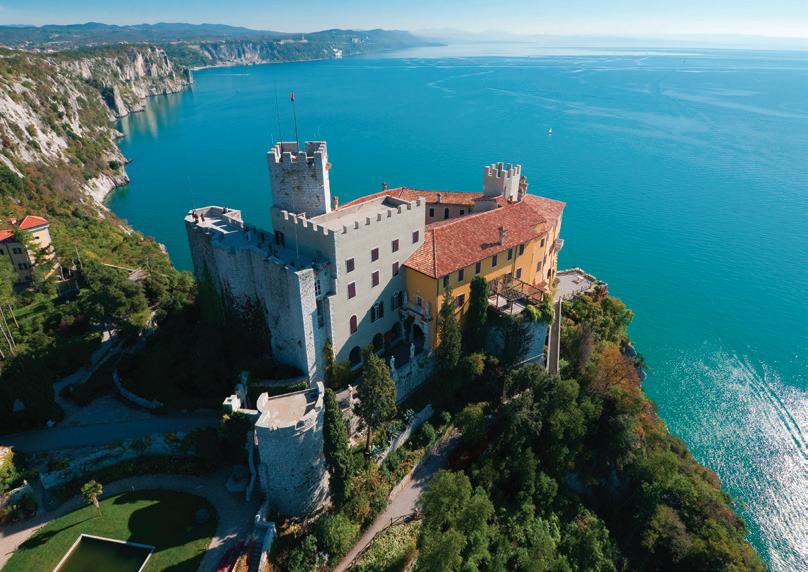
Duino Castle
beauty of the unspoilt Upper Adriatic coastline. This is Portopiccolo, an elegant village carved out of an ancient quarry. Here you will find a 5-star hotel, cafés, restaurants, shops, a beautiful beach, swimming pools and a large wellness & beauty spa overlooking the gulf.
Heading towards Gorizia, meanwhile, there are hundreds of traces and remains dating back to the Great War. The area between Gorizia and Monfalcone was the scene of the terrible Battles of the Isonzo, in which thousands of soldiers fought and lost their lives for more than two and a half years. Commemorating those tragic episodes are the Open-air Museums of Friuli Venezia Giulia. One of these memorial sites is the Open-air Museum of the Sinkhole of the 15th Marksmen Regiment Other monumental works include the Redipuglia War Memorial, which holds the remains of over 100,000 fallen soldiers.
Sgonico is home to the imposing Grotta Gigante cave, which can be visited all year round thanks to illuminated and equipped paths.
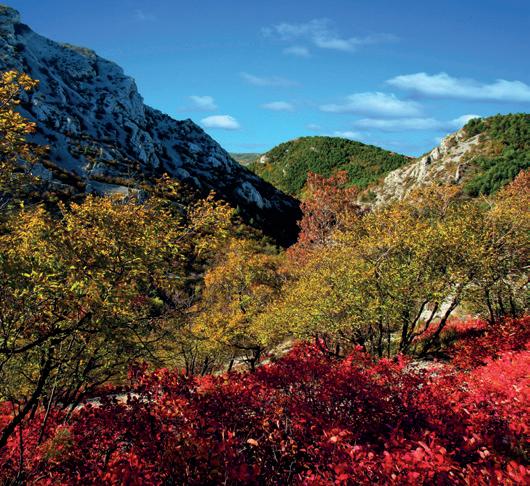
The Rosandra Torrent, the only surface watercourse in the Italian Karst, gives its name to the Rosandra Valley, a nature reserve of outstanding importance in terms of botanical and wildlife diversity. A popular destination for hikers, it is also the subject of speleological explorations because of the presence of a large number of caves and, above all, a rock-climbing gym.
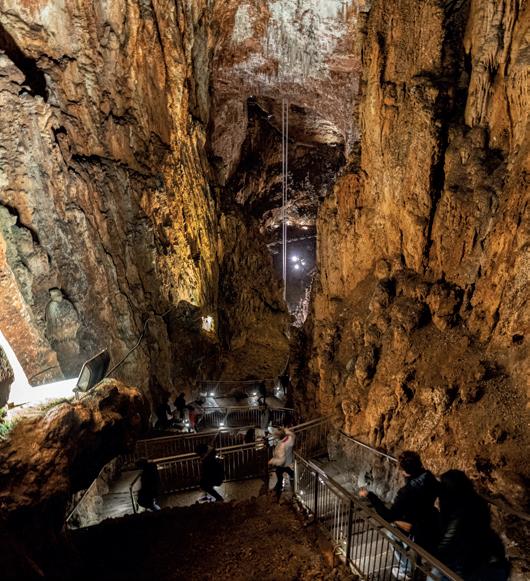
Grotta Gigante
Val Rosandra
THE BEACHES AND THE LAGOON
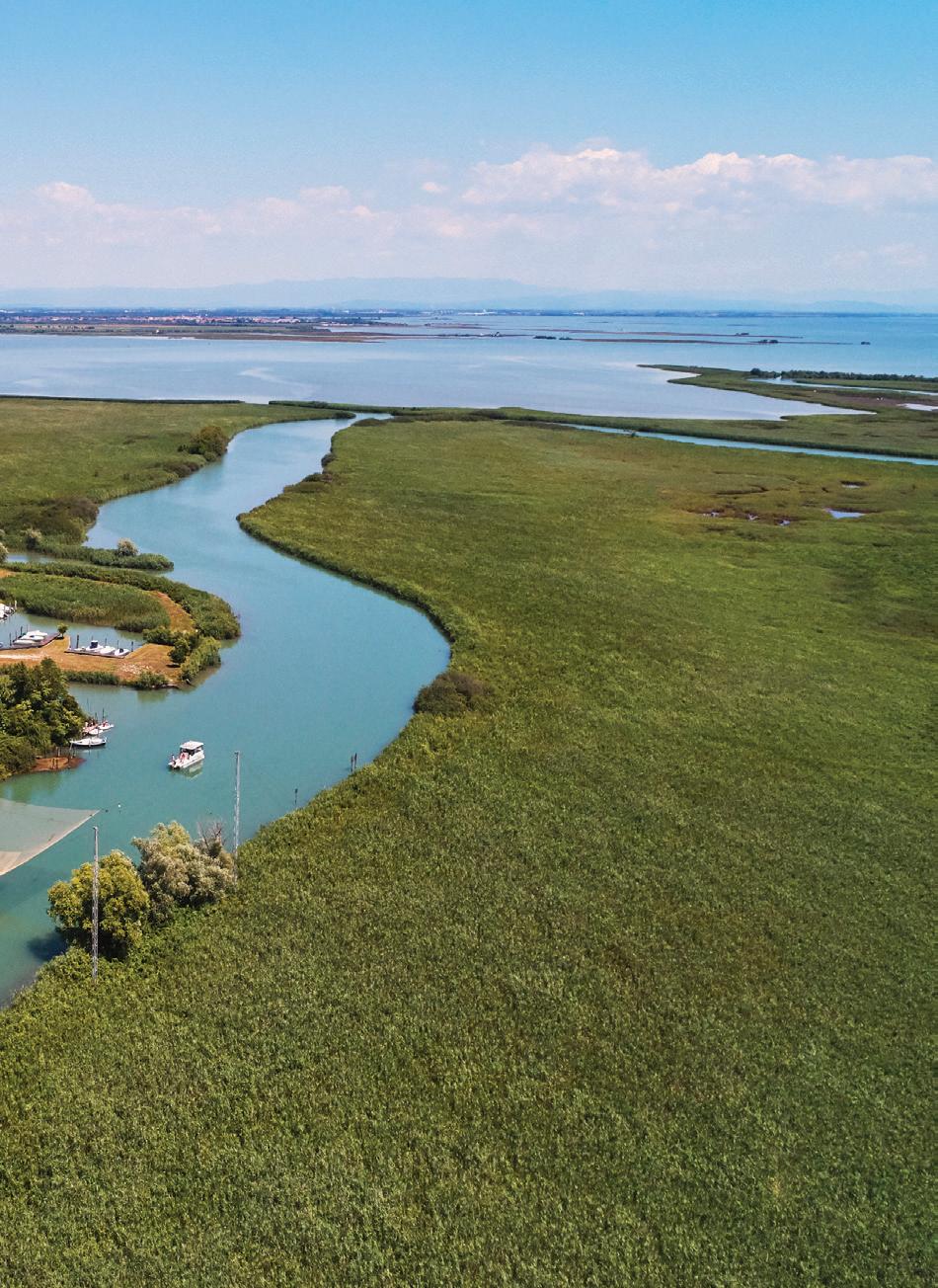
“The lagoon is also stillness, slowing down, inertia, lazy and relaxed abandonment, silence in which we gradually learn to distinguish the tiniest nuances of sound, hours that pass like clouds, aimless and without purpose: this is life, not crushed by the grip of things that must be done...”
(Microcosmi, Claudio Magris).
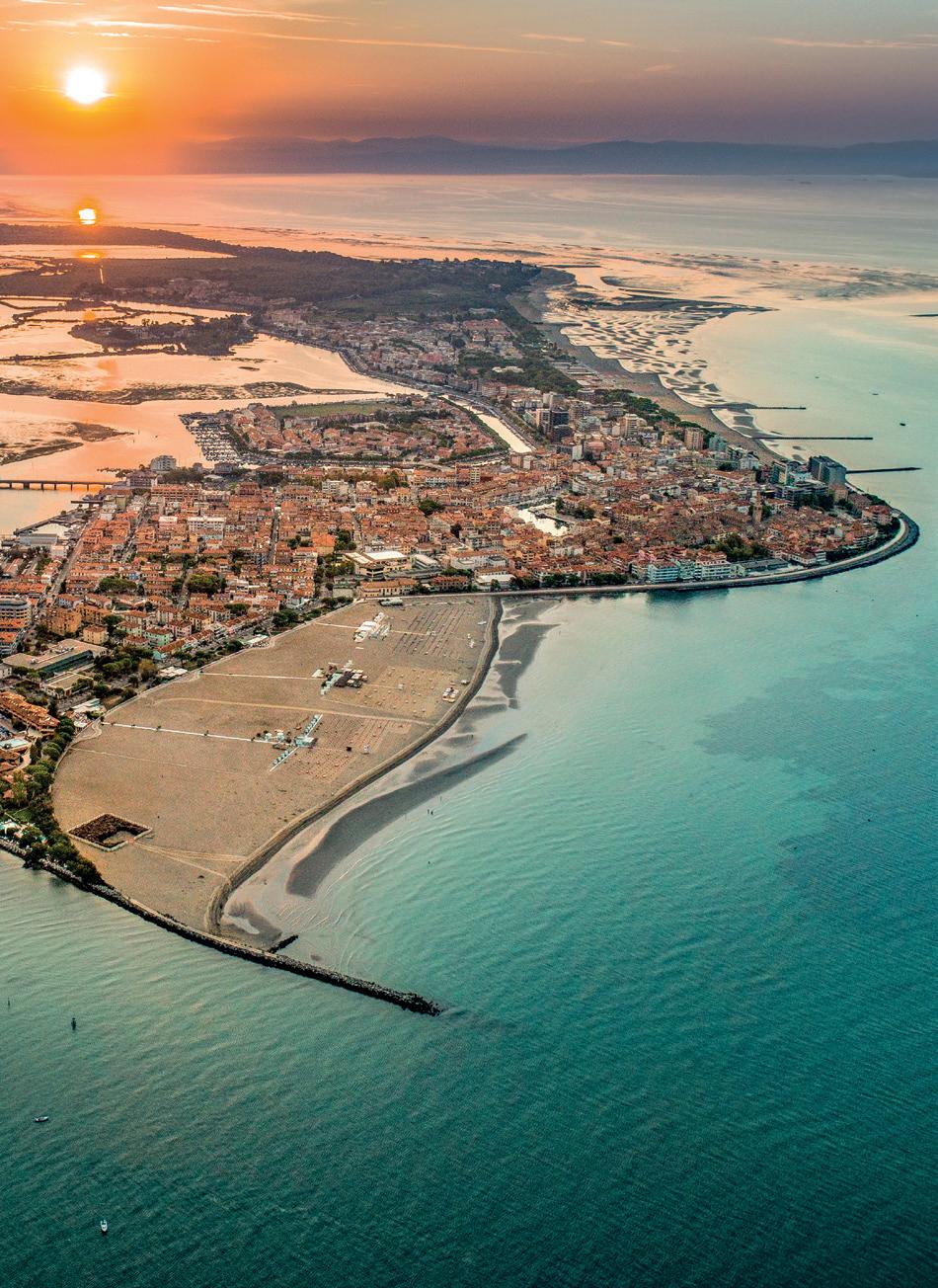
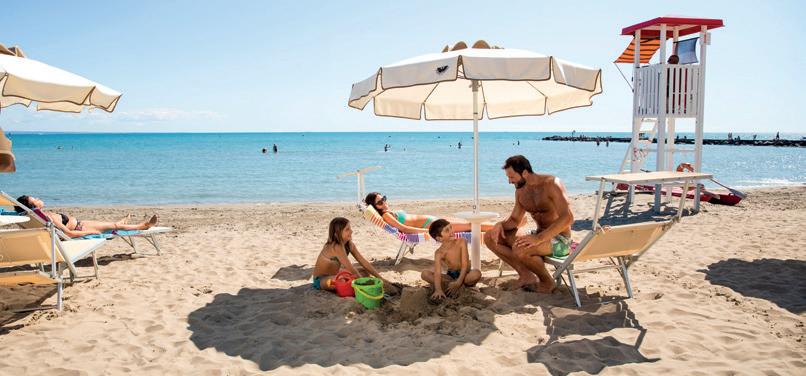
Today Grado is a very popular seaside resort: well-equipped beaches offer moments of relaxation and fun for both adults and children. The shallow waters make the coastline of Grado particularly suitable for families. An efficient network of cycle paths allows pleasant excursions inland. For those seeking relaxation, wellbeing, and renewal, the renowned marine thermal baths are the ideal place where health and beauty come together in an atmosphere of complete tranquility.
GRADO
Grado is an elegant seaside town whose Venetian charm unfolds in the small squares and alleys overlooked by the picturesque houses of this fishing community. In the old town, in the Campo dei Patriarchi square, the Basilica of Santa Eufemia and the adjacent, older Basilica of Santa Maria delle Grazie dominate the scene. Grado is known as the Island of the Sun, because its three kilometres of south-facing beach are never in the shade and also because, thanks to its very special microclimate, the sun is always shining here. A visit to the Museum of Underwater Archaeology is unmissable, where the Julia Felix, a Roman ship that sank off the coast of Grado, is preserved. Parts of the hull and the cargo of goods it was carrying are on display. For those who wish to discover the most historic and precious side of Grado, among art, faith, and tradition, the Civic Museum of the Treasure of Grado is also open to visitors.
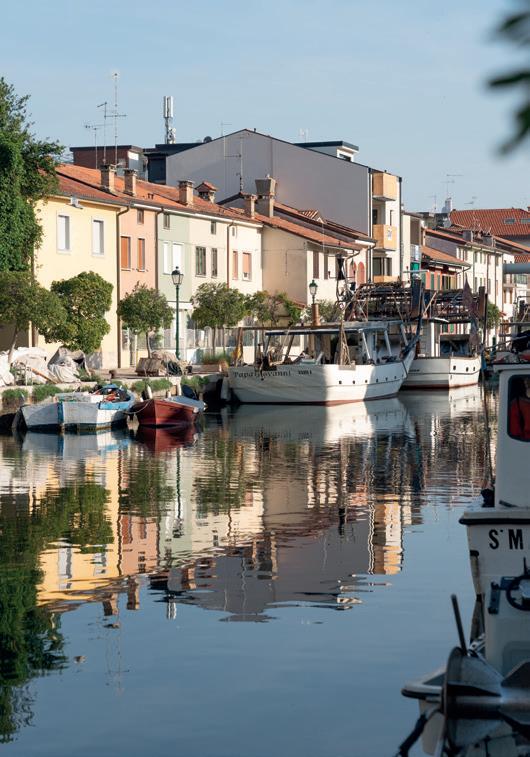
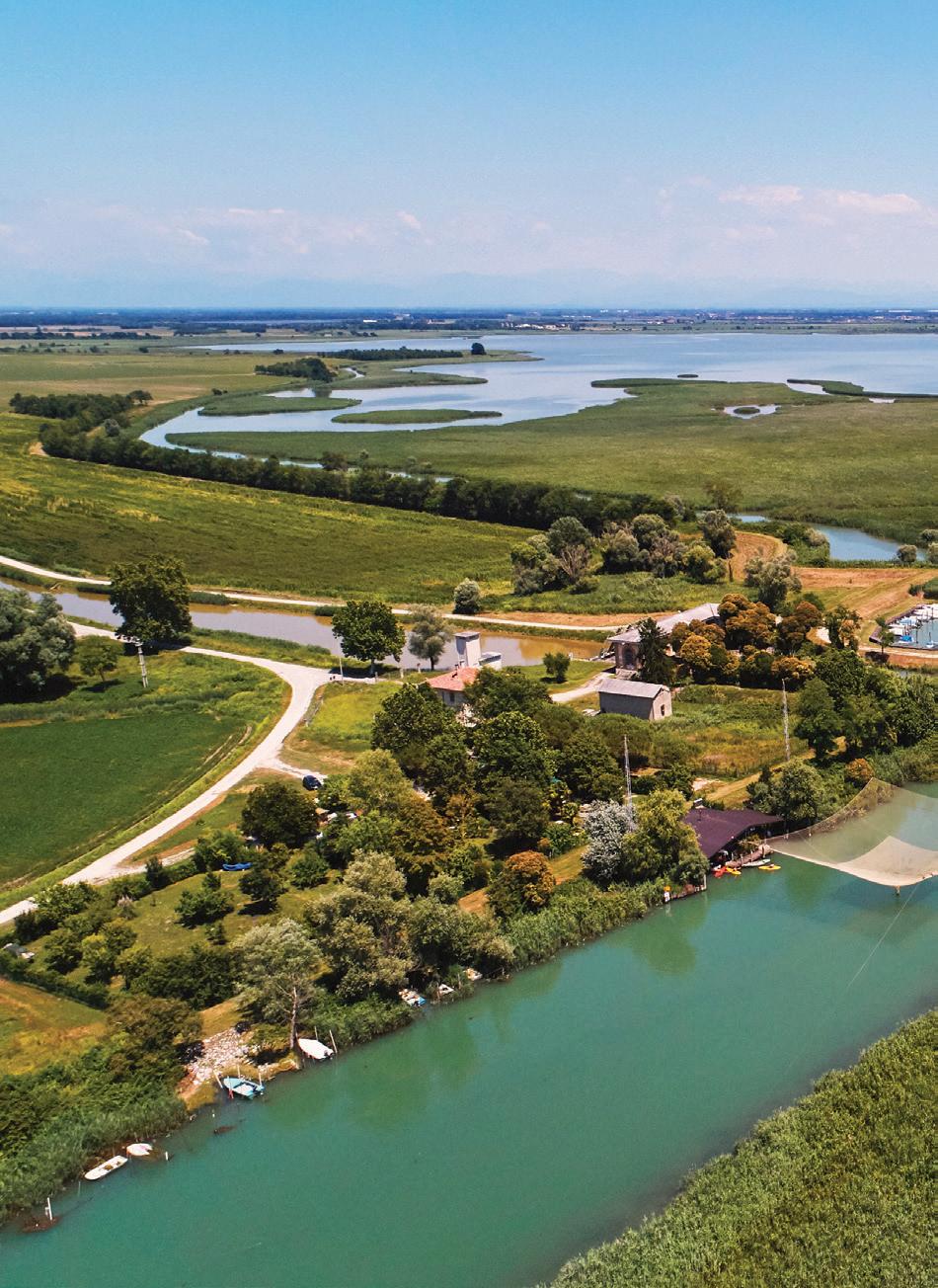
Grado, port canal
Grado, beach
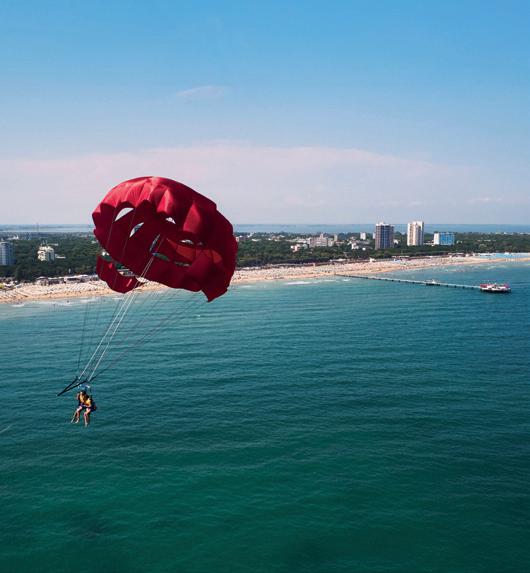
LIGNANO SABBIADORO
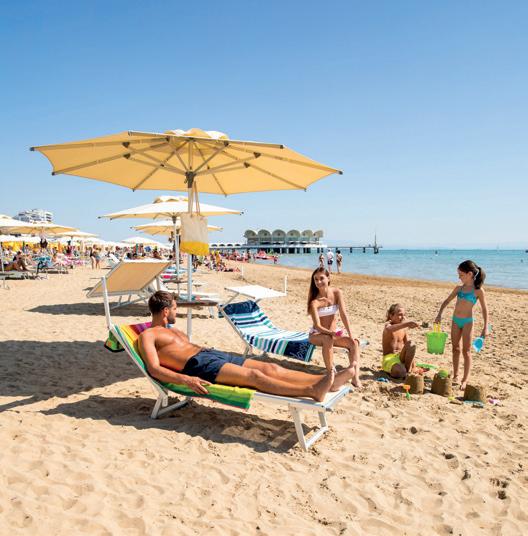
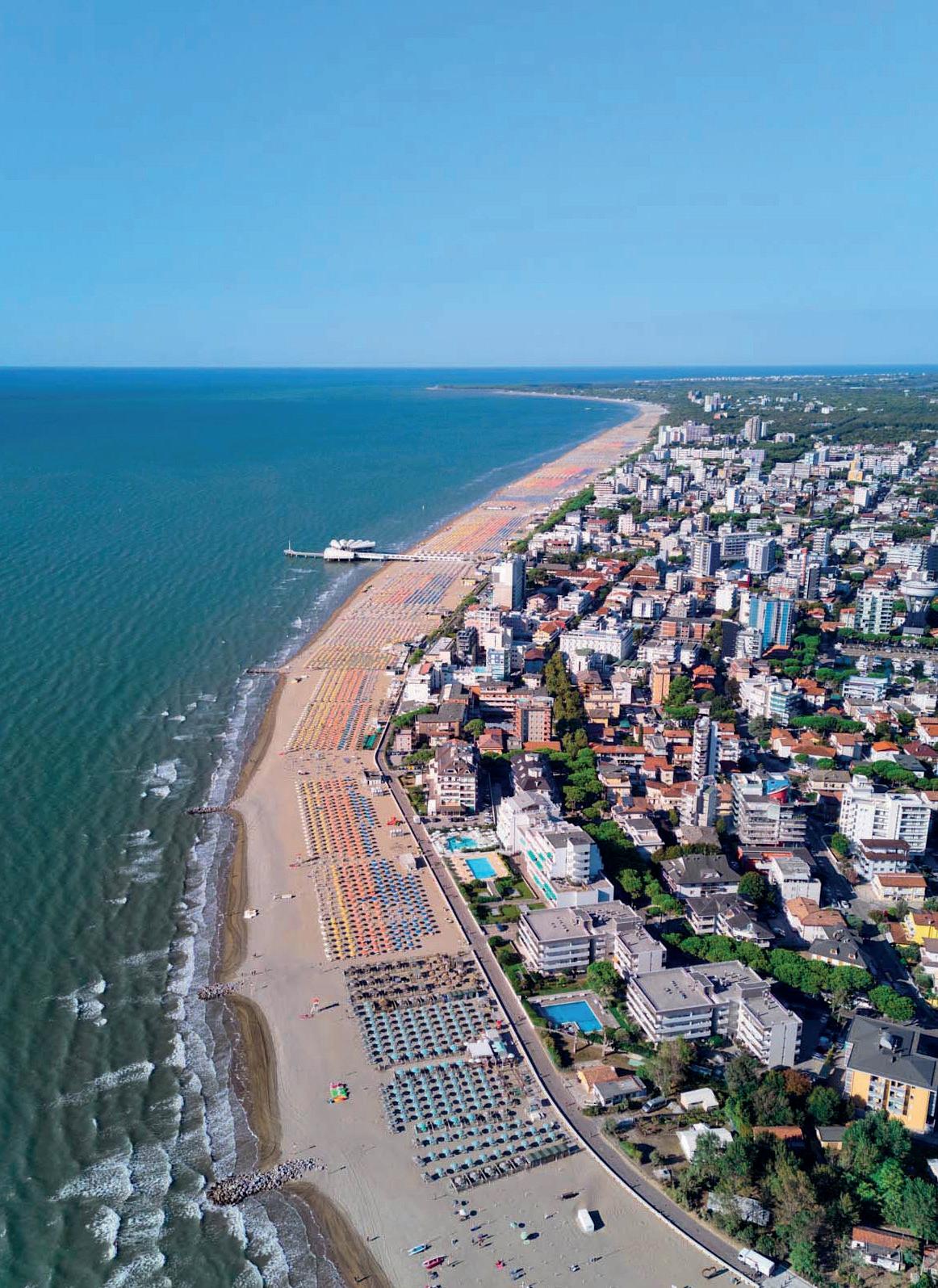
A long stretch of golden beach, no less than 8 kilometres long, is the calling card of Lignano Sabbiadoro, one of the most renowned Italian seaside resorts, famous for the entertainment and nightlife that enlivens the city throughout the summer. Actually, the area has three souls: Sabbiadoro, perfect for shopping and nightlife; Pineta, designed for a quiet holiday immersed in greenery; and Riviera, a relaxing area surrounded by a rich vegetation of maritime pines. The Marano Lagoon, opposite Lignano, is an unspoilt area of sandbanks, canals and islets with typical fishermen’s huts that Ernest Hemingway fell in love with sixty years ago. The traditional effervescent spirit of the nightlife in Lignano and the extensive array of fashionable shops and boutiques make the resort a favourite destination for young tourists and shoppers. At the same time, the range of accommodation facilities with services designed specifically for families, the careful programme of animation activities on the beaches, and the calm sea with its shallow waters make Lignano Sabbiadoro a perfect destination for family tourism as well.
Children and adults alike can enjoy the many theme parks with attractions for all tastes.
Lignano Sabbiadoro, beach
Lignano Sabbiadoro
From Grado, Lignano Sabbiadoro and Marano Lagunare, there are many excursions by motorboat to admire the pristine nature of this area from up close. Bicycle lovers can also choose the Bike & Boat package to pedal across the territory on the cycle routes that wind along the coast and inland.
THE LAGOON AND THE NATURE RESERVES
The lagoon is a vast ecosystem between the plain and the sea. It is a world of islets and channels that can be discovered on a chartered boat or in a kayak for a solitary exploration of this precious microcosm, guarded by the “Casoni”, the fishermen’s huts with their typical thatched roofs. A natural habitat with a very delicate balance, it is
protected by several nature reserves, each with its own specific characteristics. The first, from the west, is the River Stella Mouth Reserve, which covers the entire delta of the river of the same name and can only be visited by boat, thanks to a very efficient tourist motorboat service. The next destination is the Canal Novo Valley Nature Reserve,
a very complex natural system of wetlands and lagoons with varying degrees of salinity. It is located near the small and picturesque fishing village of Marano Lagunare, which is also home to the Visitor Centre of the Reserve. The Cavanata Valley Nature Reserve, located in the easternmost section of the Grado lagoon, is reached by travelling along scenic
cycle routes that start in town. Special itineraries allow visitors to observe various species of water birds in their natural habitat, including hundreds of pink flamingos. The famous Sanctuary of Barbana, one of the oldest shrines in the world dedicated to the Virgin Mary, is located on one of the many islands in the Grado Lagoon and is a popular tourist and
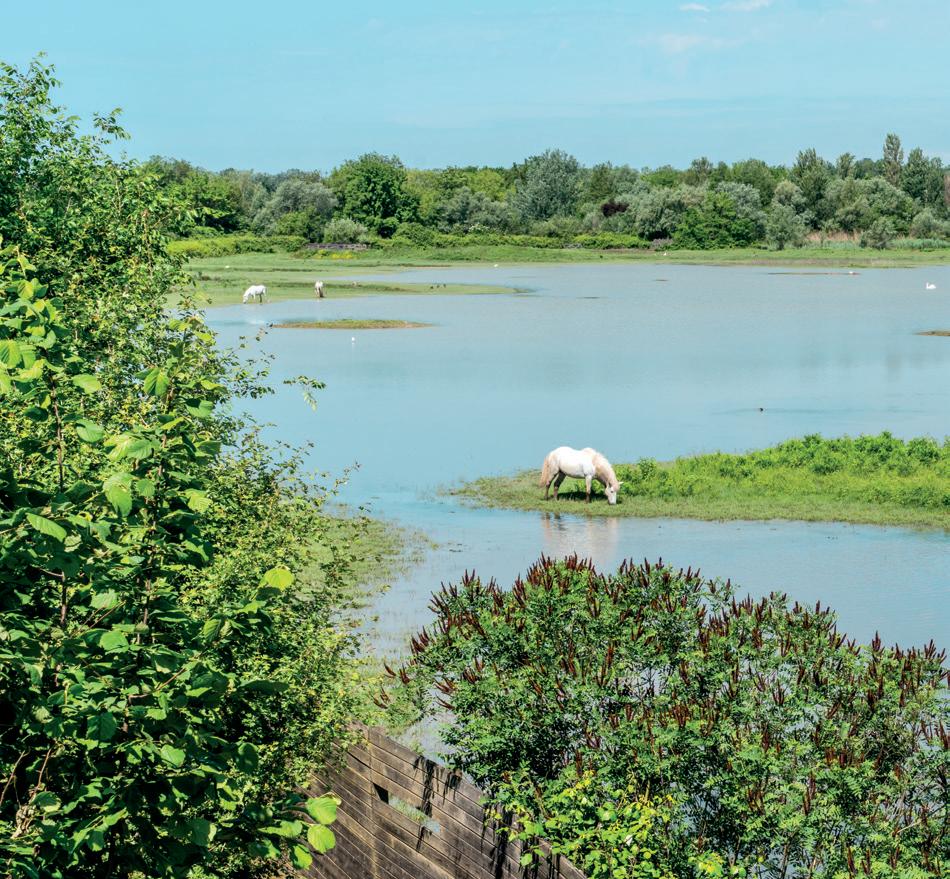
pilgrimage destination. A ferry service that is in operation all year round connects the mainland with the island of Barbana. Lastly, beyond the area of the Lagoon itself, the Isonzo River Mouth - Cona Island Nature Reserve is the ideal habitat for many animal species, especially resident and migratory birds. The integrity of the area is guaranteed
by constant environmental measures that are performed there, including by the animals themselves, such as the Camargue horses that roam freely in the Reserve and help to control the development of the grasslands.
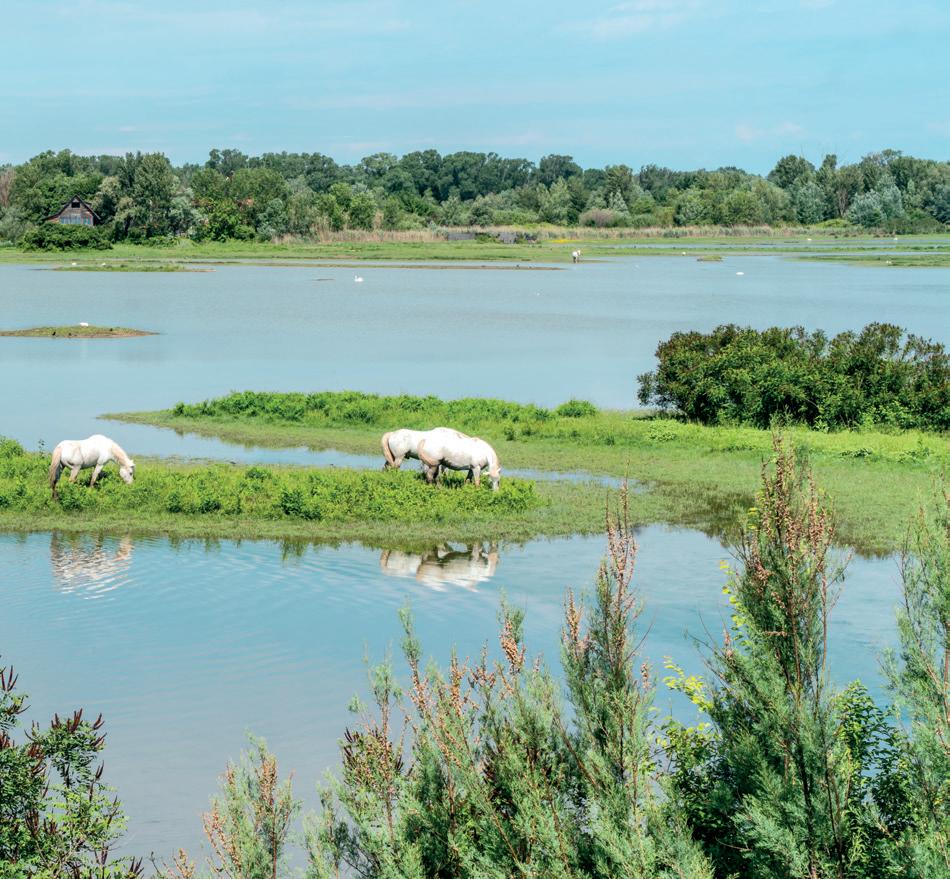
Cona Island
THE UNESCO WORLD HERITAGE SITES
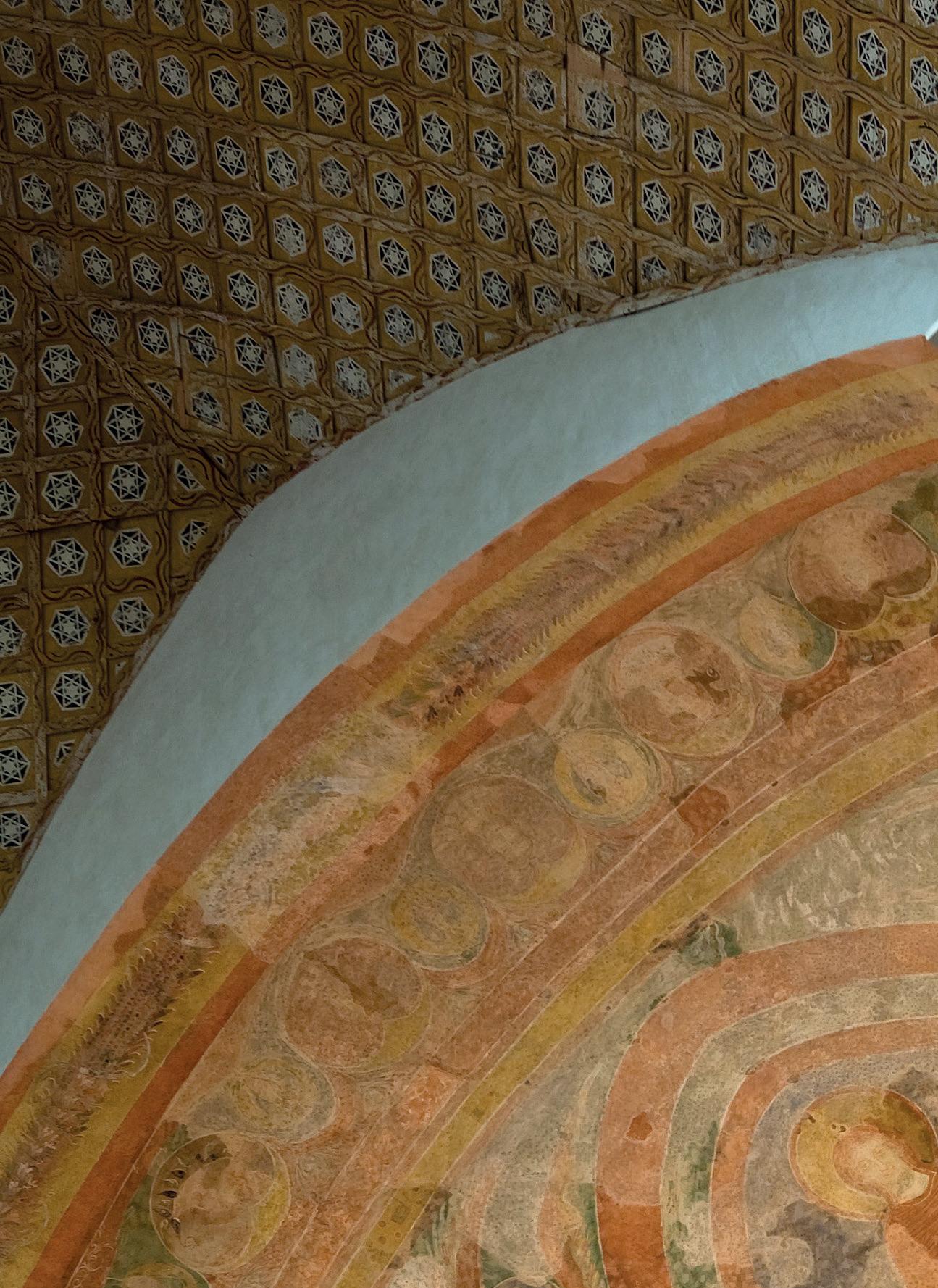
There are no less than five UNESCO World Heritage sites in the Region of Friuli Venezia Giulia: the archaeological area and patriarchal Basilica of Aquileia, the Venetian fortress of Palmanova, the Lombard site of Cividale del Friuli, the pile-dwelling site of Palù di Livenza and the Dolomites in the Provinces of Pordenone and Udine
AQUILEIA
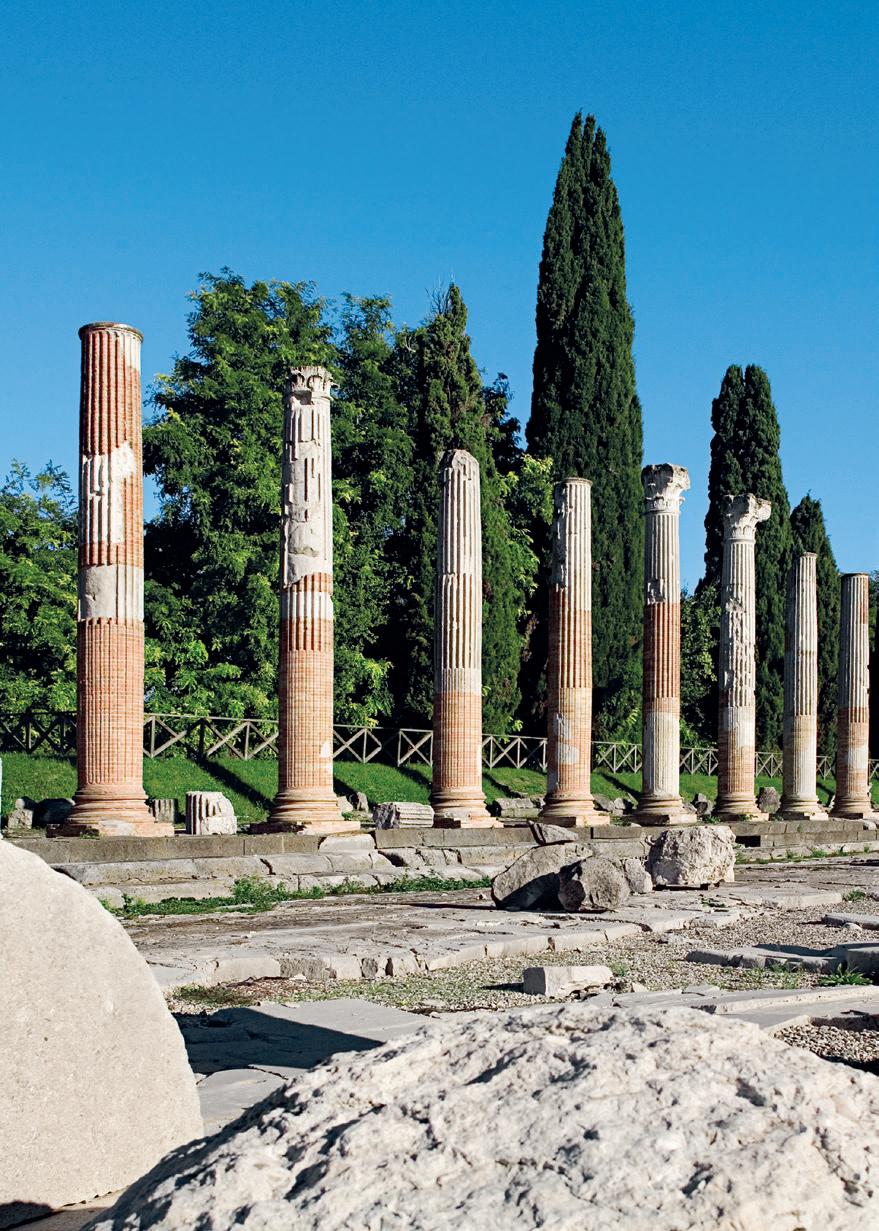
Aquileia, Foro Romano
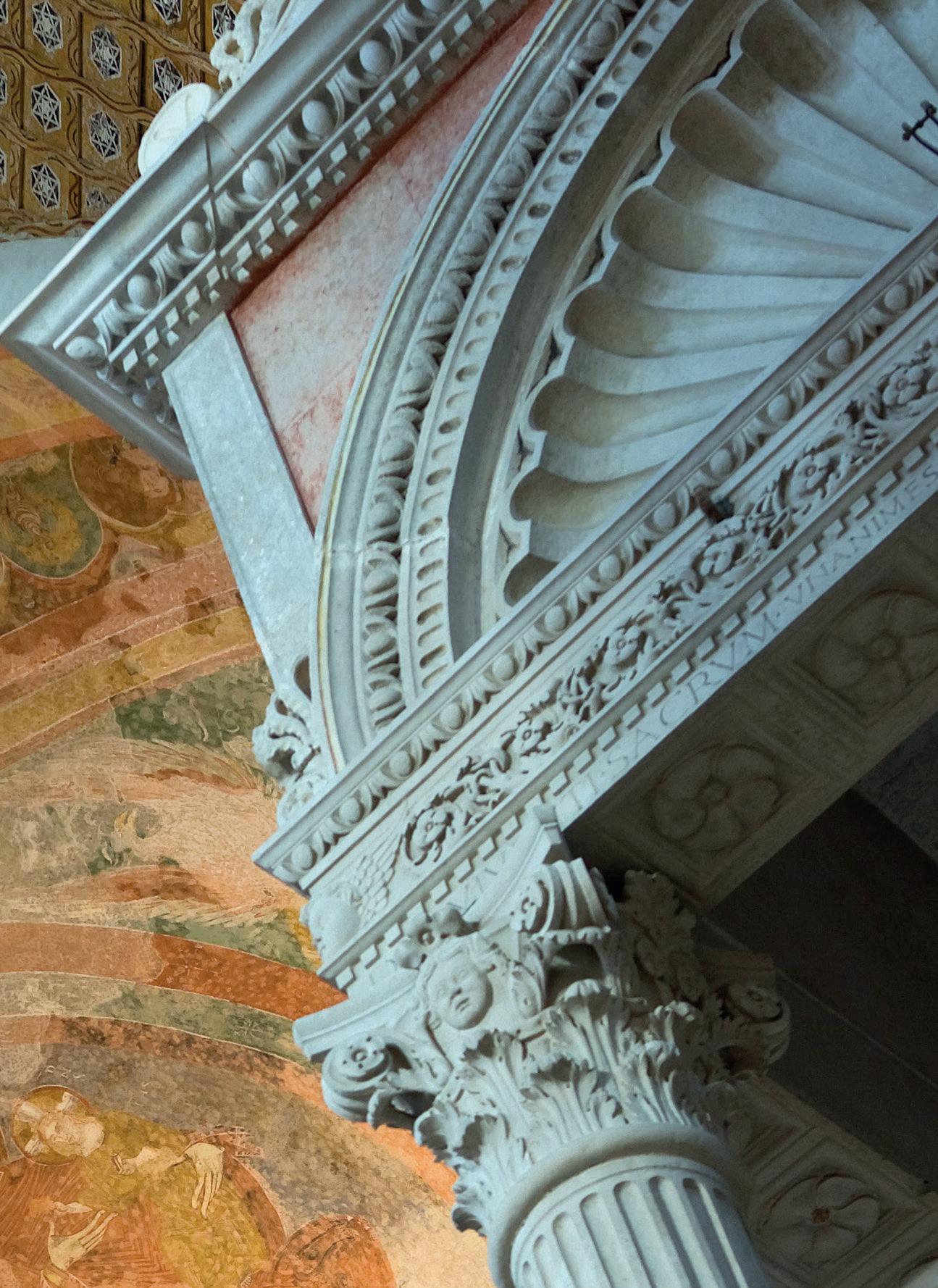
Aquileia preserves an archaeological area of exceptional importance. Visitors can visit the remains of the Roman forum, the necropolis, the imposing structures of the ancient river port and private residences with mosaic floors. An important historical building in this area is the Domus of Titus Macro: one of the largest Roman dwellings discovered in northern Italy, where 1700 square metres chronicle what life was like in a household in the ancient city. A visit to Aquileia is not complete without a visit to the magnificent Basilica of Santa Maria Assunta. It contains the largest mosaic floor in the Western Christian world, a landmark in the history of
European art. The octagonal Baptistery and the Südhalle, which has a wide and beautiful mosaic floor, are also part of the Basilica complex. The National Archaeological Museum, the most important in northern Italy for its rich collection of Roman artefacts, houses the precious treasures that Aquileia has revealed to the world: engraved gems, skilfully crafted amber, multicoloured glass, finely chiselled gold, impressive and refined sculptures and mosaics.
A very rich heritage, the tangible evidence of a city that was one of the wealthiest capitals of the Roman Empire. Aquileia is the starting point for one of the most fascinating walking trails in Italy, the Cammino Celeste, or Italian
Heavenly Way: a journey of approximately 200 kilometres along dirt roads and mountain paths to the Sanctuary of Mount Lussari in Tarvisio, at 1790 metres above sea level. www.camminoceleste.eu
Aquileia Infopoint
Via Giulia Augusta, 11 33051 Aquileia (UD)
Tel. +39 0431 919491
Cell. +39 335 7759580
info.aquileia@promoturismo.fvg.it
Guided tours
Audio guides Boat to Grado FVGcard and FVGcard Aquileia
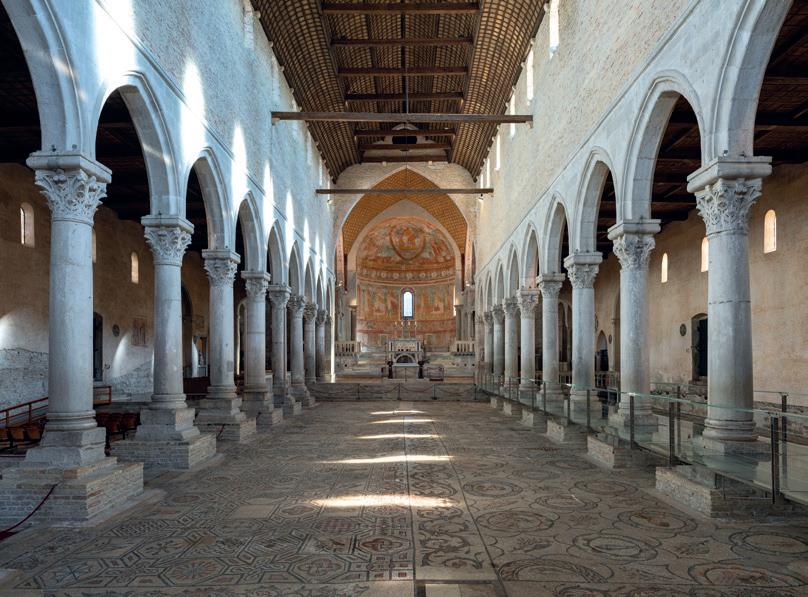
Aquileia, Basilica
IN THE SURROUNDING AREA OF AQUILEIA
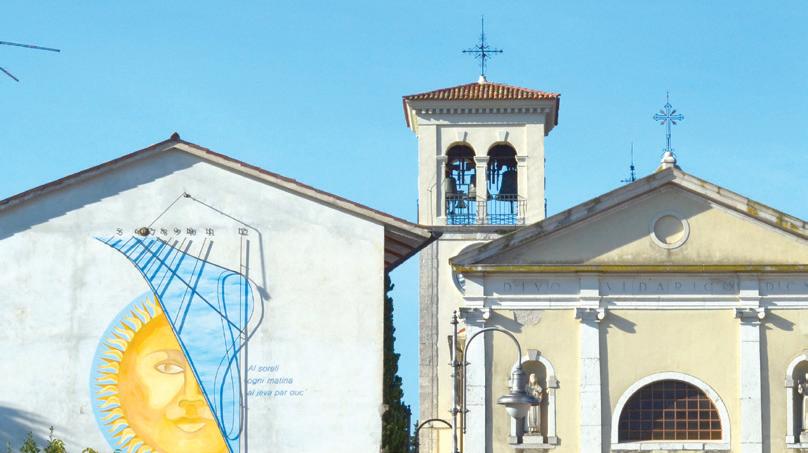
Aiello del Friuli is known as the Town of Sundials. This is where more than 100 of them are placed all around the streets. The “clocks of the sun” are created in many different ways and the local residents volunteer their homes for these wonderful decorations. On the last Sunday in April, there is a festival dedicated precisely to sundials. Be sure to visit the Museum of Farming Civilisation in Imperial Friuli, one of the most important ethnographic collections in Italy.
A 20th-century town characterised by the architecture of the regime of the 1930s in Italy, Torviscosa is also a “company town” because its history is traced back to a large Italian company, SNIA Viscosa. It still preserves the original urban layout, which divided it into functional districts:
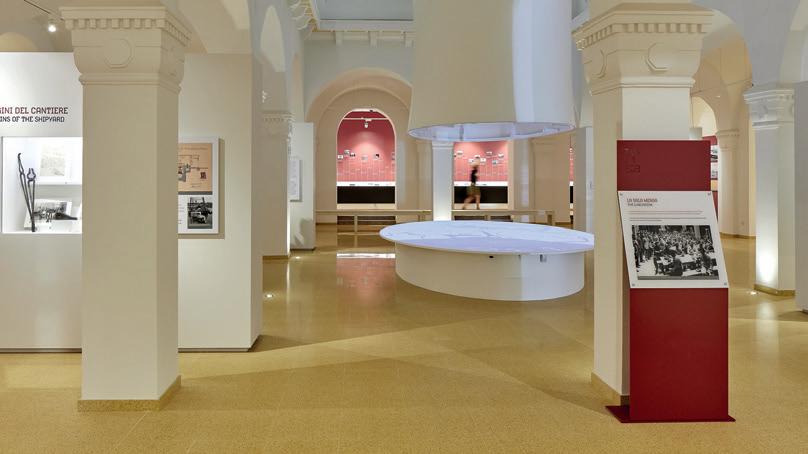
working areas, civic public spaces, the workers’ village, houses for managers and employees, as well as recreational facilities. Monfalcone, an industrial city famous throughout the world for the cruise ships that are built in its shipyards, is home to the only museum of shipbuilding in Italy, the MuCa. It is located in the former Workers’ Hotel in the Village of Panzano, the “company town” that developed in the 1920s around the shipyard. The museum chronicles the history of the worksite and the city through an exhibition that covers over a century of memories and artefacts using a contemporary language and employing the latest multimedia technology. Visitors also have the opportunity to purchase a combined MuCa and shipyard tour package. The symbol
of the city, however, is a medieval fortress that stands on the promontory that faces Monfalcone, the Rocca. The site can also be reached by following the paths of the Theme Park of the Great War, which offers visitors three different areas to discover and observe this war zone, the scene of several battles between June 1915 and May 1917. Another part of the history of the city is narrated at the Medieval Museum. For sports enthusiasts, the Marina Julia seaside resort in Monfalcone is equipped for kitesurfing, kayaking, sup and windsurfing.
Aiello del Friuli sundial
THE LANGUAGES OF FRIULI VENEZIA GIULIA
The historical language of the Region is Friulian, a Rhaeto-Romanic language that evolved from Aquileian Latin and became established around the year 1000. Since the 14th century, it has enjoyed a lively literary tradition that is still very much alive today, with famous authors such as Pier Paolo Pasolini, Carlo Sgorlon and Pierluigi Cappello. Friulian, spoken by 600,000 people in 173 Municipalities, is officially recognised as a minority language and is protected and promoted by the Council of Europe, the Italian State and the Autonomous Region of Friuli Venezia Giulia. Friulian is in excellent
ESSENTIAL WORDS
company: in fact, a total of three minority languages are also spoken here. Slovenian and German are also common, sometimes in very peculiar variants, as in the towns of Resia or Sauris. The presence, in addition to Italian, of languages belonging to the three great European linguistic families - Latin, Germanic and Slavic - represents a truly singular case in Europe, making this territory very unique, and indeed exceptional. The linguistic and cultural plurality of this land is directly reflected in the history of specific communities, in their oral traditions and material culture, in their customs, and also in their food and wine.
ITALIAN FRIULIAN SLOVENIAN GERMAN
• BUONGIORNO
• BUONASERA
• BUONANOTTE
• ARRIVEDERCI
• CIAO
• GRAZIE
• PER FAVORE
• BUNDÌ
• BUINE SERE
• BUINE GNOT
• A RIVIODISI
• MANDI
• GRACIIS
• PAR PLASÊ
• DOBER DAN
• DOBER VEČER
• LAHKO NOČ
• NASVIDENJE
• ŽIVJO
• HVALA
• PROSIM
• GUTEN TAG
• GUTEN ABEND
• GUTE NACHT
• AUF WIEDERSEHEN
• TSHCÜSS
• DANKE
• BITTE
MuCa, Monfalcone
CIVIDALE DEL FRIULI
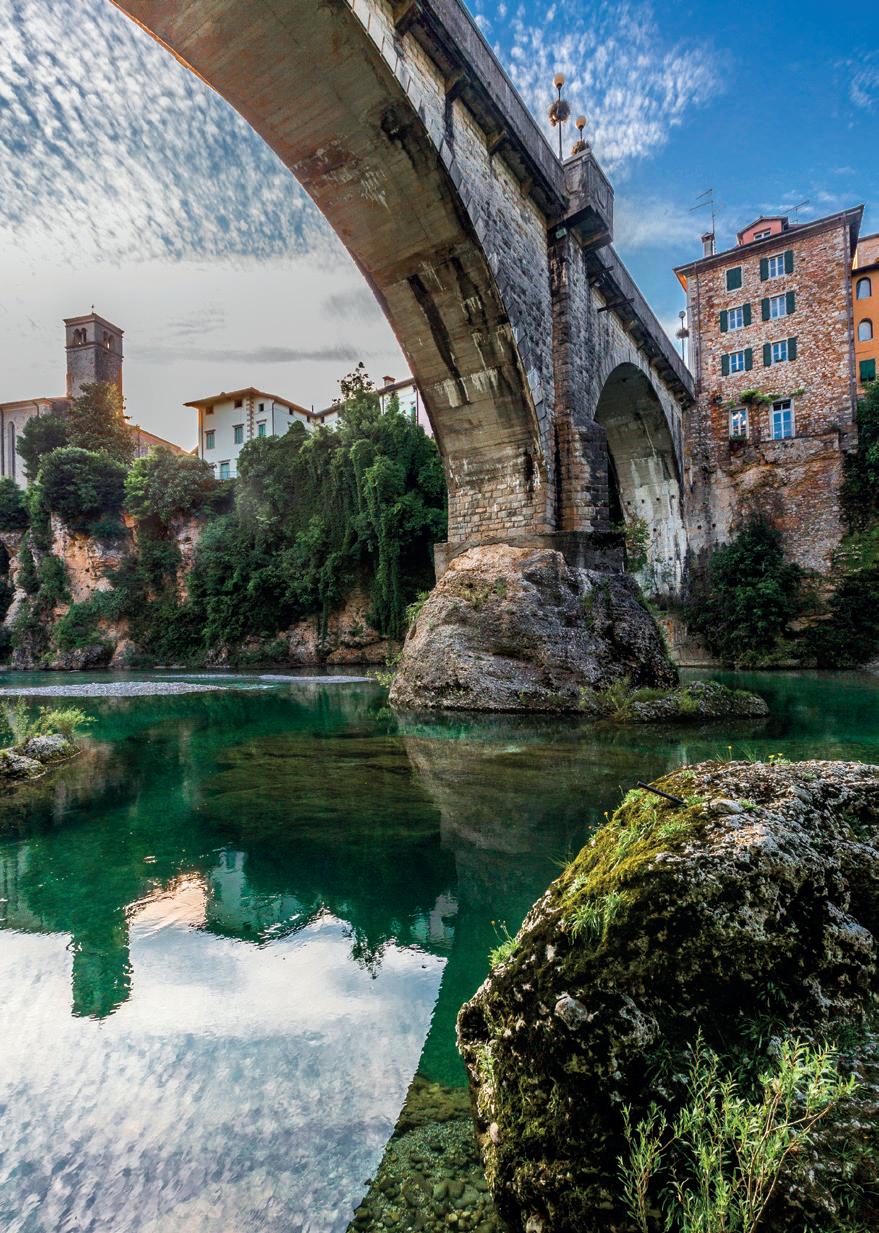
Rich in early medieval works of art, Cividale del Friuli is one of the must-see destinations in Friuli Venezia Giulia. It guards invaluable testimonies of its Lombard past and it is the starting point of the UNESCO itinerary dedicated to the legacy that this mysterious population has passed on to Italy. The National Archaeological Museum, the Christian Museum and Treasure of the Cathedral, the extraordinary Lombard Temple, the mysterious Celtic Hypogeum and the Medieval House are just some of the places not to be missed. But in addition to these treasures, Cividale del Friuli is equally worth a visit for its most recent exhibition spaces: the CIPS (Centro Internazionale “Vittorio Podrecca - Teatro delle Meraviglie di Maria Signorelli”) and the De Martiis Family Collection. The CIPS is
dedicated to the marionettes of Cividale resident Vittorio Podrecca, the greatest Italian interpreter of puppetry. In this exhibition space, the only one of its kind in Europe, his creations are accompanied by marionettes and puppets crafted by Maria Signorelli. The De Martiis Family Collection, housed in the elegant Palazzo De Nordis building, presents a selection of the emblems of twentiethcentury art with a series of extraordinary authors, from Henri de Toulouse Lautrec to Chaïm Soutine, from Virgilio Guidi to Emilio Vedova, reaching the pinnacles of international abstractionism with Karel Appel, Victor Vasarely, Graham Sutherland, Roberto Matta and Edouard Pignon. For a unique and exciting experience, the Acrobati del Sole Park is ready to welcome you. It is an
ornithological centre dedicated to birds of prey, where you can enjoy a very original show and visit the habitat of these animals.
Every year Cividale hosts a major festival, MITTELFEST, one of the most prestigious showcases of prose, music and dance in the area of Central Europe and the Balkans: it presents and explores the best national and international annual artistic creations.
I.A.T. Cividale del Friuli
Piazza Duomo, 5 33043 Cividale del Friuli
Tel + 39 0432 710460
informacitta@cividale.net
Guided tours
Audio guides FVGcard
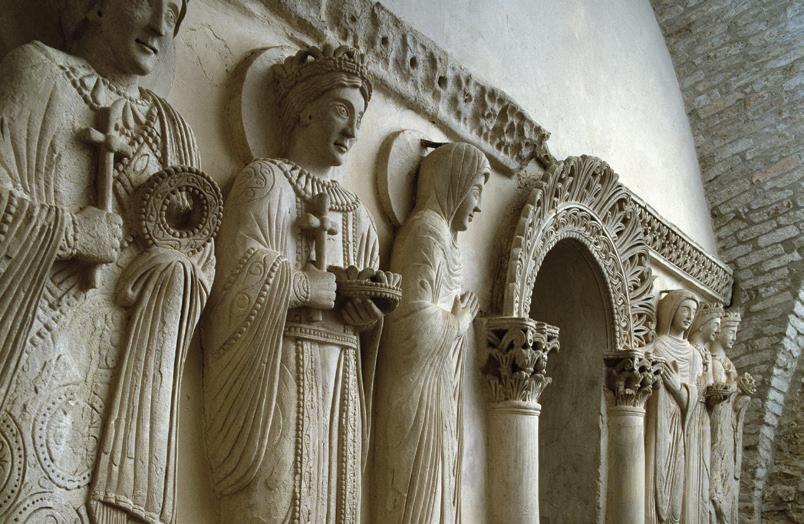
Cividale del Friuli, Lombard Temple
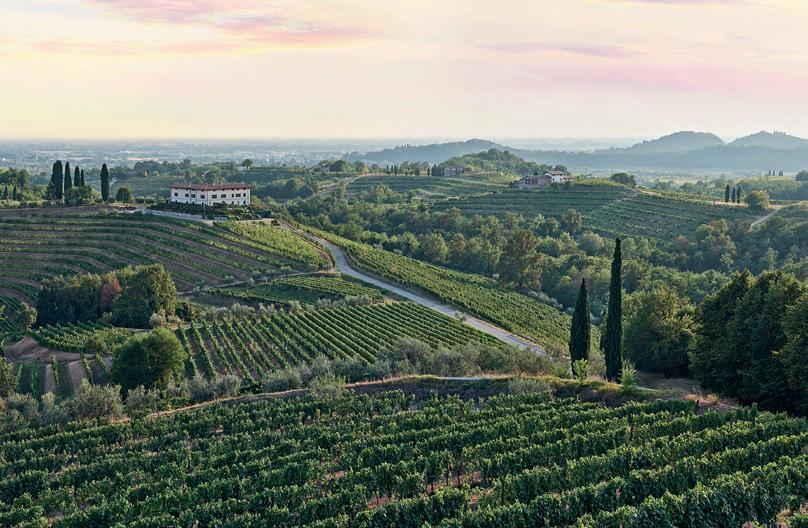
Rosazzo
IN THE SURROUNDING AREA OF CIVIDALE
Overlooking Cividale del Friuli is the village of Castelmonte, home to the ancient Sanctuary of the Blessed Virgin, a place of pilgrimage and one of the stages of the Italian Heavenly Way. Not far away, in the rural village of Bottenicco, are the gates of Villa De Claricini Dornpacher, which dates back to the mid-17th century and has been declared a European Heritage Site. The Villa, which is reminiscent of a Friulian
manor house, has preserved its original furnishings and opens onto a spectacular Italianstyle garden surrounded by boxwoods and decorated with statues and pools, framed by the guest quarters, the lemon house and the greenhouses. Beyond the garden is an English-style park with groups of centuries-old trees
A thousand years of history surround the walls of the Abbey of Rosazzo, nestled
THE NATISONE AND TORRE VALLEYS
The Natisone Valleys, a mysterious land hidden in the Julian Pre-Alps, unfold in the vicinity of Cividale: four narrow valleys that have preserved their unspoilt natural character, with streams flowing steeply through gorges, small
waterfalls and spectacular caverns. One of these is the striking Cave of San Giovanni d’Antro, which can be reached through a fortified entrance. Inside you will discover a chapel and a valuable 18th-century wooden altar crafted in the
among the vineyards of the Colli Orientali del Friuli wine district. Today, all that remains of the ancient medieval monastery is the abbey church with its cloister, surrounded by a panoramic terrace. Along the perimeter of the walls there is a path with numerous rose gardens, mainly made up of ancient varieties of this flower that thrive in this particular environment.
Slovenian tradition. The cave is open to visitors for several hundred metres of its depth. The Natisone Valleys are the guardians of uncontaminated nature, but also deep-rooted traditions. The area is a stronghold of Slavic culture,
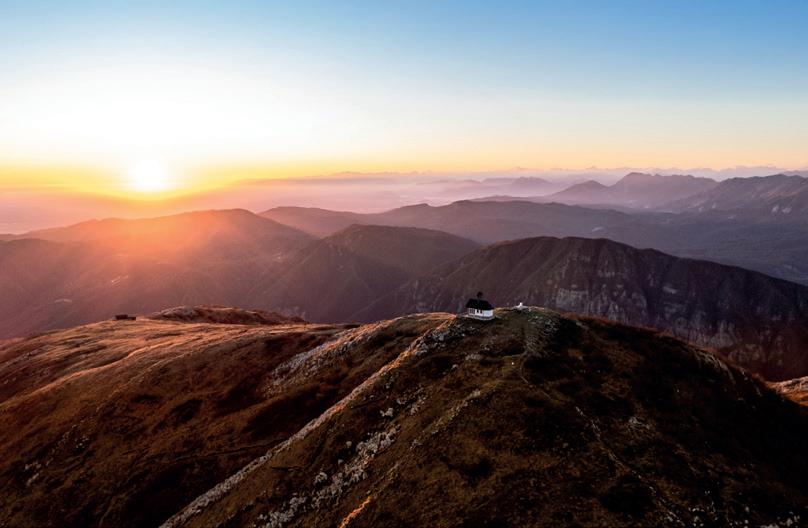
which has been interwoven with the customs and culture of Friuli. Along the paths that lead to the discovery of fortyfour votive churches, authentic little treasure troves of art, or along the trails following the traces of the ancient mills of the past, you will hear the legend of the “Krivapete”, women with green hair and twisted feet (with their heel in front and the toes behind). The word that is used to describe this defect, Krivapeta, originates from the Slovenian language: kriv = curved or twisted, and peta = heel. They are legendary creatures that belong to the imagination of the people of the Valleys, who used them to embellish the fairy tales they told their children around the hearth. In San Pietro al Natisone the
Museum of Landscapes and Stories, or SMO (the acronym for Slovensko Multimedialno Okno - Slovenian Multimedia Window), is one of the new forms of thematic and territorial museums: no longer exhibitions of collections, but museums of storytelling. It is a space that welcomes you to listen to the history of a landscape that recognises language as a means of connecting a wide diversity of cultures as well as microcosms full of stories. The SMO coordinates the various small ethnographic museums located in the small villages of the valleys.
The Torre Valleys are a little further north, where the Julian Pre-Alps come ever closer to the peaks of the Alps. The villages here, today witnesses
of a heritage that has brought together the Latin and Slavic worlds, are surrounded by vast open spaces that hide small pages of history. It was here, for example, that the events of the Second World War took place, culminating in the massacre of Porzûs. The small mountain pastures, known as “malghe”, still bear witness to these events, in which Guido Pasolini, Pier Paolo’s brother, also lost his life. In Crosis, not far from Tarcento, there is a dam built in 1902 by Arturo Malignani, the inventor who made Udine the third city in Europe to have public electric lighting.
Mount Matajur
THE FRIULIAN DOLOMITES
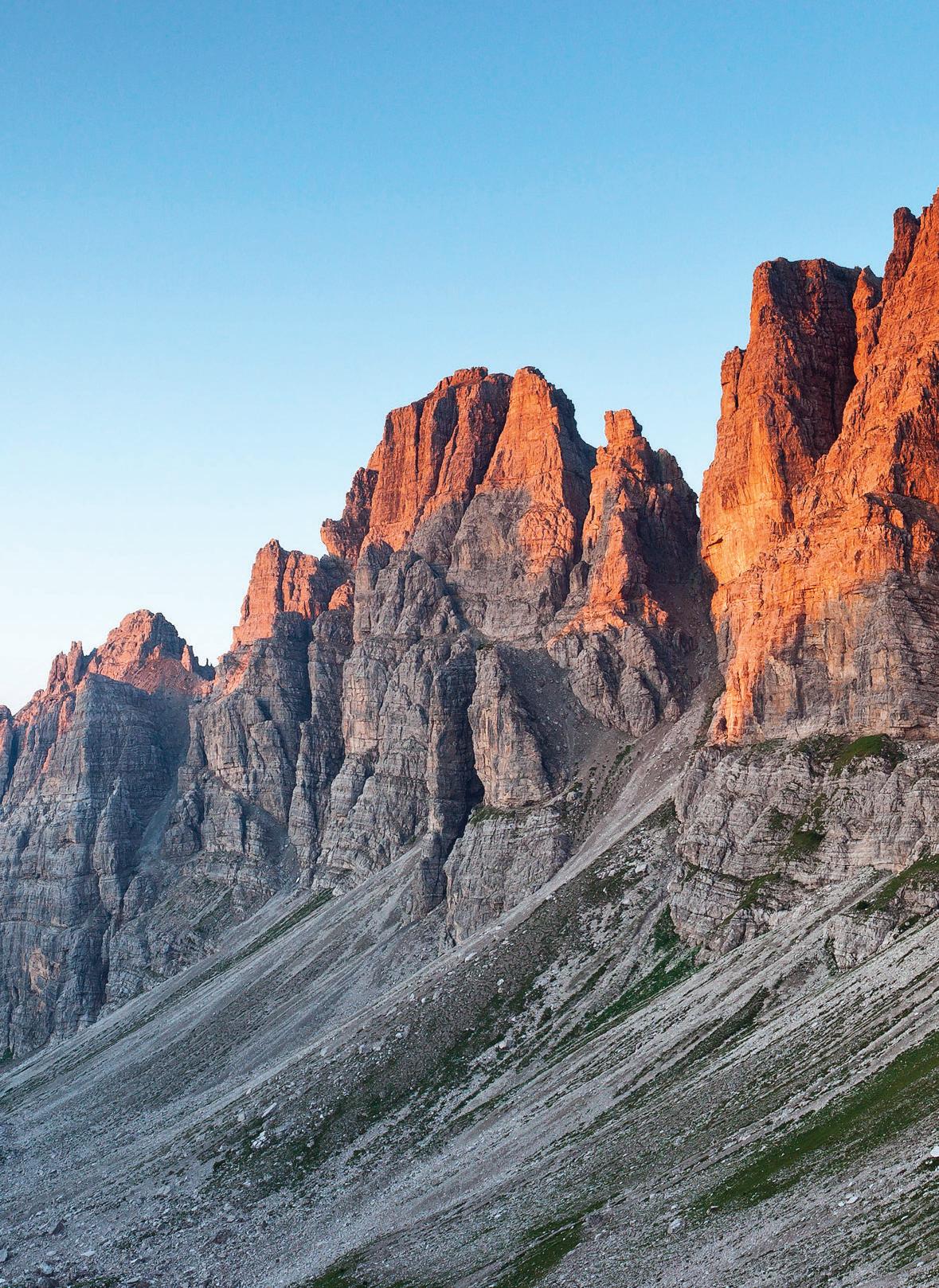
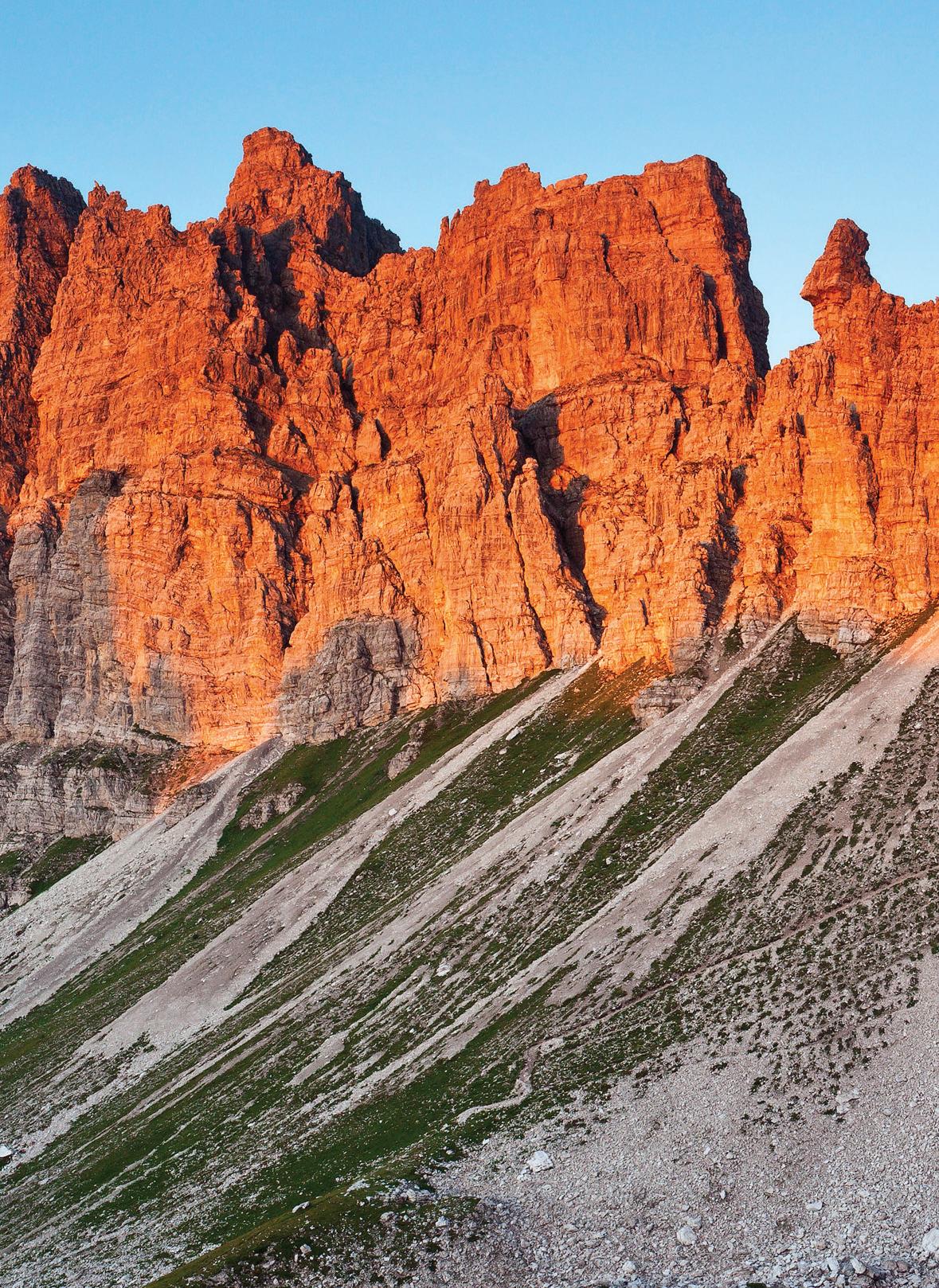
The Friulian Dolomites are considered the most uncontaminated part of the entire Dolomite mountain range because they still preserve a high degree of wilderness.
In Friuli Venezia Giulia, these mountains cover an area spread over 9 Municipalities, from the Province of Pordenone to Forni di Sopra and Forni di Sotto in the Province of Udine.
Below the mountains, the foothills are perfect for exploring, with valleys carved by rivers through spectacular rock formations, where you can discover caves and emerald-green lakes, such as the one in the town of Barcis. Take the time to visit Frisanco and Poffabro, one of the Most Beautiful Villages in Italy. Exploring this territory also means tasting the gastronomic delicacies that have been awarded the DOP and Slow Food seals, as well as having fun climbing the heights of the Dolomiti Adventure Park in Forni di Sopra.
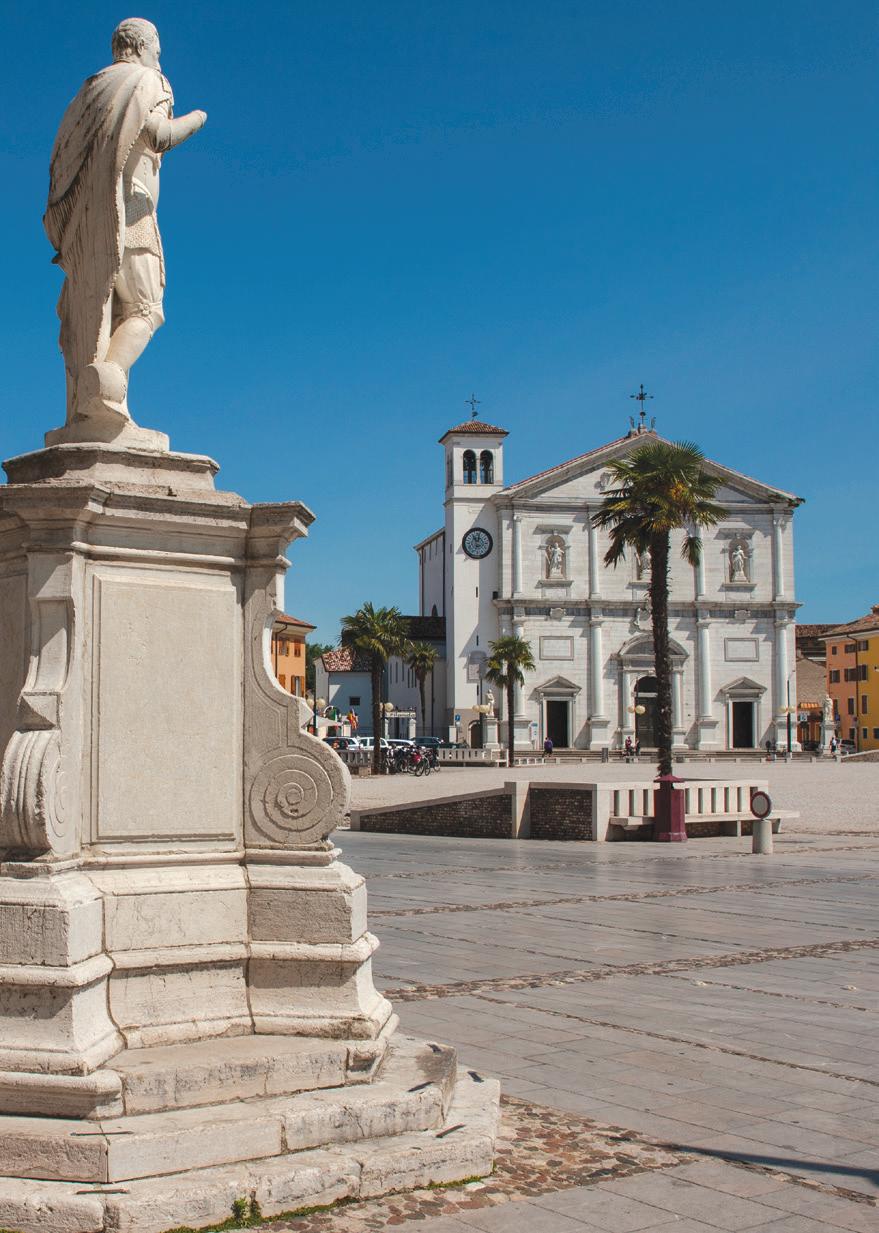
PALMANOVA
Palmanova, Piazza Grande
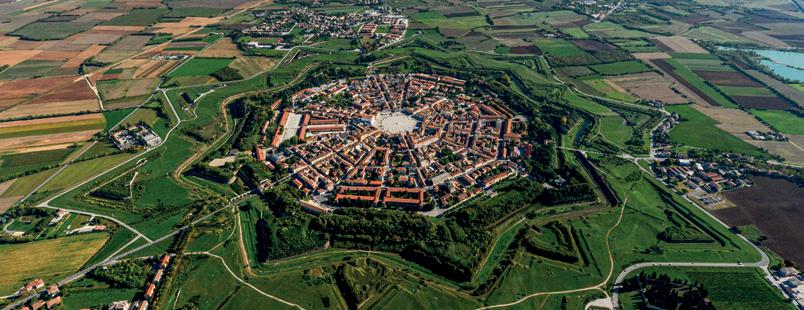
Palmanova, a fortress city designed and built by the Republic of Venice to defend the regional borders against external threats, is a masterpiece of military architecture and a model of the ideal Renaissance city. Unique in its kind, it has the regular shape of a nine-pointed star and a central square where the three access roads converge, defended by monumental gates: Porta Udine, Porta Aquileia and Porta Cividale, which take their names from the destination they lead to. In order to fully understand the history of Palmanova and its extraordinary urban layout, we recommend starting the visit from the “Visit Palmanova” Multimedia Video Hall, a journey through the places, people and historical events that have marked the evolution of the Fortress Town over time. To experience the thrill of a view of the city from above, the innovative Virtual Lift offers a virtual journey that faithfully recreates the sensation of a real panoramic elevator. The beautiful parade square, on which all the access roads to the town meet, is called Piazza Grande. It is flanked by magnificent and elegant buildings, the most important of which is the Doge’s Cathedral,
dedicated to Saint Justina, the patron saint of Palmanova. The Palace of the General Superintendent and the Lodge of the Grand Guard are magnificent examples of Venetian military architecture. The square is surrounded by eleven statues: each of them represents one of the General Superintendents who were in charge of the fortress. The best way to discover the fortification is to walk along the ramparts that protect it. This path is about 7 kilometres long: from this vantage point, you can admire the perfect forms of the defensive structure of the city. Ever since its construction, Palmanova was protected by two defensive lines with bulwarks and ravelins. A third wall was added during the Napoleonic era. A system of underground galleries, some of which can still be visited today, allowed troops to move around the fortress safely. In 2017 Palmanova was declared a UNESCO World Heritage Site and in 2018 it became part of the Most Beautiful Villages in Italy circuit.
IN THE SURROUNDING AREA
Clauiano, one of the Most Beautiful Villages in Italy, is an
interesting example of a rural village in Friuli. Dating back to Roman times (as evidenced by several archaeological finds and the name of the village itself), Clauiano has the structure of a fortified village, where protection against external attacks was ensured by its urban layout, with houses and palaces built of “pièris and clàps” (stones and rocks) locked together, overlooking long, narrow streets, open only to the inside, with courtyards and gardens.
Nearby is the ancient medieval village of Strassoldo, home to the Castello di Sotto (Lower Castle) and the Castello di Sopra (Upper Castle), surrounded by a centuries-old park, crossed by the clear waters flowing from resurgence streams.
Palmanova Infopoint
Borgo Udine, 4 33057 Palmanova (UD) Tel. +39 0432 924815
Cell. +39 335 7847446
info.palmanova@promoturismo.fvg.it
Guided tours
Audio guides
FVGcard
PALÙ DI LIVENZA
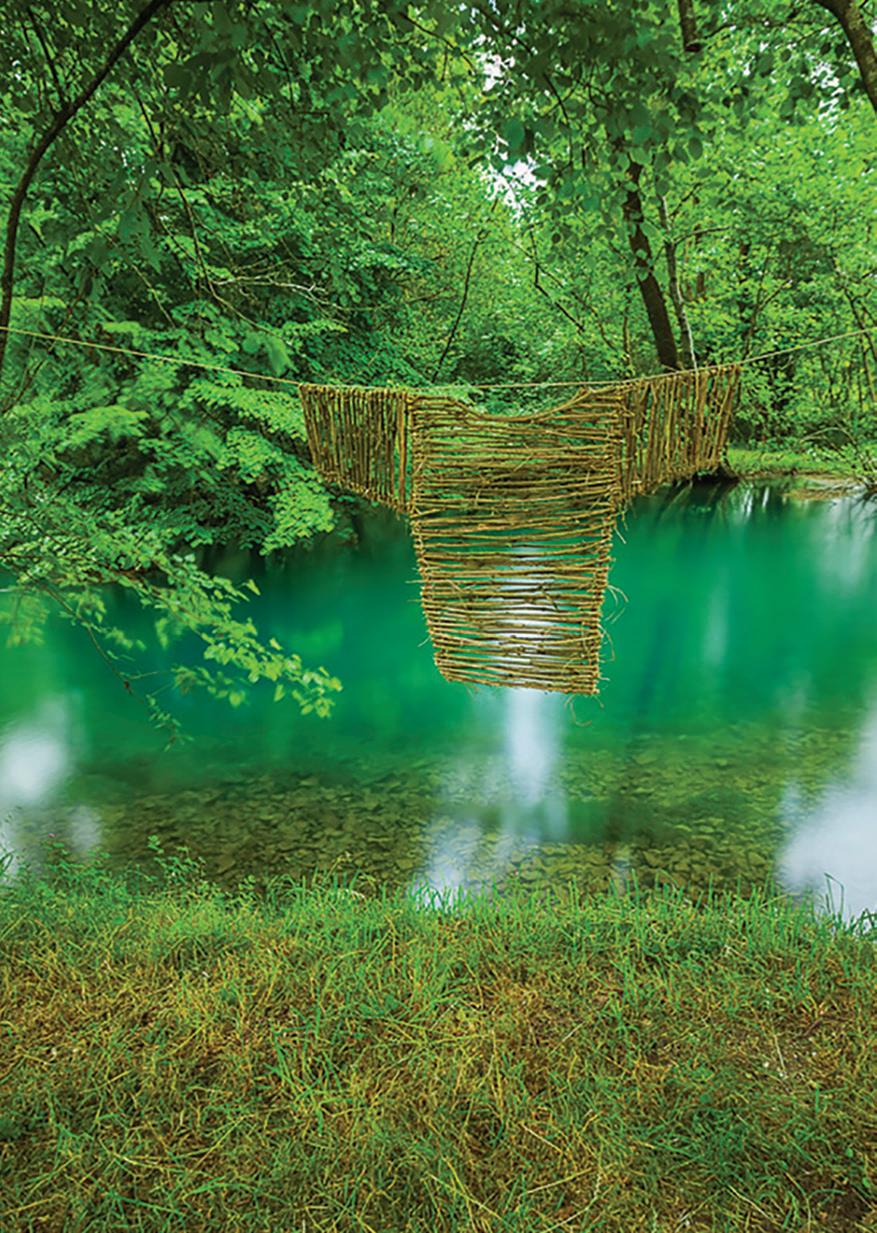
The Palù di Livenza wetlands are located in the Municipalities of Caneva and Polcenigo in the Province of Pordenone. It is an extremely valuable natural area, characterised by an abundance of water and a great variety of plants and wildlife. The remains of a Neolithic pile-dwelling village (ca. 4,500 - 3,600 B.C.) have been unearthed here. Most of the settlement is still largely intact in the area of the basin.
Despite the changes that have occurred over time, the Palù di Livenza site is an exceptional deposit for prehistoric archaeology and the study of climatic and environmental changes over the last 15,000 years.
Since 2011 it has been a UNESCO World Heritage Site, included in the series of Prehistoric Pile Dwellings around the Alps. The materials that have been recovered and brought to
light during various excavation campaigns are preserved in the Archaeological Museum of Western Friuli in the Castello di Torre building in Pordenone. Most of these artefacts are chipped stone tools and ceramic fragments; less common, but also present, are wooden objects, among which a fragment of an oar or paddle, a large vase, a fragment of an axe handle and a drawer in the process of being manufactured are particularly noteworthy.
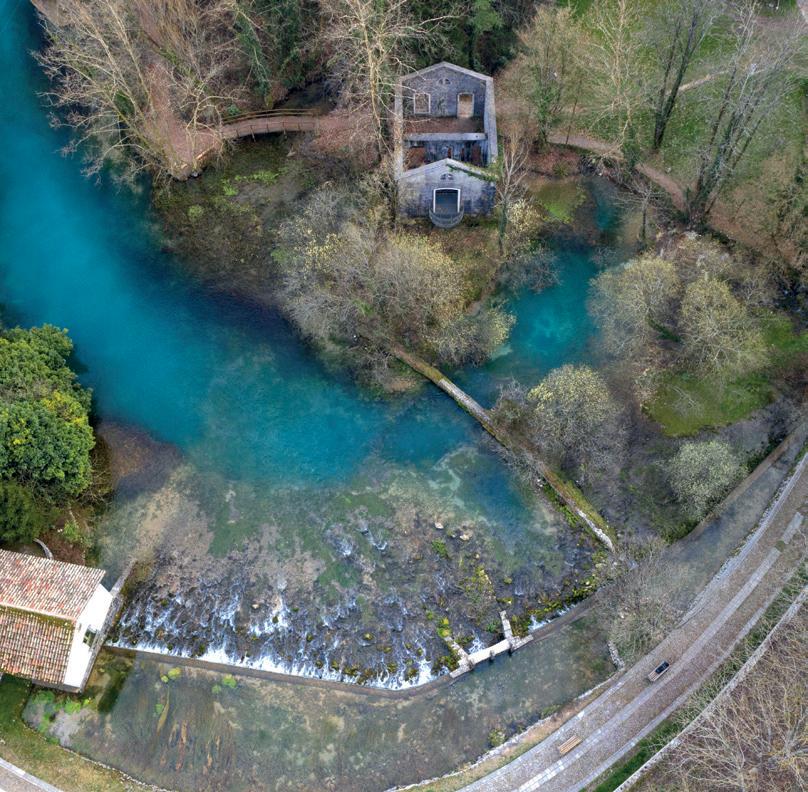
Palù di Livenza
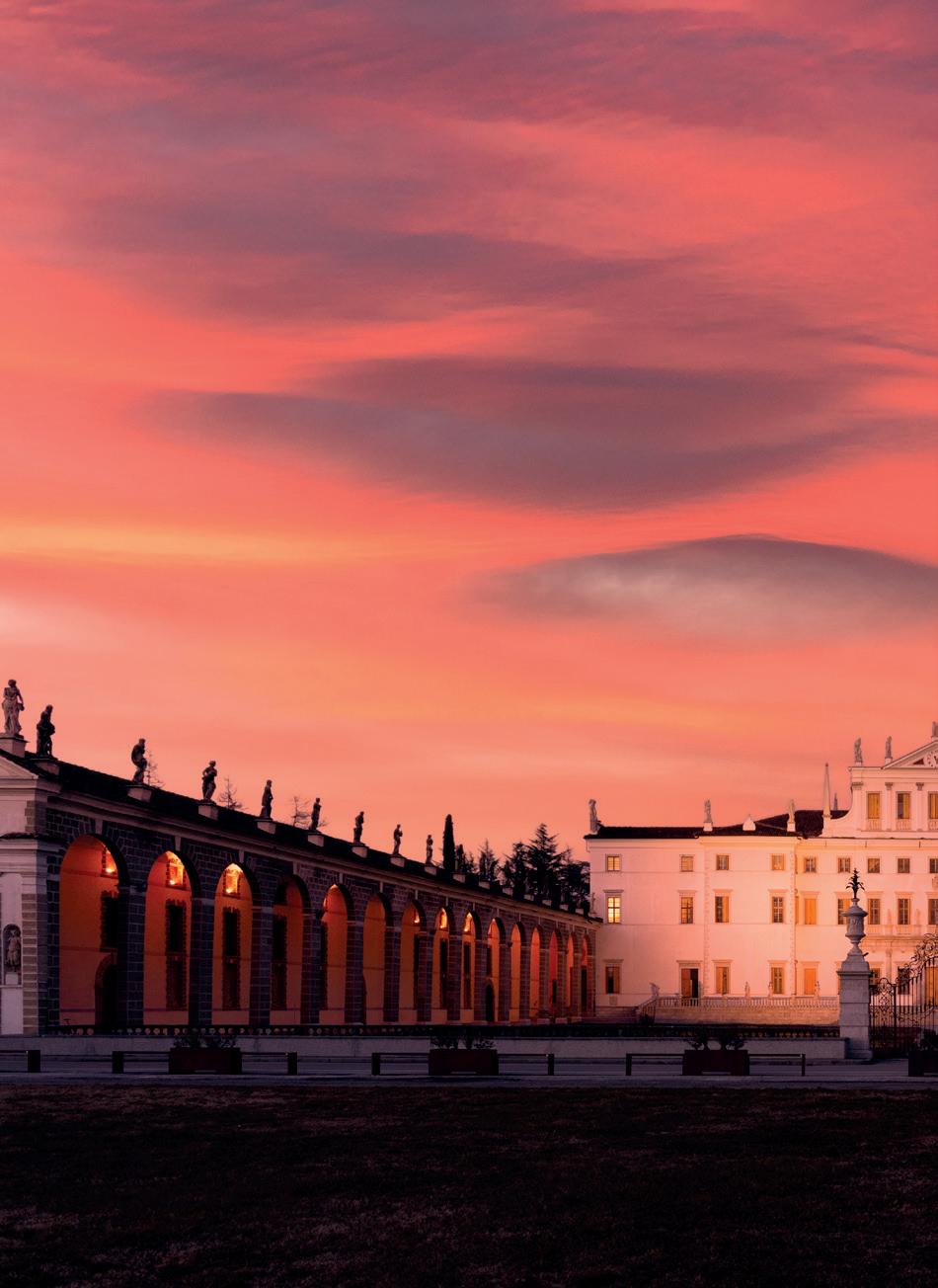
VILLA MANIN AND THE SURROUNDING AREA
THE VILLA OF THE LAST DOGE OF VENICE
A residence fit for a king. This is how the Venetian writer and playwright Carlo Goldoni described “the immense palace and superb gardens of Passariano owned by the counts Manin”. Such was the astonishment he felt at the sight of Villa Manin. The same feeling that visitors can experience today. Constructed between the 17th and 18th centuries in celebration of the family’s wealth and prestige, the Villa is a unique example of architectural design that combines the Palladian and Bernini models: two semicircular wings, the exedras, extend from the central block of the villa, embracing the surrounding countryside.
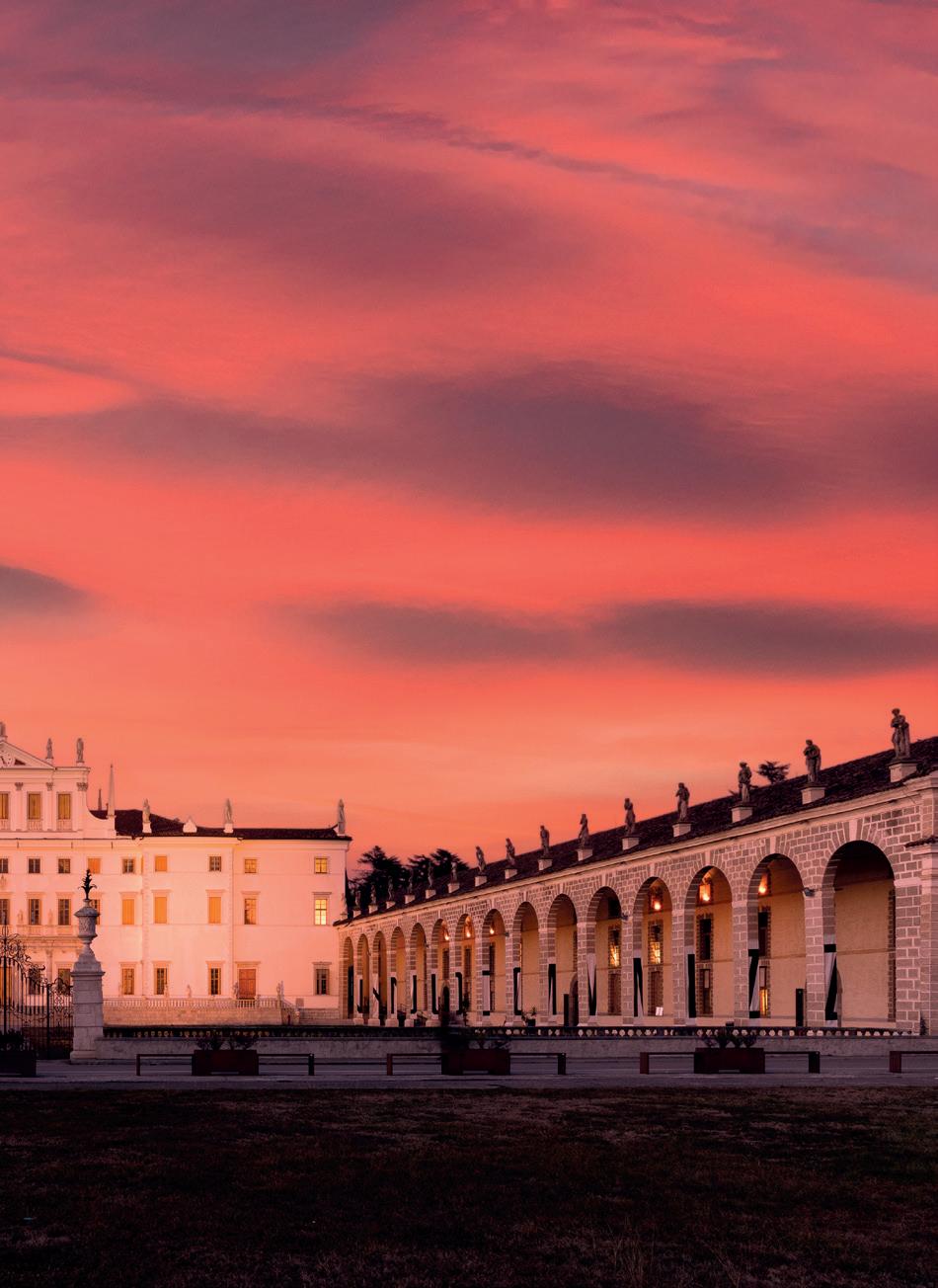
After staying here for two months, a young Napoleon Bonaparte signed the Treaty of Campo Formio here in 1797, which sanctioned the end of the Venetian Republic and stripped Ludovico Manin, then Doge of Venice, of his regal title. Today, the stables and frescoed halls host multimedia installations, exhibitions, and events.
The Park, the largest in the Region, is home to various plant varieties, including several monumental trees, ancient statues, and works of contemporary art. For information and guided tours: info@villamanin.it
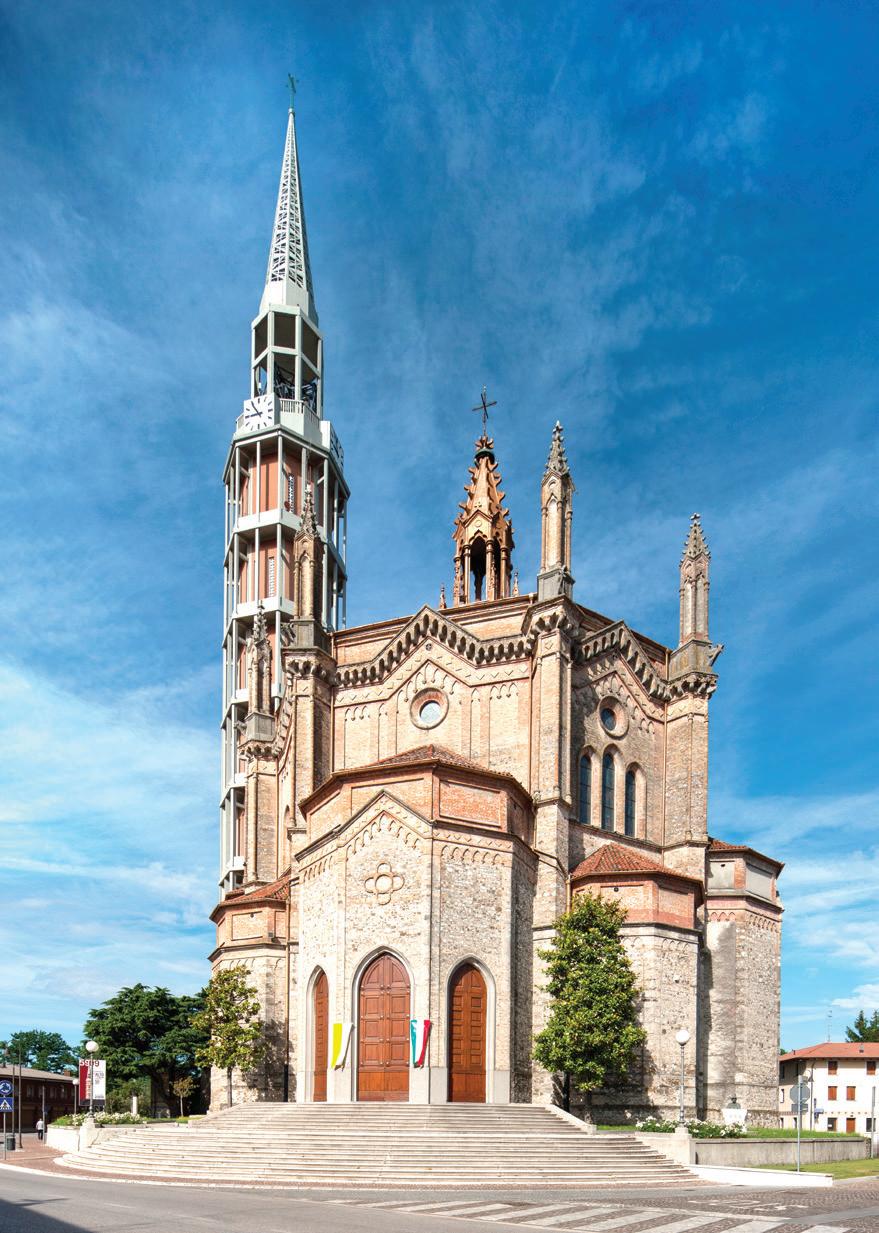
Mortegliano, Duomo
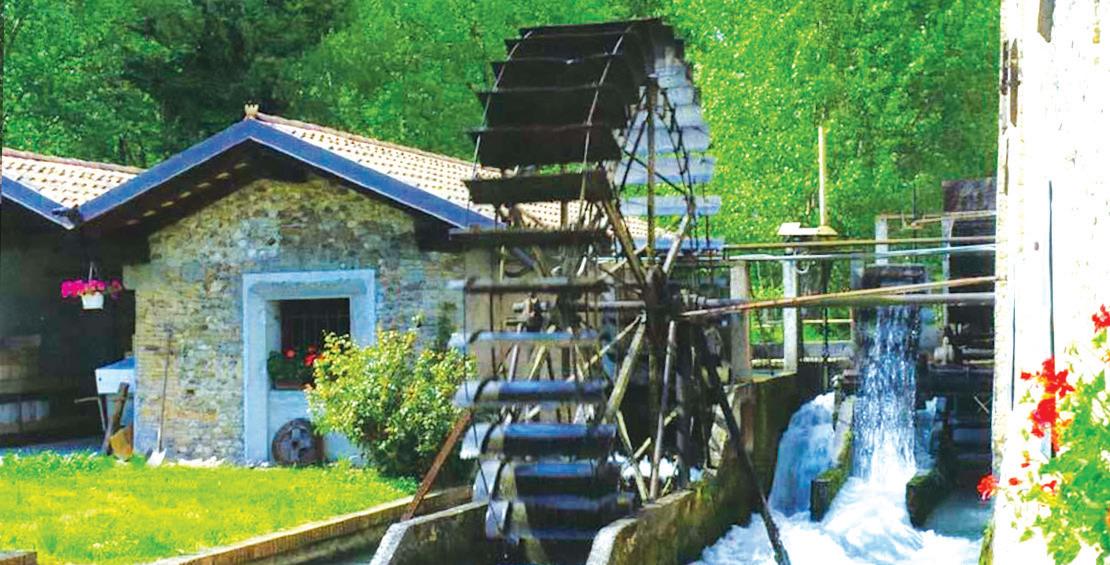
AMONG FRESCOED CHURCHES, HISTORICAL VILLAS, RESURGENCES AND ANCIENT MILLS
The territory of Medio Friuli covers the central-western part of the Province of Udine, in the countryside that connects the cities of Udine and Palmanova with the Tagliamento River. Places of history, art and tradition where nature has always been the greatest treasure: large and small watercourses, resurgences that flow through an area with extraordinary biodiversity and landscapes such as, for example, the Flambro and Virco Biotopes, the Park of the Resurgences, and the River Stella Mouth Reserve. It is along these rivers and streams that many buildings associated with the art of milling have been built. Some mills are still active today, such as the Bert-Zoratto Mill in Codroipo, the ancient Roman Mill in Pantianicco di Mereto di Tomba and the Colloredo Mill in Sterpo di Bertiolo. Some others have been converted for new uses. This is the case of the Basaldella Mill, in the Municipality of Campoformido, the first records
of which date back to the 14th century. Today it is a visitor centre that chronicles the ancient art of milling: inside the building, a guide demonstrates how the wheels, driven by the water of the irrigation channel of Udine, move the millstones that, in the past, produced different types of flour and allowed for many other activities, such as carding wool and using the iron hammer to sharpen tools. The landscape of Medio Friuli is enriched by authentic architectural treasures such as villas, manor houses, palaces and stately gardens, each with a story to share. The most typical type of building is the Venetian villa, a testimony to the rule of the Republic of Venice and the legacy of a wealthy and prestigious aristocracy, the most famous example of which is Villa Manin. Approximately ninety other villas have been mapped throughout the area, owned either by private individuals or public institutions. Religious architecture has also
had an important influence in this area. The strong sense of religion in the 16th century and the influence of the Venetian Renaissance led to the construction of several parish churches and chapels, as well as many rural and village churches, that were decorated by a variety of artists who created authentic masterpieces, such as the wooden altar by Giovanni Martini in the Cathedral of Mortegliano, the Pordenone Altarpiece in the Parish Church of San Lorenzo in Varmo, the frescoes by Gian Paolo Thanner and the sculptures by Giovanni Antonio Pilacorte in the village of Sclaunicco. Some of the buildings were subsequently remodelled a few centuries later in neo-Gothic and neoclassical styles, creating a diverse yet well-integrated artistic heritage. This area also boasts the highest bell tower in Italy, located in Mortegliano, 113.2 metres high and with a spectacular view of the entire Friulian plain.
Di Bert - Zoratto mill
THE FRIULIAN HILLS AREA
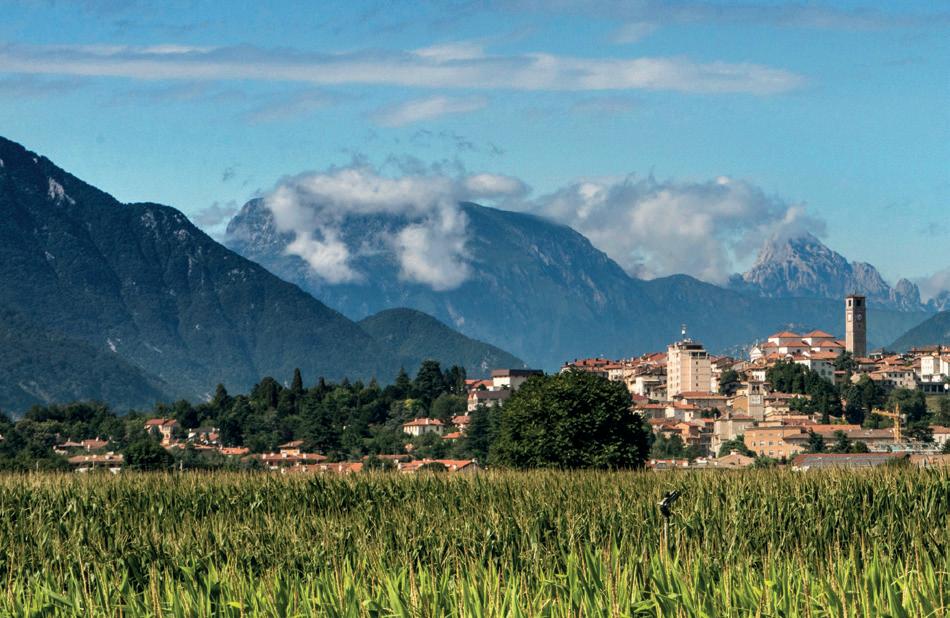
San Daniele del Friuli
The area north of Udine is the ideal destination for slow tourism: breathtaking landscapes on the moraine hills, some of the Most Beautiful Villages in Italy, castles and fortified villas: from Rive d’Arcano to Brazzacco, from Artegna to Colloredo di Monte Albano there is a triumph of towers and enchanting views over the endless expanses of hills. Cycling, horse-riding, golf, fishing and bird-watching can be combined with cultural visits to museums dedicated to the history of this territory, as well as churches decorated with frescoes and historical villas. San Daniele del Friuli, the main centre of this hilly area, is internationally renowned for the production of the incomparable flavour of its Prosciutto, thanks to a millenary tradition and a
unique microclimate. Another outstanding product that has gained recognition is the trout of San Daniele (the Queen of San Daniele), a smoked salmon trout prepared according to traditional methods. The town is also home to artistic and cultural treasures: the Biblioteca Guarneriana, the oldest public library in Friuli Venezia Giulia, which preserves precious illuminated manuscripts, including a 14th-century Divine Comedy, and ancient printed books. The Church of Sant’Antonio Abate contains the most beautiful cycle of Renaissance frescoes in the area, the work of Pellegrino da San Daniele. Before you leave San Daniele, be sure to visit the beautiful Museum of the Territory, housed in the 17th-century cloister of the old hospital, which was once
a Dominican convent. This is also home to the Scriptorium Foroiuliense, one of the few amanuensis schools in Italy, where you can discover the secrets of parchment making and learn the ancient art of calligraphy. The Scriptorium is open to the public for guided tours and courses all year round.
ANDAR PER ROCCOLI
“Roccoli” are small circular thickets that were once planted and equipped to catch birds. In the territory of Montenars, a number of these structures have survived to the present day. They are well preserved and valuable for their considerable dimensions and for their fascinating construction and forms: built in past centuries to compensate
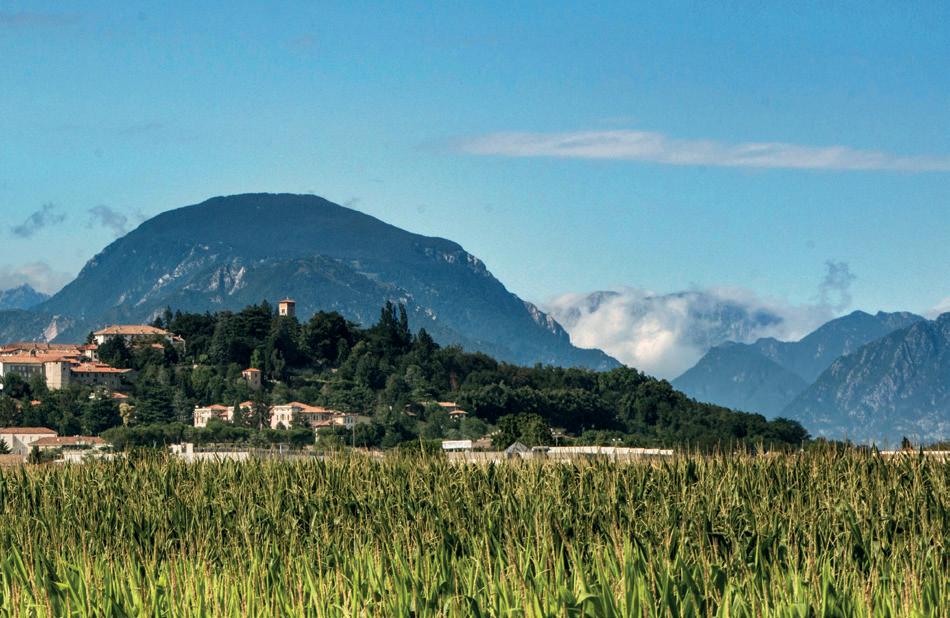
for the lack of food due to the difficult living conditions, they were widely used by the local population until after the Second World War, then gradually abandoned until their total closure following the law prohibiting hunting with nets. They were erected on mountain passes and ridges along one of the most frequented migratory routes for birds.
AMONG STORKS, BUTTERFLIES AND GRIFFON VULTURES
Fagagna is a short drive from Udine. It is one of the Most Beautiful Villages in Italy, famous for the storks that nest in the Quadris Oasis The House of Butterflies in Bordano houses over 400
species of butterflies from all over the world in large greenhouses. Further north, the Cornino Lake Nature Reserve extends into the Municipalities of Forgaria and Trasaghis, where the nests of majestic griffon vultures can be admired in the wild.
RAGOGNA, THE LAKE AND THE CASTLE OF SAN PIETRO
The beautiful Ragogna Lake, just a few kilometres from San Daniele, is the ideal destination for a leisurely stroll or a sport walk following the loop itinerary that circles the water: it is one of the few places where several species of dragonflies can be seen, and it is also a primary flyway for all
migratory birds.
The Jewish Cemetery, one of the few still existing in Friuli Venezia Giulia, is located close to the lake. The cemetery is not accessible since it is surrounded by walls and a bolted gate, but it can be visited by prior reservation by contacting the Museum of the Territory.
The Castle of San Pietro (6th-18th centuries) stands in one of the most suggestive and panoramic areas of this land, with a spectacular view over the Tagliamento Valley. The North Gate gives access to the Upper Castle which includes the keep, the inner courtyard with the well and a series of buildings originally used as cellars, dungeons, kitchens and stables.
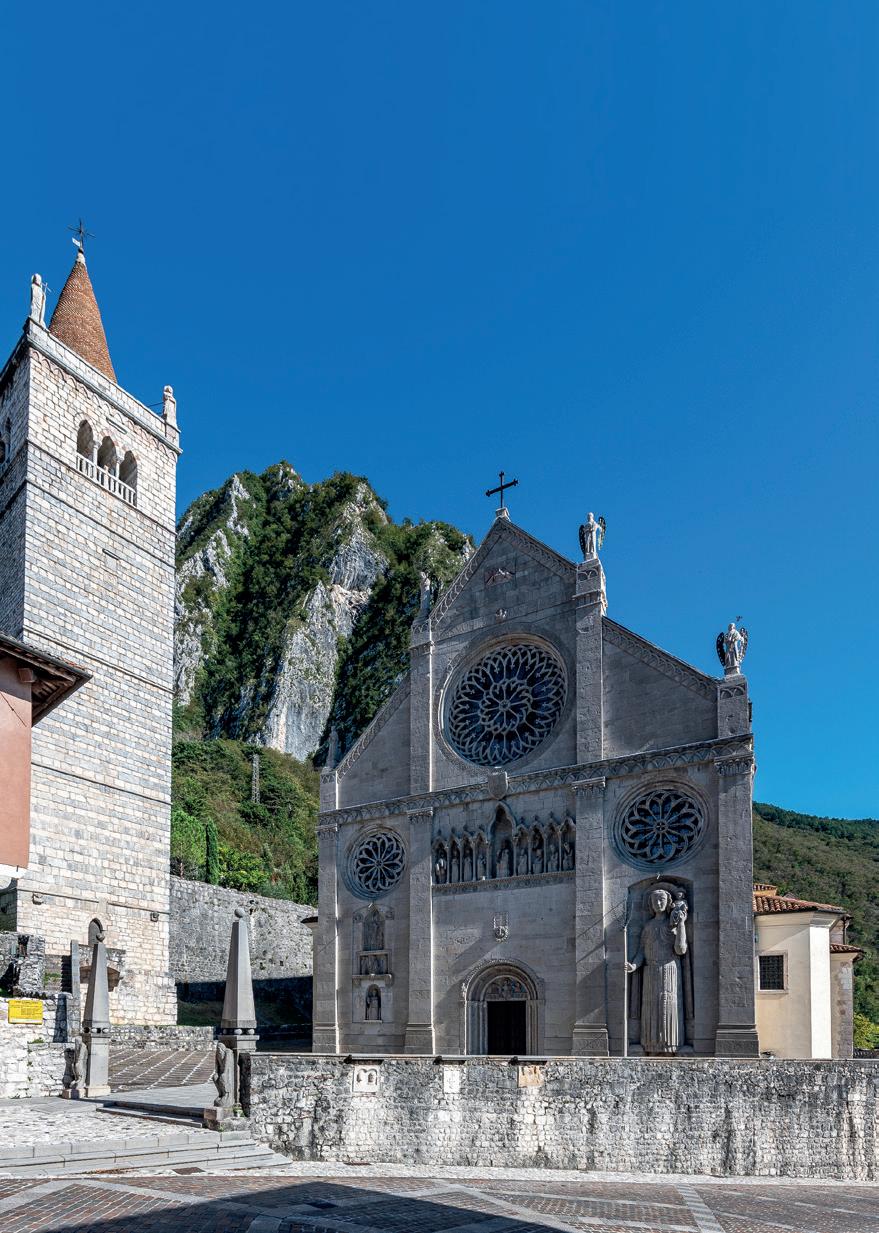
VENZONE AND GEMONA DEL FRIULI
Gemona del Friuli
The heart of the Region is home to two of its most significant medieval towns, Gemona del Friuli and Venzone. Both were shattered by the earthquake of 1976 and are today the symbols of the successful reconstruction known throughout the world as the “Friuli Model”. Venzone, one of the Most Beautiful Villages in Italy, has been brought back to life by an unprecedented technical and cultural restoration project that has rebuilt its architectural identity by reassembling its buildings and massive medieval walls one stone at a time. The Porta di San Genesio is the ancient entrance to the town from the 13th-century outer walls, which are almost completely preserved along their perimeter. The Town Hall Square, at the crossroads of streets with a
regular layout that recalls the original Roman layout of the settlement, is a jewel of Venetian Gothic architecture. Not far away, the Duomo of Sant’Andrea holds valuable frescoes and sculptures that have been partially recovered from the damage caused by the earthquake. Next door, the cemetery chapel of Saint Michael is home to the “mummies of Venzone”. Gemona del Friuli is a medieval settlement dating back to pre-Roman times, which was almost entirely destroyed by the earthquake in 1976 and is now beautifully rebuilt. A slow walk takes you to Piazza del Municipio with its Renaissance Town Hall, along the medieval route of Via Bini, flanked by the noble palaces of the ancient nobility of Gemona. Among
these buildings is Elti Palace, home to the Civic Museum, which displays paintings of great value by painters from Veneto and Friuli. A few steps from the centre of the town, a short climb leads to the Castle, the last building to be rebuilt after the recent earthquake, from where there is a splendid view over the valley below and the mountains of nearby Carnia. The Cathedral of the Assumption of Mary, with its Gothic façade, will amaze you with its imposing 7-metre-high statue of Saint Christopher. In the nearby Parish Museum, you can admire various religious and devotional artefacts, including a very precious monstrance, one of the best works of Friulian goldsmithing which was crafted by Niccolò Lionello in 1400.
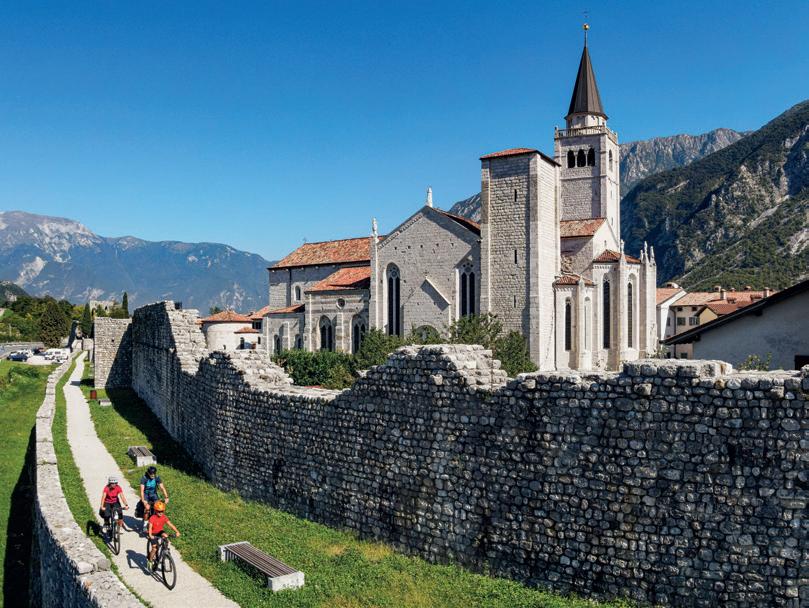
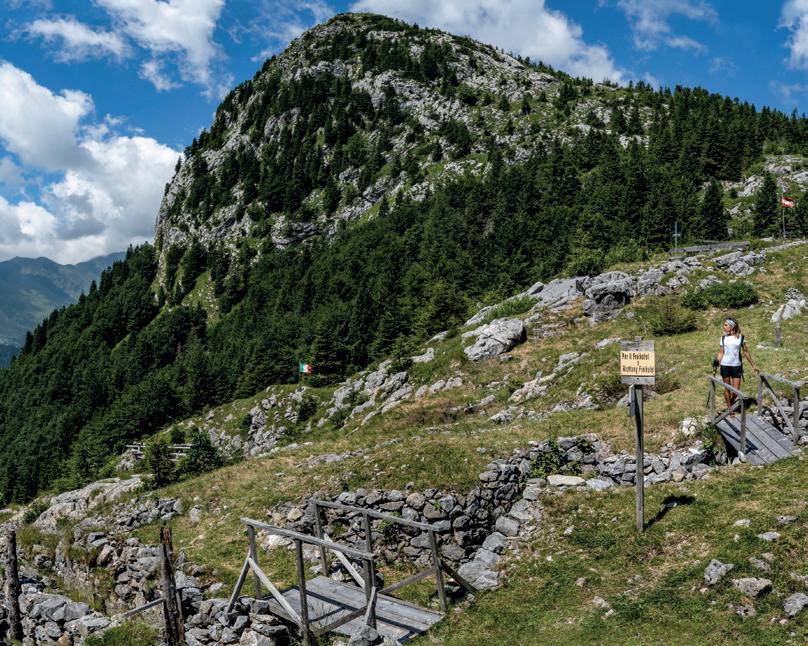
THE GREAT WAR
To emphasise the size of the front, the number of people involved and the variety of weapons, it was called the Great War by its contemporaries. The First World War was fought throughout Northeast Italy, but Friuli Venezia Giulia, in particular, whose territory was then divided between Italy and the Austro-Hungarian Empire, was the scene of long and fierce battles that have left numerous traces: trenches and fortifications in the territory, as well as weapons and everyday tools that are now preserved and exhibited in an extensive network of museums. The Karst and the various areas of the Carnia and Julian Alps, with their
numerous testimonies scattered throughout the territory, are authentic open-air historical parks where visitors can learn more about the events and experience first-hand what life was like in the trenches.
Mount San Michele, in the northern part of the Isonzo Karst and a short distance from Gorizia, features an evocative itinerary between history and nature.
In addition to the Open-air Museum, which presents a series of easy itineraries, suitable for everyone, to discover the various structures and monuments built on the slopes and the four peaks of this Karst relief. The site is also home to the Multimedia
Open-air Museum of Mount Freikofel, Carnia
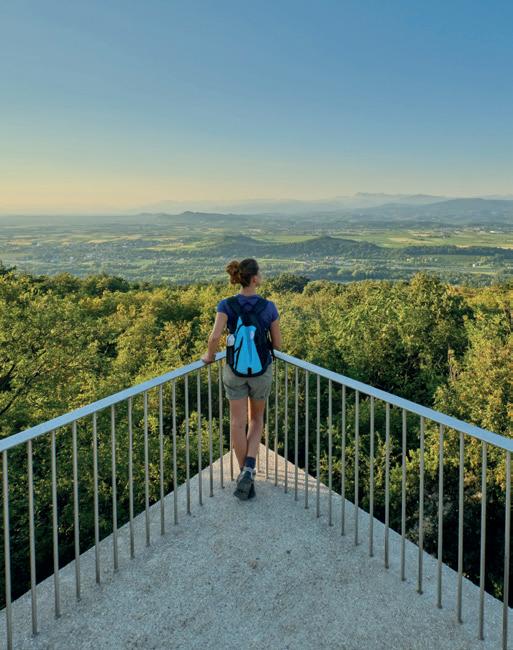
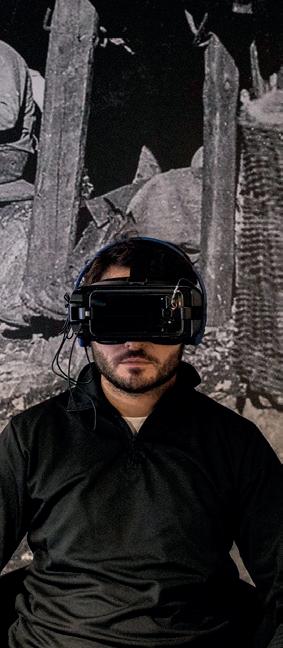
Museum of the Great War of Mount San Michele, a truly unique experience. Thanks to interactive tools and content, all visitors can embark on a real journey to the Isonzo Front during the Great War. From the VR stations, equipped with visors and headsets, it is possible to relive with your own eyes the trenches during the soldiers’ attacks, moments of everyday life - both on the Austrian and on the Italian sidethe treatment of patients in the military hospitals, the stories of war correspondents, the tragic moment of the gas attack on June 29 1916 and the flight over the Doberdò plateau in the Spad XIII fighter plane
piloted by Francesco Baracca. In addition, a special dedicated audio guide narrates the Monumental Area of Redipuglia and the Open-air Museum of the Sinkhole of the 15th Marksmen Regiment. Here visitors can follow the walkways used by soldiers, descend and observe the trenches and military fortifications from the inside, as well as see the remains of the barracks, the cemetery as well as a military hospital dating back to 1916
To discover all the routes of the Great War, please visit the website: www.turismograndeguerrafvg.it
Multimedia Museum of Mount San Michele
THE MOUNTAINS
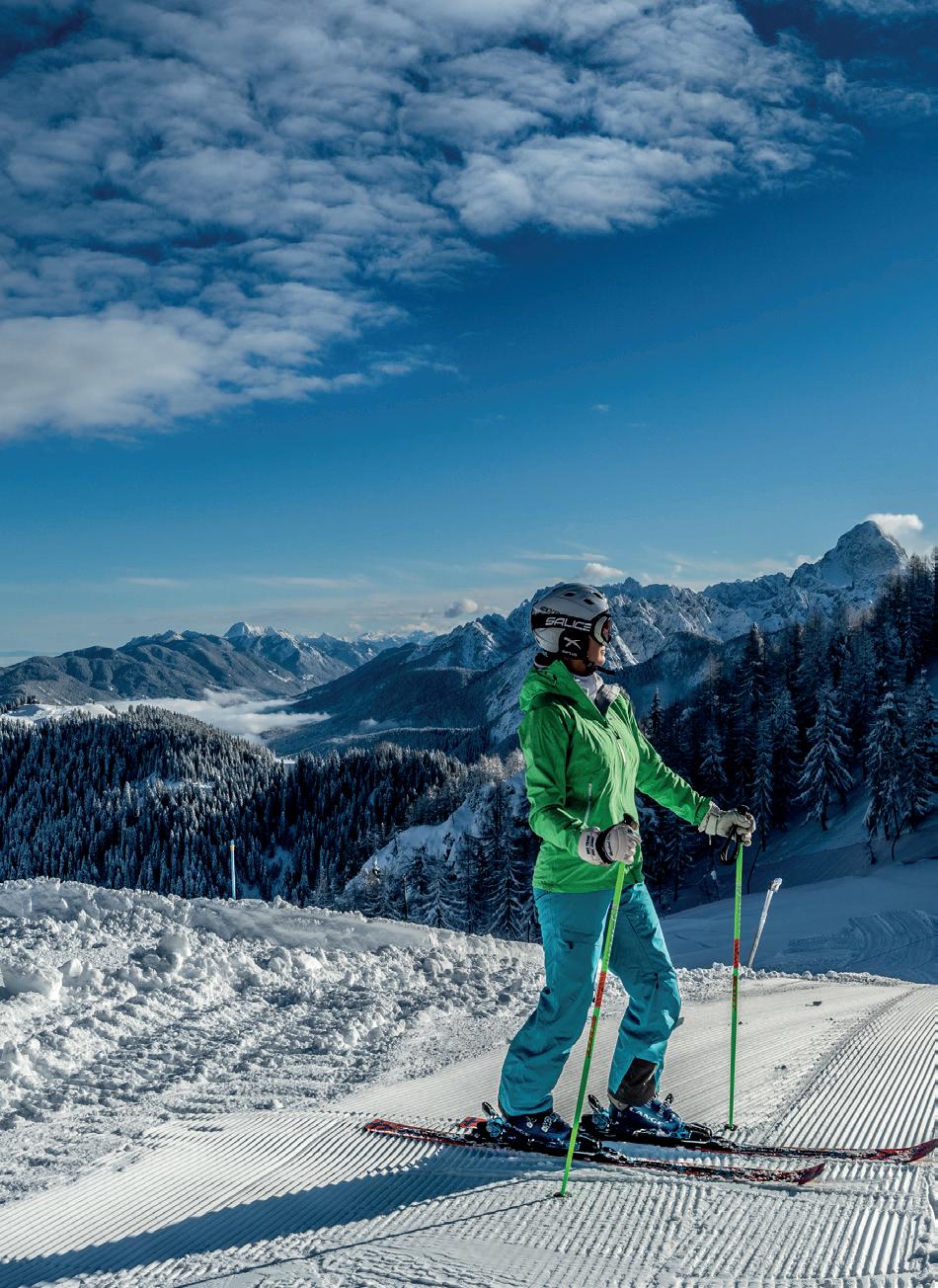
It is always the mountains, but they are always so very different. In the Alps of Friuli Venezia Giulia, the landscape is constantly changing its shapes and colours, its languages and customs, but it maintains important common denominators: respect for the territory, the authenticity of the people who live there, the sustainable use of its resources. Throughout the winter, modern facilities and safe, never-crowded slopes are the calling cards of the regional ski districts: Forni di Sopra and Sauris, Piancavallo, Ravascletto-Zoncolan, Sappada and Forni Avoltri, Sella Nevea, Tarvisio. In summer, the valleys become the perfect environment for trekking and mountain biking surrounded by beautiful pristine nature.
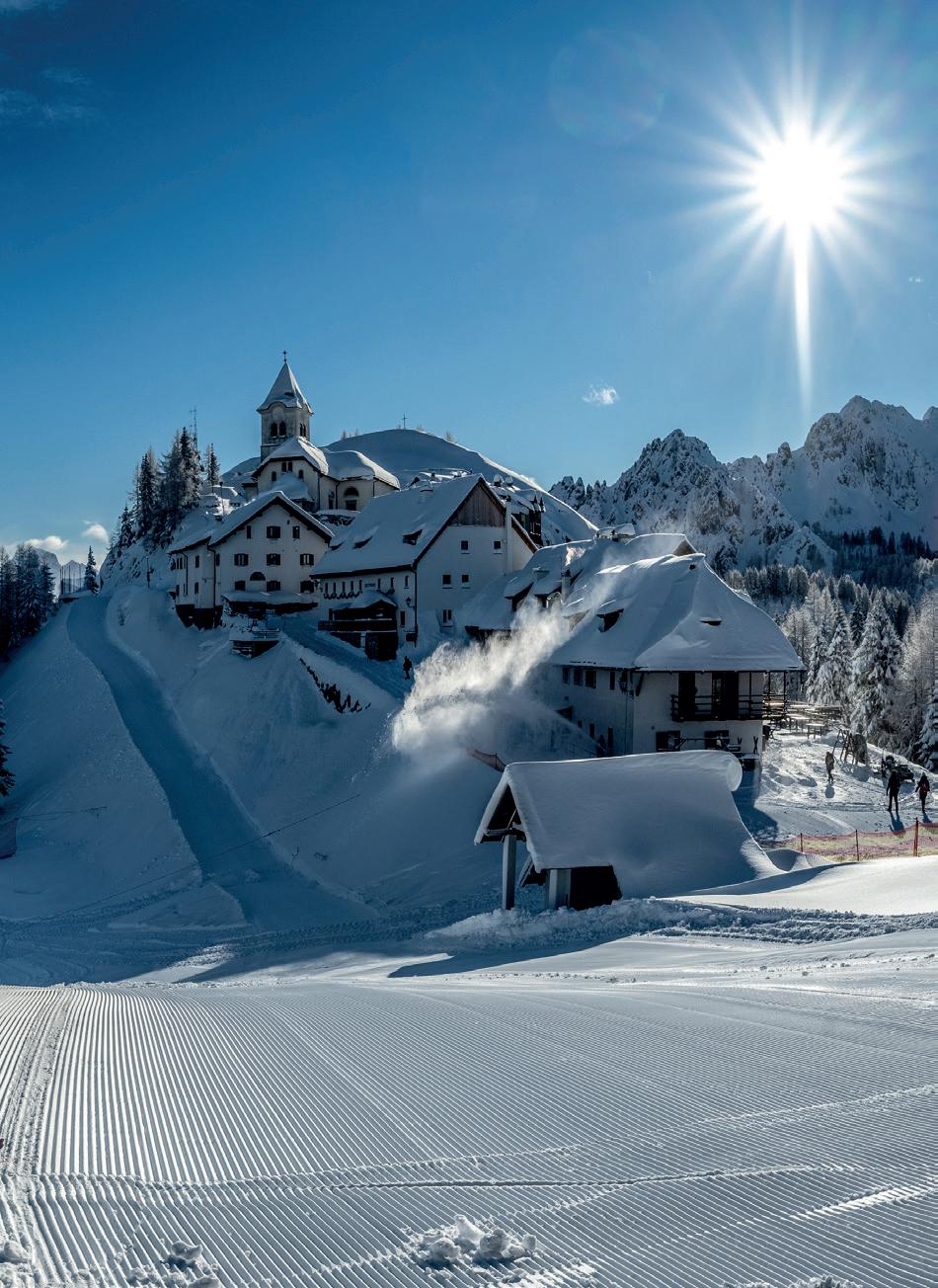
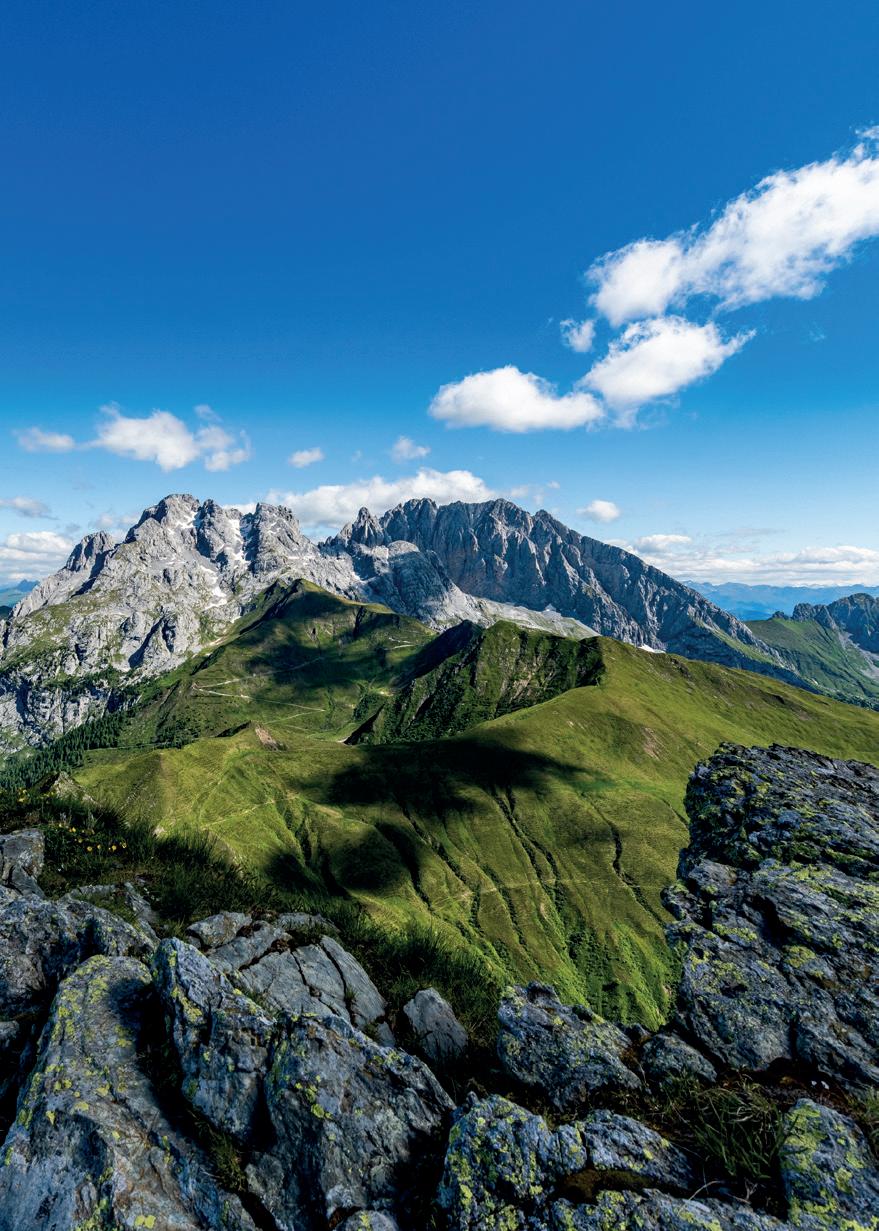
CARNIA
Inhabited for millennia by a people that never lost their pride, Carnia preserves a cultural and religious heritage among its mountains made up of very strong traditions and ancient rites. The mountains that encompass the seven valleys of Carnia are made less harsh by woods and meadows, guarded and protected by ancient valleys, animated by huts and shelters.
Mount Coglians
Tolmezzo, the historical capital of Carnia, is home to the “Michele Gortani” Carnic Museum of Popular Arts, which is regarded as one of the richest and most complete ethnographic museums in Europe, an ideal starting point to learn about this land and above all its people. The rural village of Illegio, not far from Tolmezzo, has been revived thanks to an enlightened cultural project. Every year it hosts a major art exhibition that attracts thousands of visitors.
The archaeological remains of the Roman forum in Zuglio and the finds kept in the local Archaeological Museum bear witness to the strategic
importance of this area during the Roman Empire. Not far from the centre of Zuglio is the Parish Church of San Pietro in Carnia, one of the oldest in Friuli. The Pievi are ancient churches, usually located at high altitudes and far from the settlements, which in the past were used for baptisms and the conversion of the mountain people to Christianity. There are ten historical Pievi in Carnia, linked by the “Cammino delle Pievi” (Way of the Pievi), twenty stages of a fascinating spiritual itinerary that crosses villages, valleys, streams and hills between the Prealps and the Carnic Alps.
The parish church of Zuglio is linked to one of the most
ancient rites in the area, the Kiss of the Crosses: it is a spiritual ceremony during which the processional crosses, representing the churches that were once under the jurisdiction of the Diocese of Zuglio, decorated with votive offerings, floral motifs or multicoloured ribbons that, according to tradition, were donated by the brides of the year, gather in a circle in the open space below the Parish Church of Zuglio and, when called upon by the parish priest, pay homage to the cross representing the mother church of San Pietro by touching it with a symbolic kiss.
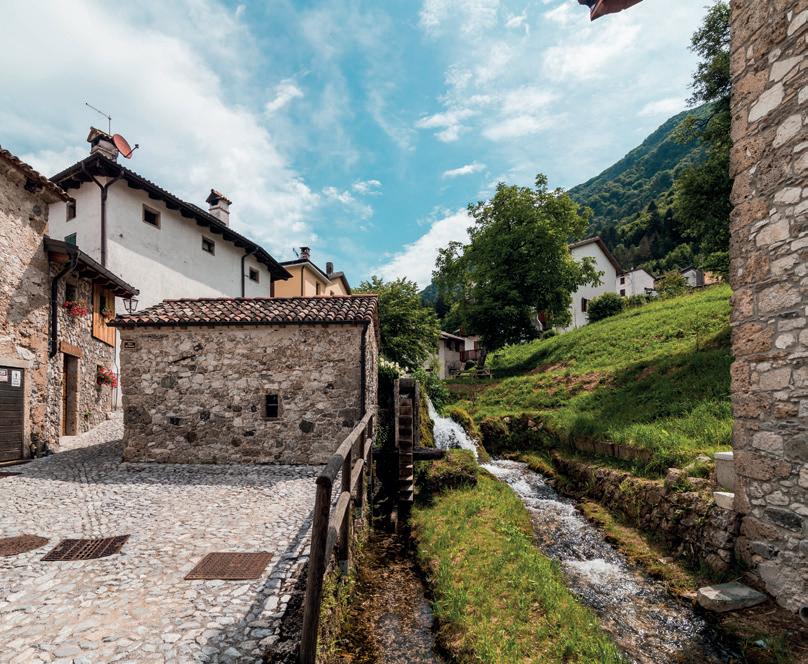
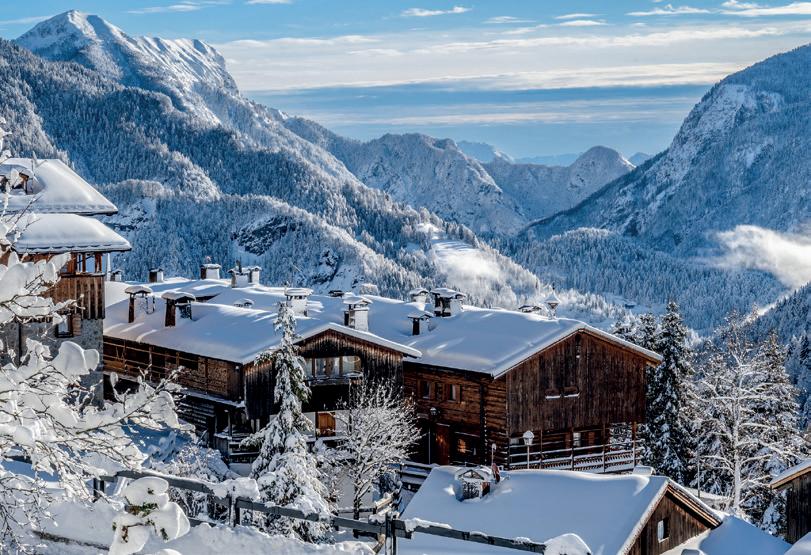
Sauris
Among the many picturesque villages of Carnia, Sutrio, at the foot of the famous Mount Zoncolan, is famous for its carpentry, while Pesariis, a hamlet of Prato Carnico, is the village of clocks, to which a permanent museum and an open-air itinerary along the main streets of the village are dedicated. The watchmaking tradition in the valley officially dates back to 1725 when the Solari factory was founded. In every Italian railway station, there is a piece of Carnia. In fact, most of the classic flip clocks come from the Solari company in Pesariis. Today, Solari (based in Udine) is one of the world’s leading suppliers of clocks for railway stations, airports and motorways. Part of the permanent collection of the MoMA in New York, the world-famous Solari “Cifra 3”
was designed by architect and designer Gino Valle.
Isolated for centuries in the upper Lumiei Valley, Sauris has preserved its culture, its language of Bavarian origin and its traditional architecture: houses with the ground floor in stone and the upper levels in wood, built using the blockbau technique, meaning logs wedged together at the corners. Sauris also hides a small gastronomic treasure, smoked Prosciutto, as well as a truly unique heritage of traditions. The Carnival of Sauris is a beautiful and one of the most ancient festivities in the Alps. It culminates in the Night of the Lanterns, when the masks (all made of wood), accompanied by the Rölar and the Kheirar (two figures of the local tradition), enter the forest by the light of torches and lanterns
for an evocative walk animated by joyful activities, ceremonies, music and dancing.
At the foot of the Friulian Dolomites, a Natural Park and UNESCO World Heritage Site, Forni di Sopra is a town with an almost fairytale atmosphere, the perfect destination for family holidays in all seasons, thanks to its many summer itineraries and its Alpine and Nordic ski slopes. The historical town centre features old houses made of stone and wood, with external staircases and balconies.
Walking through the narrow streets of Forni di Sopra, you can see the murals of the storyteller and painter Marino Spadavecchia: a real open-air painting exhibition, consisting of the 13 “Talking Walls” murals that decorate the houses and tell the stories of the people that
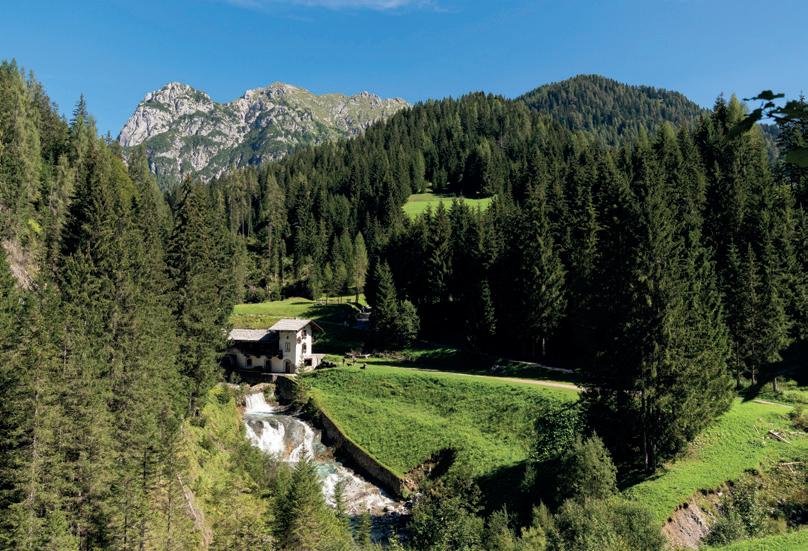
tradition of the valley, where many representations of past life are encountered from one hamlet to the next. In winter, snow adds to the enchantment and magic. Nestled between majestic peaks, such as Mount Peralba, Sappada is a summer and winter tourist destination. Forni Avoltri is just a few kilometres away, and its territory extends on the slopes of Mount Coglians, which at an altitude of 2,780 metres is the highest peak in the Region. This resort is also known for being the realm of the biathlon, thanks to the “Carnia Arena” International Centre, which is the second most important in Italy. If instead, you are simply looking for moments of relaxation, the thermal establishments of Arta Terme provide a wide range of wellness, fitness and beauty treatments.
The magic of the entire territory of Carnia lies in its ancient traditions, which are different and unique from one valley to the next. All of them, however, bring with them the skills of craftsmanship and the aromas and flavours of cuisine and gastronomy that are as genuine as they are surprising. During the last week of August, in the Municipality of Paularo, in the D’Incarojo Valley, it is possible to rediscover these “mistîrs”, the trades of Carnia, through a journey into the life of the past, in all its authenticity and simplicity.
Paularo was the first town to be included in the Mountaineering Villages circuit: a cross-border network that focuses on authenticity and the slow pace of life to promote areas committed to environmental sustainability
Sappada live there and their trades. The Dolomites also surround the town of Sappada. Known as Plodn in the local dialect, it has an ancient German heritage dating back to the year 1000, when it was founded by communities from Tyrol and Carinthia. These ancient origins are preserved in the local language, architecture and traditions. The fifteen hamlets that make up Sappada have preserved their original appearance. A Friulian poet, Rino Olivo, described Sappada as “living poetry” for its pure and genuine beauty, with churches, chapels, houses full of flowers and well-arranged firewood. The walk through the Ancient Hamlets of Sappada, included in the circuit of the Most Beautiful Villages in Italy, is a wonderful experience: a plunge into the history and
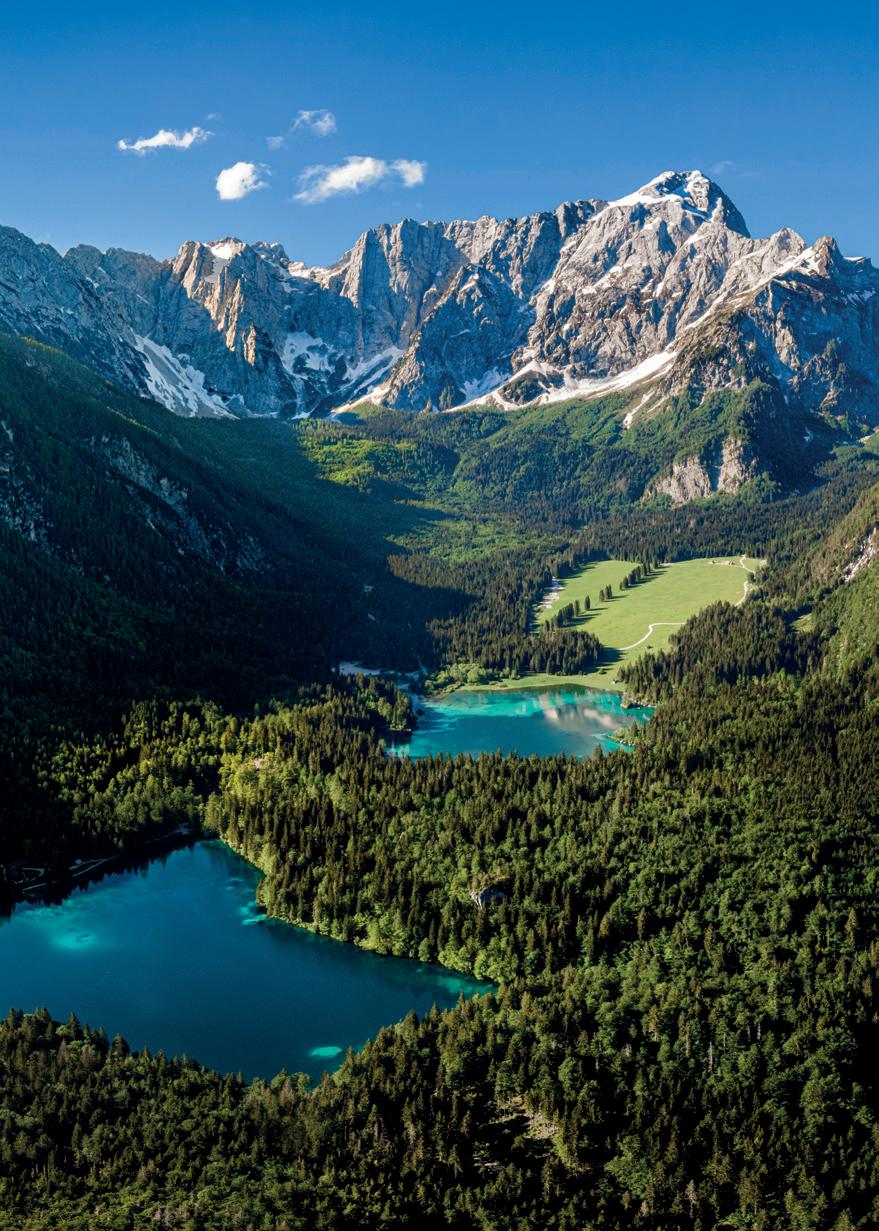
THE TARVISIANO
A vast, uncontaminated forest, one of the most precious natural areas in Italy and one of the most complete animal ecosystems in the Alps, with numerous and varied species of animals, soaring peaks, alpine pastures, shimmering lakes and, last but not least, the village of Monte Lussari: all this and more is the setting that welcomes visitors to the territory of the Tarvisiano, the most north-eastern corner of Italy, surrounded by the peaks of the Julian Alps and the Prealps.
Fusine Lakes
For centuries these mountains were the natural border between the Latin, Germanic and Slavic worlds. Today, in times of peace, the Julian Alps still speak the languages of all these peoples and are a land of contact and friendship. The symbol of this is Mount Lussari, with the village of the same name, built around the Sanctuary of the Virgin Mary of Lussari, which can rightly be defined as European because it is a place of pilgrimage for all three cultures. The area can be reached either on foot, along the Pilgrim’s Path, or by cable car, both of which open up to spectacular views. The Tarvisiano is a natural paradise with towering peaks, wide valleys, and picturesque lakes, like the ones in Fusine. Its thousand-year-old forest still yields the precious wood of the resonance spruce trees used to make musical instruments. The precious quality of the
natural environment of these places is underlined by the Julian Prealps Natural Park, characterised by extraordinary biodiversity.
Since 2019, the Park has been part of the UNESCO Man and the Biosphere Programme (MAB), which promotes a balanced and sustainable relationship between humankind and the environment. The Visitor Centre of the Park is located in the Resia Valley, a unique area in terms of its customs, handed down for generations in Resian, an ancient local dialect derived from Slavic languages. A holiday and sports destination, the area of the Tarvisiano offers countless opportunities for outdoor activities: skiing down breathtaking slopes or on cross-country trails surrounded by magical forests. The slopes of Sella Nevea, just a few kilometres from Tarvisio, are at an altitude of between 1,200
and 2,100 metres, ideal for skiing well into spring. The dominant features of the Mount Canin massif, which stretches across Italy and Slovenia, dominate the ski district and offer unlimited panoramic views. In Sella Nevea, even the youngest can have fun in complete safety in the Adventure Park, trying their hand at tarzaning between tree platforms, walkways, ropes and Tibetan bridges. While snowshoeing is an opportunity to enjoy the slow charm of timeless panoramas, the town of Pontebba is home to a state-of-the-art ice rink where you can experience the thrill of skating. In summer, there are many paths for trekking, horse riding and cycling, which lead to broad clearings dotted with mountain huts and alpine pastures, such as those in the Montasio area, where the highly valued PDO Montasio cheese is produced.
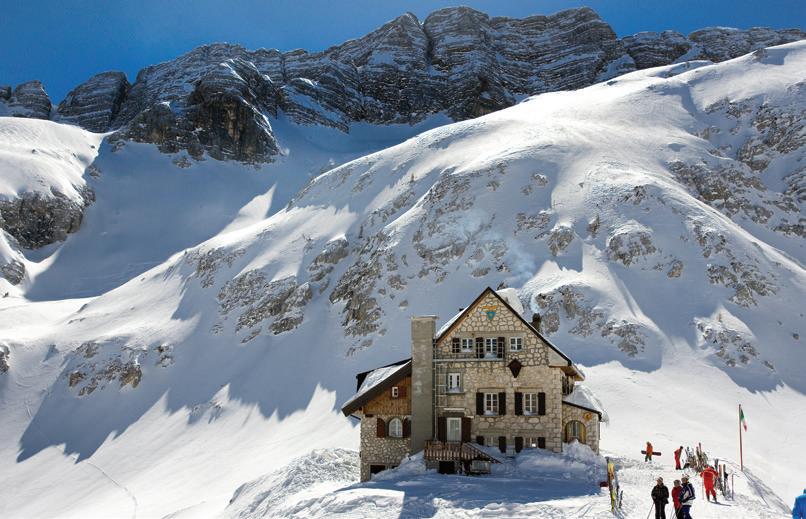
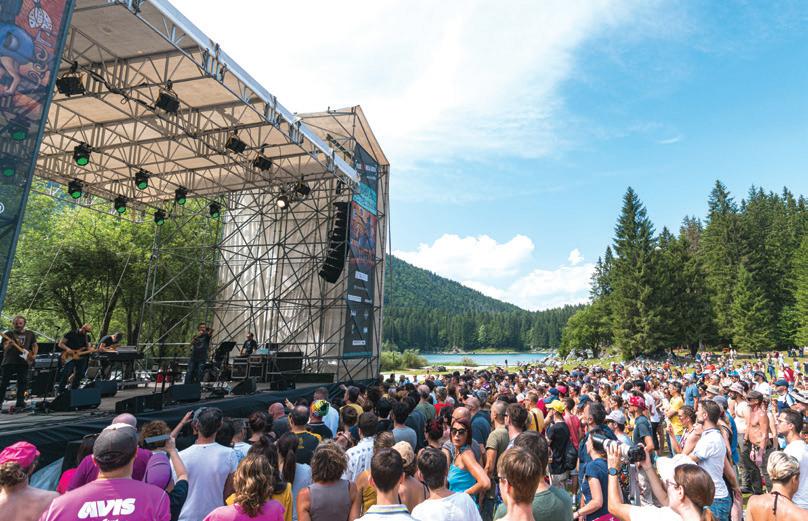
THE TARVISIANO: CULTURE AND TRADITION
The Tarvisiano is also a territory rich in history and culture. The Ethnographic Museum, housed in the 17th-century Venetian Palace of Malborghetto, chronicles the past, the rituals and customs of the Val Canale area, which are still very much alive today and have their origins in the happy coexistence of three cultures: Italian, Slavic and German. One of these traditions is the legend of the Krampus, the spooky little devils, half human and half goat, who accompany Saint Nicholas through the village streets on December 5, scurrying through the crowds looking for naughty children. At the Geomineral Park, in the village of Cave del Predil, visitors can board a small train and travel back in time to the Raibl - Cave del Predil mine, which was once one of the most important sites for the extraction of lead and zinc. Today it serves as a memorial to the miners who worked in the bowels of the earth. The visit to the mine ends at the museum dedicated to the heritage and tradition of mining. The village of RaiblCave del Predil is itself an interesting example
of a company town, a working and mining village built and developed around the mining operation. Among the ancient trades of the territory, special mention has to be made of the knife-grinders of the Resia Valley, renowned throughout the world for their incredible skills and whose tools are preserved in the Museum of the Knife-grinder in Stolvizza. The theme of borders and overcoming barriers is expressed in one of the best-known festivals in the Tarvisiano, the No Borders Music Festival, where music is a cultural expression that transcends all boundaries: linguistic, ethnic, and political. In Malborghetto Valbruna, nature becomes music with the Resonance Music & Arts Festival: the highest quality of music at the edge and in the forest, where nature is the stage. But also a wide variety of additional activities for younger people, adults, families and children. Life in the forest and many other programmes: baby resonances, yoga, dog trekking, mountain biking, and gong baths, all surrounded by nature.
No Borders Music Festival
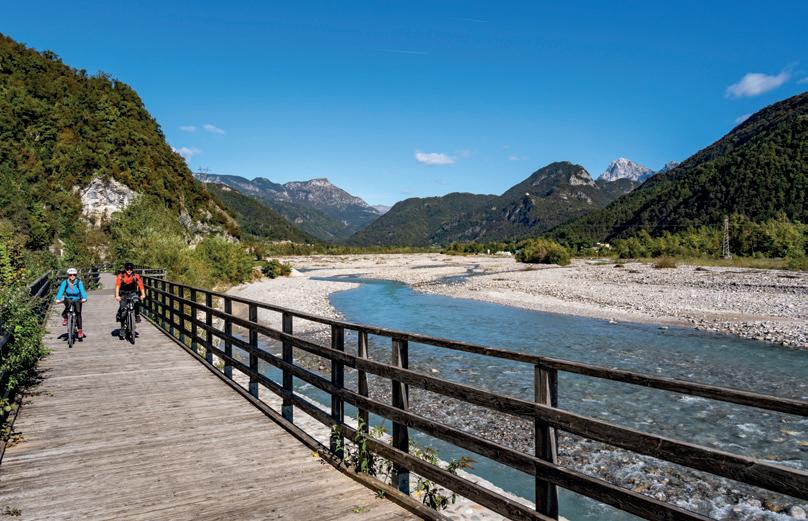
THE ALPE ADRIA CYCLE ROUTE RADWEG AND THE ALPE ADRIA TRAIL
For nature lovers, cyclists and hikers, there are two interesting routes through Friuli Venezia Giulia.
The Alpe Adria Radweg (CAAR) is a fascinating cycle route covering approximately 400 kilometres that connects Salzburg (Austria) with the city of Grado while crossing the Alps in full.
It is considered one of the most spectacular cycle routes in Europe thanks to the diversity and beauty of the landscapes it runs through: on the territory of Friuli Venezia Giulia, it touches Valcanale and Canal del
Ferro, where cyclists pedal surrounded by green, breathtaking forests, passing through some of the most beautiful medieval villages in Italy to reach Udine and ultimately the Adriatic Sea, in Grado.
The Alpe Adria Trail is for people who love walking. It links Carinthia, Slovenia and Friuli Venezia Giulia, unfolding on an itinerary extending 750 kilometres from Glossglockner (Austria) to the Adriatic Sea at Muggia. In total, the Trail consists of 43 stages, each covering a distance of about 20 kilometres.

Ciclovia Alpe Adria. Carnia-Paluzza
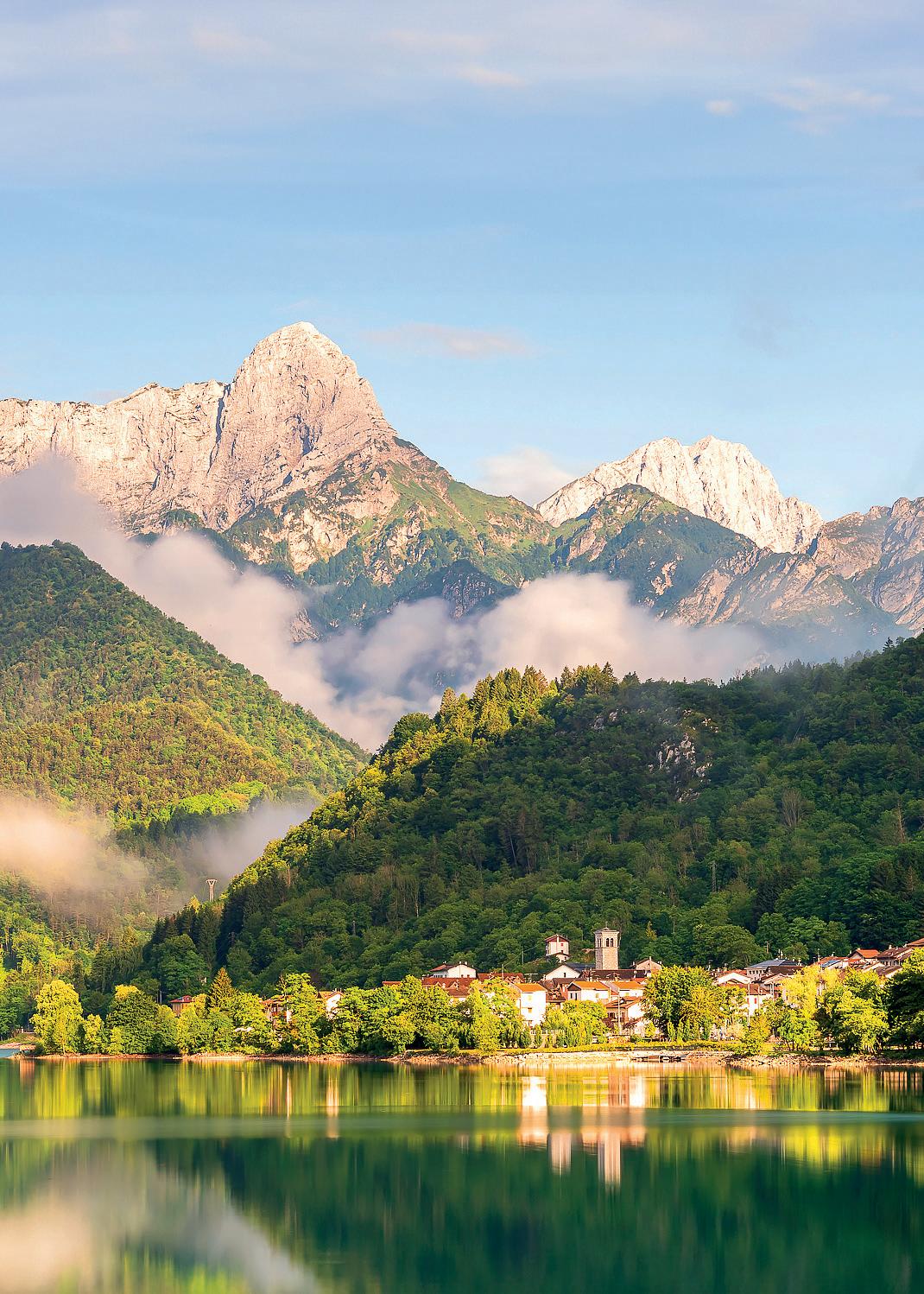
AMONG PARKS AND NATURE RESERVES
Two nature parks and several reserves safeguard the pristine mountain environment of Friuli Venezia Giulia. The wildlife and vegetation of the Friulian Dolomites are protected by the Friulian Dolomites Park, which covers an area of approximately 37,000 hectares and is free of urban settlements and paved roads. Visitor centres and guesthouses guarantee a comfortable hospitality and accommodation experience for everyone. The Julian Prealps Park embraces the small villages of the Resia Valley, an enclave where an ancient dialect of Slavic origin is spoken. The Park owes one of its main characteristics to the balanced relationship between humankind and nature that has been established over the centuries.
Barcis, in the Friulian Dolomites Park
THE VAJONT DAM AND THE CELLINA RAVINE NATURE RESERVE
Immersed in the spectacular scenery of the Friulian Dolomites, the Vajont Dam stands as a testament to the ingenuity and, at the same time, the arrogance of humankind towards nature. It was originally built to supply electricity to the valleys by exploiting the waters of the Vajont Torrent, but on October 9 1963 it caused a landslide that plunged from the mountain overlooking the river into the artificial lake created by the installation. The wave that rose from the dam wreaked havoc, devastating the villages of Erto, Casso and Longarone and
PIANCAVALLO
Built in the late 1960s, Piancavallo was the first Italian ski resort to be equipped with an artificial snow system. Located at the foot of the Mount Cavallo massif, the southern extension of the Carnic Prealps surrounded by
claiming thousands of victims. Today, a visit to the structure, a concrete wall measuring 261.60 metres in height and which has remained intact, presents a beautiful and terrifying scenario that is breathtaking. The nearby village of Erto, with its ghost houses, bears witness to the magnitude of those tragic events.
The Cellina Ravine Nature Reserve is an area of roughly 300 hectares spread across the municipalities of Andreis, Barcis and Montereale Valcellina, and it embraces the mountain section of the Cellina Torrent. It is an authentic
gorge carved into the limestone sediments: it looks like a great canyon, the largest in the entire Region and undoubtedly one of the most spectacular in Italy. Within the reserve, it is possible to admire the gorge in all its beauty from the Sky Walk along the Dint Trail, a panoramic viewpoint overlooking the canyon. For a deeply immersive experience, visitors can walk along the Old Valcellina Road, a breathtaking journey between sheer rock faces and the emerald waters of the reserve; from here, the more adventurous can reach the Tibetan bridge.
the peaks of Mount Tremol and Mount Colombera, Piancavallo commands sweeping views that range from the forests of the Cansiglio plateau to the Friulian plain and, on a clear day, as far as the deep blue waters of the Adriatic
Sea. Piancavallo is a real sports centre, equipped with some of the most advanced athletic facilities in the Region: over the years it has hosted important international sporting events.
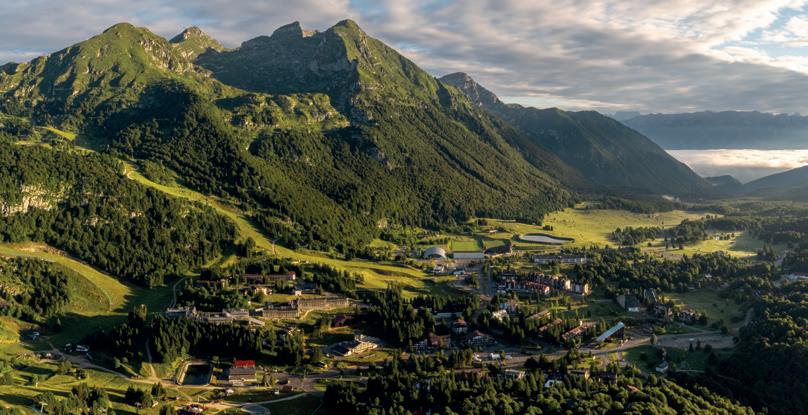
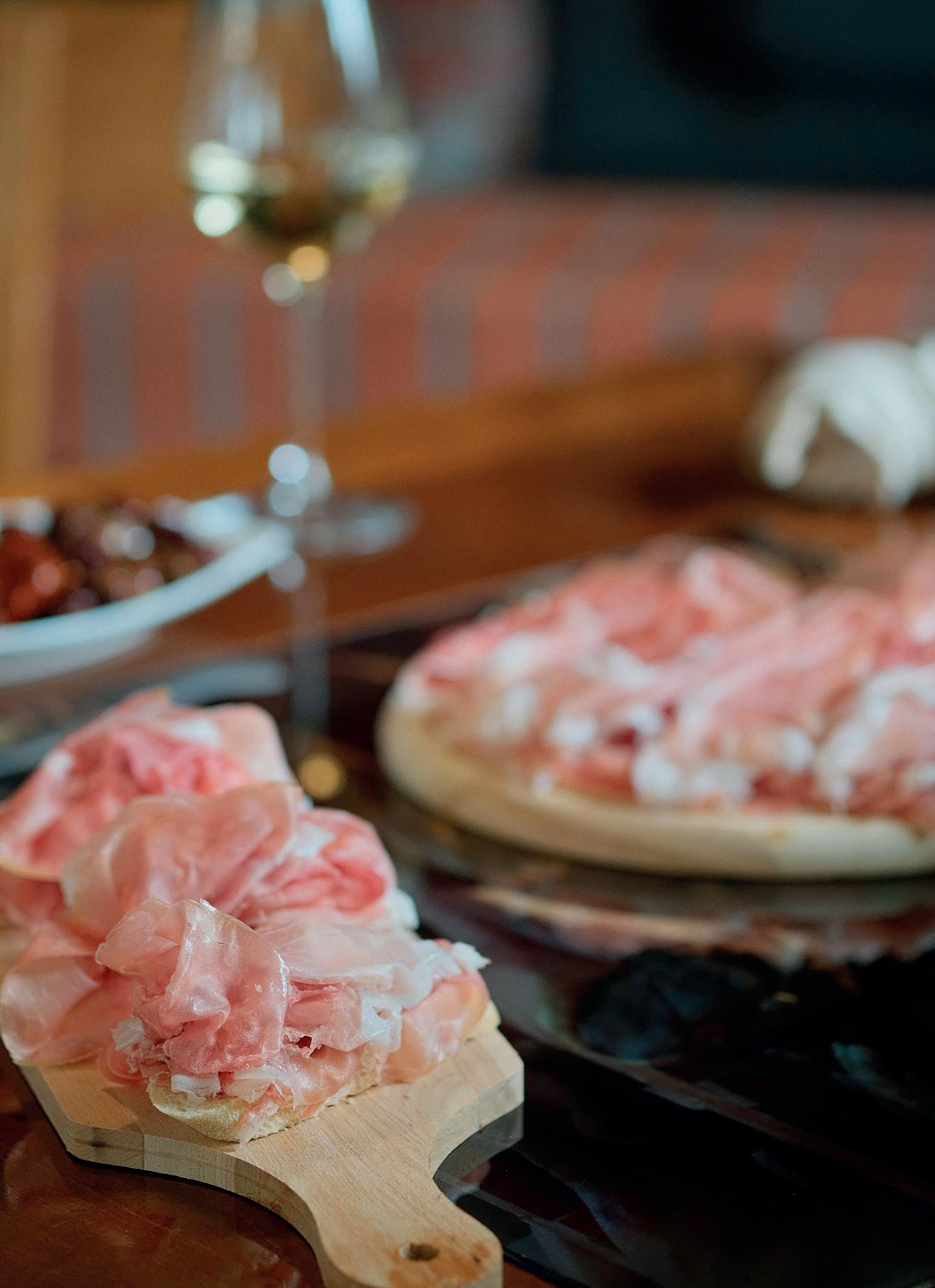
A FOOD AND WINE CULTURE WITH A THOUSAND FACES
In Friuli Venezia Giulia, the territory, the wines, the agri-food products and the cuisine are united by deep and unbreakable bonds, creating an extraordinary biodiversity of food and wine.
In the flavours of this Region, the heritage stemming from centuries of interaction between different people and cultures is instantly captured: here, the products and recipes of the Mediterranean tradition blend with traditional Balkan and Central European styles to create a unique and unexpected combination of scents, aromas and tastes. To appreciate the typical products and wines of this particular territory and to understand their essence, it is invaluable and important to meet and learn from the people who
know how to describe and share this heritage. This is why the “Wine & Taste Route of Friuli Venezia Giulia” was created: a project that unites the wineries, restaurants, delicatessens, wine shops and producers of Friuli Venezia Giulia that respect the principles of quality, authenticity and professionalism. Here you will discover the authentic flavour of the typical wines, dishes and products of the Region, presented and interpreted according to their geographical position and local tradition. Your journey into taste can follow six different itineraries to explore the local food and wine heritage, giving you an immersive and authentic experience throughout the Region. Valuable itineraries just waiting to be discovered
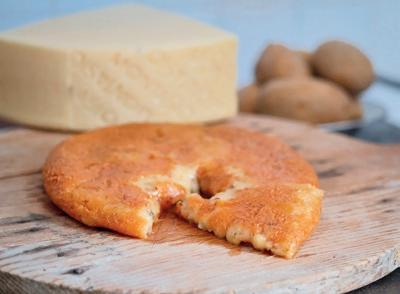
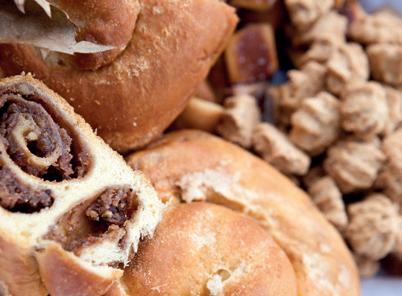
that will introduce you to the great products of tradition: PDO Prosciutto di San Daniele, PDO Montasio cheese, PDO Tergeste olive oil, PDO Brovada, PDO Italian Salamini alla Cacciatora, as well as PGI products such as Prosciutto di Sauris and Pitina, typical desserts such as Gubana and Putizza, Slow Food presidia, not to mention premium wines, craft beers, liqueurs and much more.
Your Taste Experience will be an unforgettable journey of flavours on any route you choose!
You may follow different itineraries, but your Taste Experience will always be unforgettable. Friuli Venezia Giulia is a unique and timeless place. Just waiting to be tasted.
www.tastefvg.it
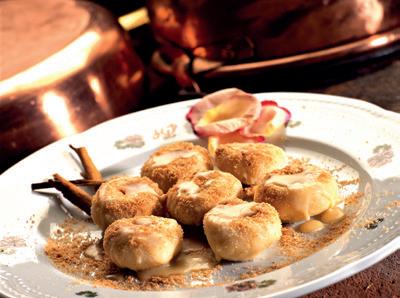
Potato gnocchi with plums
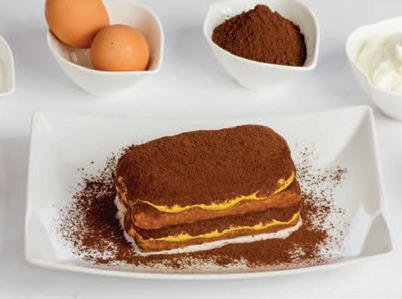
Frico
Gubana Tiramisù
A listing of the PromoTurismoFVG Infopoints
Aquileia Infopoint
Via Giulia Augusta, 11 – 33051 Aquileia (UD) Tel. +39 0431 919491 | Cell. +39 335 7759580 info.aquileia@promoturismo.fvg.it
Arta Terme Infopoint
Via Nazionale, 1 – 33022 Arta Terme (UD) Tel. +39 0433 929290 | Cell.+39 335 7463096 info.artaterme@promoturismo.fvg.it
Cormons Infopoint
Piazza XXIV Maggio, 15 – 34071 Cormons (GO) Tel. +39 0481 386224 | Cell. +39 335 7697061 info.cormons@promoturismo.fvg.it
Forni di Sopra Infopoint
Via Cadore, 1 – 33024 Forni di Sopra (UD) Tel. +39 0433 886767 | Cell. +39 335 1083703 info.fornidisopra@promoturismo.fvg.it
Gorizia Infopoint
Palazzo Paternolli, Piazza della Vittoria, 48 – 34170 Gorizia Tel. +39 0481 535764 | Cell. +39 335 1084763 info.gorizia@promoturismo.fvg.it
Grado Infopoint
P.zza XXVI Maggio, 16 – angolo Portanuova, 26 34073 Grado (GO)
Tel. +39 0431 877111 | Cell. +39 335 7705665 info.grado@promoturismo.fvg.it
Lignano Pineta Infopoint (summer season)
Via dei Pini, 53 – 33054 Lignano Pineta (UD) Tel. +39 0431 422169 | Cell. +39 331 1435222 info.lignanopineta@promoturismo.fvg.it
Lignano Sabbiadoro Infopoint
Via Latisana, 42 – 33054 Lignano Sabbiadoro (UD) Tel. +39 0431 71821 | Cell. +39 335 7697304 info.lignano@promoturismo.fvg.it
Marano Lagunare Infopoint (summer season)
Piazza Cristoforo Colombo 33050 Marano Lagunare (UD) Cell. +39 334 6835248 info.marano@promoturismo.fvg.it
Miramare Infopoint
Porta della Bora, adiacente all’ingresso del Viale dei Lecci 34121 Trieste Cell. +39 333 6121377 info.miramare@promoturismo.fvg.it
Muggia Infopoint
Piazza Marconi, 1 – 34015 Muggia (TS) Tel. +39 040 9571085 info.muggia@promoturismo.fvg.it
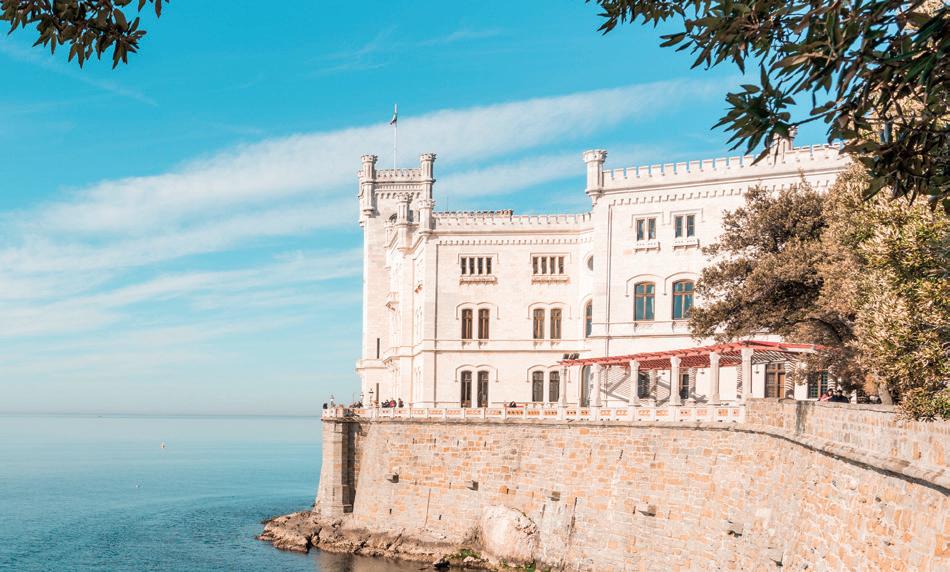
Palmanova Infopoint
Borgo Udine, 4 – 33057 Palmanova (UD)
Tel. +39 0432 924815 | Cell. +39 335 7847446 info.palmanova@promoturismo.fvg.it
Piancavallo Infopoint
(winter and summer season)
Via Collalto, 1 – 33081 Piancavallo (PN)
Tel. +39 0434 655191 | Cell. +39 335 7313092 info.piancavallo@promoturismo.fvg.it
Pordenone Infopoint
Palazzo Badini
Via Mazzini, 2 – 33170 Pordenone
Tel. +39 0434 520381 | Cell. +39 335 1516948 info.pordenone@promoturismo.fvg.it
Sappada Infopoint
Borgata Bach, 9 – 33012 Sappada (UD)
Tel. +39 0435 469131 | Cell. +39 335 1085932 info.sappada@promoturismo.fvg.it
Sistiana Infopoint
Sistiana 56/B – 34011 Duino – Aurisina (TS)
Tel. +39 040 299166 | Cell. +39 335 7374953 info.sistiana@promoturismo.fvg.it
Tarvisio Infopoint
Via Roma, 14 – 33018 Tarvisio (UD)
Tel. +39 0428 2135 | Cell. +39 335 7839496 info.tarvisio@promoturismo.fvg.it
Tolmezzo Infopoint
Palazzo Lo Basso
Piazza XX Settembre, 7 – 33028 Tolmezzo (UD)
Tel. +39 0433 44898 | Cell. +39 335 7747958 info.tolmezzo@promoturismo.fvg.it
Trieste Airport Infopoint
Via Aquileia, 46 – 34077 Ronchi dei Legionari (GO)
Tel. +39 0481 476079 | Cell. +39 334 6430667 info.aeroportofvg@promoturismo.fvg.it
Trieste Infopoint
Via dell’Orologio, 1 (angolo Piazza Unità d’Italia)
34121 Trieste
Tel. +39 040 3478312 | Cell. +39 335 7429440 info.trieste@promoturismo.fvg.it
Udine Infopoint
Piazza I Maggio,7 - 33100 Udine
Tel. +39 0432 295972 | Cell. +39 335 1088307 info.udine@promoturismo.fvg.it

Check the opening hours and the full list of Infopoints
HOW TO TRAVEL TO FRIULI VENEZIA GIULIA
BY CAR
Highway:
A4 Torino/Trieste
A23 Palmanova/Udine/Tarvisio
A28 Portogruaro/Conegliano
A27/A4 Trieste/Belluno
BY PLANE
Airport of Trieste www.triesteairport.it
40 km from Trieste and Udine
80 km from Pordenone
130 km from Venezia
120 km from Lubiana
Scan the QR code and find out so much more about Friuli Venezia Giulia
BY TRAIN
www.trenitalia.it www.italotreno.it
BY BIKE
www.alpe-adria-radweg.com www.adriabike.eu
BY BOAT
Along the coast and through the channels of the Lagoons of Grado and Marano
CREDIT
T. Balestra | IKON
Gianluca Baronchelli (POR FESR 2007-2013)
N. Brollo | Fivestudio.it
A. Cop
Massimo Crivellari (POR FESR 2007-2013)
Ulderica Da Pozzo (POR FESR 2007-2013)
Ecoplane
F. Gallina
O. Ganz
M. Gardone
L Gaudenzio
INFO
PromoTurismoFVG
Strategies, Development, Operations for Tourism via Aquileia, 46 34077 Ronchi dei Legionari (GO) info@promoturismo.fvg.it
Holden Creative P. G. Lomascolo
F. Marongiu
A.Michelazzi
M. Milani
D. Monti
Bici Nalini
F. Parenzan
E. Pellin
A. Sauro
D. Scarpante