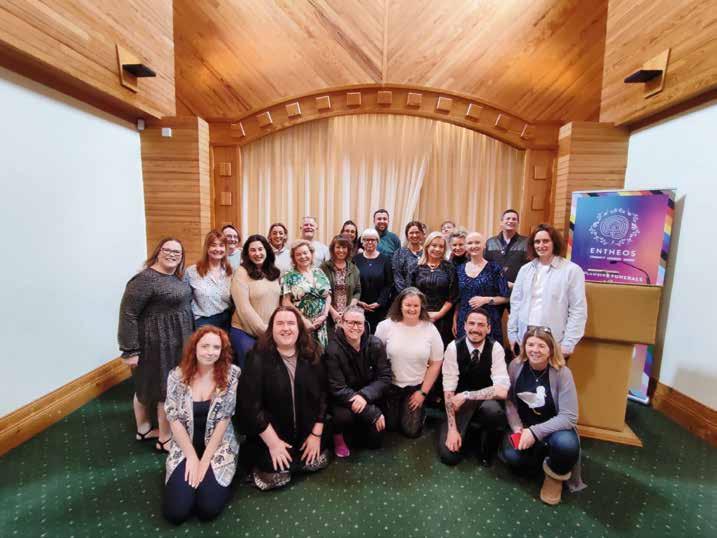
Táimid ag tnúth le hoibriú leat i 2026 in Entheos!
My w Entheos z niecierpliwością czekamy
na współpracę z Państwem w 2026 roku!
More information inside and Nós da Entheos estamos ansiosos para trabalhar com você em 2026! We at Entheos look forward to working with you in 2026!
N O N -RELI G IO US FUN E R A L A ND M E M ORIAL CERE M O N IE S
Humanist funerals and memorials are non-religious ceremonies which focus on the person who has died, the life they led, and the relationships they forged. They are based on the humanist perspective that ever y life is valuable and unique
A humanist funeral or memorial is the per fect option for families and friends who want a sincere, personal commemoration of their loved one, without religion. Each funeral and memorial ceremony is tailored to the person who has died, and the wishes of the people who love them, in the most fitting way possible. That may be an upbeat celebration of life or a ceremony with a more traditional tone.
Humanist funerals are inclusive and welcoming to people of all backgrounds and faiths. They often include time for reflection on the person who has died, when those with religious beliefs can say a silent prayer, if they wish.
Humanist funerals and memorial ceremonies are conducted by our trained and accredited celebrants.
FI N D YOUR LO CAL C E L E B R A N T
Emma Craw ford 07976 124056
Ian Deboys 07368 440040
Terri Gilleece 07801418492
Stewart Holden 07971 634098
Hope Kelly 07530 000300
Janni Knox 07890 861690
Richard L aver y 07802 839543
Michael McAlinden 07305 892201
MaryLou McShane 07962 906236
Trevor Molloy 07549 946622
Emily O'Dowd Lewis 07955 200555
Declan Walsh 07859 816585
h
The magazine for Funeral Directors in Ireland
DUBLIN’S NEWEST CEMETERY
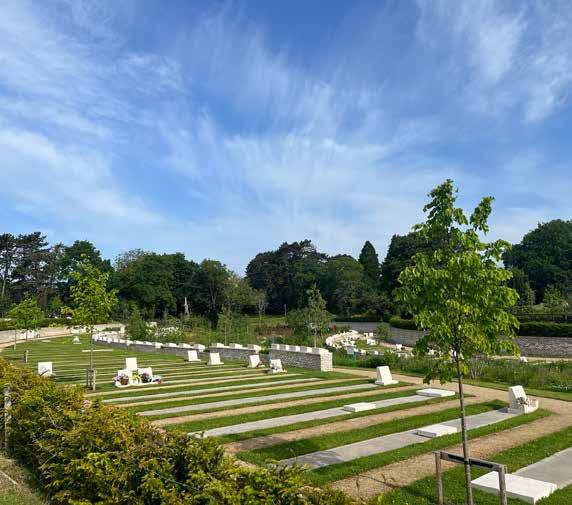
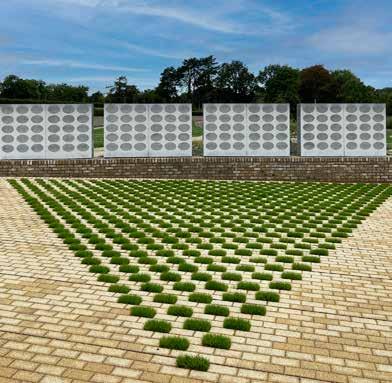
Within Esker Lawn Cemetery we have numerous options from which to choose: from traditional burial plots; ash burial or interment plots; to columbarium walls, all of which can be purchased in advance of need.
Great attention to detail has been paid by our craftsmen to create an environment in which family members can visit and reflect, while enjoying the tranquility offered by the manicured natural surroundings.
Within Esker Lawn Cemetery we have numerous options from which to choose: from traditional burial plots; ash burial or interment plots; to columbarium walls, all of which can be purchased in advance of need.
Great attention to detail has been paid by our craftsmen to create an environment in which family members can visit and reflect, while enjoying the tranquility offered by the manicured natural surroundings.
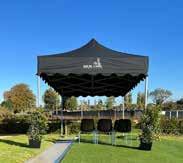
Esker Lawn Cemetery offers a bespoke service at time of burial. In order to ensure grieving families are made comfortable at the graveside, we provide seating for immediate family together with a canopy and plot dressing, which includes the removal of visible soil from the graveside. LUCAN/NEWLANDS
Esker Lawn Cemetery offers a bespoke service at time of burial. In order to ensure grieving families are made comfortable at the graveside, we provide seating for immediate family together with a canopy and plot dressing, which includes the removal of visible soil from the graveside.
A LIMITED NUMBER OF BURIAL PLOTS AND ASH INTERMENT OPTIONS ARE AVAILABLE TO PRE-PURCHASE IN ADVANCE OF NEED
Embracing culture through language in
This commitment allows families to find a Celebrant who not only understands their traditions and values, but who can gently weave their culture and native language into a ceremony of farewell. For families grieving far from home, hearing familiar words can offer profound comfort. As Entheos Celebrant Kamila Simplicio reflects:
“When loss happens far from home, words can carry extraordinary weight. I’ve held funeral ceremonies entirely in Portuguese, as well as ceremonies that blend Portuguese or Spanish with English, and I’ve witnessed how language can gently transform the atmosphere, creating moments of belonging, tenderness and release. These touches of familiarity often help families feel held in their grief and affirmed in their identity.”
Ceremonies held by Entheos Celebrants place great value on linguistic and cultural sensitivity, ensuring that words are understood, meanings are shared, and everyone present feels included. Accessibility is a core value of Entheos, particularly when families are navigating loss. Our training programme is deeply rooted in supporting people through grief, trauma and intense emotion, and we recognise how easing language and cultural differences can bring meaningful comfort at
In Ireland’s diverse and evolving communities, language can act as a bridge between generations, traditions and identities. Entheos Celebrant Maria
“In a culturally diverse Ireland, using language sensitively in funeral ceremonies can help bridge traditions, identities and generations. I most often incorporate
Polish, reflecting the needs of many Polish families living in Ireland. I found that even small moments in a family’s native language can bring comfort and a deeper sense of connection in grief.”
Holding a funeral ceremony in both English and another language is a gentle acknowledgement of the deceased’s heritage and of the family’s need to grieve in the language closest to their heart. Careful attention to names, pronunciation and meaning is essential, reflecting Entheos’s deep respect for cultural identity and inclusivity.
Entheos Celebrant Eithne Ní Dhraighneáin speaks to the power of Irish language ceremonies:
“Offering funeral ceremonies exclusively in Irish or ‘fite fuaite’ - woven with ‘Gaeilge agus Beárla’ - Irish and English creates a ‘tearmann’ - a sanctuary, that embraces and embodies the life story and language values of the person ‘imithe ar shlí na fírinne’ and those grieving.
Bi-lingual Memorial Ceremonies and Scattering of ‘Diaspora in Éirinn’ - the Ashes for the Irish, invites healing on one’s grief journey, as language and land merge full circle through ‘na glúinte’ - generations and coming home.”
Entheos Ireland works in close alignment with our Funeral Director colleagues, sharing a commitment to serving every family with care, dignity and compassion. Each ceremony is created thoughtfully, not just read from a script, and always grounded in
the unique life and story of the person who has died. By continuously working to expand our team with Celebrants from various backgrounds, we reaffirm our commitment and dedication to empathy, inclusivity and the celebration of honouring diverse legacies.
With Celebrants located throughout Ireland, North and South, we welcome opportunities to connect with Funeral Directors to support the growing need for non-traditional funeral ceremonies. Entheos is an inclusive, non-denominational organisation so we can incorporate aspects of faith paths if requested by the family, and the majority of our ceremonies contain no religious elements at all.
Our team at Entheos are highly experienced and have had the privilege of holding funerals for all kinds of people from all walks of life, and for deaths that occur in many different circumstances. We specialise in holding funerals involving trauma, sudden death, and the profound grief that accompanies the loss of infants, children and young people. We are also proud to offer our Died With Pride service, providing funeral ceremonies for LGBTQ+ people, held by LGBTQ+ Celebrants. We do not charge for ceremonies for children under 18, or for legal marriage ceremonies held in hospices or hospitals (see Lara’s Legacy and Grá go Deo on our website, www.entheos. ie).
If you would like a local Entheos Celebrant to drop in to you for a chat, please check out our Celebrant Directory on our website www. entheos.ie/celebrantdirectory, or contact us at info@entheos.ie. We would be honoured to share more about Entheos, and about how we are serving our communities in a new way with inclusivity and diversity at the heart of everything we do.
Crematorium to be constructed in Waterford
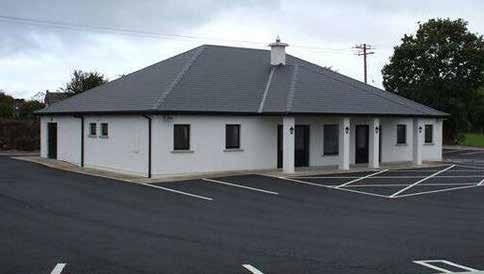
The Aidan Walsh & Sons Funeral Home in Tallow, Co. Waterford, has received planning approval from Waterford City and County Council for the construction of a new crematorium at their existing premises on Michael J. Prendergast Road.
The approved development includes:
• A dedicated crematorium facility.
• An extension to the existing funeral home, featuring a showroom on the northern side of the building.
• A chapel and ancillary accommodation on the southern side.
This expansion aims to enhance the range of services offered by Aidan Walsh & Sons, who already operate funeral homes in both Tallow and Cappoquin. The crematorium will provide a local option for cremation services in West Waterford and the wider southeast region, where demand has been growing and such facilities have been described as “badly needed” in recent discussions around similar proposals elsewhere.
Local Councillor Donnchadh Mulcahy (who represents the area and supported the application) highlighted the potential positive impacts, stating that developments like this could create jobs, support local businesses, and provide an economic boost to Tallow and surrounding communities in West Waterford.
This marks a significant addition to funeral services in the region, reducing the need for families to travel further afield for cremations.
Aidan Walsh & Sons Funeral Directors have been established in the area for years, focusing on compassionate and professional arrangements.
CONSTRUCTION WORKS BEGIN 2026.
Pictured: Aidan Walsh & Sons Funeral Home, Tallow
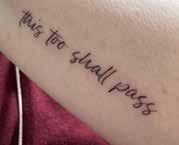
This too shall pass...
that is life. In all its glorious highs and lows, it’s ours to enjoy and share for a while and then it is gone.
As a celebrant I see first hand the effect of this passing and the intense pain of loss. I got to thinking, does it all pass when you lose a loved one?
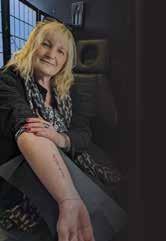
Last year I got my first tattoo. I got it for a reason that is a personal reminder that bad things end, but it’s more than just that.
It is true of everything. Everything WILL pass. The good, the pain, the joy, the celebration, the achievements, the attractions, the experiences… All of it.
Even the body this tattoo sits on, will someday pass. And
The answer is bittersweet. The pain will fade, the memory of a face or gesture may become less sharp, a voice only a faint whisper, the touch of a hand losing its strength. But, the imprint of a life well loved, stays. Forever resident in our memories and hearts. Even if we seem to move on. Their imprint is fixed. Immovable. Undeniable. For as long as we stay, they stay. Until we too, shall pass.
Here to help your families who don’t want a minister/priest led funeral service or a fully non-religious humanist service.
I offer a unique bespoke ceremony that includes anything your family desires.
THIS TOO SHALL PASS
We do not grieve because love endswe grieve because it mattered
The silence left behind is shaped by a life that touched ours deeply. Grief stays for a while, but not forever. Like all things, this too shall pass What remains is lovechanged, but still here. Always.
By Gillian Cummings
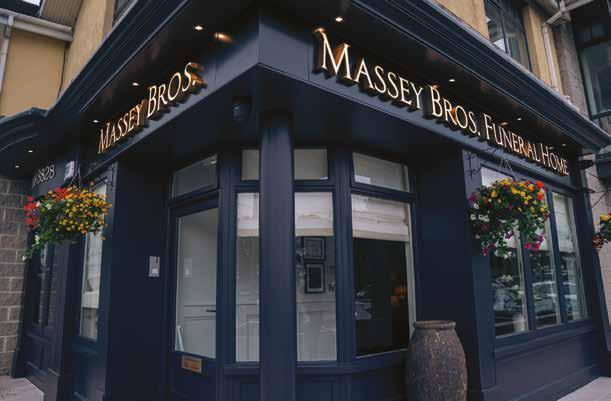
Massey Bros. Goatstown
One year serving the community.
From day one you’ve made us feel at home - thank you!
We’re here with caring, professional support—whenever you need us.
Calm, welcoming spaces for reflection and farewell, with services - religious or non-religious, simple or traditional - your way, supported by thoughtful guidance, clear explanations and no pressure.
Irish Expertise Recognised on the world stage at NFDA International Convention
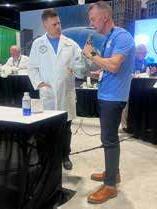
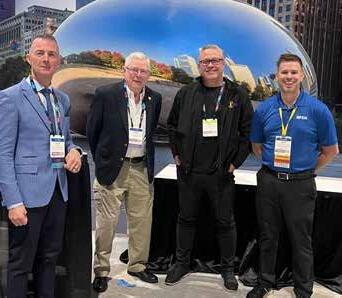
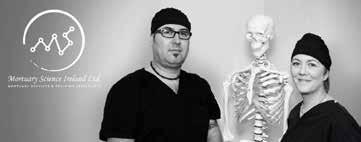
The National Funeral Directors Association (NFDA) International Convention in Chicago welcomed distinguished guests Glyn Tallon and Breda Cumiskey of Tallon Mortuary Specialists by invitation the 26th October 2025, marking a proud moment for Irish funeral service professionals on the global stage.
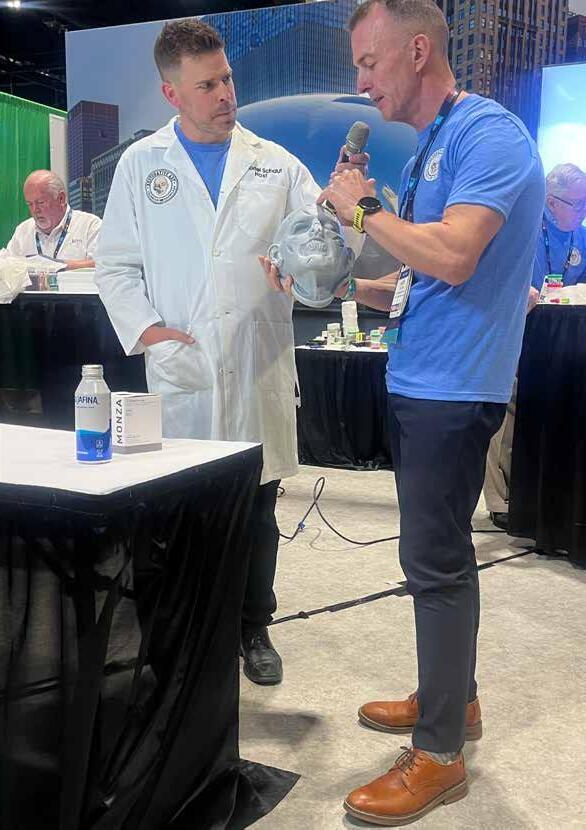
Glyn Tallon, an internationally recognised restorative and trauma specialist, was invited to Chicago to present a preconvention work shop that consisted of 4hours to a packed audience, and to also serve as a judge for the first ever Restorative Arts Technical Showcase. This groundbreaking event was created to celebrate one of the most vital and
compassionate aspects of funeral service: restoring dignity, peace, and comfort for grieving families during their most difficult moments.
The showcase brought together skilled professionals from across the industry, demonstrating advanced restorative techniques, innovation, and exceptional craftsmanship. As a judge, Glyn played a pivotal role in evaluating the technical excellence of the participants while also providing guidance, insight, and mentorship drawn from his extensive experience in the field.
Known for his dedication to education, high standards, and compassionate care, Glyn’s presence elevated the event and reinforced the importance of restorative work as both a science and an art. His contribution helped ensure that the showcase maintained a strong focus on professionalism, ethical practice and the emotional impact of this specialised work on families and communities.
Breda Cumiskey’s attendance further strengthened the representation of Tallon Mortuary Specialists at this prestigious international gathering, highlighting the company’s commitment to excellence and ongoing professional development.
The invitation to participate in such a landmark event reflects the growing international recognition of Tallon Mortuary Specialists and their contribution to advancing restorative practices within the funeral profession. It also underscores Irelands presence and influence within the global funeral service community.
This historic showcase not only celebrated technical skill but also reaffirmed the heart of the profession: providing dignity, respect, and peace to those who have lost a loved one.
Leadership appointments and Board updates
The Irish funeral profession continues to benefit from strong leadership and commitment, with several key appointments and changes recently confirmed across the Association.
Appointment of PresidentFintan Cooney
The Association is pleased to announce the appointment of Fintan Cooney as President. Fintan brings extensive experience and professionalism to the role, and his leadership is expected to further strengthen the work of the Association on behalf of members nationwide.
Fintan Kennedy
Appointment of ChairFintan Kennedy
The Association is delighted to confirm the appointment of Fintan Kennedy as Chair. Fintan is an Assistant Lecturer in Sports Management at Atlantic Technological University and also serves as Chief Risk Officer with Agile Risk Solutions. With over 25 years’ experience in risk and business continuity consulting and having served as a non-executive board Chair over the past 10 years, Fintan brings valuable governance, strategic and professional insight to the role.
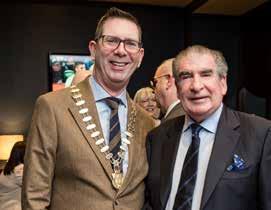
New IAFD President, Fintan Cooney is pictured with Noel Hughes
Membership Officer Update
After serving on the Board since 2021, Membership Officer Kylie Gourley has stepped down due to increasing work commitments. The Association thanks Kylie for her valued service and contribution.
We are pleased to announce the appointment of Clare Ann Irwin as the new Membership Officer and wish her well in her new role. A fifth-generation funeral professional, Clare Ann qualified as an embalmer in 2022 following her studies with the Irish College of Funeral Directing and Embalming.
2nd Vice President Appointment
The Association is pleased to announce that Peter Maguire, Education Officer, has been appointed as Second Vice President. His ongoing commitment to education and professional development within the profession is warmly acknowledged.
Board Appointment - Noel Hughes
The Association is pleased to announce the appointment of Noel Hughes to the Board.
Noel brings extensive coronial experience, having spent many years in a senior leadership role within the Dublin Coroner’s Office.
Hon. Treasurer Update
NiamhSweeney, Immediate Past President, has been appointed as Treasurer. The Association extends its sincere thanks to Niamh for stepping into this demanding role, particularly following a busy and successful year serving as President.
His in-depth knowledge of coronial procedures, regulation and public-sector collaboration will support the Board in maintaining professional standards and effective engagement across the sector.
Clare Ann Irwin
Niamh Sweeney
Peter Maguire
IAFD Appoints New President
The Irish Association of Funeral Directors has announced the appointment of Fintan Cooney as its new President.
Manager of Fanagans Dundrum, Fintan has served on the IAFD Board for six years, including five as Membership Officer. He brings extensive board and governance experience, along with a strong commitment to professional standards within the funeral profession.
Speaking on his appointment, Fintan said he was honoured to take on the role at an important time for the profession, noting both the challenges and opportunities ahead. His priorities include progressing
the recommendations of the Association’s strategic review, with a particular focus on the Excellence Programme and the continued development of education and training.
He emphasised the role of the IAFD in setting standards in an unregulated profession and supporting members to deliver the highest levels of service. During his term, he also plans to strengthen engagement with members nationwide, including the introduction of regional meetings in 2026.
Looking ahead, Fintan said the Association will continue to evolve to meet the needs of the profession and ensure members are well prepared for any future regulation.
IAFD Members Gather in Arklow for AGM and Annual Presidents’ Dinner
The Annual General Meeting of the Irish Association of Funeral Directors took place on 22 November 2025 at the Arklow Bay Hotel, bringing together members from across the country.
The AGM provided an opportunity to review the Association’s work over the past year, including progress in governance, professional standards, education, and communications, as well as the formal installation of the incoming President. The meeting also reflected the Association’s ongoing focus on modernisation and supporting best practice within the profession. Following the AGM, members and invited guests remained at the venue to attend the Association’s Annual Presidents’ Dinner, an established highlight of the calendar, which offered an opportunity to mark the occasion in a professional, social and celebratory setting.
Donal Forde Robert Fanagan
During the dinner, Honorary Membership Awards were presented to past Presidents Donal Forde and Robert Fanagan, in recognition of their exceptional service. Both men served as President during the Covid-19 pandemic, and their leadership during a period of unprecedented challenge for the profession was formally acknowledged and warmly appreciated.
Fintan Cooney (President)
Fanagans Funeral Directors
54 Aungier Street
Dublin 2
Ph: 0818 935 000
Email: president@iafd.ie
Fintan Kennedy (Chair)
Ph: 0818 935 000
Email: chair@iafd.ie
John Mark Griffin (1st Vice President)
Griffin Funerals
John’s Gate Pennywell Limerick
Ph: 0818 935 000
Email: johnmark@griffinsfunerals.com
Paul Reilly (Hon. Secretary)
Oliver Reilly Ltd Funeral Directors
Leinster Street, Maynooth
Ph: 0818 935 000
Email: secretary@iafd.ie
Niamh Sweeney (Hon. Treasurer)
John Sweeney and Sons
Fairgreen
Arklow, Co Wicklow
Ph: 0818 935 000
Email: treasurer@iafd.ie
Clare Ann Irwin (Membership Officer)
Irwins Funeral Home
Bothar Irwin, Galway City,
Ph: 0818 935 000
Email: membership@iafd.ie
Peter Maguire (Education Officer)
Massey Bros Funerals
Head office
109 The Coombe, Dublin 8, D08 AK10
Ph: 0818 935 000
Email: education@iafd.ie
Jane Clarke (Public Relations Officer)
Staffords Funeral Directors
60 North Strand Road, Dublin 3.
Ph: 0818 935 000
Email: pro@iafd.ie
Donal Forde
Fordes Funeral Homes Ltd
South Gate Bridge
Cork, Co. Cork
Ph: 0818 935 000
Email: donal@fordesfuneralhome.ie
Noel Hughes
Ph: 0818 935 000
Email: enquiries@iafd.ie
Niall Mulligan
Heffernan’s Funeral Directors
Trim, Co. Meath
Ph: 0818 935 000
Email: heffernansfd@gmail.com
PICTURE FRAME HOLDER
Season’s Greetings from Funeral Partners
Celebrating Together This Christmas
A career path that makes a difference
Grow your skills, support families, and strengthen communities across Northern Ireland.
for their dedication, care and compassion. To all the new businesses that have joined us this year, welcome to the Funeral Partners family. We are proud to support you and honoured by your trust.
From everyone at Funeral Partners, we wish you joy for the festive season and a peacful NewYear.
Choosing a career in funeral services means more than professional development, it means making a lasting impact. With clear pathways for growth and training, you’ll build your future while helping others through life’s most important moments. And through our community funds, your work supports local schools, healthcare initiatives, and cultural projects across Northern Ireland.
Looking to join our growing team?
Discover a career that matters.
Scan the QR code to find out more.
Hear from some of our partners about their acquisition journey and becoming part of Funeral Partners.
funeralpartners.co.uk/story
Explore career opportunities at funeralpartners.co.uk funeralpartners.co.uk/story
Light Up the Night brings communities together in remembrance at Belfast City Hall
Hundreds of people came together at Belfast City Hall for ‘Light Up the Night: An Occasion to Remember’, a reflective service offering comfort, connection and remembrance to those who have lost loved ones.
Organised by Funeral Partners Northern Ireland and Cruse Bereavement Support Northern Ireland, the event created a calm and supportive space at what can be one of the most challenging times of year for bereaved families. Those in attendance included former Cruse clients, families supported by Funeral Partners’ local funeral homes including James Brown & Sons, Mulhollands Funeral Directors, John Gray & Co., Bairds of Antrim and Shields of Donaghadee, plus members of the wider public.
Guests were invited to write personal messages to their loved ones and place them on illuminated remembrance trees before taking part in a programme of music, readings and quiet reflection. A candlelighting moment at the heart of
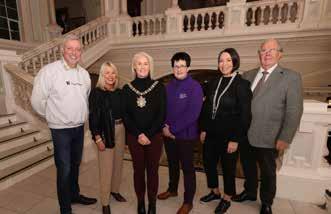
L-R: Julian Hodgkinson, Funeral Partners Business Director (Northern Ireland), Elaine Brannigan, Senior Development Officer Cruse Bereavement Support, Rt Hon, the Lord Mayor, Councillor Tracy Kelly, Thelma Abernethy, Head of Cruse Bereavement Support in Northern Ireland, Beverley Brown and James Brown, James Brown & Sons
the service provided a powerful opportunity for collective remembrance in the unique surroundings of the Great Hall.
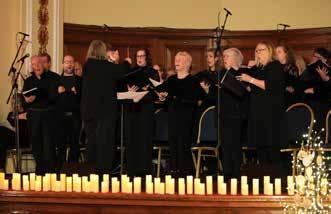
The Rt Hon Lord Mayor of Belfast Cllr Tracy Kelly welcomed guests to the event, which was hosted by broadcaster Cate Conway. The evening included musical performances from The Sanctuary Singers and local musicians, alongside readings from representatives from Cruse, and James Brown & Sons Funeral Directors and Shields of Donaghadee Funeral Directors.
Thelma Abernethy, Head of Cruse Bereavement Support in Northern Ireland, said: “It was an amazing event, and feedback has been very positive. People appreciated the opportunity to come together to remember their loved ones as they prepared to go into Christmas. The combination of poetry, music and a time of reflection, in a beautiful setting of lights
Musical performances from The Sanctuary Singers and local musicians entertained guests.
and trees, created a beautiful atmosphere to remember loved ones in.”
Julian Hodgkinson, Regional Director for Funeral Partners, added: “At Funeral Partners, we see first-hand how important it is for families to have space to remember and reflect. Light Up the Night is about bringing people together, reminding them they are not alone, and
showing the strength that exists within our communities when we support one another. We are proud to support Cruse and to play a role in creating moments of comfort and connection for families across Northern Ireland.”
Now in its third year, Light Up the Night has become an important annual moment of remembrance for many local families, and this year’s event
marked a special moment for Cruse Bereavement Support Northern Ireland as it celebrates 40 years of supporting people through grief.
Funeral Partners Northern Ireland supports families through 18 funeral homes across the region and works closely with local organisations to extend care beyond the funeral itself.
Local funeral directors help homeless stay warm this winter
Winter is the hardest time of all for the homeless. So, prominent Belfast funeral directors James Brown & Sons decided to go the extra mile and launch a ‘Coats for the Homeless’ campaign via all four of their branches in a bid to provide people with nowhere to go some extra layers to stay warm while temperatures plummet. Public response to the campaign has been overwhelming and on Christmas Eve, James Brown & Sons Funeral Manager Barbara Wilson and Funeral Arranger Robert McCamley delivered an impressive total of 313 coats to the Welcome Organisation, Belfast – who work tirelessly to deliver a range of services to people affected by homelessness.
Lauren Gilliland and Brendan of the Welcome Organisation were ready to help them offload the packed van when they arrived at their premises on Townsend Street – where the coats can be distributed to those in need.
James Brown & Sons’ Barbara Wilson said: “We were absolutely overwhelmed at the
L-R: Barbara Wilson, Funeral Manager at James Brown & Sons; Lauren Gilliland and Brendan of the Welcome Organisation; Robert McCamley, Funeral Arranger at James Brown & Sons
response to our coat appeal from the local communities who so generously donated over 300 coats, through our branches in Knockbreda, Lisburn Road and Dunmurry. We cannot thank everyone enough who took the time to call into our branches, in support of this wonderful cause. The kindness shown will help keep people warm and supported during difficult times and make such a difference to those in need this cold winter.”
James Brown & Sons have been continuing with their coat appeal as a large number of donations are still coming into their branches. It’s clear the public
share their care for homeless people’s wellbeing. If anyone would like to donate any spare coats, they can take them to any of the branches listed below: 34 Knockbreda Road, Belfast BT6 0JB 139 Kingsway, Dunmurry, Belfast BT17 9RY 533/535 Lisburn Road, Belfast BT9 7GQ Unit 3 Beverley Road, Carnmoney BT36 6QD
For more information about James Brown & Sons, part of the Funeral Partners family of businesses, visit: www. jamesbrownfuneraldirectors. com
Funeral directors supports Women’s Aid with pyjama appeal in Carrickfergus
Afuneral home at the heart of the Carrickfergus community has once again brought people together to support women and children affected by domestic abuse, through a donation of pyjamas to Women’s Aid.
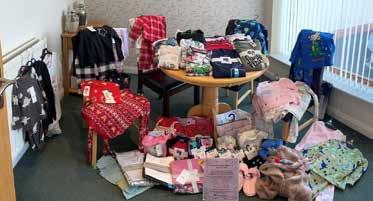
Mulhollands Funeral Directors collected bags of new pyjamas as part of its annual appeal, which supports Women’s Aid across the Mid and East Antrim area, including Carrickfergus, Larne and Ballymena.
The pyjamas will be distributed throughout the year to women and children who are fleeing domestic abuse, many of whom leave their homes with very few belongings.
Senior Funeral Arranger Kerry Kennedy, who led the appeal for the third consecutive year, said the initiative continues to resonate deeply with the local community.
She said: “Women and children coming into refuge often leave with nothing but the clothes they’re wearing. Pyjamas are such a simple thing, but they bring comfort, reassurance and that feeling of being safe.
“We all know how it feels to put on a new pair of pyjamas – it’s cosy, it’s comforting, and almost like a hug. If we can provide even a small bit of that comfort at what is an incredibly traumatic time, then it’s absolutely worth doing.”
Kerry explained that the appeal, which runs each Christmas, also helps people feel less uneasy about funeral directors.
She added: “This is the most rewarding charity support we do because it comes directly from the community. We’ve had people come through our doors with bags of pyjamas and some of them may never have set foot in a funeral home before. It helps break down that stigma and shows that we’re part of the community,
not closed off from it.”
Mulhollands Funeral Directors also donates to local charities in the area as part of its Mulhollands Community Assistance Fund, and has supported good causes including Carrickfergus Connect which provides hot lunches to those in need, and local baby bank, Homestart.
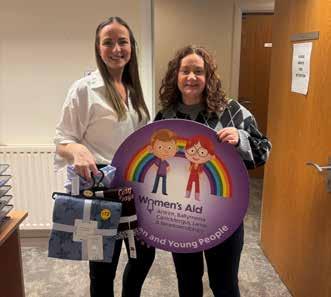
Kerry Kennedy, Senior Funeral Arranger at Mulhollands Funeral Directors and Christine Preshur, Domestic Abuse Specialist, Women’s Aid.
Conan Lavery and Pat O’Neill of Lavery’s Funeral Directors, Co. Tyrone with their new Passat hearse from Quinn Hearse and Limousine
By Mark Feehan
We are more connected than ever.
So why does everyone feel so alone?
Over the past few months, I’ve been thinking less about technology and more about people.
We live in the most connected era the world has ever known. Phones in our pockets. Messages arriving instantly. Yet community is quietly eroding. Loneliness is rising. Depression is rising. And many people feel more isolated now than they did twenty years ago.
That matters to funeral directors.
Because if there is one profession that still sits at the centre of community life, it is yours.
I’ve spent 20+ years working alongside businesses across Ireland and the UK, helping them improve visibility, websites, sales and marketing. I feel like I’ve gotten to know how this industry works. I know its pressures. I also know its strengths.
Funeral directors are trusted in a way very few professions are. Families invite you into their hardest moments. You bring calm where there is shock, structure where there is confusion, and dignity where words fail. That trust has been earned over generations.
Yet when I step back and look at most funeral websites, that depth of care is not always visible.
Online, many funeral homes are reduced to notices, times, and phone numbers. These are important. Necessary. But they are not the full story of what you do.
When Care Is Invisible Online, It Risks Being Undervalued
And that gap between the care you deliver in person and the care that appears online is where opportunity lives.
Recently, I deliberately stepped outside the funeral industry to study how other communities organise support. Not competitors. Communities. Religious groups. Organisations that think long-term about belonging, education, and human connection. One website stood out immediately. The official website of the Jehovah’s Witnesses, jw.org.
This is not about belief systems. It is about clarity of purpose.
What struck me first was the calmness of the site. It doesn’t rush you. It doesn’t overwhelm you. It doesn’t try to sell. It educates. It reassures. It answers questions people are genuinely asking about life, loss, anxiety, family, and meaning.
Everything about it says one simple thing. You are not alone.
Community Does Not Start at the Funeral. And It Does Not End There Either.
The site makes learning easy. It makes support visible. It gently points people towards community without pressure. And it does this consistently, quietly, and with confidence.
That confidence comes from knowing who they are and what they stand for.
When I compare that to the funeral profession, I see enormous strengths that are not being fully expressed online. Funeral directors already provide community support. You already guide families. You already stay with people through moments that most will never forget.
What is often missing is continuity.
Care online tends to stop when the funeral ends. Yet grief does not. Questions do not. Families continue living with absence long after the service is over.
This is where websites and marketing need to evolve. Not to become louder. Not to become more technical. But to become more human.
There are three simple things I believe funeral directors could learn from jw.org, not as tactics, but as ways of thinking.
First, education before expectation. The Jehovah’s Witnesses website answers questions long before anyone asks for anything in return. Funeral directors can do the same. Clear explanations of what happens emotionally after a funeral. Gentle guidance on what families might feel weeks later. Plain language that reassures people before they ever need to pick up the phone.
Second, community made visible. jw.org makes it obvious that support exists locally, not just globally. Funeral directors already serve defined communities. Your websites can reflect that by showing how remembrance continues, how families are supported, and how connection doesn’t end when the hearse leaves the gate.
Third, consistency of tone. Every word on jw.org sounds like it came from the same place. Calm. Respectful. Measured. Funeral directors already speak this way in person. When that same voice appears online, trust deepens immediately.
Your Website Is No Longer a Brochure. It Is the First Experience of Your Care.
There is also a reality we must be honest about. The funeral profession faces quiet risks. Not from technology. Not from AI. But from being misunderstood. When care is invisible online, it can be reduced to price. When relationships are
outsourced to third-party platforms, control is lost. When websites only inform, they fail to reassure.
At the same time, there has never been a greater opportunity.
Funeral directors are uniquely placed to rebuild community in small, meaningful ways. Through education. Through remembrance. Through thoughtful follow-up. Through content that helps people feel seen rather than sold to. This does not require being tech savvy. It requires intention.
A website that reflects the conversations you already have. Language that sounds like you. Pages that acknowledge what families are going through, not just what needs to be arranged.
Over the first three editions of Digital Force, we’ve talked about getting the basics right, turning care into connection, and using technology to protect your time so you can stay human. This edition builds on that foundation by looking outward and learning from those who understand something essential.
Community does not happen by accident. It is designed, nurtured, and protected.
Your website is no longer just a brochure. It is often the first experience a family has of you. And sometimes, the place they return to long after the funeral is over.
What story does it tell about your care?
The funeral directors who will thrive into the future will not be the most technical. They will be the most intentional. The ones who use digital tools to quietly extend the compassion they already show in person.
We do not just do funerals. We guide. We support. We remember. We hold space.
If our websites and marketing begin to reflect that truth, families will not only choose you more often. They will trust you more deeply. And in a world that feels increasingly disconnected, that trust matters more than ever. Welcome to Digital Force.
Mark Feehan Founder, www.markfeehan.com
BIE News BIE News
Ireland Division
Hi All,
I hope the start of 2026 has been a good one for everyone!
We held our AGM & first meeting of 2026 in the Hamlet Court Hotel, Johnstown Bridge on the 8th February. As always it was a pleasure to welcome all our members and students and guest speakers. Thanks so much for joining us for a lovely day. As from our chats throughout the day this year is an exciting one. A huge congratulations to our members who received their certificates. I will have all the photos and details added in the next issue!
On a final note I’d like to wish you all a year filled with continued learning, professional pride, and perhaps a touch of light-heartedness along the way. After all, embalming is about preserving stories as much as preserving appearances. See ye all at our next meeting!
BIE Irish Chairperson Niamh Cusack
BIE News BIE News
NI Division
As we begin another New Year, we would like to take this opportunity to wish all our members and students every success in 2026.
The Division recently held its AGM and first Quarterly Meeting on Wednesday 14 January at James Brown & Son Funeral Directors. We extend our sincere thanks to them for their hospitality and for providing a very generous supper on the evening.
It was encouraging to see a strong attendance from both members and students, and we hope to build on this momentum at future meetings. Our National President, Edward Williams-Price, received a warm welcome, and we were delighted to have him in attendance.
Our outgoing Chairman, David Rice, was warmly applauded and thanked for his valued contribution during his term of office. We are pleased to confirm that Nicholas Gormley
has now been instated as the new Chairman. Nicholas outlined his ambitions for the term ahead, with a particular focus on encouraging greater involvement from both members and students. A feedback form has been circulated to allow members and students to share their ideas for future meetings and help shape the direction of the Division.
We would also like to remind members and students that they have access to a vast network of expertise and experience within the Division. Therefore, feel free to contact us should you require any guidance or support.
We look forward to seeing you all at our next meeting.
Secretary Jamie Carnahan MBIE
David Rice and Nicholas Gormley pictured with National President Edward Williams-Price
New (NI Division) Chairman, Nicholas Gormley is welcomed by National President Edward Williams-Price
List of BIE Officers and Appointed Representatives for 2026/2027
NI 2nd National Council Representative: Mrs Barbara Fowley, MBIE Killakee, Rockbrook Rathfarnham, Dublin 16 Telephone: 00353 (0)86 1911022 Email: barbarafowley@yahoo.ie
NI Professional Standards Rep: Pat Harley, MBIE 67 Creggan Road, L’derry BT48 9DA Tel: 07712 899137
E: pat.harley@hotmail.co.uk
NI 1st Educational Committee Representative: Deborah McConnell MBIE
James Brown & Sons
300 Newtownards Road, Belfast Tel: 028 9045 1021
E: jamesbrown.belfast@funeralpartners. com
NATIONAL UK DIVISION
President: Mr Edward William-Price MBIE
Imm. Past National President: Mrs Rachel Shipley MBIE
1st Vice National President: Maria Stibbards
2nd Vice National President: Karen Caney FBIE
National PRO Ben Whithworth
National General Secretary: Gareth Doherty
National Treasurer: Michael Liddle FBIE 10 Yew Tree Close, Silsoe MK45 4EQ Tel: 01525 860117
Hope is an experienced funeral celebrant who specialises in creating tailored, nonreligious funeral services that honour each individual with dignity, compassion, and professionalism. She works closely with families to craft personal ceremonies that reflect the life, values, relationships, achievements, and legacy of the person being remembered.
Humanist funerals offer a meaningful and fitting way to say goodbye. Rather than focusing on religious belief, these ceremonies centre on the unique story of a life lived. Every service is bespoke and thoughtfully designed to celebrate the individual in an authentic and respectful way.
Hope also offers funeral pre-planning services, working sensitively with individuals and their loved ones to provide comfort and reassurance as they prepare for the future. This thoughtful approach allows people to have a say in how they are remembered, ensures their wishes are honoured, and helps to ease the emotional burden on family and friends during a difficult time. It offers peace of mind while creating a considered and personal farewell.
Funerals often take place in traditional settings, such as
cemeteries or crematorium chapels. However, many other venues may be suitable, including hotels, community halls, private homes, or outdoor spaces (with landowner permission). Memorials or ash-scattering ceremonies, which may follow a direct cremation, allow for even greater flexibility in choosing a location that truly reflects the person’s life and legacy.
Having originally trained as a wedding and naming celebrant, Hope later diversified her practice to include funeral ceremonies. With a professional background in Occupational Therapy, she brings a calm, empathetic,
and person-centred approach to her work. As a celebrant, her role is to ensure that each service is thoughtfully prepared and delivered with the utmost care, creating a space to reflect, honour, and say farewell in a way that feels right for those involved. Hope says, “It is a privilege to help individuals and their families find comfort and meaning through ceremony.”
Based in Dundonald, Belfast, Hope is willing to travel to meet her clients’ needs. Outside of her work, Hope enjoys travelling and the company of her husband and three golden retrievers.
To contact Hope, please call 07530 000300.
After the Funeral: The Work That Still Needs Done
The new year often encourages reflection and forward planning, but in my role as an after death cleaner, the work does not pause for the calendar. In many cases, my involvement begins after the funeral has taken place, when families return to homes that no longer feel the same.
After-death cleaning is a specialist service, though it is still widely misunderstood. It goes beyond general cleaning and requires training, protective equipment and a clear understanding of health and safety. More importantly, it requires compassion, empathy and sensitivity. These are not empty buildings, they are personal spaces shaped by loss, and every job carries emotional weight for the family involved.
For many families, this stage comes at a point of exhaustion. Decisions have been made, goodbyes have taken place, and the practical
reality of returning home can feel overwhelming. The purpose of my work is to remove risk, restore dignity to the space and allow families to move forward without facing the physical reminders of death. I not only clean homes but I help pack up belongings, sort through paperwork and support wherever I’m needed.
This work sits quietly alongside the wider funeral profession. Funeral directors, healthcare professionals, local authorities and specialist cleaners all contribute to the care that surrounds a death, even if some roles remain unseen. Clear communication
between these services is essential to ensure families are protected and supported at every stage.
As the new year begins, my focus remains on providing a service that is professional, discreet and respectful.
Progress in this field does not mean rushing change, but continuing to educate, collaborate and uphold standards that protect both families and those doing the work.
Moving forward is not always about new beginnings. Sometimes it is about making sure the final steps are handled with care.
New Delivery - Quinn Hearse and Limousine
Emmet and Siobhan Cooney from Mahon and O’Dowd Funeral Directors, Boyle and Gurteen collect their new E Class hearse from Quinn Hearse and Limousine.
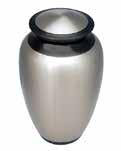
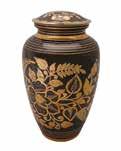
Through our own personal experience we received the inspiration to set up Treasured Keepsakes, to give people a wide variety of options upon a loved one’s passing should they choose to keep a lock of hair, cremated remains, a piece of jewellery, a photograph or anything that is a personal reminder of their loved one in a small keepsake, keepsake pendant or urn.
Funeral directors we are currently working with have tailored our service to suit their needs. We have two options of how our service can work for you. If you wish you can buy our products from us at a wholesale price and sell them directly to your clients. Alternatively we can offer this service to your clients directly.
We would hope that by recommending our service we will enhance and add value to your business at no extra cost to you.
For more information contact us or visit our website
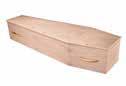
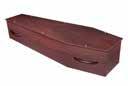
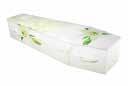
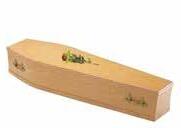
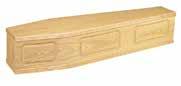
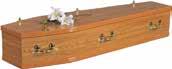
Coffins and the environment
We are here to help you make informed choices, for your families, about the way they say goodbye to a loved one.
We’re here to help you make informed choices about the way you say goodbye to a loved one.
When it comes to coffins, most are made from MDF, veneered or foiled chipboard and come with single use plastic handles.
But recent studies have shown that cremating these materials harms the planet and people.
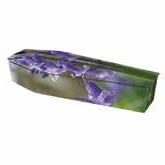
LifeArt’s traditional or personalisable coffins are much better for the planet.
When it comes to coffins, most are made from MDF, veneered or foiled chipboard and come with single use plastic handles. But recent studies have shown that cremating these materials harms the planet and people. SMALL (5’8” x 20”/1.72m x 51cm)
(6’1” x 22”/1.87m x 57cm)
Compared to chipboard or MDF, LifeArt coffins mean:
(6’5” x 24”/1.96m x 61cm)
Environmental – LifeArt’s coffins are safer for the environment as they:
No single use plastic handles
LifeArt handles
If everyone in the UK used a LifeArt coffin instead of a chipboard one we would save over 118,000 trees and take the equivalent of up to 110,000 cars off the UK roads each year
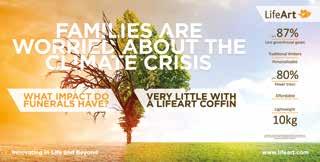
Emit up to 87% less greenhouse gas emissions when cremated; and use up to 80% fewer trees. Are affordable – priced to ensure all families can afford a LifeArt coffin.
We want to help create a farewell that is dignified and protects future generations
Lightweight – LifeArt coffins and caskets weigh only 10.5kg, making them up to 25kg lighter than chipboard or MDF coffins and easier to handle.
Our eco-friendly weight bearing timber handles are made from Irish Beech timbers andcome in a range of colours tocompliment our LifeArt design range.
Honoring Life, Protecting the Planet — The LifeArt Way
www.LifeArtuk.com
In an age where sustainability meets sentiment, LifeArt is redefining what it means to say farewell with dignity, beauty, and care for the world we leave behind.
Each LifeArt coffin is a delicate balance of craftsmanship, personal expression, and environmental responsibility—crafted not only to honour loved ones but to respect the planet as well. At the heart of every LifeArt design lies a dedication to detail. Our eco-friendly weight bearing timber handles, made from sustainably sourced Irish Beech, embody this ethos. Each handle is available in a palette of natural hues to harmonise with our signature LifeArt coffin designs — a subtle yet meaningful touch that reflects both elegance and environmental mindfulness. Each LifeArt coffin is priced accessibly, ensuring every family can afford a thoughtful choice. At only 10.5kg, LifeArt coffins are up to 25kg lighter than their chipboard or MDF counterparts — offering ease of handling without compromising on strength or quality.
Our products bring solace not only to families, but also to the earth. They are accessible, lightweight and affordable. We believe sustainability and compassion should never come at a premium.
For further information please contact Joseph Behan on Mobile : +353 (0)86 8538804 or E: josephfbehan@gmail.com
(5’8” x 20”/1.72m x 51cm)
(6’1” x 22”/1.87m x 57cm)
(6’5” x 24”/1.96m x 61cm)
Clare Watson, CEO
Hello, I lead Dementia NI in driving positive change for people living with dementia.
Our unique organisation, founded in 2015 by five people with dementia, places our members, who all have a diagnosis of dementia, at the heart of everything we do.
Together, we raise awareness, challenge stigma, and empower people with dementia to live well.
Our members work with organisations across Northern Ireland to ensure that their voices are heard and their experiences understood, changing perceptions and improving services for people with dementia.
We are thankful for every In Memory donation we receive, and hope that bereaved families and friends can find comfort in the knowledge that their support is helping people diagnosed with dementia in Northern Ireland.
Every pound raised stays in Northern Ireland, supporting our life-changing services and empowering our members to live well after their diagnosis.
As we look to 2026, our mission remains clear: to ensure everyone diagnosed with dementia can live well, stay active, and remain part of their community for as long as possible.
If you would like to know more about our work, or donate, please visit us at dementiani.org or call our office on 02896 931 555.
Thank you,
Clare
Freedom is still here and it works
By Tom Sherman, CFSP
The jug of Freedom Art that my dear friend and fellow Dodge Rep Everette Ballard gave me in 2010 might still be sitting in the funeral home prep room collecting dust. Granted, I haven’t worked in the funeral home since 2013, but it’s still a bet I’d take. I have an important confession to make. I have worked in and around prep rooms since 1998, embalming on my own since 2005, and continuing to do so this very day. I understand why the concept of a formaldehyde-free arterial chemical that doesn’t create fixation is daunting. I held it at arm’s length myself for the last 15 years, despite knowing it must work and work well to have the Dodge name on it.
Even though I’m an avid learner and eager to try new practices and techniques, going to seminars and having discussions with colleagues voraciously taking in and trying out anything that fits within my ethical boundaries, I had never until the year 2025 tried Freedom Art. For the reason described above, specifically, the lack of fixation, I have been stuck against that wall as an old embalmer who can’t let go of the idea that if they aren’t firm, they aren’t embalmed. I’ve stuck with my reservations... until now. So buckle up, the paradigm is about to shift, because I’ve done it myself and a whole world has opened up.
Let me put this in context before diving into the embalming and the results I achieved with this Green Burial Council certified chemical To begin with, Dodge began researching a formaldehyde-free chemical that was effective
in the prep room way back in 2005. The chemist heading the research, Sam Mirza (it is important to give due credit here!) in 2008 created a formulation that had no formaldehyde, nor chemicals that when combined in a chemical mix, would create formaldehyde. A dedication to high quality results and cutting no corners are exhibited in this timeline.
Initially, the concept was that this chemical would create enough preservation that one could embalm an individual and they would last through viewing and funeral to final disposition. The goal was around two weeks. When testing in prep rooms began, it was discovered that distribution exceeded expectations, and even more interestingly, so did preservation. During testing, one embalmer had a case that was held for six weeks before disposition, and the person still looked good. I just learned this information the day I’m writing this. Had I not had the recent experience I had I would have been surprised to hear of such a result, as I’m sure many of you are as well.
After a testing period of over one and a half years and numerous cases, Freedom Art was released for sale. It did okay but, for the reasons I have long hesitated to try it, didn’t take over in the embalming paradigm. The very quality that kept it from being a bigger hit in the prep room is the quality that will bring it to a new market, though.
In the world of anatomical embalming, it turns out that having preserved but non-fixated cases is a useful innovation. Surgeons needing to
practice a procedure before performing it on a patient get a better simulation than on a firm, unyielding case. Emergency services, military responders, paramedics, EMTs, SWAT teams, all learn life- saving techniques better with flexible cases that are not fixated. Even medical students learning anatomy can get better real life experience when the cadaver they are working with is more true to life. Until recently they have utilized frozen cadavers that are thawed in time for the exercises, but then can only last, as we all know, a day or two. Freedom Art answers that need in a real way. But will anatomical embalmers be open to change any more than prep room embalmers? I hear you all asking, “But Tom, what does any of this have to do with you? You’ve already admitted you didn’t embrace Freedom Art and you’re not an anatomical embalmer...Get with the program!” Great news y’all, here’s where I come in.
My dad passed away just after midnight on January 11th, 2023. Dad was signed up as an anatomical donor for a major medical school This particular university has the local funeral homes do the formaldehyde-based chemical injections, and then the cases are taken to the school for the phenol injection to be done there. Because of this system, and my relationship with the school, having embalmed for them before, and my relationship with the local funeral homes, I was able to go down and perform the formaldehyde injection myself. My last act for my dad.
This event led to having more interesting conversations with the school. I learned more about the anatomical embalming world as well as the difficulties they often face. For instance, the schools that still use phenol have a problem with the fact that the tissues are all shades of brown. Not a realistic study solution for the medical students or surgeons preparing to take care of their patients. In discussing this with the medical school we also began to discuss the need for “soft tissue embalming” for medical purposes. This being, of course, well preserved cases that maintain their flexibility. The very thing that prevents many prep room embalmers from utilizing Freedom Art is the thing that can serve this new and important purpose! Alas, when working with such a precious gift of donation as a human being, it is difficult for even anatomical embalmers to barrel into a
new process without some convincing, even proof. But who am I to provide that convincing or proof when I’ve never practiced this process myself? So, that’s just what I did.
We worked with another major medical school and anatomical facility to set up a project that I hoped would show the desired results. Having been in and around embalming for 27 years at this point, I fully respect and understand the quality and research of Dodge for chemical products. However, there was always a chance that my user error could lead to a bad result, so my nerves were a bit high.
On January 30, 2025, I went to this institution and embalmed a gentleman with Freedom Art. He had passed away on January 27, 2025 and been in refrigeration for around 70 hours before injection. Not the perfect “an hour after death case” we hope for, but in this day and age a typical case as far as time in refrigeration before embalming. He was a Caucasian male, 5’10, 170lbs, in his late 60s or early 70s. After an initial washing I sprayed the gentleman with Dis-Spray thoroughly from head to toe. This step was taken because of both universal precautions and because we were expecting long- term holding and we wanted to be as thorough as possible. The chemical mix we used was as follows: 120 oz. of Freedom Art, 32 oz. of Proflow, 48 oz. of Restorative, 16 oz. of Halt GX and 16 oz. of Rectifiant, plus enough water to create a twogallon solution.
I injected these two gallons into the right common carotid artery with pulsation, starting at 18 oz./ min rate of flow, which I increased over time as no swelling was apparent. I used restricted drainage in order to increase distribution and saturation of the tissues with the chemical solution. I would release the restriction on the vein and get decent drainage, but then restrict again from time to time to continue to increase vascular pressure. Vascular distention was visible on both sides of the head, the right foot, and the right hand. While there was some distension on the left hand, it wasn’t as intense as on the right and the fingernails didn’t clear as much. The same for the left foot. There was minor distention but not great clearing of the toes. That being the case, I mixed another gallon of the chemical solution, using half the amount of each chemical used in the two-gallon solution, plus water.
This gallon of solution was injected into the left femoral artery as well as the left axillary artery. The clearing and distention were both apparent. Even though they may have received enough chemical in the initial injection, because fixation is not a sign with which to determine preservation, I erred on the side of caution and raised more vessels. Finally, because it was the normal protocol of the school at which I was embalming this case, I hypoed the fingers and toes with the solution still in the tank. Because this was an anatomical case, cavity treatment was not done nor were features set. The immediate results appeared the same as any embalming, the only exception being, of course, that firming was not present. The gentleman was then sprayed down with Inhibitor (Dodge’s mold inhibiting spray), again because we were preparing for long term holding. Being finished, we put the gentleman in a pouch and back into refrigeration. Going back into refrigeration was done not because I was concerned with the results of the injection, but because we were doing anatomical embalming, and many anatomical facilities hold in refrigeration.
On March 3, 2025, the gentleman was removed from refrigeration in the morning, and two hours later I arrived to perform an anatomical dissection on him. When removing him from his pouch there was no odor and the only smell was a mild plastic smell that almost certainly arose from the pouch itself. No mold was present. I started by dissecting and removing the epidermis from the left side of the chest, shoulder, and arm to the elbow. The skin and joints were pliable, making this process easier than dealing with fixation while performing it.The subcutaneous, adipose, and muscle tissues were perfectly intact with no degradation apparent. The colors of the tissues were the appropriate colors of non-degraded tissues, yellow for the adipose, beige arteries, pink and red muscle, etc. The same conditions were observed when dissection of the leg from the left pelvis to the knee was performed. After these two dissections were completed, with the help of the anatomists at the institution, we removed the chest and dissected the abdomen to have access to his internal organs. Because no cavity work had been completed I had concerns that the good results seen so far might be coming to an end. The
results, however, were remarkable. All the internal organs, from the heart and lungs to the intestines, were in perfect condition. After these results were observed by myself and the anatomists, I sprayed the gentleman all over with Inhibitor spray again. Any tissue that was exposed to the air was sprayed, including under the skin and the internal organs. At this point he was placed into a new pouch and placed back into refrigeration. He would remain in refrigeration for two more weeks before being placed in the holding area that is not refrigerated.
Now, I know what you’re saying. “Tom, he was in refrigeration, how much degradation would you expect?” That’s a fair point. In response I want to point out that many people in long term refrigeration experience some tissue degradation, though what I really was impressed to observe was a lack of any dehydration in the tissue. It certainly helps that he was in a pouch protected from the moving air of the refrigeration system, but there was none whatsoever. Not in his lips, fingers, toes, eyelids, no dehydration or loss of flexibility in the slightest. Yes, I hear your next point, there are mitigating factors that could be the reason for this amazing result. And I gladly respond, buckle up, it’s about to get even more interesting.
On March 21, 2025, the gentleman was removed from refrigeration and placed into the non- refrigerated holding area for the University. This area is also where anatomical embalming is performed. When he was removed from refrigeration the anatomists checked on the gentleman and found no change in condition, including no mold growth or odor. Seven days later, on March 28, 2025, I returned to the facility to check on this case. It is important to understand that in my 27 years of funeral service the longest I have ever held an individual that I’ve embalmed was more or less six weeks. I know that many of you who are reading this regularly hold for six months for military services or global transport. While I’m aware that this can be done, with little experience with that type of timeline, I can tell you that my heart was pounding when I came in to check on this case. This was a person I embalmed over eight weeks before, who was held most of that time in refrigeration, but with no cavity work done and now nine days out
of that low temperature. To my great relief, the gentleman remained in exactly the same condition as the day I finished embalming him. Again, not a single sign of dehydration, not a single sign of tissue degradation even in his fingers and toes. His internal organs had only changed insomuch as his lungs had expelled the last of the air being held in them and had deflated. The rest were perfectly colored and intact. The only smell was that of the plastic of the pouch itself, and no mold was present. Nine days out of refrigeration, and 43 days since the injection, and we could have dressed, cosmetized, casketed, and had a viewing and funeral that day. I was astounded.
So, nine unrefrigerated days without a single change isn’t convincing enough? I won’t bore you with the details of how often I checked in or visited the facilities. Instead I will tell you that this gentleman was cremated on May 30, 2025, and there was never a single sign of degradation, dehydration, or change of any kind except for the deflated lungs. That is four months from the date of embalming and just a few days under three months from the date of the dissections. It was two months and nine days since he was removed from refrigeration. Ten weeks. TEN WEEKS! And on the day he was cremated we still could have had a viewing and funeral with no issues. Only dressing and regular cosmetics would have done it. Not even the slightest odor was present.The anatomists couldn’t stop commenting every time we opened his pouch how amazing he looked and how they were trying hard to smell anything and couldn’t.
So, we have a solid and sound answer to does a formaldehyde-free embalming chemical that is certified by the Green Burial Council work effectively. A resounding and echoing YES is the answer, and not only does it work as a preservation agent but also in retaining appearance with no change over a long term hold. Now there’s another question that needs to be answered, and the good news is the answer is short and clear. The question is: For regular funeral home use, not an anatomical lab, what is the benefit and practical use of this knowledge?
The answer is simple: To satisfy an extant and growing market.
We as funeral professionals and embalmers are
aware formaldehyde itself becomes inert once it has reacted with the proteins in the body, and is therefore not an environmental hazard in burial. We can shout this until we are blue in the face but the fact is the general public isn’t interested in hearing it. How often do you hear that a person doesn’t want to be embalmed because they don’t want “those hazardous chemicals” put into them? Or they don’t want to be embalmed because they care about the environment? I hear it all the time. I also get questions more and more often from friends, family, and friends of friends and family, what their “green burial” options would look like. I am glad to have a good answer to that question now. The option looks like a traditional funeral because we have a product that works and is certified to fit their needs. The family you are serving wants a “green” option, but their brothers and sisters are scattered about and can’t make it in until next week? Next month? Next quarter? No problem! You have exactly the right product and knowledge to SERVE THAT FAMILY the way they require.
“Tom, no one in my community is gonna ask for this kind of service!” is what a close friend who owns a funeral home in a small west Texas town told me recently. I’m aware that this is also a thought on a lot of y’all’s minds as you read this. There are two things I beg you to consider when you’re having this thought and pushing back against accepting or embracing this new concept.
One is that we all said that about cremation for a very long time. I worked in a suburban, once small, town for 15 years. In 1998 we kept two cremation trays in a storage unit five miles from the funeral home. By 2013 we had a storage shed on the property that kept two dozen, and by 2015, after I had left, they had their own crematory. Burying our heads in the sand doesn’t help anyone, not our business nor our client families’ needs.
The other is basic economics. The day that family walks in and says,we would like to have this particular kind of service: non-toxic, non-formaldehyde, full funeral. (They probably wouldn’t use these words, that would probably say “Green.”) I can either say, we do not offer that because we didn’t think anyone here would want it, sorry. Or I can say, you know, you are the first family to inquire about that, I
can absolutely service your needs. In one of the above cases I would have lost a full funeral and my competitor somewhere would have gotten that service, and in the other case my small amount of preparedness and open-mindedness meant I had a full funeral. Not only did I get that funeral and it didn’t go down the road, but I got that family, their friends, and anyone else who may inquire, where can I go for this kind of service?
I avoided being open-minded about Freedom Art and Freedom Cav because it was new and different. I have always been a “They have to be firm or it’s not right” embalmer, so I avoided being open-minded about a chemical that I knew in advance wouldn’t provide that. The growing market and family needs no longer allow us to hold these chemicals at arm’s length. And here’s the good news, we know without a shadow of a doubt that they not only work, but they work WELL. It’s time to embrace this technology and the success, not just economically but in serving our families well, that these chemicals provide.
Tom has been in the funeral industry for over 20 years and still regularly embalms. He is the Dodge representative in central and western Texas.
If you would like to be added to the mailing list for the complementary Dodge Magazine which is printed quarterly or would like to discuss any of the products mentioned in this article, please contact us on the number below: Shepherds Funeral Supplies, Unit 2A Royal Canal Business Park, Athlone Road, Co. Longford. Ph. 00353 43 3349702/00353 87 2486668
Anatomy & Physiology, plus many more CPD courses available through our website
Mortuary Services & Training Specialists
(BIE Accredited tutor, Cyril Gantley) Professional and very Competitive Repatriation Service. Nationwide Collection and Embalming Service.
Daily Collections from Dublin Hospitals, Nursing Homes etc. (deceased can be then collected from our premises or delivered to your Funeral Home)
Fully Equipped Fleet of Private Ambulances
Mercedes Saloon Type Limousine now available for hire
Maria Connaughton is a Dublin-based civil funeral celebrant, working Ireland-wide. She crafts meaningful, inclusive funeral ceremonies that honour the life and story of the person being remembered. Working primarily in English, she also offers bilingual (Polish and Italian) and culturally sensitive ceremonies when needed. More at www.ritualistic.ie and on Instagram @ritualistic_celebrant
By Maria Connaughton
Holding Space Between Languages
The call came from a funeral director who already sensed what this family might need. A man had died suddenly. He was just 49. Polish by birth, Irish by life. A proud Tallaght man. A husband. A father. His world, and his family’s, had shifted overnight.
The funeral director knew the family spoke English fluently. They lived and worked in Ireland. But grief has its own logic. Its own language. And sometimes, when everything else falls away, we instinctively reach for the words that first held us.
When I rang his wife, her voice was calm, steady in that way that often comes before the weight truly lands. After a few minutes she paused, then gently asked, “Could we speak Polish?”
It was a small question, carrying something much bigger.
We arranged to meet at their home three evenings before the funeral. When I arrived, we gathered around the table
in the living room. The room felt lived-in and warm. In the corner, a large fish tank glowed quietly - his pride and joy, they told me. The fish moved slowly, rhythmically, as if time had chosen a different pace there.
We sat together for nearly an hour and a half. The dogs wandered in and out, settling beside us, then moving on again. The daughters’ Irish partners were there tooattentive, holding their own kind of steady presence.
The conversation moved naturally between Polish and English. Sometimes sentence by sentence, sometimes word by word. No one needed anything translated precisely. Instead, we allowed the languages to meet where they needed to.
I explained that during the ceremony I wouldn’t translate everything literally. That instead, I would weave the languages together - enough that everyone present would feel included, held, recognised.
That mattered, because the gathering itself would be layered. Friends and colleagues from work - multinational, English-speaking. And family arriving from Poland - his parents and sister, flying in still in shock, carrying the particular grief of sudden loss far from home. They had no English. They needed care too. That evening in the family home wasn’t about logistics alone. It became a space to remember. To speak his name. To share stories. To sit with the reality of what had happened.
At one point, one of the daughters said she hadn’t realised how much choice they had. That they could choose music their dad loved. That non-religious, meaningful to them poems could be read. That the ceremony could sound like him- feel like himrather than follow a fixed script.
In Poland, civil funerals are still uncommon. Many people don’t realise that alternatives to church funerals exist or that
they can be deeply personal, meaningful, and ceremonial in their own right. Even now, when I tell my Polish friends what I do, they often respond with surprise - “I thought celebrants only did weddings.” That evening choice became visible.
As I was leaving, his wife hugged me - a long, steady hug. One of the partners quietly said, “That felt like group therapy.” The daughters nodded and thanked me. They hadn’t expected that sense of relief, but they felt it.
The work had already begun. Most of the ceremonies I hold are in English - for Irish families and communities. That is most of the work I do. But when language or culture becomes part of the landscape of grief, I can step into that space - not to separate anyone, but to connect and include them.
On the day of the funeral many worlds gathered in one room. Grief spoken in two languages. Stories crossing borders. Parents listening for words they could understand. Colleagues hearing about the man they worked with in a deeper way.
No one was asked to step outside their grief in order to belong.
For me it is always a privilege to be invited into moments like this - to stand between cultures, languages, traditions, and expectations when needed. But it is never work done alone.
Funeral directors are often the first to sense what a family might need before they can name it themselves. They hold enormous responsibility - not just in organising funerals but in gently opening doors. Offering possibilities. Educating families about alternatives they may not even know exist.
Together, celebrants and funeral directors create the conditions for ceremonies that truly reflect the lives being honoured - rather than defaulting to what feels expected or familiar.
In an increasingly multicultural Ireland, this feels essential. More and more families are living lives shaped by more than one culture, more than one language, more than one sense of home - and it is truly beautiful. With that comes a quiet but growing need for ceremonies that are culturally understanding, inclusive and responsiveceremonies that recognise complexity rather than simplify it.
Maria Connaughton
Bilingual Funeral Celebrant
Funerals & Celebrations of Life Languages: English | Polish | Italian
Not every family will need bilingual support. Not every ceremony will cross cultural lines. Most of the ceremonies I hold are in English - for Irish families and communities. But when language or culture becomes part of the landscape of grief, having someone who can step in as a bridge - while still holding the ceremony firmly within the Irish contextcan make all the difference.
Through my training with Entheos Ireland, the organisation I am proud to be a member of, I am part of a wider celebrant community that reflects this changing Ireland. Within Entheos, celebrants hold ceremonies in Afrikaans, Bengali, French, German, Hindi, Irish, Italian, Polish, Portuguese and Spanish - ensuring that families can be supported in ways that feel familiar, respectful and grounded.
At its heart, this work is about presence. About listening deeply. About slowing down long enough to notice the fish tank in the corner, the dogs under the table, the moment when someone realises they have a choice.
To be trusted with that space - and to hold it with care - remains one of the quiet privileges of this work.
Supporting funeral directors and their teams in caring for families at end of life. Crafting meaningful, unique civil ceremonies (religious, non-religious and mixed) in English, with culturally sensitive bilingual support where needed.
Dublin-based, working Ireland-wide.
Antrim and Newtownabbey Crematorium Welcomes Bamber Puppies for Bereaved Children
Antrim and Newtownabbey
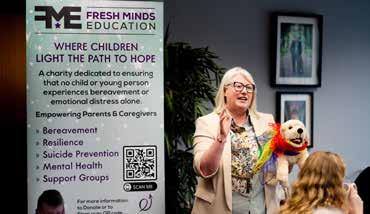
Crematorium has welcomed a donation of Bamber Puppy mascots from local Antrim-based charity Fresh Minds Education, providing comfort to children who have experienced the loss of a close relative.
The soft toy puppies will be offered by the Crematorium team at funerals to bereaved children, giving them a keepsake they can take home and use as a source of comfort throughout their grief journey.
The initiative follows the Council’s support of Fresh Minds Education through its participation in the ICCM Metal Recycling Scheme, an initiative supported by the Council’s Crematorium since its opening in June 2023.
Mayor of Antrim and Newtownabbey, Councillor Leah Kirkpatrick, said, “Losing a loved one is difficult at any age, but for a child who loses a parent or close family member, the sense of loss can be overwhelming. While it may seem like a small gesture, we hope that Bamber can offer comfort and reassurance during an incredibly difficult time.”
Áine Wallace, CEO of
Fresh Minds Education, added, “It is wonderful to see the positive response to Bereavement Bambers at the Crematorium. Bamber is here to help children and young people feel less alone. More than a soft toy, Bamber is a comforting companion designed to help children navigate the emotional pain and confusion that can follow
the death of someone they love.” Fresh Minds Education is a local bereavement support charity that provides programmes and services to support bereaved children and young people as they navigate their grief journey.
For more information about Fresh Minds Education and its work, visit www. freshmindseducation.com
Áine Wallace, CEO of Fresh Minds Education raises awareness of Fresh Minds Education “Glimmer Project” to Antrim and Newtownabbey Bereavement Services Team.
AT PIERCE COACHBUILDERS, WE DON’T BELIEVE IN LIMITATIONS. Whether you’re a fan of Mercedes, Skoda, or have your heart set on any other brand, WE CAN TURN YOUR VISION INTO REALITY. Our expertise spans across all makes and models, ensuring that your custom build is exactly what you’ve been dreaming of. DON’T SETTLE FOR ORDINARY! LET US BUILD THE EXTRAORDINARY VEHICLE YOU’VE ALWAYS WANTED. CONTACT US TODAY TO GET STARTED ON YOUR CUSTOM BUILD!
Welcomed Back: The Return of Women to the Funeral Profession
By Jenny Dilley, Fanagans Funeral Directors
What have the Forty Foot bathing spot, pubs and a rugby pitch all got in common? They were all places that were traditionally male-dominated. The same was often assumed of the funeral business. But in reality, women are not new to this space - they are being welcomed back.
It was not always a maleonly environment. Historical and cultural shifts have seen a decline in the level of involvement women have had in the funeral world, but more recently, following a period of reduced female participation, women are finally making their way back.
The physicality of some funeral tasks such as building coffins, moving the deceased and digging graves meant that men always played an essential part of the process. But there is so much more to the death ritual that women played central roles in, such as washing the bodies, ‘paying the ferryman’ and acting as ‘keeners’.
The Rituals
Women historically held the central role of washing and dressing the deceased immediately after death. Washing, preparing and dressing the deceased has always been recognised as a beautiful final act of respect and important to preserve a person’s dignity. According to Catherine Merridale, in her book Night of Stone, children once “played funerals as readily as they played house”.
Women also oversaw ‘paying the ferryman,’ placing coins on the eyes or mouth to ensure ‘Charon’ secured the soul’s safe passage across the River Styx. Over this river is the underworld and eternal rest for the soul.
The Keeners & the Church
‘Keening’ or ‘Caoineadh’ in Irish is a Gaelic tradition, most commonly practiced in Ireland and Scotland. Keeners were women who were employed to mournfully wail over the coffin at a funeral or wake.
The origin of this practice comes from the Irish folklore of the Banshee. A Banshee is a spirit who was said to shriek and sing when a person died – alerting the family to their passing. There is evidence of this practice going right back to the 7th Century, but it was all but extinct by the 1950’s. Catholic clergy believed it to be a pagan ritual and not part of the liturgy and as such its practice faded into obscurity. That the practice was carried out by women is relevant to its demise. As Dr. Deirdre Ní Chonghaile stated “The role of women was seen
as transgressive given the patriarchy of the Church”.
The Victorian Shift
Long before the influence of the Catholic Church, it was the influence of the Victorians that saw women gradually becoming less visible in the profession. The Victorians professionalised the ritual of death by introducing Funeral Parlours. Societal norms surrounding the role of women also changed. Victorians viewed women as too fragile or “hysterical” for the presence of death and considered it inappropriate for them to handle bodies, particularly male bodies, even in a professional capacity. Consequently, the growth in the field of mortuary science, around the mid1800’s, did not include women. Women’s fragility made them completely unsuitable, and it was only for pioneers like Lina D. Odou that women managed to start to break through.
Lina D. Odou was born in Spain in 1853 to Swiss-French parents. As a teenager, she met Florence Nightingale (another pioneering female) which had a profound influence on her. She went on to train
as a nurse and after working on the battlefields in the Franco-Prussian war she then went to work in the slums of London. It was while working there that she recognised the need for female embalmers. At that time, embalmers had a reputation for being rough and she questioned why this work was carried out entirely by men. Moved by mothers pleading for their daughters’ remains to be handled with dignity by a female, Odou trained herself as an embalmer, opening the first embalming school for women – the L.D. Embalming Institute, in New York City.
Modern Trends
With the collective move away from formal religions in the 21st century, came the rise of alternative funerals. It was this shift from tradition that brought with it alternative funeral celebrations and funeral celebrants. The traditionally male celebrant presiding over a congregation of mourners was not what people wanted anymore, and a softer approach was being sought. This allowed women to flourish in this area. Charles Cowling, author of The Good Funeral Guide thinks “women, with their superior emotional
email : sgmarshall@hotmail.co.uk
fluency, feel they can do it better. Men tend to be more buttoned up.” In Ireland today, 88% of non-religious celebrants in the ‘Celebrant Directory’ are female.
The women’s liberation movement throughout the 1970’s and 1980’s opened up more opportunities for women in the workplace, including in the funeral sector. The idea that women are physically weak was being reconsidered, as there was a significant rise in female funeral bearers. Families and funeral directors alike were seeking females to carry the coffin.
We do not know definitively how many women now work in this field, but a 2012 study of Irish funeral workers found women made up about 15% of non-embalmers and 9% of embalmers. Fanagans goes well above this with 34% of their staff being female.
• Trade Embalming (straight & PM cases)
• Mobile Service and Mortuary Facilities
• Removals • Repatriation Embalming and Cadseal Services
• Refrigerated storage facility now available
web: Dereckmarshallandsons.co.uk
Park, 4a Far circular Road, Dungannon, Co. Tyrone BT71 6LW
L-R: Jenny Dilley and Jodi Weafer, Funeral Arrangers, Fanagans Monkstown
Forgetfulness or something more worrying…?
Alzheimer’s Society looks at the difference between normal forgetfulness and the early signs of dementia.
We all forget things sometimes. Whether it’s misplaced keys, forgotten appointments, or a name that won’t come to mind. Frustrating, perhaps, but for most of us it’s just part of the natural process of ageing. Dementia, however, is different. It is not a normal part of getting older but is now, in fact, the UK’s biggest killer, with around one million people in the UK living with the condition. Worryingly, a third of those living with the illness do not have a formal diagnosis. One in three people born today will develop dementia in their lifetime and yet so many are undiagnosed and therefore do not receive the support that they desperately need.
Understanding the difference between everyday forgetfulness and dementia can lead to earlier and more accurate diagnosis, meaning more access to better care, advice and support.
Alzheimer’s Society aims to highlight the signs and symptoms of dementia that everyone can be aware of and the charity is encouraging people to seek help if they spot these signs in themselves or a loved one.
Key Differences: Forgetfulness vs Dementia
While both involve memory lapses, dementia is characterised by a pattern of symptoms that affect daily life and worsen over time.
Alzheimer’s Society’s symptom checklist highlights key signs and symptoms to be aware of, including:
• Memory loss: forgetting recently learned information, important dates, or events.
• Difficulty organising thoughts or staying focused: struggling to follow a familiar recipe or manage monthly bills.
• Confusion with time or place: losing track of dates, seasons, or getting lost.
• Problems with vision: difficulty reading, judging distance, or recognising faces.
• Problems using words or communicating: struggling to follow or join a conversation, repeating phrases or questions several times.
• Changes in mood and personality: becoming confused, suspicious, depressed, fearful, or anxious.
Why Early Diagnosis Matters..
Early diagnosis is crucial to access treatment and support that can help people manage dementia symptoms and avoid ending up in crisis. However, hundreds of thousands of people are facing the devastating realities of dementia without access to the vital care and support that a diagnosis can bring.
What You Can Do
Early and accurate diagnosis is crucial to manage symptoms, live independently for longer and avoid ending up in a crisis.
It’s important to raise awareness that dementia is not just ‘forgetfulness’. It is a serious condition requiring understanding, compassion, and early action.
By learning the difference and encouraging diagnosis, we can improve lives and offer hope.
No one can and should face dementia alone, it will take a society. If you’re worried about dementia, call the Alzheimer’s Society Dementia Support Line on 0333 150 3456 or check out our symptoms checklist at alzheimers.org.uk/dementia symptoms checklist
A Dream of Spring
- By Ian FeeCelebrant Lakelands Funeral Home & Crematorium, Cavan
As 2026 unfurls ahead of us, the words of Samuel Taylor Coleridge’s sonnet, Work without Hope, come back to me. In it, he compares the renewed activity of nature as Spring dawns to his own lack of drive, or passion, or even engagement with his own life and his place in the wider world. It is both a comfort and a challenge that, no matter how we find ourselves at the start of a new year, nature will continue to create and renew and revitalise, having shaken off the old and unnecessary while presenting something fresh and invigorating in the season of rebirth.
This is our challenge as we look ahead to another year in the funeral business, for while we build our work on long-standing traditions and the time-tested practices that have stood us in good stead, we should also rise to the invitation to remove what has become tired and dusty, what might actually be hindering us from finding new life in our work. This may not be something in our work practices; it may be something in ourselves. Very often it’s not the sameness of the work that quells our energies (although there is a fine line between repetitiveness and tedium), but rather how we see ourselves, what we do to reinvigorate our spirits, our enthusiasm that keeps us on our toes, so to speak, both intellectually and spiritually, in whatever way we understand that.
I worked for a time as the director of the One-Day retreats on Lough Derg in Co. Donegal, an ancient pilgrimage site going back to the time of St. Patrick. When I took on the position, I set about broadening the tone of the retreat, acknowledging that many of the people there wouldn’t consider themselves particularly religious, but they were responding to a need, a hunger in their spirits for a time of contemplation and renewal. The physical act
of getting on a boat and leaving the mainland behind, the act of journeying to a place apart gave them a real sense of stepping out of their everyday existance to sit quietly with their thoughts and feelings for a few hours, and to know that they weren’t alone in seeking that renewal. We can’t be afraid or apologetic for seeking that for ourselves.
I find podcasts to be a great source of inspiration and information. Whereas I find I’m sadly not reading as much as I used to, I use my 70/80 minute work commute to listen to various shows, on a variety of subjects from movies, music, and comedy to sport, history, and politics. In terms of how they can benefit us in our professional life, a quick online search reveals a plethora of podcasts relating to the funeral business, its practices and evolving trends, to shared experiences and wisdom from those who have walked the same roads as ourselves. On top of that, there are any number of shows offering guidance with mental health and well-being, creating and supporting a better work/life balance, and many very worthwhile insights into grief and how to walk with people at the time of a loved one’s passing. All of these offer so much, not just in terms of our professional awareness, but also of how they can encourage us to learn and grow and deepen our self-awareness.
In the sonnet I recalled, the poet bemoans the feeling that, while the world around him is renewing, he is standing still, inert, with nothing new to offer. Let us not fall into that trap. We need to cooperate with nature in welcoming change and renewal, in believing that we can discover new energy, new attitudes, new passions that will inspire us and energise us for whatever this year may bring.
“All Nature seems at work. Slugs leave their lairThe bees are stirring - birds are on the wingAnd Winter slumbering in the open air, Wears on his smiling face a dream of Spring!”
Jennifer Muldowney is an International event planner for memorials based in the United States of America. Known as The Glam Reaper, Jennifer blends her extensive education in business, communications, and bereavement with a passion for modern memorial planning. As an award-winning memorial planner and speaker, she has made a significant international impact in the funeral space, advocating for personalised, and environmentally conscious funerals and digital legacies. Check out her Tedx Talk ‘Grief as Unique as your Heartbeat’ and ‘The Glam Reaper Podcast’ or Muldowney Memorials (.com) to learn more.
Jennifer Muldowney
Staying in Our Lane but Talking Across the Road
Grief is universal. Our professional roles are not.
As funeral professionals, we are trained for a very specific and important role. We manage logistics, guide families through unfamiliar territory, and hold space at one of the most vulnerable moments in a person’s life. That role should not be diluted or confused by trying to become something we are not. I have become famous for saying ‘stay in your lane’ and ‘you are not the Cheesecake Factory!’ (A restaurant in the US with a literal BOOK for a menu that covers a huge variety of foods and culture specialities, even Shepherds Pie!
BUT, staying in our professional lane does not mean working in isolation. Attending the European Grief Conference in Dublin last year highlighted a growing gap between grief research, community practice, and funeral service. Psychologists, academics, bereavement specialists, and community organisations were deeply engaged in conversations about loss, ritual, and care. Funeral professionals, however, were largely absent. This is not a criticism. It is an observation. And an opportunity.
Season
CODE: FTIMES
Glam Reaper cast
year in Portugal. Will you be there?
Funeral directors do not need to become celebrants, grief counsellors, social workers, or academics. But they can benefit from understanding how those disciplines think, speak, and approach grief. Likewise, researchers and clinicians benefit from hearing the real-world experiences of those who work with families every day. The value lies in communication, and conversation not role overlap.
Ireland offers a strong cultural example of this balance. Our grieving is often communal by default. Organisations such as the GAA regularly step forward to support families in visible, meaningful ways, while funeral professionals continue to lead the practical and ceremonial aspects. Each group stays in its lane, but the lanes run alongside one another. In other countries, particularly the United States, grief support is often more professionalised and less communityfacing. Again, this is not a judgement, but it highlights how culture shapes expectation. As Irish funeral professionals, understanding these differences helps us
ideas of mourning may come from many places. What lanes do you communicate with in your funeral home? Who do you learn from and understand?
Clear communication across disciplines and cultures leads to:
• Better understanding of family expectations
• Stronger referral relationships
• Increased professional confidence
• Reduced misunderstanding around roles and responsibilities
• A more informed and culturally aware profession
Staying in our lane matters.
So does knowing what is happening in the lanes beside us.
Grief does not recognise borders, but good professional practice does. When we communicate clearly, respect boundaries, and remain curious about culture and context, we strengthen both our profession and the families we serve.
That is not about changing who we are. It is about understanding the world our families are grieving in.
SAif NewS SAif NewS
SAIF strengthens voice in Northern Ireland with new collaborative structure
Asignificant gathering of around 30 SAIF members took place at the Dunsilly Hotel in Antrim earlier in November, marking what many felt was a turning point for independent funeral directors in the region. The turnout was the highest seen in some time, reflecting a renewed appetite for engagement and constructive dialogue within the local trade. The meeting culminated in a unanimous vote to formally align SAIF Northern Ireland with SAIF Scotland in a much closer collaborative working structure. While administrative changes can often feel dry, the motivation behind this move is practical and pressing. That is, to ensure independent funeral directors in Northern
Ireland have representation that is active, informed and capable of influencing decisionmakers.
Leveraging Scottish experience
The logic for closer ties with Scotland is driven by the regulatory landscape. The SAIF Scotland executive team has spent recent years navigating the introduction of statutory regulation, developing a fit-for-purpose Code of Practice and rolling out the ‘Regulation Readiness’ programme. They bring hard-earned experience of engaging with the Government
and preparing businesses for inspection. However, funerals in Northern Ireland operate under a unique set of pressures, timelines and community expectations that differ from the rest of the UK. By combining Scotland’s regulatory experience with deep local knowledge, the new structure aims to offer the best of both worlds.
Engagement at Stormont
The necessity of this strengthened voice was highlighted shortly before the Dunsilly meeting, when representatives from SAIF, the NAFD and the BIE attended the All-Party Group for Funerals and Bereavement at Stormont.
The agenda provided a stark overview of the operational realities currently facing the profession in Northern Ireland. Discussions with MLAs covered a range of critical issues, including:
• Cremation capacity: Delays to the redevelopment of Belfast Crematorium
and concerns regarding winter capacity as cremation rates rise.
• Coroner’s contracts: The risk of funeral directors falling foul of the CMA Funeral Order regarding solicitation while acting under statutory removal arrangements.
• Registration delays: The ongoing issue of
Join the association that’s leading the way.
Representing and promoting the interests of over 1,500 funeral homes.
SAIF is at the forefront of tackling the big industry issues that matter to you.
As the united voice of independent funeral directors we have led the way in setting the highest standards of professionalism and conduct within the industry. By joining SAIF you too can demonstrate that you uphold this same commitment.
For over 30 years SAIF has been promoting and protecting the interests and values of independent funeral directors. Supporting our members is at the heart of everything we do, listening, responding and engaging to secure your independent future.
Join SAIF now: visit saif.org.uk or call us on 0345 230 6777 or 01279 726777
burials taking place before death registration due to weekend delays.
• Legislative lag: Cremation regulations that have seen little progress in a decade, and electronic documentation not yet being fully embedded in law.
• Transport issues: The impact of taxi legislation on how the deceased are transported. Encouragingly, the political engagement was positive. MLAs were active in their questioning and offered to raise specific matters directly with councils and ministers - a clear example of how organised representation can yield results.
Representatives from SAIF, the NAFD and the BIE attended the All-Party Group for Funerals and Bereavement at Stormont.
A new local executive
Ken Gilmore
To drive this agenda forward, a Northern Ireland Co-Executive has been established within the new structure. The group comprises Declan Maguire, Ken Gilmore, Andrew McClure, Peter Dallat and Joseph Murren, working alongside Gavin Henshelwood and Mark Porteous. The composition of the group is designed to
Andrew McClure Joseph Murren bridge the gap between regulatory expertise and local reality. It provides a direct link between members on the ground and the wider SAIF organisation, ensuring that when a funeral director in Antrim or Armagh raises a concern, there is a mechanism to carry that concern into the right rooms.
Preparing for the inevitable
One of the primary drivers for this reorganisation is the looming prospect of regulation. With Scotland already operating under a statutory framework and the Fuller Inquiry focusing minds in England, it is widely accepted that regulation will eventually extend to Northern Ireland. There is currently speculation over the form this might take - whether it will mirror the UK approach or potentially involve a crossborder dimension between North and South. Regardless of the route, the first step will be consultation.
The message from the Dunsilly meeting was clear. It is very much ‘crunch time’. If independent funeral directors want to shape the regulatory environment they work in, rather than having it imposed upon them, they must be part of the conversation early.
The unanimous vote to collaborate with Scotland was about more than merging committees. It was an acknowledgement that a fragmented sector is easily ignored. But by pooling resources and expertise, SAIF members in Northern Ireland are building a consistent, credible voice ready to meet the changes ahead.
Declan Maguire
The Mercedes E214 Range
Redefining the modern funeral vehicle with unmatched style, safety, and performance.
Book your demonstration today.
By Mattie
Lennon WHEN YEZ LAVE ME IN BALTYBOYS
When my mother or I would suggest some minor alterations at our humble dwelling, my father, Tim, Lennon, very often expressed his aversion to change, sometimes pointing out that he would not allow such and such while he was alive: “Do what yez like when yez lave me in Baltyboys”. (Baltyboys is our family burial ground.) I still have the bed that he was born in on November 17th 1898.
Alifetime
of various jobs, from carrying twenty-stone bags of wheat up a steep ladder in Cartons, in Dublin to working on waterworks and in quarries, followed. He always claimed that, two years that he spent working for a Kylebeg farmer was the toughest. As a teenager he survived (apart from the two years with the farmer) the Great ‘Flu and Typhoid. His knowledge of local history was legendary; his humour, his wit, dry at times, and at other times acidic, were his hallmarks. In 1974, when Gardaí were making house-to-house enquiries, into an Art robbery, at Russborough House, they asked if he had seen anyone suspicious around; only to be told; “ Every effin’ one I see is suspicious”. He was a very religious man who had what seemed to be an unshakeable faith in God. When saying his night prayers he could be heard praying for certain people, and thereby fulfilling a promise he had made at their deathbed thirty, forty or fifty years before.
In 1987 his health deteriorated and on an August evening he reluctantly left Kylebeg
to become a long-stay patient in Baltinglass Hospital. Slowly he went downhill. The sturdy, well developed hands, shrunk and moved involuntarily. Tobacco consumption was down for the first time. (I calculated that he smoked about three quarters of a ton of plug tobacco in his lifetime).
Early in 1990 he began praying to God to take him; often asking; “Why is He leaving me so long?”. About Saint Patrick’s Day his condition got worse and I think at that time we said anything of importance that was left for us to say to each other.
About 09.00 A.M. On Monday 26th March his Prayers were answered. An era had come to an end. Another chapter of history was complete.Tim Lennon was dead.
The nine decades had been kind to that face that I was soon to see for the last time. It now wore a look of perfect peace. The time came. The coffin was lowered. And leave him we did. At the cemetery gate a local artist commented on the tranquillity of the picturesque area
Dispersing mourners heard the soft thud of dry clay on the coffin-lid. Mother Earth would consume the Mortal remains of Tim Lennon, but not the values he left behind. Values which like the Golden Thread of Truth will make those of us who are close to him feel uncomfortable when we stray too far from the path of Righteousness and those values ever stubborn, like Tim himself, will let us know that we can’t do what we like...even though we left him in Baltyboys.
DIMENSIONS
Things have form, but some have none, Just like thoughts that occur to one; And what of space that’s all around? An entity unseen like sound.
Undeniable that they exist, The two afore to coexist; Parallels with this dimension, Outside of our comprehension
Perhaps creation on another plane, Different goals there to attain; Untainted by toil, strife, ambition, Devoid of rue or contrition.
Unfathomed realm of time and space, Containing all within its place.
Northern Ireland Chest Heart & Stroke
Our New Collaboration with Rosie’s Trust
At NICHS, we see every day how a chest, heart or stroke condition impacts the whole family, not just the individual affected. Pets often form a big part of family life and play a key role in emotional wellbeing, routine and recovery. We are therefore delighted to announce our new collaboration with Rosie’s Trust, the only charity in Northern Ireland dedicated to supporting cancer patients, people receiving end of life care and older people with mobility issues to keep their companion pets by their side.
Through this collaboration, our Care Services Coordinators can refer eligible NICHS clients for practical pet support including dog walking, feeding, grooming and vet visits. A sixmonth pilot programme is currently underway in the South Eastern Trust area, extending Rosie’s Trust eligibility to adults living with mobility issues which are a result of a chest, heart or stroke condition. This means even more local people will have peace of mind knowing their pets are supported during rehabilitation, hospital stays or challenging periods of adjustment following a stroke, cardiac or respiratory diagnosis.
One person who knows first-hand how important pets can be after a health event is NICHS care services user, Linda Crooks. Linda had a stroke at the age of 62 and credits her dog, Olive, with playing a special role in her recovery. Linda says; “When I
was in hospital, getting home to my husband Allen and my beloved dog Olive gave me something to focus on. My goal was to be able to walk Olive again. With my crutch, I would go out walking with Allen and Olive every morning. It was my way of keeping up my rehab at home and it really helped me improve my mobility and my confidence.”
Linda is delighted about our new partnership with Rosie’s Trust, saying; “Thankfully, while I was in hospital, I could focus on getting better knowing Olive was being looked after by Allen. But for someone who doesn’t have family or friends to help them, it could mean more stress, pain and heartache if they have to worry that their pets aren’t being properly cared for, or worse, if they are forced to give them up. I’m so glad others affected by chest, heart and stroke conditions will be able to focus on their recovery with their beloved pets by their side too.”
To find out more, or to make a referral, please visit www.nichs.org.uk
What is Kidney Disease?
What is Kidney Disease?
Kidney disease occurs when your kidneys can’t filter blood properly. Waste and toxins build up in your body, causing symptoms that affect your energy, skin, and overall health.
What is Kidney Disease?
Kidney disease occurs when your kidneys can’t filter blood properly. Waste and toxins build up in your body, causing symptoms that affect your energy, skin, and overall health.
Kidney disease occurs when your kidneys can’t filter blood properly. Waste and toxins build up in your body, causing symptoms that affect your energy, skin, and overall health.
What is Kidney Disease?
Types of Kidney Disease
Kidney disease occurs when your kidneys can’t filter blood properly. Waste and toxins build up in your body, causing symptoms that affect your energy, skin, and overall health.
Chronic Kidney Disease (CKD):
Types of Kidney Disease
• Long-term damage, often caused by diabetes or high blood pressure or inherited conditions.
Chronic Kidney Disease (CKD):
Types of Kidney Disease
Types of Kidney Disease
Chronic Kidney Disease (CKD):
Acute Kidney Injury (AKI):
• Long-term damage, often caused by diabetes or high blood pressure or inherited conditions.
Chronic Kidney Disease (CKD):
• Long-term damage, often caused by diabetes or high blood pressure or inherited conditions.
• Long-term damage, often caused by diabetes or high blood pressure or inherited conditions.
Acute Kidney Injury (AKI):
• Sudden kidney failure, which can be temporary or lead to lasting damage.
Acute Kidney Injury (AKI):
are Your Kidneys?
Acute Kidney Injury (AKI):
• Sudden kidney failure, which can be temporary or lead to lasting damage.
079 0771 4556
•
• Sudden kidney failure, which can be temporary or lead to lasting damage.
• Sudden kidney failure, which can be temporary or lead to lasting damage.
Kidney disease can be inherited, develop suddenly, or progress over time.
Kidney disease can be inherited, develop suddenly, or progress over time.
Kidney disease can be inherited, develop suddenly, or progress over time.
What
What are the Symptoms to Look For?
•
•
•
What are the Symptoms to Look For?
What is Kidney Disease?
Kidney disease occurs when your kidneys can’t filter properly. Waste and toxins build up in your body, symptoms that affect your energy, skin, and overall
Kidney disease can be inherited, develop suddenly, or progress over time.
Tiredness or lack of energy. Swollen ankles, feet, or hands. Blood in urine or foamy urine.
What are the Symptoms to Look For?
Join us in celebrating 55 years of impact as we mark this incredible milestone with a special Anniversary Concert on Friday 13th March 2026 in The Great Hall at Stormont Parliament Buildings!
For more than half a century, The Northern Ireland Kidney Research Fund has been raising funds for life saving research into the causes, prevention and possible cures for kidney disease. NIKRF provide specialised equipment for research and advances in treatment of
kidney diseases not yet available from the National Health Service and have been the voice for public awareness of kidney disease and its consequences.
This unforgettable evening of music is a way of honoring that journey. The concert will bring together talented performers, passionate supporters, and friends old and new for a night of inspiration, reflection, and joy.
Come celebrate the past, support the present, and help shape the future with us.
Forgiveness means letting yourself off the hook!
By Dr Bill Webster
After Matthew died in hospital last June, the wedding ring he had worn for six decades went missing.
For the past six months, his daughter Kelly has been trying to find it, believing it was stolen from his room after he died. Hospital officials investigated and interviewed all the employees that were working on the floor that day, and even got the police involved, but sadly, the ring has not been found.
“We haven’t even grieved yet,” Kelly angrily told our support group. “We just can’t put our dad to rest without that ring.”
While we all sympathize with the family, and agree this is a serious matter, I have a different concern.
The clue came when Kelly indicated that they had “not been able to grieve yet.”
In the hierarchy of priority, grief should come ahead of anger, but in reality that is more often not the case.
Another group member joined in the conversation, revealing that she was angry with her deceased sister because she had not let her know she was dying, denying her the opportunity to say goodbye. She was also furious with her other two siblings because one made all the arrangements without her input, and the other did not attend the service because of illness.
Many times after a death, people are angry over seemingly lesser things. Not to minimize the importance of Matthew’s ring, but sometimes anger over secondary issues can hinder our dealing with major issues.
So in such situations, the real question is: “What am I really angry about.” These folks have every right to be angry, but the real issue is not the ring or the arrangements; it is the grief over the loss of their loved one. But unfortunately,
that may not be expressed because all their energy is being focussed on their sense of frustration and helplessness over the various situations.
Buddha said that resentment is like a hot coal: You pick it up to throw it at someone else, but you are the one who gets burned. A grudge is a gift that keeps on giving. It can cause anxiety, depression, anger, isolation, insomnia, and physical pain.
By letting it go, you take back control of your life, which brings just a list of benefits, like lower blood pressure and more self-esteem.
Most people agree forgiveness is a good idea … until they have something or someone to forgive. That may be because so many of us just don’t know where to start.
Fortunately, the path has been well marked, and one of the best decisions you can make for yourself is to learn how to follow it. Here are three steps to start you on your way.
1. Understand what forgiveness is - and isn’t Forgiveness is not acquiescence. It does not require reconciling with the person who mistreated you, or conceding that the offender did nothing wrong.
Here’s the key. Forgiveness isn’t really about the offender at all! Instead, it’s about “you” letting go of the anger that is eating “you”. It involves recognition that you were wronged, but also deciding to move on from your hurt.
The word forgiveness in the original language means “Not being affected by it any longer.” When you forgive, you don’t absolve anyone of responsibility. You are saying, “They have done this to me, but I am not going to let myself or my life be adversely affected by it.” Forgiveness means letting yourself off the hook.
Holding on to resentment or anger can affect you and your happiness for years. Question: Do
you want that person or situation controlling your peace of mind, or will you take that power away from them. Forgiveness releases you from that dominance. Certainly the simple words “I’m sorry” can be healing … but so is making a decision that “you no longer need to hear them”.
What are you holding on to? Is it time to let it go?
2. Celebrate who you have become.
In a recent research study of 200 people who had experienced a critical or traumatic incident to write about what they felt they had learned as a consequence. Some were negative, angry and bitter and saw nothing but the hurt and the unfairness of it all. But others expressed what they had learned reported discovering that they had unexpected strength and resilience, and that is what researchers call “Traumatic Growth”.
Life is a school for learning, and some of the lessons are painful. We can’t avoid being wounded, but we can make a decision not to let our hurt cast its shadow the rest of our lives. Choosing to move forward changes everything, bringing you greater understanding, more compassion and maturity, towards others, and yourself as well.
3. Ways to move forward:
a) Let it go. While needing to acknowledge your pain, constant repetition can keep hurt alive and hinder you from being fully open to the people you need and love. There comes a time to stop telling your grievance story once and for all.
b) Change the way you describe yourself. You were badly hurt, but you’re also someone who was brave and smart enough to decide to no longer see yourself as a “victim”. Never let yourself be “defined” by circumstances. Life is too short to let whatever has happened spoil what we still have left of it.
c) Above all, a crucial part of forgiveness is the need to forgive ourselves. Kelly was not able to retrieve her father’s ring. That was tragic, but the circumstances meant it was beyond her control. I am hoping she can forgive herself for being human. Because, when you do, everything will go much better.
First you hurt, then you heal
Dr. Bill Webster understands grief not just in theory, but also from personal experience. In his book, “First you Hurt, Then you Heal”, Dr. Bill outlines a road map for the grief journey in a series of articles that take us through the process.
He begins with a chapter entitled “I Didn’t Plan for This” that gives people an understanding of what they may experience in the early days after a loss. The book then goes on to give us an understanding of grief, some insights into various situations of loss, and some strategies to help us work through the process.
This book will be a helpful resource for those who are going through a grief process as well as containing much relevant and practical information for those who would like to know what they can say and how they can help someone who has experienced a significant loss. It will also serve as a basic knowledge and layman’s guide for those in the helping professions such as nurses, teachers, funeral directors and those who seek to support grieving people, young and old, through their work. “First you Hurt, Then you Heal” provides practical, down to earth and effective insight into one of the most difficult topics and most misunderstood experiences of life.
First you Hurt, Then you Heal: A Road Map for the Grief Journey (Kindle Edition) is available to buy on Amazon.
G I V E
F A M I LI E S
C O M P LET E
C O N FI D E NC E
I N TH E
Q U AL I T Y
O F Y O U R
C O F FI N S
THE F F MA S CHEM E
A universally-recognised accreditation scheme, the Test Protocol, which is funeral industry recognised.