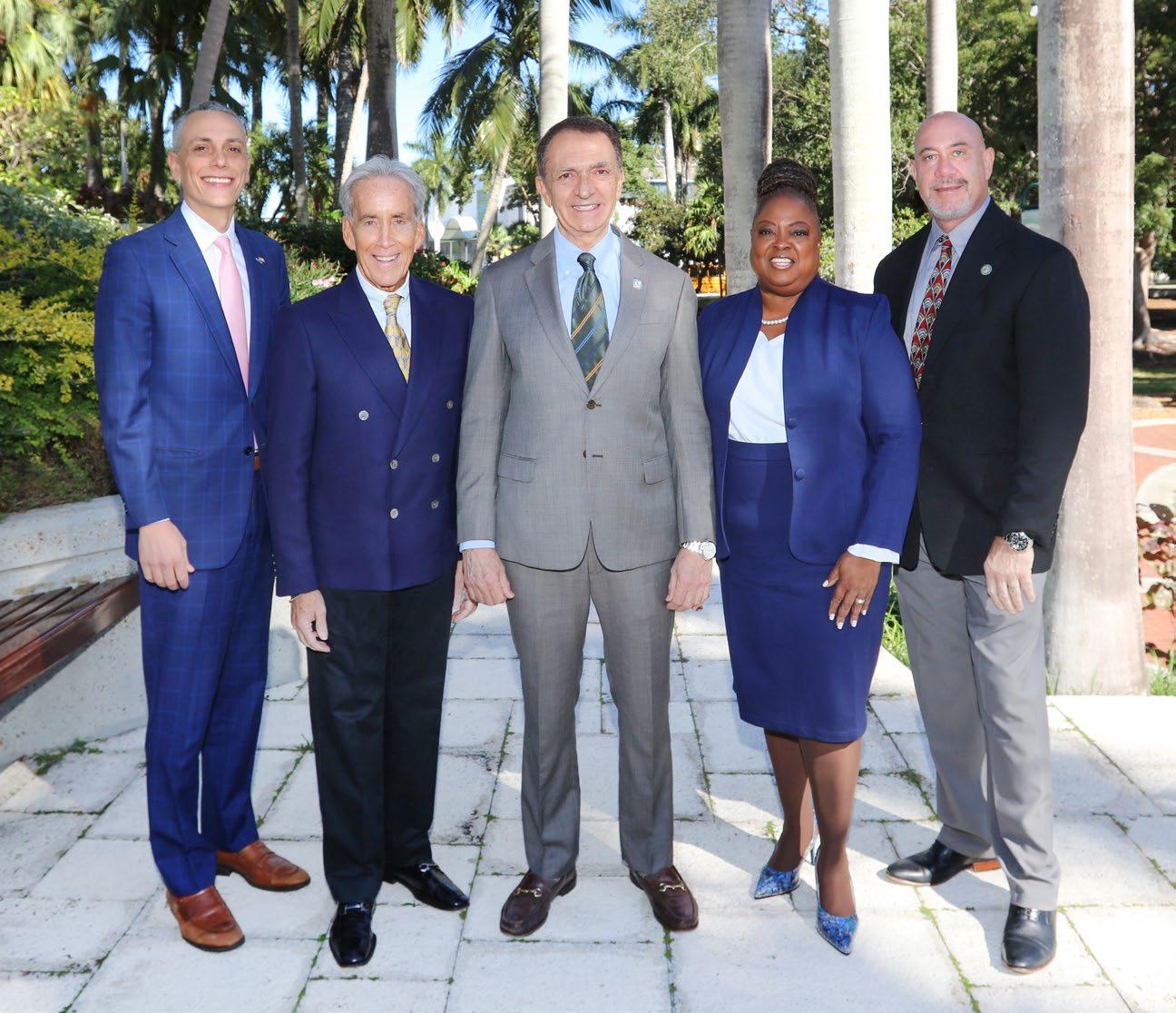
Mayor Dean J. Trantalis
Vice Mayor John C. Herbst, District 1
Commissioner Steven Glassman, District 2
Commissioner Pam Beasley-Pittman, District 3
Commissioner Ben Sorensen, District 4
City Manager Rickelle Williams
Interim City Attorney D’Wayne M. Spence
City Auditor Pat Reilly
City Clerk David R. Soloman

The 2026 Legislative Priorities reflect the general position of the City Commission pertaining to upcoming legislation that would impact operations. Most importantly, this Program integrates the Commission’s Strategic Goals: Press Play Fort Lauderdale 2029, which brings focus and coordination to what we do every day as we make this community a place to live, work, play, and invest.
It is now time to look forward with the City’s third five-year strategic plan, Press Play Fort Lauderdale 2029: Our City, Our Strategic Plan. This plan is structured into five Focus Areas that are designed to foster collaboration and innovation: Public Safety, Housing, Infrastructure and Resilience, Public Places, and Business Growth and Support. Within these Focus Areas, the plan contains six goals that will move the City toward the community’s vision for Fort Lauderdale in 2035. Within each goal, key performance measures that will objectively define the success of actions have been identified.
The City opposes legislation that infringes on the basic human and civil rights of Floridians. An integral portion of the advocacy effort by the Commission focuses on the Resolution process. Resolutions provide staff, advocacy teams, and state Executive and Legislative Branches with the City’s position regarding proposed legislation during Legislative Session.
The Commission supports legislation that would extend the deadline for the public hearing on the non-ad valorem assessment roll and its subsequent certification to the tax collector to September 25. The current deadline is September 15th for local governments not defined in Section 125.011(1). This extension would streamline the administrative process by eliminating the need for an additional City Commission meeting, thereby improving operational efficiency.
The Commission supports legislation to amend Sec. 286.011, Florida Statutes allowing closed-door meetings on pre-suit liability claims.
Support state initiatives and programs, such as the SSBCI, that:
• Fund opportunities for businesses owned by economically disadvantaged individuals, including women, veteran, and micro-small business entrepreneurs.
• Address policies that ensure fair competition for small businesses in all sectors.
Support funding for early learning education; and full funding for workforce readiness programs. The Commission also supports the Broward County Public School Board (BCPS) Legislative Priorities and Policy Statements, unless specific issues conflict with the City’s approved Legislative Program.
The majority of the Commission opposes the Legislature’s effort to restrict local governments from prohibiting firearms in government buildings, schools, and other critical infrastructure. Additionally, the Commission supports closing a potential legal loophole that may permit the open carry of firearms, with the exception of handguns, in sensitive locations explicitly identified in section 790.06 of the Florida Statutes.
Supports the Florida League of Cities (FLC) Legislative Priorities and Policy Statements, unless specific issues conflict with the City’s approved Legislative Program.
The Commission supports legislation and funding for municipalities to address homelessness and the creation of housing opportunities. This includes the evaluation of activities and initiatives that can address the root cause of homelessness while identifying ways to create additional housing opportunities in the City.
The Commission continues to support full funding for the Sadowski Affordable Housing Trust Fund, the State Housing Initiative Partnership (SHIP); and other housing programs which aid income eligible residents, including individuals with disabilities.
The Commission supports legislation allowing local government to continue to reasonably regulate short-term rental properties, vacation rentals, accessory dwelling units, and sober homes.
The Commission also supports funding and legislation to assist our residents with rising property insurance costs due to recent Florida law changes. Specifically, the Commission strongly supports continued funding and enhanced legislation for the My Safe Florida Condominium Pilot Program, which provides eligible condominium associations with resources to strengthen their properties against hurricane winds. Further, the Commission supports:
• State programs to enhance community resilience and provide guidance to homeowners on navigating new insurance requirements.
• Legislation that alleviates financial burdens by creating a funding source for local initiatives that not only promote awareness of available relief measures but also provides effective relief measures.
• State measures aimed at helping condominium and cooperative owners manage the increasing costs resulting from mandated requirements for structural integrity, maintenance, and enhancements to public safety infrastructure.
The Commission supports legislation dedicating state resources for the development and enhancement of municipal cybersecurity and broadband services. The Commission recognizes the urgency of addressing evolving cyber risks and is committed to proactive measures that protect critical infrastructure, elevate operational maturity, and ensure the longterm security of Fort Lauderdale’s residents and resources.
The Commission supports legislative efforts that aim to provide broadband services to local communities. In addition, the Commission supports legislative funding that supplements local government efforts to provide broadband services to the underserved and underrepresented neighborhoods.
Broadband access is crucial for economic growth and community development, acting as a catalyst for business efficiency, innovation, entrepreneurship, and improved access to education and job opportunities. It enables economic diversification, supports public health and safety initiatives, and promotes social equity by reducing the digital divide. High-speed internet infrastructure is essential for smart city initiatives, e-commerce growth, and attracting investment, ultimately leading to increased productivity and GDP growth in communities.
The Commission supports legislation and direct funding dedicated to strengthening municipal cybersecurity and the protection of critical infrastructure. This initiative is essential to safeguarding the city’s water systems, public safety networks for police and fire services, and other vital municipal resources. A robust cybersecurity program is critical to ensuring the continuity of essential services, public trust, and the safety and well-being of residents.
Key components include:
• Strengthening Critical Systems: Enhancing the resilience of the city’s water, wastewater, public safety, and other critical infrastructure networks against cyber threats.
• Leveraging Professional Expertise: Securing direct funding for professional cybersecurity services, including vCISOs and trusted advisors with federal, state, and municipal expertise, to accelerate the city’s cybersecurity maturity beyond conventional capabilities.
• Adopting Best Practices: Implementing internationally recognized frameworks and standards, such as ITIL, COBIT, and NIST, to guide cybersecurity, asset management, and overall IT governance efforts.
• Prioritizing Intentional Funding: Ensuring direct and prioritized funding for upgrading and replacing end-oflife infrastructure, implementing comprehensive cybersecurity programs, and maintaining robust asset management strategies to mitigate risks associated with cyber threats.
• Fostering Partnerships: Collaborating with federal and state agencies to access direct funding and adopt leadingedge cyber safe technologies and strategies.
• Strategically and Safely implement Artificial Intelligence: Secure direct funding for professional services and software that enhances efficiencies and productivity, while remaining cyber safety, through artificial intelligence.
The Commission continues to examine and address infrastructure needs related to water, wastewater, and stormwater. The Commission has further integrated resilience in all decisions relating to current and future City operations, effectively planning for, responding to, and quickly recovering from disruptive events.
The Commission supports measures that will prohibit the anchoring of vessels within 150 feet of any private residence. Further, the Commission supports amending legislation defining a live-aboard vessel.
The Commission supports the repeal of state regulations prohibiting local governments from banning the use or sale of polystyrene products. While local governments may restrict the use of polystyrene on their own property, they cannot restrict others from buying, selling, or using such products.
The City primarily uses Design-Bid-Build or Design-Build, and there are some other methods that may work better overall. For the new infrastructure projects, where time is of the essence, Progressive Design build may be a more practicable way to timely complete critical infrastructure and/or infrastructure projects. Currently the state limits when and how it is available as a tool for government entities.
The Commission further supports legislation that:
• Requires flood disclosures upon the sale of a property.
• Promote energy conservation and alternative energy development; and
• Supports the inclusion of municipalities in the state environmental permitting process.
Further, the City develops programs and implements strategies to improve traffic flow and evaluate new solutions that will alleviate congestion within the city. The Commission supports legislation and funding for transportation enhancements focused on pedestrian safety and walkability, improving traffic safety and flow, and enhancing multimodal transportation options that reduce traffic congestion and result in safer and more efficient movement of people.
The most precious powers a city holds is – Home Rule powers. The ability to establish its form of government through its charter, and to then enact ordinances, codes, plans and resolutions without prior state approval is a tremendous authority. To further be able to enforce them “at home” and to make necessary changes as a city grows is a great reflection of the trust that citizens have in their respective city leaders.
The Commission opposes legislation infringing on local home rule authority. The Commission further opposes legislation that effectively preempts local government from enacting ordinances, rules, and regulations to protect its residents.
The Commission supports initiatives that focus on a fair and equitable justice system, which can be achieved through statewide comprehensive criminal justice reform. The Commission further supports legislation that modifies the Law Enforcement Trust Fund’s (LETF) evidentiary standard in a forfeiture proceeding and use of future forfeitures, which may result in an increase in amounts collected.
Oppose legislative efforts to increase or eliminate the monetary limits on the waiver of sovereign immunity in current law.
Oppose legislation that modifies, restricts, or eliminates a municipality’s ability to levy and collect or spend franchise fees, communications service taxes, local business taxes, or other revenues.
Oppose legislation which shifts the financial burden from the state to local government, specifically municipalities.
The Commission supports increased funding for historic preservation, and the restoration of full funding for the cultural arts. As a city known for its arts and culture, Fort Lauderdale supports all efforts to restore state funding to pre-recession levels.
The Commission supports funding for Fort Lauderdale Executive Airport capital projects, and the collaboration between the marine and aviation industries to promote economic development and tourism.
The Commission supports the reauthorization of the statewide Qualified Target Industry Tax Incentive (QTI) Program by Florida Commerce – Division of Economic Development. The QTI Tax Refund was a tool available to Florida communities to encourage quality job growth in targeted high value-added businesses. Actual awards could be a maximum of:
• $1,000 per job for businesses paying at least 150 percent of the prevailing average annual wage or $2,000 per job for businesses paying at least 200 percent of the prevailing average annual wage;
• $2,000 per job if the business falls within a designated high impact sector OR if the business increases exports of its goods through a seaport or airport in the state by at least 10 percent in value or tonnage in each year of receiving a QTI refund;
• $2,500 per job (Brownfield Bonus) if project is in a designated Brownfield area with BSRA (Brownfield site rehabilitation agreement); and
• $1,000 per job if the local financial support is equal to the base QTI award.
The Commission further supports the reauthorization of Film Tax Credits/Incentives, which would give credits to filmmakers that meet certain requirements. The Florida Film Tax Credit is a valuable incentive that has been proven to boost the state’s economy and promote the growth of its film industry. By providing financial incentives to filmmakers, it encourages them to choose Florida – South Florida – as a filming location, resulting in increased job opportunities for residents, a surge in tourism, and greater exposure for the state on the global stage. This tax credit not only stimulates economic growth but also contributes to the cultural richness of Florida by fostering a thriving film and entertainment sector. Since the state’s previous film rebate program ended, productions moved away from Florida to states like Georgia, Louisiana, Texas, and North Carolina, resulting in lost economic opportunities.
The Commission supports the transfer of the spending authority of the Tourism Development Tax to municipalities, based on tourism activity. The Commission opposes the proposed expansion of the TDT for uses that do not promote or enhance tourism, marketing, or economic development.
Support funding for the following education and workforce development projects:
$1,000,000
In partnership with the Barrington Irving Technical Training School (BITTS), this program is designed to provide high school students and adults with technical career training, mentorship, and direct pathways to employment in the aviation industry. By aligning education with industry demand, the program bridges the gap between individuals seeking meaningful careers and the aviation sector’s urgent need for skilled technicians. It offers an alternative to the traditional four-year college track, creating opportunities for young adults, particularly those from low-income backgrounds or underserved communities, who may otherwise lack access to higher education or specialized training. At the same time, it supports individuals seeking to transition into a high-demand, well-paying field where long-term career stability and advancement opportunities are abundant.
There are 615 unsheltered individuals living on the streets of Fort Lauderdale on any given night (Point-In-Time Count, January 2025). One of the root causes of homelessness is mental health illness.
$250,000
Launched in March 2025 with Department of Children and Families funding, the Substance Abuse and Mental Health Treatment Housing Program provided shared housing and wrap-around services to individuals experiencing homelessness with mental health or substance use disorders. In just four months, the program housed or reunified 71% of mental health referrals and supported substance use participants with 35% remaining in recovery housing, 11% in stable alternatives, and 14% referred to higher care. Concentrated in Fort Lauderdale – home to nearly half of Broward County’s unsheltered population – the program proved that pairing housing with treatment creates sustainable pathways to recovery and stability. With expansion, this model could serve as a blueprint for communities across Florida, addressing homelessness and behavioral health needs on a broader, statewide scale.
Support funding for enhanced public safety needs for Fire Rescue and the Police Department. Specifically, the Commission supports funding for the following projects:
$500,000
The Cold Case Reduction Program, a partnership between Nova Southeastern University and the Fort Lauderdale Police Department, leverages supervised student research teams to re-examine unsolved homicides using modern forensic tools, advanced investigative methods, and improved case organization. With more than 350 cold cases in Fort Lauderdale alone, the program addresses critical resource challenges while giving criminal justice students valuable real-world experience. Beyond supporting victims’ families by offering renewed hope for justice, the initiative has the potential to serve as a statewide model for Florida, helping law enforcement agencies reduce case backlogs, strengthen public safety, and build a skilled pipeline of future forensic and law enforcement professionals.
$643,078
This project seeks funding to replace the reserve fireboat with a modern, fully equipped vessel that ensures reliable, advanced life support capabilities, and operational efficiency in one of the world’s busiest marine communities. Fort Lauderdale Fire Rescue (FLFR) operates with two fireboats, one frontline and one reserve. The reserve vessel has reached the end of its serviceable life and lacks critical medical and operational capabilities to serve the city in emergency situations.
Support full funding for infrastructure projects/programs that preserve and protect public and private property during rainfall, flood, and natural disasters. Specifically, the Commission supports:
• The identification of adequate funding for water, sewer, and stormwater infrastructure improvements.
• Maintaining, at minimum, $50 million recurring for beach re-nourishment, revitalization, and enhancement efforts.
The project will mill and resurface the existing 28-year-old pavement, install wider sidewalks, and install landscape enhancements for nearly 1.5 miles of the Galt Mile Streetscape. Additionally, the project will upgrade pedestrian lighting, refresh pavement markings, and add new regulatory signage. Direct services will include increased multimodal access, enhanced street lighting, enhanced shade from upgraded landscaping, raised crosswalks and wider sidewalks, resulting in the enhancement of the functionality and safety for residents and visitors.
Roadways throughout the city need critical improvements. The total cost to resurface these roadways is $12.5 million, not including future maintenance. Funding will be used to improve roadways with asphalt overlay and/or milling and resurfacing to restore pavement for streets with a Pavement Condition Index (PCI) of 55 and below. According to the Metropolitan Transportation Commission, PCI provides a snapshot of the pavement health of a road. It is measured on a scale of 0 to 100 (where 100 means a newly paved road). The PCI score is affected by several factors, such as pavement age, climate and precipitation, traffic loads and maintenance. Roadways with a PCI of 55 and below are in poor condition. This project will improve the condition of roadways throughout the City within the City right of way. By restoring the surface before the roadway requires reconstruction, it will save the taxpayer from bearing the burden of the cost. Waiting would make restoration four times more costly.
This project is complete rehabilitation of nine wastewater pumping stations, including structures, piping, mechanical and electrical equipment. Aging infrastructure in the wastewater collection system can lead to increased power costs, increased repair costs, and higher pump station failures. Complete rehabilitation of these stations will reduce or eliminate these issues.
Transportation in any city is a critical component to stability and growth. The Commission supports full funding for all transportation projects within the FDOT Workplan.
The project aims to create a complete street that allows the iconic roadway to provide residents and visitors with a “Main Street” experience while also operating as a regionally significant corridor for commuters and balancing the needs of all the users. This new project supports the City’s Vision Zero Plan to eliminate traffic fatalities and severe injuries by enhancing pedestrian safety and improving ADA facilities. Once constructed, the city will realize its vision of developing an active, unique, world-class live, work, and play-friendly streetscape.
$3,000,000
LauderTrail is an inclusive, interconnected active transportation network in Fort Lauderdale that will link residents and visitors safely to parks, transit, businesses, and attractions through a total of 42 miles of multi-use trails, combining 31 miles of new segments with 11 miles of existing infrastructure. The project addresses safety concerns of the 60% of local cyclists who are interested in biking but hesitant due to traffic risks, by providing low stress, separated pathways. The current phase seeks funding to build critical trail sections connecting the Downtown Mobility Hub to Carter Park. By offering amenities like fitness equipment, bike repair stations, art placemaking, and well-lit pedestrian lighting, LauderTrail not only enhances local connectivity and safety but also supports economic development and public health. This initiative contributes to broader statewide efforts in Florida to expand active transportation, promote physical activity, and drive sustainable economic growth through improved community mobility.
$1,600,000
The project’s primary objectives are twofold: to create a more inviting environment that supports existing businesses and attracts new ones, and to draw visitors to the district, capitalizing on its proximity to SR A1A. By addressing the current challenges of inadequate lighting and vacant storefronts, the project aims to transform the district into a vibrant, safe, and economically thriving area that serves both residents and tourists. Ultimately, these improvements will benefit the adjacent residential condominiums and anchor hotel while creating a more appealing destination for visitors.
In partnership with the Barrington Irving Technical Training School (BITTS), this program is designed to provide high school students and adults with technical career training, mentorship, and direct pathways to employment in the aviation industry. By aligning education with industry demand, the program bridges the gap between individuals seeking meaningful careers and the aviation sector’s urgent need for skilled technicians. It offers an alternative to the traditional four-year college track, creating opportunities for young adults, particularly those from low-income backgrounds or underserved communities, who may otherwise lack access to higher education or specialized training. At the same time, it supports individuals seeking to transition into a high-demand, well-paying field where long-term career stability and advancement opportunities are abundant.
Background
The Aviation Training School at Fort Lauderdale Executive Airport (FXE) represents more than just a new educational program — it is an investment in the future of Florida’s economy and its status as a global aviation leader. Built on handson learning and real-world applications, the school is designed to equip students with the technical knowledge and practical experience they need to thrive in aviation. In just 10 weeks, students can earn industry-recognized certifications and micro-credentials in critical areas such as Maintenance, Repair, and Overhaul (MRO) and Fixed Base Operations (FBO). This accelerated, career-focused approach ensures graduates are immediately ready to support and advance one of the nation’s fastest-growing industries. For them, it means access to careers that are stable, rewarding, and consistently in demand. For Florida, it means a stronger, more resilient workforce capable of meeting the aviation challenges of tomorrow.
The ripple effects of this training school extend well beyond the students themselves. Every new graduate entering the aviation field helps to fuel related industries that depend on air travel and airport operations – maintenance providers, hospitality, transportation, logistics, and beyond. By cultivating a steady pipeline of skilled workers, the school is ensuring the sustainability of these industries, creating jobs both directly and indirectly, and providing a measurable boost to the regional and statewide economy.
This vision builds on the vital role Fort Lauderdale Executive Airport already plays. FXE is one of the busiest general aviation airports in the nation, recording more than 160,000 annual operations. It also stands as the busiest U.S. Customs & Border Protection facility in the United States for processing international arrivals of private aircraft and their passengers. According to the Florida Department of Transportation’s 2022 Economic Impact Study, FXE supports nearly 23,000 jobs, delivers a $1.2 billion payroll to residents, and generates an annual economic impact of $3.9 billion. The airport’s mission – to attract businesses, support its tenants, and invest in community prosperity – aligns seamlessly with the mission of the training school. Together, they represent a powerful engine for sustainable economic growth.
But the benefit isn’t confined to Fort Lauderdale. It resonates across Florida. The state is already recognized as one of the nation’s leading aviation and aerospace hubs – home to NASA, SpaceX, Embraer, and some of the busiest airports in the country, including Miami International (MIA) and Orlando International (MCO). With Florida ranking as a top tourist destination that relies heavily on air travel, the entire statewide economy depends on the smooth, safe, and efficient operation of its aviation system. Meeting this demand requires not only pilots and mechanics, but also air traffic controllers, avionics technicians, and aviation support specialists at every level. By training and certifying this workforce right here in Florida, the Aviation Training School at FXE is strengthening the very foundation on which the state’s future growth depends.
This is more than workforce training; it is legacy-building. It is about positioning Florida to remain competitive on the global stage, to sustain its reputation as a pioneering force in aviation and aerospace, and to ensure that the benefits –from high-paying jobs to billions of dollars in economic activity – continue to flow to communities across the state. The Fort Lauderdale Aviation Technical Training Program, located at FXE, is where passion, opportunity, and vision converge, creating a brighter future not just for students, but for all of Florida.
The program delivers measurable benefits for both participants and the broader community by fostering mental wellbeing, strengthening education, and creating direct economic opportunities. Participants build self-efficacy, reduce stress, and improve resilience, as shown through pre- and post-program surveys, while also advancing academically and professionally through the completion of industry-recognized micro-credentials, certifications, and strong job placement outcomes. Success is further tracked through internships, employer feedback, and baseline data collection to monitor long-term impact. By combining technical training with personal development, the program equips individuals with confidence, skills, and workforce readiness while simultaneously fueling job creation, economic growth, and a stronger aviation workforce for Florida.
• Total Program Cost | $2,500,000
• Requested Amount | $1,000,000
• Local Match | $206,000
• Daphnee Sainvil, Intergovernmental Affairs Manager | DSainvil@fortlauderdale.gov | 954-299-7806
• Susan Leon, Chief Education Officer | SLeon@fortlauderdale.gov | 954-828-5603
• Ashley Dixon, Policy Analyst | ADixon@fortlauderdale.gov | 954-828-5130
Program Description/Summary
The Cold Case Collaboration Pilot Program is a partnership between Nova Southeastern University and the Fort Lauderdale Police Department designed to leverage student research teams in assisting with unsolved homicide investigations. The program seeks to enhance investigative capacity, apply modern forensic techniques, and improve case organization while providing real-world investigative experience for students.
The Cold Case Reduction Program, a partnership between Nova Southeastern University and the Fort Lauderdale Police Department, is designed to bring new energy and modern resources to long-unsolved homicide investigations. Through supervised student research teams, the program strengthens investigative capacity by applying advanced forensic techniques, improving case organization, and incorporating digital investigation strategies. At the same time, it provides criminal justice students with invaluable real-world experience, preparing the next generation of professionals to serve in law enforcement and forensic science fields.
This initiative directly supports families of unsolved homicide victims in Fort Lauderdale by offering renewed hope for answers and justice. With 353 open homicide cases, many predating the use of modern tools such as advanced DNA analysis, the department faces a major challenge that its current staffing and resources cannot fully address. By engaging trained students under expert supervision, the program ensures that each case can be re-examined with fresh perspectives, modern methodologies, and an organized structure that makes investigative follow-ups more efficient and effective.
While the immediate focus is on cases within Fort Lauderdale, the program has the potential to serve as a statewide model for Florida. Law enforcement agencies across the state face similar challenges with limited resources and growing backlogs of cold cases. By proving the effectiveness of academic partnerships and student-supported investigative teams, the Cold Case Reduction Program can inspire replication in jurisdictions across Florida. In doing so, it not only increases the likelihood of solving cases and delivering justice statewide but also strengthens the pipeline of well-trained professionals ready to enter critical roles in law enforcement and forensic science. This program represents both a pathway to justice for victims’ families and an innovative approach to enhancing Florida’s overall public safety system.
The Cold Case Reduction Program provides measurable educational, economic, and public safety benefits by engaging students in real-world cold case investigations while supporting law enforcement in solving unsolved homicides. Students gain hands-on training and complete academic assignments that prepare them for careers in law enforcement and forensic science, with outcomes tracked through participation records, evaluations, and employment follow-ups.
The program enhances public safety by generating leads, reopening cases, and contributing to arrests, while also creating economic impact through paid student research positions, forensic testing contracts, and faculty or liaison hires. Additionally, digitizing and preserving case files ensures long-term accessibility and organization. Together, these outcomes strengthen Florida’s justice system, improve workforce readiness, reduce recidivism, and provide renewed hope to victims’ families.
• Total Program Cost | $3,125,000
• Requested Amount | $500,000
• Local Match | $125,000
Points of Contact
• Daphnee Sainvil, Intergovernmental Affairs Manager | DSainvil@fortlauderdale.gov | 954-299-7806
• Steve Scelfo, Police Major | SScelfo@flpd.gov | 954-828-6651
• Ashley Dixon, Policy Analyst | ADixon@fortlauderdale.gov | 954-828-5130
Project Description/Summary
This project seeks funding to replace the reserve fireboat with a modern, fully equipped vessel that ensures reliable, advanced life support capabilities, and operational efficiency in one of the world’s busiest marine communities. Fort Lauderdale Fire Rescue (FLFR) operates with two fireboats, one frontline and one reserve. The reserve vessel has reached the end of its serviceable life and lacks critical medical and operational capabilities to serve the city in emergency situations.
The City of Fort Lauderdale, known as the “Venice of America,” boasts 165 miles of navigable waterways, seven miles of coastline, over forty marinas, and hosts the world’s largest international boat show each year. Bordering Port Everglades, the third busiest cruise port in the country, Fort Lauderdale’s waterways accommodate over 50,000 registered yachts annually, including more than 1,400 mega-yachts. Since the 1960s, Fort Lauderdale Fire Rescue’s Marine Team has delivered essential fire suppression, advanced life support, dive rescue, and maritime emergency services. Currently, the reserve fireboat is a converted fishing vessel with limited offshore capabilities, no climate-controlled patient treatment compartment, and outdated navigation and communication systems. When the primary fireboat is out of service, this reserve boat is unable to adequately respond to critical offshore emergencies such as cruise ship medical incidents or vessel fires. Procuring a modern fireboat will provide redundancy and ensure consistent levels of operational readiness and capability across both frontline and reserve units.
A new vessel will significantly expand the marine team’s operational effectiveness by enabling advanced life support services on water, incorporating a climate-controlled patient compartment, and offering state-of-the-art navigation, communication systems, and enhanced search and rescue technologies such as FLIR night vision, radar, and underwater sonar. The fireboat will be used for a range of activities, including fire suppression and EMS response to marine incidents, offshore patient care and transport, enhanced search and rescue, and seamless interoperability with the Coast Guard, Florida Fish and Wildlife Conservation Commission, police marine units, and Ocean Rescue. As a result, direct services to residents will include improved survival rates for patients, reinforced capacity to safely suppress fires on vessels, stronger regional emergency preparedness, and reliable marine emergency response coverage.
Beyond emergency services, the new fireboat will also bring broader public benefits. It will provide a safer working environment for fire department personnel, thus supporting their physical and mental health through reduced injuries and improved well-being. Serving as a platform for public education and outreach, the vessel will enrich community interactions and enhance cultural engagement. By facilitating safer and more effective marine fire suppression, the fireboat will help minimize environmental pollution and protect aquatic life, impacts that will be assessed through post-incident and environmental reports. The fireboat’s ability to deliver faster, safer rescue and patient transport will be measured by improved response times and reviewed incidents, elevating public protection. Additionally, safeguarding vessels and marinas will promote economic stability in marine and tourism industries, with measurable benefits documented through reduction in fire loss and increased service activity. Ultimately, the new fireboat will strengthen Fort Lauderdale’s emergency response capabilities both within the city and throughout the region’s waterways, with measurable benefits assessed by the scope and success of incident responses.
• Total Project Cost | $1,286,157.53
• Requested Amount | $643,078.76
• Local Match | $643,078.77
Points of Contact
• Daphnee Sainvil, Intergovernmental Affairs Manager | DSainvil@fortlauderdale.gov | 954-299-7806
• Garrett Pingol, Deputy Fire Chief | GPingol@fortlauderdale.gov | 954-828-6812
• Ashley Dixon, Policy Analyst | ADixon@fortlauderdale.gov | 954-828-5130
$1,250,000
Project Description/Summary
The project will mill and resurface the existing 28-year-old pavement, install wider sidewalks, and install landscape enhancements for nearly 1.5 miles of the Galt Mile Streetscape. Additionally, the project will upgrade pedestrian lighting, refresh pavement markings, and add new regulatory signage. These comprehensive improvements will enhance the functionality and safety of the area for residents and visitors alike.
The Galt Ocean Drive was last rehabilitated in 1996. The current street surface is worn, sidewalks discolored, and the pavement striping has significantly faded, resulting in the request to make necessary safety enhancements. Proposed improvements include new roadway surfacing, upgraded public safety measures at intersections, multimodal upgrades such as wider sidewalks and dedicated bike lanes, enhanced pedestrian lighting, and improved landscaping. These essential enhancements will not only revitalize the appearance and functionality of Galt Mile but also significantly improve the quality of life for residents and visitors alike.
This project is designed to significantly enhance both pedestrian and vehicular safety through upgraded lighting, improved signage, and the introduction of traffic-calming measures. By addressing these key safety concerns, the project will create a safer, more navigable environment for residents and visitors alike. Additionally, the project will enhance the neighborhood’s walkability by incorporating wider sidewalks and dedicated bike lanes. These improvements will not only encourage the use of alternative modes of transportation, such as walking and cycling, but will also help reduce vehicular traffic, leading to less congestion and a more sustainable community. By promoting active transportation and creating a more pedestrian-friendly environment, the enhancements will contribute to a healthier, more vibrant neighborhood by decreasing vehicle emissions which improves the overall quality of life for Galt residents and visitors. The improvements align with broader city initiatives to foster sustainability, reduce carbon emissions, and support multimodal transportation options for the community.
• Total Project Cost | $4,800,000
• Requested Amount | 1,250,000
• Local Match | $1,250,000
• Appropriations Received FY 2023 | $500,000
• Appropriations Received FY 2025 | $500,000
Points of Contact
• Daphnee Sainvil, Intergovernmental Affairs Manager | DSainvil@fortlauderdale.gov | 954-299-7806
• Gary Foster, Senior Project Manager | GFoster@fortlauderdale.gov | 954-828-6233
• Ashley Dixon, Policy Analyst | ADixon@fortlauderdale.gov | 954-828-5130
| $1,000,000
The Las Olas Safety Improvements and ADA Upgrades Project aim to create a complete street that allows the iconic roadway to provide residents and visitors with a “Main Street” experience while also operating as a regionally significant corridor for commuters and balancing the needs of all the users. This new project supports the City’s Vision Zero Plan to eliminate traffic fatalities and severe injuries by enhancing pedestrian safety and improving ADA facilities. Once constructed, the city will realize its vision of developing an active, unique, world-class live, work, and play-friendly streetscape.
In 2017, a unified effort was launched to evaluate the transportation, landscaping, planning and urban design needs of the Las Olas Boulevard corridor from Andrews Avenue to SR A1A. The effort included extensive stakeholder participation by the Las Olas Working Group established that included residents, business owners and property owners along the entire corridor. Two district commissioners, Vice Mayor Steve Glassman and Commissioner Ben Sorensen led this effort. The efforts of the Working Group included hearing presentations from the various stakeholders on their concerns and providing comments on the issues and reviews of the vision through a process that aimed to build consensus on the future of a world-class corridor over a 2.5-year timeframe from September 2018 to June 2021.
Downtown Fort Lauderdale has a $30 Billion annual economic impact on this region, equal to hosting a Super Bowl every weekend. Downtown is a hub for technology, banking, real estate development, and services that fuel the economic impact of the Greater Fort Lauderdale area, and it is a home to many businesses and organizations which employ 65,000+ people.
Las Olas Boulevard is the centerpiece of the City’s tourism industry, business district, and cultural identity. The Las Olas Boulevard Project supports the City’s efforts to promote a space where people live, work, and play. This is accomplished through responsible urban planning to incorporate complete streets concepts, reduce multimodal conflict, and promote mixed-use development, all efforts which were desired by those affected and impacted by this project. This project creates a complete street, improves safety, and balances the needs for all users while promoting economic vitality.
Funding will assist the city to upgrade existing outdated facilities, improve accommodations for pedestrians and associated streetscape improvements and create a place where people want to visit, further boosting local, regional, and state economy.
• Total Project Cost | $13,000,000
• Requested Amount | $1,000,000
• Local Match | $2,000,000
• Appropriations Received FY 2025 | $1,000,000
Points of Contact
• Daphnee Sainvil, Intergovernmental Affairs Manager | DSainvil@fortlauderdale.gov | 954-299-7806
• Milos Majstorovic, Transportation and Mobility Director | MMajstorovic@fortlauderdale.gov | 954-828-5216
• Ashley Dixon, Policy Analyst | ADixon@fortlauderdale.gov | 954-828-5130
| $3,000,000
LauderTrail is an inclusive, interconnected active transportation network in Fort Lauderdale that will link residents and visitors safely to parks, transit, businesses, and attractions through a total of 42 miles of multi-use trails, combining 31 miles of new segments with 11 miles of existing infrastructure. The project addresses safety concerns of the 60% of local cyclists who are interested in biking but hesitant due to traffic risks, by providing low stress, separated pathways. The current phase seeks funding to build critical trail sections connecting the Downtown Mobility Hub to Carter Park. By offering amenities like fitness equipment, bike repair stations, art placemaking, and well-lit pedestrian lighting, LauderTrail not only enhances local connectivity and safety but also supports economic development and public health. This initiative contributes to broader statewide efforts in Florida to expand active transportation, promote physical activity, and drive sustainable economic growth through improved community mobility.
LauderTrail is a City Commission-led initiative that resulted from the May 2018 Annual Action Plan meeting. The City Commission classified the bicycle and pedestrian trail effort as a high priority and initiated the LauderTrail Working Group whose sole purpose was to create the core route for a city trail system. The task was to establish and guide the early development of LauderTrail over the course of a two-year term. In 2019, LauderTrail was classified as a top priority by the City Commission. In August 2020, the Working Group sunset and the City Commission assigned two of its Commissioners to assist with leading the public-facing trail efforts during the pandemic. Public meetings were held to share concerns and ideas with the community for several months, and the directive to create a city-wide trail system was erected from those meetings. In November 2020, the City selected the PATH Foundation, to complete the Master Plan which memorialized the existing conditions of Fort Lauderdale’s multi-modal network and provided recommendations to create a city-wide trail system.
Laudertrail proposes to construct a quality multi-use infrastructure means of transportation that is low-stress and separates motorized and nonmotorized modes of transit. According to the Center for Sustainable, Healthy, Equitable Communities, 80% of an individual’s health is determined by their behaviors and the social and environmental conditions in which they live, work, and play. The LauderTrail system will connect neighborhoods and destinations which will assist with improving overall health and well-being, mobility, life expectancy and economic stimulation through promoting more neighbors and visitors to mobilize locally, without the need for vehicular transport.
• Total Project Cost | $6,500,000
• Requested Amount | $3,000,000
• Local Match | $3,500,000
Points of Contact
• Daphnee Sainvil, Intergovernmental Affairs Manager | DSainvil@fortlauderdale.gov | 954-299-7806
• Milos Majstorovic, Transportation and Mobility Director | MMajstorovic@fortlauderdale.gov | 954-828-5216
• Ashley Dixon, Policy Analyst | ADixon@fortlauderdale.gov | 954-828-5130
Project Description/Summary
Funding will be used to improve roadways with asphalt overlay and/or milling and resurfacing to restore pavement for streets with a Pavement Condition Index (PCI) of 55 and below. According to the Metropolitan Transportation Commission, PCI provides a snapshot of the pavement health of a road. It is measured on a scale of 0 to 100 (where 100 means a newly paved road). The PCI score is affected by several factors, such as pavement age, climate and precipitation, traffic loads and maintenance. Roadways with a PCI of 55 and below are in poor condition. This project will improve the condition of roadways throughout the City within the City right of way.
Background
This project involves the application of roadway asphalt overlay and/or milling and resurfacing to restore and enhance pavement conditions on streets that have been impacted by prior utility work or that exhibit low pavement quality. The effort specifically targets streets with a Pavement Condition Index (PCI) score of 55 or below, which indicates poor pavement performance.
The City of Fort Lauderdale manages approximately 564 miles of roadway within its jurisdiction. The project’s primary objective is to maintain safe and reliable roadways by addressing surface irregularities such as ruts, potholes, depressions, and extensive patching from past utility repairs. These improvements will help ensure a smoother driving experience, prolong the lifespan of the pavement, and reduce future maintenance costs.
The PCI is a widely recognized measure used to assess the structural health and surface condition of a roadway, as defined by the Metropolitan Transportation Commission. It is scored on a scale from 0 to 100, where 100 represents a newly paved road in excellent condition. A road’s PCI rating is influenced by several factors, including pavement age, weather exposure, traffic volumes, and maintenance history. Streets with PCI ratings of 55 or lower are in poor condition and in need of rehabilitation. Through this program, the City will methodically improve roadway conditions across its network within City rights-of-way, contributing to an upgraded, more resilient transportation infrastructure.
The resurfacing project positively impacts the community by improving the condition of the traffic lanes and public spaces, boosting property values, creating jobs during construction, enhancing safety, promoting outdoor activity, and fostering a sense of pride and community identity withing the area.
• Total Project Cost | $12,500,000
• Requested Amount | $850,000
• Local Match | $1,000,000
• Appropriations Received FY 2025 | $750,000
Points of Contact
• Daphnee Sainvil, Intergovernmental Affairs Manager | DSainvil@fortlauderdale.gov | 954-299-7806
• Jean Examond, Senior Project Manager | JExamond@fortlauderdale.gov | 954-828-4507
• Ashley Dixon, Policy Analyst | ADixon@fortlauderdale.gov | 954-828-5130
$250,000
Project Description/Summary
Launched in March 2025 with Department of Children and Families funding, the Substance Abuse and Mental Health Treatment Housing Program provided shared housing and wrap-around services to individuals experiencing homelessness with mental health or substance use disorders. In just four months, the program housed or reunified 71% of mental health referrals and supported substance use participants with 35% remaining in recovery housing, 11% in stable alternatives, and 14% referred to higher care. Concentrated in Fort Lauderdale – home to nearly half of Broward County’s unsheltered population – the program proved that pairing housing with treatment creates sustainable pathways to recovery and stability. With expansion, this model could serve as a blueprint for communities across Florida, addressing homelessness and behavioral health needs on a broader, statewide scale.
The Substance Abuse and Mental Health Treatment Housing Program was launched in March 2025 with funding from the Department of Children and Families (DCF) to address the urgent needs of individuals experiencing homelessness who also face behavioral health challenges, mental health diagnoses, or substance use disorders. The program provided shared housing placements paired with wrap-around support services, including mental health assessments, stabilization through detox or respite care, residential recovery services, case management, and pathways toward stable, permanent housing. Despite the short launch period before its June 2025 sunset, the program achieved remarkable outcomes in connecting vulnerable individuals to care and recovery resources.
In partnership with local service providers, 41 participants were referred to for mental health housing placement with wrap-around services; by the end of the contract period, 71% remained housed or were reunified with family. For substance use treatment, 78 participants accepted services, with results showing 35% remain in recovery housing, 11% achieved alternative stable living arrangements such as reunification or placement in recovery residences, and 14% were appropriately referred to a higher level of care. These outcomes underscore the program’s effectiveness in stabilizing individuals and connecting them to long-term pathways for wellness and housing security.
The City of Fort Lauderdale is uniquely impacted by homelessness. Although it is one of 31 municipalities within Broward County, nearly half of the county’s unsheltered residents live within city limits, according to the 2025 Point-in-Time Count. Contributing factors include the proximity of the county jail, main bus terminal, Broward General Hospital, and multiple homeless service providers – which often result in individuals being discharged directly into Fort Lauderdale’s streets, regardless of their home community. Given this disproportionate impact, there is a clear need to expand the Substance Abuse and Mental Health Treatment Housing Program. By combining housing, treatment, case management, and recovery support, Fort Lauderdale can build on these promising outcomes to improve community wellness, reduce homelessness, and create sustainable pathways to permanent housing for some of the city’s most vulnerable residents.
The Substance Abuse and Mental Health Treatment Housing Program provides critical stabilization and recovery support for individuals experiencing homelessness who face mental health or substance use challenges, pairing shared housing with wrap-around services such as assessments, detox and respite care, residential recovery, case management, and family reunification. In its pilot phase from March to June 2025, the program demonstrated measurable success: of 41 individuals referred for mental health housing, 71% remained housed or were reunified with family, while of 78 referred for substance use treatment, 35% remained in recovery housing, 11% achieved stable alternative housing, and 14% were referred to higher levels of care.
Beyond improving individual wellness and housing stability, the program helps reduce street homelessness in Fort Lauderdale, which accounts for nearly half of Broward County’s unsheltered population, and offers a scalable model for Florida. By blending housing with behavioral health services, it not only improves community safety and wellness but also provides a pathway to statewide impact by addressing the root causes of homelessness and creating sustainable routes to recovery and permanent housing.
• Total Program Cost | $500,000
• Requested Amount | $250,000
• Local Match | $250,000
Points of Contact
• Daphnee Sainvil, Intergovernmental Affairs Manager | DSainvil@fortlauderdale.gov | 954-299-7806
• Chris Cooper, Assistant City Manager | CCooper@fortlauderdale.gov | 954-828-5980
• Luisa Agathon, Neighbor Support Manager | LAgathon@fortlauderdale.gov | 954-828-5271
• Carole Mitchell, Homeless Initiatives Program Manager | CAMitchell@fortlauderdale.gov | 954-828-4246
• Ashley Dixon, Policy Analyst | ADixon@fortlauderdale.gov | 954-828-5130
| $1,600,000
The proposed streetscape improvement project aims to revitalize a small business district at the intersection of State Road A1A and State Road 838 (Sunrise Boulevard), encompassing Sunrise Lane, Breakers Avenue, and NE 9th Street. This initiative seeks to address current safety concerns and economic challenges while enhancing the area’s appeal and functionality. Key elements of the proposed improvements include enhanced lighting for improved safety, widened sidewalks to facilitate pedestrian traffic, additional landscaping to enhance aesthetics, traffic calming measures, entryway features to attract visitors, new crosswalks for pedestrian safety, mural installations for visual interest, and decorative pavement features. The project’s primary objectives are twofold: to create a more inviting environment that supports existing businesses and attracts new ones, and to draw visitors to the district, capitalizing on its proximity to SR A1A. By addressing the current challenges of inadequate lighting and vacant storefronts, the project aims to transform the district into a vibrant, safe, and economically thriving area that serves both residents and tourists. Ultimately, these improvements will benefit the adjacent residential condominiums and anchor hotel while creating a more appealing destination for visitors.
The Sunrise Lane District is poised for a remarkable transformation. The City has allocated funds for a comprehensive community engagement process, culminating in the development of preferred alternatives for streetscape improvements. This initiative encompasses a series of public meetings, fostering collaborative design and selection of optimal solutions. The district’s current perception, characterized by terms such as “seedy” and “decrepit,” is set to evolve into a vibrant, inviting, and safe environment. The envisioned metamorphosis includes enhanced illumination with decorative and string lighting; distinctive entryway signage; increased urban canopy through additional street trees; expanded pedestrian walkways; and attraction of local-serving businesses, such as grocers and cafes. Sunrise Lane’s strategic location near the beach, residential areas, and hospitality establishments positions it as a potential catalyst for local economic growth. Stakeholders have prudently opted for a pragmatic approach, prioritizing achievable, near-term improvements while laying the groundwork for more ambitious future developments, including the possibility of a pedestrian-shared street. This judicious strategy aims to expedite tangible progress while preserving flexibility to pursue more transformative options as circumstances permit.
The proposed enhancements will catalyze the transformation of Sunrise Lane Village into a vibrant commercial hub, yielding multifaceted benefits for stakeholders, visitors, and residents alike. This revitalization is projected to augment property values and bolster both sales and tourism tax revenues. Such outcomes are consistent with empirical evidence from comparable streetscape initiatives, notably the successful redevelopment of NE 13th Street within the city, which implemented similar complete streets principles.
• Total Project Cost | $3,500,000
• Requested Amount | $1,600,000
• Local Match | $220,800
Points of Contact
• Daphnee Sainvil, Intergovernmental Affairs Manager | DSainvil@fortlauderdale.gov | 954-299-7806
• Milos Majstorovic, Transportation and Mobility Director | MMajstorovic@fortlauderdale.gov | 954-828-5216
• Ashley Dixon, Policy Analyst | ADixon@fortlauderdale.gov | 954-828-5130
| $3,650,000
The Comprehensive Utility Strategic Master Plan (CUSMP) guides the repair and rehabilitation of the City’s aging triplex pump stations, which are vital for transferring wastewater to treatment facilities. Pump station failure can lead to sanitary sewer overflows (SSOs), exposing neighborhoods to untreated wastewater containing dangerous bacteria, viruses, and parasites. Such overflows create immediate threats to public health by increasing the risk of gastrointestinal illness, respiratory infections, and skin conditions, and can also contaminate local water sources and the environment. By investing in modernizing all critical mechanical, electrical, and control systems within these stations, the City directly reduces the likelihood and impact of SSOs, thereby safeguarding community health and ensuring reliable, efficient wastewater service for all residents.
The Comprehensive Utility Strategic Master Plan (CUSMP), developed by Reiss Engineering, Inc., serves as a detailed roadmap for the repair, replacement, and rehabilitation of the City’s water and wastewater systems. The CUSMP evaluated the entire utility infrastructure, identified deficiencies and vulnerabilities, and established priorities for phased improvements to safeguard public health and environmental quality.
The most recent CUSMP identified the urgent need to rehabilitate triplex pump stations across the City. Eleven pump stations were selected for phased rehabilitation, with two stations currently fully funded for construction. Four additional stations—B-11, A-31, A-22, and A-29—were prioritized as the next in line based on risk and system needs. The estimated total cost for rehabilitating these four high-priority stations is approximately $40 million, with $9 million allowing completion of the lowest-cost station, B-11 (located at Commercial Boulevard and Bayview Drive). Design for all phases is complete, with construction scheduled through 2029.
Funded activities will include comprehensive replacement of all mechanical, electrical, and ventilation equipment; replacement of all pumps, pipes, valves, and both suction and discharge piping; and re-routing of discharge piping as needed. The project includes repairs and a protective coating for wet wells and the relocation of all controls outside the station. Structural repairs will also be completed where required. Significantly, relocating control panels outside the pump station will protect critical systems from flood hazards and allow City staff safe access during adverse conditions— reducing downtime and the likelihood of sanitary sewer overflows (SSOs).
Triplex pump stations function as critical hubs where wastewater collected from gravity sewer mains is pumped to the George T. Lohmeyer Regional Wastewater Facility (GTL). At GTL, the wastewater is treated and disposed of in deep injection wells, safeguarding neighborhoods and the environment. Fully functioning pump stations are vital for maintaining uninterrupted sewer service, preventing backups into homes and streets, and supporting regional health and quality of life.
Residents and businesses benefit directly from these investments by experiencing fewer service disruptions, increased protection from SSOs, and enhanced community resilience. Reliable wastewater service prevents costly emergency interventions, environmental hazards, and associated public health risks. These improvements help assure regulatory compliance, avoid costly penalties, and preserve the City’s financial stability.
Rehabilitating aging pump stations will improve operational efficiency, extend facility lifespan, and reduce the risk of station failures. When failures occur, the consequences include rising wastewater, potential SSOs, and hazardous conditions for the public. SSOs not only carry environmental and public health risks but can result in significant financial penalties and liability for the City. Emergency response, including trucking wastewater away and hazardous spill cleanup – is both inefficient and costly.
Triplex pump stations have an expected lifespan of 30-50 years; however, key components may require replacement or rehabilitation earlier. By proactively investing in these improvements, the City will reduce future failure risk, lower long-term maintenance and energy costs, achieve stable utility rates, and build a more resilient wastewater system. Each prevented failure saves the City thousands to millions of dollars and protects ratepayers from extra costs.
In summary, this initiative delivers comprehensive upgrades to essential wastewater infrastructure, directly improves service to residents and businesses, advances regulatory compliance, and supports the City’s long-term strategic resilience and sustainability goals.
Rehabilitation of the stations will reduce the number of station failures and subsequent SSOs. As each failure has significant costs that can range from a few thousand dollars to over a million dollars, reducing these events has a direct impact on the water and wastewater rates. Additionally, the rehabilitation will provide more efficient equipment resulting in reduced power consumption, reduced maintenance costs, and improved resilience and reliability of the station. Finally, and most importantly, the timely rehabilitation of the pump stations ensures resident safety.
• Total Project Cost | $40,000,000 for all eleven stations
• Requested Amount | $3,500,000
• Local Match | $5,642,900
Points of Contact
• Daphnee Sainvil, Intergovernmental Affairs Manager | DSainvil@fortlauderdale.gov | 954-299-7806
• Mark Roads, Project Manager II | MRoads@fortlauderdale.gov | 954-828-5859
• Ashley Dixon, Policy Analyst | ADixon@fortlauderdale.gov | 954-828-5130