community news, issues, arts, people, events community news, issues, arts, people, events community news, issues, arts, people, events
affordable retirement village living
$20,000 cashback PLUS free weekly fees for 12 months!*
Bupa Sunset Retirement Village | Blockhouse Bay Enquiries from $515,000^
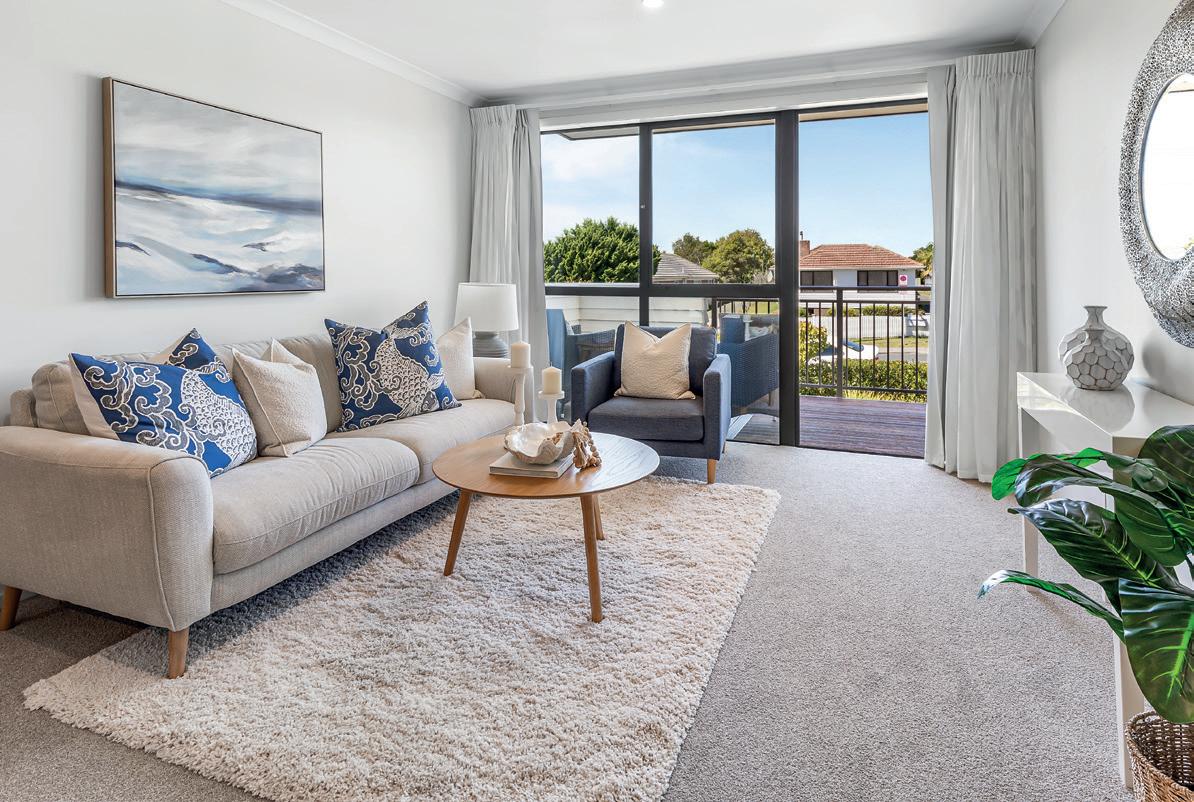
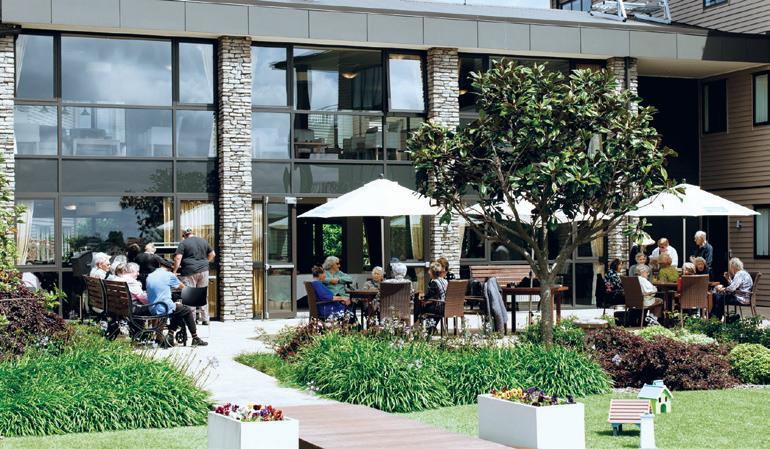
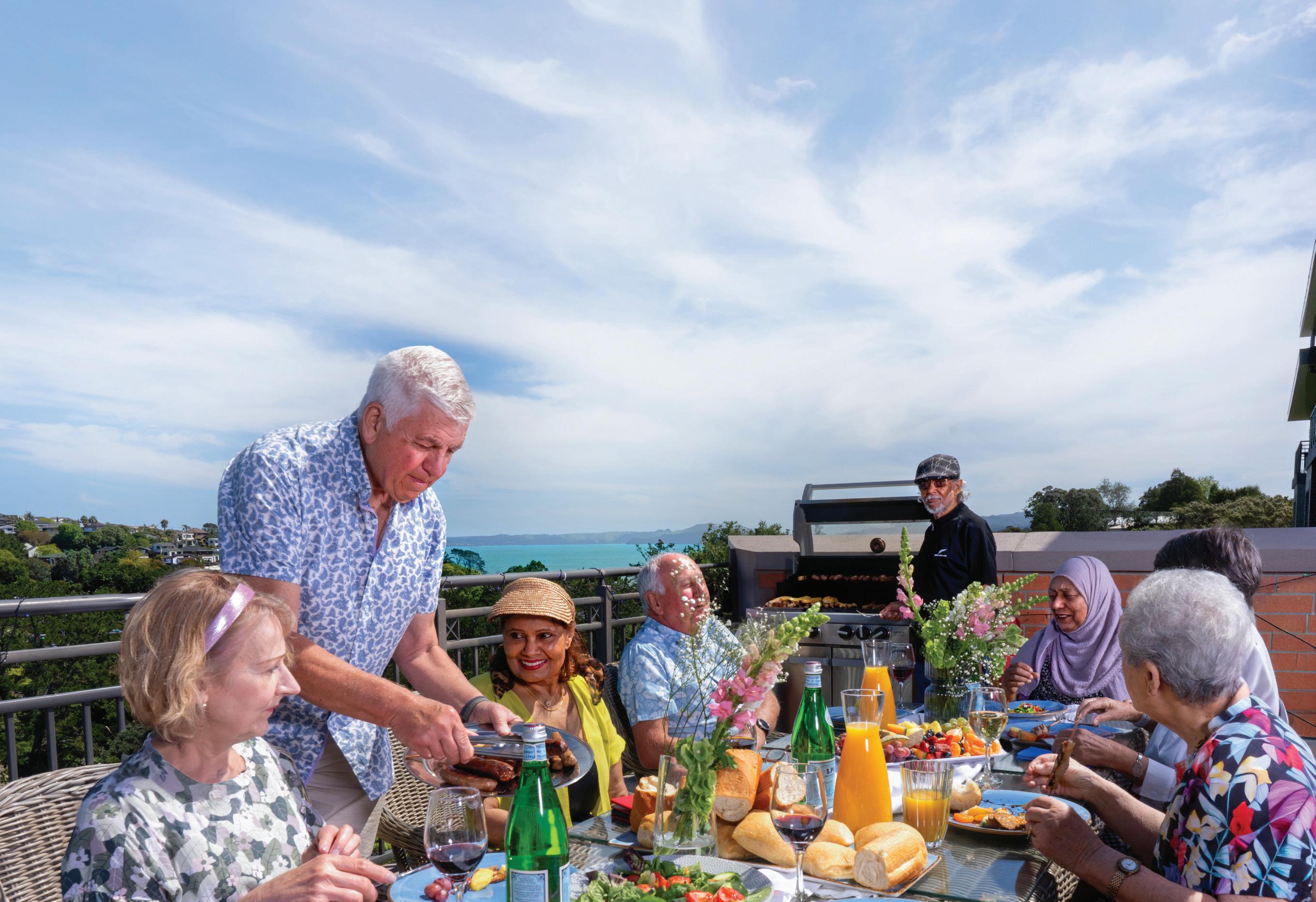
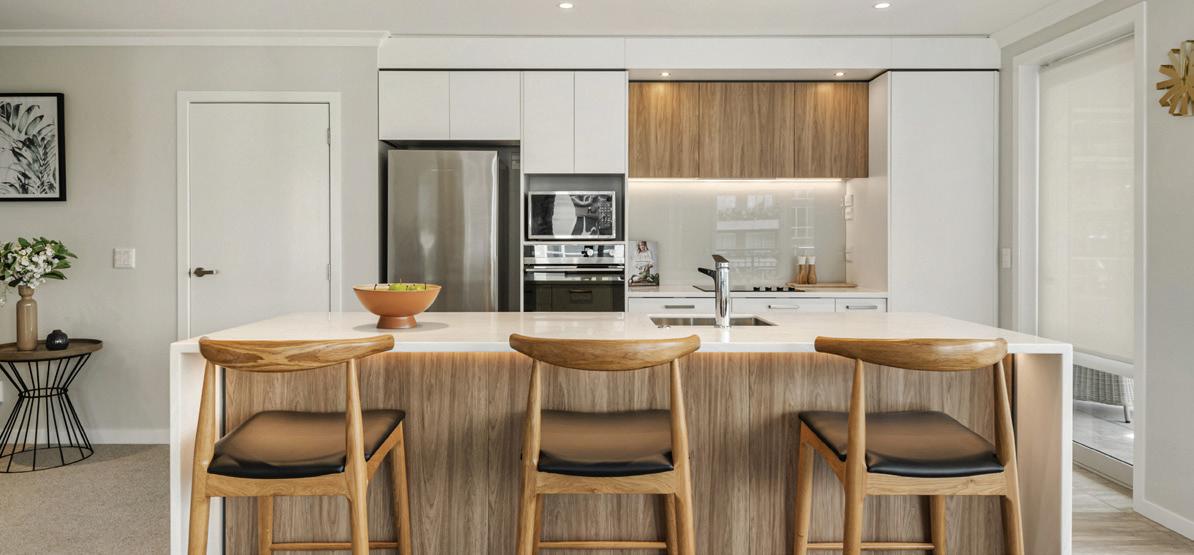
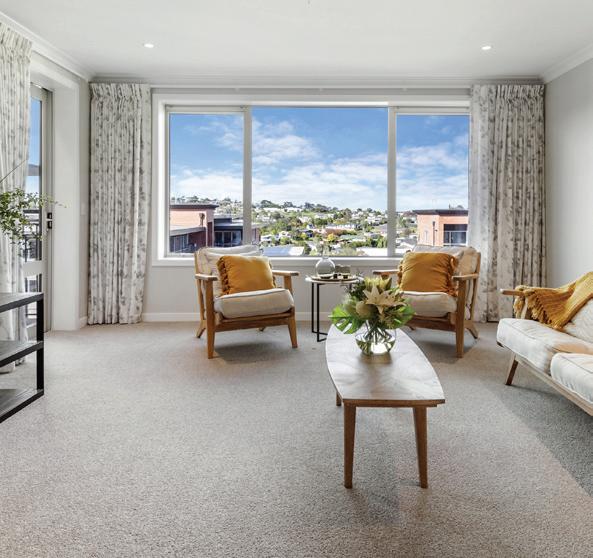
Our apartments are modern and light, with sunny shared gardens, large bright communal areas and panoramic views. We currently have one and two bedroom apartments available.
Contact Laura on 09 636 3803. 117/123 Boundary Road, Blockhouse Bay bupa.co.nz/sunset
Bupa Glenburn Retirement Village | New Lynn Enquiries from $525,000^
Bupa Glenburn is a boutique-style village, conveniently located next to a bus stop and just up the road from LynnMall and the New Lynn train station. We currently have one and two bedroom apartments available.
Contact Matt on 09 636 3809. 79 Margan Avenue, New Lynn bupa.co.nz/glenburn
& About: EcoFest, Tītīrangi Library, Brian Pham's dream, Tītīrangi Wine and Food Society, Waitākere Pest Free Ranges Alliance 14 – 15
Delivered free to letter boxes, post boxes, libraries and selected outlets throughout Tītīrangi, Glen Eden, Kelston, Green Bay, New Lynn, Konini, Wood Bay, French Bay, Waima, Woodlands Park, Laingholm, Parau, Cornwallis, Huia, Oratia, and beyond. Published by Fringe Media Ltd, PO Box 60-469, Tītīrangi, Auckland 0642
Editor: Bevis England 817 8024, 027 494 0700 bevis@fringemedia.co.nz
Advertising: info@fringemedia.co.nz
Writers and contributors: Moira Kennedy, David Thiele, Naomi McCleary, Fiona Drummond, Jade Reidy, Azzurra Snelgrove-Douch.
Introducing young children to our special creatures
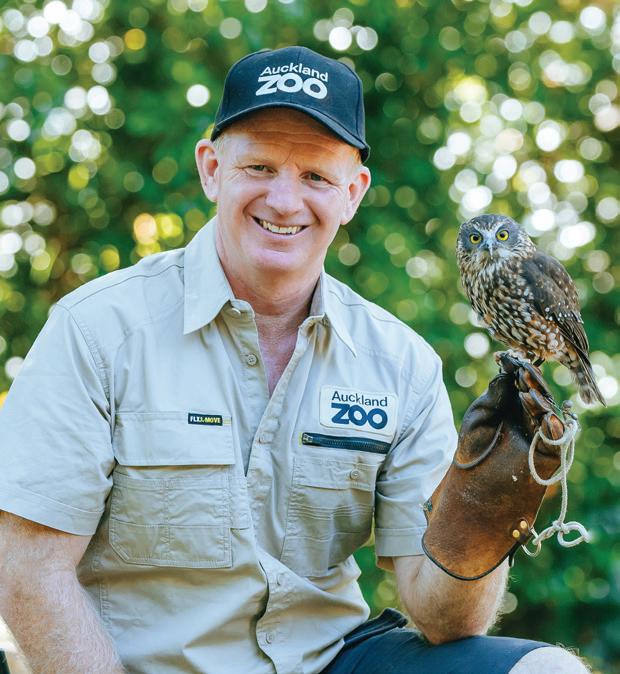
Tītīrangi resident Jez Smith (left) has been a zoo keeper for 30 years, the last seven at Auckland Zoo. A large part of his role involves advocacy for wildlife and this has carried through into his writing.
In February 2023, he submitted one of his books to Scholastic, a New Zealand publishing company. "Normally, Scholastic do not accept submissions from new writers," Jez says, "but on Valentine's Day each year, they invite new authors of children's picture books to send in their work on that one day only with the promise that they will read it and consider it for publication."
Of course, Valentine's Day 2023 was also the day that Cyclone Gabrielle swept through Auckland. Having planned to submit his work for some time, Jez didn't want to miss this once a year opportunity but had a real concern that the advancing cyclone could knock out the power and Wi-Fi, and scupper his plans.
"I remember sitting up and waiting for midnight to pass before hitting send on my entry e-mail," he says.
Two months later, an e-mail dropped into Jez's inbox telling him that out of over 200 entries, his manuscript had been selected for publication. Pu and Ru's bird beak clues came out in September 2024.
Pu and Ru has now been joined by Honu and Blue's sealife clues which was launched at the Maritime Museum to coincide with Seaweek (early last month). Both books are illustrated by Ned Barraud.
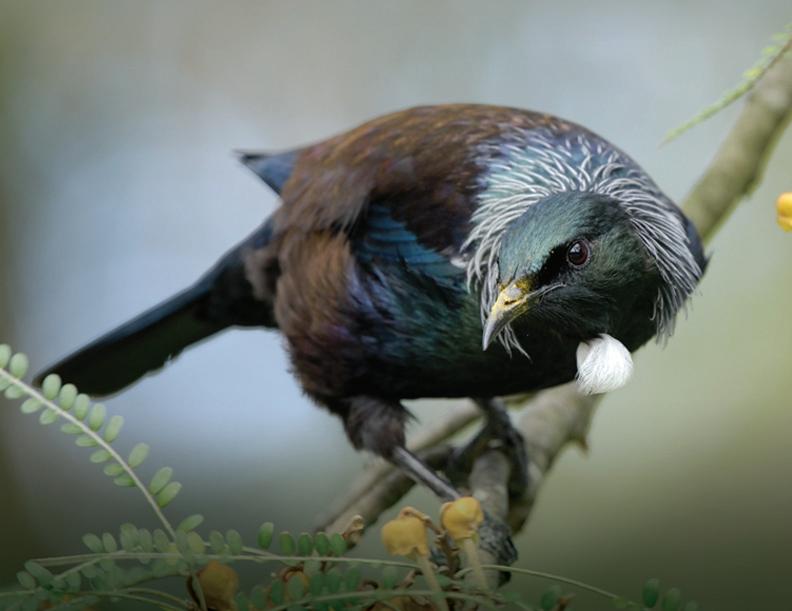
The books focus on native New Zealand animals and aim to introduce young children to some of our special creatures in a fun and entertaining way. They should be available at your favourite book store.
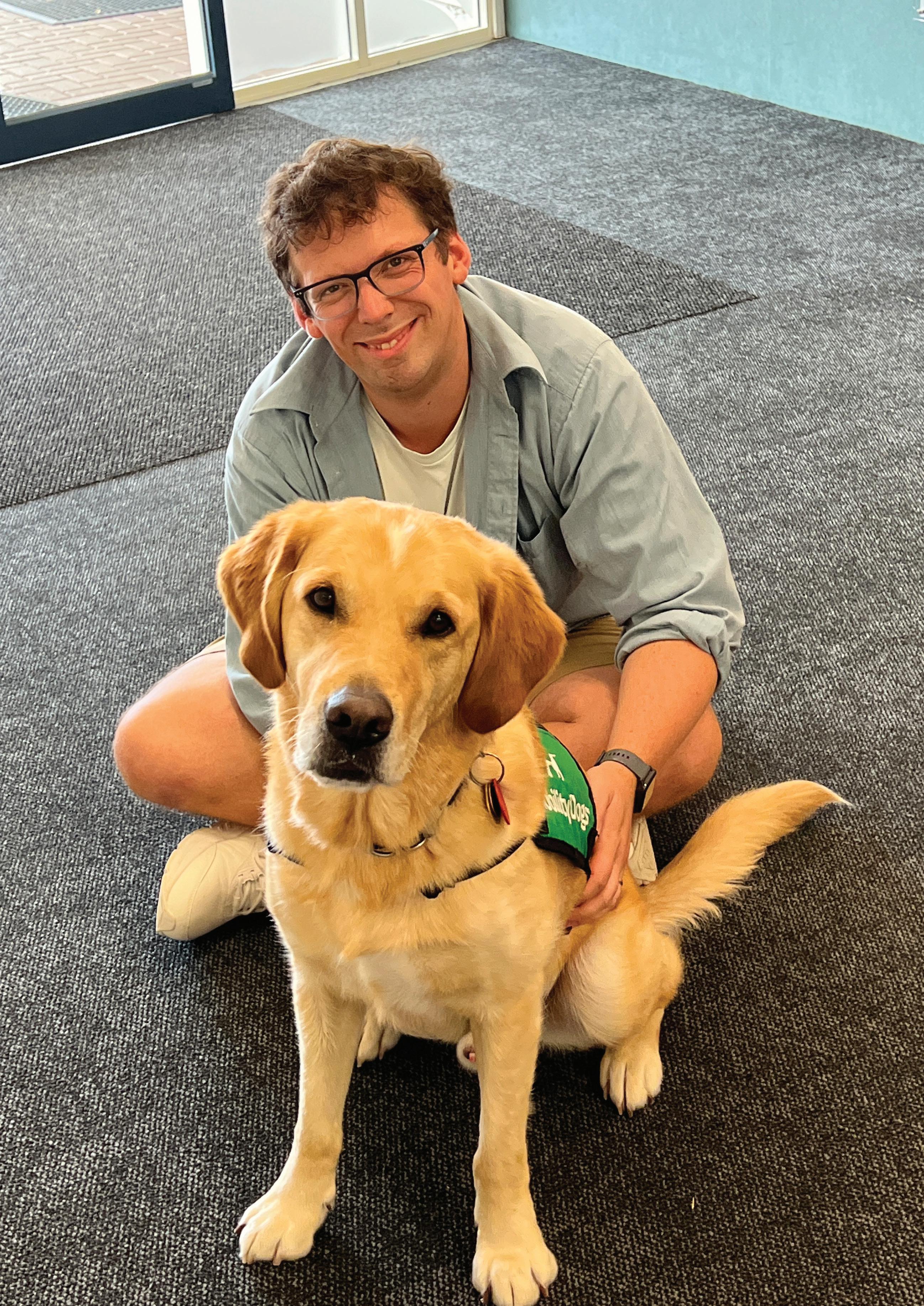
On our cover: Teacher Andy Swan with Milo, Waikōwhai Intermediate's therapy dog. "He has a real calming effect on those who may struggle with emotions. He lies there, being patted, and will sometimes move his head onto their knee. He’s very attuned to people’s emotional states and just sits and lets them have a moment. Dogs know, and if a kid wants, they have a little cuddle with him. Animals are non-judgemental." See pages 16-17 for more. Photo by Moira Kennedy.
Every issue of The Fringe (and the Tītīrangi Tatler before it) since April 2011 is on-line at www.fringemedia.co.nz. Like us on Facebook (www. facebook.com/FringeWest) to hear when each issue is available and get other updates.
Dear Editor,
I applaud your focus on weeds in the latest Fringe: awareness of this problem is long overdue.
I was once a member of the South Tītīrangi Neighbourhood Network [now known as Tītīrangi Urban Sanctuary] when Vicki Sargisson was leading the group and gradually took over her field duties as she became sick before very sadly passing away.
When I was leading the field work I made the focus on identifying an area, going door to door talking to the owners about the weeds on their property, and offering an afternoon’s work by STNN volunteers to show them how to go about killing their particular weeds and maintaining their property weed free.
The idea was that if everyone in Tītīrangi could be convinced to keep their own property and road berm clear of weeds the job of cleaning up Tītīrangi would largely be done.
So many people are unaware of the categories of weed known as noxious and invasive. Noxious is where the plant poses a significant risk to human health, invasive are plants that outgrow the natives taking over the growing space and eliminating the natives.
The woolly nightshade and privet that people are now so casual about are noxious weeds that pose a risk to respiratory health, just rub the leaves of a nightshade and inhale the smell on your fingers and you will register the danger. Despite our air being funnelled between two mountain ranges – the
Our friendly and professional wastewater team can help you with:
• Irrigation field remediation
• Wastewater treatment system services
• Septic tank empties and services
• Septic tank inspections for council
Our fleet of vans are fully equipped with stock and tools to allow our techs to tackle virtually any task on site and, if not, we can usually source the required parts within 24-48 hours.
Call for any wastewater enquiries - we know our stuff!
Hunua Ranges to the south and the Waitākere Ranges in the west, over two harbours, Auckland has one of the highest rates of respiratory diseases in the world including asthma, and yet we accept this and do nothing about the causes – the weeds that are noxious and dangerous to respiratory health.
I’d like to see more education on identifying these dangerous weeds and to have each property owner aim to have their own property clean of invasive and noxious weeds. If that could be achieved, the remaining weeds in places like Council-owned land could be eliminated far more easily. Please retain your focus on the weeds, it is a heath as well as an environmental issue.
I go around Tītīrangi removing any nightshade I find but am very aware how insignificant the effort is, especially in places like Huia Road that is now almost beyond redemption. Please everyone, look closely at your own property, if everyone could maintain their own property and berm free of noxious and invasive weeds Tītīrangi could be a very different and healthier place.
Thanks, Bee.
Dear Editor,
I enjoy your editorials. Thoughtful, fair, and useful.
What makes me happy though is seeing the western trains running again! Our house is about 20 minutes walk from the nearest station, which suits me because the exercise also makes me happy.
Another thing that makes me happy is seeing other people out for a walk, or neighbours outside their place getting the mail in or playing with the kids, and having a nice little chat with them.
There are a lot of cool and interesting people around here if you talk to them. Special shout out to the folks and families who like to feed frozen peas to the local ducks, and crumbs of bread to the pigeons. Adorable to behold.
Michael Pritchard
Dear Editor,
I enjoyed Naomi McCleary's article A Watchful Eye [The Fringe, March 2026] especially the part on the Tītīrangi Roundabout Sculptures.
Having lived in Tītīrangi and Parau for many years it bought back some happy memories.
Our large family lived up a long drive high into the Ranges and we participated fully in the community.
One of my little grandchildren, Grace Robertson, had just been for a holiday to Rarotonga with her family and on her return got a shock to see the roundabout monuments. She immediately called them the "Rangatangi Lollipops" and to this day our family calls them by that name! No offence to the lichen found in the Waitākere Ranges and Lisa Higgins who researched same.
Our family is now scattered around the globe but the Waitākere Ranges is still a lovely memory for us all.
Cheers, Jan Robertson (Wellsford).
"We're going backwards."
International Women’s Day in March was intended to be a celebration of New Zealand being the first country to achieve full pay equity. Instead, 180,000 women are directly feeling the pain, writes JADE REIDY.
An independent commission made up of former MPs has just released its report into the 2025 Equal Pay Amendment Act and concluded that the act was a “flagrant and significant abuse of power.”
The report found that the legislation that cancelled 33 existing pay equity claims – or revoked the right to a review for 10 years – violated low-paid women’s rights by being passed under urgency and applied retrospectively.
Ally Kingi is a teacher aide in Auckland and had been working on a pay equity claim since 2017. Her initial shock and disbelief quickly turned to an abiding anger.
“It is disgusting,” she says, “to see the same MPs who voted
in the new legislation trumpeting support on International Women’s Day.”
What has fundamentally changed, she says, is the new awareness lowpaid women have about the true value of the work they do.
“The shame we used to feel about being low paid is now squarely directed at the government,” she explains. “The process we all went through to identify especially the monetary value of our ‘soft skills’, our caring, has been empowering.”
Glen Eden primary school teacher aide Sara Baldwin agrees. “I remember when pay equity was first explained, I thought, ‘I’m just a teacher aide’ but through doing time and motion studies to document our work we realised we did a lot! To have the rug pulled out was such a betrayal. We went on strike last October for the first time.”
NZEI Te Riu Roa, a union of around 50,000 education professionals in schooling and early childhood education is one of five unions that has taken the government to the High Court, arguing that the legislation is inconsistent with the New Zealand Bill of Rights. Reviews of this complexity typically take 6-18 months. This timeframe makes it unclear whether a result will be known before November’s general election. They are also demanding an independent pay equity unit be set up.
Library assistants were another group whose claim was cancelled. Auckland Council decided to acknowledge the skill levels required to also manage council services and has raised their pay bands anyway.
For other low-paid women, the impact of losing their promised pay equity is immediate. Stories include a teacher aide who can’t have her grandchildren visit during school holidays because she can’t afford to feed them, or women who thought they were able to drop second jobs and not have to pay for childcare.
“Now, they are either having to leave the teacher aide profession or take up a second job again,” says Ally. “Last year’s skullduggery is so economically short-sighted, too, because low-paid women spend that extra money on their kids – on food, blankets, etc.
“And it’s exhausting,” she adds, “to keep fighting the same fight. We’re going backwards.”
StillMindingTheGap.nz is campaigning for urgent action to reduce New Zealand’s gender and ethnic pay gaps. The organisation wants the Government to make pay gap reporting mandatory as an important step to close unjustified pay gaps. Visit www.stillmindingthegap.nz to find out more.
A PSA protest outside parliament on International Women's Day featured a grocery trolley containing $300 worth of essentials, demonstrating how much care and support workers are missing out on every fortnight because their pay equity claim was cancelled.
Art & About with Naomi McCLeary
A (Very) Grand National Cause
In late February I was gobsmacked by a column in The Spinoff recounting a New Zealand author’s experience of taking her book to a French book fair. Her story was interesting enough, but the background to it had me salivating.
I have subsequently learned that France is regarded as having one of the best arts and cultural policies in the west. I want to give a taste of it, as this is where we, in the best possible world, would be, could be, heading.
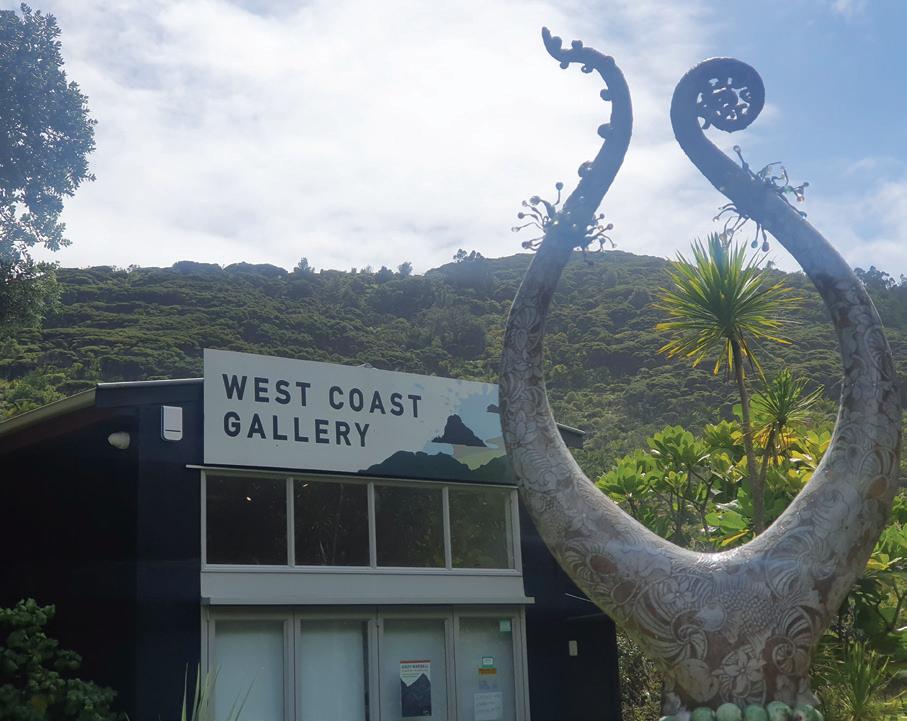
West Coast Gallery: looking for a new home.
Broadly, French arts policy, historically rooted in a strong state-led approach aimed at promoting culture as a public service, is focused on protecting creators' rights, funding artistic creation, and ensuring the country treats cultural goods as non-commercial; and on allowing subsidies for cinema, music, and literature to protect them from freemarket forces. So far, so transformational.
But to focus on literature; get your head around this!
In the 20th century, France made reading and the book industry an ‘affair of the state’, and from the 1970s the government argued that books were not a commercial product but a creation of the mind, and thus should never undergo the laws of the market.
France has one of the highest numbers of independent book stores in Europe; a total of 3,500, of which a third are in small towns. Nearly half of all books purchased in France are sold through these independent bookshops.
Despite the fact that 86% of the French call themselves readers, screen time still outranks reading time. In response, from 2017, the French government began increasing its focus on encouraging reading and in 2021 made reading an official ‘Grand National Cause’. I love it!
Laws support the vital function of libraries; schools have a compulsory 15 minutes of recreational reading per day; universities hold ‘Nights of Reading’; a ‘Book for the Holidays’ scheme gives out a million copies of a chosen book each year to 10 and 11-year-old students. In 2025, this was an illustrated version of Homer’s The Odyssey. There is a nationally coordinated army of volunteers who read to children in schools and libraries, with local and national reading-aloud competitions.
But wait, there’s more: In 2017, the government introduced the ‘Pass Culture Scheme’ which gave 15 to 19-year-olds money (an online credit system) to access culture – they can use the money to buy cinema or theatre tickets, musical instruments or books. In 2024, 89 million Euros of book sales came through this channel.
And yes! France is, by comparison, a very wealthy country
with a long and deep cultural history. I wouldn’t be so foolish to propose that we emulate much of this. But there’s something in there in the language around creativity, which is missing in public discourse here; and totally absent in government-speak from both sides of the isle.
I could handle a ‘Grand National Cause’ to elevate our writers both here and internationally. Extravagant I know, guilty as charged, but let’s shed our famed reticence. Likewise, an army of volunteers reading in schools, prisons, hospitals, retirement villages; you name it.
I’m painting a picture of an idealised world, but given the unspeakable times we are living in, why not hang on to the possibility of magic.
A (Very) Important Local Cause
I want to draw attention to our local boards. The one with which I am most familiar is the Waitākere Ranges Local Board. Along with much else, funding for a slew of arts organisations comes via the boards, which is a good thing in that they have the ability to engage ‘up front and personal’ with the various individuals and groups within their areas.
As one who is involved (through Going West Trust), I am familiar with the usual format. Once a year we get called to meet with the board; give a brief once over lightly of our joys and woes; and hopefully confirm our need for ongoing and increased funding. These have always been one on one meetings. You may briefly pass a familiar face from another organisation in the corridor as you come and go.
This year, under a new chairperson, Mark Allen, and a refreshed board, we were collectively invited to join the board for an afternoon of presentations and to listen to our fellow arts whānau as we shared our successes, dreams and challenges. It was brilliant!
We all emerged with a sense of the bigger picture and the possibility of, at least, more understanding, and at best, potential collaborations. The background wallpaper for the arts in Aotearoa is that there is never enough funding to guarantee sustainability. Locally, each organisation is always intent on maximising what the board can provide. Listening to that mantra over and over again from our arts friends, gave a renewed appreciation that we are an arts ecology and resources have to be shared and balanced. I’m talking here of Te Uru, McCahon House Museum and Residency, The Upstairs Gallery, Playhouse Theatre, West Coast Gallery, Open Studios and Going West Trust.
And what magnificent and innovative work each and
Art & About with Naomi McCLeary
every group is doing; but also the enormous challenges present and ahead. The West Coast Gallery has to find a new home; the heritage Playhouse Theatre has major watertight issues; The Upstairs Gallery’s great community success is constrained by a lack of available spaces; Going West is on the cusp of taking ownership of Shadbolt House; Te Uru and McCahon House face rising costs in a shrinking funding environment. All of this was real, but did not eclipse the joy with which each presenter told their story. I came away with enhanced respect for what each and every other organisation is contributing.
A reminder: The local boards are your conduit into meaningful conversations with the people you have collectively voted into decision-making power. They are much more accessible and grounded in local concerns than the big council governing body. There is a public forum at each monthly local board meeting. It’s not just for grizzlers, although there are always some. It’s for drawing the board’s attention to things that make a difference.
Stop Press: If, over the past year or so, you have registered to be on the Going West email list, and have not been receiving regular updates, please subscribe again. An undetected technical glitch has failed to add addresses. Now fixed!
Western
Carrie: The Musical comes to the Glen Eden
Playhouse
Playhouse Theatre Inc. will present The Tael Solutions Ltd season of Carrie: The Musical this month.
Based on the novel by Stephen King, Carrie: The Musical is a gripping and emotionally charged production. Set against the turbulent backdrop of high school, the story follows Carrie White — a shy, ostracised teenager who longs to belong. At school, she is bullied by the popular clique, and overlooked by nearly everyone else. At home, she lives under the suffocating control of her mother, Margaret, a fiercely devout religious zealot.
As Carrie’s struggles continue, she discovers a terrifying gift: telekinesis. What begins as a flicker of power grows into a force that cannot be contained, building toward one of the most infamous climaxes in modern horror.
The production stars Billie Swayne as Carrie White and Hayatt Al Joborry as Margaret White. In alternate performances, these roles will be portrayed by Shannon McClennan (Carrie) and Eden Morris (Margaret). The director is Matt Billington and there will also be a live orchestra.
Rated PG13. Carrie: The Musical is intended for mature audiences and contains strong language, violence, death, religious abuse, bullying, and references to sexual assault. Viewer discretion is advised.
Carrie: The Musical runs from April 11–25 at the Glen Eden Playhouse Theatre and tickets are on sale now at Eventfinda.
Water Supply Programme update
Watercare is delivering a programme of works to upgrade the western water supply network and help secure Auckland’s water supply into the future.
From time to time, we’ll share updates in The Fringe on how things are progressing and introduce some of the people you’ll meet at community events or hear from in local updates. Here’s an update from your local Watercare community liaison Liz Stewart, pictured right.
Kia ora Tītīrangi
There’s been a lot going on since I first introduced myself in The Fringe back in February.
Since the beginning of the year, I’ve been spending time out in the community, attending community events with Watercare’s Wonder Wai Discovery Centre, and checking in with elected members. These conversations have been helping me build a deeper understanding of what matters most to people who live in the Waitākere Ranges.
With the first round of geotechnical investigations for the Huia and Upper Nihotupu Raw Watermains now complete, our team has moved into the next phase of narrowing down the preferred route options for both the Huia Raw Watermain and the Upper Nihotupu Raw Watermain.
Both new watermains will be designed with a lifespan of around 100 years, making them long-life pieces of infrastructure. While they’ll undergo routine maintenance over the years, the core assets themselves are built to last for generations.
Taking the time now to understand the impacts and trade offs is important, as it helps ensure the final decision is robust and works well for the Waitākere Ranges in the long term.
Each potential route is now undergoing detailed assessment. Our
specialists are carefully considering technical, environmental and cultural factors, including slope stability, construction feasibility, ecology, heritage values, and the feedback community shared during engagement.
When we last spoke with the community, we indicated that the preferred route option for the Huia Raw Watermain would likely be identified around March this year. As the assessment work has progressed, it has become clear that additional time is needed to complete detailed analysis. Because of this, we now expect to share the preferred route option for both the Huia and Upper Nihotupu Raw Watermains by mid-2026.
We’ll continue to keep you updated as things progress. Thank you again to everyone who has taken the time to share their knowledge and insights with us.
– Ngā mihi, Liz
Other updates:
• Construction on the May Road Booster Pump Station starts in April 2026. Although based in Mt Roskill, the pump station will create an additional supply route into the Tītīrangi reservoirs, improving flexibility and reducing network risk as Auckland’s demand grows.
• Back in the Waitākere Ranges, we’re continuing to work towards a construction programme for the Western Water Supply Programme and will share a confirmed time line ASAP.
• Groundworks for the Lower Nihotupu Pump Station are currently expected to start in 2027, with additional site investigations underway as design options are refined.
Making the trip to school safer
Overcrowding and safety on local school buses has become a persistent problem.
AZZURRA SNELGROVE-DOUCH reports.
On February 5, shortly after 3:30pm, a 12-year-old child fell from the rear door of the Laingholm 171 route bus after the door reportedly opened unexpectedly. The driver pulled over, checked on the student's welfare, and radioed for assistance. The Glen Eden Intermediate student was transported to Starship Children’s Hospital with moderate head injuries, being discharged almost two weeks later.
Following this incident, Auckland Transport’s contractor launched an investigation, during which the bus was removed from service. Police, Worksafe, and Ritchies also worked collaboratively to determine the cause of the incident, ruling that neither the student nor the driver was at fault. The vehicle involved, along with others of the same design, was modified to match updated safety standards. Steel rods were inserted through the frame of the bus to secure the
emergency exit, which also now requires a special tool for access. Initiatives were also taken to support students who had witnessed the incident and GEIS principal Jonathon Hughes’ wrote a special update to parents.
Despite its resolution, the event raised broader questions about the ongoing safety of student transport. Problems with overcrowding and limited availability date back to at least 2018. One primary school board chair said at the time: “they [the ministry] won’t change the policy unless there’s clear evidence that it’s dangerous. They have to see some children die before they take action.”
Attempts to resolve the issues have been largely unsuccessful. The Ministry of Education stated in 2019 that they expected to see “all students on school transport services to be seated from the start of 2021”, a goal which remains unachieved.
Overcrowding remains a prominent issue for intermediate students and the wider student community. Green Bay High School principal Fiona Barker said, in 2024, that it was “causing unwanted disruption for students and parents.”
In one incident high school students were "struggling to breathe" during the heat of summer due to overcrowding.
Duncan McGrory, Manager of Public Transport Service Operations at AT, was quoted as saying “it is normal and safe for students to be standing, but we want to make sure buses aren’t overcrowded.”
AT claims to be ‘unaware’ of any complaints having been made prior to the February incident, adding that the 171 route was “not at full capacity”. Full loading capacity on a vehicle of this type is 54 (38 seated, 16 standing), a limit students claim to have seen exceeded on multiple occasions.
AT says that it cannot be held responsible for any overcrowding, stating that the responsibility lies with the New Zealand Transport Agency Waka Kotahi. It adds that nine new trips have been added ‘across the network’ in term 1, in response to student demand,
Both AT and the Ministry of Education provide guidance on how students can stay safe on journeys to and from school. Recommendations include following instructions from bus drivers, staying seated, placing your bag in your lap or under your seat, and holding onto a seat handle or rail for support when standing. It is also recommended that students refrain from standing on seats or vandalising the vehicle in any way. This will help to reduce driver distractions, making rides smoother and safer for both students and drivers.
The February event was a poignant reminder of the need to prioritise student safety and improve public transport for the local community.
Places to go – Things to do
Out and About in the West
Event organisers: Do you have an upcoming event you’d like listed in The Fringe? Send the details, including a contact person and number, to info@fringemedia.co.nz.
Readers: While we take care to ensure listings are correct, errors may occur. Check with the contact person if possible, especially over the festive and holiday season
Exhibitions
w – April 18, The Front Room, two Corban Estate Arts Centre artists, Gillian Appleby and Kelly Reichardt, work around themes of entertainment and boredom for the lady of the house; Homestead Galleries, Corban Estate Arts Centre, 2 Mount Lebanon Lane Henderson. Phone 838 4455. www.ceac.org. nz.
w – April 18, Kia Manahua Te Wāwāhi Tahā, a group exhibition from the whānau collective initiated by Emiko Sheehan exploring the unique creative processes at the intersection of art-making and motherhood; Homestead Galleries, Corban Estate Arts Centre, 2 Mount Lebanon Lane Henderson. Phone 838 4455. www.ceac.org.nz.
w – April 19, New Zealand History in Wood, native wood sculptures by Andy Mardell; West Coast Gallery, Seaview Road, Piha; Mon, Thu, Fri: 10am-3pm. Sat, Sun: 10am-5pm. Phone 09 812 8029 www.westcoast.co.nz.
w – May 3, I Just Like to Draw. Avtar Singh’s drawings begin with everyday printed and digital material; Te Uru, 420 Tītīrangi Road. Phone 817 8087.
w – May 17, Telltale (a dog). In this exhibition, the first that focuses exclusively on his painting practice, Ammon Ngakuru creates a space of ambiguity, where clarity and selectivity are purposefully rescinded. Presented in association with Te Ahurei Toi o Tāmaki Auckland Arts Festival 2026; Te Uru, 420 Tītīrangi Road. Phone 817 8087.
w – May 17, Koe Tenga tete to tete Utu pe koia (The seed you sow you will reap). Kalisolaite ‘Uhila reflects on gestures of hospitality, on family and togetherness/belonging, and on growth; Te Uru, 420 Tītīrangi Road. Phone 817 8087.
w – June 7, In Kai a te Taniwha Kahurangiariki Smith illustrates the ancestral beings known as taniwha not as mythical curiosities but as living presences inhabiting the gallery space and playing a role in our daily lives; Te Uru, 420 Tītīrangi Road. Phone 817 8087.
w April 25 – May 24, Resilience, ceramics by Sherryn Eastmond; West Coast Gallery, Seaview Road, Piha; Mon, Thu, Fri: 10am-3pm. Sat, Sun: 10am-5pm. Phone 09 812 8029 www.westcoast.co.nz.
April
w 3, Flicks presents My Brother's Band (M); Tītīrangi Theatre, Lopdell House, 418 Tītīrangi Road; 10-30am, 6pm, 8.15pm; $16 and $12.50. Bookings by text to 0210 222 5558.
w 4, West Lynn Garden Club. Learn new skills, meet new people, monthly speakers, day-trips; West Lynn Gardens, 73 Parker Ave, New Lynn; 9:3011:30am. Contact lynne.hunter@xtra.co.nz, 0210 245 5120.
w 5, Pony Rides, Huia Road Horse Club; 436B Huia Road, Laingholm; 3-4pm; $5 per child per ride. Phone 027 499 1732.
w 8, Flicks presents Casablanca (PG), a Classic Movie Night introduced by
Sir Bob Harvey; Tītīrangi Theatre, Lopdell House, 418 Tītīrangi Road; 7pm Tickets: $16 and $12-50 Bookings by text to 0210 222 5558.
w 9, Flicks presents NOT ONLY FRED DAGG – but also John Clarke (M, 103mins, AUS/NZ); Sozo Café, Shetland Street, Glen Eden; 10:30am and 7pm; $15/$12 from the café, pay online or cash on door. Text bookings to 0210 222 5558
w 10, West Auckland Men’s Rebus Club, guest speaker and morning tea; Friendship Hall, 3063 Great North Road, New Lynn; 10am-12 noon. Phone Vince 021 189 6822.
w 10, Ladies’ Probus Club, fellowship, fun, speakers, and a monthly day trip; St John’s Hall, 247 Edmonton Road, Te Atatū South; 9:45am-12 noon. Phone Betty 09 832 0484.
w 10, Flicks presents NOT ONLY FRED DAGG – but also John Clarke (M, 103mins, AUS/NZ);. Tītīrangi Theatre, Lopdell House, 418 Tītīrangi Road; 10:30am, 6pm and 8:15pm; $16 /$12-50. Text bookings to 0210 222 5558
w 11, Tītīrangi Folk Music Club presents The Asher Family, floorsingers in first half; Tītīrangi Beach Hall, bottom of Tītīrangi Beach Road; 8pm; $15, members $10, under 18 free. www.titirangilivemusic.co.nz.
w 12 and 26 (fortnightly), Waitematā Country Music Club club night; Glen Eden Community and Recreation Centre, 44 Glendale Road, Glen Eden; 7-10pm; $5. Phone Kathy 09 817 4994
w 15, Combined Waitākere Rebus Club; St John’s Hall, 247 Edmonton Road, Te Atatū South; 10am-12 noon. Contact Philis on 838 5361.
w 16, Waitākere Forest and Bird presents The knowns and unknowns of sleeping in the city – Disturbing bird sleep and what it means for their survival, a talk by University of Auckland PhD student Kamya Patel; Ranui Community Centre 474 Swanson Rd, Ranui; 7.30pm; koha appreciated. Phone Liz 027 476 2732 lizanstey@hotmail.com
w 17, Flicks presents Sentimental Value (R15, 130mins); Tītīrangi Theatre, Lopdell House, 418 Tītīrangi Road; 10:30am, 5:30pm and 8:15pm; $16/$1250. Text bookings to 0210 222 5558
w 18, New Lynn Lions Club $2 Book Sale: Books, Magazines, CDs, DVDs, LPs and jigsaw puzzles; New Lynn Friendship Club Hall, 3063 Great North Road, New Lynn (down the driveway by the traffic lights); 8am-4pm. Contact Mary Hibberd on 027 487 0639.
w 18, Glen Eden Community Market: car boot stalls, sausage sizzle and family-friendly entertainment; Glen Eden Community House, 13 Pisces Road, Glen Eden;10am-12pm. Phone 818 2194.
w 18, Going West presents Fiction: Crafting Stories that Stick with Dominic Hoey, novelist, poet and performer; Shadbolt House, 35 Arapito Road, Tītīrangi; 10:00am-12:30pm; $30/$25.
w 19, Going West presents Poetry: Finding Your Voice, with Dominic Hoey; Shadbolt House, 35 Arapito Road, Tītīrangi; 10:00am-12:30pm; $30/$25. Email tracey@goingwestfest.co.nz to book.
w 19, Going West presents acclaimed novelist and poet Dominic Hoey in conversation with Mark Easterbrook; Shadbolt House, 35 Arapito Road, Tītīrangi; 4.30-6.30pm; $35/$30. Email tracey@goingwestfest.co.nz to book.
w 20, Henderson Falls Combined Friendship Club – fun, friendship and fellowship with monthly speakers and frequent outings; Henderson Bowling
Places to go – Things to do
Clubrooms, 2/20 Alderman Drive, Henderson; 10am-12 noon. Contact Gwenda Elwood on 836 0445 or 027 664 7565.
w 22, West Auckland Historical Society presents David Pickens speaking on the history of kauri gum; Waitākere Gardens, 15 Sel Peacock Drive, Henderson; 7pm; koha appreciated. www.westhistory.org
w 23, Flicks presents The Ballad of Wallis Island (M, 100mins, UK); Sozo Café, Shetland Street; 10:30am and 7pm; $15/$12 from the café, pay online or cash on door. Text bookings to 0210 222 5558
w 24, Glen Eden Combined Probus Club: company and fellowship, interesting speakers, morning tea and monthly outings; Glen Eden Recreation and Community Centre, 44 Glendale Road, Glen Eden; 9:45am. Phone Brian Holt 838 5857.
w 24, Flicks presents Hamnet (R13, 125mins); Tītīrangi Theatre, Lopdell House, 418 Tītīrangi Road; 10:30am, 5:30pm and 8:15pm; Tickets $16 /$1250. Text bookings to 0210 222 5558
w 24, Tītīrangi Folk Music Club presents Friday Folk, an informal gathering of musicians, singers and listeners; Tītīrangi Beach Hall, bottom of Tītīrangi Beach Road; 7:30pm; $5. www.titirangilivemusic.co.nz.
w 25, New Lynn Repair Cafe organised and run by DEANZ. Bring your broken items and work with skilled volunteers to fix them; New Lynn Community Centre, Tōtara Avenue, New Lynn; 11am-2pm; Koha. Contact Kabir on mehsanul.nz@gmail.com.
w 26, Tītīrangi Village Market: art, craft, produce and music; Tītīrangi War Memorial Hall car park and the Titirangi RSA; 10am-2pm. Contact tvm. manager@gmail.com.
w 26, Modular Poetry in the Whau with Wordcore Wayfinders: a workshop bringing together poetry, music and visual art, supported by Whau Local Board; New Lynn Community Centre, 45 Tōtara Avenue; 3-5pm; free. Phone Christian 027 238 8223. www.wordcore.net
w 28, Tītīrangi U3A – informal learning for people 50-years plus, guest speakers, study groups; West Lynn Garden, 73 Parker Avenue, New Lynn; 1pm. Contact Irene Pearcey ipearceyu3a@gmail.com. www.u3a.nz.
May
w May 2, West Lynn Garden Club. Learn new skills, meet new people, monthly speakers, day-trips; West Lynn Gardens, 73 Parker Ave, New Lynn; 9:30-11:30am. Contact lynne.hunter@xtra.co.nz, 0210 245 5120.
w May 3, Pony Rides, Huia Road Horse Club; 436B Huia Road, Laingholm; 3-4pm; $5 per child per ride. Phone 027 499 1732.
w May 3, 17 and 31, Waitematā Country Music Club club night; Glen Eden Community and Recreation Centre, 44 Glendale Road, Glen Eden; 7-10pm; $5. Phone Kathy 09 817 4994.
There is so much happening in and around our community, including many regular events, that we can’t fit everything into these listings. If you can’t see the event you’re interested in, visit: www.fringemedia.co.nz/ourplace
Poppy Day – Volunteers Needed
Poppy Day will be held on Friday 17th April, and we are currently seeking volunteers to assist with collections outside local shops throughout Tītīrangi, Green Bay & Blockhouse Bay.
If you are available to help support this important fund-raiser, please contact Laura 0210 221 7327. Your time and support are greatly appreciated as we honour and remember those who have served.
ANZAC Day Commemorations – Tītīrangi
This year’s ANZAC Day service will be held at Tītīrangi Primary School, and the community is warmly invited to attend.
Itinerary:
8:30am – Club opens for tea and coffee 10:10am – Fall in 10:15am – March from Rangiwai Road to Tītīrangi Primary School
10:30am – ANZAC Service at Tītīrangi Primary School
For those unable to attend the service at the school, a live stream will be available at the Tītīrangi RSA.
11:30am – Sausage sizzle available at Tītīrangi Primary School following the service.
Tea and coffee available, and the bar open for refreshments at Tītīrangi RSA.
12:00pm – Buffet lunch service available Tickets available from the bar
Members: $20
Visitors: $25
Children (12 & under): $10
1:30pm – Entertainment kicks off
5:30pm – Dinner service available
We welcome the community to join us in commemorating this important occasion and honouring the ANZAC spirit.
Get involved in EcoFest
Out & About
Auckland’s sustainability festival, EcoFest, kicked off last month and runs right through the school holidays.
A multitude of events are taking place all over the region. For example, there’s a hikoi, repair cafés and a toy pekapeka (bat) sewing workshop in Te Atatū, food rescue in Avondale and native seedling sessions in New Lynn. Henderson library offers a way to have fun with food scraps, and in the same neighbourhood, you can learn to care for the environment at Henderson Park or take part in a moth plant competition. One not to miss for young families is the kids’ art festival at Corban Estate.
Head north and you can take part in one of Greenhithe Community Trust's sessions ranging from bush explorations to coastal clean ups. Children of all ages will love a night walk along the Piha coast to find ruru (morepork) or learn about our coastal birds. Torches a must!
These are just a small sample of events that are often free or low cost and usually only require a couple of hours to experience.
Visit https://ecofest.org.nz to find out more
What's on at Tītīrangi Library?
April 1, Grow your own microgreens. Join Wei for this Love Food Hate Waste workshop and discover the world of microgreens in a hands-on workshop; Tītīrangi Community House, 500 South Tītīrangi Road; 11am-1pm; free. Bookings required. Visit https://compostcollective.org.nz/events/and search ‘Tītīrangi’.
April 16, Family movie screening featuring the beloved animated film WALL-E. Set in the future, WALL-E is a lovable little robot setting off on a heart-warming adventure that reminds us how important it is to care for our planet. Classification rating G, this is a great movie event for the whole family. BYO snacks and drinks. Limited seating, late comers may be disappointed; Tītīrangi Theatre, Lopdell House, 418 Tītīrangi Road; 2:00-3:45 pm; Free. Co-hosted with Lopdell Precinct for EcoFest.
What started as a product design assignment at Green Bay High School has brought a community together in Vietnam.
Brian Pham (Year 13), an international student from Vietnam, wanted to use the knowledge and skills he had gained to create something truly meaningful.
Góc học tập nhỏ – ước mơ to (A small study corner – a big dream) was the result. When he returned to his village in Ho Chi Minh City last November he began to build wooden study desks for children from disadvantaged backgrounds. He researched and designed the desks so that they would be safe and provide adequate storage space. He then sourced the wood and fabricated all the components. He also called for community participation to help assemble the desks or contribute in other ways.
"The moment I personally handed the desks to the children was when I truly felt the meaning of this project," says Brian. "I felt a deep sense of warmth and happiness – not because a task had been completed, but because I was able to share and witness genuine joy.
"This project was not simply about building five study desks. It was a journey of learning, sharing, and believing that even the smallest acts of kindness can create a farreaching impact."
Rhymetime preschool Programmes are held at Tītīrangi Community House, 500 South Tītīrangi Road on Wednesdays, 9:30 – 10:00am during term time.
Build friendships & expand your wine knowledge Monthly Events held
Exclusive Membership Perks ✓
The Tītīrangi Wine and Food Society provides an opportunity to build friendships and expand your wine knowledge. Members can enjoy tastings from top wineries, exclusive discounts, door prizes and free wine tasting glasses. The society meets on the second Wednesday every month at West Lynn Gardens, 73 Parker Avenue, New Lynn. Email TwineFS@gmail.com to find out more.
Build friendships & expand your wine knowledge Monthly Events held on a
Exclusive Membership Perks
Build friendships your wine knowledge
Monthly Events held Wednesday evening
Exclusive Membership ✓
Bethells Beach Cottages natural luxury for humans being
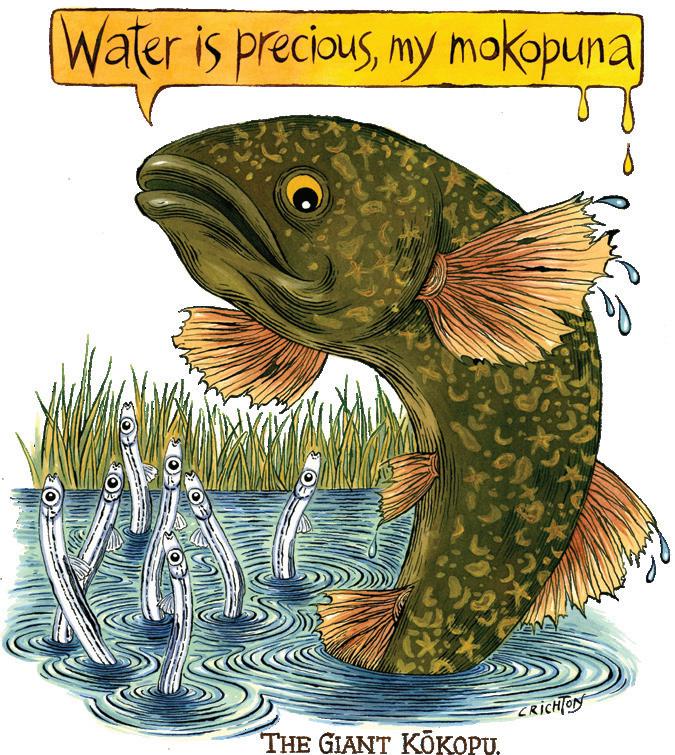
The Pest Free Waitākere Ranges Alliance's special species spotlight campaign has now come to an end.
Over the last two years a different West Auckland special species has been paired with a local suburb and artist every month to raise awareness of our local wildlife and the threats that endanger it.
The campaign finished with an auction of all the artworks that were produced. All but two were sold. One the unsold pieces is being donated to Swanson Primary School, and the other is going to the Oratia Bowling Club.
Ted Scott's kororā (Piha) has flown to New York and Anna Crichton's giant kōkopu (Tītīrangi), pictured above, has gone to San Francisco.
The auction made $7,000 on the night. If anyone missed out on a painting, they can still wear their village's special species. Visit https://pfwra.ezymerch.co.nz/.
Age Well, Live Well Expo
Quality Fashion
Autumn Arrivals
Age Well, Live Well Expo
Bupa Sunset Retirement Village Thursday 16 April 11am – 2pm
Come along to a relaxed, informative event and connect with local community groups and businesses to learn more about health, wellbeing, and positive ageing.
Contact Laura on 022 585 7015 for more information.
Bupa Sunset Retirement Village 117 Boundary Rd, Blockhouse Bay
“It’s almost like he’s a giant cuddly toy – calm and reliable”
“He’s very attuned to people’s emotional states,” says school counsellor Kirsten Malcolm. Principal David King thinks he’s a huge benefit to everyone around him. His chief carer and ‘dad’, Andy Swan, says that on his days off, he gets the zoomies and runs around a nearby park.
They’re talking about Milo, a labrador-retriever. He’s Waikōwhai Intermediate School’s therapy dog and has been on the job there since 2023.
It’s a bit of a shaggy dog tale how that came about. Year 7 teacher, Andy had always wanted a dog but his wife said no as she worked during the day. Then he heard about someone who knew someone who worked training dogs, and who lived next door to someone else they knew who knew about Mobility Dogs, the charitable trust that plays a vital role nationwide supporting people with disabilities.
At Waikōwhai Intermediate David had ring-fenced a fund to be spent specifically for wellbeing in the school and somehow thoughts of getting a therapy dog came into play. The school trustees agreed but it’s an expensive business getting a dog trained by Mobility Dogs. They take them on as puppies and their specialist training can take up to two years before a dog reaches the international standards required to offer practical support, companionship and security. The dogs
learn how to open a door, pick things up off the floor, get the phone when it rings and empty the washing machine among myriad other talents of benefit to their disabled owners.
Milo didn’t meet the grade at that very top level, however, and went down a tier in the pecking order but with his calm, reliable, non-jumping temperament was deemed ideal to become a therapy dog offering emotional support, social confidence and companionship for a worthy recipient.
Conversations at Waikōwhai were underway. But who would look after Milo outside school? After meetings with school trustees and teachers, Andy ended up the best candidate to be his carer. Then Andy’s house – and family – had to be checked out by Mobility Dogs to make sure they and their surroundings were suitable for Milo (they were) and more meetings were held. You know how it goes.
And that’s how Milo came to join Andy’s family and be at Waikōwhai Intermediate as a therapy dog.
Andy and Milo walk to school and home again together each day and if Milo’s not in a classroom or the library with students, he’s with school counsellor, Kirsten, or lounging around and taking time out on a large bed in the principal’s office.
“It’s almost like he’s a giant cuddly toy. Having Milo in the classroom is amazing,” says Andy. “I’ve had kids in my class where either their anxiety was really high or they had emotional issues they were working on. In the middle of a lesson, they’d just go and sit with Milo and you can see something’s going on. They’ll just pat him for a little while and then go back to their work, and seem so much lighter. It’s just for a few minutes.”
Milo does his work in the library at lunchtimes too. “The library is a safe space and there are kids in there with Milo lying in the middle and they’re having a conversation with him as the centre-point of a shared experience. It’s wonderful to see. Not often, but sometimes Milo will get a bit overwhelmed and he comes for a quick snuggle with me and then wanders off again. He has his rest times in David’s office,” says Andy. “It’s his calm space.”
School counsellor Kirsten says Milo brings a lot of joy to everyone. “When I'm walking around the school grounds with him people call out, Milo! Milo! He brings a lot of smiles,” she says.
"He’s a mood shifter. A student was recently dealing with a lot of issues, sharing traumatic and deep things with me. There were lots of tears. As they were coming through that, I asked if they would like to take Milo for a walk. We took a rope toy and I watched this young person who’d just done some really deep, emotional work, transitioning into being OK, as they chucked the rope and ran up and down with the dog,” Kirsten says.
“Milo is a co-regulator. The students relate well to him and want ‘Milo time.’ He has a real calming effect on those who may struggle with emotions. He lies there, being patted, and
will sometimes move his head onto their knee. He’s very attuned to people’s emotional states and just sits and lets them have a moment. Dogs know, and if a kid wants, they have a little cuddle with him. Animals are non-judgemental.
“We’re lucky to have Milo as a resource for wellbeing. In the library, he will often seek out someone who’s having a bad day,” she says.
So what happens to Milo when he’s not at school and wearing his uniform, a Mobility Dogs work jacket?
“He loves the weekends,” says Andy. “He‘s a very wellbehaved dog at school and when he’s wearing his jacket, but the moment you take it off, he’s just like any other dog, running around, going crazy, getting the zoomies. That’s really nice for him. He lets loose as a normal dog in the weekend, after school and during the holidays, and holds it together as a working dog during the week.”
Principal David says the aim of getting Milo was for the wellbeing for everyone at the school. “And that’s what came about. He fits in really well. We were lucky to have funding specifically for a ‘well-space.’ He’s a huge benefit and students and staff have certainly got every dollar back and more.”
– Moira Kennedy
Keepin Katz Boarding Cattery – Your Cat’s Home Away From Home
Keepin Katz Boarding Cattery – Your Cat’s Home Away From Home
Keepin Katz Boarding Cattery – Your Cat’s Home Away From Home
Planning a trip away but worried about leaving your feline friend behind?
Planning a trip away but worried about leaving your feline friend behind?
Planning a trip away but worried about leaving your feline friend behind?
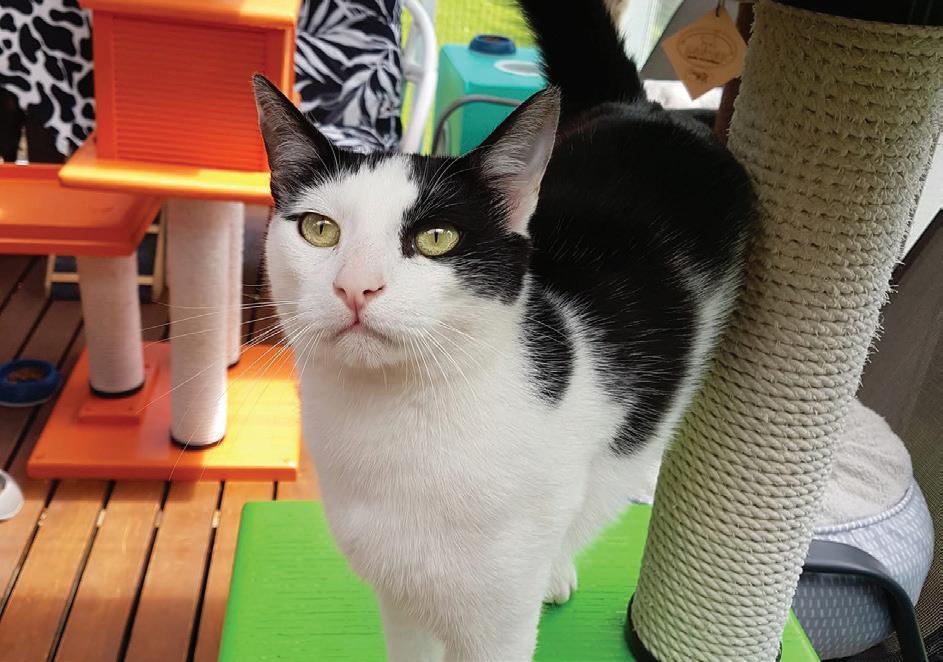
At Keepin Katz Boarding Cattery, you can relax knowing your cat will enjoy a holiday of their own in the peaceful bush setting of Parau, just past Titirangi. Keepin Katz offers a calm, safe and caring environment for cats while their owners are away.
At Keepin Katz Boarding Cattery, you can relax knowing your cat will enjoy a holiday of their own in the peaceful bush setting of Parau, just past Titirangi. Keepin Katz offers a calm, safe and caring environment for cats while their owners are away.
At Keepin Katz Boarding Cattery, you can relax knowing your cat will enjoy a holiday of their own in the peaceful bush setting of Parau, just past Titirangi. Keepin Katz offers a calm, safe and caring environment for cats while their owners are away.
Run by Jan and her daughter Amy, the cattery has built a reputation for providing loving and attentive care for every guest. Keepin Katz celebrates 25 years this year, the last ten of which Jan and Amy have been concientious guardians of the cattery. They take pride in getting to know every one of their guests, where each cat is treated as an individual.
Run by Jan and her daughter Amy, the cattery has built a reputation for providing loving and attentive care for every guest. Keepin Katz celebrates 25 years this year, the last ten of which Jan and Amy have been concientious guardians of the cattery. They take pride in getting to know every one of their guests, where each cat is treated as an individual.
Run by Jan and her daughter Amy, the cattery has built a reputation for providing loving and attentive care for every guest. Keepin Katz celebrates 25 years this year, the last ten of which Jan and Amy have been concientious guardians of the cattery. They take pride in getting to know every one of their guests, where each cat is treated as an individual.
Social cats enjoy spacious communal areas, while those who are less social relax in comfortable individual units. Guests are provided quality vet-approved food, special dietary or medical needs are always carefully managed. A local veterinarian is available 24 hours a day if required.
Social cats enjoy spacious communal areas, while those who are less social relax in comfortable individual units. Guests are provided quality vet-approved food, special dietary or medical needs are always carefully managed. A local veterinarian is available 24 hours a day if required.
At Keepin Katz, the goal is simple - to make your cat feel at home while you’re away.
Social cats enjoy spacious communal areas, while those who are less social relax in comfortable individual units. Guests are provided quality vet-approved food, special dietary or medical needs are always carefully managed. A local veterinarian is available 24 hours a day if required.
At Keepin Katz, the goal is simple - to make your cat feel at home while you’re away.
Visitors are welcome, book an appointment to view the facilities and see where your cat will be staying.
Visitors are welcome, book an appointment to view the facilities and see where your cat will be staying.
At Keepin Katz, the goal is simple - to make your cat feel at home while you’re away.
Visitors are welcome, book an appointment to view the facilities and see where your cat will be staying. KEEPIN KATZ
KEEPIN KATZ
BOUTIQUE CATTER Y
Only 8 minutes from Titirangi.
719 HUIA ROAD, PARAU, WEST AUCKLAND
8 minutes from Titirangi. To book, email keepinkatz719@gmail.com or book online WWW.KEEPIN-KATZ.CO.NZ
To book, email keepinkatz719@gmail.com or book online WWW.KEEPIN-KATZ.CO.NZ
KEEPIN KATZ
Waikowhai Intermediate school counsellor, Kirsten Malcolm, principal David King and Year 7 teacher and Milo’s ‘dad’ Andy Swan.
Heritage, community, creativity and conservation unite
After several years of restoration, the impressive Horace Massey-designed Rose Hellaby House (also known as Aranui) at 515 Scenic Drive, will be reopened to the public. FIONA DRUMMOND reports.
Over the past few years the 1939 English Cottage-style heritage house has been completely refurbished, including mould removal, installation of air conditioning, wood wall panelling and floor restoration, and a complete repaint, all in accordance with the heritage considerations for this Category B-listed house. Some heritage furniture has been added to the house and a 1940s bedroom suite alludes to an era where a double bed with a stiff metal sprung mattress was the extent of slumber luxury.
It is recorded that Rose called her plants after the friends who gifted them. Her concrete garden gnomes are also legendary and indicative of her sense of humour. Historically one was positioned in the base of the centre garden bed, complete with sign directing visitors to the front door.
A real feature of the house is the dark wooden interior, characteristic of the Arts and Crafts and Art Deco eras. The floor-to-ceiling panelled room that opens on to the back lawn is a beautiful space with its spectacular views out to the Waitematā Harbour. Lively Gatsby cocktail parties hosted by the gregarious Rose Hellaby likely spilled on to this lawn. Rose was renowned for her parties and generosity and the Waiatarua neighbours who befriended the wealthy descendant of the Hellaby family and her sister Lily were appreciative of Rose’s legendary potent cocktails.
Rose loved her garden, with deciduous trees and shrubs planted at the edge of the property, and herbaceous borders and lawn around the house. She enjoyed working with her gardener, Mr Tomkin, who lived in a cottage on the property.
Though an English style garden to suit the house was Rose’s ideal, many of her plants of choice did not thrive in a location that was hot and dry in the summer, with a high rainfall in the winter, and insufficient sunshine for some of her flower beds. “There should be daffodils all over the place” her long-time friend Lenore suggested, and the two of them with her gardener, took large bags of daffodil bulbs in Rose’s car to plant on the property.
Today, in the replanting process for the garden, hardiness for the conditions has had more consideration and Arataki Visitor Centre nurseryman, Brendan Mackie, with his long association with the garden, knew what plants would flourish. With an enthusiastic team of monthly volunteers, the central flower bed is now well mulched and established with flowering perennials and a resurrected vegetable/herb garden by the gardener’s cottage. Multiple pest plants have been removed from the property, but re-infestation proves an ongoing problem for garden volunteers.
On the public open day on April 19, there will be a familyfriendly atmosphere with live music, food, creative activities, local conservation groups and opportunities to learn more about the natural environment of the surrounding Waitākere Ranges. The occasion will be an opportunity to celebrate the next chapter of Rose Hellaby House.
Visitors can wander through a thought-provoking art exhibition, Love and Loathing by Amanda Piearcey, representing nature, pests and protection, or just stroll through the house and around the garden and grounds.
The reopened house will be the new offices for the Pest Free Waitākere Ranges Alliance, and representatives of some of the 30 conservation groups that form the alliance will be present on the day.
Local residents and visitors are welcome to join the volunteer group that helps maintain the garden or contribute their skills to one of the local pest free groups.
https://pfwra.org.nz/
GLEN EDEN PLAYHOUSE THEATRE
Aranui (Rose Hellaby House) has reopened to the community.
The Fringe makes space available for current advertisers and non-commercial organisations, at no charge. Email info@ fringemedia.co.nz to find out more.
Is it time to replace your irrigation field?
For many homeowners with septic systems, the irrigation field (also called a drainage or soakage field) is “out of sight, out of mind” – and that’s usually a good thing.
But when it begins to fail, it can be messy, smelly and expensive.
What does an irrigation field actually do? After solids settle in your septic tank, the remaining liquid effluent flows out to the irrigation field. It is distributed through perforated pipes into the soil, where natural filtration processes remove harmful bacteria and nutrients before the treated water returns safely to the groundwater system.
Over time, irrigation fields can clog, compact or simply wear out. When that happens, wastewater can no longer disperse properly.
Common signs you may need a replacement include:
1. Slow drains and gurgling pipes. If sinks, showers and toilets are draining slowly – and your septic tank has already been pumped – the issue may lie in the irrigation field.
2. Wet or soggy patches on your lawn. Persistently damp
From the chair, Waitākere Ranges Local Board
Kia ora. It’s an interesting time in local board land. The major focus at this time is usually the Annual Plan consultation and developing a draft Local Board three-year plan.
Residents are invited to provide feedback on the board's plans, including funding of community organisations and park development, planting and shelter to provide shade, berm planting, and whether to continue the targeted rate to collectively fund septic tank pump-outs.
This year we also have a whole lot of new topics that we are having to provide input on:
• A plan change (PC120) to deliver more housing which has then been side-swiped by the government’s proposal to decrease the target after submissions
• Proposals for changes to the RMA that don’t take account of the Waitākere Ranges Heritage Area legislation
• Preliminary scoping of local board reorganisation
• Bringing the roading parts of Auckland Transport back into the council and giving local boards more say on local roads
• Increasing protection for our rockpools and coastlines
Ngā mihi, Mark Allen, chair.
ground above the irrigation area, especially during dry weather, is a clear warning sign.
3. Unpleasant odours outside. A healthy system shouldn’t smell. If you notice sewage odours around your yard, particularly near the irrigation field, it’s time to investigate.
4. The system is ageing or under stress. Irrigation fields last around seven years, depending on soil type, use and maintenance. Livestock compacting the ground or roots from nearby plants can all cause damage.
5. Alarms or warning lights. If your alarm keeps sounding or a red warning light activates when you flush the toilet or run appliances, act quickly. Your system is struggling to cope.
Don’t wait for an emergency. Irrigation field problems rarely fix themselves. Acting early can prevent wastewater backing up into your home or causing major damage to your property or pump.
If you’re noticing warning signs, seek professional advice. The experienced HydroVac team can assess your system and talk you through your options. Call 0800 493 768.
Malayan Emergency veteran Randall St Bruno (right) will read the Ode during a special ANZAC event at the Bupa Glenburn Retirement Village this month.
It will be Randall’s first time participating at the village where he and partner Jeanette moved in February after selling their home of 60 years.
“It was time to think about something that gave us more time for ourselves,” he says. “The house was becoming more difficult to maintain and the idea of not having to worry about that sort of thing was very appealing.
“Here we are close to everything New Lynn has to offer and part of a friendly little community where everyone lives independently. We also have a care home and hospital right next door should a different level of care be needed one day.”
The Malayan Emergency took place between 1948 and 1960 when the communist party attempted to overthrow the British colonial administration of Malaya. New Zealand forces played a vital role supporting other Commonwealth forces during the conflict and Randall – who served with the air force – was involved from 1957 to 1959.
He spent several more years in uniform on his return and says he was, in many ways, following a family tradition. His father Frank served with the army during World War II and Randall’s two brothers were both soldiers in Vietnam.
The Glenburn event will take place on 24 April – enabling residents to attend ANZAC Day services elsewhere. It’s become something of a tradition at the New Lynn-based complex where photos of friends and loved ones who served their countries are displayed in a place of honour throughout April.
Randall will have family and friends in mind on both days.
“It’s not something you ever forget,” he says.
WORST WEEDS WATCHLIST
Have you spotted these in your backyard? Pest plants have a real ecological impact when they jump the garden fence and smother our forests and streams. Keeping them at bay means that native plants and birds can flourish.
CLIMBING ASPARAGUS
Smothers the forest floor and prevents growth of native plants. Climbing plant with small, thin leaves, white flowers and green berries that ripen to orange/ red. For small amounts, dig out tubers, rhizomes and seeds & rot in a water barrel or dispose in community weed bins. Try to remove before seeding occurs. Large infestations may require herbicide.
WOOLLY NIGHTSHADE
Quickly forms dense stands that prevent native plants from growing. Small shrubs grow into large trees with furry grey/green leaves, purple flowers and green fruit turning yellow when ripe. Dig or pull out small plants or cut and paste large trees with herbicide. Remove seeds and dispose of in community weed bins.
MOTH PLANT
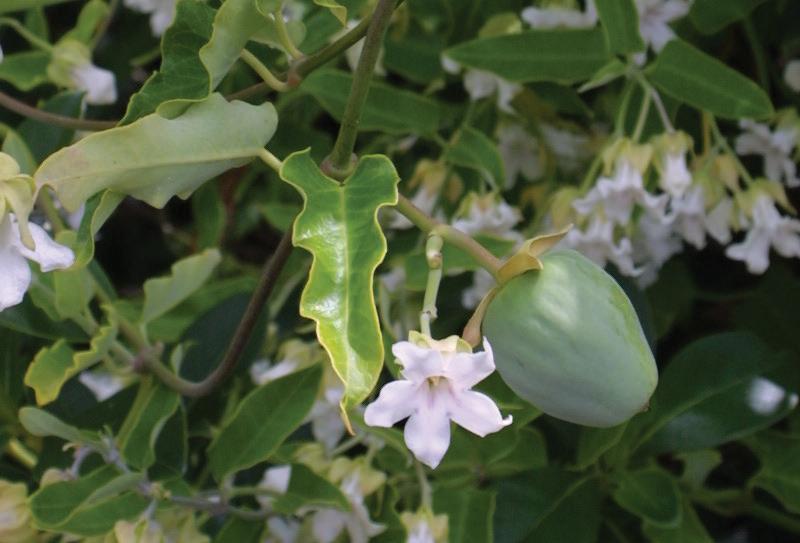
Strangles native plants and is a prolific seeder. Noxious woody vine with white sap and large green pods bearing up to 1000 seeds. Wear gloves when removing pods and dispose of in community weed bins. Pull out young plants at the root, or cut woody stumps and apply herbicide. Avoid skin contact - sap is an irritant.
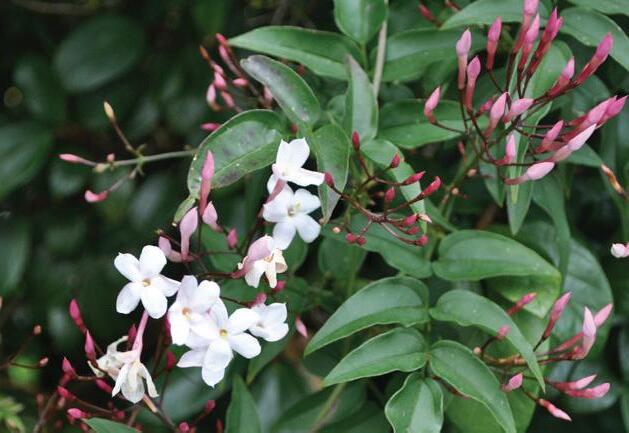
JASMINE
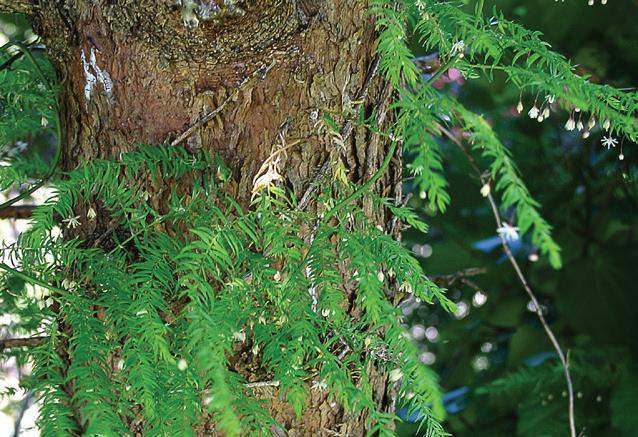
Grows densely and smothers native plants on the ground and in the subcanopy. Evergreen climber with tough stems, dark green leaves, red/pink flower buds and white, five-petalled flowers. Cut vines and leave upper stems to die in trees, alternatively dig out roots. Rot down in a water barrel or dispose in community weed bins.
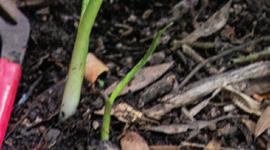
WILD GINGER
Quickly forms dense stands that prevents native plants from growing. Cut off seed heads and dispose at community weed bins. Green stems and leaves can be left to compost. If rhizomes can be removed without causing erosion, dig out and rot in water barrels or dispose in community weed bins. If leaving rhizomes in the ground, cut stems at base and paste immediately with herbicide.
TRADESCANTIA
Forms dense mats preventing native plants from growing, and will regrow from stem fragments. Rake up or pull out all pieces and compost in a weed bag, or dispose of in community weed bin.
For large infestations or more detailed information, visit https://pestsearch.aucklandcouncil.govt.nz
To prevent the spread of kauri dieback, refrain from removing weeds from around the root zones of kauri. Those who live in the Waitākere Ranges Local Board area can dispose of invasive weeds free of charge at the community weed bins: www.ecomatters.org.nz/weed-bins
Get ready for the marriage of the year ...
Yeah gidday. Lizard here.
Well, well, well. The bells will be ringing at The Shrine, Huia Hills' best wine and dine venue, next Saturday.
Please RSVP to Gay Gary as soon as possible. He and flash Camilla Dawn Blythe-Winsor have hooked up, not physically obviously, but with his unusual sense of style and her very deep pockets, they have promised to "Pull out all the stops" for the joining together of the delightful Wendy Truhart and our very own Mopey J.
It’ll be a doozy!
But as Mopey says, ”It’s not a marriage, man. It’s our souls blending with respect, trust and freedom to explore all things. A promise of adventurous discoveries and a deep aroha to Mother Earth, man.
"We are committing each other to always distrust the man, man; to always believe in honest politics for all peoples with open hearts and minds; to never take up arms.”
The wonderful couple have asked Māori Phil to be their celebrant.
"It’s such an honour Lizard. To celebrate two such cool people. What do you reckon if I start in Te Reo?”
"Should be sweet as. bro. What are you gonna say?”
"I thought something like, Kia Ora. Nau mai haere mai. E noho tangahia he inu. Sneaky Steve kaua e pahi tena ki konei.”
"What?"
"Hello. Welcome, welcome. Sit. Take a drink. Sneaky Steve don’t pass that around in here, bro.
"You know it’s bound to happen, Lizard. Who invited Sneaky Steve anyway?"
"He’s got a mate who got him a mini-tanker of Lion Red for nothing so Wendy Truhart said he’s okay.”
So, who is Mopey Jesus?
First off, he doesn’t like being known as zany or wacky. Yeah right. Yesterday he arrived at work wearing a crochet hemp robe with tie-dyed leggings.
He handed me a job application form. This, from a bloke that has a third share in The Shrine! And the position he was applying for was that of barman, a job he’s been doing very well for over three months!
His job application read:
To Whom this may concern.
I, Mopey Jesus, on average, am sort of a youngish middleaged human. I think I’ll enjoy bar work because it’s often
indoors with little heavy lifting. My hobbies include gazing and growing carnivorous plants. Both are a lot less interesting than people believe.
I would like a working wage please.
If your answer is yes, you can tell me at work. I’m usually behind the bar.
Just for the record, there’s never been a bloke to carry the name Jesus (and it’s quite a common name) with more kindness, generosity and just plain old good fun than Mopey, except for the original of course.
He will always give you the bigger half. He’ll always listen, with those wonderful caring eyes, to your absolute nonsense.
He prays every morning, giving gratitude to his enemies and wishing peace to all peoples. He’s helped me out thousands of times.
A while back he hitch-hiked out to Karekare with his longboard. It took him a week-and-a-half. When he eventually got home, he unloaded a puppy named Plumbless Walker and a half empty bottle of Jamesons from the back of a brand new Range Rover. The driver was none other than a very lovely woman called Wendy Truhart.
Ahhhh. Wendy, the lovely, Truhart. Born in Queens, New York to parents who had fled East Jerusalem during the Six-Day-War back in 1967 to the then welcoming arms of the United States. Her father, apparently a very gentle man named Mohammad, sadly died from Rocky Mountain Spotted Fever just days after proudly becoming an American citizen. Although Wendy's mother, Fatima, could only speak Arabic and was a widowed mother, she was a brilliant economist.
Wendy Truhart says she hears from her mum on occasion. She’s somewhere in Canada now, happily roaming with an Inuit chief perhaps named Bob.
Whew. What a couple!.
Sure, they’re both leaving it a bit later in life but they wanted to be sure. Awww.
Just some house keeping. Please arrive early next Saturday. Let Gay Gary or Camilla Dawn know if you need a bed. As Māori Phil will tell you, please don’t smoke weed during the vows. If you have to do a burnout for respect, do it on the lower paddocks.
Peace to all.
Later, Lizard.
Elevate your retirement in Lynfield.
From as little as $575,000*
At Murray Halberg Village, you aren’t just part of the retirement community. You’re part of the Lynfield community.
Set between Hillsborough and Blockhouse Bay and bordered by beautiful views and native bush, you’ll enjoy the easy access to cafés, supermarkets, and three golf courses. Plus, enjoy peace of mind with its proximity to Auckland Hospital.
We have apartments available now, priced from $575,000*
All offer spacious open plan living, with contemporary kitchens and bathrooms and your own private patio or balcony.
Now, that’s elevating your retirement.
Organise a tour today. Get in touch with Lucy and explore your new home.