FROM THE CO-CHAIR
Thank you to the members who attended the Friends’ annual general meeting on 20 November 2024. There are nine returning committee members (Catherine Anderson, Nancy Clarke, Sue Gage, Peggy Horn, Larissa Karpish, Jo Schumann, Michalina Stawyskyj and Arnis Stonis) and Margaret Nichols, the 2025 Friends’ medallist, and former Chair of the committee, is rejoining. I would like to thank Amanda Lynch who is retiring from the committee.
The committee can co-opt members (it is how I originally joined the committee), and if you are interested in being coopted, or joining one of its sub-committees (Finance, Events, Communication and Membership), please contact our executive officer, Lauren, by email friends@nla.gov.au. or on (02) 6262 1551. You will receive a lot of support. Meetings can also be attended remotely if that is more convenient for you. The Friends always benefit from new ideas and input.
A highlight of the AGM was hearing from Dr Sarah Ryan AM of the WISENET (Women in Science Enquiry Network) Archive Project. The Friends have made a donation to the Library to enable digitisation of journals documenting the experience of Australian women working in science between 1985-2000. Over the years the Friends have donated over $300,000 to the Library, making us Platinum Patrons.
Members are the driving force behind a successful year for the Friends, with healthy attendances at events and an increasing membership. The Friends ran nine events this past year, with over 900 bookings and 773 people attending. Provocations: Arguing about History, with Professors Frank Bongiorno and Peter Stanley, was broadcast on the ABC’s Big Ideas program, bringing a wider audience to a Friends’ event.
Successful initiatives from 2024, including a morning tea for new members to meet the committee, having a Friends presence at events such as the Canberra Writers Festival and the wide distribution of bookmarks to promote events, are expected to continue in 2025.
Membership benefits have also expanded, with discounts for Canberra Symphony Orchestra and Snow Concert Hall concerts, and reciprocal benefits at the Art Gallery of NSW.
I would like to thank Max Bourke who took on the role of editor of this newsletter earlier in the year and has produced some fascinating reads. I would like to thank those friends, staff members, speakers and others for a continuous stream of great articles for the newsletter, and their support for Friends events. I would like to also single out for thanks our Executive Officer Lauren Conron and Belinda Jessup, our Membership Officer.
Planning is well underway for events and the newsletter for 2025, with the first event, Frank Moorhouse: Strange Paths, with his biographer Matthew Lamb, scheduled for 12 February 2025. I look forward to meeting new Friends in the new year.
Catherine Anderson | Friends Committee Co-Chair
FRIENDS EVENTS
For further details keep an eye on the weekly eNews or go to the Library’s What’s On page.
12 February
Frank Moorhouse: Strange Paths
Presentation by biographer Matthew Lamb exploring the early life of the legendary author
27 February
Friends Exhibition Preview: Fit to Print
Highlights from the Fairfax Photographic Archive
19 March
Discovering Millicent Armstrong
Dianna Nixon from Music Theatre Projects uncovering the life and work of playwright Millicent Armstrong
8 April
Artists of the National Library: Wolfgang Sievers and Olive Cotton
Presentation by Helen Ennis
NATIONAL LIBRARY BOOKSHOP OFFER FOR FRIENDS
The Library’s Bookshop has a large range of 2025 calendars and diaries in stock and they’re offering a special 30% discount for these items in their online shop for Friends members using the code FRIENDS at checkout.
This offer is valid through to 24 December 2024, but the Bookshop want to remind online shoppers that Australia Post recommends a Christmas mail cut-off of 18 December. Shop now.
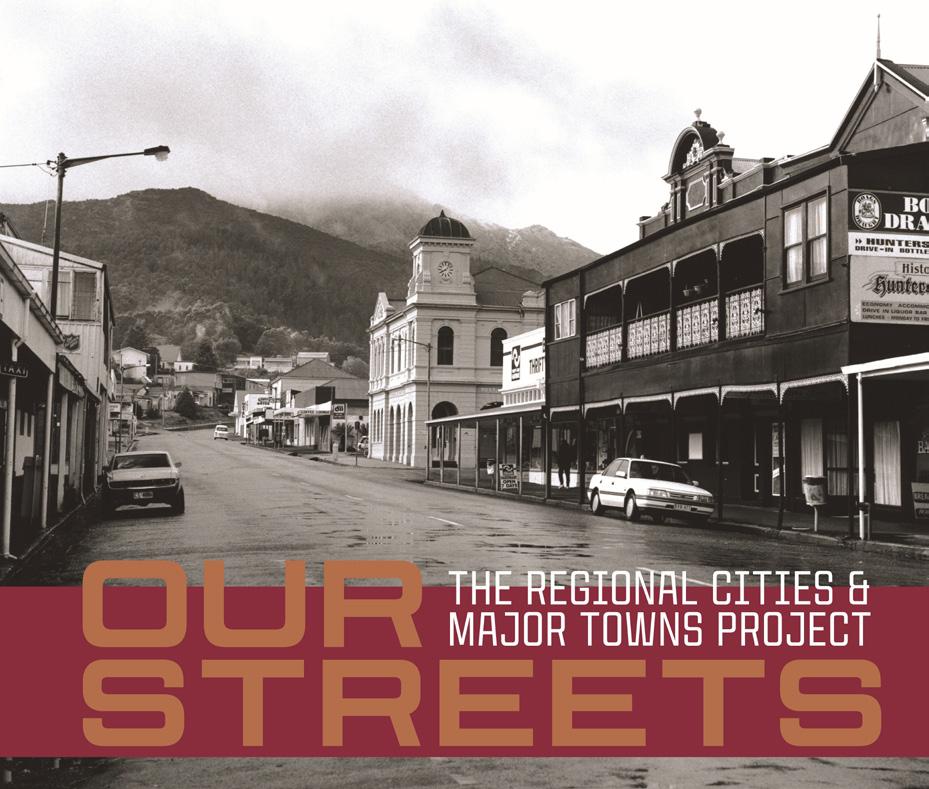
Friends receive a 30% discount on copies of the new NLA Publishing title, Our Streets. Read an excerpt and get the discount code on page 7.
POWERFUL PATRONAGE
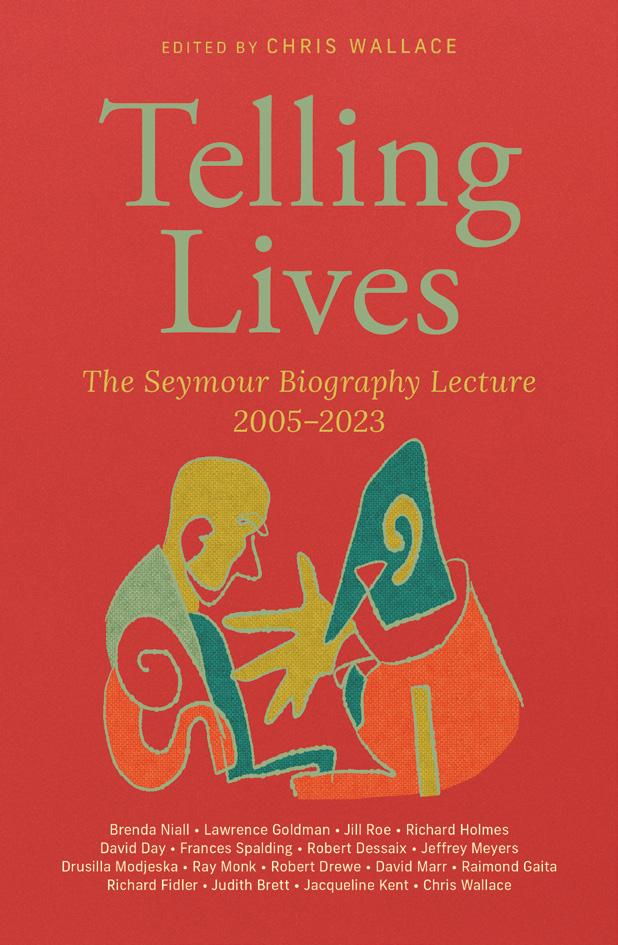
Over 17 years a wonderful act of patronage by Dr John Seymour and Mrs Heather Seymour AO, enabled the Library and the Australian National University’s Humanities Research Centre to present 15 of the brightest minds in the field of biography to talk about their business.
Now it has become possible to have a permanent reminder of this great event through the publication of Telling Lives – The Seymour Biography Lecture 2005-2023 edited by the last presenter Professor Chris Wallace (NLA Publishing, 2024). And what an intellectual feast.
One of my favourite writers, Robert Dessaix, one of the contributors to this volume as a distinguished auto biographer, sets out well our demands as readers: ‘What we now want from a biography, or autobiography, is the very thing that Virginia Woolf said that we have no right to want: art. Not only art, obviously, but art nevertheless. And we love the illumination of dark corners of the soul, having quite a few of our own, if we’re honest with ourselves.’
This collection is food for the mind, with diverse and interesting writing. From Ray Monk on his monumental biography of Wittgenstein, to Jacqueline Kent who surprisingly interrogates “The Donald Rumsfeld Theory of Biography”, the collection is both stimulating and humorous.
The book was, in part, released to celebrate 50 years of NLA publishing, something all Friends should celebrate.
Professor Chris Wallace examines the idea of a “biographer’s contract” after beginning with a sadly plausible, though very funny ‘thought experiment’. Wallace concluded her essay thus: “The Seymour’s contribution in endowing this series cannot be overestimated. They’re professionals not plutocrats…And now, concluding not just this Seymour Lecture, but also the long-running series, I’d invite you to join me in saluting the Seymours, and the outstanding writers they have supported to come to the national capital over those decades with a very warm round of applause.” Hear, hear I say.
Max Bourke | Editor
Telling Lives: The Seymour Biography Lecture 2005-2023, Canberra: NLA Publishing, 2024, nla.cat-vn10035022
PRIME MINISTER’S LITERARY AWARDS AT THE NLA
“The National Library of Australia is the custodian and keeper of Australia’s literary achievements and, as presenting partner of the Prime Minister’s Literary Awards, it celebrates outstanding Australian literary work and culture.” This was the acknowledgement on the night.
In September the Awards Ceremony was hosted by the National Library and they can be watched on-line here
The Federal Minister for the Arts, the Hon. Tony Burke, gave a powerful evocation of the role of writing and the place of authors in the world of the arts, as well as a handsome acknowledgement of the role of the Library, when he declared the permanent home of this this event should be the National Library of Australia.
Minister Burke declared the centrality of writers and the written word to the ‘arts project’, as well as sharing with the audience his long-standing practice of reading a poem every day since his teens.
Creative Australia described the event as: “Offering the most substantial literary prize in the nation, with a tax-free prize pool of $600,000, the Prime Minister’s Literary Awards recognise the outstanding literary talents of established and emerging Australian writers, illustrators, poets, and historians.
This year’s winning titles span genre and form, illuminating the complexities of our nation’s past, present and paving the way for future Australian stories.
Across six categories, the Prime Minister’s Literary Awards celebrate debut authors and seasoned professionals. From cultural journeys through Gurindji Country, to post-World War II history, and from a reappraisal of the goddess of love, to discussions with some of Australia’s most accomplished media personalities – themes of culture, country, belonging and resilience cut through. The Awards are a testament to the strength and breadth of our nation’s rich literary life.”
All the short-listed and winning titles are available in the Bookshop and Friends can shop online and receive their 20% discount here
Max Bourke | Editor
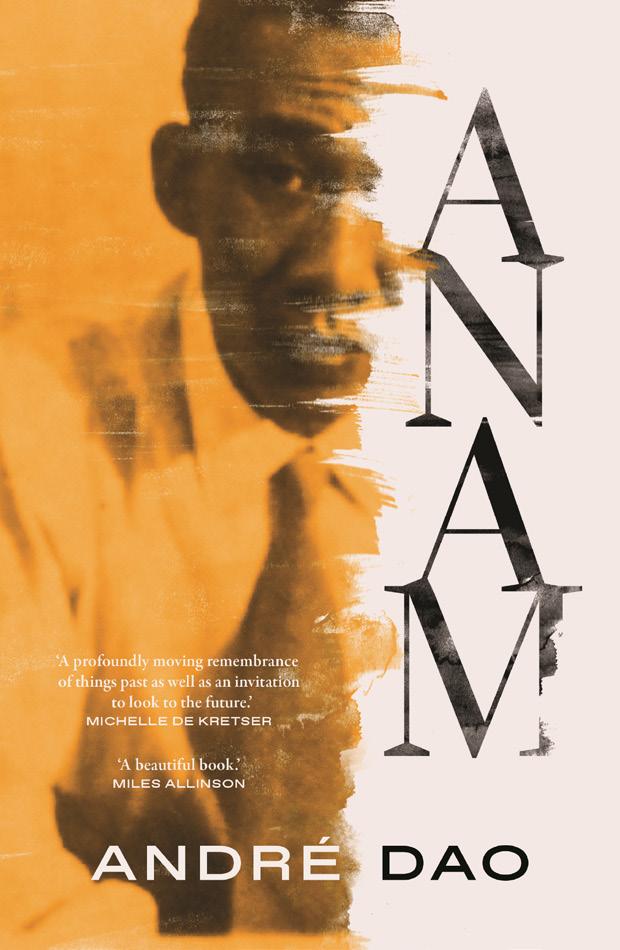
Fiction Winner Anam by André Dao, Docklands Victoria: Penguin Random House Australia, 2023, nla.cat-vn10001340
DISCOVERING MILLICENT ARMSTRONG
In 2016, as a new resident of Gunning, north of Canberra, I stumbled on a Wikipedia page featuring a local playwright and WWI soldier-settler, Millicent Armstrong [1888-1973].
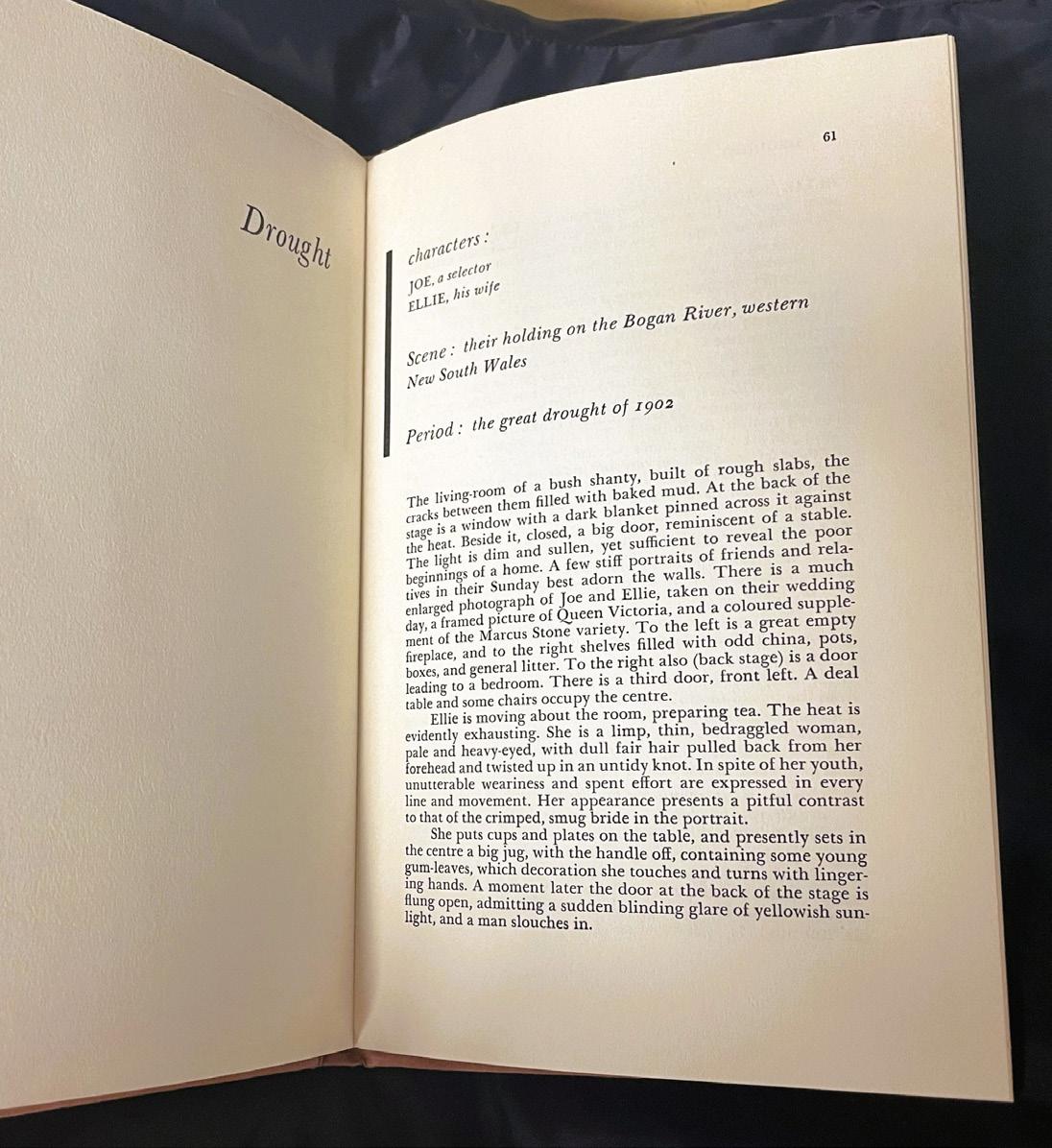
A quick search revealed the presence of some of Millicent’s plays in the National Library of Australia. I visited the Library and read through the three short plays, finding them very entertaining, and, in the case of the award-winning Drought, profoundly moving.
Over the ensuing years a lot of other detective work has taken place to uncover more about Millicent’s life and explore the possibility of bringing her work to the stage for a contemporary audience. Connections have been made with Millicent’s family, many of whom have been able to attend at least one of the various readings we have held, hearing for the first time their Aunt Mill’s insightful plays.
Recently, I connected with relatives living out on a property south of Nyngan in New South Wales, not far from Dandaloo, a gorgeously named locality that is mentioned in Millicent’s short tragedy Drought. Her four-act drama, Fire, is also set in the country south of Nyngan.
Through my production company Music Theatre Projects, four of Millicent Armstrong’s short plays have been performed as part of a touring production titled Drought and Other Plays. We have adapted them for performance for rural and regional audiences, and for quick setup in community halls, woolsheds and at heritage homesteads.
Those plays are At Dusk, a gothic drama set in rural Australia; Thomas, an hilarious situation comedy; and Penny Dreadful, a
Drought by Millicent Armstrong, from Plays in One Act, Sydney: Edwards & Shaw, 1958, nla.cat-vn2333051
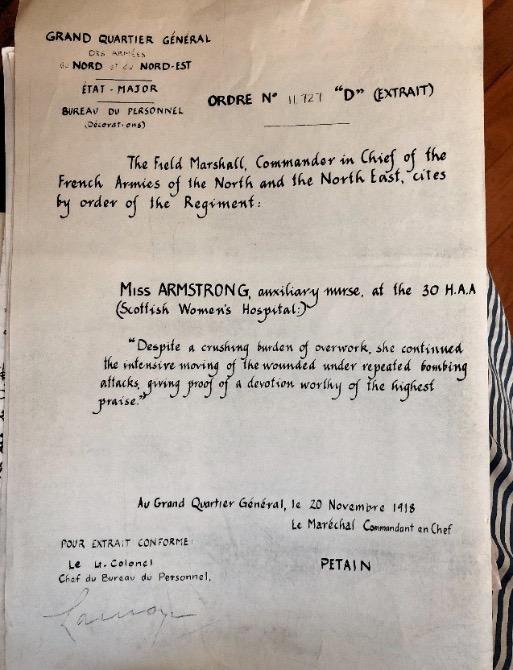
Military letter praising Miss Armstrong, 20 November 1918
melodramatic thriller. Millicent clearly enjoyed exploring different genres in her writing. The fourth play in that touring production is Drought, a beautifully structured two-hander that hits hard.
In 2023, I transcribed another work, Fire, from the digitised newspaper serial from 1923, available on Trove. Fire was serialised in The Daily Telegraph over a two-week period in May 1923 having won a place in a playwriting competition.
Music Theatre Projects gave a first reading of my transcription of Fire in October 2023 at the Gunning Arts Festival. Then in April 2024, we brought together a group of artistic consultants, at The Street in Canberra, to look at Fire and assess its value as a heritage work, but also to explore its potential for contemporary performance, and for screen adaptation. In May 2024, we presented a second reading of Fire, this time in the old woolshed on Millicent’s former farm.
Fire is a rural drama written in four acts, set within a catastrophic fire event. This play, as with several of Millicent’s other works, gives authentic voice to characters from our rural past. It touches on themes of social justice, classism in rural Australia, and the soldier-settler story, with a strong response to the impacts of WWI. Her own shocking war experience, which culminated in her receiving the Croix de Guerre for bravery on the Western front, no doubt strongly influences these story elements in Fire. Like all her other plays, the contemporary relevance of Fire is striking.
Through our ongoing work on Millicent Armstrong’s plays, we hope to afford her plays the development that wasn’t available to her in her lifetime. The plays didn’t benefit from long seasons, or return seasons, where the works might be given revisions based on how they work on stage. So we are doing this for her. We are very conscious of ensuring her unique storytelling perspective and creative voice remains intact, as we gently explore how to stage the works in the 21st century.
Millicent Armstrong’s family have told me how modest and straightforward they thought Aunt Mill was, but I’m sure she
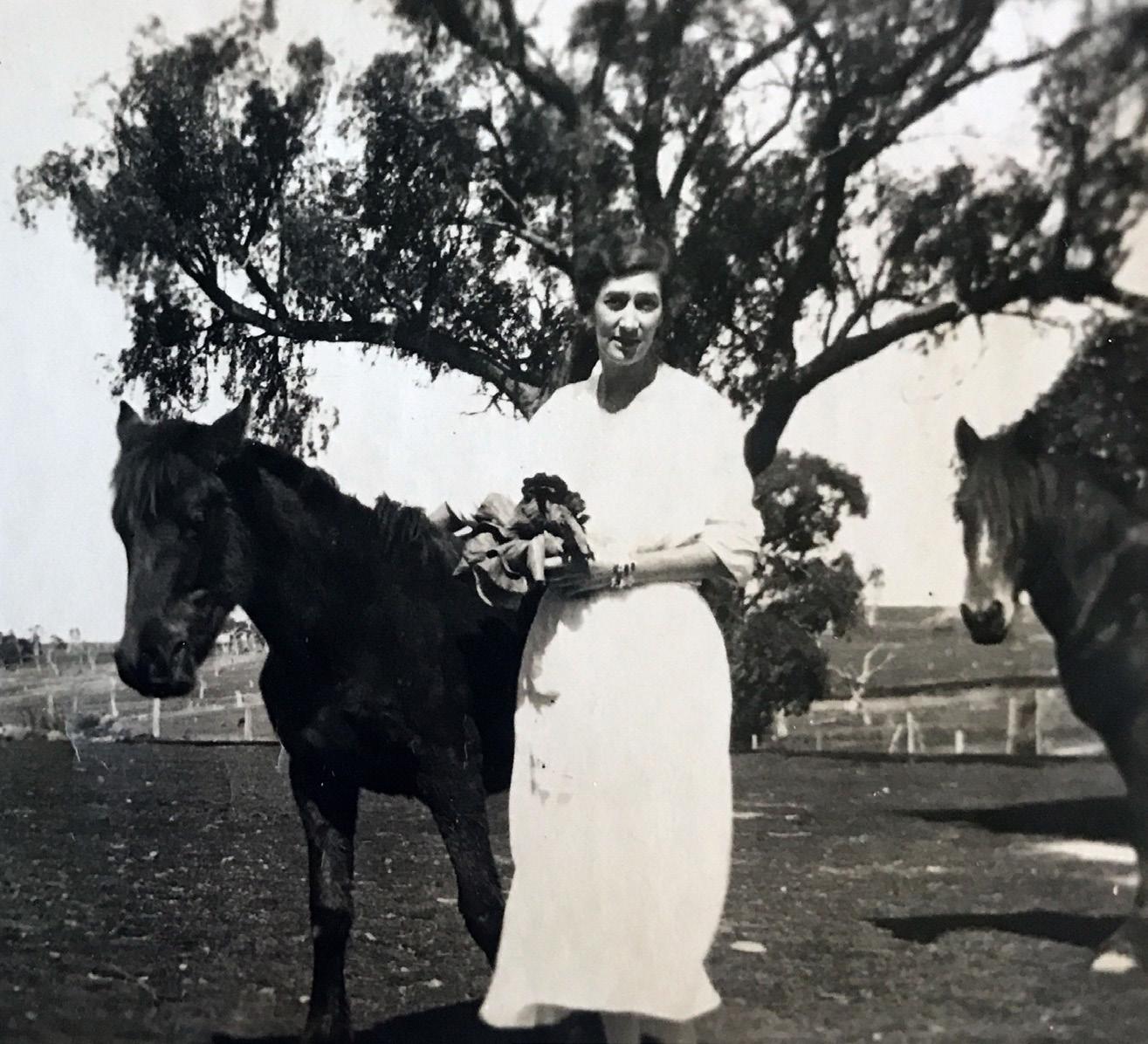
Millicent Armstrong with horses at her Gunning property, courtesy Lucy Knight.
Join us at the Library or online on 19 March 2025 to hear more from Dianna Nixon about the life and work of Millicent Armstrong. Tickets now available
KEEPING IN TOUCH WITH OUR LIBRARY
In my view, ‘good’ friends keep in touch, close touch.
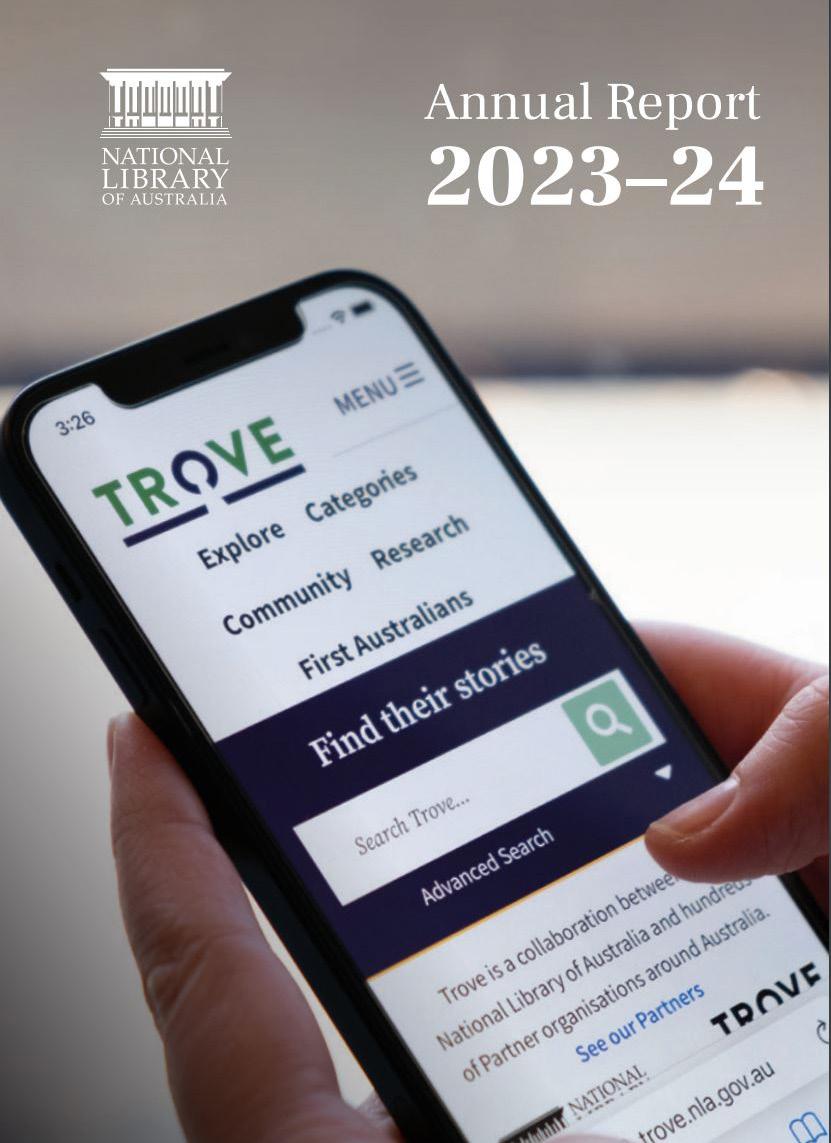
The National Library of Australia Annual Report for 2023-24 has been tabled in Parliament and there is no better way for any Friend to keep up with what has recently happened than reading this.
You can view the report here.
Clear accounts of highlights and issues are laid out by both the Chairman of Council, Hon Dr Brett Mason and the DirectorGeneral, Dr Marie-Louise Ayres.
If you do not have time to read the full report, though I urge you to do so, please read pages 16 and 17 which give you a few important stats to trot out when talking to friends or even strangers about what the Library does. And we should all continue to do that shouldn’t we!
At the risk of sounding like Professor Brian Cox, who I admire I should say, there are some astonishing numbers revealed. Like 19 billion, yes billion, “Australian and online resources now available” and 359,928 “offsite visitors” during the year, with maps to indicate where they came from.
As well as the numbers there are interesting articles such as the feature on digitising bilingual First Nations books. This had a special interest to me as it tracks the work of Professor Vivien Johnson on the Papunya children’s books written in Pintupi and
Pintupi-Luritja languages which, as you could imagine, took very careful digitisation.
Along with a feature on ‘NLA everywhere’, formally known as Trove, the Report gives a background on some great leaps forward in the difficult area of managing handwritten records, of which there are many:
“…the use of handwritten text recognition technology has been a major innovation for 2023–24. Currently applied to more than 50,000 pages of archives, this technology enables users to search, find and use handwritten materials based on terms mentioned in the archives, not just the description. This new content is expanding rapidly. The National Library also launched the content contributor program in 2023 to bring more collections from museums, galleries and historical societies across Australia to Trove.”
There are plenty of “I didn’t know that” moments in the depths of the Report including an insight into an issue that has interested me: how does the Library meet its obligations to host Australian publishing as a record in the digital age? Page 55 gives the answers:
“In 2023–24, 62 per cent of Australian published titles were acquired digitally through National eDeposit (NED). NED is a single crossjurisdictional service that streamlines legal deposit obligations for publishers and creates efficiencies for deposit libraries through a reduction in manual processing of print titles. The service also provides centralised data management, preservation, storage, and access to Australian titles published in digital format.”
Each edition of this very newsletter is submitted through NED. Read more about legal deposit here
Max Bourke | Editor
would be delighted that we are reading and championing her plays.
Dianna Nixon | Music Theatre Projects Ltd
NEW WEBSITE, NEW LOOK, NEW URL
A new version of the National Library’s website will be available before the end of 2024. The ‘beta’ version has been available for several months and comments have been welcomed.
Why the changes?
The website is aging. In computer terms, aging happens after a matter of a few years as software, ideas and functionality are constantly reviewed and updated. Basically, the National Library must keep up with a moving to feast to attract and satisfy users, to make the website as accessible as possible and to provide gateways to new and exciting information. All using the most upto-date innovations.
This overdue website update will include a fresher ‘look and feel’ and enable a much more advanced search functionality so you can find what you’re looking for quickly.
Who is doing the work?
The Library has contracted a team of experts in their field to provide inside knowledge and structure. Through the alpha and beta stages of testing, the team have talked to and watched users, undertaken surveys and have used analytics to determine the most productive methods to use.
What are the most obvious new features?
Mega screens are used as top-level decision makers for the user. These screens are simple, uncluttered and conducive to making a quicker and more relevant initial decision before you drill down to more detailed boxes of information.
There are no flashy purple banners to distract and camouflage important navigation commands and prompts. Once you get past the higher levels of the website, the purple banners reappear –but that is temporary as they will be disappearing as well during another round of imminent updates
How do you access Trove under the new look?
Trove is right there on the main page. The three horizontal lines (commonly known as the hamburger symbol) on the top right of the screen will provide direct access to important top-level sections such as What’s On, Visit, Research and Trove, at the bottom of the page. Remember, if Trove is your main destination, try the URL trove.nla.gov.au, Trove’s own website. This will give you immediate access to Trove with no extra screens to navigate. Speaking of URLs, the Library will be jettisoning the original URL nla.gov.au for the new library.gov.au when the new website is
launched. Research has shown that the acronym is government centric and not intuitive to all Australians.
Where is all the Friends information?
You will be able to renew your membership and find Friends information and newsletters similarly to how you find it currently. Go to the Friends page via the ‘Give’ menu in the top right of the homepage, or just search ‘Friends’ in the search bar.
Margaret Nichols | Friends Committee Member
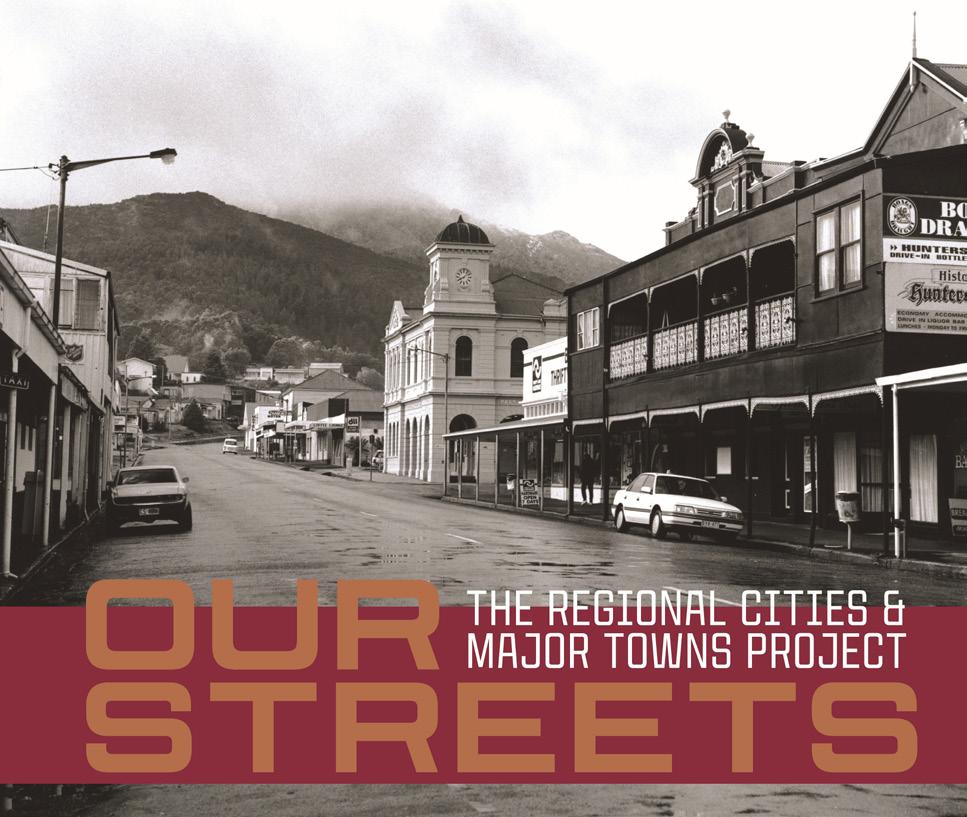
EXCERPT FROM THE INTRODUCTION OF OUR STREETS
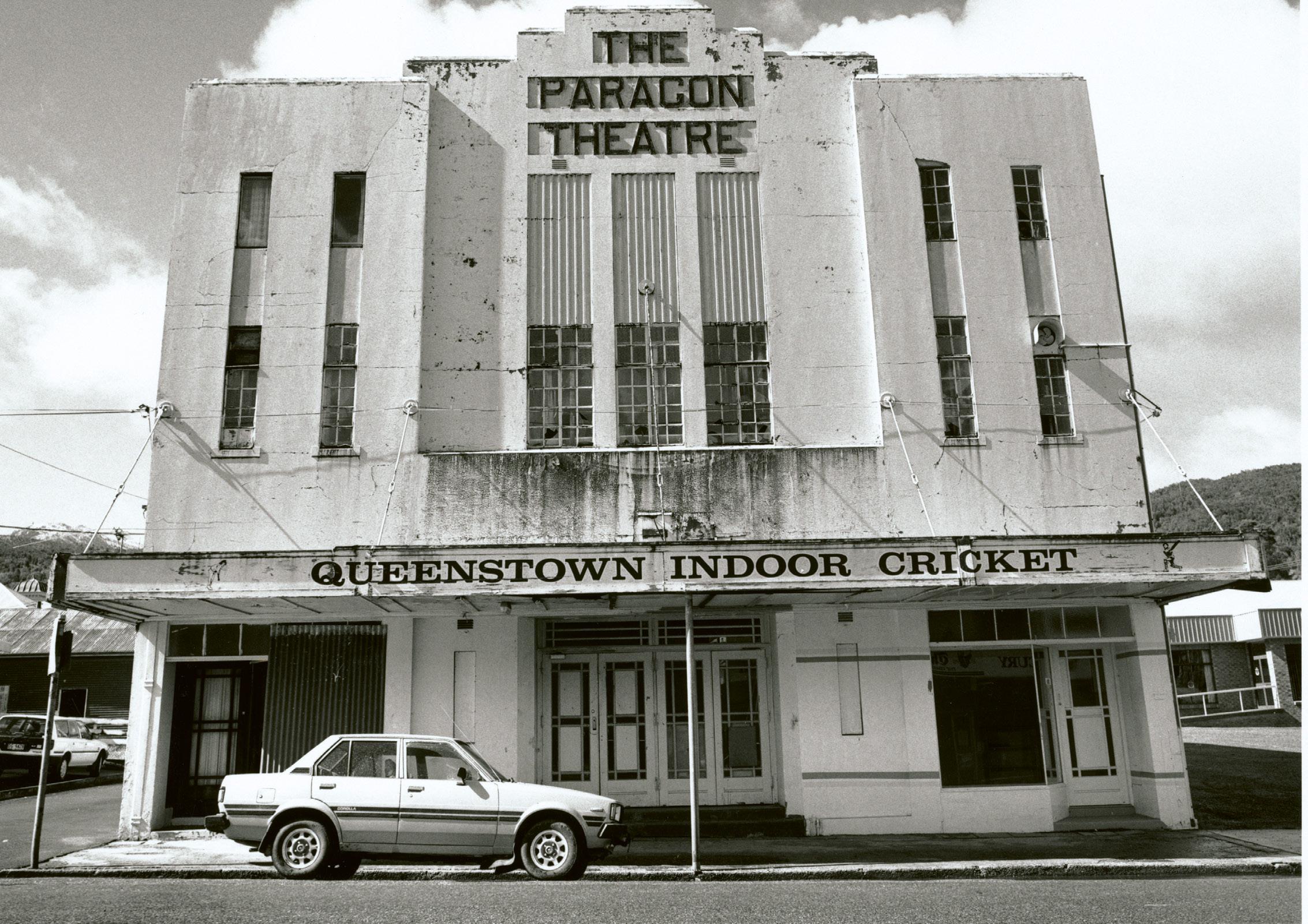
In the mid-1990s, the National Library commissioned around 18 photographers to photograph the buildings of 90 regional cities and country towns Australia wide.
The project was created to ‘acquire photographs of a selection of towns for which contemporary photography is lacking … [and] add to holdings of photographs of towns for which we hold no recent photographs, and in some cases, few photographs at all’. Capital cities were not part of the project as there were sufficient records of those places in the Library’s collection and in the collections of other institutions. In each town, the photographers were instructed to capture the following: streets; buildings, including banks and post offices; railway stations; monuments, including war memorials; houses; parks and gardens; swimming pools; playing fields; sporting activities; schools; motels; social life; industry; factories; civic, religious and military functions; lakes, rivers and beaches; and other natural features. They were told not to include advertising signs or street signs, unless in a wider context, nor close-up shots of owners of shops and businesses. Around 2,600 images were generated and absorbed into the Library’s collection, forming a valuable record of the range of buildings that existed in these towns and regional cities at that time.
Today, we are familiar with the dramatic, stylised shots of buildings found in coffee table books on contemporary architecture, in the latest architecture and design magazines or in the marketing collateral of real estate agencies and architecture firms. These images are usually captured by digital cameras, the colours are highly saturated, there are close-ups of interesting design details, and the buildings are shot from angles and in light to show them to their best advantage.
The images in the Regional Cities and Major Towns project are quite different. Here we have front-on portraits, captured on real film, in black and white. The photographers were creating documentary records, not high art, and they approached the subject matter democratically, including commonplace buildings as well as architecturally significant ones in austere, clinical images. For the sake of pragmatism, the photographers used a uniform approach; there are no tricks here to make the buildings more engaging than they already are. The buildings are captured from a respectful distance, allowing us to make as objective a comparison as possible between them.
What results is an excellent photographic typology of the streets and buildings of regional Australia in the 1990s. Captured, too, is a history of regional Australia. The buildings photographed show a tale of two centuries, beginning with foundation and incredible growth. Most Australian towns, and the majority of the 90 captured in the Regional Cities and Major Towns project, were established
in the nineteenth century, when rural areas produced the majority of Australia’s wealth, primarily through wool, wheat and gold, and other mined minerals. Growth was facilitated by the establishment of rail networks in the 1850s bridging vast distances, connecting towns with towns, as well as cities and the coast. Some of the oldest buildings captured by the photographers are train stations built during the nineteenth-century railway boom. They range from the humble timber station (found on page 21) at Wycheproof, Victoria, with its small architectural embellishments like the decorated capitals at the top of the verandah posts, to the much grander Beaux Arts-style station (found on page 19) at Ballarat, a symmetrical, spectacular grab bag of classically inspired flourishes, signifying that you had arrived in one of the towns that built Victoria’s wealth.
Our Streets presents a small selection of the 2,600 photographs produced during the Regional Cities and Major Towns project. It is organised by building type rather than location as this allows us to tease out the similarities and differences between towns and buildings. There is a huge variety of architectural styles here, influenced by the period of construction, the fortunes of the town, as well as their locations and climate—there is a reason you don’t see many Queenslanders in Tasmania or surf clubs in outback Western Australia. But there are also amazing similarities between towns and the buildings that make them, highlighting why we seem to uncannily recognise places and buildings we haven’t been to. It’s this collective memory of the towns and their buildings that binds us as Australians.
Matthew Jones | National Library of Australia
Friends receive a 30% discount on copies of Our Streets when purchased before 28 February 2025, online and in-store.
To claim your 30% discount, use the promotional code STREETS at checkout. You can also use this code to receive your usual Friends 20% discount* on other purchases.
* Discount does not apply to limited edition prints, discounted and remaindered stock, newspapers, stamps, copy cards, magazines or vouchers.
Mike Key, Paragon theatre, McNamara Street, Queenstown, Tasmania, 1995, nla.cat-vn794650
POLITICS AT THE NATIONAL LIBRARY
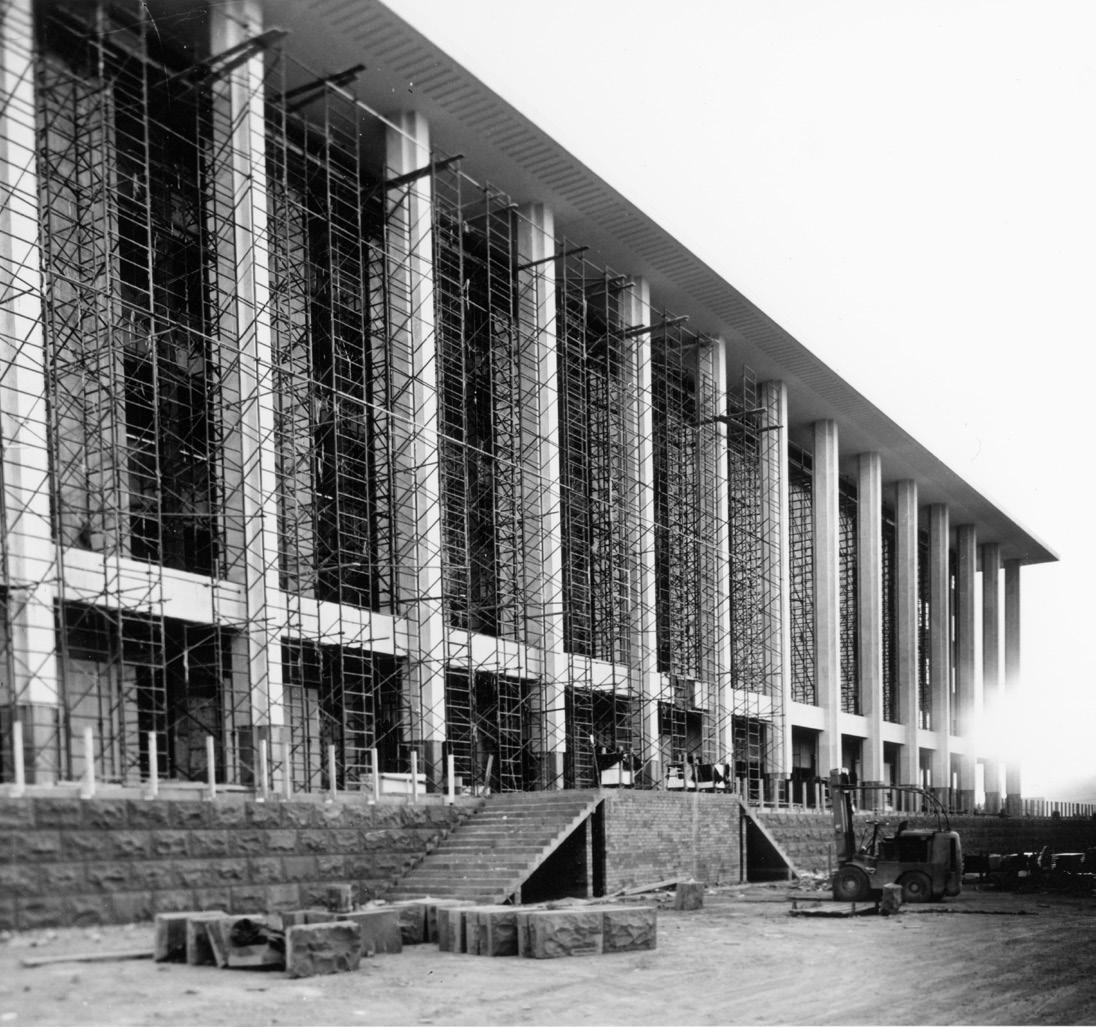
The National Library of Australia was the site of interesting events even before its iconic building was formally opened in 1968. This certainly was the case in the spring of 1967 when, still under construction, the Library was the scene of an outdoor election rally.
The election in question was for the Australian Capital Territory Advisory Council, the body which preceded today’s Legislative Assembly for the ACT. The date of the election was 16 September 1967 and there were eight seats up for election.
The Australian Labor Party nominated a team of candidates as did the Liberal Party and some Independents, including Alan Fitzgerald’s True Whig Party. In the week leading up to polling day the ALP arranged for three of its four candidates to address a daily series of workplace meetings across the city. On Tuesday 12 September the Library site was the venue chosen for one of these meetings.
Two of the trio of Labor candidates who were booked to address the construction workers at the Library site already sat in the Advisory Council: Roy O’Keeffe, a Commonwealth public servant; and Gordon Walsh, who managed a student hostel at the Australian National University.
The third Labor candidate who addressed the workplace meetings was Lyndall Ryan. A recent arrival in Canberra, Ryan, like Walsh, was connected to the ANU. In 1966 she moved from Sydney when the historian Professor Manning Clark appointed her as his research assistant.
Ryan was born in 1943. She was a young candidate but was not a novice. Her mother Edna was a lifelong activist who got to know Gough and Margaret Whitlam when serving on the Fairfield municipal council. In 1965 Lyndall sought to succeed her mother when Edna did not seek re-election to the council. Though unsuccessful, Lyndall was undaunted. She was ready to stand again in an election in her new city.
1967 was over 50 years ago which meant that the workers who listened to Ryan were not used to hearing a young woman addressing them as a political candidate. Ryan, for her part, was keen to emphasise that she was, as she told the Canberra Times, “not trying to get on to the council because I’m female - that’s just an accident.” Equal pay for public servants was the only women’s right which interested her. “And that”, she was quoted as saying, “will happen as a matter of course.”
Nothing that Ryan said at any of her campaign meetings harmed her chances. On the weekend following the Library appearance, Ryan, along with Walsh and O’Keeffe, was elected to the ACT Advisory Council.
The unity that was present during the 1967 ACT election campaign did not last. A year later Gordon Walsh challenged the revered incumbent Jim Fraser in a preselection contest to choose Labor’s
candidate for the federal seat of the Australian Capital Territory. Walsh won the first ballot but there was an appeal leading to a second ballot which Fraser won.
The preselection contest was a fraught affair. Lyndall Ryan favoured Walsh while her Advisory Council colleague O’Keeffe supported Fraser’s appeal.
Ryan was no longer in Canberra when the Fraser camp finally prevailed. Her time as Manning Clark’s research assistant ended late in 1968. After some travelling and a stint in Papua New Guinea she undertook to do a PhD thesis at Macquarie University. Back in Sydney she also became involved in the burgeoning women’s liberation movement.
Approved in 1976, Ryan’s doctoral thesis examined the postinvasion history of the Indigenous population of Tasmania. She then moved on to a productive academic career, focussing on the areas of Indigenous history and women’s studies. She was active until her death in 2024.
Lyndall Ryan had been a figure of note in the local political scene when she lived in Canberra back in the 1960s. By 2024 this phase in her life belonged to a long-ago time when the Whitlam era had barely begun, and the National Library was still a construction site. What happened in these years need never be forgotten though. Researchers can plot Ryan’s emergence in the 1960s using resources - beginning with digitised newspapers - housed or created in the very same institution that was on her campaign schedule on the Tuesday before that polling day in 1967.
Stephen Holt | Friends Member and freelance author
National Capital Development Commission, 1966, The National Library of Australia under construction, c. 1967, nla.obj-147040537
The Friends of the National Library of Australia acknowledges Australia’s First Nations Peoples—the First Australians—as the Traditional Owners and Custodians of this land and gives respect to the Elders—past and present— and through them to all Australian Aboriginal and Torres Strait Islander people.
02 6262 1698 Email: friends@nla.gov.au