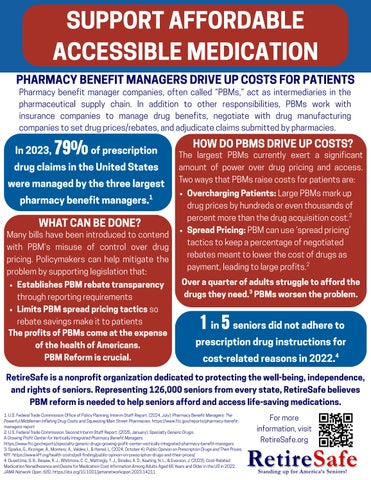
SUPPORT AFFORDABLE ACCESSIBLE MEDICATION PHARMACY BENEFIT MANAGERS DRIVE UP COSTS FOR PATIENTS Pharmacy benefit manager companies, often called “PBMs,” act as intermediaries in the pharmaceutical supply chain. In addition to other responsibilities, PBMs work with insurance companies to manage drug benefits, negotiate with drug manufacturing companies to set drug prices/rebates, and adjudicate claims submitted by pharmacies.
In 2023,
79% of prescription
drug claims in the United States were managed by the three largest pharmacy benefit managers.1
WHAT CAN BE DONE? Many bills have been introduced to contend with PBM’s misuse of control over drug pricing. Policymakers can help mitigate the problem by supporting legislation that: Establishes PBM rebate transparency through reporting requirements Limits PBM spread pricing tactics so rebate savings make it to patients The profits of PBMs come at the expense of the health of Americans. PBM Reform is crucial.
HOW DO PBMS DRIVE UP COSTS? The largest PBMs currently exert a significant amount of power over drug pricing and access. Two ways that PBMs raise costs for patients are: Overcharging Patients: Large PBMs mark up drug prices by hundreds or even thousands of percent more than the drug acquisition cost.2 Spread Pricing: PBM can use ‘spread pricing’ tactics to keep a percentage of negotiated rebates meant to lower the cost of drugs as payment, leading to large profits.2 Over a quarter of adults struggle to afford the drugs they need.3 PBMs worsen the problem.
1 5 seniors did not adhere to
... in
prescription drug instructions for cost-related reasons in 2022.4
RetireSafe is a nonprofit organization dedicated to protecting the well-being, independence, and rights of seniors. Representing 126,000 seniors from every state, RetireSafe believes PBM reform is needed to help seniors afford and access life-saving medications. 1. U.S. Federal Trade Commission Office of Policy Planning. Interim Staff Report. (2024, July). Pharmacy Benefit Managers: The Powerful Middlemen Inflating Drug Costs and Squeezing Main Street Pharmacies. https://www.ftc.gov/reports/pharmacy-benefitmanagers-report 2. U.S. Federal Trade Commission. Second Interim Staff Report. (2025, January). Specialty Generic Drugs: A Growing Profit Center for Vertically Integrated Pharmacy Benefit Managers. https://www.ftc.gov/reports/specialty-generic-drugs-growing-profit-center-vertically-integrated-pharmacy-benefit-managers 3. Sparks, G., Kirzinger, A., Montero, A., Valdes, I., & Hamel, L. (2024, October 4). Public Opinion on Prescription Drugs and Their Prices. KFF. https://www.kff.org/health-costs/poll-finding/public-opinion-on-prescription-drugs-and-their-prices/ 4. Dusetzina, S. B., Besaw, R. J., Whitmore, C. C., Mattingly, T. J., Sinaiko, A. D., Keating, N. L., & Everson, J. (2023). Cost-Related Medication Nonadherence and Desire for Medication Cost Information Among Adults Aged 65 Years and Older in the US in 2022. JAMA Network Open, 6(5). https://doi.org/10.1001/jamanetworkopen.2023.14211
For more information, visit RetireSafe.org