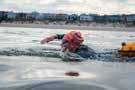


















Franschhoek swimmer Michelle Weber has once again made the valley proud, claiming a dominant victory at the 2025 Langebaan Express that took place on 8 November. She also set a new overall course record in the 12km swim in a time of 2 hours 22 minutes.
The two-time Olympian and long-distance openwater swimmer delivered a masterful performance across the scenic Langebaan Lagoon, leading from the early stages and never looking back. Despite cold water and a strong field of swimmers, Weber maintained an exceptional pace, reaching the finish well ahead of her competitors. Her time shatters the previous record and marks the fastest crossings ever recorded at the event.
Speaking after the race, Weber said: “It’s always special to race at home, and Langebaan is an incredible place to swim. I wasn’t expecting to break a record at all. I previously held the record which I set just before competing at the Olympics so to have broken it means a lot. However I’m happier to have swum my own swim and I really enjoyed how it came together.”
Weber, who lives in Franschhoek, coaches and trains other swimmers and sports lovers in the valley in open water swimming. Her latest achievement adds to an already remarkable
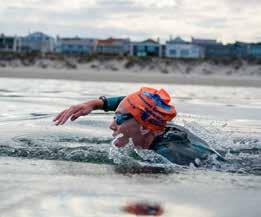
career that includes multiple national titles, an English Channel record, and countless openwater victories across the globe. Text: Supplied |
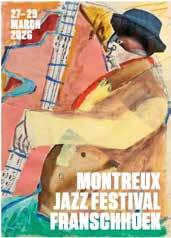
History and heritage meet in the Cape Winelands as the Montreux Jazz Festival Franschhoek (MJFSA) - the first-ever Montreux Jazz Festival (MJF) on African soil - reveals the poster that will define its identity for 2026: a work by South African master artist Sam Nhlengethwa.
Continuing the nearly 60-year-old Montreux Jazz Festival tradition of pairing art and music, the Franschhoek festival organisers collaborated with Elana Brundyn, one of South Africa’s most respected cultural leaders, known for her work in building museums, shaping collections, and redefining how art engages with society across the African continent. Brundyn invited a select group of South African artists, to interpret the spirit of the upcoming festival and the global MJF brand.
A lifelong jazz devotee, Nhlengethwa’s visual language has long celebrated South Africa’s musical heritage. His poster for MJFSA - painted over a decade ago - features jazz great Charles Mingus and, as Sam puts it, “It’s as if Mingus was waiting for Montreux to come to Africa.”
In a recent interview, Nhlengethwa reflected on his creative journey and the humility instilled in him by his grandmother, who raised him in Payneville. “She always said, ‘Learn, don’t lean.’ That shaped me,” he shared. “And my brother, a jazz musician, taught me that sound and feeling are one. Jazz became my oxygen - it’s what keeps me alive creatively.”
Founder of MJFSA, Mark Goedvolk said: “This first Montreux Jazz Festival on African soil is a statement of confidence in who we are as a creative continent. Sam’s poster captures the warmth, rhythm, and sophistication that defines that. It reminds us that our stories, told through

music and art, belong on the world stage.”
The Montreux Jazz Festival Franschhoek will debut in Franschhoek from 27–29 March 2026, uniting world-class musicians and artists in a boutique setting that celebrates Africa’s creative brilliance.
Text: Editorial Desk | Image: Supplied


Work on the long-awaited Berg River Dam Project commenced in September 2025 and recently kicked into high gear. The project – on land belonging to the Department of Water & Sanitation – aims to restore leisure infrastructure, such as hiking and biking trails, create new eco-tourism offerings and protect sensitive ecological areas. A public information meeting held on 3 November was addressed by project leader Reghard Goussard. During the meeting and afterward some community groups expressed their concerns about or opposition to the project, particularly about the institution of entrance fees, while others welcomed the improved control the development would bring. Permit fees are still to be determined.
The current work in the dam area is being done by SA Trails Network NPC, which is wholly owned by Hard Adventures Tourism Group (HATG) and ARC of Franschhoek. They currently employ 12 Mooiwater / Groendal residents. Another Mooiwater resident, Mr. Marcel Davids, has been appointed as a director of SA Trails Network NPC in what Goussard described as “proof that regeneration is not only about restoring land, but about empowering people.”
“Work on trail infrastructure includes aspects such as signage, trailheads, rest points and accessibility upgrades,” says Goussard, “while the trail design will prioritise water conservation awareness and biodiversity education. Alien vegetation clearing and ecological rehabilitation work will also be undertaken.
The Berg River Dam Adventure Tourism Company (BRDATC) holds a 9 year and 11 months lease (starting 28 February 2024) over the DWS land surrounding the Berg River Dam. (The actual water area is owned by the City of Cape Town.)
According to HATC the work is focussed on the repair and installation of fencing, gates and other access control infrastructure (including CCTV cameras), upgrading of access roads, removal of unsafe derelict structures and signage, preparation for the refurbishment of Bell’s Lodge, and implementation of the site development plan (SDP). The latter includes aspects such as obtaining environmental approval for a sewage treatment works, water use licensing and upgrades to the slipway. Unauthorised dam access routes will also be closed, where after repairs to the dam wall infrastructure will commence under the direction of the DWS and the Department of Public Works (DPW). All these activities are required in terms of the lease agreement.
Goussard explains that cutting-edge green and sustainable architecture will be showcased in the development, which has been named “ARC of Franschhoek” in a nod to Noah’s Ark, with ARC being an acronym for Architectural Regeneration Community.
The project master plan envisages a range of activities “that balance ecological preservation with adventure and leisure.” These include:
Restoration of Bell’s Lodge and the adjacent dwellings to serve as the project’s hub. These will house an administrative office, reservations desk, coffee shop and an experiential restaurant showcasing local cuisine and culture. A race village which will most likely have facilities like canoe rentals, bicycle rentals and retail is anticipated adjacent to the Bells Lodge.
Existing trails will be upgraded and new ones created in an environmentally sensitive way for walkers, hikers and mountain bikers of all ages



and abilities. It is also envisaged to reinstate the link between Jonkershoek and Assegaaibos. The dam will become a hub for non-motorised water sports, such as swimming, canoeing and rowing. Partnerships have already been entered into with Olympians Michelle Weber (open-water swimming) and Roman del Monte (rowing) to present programmes for future Olympians.
A small amount of tourist accommodation will be offered in eco-sensitive pods overlooking the water body. These temporary structures will blend in with the environment and can be removed without leaving a trace.
A catch-and-release trout farm is planned for the upper reaches of the dam near the old suspension bridge.
A lookout deck on the dam wall will offer panoramic views up and down the valley. Plans are underway to host a limited number of high-profile competitions, adventure and cultural events, positioning the area as a global destination for adventure tourism.
At the public meeting, opposition to the project was voiced by some interests, while others were supportive. While some hikers, bikers, dog walkers and swimmers were opposed because they will lose the free access to the area that they have long enjoyed – albeit without the permission of the landowner – many others were supportive as they see the benefits of access control and active management of the area.
A local Khoisan group, currently illegally occupying the adjacent former Jim Fouche picnic site and subject to eviction proceedings, claimed the lease was invalid as they have a cultural claim to the land. (The picnic site is not part of the lease area.) Political/community leaders couched their opposition in terms of what they perceive as promises made and not kept by the state forestry company, SAFCOL, after it withdrew from the La Motte Plantation and the TCTA after the construction of the dam was completed. Much reference was made to the Sustainable Utilisation Plan for the dam which was part of the environmental impact assessment for the project. DWS has pointed out that at the time of the dam’s construction Resource Management Plans (RMPs), which are strategic plans that regulate dam use, including recreation and access, were not required for such projects – hence the Sustainable Utilisation Plan (SUP) was developed. The SUP was integrated into the Berg River Dam RMP, the latest version of which dates to 2015. The SUP has therefore been replaced with the Berg River Dam RMP and no longer enjoys any official status.
Text: Editorial Desk





with Jane Anderson founder of the FHS Teaching Support Group
Tell us about yourself and your involvement in the Teaching Support Programme?
I have a background in psychology and human resources with an interest in coaching and developing strategic leadership skills. From corporate coaching, my passion for spotting and developing potential led me to my interest in child development and I have been involved in the programme for five years.
How did you originally become involved with FHS?
I worked in Jhb for many years, retiring to the Winelands with my husband in 2020. The Rotary
Club asked me if I could assist a child with behavioral problems at FHS and I quickly realised that many frustrations come from children not being able to read. That spurred me to create the Jolly Phonics Literacy Group at FHS as every child deserves the chance to read and succeed.
How many volunteers are there in your team and where do they come from?
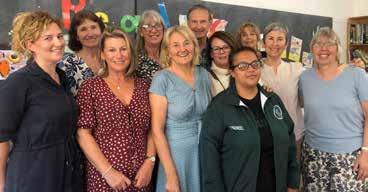
We are a group of 12 committed volunteers from across the valley and abroad, teaching over 80 learners from Grades 1-4.
Where is the Learning Centre situated?
We use an old classroom on the school grounds which we have painted and made as comfortable as we can. The electricity supply consists of one plug which makes the winter extremely cold and dark and there is no running water.
Tell us about your goal.
Our goal is improving literacy. Ensuring that every child has the tools, time and attention to become confident readers. Evident improvements confirm that education gives identity, being able to read gives learners confidence to believe in their dreams, opening opportunities for further learning.
What are the challenges you face?
We need volunteers to get involved especially in the winter season. We have also managed to build a
FIG - the Franschhoek Interest Group - has recently been formed as a voluntary association “To protect and conserve the character, heritage, sense of place, environment, biodiversity, natural and cultural landscapes of Franschhoek and the Surrounding Area, and recreational use of State Land therein.”
While the FHRPA may be expected to focus on infrastructure, planning applications and municipal service delivery, FIG, through Executive Committees appointed by its Management Committee, will address specific issues.
Initially, FIG has established Executive Committees for Skytram, short-term rentals (STRs) and development around the Berg River Dam. Other Executive Committees can be established as issues arise or are identified.
library and would love to have a librarian/volunteer to connect the children to the books. Any special request you want to share with the community of Franschhoek?
I have Three Wishes: Sponsorship for Teaching Assistants – Asking Franschhoek businesses to invest in their future! Supporting education is not only generous but also financially wise as all donations made to our literacy initiatives are tax-deductible. We desperately need a partner. 80% of FHS learners move into local employment so a stronger school today builds stronger businesses tomorrow - please help us if you can!
School Tuck Shop Renovations – Local Builders, Franschhoek is booming! Please support us by restoring a small classroom into a Tuck Shop that supports the school. It’s tax-deductible and helps foster pride and responsibility benefitting the whole community.
Donations and Volunteers: Books and teaching resources, personal donations and volunteers interested in supporting young learners are very much needed. We know that “When Children Read Communities Succeed.” Please make contact if you can support us. Jolly Phonics are at Franschhoek High School on Wednesdays and Thursdays from 10h00 – 13h30
Contact Jane Anderson: andersonje.sa@gmail.com
If you are concerned by any of the issues that FIG currently intends to address - Skytram, STRs, or the Berg River Dam – and would like to support it by becoming a member – the membership fee is R200 - or become actively involved in one of its Executive Committees; or there is some other issue which might be addressed by an Executive Committee of FIG, please get in touch with me.
Barry Phillips
The Executive Committees will report to and be supervised by a small Management Committee but it is intended that they should each operate and deal with their specific issues on a largely autonomous basis.
For the Franschhoek Interest Group (FIG) 083 441 8280 | barryphillips505@gmail.com

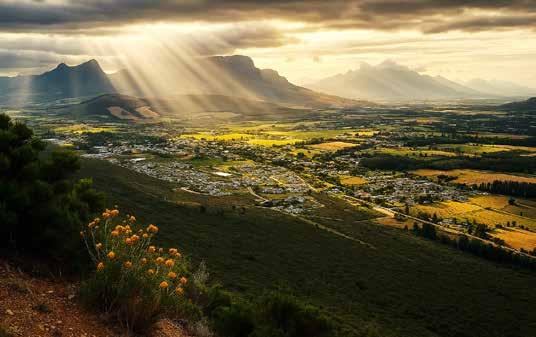




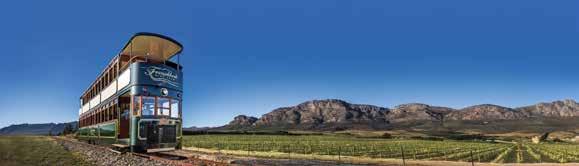
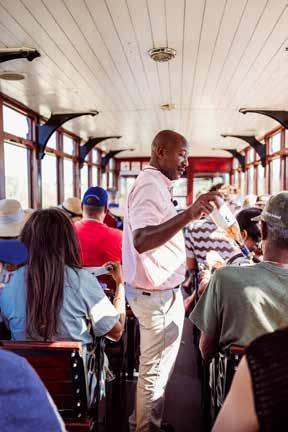
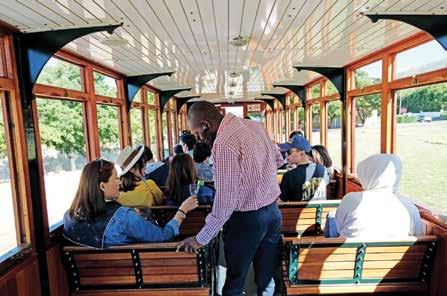




The annual Franschhoek Open Gardens Festival was on show again during the month of November. Visitors from all over the Western Cape, armed with hats and bottled water, strolled the streets of Franschhoek with temperatures rising into the high thirties!
There was a variety of gardens, from extraordinary grandiose gardens to heritage gardens, from smaller and compact gardens to newlyestablished and older, all the gardens unique in design and display. Visitors remarked how delighted they were to meet some of the owners and gardeners present, giving the experience a personal touch. Most of the gardens were within walking distance, except for one garden on the outskirts of the village.
The additional items introduced this year were talks hosted by the international landscape designer and botanist Leon Kluge as well as the expert on natural pools, Andrew Jamieson, both events highly recommended and well attended. Franschhoek’s own renowned cellist, Carol Thorns, aka That Girl in a Bubble, performed a morning concert in the lush gardens of La Cotte. This beautifully restored heritage estate, established in 1694, and one of the original Huguenot farms with its panoramic views and leafy oaks also served as the setting where the traditional English teas and scones were enjoyed. Four hundred scones were baked by a nurse working at Fleur de Lis Old Age Home.
The Plant Sale at Fleur de Lis also proved to be a success; with more than one thousand plants sold. The wide variety of plants on sale were propagated from cuttings and nurtured by our talented local gardeners.
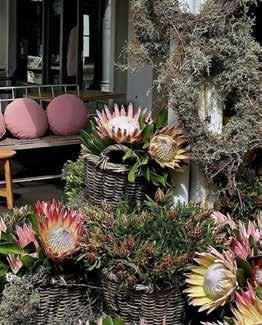
The definite highlight of the Open Gardens 2025 was the indigenous floral display in the church hall, organized by Jeanne Farley and Cindy Douglas – together with a team of local volunteers who worked for days to install this display. More than two thousand stems were ethically harvested and arranged in a spectacular flower exhibition in the shape of a horseshoe representing the Franschhoek Valley. The flowers came from the farms La Colline, Glenwood, Wydkyk, Eikenhof and Keerweder. The main aim was to give insight and educate people about the hidden
businesses put
gems, rare and endangered species from the Franschhoek Mountains. Part of this project was also a fascinating exhibition by die SA Police on indigenous plant poaching, creating awareness of the extraodinary level of poaching.
At the historic Dutch Reformed Church, visitors and international tourists, were hugely impressed by the display of formal flower arrangements titled Floral Reflections, inspired by the Bible and personal spiritual journeys, and crafted by the talented local village ladies.
This year the community of Franschhoek not only showed a true sense of commitment, generosity and pride in their gardens but also passion and concern for the village’s natural fauna and flora heritage.
Text: Ingrid Maritz | Image: Open Gardens








December always sneaks up on me. One minute I’m still thinking about spring salads and the next, I’m setting the table under the trees and wondering how another year has flown by. But what a wonderful time it is — the valley at its most beautiful, vines heavy with promise, and that unmistakable buzz of festive energy in the air.
Our kind of Christmas doesn’t involve roaring fires or mugs of mulled wine. Instead, it’s the scent of sunscreen, the sound of corks popping, and the sight of everyone kicking off their shoes before sitting down to lunch. The table stretches longer every year — friends who’ve become family, family who’ve become friends and the odd extra chair pulled in at the last minute.
In our house, food is the thread that ties it all

together. The morning starts with too many cooks in the kitchen — someone whisking cream, someone “testing” the roast potatoes, someone else looking for the corkscrew that’s always going missing. There’s laughter, a bit of chaos and the smell of something delicious wafting through the house.
This year, I’m keeping things simple but full of flavour. A platter of roasted peaches with torn mozzarella and basil to start. A shoulder of lamb, slowcooked with rosemary and lemon until it falls apart with a fork. And a pavlova piled high with berries and a drizzle of local honey — because it wouldn’t be Christmas without a little drama at dessert.
But the real magic isn’t in the food itself. It’s in the clinking of glasses, the shared stories, the children darting between chairs, and the quiet moments when you look around the table and realise — this is it. This is what the season is really about.
Franschhoek’s men, women and children, including a nursery group, joined South Africa’s national protest to demand that gender-based violence (GBV) be declared a national disaster in a country where attacks on women have become commonplace.
The protesters were joined by people across the Franschhoek community, including Cllr Reginald Pfeiffer who addressed the group. He said, “It’s all about talking rather than advocating real change, men have to say this is wrong, rather than this is not my problem and own up to real accountability and responsibility.”
The community were angry that the police did not allow the protestors to march through the village to the police station and felt they were being marginalised and forced to stand on the side of the road at Groendal.
A number of protesters said that more people would be aware of GBV and supportive of their aims if they had





been allowed into the village. “GBV isn’t just confined to shacks but also goes on behind shiny closed doors.”
At 12 noon, in solidarity with people across the country, the protestors laid down on the grass for fifteen minutes to signify a shutdown and to honour the fifteen women who are murdered every day. People wore purple and black to signify “mourning and resistance.”
Between January and March this year, 137 women were murdered and more than 1,000 raped, according to South African crime statistics.
Text: Janice Atkinson

For me, friendship and family taste the same — generous, comforting, a little messy at times, but always full of love. And that’s exactly how I like my Christmas table.
Roasted Peach & Mozzarella Salad
It’s as simple as it sounds and looks beautiful on the table.
6 ripe peaches, halved and stoned
Olive oil for brushing
2 balls fresh mozzarella (or burrata if you’re feeling fancy)
A handful of basil leaves
A drizzle of local honey
A squeeze of lemon juice
Sea salt and black pepper
Brush the peaches lightly with olive oil and roast (or grill) them until just caramelised. Arrange on a platter with torn mozzarella, scatter over the basil, drizzle with honey and lemon, and season. Serve slightly warm with a chilled glass of something local and crisp.
It’s sunshine on a plate — simple, generous, and best shared. And isn’t that what Christmas, and friendship, are all about?







Legend 55: Why Hilux is King
Why the special edition celebrating 55 years of Hilux is so special
Am I the only one who laughs out loud every time I read or hear how some latest new bakkie brand that nobody has ever heard of, is going to come and give the Hilux and its established market a run for its money? Really? Toyota’s established rivals know why not to do that. It’s called egg on the face. Anyway, of all the new bakkie launches of late, and there have been many, most of which names we’d otherwise take as a detergent or a boy band, this is the only one that actually counts. Long in the tooth, the Toyota Hilux legend 55 may very well be. But it remains far and away South Africa’s favourite bakkie.
Month in, month out, year after year, decade to decade, the good old Hilux goes unbeaten. In September again, they sold 3639 Hiluxes. That’s more than any of the Chinese brands with all their badges combined, sold. Toyota, by the way, sold almost fifteen thousand cars in South Africa last month. So remember that next time you read some crap about some unknown taking on the best! 55 celebrates a significant Toyota Legend Anyway, the Legend 55. Simply put, this bakkie celebrates 55 years of Toyota Hilux sales in South Africa. That in itself is a clue why not to worry too much about Johnny-Chen Come-Lately. By far South Africa’s best-selling bakkie of all time, the first, humble Toyota Hilux was launched in 1969. To celebrate 35 years of that, Toyota released the Legend 35 in 2004.
Against all expectation, the 35 sold a bomb. So five years later, Toyota did it again and the Legend 40 was a sell-out success too. Same for the Legend 45 in 2014, and the Legend 50 in 2019. Each edition carried the Hilux story forward, celebrating its proven toughness with extra kit that perfectly reflected the needs of South African drivers of the time.
Since then, the straight Legend did service as the range topper, but now, 55 years down the line, you
guessed it, cue the ‘all new’ Toyota Hilux Legend 55. This latest special-edition line-up replaces that Legend and will be available until 2026. Read into that, what you may! Available in Xtra or Double Cab and packing s few latest Legend design and convenience tweaks, this is the range-topping .8 GD-6 4×4 Double Cab AT.
55 adds robust and refined touches.
To that exceptionally well proven and most popular basic Hilux Legend, the 55 adds what Toyota calls some robust and refined touches. Such as exclusive badging, chrome-branded bash and scuff plates, logo puddle lighting and a sharkfin antenna. Limited edition, they tell us. Without ever compromising that practical, hard-wearing Hilux nature.
Step aboard to sport seats with embroidered headrests and heavy-duty rubber floormats.
The regular CarPlay and Auto endowed 8-inch touchscreen multimedia is boosted by 9-speaker premium JBL audio, and don’t forget the load bay.
This is the best bakkie, after all. This Legend 55 gets a rubberised load box under a secure lockable roller shutter, a branded styling bar, detachable tow bar, and even roof ornament.
Powered by Toyota’s trusted 2.8-litre GD-6 turbodiesel rather than the GR and some other models’ high output version, the trusty 150 kW 500 Nm unit is paired to that refined 6-speed automatic transmission. Toyota is selling Hilux Legend 55 in ten different colours including Dark Green Mica Metallic and hearing aid beige. But they gave us a white one!
So there’s plenty freedom of choice.
You know what you will get from a Hilux
There’s not much new to write home about driving the venerable Hilux. Quack-quack and it opens up to a familiar scenario. The premium perforated leather upholstered and piano black trimmed cabin with bespoke interior accents and panels under a black ceiling with cool blue mood lighting, set it apart.
Finger the button and the healthy 150 kW and 500 Nm GD6 fires up in familiar tone, clacking quietly away. It may not be the GR, but this basic engine was indeed given 30 extra kilowatts and 80 more Newton-metres a few years back. The larger turbocharger and improved common rail injection mated to Hilux’s improved ratios in the familiar sixspeed automatic gearbox still deliver a truly laid back and easy drive.
We’ve always liked how a Hilux rides, holds the

road and handles too, so nothing new there either. Continuous development and upgrades have kept this chassis surprisingly well sorted. Steering feel is positive, quick and responsive and the brakes, also often improved over this Hilux version’s life, are sharp and effective too.
Simple infotainment works a treat in Legend 55 Legend 55’s 8-inch infotainment is on the small side, but still its far better by its simplicity than most of its idiot rivals ever will ever be. Buttons and knobs look after the main functions, leaving touch to take care of more arbitrary interface needs. As it should be. It packs CarPlay, which works a treat, and Auto, Bluetooth with a USB and Google Maps. But we still miss wireless charging. Come on, Toyota!
The radio still has good old AM. Bravo! All controllable via the multifunction wheel to play on Legend’s fine JBL 9-speaker sound. Complete with frisbee-like dash-top speakers to add a bit more zing. The dials are bright and easy to read, but the quite effective multifunction tilt-able steering wheel however remains way short on length adjustment.
So yes, there’s good reason to laugh out loud every time you read or hear some wet behind the ears PR and journalism that the next weirdo bakkie is going to teach the Hilux how. In 50 years we’ve seen them all come. And go. Yet there’s still just one King of Bakkies, and here it is. See, Hilux keeps on dominating the top spot in local new car sales month in, month out.
Oddly enough, the more unproven, unknown Chinese and other bakkies the market cannot trust they launch, the more Hiluxes they sell! Because Toyota still has that recipe spot on.
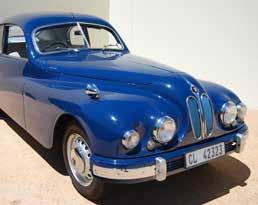
In the aftermath of WWII, The Bristol Aeroplane Company decided to diversify and began manufacturing automobiles and towards the end of 1946 announced its first car, the 400, with production slated for the following year. Its short gestation period was down to the fact that the company obtained a licence from Frazer Nash to build BMW-based cars, which, in turn, had acquired the right as part of war reparation from Germany. So rather than having to start with a ground-up design, Bristol was able to draw on the BMW 326 (chassis), 327 (body) and 328 (engine) models to create the 400. BMW’s talented engineer Fritz Friedler left his senior post at BMW to join Frazer Nash but was almost immediately loaned to Bristol as a consultant for the 400’s development. The 400’s styling differed only slightly from that of its Bavarian-built donor designs, the kidney grille and close-set headlamps doing little to disguise the fact. Either way, they are all handsome designs that have stood the test of time and today are all considered classics. The car featured centralised chassis lubrication, transverse independent front suspension and precise rack-and-pinion steering that endowed
FMM is proud to have been selected as a recipient of the 2025 Global Tourism Excellence Award in the museums category. “The award is testimony to our endeavours to provide a world class visitor experience of motoring heritage,” says Curator Sian Theron. The GTE provides ‘independent feedback based entirely on verified public reviews from platforms such as TripAdvisor and Google’. Selection is independent and cannot be applied for, and reliant on ‘consistent guest satisfaction, high rating and long-term service excellence’. .
it with excellent road manners for its time. Both company’s aircraft industry roots led to aerodynamics figuring in each model’s flowing, low-drag design, and quality build standards are evident throughout. Part of the licencing deal included use of BMW’s superb 1971 cc straight-six overhead-valve engine that with a single carburettor delivered 60 kW.
The 400 was joined in 1949 by the 401 that featured an even more aerodynamic full-width body. The Aerodyne design, with its teardrop tail, was constructed using Carrozzeria Touring of Milan’s Superleggera principle of lightweight aluminium panels attached to a steel tubular space-frame. This allowed for a convertible to be made – the 402 – but only 23 were ever built.
Building on such accolades, the 403 was introduced in May 1953, being effectively a tweaked version of the 401, identifiable by four headlamps, a silver grille and 403 badging on the sides of the sideways-hinged bonnet. The engine received bigger valves, larger main bearings and triple carburettors that contributed towards a power increase to 75 kW. Alfin (aluminium finned) drum brakes were used all round and a front antiroll bar was fitted. Incidentally, 20 years after the 403 appeared, it was reported that only four cars of the day had a better aerodynamic drag figure than its 0,4 Cd, which accounted for the model’s

Images & testing: Giordano Lupini
*Catch all Michele & Giordano Lupini’s motoring adventuresonhttps://theauto.page
clubs.
characteristic low wind noise.
The 403 is a striking car, the deep blue paintwork emphasising the flowing lines, the two-door body disguising the fact that it is a practical four seater –five at a pinch. Today, it is still a rewarding car to drive. Accept that it will be out-performed by even modest family transport, the Bristol has an undiminished elegance about it both inside and out that makes any journey a pleasurable task. The steering is a little heavy but on the open road its stability, engine pulling power and well-tuned suspension, allied with excellent brakes, make for highly composed progress.
The 403 was only in production for two years and was the last Bristol to carry the kidney grille. The 400 to 403s were built at a rate of between 100-150 units per year – no more than 300 403s were made – and were expensive, but soon established a loyal following that continues amongst active enthusiast

On November 2, FMM once again attended the Killarney Motor Show, this year joining forces with the GSM Club of South Africa, taking along our 1964 Flamingo and the 1959 Dart Veloce, which added to what was
an impressive display of GSM history. The weather was ideal and crowd attendance was huge, all taking in the fun-filled atmosphere and enjoying the wide variety of displays throughout the day.
The Season has arrived and FMM will have longer visiting hours from December 1. Museum opening times between December to March are Monday to Friday 10h00 to 18h00 (last admittance 17h00), Saturday and Sunday 10h00 to 17h00 (last admittance 16h00). Public Holiday visiting times are the same as weekend times. However, on Christmas Eve, December 24, last entry will be 14h00 and gates close at 15h00. The museum is closed on Christmas Day. The famed FMM Pitstop Deli is open throughout the visiting hours, offering refreshments, sandwiches, snacks and light meals. There are
also counters offering exciting estate products and souvenirs. A selection of wines produced by Anthonij Rupert Wyne is also available “FMM wishes everyone a most wonderful and blessed festive season,” says FMM Curator Sian Theron. “We look forward to welcoming the locals and holiday makers visiting the Franschhoek area to the museum. May all your travels be safe.”
For booking tickets and any other information as well as signing on for a free monthly newsletter, logon to www.fmm.co.za or phone 021 874 9000 or e-mail fmm@fmm.co.za

We are closing the book on another year of political turbulence, physical and trade wars, and more adverse weather events battering an already shell-shocked world population. No wonder we feel tired at this time of the year. While physical activity might be last on your mind this late in the year, the therapeutic effect of disappearing into your garden with a pair of secateurs or hoe cannot be underestimated. Our gardens are a refuge, not only for us but for all battered creation around us. Those of us that are not going away to the beach or bush this season will do well to spend their time building on this refuge. I aways look to nature for inspiration, and December is a great month to get out into the mountains and valleys. We are blessed with some amazing secret spots around the Winelands; go and explore with some locals to find those hidden waterfalls, mountain pools and secret paths. You will return refreshed and inspired, ready to recreate some of that beauty and peace in your own garden.
We are experiencing a normal summer, with normal meaning fierce South Easters, hot dry days, and no rain. Wandering out into nature or public parks will give you a good indication of those plants that have adapted to flourish in our harsh summers. We have been blessed with a few years of good winter rains, but this cycle can flip quickly. The memories of a looming Day
Zero as our dams ran dry in 2017 are still too fresh for us to drop our guard on being water wise in our gardening approach. Planting plants that are adapted to your local environment is the responsible thing to do.
December is a month of excess, and the same goes for the garden. All sorts of summer fruits and vegetables are ripening, your rose and flower garden is a delight, the lawn is looking great, and your hedges are keeping the wind at bay. With this abundance comes some routine tasks for those days you are not daydreaming about the natural pool you want to build. Deadheading spent flowers and picking vegetables and fruits regularly is one of your most important tasks in

this abundant month. Good garden hygiene is important as this is the time of year with the greatest number of insects. Bait against fruit and pumpkin fly, apply beneficial bacteria against caterpillars and monitor the rest so that you can act accordingly. Our dry spring has kept most diseases at bay, but watch out for the normal culprits like powdery and downy mildew and black spot, and start your preventative program with the first signs of trouble. Your garden will still respond well to feeding. Pick a cool day to apply a balanced foliar fertilizer, focusing on the underside of the leaves to get maximum absorption. Slow-releasing granular fertilizer is best mixed with compost and applied as a mulch around shrubs and trees.
Most of the abundance will be seen in the vegetable garden. Squashes, peppers, tomatoes, green beans, sweetcorn, and all the other warm season foods will be ripening daily. Pick regularly, remove fallen fruit, and feed producing plants with a high potassium fertilizer. Keep up succession sowings of beans and sweetcorn. Should you have some time on hand for a project, a good idea is to add some weather protection to your food garden. A tunnel or net house can turn your veggie garden into a real retreat while providing year-round food in abundance.
Nowhere will the excesses of December be experienced like around the dining table. It is not called the festive season for nothing. I trust that your garden will reward you for all the hard work you put in this year, and that you will proudly serve the fruit of your hands to your visitors, guests and family this season. Wishing you all the best for 2026.




Charlotte van Zyl

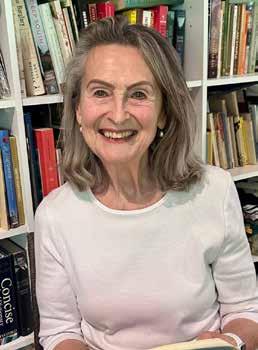
After meeting Charlotte van Zyl at the local Aerobics class, I knew immediately that she carries a gentle strength, kindness and a deep affection for the Franschhoek Valley as she genuinely invests in the people around her.
Born in 1946 in Holland, Charlotte will celebrate her 80th birthday next June. As the youngest of five children, with the sibling just above her already six years older, she often had to entertain herself. Her parents kept a library at home, and books soon became her world. Characters felt like friends; imaginary companions filled each room of the house, and when the family travelled, they travelled with her too.
Her father, an introverted electrical engineer, brought calm and patience into the home, while her mother, a dynamic social worker, taught her children how to face challenges head-on. Growing up in post-war Holland meant you had to seek out opportunities rather than wait for them. Holidays were spent hiking in the mountains, reading, writing stories and playing board games - shaping the creative and resilient spirit Charlotte still carries today.
After school, she studied music and became a clarinet player, performing in orchestras and teaching wherever life took her. Music taught her discipline and humility: “You never know how hard someone had to work to get where they are; that’s why you don’t judge.”
Her first marriage took the family across the world, from Singapore, Indonesia, back to Holland, and later to Johannesburg, and in each country, she used her musical talents to work and contribute. After her divorce, Charlotte stayed in Johannesburg to rebuild her independence.
A friend convinced her to meet John van Zyl, a writer and professor at the University of the Witwatersrand. She resisted at first, but eventually agreed, and over lunch, the connection was immediate. Flowers followed, lunches became dinners, and soon they found themselves building a life together.
It wasn’t always easy. Immigration complications, distance, and life pressures tested their relationship, but Charlotte speaks with deep gratitude for John’s persistence and loyalty. Together, they later started an NGO radio station. When retirement neared, a friend suggested the Western Cape. Franschhoek felt right, and it

Announcing Our Twentieth Anniversary Gala Celebration at Mon Amour on Thursday, 5 February 2026 at 17h30
We are excited to announce that all the stops will be pulled out for this momentous occasion with live entertainment, a charity auction and the fabulous food of Mon Amour – located at The Yard in the heart of town. Please see our accompanying save the date notice, with more details to follow in the January 2026 Tatler. The early birds will catch the worms as our annual functions are intimate but unique every time and especially so next year for our 20th anniversary and held for the first time in the summer months when so many of our overseas based friends and donors typically holiday here.
FRANCO is honoured to have been unexpectedly nominated for an award for ‘educational support
became home.
Charlotte worked at Solms Delta for seven years, involved in trusts, housing, social events, education and the music programme. After resigning, she found more time to connect with the community, joining book clubs, making new friends, and eventually starting her beloved book review column for the Tatler, which she has now written for about thirteen years. Her passion for book reviewing began in Holland, where she helped assess books before they were translated.
Reviewing, she says, “forces me to read critically and listen to what the writer is truly trying to say.”
After the 2023 flood, Charlotte initiated the local flood action group; helping Franschhoek residents support one another in a time of crisis.
“If you want to see change, raise your hand. Don’t hide opinions behind closed doors – share them with those who can make a difference.”
Today, as she reflects on 79 meaningful years, Charlotte sees a full circle. Everything she learned, from her musical training, her family’s values, her travels, and the many challenges she’s faced, has shaped her life in Franschhoek. It reminds her of her childhood holidays in the Dutch mountains, surrounded now by the peaks of Franschhoek.
Together with John and their children, life is colourful, textured, and full. Wisdom for Charlotte isn’t just something that you get; it is through life and all its lessons that you learn every day, one bit at a time. Charlotte still has dreams - among them, to attend a week of orchestras in Europe with John, but until then, she is grateful for the opportunity to live and be part of this community every day.
and community uplift initiatives’ by the ‘Middle East and Africa Markets publication. We have very recently been informed that our nomination was successful and that FRANCO is the winner in the Category “Community Empowerment NPO of the Year 2025 – Western Cape”. Such awards for Non Profit Organizations (NPOs) have been made over the past 8 years and it will undoubtedly boost our profile by enhancing international awareness of our activities. An official online announcement will take place on the MEA Markets website (currently boasting 5.1 million total impressions and 102 000 web users annually), later this month. After a year of extremely hard work due to the substantial growth in the range of our activities to benefit our local community, we are both humbled and proud to receive this recognition. We are deeply grateful to the anonymous nominator for this award. For those interested in helping us to help others in the community, please contact our chief operating officer, Tzilka Watson on 060 374 0353 or via email on info@francosa.co.za. More information about FRANCO, including how to apply for tertiary educational financial assistance, can found on our website: www.francosa.co.za

The Franschhoek Tatler recently caught up with Philip Green, the founder of Hope Through Action (HTA), while he was on a visit to South Africa. HTA operates three community sport centres in the Cape Winelands, including the Franschhoek Valley Community Sports Centre in Groendal.
Green has been a regular visitor to local shores for several decades – both as a businessman and a tourist. Like many others before him, he succumbed to the charm of the Winelands and bought a property here in 2000. Touched by the need he saw in local communities he was soon involved in the construction of an Educare centre in Mbekweni, Paarl in 2004.
As the saying goes “that led to bigger things.” HTA was registered as a charity in the UK in 2008 and as a PBO in South Africa in 2009. In 2010 the first HTA community centre opened in Mbekweni, followed by Franschhoek in 2015 and Malmesbury in 2019. (All three centres were built by Power Construction with Fred Laker as consulting engineer – on time and on budget!)
Green explains: “HTA was created to change lives through sport and education. Sport is the hook we use to get them into programmes that develop life skills and raise education levels.” SCORE, HTA’s implementation partner, presents a wide variety of programmes at the centres, ranging from several sport codes to practical skills training and counselling services. The inclusion of Learning and Resource Centres at the facilities allows for structured digital educational and play activities like homework assistance, online research for school projects and preparation of CVs.
Ons is bevoorreg om ‘n skrywer in ons midde te hê, naamlik Elkarien Fourie. Sy het in Oktober skryfstyle bespreek aan die hand van gekose verhale uit Corlia Fourie se samestelling ‘Draaie, Swaaie en Afdwaalpaaie’ waarin ook ‘n verhaal van Elkarien opgeneem is. Sy het ons ook vertel van haar wedervaringe in China – opgeneem in haar boek, ‘Vat jou hele Hart’.
November is interaktiewe lede en besoeker deelname waar ons met woorde kreatief gaan raak. Ons gebruik ‘All the Light We Cannot See’ van Anthony Doerr as verwysing. Die jaar het uitgeloop met verskeie skrywers wat Franschhoek besoek het. Ons jaareindfunksie vind op 4 Desember plaas.
Ledegeld: R550 per jaar. Kontak Hester vir inliging. 084 900 9060
HTA has become the lead for the Western Cape Education Department’s @HomeLearning programme. @HomeLearning is a communitybased initiative that strengthens support for learners from low- and no-fee public primary schools. The programme promotes a culture of learning and provides targeted support to prevent at-risk learners from dropping out. HTA works in collaboration with the Val de Vie Foundation and the Year Beyond programme.
Nothing can be done without funds and much of Green’s time is spent securing funding. Thus far R120m has been invested in the construction and operation of the centres. Green says most of their donors are private, but a few corporates are contributing too. Naturally he’s always keen to expand the donor base! In addition to his dedication to HTA, Green was also chairman of Prince Harry’s HIV charity Sentebale. It was during this chairmanship, in 2015, that Prince Harry played in the Sentebale Royal Salute Polo Cup at the Val de Vie Estate. Green concludes, “HTA impacts 20,000+ children and young people per month through our centres and proven programmes, empowering them with skills that could break the cycle of poverty. It is a continuing privilege to help them improve their lives.”
Text: Editor
Since the Academy opened, 587 people have attended our full time and part time course offerings and most importantly, 96% are in full- time employment. This is how we measure our performance.
Every year, two graduates are sent to the ITM College in Austria to complete a two-year diploma programme. Eight are now working in Austria and Germany.
Our one-year programme comprises eight months of full-time classroom and practical training followed by four months of internship at local establishments. The modules studied cover all aspects of the hospitality industry: cooking, wine, housekeeping, business and entrepreneurship, front of house, food & beverage service and life skills including interview skills. Additionally, our students work at events, like the Cap Classique and Bastille Festivals and in private homes at catered events.
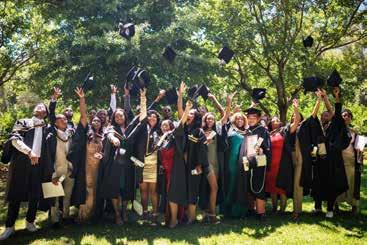
Graduation day!
Our class of 2025 are completing their internships presently and will be graduating on 11 February 2026. They work at Rickety Bridge, Sterrekopje Farm, Mont Rochelle Hotel, Leeu Estates Franschhoek, Yama Sushi Emporium, Oku Asian Eatery, La Petite Colombe, Protege Restaurant, Epice Restaurant, Le Coin Français, Black Elephant Vintners, Allée Bleu Wine Estates, Haute Cabrière and Lamu Collection. We thank these establishments for the support and the platform for our students to hone their skills.
On average, every employed person in South Africa indirectly impacts 6 people. Therefore, the programme has impacted over 3522 lives.
Over the years, we have accumulated some wonderful success stories. Here are just two of the many.
We are beyond proud to shine a spotlight on Caryn who has come full circle in the most inspiring way. After completing her studies at the ITM College in Austria and honing her skills and rising through the ranks, Caryn now works as a Senior Server at the prestigious Hotel Kristiana in the Saalbach-Hinterglemm ski region in Austria. A testament to her dedication, passion, and exceptional talent. But she did not stop there. Caryn has returned to the place where her journey began and is now teaching cooking theory at our Academy. Her commitment to giving back and uplifting the next generation of hospitality professionals is nothing short of extraordinary. Her journey is proof that with hard work, heart, and a love for the industry, dreams do come true
and can inspire many more along the way! Grezelda Duncan went to school at Groendal Secondary School and graduated from the Franschhoek Hospitality Academy in 2024. She completed her internship at the fine dining Restaurant Epice in Franschhoek and was then appointed to the position of Commis Chef. She was then offered a position at La Petite Colombe, one of the most prestigious restaurants in the country and is now employed as Junior Chef de Partie. Our Ambassadors have been key to our success over the years. Grateful thanks to Ryan Shell, Shirley Killian, Reuben Riffel, Margot Janse and Mathew Gordon.
The Academy receives no government funding and we are very fortunate to have the support of very generous and committed private funders together with organizations such as Nation Builder, Val de Vie Foundation, Defy, Tourvest, Colmant Cap Classique and the Rotary Club of Franschhoek and Drakenstein. Our partners include Lobster Ink, Haute Cabrière, FRANCO and the ITM College in Austria.
If you would like to make a difference to young lives, your contribution would be greatly valued and appreciated. You could also sponsor a student. Each student costs R3,800 per month of which the students themselves pay R1,200. The bank account details and other ways of contributing are on our Franschhoek Hospitality Academy website. www. fhalc.co.za. Follow @franschhoekhospitalityacademy on Facebook or Instagram for regular updates of the academy’s activities.
Text: Brian Moor | Image: Supplied
Siegfried Schäfer
Dear Readers,

And just like that, with lightning speed, another year has passed! I’m too scared to dig out my list of non-resolutions that I had for the year. Instead I’m going to prioritise that dentist’s appointment I never got around to, and for the rest pretend it never happened…
Looking back over the year it feels to me that this was the year in which AI hit the mainstream –at least if you’re a late adopter, as I am! I decided to ask three AIs – ChatGPT, Claude.ai & Google Gemini – what they thought the major positive developments of 2025 were. (The negative ones have all had more than enough exposure already!) Here’s what they came up with:
Advances in Healthcare: All three AIs highlighted advances in healthcare, specifically in gene therapies and personalised healthcare. Claude included that “The world’s first 3D bioprinted human heart made from a patient’s own cells was successfully transplanted in
Zurich, marking a breakthrough that could eventually eliminate organ donor waitlists” and that “Scientists developed a new cancer vaccine that successfully completed final testing stages, showing promise in protecting people from multiple types of cancer, with potential public availability beginning in 2026.”
Clean Energy & Climate Change: ChatGPT pointed out that renewable energy adoption surged, while clean-energy technologies are being scaled up in developing countries. It also mentioned that increasing numbers of countries are implementing schemes to cut the use of single-use plastics. Claude highlights that “Investment in green technologies exceeded $56 billion in just the first nine months of 2025, surpassing the entire 2024 total of $51 billion, with substantial funding flowing toward battery storage, electric vehicles, and renewable energy.”
Gemini also points out that significant progress in Battery Electric Storage Systems is making it easier to integrate renewable energy sources, such as wind and solar, into the global power grid.
Advances in Quantum Computing: Both ChatGPT and Gemini point out advances in the field of quantum computing. Chat GPT mentioned that 2025 was the United Nations’ International Year of Quantum Science
and Technology, while Gemini referenced developments such as Google’s Willow quantum chip that are “demonstrating the technology’s potential to solve problems at unprecedented speeds.” Gemini also points out that to “protect against future threats posed by quantum computing, a new standard for Post-Quantum Cryptography (PQC) is being developed, which will safeguard sensitive data for years to come.”
Human Development: Claude and ChatGPT both picked up on improvements in aspects of human development. The former pointed out that “Child poverty reached its lowest level ever recorded globally; with new government programmes and international cooperation helping millions of children access food, housing, and education.” ChatGPT emphasised that there is greater inclusion in global leadership circles, highlighting the election of the first female and African president of the International Olympic Committee as an example.
Gemini identified two issues that the others did not. The first was “The rise of a sustainable,
precision-fermented food industry.” It pointed to two aspects, namely that improved precision fermentation techniques are “allowing for the creation of new food products that can reduce reliance on resource-intensive agricultural methods” and that “Food companies are using precision-fermented fat products to improve the taste and texture of plant-based meats, a development that makes sustainable food options more appealing to a wider market.”
The other issue that only Gemini highlighted was the arrival of “A new era of private space exploration and international collaboration.” Specifically, it points to the activities of Axiom Space and SpaceX and the inclusion of the first Polish and Indian astronauts in an Axiom mission to the International Space Station. It also referred to India successfully establishing its first semi-permanent lunar station in collaboration with private space start-ups during the Chandrayaan-4 mission.
There you have it! What do you think? Did they pass or fail?
Well, that’s it for this year. Until next year!
DEADLINES - January 2026 Issue
Bookings - 10 December 2025 | Editorial - 12 December 2025 | Artwork - 12 December 2025
Dear Editor
Facts, Fictions or Emotions –The Bergriver Dam Leisure Development
After attending the public meeting on Monday, 3 November 2025, at Franschhoek Wine Cellar, I thought a lot about the “power” of facts, fictions and emotions and how damaging all three of them can be to a community.
Background:
I was privileged to serve with other community members (some since passed and others attended the above meeting) on a structure known as the Environmental Management Committee (EMC) since 2003. During the construction phase my firm was appointed as the public relations and recruitment officer as well as the labour consultant for the project. It must also be noted that many years before the establishment of the EMC, as early as 1906, both the state and City of Cape Town, investigated the construction of the Skuifraam Dam, as it was initially called.
Environmental Management Committee:
The EMC served as a broad consultative forum representing a number of affected and interested persons/institutions not only the Franschhoek and Dwarsriver communities, but also as far Velddrif and Hopefield along the Berg River. Representatives could express their concerns and wishes and guide the Trans-Caledon Tunnel Authority (TCTA) as to how to act in best interest of the community. It was during that period the concept “Franschhoek First” came into being and was developed and implemented. The EMC was the main conduit for information exchange between the project team and the public.
Post Construction Benefits:
The EMC took a strong position with regards to benefits for the communities after the construction of the dam. This position was codified in a document called the Sustainable Utilization Plan (SUP).
The SUP provided for/that, amongst others:
• Development of tourism/quality of life facilities associated with the Dam in particular;
• Identification of sustainable employment (and entrepreneurial) opportunities;
• Development and implementation of an ongoing strategy of alien/invasive plant eradication in the catchment and downstream;
• Development and implementation of a programme and guidelines to monitor and maintain all areas rehabilitated following the construction of the dam;
• Structure Plan and Zoning Plan of the dam and surrounding area should be prepared based on public participation, outlining the vision for sustainable utilization and development of the area; The site development plan should focus on environmentally sensitive development of the dam and surrounding area and the provision of infrastructure that would facilitate the realisation of the identified issues; Steps should be taken to minimise adverse impacts on the environment, residents and tourists to Franschhoek; and Recreation and nature conservation opportunities should be maximised.
The SUP had specific social considerations to give effect to such as:
• Loss of employment to SAFCOL and Dewdale Trout Farm employees. These employees have particular skills, knowledge and experience due to the nature of the work they used to do. The sad part is, how many of them are still alive or even still able to do those type of work, but hopefully their children are still in the industry to take their ancestors’ legacy forward;
• Post-construction loss of employment in Franschhoek and surroundings; and
• Business opportunities flowing from implementation of the SUP.
The challenge today:
During the construction of the dam, the EMC ceased to exist and after the completion of the dam DWAF, TCTA and the other state institutions withdrew from Franschhoek. The SUP remained just a piece of paper. In my view, the government failed the people of Franschhoek once again, and the forestry workers of La Motte, in particular.
The, around four years ago, someone with an entrepreneurial spirit saw a need (and the negligence of the relevant land) and approached government to develop the land surrounding the dam and they entered into a lease agreement.
Who is to blame for this lease agreement? When you take all the fictions and emotions out of the picture (which we should in order to have a fair and just opinion) and focus only on the facts, do you still blame the entrepreneur who saw an opportunity; or the government who failed to honour their undertakings via TCTA to La Motte’s ex-forestry workers and the rest of Franschhoek community?
If one looks at the pros and cons of the proposed development, would it be an improvement on what is currently happening there and general physical appearance of the environment characterised by vandalism and criminal activities? Would one allow one’s daughter, wife or son to go there by themselves?
Conclusion:
Public participation processes should not be underestimated, especially in an environmentally sensitive area. It is my humble opinion that the entrepreneur behind this development should have (I reckon it’s not too late) taken the broader community in his confidence and embarked upon a proper public participation programme. I am aware that they had engagements with certain groupings in the past, but it appears that those structures did not let the message filter through to their respective constituencies. Now is the time to respect the community; to be transparent and to build a better Franschhoek and environment for all our generations. Let’s be protective and conservative about our environment whilst we strengthen our local economy to the benefit of all people. There is a synergy out there in the universe. Let’s build our arguments on proven facts; not personal attacks; not unfounded allegations; not emotions; not ulterior motives; but hard facts, because only then will we be able to get to the truth and nothing but the truth.
Advocate Wilfred Moses
Look out for the Franschhoek Foot Patrol “Red Caps” next time you are in town. They are gearing up for the summer season and providing an invaluable service in deterring petty crime and generally keeping the main road and surrounds safe for tourists and residents alike.
A huge thank you to the following business owners (as of going to press), who have made this possible though their kind support and financial contribution this year:
Angala, Anna and Grace, Babylonstoren, Boschendal, DGB, Haute Cabriere, La Bri, La Clé, La Motte, La Roche, Fine and Country, Fransvliet, Village Market, African Touch, Seeff, Indian Summer, Tsonga, Brunch Club, Nida Holdings, Taki’s, Chas Everitt, Philosophy, The Last Word, Yollys, Fromages des France, Holden Manz, ManzArt, La Cotte, The Ivy, The Old Corkscrew, Vendange, Antebellum, B Spoke, Big Love, Bootleggers, GerArt Gallery, Country Lizard, Desray, Fine Art, Franks, Gavin Collins, Jen Kahn, Lew Geffen, Litchi and Titch, Out of the Blue, Pinz Nez, Senqu, Susan Charlesworth, Tallulah’s, MCC, Zigi, Peacock Blue, Sea Weeds, 2020 Vision Investments, 8 on Tuin, Buildcraft, Cape Property, Cape Vue, Chambray, Chantelle Collection, Chas Everitt, Classic Portfolio, Cocoa Africa / Hand Made Life, Cooks Cottage, The Stationery Shop, Anthonij Rupert, ATR Safari, Avonrood, Big Love, ZA etc, African Touch, Hand Made Africa, Motherdough, Charles Lawrenson Property, BP Garage, Le Petit Paris, Le Petit Bijou, Ebony, Auberge Daniella, Fhk Hire and Servicing, Fhk Tatler, Sotheby’s, Sterrekopje, Stonybrook, The Coach House, The Last Word, The Village Cottage, Cartel, TK Retail, Top Coat, Van den Ende, Cocoa Africa / Handmade Life, Fleur du Soleil, Gite, Klein Goederust, Kumbuk, La Chataigne, La Fontaine, La Grange de Cabriere, La Providence, Rotisserie, Rickety Bridge, La Residence, La Vie de Luc, Le Petit & Le Grande Plaisir, Leopards Leap, Maison Chablis, Mont D’Or, Mont Rochelle, Roundhouse, Saddlebrook, Rhinestone Holdings and of course the Franschhoek Wine Valley Tourism Association.
We unfortunately cannot list the private donors, due to information privacy regulations, but a big thank you also.
We are delighted to announce an increased presence to 3 guards for what the town hopes will be a bumper holiday season but would love to both continue and extend the patrols’ effectiveness on an ongoing basis. In the short term we need at a minimum, another 65 donors at R390 per month or a discounted R3900 per annum.
Our bank details are as follows: Bank: FNB
Account Name: Franschhoek Safety Initiative
Account Number: 63112167085
Type: Business Cheque
Branch Code: 250655
Swift Code: FIRNZAJJ
Please send proof of payment to Kim Wenning at fhoekpatrol@gmail.com. If you require more information you’re also welcome to contact her. Please help us to help keep our town a safe and happy place which to visit, live and work in
Shaun and Christie Winkler we humbly thank you for our beautiful big pink trailer!
We have borrowed so many trailers from you since we began…

We wish to thank, each and every friend of our community animals, who donated a whopping 2 3 tonnes of dog and cat food to SHARF
Our gratitude to all our Franschhoek friends, who further donated a huge R30,000 to enable us to carry out another mass sterilisation. SHARF has a weekly programme of sterilisation for dogs & cats throughout the year
And finally, a very grateful thank you, for the lovely baby mattresses donated for our recovering dogs. And all the small, but much needed animal extras that help us to continue our work! It's so extremely kind and thoughtful. We were overwhelmed by all your support, kindness and compassion and wish to convey our astonishment and gratitude.
By Joshua de Jongh, philosophy student at Stellenbosch University
The “wine-lovers’ paradise,” the “quaint getaway”Franschhoek is increasingly being defined by its utility. What becomes of a “quaint getaway” when the governing municipality turns its attention from the locals toward the profitable tourists?
Stellenbosch, the municipality just west of Franschhoek, only half an hour’s drive away, has instituted paid parking for some years now. It is a rather straightforward gambit: motorists pay in order to occupy parking spaces.
The metered streets of the CBD have had undulating prices but, since Covid, have settled at R10 an hour. Certain studies have indicated that footfall may drop in retail areas where metered parking is introduced; however, these pricesensitive would-be customers certainly do not constitute the majority, and despite the shortterm dip, this phenomenon seems to correct itself after a few weeks.
The glaring concern for many is thus: if parking spots are not paid for, cars will occupy the spaces for hours, perhaps days on end. This had certainly been the case in Franschhoek - before the new system of paid parking was introduced, the main street was often lined with cars from dusk till dawn. But is this really a bad thing? It stands in marked
“Some thoughts as to architectural beauty which might be used to define aesthetically acceptable forms for the built environment.”
By Brian Howard, local architect
“Look deep into nature, and then you will understand everything better.” — Albert Einstein
Most of us do not set out to be controversial. We tend to seek beauty in forms that either reflect our own sense of worth or harmonise with their surroundings. The question is how to express these ideas meaningfully in built form.
The Roman architect Vitruvius proposed three essential qualities in architecture: stability, utility and beauty — sometimes referred to as firmness, commodity and delight. These Vitruvian virtues, still invoked today, speak to the enduring relationship between form, function and human experience. Leonardo da Vinci’s famous Vitruvian Man is another expression of these principles, deriving beauty from proportion and harmony.
Historic architecture drew heavily on proportion, scale and geometric relationships, with the Fibonacci sequence influencing façades, elevations and even urban layouts. Scale concerns the size of an object relative to its context; proportion deals with the relationship between its parts and the whole. Modern practice often neglects these ancient lessons.
It may also help to define ugliness. We are wired to beautify our surroundings, to create forms that satisfy emotional as well as physical needs. Ugliness, then, may be any built form that is unnatural, discordant or unsettling — something
A Speech Against the Proposed Franschhoek Skytram In the Manner of Winston S. Churchill
By Claude.ai
as instructed by Barry
Phillips
We meet today at a moment when the character of Franschhoek herself stands upon the precipice of irrevocable change. A proposal has been laid before us – nay, thrust upon us – which would see steel cables strung across the noble peaks of Mont Rochelle, cable cars dangling like baubles above the vineyards that have sustained our valley for generations immemorial.
I am asked to support this venture. I am told it will bring prosperity. I am assured it will create employment. I am promised it will enhance our reputation. To all of this, I say: Never. Never, never, never.
Let us be clear about what is being proposed. This is not progress. This is not development. This is the industrialisation of natural beauty. This is the mechanisation of tranquility. This is the transformation of a living, breathing community into what one astute observer has called a “Disneyland detached from its agricultural and multicultural heritage.”
What manner of prosperity do the proponents promise us? Three thousand visitors per day in peak season, they say, ascending and descending like so many laden freight cars. Three thousand souls who will arrive, consume what spectacle
contrast to the new, melancholic, and barren reality. The introduction of paid parking is not something that will stand in silent vigil, pass unseen, and escape controversy. There is a certain outrage that has begun to emerge amongst some of the locals, at times reaching outbursts of passion.
Paid parking is one small step in the direction of tourism gentrification - tailoring the experience to the much-desired Euro or Dollar and neglecting the local Rand. Increasingly, we are seeing the commodification of our town and a gradual nudge in public spaces from residential to commercial. Economic strain is pushing many people to find cheaper living out of town, or to relocate altogether. Certainly, it is true that this is not a quirk of Franschhoek; increasingly, South Africans are finding it more and more difficult to get by. However, in Franschhoek, we get to witness this transformation before our own eyes.
There are reasons why having municipal-run parking schemes would be beneficial - most notably the significant revenue that would go toward the local budget, which in turn could sustain road maintenance, law enforcement, or similar services. However, the quite astonishing fact is that the paid parking system in Franschhoek is outsourced to a private operator. The operator collects the parking fees and then gives the municipality only a portion of that money. This has been standard practice in Stellenbosch and
that commands attention for the wrong reasons.
Beauty should elevate, not jar; it should arouse emotion, contemplation and even delight. A beautiful building invites us to return to it, seeking further insight into its form and meaning.
Much is made of the maxim “form follows function,” attributed to Louis Sullivan and later embraced by Frank Lloyd Wright. Yet this principle deserves scrutiny. Many contemporary buildings serve a narrow purpose and, once outdated, must be demolished — they lack adaptability. By contrast, older structures are often preserved precisely because their form allows new functions. Residential buildings become offices, warehouses become galleries. In such cases, function follows form.
We should therefore consider function more broadly, designing urban buildings with potential beyond their first purpose. The architectural mantra of “long life, loose fit, low energy” once reflected this ethos, though it is less often applied today. If buildings are to have longevity, they must allow imaginative reuse.
Beauty is sometimes claimed to be subjective — “in the eye of the beholder.” Yet personal taste alone cannot define architectural merit. While children respond instinctively, mature judgement demands shared standards. Beauty cannot be purely superficial; it must satisfy physical needs and emotional ones. Too many contemporary office blocks are the opposite: inward-facing, sterile, built for efficiency rather than humanity. These structures rarely inspire affection, nor do they lend themselves to new uses.
Buildings with lasting value are outwardlooking. They engage their context, acknowledge surrounding forms and draw from the
has been manufactured for them, and depart –leaving behind their traffic, their waste, their wear upon our infrastructure, and precious little benefit to the people of Franschhoek, Groendal, and the surrounding communities who must bear the burden of this grand commercial scheme.
The promoters speak of employment. But what employment? Shall the wine makers abandon their craft to operate cable cars? Shall the artisans of our restaurants and galleries close their doors because the visitors who once came to experience our culture now prefer to ride mechanical gondolas? The assessment itself admits – in language carefully chosen to obscure its meaning – that the positive impacts will be “largely concentrated on the local and provincial economy,” whilst the negative impacts “would be largely borne by surrounding properties” and the very community itself.
This is not a bargain any community conscious of its heritage and future should accept.
Let us speak plainly of what will be lost. The Mont Rochelle Nature Reserve stands as part of the Cape Floral Kingdom – a treasure designated by UNESCO, a biodiversity hotspot recognised the world over as irreplaceable. Upon this protected land, they propose to erect the machinery of mass tourism. Fynbos vegetation will be disturbed. The Verreaux’s Eagle, that magnificent predator, will find its hunting grounds crossed by steel and cable. The
other municipalities for a number of years.
This revelation should be met with great public dissatisfaction: the money we pay is not going toward improving the town we live in; rather, it is going to private entities, lining the pockets of companies at the locals’ expense. Furthermore, according to official municipal budget documents, the little revenue that is extracted from paid parking goes toward the Stellenbosch municipal operating account. This means that, unless there is a specific levy agreement with the district (Franschhoek), the money will be pooled across all of the towns in the Stellenbosch municipal boundary, which include Paarl, Pniel, and Stellenbosch, among others.
The problem of paid parking is the scapegoat for a much bigger issue: the character of our local neighbourhoods, the languages spoken in the streets, our local heritage - all these things are slowly slipping away with the tide of commercialisation.
This causes desperate profit-seeking on the part of local business owners (and even here their numbers are dwindling) and, of course, the municipality itself. The municipality has turned our streets into a business, without consultation.
However, four months ago, a petition was started calling for an end to paid parking in Franschhoek, which now bears over 1,600 signatures.
If we are to live in a _“home-from-home,”_ a _“tourist hotspot,”_ then we must confront what
architectural language that shaped them. They respond to historical continuity while addressing present needs and anticipating future ones.
Architectural judgement involves more than style — it involves creating spaces that are humane, sociable and enriching.
Architecture is a practical art. It is not the product of divine revelation but of skill, reflection, discussion and experience. Increasingly, however, novelty of façade is mistaken for creativity. Iconic gestures often replace depth, empathy or understanding. Too many buildings appear as isolated objects, dislocated from history, place or human scale. We are left with anonymous structures, often celebrated in theory but rarely loved in reality.
Finding appropriate form is no small task. A building must be understood not only in isolation but in dialogue with its neighbours and the public realm. The success of built form depends not just on its internal resolution, but on how it shapes — and is shaped by — its surroundings.
Architecture should affirm our existence. Beauty in the built environment offers moments of contemplation and recognition. It provides relief from the ugliness that increasingly dominates streetscapes and skylines.
This brings us to another imbalance: the dominance of vehicles in our towns and cities. Streets once designed for people now serve cars, trucks and delivery vans, often to the detriment of civic life. Buildings are obscured, public spaces reduced, and the pedestrian becomes a tolerated inconvenience. The result is an environment that prioritises movement over presence, speed over experience.
We cannot abandon cars entirely, but nor should
delicate balance of an ecosystem millions of years in the making will be subjected to the trampling of hundreds of thousands of feet annually.
And for what? So that tourists may snap photographs from an artificial platform? So that a restaurant may be perched atop a mountain that requires no restaurant? So that wealthy investors – Swiss and South African alike – may extract profit from a landscape they did not create and a community they need not live within?
Some will say I am against all development, against all progress. This is false. Progress is welcome when it serves the community and preserves what makes that community worthy of preservation. Progress is welcome when it enhances rather than diminishes, when it builds up rather than tears down, when it protects the weak rather than enriching the already wealthy.
But this proposal serves none of these noble aims. It will strain our power grid. It will overwhelm our roads – roads already congested, as anyone who has attempted to navigate Huguenot Street in summer can attest. It will raise the risk of wildfire in mountains increasingly vulnerable to drought and flame. It will drive up costs for locals whilst the benefits flow elsewhere. It will transform a town treasured for its intimacy and authenticity into yet another stop on the conveyor belt of mass tourism. I know there are those who support this venture. I do not question their sincerity, though I question
that means for the local. And it sounds like the local isn’t happy.
The problems are clear and prescient: paid parking deters anyone arriving by car. It is a tremendous inconvenience, and many people feel that it is an infringement against them. Students suffer most - as I can myself attest. In Stellenbosch, if one is not on campus before 8:30, the reality is that one must seek parking often close to 2 km away, just to avoid fees that are routinely upwards of R40. Day in and day out, these fees begin to accumulate. Coupled with the fact that many free parking spaces are often situated in out-ofthe-way streets - where cars have their windows broken daily, or where the route passes through crime-dense areas - the paid parking scheme, despite its intentions, puts many students at risk. Closer to home, the paid parking in Franschhoek discourages locals and visitors alike. I claim that when a municipality or local government begins instituting rules that come at the expense of its locals - when it privileges its own agenda above the voices of those locals - precisely then does that municipality lose sight of its most fundamental constitutional function.
Paid parking is the first crack in the dam. Luckily, cracks can be mended. With enough public support, Franschhoek can and will remain a place full of diverse tourists - but also one where the locals speak and live its memory and its future.
we surrender public space to them. The street must serve multiple roles: movement, social interaction, architectural setting and civic dignity. Pedestrians need safety, access and beauty — not narrow pavements beside racing traffic. The built form deserves visibility and breathing room, not visual clutter and noise.
Beauty requires intention. Harmony requires discipline. And architecture, at its best, contributes to cultural continuity while allowing for thoughtful progress. We must ask what traditions are worth preserving — not as stylistic clichés, but as foundations for new expression. True progress builds upon knowledge, not the denial of it. We all contribute to architecture, whether as designers, users, critics or citizens. The goal is not merely to construct, but to build meaningfully — to create places where people feel moved, protected, connected. Buildings should offer not only utility, but enrichment. They should withstand time not by accident, but by design.
The built environment shapes us — our thoughts, our movements, our sense of belonging. When our buildings are thoughtful, dignified and beautiful, they reinforce the better parts of our nature. When they are careless or ugly, they diminish us.
Beauty is not a luxury. It is a human need — as much as shelter, light or air. Architecture that acknowledges this becomes part of the larger story of civilisation, contributing to the inherited and evolving language of how we build and how we live.
And in doing so, it reminds us that the places we create are reflections of ourselves — and what we value.
their judgment most profoundly. They are entitled to their views, as we are entitled to ours. But let them answer these questions:
If this cable car is built, and the crowds descend, and the character of Franschhoek is irrevocably altered, who will take responsibility? When the small businesses that depend upon repeat custom from discerning visitors find those visitors staying away, who will compensate them for their losses? When the UNESCO World Heritage Site is degraded, who will restore it? When the people of Groendal discover they have been consulted only as an afterthought in a process predetermined, who will give them voice?
The promoters cannot answer these questions because they need not live with the consequences. We are told that opposition is futile, that the process moves forward regardless of our concerns, that economic imperatives must prevail over all other considerations. To this I say: the people of Franschhoek have not spent generations cultivating their valley, preserving their heritage, and building their community only to see it sold to the highest bidder for a cable car. There are a thousand ways to create meaningful employment that do not require the industrialisation of our mountains. There are a hundred paths to prosperity that do not demand we sacrifice the very qualities that make Franschhoek worth visiting. Continuedonp11...
A Speech Against the Proposed Franschhoek Skytram In the Manner of Winston S. Churchill
...Continued from p10
There are dozens of developments we might pursue that would enhance rather than endanger our status as a UNESCO-protected biosphere. But this cable car – this monstrous contrivance of steel and hubris – is not one of them.
Let the promoters take their plans elsewhere. Let them find some mountain not protected by international covenant. Let them seek some community more willing to trade its soul for
temporary employment statistics. Let them erect their mechanical spectacle in some place where it might do less harm and bring more benefit.
But here, in Franschhoek, let us say with one voice: We shall not surrender our heritage. We shall not industrialise our mountains. We shall not transform our biosphere into an amusement park. We shall not forsake the generations who built this community, nor shall we betray the generations yet to come who deserve to inherit a Franschhoek worthy of the name. We shall oppose this scheme in the public
We are thrilled to report on the success of our recent Open Gardens Festival, which was made possible by the support of our local community. With all sponsors being local businesses or individuals, we are proud to say that all funds raised stay in our village, benefitting our local projects – Fleur de Lis home for the aged and our Emergency Medical Services.
The gardens, as always, were the stars of the show and we extend our heartfelt thanks to the owners and their staff for sharing their beautiful spaces with us. Their hard work and dedication to presenting their gardens is truly appreciated.
This year’s plant sale, held at Fleur de Lis, was a huge success, attracting gardeners and enthusiasts from across the community. We thank everyone involved in making this event so popular.
Our weekend was filled with various events. Apart from the traditional Tea and Scones served by the tireless team of ladies from Fleur de Lis on the picturesque lawns at La Cotte, it included two talks by Leon Kluge on Saturday sponsored by La Motte and a performance by local, worldrenowned cellist, Carol Thorns, on Saturday which were well supported. We are also grateful to Andrew Jamieson from Leaf and Stone Natural Pools as well as Debbie Weissenberg from Rebel Earth who were on hand in the garden
Chanè Scheepers
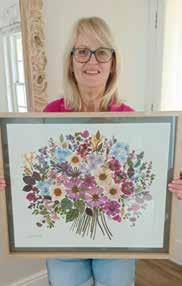
at Mayflower to share their knowledge with us.
A special thank you goes to Jeanne Farley and Cindy Douglas and their team for putting together an amazing display of our local flora, the hidden gems in our valley, to highlight the urgent need to protect them from poaching.
Carol Dendy Young’s beautiful plant-based picture, the prize for our raffle, was won by Joe Ulph, a fitting tribute to Carol’s talent and generosity. We also appreciate the efforts of our sponsors, garden sitters and supporters who contributed to the success of the weekend. The lovely floral displays outside local businesses added to the festive atmosphere of the village and we thank you for your participation.
To everyone who supported us, we say thank you and wish you a wonderful Christmas and a great summer ahead. We look forward to seeing you again next year!
Text: Glynda Jacobs | Image: Supplied

The Rotary Club of Franschhoek, at their October 2025 meeting, hosted six bright young students who shared their inspiring experiences from the Rotary Youth Leadership Awards (RYLA) camp. The meeting opened with President Gwyn outlining what Rotary stands for in Franschhoek –community service, leadership development and creating opportunities for young people to grow into change makers.
The students — Cameron Johnson, Semihla Mbewu, Sherwon van Wyk, Mbali Kofi, Ryan Williams and Caleb Dlamini — attended the recent RYLA camp, which brought together around 90 participants over four days. For many
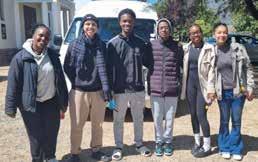
of them, it was their first time attending such a programme and the impact was profound.
The students spoke passionately about their experiences, describing how the camp pushed them out of their comfort zones and helped them discover new strengths. “So many of us were introverts at first,” said Cameron, “but by the end, everyone had opened up and was thriving.
consultations. We shall oppose it in the environmental assessments. We shall oppose it in the planning tribunals and in every forum where reason and evidence may yet prevail over commercial ambition. We shall fight it with all the tools democracy provides and all the passion that love of place inspires.
And if, in the end, we are overruled by authorities distant or indifferent, we shall at least have made clear that Franschhoek did not go quietly into the night of commercialisation. We shall have stood for something more valuable than the profits of investors:
the preservation of community, the protection of irreplaceable nature, and the principle that not everything of value can or should be monetised. This is our stand. This is our cause. And by all that makes Franschhoek precious, this is a cause worthy of our most determined and sustained resistance. Let the cables be strung elsewhere. Let the crowds be conveyed by other means. Let Franschhoek remain what it has always been: a place where beauty and culture, nature and community, exist in delicate and precious balance. For that balance, once lost, can never be restored.
Franschhoek’s community came together in spectacular style this year as Franschhoek’s Got Talent, Season 2, delivered its most successful event to date. Nearly 300 guests filled the venue for a glamorous evening of music, dance and heartfelt community spirit, all in support of Safe Hands Animal Rescue Franschhoek (SHARF).
A kaleidoscope of performers — representing a wide range of ages and disciplines — took to the stage throughout the night. Eleven acts in total entertained the crowd, each bringing something unique and memorable.
Several performers were accompanied by Franschhoek’s own Uncorked Band, whose energy elevated the night even further. After the winners were announced and dinner was served, the band returned to the stage, keeping the celebrations going well into the night as guests danced and enjoyed the lively atmosphere.
This year’s overall winner was Kiara Patel, a talented young performer currently completing her matric at Bridge House. She captivated both the audience and the judges with her exceptional performance.
In second place was the Uncorked Music Academy band, whose youth and musicality wowed the crowd.
The title of Most Enthusiastic Act went to Brandon & His Hoekkers, a well-loved group of women belonging to The Franschhoek Dance Club.
The judging panel — well-known chef Reuben Riffel, Franschhoek Life’s Martine Bauer and musician James Stewart — had the difficult task of selecting winners from an entertaining line-up.
Another highlight of the evening was a spirited auction led by Doug Gurr, who entertained bidders while raising significant funds for SHARF. Thanks to the generosity of the attendees and sponsors, the organisation will be able to continue its vital work supporting abused, distressed and
It’s amazing to see how much confidence people found in themselves.”
Team-building challenges, leadership exercises and outdoor activities such as obstacle courses and blind-folded mountain hikes encouraged trust, communication and collaboration. One student shared that it was the first time he had worked so closely in a team and that he now “loves working together and trusting others to reach a common goal.”
The RYLA leaders were commended for their enthusiasm and support, creating an environment where everyone felt welcome and valued from the moment they arrived. The students noted that being without their phones was a highlight, as it allowed them to form genuine connections and truly engage in the experience.
Throughout their presentations, recurring themes emerged — effective communication, leadership under pressure, teamwork and selfconfidence. Many described the camp as life-
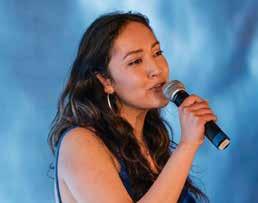
vulnerable animals throughout the valley. The event once again demonstrated the power of the Franschhoek community when it comes together for a meaningful cause. Chantal Lascaris, on behalf of SHARF, expressed her heartfelt thanks to everyone involved — from performers and volunteers to sponsors and supporters — who helped make the evening both joyful and impactful. As the year draws to a close, SHARF extends warm wishes to the entire community for a Merry Christmas and a Happy New Year. The date for Season 3 will be announced early in the new year, for what promises to be another unforgettable celebration of Franschhoek’s finest local talent.
Text & Images: Supplied
changing, offering lifelong friendships and skills that will serve them well into the future. Two of the students have already committed to returning in March 2026 as junior leaders. Another two students had been elected onto the executive council in their school – a testament to the programme’s lasting impact.
Special thanks were extended to Steve & Jenny Hassel, Mike & Anny Alman and Mike & Cheryl le Plastrier who contributed financially to making it possible to send so many students on this camp. And particularly to Mary Heistein – our Rotarian who ran this project.
In closing, the students agreed that the programme was “perfect as it was” — nothing to add, nothing to take away — and encouraged more Franschhoek youth to take part in future RYLA camps. Their enthusiasm was contagious and served as a wonderful reminder of Rotary’s ongoing commitment to developing tomorrow’s leaders, today.
Bells? You Can Both Choose Your Own Surnames Now
“Afamilynameholdsthemusicofgenerations–it’s the first inheritance we receive.”
(Attributed to Irish poet-philosopher John O’Donohue)
The Constitutional Court has just confirmed (with some significant adjustments) last year’s High Court ruling that both partners in a marriage have equal rights to choose their surname.
Previously, a woman – and only a woman –could choose when marrying to take her spouse’s surname, or to retain her own surname, or to assume a double-barrelled surname (her own surname with her husband’s surname).
However, if a man wanted to do the same (to adopt his wife’s surname or a double-barrelled surname) he had to apply formally to the

Department of Home Affairs (DHA) and provide “good and sufficient reason” for wanting to change. The problem with that is that the reason had to be related to “a change in the marital status of a woman” – an impossible ask for men. A tale of two couples
The Constitutional Court, and the High Court before it, grappled with this issue via applications from two couples whose attempts to depart from the “only women can choose” rule had been thwarted by the existing wording of the Births and Deaths Registration Act.
The couples’ reasons for wanting to depart from the norm will ring a bell with many. One couple wanted their new family to bear the wife’s maiden name as it symbolized her connection to her parents, who had died when she was young. The other wanted both spouses to use a combined (double-barrelled) name so that the wife’s maiden
name, which is important to her, was not lost.
Our apex court has now confirmed that this unequal treatment was unconstitutional because it discriminated on the basis of gender, infringing on their rights to equality and dignity.
So, what are your choices now?
In a nutshell, the Court’s order employs genderneutral language to ensure that everyone, regardless of gender or type of marriage, now has the same automatic rights when it comes to assuming a new surname.
Although the declaration of invalidity is suspended for 24 months to enable Parliament to either amend existing legislation or to pass new legislation, the Court’s ruling includes the provision that in the interim everyone can, as of right and without needing DHA authority:
• After marriage, take their spouse’s surname or, having taken it, resume a previous surname.
• After marriage, divorce or the death of a spouse, resume a previous surname or create a doublebarrelled surname.
Any other surname changes (including changes to your children’s surnames) still require application to DHA.
The Western Cape’s first Impact Hub is part of an expansive global network connecting changemakers, start-ups, researchers and policymakers working toward social and environmental impact.
Led by Marli Goussard, Impact Hub Cape Winelands aims to support local entrepreneurs who are developing community-driven solutions to some of South Africa’s toughest challenges. “Those closest to the problems are also closest to the solutions,” Goussard says. “Our role is to equip and connect people so that the ideas come from within communities – and that the benefits stay there.”
Unlike traditional business incubators chasing the next billion-rand “unicorn”, the new hub focuses on smaller, community-owned enterprises that combine purpose with profit. The model blends academic research, grassroots innovation and policy engagement to create what Goussard calls “an ecosystem of ownership” rather than dependency.
Inequality and opportunity side by side
The Cape Winelands offers a vivid illustration of South Africa’s inequality: world-class universities and
prosperous wine estates stand alongside deeply underresourced townships and rural areas. While the Western Cape’s Gini coefficient is marginally better than the national average of 0.68, it remains among the highest in the world. In the Cape Winelands District, over half of the population live below the upper poverty line.
For Goussard, this mix of potential and disparity makes the region the perfect testing ground for new approaches to inclusive growth. “The Winelands brings together all the ingredients –knowledge, business networks, and communities that are ready for change,” she says.
From construction waste to healthcare innovation
Although newly launched, Impact Hub Cape Winelands is already building partnerships. One pilot project with the NGO Fix Forward and Stellenbosch University teaches small building contractors to turn construction and mining waste into sustainable
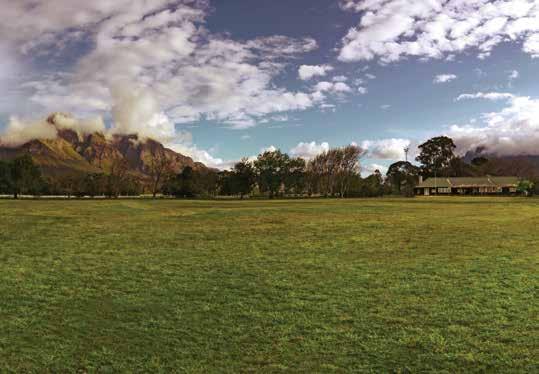

alternatives to cement. The initiative aims to reduce environmental impact while creating livelihoods for graduates from TVET Colleges.
Future projects will target community healthcare, exploring ways to train local health workers to run micro-enterprises offering affordable diagnostic services directly in their neighbourhoods.
Building a local movement
Goussard and her team are now inviting collaboration from government, business, universities and non-profits to grow what she calls an “impact ecosystem”. A dedicated hub space is planned for Stellenbosch, providing a base for innovation, co-working and community-building.
“For us, success means a thriving network of small, locally owned ventures that bring dignity, income and agency back to vulnerable communities,” Goussard says.
https://capewinelands.impacthub.net
Text: Editorial Desk

To avoid any confusion, it’s a good idea to tell the marriage officer before you marry what names you’ve chosen so the correct choices appear in the marriage register and on your marriage certificate. Give us a call if we can help with anything. Credit to LawDotNews and Falck Incorporated Attorneys.










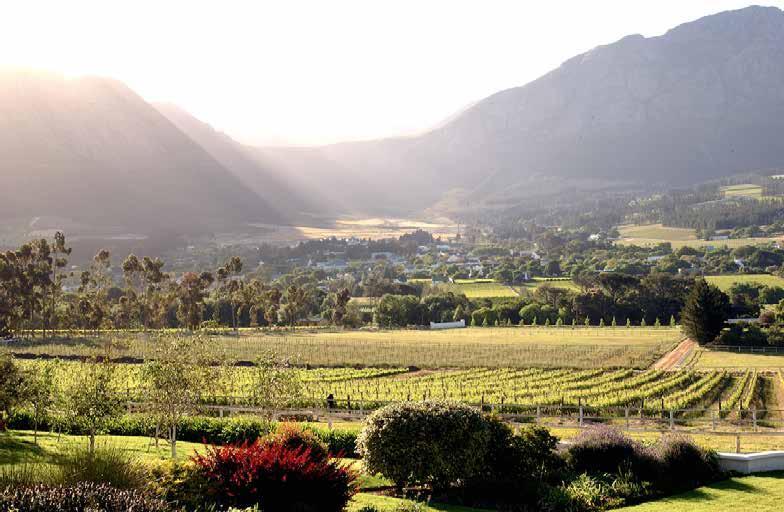
Warm weather rest is a bed that feels cool, light, and endlessly inviting.
SUMMER SLEEP UPGRADES FOR THE GUEST ROOM OR ENSUITE.
Pure Cotton Percale Linen: Crisp and cool against the skin, the secret to that just-laundered feeling, night after night.
Lightweight Down Duvet: Plush yet airy, designed by nature to keep you perfectly comfortable in any climate.
Featherbed Mattress Topper: A soft, cloudlike layer that turns every bed into fi ve-star luxury.
Limited time offer 20% off all Goose Down duvets Ts&Cs apply.
Find these and more sleep sanctuary essentials at the Granny Goose Sleeplab in Franschhoek
Visit us for expert advice and experience our products fi rst-hand.
Shop 1, 22 Huguenot St, Franschhoek, 7690
Hours: Mon-Friday 9am – 6pm Weekends 9am – 5pm
Phone: 021 863 5505


Granny Goose is available in Granny Goose stores, @home stores and online www.athome.co.za/brand/granny-goose

I am writing this in UK, having just come back from southern Spain where my brother, David, arranged an extended family gathering filled with love, happy conversation, reminiscence and plenty of good Spanish wine. It was wonderful for us all to be reunited after many years.
Unfortunately, the reason for the gathering is less happy: Dave was recently diagnosed with incurable brain cancer, so this was likely the last opportunity for us all to be together. Despite the sadness, we enjoyed ourselves immensely. But at Malaga airport yesterday, as I left, the parting with Dave was deeply painful for both of us. Knowing that this was likely not to be repeated, we tried in our typically awkward, sibling fashion, to say goodbye. Tears were shed but we both recognised how lucky we were to be able to say, finally, ‘I love you, Brother.’
So I’ve been thinking about honesty and courage in the poetry of farewell.
The great Argentinian poet Alfonsina Storni, whose passionate approach to writing and to life made her one of the world’s foremost proponents of feminist literature, especially in Spanish, died in 1938 at the age of just 46. Her outspoken poetic honesty about female sexuality made her both friends and enemies within the profoundly Catholic society of early 20th-century Argentina, but she became extremely popular nonetheless. She had a son, Alejandro, out of wedlock, when she was twenty but never married. Then, at the height of her fame but suffering from terminal breast cancer, she took her own life by walking into the sea at Mar del Plata.
Here is her final poem, ‘Voy a dormir’ (‘I am going to sleep’) in my translation:
I Am Going to Sleep
Teeth of flowers, cap of dew, hands of herbs, you, fine nurse, lend me the earthy sheets and the quilt of weeded moss.
I am going to sleep, my nurse, lay me in the bed. Set a lamp at my headboard;
a constellation; whatever you like; everything is fine; lower it a little. Leave me alone: you can hear buds bursting… a celestial foot rocks you from above and a bird sings a few bars so that you forget… Thank you. Ah, one request: if he phones again tell him not to keep trying, for I have gone away…
Alfonsina Storni
from‘ObraPoeticaCompleta’,1961
South African poet Chris Mann died in 2021 but he wrote the following poem to his beloved wife, Julia, years earlier. To me it is a welcome reminder to accept that eventually we all ‘go to sleep’ but are sometimes blessed with the opportunity, as I was, to say goodbye properly. And we should take it.
A Farewell in Advance of Death
Since I expect to breathe my last before your eyes have shut their gaze on this our time on earth, and since in that feared final hour
I may not have the strength to shape the words for what I feel, let me try now, when springtime’s rush of bird-song, buds and small green leaves dispels dull fears of death, and say straight out that you were loved from when my eyes first looked on you until they ceased to see.
Your face, the yellow dress you wore, the sprigs of leaves behind your head are now brief thoughts in space which thin and fade, as time flies on, with kin long gone, your wedding speech, our first child in your arms.
So more than ghosts, let me now praise that dark and silent passageway of lights my whole life moves towards, that aging I may learn to love each meal, each prayer, each kiss with you as if it were our last.
And if that first night on your own you wake and wonder where I am and what I’d say read this, and know that in your memory I’m yours to call back as a shade, or let go, as you wish.
Chris Mann from ‘Rudiments of Grace’: Grahamstown-Rhini: CathedralofStMichaelandStGeorge,2014





Publ. Faber, 238 pages
“What we obviously had, even when things smoothed over, was a C-minus marriage, which makes it pretty hard to score much higher than a B overall for the rest of your life.”
This is the laconic way that Tom Layward, a 50ish Westchester County law professor sums up his life. It also sets the tone for the narrative that follows. Tom tells us his story in his own words. He is the narrator of his own life, pitch-perfect and quietly moving. We trust him completely, because he is as truthful as he can be.
Ben Markovits is the author of “The Rest of our Lives,” and I have to confess that I had not heard of him, even though he has written some highly regarded novels. I was only drawn to this book because it had been long-listed for the Booker Prize. Now I know that he has been the recipient of various prizes, including the James Tait Black Memorial Prize. He is both a Yale and an Oxford graduate and played professional basketball (which shows in this novel). He presently lives in London. In my opinion he is a worthy successor to Richard Ford as a chronicler of middle-American life, stylistically and thematically.
In the opening paragraphs of “The Rest of our Lives” we learn that Tom’s wife, Amy, had a brief affair a few years back, and that he had then decided that, once the children had grown up and left home, he would probably leave home too.
Now the time has come. Michael, his son, graduated a few years back, and is living in California. His daughter Miri has just turned 18 and, as the novel starts, Tom is driving her to college in Pittsburgh. He settles her down, gets back in the car and keeps on driving West (away from Amy), with a few quite vague objectives in mind.
He might go to Los Angeles, where he has been asked to give legal advice involving a basketball
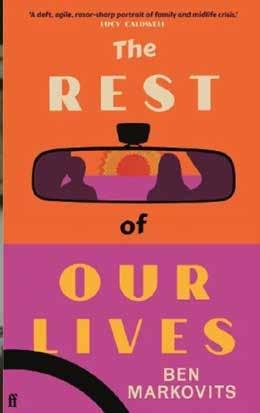
team. He might visit his ex-girlfriend, his son, his brother, his old college friend. He has a nebulous idea to relive his college basketball career by finding some material to put into a book. So he keeps an eye open for someone tossing a basketball in a backyard or playing a solitary game in an outdoor park.
After a few chapters we begin to sense a familiar tone in Ben Markovits’ story-telling voice. As I said, I began to hear the same wry, laconic voice of that other great chronicler of American middle-class life, Richard Ford. It is a familiar, quiet, observant voice. Aware of the lonely cityscapes of endless strip malls, rundown motels, and giant Walmarts. And of finding joy in shared experiences, however brief. Tom’s journey has all the elements of the road trip, that most American of genres. A chronicle of not only the variety of landscapes, from desert to forested hills, but also the variety of people hidden in the suburbs of industrial cities and in the clapboard apartments in small towns. Tom’s trip becomes a pilgrimage to his past life. The visit to his ex-girlfriend revives some of his lost self-belief. His stay with his brother recalls his ambivalent feelings towards his father. His old college friend advises against his getting involved in the dogeat-dog politics of Los Angeles basketball.
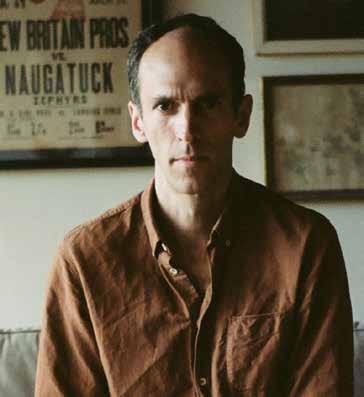
Gradually a second theme begins to appear. Tom’s health is not good. He suffers from blackouts and his face is grotesquely swollen in the morning. His collapse in Los Angeles leads to the longdeferred diagnosis of his illness and turns his life backward towards Amy. A gentle resolution to a gentle story.
“The Rest of our Days’ is a charming, readable, involving book. I am now going to spend some money on Ben Markovits’ other novels.
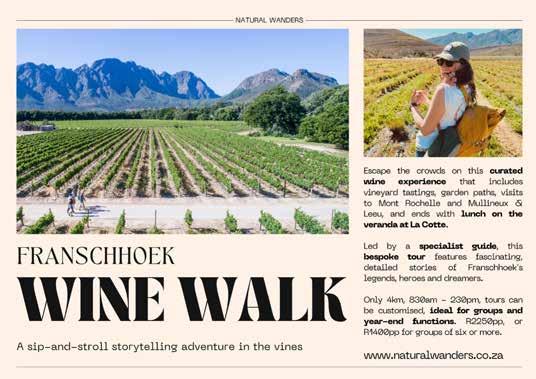
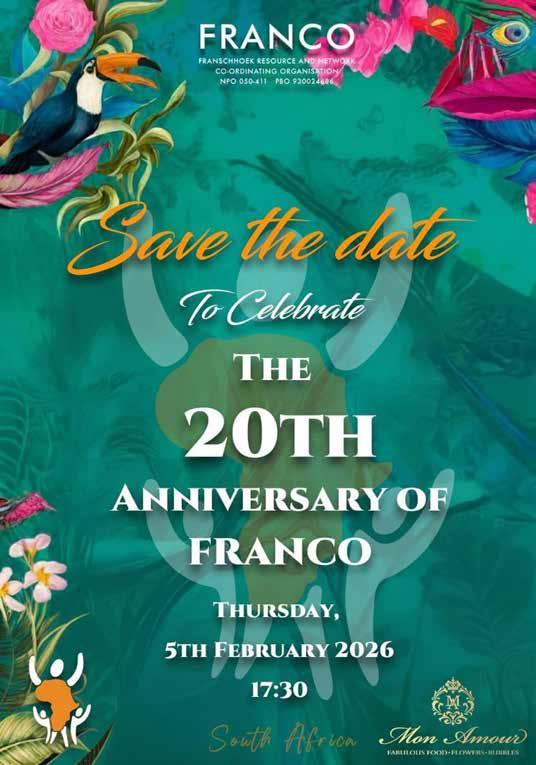
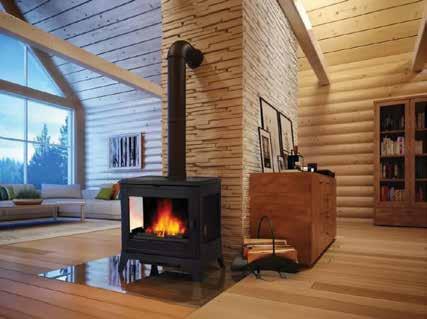
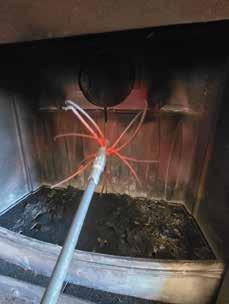





















WE KNOW YOU CARE, WE KNOW YOU WANT TO HELP
PLEASE...

Established in Cape Town since 2009, African Wildlife Artist Suzanne Elizabeth opens her new gallery in the heart of Franschhoek.
No matter how well-meaning, direct support keeps our children on the street: Giving money or support of any kind directly to children on the street might seem harmless, or helpful, to members of the public, tourists, and businesses. The truth is that it means keeping them out of school, on the streets, and locked in the hands of those exploiting them.
Unfortunately, once a child settles onto the street and allows the street to become their survival paradigm, they become resistant to change
The money they get from begging: or school can compete for the child's attention when they can earn over R50 a day in our smaller provincial towns, never mind the odd foreign currency equivalent of R200. This money is not used for food or schooling needs but goes directly into substance abuse, or is handed over to support their guardians' substance abuse.
Food from restaurants and locals: businesses, and individuals feel sorry for the children, so give them food and even small jobs for money. This helps sustain the children on the street, validating their impression that life on the streets is better and
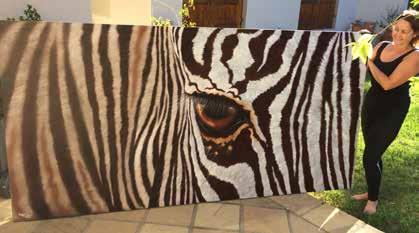
keeping them out of school and out of the programs set up to look after them.
Established since 2009 in the world renowned V&A Waterfront in Cape Town, wildlife artist
Public support: Many well-meaning members of the public give the children shoes, clothes, and food items. Most of this is sold or traded and is used not only to sustain them on the street, and pay for drugs but also to encourage them to remain on the street.
Suzanne Elizabeth has opened the doors to La Petite Galerie in the heart of Franschhoek. Here, the talented family of four showcase their wildlife photography which is the inspiration behind their artwork alongside their unique hand made paintings.
Many people want to help but often don’t know how to give responsibly. By donating to the FRANCO StreetKids Centre, you can make a significant impact on our children’s future. We offer daily hot meals, tutoring, mentoring, hygiene facilities, trauma counseling, sports, karate, yoga, and skills programs. Most importantly, we provide LOVE and RESPECT for their innocence.
Commissions are welcome, let us know the dimensions and we’ll create a painting especially for you!
Paintings can be rolled for safe and affordable worldwide shipping.
La Petite Galerie, Huguenot Street, Franschhoek
Suzanne Elizabeth Tel: +27 82 515 4131
Samantha Louise Tel: +27 71 236 3571 theartgallerycapetown@gmail.com
www.francosa.co.za

The Old Corkscrew specialises in exceptional pieces covering silver, decorative arts and the unusual. A strong emphasis on wine related antiques and a superb collection of corkscrews.



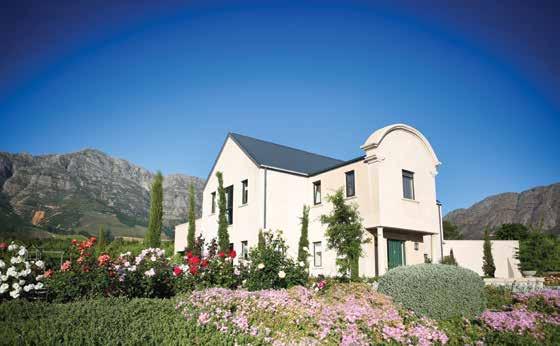


We stock a full range of Midas, environmentally friendly paints (water and oil based) and Earthcote specialised, textured trowel-on and brushon products for wall and floor surfaces (300 colours to choose from) and a full range of Paint Brushes, Rollers and Accessories
We also stock waterproofing products, Weatherprufe, Elastocryl and Weatherklad, Rolls of torch-on (3mm & 4mm) and various sizes of waterproofing membrane. Plascon water and oil-based paints.
We also stock a full range of Woodoc ‘food for wood’ in various colours and a full range of Duram products, including Duram Roof paints in various colours and Duram Showfloor Polyurethane floor paint, also in assorted colours. We can also supply twin pack epoxy paints for specialised applications.
All textures and colours are on show in our showroom. Pop in and have a coffee with us, whilst leisurely selecting your paints and colours. For FREE technical advice, paint specifications and quotations contact Paul 082 567 6162
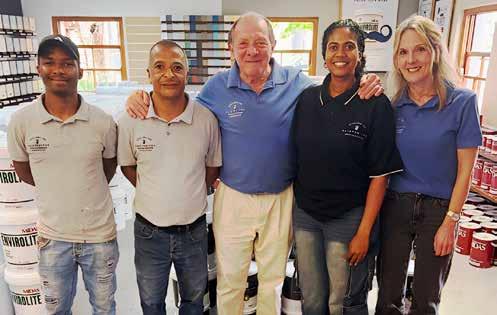

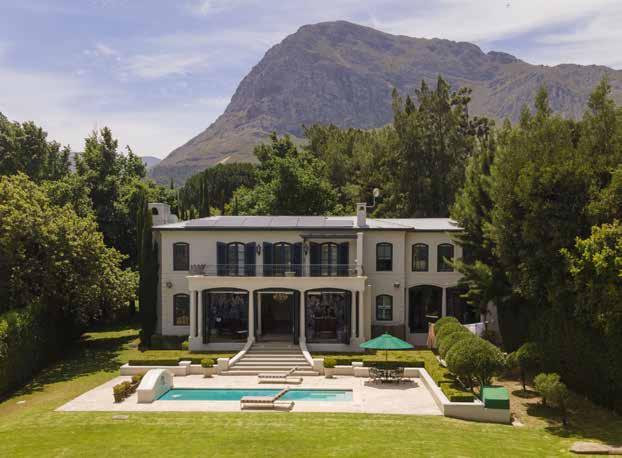
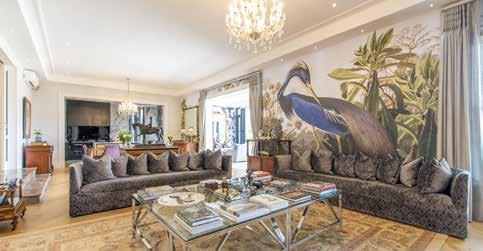
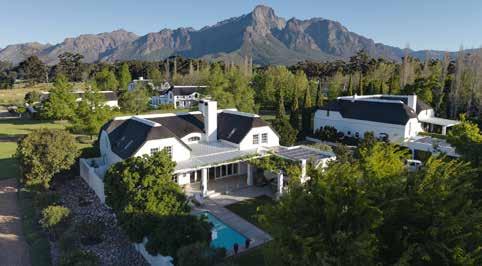
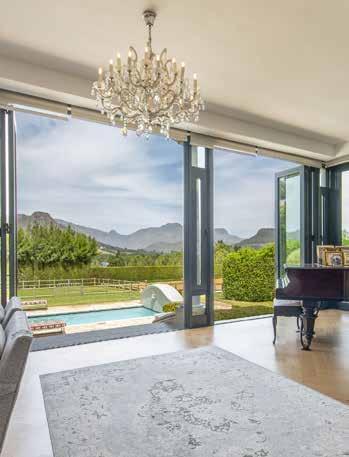
Franschhoek Rural
10 Beds | 11 Baths | 3 Garages | 2 Studies | 1 Flatlet
Timeless Manor in Franschhoek - Refined country living
This secure and secluded 1-hectare property offers tranquillity and a prime position in the Franschhoek Valley on a private road near the village. It includes two standalone homes, a studio, stables, a lunging ring and an arena, with mature trees and a winding driveway creating an established feel. The contemporary main house features spacious reception rooms, superb views, three bedrooms, a champagne cellar, an entertainer’s kitchen, a study and gardens with a pool. The second home provides a farmhousestyle retreat with a wrap-around veranda and pool. Strong short-term rental income, solar power, borehole, water treatment, irrigation, air-conditioning and underfloor heating ensure excellent self-sufficiency.
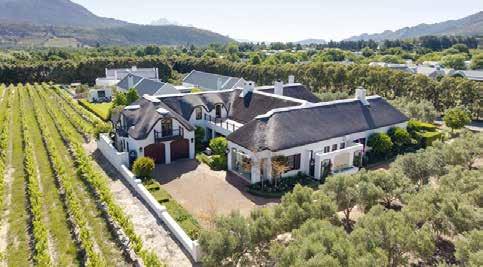
Ferme Chantelle
Impressive and Elegant Home on La Ferme Chantelle
Offering superb entertaining spaces, this home includes formal and informal lounges, multiple dining areas, an open-plan kitchen, a view-filled library, four comfortable bedroom suites, landscaped grounds, a pool and a double garage in a tranquil estate setting.





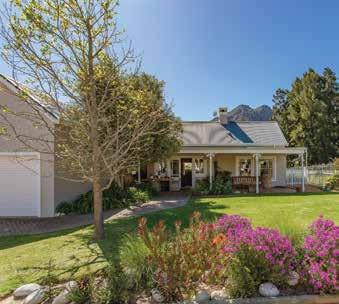
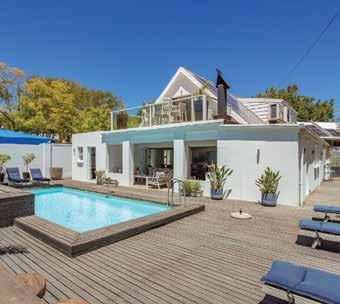
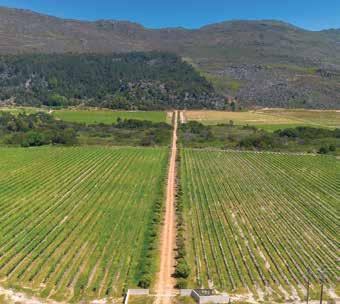
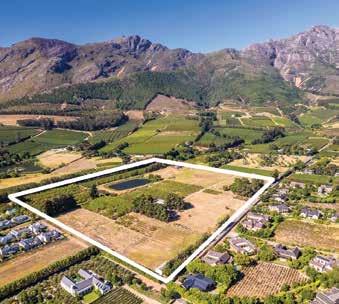
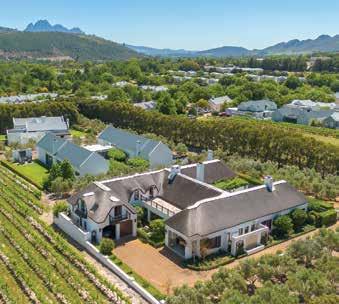
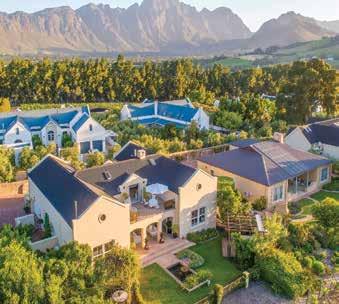

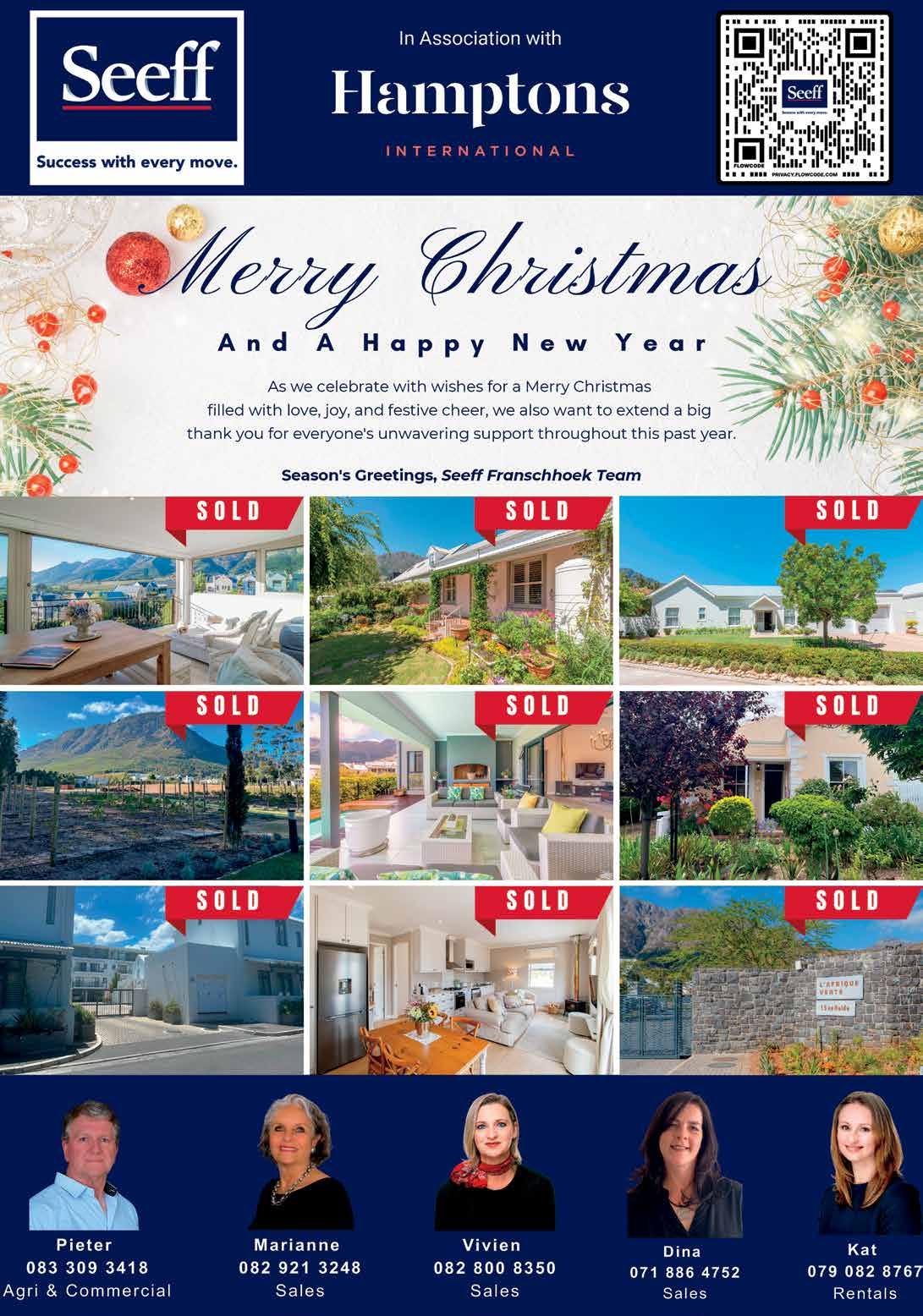
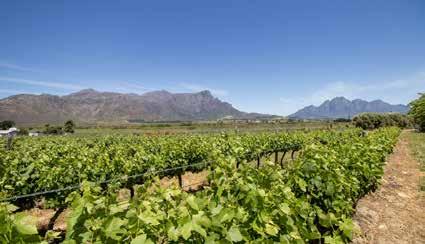
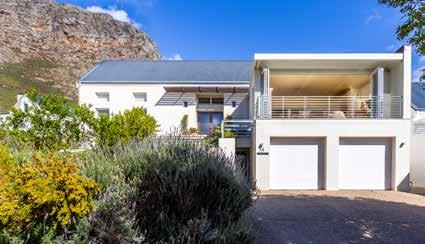
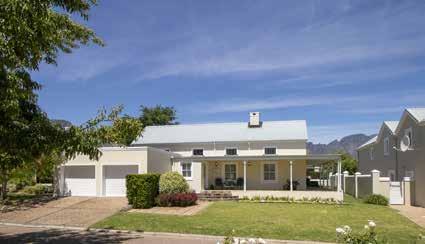
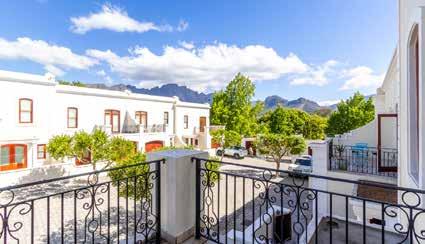
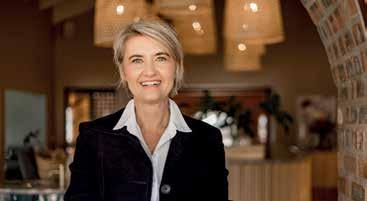
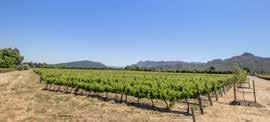
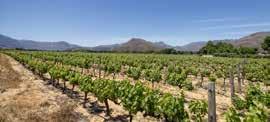
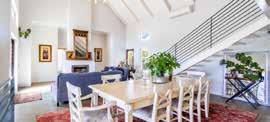
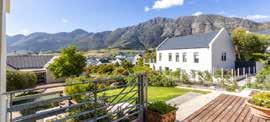
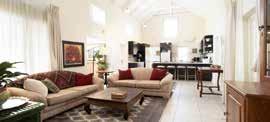
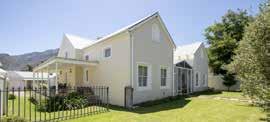
R9.995 MILLION
6 BEDROOMS | 5 BATHROOMS | 2
Set within a secure estate, this versatile home offers the perfect blend of space, comfort and dual-living potential. Positioned on a gentle slope, it captures magnificent north-facing mountain views from the elevated main level.
R8.5 MILLION
Seldom do properties become available in this well-established and secure estate. La Petite Provence is renowned for its beautifully maintained communal gardens and vineyards, excellent security with no short-term rentals allowed, ensuring a calm and settled environment for residents. The estate also offers wonderful shared amenities, including a communal swimming pool and tennis court, adding to its appeal. 3 BEDROOMS | 3 BATHROOMS | 2 GARAGES
Perfectly positioned on the main road of Franschhoek, this spacious townhouse in the sought-after Villefranche Estate offers an exceptional opportunity for those with vision. Please note that the property is in need of repair and maintenance. These factors have been carefully considered in the asking price, presenting an excellent renovation opportunity for a buyer seeking to create something truly special. 2 BEDROOMS | 2 BATHROOMS | 1 GARAGE