Aviation
II
Aviation
31 Abha International Airport 39 King Salman International Airport 47 CPK Airport Poland 53 Red Sea Airport 59 AMAALA Airport 65 Techo International Airport 71 Chicago O’Hare Global Terminal 77 Marseille Airport 83 John F Kennedy International Airport 87 New International Airport Mexico 95 Tocumen International Airport 103 Thames Hub 105 Kuwait International Airport 113 Queen Alia International Airport 119 Spaceport America 125 Heathrow, Terminal East 127 Beijing International Airport 135 Hong Kong International Airport 143 BAA Pier Platform 145 Heathrow T3 Futures Forecourt 151 Cathay Pacific Lounges 159 HACTL Superterminal 161 Stansted Airport 165 Incheon International Airport T2 Contents
The design process can question our assumptions about buildings and can reconcile needs which are often in conflict. That may mean breaking down social and physical barriers between user groups; or finding ways to bring different functions together under one roof. In that sense, design is a process of integration. The holistic thinking we apply to buildings applies equally to infrastructure – transport systems, streets and public spaces – the ‘urban glue’ that holds a city together.
Norman Foster Founder and Executive Chairman, Foster + Partners
1
“
Our approach
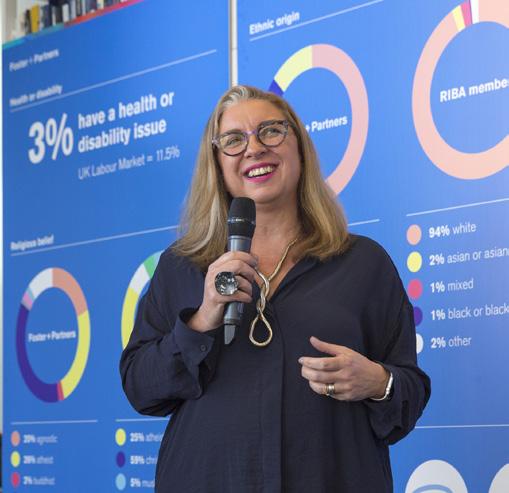
Foster + Partners is a global studio for sustainable architecture, urbanism and design, founded by Norman Foster in 1967. Since then, he and the team around him have established an international practice with a worldwide reputation. With offices across the globe, we work as a single studio that is both ethnically and culturally diverse.
Sustainability is at the heart of everything we undertake. We audit all projects against global standards, while developing bespoke strategies that drive our environmental agenda. To build sustainably requires us to design holistically, and our unique integrated design approach enables us to develop innovative strategies that have a firm focus on the future of the environment.
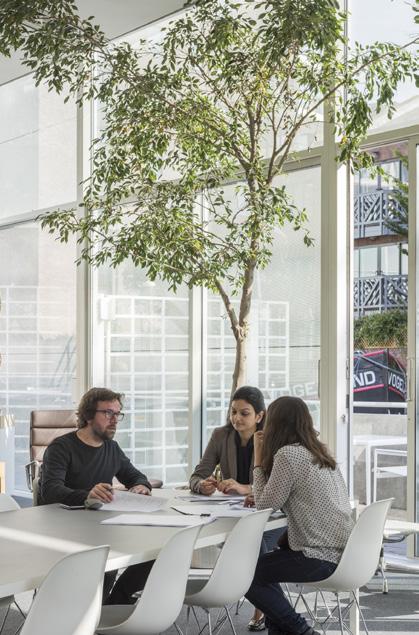
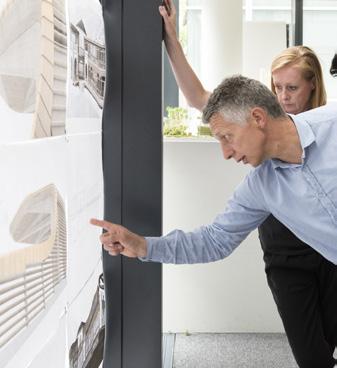
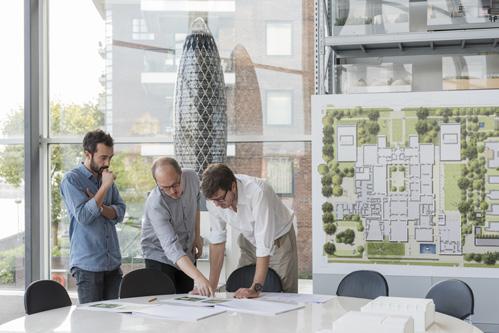
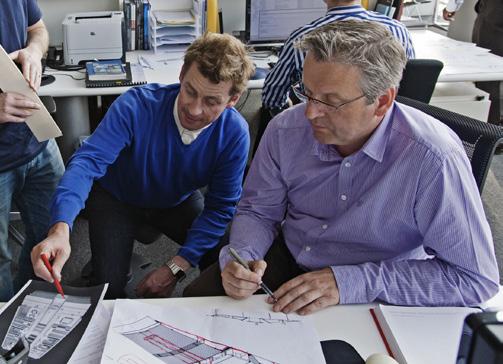
Structural and environmental engineers, together with many other specialist design teams, work alongside the architects to devise fully integrated design solutions. Every project starts with fresh thinking, leading to a solution that is tailor-made to both site and user. Design is typically undertaken by a small, close-knit team; the team that starts a project sees it through to completion, thus providing continuity throughout. It is now possible to consider the built environment as a totality, and to apply a truly holistic approach to responsible design.
Foster + Partners recognises sustainability as central to any design project and strongly believe it should be considered from the beginning of the project and throughout the design process.
2

How we work Architecture
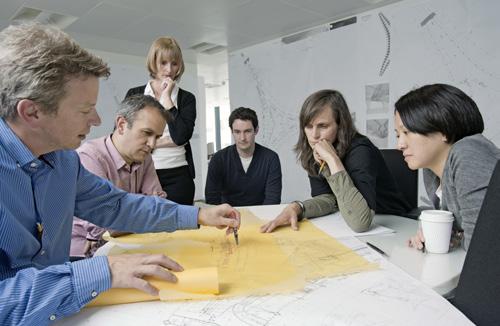
We believe the best architecture comes from a synthesis of all the elements that separately comprise and inform the character of a building: the structure that holds it up; the services that allow it to function; its ecology; the quality of natural light; the symbolism of the form; the relationship of the building to the skyline or the streetscape; the way you move through or around it; and last but not least its ability to lift the spirits. By working together creatively from the start of a project, architects and engineers combine their knowledge to devise integrated, sustainable design solutions.
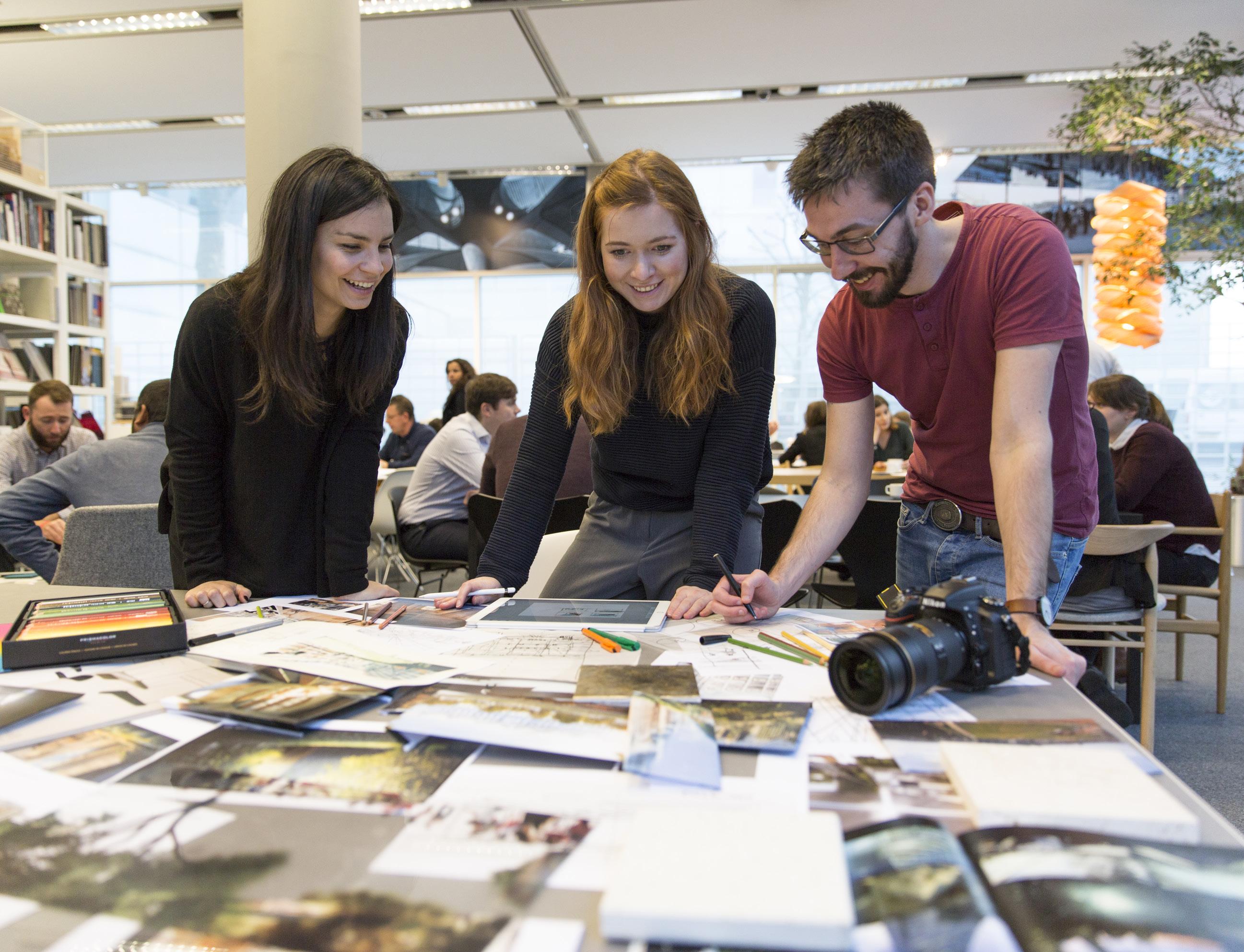
4
review in The Hub
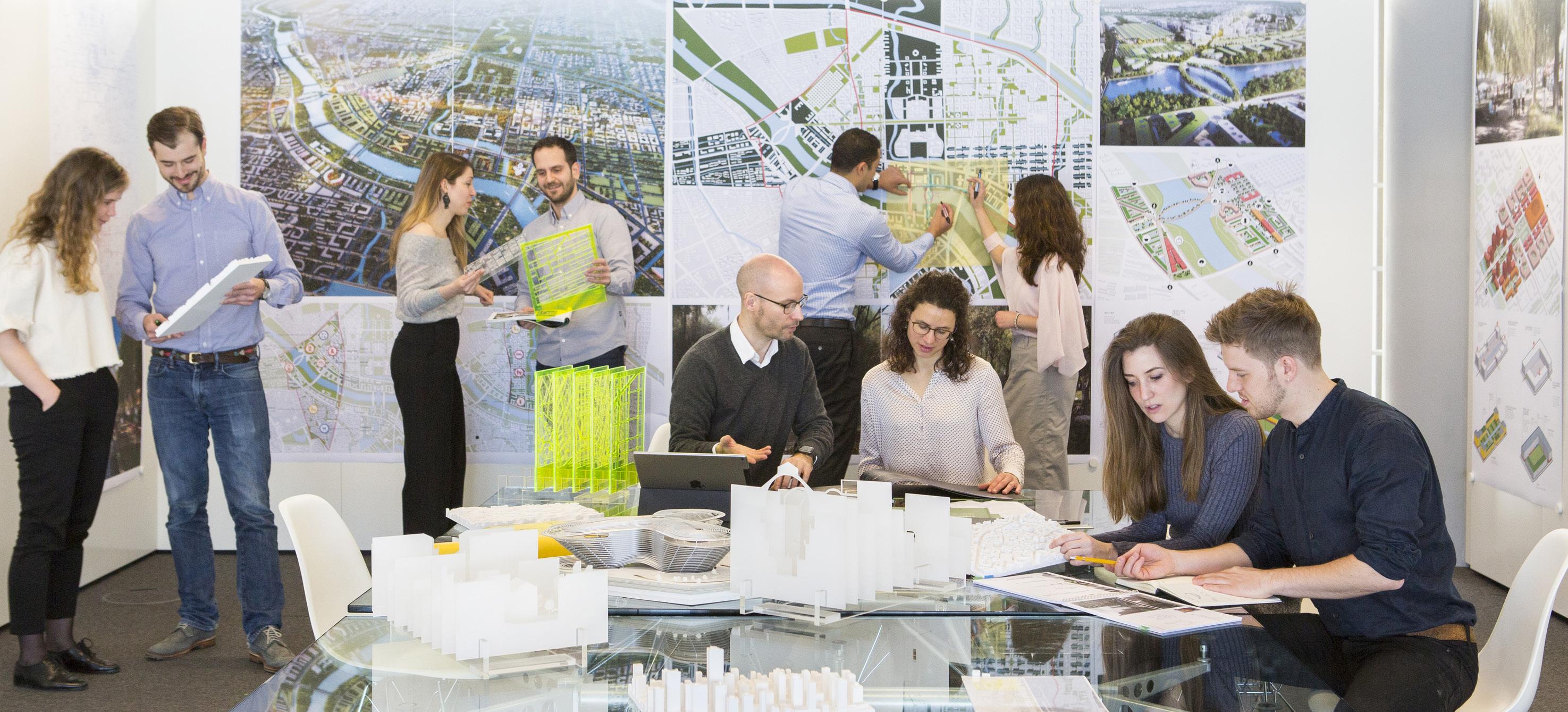
Foster + Partners studio in
Below: Design Communications team
at
Battersea, London.

Design Management
Using the most up-to-date project management standards, the Design Management team provides support to the design teams. We play a key role throughout the design and construction phases, from programming, change control, and procurement to document control, payments and risk management.
Design Support
At Foster + Partners, design is typically undertaken by a small, close-knit team of individuals, which is able to draw on a wide range of other disciplines including, communications, graphics, visualisation, film, model making, and 3D computer modelling.
Design Communications
To help design teams visualise projects, the Design Communications group produces a wide range of work, from hand-drawn sketches, drawings, digital concept art paintings to photorealistic artwork.
Visualisation and Film
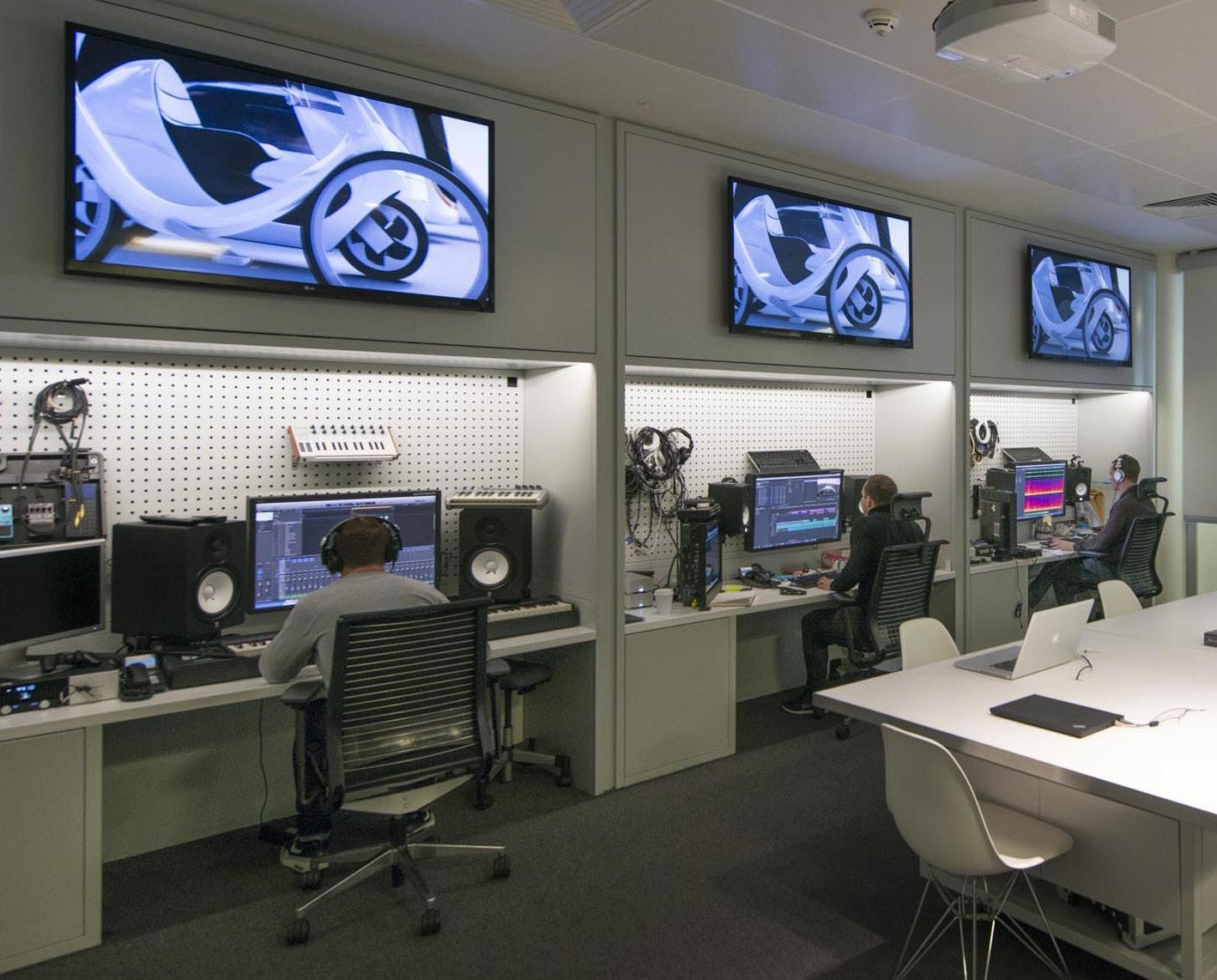
The Visualisation and Film group produces architectural visualisations, animations, motion graphics and films for the practice for use at concept stages, construction, marketing and final presentations.
Modelmaking
Assisting the teams throughout the design process, the modelmaking team creates everything from sketch models to large-scale building mock-ups, using a wide range of tools from traditional techniques and styles to innovative new technology.
Environmental Engineering
The Environmental Engineering team designs efficient building systems that reduce energy and water consumption, enhances user comfort and ensures indoor environmental quality. There are many aspects to the team’s work including: Mechanical Engineering; Electrical Engineering; Public Health; Fire Protection; Vertical Transportation; Architectural Lighting Design; Building Physics and Sustainability.
Industrial Design
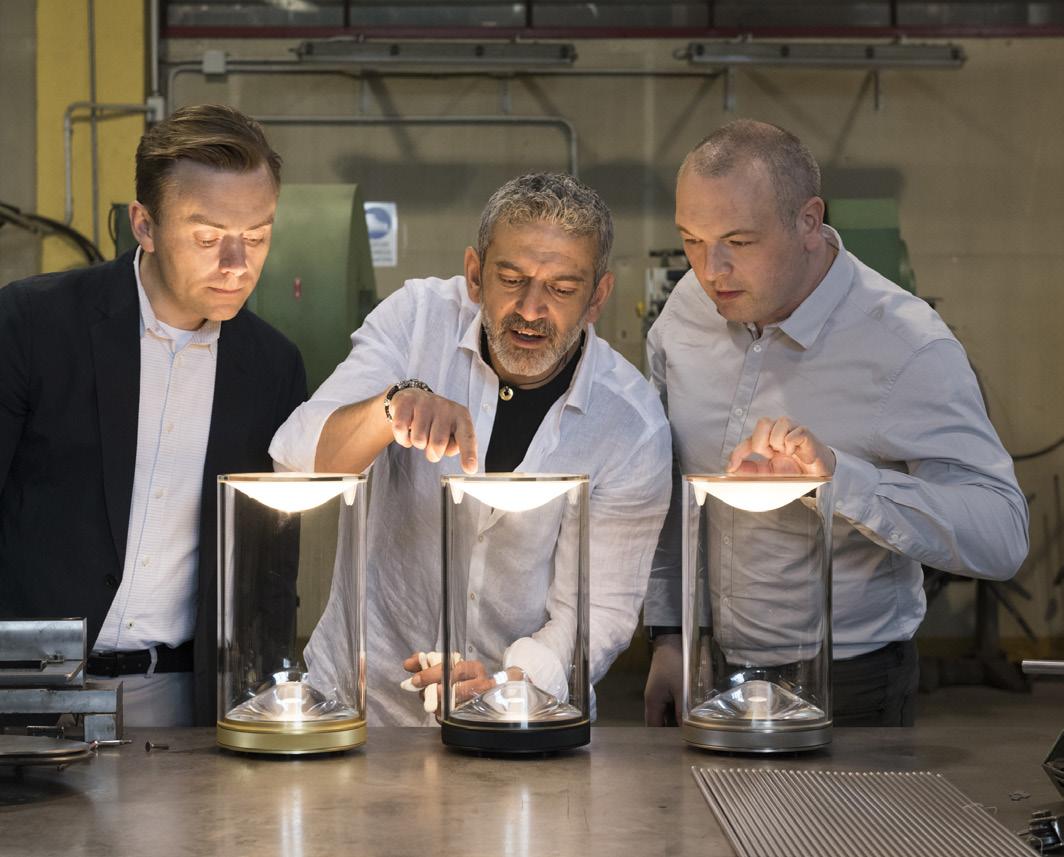
Carrying out a diverse range of work, the Industrial Design team frequently works as an integral part of the overall studio, designing specific building elements, but also developing products at a commercial and domestic scale in collaboration with industry partners such as, lighting products for Lumina and Louis Poulsen, furniture with Walter Knoll and Vitra, and nautical commissions for YachtPlus and other private clients.
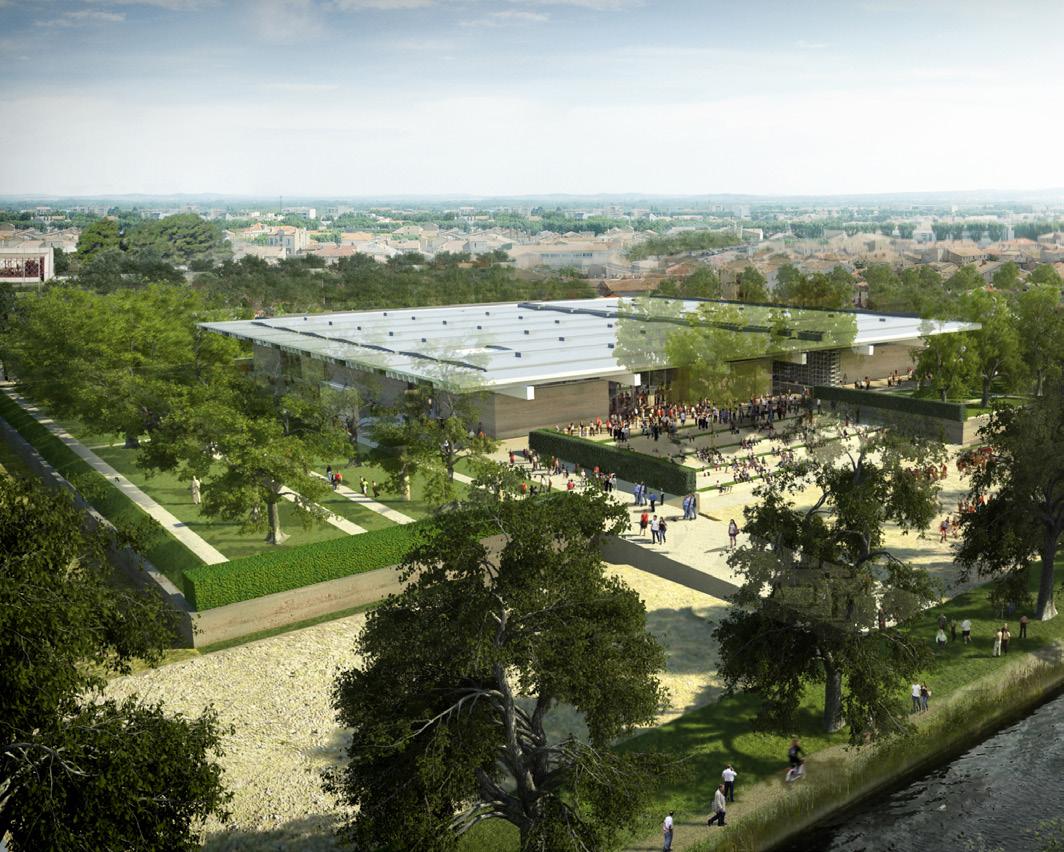
5
Below, from the top: Visualisation team’s video editing suite.
An offsite modelshop located on Stewarts Road, close to the main studio, in London. Narbo Via, aerial view visualisation.
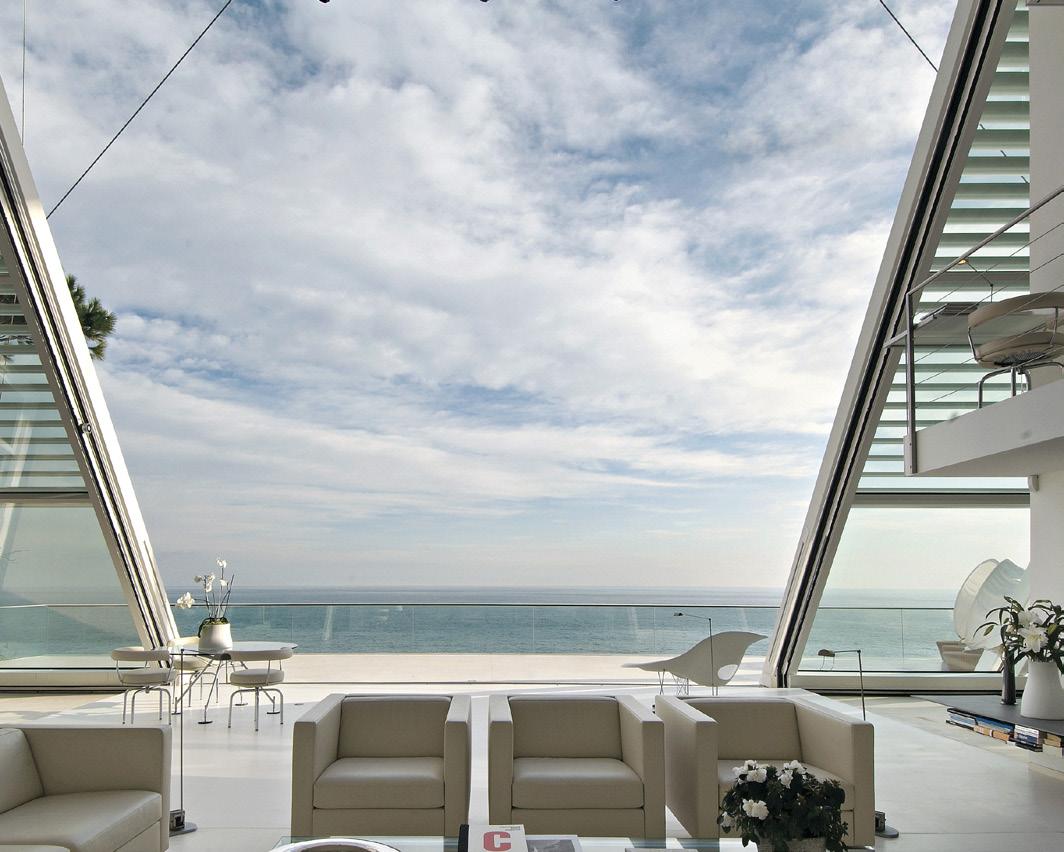
Villa La Voile, Saint-Jean-Cap-Ferrat, the southern wall of the living space is fully glazed and can be slid aside to open the space up to sunlight and sea air.
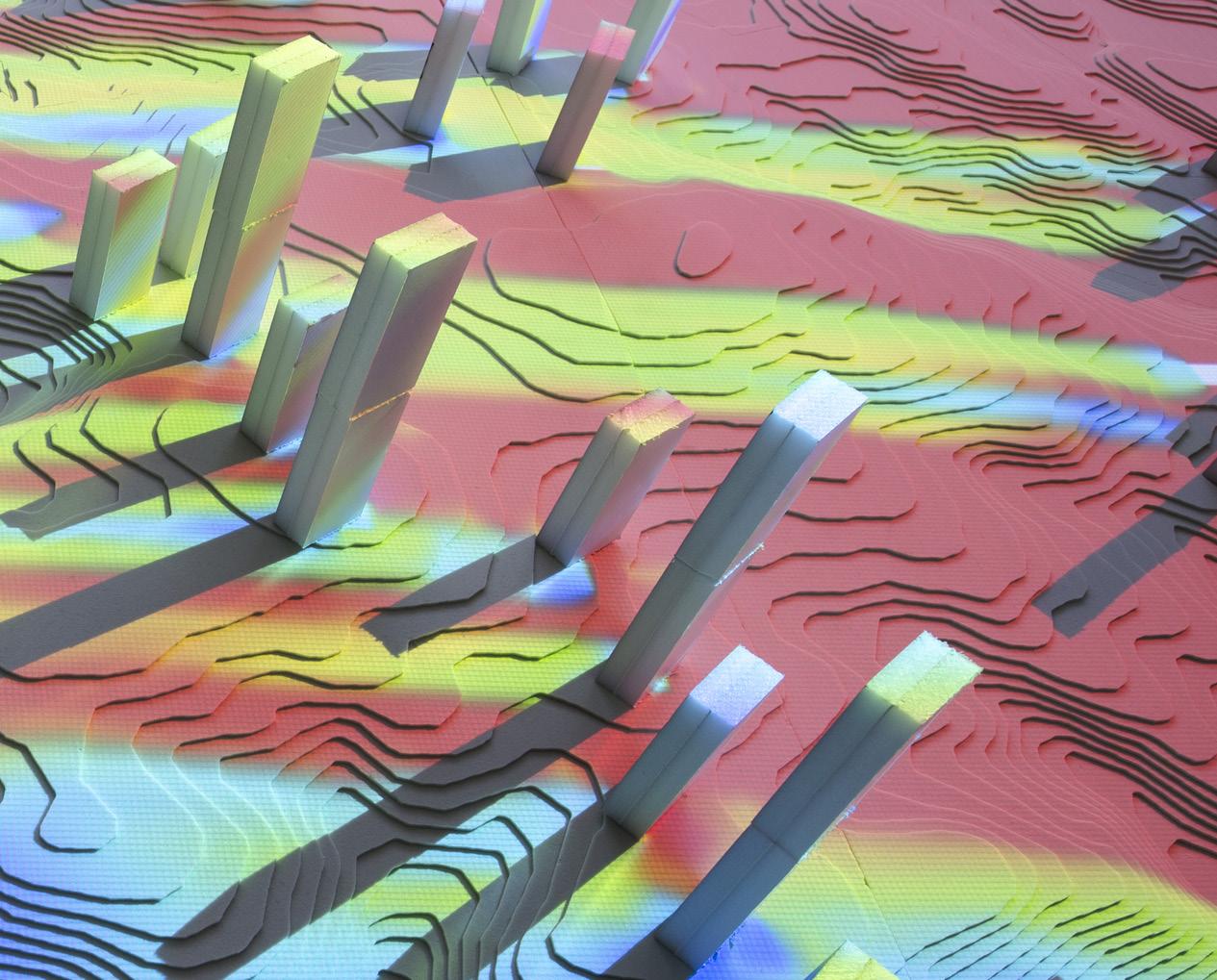
Interactive Physical Modelling application, created by ARD team.
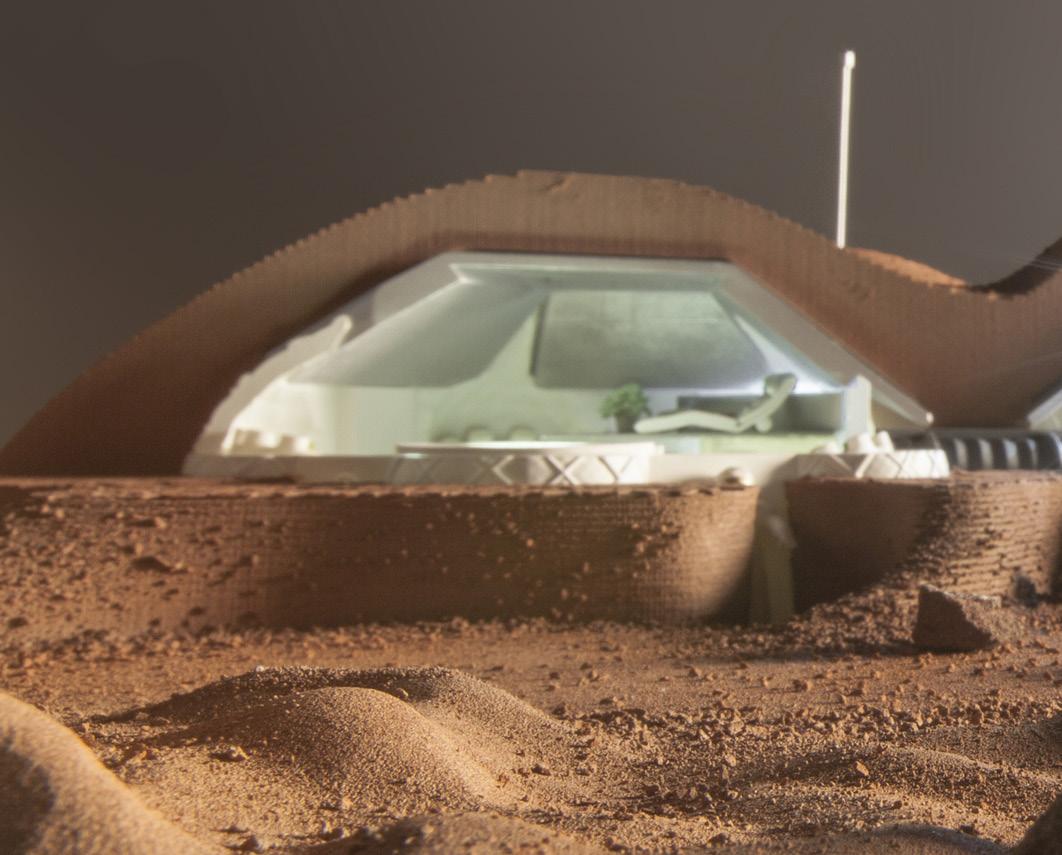
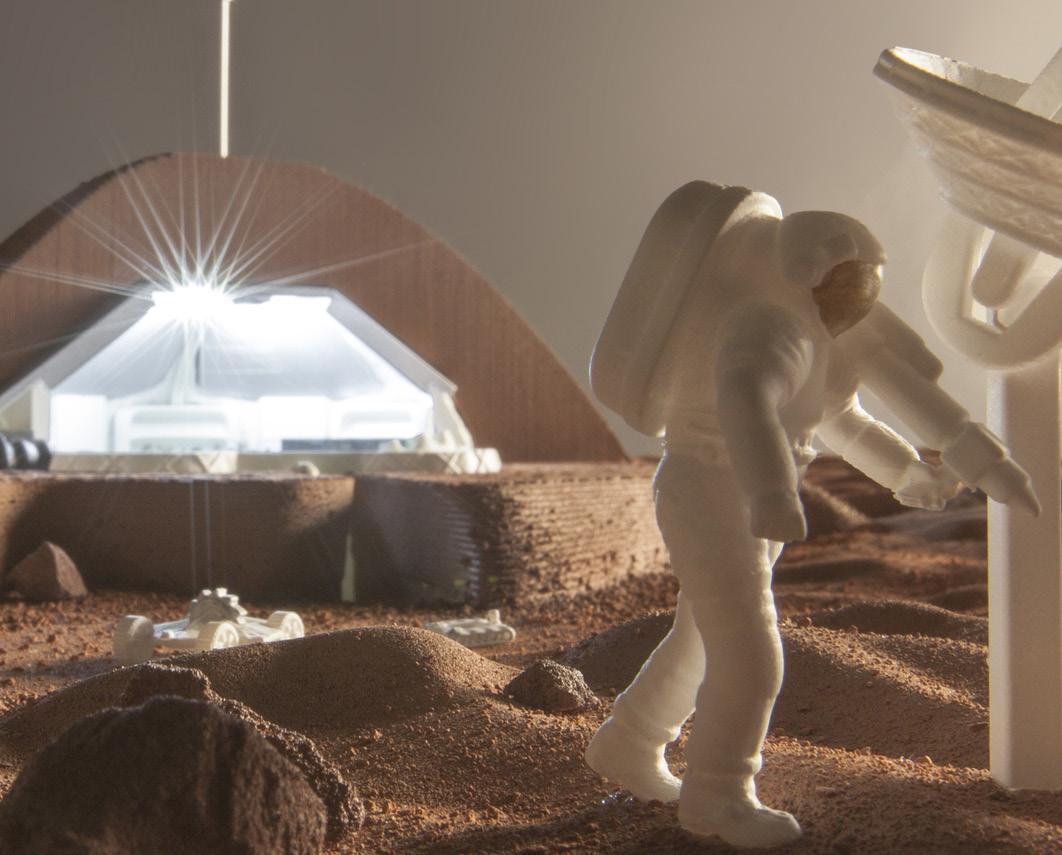
Model of Mars Habitat, a project by the SMG.
Interiors
By designing a building from the inside-out as much as from the outside-in, we inculcate a sense of continuity and connection to the wider world. The starting point for any design solution is to gain an understanding of people’s needs and the way in which a space will be used. The goal is the creation of interiors that are both functional and elegant, while evoking a sense of place and complementing a building’s outward expression.
Research
Central to our ethos is an appetite for enquiry, discovery and understanding. By maintaining a commitment to research – one of our great strengths as a practice –we are not only up-to-date with new developments and techniques, but are also able to thoroughly evaluate their relevance and technical performance for individual projects. Our research groups such as, Applied Research and Development, Material and Research Centre, and Specialist Modelling Group, help design teams answer these challenges in the spirit of innovation.
Applied R+D
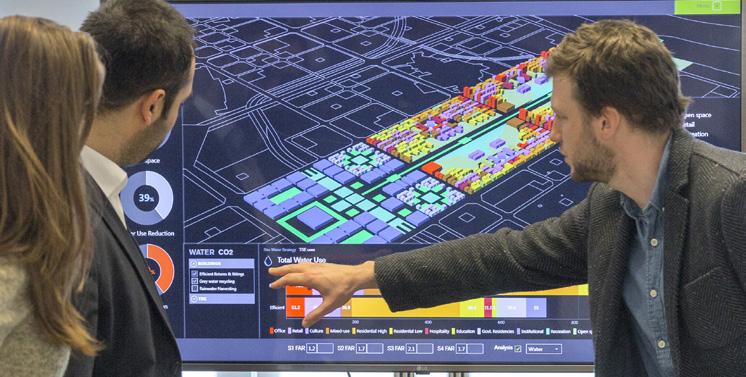
To solve complex design challenges, bringing the latest advances out of the lab and into the hands of architects and engineers, the ARD team conducts state-of-the-art research and development at the practice. The team provides expertise in computational design, performance analysis, optimisation, fabrication and interaction design.
Specialist Modelling Group (SMG)
SMG focuses on three core areas, Geometry and Building Physics and Innovation. The Geometry team works on complex geometrical modelling and fabrication strategies. The Building Physics team looks at the movement of natural light, air and sound, while focussing on occupant comfort. The Innovation projects include collaborative research with universities and industry partners, exploring far-reaching ideas from bio-inspired engineering to extra-planetary 3D printing.
Materials Research Centre (MRC)
and Information Centre (IC)
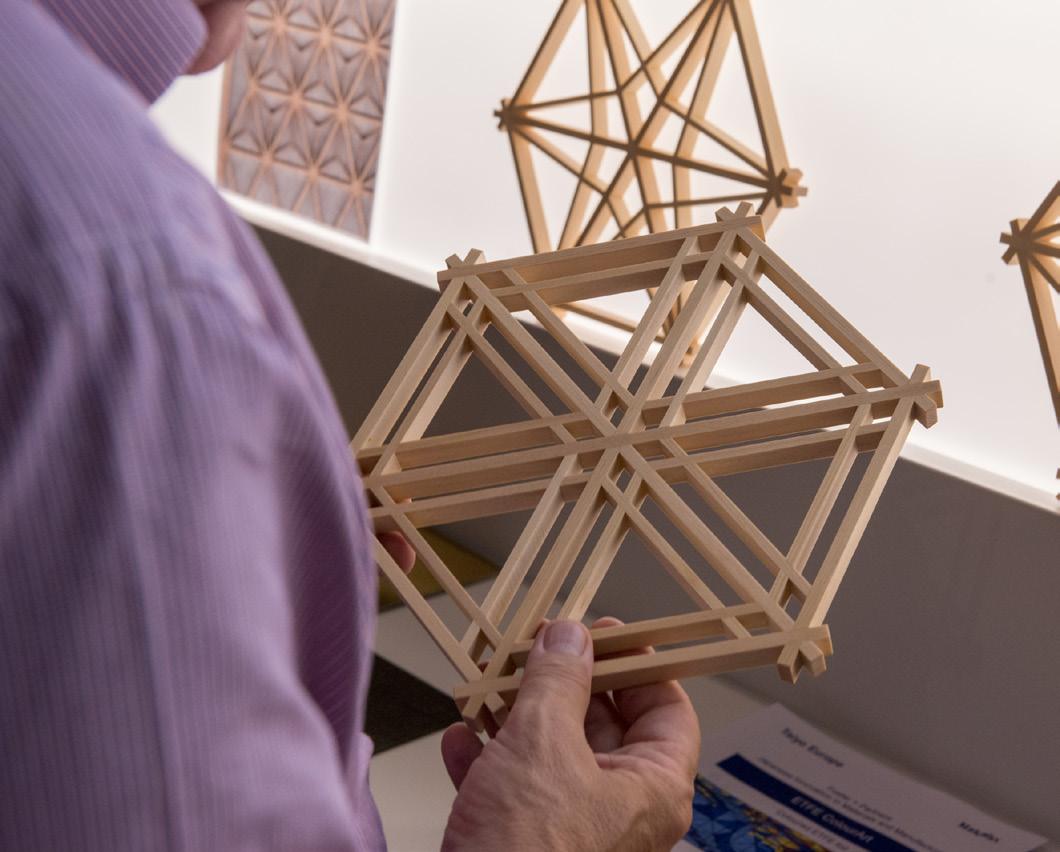
Providing an information and research service for the practice, the MRC and the IC together look at current and new materials, products, companies, technology, innovation, sustainability and technical issues. The MRC is an in-house reference that houses over twenty thousand samples of materials and products. The IC is a physical library of product literature including brochures, catalogues and technical information.
6
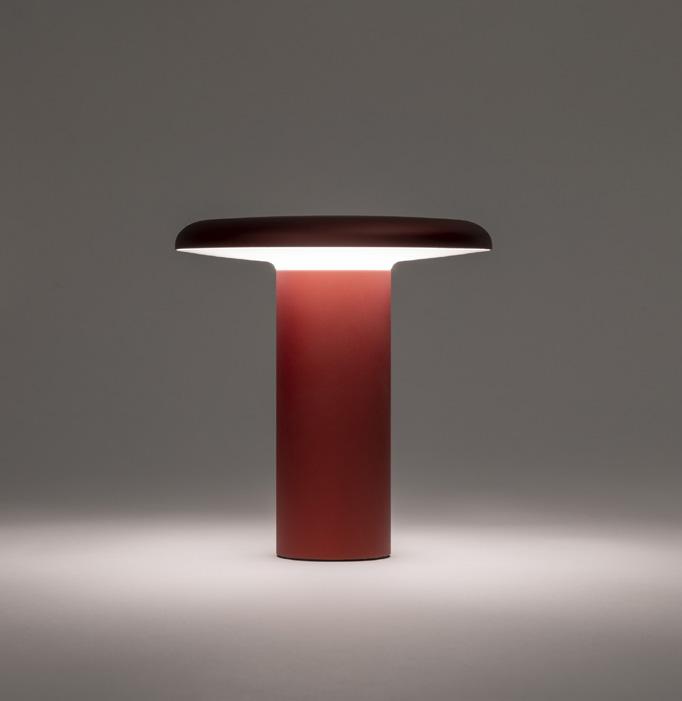
This page, from the top: Industrial Design team developing Eva table light with Lumina in Italy.
From the very beginning our practice was founded on a philosophy of innovation, sustainability and design. We continue to learn from the past and creatively embrace the challenges of the future, with a firm belief that good design makes a difference.
Norman Foster Founder and Executive Chairman, Foster + Partners
Structural Engineering
The Structural Engineering team has experience in tall and complex buildings, and particular knowledge of nonlinear and seismic design and analysis. The team works on projects from their initial conception right through to completion on site together with the architectural teams. They also liaise with other engineering consultants on projects, where the knowledge of local codes and thirdparty procedures may be beneficial.
Sustainability
Acting as a catalyst for thought leadership at the practice, the Sustainability Group looks at ways to advance our sustainable design processes. Working directly with the design teams, it delivers insight, informs direction, and measures improvements, to develop a sustainable vision for projects carried out by the practice.
Urban Design
The design of the public realm is arguably more significant than the collective merits of the individual buildings. The Urban Design Group consists of specialists from a range of backgrounds – including landscape architecture, anthropology, economic development, sociology, urban analysis and computation. By gaining a detailed understanding of context, the group helps to develop projects that are tailored to specific socio-economic, climatic and spatial circumstances.
Workplace Consultancy
As team of designers, analysts and researchers, the Workplace Consultancy are dedicated to matching architectural and interior design with business objectives and changing needs of organisations. We explore and envision the future of communities, cultures and corporations and how these will influence our built environments. We work with clients to understand their needs and we undertake post-occupancy surveys to learn from practical experience.
7
“
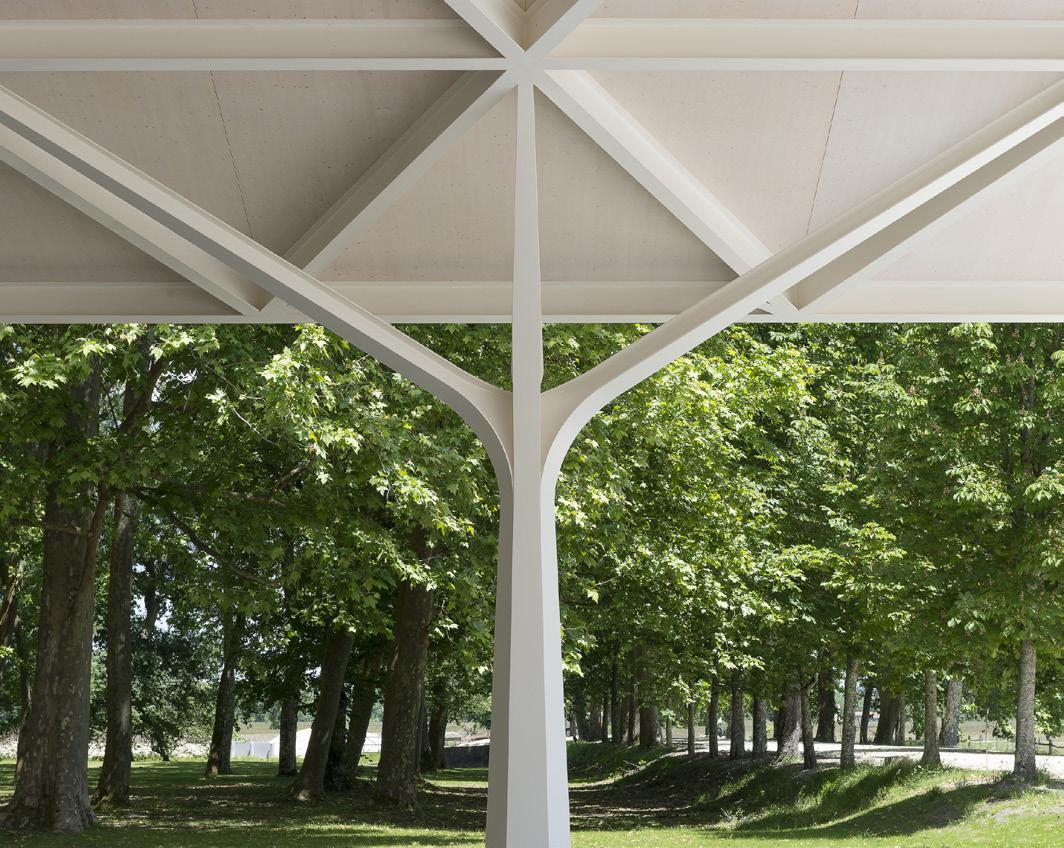
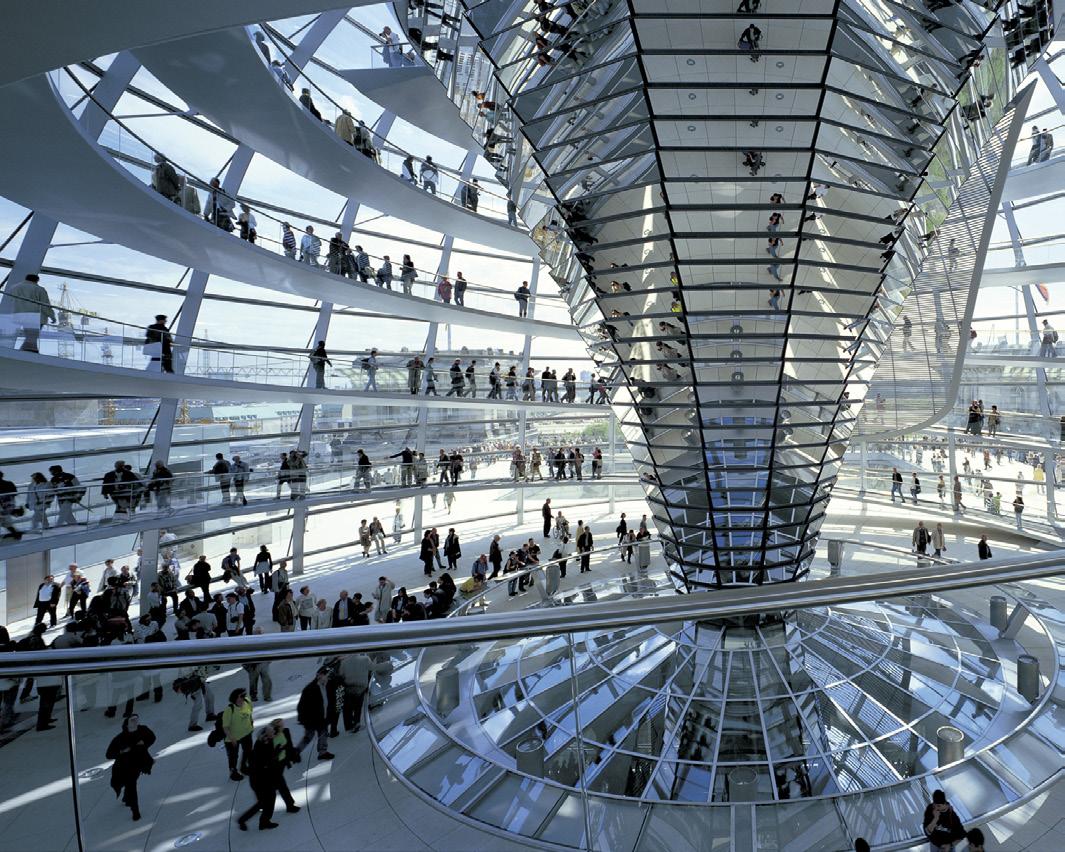
This page, top three images: Material Research Centre at Foster + Partners studio in Battersea, London. Tree-like columns of Nouveau Chai at Château Margaux in Bordeaux, France. Interior view of the cupola at the Reichstag, New German Parliament, Berlin.
The Partnership
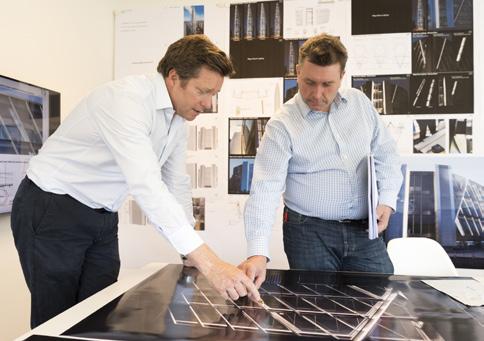
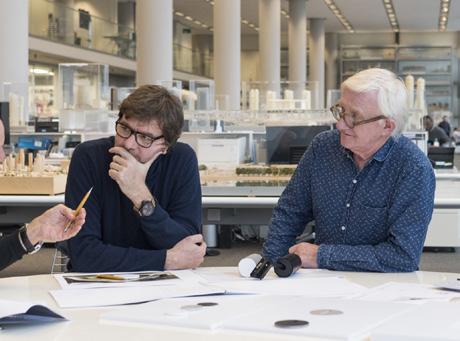
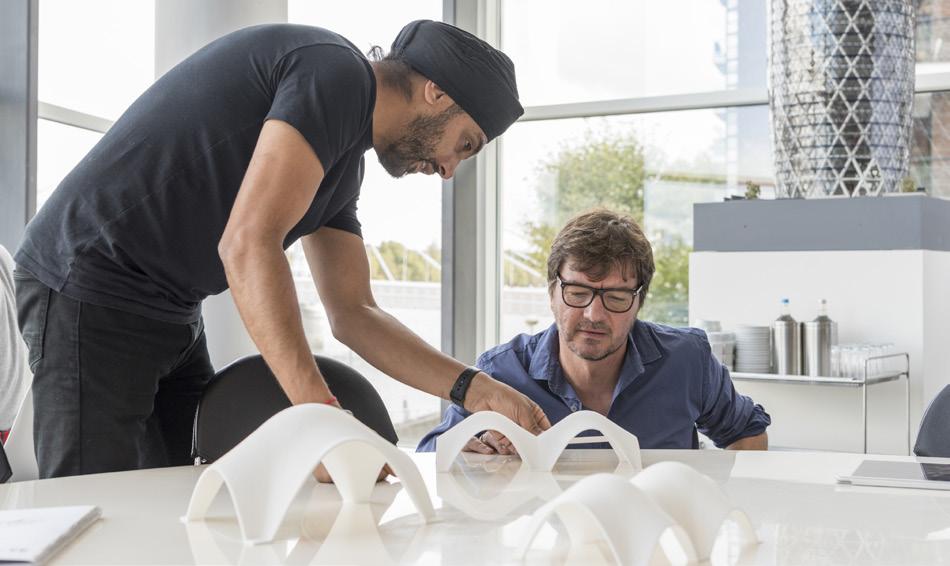
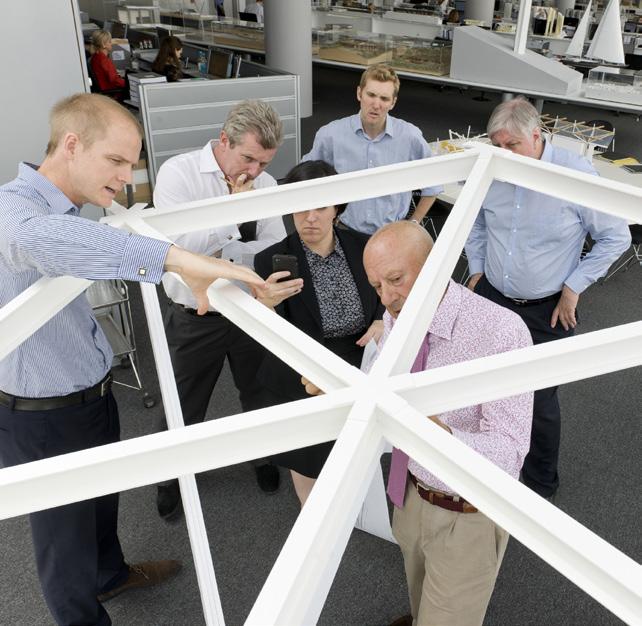
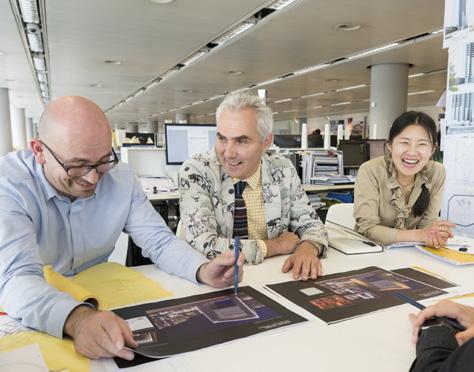
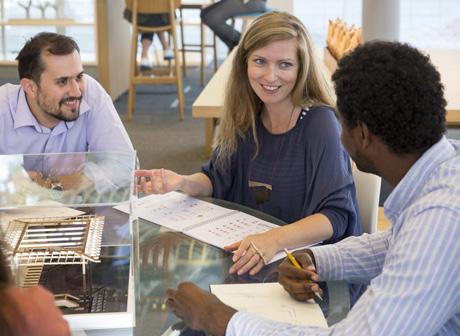
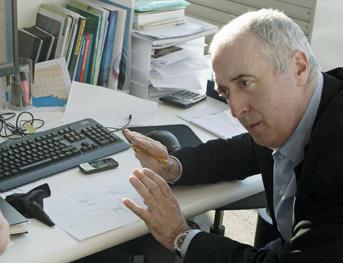
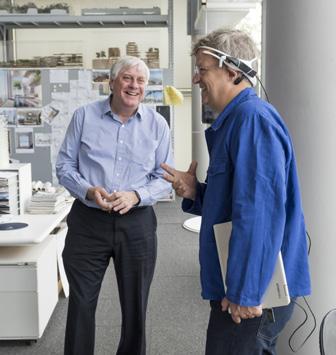
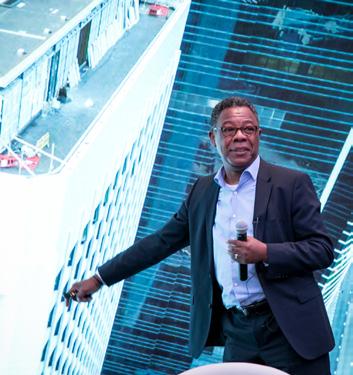
The strategic direction of the practice is set by the Partnership Board: Norman Foster, Stefan Behling, Grant Brooker, Nigel Dancey, Spencer de Grey, Gerard Evenden, Luke Fox, David Nelson, Matthew Streets and David Summerfield.
The day to day management is provided by the Management Board. Allied with this is a core group of partners, who are central to the continuing evolution of the practice. Holistic design direction is provided by the Design Board, which has overall design responsibility for every project, from the start of the design process through to construction drawings.

8
“
From the very beginning our practice was founded on a philosophy of innovation, sustainability and design. We continue to learn from the past and creatively embrace the challenges of the future, with a firm belief that good design makes a difference.
Norman Foster Founder and Executive Chairman, Foster + Partners
9
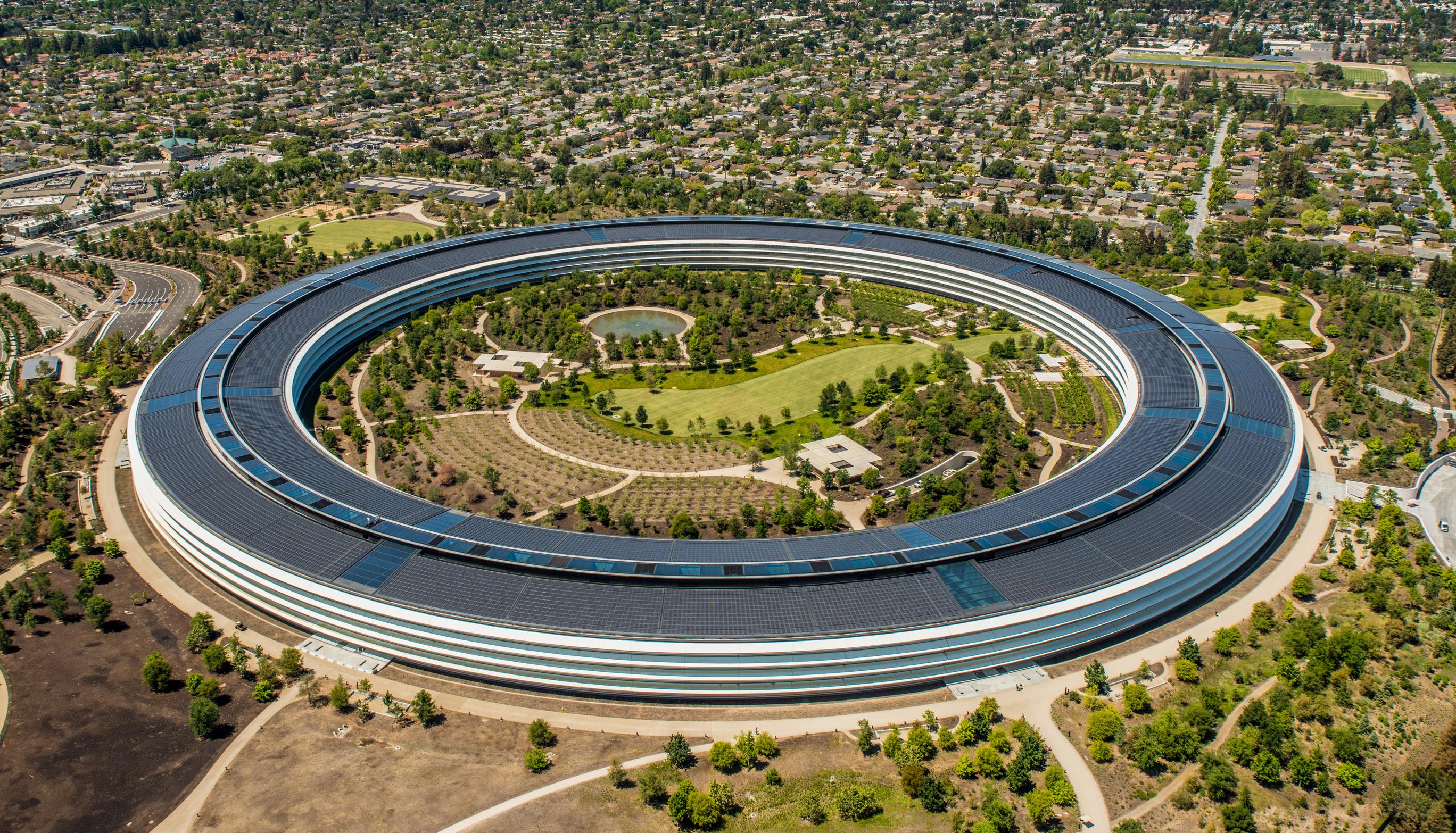
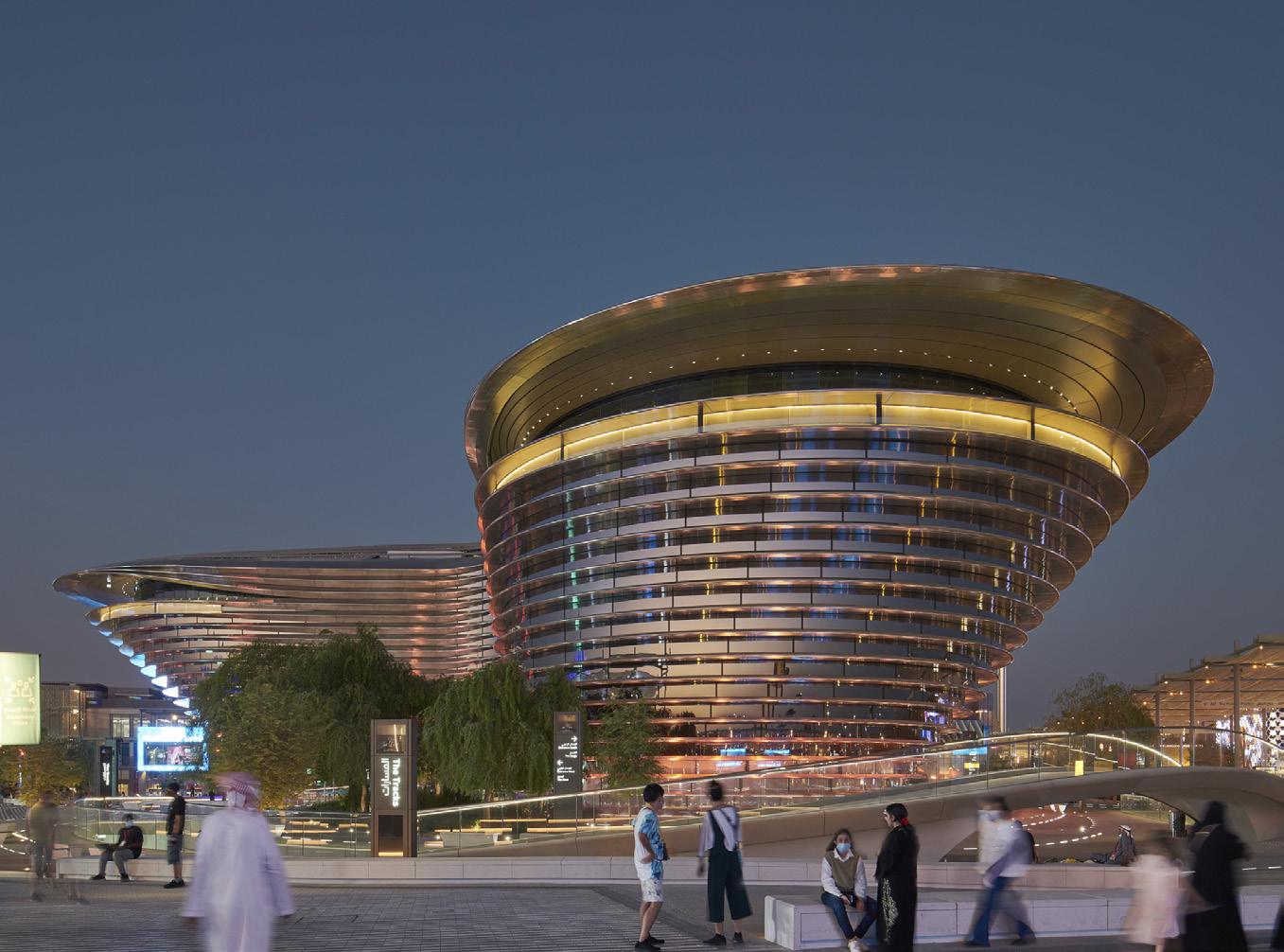

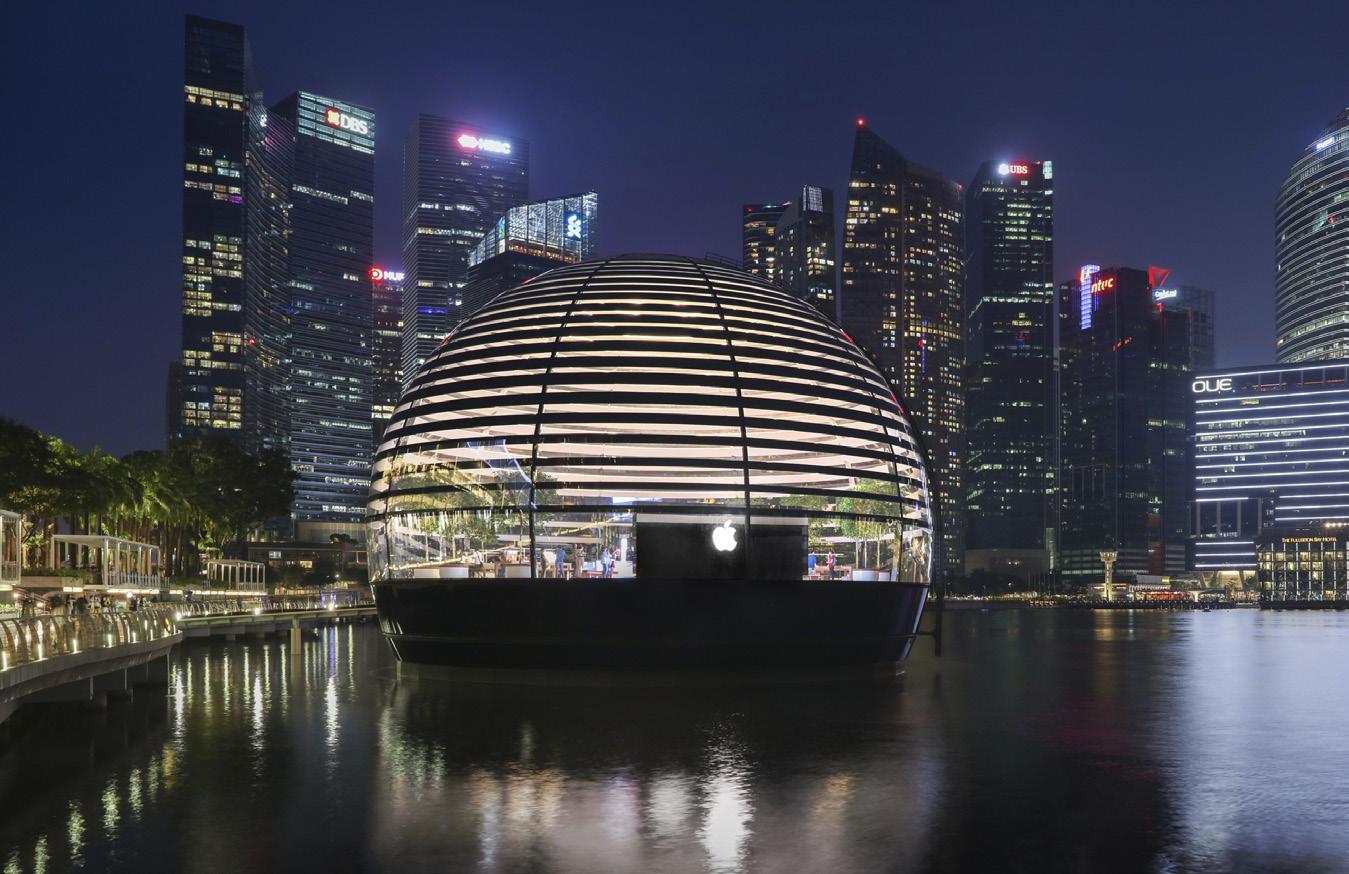
10
At a glance Recent work
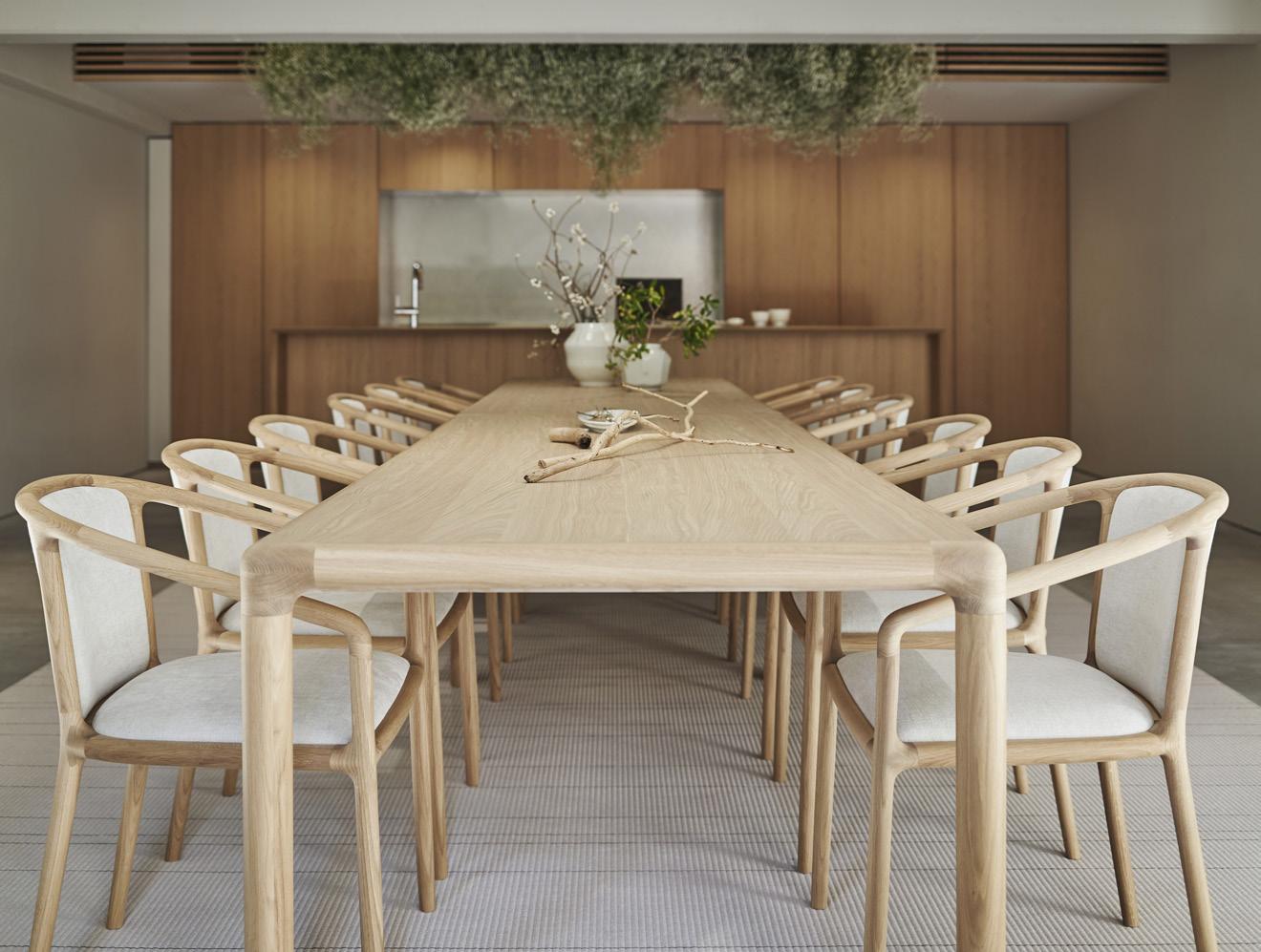
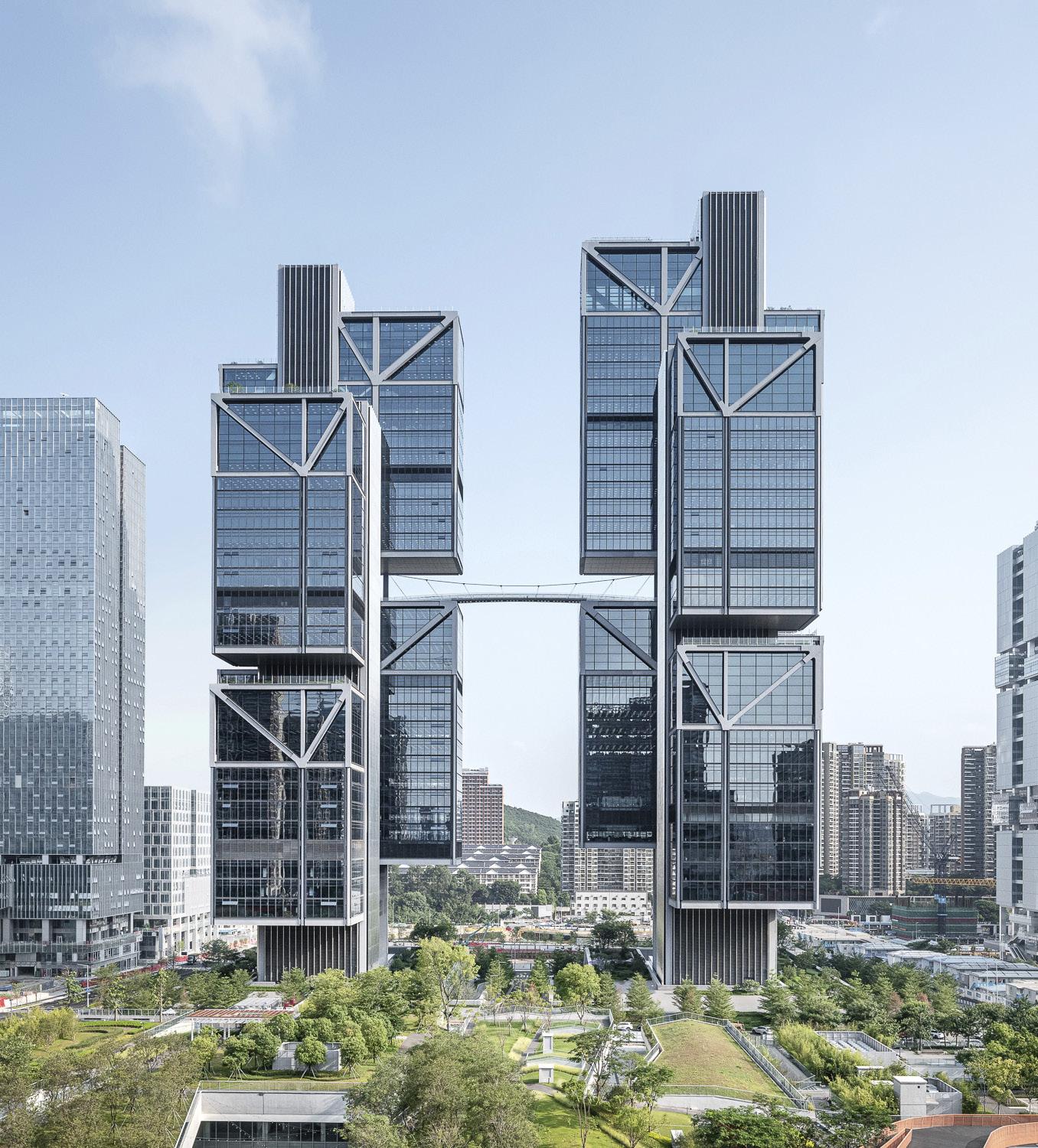
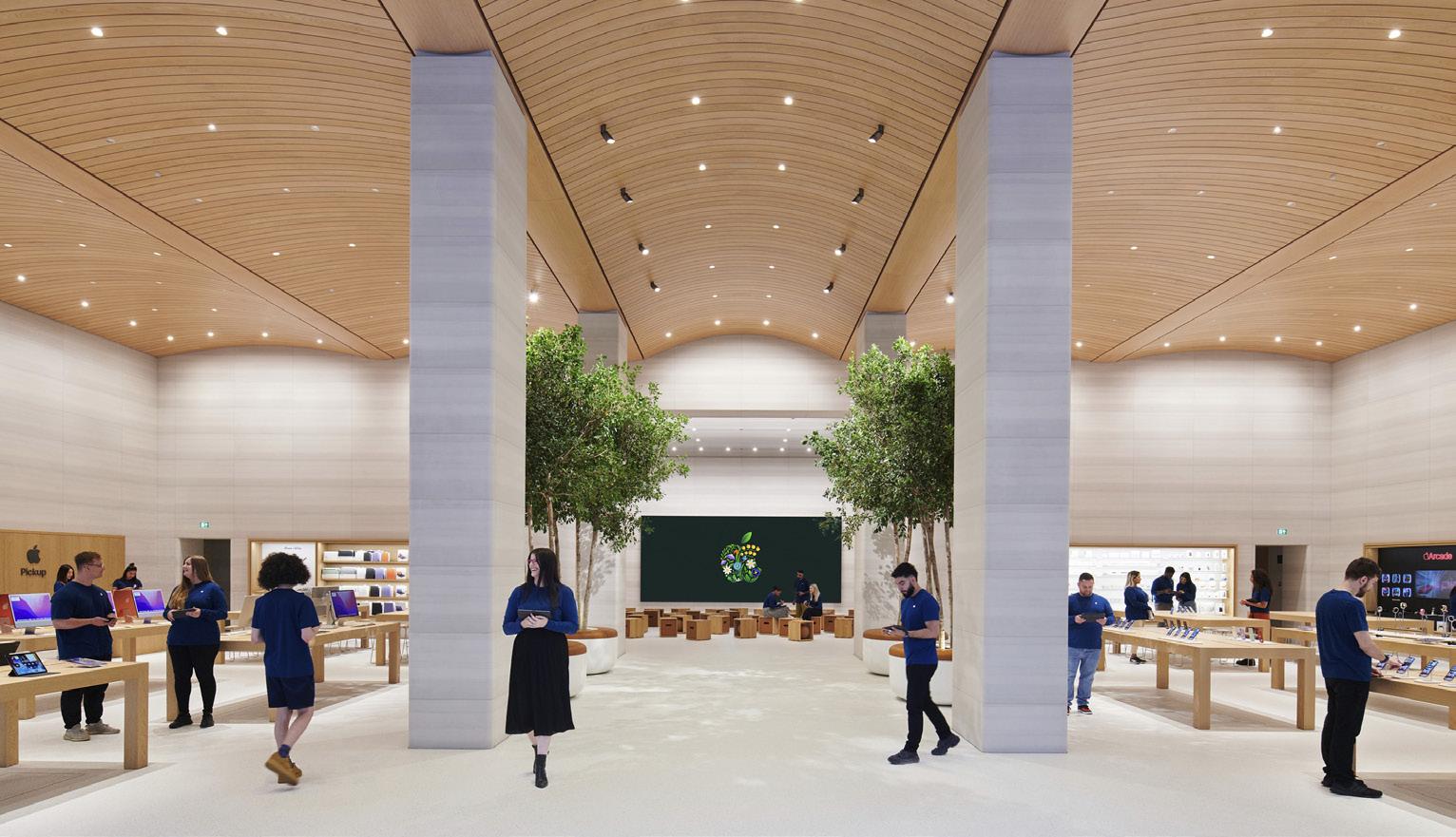
11
At a glance Transport and Infrastructure
12
13
Practice Philosophy
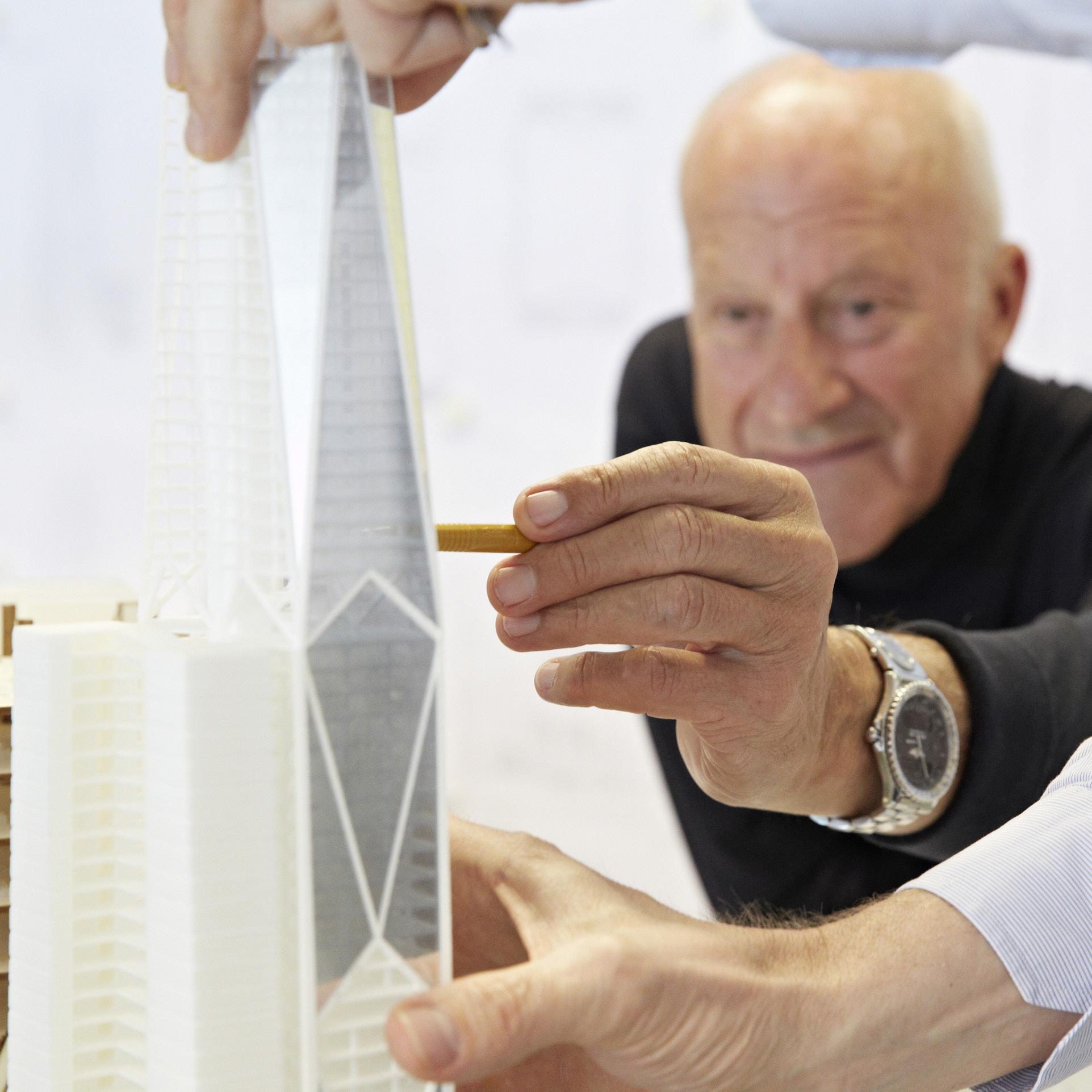
Foster + Partners is a global studio for architecture, urbanism and design, rooted in sustainability, which was founded over fifty years ago in 1967 by Lord Foster. Since then, he and the team around him have established an international practice with a worldwide reputation for thoughtful and pioneering design, working as a single studio that is both ethnically and culturally diverse.
The studio integrates the skills of architecture with engineering, both structural and environmental, urbanism, interior and industrial design, model and film making, aeronautics and many more – our collegiate working environment is similar to a compact university. These diverse skills make us capable of tackling a wide range of projects, particularly those of considerable complexity and scale. Design is at the core of everything that we do. We design buildings, spaces and cities; we listen, we question and we innovate.
Today, the global challenges of population explosion, inequality, rapid urbanisation and environmental degradation present us with a unique and complex set of problems. As a multi-skilled studio, driven by sustainability and led by architects, we can make an important contribution to the resolution of these conflicts.
Driven by a sustained commitment to design excellence, the practice operates a network of offices that spans six continents and virtually every time zone, with a team of more than 1,400 worldwide. Our unique ability to provide cost-effective solutions to the challenges of buildability and value management, means that we attract commercial clients on a repeat basis. Key to our approach is to set up a dedicated project team from inception to completion. This provides a direct and personal interface with the client, throughout the project lifecycle.
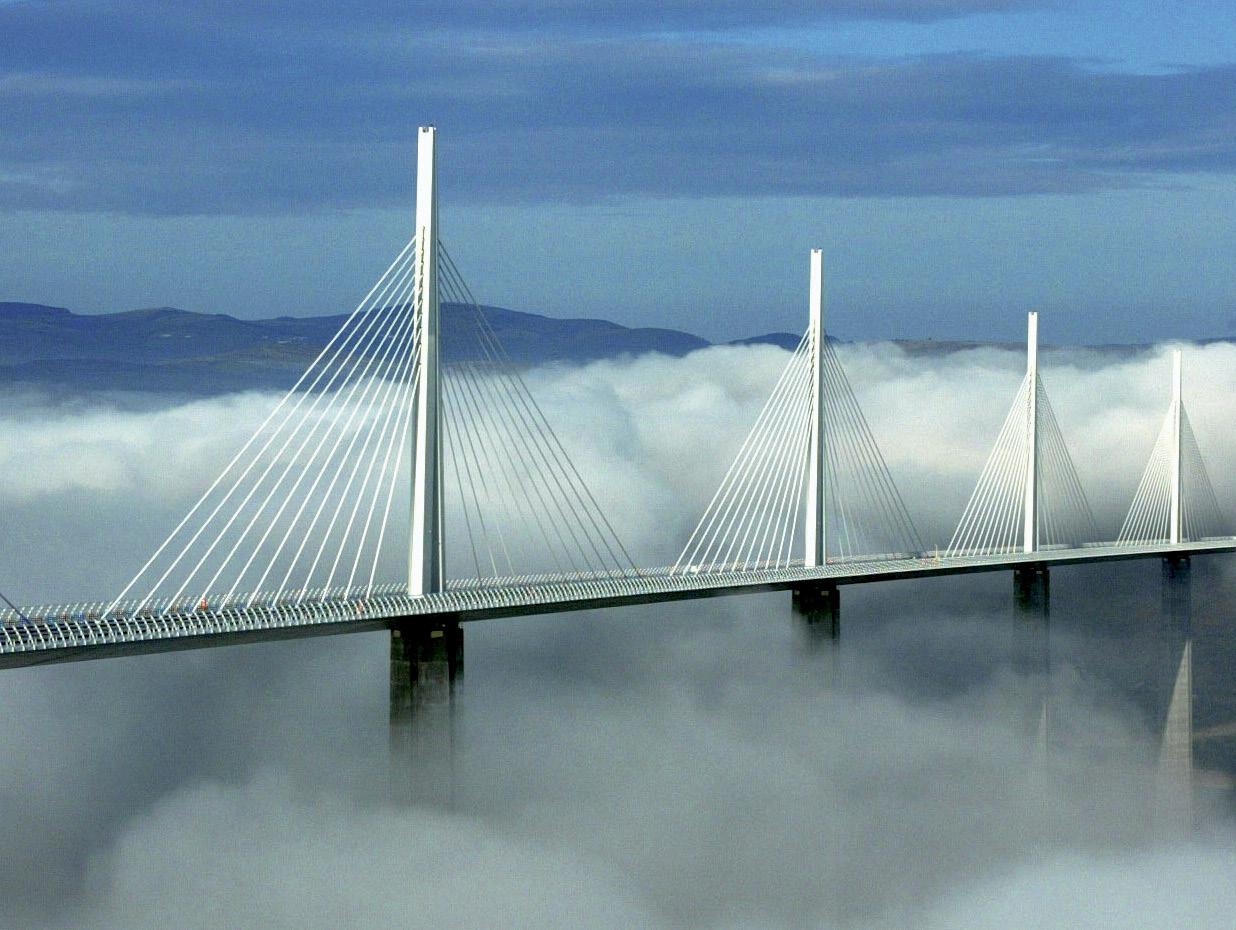
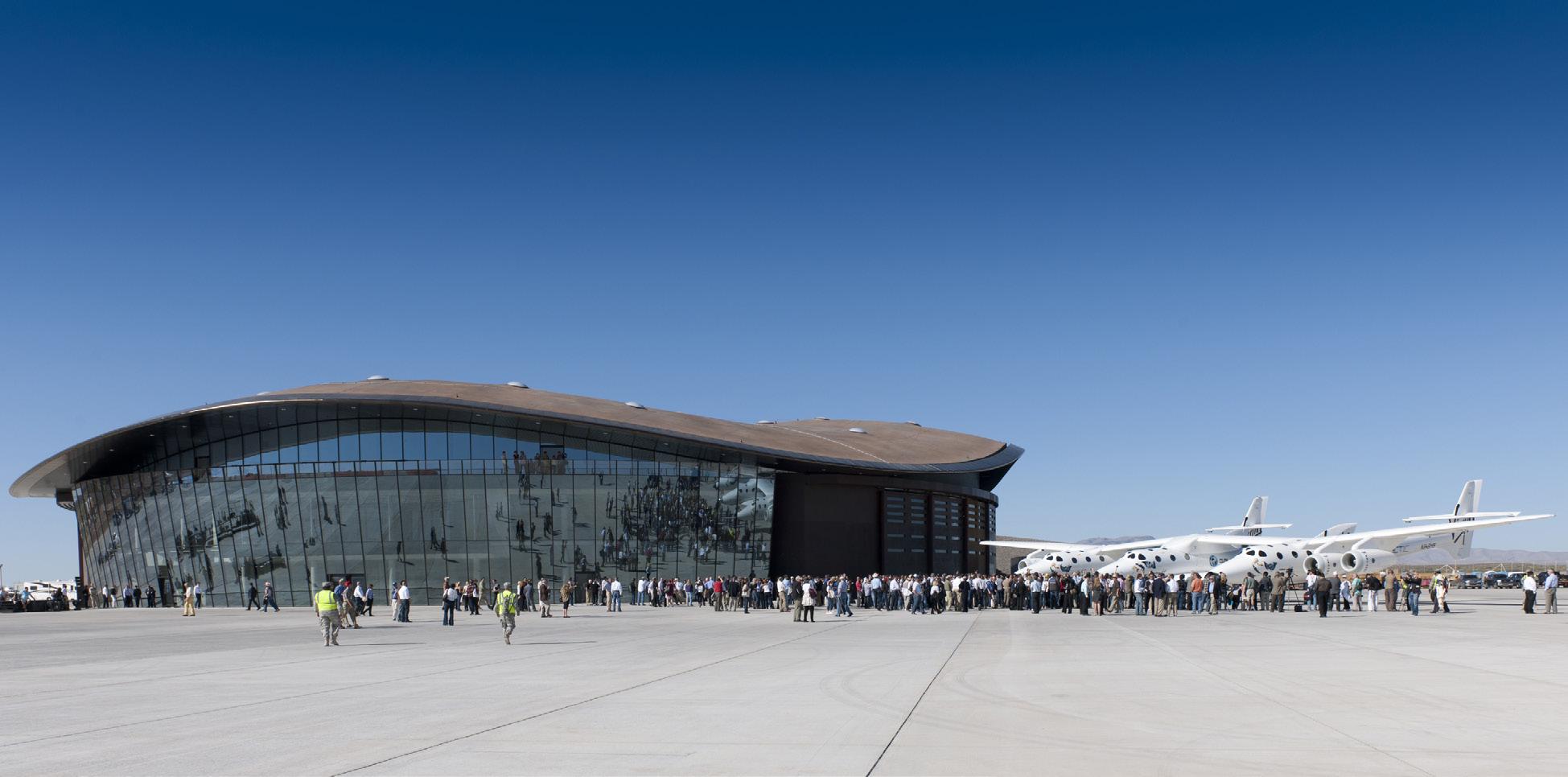
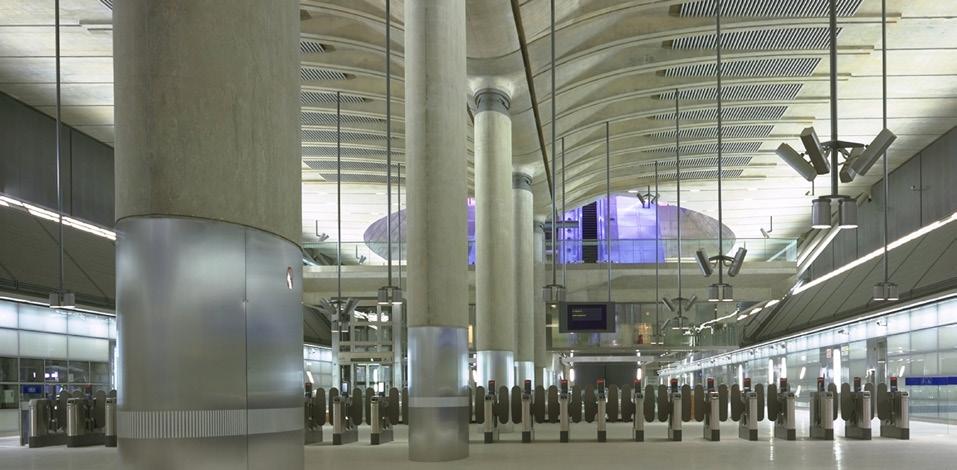
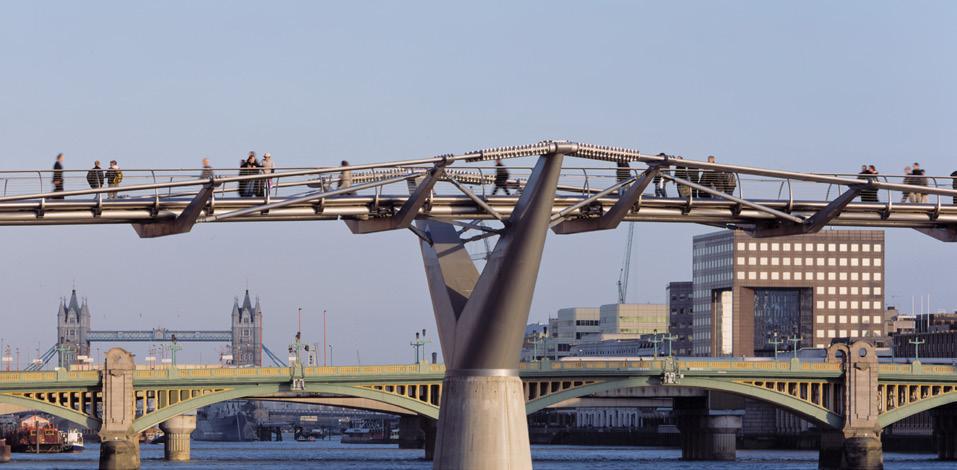
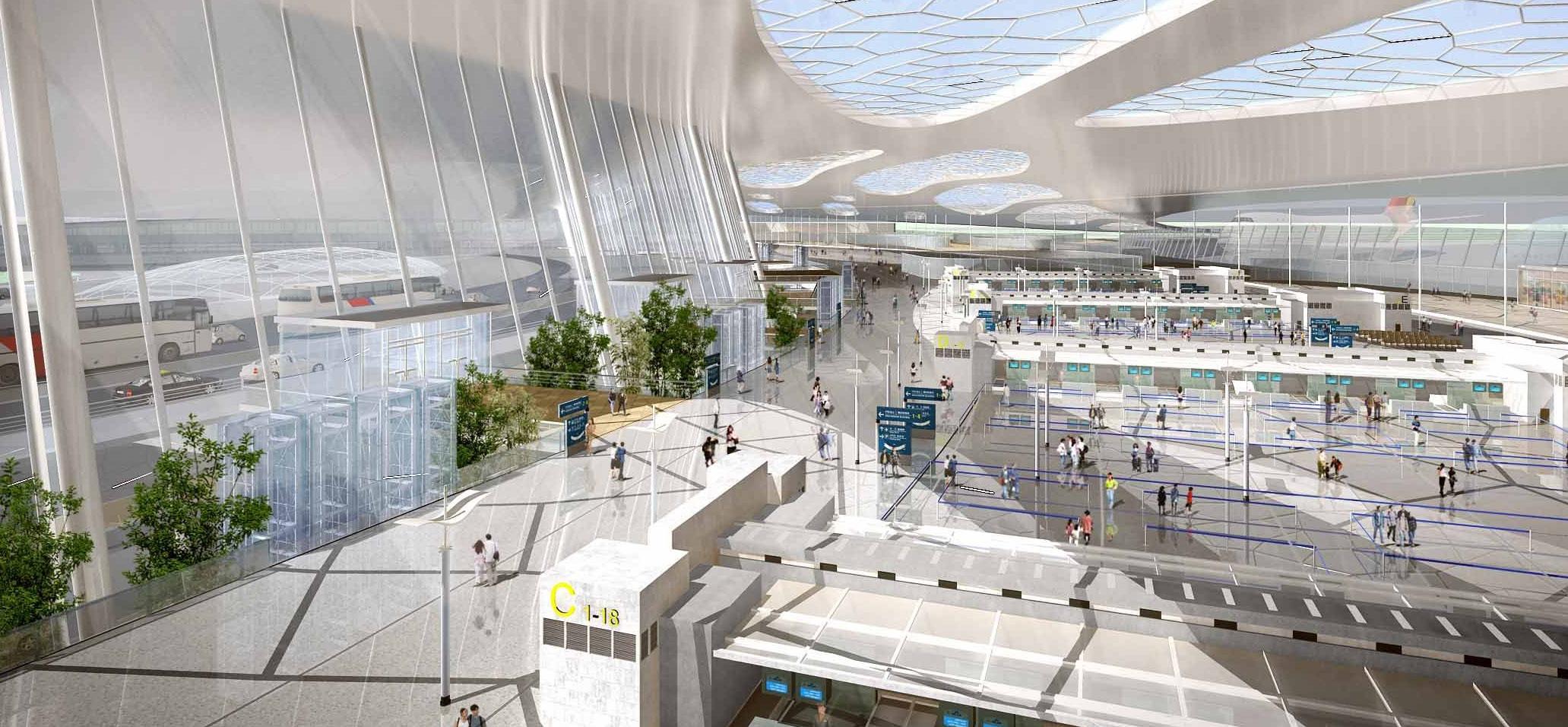
As one of the leading aviation, transport and infrastructure architects and engineers we have delivered the design of award winning projects such as the Queen Alia International Airport, Bilbao Metro, and the Millennium Bridge in London. The practice has won over 850 awards for design excellence.
15
Infrastructure
Global Reach
Projects Foster + Partners offices
New York Madrid
London
Kuwait Abu Dhabi Dubai Singapore
Sydney Hong Kong Shanghai Bangkok Beijing
Buenos Aires
San Francisco
Core Strengths A spirit of enquiry, challenging preconceptions and testing conventions.
Integrated Design Approach
To achieve a sustainable built environment, engineering needs to be integrated from the outset of the design process. The practice therefore has two in-house engineering groups, with a focus on environmental and structural engineering as well as other specialist teams. Working alongside design teams in an open, collaborative environment, the groups strengthen the studio’s environmental agenda, capabilities and commitment to integrated design.
Design Excellence
Over the past five decades Foster + Partners has developed many areas of expertise, which include – among others – airport design, cultural buildings, tall buildings, resorts, sustainability, transport and urban infrastructure projects. The practice offers a streamlined, integrated service with a range of highly specialised groups supporting the design teams on every aspect of the design process. Our design decisions are informed by analysis. We invest in innovation and are constantly developing new tools. Our commitment to research and development into sustainable environments has allowed us to bring our expertise to bear on an unprecedented range of projects around the world.
Quality, cost and time
Foster + Partners has unrivalled experience of leading world class design teams, and delivering projects on time and on budget. Our unique ability to provide cost-effective solutions to the challenges of buildability and value management, means that we attract commercial clients on a repeat basis. The key to cost efficiency is to get inside the manufacturing supply chain and understand and motivate the suppliers to achieve a balance between not reinventing the wheel on the one hand, and not moving forward on the other.
Sustainable design
Sustainability has been a central theme of Foster + Partners’ work for more than 50 years. In 1975 the practice undertook a strategic planning study for sustainable tourist development on Gomera in the Canary Islands, for which there was no real precedent. We consider the long-term impact of our work and recognise that the complex social, economic and ecological challenges posed by rapid urbanisation and population growth cannot be solved by technological means alone, and we therefore aim to harness the skills, enthusiasm and knowledge of integrated design teams, clients and communities.
Value
There is a strong economic case for investment in good design. In a number of notable examples, the practice’s work has resulted in tangible commercial benefits for clients. As a globally recognised brand with over forty years’ experience, Foster + Partners carries influence with governing bodies which can help simplify the application and planning processes for our projects. Another aspect of value is the aesthetic quality of the design, which can be difficult to quantify. We aim to create projects which offer great value to the cities in which they exist and we have an extensive track record of designing successful civic centres from parliament buildings to opera houses, museums and masterplans around the world.
16
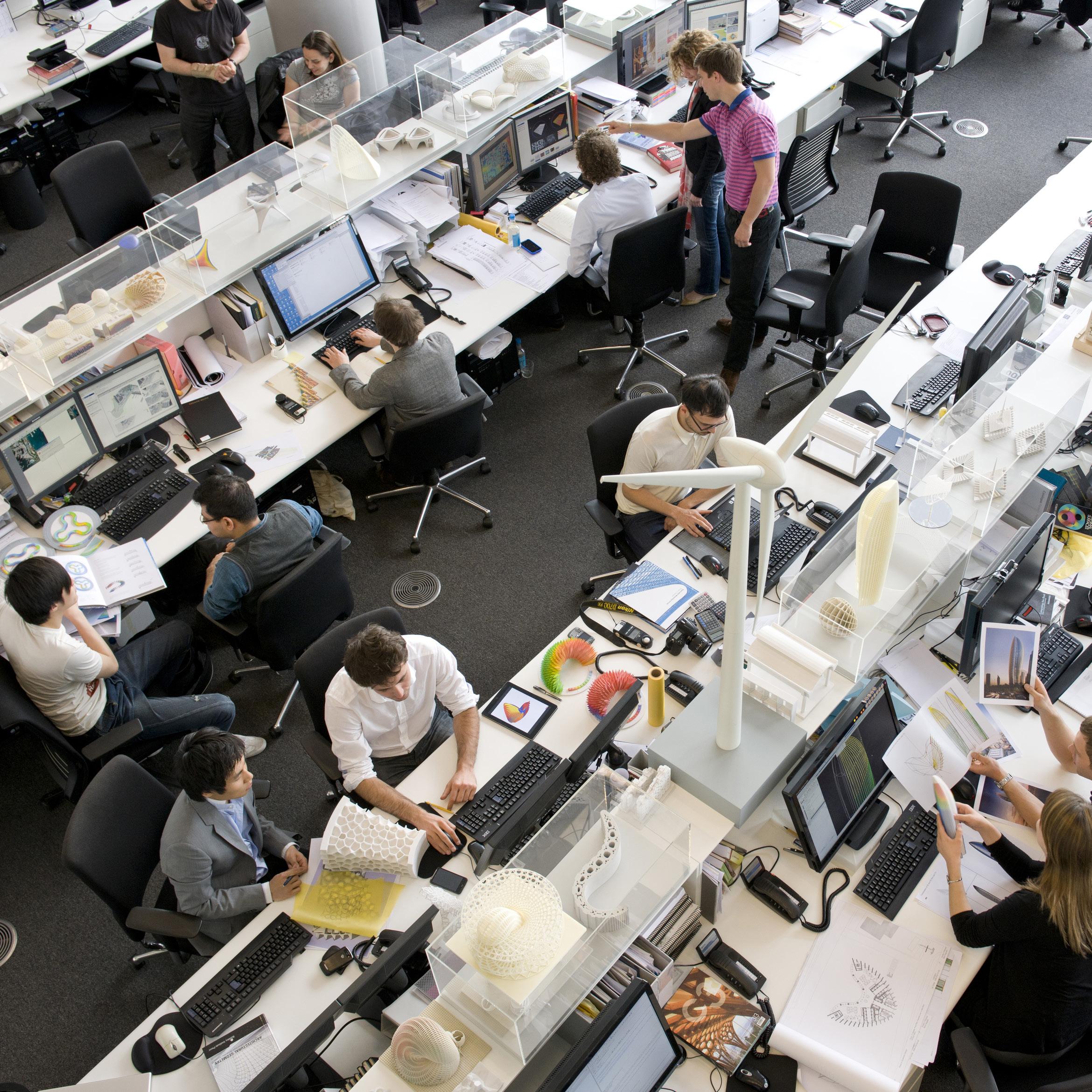
We have a holistic approach and a highly personal service
Engineer Analyst Architect Engineer Environmental Designer
Environmental Designer Architect Architect Visual Artist
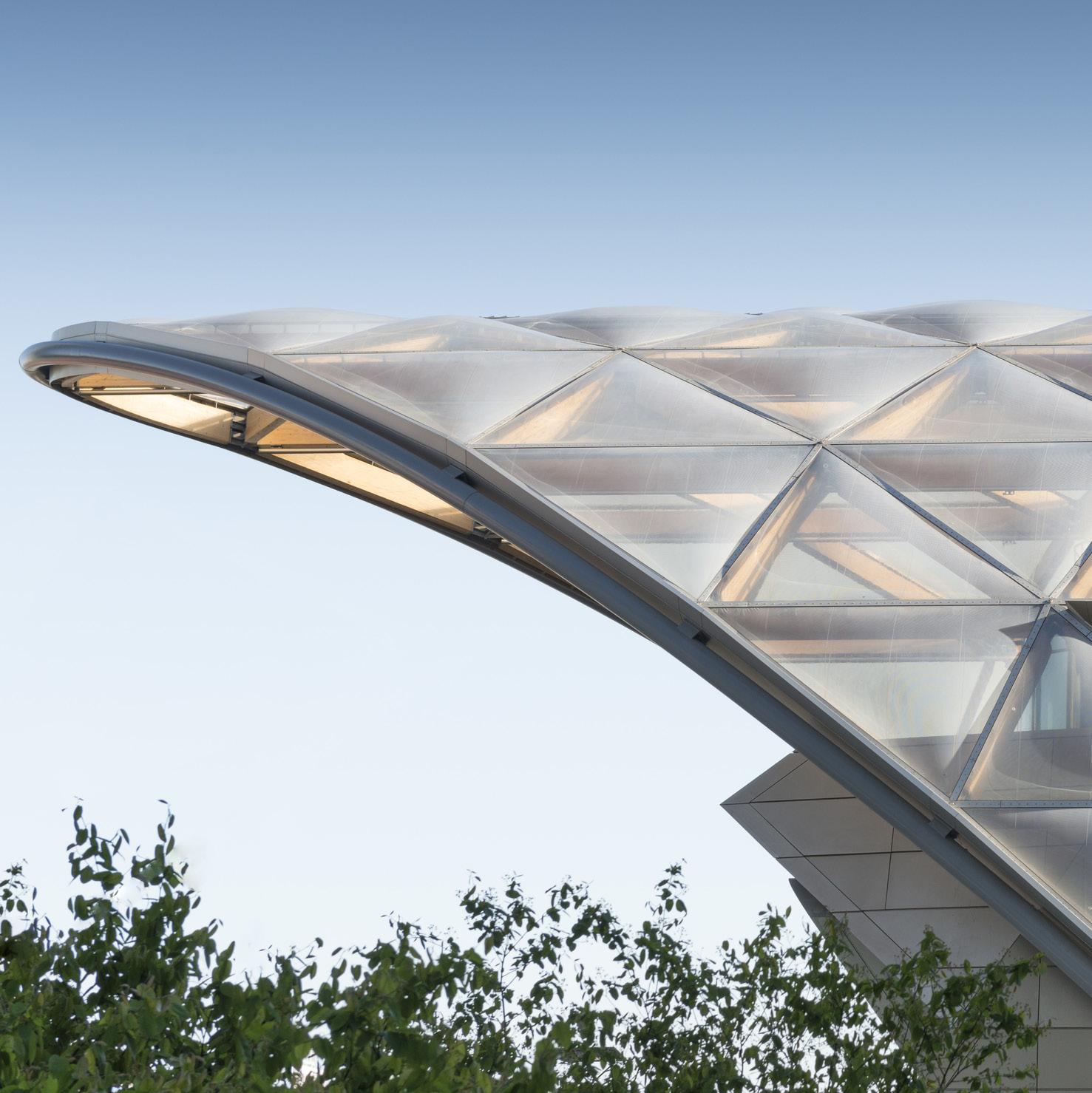
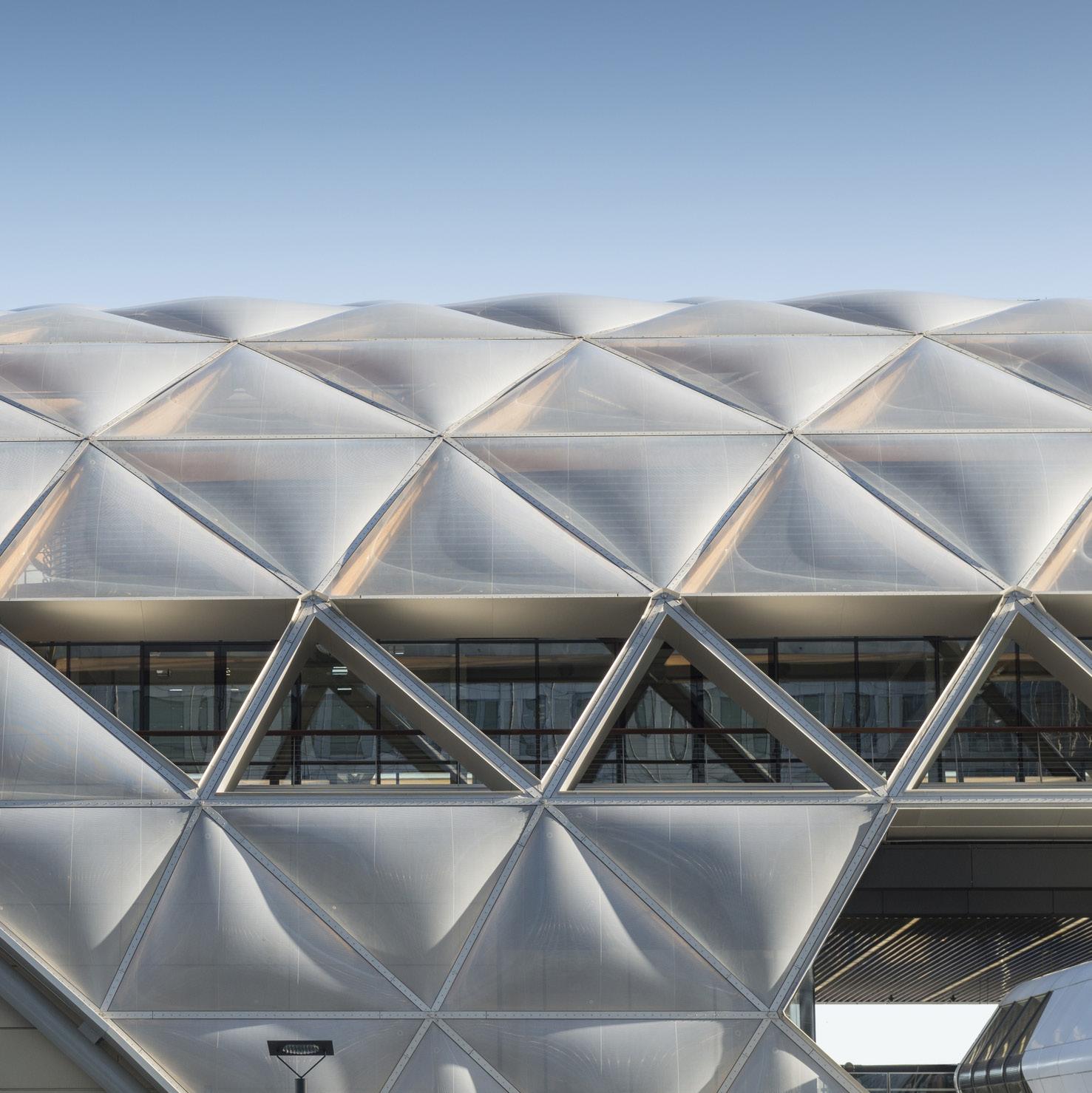
Global expertise, delivered locally
Design Excellence in Infrastructure & Transport
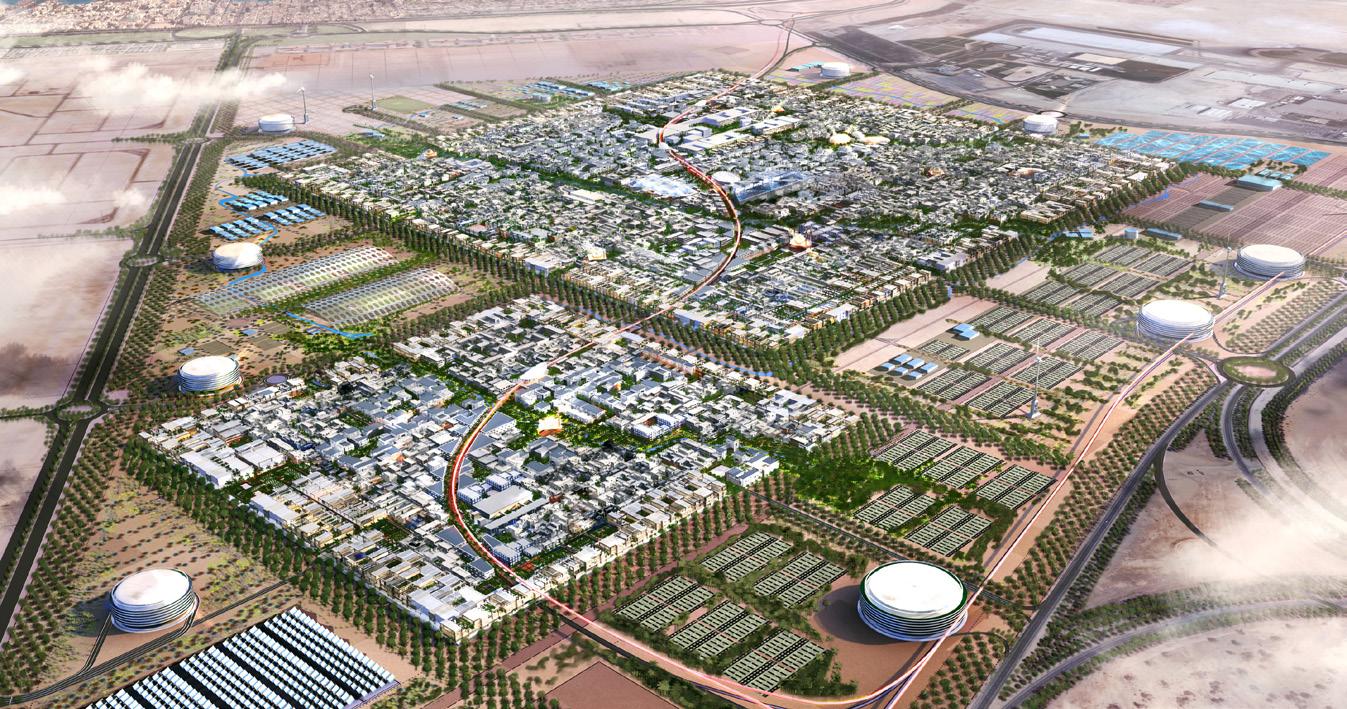
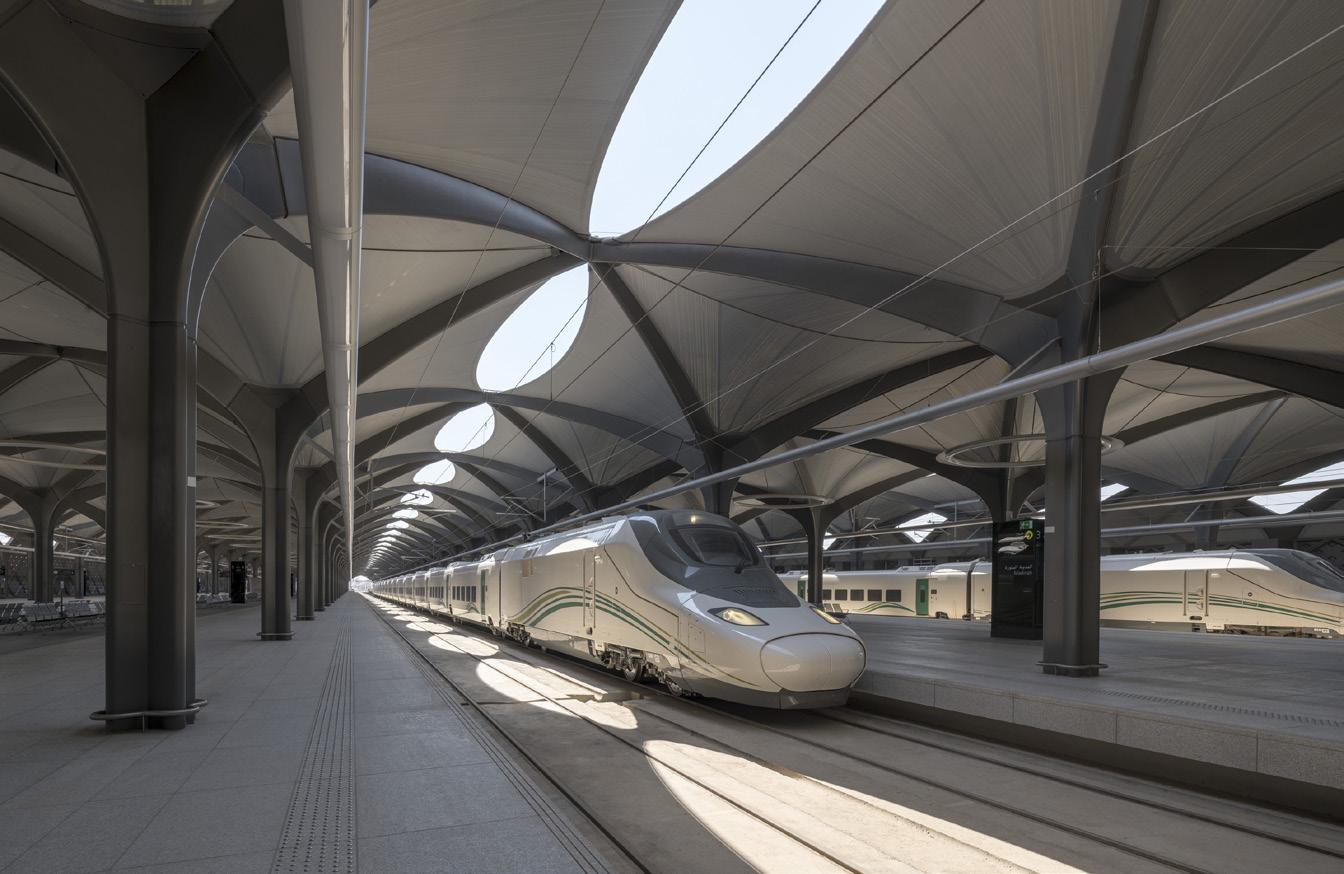
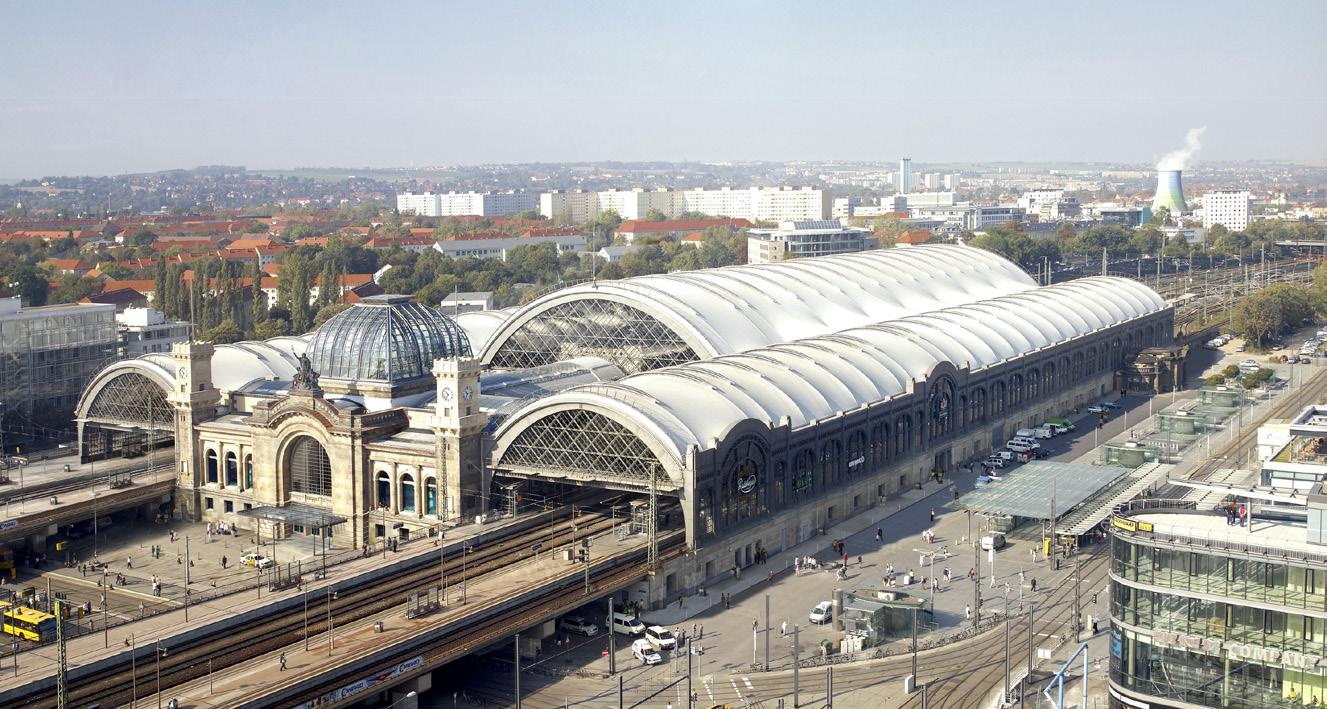
Our extensive portfolio of infrastructure projects built across the globe covers interventions in complex existing facilities as well as newly built large scale developments, and is based on solid technical expertise and bold innovative strategies that are characteristic of the practice’s work.
Working closely with clients, users and a network of consultants, Foster + Partners’ infrastructure schemes benefit from global expertise, but are always delivered locally – finding the optimal balance between macro and micro.
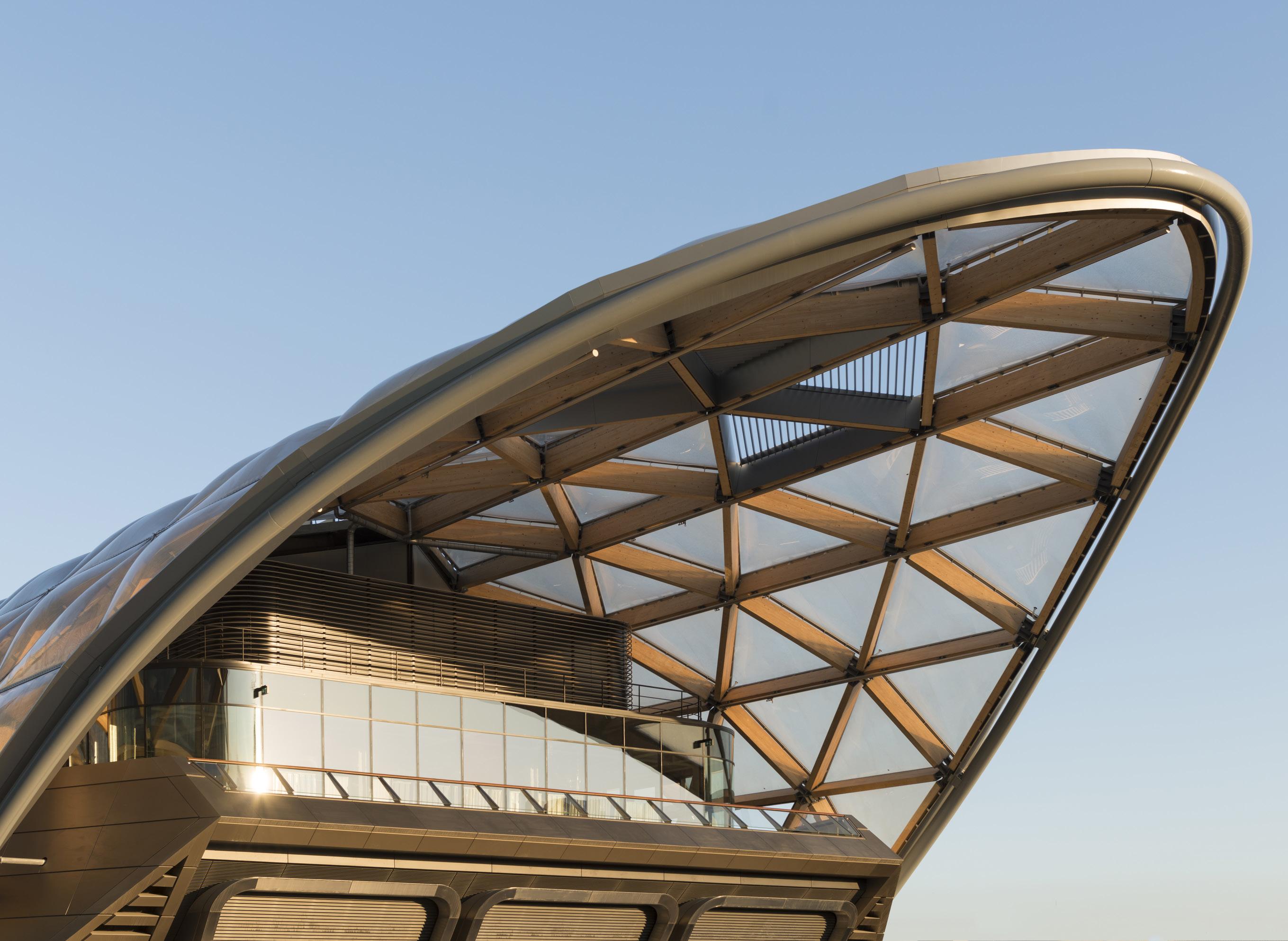
Often technically challenging and vast in scope, our infrastructure projects combine innovative engineering with clarity of design to create distinctive structures which are rooted in a sense of place. Reinforcing the idea that architecture is both an interior and exterior experience, these stations, airports and bridges illustrate how the way we move through a building –whether ascending a stair or navigating a sequence of spaces –is matched by the way we trace routes through our cities, via their streets, squares, gateways and bridges.

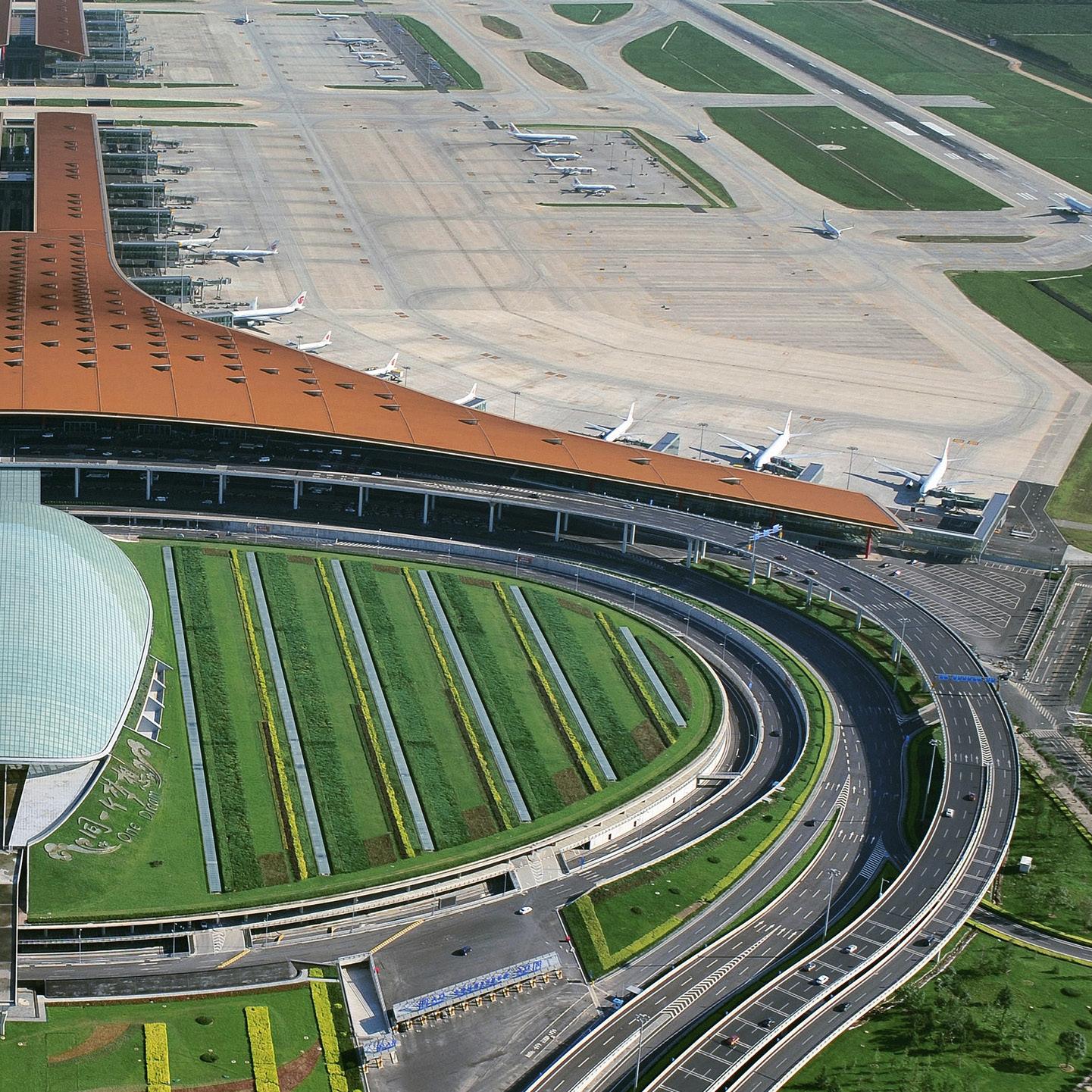
Creating gateways to nations
Aviation Projects
The airport perhaps offers the first experience of a city for a visitor and thus has a symbolic role as a gateway. When it works well, we tend to take this realm for granted, yet it is the outcome of many acts of design.
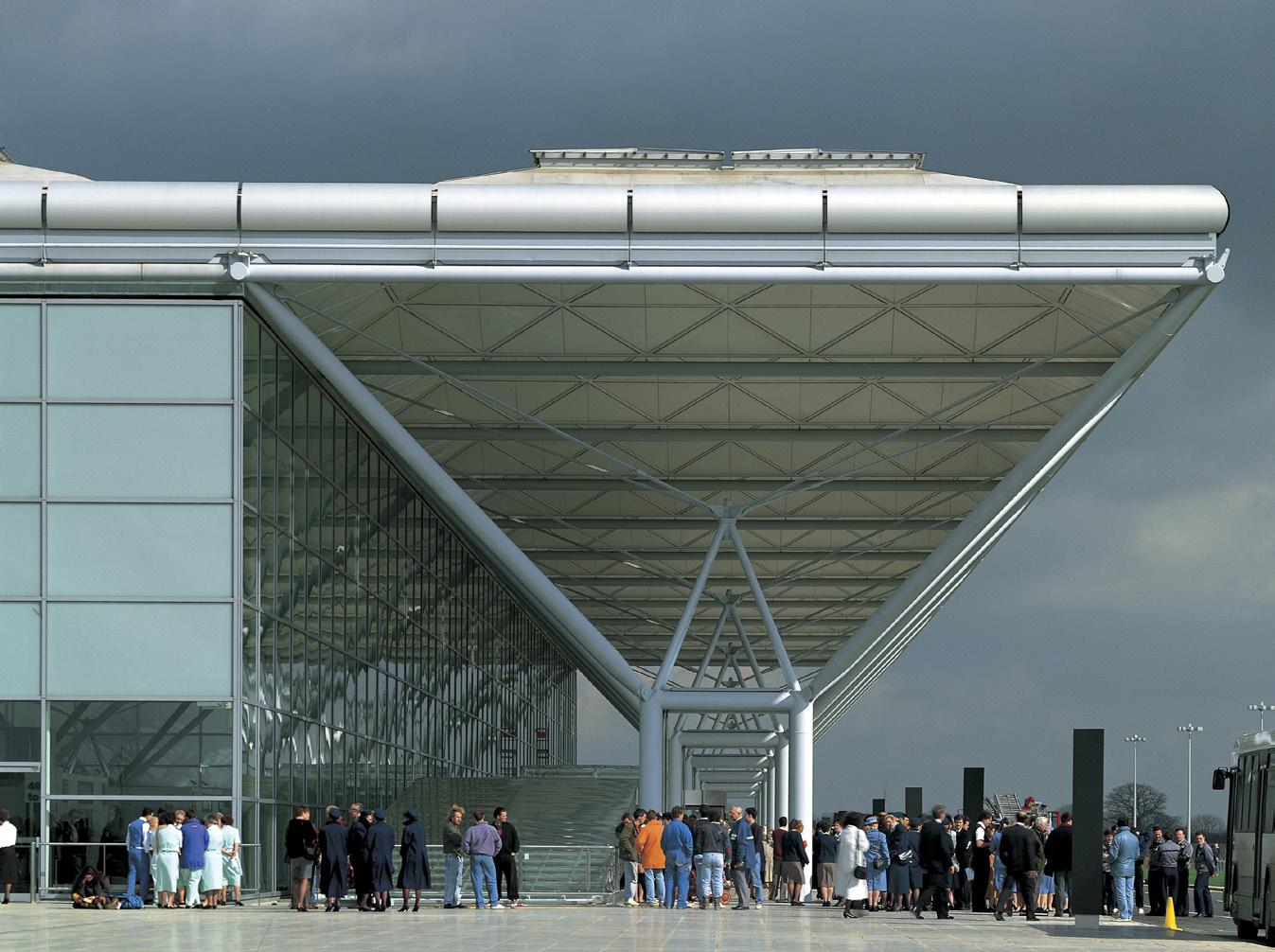
Often that involves rethinking a solution from first principles, as with the third London airport at Stansted. There we turned the accepted airport terminal literally upside-down, placing environmental plant below the concourse to allow the building to be highly flexible and extensively naturally lit – a new model that has since been adopted by airport planners worldwide. This model was subsequently developed at a larger scale with Hong Kong International Airport and then, at an unprecedented scale, with Beijing International Airport Terminal 3. In Jordan, Queen Alia International Airport continues the practice’s explorations of the terminal as a building type, setting out a vision for an environmentally sensitive, regionally appropriate, airport architecture – a philosophy echoed in the world’s first commercial Spaceport, whose galactic mission is physically grounded in a sensitivity to the local context: the building lies low in the desertlike landscape of New Mexico and utilises local materials and construction techniques. The new airport for Mexico City is a celebration of space and light that represents a revolution in airport terminal design. Amongst the largest and most sustainable in the world, its continuous gridshell structure – a singular enclosure evocative of flight – draws on rich local symbolism and innovative structural design to form a soaring, spectacular gateway to Mexico.
Over 40 Years of Airport Innovation
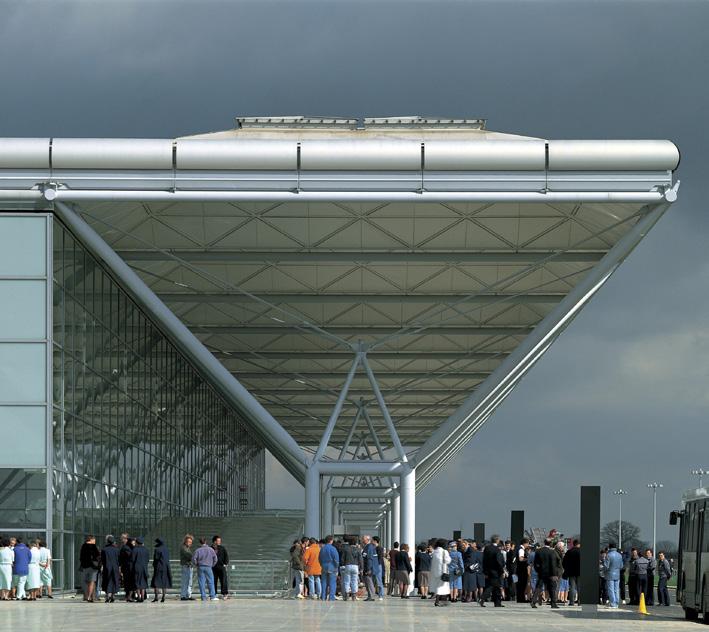
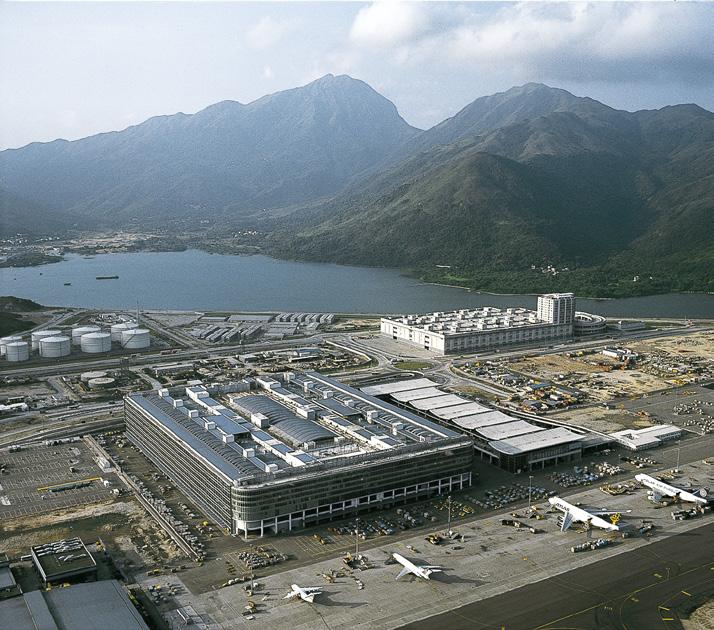
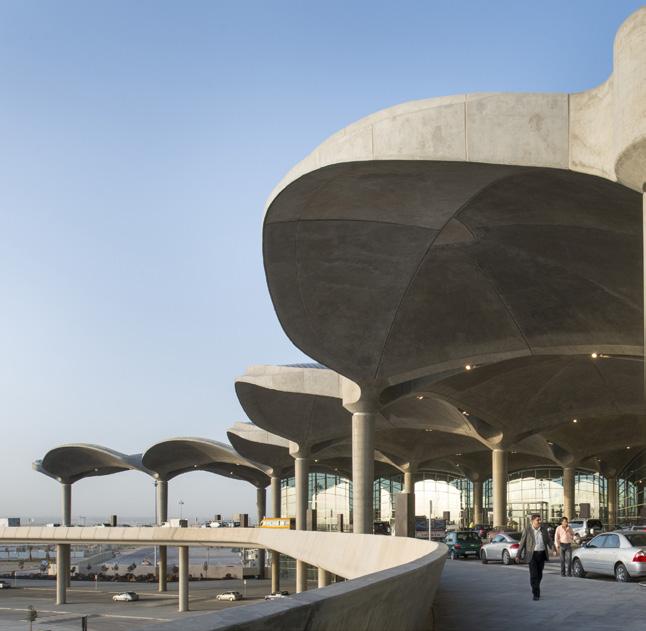
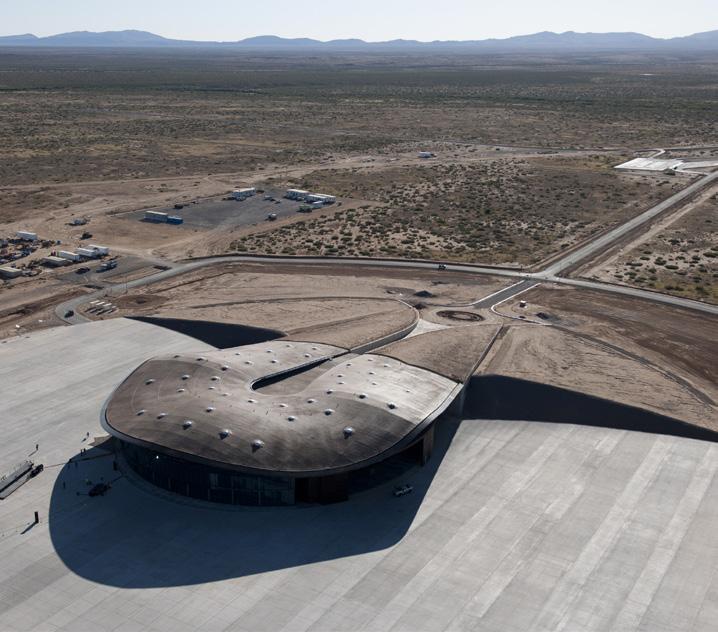
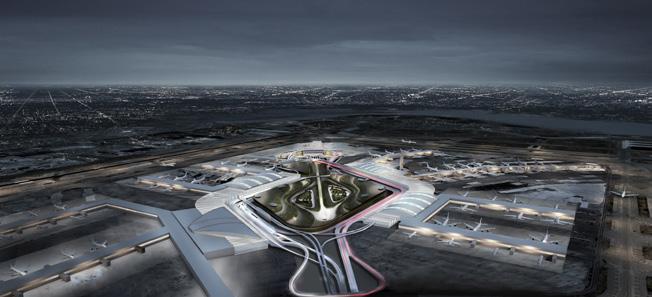
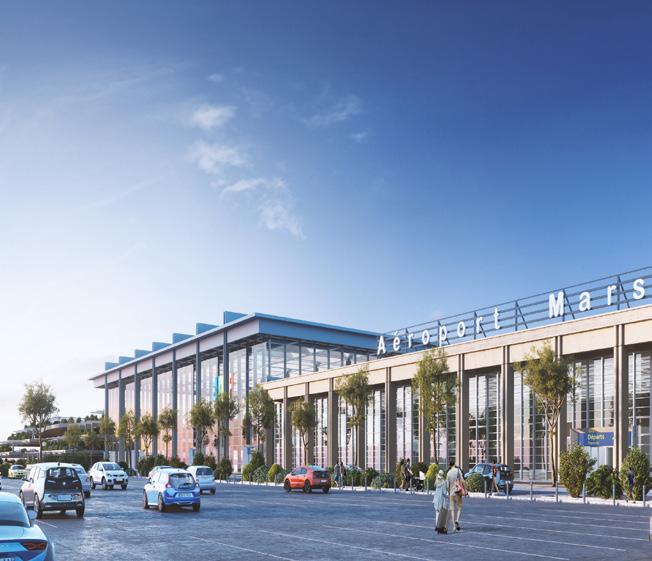
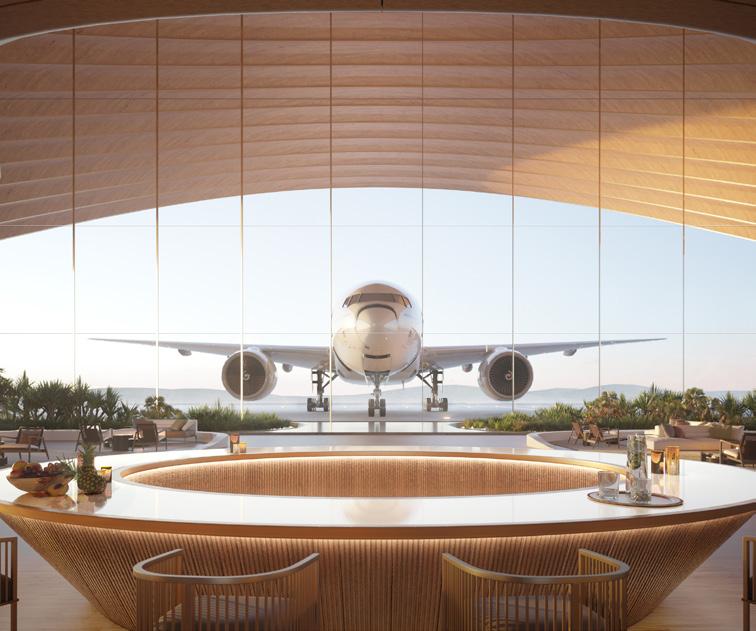
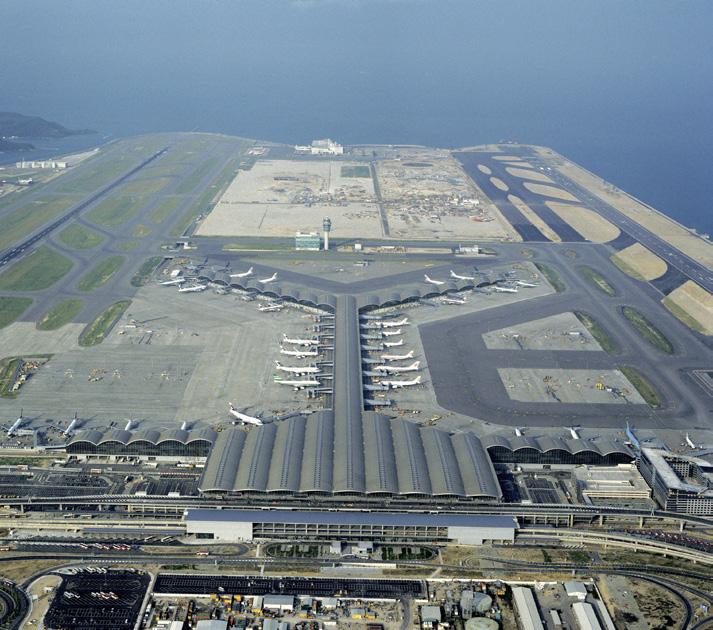
22 John F Kennedy International Airport Vision Plan New York, USA 2016 Chicago O’Hare Global Terminal USA 2019 Hong Kong International Airport Chek Lap Kok 1992 – 1998 • 56 mppa • 516,000m² • 2 runways Beijing International Airport Beijing, China 2003 – 2008 • 80 mppa • 1,300,000m² • 3 runways 2014
Queen Alia International Airport Amman, Jordan 2006 – 2013 • 9-12 mppa • 116,000 m² • 2 runways Stansted Airport UK 1981 – 1991 • 23.8 mppa • 85,700m² • 1 runway HACTL Superterminal, Chek Lap Kok Hong Kong 1992 – 1998 • 260,000m² • 2.5 x the capacity of Heathrow Spaceport America New Mexico, USA 2006 – 2011 • 10,233m² • 1 runway • LEED Platinum 1980 1990 2010 Red Sea Airport Saudi Arabia 2019 –2025 Marseille Airport France 2017 –Phnom Penn Airport Cambodia 2019 –2023
2000
The BAA Pier platform London, England, 2004
Heathrow
T3 Futures
Forecourt London, England, 2004 – 2007
Cathay Pacific Lounges, Hong Kong International Airport
Thames Hub London, UK 2011 (concept)
• 110 mppa
opening capacity
• 150 mppa future capacity
• 770,000m²
• 4 runways
• Integrates rail, flood protection and energy and data networks
Heathrow East Terminal London, UK 2006 (design only)
• 68 mppa
• 186,055m²
• 2 runways
AMAALA Airport
Saudi Arabia
2020 – 2025
CPK Airport
Poland
2021 – 2027
• 40-65 mppa
Mexico International Airport Mexico City 2016
• 56.7 mppa
• 743,000m²
• 3 runways
• LEED Platinum
2005
Kuwait International Airport
Kuwait City, Kuwait 2010 –(currently on site)
• 13–50 mppa
• 708,000m²
• 2 runways
• LEED Gold
Tocumen International Airport
Panama City, Panama 2011 – 2022
• 18 mppa
• 85,000m²
• 2 runways
Hong Kong, 2008 – 2010 2023
King Salman Airport
Riyadh
2022 – 2030
• 120-185 mppa
•60km²
• 6 runways
Abha International Airport
Saudi Arabia
2023 –
• 8-10 mppa
• 70,000m²
23
25
London Heathrow Stansted Frankfurt Zagreb Jordan Marseille Doha Kuwait Hong Kong New York Beijing Incheon Mexico City Panama City New Mexico Chicago
Aviation Projects Saudi Arabia Riyadh Phnom Penn Warsaw
The Airport of the Future
I am really quite passionate about flying, which may explain why I protest that most airports are depressingly more and more divorced from the experience of flying. You barely see the aircraft and when you do you are inside and you are anaesthetised with drinks, food and movies. Almost anything to pretend that you are doing something other than flying, which may be what the interior is all about. Somewhere there is a missed opportunity here. An airport should be a celebratory structure. It is a celebration of flight and a celebration of place. It should combine a strong visual identity with a humanistic sense of clarity, so that the experience of air travel is uplifting, secure, welcoming and efficient. Airports are the gateways to cities and nations and are the windows on the world. The airport of the future will capture all of this.
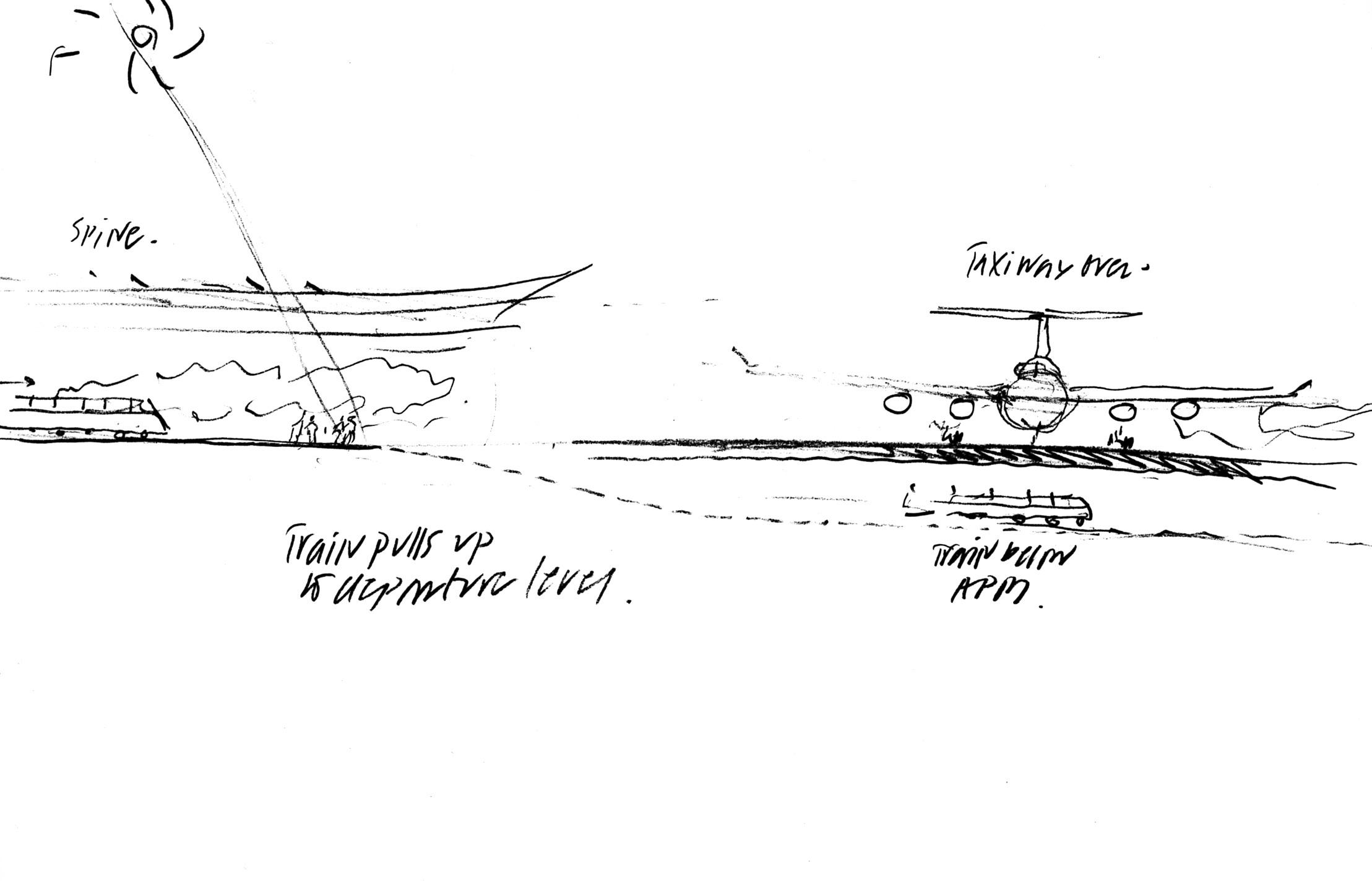
Both flight and design involve unseen forces, obey certain rules and for their realisation depend totally on the distillation of highly complex systems into a single vision. An airport is pure infrastructure; if you like, it is inhabited infrastructure. When I worked on Stansted in the early 1980s, I was determined to recreate a sense of the reassurance of early airfields – when you would arrive by road, and the runway would be clearly visible on the other side of the tent. The progression from landside to airside was a walk through the terminal and out onto your plane, which was always in view.
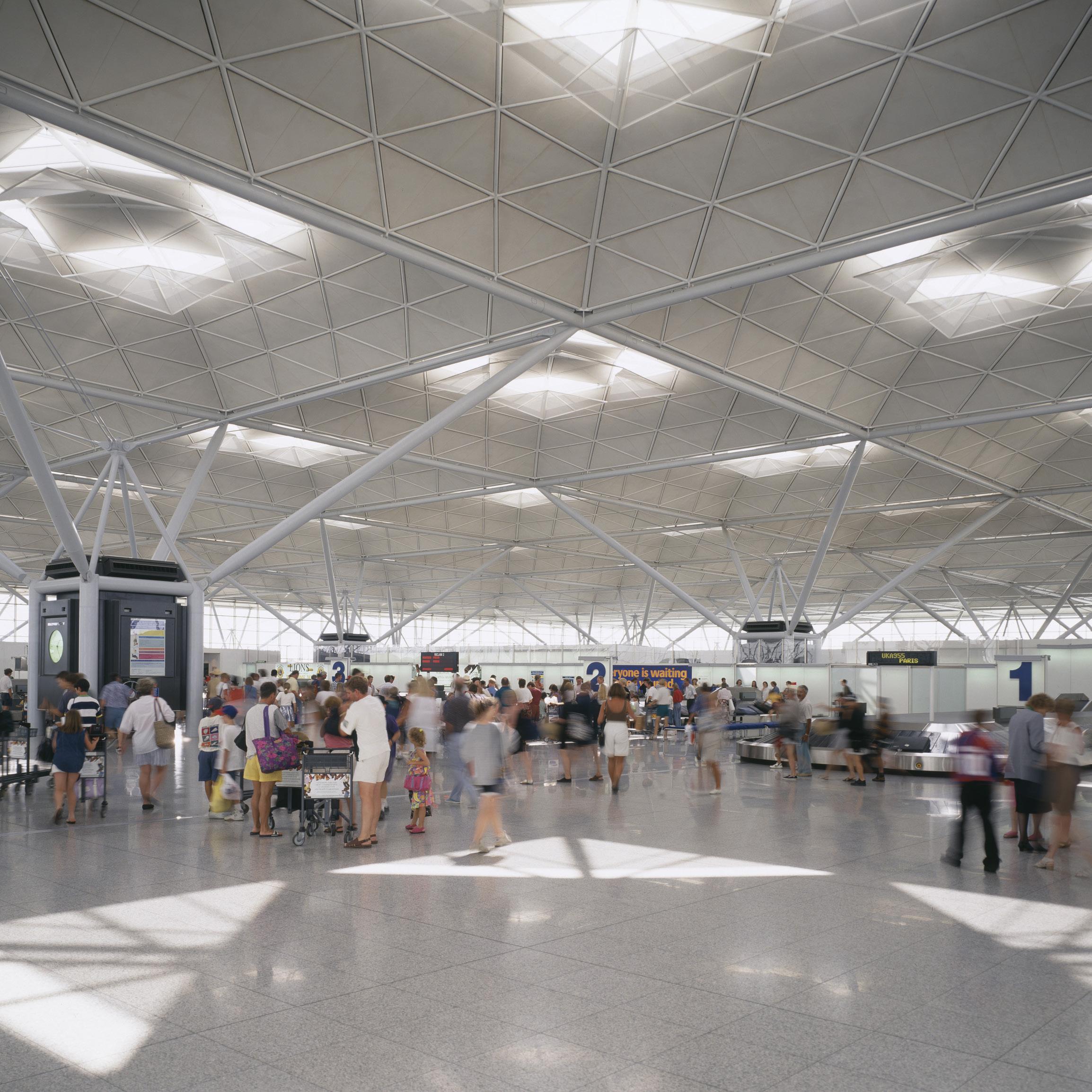
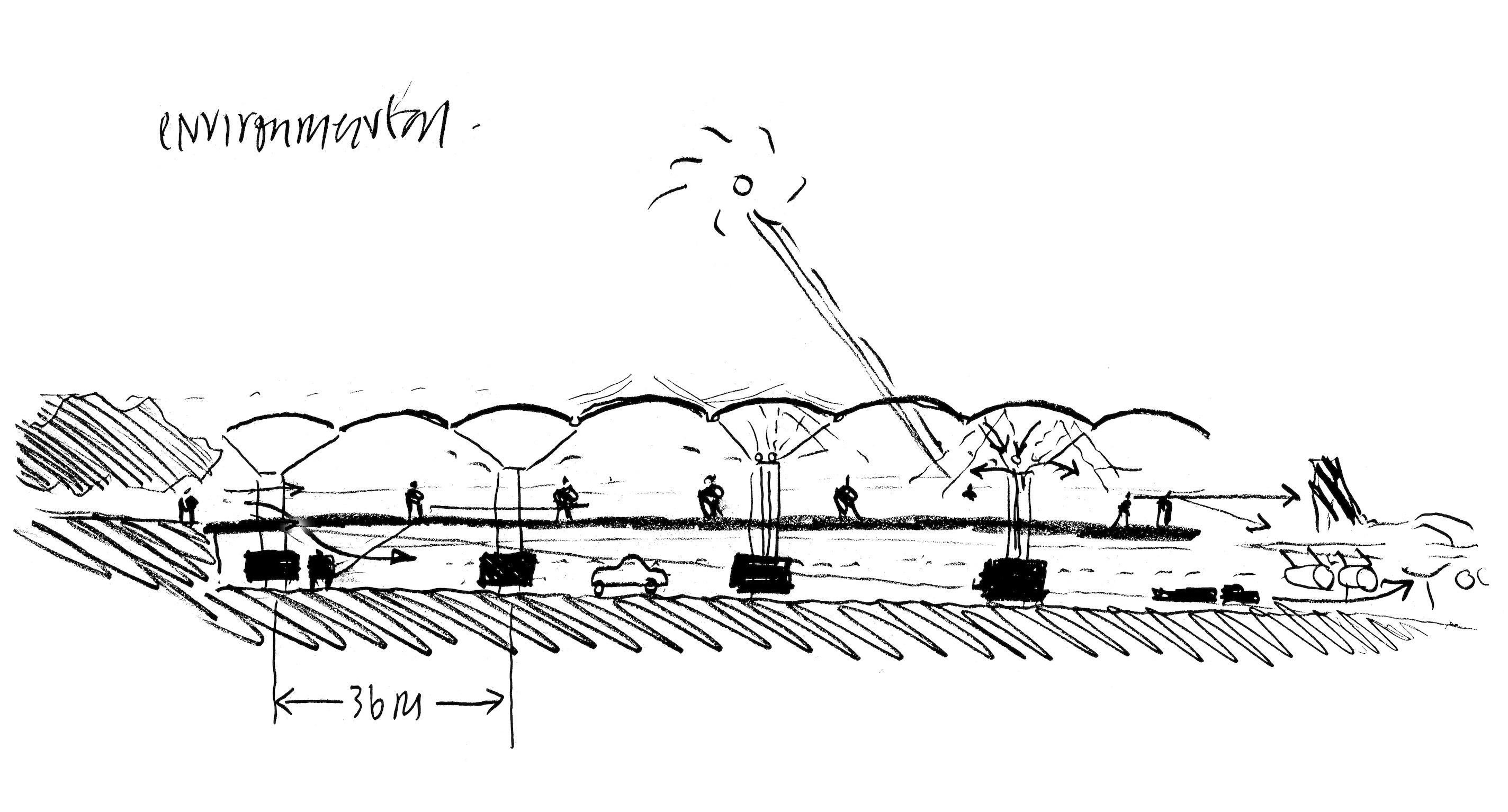
We achieved this degree of clarity in Stansted by turning the conventional terminal ‘upside down’, banishing the pipe and ductwork of heavy services usually found at roof level to an undercroft, so that movement through the building would be direct and the concourse would be flooded with natural light. This was a reinvention of the airport terminal that has been emulated worldwide ever since.
With Hong Kong International Airport, completed in 1998, our manifesto was once again to create what I describe as the ‘analogue experience’. Unlike the digital world - where you move around in a kind of black box, guided, by numbers and codes – we achieved that similar clarity of movement through the building. Only this time, we were creating what was then the world’s largest ever airport – and the dialogue was now between scale and clarity. We also recognized the commercial reality of the requirement for shops, and we integrated this into the design in a way that did not compromise the travel experience.
If Stansted and Hong Kong have provided some lessons from the past, we can turn to our Beijing project as a further step towards the airport of the future. Nearly two and a half times the area of Hong Kong International, its physical size is unprecedented. It is simply the largest building ever constructed. For example, if you combine Heathrow’s new terminal 5 with the existing terminals 1, 2, 3 + 4 and then add an extra 17% of the total - you arrive at the size of Beijing and mostly under one roof. Rather than the sprawl of many separate buildings, this is essentially a compact terminal, using less land and bringing everything
closer together for ease of communication in one efficient structure. This move to a more sustainable model is a vital trend for future airport design, as the aircraft they serve eventually become cleaner, safer and use less energy.
In terms of pace, it will have been designed, built and commissioned, within a mere four year period – contrast this to the four year public inquiry into Heathrow’s Terminal 5. Apart from the baggage handling system and the tracked transit, everything in this building has been made in China at a scale and quality which is awesome. Some commentators have remarked that the speed of construction has only been achievable by the ability to muster a workforce of up to 50,000 at times of peak activity. In my view, this is misleading – However, in my view, this is misleading because the achievement is more about the intelligent deployment, management and organisation of resources rather than the quantity of those resources.
This is a building also borne of its context. It communicates a uniquely Chinese sense of place and will be a true gateway to the nation. This is expressed in its dragon-like form and the drama of the soaring roof that is a blaze of ‘traditional’ Chinese colours – imperial reds merge into golden yellows. There are moments in this building that are magical –as you proceed along the central axis, a view of the red columns stretching ahead into the far distance evokes images of a Chinese temple.
Beijing also moves the dialogue between scale and clarity to another level. The curve of its diagram reinforces the clarity of movement from landside to airside by drawing you through the building and offering panoramic views of the aircraft beyond. When you arrive at the forecourt, you can immediately see through to the action of the runways. You are always aware of the elements and the context. No matter where you are in the building, the relationship is there.
Each of these examples – Stansted, Hong Kong International and Beijing Capital – have created new thresholds and as we look to the future, we see an increasingly significant role for the airport in terms of its wider urban function. The airport is just one component of the infrastructure that binds a city together, and there is the potential to integrate it as a more generic centre for related activities such as leisure, shopping, hotels, conferences, exhibitions and entertainment. In that sense, the airport of the future is moving closer to the city in microcosm.
Norman Foster Founder and Executive Chairman, Foster + Partners
26
27
Airports Methodology
Foster + Partners has extensive international experience having delivered strategic visions, design and delivery of over fifteen airports, seven rail infrastructure and cruise terminals, and one spaceport, These include creating global gateways for Hong Kong, Beijing, London and Doha, masterplans for JFK in New York and Incheon in Seoul, and air terminals under construction in Kuwait, Marseille and Mexico City. All these major transport infrastructure projects have been on time and on budget in addition they have pioneered fast track construction techniques which enabled the delivery of Hong Kong International Airport and Beijing International Airport in record time. While sustainable design solutions are at the heart of the their design philosophy, their key focus is passenger experience and the respon siveness to the dynamic nature of airport environments which drives for innovative solutions. A number of the practice’s airport buildings appear regularly in the Skytrax Top 10 Airports rankings, including Hong Kong International Airport, which has been a constant presence in the rankings since it opened.
Our design approach is to provide a high degree of personal service, together with respect for the precious resources of cost and time. Environmental awareness and sustainability has always been integral to our design process. We consistently seek to devise design solutions that use renewable energy sources and reduce carbon emissions. Our clients benefit from an integrated design approach. By involving all of the critical design disciplines from the earliest stages the project can be optimized for the opportunities and constraints presented by the site and the project brief. Clients benefit from a single point of contact for the project design, with the benefit of direct access to the leaders of the core disciplines involved. All disciplines in the team can operate from common technology platforms which enables us to offer integrated specifications and seamless BIM coordination providing further efficiency through a single point of contact.
People friendly airports
As a practice, we feel that efficiency of the journey and general passenger experience are intrinsically linked. From Stansted to Beijing International, to Heathrow Terminal 2, the way in which we approach the design of a masterplan or terminal building is based upon the needs and expectations of passengers. Our process involves both thorough benchmarking and an understanding of the voice of the customer, which are critical to the brief for the masterplan and the solutions that are offered. With Beijing International Airport, the dialogue between scale and clarity was taken to another level. The curve of its diagram
reinforces the clarity of movement from landside to airside by drawing you through the building, offering panoramic views of the aircraft beyond. When you arrive at the forecourt, you can immediately see through to the action of the runways.
Operational efficiency
At Hong Kong International Airport we have delivered a world class passenger experience, integrated into seamless operational system, to rival the most advanced airports in the world. Hong Kong International Airport remains one of the most prolific winners of the ACI and SkyTrax awards. This has been attributed, by the Airport’s CEO to ‘its memorable experience and reputation for efficiency connectivity and accessibility”.
The Hong Kong International Airport terminal building extends a concept Foster + Partners pioneered at Stansted Airport –a model since adopted by airport planners worldwide. It is characterized by a lightweight roof, free of service installations; natural lighting; and the integration beneath the main concourse of baggage handling, environmental services and transportation. With its soaring spaces, bathed in light, it forms a spectacular gateway to the city. Routes are legible and orientation is simple: you are aware of the land on one side and the water on the other and you can see the aircraft. Similarly, the vaulted roof provides a constant reference point as you move to or from your aircraft.
Future proofing
At Stansted Airport the masterplan strategy was for a terminal which could grow incrementally and adapt to a fast-changing airline business. The solution was a modular terminal which has been expanded in two subsequent phases, the last being in 2007, without disruption to the airports operation, and has been redefined for the new model of low-cost carrier operations.
Sustainability and wellbeing
As aircraft become cleaner safer and use less energy so too must the facilities that support them. Maximizing existing assets and integrating them into a development that will deliver a step change is a goal for all existing airports. We will work to incorporate the environmental ambitions of the project and meet LEED requirements and the WELL concepts of air, water, nourishment, light, fitness, comfort and mind.
29
Abha Airport
Abha, Saudi Arabia 2022 – 2027
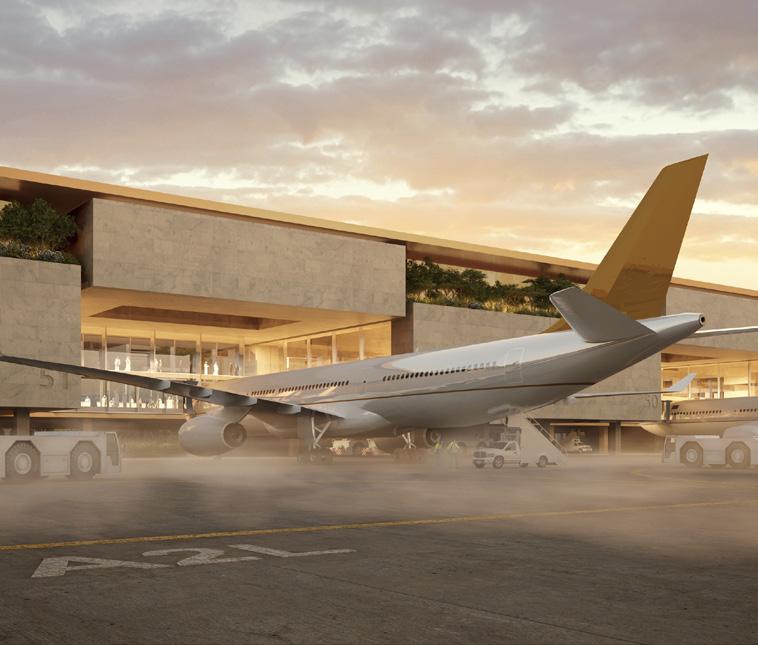
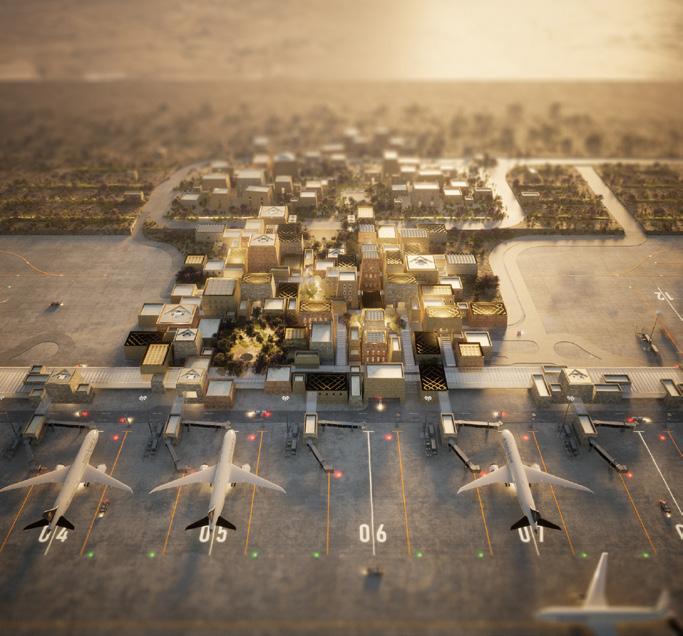
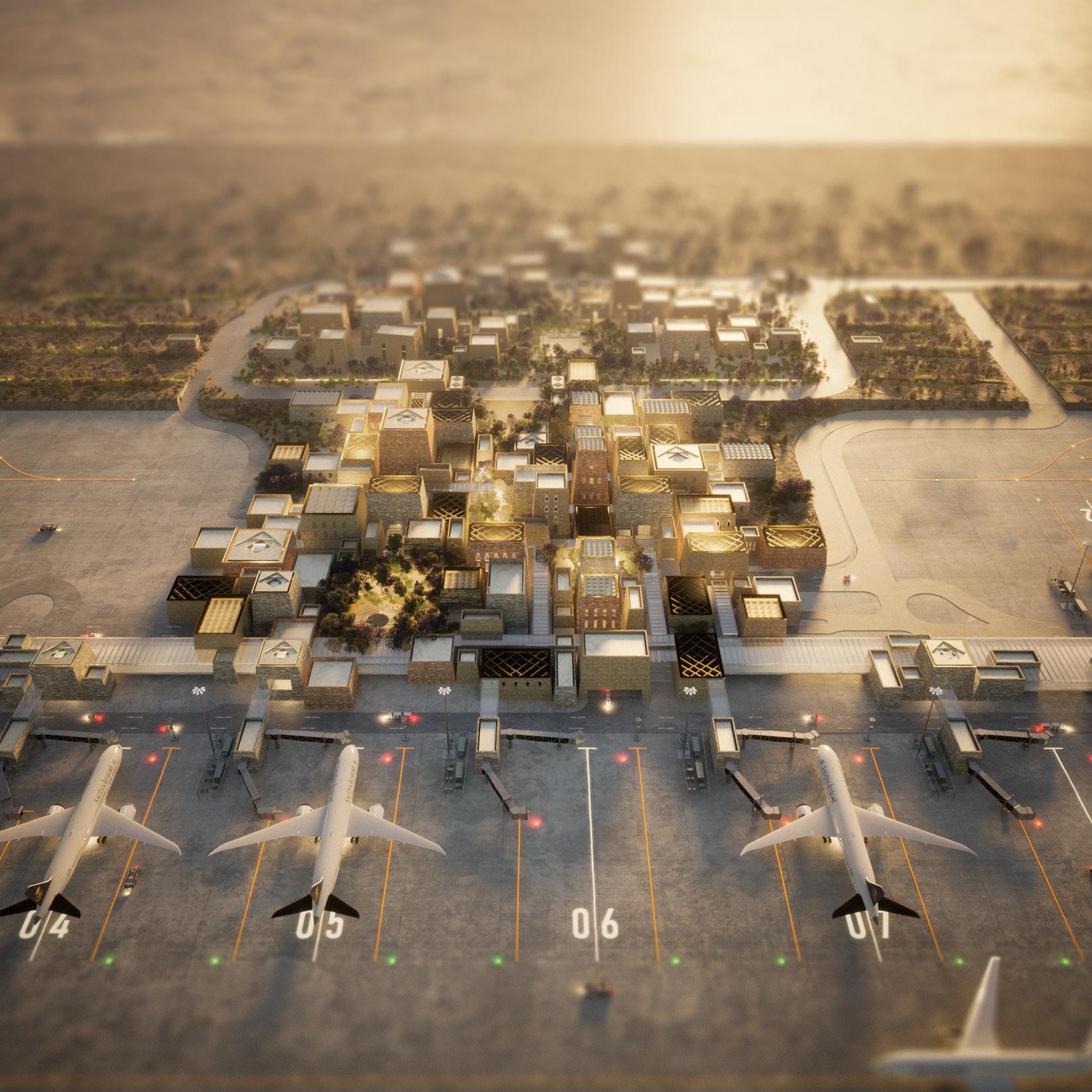
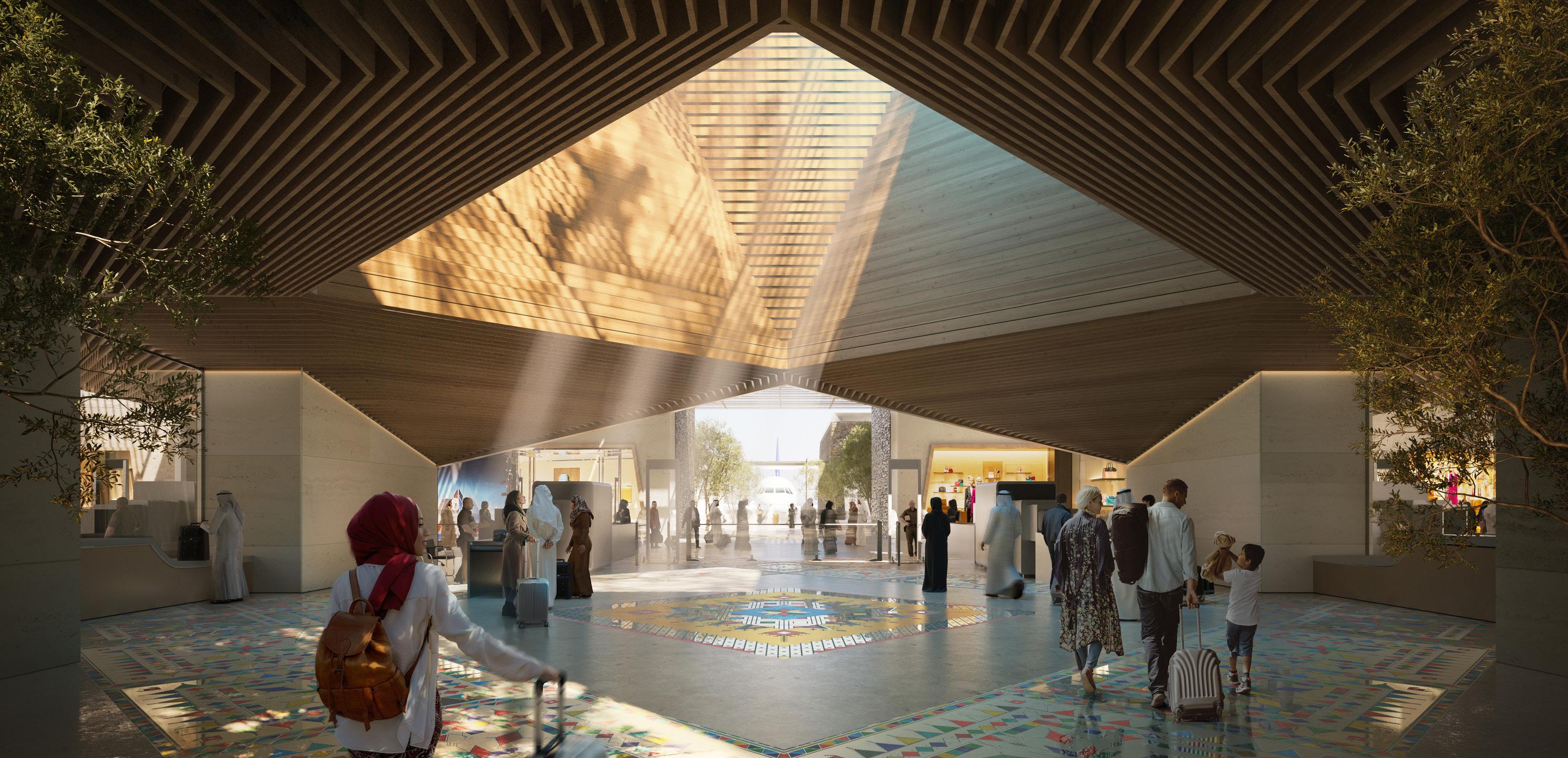
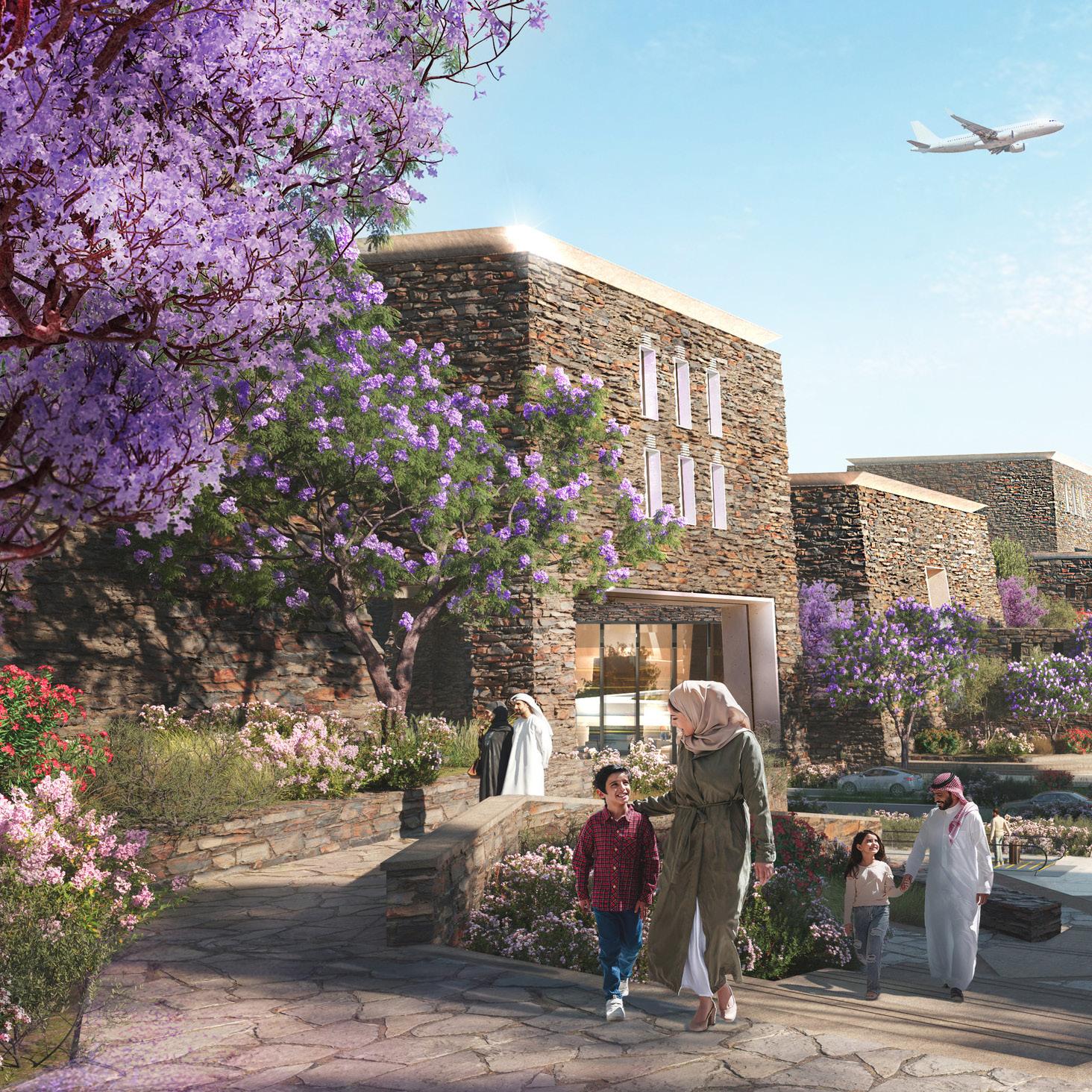
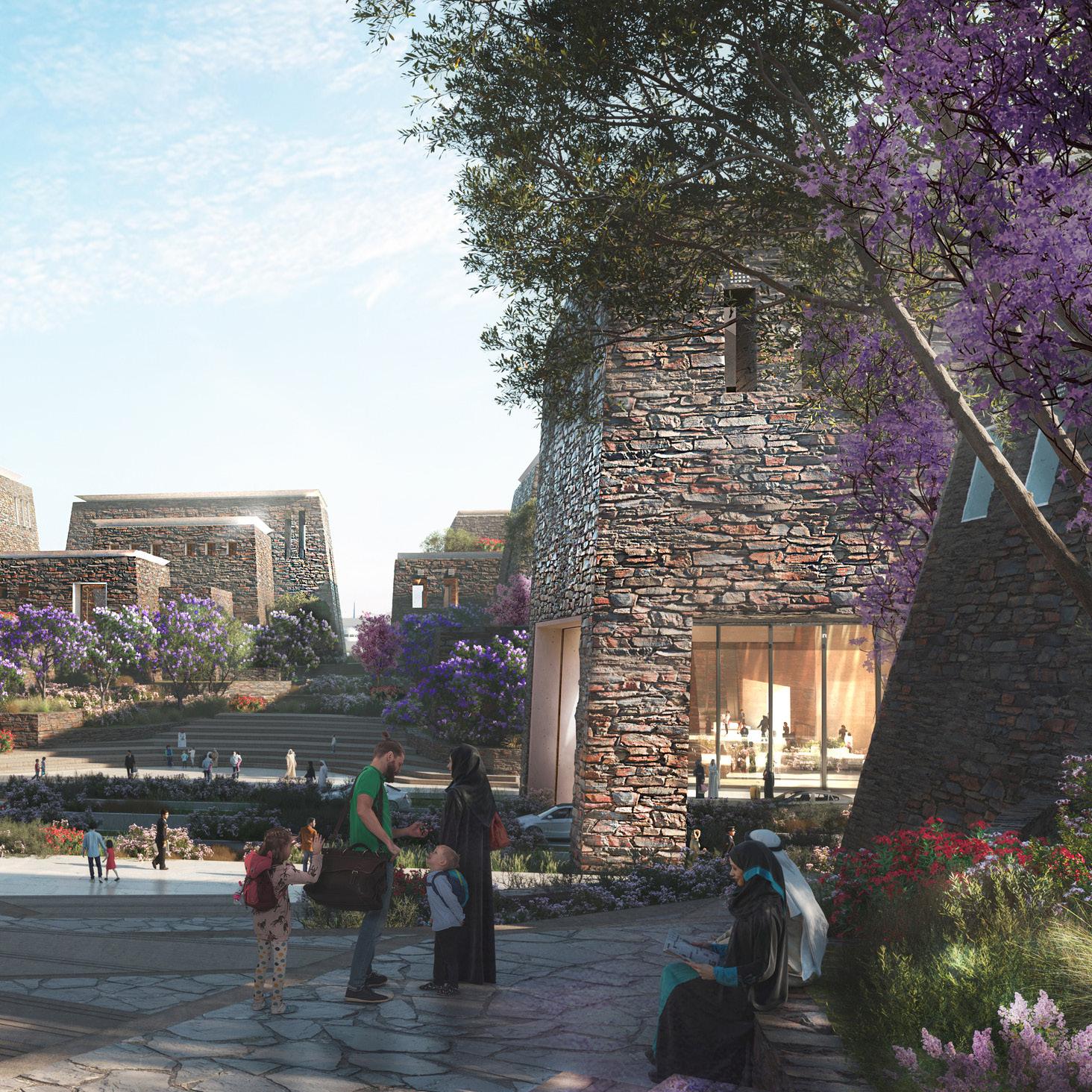
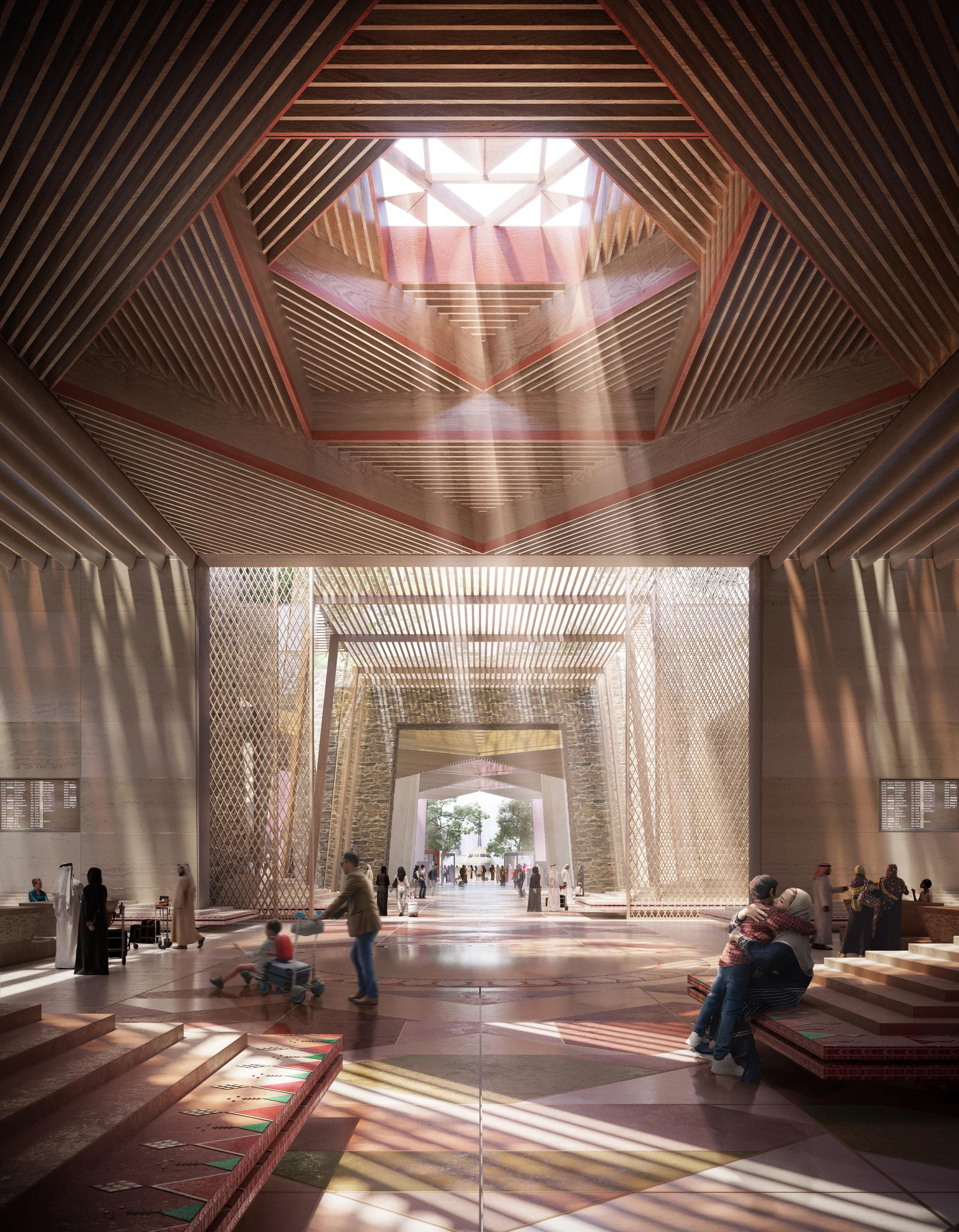
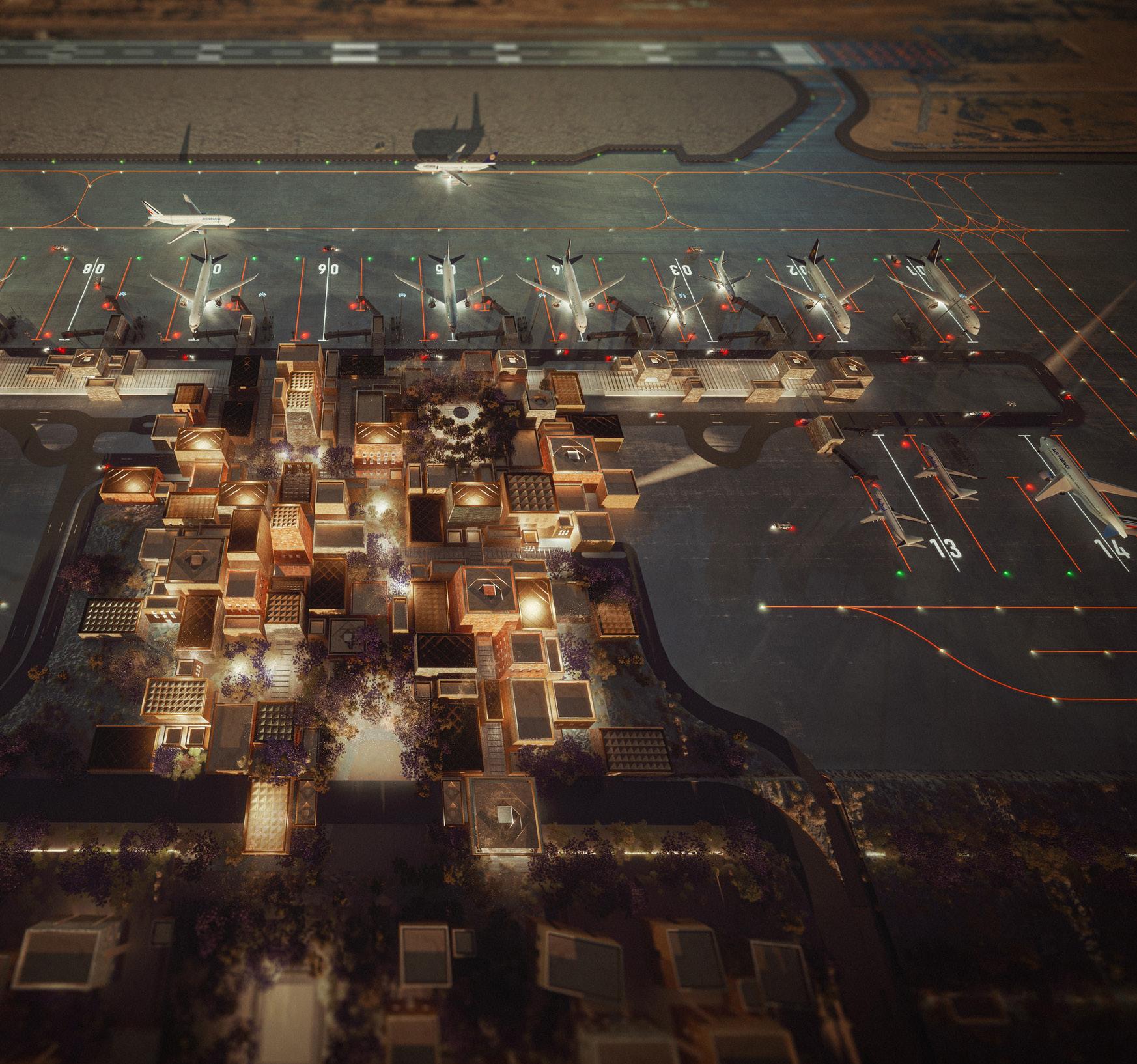
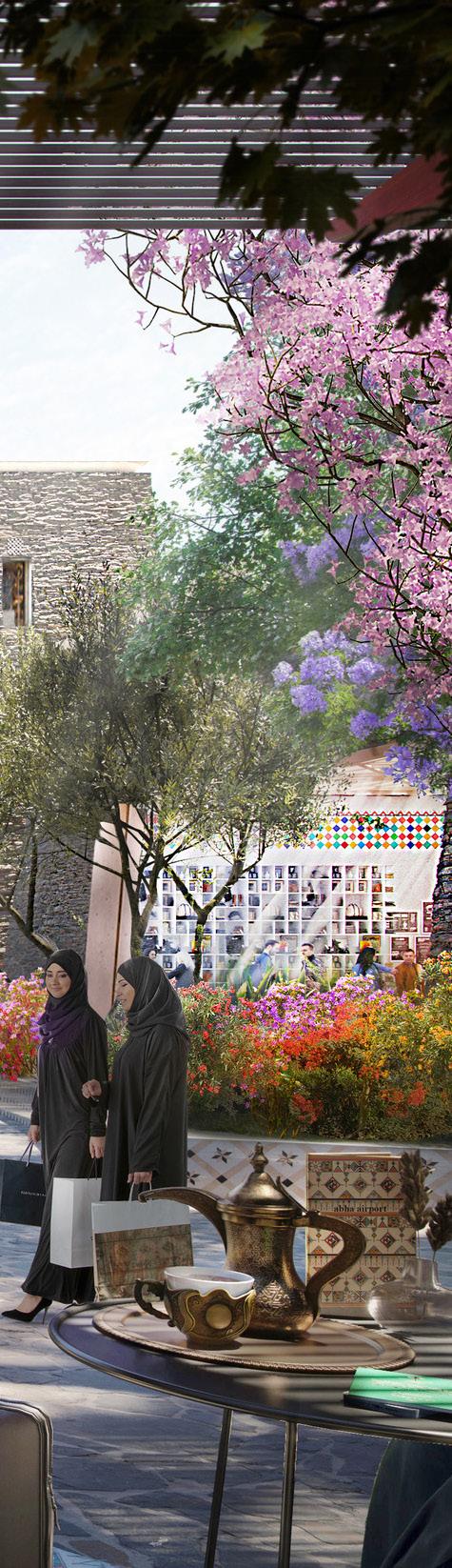
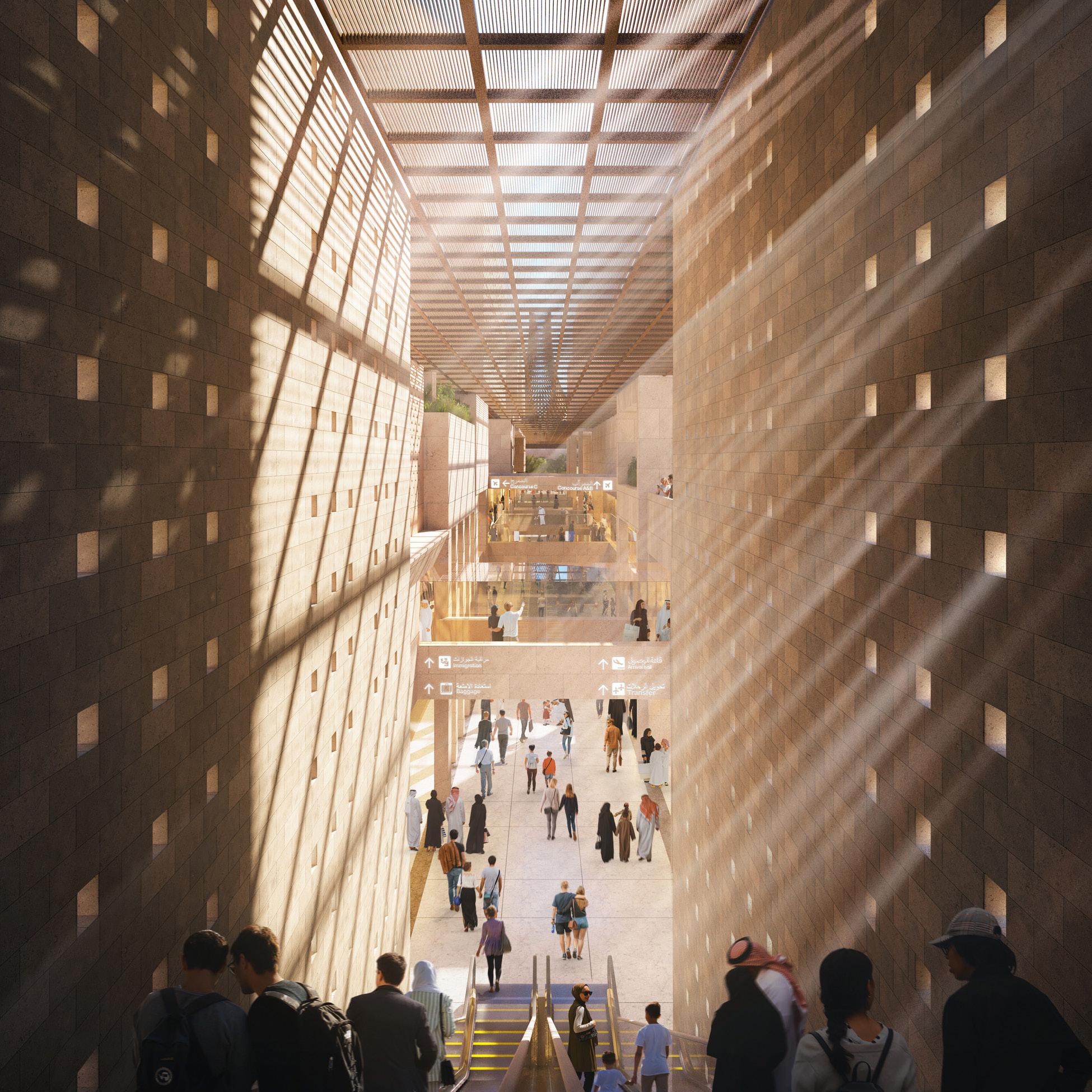
Foster + Partners has won an international competition to design a new terminal for Abha Airport in Saudi Arabia’s Aseer Region. Inspired by the nearby Rijal Almaa village, the winning design reinvents the airport terminal as a series of interconnected humanscale clusters, outdoor courtyards and walkways. The scheme brings fresh air, greenery and natural light to the experience of travel, transforming the passenger journey and setting a benchmark for this new typology of airport design.
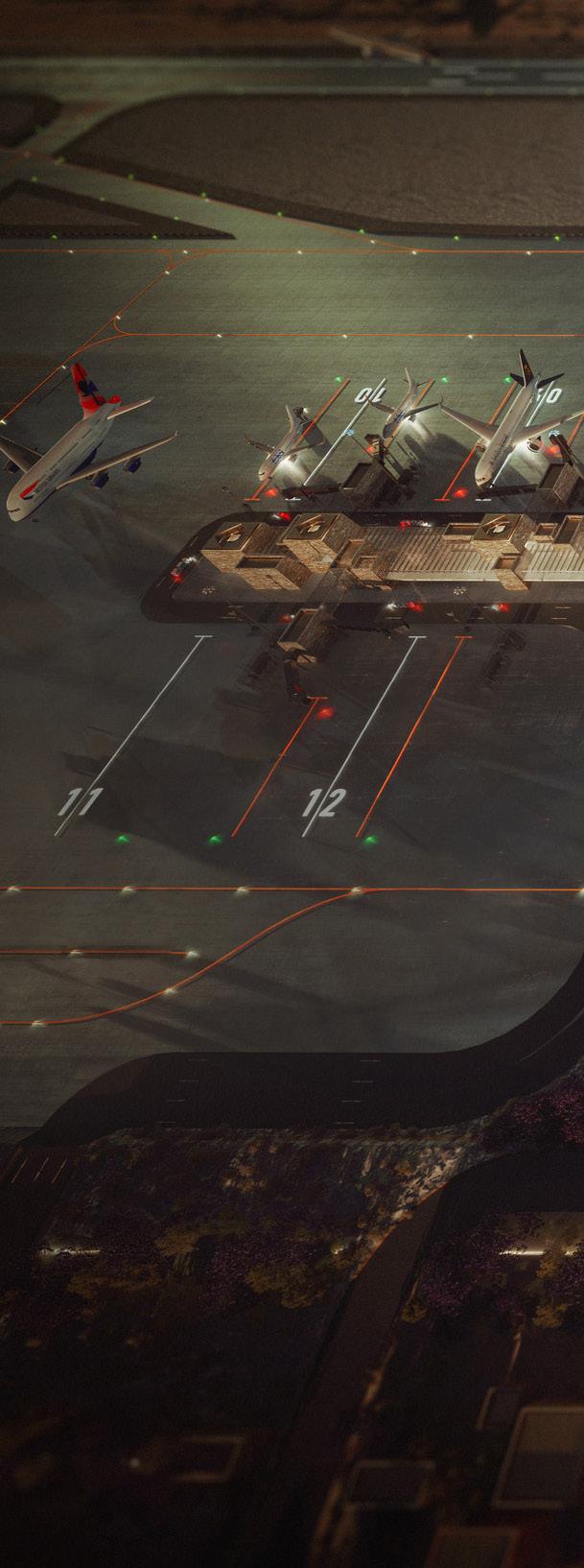
The modular form is arranged in clusters, between the drop off zone and the apron. Buildings are tapered and vary in height to reflect the distinctive architectural character of the region and create different types of functional space. The scheme’s modularity makes it extremely flexible, allowing the airport to expand efficiently as demand increases.
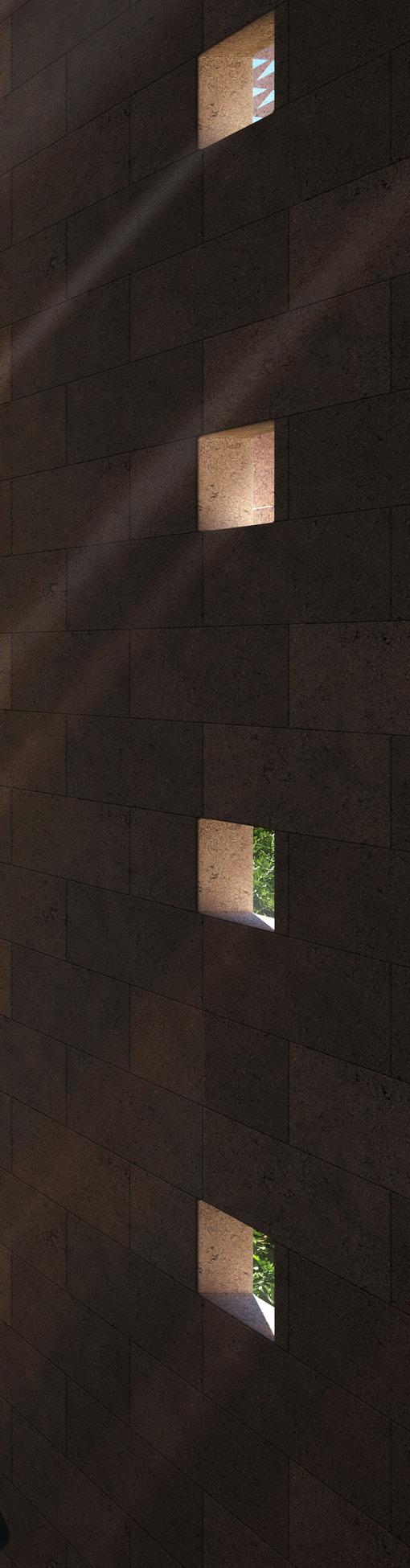
The design responds to the region’s climate, with massing that takes advantage of prevailing winds to optimise natural ventilation. The solidity of the stone walls and diffused daylighting also contribute to keeping the internal spaces comfortable and cool.
31
Client Matarat Holding Company Team Foster + Partners Buro Happold Currie & Brown
4,600,000m2
8-10mppa
34
35


King Salman International Airport
Riyadh, Saudi Arabia 2022
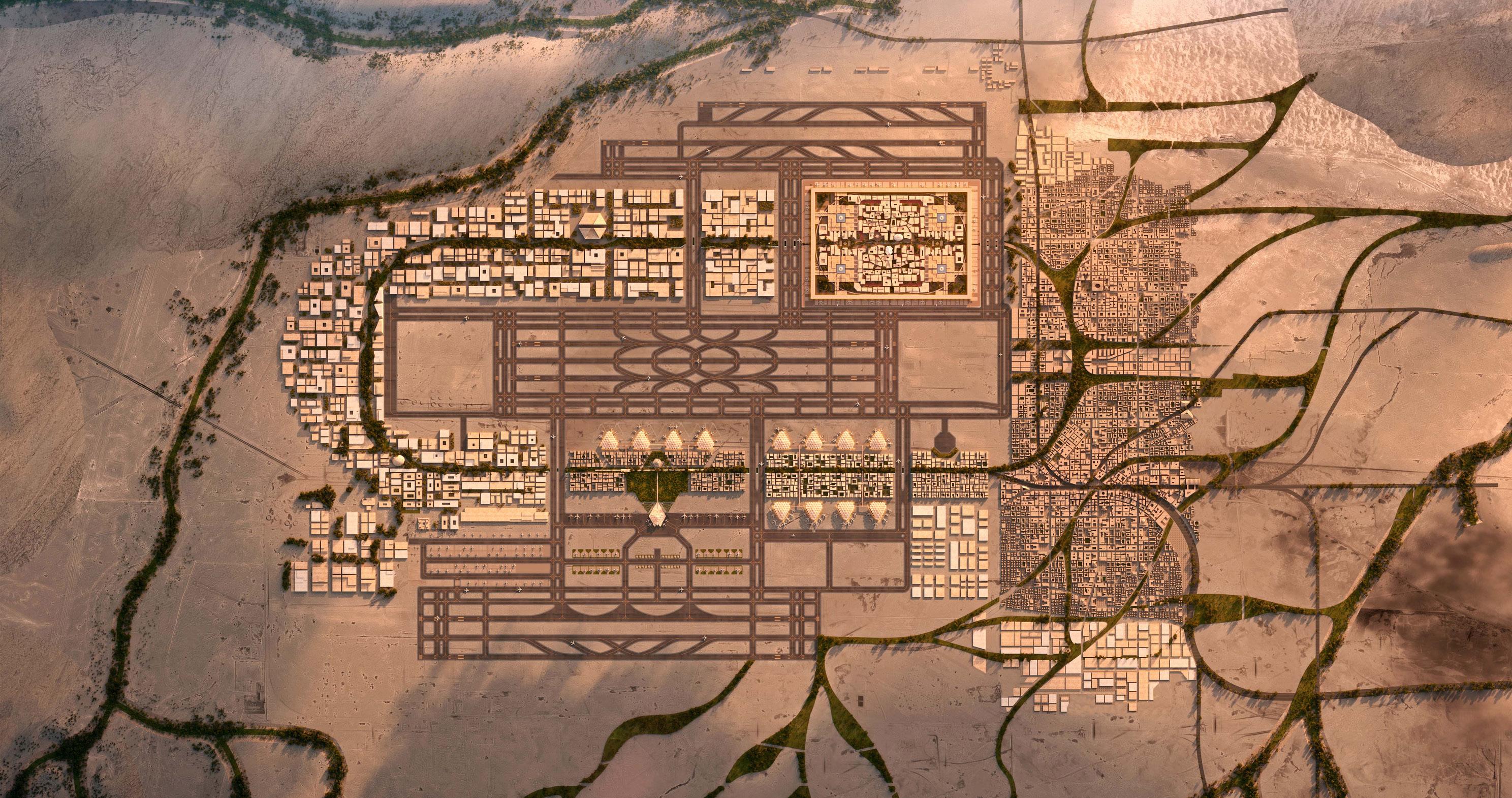
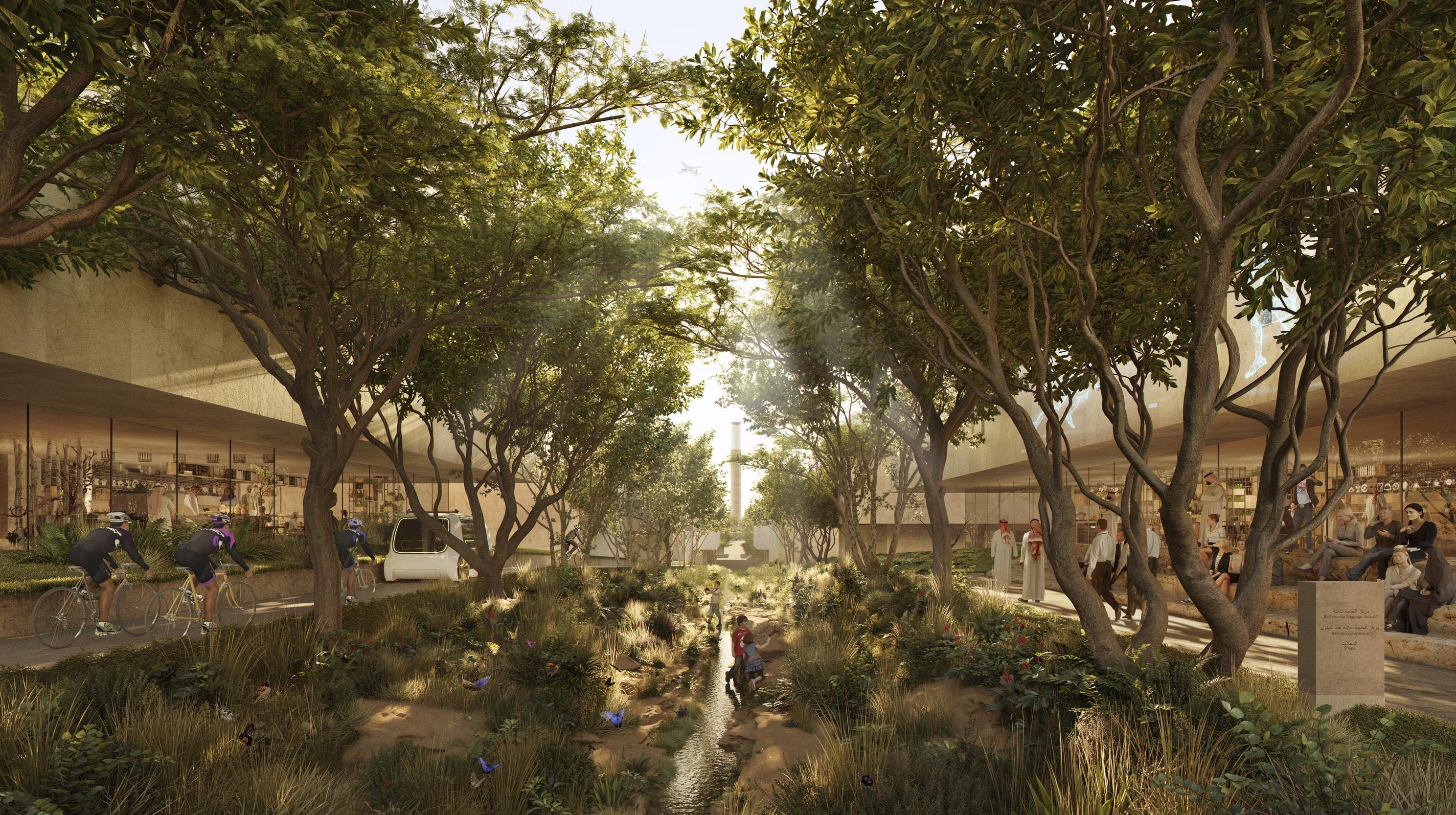
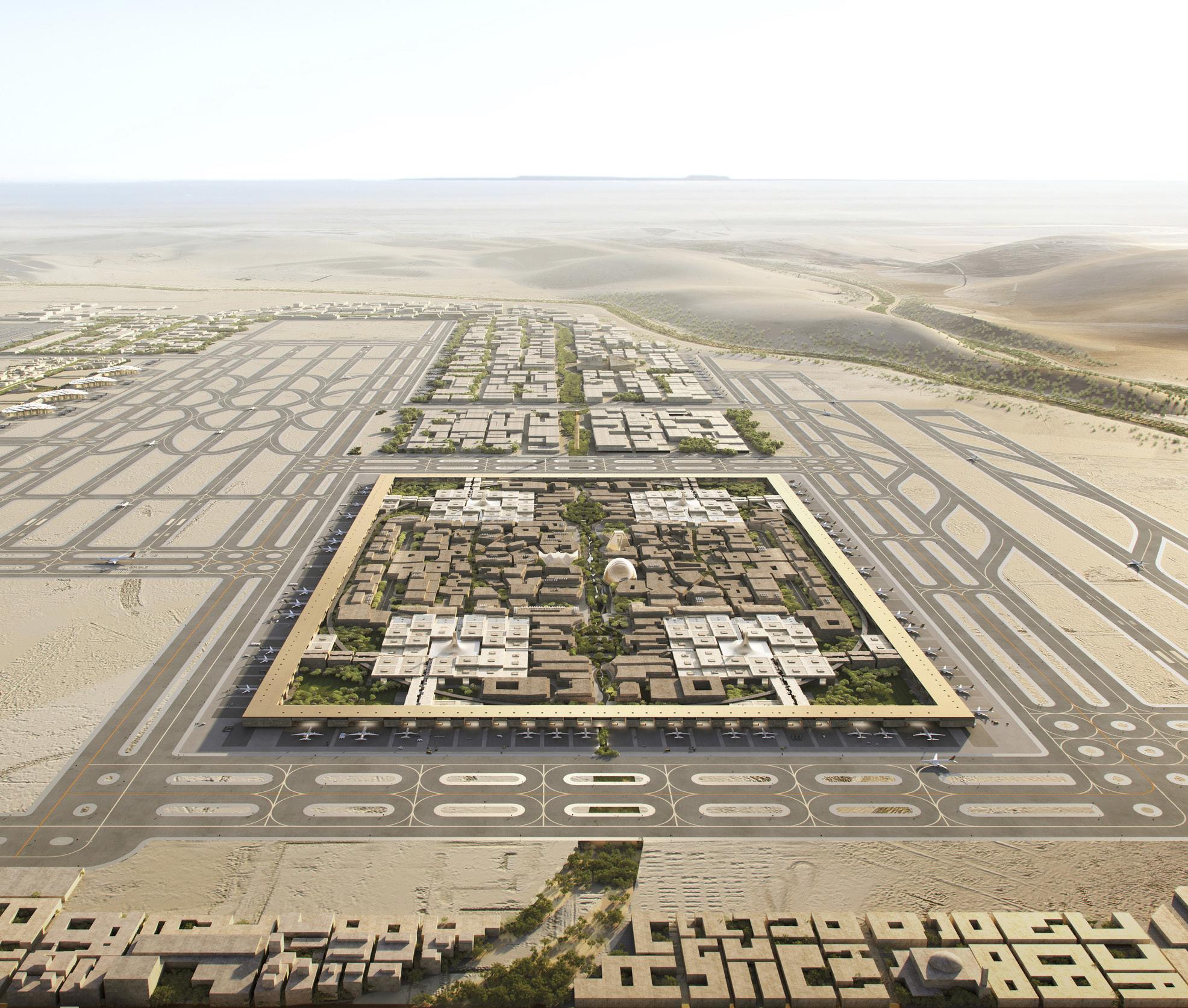
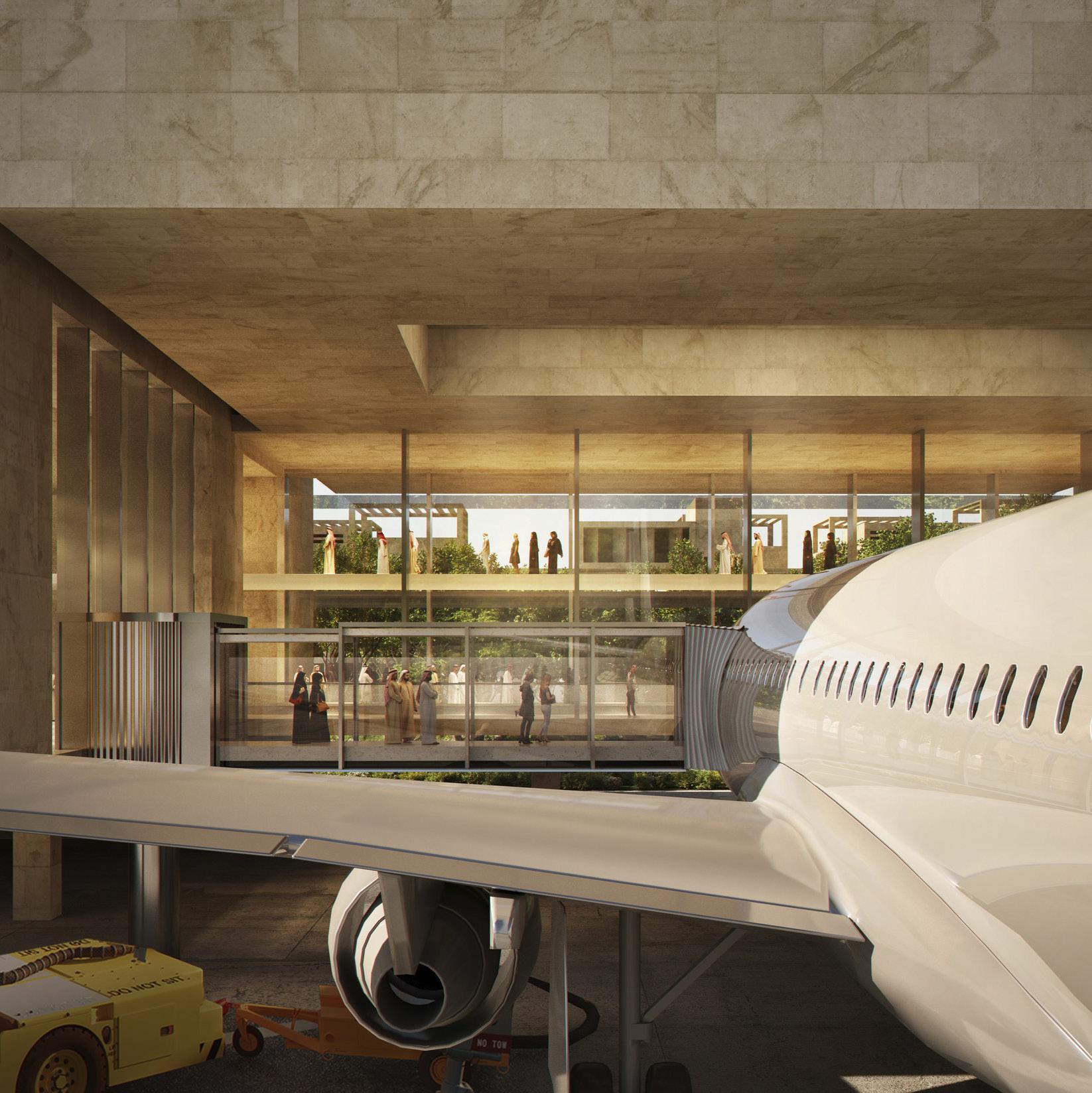
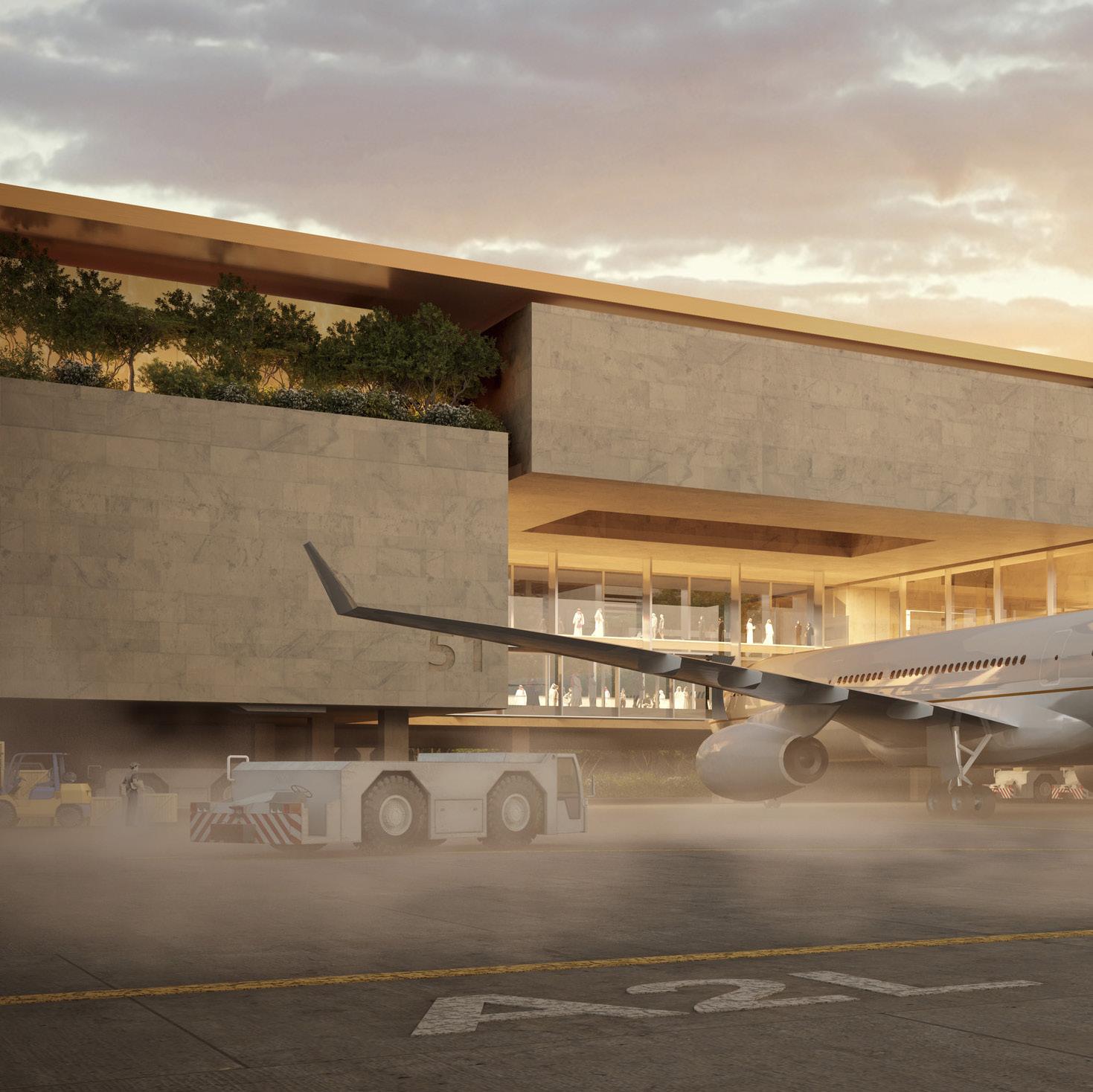
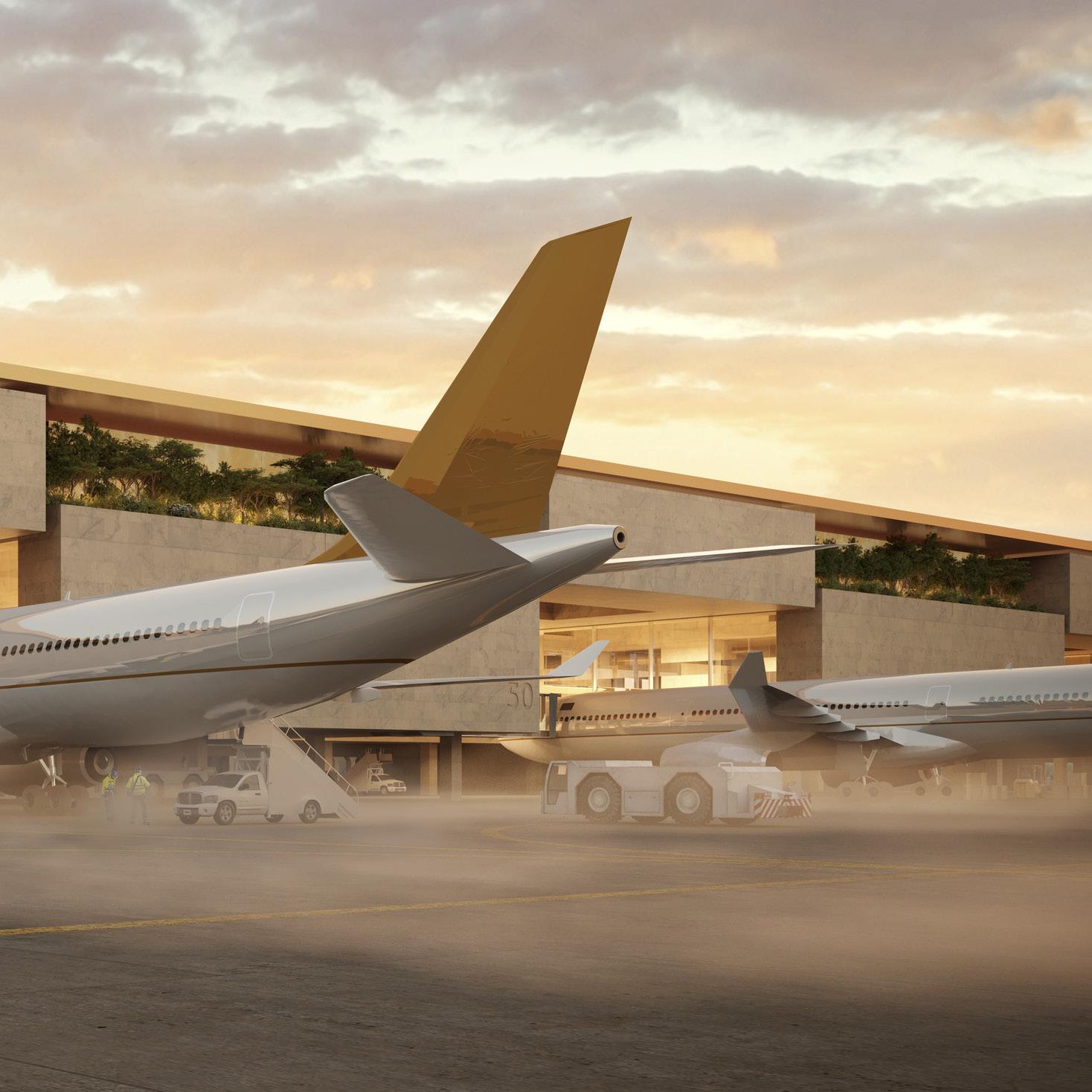
King Salman International Airport is expected to be one of the world’s largest airports covering an area of approximately 57 km², allowing for six parallel runways and including the existing terminals named after King Khalid. It will also include 12km² of airport support facilities, residential and recreational facilities, retail outlets, and other logistics real estate. The airport aims to accommodate up to 120 million travellers by 2030 and 185 million travellers, with the capacity to process 3.5 million tons of cargo,
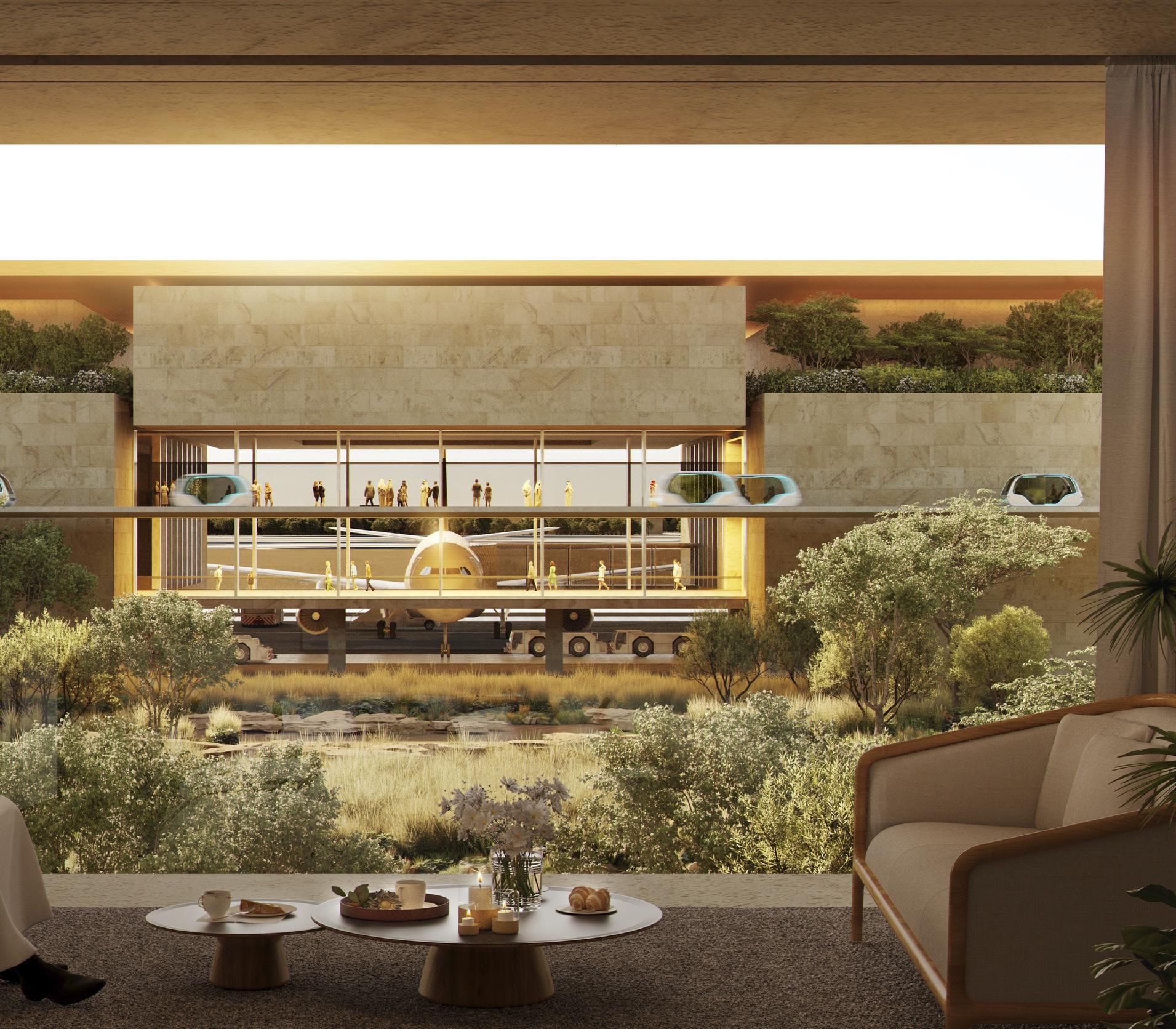
The airport will become an aerotropolis centred around a seamless customer journey, world-class efficient operations, and innovation. Riyadh’s identity and the Saudi culture will be taken into consideration in the airport’s design to ensure a unique travel experience for visitors and transit travellers.
With sustainability at its core, the new airport will achieve LEED Platinum certification by incorporating cutting edge green initiatives into its design and will be powered by renewable energy.
39
Client Public Investment Fund of Saudi Arabia (PIF)
57,000,000m2 180mppa
40
41
42
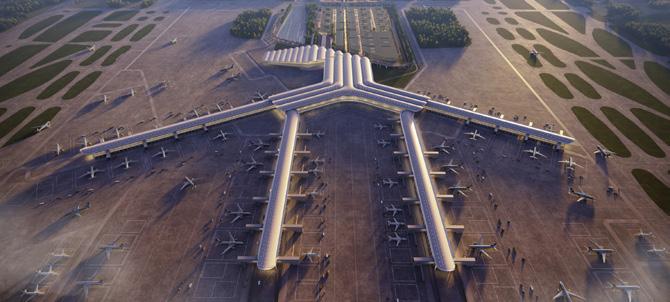
CPK Airport
Warsaw, Poland 2021 – 2027
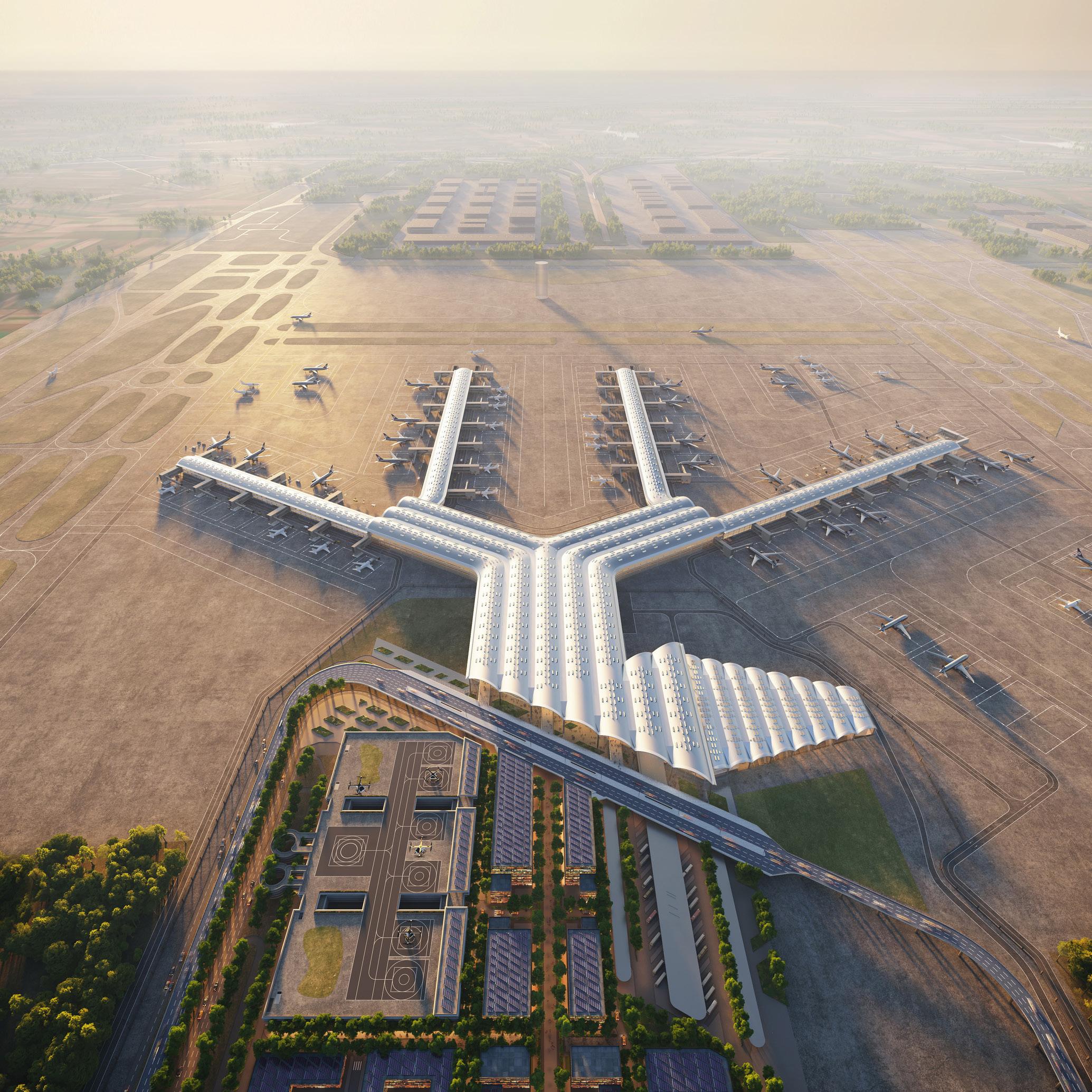
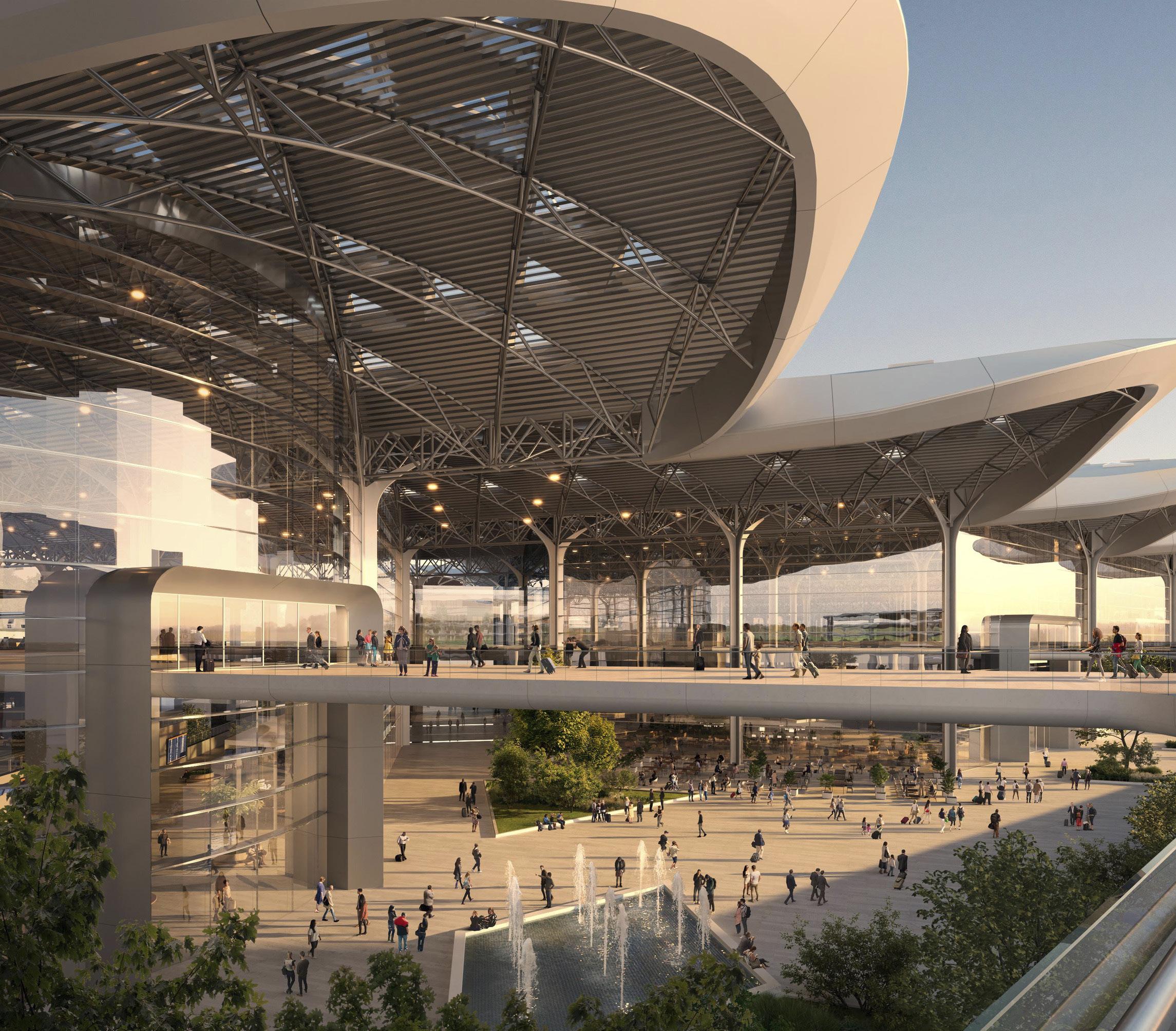
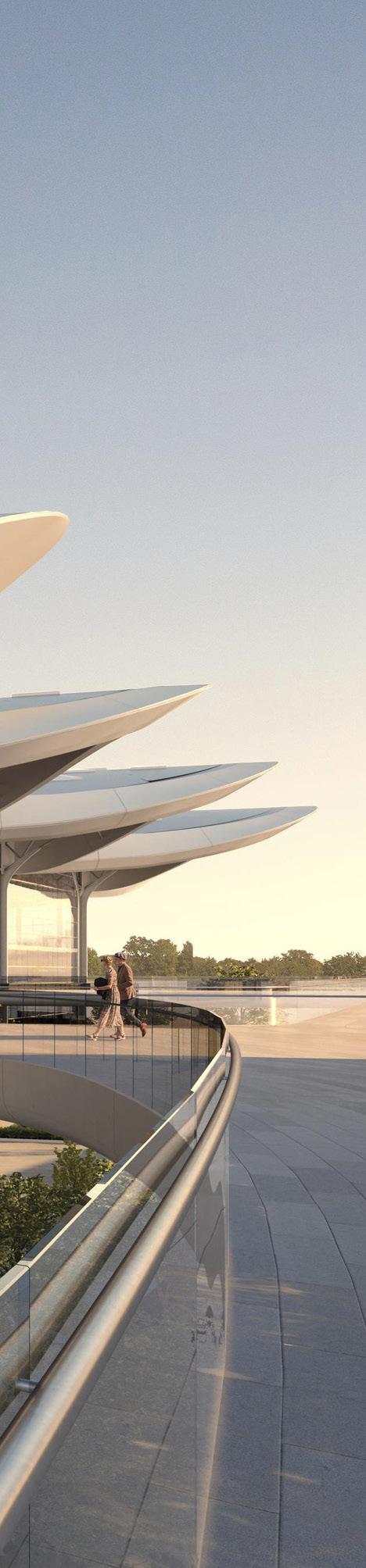
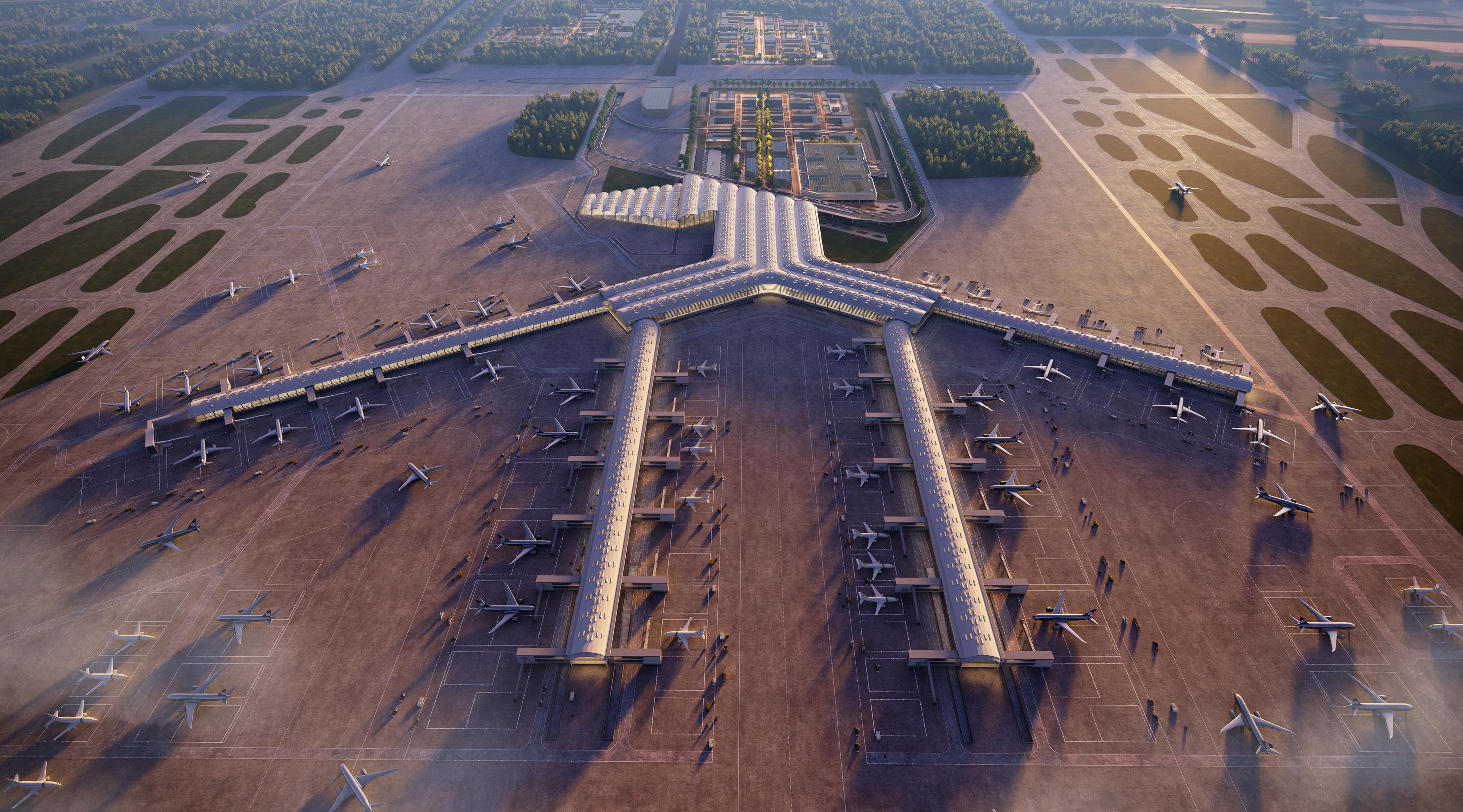
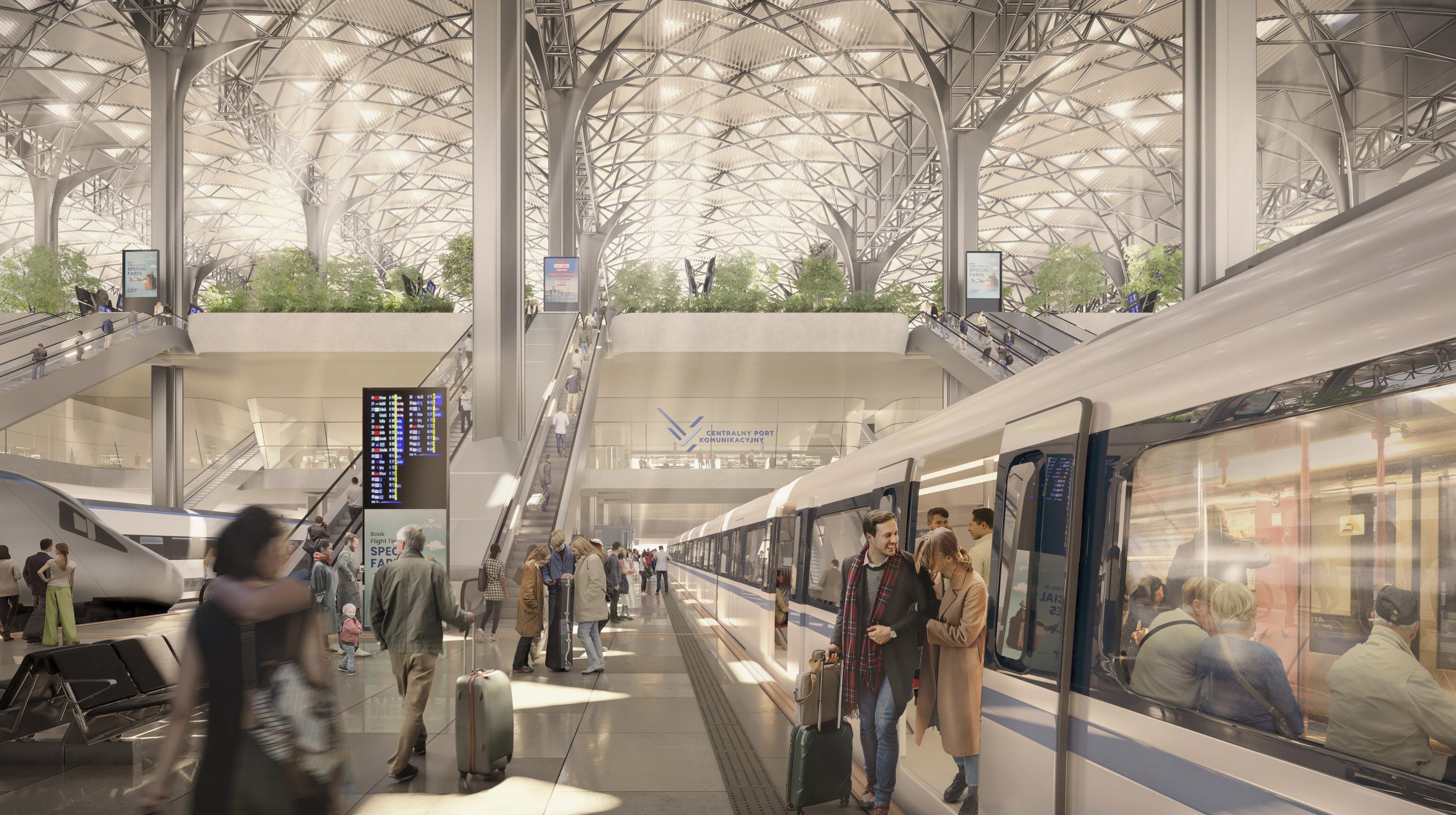
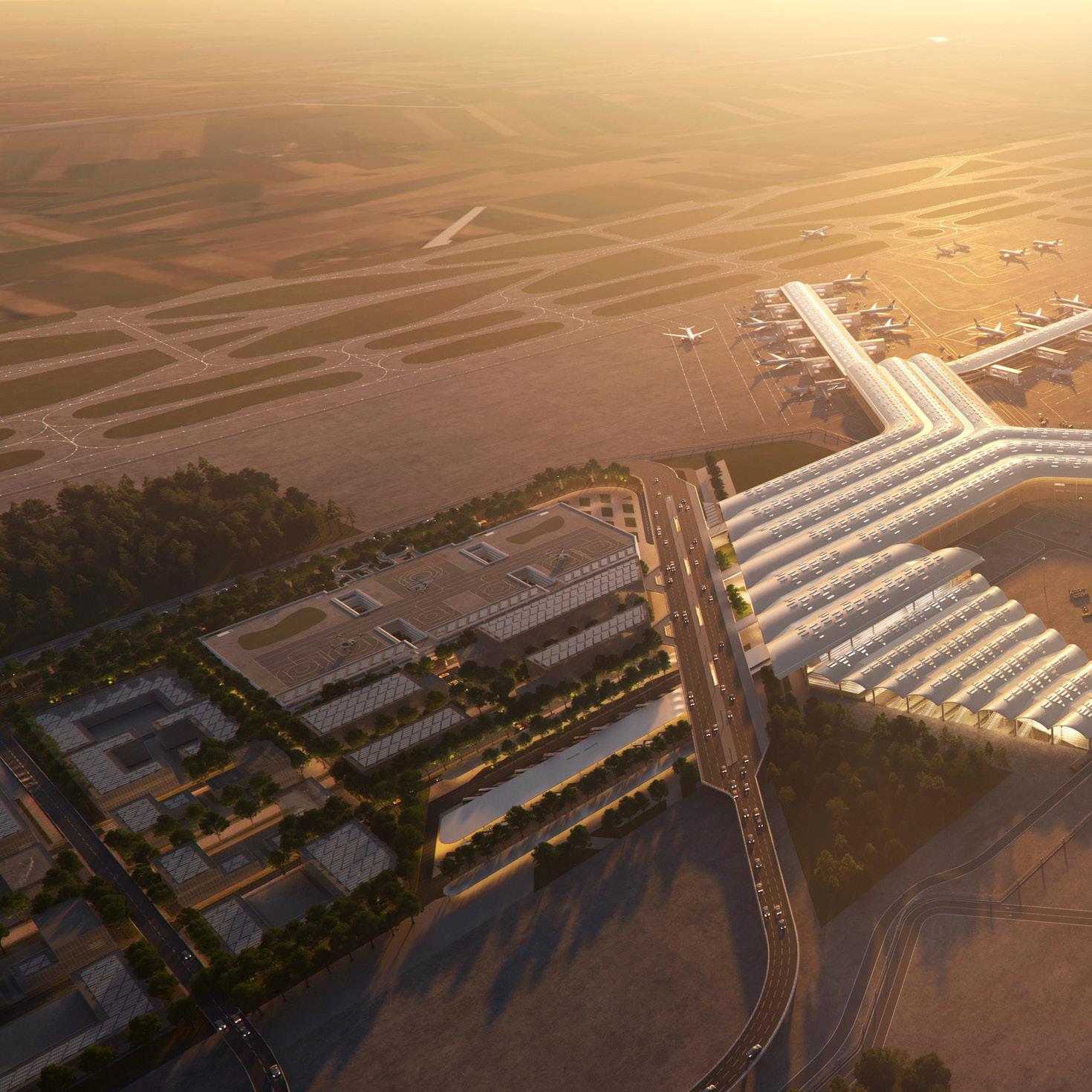
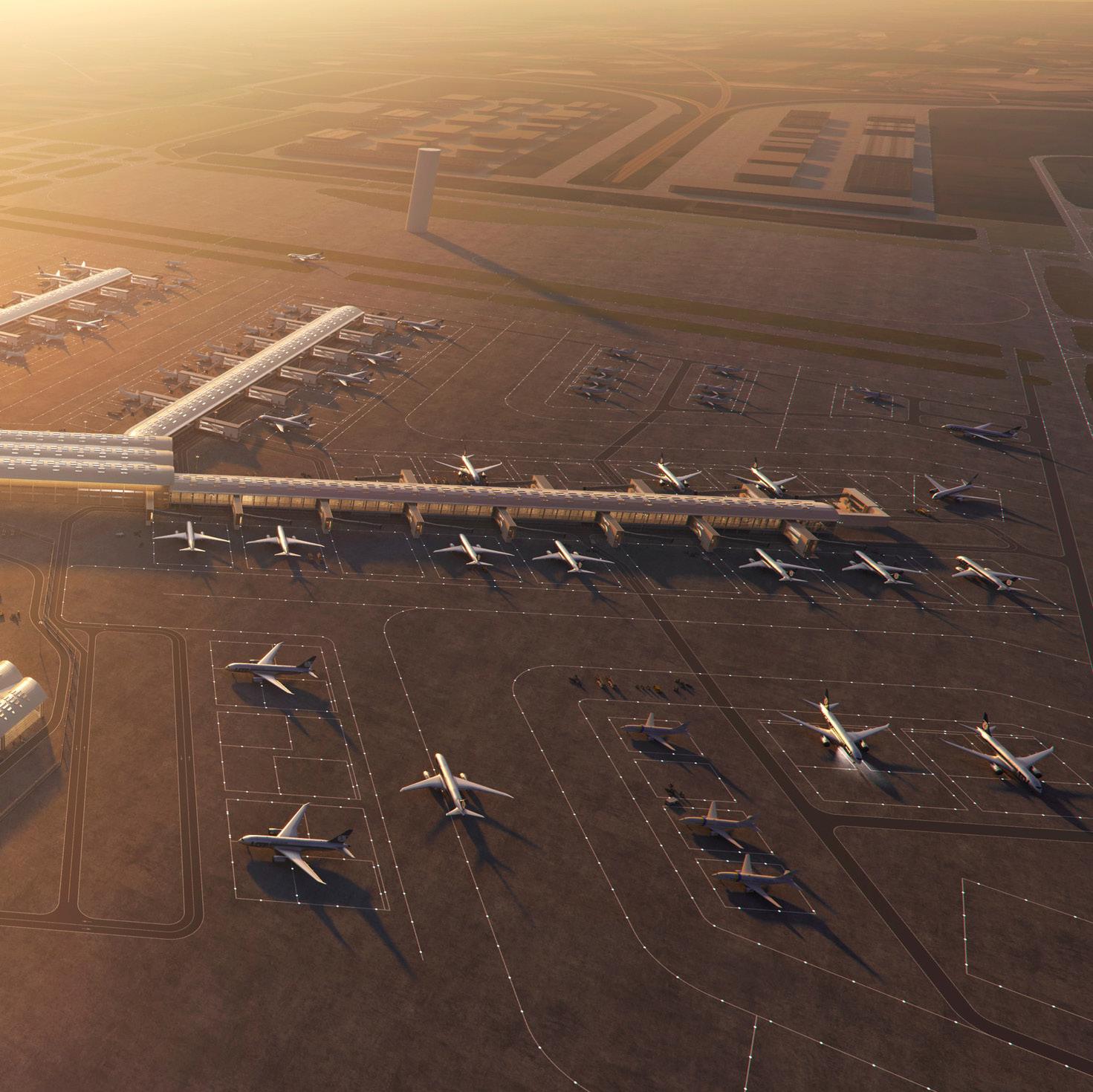
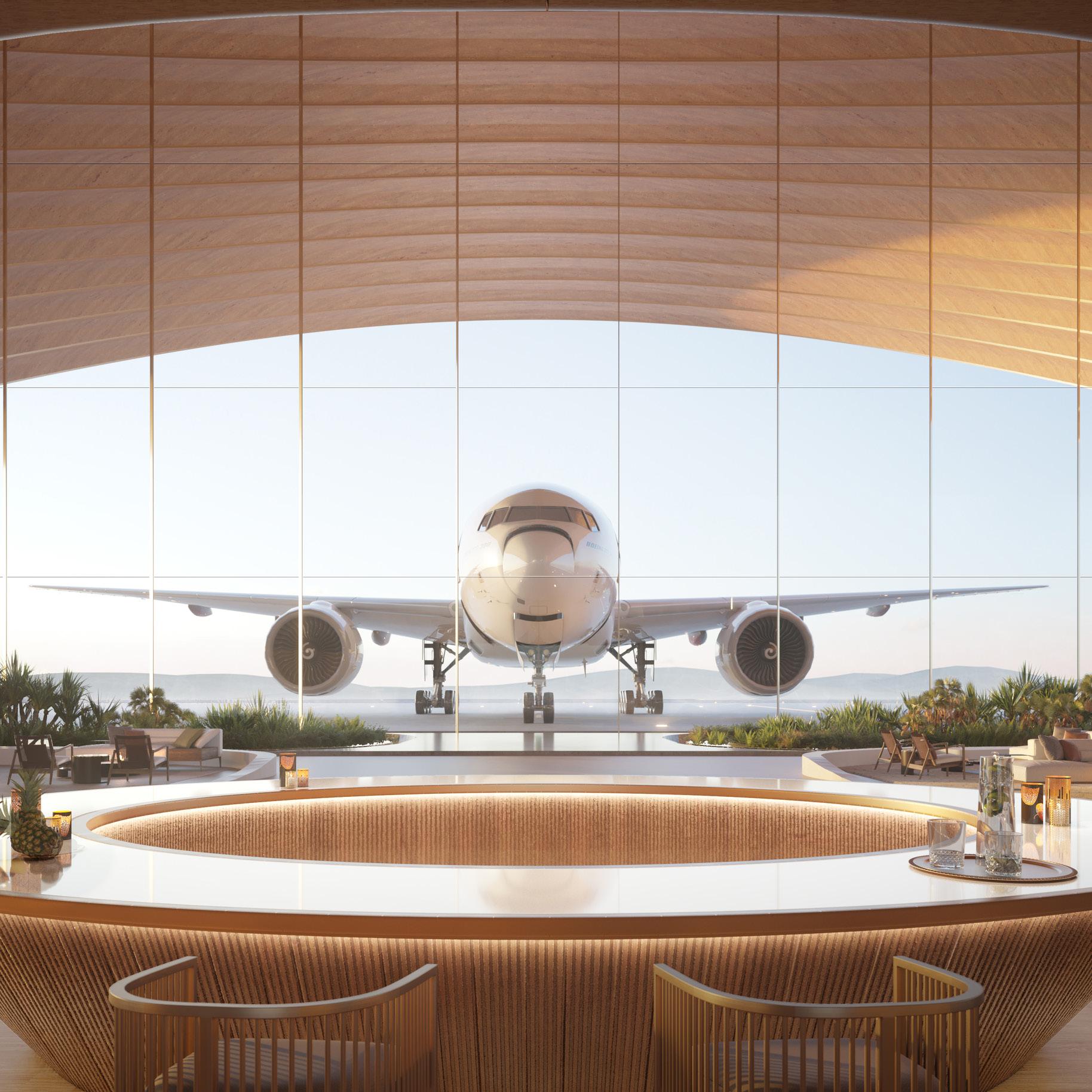
A Foster + Partners and Buro Happold consortium has won the competition to design the new CPK airport between Warsaw and Łódz. The pivotal project will act as a symbolic gateway to Poland, a 21st century transport interchange which brings together air, rail and road, while reflecting the country’s national identity and providing exceptional passenger experience.
Drawing on over 40 years of experience designing infrastructure and transport-orientated projects, from Hong Kong and Beijing airports to Stockholm Central Station, the vision for the new CPK airport finds a balance between operational efficiency, environmental responsibility and symbolic expression.
The vision for CPK airport includes a landside interchange plaza that is animated by lush greenery and flooded with natural light. People would congregate in this vibrant space before travelling or welcoming visitors. The plaza brings together three main modes of transport: air, rail and road. It acts as the focal point of the scheme and could support the shift towards more efficient and sustainable means of travel. The plaza would also be able to accommodate future emerging technologies. The design ideas include a simple, continuous vaulted roof which intuitively directs passengers from the plaza towards the aircraft.

47
Client Centralny Port Komunikacyjny (CPK) Team Foster + Partners Buro Happold
48
49
Red Sea Airport
Umluj, Tabuk, Saudi Arabia 2019 – 2025
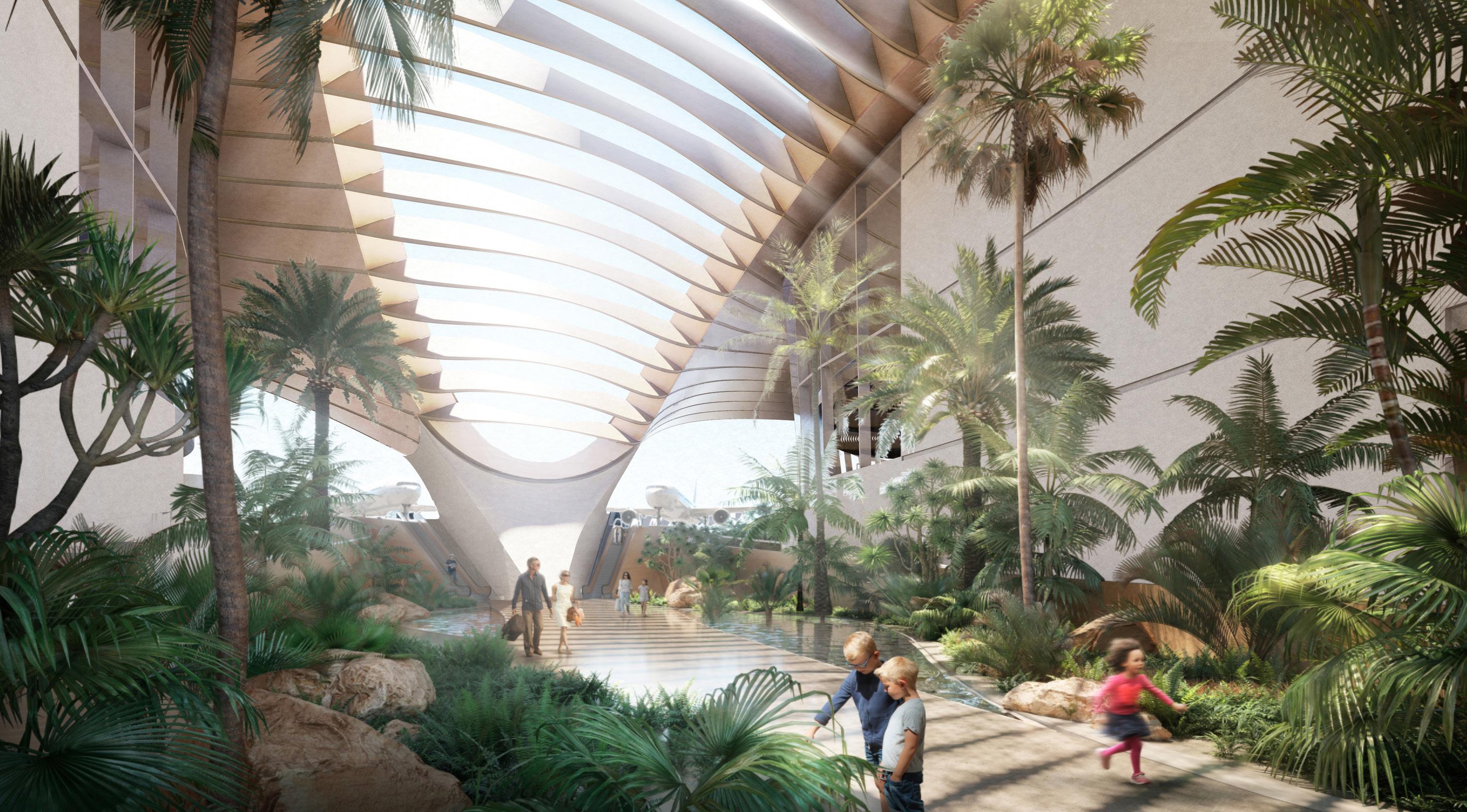
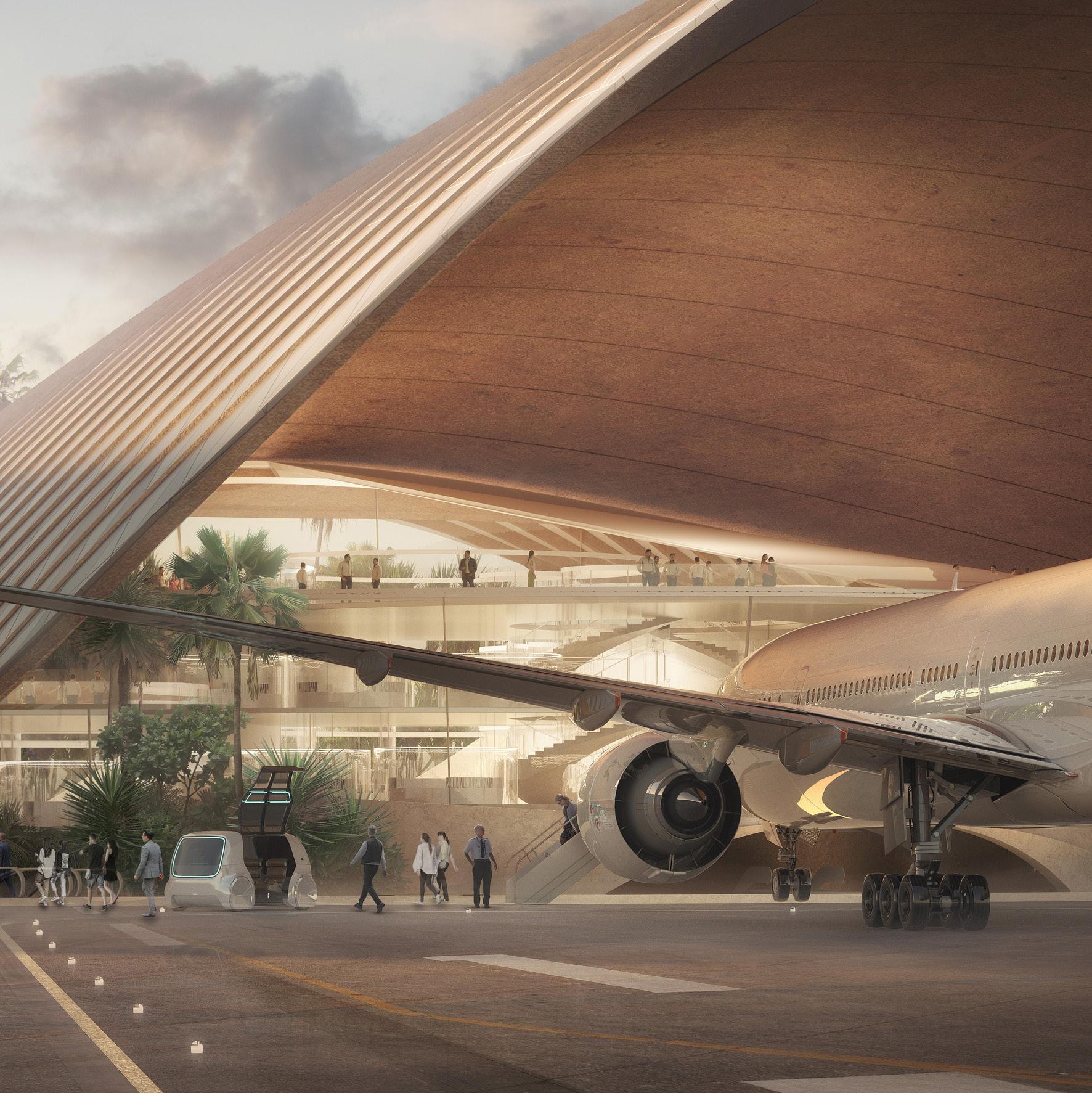
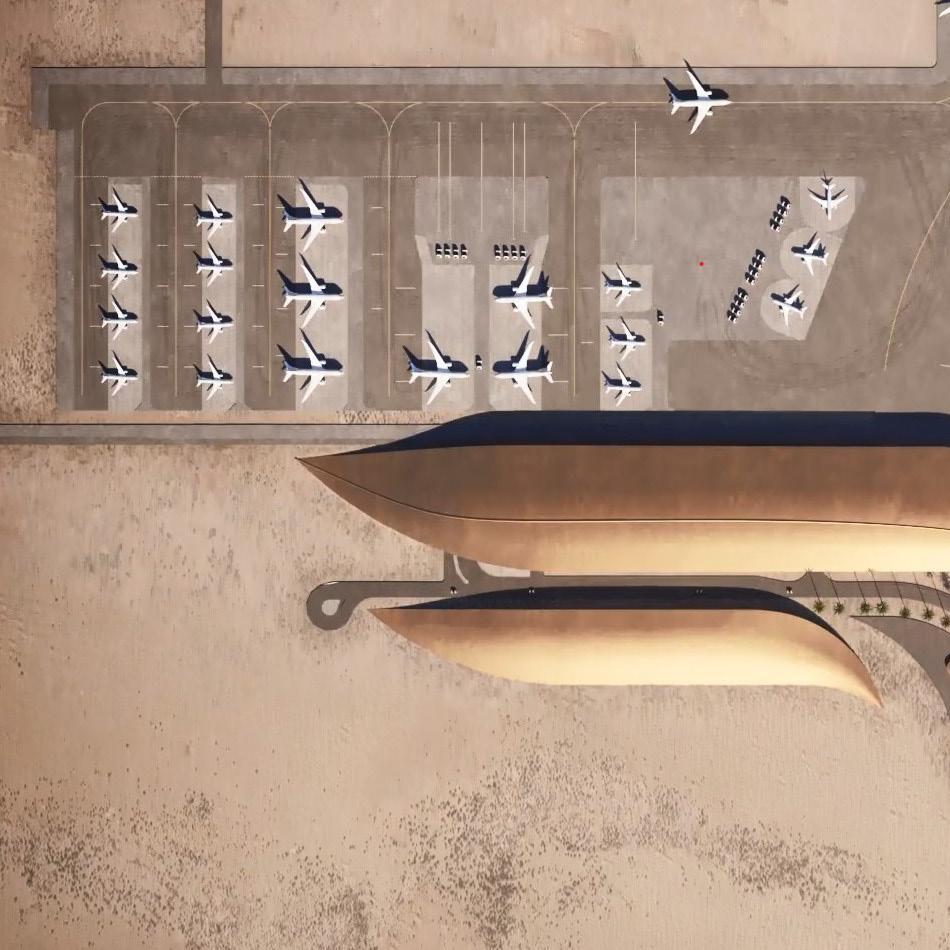
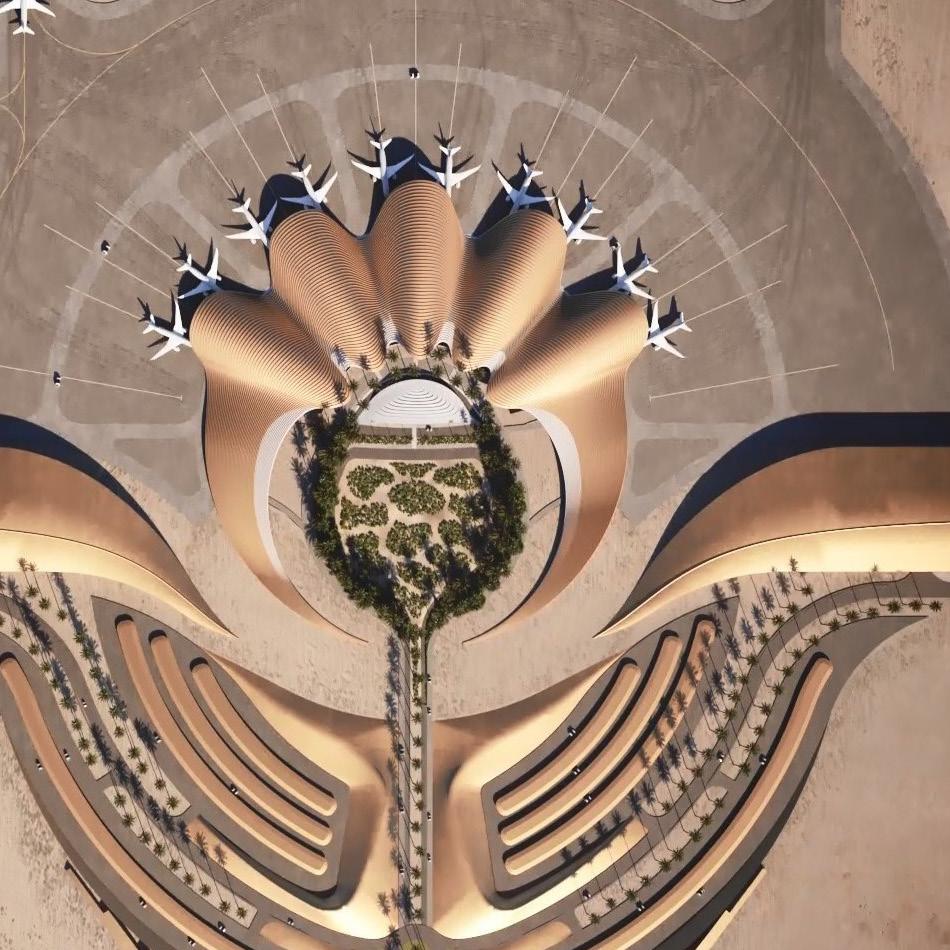
The new Red Sea Airport has been inspired by the forms of the desert, the green oasis and the sea, removing the usual hassle associated with travel by providing a tranquil and memorable experience for passengers from the moment they arrive. The design of the terminal aims to bring the experience of a private aircraft terminal to every traveller by providing smaller, intimate spaces that feel luxurious and personalised. The form of the roof shells cantilevers on the landside and airside to provide shade to the passengers. An internal green oasis with an indigenously planted garden forms a green focus, creating a relaxed, resort-like atmosphere within the airport terminal. The airport will be powered by 100 percent renewable energy.
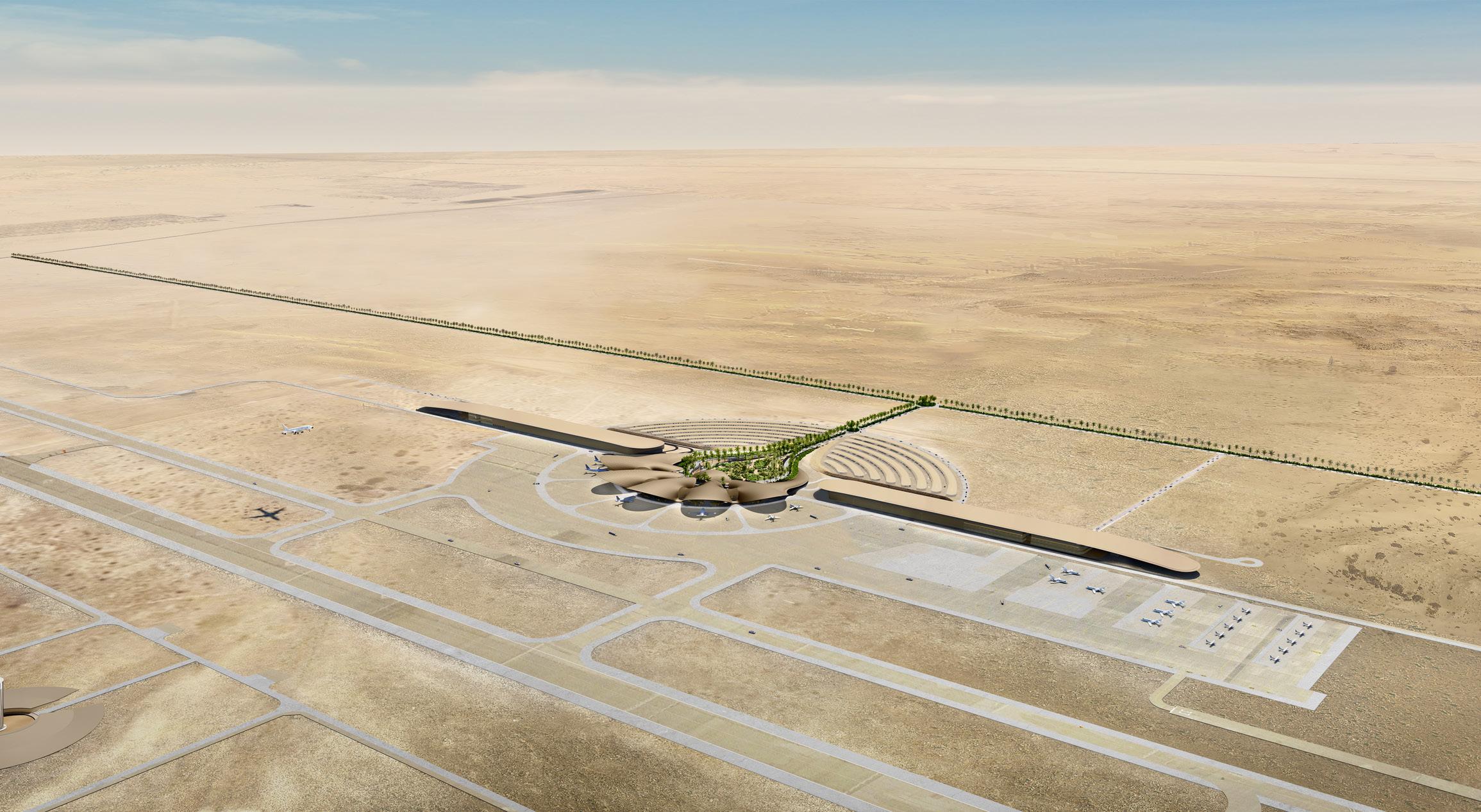
Client The Red Sea Development Company Team WSP Currie & Brown Gillespies DPA Foster + Partners
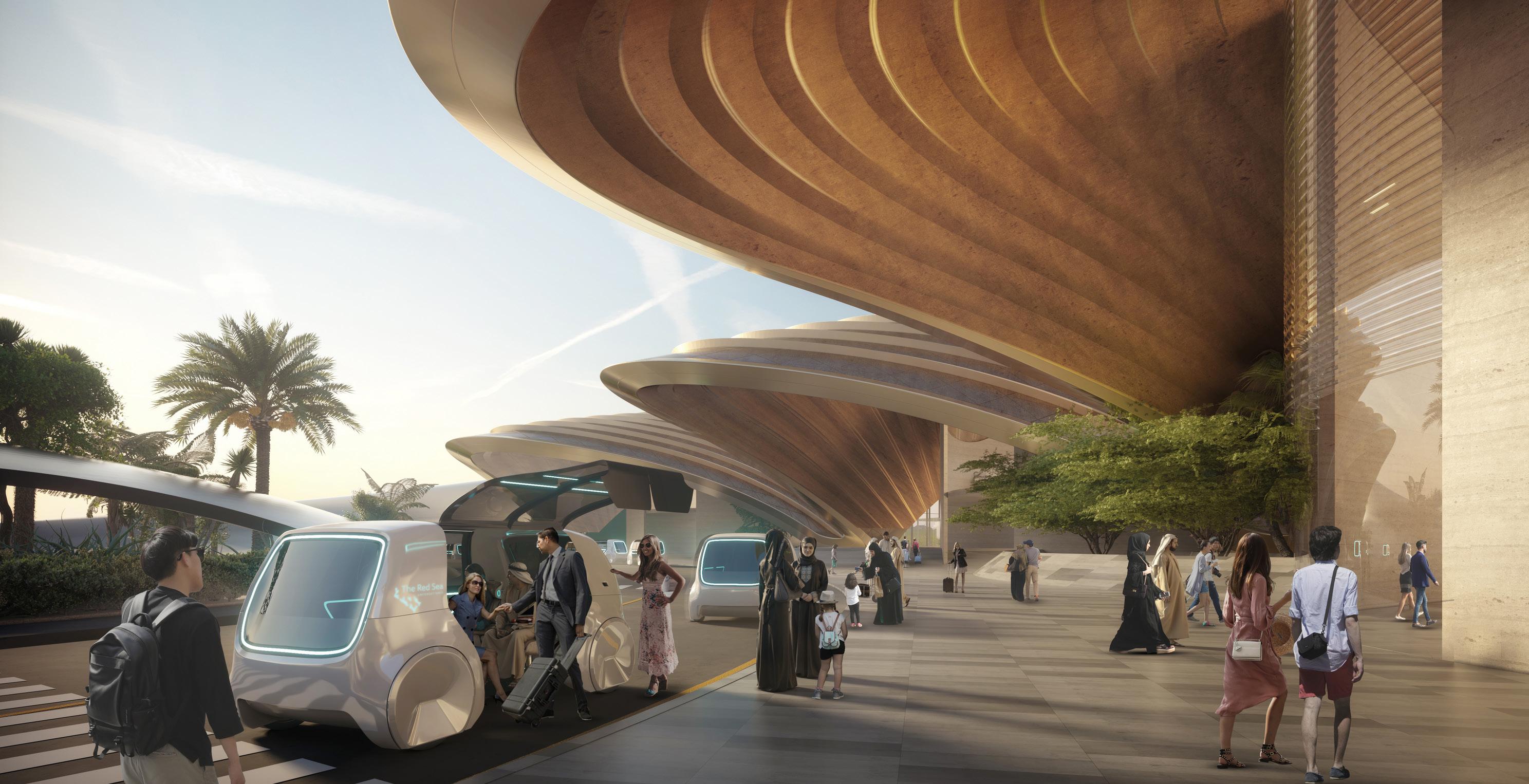
54
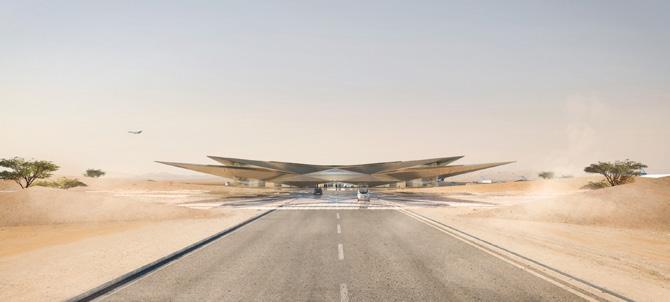
AMAALA Airport
Dhuba, Tabuk, Saudi Arabia 2019
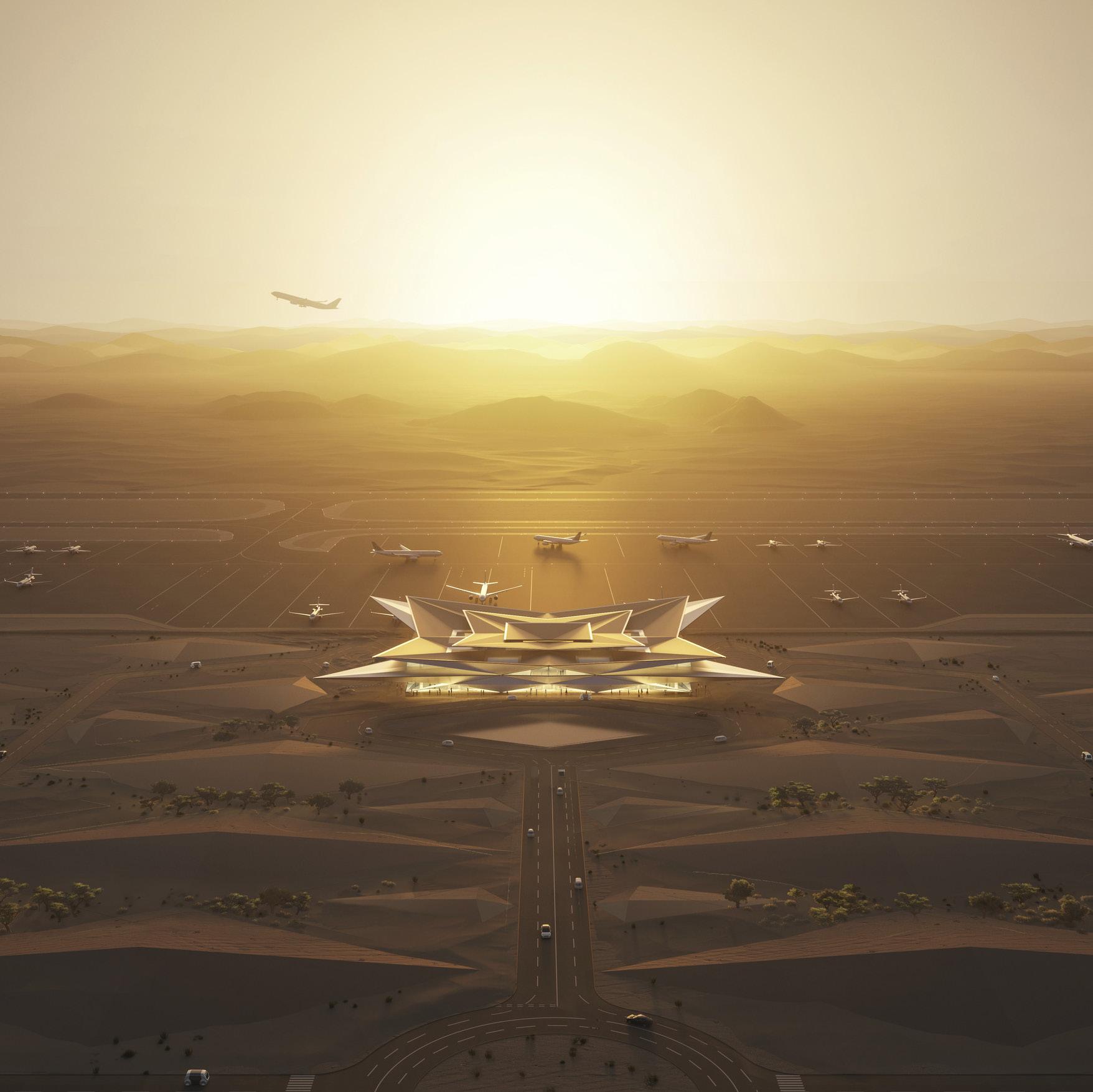
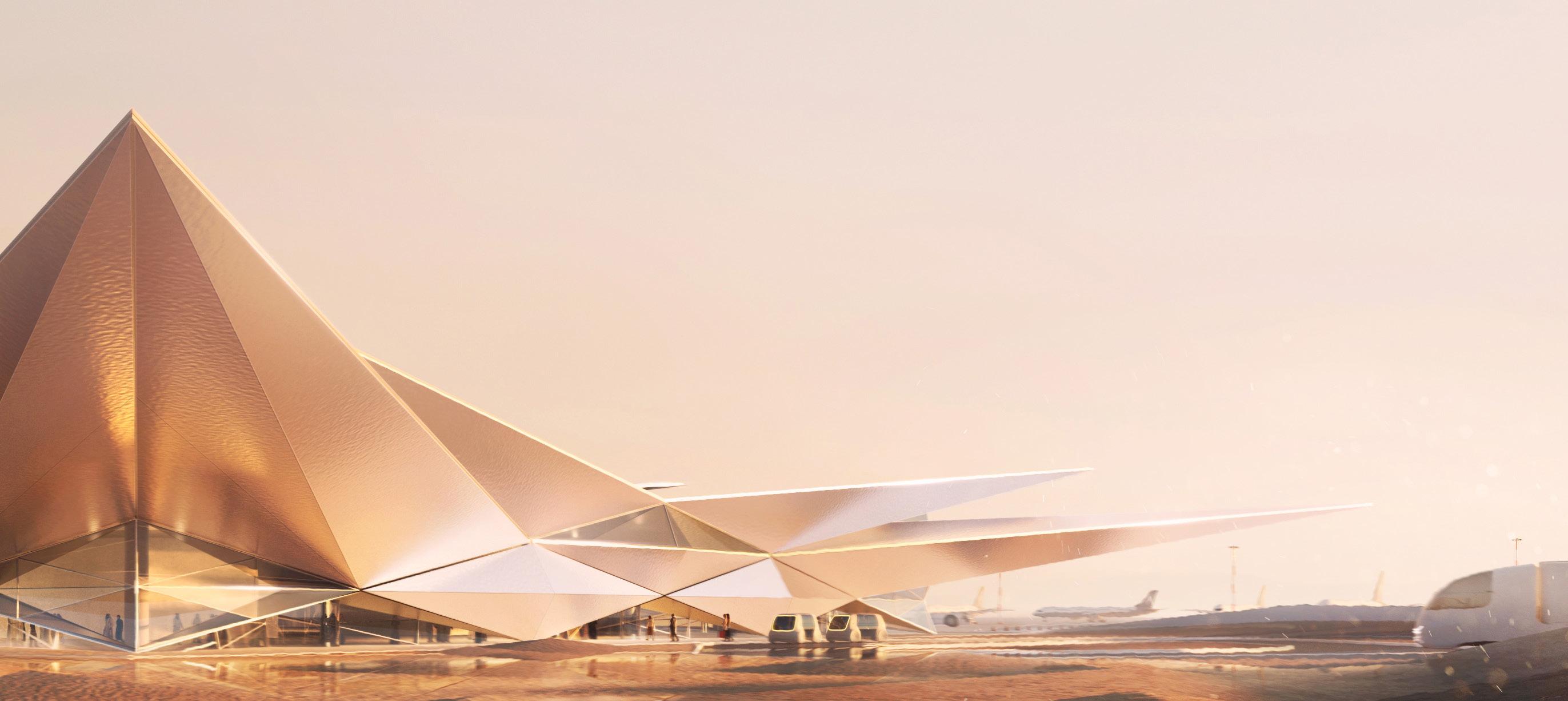
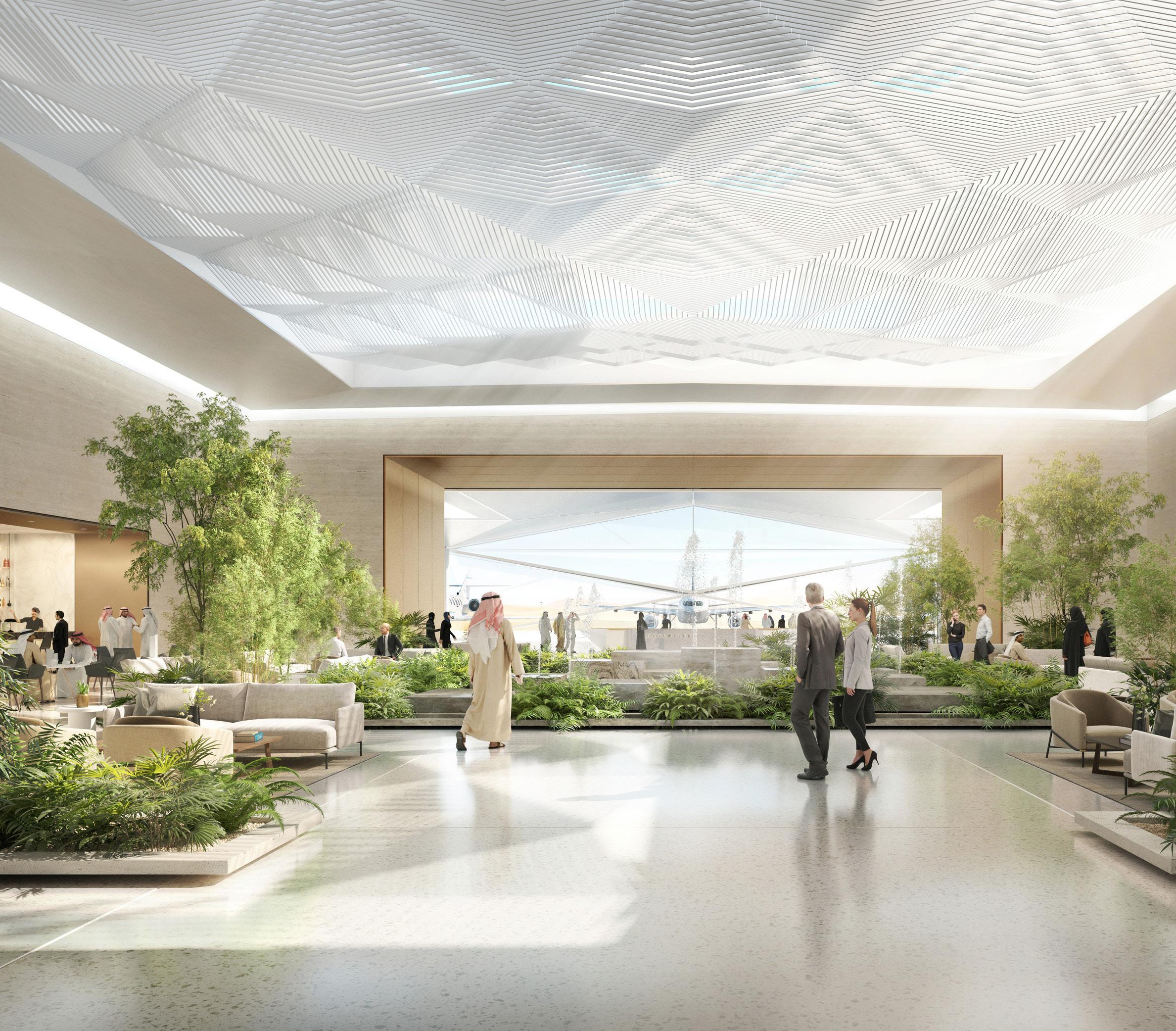
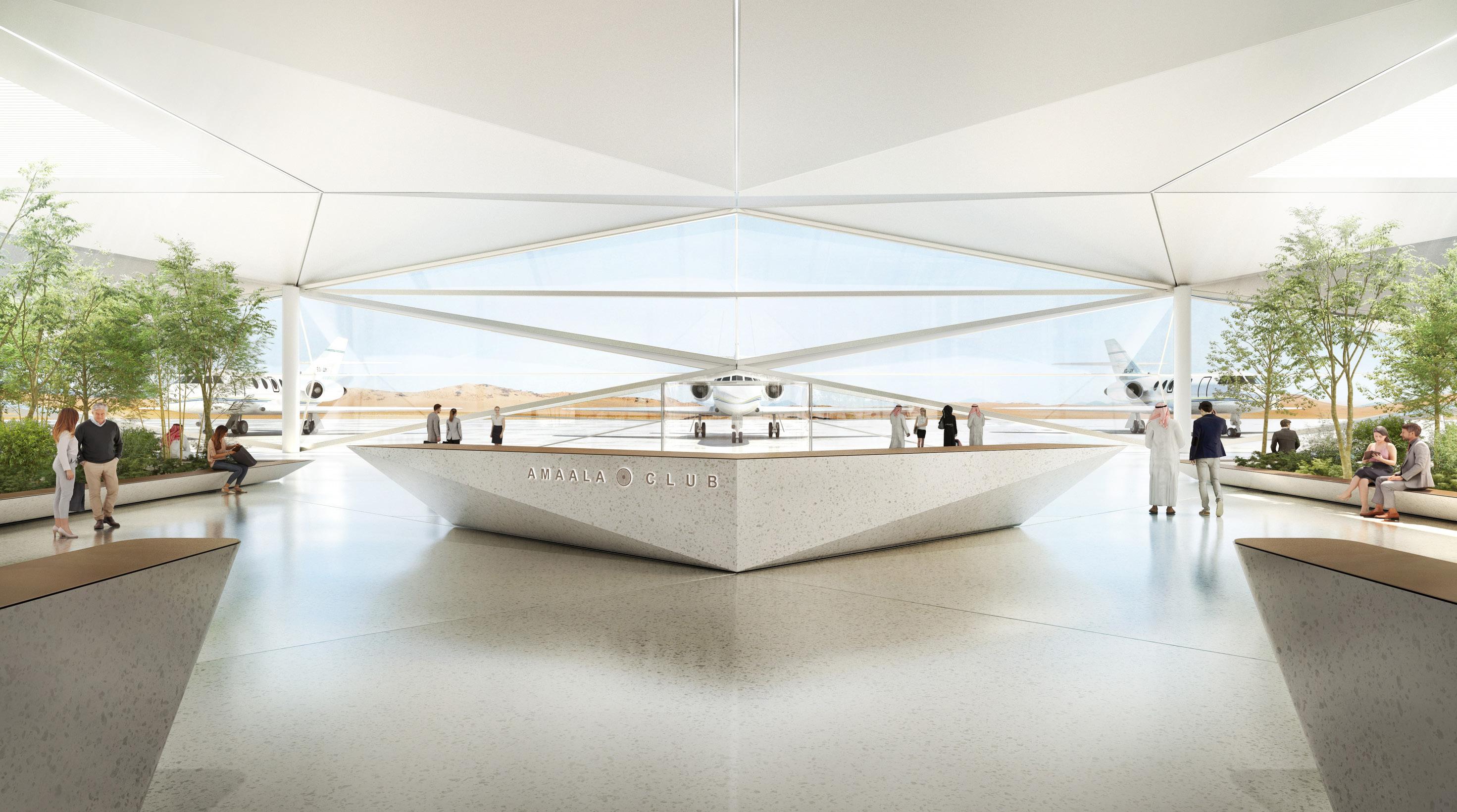
Located along Saudi Arabia’s north-western coast, the design for AMAALA Airport is underpinned by sustainability, drawing inspiration from its location. On approaching the airport, travellers will see stunning land art from the air.
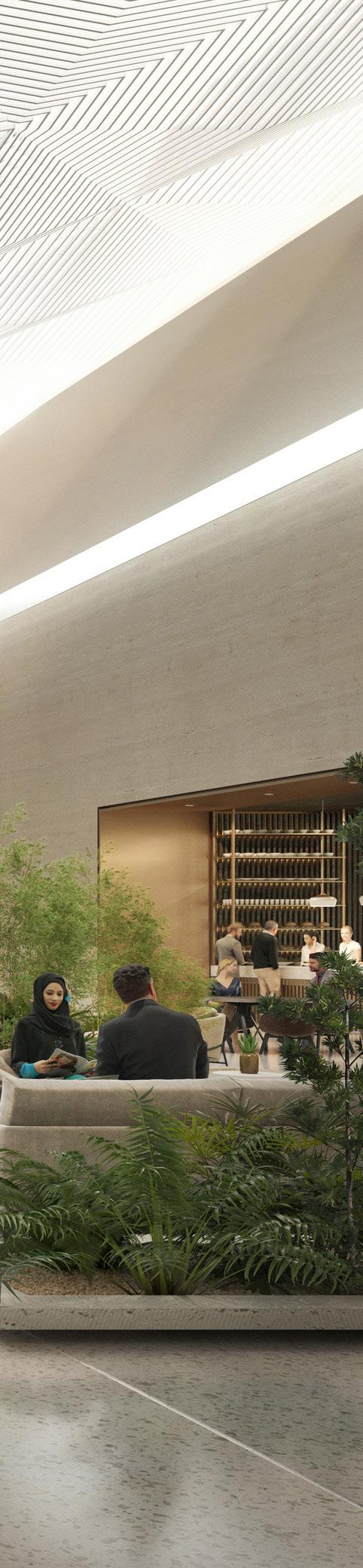
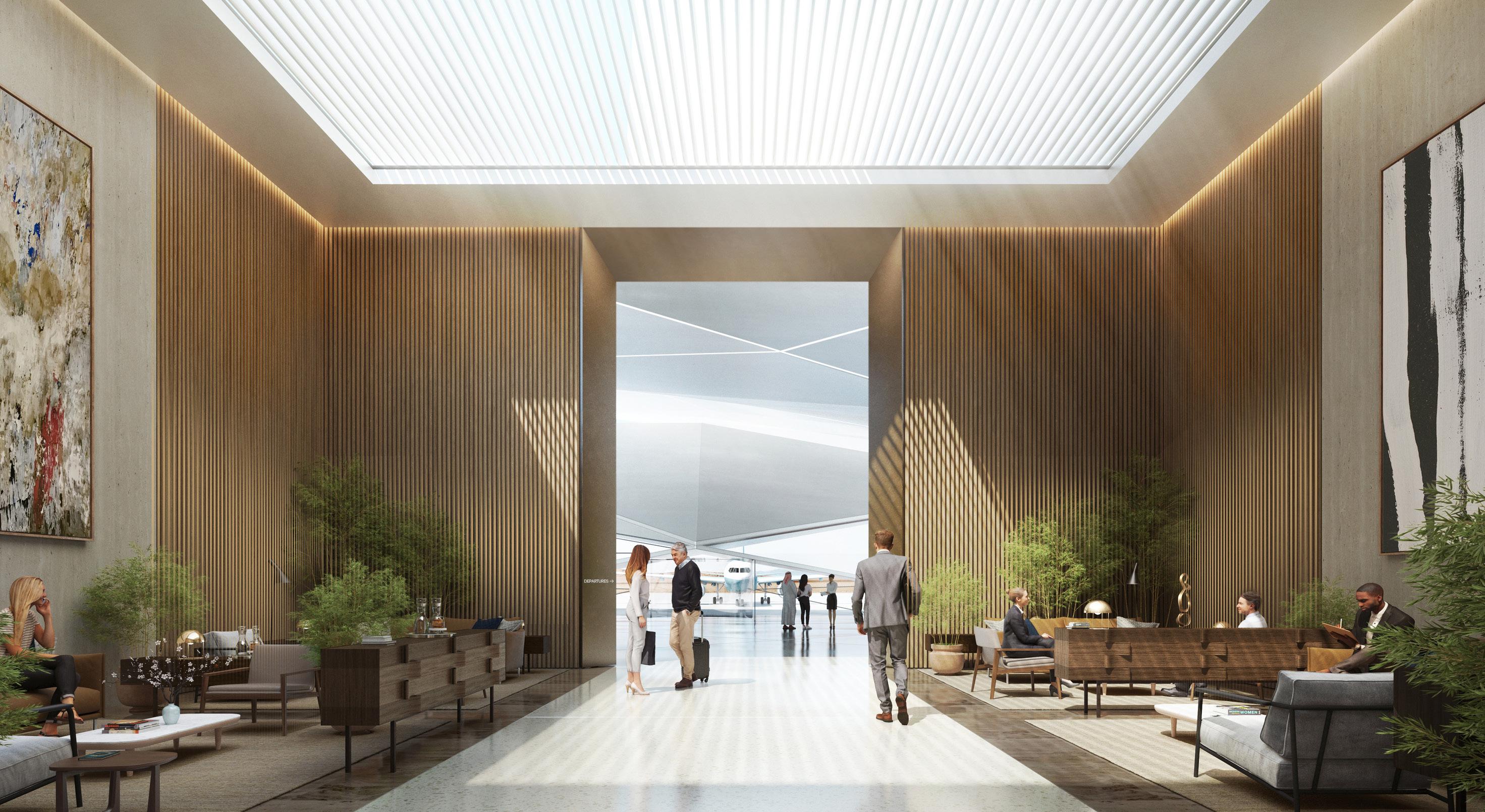
Entering the terminal, visitors will be greeted with a sleek mirrored edifice rising from the desert. The structure takes its inspiration from the surrounding environment, resulting in a mesmerising mirage effect. A spacious courtyard will anchor the terminal and will be complemented by contemporary interiors complete with unique artwork and tailored experiences. The airport will reflect AMAALA’s ultra-luxury hospitality spirit, providing an exclusive private-club experience perfectly encapsulating AMAALA’s pillars of art and culture; wellness and sport; and sea, sun, and lifestyle. Among the list of amenities provided by the airport are climatecontrolled hangars that will be available for private jets as well as a ground transfer service that is accessible from inside the arrival hangar. It is estimated to accommodate one million travellers per year once it officially opens.
59
Client Public Investment Fund of Saudi Arabia (PIF) Team Foster + Partners EGIS Avia GACA
60
61
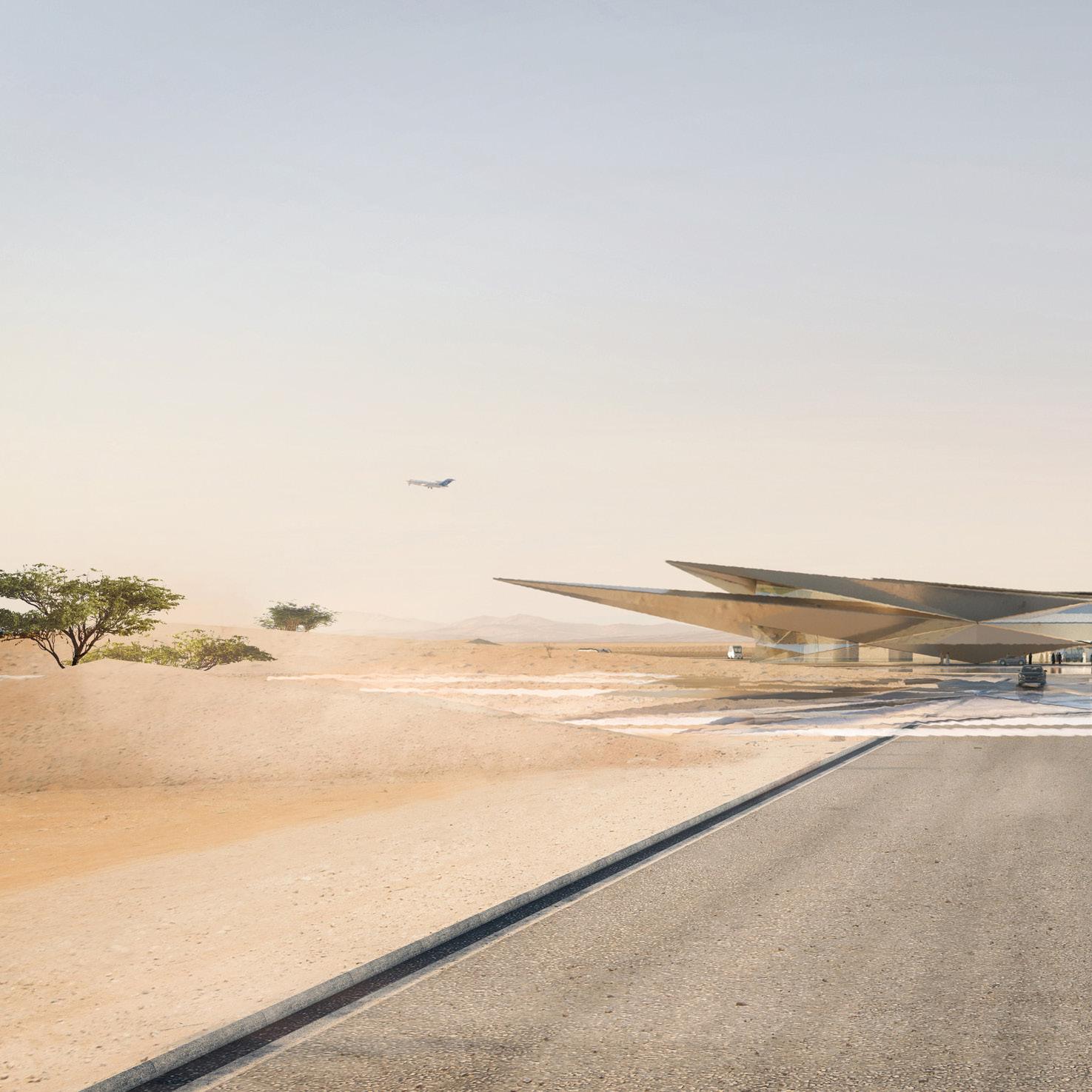
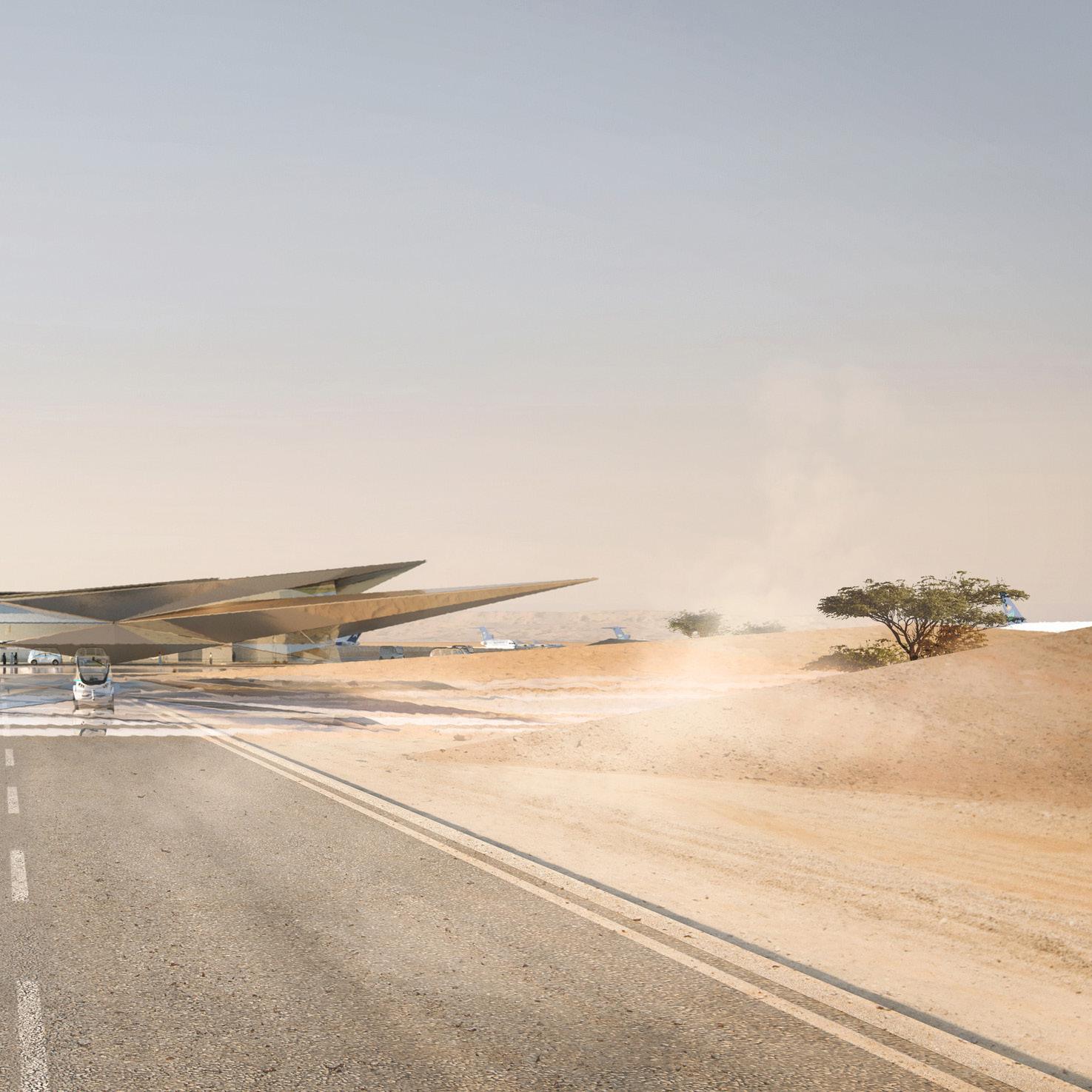
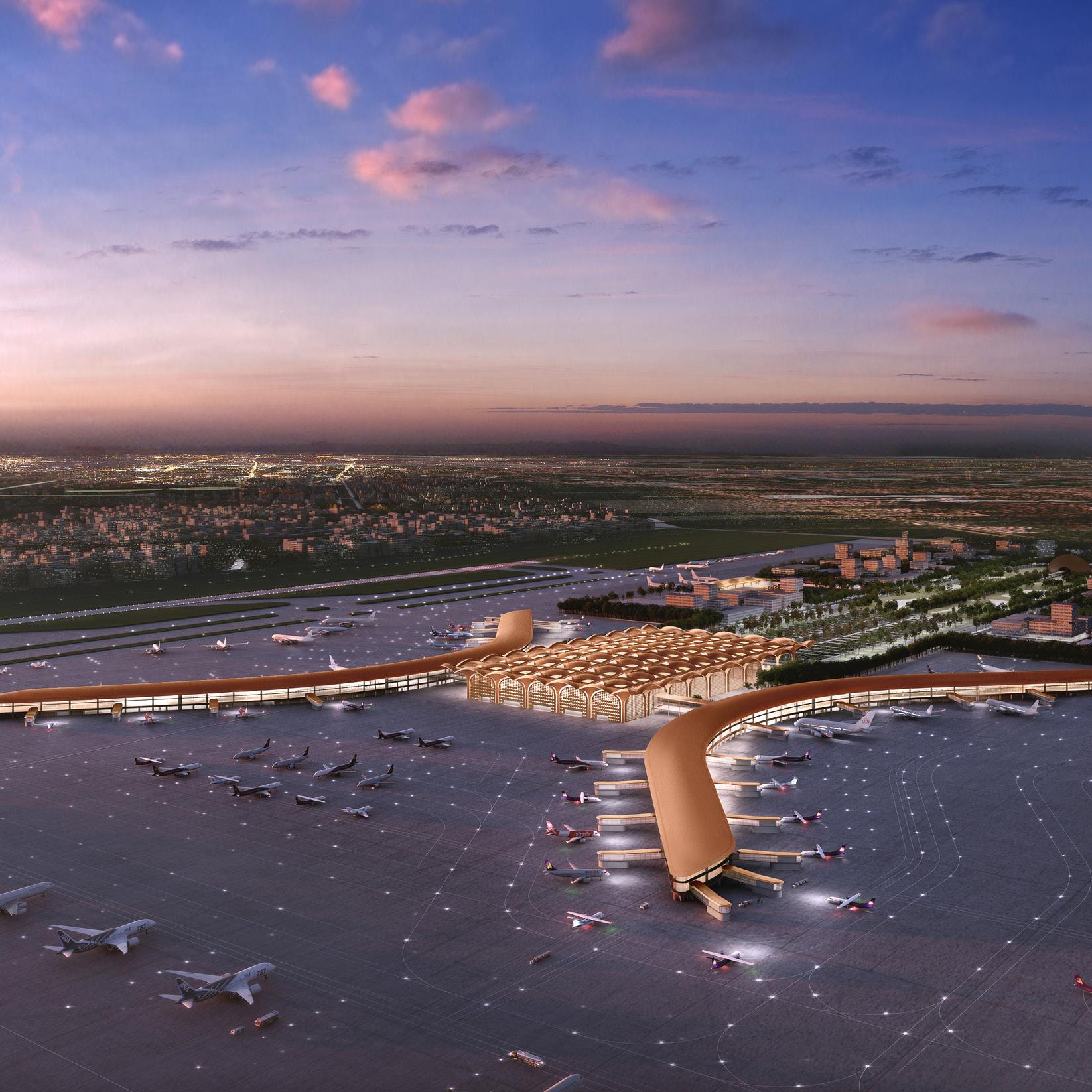
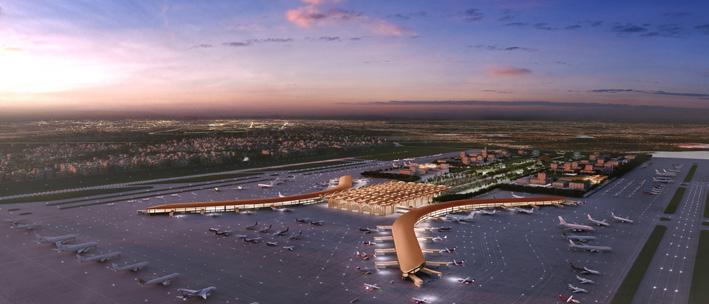
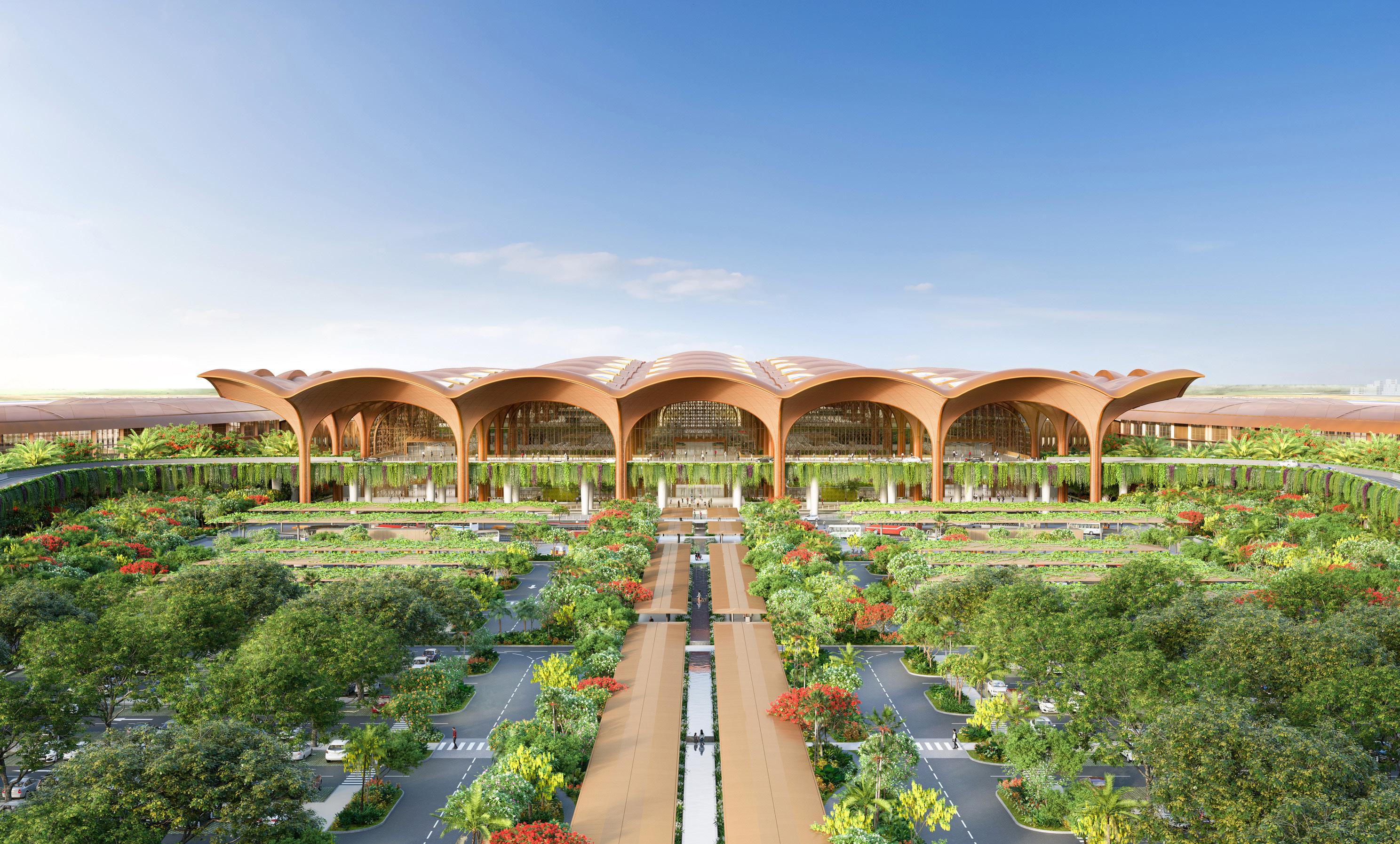
Phnom Penh International VVIP Terminal
Phnom Penh, Cambodia, 2020 –
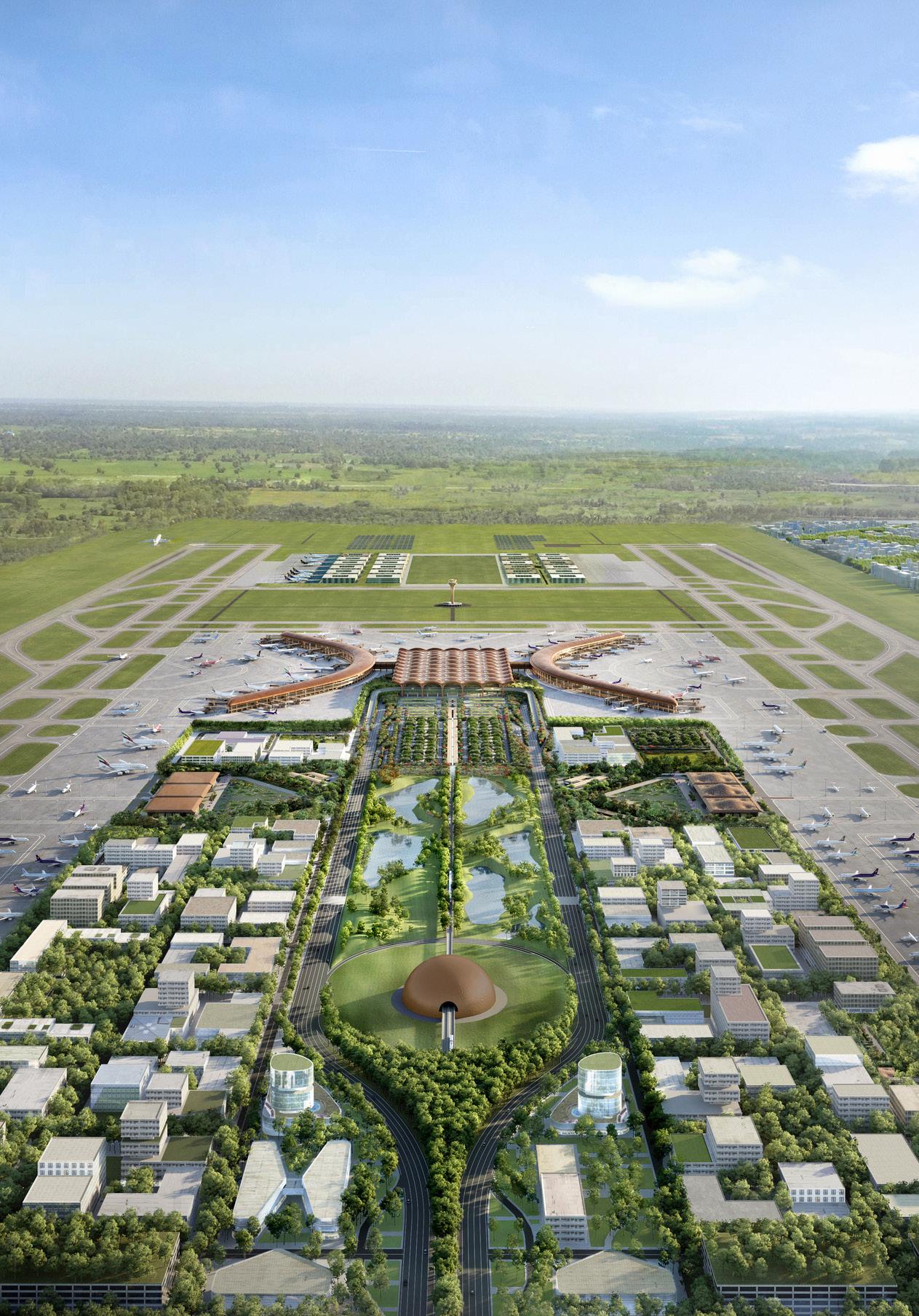
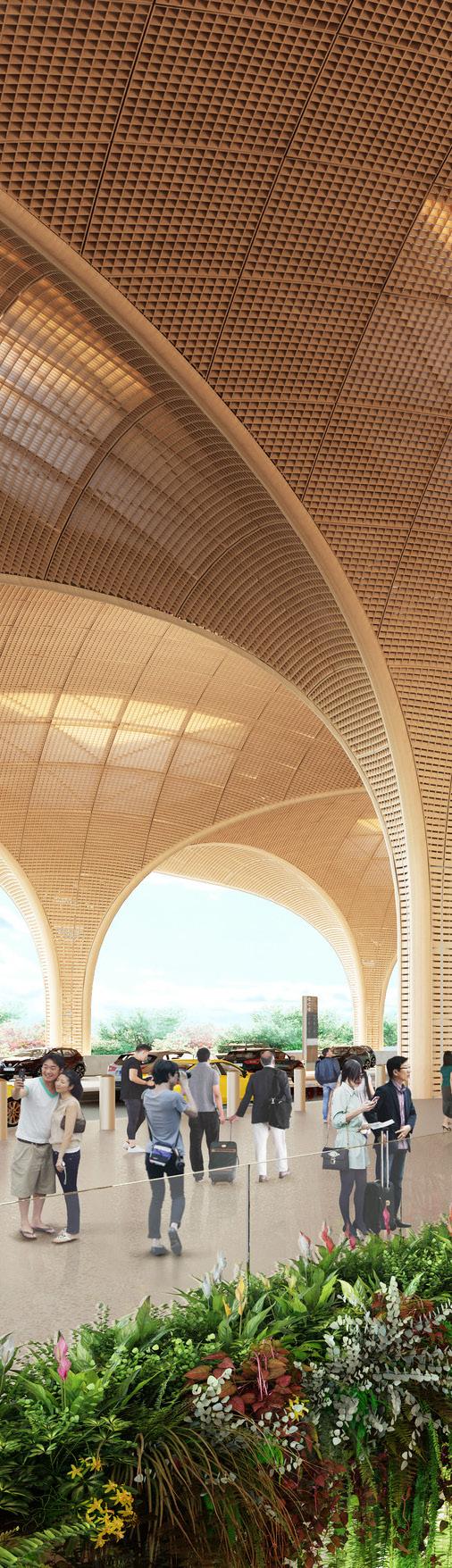
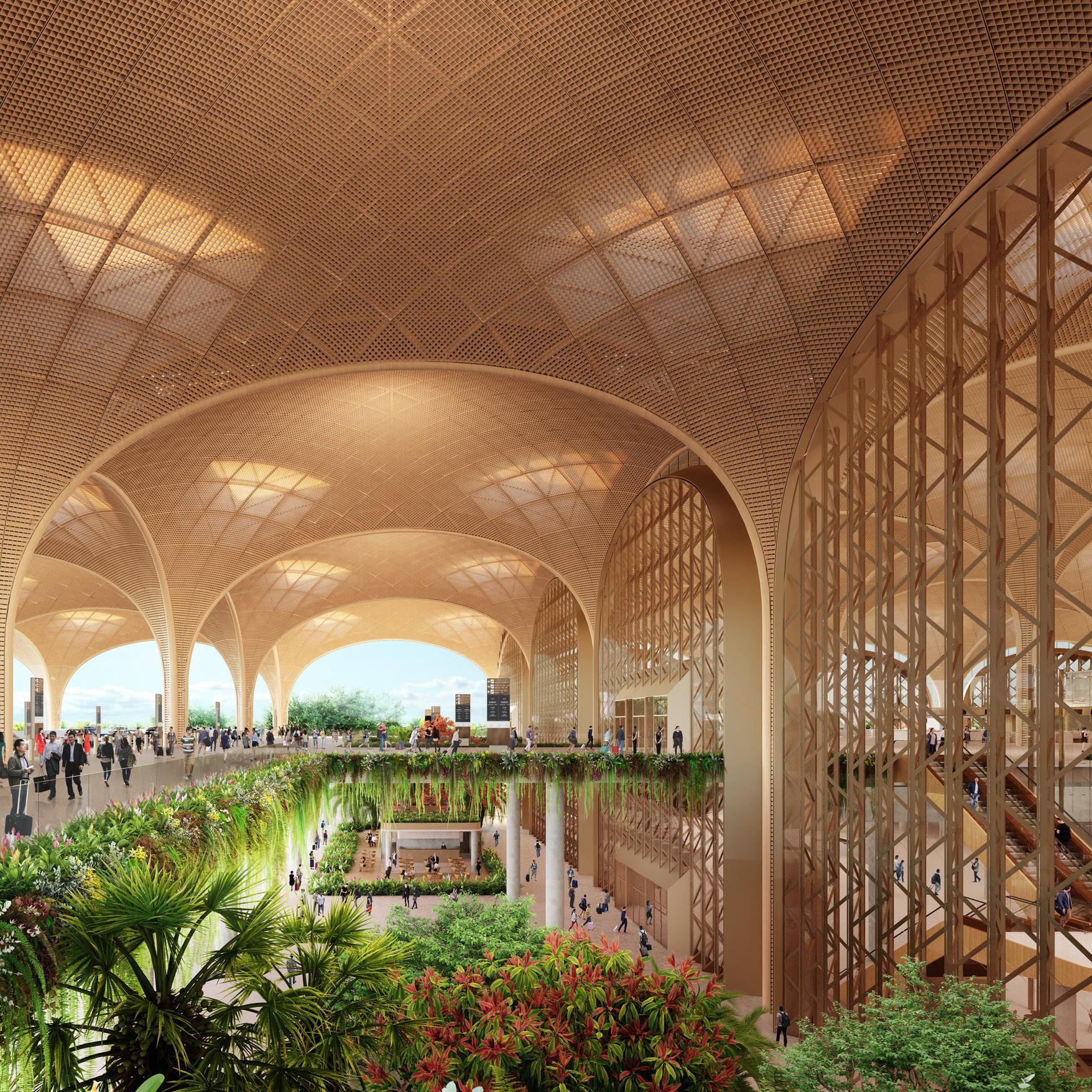
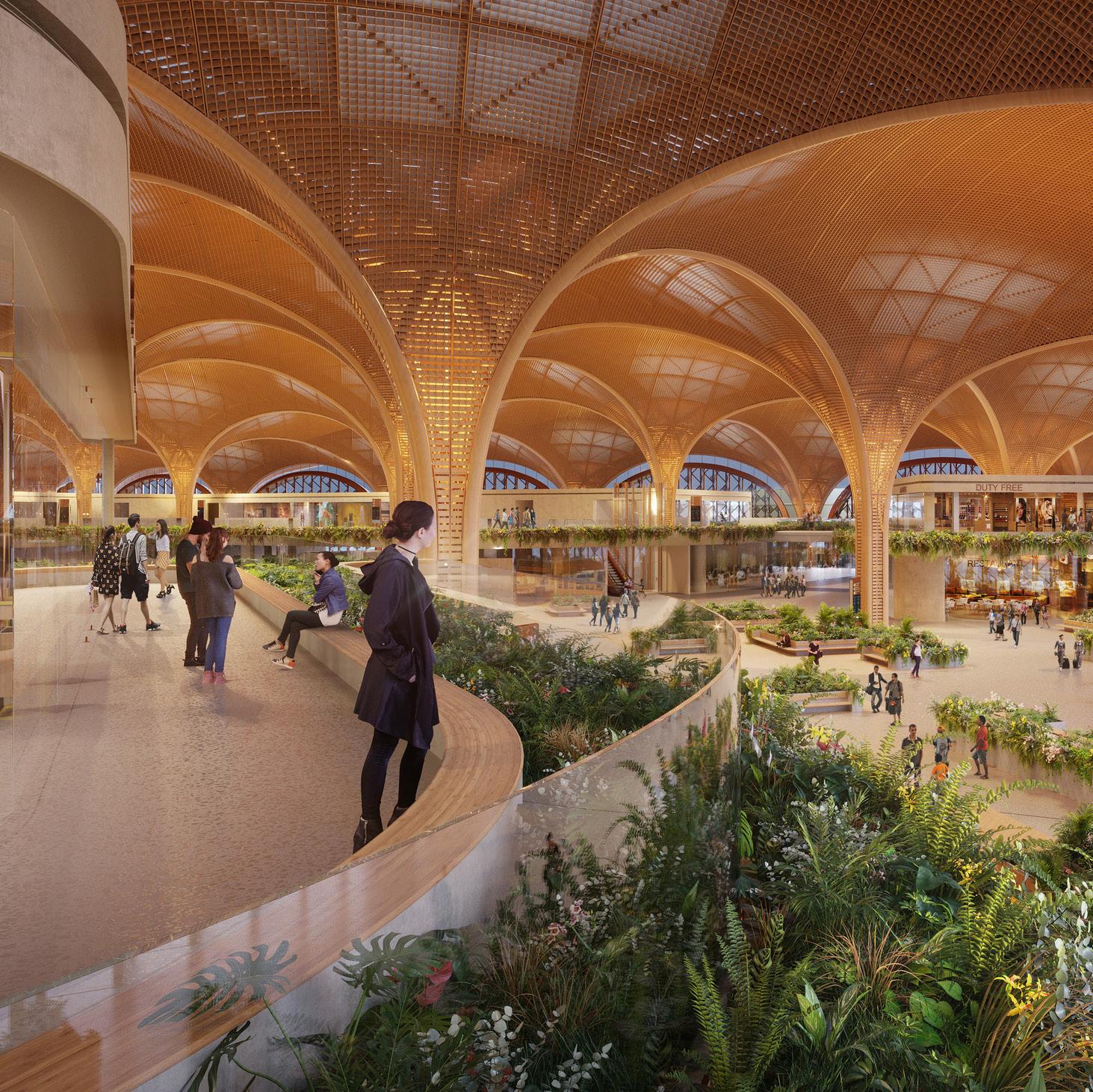
The new VVIP Terminal site sits to the northeast of the New Phnom Penh International Airport, overlooking the primary access route to the main terminal and opposite the future GA Terminal. With direct access to the airport runways and a dedicated processing facility, VVIP guests will be welcomed in a safe and private space. The building comprises three volumes that gently morph into each other. Using the same stone as the famous Angkor Wat, the undulating roof is designed to complement the roof forms of the New Phnom Penh International Airport. Each of the three dome-like structures is made from a steel spaceframe, which creates generous spaces for events and maximum flexibility to accommodate several different functions. The spaceframe is clad in triangular reflective panels that add drama to the interior spaces.
65
Client Cambodia Airport Investment Company Ltd. Team CCTEB CAIC Foster + Partners
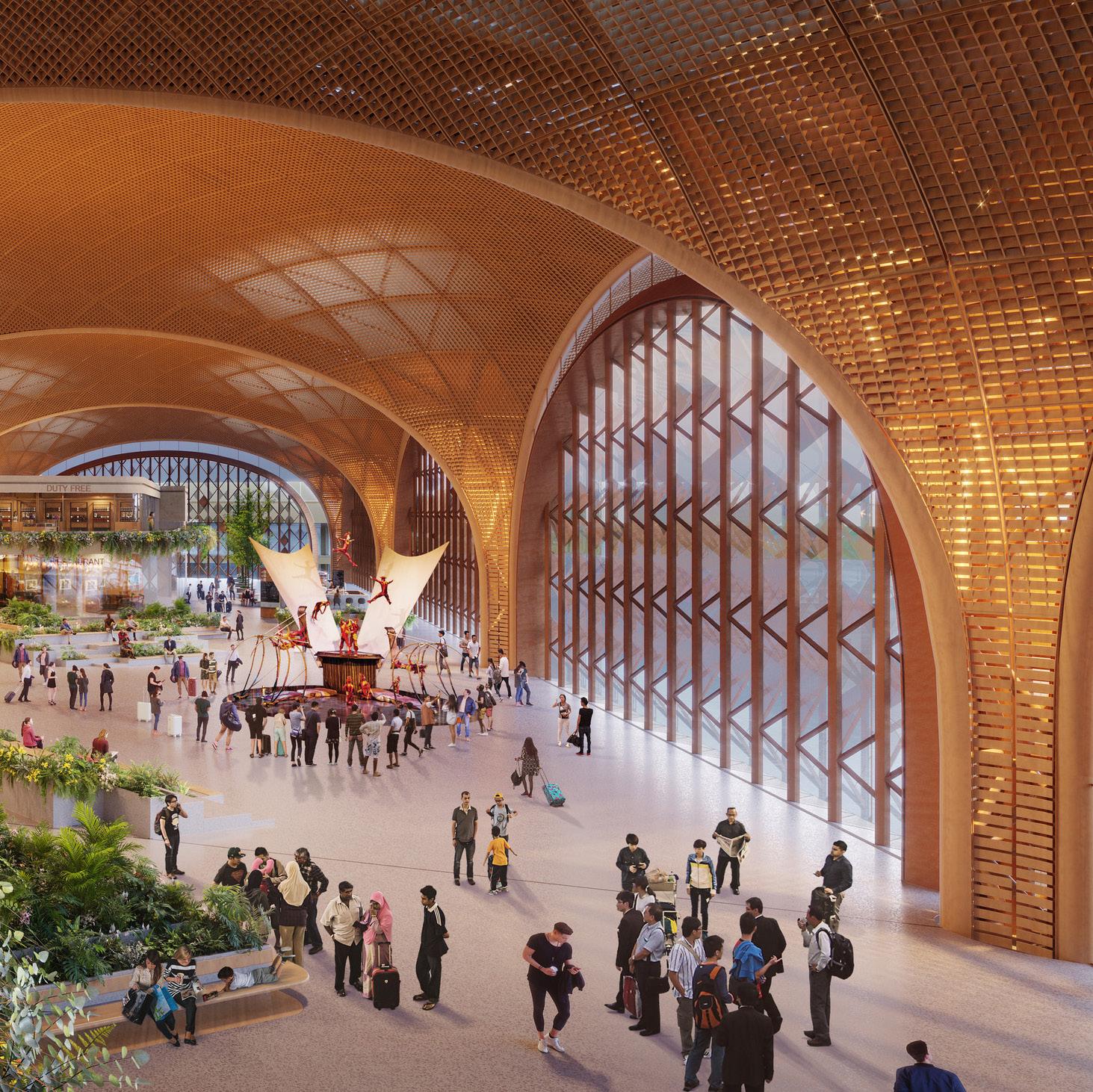

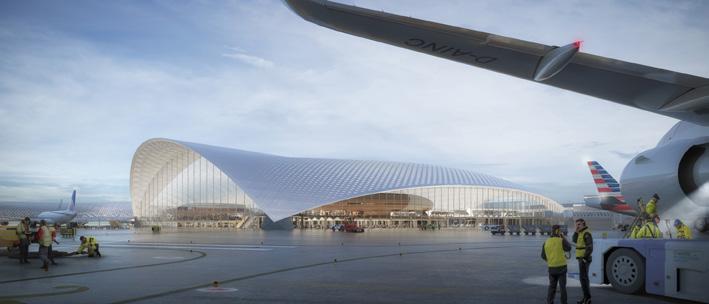
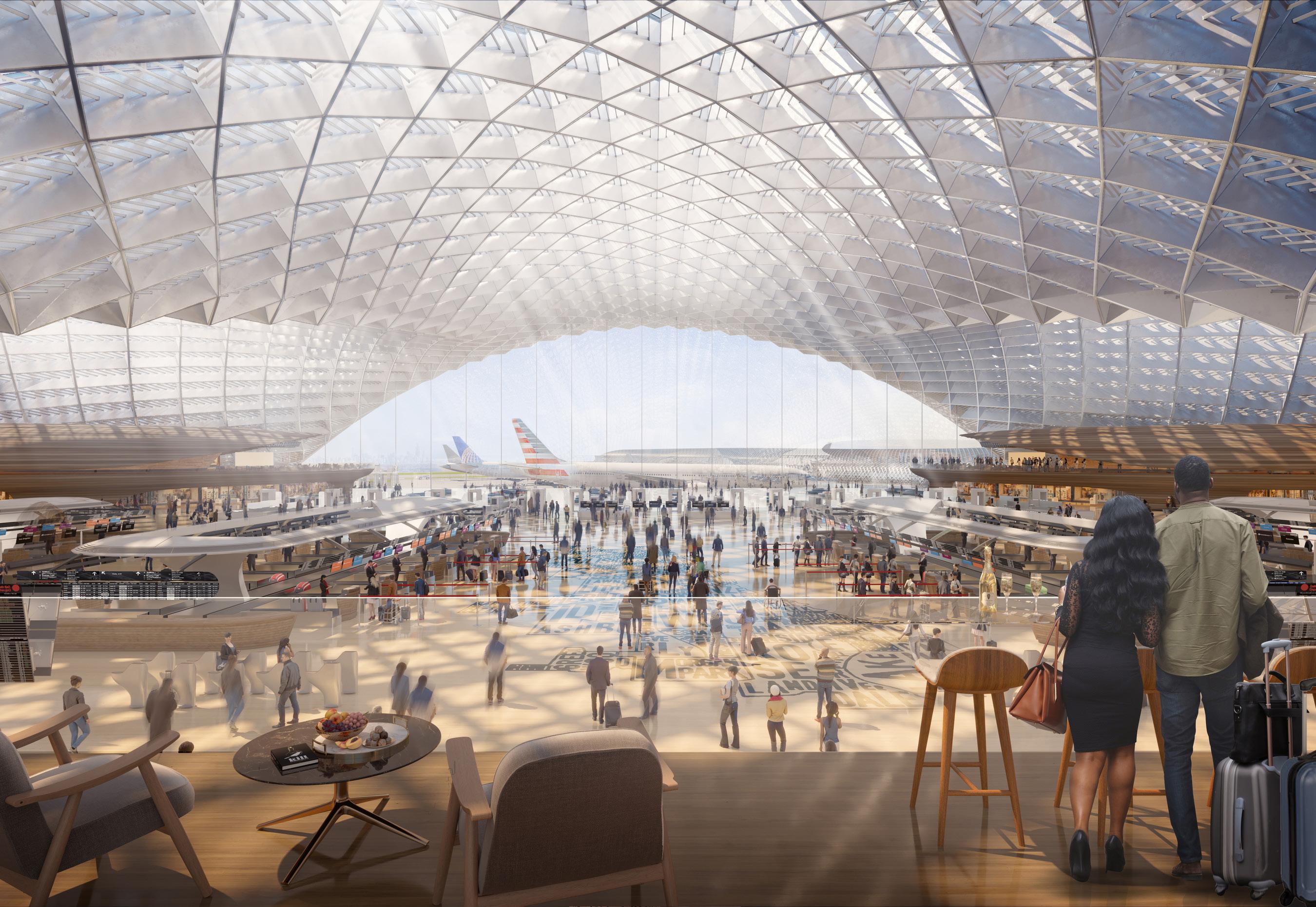
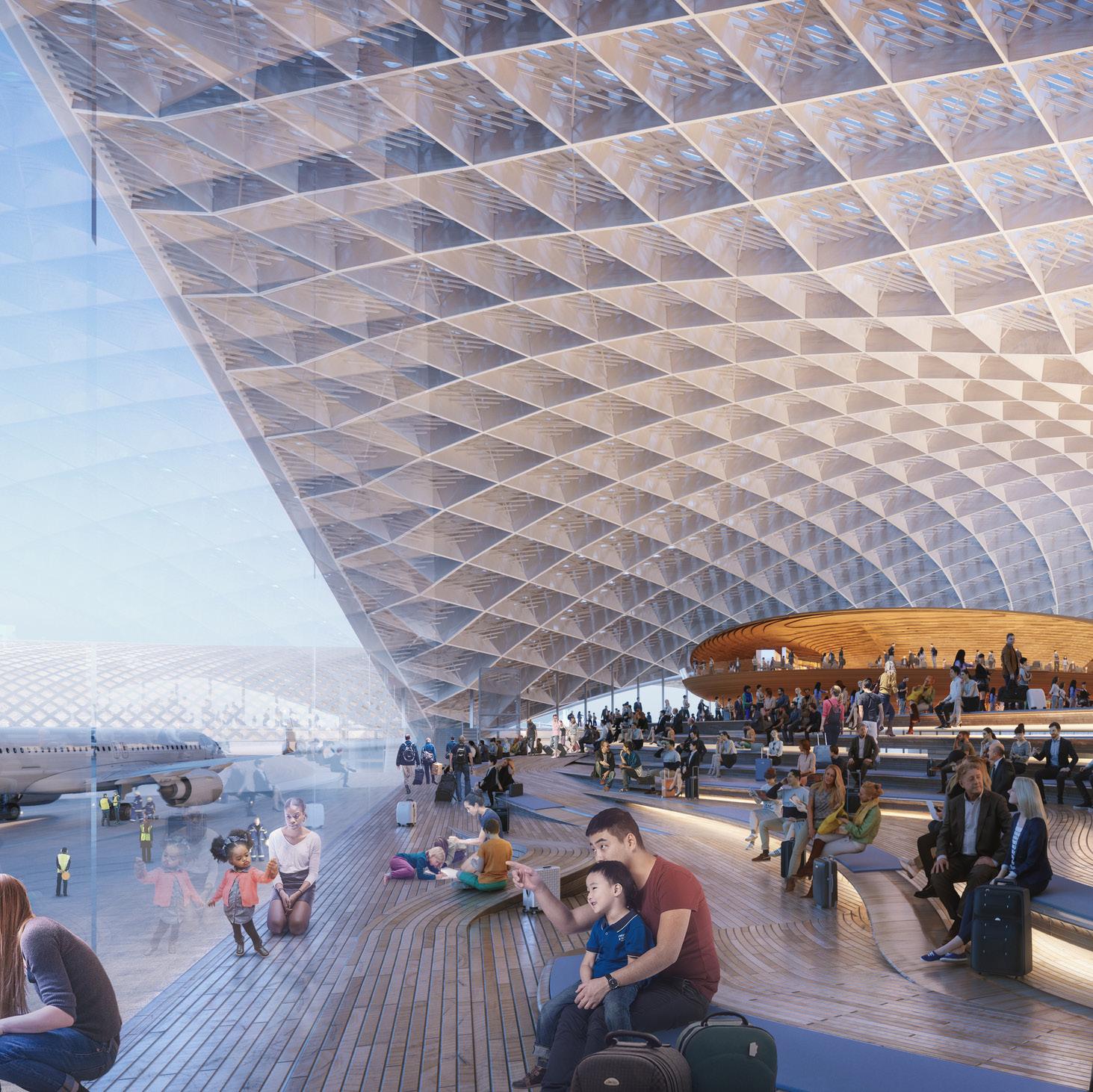
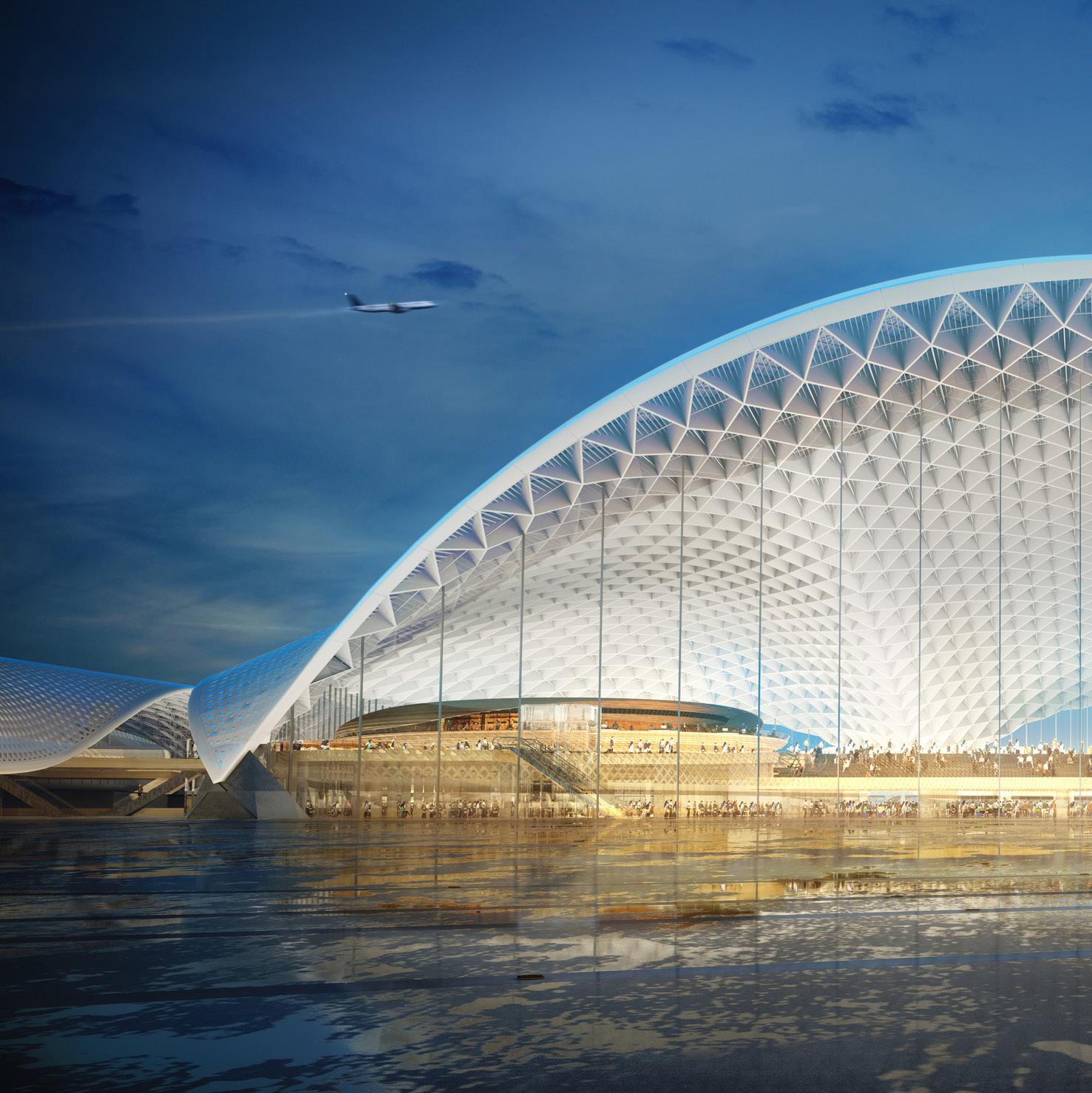
Chicago O’Hare Global Terminal USA 2019 –
Foster Epstein Moreno, has created a dynamic and iconic design for O’Hare’s new Global Terminal, aiming to recapture the romance associated with air travel while reflecting the city’s cultural diversity. The team has partnered with local design and engineering talent such as the Rebuild Foundation, a Chicagobased organization that directly engages in the production of innovative arts, crafts and trades programs, founded and led by artist Theaster Gates, to work on this incredible project. With a team that is grounded in the city and backed by global expertise, we understand that Chicago is a world player, but one that doesn’t forget about its backyard.

71
Client Department of Aviation –City of Chicago Team Epstein Global JGMA Foster + Partners
72
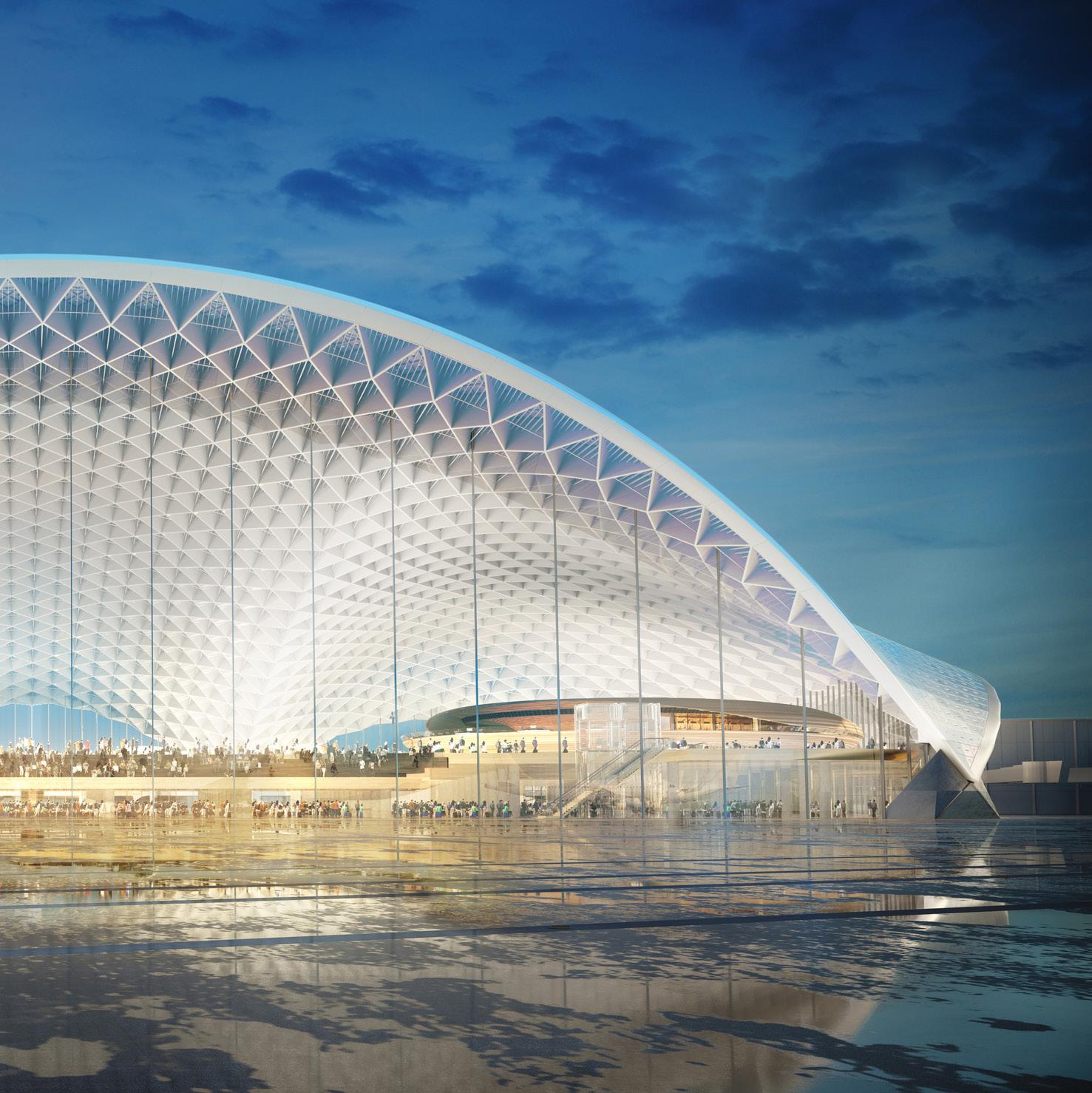
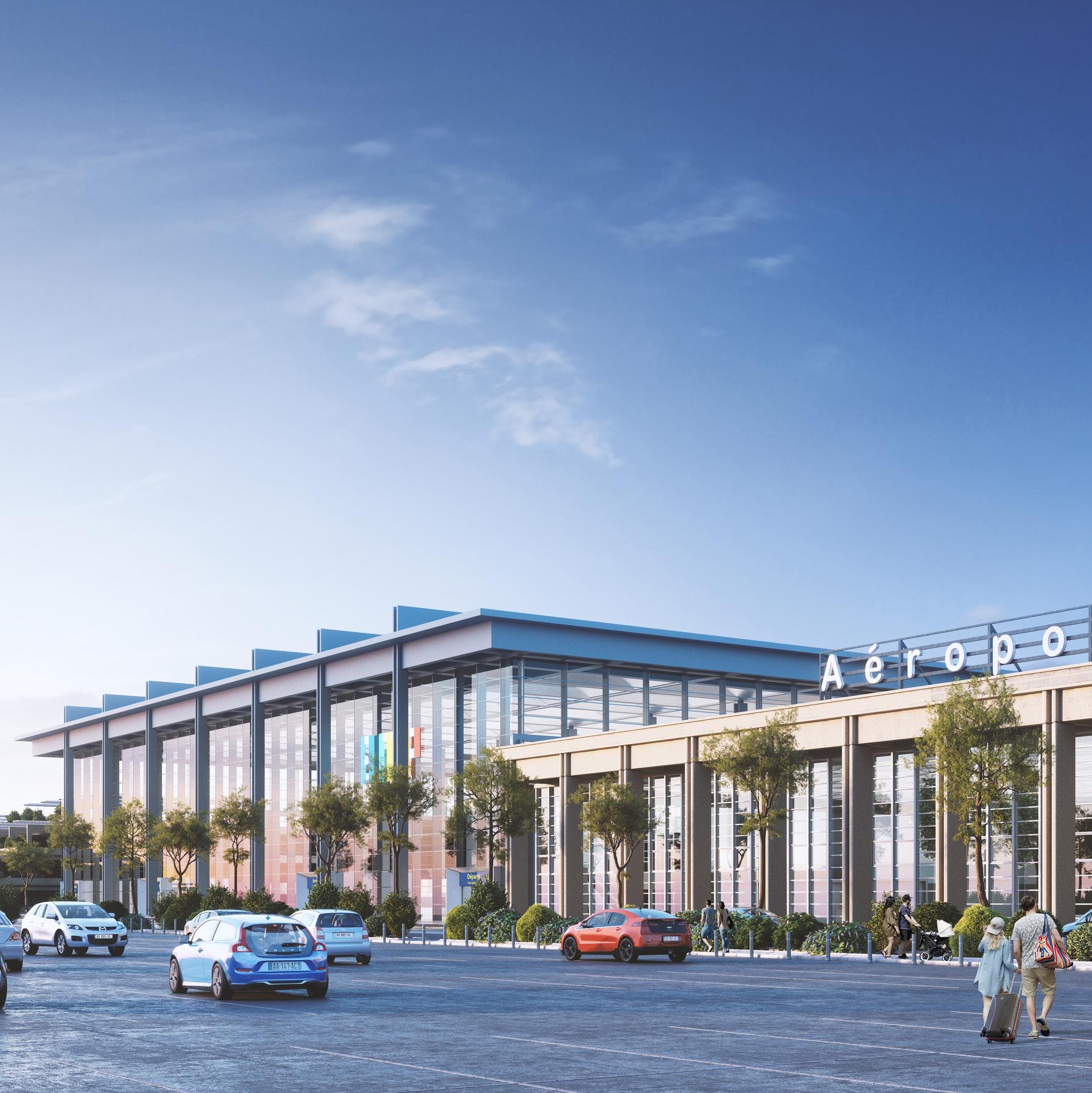
Marseille Airport
France 2017 –
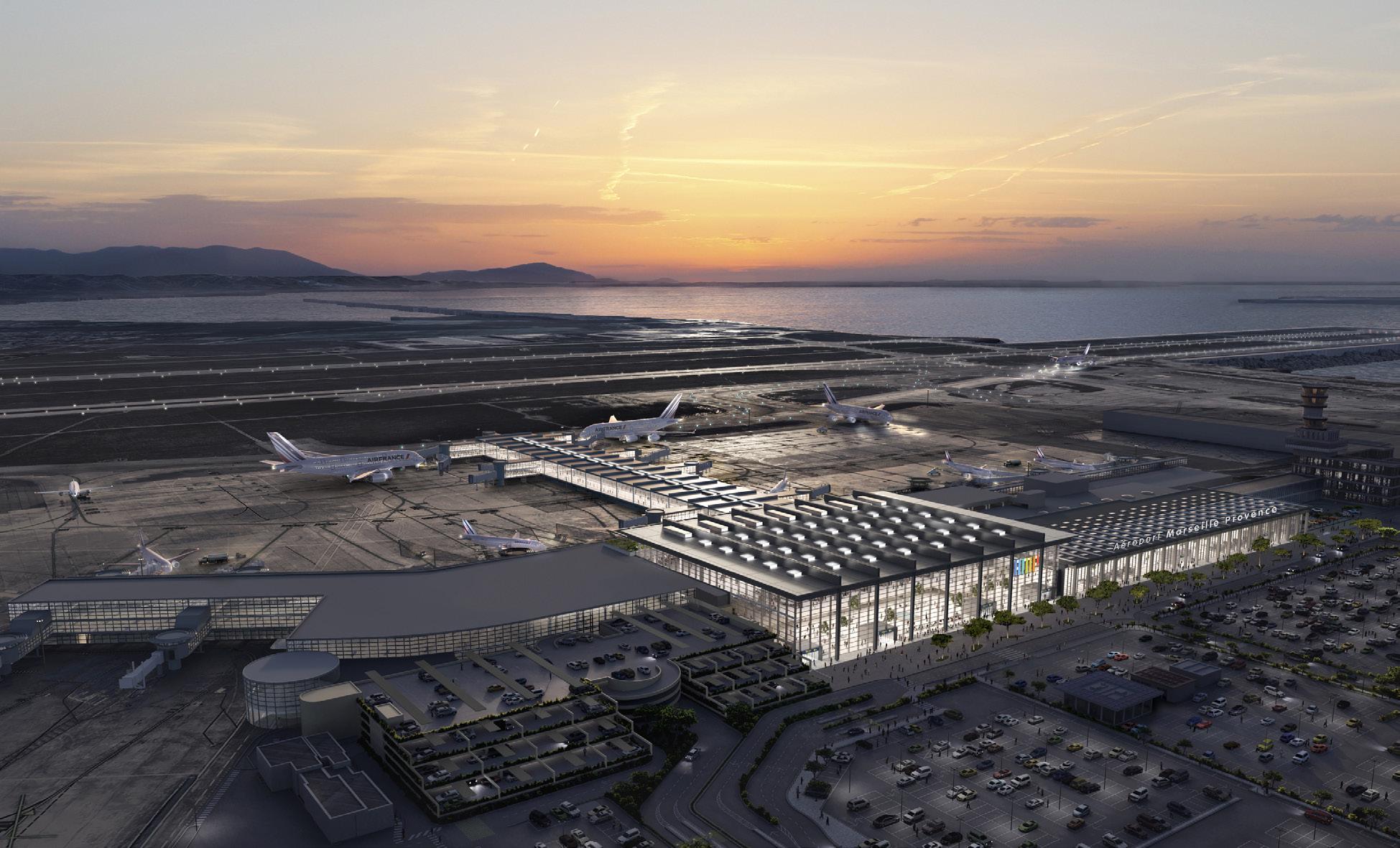
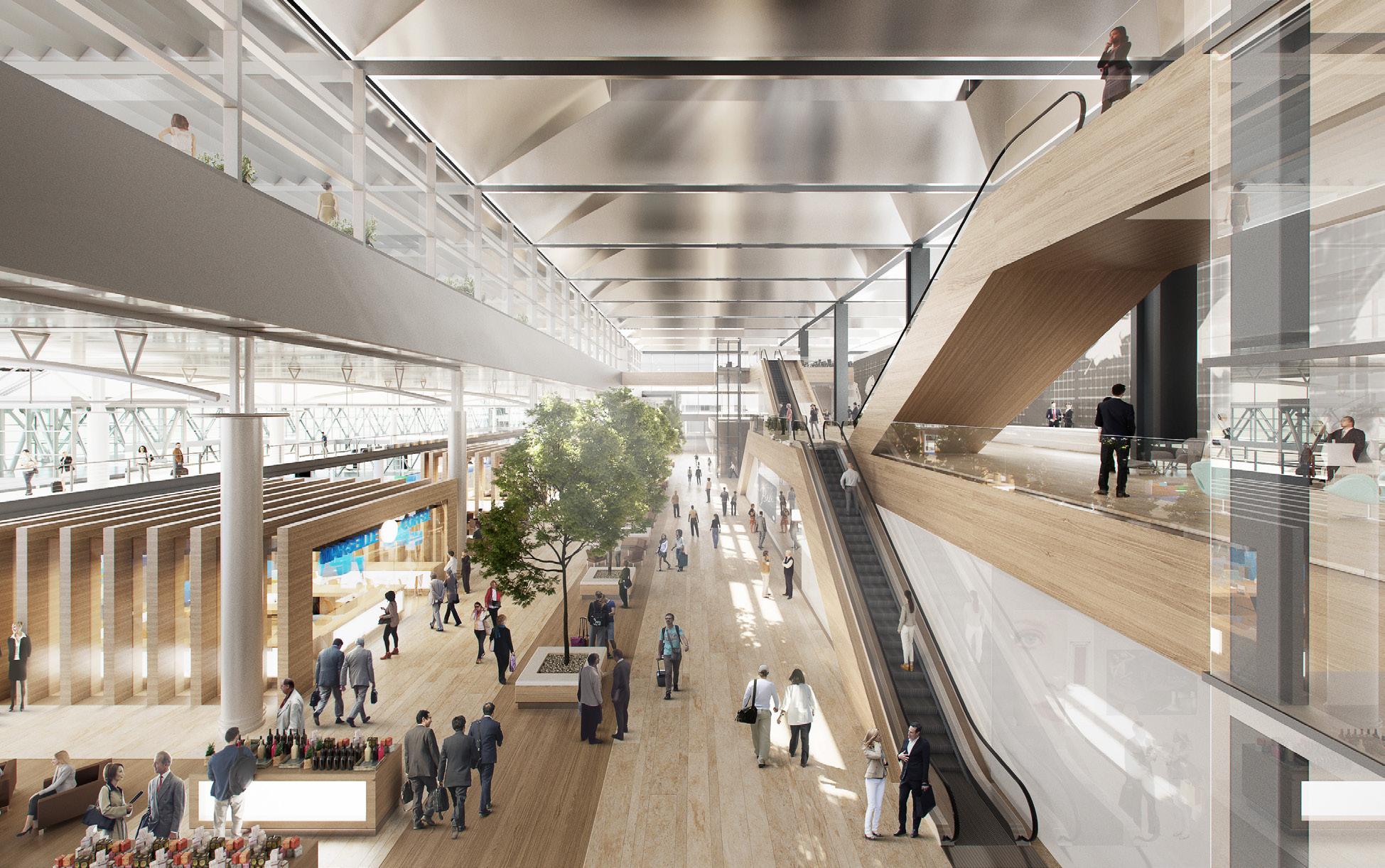
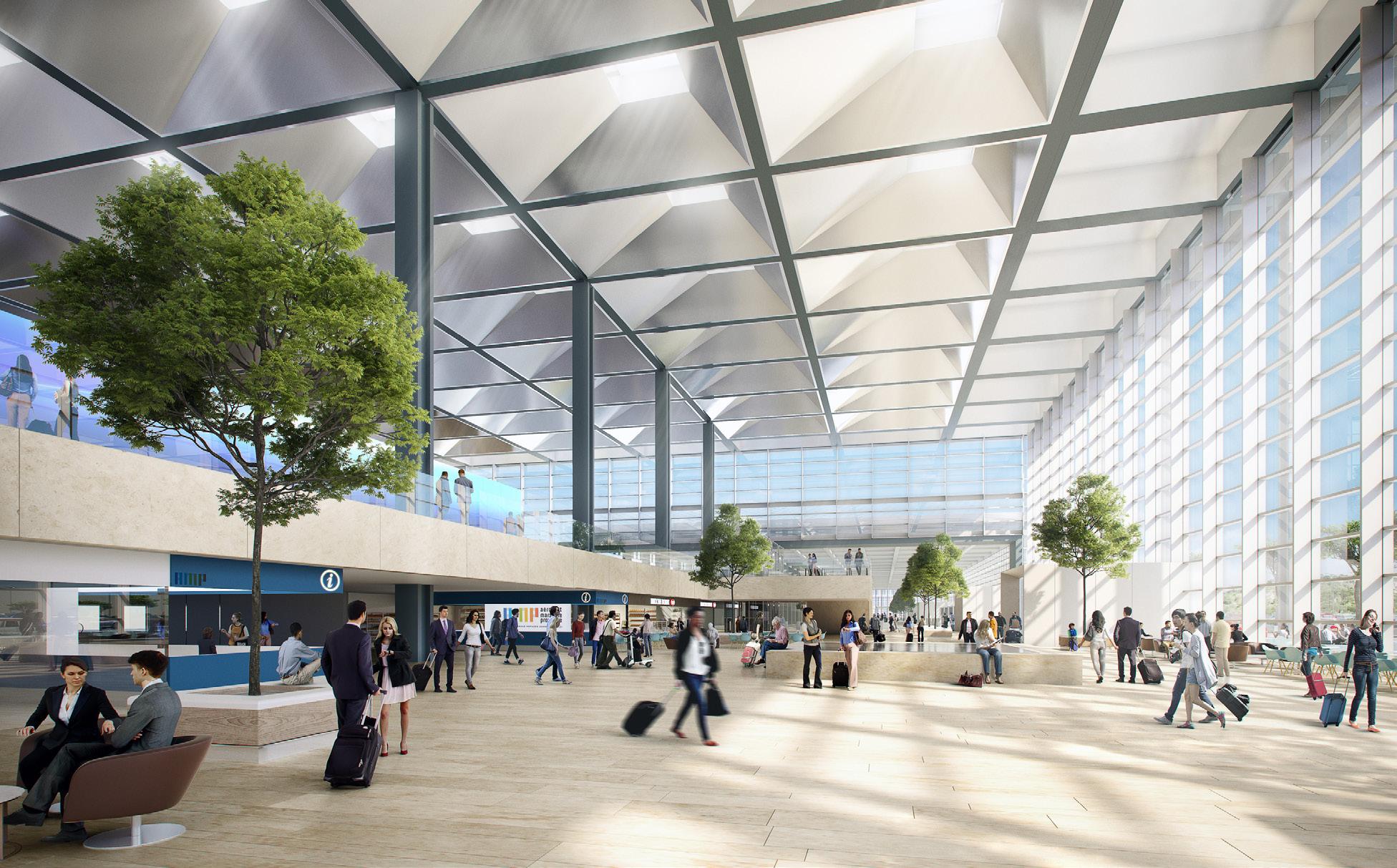
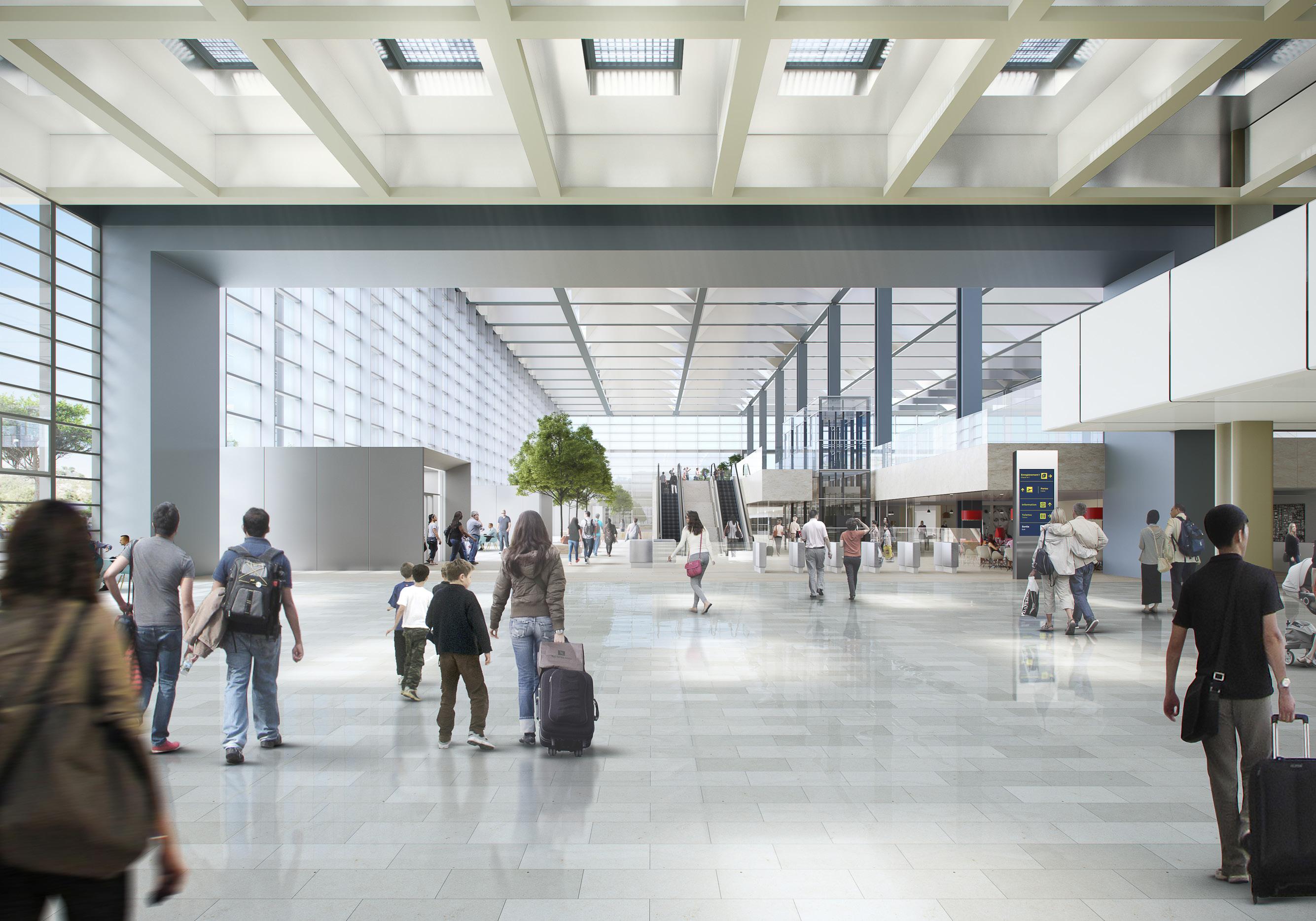
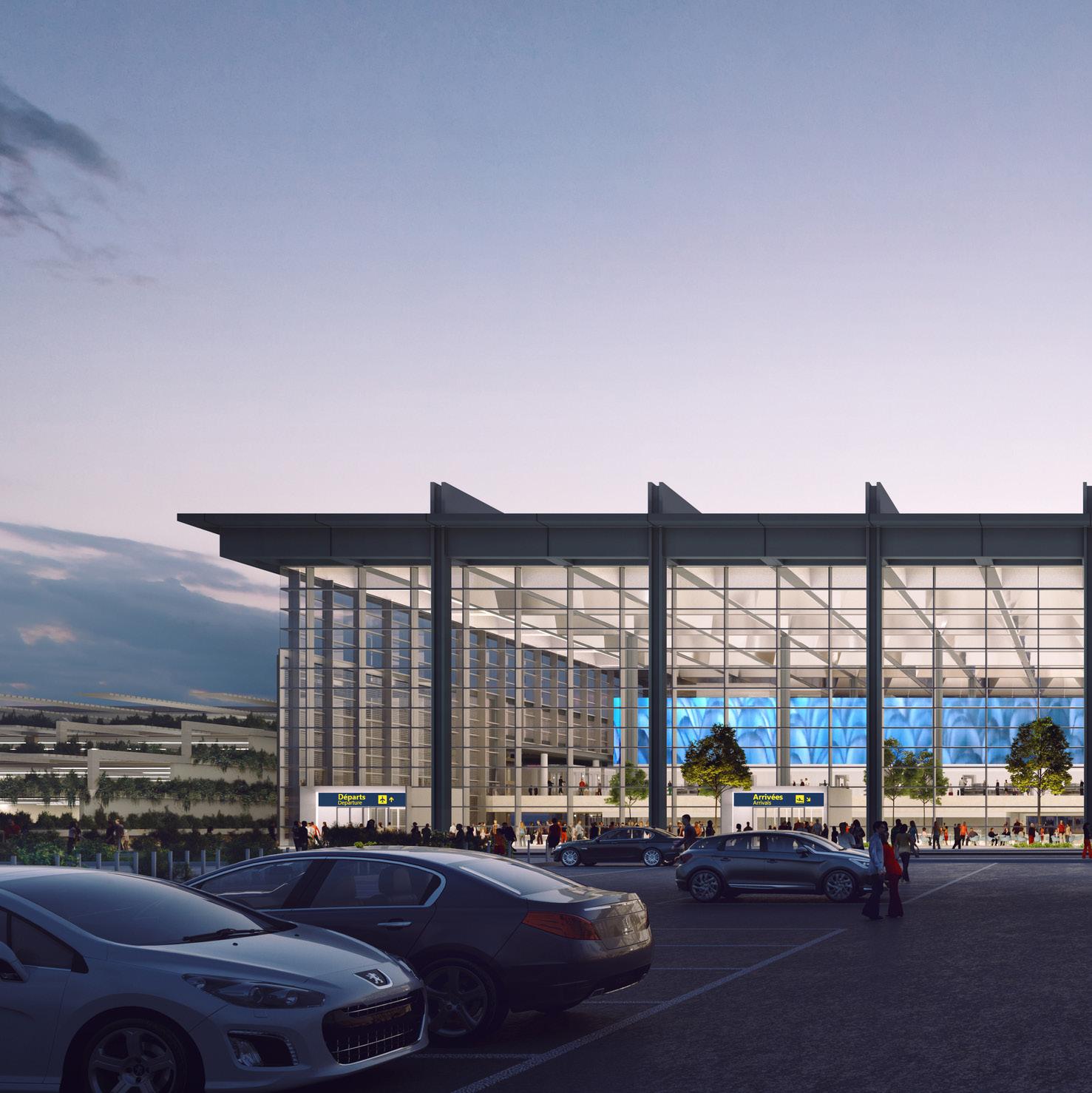
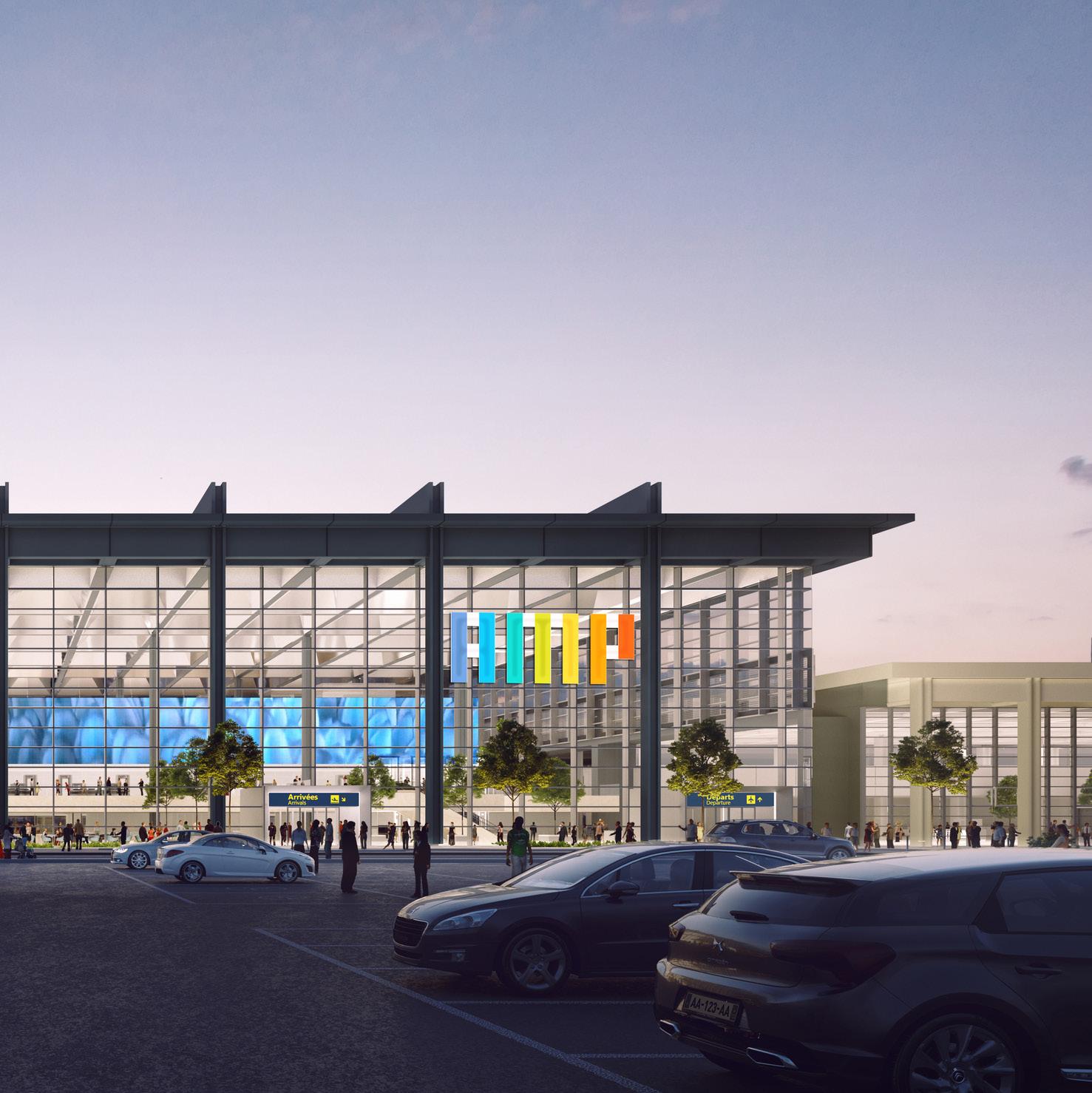
The new Marseille Airport is the primary gateway to Provence for millions of visitors each year. The new extension allows the airport to serve up to 12 million passengers per year (excluding the MP2 terminal), future-proofing the development until 2047. The design restores the clarity of layout and expression in Fernand Pouillon’s 1960s original, while adding the ‘missing piece’ to the 1992 extension by Richard Rogers to tie the entire ensemble of buildings together. Phase I of the project will create a new ‘Coeur’ – literally, heart in French – that rationalises arrival and departure sequences within a single building, creating an intuitive progression through the terminal for passengers. The Coeur is a 22-metre-high glazed hall whose structural expression echoes that of the Pouillon building, with its inverted beam roof, heroic 33-metre-deep span and a continuous grid of glass skylights. Clad with stainless-steel, the skylights act like giant lanterns, bringing natural light and air deep into the building. Large indoor trees bring a sense of calm to the space, helping create a relaxing environment.
77
Client AMP – Airport Marseille Provence Team WSP Cyprium Michel Desvigne
78
79
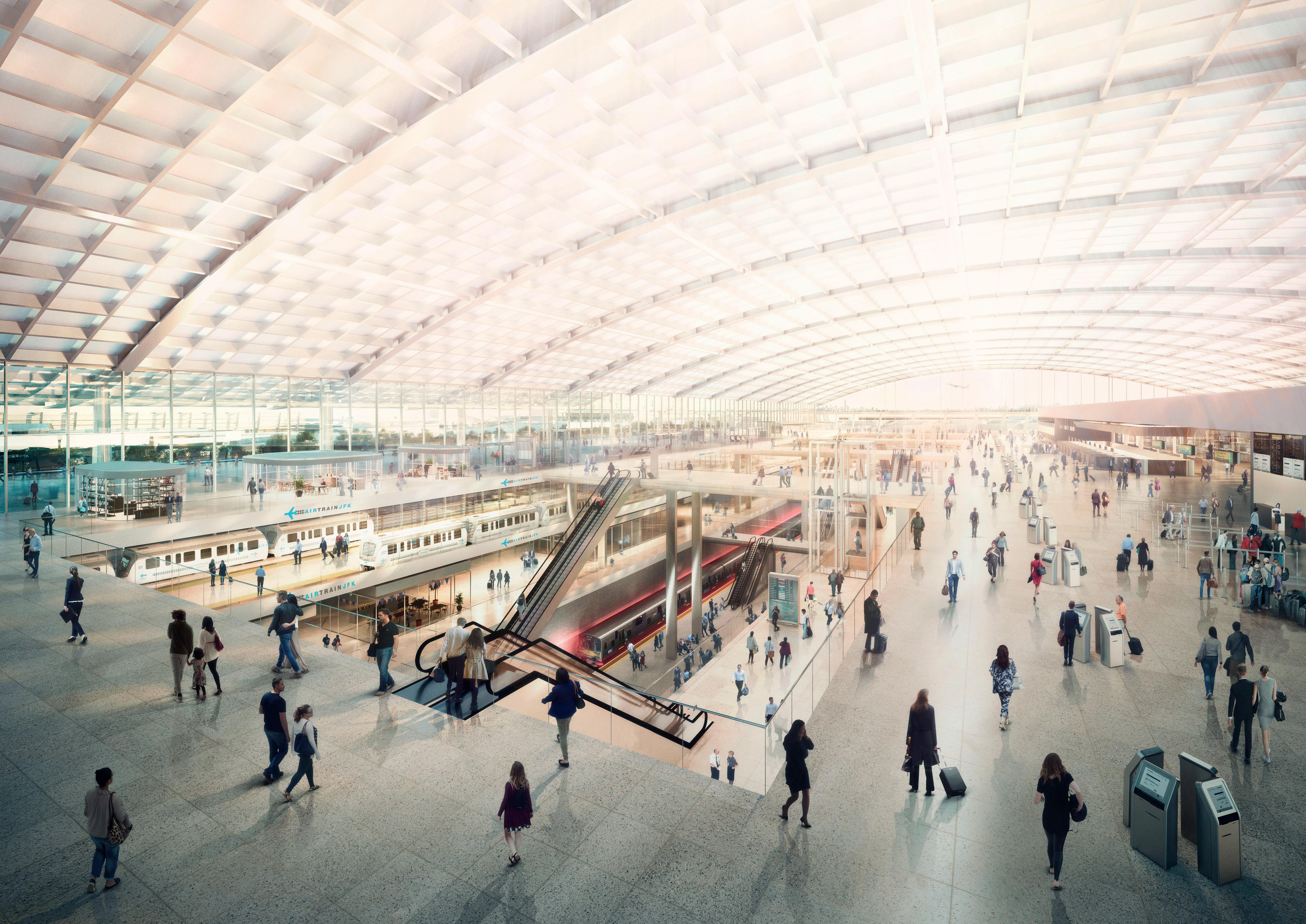
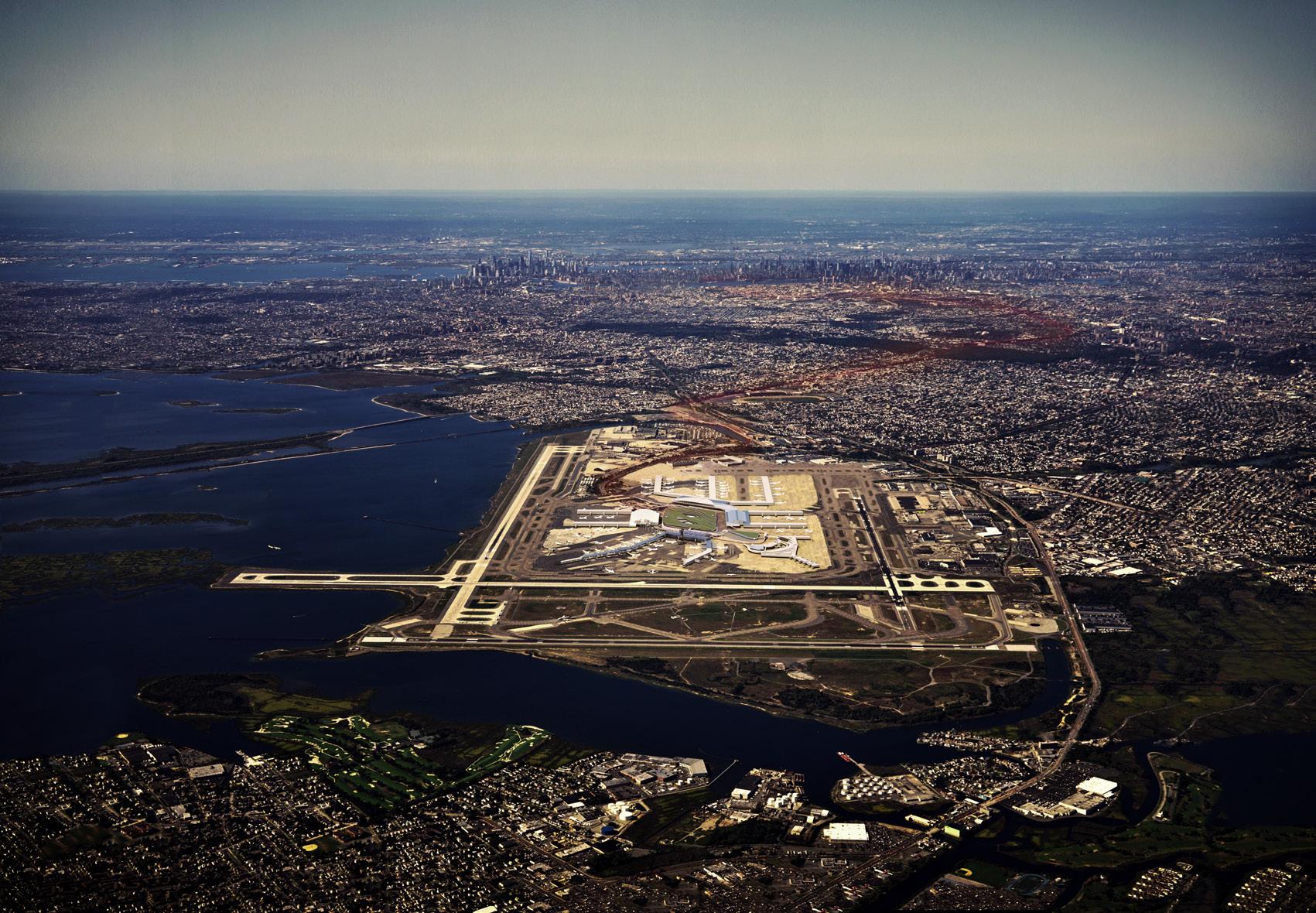
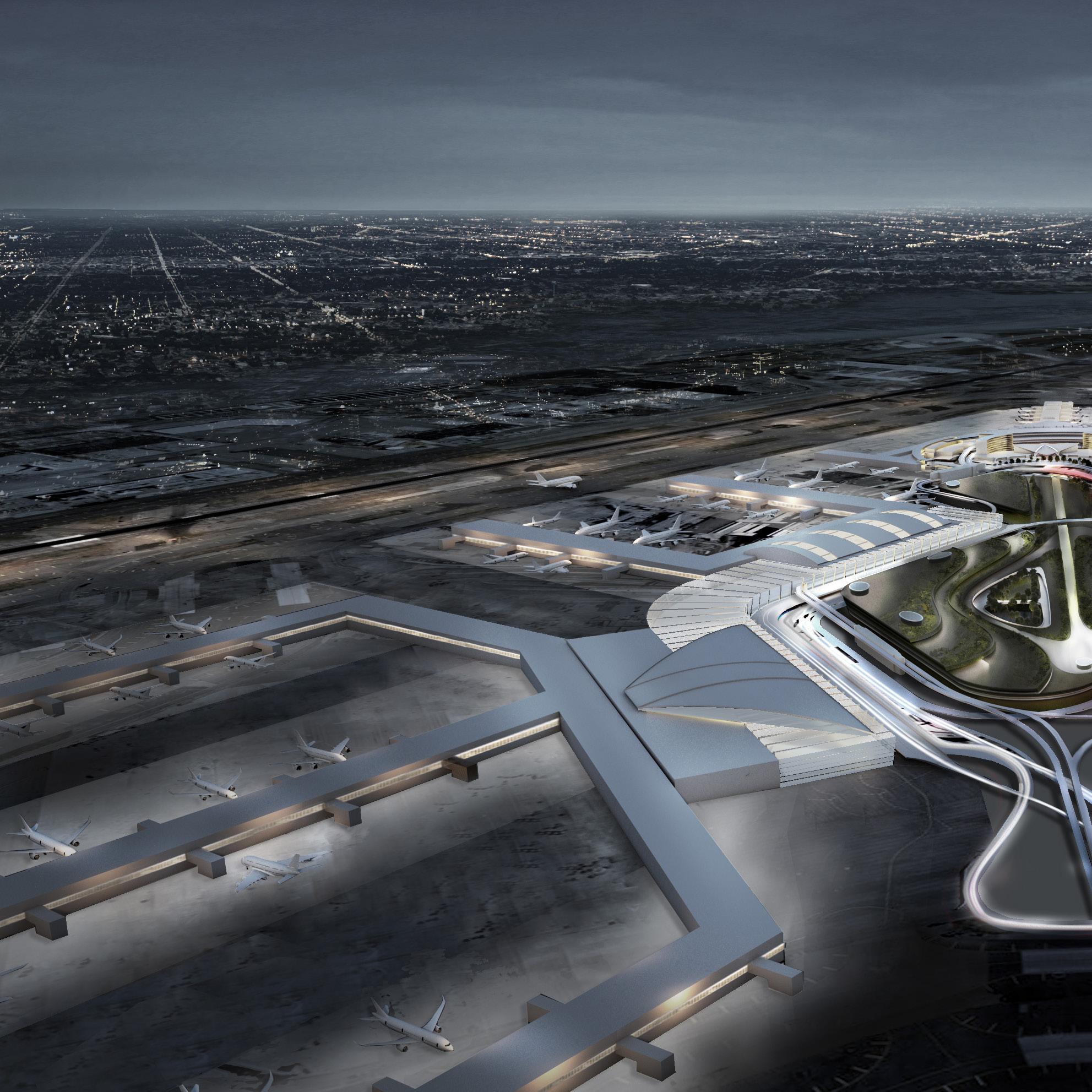
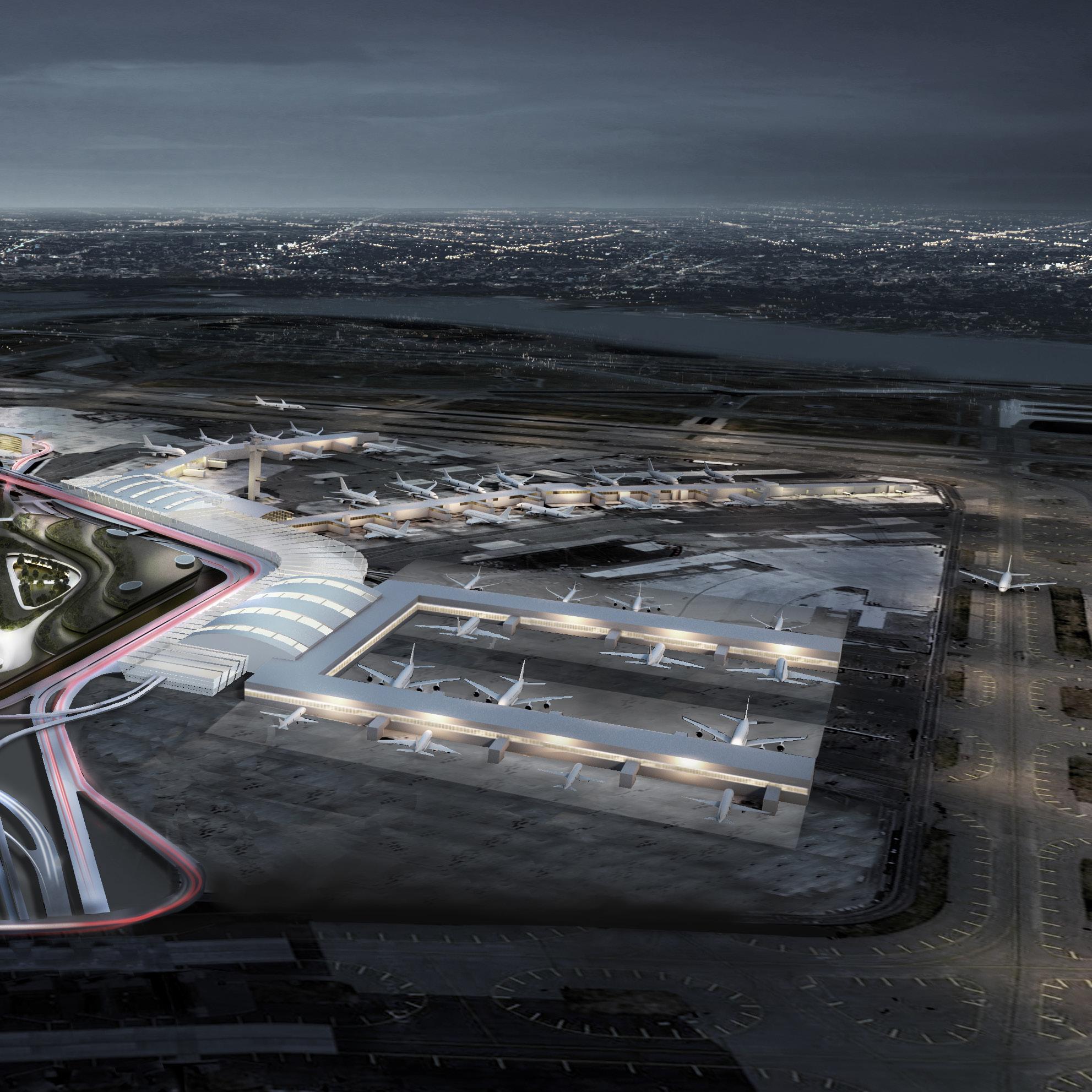
John F Kennedy International Airport Vision Plan New York, USA 2016
Governor Andrew M. Cuomo and the Port Authority of New York commissioned a vision plan to show how to transform JFK International Airport into an airport equipped to meet the demands of the 21st century and worthy of the State of New York. Working with Ricondo Associates, Michael Gallis, reporting to the Advisory Panel to the Governors office, the team developed a vision plan that lays out a comprehensive, airport-wide framework to create a unified, world-class airport. In order to accommodate the dramatic expected growth at the airport in the coming decades and keep New York’s economy moving forward, the vision addressed three key areas: Transform JFK into a unified, interconnected, worldclass airport, Improve road access to the airport, Expand rail mass transit to meet projected passenger growth.
83
Client Port Authority of New York and New Jersey Team Ricondo Associates Inc Michael Gallis + Partners Foster + Partners
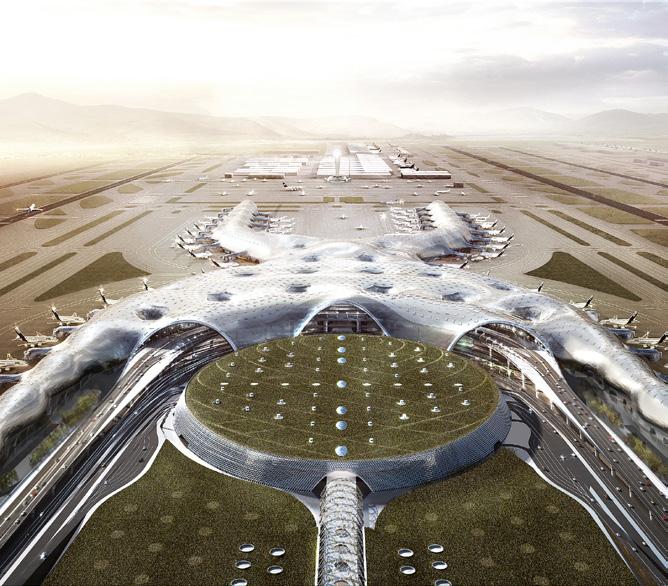
New International Airport
Mexico City, Mexico 2014 –
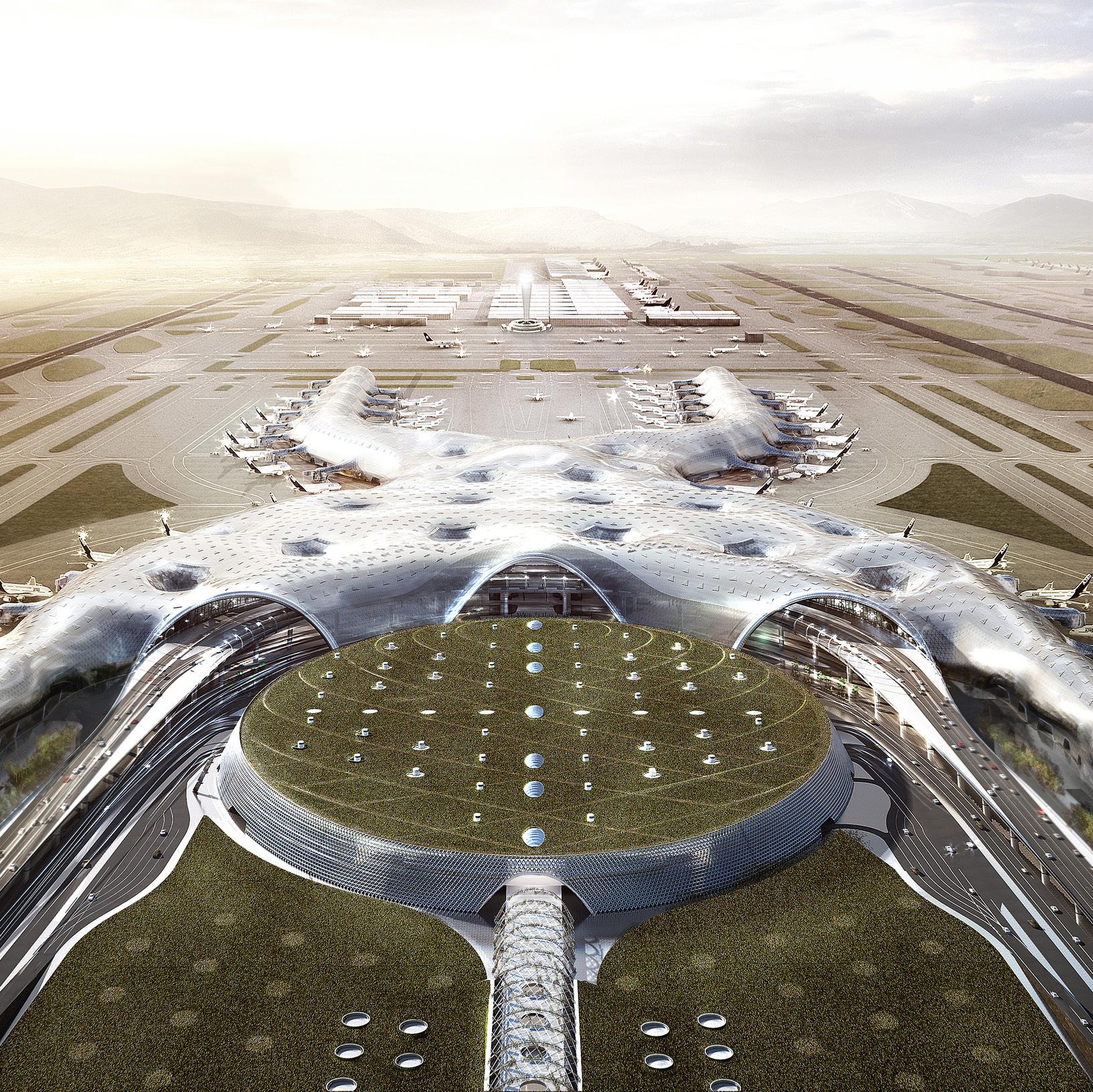
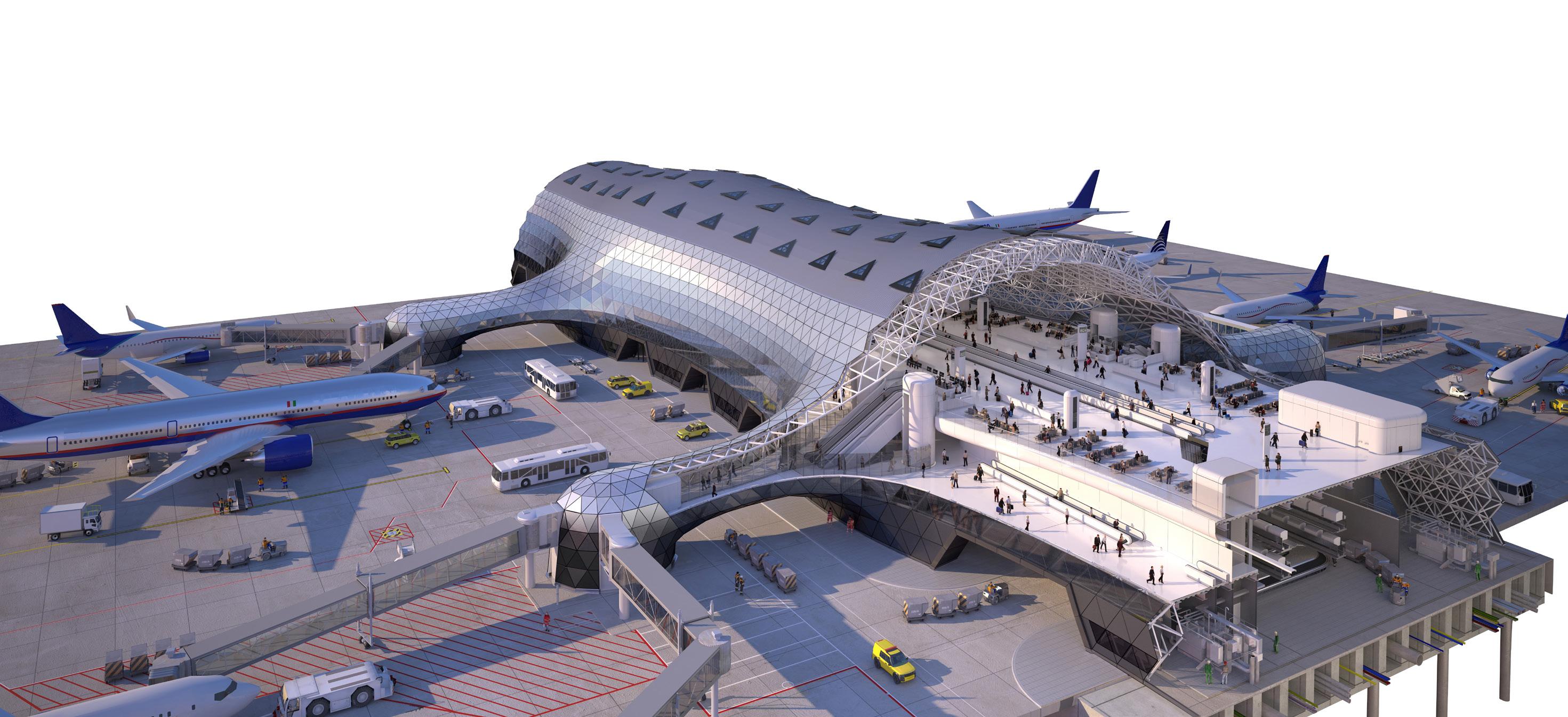
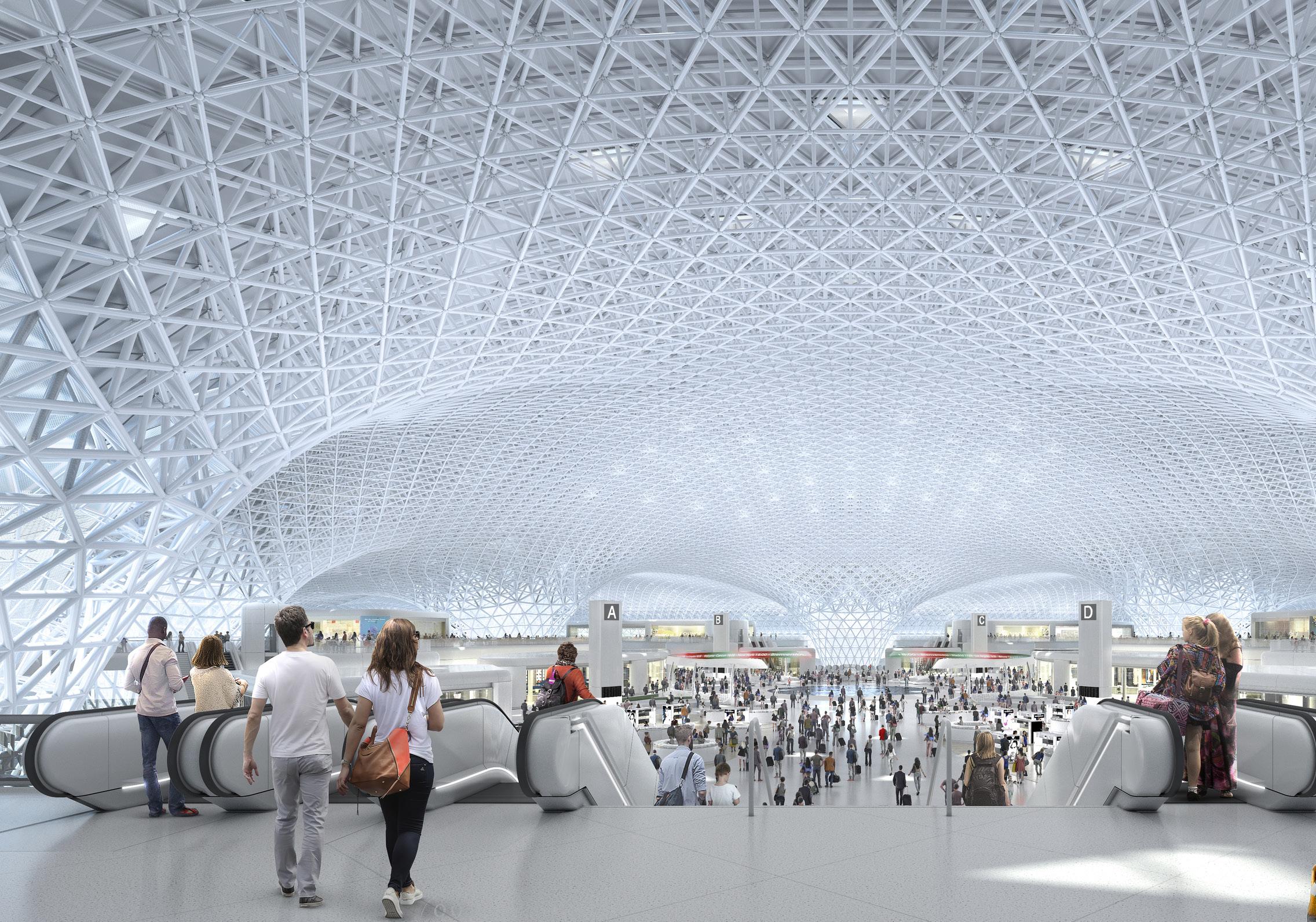
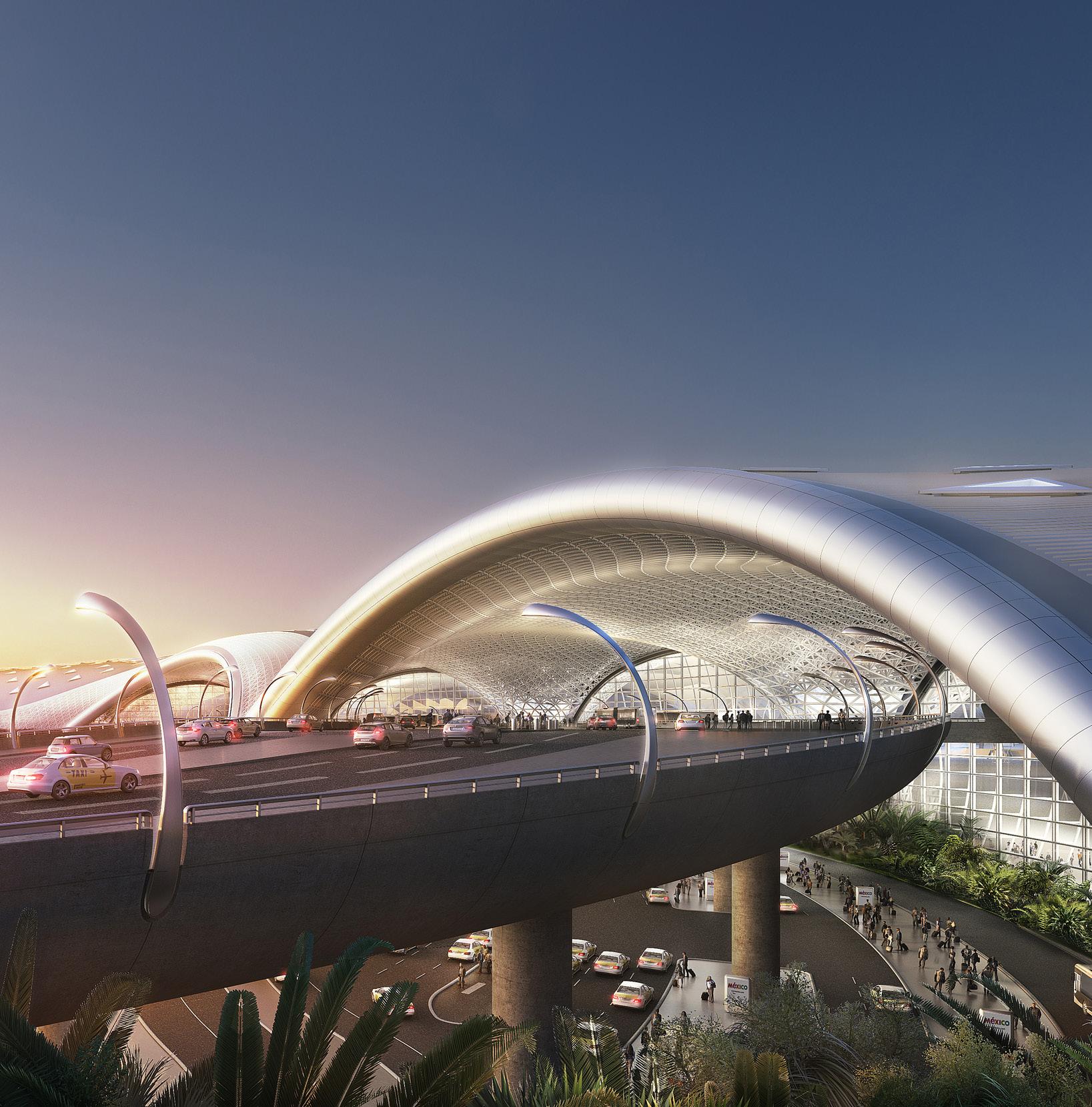
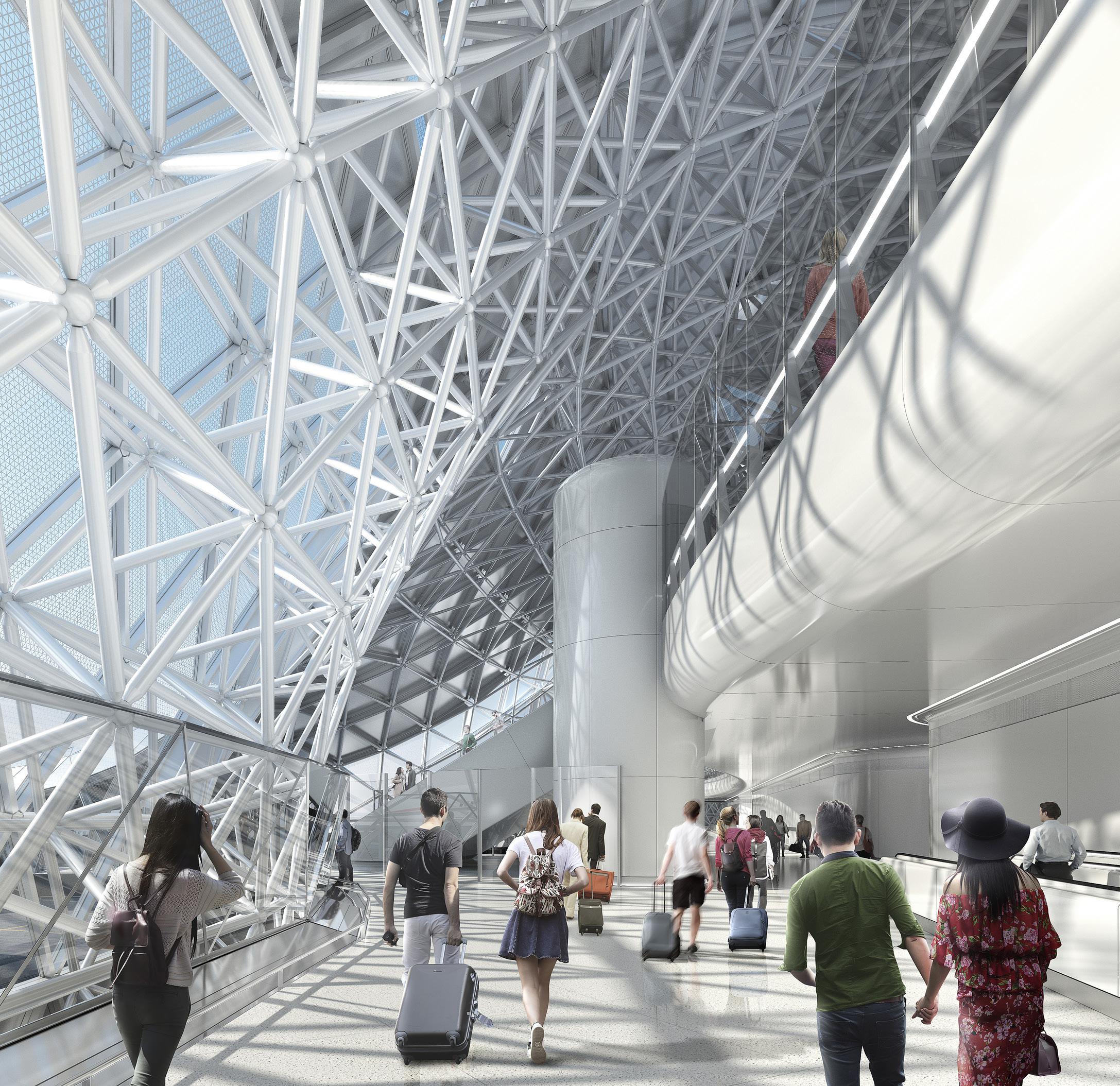
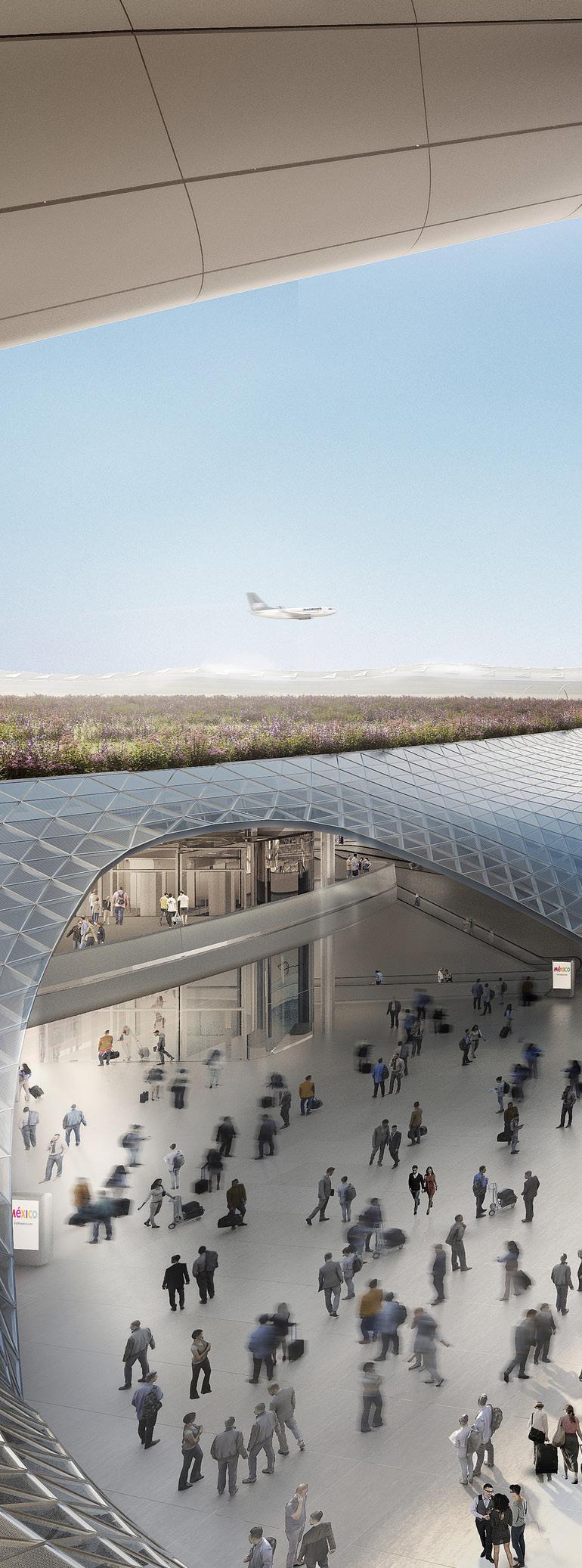
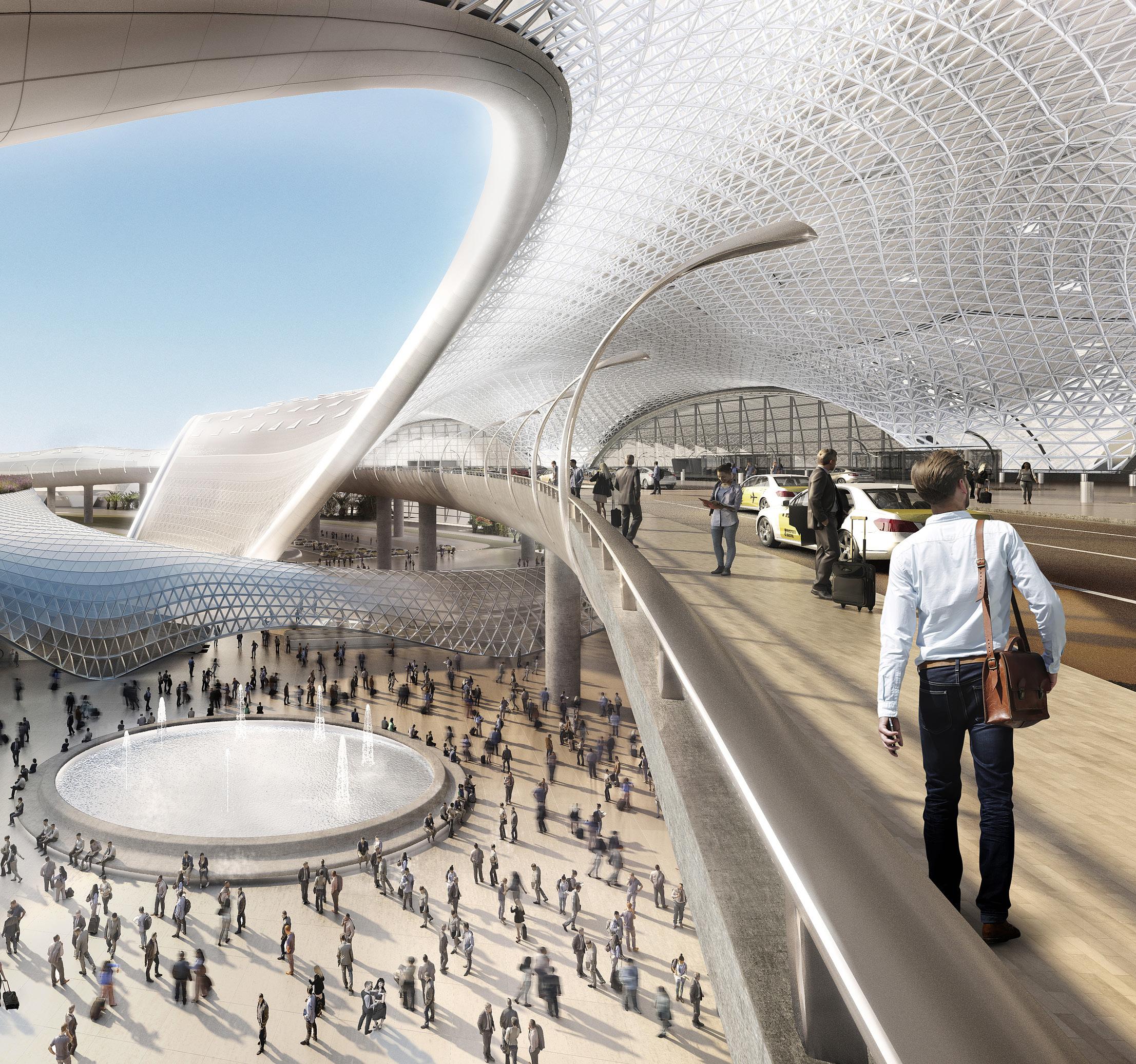
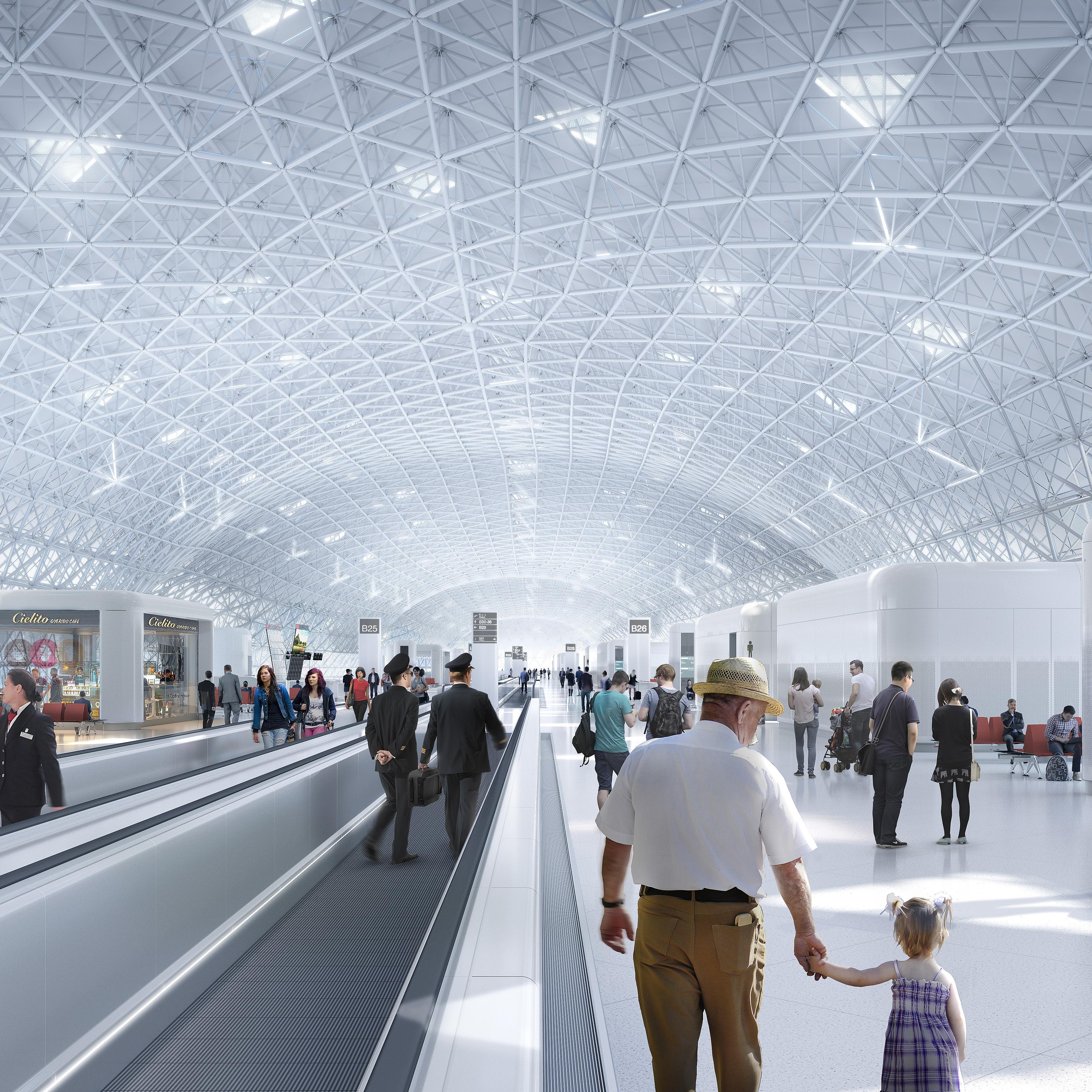
A collaboration between Foster + Partners, FR-EE and NACO won the international competition to design Mexico City’s new international airport. It will be one of the world’s largest airports and will revolutionise airport design – the entire terminal is enclosed within a continuous lightweight gridshell, embracing walls and roof in a single, flowing form, evocative of flight. The design ensures short walking distances and few level changes, it is easy to navigate, and passengers will not have to use internal trains or underground tunnels – it is a celebration of space and light.
The maximum span internally is 170 metres. The lightweight glass and steel structure and soaring vaulted roof are designed for Mexico City’s challenging soil conditions. The entire building is serviced from beneath, freeing the roof of ducts and pipes and revealing the environmental skin. This hardworking structure harnesses the power of the sun, collects rainwater, provides shading, directs daylight and enables views – all while achieving a high performance envelope that meets high thermal and acoustic standards.
87
Client NAICM Nuevo Aeropuerto Internacional de la Ciudad de México Team F+P +FR-EE NACO, ARUPS, INPROS, Roberto Ruiz/ Colinas de Buen, F+P / AKF Antonio Moctezuma, Oscar de Buen, THREE
88

89
90
LEED Platinum 56.7mppa
91
93
Tocumen International Airport
Panama City, Panama 2011 – 2022
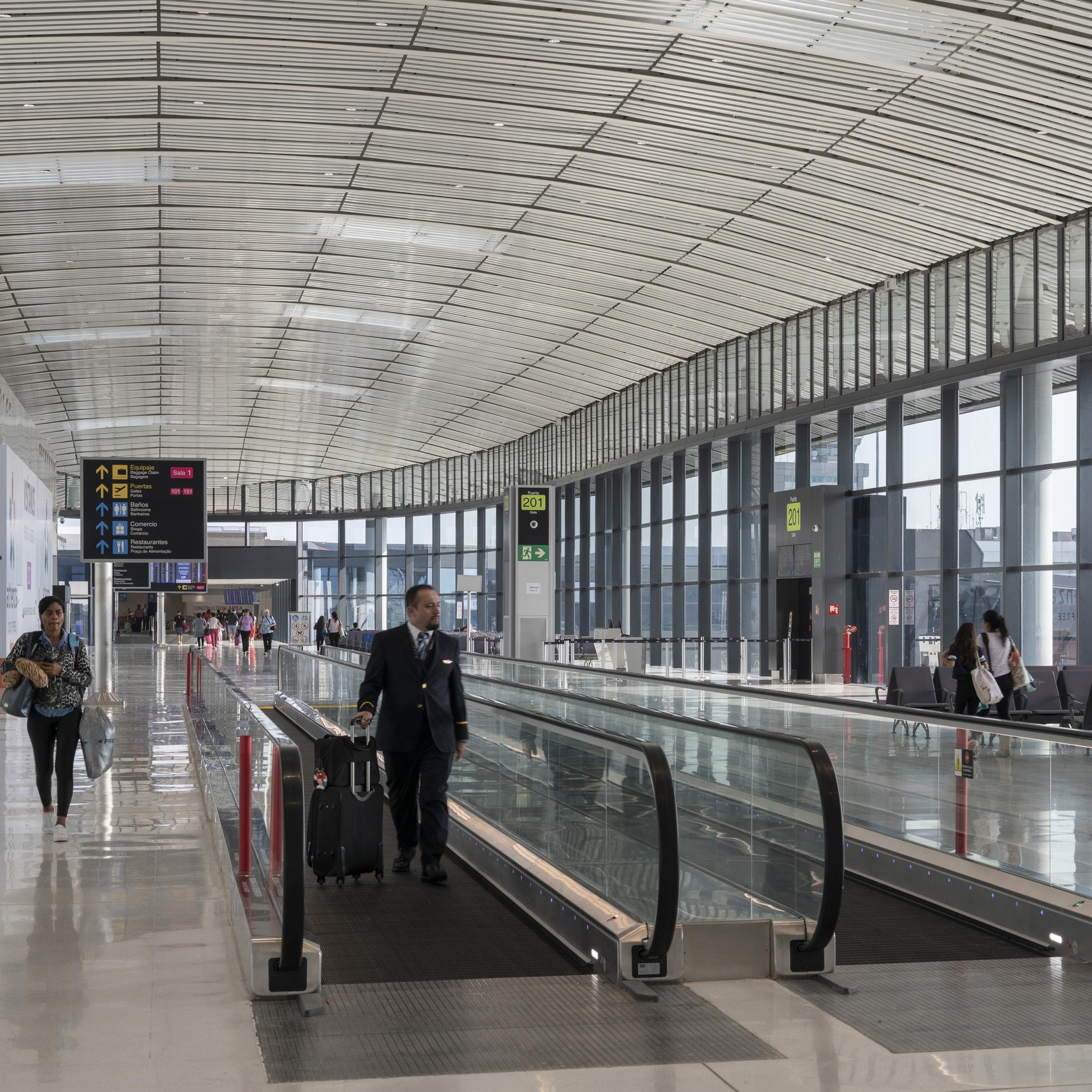
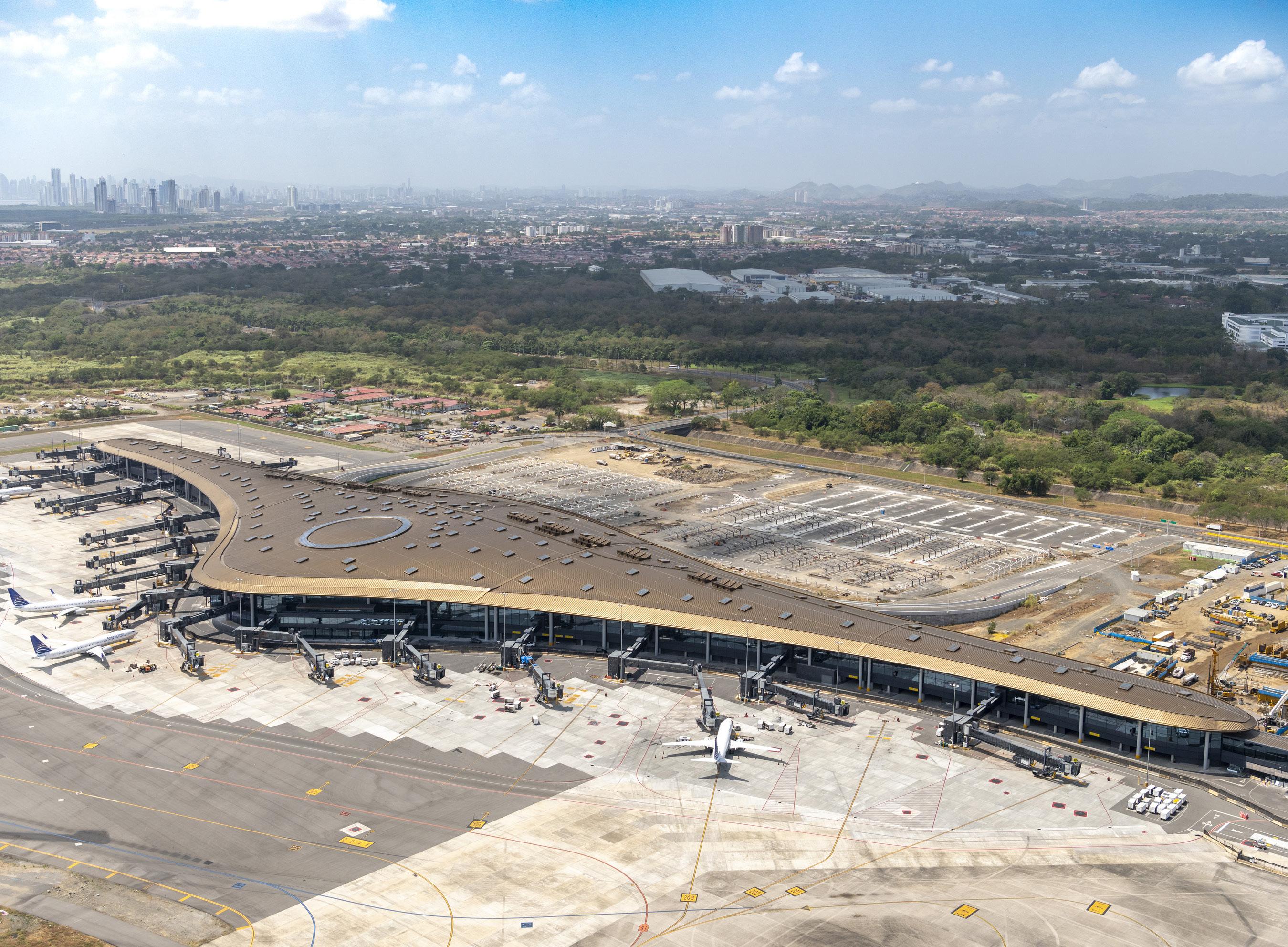
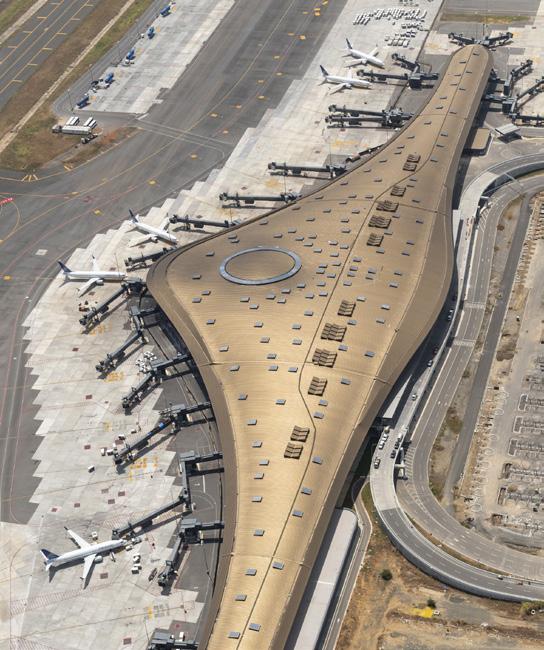
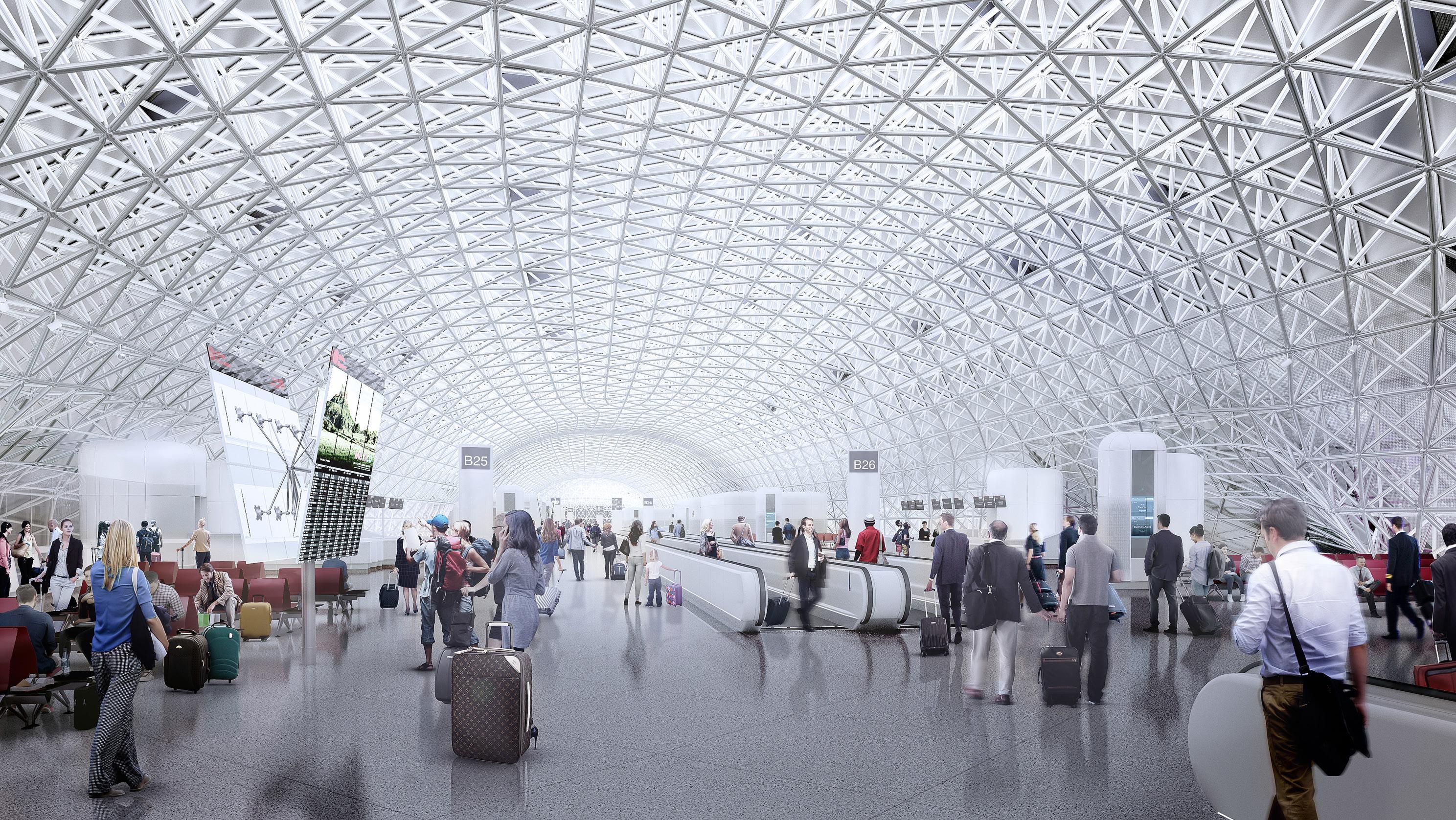
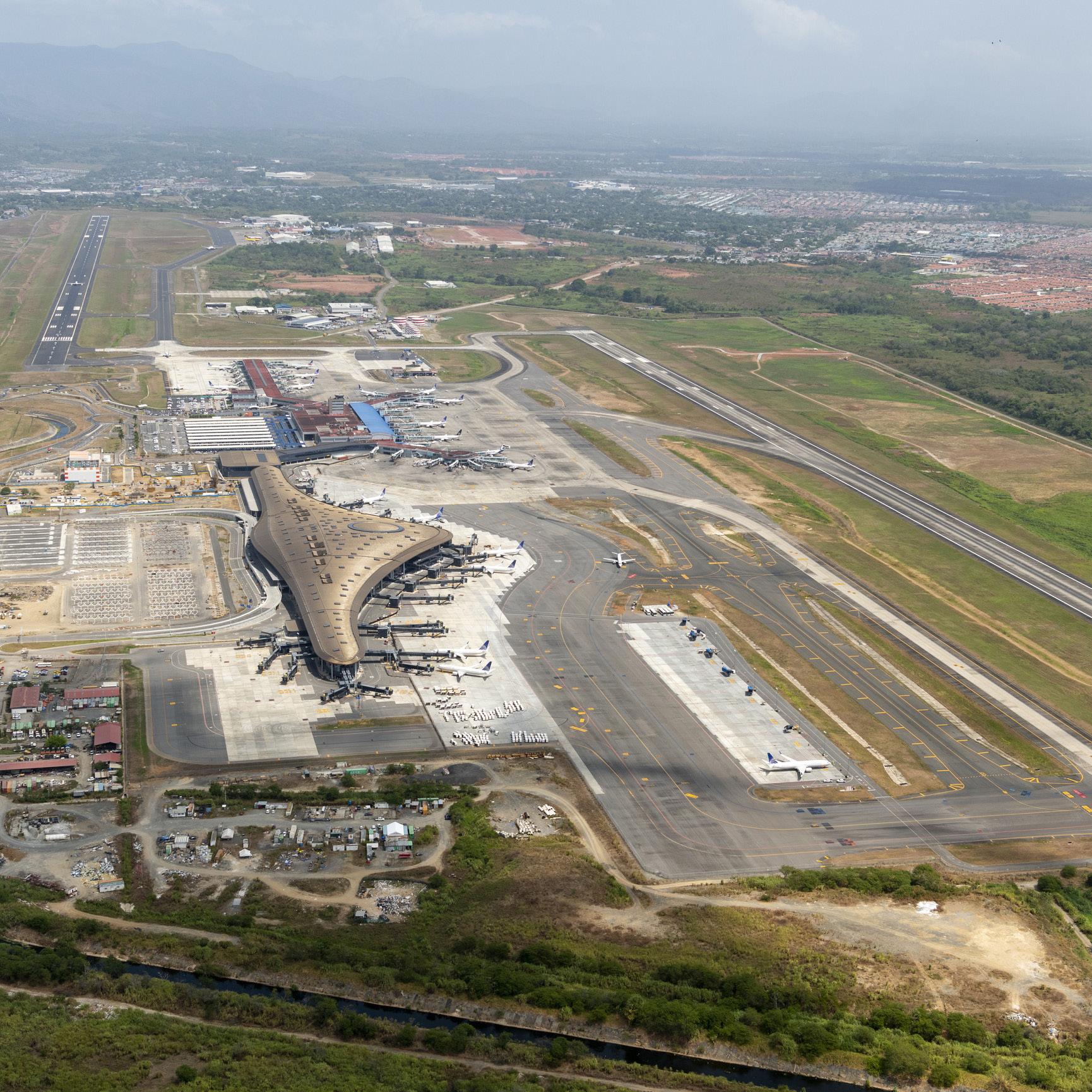
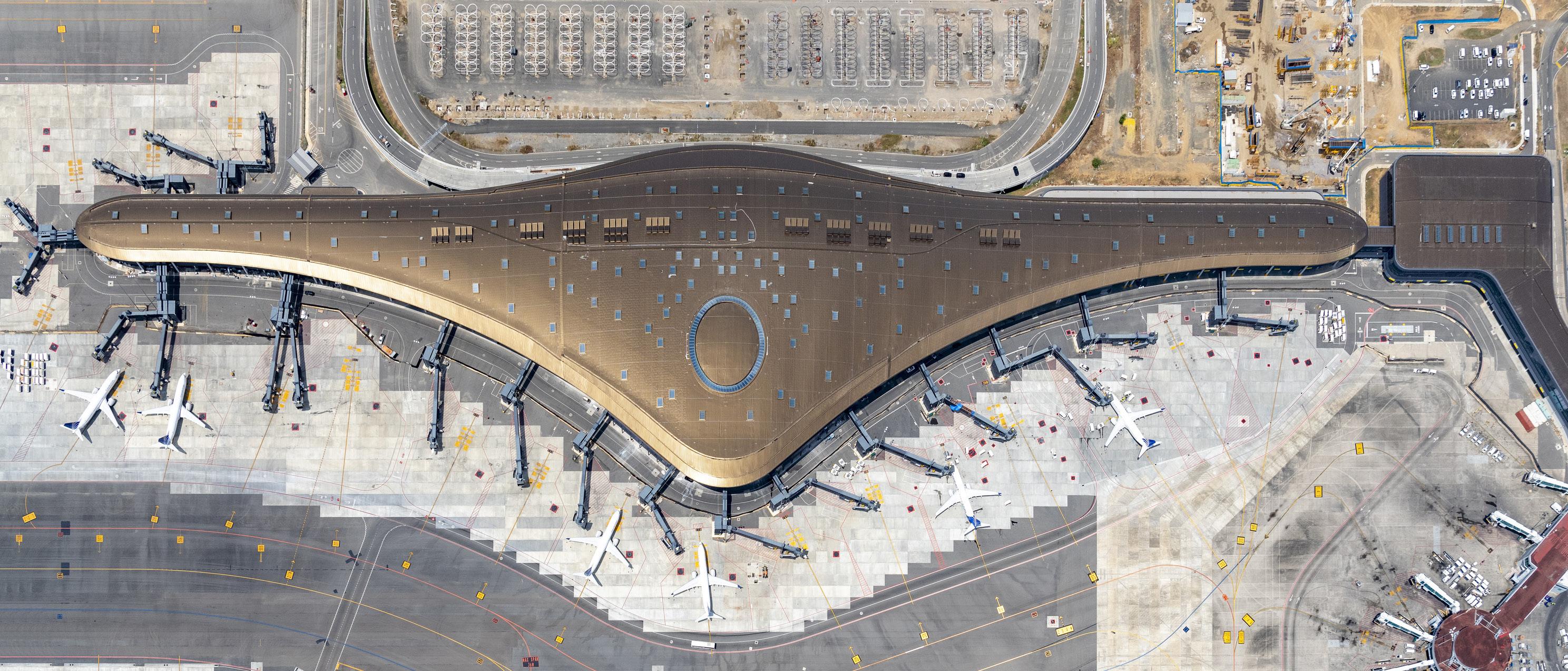
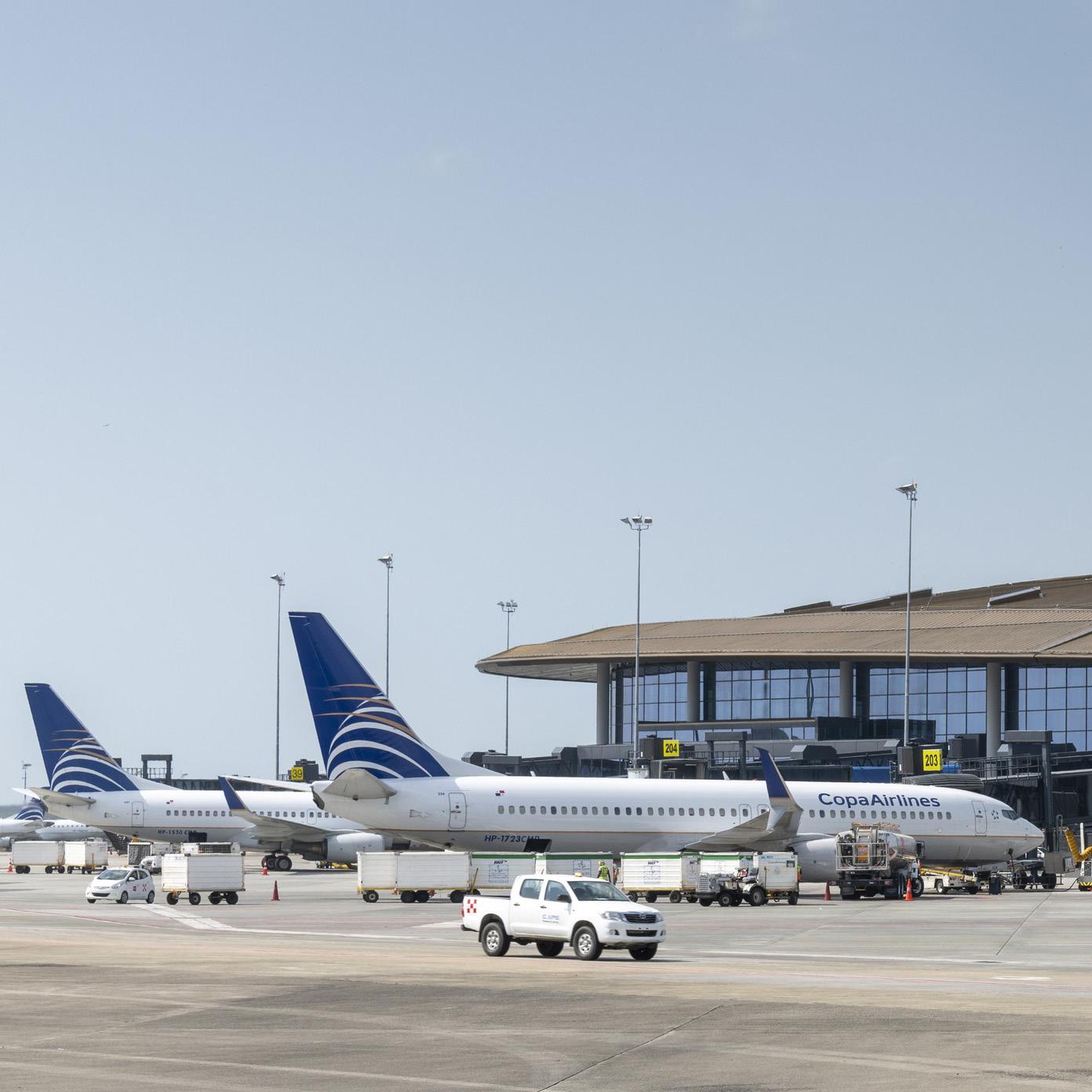
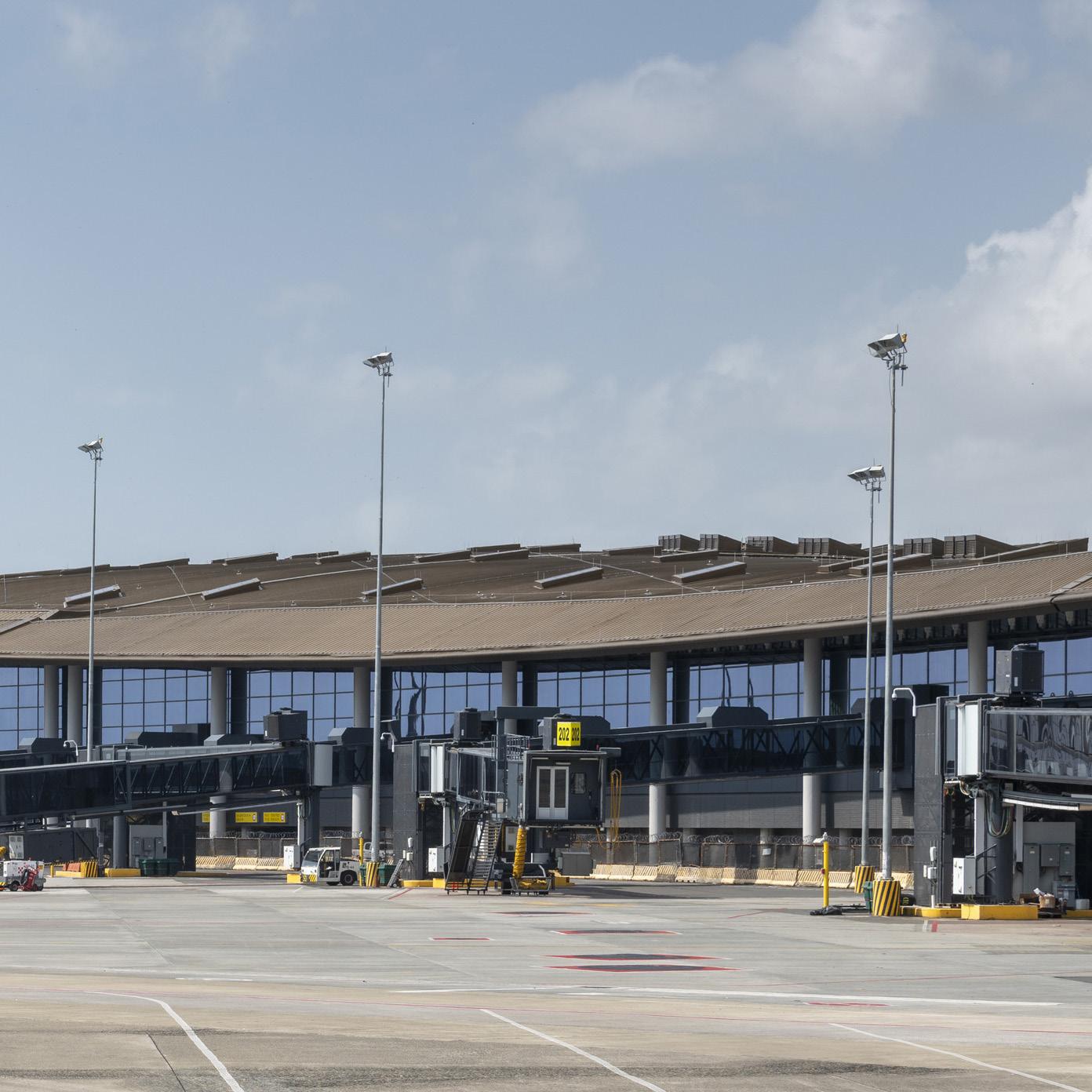
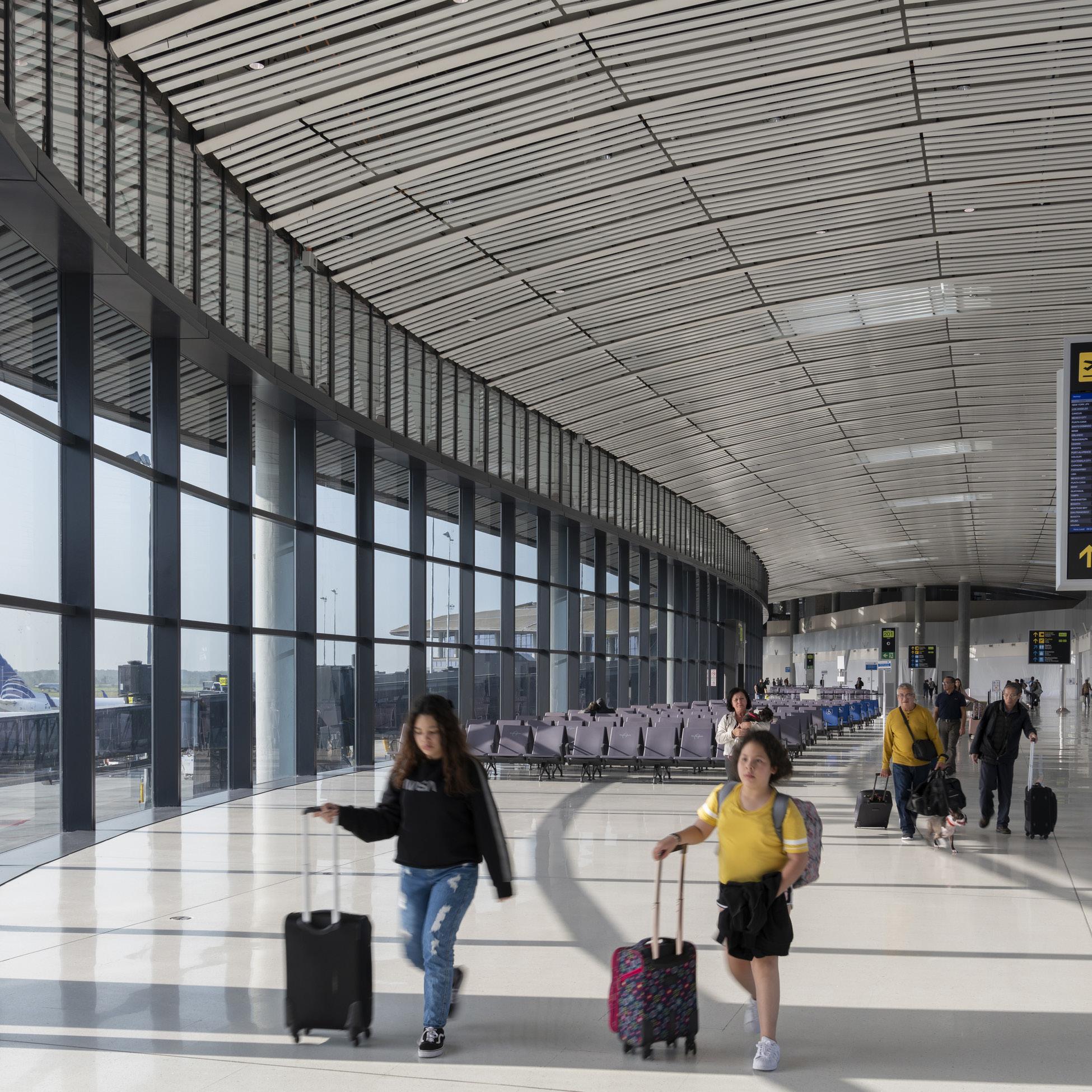
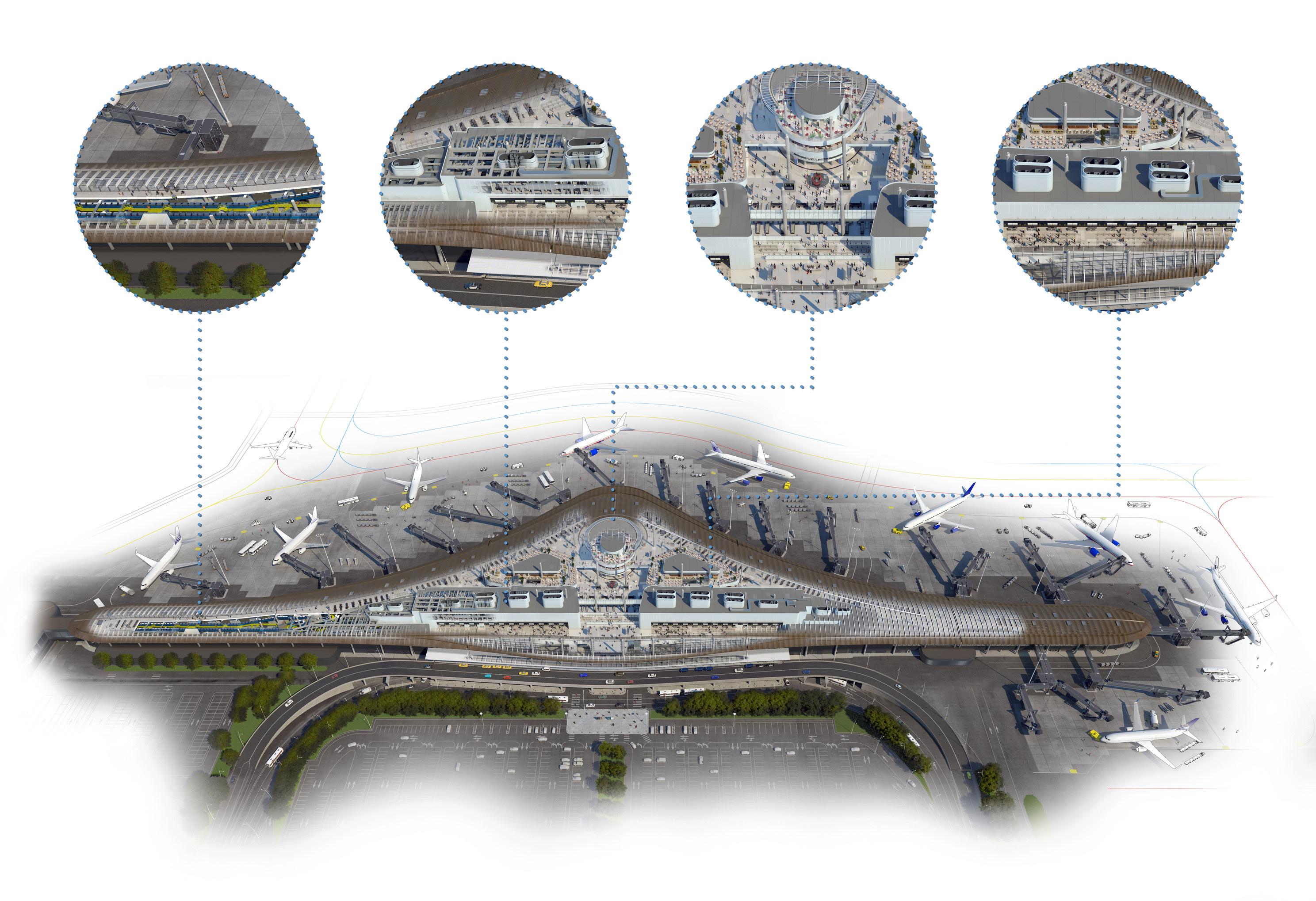
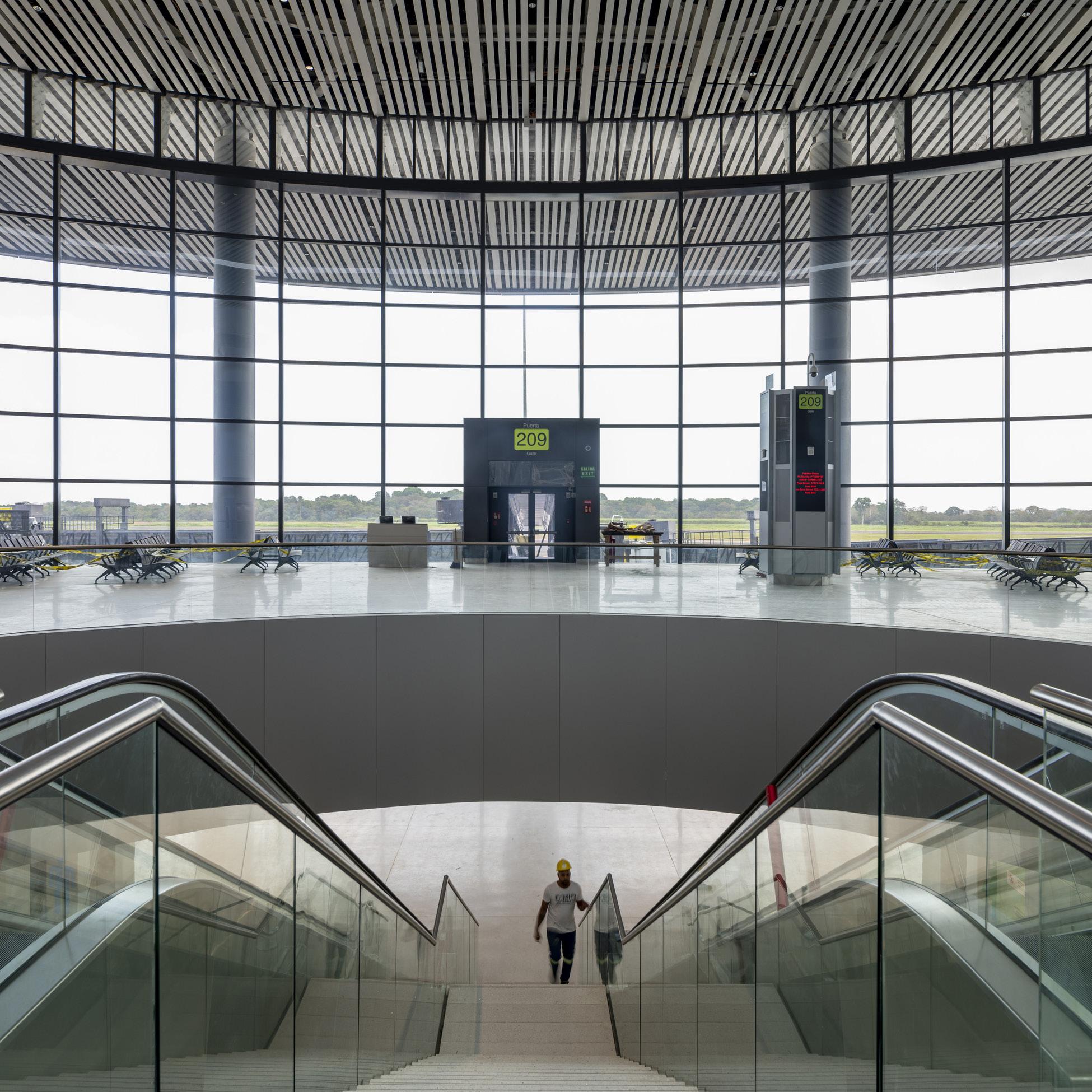
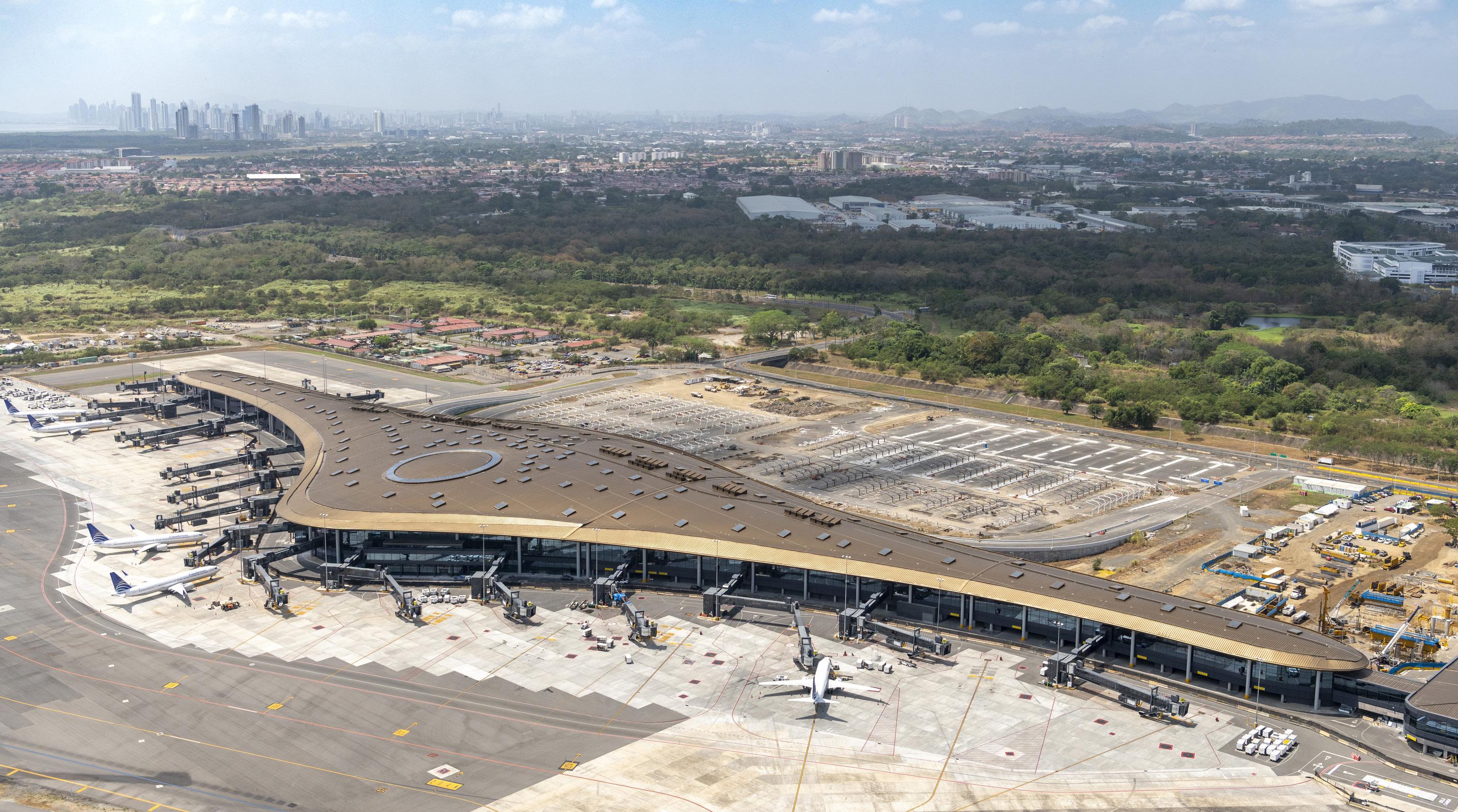
The masterplan for the expansion of Tocumen International Airport is planned to increase capacity from 5.8 to 18 million passengers a year by 2022, establishing an important new hub for the Americas. The new terminal is designed to reflect the Panamanian landscape, evoking a unique symbol of place to welcome visitors and removing the anonymity of the international hub experience for transit passengers.
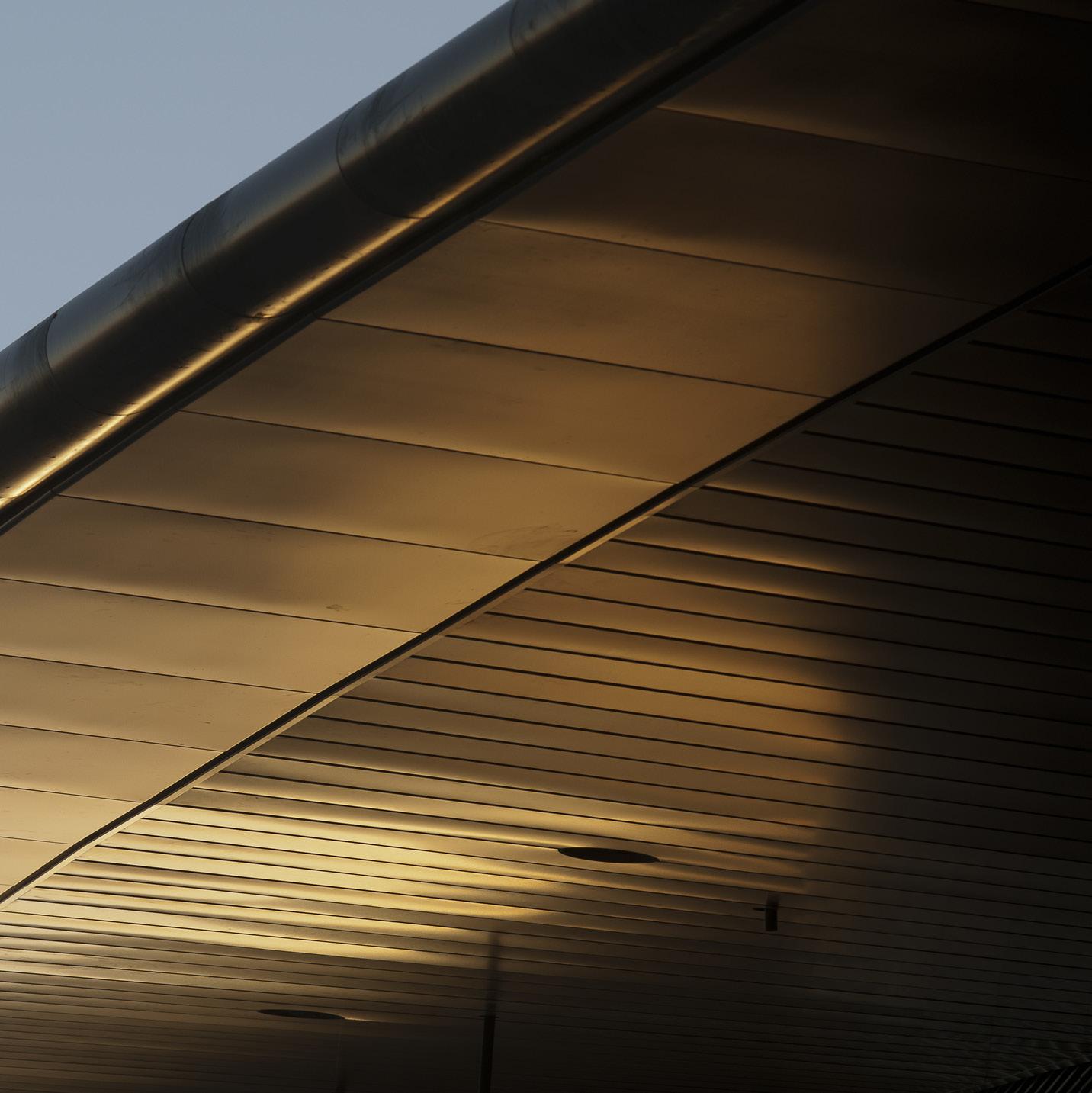
At the heart of the new airport is a lush open garden, planted with the trees and flora of Panama’s tropical forests, visible within a curved glass enclosure. Two symmetrical wings of piers extend to the east and west from the garden and central concourse, and the entire building is unified beneath an aerodynamic bronzecoloured roof. As the focus of hub is on transfer passengers, the terminal’s planning minimises connection times, with strong visual connections across the airport to allow intuitive way-finding.
95
Client Odebrecht Panama Team Mallol & Mallol Oscar Ramirez y Asociados
The hub of the Americas
85,000m2 18mppa
99
101
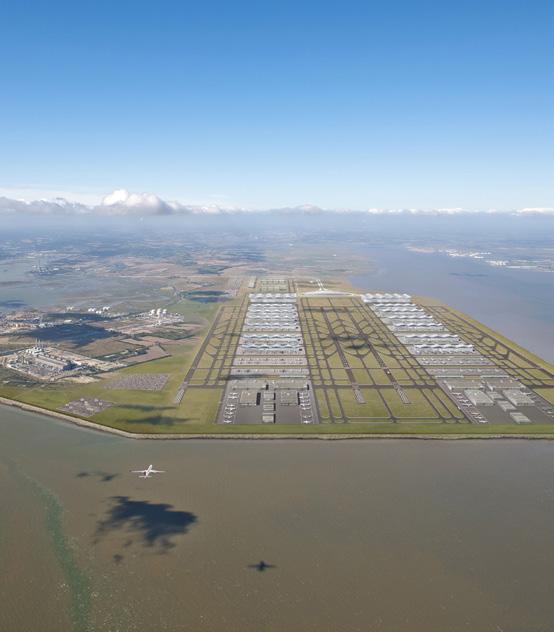
Thames Hub
London, United Kingdom 2007 – 2010
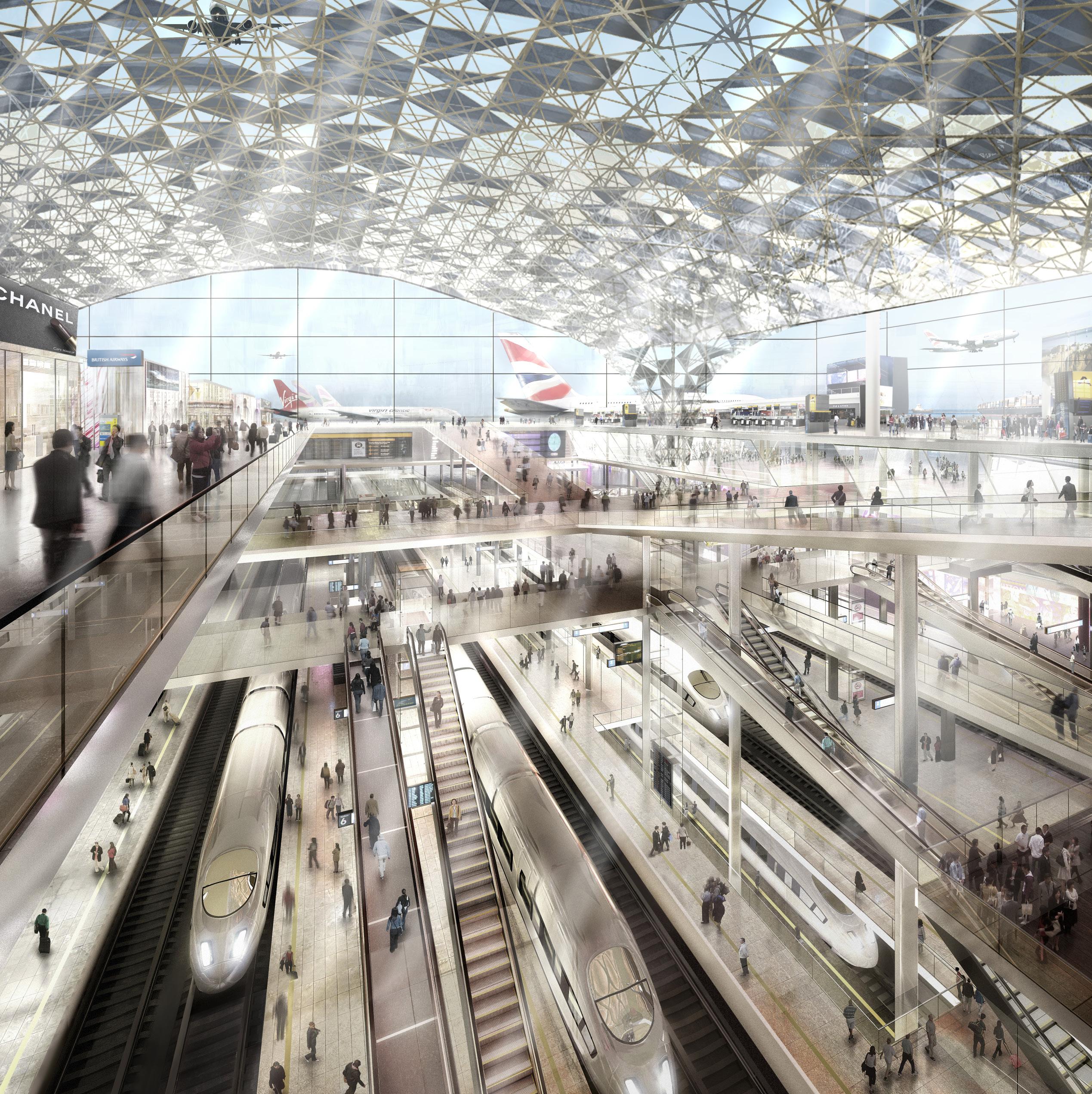
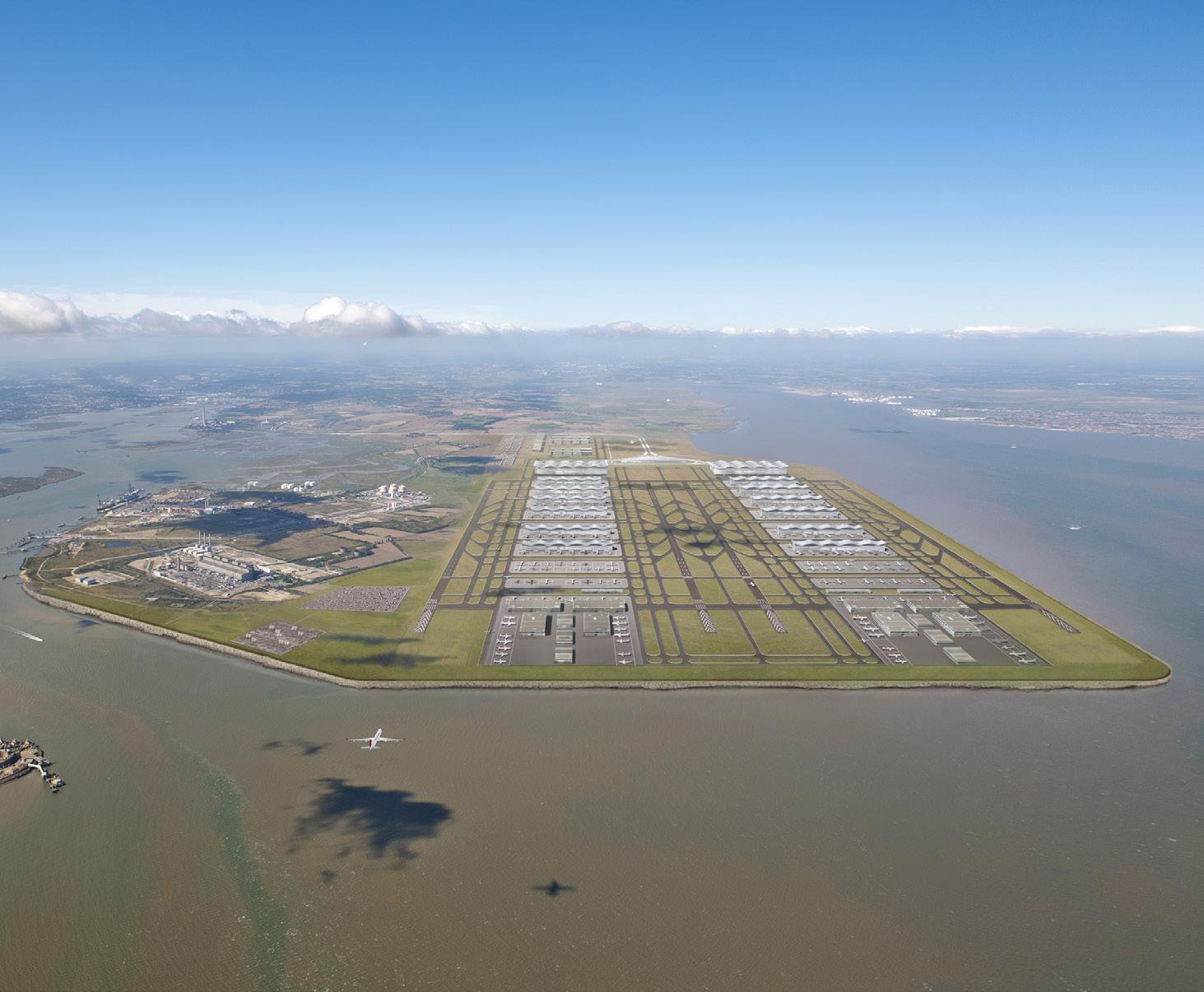
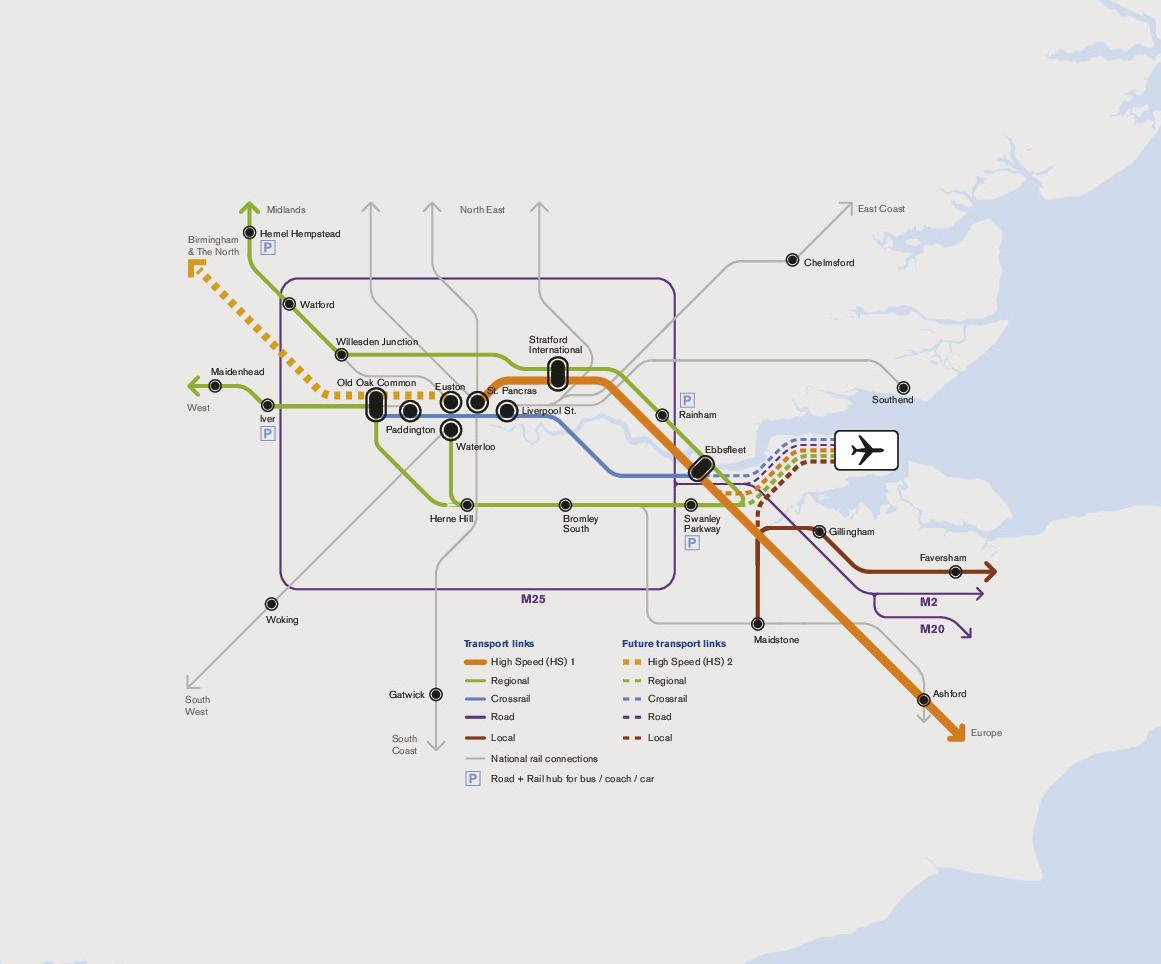
Thames Hub is a bold new approach to future infrastructure development in Britain. It brings together rail, freight logistics, aviation, energy networks, flood protection and a 24-hour, 4-runway airport, into a single integrated vision for 21st century infrastructure in Britain. Recognising the synergies between these different strands, it reaps the benefits of their integration. Unique for its scale and strategic cross-sector thinking, the project aims to overcome the challenges that the usual short term patching up of our ageing infrastructure cannot surmount.
The Thames Hub proposal includes a new Orbital Rail link around London, connecting with the proposed HS2 from London to the cities of the Midlands and the North – Birmingham, Manchester, Leeds and Liverpool – becoming part of an integrated network that links directly to Continental Europe. This rail link allows easy access to the new international airport located in the Thames Estuary on the Isle of Grain. The new airport satisfies the capacity needed today, allowing for future expansion while reducing the environmental and security problems of aircraft over-flying London.
103
Team Halcrow
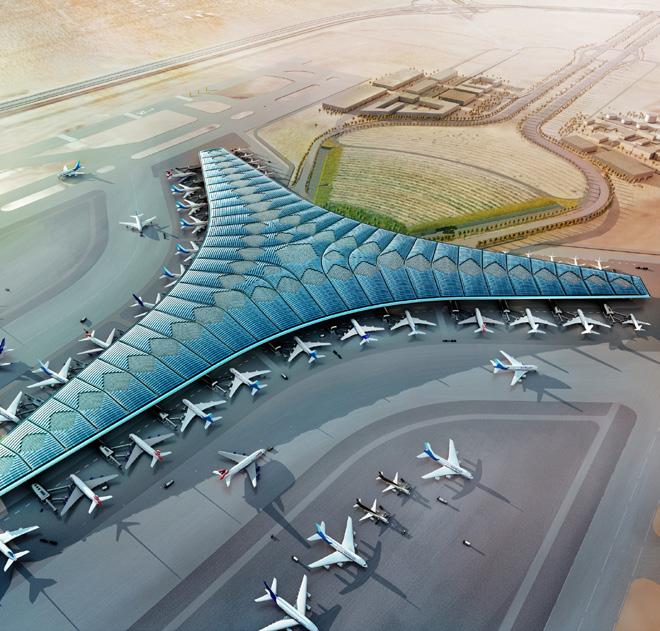
Kuwait International Airport
Kuwait City, Kuwait 2010 –
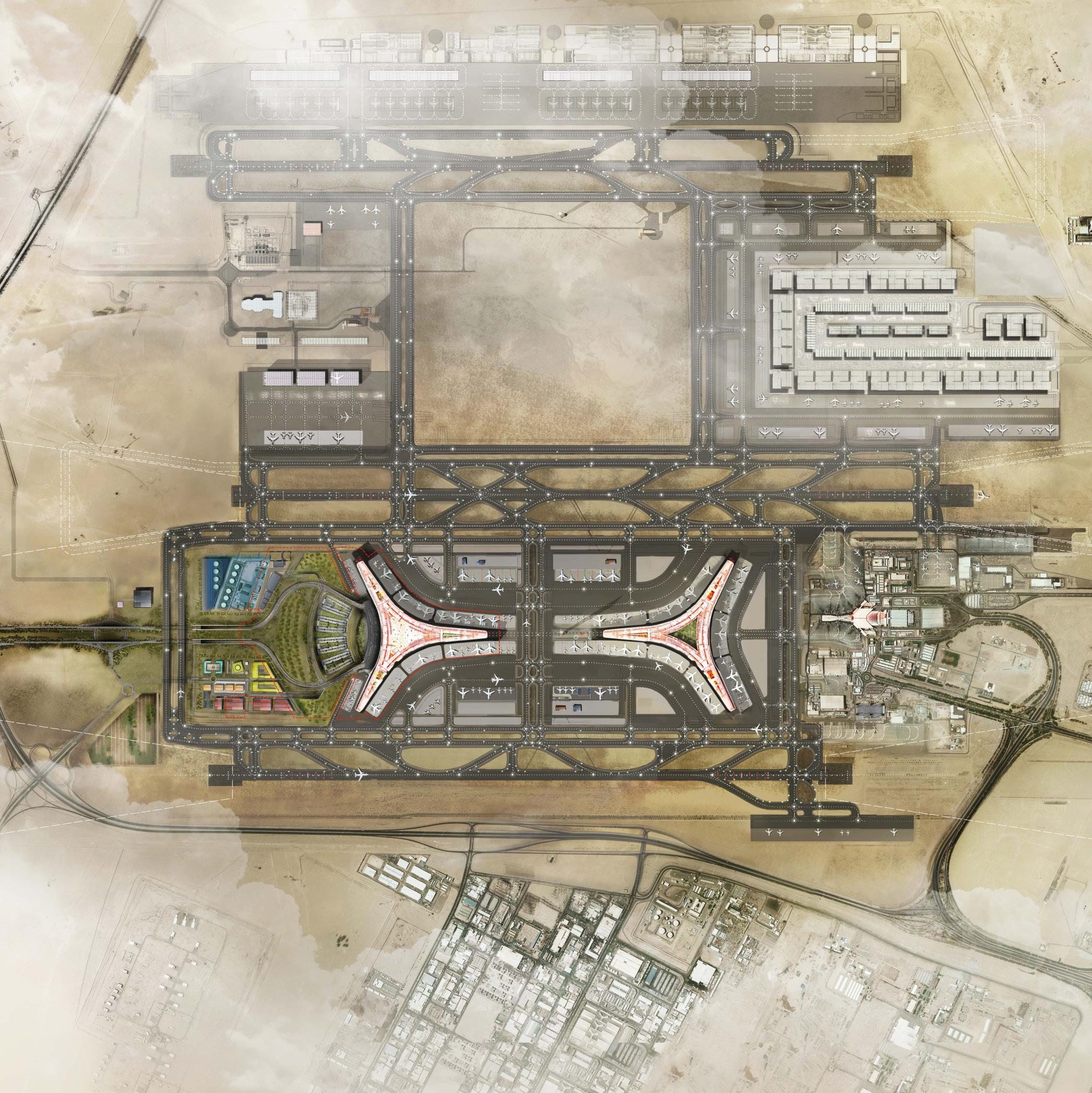
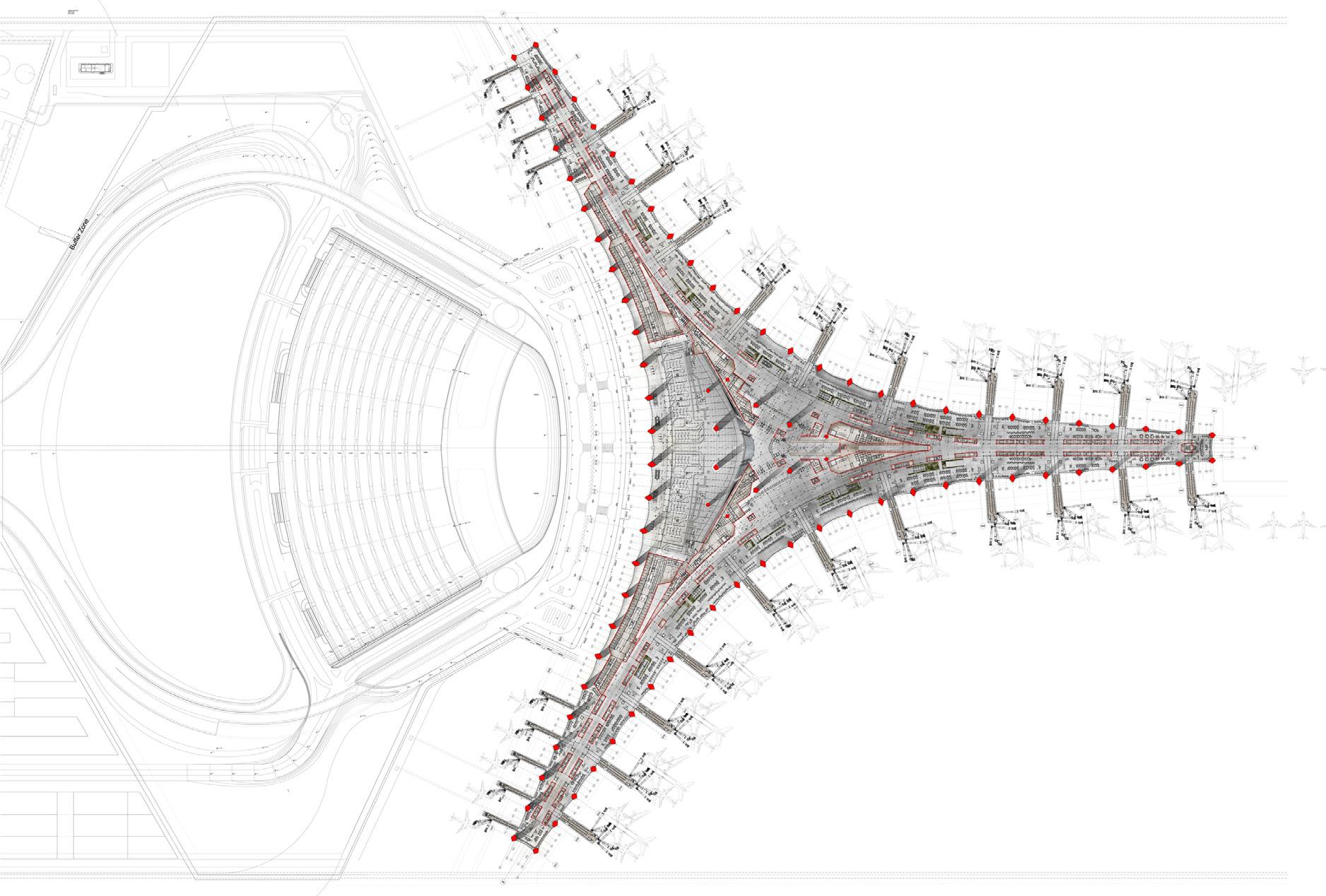
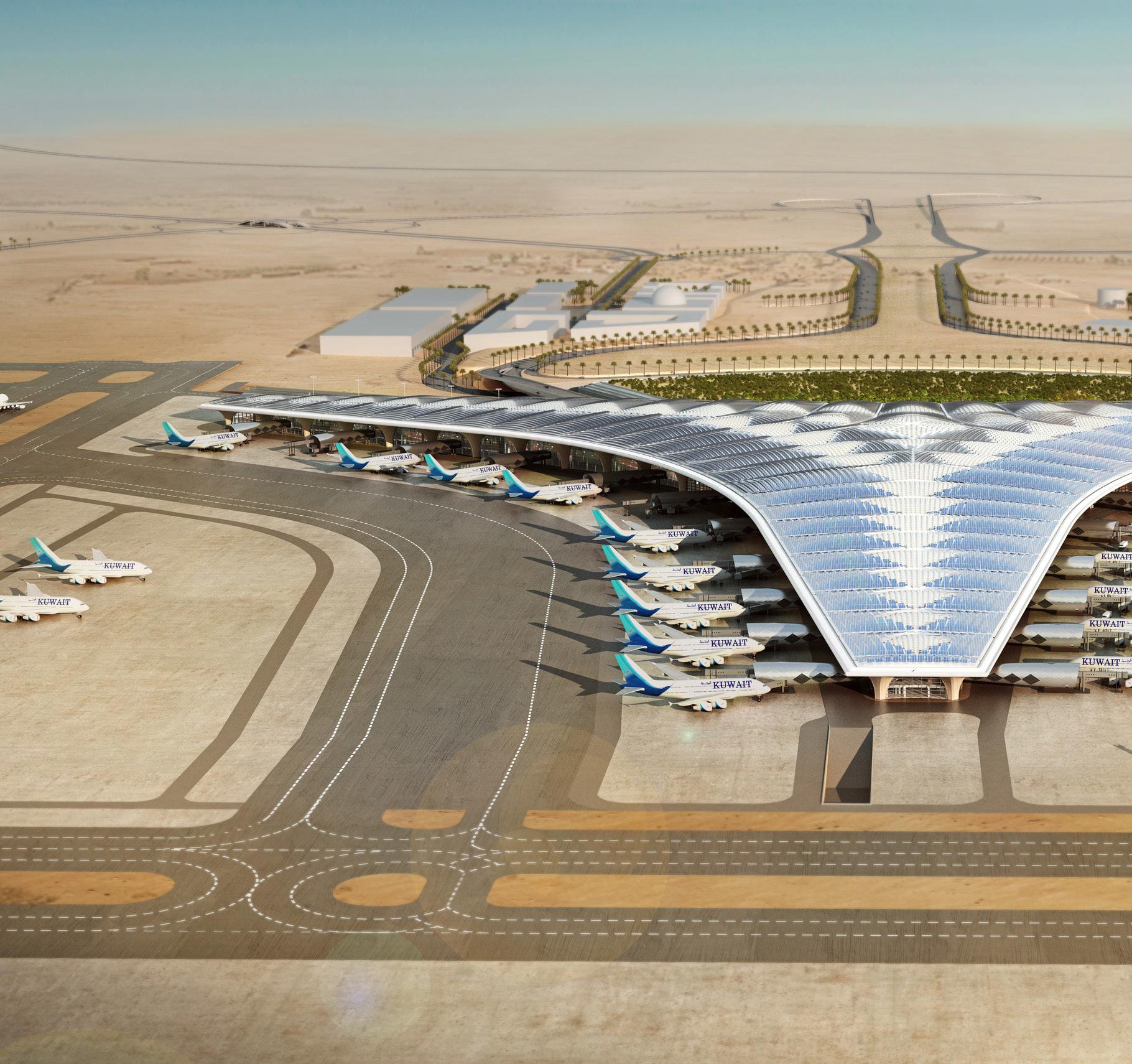
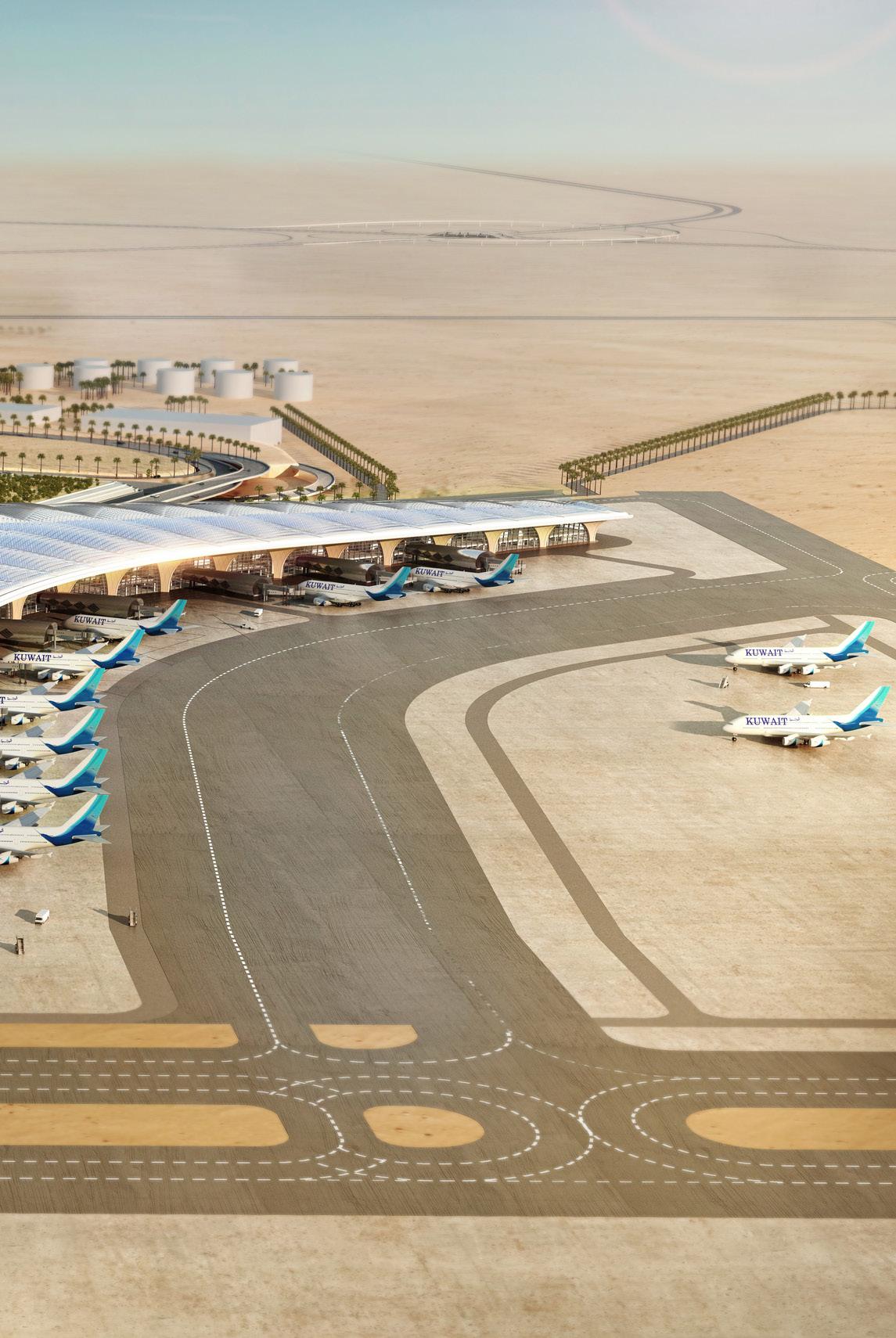
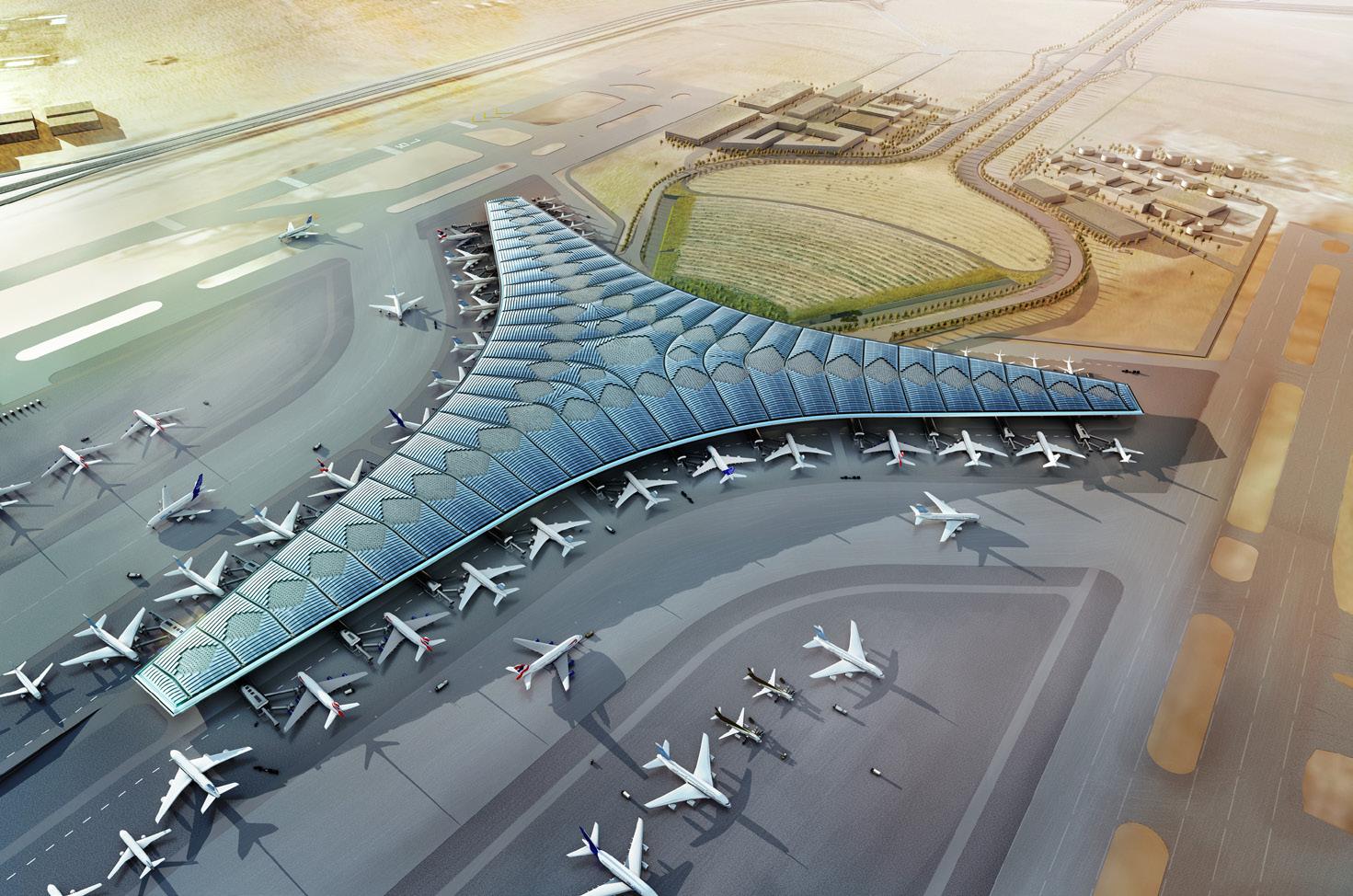
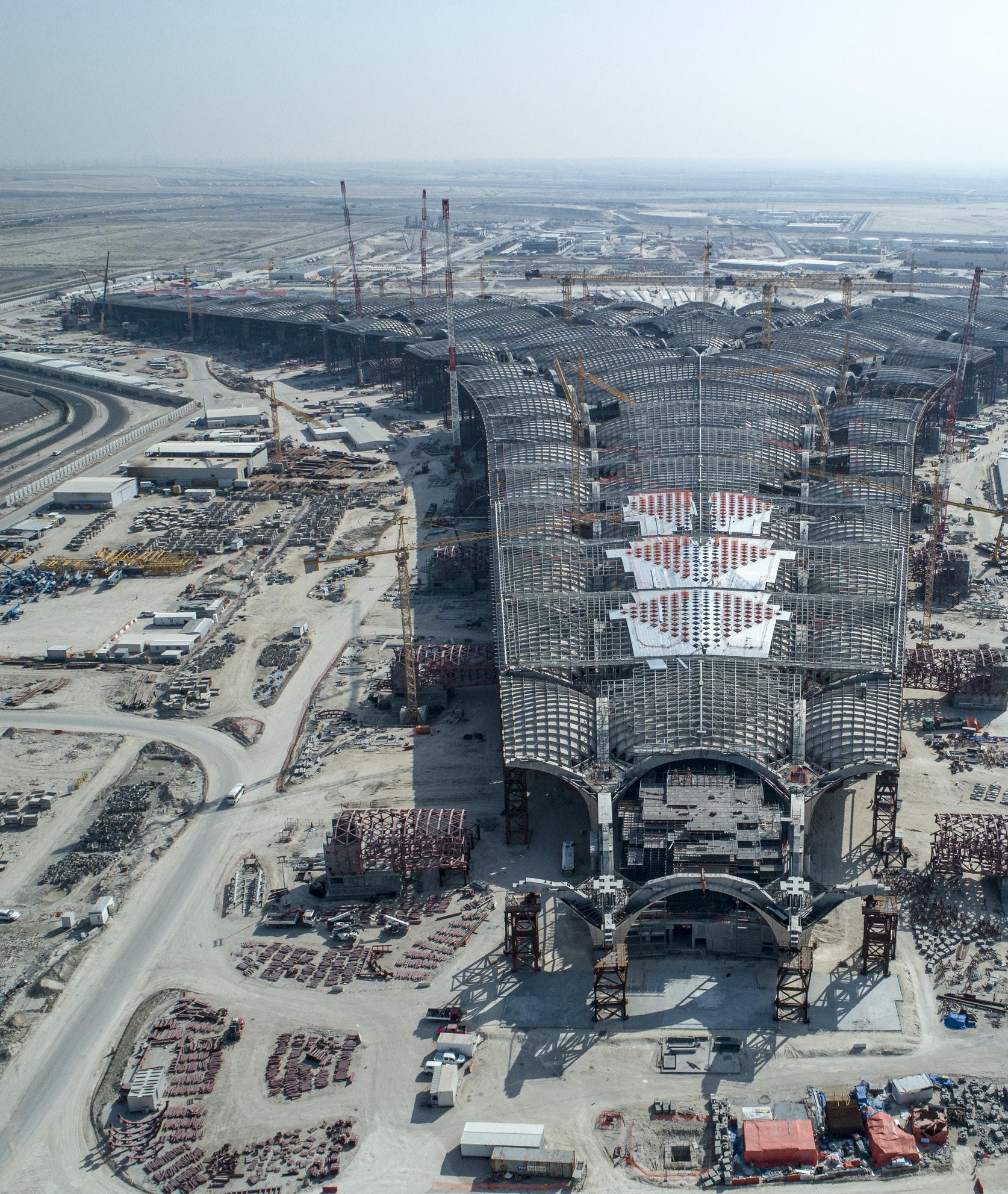
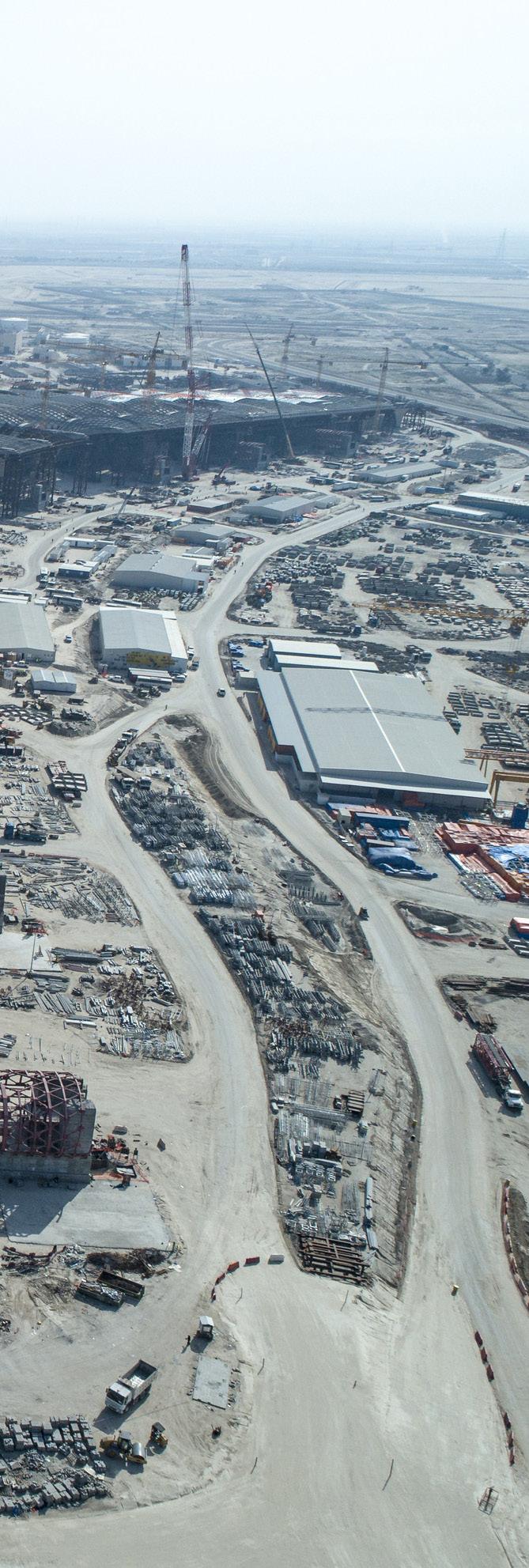
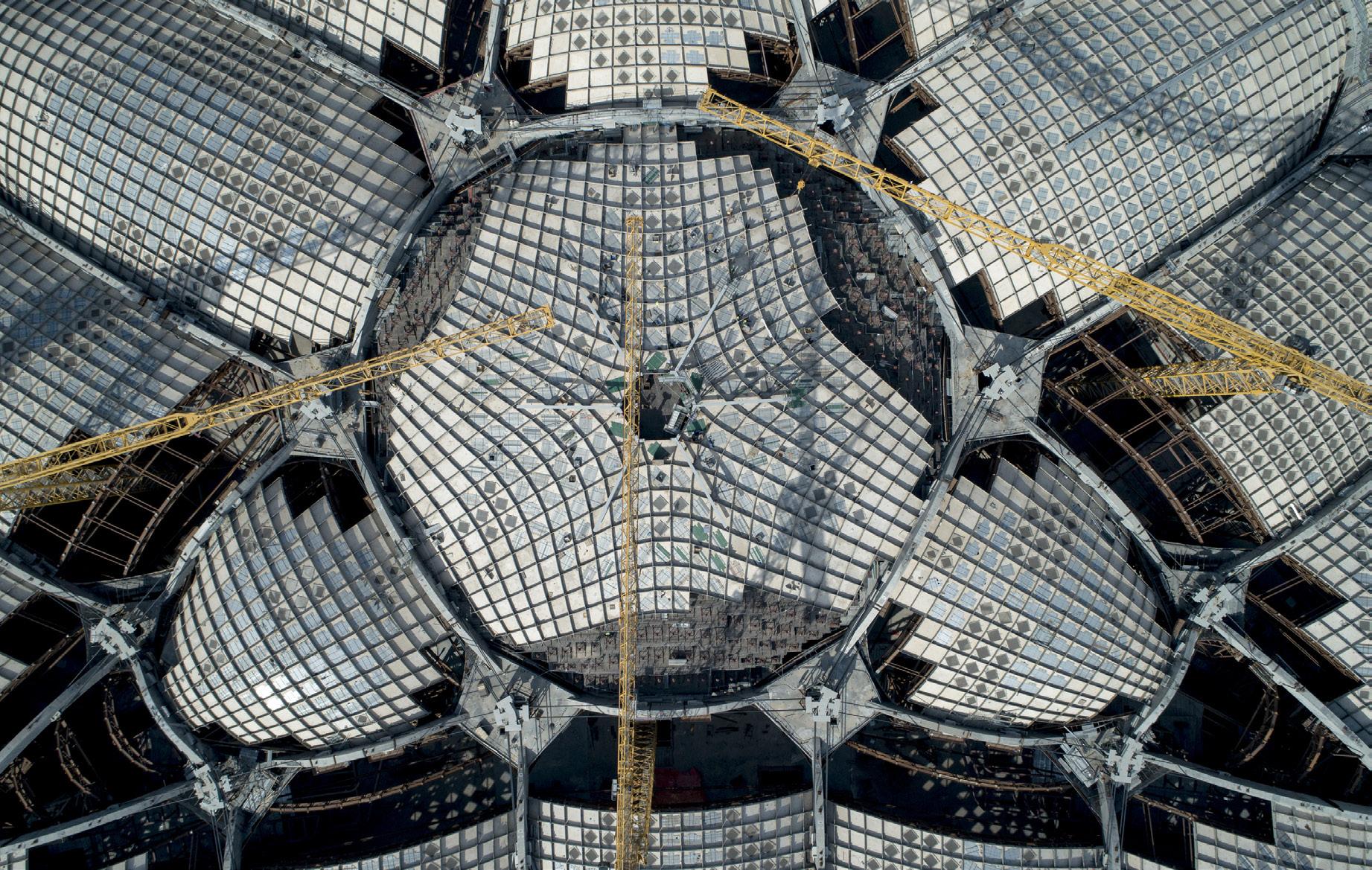
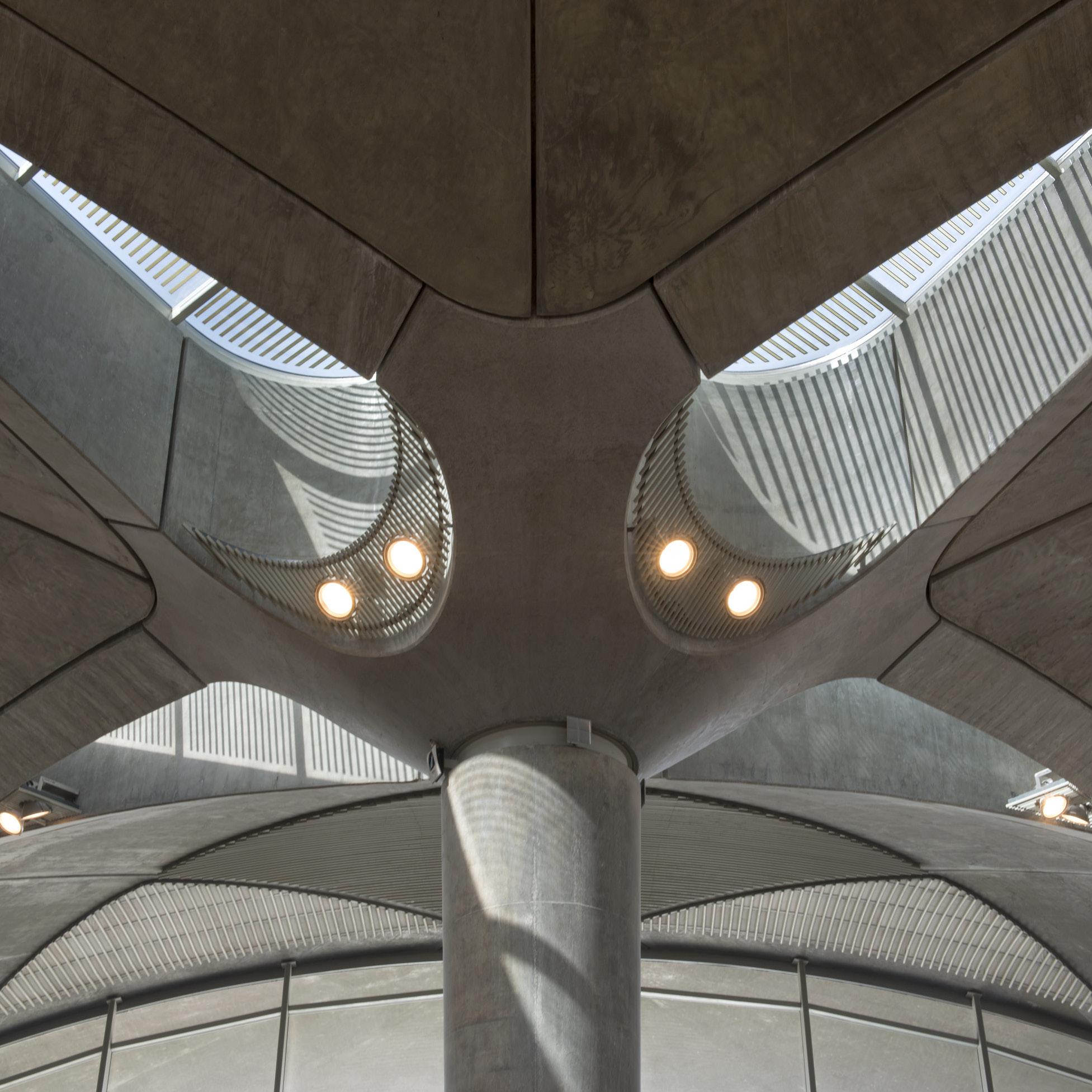
Kuwait International Airport is planned to significantly increase capacity and establish a new regional air hub in the Gulf – these strategic aims will be matched by a state-of-the-art terminal building, which will provide the highest levels of comfort for passengers and will set a new environmental benchmark for airport buildings. Its design is rooted in a sense of place, responsive to the climate of one of the hottest inhabited environments on earth and inspired by local forms and materials.
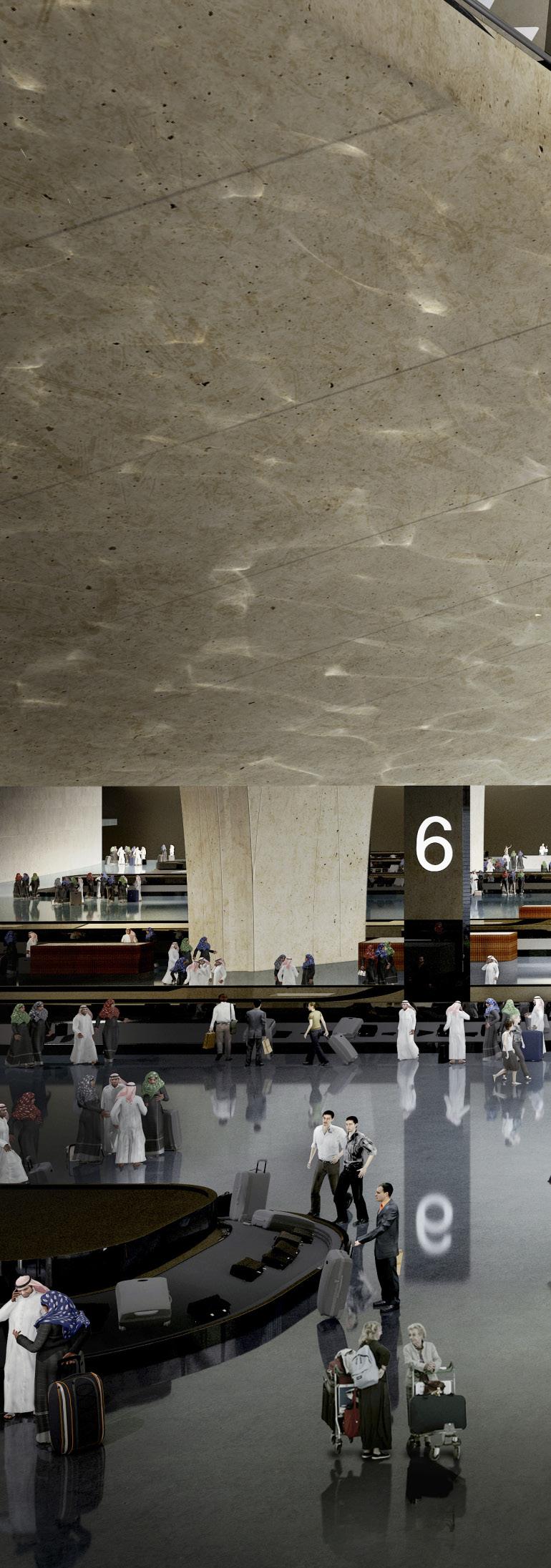
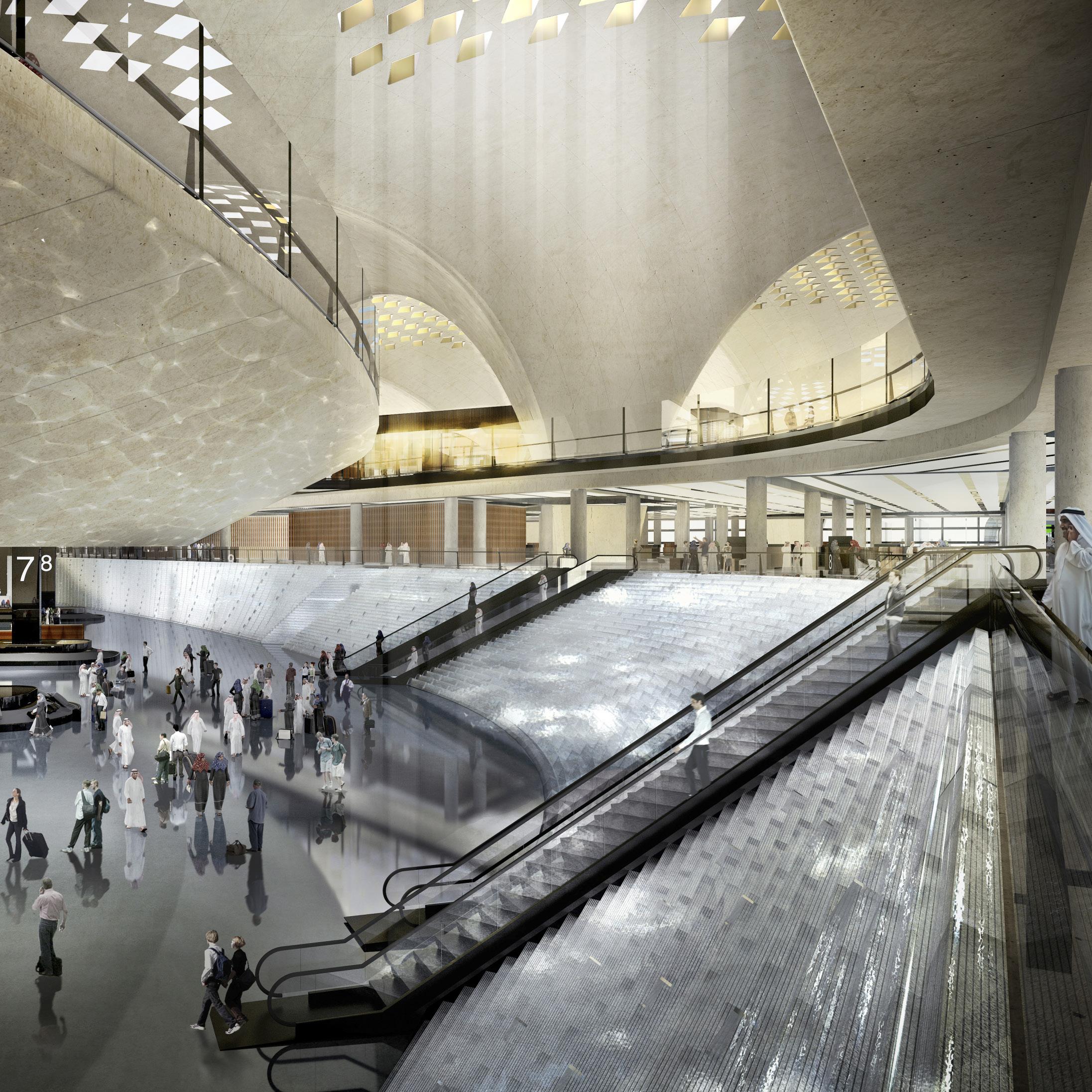
The terminal has a trefoil plan, comprising three symmetrical wings of departure gates. Each façade spans 1.2 kilometres and all extend from a dramatic 25-metre-high central space. To aid orientation, the building is planned under a single roof canopy, punctuated by glazed openings that filter daylight, while deflecting direct solar radiation. Drawing on the region’s culture of hospitality and welcoming guests to Kuwait, the design establishes an elegant and memorable arrival sequence for passengers, which includes a baggage reclaim area surrounded by cooling cascades of water. The design also features a grand new landside access sequence from the south.
105
Client Ministry of Public works / Special Works Administration Team Gulf Consult NACO Arup Capita Lovejoy Davis Langdon LLP Parsons Brinckerhoff
106
708,000m2
LEED Gold
13–50mppa
107
108
110
111
Queen Alia International Airport
Amman, Jordan 2005 – 2013
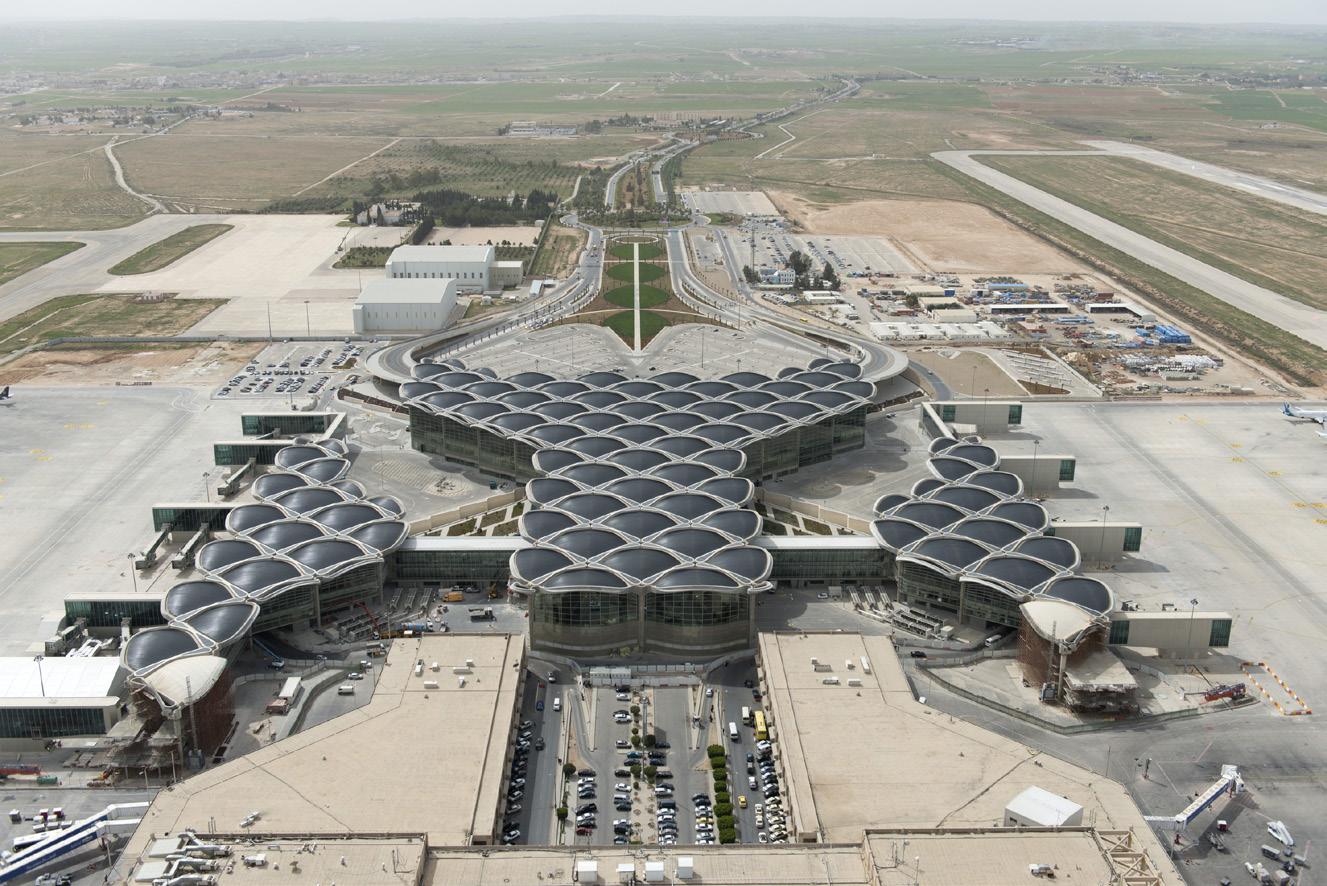
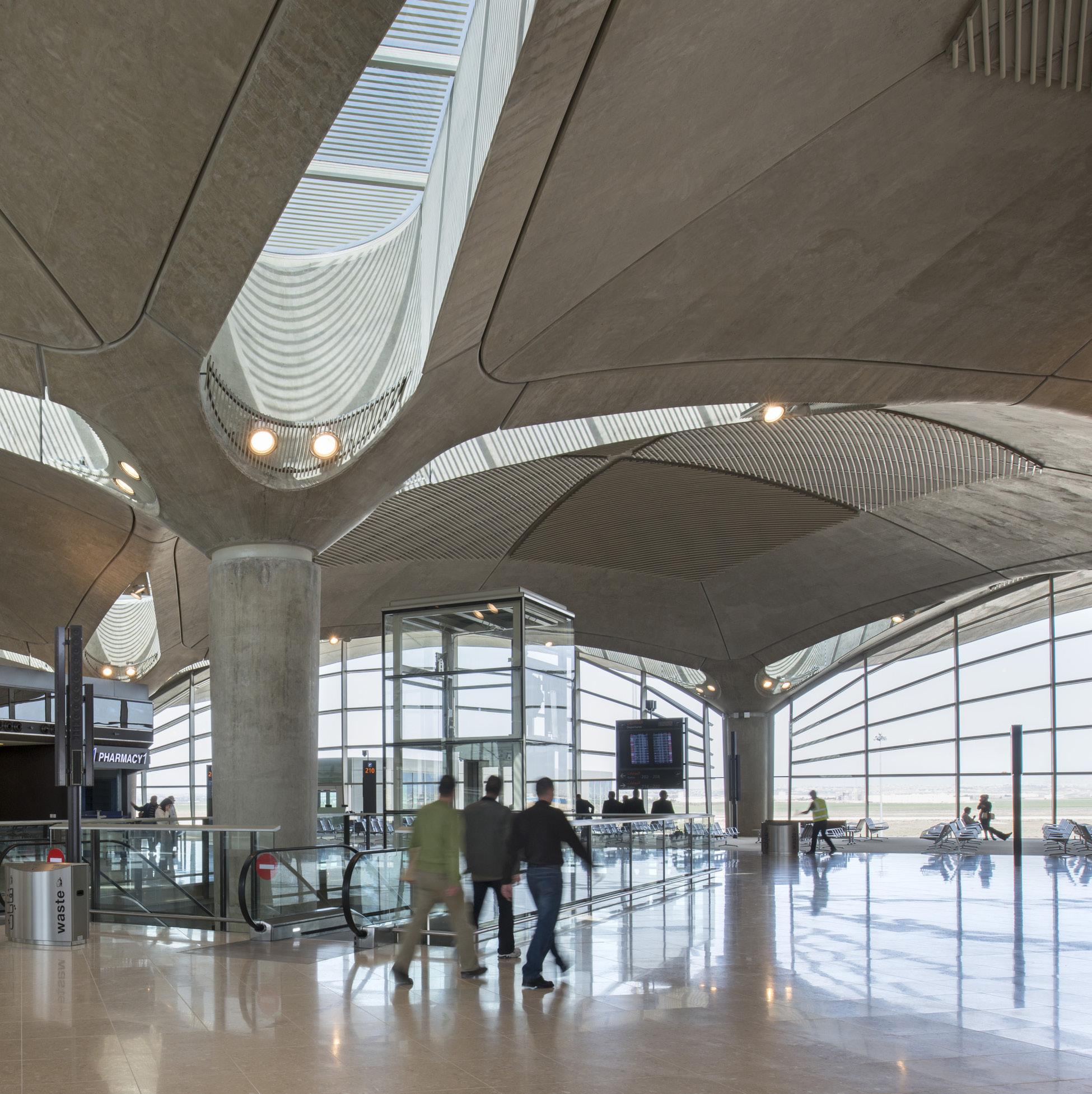
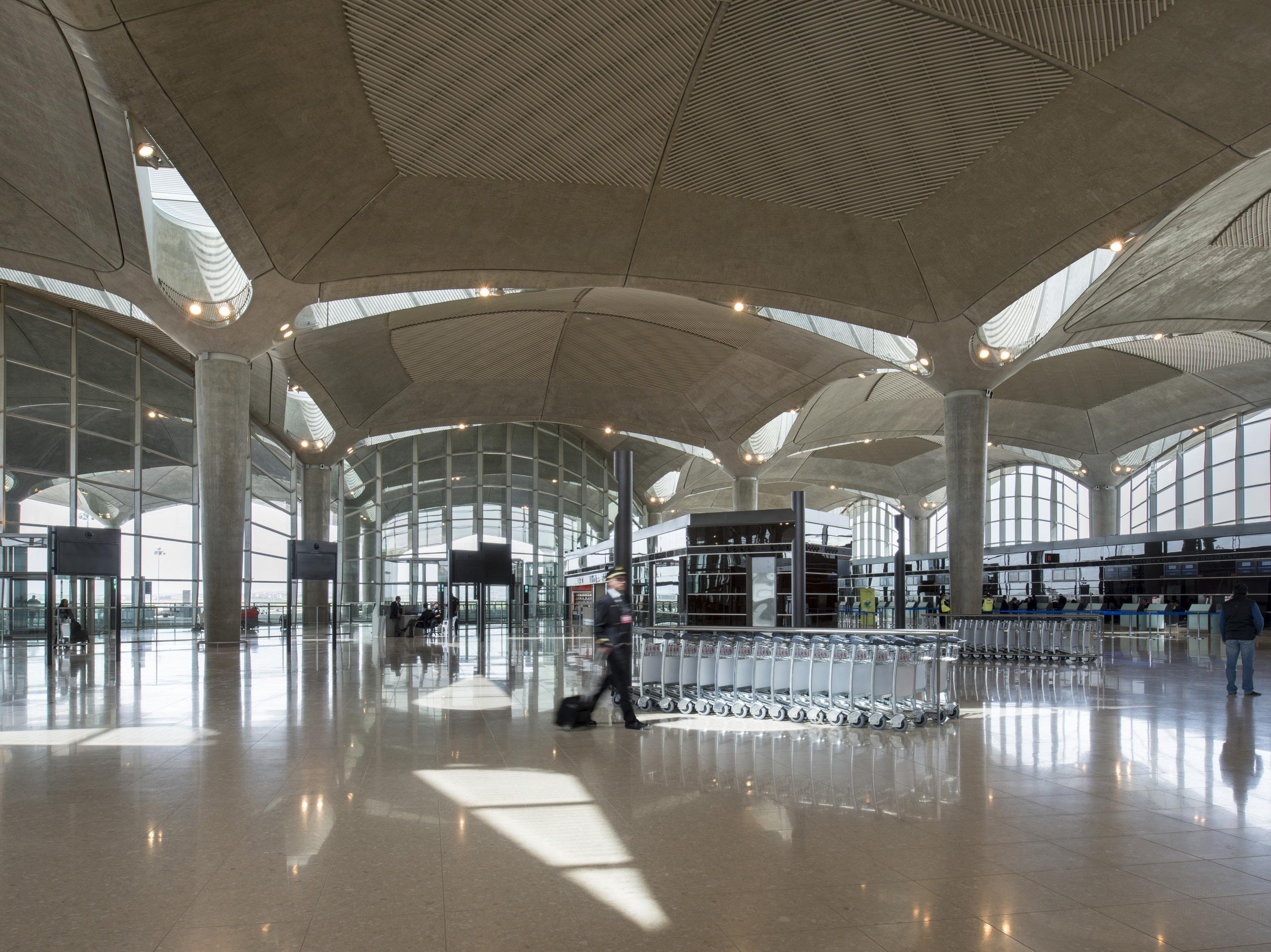
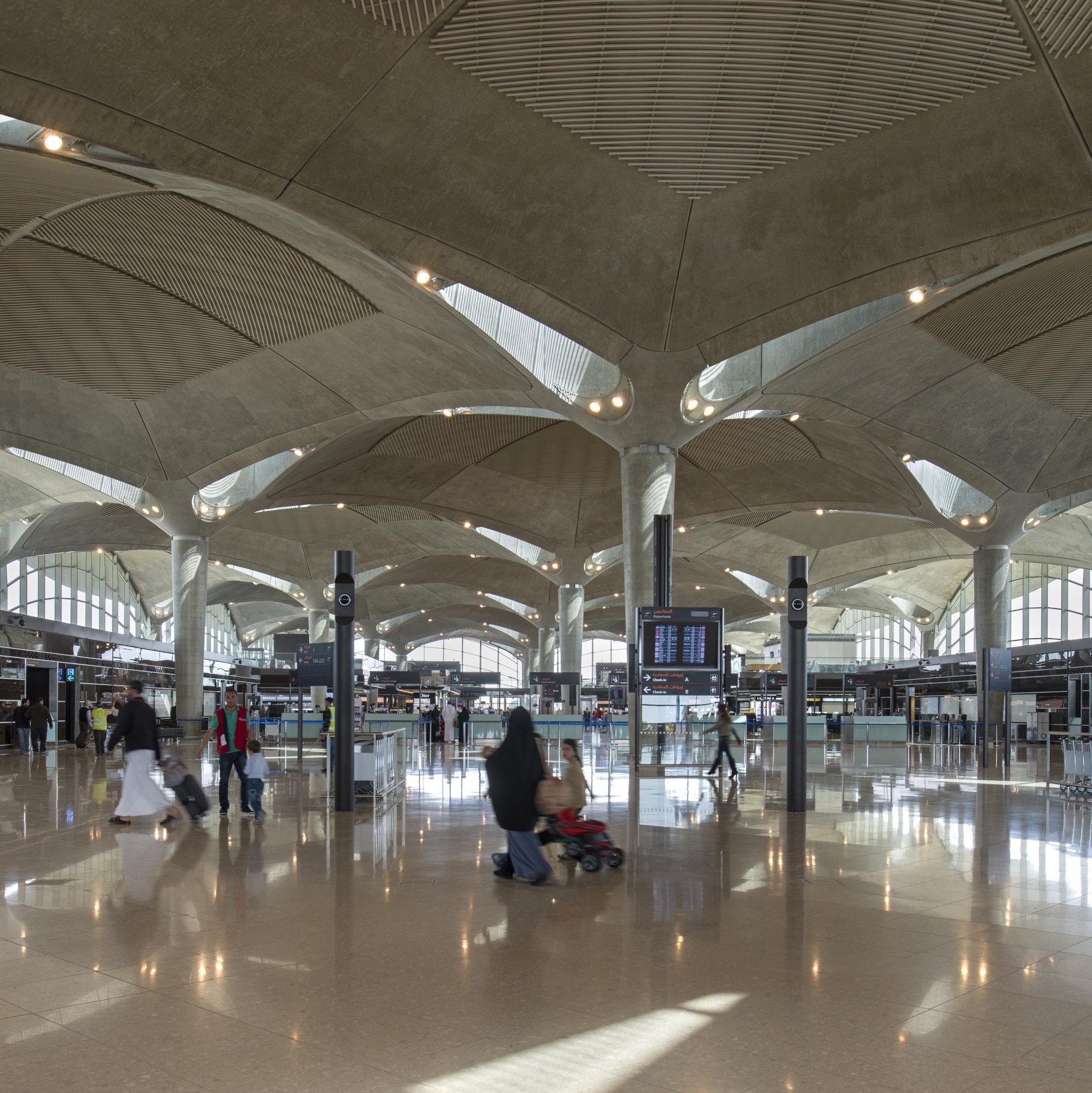
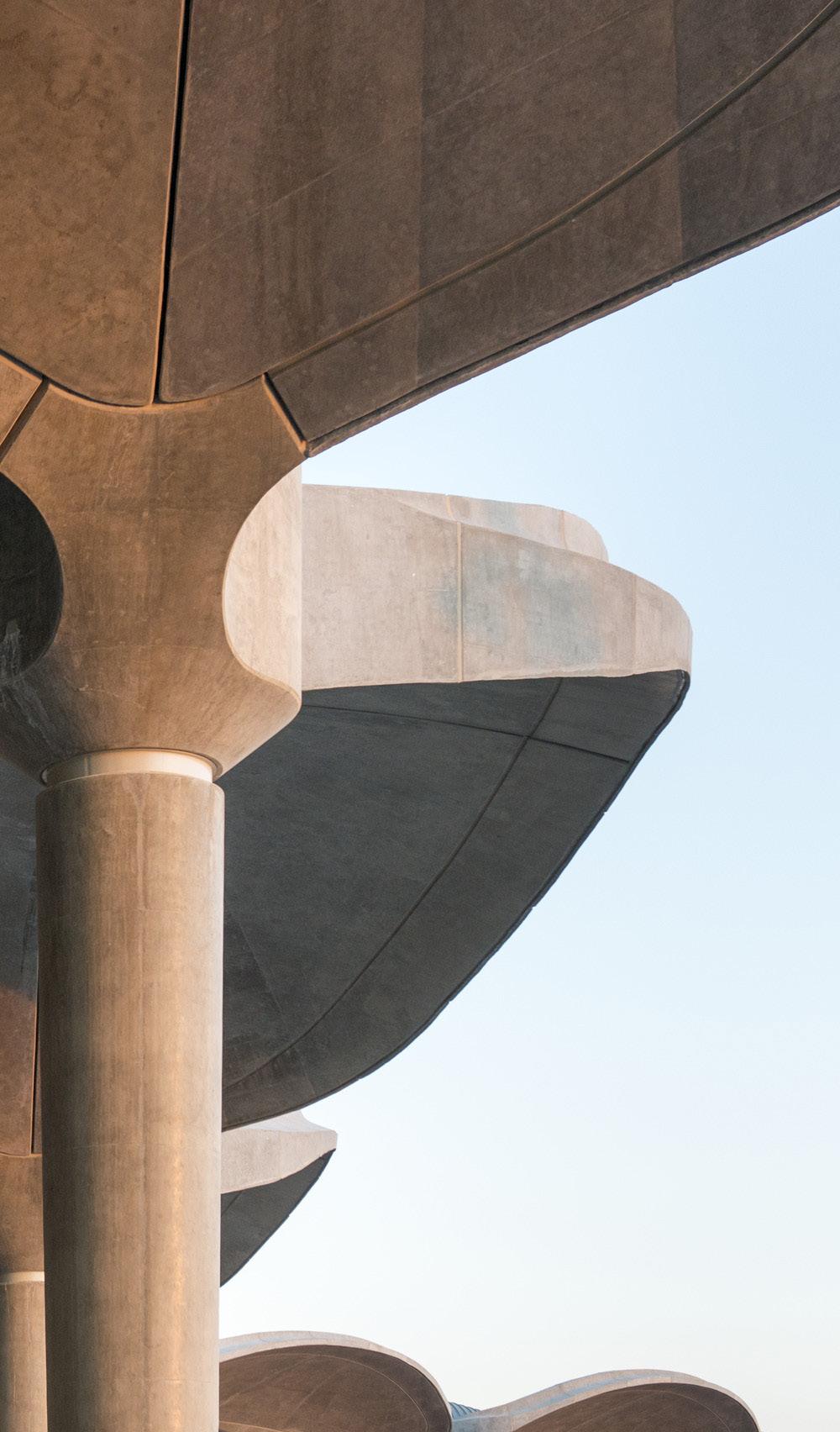
Queen Alia International Airport continues the practice’s explorations of the airport terminal as a building type and sets out a vision for an environmentally sensitive, regionally apt, airport architecture. Designed to serve as the main gateway to Amman –one of the oldest continually inhabited cities in the world –its design resonates with a sense of place and local culture.
Strategically the building secures Amman’s position as the main hub for the Levant Region. Logistically, it allows the airport to grow by 6 per cent per annum for the next twenty-five years, increasing capacity from 3 million to 12 million passengers per annum by 2030.
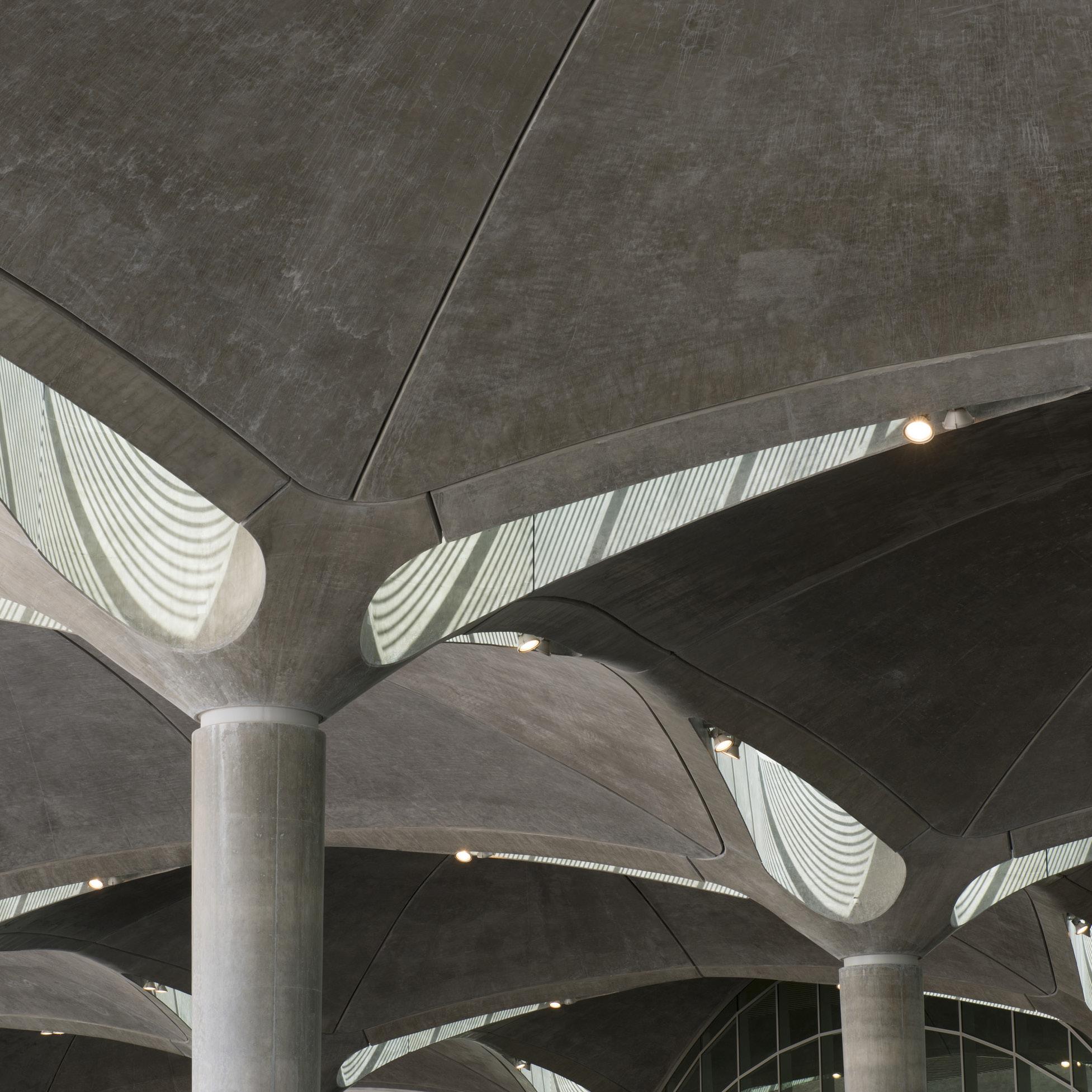
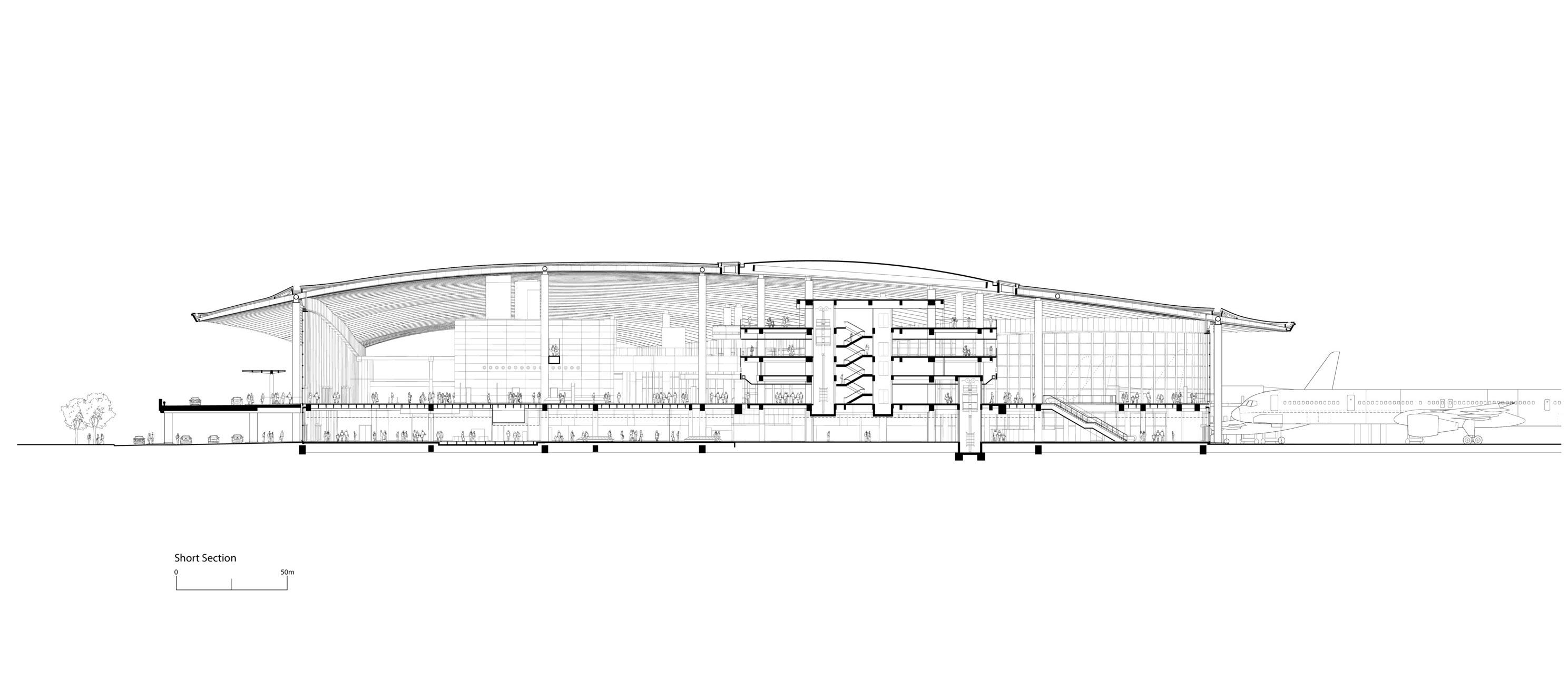
In response to local building expertise and Amman’s climate, where summer temperatures vary markedly between daytime and night time the building is constructed entirely from concrete, the high thermal mass of the material providing passive environmental control. The tessellated roof canopy comprises a series of shallow concrete domes, which extend to shade the facades. To enable seamless future expansion, each dome is a modular unit.
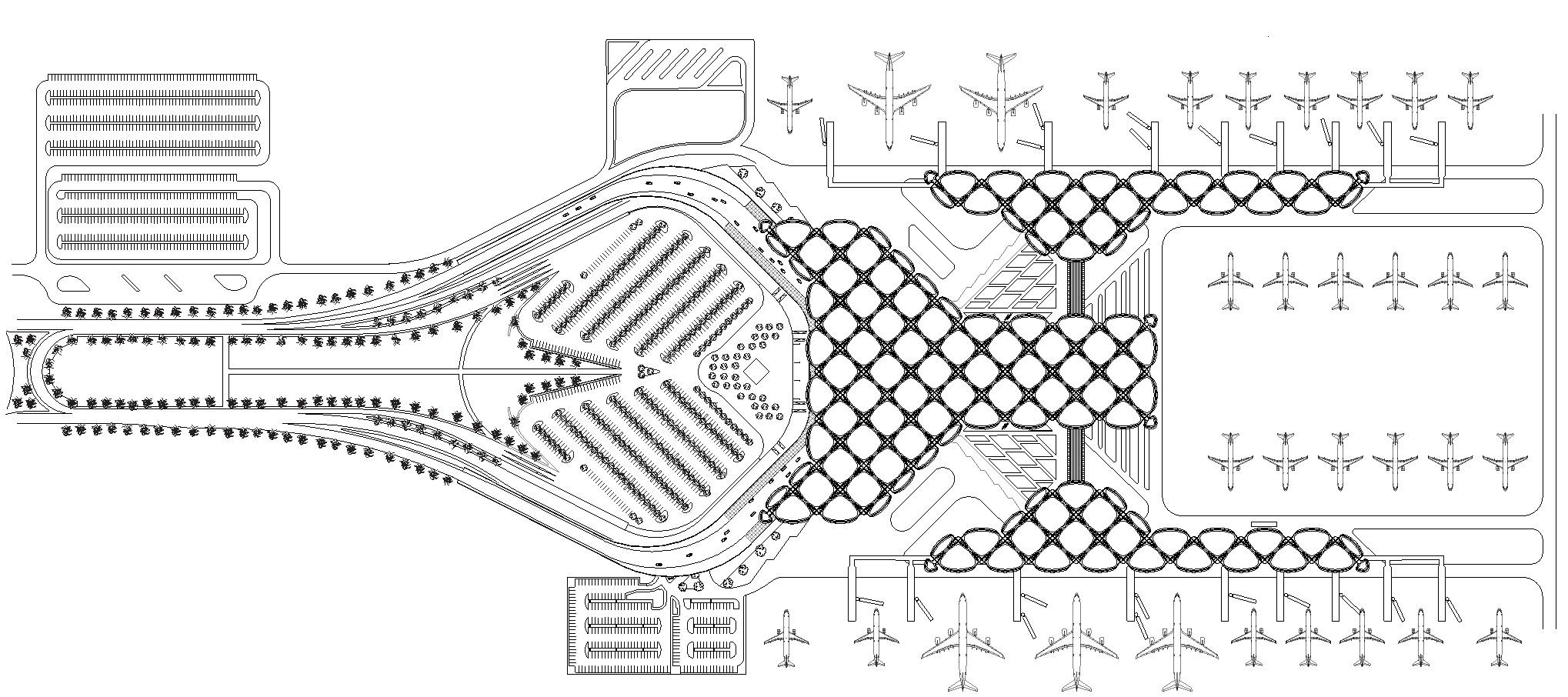
113
Client Airport International Group P.S.C. Joannou & Paraskevaides (Overseas) Ltd J&P-AVAX S.A. Team NACO Buro Happold Davis Langdon Maisam - Dar Al-Omran JV Zuhair Fayez Partnership ADPi
114
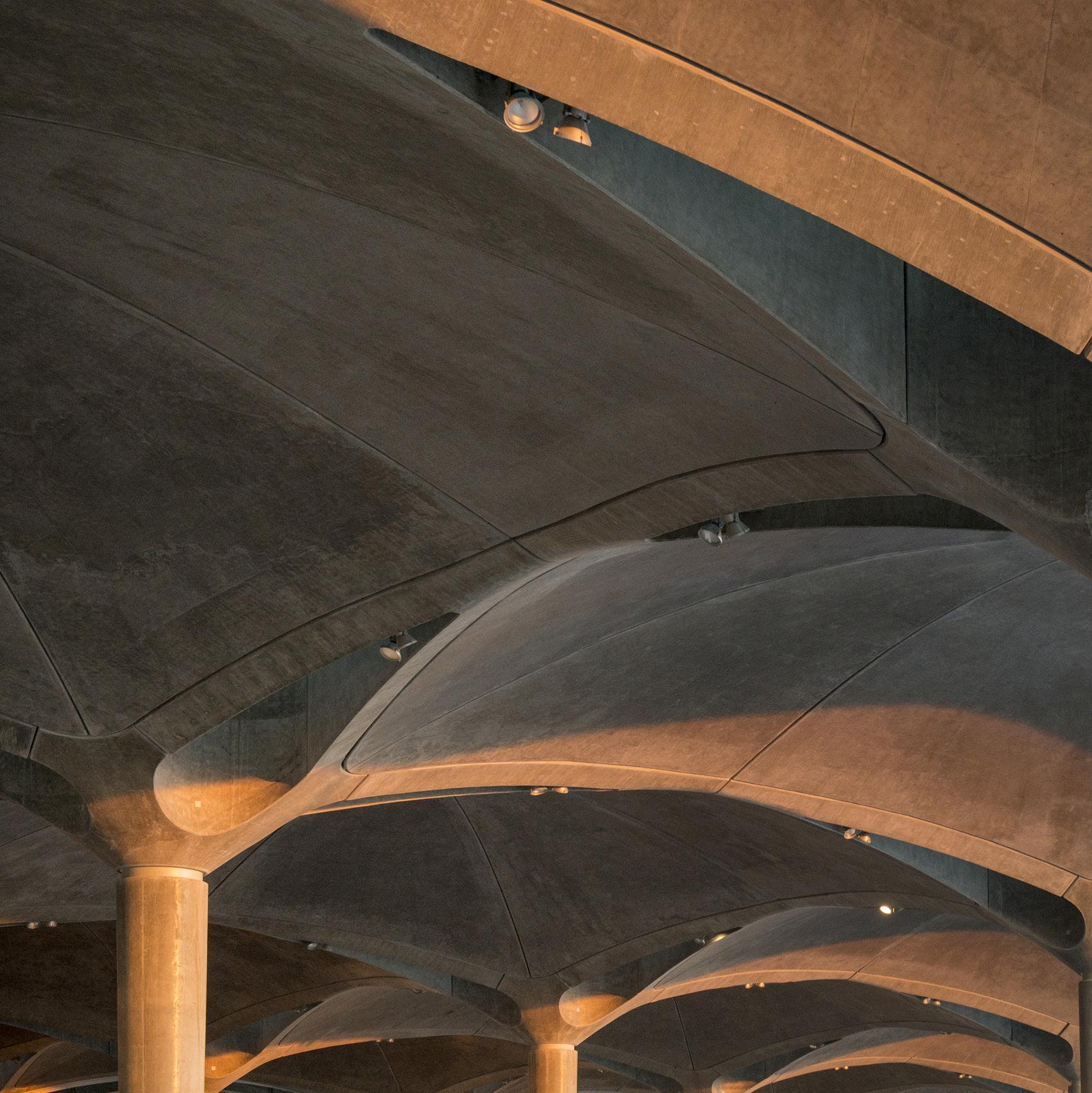
116,000m2
12mppa
117
Spaceport America
New Mexico, USA 2006 – 2011
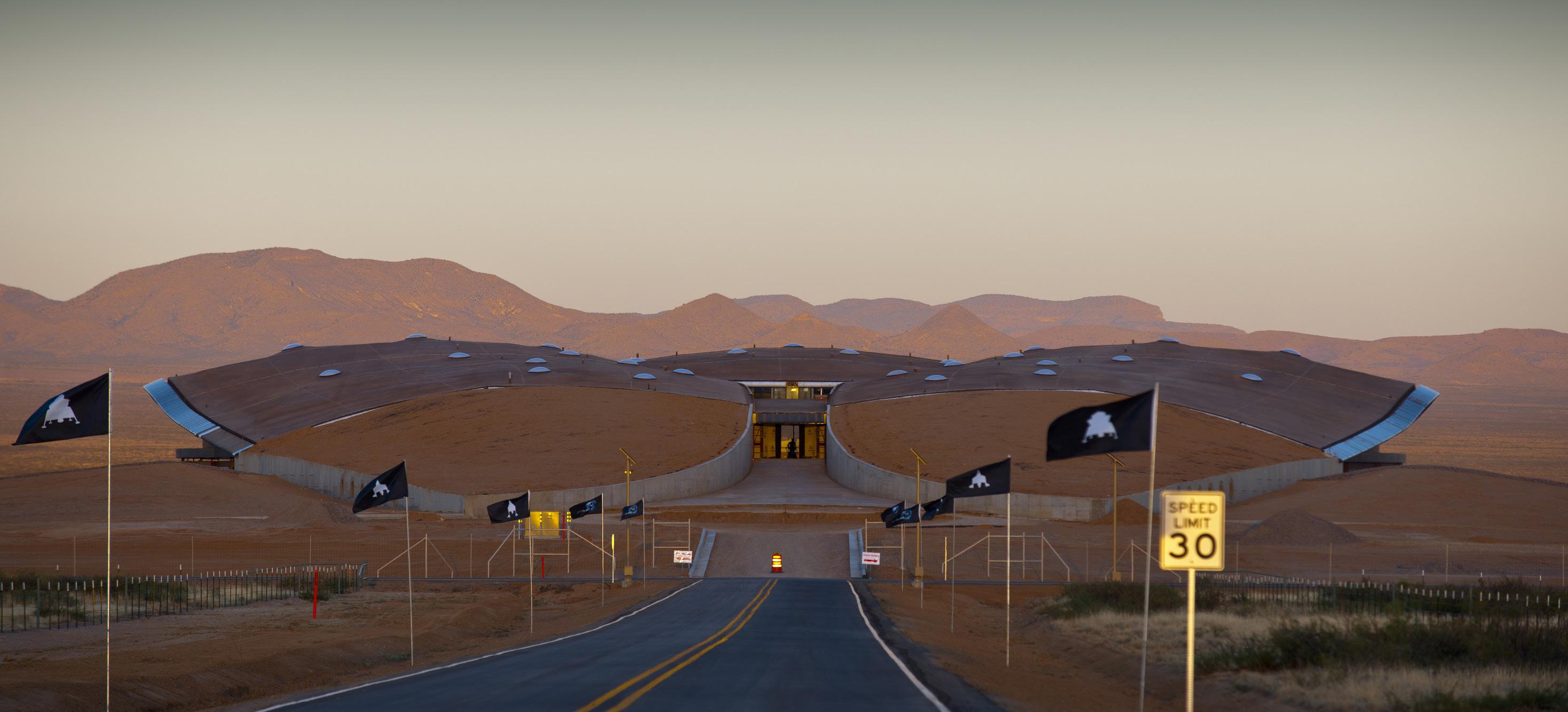
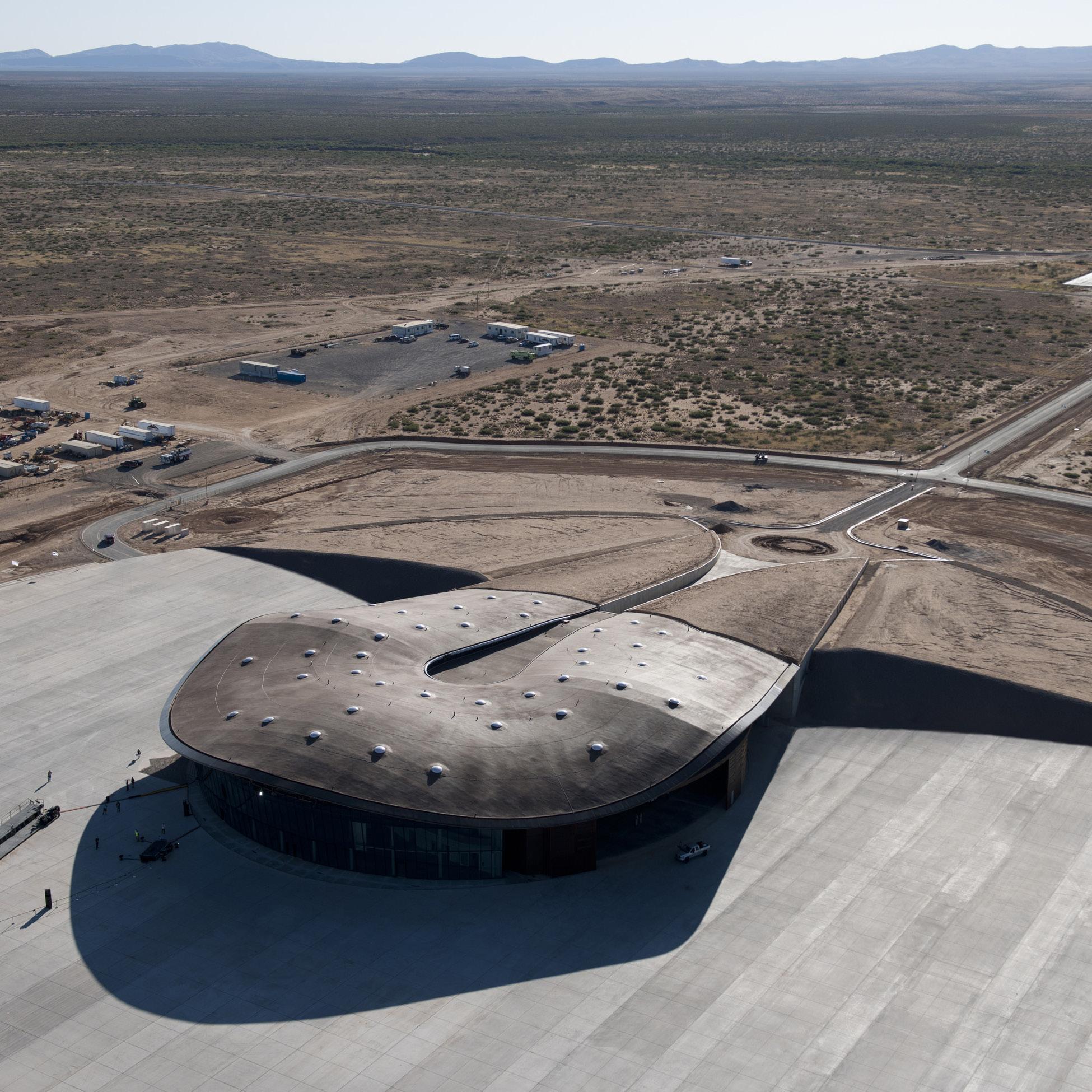
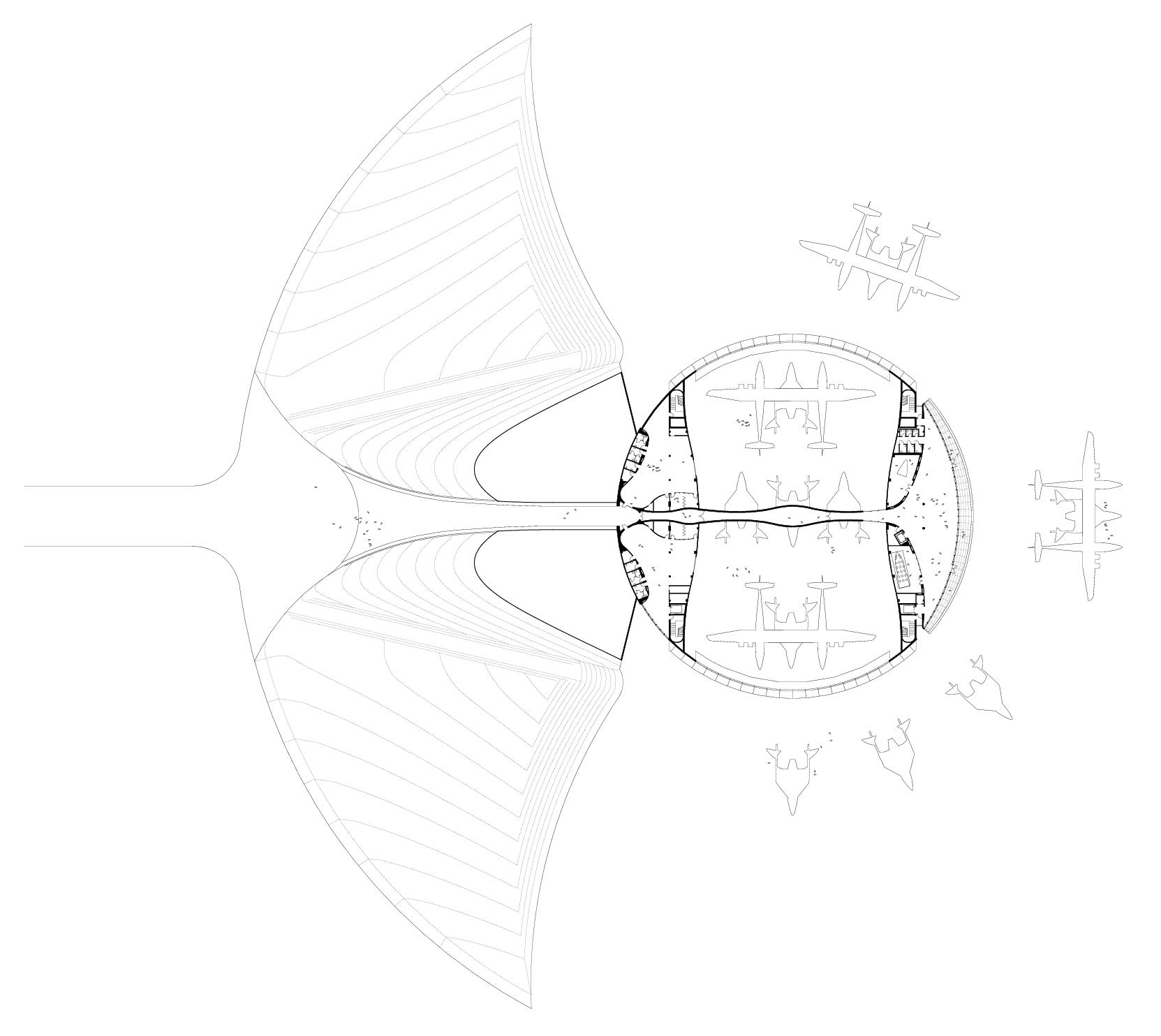
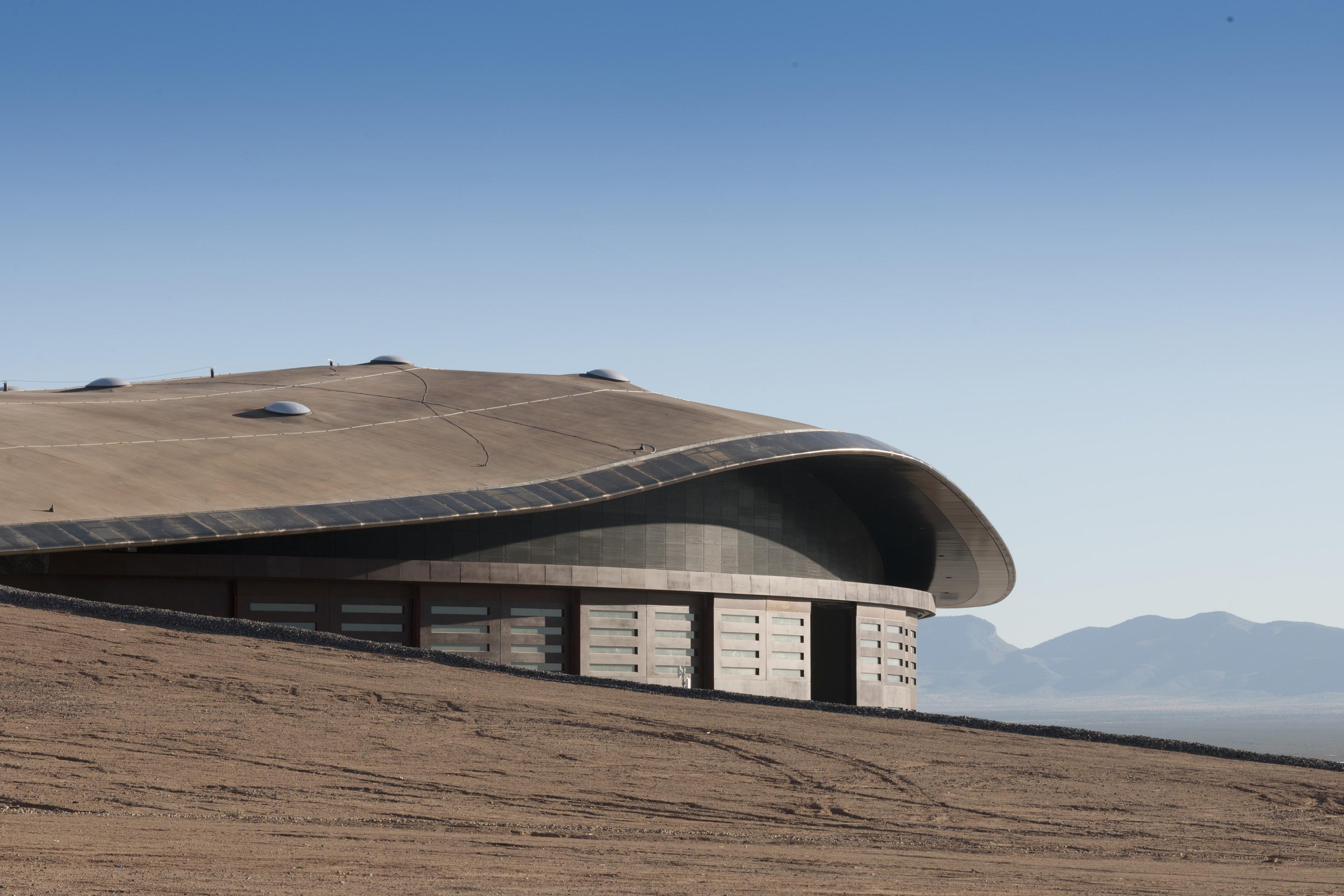
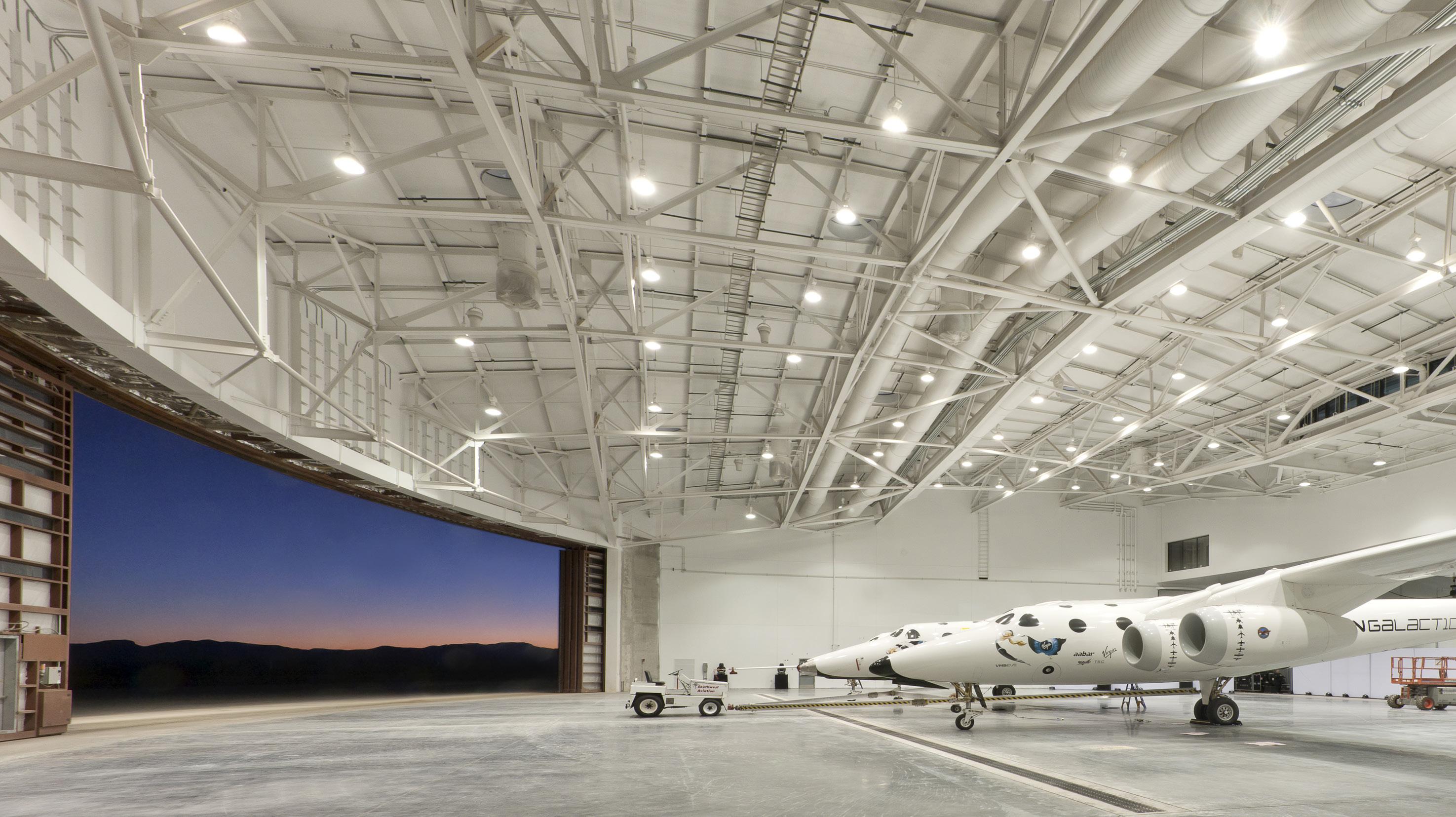
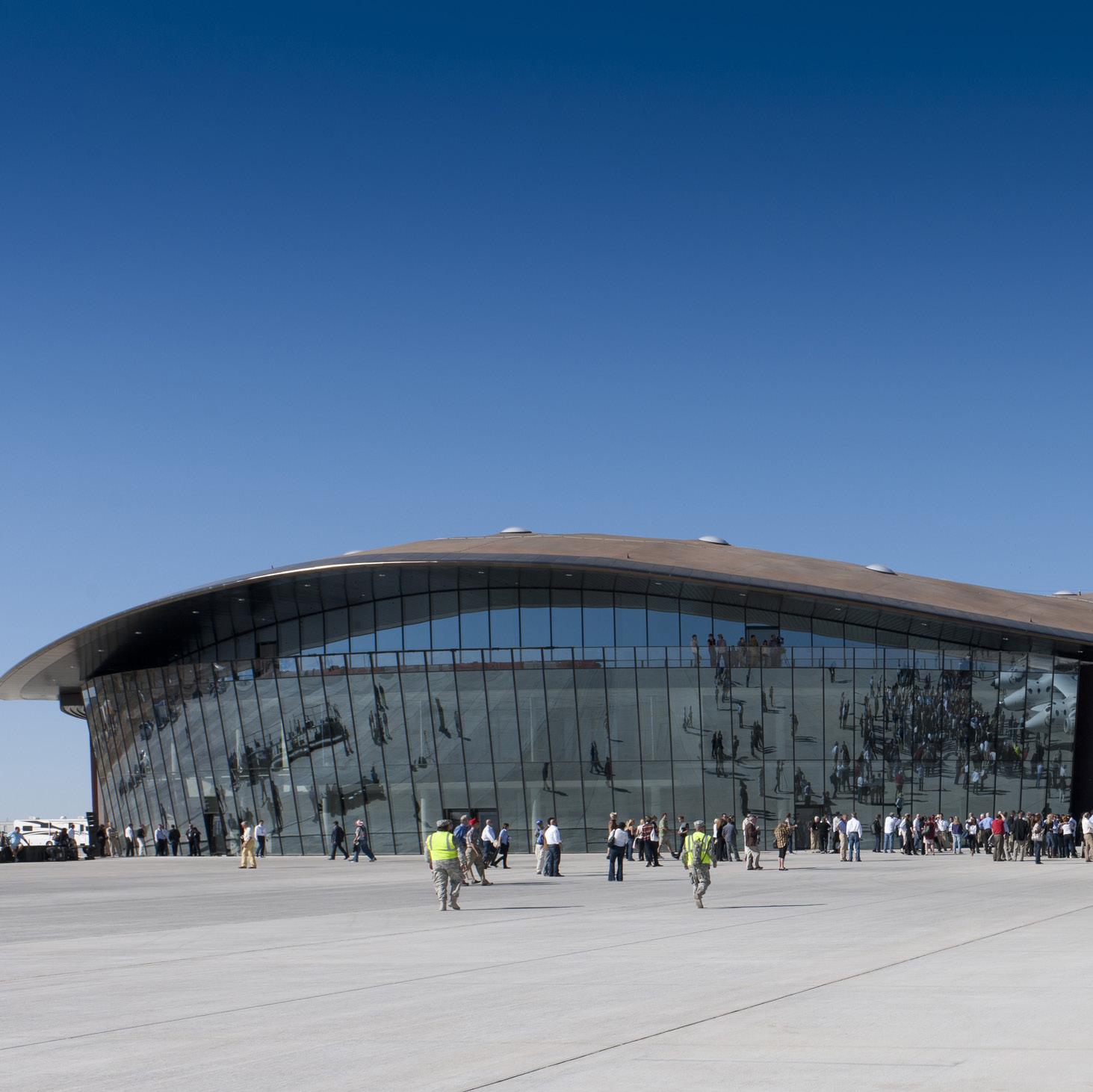
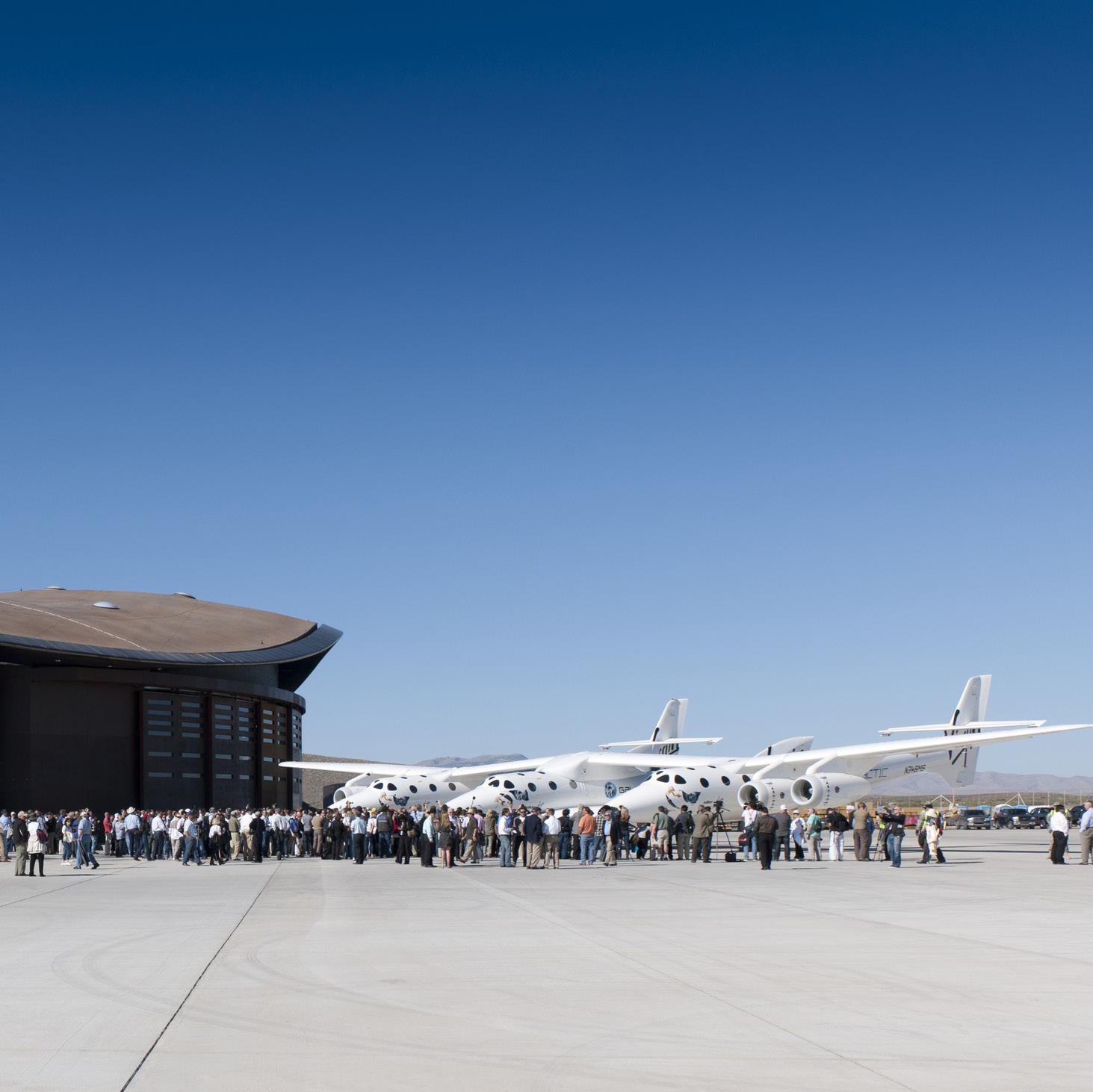
Located in the desert-like landscape of New Mexico, Spaceport is the first building of its kind in the world. Its design aims to articulate the thrill of space travel for the first space tourists while making a minimal impact on the environment. Viewed from space, the terminal evokes Virgin Galactic’s brand logo of the eye, and is suggestive of an elongated pupil, with the apron completing the iris. Approached from the historic El Camino Real trail, the terminal’s organic form appears as a subtle rise in the landscape. With minimal embodied carbon and few additional energy requirements, the scheme has been designed to achieve the prestigious LEED Platinum accreditation.
119
Client New Mexico Spaceport Authority (NMSA) Team URS Corporation Balis and Company PHA Consult
120
121
10,233m2
LEED Platinum
Technology and progress force some architects to envision buildings that have no precedent.
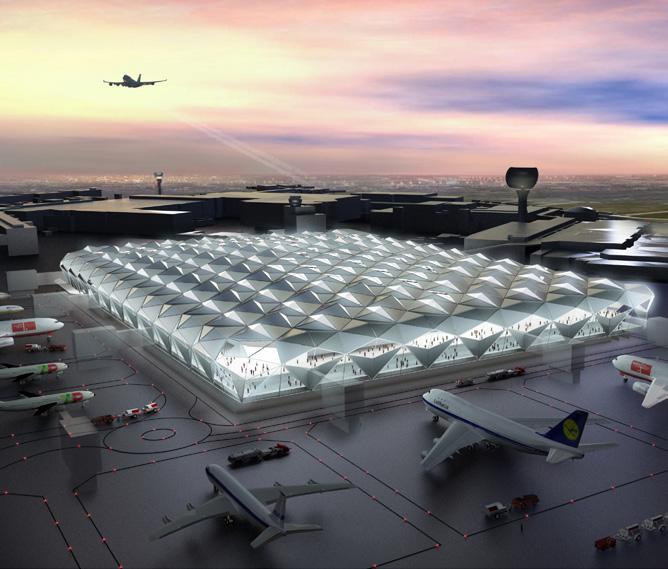
Joel Hoglund Design Bureau, 21 October 2013
Heathrow East Terminal
London, England, 2006 –
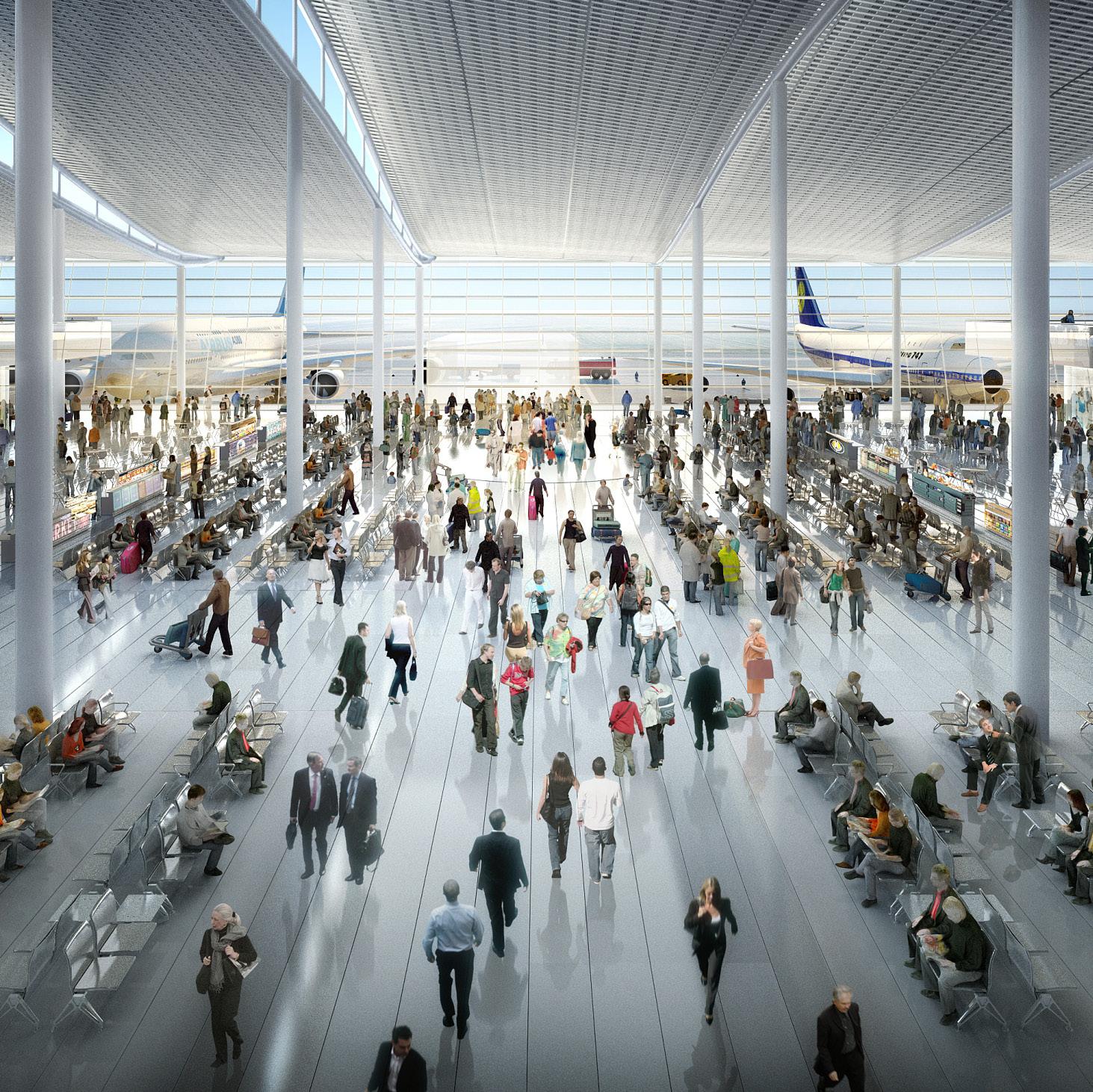
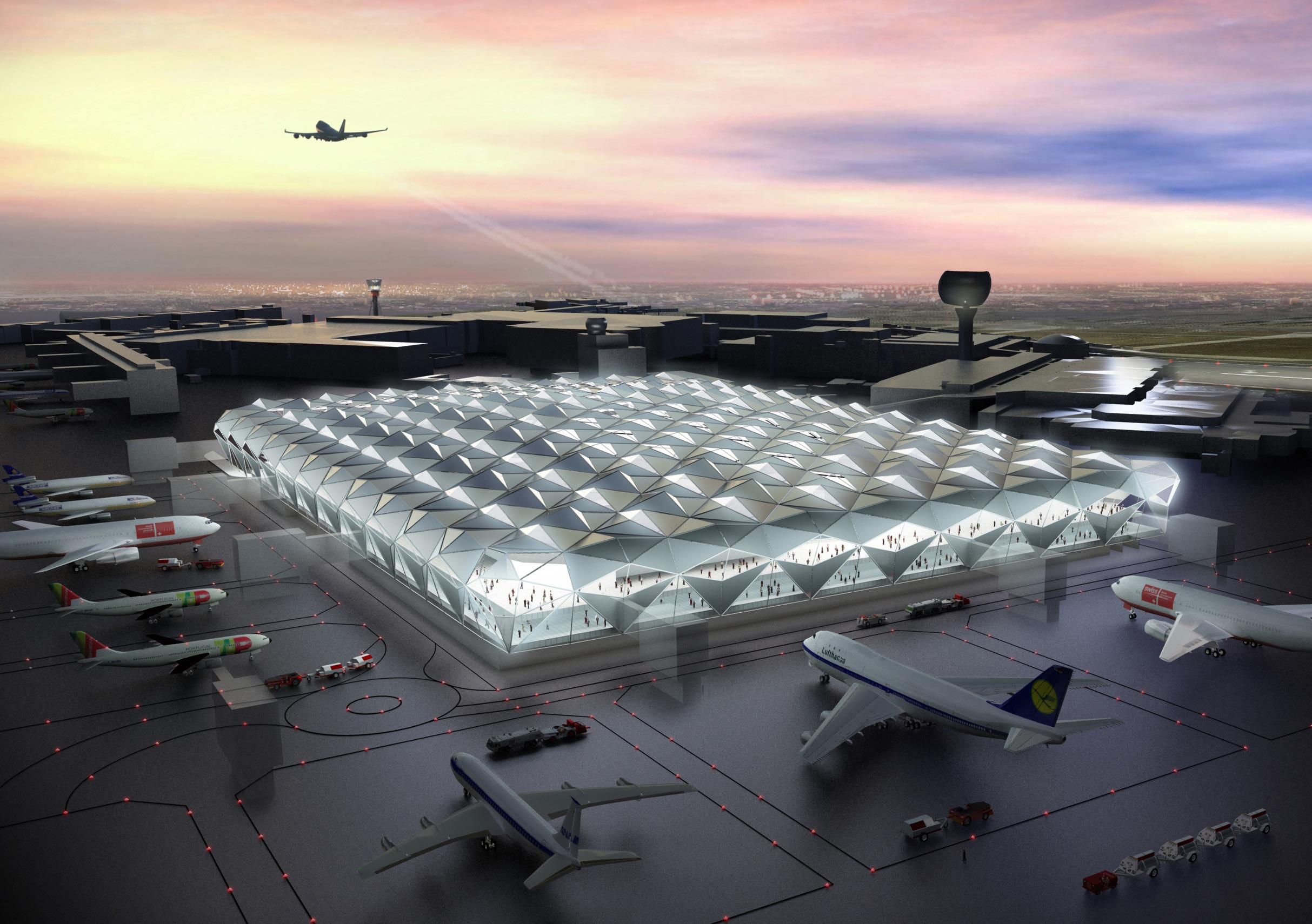
The project was the result of a masterplan study, undertaken in 2004, which revealed the potential for redeveloping the existing Queens Building and Terminal 2 once BA consolidated its operations in Terminal 5. Like Stansted, Heathrow East aims to restore some of the thrill and romance of travel by air, and to celebrate the act of arrival and departure, something that the earliest airport buildings evoked with great clarity. The form and orientation of the terminal, with its multifaceted, translucent roof, are designed to maximise natural light, which will flood the concourse on even the cloudiest days. The structure is conceived as a coherent, legible single volume so that, despite its size, wayfinding is straightforward and the travel experience enhanced. The scheme also encourages the use of public transport through improved connections to the rail and bus infrastructure.
Hyland Edgar Driver Motts MacDonald Siemans
The Design Solution
Vanderlande/Gebler Tooth/ Siemens
125
Client BAA PLC
Ferrovial Agroman S.A. Team Arup
Ferrovial Agroman Fhecor Hoare Lea
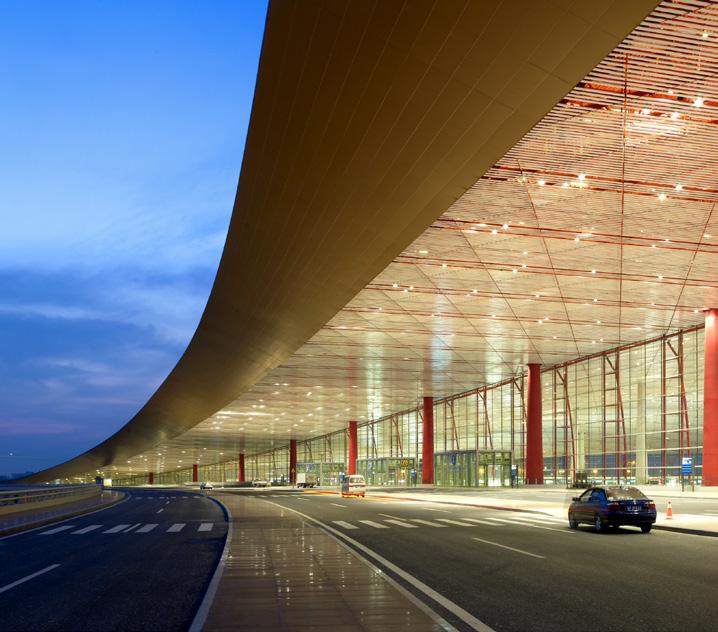
Beijing International Airport
China 2003 – 2008
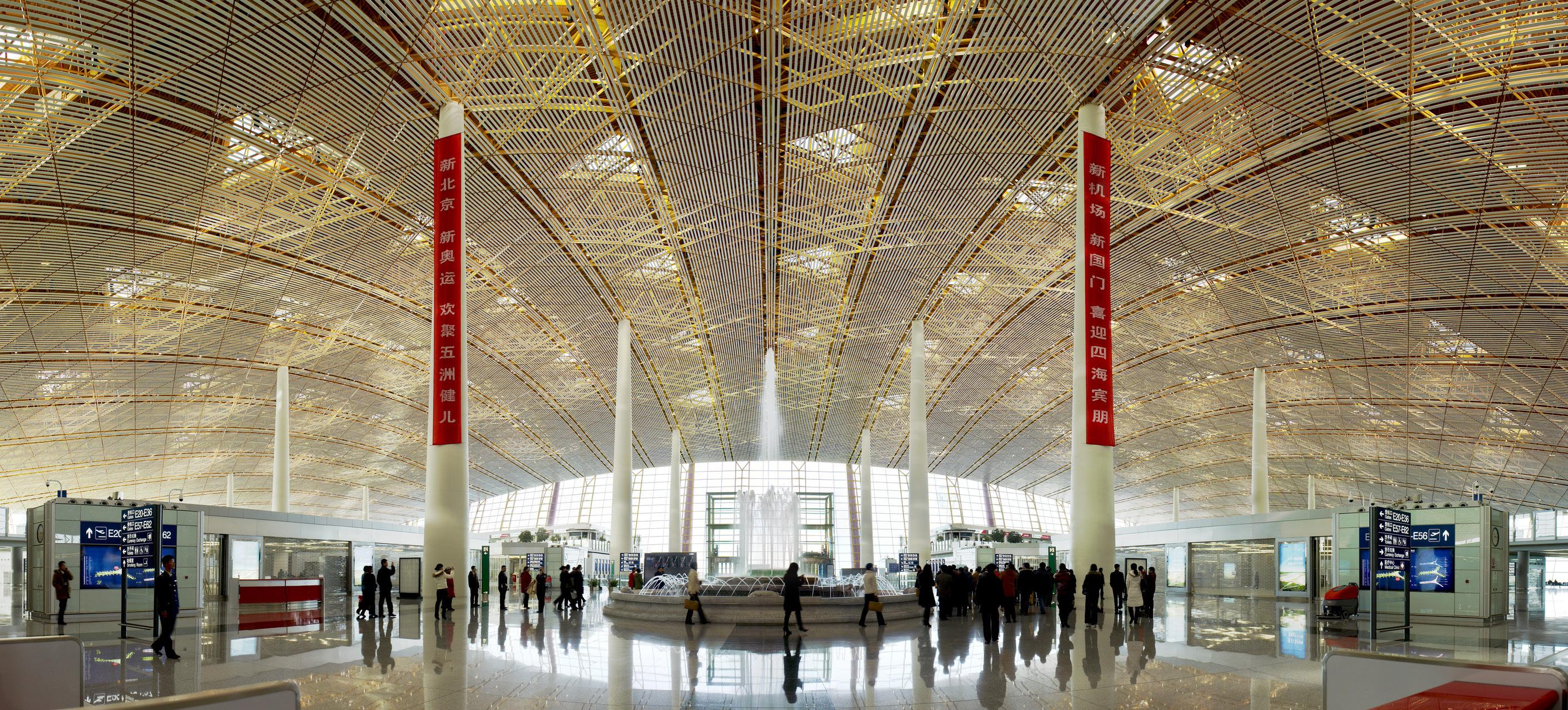
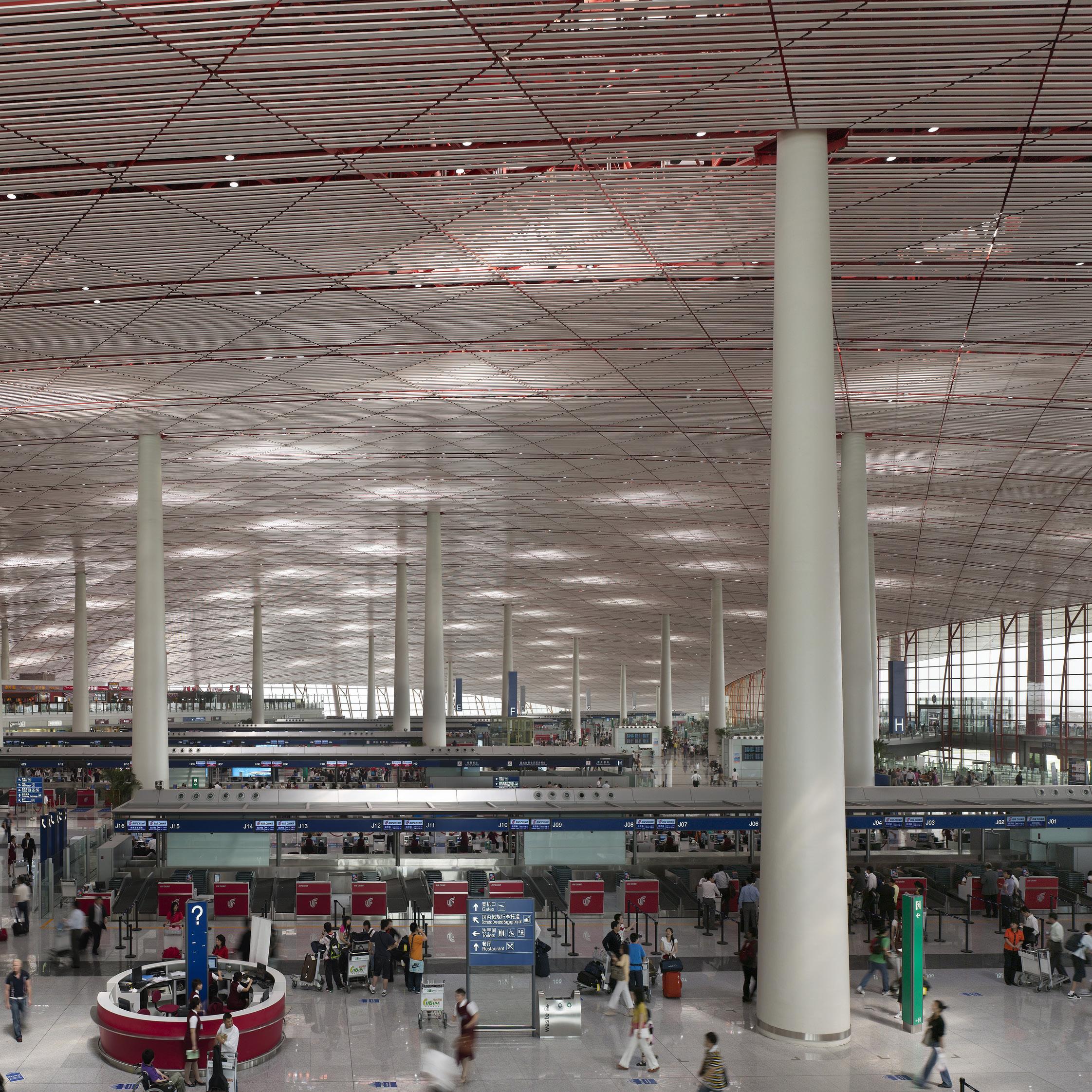
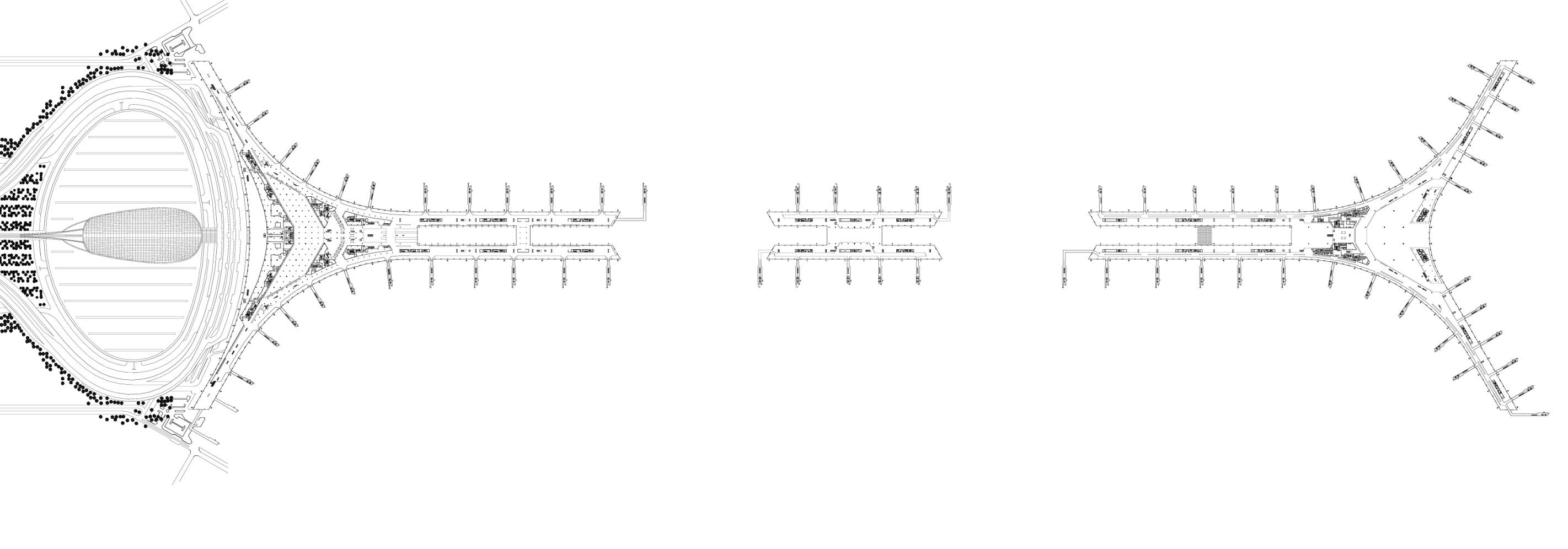
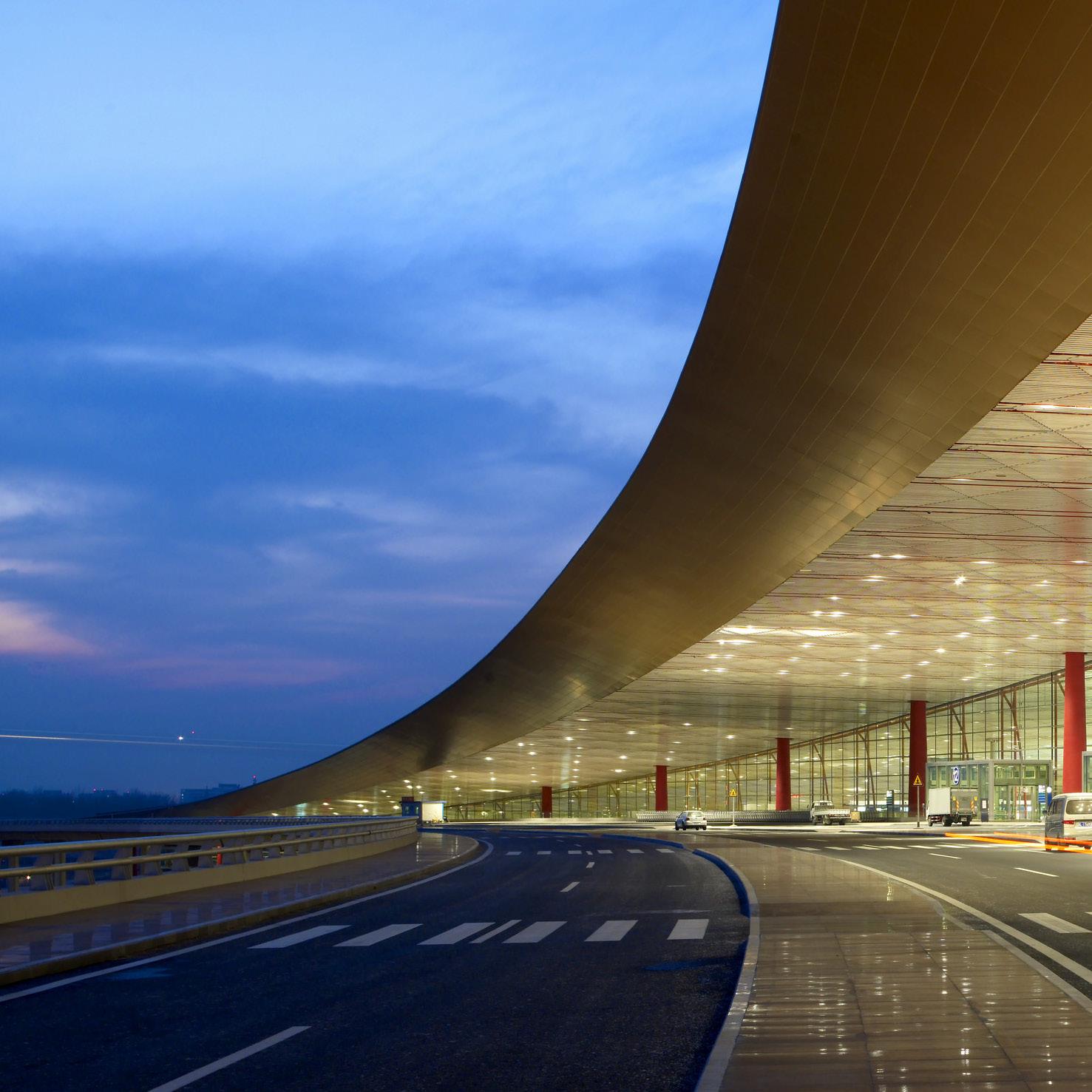
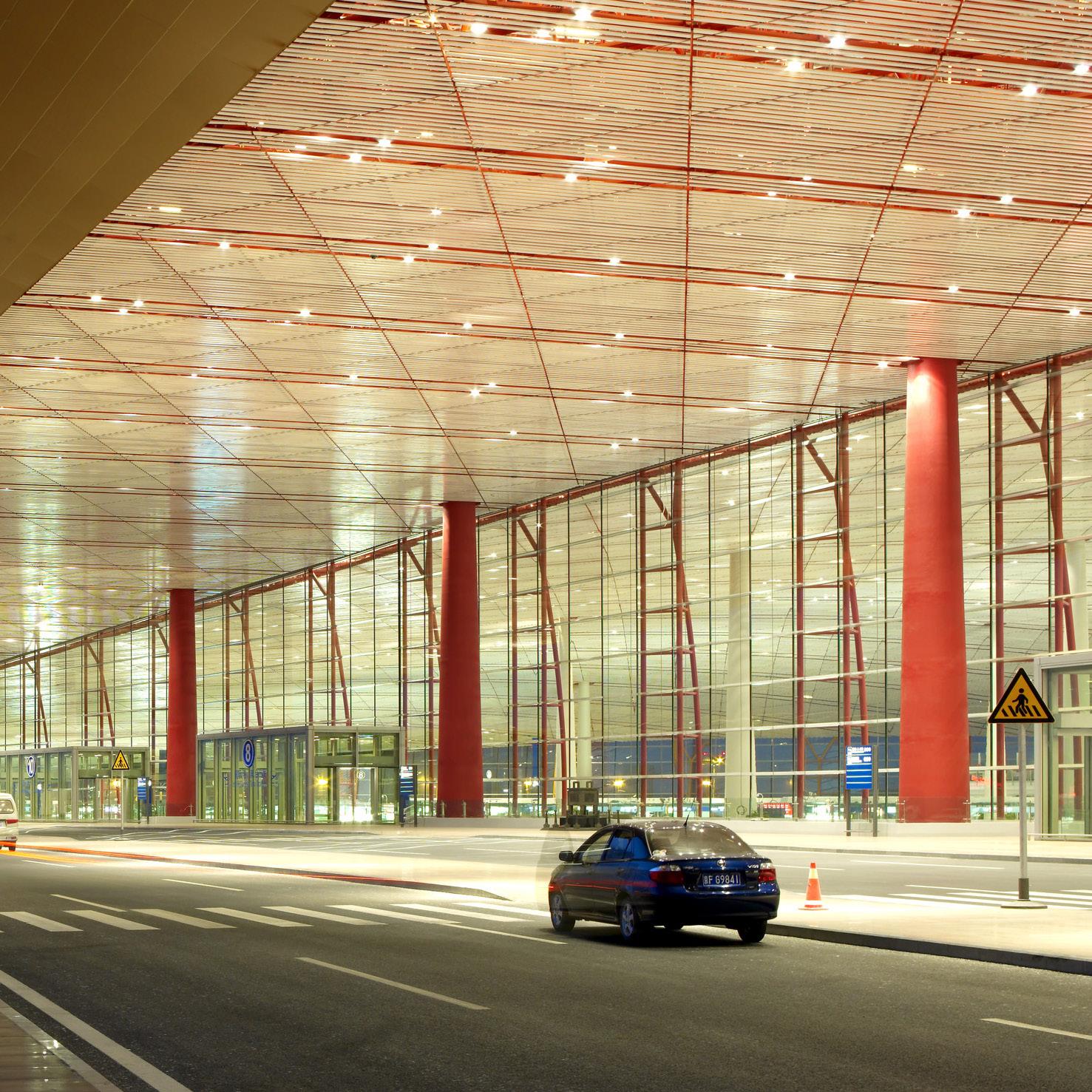
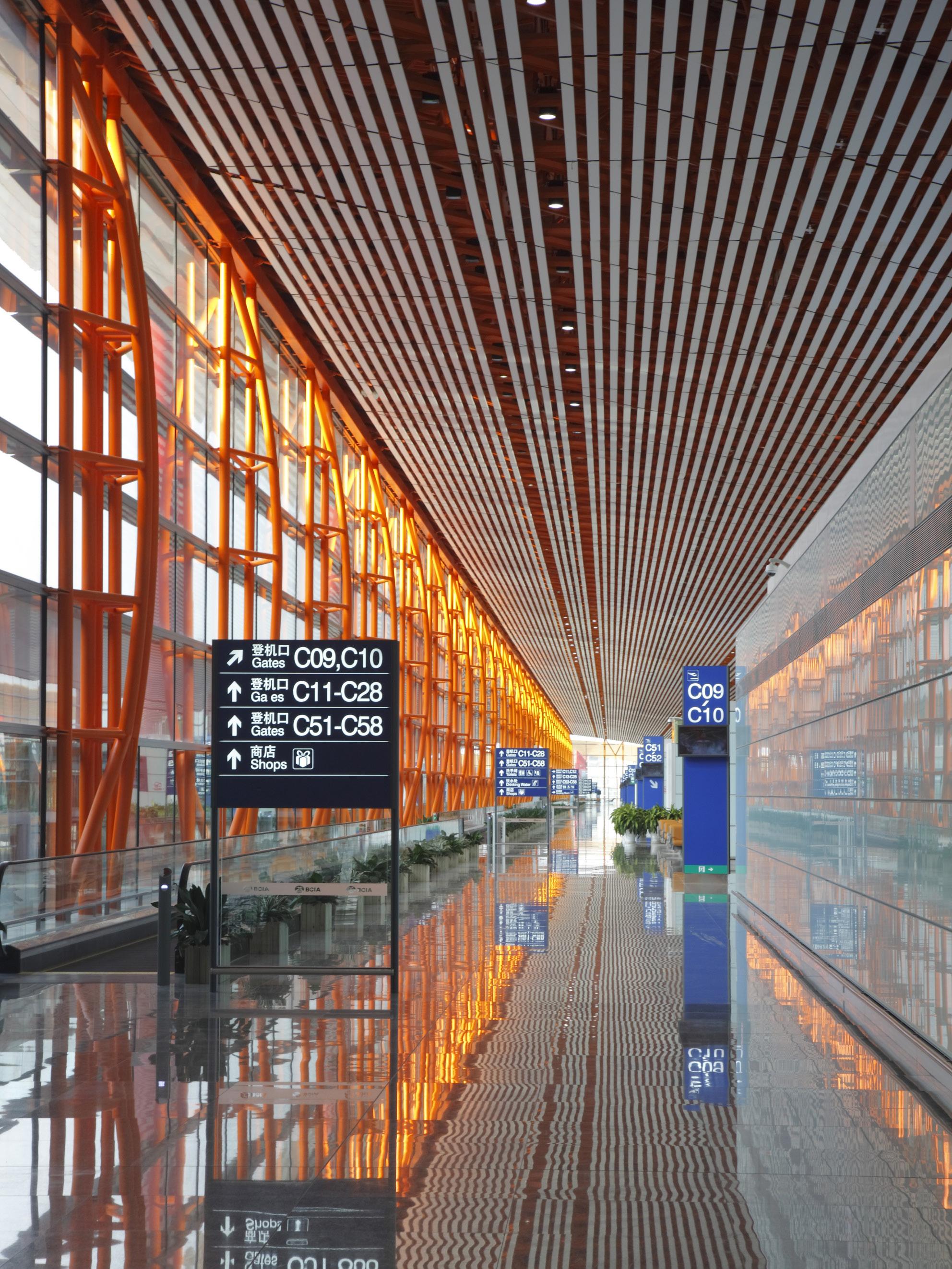
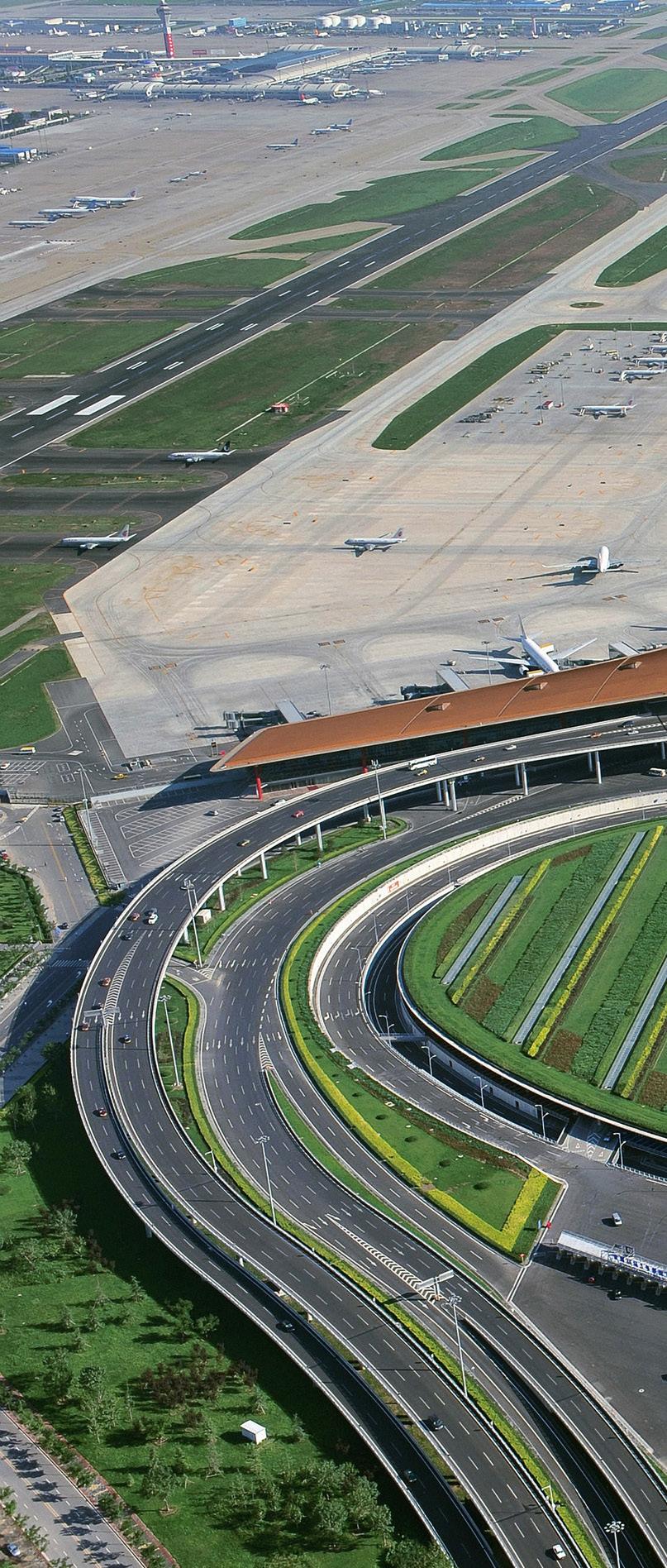
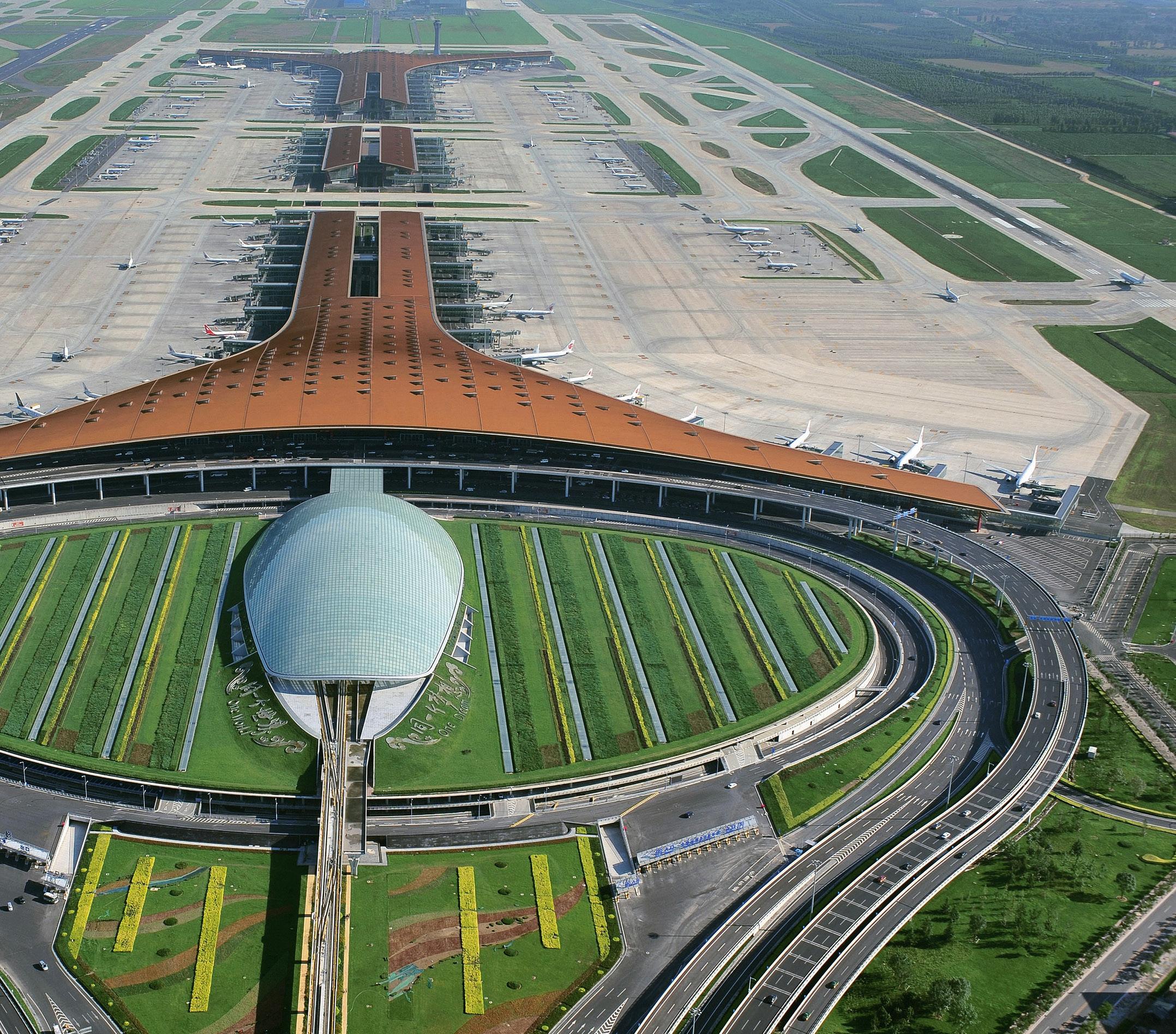
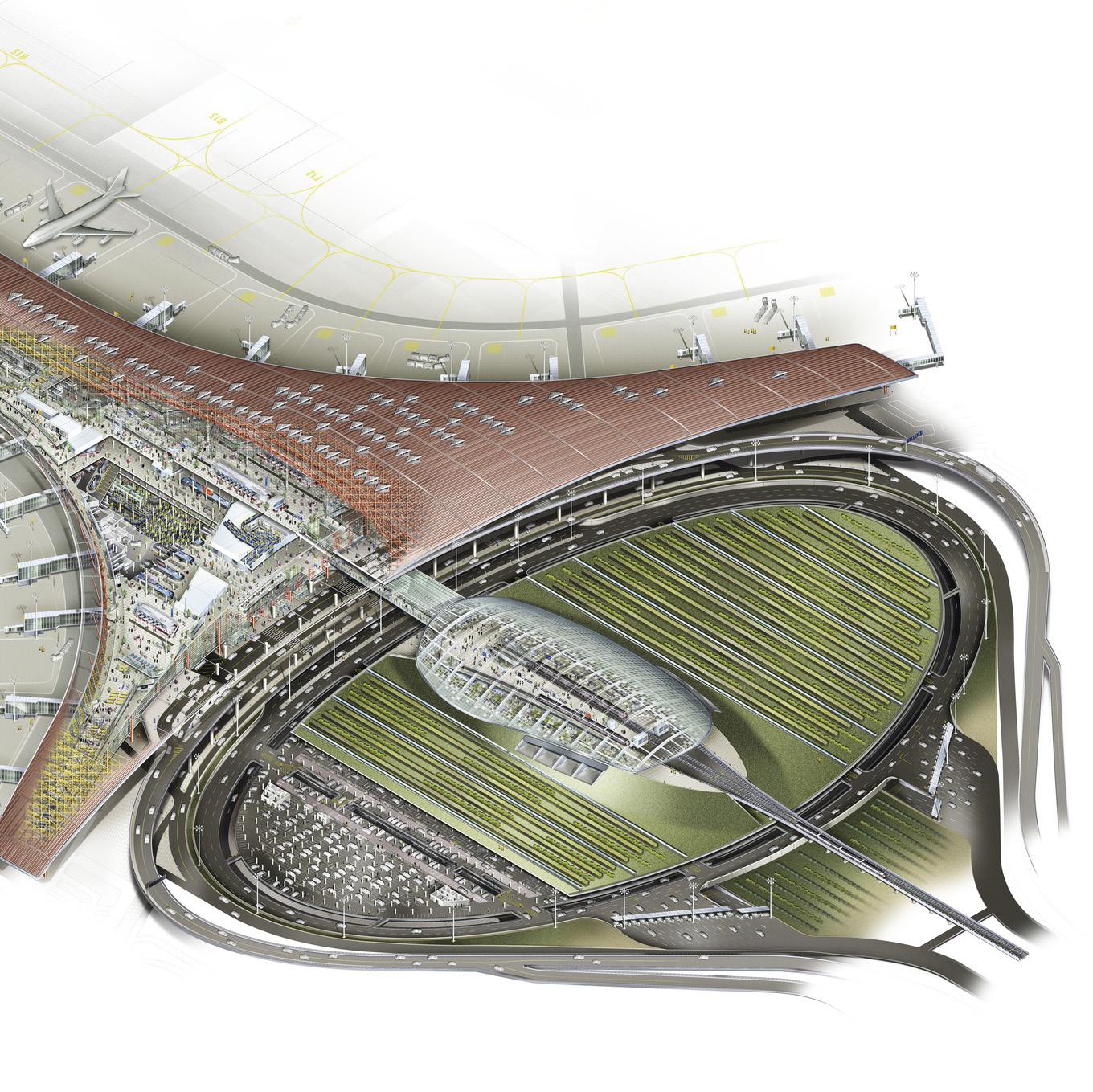
Beijing’s new international terminal is world’s largest and most advanced airport building − not only technologically, but also in terms of passenger experience, operational efficiency and sustainability. A symbol of place, its soaring aerodynamic roof and dragon-like form celebrate the thrill and poetry of flight and evoke traditional Chinese colours and symbols. Like Chek Lap Kok, the terminal is open to views to the outside and planned under a single unifying roof canopy, whose linear skylights are both an aid to orientation and sources of daylight.
The terminal building is one of the world’s most sustainable, incorporating a range of passive environmental design concepts, such as the south-east orientated skylights, which maximise heat gain from the early morning sun, and an integrated environmentcontrol system that minimises energy consumption. In construction terms, its design optimised the performance of materials selected on the basis of local availability, functionality, application of local skills, and low cost procurement. Remarkably, it was designed and built in just four years.
127
Client Beijing Capital International Airport Company Ltd. Team NACO ARUP
Norman Foster’s Beijing Airport, a project that was not only bigger than any other airport, but more beautiful, more logically laid out, and more quickly built.
Paul Goldberger
The New Yorker, December 2008
1,300,000m2
80mppa
130
131
Ground Transportation Centre
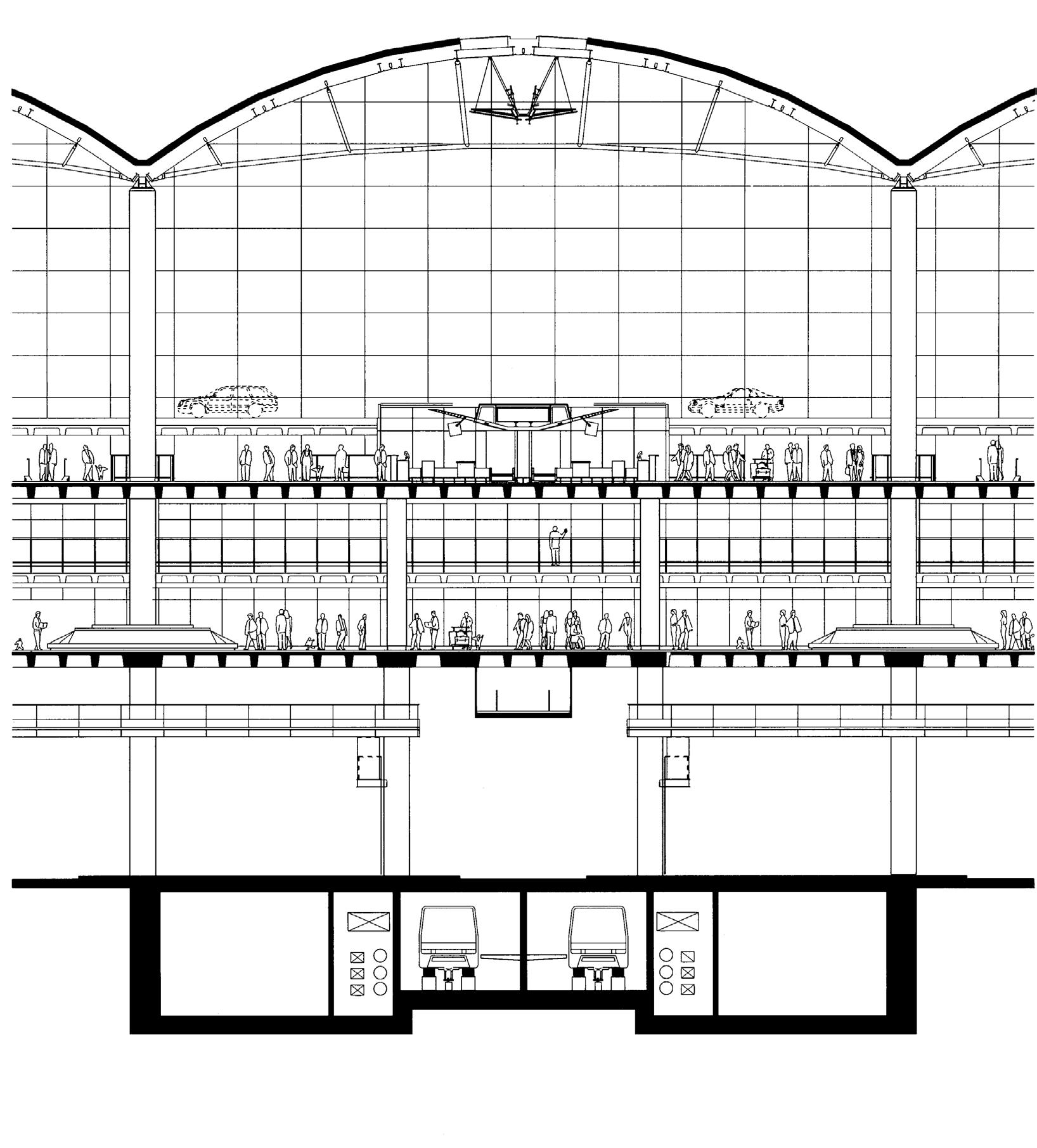
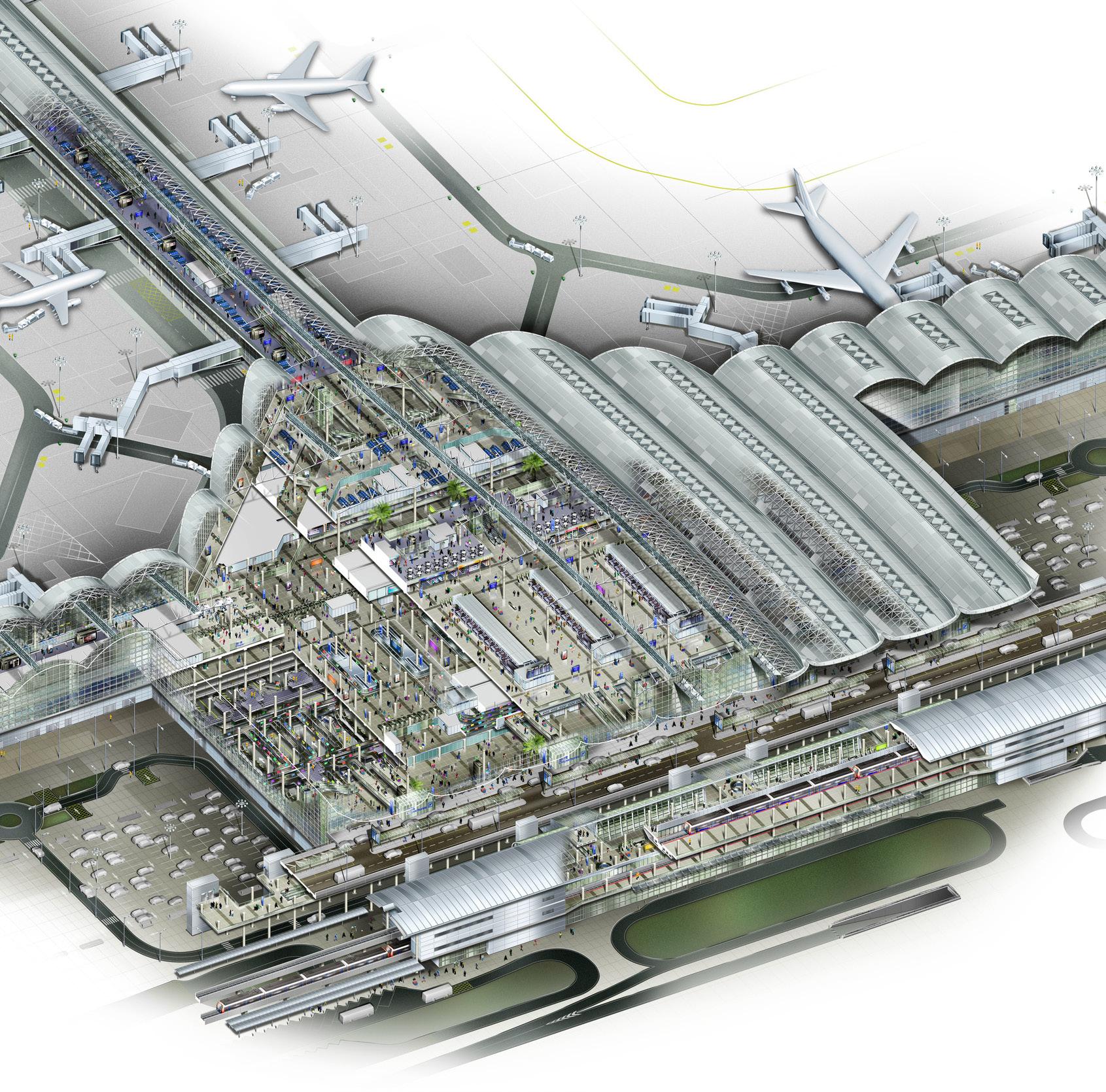
Located between the existing eastern runway and a planned third runway, the terminal building and Ground Transportation Centre together enclose a floor area of 1.3 million square metres and were designed to accommodate 50 million passengers per annum by 2020.
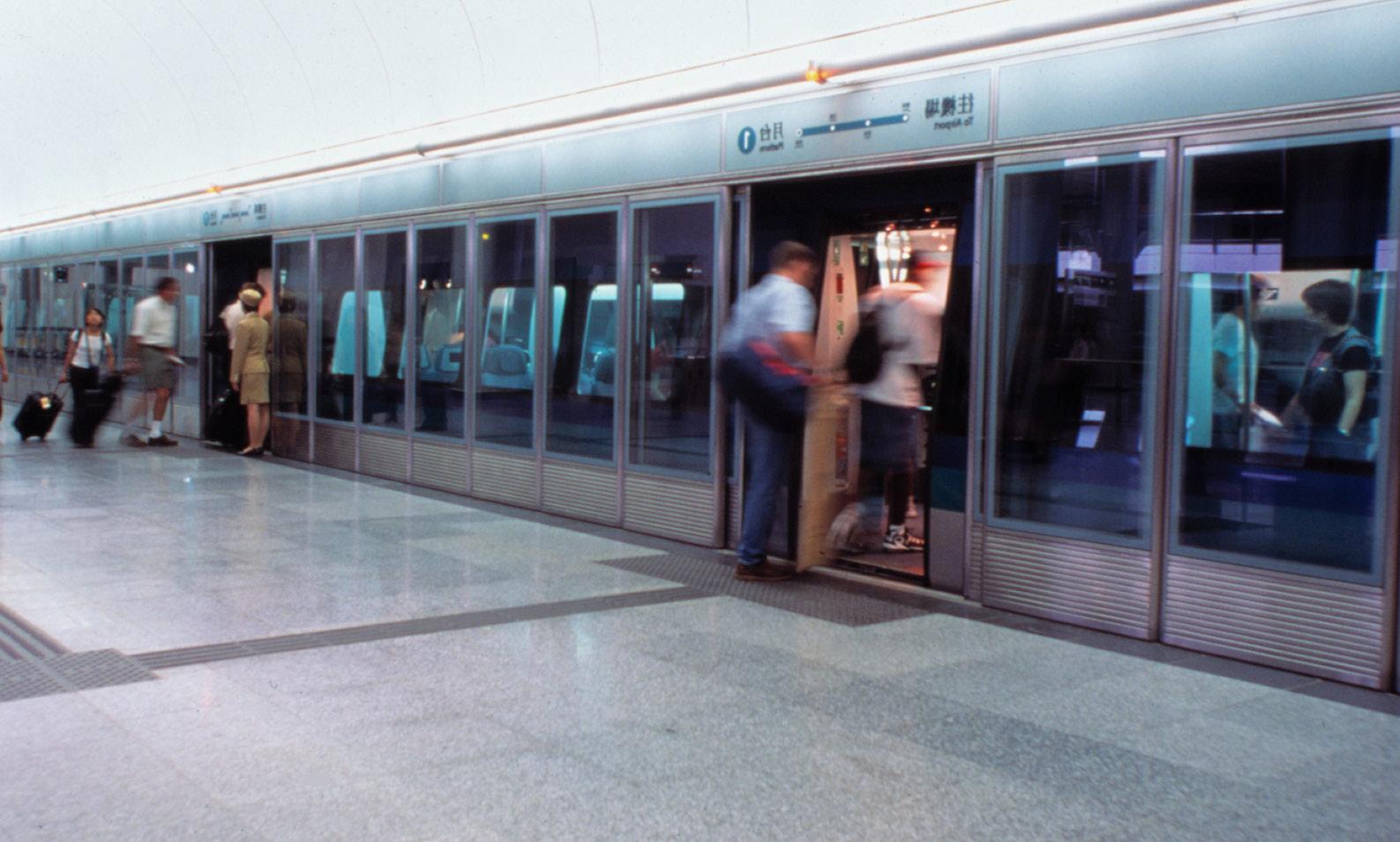
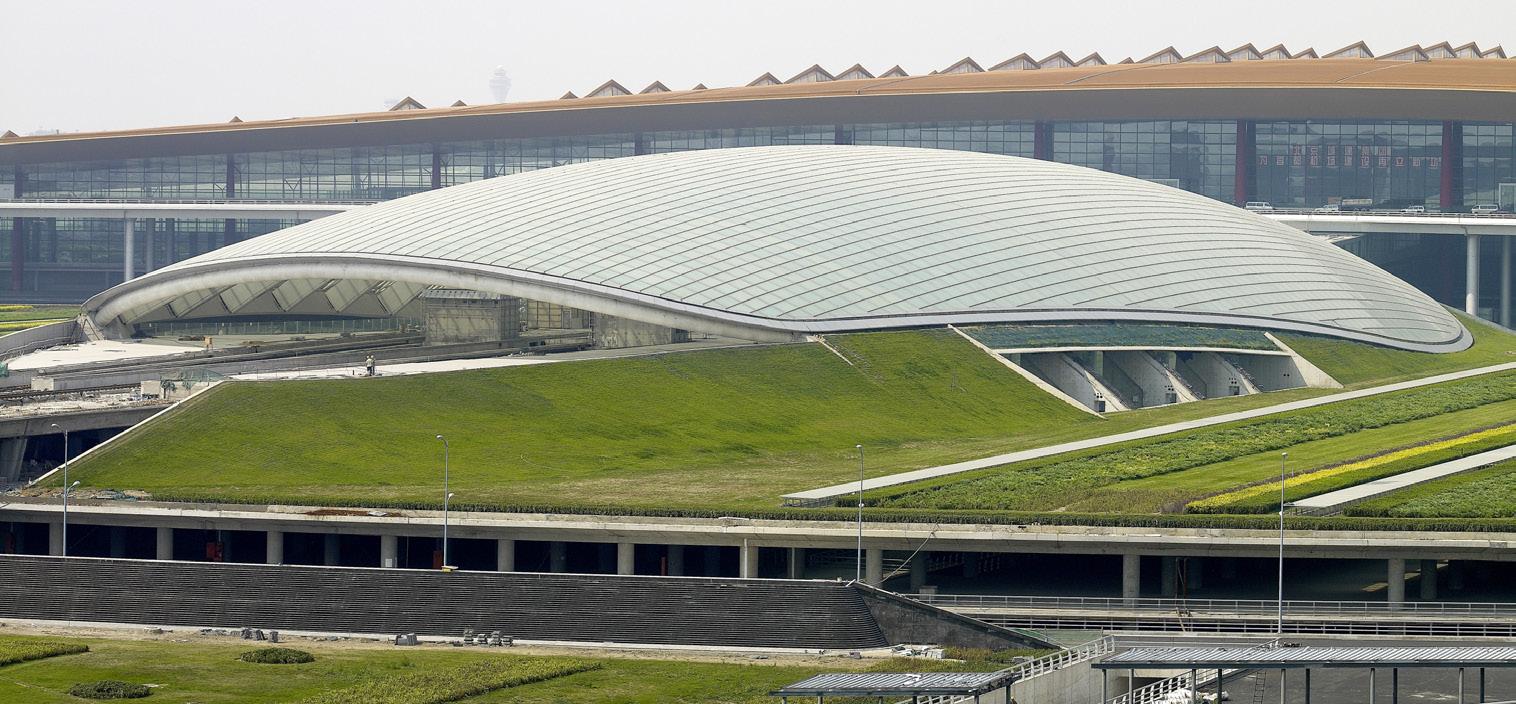
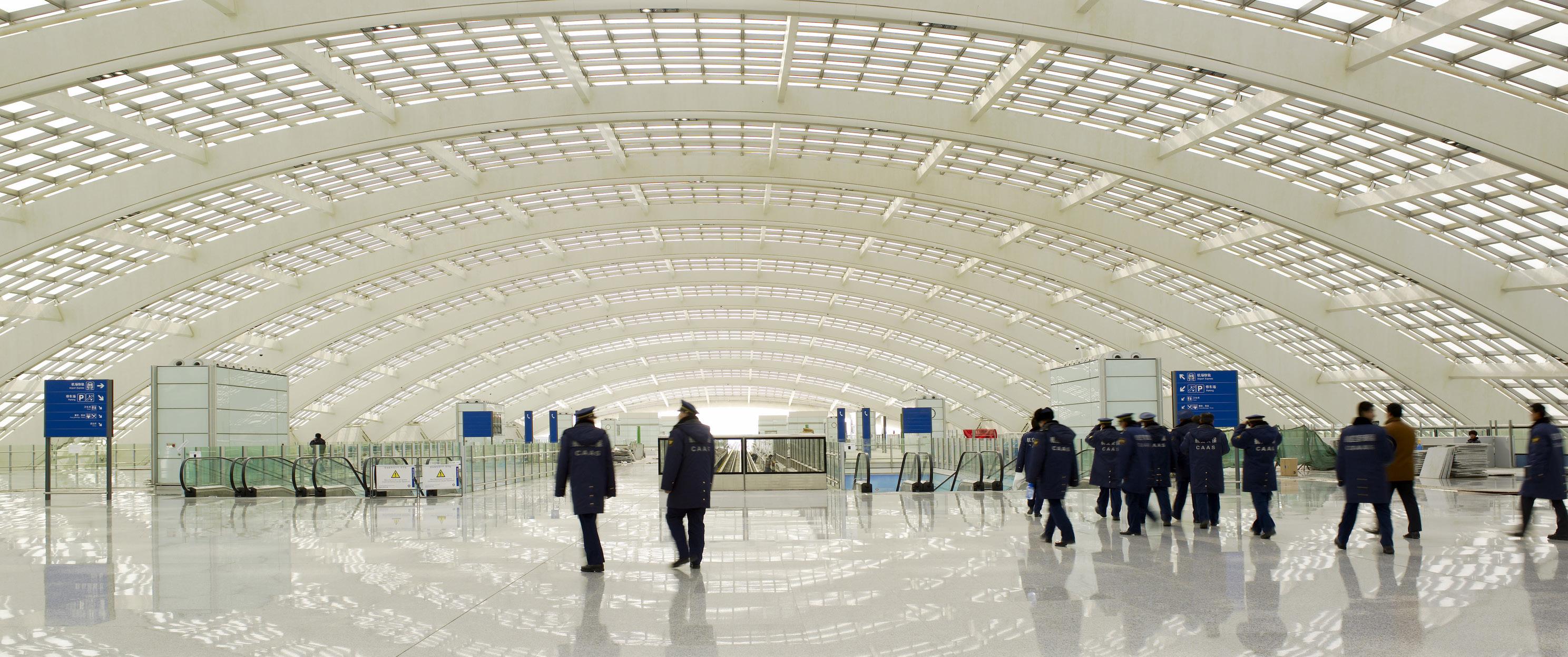
132
Hong Kong International Airport, Chek Lap Kok
Hong Kong 1992 – 1998
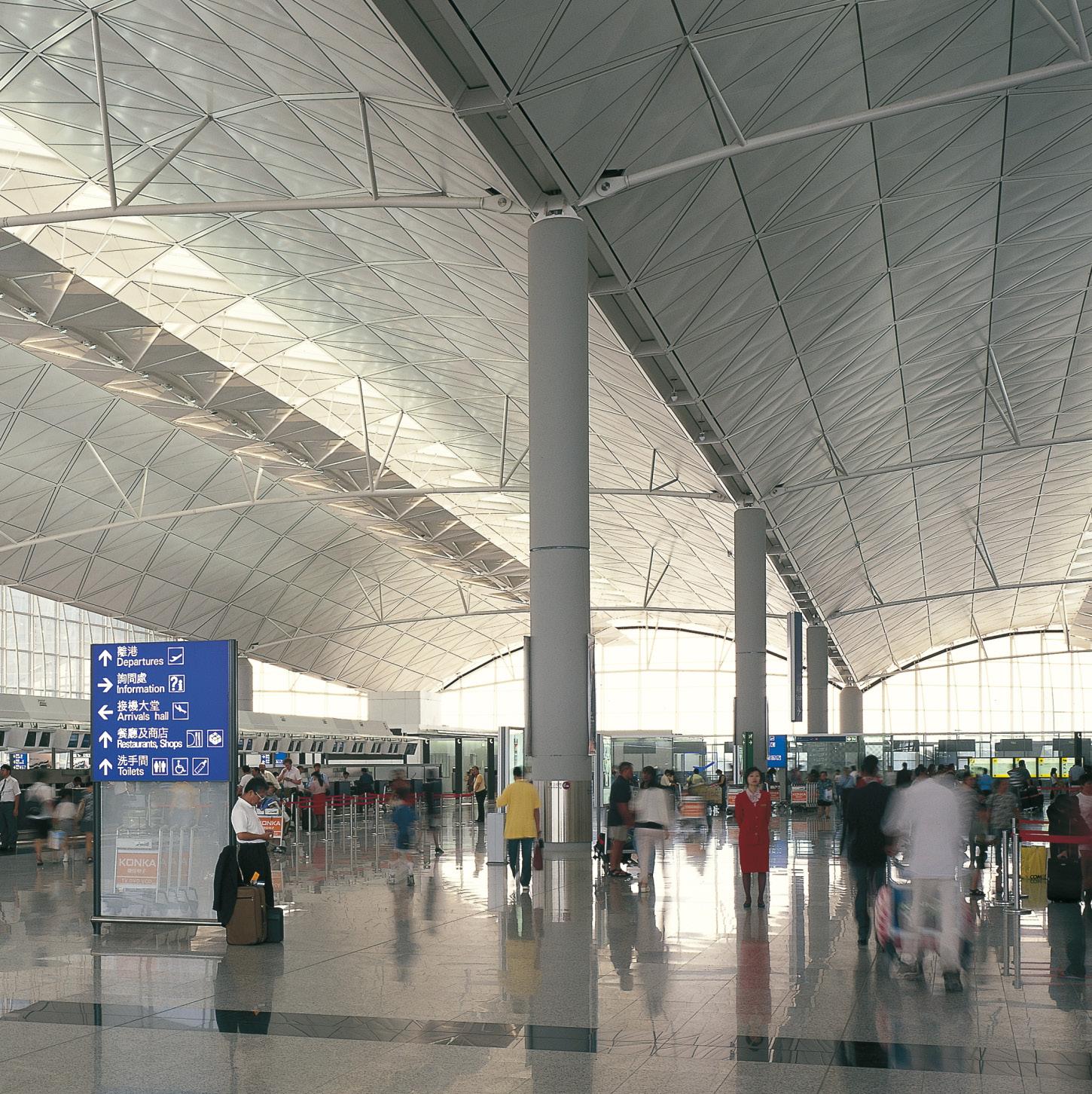
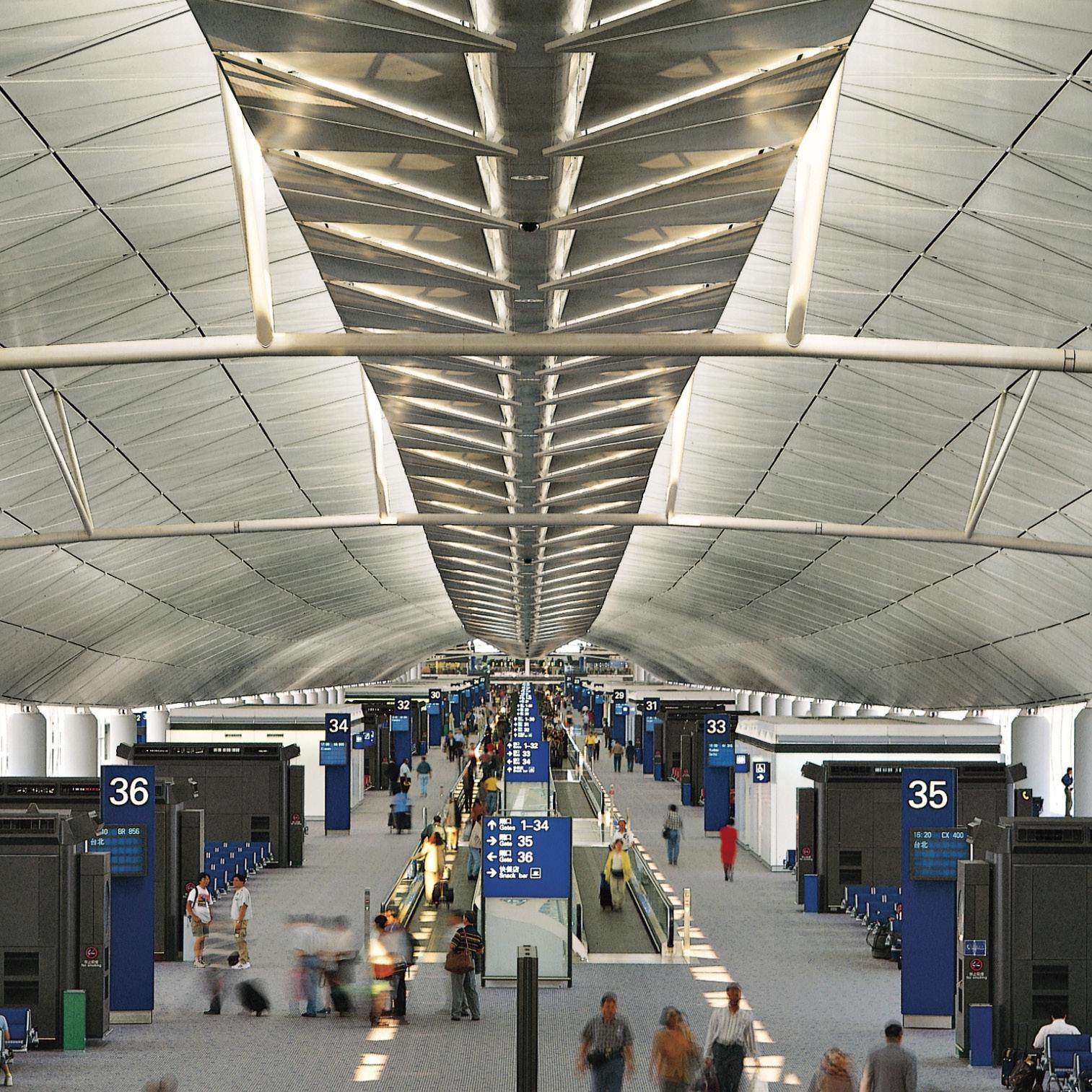
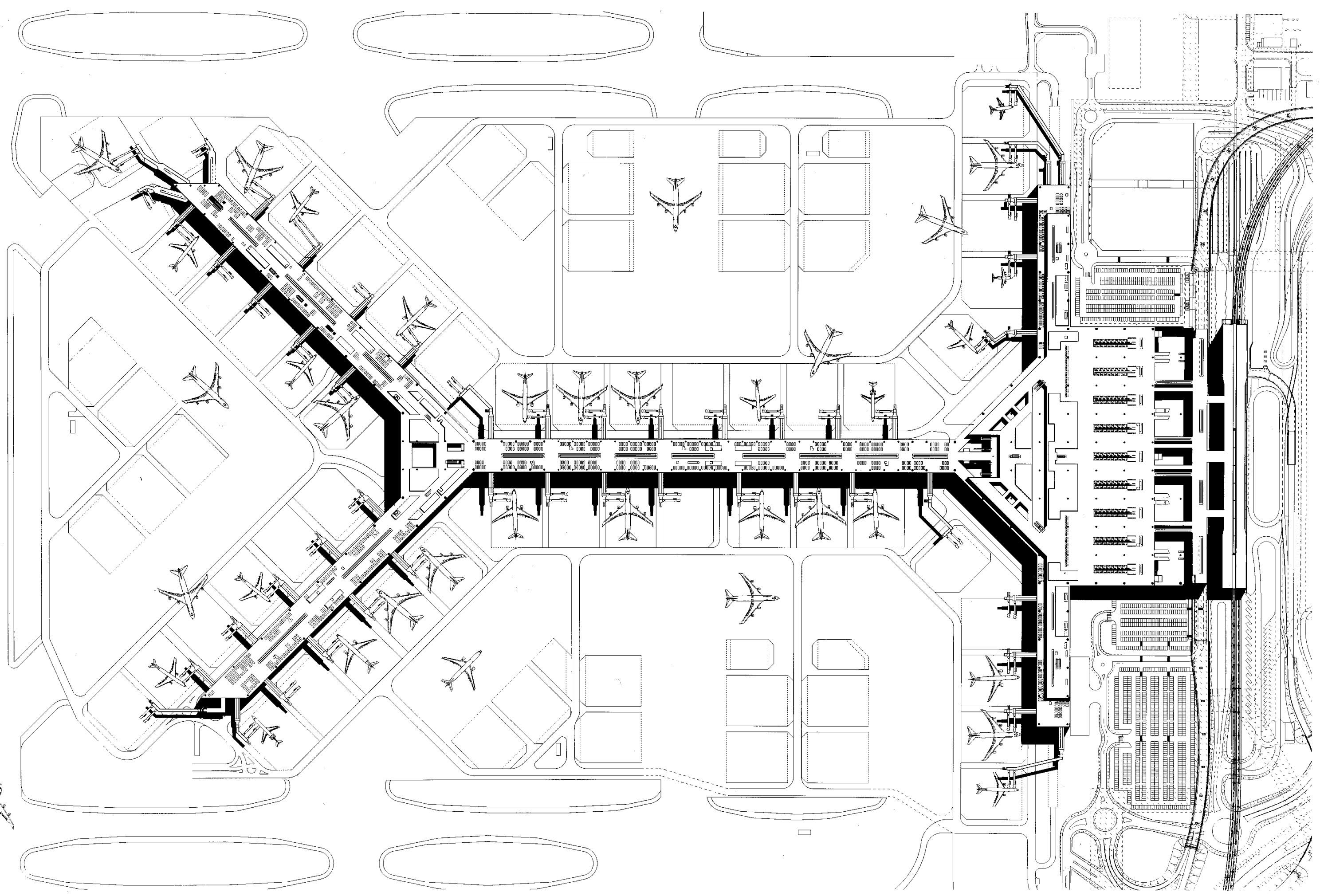
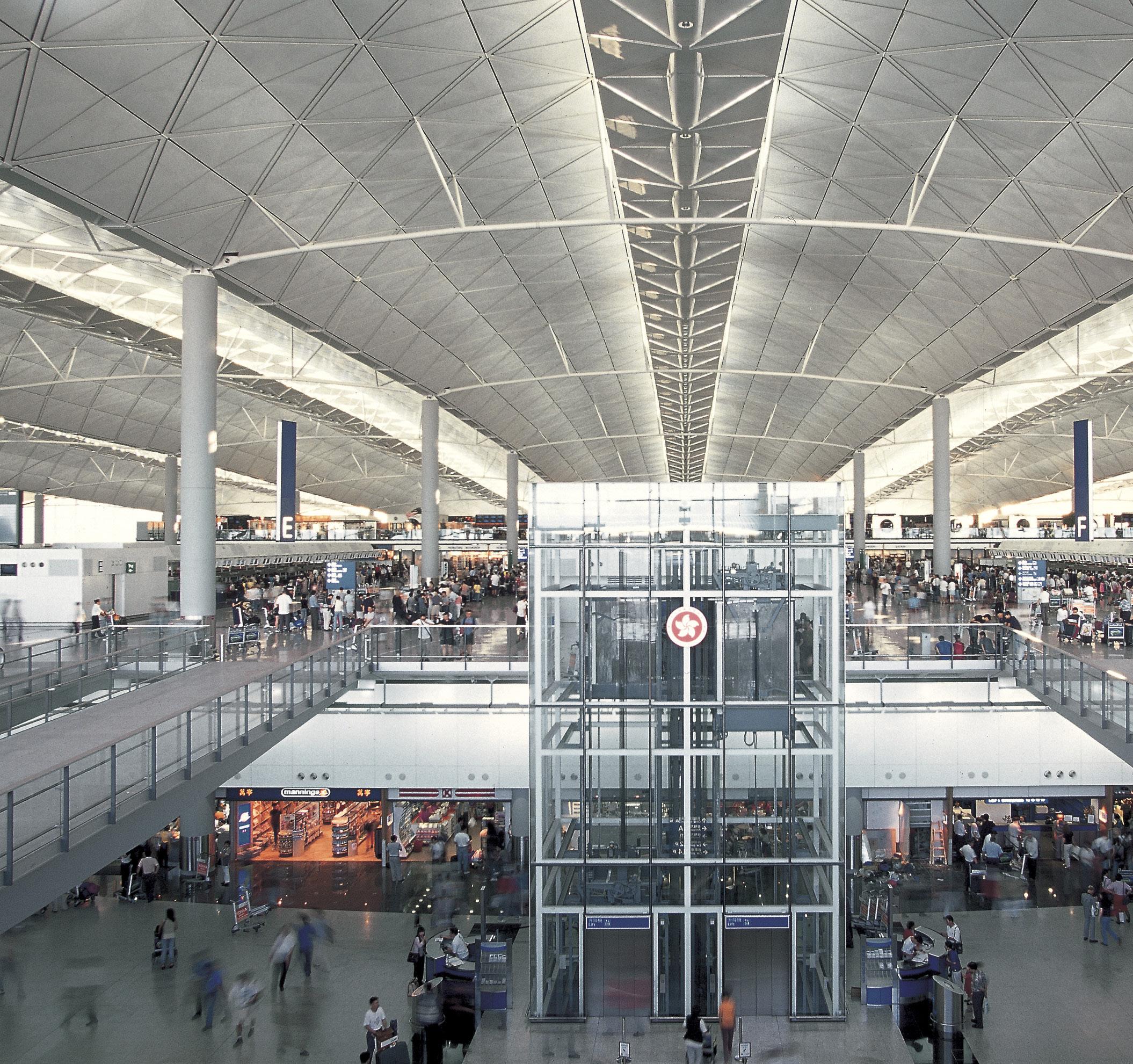
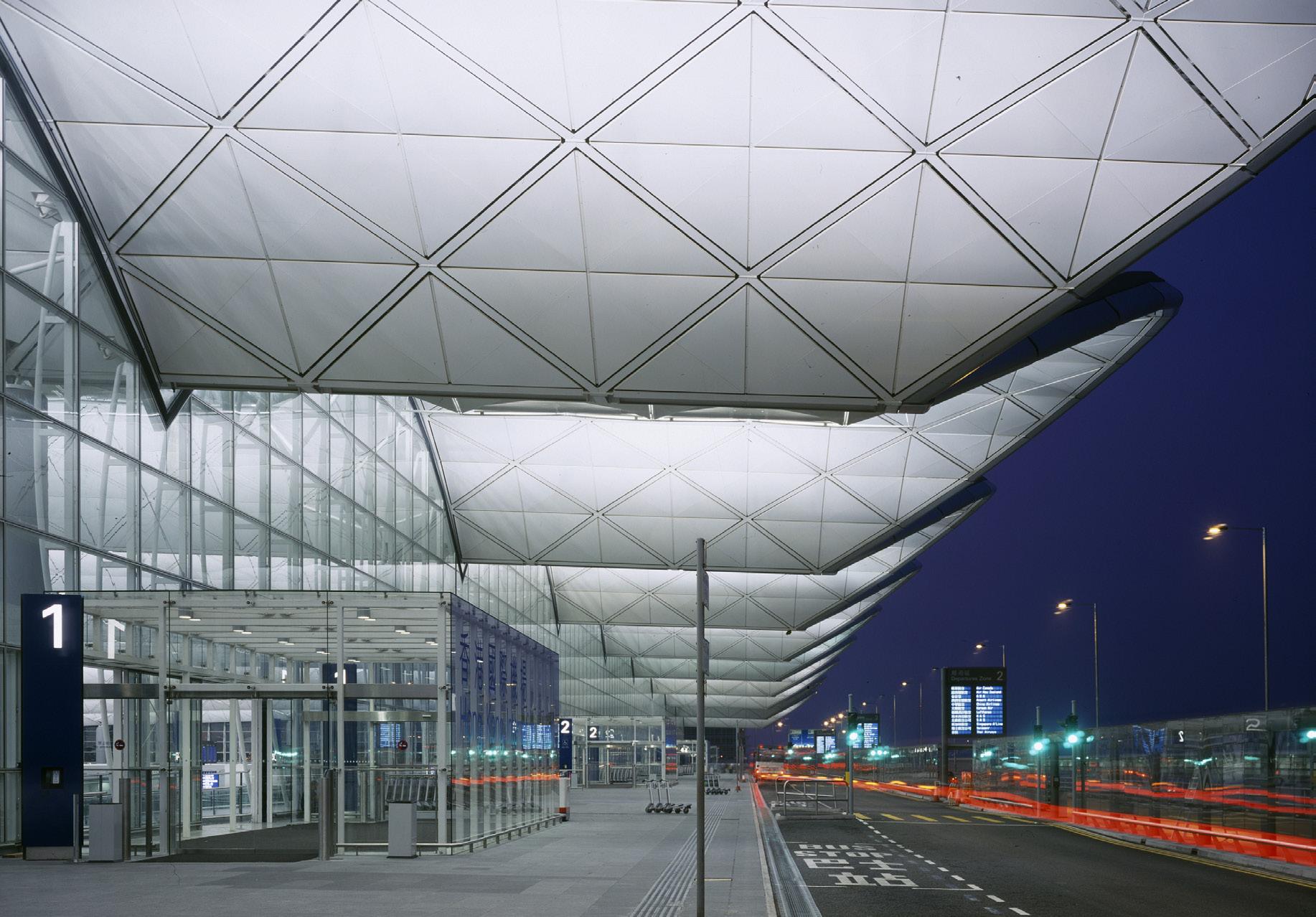
Lying at the hub of a global region reaching across Asia and Australasia, Chek Lap Kok is one of the world’s largest and most advanced airports. Completed in 1998 as Hong Kong’s sole air terminal, by 2040 it will handle eighty million passengers per annum – the equivalent of London’s Heathrow and New York’s JFK airports combined. Among the most ambitious construction projects of modern times, the land on which the airport stands was once a mountainous island. In a major reclamation programme, its 100-metre peak was reduced to 7 metres above sea level and the island was expanded to four times its original area – equal to the size of the Kowloon peninsula.
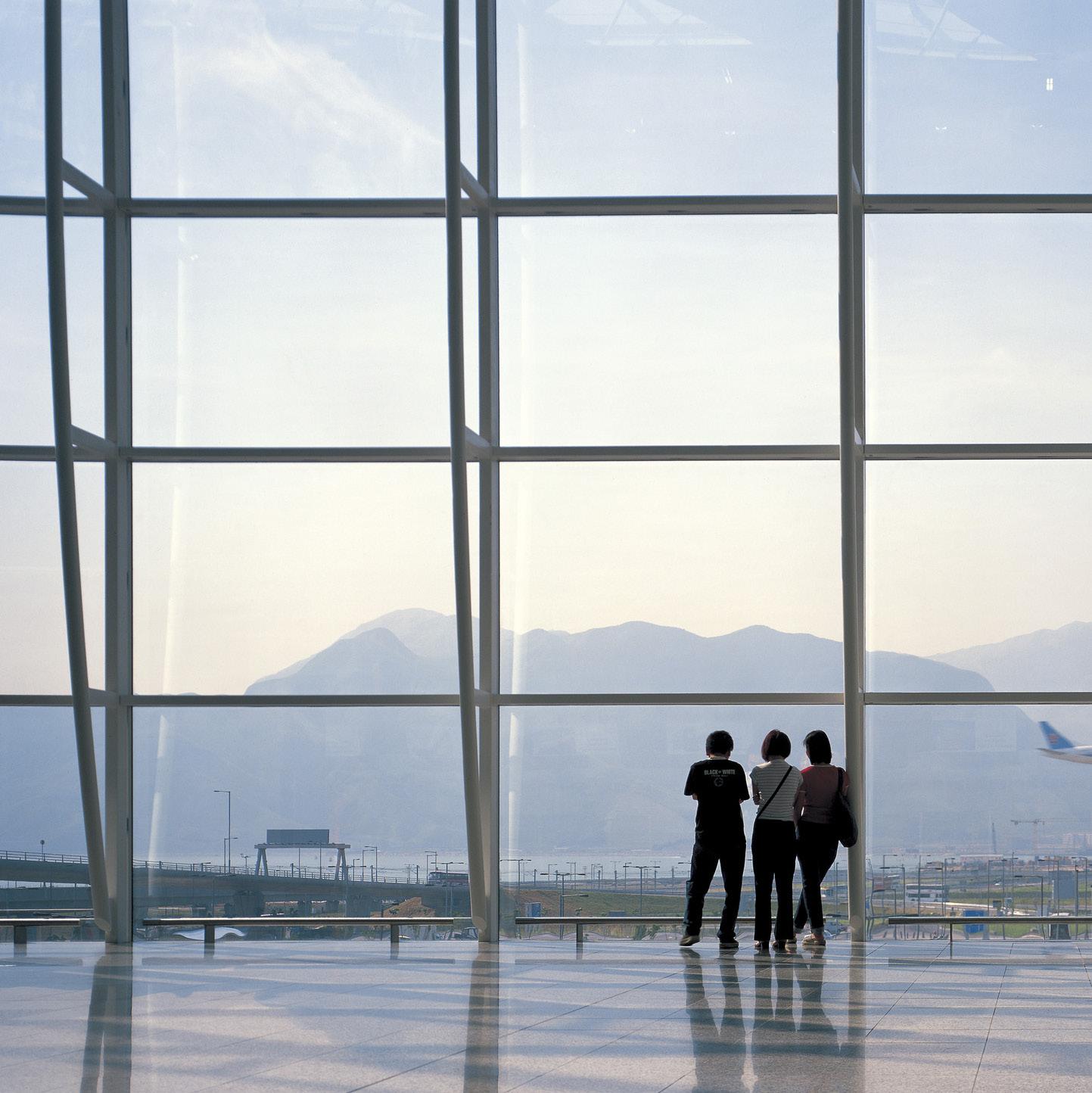
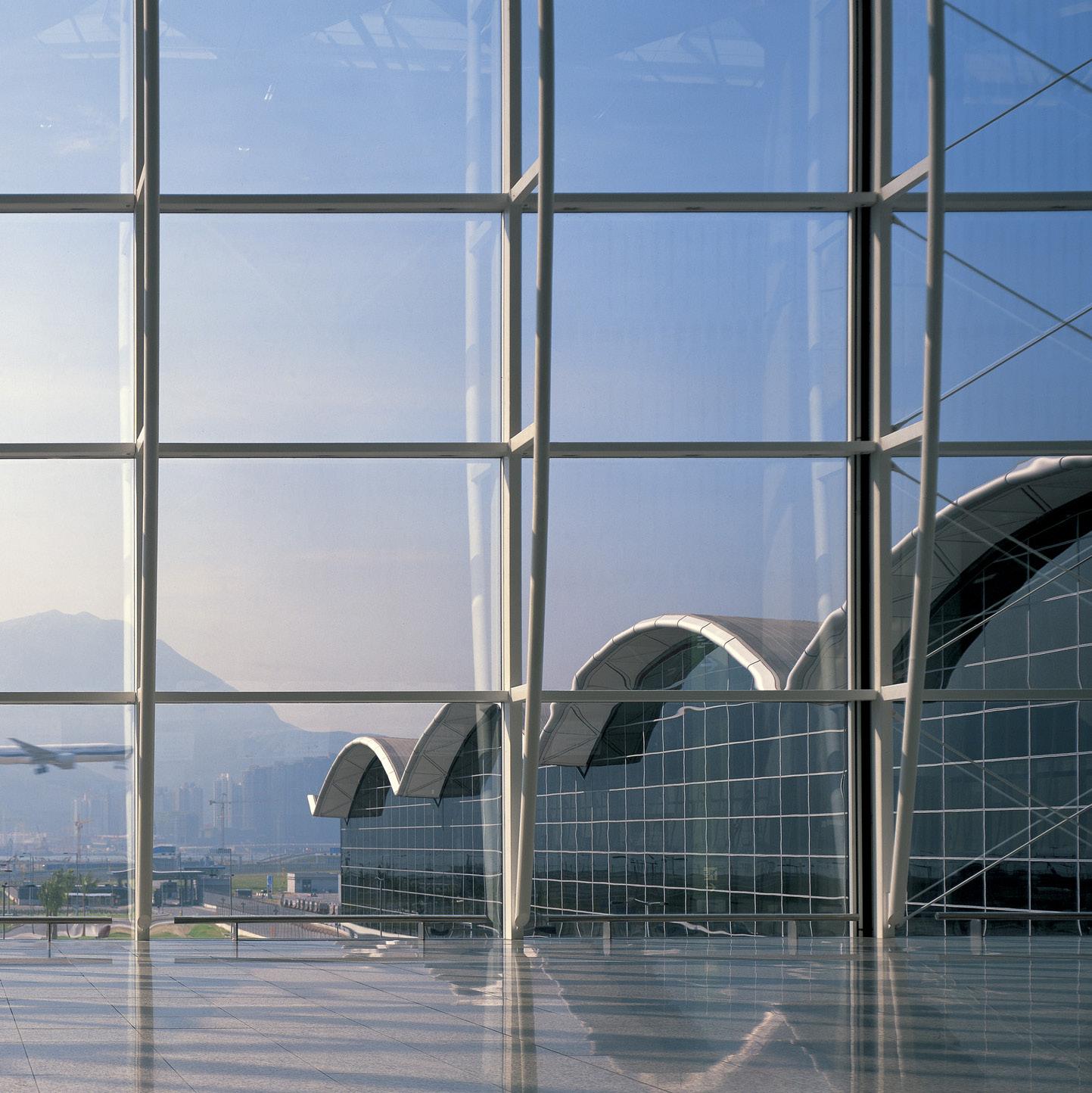
The terminal building extends a concept the practice pioneered at Stansted Airport – a model since adopted by airport planners worldwide. It is characterised by a lightweight roof, free of service installations; natural lighting; and the integration beneath the main concourse of baggage handling, environmental services and transportation. With its soaring spaces, bathed in light, it forms a spectacular gateway to the city. Routes are legible and orientation is simple: you are aware of the land on one side and the water on the other and you can see the aircraft.
135
Client Hong Kong Airport Authority Team BAA Mott Connell Ltd Ove Arup & Partners Fisher Marantz Renfro Stone O’Brien Kreitzberg & Associates Ltd Wilbur Smith Associates
138
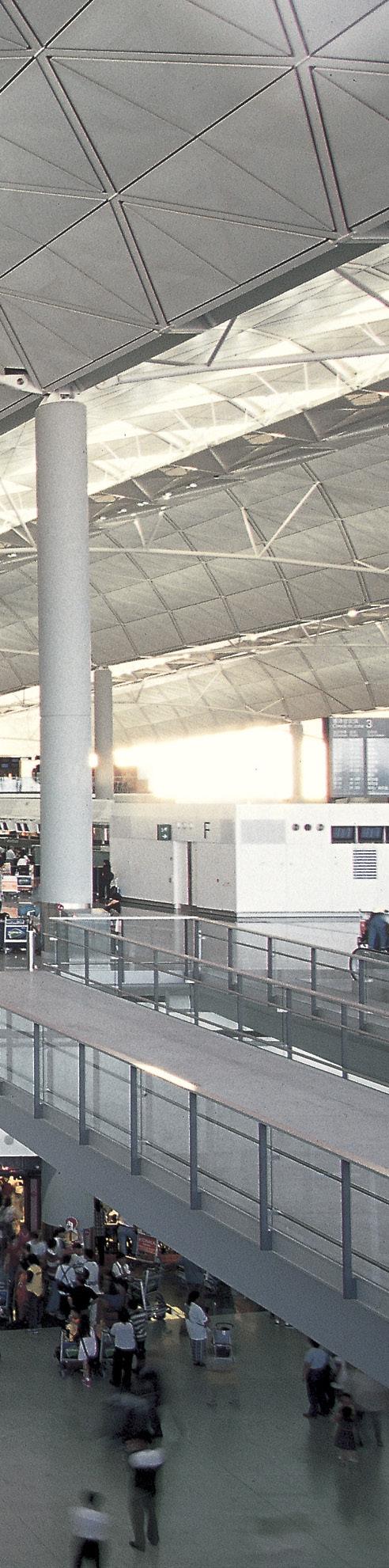
Hong Kong International Airport is the most prolific winner of the world’s best airport award, Skytrax.
Norman Foster’s airport is an architectural landmark that can stand as a symbol for an entire city.
139
Deyan Sudjic The Guardian, 28th June 1998
“
Ground Transportation Centre
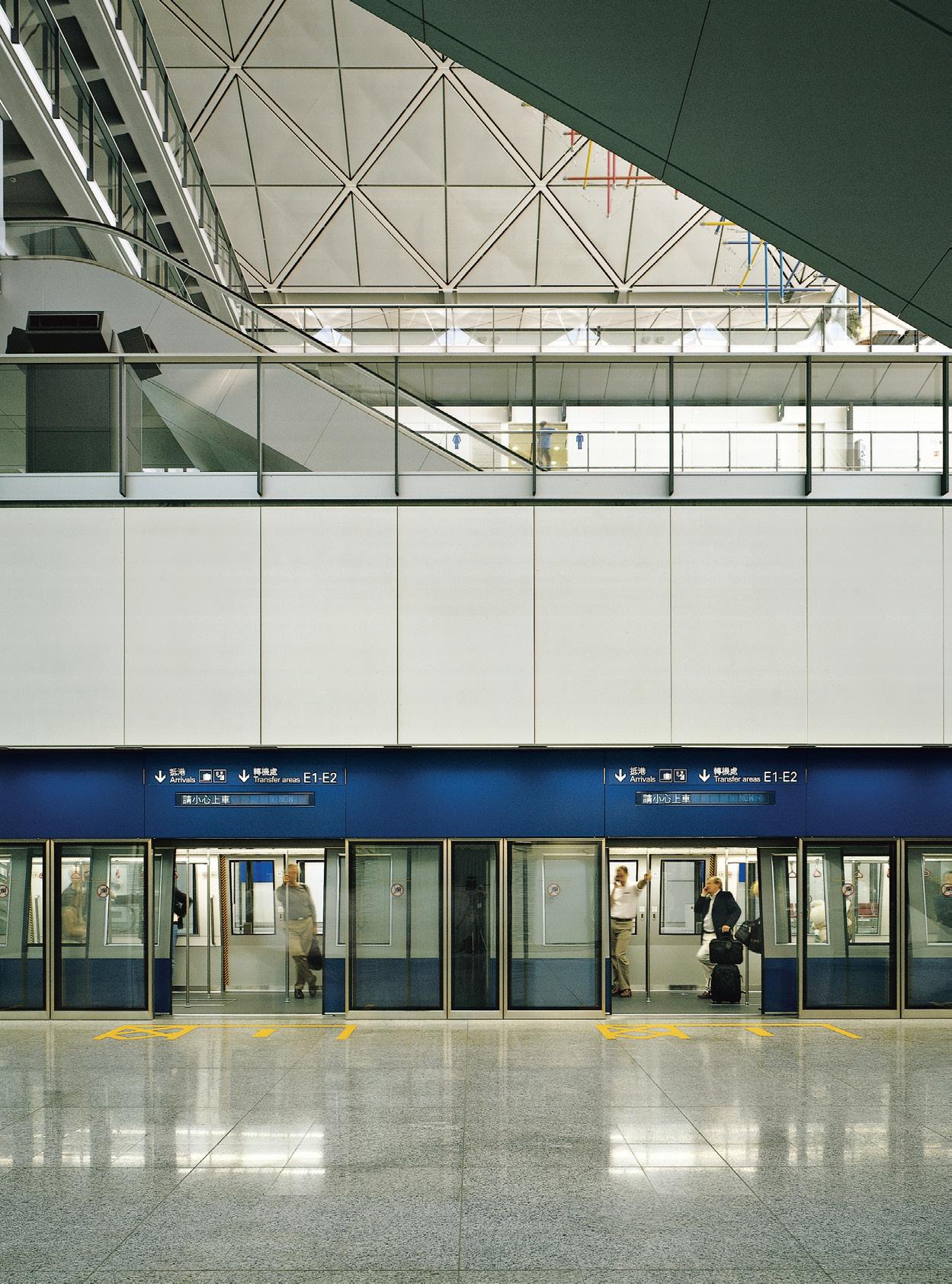
Travellers reach the airport from Hong Kong via either mainland road or rail links, which cross two purpose-built suspension bridges and a causeway to Lantau Island to the south. Those arriving by train alight at the airport’s Ground Transportation Centre, which is fully integrated at the eastern end of the terminal building. Remarkably, the entire train journey between city and airport can be completed in just twenty minutes.
140
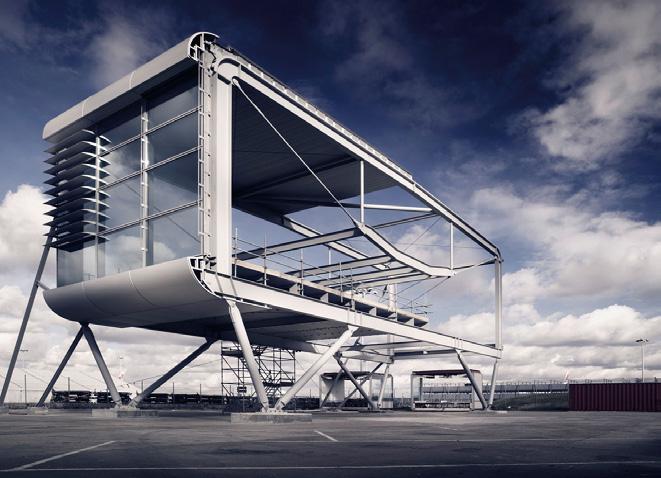
The BAA Pier platform
London, England, 2004
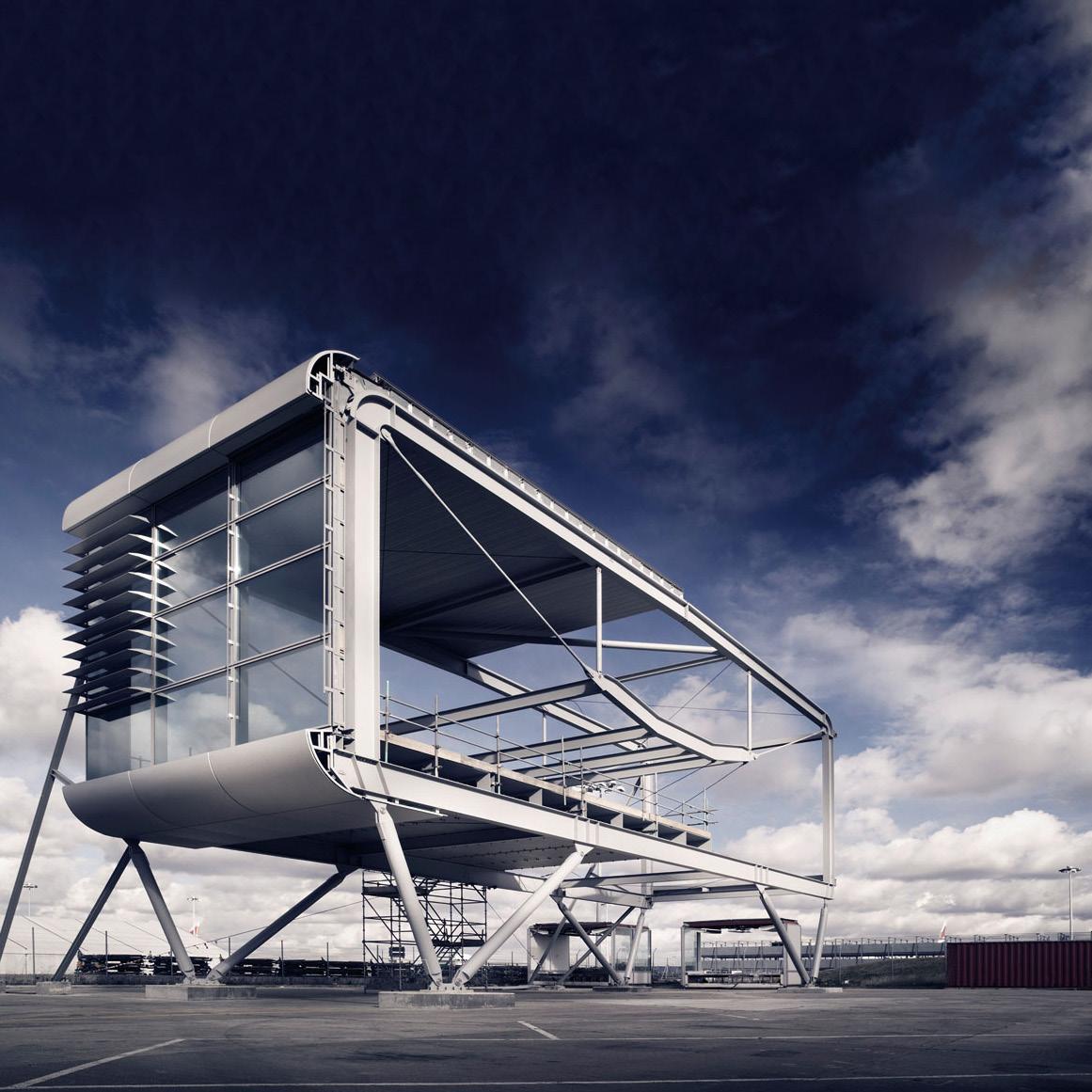
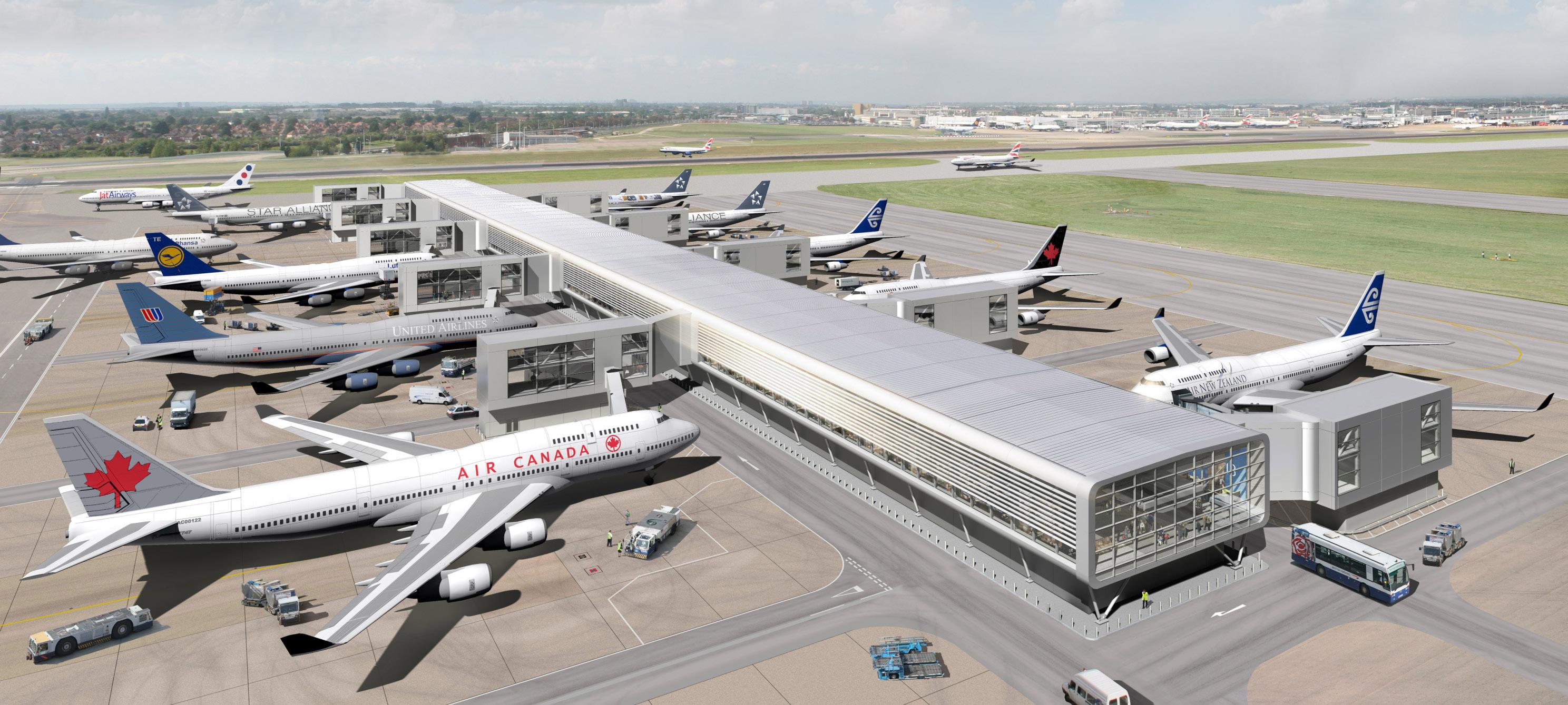
Foster + Partners’ Pier Platform strategy has been developed with BAA to provide an adaptable, modular design for a generic pier to respond to contextual variations, such as aircraft requirements, site location, orientation and ground levels. Most significantly, every aspect of the pier is designed for ease of construction in a ‘live’ airport environment and this requirement is vital to the success of Heathrow airport. Flooded with natural light, the main pier body is column free and benefits from full height perimeter glazing, giving travellers views of the aircraft and airfield – recapturing some of the thrill of flying. The open nature of the space and the minimal visual clutter improves wayfinding and enhances the logic of the space. The aircraft are visible from the gate lounge, and for those disembarking, the high level arrivals corridor provides the necessary security segregation without isolating them.
143
Client BAA
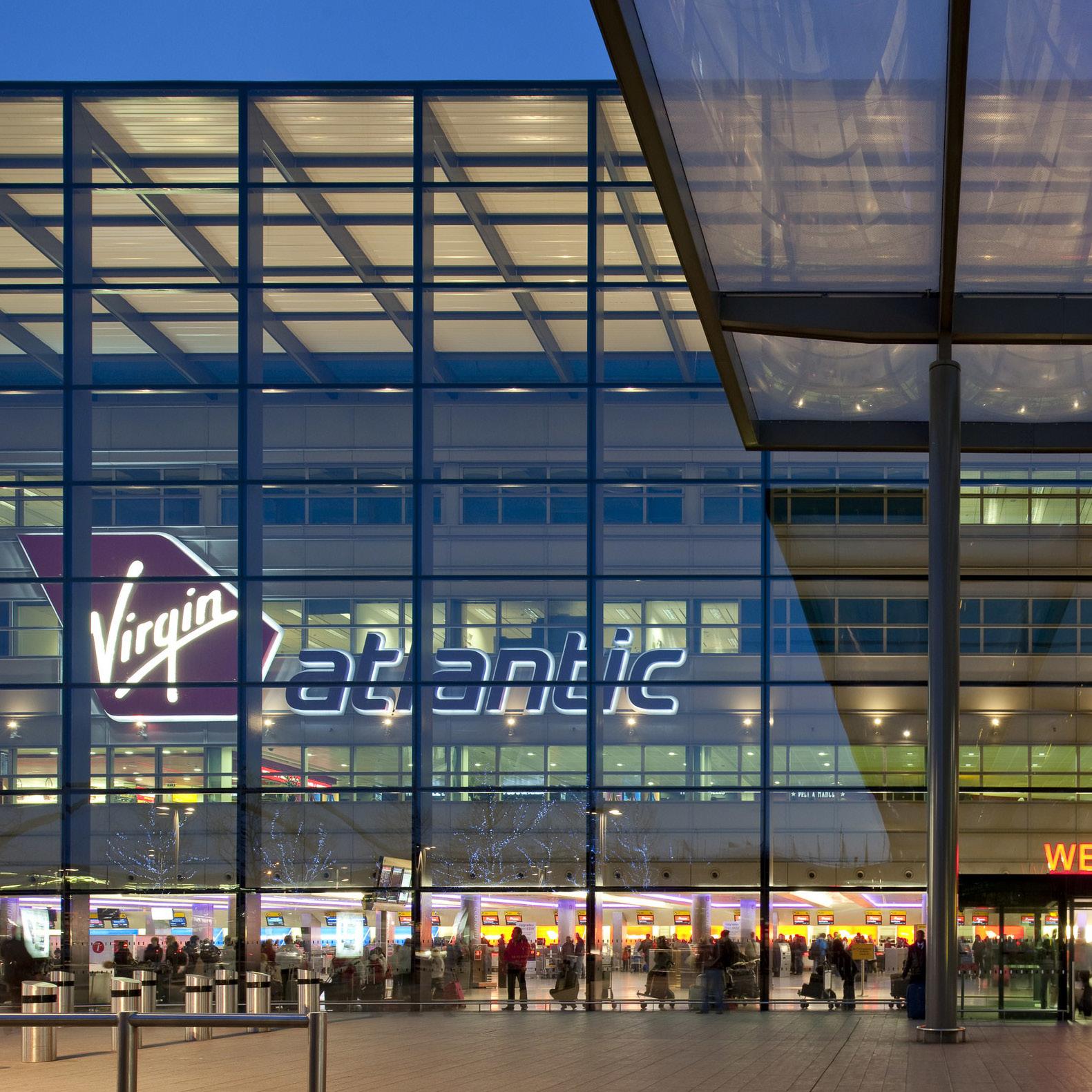
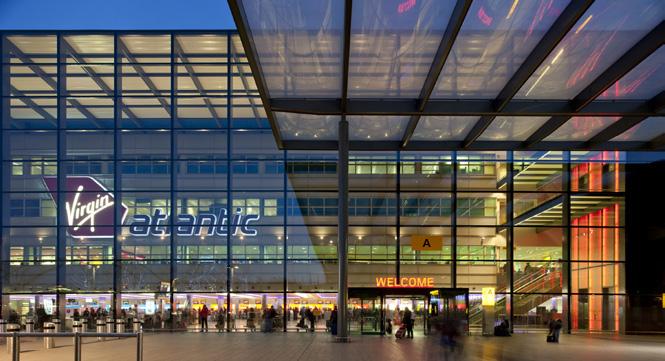
Heathrow T3 Futures Forecourt & Virgin Atlantic Check-In
London, England, 2004 – 2007
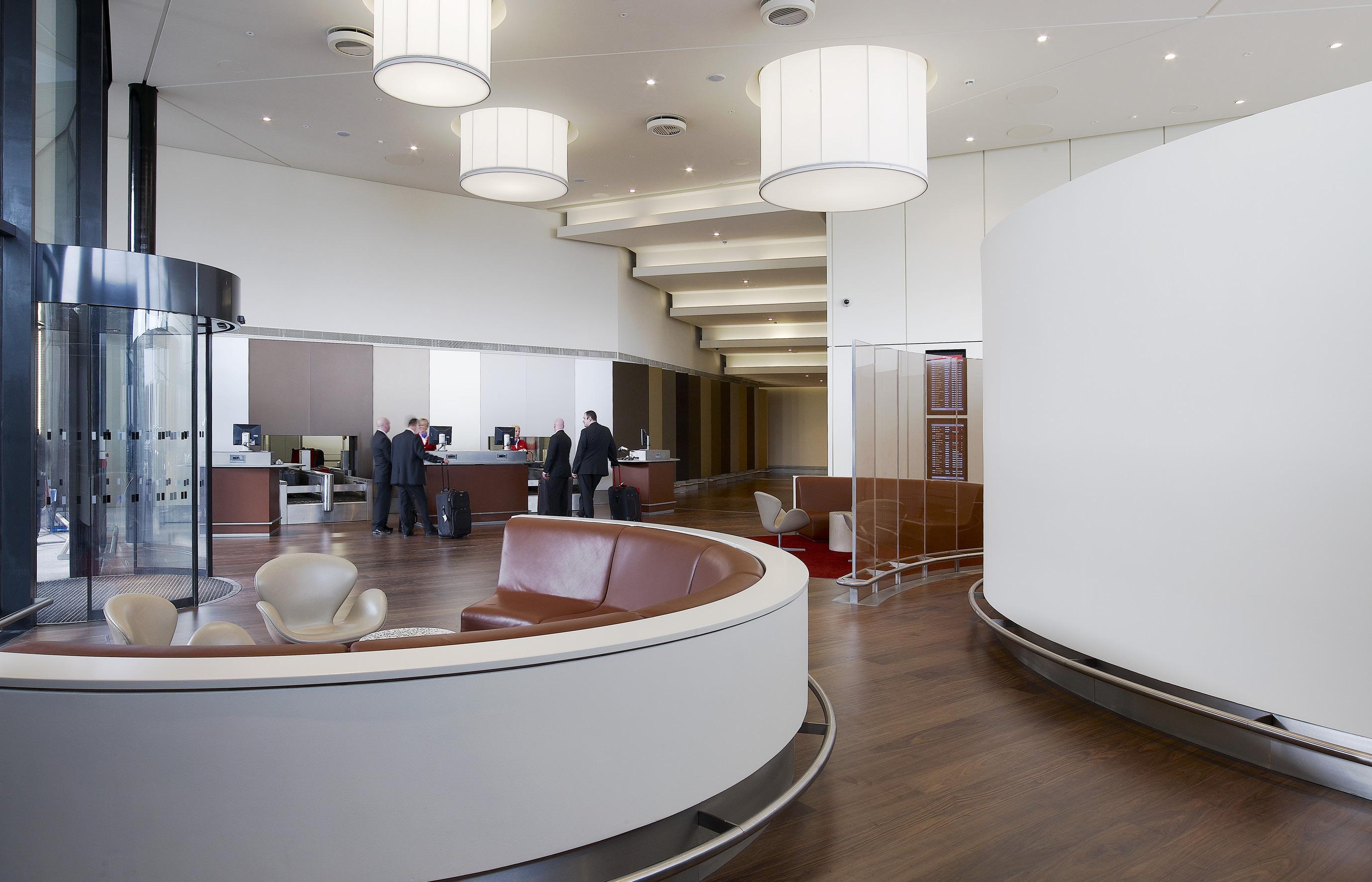
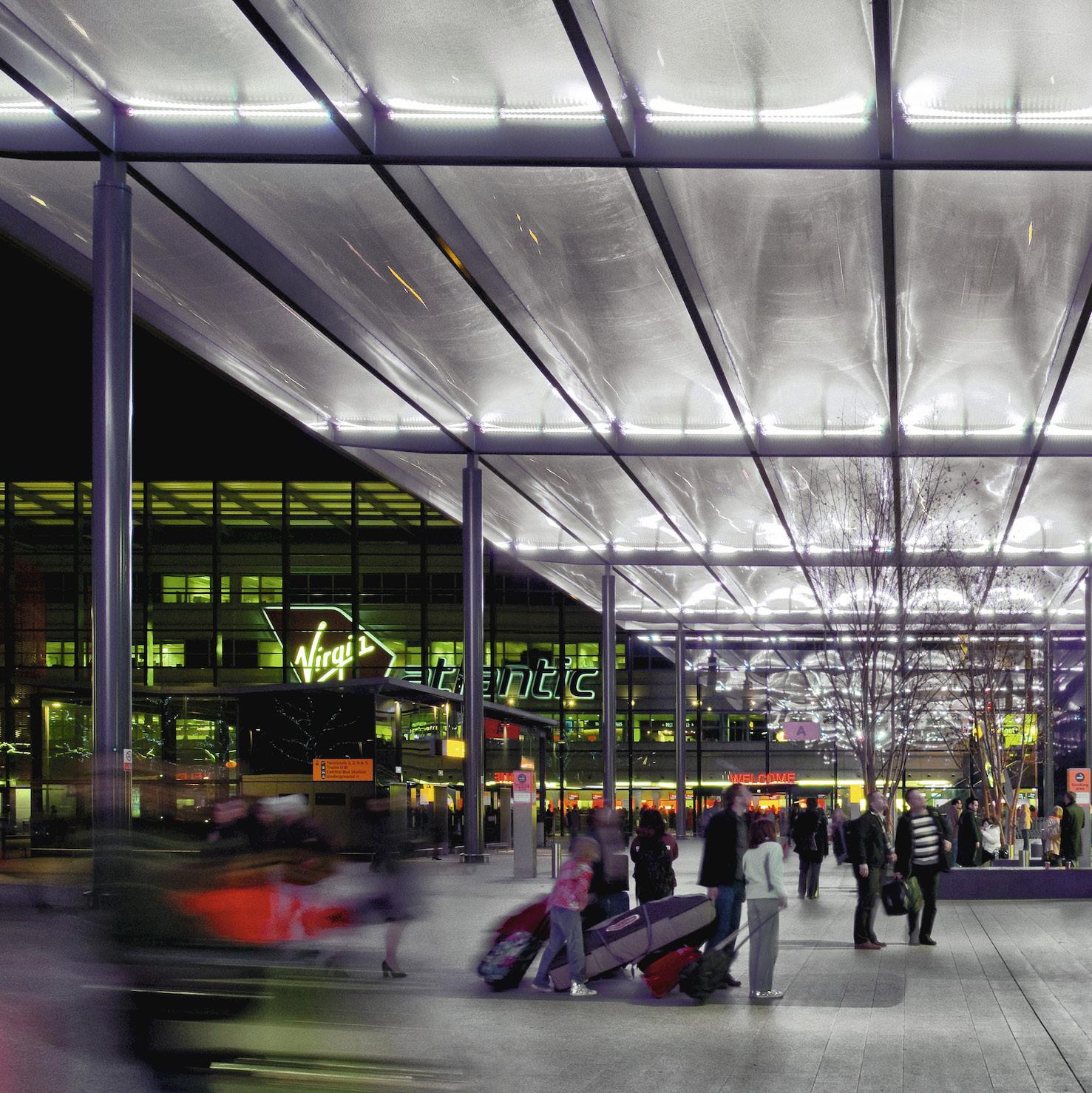
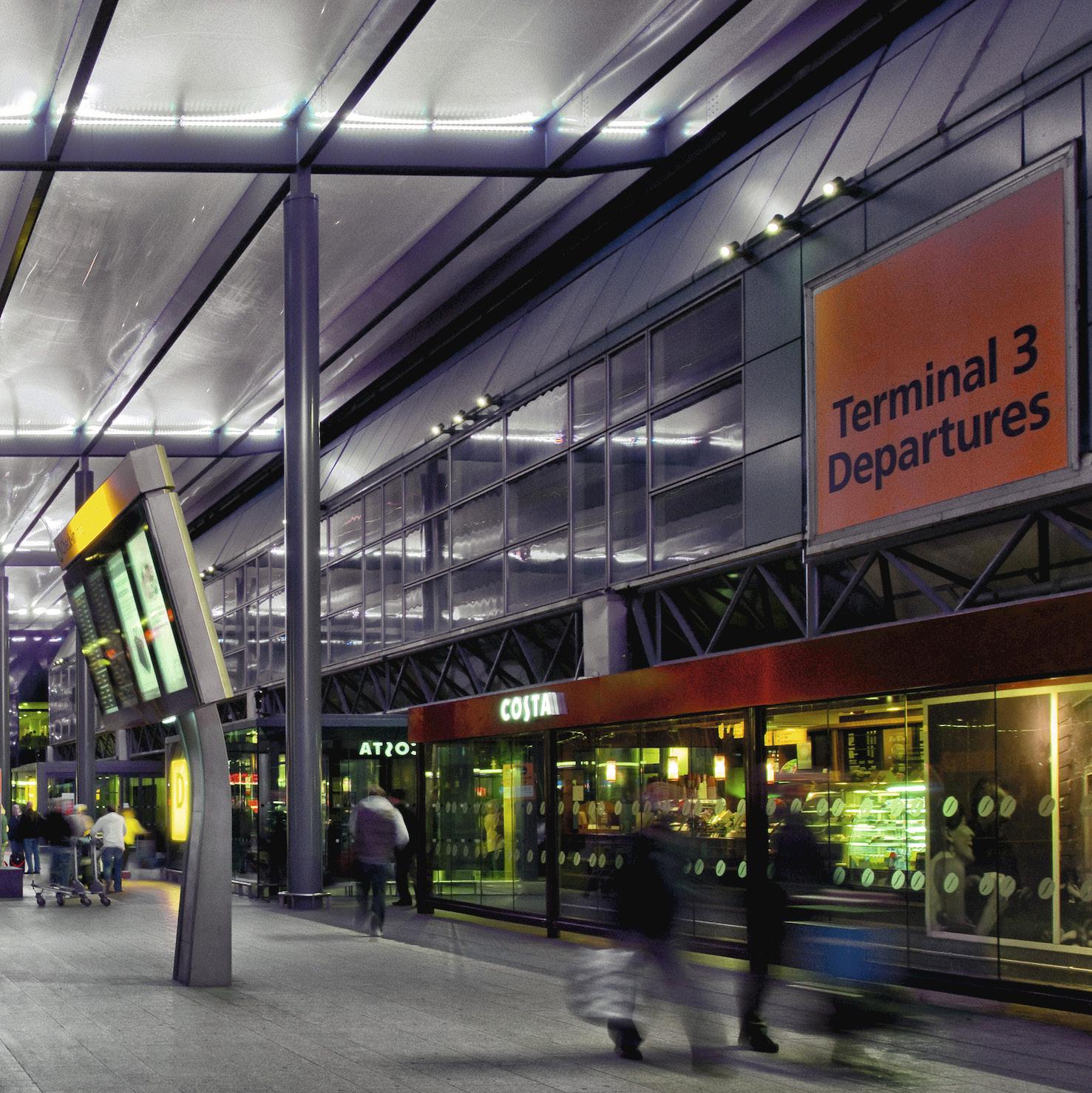
Foster + Partners’ design provides a new four lane drop off forecourt, creating approximately 40% additional capacity to relieve congestion and provide better access. It features a new 40m-deep pedestrianised plaza with a large canopy in front of the terminal to provide a sheltered area for passengers and clear orientation zones to check-in. A new subway connection from the existing subway to the new plaza improves access to public transport and the provision of kerbside check-in opportunities has been included.
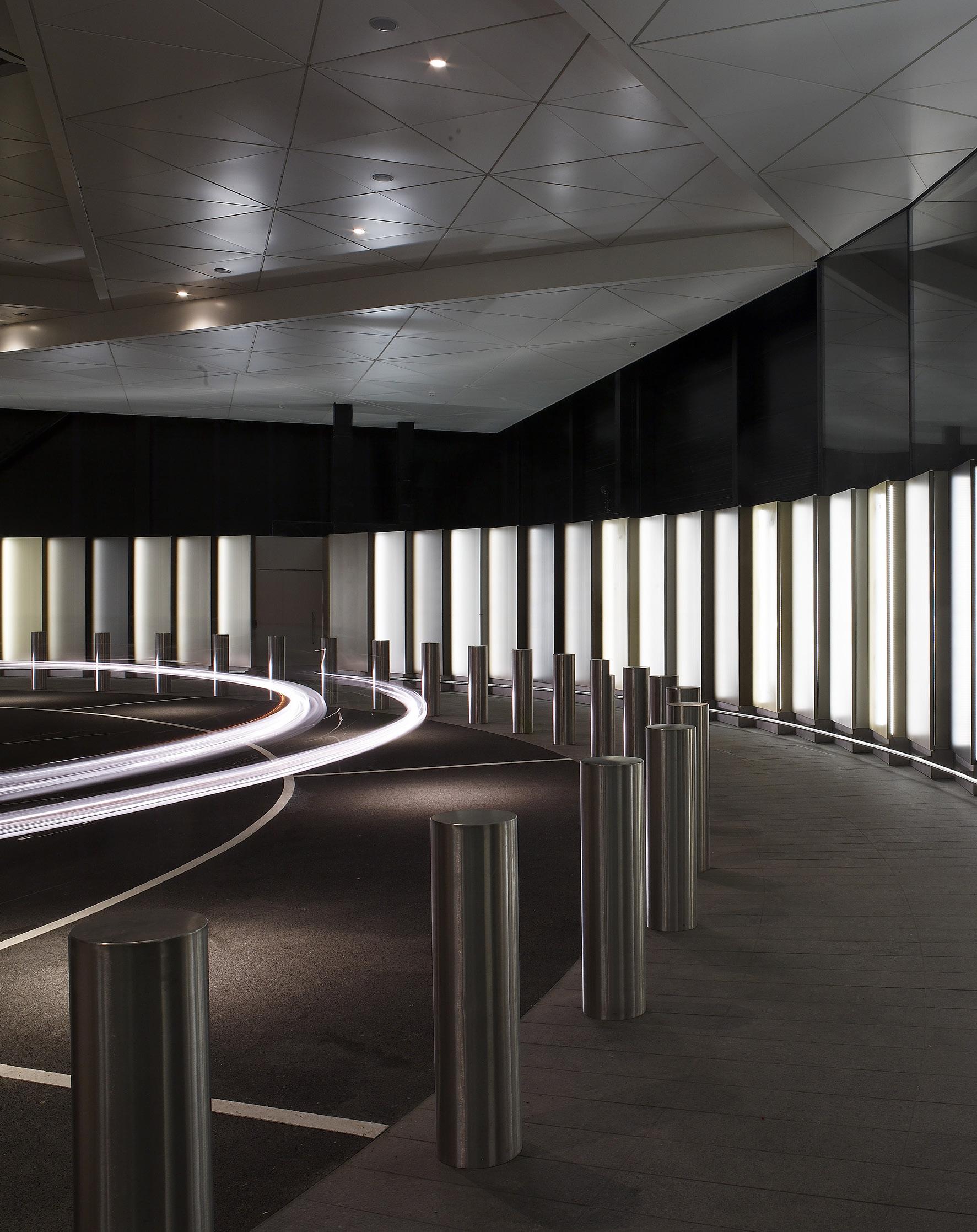
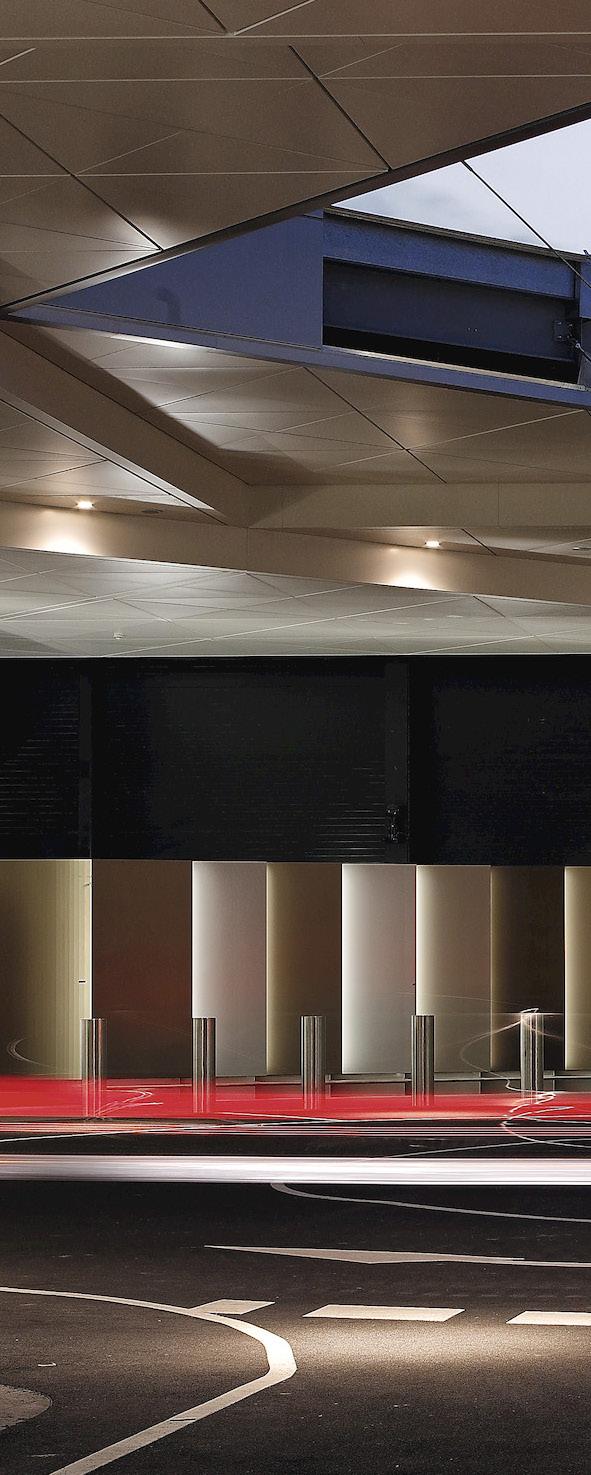
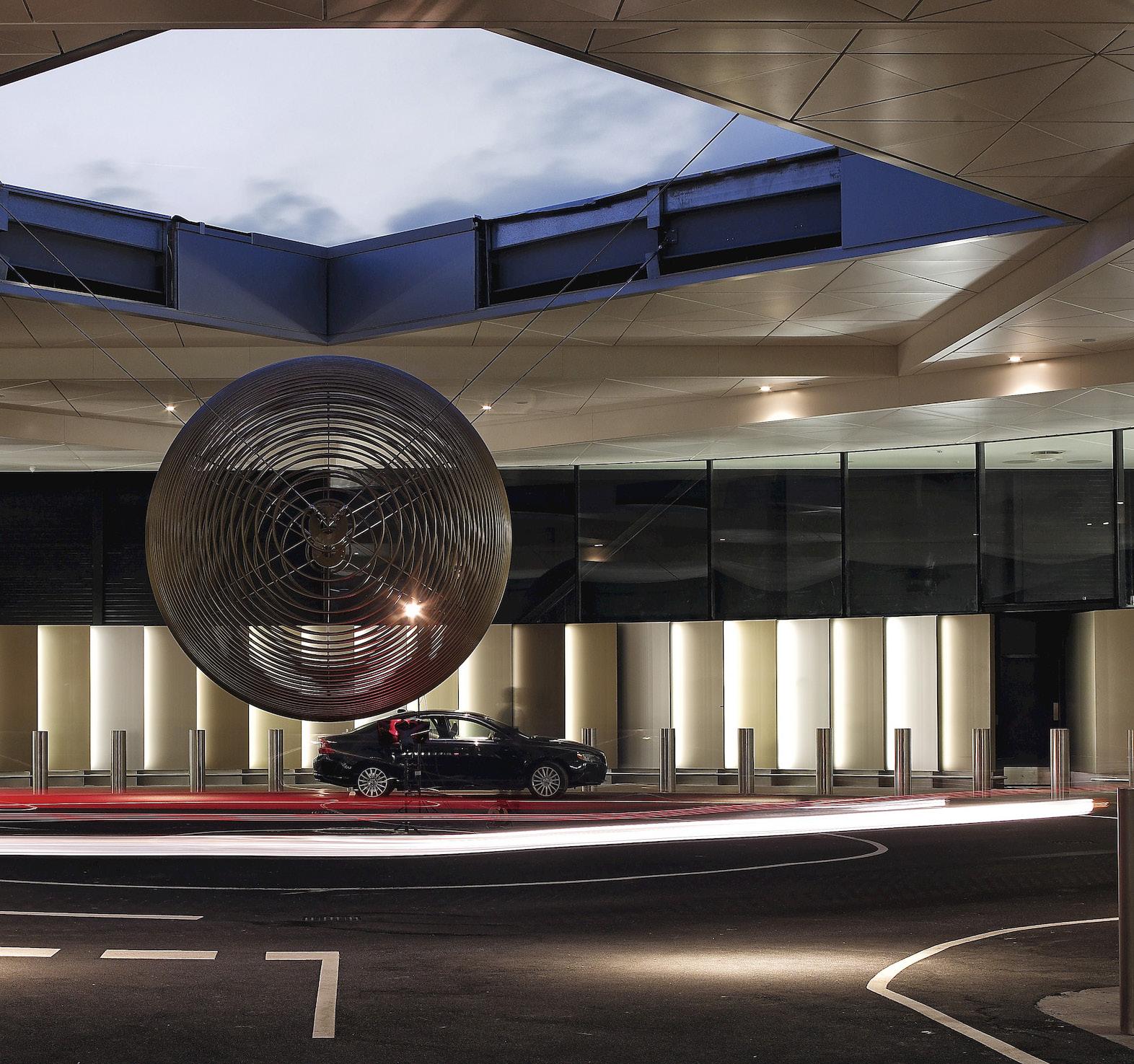
The Virgin Atlantic check-in is part of the remodelled Terminal 3 forecourt. It is accessed via a ramp, lined with shining metallic fin walls. The entrance is a covered circular driveway, with the new pavilion elevated and hidden, demonstrating exclusivity and discretion. An opening at the centre of this private forecourt presents a view up to the sky. Planned around a continuing ribbon wall which directs the passengers to through to security, the bespoke check-in desks facilitate check-in.
The design includes a glass atrium-style extension to the front elevation of the south east side of Terminal 3 to provide approximately 900 m² of additional circulation and check-in space. It also features a new stairway, with lifts and escalators, to provide passengers with easier access to departure areas.
145
Client BAA
In November, [Virgin Atlantic] unveiled the latest and most enjoyable check-in we’ve experienced –promising (and what is better, delivering) just ten minutes from chauffeured limo to lounge.
Sara Henrichs Wallpaper, 1st January 2008
146
“
147
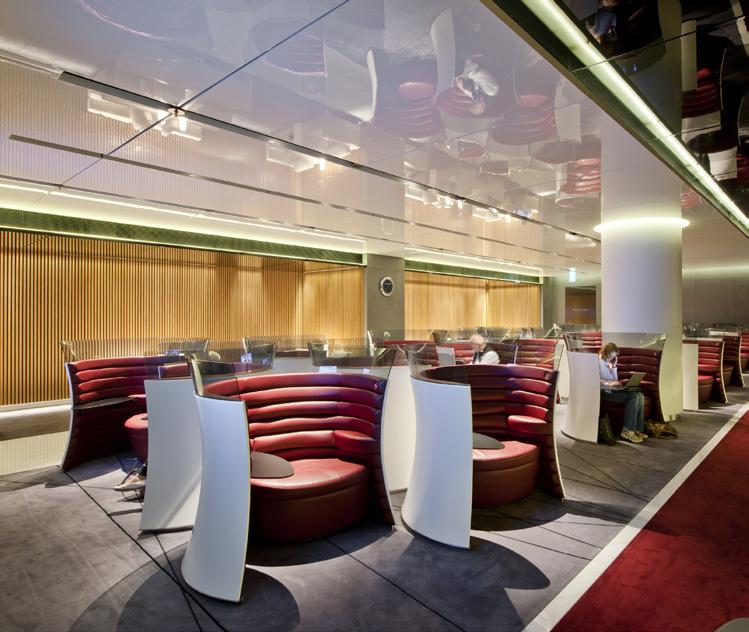
Cathay Pacific Lounges, Hong Kong International Airport
Hong Kong, 2008 – 2010
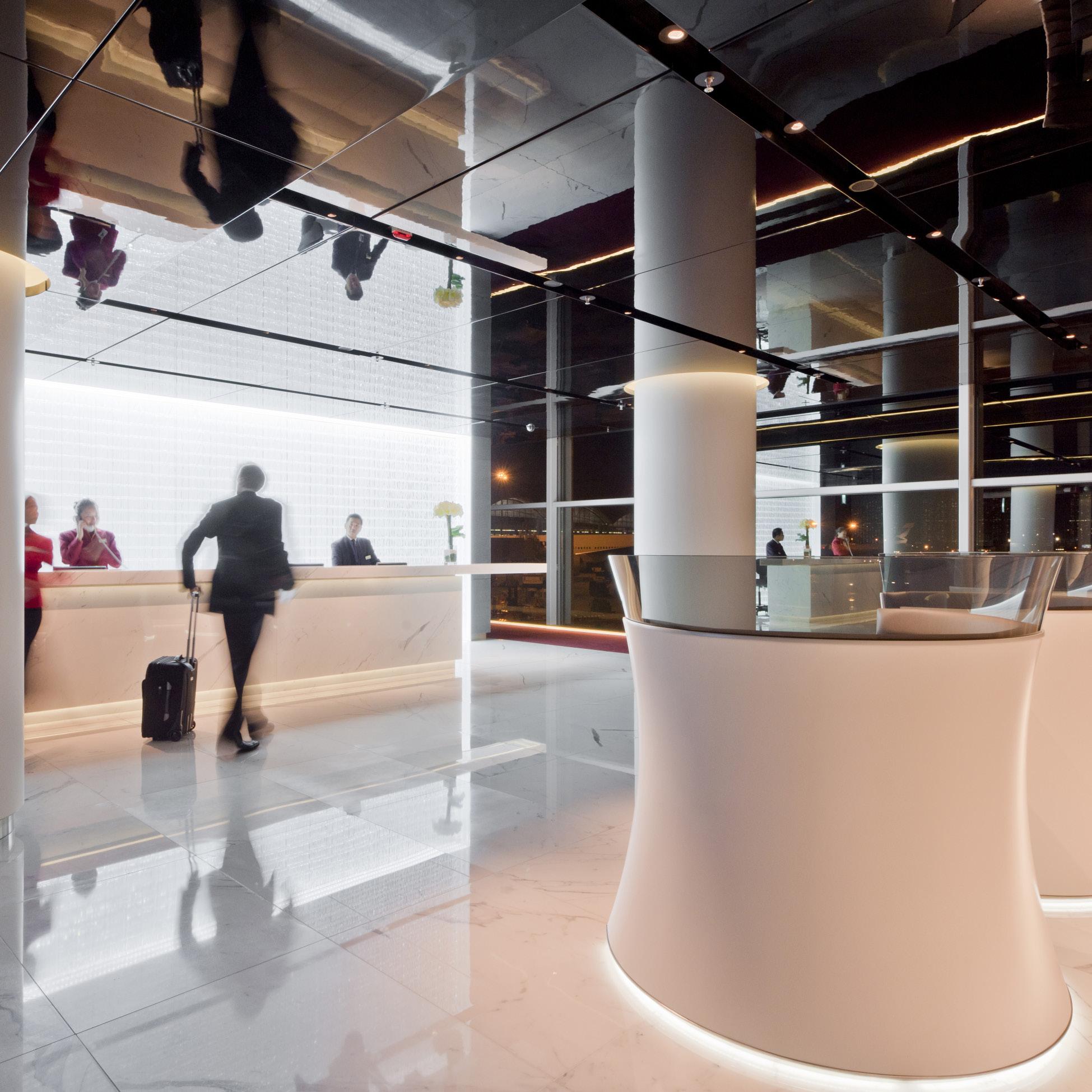
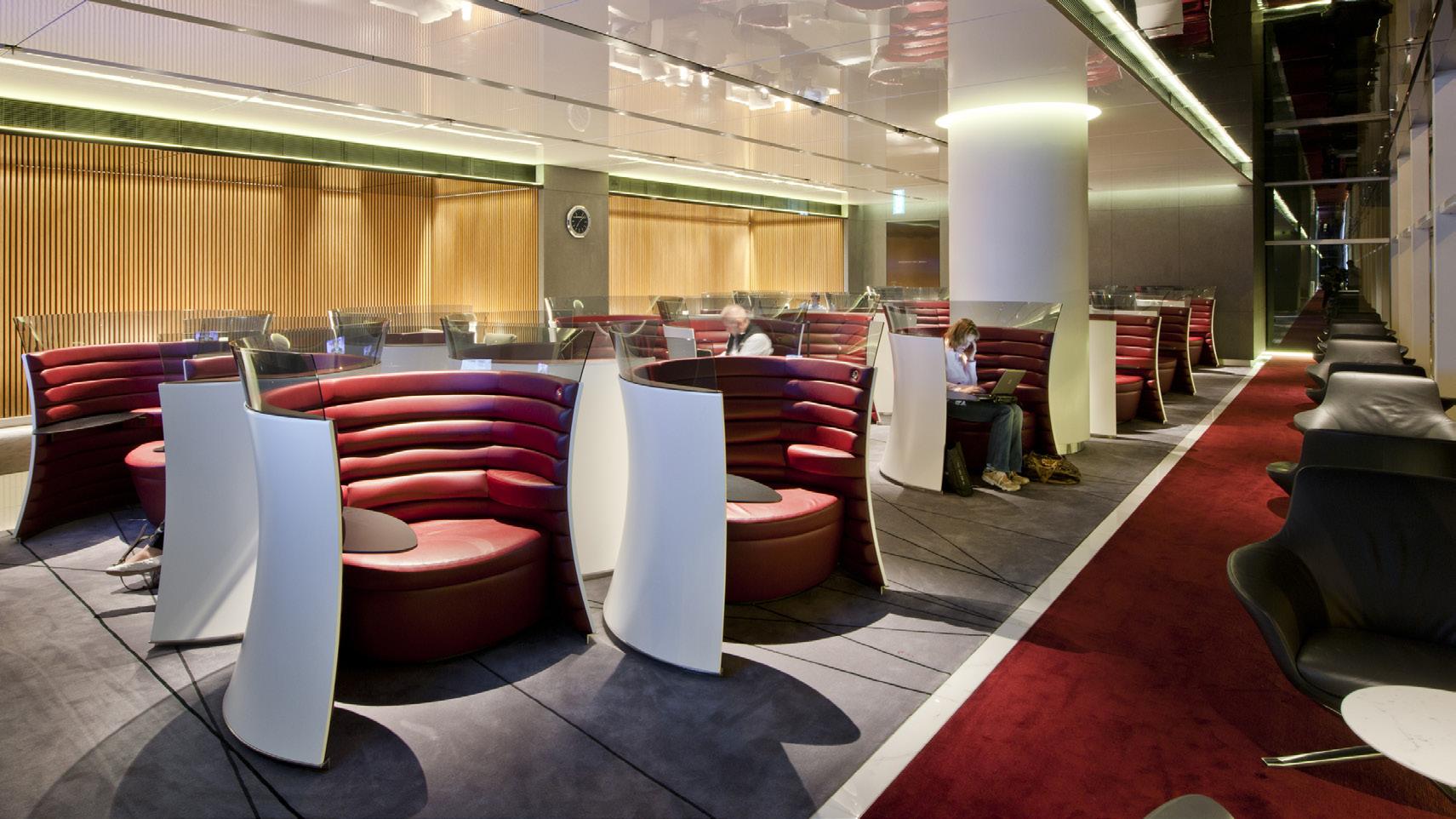
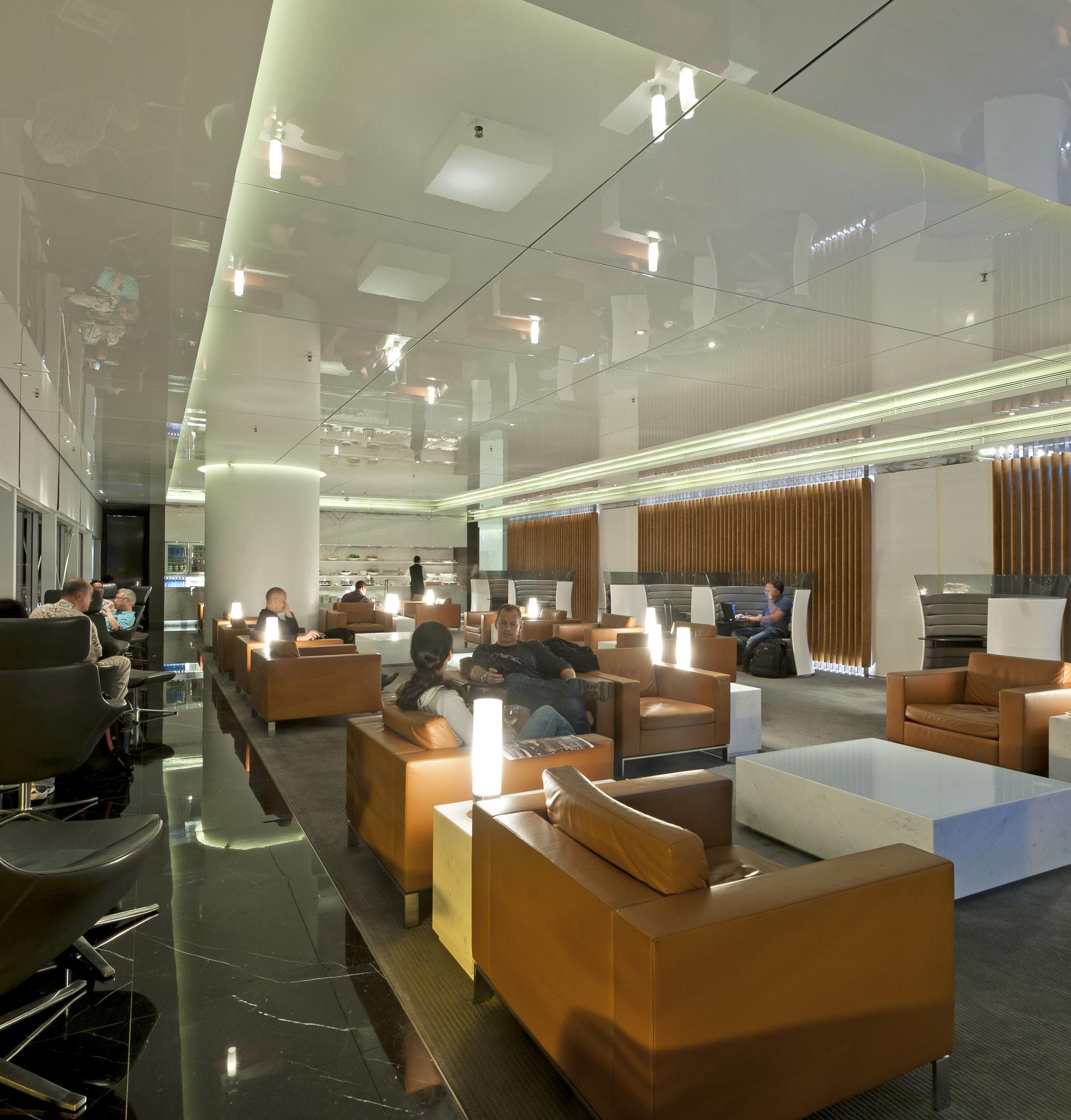
‘The Cabin’ is the first in a series of lounges for Cathay Pacific at Hong Kong International Airport. Combining the highest quality materials with a new seating system designed by Foster + Partners, the lounge is intended to transform the experience for passengers using Hong Kong’s flag carrier. The design supports Cathay Pacific’s concept for a high-quality lounge that can accommodate both First and Business Class passengers, while maximising the available space for relaxation and the airline’s range of hospitality facilities.
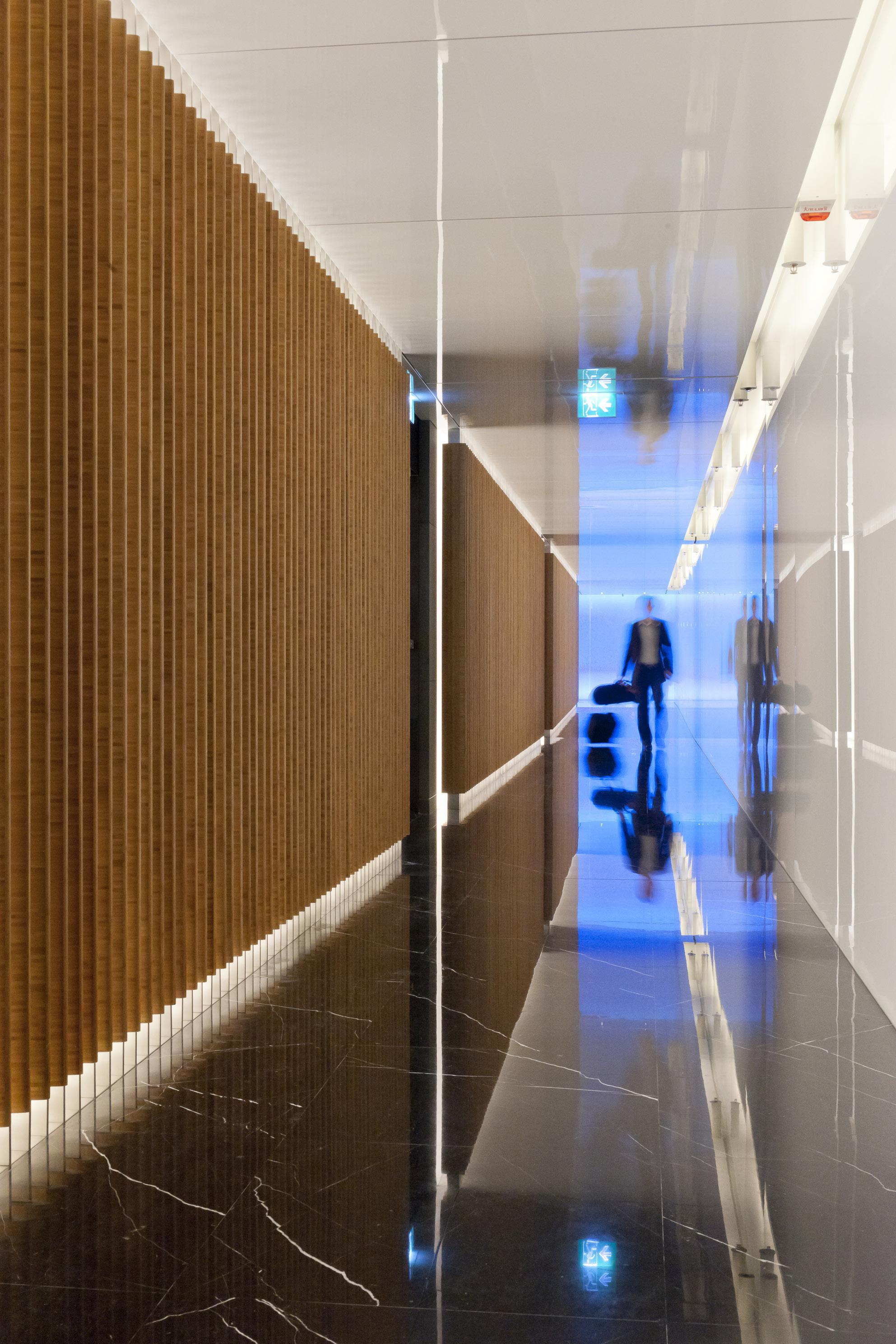
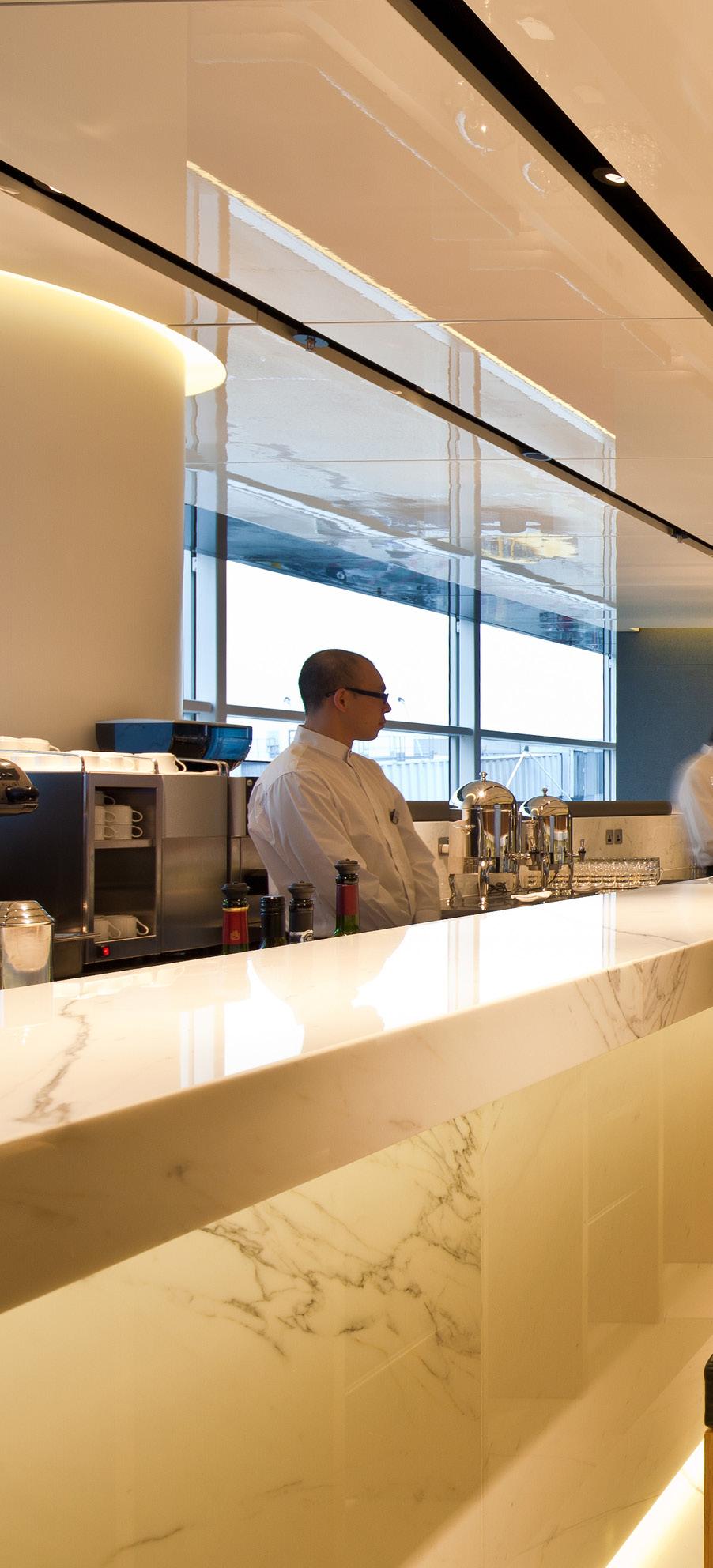
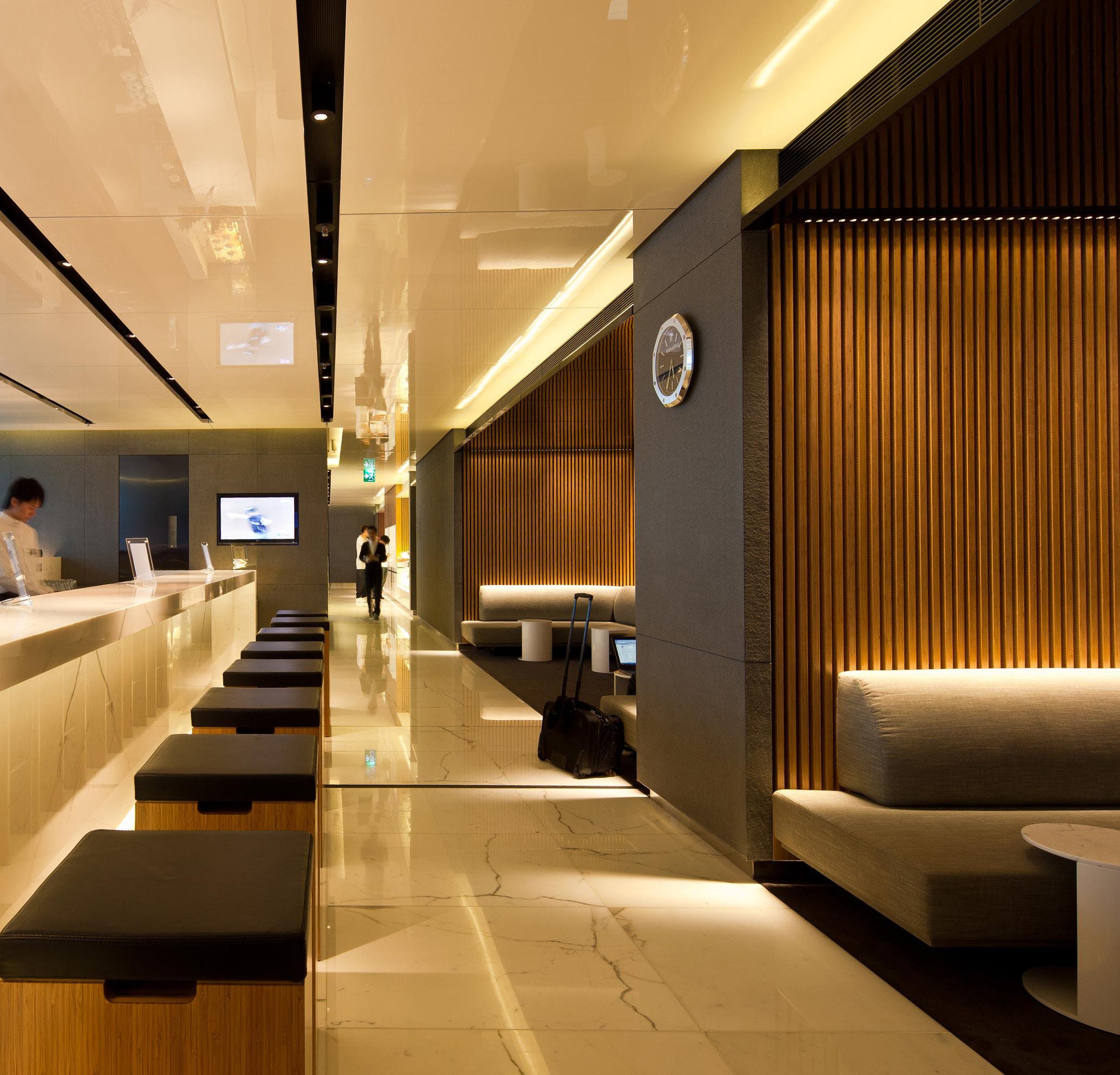
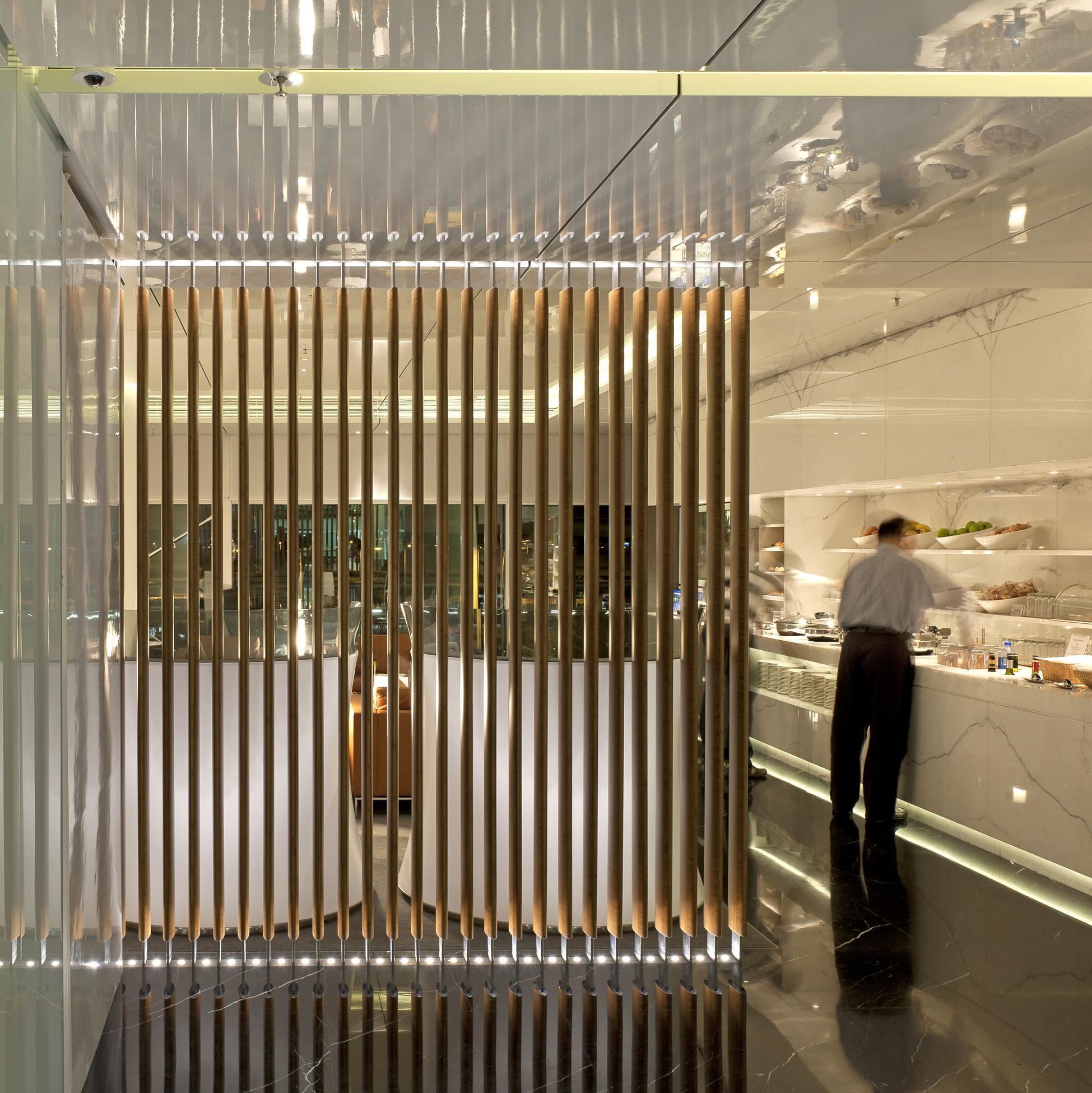
To the right of the entrance is an ‘IT zone’, easily accessed from the reception area, while to the left there is ‘The Deli’, ‘The Health Bar’ and the ‘Relaxing Zone’. The linear arrangement of spaces is accessed from a long red carpet, which runs along the floor to ceiling windows of the terminal building. In keeping with Foster + Partners’ original design intent for the airport, all spaces benefit from daylight and airside views. The materials palette combines marble, leather upholstery and bamboo, with a highly reflective ceiling.
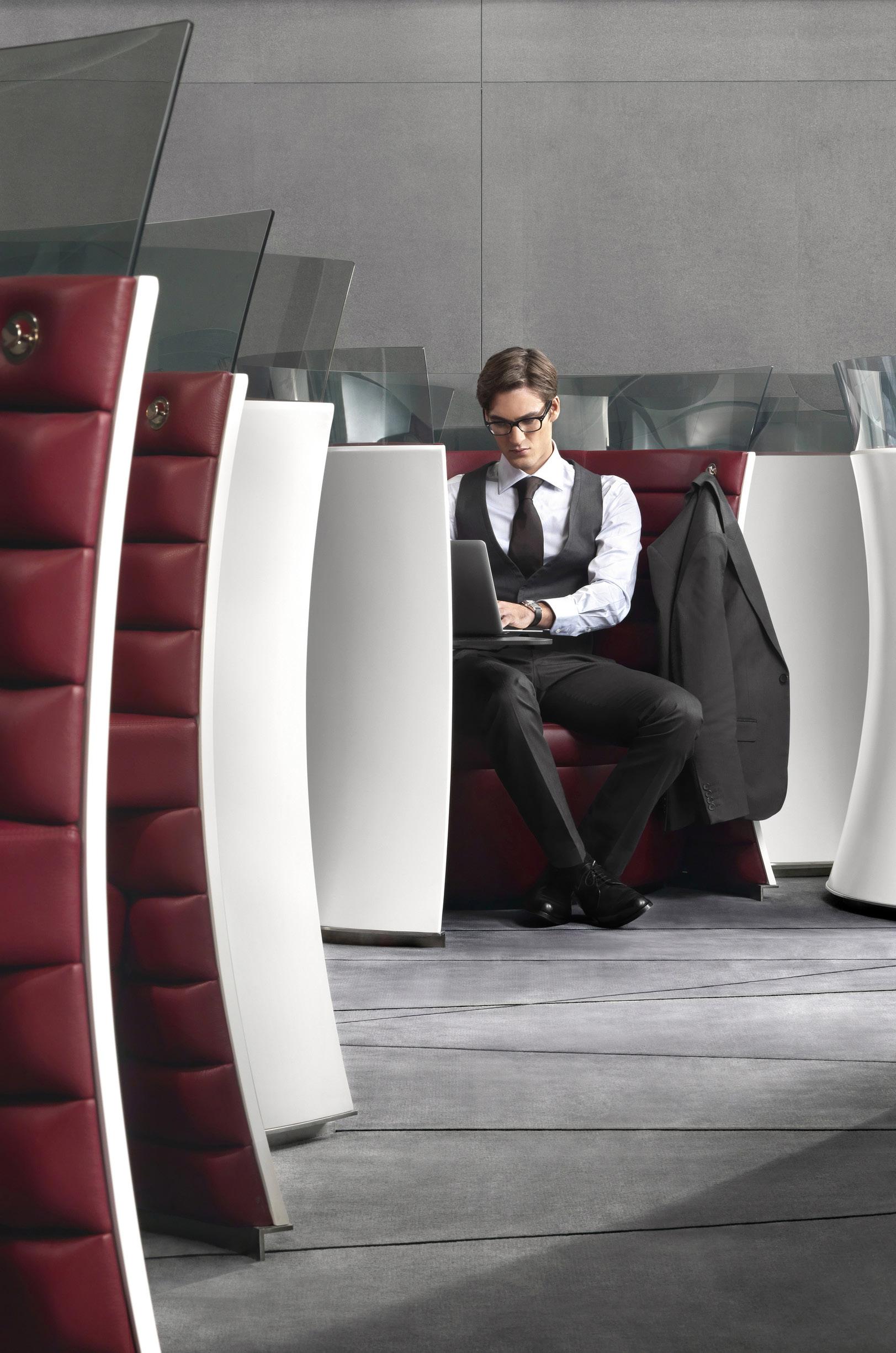
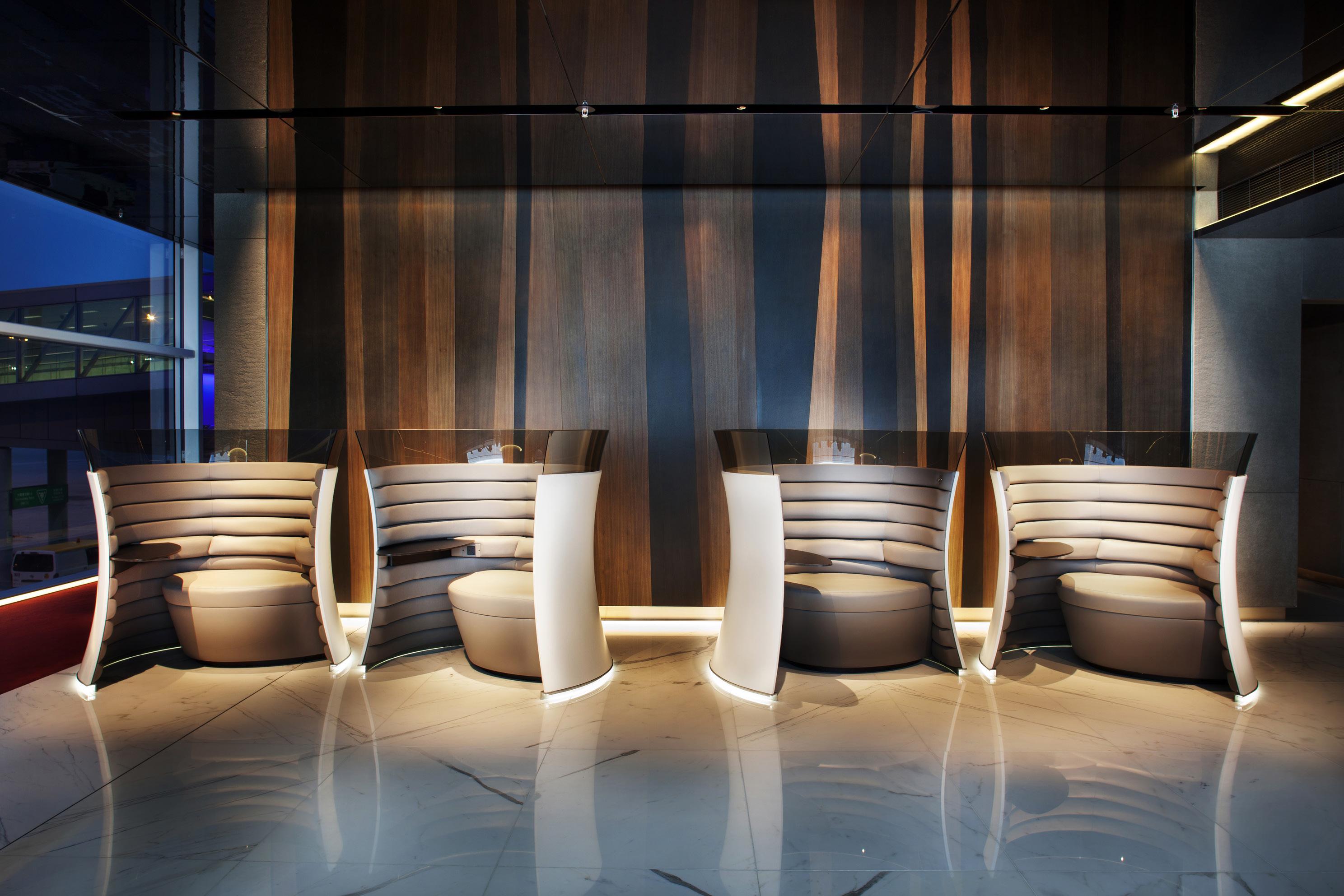
The practice has designed the interiors, as well as most of the furniture, including the Cathay Solus Chair, manufactured in Italy by Poltrona Frau. Its hourglass form rises from a circular base to create a private space for individual travellers. The chair’s soft leather upholstery is enclosed by a solid, lacquered shell. Designed to function as part of a cloud-like cluster of chairs, as well as providing a secluded space to eat, work or relax, its distinctive curved form was the result of studies into the different ways guests adapted the existing lounge furniture. As well as a wide, comfortable seat, the chair integrates a power supply and a table, which can be used as an informal desk.
151
Client Cathay Pacific Airways Limited Team Arup Davis Langdon InProjects Isometrix
152
153
154
“
...our heart starts racing at the thought of spending a few hours within its walls.
Condé Nast Traveller
8 May 2012
155
156
HACTL Superterminal, Chek Lap Kok
Hong Kong 1992 – 1998
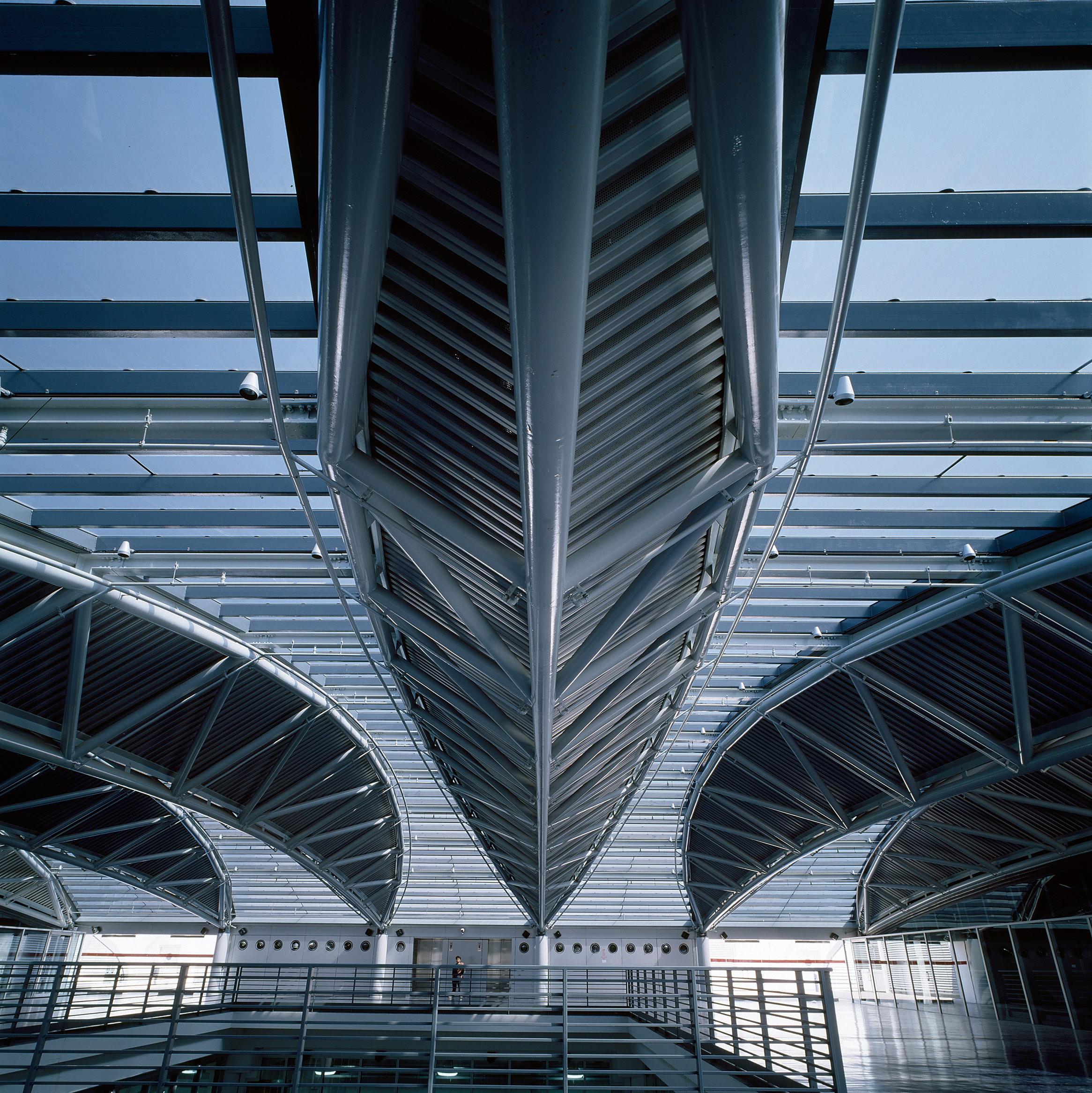
The Hong Kong Air Cargo Terminal (HACTL), Superterminal 1, at Hong Kong International Airport is the largest and most technologically advanced single cargo terminal in the world. The Superterminal consists of two buildings: the Express Centre, a two-storey express cargo and courier facility; and the Cargo Terminal, a seven-storey cargo-handling facility. Together, these two buildings have the capacity to handle 2.5 million tonnes of cargo annually – more than two-and-a-half times the capacity of its nearest rival, Heathrow Airport.
The Express Centre provides express cargo and courier operators with their own sorting facilities and can process 200,000 tonnes of cargo a year. Sitting alongside it, the Cargo Terminal is an enormous building, 200 metres wide by 290 metres long. Running along the length of the building’s sides are two fully automated container storage racking systems, each 250 metres long and 45 metres high, and two bulk storage racking systemsthe largest combined racking system ever built.

159
Client Hong Kong Air Cargo Terminal Ltd Ove Arup & Partners Team Levett & Bailey
Stansted Airport
England 1981 – 1991
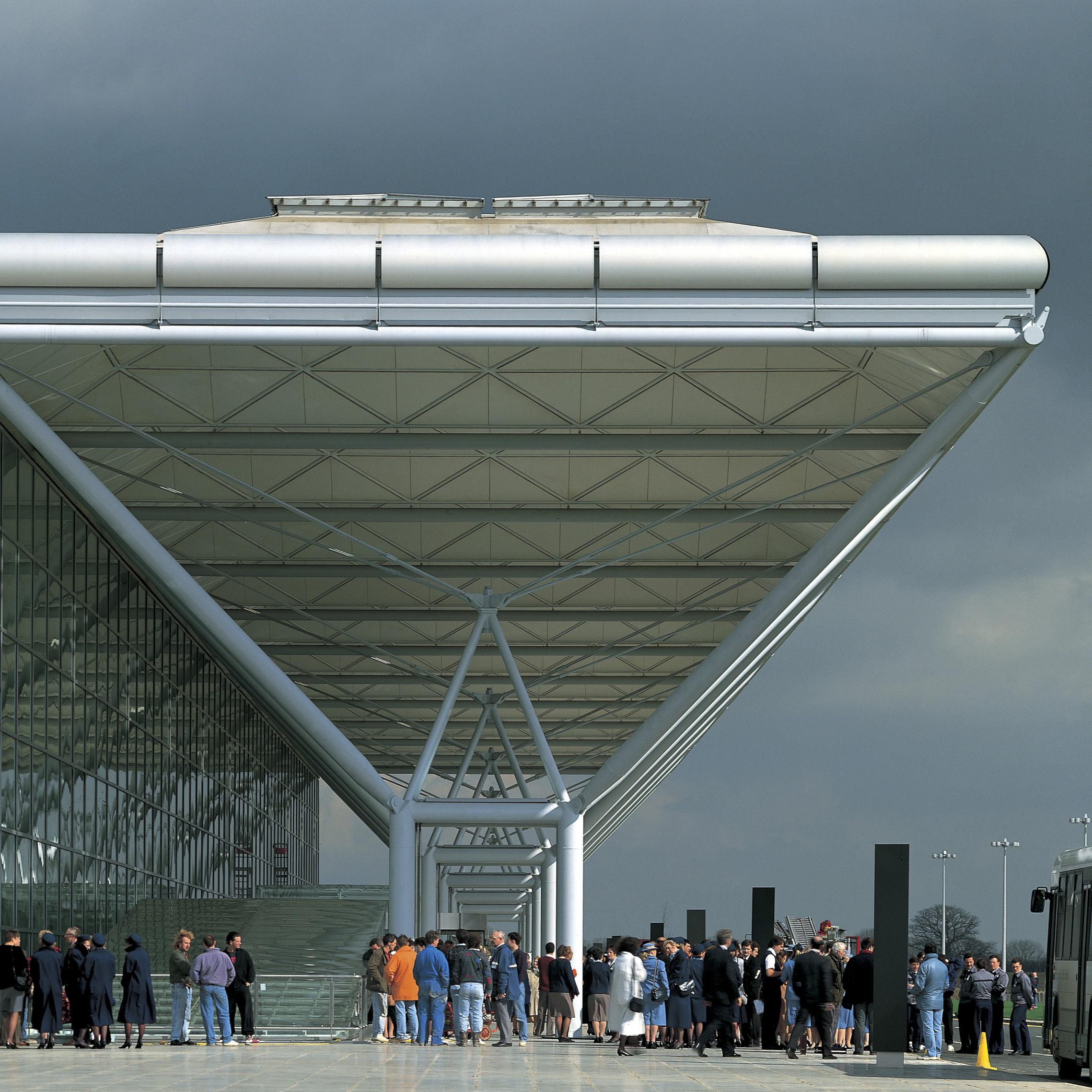
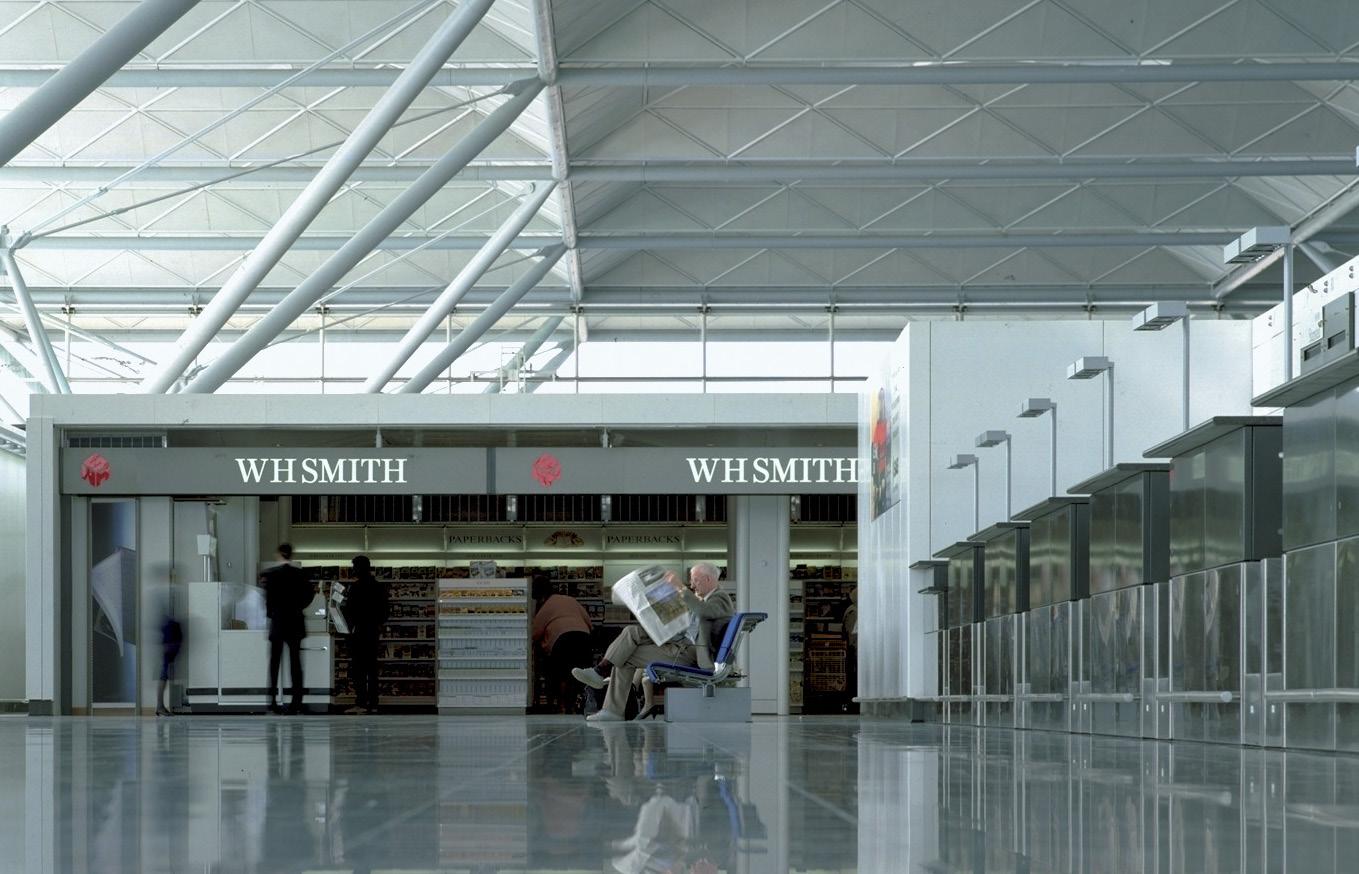
Stansted Airport challenged all the rules of airport terminal design. It went back to the roots of modern air travel and literally stood conventional wisdom on its head. From the traveller’s point of view, movement through the completed building is straightforward and direct – there are none of the level changes and orientation problems that characterise most airports. Passengers progress in a fluid movement from the set-down point through to the check-in area, passport control and departure lounges, where they can see the planes. This degree of clarity was achieved by turning the building ‘upside down’, banishing the heavy environmental services usually found at roof level to an undercroft that runs beneath the concourse floor. Energy efficient, environmentally discreet within its rural setting, technologically advanced yet simple to use and experience, Stansted has become a model for airport planners and designers worldwide.
161
Client BAA Team Ove Arup & Partners BAAC Beard Dove Currie & Brown Claude and Danielle Engle Lighting ISVR Consultancy Services University of Bristol
“
Its volume, grace and optimism encourages everyone to breathe with the building.
Declan Donnellan The Guardian, 6 December 2004
163
Incheon International Airport T2
Incheon, South Korea 2009
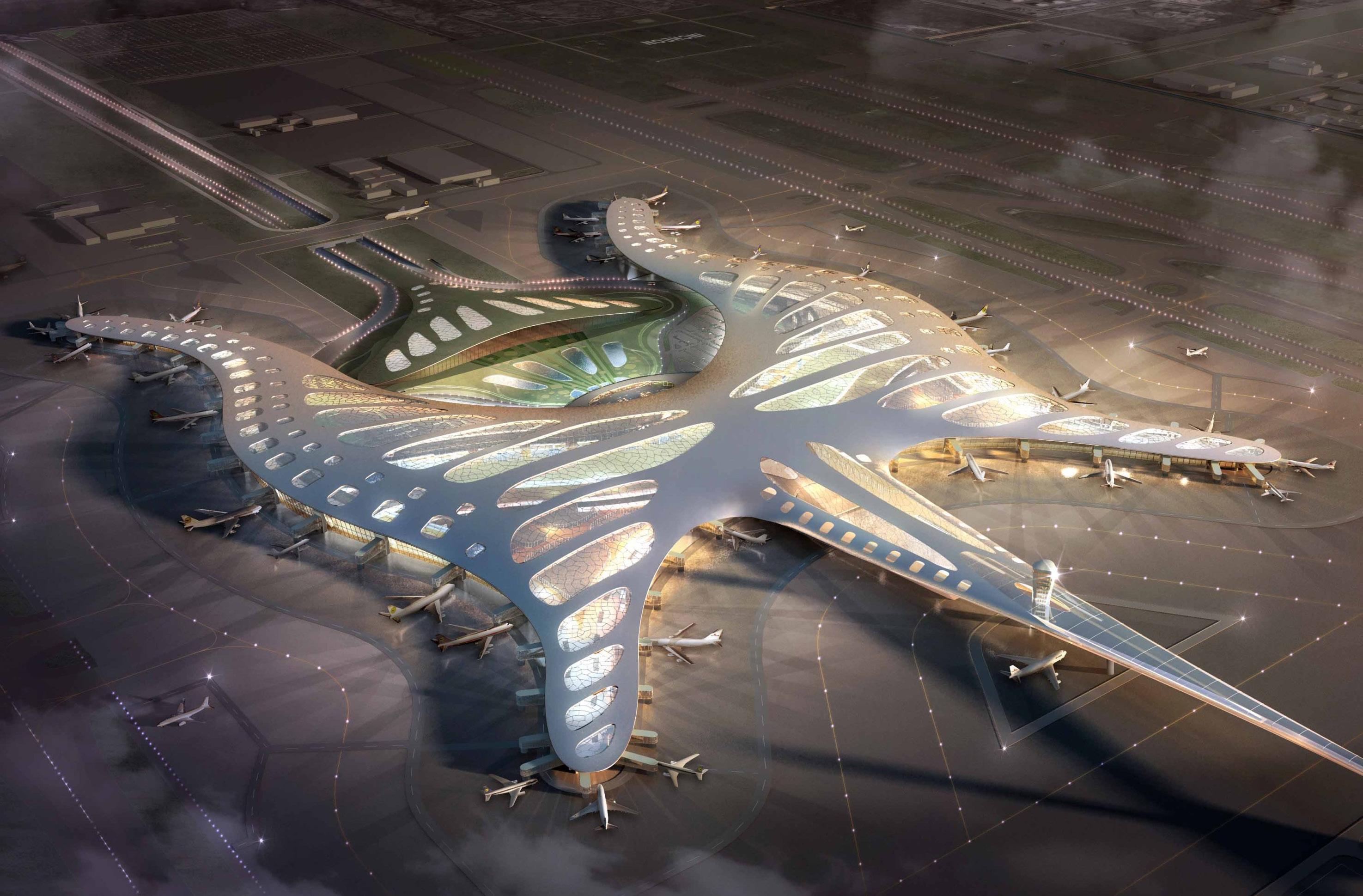
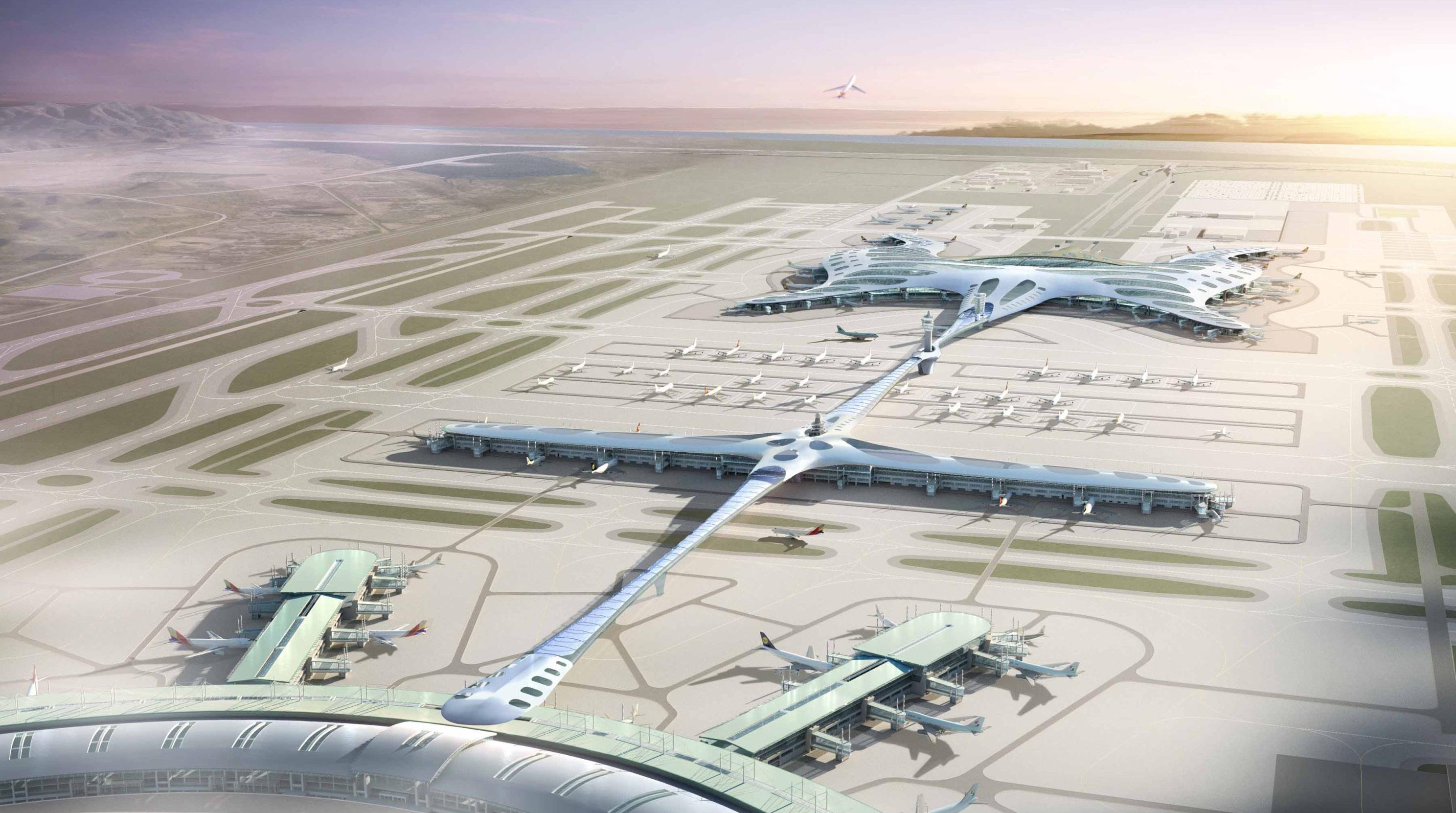
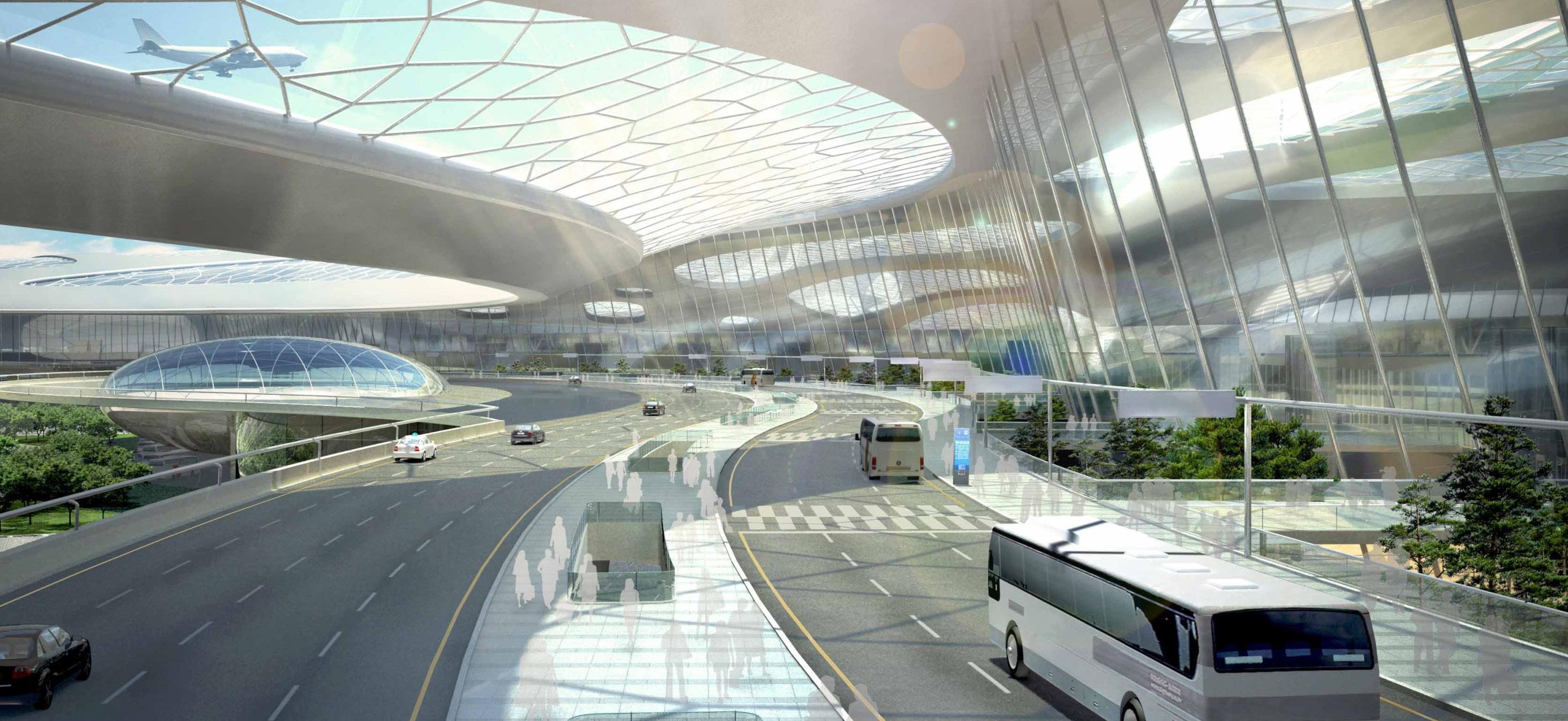
Foster + Partners with Heerim Architects and Landrum and Brown created the masterplan for the expansion of Incheon International Airport in 2009, including terminal rail access control towers and airside support areas. The solution included a new 72-gate terminal, 20mppa with plans for growth to 40 mppa, 600-700,000 m2. Our aim was to build on the success of T1 principles of simple flows and transitions defining sustainable design standards, achieving a 65% reduction of energy consumption in comparison to conventional airports, with systems designed to minimize heat loss while maximizing the use of reusable energy.
165
Client Heerim & IIAC Gross 700,000m2 New Gates 72
166

167
Riverside, 22 Hester Road
London SW11 4AN
T +44 20 7738 0455 fosterandpartners.com
London | Abu Dhabi | Bangkok | Beijing | Buenos Aires | Dubai | Hong Kong
Madrid | New York | San Francisco | Shanghai | Singapore | Sydney
