THE FRIENDS OF SOUND HORSES

Our Mission Statement
To promote “sound” naturally gaited horses, with a specific emphasis on Tennessee walking Horses. (“Sound” means not sored)
Importance is placed on education regarding the humane care, training and treatment of all gaited horses. FOSH will only support flat shoed horses and will never endorse any event that uses stacks and/or chains as action devices, nor any mechanical, chemical or artificial means to modify the natural gaits of the horse.
FOSH focuses on three areas for gaited horses:
1.Educating people on sound training principles
2.Sanctioning sound shows and events
3.Working to end soring
As the United States of America grew from the original 13 colonies, settlers needed strong, reliable utility horses, ones which could be used for many different chores. These horses came from crossing the Narragansett and the Canadian Pacing Horses with the European and American Thoroughbreds and the Godolphin Arabian strains.
Soft-gaited or easy-gaited (no trot) horses which came from these out-crossings were used to carry the women and children south and west as this country developed. They were used to plow the fields, pull the buggies to church on Sundays, carry the doctor to visit his patients, and to carry the children to school. These early gaited horses were called Saddlers.
Many people like to show their Saddlers off by racing them or having contests which showed the horses doing special gaits for long periods of time. Different areas of the country found certain gaits more desirable for their regions. So the farmers in those areas began to breed for a more specific horse which could do more specific gaits.
Breeding of certain horses began to produce what would later became the ASB or the American Saddlebred, the Morgan, the Standardbred, the Mountain Horses, and later, the Tennessee Walking Horse, the Missouri Fox Trotting Horse, and the American Quarter Horse. All of these wonderful American breeds helped to define what was best in our great growing country.
The distinct head shake of the Tennessee Walking Horse, along with its syncopated four beat flat walk and running walk is attributed to the crossing of a Morgan mare and a Standardbred stallion. ALLEN F-1 was not considered to be anything special as he grew and was put to work on many different farms. But when people realized his special gaits and how he passed them on to his offspring, special he became!
These wonderful gaits, the flat walk and the running walk, were valued especially by the plantation owners and their overseers to inspect the acre upon acre of fields which had to be ridden every day. The furrows and rolling hills were covered effortlessly by these early Plantation Walking Horses, easily covering mile after mile without tiring the horse or rider. The ground covering flat walk and running walk were never meant to be showy or flashy gaits. By driving the hind legs under and over striding where the front feet had left the ground; by pulling forward with the front legs as the head nods down, tremendous power is exerted which carries the horse and rider forward in a smooth flowing motion very pleasing to see and to ride.
Today, the flatshod or barefoot Tennessee Walking Horse can be seen performing the traditional gaits passed on from the early great horses which have taught us what is to be revered about the breed.
Julie T.
Principle #1
All FOSH events adhere to the requirements of the Horse Protection Act
Principle #2
Horses are to be treated with dignity, respect, and compassion.
Principle #3
Horses must be presented as sound in both body and mind.
Principle #4
The preferred way of going is natural, correct, and without exaggeration.
Principle #5
Shoeing is intended only for the protection of the foot and its structure. Barefoot horses are both welcomed and encouraged where practical.
Principle #6
Handlers & riders are expected to use training techniques and equipment that conform to the highest humane standards as recognized by the general equestrian community.
Principle #7
Exhibitors have a duty to conduct themselves in an orderly, responsible, and sportsmanlike manner.
FOSH is a national leader in the promotion of natural, sound gaited horses and in the fight against abuse and soring of Tennessee Walking Horses. For more information about FOSH or to become a member, please visit www.fosh.info or call 1-800-651-7993.
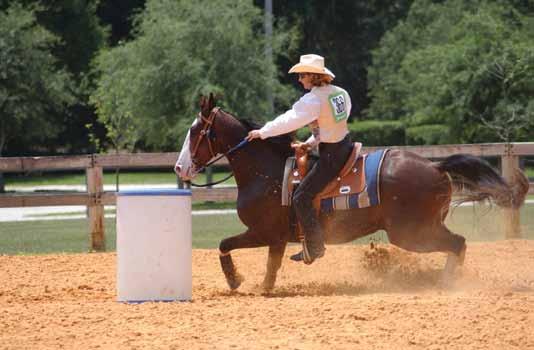
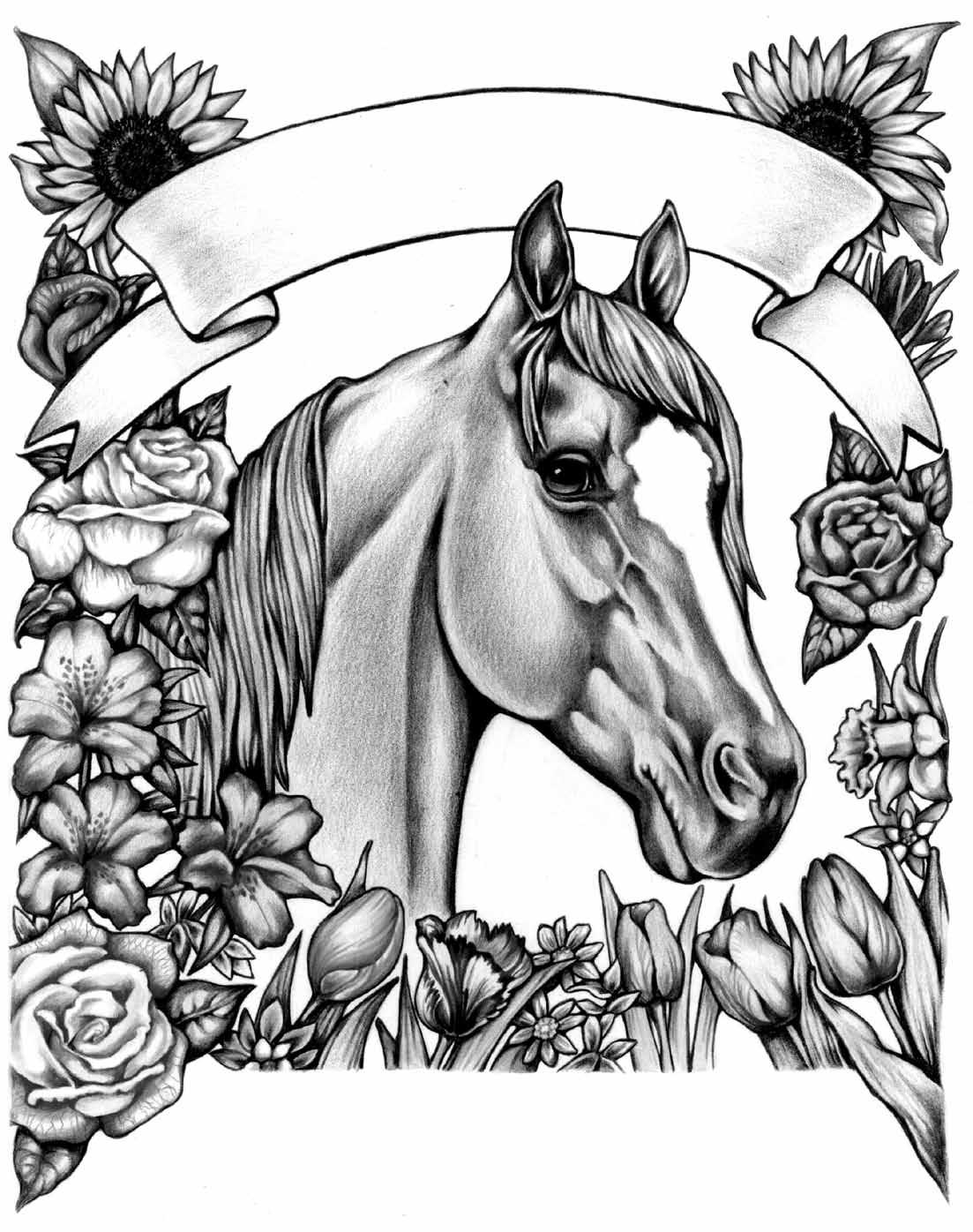
Sharon Tondreau is an illustrator living in Spring Hill, Florida. A horse lover from childhood, she had always admired Tennessee Walking Horses, not only for their smooth gaits, but for their unique and gentle personalities.
Sharon owns two Walking Horses. Her gelding, Lacy’s Desert Storm, excels in barrel racing and pole bending and competes in the National Barrel Horses Association. He qualified for the NBHA Finals in 2001.