
THE FORWARD STAR JOURNAL

A LOVE LETTER TO REMEMBRANCE AND RESISTANCE
by Halima Opata
MEMBER SPOTLIGHT: L.I.F.E. WITH DONTAE SHARPE

A Love Letter to Remembrance and Resistance by
Halima Opata
Well, my dear sisters and brothers, I’ll tell you in the words of the great Langston Hughes:
“Life for me ain’t been no crystal stair. It’s had tacks in it, And splinters, And boards torn up, And places with no carpet on the floor–Bare.
But
all the time
I’se been a-climbin’ on…”
That’s our story. Life ain’t been no crystal stair.
The transformation of generations to come, our shared trajectory, was disrupted by the transatlantic slave trade. No, not everything is about slavery, but if you dig deep into our history, you begin to see how things just
haven’t been right since we were stripped and stolen from our homeland and set apart across oceans. Our culture, our traditions, our languages, our spirituality, our names, demonized and stolen. And we have yet to recover.
See beloved, I cannot begin to profess my love for you without first letting you know that I see you in the totality of your story. Not just the highlights, not just the victories. I see the parts this world told you were not worth remembering. I see the weariness in your bones, but also the fire in your belly. I see you.
So look in the mirror. Tell me, do you love yourself in the fullness of your story? Or only the parts you can pick out and call pretty? It would be a disservice to yourself and all the generations to come if you don’t share all of your story. The rise of Black nations with kings, queens, emperors, and chiefs. The betrayal of our own kind that led to our enslavement. The tearing apart of our families and the theft of our resources. Then four hundred years of bondage, followed by a federal document that declared us free, and yet, as I write this letter more than a century later, the fight for that freedom still continues.
This refrain, life ain’t been no crystal stair, is more than a line of poetry. It’s a testimony passed down through generations. A truth not just for those who look like me, but for anyone who lies awake at night dreaming of a better world. A world Reverend Nelson Johnson prophesied about. A world our ancestors imagined as they leapt from ships into the ocean. A world where Breonna Taylor, Tamir Rice, and my cousin George Floyd still live and breathe. A world where we know our neighbors. Where
love outpaces hate. Where we lean into Beloved Community. A world with no talented tenth, because true education is accessible to all our people. A world with no rebranded plantations we call prisons and no overseers with badges, but instead, reformed communities with resources and dignity.
We aren’t looking for an illusion of safety or success. We aren’t trying to climb someone else’s fragile crystal stair. Those stairs were never meant to hold us. They crack under the weight of our truth. Let them crumble.
And when they do—when this empire of glass shatters—what will we build in its place? Will we take the pieces and try to construct our own stair of privilege and perceived perfection? Or will we dare to walk through the door of the return and build upon what our ancestors left for us?
A stairway made from community—bricks of memory, mortar made of art, poetry, laughter, and survival.
A home built by the righteous but not like the White House or slave castles, rather a whole new mansion of a world where we all belong.
If hell can exist on Earth, then so can heaven. And heaven doesn’t have to wait for the afterlife. It begins in the hearts and minds of God’s children—no matter who your God is. So let us reimagine freedom. Not as a fantasy, but as a blueprint. Let us build a world with a cornerstone laid not in blood, but in truth, in healing, and in joy.
Reimagine freedom. And bring those ideas to the community table.
In the words of June Jordan, “ We are the ones that we have been waiting for.”
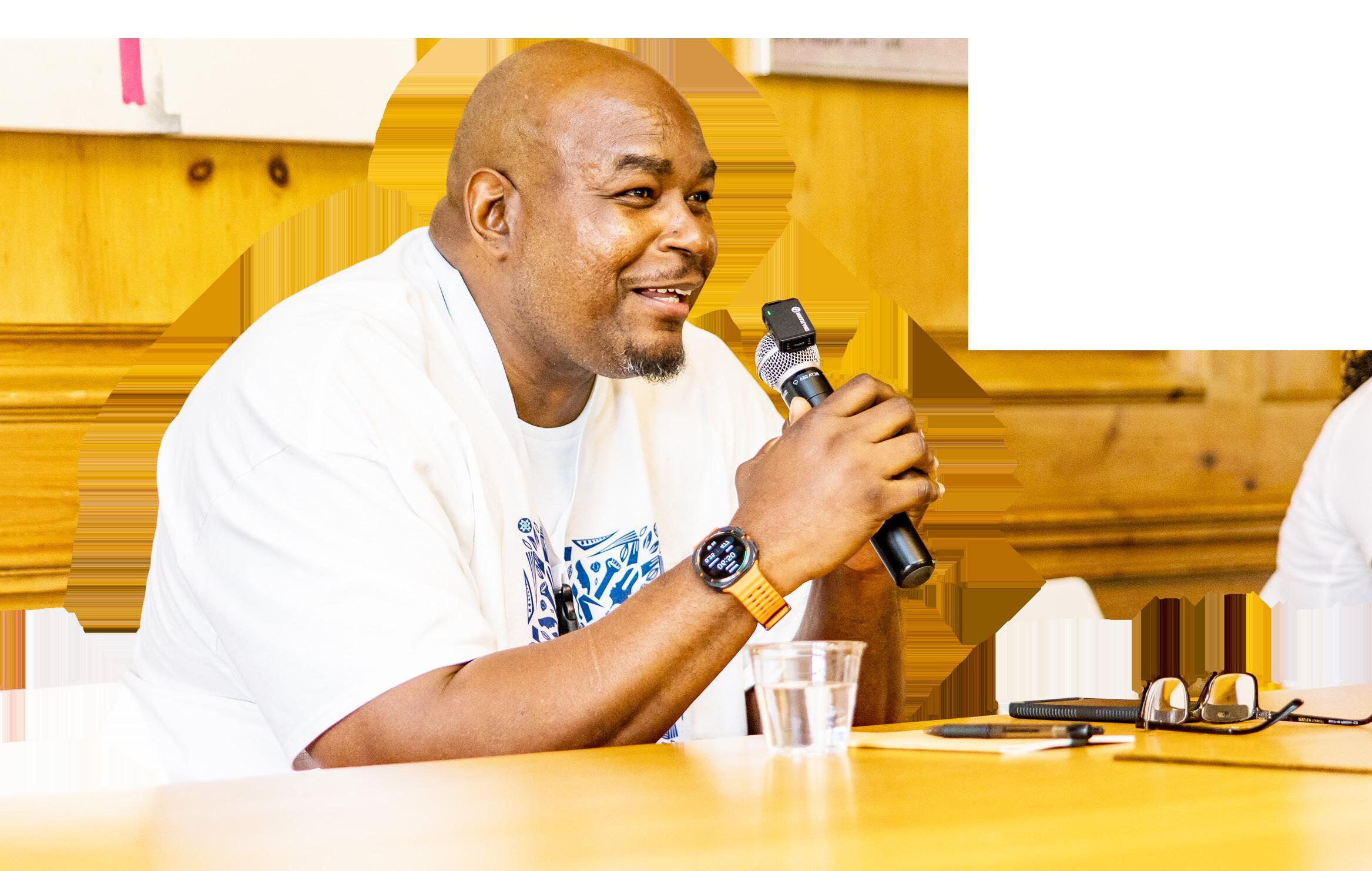
COMMUNITY MEMBER SPOTLIGHT
L.I.F.E with Dontae Sharpe
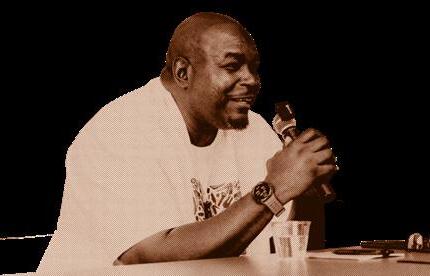
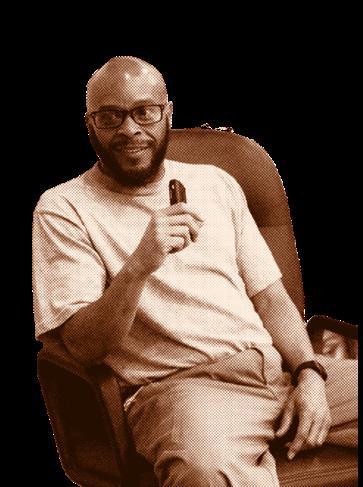
Brittany Cheatham in conversation with Dontae Sharpe
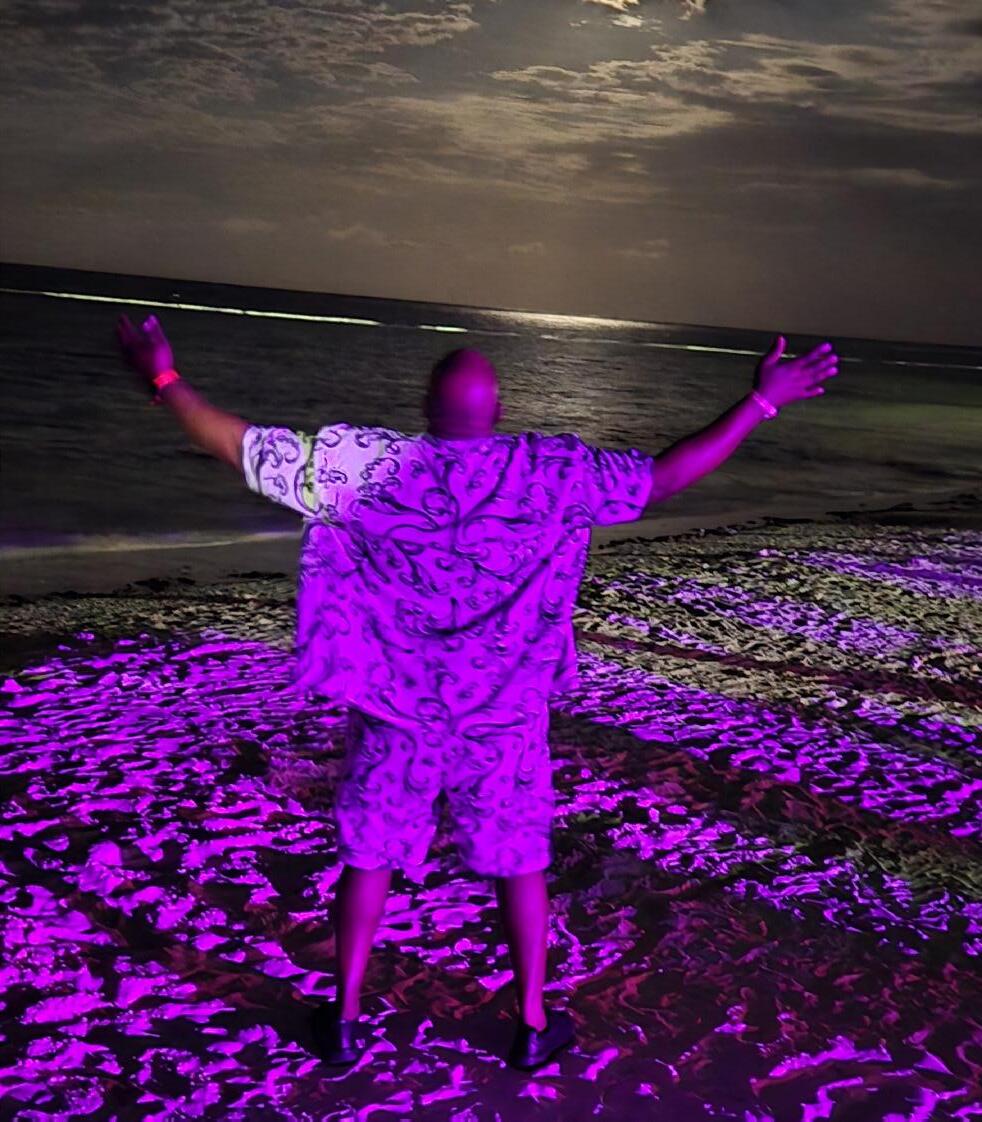
Living is for Everybody, L.I.F.E is for everybody” is what Dontae said over the phone while discussing the next phase of his life and work. He was getting ready for another trip overseas to continue seeing the world after being released from prison for a wrongful conviction that had cost him 26 years of his life for a murder he didn’t commit.
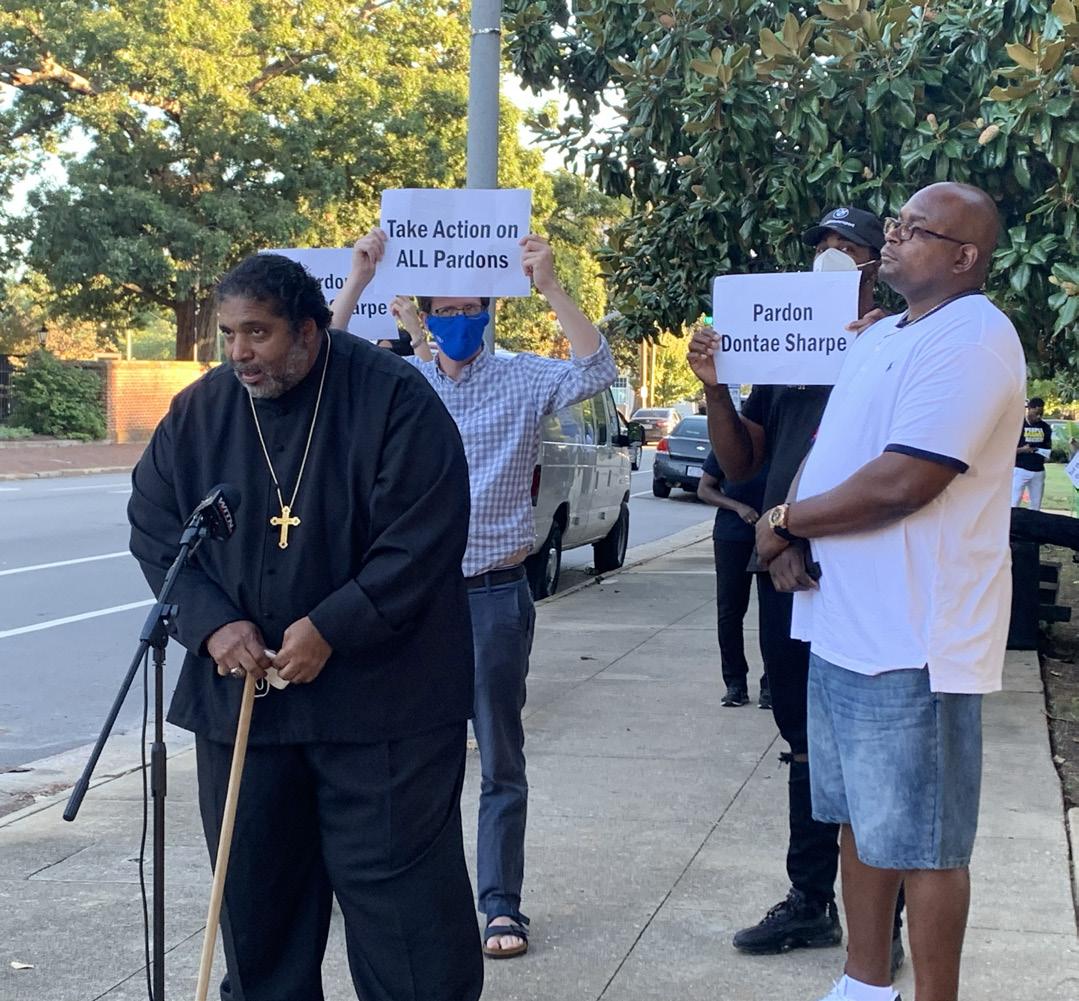
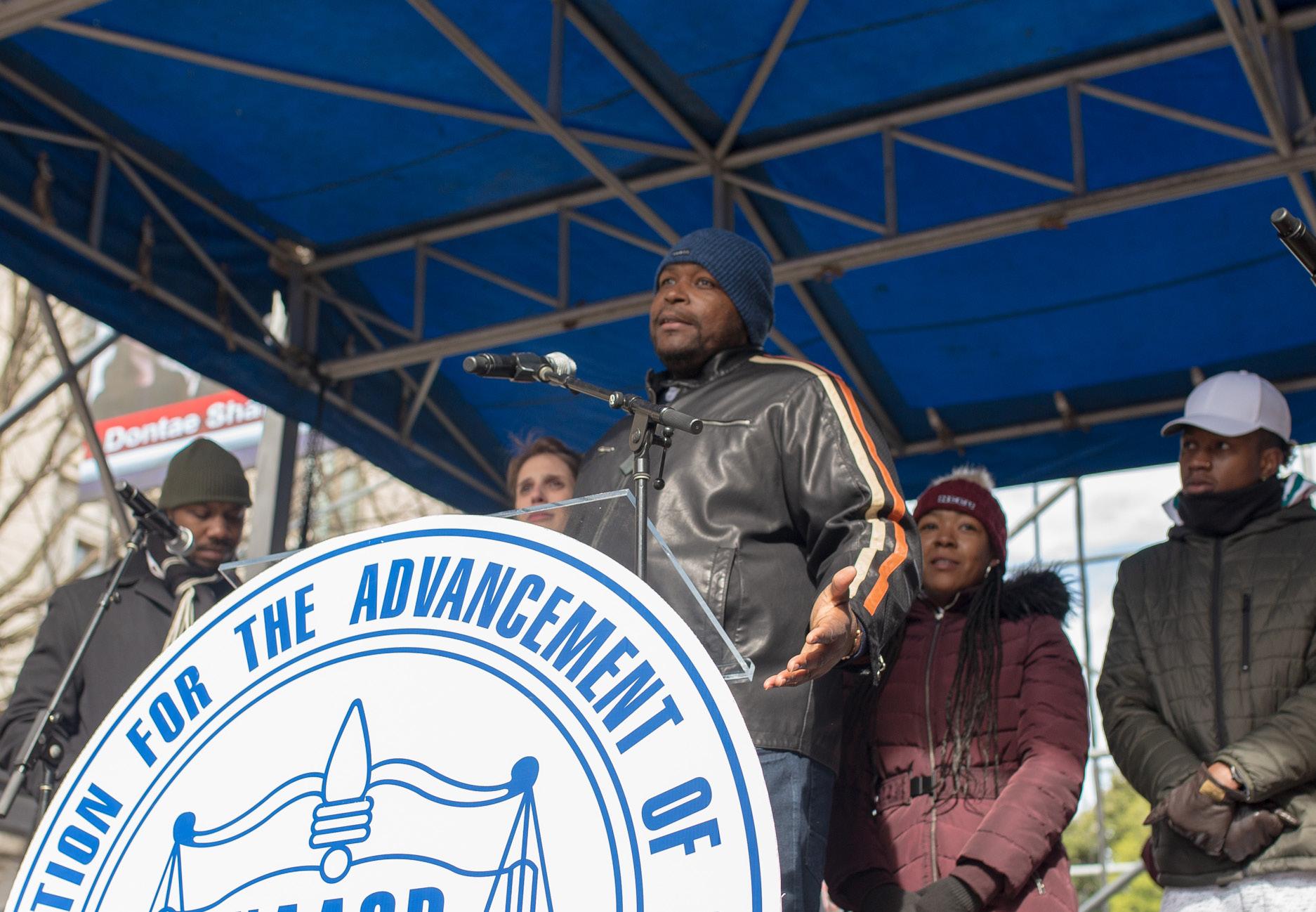
Dontae was exonerated and released in 2019 and immediately jumped into advocacy mode, calling for the pardons of other North Carolina men serving life
sentences for wrongful convictions. Despite beginning his reentry process during the covid-19 pandemic, Dontae remained focused on rebuilding connections with his family and using his voice and story to support the work of Forward Justice, the Poor People’s Campaign, NC NAACP, and other movement partners that were instrumental in advocating for his exoneration and pardon. He currently works at Forward Justice as the Criminal Justice Policy Advisor and Community Liaison, where he advocates for policy change around wrongful convictions,
mental health supports for currently incarcerated and justice involved people, and shares his story to help change the narrative about wrongful convictions.
During Forward Justice’s Reclaiming Memory and Reimagining Resistance convening, attendees joined an intimate conversation with Dontae as he discussed embracing the fullness of living life on his own terms, the emotional and spiritual dimensions of his journey to freedom, what sustained him during his imprisonment, lessons learned navigating the world post incarceration, and his ongoing journey to find and embody his life’s purpose.
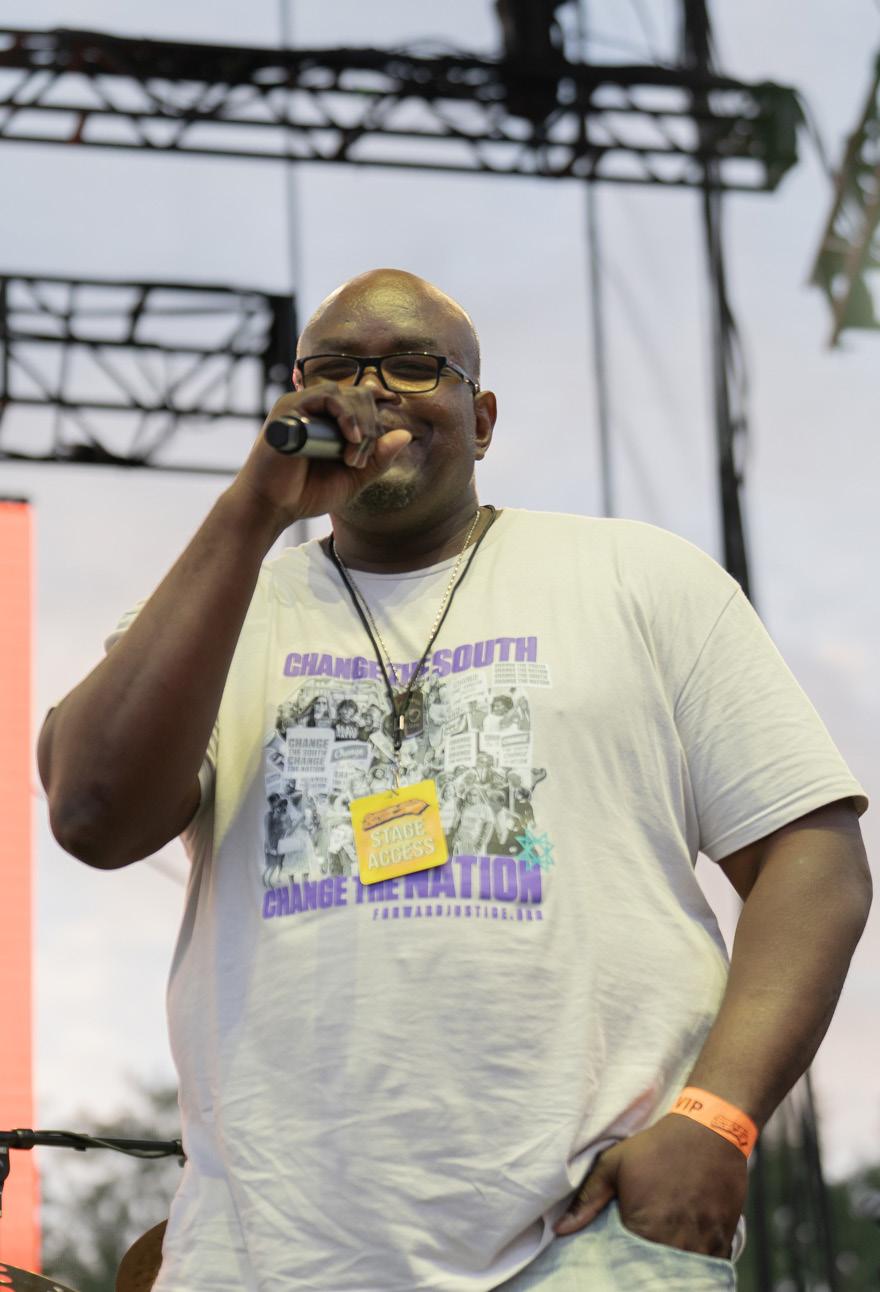
Excerpts from the session
Brittany: How did you stay grounded and hopeful in the face of such infuriating and difficult circumstances? What helped you get through?
Dontae: God first, Jesus Christ, and the Bible. I immersed myself in education. I told my mom, I said, if I gotta go in there, I’m gonna learn everything I can and try to change as much as I can about myself. I’m gonna take advantage of it... My mother and my aunt came to see me probably 90% of the time. Caitlin [Swain] and Theresa [Newman] Jim [Coleman], Jamie [Lau] Al [McSurley], they visited me a lot and talked on the phone to me. But my faith was the main thing because when Caitlin and them leave, and my mama them leave, it was just me and the situation and that’s when I had to really lean [on God and my faith].
Brittany: How have you been discovering your passions and purpose now?
Dontae: I was dead and gone when I went to court in 2019. That was my last shot… I already had almost a thousand years in my pocket. Every day, I had to carry around on a card ‘1000 years’, 999. But God moved and set me free and brought me out here and I know what I’m supposed to do. And it’s really to tell people about life, man. About life and living because everybody in here breathing got life. And I don’t understand why people don’t realize you ain’t got but one time, one shot at this thing and once it’s over with, it’s over.
Brittany: Now that you’re home, what else does living really mean to you?
Dontae: Well, one, uh, just sitting, just being around… [And] You got to help others. That is a big part of living a real, true life, not wasted, is to help others. That gotta be a big part. I heard it before, but now I know the reality, ‘cause I see what you get from it. You get a lot of satisfaction when you know you are liberating people and setting people free.
Brittany: You recently had a big milestone, you turned 50. What did it mean to you and your family to celebrate that special day?
Dontae: When I turned 50, I said ‘I made it’. I sang that gospel song because I was told by somebody one time that I wasn’t gonna live to be 21. So when I turned 50, the reality hit like, dang, you got more time behind you than you have in front of you. And it kind of scared me… I said, damn. So my midlife is 50, almost
gonna live to be a hundred. And I said, Wanda, you think I’m having a midlife crisis? And then God let me know that no, it’s midlife, right? But you determine if it’s going to be a crisis or not. You can put another word behind the midlife if you want to. And I can call it a midlife celebration, whatever I want it to be.
Brittany: Can you talk a little bit about what it feels like now to be home and advocating for others While you’re navigating your own journey and reentry?
Dontae: It is been, um, to be honest, I try to be straight up…It is been disappointing… When I got out and I saw so much division, not only in my family, but in all the families, it really shocked me…Everybody is too busy caught up in their own self… since I’ve been on this side here, seeing all of y’all...just to see that it’s still some good, righteous, upstanding, great, sacrificial, beautiful souls and people are still out here in the world.
“ I’ve been home six years and [God] popped it in my mind that the number six is the day he created man and the first thing he did was gave him work. He let me know, this is my sixth year out, it’s time for me to start walking in my purpose as a man.”

Brittany: What would you like to see next in the movement?
Dontae: I guess I wanna see what everybody else want to see, an end to racism, poverty, slavery. Because, we might think slavery is gone, but, you know, it’s just a different form, a different way.. What I want to see most of all, is people’s eyes really get open…So these rooms will be more full, these different marches… there should be more people out there…I wanna see more people, eyes and hearts get open to see what the truth really is.
Questions for thought:
1 What do freedom and purpose mean to you?
2 How can we remain hopeful and focused on the road ahead during difficult times?
3 What else can we do to help bring an end to wrongful convictions?
Scan the QR code to watch the full co-learning session on Dontae’s YouTube Channel.
L.I.F.E with Dontae Sharpe @LIFEwithDontaeSharpe

What Else is Happening in the Movement?
SOME


Immigration policies, ICE Raids and their implications
BY: ISELA GUTIERREZ
Ilearned about the ICE raids in Los Angeles and the massive resistance growing from Angelenos at the final panel at the Forward Justice convening in Winston-Salem... My heart sank when I learned that David Huerta, president of California’s SEIU, had been arrested at an ICE protest...
I live in North Carolina now, but always think of California, where I went to college and spent many years of my life, and the Southwest U.S. as my home. I remember as a college student hearing a graduate student who had been an organizer in the Bay Area complain that, “L.A. is hard to organize.” But what I saw during those glorious days of protest was a city that was very organized and strong. An intergenerational, multiracial crowd of L.A. County residents standing up for their neighbors, each other, themselves. A community that was ready to fight back...
As President Trump federalized and deployed the National Guard against the wishes of California
Gov. Gavin Newsome, I felt sick – remembering in 2020 when that same president deployed unmarked federal law enforcement against racial justice protesters over the loud objections of local elected officials. And then came the Marine deployment. Still the peaceful resistance continued! Local activism and protests forced ICE out of the Pasadena hotels where they had been staying and harassing the housekeeping staff. The City of Glendale refused to cooperate with ICE. Governor Newsome sued the U.S. government for illegally federalizing the National Guard and the military. Viva la resistencia!
But as I write this, 24 days after the initial ICE raids began, ICE is still in L.A. Masked, wearing no uniform or unmarked uniforms, providing no identification, and essentially kidnapping brown and Black L.A. residents regardless of citizenship status. Many of those picked up report that they were not properly booked for hours, making it virtually impossible for their family, friends,
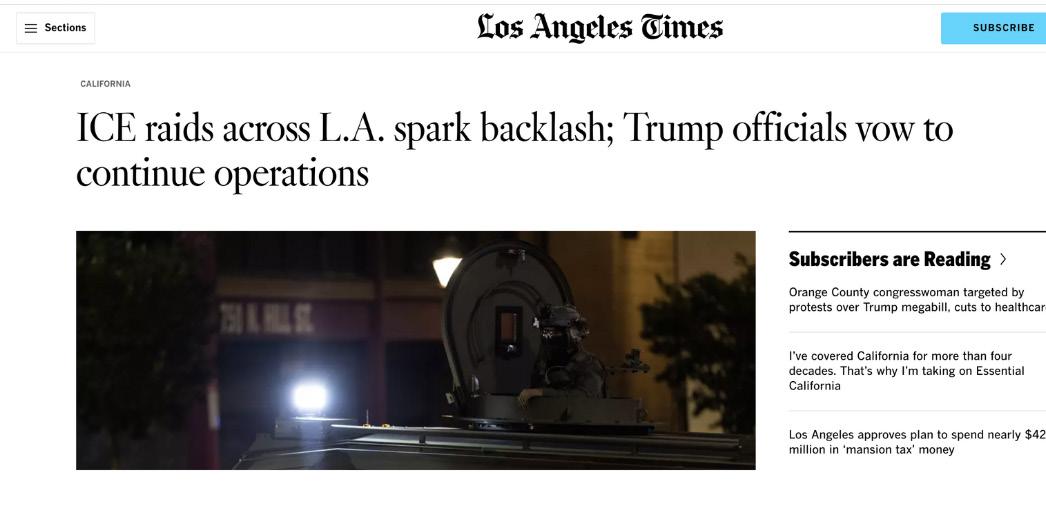
and even lawyers to locate them. They were simply disappeared into the greater carceral complex of L.A. County, until and unless family came looking for them. And as I rage against these injustices and shudder with the knowledge that it could easily be me, my sister, my friends, my college classmates and professors picked up and disappeared for the crime of not matching Trump’s and Stephen Miller’s vision of the America they want to create, I remember that these tactics – and this hatred – is not new. It’s not new to immigrant communities in California. And it’s certainly not new to anyone who has had the misfortune of encountering the notorious LAPD and L.A. County Sheriff’s Department, where the use of these same tactics of disappearing, torture, lying, and excessive force against L.A. County residents are wellestablished.
Still, the resistance hasn’t stopped. But it has changed tactics – as all strong, sustained resistance efforts
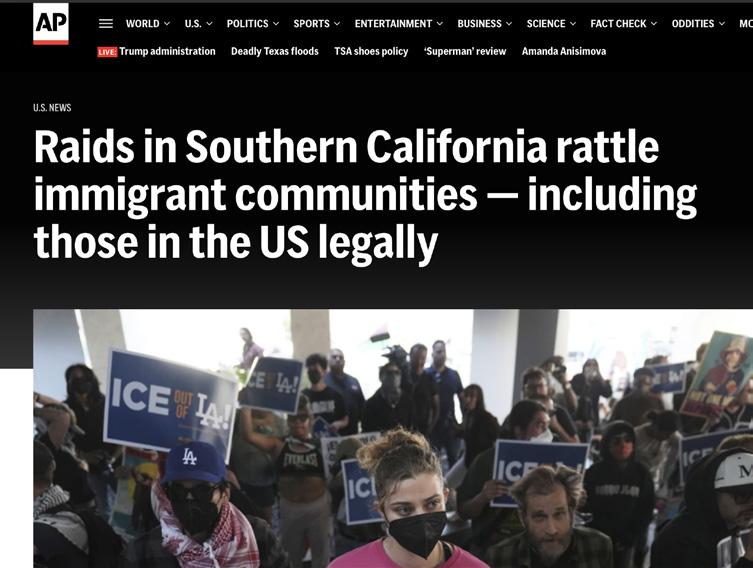
must. Activists and journalists, like the L.A. Public Press and Memo Torres at L.A. Taco are documenting the kidnappings of their community members and teaching people their rights when ICE comes knocking. So too, our solidarity and attention must not stop. We must also continue lifting up the stories of L.A. and the individuals being taken from our streets. And know that, even within the terror being visited upon Latine communities, solidarity is being built between communities... The beautiful truth about solidarity is that it can and will grow out of the darkest moments and that it can and will be what saves us and brings a new nation – one that proudly embraces its diversity and cares for all communities and the natural world – into existence. The words of Arundhati Roy never felt truer to me –“A new world is not only possible. She is on her way.” Through us.
President Trump Deploys Military Personnel and Federal Law Enforcement in Takeover of D.C.
BY: JANELLE BRUCE, STAFF ATTORNEY AT FORWARD JUSTICE
InAugust, President Trump deployed over 2,000 National Guard troops and federal agents to Washington, D.C., despite D.C. Metropolitan Police Department statistics showing 2025 violent crimes rates being down 27% from 2024, and the lowest in over 30 years.
Residents, local activists and grassroots organizations remain vocal about the harassment, intimidation, and militarization of law enforcement targeting Black youth, Black residents, immigrants, and people of color in their neighborhoods, and the removal, and criminalization of DC’s unhoused population.
Local activists are holding Know Your Rights, Court Watch and Police Watch trainings, in addition to celebrations of joy across the city
ELSE IS HAPPENING IN THE MOVEMENT? WHAT ELSE IS HAPPENING IN THE MOVEMENT?
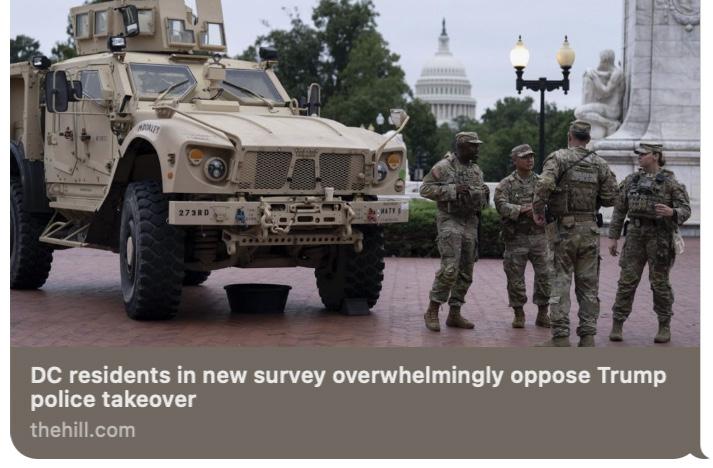
that include local artists, as acts of resistance to the federal takeover. Residents are clear that the militarization and hyper-policing of underserved communities is a racist act of violence that will not keep them safe and are proclaiming, “We Keep Us Safe”.
Faith Leaders Arrested in D.C. While Speaking Against an Immoral Policy Agenda
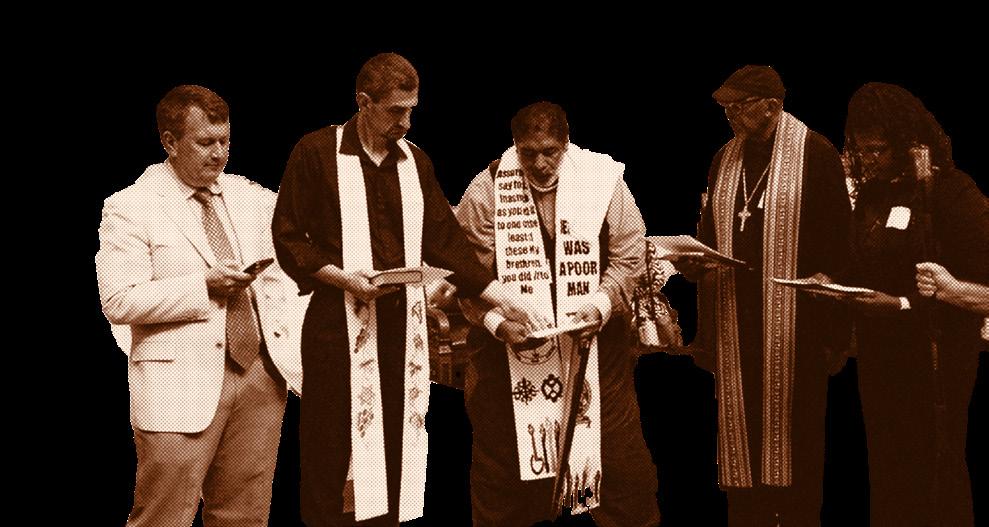
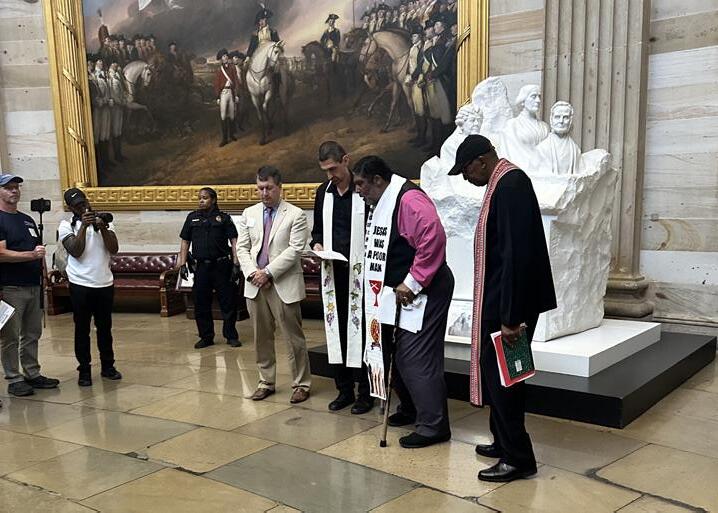
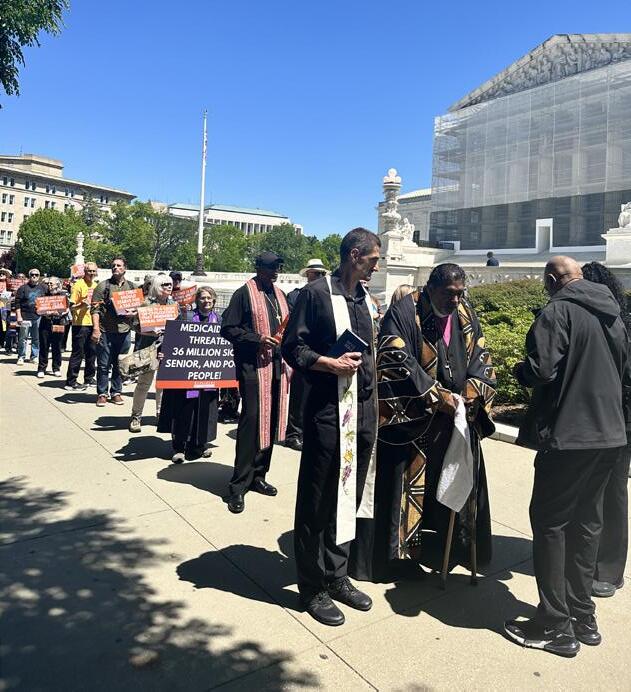
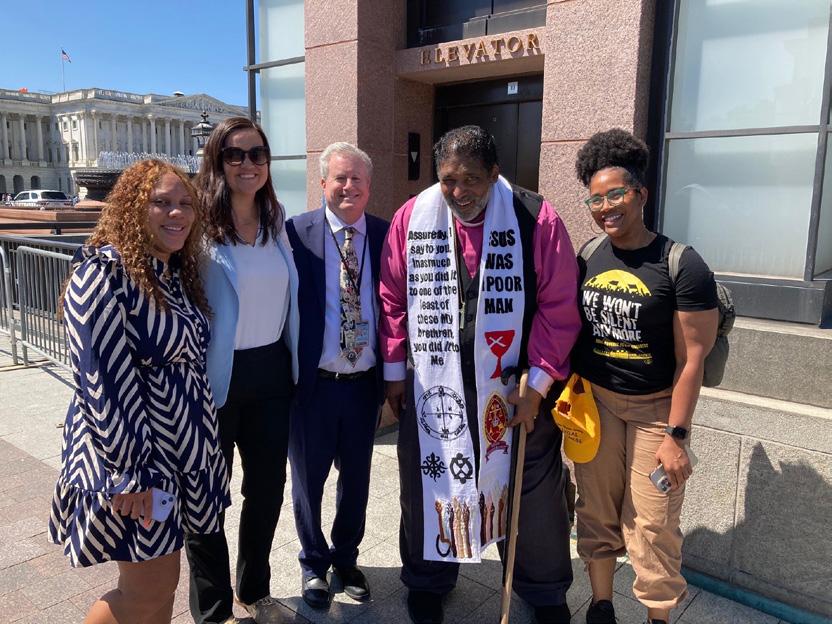
In April, Rev. Dr. William Barber II and Repairers of the Breach began their Moral Mondays action in Washington D.C., led by faith leaders and those directly impacted by poverty, to raise a moral message about the policy choices that Congress and the Executive Branch are considering, including: gutting Medicaid, SNAP, and Head Start programs, targeting immigrants with mass deportations and detentions, and gutting employment, wages, and labor protections. Rev. Barber and other faith leaders were arrested during these actions
while highlighting the impact of those policies on children, poor and low wealth workers and historically marginalized communities in this country, including women, LGBTQ folks, immigrants, and those who are directly impacted by the criminal legal system.



WHAT ELSE IS HAPPENING IN THE MOVEMENT?
The Ongoing Fight for Clean Water in Jackson, Mississippi
BY: LORI SHERMAN, ESQ. STAFF ATTORNEY AT FORWARD JUSTICE
Jackson, Mississippi is the “Blackest” city in the United States. For decades, residents complained of thick, brown, and odorous water coming from their faucets. In addition, residents received numerous boil-water advisories and warnings that lead may have contaminated their water supply. A complete derelict of state and federal oversight, as well as state divestment, culminated in the 2022 water disaster.
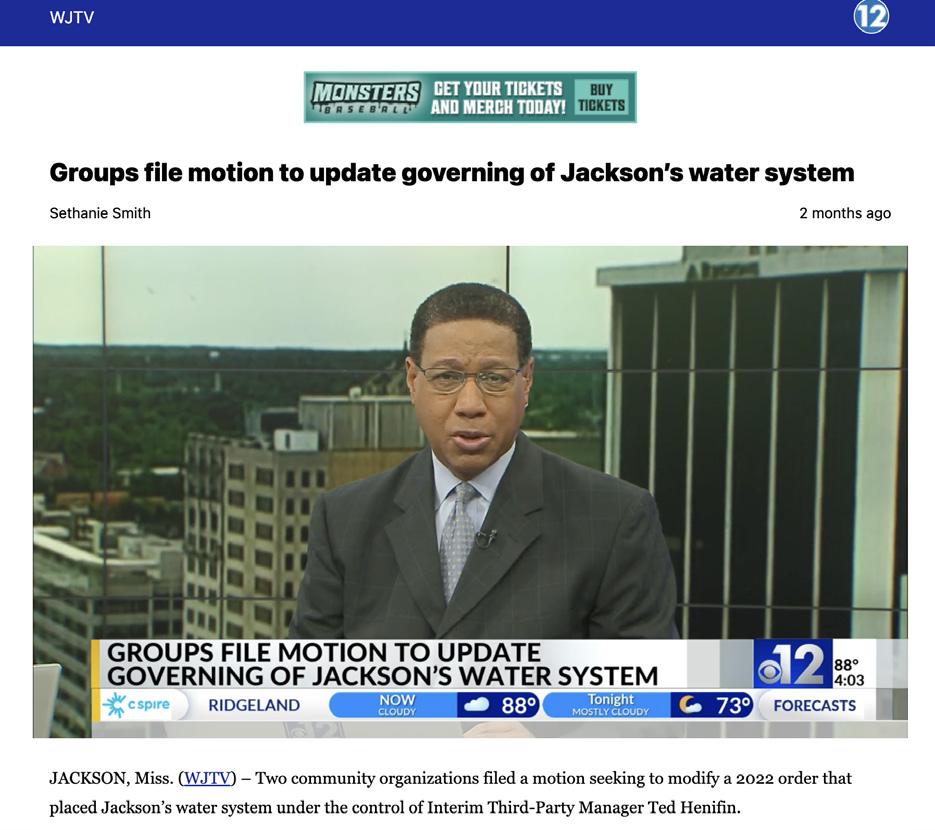
In the summer of 2022, Jackson faced a catastrophic water crisis, resulting in a complete loss of water pressure. The City, State and Federal Government declared a state of emergency. The Biden Administration filed a lawsuit against the City and allocated over $500 million to fix the system. The parties agreed to an Interim Stipulated Order (ISO) that stripped power away from the city and gave unilateral control to Ted Henifin (the federal receiver and third-party manager) to oversee the Jackson water system.
Since the lawsuit and the ISO, Forward Justice and its partners have fiercely advocated for its clients in Jackson by preparing and submitting a community statement, filing an Emergency Petition with the EPA, Petitioning for intervenor status to ensure community members have a seat at the litigation table, and fighting for transparency. In 2024, our clients successfully gained intervenor status in the federal lawsuit. Since then, we’ve continued to advocate for
our clients in discussions with the EPA, State of Mississippi, and the City of Jackson. We have fought to be involved in the final consent decree process, attended every hearing, and recently we filed a Motion to Modify the ISO. If successful, this modification will limit the thirdparty manager’s authority.
It’s been nearly 3 years since the initial water crisis, hundreds of millions of dollars spent, and two proposed water rate increases. Yet, the water system remains broken and Jackson residents are still receiving violation notices. As this case progresses, our goal is to ensure Jackson residents have clean drinking water, that the water system remains public, and that the system is operated in a democratic, community-led manner.
WHAT ELSE IS HAPPENING IN THE MOVEMENT?
Mental Health Awareness
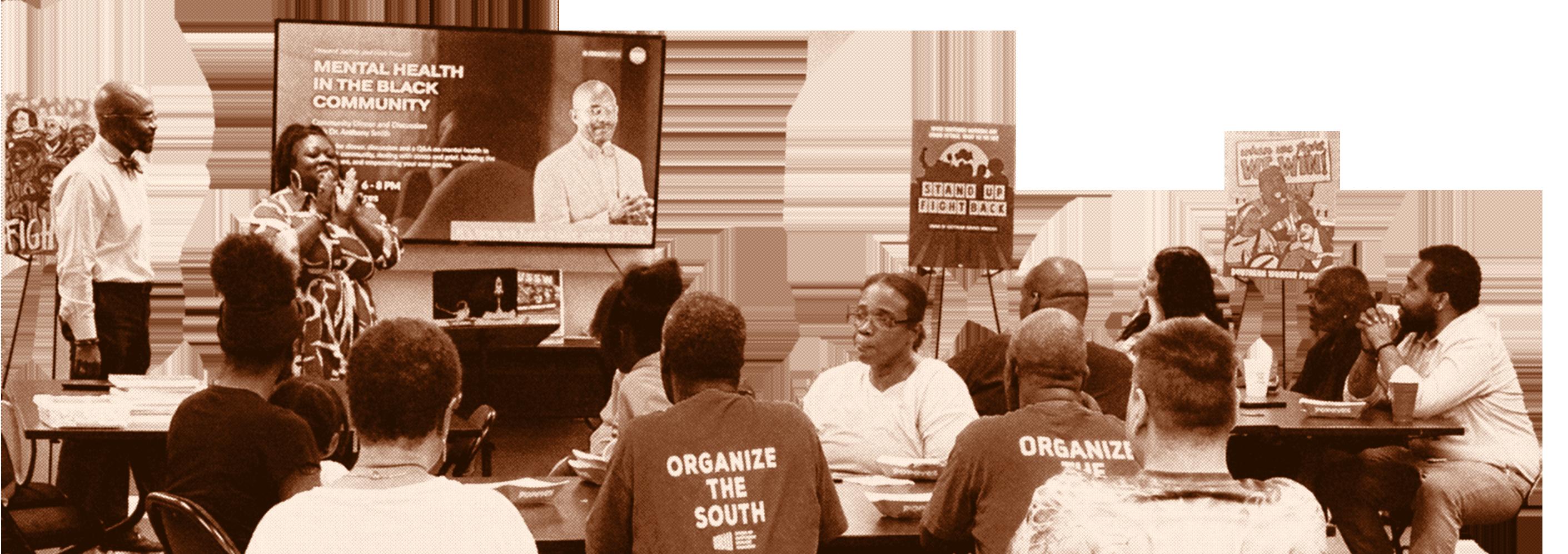
Takingcare of our mental health is a vital part of our overall well being, especially for those of us who are a part of marginalized communities and/or are involved in the movement space. It’s so easy to get caught up in work, family, life, or just basic survival- and forget to check in with ourselves and each other. To help provide support, awareness and resources, movement organizations have been hosting free events and workshops on Mental health.
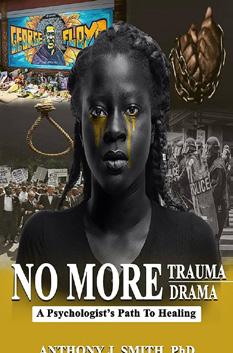
In May, for Mental Health Awareness Month, Forward Justice and Union of Southern Service Workers (USSW) began hosting a series of workshops on mental health for the Black community. Led by Dr. Anthony Smith, a Licensed Psychologist and Certified Health Services Provider in North Carolina with over 25 years of experience, each session provides a safe space for folks to discuss and explore the issues affecting them most- from grief and stress, to healing generational trauma and working through difficult family dynamics.
In June, Our partners at the NC Black Alliance hosted the Black Minds Matter Mini-Series—a powerful panel discussion focused on the intersection of mental health, education, and justice in Black and Brown communities. Afterwards, they held a press conference at the NCGA calling for stronger legislation, better funding, and real systems of support for the mental health and educational needs of Black and Brown youth in North Carolina.
We know that Individual healing becomes a catalyst for collective healing, which better equips us to do the work of liberation, dreaming and world building. So even if you only have five minutes a day, we encourage everyone to find a moment to check in with themselves, breathe, chat with a friend, journal, create, or see what resources we and our movement partners have available, to help us all get in the state of mind to heal and thrive.
SOME ESSAYS HAVE BEEN ABBREVIATED FOR SPACE. READ THE FULL TEXT OF THESE STORIES ON OUR WEBSITE


ARTS AND CULTURE SPOTLIGHT:
Rehabilitation, Reentry and Reclamation with Nash Correctional’s Art Program


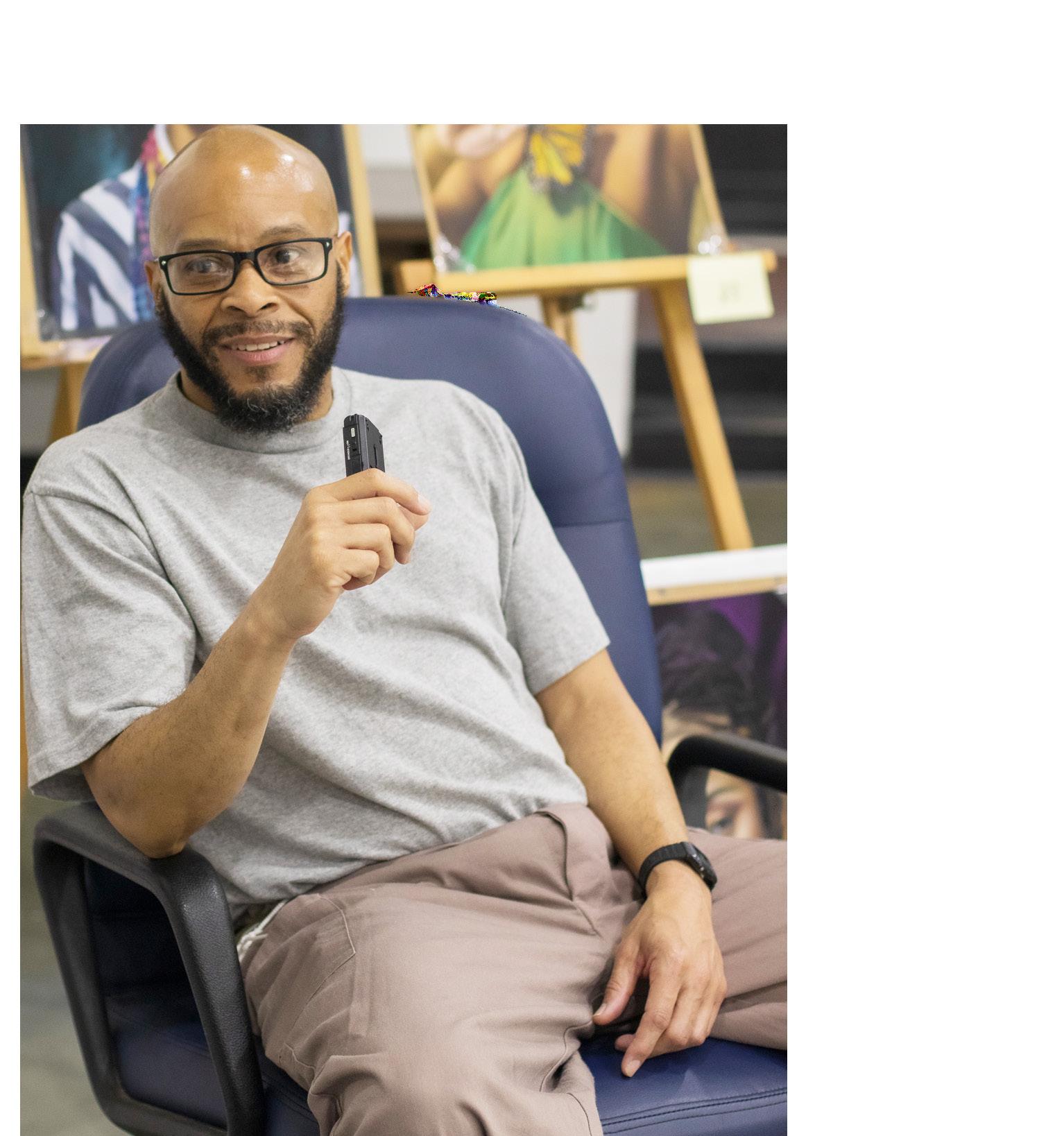
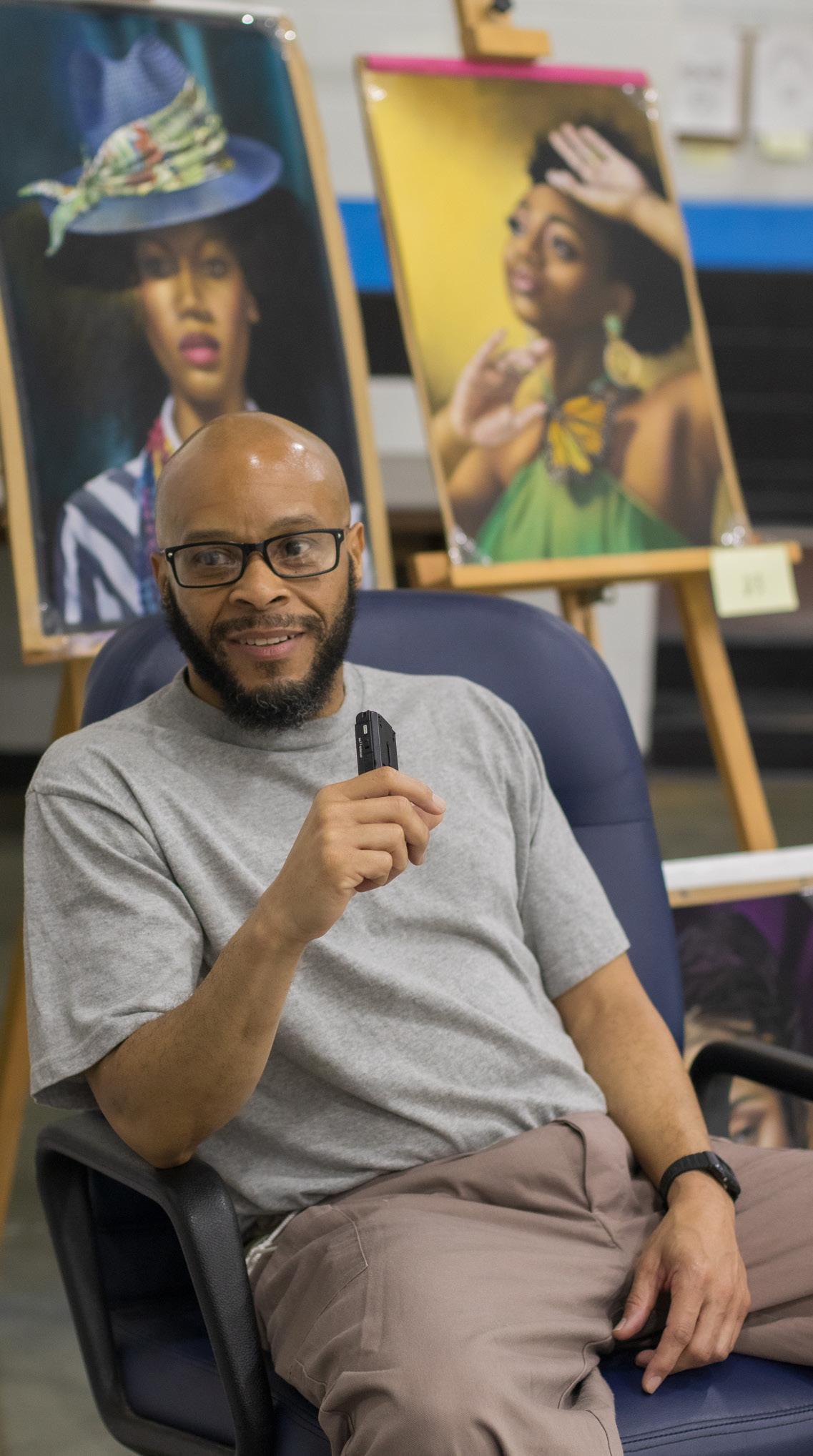
Inour second edition of the journal, we explored the link between art, healing, and resistance. This April, we visited Nash Correctional Institution in North Carolina for an exclusive preview of their annual art show exhibition. During our visit, we sat down with Mr. Eric Lynch, a 55 year old man currently incarcerated at Nash who has risen to the top of the art of the program’s ranks’ and Ms. Markell Mitchell, a Correctional Program Supervisor who oversees the program. We discussed the art program, its participants, the impact and the way art supports both rehabilitation and reentry.
Interview by: Brittany Cheatham
Interview with Eric Lynch
Brittany (BC):
Mr. Lynch, tell me a little bit about yourself and your story, who you are and where you come from.
Eric Lynch (EL):
I’m from Rocky Mount in the local area. I’ve always been creative, it was just not nurtured enough I don’t think, coming up as a shorty. As time progressed in life, I gravitated towards things outside of that and it led me in this direction and being in this situation
BC Do you remember at what age you developed your passion or your interest in art?
EL: I have two older brothers and I would always pay attention to what they were doing, just drawing little stuff. The one that I really followed... he ended up going to the military and always kept doing what he was doing as far as artistically. Following that lead, I just started creating my own lane. I would always- no matter what I’m doing, whether it’s good or bad, I always had a sketch pad available... documenting my thoughts. The passion has always been there.
BC What’s it been like going through the program here? How has it helped or helped you channel your creativity?
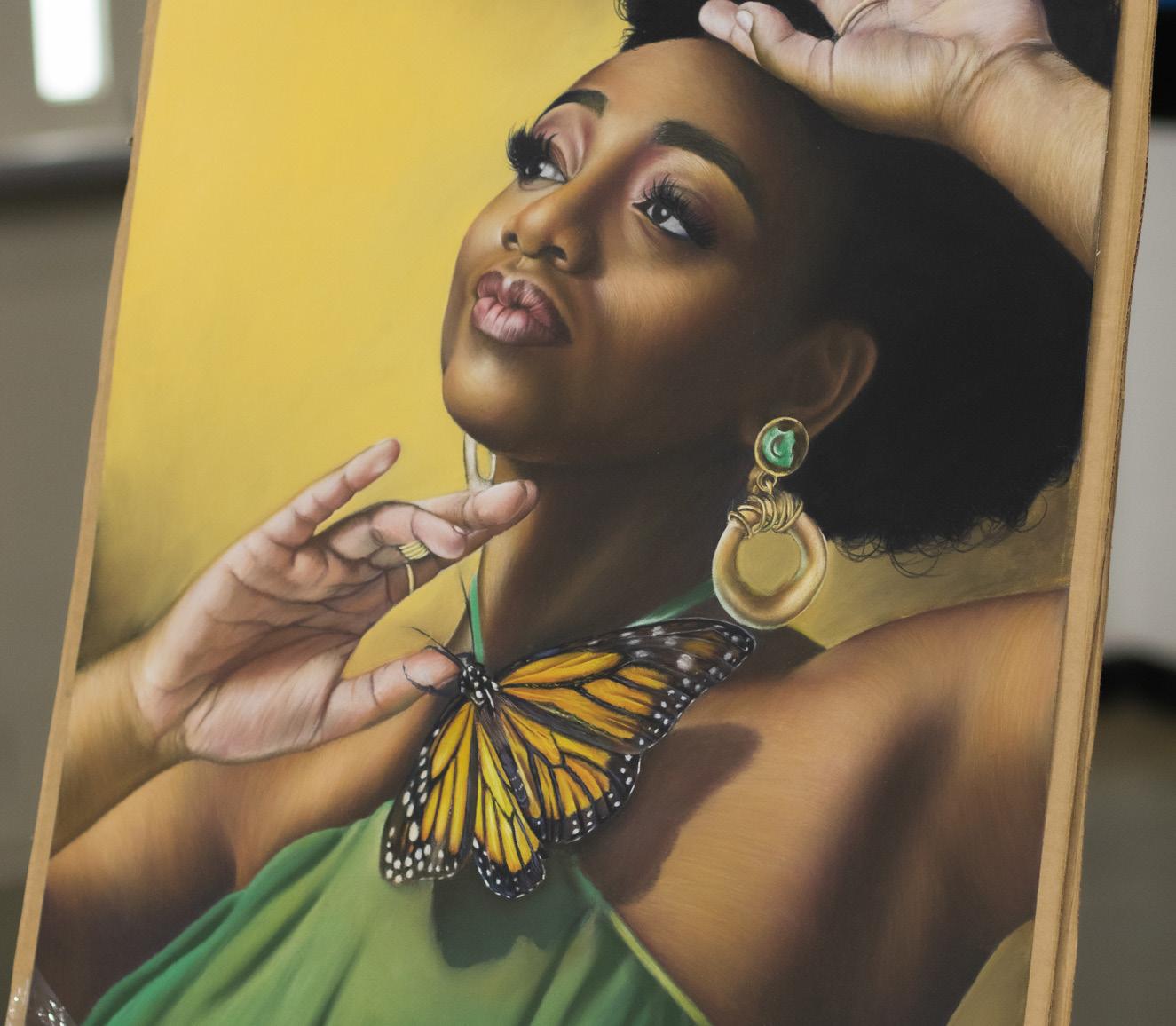
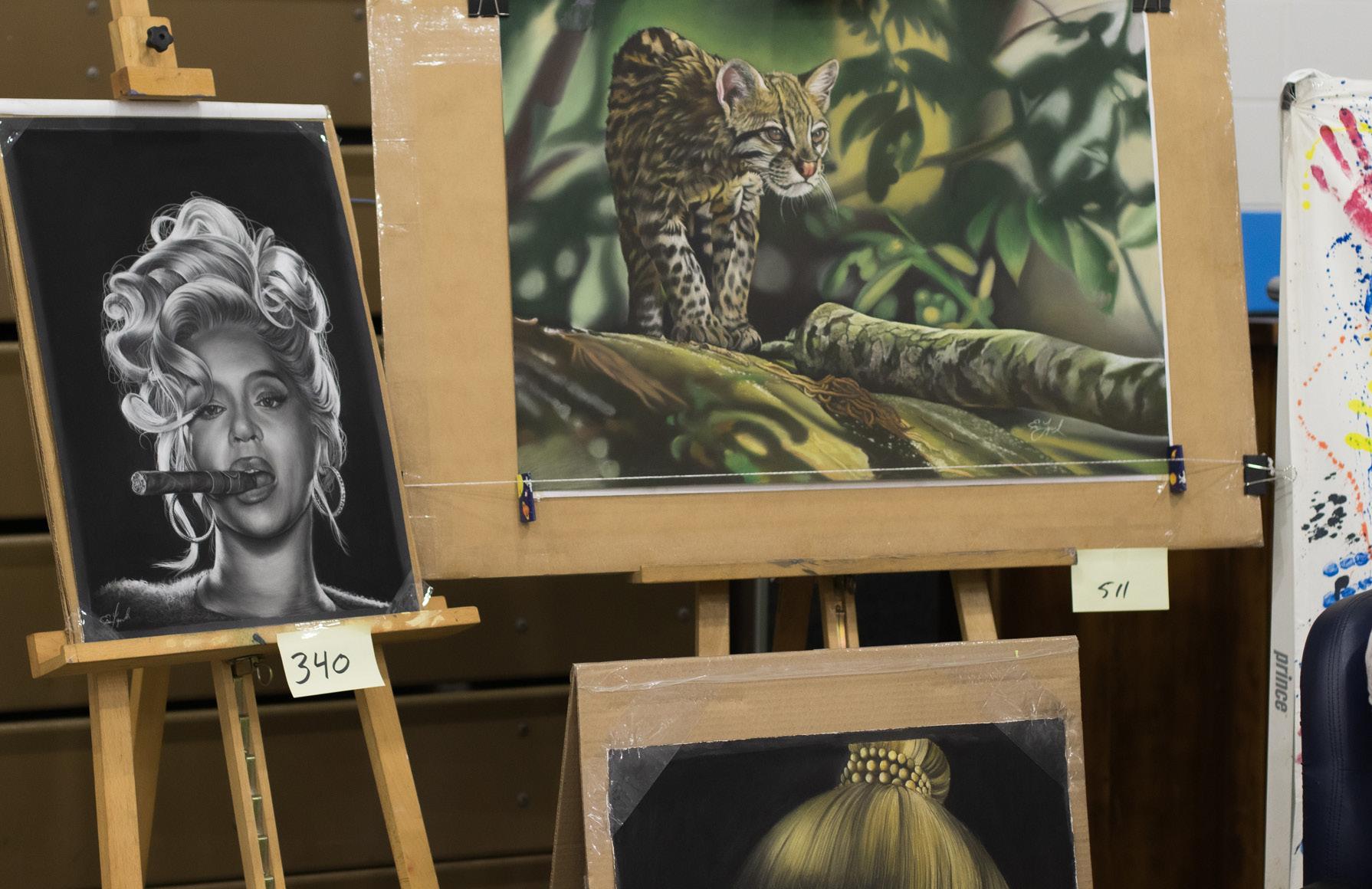
EL It has allowed me to explore just different genres of art. I’m currently working with chalk pastel on a larger scale than I previously was at other institutions, and now I’m gonna embark on a journey of watercolor to just check out the relationship with that and myself. See if we are compatible. So it’s really a part of me, just understanding art itself is like a relationship, and once that’s accepted. Sky’s the limit.
BC How long have you been participating in the art program? When was your first art show?
EL Honestly, I’ve lost track of time concerning that. It’s been like time just folded. It’s like it’s all one moment. I just hadn’t tracked it. Haven’t measured that… It transcends time.
BC: Tell us a little bit about your first art show here and what that was like.
EL Well, my first art show at Nash, I wanna say the piece I put in was three Black women. The title was ‘Beauty, Strength and Wisdom’ and there was not just one woman that represented just that one thing, they all represented all three of those things… And, there was a temple in the background- understanding that from my culture, that is the house in which the bringing forth of life comes, from that woman herself. This is one of the reasons I’m constantly celebrating you [Black Women]. So it’s, I love that… I think I came away with ‘People’s Choice’ in the contest itself, but overall, just the art show itself was beautiful. It’s always been beautiful since I’ve been here.
BC What did it feel like coming away with People’s Choice?
EL I felt seen. It felt like, now I’m on the scene, now I’m on stage.
BC What are some things that have inspired you and influenced your art throughout life?
EL It’s movements. It’s other artists, what they create. What they have to say and how they say it, how they formulate that idea and manifest it on whatever canvas they choose, whether it’s a piece of metal, a piece of wood, a canvas or whatever, and on a floor, on a ceiling, on a wall. All of those things inspire me as an artist. It’s people. Poets. Other art forms whether it’s music, an instrument, all of the above. And all the above is everything in life. It inspires me. Whether it’s a good moment or a bad moment, to capture that moment and put it in that expression itself.
BC A little birdie told me that not only are you a talented artist, but you teach a class here at Nash Correctional. How do you enjoy that? What is that like?
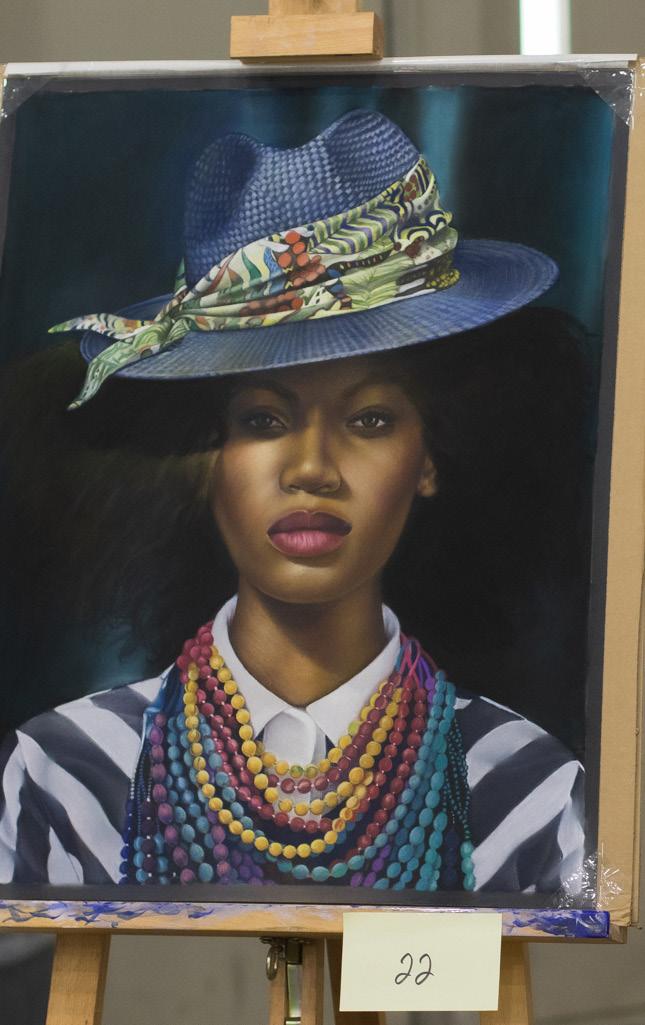
EL I teach color theory on Thursdays. A lot of people think that it’s a graduation from black and white when they get to color, but it’s still the same thing… It’s color trying to mimic the values of black and white, and finding those right colors to match those values to give you that expression. I try to incorporate that with the students to show the emotion that the color can evoke.
BC How have you changed from your first art piece in your early days as an artist to who you are now?
EL I would say that I understand the process of creating now, so it’s creating situations in life that may reverberate with these people or those people. Or, just later on in my life, understanding how to move with the nature of that process, to birth something positive.
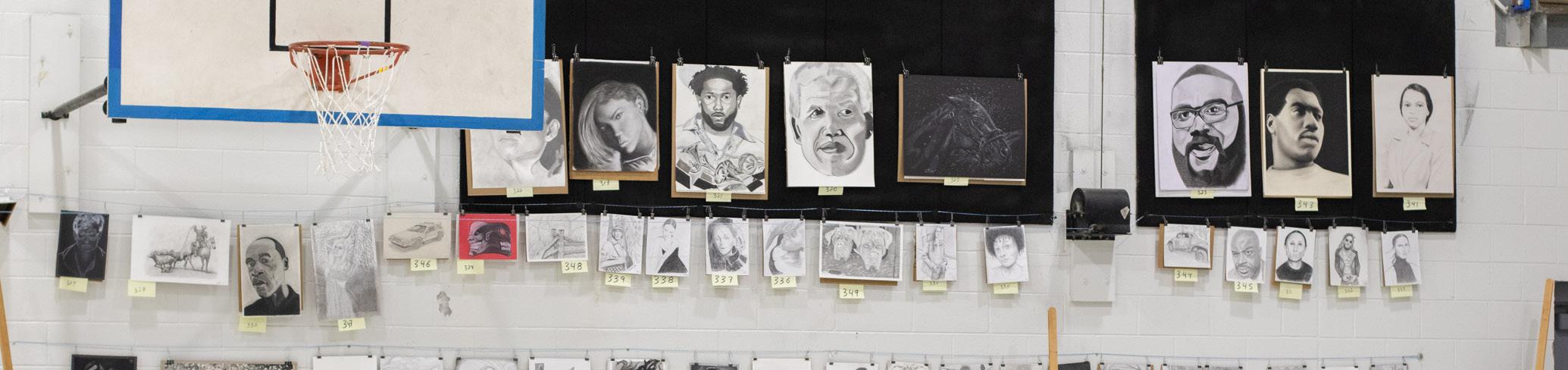
Artwork by Nash Correctional Art Program Participants
Artwork by Eric Lynch
BC Is this the first art program that you were involved in, or have you been to other places that had art programs?
EL: This is unique because it’s an organized, sanctioned program. This is the only one in the state as far as I know of from the other institutions that I’ve been in. I mean, yes, they can order art supplies at other places, but as far as an approved art program where you actually have classes, this is the only one. It’s made a great difference that it’s encouraged.
BC What would you say is the biggest impact being in the art program has had on you?
EL It’s really caused me to shine the light on that ability within myself. It forced my hand on myself. Be who you are.
BC What would you like to see next in the program?
EL I would say broadening the understanding of art itself. Not just from an ego point of view with the contest, but to show that ‘I’m continuing to grow’. That’s what I really put out there for them to understand. This is about growth and development. And change.
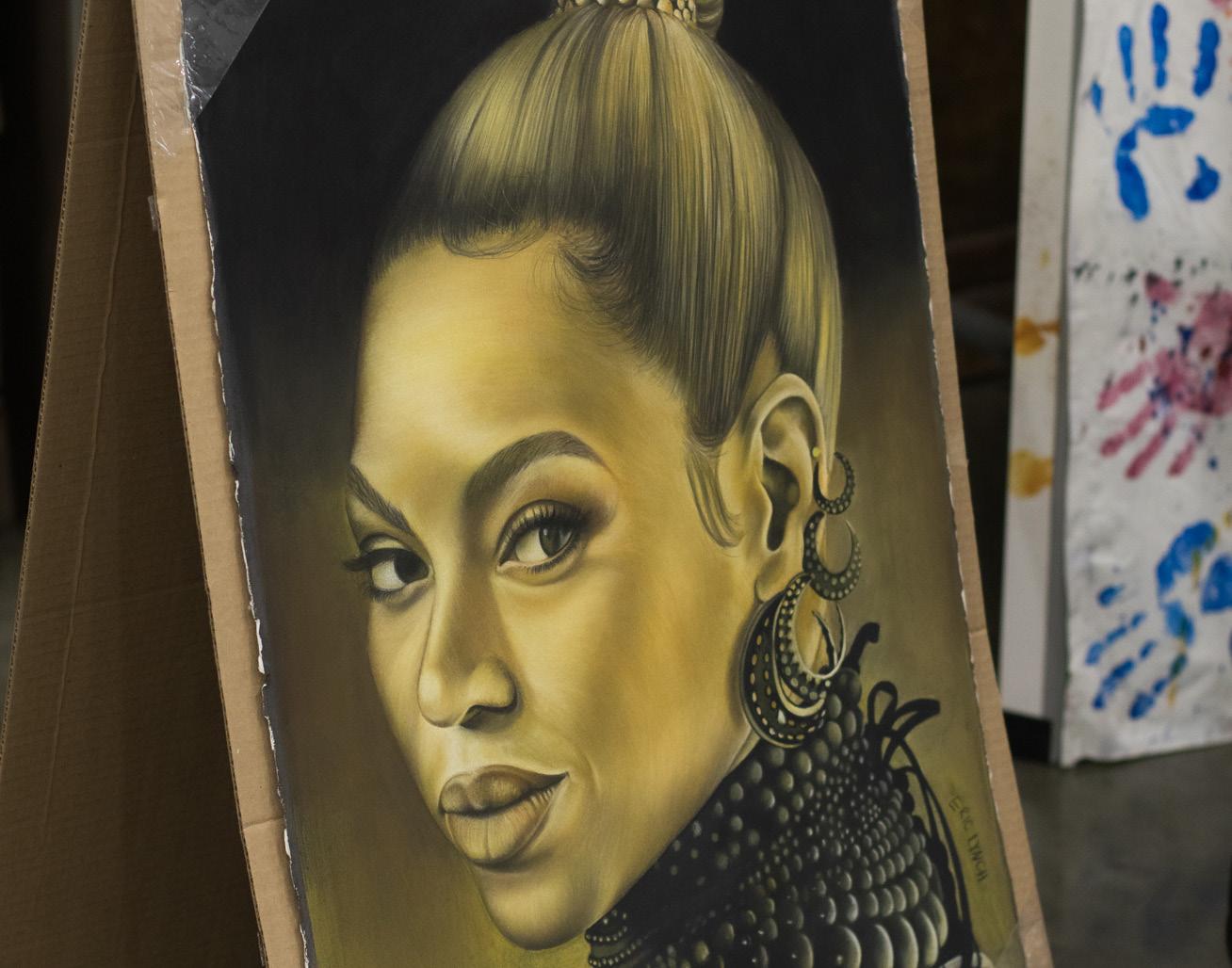
BC What role do you see art having in social movements and in fights for liberation, justice and equity?
EL: Art is a visual statement. I see art as the grand scheme of any movement… that visual aspect. Not only from the artist’s perspective, but also from the viewer’s perspective, or those involved in the same movement. So, I would say, it empowers them. It influences them. So I think it’s mandatory. And when you have any movement, whether you are boycotting this or picketing this, those are visual aspects of it, but art itself is just always right there in your face. It’s consistent.
BC What piece of yours are you the most proud of and why?
EL: It’s not fully manifested yet. I’ve been working on a piece that I’m gonna be most proud of, and it’s a large piece and I don’t even want to describe it. But I’ll give you just a brief summary. It’s of my future, returning to society and what it looks like.
BC That’s the perfect segue; what’s next for you?
EL: To continue creating, continue educating, continue living, continue thriving. That’s what’s always next, to continue.
BC Do you think when you leave that you’ll want to become a full-time artist or teach art? Is that your path now?
EL: That’s my path. That is my path. I know that, I know it. I’ve married my intent with an elevated emotion, so it’s already happened.
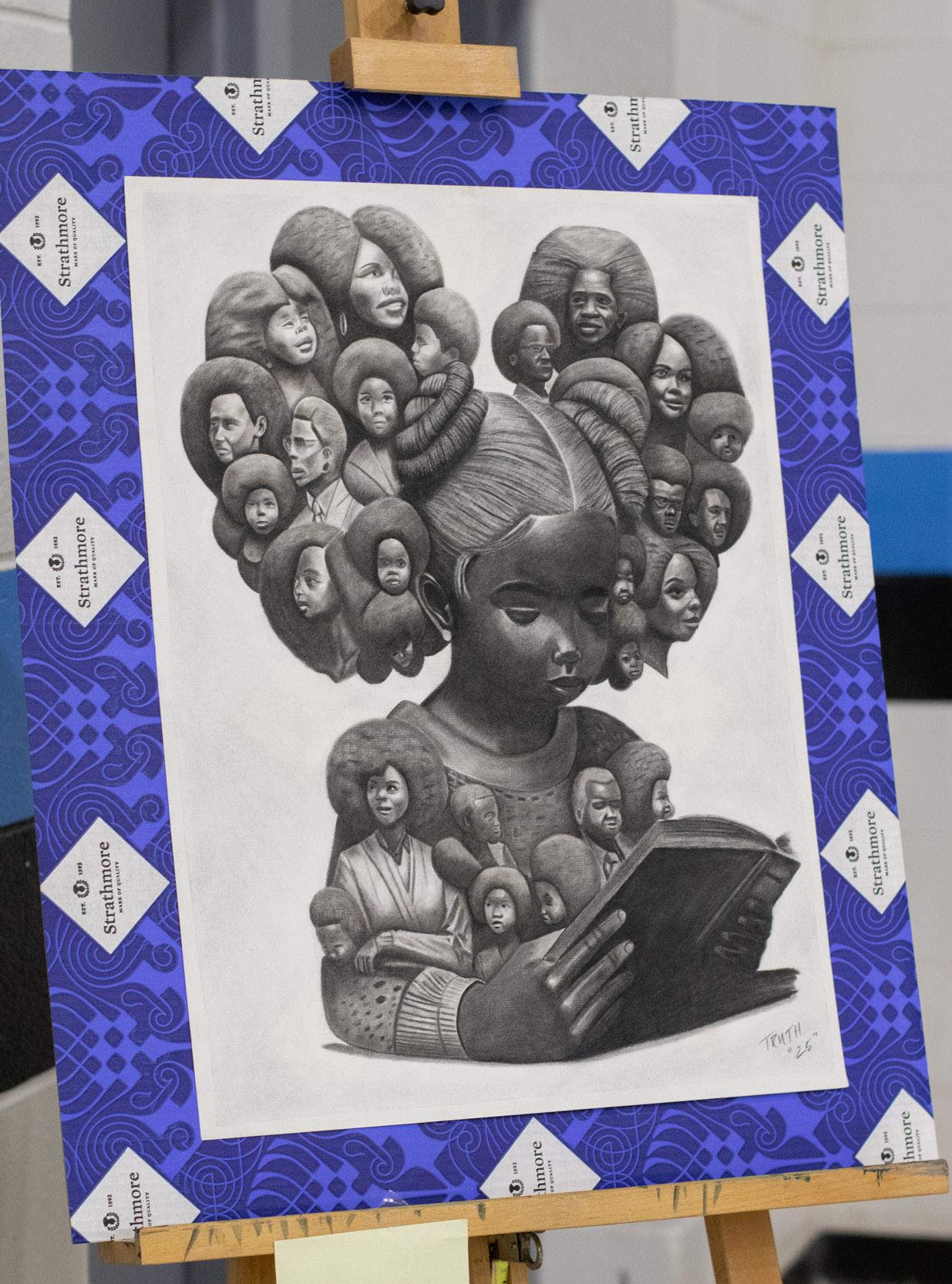
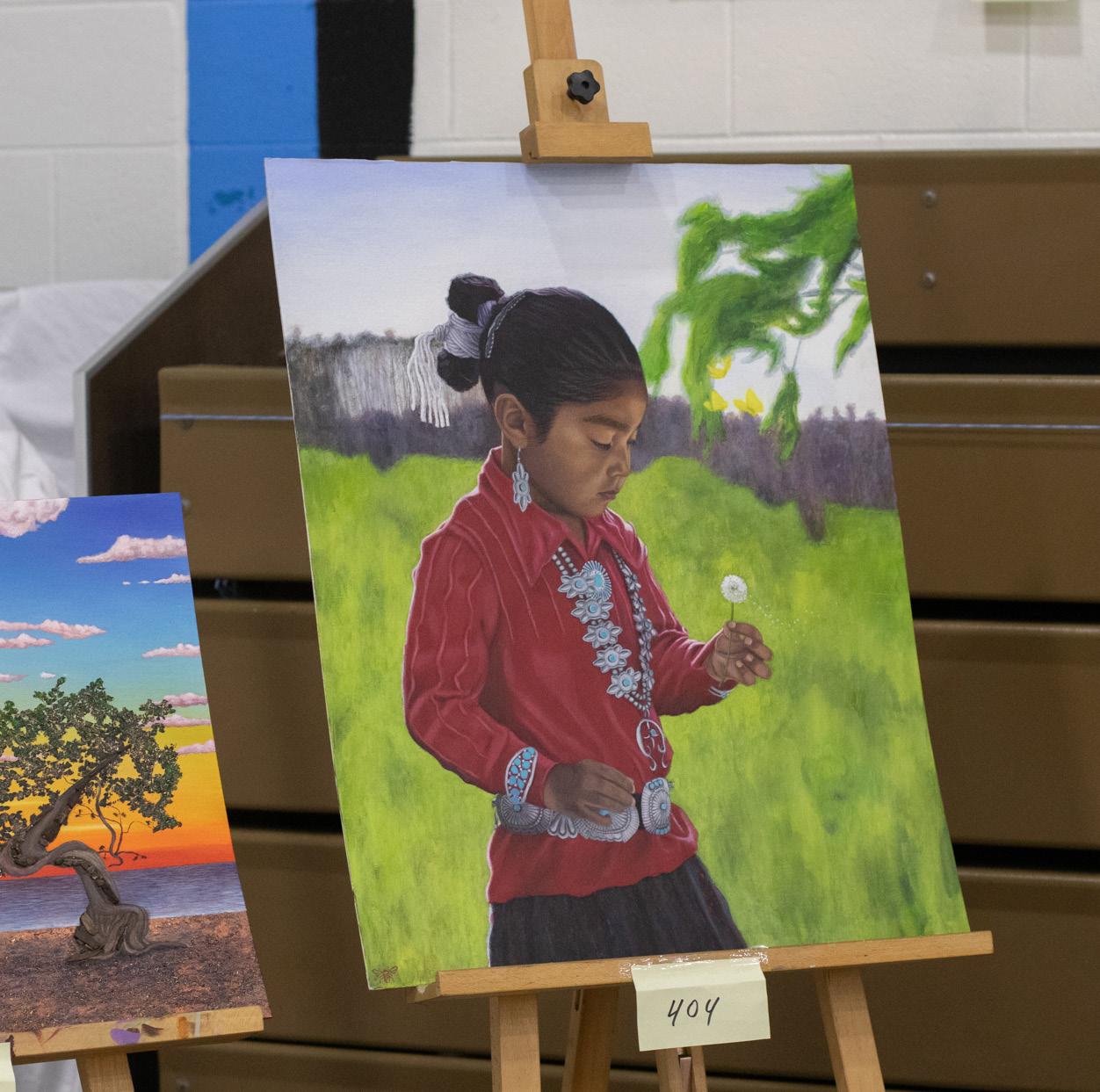
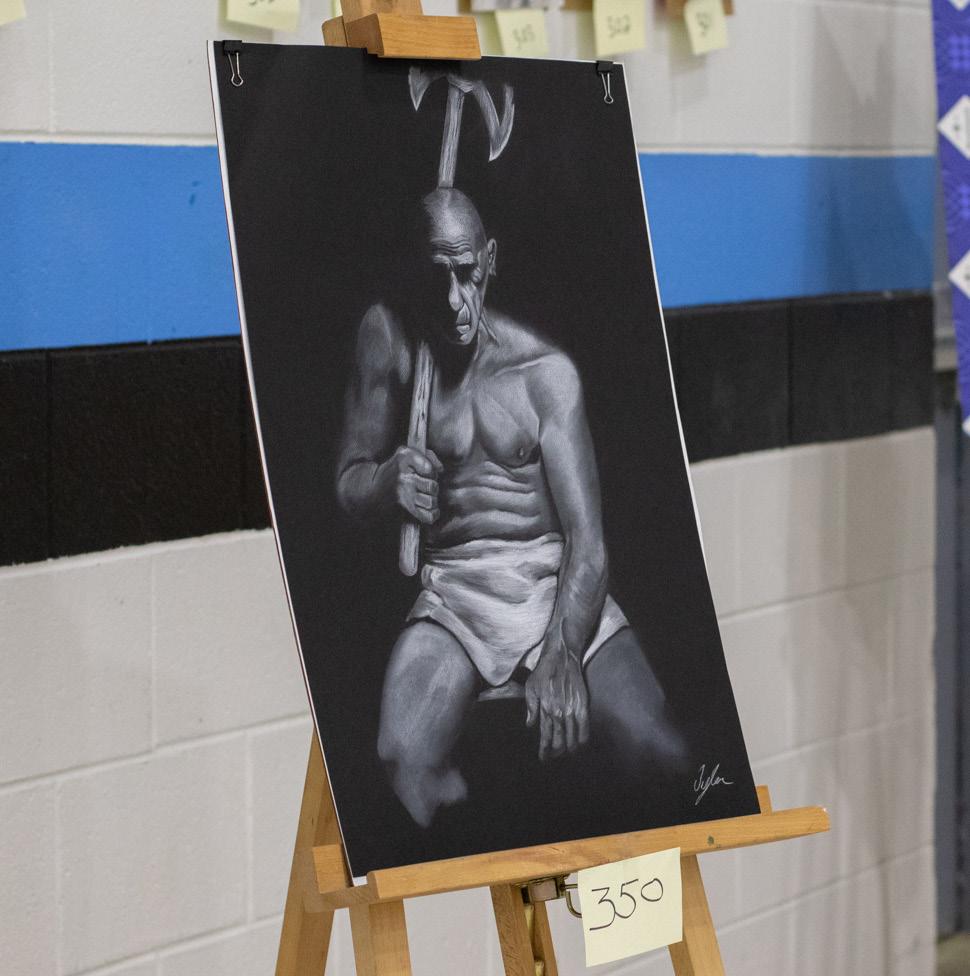
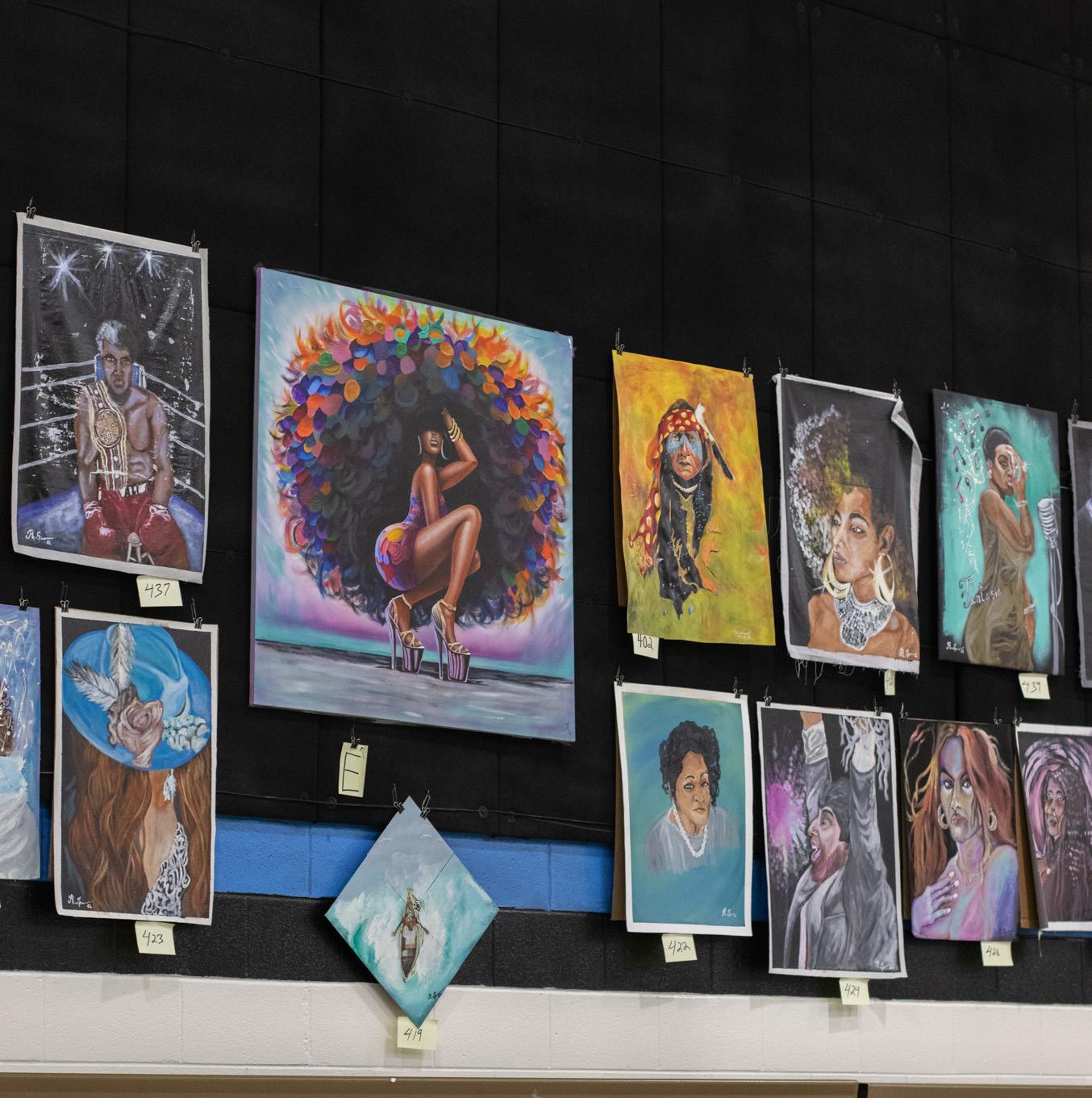
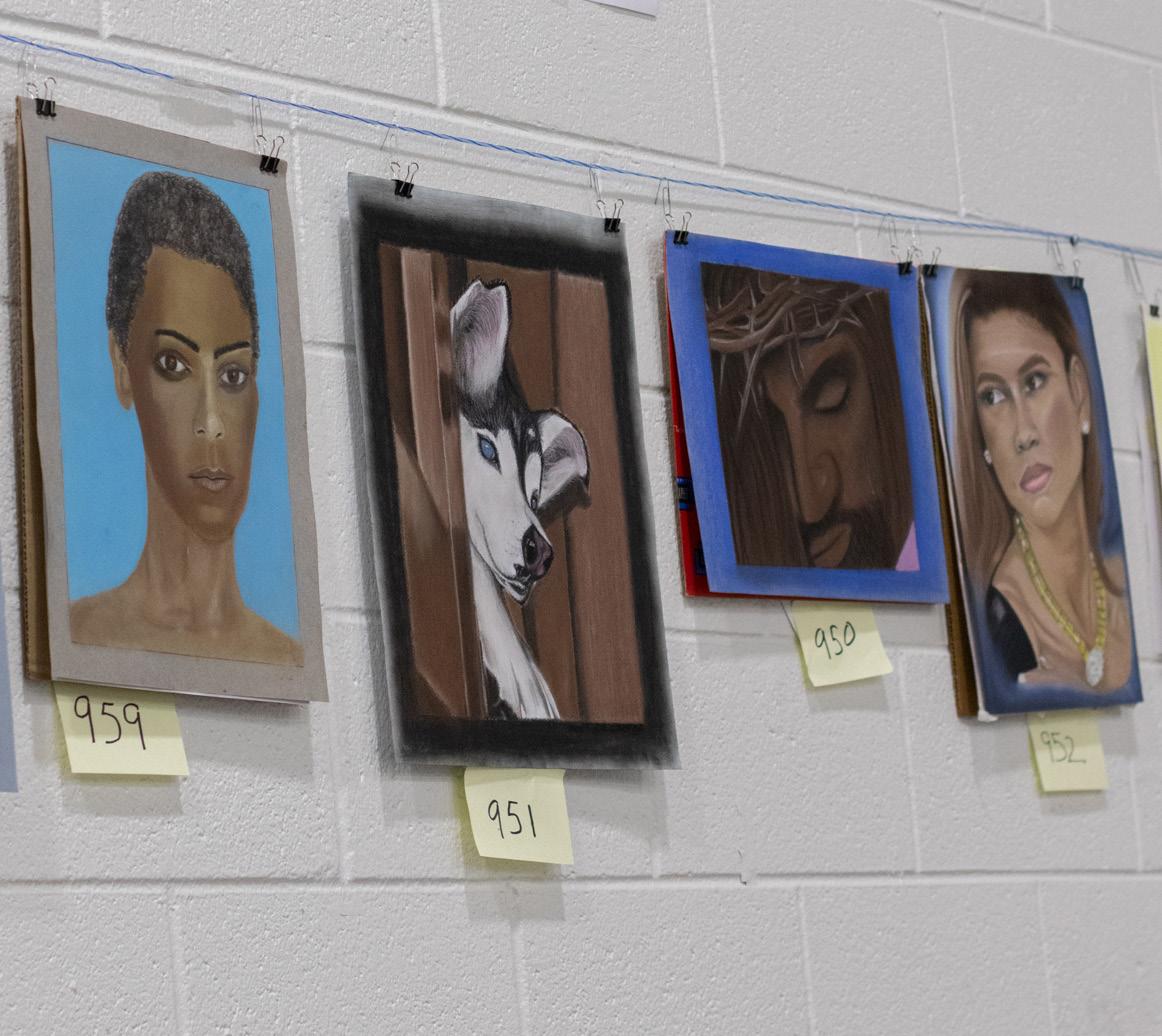
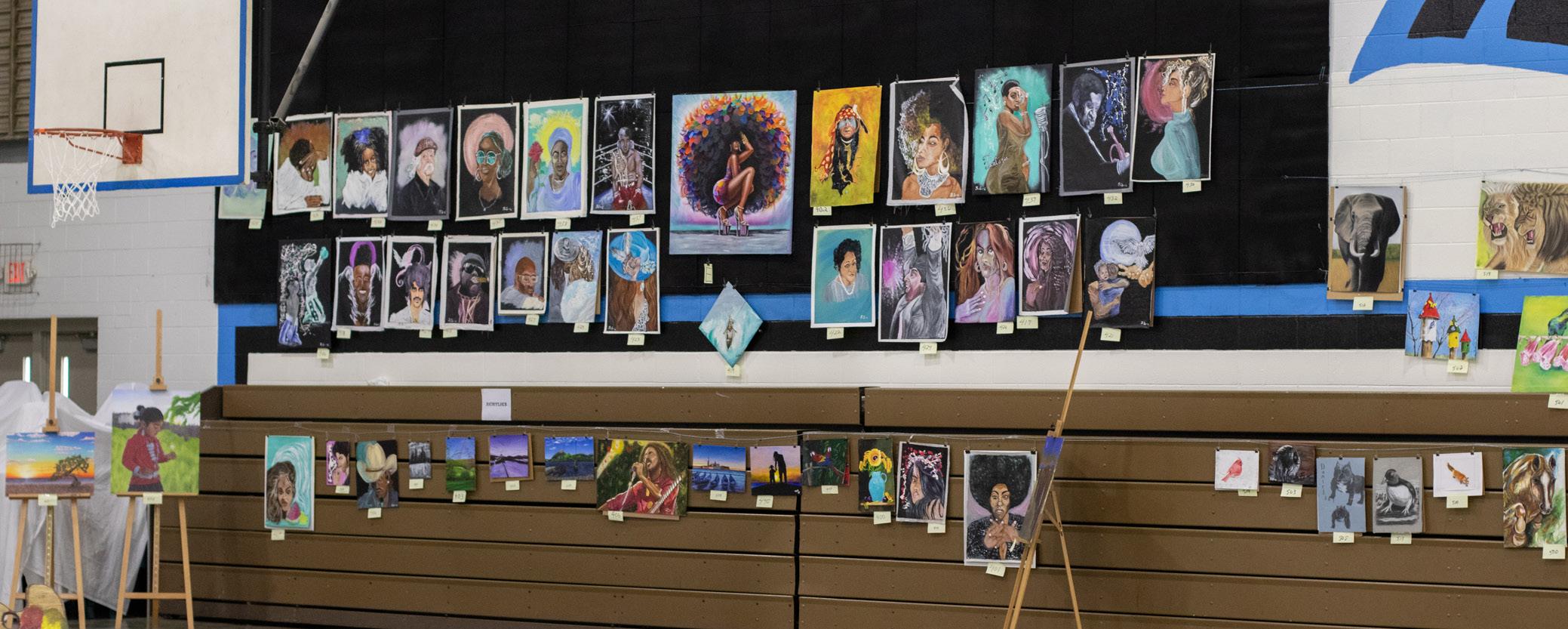
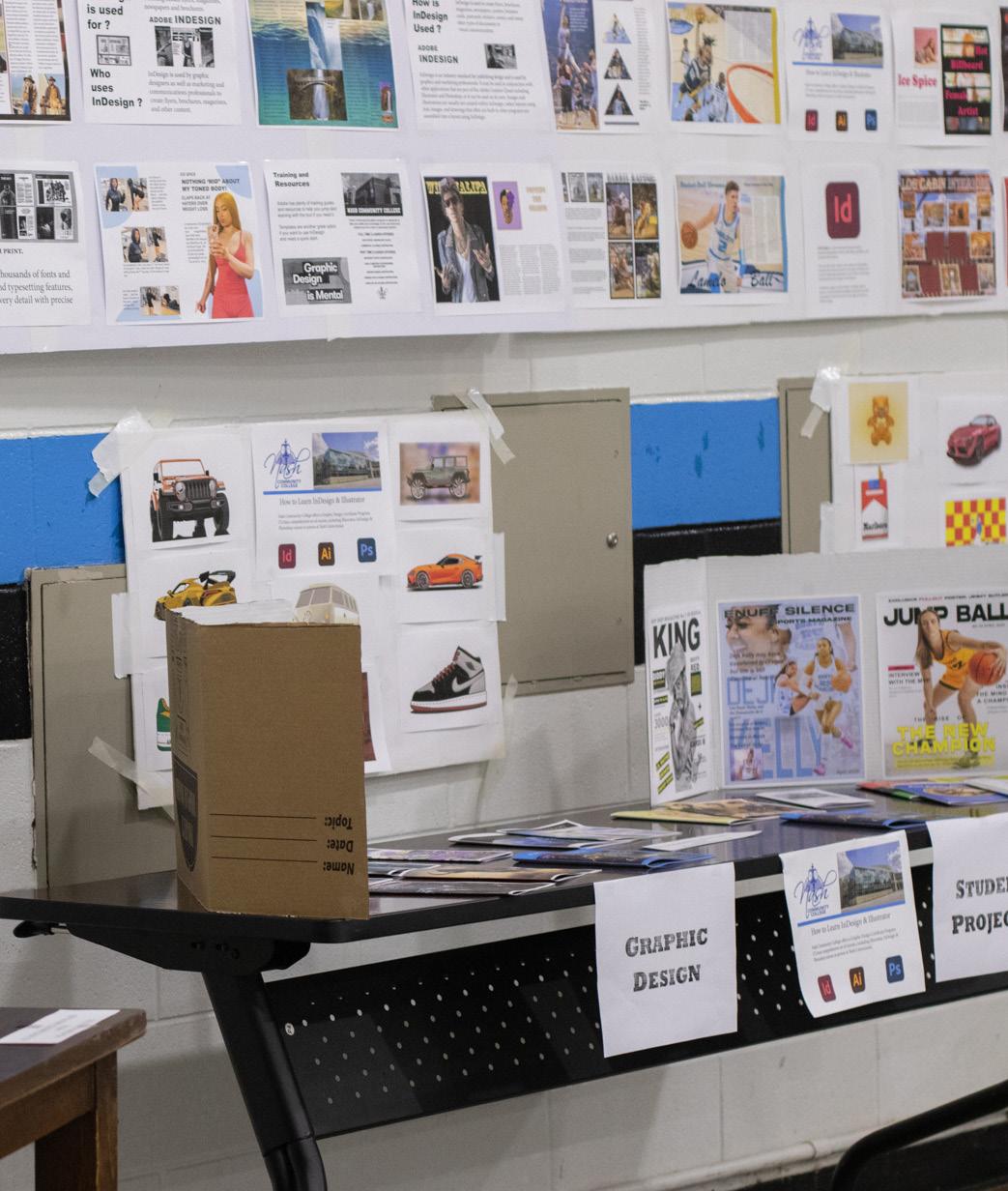
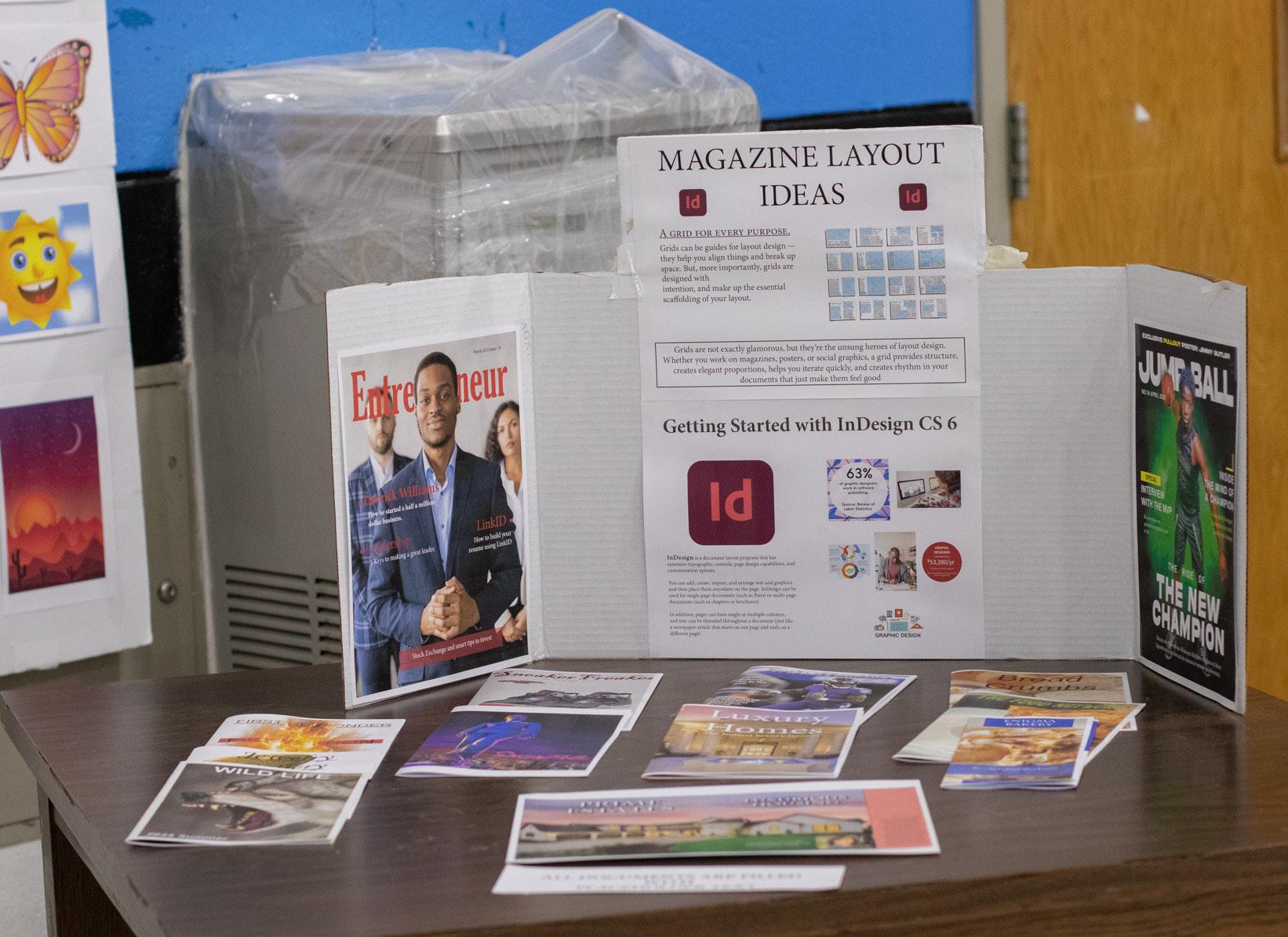

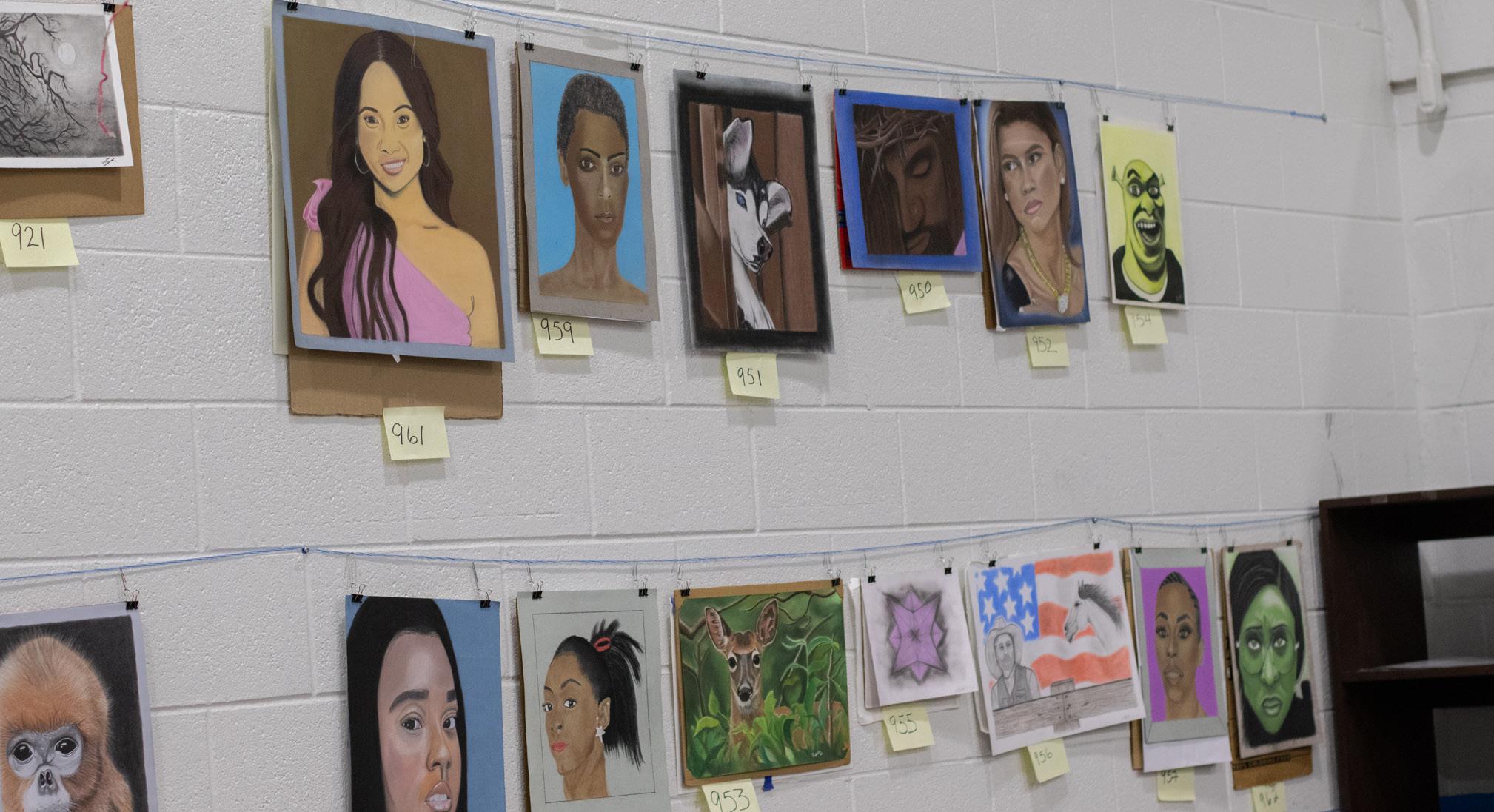
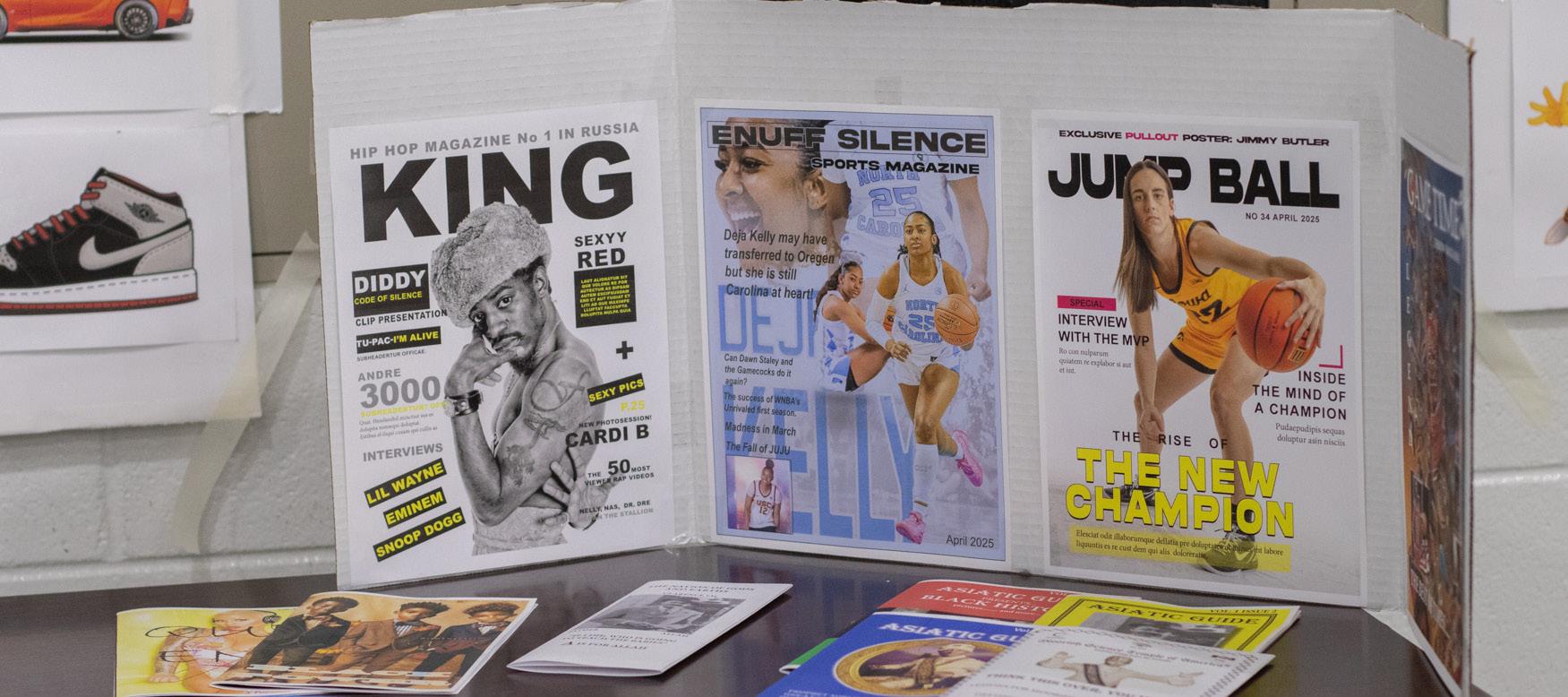
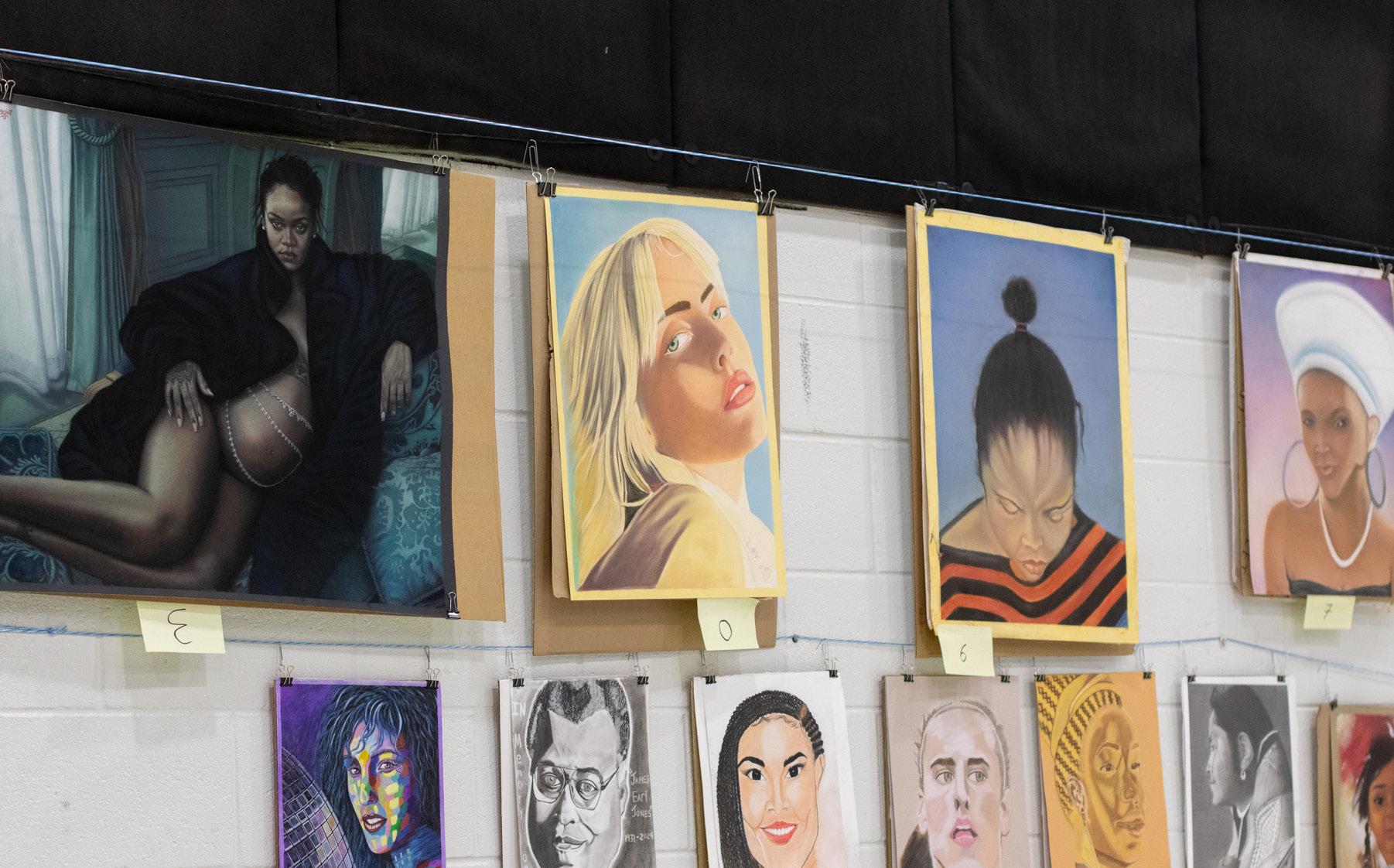
Artwork by Nash Correctional Art Program Participants
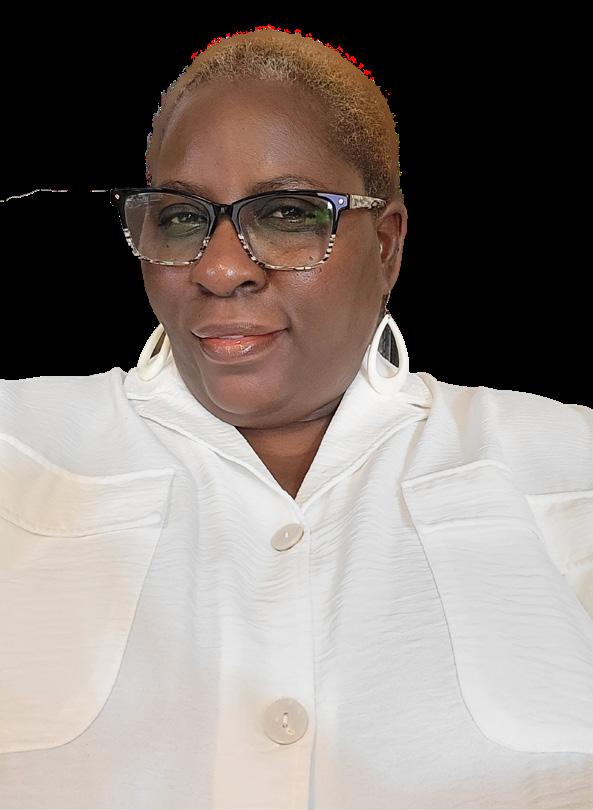

Interview with Ms. Markell
Mitchell
Markell Mitchell (MM): I am Markell Mitchell, a correctional program supervisor here. I believe the last time we met, I was a case manager… I was promoted in October. This art program is very important, and we’ll dive more into that
Brittany (BC): Congratulations! Could you tell us more about the history of the program and how you became involved? Mr. Lynch told us this is the only program like this in the state.
MM It is. The program started before me. If I was to guess, I would probably say it’s been running for 15, 16 years now… An offender named Chris came up with a concept and took it to the administration. They told him to come up with a plan, so he put together a whole syllabus to teach and we’ve been using that same format that he created…
When I started as an officer, I knew they had art shows, but I was never able to attend them, because I was always stuck in the dorm or doing some other task. As an officer, I was strict. The rules had to be enforced and that’s what I did. But when I came to the programs’ side and actually went to an art show, I was like, man, the talent… I got to see a different perspective of the offenders from what I had in my mind. You sit down and get to know these guys and talk to ‘em and see the passion in their work; and you start understanding, this could have been either one of your kids. These guys have mothers, fathers, sisters, kids.
BC Do you hope that this program will also help people out in the community see those who are incarcerated in a different way?
MM Yes. I think that this does help people on the outside see a different light of the guys. They might have this exterior that they show amongst their peers, but the art itself tells you what they’re thinking about, the type of things that they appreciate for themselves, who they really are on the inside…
From then I felt like the work that they do doesn’t need to be shut in here; it needs to go out [into the world] so other people can see it. So, I reached out to the Dunn Center at Wesleyan University and spoke with the art curator there, who said, ‘I’m so glad you called me, because I would like to do an exhibit here of the guys’ art’. I brought it back to the guys to see how they felt about it, and we did an exhibit at the Dunn Center... People did come, support and look at the galleries, and the guys were amazed.
BC How have you seen people be impacted or changed by participating in the program?
MM You might have a guy who comes and is just wilding out, whatever’s going on in his mind with his family or just doing the time, he’s having a hard time. When they see the art show, they’ll be like, ‘man, that’s awesome. I wonder if I can get there, if I can do that.’ And so they sign up for the beginner’s art class… Once they get in it, and see that they have really accomplished something, they want to learn more and this becomes their therapy. They know in order to stay in the program, all this other stuff you were doing when you came, you have to walk away from that. You now have something you can focus on. A lot of guys, when they get off from their incentive wage jobs, they’ll go in their room and pull out their paper and start doing what they do and it keeps them focused.
On Monday nights we have beginner’s art class. Tuesday night, we have our graphite class. Wednesday night, we have our charcoal class, and Thursday night, which is the night that Eric Lynch teaches, is our color theory class. Then Friday night we have the advanced art class, which is all the advanced members. It’s about 20 of them in that club and they are the teachers of the art program. They work with the guys in the dorm to get better with their skills and gauge their passion for art… They pretty much keep the art club going.
BC So not only is the art itself providing healing and rehabilitation; the process of moving through the art program helps create a growth arc. That’s beautiful. What would you like to see next for the art program here?
MM I want the guys to see that somebody actually cares about the work that they’re putting in to get out there on the other side. I want other people to see their vision, that’s why we have this interview. Yeah, they made a mistake, they’re in here, but for example, like Eric Lynch, he can go out on the street and survive just off his art. The work that he puts in, he can make a living just from that.
When they priced the guys’ pictures [for the art exhibit at the Dunn center], one 9in x 12in was almost $200. When our art club president did a picture, it was priced at like $2,000… I want them to see that you actually have a skill where you don’t have to come back to prison. If we can get more guys focused on stuff that they can actually transition to on the outside that’s meaningful, they go out as better productive citizens than what they were when they came in… I believe in these guys, and I would like to see this program expand to every institution across the state because I know they’re not just at Nash, they’re all over the state. If we can get it right here, we can have a guideline to go by to expand.
“I want the guys to see that somebody actually cares about the work that they’re putting in to get out there on the other side...”
BC Are there any additional resources or policy changes that would make it easier to grow and expand this program?
MM There are barriers. The guys have to put money into their supplies themselves. The Pastelmat paper, it’s like $11 or $12, just for one sheet, and a lot of them don’t have it. They might have the passion, but they don’t have the support and the money they need to buy the materials… Our Service Club here is supported by guys buying food from the outside and they save money from that. I’ve asked for funding in that same way [for the art club]. So that way, if they’re making any sales from their art, it will help them buy more supplies.
Then [when it comes to] ordering supplies, we have to stay structured on how they order. Families can’t order for them; the order has to come through me, so I can approve what comes into this institution and we have to order from [one particular supplier]. We keep control of the quantity, but allow them a particular quality to get the skill levels that they want to achieve. And that’s not what’s [happening] at the other institutions. Eric Lynch could not have the work level that he has without being able to purchase the better supplies that he’s allowed to have.
As far as other barriers, they can’t travel with their work and when the guys have to transfer, they have to give away their supplies because they can’t travel with it. There are certain [supplies] that guys who are on the advanced level are allowed to have [here] that they can’t take to other institutions.
BC Are there any ways that people can directly support and donate money, time or supplies?
MM So, the policy causes a lot of barriers with that when it comes to donations. We are allowed to get donations up to a certain amount. We have had the Wilson Arts Center donate to us but they had to keep it limited in the amount that they are able to donate.
I would love to see somebody out there in the art community volunteer to come in and do a session with these guys just to show them your skills and what makes your work beneficial out in the community, to help them get better. I look for volunteers to come in on our art shows in April and October to come in and judge the artwork
DA How would you want art galleries, museums, and other art institutions to interact with or support the program?
MM The Wilson Art Center has been a big support for me because I can pick up the phone and call them and say, “Hey, I got an art show coming up, I need two judges.”- and they’ll come; One time five of them came. What that [support] looked like with the Dunn Center was having [the guys] work put on display. Other galleries have said they were interested in displaying their art. The thing is, when the guys display [their art], they’ve got to give it away, and funding is not there for all of them. I would love to be able to get a grant for the art club to assist the ones that can’t afford it to be able to get supplies and the stuff that they need.
BC Is there anything else that you would like people to know?
MM It is so costly to get into an art school. That’s not easy for anybody to do…So, for these guys to be able to go out there stand amongst some of the most elite artists on the street, that is awesome; and they’re self-teaching each other. So I think bringing what’s happening inside of these walls out into the community is also about bringing equity into the art world and removing barriers for people. When somebody looks at your artwork, do they care whether you have committed a crime or whatever you’ve done?…They’re looking at the beauty that you have provided, the feeling that you gave them. That’s what they care about. When I look at their art, I’m just in awe. I’m proud of this program. I didn’t create it. I just became a part of it, but they put me in charge of it and I want to see it excel.
BC If folks want to volunteer or otherwise get engaged with the art program here, how should they go about it?
MM If you’re in the art community and interested in providing art sessions at Nash Correctional Institution, please contact

(252) 459-4455 extension 5660
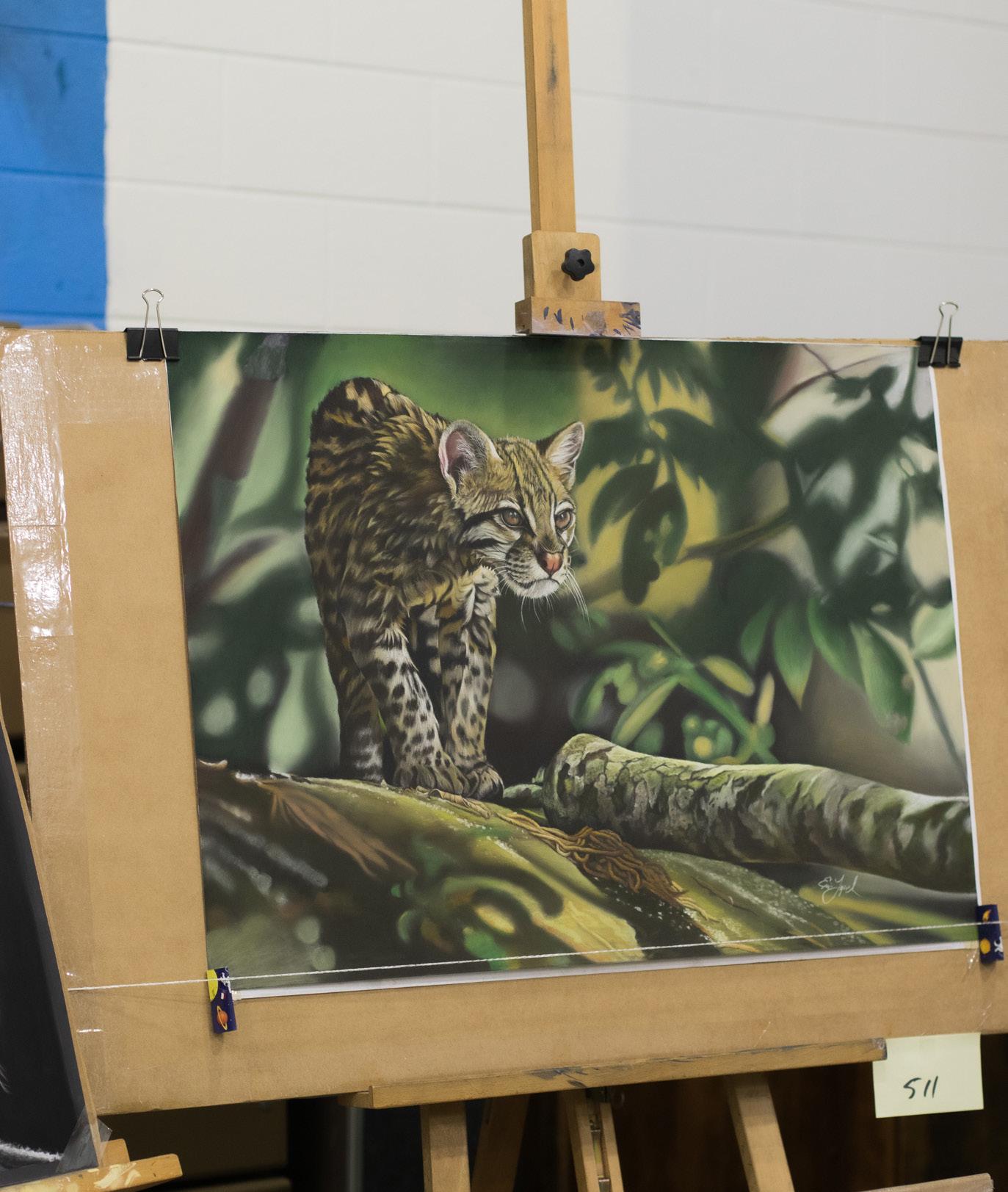
Artwork by Eric Lynch
Reclaiming Memory & Reimagining Resistance
A recap of our historic movement convening
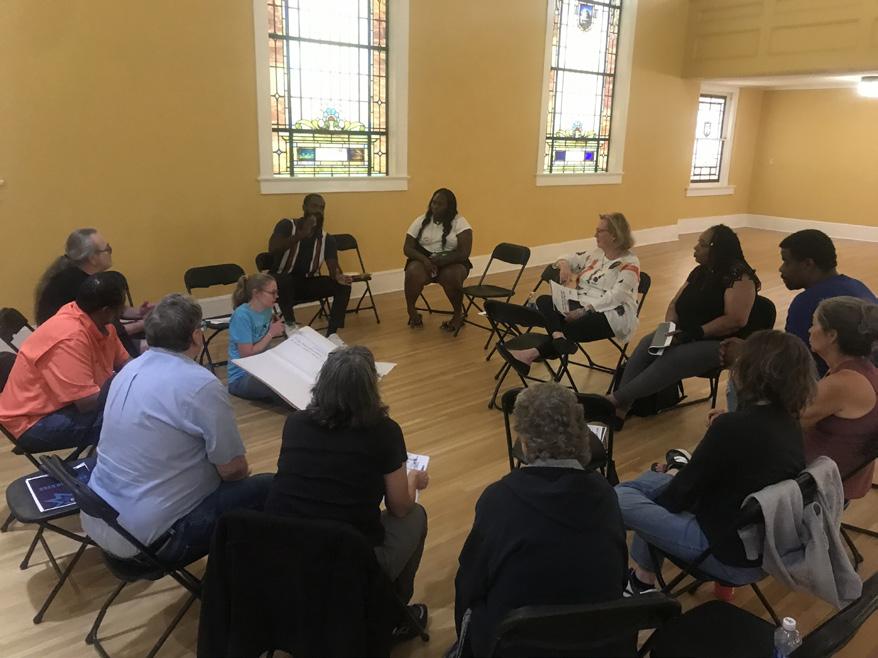
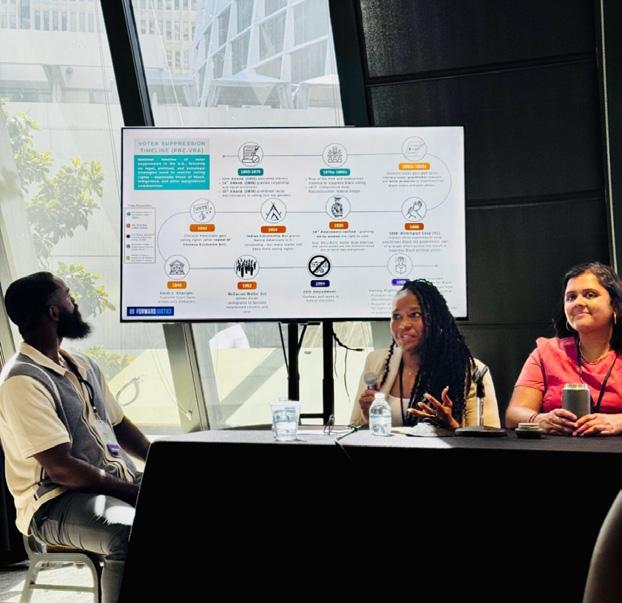
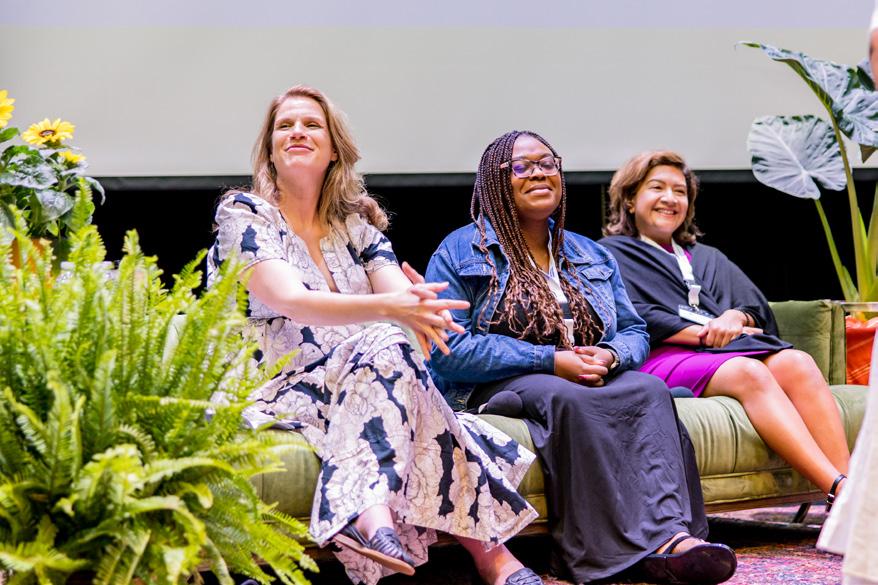
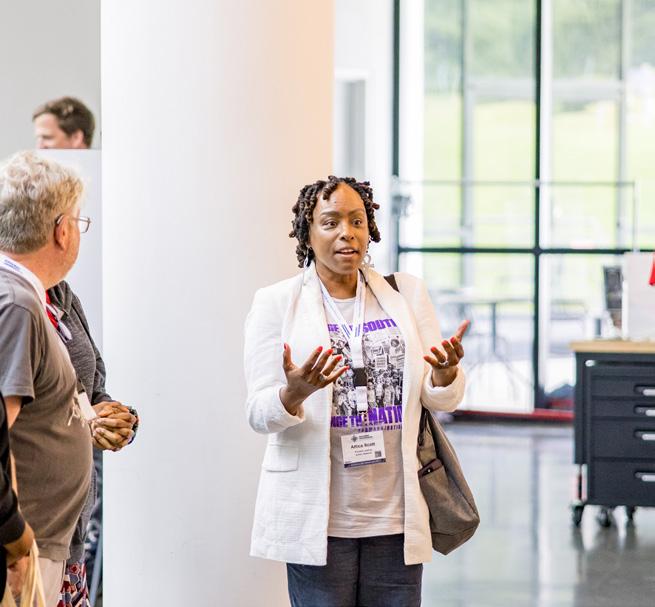
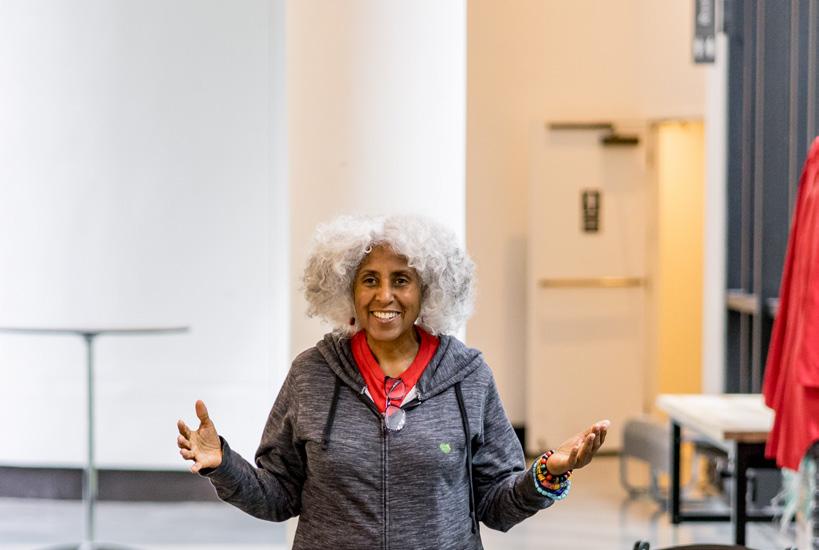
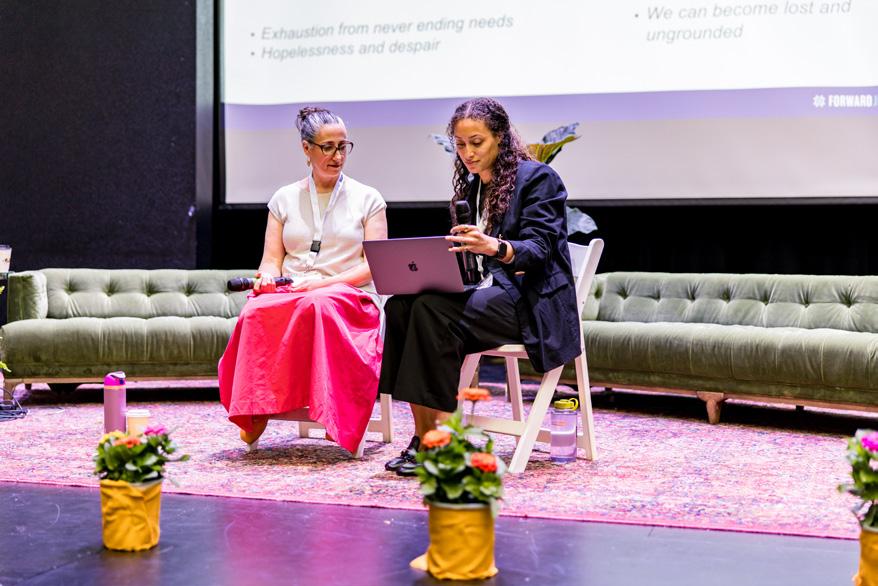
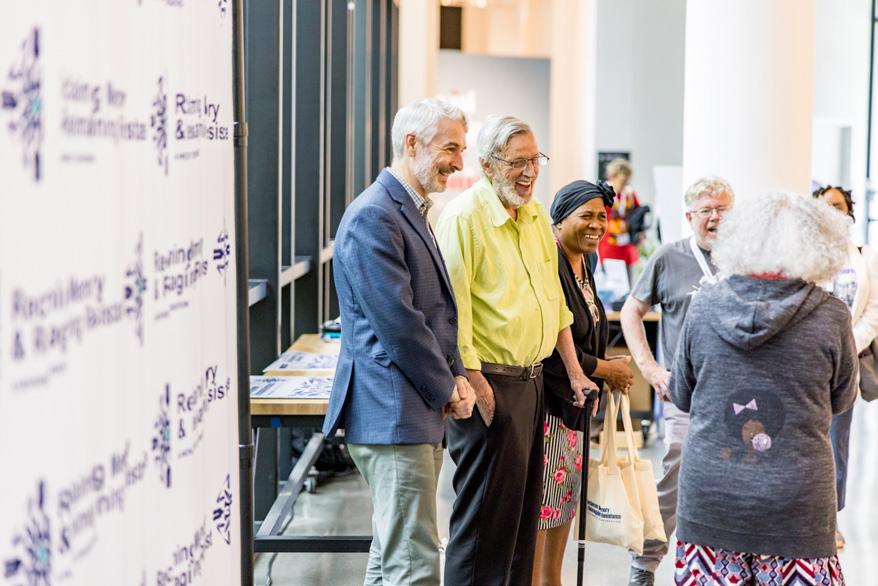
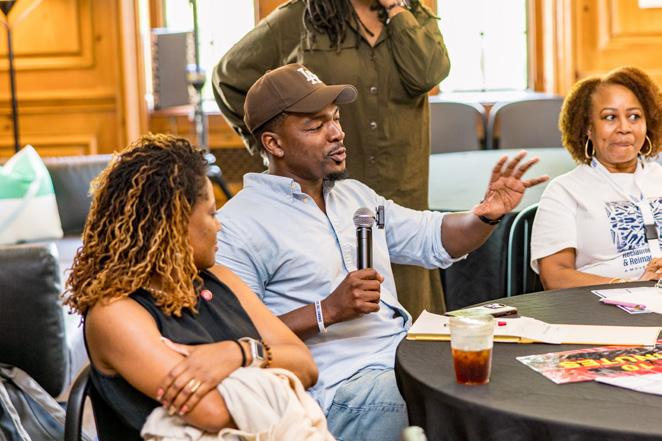
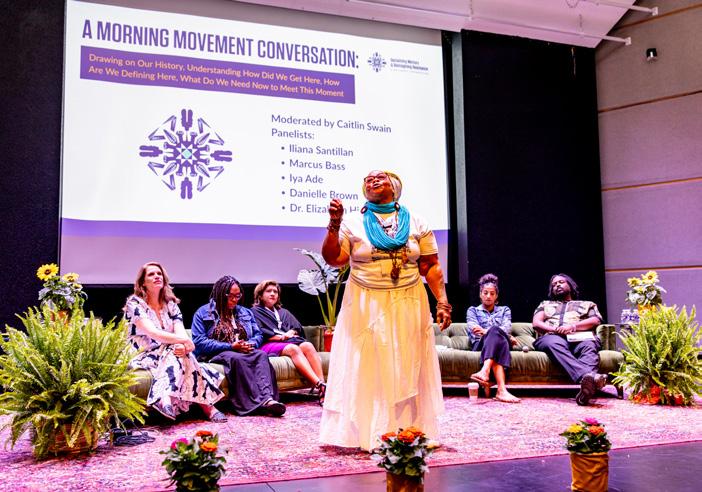
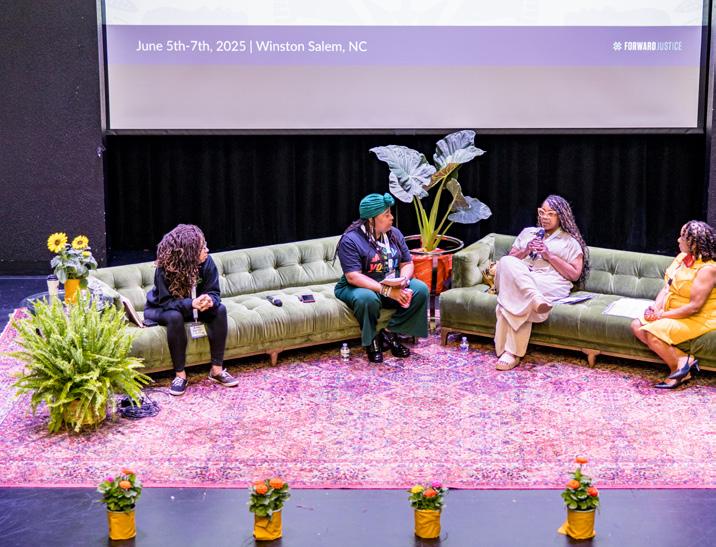
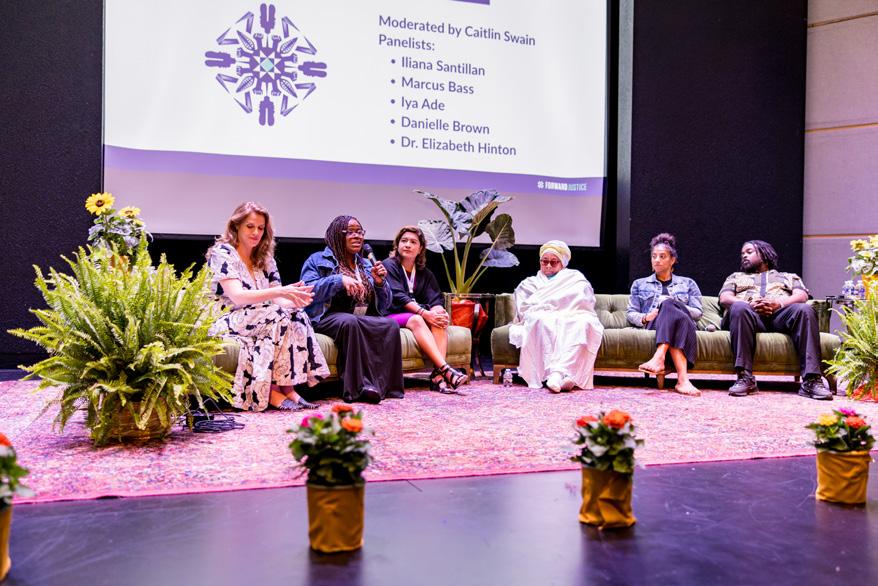
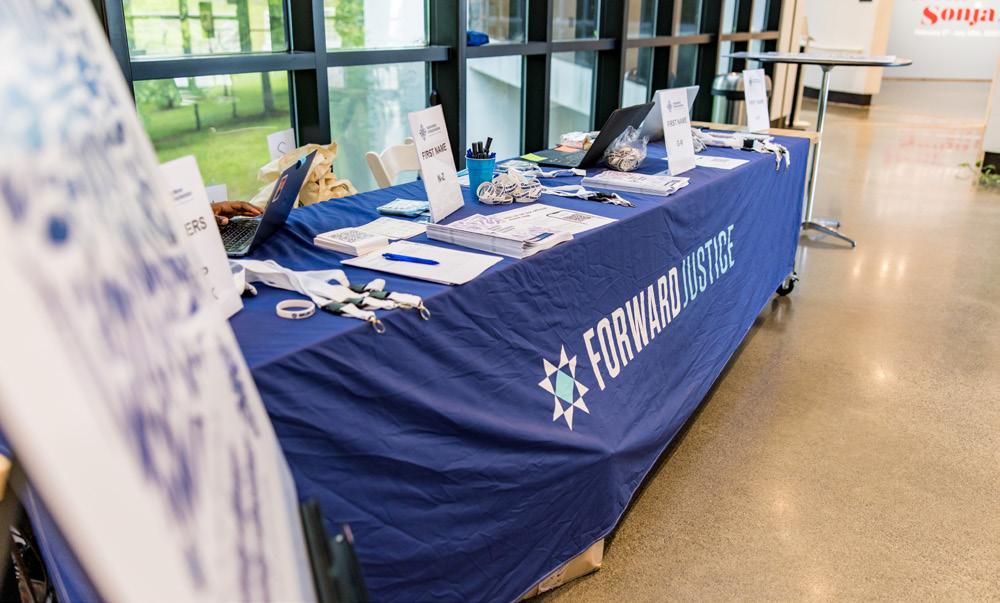
In June, Forward Justice hosted a historic gathering of an intergenerational and diverse group of movement leaders, community members and advocates to engage in collective learning, radical imagination, critical analysis and innovative strategy development—all while exploring world building and other holistic movement practices as tools for reimagining resistance, democracy, justice systems, and our economy.
“We know that we are not fighting for what has been, we are fighting for what must be that has yet to be realized – the society that is yet to exist… a society where liberation is nonnegotiable.”
Dr. Ashley Marshall Co-Founder & Senior Director of Sustainability & Emergence of Forward Justice
“People are talking about trying to save democracy when most of us are trying to save ourselves and our families…[but] We believe that the ability to save this country lies in this room, the ability to save our families and our futures reside in this room, let’s do it!”
Marcus Bass, Exec. Dir. of the NC Black Alliance
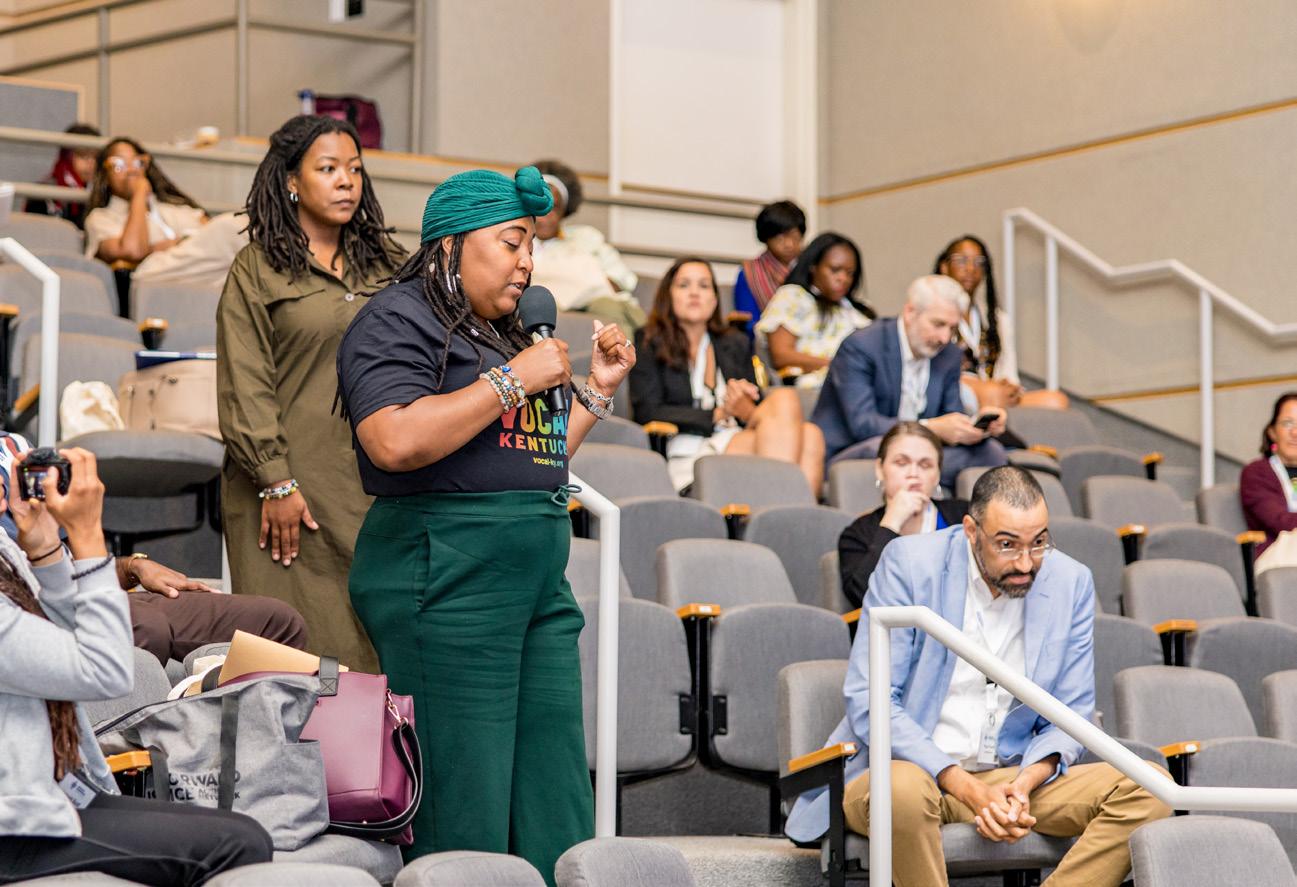
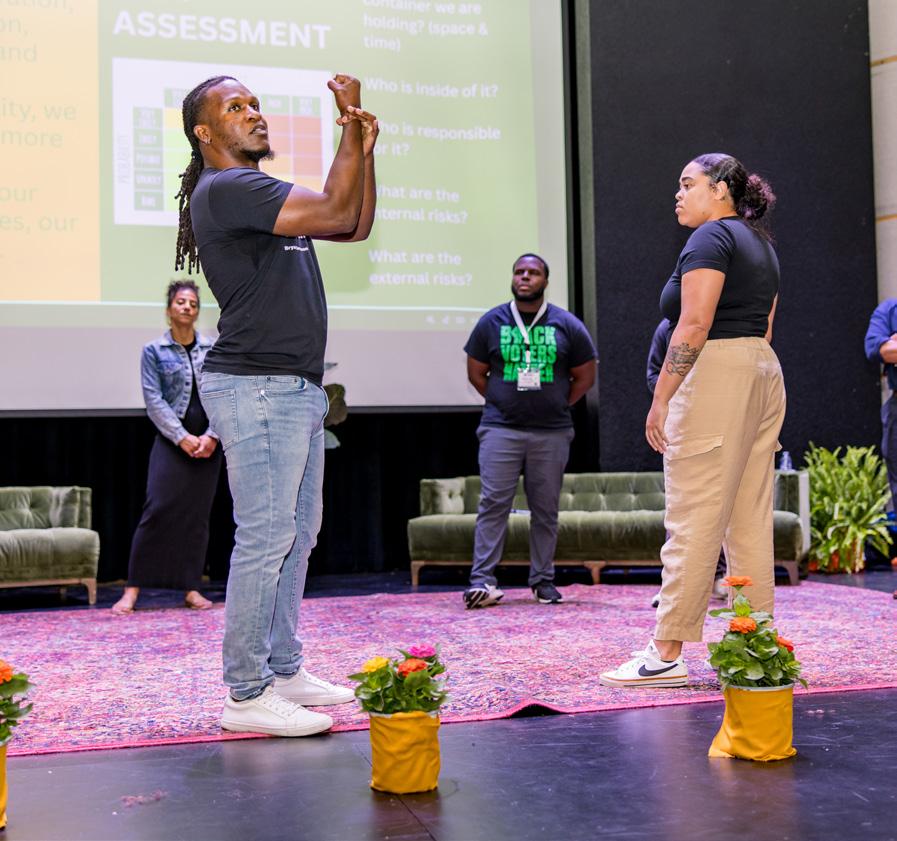
The 3-day gathering included a trolley tour of Winston-Salem’s historically Black neighborhoods and spaces, a sneak preview of a new opera focused on the Black Women workers leadership at the heart of the groundbreaking Tobacco Strikes in Winston Salem, nonviolent direct-action training, breathwork, movement lawyering trainings, action labs, co-learning spaces and powerful panel discussions with folks at the heart of our movement.
We shared stories from the movement, discussed the importance of reclaiming our narratives and shared space with partners at Poor People’s Campaign, Southern Vision Alliance, Blueprint North Carolina, Brava NC, Immigrant Rights Network, Farm Workers Alliance, Black Voters Matter, NC Black Alliance, Advance Carolina, Beloved Community Center, SpiritHouse South, and many more. We look forward to sharing key insights and outcomes from the convening and working with partners to continue charting a path forward towards collective liberation.
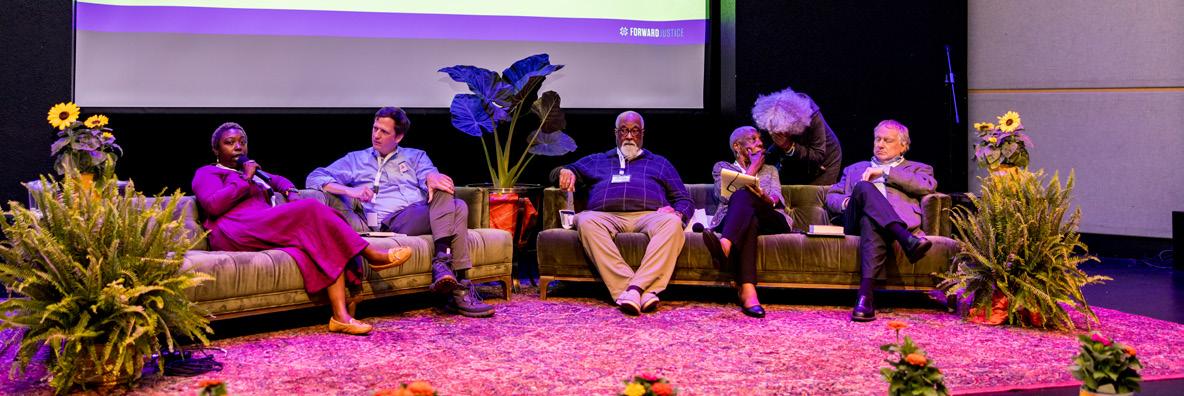
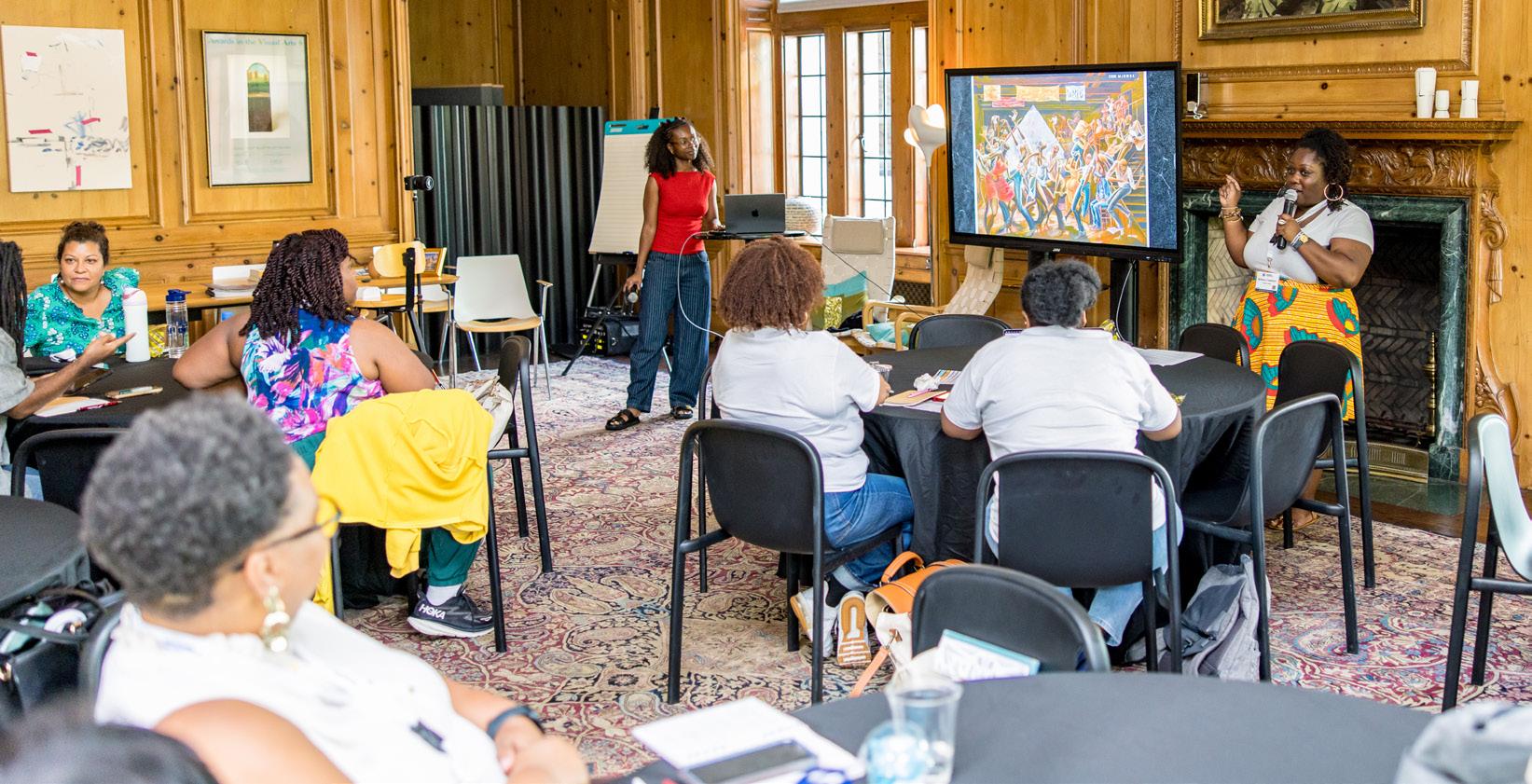
Photo credit: PEO Production
Photo credit: PEO Production
Photo credit: PEO Production
Photo credit: PEO Production

Poetic Recap
BY ASHANTI SCOTT
We gathered not by choice, but by call— Brought forth to Winston-Salem and standing tall. Across generations, voices blend, To shape the world, that we must defend.
A calling our ancestors sparked and new voices raised, To our future—though not yet fully phrased. Here, past and future gently blend— A sacred space where truths transcend.
We came with love, with wounds and fight, With memory burning clear and bright. We named some storms: justice denied, A fractured economy, and power misapplied.
With open hearts and sharpened skill, We mapped the valleys, climbed the hill. We spoke of hope, of tactics to share— Of rising strong with breaths of care.
Makani’s words, Dr. Marshall’s grace, A glimpse of the love inside of this place. Blueprints laid, alliances born, From southern soil, a world reborn.
We’re not just fighting for what has been— But for the world that must begin. One not yet named, but drawing near— We feel its rhythm; we make it clear.
The times are urgent—yet we slowed, To heal, to root, to write, to be bold. This is our march, our sacred vow— Forward together, the time is now.
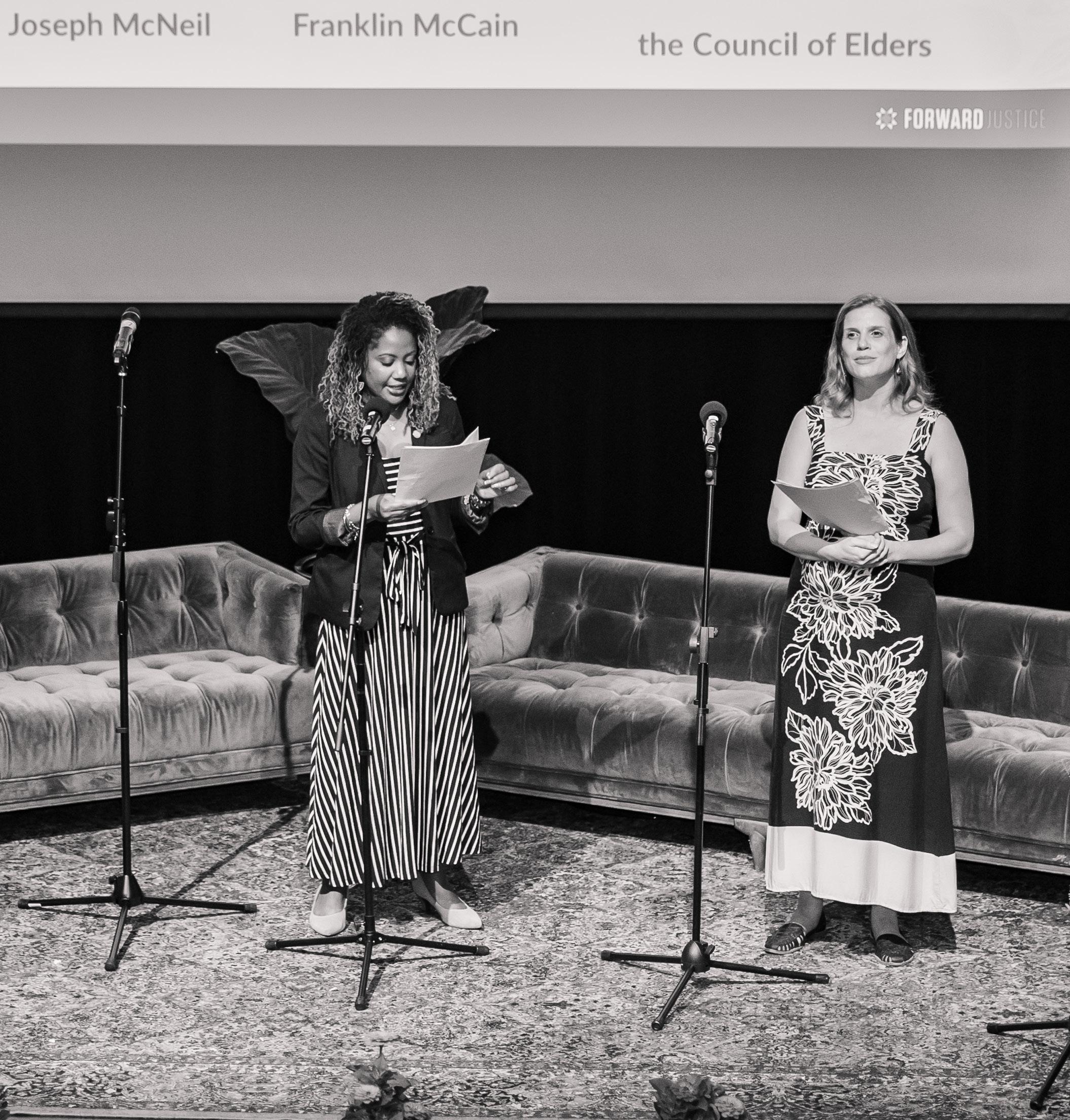
“We think about it in the frame of telling the stories of our work, but we can use narrative to connect our work. There are too many narratives that separate us, using our stories to uplift the connectivity of our work gives us a larger team so we can win.”
Brigette Rasberry, Beloved Community Center
Photo credit: PEO Production
Five Years Later, Louisville Still Demands Justice
BY: COUNCILWOMAN SHAMEKA PARRISH-WRIGHT,
EXECUTIVE DIRECTOR, VOCAL-KY, AND ATTICA SCOTT, DIRECTOR OF SPECIAL PROJECTS, FORWARD JUSTICE ACTION NETWORK (FJAN )
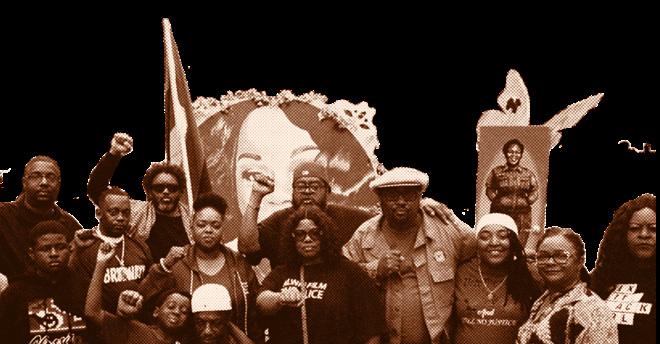
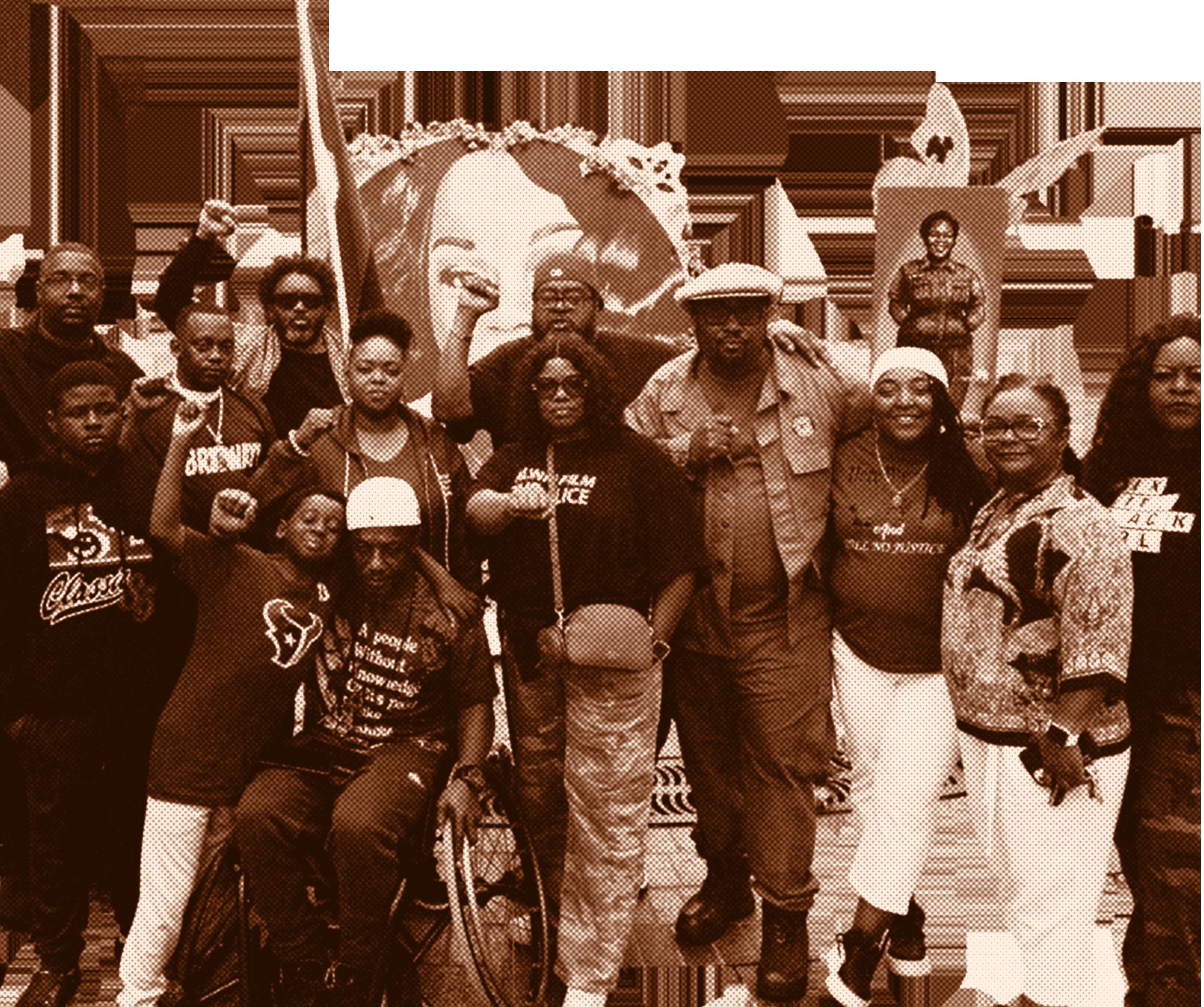
It’s been five years since Breonna Taylor was murdered in her home by police on March 13, 2020. Five years since the world woke up to what so many of us in Louisville had already known: that justice in this city is conditional, uneven, and far too often denied to Black people — especially Black women. In those five years, we have marched, mourned, organized, and built. But Louisville remains at a crossroads, and the fight for accountability and transformation is far from over.
FJAN and VOCAL-KY serve alongside coalitions and communities working to advance advocacy and justice across the South. Here in Louisville, we’re pushing for more than incremental reform — we’re demanding a sea change. We are rejecting carceral expansion and any plan to build a new jail. We are refusing to normalize a system built on colonization, the enforcement of slavery, and the protection of white supremacy.
We have had some wins like the civilian review and accountability board and inspector general’s office being created for oversight, but both remain underfunded and politically constrained. Real police accountability is still not fully woven into the fabric of our city government. At the state level, dangerous legislation continues to erode local control — shielding police from accountability and criminalizing protest. The fight to protect civil rights and community safety is more urgent than ever.
The DOJ’s 2023 findings on the Louisville Metro Police Department (LMPD) confirmed what Black Louisville residents have long experienced:
LMPD uses excessive force, violates the Fourth and First Amendments, and discriminates against Black people.
The department’s practices around search warrants, protest response, and gender-based violence are deeply unconstitutional and dangerous.
LMPD continues to fail in civilian oversight, transparency, and public accountability — while harming disabled residents and neglecting victims of sexual assault.
In June, The People’s Consent Decree Coalition — an alliance of local activists and community leaders — drafted a resolution that was passed by Louisville Metro Council. This resolution, once rejected by a wide margin last year, was finally approved — though narrowly. This is proof: when we organize, we win. Even if it’s late. Even when it’s hard.
Policing cannot be separated from the structural issues of inequality, poverty, and racism. We need a new model — one that invests in housing, health care, education, and restorative justice, not just in more police.
This is about honoring the memory of Breonna Taylor — and too many others: Shelby Lanier, Manfred Reid, James Groves, Adrian Reynolds, Desmond Rudolph, Rodney Abernathy, Clifford Lewis, Antwan Bryant, Marshall Marbly, James Taylor, Michael Newby, Larry Noles, Deng Manyoun, and far too many more. We say their names not just to remember, but to demand change.
In Louisville, the youth-led, multi-racial movement rising from these ashes is being nourished right here at home. We’ve turned trauma into power. Mourning into movement. And at FJAN and VOCALKY, we are here to amplify and support that movement — not just for now, but for generations to come. And while the work remains heavy — burdened by fatigue, underfunding, and political resistance — we are not going anywhere.
Justice is not a moment. It is a movement. And at this moment,
WE MUST ACT.
We can be the generation that turned a corner in Louisville. Or we can be remembered as the ones who stayed silent while power doubled down on injustice. Our choice must be clear. Because justice is an action word, and it’s time to act.
Events Recap


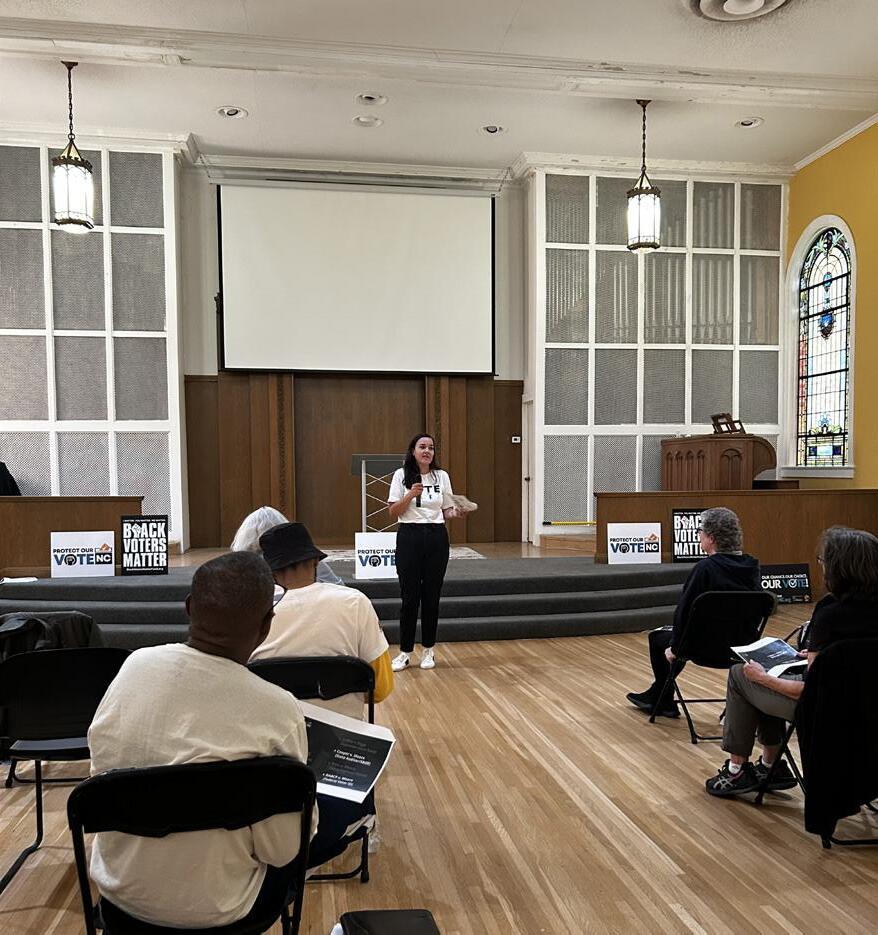

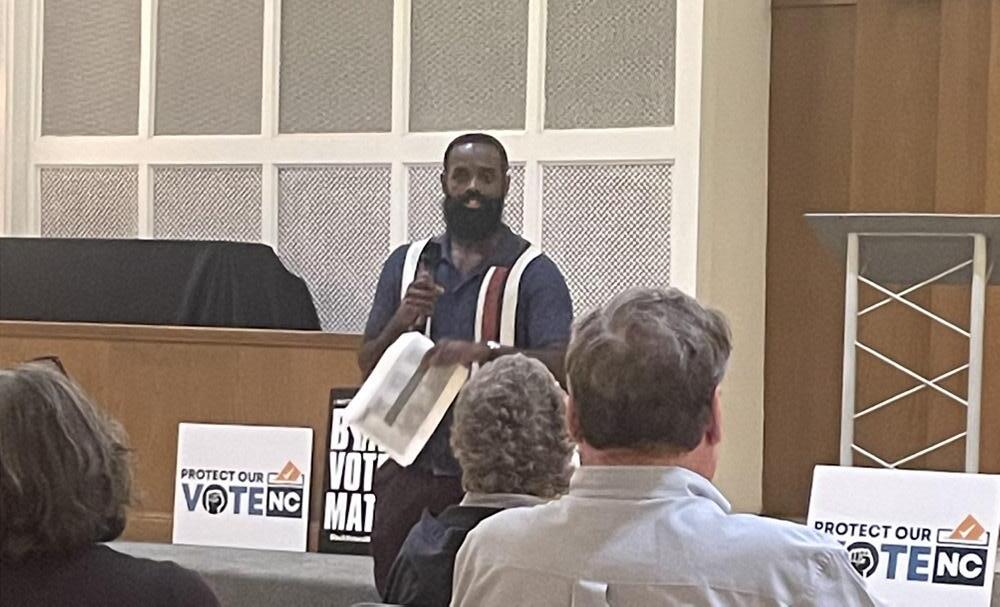
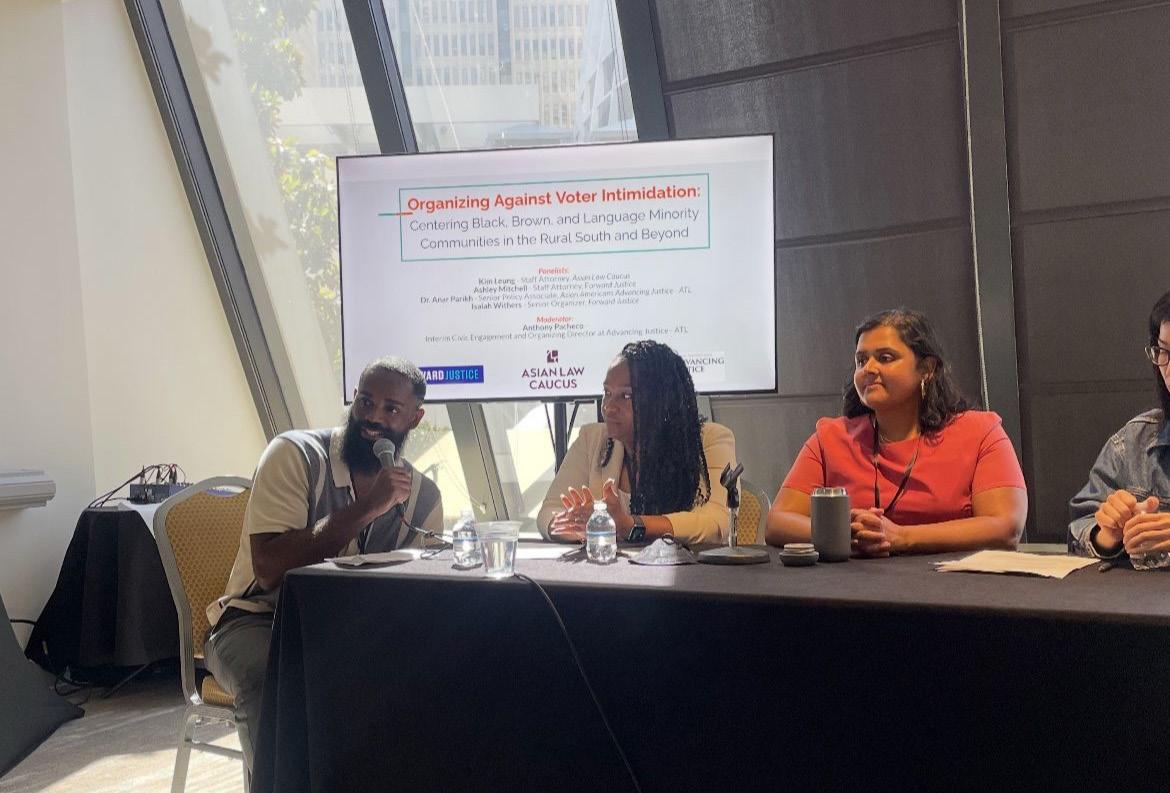


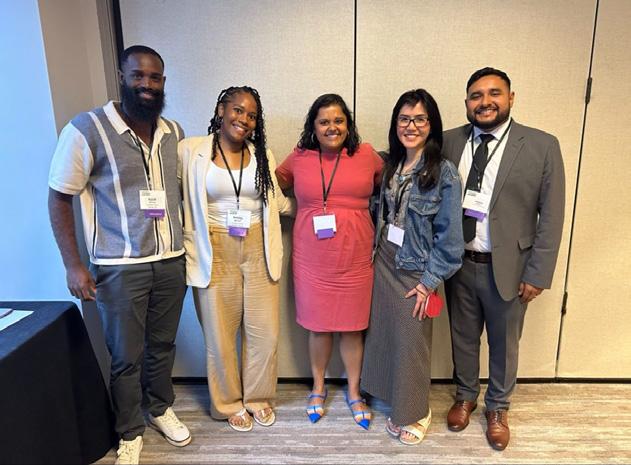




Reclaiming Memory & Reimagining Resistance Symposium



Transformative Justice Events


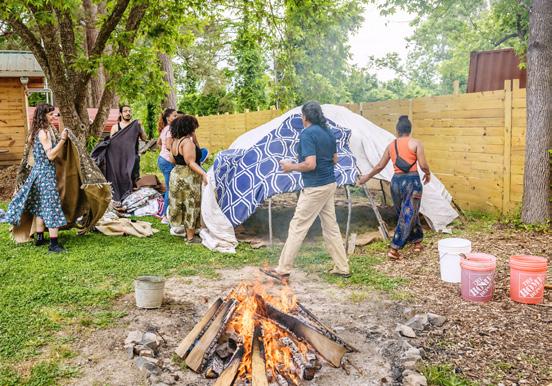
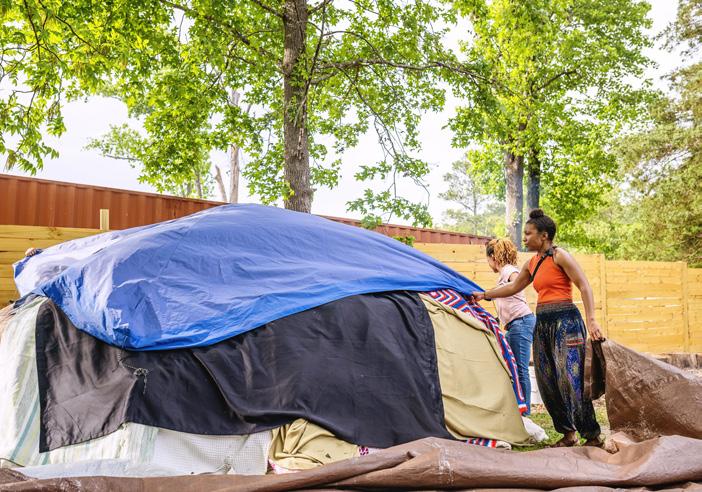
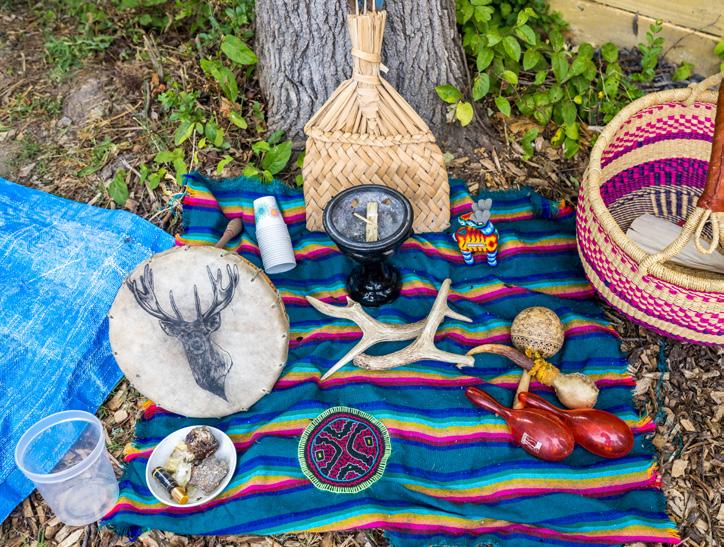

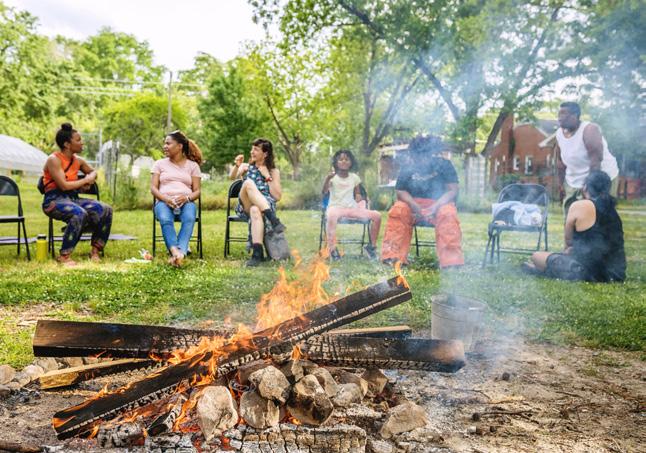
Hawk's Nest Farm Tour & Sweat Lodge
Photo credit: PEO Production
Photo credit: Kumolu Studios
Transformative Justice Events
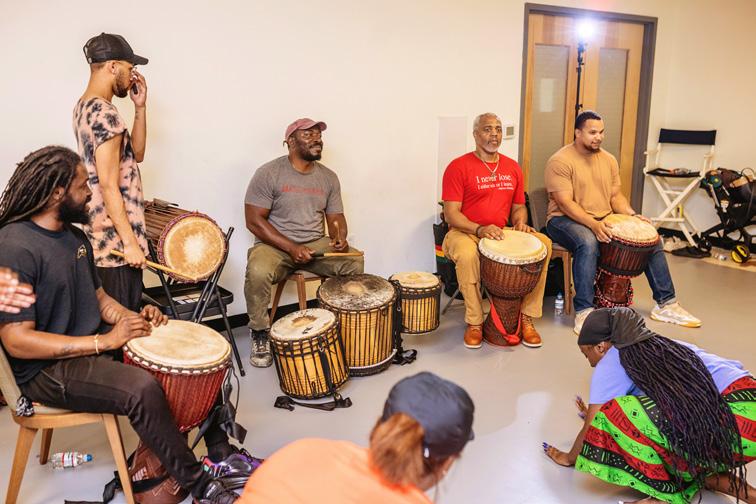
Songmatics workshop with Teddy
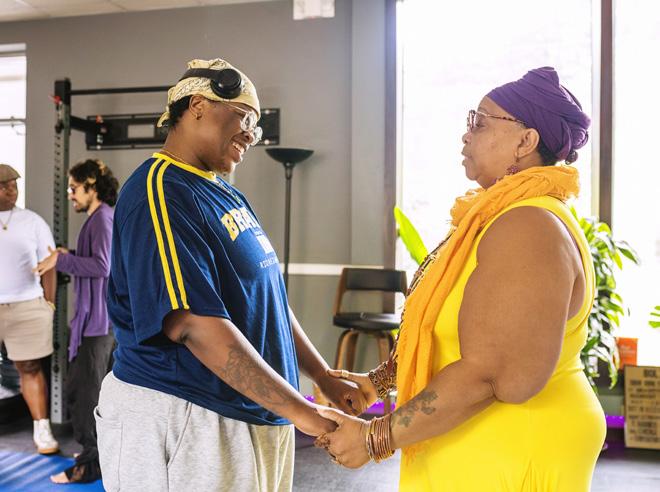
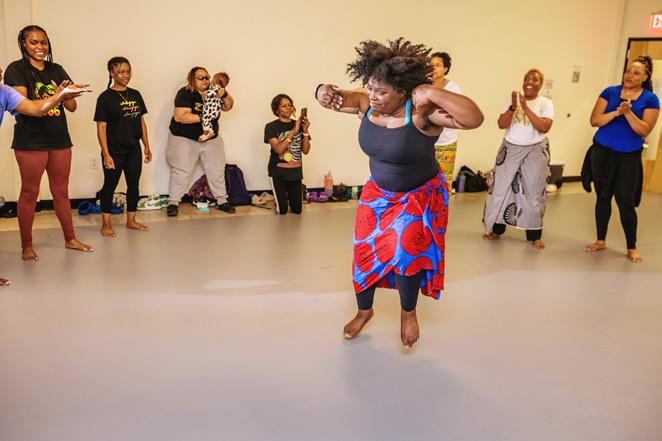
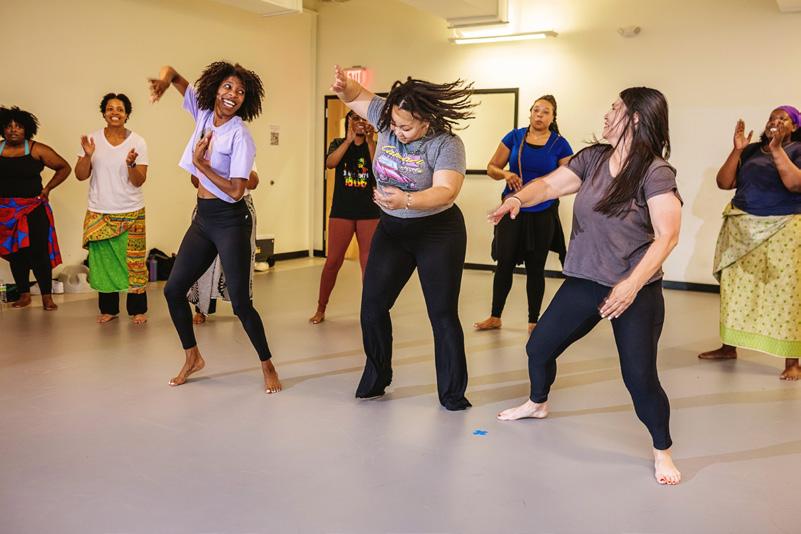
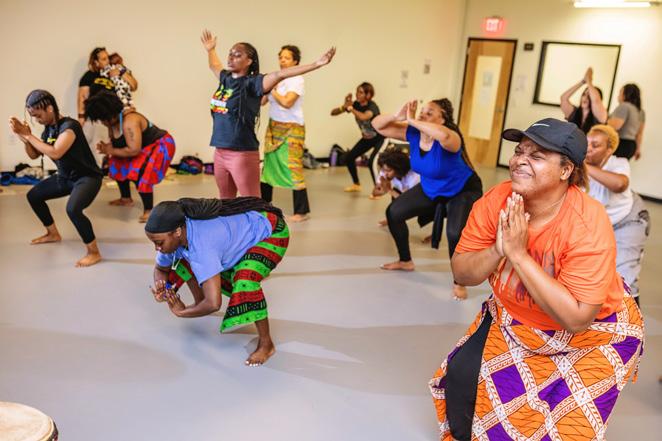
African Movement Class with Saky
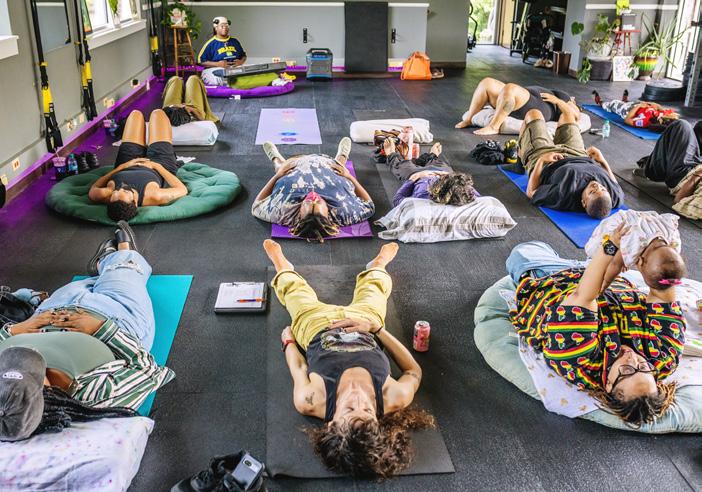







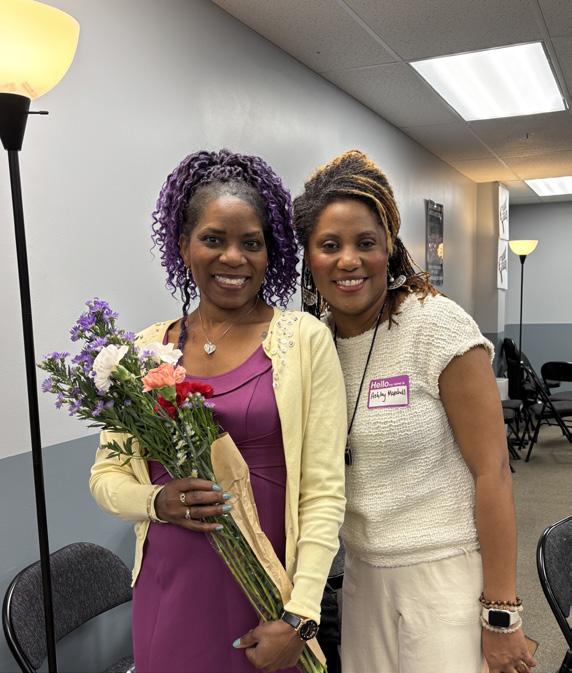
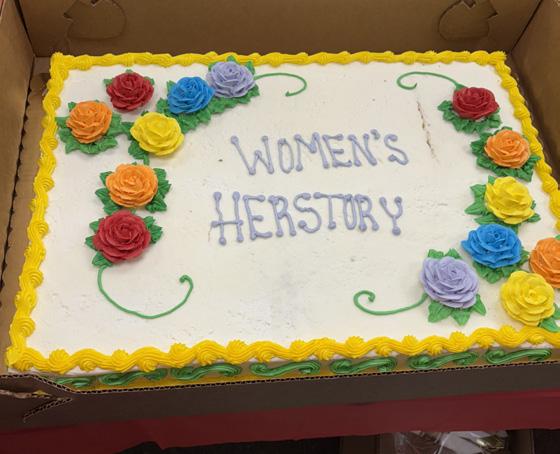


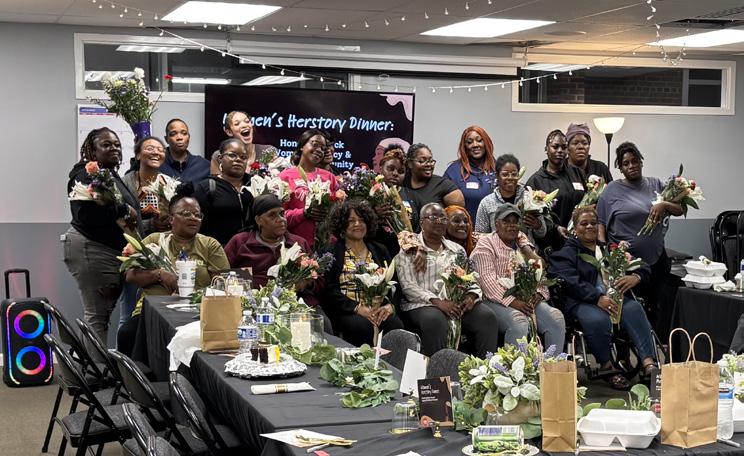


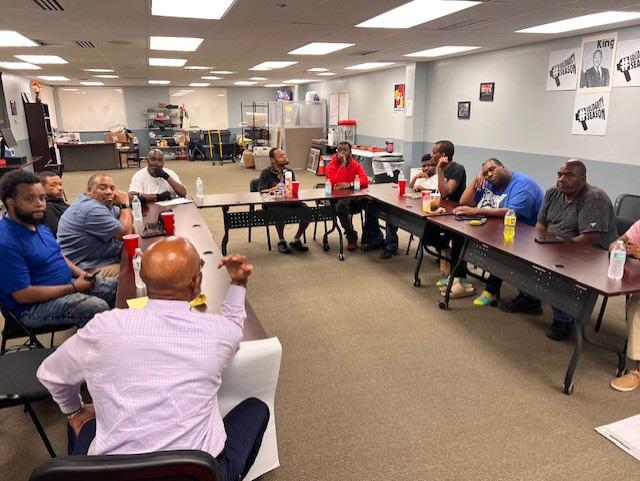
Women's Wellness Dinner
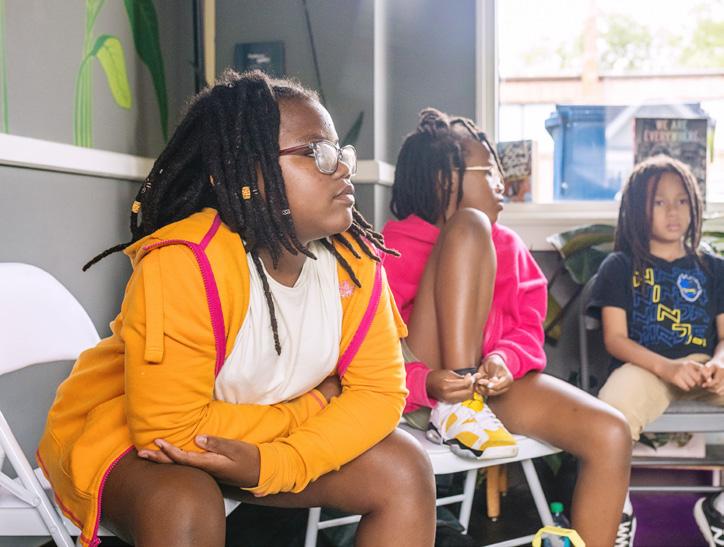
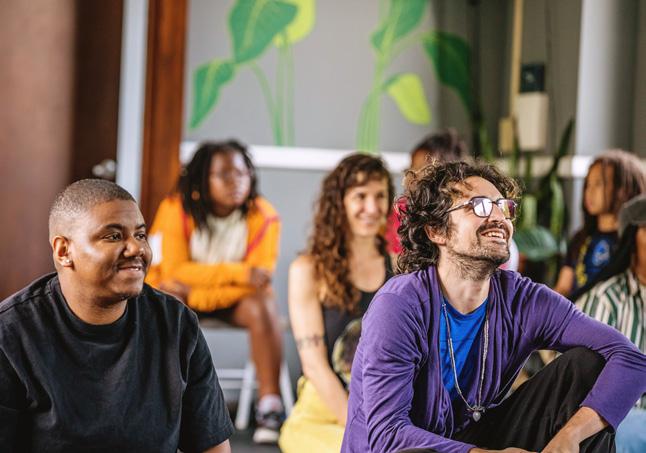
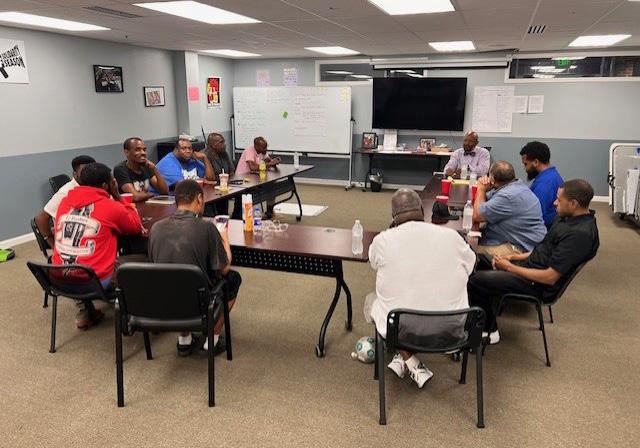
Men's Mental Health Dinner
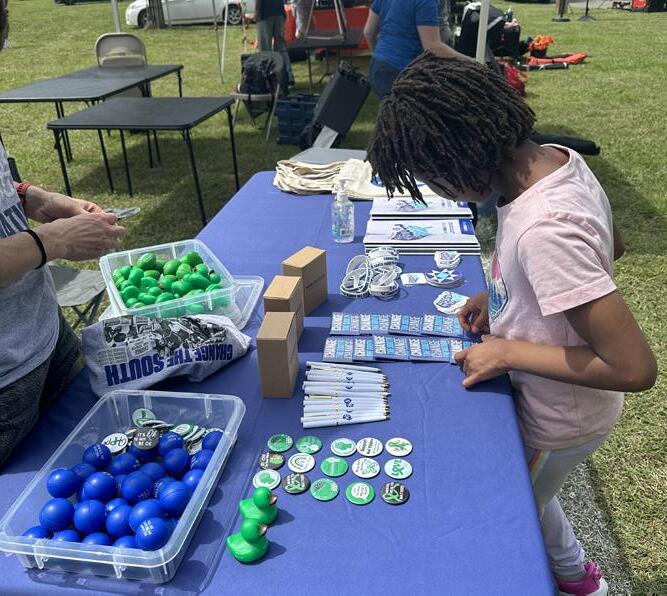
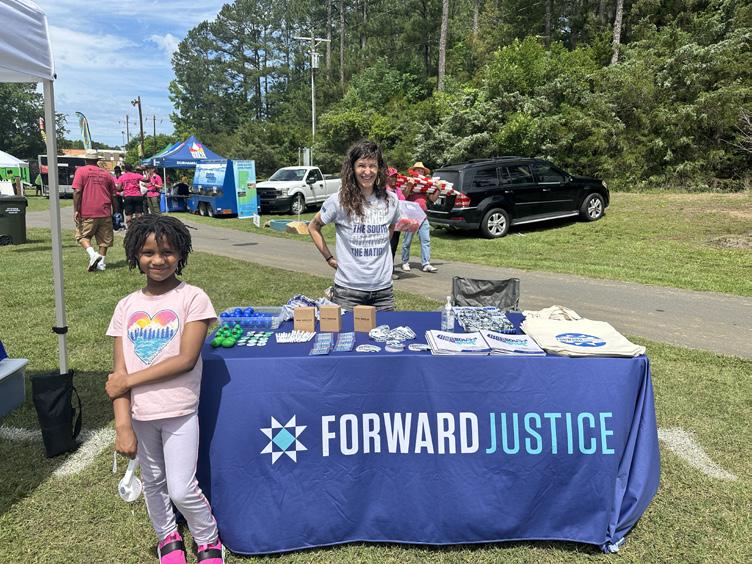
Bimbe Cultural Arts Festival
Photo credit: Kumolu Studios
Photo credit: Kumolu Studios
Black August in the Park
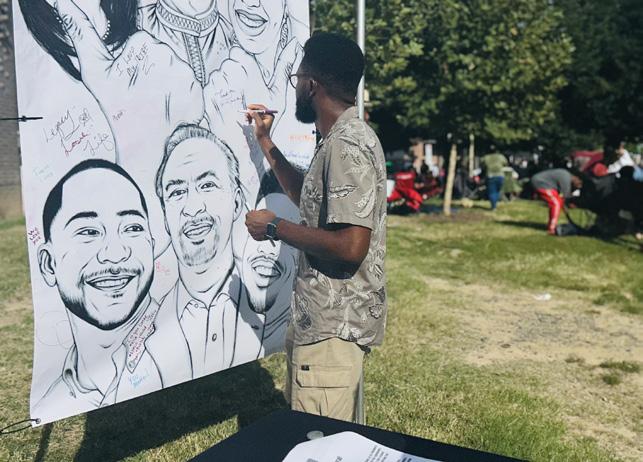
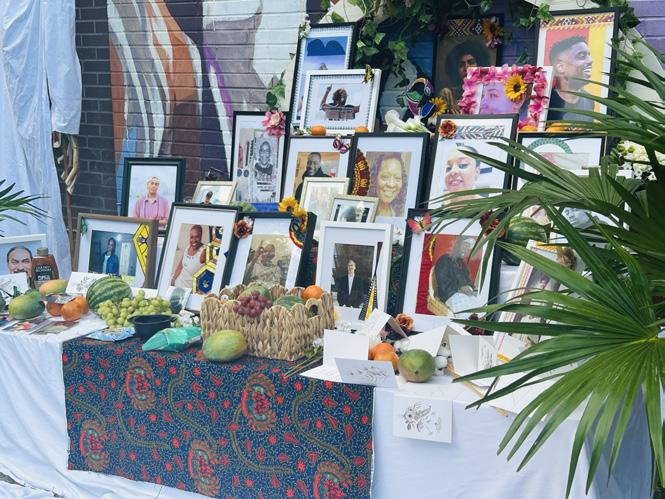


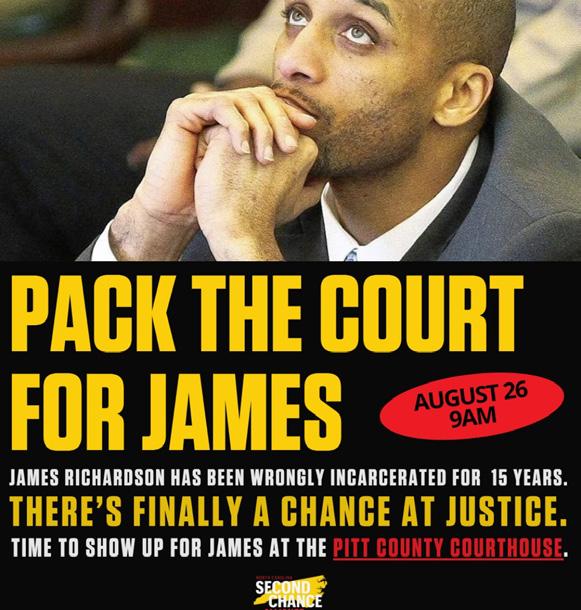

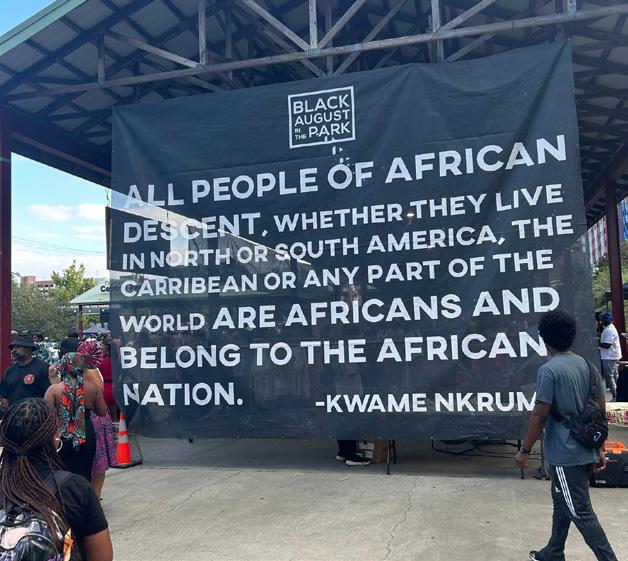
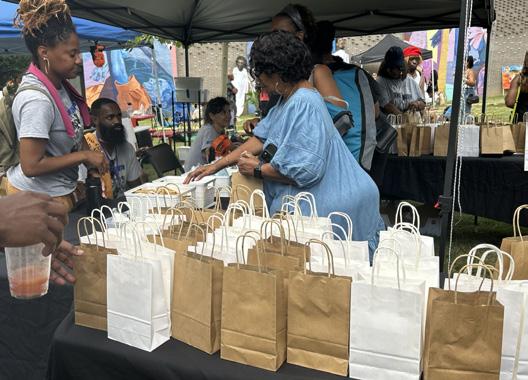

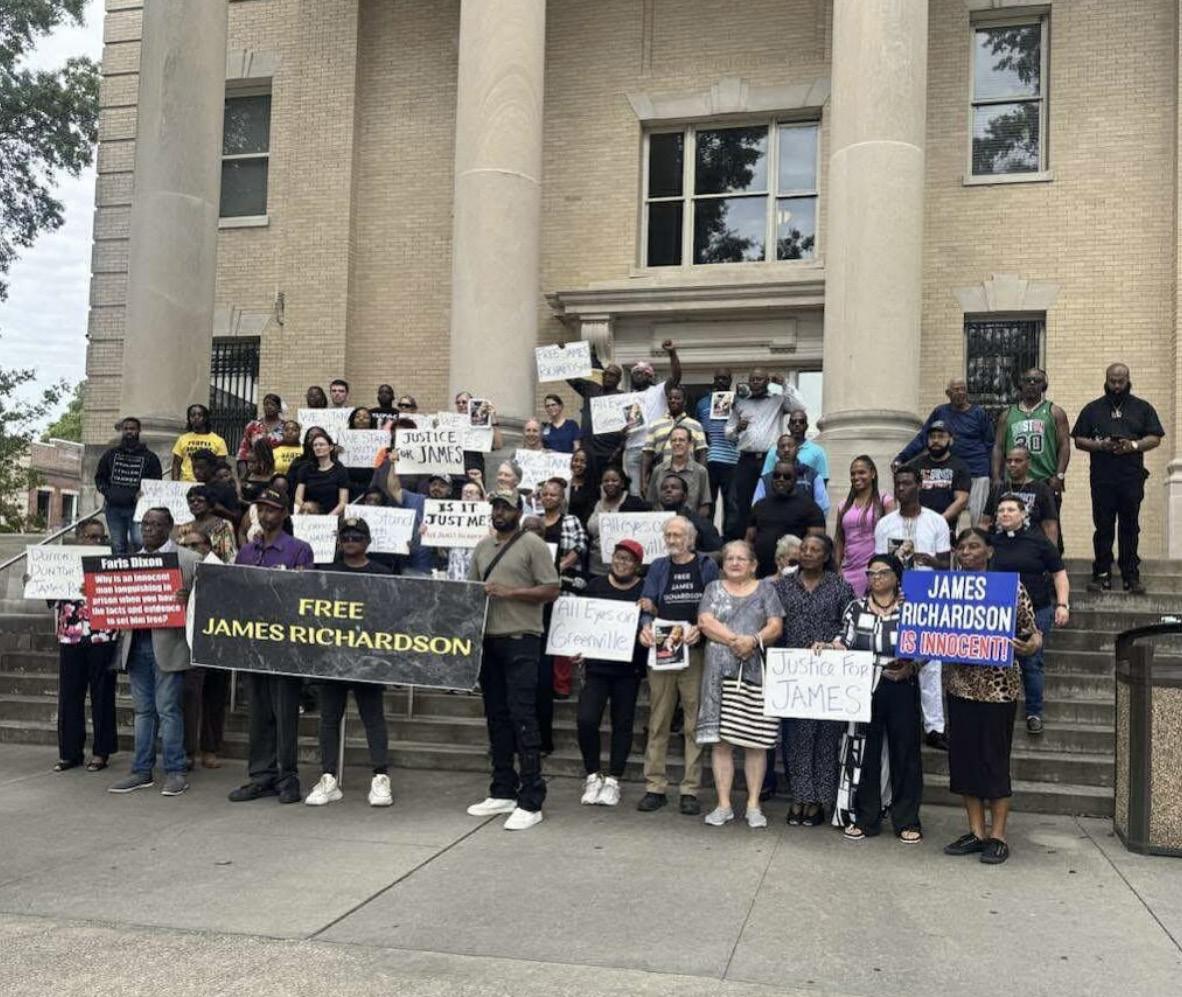

Photo credit: SpiritHouse South Inc
What are the ways that we can reimagine resistance in these times while building community?
Culture Comment Reflection Corner
Thank you for reading this edition of the Forward Star Journal. We encourage our community to use this corner to reflect on the themes of freedom, resistance, and the third reconstruction. To learn more about our work, follow us on social media and sign up our newsletter on forwardjustice.org.
Scan the QR code to view the digital journal and share your thoughts with the editorial team.
EDITORIAL TEAM
DAMOLA AKINTUNDE
BRITTANY CHEATHAM
ASHANTI SCOTT
IMAGE AND TEXT CONTRIBUTORS
HALIMA OPATA
ISELA GUTIERREZ
LORI SHERMAN
ERIC LYNCH
MARKELL MITCHELL
SHAMEKA PARRISH-WRIGHT
ATTICA SCOTT
DONTAE SHARPE
PEO PRODUCTIONS
GRAPHIC DESIGN
WINNIE OKWAKOL
Resources from The Movement
By Dr. Anthony Smith, Ph.D