JESS MILES Deputy Editor j.miles@forumevents.co.uk
Design, in all its forms, is an act of optimism. Through the lens of an interior designer, it’s the simple desire to create a space that moves and connects us – one that can stand up to questioning. Every project begins with that spark of ambition that, through design, materiality and craft, something meaningful will emerge.
In this issue, we meet two creative partnerships who remind us why that optimism matters. For Églantine Sicat and Pauline Dellemotte, design is the language of curiosity. The recent launch of Uncanny Studio has given them the freedom to create narrative-driven interiors that bridge Paris and London. For Paolo Moschino and Philip Vergeylen, it’s a lifelong dialogue – three decades of collaboration, craftsmanship, and vision that continue to shape spaces we covet. Binding them is a shared belief in generosity and storytelling. Whether you’re just starting out or decades into the journey, the impulse remains the same: to create something beautiful, lasting, and full of heart.
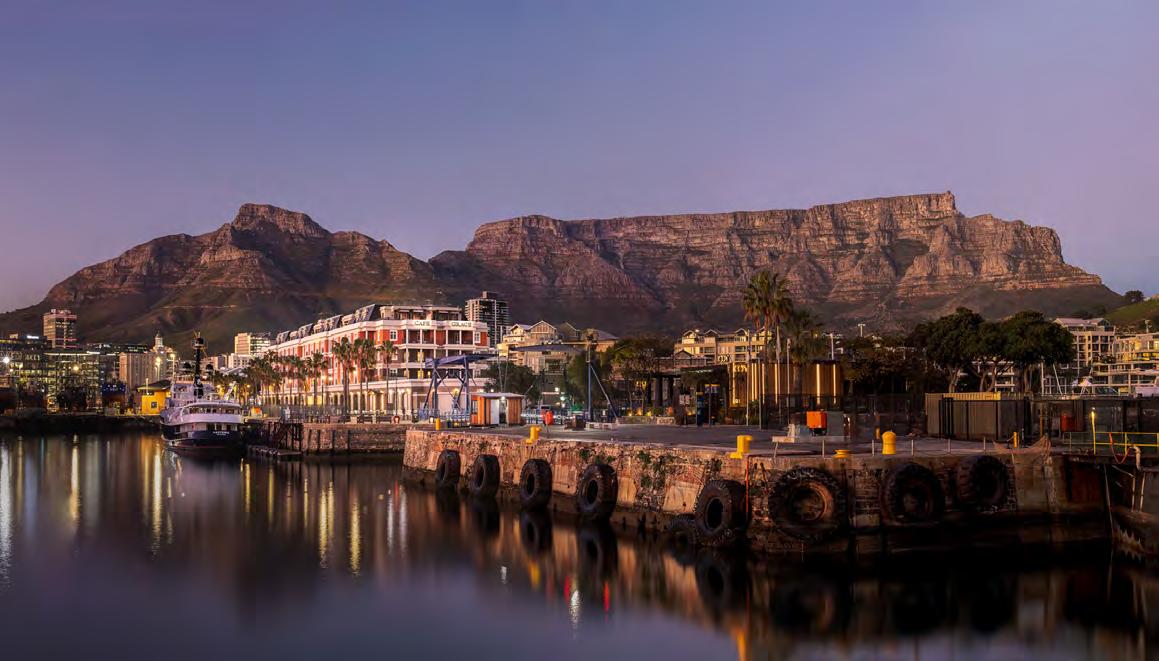
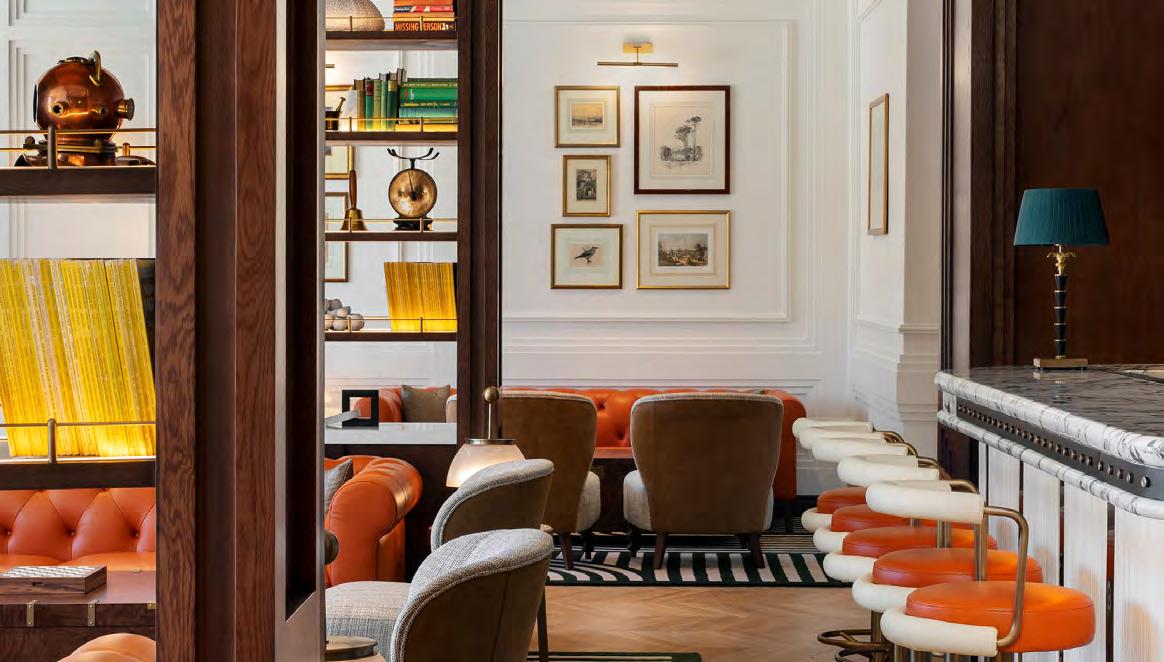
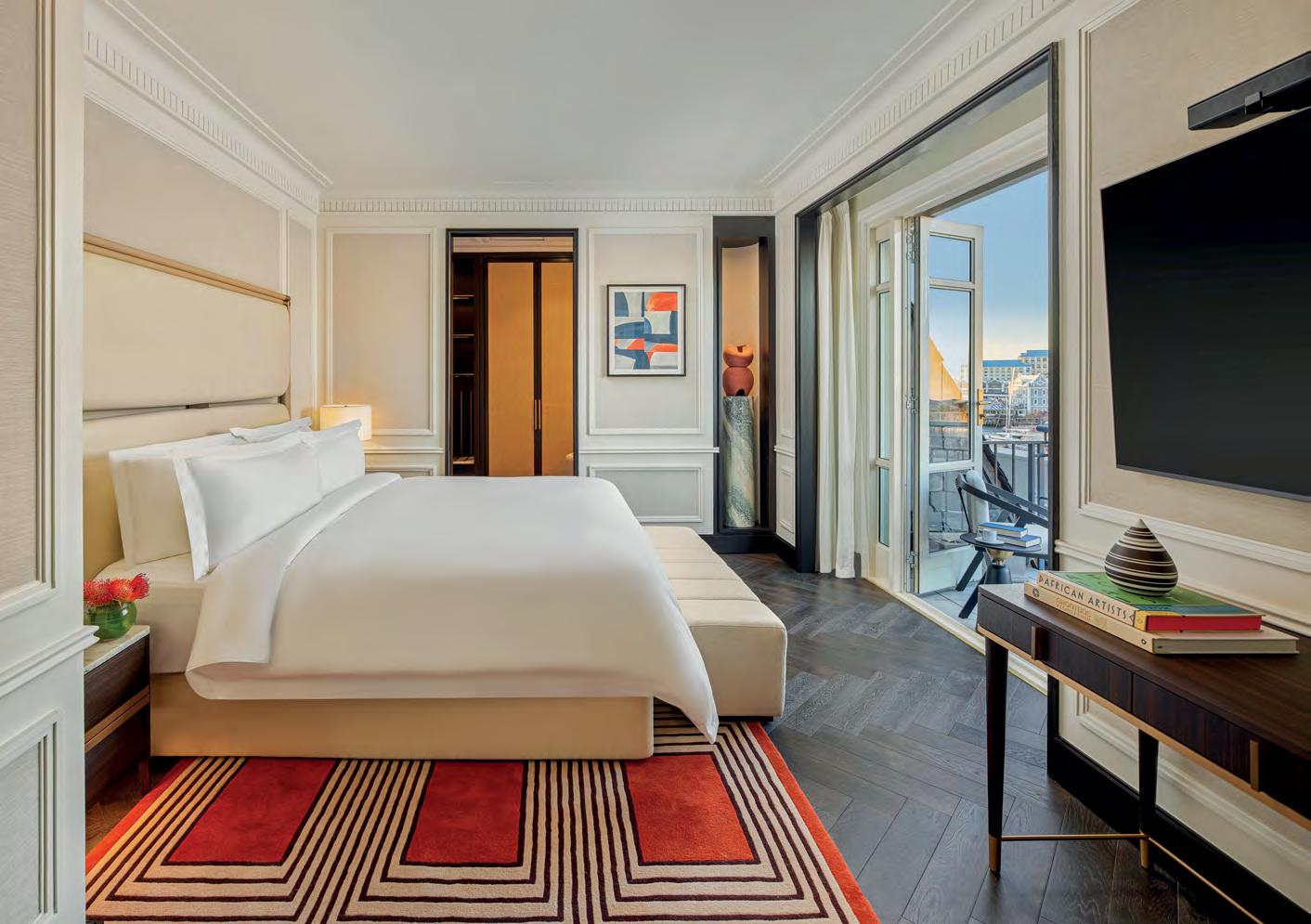
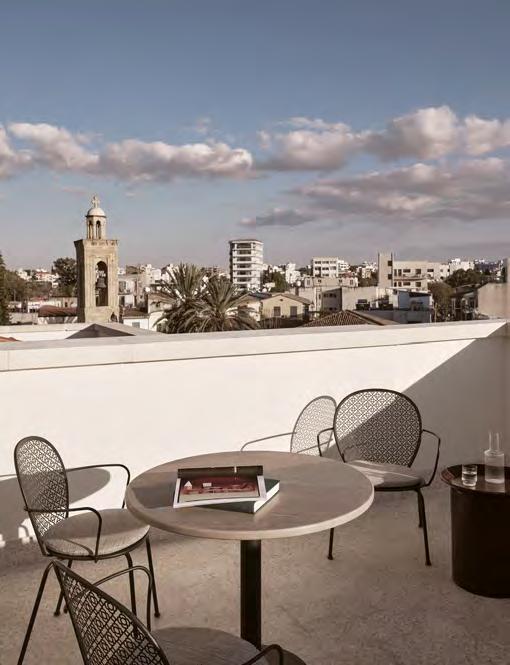
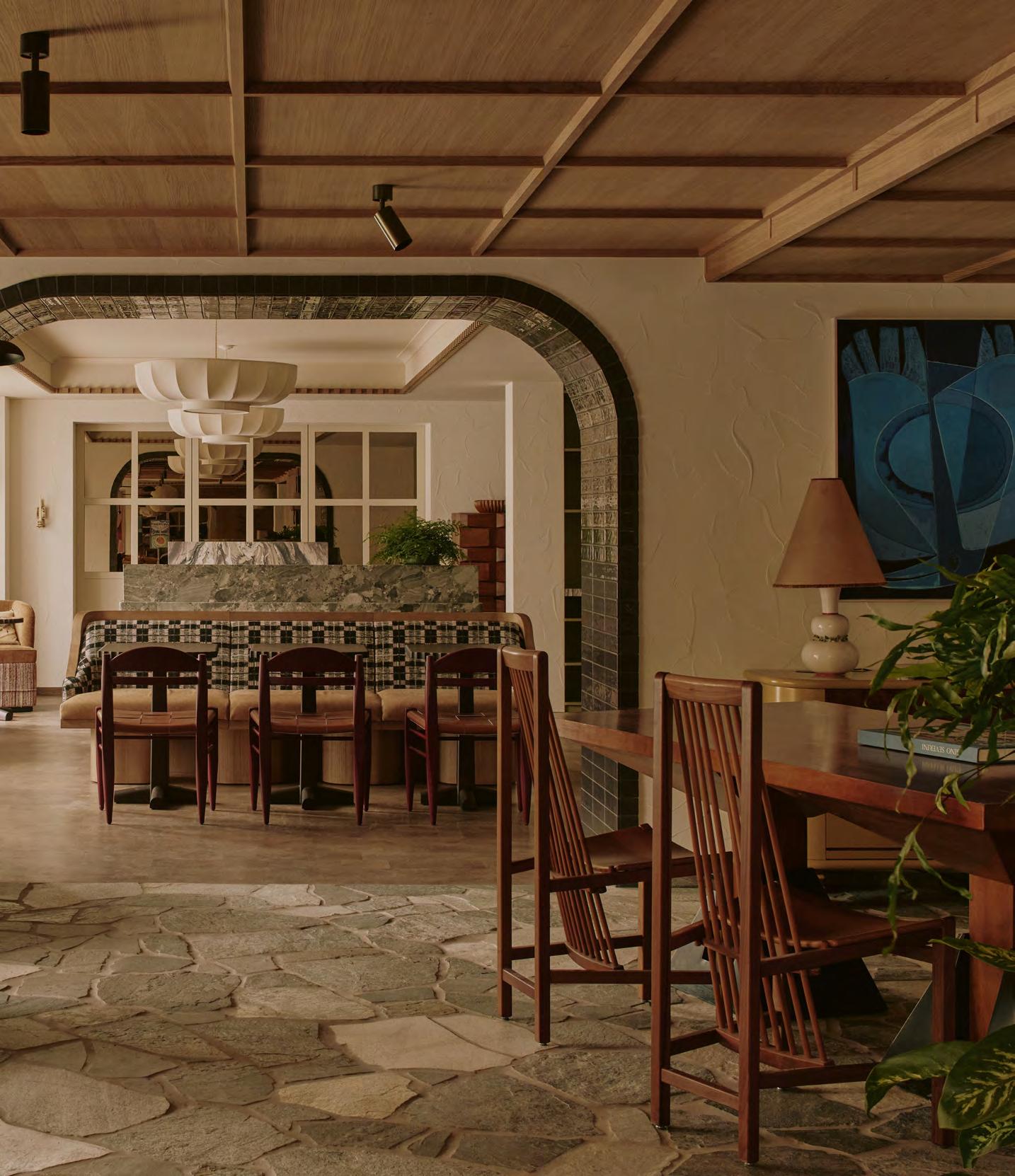
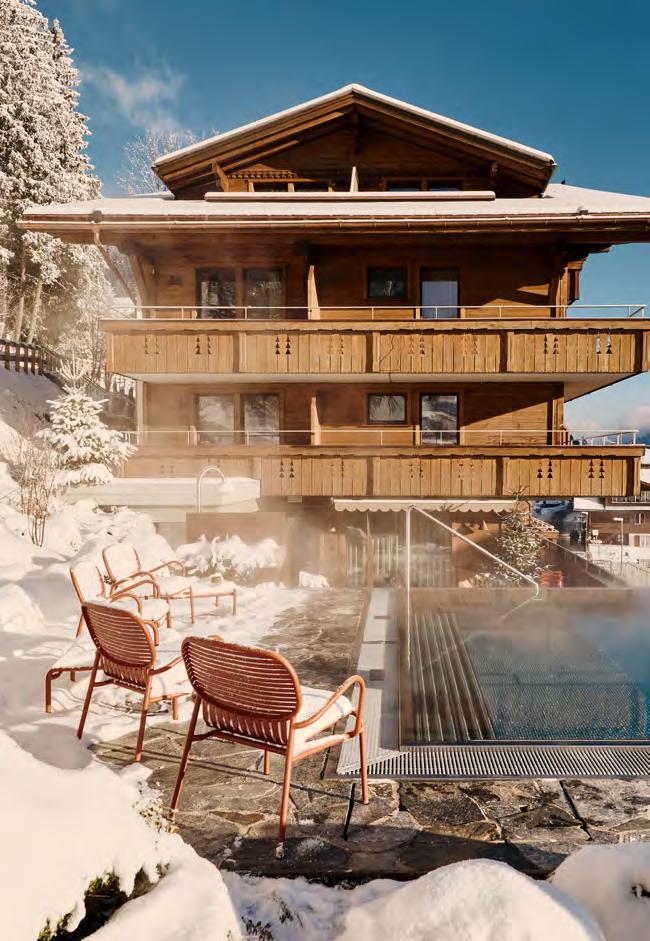
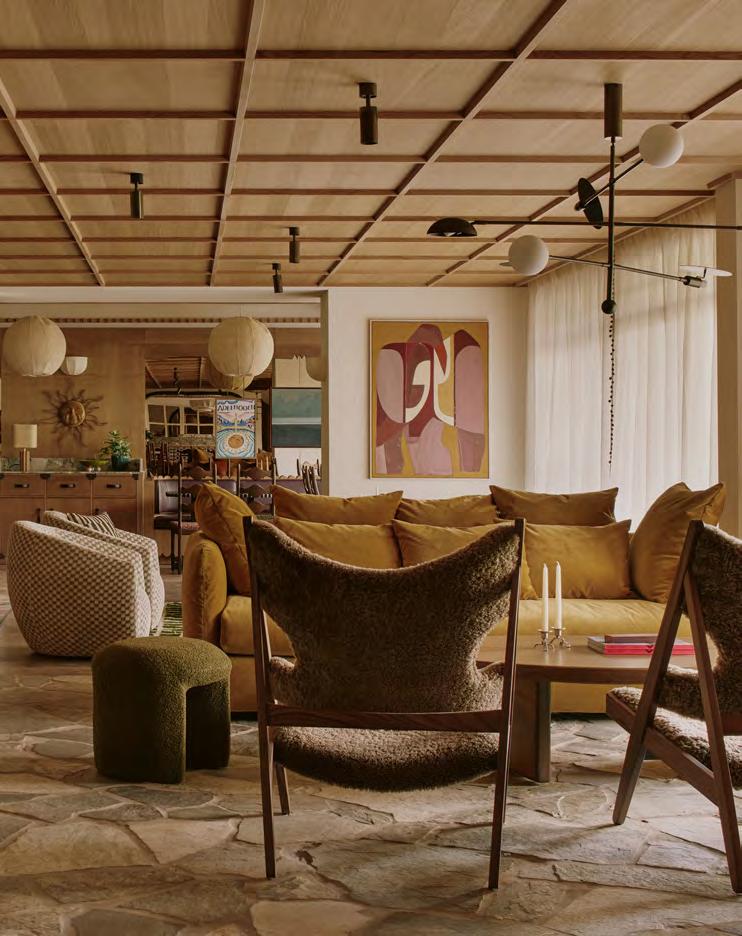
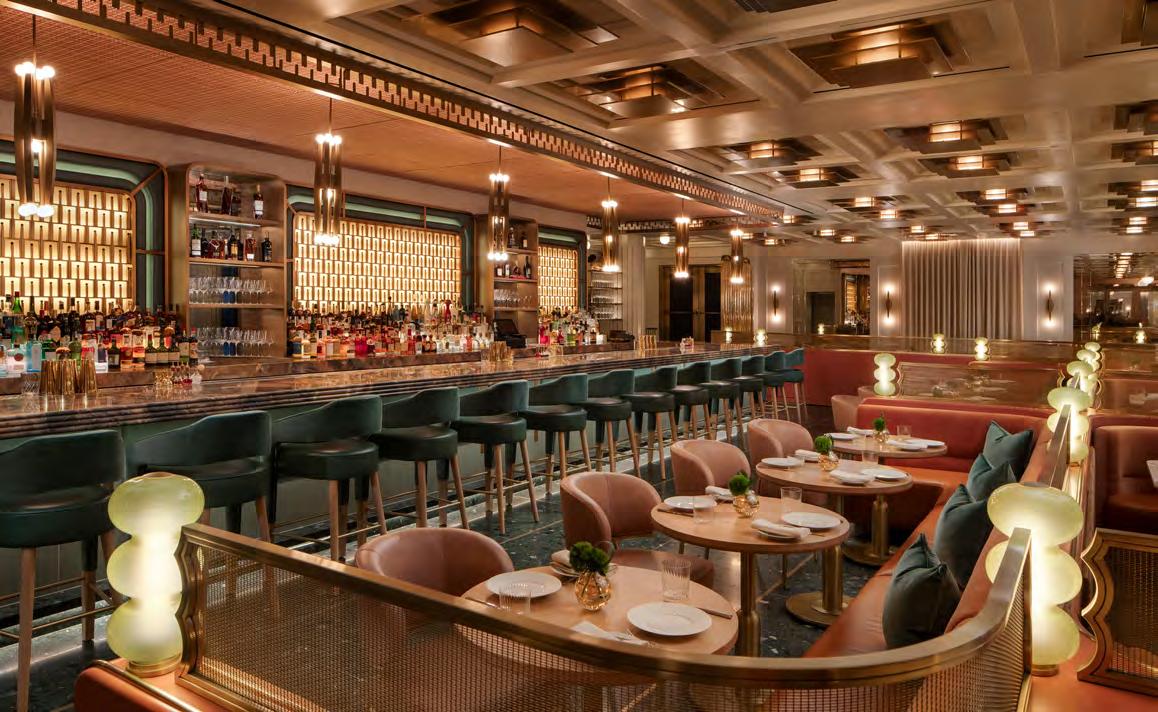
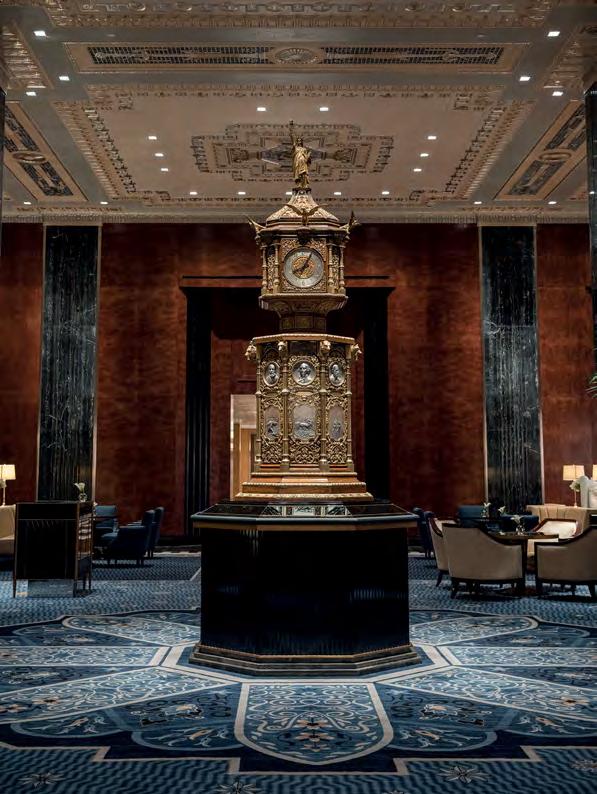
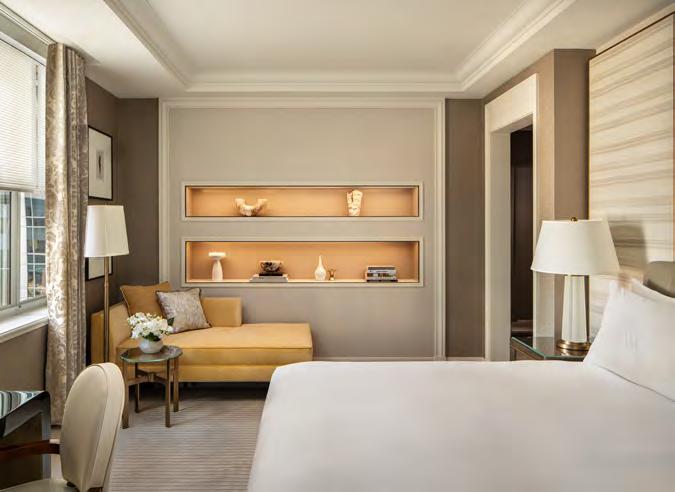
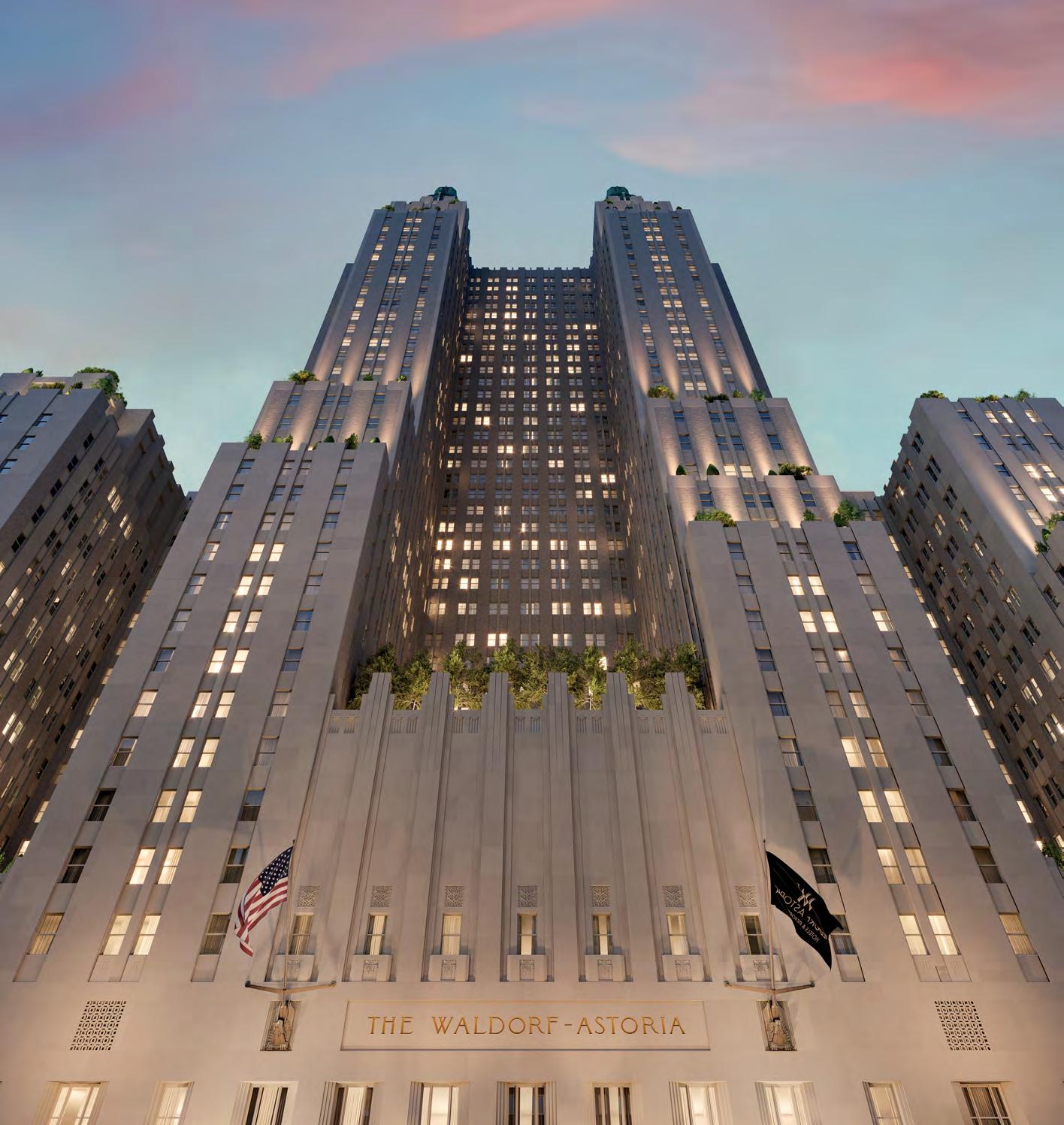
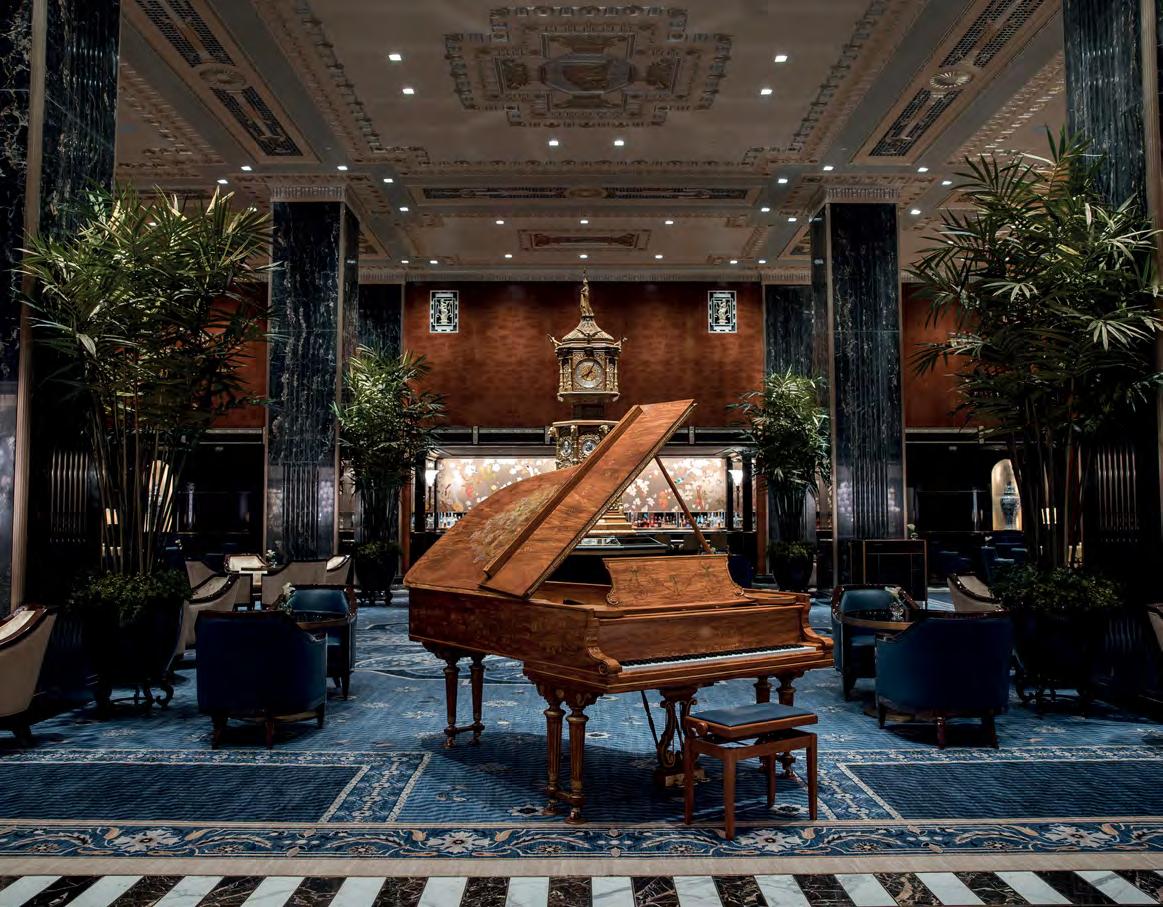
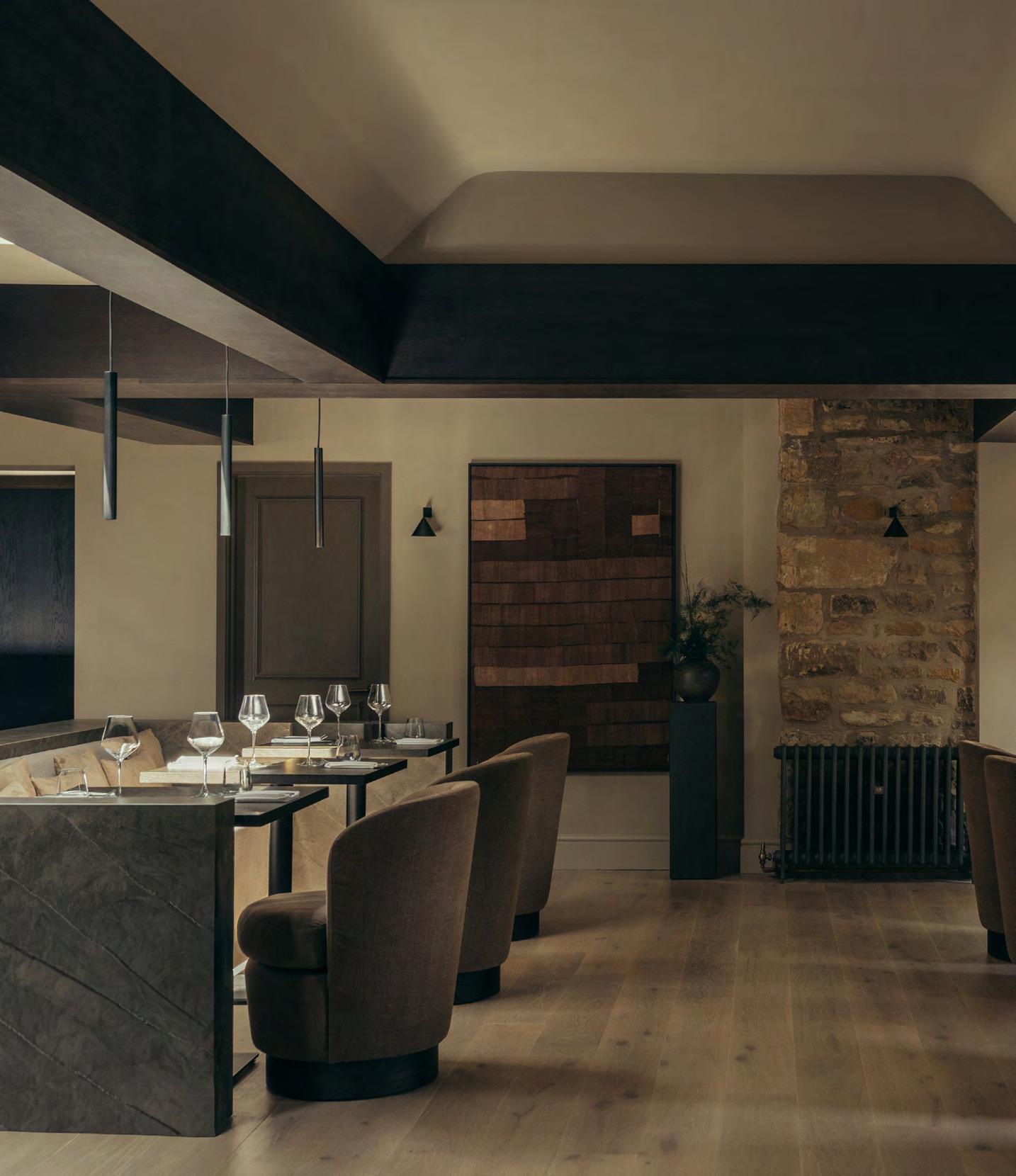
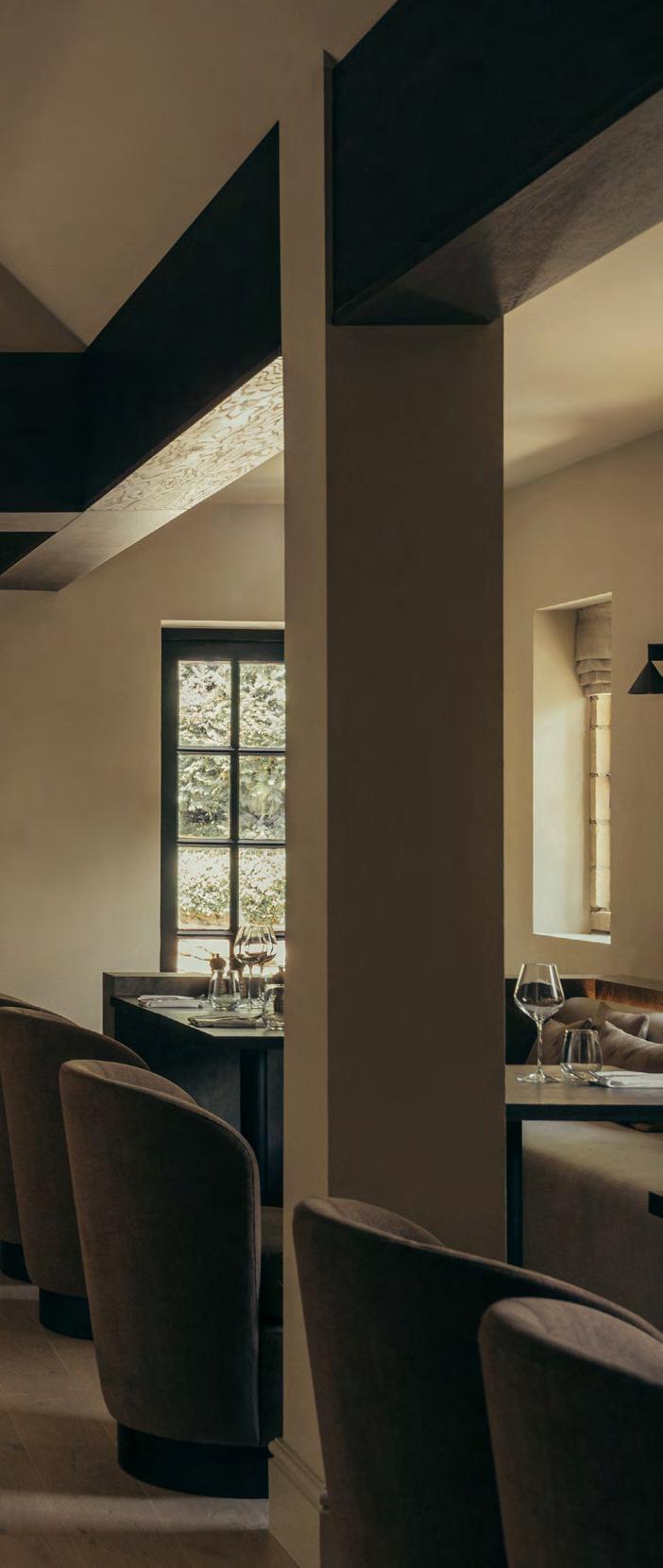
Our hotel stories this issue are all rich with narrative, providing that sense of history we instinctively seek when we walk through a lobby or open a door. From Cape Town’s Cape Grace Hotel, reimagined by 1508 London for Fairmont (page 68), to the quietly graceful Amyth of Nicosia in Cyprus (page 76), design and heritage go hand in hand. In the Swiss Alps, The Brecon pairs comfort with character (page 82), while in London, The Chancery Rosewood is the transformation of the former U.S. Embassy into a modernist landmark (page 90). In New York, the reborn Waldorf Astoria reminds us how history and vision can coexist beautifully (page 96), and in the Cotswolds, the Hyll Hotel, once a medieval manor, now stands as a modern sanctuary of slow living, local flavour, and understated elegance (page 102).
This issue ushers in an exciting new chapter for SPACE, as we proudly join forces with Forum Events & Media Group – the team behind Hotel Designs. This is a perfect match, bringing our creative community together and unlocking a world of bold new conversations, inspiring collaborations, and fresh ideas.
Here’s to the spaces rich with narrative – and to the optimism that drives the designers shaping them, now stronger than ever as SPACE begins this thrilling new chapter.
Emma Kennedy, Editor
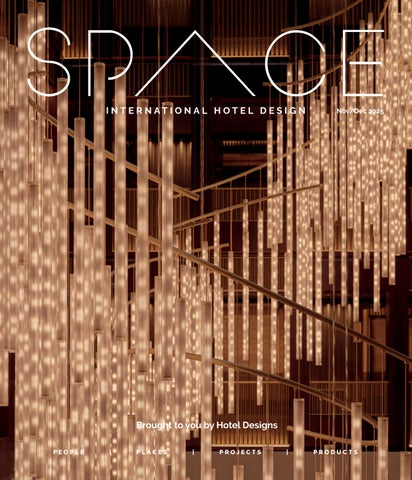
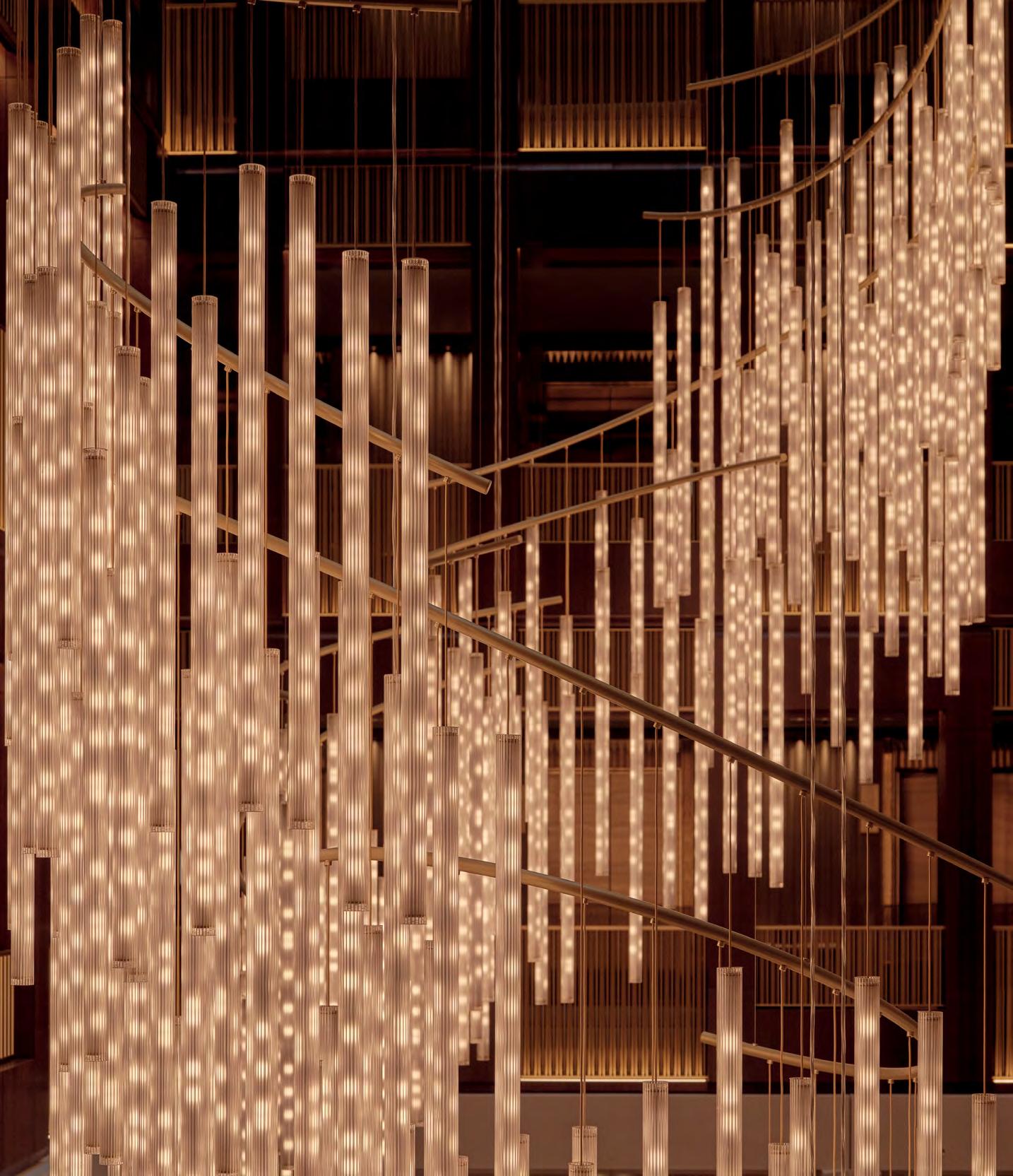
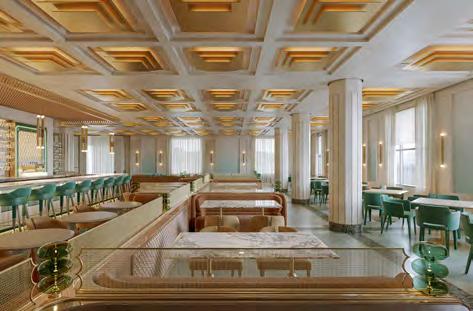
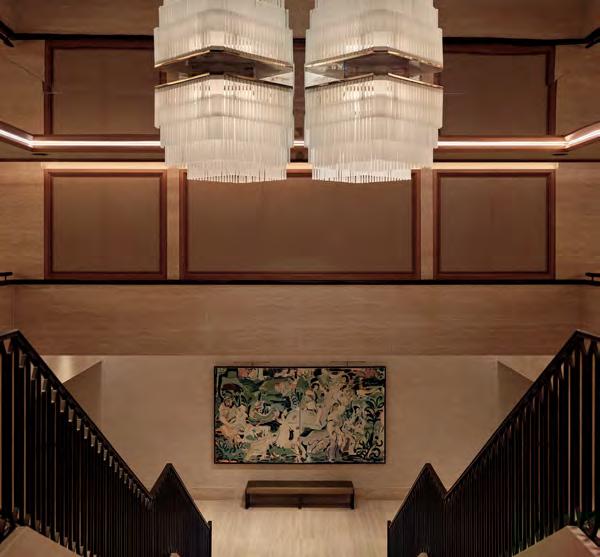
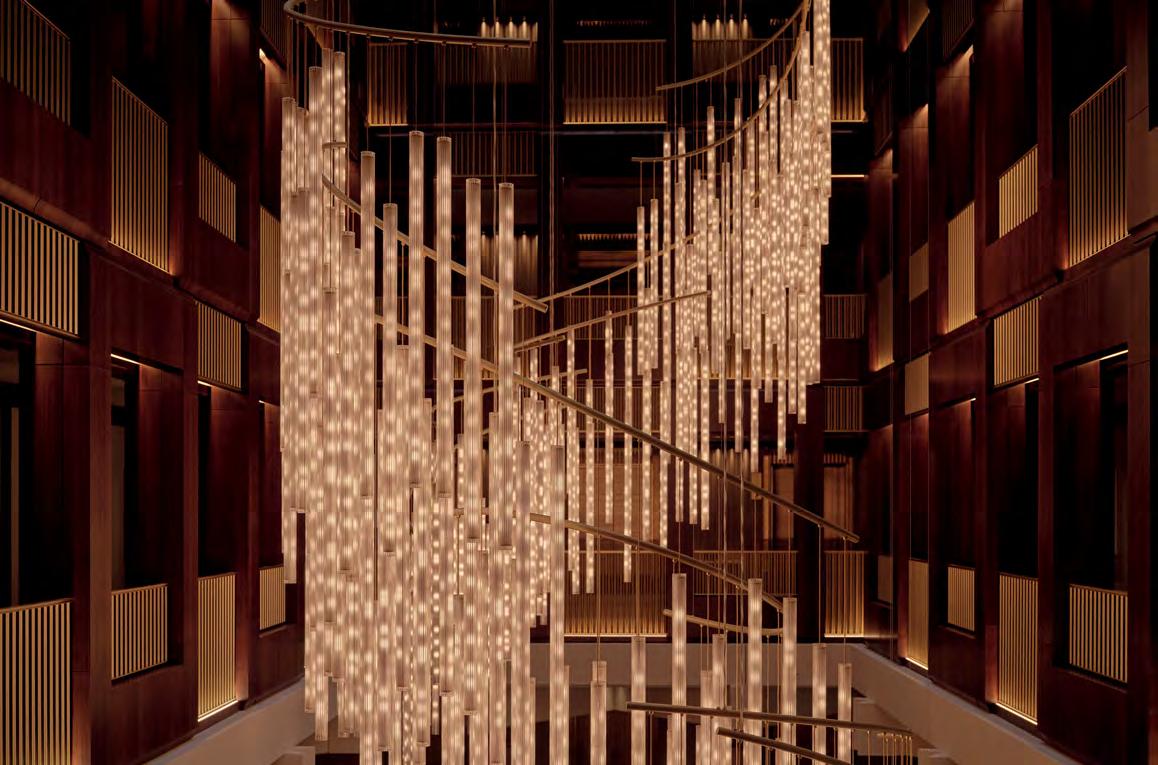
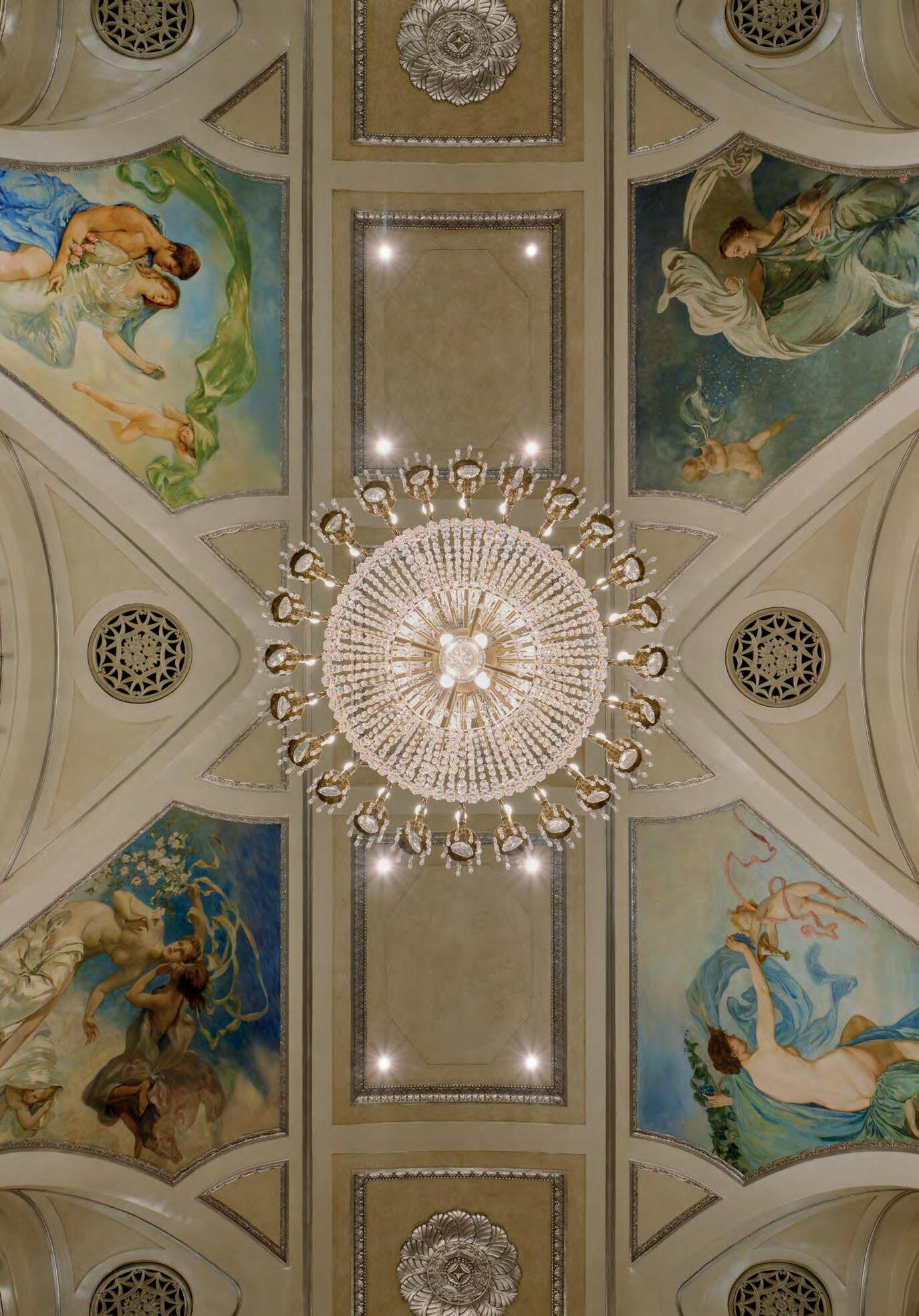
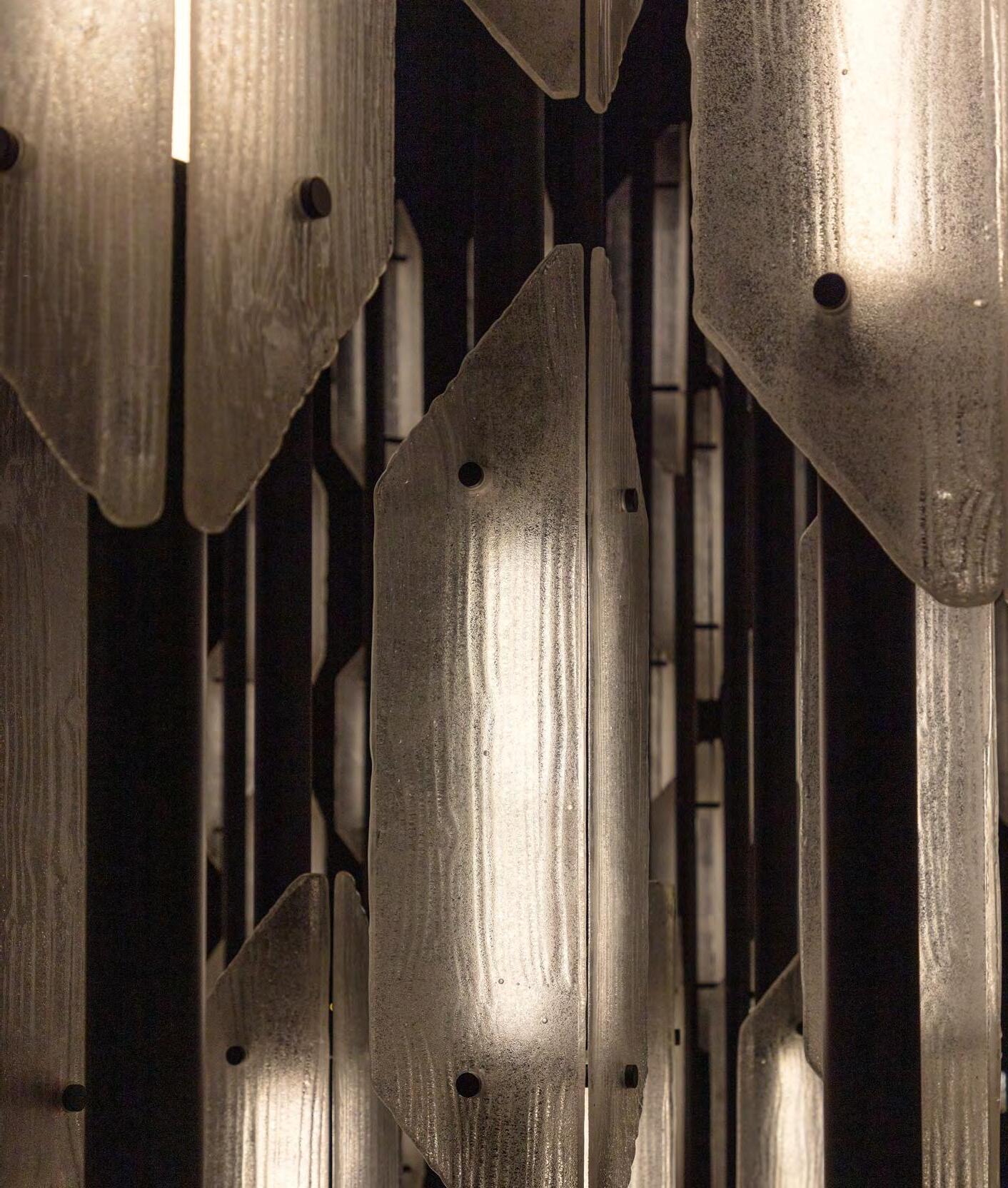
Front cover: Atrium lighting at Chancery Rosewood, London. Read the full review Page 90. Photo credit Ben Anders
68 Cape Grace Hotel, Cape Town, South Africa 76 Amyth of Nicosia, Cyprus 82 The Brecon, Adelboden, Switzerland 90 The Chancery Rosewood, London, UK
Waldorf Astoria New York, USA
Hyll Hotel, The Cotswolds, UK
FOCUS
A multidisciplinary collective of excellences: La Bottega, Vanity Group, Palatino, Beltrami, White Privé, and Colosseo.
With over four decades of integrated expertise across beauty, textiles, OS&E and design-driven consulting, La Bottega Collective partners with the world’s most discerning hospitality clients, from
hoteliers to developers and designers, to transform the guest journey into memorable experiences.
Because excellence is never an accident.
WHO WHAT WHERE
REOPENINGS
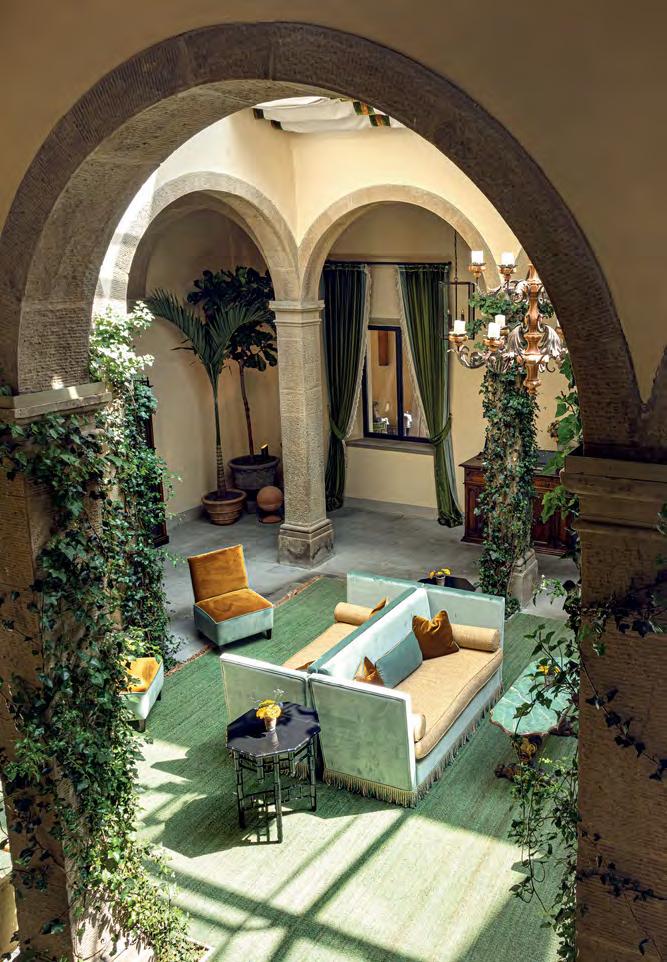
Villa San Michele to reopen in 2026 after transformative restoration
Belmond has announced the grand reopening of Villa San Michele, A Belmond Hotel, set for April 28, 2026, following an 18-month restoration that blends historic preservation with contemporary elegance. Once a 15th-century monastery overlooking Florence, the villa’s rebirth celebrates Tuscan craftsmanship, cultural immersion, and nature-driven design.
The 39 redesigned rooms and suites, including three new signature suites—Limonaia, The Grand Tour, and Botanica—will reflect the estate’s rich heritage. Luigi Fragola Architects have reimagined the interiors using authentic local materials and artisanal details to create a seamless dialogue between past and present.
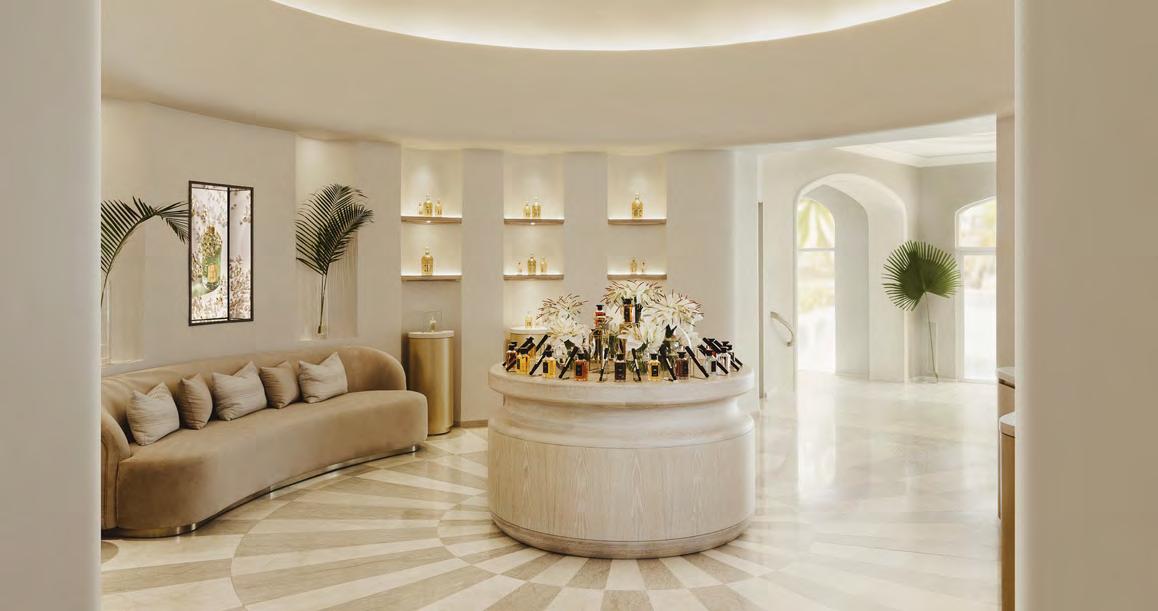
Debuting alongside the reopening is The Villa San Michele Spa by Guerlain, a tranquil retreat offering exclusive treatments inspired by the Renaissance and the monastery’s meditative origins. The restored hillside gardens will feature new pathways, native plantings, and scenic viewpoints, inviting guests to explore the Fiesole landscape through curated outdoor and wellness activities.
In the culinary realm, Executive Chef Alessandro Cozzolino will unveil a new dining concept celebrating Tuscan flavors with panoramic views of Florence. A creative partnership with La DoubleJ will introduce vibrant design accents and wellness experiences such as yoga and sound healing. Through this transformation, Belmond reaffirms its commitment to preserving cultural heritage while redefining modern luxury in the heart of Tuscany..
OPENINGS
Six Senses London to open early 2026 at The Whiteley
Six Senses London, the brand’s first UK destination, has confirmed it will open to guests in early 2026, bringing its signature blend of wellness, design, and sustainability to the capital. Set within The Whiteley in Bayswater, the restored Grade II-listed landmark has been reimagined by Foster + Partners, combining classic architectural heritage with contemporary design.
The hotel will feature 109 guest rooms and suites, many with private terraces, and 14 branded residences designed by AvroKO in collaboration with EPR Architects. Interiors will reflect Six Senses’ commitment to crafted comfort, natural materials, and understated elegance.
At the heart of the property, Whiteley’s Kitchen, Bar and Café will introduce modern British cuisine with a playful West London edge, celebrating local produce and community spirit.
The 2,300-square-metre Six Senses Spa will offer innovative wellness experiences, including London’s first magnesium pool, a flotation pod, cryotherapy chamber, and movement studios. Treatments will blend pioneering recovery techniques with ancient healing traditions through the brand’s Alchemy Bar and longevity clinic.
Six Senses London will also debut Six Senses Place, the brand’s first private members’ club.
HOTEL DEVELOPMENT
Meliá expands luxury footprint with new Patagonia hotel
Meliá Hotels International is strengthening its presence in Latin America with the announcement of The Meliá Collection Terrazas del Gutiérrez, a new luxury property in Bariloche, Argentine Patagonia. The project marks the group’s continued investment in exclusive destinations following the opening of Casa Lucía, a Meliá Collection hotel in Buenos Aires.
Set within Nahuel Huapi National Park, overlooking a pristine lake and surrounded by mountains, the hotel will feature 99 rooms and 48 private residences. Designed to blend into its natural environment, the property will offer a refined culinary experience, dedicated wellness spaces, and 500 square metres for social and corporate events.
Part of The Meliá Collection, which showcases distinctive hotels with a strong sense of place, the Bariloche property will join other iconic addresses in destinations such as Tuscany, Tenerife, and Tanzania’s Serengeti and Ngorongoro National Parks.
Gabriel Escarrer Jaume, Chairman and CEO of Meliá Hotels International, said: “We are thrilled to bring The Meliá Collection to Bariloche, a symbol of Patagonia’s natural beauty and hospitality. This project reflects our commitment to qualitative growth and luxury expansion in the region.”
Ivo de Sousa Freile, Executive Director of Terrazas del Gutiérrez, added that the collaboration with Meliá “will help position Argentina among the world’s most exclusive destinations.”
When it opens in 2028, The Meliá Collection Terrazas del Gutiérrez will join 11 Meliá hotels operating or under development in Argentina, including Gran Meliá Iguazú and the upcoming Gran Meliá Ushuaia.
OPENINGS
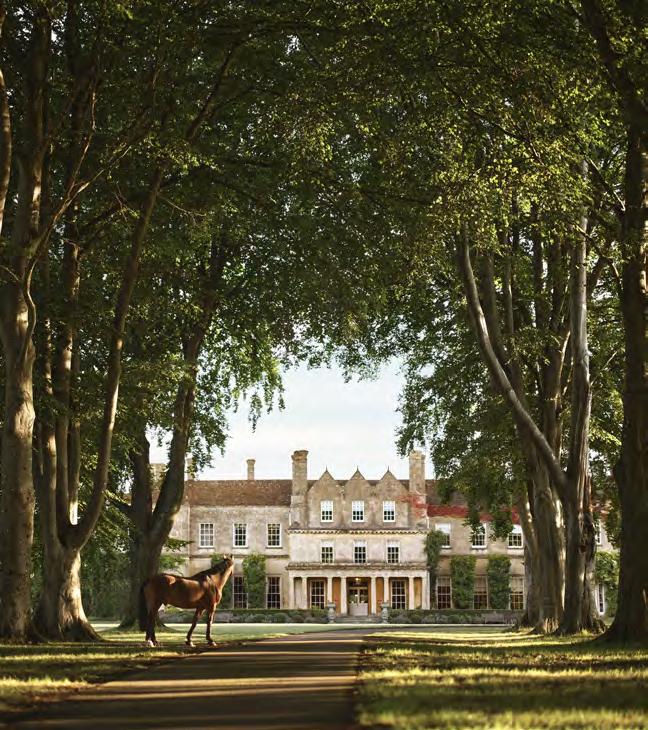
Accor’s Emblems Collection opens first UK hotel at Lucknam Park
Accor’s new luxury brand, Emblems Collection, has opened its first UK property at Lucknam Park Hotel & Spa in Wiltshire, marking the brand’s debut in the country and setting the tone for future openings worldwide.
Located near Bath in the Cotswolds, Lucknam Park joins the Emblems Collection as its first British “address.” The historic 900-year-old estate sits on 200 hectares of countryside and features 42 rooms, nine cottages, two restaurants — including a Michelin-starred venue led by Chef Hywel Jones — an award-winning spa, equestrian centre and landscaped gardens. The property reflects the brand’s philosophy of refined, discreet luxury rooted in heritage and authenticity.
Maud Bailly, CEO of Sofitel Legend, Sofitel, MGallery and Emblems Collection, said the brand was created “for travellers seeking emotion, timeless beauty and a genuine connection to place,” describing Emblems as “luxury that is not ostentatious, but deeply felt.”
Following the UK launch, Emblems Collection plans six additional openings over the next two years. These include Rimrock Banff in Canada, Masseria Furnirussi and Palazzo Sozzini Malavolti in Italy, and Relais San Clemente near Perugia. By 2027, the brand will expand further with Elatos Resort in Greece and Bellevue Hotel Cortina d’Ampezzo in the Dolomites.
Accor aims to grow Emblems Collection to around 60 properties globally over the next decade, each chosen for its distinctive character and connection to local culture.
OPENINGS
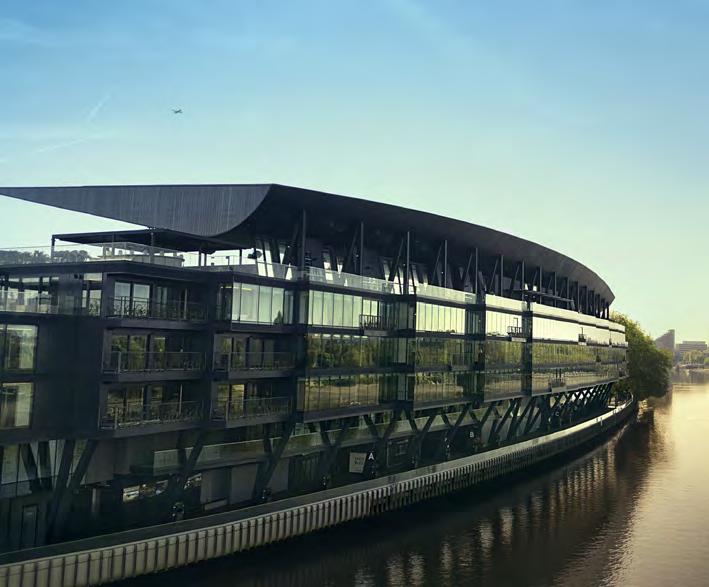
Fulham Pier Hotel opens as riverside retreat
The Fulham Pier Hotel has officially opened marking the debut of a new 13-room luxury boutique property within the Fulham Pier riverside development on the Thames. Designed by Stuart Forbes Associates the hotel is located within the riverside stand at Fulham Football club and is part of the £120m development of Craven Cottage stadium. Nine River Rooms offer floor-to-ceiling views, while three Junior Suites include private balconies. The Owner’s Penthouse crowns the property with an expansive terrace and rolltop bath overlooking the Thames. Operated by Siggis Capital, the design-forward hotel forms part of the wider Fulham Pier destination, which will include restaurants, cultural venues, and a spa opening in 2026, establishing a new hub for riverside living in southwest London.
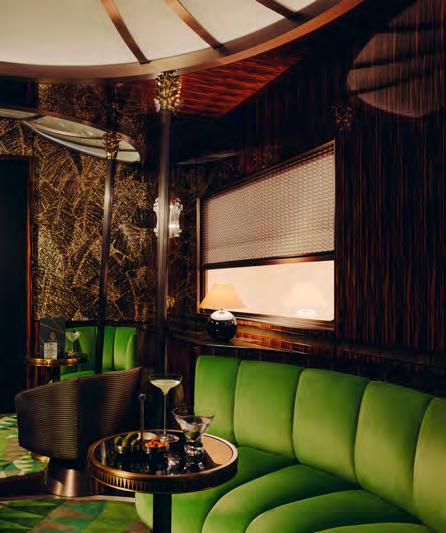
Orient Express joins Art Deco centenary exhibition
The Musée des Arts Décoratifs celebrates the centenary of Art Deco with a major exhibition from now until April 26, 2026, marking 100 years since the 1925 International Exhibition of Modern Decorative and Industrial Arts in Paris. Orient Express joins as an official partner, linking the golden age of travel with the era’s design brilliance. The collaboration reflects the brand’s revival under Accor Group and architect Maxime d’Angeac, who reimagines its 1920s luxury for today. Visitors will discover how the spirit of Art Deco continues to inspire contemporary creativity, uniting heritage, innovation, and timeless elegance in a fitting tribute to one of design’s most celebrated movements.
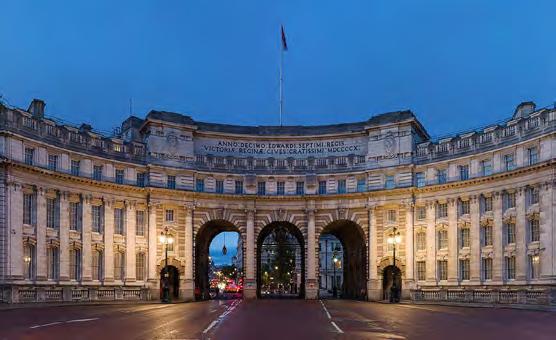
Waldorf Astoria London Admiralty Arch prepares for opening
Following an extensive five-year restoration, the Waldorf Astoria London Admiralty Arch is set to open early 2026, marking the grand debut of one of London’s most anticipated luxury hotels. Overlooking The Mall and Buckingham Palace, the Grade I listed landmark will feature 100 elegantly designed rooms and suites along with 17,500 square feet of private residences. Developed by Hilton in partnership with Reuben Brothers, the project restores the historic monument to its former splendour while introducing world-class dining from Clare Smyth MBE and Daniel Boulud, who share seven Michelin stars. The hotel will also offer exceptional event spaces, including a grand ballroom for up to 300 guests, uniting heritage, luxury, and contemporary elegance at the heart of London.
Photo credit: David Iliff OPENING
PROJECTS
Ian Schrager unveils PUBLIC West Hollywood
Hospitality visionary Ian Schrager is set to make his long-awaited return to Los Angeles with the spring 2026 debut of PUBLIC West Hollywood, bringing his acclaimed “luxury for all” philosophy to the iconic Sunset Strip. The 137-key hotel marks the third time Schrager has reimagined hospitality in the city, this time with a bold collaboration with British minimalist architect John Pawson.
Housed within a landmark building, PUBLIC West Hollywood will blend architectural restraint with high-octane social energy. Expect a vibrant lobby hub, pool, and three destination food, beverage, and entertainment venues, each curated to capture L.A.’s creative pulse. The crown jewel – a 16,000-square-foot open-air rooftop terrace – will offer 360-degree city views, lush landscaping, and a cinematic atmosphere designed for connection and escape.
Schrager’s latest venture extends PUBLIC’s core ethos – great service, style, entertainment, and experience – to the West Coast, redefining what contemporary hospitality can be. More than a hotel, PUBLIC aims to be a cultural nexus for locals and travelers alike, where multi-sensory design, world-class dining, and vibrant nightlife converge.
Reservations open January 2026, marking a fresh chapter in Schrager’s ongoing dialogue between accessibility and allure, and between space, style, and social experience.
OPENINGS
Rosewood Courchevel Le Jardin Alpin to open this December
Rosewood Courchevel Le Jardin Alpin will open this December, marking Rosewood Hotels & Resorts’ debut winter property and second destination in mainland France. Located in the prestigious Jardin Alpin enclave of Courchevel 1850, the resort reinterprets the glamour of the area’s 1960s golden age while embracing the contemporary spirit of the French Alps.
The property features 51 rooms and suites, including three signature houses, each offering panoramic terraces that overlook Les Trois Vallées, the world’s largest ski area. Designed by Tristan Auer, interiors blend natural materials – timber, stone, and copper – with mirrored surfaces and sculptural detailing to create an atmosphere of warmth and sophistication.
Guests will be welcomed through intricately carved doors into spaces defined by tactile craftsmanship, open fireplaces, and sunlit terraces. Exclusive ski concierge services, refined dining, and bespoke experiences will further enhance the alpine escape.
“We approached the project as though we were creating a private mansion chalet rather than a traditional hotel,” said Tristan Auer, founder of Tristan Auer Studio. “The idea was to capture the glamour of the mountains while transporting guests into another world.”
PROJECTS
Conrad Corfu adds curated luxury to the Ionian Coast
Set to open in Q2 2026, Conrad Corfu promises a new era of Ionian escapism on the island’s serene southern coast. Managed by Numo Hotels & Resorts, the 136-key resort will feature suites and villas with private pools, a 200-metre beach, and the signature Aqua Piazza lagoon as its tranquil heart. Guests can expect three restaurants, two bars, a wellness centre, kids club, and open-air cinema.
Designed by Cube Concept and Hotel IM, the reimagined 1986 structure blends Corfu’s heritage with contemporary elegance, featuring limestone galleries and marble walkways leading to the sea. With curated cultural experiences, from culinary workshops to guided local walks, Conrad Corfu celebrates Greek creativity and Hilton’s legacy of purposeful, design-led hospitality.
Cheyne Capital boosts Champneys with £32m refurbishment investment
Cheyne Capital has reaffirmed its partnership with Champneys, the UK’s leading health and wellbeing resort brand, through a new £32 million capital expenditure facility. The investment will fund a comprehensive refurbishment of all Champneys resorts and spa hotels, upgrading bedrooms, public areas, and wellness facilities while enhancing sustainability across the portfolio.
Building on their 2022 collaboration, the renewed partnership supports Champneys’ expansion through management contracts and franchising, including its recent debut at the Gran Marbella Resort & Beach Club in Spain. Cheyne’s Director, Theo Hajoglou, said the investment reflects confidence in Champneys’ management and growth strategy. CEO Alan Whiteley added that the funding will modernise the estate, elevate guest experiences, and preserve the brand’s historic legacy.
PROJECTS
Sofitel London St James unveils reimagined signature suites
Sofitel London St James enters a bold new era with the complete reinvention of its six signature suites by Paris-based design studio Pierre-Yves Rochon (PYR). Four Prestige Suites are now open, with the two Flagship Suites – Suite 70 and The Opera Suite – set to debut in January 2026.
Housed in a Grade II-listed neoclassical landmark on Pall Mall, the redesign fuses French sophistication with 1970s London flair, echoing the city’s pop-cultural energy. The Prestige Suites showcase rich chromatic palettes of Klein blue and Wimbledon green, layered textures, and modern art.
Suite 70 channels bohemian rebellion with bold colour, vinyl records, and design classics, while The Opera Suite offers serene refinement with pale oak and a private bar. Together, they embody Sofitel’s evolving art de vivre – timeless, cultured, and contemporary.
THE BRIT LIST AWARDS 2025
On 5th November, The Brit List Awards 2025 took place at London’s Ministry of Sound, bringing together over 600 architects, interior designers, hoteliers and suppliers. Marking the conclusion of Hotel Designs’ annual awards campaign, the event celebrated the top professionals shaping British hospitality design.
Hosted by Hotel Designs Editor Sophie Harper and Publisher Katy Phillips, 13 individual awards were presented alongside the release of The Brit List 2025, which profiles the top 25 architects, interior designers, and hoteliers. The full list and digital guide are available through Hotel Designs.
Sporting a theme for the first time, which encouraged guests to ‘Take a walk on the wild side’, live entertainment (including a body paint artist) and sponsors contributed to the evening’s celebrations with a series of bold activations.
Hypnos debuted as Headline Partner, once again
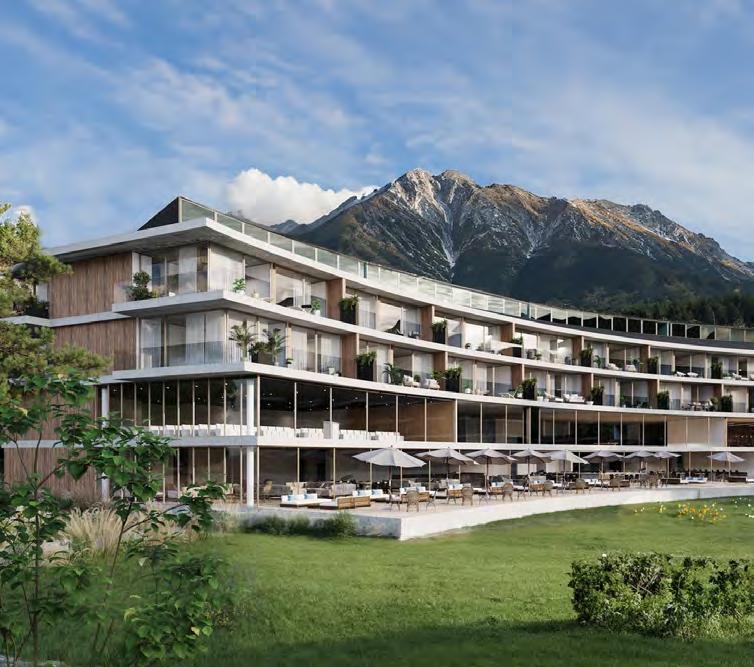
featuring its signature ‘dancefloor bed’. ADA Cosmetics provided bespoke Brit List cosmetics packaging; Amtico designed a custom stage floor, while Creative Debuts facilitated live art installations that were raffled to attendees.
Additional contributions included SchlüterSystems’ pop-up prosecco reception and bathroom selfie walls, Phillip Jeffries’ animalprint photobooth, EGGER’s limited-edition trophies, Balsan’s bespoke red carpet, and keepsake mirror keychains from Luma Mirrors.
Speaking after the event, Hotel Designs and SPACE Publisher Katy Phillips commented: “The Brit List Awards 2025 lights up the Hotel Designs calendar with an unforgettable celebration of design excellence. Congratulations to all the visionaries, creatives, and trailblazers honoured – your bold ideas and leadership continue to shape the future of hospitality and design. Let’s see how we at Hotel Designs can top the celebrations in 2026 for the 10th year of The Brit List Awards!”
Above, Hotel of the Year winner, Corinthia Grand Hotel Astoria Brussels by G.A Group.
Below, Architect of the Year winner, Alejandra de Cordoba Estepa, Principal of Architecture, EMEA, HBA
The Eco Award, Room 2 Belfast, Lamington Group
WINNERS
INTERIOR DESIGNER OF THE YEAR
Winner: Camilla Clarke, Creative Director, Albion Nord
Highly commended: Alex Dauley, Owner, Dauley Design
HOTELIER OF THE YEAR
Winner: Samantha van Exter, Head of Hotels, Montcalm Collection
Highly commended: Thomas Kochs, Managing Director, Claridge’s
ARCHITECT OF THE YEAR
Winner: Alejandra de Cordoba Estepa, Principal of Architecture, EMEA, HBA
Winner: Eden Parnell, Junior Designer, Sibley Grove
Highly commended: Abbygayle Long, Bar Supervisor, Waldorf Hilton London
TEAM OF THE YEAR
Winner: Muza Lab
Highly commended: Michaelis Boyd
HOTEL OF THE YEAR
Winner: Corinthia Grand Hotel Astoria
Brussels – by G.A Group
Highly commended: Le Grand Hotel Cayre – by Michaelis Boyd
BEST IN BRITISH PRODUCT DESIGN
Winner: Marbled Wallpaper – House of Amitié
Highly commended: Pit-board, Pit-to-table
BEST IN BAR & RESTAURANT DESIGN
Winner: Gallery at The Savoy – by Shayne Brady
Highly commended: Cicchetti Piccadilly – by Fettle
INTERNATIONAL AWARD
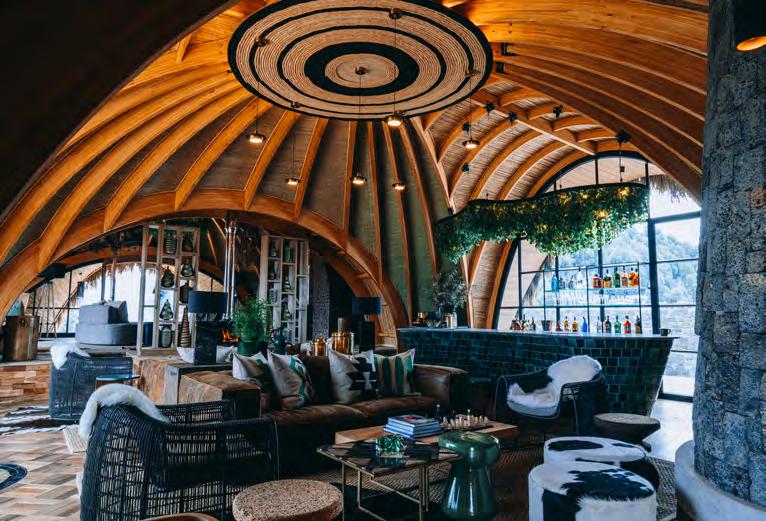
Winner: Wilderness Bisate Reserve, Rwanda
Highly commended: Minos Palace Resort, Crete
THE ECO AWARD
Winner: room2 – Lamington Group
Highly commended: Another Place, The Lake
THE INNOVATION AWARD
Winner: The Reeds – Exclusive Collection
Highly commended: NEOREST WX from TOTO
BEST IN ACCESSIBLE DESIGN
Winner: SeaSpace
Highly commended: ECHOKIT
OUTSTANDING CONTRIBUTION AWARD
Paul Brackley, CEO, Kinsfolk & Co
Above, International Award winner, Wilderness Bisate Reserve, Rwanda
Left, Interior Designer of the Year winner, Camilla Clarke, Creative Director, Albion Nord
Below, Best in Bar and Restaurant winner, Shane Brady
TURNING TABLES
NEWH UK scholarship winner interviews Tolù Adẹ̀kọ–one of this year’s judges
WORDS BY HAMISH KILBURN
When NEWH UK Interior Design Scholarship winner, Hannah Cecile Schmidt, sat down with Tolù Adẹ̀kọ – one of the industry’s most celebrated voices in 2025 – the result was a rare, insightful dialogue on curiosity, craftsmanship and the courage to evolve
In his teens, being mentored by Sir Terence Conran changed everything for Tolù Adẹ̀kọ. “I often find myself re-evaluating my approach, not just to meet a brief but to create experiences that resonate,” the designer reflects, speaking to Hannah Cecile Schmidt, who was recently named as an NEWH UK Interior Design Scholarship winner, joining a prestigious alumni of next-gen designers and hospitality professionals in the community and network. “Being guided by Sir Terence at 15 taught me that design isn’t only about how something looks, but how it works and feels,” Adẹ̀kọ adds, speaking to the young designer from the heart. “For me, design sits at the point where interior design and decoration meet function, emotion, and purpose.”
It’s an ethos that has shaped an entire career – one built on curiosity, craft, and the courage to keep evolving. “Like most designers, I’ve made plenty [of mistakes],” he admits with disarming honesty. “Early on, I used the wrong furniture scales or specified pieces that didn’t quite fit their environment. Those moments taught me to always check proportions carefully and use every tool available, from drawings to
visuals, to truly understand the scale and rhythm of a space. Every mistake has helped me become a more considered designer.”
That measured approach was born from an enduring fascination with the process itself. “Absolutely. I’ve always had a genuine curiosity about how things are made and a deep respect for every discipline involved,” he says. “Understanding the perspectives of craftsmen, contractors, and engineers gives me greater clarity. When you understand the full process from concept to completion, your ideas become sharper and more intentional.”
Every project leaves its mark, but one stands out as a moment of transformation. “Every project teaches you something new, but Wow!house 2024 was a turning point,” Adẹ̀kọ reveals to Cecile Schmidt. “It was a project without boundaries, which gave us freedom to add layers of meaning, detail, and emotion in new ways. That experience shaped a new direction for the studio, one that focuses more on craftsmanship, bespoke design, and the beauty of embellishment. We’ve been inspired by the expressive, layered spirit of early 20th-century design and are reinterpreting it for today’s world.”
The seeds of that sensibility were sown long before the studio took shape. “After sixth form, I studied textiles, fashion, product design, and fine art, but I realised what interested me most was how people experience spaces,” Adẹ̀kọ recalls. “I turned down a place at Central Saint Martins to study Interior Design at Bournemouth because it felt more natural. Hospitality allows me to explore how spaces make people feel. It’s about creating environments that welcome
Palomino Bar & Lounge Decorex PHOTOGRAPH BY DARREN CHUNG
everyone, regardless of age, background, or ability. In a world that can feel divided, hospitality design is about togetherness, and I love that.”
That sense of inclusivity extends to how Adẹ̀kọ views the next generation of designers – a perspective informed by his recent role judging the NEWH UK scholarship campaign. “The diversity of ideas really stood out,” he says with joy. “Some students developed beautifully organic concepts, while others went bold, vibrant, and expressive. What impressed me most was their confidence and their willingness to take creative risks. That kind of self-assurance and individuality is inspiring to see.”
Recognition has come in many forms – not least a recent feature in British Vogue. “It’s a great feeling, but more than anything it’s great for the team,” he smiles. “I work with incredibly talented people, and seeing our work recognised in that way is rewarding for everyone. It shows that what we do resonates beyond our own industry.”
Despite designing for some of hospitality’s biggest names, the studio’s philosophy remains refreshingly grounded. “I try not to see it as pressure,” Adẹ̀kọ explains. “Whether it’s for a global brand or an independent studio, the approach is always the same. We respond to the brief, the location, and the context. Every project begins with a story, and the brand becomes part of that story. But it’s never about the name; it’s about creating an experience that feels meaningful and timeless.”
Hannah Cecile Schmidt
Palomino Bar & Lounge Decorex Zimmer + Rohde Bedroom Suite Wowhouse! 2024
When it comes to guiding the next generation, his advice is both pragmatic and heartfelt. “Patience is key,” he says. “There’s real value in seeing projects through from start to finish because that’s where the real learning happens. Be passionate, stay curious, and don’t take critique personally. The work always belongs to the client. If I could do one thing differently, I’d probably have waited a little longer before starting my own studio. Creativity is only one side of the job; understanding the business side is equally important. You need to be ready for that balance.”
Understanding people, it seems, is as central to his work as understanding materials. “Listen. Truly listen,” Adẹ̀kọ advises Cecile Schmidt. “Clients may not always express exactly what they want, but they’ll always show you through their tone and their priorities. The best designs come from understanding not only what’s said but what’s unsaid and translating that into something they never expected but always needed.”
Adẹ̀kọ ’s admiration for emerging talent is tempered with a note of realism about the challenges ahead. “They’re redefining what luxury means. It’s no longer just about aesthetics; it’s about purpose, ethics, and experience. They design with awareness and intent. They’re bold, curious, and unafraid to experiment, and that sense of authenticity will
reshape the future of design.” Yet, he cautions, “Individualism. We live in a world that rewards visibility, but great design is about collaboration. The challenge will be learning how to work collectively, to put egos aside and build community through creativity.”
As for what’s next, the excitement in Adẹ̀kọ ’s voice is unmistakable. “We’re working on a number of international projects, each with its own cultural identity, and that’s incredibly exciting,” he beams. “Every project gives us the opportunity to see design differently, to keep learning and evolving. That sense of discovery and curiosity is what keeps me inspired.”
NEWH, THE WORLD’S BIGGEST ORGANISATION FOR NETWORKING IN THE INTERNATIONAL HOSPITALITY DESIGN INDUSTRY, HAS CHAPTERS AROUND THE WORLD. TO FIND OUT MORE ABOUT US, AND TO JOIN YOUR LOCAL CHAPTER, LOOK US UP ON SOCIAL MEDIA OR VISIT OUR WEBSITE.
THE 2025 ROUND-UP
RISING STARS
Throughout the year, SPACE shines a light on excellent talent in the hospitality industry. The designers and architects featured have been nominated by their studios as accomplished design talent making waves in their field of expertise. As the year draws to a close, we recap on the 20 Rising Stars of 2025.
AGNIESZKA SOCZYNSKA
ARCHITECTURAL ASSISTANT
REARDONSMITH ARCHITECTS
Growing up in a small Polish town, Agnieszka Soczynska first discovered design through The Sims, where building virtual dream homes sparked a passion for architecture. After studying at the Silesian University of Technology, she began her career in Austria before fulfilling a long-held dream of moving to London. Now a Architectural Assistant at ReardonSmith Architects, she contributed to the newly opened Chancery Rosewood Hotel in London (featured in this issue). With a focus on BIM and technical precision, Agnieszka is excited by how AI could soon personalise hotel stays – from lighting and music to menus and sightseeing – with simple voice commands.
MARK KOVACS-BIRO
ARCHITECTURAL ASSISTANT
STUDIO MOREN
Mark Kovacs-Biro began his architectural journey with a sustainability-focused degree, which continues to shape his practice today. Now project lead, he brings a sharp focus on sustainability and computational design – even founding the practice’s Computational Design Champions Group. Mark contributed to the award-winning 1 Hotel Mayfair, noted for its sustainable credentials. Inspired by cities like Tokyo, where tradition and innovation coexist, he aims to create spatial layouts that balance form and function, believing that great architecture should foster both human experience and environmental responsibility.
LILY XUAN
JUNIOR DESIGNER
HBA LOS ANGELES
With a background in business and a creative awakening in New York’s gallery scene, Lily Xuan pivoted to design during the pandemic – studying at Pratt Institute before joining HBA Los Angeles in 2023. Her first major hotel project, Hyatt Centric Changsha, reimagines a hotel as an artist couple’s home, weaving together narrative, craft and form. For Lily, storytelling is central: “I’m inspired by how culture, history, and materiality can come together to shape a place’s identity.” With a multidisciplinary foundation and poetic sensibility, she’s driven to design immersive, tranquil spaces that blend natural elements with contemporary expression.
PROJECT DESIGNER MUZA LAB
Originally from Venezuela, Lucia Martinez began her career in architecture before moving to London and transitioning into interior design at Muza Lab. Drawn to the storytelling potential of hospitality, she now works across global hotel and resort projects, bringing a strong eye for architectural detail to every phase. She recently led the design of Royal Mansour Tamuda Bay, describing it as “a uniquely beautiful translation of its site’s location.” Passionate about future-focused design, Lucia dreams of creating sustainable water-based living pods, and envisions hotel design becoming ever more human-centred – personal, local, and deeply connected to guest wellbeing.
LUCIA MARTINEZ
MARGAUX MARTIN
MID-WEIGHT FFE DESIGNER
DAVID COLLINS STUDIO
As a Mid-Weight FFE Designer at David Collins Studio, Margaux blends precision and imagination to create expressive hospitality spaces. On the recently completed renovation of the restaurant at Delaire Graff Estate in South Africa, she worked on integrating local materials, cultural elements and an exceptional art collection into the design. Concept development is her favourite phase – a space, she says, “to blend my love for art, craftsmanship and artisanal work.” With a passion for natural fibres, rich textures and considered detail, Margaux strives to design interiors that feel luxurious yet warm – places that connect deeply with people and place.
PART I ARCHITECTURAL ASSISTANT SHH
Lilika Rea’s passion for design was sparked by her grandfather, an architect in Japan. Now a Part I Architectural Assistant at SHH in London, she works across hospitality and commercial projects. Reflecting on her transition from education into practice, she says: “There’s a continuous flow of new information to absorb, and learning while applying it has been a big shift.” Her favourite part of the process is the conceptual phase, where ideas “are born, explored, and shaped without the constraints of technical limitations.” Inspired by her Japanese heritage, her dream design project would be a boutique hotel and tea house rooted in tradition and balance.
KSHITIJA NAGARKAR
ARCHITECTURAL DESIGNER II 10 DESIGN (PREVIOUSLY SB ARCHITECTS)
Kshitija is an Indian architect based in San Francisco, currently designing hospitality projects at 10 Design. After leading a custom home project during her B.Arch and working with Tubbs Fire victims, she completed a master’s at CCA, followed by three years in construction. Her return to design began with Treehouse Hotel Sunnyvale. She sees hotel design evolving to embrace craftsmanship, greenery, wellness and “spaces that foster genuine human-to-human connection.” Her dream project? A space station hotel – drawing from her dissertation on ‘Astrotecture’ –“to create an environment that soothes and connects guests with a sense of wonder in the vastness of space.”
PROJECT ARCHITECT WATG
James Newman is a Project Architect at WATG with a portfolio that includes the Raffles Branded Residences, a new hotel in Soho, and The Chedi Katara in Doha –a design that blends Indian, Ottoman and Persian influences. “My favourite part of the design process is the problem-solving aspect,” he says, “as it combines creativity with critical thinking.”
A defining moment early in his career was attending site alone: “It taught me so many lessons in creating relationships with contractors but most importantly in taking responsibility for what I have drawn and designed.”
PART II ARCHITECTURAL ASSISTANT STUDIO MOREN
Originally from Chandigarh – the city designed by Le Corbusier – Anuj Narula was “immersed in his visionary work long before I understood its significance,” he told SPACE. Now a Part II Architectural Assistant at Studio Moren, he is currently working on Wilde Aparthotels by Staycity, Oxford. Having qualified in India, retraining in the UK has been “both humbling and rewarding,” and has strengthened his cross-cultural perspective. Reflecting on his path so far, he says: “This journey tested my perseverance and deepened my understanding of architectural practice across cultural and regulatory contexts.”
Julia Farleigh is an Associate at Woods Bagot, where she’s currently leading the transformation of Sydney’s iconic Minerva Theatre into a luxury hotel for Ennismore. “This project is so special to me personally,” she told SPACE. “As a lover of theatre, art deco and history, I fell in love with the building immediately.” With a background spanning workplace, civic and retail sectors – and a master’s in Curating and Cultural Leadership –Julia brings a multidisciplinary approach to hospitality. Of her transition into leadership, she reflects: “It has been about finding the right balance between client management, managing multiple team members, whilst still ensuring design excellence and project deliverables are not only met, but of exceptional quality.”
JULIA FARLEIGH
ASSOCIATE WOODS BAGOT
ANUJ NARULA
JAMES NEWMAN
LILIKA REA
RYNE JIAYIN FENG
SENIOR DESIGNER HBA LOS ANGELES
Ryne Jiayin Feng is a Senior Designer at HBA Los Angeles, currently leading the design for JW Marriott Dana Point in California – a project inspired by the area’s surfing heritage and Acjachemen culture. Her favourite part of the process is discovering “little magical moments – unique details about the site or the community that make the project special.” Originally from Suzhou, she draws inspiration from the city’s rich artistic legacy. Reflecting on her professional growth, she shares: “The biggest learning curve of my career has been understanding the importance of stepping back and immersing myself in the creative process while staying current with rapidly advancing technology and social media.”
INTERIOR
DESIGNER STUDIO MOREN
Dinemis Balkaroglu is an Interior Designer at Studio Moren with a background in both architecture and interiors, and experience spanning healthcare, workplace and hospitality. Her recent work on Bertie’s Townhouse marked her first London-based project – a design that “offers the guest a glimpse of what was there before without losing its contemporary edge.” With a research-driven approach shaped by studies in Istanbul and London, she sees the future of hotel design as more intimate and considered, prioritising longevity over trend. She’s especially drawn to transitional spaces like staircases, which she sees as opportunities for drama and delight.
ELLIE STEWART
INTERIOR
DESIGNER SPACEINVADER
Ellie Stewart is an Interior Designer at SpaceInvader, where she brings storytelling, detail and balance to hospitality projects. Set to complete early next year, her current work on the Deansgate Hotel has given her valuable experience in room planning and harmonising operator needs with cohesive design. Reflecting on her favourite part of the design process, she says: “When the concept starts to come to life, when ideas, influences, and materials align, and the vision takes shape. It’s the moment when creativity meets reality, as sketches and concepts transform into something tangible.”
SENIOR ARCHITECT WATG
Andrea joined WATG’s London office in early 2024 and has since led the design of a luxury hotel in Saudi Arabia, overseeing everything from façade and massing to internal layouts and presentation. With a previous role at Mangera Yvars Architects (MYAA) leading competitions across cultural, civic and residential sectors, his practice is shaped by a deep respect for context and a broad architectural vocabulary. His favourite part of the process is concept design, where creativity meets strategy: “These stages involve blending imagination with strategy and focusing on generating solutions while pushing boundaries.” Andrea selected Waldorf Astoria Lusail as his favourite studio project at WATG, praising its sinuous form and yacht-like structure.
ARCHITECTURAL DESIGNER III 10 DESIGN
Frank Xuefeng Li is an Architectural Designer III at 10 Design, currently working on the Qinghai Snow Mountain Hot Spring Resort – a project that draws on his cultural and historical knowledge, as well as lived experience in China. For Frank, design begins with deep research: “My favourite part of the design process is the moment I immerse myself in researching the culture and history of a site.” His biggest learning curve? “Learning to be practical has been the biggest challenge. Architecture school trains us to dream big and think creatively, but real-world practice requires solid technical knowledge and problem-solving skills.”
Spotted emerging talent in hotel design?
We are now accepting submissions for SPACE’s 2026 Rising Stars. Candidates should be junior-mid level designers in the fields of interior design and architecture, based anywhere in the world, and actively working on hotel projects.
If you would like to put forward any candidates to be considered, we would love to hear from you. Please contact j.miles@forumevents.co.uk for further information.
FRANK XUEFENG LI
ANDREA OTTAVIANI
DINEMIS BALKAROGLU
DORA FIGUEROA
INTERMEDIATE
DESIGNER 10 DESIGN
Raised in rural Mexico, Dora’s design sensibility was first shaped by observing her community’s evolution and later refined through studies in interior design and architecture in Texas. With experience spanning luxury residences at Firmitas Design and international hospitality projects at HKS, she brings a detail-oriented and human-centred approach to her work. At 10 Design, Dora merges elegance with practicality – a mindset sharpened during the pandemic, which she describes as a pivotal moment for blending health-conscious innovation with highend design. She’s currently working on Atara, Autograph Collection Resort & Residences in Utah, a project that reflects her belief in design that is both luxurious and grounded in nature.
JACLYN WANG
PROJECT DESIGNER
HBA LOS ANGELES
Growing up in her parent’s architecture studio, Jaclyn was surrounded by design from a young age – a foundation she returned to after an early career in broadcast journalism. Now a project designer at HBA Los Angeles, she brings a dynamic and collaborative approach to hospitality interiors, with a portfolio that spans casino resorts to residential developments. She finds particular satisfaction in the transformation from concept to schematic design, when renderings and visuals begin to tell the project’s story. Currently, she’s lead designer on a specialty restaurant at The WIL, Autograph Collection, set to complete in 2026 – an immersive, ocean-inspired space where bubble-like lighting and curved forms evoke the energy of the sea.
SCHOLARSHIP RECIPIENTS
NEWH is an international not-forprofit organisation with 29 chapters across the United States, Canada, and Europe. Bringing together professionals from all facets of the hospitality industry, NEWH provides opportunities for education, professional development, and networking. To date, it has awarded more than seven million USD in scholarships that provide promising interior design and architecture students opportunities to pursue careers in the hospitality industry.
Song Kee Lee is a recent Interior Design graduate from Northumbria University and the 2024 NEWH scholarship recipient. Originally from South Korea, she moved to the UK in 2021 to pursue art and design, quickly discovering a passion for commercial interiors. Her portfolio includes hotel, restaurant, retail and office projects, underpinned by a strong focus on environmental impact. At the core of her process is a clear and expressive design concept: “As I’m not an expert in storytelling verbally, I find great joy in conveying stories visually, through design and concept.”
Originally from Moldova, Sofia Calestru moved to London to pursue her dream of becoming a designer – and is now an Interior Designer at Foster + Partners after completing her degree at Middlesex University. A recipient of the NEWH scholarship, she was recognised for her project ‘Precious Plastic’, a space dedicated to educating visitors on recycling. “The competition boosted my confidence and reminded me to embrace creativity without fear,” she says. Sofia believes great hotel design should balance comfort, function and atmosphere, creating emotional connection as well as visual appeal. Her dream collaboration? Kelly Wearstler, for her bold, immersive storytelling.
BA INTERIOR
Originally from Mexico City and raised in Panama, Pamela Sanchez is a recent interior design graduate from Kingston School of Art and a 2024 NEWH scholarship recipient. She was drawn to hospitality for its “immersive, captivating, and memorable experiences,” and the creative freedom to design a range of spaces – from bars to spas. Her project ‘Building Stories’ reimagines a theatre at Chatham Dockyard through ship-inspired forms. Reflecting on her growth, she says: “Winning the NEWH scholarship has been incredibly enriching… it’s made me more confident in my abilities as a designer and continue pursuing the hospitality industry.”
PAMELA SANCHEZ
SONG KEE LEE
SOFIA CALESTRU
MGALLERY VALMOREL, FRANCE
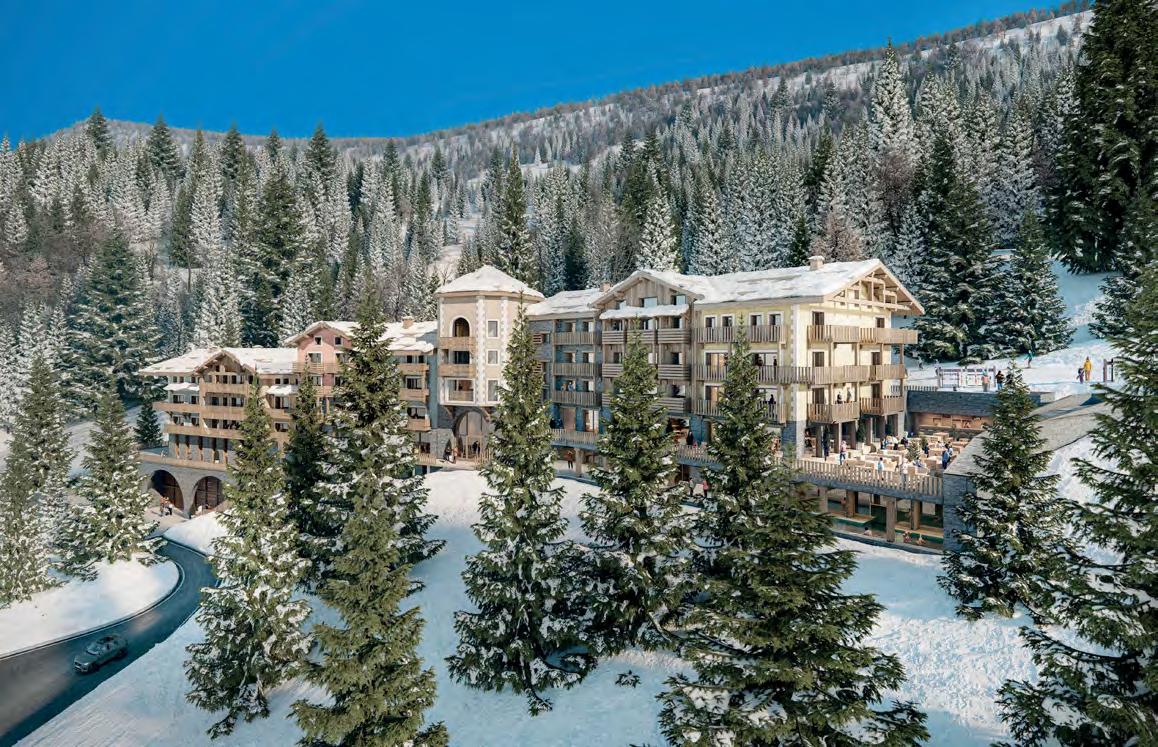
Scheduled to open in 2027 in the French Alps, a new hotel will bring MGallery’s signature character and charm to the slopes for the very first time. A boutique hotel collection within Accor’s luxury division, MGallery’s inaugural mountain retreat will be nestled in the heart of the Valmorel ski resort.
CLR Hotels is leading the development, with the architectural project entrusted to Bertrand Pourrier, founder of ABP Architectes. The hotel will have 82 rooms including suites and direct access to the ski slopes. Conceived as an alpine sanctuary, it will offer sweeping views over the valley. Inside, guests will be welcomed into a warm, contemporary environment where the design draws inspiration from the Savoyard heritage, blending sculpted wood, stone and tartan in a refined tribute to local tradition.
There will be a fine dining restaurant, a main restaurant with a terrace, a bar and a speakeasy. A spa
with both indoor and outdoor pools will enhance the wellness experience, alongside a ski and snowboard room, a private screening room and a relaxation area specially designed for après-ski moments.
In keeping with MGallery Collection’s strong commitment to sustainability, the project has been designed to meet the highest environmental standards. It will feature harmonious landscape architecture, high energy efficiency, the use of local and bio-sourced materials and dedicated staff facilities including 43 housing units offering 80 beds as well as a restaurant.
“Valmorel marks a first for MGallery in the mountains and represents a major step in our ambition to offer boutique luxury that is authentic and sustainable in many of the world’s most beautiful regions.
Surrounded by peaks, forests and local savoir-faire, this new address embodies the very essence of MGallery: unique places with soul, meaning and emotion,” said Maud Bailly, CEO Sofitel Legend, Sofitel, MGallery & Emblems.
KEY FACTS
Opening 2027
Operator Accor
Developer CLR Hotels
Architecture ABP Architectes
Expected keys 82
ACCOR SOFITEL GENOVA WATERFRONT, ITALY
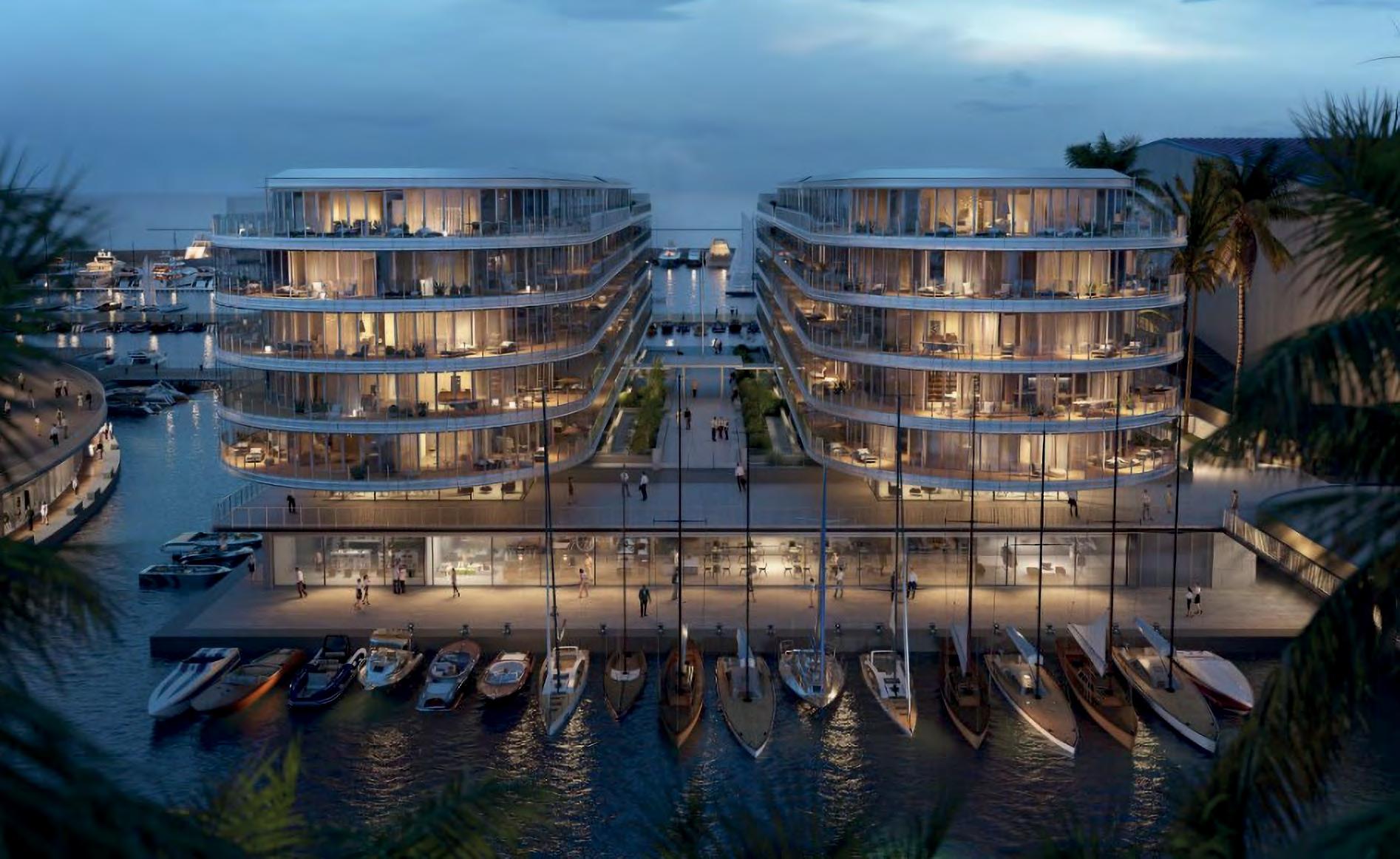
Accor has announced the signing of Sofitel Genova Waterfront, a new luxury hotel scheduled to open in 2027 on Genoa’s redeveloped waterfront. The project is being developed in partnership with AG Group, Italy’s leading integrated tourism operator.
The 120-room property, including 20 suites, will combine French elegance with Liguria’s maritime heritage. It is being designed by the Renzo Piano Building Workshop (RPBW), led by architect Renzo Piano, known for The Shard in London and the Centre Pompidou in Paris. The hotel forms part of the wider Waterfront di Levante redevelopment, supported by Orion and CDS Holding SpA as investors and developers.
Facilities will include an all-day dining restaurant, lobby lounge bar, pool bar, spa, fitness centre, swimming pool, and two meeting rooms. The hotel’s location will benefit from improved transport links, with high-speed rail reducing travel time between
Genoa and Milan to 53 minutes by 2026, and offering easy access to Portofino and the Cinque Terre.
Maud Bailly, CEO of Sofitel Legend, Sofitel, MGallery and Emblems, said the opening represents a milestone for Sofitel in Italy, following the success of Sofitel Roma Villa Borghese. She highlighted the partnership with AG Group as part of Accor’s broader growth strategy in Southern Europe.
Founded over 20 years ago, AG Group operates across hotels, destination management, restaurants, and consultancy. The company collaborated with Fortvny, led by Harry Mills Sciò, which advised on the selection of AG Group as the hotel’s operator.
Andrea Girolami, Founder and President of AG Group, said the partnership reinforces the company’s commitment to luxury hospitality and to projects that integrate cultural heritage with world-class design.
Sofitel Genova Waterfront will be the first international luxury hotel in the city, expanding Sofitel’s Italian portfolio alongside developments in Milan, Venice, and Palermo.
KEY FACTS
Opening 2027
Architect Renzo Piano
Operator AG Group
Expected keys 120
ROSEWOOD CALISTOGA, CALIFORNIA, USA
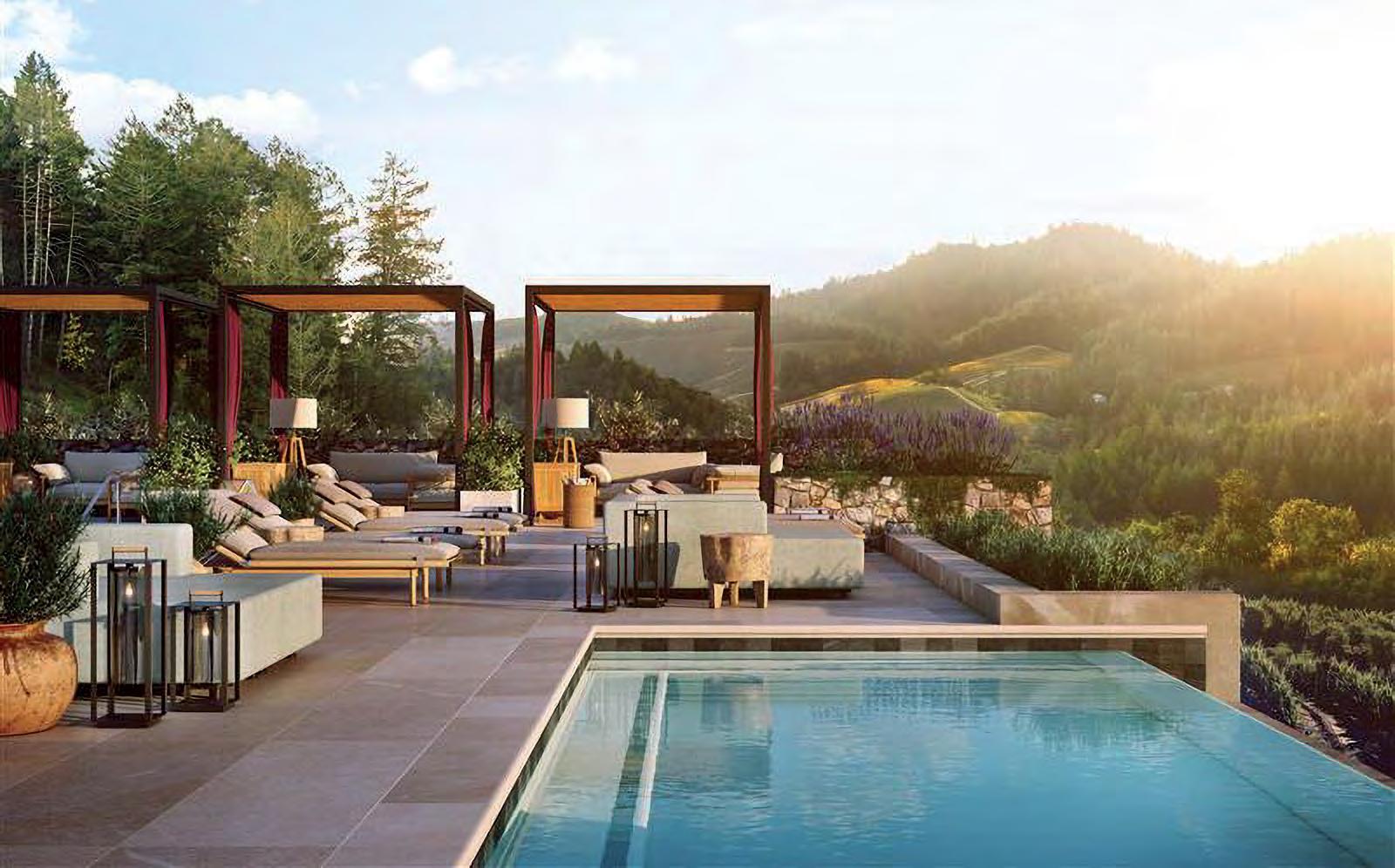
Ahillside estate in California is the iconic setting for Rosewood Hotels & Resorts’ latest addition to its portfolio, due to open in 2027.
Envisioned as a living ecosystem where experimentation is embraced and rejuvenation takes shape, Rosewood Calistoga will offer a reimagined wine country retreat and residential enclave shaped by the land, legacy and lifestyle of this locale.
Nestled across 118 acres of Calistoga’s forested ridgeline, the resort will express a design ethos that connects people to place. Design studio Atelier Marsh will carry forward the legacy of architect Ed Tuttle, who set the original vision for the property. Across the resort’s 129 guestrooms, suites and residences, as well as its many shared spaces, understated forms will follow the lay of the land and echo the textures of the ridgeline. Interiors will harmonise modern refinement with the warmth of wine country living. Conceived to reflect the terroir as the seasons turn, the design will draw on natural materials and locally
inspired motifs to shape spaces that support contentment and community.
The resort’s culinary outlets will celebrate ingredients freshly harvested each morning from its own gardens alongside those of farms and wineries across the region. The signature restaurant will champion this earth-to-table approach with an everevolving menu. An intimate cocktail bar will spotlight masterful mixology and a wine programme worthy of the destination, while a poolside eatery will offer relaxed dining with sweeping vineyard views.
With the forest as its backdrop, the resort’s wellness haven will comprise six treatment rooms, an outdoor garden, hydrotherapy experiences and a fitness centre. Additional amenities will include two pools, with one reserved for adults and the other welcoming families, and a Rosewood Explorer’s children’s club.
Rosewood Residences Calistoga is a collection of 20 private villas and 13 building plots surrounded by forest and vine. Each residence follows the natural ridgeline, blending modern refinement with understated natural materials.
KEY FACTS
Opening 2027
Owner/Operator Rosewood Hotels & Resorts
Designer Atelier Marsh
Expected keys 129
BUCHINGER WILHELMI, CÔTE D’AZUR, FRANCE
Anew Buchinger Wilhelmi centre is set to open in 2029 in the hills above the Côte d’Azur, bringing more than 100 years of expertise in fasting, cutting edge research and longevity medicine to the south of France.
Founded in 1920 by Dr Otto Buchinger, the business is now led by the fourth generation of the Buchinger Wilhelmi family, with residential clinics that opened at Lake Constance, Germany, in 1953 and in Marbella, Spain, in 1973. They work to enable people to enjoy healthier, more fulfilling lives by supporting the body’s natural ability to heal.
The new 95-room centre brings the Buchinger Method to life through architecture. Architect firm GOMIS & Associés from Nice and interior designer Matteo Thun from Milan will design the health resort. Together, the team will create spaces that embody the brand philosophy of health, sustainability and longevity. There will be a large spa and wellness area, a medical centre with eight doctors, four pools, four
private fully serviced villas, an art and sculpture park and a large concert hall.
The project has been awarded the Gold Standard of the Bâtiment Durable Méditerranéen sustainability certificate, highlighting its status as a pioneer of sustainable construction in the region. The award is rarely bestowed and acknowledges the effort invested in planning, with the project also receiving the ECRAINS certification for outstanding air quality.
Leonard Wilhelmi, great-grandson of Dr Otto Buchinger and CEO of Buchinger Wilhelmi, Lake Constance, said: “We are proud to bring the Buchinger Method to the Côte d’Azur, a place which reflects the Buchinger spirit – beautiful natural surroundings, the Mediterranean Sea, cultural offerings in art and music and bio dynamic agriculture.”
Guests will benefit from a fasting method underpinned by a unique combination of scientific research, the warmth of family care and a sense of community. They can also expect an emphasis on creative inspiration, with planned collaborations with French and international artists.
KEY FACTS
Opening 2029
Owner/Operator Buchinger Wilhelmi family
Architecture GOMIS & Associés
Interior design Matteo Thun
Expected keys 95
Nature Inspired Paper Foils
dp-decor is the original and trusted paper foil range from Decorative Panels Lamination - developed as a cost-effective yet visually stunning alternative to real wood veneers.
The collection features an extensive selection of woodgrain, unicolour, and fantasy designs, developed in partnership with leading global print houses.
www.decorativepanels.co.uk
EHA, HIIUMAA ISLAND, ESTONIA
Designed to harmonise with its surroundings, a new wellness retreat will open next summer on Estonia’s unspoilt Hiiumaa Island. The island is a UNESCO biosphere reserve – a site for testing interdisciplinary approaches to understanding and managing changes and interactions between social and ecological systems.
Encircled by the Baltic Sea and steeped in centuries of local tradition, Hiiumaa is one of Europe’s quietest islands, with some of its darkest, clearest skies. Twothirds forested, with wild beaches and rare biodiversity, it offers space and stillness that will set the tone for every stay at Eha, which will comprise eight spacious suites and three forest cabins.
Interiors balance organic textures and contemporary Nordic design, creating calm, light-filled spaces. Designed by acclaimed architect Tiit Trummal, with interiors by Studio Argus, UNT+CO and Vaikla Studio, spaces echo traditional Estonian forms while embracing understated Nordic design.
Retreat programmes are designed to align body, mind and spirit with the island’s unique five-season
rhythm – summer, spring, autumn, winter and springrise – through movement, nourishment, rest and reflection. Led by Estonian-born Wellness Director Kai Laus, programmes blend Estonian and ancestral healing traditions with evidence-based practices, including thermal rituals, nature immersion, breath-led movement, foraging and reflective sessions. Bespoke soundscapes, curated by Olo, a specialist in immersive audio experiences, capture the essence of the island to influence a deeper connection to nature and to oneself.
Green Michelin Star chef Peeter Pihel is designing seasonal farm-to-table menus that celebrate the retreat’s organic kitchen garden, line-caught sustainable fish and local produce.
The retreat is the vision of co-founders Eva Maran and Sonny Aswani, supported by Think Hospitality Consulting.
“Eha celebrates the essence of the Estonian people –renowned for their deep respect for nature, quiet strength and enduring sense of community. Drawing on a heritage shaped by both resilience and resourcefulness, Estonians have long embraced the harmony of the seasons, the restorative power of the forest and a lifestyle that values simplicity without compromise,” said Eva.
KEY FACTS
Opening 2026
Founders Eva Maran and Sonny Aswani
Operator Hiihu Heals
Architecture Tiit Trummal
Interior design Studio Argus, UNT+CO and Vaikla Studio
Expected keys 11
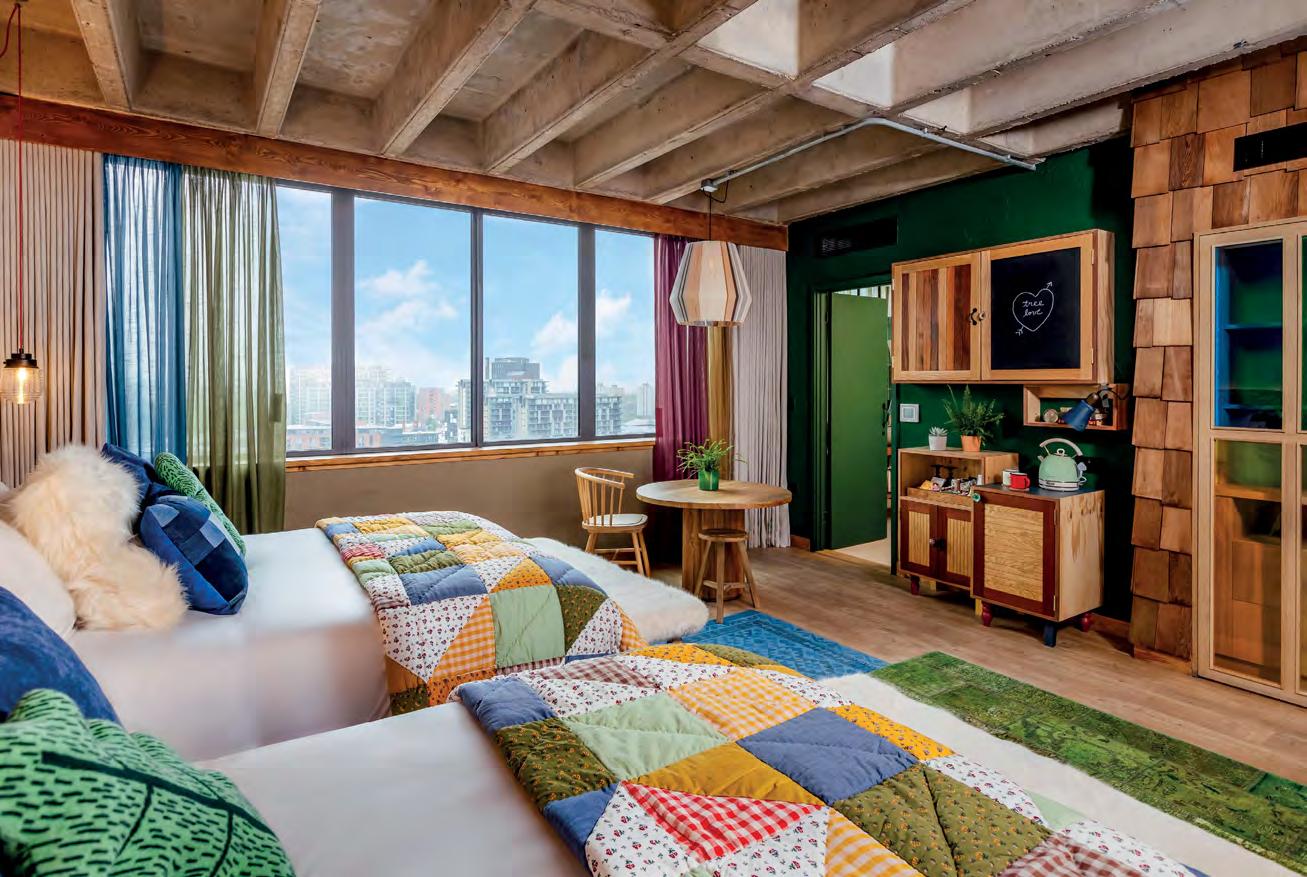
Treehouse, Manchester
Photography by Brad Matthews
MANDARIN ORIENTAL, XI’AN, CHINA
Mandarin Oriental is poised to open its first urban resort in Northwest China in 2029. Located in the former capital of 13 dynasties, and home to global landmarks such as the Terracotta Warriors, Xi’an is a destination steeped in imperial heritage. Mandarin Oriental, Xi’an will reflect this legacy through a contemporary lens, blending Tang Dynasty inspiration with refined luxury designed to honour the city’s cultural narrative.
Set within a large landscaped site next to a park, the hotel will feature 166 rooms and suites, all with outdoor terraces, uninterrupted views and natural hot spring experiences. Seven villas, each with private terraces and pools, will provide a rare level of privacy and exclusivity unique to Xi’an.
A highlight of the hotel will be The Spa at Mandarin Oriental, offering a wide range of wellness, beauty and massage treatments in wellness facilities set amid natural surroundings, including hot spring pavilions.
There will be a 50m indoor-outdoor infinity pool, a children’s pool and a programme of wellness rituals.
ACPV ARCHITECTS will oversee the architecture and interiors. The studio previously worked on Mandarin Oriental Bodrum and Milan. Its approach will embrace natural materials, understated elegance and a strong essence of destination reflective of Xi’an’s seasons and cultural heritage.
Five distinct dining destinations will include a Chinese restaurant. The hotel’s social and event spaces will include a large ballroom with outdoor terraces offering views of the park. Additional guest experiences will span indoor and outdoor children’s facilities, an art and culture gallery, a library, a shop and entertainment facilities.
“This is more than a hotel; it is an urban retreat that honours the city’s historic grandeur while setting a new standard in wellness and cultural storytelling. It reflects our focus on growing in iconic leisure destinations where guests can enjoy experiences that feel both immersive and timeless,” said Laurent Kleitman, Group Chief Executive of Mandarin Oriental.
KEY FACTS
Opening 2029
Operator Mandarin Oriental
Design ACPV ARCHITECTS
Expected keys 173
LIFESTYLE COMPO
The global consumer goods meeting place. ambiente.messefrankfurt.com info@uk.messefrankfurt.com Tel. +44 (0) 14 83 48 39 84
THE DESTINATION REPORT
LONDON
Despite being one of the most sprawling cities in Europe, space in the capital is either a rarity or at a premium. With a pipeline that shows no signs of slowing down, developers get creative with restorations, conversions and adaptive reuses
WORDS BY JESS MILES
When the time rolls around to write an update on the London hotel market, one thing’s for certain –there’s always something to talk about. And for good reason. Whether drawn to the capital for its cultural heritage, prestigious universities or its pull across fashion, media and sport, London remains a glimmering destination for both domestic and international visitors. It’s vast enough that even Londoners find themselves playing tourist – spending weekends exploring neighbourhoods they’ve never been to or checking in on the other side of the city just for the novelty. But underpinning all the fun and games is London’s status as a global powerhouse: a financial centre with strong tech credentials, unmatched connectivity via multiple airports and the Eurostar, and a formidable reputation that keeps it firmly in the global spotlight.
Nevertheless, the past few years have brought extraordinary challenges – from the pandemic to political and economic turbulence, construction cost
hikes, and dramatic shifts in how people travel, work and interact with space. Yet London, as it always does, seems to have landed on its feet. With enviably high RevPAR, the capital continues to outperform many of its global counterparts and remains one of the world’s leading hotel markets. This year, in fact has been record breaking – with The Championships at Wimbledon and Oasis' summer reunion tour overlapping in July, the city hit all-time highs for both ADR and RevPAR, according to reports from CoStar.
Strengthened by a string of high-profile openings, 2025 sees over 5,500 keys added by year end, with many more are on the way, STR reports. With one of the largest development pipelines in Europe, London’s growth shows no signs of slowing for 202627 either. But where will the capital make room for all these new hotels? And what differentiates them from the existing crop? With new-build space in short supply, developers are thinking creatively, reimagining what’s already there into a new wave of hotels made for shifting lifestyles. From the former US Embassy in Mayfair to a reworked department store in Bayswater, many of the most exciting projects are restorations, conversions and adaptive reuses.
NEW OPENINGS
The Chancery Rosewood, in partnership with renowned real estate developer Qatari Diar, is the shiniest new kid on the block in London’s prestigious Mayfair District, having opened in September. Housed in the iconic former U.S. Embassy on Grosvenor Square, the Grade II* listed building originally designed by FinnishAmerican architect Eero Saarinen in 1960, has been brought back to life by British architect Sir David Chipperfield of David Chipperfield Architects. For the interiors, Joseph Dirand took care of the 139 guestrooms and suites, whilst Yabu Pushelberg has designed Asaya wellbeing facility to provide guests with a retreat from the busy streets of London. (Read our review of the design in this issue from page 90).
Amsterdam-based boutique brand Sir Hotels has made its London debut with the launch of Sir Devonshire Square. Located within the storied courtyard of East London’s Devonshire Square,
the new property is housed within a restored 17th century textile warehouse, featuring 81 rooms including 14 suites. Interiors have been thoughtfully imagined under the direction of acclaimed architecture and interior design studio Maison 191, led by designer Samuel Wright.
Speaking to the building’s history, the concept takes inspiration from Bauhaus geometry and the tactile textile work of Anni Albers, paired with architectural influences from mid-century figures such as Quincy Jones and John Lautner.
Opened in October, Aethos has taken over the iconic Nobu Hotel building on Willow Street in Shoreditch for its first UK outpost. The 164-room hotel is designed by Barcelona-based Astet Studio, with a refined, narrative-led design. Drawing inspiration from Shoreditch’s industrial and artisanal heritage, the interiors balance raw, textured materials – like terracotta, brushed metals and layered wood – with warm, tactile finishes.
Opposite, and this page
1 Sir Devonshire Square
2 Aethos London
3 Aethos London
IN THE PIPELINE
Set to welcome its first guests early next year, The Newman in Fitzrovia marks the debut hotel from international hospitality group Kinsfolk & Co. A new name on the scene founded by alumni of Firmdale Hotels, The Standard, The Beaumont and The Goring, the group brings a wealth of experience to its first outing. The hotel will feature 81 guestrooms, suites and apartments, along with a 120-cover modern European brasserie and a generously appointed spa. Interiors come courtesy of Lind + Almond, the London design studio led by Pernille Lind and Richy Almond, known for their refined, quietly eclectic approach to space and storytelling. Six Senses, renowned for sumptuous spa retreats that have a strong focus on sustainability, will make their UK debut in Bayswater within former department store, Whiteleys, in close proximity to Kensington Palace. Inspired by the building’s iconic origins, the interiors of Six Senses London are being designed by internationally celebrated AvroKO in conjunction with executive architects EPR, and combine nostalgic nods to classical detailing and art deco along with modern streamlining. The property has been a long time coming but is looking to finally open in the new year with 110 guestrooms and 14 branded residences.
Joining the roster of early 2026 openings, The Shepherd Mayfair is an 82-key hotel bringing a fresh, design-led presence to one of London’s most storied neighbourhoods. Designed by Buckley Gray Yeoman with Timothy Shepherd and the team at Shepherd&, the project revives a historic Mayfair mansion, blending classic architecture with the offbeat charm of neighbouring Shepherd Market. The ground floor will house a modern British brasserie and café-bar, while Teddy’s, a 1960s-inspired cocktail bar tucked beneath the hotel, will offer a more discreet, latenight setting. The development also includes 36 & 37 Hertford Street Residences — a boutique collection of 16 one- and two-bedroom homes, available to purchase.
One we’ve been keeping a particularly close eye on is Waldorf Astoria London Admiralty Arch, now slated to open in spring 2026 after several delays. Originally earmarked for a 2022 debut, the landmark project will mark the brand’s first foray into the capital and one of its most prestigious addresses globally.
Commissioned by King Edward VII in memory of Queen Victoria, Admiralty Arch stands at the end of The Mall — a ceremonial gateway between Trafalgar Square and Buckingham Palace. Few hotels in the world can offer such views, and the planned presidential suite will make the most of them, directly overlooking the royal residence.
The hotel will comprise 100 rooms and suites along with 17,500 square feet of branded residences. Hilton is leading the redevelopment with a focus on restoring the building’s heritage while adapting it for a new generation of ultraluxury guests. With its blend of symbolism,
location and architectural legacy, this is set to be one of the most anticipated openings not just in London, but globally.
The St. Regis London will bring a new wave of luxury to the corner of Conduit and New Bond Street by the middle of the year ahead. Designed by Richmond International, the project transforms the former Westbury Mayfair into a 195-key flagship, including 64 suites, with a focus on craftsmanship, elegance and refined detail. Located in the heart of Mayfair’s fashion and gallery district, the hotel is poised to become a social anchor for art, design and style.
Also expected in 2026, Cambridge House will mark Auberge Resorts Collection’s London debut. Set within a Grade I-listed former townhouse at 94 Piccadilly, the property is being developed by Reuben Brothers and will include 102 rooms and a private members’ club. French designer Jean-
Opposite, and this page
1 The Shepherd Mayfair
2 Delano London
3 The Newman
Louis Deniot is leading the transformation, while Laura Gonzalez will oversee the design of the dining spaces, spa and club rooms. The aesthetic promises to be classically English with layered global influences — a nod to the building’s storied past and eclectic future.
Meanwhile, boutique favourite The Zetter is set to return with its third property, this time in Bloomsbury near Russell Square. Spread across six restored Georgian townhouses, the 68-room hotel will feature interiors by James Thurstan Waterworth, founder of Thurstan. Rooms will pair reclaimed Victorian floorboards with antique upholstery, Turkish and Persian rugs, and bespoke lampshades made from vintage fabrics.
Just moments from Kensington Gardens, Delano London is set to open by the end of 2026 as a 67-key property developed in partnership with Signature Developers and DCD Properties. The design is said to strike a balance between contemporary minimalism and layered, textural warmth. On the ground floor, Ennismore’s F&B platform will introduce one of its most distinctive dining concepts to London for the first time.
Completing the guest experience, the legendary Rose Bar — a mainstay of the Delano brand in Miami — will debut in London as a subterranean speakeasy, offering an intimate, after-dark counterpoint to the hotel’s polished calm above. Looking further ahead, Oberoi Hotels & Resorts is set to make its long-awaited UK debut with The Oberoi, Mayfair. Located at 40–46 Brook Street on the corner of Grosvenor Square, the 23-room luxury boutique hotel is scheduled to open in 2027 as part of Grosvenor’s wider South Molton development. Grosvenor secured planning permission to restore the 33,000-square-foot listed building in 2022, with work beginning in late 2023. The project promises to bring Oberoi’s signature understated elegance and service-led approach to one of London’s most sought-after postcodes.
Mentioning just a fraction of the hotels set to open this year here, and taking into consideration the long list of remaining hotels to come from the pipeline in the coming years, it seems the future is bright (and busy) for the UK’s capital, as it lays down another layer to its history.
S
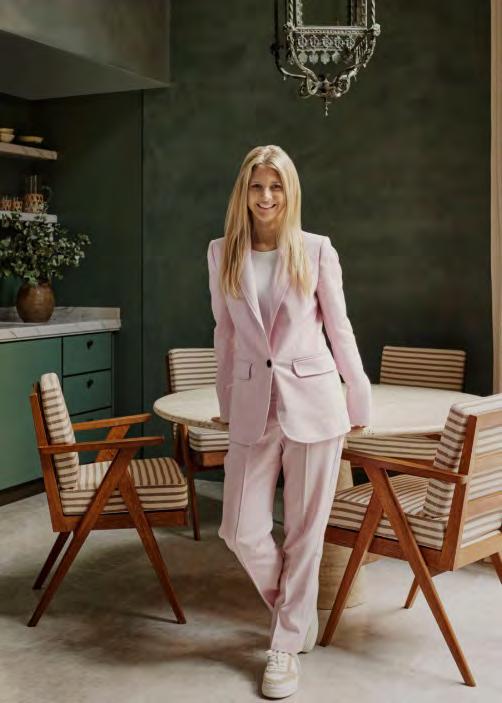
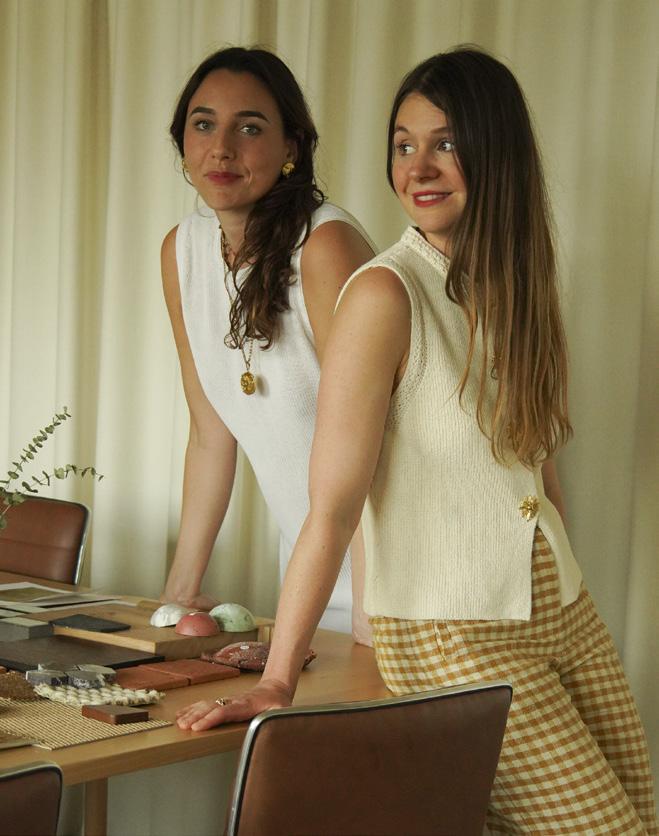
ÉGLANTINE SICAT & PAULINE DELLEMOTTE
CO-FOUNDERS, UNCANNY STUDIO
Between Paris and London, Uncanny is shaping hospitality and interior design through narrative-driven spaces that blend cinematic emotion with timeless craftsmanship.
Current projects
Lamington, Lost Garden farm to table restaurant and cocktail bar
Residential luxury developments in London and Paris.
Projects in the pipeline:
Luxury residence in USA
Hospitality projects in Monaco and Qatar
Residential development in Paris
uncanny-studio.com
Founded by Pauline and Églantine, Uncanny is a Franco-British interior design studio built on a shared belief that spaces should tell stories. Merging architectural precision with sensory richness, the duo creates interiors that feel both intimate and transportive. With backgrounds spanning Michaelis Boyd, PierreYves Rochon, and Hermès, they bring an instinctive approach to each project, uniting the bold spirit of British design with the elegance of French craftsmanship. In conversation with SPACE, Pauline and Églantine reflect on their creative partnership, the art of storytelling through design, and the uncanny beauty of collaboration.
What first drew each of you to interior design and architecture?
P: My fascination began with Jean-Luc Godard’s Le Mépris. There’s this sculptural staircase at Villa Malaparte in Capri that struck me as both architectural and cinematic – a moment where space itself becomes a character.
E: For me, it was those rare and privileged moments spent with both of my parents on holidays, often in hotels. Those experiences were the symbol of connection, family, and quality time. I have always wanted to recreate that sense of intimacy and feeling at home
through design, making people feel both inspired, dreaming, and at ease in a space.
Before founding Uncanny, you both worked independently. Which studios shaped your early careers and what did you each take from those experiences?
E: Pierre-Yves Rochon shaped my vision of luxury and experience. Every small detail was part of a larger poem and deserved the same meticulous care. My time at the Hermès Conservatory further instilled a deep appreciation for craftsmanship, attention to detail, and a love for understated luxury that transcends trends.
P: My five years with the design team at Michaelis Boyd Associates were an invaluable foundation. It was an incredibly inspiring experience that shaped my understanding of interior design, architecture, and the thoughtful orchestration of space.
You’ve spoken about the “chance meeting” that sparked your collaboration – can you tell us more about that moment?
It’s quite uncanny how life sometimes puts you on the path of someone you’re meant to meet. Pauline and I met through a mutual friend at a dinner in London. We were seated at opposite ends of a long, lively table, so we didn’t really get the chance to talk that evening. A few months later, while I was consulting for
Ember Locke in Kensington, London
PHOTOGRAPHS BY KENSINGTON LEVERNE
Locke’s design team, my director mentioned an upcoming studio I should look into.
I researched their work and came across photos of the team – and immediately recognised Pauline’s face. I got in touch with Pauline for a coffee. We realised we were both working for the same client –and the rest, as they say, is history.
Why did you decide to join forces, especially when you’d both already established your own studios?
We both had studios that were doing well, but we quickly realised that every project we were excited about, we instinctively proposed to the other to collaborate on. It felt natural – almost inevitable – but we also noticed that, to the outside world, the message wasn’t clear. Two studios, two women, two names that were tricky to pronounce across French and English – it was confusing. Ultimately, we were building a shared heritage and a common vision. We were stronger together. Uniting under one studio
became the symbol of that collaborative energy, allowing us to present a singular, coherent identity to the world while honouring both of our creative voices.
What have been the main challenges of launching a new studio in such a competitive marketplace – and what advantages do you think come with being ‘new’?
Launching a new studio is always challenging – it’s a blank page, yet also a synthesis of our past experiences. We were repeatedly advised to specialise – hospitality, residential, or another niche – but we always refused. Our focus has always been on creating narratives and experiences rather than fitting into a category. Over time, the market has validated that approach, even in a highly sensitive and competitive international landscape shaped by politics, climate, and global changes. This year, in particular, has been difficult, teaching us that resilience and trusting your instincts are essential. Being a new studio also brings advantages: we remain
flexible, agile, and able to protect our team from external pressures in ways a larger system cannot.
You’re based between Paris and London –what are the pros and cons of operating across two cities and cultures?
Paris and London are both incredible cities, inspiring in their own way. Their histories, energies, and trends aren’t comparable, but they complement each other beautifully, and we are trying to bring that to one another: the British boldness to Paris and the excellence of French craftsmanship to London.
Pros: Being between both capitals is a huge advantage; each city is central to our portfolio. While we are French at heart, our mindset is distinctly more risk-taking and British. Another benefit is the closeness of our team; working across two countries makes us value the time
our team spend travelling to meet us, and we make that a priority for quality time with them.
Cons: Occasionally, we encounter systems that feel outdated, which can make reconciling different mentalities and approaches challenging. Travel itself can also be demanding, making it harder to find personal or family time. We are mindful to protect these moments, ensuring we can enjoy both the week’s opportunities and the time to recharge.
How big is the Uncanny team today, and how do you see it evolving?
Today, our team consists of four permanent members, supported by an extraordinary network of freelance collaborators who join us on a project-by-project basis, especially during busy periods. Our main studio is in London, with a satellite office in Paris. Looking ahead, the next step is to expand our Paris
team to strengthen our bi-cultural vision, a process we have already started. While we aim to grow, maintaining a human scale is essential – we want to be present for each team member and nurture a close, collaborative environment, as much as for our clients, even as we scale up.
How would you describe the aesthetic or emotional language you created for Locke de Santa Joana and Kensington?
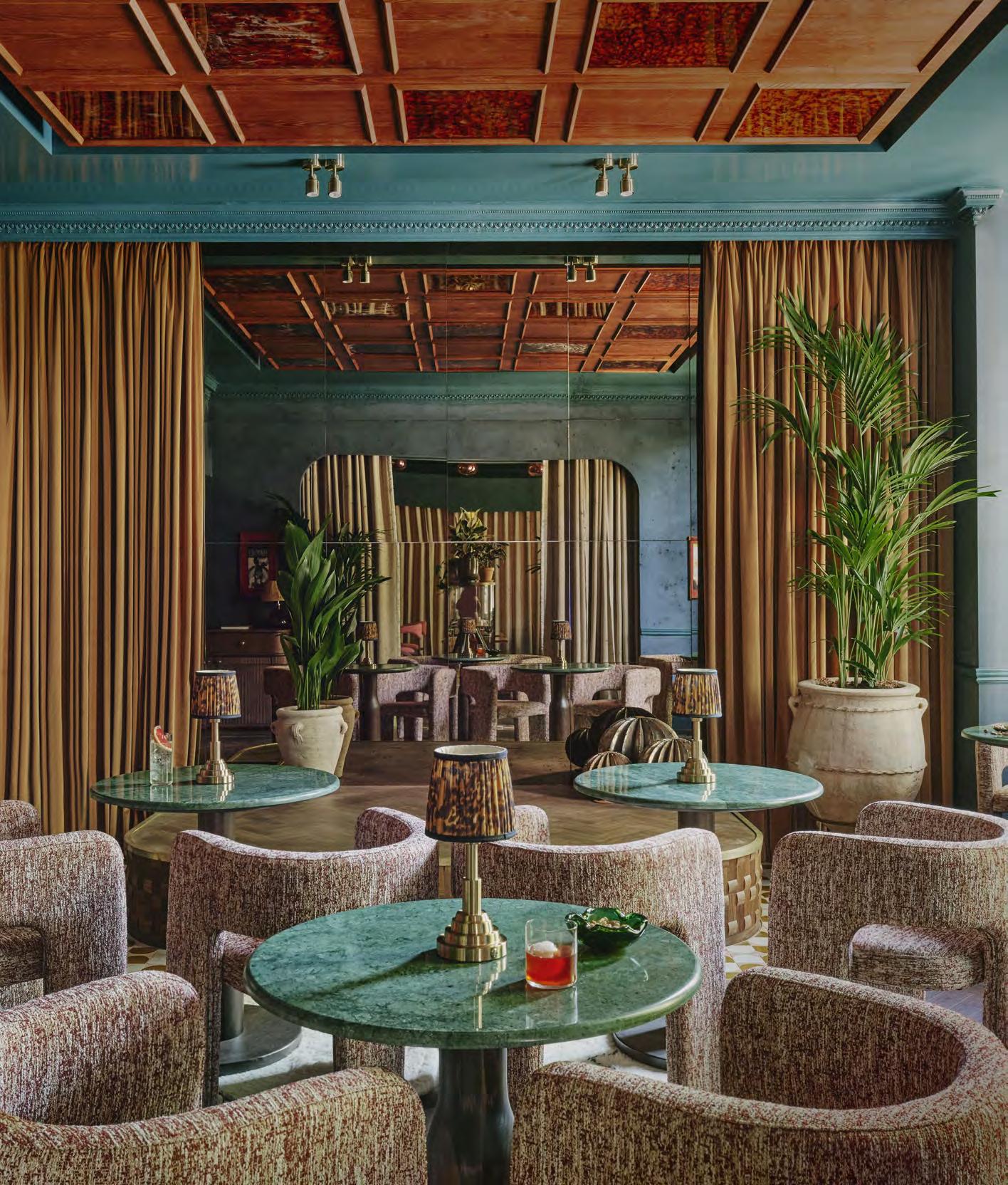
Both projects were opportunities to explore how narrative can coexist with function. For Locke de Santa Joana, we drew from Lisbon’s rhythm – its layered history, the incredible heritage of the space, and this new upcoming generation of artists that we wanted to shine a light on. Ember, by contrast, is more
introspective and an ode to the sixties, rooted in material honesty and vibrant patterned fabrics. Across both, we sought to craft narratives that feel human and lively.
Why hospitality design – what draws you to that sector over residential work?
Hospitality offers a blank canvas for your wildest dreams, paired with a sense of the ephemeral. It’s a space where you can push boundaries, go beyond expectations, and still respond to real functional requirements and a brand’s aspirations. It’s a complex equation that excites us. Residential work, by contrast, is quieter and more intimate. It gives us the confidence to collaborate with some of the finest craftsmen in the world. While it may not demand the spotlight, it allows us to explore depth, detail,
and subtle creativity – pushing the boundaries in a different yet equally fulfilling way.
What’s the ambition for Uncanny Studio?
Uncanny Studio’s ambition is to remain a storyteller through design, creating unforgettable experiences that resonate emotionally and aesthetically. Our work will take many different forms, but we want to be recognised as a studio that continually generates new ideas and unexpected aesthetics. Beyond that, we see the studio as a platform – to give talented craftsmen and artists a voice, to make space for creativity to flourish. Above all, we want to keep moving forward with curiosity and joy, designing, sharing, discovering, and connecting with everything the world has to offer. S
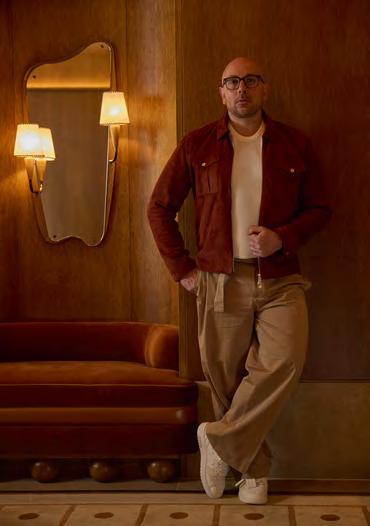
From London townhouses to landmark hotels, Paolo Moschino and Philip Vergeylen celebrate a life in design – with wit, warmth and impeccable taste
Recent openings
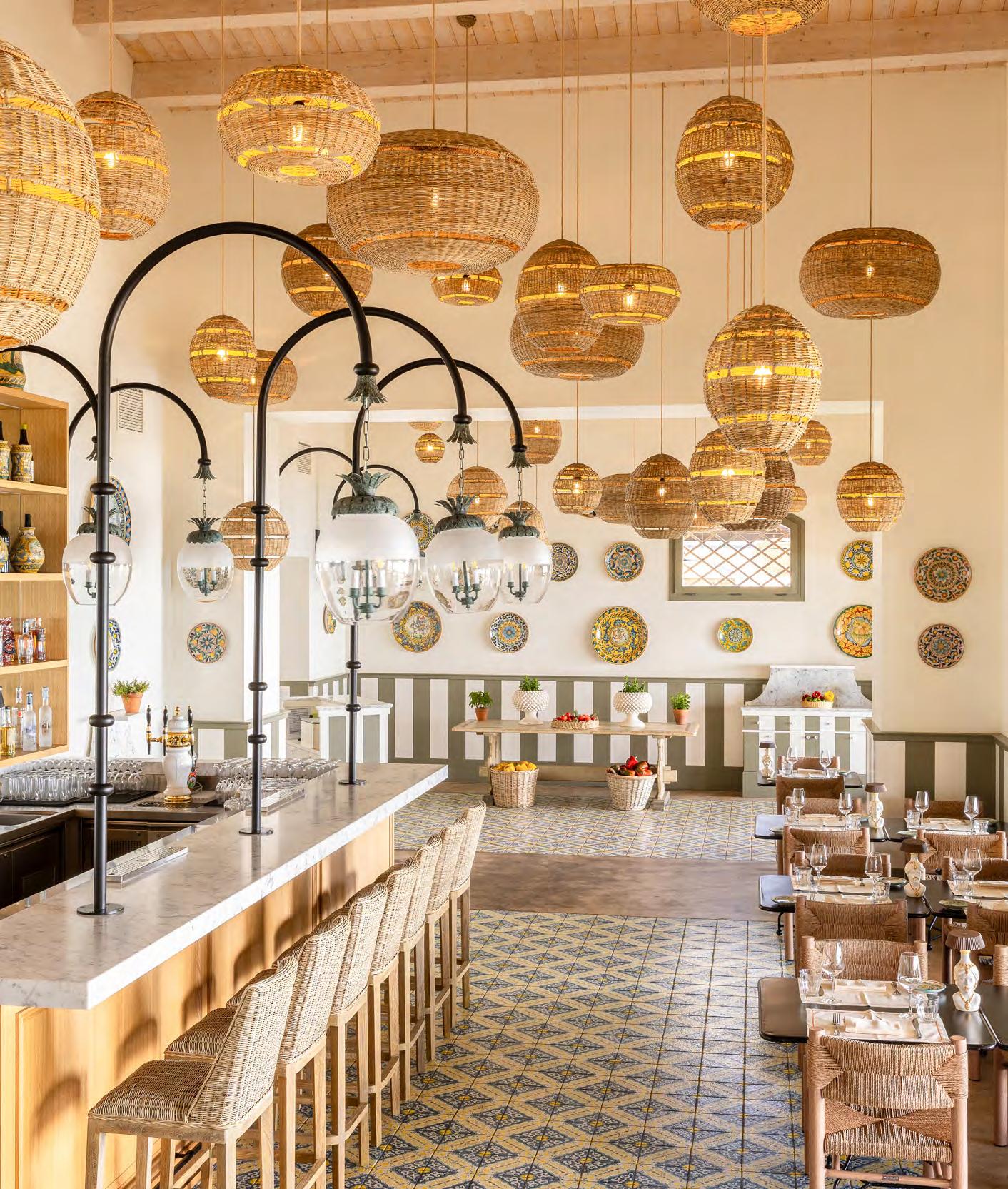
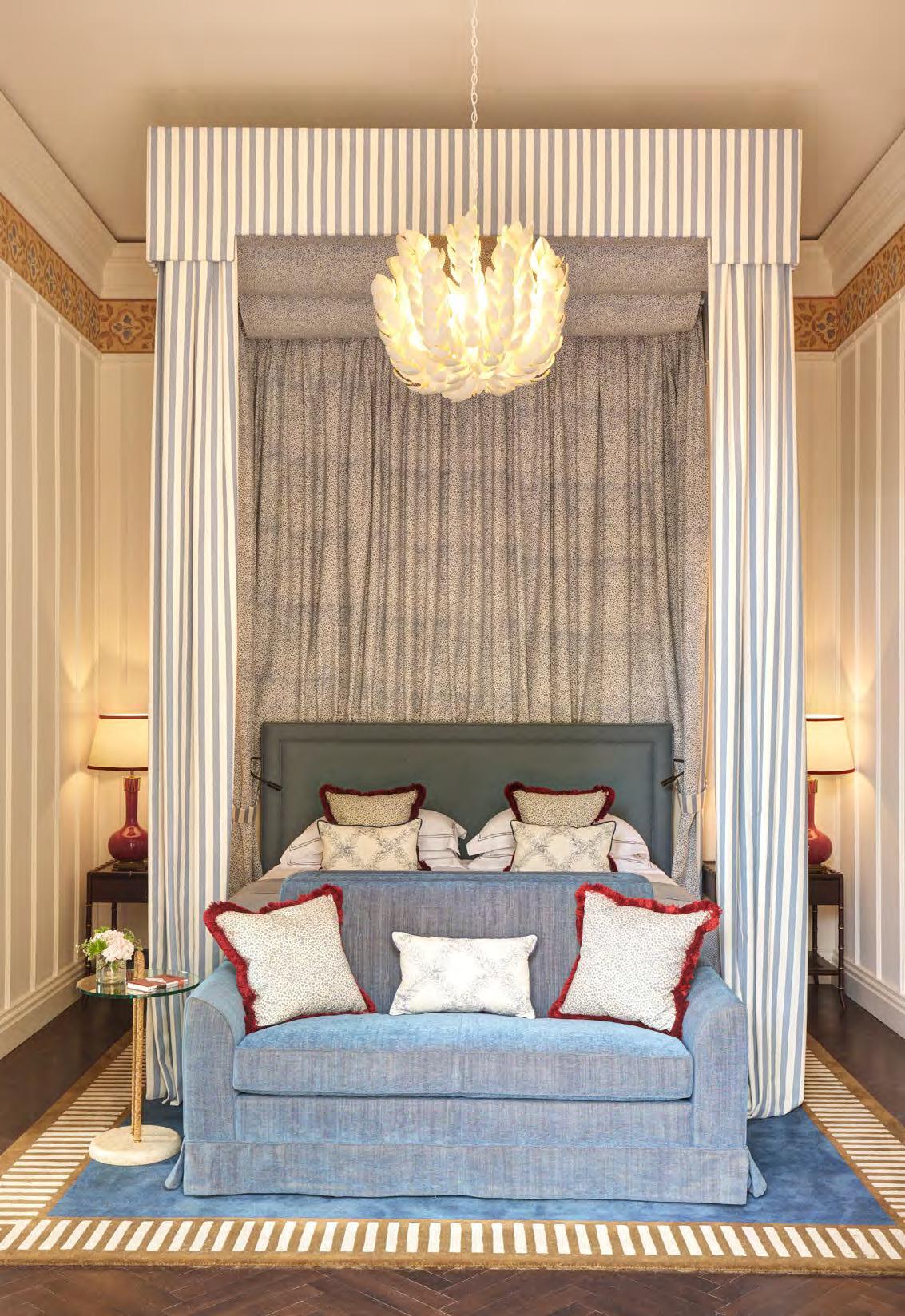
Rocco Forte House Milan, Beach House in Mustique, Suites at Brown’s Hotel
Current projects
The Carlton Hotel, Milan; Palazzo Castelluccio, Noto; Verdura Resort, Sicily (59 suites and rooms); Hotel de Russie Rome; Hotel de la Ville Rome.
Pipeline
Large colonial project in Santo Domingo, Large residential project in Casa de Campo, Various hospitality projects –Abu Dhabi (confidential).
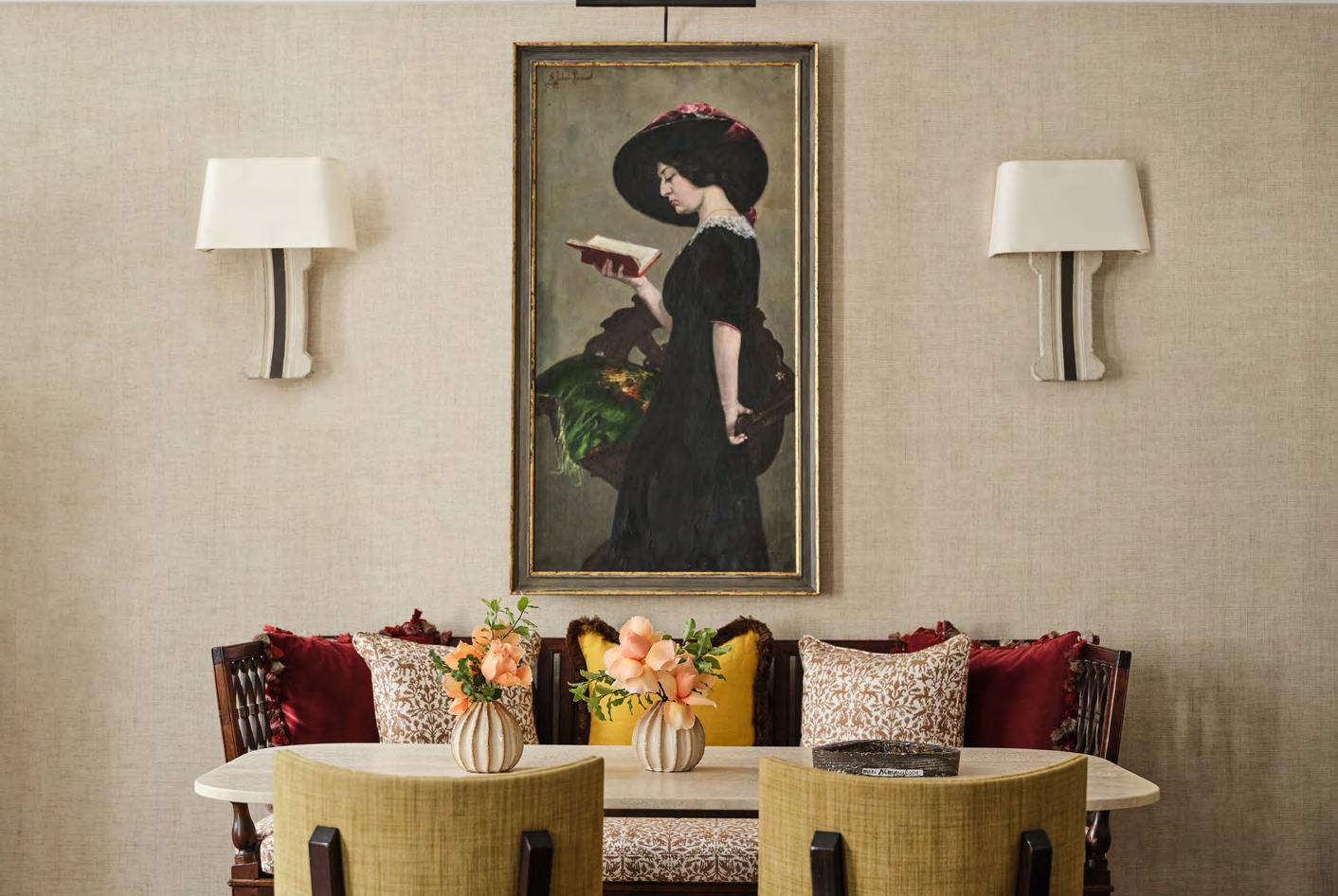
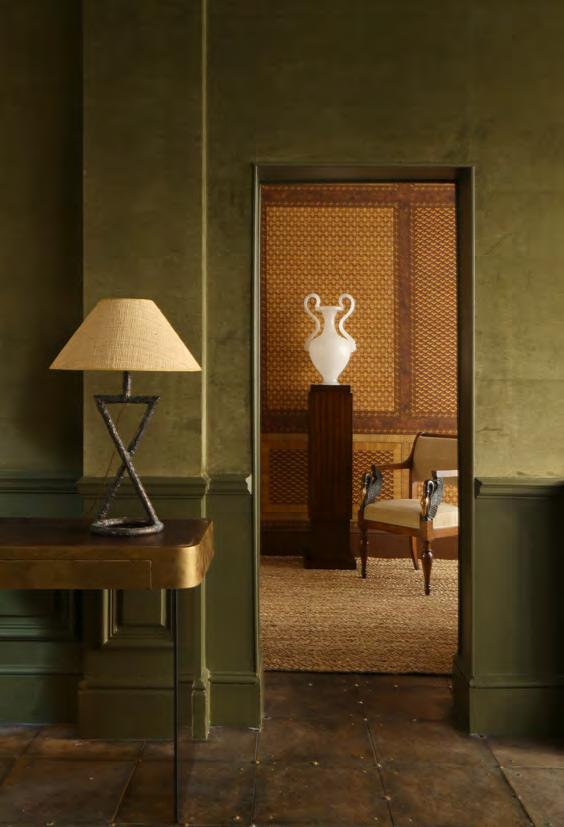
For those with a keen eye, a healthy budget, and a project waiting in the wings, Pimlico is London’s smartest design district. Home to leading interior designers, its furnishing and antique shops are curated and styled by people who know exactly what their clients will covet next. Dotted decorously around the neighbourhood, they provide high-end interior inspiration for most of us – and enviably crafted interiors for the fortunate few.
Among them, Paolo Moschino’s shopfronts stand out. Their displays of bespoke furniture, fabrics, lighting and antiques draw in many admirers, in the hope that behind the window awaits a design team ready to bring that vision closer to home – preferably their own.
Launched in 1995, the company is owned and run by Paolo Moschino and his long-term partner, Philip Vergeylen. Joining them in their Pimlico showroom, I admire the wallcoverings, and Philip is quick to regale me with the first of many stories – this one being the story behind the collection.
It begins with a journey to San Patrignano – a rehabilitation centre in Italy – and a textile studio run by its creative community of residents. Not quite how I imagined the narrative to unfold. The story continues with the discovery of an old leather bag filled with wallpapers – an archive left to the centre by 20th-century designer Renzo Mongiardino – and the inspiration behind
the brand’s eponymous collection of wallcoverings.
As I try to keep up, Philip explains: “The archived papers were just so beautiful. So, with the San Patrignano studio, we created our own collection, which is still produced at the centre and used by designers all over the world. But we don’t take a profit – it’s a way of giving back.”
It’s a lovely story, offering a glimpse of the talent and shared empathy that seems to be at the heart of so much of what they do.
Fabrics and wallcoverings have been at the core of the brand since the beginning, albeit with a modest start – as Paolo explains. “When I opened the first shop – exactly 30 years ago – I was selling antiques and had the beginnings of a fabric collection – just three designs that I was still working on. It was instantly popular, and clients kept asking me to extend the colourways beyond beige,” he laughs. “So, I did. Today, that collection – Aurora – is still our bestseller.”
And was it always the intention to move into interior design? I ask.
“No, not at all,” he replies. “I had the shop and two assistants helping me. Then one day a woman came in and asked us to provide curtains for her house. We said no – we would sell her the fabric, but we weren’t interior designers. But she was insistent that I go to see her house. Thirty years on and we are still close friends – and I guess that one pair of curtains was how I fell into this job!”
IMAGES COURTESY OF PAOLO MOSCHINO LTD / ROCCO FORTE
Caption: Liola Trattoria, Verdura Resort
Today, their retail portfolio is as strong as ever, spanning over 400 fabrics and wallcoverings, furniture, and lighting collections. Antiques remain a constant part of the offering, preserving a link to the beginning. With showrooms across the country and a global distribution network serving the trade, their reach is extensive. The interior design arm, now responsible for 50% of the business, continues to drive the brand’s evolution.
Though operating as one, Paolo Moschino Ltd. is very much a company of two halves, with Paolo looking after the retail side and Philip overseeing the interior design projects. But like most operations, there is inevitably crossover. “We share an office, and we live together, so we discuss everything – but we each have our teams whom we work closely with.”
At this point Paolo joins in. “Philip gave up a proper job to join me!” he laughs. “He was
head of global marketing for American Express – and brought the ‘global’ bit with him!”
My assumption that the crossover extends to the collections being used as part of the design schemes is met with a firm no. “Absolutely not,” they chime in unison. “Paolo would get very annoyed if I did, so I make it very clear to clients that the world is their oyster when it comes to choice,” Philip adds.
With around 20 projects on the boards at any one time, I ask where the clients come from. “It’s often word of mouth, but the press has been very good to us – right from the beginning. I am not a very social person,” Paolo tells me. “So, I don't like big social parties, but I remember one year House & Garden was hosting its Designer of the Year awards. As usual, I politely declined my invitation. On the day of the show, the editor called me with a note of urgency and said, ‘I think you’d better come!’ Luckily, I did – as we had won.”
For many years, Paolo Moschino Ltd. was recognised for its luxury residential design. Today, they are the name behind the interiors of several Rocco Forte hotels. Handpicked by Design Director Olga Polizzi, their first project was Villa Igiea, Palermo, in 2019.
“Paolo took the call one day, and Olga simply asked if we would like to design Villa Igiea – a hotel in Palermo that the Rocco Forte Group had recently acquired,” Philip tells me. “Unbeknown to Olga, Paolo and I had visited several years earlier, when we celebrated my sister’s birthday there. Though it was grand, it was falling apart, and its early decadence had completely faded. Yet you could see that, at one time, it must have been spectacular. We spent our stay walking around, discussing what we would do should we ever have the opportunity. So, when Olga called, Paolo said yes straight away – and told her, ‘We’ve already done it!’”
Built in the late 19th century, Villa Igiea has been a luxury hotel since the early 1900s. With a longstanding and loyal guest list – including film stars and European royalty – there was a great deal to take on board when considering the design approach.
“It was such a big project,” Philip continues. “And people were nervous. As designers, it’s natural to want to put your own stamp on things, but with Villa Igiea, it was the opposite. I wanted to reinterpret it – to preserve its spirit and its soul. I knew there was a fear that it could be ruined. So, although there was some redesign, there was a great deal of restoration too –working with what was already there – and I fought hard to keep some of those elements.”
With its palatial glamour restored, Villa Igiea reclaimed its Sicilian crown when it reopened in 2022, marking the first in a series of redesigns
of the Rocco Forte properties that the duo has since been charged with.
They speak fondly of Olga Polizzi, whom they both clearly admire and enjoy, but I can’t help wondering what it’s like to work for another designer. “She once told me, ‘I only hire interior designers that I think are good. If I’m then going to impose my own style, then why am I paying them?’” Philip tells me. “She’s fun, she’s incredibly professional, and extremely respectful. She has also taught us an awful lot in terms of how hotels are managed, how they run – all the practical, operational side of things, which as a designer I need to understand.”
Paolo joins in. “We must be doing something right, because I believe it’s the first time she’s given the same designers this many hotels.”
The most recent of those is Brown’s Hotel in London’s Mayfair, and the redesign of three
Opposite and below Nightingale Suite Browns Hotel, Donna Franca Suite, Villa Igiea and San Patrignano Wallpaper, Paolo Moschino Ltd.
suites as part of an ambitious design refresh. Philip starts to smile. “As a child, I stayed at Brown’s with my mother, who would constantly remind me, ‘This is English – look at the wall lights. There is not a single shade that is straight.’ So, I have known Brown’s all my life.”
Inspiration was drawn from historic musical connections – namely Gilbert and Sullivan, Dame Vera Lynn, and Italian Maestro Clementi. “We then studied the work of John Soane and reinterpreted his architectural details. We
designed fabrics specifically – oversized damasks – and then layered textures while infusing the space with a modern sensibility. Every element is conceived as a complete work of art.”
spirit. As we say goodbye, Paolo takes a moment.
It’s always exciting to interview designers you have admired over the years – a definite perk of the job. And although I was in no doubt that talking to Paolo and Philip would be interesting, I wasn’t expecting it to be quite so enjoyable. Though very different in personality, they share a warm sense of humour and a generosity of S
“Earlier you asked me how I think the design scene has changed since we started. For me, the biggest change is that in 1995 I was one of the young ones. I was a newcomer… and now…” he trails off and bursts out laughing. “But I still have the same enthusiasm. Every day, I want to do it again and again – and I do! But – and this is important – we both know it’s only possible because of our teams. None of this could happen without them.”
Above, opposite top left, and below,Clementi Suite, Browns Hotel and Rocco Forte House, Milan. Opposite top right, Don Carlos Suite Villa Igiea
ANTOINE CHEVANNE
OWNER & CHAIRMAN, FLOIRAT SIGNATURES
Built for Bardot, loved by legends, Hotel Byblos remains St Tropez’s ultimate stage for la dolce vita. And as owner Antoine Chevanne explains, Byblos’ secret is simple: evolve constantly, but never lose your soul
Opened 1967
Interior designers Laura Gonzalez and Marine Ugo
Recent renovations 2023 – new spa by Marine Ugo / 2024 – Laura Gonzalez suites / 2025 – F&B and outdoor areas by Marine Ugo
Future renovations 2026 – new guest rooms by Laura Gonzalez, with further updates expected in 2027
Keys 86 rooms, of which 43 are suites floirat-signatures.com
WORDS BY ANDREW HARRIS
Layered in myth and legend, St Tropez’s Byblos Hotel is effectively the story of modern St Tropez itself.
Constructed by a Brigitte Bardotobsessed Lebanese billionaire, Jean-Prosper Gay-Para, who’d followed her back to St Tropez in an elaborate but ultimately futile attempt to win her affections, it was hurriedly purchased soon after completion in 1967 by the equally enigmatic Sylvain Floirat, when Gay-Para hotfooted it back to Lebanon at the outbreak of the Six-Day War.
Floirat began working at the age of eleven as an apprentice wheelwright in his village in southwestern France, but by the 1960s was one of the richest men in the country, overseeing a multitude of business interests. His story is as compelling a rags-to-riches tale as was ever told, though he was cut from very different cloth to Gay-Para, the overlord of Beirut’s sybaritic nightclub scene. Shortly after he opened Byblos, named after the ancient Lebanese city and designed as a mini-Mediterranean village, he debuted Les Caves du Roy nightclub below it. An exact replica of his club of the same name in Beirut, into which BB had sauntered (where the story really begins!), Les Caves du Roy soon evolved into a hallowed outpost of jet-set hedonism.
Mick Jagger married Bianca at the Byblos, Grace Jones turned up to party in a pair of boxing gloves, and Brigitte Bardot, who still lives close by, presided over it all with her new husband Gunter Sachs, who’d won out where Gay-Para had failed
by dropping a helicopter’s load of rose petals into her back garden. The unpretentious Sylvain Floirat, meanwhile, had become an accidental hotelier.
Several generations on, his great-grandson, Antoine Chevanne, presides over the holding company, Floirat Signatures, now configured primarily towards hospitality, with Byblos the jewel in the crown. Quietly handsome, self-assured without being showy, and by his own admission not one to go tearing up the town, I can’t help wondering if his temperament reflects that of his famous antecedent.
Neither can I help wondering what all this must have looked like through the eyes of a child: “Among my most unforgettable memories is Aldo, the legendary head bartender at the Byblos, who loved performing magic tricks for children. He created a fruit juice cocktail called the ‘Paradise’, which remains on our menu to this day. At that time, the bar was located just above the pool (where the Missoni Suite now sits), and the bartenders would lower trays of cocktails directly to the guests swimming below – an experience that was pure magic for a child.” The pool, configured by Gay-Para to replicate the harbour of Byblos, remains a core component of the hotel’s ’60s identity.
But when Chevanne first became directly involved with the Byblos, assuming the role of G.M. in 2001, was that, I enquire, preordained or more of a snap decision? “It was very much a snap decision. The previous G.M. had already announced he was moving to another hotel on the French Riviera, so
Junior Suite designed by Laura Gonzalez
PHOTOGRAPH BY STEPHAN JULLIARD (UNLESS OTHERWISE STATED)
the timing was sudden. When the question of his successor arose, he suggested that I take over. My background made me a suitable candidate, and I had already been involved in numerous projects at the Byblos. I was only 28 at the time, and the decision was driven more by heart than reason. It was an incredible professional challenge, and I was determined to embrace it.”
That decision, where he now oversees the entire operation with the support of G.M. JeanMarie Trancher, continued a tradition of hands-on family involvement, where the Byblos is shaped by its own highly personalised interpretation of art de vivre, bolstered by six decades of A-list connections. In the early ’80s, his father, Sylvain, significantly extended the footprint of the property and, as Chevanne explains, “The late 1990s marked a pivotal moment in the Byblos’ history. No major investments had been made since the hotel’s opening, while luxury consumption habits and industry codes were
rapidly evolving. Even though the Byblos had already achieved iconic status, it needed to evolve without losing its DNA to remain competitive internationally. My mother chose to personally invest in this transformation, assembling a small team to rethink the guest rooms, which were simultaneously expanded.”
His mother, Mireille, has indeed left an indelible mark on a property that is one of only 31 in France accorded Palace status. One of her most notable design decisions was to paint the original white façades in bright colours and, as Chevanne recalls, “At the time, guests were surprised by the bold contrasts – but ask anyone today, and no one remembers the Byblos as monochrome. Everyone assumes it has always been this colourful! By the late 1990s, my mother personally oversaw the hotel’s design, a role she continues to this day with remarkable dedication. As for me… I grew up here, and when I took over in 2001, I also infused the hotel with my own personal touch and philosophy.”
Above and top opposite clockwise Junior Suite by Laura Gonzalez, Skybar terrace, Deluxe Suite by Laura Gonzalez, Il Giardino restaurant, and Double Deluxe Room by Laura Gonzalez
Photo credit: Bernhard Winkelmann
Aside from the aforementioned Missoni Suite, which arose from a collaboration between Mireille and her friend Rosita, the recently deceased matriarch of the Missoni dynasty, big-name designers have largely been eschewed. Parisbased Laura Gonzalez unveiled four suites last year in a gorgeously conceived retro-Tropezian style but will produce no more than twenty by 2027. This year’s restyling around the pool area –including the Il Giardino restaurant, B. Lounge, and newly debuted Skybar, delivering spectacular sunset views – is the work of designer Marine Ugo, based just 15 minutes away in Ramatuelle. So, is keeping it in the family and keeping it local a deliberate strategy? “Yes, it was deliberate. The Byblos must remain at the centre of Mediterranean culture and showcase talent without overshadowing the hotel itself. The star is always the Byblos. A fully branded Missoni or Gonzalez hotel would no longer be the Byblos. Laura is designing just 20 suites because it corresponds to a specific section of the hotel, allowing us to maintain both cohesion and stylistic diversity while respecting our values and DNA. We’ve always
championed openness and variety, reflecting the international backgrounds of our guests – from the US, UK, France, Italy and Brazil – and their desire for authentic, culturally rich experiences.”
And the hotel really does seem to unfold like an eclectic mélange of interconnecting stylish spaces disappearing off in all directions, that’s somehow all magically kept as one cohesive entity. The original works embedded into the property by Picasso acolyte Roger Capron and other ceramicists from nearby Vallauris, where Picasso worked in the ’50s, are particularly impressive – not least Capron’s patio floor, now part of the Sisley Spa, and his celebrated lemoncoloured staircase with the equally celebrated 1977 shot of Grace Jones sitting on it.
But what defines the Byblos’ client base, and with it now surrounded by high-end hospitality, what keeps them contented? “On average, guests are 45-year-old businessmen and women, celebrities and tech moguls from diverse backgrounds. They all share a love for the Byblos’ art de vivre, where time seems to stop and everyone feels among friends. Competition has certainly grown, but each
hotel caters to a slightly different set of values and codes of luxury. Our real competition comes from international resorts, as our clientele travels the world throughout the year. At the Byblos, our strength lies in cultivating an understated form of luxury – one that is deeply personal and rooted in genuine human connection, as well as our prime location in the heart of Saint-Tropez.”
As to the future of one of the French Riviera’s most revered landmarks, and whether it can continue under family stewardship, Chevanne is very quick to point out: “I’ve been approached many times by companies or individuals interested in buying the Byblos. It is an absolute ‘NO’, no matter the price,” whilst confirming that “there IS already a fifth generation who might be willing to continue the family legacy and pass on our values to the next generations too!”
Could, one can’t help wondering, ‘the man with the golden fingers’, as Sylvain Floirat was known due to his astonishing business acumen, ever have imagined bequeathing such a golden legacy out of that quickly consummated deal done with Brigitte Bardot’s spurned suitor? S
Above and left Day to night bar and restaurant at Hotel Byblos, The B. Lounge
STAYING
Sixty years on, Hotel de Mar Gran Meliá remains a modernist icon, proving that good design doesn’t age. General Manager Belén Díaz Prada shares how strategic partnerships with Riva Yachts and Alberta Ferretti are keeping the property relevant in a market obsessed with the new
POWER
WORDS BY JESS MILES
PHOTOGRAPHY COURTESY OF MELIÁ HOTELS & RESORTS
Most people say the wow moment of a hotel lies in the arrival.
And while that usually means the lobby, at Hotel de Mar, the oohs and aahs begin before you’ve even stepped foot on the property. Winding along the Mallorcan coastline just in time for sunset, you turn a corner and there it is: a building that immediately captures any gaze at a loose end. First for its unapologetic modernist silhouette, then for its rich façade – boxy, brown, and glimmering in the afternoon light, mirroring the way the sun dances across the sea behind it. Clad in glossy brown tilework, the building’s clean lines and rectangular walls rise like neatly stacked chocolate bars, earning it the affectionate nickname of “The Chocolate Hotel.”
It's this same view, that one could imagine Joan Miró admiring from his then studio, now museum just across the bay when the hotel first opened in 1964. Now a crown jewel of Spanish hospitality powerhouse Meliá’s
portfolio under its Gran Meliá brand, step inside in 2025 and the chocolate hotel acts as a wonderful ode to its past, and a shining example of design that lasts. Many of Miiro’s artworks dress the walls, whilst furniture commissioned for the opening still remains throughout the public spaces, seeming entirely at home in today’s world. Bookcases showcase the work of design greats and art heavyweights alongside displays of next-generation Mallorcan craft. Explore the ground floor beyond the lobby and you’ll stumble upon an open gallery that honours the hotel’s architect José Antonio Coderch, whose staggered, seafacing structure ensures that every one of the 142 rooms enjoys both a view and privacy – a detail as elegant now as it was 60 years ago. Though rooms have more recently had the Meliá touch of modernisation, anything new follows suit of the architectural era, mimicking its clean lines and simple yet elegant style.
In a hospitality market so begrudgingly obsessed with the new, Hotel de Mar feels like the perfect case study to prove how ‘good’ design really does endure the test of time and
trend. But is that enough for today’s travellers (and local communities) who are constantly shifting, evolving and demanding so much more from a hotel than a beautiful place to stay? Under the leadership of General Manager Belén Díaz Prada, Hotel de Mar is embracing partnerships that add layers of narrative to the hotel’s story, rather than starting anew with a total rebrand or renovation. A recent collaboration with Riva Yachts has brought a Riviera-style lounge and exclusive boat experience to the property, while a longrunning partnership with Alberta Ferretti has infused the hotel’s Bombon Pool Club with a fashion-forward, feminine sensibility. Rather than relying on partner brands for a PR boost, these additions are part of a broader strategy to align the hotel’s enduring design and cultural legacy with the expectations of today’s luxury traveller.
In conversation with SPACE, Díaz Prada reflects on the art of subtle reinvention, the value of long-term thinking in hospitality, and why staying relevant doesn’t always mean playing to the moment.
Pictured above Belén Díaz Prada
We’re seeing more hospitality brands partner with fashion and design icons — but not all collaborations feel this cohesive. What made these collaborations click for you, both in terms of shared values and business opportunity?
Our recent collaborations with Riva Yachts and with the renowned Italian designer Alberta Ferretti were entirely organic from the outset, which is crucial when setting out to form any kind of meaningful partnership. Our collaboration with Alberta Ferretti was born from a serendipitous encounter between Mrs. Ferretti and Gabriel Escarrer, CEO of Meliá Hotels International, whose longstanding relationships within the world of design and culture have often sparked meaningful creative synergies across the group. Beyond both brand’s aesthetics and cultural value, they have strengthened our positioning as a ‘house of luxury brands’ - where every detail of the guest experience tells its own story.
How does a partnership like this influence your positioning within the luxury market?
Are you trying to attract a new type of guest, or deepen relationships with existing ones?
Partnerships play a pivotal role in reinforcing our positioning within the global luxury market, amplifying the hotel’s glamour and cultural relevance while cementing its place among the Mediterranean’s most stylish destinations. Since its inception over 60 years ago, the hotel has remained faithful to the essence of Mallorca and to our loyal guests, while continually evolving to meet the expectations of today’s sophisticated traveller. Together, these partnerships deepen our bond with guests who value heritage and authenticity, while attracting a new generation of discerning, culture-led travellers seeking a refined yet expressive interpretation of luxury.
What kind of metrics or guest behaviours are you looking at to evaluate the success of
this partnership – is it media visibility, increased bookings, time spent on property, higher F&B spend, etc.?
While the engagement and revenue across our F&B and suite categories are of course important factors, what matters most to us is how these experiences are received by our guests. Both the Bombon Pool Club by Alberta Ferretti and both the Riva Lounge and Rivamare experiences have elevated Hotel de Mar’s allure - inspiring longer stays, repeat visits, and a renewed emotional connection with the property. We’ve seen an increase in the number of day guests visiting the property since launching these two activations, which over time we hope to covert to overnight guests who return year after year. The Ferretti collaboration captures the spirit of Mediterranean glamour, while the Riva partnership brings timeless nautical elegance to our coast. When a guest describes their time here as unlike anywhere else in Mallorca, that, to us, is the truest form of success.
Pictured across both pages Bombon Pool Club in partnership with Alberta Ferretti
For the brands that you partner with, what does hospitality offer that traditional retail or showroom experiences can’t?
Hospitality offers the luxury of immersion. A guest doesn’t simply see the collaboration; they live within it. They can have lunch beneath the same palette of colours that inspired Ferretti’s designs, or enjoy a sunset aperitif surrounded by the craftsmanship of Riva’s mahogany and chrome. These experiences create lasting memories and emotional connections that extend far beyond what a traditional purchase can evoke.
Hotel de Mar is a property rich with heritage. How do you ensure that innovation — whether in partnerships or design — enhances rather than dilutes the legacy?
Since opening in the 1960s, the property has defined Mallorcan luxury through its authentic Mediterranean spirit - a philosophy that continues to guide us today. We’re incredibly selective when it comes to our partnerships,
collaborating exclusively with brands that truly encapsulate this spirit – like Ferretti and Riva do so perfectly. We will continue to pursue innovation that honours the hotel’s architecture through collaborations with local artisans, Spanish designers, and our brilliant chefs, such as Marga Coll, who champions local, seasonal ingredients at Arrel, using produce from her own on-site vegetable garden to craft dishes that reflect the flavours of the region.
How are your guests evolving? Are you seeing greater demand for curated, branded experiences that go beyond traditional hospitality touchpoints?
We’re seeing more interest in curated collaborations and cultural experiences that go beyond the hotel stay - whether that’s dining with local chefs, exploring Mallorca through the eyes of an artist, or immersing themselves in traditional crafts that reflect the island’s heritage. These moments create emotional value, which is the true measure of luxury today.
The Ferretti collaboration captures the spirit of Mediterranean glamour, while the Riva partnership brings timeless nautical elegance to our coast.
Design can be more than aesthetic — it can shape perception, pricing, even operational flow. How did you approach the design of these spaces as part of a commercial partnership?
Built in 1964 by the renowned Catalan architect José Antonio Coderch, Hotel de Mar has always been recognised for its modernist architecture and strong sense of place. The façades and interior spaces you see today remain original - each update has simply brought new life while protecting the essence of Coderch’s design.
Architect Alvaro Sans has led three key renovations, each one ensuring the property evolves while staying true to its roots. Later collaborations - with architects such as Oriol Bohigas, Fernando Mur, Ramón Cortés, and Adriana Sans - introduced new spaces like the spa, pool restaurant, and garden pavilions. Every iteration was carried out with a clear purpose: to modernise functionality and guest experience without compromising the building’s architectural integrity.
Our recent commercial partnerships continue this same philosophy - they allow us to reimagine spaces in ways that add cultural and experiential depth while preserving the architectural and emotional identity that defines Hotel de Mar.
What was the brief — or unspoken expectation — when it came to integrating Riva’s and Alberta Ferretti’s brand language into the hotel’s space?
Riva and Alberta Ferretti share our sensibility - they’re rooted in craftsmanship and inspired by a love of beauty and the sea.
A true marvel of engineering and design, the Rivamare embodies legendary craftsmanship and modern elegance. Its sinuous lines and allure perfectly echo the spirit of Hotel de Mar. Through this partnership, guests can experience Mallorca from a new perspective - exploring hidden coves only accessible by sea, admiring the dramatic cliffs of the Sierra de Tramuntana, or arriving in style at the heart of Palma for a gourmet lunch at Hotel Victoria, Gran Meliá. Some choose to end the day with a romantic sunset cruise and a pieds-dans-l’eau aperitif — experiences that extend our hospitality beyond the hotel itself.
Meanwhile, Alberta Ferretti has brought a new dimension to our spaces with the creation of Mallorca’s first fashion-driven Pool Club at Hotel de Mar. Her iconic tie-dye prints adorn the pool area in
shades of blue, while the beach and pool bar feature warm beige tones - a palette that feels effortlessly at home against the Illetas coastline.
Do you see this as a one-off or part of a longerterm shift in how luxury hotels position themselves — not just as places to stay, but as cultural collaborators?
After over 60 years dedicated to thoughtful and exquisite hospitality, we continue to honour that legacy while looking toward the future. This is not a one-off collaboration, but part of a longer journey and more permanent shift, not just for Hotel de Mar but for the industry as a whole. A shift that will ensure Hotel de Mar remains timeless and innovative, continuing to leave a stylish mark on the lives of our guests for many years to come.
Pictured across both pages
The partnership with Riva Yachts brings a branded bar, Riva Lounge, and exclusive guest experiences onboard a Rivamare yacht
CAPE GRACE
CAPE TOWN, SOUTH AFRICA
1508 London reimagines Cape Grace for Fairmont, blending legacy and modernity in a design that celebrates South African craft, culture and architectural clarity
WORDS BY CLAUDIA BAILLIE
For almost 30 years, Cape Grace has been an iconic fixture on Cape Town's vibrant V&A Waterfront. Originally opened in 1996, the hotel sits on a private quay and has amassed a loyal following, welcoming devoted regulars alongside presidents, A-list stars, and other luminaries from around the world. But even icons need a little TLC from time to time, which is why, when the grande dame was acquired by French hospitality group Accor – who had plans to relaunch the property as a Fairmont Hotel – they called in the experts. The doors were shuttered in 2023 for an ambitious nine-month renovation, the most extensive in its history, before reopening in May 2024 after a refurbishment led by globally renowned interior and architecture firm 15o8 London. Drawing on South African culture, art and craftsmanship, the studio's designers were laser-focused on transforming the hotel while retaining the magic that made it a Cape Town treasure. "Accor was looking for someone who could reimagine Cape Grace completely, while also being sensitive to its legacy," says Anthony Taylor, Design Principal at the Westminster-based practice. "We've
worked with them before, most notably on The OWO branded residences in London, so they already had a good understanding of our approach to projects, particularly where legacy plays such a crucial role."
The intended scope for the redesign was an overhaul of the front-of-house spaces, but after visiting the property, the team at 15o8 proposed an entirely new vision. “We understood that in Cape Town, Cape Grace is a legendary establishment and people feel genuinely attached to it,” explains Taylor. “When the hotel moved from private ownership into Fairmont’s portfolio, there was some apprehension: would it lose its character, and would it feel too international? Our task was to enhance its reputation as a luxury destination, but at the same time to keep the essence of what made it special – the warmth, the intimacy and the sense
of place – while layering in a fresh identity rooted in South Africa’s narrative.” That balance was, he says, at the heart of everything they did. “It really informed our approach. The hotel certainly had charm, but it felt stuck in time – the interiors were tired, and the spaces didn’t flow. For us, this was an opportunity to completely rethink the guest experience. We even named it ‘Project Icon’, which is symbolic of its importance in South Africa’s hospitality landscape.”
Spatial planning was essential, and on the ground floor, the team completely reimagined how visitors would move through the hotel. “It needed to feel like a journey rather than just a collection of rooms,” says Taylor. “Arrival is everything, and a key area is the lobby, where we used colour to help draw people through to the adjoining areas. There was also a long, external corridor that separated guests from
the view of the marina and Table Mountain, so by reconnecting the space we completely changed how it felt.”
Another crucial part of the hotel’s transformation was the addition of an extensive collection of art by contemporary African creatives, which was curated by art and design consultant Lezanne van Heerden. In the lobby, two specially commissioned works by Galia Gluckman, titled Sunrise and Sunset, set the tone. “It was important for me to convey a sense of what it means to live in Africa today,” van Heerden explains. “These pieces draw on an African proverb reminding us that no day passes without the rising and setting of the sun.” Their placement was equally intentional. Hung to echo the sun’s path from east to west, the artworks themselves change throughout the day with the shifting light. “They’re quite magical, and they
Balcoon
DESIGN BY
PATRICIA URQUIOLA
Every layer tells a story
Natural colour shades and the layering of materials and textures create a long-lasting, warm aesthetic.
duravit.co.uk
bring a real warmth into the space,” she adds. “I’m incredibly passionate about African art, and I’m proud of what we’ve brought together here. It's very much a symbol of Fairmont's commitment to supporting local artists.” Also in the lobby is a collection of African ceramics, while bold patterned textiles and rugs add an extra layer of interest to the sophisticated scheme.
Moving through the hotel, the concept for the revamped Library Lounge is based on a ‘traveller’s den’. “Cape Grace often marks the beginning of people’s journeys to South Africa, so the space is filled with objects and art that reflect the region,” explains Taylor. Comfortable seating comes in the form of teal wingback chairs and chestnut leather Chesterfields, and alongside beautiful books, the shelves are home to bronze sculptures, interesting games and a
rare collection of National Geographics dating from the 1960s. A ‘Cabinet of Curiosities’ collated by van Heerden includes cowrie shell necklaces, beaded headdresses and crystalline and stone sculptures, as well as whale vertebrae, musical instruments and maritime items salvaged from the old Cape Grace Hotel. Large windows offer spectacular views of the marina, Lion’s Head and Table Mountain, while the Wanderlust Bar acts as a hub for guests to mingle. “We wanted to create layers with bold furniture, interesting textures and artefacts, and it’s actually one of my favourite spaces,” he adds. “It’s a place where you can sink into a chair, leaf through a book, and let your mind wander.”
Also on the ground floor, the Heirloom Restaurant, previously an enclosed room, was opened up to connect with the marina outside,
and now features a centralised, marble-clad bar, cane panelling, moss-green upholstery and handsome parquet flooring. “The concept is rooted in Cape Town’s botanical heritage; we wanted the design to feel like a journey through the landscape itself – through fynbos, through veld and through the changing seasons,” Taylor explains. “We kept some wonderful screens that were in the restaurant before, to create a touchpoint for returning visitors.”
Perhaps the most beloved space, the Bascule Bar on the lower ground floor now draws inspiration from South Africa’s shebeen culture and the clandestine speakeasies of the Prohibition era. “People have such strong memories tied to the bar, so we didn’t want to erase its history but to amplify it,” says Taylor. Dark and atmospheric with marquetry tables and button-back banquettes,
a striking display cabinet showcases an extensive range of whiskies, while artwork includes prints of iconic local music albums and evocative paintings that celebrate strong African women known as ‘Shebeen Queens’. Outside, the pool bar has been redesigned as a space where guests can unwind during the day, before transforming into one of the hotel’s liveliest hubs – complete with music and an outdoor cinema – at night. Designed for relaxation, the first-floor spa is fully equipped with steam and sauna rooms, a salt room, and a VIP treatment area, all of which are realised in a palette of natural materials including exotic woods and luxurious stones that evoke a feeling of calm.
On the upper floors, 112 new bedrooms and suites, many with balconies offering the same impressive views, are elegant and inviting, with
smart wall panelling, marble-topped tables, neat sofas and geometric, bespoke rugs in deep orange, teal, blue and maroon that give a nod to traditional African patterns. “We knew some of the original clientele would be returning, so we wanted to give them an enhanced version of the Cape Grace experience by using really chic pieces,” says Taylor. The fourth floor is home to the pièce de résistance – the 2,906-square-foot, two-bedroom Cape Grace Suite. Here, sculptural light fittings and Murano glass chandeliers hang from ceilings papered with a glamorous chinoiserie design, and yet more carefully chosen African art includes expressive paintings, collages and other sculptural pieces. Facilities-wise, a fully customised bar, a generous lounge and dining area, a study nook and a butler’s pantry make it
ideal for families or groups of friends, while French doors lead out onto an expansive terrace boasting a 360-degree panorama of Table Mountain – arguably the best in Cape Town.
Such attention to detail means that Cape Grace now stands as more than a hotel – it’s a living celebration of South Africa itself. “We loved the trust that the team had in our narrative, and the feedback has been incredibly positive,” says Taylor. “As a design firm we are privileged to be part of some amazing projects around the world, and working alongside everyone at Cape Grace to reimagine this icon has been one of them. We always wanted guests to experience the hotel as if it were telling them a story about Cape Town and the Cape Region – and now it does that more beautifully than ever.” S
AT A GLANCE
Owner/operator Thanos Hotels & Resorts
Architect Eraclis Papachristou
Interior design Maria Neophytou Keys 10 thanoshotels.com
AMYTH OF NICOSIA
CYPRUS
Amid Nicosia’s energetic blend of cultures, this hotel’s minimalist design quietly celebrates the grace of its historic bones
WORDS BY KAREN BAMFORD
Who doesn’t love a city break? I relish an opportunity to immerse myself in a spot of art and culture while enjoying fine dining and all the modcons of a luxury hotel. Usually, the only disappointments are the hordes of other tourists and the fact that almost everyone you know has already “discovered” Rome, Seville, Porto – and any other cultural hotspot you care to mention.
Nicosia is a little more unexpected. The underexplored capital of Cyprus is divided by a UN-controlled buffer zone that separates the North side of the island from the South. This so-called green line separates Turkish and Greek Cypriots, and visitors must show passports to cross from one side to the other.
If this is starting to sound a bit too edgy, fear not! Both sides of this enthralling city can now be explored from the comfort of its first luxury boutique hotel. Thanos Hotels and Resorts opened Amyth of Nicosia earlier this year to offer an ideal base for a weekend break, or an add-on to a beach holiday at one of the family-run group’s
other hotels dotted across the island – Anassa, Almyra and Annabelle.
I took the second option, flying into Larnaca, a 45-minute taxi ride from the Amyth, where I stayed for two nights, followed by a two-and-a-half-hour drive south to relax at Anassa for a couple of nights before flying out of Paphos.
Set within Nicosia’s medieval Venetian Walls, on the Greek-speaking southern side of the city, the Amyth stands out on an otherwise unremarkable street thanks to the double-fronted mansion’s freshly whitewashed walls, honey-coloured sandstone quoins and lintels and muted blue shutters. The listed villa was built in the early 1900s and enjoyed a previous life as a school. Thankfully, original architectural details such as soaring, decorative ceilings and tiled floors have survived the ravages of time and children’s eager feet.
In reimaging the villa as a boutique hotel, local interior designer Maria Neophytou and architect Eraclis Papachristou resisted the temptation to pile on glamour. Stepping into the cool hallway, the tone is set, modernist simplicity meeting Cypriot heritage. A sleek black leather chaise sits atop the lobby’s original patterned floor tiles, while the check-in desk is tucked discretely out of sight around a corner.
There are just ten guestrooms – three on the ground floor, six on the first floor and one in a pedimented extension on the roof that is reached by a curvaceous staircase. This romantic one-bedroom suite, like the hotel’s two-bedroom suite, has a private terrace with gorgeous views stretching over both the old and new town.
The heart of the hotel is its courtyard shaded by olive trees where elevated Cypriot dishes are skilfully prepared and served in generous portions. It’s the perfect place to enjoy a slow breakfast, lunch or dinner, sitting comfortably in an oversized mid-century-style chair with plump cushions woven in traditional designs and neutral colours.
Woven textiles are the hotel’s most obvious nod to Cyprus’s craft heritage, and these have been added subtly in muted tones. There are textured cushions in the bedrooms of the same gentle blue as the painted ceilings and tall padded headboards, and corridors feature carpets woven in geometric patterns.
During my stay, a large artwork by textile artist Teresa Georgallis was hung in the dining room. Inspired by the interior architecture of the hotel, the woven interlace patterns echo the shapes, shadows and structural outlines found within the space.
“Woven interlace designs bridge the gap between traditional craftsmanship and contemporary design, making the space feel both timeless and modern. The
interplay of light and shadow on the patterns further accentuates the geometric nature of the designs, embellishing the space with tactile richness,” said Teresa, who used cotton cord hand dyed with local red clay to create the piece.
As well as through design, art is another way Thanos like to weave local culture into the guest experience. Teresa’s store and studio, Threading Stories, is a short walk from the Amyth, where, as part of the hotel’s programming I enjoyed a weaving workshop under her guidance.
The greatest benefit of staying at the Amyth is that Nicosia’s cultural attractions and are on its doorstep. It’s an easy stroll to Venetian, Byzantine and Ottoman landmarks, museums, bars and restaurants. I also walked to the pedestrian border crossing point at Ledra Street for a brief visit to the Turkish side of the city.
Then I was ready for some serious pampering, which is laid on with glorious splendour at Anassa on the tranquil west coast of Cyprus. Designed like a traditional Cypriot village with 166 low-rise rooms,
suites and residences, the hotel is probably best known for its award-winning spa where I had a relaxing massage. Not a gym-user myself, I’ve noticed that hotel gyms are rarely used, not so at Anassa, where people were working out whenever I passed. I headed for the saltwater hydro pool instead. There’s also a large indoor pool, outdoor spa pool, relaxation rooms and more.
Bedrooms and suites at Anassa, redesigned by Joelle Pleot, are the ultimate in refined Mediterranean chic, with luxurious silks and linens, nautical blues and understated taupes. There are four restaurants, each offering a different style of dining and décor, but all exceptional. This was one city break that gave me plenty to talk about afterwards. S
BAGNODESIGN UNVEILS CARLYLE COLLECTION: A MODERN CLASSIC INSPIRED BY 5-STAR HOTEL LIVING
BAGNODESIGN is proud to launch the Carlyle collection, a modern classic bathroom range that blends understated luxury with refined detailing, inspired by the elegance of 5-star hotel living. The collection will be launched at this year’s HIX event on 26th and 27th November 2025 at London’s Business Design Centre. Visitors to Stand 23 will have the opportunity to experience the full range first-hand.
Designed for discerning homeowners, interior designers, and hospitality specifiers, the Carlyle collection combines timeless forms with contemporary precision. Distinctive design flourishes, such as scalloped mixer edges, ornate octagonal mirrors, luxuriously profiled furniture, and wall lighting crafted from Spanish alabaster and brass, elevate the bathroom into a sophisticated sanctuary.
The Carlyle range offers a complete bathroom solution across brassware, furniture, ceramics, showering, and accessories, ensuring design continuity throughout the space. Brassware is available in a refined palette of finishes, including Chrome, Brushed Nickel, Soft Bronze, PVD Oyster, and Anthracite - providing versatility for both classic and contemporary design schemes. Meanwhile the quality bathroom furniture is available in three finishes: Dark Oak with Soft Bronze profile, Light Oak with Oxide profile and Matt White with brushed bronze profile.
Positioned as a luxury product range Carlyle has been developed with a premium finish in mind. The range provides specifiers with a cohesive solution for complete bathroom design and offers retail partners a compelling new proposition for showroom customers seeking timeless elegance combined with contemporary functionality.
For more details, contact SANIPEX GROUP on 01924 233977 or visit www.bagnodesign.it
THE BRECON
ADELBODEN, SWITZERLAND
Personable hospitality and considered design come together like old friends at this Alpine boutique hotel, come snow or summer
As travellers, we’ve spent far too many years fixated on alpine destinations in winter. It’s understandable, of course – jaw‑dropping landscapes draped in blankets of snow have a way of making any holiday feel that bit more magical. But visit the Swiss Alps in summer, the shoulder seasons, or anytime before the first snowfall and you’ll dodge the rush of skiers to find a Sound of Music–esque landscape that’s every bit as spectacular, and immeasurably more peaceful. The mountains shift into a gentler mood: glacier fed lakes warm just enough for bracing swims, wildflower meadows ripple with colour, and long hiking trails feel almost private.
With winters warming and seasons increasingly unpredictable, it feels wasteful to pin a trip on perfect snowfall. And besides, there's also far too many brilliant hotels in so‑called ‘winter’ destinations where their charm doesn’t waiver come snow or sun that deserve to be experienced year round. One such place is The Brecon, perched on the edge of the hideaway mountain town of Adelboden. Petite
WORDS BY JESS MILES
PHOTOGRAPHY BY MICHAEL SINCLAIR
yet perfectly formed, its personable approach to hospitality and interiors that quietly ooze cool set it apart from the traditional glamour that usually defines Swiss luxury. Home to 18 guest rooms, four larger suites, a small but beautifully conceived spa with a heated outdoor pool, and an open kitchen, bar, lounge and restaurant, The Brecon feels, as owner Grant Maunder puts it, more like “A place where you settle in as if you’ve arrived at a generous friend's chalet,” than anything resembling the formalities of a traditional hotel.
The Brecon’s quieter, more cocooned feel is an intentional contrast to its sister property, The Cambrian – a striking 19th‑century villa in the centre of town with 72 guestrooms, crisp modern interiors and a broader social buzz its had since opening in 2011. But it was the summer of 1978 that started Maunder’s love affair with Adelboden, with a once‑in‑a‑lifetime family holiday that was so good it became an annual tradition. Decades later, after opening The Cambrian and spending years getting to know the valley, he sensed there was room for
a different pace. “The Brecon was my chance to create a place with a slower rhythm, where the luxury comes from quietness, tactility, and personal attention rather than scale,” he reflects. Now bedded in to its setting, the hotel feels grown‑up, calm and almost residential in character. Together, the two properties offer a choice between energy and retreat. In case you hadn't picked up on the cues, Maunder’s Welsh roots stitch the pair together more subtly. “The name is a direct nod to the Brecon Beacons close to where I grew up
CURTAIN SYSTEMS FOR SMART HOTELS
and like to spend time. I didn’t want to make it literal, but there are quiet touches of home,” he says. Another layer to The Brecon’s story lies in the building it occupies – formerly a much loved but dated Adelboden hotel called The Waldhaus Huldi, it had its heyday through the 50s 60s and 70s as a bustling hub of glamour and socialite gatherings.
By the time it landed in Maunder’s hands, the building was a little too good at wearing its history. The main structure remained, but everything else was stripped back and re imagined. “The biggest challenges were the invisible ones,” he recalls of the renovation. Alongside significant structural works and an entirely new mechanical and electrical systems, “We wanted to have all the modern comforts without losing the character,” he says. “Balancing those two demands is always a challenge.”
To interpret such a personal vision, Maunder needed a designer who instinctively understood the sentiment. He’d long admired Amsterdam based studio Nicemakers for their ability to create spaces with a layered, lived‑in quality that sidesteps the trap of looking overly ‘designed’. “When we first sat down, they immediately understood that The Brecon shouldn’t feel like a styled hotel, but like a home that had furniture curated over the years. That sensitivity made them the perfect fit.”
The resulting design language is at once unexpected and entirely at home in its alpine context. There is a push pull in the narrative that works – not only simply pleasing to the eye but inviting guests to explore and experience the design with curiosity. “We tried to approach everything with a human scale sensitivity; from the moment you arrive and touch the vintage fork and spoon solid brass door handles sourced from a restaurant in Paris, to the flagstone used in the main entrance as if the exterior came inside, to the end grain timber flooring,” says Lotti Lorenzetti, Head of Design at Nicemakers.
“We made the design appealing but in an approachable way; nothing feels too stiff, or too precious. It’s a collection of items which were chosen to create an atmosphere rather than a look. At the same time, of course everything we purchased was done with a small ‘story’ in mind.” Magazines from the 70s, ski‑themed playing cards and vintage design pieces were sourced across Europe, from the Netherlands, to Belgium, France, Italy and of
course Wales – the effortless feel, in reality, the product of meticulous intention.
Every element is layered into the wider narrative with careful consideration, much like a chicly eclectic home evolving over decades. Welsh motifs sit comfortably with hints of Swiss kitsch; mid‑century pieces add quiet sophistication. Blankets over the beds are from Welsh wool mill, Melin Tregwynt, and inspired the corridor carpets, woven in similar patterns. More discreet gestures of heritage include a lobby lamp made from seaweed and recycled paper by Welsh maker Ty Syml. “Grant also didn’t compromise,” Lorenzetti shares. “His wife made all the ceramics herself in her pottery studio in Wales – and you can feel this in The Brecon, the people behind all the decisions.”
The interplay of natural materials – timber, stone, leather, wool – forms the backbone of the aesthetic, drawing parallels between the Brecon Beacons and Adelboden’s own rugged
topography. Bespoke joinery draws from architectural details spotted around the town: scalloped timber banquettes, carved shelves, coffered‑ceiling profiles, and panelled headboards and spa partitions that nod to the architecture of the town. “Every material used is very honest. It’s not polished but rather imperfectly raw, just like the exterior views and surroundings. So the Brecon feels part of it rather than a separate world.”
Nicemakers also looked to the building’s past life as The Waldhaus Huldi, uncovering an old advertising booklet full of nostalgic mountain glamour. From this they paired the idea of nature with vintage skiwear, mixing patterns, textures and tones to build a rich colour palette that saturates fluffy rugs, bold marble, and plush velvet seating in earthy tones of ochre, fern and terracotta. From the outside, The Brecon blends modestly with its quaint neighbours, all timber
façades and alpine charm. But step through its portal‑like revolving door and it feels as though you’ve stumbled upon the Swiss Alps’ best‑kept secret. A warm welcome is guaranteed, as you check in with staff that feel like old friends excited to see you again whilst you catch up over a glass of champagne. This type of homely hospitality is engrained throughout the boutique stay – facilities are reserved for guests, TVs are swapped for books, boardgames and hypnotic views of the Adelboden Massif, and the ‘all‑in’ service wraps everything into the room rate.
It’s a cooler, more refined and altogether more luxurious take on the outdated all inclusive one that settles on sentiment over being a good deal. Breakfasts are casual but hearty, lunches can be packed up for fuelling mountain adventures, and dinners are a slow and savouring four‑course affair that changes daily. Guests are welcome to help
themselves to a coffee, cocktail or glass of wine from the thoughtfully curated bar whenever the mood strikes. “I wanted The Brecon to feel effortless. No signing, or going Dutch, no mental arithmetic at the table, no anxiety about the bill at the end,” Maunder says. “The all‑in format allows guests to truly relax — whether that means champagne or lingering over dinner. It’s the closest thing to being a guest in a private home, where everything is simply there for you.”
Though The Brecon seems to hit the nail on
the head of true hospitality, with personable service and considered design coming together like old friends, Maunder doesn’t seem like the kind of hotelier to rest on his laurels. Across the road sits another building that came with the property, joined to The Brecon, in true Swiss fashion, by an underground tunnel. Sloping down the valley towards Adelboden’s open‑air public pool that looks like a dreamy Wes Anderson scene, it’s easy to get carried away imagining what could be. Maunder, naturally, is more grounded. “At
the moment, we’re exploring how best to integrate it – whether that’s additional guest rooms or new public spaces,” he says. “The idea is to allow The Brecon to expand in a way that feels organic, without diluting its intimate character. It’s still in discussion, but we see it as an exciting part of the long term plan.”
Whatever Maunder dreams up next, The Brecon leaves you with a simple certainty: you’ll want to come back, especially as its next chapter unfolds. S
THE CHANCERY ROSEWOOD
LONDON, UK
Once a symbol of American diplomacy, the former U.S. Embassy on Grosvenor Square has been reimagined by Sir David Chipperfield as The Chancery Rosewood – a study in modernist revival and quiet luxury
Alot can happen in four years – and The Chancery Rosewood is a fine example. Once the former home of the United States Embassy, it now sits behind its dazzling façade on Grosvenor Square. Originally the work of Finnish-American architect Eero Saarinen, the building’s restoration has been led by Sir David Chipperfield in collaboration with developers Qatari Diar Europe LLP. Since the late eighteenth century, this corner of Mayfair has been tied to notable Americans. Presidents John Adams, James Monroe and John Quincy Adams all lived nearby, long before Saarinen’s monumental design came to define the square. The embassy moved here in 1960, a modernist emblem of diplomacy that stood six storeys above ground and three below. For nearly six decades, it remained one of London’s most recognisable – if not most popular – landmarks, with its heavy security measures proving far from inviting. When the embassy relocated to Nine Elms in 2018, speculation about its future soon followed.
PHOTOGRAPHY BY BEN ANDERS
Intricate artworks combine imagery of U.S. landmarks, presidents and Saarinen’s own architectural achievements, reinforcing the building’s transatlantic legacy
The answer arrived in 2021, when Hong Kong-based Rosewood Hotels & Resorts announced its intention to transform the Grade II-listed property into its second London address. Four years on, after a painstaking restoration that revealed Saarinen’s original plans – including three additional floors once left unrealised – the Chancery Rosewood opened its doors. What has emerged is a landmark reborn, where American mid-century modernism and British understatement, sit diplomatically, side by side.
Stepping through the vast bronze doors, guests enter a space flooded with natural light. The ground floor unfolds around a sweeping, double-height atrium, where a sculptural chandelier hangs like a constellation above the marble staircase. It is both grand and serene – a quality that defines the building throughout. Chipperfield’s approach has been one of quiet confidence, maintaining Saarinen’s structural clarity while softening its formal austerity. Materials are treated with restraint: limestone, travertine and bronze interlace with warm woods and polished plaster to create an atmosphere of calm precision.
The interiors of the 144 suites have been imagined by French designer Joseph Dirand, whose work bridges classicism and contemporary minimalism. His palette is subdued yet rich – soft taupes, creams and greys, accented by gold anodised aluminium that echoes the tones of the façade. Furniture, much of it bespoke, references mid-century forms without slipping into pastiche. Each suite is flooded with daylight from floor-to-ceiling windows, framing views of Mayfair rooftops and the greenery of Grosvenor Square. The result is an aesthetic that feels distinctly residential, as though each guest were arriving at their own Mayfair apartment.
Accommodation ranges from Junior Suites to expansive Houses – singular city sanctuaries designed for families or extended stays. Named after figures associated with the site’s history, the Saarinen, John Adams, Kennedy and Chancery Houses are layered with subtle references to their namesakes. At the top of the building, two penthouses –Charles House and Elizabeth House – each feature landscaped terraces, a dining area for ten, a fully equipped kitchen and a master suite complete with a grand marble bath overlooking the London skyline.
Art plays a defining role in establishing the Chancery Rosewood’s identity. London-based consultants Cramer & Bell have curated more than 700 works throughout the
property, weaving a visual narrative that balances heritage with innovation. In the main lobby, a commanding piece by British painter Sir Christopher Le Brun sits above the fireplace, its colour field composition echoing the building’s geometry. Textile designer Sussy Cazalet contributes a series of bespoke wall pieces in the entrance hall, while artist Anthony Grace – known for his American surrealist influences – has created 278 collages for the guest suites. These intricate works combine imagery of U.S. landmarks, presidents and Saarinen’s own architectural achievements, reinforcing the building’s transatlantic legacy.
Beyond its guest rooms, the Chancery Rosewood has emerged as one of Mayfair’s most compelling culinary
destinations. The hotel debuts eight distinct restaurants and bars, each with its own sense of character and craft. The headline act is Carbone, the cult New York trattoria making its European debut – a theatrical blend of mid-century nostalgia and culinary bravado. Elsewhere, dining spaces span from intimate lounges to expansive all-day cafés, all accessible from street level to create a sense of openness with the surrounding neighbourhood. At the very top of the building, Eagle Bar occupies the rooftop terrace – a wraparound aerie with views over Grosvenor Square and a vinyl-led music programme curated by an East London collective.
Descending below ground, the mood shifts from urban energy to contemplative calm. The Asaya Spa at The
Chancery Rosewood, designed by Yabu Pushelberg, spans 1,119 square metres and introduces a sophisticated new concept of wellbeing to London. The subterranean retreat houses The Taktouk Clinic, a fitness centre featuring Technogym’s Artis Luxury line, a 25-metre swimming pool and five treatment rooms. There are also saunas, steam rooms, relaxation areas and a studio for personal training and holistic therapies. Every element has been considered to create a fluid experience between physical renewal and aesthetic refinement.
The building’s architectural heritage remains ever-present. Saarinen’s distinctive diagrid exterior
– an angular lattice of stone and glass – has been meticulously preserved, its modernist rhythm contrasting with the softness of the new interiors. Above it all, the gilded eagle by sculptor Theodore Roszak still spreads its wings over Grosvenor Square, cast from B-52 bomber aluminium and glinting anew against the Mayfair skyline. From this enduring symbol to the calm precision of the spaces within, the Chancery Rosewood bridges past and present with quiet assurance. Once a guarded emblem of American diplomacy, it now opens its doors as a study in restraint and renewal – a building that has found beauty in its reinvention and purpose in its poise. S
WALDORF ASTORIA
NEW YORK, USA
Blending meticulous preservation with visionary design, the revitalized Waldorf Astoria New York transforms 1.6 million square feet of history into a contemporary masterpiece of scale and craft
Few addresses in the world carry the gravitas of the Waldorf Astoria New York. Since its grand debut in 1931, this iconic landmark has been synonymous with architectural elegance, cultural significance, and unparalleled luxury. Rising 625 feet above Park Avenue and spanning a full city block, the building redefined American hospitality, setting a new standard for grandeur in the modern age. As it prepares for its highly anticipated reopening in 2025, the Waldorf Astoria is once again poised to redefine the art of hospitality – this time through a masterful dialogue between preservation and reinvention.
Under the architectural direction of Skidmore, Owings & Merrill (SOM) and the interior vision of Pierre-Yves Rochon (PYR), the Waldorf’s rebirth represents one of the most ambitious adaptive-reuse projects in New York’s history. The eight-year transformation has reimagined 1.6 million square feet of space, converting the original 1,400-room hotel into 372 private residences and a 375-key five-star hotel. Yet within that vast reconfiguration, 62,000 square feet of landmarked interiors – the Park Avenue Foyer, Peacock Alley, the Silver Corridor and the Grand
Ballroom – remain preserved, each restored to its Art Deco brilliance. This intricate balance of scale and sensitivity has reclaimed the building’s identity as both cultural beacon and architectural treasure.
The restoration begins at street level, where limestone and terracotta façades gleam once more in the signature “Waldorf Grey” brick. Over 5,600 windows have been remade to their original proportions, each contributing to the building’s rhythmic precision and luminous presence. Terraces carve open the setbacks, the twin copper pinnacles have been restored as duplex penthouses, and the legendary Starlight Roof returns as the Starlight Pool – a tranquil, light-filled amenity beneath a new retractable skylight. This is restoration at an urban scale: an act of craftsmanship measured in square miles of masonry and decades of memory.
Inside, PYR’s design narrative unfolds as a modern counterpoint to SOM’s architectural precision. Known for a portfolio that defines contemporary luxury, Rochon’s approach is both intellectual and emotional – anchored in respect for heritage, yet bold in its reinterpretation. The relocation of the main entrance to East 49th Street exemplifies this duality: a grand gesture that re-orients the guest experience, creating a seamless transition from the energy of Midtown to the quiet elegance within.
Throughout the 375 guestrooms and suites, PYR has crafted interiors that speak in the language of modern Art Deco. Expanded layouts, opulent bathrooms and integrated dressing rooms introduce a new sense of volume and ease. The Governor’s Suite channels the spirit of a New York apartment through bespoke rugs and contemporary detailing, while the Presidential Suite evokes refined Americana and the Royal Suite recalls European classicism. Each space is layered with custom furnishings and subtle material contrasts – lacquer and marble, walnut and brass –creating an atmosphere that is at once timeless and unmistakably new.
The hotel’s public spaces retain their historic choreography but are revitalised with light and movement. Peacock Alley, once a promenade for high society, again serves as the hotel’s social artery –connecting Park Avenue, the Clock Lounge and Reception with renewed fluidity. The Park Avenue Foyer glows once more with luminous marble panels, recreated from Schultze & Weaver’s 1930s specifications.
The Silver Corridor, with its restored Edward Simmons murals and mirrored piers, radiates the theatricality that once defined the Waldorf’s soirées. And in the Basildon Room, centuries converge: its 18th-century English ceiling and murals restored to a polychromatic palette discovered beneath layers of paint, its new carpet echoing original motifs.
The Grand Ballroom, a three-storey volume that has hosted diplomats, musicians and presidents, has been transformed into a study in light and acoustics. SOM’s work finally realises Schultze & Weaver’s original intent –a luminous ceiling defined by radiant coves and a restored plaster medallion. Advanced isolation systems now allow for performances and events without compromising the serenity of the rooms above, ensuring the
space remains both architectural and experiential theatre.
Elsewhere, design innovation intersects with historic geometry. The Park Avenue Colonnade introduces a new omakase retreat, blending Japanese restraint with Deco rhythm.
The Library Lounge, framed by a black marble fireplace, balances intimacy and grandeur – its lighter palette offering a dialogue with the building’s darker historic tones. Even the service spaces have been reimagined: portecochères split and refined for hotel and residential arrivals, ensuring a choreography of privacy and prestige.
Above the public floors, SOM and PYR orchestrate a vertical city in miniature. From the 19th floor upward, 125 unique residential layouts occupy the tower’s
complex massing, shaped by its century-old structure. These homes reinterpret the Waldorf’s legacy in domestic terms – private sanctuaries suspended above Manhattan, complete with dedicated service access, terraces and a suite of amenities that culminate at the Starlight Pool.
The result is more than a restoration; it is a rebirth at scale. Every marble inlay, every reconfigured corridor and every line of sight through the revived Peacock Alley contributes to
a renewed sense of presence – a reminder that architecture, when treated with both intellect and affection, can transcend time.
As its doors prepare to reopen, the Waldorf Astoria once again stands as a living monument to New York’s evolving identity – an emblem of luxury hospitality, cultural continuity and architectural audacity. Bridging the opulence of the Jazz Age with the sensibilities of the 21st century, this is not a return to what was, but a vision of what enduring elegance can become. S
HYLL HOTEL
THE COTSWOLDS, UK
Once a medieval manor, Hyll now stands as a modern sanctuary of slow living, local flavour, and understated elegance
WORDS BY MEGHAN TAYLOR
Known for its cool, raw aesthetic, Manchester’s YOUTH Studio has brought its signature sense of balance to Hyll – a 14th-century North Cotswolds manor-turned-hotel. Launched by Madfabulous Hotels, a new UK-based boutique group founded by Paul Baker and Sarah Ramsbottom, Hyll is a place to breathe, eat, sleep, read, or roam – a retreat that adapts to every need and mood.
Curated as a ‘slow hotel’, Hyll’s surroundings gently set that tone. Following a 90-minute train ride from London, the Cotswolds unfold in soft, pastoral waves around you and – like me – you’ll be instinctively inclined to leave any stress you brought with you on the station platform.
Set against a backdrop of the seasonally transformative British countryside – raw in the unindustrialised, agrarian sense – it is evident why YOUTH Studio, founded by Oliver Collinge and Liam McGroarty, were chosen as the interior designers. The studio’s regard for the rugged and organic is translated directly within the
interiors of Hyll, equally inspired by the property’s surrounding weathered landscapes.
Arriving at the hotel, two low walls of Cotswold stone, marked simply with ‘Hyll’ in brushed metal, guide you up a driveway that gently climbs the property’s namesake hill. Rounding the first bend, the 14th-century manor appears, its buttery yellow Cotswold stone a sunny sight. Along the way, a tall stone sculpture catches the eye – the first installation of an art trail that will eventually weave across the grounds. The sculpture, anchoring the hill, feels emblematic of the property’s spirit – grounded, balanced, quietly powerful. Every object here carries a story told with complete intentionality.
Entering the manor, there is no formal checkin. Guests are welcomed as if arriving home. A boot room pre-stocked with wellingtons and rain jackets invites you to hang your belongings
and settle in. The entrance hall, lined with artworks, naturally slows your pace –encouraging you to pause and look.
Throughout the ground floor, vintage farmhouse tables and mid-century chairs mingle with softly lit lamps, setting a tone of tactile warmth and an uplifted domestic familiarity. Materials are chosen not only for their connection to place – locally sourced timber, hand-worked plaster, aged metals –but for how they will evolve; surfaces are intended to wear and patinate.
Leading from the hall, three lounge rooms unfold, each designed for both connection and solitude. Stacks of design magazines, gardening journals, and novels curated by Borzoi Books of Stow-on-the-Wold invite you to linger for longer. In the main lounge, generous sofas gather around a stone fireplace, encouraging conversation or quiet contemplation. Nearby, a
smoky-hued snug doubles as a music room, complete with vinyl player and shelves of records – part refuge, part reverie.
Renowned for combining the rich and the raw, YOUTH layers velvet, suede, and linen in tones of cream and mocha to create spaces of deep comfort. The jagged stone feet of coffee tables contrast with liquid black tabletops, anchoring rooms and echoing the manor’s natural palette – cementing the space in the contemporary with a sense of permanence.
The same sensibility carries into the restaurant, which celebrates fresh local ingredients and nourishing, seasonal food. Similarly, the design celebrates nourishment as much as aesthetics. Charred wooden tables crafted by local artisans add tactile touchpoints, while timber panelling mirrors tall woodland shapes, bending light and casting soft shadows. Conceived to blur boundaries
between the built and the natural, the space feels calm, generous, and honest – much like the food.
Lighting, considered by YOUTH as an architectural element, glows low and warm. Sculpting rather than saturating, custom fixtures in aged metal – down-lit sconces and low pendants – deliver a quiet refinement. The atmosphere throughout is closer to candlelight than electric light – soothing rather than stimulating.
In guest rooms, divided between the main manor and a courtyard building, two colour palettes – one dark and cocooning, the other bright and fresh –offer distinct moods, both guided by restraint. Though beds take centre stage – a bespoke
Naturalmat design, equal parts aesthetic, comfortable, and sustainable – each room feels anchored and composed. Staying in a courtyard suite, a softly curved mid-century-style headboard spans the width of the bedroom wall, backlit at the flick of a switch in amber tones that produce an immediate luxurious ambience.
Advocating the history of the building, as has been done throughout the property, YOUTH opted to strip the manor’s existing beams back to their original wood – something designer Oliver tells me was not an easy feat after years of paint layers had taken hold – and to embrace the walls’ imperfections with a coat of paint rather than a complete replaster. The result is a neat nod to the property’s long history, invigorated for the modern day.
Wardrobes of stained oak are lined with soft linen and gently lit from within, creating quiet moments of luxury. Beside each bed, charred timber tables carry the imprint of transformation, their darkened surfaces a tactile reminder of Hyll’s raw materiality. Seating in the suites is a mixture of linen and leather; again, tactility reigns supreme. Even simple pleasures, such as making a cup of tea, are elevated to the quietly ceremonial, with kettles echoing traditional Japanese teapots. This property is slow, quiet luxury at its finest.
Thresholds are equally intentional: bathroom entrances framed in sculptural stone mark the passage, as fluted glass doors accentuate the light passing through. Each detail connects seamlessly, ensuring the guest experience feels fluid and continuous.
Throughout, YOUTH’s design language champions subtraction over addition. Rather than layering for effect, spaces are pared back to reveal form, material, and atmosphere. Furniture is positioned to frame views rather than demand attention; light is used to guide movement and shape emotion. The result is a retreat that feels less designed and more discovered – as if the building had slowly grown from the hill itself.
Excitingly, set to open in early 2026, The Bower – a new building designed by Tim Groom Architects –will be added to Hyll’s skyline. Designed as a wedding and event space, it will sit beside the manor in dialogue rather than deference.
With The Bower soon to join the landscape, Hyll’s recent opening marks only the beginning. Yet its essence is already clear – this is a place where contemporary design, unembellished nature, and a deep sense of heart, soul, and time coexist in quiet rhythm. I’m already on the edge of my seat for news of the next YOUTH project, and I’ll be keeping a close eye on the Madfabulous Hotels brand too. Perhaps it’s my familial northern bias showing, but I can’t help feeling that Hyll is just the start of something quietly powerful from this collective of effervescent Mancunians. S
AREA FOCUS WELLNESS & SPA
At home and away, travellers are prioritising their wellbeing more than ever – and so too are hotels. Gone are the days spa and wellness spaces exist as a tick box to gain those 5 stars. Now, they pave the way as design destinations rich in tactility and sensuality, right at the heart of in-house hotel experiences. Showcasing those who have raised the spa bar, SPACE rounds up the most sumptuous wellness spaces around the globe, from the solitude of the Ligurian Sea to a calming escape from the bustle of Marrakech.
IMAGES ACROSS BOTH PAGES COURTESY OF ROYAL MANSOUR TAMUDA BAY
ROYAL MANSOUR TAMUDA BAY M’DIQ, MOROCCO
Designed by Muza Lab, the 4,300m² Médi-Spa at Royal Mansour Tamuda Bay unfolds as a retreat within the resort’s gardens — a sequence of light-filled spaces designed as a gentle maze. Corridors open gradually onto pools, courtyards and treatment rooms, each with its own distinct mood. Shades of green and ivory echo the landscape, while petal-patterned mosaic floors, tadelakt plaster and shell-inspired finishes ground the design in its coastal setting. A vast pendant glows above the main pool, casting a lunar shimmer across the surfaces below.
“I’d love people to feel restored. Not just physically, but emotionally. It’s quiet, it’s textured, it’s grounded. The sea is nearby, the moon is overhead, and the materials around you speak of the land you’re standing on,” says Muza Lab co-founder Inge Moore, “That’s what makes it special.”
royalmansour.com | muzalab.com
MINOS PALACE RESORT CRETE, GREECE
New to Minos Palace Resort, Nao marks a new chapter in wellness design. Conceived as a longevity hub, the space blends advanced diagnostics with ancient Greek healing principles to create ultra-personalised wellbeing journeys.
Designed by Athenian studio Stones & Walls as both retreat and research lab, its interiors reflect balance and flow –organic textures, curved forms, and soft, natural light that mirrors the surrounding Aegean. Cryotherapy chambers, red-light studios and vibroacoustic rooms sit alongside serene treatment spaces, connecting science with stillness.
Set on a private peninsula with panoramic sea views, Nao redefines luxury wellness for the modern age – restorative, intelligent, and shaped by its Cretan landscape..
minospalace.com | stonesandwalls.com
EXCELSIOR PALACE PORTOFINO COAST RAPALLO, ITALY
Overlooking the Ligurian Sea, the new Eden Spa by Studio Marco Piva marks a bold evolution for the historic Excelsior Palace Portofino Coast. Designed as a multi-level sanctuary, it balances preservation with innovation – enhancing the hotel’s original architecture while expanding its wellness offering. The design mirrors the landscape: Verde St. Denis marble evokes the movement of water, travertineeffect finishes recall the beaches below, and curved forms flow like waves through double-height spaces crowned by a mirrored dome. Glass, metal and light interplay throughout, creating a refined sense of immersion shaped by the Ligurian coastline.
excelsiorpalace.it | studiomarcopiva.com
ALIÉE ISTANBUL TURKE Y
Carved into old stone ruins on the Bosphorus, the Well⁺ Spa at Aliée reimagines Istanbul’s hammam tradition for a new era. Designed by Dayna Lee and Ted Berner of Powerstrip Studio, it’s a layered, lightfilled world where history and innovation meet. A glass roof floods the central pool – inlaid with a mosaic peacock – with sunlight, while elevated treatment rooms and hanging fire bowls bring intimacy to the vastness of the space. The design moves between the sensual and the scientific: marble hammams and banya baths sit alongside cryotherapy and oxygen therapy. Immersive and elemental, it’s wellness through a Lee and Berner’s cinematic lens.
alieeistanbul.com | powerstripstudio.com
CORINTHIA BRUSSELS BELGIUM
Tucked beneath the restored former Grand Hotel Astoria, the Corinthia Brussels Spa introduces a new layer of calm to the city. Designed by ESPA and GA Group, the 1,200m² space balances contemporary precision with Belle Époque grace. Warm oak, brushed brass and honed marble set a quietly luxurious tone, while vaulted ceilings and subtle lace-inspired detailing reference Brussels’ decorative heritage. A lap pool arches beneath soft light, joined by hydrotherapy pools, steam rooms and private treatment suites arranged for flow and discretion. Though newly excavated and built, the spa feels timeless – a seamless extension of the hotel’s revival and a thoughtful retreat for both travellers and locals.
corinthia.com | thega-group.com
ONE&ONLY LE SAINT GÉRAN MAURITIUS
The Guerlain Spa at One&Only Le Saint Géran sees BLINK Design Group unite French elegance with Mauritian soul in a space defined by contrast and calm. Inspired by the island’s volcanic terrain, tropical greenery and lagoon waters, the design balances dark, textured stone with soft, refined furnishings and natural materials. Straw marquetry, carved timber, rattan weaves and Mother of Pearl details reflect BLINK’s deep dive into local craft and colour.
“We are delving more and more into specialised spa design,” says founding partner Clint Nagata. “It’s a field with unique demands and the focus is on creating spaces where transcendent experiences can occur. We see our role as enhancing and facilitating and extending the treatments and experiences offered to guests through subtle and intelligent design touches and by creating the mood and vibe.”
oneandonlyresorts.com | blinkdg.com
EVENTS DIARY
9-10 NOVEMBER New York, USA
Boutique Design New York connects boutique hospitality brands and designers with vendors, insider experiences, and hospitality products.
bdny.com
19-20 NOVEMBER London, UK
LiGHT 25 is the UK's only dedicated exhibition for lighting specification, hosting 100+ high-end international lighting brands and their latest product ranges lightexpo.london
26-27 NOVEMBER London, UK
HIX LDN gathers Europe’s hospitality interiors community for a celebration of design with insightful talks, immersive installations, networking opportunities. hixevent.com
CRUISE SHIP INTERIORS EXPO
3-4 DECEMBER
Hamburg, Germany
CSIE provides a gateway for the cruise interiors supply chain to meet with Europe’s most esteemed cruise lines, designers, and shipyards. cruiseshipinteriors-europe.com
MAISON&OBJET
15-19 JANUARY
Paris, France
A popular choice with designers across the lifestyle sector, Maison&Objet is a trade fair that covers all things decoration and design, running twice a year.
maison-objet.com
DOMOTEX
19-22 JANUARY
Hannover, Germany
For four days, Hannover once again becomes the international centre and home of flooring and interior finishing for DOMOTEX. domotex.de
MAISON&OBJET INTÉRIEURS
3-6 DECEMBER
Hong Kong
From the creators of the eponymous Paris event, the Hong Kong edition aims to solidify the destination’s position as Asia’s premier hub for design. hongkong-interieurs.maison-objet.com
FURNITURE SHOW
18-21 JANUARY
Birmingham, UK
As the UK’s only dedicated, premium furniture and home interiors event in Q1, visitors are the very first to see the launch of new-season styles and trends in global furniture design.
thefurnitureshows.com
IMM
20-23 JANUARY
Cologne, Germany
Germany's biggest interior design trade fair for professionals returns for 2026, offering central access to the German furnishing market.
imm-cologne.com
OSLO DESIGN FAIR
1-3 FEBRUARY
Oslo, Norway
Oslo Design Fair is Norway’s largest purchasing fair and the most important meeting place for the design and interior design industry. oslodesignfair.no
SURFACE DESIGN SHOW
3-5 FEBRUARY
London, UK
With over 182 exhibitors and over 6000 A&D sector visitors, Surface Design Show is the UK’s largest event dedicated to surface material innovation.
surfacedesignshow.com
HEIMTEXTIL
13-16 JANUARY
Frankfurt, Germany
An internationally unique trade fair for home and contract textiles, Heimtextil will present a global range of product innovations in textile interior design. heimtextil.messefrankfurt.com
DESIGN DESTINATION
19-21 JANUARY
London, UK
Design Destination London brings together American interior designers and architects for an immersive experience hosted by leading British and global makers.
designdestinationlondon.com
ALIS DESIGN+
28-29 JANUARY
Los Angeles, USA
A conference and trade fair focused on hotel architecture, construction, and design for all industry professionals from construction managers to designers and hotel operators. alisdesignplus.com
WORKSPACE DESIGN SHOW
25-26 FEBRUARY
London, UK
The UK’s leading workplace interiors exhibition returns for 2026, unveiling its bold new theme: Connected Realities.
workspaceshow.co.uk
New Perspectives
The conversations shaping the future of hotel design
Returning to London’s Business Design Centre on 26-27 November, the Kohler-sponsored HIX Talks programme brings together the brightest minds in hospitality design for two days of inspiring panels, presentations and perspectives.
Guided by this year’s theme, Culture Clash, the 2025 agenda is a platform for hospitality without borders –exploring how hotels connect people, bridge cultures and break down barriers worldwide. Across both days, design leaders, operators and visionaries will discuss the future of hotel design and experience, tackling themes from new definitions of luxury to the rise of longevity wellness and the next generation of smart stays.
Wednesday 26 November
The programme opens with A Brand Apart: Crafting Cross-Cultural Hospitality Experiences (11:00-11:45), moderated by Kaitlyn Skov (Studio Skov) and featuring speakers from Accor, Beaumier Hotels and MKV Design. The panel explores how global hotel brands can adapt to new markets while maintaining their unique DNA.
Next, The Shape of Luxury to Come (12:00-12:45) sees design leaders
from Ennismore, Starwood Hotels, Conran & Partners and Studio Shayne Brady debate what “luxury” means in a rapidly shifting world – and how designers and operators can stay ahead of guest expectations.
The ever-popular Studio Confidential (14:00-14:45) returns for a third year, offering a behindthe-scenes look at how leading studios shape exceptional hospitality experiences. This year, the spotlight is on G.A Group , who will share insights from acclaimed projects including 1Hotel Mayfair and Atlantis The Royal Dubai.
Closing the day, the HIX Talks
Keynote Interview (15:00-15:45) welcomes Christoph Hoffmann, Founder of 25hours Hotels and CEO of Bikini Island and Mountain Hotels Known for rewriting the hospitality rulebook with bold, expressive design, Hoffmann shares how creative risk and cultural curiosity can redefine an entire industry.
Thursday 27 November
Day two begins with AHEAD of the Curve: AHEAD Europe Shortlist Spotlight (11:00-11:45), as four judges from the AHEAD Awards reveal the
trends, ideas and designs behind this year’s most celebrated hotels.
Up next, Expert Systems: How Technology is Transforming Hotel Design (12:00-12:45) unpacks how AI, automation and digital innovation are reshaping both the guest experience and the designer’s toolkit. Speakers from YOTEL, OBMI and WeWantMore explore how tech can enhance creativity rather than replace it.
With wellness now a cornerstone of luxury hospitality, Live Forever: Longevity and the Future of Hotel Wellness (13:00-13:45) welcomes experts from Maybourne, White Mirror and Blink Design Group to examine how longevity, biohacking and sensory therapies are redefining the hotel wellness experience.
Finally, Founders Forum: A Blueprint for Your Hotel Design Studio (14:0015:00), hosted by the Festival of Hospitality, gathers the founders of Adèkó & Co, Jolie and Sin & Co for a candid conversation about going independent, balancing creativity with business, and shaping the next generation of design studios.
See the full line-up and register for your free pass at www.hixevent.com.
Sponsored by
LIGHT, EMOTION, AND THE POETRY OF DESIGN
As his monumental installation Beacon continues to illuminate London’s Southbank Centre, designer Lee Broom reflects on two decades of transforming light into a medium of architecture, performance, and storytelling.
Beacon Images by Vladimír Běhoun
"Lighting creates emotion; it can make a room feel intimate, dramatic, or calm. That emotional response keeps me constantly engaged."
As part of this year’s London Design Festival, Lee Broom unveiled Beacon – a luminous tower of recycled glass that now stands beside the Royal Festival Hall, glowing nightly as part of the Winter Light Festival. Both sculptural and spiritual, the work exemplifies Broom’s signature fusion of drama, craftsmanship and emotion. Over the past twenty years, the British designer has become internationally recognised for his rich portfolio of contemporary lighting and furniture, drawing on his early training in fashion and theatre to create pieces that balance precision with poetry. With Beacon, his first major public art commission, Broom throws light on the Southbank’s Brutalist landscape. Here, he discusses his creative process, the emotional
resonance of light, and why illumination –more than any other element – holds the power to shape how we experience space.
Lighting has become such a defining part of your design language. What sparked your interest with light and illumination?
My interest in lighting developed gradually. Growing up surrounded by industrial and Brutalist buildings gave me a fascination with geometry, scale, and the way light interacts with structure. I was also a child actor, and that experience taught me the power of lighting to change mood and atmosphere. Later, when I studied fashion design at Central Saint Martins, I became interested in how light could be used as both a functional tool and an emotional one.
I guess it was inevitable that I would enter the world of lighting, it allows me to combine performance, architecture, and design in a single expression.
What is it about lighting, as opposed to furniture or objects, that continues to excite you creatively?
To me, lighting feels alive. A piece of furniture has a fixed presence, but a light changes the atmosphere of a space depending on its surroundings, its intensity, and the time of day. Lighting also creates emotion; it can make a room feel intimate, dramatic, or calm. That emotional response keeps me constantly engaged.
Above Broom's designs (from left to right) King chandelier, Gemini pendants, Cascade collection for Lladró, and the Mythos wall sconce
When looking at a blank page what is the starting point when designing a new light?
The starting point is always a sketch. I sketch constantly as I find it the easiest way to convey what is in my head. At the same time, usually a shape or form that catches my imagination, often inspired by architecture, sculpture or a detail from everyday life, is whirling around and I then explore all the avenues associated with that initial idea. At that point, I am often focusing on the shape and concept rather than the light source itself. Once I begin to incorporate light, I think about how the material will interact and how that will change its character. We spend a lot of time prototyping, and testing in different environments to see how the light behaves in real life before the design feels final.
We all know lighting can “make or break” a space. From your perspective, what are the keyways that light transforms an interior, whether in a private home or a commercial setting?
Lighting sets the mood of a space more than any other design element. It can completely change the perception of scale, colour, and texture. The right light can also dictate how the room is used; a well-lit kitchen encourages activity and energy, while softer, more diffused light in a hotel bar creates comfort and ease. Ultimately, lighting creates atmosphere and emotion, which is what transforms a space from functional to memorable. For me lighting is successful in an interior when you are using it to zone a space; different types of fixtures for different areas of the same room.
What drives you mad about how lighting is sometimes handled in hospitality spaces?
I think when lighting is treated as an afterthought rather than an integral part of the design. Spaces often rely on harsh overhead light that flattens atmosphere and erases texture. Lighting in hospitality should be layered and responsive, guiding the eye and creating warmth. It should enhance the experience of the space, not distract from it. I also think people underestimate the importance of how light interacts with surfaces and finishes. The most successful hospitality lighting feels effortless but is always intentional. I am so pleased we have finally stepped away from this concept of flooding the ceiling with lots of little recessed spotlights. Other than for cleaning perhaps, it feels very unnecessary.
What do you believe are the most common mistakes people make when approaching lighting design, either at a professional or everyday level?
The biggest mistake is leaving lighting until the end of a project. It should be considered at the same time as layout, furniture, and materials. People also forget to think about scale and proportion. If you think about it a light fixture is one of the only things on the ceiling, whereas the walls and the floors are littered with furniture, artworks, decorative items and things that you use around the space. Therefore, I feel you have such a unique opportunity to create something memorable and not just something functional in terms of the light fixture that you use. In that case, I always say to people you should go larger rather than smaller. I think people are afraid of scale and often the largest fixtures can look their best in the smallest of rooms.
Congratulations! Your installation Beacon was a striking highlight of this year’s London Design Festival. How did that commission come about, and what was the narrative you wanted to explore through it?
Beacon was commissioned as a landmark project for the London Design Festival and remains on display for the Winter Light Festival at the Southbank Centre, where it will be illuminated until February 2026. The installation was inspired by the Brutalist architecture of the Southbank Centre and the postwar optimism of the 1951 Festival of Britain. Beacon rises beside the Royal Festival Hall, directly facing the Thames and framed by the silhouette of Big Ben, creating a dialogue between past and present, tradition and innovation. Formed from 292 hand-assembled recycled glass segments, I designed the installation to feel both monumental and ethereal, like a column of light emerging from the riverbank.
I wanted Beacon to act as a symbol of optimism and unity, reflecting light outward as an offering to the city. One of the most memorable details was synchronising the light sequence with the chime of Big Ben, allowing the tower to subtly illuminate in harmony with the clock’s rhythm. That connection between sound, architecture, and light brought the installation to life, creating a shared moment that felt very true to London. I am really delighted with the project. This is my first outdoor piece of public art and my largest illuminated peace to date.
Here and opposite, Landmark Project, Beacon by Lee Broom | Credit Luke Hayes
What do you hope visitors took away from the experience?
I hope people will take a moment to pause and reflect. I wanted the installation to evoke emotion and contemplation, like a piece of art, to make visitors feel a sense of calm and wonder. My hope was that people would see light not just as something functional or decorative, but as a medium that can carry meaning and memory.
Once the installation was complete and you saw it in place, did your thoughts align with the vision you had at the outset, or surprise you in new ways?
When you see an installation of that scale come to life, there are always surprises. You can plan
every detail, but the relationship between light, architecture, and the natural environment is never fully predictable. You can never really predict however, how people will interact with it and also how it changes throughout the day. It is a very mesmerising piece.
What are you working on next?
I’m continuing to explore light in new ways and there’s a lot in development. Experimentation remains at the heart of what I do, and I’m always interested in finding fresh approaches to materials, form, and atmosphere. I am a couple of new collaborations I am working on which is always very exciting and some exhibitions coming up in Japan and also in Mexico early next year.
Any top tips for the lighting novice when creating an inviting space with ambience?
Start by thinking about how you want the space to feel rather than how you want it to look. Lighting should support the mood you want to create. Always layer your lighting; combine soft ambient light with focused task lighting and a few accents for warmth and depth. Avoid harsh overhead light where possible. And always, use a dimmer switch. S
Efficient lighting designed for furniture integration, effortlessly activated with our wireless sensors.
Our in-house design team developed the Flex specifically to compliment trending acoustic panels. Scan the QR code to discover more
Why lighting should be part of the conversation from day one
In hospitality design, lighting is often one of the last elements to be finalised. But experienced architects and designers know that lighting should be part of the conversation from the very start, because it directly influences the materials, finishes, and ambience chosen throughout a scheme.
Whether you’re working with layered textures, warm timbers, soft metallics, or clean architectural lines, lighting plays a critical role in bringing the design narrative to life. A cooler temperature might enhance contemporary surfaces like marble or polished concrete, while warmer tones bring comfort and warmth to boutique bedroom suites or bar areas. These nuances can only be fully realised when lighting is planned from the outset.
At Sensio Lighting, we specialise in working with hotel designers, architects, and contractors to ensure lighting schemes don’t just meet performance requirements but enhance the overall guest experience. From our customisable
Affinity magnetic track system to cut-anywhere strip lighting and TrioTone® technology, every product is designed to balance technical precision with visual impact.
Our in-house UK design team also supports bespoke lighting solutions, helping specifiers realise unique concepts while ensuring install efficiency and long-term maintainability critical for hotel environments.
With hospitality clients demanding more from their spaces greater flexibility, energy-conscious solutions, and customisation lighting must do more than simply illuminate. It must elevate.
Come and see us at HIX, 26th–27th November at the Business Design Centre, London, and discover how Sensio Lighting can help you deliver lighting schemes that work beautifully both on paper and in practice.
ELEVATING EVERY STAY
HOTEL LIGHTING SPECIALISTS NORTHERN LIGHTS ON RE-WRITING THE RULES IN LUXURY
Trusted by the world’s most prestigious brands to transform guest experiences, Northern Lights are redefining luxury hospitality, directly addressing the challenges of delivering highquality hotel room lighting at scale.
Challenging Typical Lead Times
From concept to rollout, innovative problemsolving and expansive production options ensure ambitious designs are realised within tight deadlines. Shaving months off typical twenty-week-plus timelines, Northern Lights can produce sample room lighting in the UK as little as three weeks from sign off, while full hotel rollouts are achievable from just ten weeks.
Balancing Luxury with Budgets
The brand’s hybrid approach combines bespoke and fully customisable collections, leveraging 35 years of expertise in specialist finishes, innovative materials, and advanced manufacturing. Clever design and extensive manufacturing capabilities ensure briefs are delivered within budget, proving true luxury is as intelligent as it is beautiful.
Flexible Manufacturing
Powered by flexible manufacturing, even the most technically demanding projects are realised with precision, speed and to budget. Northern Lights’ UK facility provides rapid design, manufacture, and a white glove service, enabling stakeholders to review, refine, and approve sample room designs quickly. With an international arm supplying five-star
hotels for decades, they can offer high-volume rollouts manufactured either locally or abroadsupported by detailed technical drawings, stringent ISO9001 and QC standards - to maintain artisan-level quality at scale.
Trusted by the World’s Leading Hotels
From bespoke liquid metal finishes and integrated lighting controls at The Peninsula London, to specialist plaster moulds at Raffles London at The OWO, and full sample room rollouts for Four Seasons, Hoxton, and Hilton, Northern Lights showcases how flexible manufacturing, technical expertise, and innovative solutions deliver luxury hotel lighting on time, on budget, and to the uncompromising standards of five-star hospitality.
northern-lights.co.uk
LIGHTING THAT ELEVATES EVERY STAY
TRUSTED BY THE WORLD’S MOST PRESTIGIOUS HOTEL BRANDS, FROM CONCEPT TO ROLLOUT
Part of the Little Green Collection, Bert & May’s Royal Navy Square tiles are hand-crafted in Spain using cement, crushed marble, and natural pigments to produce a beautiful, raw finish. A rich blend of royal blue and classic navy, this elegant colour is often used as a charismatic alternative to dark grey or black in a neutral scheme. Bertandmay.com
NORTHWEST 35 HEIRLOOMS
Part of the Chintz collection, Heirlooms in Black Sapphire from London-based artisanal rug studio Northwest 35, embodies prosperity and hope. A bold statement piece, it features stylised pomegranates, long celebrated in textiles as symbols of fertility, health and abundance. Using vibrant colours, the rug takes inspiration from traditional Iznik tiles and their palette of green, red and blue, which creates the perfect backdrop to the ornate chintz pattern, seamlessly fusing two cultures together in a complementary way. Hand-knotted in organic Chinese silk and New Zealand wool, each rug reflects Northwest 35’s commitment to ethical and sustainable craftsmanship as a Label STEP Fair Trade partner. northwest35.co.uk
ALTERNATIVE FLOORING STRIPE CARNIVAL SKELTER
The Margo Selby Stripe Carnival Skelter gives a fresh and vibrant update to the traditional ticking stripe pattern. Founded over 25 years ago, Alternative Flooring believes that a carpet is never just a carpet and championing the beauty and variety of carpets, rugs and runners has been their mission from the very beginning. Made from the finest wool, sisal, coir, seagrass, jute, and faux materials from around the world, each collection encourages textile lovers to express their personality from the floor up. With an extensive range of awardwinning designs, from their talented in-house designers and exclusive British designer collaborations, Alternative Flooring continues to push the boundaries in flooring design Alternativeflooring.com
AMTICO FRISTON OAK
Known for exceptional flooring, designed to create beautifully considered spaces, Amtico presents the Signature collection – a sublime collection of premium LVT flooring – crafted and handfinished down to the smallest details. Extended palettes of wood and stone LVT with unique laying patterns, colours and textures to deliver unlimited choice. Featured here, the Friston Oak in Versailles Parquet Laying Pattern is soft and grounded, creating a calm, tranquil space. Amtico.com
HAVWOODS THE ITALIAN COLLECTION
The secluded holiday let ‘The Vacationist’ from Skoolie Stays in West Sussex in a carbon neutral, off-grid eco-cabin that combines sustainability and luxury, with stunning flooring by Havwoods used throughout. Skoolie Stays were keen to use British brands which valued sustainability as part of their ethos and therefore chose to work with Havwoods, incorporating their striking Pallido and Bronzo herringbone planks from the Italian Collection. The quirky appearance was created by alternating the two planks to create an eye-catching zigzag pattern. The owners were also impressed with the quality, durability and long-lasting features that Havwoods’ engineered wood flooring provides. havwoods.com/uk
DOMUS SUBER CORK PURITY
Rooted in one of the planet's most renewable resources, Domus' Suber Cork Purity is a climate-positive material with a carbon-negative footprint. Harvested every nine years without harming the tree, Portuguese cork oaks live up to 200 years, continually regenerating and supplying this extraordinary material.
Designed with both durability and sustainability in mind, Suber Cork Purity features a high-performance, wear-resistant finish and a rigid core for reinforced stability. Warm underfoot, acoustically soft, and texturally rich, it’s suitable for projects of all kinds, from calm residential spaces to hardworking commercial environments. domusgroup.com
EGGER AQUADURA
EGGER introduces AquaDura, the robust and water-resistant flooring solution where natural looking design meets high resilience and outstanding product performance.
The hybrid flooring product offers a seamless blend of captivating decors, authentic looking textures, and the durability to withstand the impact of hotel interiors. Its ultra-matt, dirt-repellent wear layer means floors stay looking as good over time as on install, while impressive impact and sound insulation offer improved comfort and ambience.
Enjoy water resistance for 24 hours, or 72 hours in AquaDura+ decors. With AquaDura flooring, hotel interiors reach environmental targets without compromise on style. Created as a sustainable alternative to Luxury Vinyl Tile, AquaDura is 100% PVC and plasticisers free, while its time-saving integrated underlay is made using recycled material.
Available in 40 remarkable finishes to perfectly emulate wood and natural stone with less cost, less labour, and higher environmental credentials. Part of the EGGER Flooring Collection 25+. egger.com
BAGNODESIGN CARLYLE
BAGNODESIGN is set to unveil its latest collection at HIX 2025, introducing Carlyle as the centrepiece of its hospitality offering. Designed with the refined elegance of American five-star hotel living in mind, Carlyle combines classic form with contemporary functionality, making it the ideal solution for luxury hotel and spa bathrooms.
Visitors to stand 23 will experience the full Carlyle range. With subtle detailing such as scalloped mixer edges, octagonal mirrors and luxuriously profiled furniture, Carlyle creates a sophisticated yet highly practical bathroom environment. This makes it a compelling choice for hoteliers and designers seeking a cohesive specification that balances style with durability. bagnodesign.it
DURAVIT
BRUSHED BRONZE & POLISHED GOLD
Complete upgrades and total refurbishments aren’t always necessary not when swapping the brassware can redefine a bathroom’s entire look. With clean lines and premium finishes, the Wave series by Duravit introduces a refined aesthetic that’s both contemporary and effortlessly stylish. Brushed Bronze and Polished Gold surfaces evoke the warmth and elegance of boutique hotel interiors, adding depth and character with minimal effort. These finishes pair soft curves with precise edges, creating a harmonious balance of form and function. Combined with complementary accessories, they transform everyday spaces into statements. duravit.co.uk
KEUCO EDITION 11 ART
KEUCO’s new EDITION 11 ART sets a refined benchmark in bathroom design with its tone-ontone colour concept. Created by Dominik Tesseraux of Tesseraux + Partner, the collection features coordinated washbasins and furniture in five elegant shades – including a dark shade of Smoke – paired with fittings in brushed red gold, brass, titanium black, and more. Every detail, from side handles to mirror cabinets, reflects a commitment to visual harmony and tactile sophistication. The standout vanity unit, with its glass shelf and wall-mounted elegance, anchors the collection. EDITION 11 ART offers a cohesive, contemporary aesthetic that transforms bathrooms into serene, design-led spaces. keuco.com
Turnstyle Designs has been crafting luxurious door and furniture hardware for prime residential, hospitality, and superyacht projects since 1992.
Combining exceptional craftsmanship with materials such as brass, leather, and Amalfine™, the brand produces some of the world’s most innovative decorative hardware. From hand-stitched leather to individually hammered finishes, every detail reflects uncompromising quality.
The tactile Shagreen Collection, available in 45 finish combinations, includes lever handles, knobs, pulls, and cabinet hardware.
Proudly British made in North Devon, Turnstyle Designs is the world’s first hardware manufacturer to achieve B Corporation certification, celebrating its commitment to design, sustainability, and responsible craftsmanship. turnstyledesigns.com
LUSSO STONE THE PICASSO FREESTANDING STONE BATH
The Picasso Freestanding Stone Bath is a signature piece from Lusso’s Cortese™ stone collection. A statement piece found in beautiful homes across the world, the Picasso is featured in many prestigious five-star hotels and luxury destinations, including Claridges and The Connaught in Mayfair. The flawless oval bath displays immaculate symmetry, generously deep curves and sleek lines. Beautifully crafted with Cortese™ Lusso’s proprietary stone material which ensures indulgent, long-lasting relaxation, paired with its soft touch, quiet acoustic and thermal retention properties, that create a tranquil sanctuary. Renowned for its resilience, the Picasso is scratch-resistant and is designed to provide enduring luxury. Lussostone.com
POOKY FLOPPY BASKET PENDANT
Handwoven with a lightness of touch, the Floppy Basket Pendant Shade captures the joyful imperfection of natural texture. Its loose, undulating form suggests the carefree movement of a sunhat mid-swish, creating a sculptural focal point that feels at once relaxed and refined. The open weave allows light to filter playfully, softening interiors with a breezy, artisanal warmth. Ideal for hotels seeking characterful statement lighting, it brings a sense of craft and individuality to communal spaces, dining areas, or guest rooms, striking the balance between contemporary design appeal and timeless, hand-crafted charm. pooky.com
HECTOR FINCH
LUCIA DOUBLE RISE AND FALL
The Lucia Double Rise & Fall is a wonderful addition to the range and is popular for use in kitchens, and can be used over an island, counter or a table. The beautiful ceramic shades are hand thrown with precision and artisanal flair at a family run factory in the beautiful Il Casentino valley, they shine the warm, authentic glow of Italy wherever you choose to fit them. The fixture is supplied with a matching ceiling rose, contemporary egg weight and wheels through which the flex is threaded. They are fully and easily adjustable. The range is available in a selection of mid - century colours from elegant natural, to striking orange. Hectorfinch.com
QUINTIESSE
LILOU TABLE LAMPS
Quintiesse (part of the Elstead Lighting Group) have partnered with Currey & Company from Atlanta, to offer a selection of 80 lighting products, specified for the 220-240V markets. After the successful launch of this collection at Euroluce, these unique designed products are now in stock.
Featured here, are the beautiful Lilou table lamps from the Currey & Company portable collection. Made of porcelien, the lovely vase-like profile has a luster to it for which this time-honored material is known. This is complemented by the antique brass finish and an eggshell shantung drum shade,
To see and feel the quality of Currey’s portables and fixtures Visit: Light25 – Stand 32 or HIX – Stand 87-89 quintiesse.com
LIME LACE
AIMI CHANDELIER
The Aimi Chandelier by Hudson Valley Lighting is the epitome of luxury and elegance. Crafted with delicate discs of white-washed coco shells, this grand chandelier exudes a natural and organic feel, while its Vintage Gold Leaf frame adds a touch of opulence.
With its modern and sleek design, the Aimi Chandelier is not just a light fixture, but a statement light that will elevate any space. Whether installed as a medium or large chandelier, the Aimi has been handcrafted with precision and attention to detail and will make a statement whatever the setting. limelace.co.uk
TALENTI
ARGO WOOD SUNBED
Surrounded by the breathtaking landscape of the world’s largest living museum—the majestic Ashar Valley—and drawing on Bedouin culture, the exclusive Banyan Tree AlUla in Saudi Arabia offers its guests an unforgettable stay. Enclosed by sandstone formations that create a natural “corridor,” it reveals a hidden oasis in the spa area, where a private rock pool and Talenti’s Argo Wood collection loungers provide an idyllic and secluded spot to relax both body and mind.
Talentispa.com
SENSIO
FLEX WITH POLAR X PRO
Flex featuring Polar X Pro redefines lighting integration for hotel interiors. This flexible silicone profile pushes effortlessly into acoustic panelling, delivering a clean, continuous line of illumination. Its in-built CCT technology transitions smoothly from warm to cool white, creating ambience that adapts to every mood. Available in black or white, recessed or winged options, Flex offers design freedom, easy installation, and refined, the perfect finishing touch for sophisticated hospitality spaces. sensiolighting.com
AKULA
THE SPIRAL COLLECTION
Akula is delighted to share its new design collaboration with award-winning interior designer Kelly Hoppen – combining Akula’s marine-grade quality with Hoppen’s signature neutral palette and timeless aesthetic.
The Spiral collection features striking olefin rope-wrapped frames and deep seating with tactile weaves and sleek silhouettes, blending texture and elegance for outdoor spaces.
Engineered to withstand the outdoor elements using Akula’s marine-grade materials, quick-dry foam and vented cushions allow for fast drainage with no compromise on comfort. Olefin rope, powder-coated aluminium, upholstered cushions and ceramic tabletops are selected for their durability, functionality and premium visual appeal, offering UV, seawater and chlorine resistance. Akulaliving.com
SPACE is published by Forum Events & Media Group Ltd. Registered in England. Registered Number 06087790. Registered Office: Forum Events & Media Group, Forum House, 71 Mead Lane, Hertford, SG13 7AX United Kingdom
OBJECTS OF DESIRE
Henry Holland, designer and founder of the eponymous studio, shares his latest obsessions; from a piece of furniture to a favourite book or design fix, to an inspiring location
1. LARRY Something that is consuming my every day at the moment is our new puppy, Larry. We rescued him from a Shelter 3 weeks ago when he was just 9 weeks old. We’ve had a dog before but completely forgot how much work a puppy can be! We’re currently making him some of our custom pet bowls in every colour and have bought about 15 different dog beds already. He’s going to bankrupt me!
2. BLADE DESK BY BRYAN O SULLIVAN I saw Bryan post this piece on Instagram a few weeks ago and haven’t been able to stop thinking about it. In my fantasy life I sit at this desk overseeing my empire and dealing with emails from my multiple assistants (without having to do very much myself) and it’s a world away from my current reality but everyone needs to have a dream!
3. POST RANCH INN, BIG SUR We recently stayed here for a few days after wanting to try it for years. Friends of ours had been and told us how magical it was, and we still weren’t prepared for how amazing the landscape and scenery was. Sleeping amongst the tree canopy of 1000 year old redwoods and eating dinner above the clouds before sitting in the hot tub on the edge of a cliff watching the stars. Truly magical. We drove around pretending to be in Big Little Lies in between sound batch in the Yurt – amazing.
4. MATERIAL OF THE MOMENT: BRONZE We have recently created our first ever furniture collection which we built using glazed Nerikomi ceramic spheres threaded onto bronze frames which we then patina for a textured finish. I loved the flexibility of the material and how we were able to manipulate it to create fluidity of movement but also utilise its strength and form to build frames for our pieces. We also cast some feet for all the pieces from a pebble that I collected from the beach where I scattered my mum’s ashes, and so the versatility of the material also allowed us to incorporate some truly personal and sentimental touches.
5. BUTTERMILK YELLOW I’m seeing this colour everywhere at the moment and I really love it. Hollie Bowden recently did a kitchen in it that I really fell in love with – it looks so well paired back with stainless steel and harder more industrial finishes in the way Hollie had used it.
6. PARIS INTERIORS, LISA LOVETT-SMITH This book was in a hotel room I stayed in over the summer and as soon as I picked it up I was transfixed. Published in 1994, it pinpoints such a moment in interior design history as told through the homes of some iconic Parisians from Thierry Mugler to Loulou de la Falaise and Azzedine Alaïa. I snapped about 50 images of the pages on my iPhone to reference at a later date.