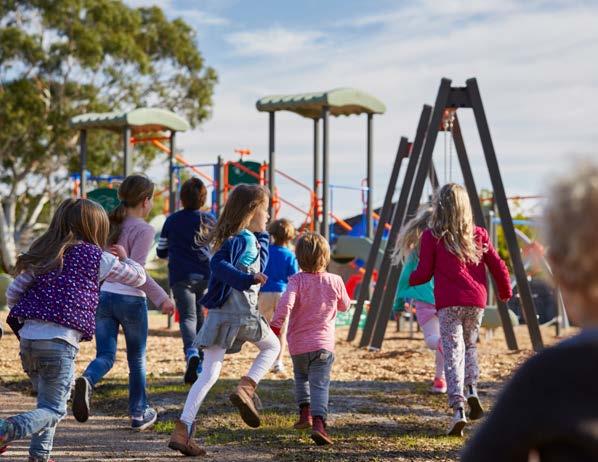
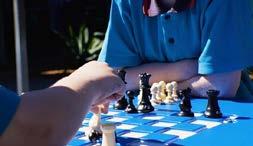
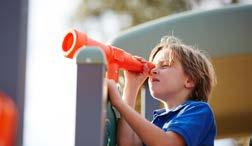
Playing is a way of learning, of gathering information from the surrounding environment, in order to gain physical, emotional, social and cognitive development.
Children of all abilities deserve access to engaging and stimulating play environments to meet their developmental needs.
The benefits of play
Childhood developmental needs
Developing motor and social skills through play, as well as enabling mental development is the most common way of supporting children so that they are able to grow into individuals advancing as part of the community.
Physical
• Motor skills
• Cardiovascular endurance
• Muscular endurance
• Co-ordination
• Renewal of energy
• Release of surplus energy
• Stability/balance
• Agility
Social Emotional
• Relationships
• Empathy
• Collaboration and teamwork
• Ethics
• Society and culture
• Speech & communication
• Emotional connections
• Developing confidence
• Motivation
• Self perception
• Practice for adulthood
• Emotional regulation
• Sensory development
• Self expression
• Imaginative play
Cognitive
• Content knowledge
• Safety and risk assessment
• Rules
• Reasoning
• Strategy & planning
• Complex problem solving
• Perceptual awareness
• Tactics
Inclusive play
Where every child belongs
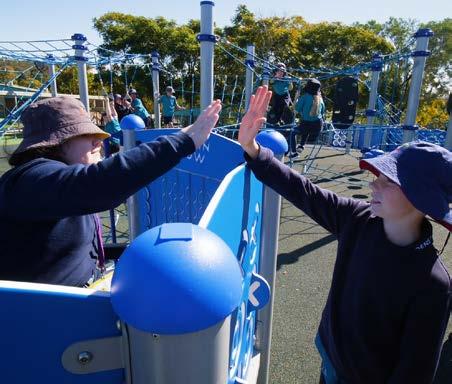
Inclusive play is about removing barriers and making play opportunities available to all children regardless of background or ability. It aims to create accessible spaces where everyone can play together side by side through a combination of experiences that adds something equally great to each child.
The importance of inclusive play
Once we understand the importance of play it is vital for us to create spaces that better cater to the vast developmental needs of all children.
We need to meet the needs of people living with both physical and cognitive disabilities, which are becoming more and more common in our society.
11%
Only 1 in 2 Children Of Australian Children
Engage in free play activities outdoors most day.
Aged 0-14 year old live with a disability in Australia.
1 in 7 Children
Ages 4-17 experience a mental health condition.
86%
The most common of children with a disability 1 in 40 People
Attend mainstream schools in Australia.
Disability types are intellectual and sensory/speech.
Are on the Autism Spectrum in Australia.
The Royal Children’s Hospital National Child Health Poll. (2022)
Australian Institute of Heath and Welfare, (2015)
AIHW Australia’s welfare (2019)
2022 ABS Survey of Disability, Ageing and Carers (released April 2025)
Australian Institute of Heath and Welfare, (2015)
2022 ABS Survey of Disability, Ageing and Carers (released April 2025)
What makes an inclusive playspace?
Beyond compliance
An inclusive playspace takes into account the varied needs of children of all abilities, providing greater opportunity for discovery, growth and development not just whether they can access it.
Multiple entry points
Ramps, transfer stations and ground-level activities let children using mobility aids join the play at their own pace.
Sensory variety
A thoughtful mix of calming and stimulating equipment supports children with different sensory needs and preferences
Quiet zones
Spaces to retreat, regulate and recharge, away from highstimulation play areas.
Co-located equipment
Activities placed side by side so children of differing abilities play together, not separately.
Designing an inclusive playspace
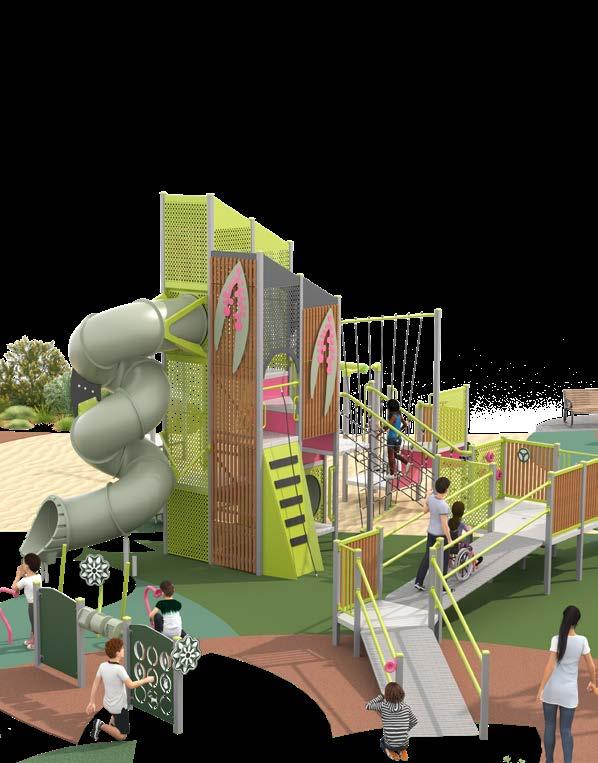
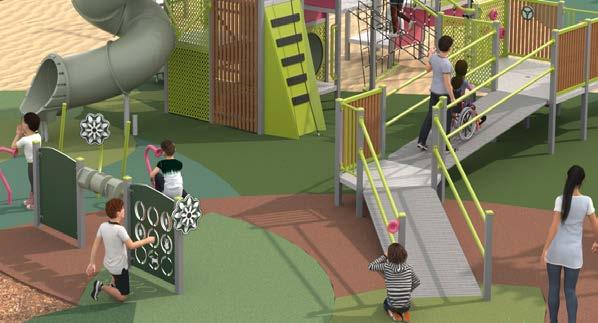
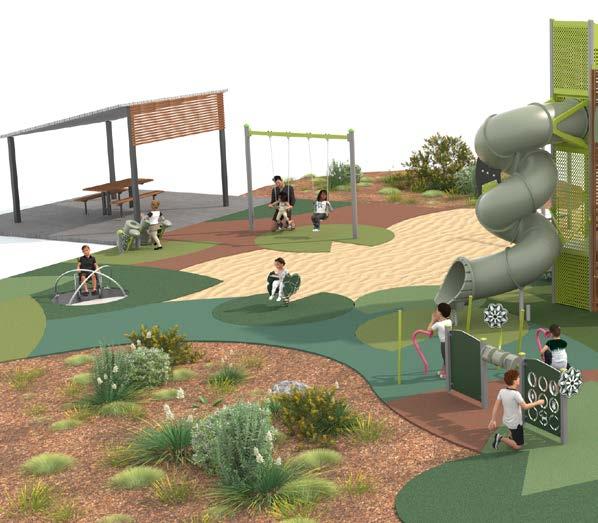
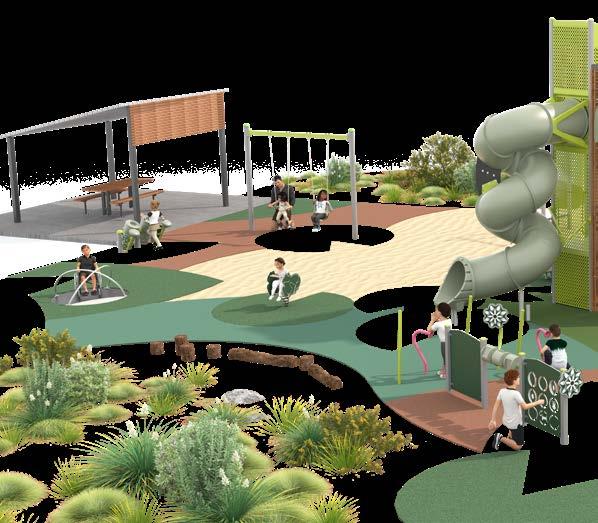
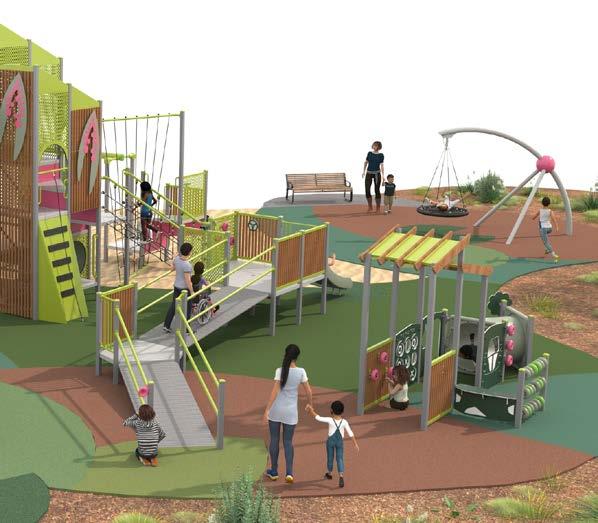
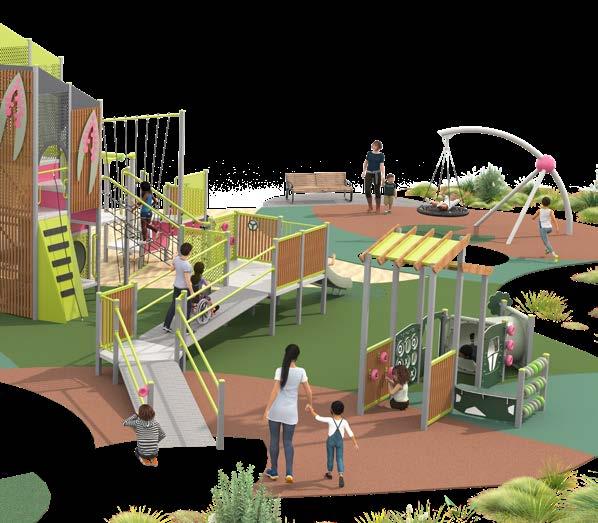
By providing varied play opportunities that cater for the different needs of children, this playspace shows how an inclusive environment can be fully integrated, so that children of different abilities and those living with disabilities can play together side by side. Accessible
A successful inclusive playspace includes a combination of experiences that adds something equally great to each child’s experience regardless of their abilities.
Vantage
What could go into an inclusive playspace?
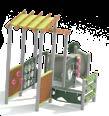
Encourages integration through an easy access ramp which allows all children to play throughout the unit.
Thematic elements encourage imaginative play and opportunities for role play.
Provides full body support as users have the ability to either sit upright or lie down.
Supports users of all abilities by being in line with the ground, helping to create play opportunities for wheelchair users.
Develops confidence by allowing users to challenge and explore boundaries.
Allows users to play together regardless of physical ability, meaning more social interaction and opportunities for building connection.
Integrated play panels and activities throughout, develop problem solving, dexterity and hand eye co-ordination.
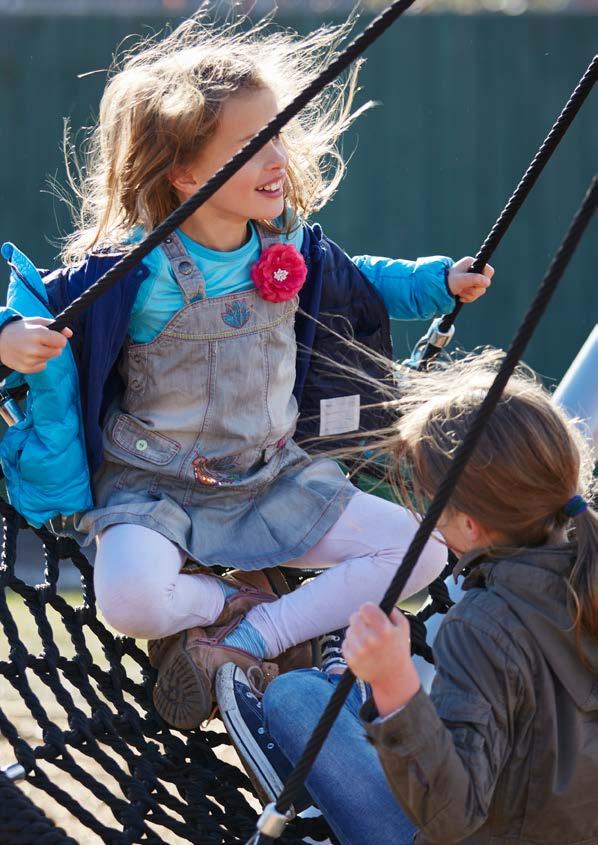
Encourages social opportunities through cooperation, as users must work together to push the swing and take turns.
Assists in cooperation, and teamwork as users must all work together to spin each other on the unit.
Assists in cooperation, and teamwork as users must all work together to spin each other on the unit.
Allows users to engage in risk assessment whilst swinging.
Helps develop perceptual awareness.
Helps develop perceptual awareness.
Good inclusive design takes a holistic approach.
It does not mean that every play item is accessible to everyone, because everyone’s needs vary so much. It’s about combining opportunities for play so that all children have access to fun and engagement.
Low level event easily accessible to users of varying physical abilities
Wide seats, hand rails and side support allows for more inclusion for users of varying physical abilities. Bongo Drums Talk Tubes Activity Panels
Low level event easily accessible to users of varying physical abilities
Can be integrated into a play unit or at ground level for all users to engage with.
Includes wide entry points at ground level allowing children of varying physical abilities to engage in play.
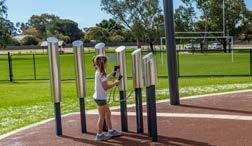
Creates sensory stimulation through music and sound.
Also encourages self expression
Provides social opportunities as users create music together.
Develops speech and communication skills, while fostering friendships as users play together.
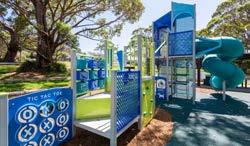
Interactive panels with games encourages users to play together and problem solve as a team.
Challenges users cognitive and problem solving abilities through matching pairs of images
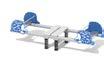
Creates opportunities for friendship building and teamwork, as users must work together to rock the unit.
Quiet zone for children to retreat, enjoy solitary play or a moment of respite.
Develops users risk assessment skills, whilst also aiding in strategy planning.