Office P.O. Box 86670 North Vancouver, BC V7L 4L2 Phone: (778) 991-3500
Website: www.forestnet.com
Subscriptions: Canada $58 a year; two years $70; three years, $85. Group accounts, six or more subscriptions, $25 per subscription per year. Outside Canada, $95 per year. Airmail $165. Single copy, Canada $6; elsewhere $10.
Reproduction prohibited without permission of the publisher.
ISSN 0226-7572. Back copies from 1996 onward are available through our website www.forestnet.com
Publications Mail Agree ment No. 40064045
Return undeliverable Canadian addresses to CIRCULATION DEPT. PO Box 86670 Stn Main North Vancouver BC V7L 4L2
e-mail: SubscribeLSJ@forestnet.com
POSTMASTER: Send US address changes to LSJ Publishing Ltd., PO Box 9058, Fargo, ND 58106
Printed on FSC®certified paper.
Published January/February 2026
“We acknowledge the financial support of the Government of Canada”
“Supported by Creative BC and the Province of British Columbia”
Logging & Sawmilling Journal is a member/associate member of the following industry organizations:
FEATURES
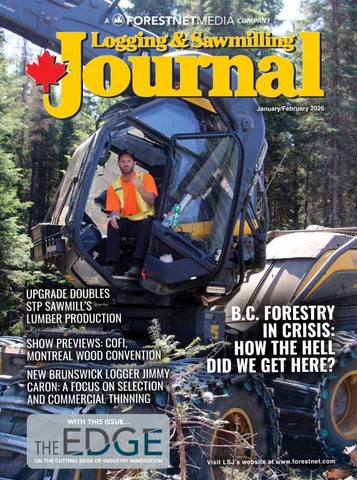
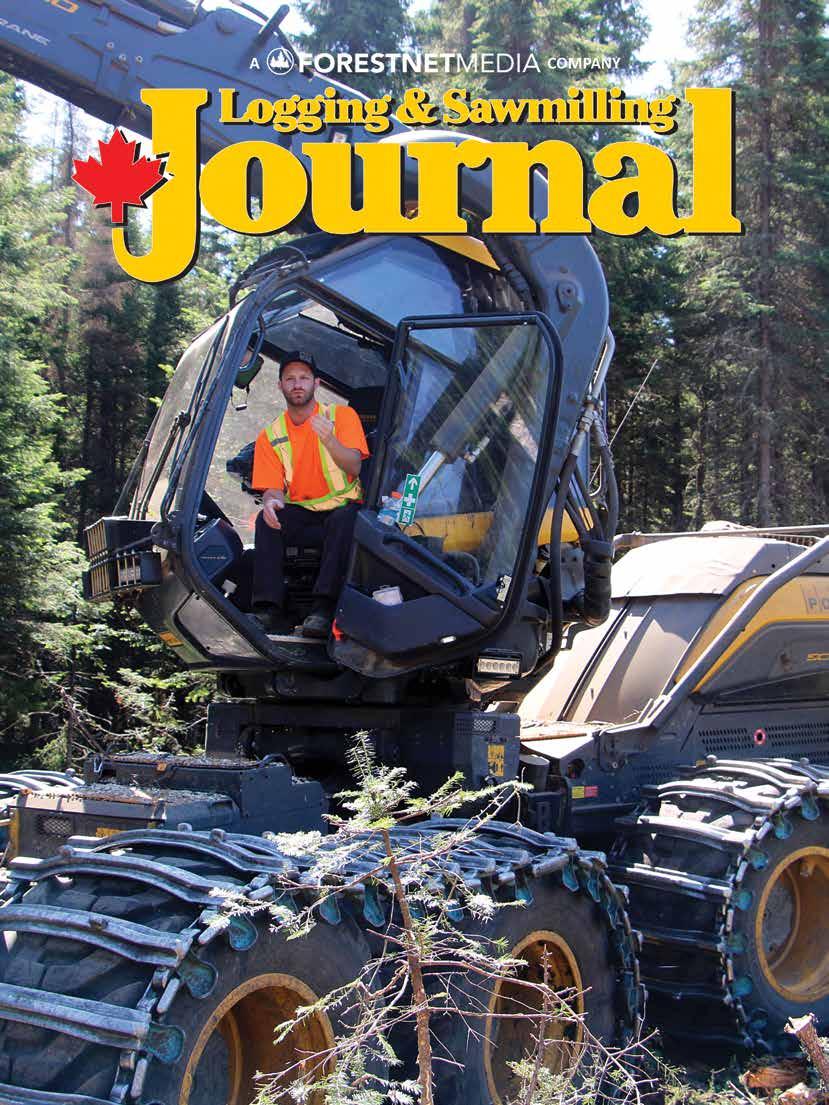
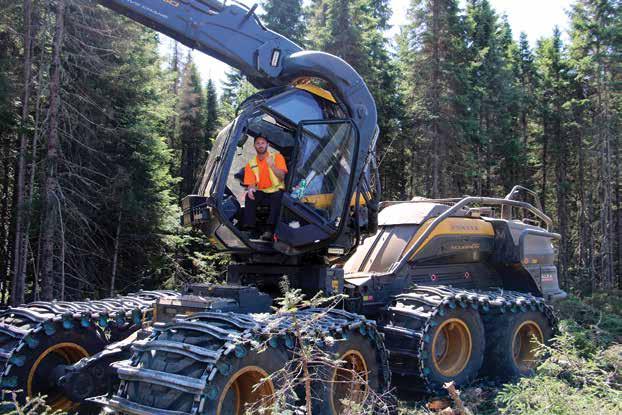
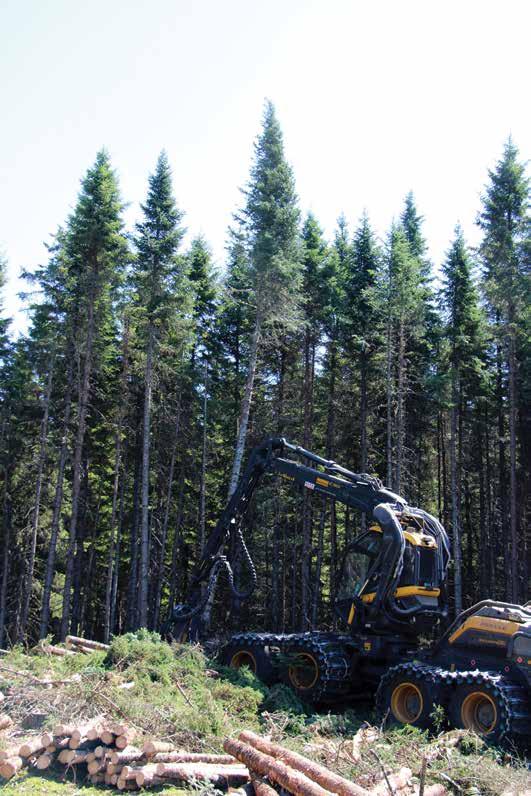
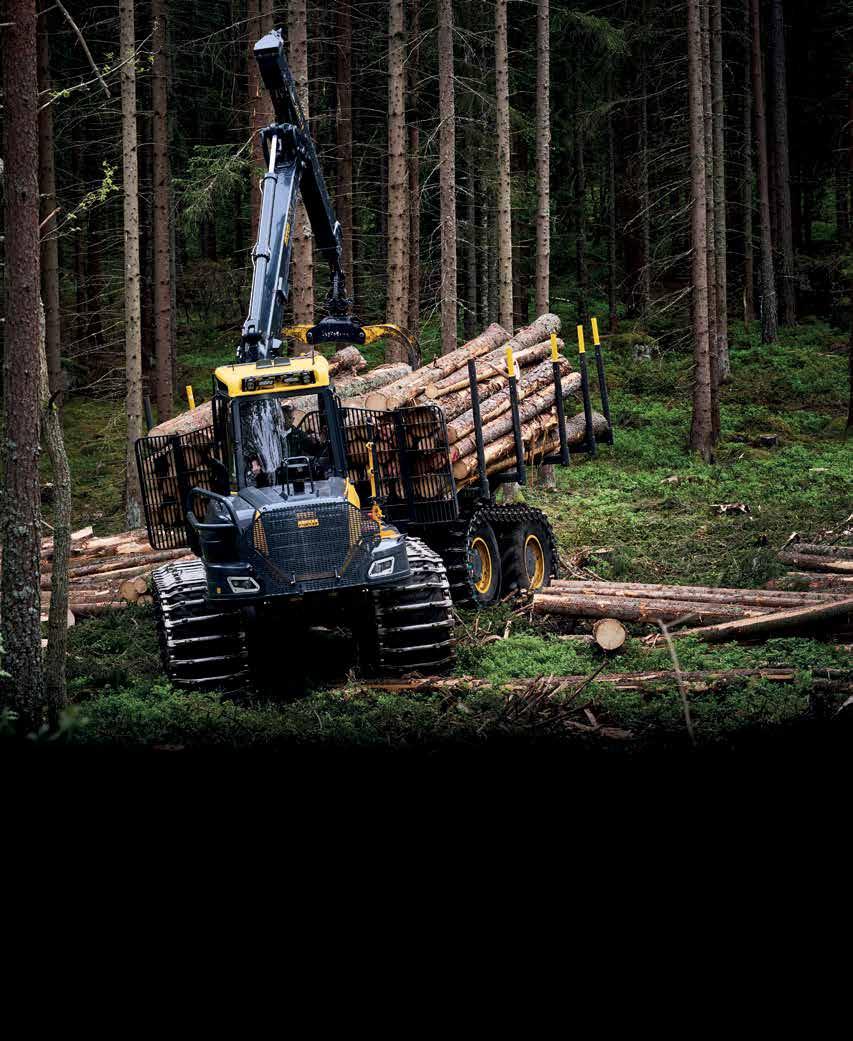
On the Cover: Operator Maxime Blanchette in one of the Ponsse Scorpions of New Brunswick logging operation Enterprise JBC Inc. For company owner, Jimmy Caron (who is also Maxime’s uncle), logging is not just a job—working in forestry is his passion. But he is quick to give credit for his company’s success to family members, and employees. In a feature story in this issue of Logging and Sawmilling Journal, Jimmy talks about his operation, and notes how things have progressed in the industry—his grandfather worked in the woods as a horse logger. Jimmy got his initial work experience operating chainsaws behind his father Bertrand’s cable skidder. Please see story beginning on page 16 (Cover photo by George Fullerton).
4 Spotlight— B.C. forest industry in crisis
In the first of a series of stories, veteran Logging and Sawmilling Journal contributing editor Jim Stirling takes a hard look at the issues that have brought the B.C. forest industry to a crisis point, where many community-supporting sawmills have been forced to shut down, and thousands of well-paying jobs in towns and cities across B.C. have simply vanished. Jim also looks at the possible solutions to dealing with a dire situation for B.C.
8 Upgrade more than doubles STP mill’s lumber production
Southeastern Timber Products—in a partnership with B.C. based Tolko Industries—has recently completed a five-year, $200 million (U.S.) upgrade at the Ackerman, Mississippi STP sawmill that will grow the mill’s capacity from 125 million board feet to a target of 300 million board feet.
16 A passion for forestry
Logger Jimmy Caron—selected as the Canadian Woodlands Forum-Outstanding Forestry Contractor of the Year for 2024—has a passion for the forest industry, but is quick to give credit for his company’s success to family members, and employees.
DEPARTMENTS
20 Talking with Forest Industry Leaders: the TLA’s Peter Lister
Logging and Sawmilling Journal’s Anthony Robinson recently sat down to talk with Peter Lister, Executive Director of the Truck Loggers Association (TLA), about the B.C. forest industry being at a breaking point, and the mill closures, dire fibre supply situation and B.C. being among the highest—if not the highest—cost regions in the forest industry in North America.
24 Show Previews: COFI and Montreal Wood Convention
With uncertainties becoming a kind of rule of thumb for the U.S. trade relationship with Canada, there will no shortage of issues to talk about at the upcoming B.C. Council of Forest Industries annual meeting and convention, and the Montreal Wood Convention.
27
Included in this edition of The Edge, Canada’s leading publication on research in the forest industry, is a story from the Canadian Forest Service (CFS).
30 The Last Word
Logging and Sawmilling Journal contributing editor Jim Stirling says B.C. Premier David Eby should just do his job, so the forest industry can get on with doing its job.
How the hell did the B.C. FOREST INDUSTRY get here?
Just how the hell did we get here? That’s a good question when it comes to the crisis that B.C. forestry is in, with many mills shuttering in recent years— and thousands of people losing their livelihoods.
By Jim Stirling
How the hell did we end up in this situation?
It’s a question that everyone involved in British Columbia’s wood products business has asked themselves during the last few years.
The question doesn’t have a simple answer. Instead, there are several contributing factors that have steered the forest industry into its current mess. But two problems are of critical importance now: securing reliable fibre access and dealing calmly with the international uncertainty triggered by U.S. President Donald Trump’s lust for world trade dominance and military supremacy.
But the B.C. forest industry has deep roots and some of the issues which began long ago have now come home to roost. All at the same time. They’ve created a confluence of concerns. That’s evident
in the silent sawmills, the scattering of a skilled workforce—and communities in crisis throughout the B.C. interior.
Back in the 1980’s, loggers were among the first to report increasing tell-tale signs of initial beetle attack on lodgepole pine stands in remote areas of west central B.C. Several of them were in Tweedsmuir Provincial Park. Most of the outbreaks were small in size. The kind of sites a buncher and a skidder could clean up during an afternoon’s work.
“No logging in provincial parks” ruled the government’s parks ministry.
“It’ll get cold next winter and that will slow the beetles down,” was the B.C. Forest Service attitude. The trouble is, it didn’t get cold enough, long enough or at the right time the next winter to curtail beetle populations. Or in the winter after that and the next and so on.
As a result of a lack of any significant early control measures and an abundance
of the beetles’ preferred stands of mature pine, the mountain pine beetle populations rapidly soared from being endemic in the ecosystem to becoming epidemic.
It spread out to become Canada’s worst natural habitat disaster—and its aftermaths continue. The provincial forest ministry estimates that by 2015 a staggering 731 million cubic metres of merchantable timber had been killed in the pine beetle epidemic. There have been lesser surges in other insect populations, including the spruce beetle and the Western Balsam Bark beetle.
The real villain of the piece is the warming climate. It has delivered unexpected and profound consequences around the world. In B.C., the warmer climate has also increased the numbers, types and severity of wildfires in the province. It’s a trend forecast to continue.
from page 4
As with the beetle, wildfires are a natural part of B.C.’s forest environment. But today’s versions have morphed into a more unpredictable beast. They start earlier in the year and persist longer than the old norm. Individual lightning strikes tend to cluster, then merge, and they’re often fueled by beetle-killed debris, to rapidly create megafires. They can create their own micro-climates giving them more unpredictable and intense consequences which complicate their control.
By mid-August of 2025, the forest service estimated that 7.3 million hectares of forest land had been burned by forest fires, making it second only to 2023’s record setting fire season.
B.C.’s loss of productive forest land to beetles and wildfires has been immense. But several other pressures on the land base also impact the provincial forest sector and the businesses and communities dependent upon its health. The province’s growing population eats up more land to accommodate the increasing demands for new infrastructure.
But a much more significant withdrawal
from B.C.’s public land base has been to accommodate First Nations in their long drive for self determination and reconciliation. The B.C. Council of Forest Industries (COFI) estimates the figure at around 20 per cent. The land is not necessarily lost to forest industry activity. Several First Nations have and are planning forest industry activities on these lands. The challenge is for forest companies to forge relationships with First Nations that are mutually beneficial—and as quickly as possible.
Calls for the creation of reserves on Crown land are on the increase. They might be from First Nations for cultural features or for the protection of wildlife habitats and aquatic buffers.
Then there’s the pressures to protect the province’s old growth timber stands. Those pressures resulted in the province declaring a temporary moratorium in 2021 on about 2.4 million hectares of “old growth” forests. First Nations were to have first call on classifying the forest stands for preservation. That was where the situation still rested at press time.
All those factors are on the land sup ply side of the ledger. A graph of the cost of doing business in B.C.’s forest sector
would show a steeply rising trend. Higher inflation and interest rates have taken their toll along with the overall rising costs of financing and business operation.
What is proving most damaging however, are the costs imposed on the industry by two levels of government, one federal and one provincial.
Canada and the United States have been bickering for many decades about lumber exports. It was supposed to have reached a resolution with the signing
SOLUTION BUILDER
to the American president. That will create a major financial burden for every lumber producer—and too much for some.
Dealing with President Trump’s mood swings is a federal government responsibility despite the provincial implications. Enabling more flow of wood fibre and lowering the levels of bureaucracy within the Ministry of Forests, though, falls squarely into provincial jurisdiction. And that’s where it has been mired for much of David Eby’s NDP tenure.
It literally can take years to extract a valid cutting permit from the provincial government to harvest timber from Crown land. B.C.’s reputation as a premier supplier of quality lumber products in an increasing competitive world lumber market has sunk as its operating costs have climbed. B.C. is no longer viewed as a reliable place to invest despite its sawmilling expertise, skilled workforce and sophisticated infrastructure. Only Premier Eby knows why this is being allowed to happen and he’s not talking.
What he is proposing is the resurrection of an old idea. It involves the creation of regional working tables where First Nations, forest industry and representatives from the area’s other land user groups work to hammer out a consensus for development or otherwise of the region.
Other reports recommending changes to provincial government forest policy have been received, but remain sitting on shelves. The latest presentation last fall focused on B.C. Timber Sales. It included several suggestions to make the agency function faster and more efficiently. So far, nothing has been enacted.
Meanwhile, in an interesting development, a group of 11 forest industry associations have united with a single voice to emphasize to the provincial government the importance of providing the forest industry the fibre flows it needs to function immediately, and to re-examine its development costs to its procedures.
The Truck Loggers Association (TLA) recently held its 84th annual convention and trade show in Vancouver. It was well attended. Jim Girvan, a former TLA executive and now a forestry consultant was speaking at the convention to Premier Eby’s landscape planning proposals when he summed up the industry’s predicament.
“We can’t wait five to 10 years to get this (planning table work) done, or else there won’t be an industry to get to.”
CALENDAR
March 3-7
ConExpo-Con/Agg Las Vegas, NV 800-867-6060, www.conexpoconagg.com
March 11-12
Global Softwood Log & Lumber Conference, Vancouver, Canada 978-496-6338, www.getfea.com
March 25-26
Canadian Woodlands Forum Spring Meeting, Moncton, NB 902-897-6961, www.cwfcof.org
March 27-28
Atlantic Heavy Equipment Show, Moncton, NB 506-649-0018, www.ahes.ca
March 31-April 2
International Mass Timber Conference, Portland, OR 406-546-5977
www.masstimberconference.com
April 8-10
Council of Forest Industries Annual Convention (COFI), Vancouver, BC 250-860-966, www.cofi.org
UPGRADE MORE THAN
DOUBLES
STP MILL’S LUMBER PRODUCTION
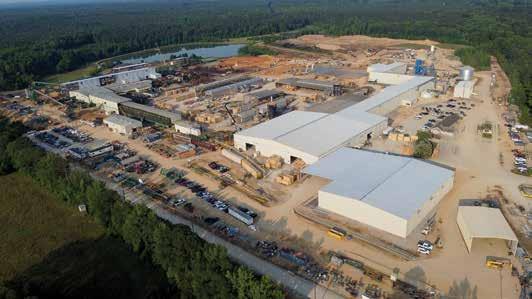
Southeastern Timber Products—in partnership with B.C. based Tolko Industries— has completed a $200 million (U.S.) upgrade at the Ackerman, Mississippi STP sawmill that will help grow the mill’s capacity from 125 million board feet to a target of 300 million board feet.
By Paul MacDonald
One of the most modern softwood sawmills in North America recently started up, in the small town of Ackerman, Mississippi—and it has a strong Canadian connection, both
through its ownership and the equipment being used in it.
It also has some veteran companies in the forest industry as owners, which is just as well. As just about everyone involved in the forest industry knows, you have to think long term with mill investments—
and be ready to ride the roller coaster of up and down lumber markets.
B.C.’s Tolko Industries has been able to do exactly that. The company, which celebrates its 70th anniversary in 2026, produces a growing range of specialty, value-added and engineered wood products
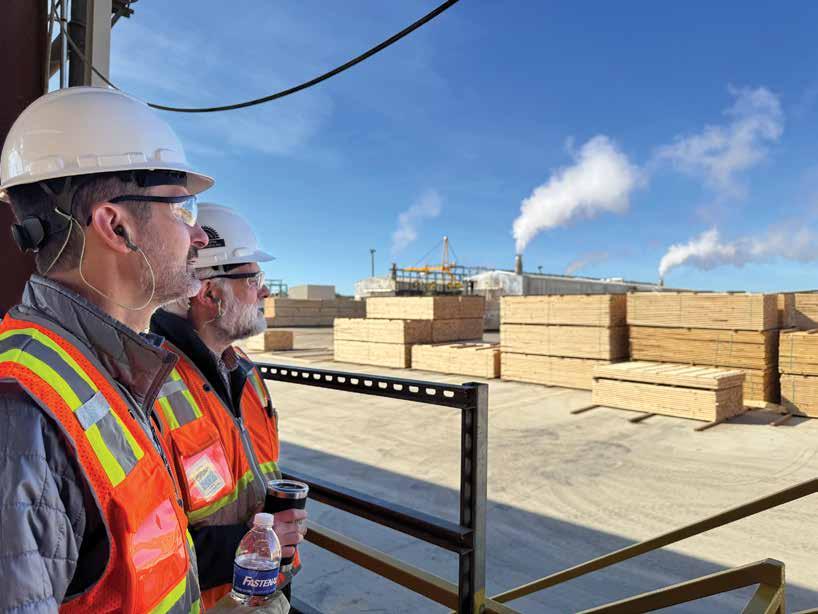
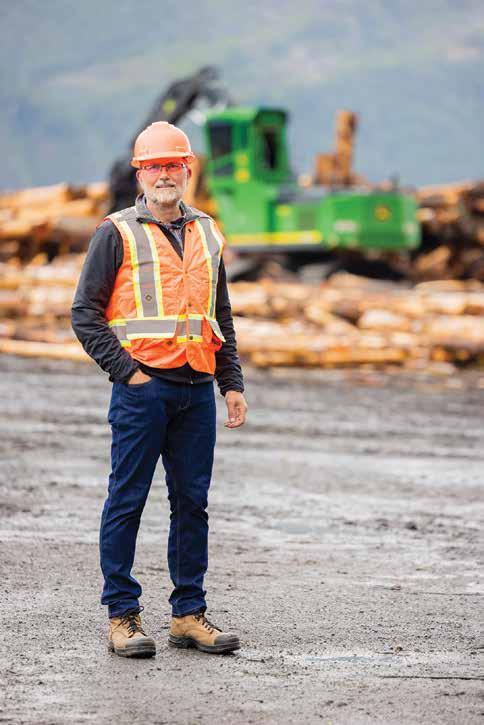
Jason Smith (left) newly appointed VicePresident of U.S. Operations, Tolko, and Jason Watson, STP Plant Manager, at the newly upgraded STP mill in Mississippi.
for customers around the world from its wholly owned mills and plants throughout western Canada.
Like many Canadian forest companies, Tolko expanded its operations to include the U.S. South, in 2019, with a joint venture with Hunt Forest Products to form LaSalle Lumber Company. As partners, Hunt and Tolko built, and now operate, a $115 million (U.S.) sawmill in the central Louisiana town of Urania. The Hunt-partnership grew in 2024 with another sawmill commissioned near Taylor, Louisiana. Both projects were built by Canadian-based company, Comact.
While the investments in Louisiana were greenfield developments, Tolko has welcomed opportunities to partner with existing sawmill facilities in Jasper, Alabama, and recently the Southeastern Timber Products (STP) mill in Ackerman, Mississippi to diversify their operating portfolio.
Like Tolko, Southeastern Timber Products is family-owned, manufacturing southern yellow pine lumber, timber, and decking products since 1972. The STP mill employs approximately 150 people.
In 2018, Tolko entered into a joint-venture partnership with Southeastern Timber Products and in 2021, the two partners, through support from the state of Mississippi and the Choctaw County Economic Development Partnership, began a fiveyear project to modernize the facility—an investment of over $200 million (U.S.) that will help grow the mill’s production capacity from approximately 125 million board feet to a target of 300 million board feet of lumber per year.
Such a significant investment involved a great deal of due diligence on the part of the companies, and that included looking at the small town of Ackerman, in the central part of Mississippi, about 160 kilometres northeast of the state capital, Jackson, and what the town offered.
“The county and community were seen as a good fit for our company,” said Jason Watson, Plant Manager at STP. “It definitely supported our decision to proceed with improvements to the mill that could help us deliver greater value through the business cycle.”
Like many states and provinces with significant forest resources, Mississippi has its share of small and medium-sized mill operations. But an upgrade of this scale required a large capital commitment— and sawmill expertise.
“It’s a significant investment that wouldn’t have been possible without a commitment from the owners—Tolko and Claw Forestry—who have been very
the
Technology advancements continue to offer opportunities to automate and refine sawmill processes, and that includes incorporating Artificial Intelligence (AI), which the mill sees as another step in the journey—though one that’s still relatively new.
supportive of these efforts,” said Watson. Claw Forestry is a Southeastern Timber Products affiliated company.
Timber for the STP mill is sourced locally from private suppliers. An analysis of available timber in the region determined that the fibre basket would allow for significant expansion (see the sidebar story on the extensive timber resources in Mississippi).
Watson explained that the focus of the Ackerman mill expansion has been on improving the efficiency of the mill and the quality and value of what it produces for customers.
“While our product dimension mix has not changed substantially, we have added various MSR products and will be expanding our premium product line to extract more value from our lumber,” he says.
“We also now have the ability to produce a wider board which we are considering for our future as we get more
familiar with the new technology and deliver on our productivity goals.”
The upgrades have included:
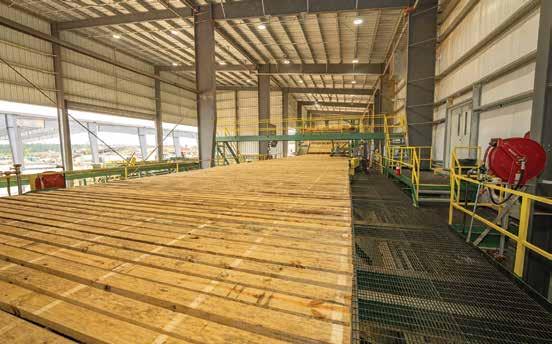
• A new sawmill with a log crane: The sawmill complex was commissioned in July of 2025 and was built primarily with Canadian-based Comact equipment.
STP utilized all-Comact for the installation, controls, and start-up of the sawmill equipment, which was Comact, with the exception of a Fulghum log crane and a Samuel strapper. Fulghum Industries, Inc. provided a 180-foot radius, 45-ton log crane for the Ackerman mill. Designed for efficiency, durability, and safety, the 180foot structure provides increased storage capacity and improved operational performance and is said to enhance log yard productivity.
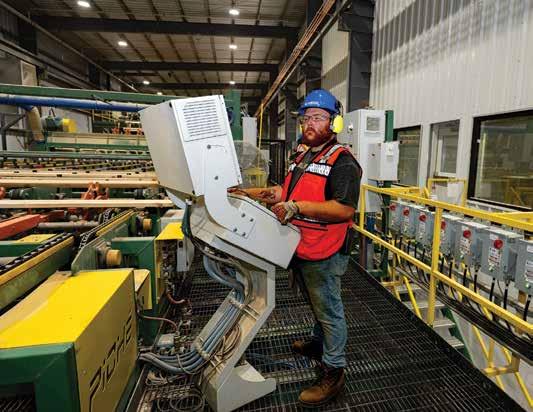
STP reused their Piche trimmer line
Throughout
project, STP found ways to leverage the latest in sawmill technology.
sawmilltechnology
from page 9
and the sorter, that had been upgraded to a push type from J-bar in 2024 by Piche.
• A new planer complex:
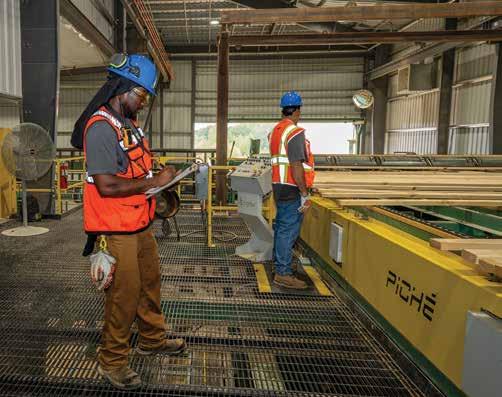
The planer complex was commissioned in July 2024 and was built primarily with Piche equipment with the exception of a new Miller (Comact) planer, and Signode bander. STP utilized Piche for the installation, controls, and start-up of most of the operation’s planer equipment. They
upgraded and re-used their Autolog lumber grader and added an Ecoustic MSR for improved value.
The project also included:
• three new KDS Windsor continuous dry kilns
• four new forklifts
• cooling and finished lumber sheds
• a new site-wide fire suppression system
• a new landfill, and yard concrete throughout the site
Throughout the project, STP found
ways to leverage the latest in sawmill technology.
“Technology advancements continue to offer opportunities to automate and refine our processes,” said Watson.
“Incorporating Artificial Intelligence (AI) is another step in the journey—one that’s still relatively new. Our operating teams are evaluating how AI can best be incorporated to improve the flow of the plant and the quality of our products,” he added.
Through detailed planning, STP management was able to mitigate significant periods of downtime.
“In 2024 during the planer upgrade, we needed to take approximately two weeks at both the sawmill and planer, where the entirety of the old planer equipment—beyond the planer itself— needed to be removed prior to the installation of the new planer stacker, bander, and all associated transfers and equipment, then wiring, controls, and commissioning,” explained Watson.
While this work was taking place in the planer, the sawmill sorter top and floor chains were removed and replaced with the Piche upgrade.
In 2025, the sawmill was built offline and commissioned where the lumber that was produced simply entered the back of their trimmer infeed transfer chains, so the upgrade only required a five-day shutdown where the stacker was removed and replaced by Comact equipment.
Throughout all phases, safety was prioritized as a critical requirement in project execution—beyond just operational expectations, it’s a necessity when there are multiple teams from different areas involved.
“Frequent and timely communication was key,” said Watson. “We often had up to six different contractors all looking for space in the same area. If you can ensure each of the contractors understands each other’s critical path and timeline for an area, they can safely schedule their work in conjunction with each other.”
Communication with the plant was also key in determining route and access changes. Change is constant when managing brownfield projects and conditions are dynamic throughout the timeline, said Watson. Hazard identification was shared broadly at the STP mill, and awareness was promoted openly to ensure the safety of all workers on our site.
As with any project, one of the biggest challenges involved coordination and
to page 12
FEAR NO FOREST
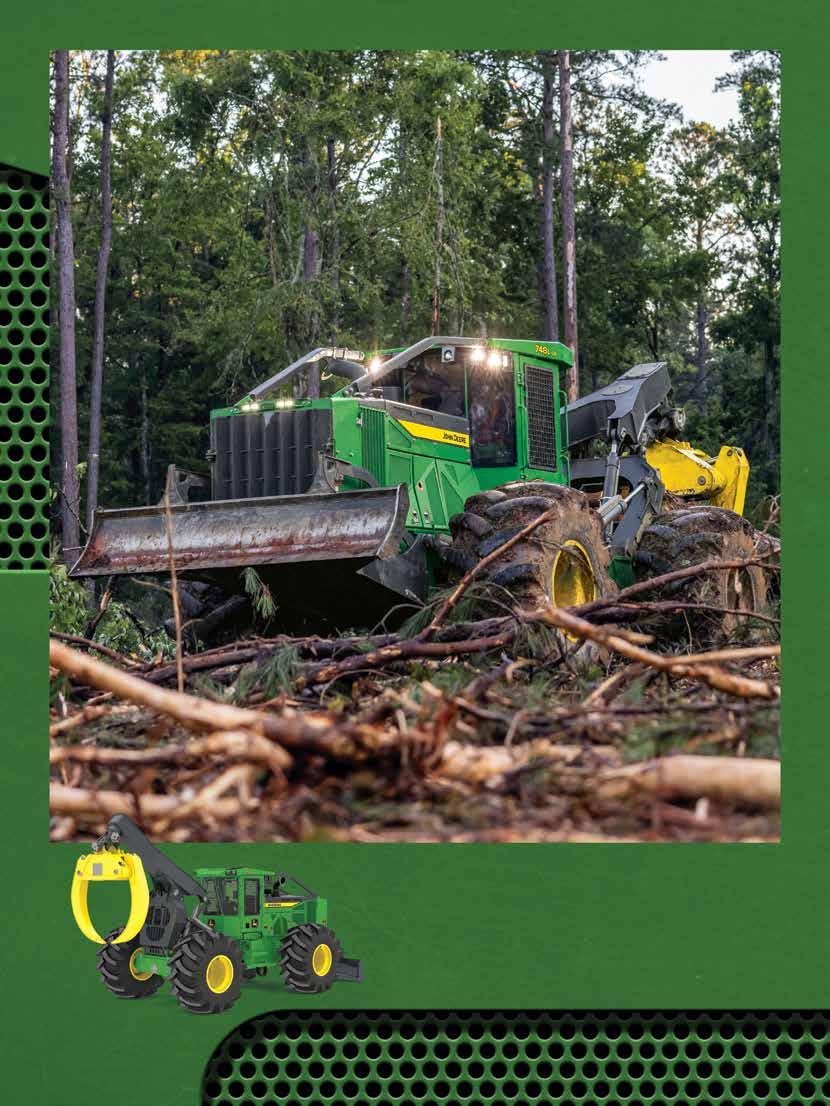
The New L-III Skidders
Superior cab comfort, visibility and efficiency. Greater forest confidence.*
*Compared to previous Deere L-Series.
were able to manage through,” Waston said.
“Aside from this, we had some work completed out of sequence, but the contractors were all great in partnering together on solutions.”
Those Logging and Sawmill Journal says Watson. “While efforts continue to be made to automate processes, we’re very much reliant on the great people needed to operate and maintain them.”
Watson added that a primary goal of the upgrade was to build a safe facility
the lows of the business cycle. “Our ability
ing our people—especially for those who are looking for more stability in their work.
“Our people are our most valuable resource—while automation is key, the
to page 14
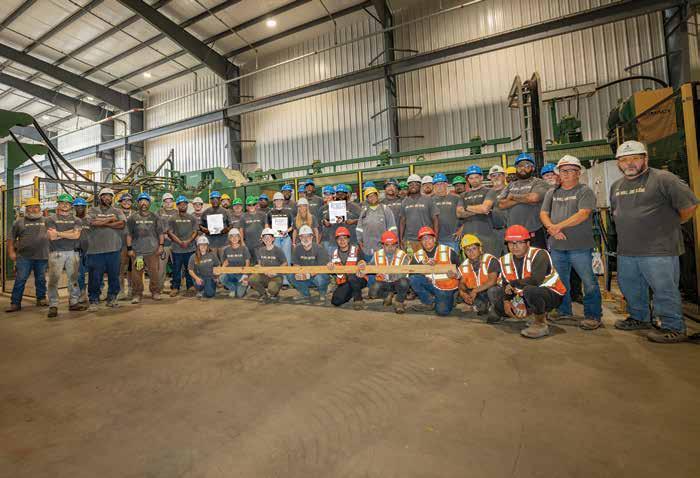
Fully behind the mill: A proud group of STP sawmill employees with the first piece of lumber produced after the mill upgrade.
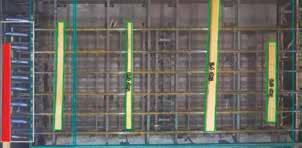
Three new, proven applications already deployed in sawmills complement the Smart Vision product range to improve flow, efficiency, and operational stability across critical mill operations.
Smart Vision for…
LUG LOADER
Ensures smooth and consistent board loading by managing accumulation before the lug loader
CANT INDEXATION
BOARD UNSCRAMBLER
Scan
Detects misaligned cants and enables precise indexation between primary and secondary breakdown
Optimizes board separation and flow through real-time monitoring and conveyor control
sawmilltechnology
from page 12
people behind our processes are driving margin improvements and helping ensure our equipment runs safely, efficiently and effectively every day.”
As with any mill upgrade, training employees in any new processes, and equipment has been a priority.
“It’s been a journey as we’ve transitioned from the older equipment to the newer equipment, learning how best to leverage the technology we have available.
“The shifting of culture and mindset of employees to allow the equipment to run the way it was designed versus trying to run it in manual has been a process that we’re working through.”
As progress continues to be made, there is a clear air of excitement around the operation as it works to achieve its production goals.
“Every day is an improvement and there is so much excitement behind the enhancements and the opportunities in what this mill can do,” says Watson. As with any mill upgrade, training employees in new processes and equipment has been a priority at the STP mill operation. As the mill has transitioned from older equipment to newer equipment, it wants to best leverage the new technology.
New STP mill draws on southeastern woodbasket
Unlike many other jurisdictions in North America—including British Columbia—the state of Mississippi, where the upgraded STP sawmill is located, is in the enviable position of having tremendous untapped timber resources.
The southeastern U.S. region itself is clearly now the largest wood basket for the country—the southeast region accounts for over half of all sustainable timber production in the U.S.
Some 63 per cent of Mississippi is forestland—19 million acres. Timber is the second largest commodity in the state, and in over half the counties in the state, it is the leading agricultural commodity. Only the poultry/egg production industry is larger—the forest industry is ahead of such agricultural giants as soybean and corn production. The state’s total timber value for 2025 is estimated to be $1.47 billion, and the 2026 harvest was estimated at 36.4 million tons of timber products. The value of standing timber paid to landowners as stumpage was $660 million.
New and upgraded sawmill facilities
such as the STP mill are increasing the demand for raw timber, which is helping to absorb the state’s abundant standing timber supply and provide additional outlets for landowners to sell their wood.
According to Mississippi State University researchers, families and private companies, including timber investment management organizations (TIMOs), as well as major lumber and paper manufacturers, own almost 70 per cent of the forestland in the state, so the development of the timber industry has the potential to affect more than 150,000 people and
Mississippi, where the upgraded STP sawmill is located, is in the enviable position of having tremendous untapped timber resources.
large corporate owners.
According to the Mississippi Development Authority, the state’s timber industry contributes $15.4 billion to Mississippi’s economy annually, supporting 84,000 jobs, driving innovation and sustaining communities across the state—including a network of loggers. The industry’s significant contribution to the state’s Gross Domestic Product (GDP), accounting for 14.9 percent of total manufacturing GDP, is frequently cited as a point of strength and a driver for further economic development initiatives in the state.
logging
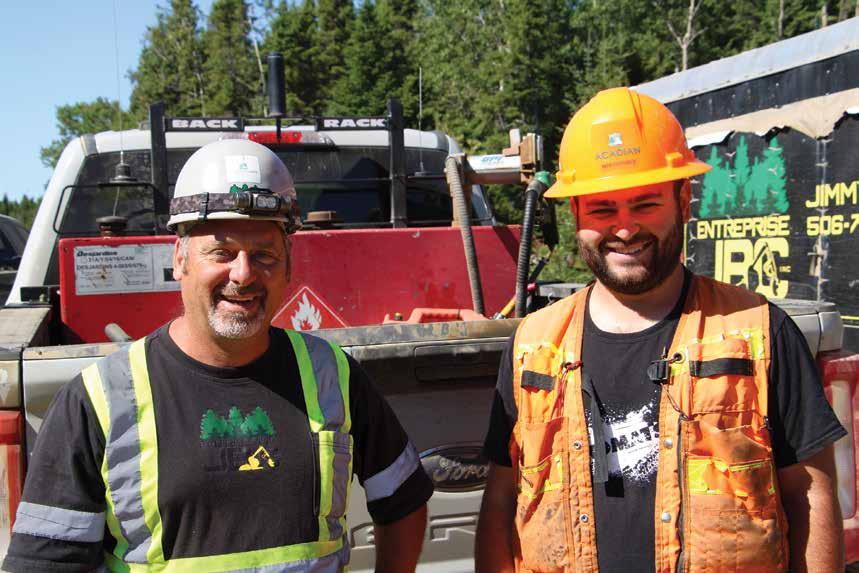
Jimmy Caron (left) with Remi Couturier, harvest supervisor at Acadian Timber. “Jimmy’s operations are consistently on production targets—he is very professional and his crew is very productive,” says Couturier.
FORESTRY A PASSION FOR
Logger Jimmy Caron—selected as the Canadian Woodlands Forum-Outstanding Forestry Contractor of the Year for 2024—has a passion for the forest industry, but is quick to give credit for his company’s success to family members, and employees.
By George Fullerton
“
This is not just a job—working in forestry is my passion,” declares Jimmy Caron, on his harvest site on Acadian Timber freehold limits southeast of Plaster Rock, New Brunswick.
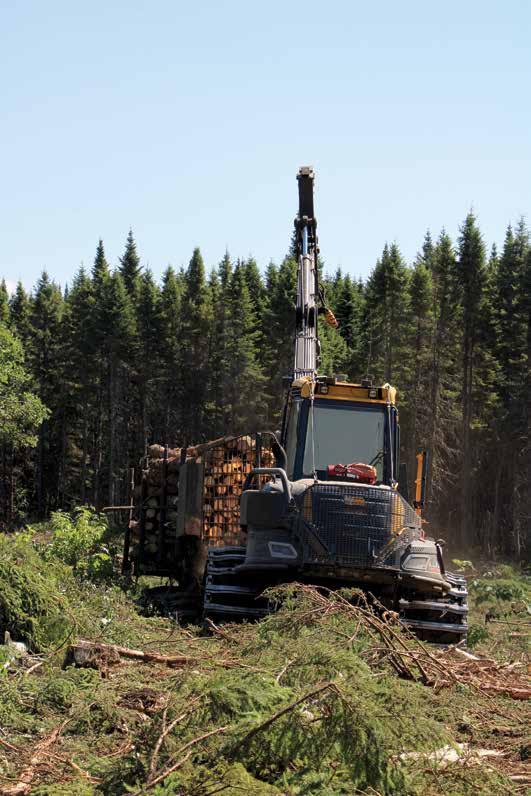
This past summer, Jimmy and his harvesting team—including two Ponsse Scorpions and a Ponsse Buffalo King—were harvesting a black spruce stand. While Caron has developed expertise in selection and commercial thinning, this particular operation was a clearcut—but he’s very familiar with this area of the province.
Caron was selected as the Canadian Woodlands Forum-Outstanding Forestry Contractor of the Year 2024, and his business, Enterprise JBC Inc., is based at his home in St. Jacques, in northwest New Brunswick. The business also owns a service shop at Sainte-Anne-de-Madawaska, south of Edmundston. Enterprise JBC was nominated for the award by Acadian Timber. Enterprise JBC operates primarily in the Acadian Timber Plaster Rock district.
Caron shared that while his grandfather worked in the woods as a horse logger, Caron got his initial work experience operating chainsaws behind his father Bertrand’s cable skidder.
Caron explained that he and his father had a serious conversation about the future of the family’s cable skidder operation, and if they should consider advancing to mechanized harvesting.
“My father said to me, ‘if you want to stay working in the woods, go find a seat in a machine. I am too old to learn a totally different way of working in woods. But, Jimmy, you are young and you can make that change—and make a future in the industry’.”
Following his father’s advice, Caron worked for two contractors, Andre Lagacé and Carol Fortin who were employed with J.D. Irving in the Black Brook District.
“I became very close friends with Andre Lagacé—he has become like a brother to me. He provided me with very good training to operate thinning harvesters. He gave me good advice when I decided to become a contractor. We continue that positive relationship and I often speak with him about machine and business issues, and I continue to value his advice highly.”
Enterprise JBC began contracting for J. D. Irving in 2000 with a twelve-tonne Rottne forwarder, operating in the Black Brook District.
“I was teamed up with another contractor who was cutting the wood,” explains Caron. “When he was producing a lot of wood, my business was doing okay. When his machine was down, my machine was down and so was my business revenue.
“I did not like that situation and knew I needed to change, and as a result I sold off the Rottne and invested in an Enviro thinning harvester, and went to work for Irving.”
Enterprise JBC traded up to a second Enviro machine, and continued in softwood plantation thinning. The opportunity to advance into hardwood partial cut/ thinning, resulted in JBC investing in a Tigercat 822 with a Waratah 622 harvester head with top saw in 2009. After a year, the Tigercat was replaced with a John Deere 1170 harvester with Waratah H414 head, working in commercial thinning.
In 2018, Caron purchased a Scorpion harvester with a H6 head from ALPA Equipment dealership in St. Jacques, and added a Wisent forwarder to his operation.
“I have a great relationship with ALPA,” he says. “The shop is just a few minutes from my home, and many of the ALPA employees are my neighbours. ALPA provides excellent customer service. They have extensive parts stocked at St. Jacques and at their headquarters in Balmoral, which is only a couple hours away.”
Customer service is very important for every forestry contractor’s business.
In 2020, Enterprise JBC took the opportunity to develop a new business relationship with Acadian Timber, working in the Plaster Rock district. Enterprise JBC offers its thinning expertise to help manage plantations and high production, naturally regenerated stands, and also takes on conventional clearcut harvest blocks.
Working in Plaster Rock entails a
to page 18
Enterprise JBC’s equipment line-up includes two Scorpion King harvesters (one pictured above) and a Buffalo King forwarder, from Ponsse dealer, ALPA Equipment. “I have a great relationship with ALPA,” says company owner, Jimmy Caron.
eastcoastlogging
from page 17
two-hour commute from his base in St. Jacques. To cut commute time and to create a recreation opportunity, Caron purchased a cottage in the settlement of Arthurette, less than an hour commute to Acadian Timber headquarters in Plaster Rock.
In 2023, Caron further grew his operation with the addition of a new Scorpion King harvester with a H7 head, and traded the Wisent for a new Buffalo King forwarder.
“The Scorpion with the H7 head is a great machine for plantation thinning,” says Caron. “The H7 is fast and accurate to operate. When we added the new Scorpion, I got the H7 because it is a bit more rugged and well suited for natural stands and hardwoods. The H7 fits very well into our team, and for the type of wood we work,” said Caron. “When making the decision for the head, ALPA commented, ‘we don’t have to weld on the H7, with the H6, there is some welding, from time to time.’’’
Caron and his nephew Maxime Blanchette (the Scorpion operator), reside at the cottage for their work week. Caron and Blanchette work eleven-hour shifts (3 p.m. to 1 a.m.), while operators Gilles Caron and Jerry Cormier, who continue to commute to St. Jacques, work ten-hour shifts (5 a.m. to 3 p.m.). Daily machine maintenance is carried out from 2 to 3 p.m.
The fifth operator on the Team, Dawson Albert, commutes to his home in Plaster Rock.
Blanchette was working in the Irving sawmill at St. Leonard and was looking
for a new career, and suggested to Caron that he would like to try out working in woods. Caron introduced Blanchette to the forwarder and how it operated, and general operating and roadside piling procedures. Blanchette’s first solo exercise was to unload the forwarder onto roadside piles.
“What a mess he had to work with, different species all mixed and not very neat. I said to him, before you come back, learn the different species. Maxime was not discouraged—he researched tree species on the internet, and when he came back, he knew his species and the sorting was great. Maxime became a very competent forwarder operator and then I trained him to operate the Scorpions.
“He likes working in woods, and wants to make it his career. I have plans for retiring in a few years, and I plan to work Maxime into managing and taking over ownership of my operation.”
In 2022, Caron purchased a shop in Sainte-Anne-de-Madawaska, south of Edmundston. In addition to housing his parts inventory, all the machines are floated in for the mud season, to perform deep maintenance and repairs, and in 2026 this will include mounting a new H6 head on the older Scorpion. All this work pays off in a safe, efficient and productive harvesting operation.
Remi Couturier, harvest supervisor with Acadian Timber, explained: “Jimmy’s operations are consistently on production targets. His wood is produced well. He and his crew achieve consistently high marks in the safety program. He is very professional and his crew is very productive.”
Acadian Timber owns 765,000 acres of forest land in northwest New Brunswick, and 300,000 acres in northern Maine. Acadian Timber also manages 1.3 million acres of Crown land. The annual harvest is around 1 million cubic metres.
Caron credits his success with the people who he works with, and his family.
“I have been in business since 2000, and my success comes through my determination, my pride and love for forestry work—but ultimately, my success has come through the collaboration of my team and family.
“I extend a great deal of love and gratitude to my wife, Annie, and my daughters Jaimie and Jessie, for their patience, encouragement, and all the sacrifices they have made for our family and our family business. I also owe deep thanks to my sister, Lynne, who has been managing the company with heart and passion since 2012.”
The success of Enterprise JBC relies on a great team of operators, he says. “Gilles Caron has been working with me for over thirteen years as a harvester operator, and he is reliable and generates very consistent production, on the job every day.
“Maxime Blanchette takes on challenges, one after another, and is finding his way within the company. Maxime has become very productive operating either harvester or forwarder, depending on our operational needs.
“Jerry Cormier is also very consistent in his performance and always reliable on the job as a forwarder or processor driver. Dawson Albert, the youngest of the employees, has been part of the team since 2023 and has become a highly skilled and productive forwarder operator.”
Caron expresses thanks to all his operators, for being part of the team, for their support, and their work over all the years.
“It’s greatly appreciated!” he says. “Without all these people around me, my success would not be the same.
“I am also grateful to J.D. Irving, who believed in me and gave me a chance to start my career and work with them for 20 years. My adventure now continues with Acadian Timber.”
The Logging and Sawmilling Journal
Talking with Forest Industry Leaders: the TLA’s Peter Lister
Anthony Robinson, Logging and Sawmilling Publisher and CEO, recently sat down to talk with Peter Lister, Executive Director of the Truck Loggers Association (TLA), about the B.C. forest industry being at a breaking point, and the mill closures, dire fibre supply situation and B.C. being among the highest—if not the highest—cost regions in the forest industry in North America.
Note: This is an edited transcript— for the full interview, please go to the Forestnet Media podcast on LSJ’s website: https://rss.com/podcasts/ forestnet-media-podcast/2459952/
Anthony Robinson/Logging and Sawmilling Journal:
Peter, welcome to the Forestnet Media podcast. Thank you for joining us here in North Vancouver. Peter's been an industry leader for 25 years, leading groups at FPInnovations, at Seaspan and has had a long career in leadership journeys—and has recently joined the Truck Loggers Association, which is a group that has a long history in British Columbia, representing logging contractors, and forestry communities.
Peter, we’d like to learn more about your career, your involvement in the forest industry and your leadership journey, and how the Truck Loggers Association is advocating for the forest industry in a time of much change and controversy. As you’ve mentioned before, there's certainly a lot of challenges in the forest sector right now.
Peter Lister: The B.C. Interior used to be the lowest cost lumber producing region in North America. Today, we're actually, if not the highest, we're among the highest. Those high operating costs mean that we're the first to shut down. And we're seeing that right across the province.
I've been involved in the forest sector for over 35 years, and I've never seen it as tough as it is right now. With the recent closure of Domtar’s Crofton pulp mill on Vancouver Island, there'll be something like 700 to 1,000 workers and families impacted, if you take the indirect jobs into consideration. And we're seeing Canadian investment move across the border into the U.S. and into the U.S. South which has now become the cheapest producer in North America.
If there's not markets for pulp logs in B.C., if there's not markets for the chips
that come from the sawmills, those sawmills will have to shut down as well. So, this could have a cascading effect. We've been talking to the government about this for months and months and months.
LSJ: Let’s talk about the role of the Truck Loggers Association. The TLA has been advocating for the industry in British Columbia for 80 years. How has that role evolved over the years and related to today’s forestry climate?
Lister: As I mentioned, I’ve never seen it as tough as it is right now. And I think that view is probably echoed by a lot of the people that you’re talking to and certainly that’s what I’m hearing from TLA members—we’re going through a period of a perfect storm of challenges.
We’ve got the whole situation with the U.S., with current duty and tariff levels around 45 per cent for most of the lumber producers. That has an enormous impact on the entire forest sector. Whether you’re a harvesting contractor, a TLA member, a pulp mill, a pellet mill, or value-added mill, that has a really big impact.
But those types of things are cyclical. You know, that’ll turn around in time.
We’re also going through what I would say are generational changes. And so B.C.’s adoption of UNDRIP (United Nations Declaration on the Rights of Indigenous Peoples) and DRIPA (Declaration on the Rights of Indigenous Peoples Act) is one of those generational changes. And because of the impacts of that legislation on the land base, which of course forestry operates on, it’s having an enormous impact on the forest sector in general and on TLA members.
The Truck Loggers has had to adjust just like the whole industry has had to adjust. A lot of those changes in the long term will be very positive. We’ll see more involvement with First Nations in the resource sector. I view that as a very positive thing. They’ve been excluded from the economic benefits of the resource activities that happen on their land base
Peter Lister
SCAN FOR FULL PODCAST
for far too long. So, those changes, I think, are really good. At the TLA, we’ve kind of pivoted to this new reality.
We will continue to be a strong advocate for our members, for the loggers, the suppliers, the communities that are TLA members and are dependent on the forest sector.
LSJ: How does that impact on the industry affect Truck Logger members?
Lister: Our members are at the front end of the supply chain and so they’re the people and the organizations that are going out there and harvesting the timber and transporting them to the mills. So, there’s a huge impact.
It’ll affect logging volumes. There will be less demand for pulp fiber. That creates issues in the forest sector in general because when we log, we get a mix of sawlogs and pulp logs. And so, then the question is, well, what happens to those pulp logs? What do we do with those? There’s not enough demand for those domestically.
We have to find other uses for those logs if we want to keep the sawmills operating. We’re really concerned about it.
We’ve been talking to the government about this for months and months and months, and you know, unfortunately, here we are. It’s largely driven by the lack of fiber availability in the case of Crofton, which is a tragedy because it is something that’s in our control in B.C.
LSJ: And when you talk about lack of fiber availability, let’s break that down a little bit. Fibre supply has been an issue that has affected the industry a lot in the last few years. We’re hearing reports that say the annual allowable cut has been overestimated and that fiber supply is actually way less than what British Columbia has been allowing every year.
Lister: Forestry is a complex industry and it’s very integrated and it’s really widely misunderstood.
There are so many misconceptions that are out there about forestry. I mean, you mentioned the controversy about the calculation for the annual allowable cut. It’s a great example of that misinformation or maybe people just not understanding how that is set. So, in British Columbia, we have a chief forester’s office. It’s an independent office.
They have a process that they go through to look at what sustainable fibre yields are in in the different forest management areas across species. It’s a very
rigorous process, where they look at species growth rates in different parts of the affected area that they’re looking at.
They look at the probability of insect attack, fire, timber losses, all those types of things, and they’re tasked with determining what can be harvested each year on a sustainable basis. It’s very technical. The report that was quoted in the media recently I think was poking at some of the assumptions and saying, well, maybe those assumptions aren’t accurate and we should revisit those.
I think having that kind of dialogue around what are those assumptions and are they still valid today, well, that’s fair. But to suggest that there’s this sort of deliberate campaign or effort to mislead the public and skew the results of the AAC calculations and overestimate the amount of fiber that can be sustainably harvested, I think that’s just a gross mischaracterization.
You know, these are professional people, professional foresters. They have ethical standards that they have to follow. It’s misleading—what is being alleged is just not happening.
The thought that we’re going out there and harvesting trees at an unsustainable level, it’s almost a blow to the professionals that do that on a on a yearly basis. It’s kind of offensive, actually.
Some of it I think is just people not understanding what the process is because it is very technical. The industry itself, and I would include the Ministry of Forests in that basket, we’ve really done a poor job of talking to the public and explaining to them how these things work.
You know, the annual allowable cut is just the maximum sustainable yield that could be harvested. We’re harvesting at levels that are way below that. And the reasons for that are not because we can’t harvest more. There’s a whole complex range of issues of why we’re not harvesting more than we are. But the narrative is that, oh my god, we’re running out of trees—we’re way over-harvesting. And that’s really not the case.
LSJ: What’s holding that process up and why is there such a fibre supply issue?
Lister: Speaking generally about fibre supply in the province, I’d say that there’s really two major issues right now. One is the processes that industry has to go through to get a cutting permit. And the other is just the economics of it.
The processes have changed significantly over the years. Some of those
changes are to promote better forest management. Some of them are in response to community concerns about things like viewscape.
People don’t like to see clearcuts in the hills above their communities. And so, foresters now have to take that those visual attributes into account when they’re doing their planning.
But there’s been layer upon layer of legislative changes that have been applied in B.C. that make the job of planning for a cutblock much more complex and adds a lot of cost to the process.
Just to give you an idea of the impacts on costs, I was talking to one of our members a few weeks ago. They were telling me that their average cost for planning and getting a cutting permit to the stage where it can be submitted has gone from $4 a cubic metre to $14 a cubic metre over about the last four years.
LSJ: That’s a huge increase!
Lister: Yes—if you think about it, we harvest about 30 million cubic metres right now in B.C., so, an extra $10 per cubic metre in planning costs, that’s $300 million more in costs to the industry. What business can sustain a more than three times increase in the cost of just getting to permits?
LSJ: To tell any business, oh, your cost has gone up by three times. It’s hard to believe, right?
Lister: Added to that, we have a requirement in B.C., which is a legislated requirement with DRIPA for free, prior, and informed consent. That requirement essentially means that you need to put real meaningful effort into reaching agreement with First Nations where you’re doing the forestry activities and reaching consensus on what you can do and what you can’t do.
I think in general that’s a good thing— these are their traditional territories. They should have a say in what happens there. But what’s happening right now is we’re in this kind of transition period, and a lot of the bands are completely overwhelmed by requests, not just to review and approve forestry permits, but it’s everything that’s happening on their land base.
The bands in rural areas are relatively small. They don’t have the resources to be able to respond to these requests easily or quickly.
TLAQ&A
from page 21
The forest industry is finding that consultation process with nations is typically taking around 18 months right now. And 24 to 36 months is not uncommon. So, if you’ve gone through that planning process, you’re going into consultations which don’t just happen at the end of the planning process. They’re sort of continuing.
You know, in three years a lot can happen to the markets. And so that block that you’ve laid out that you thought you would be able to harvest might not be the fibre that you need any more because the markets have changed.
You’ll hear people say that, well, you know, there’s x million cubic metres under permit. How come we’re not harvesting that? Well, the reason is because in a lot of cases, and this brings me to the second point, because of the changes in the market, it’s either not the right fibre for the lumber products that we’re trying to produce or at the current lumber prices, we just can’t afford to log it. And so that second piece, that economic access to fibre, is really critical.
LSJ: You know the B.C. Interior used to be the lowest cost lumber producing region in North America. Right today we’re actually if not the highest, we’re among the highest.
Lister: When markets are hard, when lumber prices are low and we have these high U.S. duties and tariffs, essentially those high operating costs mean that we’re the first to shut down.
And we’re seeing that right across the province. And we’re seeing Canadian investment move across the border into the U.S. and into the U.S. South, which has now become the cheapest producer—because in North America, they can produce logs in Georgia and Texas in the U.S. South for far cheaper than they can in British Columbia.
People are very critical of the big forest companies for doing that. And I would say a couple of things. One, is that generally speaking, industry is pretty rational. They are companies that were built in B.C., companies like Canfor, West Fraser, Tolko, Western Forest Products—those are all B.C. companies, and most of them are publicly traded. They have shareholders that they’re accountable to. Those shareholders are in many cases the pension funds that are investing for my pension, your pension. And they have pressures on them to achieve certain returns for their stakeholders.
And so, there’s enormous pressure on forest product companies to find ways to return value to their shareholders. And it’s been a very lumpy ride. And today in British Columbia, the province is basically uninvestable for forestry. And so those capital dollars are going into other areas. They’re going into Alberta a lot, which has a much more competitive business environment. And then because of the U.S. tariffs, they are going more and more into the U.S. as well.
LSJ: There’s an understanding in B.C. that First Nations partnerships are a very meaningful and very important part of forestry today and in many other industries like you mentioned, mining and energy. The issue you mentioned before is timing, with getting permits. How do we balance meaningful reconciliation and meaningful involvement of First Nations groups with the need to produce timber, with the need to feed forest operations, in a reasonable amount of time. Like you said, 24 months is a tough time. How do we balance that? And how is the Truck Loggers helping regain balance in that process?
Lister: It’s a really great question and a question that doesn’t have easy answers. The provincial government is moving to a model of co-governance on the land base and there’s some really good reasons why they’re adopting that model rather than using the courts to settle land claims.
And I think the industry in general is very supportive of that approach. That transition though to a co-governance model requires First Nation governments to come together with our provincial government and negotiate what that looks like. So that takes time.
Another example is the forest land plans that are that are going on right now. So, we started with five pilots—we have about 15 of them right now in the province. I think one is kind of across the line and relatively complete. The objective of those is, I think, really good. The idea is to engage communities and stakeholders, including First Nations, in discussions about what happens to the land base around those communities.
The forest industry can’t just stop while we’re going through those processes, and so one of the challenges we have is what do we do in the transition? How do we keep fibre flowing? You know, how do we keep forestry workers like TLA members working, mill workers working, while we take the time to put together very thoughtful, detailed plans about how we
want to manage our forests.
So, we’re having a lot of discussions with government about that. What we’re basically saying to them is that we think they need to take a triage approach where they need to work with First Nations right at the beginning of the process to quickly identify areas that are off limits to forestry, areas where there are no issues at all for forestry.
And then there’s going to be some areas in the middle where we’re not sure yet.
But let’s focus on those areas where we know that there’s no issues and let’s keep fibre moving from those areas while we go through the detailed planning process. That’s an approach that’s going to benefit everybody including First Nations.
LSJ: I sense a lot of optimism in your voice even during this time of crisis, Peter. What gives you that sense of optimism about the forestry sector? You’ve seen the ups and downs over your career. And I’ve seen maybe less ups, and more downs, in my career in British Columbia. A lot of downs in the last few years. What gives you that optimism, Peter?
Lister: Fundamentally, when you look at B.C. at a global level, our forests are the envy of the world. We have vast forests. We have very high-quality fibre. We can turn that fibre into wood products to build beautiful wood buildings, into other products that the world needs. Turning paper products increasingly into other types of materials. You know, the whole area around biomaterials and this idea of pulp mills evolving into these sorts of material refineries. Refineries may be not the right word, but we can extract all kinds of different materials out of wood products, to use for biofuels, to use for adhesives, bioplastics, all these different things.
And then the ability to do forestry in a sustainable way so that a thousand years from now we can still be doing this. We can still have healthy forests. That’s what gives me optimism. We need to do a better job of getting that story out, of continuing to improve the practices that we have, but we should be celebrating forestry.
We should be supporting it and the jobs that it provides, and the environmental benefits that come from it through building skyscrapers out of wood instead of concrete, for example.
I think we can get there. That’s what we’re working towards at TLA and advocating hard for—and that gives me hope.
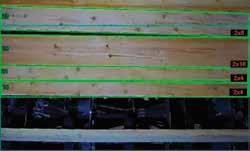
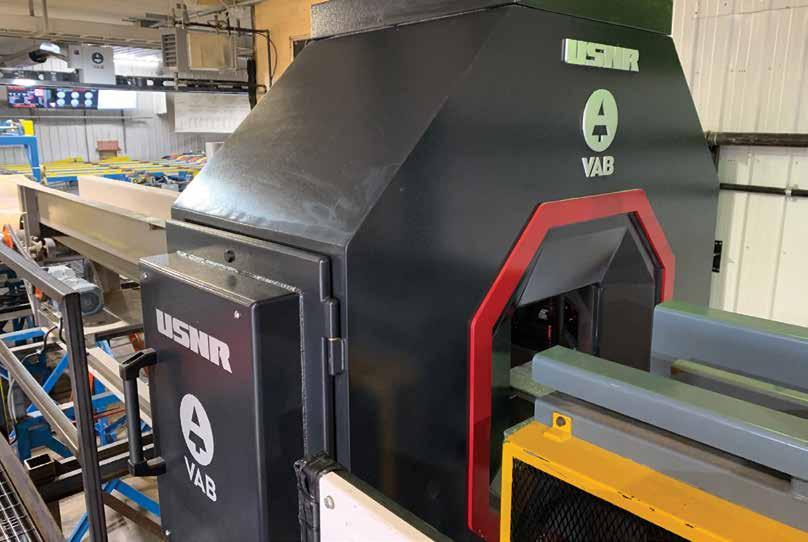
USNR’s Automated Lineal Grading System delivers optimal performance for planer mill applications. With precise dimensional measurement and advanced AI, it provides exceptional accuracy and handles both standard and custom grade rules.
With more than 70 installations across North America, this proven solution integrates quickly into existing lines. Its compact footprint simplifies installation, and mills achieve compliant production within a few hours. Implementation, completed over two weekends, minimizes downtime.
The result: more finished lumber, less trim loss, and reduced reliance on manual graders.
Contact us today!
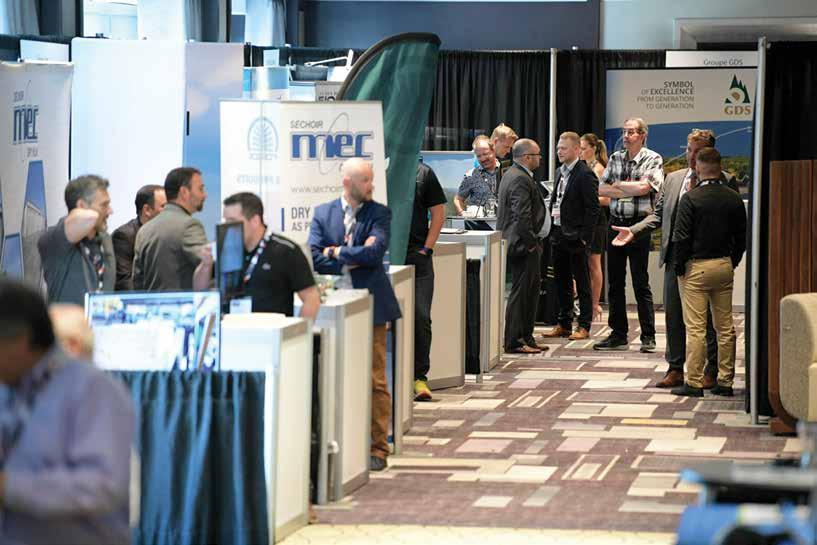
Despite the uncertainties that rule the U.S. trade relationship with Canada, some 1,200 people are expected to attend the Montreal Wood Convention (MWC).
UPCOMING CONVENTIONS,
west and east, will be dealing with some very challenging forest industry issues
With uncertainties becoming a kind of rule of thumb for the U.S. trade relationship with Canada, there will no shortage of issues to talk about at the upcoming B.C. Council of Forest Industries annual meeting and convention, and the Montreal Wood Convention.
By Jim Stirling
The dates on the calendar have been circled for months.
At least 1,200 professionals in the business of producing, selling and distributing wood products in eastern Canada and the northeastern United States will be converging on Montreal in April. The magnet is the Montreal Wood Convention (MWC).
For all 1,200 of them, the proceedings April 14-16 at the Fairmont Queen Elizabeth Hotel in Montreal will help create the foundation and direction for their wood product businesses in the coming year—despite the uncertainties that currently rule the U.S. trade relationship with Canada.
The organizers of the event—four regional forest industry associations— have developed the right formula for the convention and tweaked it to meet the changing times and needs of delegates.
“It’s a destination for every wood industry actor. Whether you are a buyer, a producer, a wholesaler or service provider, that ecosystem is well created at the Montreal Wood Convention and you can conduct business in a very fast and productive way because of the size and setting of the event. It is very unique in that sense for any event of that size,” explains Sven Gustavsson.
Gustavsson is event director\manager for the MWC and manager softwood and value-added softwood lumber, Quebec
Wood Export Bureau. “We feel we have a viable concept,” he adds.
The associations responsible for organizing the convention all have deep roots in the regional forest industry They are: the Maritime Lumber Bureau; the Ontario Forest Industry Association; the Quebec Forest Industry Council and the Quebec Wood Export Bureau.
For the 2026 MWC event, organizers have assembled a comprehensive program which features an ever-popular trade show, conferences addressing key industry topics, along with the inclusion of numerous networking opportunities for the delegates. The mix clearly works and the components meld seamlessly. The speakers gathered and sessions arranged
B.C. lumber producers will have plenty to talk about at the Council of Forest Industries (COFI) annual meeting and convention in April, but among the top issues will be access to fibre—the timber harvest in B.C. that feeds its sawmills is at a dismally low level, nearly 40 per cent below the Annual Allowable Cut.
combine pertinent business information with more holistic viewpoints and analysis.
The process begins April 14 with a couple of associated industry groups capitalizing on the wide draw of the MWC. The North American Wholesale Lumber Association (NAWLA) is scheduled to hold its regular regional meeting and WOLF—Women in Lumber and Forestry—will hold a business session for its membership.
MWC events on Wednesday April 15 get down to business with an industry seminar with the focus on the economy and markets. Benjamin Tal will be up first in an encore for the MWC delegates, delivering his take on the impacts of the uncertainties influencing the economy and market response. Tal is managing director and deputy chief economist with CIBC Capital Markets Inc., and a specialist in analysis of economic development and its implications on business markets. His fellow panelist will be Paul F. Jannke, a principal in Forest Economic Advisors LLC (FEA) based in the U.S., who has wide expertise in dealing with and understanding North American lumber markets,
An Industry Leaders Panel will follow the seminars, led by three expert speakers. It’s to be kicked off by Thomas Mende, chief sales officer with Binderholz in Germany, a European leader and producer of cross laminated timber. Mende
will be joined by Doug Robinson, CEO of lumber distributor and remanufacturer, Weston Forest. Robinson brings leadership experience in global retail building materials and industrial supply chains. Rounding out the panel will be Frederic Verrault, vice-president corporate affairs for Nordic/Chartier, Chibougamau.
Keynote luncheon speaker Chris Hadfield will deliver views from a different perspective. The astronaut and author offers an enlightening outlook on business leadership and management. The following morning, on Thursday April 16, the breakfast session will have Doug Stephens as the headline speaker. He’s billed as a “business futurist” and retail expert.
The trade show will be available to delegates throughout the convention.
Event director Gustavsson noted the 112 exhibitor booth spaces available had been committed by January. He anticipates the 1,200 delegates recorded last year will be matched by the 2026 MWC. The numbers speak to one of the event’s key functions. “The MWC is always seen as a forum for day-to-day business,” he adds.
The event has traditionally involved Canadian and American based trading partners and the barrage of changes from the present administration in the White House have not materially changed the situation, says Gustavsson. It’s business as usual, although he notes a trend toward
more business consolidation. “Now there are fewer players with the same market share.”
And there’s another interesting development “We’re seeing a greater interest in the MWC from South America and Europe.”
For more information on the MWC contact: afortin@quebecwoodexport.com
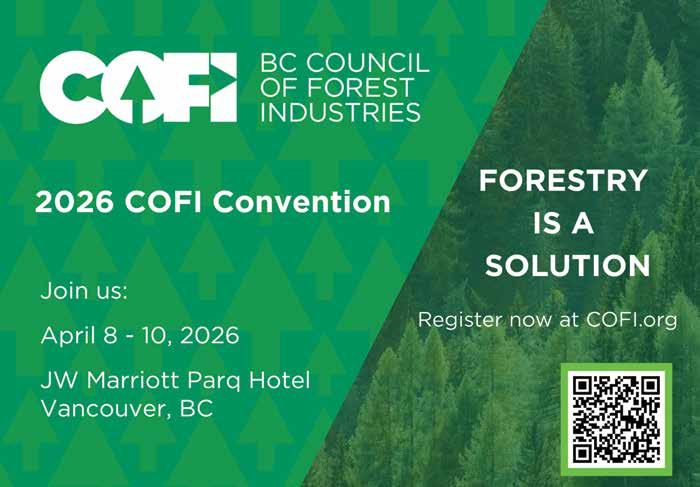
Another major forest industry show precedes the MWC. The British Columbia Council of Forest Industries (COFI) is holding its annual meeting and convention April 8 to 10 at the JW Marriott Parq in Vancouver. It comes at a critical junction for the B.C. forest industry.
COFI has united with 11 partner organizations representing diverse factions of the B.C. forest industry. The coalition has established a digital hub—forestryisasolution.com—to urge the provincial government to strengthen the sector and has made suggestions on how to accomplish it. They include: speed up access to economic wood; improve competitiveness; fix BC Timber Sales and support First Nations partnerships.
Forestry is a Solution is the theme and rallying cry for COFI’s convention.
Speakers were being confirmed at the Logging & Sawmilling Journal’s press time. The convention usually presents leaders
industryevents
from page 26
from the provincial and First Nations governments, forest industry executives and experts from associated disciplines. They participate as keynote speakers, in panel discussions and workshops. The COFI convention also includes a trade show component which doubles as one of the ample opportunities for networking throughout the convention.
Kim Haakstad, COFI’s president and CEO, responded recently to questions from the Logging & Sawmilling Journal. On the issue of urging the provincial government to restore a consistent flow of affordable timber, Haakstad said COFI has been clear and consistent for years.
“Predictable economic access to wood is the foundation of a viable forest sector,” she said. “We are now seeing COFI’s past warnings become reality.”
This is a case where statistics accurately reveal the story.
“Since 2019, B.C.s actual timber harvest has fallen from 45.7 million cubic metres to roughly 31.9 million cubic metres in 2025, nearly 40 per cent below the AAC, leaving significant economic,
employment and community value unrealized,” she pointed out. “That decline has translated directly into job losses with forestry employment falling by 15,000 jobs from about 101,000 jobs supported by the sector in 2022 to about 86,000 jobs in 2025.” And, of course, the forest industry doesn’t operate in isolation: it influences economic well being and working peoples’ lives.
“Beyond continuing advocacy, COFI’s focus has sharpened on demonstrating that forestry is not a narrow sectoral issue but a near-term solution to some of Canada’s most pressing challenges,” continued Haakstad. As such, COFI suggests, forestry should be deemed a major economic and nation-building project as being promoted by Prime Minister Mark Carney.
In the meantime: “COFI will continue pressing for urgency, transparency and timelines while being clear that further delays risk the permanent loss of capacity, investment and skilled workers.”
The government’s BC Timber Sales Review Task Force—appointed after criticism of the agency’s efficacy—produced a long list of recommendations last fall but few results on the ground. “We urge the
government to prioritize and fast track the Task Force’s recommendations that focus on increasing wood flow to manufacturers across the province,” she said.
Haakstad views COFI’s relationships with First Nations in B.C. as critical.
“COFI sees First Nation partnerships as essential to the future of forestry in B.C. and central to unlocking forestry’s full potential as a solution sector.” She says making deals with First Nation groups represents an area of growing opportunity for COFI’s member companies.
She notes other converging risks on the forest sector. These include: the permanent loss of industrial capacity; erosion of cost competitiveness; wildfire and salvage delays; market vulnerability and policy fragmentation.
Most of these issues will be discussed in varying forms during COFI’s convention in Vancouver. “This convention serves as a platform for collaboration and knowledge sharing aiming to rebuild competitiveness and promote a sustainable forest sector in all regions,” says Haakstad.
For the latest information on the COFI convention, check: cofi.org
Canadian Forest Service: Forty Years of Applied Forest and Afforestation Technology Development - Approach and Results
BY TONY KRYZANOWSKI
Since the mid-1980's, the Canadian Forest Service (CFS) has been expanding its practical role in forest and afforestation applied research and development through various programs, initiatives, and partnerships with the provinces, forest industry and other stakeholders.
Initially, the focus was on backlog reforestation and forest stand enhancement and development over time, with the goal of testing and evaluating novel forest practices to enhance ecosystem health and diversity, fibre production and sustainability, partial harvest systems, mixedwood management— as well as addressing a changing climate through adaptation and mitigation practices.
Through this continuous and progressive activity over four decades, the CFS research, technical development and technology transfer community, in partnership with provincial, territorial government, university, forest industry, and private landowner stakeholders, collaborated in field trials, demonstrations, and research installations on actively management sites. These partneroriented installations tested, demonstrated, and validated—and possibly the most important of all— promoted operational options for deployment or as enhancements to ongoing practices.
The key to all these initiatives and infrastructure partnerships was a focus on addressing key issues of the day, realistic
adoption opportunities, long-term site protection, and providing access to sites for progressive adopters.
The CFS prioritized the transition of questions raised during its many consultations and collaborations to providing reallife examples of options and opportunities using its network of research facilities and regional staff. This included internal groups and partners like the Regional Reforestation Technical Committee (RRTC), Technology Development Unit (TDU), the Afforestation Technology Development Group, Canadian Biomass Innovation Network, Canadian Wood Fibre Centre, and others, to make a practical mark on evolving issues and technologies.
Field tours, demonstrations, technical field workshops, e-presentations, publications, and technical activities like forums and web chats were all part of this package and included in-person gatherings and events, where the priorities, as described earlier, proved invaluable as major issues were practically addressed and new ones identified.
Site preparation technology, introductions and innovations including inventions with collaborating partners; nursery practices development; partial harvest system designs; pre-commercial thinning; afforestation high yield practices including full value chain and lifecycle exploration, climate change adaptation and risk reduction, site reclamation, revegetation and rehabilitation;
and forest management assessments and growth response monitoring techniques were developed and refined. This resulted in a network of legacy sites which exist today.
The uniqueness and value-added results of this 40-year plus legacy of research work, technology transfer, and partnerships has contributed significantly to Canadian forest and afforestation knowledge and applied practices.
"As we move forward addressing the new challenges of the day, this activity is a great example of the benefits of partnerships with forest researchers and developers, land managers, investors and regulators which vet well in Canadian forests and future forests," says Derek Sidders, Silviculture Operations Specialist, Technology Developer and Promoter with the CFS.
"As a participant in the last four decades of CFS technology development of forest and afforestation practices and applications, I look forward to following these examples as a faithful, proud and positive contributor. “I appreciate all of the cooperation, resource support, expertise and guidance from all of my colleagues, collaborators and associates within the forest and expanding forest communities and their organizations.”
For more information: derek.sidders@ nrcan-rncan.gc.ca
SUPPLIERNEWSLINE
By Tony Kryzanowski
Legendary KMC MAX logging equipment now being relaunched, market broadened to include construction and energy services
The iconic KMC forestry equipment brand, long known to loggers across the Pacific Northwest and other parts of North America for its rugged and dependable log loaders and skidders, is officially entering a new era with the launch of KMC MAX.
KMC MAX follows the acquisition of KMC-Kootrac by a Uruguayan industrial group led by CIR (www.ciruy.com), which has extensive experience in heavy equipment manufacturing, in partnership with North American company USAmericas (www.usamericas.com).
The group is relaunching the brand with a new international manufacturing platform, modernized engineering, and a long-term commitment to global growth— and a solid continued commitment to service. The company will be broadening the market for KMC equipment—which will feature the KMC platform/chassis, recognized as one of the best in the world—to include firefighting, construction, agriculture and energy services.
As part of this transition, KMC MAX has established a new, modern manufacturing facility in Montevideo, Uruguay, where all production is now based. The facility has been built to support large-scale manufacturing, export logistics, and nextgeneration machine design, positioning the KMC MAX brand for long-term growth across North and South America, and international markets.
In addition to marketing and providing full support to North American customers, KMC MAX Global will be extending
Nors Construction Equipment Canada gets new leadership
Over the past year, Nors Construction Equipment Canada says that it has navigated significant market challenges while delivering complex, high impact projects across Canada.
It adds that these experiences have further strengthened the organization and confirmed that a unified national leadership model is the right strategic direction for proactively responding to market opportunities, enhancing alignment, and driving operational excellence.
its reach beyond North America, and is already in advanced negotiations with European equipment distributors.
“The KMC log loaders and skidders are impressive and high performing pieces of logging equipment, and we are looking to revitalize the company, and increase machine production to a broader audience, in terms of industries and geography,” said Alejo Maisonnave, CEO of KMC MAX. Alex Gorissen will be in charge of developing the international distribution partner, KMC MAX Global.
“We are now relocating manufacturing into a modern facility in Uruguay and upgrading the machines to 21st-century standards. There is a need for robust and dependable multi-platforms in the market, and we are making sure we supply the very best out there,” said Maisonnave. In fact, the company expects the first KMC Max machines to be delivered by mid-August. They will go to customers in South America, the U.S., and Europe.
KMC MAX machines will feature the full range of modern Volvo Penta engines, offering a power range from 185 horsepower to 800 horsepower, along with modern operator cabins, updated hydraulics, and contemporary manufacturing standards designed to meet today’s safety, emissions, and performance expectations.
While production has moved to Uruguay, the heritage of KMC remains central to the brand’s identity. The machines’ design philosophy, durability, and realworld logging performance continue to
As part of this evolution, Sudhanshu Singh has been appointed Chief Executive Officer of Nors Construction Equipment Canada. The company says that Singh brings extensive industry experience and a strategic vision aligned with Nors values, ensuring customer focus, business performance, and sustainable growth.
Singh was appointed CEO of Nors Construction Equipment Canada ST, serving primarily Eastern Canada, in January 2026, and is currently completing a twomonth transition period to assume leadership of Nors Construction Equipment Canada GW, which operates in Western Canada. During this time, he is working
be rooted in the brand’s DNA. But more than that, the company will also be using the KMC MAX chassis, one of the best in the world, as a multi-platform for other industries where the need is great for such equipment.
Alejo Maisonnave, CEO of KMC MAX, is leading the global manufacturing and engineering operation from Uruguay, while Alex Gorissen is responsible for KMC MAX Global, with global sales, distribution, and dealer development across continents.
The official market launch of KMC MAX took place at the 2026 Oregon Logging Conference in Eugene, Oregon, where the company will introduce the brand’s new direction, product roadmap, and international growth strategy to the North American and international industries.
“This is not just a restart—it is a true relaunch,” say both Alejo Maisonnave and Alex Gorissen. “KMC MAX now has the production capacity, engineering resources, and global backing to build these machines at scale while staying true to what made KMC respected in the first place.
“We are committed to providing high quality support and troubleshooting for our customers. Our service teams are strategically located to help our customers in North and South America, and soon with a platform in Europe. We know we have the machine they need, but we want to make sure our customers have the support they expect.”
www.kmcmax.com
closely with current CEO, Colin Matejka, whose tenure will conclude on February 28, 2026, ensuring continuity and stability across Canadian operations.
On March 1, 2026, Singh will assume the role of CEO for all Nors Construction Equipment operations in Canada, marking the start of a new chapter in unified leadership.
www.construction-equipment-st.nors. com
UBC Faculty of Forestry announces name change
The University of British Columbia (UBC) says that it is renaming its Faculty of
Forestry to Faculty of Forestry & Environmental Stewardship, marking a significant step in the evolution of one of Canada's leading centres for environmental research, education, and innovation.
UBC says that the change recognizes a shift underway across Canada and around the world: managing forests alone is no longer enough to solve today's environmental challenges. Climate change, intensifying wildfires and floods, clean water scarcity, food insecurity, and accelerating biodiversity loss all threaten ecosystems and livelihoods alike.
The UBC faculty adds that responding to these crises requires ethical, responsible and sustainable management systems grounded in conservation, respect and education, which it says is environmental stewardship.
www.ubc.ca
Tigercat 850 series processor gets upgrade
The Tigercat 850 processor, the company’s branded purpose-built alternative to excavator conversions, has been upgraded for improved performance.
Tigercat says that the new 850B retains
all of the advantages over converted excavators used in roadside processing applications—easier service access, a more comfortable cab with better visibility, and superior cooling capacity.
The performance and fuel efficiency differential has been further increased. Initial field testing confirms that the 14 per cent increase in power to 251 hp results in improved machine performance and response—quicker, smoother boom cycles, improved feed acceleration and braking, and more powerful swing. In addition, hydraulic system refinements target boom efficiency, reducing fuel consumption.
www.tigercat.com
Note to B.C. Premier David Eby:
Just do your job, so the forest industry can get on with doing its job
By Jim Stirling
British Columbia Premier David Eby spent five days in January visiting four major cities in India. The “Looking West” junket was primarily designed to remind potential customers that B.C. was open for business, and boost interest in the province’s critical minerals and forest products.
Too bad he didn’t stay at home in Victoria from the forest products perspective. He could have used the time to make some much-needed and longsuggested positive changes. The provincial government has the power to make policy adjustments that would help the ailing provincial forest industry—now—when it is most needed.
Instead, the status quo remains and the perfect storm rages on.
The elements contributing to it have long been forecast. They have combined to topple Canada from the lowest cost lumber producer in North America to the highest. The dubious statistic will persist with provincial government inertia and U.S. President Donald Trump’s 45 per cent tariff on Canadian softwood lumber entering America.
In a rare show of unanimity, the province’s forest industry associations are aligned in urging the provincial NDP government to help save the industry from further structural decay. They’re trying to convince it of the urgency of the situation and the growing implications of further delay to the social and financial fabric of the province—nothing’s happened, apart from a five-day trade mission with a token nod to forestry.
The idea of creating new markets for forest products is tossed around like buying a new outfit for spring. Alas, it’s not that simple and much more complicated and time consuming. Look at the longterm approach adopted by the federal and provincial governments along with forest industry representatives to develop the potential of the Japanese market for Canadian wood products. The diligent and consistent approach has paid divi-
dends and Japan has become a vital market for several forest companies in B.C. and across Canada. But it’s been 30-odd years to get to this point.
Focused trade missions are an important long-term step toward the development of new markets. But B.C.’s forest industry needs help—again, now—and it shows no sign of being forthcoming from the provincial government. Urgent times require urgent measures. Advertising could be one of them.
The very word is an anathema to most in the industry. For decades in B.C. the forest industry was king. It generated much of the province’s wealth and the big forest industry barons largely dictated provincial land policy. Along the way, the industry became smug and self assured, confident in the seemingly never-ending natural resource that would sustain it and its influence. The last thing it did—or thought of—was to explain its actions.
Things have changed. The forests are no longer never ending: other constituents have demanded their fair share of B.C.’s publicly owned forests. First Nations have claimed and received primary access to about 20 per cent of them. The warming climate continues to erode B.C.s forests through pervasive insect infestations and more violent and unpredictable wildfires.
Even today, a minority of forest companies in receipt of publicly funded grants to help them get by during today’s tough times are reluctant to disclose their plans. “We prefer to operate under the radar,” they explain conspiratorially. Well, that’s working out really well. B. C’s forest industry is now off the government’s radar altogether and it’s partly due to that type of antediluvian perspective.
And somewhere along the line, the industry has lost any significant level of public support it may have had. The general public in B.C. seem to view the forest industry as yesterday’s story, a dying industry, no longer relevant in a world dominated by digital dialogue. The level of public ignorance about today’s forestry
is due largely to yesterday’s industry and the reluctance of the present version to stand up and tell its story.
It’s past time for the Canadian forest industry generally and B.C.’s in particular to blow its own horn boldly and loudly. It’s time to remind existing markets and inform potential new ones that Canada manufactures the world’s highest quality wood products with the lowest environmental footprint. A consistent and focused campaign would help get that message out.
It might also give cause for Premier Eby to re-evaluate his doomsday attitude. All those forest industry associations are not expecting Victoria to take on the tariff war. They want Eby to take a closer and cost-minded look at his own government’s procedures and regulations.
And then make some surgical adjustments to streamline them. Right now, it routinely takes many months to navigate jurisdictional overlaps and government constipation to issue a cutting permit. Meanwhile, consider the downstream consequences. Loggers can’t harvest timber, truckers can’t transport it, sawmills can’t operate efficiently or at all, local and regional businesses experience slumping sales, people across small town and rural B.C. can’t afford to pay their bills—so the avalanche of consequences, suffering and upheaval keeps rolling.
B.C. is deeply in debt. The numbers are numbing for most workers. The members of those forest industry associations seeking to tell the premier their perspectives aren’t after money, just a civil hearing and a quick and positive reaction.
After all, the forest industry even in its diluted condition, continues to annually pump huge amounts of money into the provincial government’s coffers to fund the province’s social programs like health, education and infrastructure.
All that’s required is for David Eby to do is his job so the forest industry can get on with theirs.
THE MOST POWERFUL TOP-HANDLE CHAINSAW IN STIHL’S PROFESSIONAL BATTERY SYSTEM
The STIHL MSA 220 T is the most powerful top-handle chainsaw in the STIHL battery-powered lineup, boasting power and performance similar to our professional gas top-handle chainsaws. Featuring high chain speed and torque durable components such as the magnesium motor housing and a brushless motor, the MSA 220 T is designed for a heavy workload. An LED operator display provides quick status updates to help keep pros moving. The MSA 220 T provides the power and dependability professional aborists trust from STIHL chainsaws.
Note: Top handle chainsaws should only be used by trained professionals.