
Aotearoa New Zealand is their home too TE REO O TE TAIAO
TAONGA TURTLES
RAUKŪMARA
2 Forces of nature
4 Letters + competition winners
News
6 Forest & Bird’s book launch
8 What’s up DOC?
9 Hauraki Gulf petition + Te Tiriti
10 Bird flu + Tarakihi win Freshwater
12 Let’s be clear
14 Fight for freshwater
21 Southland waterways
Biodiversity
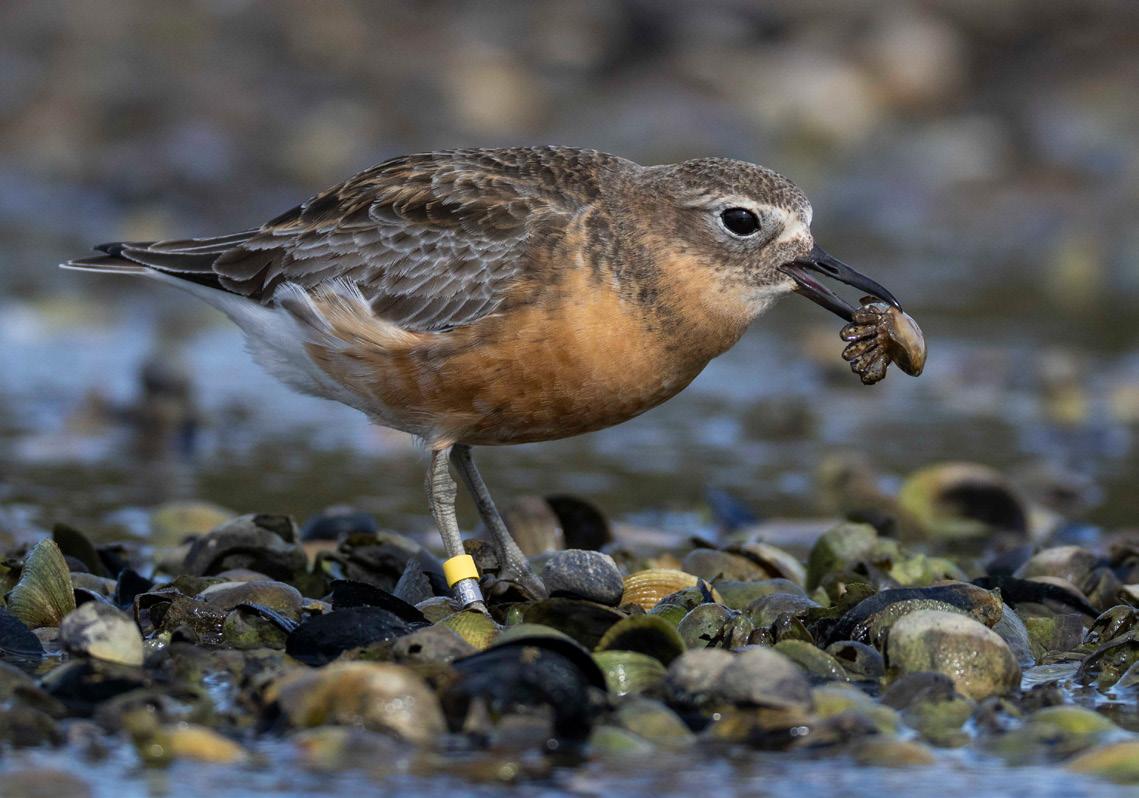
15 Saving southern underbirds
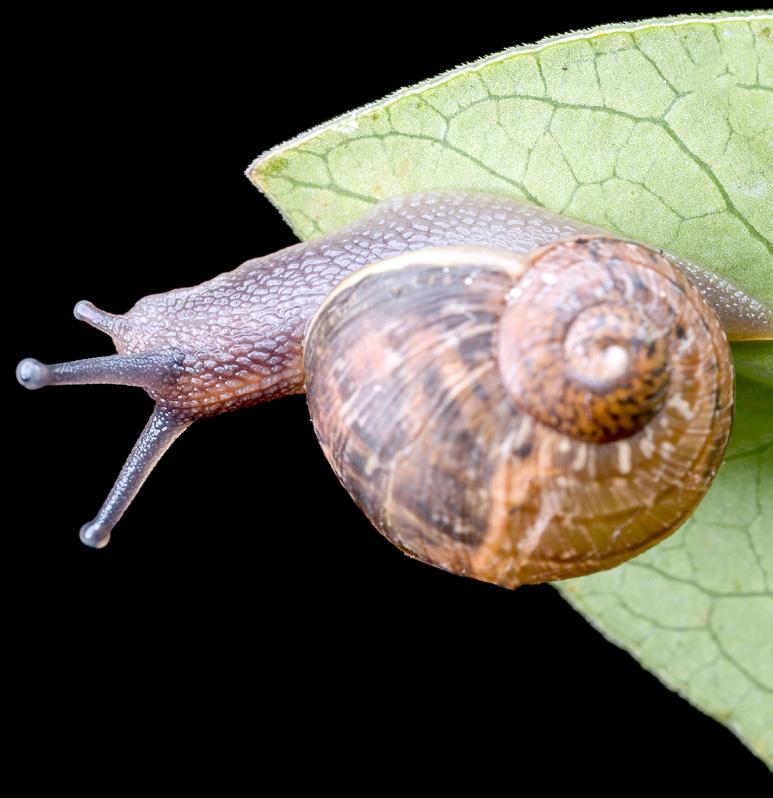
53 Butterfly crisis
Cover
18 Taonga turtles
Forest & Bird major project
22 Making a difference: Pest-free Hibiscus Coast
24 Volunteer magic
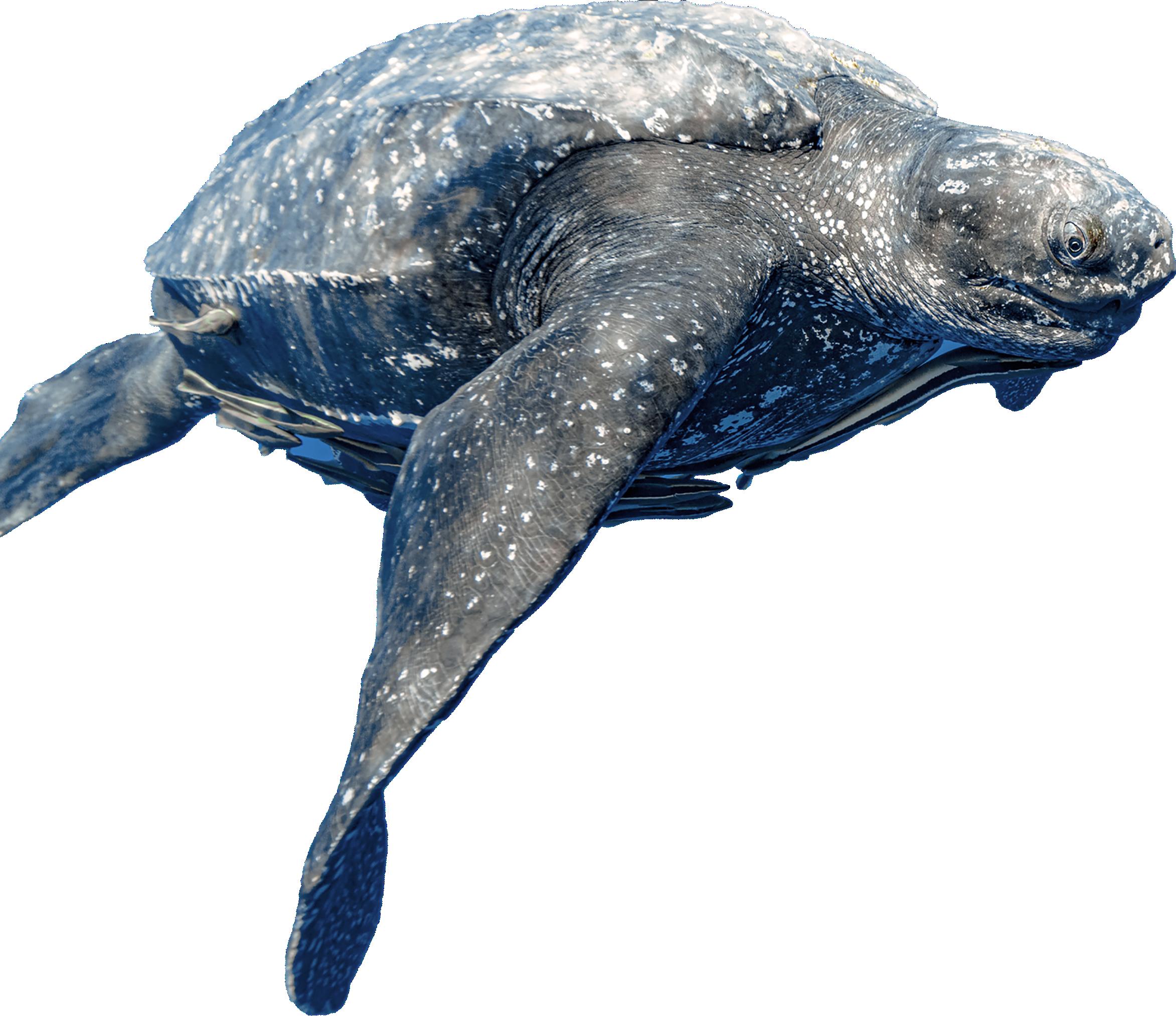
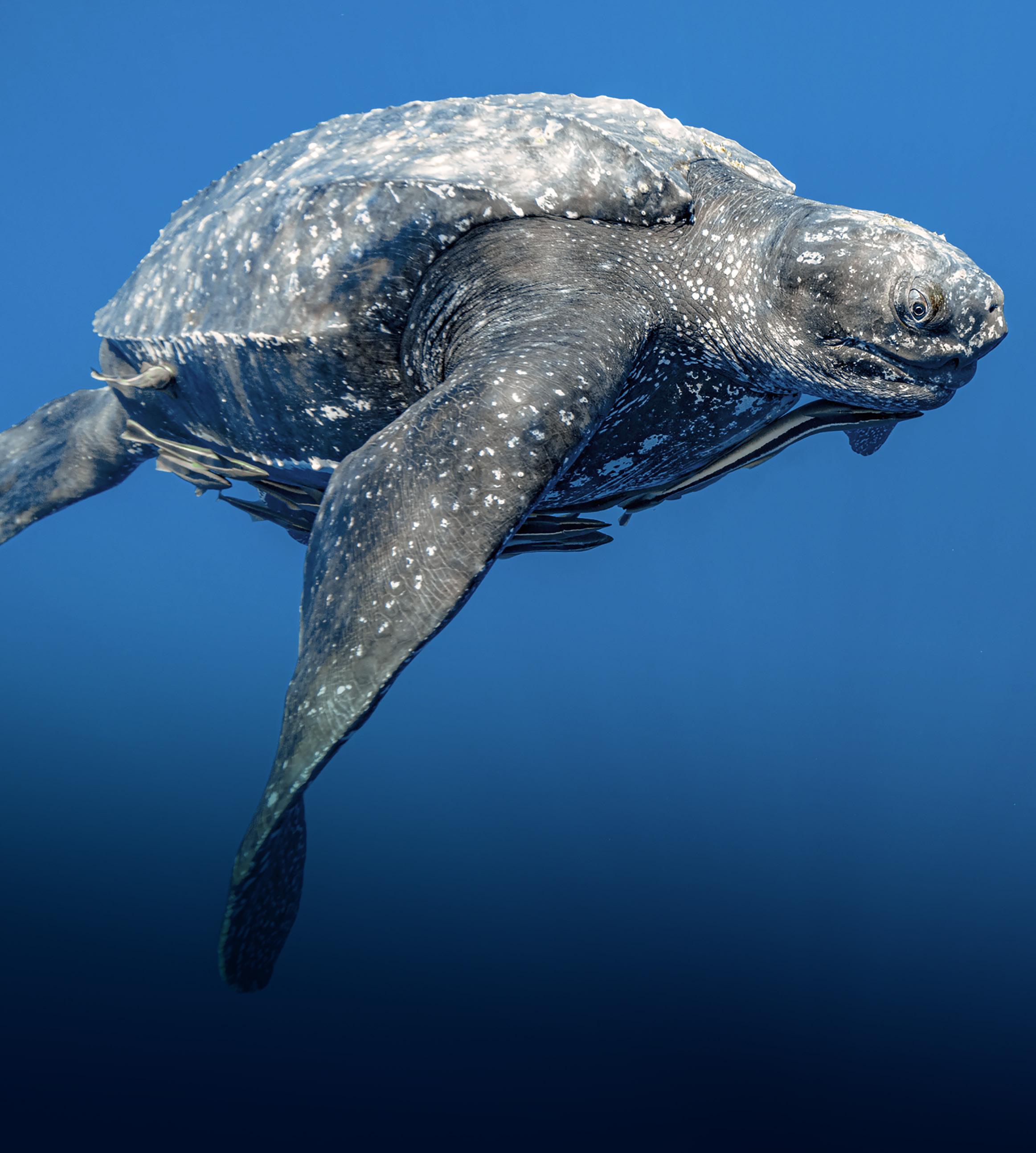
COVER SHOT Honu leatherback turtle. Azure27014/iNaturalist
PAPER ENVELOPE Pūteketeke Australasian crested grebe. Leanne Buchan
RENEWAL Mairehau (Leionema nudum). Bryce McQuillan
EDITOR Caroline Wood E editor@forestandbird.org.nz
Seabirds
26 Win for albatross
Economy
27 Investing in nature
Forest & Bird branch
28 Wainuiomata warriors
War on nature
30 Flawed fast-track Bill
Short story
32 Feather brains
ART DIRECTOR/DESIGNER Rob Di Leva, Dileva Design E rob@dileva.co.nz
PRINTING Webstar webstar.co.nz
PROOFREADER David Cauchi
ADVERTISING ENQUIRIES Karen Condon T 0275 420 338 E karen.condon@xtra.co.nz
MEMBERSHIP & CIRCULATION T 0800 200 064 E membership@forestandbird.org.nz
Thank you for supporting us! Forest & Bird is New Zealand’s largest and oldest independent conservation charity.
Join today at forestandbird.org.nz/joinus or email membership@forestandbird.org.nz or call 0800 200 064
Every member receives four copies of Forest & Bird magazine a year. Forest & Bird is published quarterly by the Royal Forest and Bird Protection Society of New Zealand Inc. Registered at PO Headquarters, Wellington, as a magazine. ISSN 0015-7384 (Print), ISSN 2624-1307 (Online). Copyright: All rights reserved. Opinions expressed by contributors in the magazine are not necessarily those of Forest & Bird.




Royal Forest and Bird Protection Society of New Zealand Inc. Forest & Bird is a registered charitable entity under the Charities Act 2005. Registration No CC26943.
PATRON Her Excellency The Rt Honourable Dame Cindy Kiro, GNZM, QSO Governor-General of New Zealand CHIEF EXECUTIVE Nicola Toki PRESIDENT Kate Graeme DEPUTY PRESIDENT Mark Hanger TREASURER Nigel Thomson BOARD MEMBERS Chris Barker, Bruce Clarkson, Romilly Cumming, Ben Kepes, Kate Littin, James Mackenzie, Eugenie Sage CONSERVATION AMBASSADORS Sir Alan Mark, Gerry McSweeney, Craig Potton DISTINGUISHED LIFE MEMBERS Graham Bellamy, Linda Conning, Ann and Basil Graeme, Philip Hart, Joan Leckie, Hon. Sandra Lee-Vercoe, Carole Long, Peter Maddison, Sir Alan Mark, Gerry McSweeney, Craig Potton, Fraser Ross,
FORCES OF NATURE
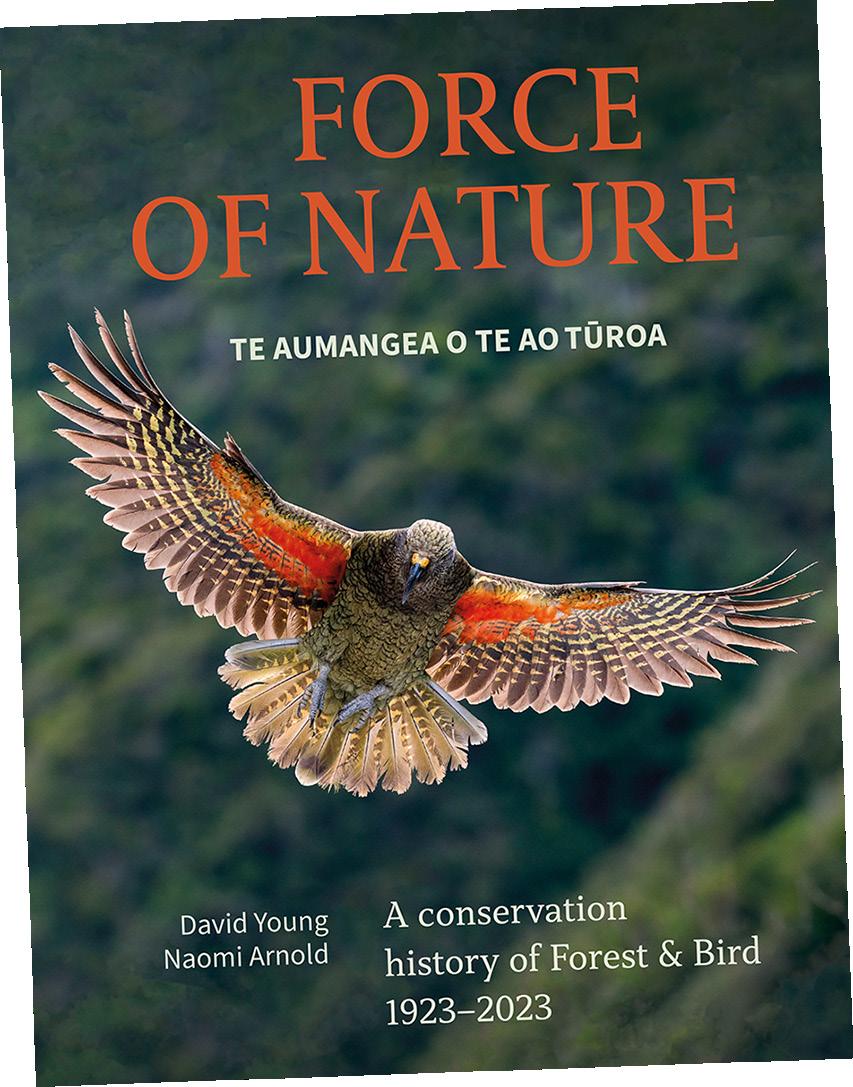
Last month, I attended the official launch of Forest & Bird’s new book Force of Nature Te Aumangea o te Ao Tūroa. It was an uplifting evening and a chance to celebrate the wins that conservationists have collectively achieved for te taiao over the past 100 years.
Beautifully written by conservation historian David Young and award-winning writer Naomi Arnold, Force of Nature is a heartfelt tribute to the thousands of Forest & Bird volunteers, staff, and donors who have dedicated their lives to protect our natural landscapes and taonga species.
One of Forest & Bird’s enduring strengths is that we bring together many and different voices and hands for nature. We have always been ahead of public opinion. We have pushed controversial actions that were radical at the time but are now the accepted norm.
Our story over the past century is also a reminder that we must be alert and fight to protect conservation gains. As we see time and again in Force of Nature, conservationists win one battle, secure strong new environmental rules, then need to defend them from being watered down by government and commercial interests.
Does this sound familiar? It is happening right now with the coalition government’s roll-back of freshwater regulations, the Resource Management Act, and marine protected areas.
It was a tremendous undertaking to pack a century of conservation between the covers of a book, and I want to pay tribute to the entire Force of Nature team: David Young, Naomi Arnold, Caroline Wood, Michael Pringle, Lynn Freeman, and publisher Robbie Burton of Potton & Burton.
They have captured the flavour and essence of Forest & Bird in their re-telling of some of the most significant environmental campaigns over the past century. These were led by visionaries, exceptional characters, resolute and brave, who helped shaped the conservation history of Aotearoa. It all began with our founder Captain Val Sanderson, who “gave the government no peace” until Kāpiti Island was protected to become the wonder it is today. The book also profiles hundreds of other conservationists and the places they helped save: Pérrine Moncrieff and Abel Tasman National Park, Barney McGregor and Waipoua Forest, Kevin Smith and Te Wahipounamu world heritage site, and the list goes on...
But no book is big enough to acknowledge all the people who stood behind the leaders, who created the groundswell to win the campaigns, who plant and weed and kill pests in their local projects, and whose voices bring environmental awareness to our communities.
All these people are Forest & Bird. Every one of them: members, supporters, donors, staff, and those who support our conservation ethos.

They are the foundations of our society. They give us substance, so that Forest & Bird’s voice carries weight in the corridors of power.
Over the past 100 years, there have been tens of thousands of Forest & Bird members, volunteers, staff, and supporters. This book cannot name them all, but it can and does celebrate them all.
Forest & Bird’s story is a testimony to endurance. It is testimony to an independent, science-based, not-for-profit organisation that gets things done. It is testimony that we have made a difference over the past century and will keep on making a difference for the next 100 years.
Thank you for everything you do to be strong voices for te taiao.
Kia pai te raumati, have a wonderful summer.

Kate Graeme Perehitini, Te Reo o te Taiao President, Forest & Bird Force of Nature was published thanks to the generous support of Perpetual Guardian’s Stout Trust.
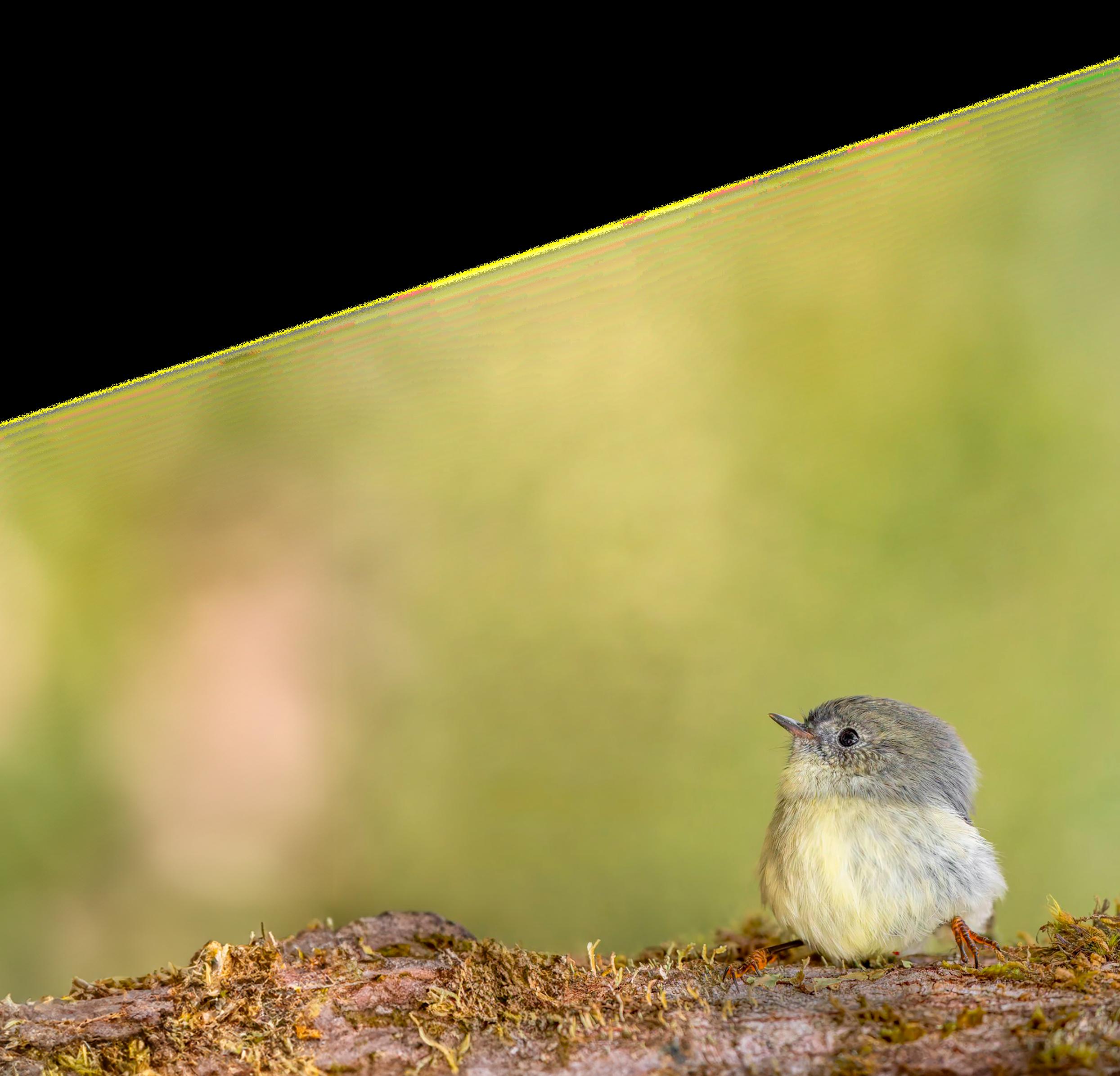
Tomtit. Paul Francis
DISCOVER NATURE’S WILDEST PLACES
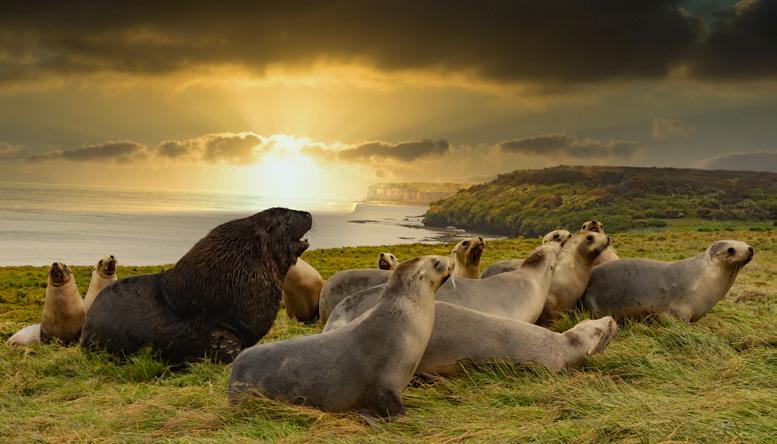
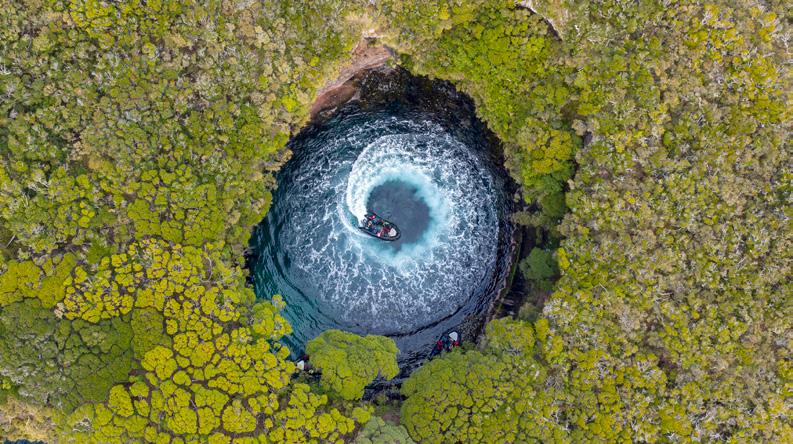
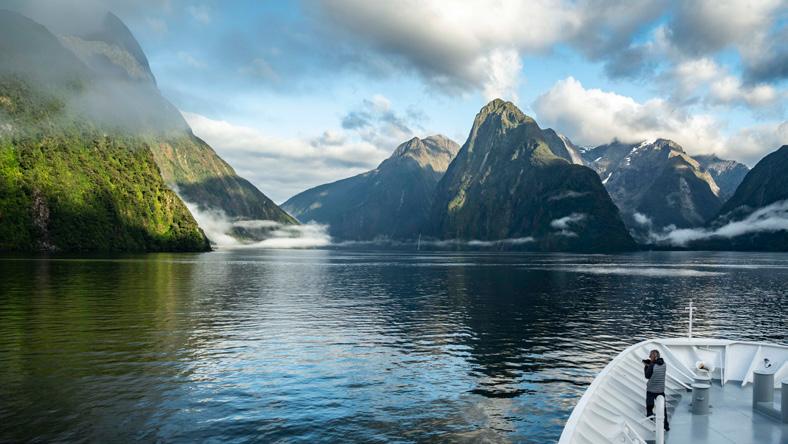
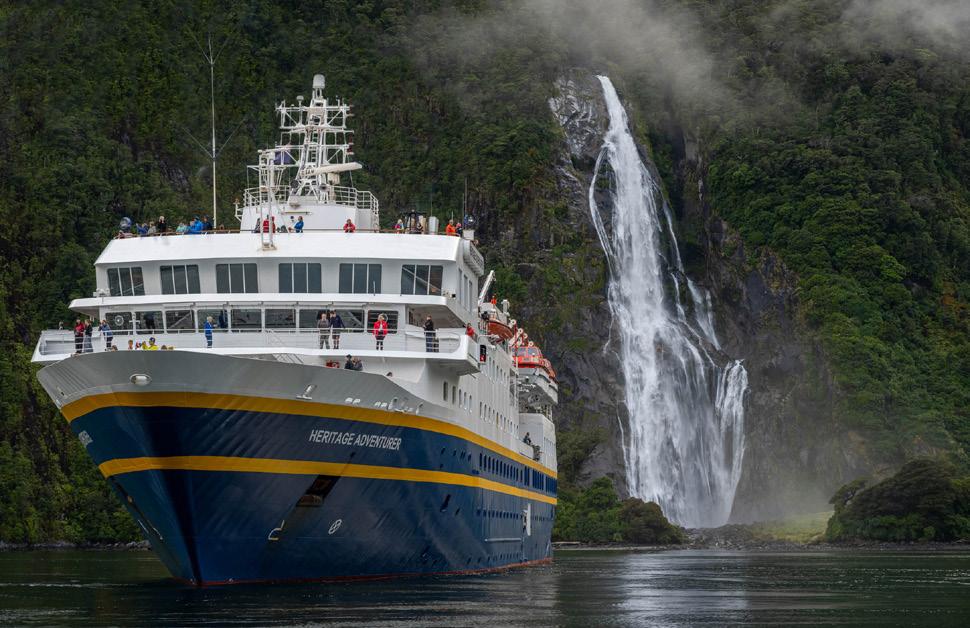
Discover the incredible wildlife havens of the Subantarctic Snares, Auckland, Campbell and Macquarie Islands, the untamed wilderness of Fiordland’s ice-carved mountains, forests and fiords, and Stewart and Ulva Islands with New Zealand’s own pioneering family-owned and -operated small ship expedition cruise company. Benefit from our more than 35-years experience and enjoy all-inclusive travel aboard our luxurious, 140-guest expedition flagship Heritage Adventurer EXPLORE THE WORLD’S MOST REMOTE SUBANTARCTIC
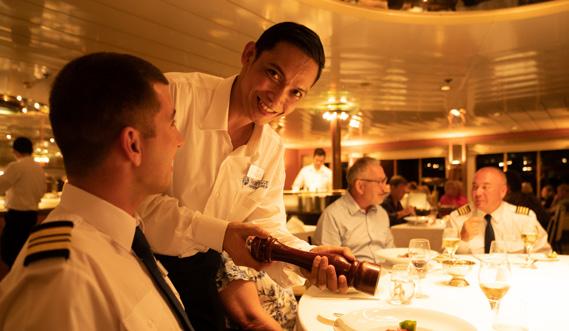
ENJOY ALL-INCLUSIVE TRAVEL WITH: Pre cruise hotel in Queenstown + dinner & breakfast all on board accommodation & meals • house wine & beer with lunch & dinner all shore excursions^ • pre & post cruise transfers • lecture series by noted naturalists

BEYOND FIORDLAND
28 Dec 2024 - 8 Jan 2025 FINAL BERTHS! 21 Dec 2025 - 1 Jan 2026 SAVE 20%*
FORGOTTEN ISLANDS OF THE SOUTH PACIFIC 28 Dec 2024 - 4 Jan 2025 FINAL BERTHS! 21 - 28 Dec 2025 SAVE 15%*
GALAPAGOS OF THE SOUTHERN OCEAN 18 - 29 Dec 2024 FINAL BERTHS! 26 Nov - 7 Dec 2025 SAVE UP TO 20%* 31 Dec 2025 - 11 Jan 2026 SAVE UP TO 20%*
FOREST & BIRD MEMBERS SAVE 5%* on Beyond Fiordland 2024, PLUS a contribution from your fare is donated to Forest & Bird to support their ongoing conservation work!
LETTERS
YOUR FEEDBACK
Forest & Bird welcomes your thoughts on conservation topics. Please email letters up to 200 words, with your name, home address, and phone number, to editor@ forestandbird.org.nz, or by post to the Editor, Forest & Bird magazine, 205 Victoria Street, Wellington 6011, by 1 February 2025. We don’t always have space to publish all letters or use them in full. Opinions expressed on the Letters page are not necessarily those of Forest & Bird.
GE TECHNOLOGIES
Linda Grammer strongly advocates for maintaining the current extreme caution on genetic technologies. She also recommends reading a Parliamentary Commissioner for the Environment report of March 2001 (Letters, Spring 2024). I would respectfully point out there have been two decades of worldwide experience with genetic technologies to look at since that report. This includes an Australian easing of restrictions on genetic technologies. This should give New Zealanders a guide as to what we can expect from a new regime based on the Australian model. We should effectively have some early warning from the Australian experience of any developing problems with the technologies and/ or the regulatory regime. Linda fears irreversible damage to our environment if GE/GMO technologies are used in New Zealand. My fears are the reverse. I fear we will fail to achieve the ambitious goals of Predator Free 2050. I fear we may lose species that could have been saved. I fear these adverse results are more, not less, likely if we maintain an absolute blanket ban on any possible use of any genetic technologies, ever. I think easing restrictions to allow genuinely proceeding with caution, rather than maintaining the current policy that effectively allows no progress at all, is overdue.
Colin Parker, Auckland
CONTAINING CATS
Regarding the cat and bird lover (Letters, Spring 2024), no number of bells or other collar accessories will prevent cats climbing into nests and killing off chicks. Some parent birds such as kākā continue to sit on their nests when threatened to protect their young, so parent and young are predated. The only possible way to keep birdlife safe from feline predators is to keep these pets contained on their own property, and there are people already doing this. Microchipping, registration, and desexing are big steps forward, but containment must also be part of the deal.
Gillian Pollock, Stoke
WRITE AND WIN
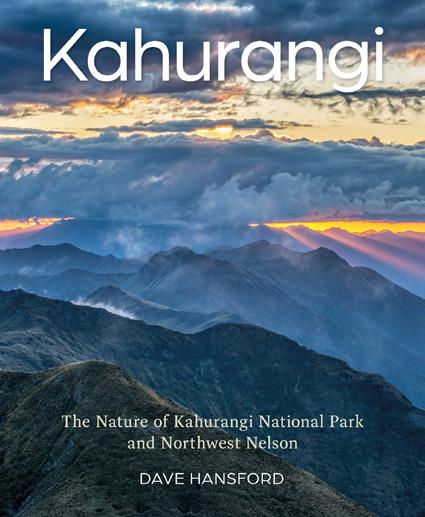
The best contribution will receive a copy of Kahurangi: The nature of Kahurangi National Park and Northwest Nelson by Dave Hansford (Potton & Burton, RRP $79.99). Find out about conservation efforts in a region that is home to the greatest variety of plants and animals in Aotearoa New Zealand.
NO-MOW LAWNS
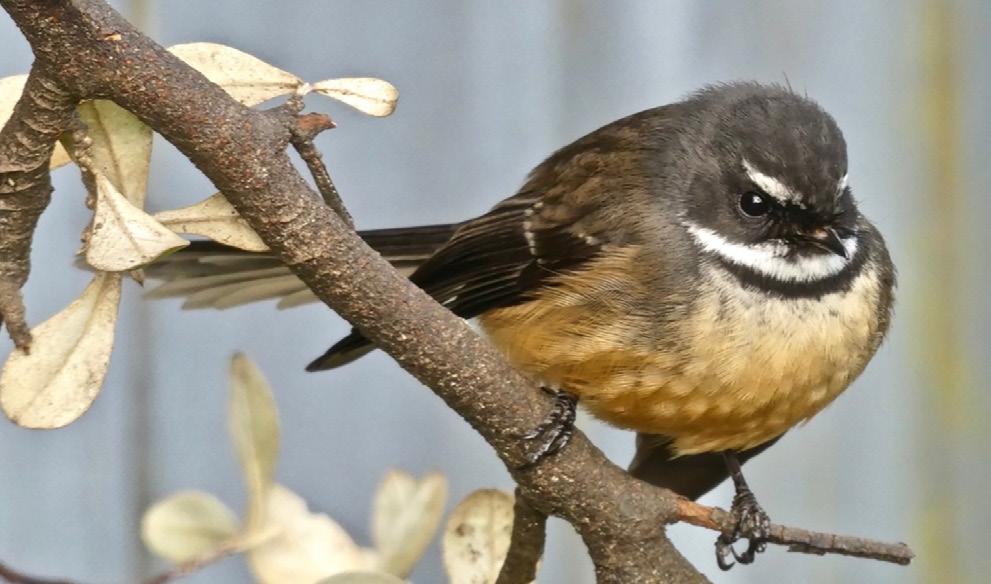
High density housing is now destroying many established gardens. This fantail was on a dead branch in a newly bulldozed section with a rusting corrugated iron fence. It seemed lost and sat there scolding me while I took many photos. Leaving remaining lawns uncut would help. After six years of no mowing, my small 360m2 garden has enough insects to attract a pair of fantails, and swallows fly overhead. No-mow lawns have other benefits, of course. They save 5% of our personal carbon footprint (as much as electric cars will); never need watering, weeding, or fertiliser; and prevent flooding from surface run-off.
John Flux, Wellington
NATURE STEWARDSHIP
New Zealanders have a love for introduced cat and dog predators. How much better if we transfer our love to our native fauna. Forest & Bird is well placed to encourage this. Is not our love of cats and dogs an accurate measure of our disregard for our native birds, lizards, frogs, insects, and bats? We surely are capable of much better stewardship of our native fauna – and can go well beyond national [cat] management legislation. We know it can be done. In Wellington, having Zealandia and the regional predator control work
has enabled birds to flourish across the city and kiwi have been reintroduced in the wider region.
Kevin W Barnes, Palmerston North
MYSTERY SIGNMAKER
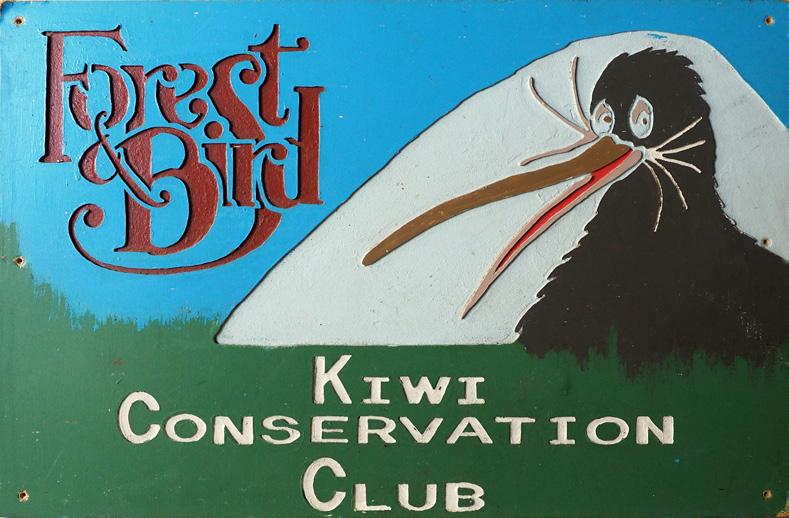
Carolyn Brough, past chair of North Taranaki branch of Forest & Bird, recently unearthed this old KCC sign. She considers that it was definitely made in Taranaki, but, beyond that, all that can be reliably said is that it was created between 1986 and 1992 when that logo was current. Someone has spent some time etching the layers of ply to carve out the kiwi. Who was that person? We’ve asked around but drew a blank. If anyone has any clues, we’d love to hear from them. It measures 680 x 440mm.
Janet Hunt, North Taranaki
BOOK GIVEAWAY
We have two copies of Geckos & Skinks: The remarkable lizards of Aotearoa by Anna Yeoman (Potton & Burton, RRP $59.99). Anna looks at how and where our lizards live and the inspiring conservation work happening to protect these precious taonga.
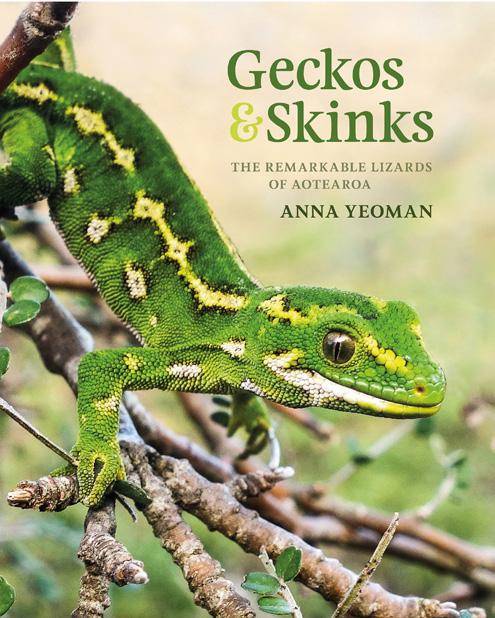
To enter, email your entry to draw@forestandbird. org.nz, put GECKOS in the subject line, and include your name and address in the email. Or write your name and address on the back of an envelope and post to GECKOS draw, Forest & Bird, PO Box 631, Wellington 6140. Entries close 1 February 2025.
The winners of Ferns and Lycophytes of Aotearoa New Zealand by Leon Perry and Pat Brownsey were Shirlee Scott, of Napier, and Tony Dunn, of Tasman. The winners of Force of Nature Te Aumangea o te Ao Tūroa, a conservation history of Forest & Bird 1923–2023 by David Young and Naomi Arnold were Alan Jones, of Auckland, and Mary Griffiths, of Dunedin.
FORCE OF NATURE
Force of Nature is the landmark history of Forest & Bird, celebrating 100 years of groundbreaking effort. This magnificent publication is one of the most important books about conservation in Aotearoa to have been written in decades. It is guaranteed to make you proud to be a supporter of Forest & Bird. For more information – see forestandbird.org.nz/forceofnature.
$89.99
TE REO O TE TAIAO
The official launch of Forest & Bird’s new book was a chance to celebrate conservation wins over the past century while looking to the future.
Tens of thousands of New Zealanders have helped make Forest & Bird a strong voice for the environment since 1923, and we wanted our Force of Nature to be a tribute to each and every one of them.
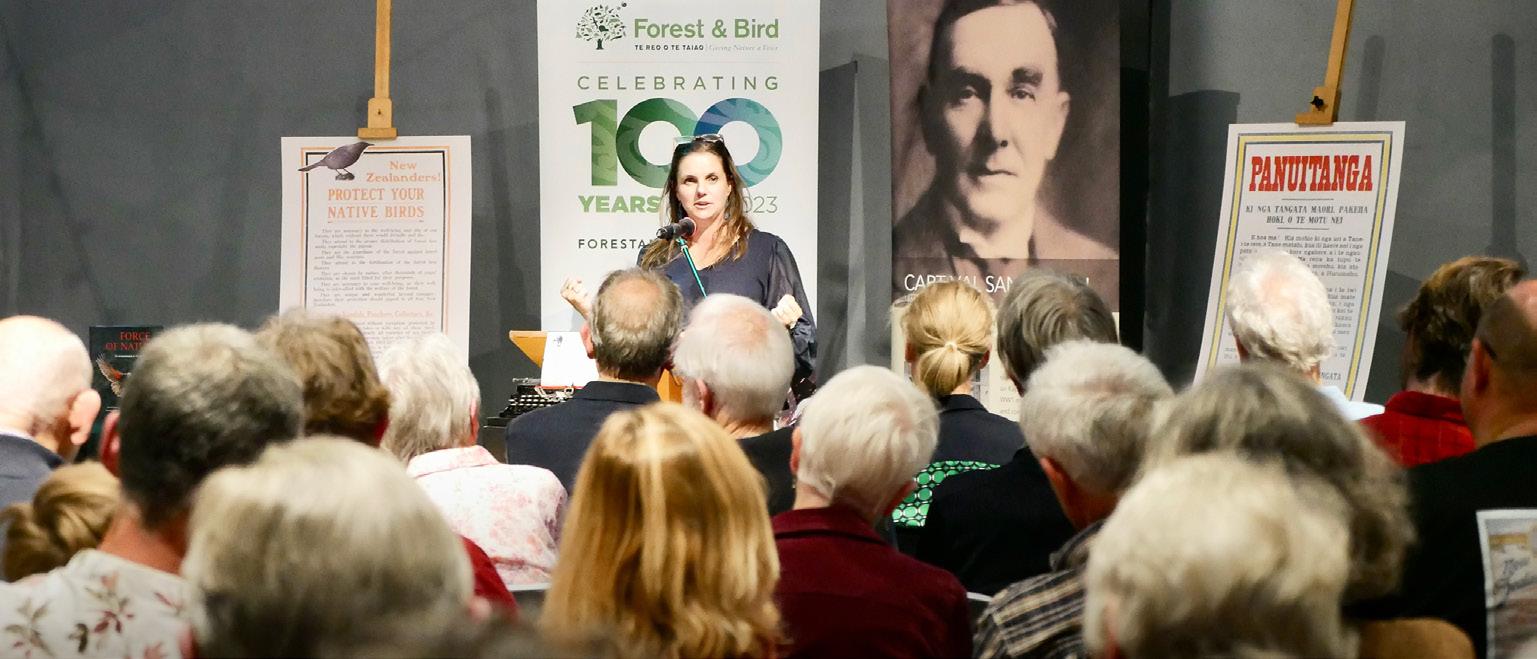
Writers David Young and Naomi Arnold were guests of honour at the launch of Force of Nature Te Aumangea o te Ao Tūroa at Zealandia, in Wellington, alongside publisher Robbie Burton and the wider Forest & Bird book team, including Michael Pringle and Caroline Wood.
Welcoming the 120 guests, including members of Forest & Bird’s board, branch volunteers, current and former staff, friends, and whānau, Nicola Toki said Force of Nature was
a book about people, a conservation history, and a story of right now.
“This a book is overflowing with cracking yarns. I know lots of the people mentioned in by reputation and some of them personally. There are heaps of characters whose stories are new to me, and I really loved learning about them and I hope you do too.
“So many of the threats that motivated Captain Val Sanderson and the other visionaries who helped establish Forest & Bird in 1923 are still pushing species to the brink of extinction today. These stories are essential reading when te taiao needs conservation hearts and minds more than ever before.”
Publisher Robbie Burton told the audience he thought he knew New Zealand’s conservation history well but was surprised when he read the book how central Forest & Bird had been to almost every national conservation campaign in last 100 years.
“I think this is one of the most impressive conservation books to have been published in generations. The stories it tells really deserve to be recorded and read. One of the fantastic decisions that Forest & Bird made early on was to make sure all these heroes of conservation are featured strongly. It’s very people focused, and I think it’s a huge
strength of the book.
“While there have been huge gains over the past 100 years, as we all know the assault on the environment remains relentless. But if you ever need a reminder about why Forest & Bird needs to thrive, then read this book, and I don’t think you can help but be inspired.”
Forest & Bird president Kate Graeme paid tribute to David Young and Naomi Arnold for bringing the Society’s previously hidden stories to life.
“They have captured the flavour and essence of Forest & Bird in their re-telling of some of the most significant conservation wins and losses over the past century,” she said. “You have given us a taonga and we will be forever grateful.”
SELLING FAST...
Get in quick to secure your copy of Force of Nature with a 20% discount off the RRP and receive it in time for Christmas. The discounted price is $72 plus $15 P&P. Offer only available until 10 December 2024. All profits go directly to Forest & Bird’s conservation mahi. Go to shop.forestandbird.org.nz
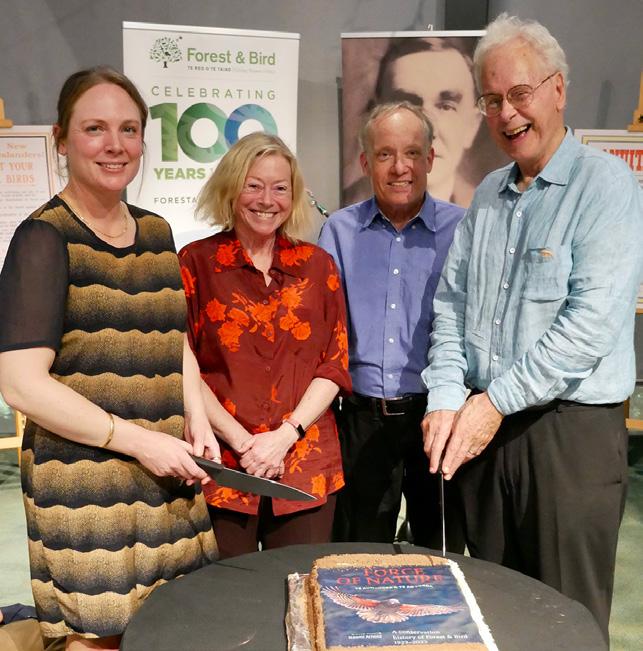
Naomi Arnold, Caroline Wood, Michael Pringle, and David Young cutting the Force of Nature cake. Jeremy Wood
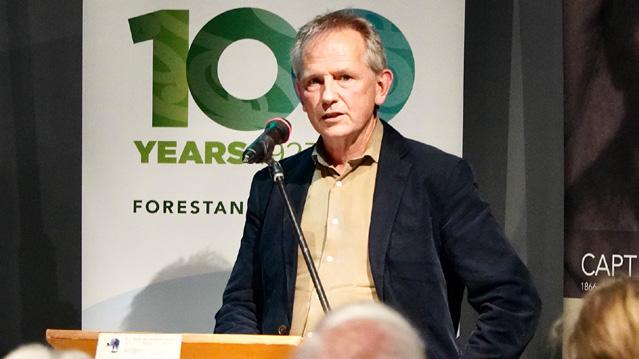
Forest & Bird CE Nicola Toki. Caroline Wood
Robbie Burton. Lynn Freeman
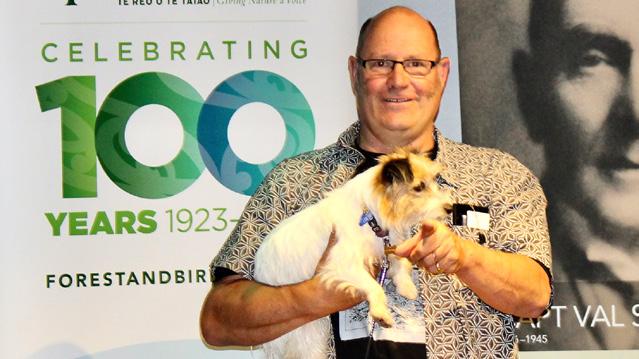
Justin Jordan, grandson of Val Sanderson. Lynn Freeman
| Forest & Bird Te Reo



ARIA ® 1 RGB
Waterproof and robust headlamp, ideal for exploring nature at night. 350 lumens
• White, red, green, or blue lighting to preserve night vision and provide stealth
• Rechargeable battery reduces environmental impact, also compatible with 3 AAA batteries
• Easy to use with a single button
• Lightweight and compact at 105 grams
WHAT’S UP DOC?
Far-reaching changes to the management of public conservation land have been proposed by the Minister of Conservation Tama Potaka.
While charging New Zealanders and tourists to access National Parks and paying for car parking grabbed the headlines, the Minister is also proposing much more significant changes, such as taking decisionmaking power away from the New Zealand Conservation Authority.
The Minister’s proposals, if enacted, would have a profound impact on how our public conservation land is looked after. They would also allow areas with high natural values to be sold off or traded in ways that go even further than the much maligned Fast-track Approvals Bill.
The proposed changes, announced in November, include:
n Placing greater power into the hands of the Minister of Conservation
n Removing key checks and balances provided by the independent New Zealand Conservation Authority and Conservation Boards
n Allowing further “amenity” zones on public conservation land, such as Mount Cook Village
n Putting limits on the public’s ability to influence how nature is protected in their areas.
Forest & Bird believes protecting our wildlife and wild places must be at the core of any changes. We urge all our supporters and members to have their say. The deadline for submissions is 28 February 2025.
Modernisation of New Zealand’s conservation management system is overdue, but the focus should be on looking after nature.
“It’s great the Minister recognises the need to improve the system, but the focus needs to be on conservation and not just bringing in more money,” said Richard Capie, Forest & Bird’s group manager for advocacy and policy.
“Much of what has been proposed is heavily focused on creating pathways to open up public conservation land to greater commercial activity. Let’s not forget, the core role of DOC is to improve outcomes for New Zealand’s threatened species and their habitats.
“It’s clear the Department of Conservation doesn’t have enough funding to manage the conservation estate.
“The answer to this is not to cut core funding in budget after budget and then propose the only way to pay for conservation is to sell off
land, make New Zealanders pay for access, and ramp up commercial activities on land that is first and foremost home to kea, kākā, kākāpō, and other unique native species.”
Forest & Bird says it’s essential New Zealanders aren’t priced out of their own parks and that the work of volunteers, including Society members, is recognised and respected by the government.
Connecting and engaging with nature is a cherished part of being a New Zealander, and being able to enjoy conservation land is an important part of this. For Māori, te taiao is taonga and a vital part of te ao Māori.
“All New Zealanders should be guaranteed the ability to connect with public conservation land regardless of how much money they earn,” added Richard.
MAKE YOUR VOICE HEARD
DOC is seeking feedback on its plans to modernise conservation land management and wants to know what you think. Should fees apply only to international visitors or also to Kiwi tourists? Which conservation projects and priorities should benefit from these fees? Go to https://bit.ly/3Cu6bZ6
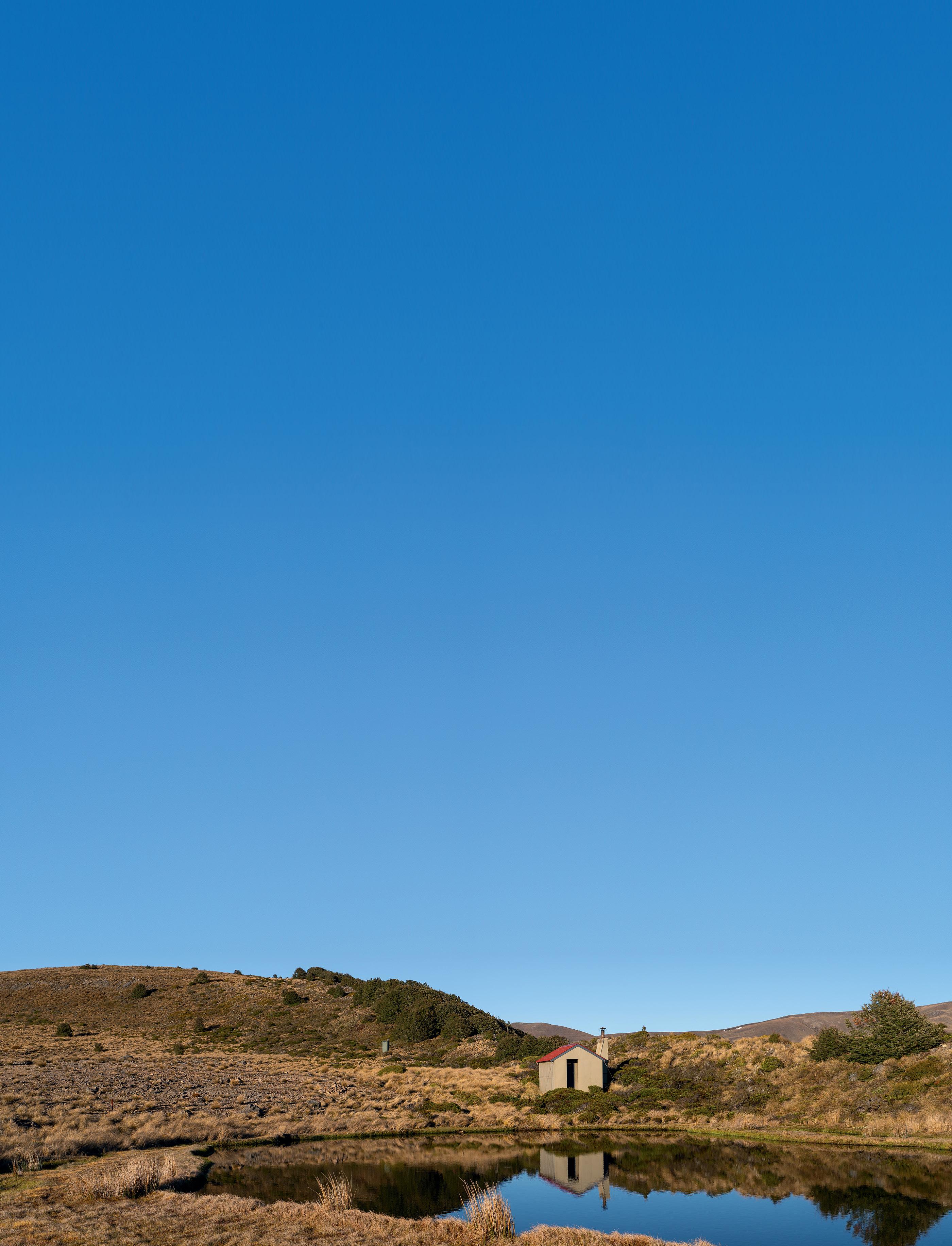
Tarn Hut, Puketeraki Forest Conservation Area, Canterbury Euan Brook
HAURAKI GULF PROTEST
More than 30,000 people have urged the government to walk-back its worrying last-minute decision to allow commercial fishing in protected areas of Tīkapa Moana the Hauraki Gulf.
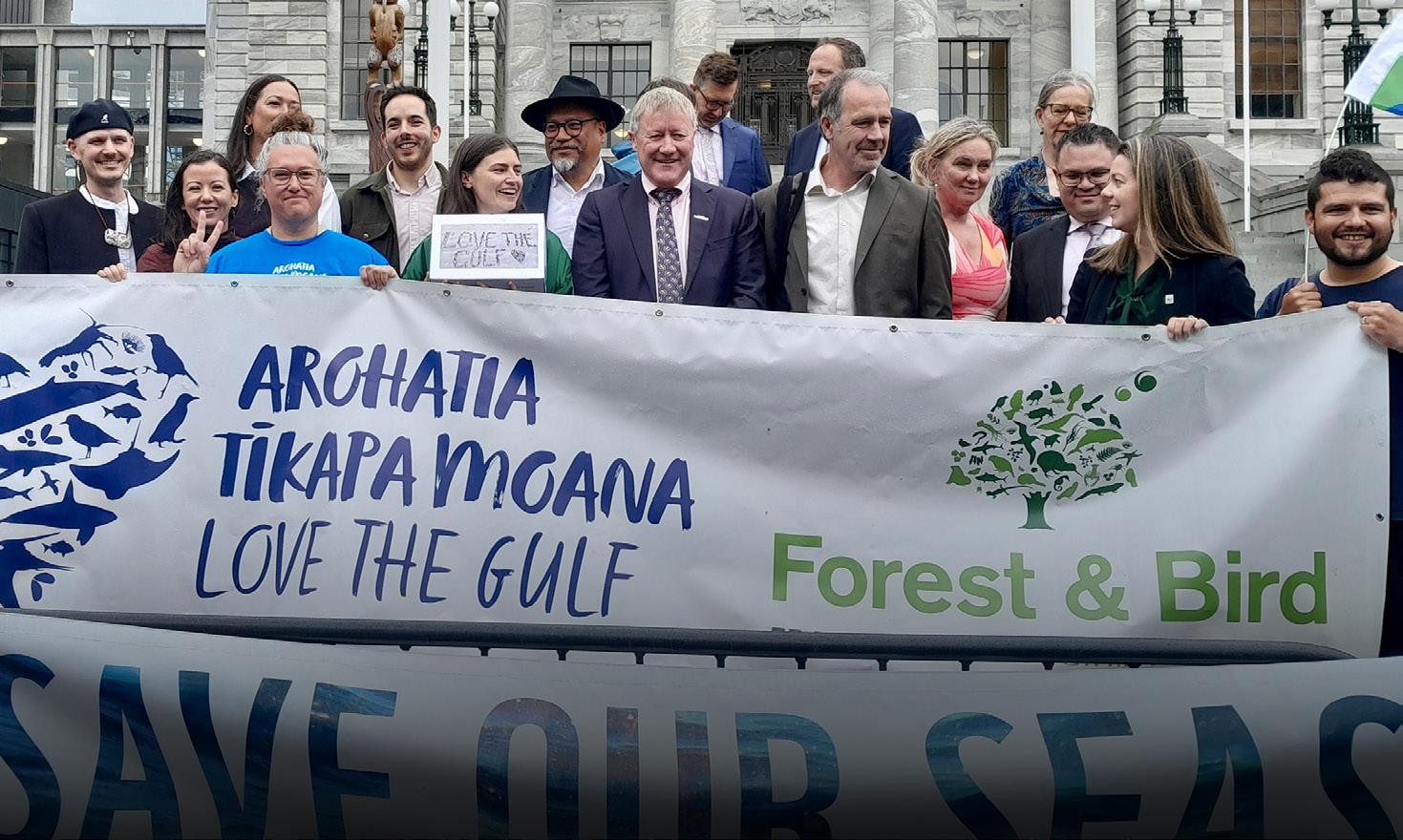
Forest & Bird, WWF-New Zealand, and Greenpeace Aotearoa united outside Parliament on 15 November to present MPs with an open letter and petitions signed by thousands of concerned members of the public.
The Hauraki Gulf Tīkapa Moana Marine Protection Bill is the result of many years of local and national advocacy by those who have a deep connection and aroha for the Hauraki Gulf Marine Park. Forest & Bird has been campaigning for stronger protections for Tīkapa Moana for nearly a decade.
It is home to a diversity of marine habitats, including biologically important dog cockle beds, kelp forests, and fragile coral. It is our seabird capital – one-third of all seabirds that breed in Aotearoa nest in the Gulf. The Bill will establish 19 new marine protection areas, nearly tripling the area currently protected.
But in October it was revealed the government was planning to make last-minute changes to the Bill and allow ring-net fishing to take place in two of 12 new “high protection areas”. These zones were explicitly designed to exclude commercial and recreational fishing and provide a safe haven for marine life to recover.
Forest & Bird’s Hauraki Gulf spokesperson Bianca Ranson said: “Today should be a good news story, a celebration of a wonderful step forward for the people of Auckland and the Hauraki Gulf. Instead, this lastminute amendment risks undermining the purpose of high protection by allowing commercial fishing.
“The Prime Minister knows first-hand how important the Gulf is to the people of Auckland. It’s not too late for the government to do the right thing and listen to the tens of thousands of New Zealanders who love the Gulf and want to see it protected.”
Ring-net fishing involves small commercial fishing boats casting nets in shallow waters, targeting species such as kahawai, mullet, and gurnard.
“Limited ring-net fishing will continue for a small number of fishers in protected areas who supply local communities,” said Minister Potaka, when he announced the amendment. “This method has very little impact on the environment beyond the target species.”
But Forest & Bird doesn’t think commercial fishing is an acceptable activity to allow in a marine protected area. Moreover, it sets a dangerous precedent for coastal reserves in other parts of Aotearoa New Zealand.
Allowing commercial fishing in marine protected areas could also see New Zealand failing to meet its international obligations. The country has pledged to protect 30% of the marine environment by 2030, only six years away.
TE TIRITI STRONG
The relationship of Māori to the environment is enshrined in law, the basis of which is the Treaty of Waitangi, or Te Tiriti. Treaty principles allow tangata whenua to hold the Crown to account for breaches of Te Tiriti across key laws like the Environment Act, Conservation Act, Crown Minerals Act, and Resource Management Act. Today, that ability is under threat. Forest & Bird’s constitution is clear that we will “take all reasonable steps within the power of the Society for the preservation and protection of the indigenous flora and fauna and the natural features of New Zealand”. That is why we are opposing the Treaty Principles Bill and supporting the rights of iwi, hapū, and whānau to protect te taiao.
Forest & Bird has a long association with Māori, as shown by the 1924 pānuitanga poster below with a “prayer” to all people, Māori and European. It warns we must stop clearing the bush and killing birds, or else more species will go the way of the moa. It says our birds are unique, bring many benefits, and without them “man would die”.
It was commissioned by the Society’s founder Capt Val Sanderson, who admired Māori and said Pākehā had much to learn from them about conservation. The pānuitanga was distributed far and wide, including to Hokianga, Kāpiti Coast, Whanganui, Taranaki, and Bay of Plenty.

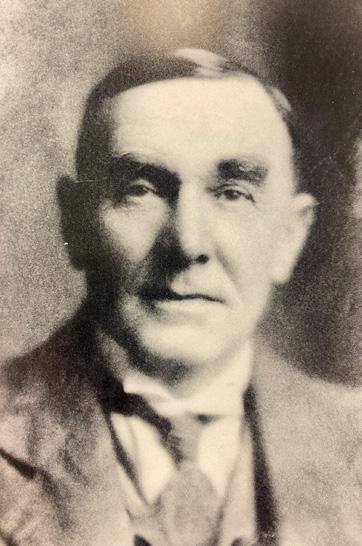
This pānuitanga poster was distributed throughout Aotearoa by Capt Val Sanderson. Alexander Turnbull Library
Forest & Bird’s Bianca Ranson (front left) with MPs during the petition handover at Parliament. Lynn Freeman
NATURE NEWS
GET READY BIRD FLU
DOC is asking Forest & Bird members and staff to be on the lookout for signs of bird flu (highly pathogenic avian influenza HPAI, H5N1). Birds and mammals such as seals can get very sick and die from the virus.
Aotearoa New Zealand is one of the last places on the planet that has never had a recorded case of the virus, which is causing devastation among wild birds and impacting chicken farmers elsewhere in the world.
We need to be prepared for bird flu when it arrives. Signs to look out for in birds include sudden death, tremors, weakness, paralysis, difficulty breathing, and diarrhoea.
There is no cure for bird flu. Once it arrives in New Zealand and spreads in wildlife, we won’t be able to eradicate it.
The public is being asked to report groups of three or more sick or dead birds, marine mammals, or other wildlife to the Ministry for Primary Industry’s exotic pest and disease hotline: 0800 80 99 66. Do not touch, handle, or collect dead or dying birds.
Bird flu has been spreading around the globe since 2021. New Zealand, Australia, and the Pacific are currently free of the H5N1 strain of HPAI. It is spreading internationally in wild migratory birds, which is the most plausible path by which it would reach New Zealand.
When bird flu gets to New Zealand, MPI, DOC, and the Ministry of Health have a plan to mitigate risks to threatened native birds. This focuses on actions to detect the virus, reduce the spread, and protect threatened species.
They hope to minimise the spread with strong biosecurity practices and by not disturbing wildlife. Conservationists can also support the health and resilience of threatened birds with things such as
predator control and breeding programmes.
During periods of active outbreaks, areas of public conservation land and waters may have restricted access or be closed to reduce stress on wildlife and reduce the likelihood of humans (and their pets) from catching the disease.
Trials are being carried out to work out how effective vaccination could be in protecting our most threatened species during an outbreak – to prevent extinction.
In countries where the H5N1 strain of HPAI is present, human infection has been rare. There is no evidence that the strain of bird flu circulating globally can be spread easily from human to human.

SIMPLE WAYS TO HELP
n Keep pets away from wildlife.
n Stay away from nesting birds on beaches and rivers.
n Keep shoes and clothes clean to avoid spreading disease when visiting conservation land or agricultural areas.
n Call 0800 80 99 66 to report groups of three or more sick or dead birds, marine mammals, or other wildlife.
n Don’t touch, handle, or collect dead or dying birds.
For more information, see www.doc.govt.nz/avianinfluenza or go to Biosecurity New Zealand’s bird flu page: mpi.govt.nz
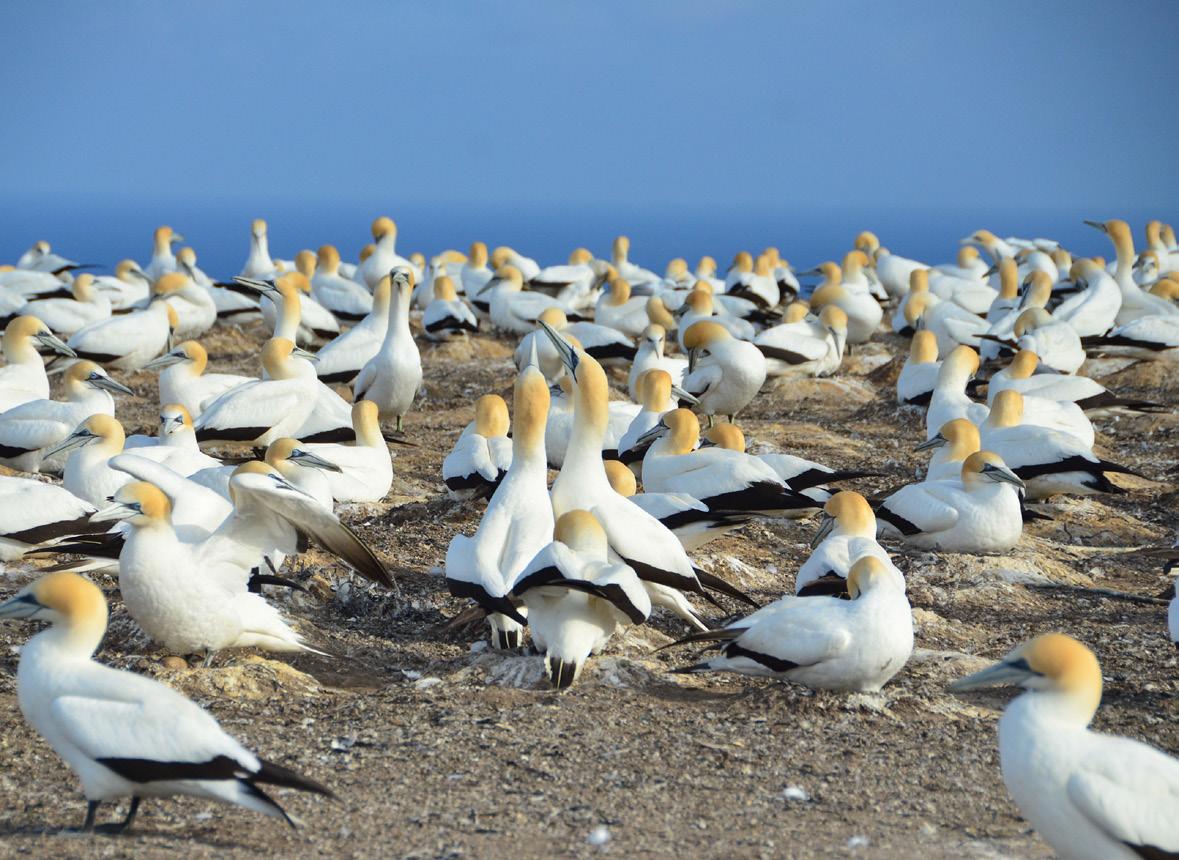
Tākapu Australasian gannets. DOC
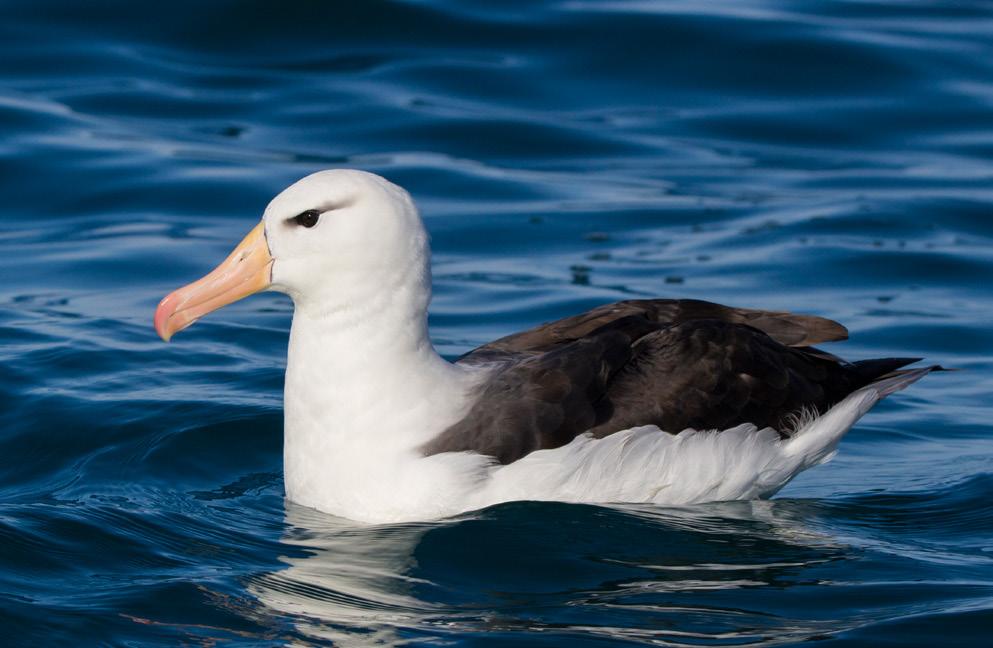
Black-browed albatross. Oscar Thomas

TARAKIHI WIN
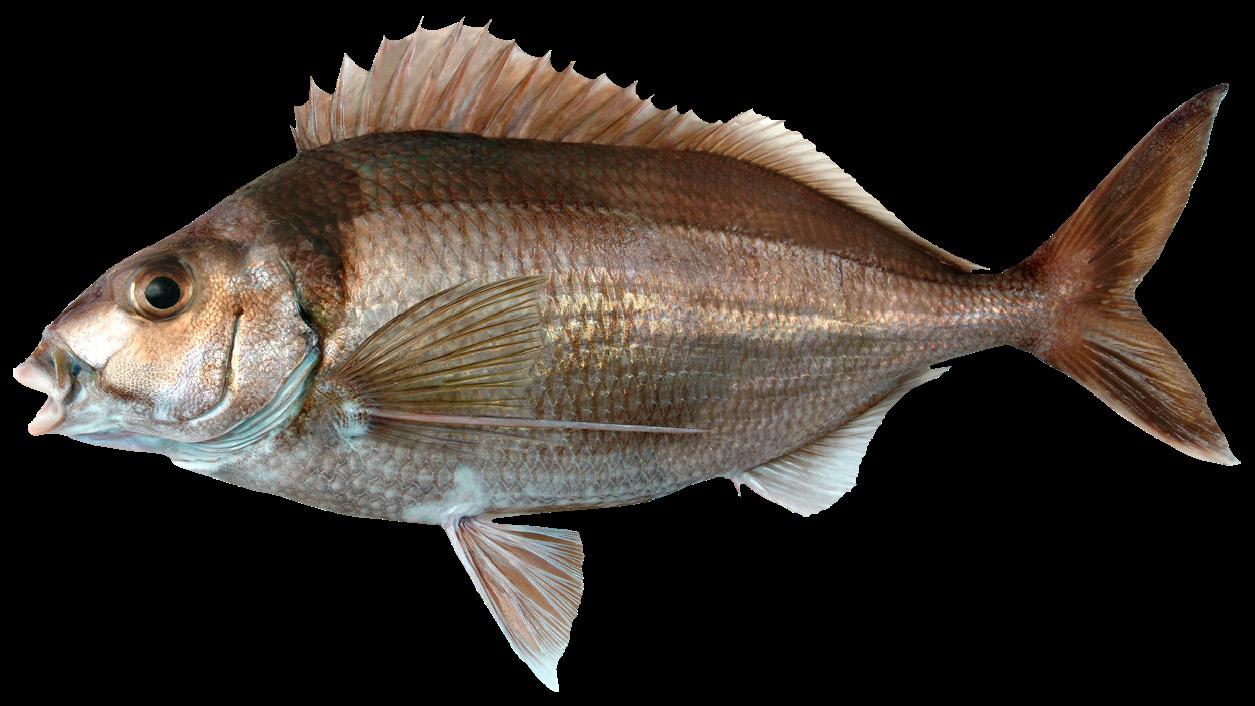
After five years of legal proceedings, the Supreme Court has upheld Forest & Bird’s case that overfished tarakihi stocks need to be rebuilt within a period based on the stock’s biology and environmental conditions.
In 2019, Forest & Bird challenged a decision by the Minister of Fisheries to double the period for rebuilding tarakihi stocks from 10 to 20 years. Stocks were hovering at around 17% of their natural abundance. It was the first time the Society had challenged a Minister’s decision under the Fisheries Act.
Although not all aspects of the Supreme Court’s decision went in its favour, Forest & Bird is delighted the Court has upheld the concept that a biological and environmental consideration – sustainability – is the overriding requirement when setting a rebuild period.
Thanks to our generous supporters who contributed to our legal case, this important point of law will now apply to other fish stocks too.
The Minister conceded his decision contained an error, but this was challenged by the seafood industry, which argued the Minister was entitled to take social, cultural, and economic considerations into account when deciding on the rebuild period. The case headed to the courts.
In September 2024, the Supreme Court held the Fisheries Act “sets a sustainability limit on TAC (total allowable catch) decisions for recovering stocks ... Periods appropriate to the stock must be assessed by reference to the stock’s biological characteristics and environmental conditions, and without regard to social, cultural, and economic factors.”
Sally Gepp KC, who represented Forest & Bird in the Supreme Court, said: “The decision confirms that when a fishery is overfished, as it has been in this case, the length of time to rebuild depleted fish stocks must be based on science, not driven by economic interests.
“That science-based period then influences the total allowable catch of tarakihi, and drives catch reductions where necessary. The Minister can consider social, cultural, or economic considerations in choosing between different rebuild periods, but all options must be appropriate for the stock – biologically and environmentally.”
Forest & Bird’s tarakihi team in 2020 (from left) Sally Gepp, Kat Goddard, Madeleine Wright, and Peter Anderson. Forest & Bird
LET’S BE CRYSTAL CLEAR...
Our precious rivers and lakes are under threat, and we need your help to send an important message to the Prime Minister. Tom Kay
With summer here, we can see the best and worst of our waterways – those where we can safely swim in cool, clean water – and those off-limits, plagued by algal blooms, low flows, and health warnings.
Do you have a favourite family swimming spot that is no longer safe to swim in?
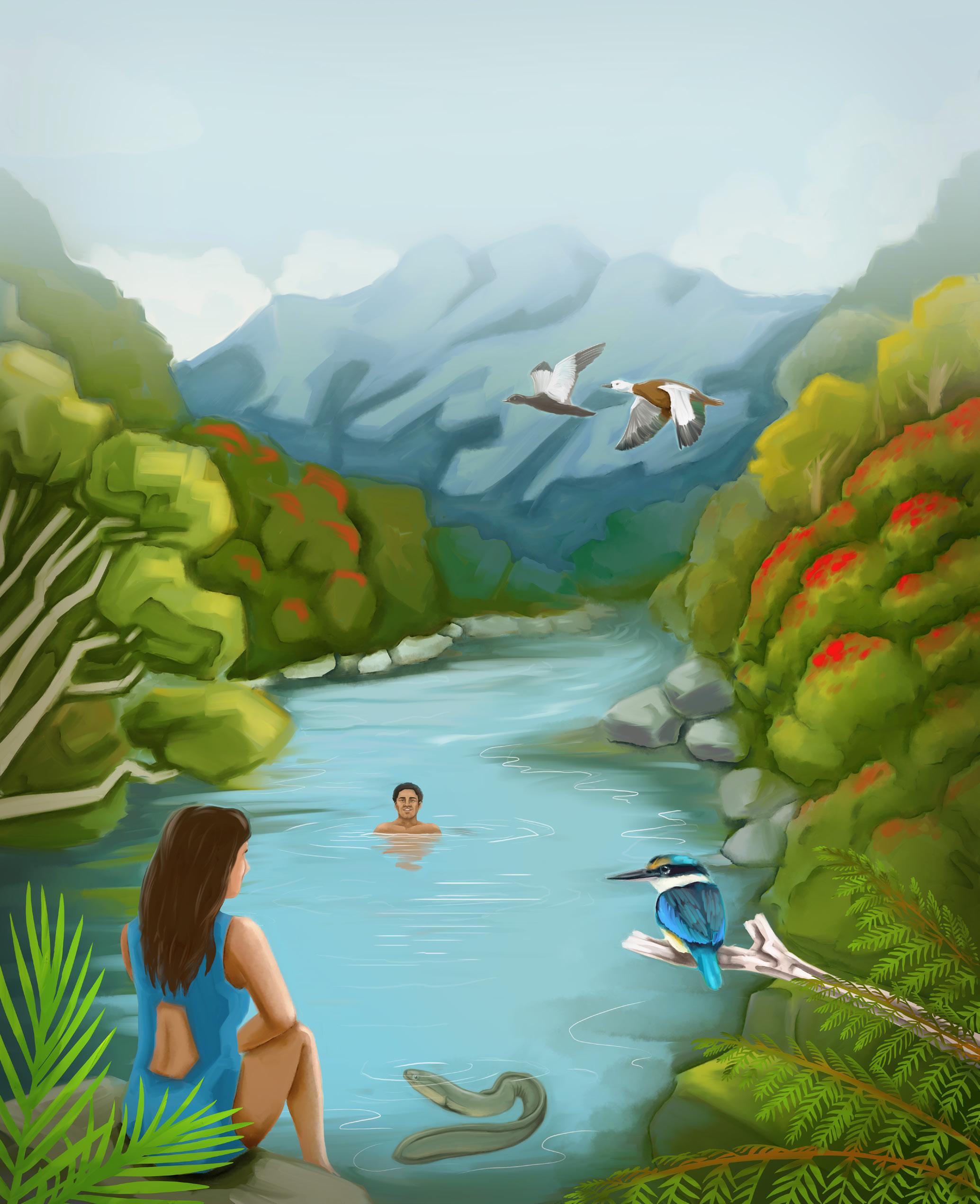
It wasn’t so long ago that people and wildlife could enjoy swimmable rivers and lakes throughout the country. With this in mind, we have created this poster (right) showing two people enjoying a summer swim in nature. It was inspired by vintage New Zealand tourism advertisements of a bygone era when it was safer to swim in many more waterways than today.
Over recent decades, our freshwater has degraded significantly. Today more than 95% of rivers in urban, farmed, and exotic forest areas fail to meet at least one water quality guideline.
To make things worse, government ministers are poised to reverse vitally important freshwater protections, which will see more rivers polluted and depleted of
water. It is part of the coalition government’s War on Nature.
If you scan the QR code or type in the URL on the poster, you will be taken to a dedicated page on Forest & Bird’s website where you can sign a letter asking Prime Minister Christopher Luxon to stop his government’s attack on freshwater. It will take just a few minutes to make your voice heard.
Then please put up the A4 poster enclosed with this magazine somewhere others can see it – a noticeboard at your local tramping club, community space, or school, on your window, or just on your fridge for family and visitors to see, scan, and sign the letter over the summer. You could also laminate and display it at a popular local swimming spot.
Kiwis have a deep emotional connection to rivers and lakes in Aotearoa – and one of our strongest drives is wanting to see government action to restore their health.
Please join thousands of other New Zealanders and tell the Prime Minister that you want him to protect our rivers and lakes for people and wildlife.
The more letters Prime Minister Luxon receives, the harder it will be for him to ignore our voices. But time is running out.
In the Spring issue, I explained how the government was pushing the environmentally destructive Resource Management (Freshwater and Other Matters) Amendment Bill through select committee. While it was doing this, Ministers also slipped in an extra change.
Just days before the Bill passed its third reading in October, an amendment paper from Minister Chris Bishop effectively stopped regional councils bringing in new rules at a local level to address freshwater pollution.
Instead, councils are now required to wait for the government to write its “new” (and likely much weaker) direction on freshwater policy.
The government’s fast-track approvals legislation is also threatening waterways – including allowing for the destruction of rivers to make way for new dams.
Plans for Ruataniwha dam, in Hawke’s Bay, are back on the table, despite Forest & Bird’s Supreme Court win for nature in 2017. Some of our last remaining 10% of wetlands could also be destroyed without community consultation to make way for new mines and quarries.
One of the last wild rivers on the West Coast, the Waitaha, is threatened by a hydro scheme that was turned down by the previous government on environmental grounds.
It doesn’t have to be this way. Together, we can fight for healthy freshwater for local communities and native species.
Anyone can download and print Forest & Bird’s freshwater campaign posters at forestandbird.org.
nz/DownloadAPoster. Please share this link with friends and whānau.
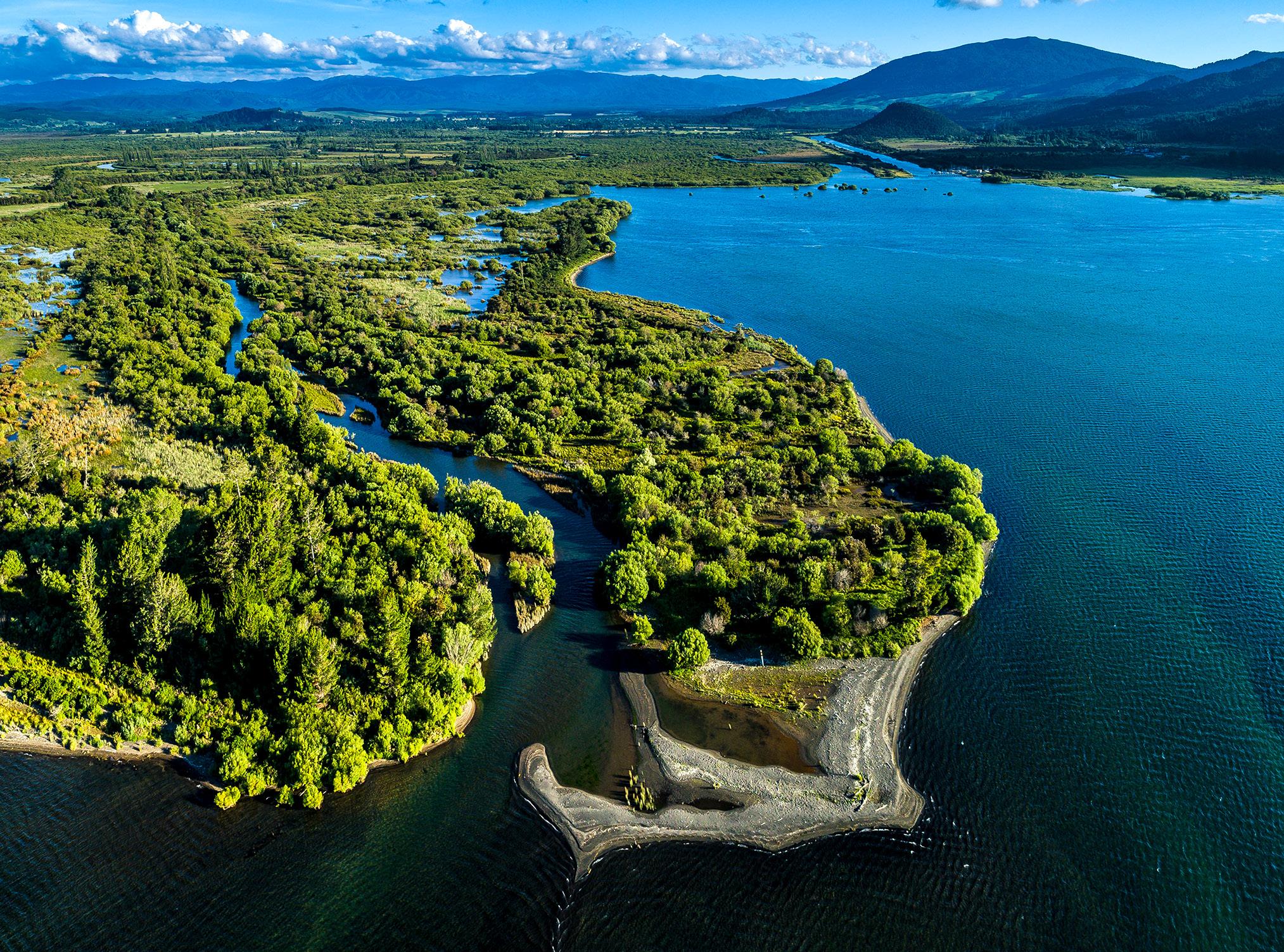
River Tongariro delta, Lake Taupō. Rob Suisted
FIGHT FOR FRESHWATER
With your help, we can clean up our waterways and build a smarter, greener economy.
Let’s not let the government rip up strong protections and allow polluters to destroy what we hold dear.
Robust regional freshwater plans were set to be introduced by January 2025 following a longrunning campaign by Forest & Bird and other e-NGOs.
Local councils were on the cusp of starting to clean up the dire state of hundreds of lakes and rivers after years of unchecked intensive agriculture and other polluting industries severely degrading them.
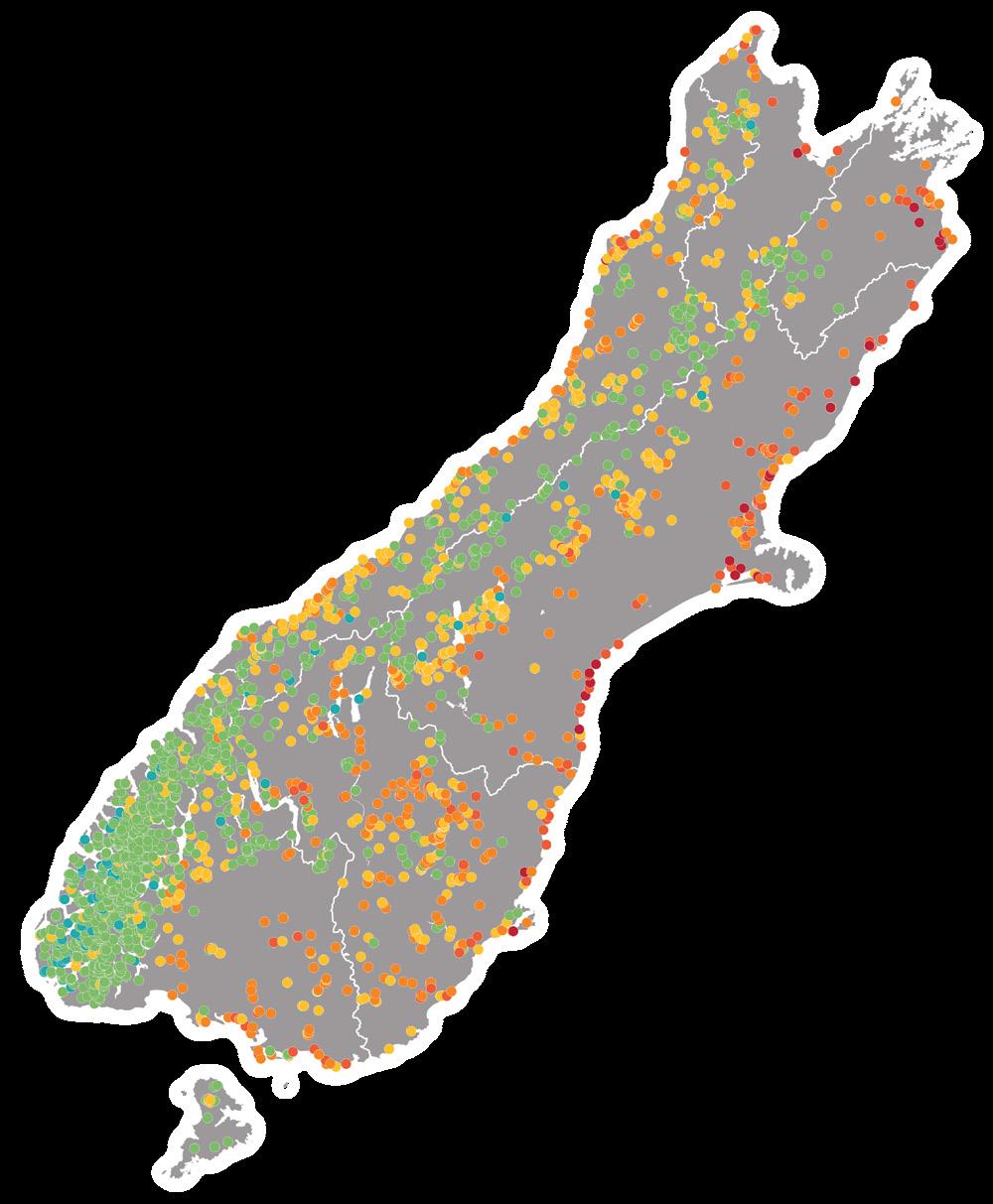
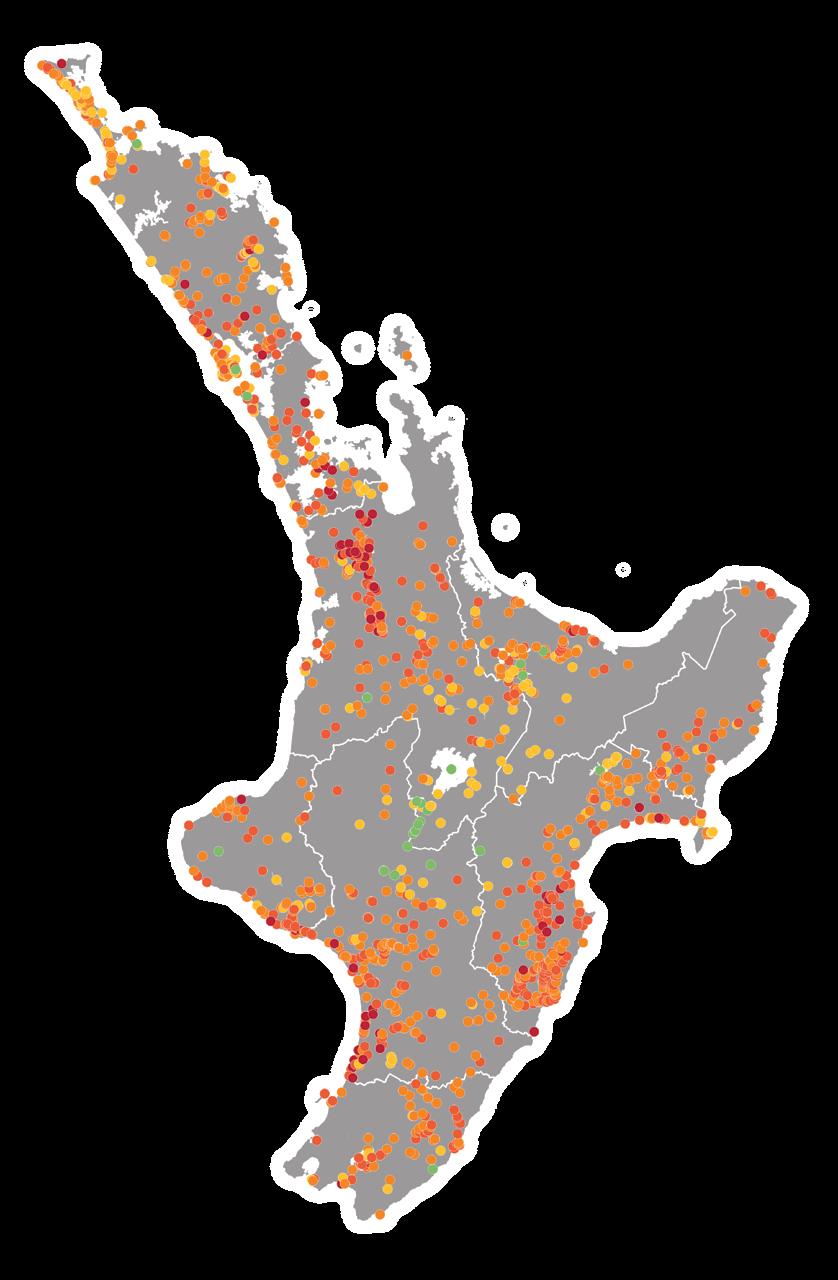
For example, more than 95% of our rivers in urban, rural, and non-native forest areas currently fail to meet water quality guidelines. Check out the Lakes380 map on this page. It shows the state of our waterways – red is bad, and green is good.
Since 1990, dairy cattle numbers in New Zealand have nearly doubled. Nitrogen fertiliser application has skyrocketed by 629%.
Today, numerous swimming spots pose a high risk of infection. Nitrate levels in groundwater, including some sources of drinking water, continue to rise.
Most of our native fish are threatened or at risk of extinction. We’ve drained or destroyed almost all wetlands.
Thanks to your support and donations, Forest & Bird has spent decades working alongside communities to fight for clean, healthy freshwater. Recently, good progress had been made.
The Labour government approved a policy that requires decision-makers to prioritise the health and wellbeing of water and communities over polluting industries and private profit.
For the first time in New Zealand’s history, our country was going to put the health of our waterways and communities above private profits.
But now Prime Minister Luxon and his coalition government want to dismantle this progress, putting polluters back in control.
We can’t let this happen. We must act swiftly.
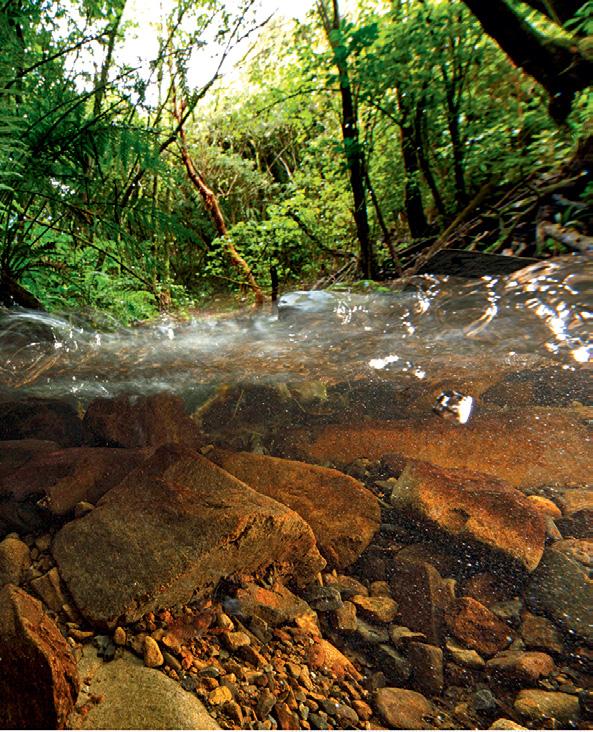
OUR IS WORTH FIGHTING FOR WATER QUALITY
The government plans to replace Aotearoa New Zealand’s freshwater policy by mid-next year, prioritising polluting industries over human health and the environment.
Everything we’ve fought for in recent decades is at risk of being undone in this government’s War on Nature. That’s why we need your help.
Your tax-deductible donation can help us fight back.
A gift will support Forest & Bird’s experts to fight the changes and challenge the government’s plans.
If we don’t act today, more people will suffer from poor drinking water, and our already-stressed environment and threatened native species won’t stand a chance.
There is another way. Let’s protect and restore our waterways for future generations.
Please donate today at forestandbird.org.nz/ fightforfreshwater.
SOUTHERN UNDERBIRDS
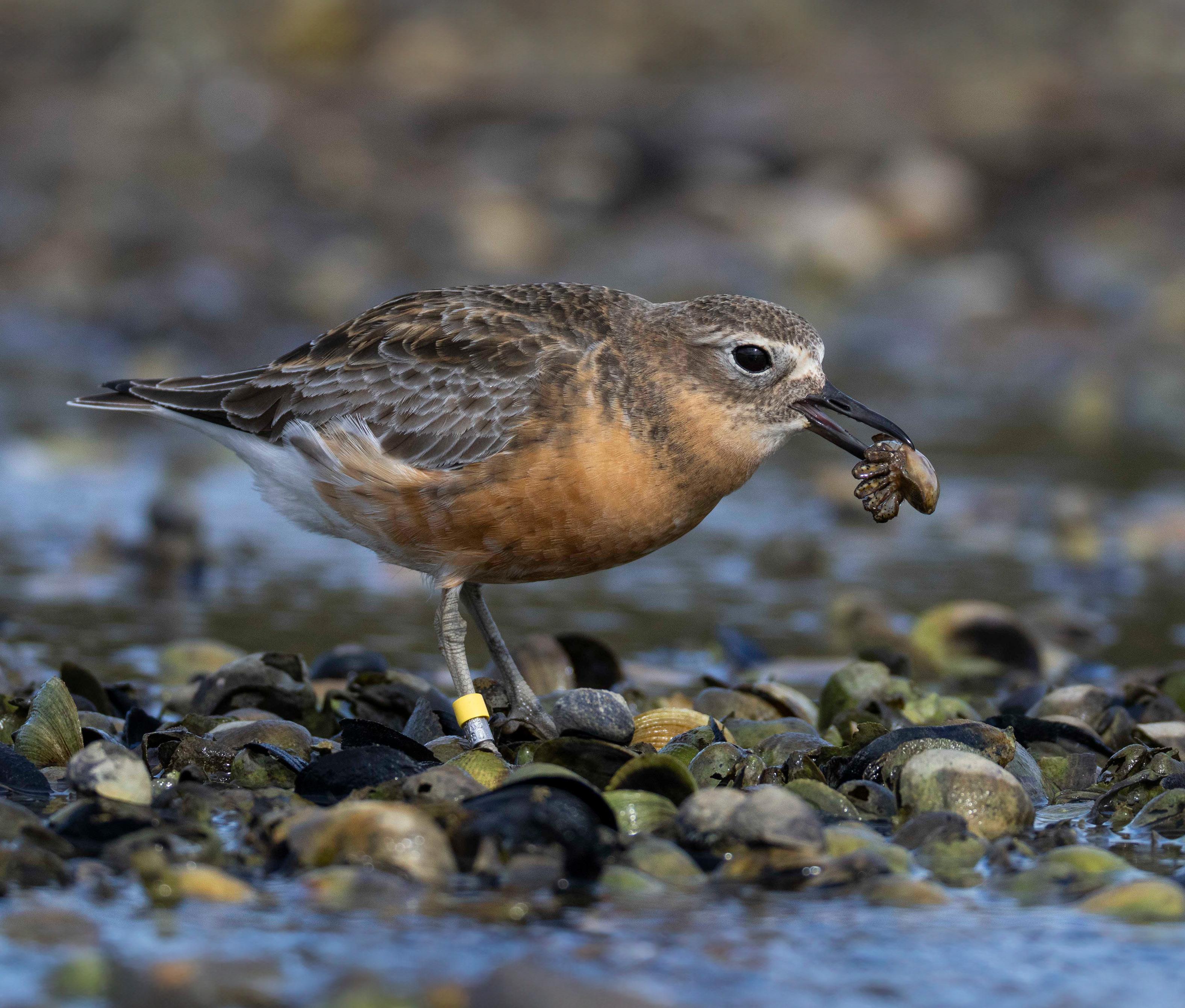
Epic efforts are underway to save the last 101 pukunui southern New Zealand dotterels from extinction. Kerrie Waterworth
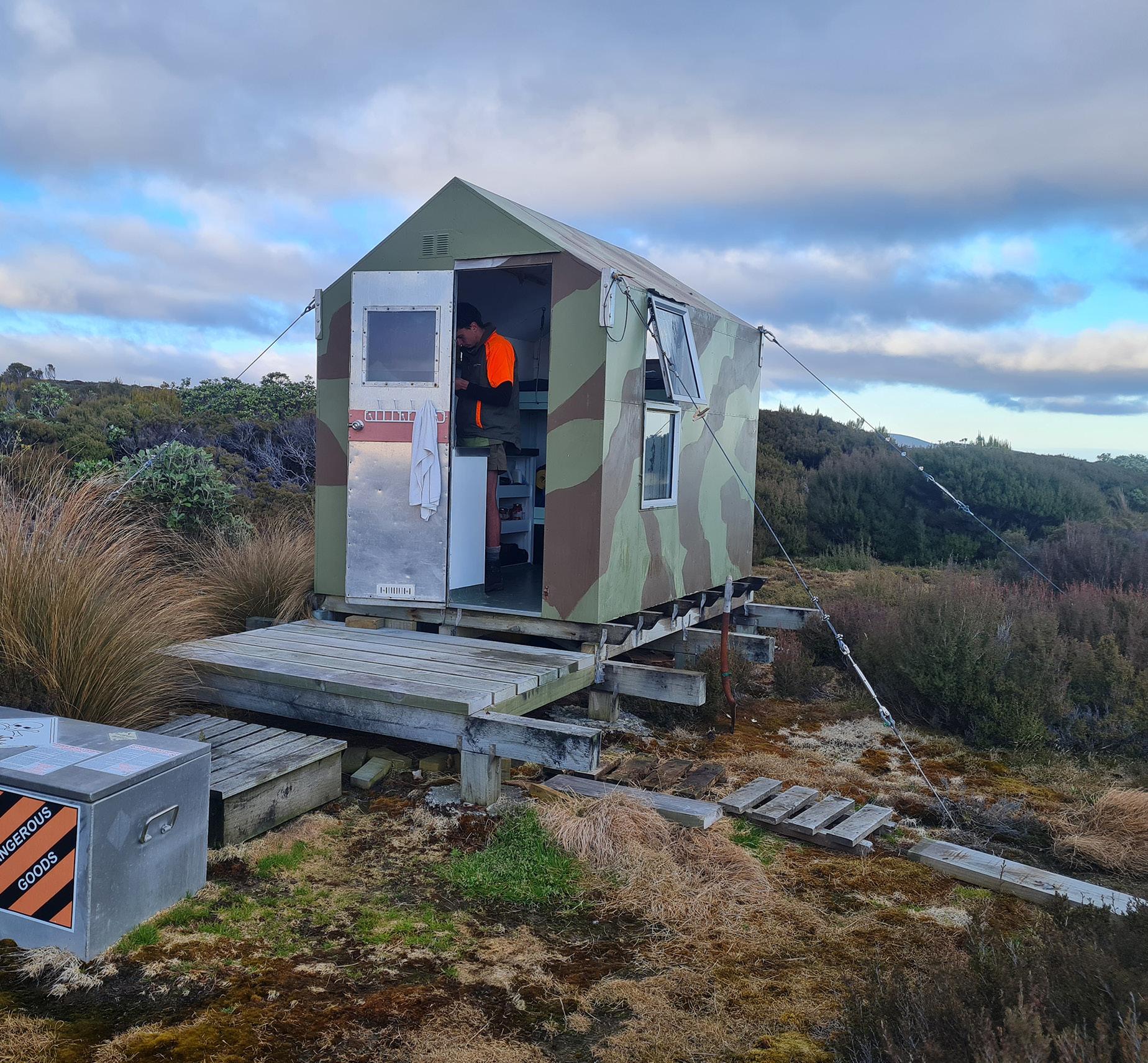
Imagine spending up to eight days at a stretch isolated above the bush line on the mountain tops of Rakiura Stewart Island, where your home is a backcountry hut and almost every day you are buffeted by the strong westerly Roaring Forties winds, rain, hail, or snow.
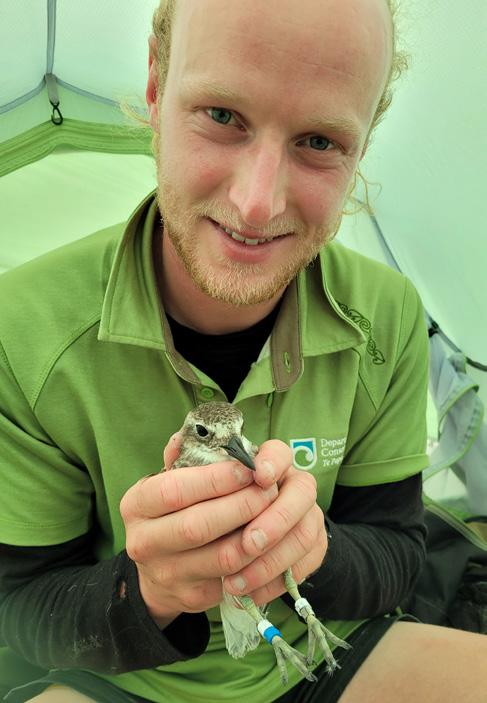
Sounds appealing? Twenty-six-year-old Guy McDonald is there every month, carrying out predator control, and says he wouldn’t want to be anywhere else.
Guy was the inaugural winner of Forest & Bird’s Te Kaiārahi Rangatahi o te Taiao Youth Award in 2015. Now, nearly a decade later, he is on the frontline of efforts to save the last remaining population of pukunui southern New Zealand dotterel.
The former South Canterbury Kiwi Conservation Club member is the lead field ranger for the Department of Conservation’s Pukunui Recovery Project to save the critically endangered native bird. There are just 101 adults left in the world, all living and breeding on Rakiura Stewart Island.
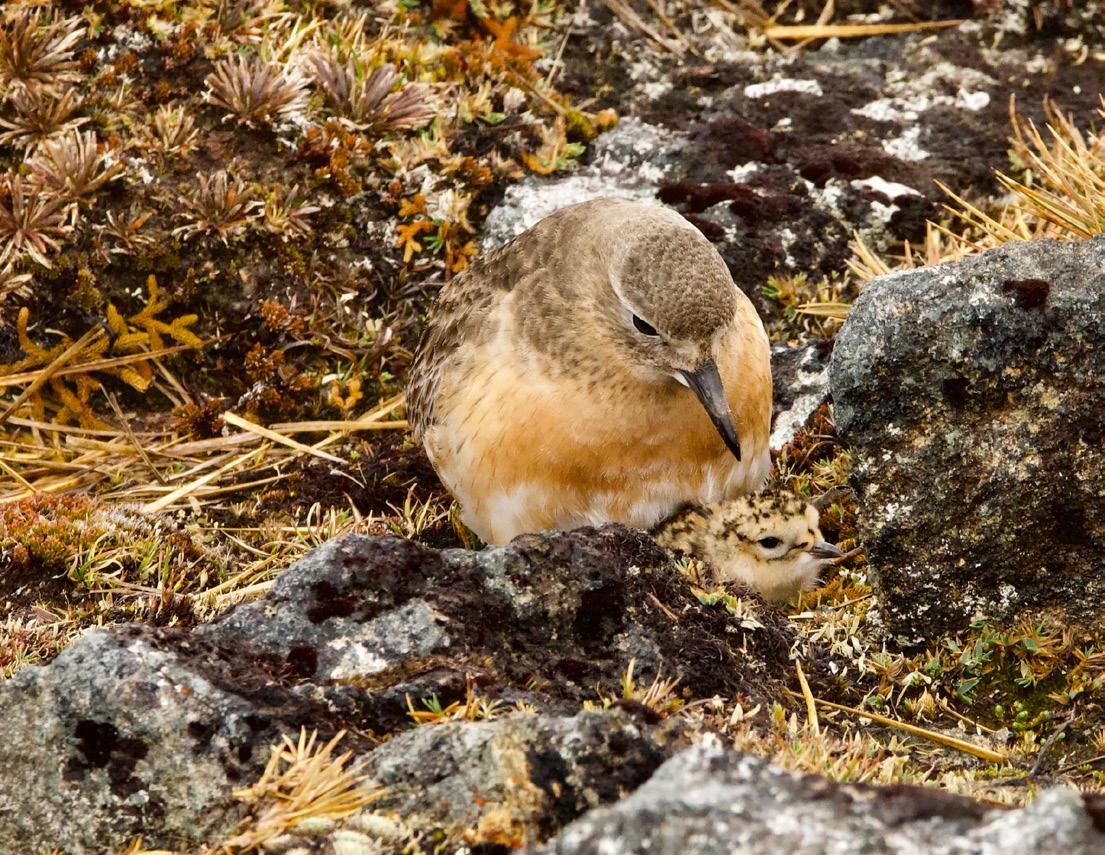
If you have never heard of the southern dotterel or pukunui (meaning “big tummy” in te reo), it is not surprising, as they spend most of the year feeding on the beaches and estuaries of Rakiura and from September to January nesting and breeding among the alpine plants and scrub on the island’s mountain tops.
Guy says he doesn’t struggle with the remoteness as there is always something to keep him busy in the field
Pukunui southern New Zealand dotterel Oscar Thomas
– searching for dotterel nests, modifying cat traps, or working on little infrastructure projects.
“I joined the Pukunui (Southern New Zealand Dotterel) Recovery Project after spending a year working on the Kākāpō Recovery Programme in 2022,” says Guy.
“I’d always wanted to live on Rakiura and help protect its birdlife, so when I was offered a job leading the Southern New Zealand pukunui dotterel team I couldn’t turn it down.”
Guy has found pukunui “very friendly and curious”, often approaching people on the mountains in a polite and inquisitive way.
“To me, they are like the kea of Rakiura, roaming the mountain tops, and have a similar charismatic trill call they do when gliding around playfully in small flocks.
“They are also one of the most loyal and dedicated birds I have ever worked with, defending their nests with their life in most cases.”
In August/September, when the breeding season is about to begin, all adult pukunui develop dark reddishorange plumage.
“My co-worker Daniel Cocker (Dotterel Dan) often refers to them as a ‘tomato with wings’, which I reckon sums them up pretty well, especially in the peak of the breeding season.”
Pukunui Southern New Zealand dotterels are larger, heavier, and darker than the northern New Zealand dotterels. They were once widespread throughout the South Island, breeding along the Southern Alps. They were last seen in the South Island in the early 1900s,
soon after the introduction of stoats.
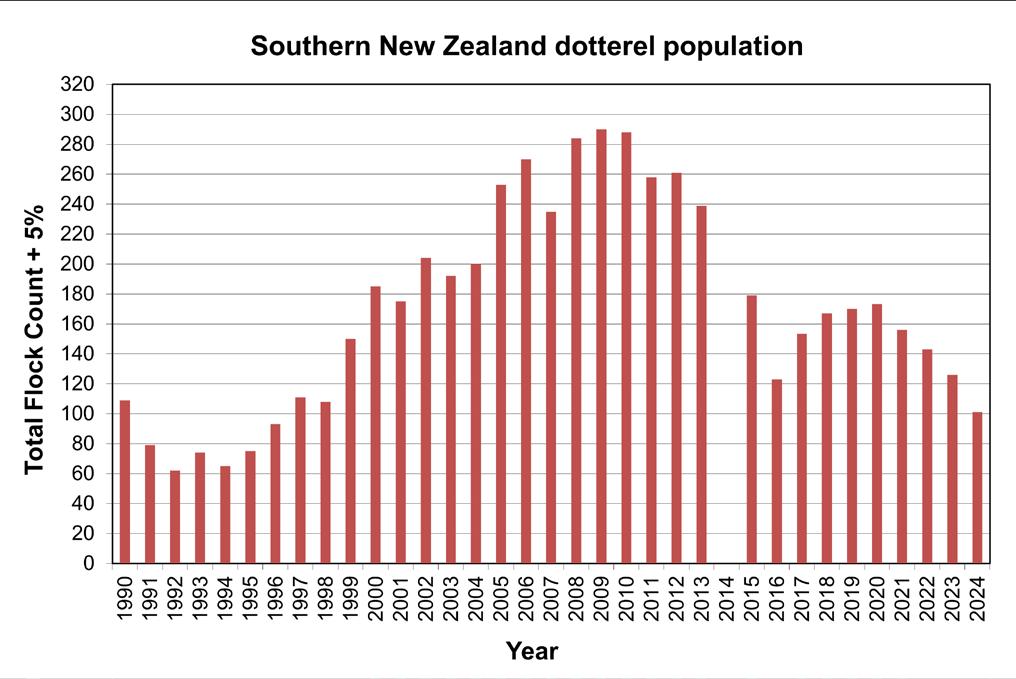
In 1991, the last remaining population on Rakiura plummeted to an all-time low of just 62 birds, but by 2010 their numbers had increased to 300 thanks to predator control.
Sadly, since then, the population has been on a steep decline, with 126 in 2023 and only 101 in 2024. The species is now classified as nationally critical, one of the most severely threatened native New Zealand birds, at high risk of extinction.
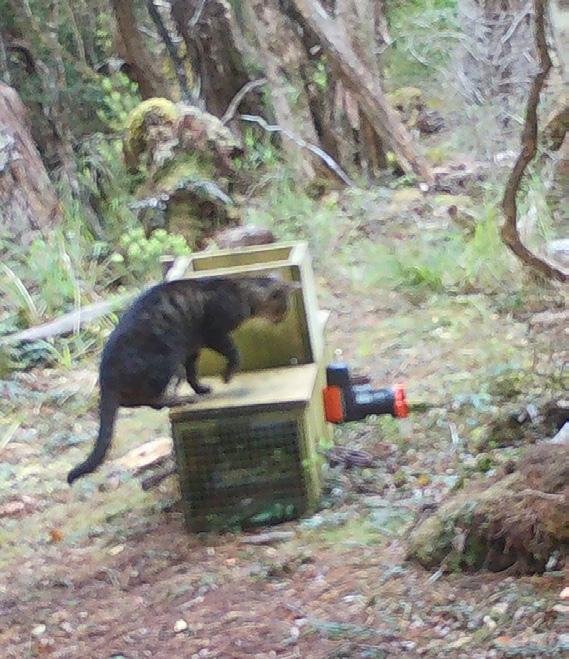
Feral cats are the biggest threat to the survival of pukunui, followed by swamp harriers, rats, spur-winged plovers, black-backed gulls, and white-tailed deer.
In the September 2023 to January 2024 breeding season, the recovery team trapped 32 feral cats from around four of the main pukanui breeding sites – Northern Tin Range, Mount Rakeahua, Rocky Mountain, and 511 Hill.
This breeding season, they removed 30 feral cats from around the same breeding sites before the first pukunui nest was discovered in early September.
DOC’s Pukunui Recovery Project has been working to protect the birds during the breeding season since 1994, but DOC recently increased the funding to recruit Guy and three other rangers for year-round predator control.
Rakiura Stewart Island Senior Ranger Biodiversity Kevin Carter says, with 50% of its population lost over five years, pukunui are projected to go functionally extinct within three to five years unless a more effective strategy is used.
Guy McDonald at Mason Bay, Rakiura Laura Findlay
Dotterel recovery team HQ, Rakiura Guy McDonald
“Given the (budgetary) challenges we’re up against, we must focus our effort on work that makes the biggest difference for Aotearoa New Zealand’s unique biodiversity.”
Kevin says the Pukunui Recovery Project will be ongoing and has no defined end date.
The current goal is to increase the number of breeding pairs to at least 100 by 2030, which should give the population the ability to cope with chance events or predator outbreaks that currently pose a very high risk to the survival of the pukunui population.
Next autumn, Predator Free Rakiura will start removing feral cats, possums, and rats from its first 10,000ha block (10km x 10km) at South Pegasus, in the southern end of Rakiura.
Kevin says this will help several pukunui breeding pairs in the area, but predator control of spur-winged plover, Australasian harrier, and white-tailed deer will be required to help maximise the number of eggs that hatch and chicks that survive through to adulthood.
In the meantime, back from an eightday stint on a Rakiura mountain top protecting the breeding pukunui, lead ranger Guy says growing up in Timaru and working with South Canterbury KCC and Forest & Bird volunteers during his teenage years opened his eyes to the challenges and threats our precious wildlife face, fuelling his passion for protecting unique species on the brink.
“The pukunui are a Rakiura gem,” he says.“If we want our grandchildren to be able to see them, it’s up to us to fight for their survival.
“I often think about the birds that are no longer with us, like the moa, and wonder what it would be like if they were still around today. Could they have been saved too?”
VANISHING NATIVE SPECIES
Chelsea McGaw, Forest & Bird’s Otago and Southland regional manager
Aotearoa New Zealand has the highest proportion of threatened indigenous species of any country in the world. This includes 90% of all seabirds, 84% of reptiles, 76% of freshwater fish, and 74% of terrestrial birds. The Department of Conservation is the organisation charged with helping managing these species, on a skeleton budget.
The decline of pukunui is an alarming one, but we have been here before. Both kākāpō and takahē were functionally extinct but have been brought back from the brink by DOC under intensive management. Kakī declined to a low of just 23 birds in 1981, when DOC decided to step in. But saving our unique manu doesn’t come cheap, with an estimated $25 million spent on kākāpō recovery over the last 45 years.
A few months ago, Conservation Minister Tama Potaka said that the goal of saving every species was “very aspirational” and something “we may not be able to deliver on”. Not what you want to hear coming from the Minister in charge of promoting conservation of the natural and historic heritage of New Zealand. He said it could cost hundreds of billions of dollars to stop all our native species becoming extinct.
With year-on-year budget cuts continually hammering DOC, the axing of Jobs for Nature funding, and a government dead set on prioritising our economy over nature, it is hard to be optimistic for species in serious trouble, such as pukunui. We take solace in the knowledge there are hardworking and passionate people, such as Guy and Dan, fighting with everything they have to save these beautiful birds.

Feral cat caught on a trail camera, Rakiura. DOC
Pukunui and chick, Mount Rakeahua Craig Stonyer
Chelsea McGaw
TAONGA TURTLES
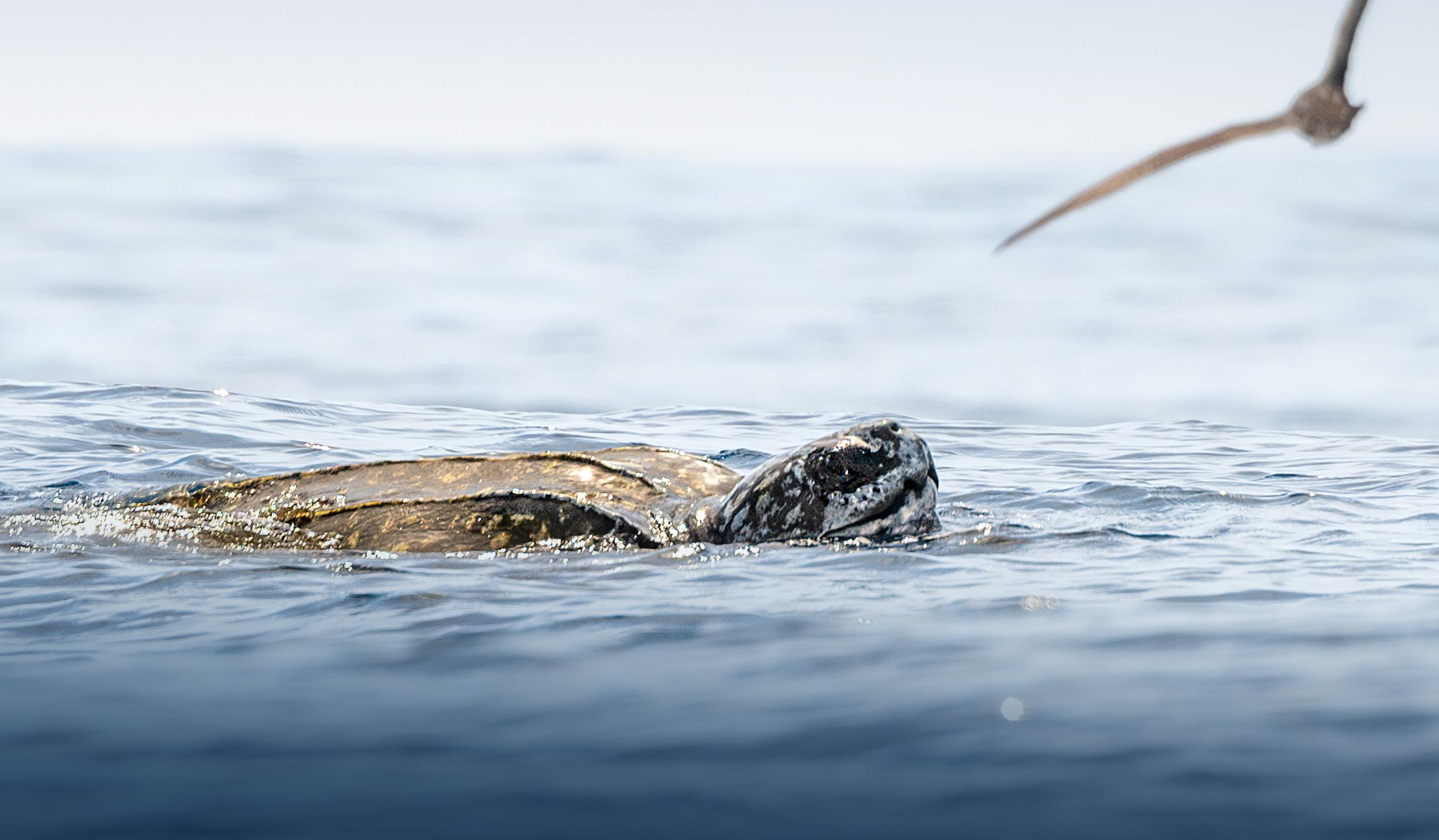
Scott Brooks sighted this honu leatherback turtle 40km offshore, east of the Poor Knights Islands, during one of his pelagic seabird tours. “It popped up pretty close to us, let out some loud exhales, then cruised along for maybe one minute before diving, never to be seen again,” he said. “It was a very special encounter.”
Scott Brooks/thepetrelstation.nz
Western Pacific leatherback turtles are in big trouble. Peter Langlands looks at how we can better protect these giants of the ocean when they visit our waters.
Many of us do not associate New Zealand waters with honu marine turtles, thinking of them being more at home in tropical waters. Yet five species of honu have been sighted in our seas (see overleaf), with one species in particular – leatherback –being recorded more frequently over the past decade.
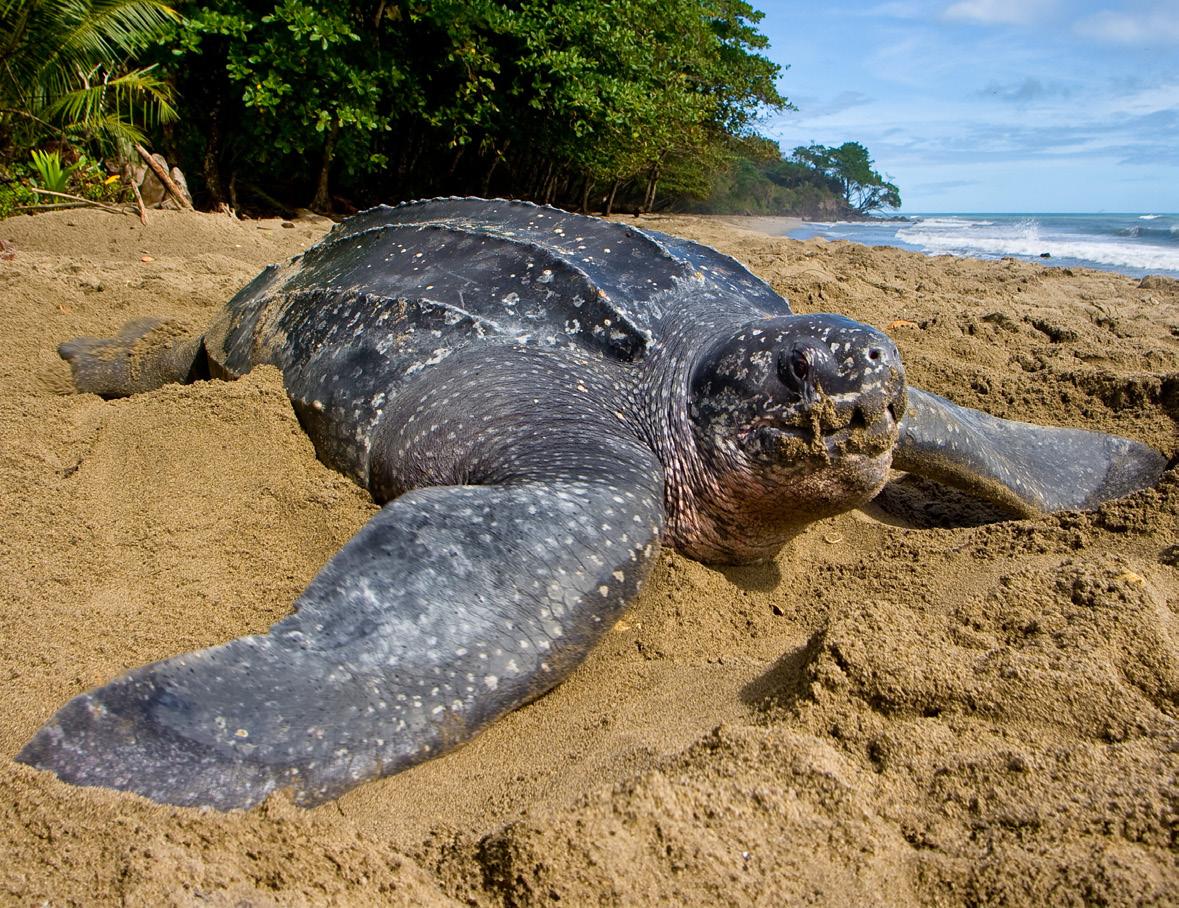
Leatherbacks (Ermochelys coriacea) are massive, by far and away the largest of all the marine turtles, and one of the largest reptiles on earth.
New Zealand’s northern waters are considered a seasonal home for a significant number of leatherback turtles. They are very distinctive when sighted at sea, having an elongated shell with longitudinal ridges running down it and a head that projects out at a slightly upward angle.
There have also been sightings in our coastal waters, especially in the Hauraki Gulf and outer Bay of Plenty, where they are encountered by New Zealanders out boating or kayaking during summer.
Warming ocean temperatures are considered to be one reason there may have been an increase in local encounters with leatherback turtles, especially in the last five years.
The leatherback turtle spends most of its life in the open ocean. Its activity is influenced by the occurrence of its prey (primarily jellyfish) in the water column, feeding at depth during the day and near the surface at night.
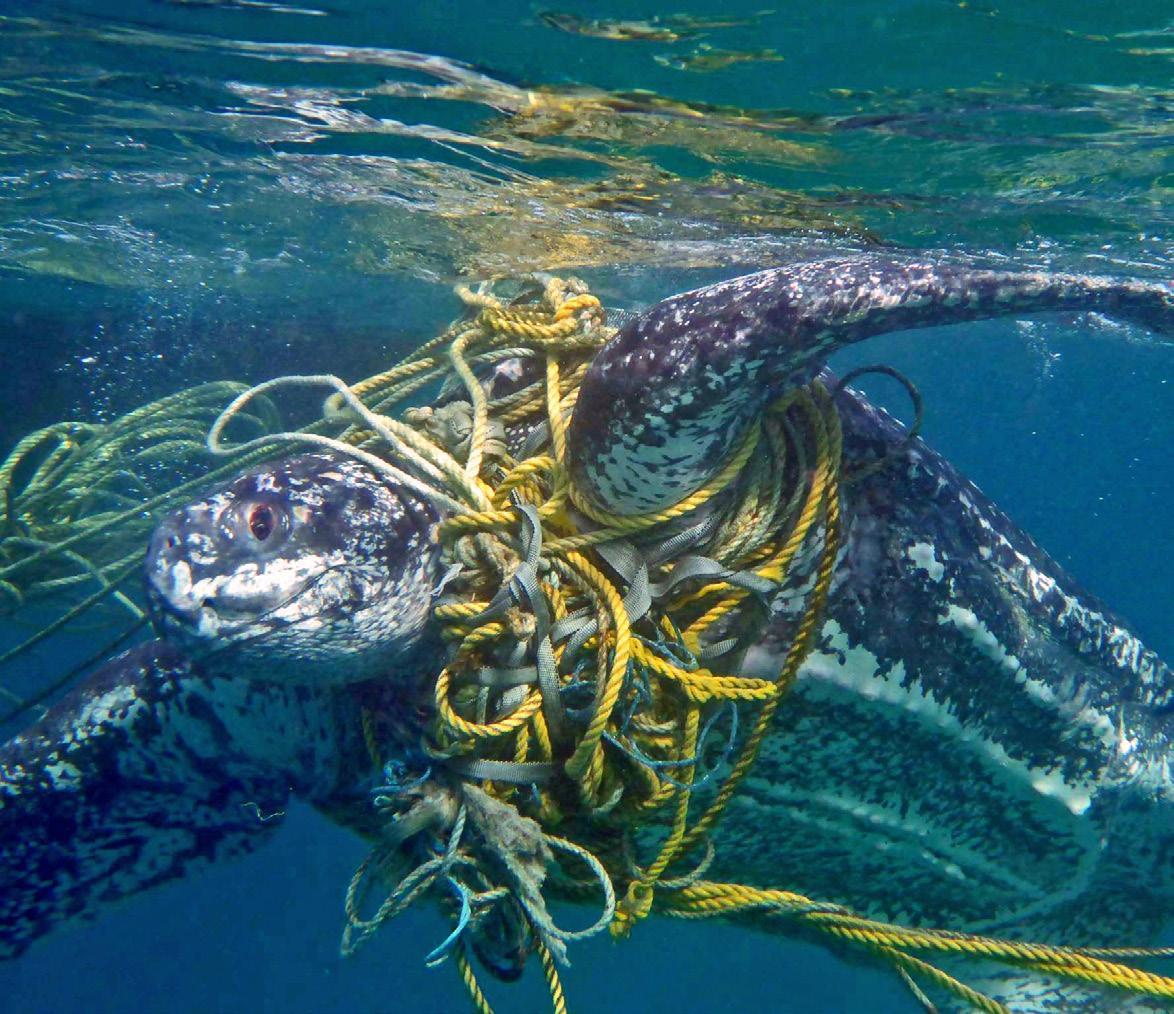
The main risk leatherbacks face in New Zealand waters is being killed or injured after becoming entangled or hooked on surface longlines used by some commercial fishers. In New Zealand, all sea turtles are protected, but there are currently no fisheries bycatch mitigation measures in place.
More than 225 leatherback turtles have been reported as bycatch in New Zealand waters over the past 15 years. The risk is exacerbated by their sheer heft.
They weigh 225–900kg and range in size from 1.2m to 2.4m. It’s hard to bring these large turtles on board a fishing boat when caught up in a longline, and many are cut off the line, sometimes with a hook left in them.
They are also sometimes “foul-hooked”, with a hook in their flippers rather than their mouth. Thankfully in these cases, they can often be rehabilitated without any significant injury.
However, it is still estimated that about 50 leatherback turtles were likely killed from reported bycatch in our waters over the last 15 years, based on recent research by MPI on the survival of leatherback turtles caught in surface longline fisheries.
Leatherbacks are the largest and globally most widespread of all the marine turtles found in the Pacific, Indian, and Atlantic Oceans. They can even venture into sub-Antarctic and sub-Arctic waters.
No doubt their size allows them greater temperature tolerance than other turtles. They can maintain
their body temperature well above ambient water temperatures, which allows them to dive deeper (up to 1280m) and occur in cooler water than any other marine reptile.
While globally distributed, there is concern about their future. The western Pacific population is seen as especially vulnerable. It is estimated to have declined by 90% in recent decades as the result of longline and pelagic driftnet fishing.
The western Pacific subpopulation is assessed as “Critically Endangered” by the IUCN Red List of Threatened Species.
The leatherback turtles encountered around New Zealand are most likely to be from the western Pacific subpopulation, originating from nesting beaches at the Solomon Islands, Indonesia, and Papua New Guinea.
With the breeding population of western Pacific leatherback turtles numbering only a few thousand individuals in any one year, it’s clear this honu sea turtle needs human help to survive.
New Zealand can play its part in the global conservation effort by mitigating the bycatch risk to leatherbacks from surface longline fishing in our waters.
The issue has been studied by NIWA and the Department of Conservation.
NIWA scientist Mike Dunn is the main author of an insightful 2023 scientific paper “Increased captures of the critically endangered leatherback turtle (Dermochelys coriacea) around New Zealand: the contribution of warming seas and fisher behaviour” (https://bit.ly/3CvG308).
The positive side of the story is that many captures have been self-reported by commercial fishers and many turtles are released alive with minor injuries following a bycatch encounter.
This shows that New Zealand fishers are concerned and may wish to be part of the solution.
Of course, we don’t know how many were hooked and not reported. Having increased observer coverage on longline vessels would help us get a clear picture of the extent of the leatherback turtle bycatch problem.
Honu face many problems on the high seas, but fisheries bycatch is a focused and solvable problem within New Zealand’s waters.
However, sea turtles have been overlooked in fisheries bycatch profiles, with seabirds and marine mammals receiving more attention to date. Aotearoa currently has no clear mitigation methods in place to minimise leatherback turtle bycatch in our waters.
A focus group set up under the Conservation Services Programme, which helps fund the investigation and mitigation of fishing impacts on protected species through a commercial fishers’ levy, aims to change the story and address some of the risks to these globally endangered turtles.
Leatherbacks are mainly taken as bycatch in the
broad-bill swordfish and big-eye tuna fisheries, both of which are also in rapid decline.
The bycatch issue could be helped by working with a small number of fishers responsible for a significant number of leatherback turtle catches in known hotspots within the Bay of Plenty and East Cape regions. Changes in longline techniques may be required, just as fishers have done for albatross (see page 26).
KILLS FOES NOT FRIENDS
PINDONE PELLETS are a cost-effective way to control possums and rats, approved for use in sensitive environments. Very low risk of primary or secondary poisoning to domestic pets and native wildlife. For more information, go to keyindustries.co.nz
Leatherback entangled in fishing line, Grenada. Kate Charles/SWOT
→
Introducing a seasonal ban on longline fishing in known leatherback turtles areas may be required in some areas.
Having DOC, the Ministry for Primary Industries, and commercial fishers working together is essential if we are to solve the local leatherback turtle bycatch issue, especially in the Bay of Plenty.
The turtle’s plight also challenges New Zealand to be part of the global solution, just as we are for migratory seabirds (see page 26).
Working with other conservation groups to secure leatherback breeding grounds on the Soloman Islands (and other international sites) is important. Scientists could also record incidence of hook bycatch on turtles arriving at breeding beaches.
Reducing marine plastic is also crucial as leatherbacks feed on jellyfish and are vulnerable to ingestion of floating plastic objects, especially plastic bags.
While logistically challenging, it would be helpful to get more satellite transmitters on leatherback turtles. This would give some insight in the species ecology as they transit from our waters to their breeding grounds several thousand miles away.
Researchers recently tracked an adult female more than 19,000km using satellite telemetry, from Indonesia to Oregon, one of the longest recorded migrations of any animal.
It would be tragic to lose leatherbacks, part of
the marine megafauna that has survived on our planet for approximately 150 million years. Local and international co-operation is urgently needed to conserve this magnificent marine species.
I have set up a Facebook group to discuss leatherback turtle conservation in New Zealand further. Please join if you are interested – search for “Leatherback turtle sightings and conservation awareness NZ.”
Peter Langlands is a researcher, writer, and photographer specialising in marine and freshwater issues.
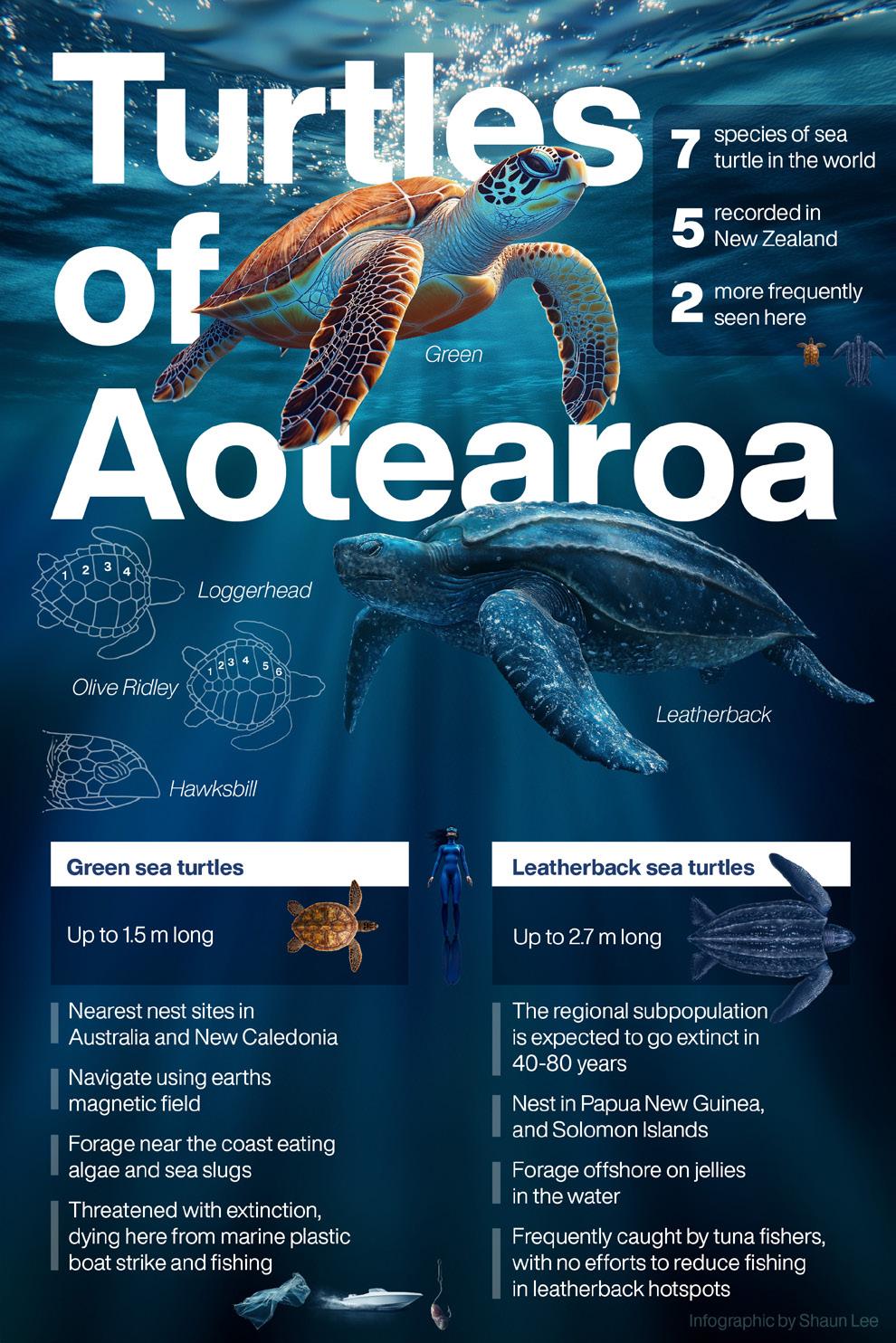
SPOT A TURTLE?
Five of the world’s seven species of sea turtles are known to occur in New Zealand waters. The leatherback turtle is most frequently reported, followed by green turtle, hawksbill turtle, loggerhead turtle, and olive ridley turtle.
If you see a turtle this summer, please photograph it and report to the Department of Conservation. The main period to watch for turtles is from January to April.
Nesting leatherback, Trinidad. J Hutchison
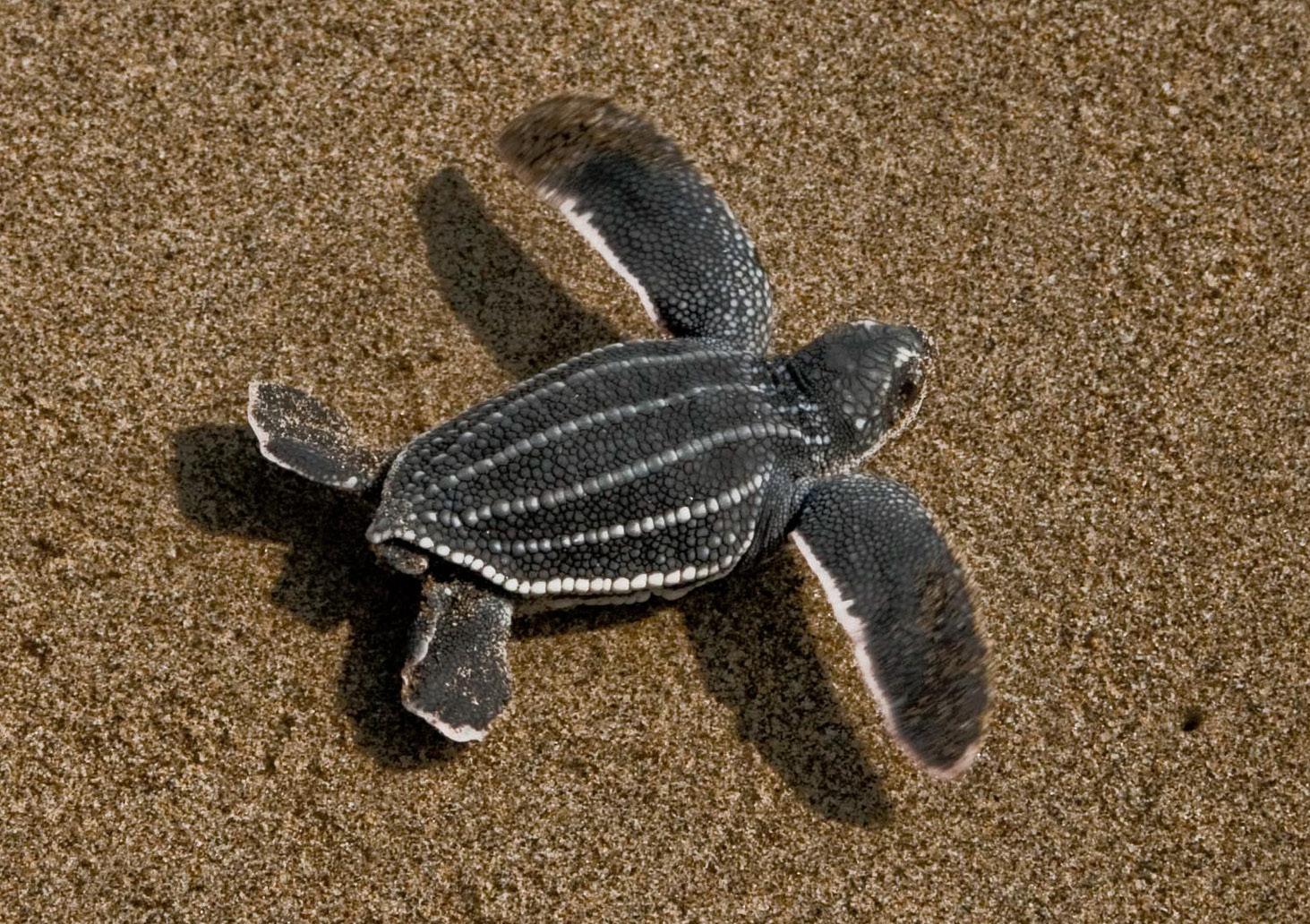
Leatherback hatchling, Panama. Morrison Mast
Turtles of Aotearoa illustration. By kind permission Shaun Lee
SOUTHLAND WATERWAYS
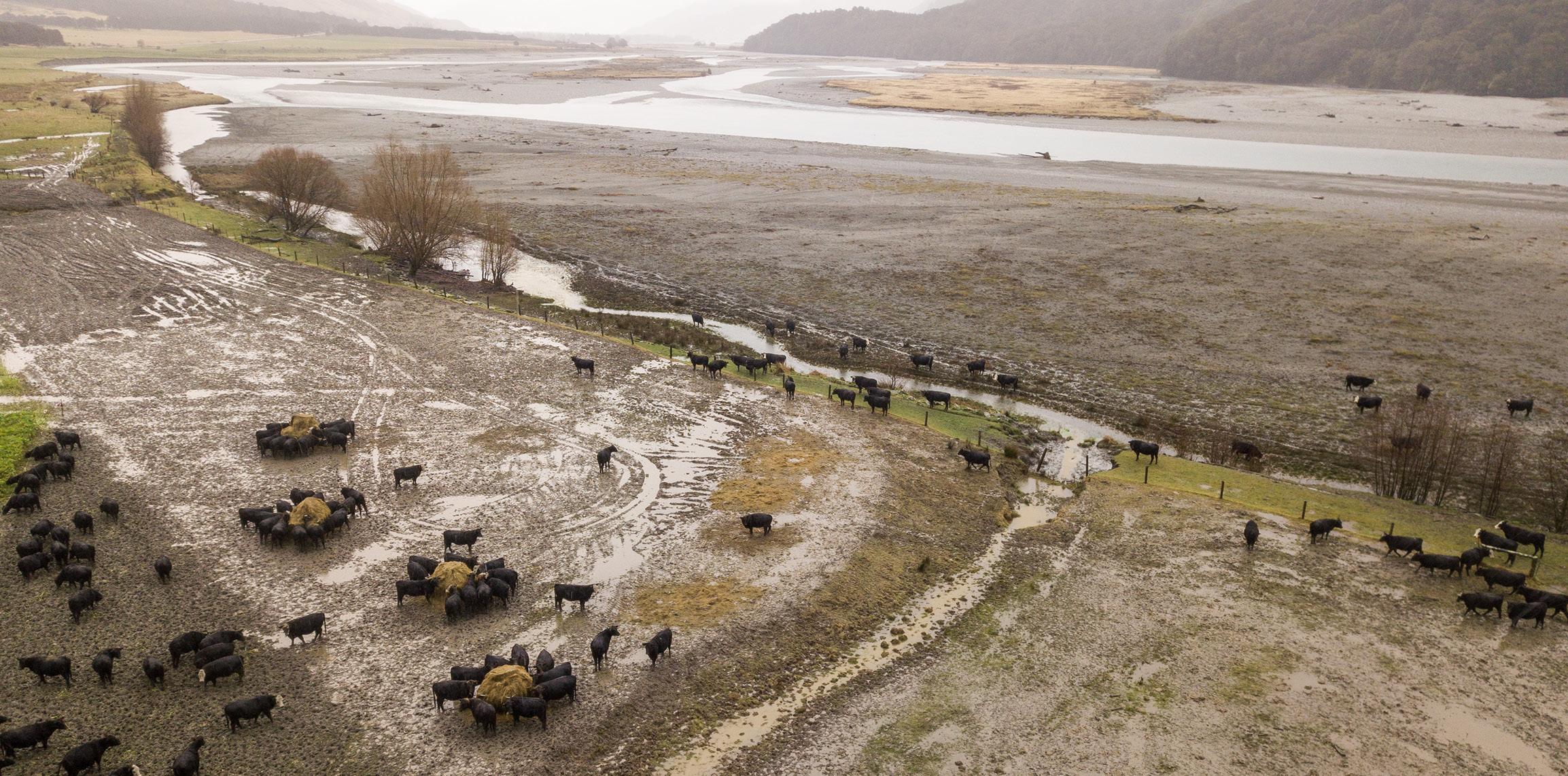
Forest & Bird has been in the courts defending the need for action in Southland to address the degraded rivers, lakes, and wetlands of the region. Most recently, we won a case in the Court of Appeal about the legality of allowing farming activities that could degrade freshwater health with no resource consent.
It’s been clear to Forest & Bird for many years – and has been unequivocally accepted by the court – that over-intensification of farming in Southland is the cause of the degradation. Despite that, dairy interests representing the intensive farming industry, along with Southland Regional Council, have continued to fight any real action.
The council twice appealed the Environment Court’s decision and lost. The farming lobby’s response is to push the government to change the law (and, on that, they’ve likely succeeded).
If a factory was pumping out chemicals that could have a significant adverse effect on aquatic life, you’d want to know that the factory held a resource consent, with conditions to make sure effects were controlled.
That’s exactly what the Resource Management Act requires. It stipulates that those sorts of
discharges can’t be permitted as of right. That seems sensible enough to us, but the law is about to be changed.
The government’s changes to section 70 of the Resource Management Act will not only apply to farming but also to every
Winter grazing, Southland, in 2019. Geoff Reid
polluting activity in the country. Forest & Bird will continue to fight for freshwater and to stand alongside others doing the same.
Read the background to the Southland Court of Appeal case in this article: https://bit.ly/4fMFFZc







MAKING A DIFFERENCE
Meet the staff, volunteers, and communities working to restore wildlife on the Whangaparāoa Peninsula Jenny Hanwell
One of Forest & Bird’s seven priority national projects, Pest Free Hibiscus Coast, is located in a diverse and nature-rich part of the Auckland region, in an area that’s as popular with people as it is with wildlife.
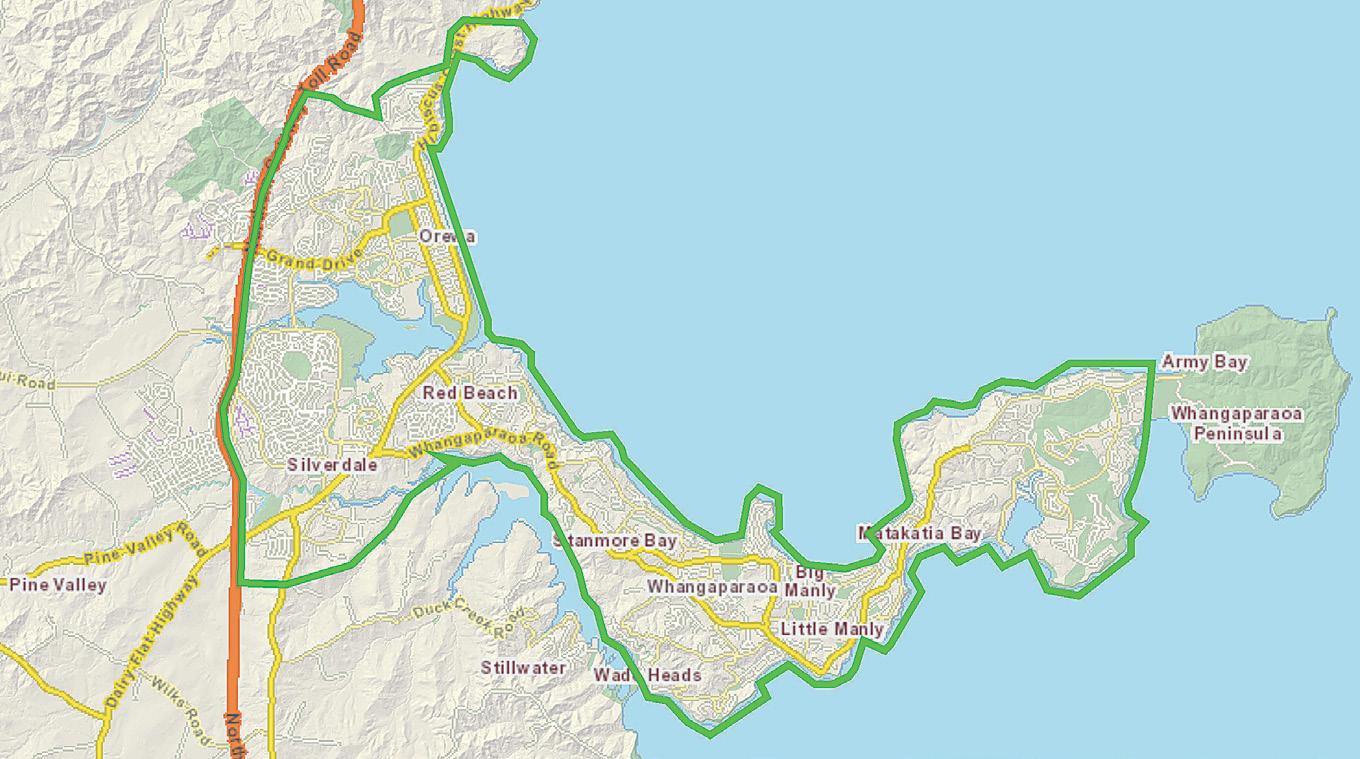
The project on the Whangaparāoa Peninsula, about 40km north of Auckland, covers a huge 3100ha, stretching from the Ōrewa estaury in the west to the border of Shakespear Open Sanctuary in the east and bordering Tīkapa Moana, the Hauraki Gulf. The peninsula is home to about 34,000 residents.
Just across the waters lies the famous bird sanctuary of Tiritiri Matangi Island, and Rangitoto and Motutapu aren’t much further away. This means the biodiversity of the area is significant, despite its large suburban population.
Peninsulas make ideal sites for predator control, and Forest & Bird’s vision for Pest Free Hibiscus Coast is to create a safe haven for native species transitioning from
the surrounding nature sanctuaries in a way that engages and enthuses the community.
The project is now in its 11th year, having originated as a Hibiscus Coast Branch initiative founded by Pauline Smith in 2013. We continue to work closely with the branch as the capacity and impact of the project grows. I started as project manager in 2019 and now have a team of five staff and more than 175 volunteers.
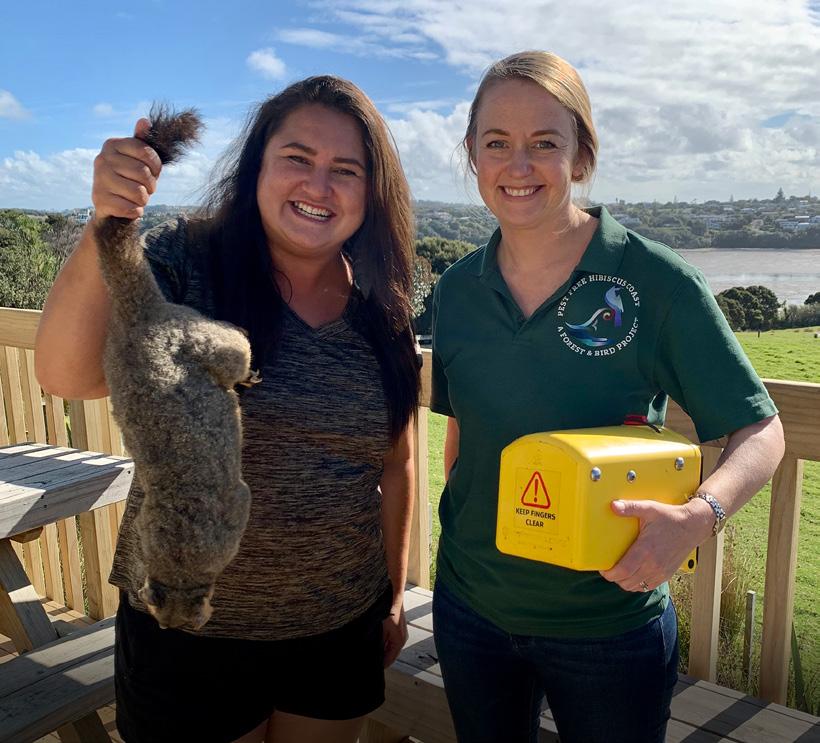
Together, we operate a network of 2700 traps and bait stations in local parks and large private blocks, targeting rats, stoats, weasels, possums, and hedgehogs. Our conservation volunteers are a vital part of the project (see overleaf), contributing their time towards servicing traps, carrying out biannual pest animal monitoring and bird surveys, and helping with community events.
Rhiannon Thomas is Pest Free Hibiscus Coast’s volunteer coordinator, and her job over the past five years has been to keep
volunteers engaged. She focuses on developing good working relationships with each volunteer, creating a sense of camaraderie through regular social events, and ensuring each individual volunteer finds a role they enjoy.
With her support, our volunteers have carried out 30,000 trap and bait station services in the last year alone, a huge contribution to nature protection at Whangaparāoa. Each year, we celebrate our volunteers with a summer BBQ and awards event, with gifts provided by our wonderful business sponsors.
Data management is essential for a project like ours, so we can be accountable, effective, and measurable. Field operations lead Naomi Harrison has been working with volunteers from New Zealand GIS In Conservation to create an easy-to-use volunteer data entry system so we can track our trapping network and progress towards our conservation goals.
Under Naomi’s leadership, our predator control network has grown hugely, and earlier this year we appointed Luke Wafer as our Field Support Officer. Luke assists with the installation of new trap lines and coordinates our network of Goodnature A24 traps. He also audits traps and monitoring lines to ensure everything is running smoothly.


Pest Free Hibiscus Coast’s community engagement programme has taken off in recent years, thanks to the enthusiasm of community activator Andrea Dick. A vital part of the project is enabling local
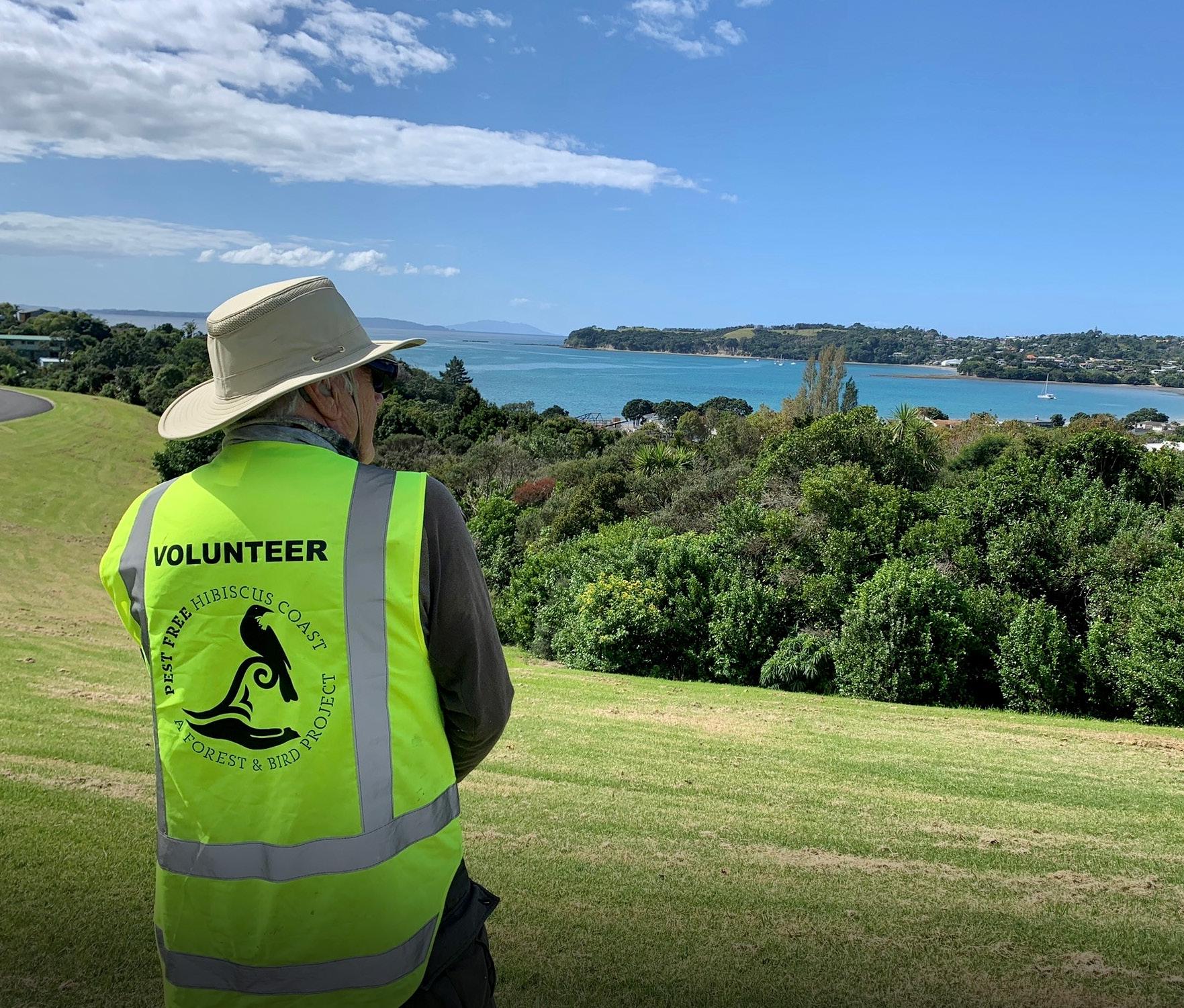
Derek Kelsey looking out over the project area. Jenny Hanwell
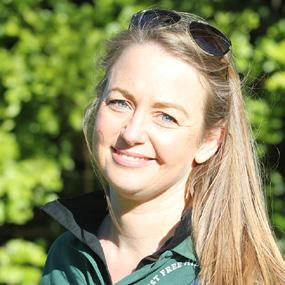
Jenny Hanwell
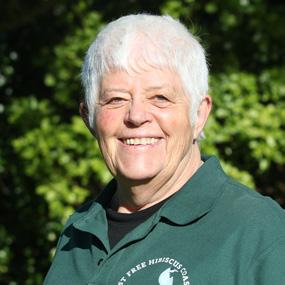
Rhiannon Thomas
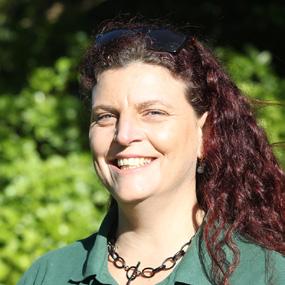
Naomi Harrison
Luke Wafer
Andrea Dick
Charlie Thomas
residents to take action in their own backyards, and increasing local awareness of the project and its goals has been essential for this.
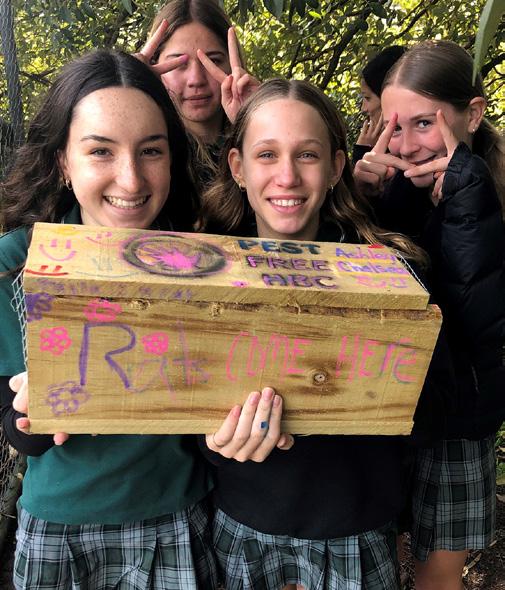
Andrea has connected with “Coasties” from all walks of life through community events and school galas. She organised for local children to dress as native birds and cheeky rats at last year’s Ōrewa Santa Parade, which attracted 10,000 people, scooping the “most creative float” award.
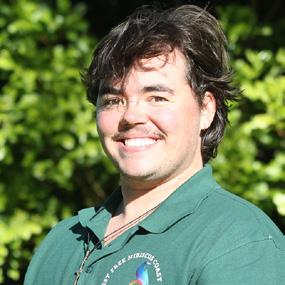
We have recently increased the project’s community engagement capacity by adding Charlie Thomas to the team. Charlie was a founder member of Forest & Bird Youth
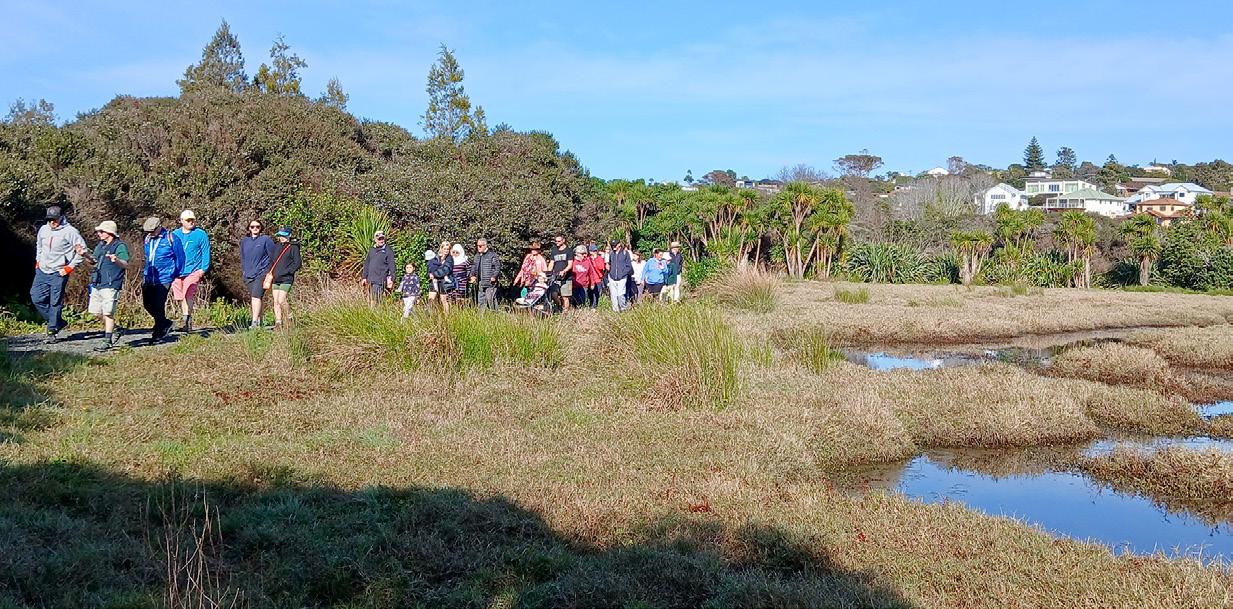
in 2016 and has been passionate about conservation all his life. Charlie leads our social media programme and has been running a series of events to connect people with nature, including a hugely popular wetland walk in partnership with our Hibiscus Coast Branch.
The project has recently established a reptile monitoring project, bringing in expertise from nationally recognised herpetologist Dylan van Winkel to create and oversee a monitoring programme for native skinks and geckos.
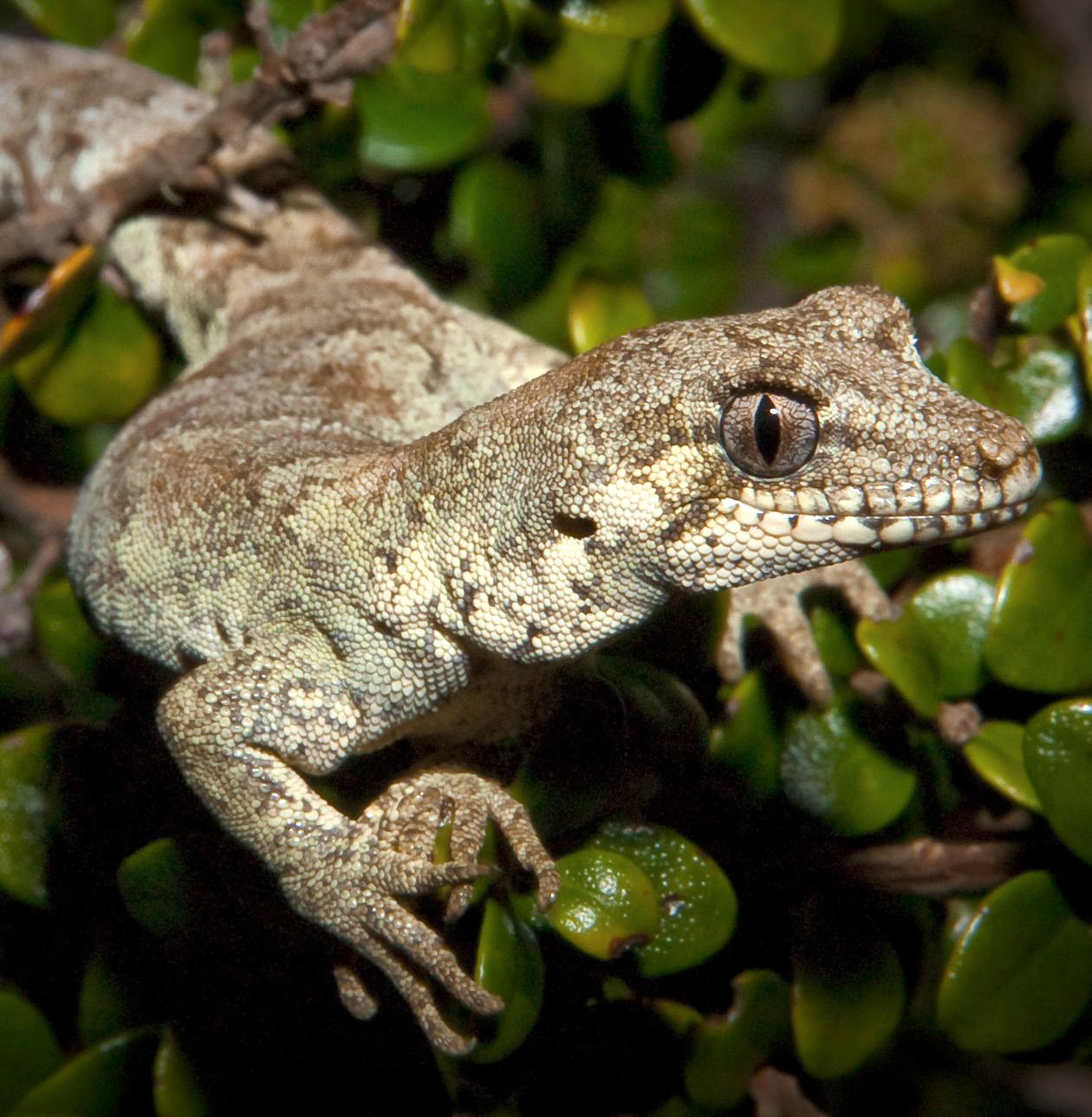
This has engaged several new volunteers, and new site records of threatened native lizards, such as ornate skink and forest gecko, are being added with each new survey round.
Pest Free Hibiscus Coast was highly commended in the Auckland Mayoral Conservation Awards 2022 for working with others across the community, and this mahi is central to our kaupapa.
We currently partner with Auckland Council to carry out predator control in more than 120 parks in the project area, working with local landowners, conservation groups, youth organisations, the Men’s Shed, and local businesses too.
This will never change because, for us here at Forest & Bird, conservation is about the whole community, not just a keen few.
WORKING WITH MANA WHENUA
Over the last year, Pest Free Hibiscus Coast has established a partnership with Ngāti Manuhiri to learn and better understand how we can combine western predator control practices with mātauranga Māori. Together, we visited important conservation areas on the Hibiscus Coast and shared stories and insights about taonga species and how they can be better understood and protected.
This led to kaitiaki Ayla Walker creating a cultural framework for the project team so we can incorporate appropriate tīkanga into our operations.
We are working to implement these recommendations. Ngāti Manuhiri kaumātua gifted a karakia to the project, which we were honoured to receive.
Map of the Pest-free Hibiscus Coast project area. Forest & Bird
Kaitiaki Ayla Walker with Jenny Hanwell Forest & Bird
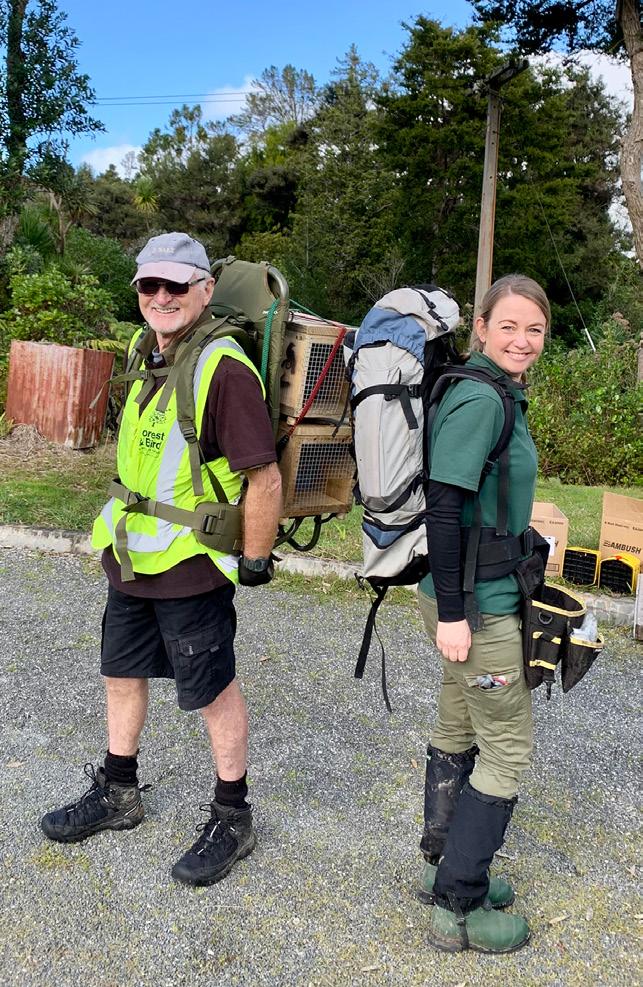
Volunteer Jim Bettridge and project manager Jenny Hanwell. Naomi Harrison
Forest gecko (Mokopirirakau granulatus). Dylan van Winkel
VOLUNTEER MAGIC
The success of any community-based conservation project, including Forest & Bird’s Pest Free Hibiscus Coast, stems from the enthusiasm and dedication of its volunteers. Jenny Hanwell
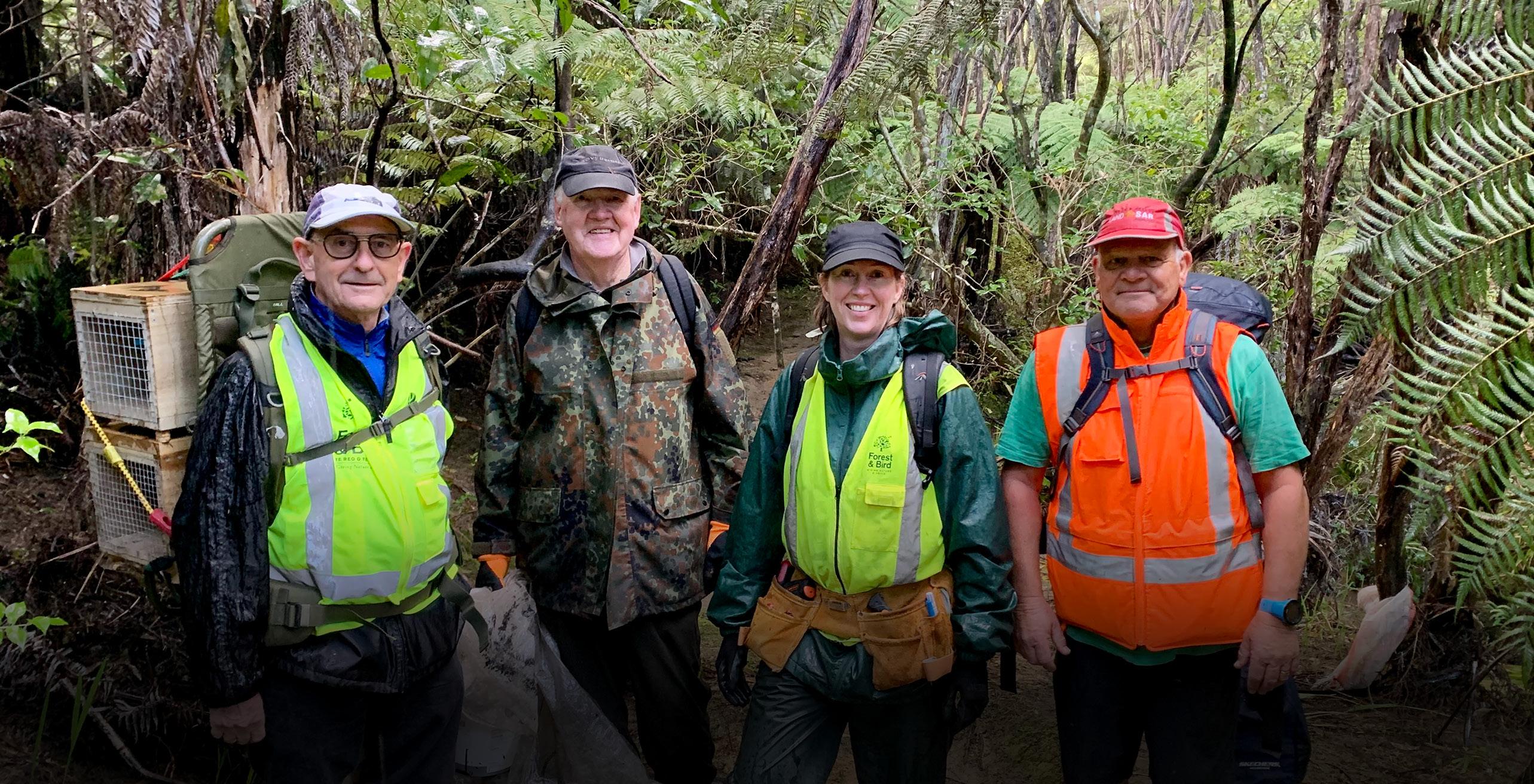
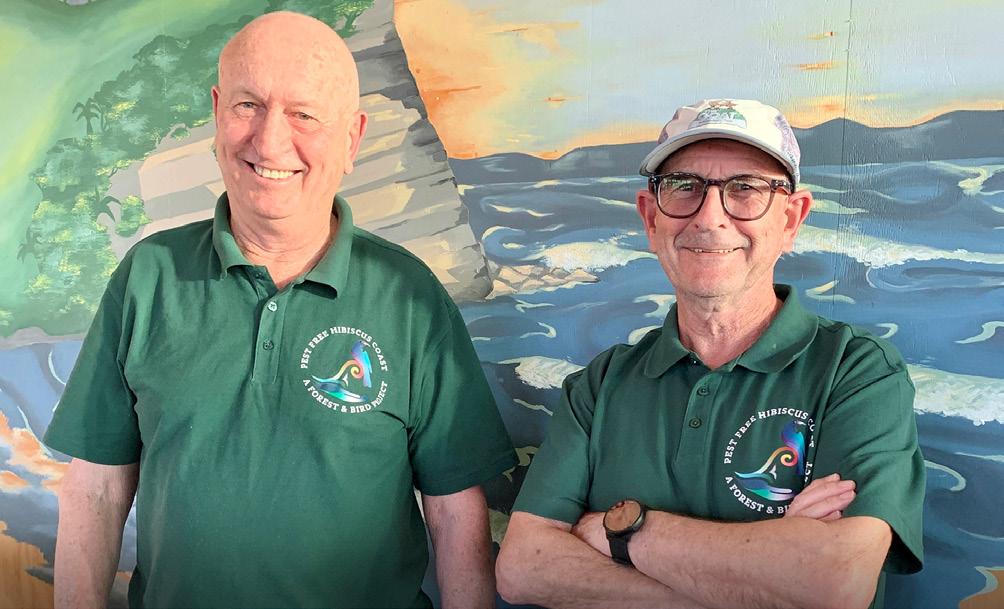
Ōrewa residents Gordon Whitelaw and John Paladin wanted to contribute towards conservation during their retirement on the Whangaparāoa Peninsula. In 2022, they were paired up by Pest Free Hibiscus Coast volunteer coordinator Rhiannon Thomas, who was looking for people to service a challenging trap line in Alice Eaves Bush.
Before long, they became firm friends and managed to catch possums, rats, and even a stoat in their first week. They service their trap lines weekly, get involved with bird and reptile surveys, and don their project t-shirts for community meet-ups.
John enjoys the social aspect of volunteering, as well as being out in nature helping control pests in his own backyard.
“Seeing an increase of bird life, getting feedback from friends, neighbours, and people in the street,
as well as meeting Gordon, has made the experience worthwhile,” he said. “I enjoy the exercise and have learned more about the bush in the last two years than ever before.”
Gordon agrees: “Having been involved in bush and mountain running for 20 years, what I enjoy most about volunteering is that it enables me to maintain contact with nature, while also building new friendships.
“The good-humoured support of the staff and other volunteers is a bonus! I highly recommend volunteering with Forest & Bird.”
Next year, Forest & Bird plans to lead a series of events and activities to give residents increased opportunities to learn about, and connect with, nature on their doorstep, as well as continuing our important outreach work with schools.
Involving the community with ecological outcome monitoring is another key priority for 2025.
Last year, as the project marked its 10th birthday, Forest & Bird asked Elizabeth “Biz” Bell, of Wildlife Management International, to carry out an independent expert review of the Pest Free Hibiscus and make recommendations for its future direction.
Biz and her team met with volunteers, the community, and stakeholders, and reviewed all data and methodology. Her recommendations were detailed and centred around the fact that this is an important and strategic location for Forest & Bird’s conservation mahi.
The project has a comprehensive network of pest monitoring devices, including tracking tunnels
Pest Free Hibiscus Coast volunteers (from left) Gordon Whitelaw, Kelvin Hempseed, and Alan Wilkinson with Forest & Bird’s field operations lead Naomi Harrison. Jenny Hanwell
John Paladin and Gordon Whitelaw. Jenny Hanwell
and trail cameras. For the last two years, these have consistently shown possum density to be very low, down to 1% detection, with most catches occurring on new sites at the project boundaries.
Rats and hedgehogs are also decreasing, and close analysis of monitoring results enables the team to act quickly where there is evidence of higher densities. In the long term, the project will aim to eliminate introduced mammalian predators, starting with possums, as this has been assessed as technically feasible with the right budget.
We have now collected 11 years of five-minute bird count data, with around 500 counts being done by volunteers each November. A Massey University analysis showed that 18 species were stable or increasing, with the tūī and riroriro grey warbler showing significant gains.
We are also tracking the appearance of less common species outside Shakespear Open Sanctuary. This year, there have been several records of kākāriki and pāteke, as well as kākā becoming regular visitors. We encourage our community to contact us with these sightings and record them on iNaturalist.
Forest & Bird is committed to helping native species continue to thrive on the Hibiscus Coast, although we recognise the currently challenging funding environment. We are grateful for grants from Auckland Council, Hibiscus & Bays Local Board, BlueSky Community Trust, and Foundation North over the past year.
The Society needs grants and donations to enable the project to continue in the coming years. If you would like to make a donation to Pest Free Hibiscus Coast, or would like to volunteer, please contact project manager Jenny Hanwell at j.hanwell@ forestandbird.org.nz.
VIRTUAL PREDATOR FENCE
A new initiative, the Shakespear “Virtual Fence”, aims to create an intensive network of predator control throughout a residential area that borders important wetlands in Shakespear Regional Park.
These wetlands are home to pūweto spotless crake, moho pererū banded rail, and mātātā fernbird, and where many of the rarities introduced to the fenced sanctuary, such as pōpokotea whitehead, spread out.
We hope to reduce pressure on the wetlands from predators encroaching from surrounding areas and support the work being carried out by Auckland Council rangers and volunteers within the regional park.
The project made the cover of local paper Hibiscus Matters, and Charlie Thomas has been getting creative with engaging the local community, including working with local drone videographer Sam Kynman-Cole to bring to life what we are trying to achieve.
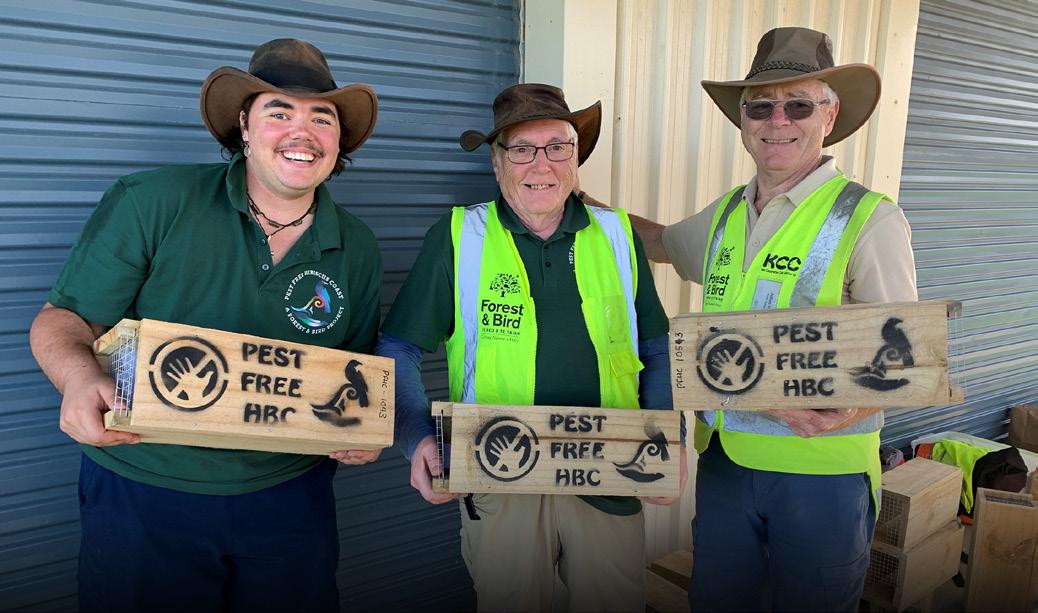
Charlie Thomas with volunteers Derek Kelsey and Julian Fripp. Jenny Hanwell
Outreach with Ōrewa College students. Matt Harrison
Forest & Bird-led community walk through wetlands in the project area. Charlie Thomas
SAFER SEABIRDS
Following years of campaigning by Forest & Bird and many others, Fisheries New Zealand recently unveiled new regulations designed to significantly reduce the accidental capture of seabirds, particularly its many albatross species.
Fishers will need to simultaneously implement three key measures: branch line weighting, night setting, and bird scaring lines. Alternatively, the use of an assessed hook-shielding device or underwater bait setting device is recommended.
The new regulations, which came into effect in October, are grounded in the Agreement on the Conservation of Albatrosses and Petrel (ACAP) advice, which identified the most effective methods to reduce seabird bycatch in pelagic longline fisheries.
Sebastián Jimenez, co-convenor of ACAP’s Seabird Bycatch Working Group, said: “These regulations are a significant step forward in protecting seabirds from the threats posed by bycatch. By adopting these proven measures, New Zealand is demonstrating global leadership in marine conservation.”
The measures, known as “three out of three”, will replace the current rules, which require only two of the seabird mitigation measures to be implemented. This comprehensive approach ensures that New Zealand’s fishing practices align with the highest standards of seabird conservation.
Chief executive of BirdLife International, Martin Harper, thanked Forest & Bird for its help in securing the adoption of the new measures.
“I specifically acknowledge the efforts of the collaboration between Forest & Bird and the BirdLife Pacific team in driving this forward ... The decision has global implications, and the strong leadership shown by Aotearoa New Zealand is both extremely welcome and timely, as we continue to witness steep declines in several albatross populations.”
Sue Maturin, who led the most recent advocacy on the issue, said: “It’s a great decision after decades of work by lots of people.” She specifically highlighted the work carried out by former Forest & Bird seabird advocate Karen Baird.
Fisheries New Zealand’s Director of Fisheries Management, Emma Taylor, says the new rules will strengthen protections for some of the nation’s most vulnerable seabirds. They come only months after the installation of electronic monitoring camera systems on 100% of New Zealand’s fishing fleet.
“We have systems to monitor the position of all commercial fishing vessels in real time, and fishers are legally required to report their catch and position to us electronically,” she said.
“Alongside this, onboard cameras provide independent verification of fishing activity, including accidental bycatch of protected species.”
Forest & Bird understands the data provided by onboard cameras was a key factor in Fisheries New Zealand’s decision to adopt these protections across all of New Zealand’s seas.
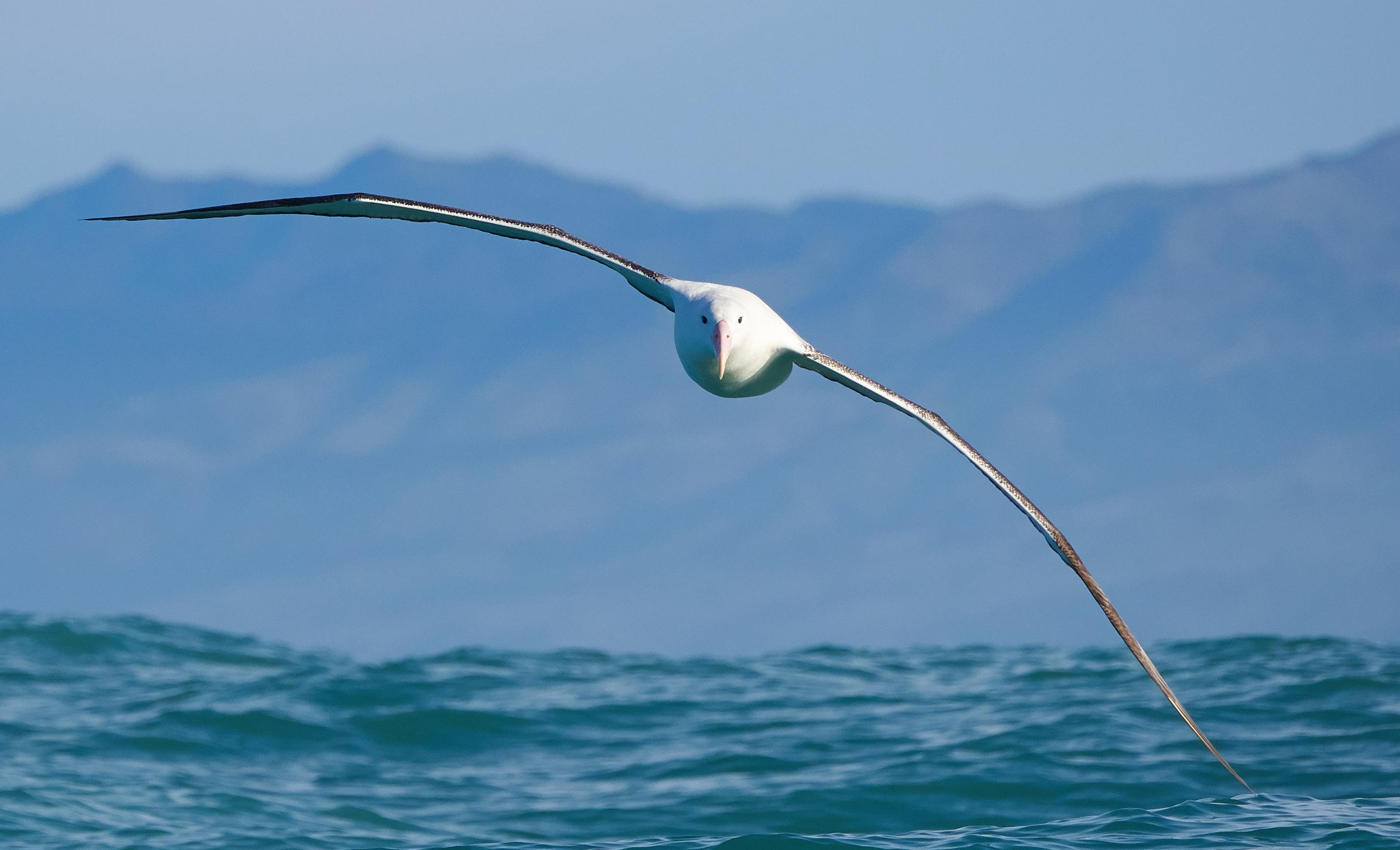
Albatross. Jeremy Sanson
INVESTING IN NATURE
Protecting nature could save New Zealand more than $270 billion over the next 50 years, according to a first-of-its-kind report. Caroline Wood
ANature Positive Aotearoa, published by WWFNew Zealand and EY New Zealand, shows that investing in protecting our threatened species and habitats could help our economy significantly in the medium to long term.
Creating more marine protected areas, restoring degraded wetlands, or repurposing land to support native forest growth could bring a net benefit to Aotearoa New Zealand’s economy of an estimated $272 billion from 2025 to 2080.
The savings would be achieved by protecting the country from the impacts associated with nature loss, such as disruption to crops, reduced water quality, or less abundant fish stocks. Safeguarding the country’s “clean and green” reputation globally would also bring opportunities for the tourism and primary industry sectors.
WWF-New Zealand’s CEO Dr Kayla Kingdon-Bebb says the report makes it clear protecting nature is not only important for our wellbeing and environment – it also makes economic sense.
“Politicians often claim their priority is growing the economy, and they see protecting nature as a drain on the books, but this landmark research turns the idea of ‘people versus nature’ on its head,” she said.
“It’s not just about protecting nature for nature’s sake, safeguarding our threatened species and habitats can create competitive advantage for our key industries and grow our economy.”
In 2022, Aotearoa New Zealand joined other countries around the world in signing on to the Kunming-Montreal Global Biodiversity Framework – a series of 23 global targets to halt and reverse nature loss by 2030.
The report looks at the five of these targets most relevant in Aotearoa and analyses the economic impacts, challenges, and opportunities of achieving them.
By 2035, the economic benefits are expected to outweigh the costs of inaction related to nature loss and result in significant long-term growth, but achieving this would require a substantial increase in our investment in nature – by up to 6.5 times the current spend, according to the analysis.
But the longer we wait, the more costly the action will become, and the more likely irreversible damage will occur, the report says.
The research shows that nature-based solutions to climate change, such as native forest restoration, and planting and restoring wetlands, could capture
and store an additional 13.7 million tonnes of carbon dioxide every year from 2030, saving the country $56.4 billion by 2080.
This would also help New Zealand meet its climate targets domestically by reducing the need to purchase offshore mitigation.
The report identifies other actions the government could take to create the right conditions for businesses to invest in nature.
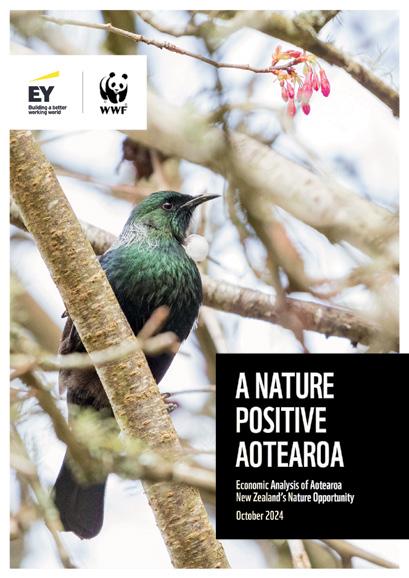
This includes making it mandatory for businesses to assess and disclose their impacts on nature so consumers and investors can make more informed decisions. Other recommendations include setting up an investment fund that targets nature-related projects.
The report can be downloaded at wwf.org.nz
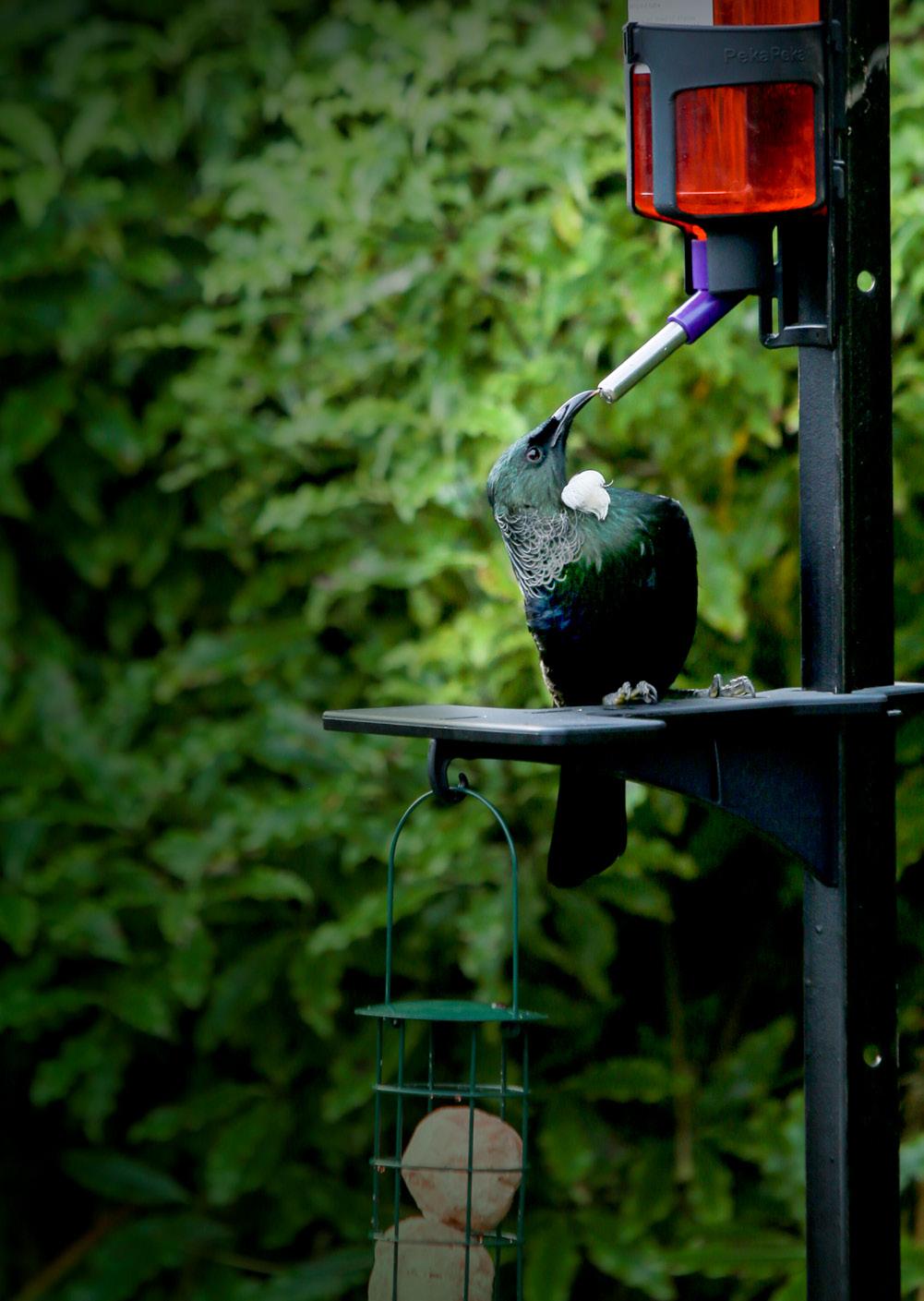
Feed tūī, bellbird, hihi, kākā, silvereye & more
● Cat proof! 360 degrees of visibilty while birds feed
● Provides sugar water, fruit & energy truffles
● Feeder can go anywhere, it’s on a waratah
● Stainless steel nozzle ensures safe, hygienic feeding & easy cleaning to prevent the spread of avian pox.
Buy a feeder at PFNZ shop.predatorfreenz.org
For more info go to our website pekapekabirdfeeders.nz
CHAMPIONS Nursery
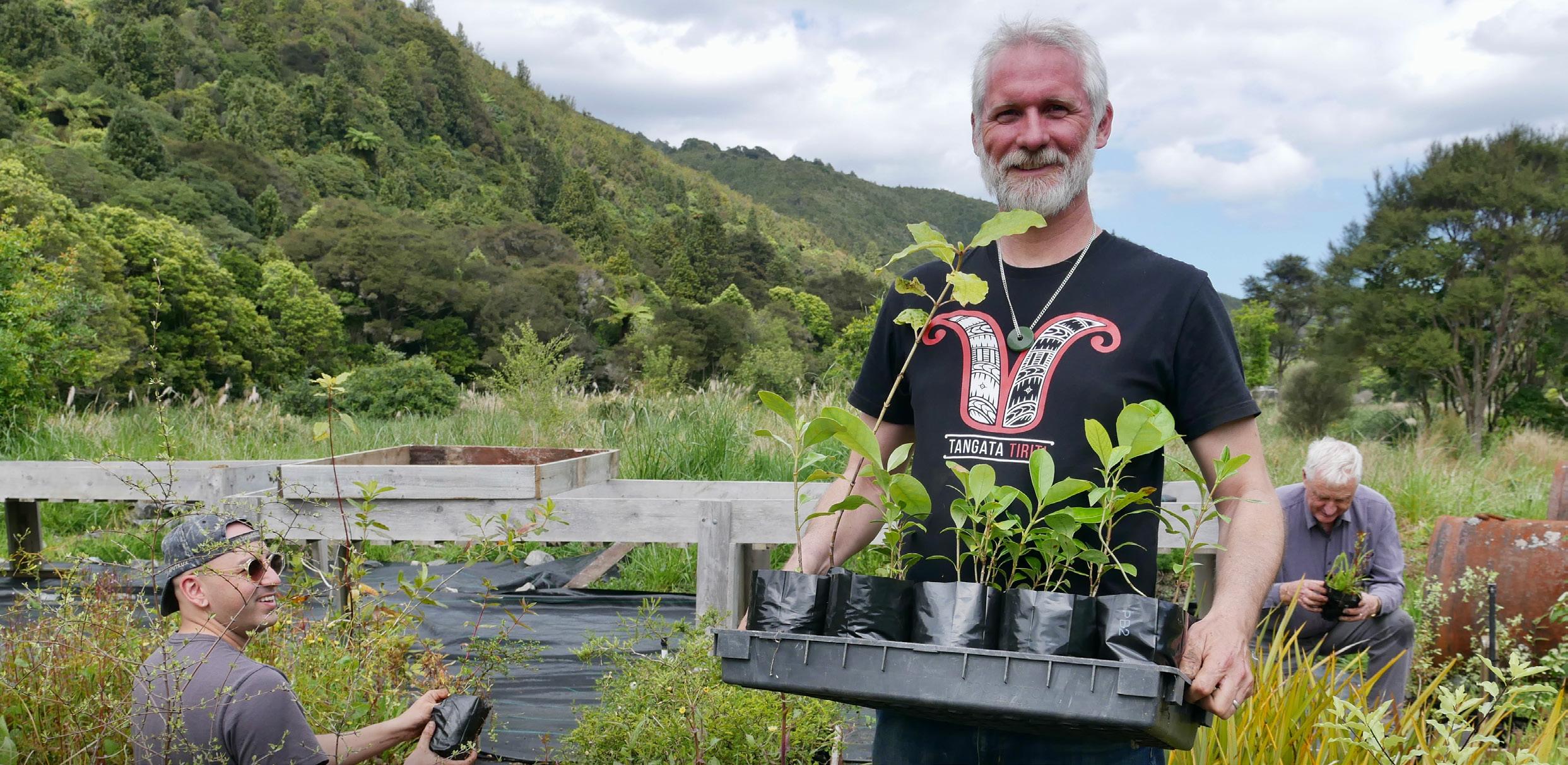
A quiet Forest & Bird volunteer effort in Wainuiomata is helping restore native forests and wetlands in the Greater Wellington region Caroline Wood
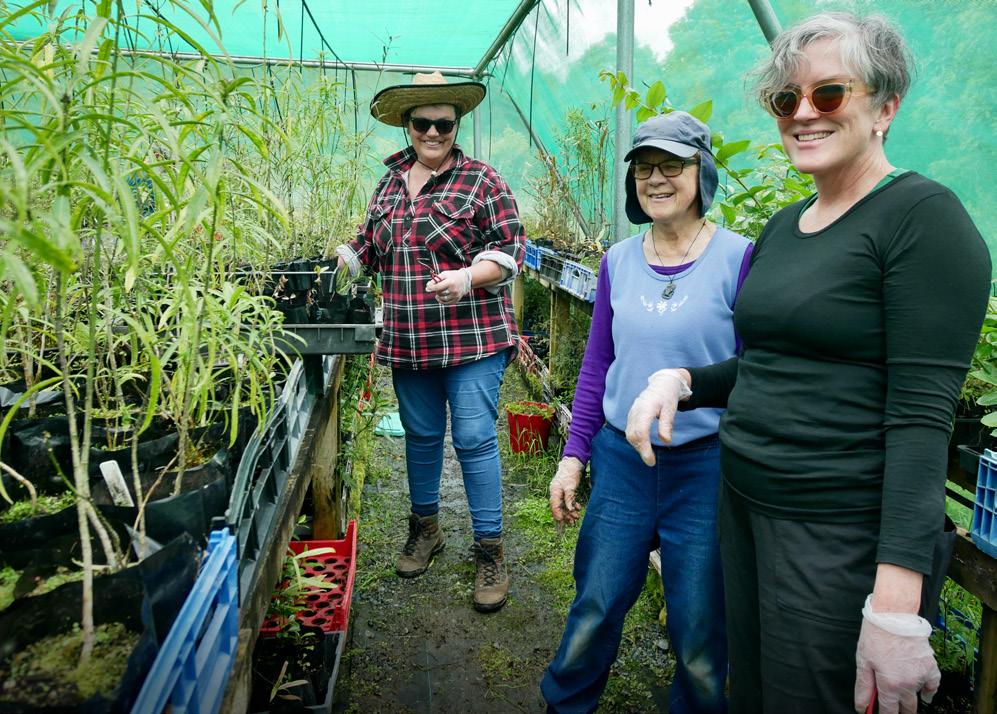
When we arrive early on a sunny spring Saturday morning, the shade house is already a hive of activity, with Forest & Bird branch volunteers caring for hundreds of native seedlings, some of them locally rare.
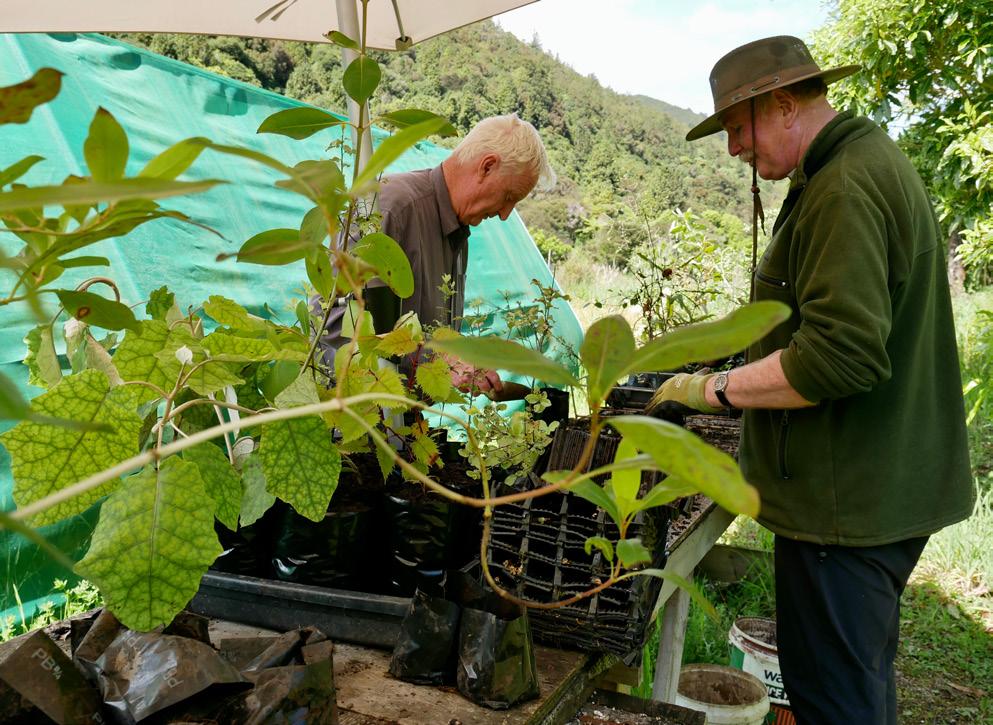
Outside, Lower Hutt Branch chair Andy Mitchell and members David Cornick and Brenten Higson are chatting as they carefully ease young mahoe, olearia, and swamp coprosma seedlings into larger pots using a freshly delivered crumbly black compost. These tender young plants will go back into the shade house to protect them from becoming snacks for local deer.
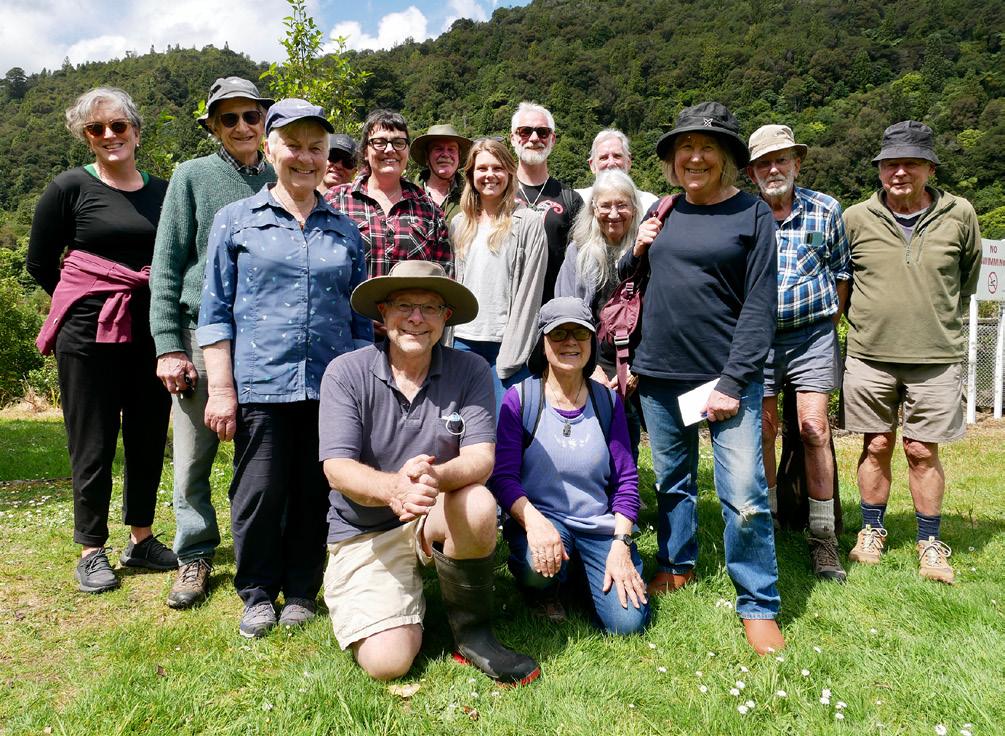
The visitors from Wellington Branch, including chair Kate Littin, are soon put to work weeding the long rows of native plants growing outside. There’s an atmosphere of friendly camaraderie, and every so often we stopped to drink in the sights and sounds of the surrounding bush-clad hills and Wainuiomata River.
Wainuiomata Nursery is one of the Society’s newest nurseries and officially opened in July 2021. Here volunteers grow eco-sourced plants from the Tararua Ecological District, mainly from seed, although seedlings and cuttings are also taken.
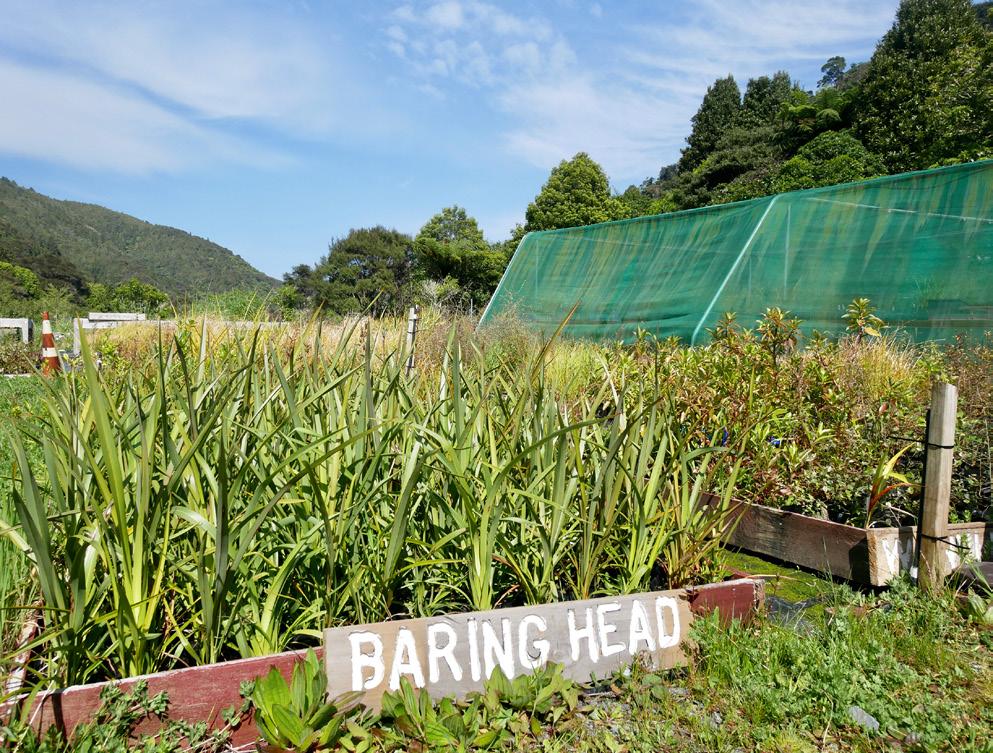
Once ready to plant, they are donated to local conservation projects run by Forest & Bird branches and other community groups in the Wellington region. This spring’s trees and shrubs are destined for Baring Head, Manor Park, Waiu Wetland, Waiwhetu Stream, and the Wainuiomata Recreation Area.
The Wainuiomata Nursery is jointly managed by the Lower Hutt and Wellington Branches, and is supported by Greater Wellington Regional Council. It is located in Wainuiomata Regional Park, an important water collection area that provides high quality water to 15% of Wellington’s population.
It is only a 35-minute drive from Wellington to the nursery, but it feels like a world away. Māori used these forested hills and valley to travel from the Wairarapa to Whanganui-a-Tara, and the Wainuiomata River has been a source of drinking water for Wellington since 1884.
The nursery is managed by Forest & Bird member and local paramedic Gary James, who also used to run its sister site, the Wellington Nursery, near Zealandia. Over the past four years, the nursery has grown 4000–5000 shrubs and trees, including tōtara and mātai.
Some of its special plants include a regionally threatened Olearia virgata, with cuttings taking from the Waiu Wetland. It’s unusual for a twiggy tree daisy, in that it likes its feet in water and is suitable for wetland planting.
Its propagation was a joint effort between the two
Lower Branch chair Andy Mitchell. Caroline Wood
Kate Littin , Pam Nash, and Kate Riddell in the shade house. Caroline Wood
nurseries. The cuttings were processed and rooted by volunteers at Wellington Nursery, in Disley Street, and grown on to planting-out size by Wainuiomata Nursery.
“We have probably got more plants here than in the wild. They grow to 3m tall and have lovely white flowers,” says Gary.
Gary and the other nursery volunteers collect seeds within a 2km radius of the project site. They have been known to venture out on Christmas Day to Baring Head, near Eastbourne, where a locally rare matagouri only sets seed for a few days every summer.
The Lower Hutt and Wellington Branches raised $20,000 to build a shade house to protect the vulnerable nursery seedlings from being eaten by deer, who have munched on newly planted flax and other plants in the wetland next to the nursery.
Local pigs are another threat, along with rats and mice sneaking into the seed propagation area. There is the risk of the odd flood from the river, and the area’s high rainfall means that sometimes volunteer sessions have to be cancelled at the last minute.
Gary told us how timber milling stopped at the location of the nursery and upstream is an ecologically important area of 1000-year-old native forest, which is closed to the public because of its proximity to the regional council’s water collection area.
“Kiwi have returned to these hillsides recently, and the area is potential kākāpō country if introduced predators can be removed,” he said.
There is talk of setting up a fenced eco-sanctuary around the water catchment, an initiative supported by local iwi, but it would mean millions of dollars of government investment. Gary is also working with a local marae helping its rangatahi learn how to grow native plants.
The Wainuiomata Nursery is looking for five to 10 new volunteers to supplement the small team of regulars. If you can help, contact Gary at lowerhutt. branch@forestandbird.org.nz.
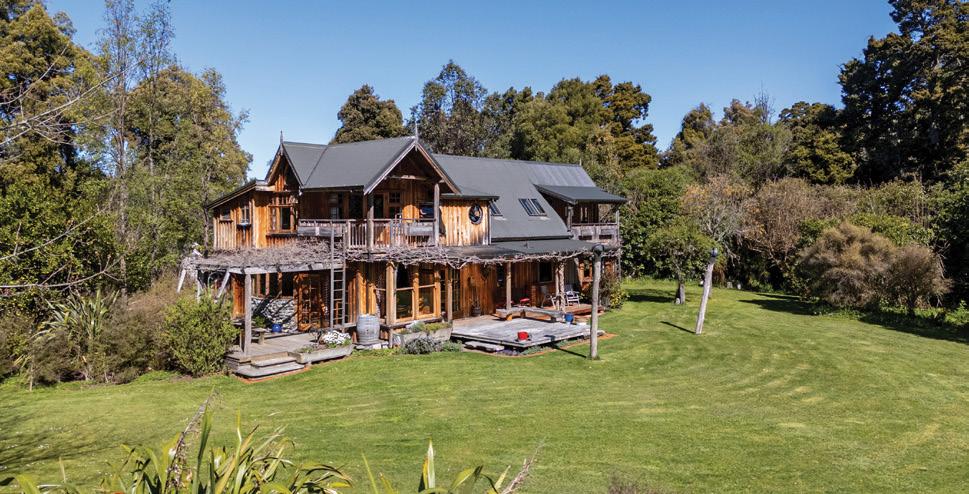
First time to market in over 35 years this secluded slice of Peel Forest paradise charms everyone who visits. It boasts epic views of Little Mt Peel, a stream, fabulous bird life and ancient podocarps, plus an abundance of privacy. There is a total of 56.5ha of which 29ha is grazable land and a 20ha QE11 Covenant of remnant podocarp and regenerating forest. The main dwelling is unique and has been handcrafted with timber inside and out. A second dwelling is a one bedroom off grid cottage. Peel Forest has access to forest walks, fishing, hunting and is a perfect location: Christchurch 1 3⁄4 hours’ drive, Geraldine 20 mins, Timaru 50 mins and an easy drive to Lake Tekapo.


Michael Richardson M 027 228 7027
Gretchen Gould M 021 386 650
South Canterbury 565 Blair Road, Peel Forest
Calling lovers of native forest & farm life
Nursery leader Gary James (kneeling) with Lower Hutt and Wellington Branch volunteers. Caroline Wood
Brenten Higson and David Cornick. Caroline Wood
Plants destined for Baring Head. Caroline Wood
COMMUNITIES SILENCED
One of the major flaws of the government’s fast-track bill is that it stops communities and environmental organisations, including Forest & Bird, having a say on developments.
When the Fast-track Approvals Bill came back from select committee in mid-October, Forest & Bird was alarmed at its final iteration. Its entire purpose is to facilitate development, and it will allow coal and gold to be dug up, the seabed to be mined, and rivers to be dammed with little or no regard for the environment or the impact on local communities.
The government did make some concessions (see right) in the face of concerns raised by tens of thousands of New Zealanders who oppose the fast-track bill.
The independent panels assessing a fast-track project can – but don’t have to – turn down a project if the adverse effects outweigh the development’s benefits.
It’s particularly concerning that communities remain shut out of having a say on fast-tracked developments.
On 6 October, well after public submissions had closed, the government finally released details of the 149 fast-track projects that will be attached to Schedule 2 of the Bill.
Some of them are environmentally disastrous and have been previously rejected by the courts – “zombie projects” such as the Ruataniwha Dam, in Hawke’s
Bay, and Trans-Tasman Resources’ proposal for seabed mining off the Taranaki coast.
You can see a map showing the full list of projects at stopthefasttrackbill.com
On behalf of all New Zealanders who care about nature and their communities, Forest & Bird asked the select committee to seek public submissions on the 149 projects before approving the Fast-track Approvals Bill.
“New Zealanders deserve to have a say on a wasteburning plant in their neighbourhood, if public conservation land should be sold off for development, or whether New Zealand commits to digging up kiwi habitat for coal mines into the 2040s,” said Richard Capie, Forest & Bird’s general manager for advocacy and campaigns.
“Ministers have made decisions behind closed doors with no public scrutiny of these large and highly controversial projects. They have resisted releasing information about projects for months. This isn’t just disastrous for the environment. It’s bad process and bad law-making.”
The government refused to allow further public submissions after the list was released.

Auckland March for Nature. Kirk Serpes
Forest & Bird believes the Fast-track Approvals Bill remains fundamentally flawed.
It overrides established environmental bottom lines aimed at protecting endangered species, clean freshwater, wild places, public conservation lands, and local communities.
“It’s like it’s been drafted for the 19th rather than the 21st century,” added Richard.
Forest & Bird will keep up the pressure on the government. In coming months, we plan to focus on raising awareness about the most environmentally damaging fast-track projects.
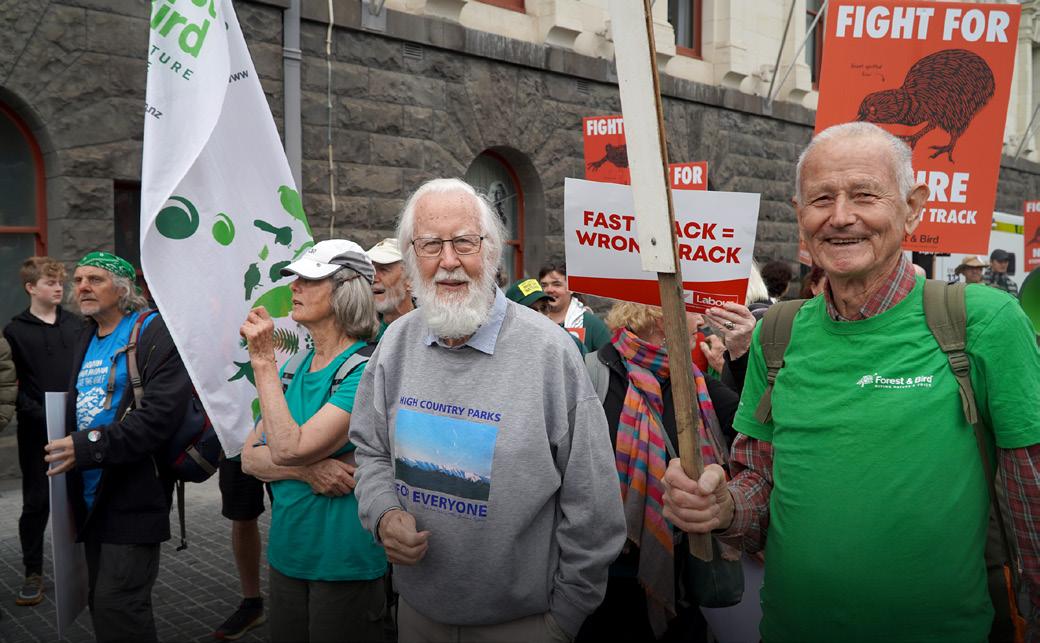
FAST-TRACK APPROVALS LEGISLATION AT A GLANCE
n The Bill overrides environmental protections set out in the Resource Management Act, Conservation Act, Wildlife Act, and EEZ Act.
n There is no attempt at consistency with New Zealand’s climate change obligations.
n The public (and most public-interest organisations) are shut out of the process, so panels making decisions on projects won’t hear from those representing nature or those most affected.
Improvements recommended by the select committee included:
n Ministers lose the final say on whether projects get consent.
n Clarification that mining on highly protected conservation land (Schedule 4 areas) cannot be fast tracked.
n Where projects have previously been declined, any prior consideration of the project and any related court decisions need to be considered as part of a referral decision.
n The time frame for invited parties to provide comments has been extended from 10 to 20 days.
n A panel may decline an approval if the activity or activities that the approval is sought for would have one or more adverse impacts and those adverse impacts are sufficiently significant to outweigh the purpose of the Act.
At the time of writing, the Bill was due to have its final readings in November and was likely to become law by the end of the year.
STOP THE WAR ON NATURE
Ahuge thank you to all our supporters who donated, made submissions, attended June’s March for Nature in Auckland, signed our “show us your list” petition, or contacted their local MP as part of Forest & Bird’s Stop the War on Nature campaign this year.

Your donations supported our legal team to make a detailed submission highlighting flaws in the Fast-track Approvals Bill. Forest & Bird Youth and several branches also made individual submissions.
Forest & Bird also organised webinars and a public meeting to explain the impact of the fast-track legislation, enabling those people who wanted to make a detailed individual submission.
More than 13,480 people submitted against the Bill via Forest & Bird’s website, and interest was so high that a ballot had to be used to allocate hearings by the Environment Committee. In May, Forest & Bird was among the first organisations to be asked to give an oral submission in front of MPs.
Forest & Bird also launched a petition demanding the release of the schedule of fast-track projects attached to the Bill. We said it was important for the public to have their say on the proposed projects before MPs voted on the Bill.
At the end of August, Forest & Bird revealed a previously unseen draft fast-track Bill that pre-dated the formation of the National-led coalition government.
While attending the Petitions Committee, Forest & Bird’s group manager for advocacy Richard Capie tabled this Bill, which had been obtained under the Official Information Act.
New Zealand First MP Shane Jones had given it to Resource Management Act Reform Minister Chris Bishop during coalition negotiations. The draft contains what appeared to be a redacted list of projects for fast tracking.
“If a list of fast-track projects was being shared amongst political parties during coalition negotiations, New Zealanders deserve to know what was on that list,” Richard said at the time.
“This whole process of developing a law to override environmental standards and local concerns has been rushed and secretive, and the biggest secret of all is what projects the government is looking at including in the Fast-track Approvals Bill.”
The media covered the revelation, and it put pressure on the government to release the list of potential fasttrack projects, which it eventually did in early October.
Forest & Bird will continue to advocate for nature protection in 2025. Please help us by making a gift at forestandbird.org.nz/stop-fast-track
BRAINS FEATHER
David Hill Kelly Body
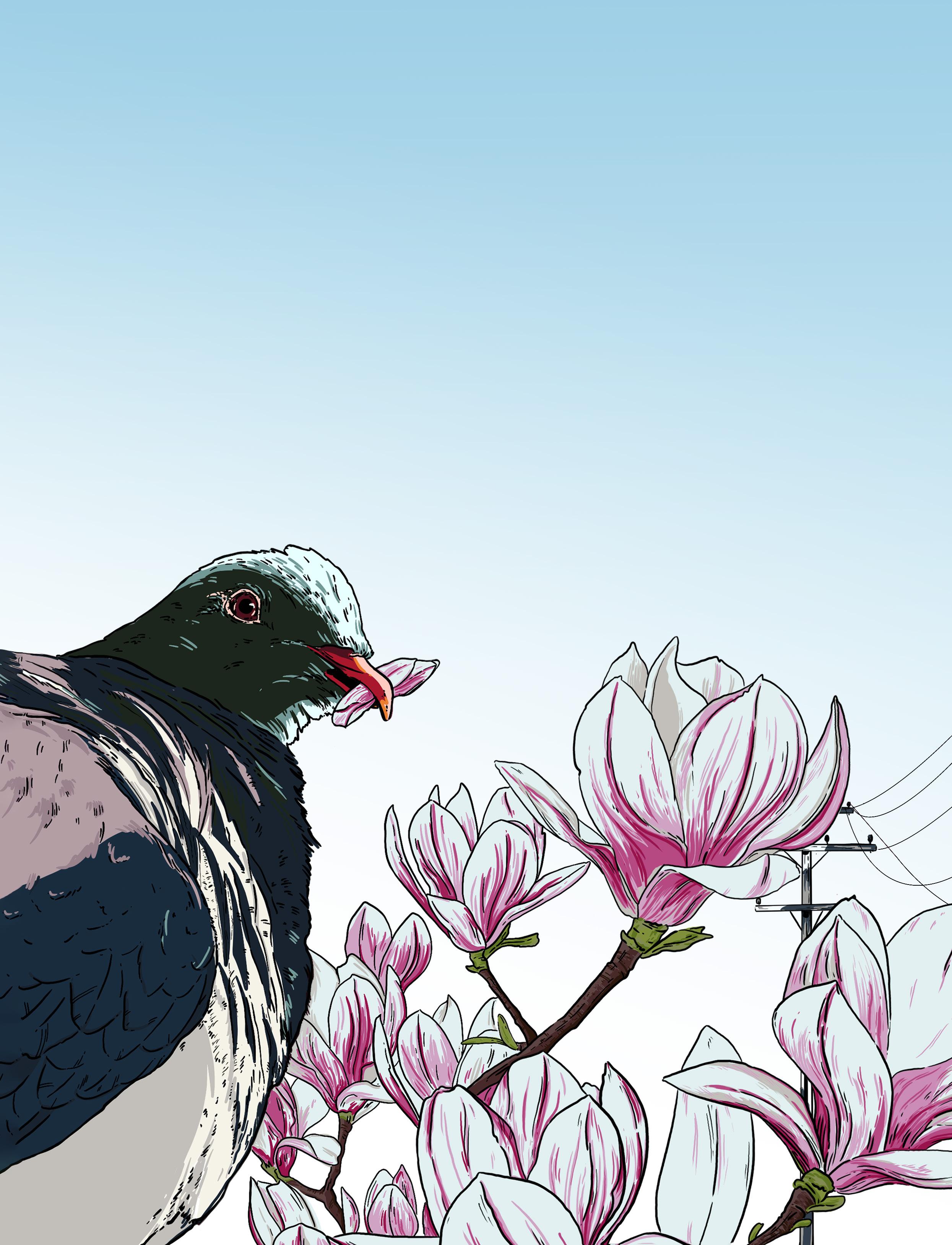
They’re at it again!’’ my wife Beth cried. ‘’The brutes!’’
I joined her on the back concrete. Yes, the two brutes were there, squatting in the top branches of our magnolia ‘Vulcan’, wearing their white bib overalls and iridescent green-blue tops, munching on the magnolia buds. A pair of kererū.
‘’Gerroff!’’ I yelled. ‘’Vanish!’’ Two tiny, shiny heads turned towards me in a puzzled manner. Then they turned back, and the munching restarted.
I lurched across the lawn, seized the magnolia’s trunk, and shook it. I could almost hear the response making its slow trek from small brains to large wings, 4m above me.
Finally, those wings spread, and both birds lifted off, in that wonderful kererū imitation of a flying mattress, curving down then labouring up on their whoof-whoofwhoof trajectory. They settled on the power line, gazing back at me in mild surprise. What was I making such a fuss about?
If there’s ever a poll for Aotearoa’s Funniest Bird of the Year, kererū would win claws down.
Our power line makes a good perch for them. Our neighbour’s line is much looser, and turns into a 60-degree slope if any weight is placed on it. Yet kererū (and I wouldn’t be surprised if it’s the same ones each
time) constantly land on it, then look startled as they slide groundwards. I even saw one try to perch on the steep diagonal strut of a playground swing once. We don’t need to worry about their ever taking over the world.
They gorge on our guava trees, then sun themselves on the branches while the fruit starts to ferment in their crop. After 20 minutes or so, you’d swear you can hear the drunken singing start up.
They’ve given us moments of sheer joy. A different neighbour’s cat likes to prowl our garden. One time, a kererū curving down on its first, clumsy stage of lift-off, was met by a feline hurling itself upwards for some kererū kedgeree.
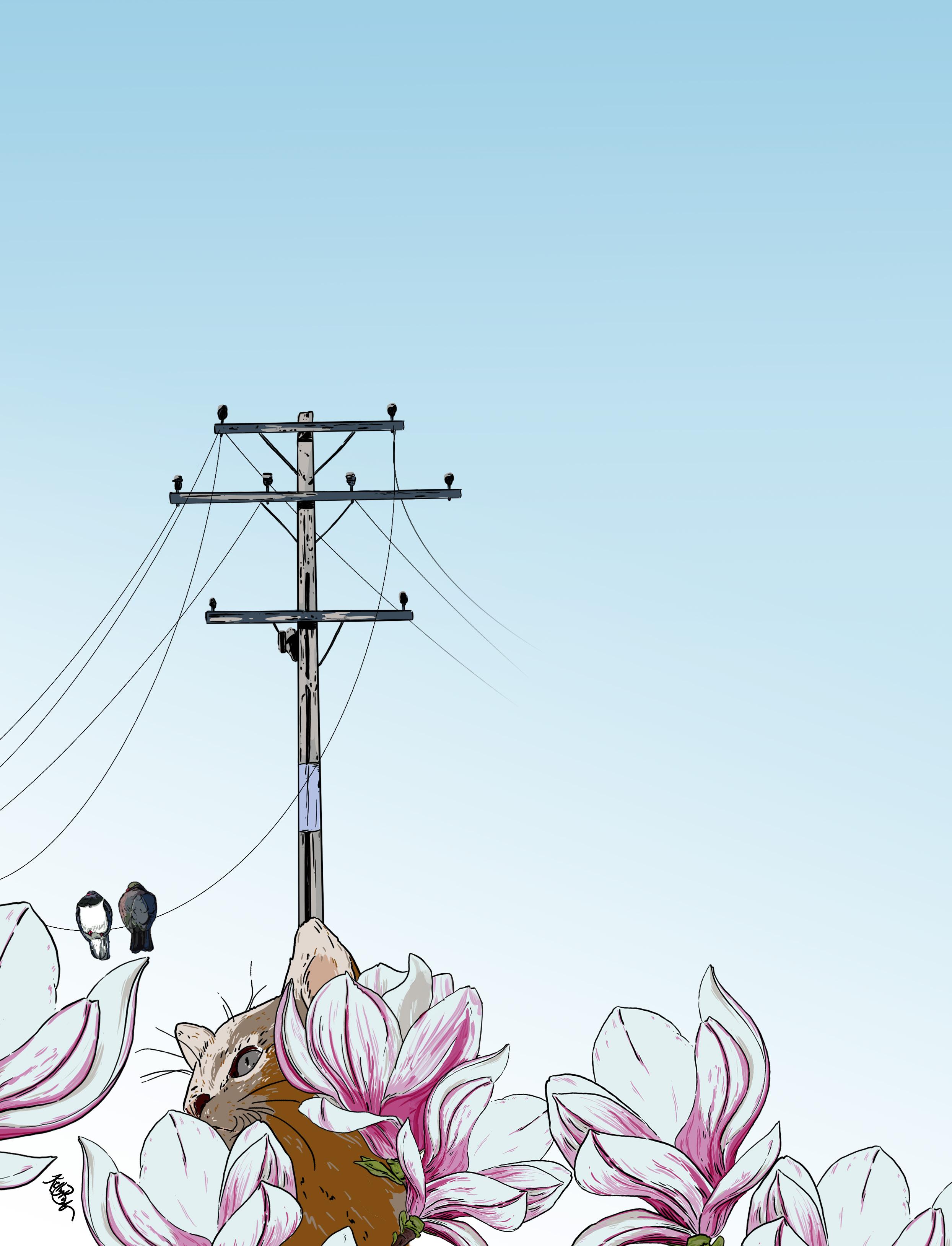
The cat missed. The bird didn’t. Six hundred grammes of Hemiphaga novaeseelandiae sent the predator somersualting across the grass, while its intended prey curved up onto the non-sagging power line, and sat there, thinking about life.
Another time, a Thwummp! on our back bedroom window brought Beth and me hurrying through to check. An oily stain and a few fluffs of down on the glass told the story. A kererū had let its guavas ferment a little too long, then tried to drive home.
There it was, staggering around on the ground, telling itself it wouldn’t ever touch the stuff again. We watched in concern till it got airborne, veering a bit at first, before heading home to sleep it off.
We admire other native birds for their agility, versatility, nobility, bravery. Kererū show none of those qualities.
OK, they’re handsome. They’re admirably monogamous, usually pairing for life after that endearing courtship ritual where they sit side by side, occasionally nuzzling beaks together. They’re environmentally valuable; their omnivorous eating and habit of leaving seeds in their droppings over wide areas makes them essential to the health of our podocarp broadleaf forests.
But I reckon it’s the sheer harmlessness, the utter gormlessness of kererū that make us like them. We’ve all heard how they would stay sitting on branches while early Māori thrust spears at them from below. That vulnerable innocence still makes them loveable.
Although she won’t admit it, I suspect Beth’s actually willing to allow them a share of her Vulcan magnolia. The only problem is getting their feathery mini-brains to understand what ‘’share’’ means.
David Hill is a highly regarded New Zealand writer, playwright, poet, columnist, and critic. He is also a long-time Forest & Bird member and supporter who lives in New Plymouth.

David Hill
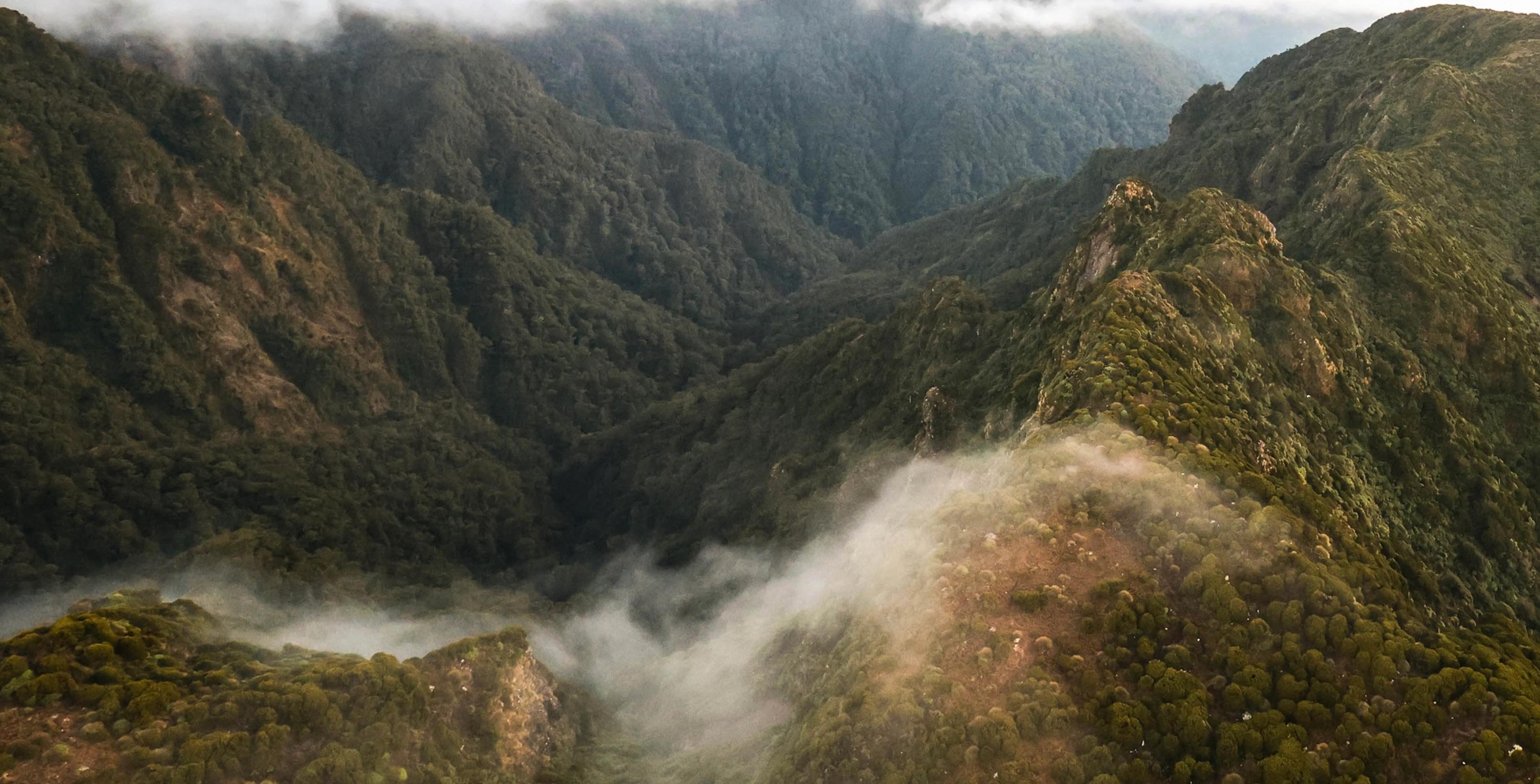
RESTORING RAUKŪMARA
An ambitious iwi-led project employing 30 people is bringing back taonga species such as kiwi to the Raukūmara Ranges
The Raukūmara Range is part of the largest continuous native forested area that remains in Te Ika-a-Māui the North Island.
The north side of the range, from mountains to sea, are the homelands of Te Whānau a Apanui, an iwi of 13 hapū, with very large lowland forested Māori trust land blocks.
South side of the range is Ngāti Porou rohe that runs from mountain ridges down to large iwi farm and forestry blocks. Joining these two iwi is the forested Raukūmara Range.
Both iwi have a long history of love, battles, and sharing the food basket of the Raukūmara, with the ancient landscape and forest in common.
Raukūmara Forest’s diverse mix of beech, podocarp, and broadleaf tree species used to hold the land securely in place – but introduced deer and possums arrived in the 1960s and ate their way from the inside of the forest out.
The understorey was seriously reduced, the leaf litter all but eaten, and the ground compacted by sharp hooves for decades. When
heavy rain comes, there are fewer canopy trees, shrubs, ferns, and understorey to break and absorb the rain. This is the Raukūmara story.
“Now rivers rise high quickly and fall fast,” says Ora Barlow, who is on the governance team of Raukūmara Pae Maunga and works with Save the Kiwi. “Heavy rainfall and storms see tonnes of sediment cascading into our rivers and out to sea.
“The mountain is unable to hold and heal herself because the forest is being eaten by possums in the canopy and deer that trot across vertical slips and eat the native plants that would naturally stabilise the whenua.
“We saw the outcome with Cyclone Gabrielle, where homes, marae, people’s lives, bridges, roads, and nature were severely impacted.”
Knowledgeable people from both iwi had been ringing the alarm bells for decades, and those working for DOC had documented the forest’s collapse. Again and again, help was sought, but they were told the Raukūmara was “not a priority”.
“Our people watched the Raukūmara slip into a forgotten
Dean Baigent-Mercer
silent forest,” adds Ora.
Uncle Hal Hovell (Ngāti Porou) worked for the New Zealand Forest Service, then DOC, for 50+ years and kept a diary every work day. His observations paint a tragic tale.
They document the arrival of deer, the disappearance of seabirds, pepeketua Hochstetter’s frog, pekapeka long-tailed bats, and kiwi, and hectares of te pua o te rēinga wood rose at the eastern end of the Raukūmara Range.
“At this point, we knew of only a handful of kiwi – and their extinction within the Raukūmara was imminent,” says Ora.
By 2016, Te Whānau a Apanui and Ngāti Porou were organising
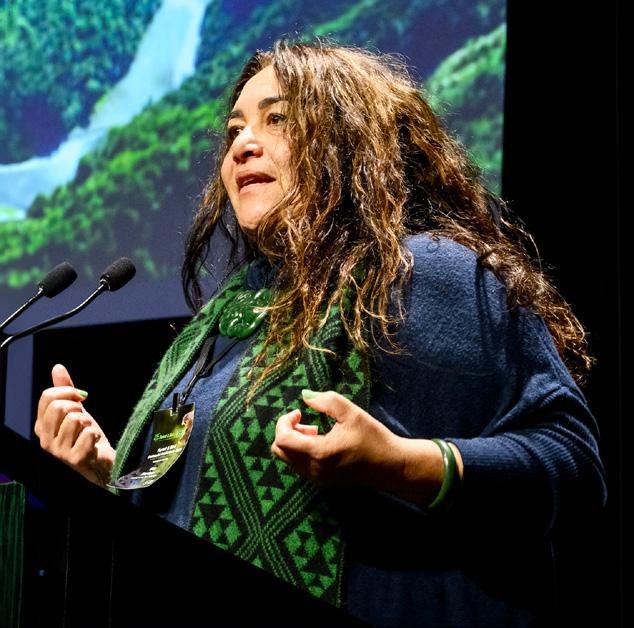
Raukūmara Ranges. Raukūmara Pae Maunga
Ora Barlow in 2023. Mark Coote
a series of wānanga to build community momentum, conveying to their iwi the serious decline of the Raukūmara through people’s lived experience, history, and field trips.
Three years later, Minister of Conservation Eugenie Sage was invited to fly over the Raukūmara with iwi representatives to witness the devastated forest. It was a moving experience for everyone, and Sage acknowledged that urgent action was needed.
In 2020, a Vote for Conservation bid allocated $34.4 million to the restoration programme for the Raukūmara. The iwi response was to establish Raukūmara Pae Maunga in 2021.
“We investigated aerial deer culling techniques across the country with expert Norm McDonald and went to Pureora and Whirinaki Forests to hear from tangata whenua what their experience has been with aerial 1080 and see what these forests are like for ourselves,” explains Ora.
“Instead of a dead forest killed by 1080, we experienced a ngahere full of life. The rongoā plants that deer hammer first were flourishing, and kākā were in the tops of rimu above us. Critical to forest restoration is matching the solution to the problem and taking the people with you. Half measures won’t bring the mauri of the ngahere back.
“We had to make sure that in a climate of misinformation and perceptions, the narrative was correct. Facebook is not a hapū, and our decisions are made on the marae. Once our people understood the crisis of the Raukūmara ngahere and the sheer scale of the problem, it was really important to ask the key question ‘What does the ngahere need and what are going to do about it?’
“There are real feelings over toxins which we had to navigate. Firstly, we needed to draw out the stories of how the forest once was. Kaumatua stories of the time
before possums and deer were a shocking contrast to what people now experience.”
In a single human lifetime, the forest had become silent. It was time to take action and start removing the destructive browsing mammals.
Wiremu Wharepapa, of Raukūmara Pae Maunga and Save the Kiwi, explains how they completed the world’s biggest indigenous aerial 1080 operation.
“The more our people understood about 1080, the more whānau were coming on board asking if their land blocks could be included,” he said.
“It was so huge it had to be done in chunks. Because of shocking weather disruptions taking out roads and postponements because we didn’t have the weather window, it ended up taking over a year and a half to complete.”
Overall, 1080 was applied to 116,000ha, of which 40,000ha were Māori-owned whenua. After the operation, rats and possums were at 0%–1% levels.
Raukūmara Pae Maunga trained its own top-quality helicopter crew to carry out aerial operations using the latest thermal imagery cameras. Six skilled indication dogs accompanied the groundculling crew. From 2021 to 2024, a total of 7480 deer and 1064 goats
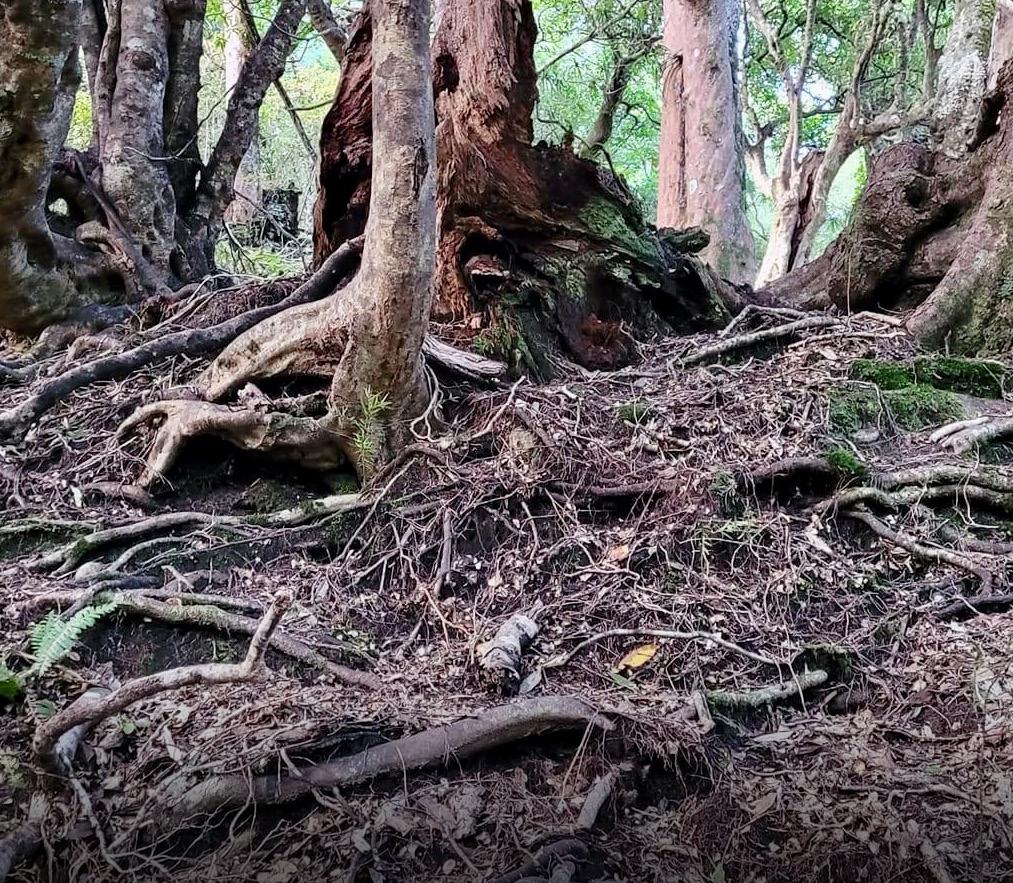
were removed from more than 73,000ha of forest.
“Working with trusted people is essential. Thanks to Forest & Bird for allowing Dean BaigentMercer to come down to be part of our many wānanga, bringing his experiences and whakaaro into the mix,” says Ora. “A huge mihi also to Save the Kiwi.”
Last year, Forest & Bird awarded Raukūmara Pae Maunga its prestigious Kōtuku Award in recognition of its outstanding contribution to kaitiakitanga guardianship in Aotearoa. Together, they are restoring the mauri of the ngahere, and their work is an inspiration to all of us.
For more information, go to www.raukumara.org.nz
Dean Baigent-Mercer is Forest & Bird’s regional manager for Northland. He has been supporting Raukūmara Pae Maunga since 2017.
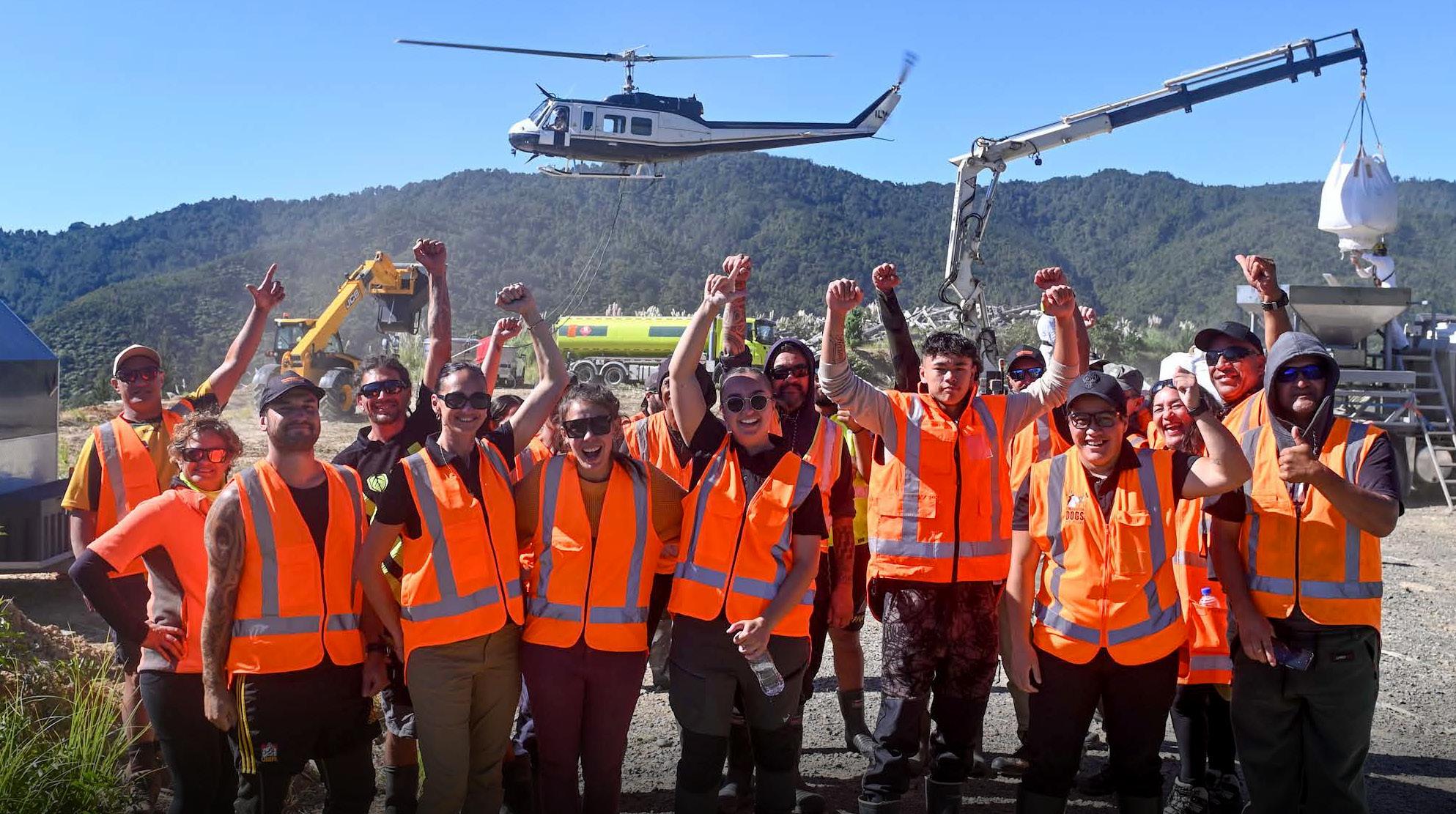
Raukūmara Pae Maunga has the largest deer-culling operation in the North Island. Raukūmara Pae Maunga
Deer damage at Raukūmara. Raukūmara Pae Maunga
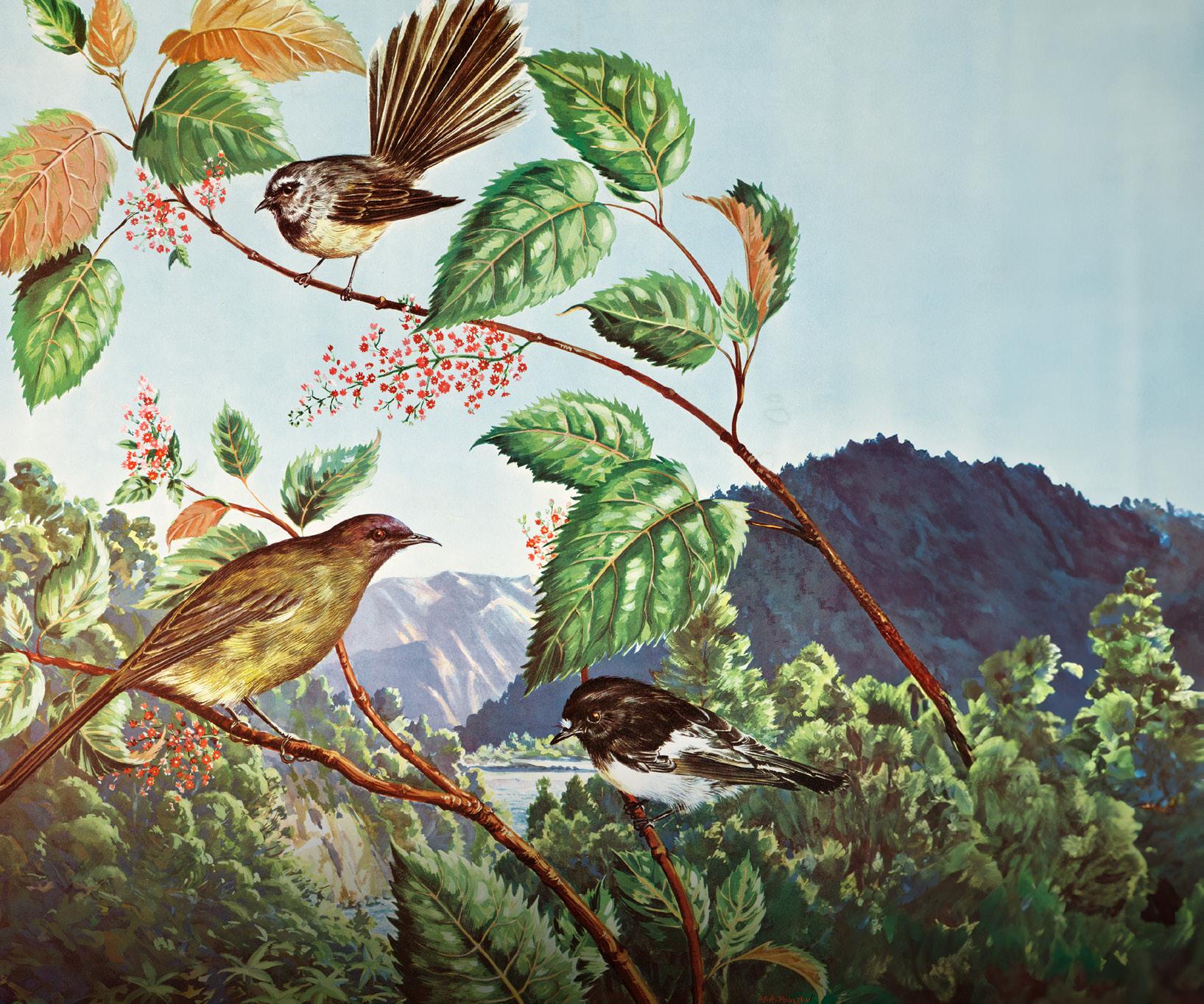
DAWN CHORUS
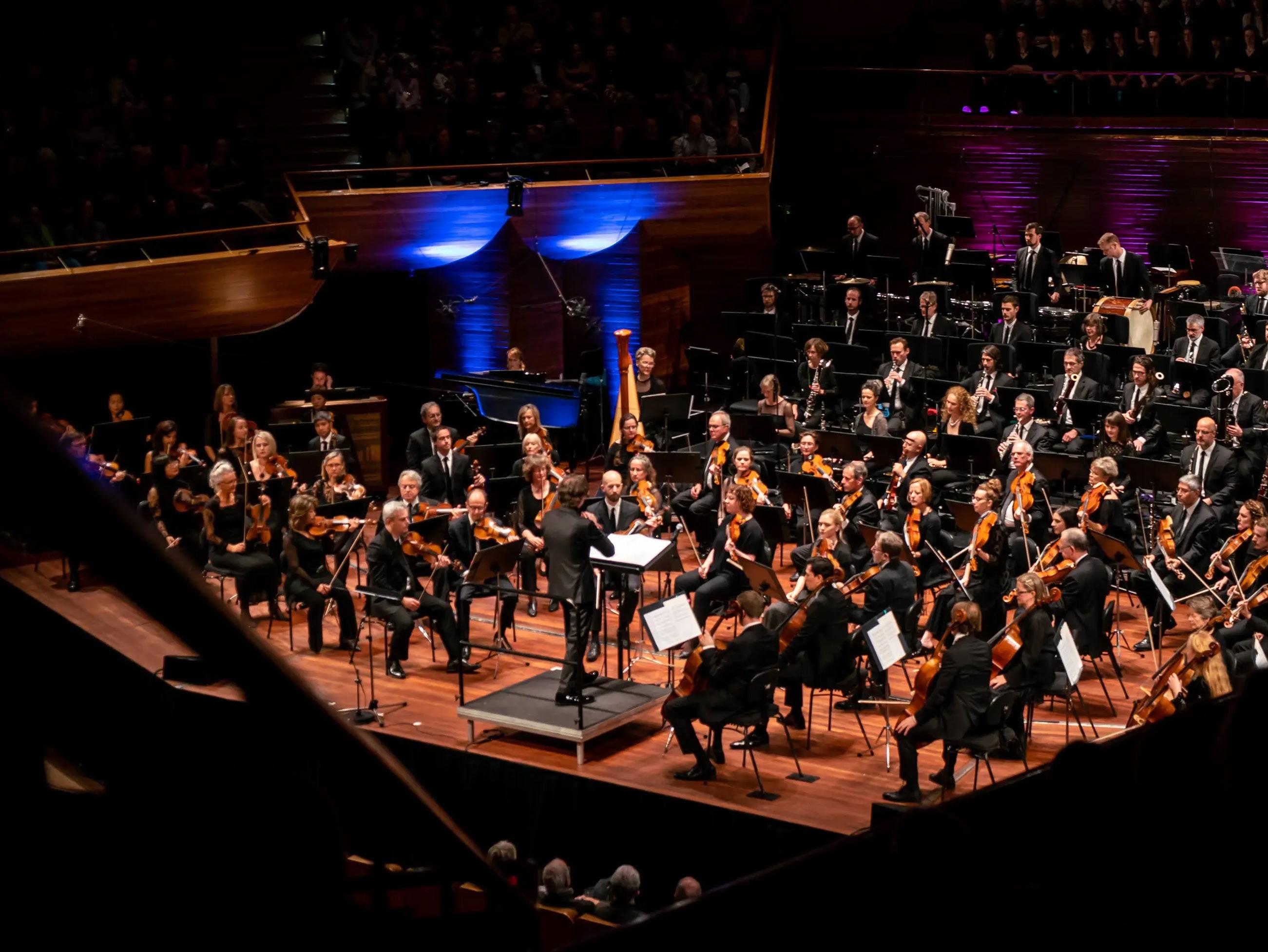
Forest & Bird recently teamed up with the New Zealand Symphony Orchestra to explore the deep connection between music and nature.
Ihave written a whole symphony on the bush and the songs of the birds. It is in four movements as a symphony should be and each movement represents part of the day. For instance, there is dawn when the birds awake and sing their first great song of praise. Then morning when the first rapture is past and they mostly are feeding and only such birds as the tui, bellbird, shining cuckoo are heard, and the former are only singing snatches of song. Midday is the third movement when the birds are silent and only a passing bird cries overhead. For which I have taken the kea as representing birds persecuted by the advance of civilization. Then so to enhance the fact that the bush would be most mournful without birds I have put in the principal theme running right through the symphony, namely the bellbird refrain.
These words were written in 1934 by Pérrine Moncrieff (far right), a founder member of Forest & Bird who went on to successfully campaign for Abel Tasman National Park.
Unfortunately, it is uncertain whether Pérrine Moncrieff’s symphony was ever performed, and Forest & Bird’s history team has been unable to locate the musical score in any public archives. She did, however, leave some tantalising clues about what happened to it.
Pérrine wrote to ornithologist Robert Falla in 1934, saying she had taken her symphony “to Wellington to be orchestrated (it took me over a year to compose) and it is now in the hands of [Claude] Haydon who is orchestrating it ... I played the first movement to De Mauny who conducts a symphony orchestra in Wellington and also plays over the wireless and he liked it very much. One has to please the music-lover as well as the bird-lover.”
Claude Haydon was a prolific Australian-born composer who lived in Wellington from 1920. Leon De Mauny helped found the Wellington Symphony Orchestra in 1928, which he conducted and hoped would become a national orchestra, but it ceased performing in 1941.
A century on from Moncrieff’s
Lynn Freeman
dawn chorus symphony, the long connection between nature and music was the theme of my preconcert talks in Wellington and Auckland in late August. The audience had come to hear the New Zealand Symphony Orchestra’s water-themed programme: Nielsen Helios Overture, Tchaikovsky Violin Concerto, Sibelius The Oceanides, and Debussy La Mer
I’m much more at home in the bush than on the ocean, so the theme of my talk was more terrestrial than maritime, but what I suggested holds true for both. I encouraged everyone to take the time to listen – listen deeply – when they are next out in nature.
I’ve been deep listening to birdsong for years – well before forest bathing and wellbeing were in fashion. When I left RNZ in 2022, I was invited onto The Mix Tape by Charlotte Ryan. Guests select their favourite pieces of music, and, along with Mozart, Phil Collins, Kimbra, and Victoria Kelly’s haunting composition for Simon O’Neill, I chose something
Collage of a Forest & Bird railways poster and NZSO musicians. Forest & Bird
altogether different.
It was a dawn chorus recorded on Tiritiri Matangi. No composer, no score, no conductor, and the musicians are gifted but unpredictable. For anyone who has heard a dawn or dusk chorus in one of our special places where manu are thriving, it’s an intricate, layered, and thrilling symphony.
I’m also lucky enough to hear a regular dawn chorus at my second home, Zealandia in Te Whanganuia-Tara, where I’m a volunteer. Rather than hearing the music from one position on a stage in front of you, it’s a full wrap-around 360-degree soundscape.
The night-time kiwi, ruru, and pāteke brown teal duets crossfade into the calls of the first early morning musicians, tūī. They are a one-man band/symphony with their dual voice box and genius at mimicry.
After their sometimes raucous, sometimes harmonious calls, in come the percussionists: timpani,
RECHARGE IN THE WILD
Escape the hustle of modern life and sail into the serene on a remote, bespoke adventure into Fiordland. The Breaksea Girl your home in the wild, has all the creature comforts, a small family of expert guides and hosts a collection of multi-day adventures customised to get you closer than ever before.

xylophone, cymbals, triangle, snare drum, bass drum, tambourine, maracas, gongs, and chimes, all covered masterfully by kākā.
When kākā take a breather, you get to hear the wind instruments in the form of korimako bellbird and riroriro grey warbler. If you are lucky, you will also hear the ultra-high-pitched notes of the tiny titipounamu rifleman. Versatile string instruments arrive as tīeke saddleback, pōpokotea whitehead, kakariki, and tautauwai North Island robin.
How to describe the sound of the shags (cormorants) and the pūtangitangi paradise shell duck – well, they provide dissonance, if that’s your thing in a symphony. They really are better suited to the soundtrack of a horror movie.
On any given morning, the symphony might have unexpected guest soloists in the form of a kārearea New Zealand falcon ki-kiki-ing as it chases some of the other
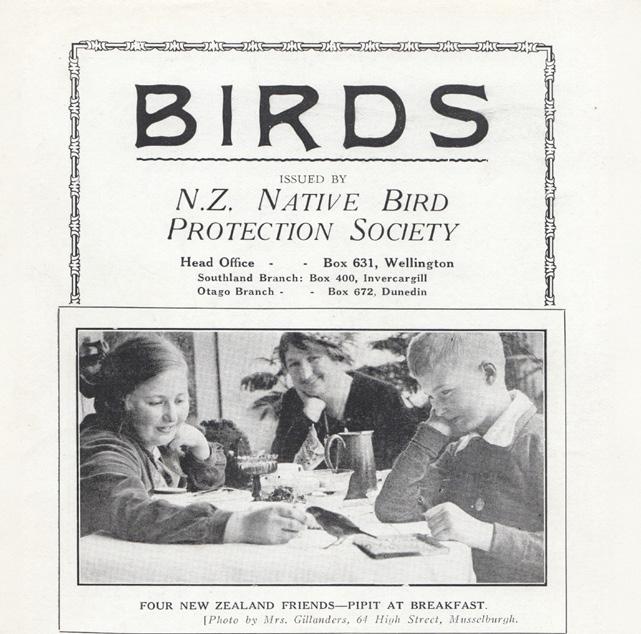
musicians across the dawn sky. At the next performance, who knows who will turn up, who will be a no show, which manu musician will dominate, even who will experiment. You won’t know unless you listen, listen deeply.
Lynn Freeman is Forest & Bird’s media and communications manager. Lynn worked at RNZ for 35 years, including two decades as its arts specialist and host/producer of Standing Room Only. She loves using creative ways to share stories about New Zealand’s te taiao natural world.
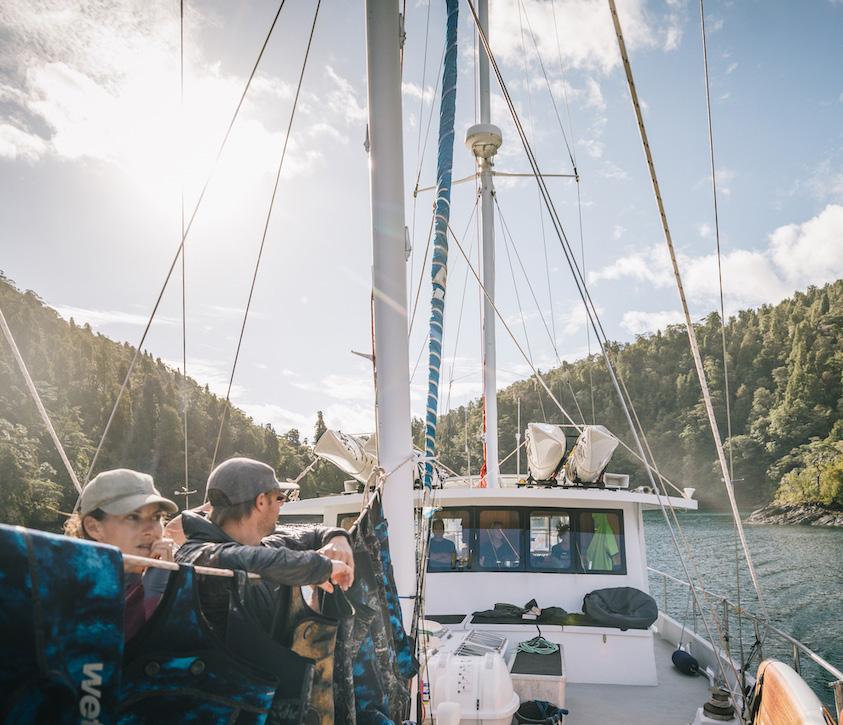
Pérrine Moncrieff pictured in 1930. Forest & Bird
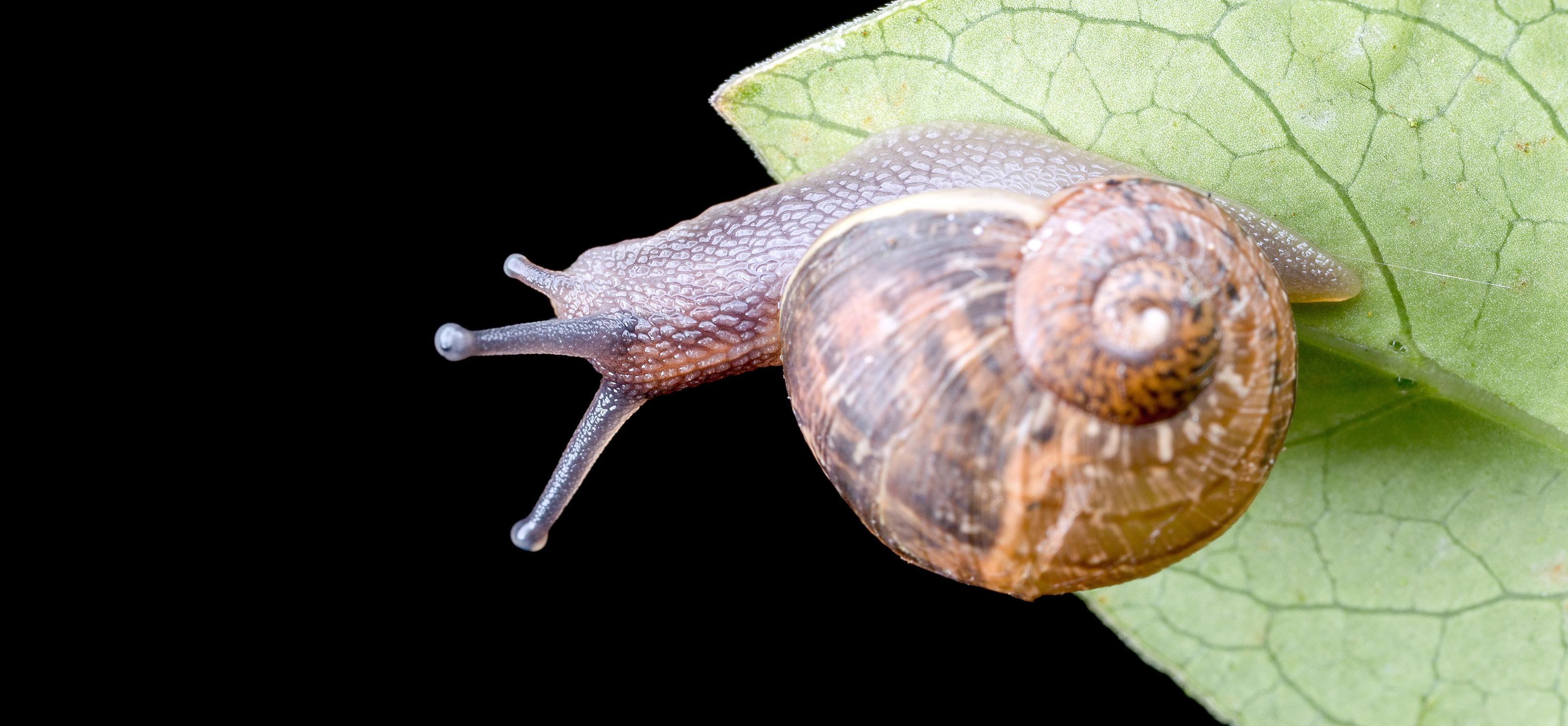
GARDEN TRAVELLERS
Friend or foe? The finely balanced ecological story of slugs, snails, and flatworms. Ann Graeme
Iwas admiring my runner beans when I found a slug. It was eating the growing tip of a newly emerging plant. It is hard to empathise with a slug when it’s eating your vegetables. It looks like an alien to me, and it is an alien, in the sense that it is not a native animal but a pest hitchhiker from the other side of the world.
So too are the garden snails, with their patterned shells and retractable eye stalks, and the slaters, with their cavalcade of legs, and the fat, furry caterpillars. Even the earthworms we welcome are non-native species.
We have an enormous fauna of native invertebrates such as snails (1400+ species), spiders (2500+ species), wētā (100+ species), and stick insects (23+ species), but very few of them live in our gardens amongst the non-native petunias and pansies or the beans and broccoli.
Our gardens, compost heaps, and grass pastures don’t suit the more than 171 species of native earthworms that live in native forests, tussock lands, and wetlands.
Picking up an abandoned plant pot, I found a skinny orange
flatworm, which was probably a native species. Flatworms, as their name suggests, are flat, not cylindrical like earthworms. They are also carnivorous – they eat earthworms and slaters and other small invertebrates.
One native species from Te Waipounamu the South Island has achieved international notoriety. It is not a problem here, but in Great Britain and northern Europe it is called “the invasive New Zealand flatworm!” and spreads alarm among biosecurity personnel and conservationists.
It was accidently introduced some 60 years ago into Northern Ireland and central Scotland and has spread widely. Being capable of eating an earthworm a week, the New Zealand flatworm is blamed for declining earthworm populations, altered soil structure, and reduced pasture growth.
It has also been held responsible for exterminating moles in parts of the Scottish Highlands (earthworms are moles’ favourite food). The decimation of mole populations is measured by the number of mole hills that can be counted on the top of the ground. We are accustomed to being
the recipient of pest species from overseas – think rats, stoats, rabbits, and dozens more – but some of our native species have turned the tables and become pests in ecosystems beyond our shores.
Another such is the New Zealand mud snail (not to be confused with titiko, a large estuarine snail). The mud snail is tiny and black, scarcely larger than a grain of rice. It lives in fresh and brackish water and grazes on algae and organic detritus.
It and its related species are part of the food web in our streams and estuaries. The mud snail has a lot of parasites, including more than 11 species of flukes, a type of parasitic flatworm.
Garden snail. Bryce McQuillan
New Zealand’s endemic flatworm Arthurdendyus triangulatus is a pest in the UK. Joshua Clarke/iNaturalist
Over the past 150 years, our mud snail has been carried throughout the Northern Hemisphere by ships, unseen in their water barrels and ballast, and clinging to fishing gear.
The snails have spread over three continents. Arriving in virgin waters, free of the predators, parasites, and pathogens that controlled their numbers in Aotearoa, the snails have multiplied fast.
The highest concentration of New Zealand mud snails ever reported was in Lake Zurich, in Switzerland, where in seven years the species colonised the entire lake to a density of 800,000 per m².
Most founding populations require both male and female individuals to establish a population, but the New Zealand mud snail has a particular advantage.
Female mud snails can reproduce asexually, producing up to 230 offspring a year, so it took only three female snails to establish the three genetically identical populations – clones – that have spread in the USA, reaching 500,000 per m² in some locations.
Eventually, such population explosions crash but not before causing havoc in the food web of the native organisms in the waterway.
The New Zealand mud snail and the New Zealand flatworm illustrate how a species can become a pest when it is free from the checks and balances, the predators, parasites, and diseases that control its population in its native environment.
It illustrates the intricacy of natural environments, the complexity of every ecosystem, and how easily these systems can be unbalanced and even overwhelmed.
It also illustrates our responsibility to control the introduced pests that are destroying our unique biodiversity, to try not to contribute pests to other ecosystems, and to take care not to add to the pests in Aotearoa.
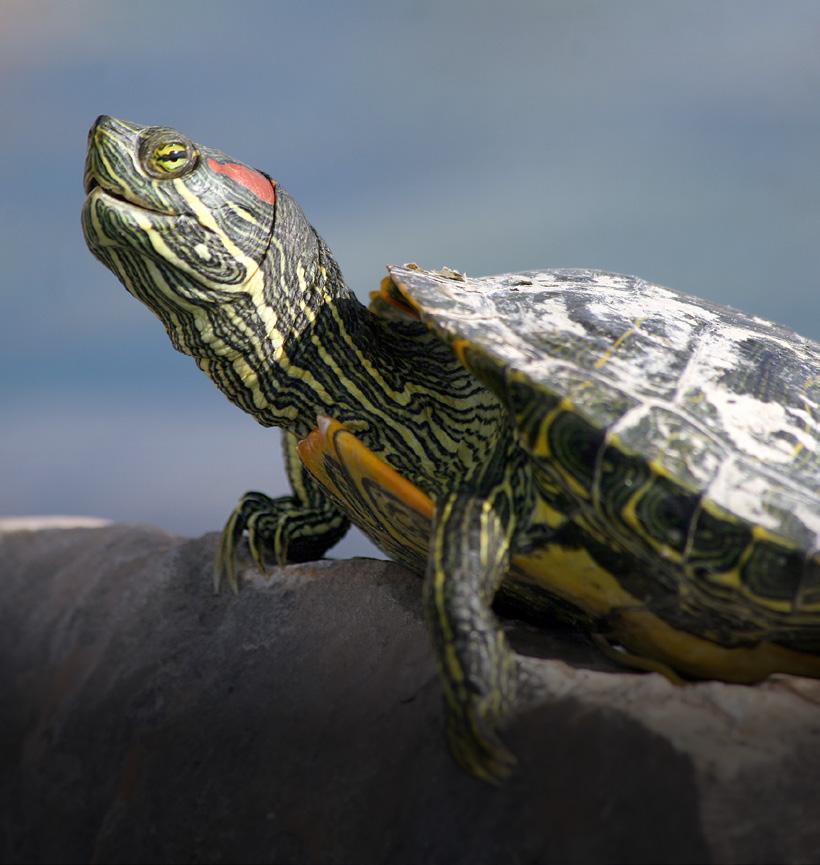
POTENTIAL PESTS
There is an army of new and invasive species already in New Zealand that have the potential to become pests. They are living as pets in our households and plants in our gardens, and this is where they need to stay.
Never release unwanted pets into the wild. Red-eared slider turtles, so cute when tiny, so boring when big, have been released and are breeding in ponds as far south as Tauranga.
Goldfish and other freshwater aquarium fish multiply in drains and creeks and compete with native whitebait. Aquarium plants become invasive water weeds.
Garden plants can escape and become weeds of wasteland, wetland, and forest, so put your garden waste in your compost or send it to the green waste. Don’t throw it “over the fence” or into dune land.
Native leaf-veined slugs mainly eat algae and fungi and are not agricultural pests. Shaun Lee/iNaturalist
Native snail Rhytida greenwoodi Bryce McQuillan
Garden slug Arion hortensis Bryce McQuillan
New Zealand mud snail Potamopyrgus antipodarum in Austria. Christian Gilli/ iNaturalist
Red-eared slider turtle. Brent Myers
HIGHLIGHTS AND WINS 2024
This year, the entire Forest & Bird whānau – members, supporters, staff, branches, youth, and children – stepped up to fight for te taiao as the coalition government attempted to reverse four decades of vitally important environmental laws. Together, we raised our voices to protest the proposed degradation of our native forests, waterways, climate, and oceans. Thanks to your support, we used our strength in numbers and shared passion for nature to take action. With action comes hope, as you can see in the selected highlights below.
JANUARY
TURNING THE TIDE
Forest & Bird calls on councils around the country to fix lax rules for vehicles on beaches after only one – Dunedin City – scored the top ranking for protecting coastal species. Our special investigation reveals that
73% of Aotearoa New Zealand’s councils have inadequate bylaws, monitoring, and compliance for vehicles on beaches. This leaves coastal species vulnerable and unprotected. Our summer campaign was prompted by ongoing concerns from Forest & Bird branches – and members of the public – around the motu. They are fed up watching vehicles driving on beaches with no regard for nesting shorebirds, resting marine mammals, or vulnerable native plants. Community groups use the investigation’s findings to push councils for change in their local areas.
BISHOP’S BOMBSHELL Resource Management Act Reform
Minister Chris Bishop writes to Forest & Bird wishing us a Happy New Year and advises of the government’s plans to develop new fast-track consenting legislation. He also plans changes to the 2020 National Policy Statement for Freshwater Management – watering down its existing vital freshwater protections. The Society condemns the double whammy for nature.
“The government is setting itself up to rush through any development without letting the public have their say and without keeping nature safe,” says Forest & Bird’s chief executive Nicola Toki. “New Zealanders should be alarmed that our incredible natural environment is being treated with such disdain at a time when we’re facing such significant loss.”
Hoiho. Ross Mastrovich

FEBRUARY
NEW YOUTH HUBS
Forest & Bird Youth members
Amber Cayley and Samuel Salisbury step up as co-leaders and establish a Forest & Bird Youth Hub in Taranaki. In July, 17 young leaders from around the motu head to Taranaki for their annual hui to plant trees and learn about the wildlife of the stunning region. Later in the year, Sarah Sickorez establishes Hawke’s Bay Youth Hub. These two new hubs join existing ones in Auckland, Wellington, Christchurch, and Dunedin, along with two virtual national hubs, one for communications and the other for political campaigns. Forest & Bird Youth is proud to offer many different ways for young people aged 14–25 years the chance to connect with nature, learn new skills, and become conservation leaders of the future.
HAZARD PROTECTION
Forest & Bird calls on the Ministers for the Environment and Climate Change to take action and pass a National Policy Statement on Natural Hazard DecisionMaking. The policy would protect communities around the motu from flooding and other risks, such as landslips and earthquakes, by giving councils more power to stop developments in high-risk areas. The call comes a year after floods devastated communities in Auckland, Hawke’s Bay, and the East Coast. Forest & Bird was one of 102 submitters on the NPS last year, and it had been due to be implemented in early 2024. At the time of writing, the coalition government is yet to act.
MARCH
TE KUHA SAVED (again) Stevenson Mining abandons an Environment Court appeal on its proposed Te Kuha coal mine on the West Coast. It is the latest in Forest & Bird’s long-running – and successful – legal battle to stop the mine going ahead on a pristine mountaintop near Westport. However, environmentalists stop short of celebrating as it is feared the company has discontinued the appeal because it has applied to the government for Te Kuha to be on its secret list of proposed fast-track projects. At the time of writing, the ancient forest, its kiwi, and rare native butterflies are still safe. The company did apply to be on the fast-track list, but the mine proposal did not make it onto the first list of 149 projects announced in October. It could still be added to future projects for consideration.
WAR ON NATURE
A sweeping Fast-track Approvals Bill is tabled in Parliament that if enacted would override decades of environmental protections set out in the Conservation Act, Reserves Act, Wildlife Act, Resource Management Act, and law governing the Exclusive Economic Zone. The coalition government gives stakeholders less than two weeks to provide feedback. Forest & Bird says the fast-track law will fundamentally weaken environment protections and is anti-democratic. “New Zealand already has the highest proportion of threatened species in the world, and this will put more on a fast track to extinction,” warns Forest & Bird chief executive Nicola Toki. Ministers can refer any developments, including aquaculture, dams, mining, roading, and housing, to an expert panel.
Environmental groups will no longer have a say on new developments that trash the environment. Forest & Bird joins a coalition of New Zealand’s e-NGOs to draw up a plan to fight the proposals.
WOMEN IN CONSERVATION
Forest & Bird partners with the National Library of New Zealand to host a celebration of women leaders in conservation past, present, and future. The International Women’s Day event is attended by high school and university students, and members of the public, who gather to hear a panel of inspiring leaders, including Nicola Toki, Amanda Black, Trish Kirkland-Smith, and Stephanie Rowe, discuss the challenges of working in conservation as a woman. The day also celebrates the contribution of bird illustrator Lily Daff and botanist Audrey Eagle, both of whom helped generations of New Zealanders to love their native birds and plants. The afternoon is spent at a series of educational workshops led by experts in their respective environmental fields.
KERMADEC U-TURN
The coalition government announces it is not going ahead with the creation of the globally important Kermadec Rangitāhua Ocean Sanctuary. Forest & Bird says it is a major blow to worldwide efforts to protect the ocean – and to the legacy of former National Prime Minister Sir John Key, who proposed the sanctuary in 2015. It would have covered an area twice the size of Aotearoa New Zealand’s land mass and 50 times the size of our largest national park and contributed to the global target of protecting 30% of the ocean by 2030.
CENTENNIAL DINNER
Bringing an incredible year of centennial celebrations to a close, Their Excellencies, the Rt Hon Dame Cindy Kiro GNZM, QSO, GovernorGeneral of New Zealand and Dr Richard Davies host a centennial dinner in honour of Forest & Bird. A who’s who of conservation gathers at Government House, Wellington, on 22 March, to celebrate the establishment of Forest & Bird in March 1923. Its visionary founder Captain Val Sanderson wanted the Society to be a united voice for nature and cherish the country’s unique birds and bush.
APRIL
SUPREME COURT WIN
In another long-running Forest & Bird legal case, the Supreme Court upholds a crucial point of environmental law in a case involving New Zealand Transport Authority’s proposed East–West Link motorway in Auckland. Work on the new four-lane highway, which would have destroyed significant coastal habitat for wading birds as well as a unique lava shrubland, is paused as a result of the ruling. The project is not on the first 149 fast-track projects announced in October.
STOPPING SAND MINING
In another win for Forest & Bird’s legal team, again supported by generous donors, the Environment Court declines consents for continued offshore sand mining at Pākiri Beach, Northland. The company involved, McCallum Brothers, immediately appeals. In October, it is revealed the same company is planning a new
35-year sand-mining operation at Bream Bay. This project makes it onto the list of 149 fast-tracked projects, and, if approved, destructive sand mining will expand north from Pākiri, potentially threatening fragile coastal habitats at Langs Beach, Waipu Cove, and Ruakākā.
MAY
HEAR OUR VOICES
A huge outpouring of anger against the Fast-track Approvals Bill sees 13,489 people make a submission through our website. Forest & Bird organises webinars and a public meeting to help branches and supporters make a submission, and many do so. The Society’s legal and advocacy experts write a detailed submission, and Forest & Bird is one of the first organisations called to give oral evidence to Parliament’s Environment Committee. “There are just too many problems with this piece of legislation,” says Forest & Bird chief executive Nicola Toki. “It’s ill-conceived, rushed, tramples over existing environmental protections, and will rubber stamp controversial and highly damaging projects.”
CONSERVATION BUDGET
In Budget 2024, the government raids the Department of Conservation to pay for its wider assault on nature. Forest & Bird warns that planned large cuts to climate change, environmental, and conservation programmes will make the country much less resilient to climate
change impacts, and leave more New Zealanders at risk from flooding. It will also do nothing to protect the more than 4000 native species in real trouble. “Along with cutting the Department of Conservation’s budget by $45m, the government has also taken a torch to initiatives designed to better protect nature, including Jobs for Nature, the establishment of the Kermadec Ocean Sanctuary, and a programme designed to clean up contaminated mine sites on public conservation land,” says Richard Capie, Forest & Bird’s group manager for advocacy and campaigns.
JUNE
MARCH FOR NATURE
More than 20,000 people take part in the historic March for Nature on 8 June in Tāmaki Makaurau Auckland. They come by the busload to protest the coalition government’s war on nature. Forest & Bird chief executive Nicola Toki addresses the march, saying: “Today, people from all walks of life across Aotearoa New Zealand have come together and collectively given nature a voice. They have made it clear that they will not tolerate precious and endangered wildlife being condemned to extinction. They won’t watch native forests be destroyed or let rivers, lakes, and oceans be polluted. They will fight for what we share as New Zealanders because it’s in our
Mount Taranaki. Brian Scantlebury
nature. They will fight for what we love. We have fought for te taiao nature before and won.” The march is organised by Forest & Bird, Greenpeace, Communities Against Fast Track, Coromandel Watchdog, WWF-New Zealand, and Kiwis Against Seabed Mining.
FIRST FEMALE PRESIDENT
Kate Graeme becomes Forest & Bird’s 20th president and the first woman to hold the role. The Society has been a central part of her life since she was a child. Her parents Basil and Ann Graeme are conservation activists from the Bay of Plenty with a long association with Forest & Bird. Kate recalls how Ann and Basil, along with the wider community, fought for the forests after the government announced plans to log 23,000ha of the Kaimai Mamaku. In a powerful example of “people power”, the government relented, and the land became a conservation park. In June, Kate marches for nature alongside her parents.
JULY VOLUNTEER MAGIC
One of Forest & Bird’s conservation goals is to help build people’s connection with nature by encouraging New Zealanders to participate in communitybased habitat restoration projects. Our Annual Report, published
this month, shows 14,000 volunteers gave nearly 45,000 hours of mahi to nature during 2023. The Society manages 140 active conservation projects throughout the country, including seven major nationally significant nature sanctuaries and restoration projects. Our branches look after 1482ha of Forest & Bird-owned nature reserves in 39 locations across the country. Our volunteers helped plant 38,000 trees in 2023 and carried out animal pest control on nearly 6500ha of land and plant pest control on 5000ha of land.
NEW WĒTĀ SPECIES
A stellar find during a Forest & Bird bioblitz on the West Coast turns out to be a new genus of tokoriro cave wētā. Steve Trewick, Massey University professor of evolutionary ecology, and his team describe two new genera and three new species of wētā. One of them is Occultastella morgana, which Steve spotted during a bioblitz on the Denniston Plateau, near Westport, back in 2012. It was subsequently sighted in other parts of the north-west of the South Island too. Forest & Bird organised the bioblitz, an intensive biodiversity survey, which was supported by scientific experts and volunteers. It was part of our campaign to stop coal mining destroying the area and its huge diversity of plants and animals that have evolved to live on the Denniston Plateau. A decade later, the Society is still fighting to save the Denniston –currently under threat from the government’s new fasttrack legislation.
AUGUST GOVERNMENT U-TURN
The government listens to the tens of thousands of New Zealanders who raised significant concerns about its proposed Fast-track Approvals Bill. In a major backdown, it announces that three Ministers will no longer have the final say on which fast-track developments are approved. Potential projects will be referred to an expert panel by the Minister for Infrastructure Chris Bishop alone, and he will be required to consult the Minister for the Environment and other relevant portfolio Ministers as part of the referral process. Final decisions on a project will not sit with three Ministers but with the expert panel. These will now include expertise in environmental matters, the government says, and an iwi authority representative –but only when required by Treaty settlements. Applicants have to include information on previous decisions by approving authorities, including court decisions, in their applications to the referring Minister. Forest & Bird welcomes the changes but says the Bill remains fundamentally flawed as it still prioritises economic development over environmental protection.
NATURE’S STORYTELLERS
Forest & Bird magazine turns 100, making it one of New Zealand’s oldest continuously published magazines. For our birthday cover, we take inspiration from Captain Val Sanderson, the magazine’s first editor, who chose a simple kiwi illustration on the front of his inaugural issue, published in winter 1924.
We select a rowi, the rarest of New Zealand’s kiwi species, to be our cover shot. The only wild population is found at Ōkarito kiwi sanctuary, near Franz Josef, and all rowi are under active management by the Department of Conservation. Save the Kiwi estimates the current population to be just 500 birds.
SEPTEMBER
SUSTAINABLE FISHING
After five years of legal proceedings, the Supreme Court upholds Forest & Bird’s argument that overfished tarakihi stocks need to be rebuilt within a period that is based on the stock’s biology and environmental conditions. Forest & Bird challenged a decision by the Minister of Fisheries in 2019 to double the period for rebuilding tarakihi stocks from 10 to 20 years. At the time, tarakihi stocks were hovering at around 17% of their natural abundance. The Minister conceded his decision contained an error, but this was challenged by the seafood industry, which argued the Minister was entitled to take social, cultural, and economic considerations into account. The case went through the courts, with Forest & Bird winning each time – until it reached the Supreme Court. “The decision confirms that – when a fishery is overfished, as it has been in this case – the length of time to rebuild depleted fish stocks must be based on science, not driven by economic
interests,” says environmental lawyer Sally Gepp KC, who represented Forest & Bird. It is an important point of law that must now be applied to other fishing stocks.
BIRD OF THE YEAR
Hoiho yellow-eyed penguin wins Te Manu Rongonui o te Tau Bird of the Year 2024, securing a decisive victory with 6328 votes. It wears the coveted crown atop its golden head for the second time, having previously won in 2019. It wasn’t just flipper-power and a sharp beak that aided the hoiho in its quest for the title of Bird of the Year.
A tenacious campaign propelled the penguin into first place, spearheaded by Ōtepoti Dunedin locals, led by Tūhura Otago Museum. It assembled a “dream team” of supporters, including local wildlife and environmental organisations, the Highlanders rugby team, and Emerson’s Brewery, who crafted a special pale ale in honour of the “people’s penguin”.
OCTOBER
FAST TRACK LIST REVEALED
A list of 149 projects for automatic fast tracking through Schedule 2 of the Fast-track Approvals Bill is released,
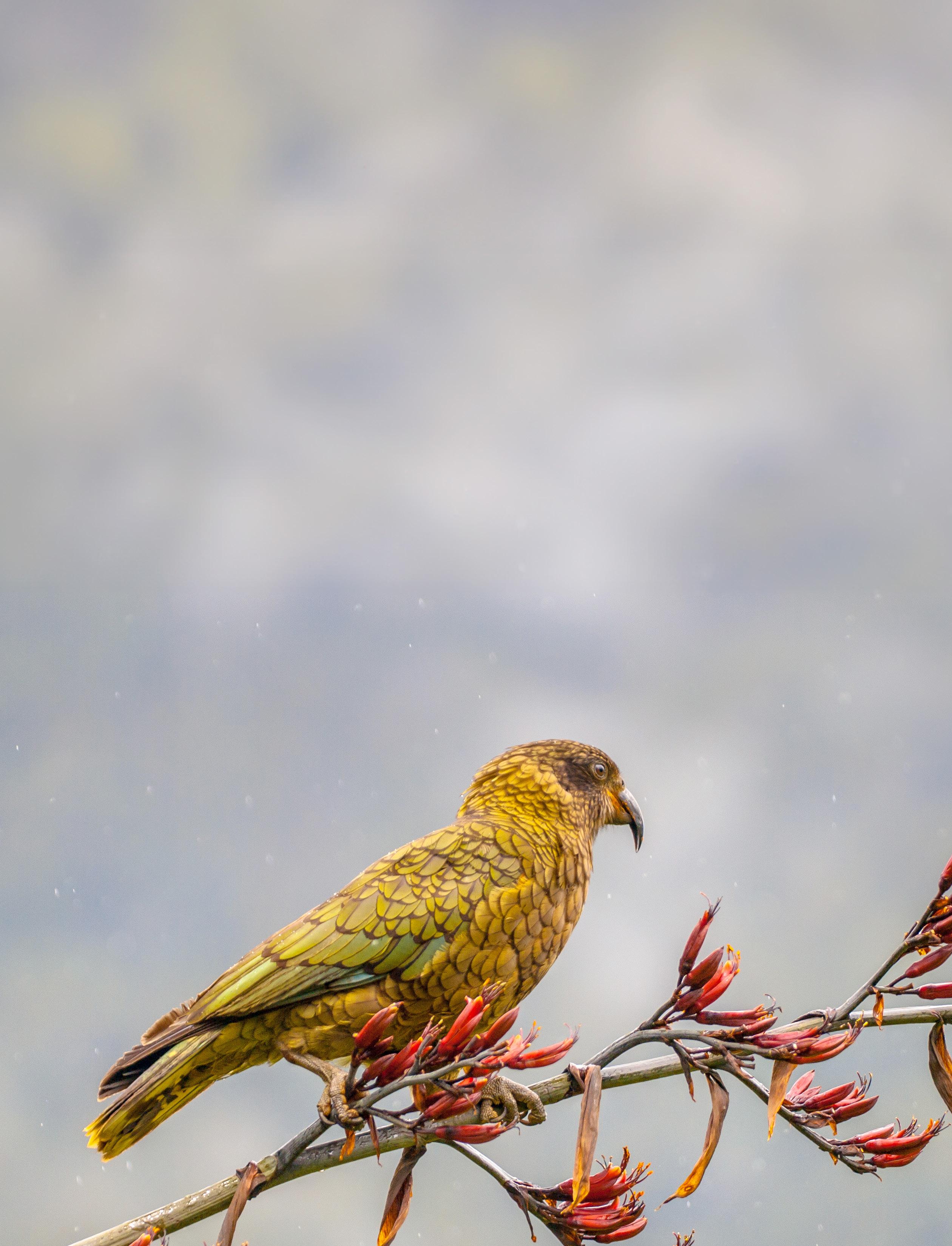
months after the government’s public consultation closed. Included are several developments Forest & Bird has spent years successfully opposing in court, essentially “zombie projects”. This includes the Ruataniwha dam in Hawke’s Bay and Trans-Tasman Resources’ proposal for seabed mining off the Taranaki coast. Forest & Bird dubs it a “dark day for New Zealand democracy” because the select committee tasked with assessing the law didn’t get to see the 149 proposed projects attached to the Bill. Forest & Bird sends an open letter to the Environment Committee asking that it not report back to Parliament until it has had the opportunity to receive and consider public submissions on the proposed 149 projects. This doesn’t happen, and, at the time of writing, the Fast-track Approvals Bill is due to become law by the end of 2024.
FRESHWATER FIRST
Following success in the Environment Court and High Court, Forest & Bird is able to defend a further appeal by Southland Regional Council challenging the interpretation of section 70 of the RMA, which says that regional plans must not permit discharges with significant adverse effects on aquatic life. After intensive lobbying by corporate
Kea. Depositphotos
farming groups and the council, the government intends to change the law.
NATURE’S GIFTS
It is crucial that nature-based solutions be prioritised in future climate adaptation legislation, says Forest & Bird, when Parliament’s Inquiry into Climate Adaptation report is released. The report backs the Society’s submission that nature-based solutions can help Aotearoa New Zealand adapt to the challenges posed by climate change in multiple ways. The Society says the government also needs to recognise the value of existing ecosystems, such as native forests, wetlands, river corridors, sand dunes, and tussocklands, in providing natural hazard mitigation. For example, wetlands can decrease flooding peaks, and healthy indigenous forest will limit erosion. These naturebased solutions have co-benefits, such as improving biodiversity and reducing emissions. The Society says the inquiry’s findings offer a positive opportunity to work with te taiao nature for the benefit of people and the environment.
NOVEMBER
FORCE OF NATURE
Forest & Bird’s president Kate Graeme and chief executive Nicola Toki host a book launch for Force of Nature Te Aumangea o te Ao Tūroa
at Zealandia, attended by the writers David Young and Naomi Arnold and more than 100 guests, including the publisher Robbie Burton, of Potton & Burton. It was a chance to celebrate the tens of thousands of volunteers and staff who have contributed their mahi to nature protection over the past 100 years and their incredible achievements in helping secure 30% of the country’s land area into the public conservation estate for the benefit of everyone living in Aotearoa New Zealand.
HAURAKI GULF PETITION
Nearly 6000 people sign Forest & Bird’s petition protesting plans to allow commercial fishing in some of Tīkapa Moana the Hauraki Gulf’s newly established marine protected areas. Earlier in the year, the government announces the Hauraki Gulf Tīkapa Moana Marine Protection Bill will be passed into law, establishing 19 new marine protected areas. But, in October, the Minister of Conservation introduces a controversial amendment that would allow “ring-net” fishing in two of 12 designated “High Protection Areas”. There is an outcry about this change – not least because allowing commercial fishing in a marine protected area could set a precedent in other marine reserves throughout the country.
DECEMBER
KCC
Forest & Bird’s Hakuturi Toa Kiwi Conservation Club has been connecting Kiwi kids to local wildlife and wild places for more than 35 years. Through family and school memberships, KCC reaches 10,000 children throughout Aotearoa New Zealand. Membership costs $24 a year and includes the popular quarterly Wild Things magazine full of stories and nature-based activities for children up to 13 years. Members can also take part in KCC adventures with their family, organised by local volunteer coordinators. They arrange outings for members to explore their beaches, forests, and everywhere in between.
GIVE A TRAP
Forest & Bird’s Give a Trap website was the vision of late adventurertramper Penny Willocks, of Canterbury, who wanted to make it easier for people to contribute to the Predator Free New Zealand 2050 goal. She left a generous bequest that her friends and whānau used to establish the Give a Trap website, which was then gifted to Forest & Bird to manage. People can donate a trap to any of the community groups listed on the site, and the trap will be sent directly to their chosen project.
There are many conservation challenges ahead, but we look forward to working with all of you, our wonderful members and supporters, during 2025. Nature faces many threats. Please urge your friends and family to join Forest & Bird. Together, we can build a better future for our mokopuna and our precious planet.
This 2024 highlights article was compiled by Caroline Wood.
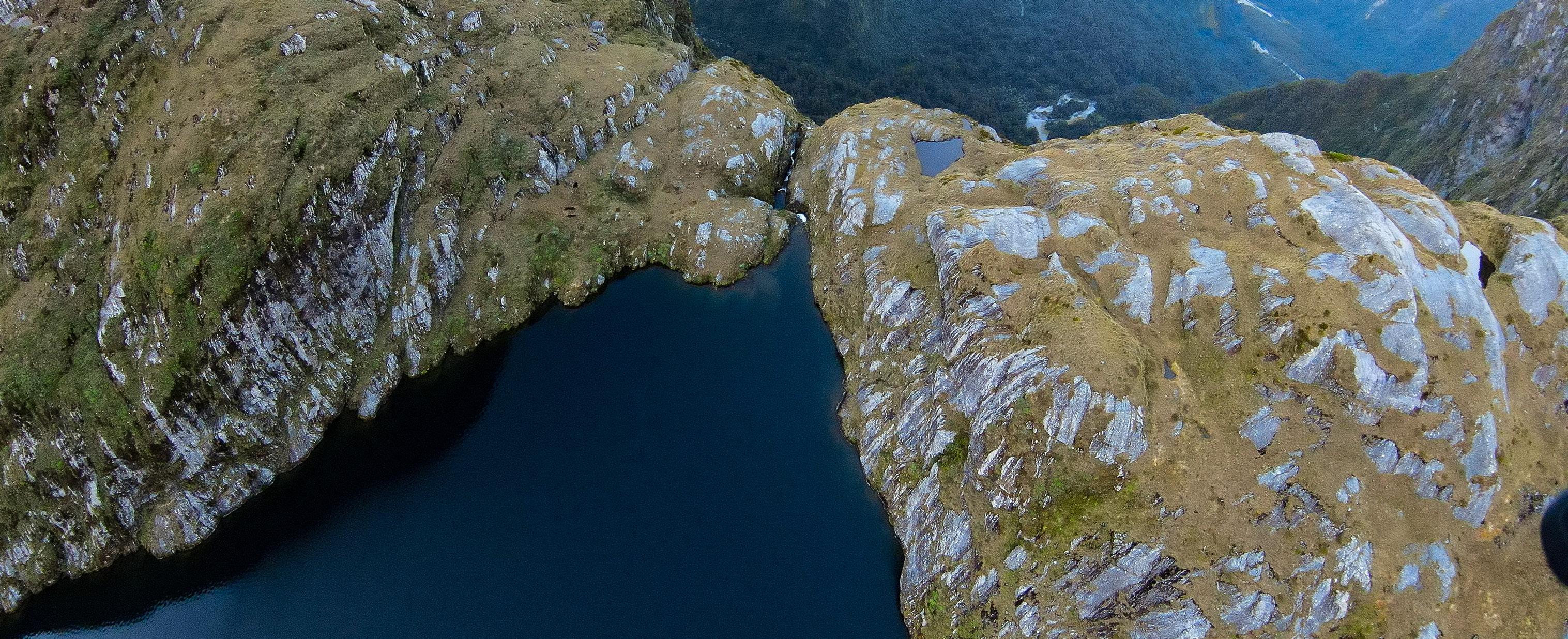
ROCK STARS
Five New Zealand sites have received international recognition for their spectacular geology and landforms.
We all know that New Zealand’s unique geoheritage punches above its weight relative to the size of our country, and now the international community has made it official.
More than 700 experts from 80 nations and 16 international organisations came together to select sites that cover the broad diversity of the world’s spectacular and significant geological features.
Geoheritage, or geological heritage, is a term used to describe minerals, rocks, soils, fossils, and landforms with significant values that justify their conservation and proper management. Five outstanding New Zealand sites were designated and included in The Second 100 IUGS Geological Heritage Sites. The announcement was made by the President of the International Union of Geological Sciences at the 37th International Geological Congress in Busan, Republic of Korea, in August.
The New Zealand sites sit alongside such well-known features as the Giant’s Causeway, in Northern Island, the Devil’s Tower, in Wyoming, and the limestone pinnacles of Guilin, China.
This provides due recognition to some of New Zealand’s spectacular geological and landform features that make our country such a tourist mecca. It is even more amazing that, in the recently announced list, Aotearoa New Zealand has the fourth most recognised sites of any countries after the United States, the United Kingdom, and Italy.
FJORDS AND TOWERING SEA CLIFFS
Fiordland is recognised for its globally significant examples of spectacular fjords, deeply carved by glaciers through gneissic rocks uplifted high along the convergent boundary between the Pacific and Australian tectonic plates. There are 14 marine-flooded fjords, with 200–420m-deep basins with shallow sills at their seaward mouths.
Bruce Hayward
The glaciers cut deeply into hard crystalline plutonic and metamorphic rocks that were once buried to depths of 10–30km. Glacial erosion of the uplifted Fiordland mountains has resulted in numerous sharp peaks rising from 1000m in the south to 2700m in the north.
The west-flowing glaciers have carved classical straight, U-shaped valleys with spectacular glaciallystriated vertical rock faces in the world’s highest sea cliffs, with numerous hanging tributary valleys and high waterfalls.
Sediment on the floors of the fjords records their flooding by the sea as the glaciers melted and sea level rose, about 10–12,000 years ago, after the end of the last Ice Age. The glaciated landscape and fjords are the main reason for the recognition of Te Wahipounamu –Southwest New Zealand World Heritage Area.
RUAPEHU VOLCANO
Ruapehu in Tongariro National Park is recognised as an iconic and active stratovolcano, the typical volcano type produced along a convergent plate boundary. This stratovolcano is at the southern end of western arm of the Pacific Ring of Fire.
It has been erupting at regular intervals over the past 200,000 years. The Ruapehu lavas are sourced from a
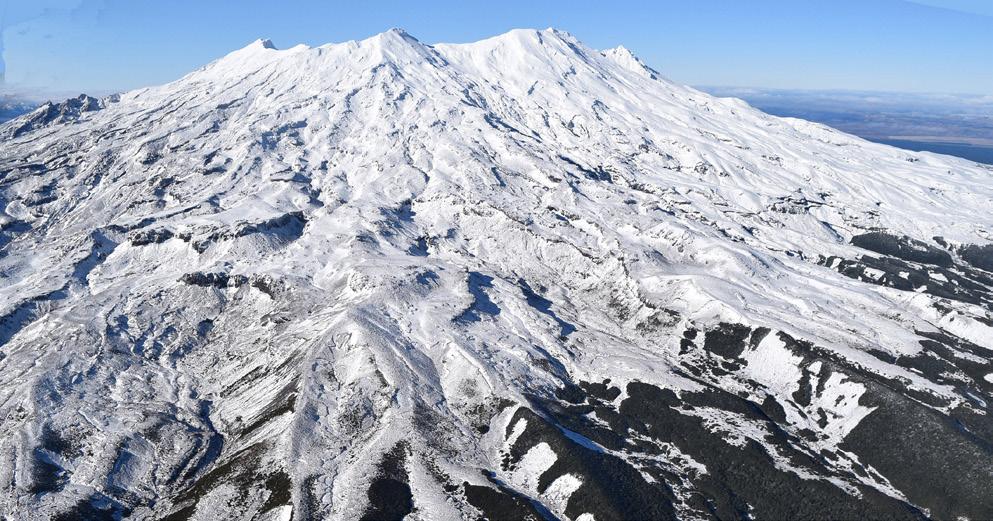
Ruapehu volcano. Bruce Hayward
Fiordland. Carey Knox
magma chamber lying 5–10km beneath the maunga. The lava chemistries have been studied in great detail, providing a clear insight into the processes occurring at depth.
Also of world standard have been studies on the periodic eruptions from Te Wai-ā-Moe Crater Lake at the summit and on the flow mechanisms of lahars flowing down the volcano from the hot lake. As a result, Ruapehu volcano is an internationally recognised model of andesitic volcanism. Ruapehu is a major part of the Tongariro National Park World Heritage Area.
AHI-TUPUA
Rotorua’s geothermal fields of Whakarewarewa, Waiotapu, and Waimangu are included for their globally exemplary examples of diverse geothermal surface features, especially colourful sinter, geysers, and boiling mud pools. The Rotorua fields now take their rightful place alongside Yellowstone (USA), Dallol (Ethiopia), and El Tatio (Chile) geothermal fields, which have also been listed.
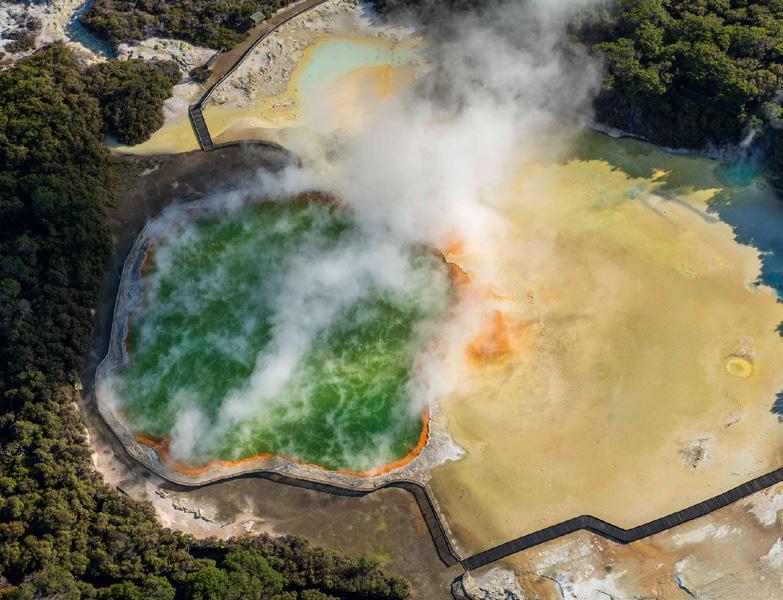
Whakarewarewa has strong cultural values and has been used by the indigenous Māori for many centuries. It is best known for Te Puia sinter mound, with five geysers and sinter stalactites.
Pohutu is the largest geyser in the Southern Hemisphere, erupting hourly and reaching heights of up to 30m.
Waiotapu is best known for its brightly coloured Champagne Pool and Artist’s Palette sinter terrace, its numerous collapse craters, and its sulfur-lined fumaroles. It also has New Zealand’s largest geothermal mud pool, with numerous mud volcanoes.
Waimangu Field is the world’s youngest geothermal field, created by the 1886 Tarawera eruption, which destroyed the eighth wonder of the world – the Pink and White terraces. Growing here on the edge of Frying-Pan Lake are siliceous lily-pad stromatolites.
MEGAPILLOW LAVA FLOWS
These are located on the coast northwest of Auckland in Muriwai Regional Park. They include the world’s largest, most complex, and spectacular megapillow lava flow, with internal feeding tubes having giant fans of cooling columns. These geological features are beautifully exposed in the sea cliffs south of Muriwai. They erupted about 17 million years ago on the eastern submarine slopes of the giant Waitakere
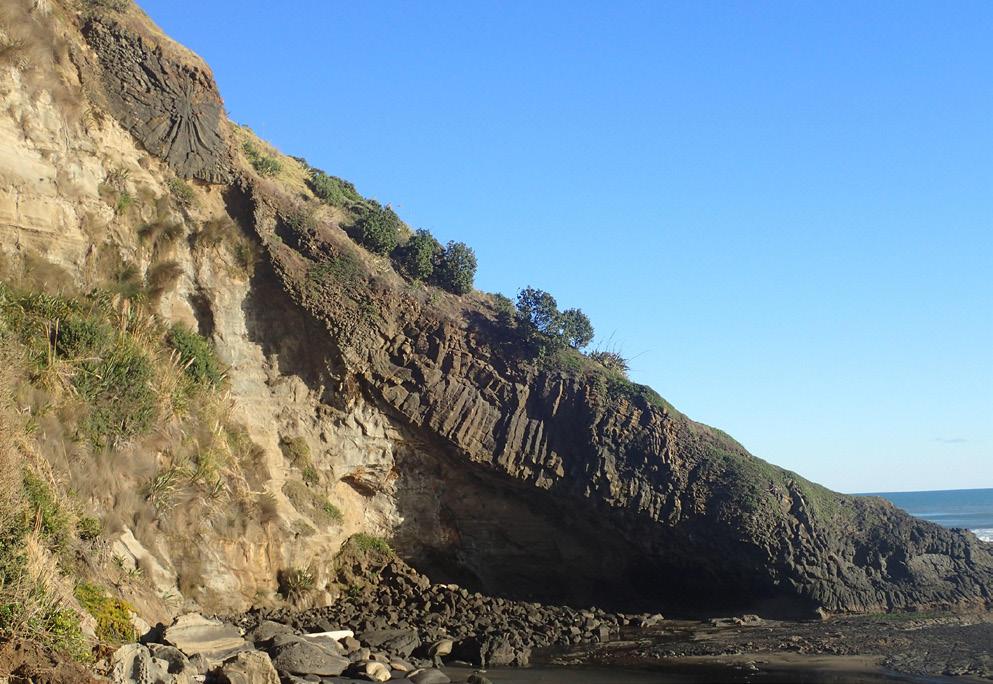
Volcano and have since been pushed up out of the sea. This extinct volcano has been largely eroded away by the pounding waves of the Tasman Sea.
Megapillow lava flows occur elsewhere, such as Iceland, Sardinia, Spain, and Tasmania, but none match the cross-sectional exposure of the large Muriwai megapillow flow in terms of accessibility, size, and complexity.
MARUIA FALLS
Maruia Falls, near Murchison, are of significance in the history of understanding the Earth’s structure. They were formed as a result of the powerful 1929 MS 7.8 Murchison Earthquake. The falls were exhumed by river erosion of gravels after its course was deviated by a landslip triggered by the earthquake.
The Murchison Earthquake is renowned internationally in geophysical circles for its seismic P waves that were recorded in the core’s “shadow zone” in Greenland, which led to the recognition of an inner and outer core in the Earth.
Danish seismologist Inge Lehmann (1936) recognised a higher velocity of seismic waves from the Murchison Earthquake in an inner solid part of the Earth’s core surrounded by a liquid outer core.
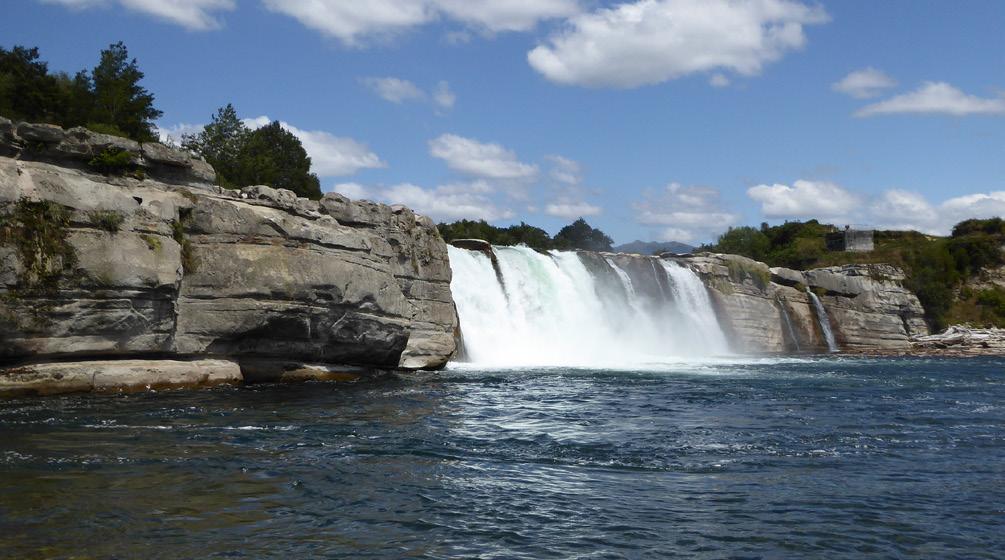
Dr Bruce Hayward is a geologist, marine ecologist, and author. He is geoheritage spokesperson for the Geoscience Society of New Zealand.
Maruia Falls, tangible evidence of the event that led to the recognition of the Earth’s inner core.
Bruce Hayward
Dike feeding a 4m-diameter pillow roll at Pillow Lava Bay, Muriwai. Bruce Hayward
Pohutu – the largest geyser in the Southern hemisphere. Photo, Alastair Jamieson/Wild Earth Media
Dr Bruce Hayward
SPREADING THE WORD
Forest & Bird has published a dozen books over the past 100 years, part of its mission to share the wonders of nature with New Zealanders. Michael Pringle
Forest & Bird founder Captain Val Sanderson knew the power of the written word. He hammered out hundreds of newspaper editorials, edited 70 Forest & Bird magazines, and published the Society’s first three books.
Before the arrival of television to our shores, these were seen as effective ways to spread the word about the Society’s conservation goals, educate New Zealanders about their unique natural world, and raise awareness of the threats facing native birds and plants.
Some of these threats haven’t changed since 1923 – habitat loss, soil erosion, introduced mammalian predators, and the damage caused by browsing mammals were all topics Sanderson wrote about.
Sanderson also railed against the loss of the country’s birdlife. At the time, the cry of the huia had fallen silent, and many New Zealanders had never seen a kākāpō, kiwi, or South Island kōkako in the wild. Kea were being killed for a government bounty, kuaka bar-tailed godwits were being shot as game birds, and poachers were capturing live birds to sell to collectors.
In 1929, Sanderson commissioned Lily Daff, a talented young artist from the UK, to paint a series of native birds in their habitats. He wanted to show New Zealanders what their taonga species looked like so they would be more likely to want to protect them.
Daff’s work was supervised by top ornithological experts of the time, who ensured the artworks were accurately depicted while also being attractive on the eye. Her 52 paintings went on to play starring roles of the Society’s first three books.
New Zealand Forest-inhabiting Birds was published in 1933 in full colour, with each full-page bird illustration accompanied by a description of the species, its te reo name, habitat, and quirky facts about its life history provided by the eminent ornithologist and Forest & Bird supporter Robert Falla. The book was
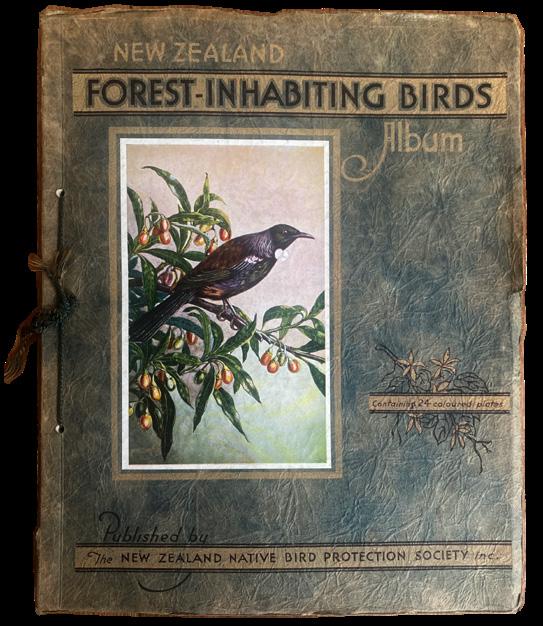
sold to members and distributed to schools. It was immensely popular and was reprinted in 1948 and 1959.
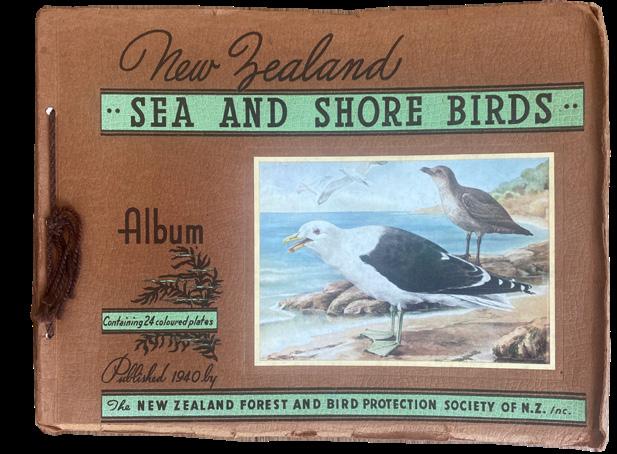
During World War II, in 1940, Sanderson published the Society’s second book New Zealand Sea and Shore Birds, with 24 coloured illustrations of coastal and ocean birds also painted by Daff. This sold out and was reprinted in 1953.
Both books helped turn generations of New Zealanders into lifelong nature lovers. Forest & Bird’s former chief executive Hone McGregor recently donated a well-thumbed early copy of Forestinhabiting Birds that had been passed down through the generations by his great-grandparents, who were early members of the Society. Other members have also donated early copies of both books that they had treasured since they were children.
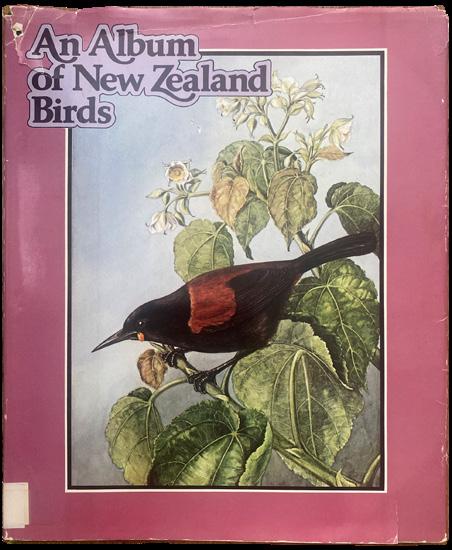
In 1974, the forest and marine books were combined in an Album of New Zealand Birds, with 50 coloured plates, and Lily Daff was finally given proper credit for her work in the preface.
To mark Forest & Bird’s 60th birthday, a Forest & Bird’s executive member Norman Dalmer wrote a history of the Society called Birds, Forests and Natural Features of New Zealand. Published in 1983, he canvassed a variety of themes in the Society’s history, and the modest paperback still serves as a valuable record.
By the 1980s, Forest & Bird was a part of a coalition of six environmental groups campaigning for Sanderson’s long-held goal of “unity of control” of all wildlife by a single government agency. In 1982, the group published Environmental Management in New Zealand, which advocated for a nature conservancy and an environment ministry.
This was followed in 1985 by Environmental Administration in New Zealand: An Alternative Discussion Paper, which spelt out these proposals in more depth. These publications were an important step towards the creation in 1987 of the Department of Conservation, the Department for the Environment, and the Parliamentary Commissioner for the Environment.
When Forest & Bird needed to garner public support for its campaign to set aside the southwest of New Zealand as a UNESCO world heritage area, it decided to publish a book showcasing the natural glories of the region.
Forests, Fiords and Glaciers: New Zealand’s World Heritage, the Case for a South-West New Zealand World Heritage Site was published in 1987. The book, edited by Gerard Hutching and Craig Potton, was a major contributor to the success of the joint Forest & Bird–DOC–Ngāi Tahu campaign.
With the rise in environmental awareness in the late 1980s, the need to publish more personal action guides led to Forest & Bird’s Go Easy on the Earth: A Personal Action Guide to Saving the World. It was released in 1989, sold out, and was reissued a year later.
Next, Forest & Bird published how-to guides to using the new Resource Management Act, including Stopping the Bulldozers Before They Start (1995) and the best-selling Handbook of Environmental Law (1992), later produced as a comprehensive edition in 2004.
Forest & Bird Book of Nature
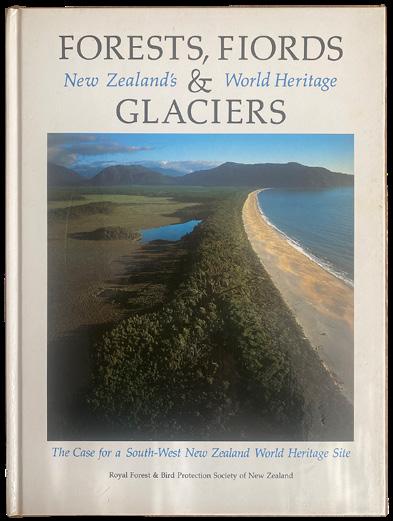

Walks, by David Collingwood and EV Sale was first published in 1985 and revised by Joanna Wright in 1992. It promoted walks from Cape Reinga to Stewart Island, emphasising the wildlife and vegetation to be enjoyed along the route.
The Society then published Wild Encounters: A Forest and Bird Guide to Discovering New Zealand’s Unique Wildlife, in 2009. Written by Michael Szarbo and edited by Forest & Bird magazine editor Helen Bain, the guide covered the entire country helping people discover locations where wildlife might be seen and safely enjoyed.
The Society’s most recent book, Force of Nature Te Aumangea o te Ao Tūroa by David Young and Naomi Arnold, with Caroline Wood and Michael Pringle, features the inspiring stories of hundreds of Forest & Bird volunteers, staff, and supporters.
This landmark 350-page publication covers the highs and lows of every major environmental campaign of the last century seen through the eyes of a colourful cast of characters. The final chapter looks to the future and how we can all work together to protect te taiao, the natural world we all love and cherish.
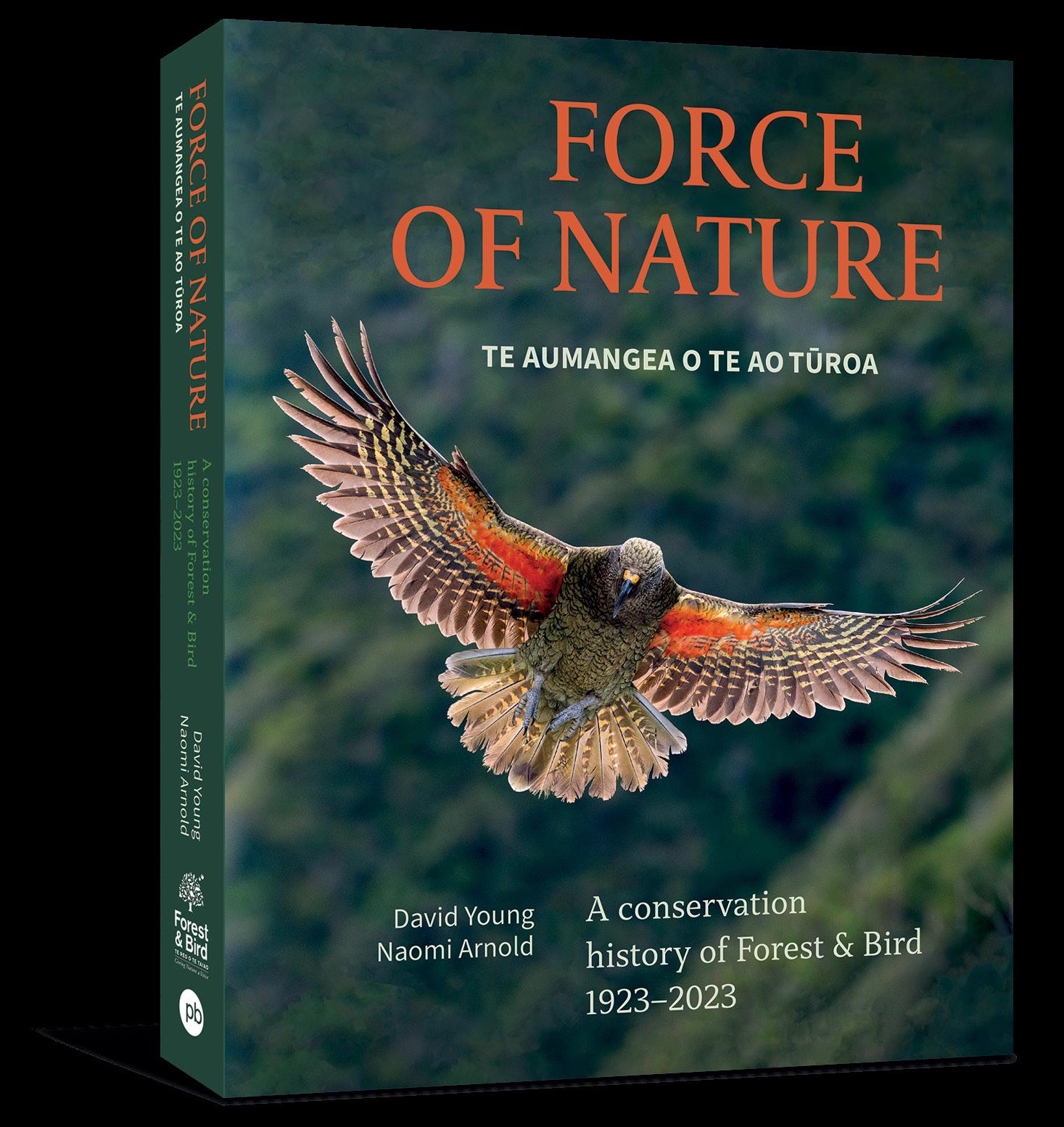
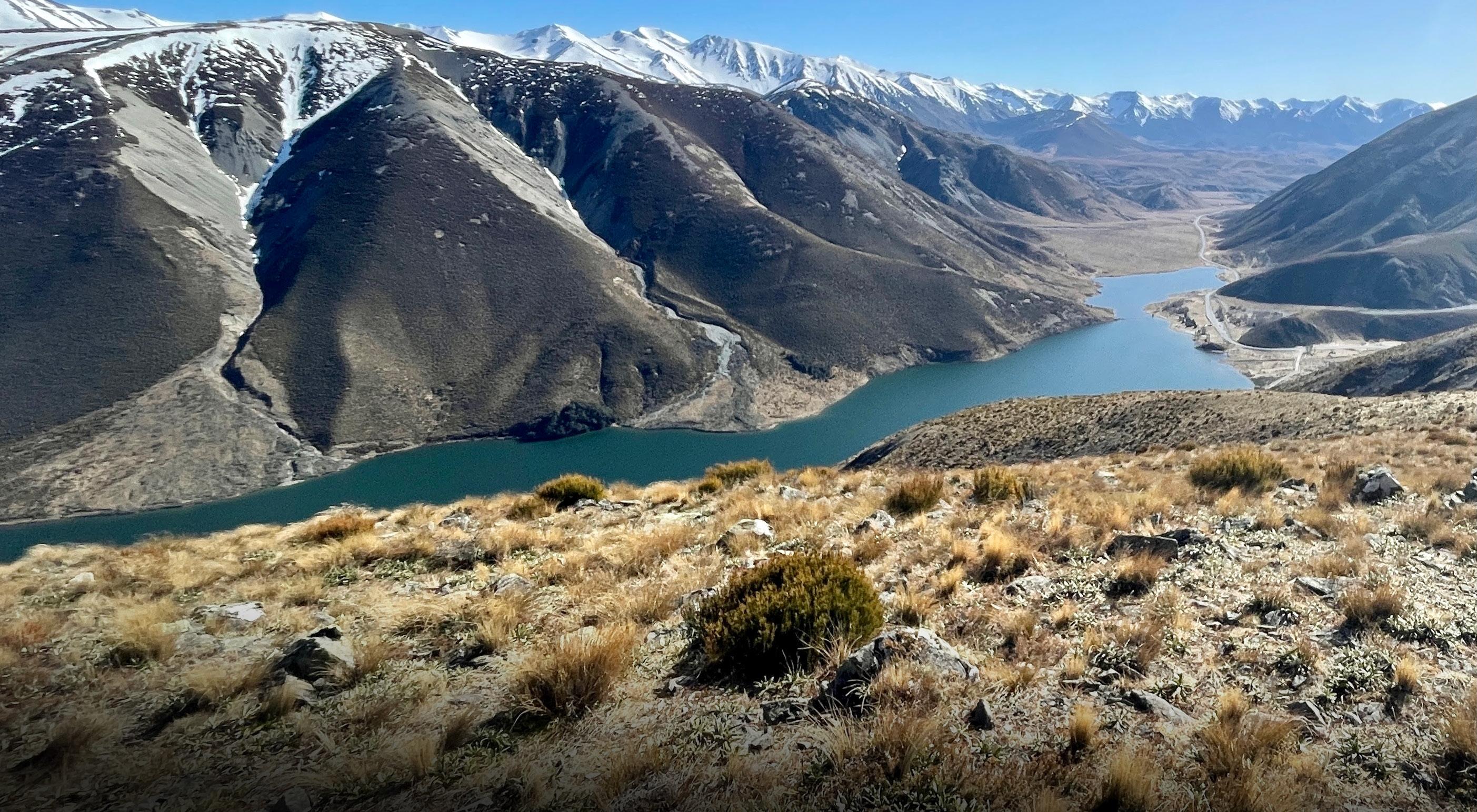
TRAPPING CRAIGIEBURN ALLIANCE
Volunteers working to restore flora and fauna in an outstanding natural landscape are heartened by the return of local birdlife.
Louise Porteous
Canterbury’s Craigieburn Basin, a biodiversity hotspot just 90 minutes from Christchurch, contains a wonderful variety of native habitats. Once home to te pouākai giant eagle, the region is of major cultural importance to Ngāi Tahu, a place of mahinga kai food gathering and ancient Māori rock art.
The landscape consists of mixed beech forest and subalpine tussock grasslands with distinctive areas of weathered limestone outcrops, rising dramatically to the extensive alpine scree and snow-covered peaks of the Craigieburn Range.
There are grey shrublands of matagouri, coprosma, and olearia, frosty alluvial terraces, fascinating limestone escarpments, braided rivers, and high country lakes and farms. The altitude ranges from 600m to more than 2000m.
It’s no wonder this whenua is special to the many people who live, play, work, or holiday in the high country or who have whānau connections to this place.
It was this sense of connection and a concern that the area’s biodiversity was under threat from introduced predators, such as mustelids, rats, possums, and feral cats, that led to the coming together in 2019 of many different groups to form the Craigieburn Trapping Alliance, a subcommittee of the Canterbury Environmental Trust.
We signed a community agreement with the Department of Conservation that covers 62,000ha of public and private land from the Cass River to Lake Lyndon.
Volunteers have been working together trapping predators in the hope of making a difference. Five years later, we see the seeds of of their labour – people are reporting a louder and more varied cacophony of bird calls than a decade ago, when pest control was limited.
The once familiar haunting cry of the kea – our beloved but endangered mountain parrot – had largely disappeared from the Craigieburn. But recent sightings of up to 17 birds on local stations and ski fields have raised hope and volunteer commitment.
We hear and see korimako bellbird, miromiro tomtit, titipounamu rifleman, tauhou silvereye, riroriro grey warbler, pīwakawaka fantail, ruru morepork, and kārearea native falcon.
Last summer, we had some exciting less common sightings – a pair of kākā, koekoeā long-tailed cuckoo, and toutouwai South Island robin.
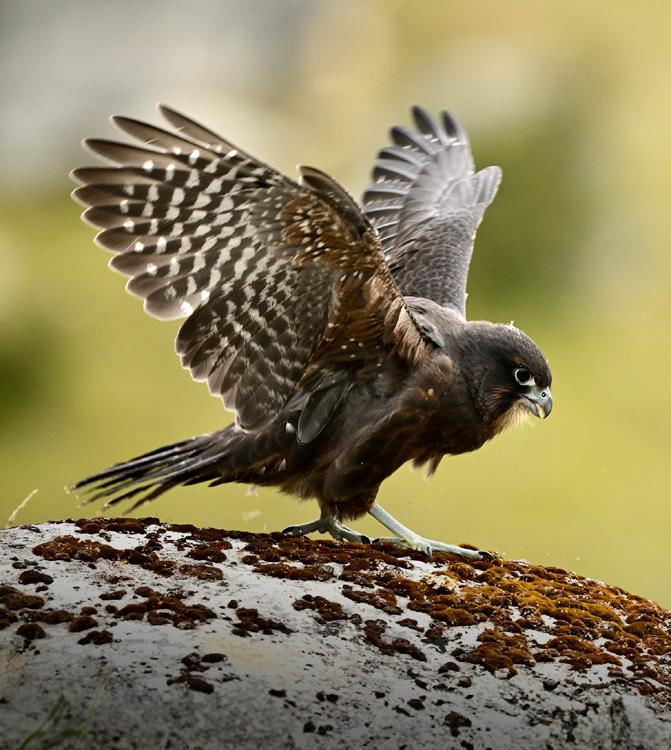
Last year’s Bird of the Century Pūteketeke Australasian crested grebe also lives and breeds in the Craigieburn Basin. The publicity garnered through
Trapping has seen the successful fledging of kārearea New Zealand falcon. Tim Rumble
Overlooking Lake Lyndon with Craigieburn Ranges behind. Steve Greig
competition led to new interest in protecting the area’s high country lakes.
We received several donations through Forest & Bird’s Give a Trap website during the competition, including the gift of several traps from bird fans in the United States.
All the stations have their own trapping and predator control programmes and are establishing a Craigieburn Catchment Group, working together towards a thriving healthier whaitua freshwater catchment.
Some Craigieburn flora is also unique, being specifically adapted to the dominant landscape of unstable scree and rock ridges.
If you see a blaze of colour in the forest between December to February, it may be the red flowers of the threatened pikirangi mistletoe. Its decline was once attributed to possum and habitat loss, but scientists now understand it is bird pollinated and therefore very sensitive to native bird numbers.
It was particularly exciting to watch the three kārearea New Zealand falcon chicks that hatched at Kura Tawhiti Castle Hill rocks last year. The two females and one male juvenile successfully fledged and left the nest late December, having learnt the basics of flight and hunting on the wing. The trapline through the area has certainly contributed to this success and the addition of live capture feral cat traps should enhance their protection.
A wide range of individuals and groups are working together to bring back nature to the Craigieburn Basin, including high country landowners and managers, local ski clubs, two school outdoor education facilities, Castle Hill Village, and holiday home owners.
Here some of the projects the Craigeburn Trapping Alliance has been involved in.
TRAPPING
The main predators we focus on are feral cats, stoats, weasels, rats, hedgehogs, and possums. Monthly volunteer days are held on weekends through the trapping season from September to May to check and clear lines. Traps are positioned as high as 1200m above sea level.
This work is bringing people together from all walks of life, with a common goal of enhancing the Craigieburn’s biodiversity and conserving its unique mix of fauna and flora.
Volunteer days are a way to buddy up new members, discuss any issues, and share knowledge over a cuppa. Once confident in their abilities, many members prefer to pick up their own designated trap line so they can check it at their own convenience.
Trapping in Craigieburn Forest Park dates back to 2006, when the New Zealand Conservation Trust partnered with the Canterbury Environmental Trust. Today’s much broader Alliance has built on this initial
work, and many new traplines have been established over the past five years.
The Craigieburn Trapping Alliance has more than 20 trap lines though Craigieburn Forest Park, public conservation areas, and adjacent station land. In total, there are more than 800 traps – mostly DOC 200s, a smaller number of AT220s, Sentinel, and Trapinators targeting possums, and live capture cages for feral cats.
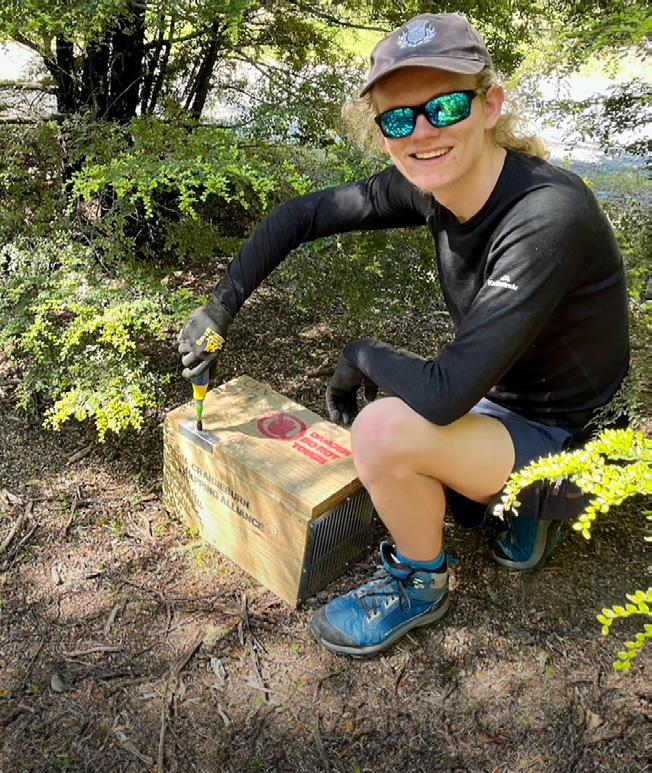
HALO VILLAGE PROJECT
The Craigieburn Trapping Alliance has established a separate backyard trapping project at Castle Hill Village, a fast-developing high country settlement at 730m above sea level. It consists mainly of holiday homes.
Over the past three years, this exciting project has grown from a handful of traps in backyards to an almost completed halo around the village.
This project has also benefited from donations through Forest & Bird’s Give a Trap initiative, the wonderful legacy of the late Penny Willocks (see overleaf).
Village residents, their friends and families, and members of the public have all donated traps to the project. We continue to infill with new traps when we can.
With the help of Selwyn District Council, residents have also removed large numbers of douglas fir and other exotic trees. They have been providing an increasing habitat for local bird life by replanting with beech, kowhai, hebes, and other locally indigenous flora. →
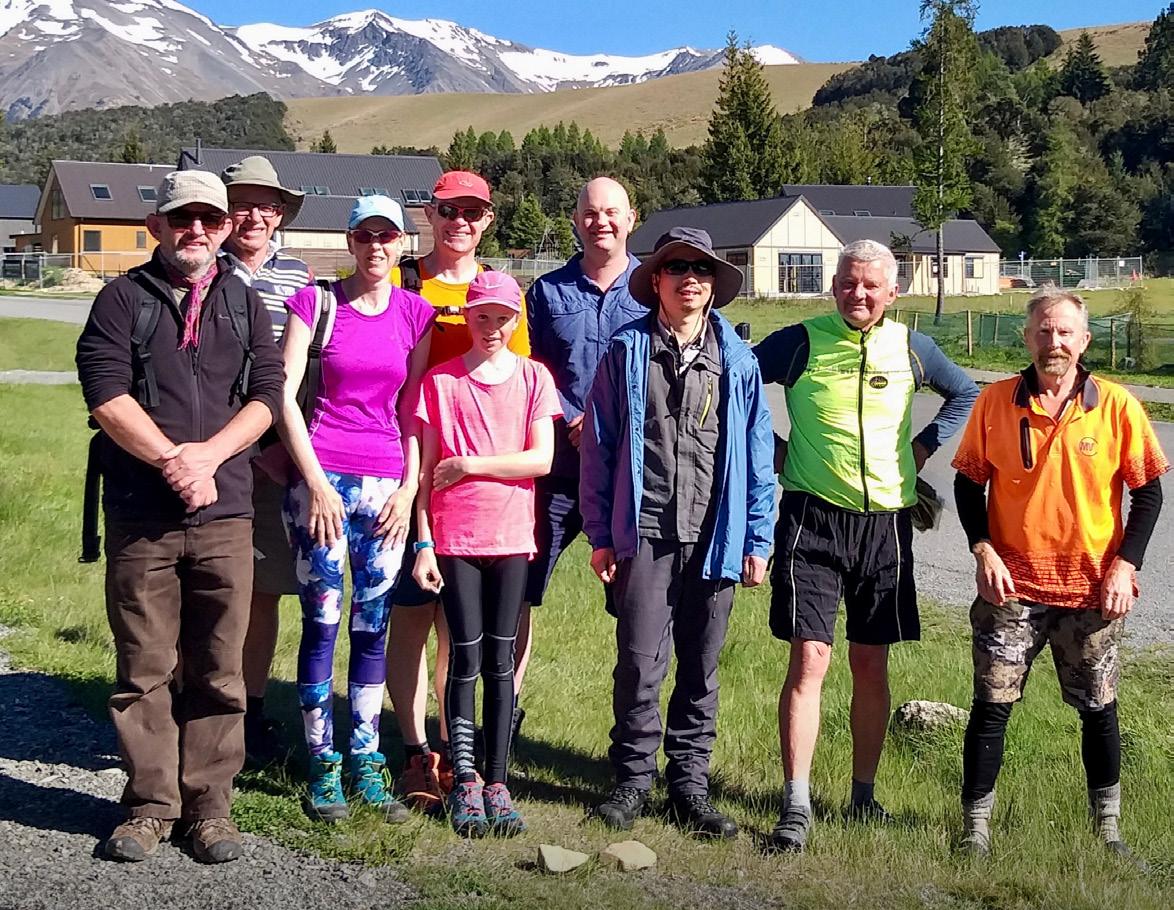
Volunteer day, Castle Hill Village, 2021. Steve Greig
Oli Jacobs, Thomas Bush. DJ Matheson
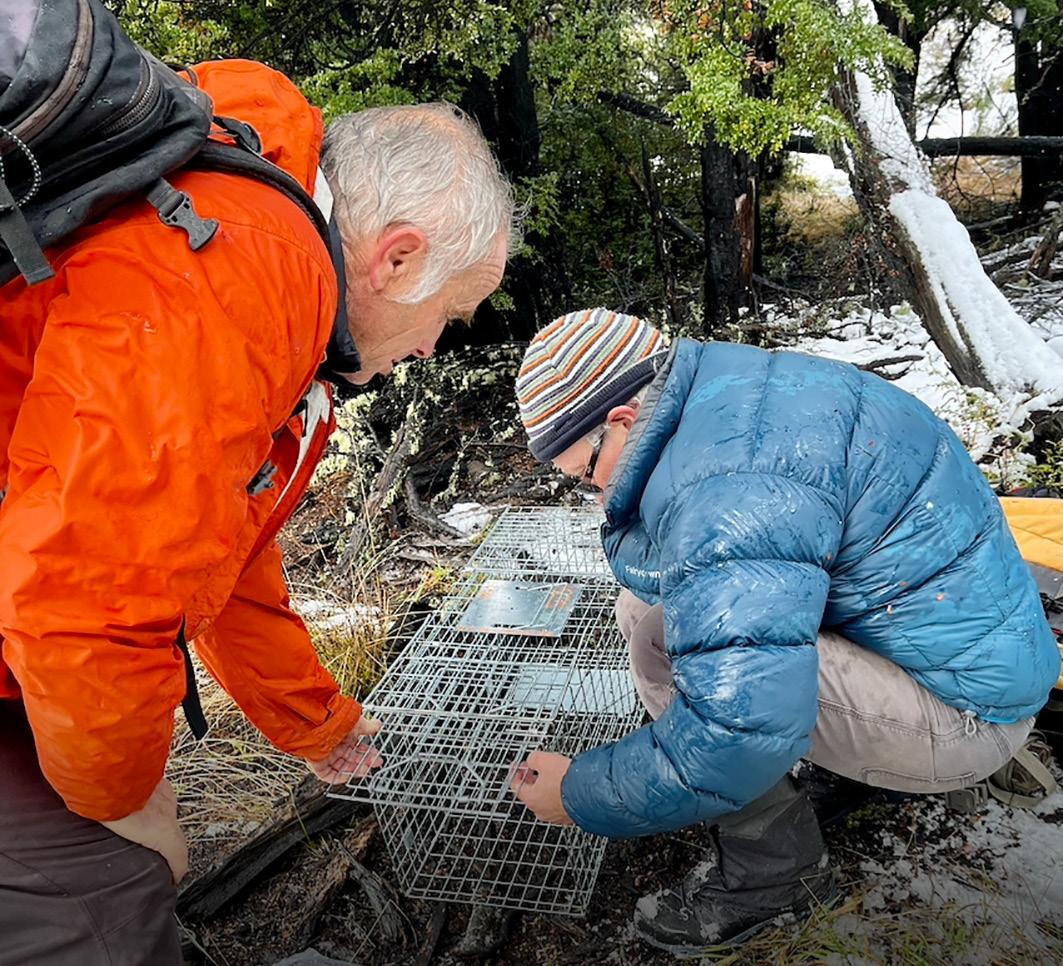
FERAL CATS
The Celium Project is building a network of live-capture feral cat traps using wireless sensor technology, which allows immediate email or text notification to designated individuals when traps are triggered, ensuring a timely response.
Piloted and now well established on land around Castle Hill Village, the project has been extended to Castle Hill Station, Flock Hill Station, the Enys block, and has been most recently trialled at Grasmere Lodge, joining the same system run by DOC in Arthur’s Pass National Park.
The aim is to increase coverage along the Great Alpine Highway SH73 and surrounding land from Lake Lyndon in the south to the Cass River in the north.
Station owners and managers have been generous in allowing traps and masts on their land and responding to trigger alerts. Increased coverage will enable us to involve other stations and land owners.
WASPS
Our volunteers also participate in the annual Wasp Wipe Out coordinated by a very dedicated local as part of the national Wasp Wipe Out collaboration with Conservation Volunteers New Zealand and DOC, baiting a large network of wasp traps though the Craigieburn Forest Park and adjacent areas.
EDUCATION AND MONITORING
The Craigieburn Trapping Alliance organises local trapping and monitoring workshops for its members that are also open to the public. Earlier this year, a fiveminute bird count course, run by Nelson Marlborough Institute of Technology and DOC, was held over a weekend in Castle Hill Village.
We have access to long-term bird counts at a number of sites in Craigieburn Forest Park, some of which date back to 1978–82. This was compiled by University of Canterbury Emeritus Professor Dave Kelly et al, and this data really helps inform our work.
Any data we collect is added to TrapNZ, a national
database available to all trapping groups but also used by DOC. In the year to 30 April 2024, we carried out 6608 trap checks and caught a total of 940 mammalian predators, a success rate of 14%, almost double the success rate of 2021/2022.
We know the number of predators caught isn’t a true measure of success. The Alliance is working hard on carrying out better monitoring, buying new equipment, and developing volunteer skills.
Last season, we established a small number of new monitoring lines that use tunnels and tracking cards to identify predators in the area. The use of cameras is increasing our knowledge of pests, their behaviour, and trap placement.
But as always with volunteer-led conservation mahi, there is still much more to do. If you would like to support our work (or any other local trapping project), please donate a trap via Forest & Bird’s Give a Trap website giveatrap.org.nz
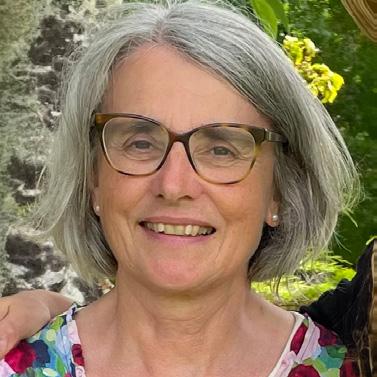
Louise Porteousis chair of the Craigieburn Trapping Alliance.
Phil Marsh and Liam O’Donoghue setting a live capture feral cat trap. DJ Matheson
Beautiful
BUTTERFLIES
There’s a global butterfly emergency, but there are things we can do to help our fragile native species say New Zealand experts.
It’s all bad news from right around the world as far as butterflies are concerned.
Butterfly Conservation, a UK charity with more than 37,000 members, is calling on the British government to declare a “Nature Emergency”.
They say 80% of their butterfly species have declined since the 1970s and a third of moth numbers in that same period. As a first step, they ask for an immediate and permanent ban on butterflyharming neonicotinoid pesticides.
On another continent, Jaime Rojo, Wildlife Photographer of the Year, is also concerned, focusing his lens on the monarch migration in North America. It is estimated the monarch population has dropped by 90% since the 1990s.
As well as pesticide use, climate change, and habitat destruction, the growing of avocados in what was once the monarchs’ natural habitat is also part of the problem.
“Here in Aotearoa New Zealand, we should be worried as well,” said Jacqui Knight, founding trustee of the Moths and Butterflies of New Zealand Trust.
“Most New Zealanders don’t know about the beautiful species that we do have. If you don’t know something exists, you don’t realise it is on its way to extinction.”
“For example, people are always amazed to learn about the plight of our beautiful forest ringlet – only
found in New Zealand and with no close relatives – with numbers in serious decline.”
The trust is currently working to return the beautiful New Zealand red admiral to Auckland, where it hasn’t been seen for at least 20 years, since the time Auckland was sprayed with insecticide for the painted apple moth.
Even the monarch butterfly here in New Zealand is at risk. Norm Twigge, former chairman of the Moths and Butterflies of New Zealand Trust, has seen a huge drop in numbers over recent years at the butterfly sanctuary at Te Puna Quarry Park, Tauranga.
“People don’t mean to kill them, but they are,” he said. “They protect them from wasps and other predators, but they do so in unsanitary conditions, so in the end they are breeding butterfly diseases.”
In Christchurch, trust members have seen a huge decline in the number of monarchs that overwinter in their city’s parks. For these reasons, the trust has produced a list of “dos and don’ts” for those people who are keen to help the monarch population bounce back over the summer and in future years.
“We urge monarch lovers to follow the advice on our website,” said Jacqui. “There are so many ways in which we can help our beautiful butterflies.”
MONARCHS IN OUR GARDENS
DO buy twice as many swan plants and protect some for the monarchs of the future.
DO make sure you have some nectar plants growing – for the monarchs and our other pollinators too.
DON’T plant new swan plants in the summer heat.
DON’T handle caterpillars. You may have sunscreen or cosmetics on your hands. Observe the life cycle but minimise handling.
DO let caterpillars move themselves to the new plant. New plant(s) may not immediately appeal to your caterpillars.
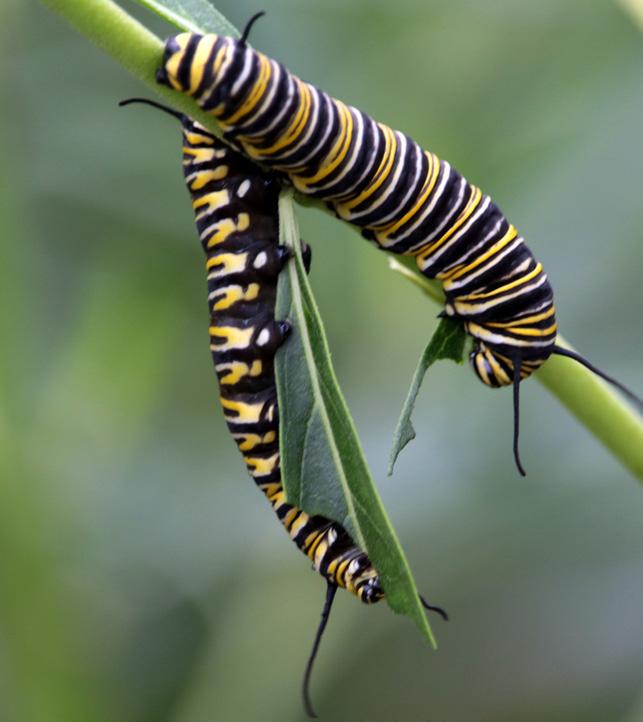
Monarch butterfly. Sally Phillips
People’s
PENGUIN
How did hoiho manage to win Bird of the Year for a second time in the competition’s storied 19-year history? We go behind the scenes to find out.
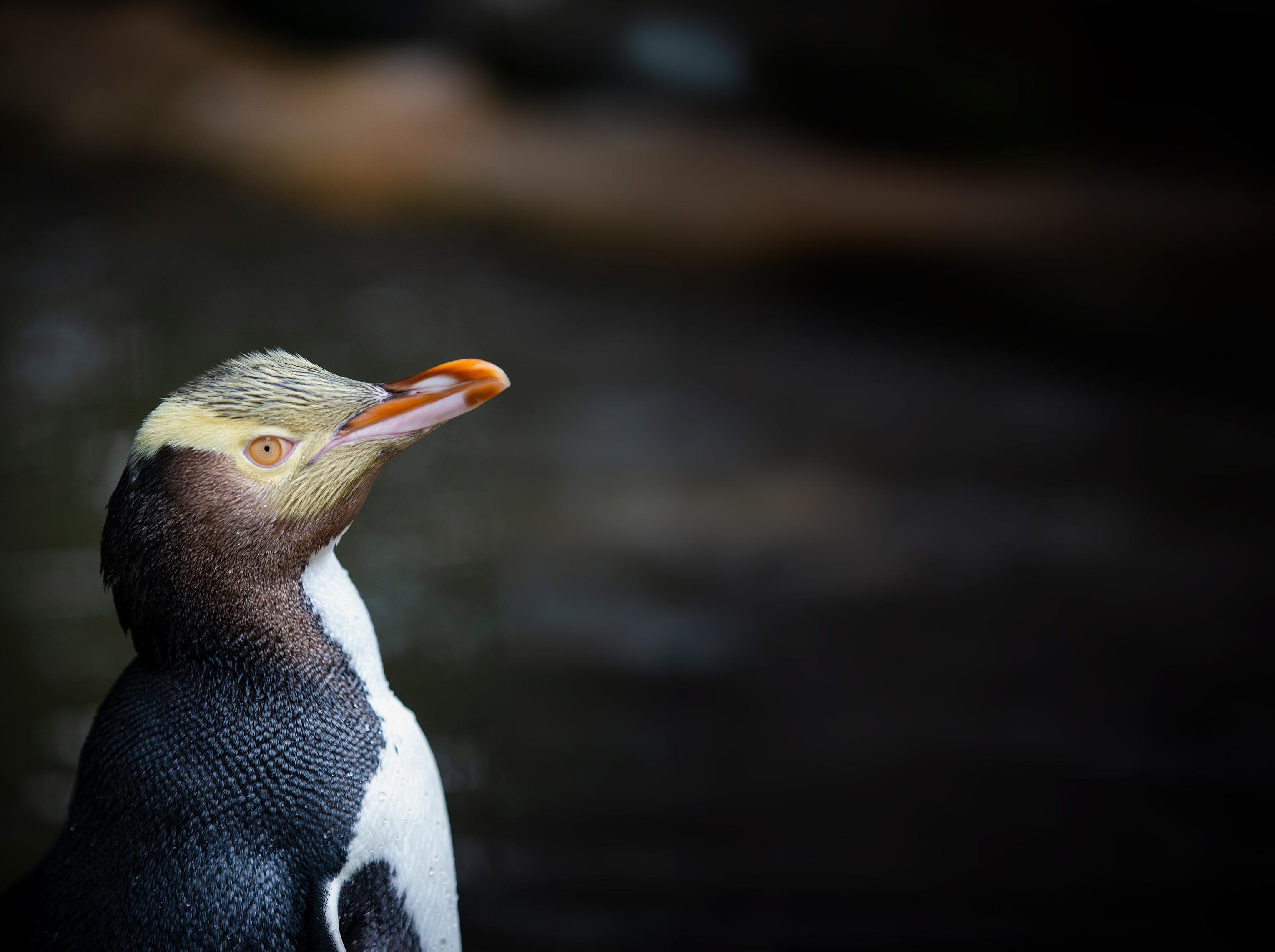
It wasn’t just its adorable features and loud call that helped hoiho secure the most votes during Te Manu Rongonui o Te Tau Bird of the Year 2024.
A tenacious human-led campaign propelled the yelloweyed penguin into first place, spearheaded by Ōtepoti Dunedin locals.
Hoiho secured a decisive victory with 6328 votes and now wears the coveted crown atop its golden head for the second time in the competition’s 19-year history. It previously won in 2019.
Campaign manager Charlie Buchan, marketing manager at Tūhura Otago Museum and Wild Dunedin, assembled a “dream team” of supporters, including local wildlife and environmental organisations, the Highlanders
rugby team, and Emerson’s Brewery, who crafted a special pale ale in honour of the “people’s penguin”.
“This is not just a win for hoiho but for the entire Dunedin community and the organisations working so hard to protect them,” said Charlie.
“It takes a village, and Dunedin has an amazingly supportive community that truly values its world-famous wildlife and landscapes. That’s why we’re the wildlife capital and host the New Zealand Festival of Nature.
“We worked really hard on this campaign for our awesome hoiho friends. We’re happy to fight for them and help them win.”
Hoiho, whose te reo Māori name means “noise shouter”, is notoriously shy despite its loud call.
It attracted big-name endorsements, including legendary conservationist Dr Jane Goodall, former Prime Minister Helen Clark, and Labour leader Chris Hipkins.
“Huge congrats to Team Hoiho, whose awesome efforts and energy
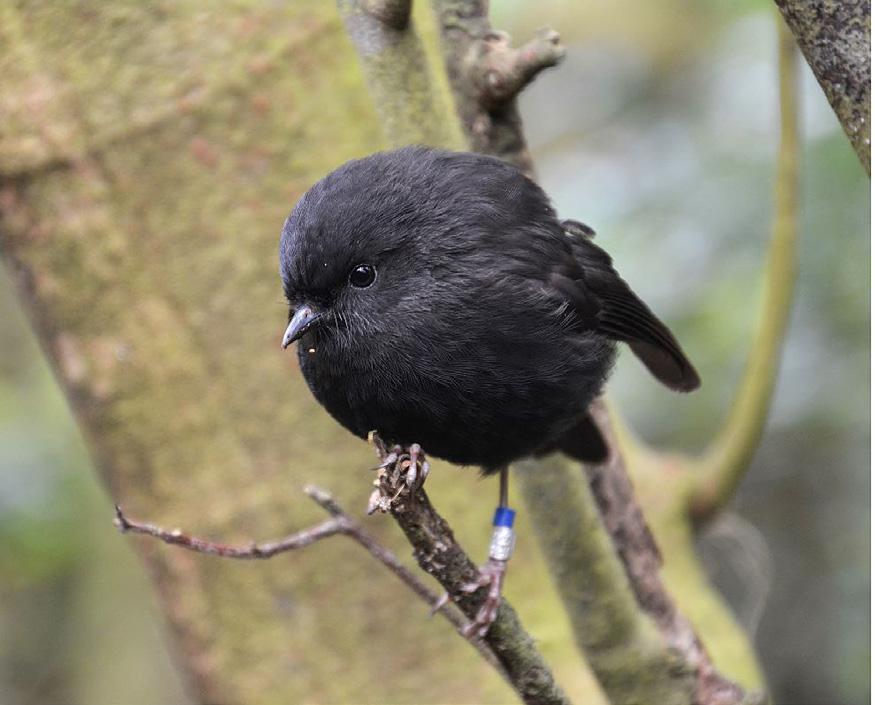
Karure. Oscar Thomas
Hoiho. Hayden Parsons
have championed a deserving winner,” said Forest & Bird chief executive Nicola Toki.
“In a competition that was anybird’s to win, they showed up with the goods to capture hearts and minds across Aotearoa.”
Hoiho joins the kākāpō as the only manu to have taken out the world’s favourite avian election twice. The kākāpō won in 2008 and 2020.
Thought to be the world’s rarest penguin species, hoiho is unique to New Zealand. Small populations are dotted along the east coast of Te Waipounamu the South Island, while more live on Rakiura Stewart Island and the sub-Antarctic Auckland and Campbell Islands.
According to the Yellow-Eyed Penguin Trust, the number of mainland breeding birds has dropped by 78% over the last 15 years – including an 18% dip over just the last year alone.
“This spotlight couldn’t have come at a better time,” said Nicola. “This iconic penguin is disappearing from mainland Aotearoa before our eyes. Hoiho are being hammered from all angles.
“They suffer from horrible diseases like diphtheria and get attacked by dogs. Tiny vulnerable chicks are threatened by introduced predators such as cats, stoats, and ferrets that can wipe out an entire breeding site in a single season.”
The penguins are also at risk at sea.
“They’re drowning in set nets and can’t find enough food,” added Nicola. “Our hoiho urgently need marine protected areas to give them a shot at survival.”
For more about hoiho and the challenges they face, see Kerrie Waterworth’s article “Hoiho numbers plummet” in our Winter 2024 issue.
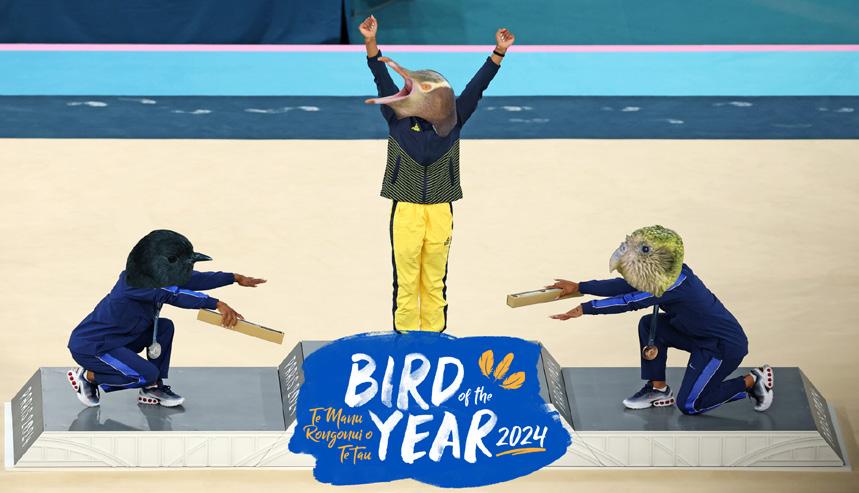
AND THE RUNNERS UP WERE...
A total of 52,477 verified votes were cast by bird lovers from across Aotearoa and around the world. Campaign teams across the motu crafted memes, put up posters, and donned bird costumes in efforts to win votes.
The karure Chatham Island black robin, backed by a campaign team from the Victoria University of Wellington Students’ Association, kept the everpopular kākāpō at bay, securing second place.
TOP 10 (VOTES)
➊ Hoiho yellow-eyed penguin (6328)
➋ Karure Chatham Island black robin (5442)
➌ Kākāpō (4548)
➍ Ruru morepork (4467)
➎ Kea (4206)
➏ Pīwakawaka fantail (4,05)
➐ Takahē (3892)
➑ Tawaki piki toka eastern rockhopper penguin (3834)
➒ Kōkako (3445)
➓ Toroa Antipodean albatross (3415)
“SHOUTER” STAMPS
DATE OF ISSUE: 16 SEPTEMBER 2024
To celebrate Bird of the Year and Aotearoa New Zealand’s unique and precious wildlife, our friends at New Zealand Post commissioned wildlife artist and long-time friend of Forest & Bird Melissa Boardman to create a special stamp featuring hoiho, the 2024 winner.
Melissa has created a large body of work dedicated to ngā manu. Her original illustrations are based on her own photographs. She uses gouache paint as a medium, making the most of its textures to complement her bold and descriptive illustrative style. Each illustration is created with tiny individual brush strokes. Visit collectables.nzpost.co.nz
STATE OF NATURE: MOTU IHUPUKU
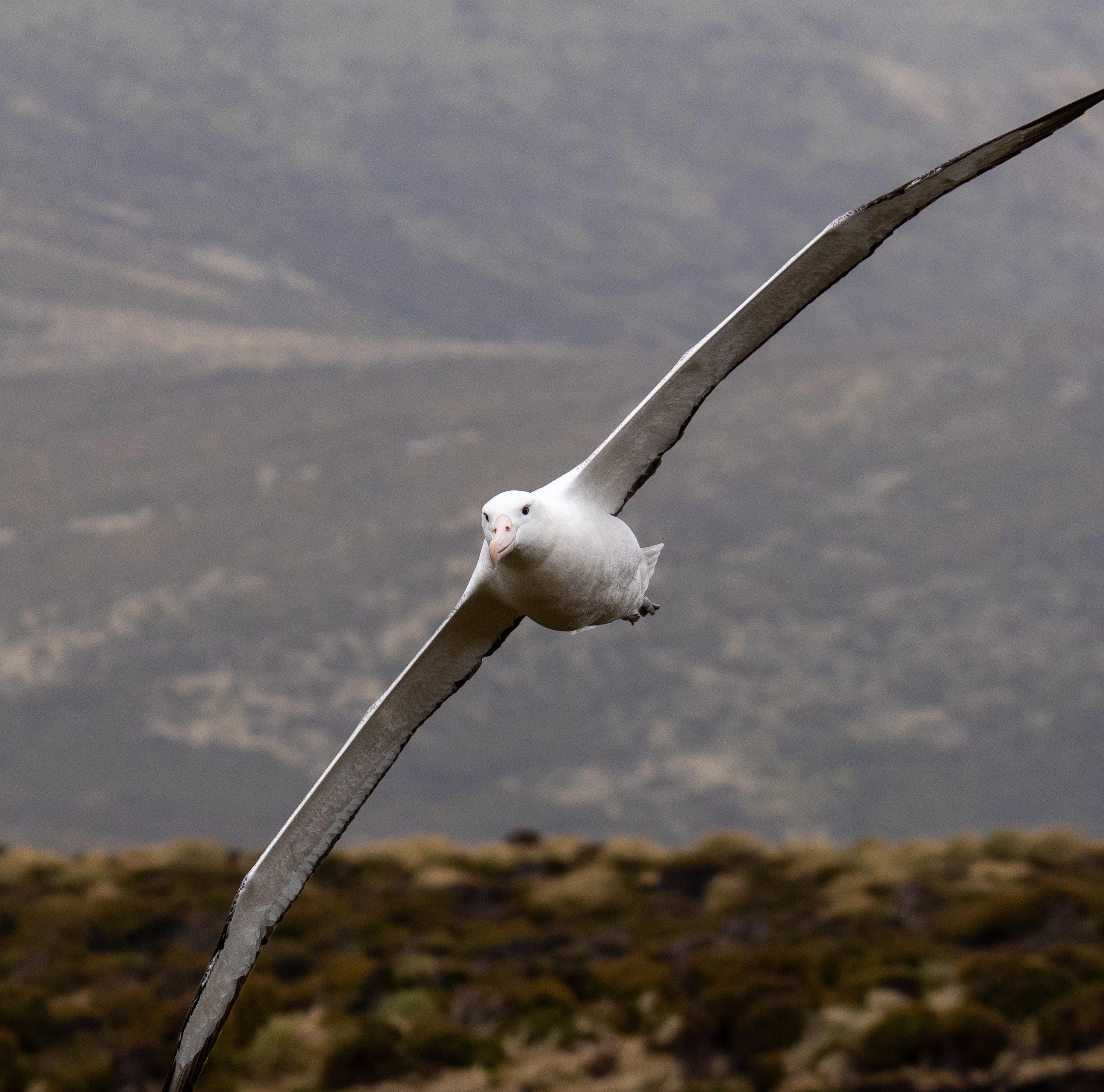
Lessons from Campbell Island, in New Zealand’s wild sub-Antarctic ocean. Lia Harvey | All photos Oskar Ehrhardt
There were 119 adults and one child on board the Heritage Adventurer Ship. Together, we travelled for many days through the unforgiving swell of the Southern Ocean towards the sub-Antarctic islands. The crossing saw us traverse 600km south to Motu Ihupuku Campbell Island, home to the world’s largest colony of southern royal albatross.
As we arrived at Campbell Island, the sun rose to reveal great silver-skinned hills, carved into bold peaks and valleys by wild winds. All life here was untamed and ferociously beautiful.
During our time at sea, I had come to know the youngest passenger. I will call him Matthew. After we landed, we walked together through Campbell Island’s
megaflora, enjoying the relief of being on solid land. Matthew wore a sunshine-yellow coat that matched the little curls of his hair and illuminated him against the deep hues of the Sub-Antarctic.
On a small rise above the coastline, he knelt to examine the carcass of a southern royal albatross decomposing into the soil. He examined the body as if
Toroa southern royal albatross.
it were a piece of art in a gallery, watching insects work busily to excavate the giant skeleton.
In my aversion to the wriggling, feathered body, I warned him not to get too close. The demonstration of death seemed harsh for such young eyes. Yet, as I said this, he looked up at me with an expression that told me I was ignorant of a secret. Gesturing towards the showcase of death he said, “But, look, there is so much life.”
Matthew pointed to the dead albatross as it faded into the soil, ready to be transformed into the new flora of the island. Grief and loss were nowhere to be seen in his eyes. Not yet conditioned to consider death as a stark ending, the young boy saw everything in its constant state of transformation, where each life is deeply connected to those before and beyond its own. This perception was rich with beauty and wisdom.
This was the first of many lessons delivered by an albatross of the sub-Antarctic. Seen this way, death is simply a stepping stone along evolution. Struck by this constant force of change, I left him with the albatross and continued up toward an eastern ridgeline, coming to rest on a sharp cliff that overlooked the sea.
Southern royal albatross took to the skies like children to a soccer pitch. Never had such wild winds looked as delicate as they did under the wings of these seabirds. The symbiosis of the bird to the sky was unmistakable, like a frozen image of evolution.
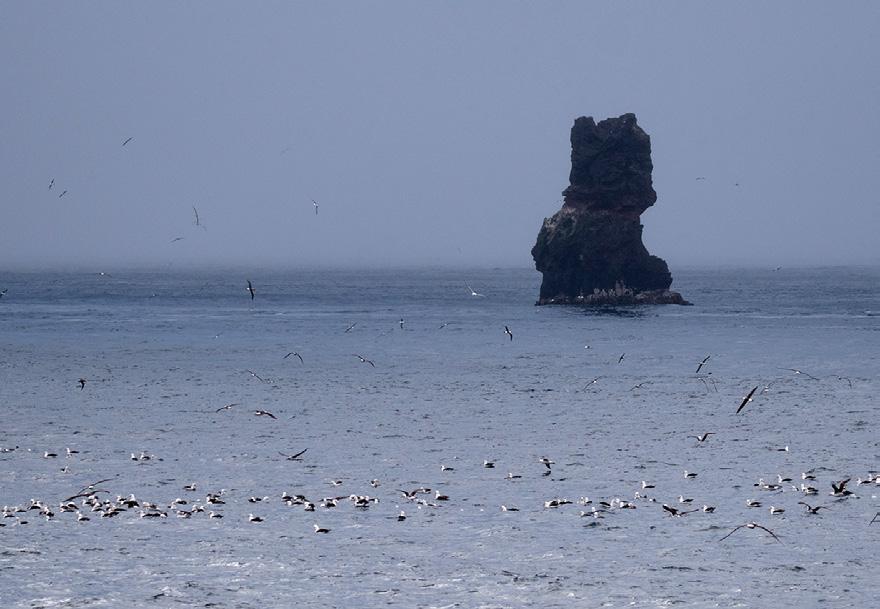
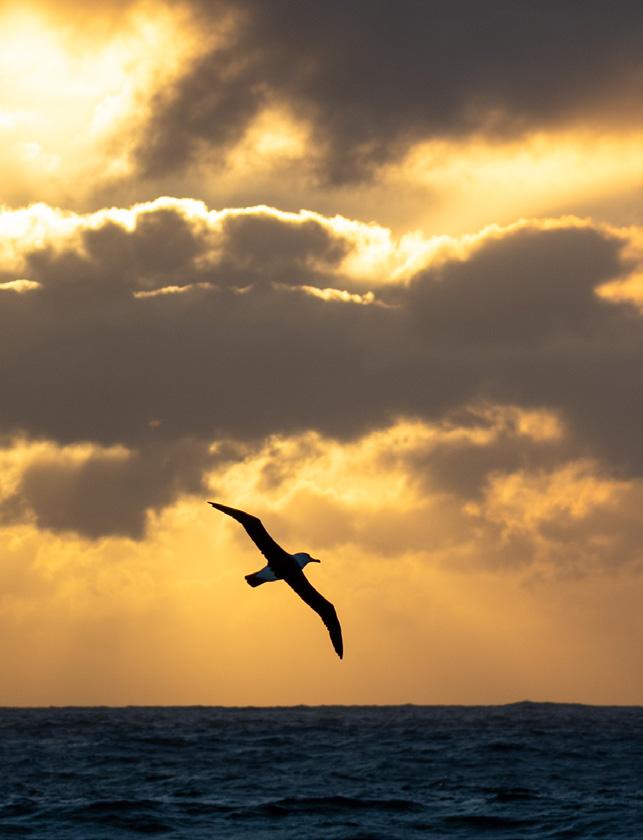
One can tell the architecture of their wings has been cast from the air, crafted over millennia towards the shapes unfolding in this moment. From the crowded skies, an albatross flew closer. As it did so, I could see the DNA of its ancestors, imprinted into the shape of its beak, nostrils, and liquid-black eyes.
As all life is, these birds are the children of intricate adaptations passed down from one life to another. How intricately codependent life is through the generations and how often we forget. Arising from this deep evolution, the truest system to model our world upon is the natural state of the Earth. For that is the greatest mechanism of balance ever witnessed by humankind.
As if to prove their deep acquaintance with the ocean, albatross flew in and out of towering waves without ceasing their graceful motion, scanning the sea for squid, crustaceans, or schooling fish. In flight, their 3.5m wingspan slices into the sea and splashes saltwater across their nostrils. As they do so, their uniquely adapted nostrils filter the water into their bloodstream. This is how they drink. No wonder they treat the sea with such companionship.
After flight, an albatross came to rest upon the hills of Campbell Island. For a bird that lives roughly 50 years in the wild, mostly upon sea or sky, I was puzzled as to why I
should witness him here, on land.
Only when looking down at his feet did I see the shape of a nest beneath. Among the grasses of the sub-Antarctic, a new cycle was beginning. Inside a single egg, life brewed patiently, awaiting its time to arrive.
When noticing the state of nature, we can return to truth. To witness birth and death giving rise to one another upon these cliffs of Campbell Island. The great white albatross reminds me that our lives are merely borrowed from the world. And with that, we find ourselves in a state of deep co-creation with our planet, each other, and all life.
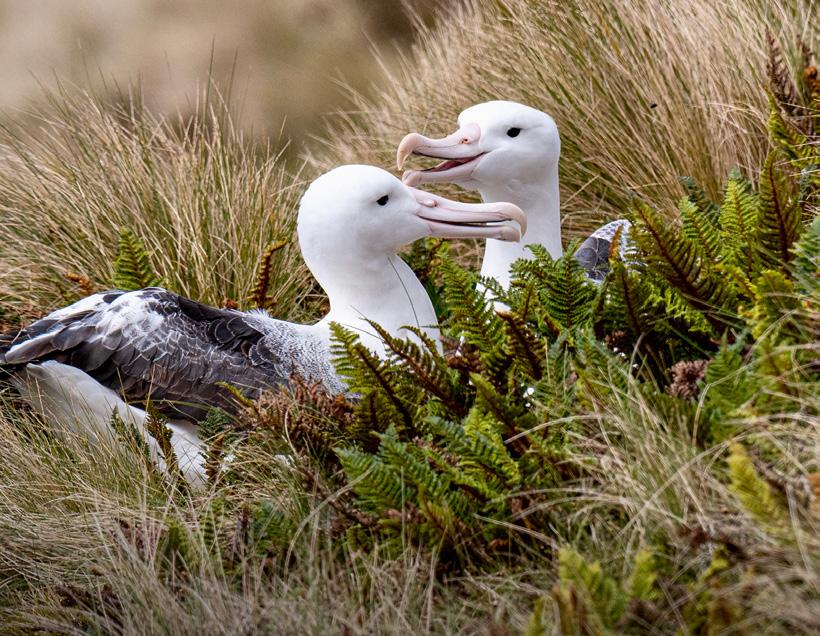
In realisation of the edgeless nature of our lives, a duty of responsibility is placed upon us. For our lives belong not only to ourselves but to the web of all life, from the interconnected balance of ecosystems to the lives of our grandchildren yet to be born.
At this moment, Matthew appeared over the ridgeline in his sunshine-yellow coat. I could not help but notice how much he resembled a lighthouse, shining against the dark skies with a wise little gaze. He looked between myself and the albatross tucking into its nest. “There,” he says, “do you see now? The circle of life.”
Lia Harvey and Oskar Ehrhardt travelled to Campbell Island with Heritage Expeditions. See page 3 or go to heritageexpeditions.com
Campbell Island albatross.
Pair of toroa southern royal albatross in tussock.
The oceans around Campbell Island are a haven for southern seabirds.
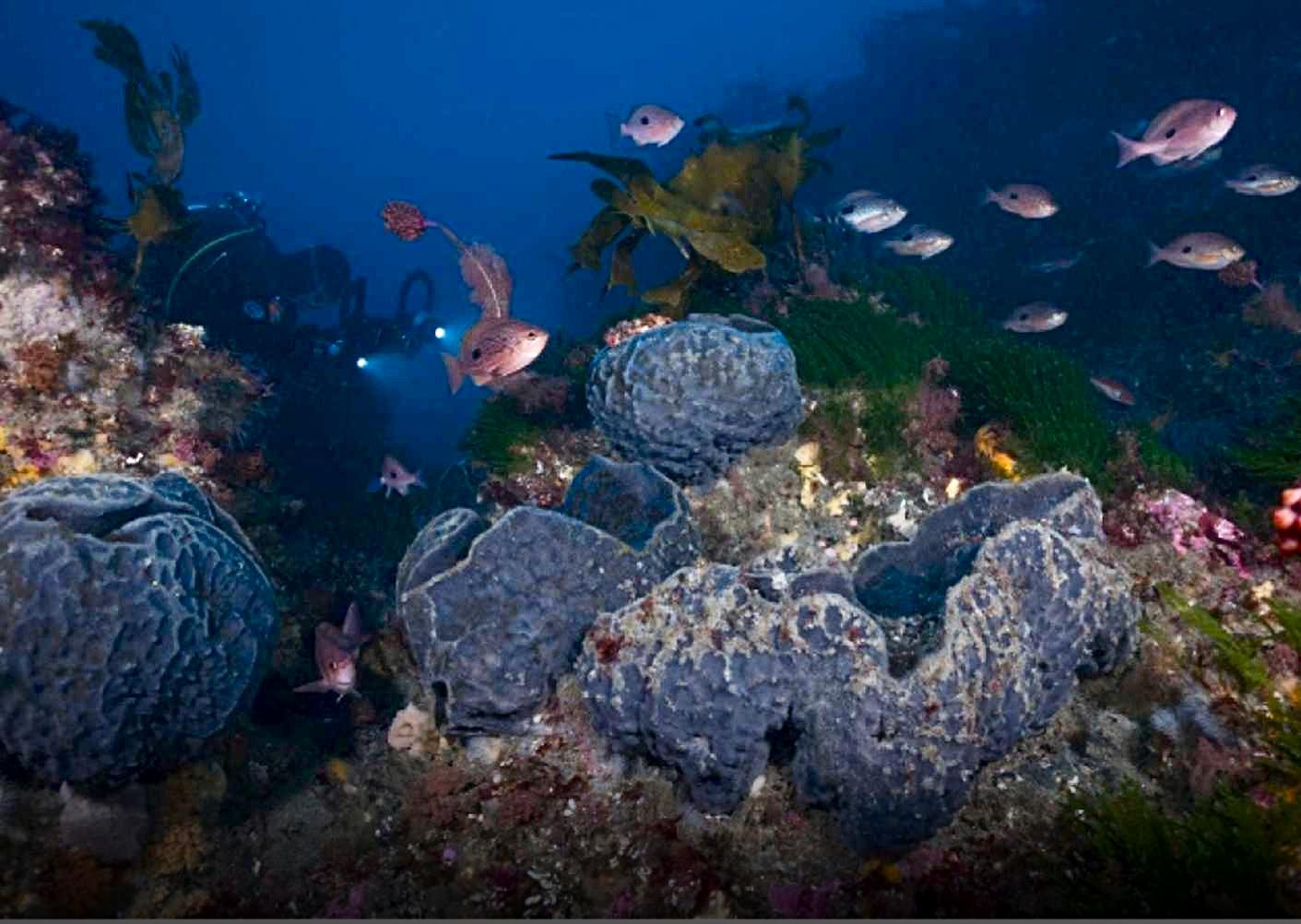
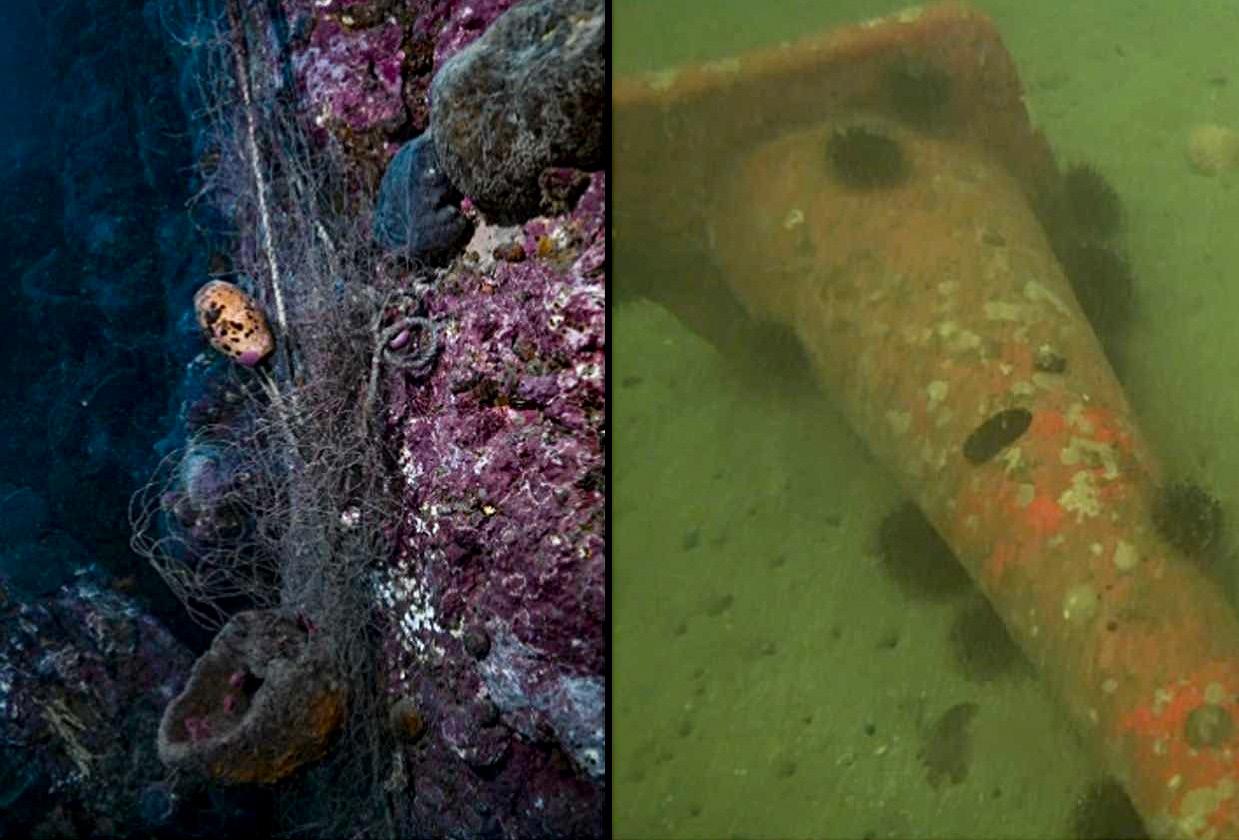
WHAT LIES BENEATH?
Marine animal forests rich in sealife have been found (alongside quite a bit of litter) in the shallow waters of Te Whanganui-a-Tara Wellington Harbour.
Researchers have identified numerous animal forests in Wellington Harbour, many at depths of less than 15m, making the region a biological hotspot for these important marine communities.
Rich animal forests were found at Eastbourne, Evans Bay, Kaiwharawhara, the Miramar Peninsula, and Petone. Sites were also located in shallow waters further north, including off the Kāpiti Coast and Mana Island.
The animal forests were discovered by Professor James Bell, marine biologist at Te Herenga Waka Victoria University of Wellington, and colleagues Dr Valerio Micaroni and Dr Francesca Strano, who were studying life in the region’s shallow waters.
“Marine animal forests are habitats formed by big groups of invertebrates – creatures such as sponges, horse mussels, and brachiopods, which look a bit like clams,” said James Bell. “These remarkable communities are increasingly being recognised as biodiversity hotspots, and we’ve got them on our doorstep.”
Sponges were one of the common species found in the forests. They included a massive potato-shaped sponge (Suberites australiensis) that grows up to 40cm in diameter and forms dense sponge beds.
“These beds were home to a range of species, including molluscs, cnidarians, and red algae, as well as other sponges and fish. We also discovered what we think is a previously undescribed sponge species,” said Francesca Strano.
The sponge beds in the harbour comprised a total area of 120,000m². The team estimates the beds can filter between 500 million to 1 billion litres of water daily.
This filtering plays an important role in transferring nutrients and food from the water column to the seafloor, influencing overall water quality and supporting the sea-floor food chain.
Despite the ecological importance of these shallowwater forests, they are largely unprotected and face increasing threats from climate change, fishing, sedimentation, and pollution.
Researchers found litter on the seafloor at most of the sites in Wellington Harbour.
“There was a lot of plastic items, such as bottles, packaging, and cups, as well as aluminium cans,” James said. “Car parts and tyres were found at half the sites, and fishing gear was found at three locations. Concrete blocks were also common.”
Evans Bay was the worst site for marine litter, followed by Kaiwharawhara, where large amounts of gravel had been dumped on areas of the seabed. The gravel dramatically altered the habitat, with animal communities significantly reduced and limited evidence they had been able to recover since the gravel was dumped.
“This example highlights the significant effects human activities can have on marine animal forests,” said Megan Melidonis, senior coastal scientist at the Greater Wellington Regional Council. “It also highlights the need to protect these fragile ecosystems to avoid further biodiversity loss.”
The regional council helped fund the research as part of work to explore and map the region’s marine biodiversity.
“These forest communities play such a key role in marine food chains and in maintaining water quality. It is incredible to find them in a harbour adjacent to a major urban area,” she added.
Results of the study are published in the journal Global Ecology and Conservation.
For more on marine forests, see Forest & Bird Spring 2022. See also “Trash species for Aotearoa” on page 64.
A ghost gill fishing net at Hunters Bank.
Reef dominated by the large grey sponge Ecionemia alata, Thoms Rocks, 27 m, Wellington West Coast.
Roadside cone, a common detritus in Wellington Harbour.
All Dr Valerio Micaroni and Dr Francesca Strano.
LOOK UP
Former Tauranga Branch chair Eddie Orsulich, who died recently aged 95, was a tireless champion for nature. Ann Graeme and Michael Pringle
In his youth, Eddie Orsulich once rode his bike 50km from his home in Pūtaruru east to Rotorua. He slept the night in a tent by the roadside near the forest of the Mamaku plateau in the Bay of Plenty. He woke in the morning to the song of native birds, a dawn chorus so loud he said he “felt it” as much as heard it.
It was an experience he never forgot. The subsequent post-war degradation of the Kaimai-Mamaku forest and loss of our native birds were a great sorrow to him. He became a life-long advocate for the protection of native forests and the destruction of mammalian pests.
Eddie was a born teacher, rising to school principal then retiring to Waimapu, Tauranga, as an orchardist. In his retirement, he joined the local branch of Forest & Bird and brought his natural logic and horticultural skills to support the branch’s conservation projects. His experience of the processes of nature led to advocacy for the protection of the Kaimai Mamaku forests, not only for their aesthetic landscape and biological values but
also in recognition that the forest protected the economic wellbeing of the land and community around it.
Eddie recognised the role of catchment forest as critical infrastructure. Without the protection of these native forests, those in the western Bay of Plenty today may well have been in the same situation as Tairāwhiti after the recent cyclones – the region’s dairy flats, orchards, and harbour would be deluged in silt and plantation slash.
Chair of Tauranga Forest & Bird when the branch launched the first community pest control project at Aongatete in the Kaimai Mamaku Conservation Park, Eddie became a trustee of the Aongatete Forest Project.
He also put in many hours of hands-on work at the l’Anson Reserve, west of Tauranga. Eddie was an outspoken advocate for the use of aerial 1080 as the only really cost-effective means of controlling introduced browsers and predators.
Letters to local Bay of Plenty newspapers about local conservation matters were
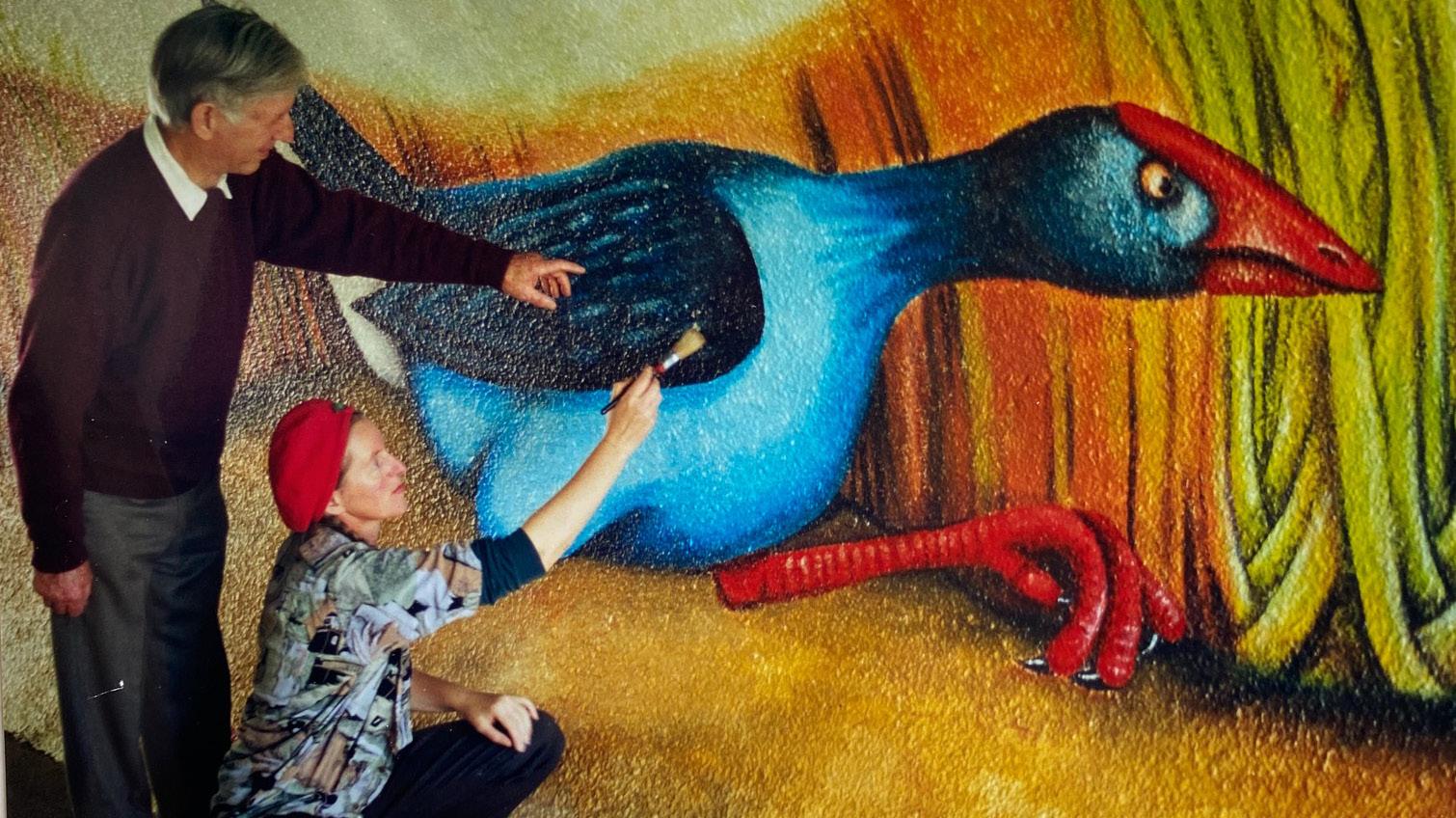
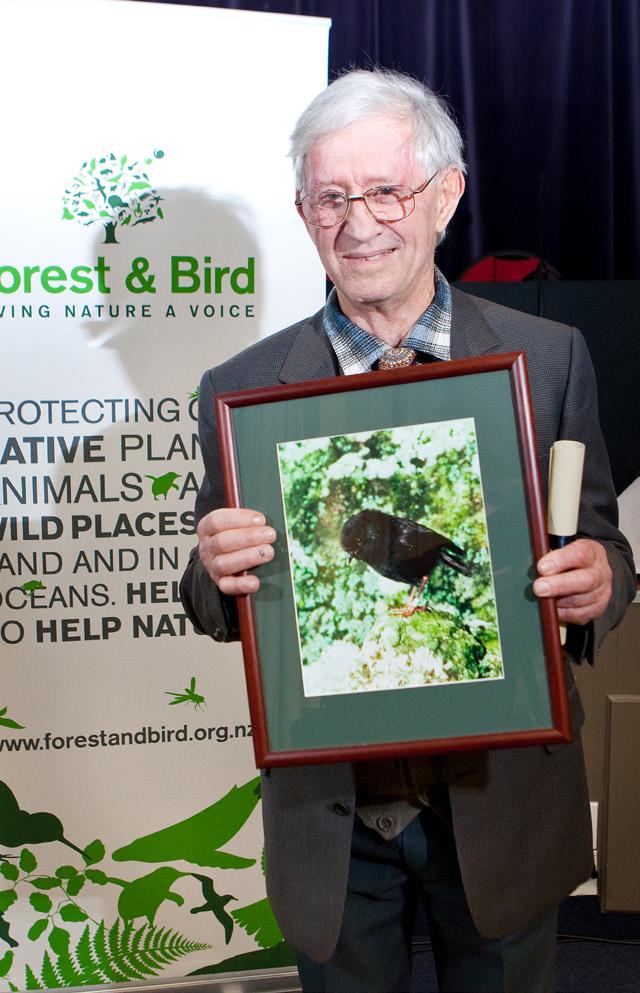
frequently from Eddie, always to the point and cogent. He also made many submissions on planning applications and promoted Forest & Bird’s work at local events.
“He was an amazing advocate for nature, always staunch on the climate change messaging, and a great friend to the branch,” reflected Forest & Bird president Kate Graeme, who hails from Tauranga.
In 2010, Eddie received an Old Blue award from the Society in recognition of his outstanding contribution to conservation. He left a substantial bequest to Forest & Bird in his will to help protect te taiao for future generations.
His daughter Lynette Fisher, of Tauranga, recalled how Eddie once rode the length of the South Island on a three-speed bike.
“Dad had been fascinated with the New Zealand native bush since he was a young boy growing up in Putāruru, which developed into a passion for educating people in the interests of saving our endangered native flora and fauna for his entire life.
“We can all be inspired by his advice to always ‘look up’ whether it be in books or at the treetops. He is greatly missed.”
Eddie Orsulich was a tireless and outspoken voice for present and future generations and will hold a treasured place in the hearts of all who knew him. He passed away on 30 September 2024, aged 95.
Eddie receives his Old Blue in 2010. Forest & Bird
Tauranga Branch chair Eddie Orsulich in 1986 with artist Sharon O’Callahan. Forest & Bird

READS 2024 Holiday
Geckos & Skinks: The remarkable lizards of Aotearoa
by Anna Yeoman
The first book of its kind for Aotearoa explains how and where our lizards live and breed. It is also a fascinating insight into the myriad conservation efforts taking place throughout the country as our geckos and skinks are increasingly threatened by habitat loss and predation from pests. Illustrated with beautiful photographs, Anna shines a light on these shy, secretive lizards in this highly readable book.
Potton & Burton, RRP $59.99
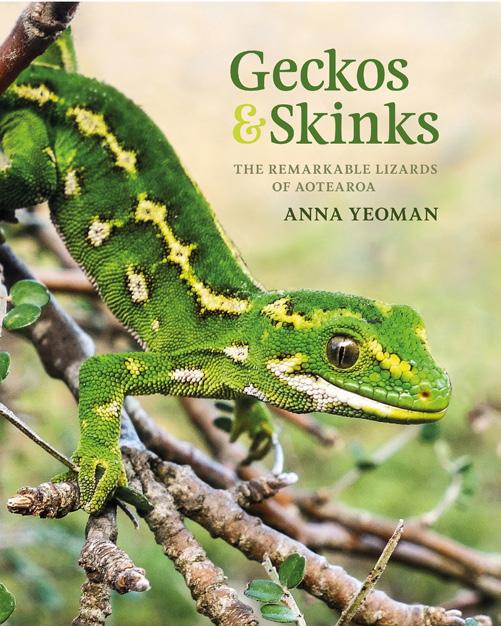
Kahurangi by Dave Hansford
This book is a celebration of nature in Kahurangi National Park, northwest Nelson, and Golden Bay, a region with the greatest variety of plants and animals in the country. It is home to a multitude of native habitats, from vast beech stands and coastal rainforests to sprawling karst ramparts and extensive wetlands.
With a foreword by Forest & Bird’s Nicola Toki, Dave Hansford argues for the urgent protection of these precious areas.
Potton & Burton, RRP $79.99
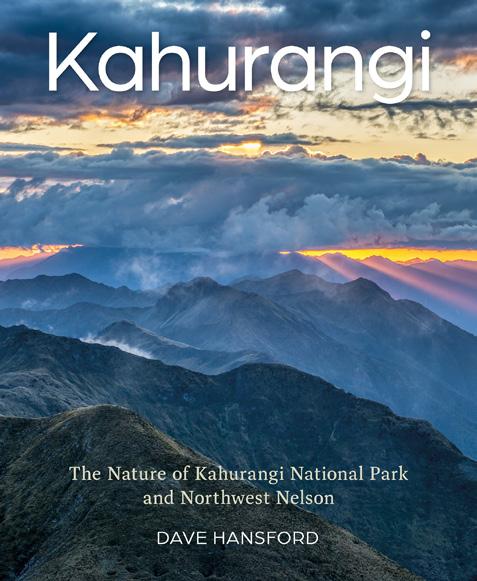
The Huia & Our Tears by Ray Ching
The old forests are silent now to the call of these beautiful birds, the male with its strong, sharp beak, she with her beak so gracefully curved. All that is left can be found in museums.
The Huia & Our Tears is Ray Ching’s memoir of these birds in his studio in the 1960s, their specimen skins and feathers.
Poorly Rabbit Press, RRP $80
A Wild Life: Photographs from the backcountry of Aotearoa by Shaun Barnett
Shaun Barnett wrote about and photographed the New Zealand backcountry for 30 years and was the leading tramping author of his generation. He has written and photographed many significant books on tramping and backcountry culture. This book is a stunning tribute to his photographic career, an inspiring collection of photographs that detail a life devoted to the outdoors. Anyone with affection for our wilderness will strongly relate to this beautiful book.
Potton & Burton, RRP $59.99
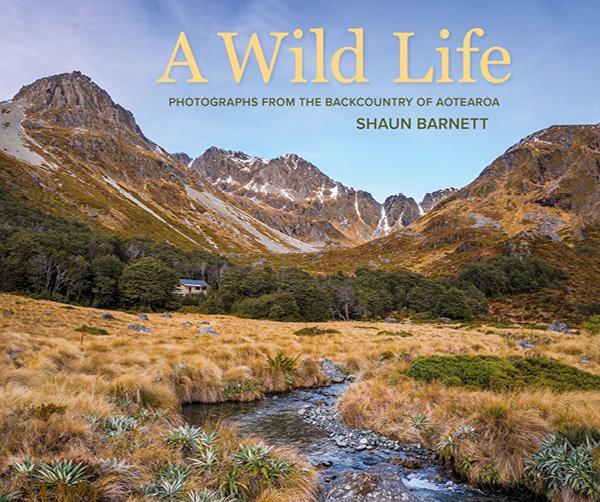
Wild Wellington Ngā Taonga Taiao by
Michael Szabo
This handy and informative illustrated guide for residents and visitors highlights over 30 of the best wild and urban places to discover in the Wellington region, including the Hutt Valley, Porirua, and the Kāpiti Coast. The capital’s first nature guide by former Forest & Bird editor Michael Szabo features
some conservation projects initiated by our branch volunteers, such as Places for Penguins, on the South Coast, and Matiu Somes Island, in Wellington Harbour.
Te Papa Press, RRP $45
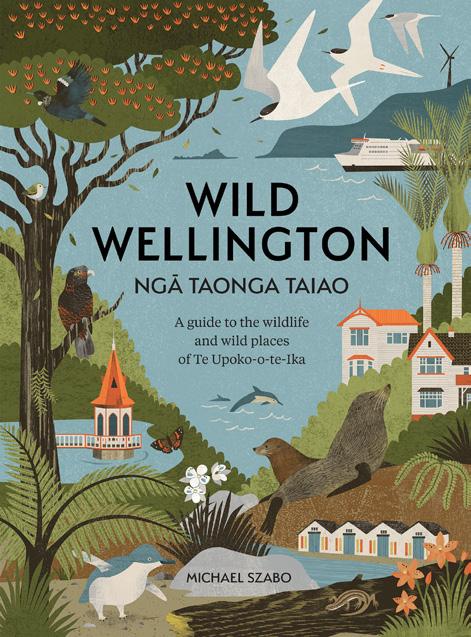
A Naturalist’s Guide to the Butterflies & Moths of Aotearoa New Zealand by
Carey Knox
This is an easy-to-use introductory identification guide to 361 species of butterfly and moth found in Aotearoa New Zealand, including 162 endemics. Highquality photographs from the author and other top nature photographers illustrate the detailed species descriptions, including nomenclature, size, distribution, habits and habitats, and conservation information. The final section contains an all-important checklist of all New Zealand Lepidoptera.
John Beaufoy Publishing, RRP $29.99
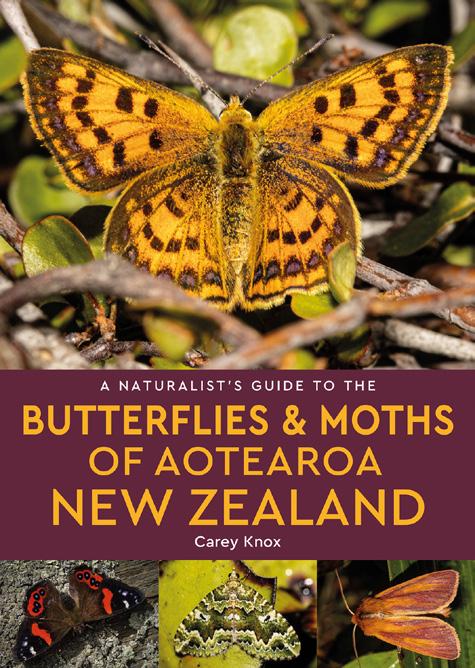
Kiwi: A Curious Case of National Identity by Richard
Wolfe
This book is a fascinating exploration of how we New Zealanders became known as Kiwis. Diving into the natural history of our unique bird and its significance to Māori, the story spreads its wings to relate how “kiwi” came to symbolise the emerging nation during the First World War – thanks in part to a brand of Australian boot polish. So many questions surround the term Kiwi and therefore our identity.
Oratia Books, RRP $45.00
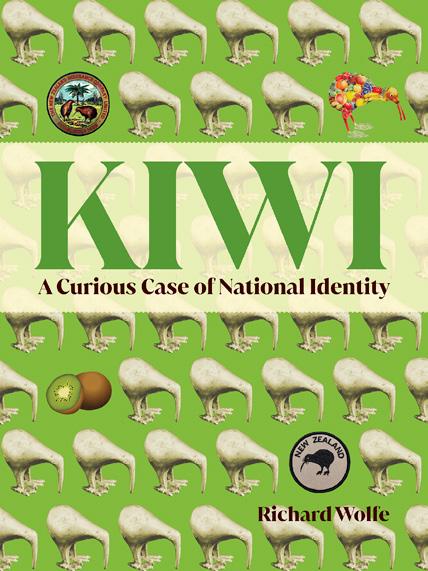
A change in the weather by Bruce Mahalski and Abe Hunter
This book is a compilation of cartoon strips by Dunedin cartoonists Bruce Mahalski and Abe Hunter that have appeared in the Otago Daily Times Bruce is an environmental activist who has contributed illustrations to Forest & Bird’s magazines. He hopes this little book of climate and conservation cartoons will start more than a few conversations and that some of these conversations will lead to both positive and uplifting environmental action.
Dunedin Museum of Natural Mystery, RRP $19.99
Tasting with Your Feet by Ned Barraud
This is a fascinating insight in the amazing ways animals use sight, hearing, smell, taste, touch and other sensory abilities to live in their world. Butterflies taste with their feet, a bumblebee can see a flower’s ultraviolet colours, a shark can sense its prey’s electric pulses, a godwit can use the Earth’s magnetic field to navigate from Alaska to New Zealand. This book is for the eight- to 12-year age group.
Potton & Burton, RRP $21.99
Saving Wānanga by Kris Herbert
The true story of Wānanga, a kea from Arthur’s Pass that was poisoned by lead. Taken to an animal hospital in Christchurch, he recovered after treatment and happily returned to his mountain home. Kea are the world’s only alpine parrot, and while predators are their main threat they are also vulnerable to lead poisoning from nails on iron roofs. This conservation story with a “happy ending” will appeal to children, ages 5–10.
Potton & Burton, RRP $21.99

• Heaphy Track
• Abel Tasman
• Old Ghost Road
• Cobb Valley
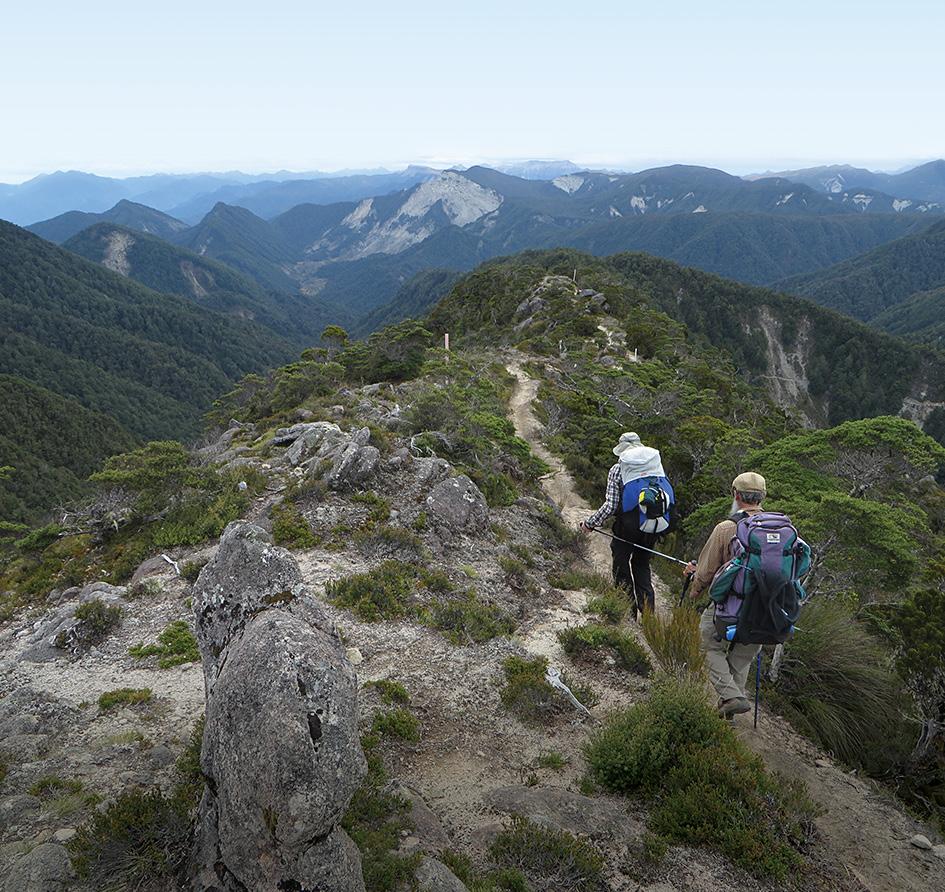
Okarito Boat EcoTours
‘Carry less, enjoy more’ Come explore with us!
www.kahurangiwalks.co.nz
Phone: 03 3914120
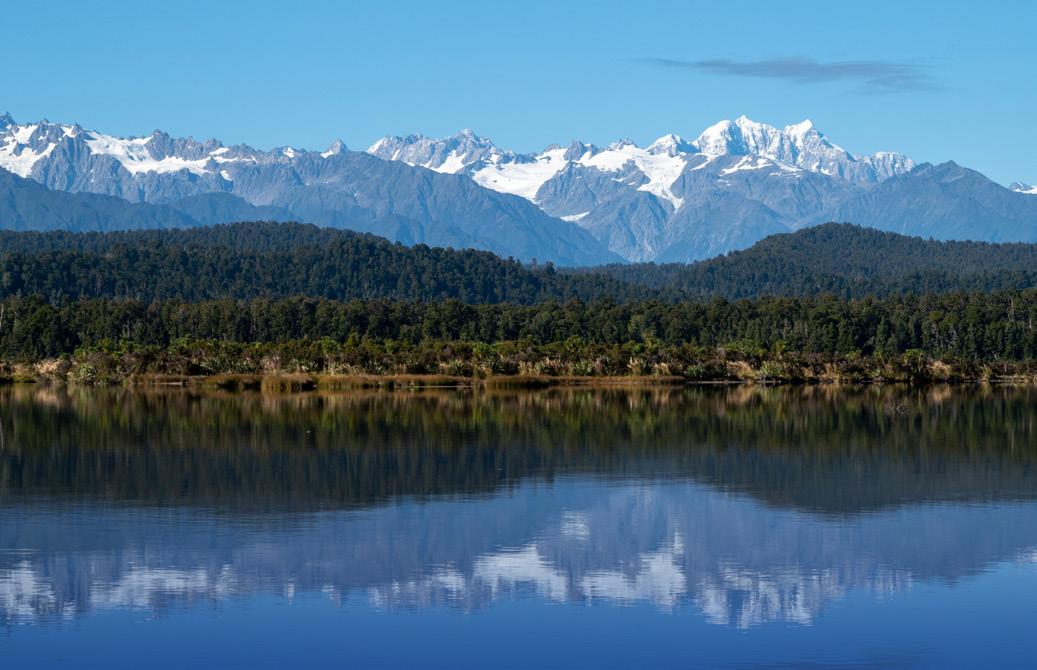
Rich in biodiversity, the landscape stretches from the Tasman Sea to the glaciers – one of the West Coast’s truly special places. Please join us as we share predator control efforts for our birds, regenerative planting programs for our waterways – all while being present to the sights and sounds of this beautiful wetland.
03-753 4223 OkaritoBoatTours@gmail.com www.okaritoboattours.co.nz



FOREST & BIRD’S WILDLIFE LODGES
Arethusa Lodge
Near Pukenui, Northland
Sleeps 6 herbit@xtra.co.nz 03 219 1337
Ruapehu Lodge
Whakapapa Village, Tongariro National Park
Sleeps 32 office@forestandbird.org.nz 04 385 7374
Mangarākau Swamp Lodge
North-west Nelson
Sleeps 10 mangarakauswamp@gmail.com 03 524 8266 www.mangarakauswamp.com
Forest & Bird members can book all of these lodges at reasonable rates. Join today and feel good knowing you are making a difference for New Zealand’s nature. See forestandbird.org.nz/joinus
Tai Haruru Lodge
Piha, West Auckland Sleeps 5+4 hop0018@slingshot.co.nz 09 812 8064
Tautuku Forest Cabins
Owaka, Otago Sleeps 16 tautukucabins@gmail.com 0273764120
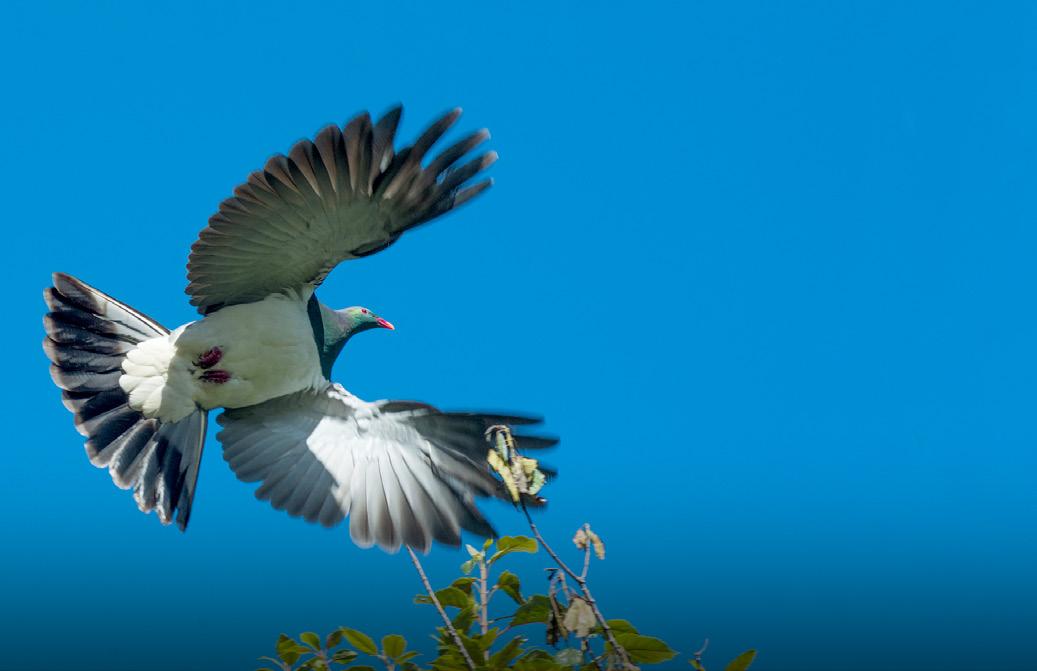

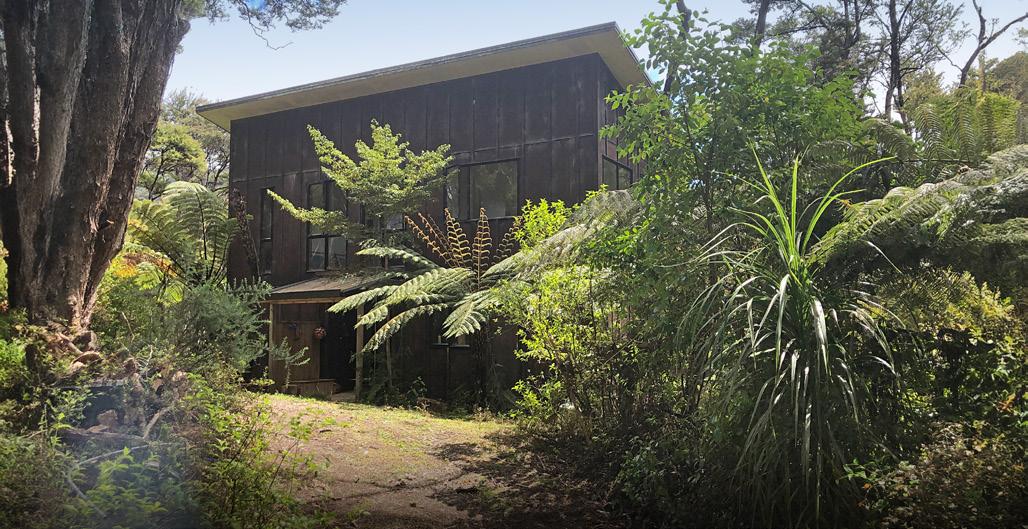
Experience New Zealand native bush while living on this 1/18th share of 420 Ha Marunui Conservation Park.
NATURE AT ITS BEST
Learn about glaciology, flora & fauna, geomorphology, geology & history of this world renowned landscape. We cater for all ages & abilities, with 2 hr, half day & full day tours in our small groups, at your pace. Kenya & Tanzania Forest Restoration Tour OCTOBER 2025
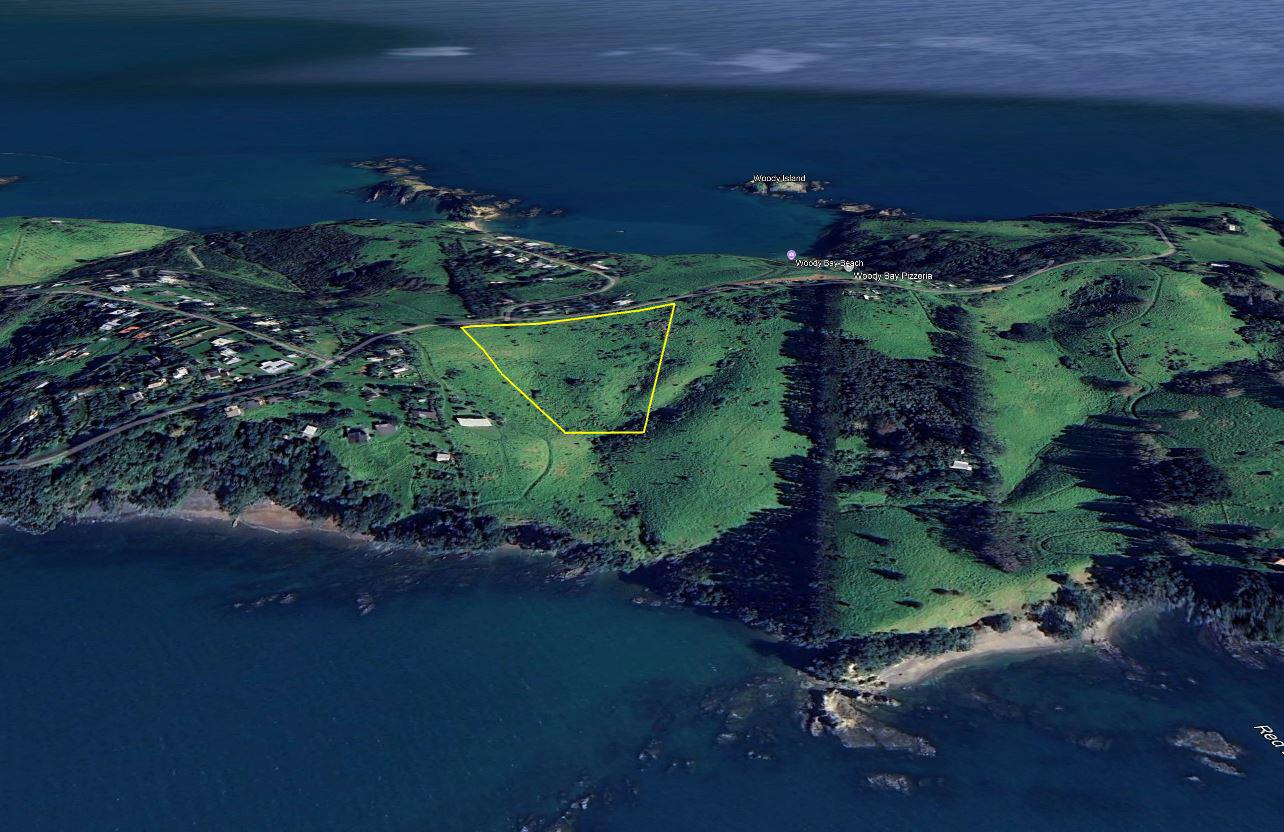
Would you like to live on one of New Zealand’s rare pest-free islands, surrounded by thriving native birdlife? This exceptional 2-hectare property just 45 minutes from downtown Auckland, offers panoramic vistas across the Hauraki gulf, including stunning views of The Noises.
Kendal +64 21 866669
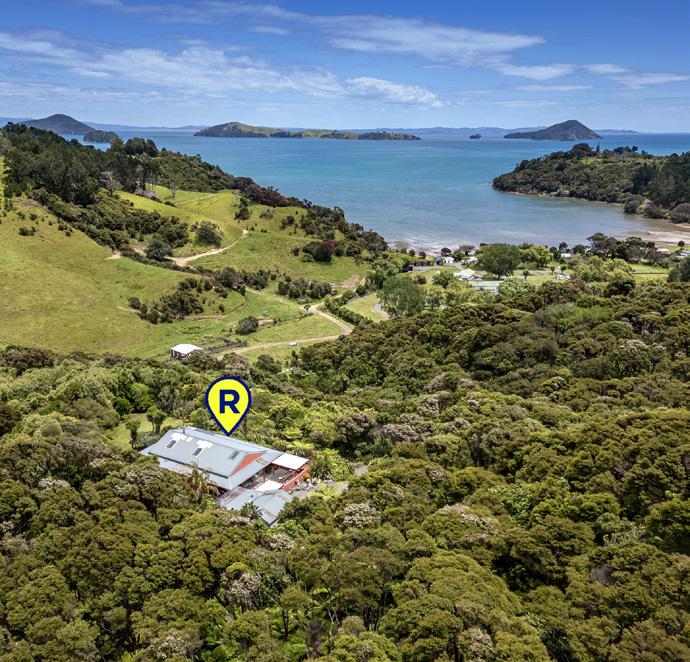
Tranquillity to the forefront! A lush 5.5Ha lifestyle haven has been created after a stunning 30 year project to restore native forest incorporating Kauri, Rimu, Kahikatea and wetlands with phenomenal birdsong ensuing. Spacious home featuring extensive decking, private courtyards and Gulf views. Garage with sleepout for guests.
Price $1,350,000

Contact: Kim Radick 021 533 174
Make a positive impact on your next adventure and join us on a two week tour of Kenya and Tanzania to plant 10,000 trees and restore threatened forests while experiencing the wildlife and culture that Africa is famous for.

For more info: john@forevertrees.nz Ph 027 297 8855 www.forevertrees.nz
The trust provides financial support for projects advancing the conservation and protection of New Zealand’s natural resources, particularly flora and fauna, marine life, geology, atmosphere, and waters.
More information is available from the Trust at PO Box 10-359, Wellington.
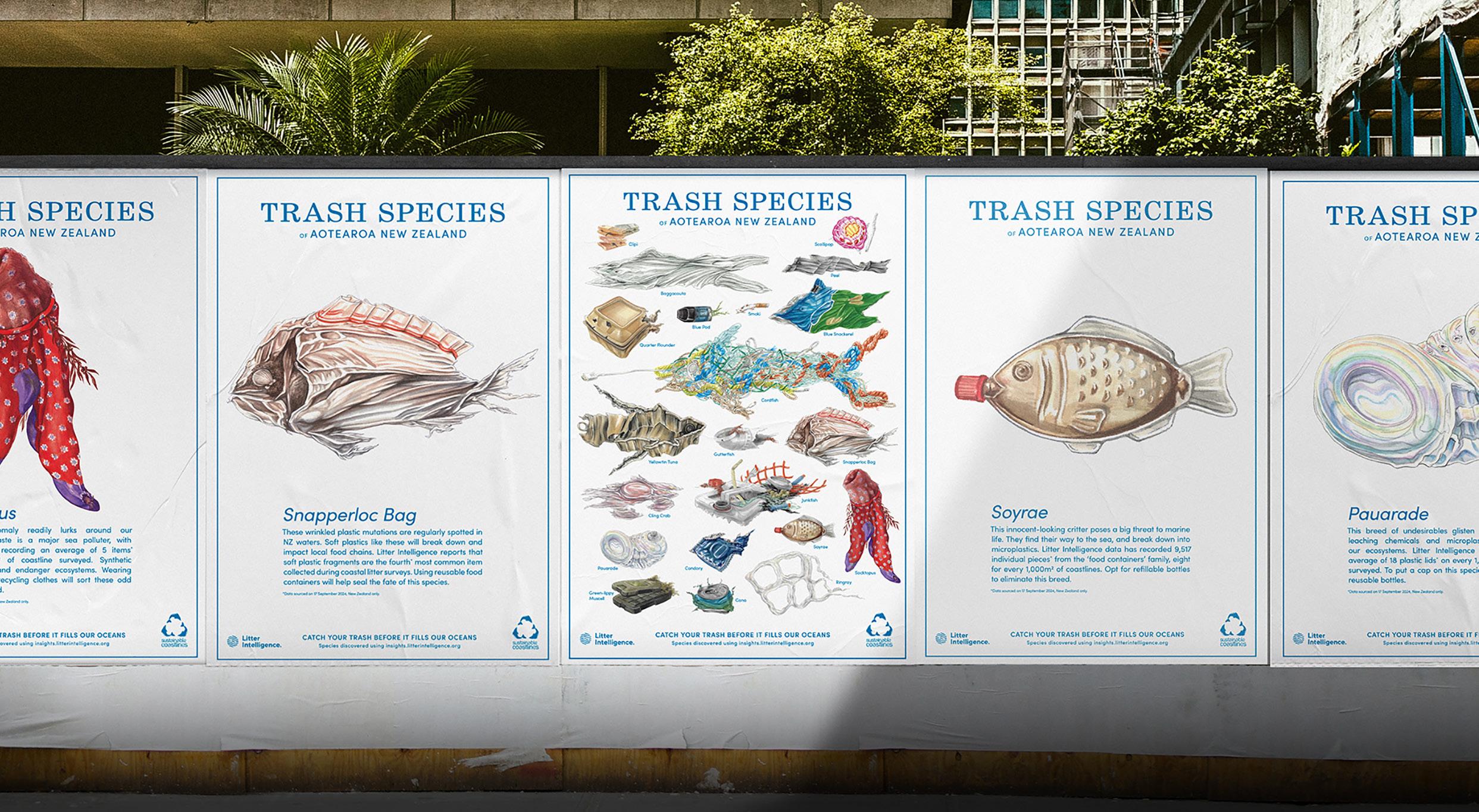
CATCH YOUR TRASH
Environmental charity Sustainable Coastlines has recreated a famously fishy Kiwi poster to reveal some unwanted “new species” lurking in the ocean.
An iconic New Zealand Fish Species poster adorns the walls of many takeaway shops up and down the country –a celebration of the once plentiful and diverse kaimoana in our moana ocean.
Using data collected by
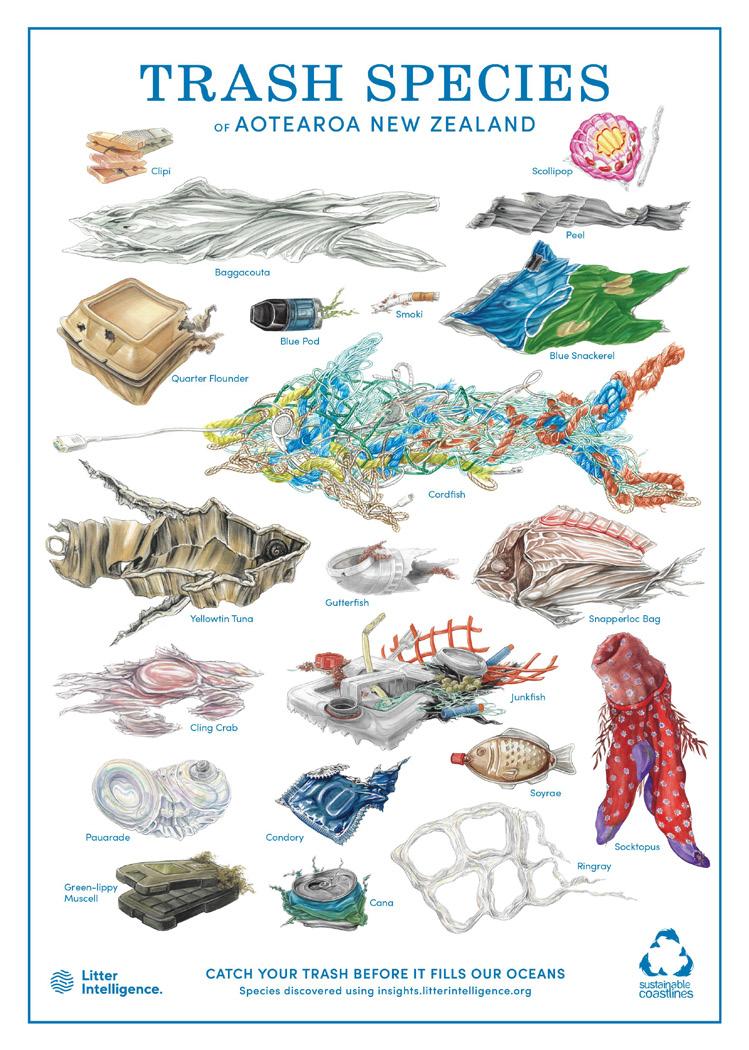
Sustainable Coastlines, creative agency Augusto has re-created the poster to call out the most common litter found in our waters.
Sadly, native fish and seabirds are increasingly having to share their marine home with these unwanted visitors – The Trash Species of Aotearoa New Zealand.
The 21 new species include the Quarter Flounder, Yellow-tin Tuna, Baggacouta, Smoki, Soyrae, and Junk Fish, among others.
They were brought to life in a series of watercolour illustrations by renowned New Zealand wildlife artist Erin Forsyth.
This clever twist on a Kiwi icon has a serious message and encourages people to take care of their litter to prevent these trash species taking over our oceans and beaches.
“This campaign helps to highlight the threat of a totally unwanted ‘species’ that are finding their way into our oceans through littering, open bins, and stormwater drains,” said Helen AdamsBlackburn, communications
manager at Sustainable Coastlines.
“It draws the connection between items we might use on a daily basis and the beaches and wildlife we hope to protect. The message is simple: catch your trash before it fills our oceans, whether that’s changing your buying habits or making sure something is disposed of properly.”
Sustainable Coastlines brings people together to reduce plastic pollution and other litter to protect the ocean. Its staff deliver clean-up events, educational programmes, and public awareness campaigns, and gather litter data collection to inspire change in behaviour and policy.
Prints of the poster are available for sale on Sustainable Coastline’s website. People are being encouraged to reveal the rubbish they pick up from their local beaches by sharing their “#catchoftheday” on social media. For more information, go to sustainablecoastlines.org Explore the litter data at insights. litterintelligence.org.

Merrick
Parting shot
Earlier this year, I saw an advertisement for Heritage Expeditions in Forest & Bird so I booked the seven-day Southern Fiords trip in July. It was great, well worth it. I photographed this terehu bottlenose dolphin in Acheron Passage, between Breaksea Sound and Dusky Sound. We were lucky that it hadn’t rained for a while so the usual brown tannin-stained freshwater layer was absent, giving great water clarity. I particularly like this photo because it becomes more interesting the more you look at it – the bubble stream as it reaches the surface, the film of water about to break over its snout, and the reflection of the sunny hills in its wake.
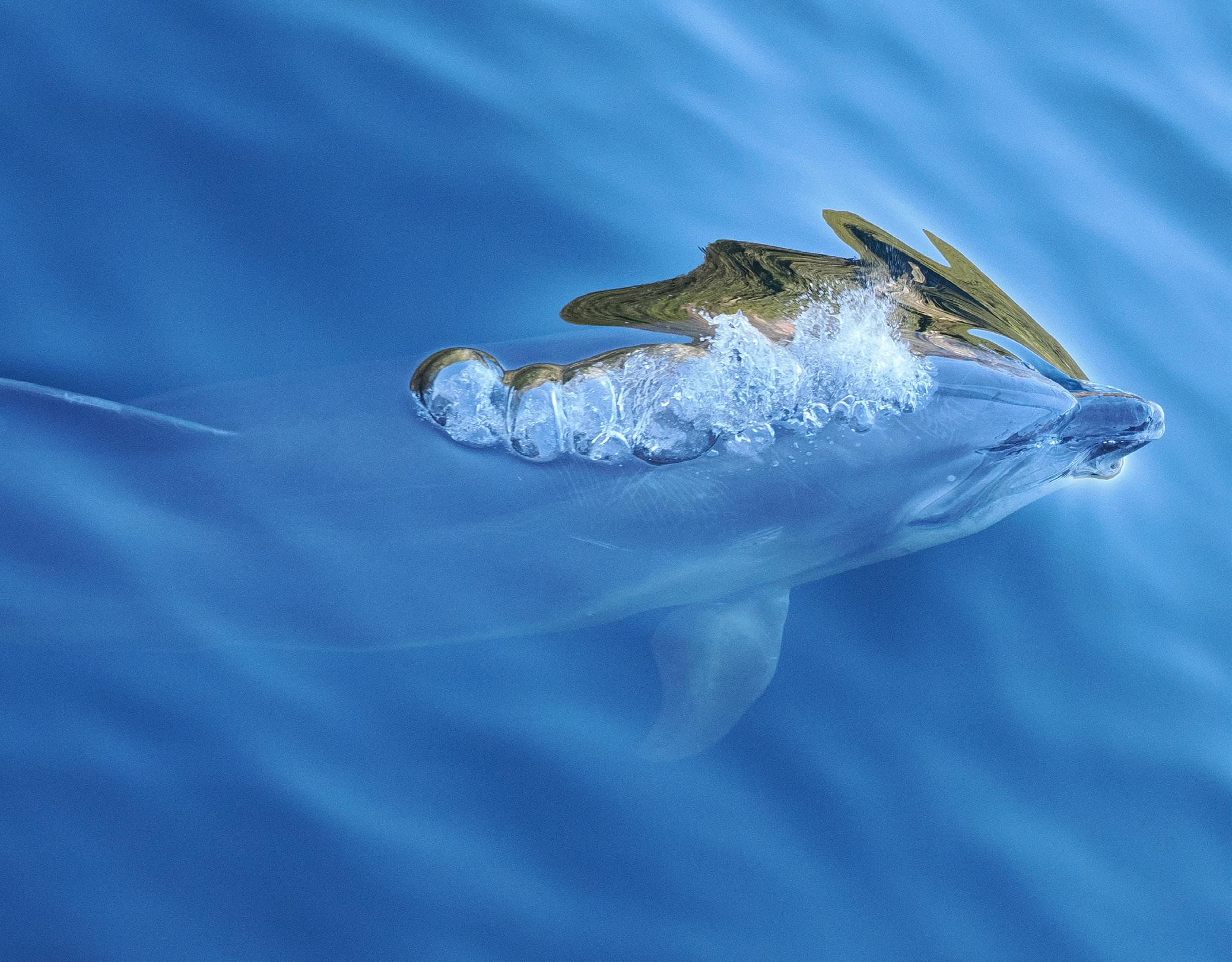
WILD ABOUT NATURE | PHOTO COMPETITION
How to enter: Share your images of native birds, trees, flowers, insects, lizards, marine animals, or natural landscapes, and be in to win.
Send your high-res digital file and brief details about your photo to Caroline Wood at editor@forestandbird.org.nz
The best entry will be published in the next issue of Forest & Bird magazine.
The prize: The winner will recived a prize pack of books worth $170: A Wild Life: Photographs from the backcountry of Aotearoa by Shaun Barnett, the Huia and our Tears by Ray Ching, and A Naturalist’s Guide to the Butterflies & Moths of Aotearoa New Zealand by Carey Knox.
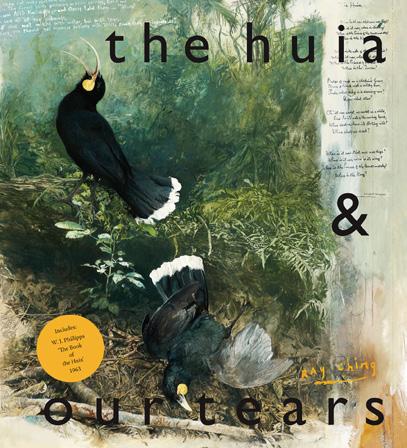
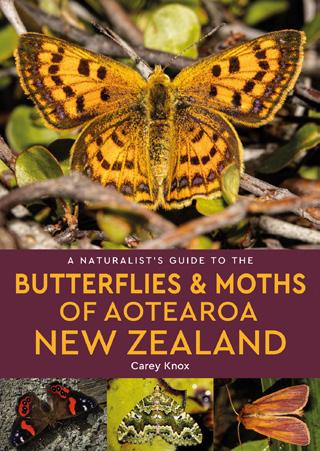
Michael
we ARE tramping

Whether it’s a day trip with the family or a multi-day adventure deep into the wilderness, Bivouac has the best gear, from the top brands, to keep you safe, comfortable, warm and dry. Our friendly staff are happy to provide expert advice, ensuring you get the right equipment and the right fit. If you need it for tramping, we have it, because at Bivouac Outdoor we ARE tramping.
Steep climb out of Sir Robert Creek, Hokitika River, Central Westland
Photo: Mark Watson / Highluxphoto
Supporting Aotearoa's Backcountry Heritage