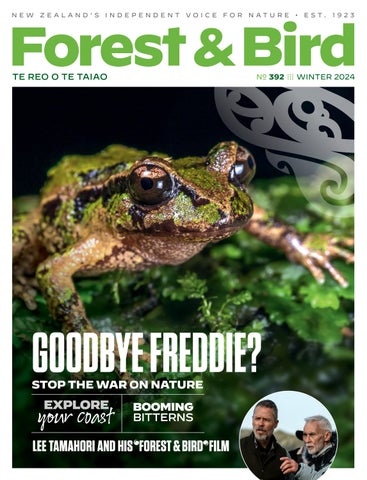
NEW ZEALAND’S INDEPENDENT VOICE FOR NATURE • EST. 1923 GOODBYE FREDDIE? LEE TAMAHORI AND HIS FOREST & BIRD FILM EXPLOREyour coast TE REO O TE TAIAO № 392 WINTER 2024 STOP THE WAR ON NATURE BOOMING BITTERNS
East–West Link Supreme Court
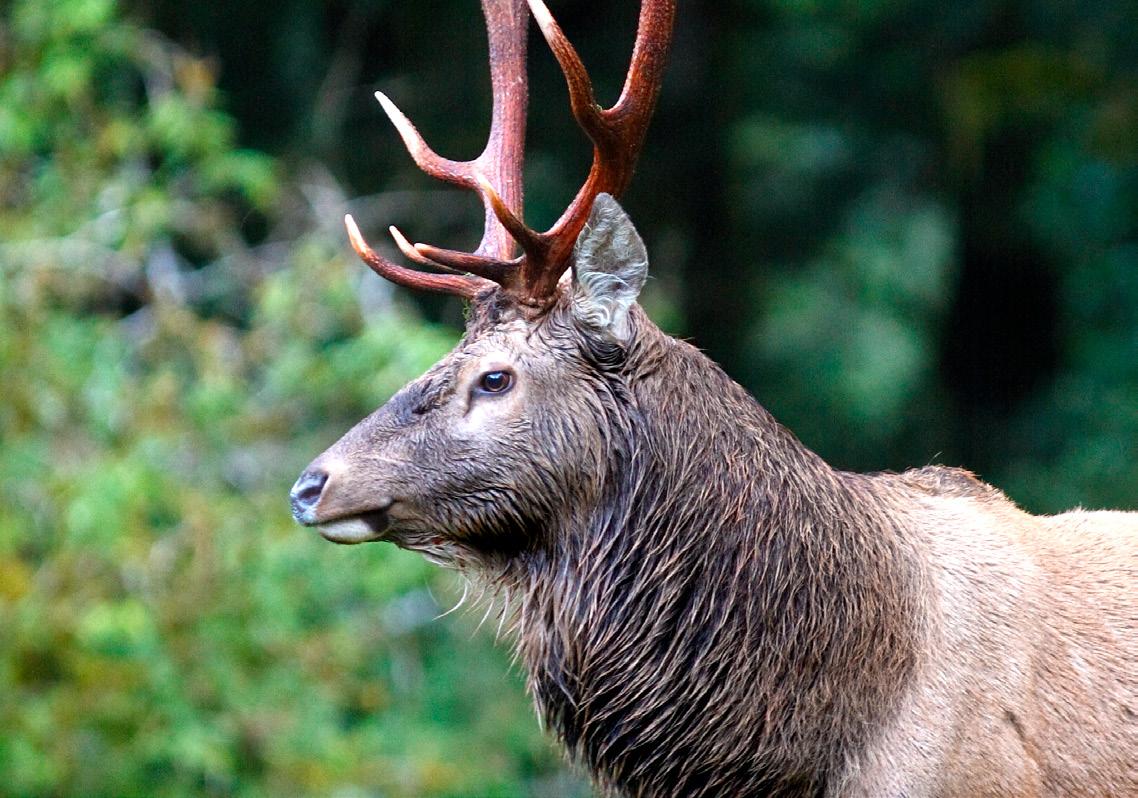
8 Wapiti latest
Pākiri sand mining 12 We love DOC; Edge of extinction
14 Fight for nature
15 Show us your list!
16 What is wrong with the Bill? Fast-track to nowhere
Biodiversity
18 Sentinel seabird exhibition 25 New Zealand’s oldest bat 46 Garden Bird Survey 2024
Predator-free NZ
19 Give-a-Trap: Kōkako boost
20 Lee Tamahori
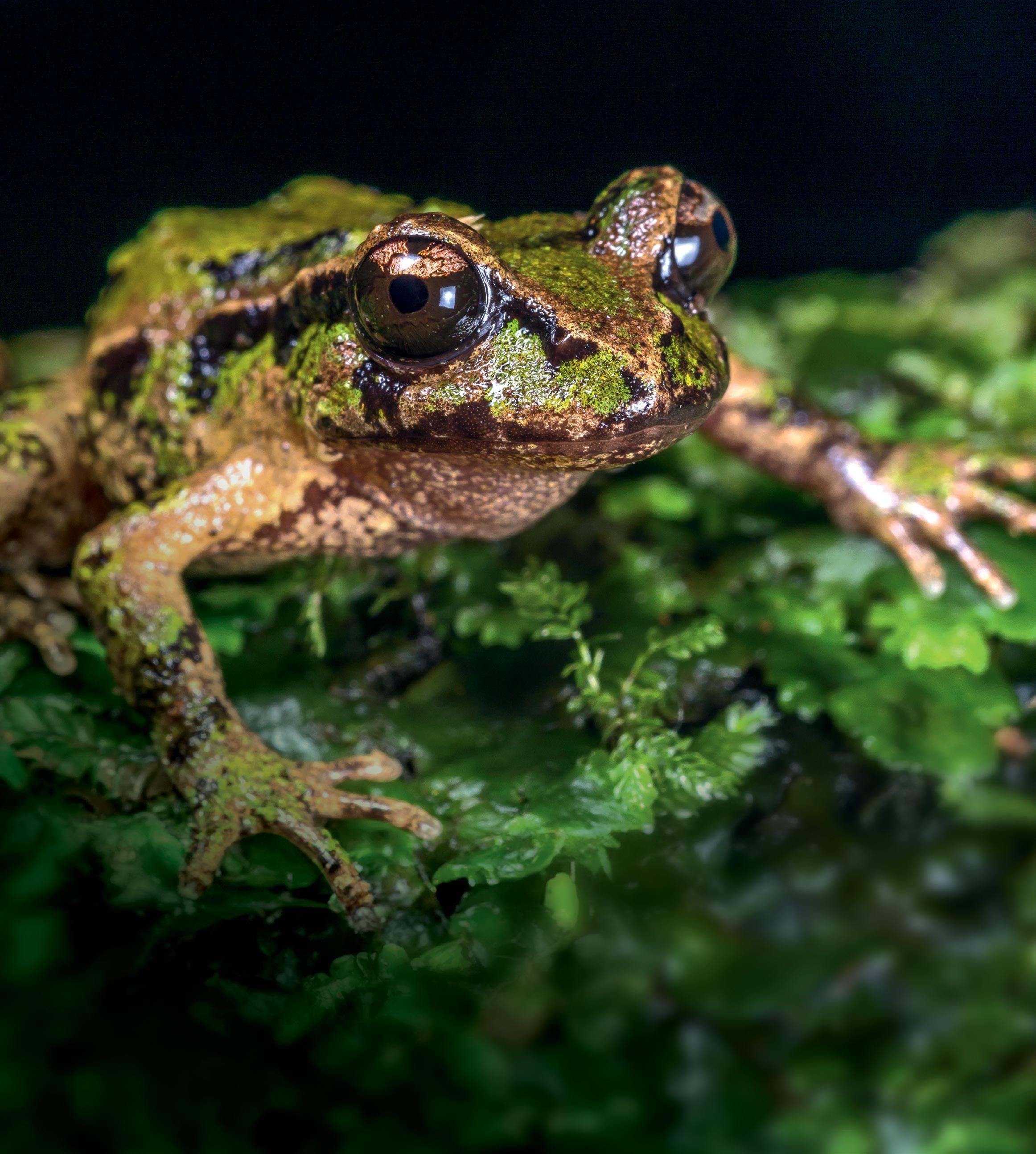
COVER SHOT Archey’s frog. Euan Brook
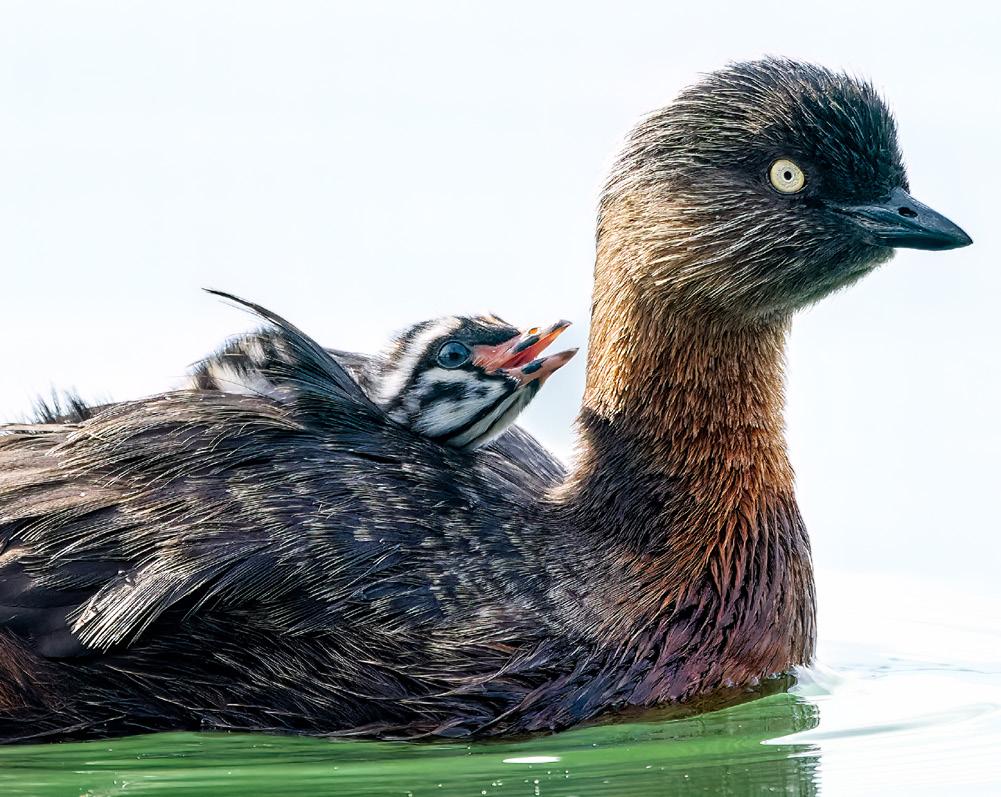
PAPER ENVELOPE Pūteketeke Australasian crested grebe. Leanne Buchan
RENEWAL Mairehau (Leionema nudum). Bryce McQuillan
EDITOR Caroline Wood E editor@forestandbird.org.nz
Centennial
22 Centennial celebration at Government House
Women in conservation
24 Hear our voices
Freshwater
26 Bittern encounters
51 Double whammy for waterways
Bird of the Year
32 Bird nerds
Seabirds
34 Hoiho numbers plummet
ART DIRECTOR/DESIGNER Rob Di Leva, Dileva Design E rob@dileva.co.nz
PRINTING Webstar www.webstar.co.nz
PROOFREADER David Cauchi
ADVERTISING ENQUIRIES Karen Condon T 0275 420 338 E karen.condon@xtra.co.nz
MEMBERSHIP & CIRCULATION T 0800 200 064 E membership@forestandbird.org.nz
Thank you for supporting us! Forest & Bird is New Zealand’s largest and oldest independent conservation charity.
Join today at www.forestandbird.org.nz/joinus or email membership@forestandbird.org.nz or call 0800 200 064
Every member receives four copies of Forest & Bird magazine a year.

Forest & Bird is printed on elemental chlorine-free paper made from FSC® certified wood fibre and pulp from responsible sources.
Forest & Bird is published quarterly by the Royal Forest and Bird Protection Society of New Zealand Inc. Registered at PO Headquarters, Wellington, as a magazine. ISSN 0015-7384 (Print), ISSN 2624-1307 (Online). Copyright: All rights reserved. Opinions expressed by contributors in the magazine are not necessarily those of Forest & Bird. Contents ISSUE 392 •
2024 26 38 Editorial 2 Looking back 4 Letters + competition winners News 6
win
10
Winter
Cover
Profile
Browsing mammals
38 What’s up with wapiti?
Marine
42 Wellington’s blue belt
44 Explore your coast
Forest & Bird project
48 Ferreting out a killer
Focus on flora
50 Rare plant discovery
Opinion
52 Climate conundrum
In the field
54 Let’s not forget weweia dabchicks
Community
56 Wild about nature at Wildbase Hospital
Going places
58 Bushy Park Tarapuruhi Branch project
59 Making connections
Books
60 Round up of new conservation books
CONTACT NATIONAL OFFICE Forest & Bird National Office Ground Floor, 205 Victoria Street Wellington 6011 PO Box 631, Wellington 6140
T 0800 200 064 or 04 385 7374
E office@forestandbird.org.nz W www.forestandbird.org.nz
Books
60 Round up of new nature titles
Obituary
61 Lesley Shand: High country
heroine
Market place
62 Classifieds
Last word
64 Flying high
Parting shot
IBC Tūī
CONTACT A BRANCH See www.forestandbird.org.nz/ branches for a full list of our 45 Forest & Bird branches.


www.facebook.com/ ForestandBird
@Forest_and_Bird @forestandbird
www.youtube.com/ forestandbird
Royal Forest and Bird Protection Society of New Zealand Inc. Forest & Bird is a registered charitable entity under the Charities Act 2005. Registration No CC26943.
PATRON Her Excellency The Rt Honourable Dame Cindy Kiro, GNZM, QSO Governor-General of New Zealand CHIEF EXECUTIVE Nicola Toki PRESIDENT Mark Hanger TREASURER Alan Chow BOARD MEMBERS Chris Barker, Bruce Clarkson, Kaya Freeman, Kate Graeme, Ben Kepes, Vanessa Macdonald, Nigel Thomson CONSERVATION AMBASSADORS Sir Alan Mark, Gerry McSweeney, Craig Potton DISTINGUISHED LIFE MEMBERS Graham Bellamy, Linda Conning, Ann and Basil Graeme, Philip Hart, Joan Leckie, Hon. Sandra Lee-Vercoe, Carole Long, Peter Maddison, Sir Alan Mark, Gerry McSweeney, Craig Potton, Fraser Ross, Eugenie Sage, Guy Salmon
42 54
THREE THINGS I HAVE LEARNED
Ifirst became aware of Forest & Bird’s mahi when I was persuaded (cajoled) into joining my local Dunedin Branch committee as a volunteer. Little did I know, but this would lead to an ongoing relationship with the Society at all levels for the next 34 years.
It’s been an honour, a pleasure, and a great challenge to represent Te Reo o Te Taiao Forest & Bird locally and nationally, including the last 14 years on the Board, eight of these as President. This will be my final editorial as I’m stepping down as President, although I will remain on the Board.
Over the past three decades, I have seen the Society go through many transformations. It has grown considerably, conservation challenges have increased, legislation has become more complex, and climate resilience has superseded most other conservation issues.
It’s gratifying to see conservation become more mainstream, with many more local groups working to restore nature in their communities compared with 1990, when I first stepped up to volunteer with my local branch.
At the same time, navigating the conservation advocacy realm has become a great deal more complex. We once thought securing strong laws to protect our natural world would be sufficient. Now we know we cannot necessarily rely on those entrusted to manage our conservation estate to do the job effectively.
The voracious appetites of introduced deer, possums, rats, mustelids, mice, and other pests do not recognise land boundaries. Conservationists have to continually remind those in positions of power that the time to act is now if we don’t want more of our precious native birds, bats, insects, reptiles, and plants to go the way of the moa.
Forest & Bird’s branch volunteers have stepped up to carry out thousands of hours of free pest control, planting, and weeding over the past 30 years because the Department of Conservation cannot afford to look after a third of New Zealand’s land with its current budget, let alone one that is cut by 6.5%.
Eight years ago, the Board asked our staff and volunteeers to put the climate at the heart of all our nature advocacy. With this new focus, we set out to warn New Zealanders about the impacts of global warming and propose solutions to its root causes.
Today’s Forest & Bird has a stronger foundation, organisationally and financially, and is ready to meet the challenges ahead. The Society has had four chief executives in my time as President. Each brought their own character and focus, while the Board too has evolved to meet the needs of a growing organisation in a complex conservation world.
The focus now can move to increasing our effectiveness. At a time when natural Aotearoa has never been more threatened, the role and duty of Forest & Bird has never been clearer. The time for conservation is now, the time for each of us to stand up and find our voice is now.
By striving together, I hope and believe we can do our ancestors and mokopuna proud as we continue to be a strong voice for nature in a changing world.
Thank you all from the bottom of my heart. It is you, our valued members and supporters, rather than the likes of me, who have ensured Forest & Bird continues to thrive. I’m humbled and in awe of your efforts.
Ngā manaakitanga
 Mark Hanger Forest & Bird President Perehitini, Te Reo o te Taiao
EDITORIAL
| Forest & Bird Te Reo o te Taiao 2
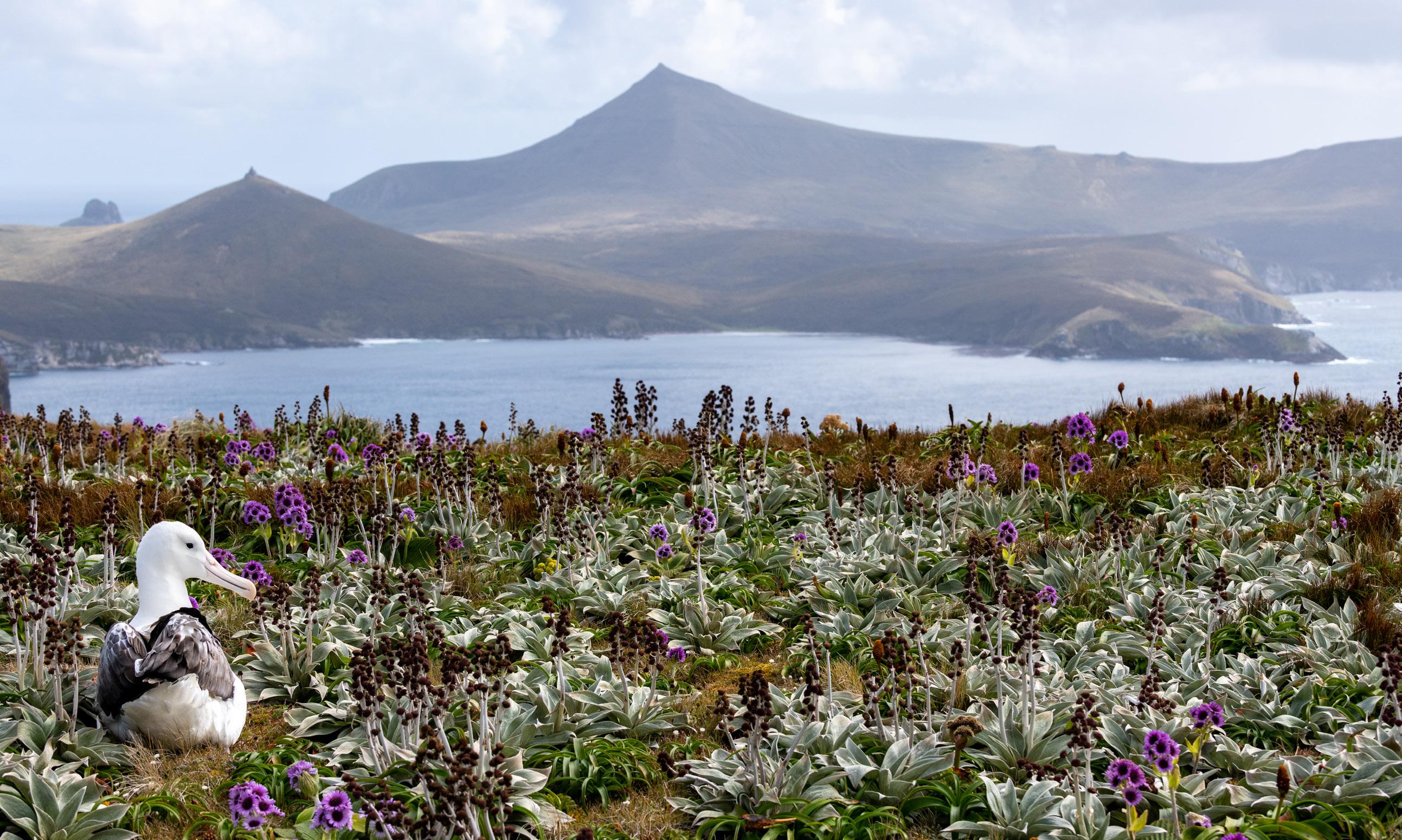
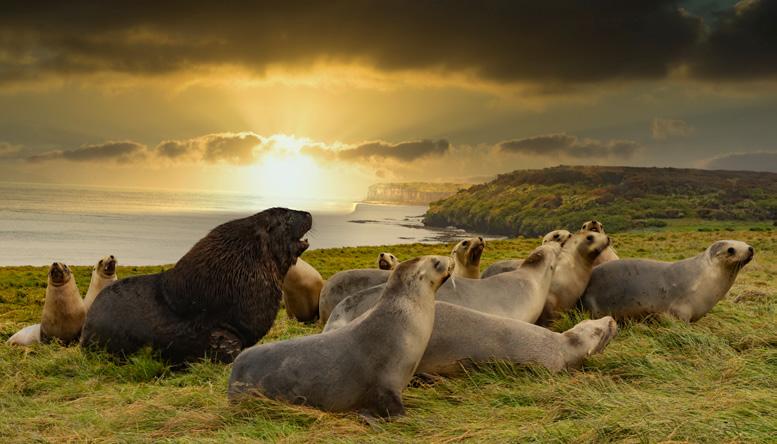
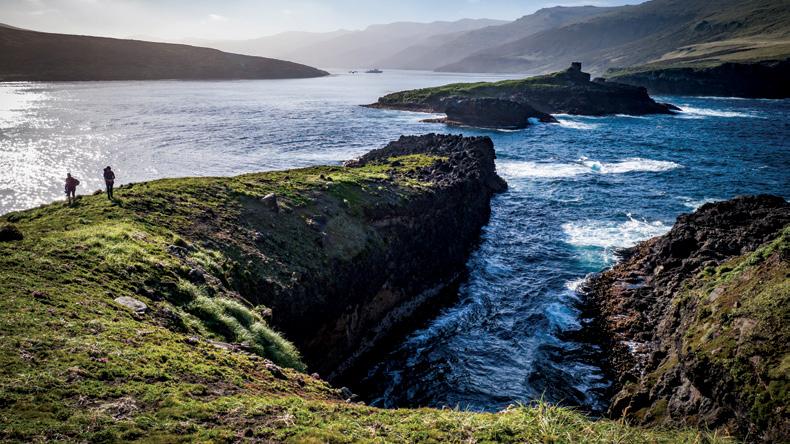
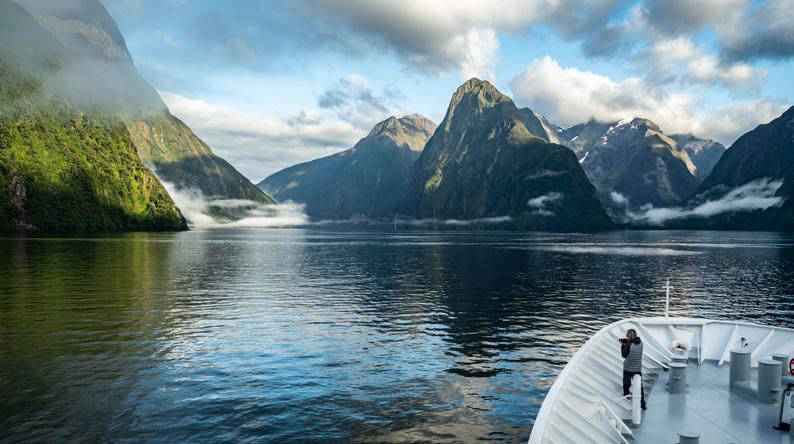
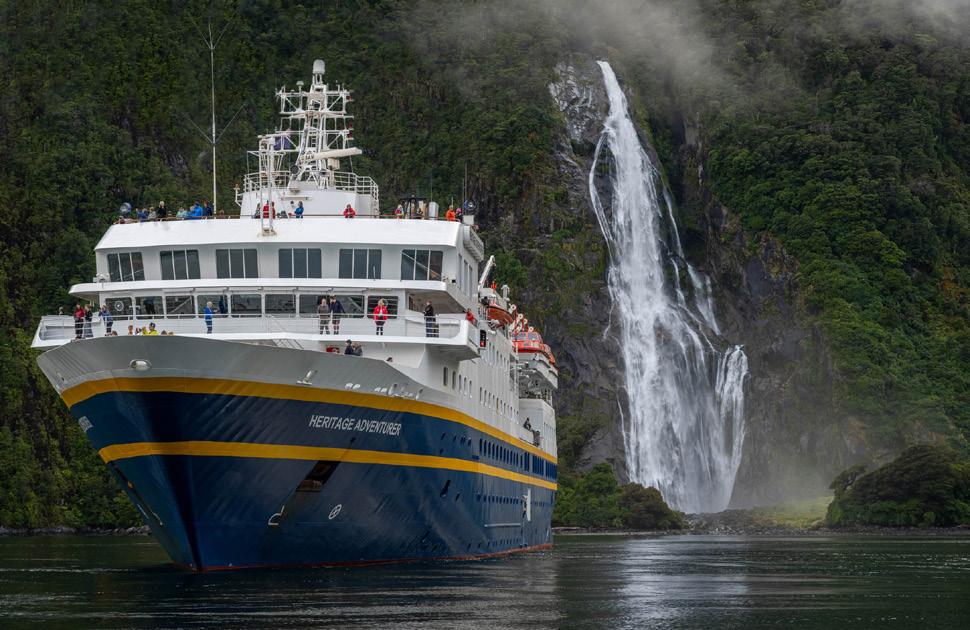
Discover the wilds of New Zealand’s Subantarctic Auckland, Snares and Campbell Islands and the untamed wilderness of Fiordland’s ice-carved mountains, forests and fiords, and Stewart and Ulva Island on our ultimate 12-day Kiwi voyage.
Celebrate New Year’s in this very special part of remotest New Zealand, observe life at the New Zealand/Hooker’s Sea Lion colony on Enderby Island and wade through waist-deep fields of flowering megaherbs. Share in the magic of the rarely seen albatross ‘gamming’ courting ritual, observe the antics of Snares Crested Penguins navigating the treacherous Penguin Slide and much more.

•
THIS
FIORDLAND
12 Days Forest & Bird Partner Voyage 28 December 2024
8 January 2025
$16,250 $15,480pp* *T&Cs apply, new bookings only, based on Deck 4 Superior Twin Share. ^Excludes optional excursions. © Luis Davilla
EXPLORE THE WILDS OF FIORDLAND & THE SUBANTARCTIC ISLANDS
SUMMER BEYOND
|
–
From
INCLUDES
Queenstown including dinner & breakfast
Pre cruise hotel night in
meals
• All on board accommodation &
lunch
dinner
• House wine & beer with
&
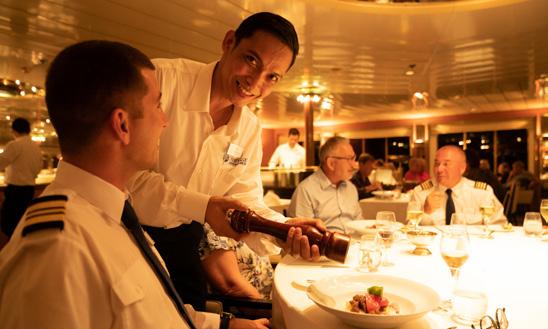
• All shore excursions^ • Pre & Post cruise transfers • Lecture series by noted naturalists © Murray Potter
© Tonia Kraakman
BOOK NOW & SUPPORT FOREST & BIRD! WWW.HERITAGE–EXPEDITIONS.COM Freephone 0800 262 8873 info@heritage-expeditions.com Queenstown Invercargill Campbell Island Auckland Islands The Snares Stewart Island Fiordland FOREST & BIRD MEMBERS SAVE 5%* PLUS a contribution from your fare is donated to Forest & Bird to support their ongoing conservation work! DISCOVER NEW ZEALAND’S SUBANTARCTIC WONDERLAND FOREST & BIRD PARTNER VOYAGE
© Doug Gimesy
LETTERS YOUR FEEDBACK
Forest & Bird welcomes your thoughts on conservation topics. Please email letters up to 200 words, with your name, home address, and phone number, to editor@ forestandbird.org.nz, or by post to the Editor, Forest & Bird magazine, 205 Victoria Street, Wellington 6011, by 1 August 2024. We don’t always have space to publish all letters or use them in full. Opinions expressed on the Letters page are not necessarily those of Forest & Bird.
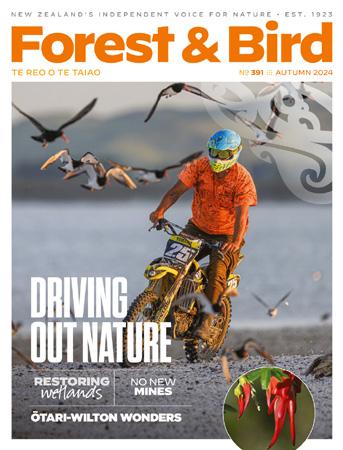
DRIVING OUT NATURE
WRITE AND WIN
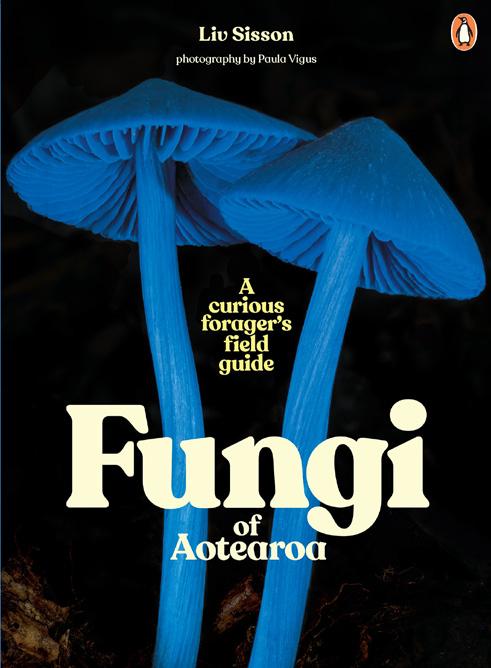
The best contribution to the Letters page will receive a copy of Fungi of Aotearoa: A Curious Forager’s Field Guide by Liv Sisson (Penguin, RRP $45). A richly illustrated guide to more than 130 New Zealand species.
This is vital to New Zealand’s contribution in the global battle against catastrophic climate change. The interests of hunters are well enough cared for by Fish & Game NZ and the taxpayer-funded Game Animal Council. Why the need for a Minister of Hunting and Fishing? Does this say “Bye, bye Predator Free 2050”?
J Chris Horne,
Wellington
IN PRAISE OF AQUACULTURE
BEST LETTER WINNER
The Autumn issue of Forest & Bird focused on the many of the issues faced in our coastal habitats by irresponsible recreational vehicle users. It also contained an article highlighting the New Zealand councils and the protection they offer for coastal environments. In this article, the Hurunui District Council was listed as offering “good protection”. We run predator trapping and beach restoration projects in the area and have to disagree with the definition of “good protection”. Although bylaws are in place in this area, they are neither signposted, enforced, or adhered to. The importance of a consistent approach across all councils is paramount, and we are in total agreement with Carl Morgan that properly monitoring existing bylaws Is crucial. A mindshift is required in New Zealand to change vehicle users from feeling they have a right to drive in fragile coastal environments.
Caroline Elliott,
Chair Northern Pegasus Bay (Hurunui) Coastcare Inc
BROWSING MAMMALS
Trampers in the North Island and South Island hill country during the “roar” heard and saw many deer. They worry about the negative ecological and landscape impacts of browsing and soil compaction by the pests. In beech forests, some said that the understorey was absent – eliminated by browsers. The Department of Conservation faces a 6.5% budget cut and loss of up to 130 staff. Will our native forests and high country ecosystems continue to be degraded by millions of deer (six species), wapiti, tahr, chamois, wallabies, possums, hares, rabbits, and Canada geese, plus feral pigs, goats, cattle, sheep, and horses?
Restoration of the native forests and high country plant communities in the one-third of Aotearoa managed by DOC by the steady elimination of introduced browsing animals is crucial to restoring our indigenous ecosystems to their full natural ability to absorb carbon.
An expansion in marine farming should be applauded, rather than condemned. Encouraging salmon farming in cooler Cook Strait waters, rather than the warming Marlborough Sounds, is sensible. Aquaculture is one of the most efficient and least intrusive of all protein sources, far less so than dairy and meat farming, horticulture, and forestry, with a far smaller imprint. To maintain the high standard of living we all believe we are entitled to, this small and remote country needs to sell stuff. All farming activities have an impact on the environment. The challenge is to minimise those whilst producing maximum value. It is vital, as you say, for the government “to apply buffers in fishing catch quotas”. It already does so, and that has been the case since 1986 in maintaining sustainable fish stocks. It is called the Quota Management System.
Tim Pankhurst, Wellington
100 YEARS & COUNTING
Thank you to all those who contributed to the wonderful centenary booklet. It is inspiring to read of the foresight, determination, and action of the early conservationists and visionaries in promoting with such zeal the protection required for our unique native flora and fauna, and our oceans. Where would we be without the passion of Val Sanderson, Leonard Cockayne, Perrine Moncrieff, Alistair McDonald, to name but a few? They were so right – our natural world must always come first. Marijke van der Leij Conway, Wellington
| Forest & Bird Te Reo o te Taiao 4
BOOK GIVEAWAY
STAY CLOSE TO HOME
What an inspiring story in the Autumn magazine of Forest & Bird: the amazing marine park at Cabo Pulmo in Mexico. What a great model for marine conservation. Personally, I would love to go there. It sounds like one of those once-in-a-lifetime experiences. But what would my carbon emissions be to indulge this desire? All the way from New Zealand to Mexico? I find it incredible that the last paragraph of this article recommends people visit. The clear irony is that carbon emissions contribute to decline in coral reefs. Surely, until we have a truly sustainable way of travelling over long distances, we just have to stay home and read about it. And explore our own country!
Scott Stocker, Nelson
CANARY IN COAL MINE
Coal is the biggest single cause of CO2 production in the world and is the easiest to reduce to combat climate change. I compiled the following table in 2021 with the available data, which was of sufficient reliability to provide a good snapshot of the state of climate change. The world’s totals:
Billions of tons of CO2
We have two copies of Environmental Defenders by Raewyn Peart (Bateman Books, RRP $79.99) to give away to two lucky readers. This timely book provides invaluable insights into some of the most important conservation legal battles of the past half century.
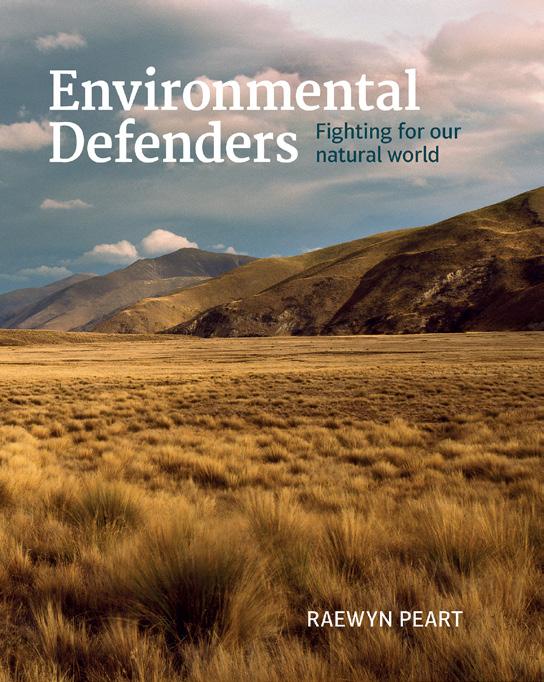
To enter, email your entry to draw@forestandbird. org.nz, put DEFENDERS in the subject line, and include your name and address in the email. Or write your name and address on the back of an envelope and post to DEFENDERS draw, Forest & Bird, PO Box 631, Wellington 6140. Entries close 1 August 2024
The winners of the book pack containing Native Insects of Aotearoa by Julia Kasper and Phil Sirvid and Native Shells of Aotearoa by Bruce Marshall and Kerry Walton were Daniela Eisele, of Whangaparaoa, and Ray McEnhill, of Wellington.
Max Watkins, Auckland
FROM THE ARCHIVES
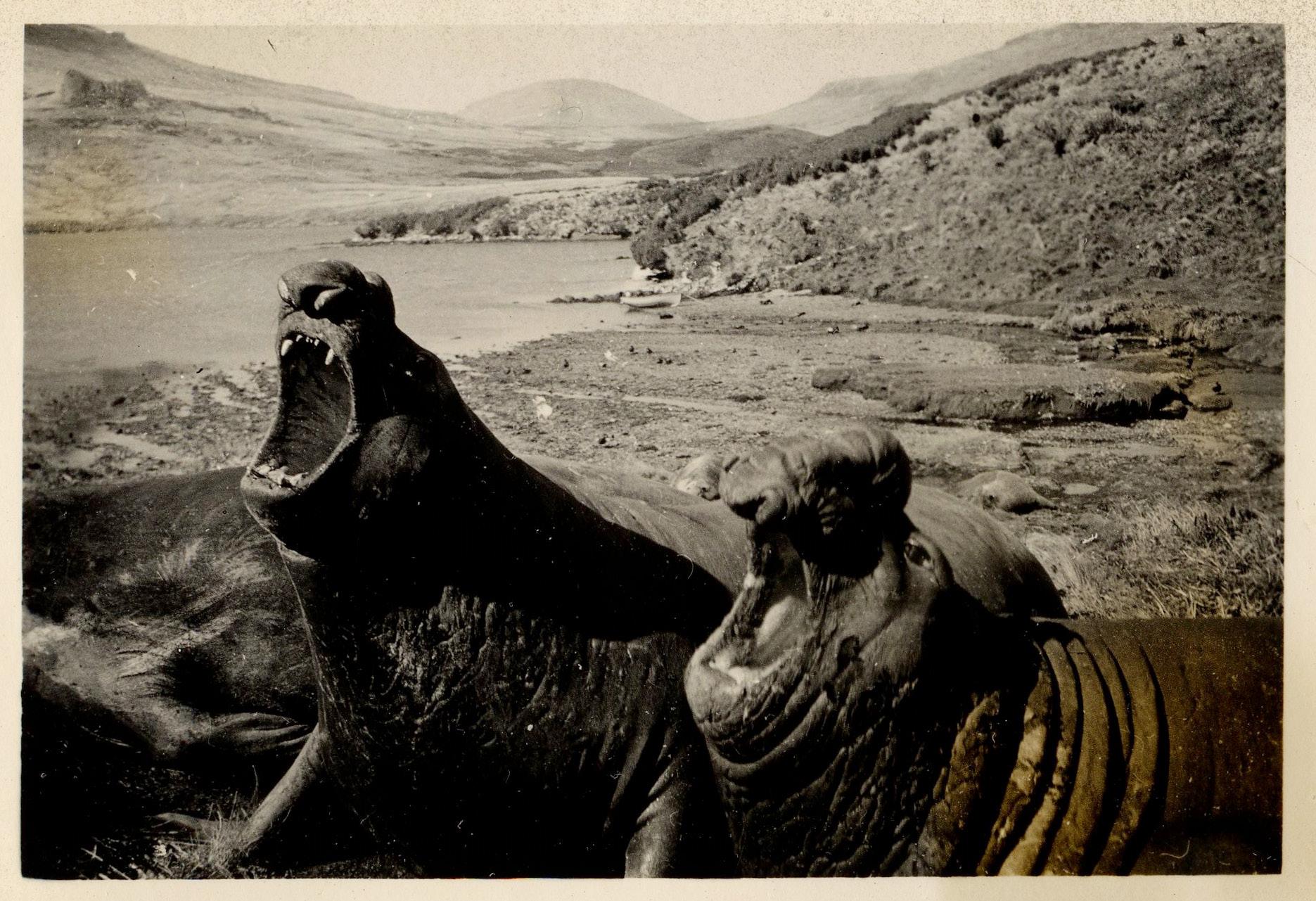
These magnificent elephant seals were photographed on Campbell Island in 1944. During World War II, coast-watching stations were established in New Zealand’s Sub-Antarctic Islands to keep an eye out for Japanese or German warships. The men serving on these stations were given standing instructions by the Navy Office to also record general observations on natural phenomena.
R Oliver/Archives NZ AANS 25421 W5951
1970 2021
per year 20 45 Oceans absorb CO2 per year 60% 27% Tropical forests absorb CO2 per year 7% 11% Coal produces CO2 per year 40% 40%
5 Winter 2024 |
EAST–WEST LINK WIN
A crucial point of environmental law has been upheld by the Supreme Court. Lynn Freeman
Forest & Bird has succeeded in pausing a four-lane motorway in Auckland that would have destroyed significant coastal habitat for wading birds as well as a unique lava shrubland.
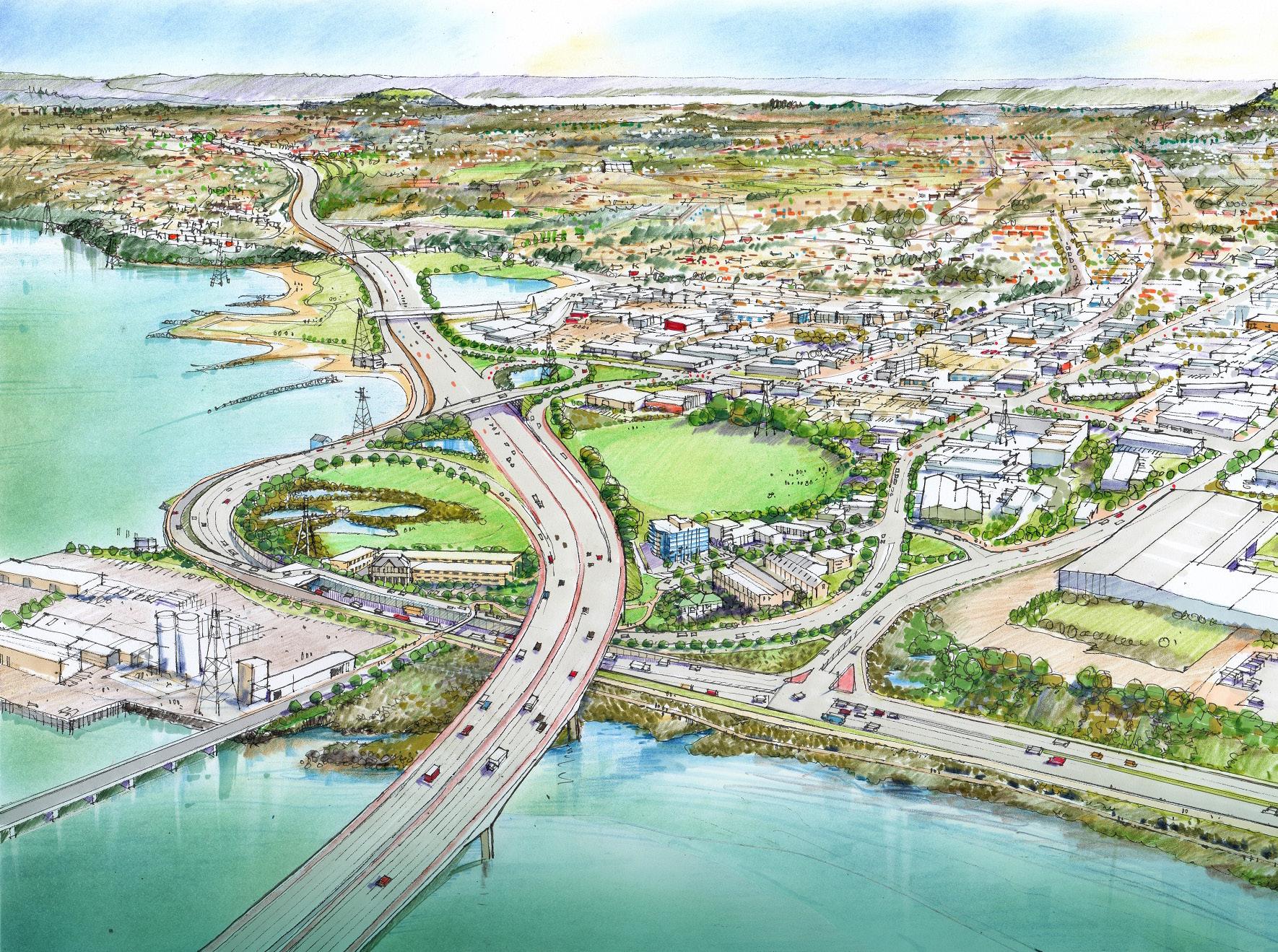
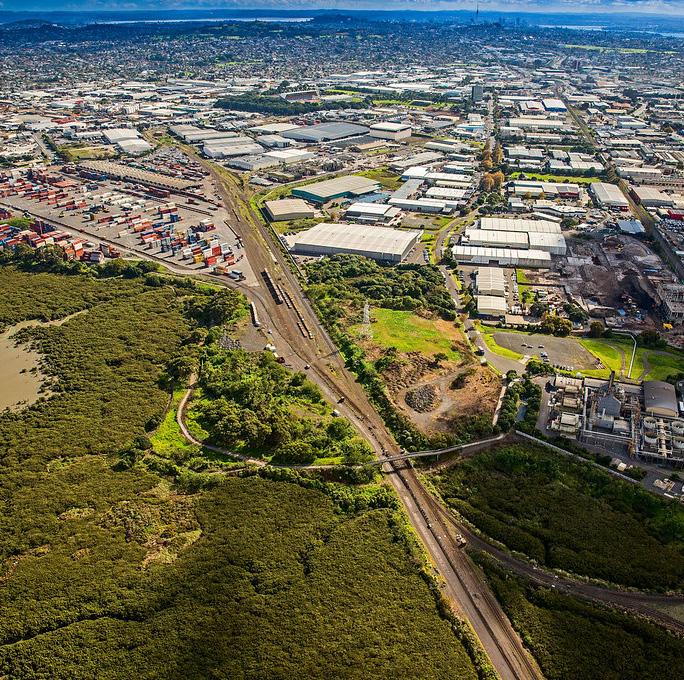
The proposed East–West Link road connecting SH20 at Onehunga with SH1 at Mt Wellington via Mangere Inlet and Anns Creek would destroy coastal habitat for rare wading birds, including Australasian bittern, banded rails, and wrybills.
The lava flow shrublands at Anns Creek are the last remaining stronghold of this habitat type in Auckland. They have been identified as a Significant Ecological Area in the Auckland Unitary Plan and are home to species such as akeake, geranium, and ferns that grow on lava flow.
Forest & Bird appealed the case to the Supreme Court. It ruled in April that plans for the East–West Link need to be looked at again and the law correctly applied.
“This is a fantastic result for nature and environmental law,” said Forest & Bird’s general counsel Peter Anderson.
“The Supreme Court is saying that, where policies require the protection of nature, these must not be undermined. The Supreme Court did anticipate that there may be exceptions but it would be ‘very difficult’ for proposals to qualify for such exceptions, which will be ‘truly rare’.”
Original East–West Link artist’s impression of the Neilson Street Interchange, Onehunga Waka Kotahi
appeal in the Supreme Court.
The Supreme Court has ordered that the Board of Inquiry that originally granted consents for the East–West Link under the Resource Management Act go back and apply correct law to the facts they considered for those approvals.
It’s a win for nature for now, but Forest & Bird’s chief executive Nicola Toki warned that Waka Kotahi may apply to have the East–West Link project considered under the government’s controversial fast-track legislation, and it might even be on Ministers’ secret list of 100 projects that will get automatic referral to the fast track.
 Peter Anderson
The ruling could stop other infrastructure projects going ahead if they have adverse effects on indigenous biodiversity in a protected area.
A Board of Inquiry granted consents for the road in 2018 despite finding there would be more-than-minor adverse effects on the environment. It decided the project was not contrary to the objectives and policies of the Auckland Unitary Plan.
Forest & Bird and Ngāti Whātua Ōrākei Whai Maia Ltd challenged the decision. In March 2021, the High Court upheld the original Board of Inquiry decision, but Forest & Bird was given leave to
“The Supreme Court has been clear as to the project’s significant environmental effects,” she said.
“The Board of Inquiry needs to reconsider this application and determine if the project can be consented, rather than it being moved to a process where economic considerations will always prevail and the road’s impacts on rare native plants and birds can be disregarded.”
NATURE NEWS
Aerial of Anns Creek and Southdown. Waka Kotahi
| Forest & Bird Te Reo o te Taiao 6
SENTINEL SEABIRDS OF AOTEAROA An immersive exhibition where art intersects with science maritimemuseum.co.nz ON NOW – 27 OCTOBER
NATURE NEWS WAPITI LATEST
Forest & Bird and the Fiordland Wapiti Foundation have agreed to pause legal proceedings over the way a herd of North American elk, an introduced browsing mammal, is managed within Fiordland National Park.
The Fiordland Wapiti Foundation has a management agreement with the Department of Conservation that allows it to control deer numbers, manage a wapiti herd, and carry out other pest-control and conservation work in Fiordland National Park.
In March, Forest & Bird asked for a judicial review of the legality of this management agreement. The parties have now asked the High Court to temporarily adjourn the proceedings until a later date.
The pause will allow time for DOC to review current arrangements and for all parties to meet and discuss a way forward for wapiti management in Fiordland National Park, a UNESCO World Heritage Area. The management agreement will remain in force during the adjournment.
“Forest & Bird welcomes the opportunity to work with the Fiordland Wapiti Foundation and DOC on this critical issue,” said Forest & Bird chief executive Nicola Toki.
“There have been inaccurate suggestions that Forest & Bird’s legal action was aimed at
exterminating wapiti, with some speculation the judicial review could even mean the end for all game animals.
“I want to be clear these suggestions are incorrect. Forest & Bird initiated the legal action to clarify the legality of the wapiti management agreement.
“Rather than going to court, we now want to discuss the issue with the Fiordland Wapiti Foundation and DOC to agree on a solution that protects our precious native biodiversity and maintains the integrity of Fiordland National Park.”
The National Parks Act stipulates that “introduced plants and animals shall as far as possible be exterminated”.
“Forest & Bird does not see a future where wapiti could be eliminated,” added Nicola. “We expect the herd will continue to provide an important hunting opportunity, and the Fiordland Wapiti Foundation could continue its valuable conservation work.”
Both organisations agree the adjournment will also allow them to explore other solutions, including the possibility of designating the wapiti herd as a Herd of Special Interest, as defined under the Game Animal Council Act 2013.
Fiordland Wapiti Foundation spokesman Roy Sloan also welcomed the pause in legal action.
“The Wapiti Foundation stands for conservation and hunting, and it would be disappointing for two conservation groups to end up in court arguing over who has the best solution to protecting our precious environment,” said Mr Sloan.
“The Foundation’s work is a great example of hunters giving back to conservation and the wider community. What we do in Fiordland has proven the most effective way of reducing and managing deer numbers, as well as trapping predators and maintaining tracks and huts for all park visitors.
“We look forward to finding a solution that not only meets the needs of both organisations but, more importantly, safeguards our precious wildlife and flora.”
For our Q&A about wapiti, see page 38.
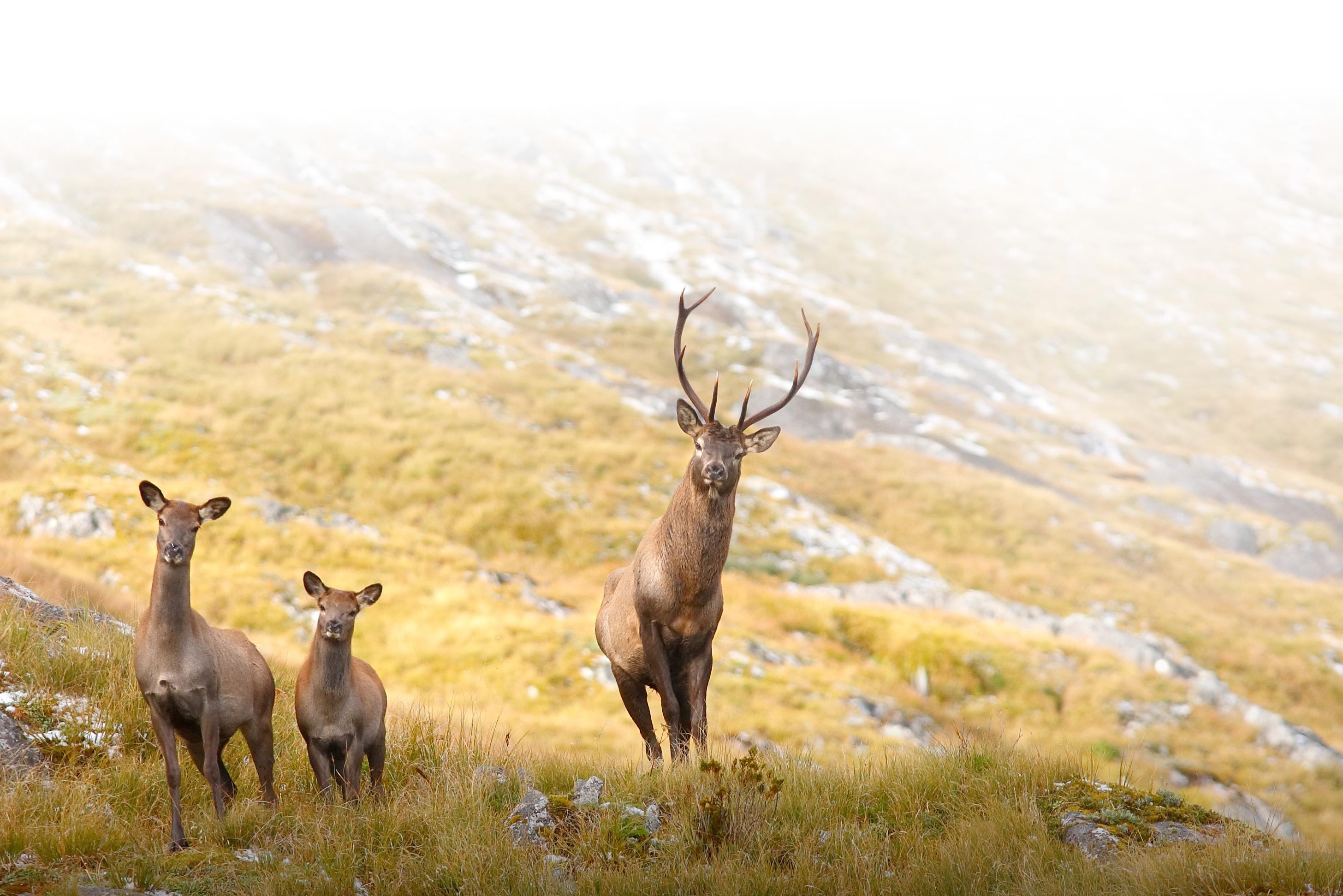
Young wild wapiti/red deer cross bull with cow and calf in alpine tussock tops, Fiordland National Park. Rob Suisted
| Forest & Bird Te Reo o te Taiao 8



TIKKA ® CORE
Rechargeable, comfortable and easy to use with red lighting, TIKKA® CORE is the perfect headlamp for all your outdoor adventures.
• Red lighting protects night vision, ideal for night time activites
• Rechargeable battery reduces environmental impact, also compatible with 3 AAA batteries
• Easy to use with a single button
• Lightweight and compact at 84 grams
9 Winter 2024 | © 2023Petzl DistributionArnaud Childéric
Ph: 03 434 9535 sales@spelean.co.nz www.spelean.co.nz See the TIKKA® CORE at:
NATURE NEWS
PĀKIRI SAND MINING WIN
The Environment Court halts plans for offshore sand mining at Pākiri Beach, but company appeals. Caroline Wood
The Environment Court has declined consents for offshore sand-mining at Pākiri Beach, in a win for mana whenua and local wildlife, including tara-iti, New Zealand’s rarest breeding bird.
Sand mining has been taking place at Pākiri Beach, between Leigh and Mangawhai, since the 1940s.
In 2022, McCallum Brothers applied to mine for sand offshore for the first time, but its application was refused by an Auckland Council panel. Commissioners said the company had failed to prove the decades-long practice didn’t harm the seabed, the beach, or local marine and bird life.
McCallum Brothers immediately appealed to the Environment Court, and Forest & Bird was one of several parties involved in the appeal. Our experts gave evidence alongside iwi, community, and environmental groups about the impact of sand-
mining on the marine ecology of the seabed and wider Hauraki Gulf.
In April, the Environment Court ruled against McCallum Brothers’ appeal largely on grounds of inadequate information. The Environment Court said there were “clear benefits” from the continued extraction of sand from Pākiri but demand for high-quality sand didn’t outweigh environmental concerns.
“The earlier consents had conditions requiring information on the environment and the effects of dredging, but that produced to us was patchy, inconclusive, and as to shore effect incorrect,” it said.
Pākiri Beach is also one of only four breeding sites for tara-iti New Zealand fairy tern, a Critically Endangered endemic shorebird with only about 40 adults left in the wild. The tiny tern’s threats include beach activity, encroachment by humans, disturbance, waterfront development, extreme storms and tides, and introduced predators.
The Environment Court considered evidence on the impact of sand-mining on coastal processes, local ecology, and the effects on mana whenua of Pākiri and other local residents, alongside the wider degradation of the Hauraki Gulf.
Forest & Bird’s senior environmental lawyer May Downing said this part of the Hauraki Gulf also contains important marine habitats and spawning grounds for fisheries.
“This is a win for nature in Pākiri Beach and the wider Hauraki Gulf, as it should allow the area to recuperate after decades of dredging,” May said.
“Forest & Bird was heartened with the Court’s approach – in particular, the finding that the effects could not be appropriately managed in the context of lack of proper information.”
McCallum Bros has appealed to the High Court. Forest & Bird, alongside numerous other parties, has sought to appear and be heard at the hearing.
Forest & Bird is concerned the company may also seek to bypass the Environment Court’s ruling by applying to become a project under the government’s proposed fasttrack legislation (see page 14).
“In contrast to what the proposed fast-track regime will do, the case highlights the value of having an independent specialist court which enabled the necessary rigorous testing of expert evidence and for community voices to be heard,” May added.
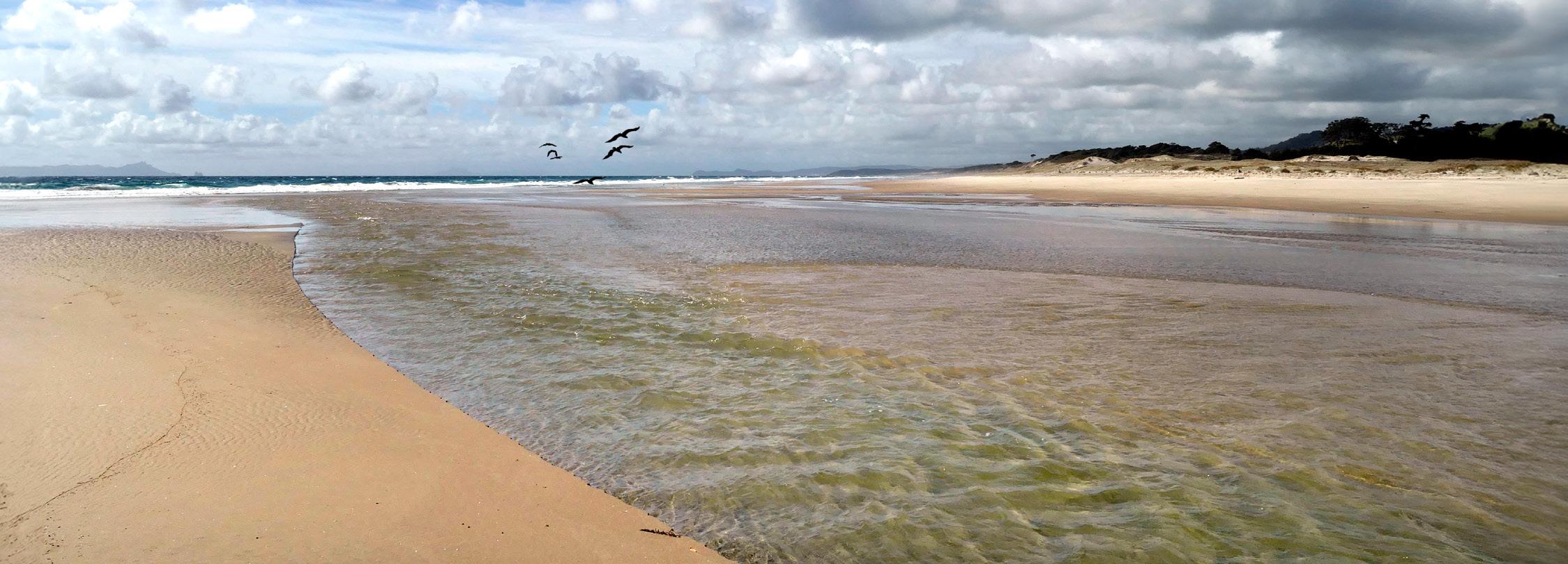
Pākiri Beach, north of Auckland. Bernard Spragg
| Forest & Bird Te Reo o te Taiao 10
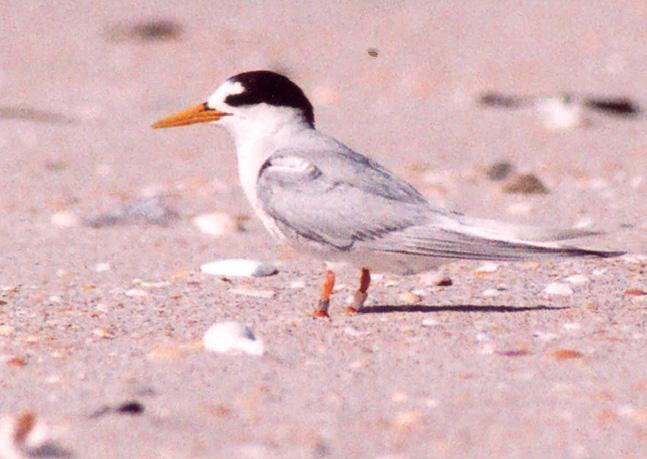
Tara-iti New Zealand fairy tern at Pākiri Beach in 2009 Andrew Hogan
Reflecting with

Mānawatia a Matariki! At Auckland Zoo, Matariki is a time to reflect, renew and reconnect with Papatūānuku. Catch our new video series where Zoo kaimahi share their personal connections with Papatūānuku.
11
Auckland Zoo Matariki
WE LOVE DOC
A healthy environment is vital for a thriving economy, yet the government is cutting the Department of Conservation’s budget.
New Zealand cannot afford to lose highly skilled and dedicated Kiwis charged with protecting our threatened species and their habitats.
Forest & Bird warned of long-term consequences for nature and the economy after April’s announcement of 130 job losses at DOC, part of the government’s directive that it must cut 6.5% from its annual budget.
Other agencies that play a vital role in protecting te taiao nature have also announced job cuts, including the Ministry for the Environment, Biosecurity New Zealand, and NIWA.
DOC was already struggling to meet its existing responsibilities before this year’s budget cuts, according to the Department’s Briefing to the Incoming Minster. Its staff are expected to look after a third of Aotearoa
with a budget about the same as the Christchurch City Council’s annual expenditure.
“We already have a government axing environmental protections through its fast-track reforms,” said Richard Capie, Forest & Bird group manager conservation advocacy and communications.
“Now DOC and other government agencies, the kaitiaki guardians of our land, soil, water, threatened species, climate, freshwater, and oceans, face devastating cuts too.
“The government announced it was cutting DOC jobs on the same day it released a report saying New Zealand’s communities and economy are at risk if we don’t protect our natural ecosystems and landscapes.
“It makes no sense to do this – environmentally or economically – during a climate and biodiversity crisis.”
The government’s cuts to conservation and climate programmes (see right) will put more pressure on volunteer-led community groups, such as Forest & Bird, to pick up the slack and protect te taiao nature.
The Society will have to do more predator control and restoration planting in DOC reserves, while also funding expensive legal actions to protect threatened habitats and species in court.
Forest & Bird is also concerned that pressure will be put on cash-strapped DOC to commercialise public conservation land – by allowing more mining and tourism concessions and economic development instead of carrying out its core function to protect and restore te taio.
NEWS
NATURE
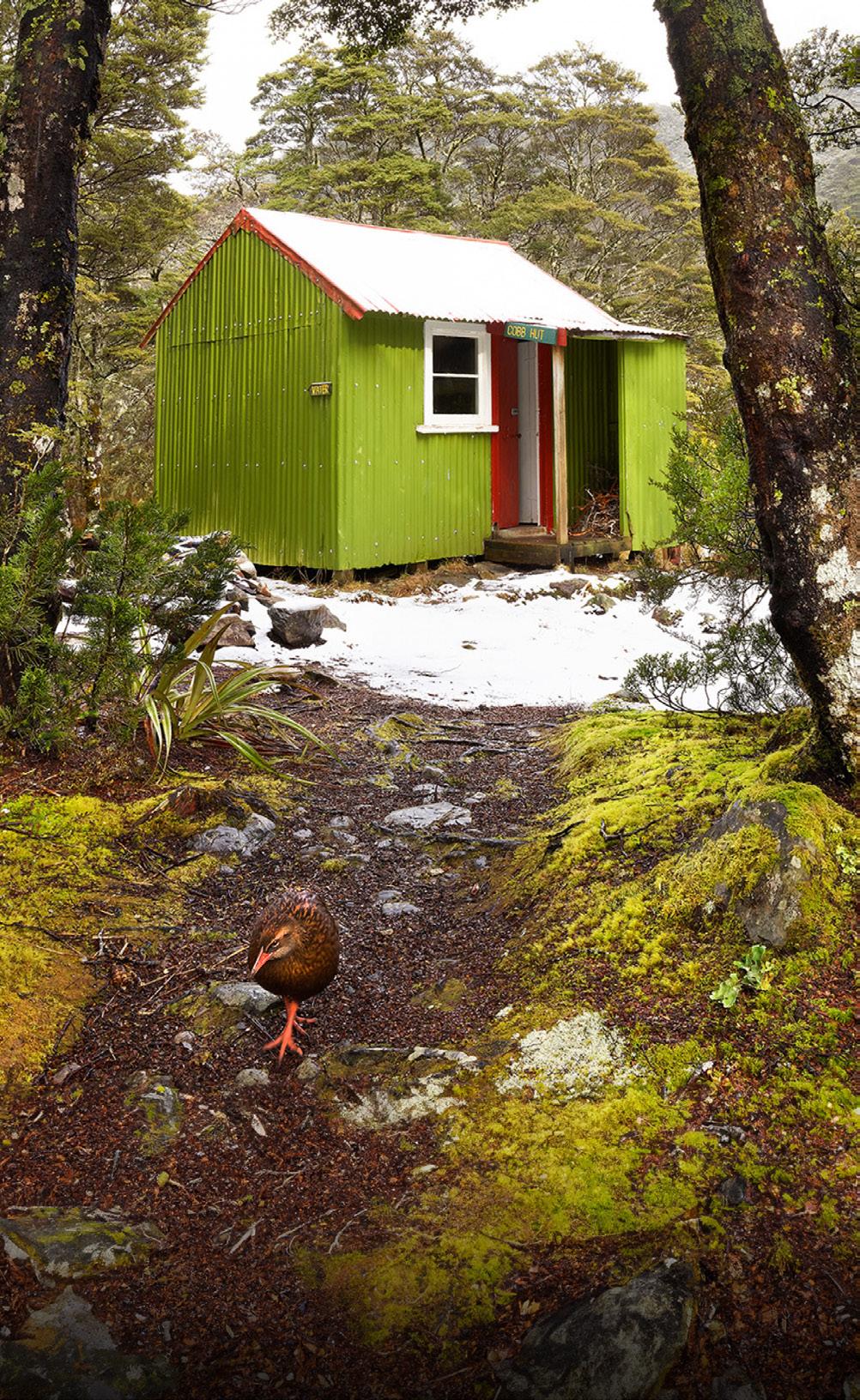
Weka outside Cobb Valley hut, Kahurangi National Park.
Peter Latham
| Forest & Bird Te Reo o te Taiao 12
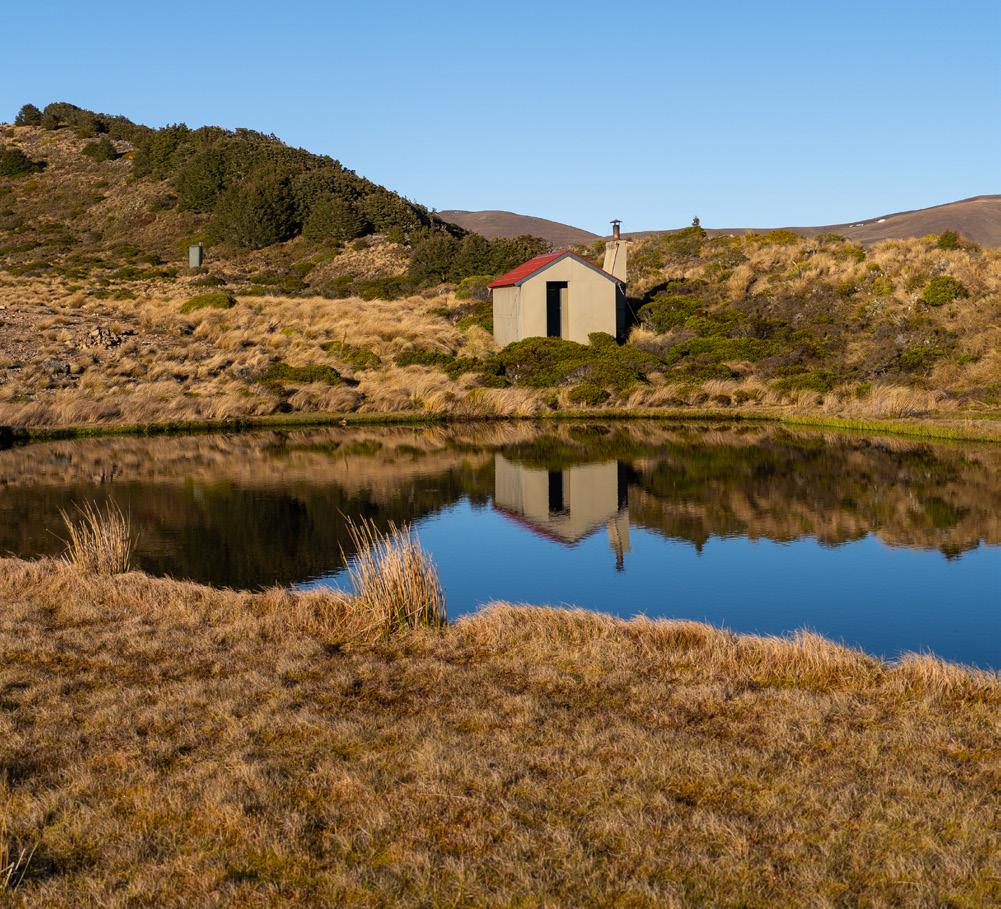
Tarn Hut, Lees Valley Canterbury. Euan Brook
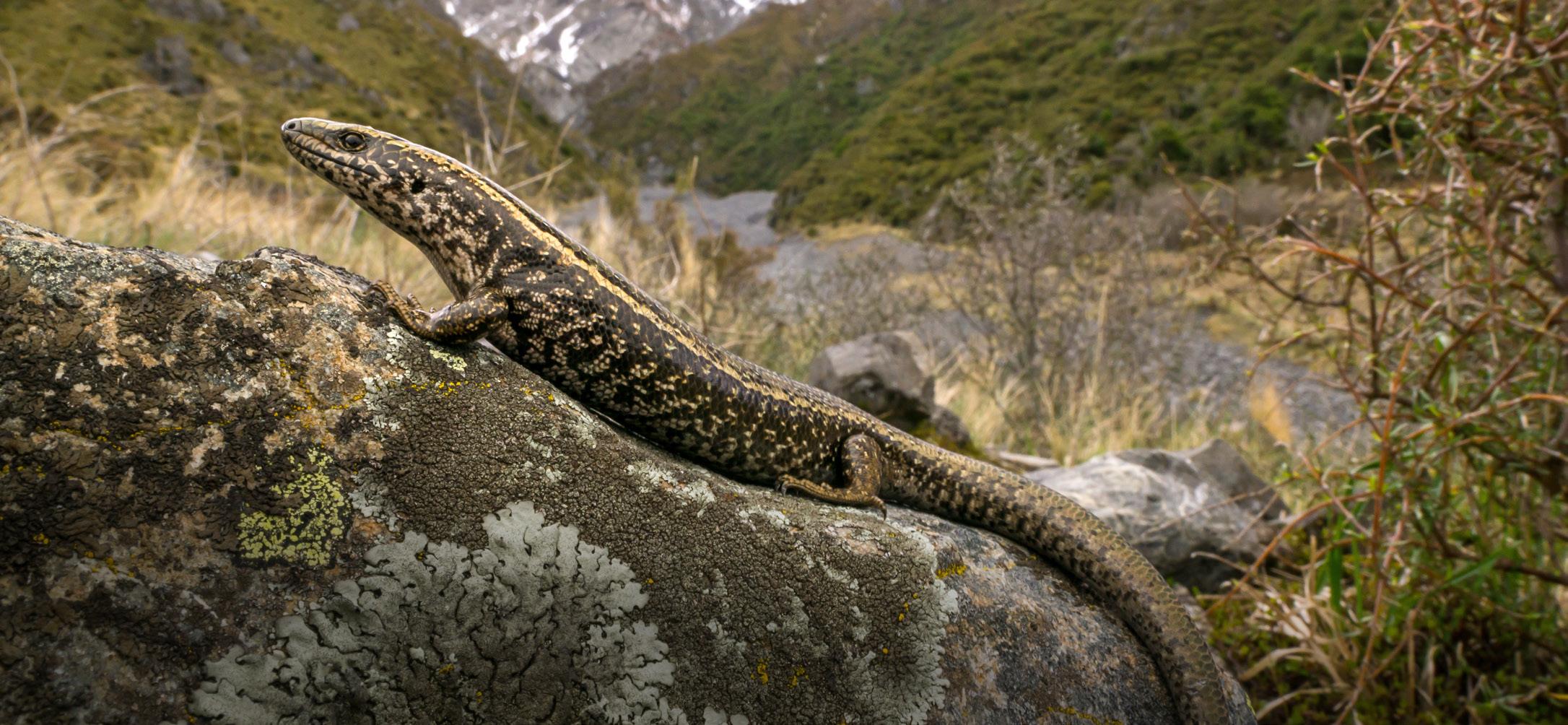
The Canterbury spotted skink was recently reclassified from Nationally Vulnerable to Nationally Critical – the last step before extinction. This large endemic skink is only found in Canterbury, mostly on private and councilmanaged land. It is one of many species that could be lost forever in the current government’s war on nature. Euan Brooks
EDGE OF EXTINCTION
Slashing DOC budgets will lead to more native species going the way of the moa.
Forest & Bird is warning large cuts to conservation, climate, and environmental programmes in this year’s Budget will impact the more than 4000 native species already in deep trouble.
Along with cutting the Department of Conservation’s budget by $45m, the government has torched Jobs for Nature, the Kermadec Ocean Sanctuary, and a swathe of climate resilience programmes.
Finance Minister Nicola Willis announced the cuts to climate, environmental, and conservation programmes in her May Budget, including:
n Ending the Jobs for Nature programme that employed hundreds of Kiwis throughout regional New Zealand. It was earmarked to finish in 2026.
n Cutting back a programme that cleans up contaminated mine sites on public conservation land.
n Taking $45m from DOC’s operational budget.
n Stopping work on the Kermadec Ocean Sanctuary.
n Reducing DOC’s capacity to advocate and protect nature through legal action.
n Ditching the Climate Change Response Fund that was intended to help New Zealanders cut emissions and adapt to climate change.
n Cutting climate programmes that would have helped New Zealanders live in warmer, drier homes and have access to affordable water heating.
n Removing the Climate Change Commission’s function to provide advice on pricing agricultural emissions.
n Cutting the Ministry for the Environment’s capacity to gather data to help sound decision-making.
The only new money in the Budget for the environment is $92m over four years to deliver the government’s resource management reforms, such as implementing the new fast-track legislation, that will harm nature rather than protect it.
“The government is effectively raiding the conservation budget to pay for its assault on nature,” said Forest & Bird group manager conservation advocacy and communications Richard Capie.
“It has delivered yet another blow to key protections for New Zealand’s unique natural landscapes and precious native species.
“Ministers are putting their heads in the sand and ignoring the reality of the serious threats facing our wildlife and communities from habitat loss and climate change.”
For more on DOC’s budget cuts, see www.doc.govt. nz/news/issues/budget-2024-overview

13 Winter 2024 |
FIGHT FOR NATURE
A huge backlash against the Fast-track Approvals Bill is leading to change. Lynley Hargreaves
An enormous collective effort from Forest & Bird staff, branches, wider supporters, rangitahi, and tamariki is challenging the worst environmental law New Zealand has seen in decades.
The Fast-track Approvals Bill, introduced this March and currently moving through the parliamentary process at pace, would let Ministers decide directly whether big developments go ahead, while over-riding existing environmental laws and preventing the public from having a say.
“Gone are the days of the multicoloured skink, the kiwi, many other species that have been weaponised to deny regional New Zealand communities their right to a livelihood,” Shane Jones gleefully told Parliament during the first reading of the Bill on 7 March. The Minister for Regional Development is one of the three
main decision-makers.
But New Zealand is a nation of nature lovers, and soon the government had a fight on their hands. An influential coalition of environmental groups, including Forest & Bird, raised the alarm, saying the government was on the wrong track and needed to rethink.
“The Fast-track Approvals Bill is bad for the environment, antidemocratic, and an ongoing part of this government’s apparent war on nature,” said Forest & Bird chief executive Nicola Toki.
While Forest & Bird’s legal team set to work on a detailed submission on the proposed Bill and its impact on nature, our advocacy and communications teams worked to raise awareness about the Bill’s many dangerous precedents – for democracy as well as nature.
We organised two webinars to provide advice to supporters or branches who wanted to make a
substantive individual submission. Those that did included Forest & Bird Youth Southland, Otago, Waikato, Taupo, Rotorua, Wellington, and West Coast branches.
In total, 13,489 people submitted against the Bill via Forest & Bird’s website, the highest number we

COVER
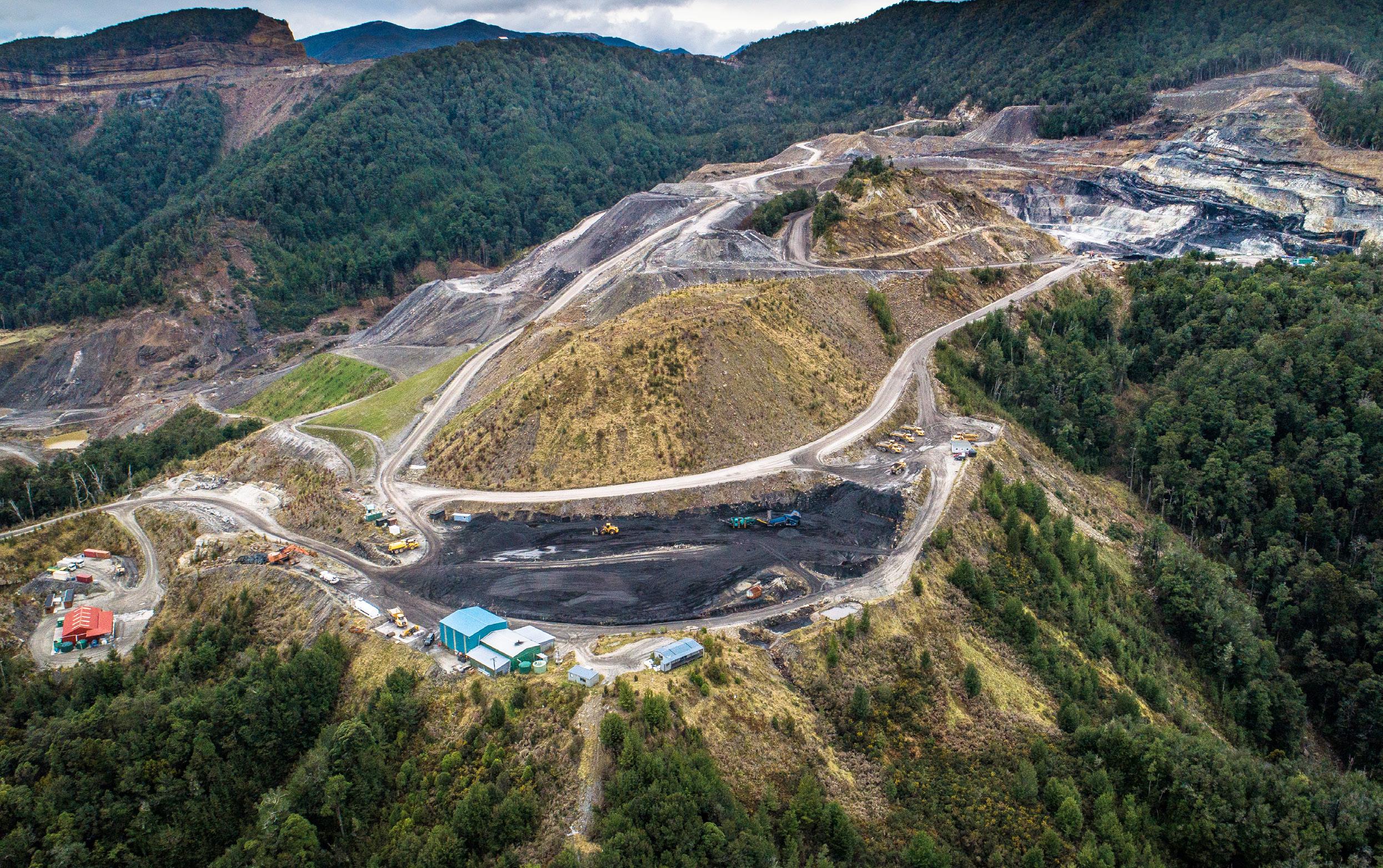
The government wants to allow more mining on public conservation land.
Pictured: opencast coal mine, Victoria Forest Park, Reefton, West Coast in 2021. Neil Silverwood
| Forest & Bird Te Reo o te Taiao 14
General counsel Peter Anderson, chief executive Nicola Toki, and group manager conservation advocacy and communications Richard Capie at Parliament to give the Society’s oral submission on the Fast-track Approvals Bill. Lynn Freeman

SHOW US YOUR LIST, MINISTERS!
TheFast-track Approvals Bill includes a schedule for a list of projects for immediate transfer to the fast-track consents panel and ministerial decision-making.
But this part of the draft legislation sits empty, and the government has refused repeated calls from the public, the opposition, Forest & Bird, and other advocates to release the list.
approve or deny most fast-track projects. The third is Transport Minister Simeon Brown. The Conservation Minister will also be involved in some decisions but not the Minister for the Environment.
have had on any government Bill for many years. Submitters were concerned about government over-reach and lack of transparency involved in allowing three Ministers almost unilateral decision-making.
A week later, in a significant concession, the Infrastructure Minister Chris Bishop said the government might reconsider whether Ministers should be the final decision-makers under the legislation – and as more submitters told Parliament about the flaws in the proposed law he hinted at wider changes.
However, at the same time, he also said: “We’re not going to make any fundamental changes to the legislation. It’s meant to be fasttrack, it’s in the name. It’s got to be a one-stop shop, again it’s in the name. That will remain.”
In May, the select committee started hearing oral submissions on the fast-track legislation. Forest & Bird was one of the first organisations to be called.
“If the Bill is retained, obviously the ministerial over-ride must go,” Nicola Toki told MPs during the first day of hearings. “But removal of ministerial over-ride is meaningless unless environmental protections and public participation in existing legislation is retained.”
Ultimately, the Bill is “ill conceived” and needs to be withdrawn, she said.
Even the Environment Committee that is charged with scrutinising the impact of the proposed Bill and reporting back on this has not seen the list of projects. In fact, it’s possible that Parliament as a whole may not get to see the details of the first fasttrack projects until the Bill itself is passed.
At least, over the last few months, some degree of transparency has been forced into the process.
Forest & Bird complained to the Chief Ombudsman Peter Boshier, who is charged with upholding the integrity of government, after Infrastructure Minister Chris Bishop refused to release the list of companies and organisations he had written to inviting them to apply for approval under the Bill.
Bishop is the second of the triumvirate of Ministers who will
A week after Forest & Bird’s complaint, the Ombudsman sent a provisional opinion saying there were no grounds to withhold the information. The list was released, but the government waited until a few hours before public submissions closed – effectively stopping the public from having a say on the Bill.
The Green Party’s co-leader Marama Davidson accused the government of trying to do “democracy in the dark” by restricting information available to the public while limiting their opportunity to engage.
Forest & Bird has launched a petition demanding the release of the schedule of fast-track projects attached to the Bill. We don’t think the select committee should report back to Parliament until the public has had their say on the proposed projects.
You can add your voice to the petition at www.forestandbird. org.nz/petitions/show-us-yourlist.

Forest & Bird will keep up the pressure on the government about its unworkable, undemocratic, anti-nature Fast-track Approvals Bill. Thank you to everyone who raised their voices to make a submission, signed our petition, wrote to their MP, or attended the Auckland march for nature in June. Our wildlife can’t speak for themselves and neither can what’s left of our natural world. The Bill in its current form is bad for the environment, bad for democracy, and bad for local communities.
Help us stop it being made into law by making donation today at www.forestandbird.org.nz/stop-fast-track
A huge focus of Forest & Bird’s work this year has been fighting the Fast-track Approvals Bill. Nicola Toki and Richard Capie at the School Strike for Climate march, Wellington. Lynn Freeman
15 Winter 2024 |
Magnolia Designs
WHAT IS WRONG WITH THE BILL?
A huge number of voices, from former Prime Ministers to
scientists, lawyers, and
the Auditor-General have raised concerns about the Fast-track
Approvals Bill.
Forest & Bird is concerned the proposed fast-track law would over-ride a raft of existing legislation, including the purposes of the Conservation Act, Reserves Act, and Wildlife Act, as well as the Resource Management Act and laws governing the Exclusive Economic Zone.
Bypassing these long-standing laws means three main Ministers –Bishop, Jones, and Brown – would be able to approve projects that have previously been stopped by the courts because of their environmental impact.
One such project is an opencast coal mine on the pristine mountaintop of Te Kuha, near Westport, which Forest & Bird has managed to stop going ahead in a series of different court cases.
Last month, after losing one such case in the Environment Court, Stevenson Mining Limited was ordered to pay $113,000 in costs to Forest & Bird and $103,000 to the Department of Conservation.
In the costs ruling, the court stated that the mining company’s case had been “high risk” because
the proposed mine breached regional environmental standards that the company had agreed to.
The mine would have resulted in the loss of a forested boulderfield described as unique in New Zealand and the likely local extinction of the rare forest ringlet butterfly and Helm’s stag beetle.
Stevenson had been appealing that Environment Court decision, in a case that was due to be heard in the High Court.
But in February, the company’s deputy chair Barry Bragg met with Resources Minister Shane Jones for an undisclosed meeting, which wasn’t in his ministerial diary.
Then Bragg wrote to Infrastructure Minister Chris Bishop asking for the mine resource consents originally granted by West Coast Regional Council and Buller District Councils in 2017 to be “reinstated” through the fast-track process. Just over a week after that, on 27 Februrary, the company quietly put in a notice of intent to withdraw its appeal of the Environment Court case.
“If this project was fast tracked, the criteria are such that it would get approved because economic benefits, no matter how small, trump the environment, no matter what the damage,” said Nicola Toki.
“It can’t be right that projects that fail to get through a rigorous public court process can then be somehow approved through a fasttrack process.
“If Minister Jones can’t even get a dinner right, how can we trust him with respect to decisionmaking on multi-billion dollar projects in our most sensitive natural environments? Where are the checks and balances that must be had on behalf of the public?”
While the government has refused to release the list of projects it initially intends to fast track, more projects have become public through company disclosures and dropped court cases.
In March, Trans-Tasman Resources pulled out of a hearing before the Environmental Protection Agency. The company’s mining proposal would involve
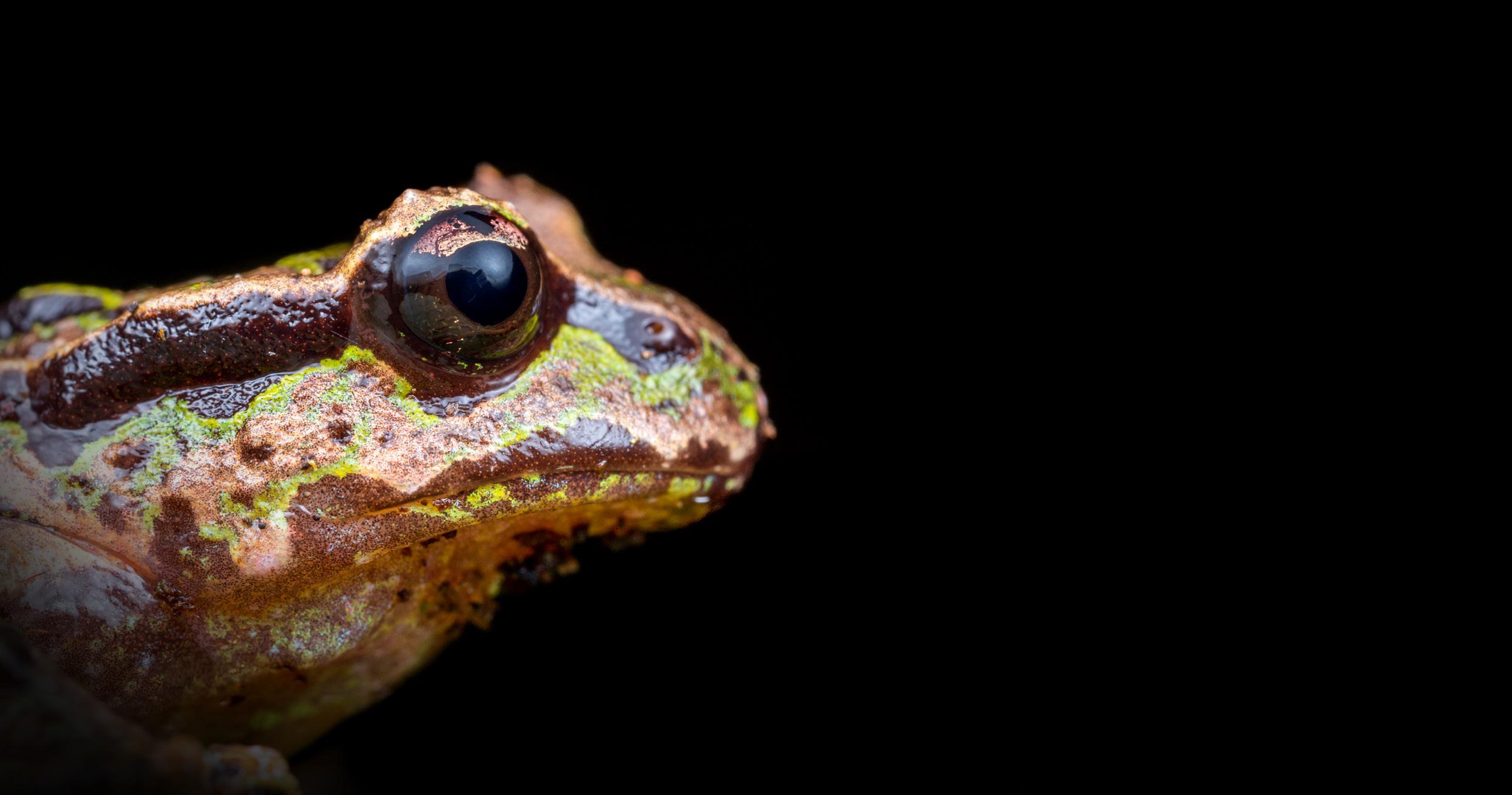
“Goodbye Freddie,” Shane Jones said in Parliament last year, referring to the endangered Archey’s frog that lives on conservation land, Coromandel Peninsula, OceanaGold wants to mine for gold. Bryce McQuillan
COVER | Forest & Bird Te Reo o te Taiao 16
sucking up millions of tonnes of seabed in the habitat of critically endangered species such as New Zealand’s own population of blue whales. This has been previously rejected by the Supreme Court, but the company now hopes it can be fast tracked instead.
Other projects that Forest & Bird believes will be on the initial fasttrack list include the Ruataniwha dam and irrigation scheme, in Hawke’s Bay. Forest & Bird stopped this from going ahead in 2017 after taking this landmark case all the way to the Supreme Court.
OceanaGold’s proposed gold mine under Coromandel Forest Park’s regenerating kauri forest, home to Archey’s frogs, is also likely to be on the list, along with the West Coast’s Waitaha hydro scheme on one of New Zealand’s last wild rivers.
Forest & Bird’s written submission covered the myriad ways the Fast-track Approvals Bill could over-ride other environmental laws, possibly resulting in the extinction of native species. One way it would do this is to allow decisions about mining on public conservation land to ignore relevant conservation management plans and strategies. These plans and strategies have had public input and significant work from the Department of Conservation, conservation boards, and mana whenua.
For example, the West Coast Conservation Management Strategy includes a vision that the Denniston Plateau supports a viable population of the carnivorous land snail Powelliphanta patrickensis. If it can be ignored, much of the snail’s remaining habitat will be destroyed. This endemic species is already in deep trouble. Its threat classification moved to Nationally Critical earlier this year, in large part because of coal mining.
FAST TRACK TO NOWHERE
Parliamentary Commissioner for the Environment Simon Upton said the Fast-track Approvals Bill poses significant risks for the environment and listed six reasons for this in his written submission – see https:// bit.ly/3VoSzFu
He said currently prohibited activities and projects that have already been declined on environmental grounds are potentially eligible for fast-tracking.

“The Bill will achieve suboptimal outcomes through poor decision-making, poor allocation of resources, a lack of legislative durability, and increased litigation risk,” he said.
Mr Upton urged MPs to take Forest & Bird’s analysis of the the Bill seriously, telling the select committee during his oral submission:
“My written submission doesn’t address in detail the way in which the Bill truncates statutes such as the Conservation Act or the Wildlife Act. It was a great deal of detail in the schedules to the Bill that needs to be very closely examined, and I encourage you to examine Forest & Bird’s analysis forensically and take their recommendations seriously.
“They’ve got very good lawyers. I think they know what they’re talking about.”

Former Prime Minister Sir Geoffrey Palmer KC, Distinguished Fellow Faculty of Law, Victoria University of Wellington, dubbed the legislation a fast-track to nowhere in an excoriating opinion piece
for Newsroom – see https://bit. ly/3X5SIPE
“New Zealand’s environment is too valuable a resource to be put at risk in this way. The complications with this Bill are so numerous that it cannot work. And further it cannot be successfully amended to be make it work,” he said.
The Auditor-General, John Ryan, also raised concerns, saying Ministers approving fast-track projects could be open to conflicts of interest, real or perceived – see https://bit. ly/3x22Yh5
“I encourage the Committee to consider whether the transparency and accountability arrangements in the Bill are proportionate to the discretion being provided to Ministers,” he said.

The Chief Ombudsman Peter Boshier recommended the Committee make the expert panel subject to the Ombudsmen Act 1975 and the Official Information Act so “New Zealanders may exercise their fundamental freedom to seek and receive information” – see https://bit.ly/4e4d6GN. Forest & Bird’s strategic advisor Geoff Keey says it’s rare for all of the Officers of Parliament – the Parliamentary Commissioner for the Environment, the AuditorGeneral, and the Ombudsman – to make submissions warning about the risks with a proposed law change.
“It’s their job to uphold the public integrity of the government on behalf of the public, and when they issue warnings about a proposed law change we should listen,” he said.
Simon Upton
Sir Geoffrey Palmer
John Ryan
☛Double whammy for waterways – see page 51. 17 Winter 2024 |
SENTINELS OF CHANGE
Prominent artists and scientists have teamed up to call for action on seabird conservation. By
Caroline Wood
Seabirds were once the great connectors of ecosystems, enriching the forests of Aotearoa with nutrients from the sea. They play a critical role in the health of these forests, yet their numbers have been hugely depleted by introduced predators, climate change, pollution, and other direct human impacts.
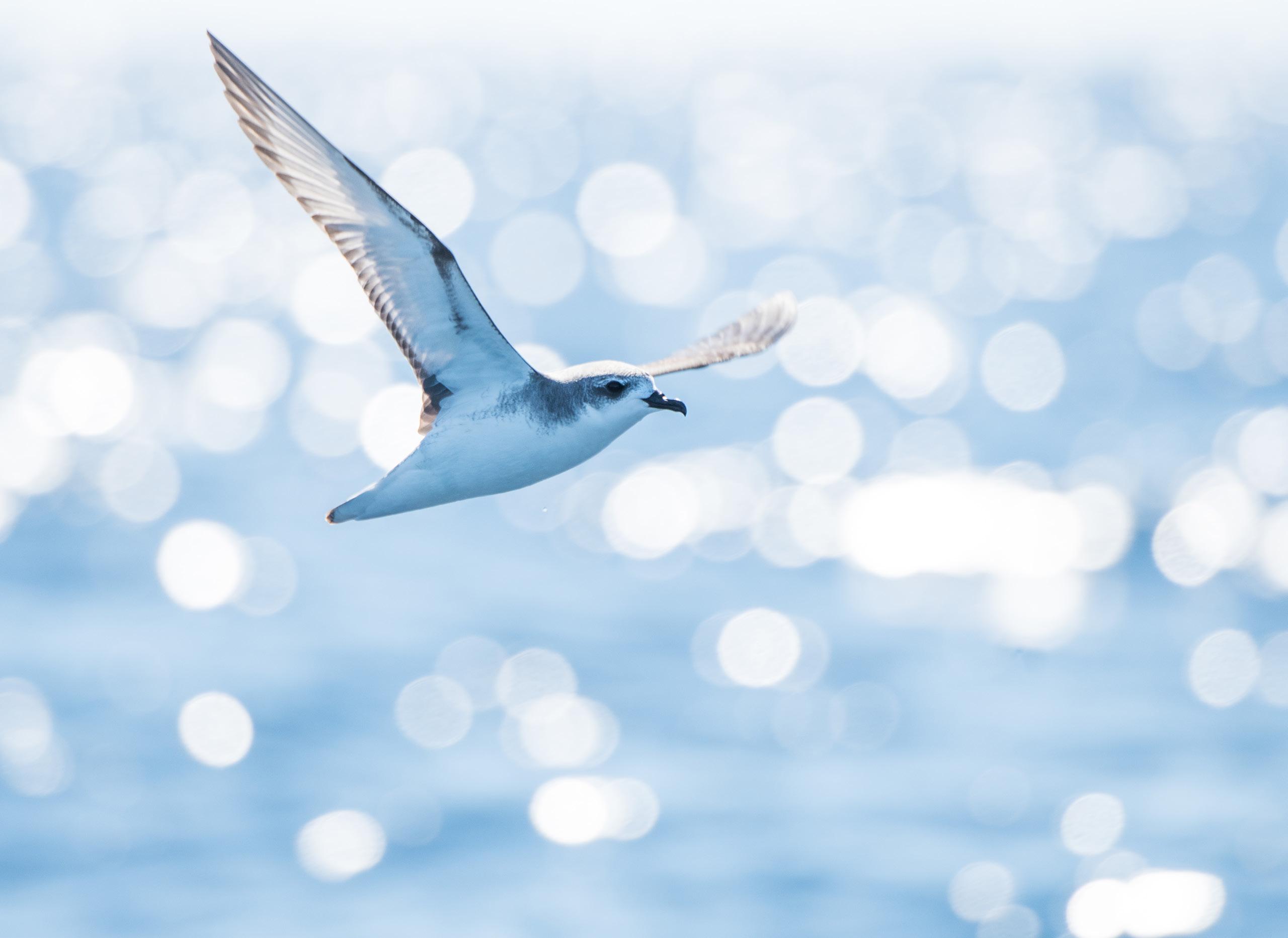
A new museum exhibition in Auckland offers an exploration into the world of today’s seabirds, emphasising the importance of their conservation in the face of mounting threats. Sentinel opened at the New Zealand Maritime Museum Hui Te Ananui a Tangaroa in May and runs until the end of October 2024.
New Zealand scientists and artists, Edin Whitehead, Andre Bellve, Marcel Bellve, Micah Livesay, Lani Purkis, and Shane McLean contributed to this thoughtprovoking exhibition. It combines science, photography, interactive video, sculpture, and sound to transport visitors into the world of these wandering and embattled seafarers.
“Aotearoa is home to more seabird species than anywhere else in the world. Most of them live out of sight, out of mind for most people, as they spend most of their lives at sea,” said Edin Whitehead, Seabird Scientist and Conservation Photographer.
“These birds rely on the oceans around Aotearoa to survive, and current research is showing that survival is becoming a lot harder for even some of the more common species. They are sentinels of change, and Sentinel is about illuminating their lives and what they are telling us about our management of the environment.”
The artistic direction of Sentinel draws heavily from the research conducted by ecologist Andre Bellve and his team. Their analysis of seabird sightings and
observations from 1841 to 1989, fossil records, and present-day seabird colonies showcases the significant role seabirds play in nutrient transfer between sea and land ecosystems.
“The aim of Sentinel is to foster a deeper understanding of the interconnectedness of Aotearoa New Zealand’s ecosystems and the critical role seabirds play within them,” says Jaqui Knowles, exhibitions curator at the New Zealand Maritime Museum.
“We hope that visitors will understand that it’s our collective responsibility to protect the future of seabirds.”
Aotearoa is considered the seabird capital of the world, according to the Department of Conservation. More than a third of the 80 seabird species that breed in New Zealand are endemic.
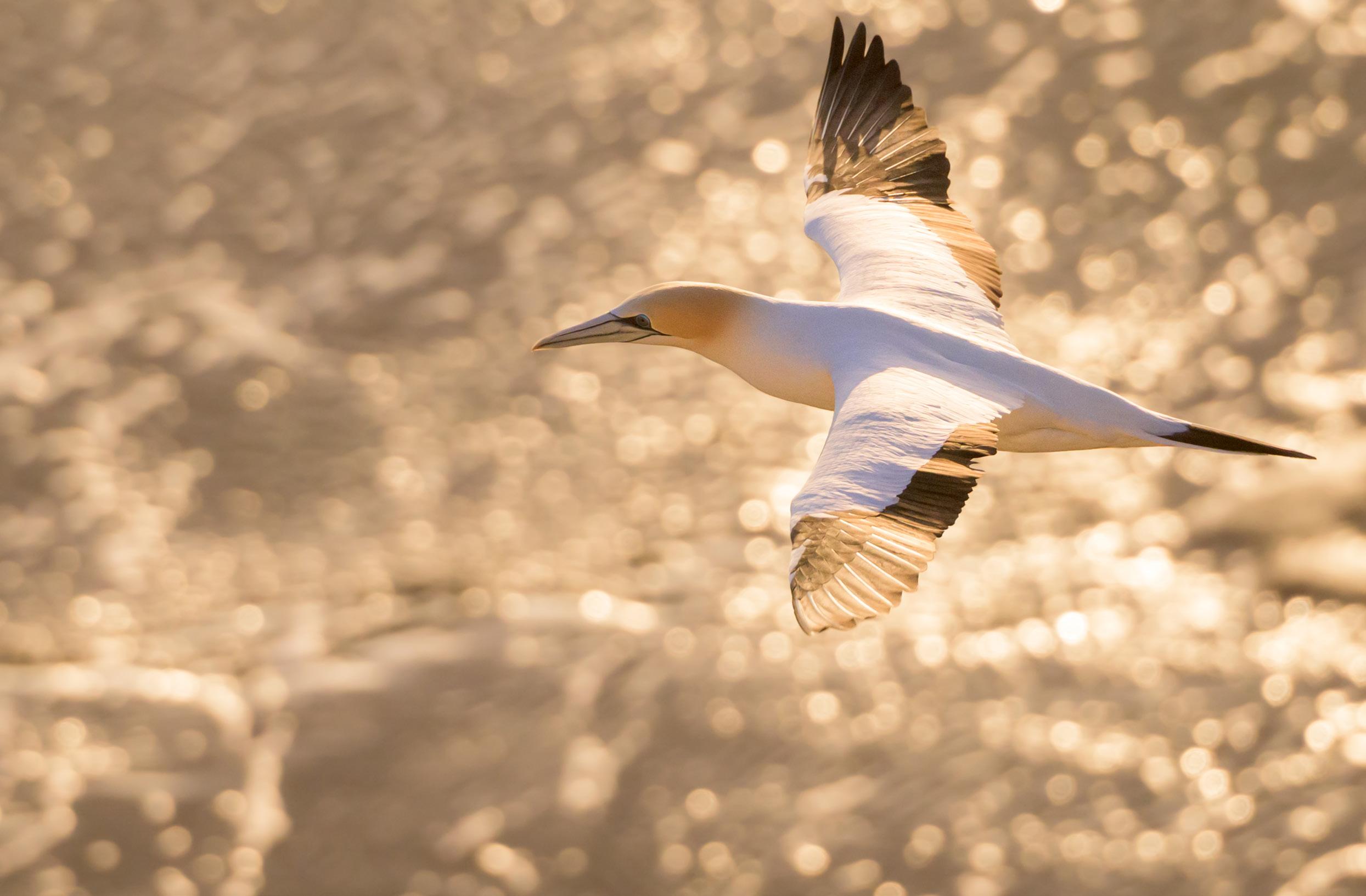
But most mainland seabird breeding sites are devoid of their original inhabitants, with just a handful of active colonies. These include the tākapu gannet colonies at Cape Kidnappers and Muriwai, toroa northern royal albatross at Taiaroa Head, the Westland petrel breeding grounds at Punakaiki, Kaikōura tītī Hutton’s shearwater in the seaward Kaikoura range, and tawaki Fiordland crested penguin colonies in South Westland and Fiordland.
Fortunately, our network of offshore islands provides a safer haven for seabirds, particularly our predator-free islands, where some seabird species are thriving.
Sentinel will be on display the New Zealand Maritime Museum Hui Te Ananui a Tangaroa, corner of Quay & Hobson Streets, Auckland, from 3 May until 27 October 2024. Entry is free, see maritimemuseum.co.nz/ exhibitions/sentinel
BIODIVERSITY
| Forest & Bird Te Reo o te Taiao 18
Tākapu Australasian gannet. Edin Whitehead
KŌKAKO BOOST
A Bay of Plenty conservation group has boosted its trapping network thanks to Forest & Bird’s Give-a-Trap initiative. Matt McCrorie
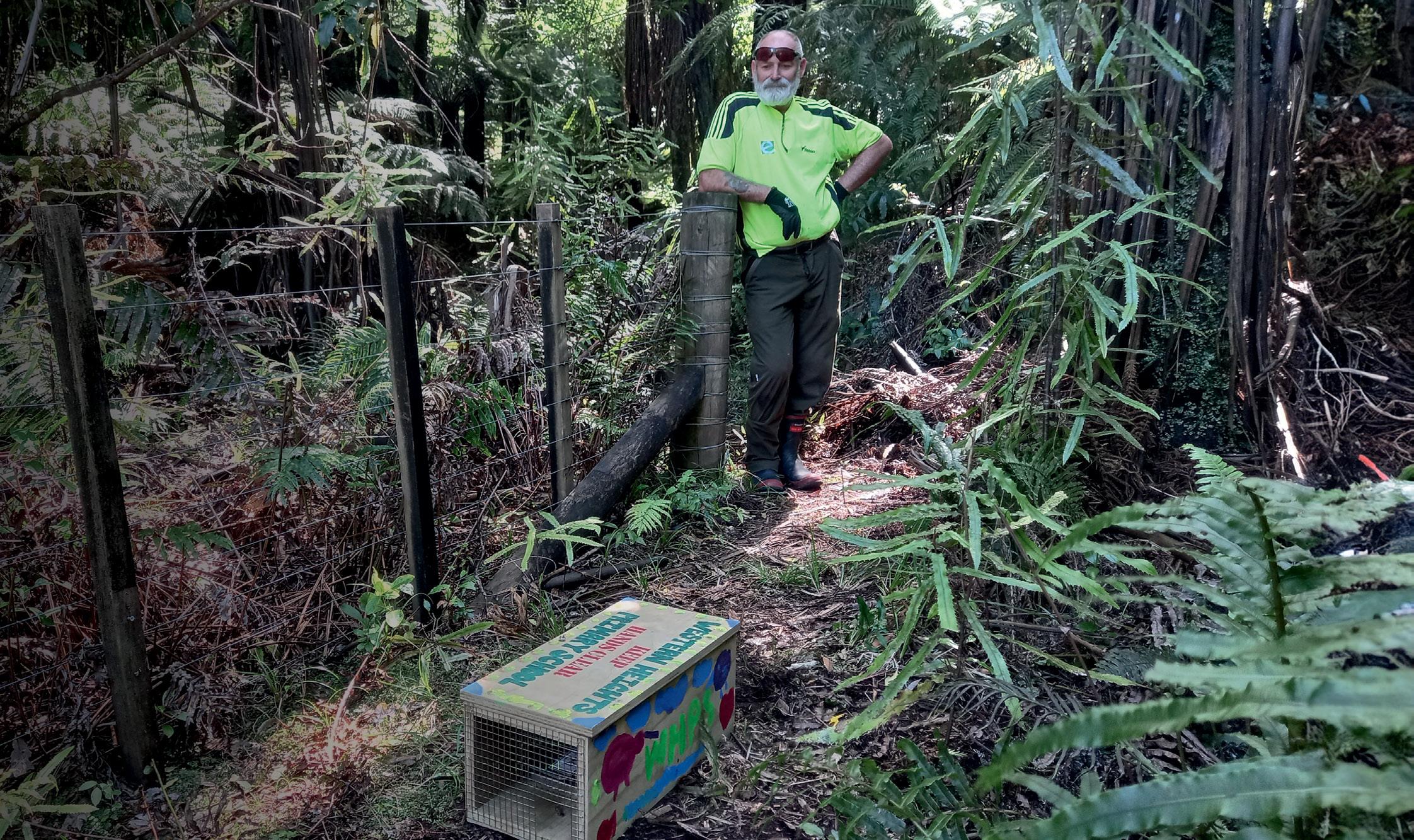
Acommunity project nurturing a kōkako stronghold in Kaharoa Forest, Bay of Plenty, has had its pest-trapping efforts supercharged, thanks to traps donated from all over the world.
Forest & Bird administers the Give-a-Trap website, which allows nature lovers to hop online and donate traps to their chosen predator-free group in Aotearoa.
One of the first recipients of the innovative idea, the brainchild of the late Penny Willocks (see right), is the Kaharoa Kōkako Trust, which has so far received 14 traps worth $1208.
The Trust is made up of a group of passionate volunteers in the Bay of Plenty who have been working tirelessly for nearly three decades to save the remnant kōkako population in Kaharoa Forest.
Chair Graeme Young says he is truly grateful to all the people who donated a trap to support their kōkako protection work. “This is a godsend for us. I never thought it would be so successful,” he said.
The Trust works across a 950ha area of forest and operates 1170 bait stations. Following advice from a trapping expert, it has been working to ensure it has the right traps in the right place for their target species, which include rats and stoats.
It recently signed up to Give-a-Trap, and Graeme says the website allows the Trust to let donors know what kind of traps they need. People can also donate rat-tracking cards.
These requests are often quickly filled by generous donors who want to make a difference. It enables his team to spend less time doing paperwork.
“You want to be focused on being out there in the bush, getting the work done,” he explained.
“We thought, how do we get the funds for this in a
hurry? And people just started donating traps. We got enough of them to make it worth buying some more ourselves. It’s really making a difference.”
He says the Trust would struggle to raise the cash value of the traps and tracking cards in the same timeframe.
“We wouldn’t have got those donations in cash. Givea-Trap has been superbly useful.”
Give a trap today at https://giveatrap.org.nz and be part of making Aotearoa predator free by 2050.
HOPE AND LEGACY
The innovative online donation Give-a-Trap platform was created thanks to the legacy of Penny Willocks, who died in 2021 and left a $10,000 legacy for nature that will have an impact for many years to come.
Last year, the Willocks family generously gifted the website to Forest & Bird so we could host and grow the platform and help even more community conservation groups contribute to the Predator Free 2050 movement.
A year on, Penny’s vision is coming to life – Givea-Trap is having early success in places around the country such as the Kaharoa forest. But there is more work to do – and our native birds need you.
If you want to make a difference like Penny did, please consider leaving a gift in your will to support Forest & Bird’s conservation work. If you would like to talk to someone about making a bequest, email legacy@forestandbird.org.nz.
PREDATOR-FREE NZ
19 Winter 2024 |
Graeme Young. Carmel Richardson
LEE TAMAHORI AND HIS
FOREST & BIRD FILM
Lynn Freeman talks to the director of The Convert about his epic historical drama set in pre-colonial Aotearoa.
Ayoung Lee Tamahori first became aware of the power of protest action when he supported the Forest & Bird-led Save Manapōuri campaign in the 1970s. He found it inspirational –“enamoured” is how he describes his feelings about it now, half a century later.
Lee is a proud member of the Society and supports our work to fight for nature – so much so that the respected film director described his latest movie, The Convert, set in 1830s Aotearoa, as his “Forest & Bird” film in a recent RNZ interview.
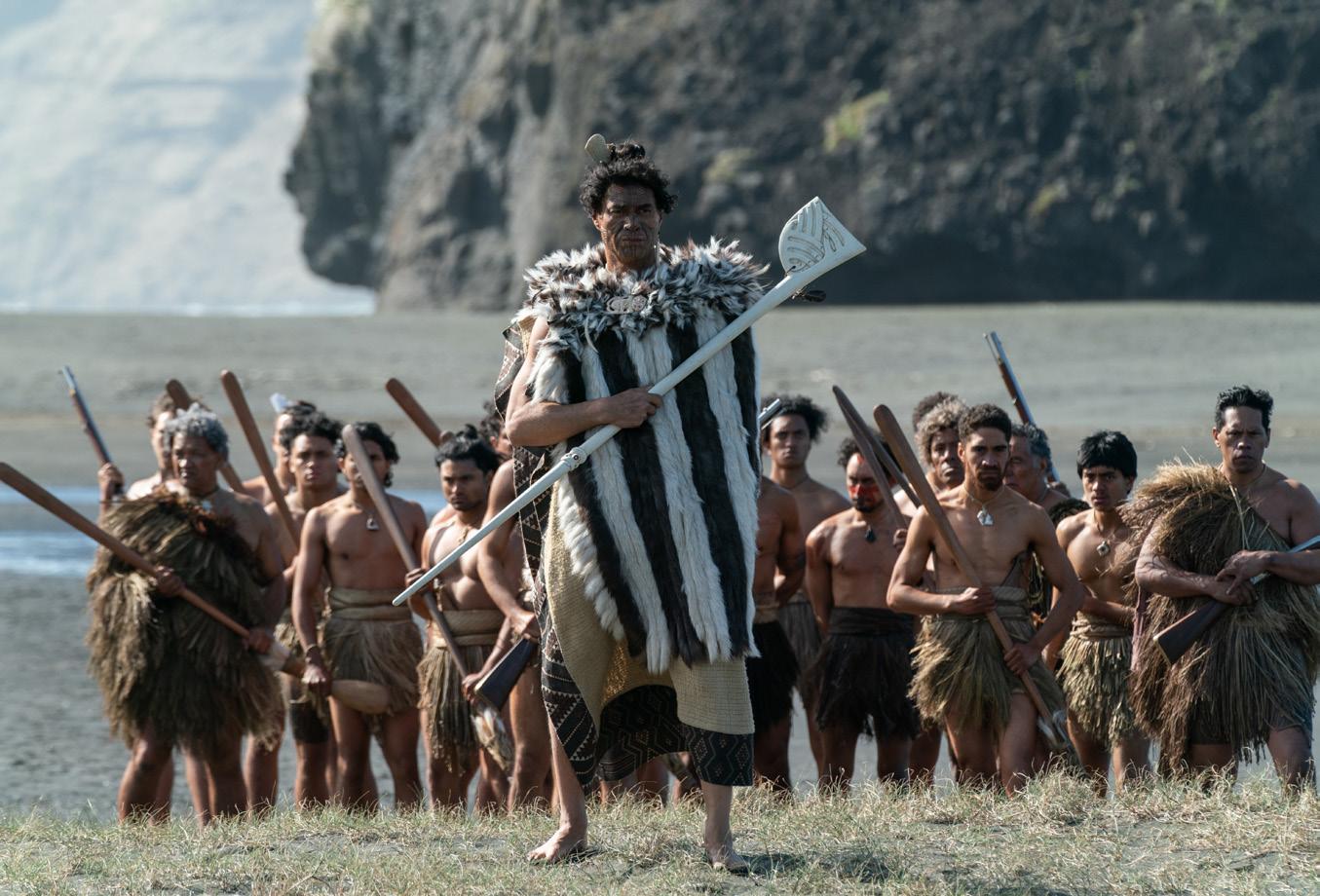
It tells the story of lay preacher, Munro, who comes to a small isolated European settlement in northern New Zealand that’s existing on a small scrap of beach. But all is not well in this land.
The whenua is beautiful but foreign to the settlers, harsh and
unforgiving. They are overwhelmed, but Monro is increasingly drawn into the way local Māori have adapted to and lived among nature.
Lee says he wanted to transport people to a time when our forests and manu were truly wild places, to when the bush was chokingly dense and the birdsong was cacophonic.
“I remember when I was on a fishing boat in Fiordland, and we stayed overnight at Breaksea Sound. I woke up to the most deafening chorus of birdsong that I’d ever heard,” Lee says. He’s never forgotten it.
Lee worked closely with the sound designers to ensure that birdsong is a constant presence throughout The Convert. Using recordings, they worked hard to ensure the track was accurate to the time.
Working with the Director of Photography Gin Loane, Lee filmed
some of The Convert in Te Urewera, home of Tūhoe. It’s an area that he loves, that he feels a deep spiritual connection to. “It’s so beautiful, the way the kahikatea pushes up through the canopy,” he says. It’s also menacing, dangerous, and untouched.

PROFILE
| Forest & Bird Te Reo o te Taiao 20
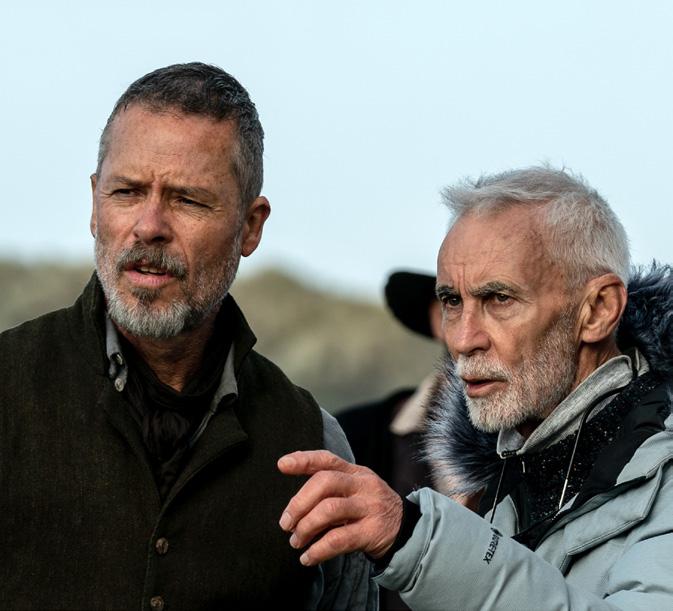
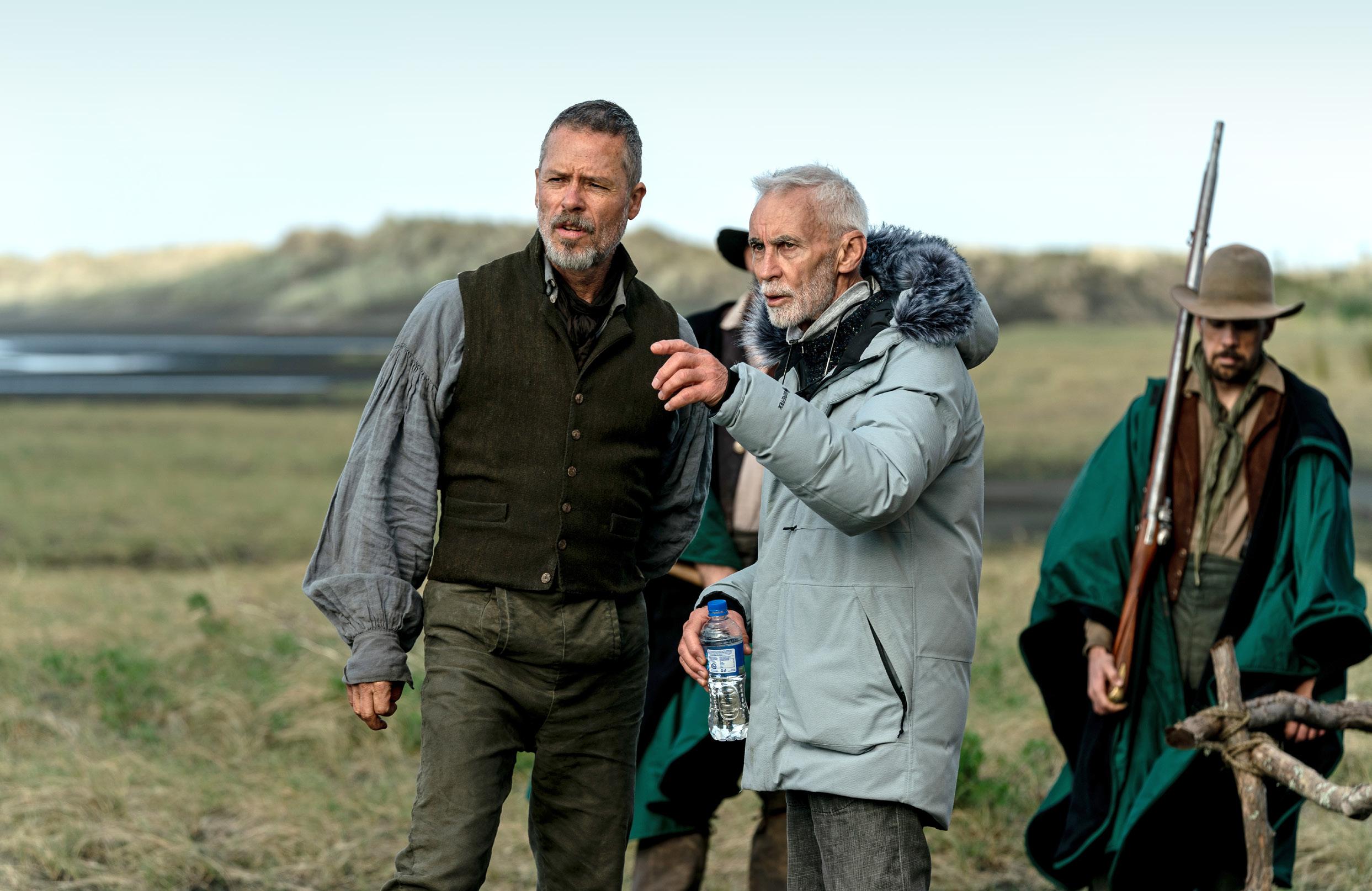
Lead actor Guy Pearce with director Lee Tamahori. Geoffrey H. Short
SPOILER ALERT! The opening sequence features a huia in flight over the bush canopy, before it’s taken out midair by a kārearea New Zealand falcon. With this, Lee says he is both hinting at the danger facing Munro, while also portraying the menace that is an inherent part of our wilderness.
It’s something he experienced during his short time as a hunter in the wilds of Fiordland. “You have to keep your wits about you when you’re in the bush, or it can kill you.”
But go back even further, to his childhood, and he remembers roaming the hills of Tawa with his brother. Their parents let them go exploring and camping in the wilderness, back in the days when this wasn’t deemed to be unsafe. He loved it.
As a young man, Lee headed to Australia in 1970. “I kept meeting people from all over the world when I was in Sydney who’d rave about the South Island of New Zealand,” he says. “I’d never set foot there and vowed to go see it when I returned home.”
See it he did. In 1974, he started exploring the South Island on foot, starting in the north, working his way down the West Coast, eventually winding up in Rakiura Stewart Island.
“I planned to stay for a week and ended up staying for a year. I just
fell in love with it,” Lee says. “It was a 674 square mile (1746 km2) bird reserve where you could see a kiwi at your feet while out walking at night.”
While doing odd jobs to bring in money, he also had the opportunity to breathe in Raikura’s “jaw-
dropping beauty”. While there, he also built a healthy respect for the New Zealand landscape.
Lee Tamahori says he hopes The Convert will do the same, encourage viewers to take action to save our surviving flora and fauna from a growing list of threats.







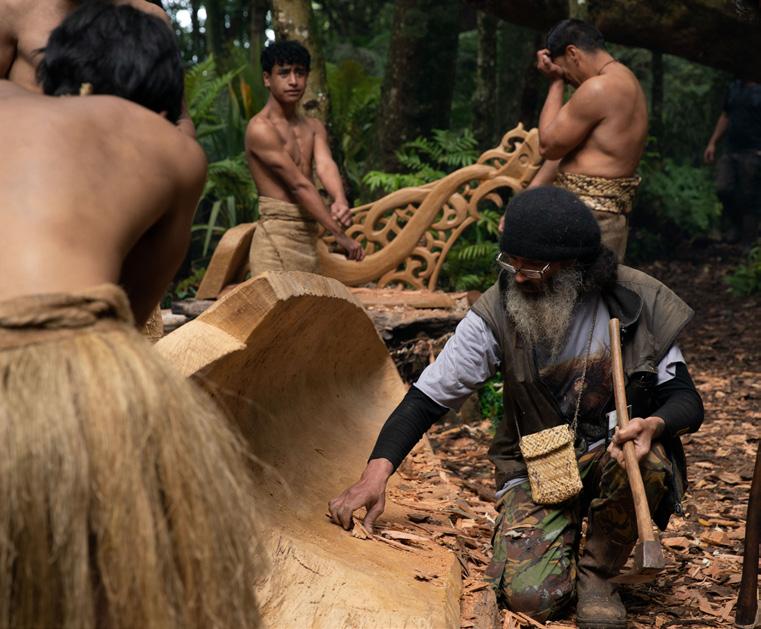
 Maianui (played by Antonio te Maioha) filmed on location at Whatipu Beach, Tamaki Makaurau. Supplied
Associate production designer Guy Moana on set. Kirsty Griffin.
Maianui (played by Antonio te Maioha) filmed on location at Whatipu Beach, Tamaki Makaurau. Supplied
Associate production designer Guy Moana on set. Kirsty Griffin.
21 Winter 2024 | 5 Star Reviews • 39 Years EcoTourism Expertise • Target Species Missions • Luxury Vehicles Private Cruises & Access • Fully Accredited & Licensed Operators & Guides Join Renowned Specialist Guide Luke Paterson & Team on Award-winning Birding & Photographic Experiences in Northern Australia, Sri Lanka & Borneo. **Spaces limited. Please book early & join EOI lists. AUSTRALIA Northern Territory, Kimberley & BEYOND Darwin NT Bird Specialists Birding & Photographic Safaris tours@NTBirdSpecialists.com.au / +61 (0)421 651 122 Full Calendar & Tailored Itineraries at: www.NTBirdSpecialists.com.au 2024 TOURS 2025 TOURS Sri Lankan Birding & Wildlife Tours 15 Days Top End Bird Photography Tour 8 Days Ultimate Top End Birding Adventure 10 Days Top End Finch Frenzy Ex. Darwin 7 Days Outback Birding Darwin to Mount Isa 9 Days MAR JUNE JULY AUG SEP Ultimate Top End Birding Adventure 10 Days Kakadu Birdwatching Tour 4 Days Top End Finch Frenzy Ex. Darwin 7 Days Kakadu Birdwatching Tour 4 Days Top End Bird & Wildlife Photo Tour 7 Days Kakadu Birdwatching Tour 4 Days Borneo Birding & Wildlife Tour 16 Days Top End Finch Frenzy Ex. Darwin 7 Days Private Tours (Australia & Sri Lanka & Borneo) JULY JULY AUG AUG SEP SEP OCT NOV ENTRANTS AWARD
100 YEARSCelebrating
Forest & Bird’s Centennial dinner at Government House in March was an opportunity to reflect on a century of conservation mahi and look to the future. Caroline Wood
Bringing an incredible year of celebrations to a close, Their Excellencies, the Rt Hon Dame Cindy Kiro GNZM, QSO, Governor-General of New Zealand and Dr Richard Davies hosted a Centennial dinner in honour of Forest & Bird.
A who’s who of conservation gathered at Government House, Wellington on 22 March, including Justin Jordan, grandson of Forest & Bird’s founder Captain Val Sanderson, who gifted his grandfather’s compass to chief executive Nicola Toki.
He was joined by James Mackenzie, chair of our Hibiscus Branch and grandson of Forest & Bird’s first President Sir Thomas Mackenzie. He encouraged Sanderson to establish a society of “like-minded” men, women, and children to stand up and be a united voice for nature in March
1923. Since then, six generations of James’s family have been members of the Society.
This theme was taken up by Dame Cindy, who praised Forest & Bird for being an effective vehicle for citizen action that provided opportunities for New Zealanders to help improve the wellbeing of the environment, from raising seedlings, setting traps, and restoring wetlands to choosing sustainable fish for dinner or petitioning local and central government.
“It’s not surprising that many thousands of New Zealanders from all walks of life and from all political persuasions have welcomed the opportunities Forest & Bird provides to become involved in preserving our precious natural heritage,” she told the assembled guests.
“At a time when the sheer scale
of our ecological challenges can seem overwhelming, the history of Forest & Bird gives New Zealanders hope, agency, and confidence that we can achieve more than we previously thought possible.”
Dame Cindy also talked about the long association between Forest & Bird and the GovernorsGeneral of New Zealand, stretching
CENTENNIAL
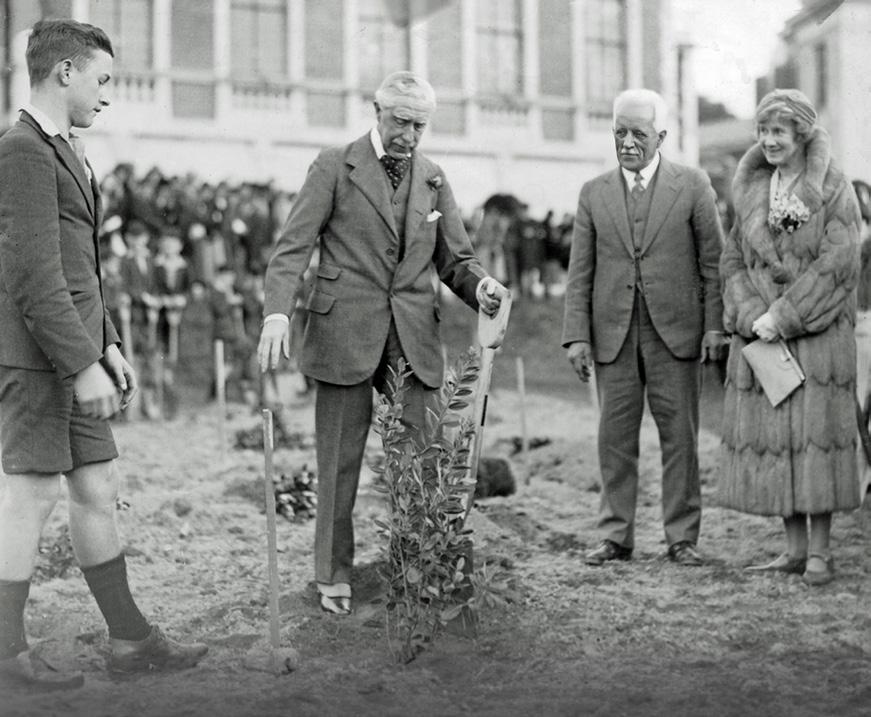
Lord Bledisloe, plants a tree for Arbor Day 1934. Wellington College Archives
| Forest & Bird Te Reo o te Taiao 22
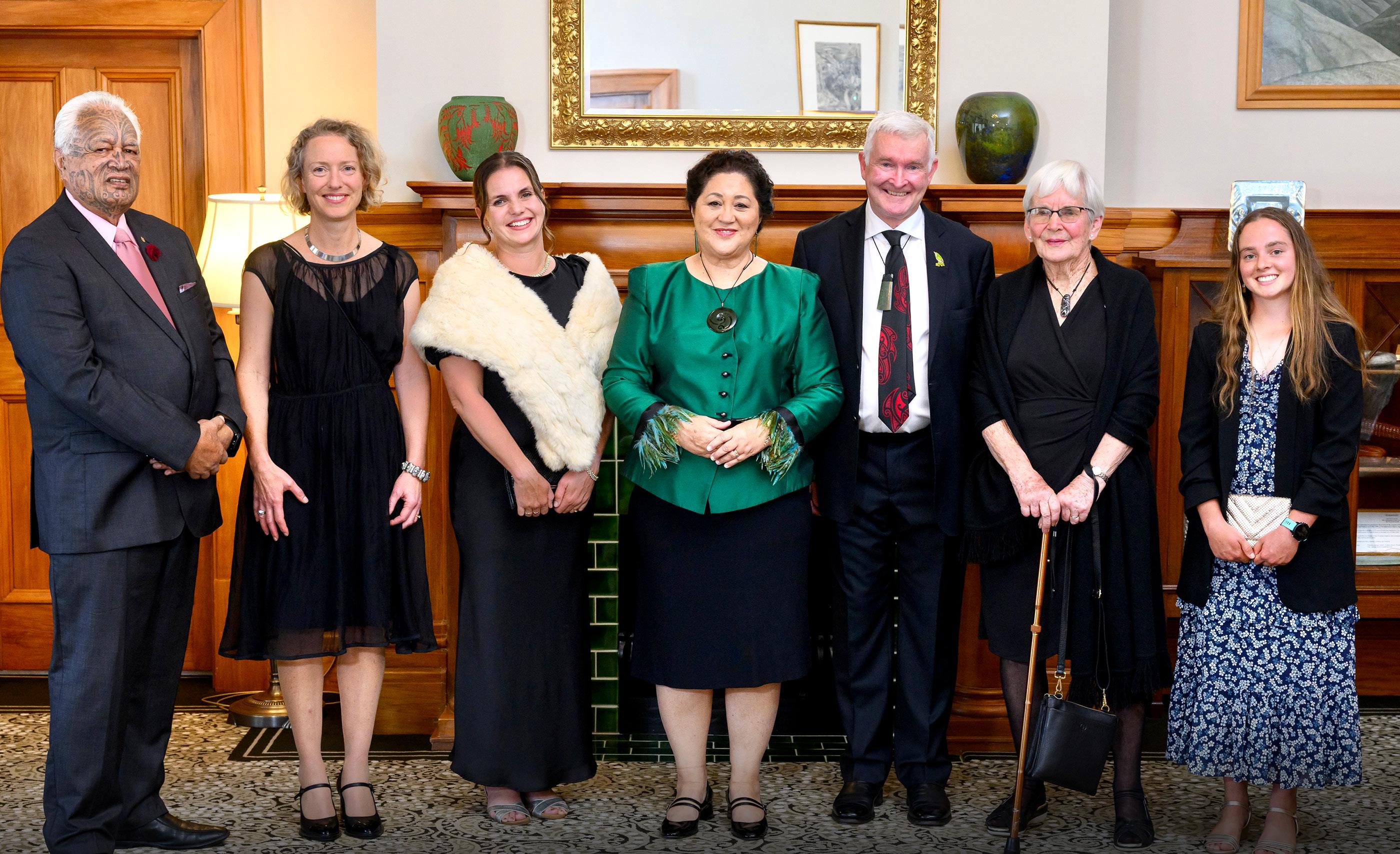
Joe Harawira, Kate Graeme, Nicola Toki, Dame Cindy Kiro, Dr Richard Davies, Joan Leckie, and Jessica Lamb. Mark Coote
back more than a century.
“In 1914, Lord and Lady Liverpool became patrons of an early version of Forest & Bird, and Lord Bledisloe became Patron in 1930,” she said. “Long after he left office, Lord Bledisloe continued to act as an Honorary Vice-President of Forest & Bird, and in 1947 he spoke out in support of the preservation of Waipoua Forest.
“I am proud to continue the vice-regal patronage of Forest and Bird, and on behalf of my fellow New Zealanders I thank everyone involved for your work to safeguard and improve the wellbeing of our whenua, moana, flora, and fauna.”
Forest & Bird’s official party included chief executive Nicola Toki, vice-president Kate Graeme, Forest & Bird Youth director Jessica Lam, and Joan Leckie QSM, Distinguished Life Member.

Nicola thanked Their Excellencies for their manaakitanga and said how special it felt to finish our centennial at Government House, given the Society’s long-standing connection with the Office and its Royal Charter.
In her speech, she issued a challenge for guests to think about the natural world in 100 years’ time and how it would look for our mokopuna. She also talked about the importance of building a collective voice for te taiao nature at a time she needs us most.
“Protecting and restoring our whenua and moana is something bigger than us that reflects what’s in our hearts. We can find common ground in te taiao – it’s hardwired into our DNA as a nation.
“Next time you’re out and about, take a moment to appreciate te taiao. Go for a walk in the bush, listen to the birds in your
neighbourhood, enjoy a picnic on the beach with your whānau. Whatever you do, ask yourself: ‘Am I doing everything in my power to look after this, to make it better? What will my legacy for Aotearoa be?’”
Many guests had decades-long associations with the Society, including our Ambassadors Gerry McSweeney and Craig Potton, who cut their conservation teeth as forest activists in the 1980s before taking leadership positions with Forest & Bird. Distinguished Life Members Ann and Basil Graeme were forest activists, then Forest & Bird staff members, and continue to volunteer for Forest & Bird into their 80s.
Another Distinguished Life Member Carole Long QSM joined Forest & Bird in the 1970s and has been fighting for nature protection in the Bay of Plenty for more than 50 years. Former chief executive
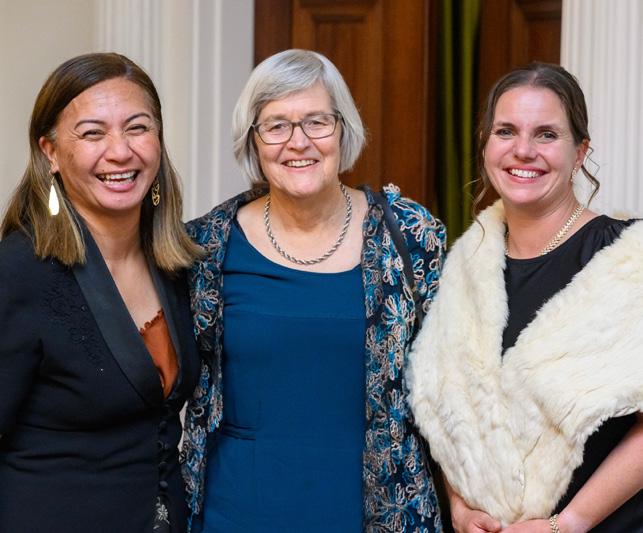
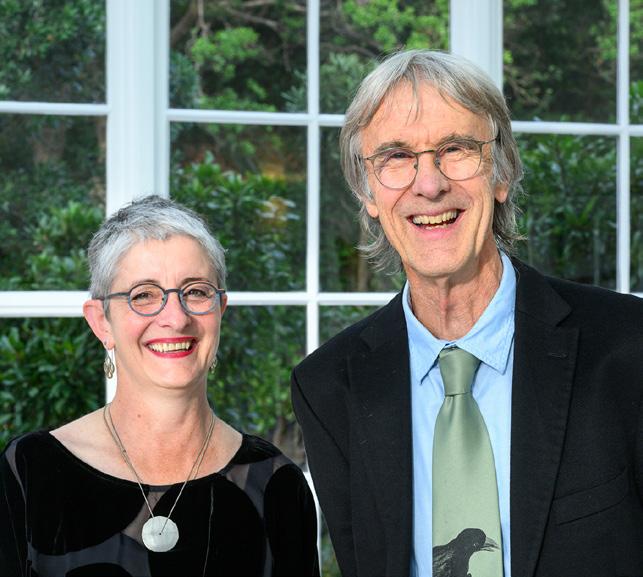
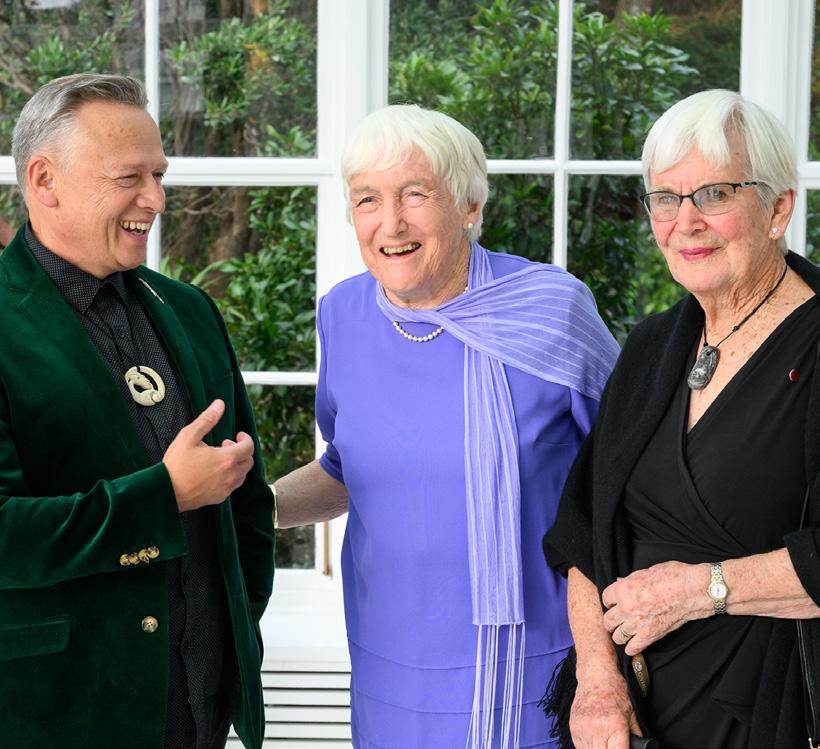
and Chair of Wakatū Incorporation Hone McGregor’s mother and grandparents were active members of Forest & Bird for six decades, while Distinguished Life Member and former Conservation Minister Eugenie Sage worked for the Society during the 90s
Other guests represented organisations that share Forest & Bird’s vision to see te taiao our natural world protected and cherished, including Penny Nelson, Director-General of the Department of Conservation, Gary Taylor, Chair and Chief Executive of the Environmental Defence Society, Dan Coup, Chief Executive of QEII National Trust, Jessi Morgan, Chief Executive of Predator Free New Zealand, and Nicola MacDonald, Chief Executive of Ngāti Manuhiri Settlement Trust.
They were joined by many other honoured guests, including Climate Change Minister Simon Watts, then co-leaders of the Green Party James Shaw and Marama Davidson, Labour’s spokesperson for the Environment Rebecca Brooking, Wayne Langford, President of Federated Farmers, and James Treadwell, President of the NZ Institute of Forestry.
Attendees described the event as a relaxed, friendly event and were excited to celebrate their connections to Forest & Bird and look to the future.
DOC Director-General Penny Nelson with Forest & Bird Ambassador Craig Potton. Michael Coote
Former Forest & Bird chief executive Hone McGregor with distinguished life members Carole Long and Joan Leckie. Mark Coote
Justin Jordan, grandson of Val Sanderson. Mark Coote
Marama Davidson, Eugenie Sage, and Nicola Toki. Mark Coote
23 Winter 2024 |

HEAR OUR VOICES
Forest & Bird partnered with the National Library of New Zealand to support future women conservation leaders.
Jasmin Kaur and Paris Nguyen
In celebration of International Women’s Day and to mark 100 years of Forest & Bird, a remarkable Women in Conservation event was held in March at the National Library of New Zealand Te Puna Mātauranga O Aotearoa, with a series of talks, panel discussions, in-person workshops, and digital webinars.
The aim was to inspire the next generation of women conservation leaders to use their voices and take collective action to help the environment. We attended the event along with other high school and university students aged 14–24 years, teachers, and members of the public.
First there was a panel discussion with four inspiring women leaders: Nicola Toki, chief executive, Forest & Bird, Stephanie Rowe, Deputy-Director General, Department of Conservation, Amanda Black, Director, BioProtection Aotearoa, and Trish Kirkland-Smith, Head of Nature Solutions & Partnerships, Fonterra.
Chaired by Forest & Bird’s communications manager Lynn Freeman, they shared their experiences, insights, and strategies for overcoming challenges while advocating for environmental preservation.
In particular, they highlighted the significance of authenticity (being yourself), continuous learning, acknowledging mistakes, and being open to feedback as crucial components of leadership development.
The National Library, home of the Women’s Suffrage Petition, also holds thousands of fascinating letters, documents, illustrations, and photographs important to New Zealand’s environmental history, including Forest & Bird’s archives from 1922 to 1981.
The Women in Conservation event was an opportunity to share the stories of two heroines in Forest & Bird’s history – Lily Daff and Audrey Eagle.
Apryl Morden, assistant curator with drawings, paintings, prints and photographic archive, gave us an illustrated talk about the artists, who excelled at
depicting indigenous flora and fauna in exquisite detail.
She said both deserved to be better known, as their work helped raise awareness of Aotearoa New Zealand’s unique wildlife and wild places.
In the afternoon, we could choose to attend one of a series of in-person workshops that were led by experts in their respective environmental fields: Science: Dr Kareen Schnabel, NIWA, Arts: nature artist Margaret Tolland, Advocacy: Jessica Lamb and Ash Muralidhar, Forest & Bird Youth, and Design: Tanya Marriott, Massey University.
The combination of insightful discussions and practical workshops underscored the importance of collective action in safeguarding our planet. By empowering women in conservation and fostering inclusive leadership, we can strive towards a more sustainable and equitable future for all of us.
We had such a wonderful day sharing experiences and meaningful connections. It left us uplifted and energised by the beauty of nature and the power of community.
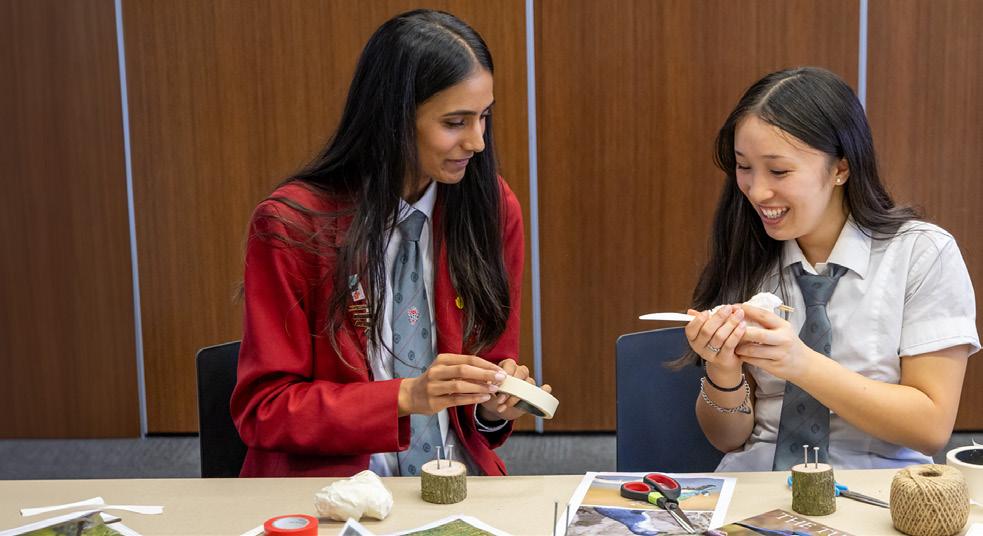 This is an edited version of an Education Gazette article written by Jasmin Kaur and Paris Nguyen, Year 13 students, Sacred Heart College, Wellington.
Jasmin Kaur and Paris Nguyen, arts workshop, National Library. Mark Beatty
This is an edited version of an Education Gazette article written by Jasmin Kaur and Paris Nguyen, Year 13 students, Sacred Heart College, Wellington.
Jasmin Kaur and Paris Nguyen, arts workshop, National Library. Mark Beatty
WOMEN IN CONSERVATION | Forest & Bird Te Reo o te Taiao 24
Stephanie Rowe, Nicola Toki, Amanda Black, and Trish Kirkland-Smith. Mark Beatty
RANGER REUNITES WITH OLD FRIEND
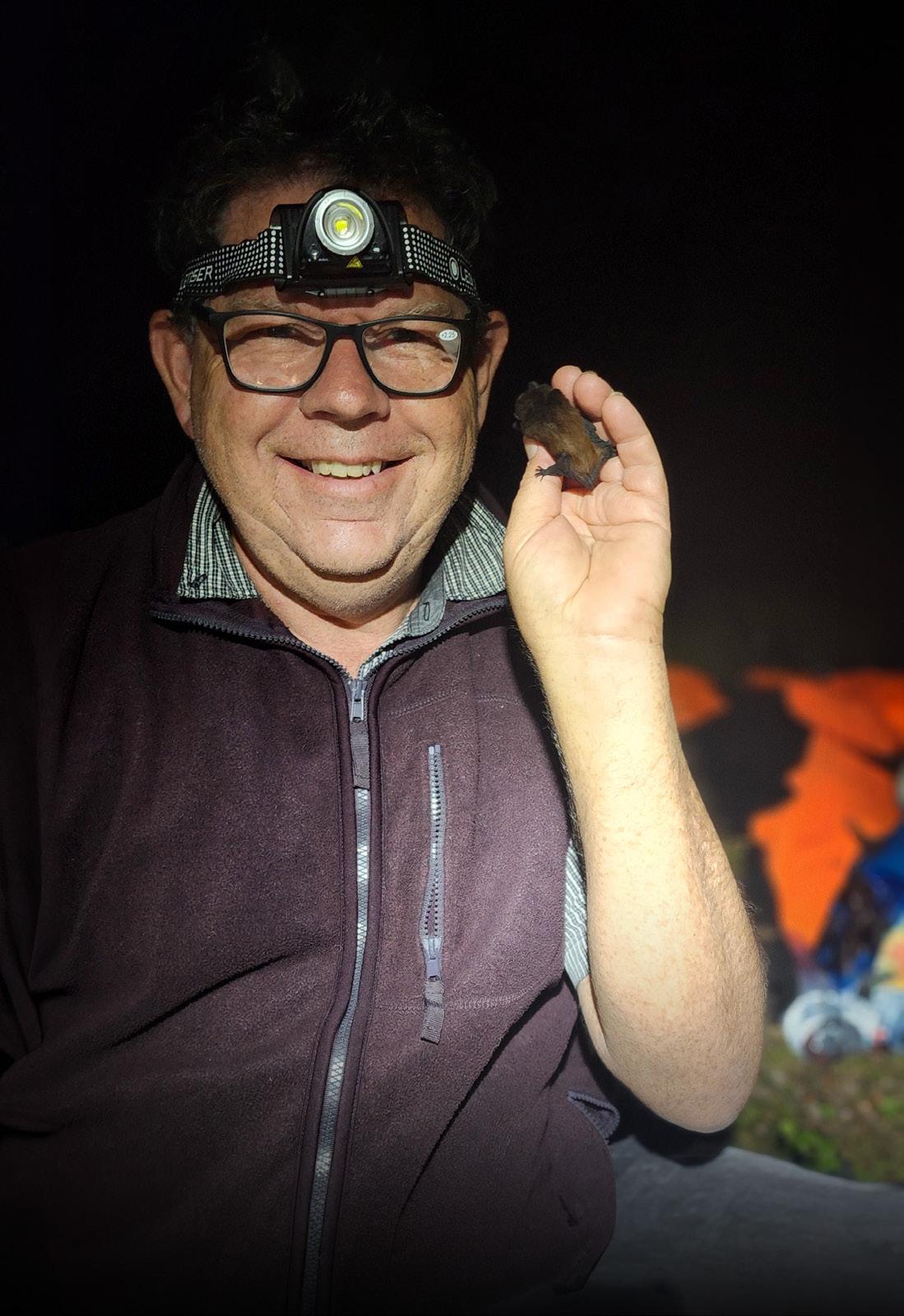
New Zealand’s oldest known long-tailed bat was recorded this summer as part of a Department of Conservation pekapeka monitoring programme in Fiordland.
Known only as “T7787”, the tiny flying mammal was caught in a harp trap last month, given a quick health check, then released to rejoin her colony at Walker Creek in the Eglinton valley, where she’s lived her entire life.
DOC Principal Scientist Colin O’Donnell, who leads the bat monitoring work, says T7787 is officially the oldest known long-tailed bat in Aotearoa New Zealand.
“I first caught her when she was a young mother in 2000 and again this month, making her at least 26 years old but possibly as old as 28.
“She’s going a little grey but still appears in good health, although signs are she’s stopped breeding.
“We don’t know how long our bats live for, so it’s exciting to get this record and know they can live for up to 26 years if conditions are right.”
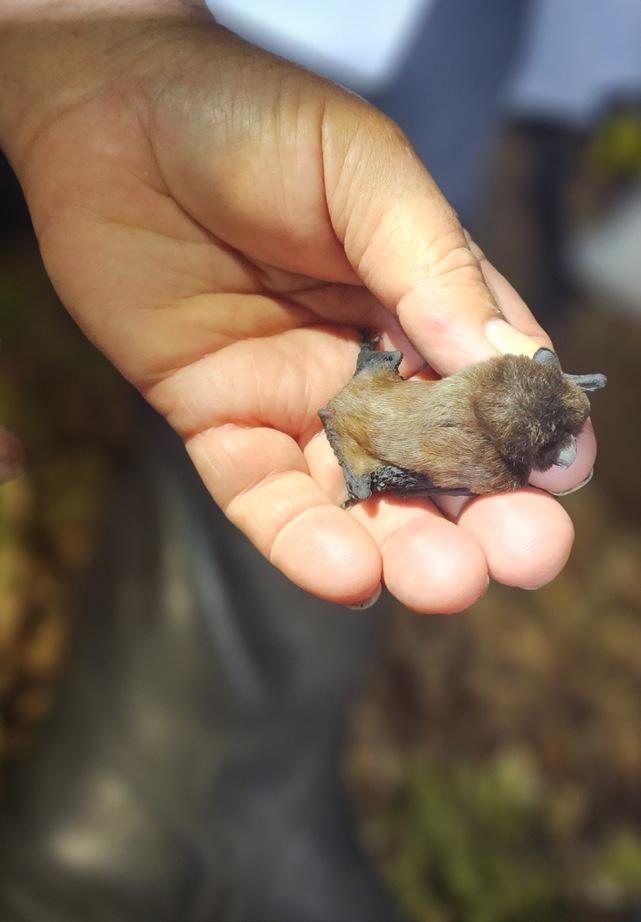
The tiny bat, who weighs just 10.5g (about the same as a AAA battery), has produced a pup every year for 20 years. With female bats able to breed from two years old, she will now be the matriarch of many bat generations.
Long-tailed bats are threatened with extinction, having declined dramatically since pre-human times because of habitat loss and predation by introduced pests.
Colin says the bat’s long breeding life bodes well for its recovery and potential to increase towards prehuman population levels, when bats were abundant.
In the Eglinton valley, long-term monitoring of both long-tailed and short-tailed bats has shown a steady increase in bat numbers in response to large-scale predator control using trapping, bait stations, and aerial 1080 to target rats, stoats, and possums.
Before 2000, the long-tailed pekapeka population was declining by 5% per year, but that has been reversed, and the population is now growing by 5%, showing the benefits of DOC’s multi-pronged predator management.
Bat monitoring is labour-intensive, with teams of volunteers working alongside DOC experts over six weeks each summer. It involves finding bat roosts in cavities high up in trees and setting up harp traps during the day near where bats will leave the roost in the evening. The team then returns at night to process the captured bats – measuring and weighing them and recording their tags before releasing them.
While most bats never leave their colony, they do shift roosts most nights, presenting a daily challenge for the monitoring team to find the new roosts.
The previous oldest long-tailed bat, recorded and last seen in 2015, was another female, A78806, in the Walker colony, who was 25.
Most of the 1400 bat species around the world live between six and 20 years on average, although a small number are known to live more than 30 years. For their small body size, bats are relatively long-lived mammals, which is of interest to scientists.
Long-tailed bats are distributed throughout New Zealand and have the highest threat ranking of Nationally Critical. They prefer native forest, but some survive in plantation forests, in bush fragments, and around urban areas like Hamilton and Auckland. They are sometimes seen flying at dusk along forest edges or over streams and farmland on their way out to feed on small insects.
BIODIVERSITY
Colin O’Donnell with “T7787” New Zealand’s oldest known bat. Keith Barber/DOC
25 Winter 2024 |
This long-tailed bat is believed to be 26–28 years old. Keith Barber/DOC
BITTERN
Encounters
Peter Langlands
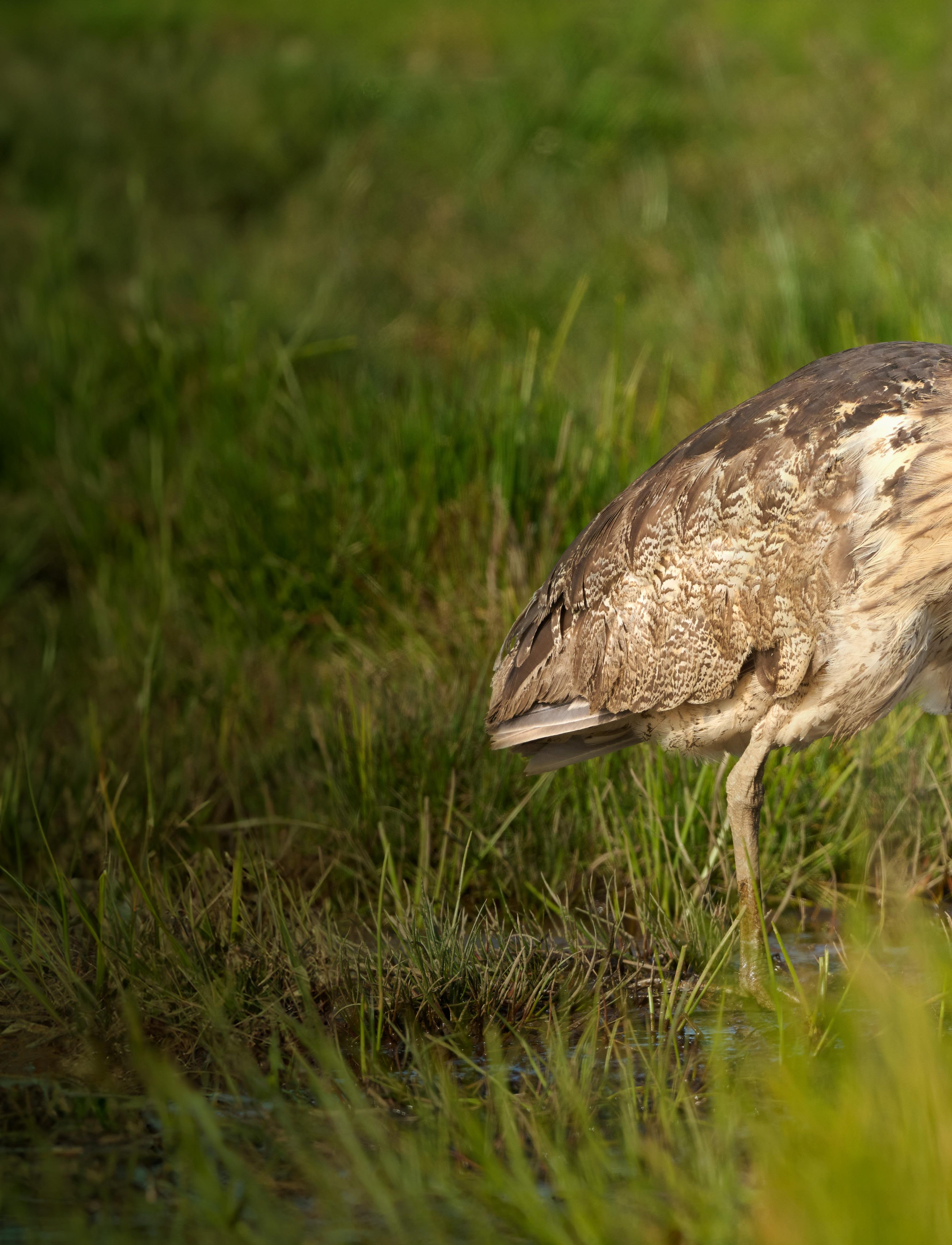
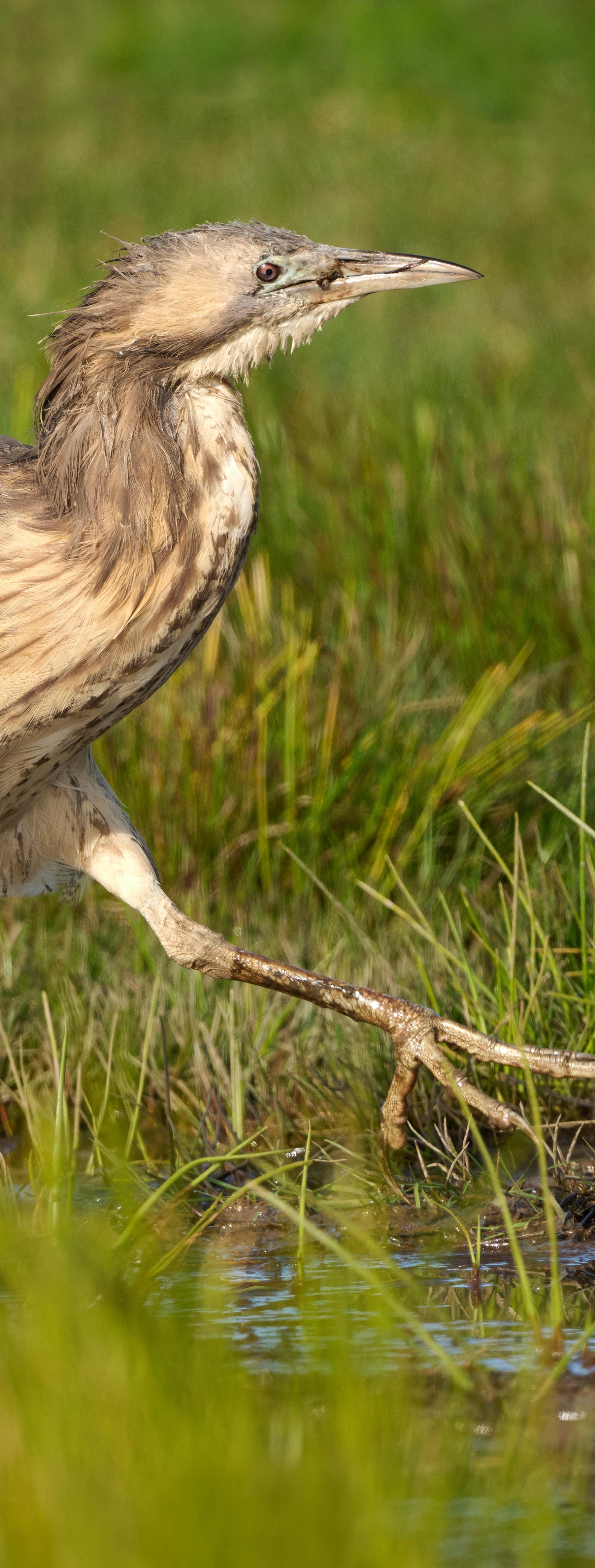
Seeing an Australasian bittern is always memorable. The birds are large, with a striking plumage and a dagger-like beak. They erupt from reedbeds like a jack-in-the-box and are rarely seen out in the open.
Matuku-hūrepo are important to Māori and appear in many of their stories, pictures, and place names. There is something otherworldly about them, a sense they are out of place in our rapidly changing world.
With fewer than 1000 bitterns left in Aotearoa New Zealand, conservationists are worried about their future. Habitat loss, disturbance, and predators are their biggest threats.
Bitterns have a distinctive booming call but otherwise live cryptic and secretive lives, making them difficult to find and study, although satellite tracking, drones, and trail cameras are providing new insights.
Here five bittern conservationists share their personal encounters with matuku-hūrepo and outline the practical measures needed to aid their recovery. All of them are determined to stop the last of our iconic wetland “boomers” from vanishing forever.
FRESHWATER
| Forest & Bird Te Reo o te Taiao 26
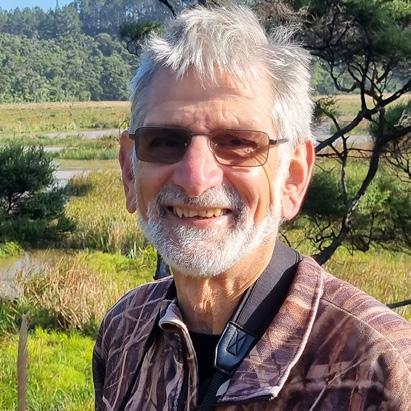
JOHN SUMICH | MATUKU LINK TRUSTEE, AUCKLAND
Although interested in birds from primary school age, I was rather a passive birder, enjoying seeing them here or overseas without being a hard core twitcher. My first bittern encounter occurred while training for a marathon, and I was taking a long run at Okiwi on Great Barrier Island. Out of the corner of my eye, I saw, in the wetland below the road, a bird I recognised from books as a bittern. Stopping abruptly, I looked at the bird, it looked at me, and it gave way first, melting into the reeds.
Another 25 years went by, by which time I was chair of the wetland committee of our Forest & Bird branch. As I developed a trapping regime in the greater area to prepare for a pāteke translocation, I started to see bittern more often at our Matuku Reserve. From my involvement with drones for tracking pāteke, I conceived the idea of using drones with thermal cameras to detect bittern, which was trialled with Emma Williams, of the Department of Conservation, in 2016 in the eastern Bay of Plenty. It was known the species was in decline, but how many bittern were there, I wondered. In 2021, I set up a nationwide survey – “OK Boomer” – to gather a different metric of male bitterns heard booming during the breeding season as a way to gauge populations in different wetlands. Observations and data were being gathered by individuals and community groups interested in matuku-hūrepo, as well as councils and DOC, but there was no central collation of this information.
Rallying several folk who were involved in serious monitoring of, and pest control for, bittern and other wetland species resulted in us forming the Bittern Conservation Trust. Its aims are to raise awareness of bittern, to use consistent monitoring techniques, and to help groups or individuals connect with regional or national bodies.
The Bittern Conservation Trust – see www.lovebittern.com/bittern-conservation-trust/.
→
John Sumich
27 Winter 2024 |
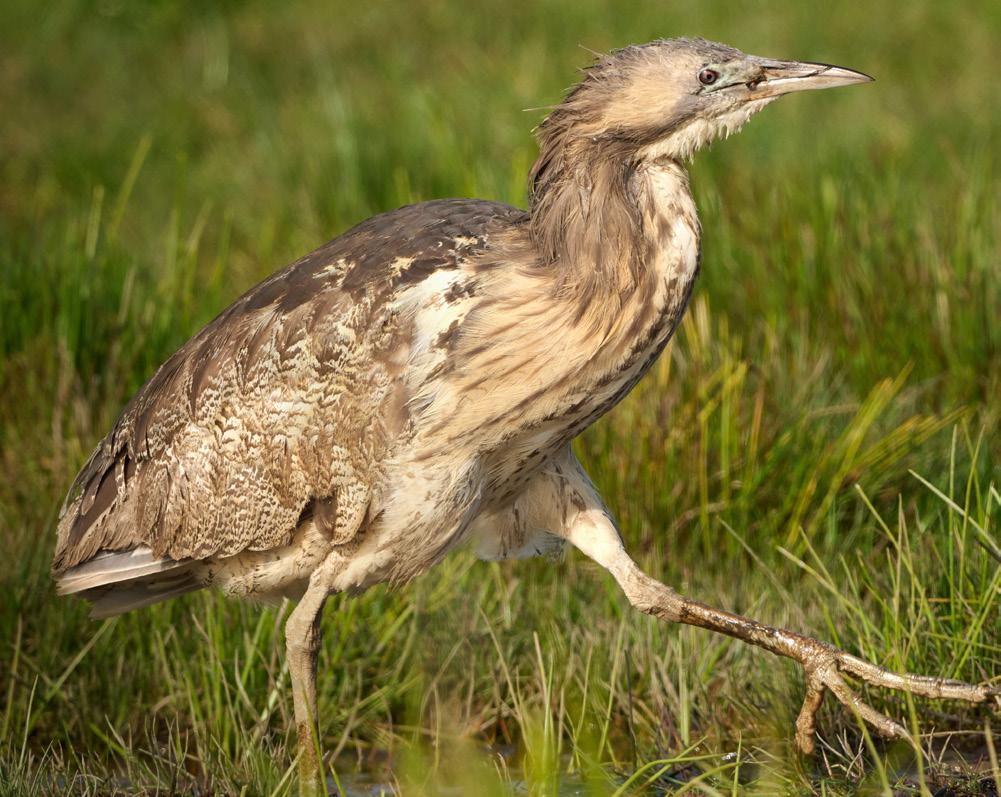
Matuku-hūrepo Australasian bittern. Craig McKenzie
WENDY AMBURY | LOVE BITTERN PROJECT, NORTHLAND
When I was a child growing up in rural New Zealand, I loved to play in the swamps, making hides on floating platforms of reeds, and scaring my siblings and their friends away by telling them the strange noise we heard was a swamp monster. I didn’t know what the noise was myself at the time and never connected it to the boom of the bittern until years later. Now, over four decades later, Australasian bittern are Critically Endangered – one step away from extinction. I feel like, if we don’t do something now to help bittern, the next generation may not hear the extraordinary boom of a male bittern or catch a fleeting glimpse of this cryptic, prehistoric-looking bird, and if I don’t do something who will?
A key component of the Love Bittern Project is travelling around the country to meet with community groups and help them advocate for bittern. I do this by having a conversation with them, listening to what they know, and sharing what I know about tools that can be used to record and protect bittern, as well as their wetland habitats. In this way, we grow our collective knowledge. Behind the scenes, I help by developing and providing resources for community groups to use, such as customising The Conservation Hub app for recording observations and monitoring records, informative handouts they can use at events, guides on how to record and monitor bittern, children’s activities, and social media packs.
Backing bittern isn’t an easy thing to do when a lot of people don’t even know they exist in the first place! The lights really go on when people realise that bittern are near the top of the food chain in a wetland, and if we look after bittern there is a whole wetland ecosystem we are protecting as well … everything from tuna eels, fish, frogs, insects, invertebrates, plants, water, and ultimately us too. Everything is connected. By galvanising our communities to come together as one to treasure bittern and their wetland habitats, we might just save the species and along the way renew our relationship with water, be better connected as people, and build more resilient communities.
Doing nothing is not an option.
Love Bittern Project, www.lovebittern.com
→ FRESHWATER
Wendy Ambury
| Forest & Bird Te Reo o te Taiao 28
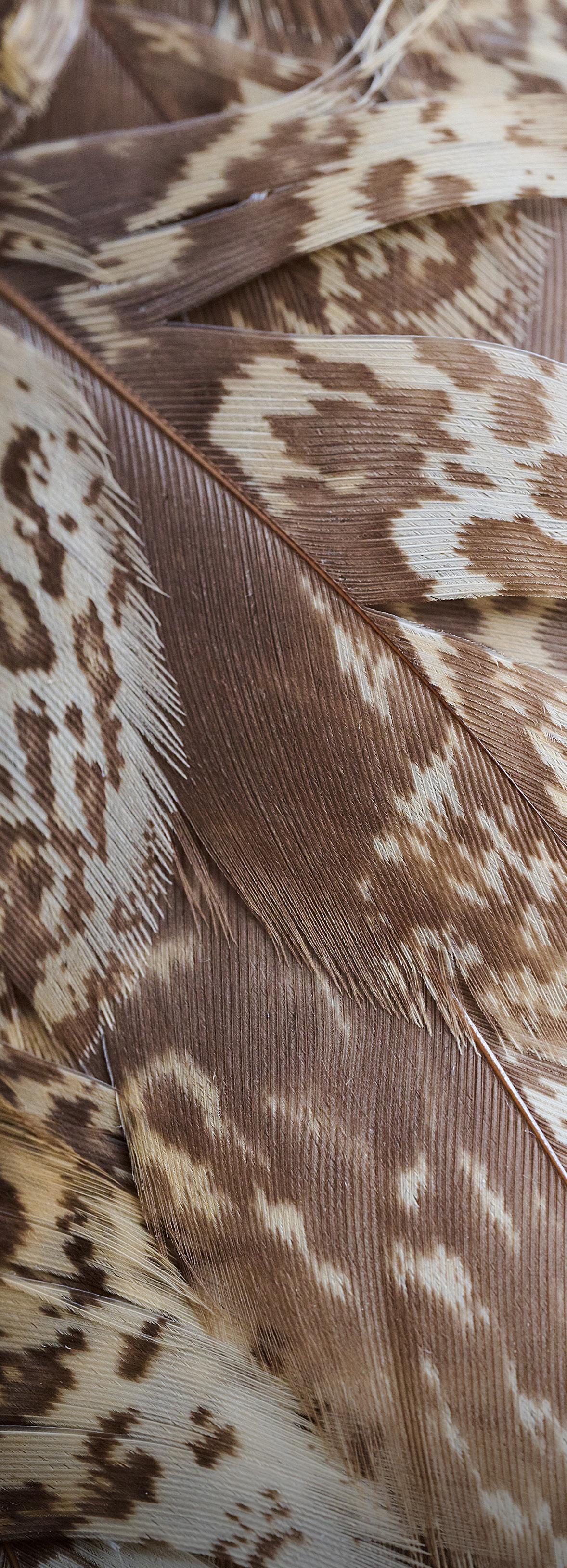
Bittern feathers. Craig McKenzie
CRAIG PAULING (NGĀI TAHU AND NGĀTI MUTUNGA) | CANTERBURY REGIONAL COUNCILLOR
My awareness of kautuku (another Māori name for bittern) was first sparked by seeing a fantastic photo by Imogen Warren of a bittern with a small tuna eel curled around its beak, standing in front of raupō and realising the special connection of these species. This awareness was heightened through my work on the management plan for Tārerekautuku or Yarrs Lagoon and understanding the significance of that place for bittern and for my Ngāi Tahu tupuna. I was also already working on the restoration of Ahuriri Lagoon and noted the potential for it to provide habitat for kautuku.
My first real life encounter with a kautuku was very recently, when I went out to Ahuriri Lagoon, on the Huritini Halswell River, with Peter Langlands. It was a beautiful calm early Monday morning, and we were visiting a wetland area I had helped get re-established through a project led by the Whakaora Te Waihora partnership. I had contacted Peter a few weeks earlier after reading his posts about bittern surveys across Canterbury and offered to help. It wasn’t until nearly completing our circumnavigation of the wetland that we flushed out a single adult from a clump of raupō. It was magical to see it jump up, flap its wings, and veer off towards Te Waihora. We also saw a pair of pūweto spotless crake, and it was fulfilling to know the work we had done on the wetland – a paddock only five years ago – was now home to these two species.
 Craig Pauling
So, for me, kautuku are a symbol of the interconnectedness of a functional wetland ecosystem – of the raupō, the tuna, and the kautuku all needing each other to thrive. They exemplify the mauri or lifeforce of wetlands and of the important role wetlands have in our world. These are essential elements of our natural environment, and it is my goal to ensure they always maintain their place alongside us. That is why I will continue my work in advocating for restoration across Canterbury and, in particular, the restoration of wetlands around Te Waihora, a key action for both Te Waihora and the species that live there, including kautuku.
KEN HUGHEY | CONSERVATION SCIENTIST, LINCOLN UNIVERSITY, CANTERBURY
In the 1980s, I worked for the Wildlife Service (precursor to the Department of Conservation) and coordinated monthly bird surveys of Te Waihora Lake Ellesmere. In those days, we often did entire sections by ourselves, and one freezing cold day I was surveying the Selwyn to the Ararira. I encountered five matuku-hūrepo bitterns. It was incredible, and to this day I have never seen that many in one day again. I have always loved them, yet increasingly they are struggling to survive.
During my time with Te Papa Atawhai DOC, I continued to have periodic involvement with matukuhūrepo-related issues. Now, in semi-retirement, I’m heavily involved with the Waihora Ellesmere Trust, and bitterns’ needs are even closer to my heart. To me, the matuku-hūrepo is the canary in the coal mine for our diminishing wetlands and their values. I am convinced that if we get it right for bittern then we will get it right for many of our wetlands, not all but many.
What all this means to me is that we need to stop tinkering and “think big” for matuku-hūrepo and wetlands more generally. To do this, we will need to grow wetlands and effectively farm bittern into recovery. This is happening in rice field areas of southern New South Wales, and, if we value the species, we can do the same here. Everybody will gain from such an approach. I drafted a proposal that I have presented to Environment Canterbury via one of its councillors, and I look forward to it being discussed and implemented through the Canterbury Water Management Strategy and the Council’s long-term plan. If we don’t do this, it will likely consign matuku-hūrepo bittern to extinction in Canterbury.
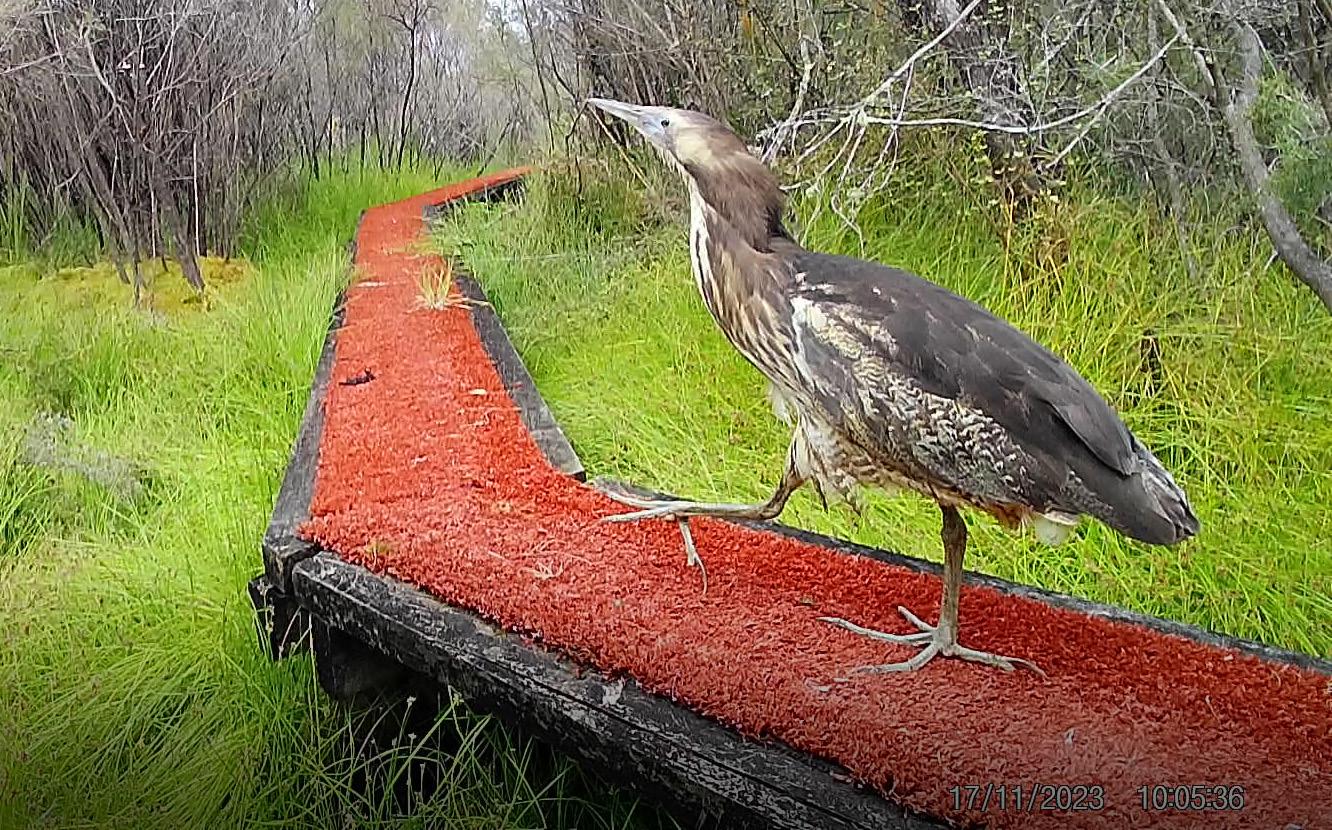 Ken
Hughey
Ken
Hughey
→
Bittern captured on trail camera checking out a raised wetland walkway, Kopuatai, Hauraki Plains Rachel Langman/DOC
29 Winter 2024 |
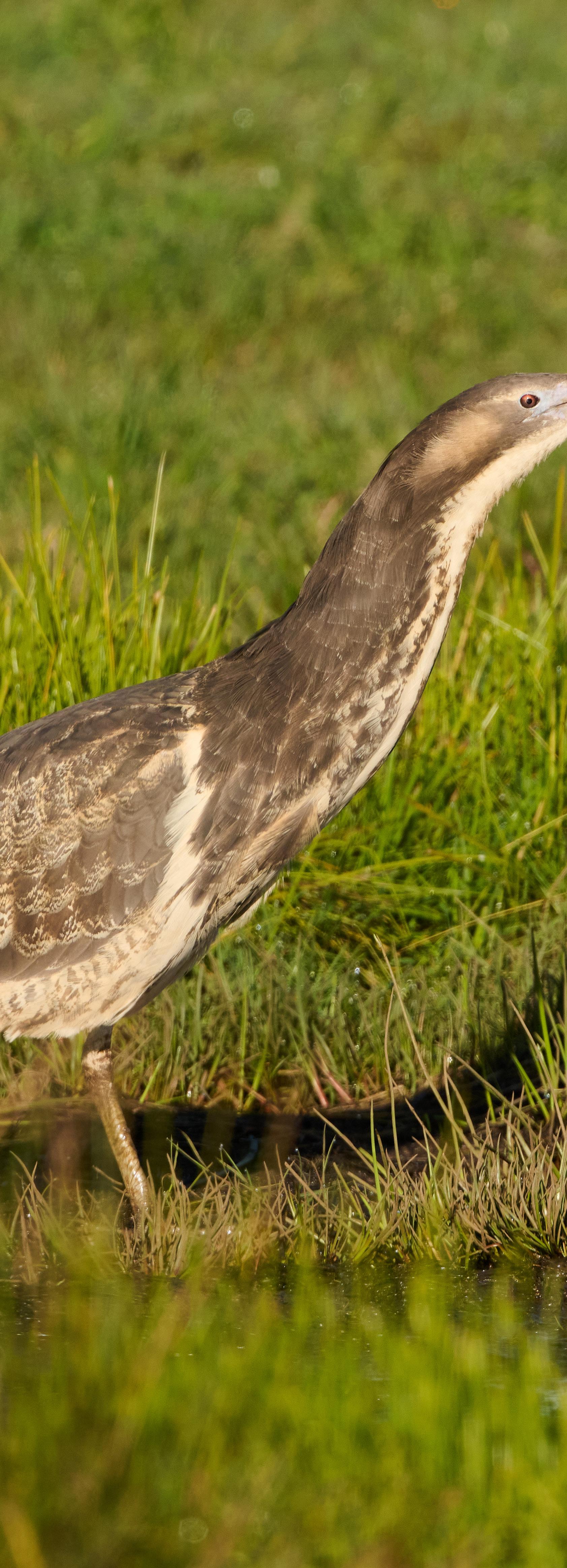
OSCAR THOMAS | BIRD WRITER AND PHOTOGRAPHER, DUNEDIN
My first encounter with a matuku-hūrepo was a stuffed one at Te Papa when I was 10, but four years later I found one living and breathing in one of its strongholds, the Whangamarino Wetland, an hour south of Auckland. On arriving, we were greeted with a vast expanse, a mosaic of ponds, bogs, scrub, reeds, and willows. Not having a telescope to spot bitterns, I headed down into it, and soon the vegetation opened out onto a small puddle of water and there was a bittern standing stoically on the edge of it. Within seconds, it had vanished, flying deeper into the wetland. Later that same day, I was able to appreciate one properly at Hamilton Zoo, whose staff were looking after a rescue bittern unable to survive in the wild after being shot by duck hunters.
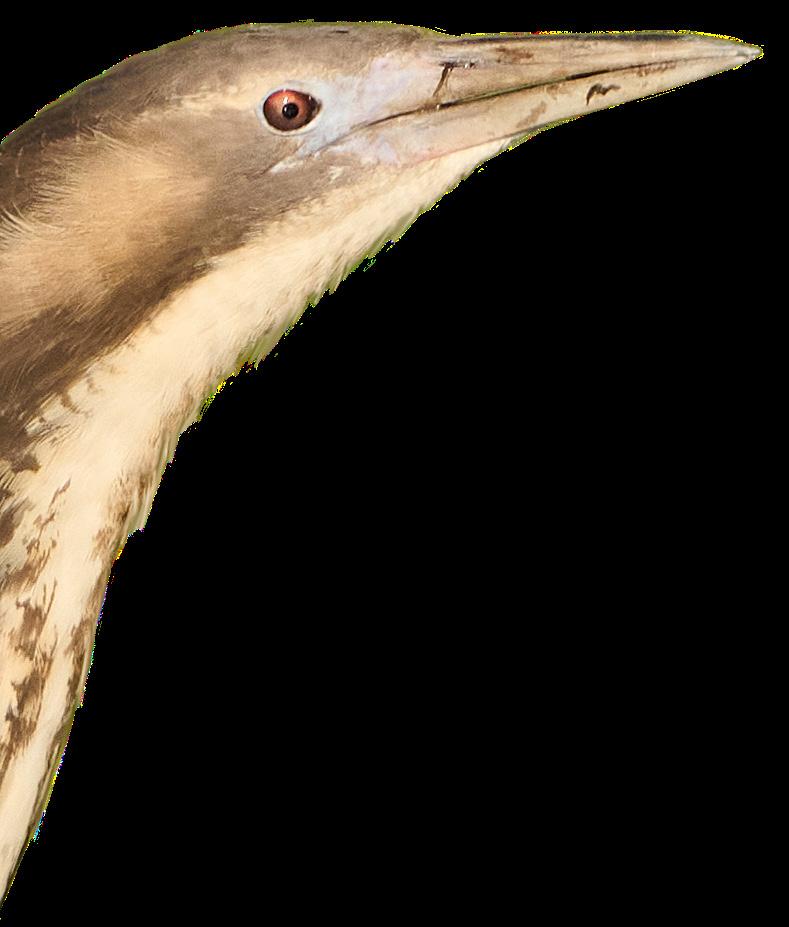

A cryptic wetland specialist, the Australasian bittern was once one of Aotearoa’s most common bird species. Now, with more than 90% of our wetlands drained and destroyed, they are one of our most threatened. When I was 16, I returned to Whangamarino Wetland as a field assistant for Dr Emma Williams, Aotearoa’s top bittern expert. We spent two seasons there counting and triangulating booms (the deep resonant mating call of a male bittern, audible for up to 2km), and creating vegetation plots around bittern sightings to see what type of plants they associate with. Cage traps accompanied by a mirror and boom recordings caught the attention of the territorial males, thinking another bittern was on their turf. This way, Emma was able to catch and tag birds to get an idea of their movements throughout the year.
Little did we know, bitterns sometimes migrate half the length of the country and can be incredibly mobile outside of the nesting season. The dark shadow cast by this reveal is that we may be double counting bitterns when estimating the national population, meaning they are even rarer than we could have anticipated. The unfortunate truth is that Australasian bitterns do not have the capacity to adapt to the rapidly changing natural environment in Aotearoa, unlike species such as the matuku moana white-faced heron. What they need most is wetland protection and wetland restoration, large swathes of quality suitable habitat that is both safe to nest in and bountiful to feed in. As such, we must do what we can to help them.
FRESHWATER
Oscar Thomas
→ | Forest & Bird Te Reo o te Taiao 30
Craig McKenzie
OK BOOMERS!
Ifeel privileged to have interviewed these five people about bitterns and their conservation. Their passion for this species – a symbol of the wilderness element of our wetlands – gives me hope that bittern can be saved. With the formation of a National Bittern Trust, as John Sumich outlined, I feel there is now a strong human voice to boom alongside that of the bittern. As Wendy Ambury pointed out, we need to make more people aware of bitterns’ existence in Aotearoa, as the species has lacked some of the profile given to other critically endangered birds. In many ways, the
also an essential part of the equation. Learning about the bittern’s high level of mobility shows we need to look at bittern conservation on a landscape scale. Certainly, the time is now to move forward with bittern conservation, and once you have been “bitten by the bittern bug” there is no way of going back, for the fascination with this bird will continue as a lifelong interest.
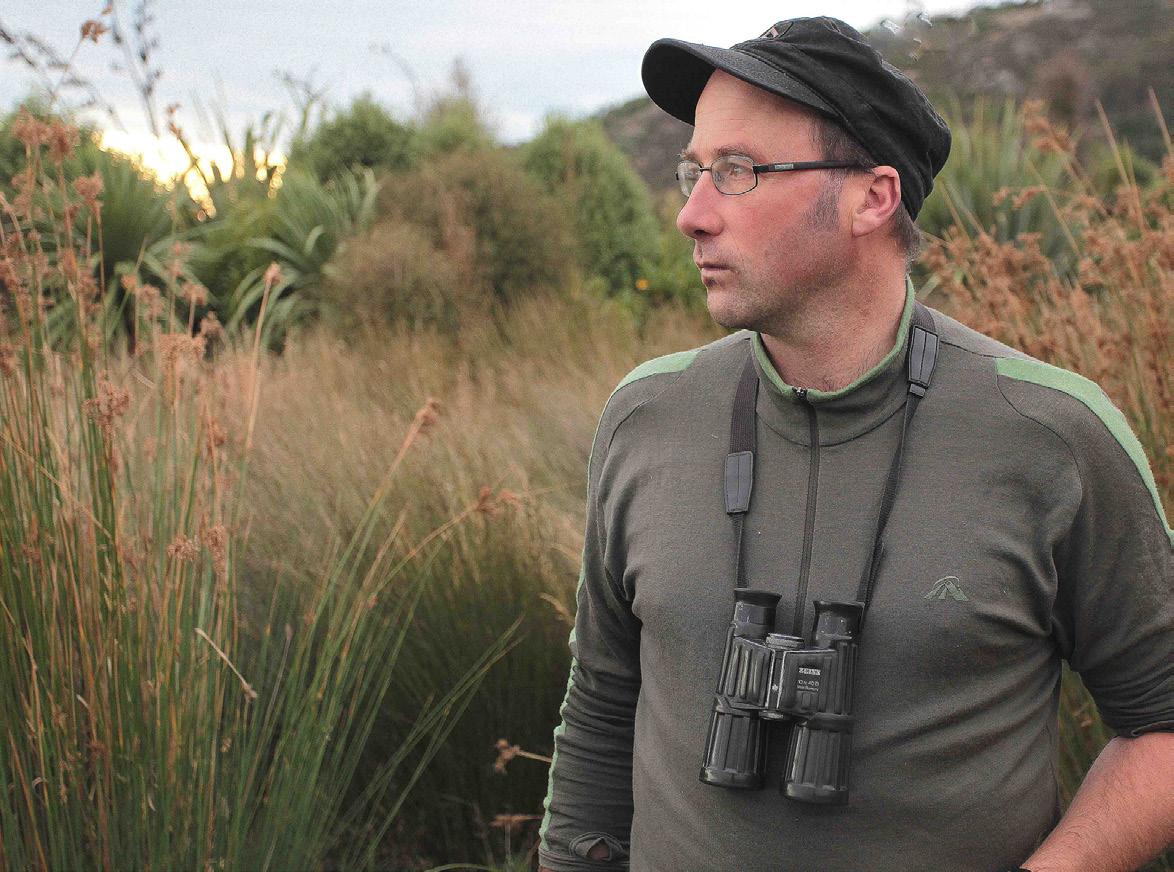


$79.99
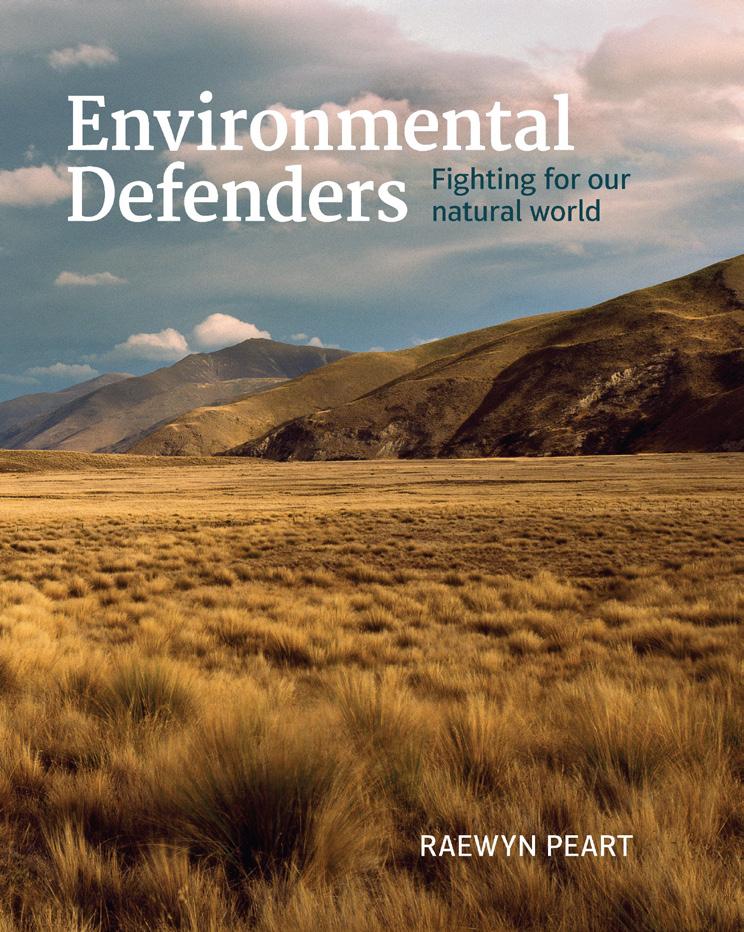
Environmental Defenders: Fighting for our natural world
By Raewyn Peart
Environmental Defenders tells the story of how the law has been mobilised to protect some of New Zealand’s most precious places.
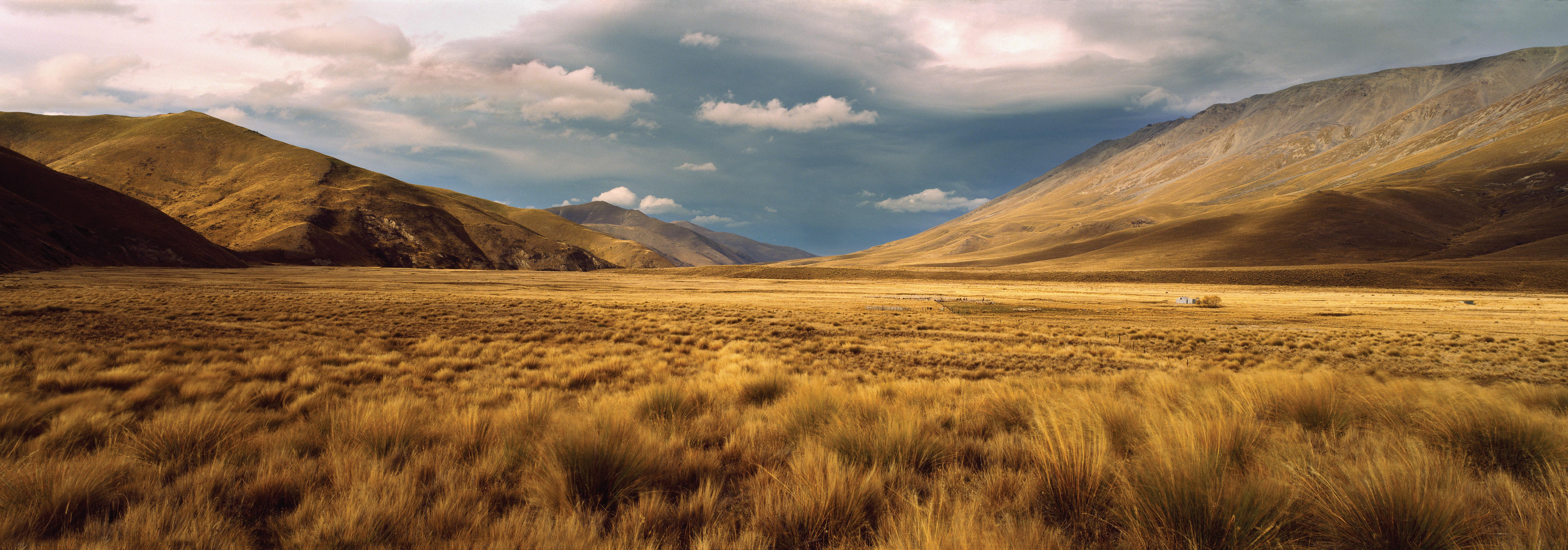
Purchase on our website edsnz.myshopify.com/products
BIRD NERDS
Why do New Zealanders love their birds so much? Lynn Freeman reports.
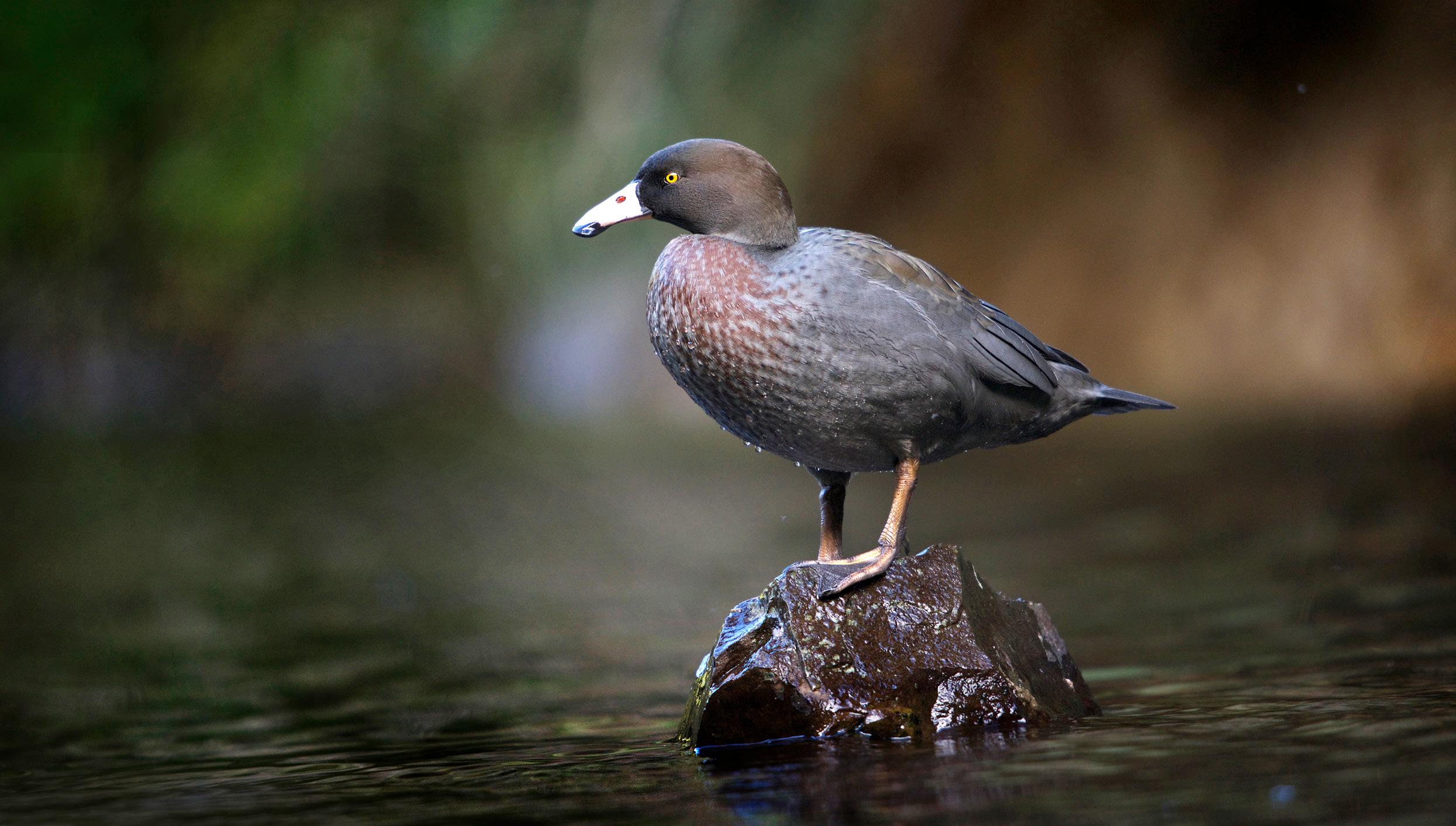
Bird of the Year Te Manu Rongonui o te Tau returns in September 2024, and this year the only controversy might be the lack of controversy.
No US talk show hosts, no pekapeka, and no kicking out the kākāpō – this year, the competition is returning to its grassroots origins. It’s all about how we, as Kiwis, identify with our manu.
The theme was inspired by a question we asked last year’s voters: Could you tell us why you voted for your top 5?
Of the more than 532,000 (unverified) votes that poured in, around half included explanations. People from all walks of life and from all over the world shared their stories. These ranged from the heartfelt, poignant, and profound through to the funny, weird, and, frankly, unprintable.
Birdsong, beautiful plumage, and significance in te ao Māori were popular reasons. “The world wouldn’t feel the same without a kōkako call,” said Rewi.
“Cute” was perhaps the most common adjective mentioned, but Benjamin took it to a whole new level: “The takahē is the cutest little guy. What a tubby boi. A real chongus. A beefy bird. The bluest berry.”
Others focused on the personality of their picks. Nic was unequivocal: “Pīwakawaka is the friendliest bird in the world.” The charisma of kea also proved popular: “You just can’t beat a kea for sheer audacity and comedic timing. Bloody little ratbags. I think they’re great,” Sarah told us.
Many answers revealed how birds connect us with each other. Isabel wrote, “I always vote albatross in memory of my late father and a spirited argument
– that became a family joke – about the wingspan of an albatross. Weka is my second vote because of the time a weka bit my mother on the bum while she was sunbathing.”
Taylor spoke for thousands of New Zealanders whose favourite bird would ultimately come in second: “Kiwi, I am a kiwi! It’s our national bird. A no brainer! You beauty!”
Some people voted for birds in serious trouble who need support, like the tūturiwhatu southern New Zealand dotterel, which numbers just 101 individuals. “Tūturiwhatu southern New Zealand dotterel is falling far too close to extinction, and still many people don’t know that there is a southern species, which is heartbreaking. I hope that this competition can shed light on this amazing bird and give it the recognition it deserves. Maybe with that recognition a way can be found to save this species,” said Bekki.
Others found inspiration in species that have featured in conservation success stories. Victoria remembered reading in a school journal as a kid in the 1980s about how few karure North Island black robins remained. “For them to fight to hang on to survival of the species is incredible. I hope we never lose them,” she wrote.
We were encouraged to see many voters helping the birds they love with on-the-ground conservation action, like Grant, whose number one bird was the critically endangered kakī black stilt. “I have spent the last 25+ years on vegetation control on the Tasman River and other rivers, protecting these little magic birds.”
Others voted for birds found closer to home, in their
BIRD OF THE YEAR
| Forest & Bird Te Reo o te Taiao 32
Whio Neil Foster
backyards, like Jim from the Bay of Islands, who shares his property with a pair of moho pererū banded rails, and Sarah, who praised her resident riroriro. “The grey warbler sings every day in my garden – beautiful, lifts my spirits.”
There was quite the selection of tales from people who were “persuaded to” vote by parents, siblings, partners, teachers, and, of course, TV show hosts.
Thousands of people wrote that John Oliver made them vote for the pūteketeke. Jay took it to the next level: “John Oliver threatened me and my family. We are locked in the basement of 1312 Potomac Street in Virginia, USA. Please hurry.”
Persuaded voters didn’t seem to mind, but ultimately it was love that shone through the most. “My partner and I would love to be reincarnated as toroa albatross and spend another lifetime together,” Mikayla shared.
Voting for Bird of the Year will open on 2 September, with the winner announced on 16 September.
In the meantime, check
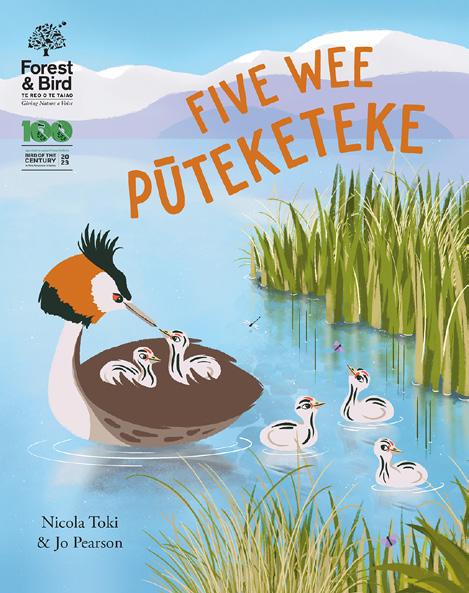
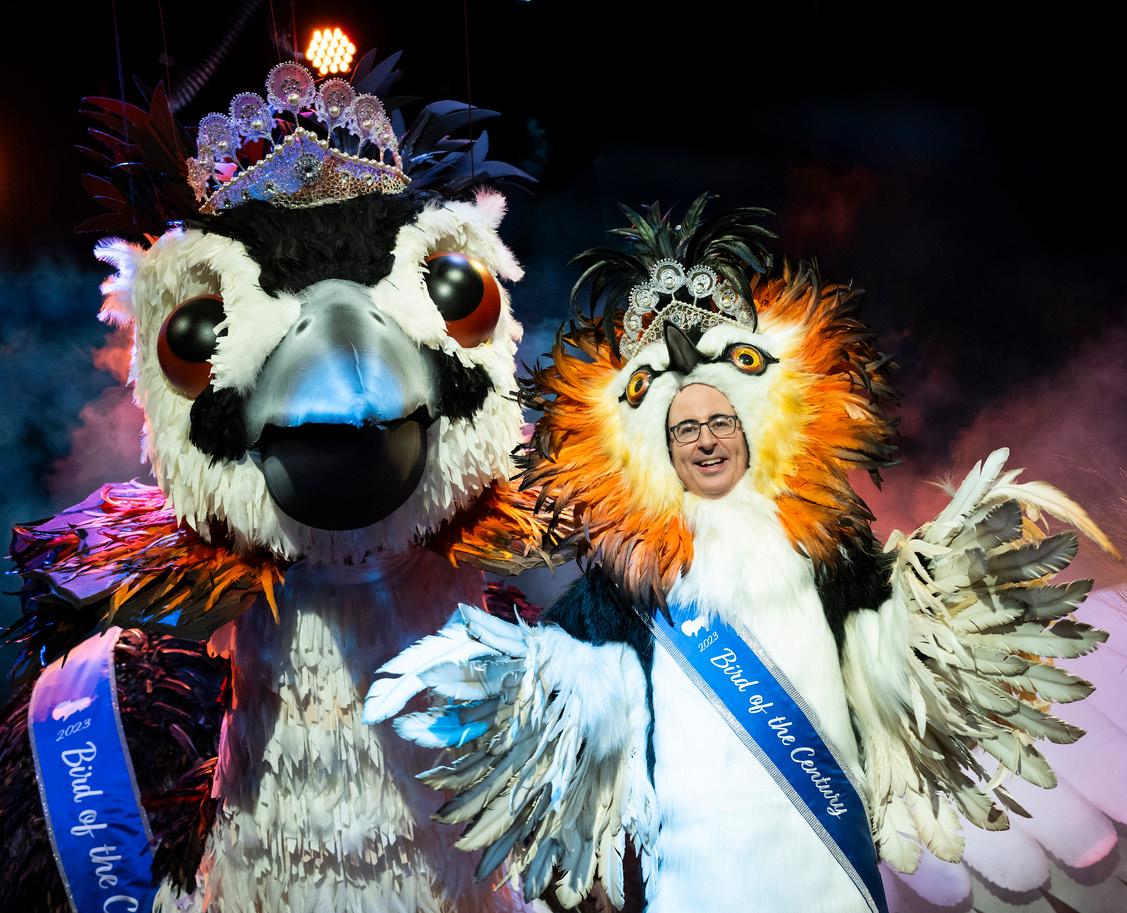
out Five Wee Pūteketeke by Forest & Bird chief executive Nicola Toki, with illustrations by Jo Pearson (RRP $22.99). This charming new picture book for children and their parents is dedicated to last year’s Bird of the Century. The publisher is donating $1 per book sold to Forest & Bird.
We are looking for campaign managers for the 2024 competition. Find out more and apply at https://bit.
ly/BOTY2024.
WHAT’S YOUR WILD LEGACY?
Fiordland, known for spectacular scapes, unique fauna and mysterious waters. Here lies a rare, fragile and precious ecosystem that needs us explorers to tread light, give back and support the next generation to do the same.
We have a unique opportunity for you to be a part of our wild legacy and contribute to the restoration efforts on Te Puka - Hereka/Coal Island. Claim your spot today.


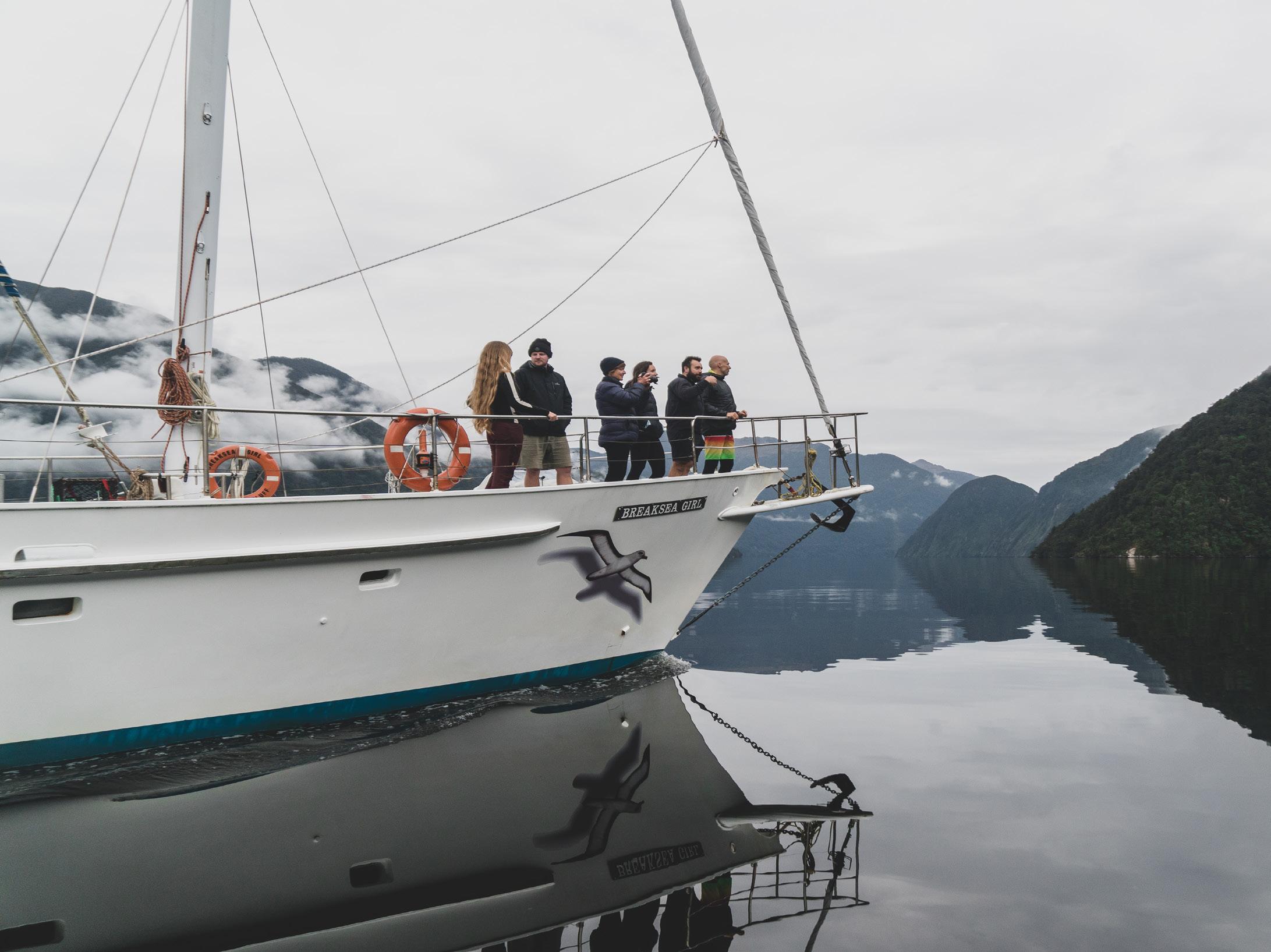 John Oliver wins Bird of the Century Courtesy HBO
KAYAK . SAIL. SNORKEL. FREE DIVE HIKE. WINE. DINE. UNWIND
The northern [mainland] population of hoiho has declined 83% since 1996 to just 163 breeding pairs in 2023.
Conservationists fear it could become extinct by 2060.
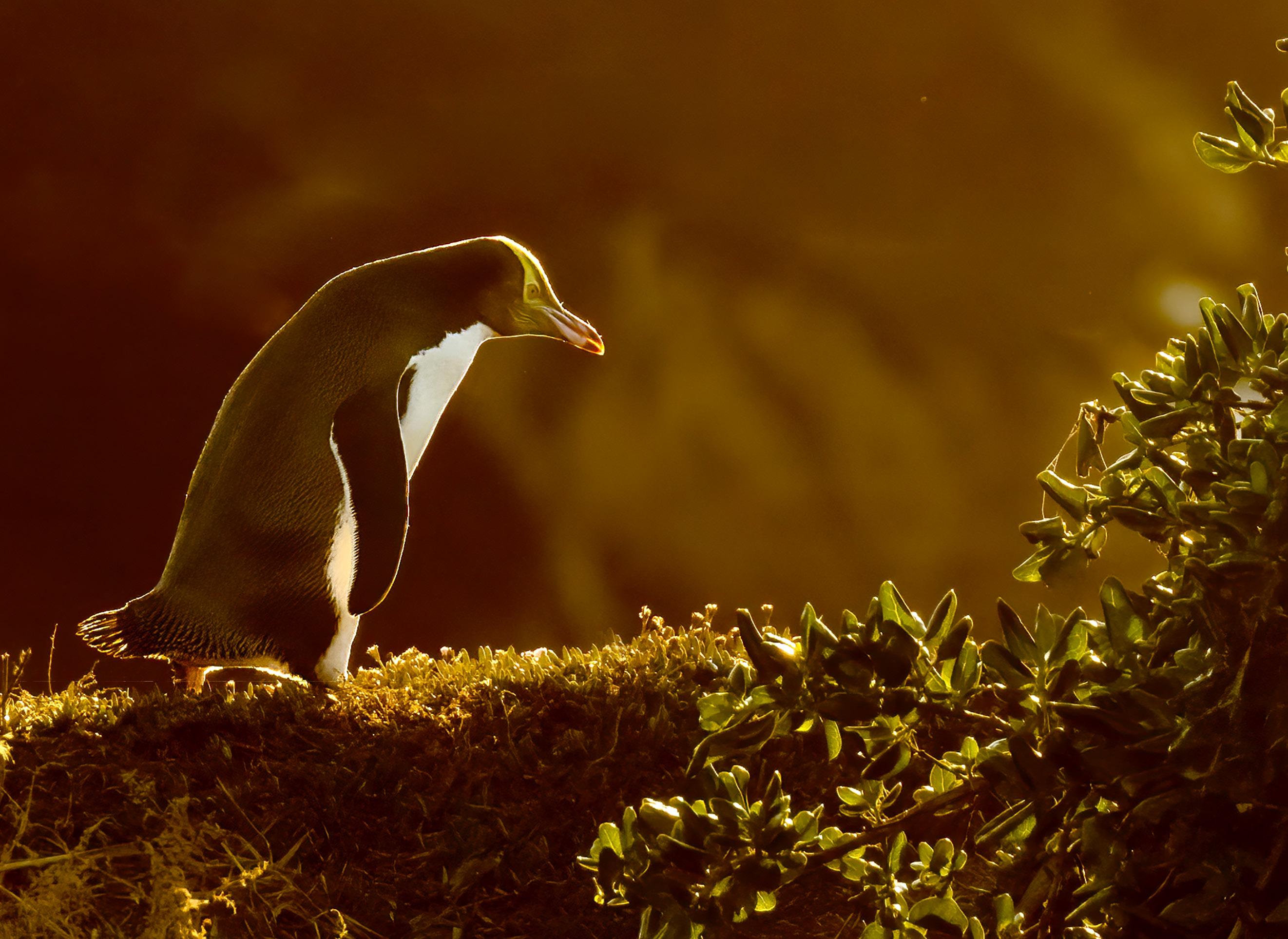
HOIHO NUMBERS PLUMMET
Conservationists are calling for more marine reserves along the Catlins coastline to protect declining numbers of yellow-eyed penguins. Kerrie Waterworth
Anew record was set at Forest & Bird’s Te Rere hoiho penguin sanctuary last spring, but it was no cause for celebration.
During the October nest search, the Department of Conservation and Forest & Bird team found only two nests in the Catlins penguin reserve, a record low for the start of the season.
“We had the lowest numbers, the worst outlook we have ever had,” said Te Rere manager Brian Rance.
A third nest was later discovered, and the season ended up with three nests, still the lowest on record, although three chicks hatched and survived.
When Brian first started volunteering at the Te Rere hoiho sanctuary in 1986, there were 50 pairs and more than 100 penguins. After a devastating fire at the reserve, numbers settled at about 20 pairs, but in 2010 the numbers started diving.
There are currently an estimated 10 adult penguins in the colony, and numbers have been declining since 2015 (see graph overleaf). “We hope our monthly pest
line checks keep the predator numbers low and remove one threat to our hoiho. It’s tragic putting in this big effort, when something bad seems to happen [to the hoiho] every year, and they don’t have a chance to recover,” added Brian.
Ōwaka-based Department of Conservation biodiversity ranger Cheryl Pullar carried out weekly checks of Te Rere’s two nests during the breeding season.
In December, she uplifted two “very underweight” chicks for rehabilitation from one nest.
The second nest was found to have one infertile egg and an egg that hatched very late. The one-day-old chick that weighed just 79g (chicks usually weigh 90g at hatch) was taken to Dunedin’s Wildlife Hospital. All three chicks survived and were later released at Long Point, another hoiho breeding colony in the Catlins.
SEABIRDS
Hoiho on its early morning trek to the ocean Glenda Rees
Cheryl Pullar
| Forest & Bird Te Reo o te Taiao 34
Mainland hoiho breed along the south-eastern coast of Te Waipounamu South Island, from Banks Peninsula to North Otago, Otago Peninsula, Catlins, Rakiura Stewart Island, and neighbouring Whenua Hou Codfish Island.
Cheryl said Te Rere was not alone in experiencing a population decline. There were reduced nest numbers all along the Catlins coast this year (see overleaf).
Breeding adults sometimes take a year off breeding if conditions are not ideal, but the causes of decline over the last 10 years have been primarily attributed to starvation, diseases such as avian diphtheria, and injuries sustained at sea.
“Te Rere reserve is closed to the public, has an extensive trapping network, and has undergone restoration planting for a couple of decades,” said Cheryl.
“Land-based issues are being addressed. It’s the marine environment and unknown triggers for disease that are problematic.”
University of Otago marine conservation ecologist Dr Rachel Hickcox tracked mainland and Stewart Island hoiho to estimate their nesting range and marine foraging range, and “to figure out what is going on at sea”.
She found hoiho foraged in areas used by all types of fisheries along the South Island’s eastern continental shelf and continued to be at risk of drowning in gillnets.
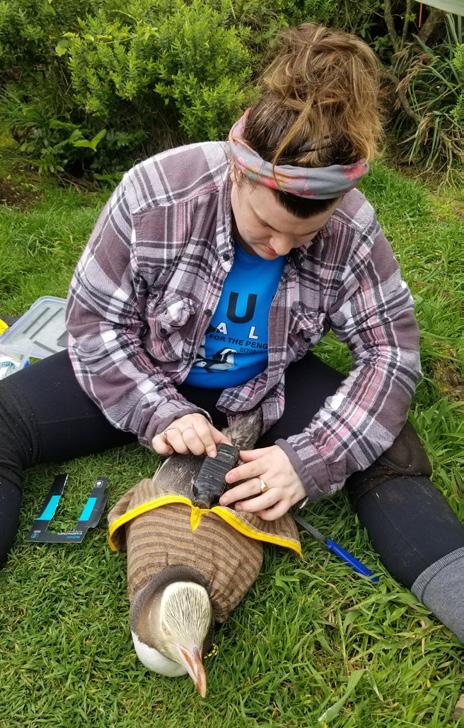
In her PhD, completed last August, Rachel concluded: “Current fisheries management practices are not sufficiently reducing protected species captures and protecting the marine environment, despite quota management and vessel monitoring systems, electronic catch reporting, and increased observer and camera coverage on inshore vessels…
“Marine protection is required in fisheries–penguin interaction hotspots including the Catlins coast and North Otago.”
Last October, the previous government announced the first new marine reserves in the south-east of the South Island, following years of public consultation.
But the new marine reserves are in Otago and will leave most of the Catlins and Southland hoiho unprotected.
Otago marine ecologist Thomas Mattern has been researching hoiho for more than two decades and will be working with the species again on Rakiura next summer.
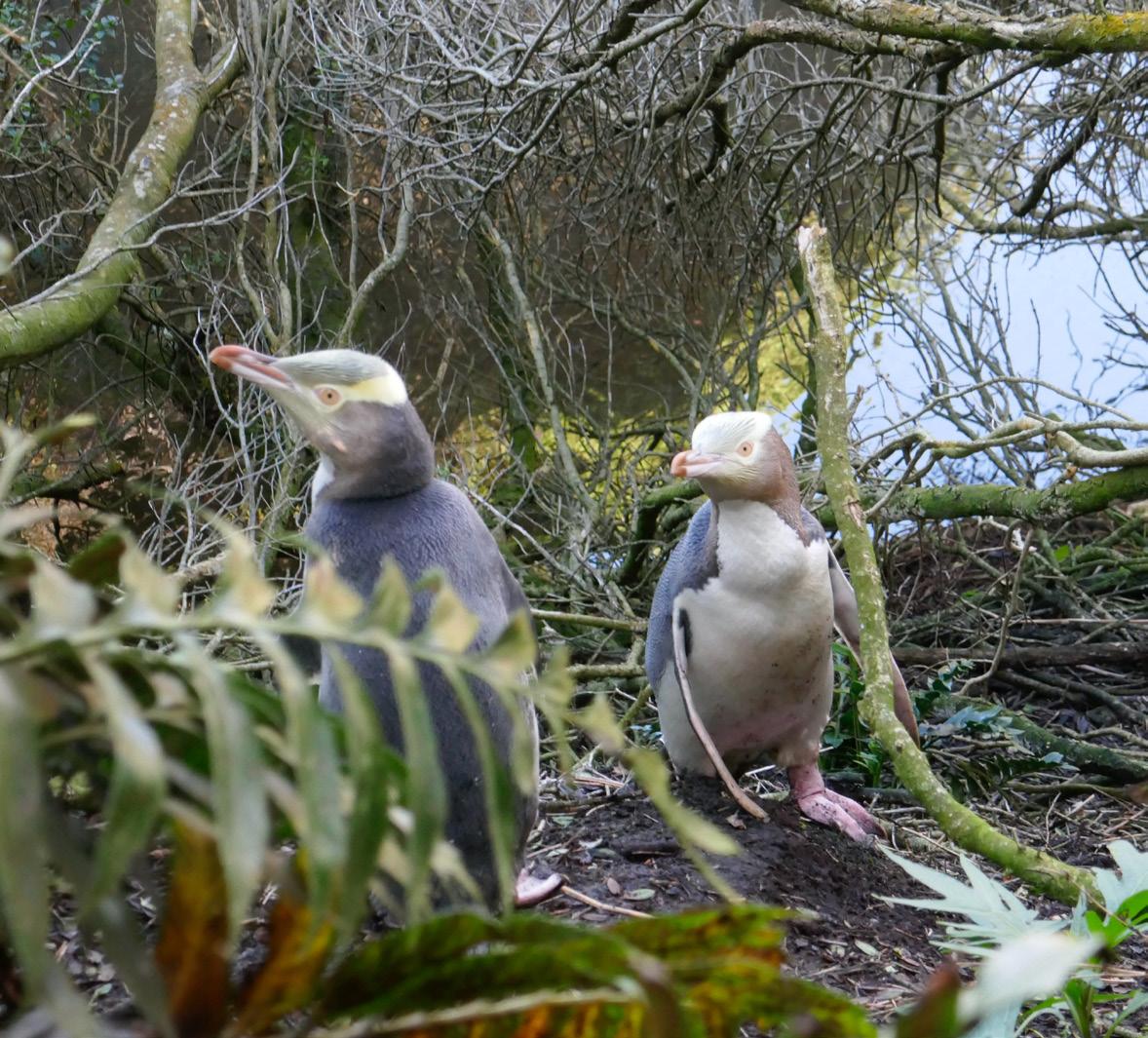
He said the new marine reserves would protect only 4% of the predicted range of the yellow-eyed penguins.
“We have been sitting on our hands too long,” he said, “Even if we established substantial marine reserves off the Otago and Southland coast tomorrow to protect hoiho, there is a good chance the Catlins population has gone past the point of no return already.
“If we had found a way to reduce the fisheries impacts, I think hoiho might have had a fighting chance.”
Hoiho are predicted to be extinct on the mainland of New Zealand by 2060.
“The first scientific publication pointing out the significant impact of set net bycatch on the species was published 24 years ago. That should have been a major wake-up call,” added Thomas.
“But here we are a quarter century later with next to no change in our fishing practices.”
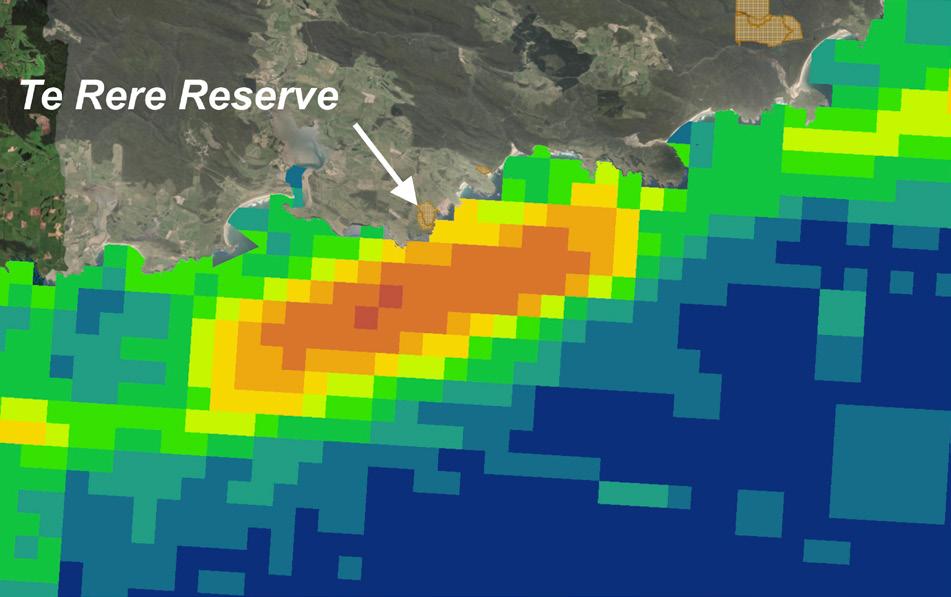 Two penguins in the bush at Te Rere, where Forest & Bird volunteers have been carrying out predator control since the 1980s. Fergus Sutherland
→
Rachel Hickcox attaching a GPS device to an adult hoiho Supplied
35 Winter 2024 |
Graphic showing trawling intensity around Te Rere (red = highest intensity). Supplied
HALTING THE DECLINE
Forest & Bird asked Richard Seed, DOC’s Senior Ranger for Coastal Species (Otago, Southland and Rakiura), for his analysis on how our mainland (northern) hoiho are doing.
The northern population of hoiho, currently breeding from Rakiura to North Otago, has declined 83% since its recorded peak, dropping from an estimated 949 breeding pairs in 1996 to an estimated 163 pairs in 2023.
Historically, periods of decline for the northern population were followed by recovery. This is no longer the case, despite management efforts.
The goal set out in Te Kaweka Takohaka mō te Hoiho (the Hoiho Recovery Strategy 2019) was to halt the decline of the northern hoiho population in five years.
Despite extensive action to implement this recovery strategy, the decline has continued. The strategy is due for a review in 2024/25. Starvation and susceptibility to disease have been the main reason for recent declines.
Mainland hoiho: Snapshot of the last three seasons
supplementary feeding of adults and juveniles to ensure they survive the annual moult, and treatment of any sickness or injury that threatens survival.
The intensive management programme relies on the significant efforts, expertise, and facilities of the Wildlife Hospital Dunedin, Penguin Rescue, OPERA (Otago Peninsula Eco Restoration Alliance), and the Yellow-eyed Penguin Trust, in addition to those of DOC.
Our intervention efforts improve fledging success and survival of juvenile and adult hoiho. However, this operation is limited to protecting birds that are closely monitored on land. We lose too many birds outside of this sphere of control.
Continuing to implement other aspects of Te Kaweka Takohaka mō te Hoiho and its five-year Action Plan Te Mahere Rima Tau are essential to halt the decline.
These include mitigating fisheries bycatch, protecting the marine habitat, reducing disturbance from unregulated tourism, and protection from terrestrial predators, including dogs.
Te Rere population 1995–2024
Penguins (est) Nests (season start)
The northern population of hoiho requires intervention to ensure they survive. This intervention has intensified in recent years to include uplift of young chicks for disease treatment for around seven days, supplementary feeding of chicks through to fledging,
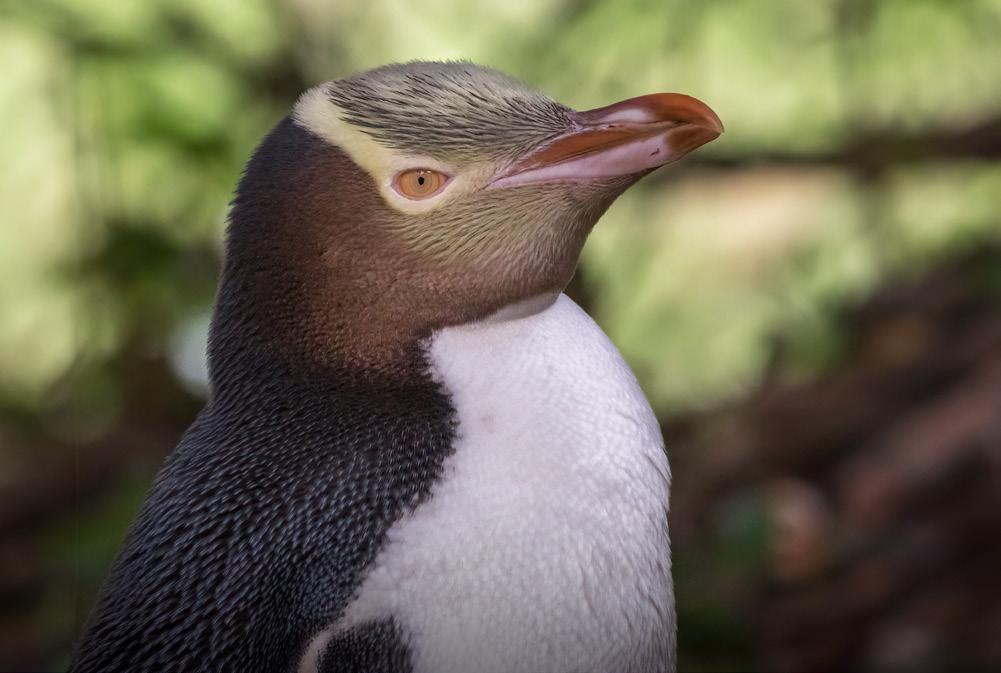
Region 2021/ 2022 2022/ 2023 2023/ 2024 Decline over last three seasons Banks Peninsula 2 1 0 100% North Otago 48 44 42 13% Otago Peninsula 60 60 50 16% Catlins 62 56 39 38% Rakiura 46 35 32 31% Northern Total 219 195 163 25%
→ SEABIRDS
This chart shows adult penguin and nest numbers at Forest & Bird’s Te Rere hoiho sanctuary. The colony has been in decline since 2015. Forest & Bird
0 20 40 60 80 100 120 Pre 1995 1995/6 1996/7 1997/8 1998/9 1999/0 2000/1 2001/2 2002/3 2003/4 2004/5 2005/6 2006/7 2007/8 2008/9 2009/10 2010/11 2011/12 2012/13 2013/14 2014/15 2015/16 2016/17 2017/18 2018/19 2019/20 2020/21 2021/22 2022/23 2023/24
Hoiho means “noise shouter” in te reo Māori, referring to their shrill call during the breeding season Glenda Rees
| Forest & Bird Te Reo o te Taiao 36
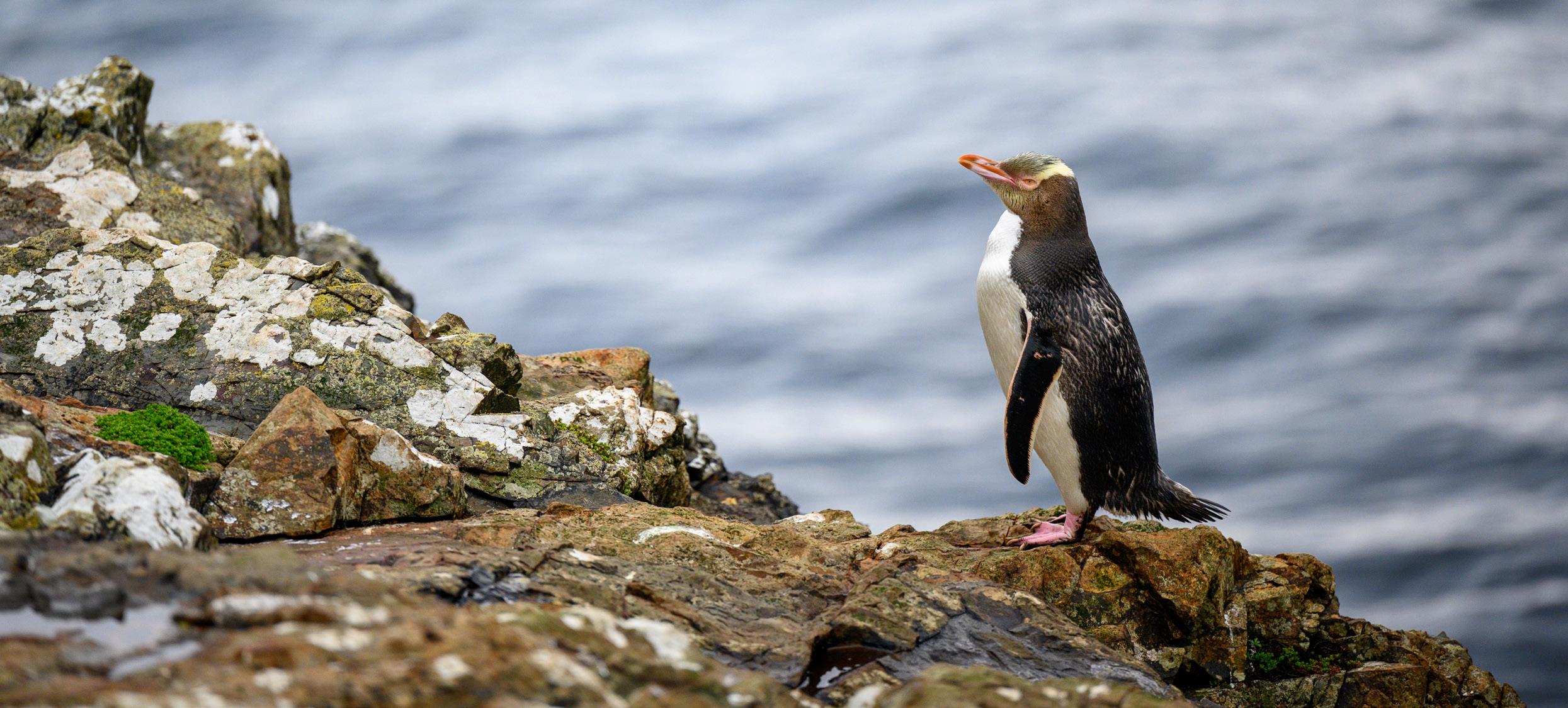
A TALE OF TWO HOIHO
There are two distinct populations of yellow-eyed penguins, and scientists want to know how southern hoiho are faring in New Zealand’s Sub-Antarctic Islands. Kerrie Waterworth
Hoiho are endemic to Aotearoa and found nowhere else in the world. There are two distinct yellow-eyed penguin populations, and movement between the two is rare, according to DOC.
The northern population includes yellow-eyed penguins living on the South Island from Banks Peninsula to the southern Catlins, Rakiura, and adjacent islands. We know they are in a state of deep decline.
The status of the southern population – those living on the Motu Maha Auckland Islands and Motu Ihupuku Campbell Island, in New Zealand’s sub-Antarctic archipelago – is not well documented.
But that could be about to change. The Department of Conservation is carrying out a population survey of the hoiho population on Campbell Island. It last checked how this population was faring more than three decades ago.
Forest & Bird hopes this vitally important hoiho research project will not be derailed by the government’s proposed 6.5% cut to DOC’s budget.
The survey will provide an up-to-date estimate of the number of hoiho on the island and their health status, while also gathering data on their diet and interaction with the marine environment. It is due to be completed by the end of June 2025.

The last comprehensive population surveys of hoiho on Campbell Island were conducted in 1987 and 1992.
“We’re not sure which direction those populations are heading,”
added Thomas Mattern. “That’s why it’s good that DOC has at long last made a start to get more
information on the penguins down there.
“Whether DOC will be able to maintain this programme in the face of funding cuts is a different question.”
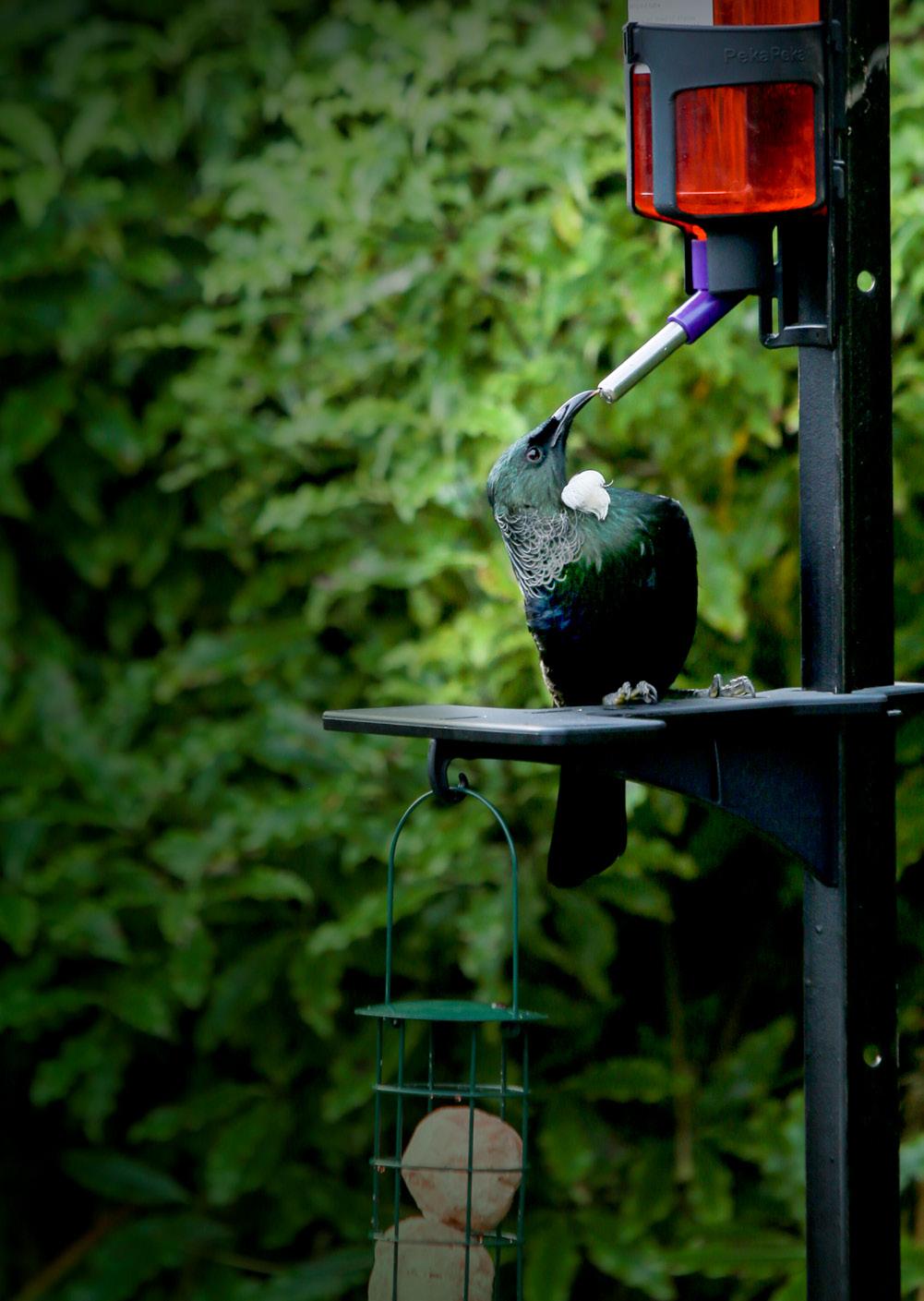
Feed tūī, bellbird, hihi, kākā, silvereye & more
● Cat proof! 360 degrees of visibilty while birds feed
● Provides sugar water, fruit & energy truffles
● Feeder can go anywhere, it’s on a waratah
● Stainless steel nozzle ensures safe, hygienic feeding & easy cleaning to prevent the spread of avian pox.
Buy a feeder at PFNZ shop.predatorfreenz.org.
For more info go to our website pekapekabirdfeeders.nz
Hoiho on Disappointment Island, Auckland Island group. Jake Osborne
Thomas Mattern
37 Winter 2024 |
WHAT’S UP WITH WAPITI?
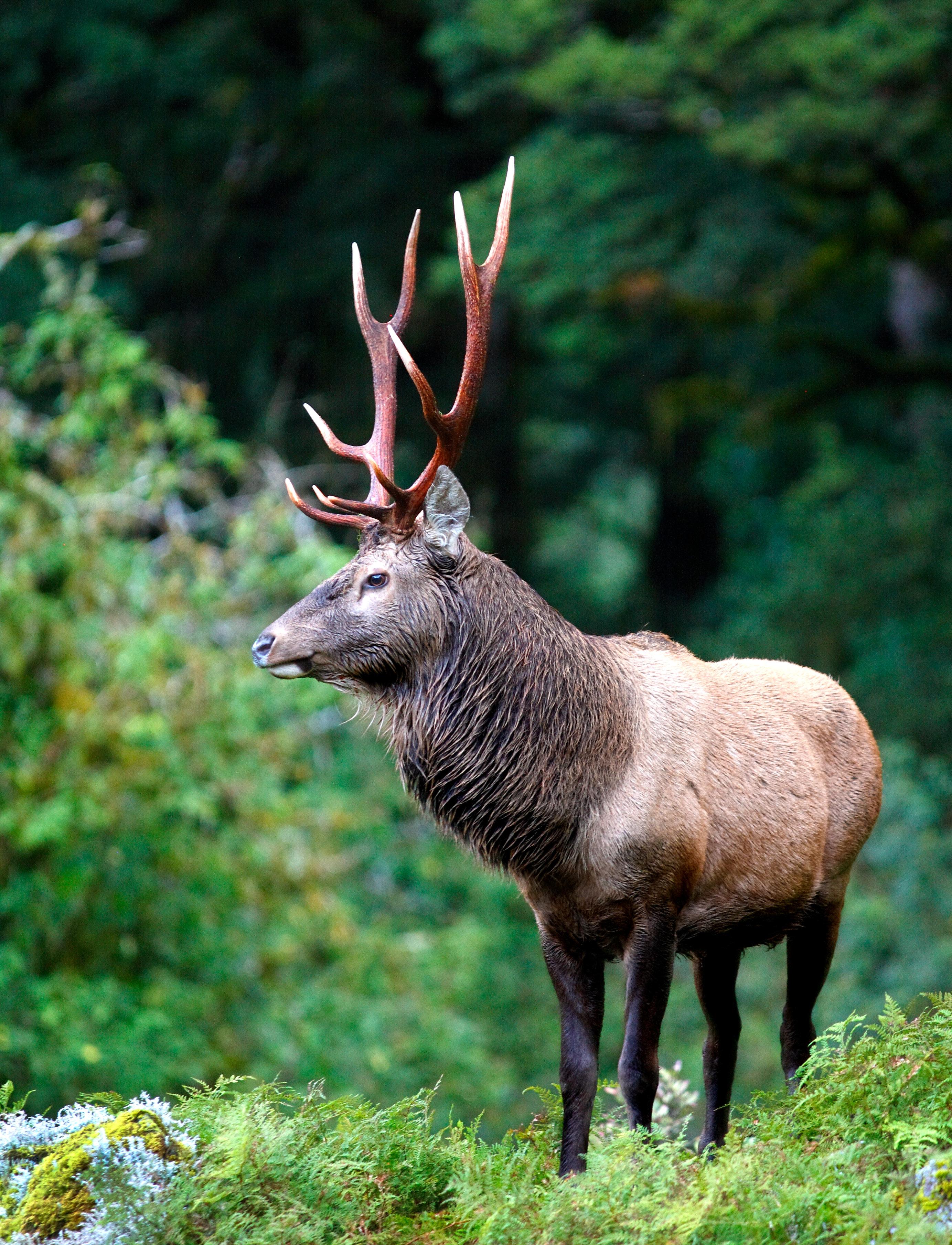
What are wapiti and why is Forest & Bird worried about them? We’ve put together this Q&A to help answer these questions and more.
BROWSING MAMMALS
Young wild wapiti, Fiordland National Park Rob Suisted
38
| Forest & Bird Te Reo o te Taiao
WHAT ARE WAPITI?
Wapiti are an exotic species of North American elk, the largest remaining type of deer brought to Aotearoa during European colonisation. Wapiti is the native American word for “white rump” and they were given their name by Inuit. Purebred wapiti are valued as a trophy hunting animal for their impressive antlers and large size. Its meat is also popular with Americans, marketed as a close cousin to venison with “sweeter meat and larger cuts”, with one-fifth of the fat of beef. Outside North America, New Zealand is the only place that calls them wapiti. Elsewhere in the world, they are known as elk. In Fiordland, the original purebred wapiti have over time bred with local red deer, creating a hybrid wapiti-red deer species. These elk cause problems in the national park because of their voracious destruction of native plants, including rare alpine species, that have not had time to evolve defences to any of the browsing mammals introduced 120 years ago.
WHY DO WE HAVE WAPITI IN A NATIONAL PARK?
Purebred wapiti (Cervus elaphus nelson) from the United States’ Yellowstone National Park were gifted to New Zealand by President Theodore Roosevelt and released in George Sound, Fiordland, in 1905. They were introduced to Fiordland for the pleasure of game animal trophy hunting by early settlers through organisations known as Acclimatisation Societies. Around the same time, red deer (Cervus elaphus scoticus) were also introduced for sport and recreation. The early settlers did not realise the impact these browsing mammals would have on New Zealand’s Gondwana-era plant life. Other species they brought to their new country to be naturalised included small birds, such as blackbirds and sparrows, trout and salmon, rabbits, possums, pheasants, and quail. By 1903, the local acclimatization societies formed the New Zealand Acclimatisation Society, and its first President was a Mr JB Fisher. In 1990, they became regional fish and game councils.
HOW MUCH HARM CAN THEY DO?
Wapiti, deer, tahr, goats, and other browsing mammals have been wreaking havoc on indigenous ecosystems ever since they were introduced to Aotearoa. Wapiti, the largest of them all, are known as the “vacuum cleaners of vegetation”. They will feed on any plant they come across – grasses, small plants, fungi, and twigs, buds, leaves, and bark of trees and shrubs. They eat hundreds of species of plants – low, high, tender, tough – as far as they can reach. Fiordland National Park is nothing like the North America grasslands the wapiti came
from. Fiordland’s steep forested slopes and fragile alpine areas lack the vast summer pastures that wapiti are dependent on in their homeland. Instead, they pivoted to eat what they could find – native plants of all shapes and sizes. This has allowed populations of wapiti and red deer to establish themselves throughout the national park, in a place they were not naturally present.
HOW LONG HAS FOREST & BIRD BEEN SOUNDING THE ALARM ABOUT DEER?
For more than 100 years, ever since it was established in 1923. Founder Val Sanderson was referring to deer when he wrote in 1926: “The remaining portion of our forests is sorely menaced. No one who has any interest whatever in this country can afford to stand idly by. They are yours and your business.” In 1930, the Society succeeded in drawing the government’s attention to the deer menace, leading to a conference in Christchurch on the impact of deer and other browsing mammals. Sanderson and the Society’s President Dr Leonard Cockayne, the renowned botanist, attended, along with

KILLS FOES NOT FRIENDS
PINDONE PELLETS are a cost-effective way to control possums and rats, approved for use in sensitive environments. Very low risk of primary or secondary poisoning to domestic pets and native wildlife. For more information, go to keyindustries.co.nz
→
☛ References for this Q&A are available on request 39 Winter 2024 |
interested parties from all over the country, including Forest & Bird’s Otago Branch. They convinced the government to start a programme of deer culling. Ministers removed regulations that had protected deer and instead allowed free year-round shooting of deer, chamois, and tahr to control the populations. It was an early win for the Society.
WHY IS FOREST & BIRD WORRIED ABOUT WAPITI IN FIORDLAND NATIONAL PARK?
Population increases of red deer, as well as impacts from other browsing mammals such as wapiti, fallow deer, goat, chamois, and tahr, are identified as ongoing threats to Fiordland National Park. There are thousands of browsing mammals in the park. They eat their way through habitats and have caused severe damage in some parts, threatening the integrity of the forest and alpine ecosystems. Wapiti eat broadleaf, a tree that provides essential berries for native birds. Forest & Bird first advocated for national parks in the 1930s and played a leading role in establishing the National Parks Act 1952, introduced into law by Ernest Corbett, a Taranaki dairy farmer and Forest & Bird member. The Act provided for new “parks for the people” that would be properly managed and preserved in perpetuity, including exterminating exotic species “as far as possible”. The sprawling Fiordland national reserve was the first place in the country to become a national park under the 1952 legislation. Today, Fiordland National Park is the largest park in the country and forms a large part of Te Wāhipounamu World Heritage Area.
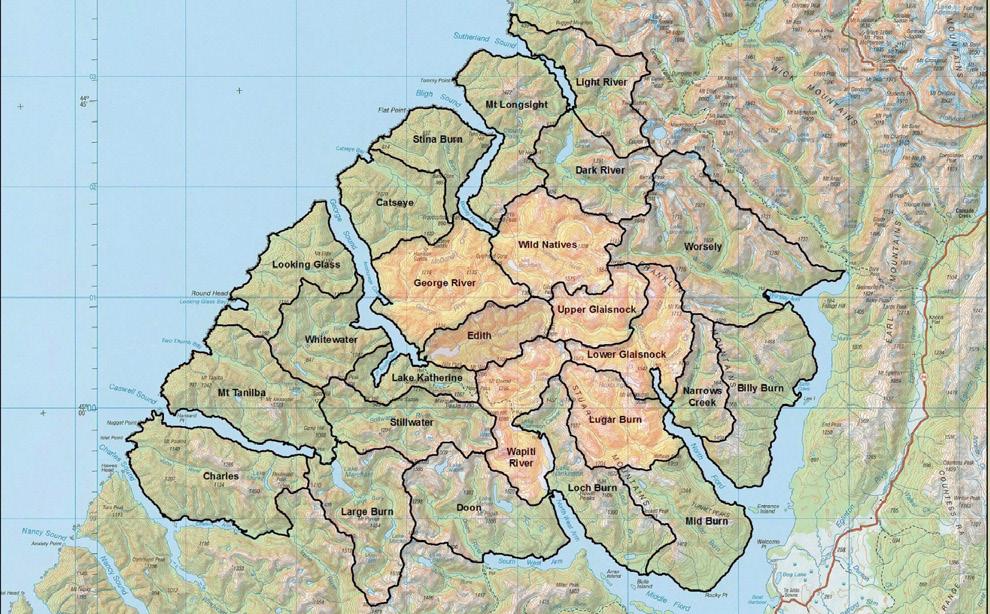
WHY ARE THERE WAPITI IN A WORLD HERITAGE AREA?
Forest & Bird worked with Ngāi Tahu and the Department of Conservation in drafting a detailed submission that resulted in the establishment of Te Wāhipounamu Southwest New Zealand World Heritage Area. In 1987, we published a book called Forests, Fiords & Glaciers: the Case for a South-West New Zealand World Heritage Site, which showed how
it was the world’s best intact modern representation of the ancient biota of Gondwana. A UNESCO World Heritage Area designation is internationally significant. It places the region of south-west New Zealand, including Fiordland National Park, in a world class category of sites alongside places like Yellowstone National Park and the Grand Canyon National Park in the USA, Mount Kilimanjaro National Park in the United Republic of Tanzania, and Sagarmatha (Everest) National Park in Nepal. There is an obligation on the New Zealand government to protect the outstanding universal values that contribute to meeting the criteria for being a World Heritage Area. The status could be revoked if it was found the values were degraded by any threat, such as an uncontrolled population of wapiti or red deer. The process for that starts with a complaint to the World Heritage Committee, who would then carry out an investigation.
WHY DID FOREST & BIRD APPLY FOR A JUDICIAL REVIEW?
Wapiti in the national park are currently managed by the Fiordland Wapiti Foundation through a community management agreement with the Department of Conservation. The foundation culls red and hybrid deer and carries out conservation work, such as laying traps, in rugged country. This applies to a part of the park known as the “wapiti block”. The foundation commercially harvests the meat and sells it to restaurants. This management agreement is the only one in the country that we are aware of that deals with an introduced species in a National Park in this way. Our chief executive Nicola Toki said this was “akin to farming in the national park” in her letter to former Conservation Minister Willow-Jean Prime last year raising the Society’s concerns about the legality of the wapiti management agreement.
To settle the matter, Forest & Bird lodged an application at the end of March for judicial review of the agreement between the Director-General of Conservation and the Fiordland Wapiti Foundation. This action was not taken lightly. Forest & Bird considers the current management agreement between DOC and the Fiordland Wapiti Foundation is unlawful. It is inconsistent with the National Parks Act 1980, the General Policy for National Parks, the Southland Conservation Management Strategy, and the Fiordland National Park Management Plan. In addition, the management agreement sets a precedent that could see management agreements for other browsing mammal species used in similar situations elsewhere, when they are not appropriate or lawful. In addition, the agreement is a private contract, excluding the public from involvement. This is not appropriate for such an important issue.
→
Fiordland Wapiti
| Forest & Bird Te Reo o te Taiao 40
Ballot Blocks
WHY HAS FOREST & BIRD NOW PAUSED THESE LEGAL PROCEEDINGS?
Forest & Bird, the Fiordland Wapiti Foundation, and DOC have agreed to pause the legal proceedings regarding the management agreement so they can investigate whether there is a way of managing wapiti that meets the parties’ interests. Forest & Bird welcomes the opportunity to work with the Fiordland Wapiti Foundation and DOC on this critical issue.
WHAT DOES A SUCCESSFUL OUTCOME LOOK LIKE FOR FOREST & BIRD?
The precious indigenous biodiversity in this World Heritage Area needs to be protected. Forest & Bird is working with the Fiordland Wapiti Foundation and DOC to find a lawful way to manage the wapiti population that is consistent with protecting the biodiversity values in Te Wāhipounamu. We are aiming for an agreed solution that achieves these outcomes. Forest & Bird does not anticipate this will require that wapiti are eliminated, and we expect that they will continue to be an important hunting opportunity. The Fiordland Wapiti Foundation would also continue its
one priority is an outcome that is lawful, protects the indigenous biodiversity vaues and integrity of the Natinoal Park, and doesn’t set a precedent that erodes the protection conservation legislation provides and that the World Heritage designation requires.
WHAT IS FOREST & BIRD’S VIEW ON HUNTING?
Forest & Bird is a strong supporter of a diverse range of conservation approaches. We welcome the mahi undertaken by the Fiordland Wapiti Foundation and other organisations who contribute to protecting New Zealand’s most precious places. Hunting is part of the toolbox in tackling the out-of-control numbers of browsing animals that are causing significant damage to New Zealand’s environment. Forest & Bird supports the role the hunting community can and does play in helping to stem the tide of deer, pig, and goat numbers. However, we are equally clear that recreational hunting of browsing pests alone is not enough to keep their numbers in check, reduce the large area that they have taken over, or allow native ecosystems to thrive. Hunting also needs to take place in a way that is consistent with the law. Forest & Bird feels it is essential that DOC supports the hunting community, in this instance the Fiordland Wapiti Foundation, by ensuring that any
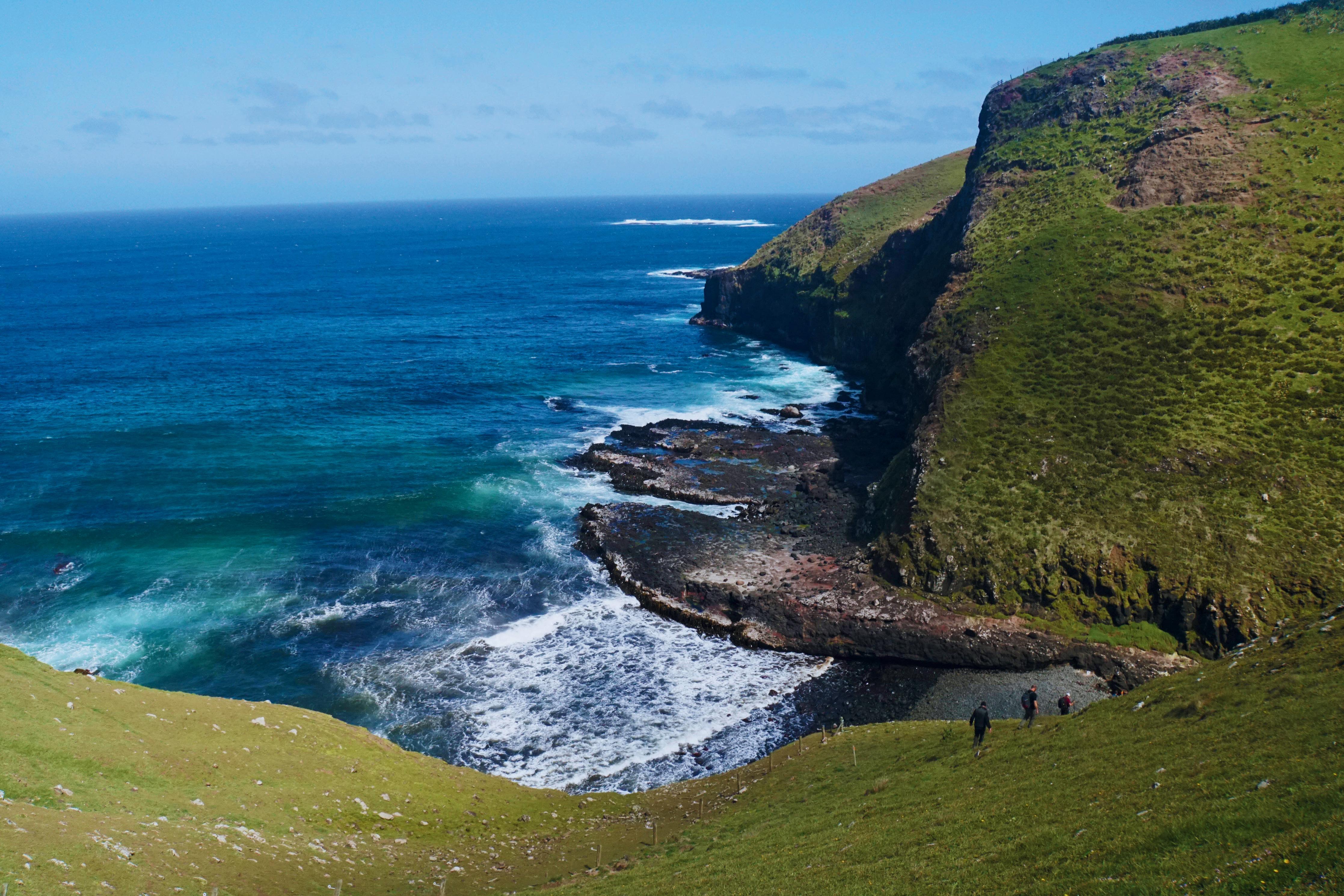

Discover the unique birds and plants that call the Chatham
Discover the unique birds and plants that call the Chatham Islands home on the most comprehensive guided explo ration of Islands home on the most comprehensive guided explo ration of these remote islands with ornithologist Mike Bell. these remote islands with ornithologist Mike Bell.
Highlights: Highlights:
8-day guided tour with ornithologist and 8-day guided tour with ornithologist and conservationist Mike Bell conservationist Mike Bell
Discover unique people, history, culture, Discover unique people, history, culture, geology, flora and fauna geology, flora and fauna
Visit Pitt Island nature reserves Visit Pitt Island nature reserves
Explore outer islands, including SE Island and Explore outer islands, including SE Island and Mangere from the water Mangere from the water



Learn about the Chatham Island Taiko Trust
Learn about the Chatham Island Taiko Trust
Price from $7,175pp*. Price from $7,175pp*.

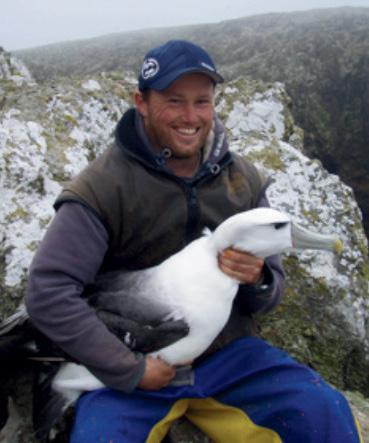

*The current price per person twin share in NZD. Includes return air travel on Air Chathams, seven nights' accommodation, all meals including continental breakfast/picnic lunches/buffet dinners, all sightseeing and entry fees as per itinerary. Refer to website for full price inclusions
single traveller pricing. Wild Earth Travel has regular Chatham Islands tours throughout the summer season - dates, prices and itineraries will vary.
&
Guided by Mike Bell
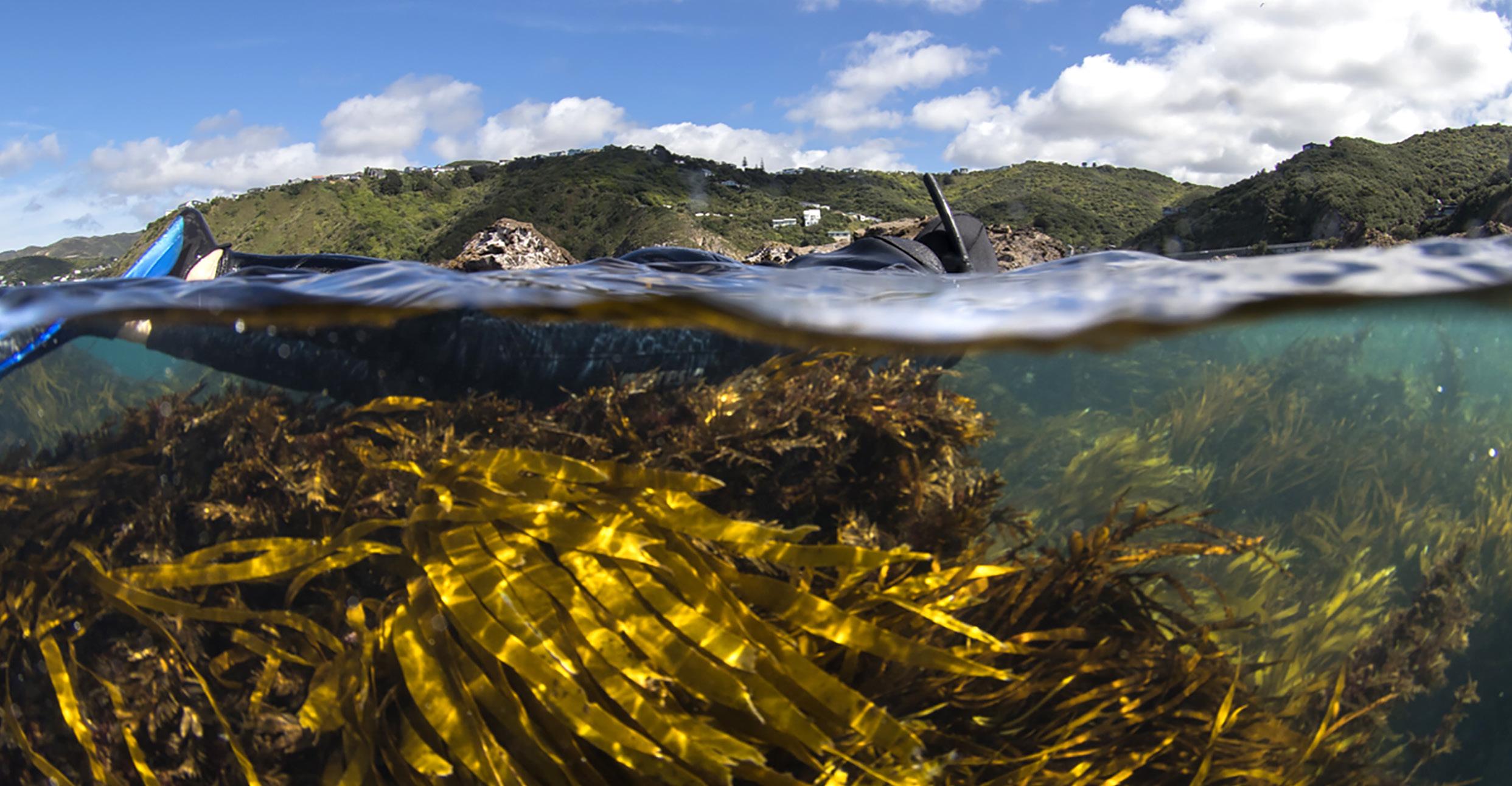
WELLINGTON’S BLUE BELT
Marine conservationist and citizen scientist Dr Nicole Miller is on a quest to become the first person to document the capital’s 70km coastline from beneath the waves.
The marine life of coastal Te Whanganui-a-Tara Wellington is surprisingly colourful and diverse. It’s possible to encounter many species at the northern- or southernmost limit of their natural range. I often saw blue moki, blue cod, trevally, and even large conger eels on my scuba dives.
But the real surprise is the high diversity of species and habitats to be found within Wellington Harbour itself, including kelp forests, sponge beds, red seaweed meadows, and brachiopod beds. Each provides a different function, food source, or habitat for a wide range of species.
Another big secret was revealed once darkness came. What appears to be an empty sandy beach during the day comes to life at night. Squids, burrowing anemones, and thousands of crabs and flatfish are some of our sea life that is active at night.
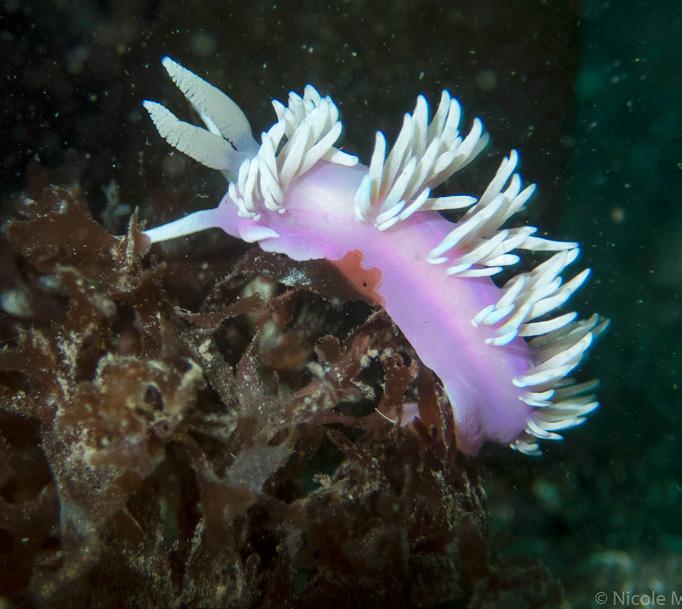
Within a stone’s throw of Wellington’s shoreline, there are other treasures to be found.
The “rainforests of the sea”, where giant kelp (macrocystis pyrifera) forests tower over the harbour’s rocky reefs build floating canopies that shape the underlying ecosystem, build biomass, and
provide food for a thriving ecosystem.
These dense kelp forests provide food, shelter, and nurseries for valuable kai moana species and for other marine life, from seahorses and pipefish to crabs and snails and smaller baitfish. These important seaweed forests also provide protection for softer sponges and other sessile invertebrates.
Kelp forests are highly valuable for our economy too. The economic contribution of one small area of kelp forest (about 0.5ha) is estimated to be around $70,000 per year because it provides nutrients and supports other species all the way up the food chain to marine mammals like orca.
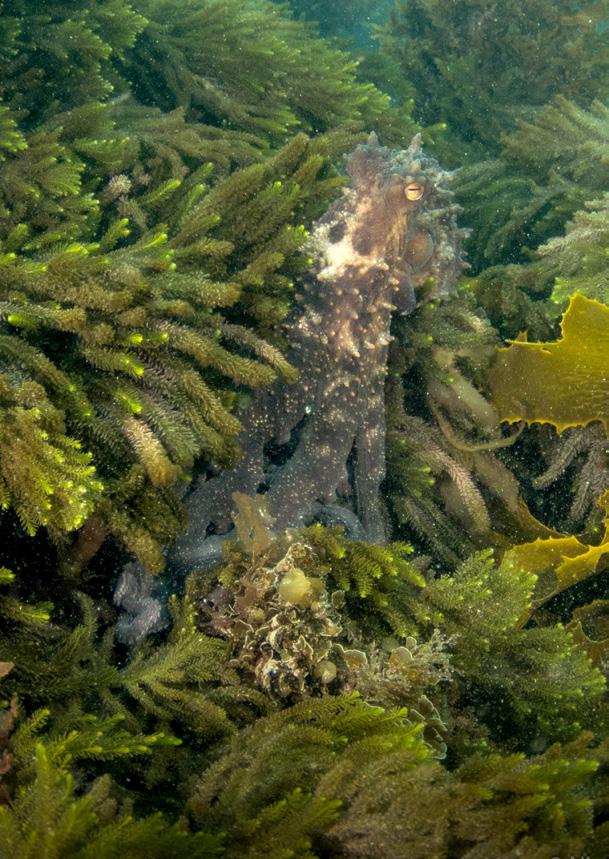
As in other parts of coastal Aotearoa, the kelp forests in Wellington Harbour are threatened by kina, our native sea urchins. Their numbers will increase in overfished areas because of the absence of kina predators.
In healthy and balanced marine ecosystems, crayfish, blue cod, moki, and snapper all prey on kina, keeping numbers under control. Without these predators, kina
MARINE
Octopus are commonly sighted on the rocky reefs of Wellington’s South Coast.
Nicole Miller
Endemic Jason mirabilis, one of 50 nudibranch species recorded in Wellington. Nicole Miller
Snorkeller exploring kelp forests, Taputeranga Marine Reserve.
| Forest & Bird Te Reo o te Taiao 42
Nicole Miller
numbers will explode and the kina overgraze on kelp, turning thriving kelp forests into areas of barren rock.
Wellingtonians have started to notice the increasing kina presence in their harbour. Ocean swimmers have reported injuries from stepping on the prickly creatures at Wellington’s city beaches in recent years. Kina barrens are now visible from Oriental Parade, north of the fountain.
Last summer, iwi and volunteers removed more than 12,000 kina from Kau Point to restore a kelp forest at the northern end of Miramar Peninsula. A year on, the barren rocks that the kina had left behind are covered in seaweed again. It’s such a great feeling to see life coming back to this part of the harbour.
Another success story has been Taputeranga Marine Reserve along Wellington’s South Coast, where the Cook Strait brings a mix of warm and cold waters between the North and South Islands. Here the marine reserve has built an important refuge. Once heavily fished, our marine life has recovered, and divers can see thriving seaweed forests and abundance of marine life.
But there are many pressures on Wellington’s marine environment, just as there are throughout our coastal nation.
I’ve been documenting declining seaweed forests, and with them the loss of marine life, for years. Within a few months, an entire seaweed forest can be lost without anyone noticing. Imagine the ancient forest giants of Ōtari Wilton Bush or Zealandia disappearing within two or three years. I bet Wellingtonians would be demonstrating for swift action. But when things are under the sea, it’s a different matter. It’s difficult to cherish what we cannot see.
Sedimentation is another threat to the health of the ocean. Run-off from shore and rivers creates fine sediments that blanket deeper parts of the harbour and smother all life.
When sediments don’t settle on the ocean floor, they remain suspended in the water, blocking light from even the shallower parts of the harbour. This is a phenomenon known as “coastal darkening”.
I experienced this while diving along the Petone foreshore. The sediment runoff from the Hutt River meant I felt obstacles before I could see them! It was certainly a challenging part of my dive this past summer.
This lack of light limits seaweed growth to narrow bands along the shore and acts like sandpaper making it difficult for seaweed spores to settle and grow. Add coastal developments and dredging activities into the mix, and the cumulative effects on our rainforests of the sea can be devastating.
Cumulative pressures build when you add in climate impacts, warming waters, and introduced species, which result in declining crucial habitats and productive marine space.
In January, I launched my Explore Your Coast
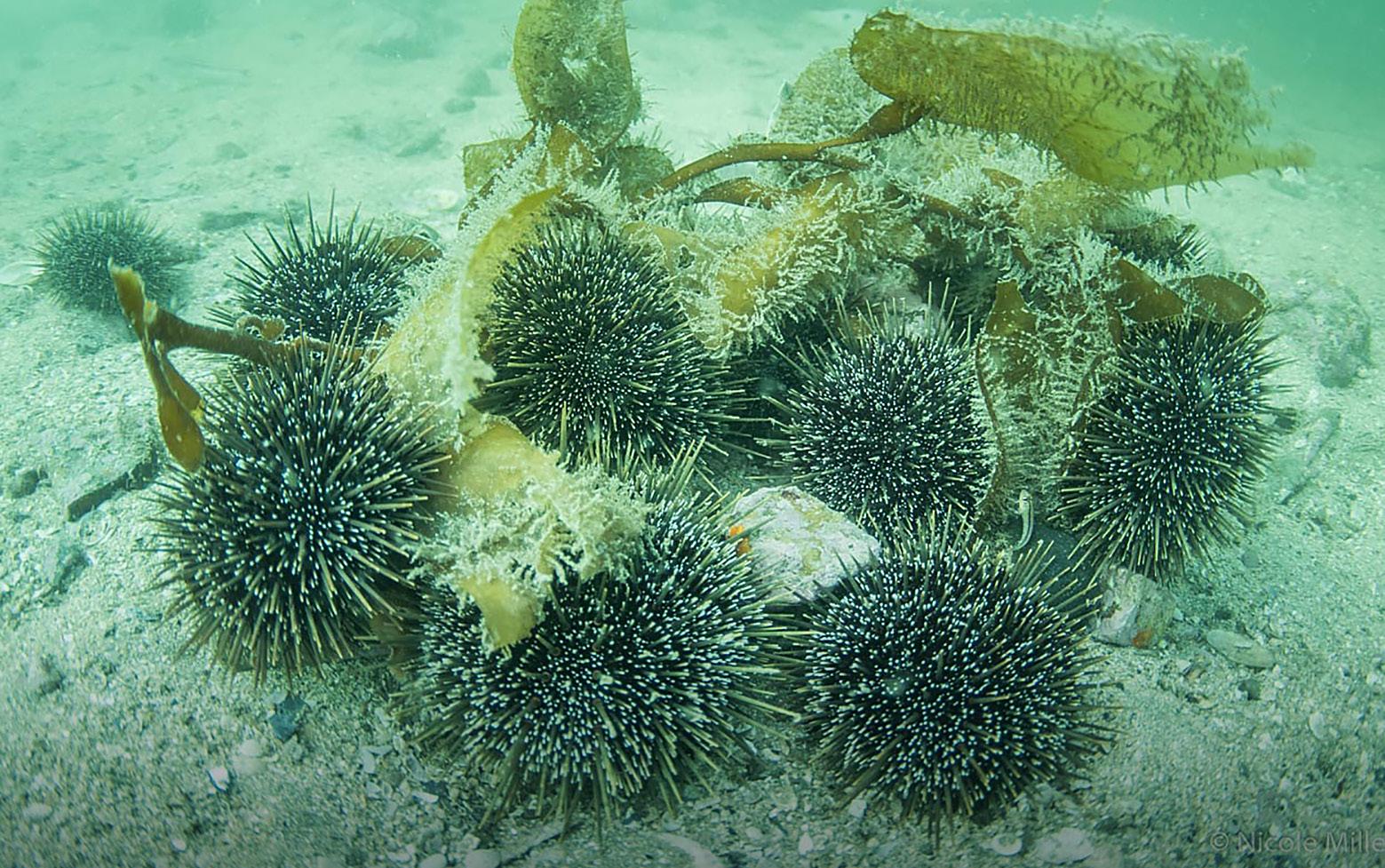
campaign to raise awareness of the rich diversity of Wellington’s blue belt and provide different ways for locals to connect with their local underwater world (see overleaf). Wellington has plenty of conservation volunteers who go out every weekend to help regenerate bush reserves and coastal dunes. The media is full of good news around increases in native bird populations and reintroduction of kiwi to the hillsides overlooking the capital’s harbour.
Marine taonga species and their habitats are equally at risk, but they aren’t getting the same kind of love. We know that actions on land and in catchments will enhance ocean water quality, and we need to reduce fishing pressure to rebalance the marine food web and create more resilient marine ecosystems.
We can all help restore our oceans, and there are plenty of land-based conservation activities anyone can help with. You don’t need to be a certified scuba diver or even get your feet wet! For example, you could help with a beach clean-up, help with dune restoration work, or collect data for scientists studying local marine ecosystems.
We shouldn’t take marine decline for granted, and creating ocean-connected communities can help make a difference in the marine space, just as it does in bird sanctuaries. The time to act is now.
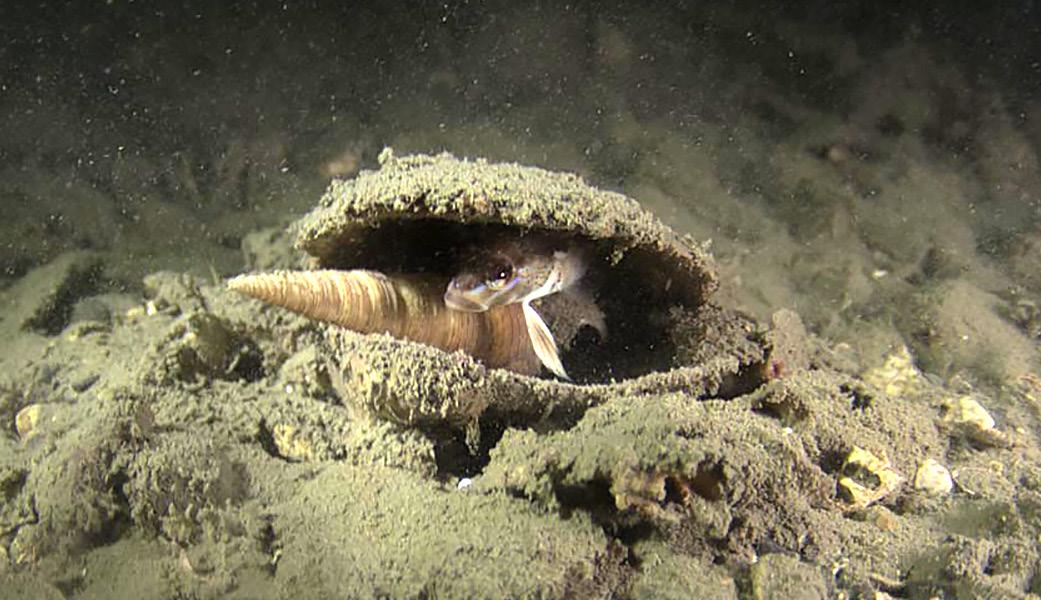
Dr Nicole Miller is a citizen science leader with a special interest in marine ecosystems. She also Chair of the Friends of Taputeranga Marine Reserve, established in 2008 through the work of the South Coast Marine Reserve Coalition and Forest & Bird.
 Sedimentation threatens blue cod habitat, Wellington Harbour. Nicole Miller
43 Winter 2024 |
Kina devouring drift seaweed on a kina barren. Nicole Miller
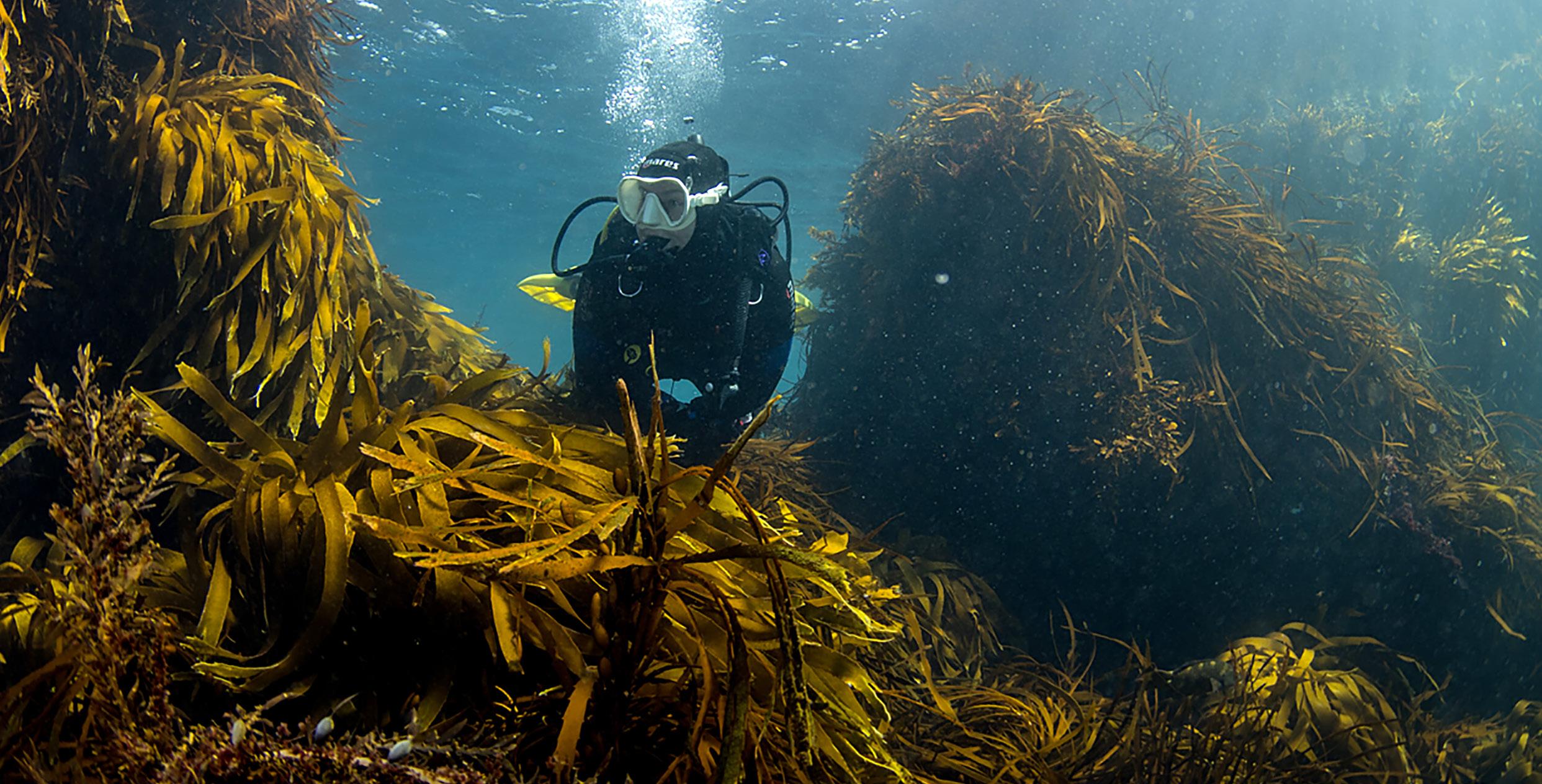
CHERISH OUR
OCEANS
There’s lots we can do to help restore our precious marine environment, as Miett Fear explains. Nicole Miller
Wellington ocean advocate Dr Nicole Miller knows you don’t need to be a marine scientist to make a difference, and this was the thinking behind the launch of her inaugural Explore Your Coast Wellington campaign in January.
She wanted to celebrate the marine environment of Te Whanganui-a-Tara Wellington Harbour while showing some of the different ways everyone can help protect it.
This includes becoming a citizen scientist and gathering valuable data for local marine studies, donating money to groups involved in underwater harbour clean-ups, or helping with a beach clean-up.
“If we take decisive action today, we can save our huge diversity of the underwater habitats for tomorrow,” she says. “Conversely, the more kelp forests and other valuable marine habitat we lose, the more difficult natural marine restoration becomes in the future.” Over three weekends in January and on Waitangi Day, Wellington’s divers, snorkellers, swimmers, kayakers, conservation, and restoration groups came together to enjoy and share the diverse marine life of Wellington’s blue belt.
Events included free public snorkel and educational activities, dune and coastal restoration events, beach and underwater clean-ups, kina tasting, and scuba divers filming beneath the waves of Wellington, all to encourage people to engage with their coast.
Nicole also set herself the ambitious goal to becoming the first person to scuba dive and film 70km of Wellington’s coastline, from the Taputeranga Marine Reserve on the south coast to Pencarrow Lighthouse on the Wainuiomata coast.
The diving was scheduled for seven days of summer, usually the most suitable conditions. However, unusual strong winds scuppered several potential diving opportunities. At the time of writing, Nicole had surveyed 30km of Wellington’s coastline and taken 25 hours of video footage.
Nicole will return to diving and documenting next summer and still hopes to become the first person to video the whole of Wellington’s coastline. This will provide baseline data to help scientists monitor changes, including the health of seaweed forests and the extent of kina barrens.
Meanwhile, she will use the winter months to find out about marine restoration projects around the world, supported by a prestigious Winston Churchill Memorial Trust Fellowship.
Nicole has developed a fully immersive video tour of Taputeranga Marine Reserve for virtual reality headsets. This 360° virtual tour has allowed thousands of kids and adults to experience a dive and explore the reserve.
“I particularly enjoyed seeing their reactions when they came face-to-face with a nosy wrasse or entered the F69 Frigate shipwreck for the first time,” she said.
Nicole has also created
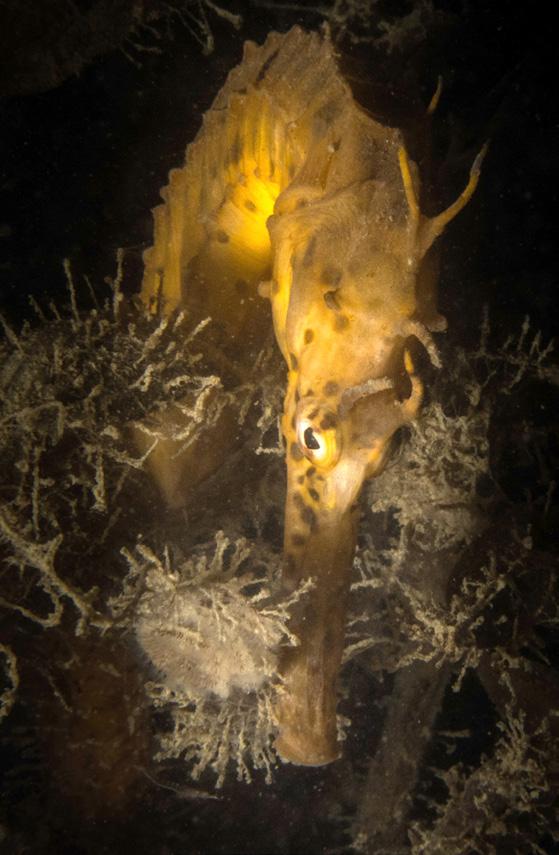
MARINE
Manaia large-bellied seahorse during a night dive, Wellington Harbour.
| Forest & Bird Te Reo o te Taiao 44
Diver hovers over a dense canopy of the seaweed Lessonia variegata, Wellington Harbour.
videos from different dive sites, providing land-based marine reserve visitors an opportunity to explore under the waves.
Next time you gaze out over the ocean, have a think about the world below the surface that is relying on you to protect and care for it.
Check out Wellington’s underwater world at https://exploreyourcoast.co.nz. Nicole gives free talks to local community groups about looking after their coastlines – contact Miett Fear at exploreyourcoast@gmail.com to find out more.
NATURE-BASED SOLUTIONS
It’s the UN Decade of Ecosystem Restoration, and countries around the world are looking at ways to protect marine biodiversity and bring back ocean abundance.
New Zealand has led the world in terrestrial conservation efforts, such as removing predators from offshore islands to provide safe sanctuaries for endangered birds. Now it’s time for Kiwis to become ocean champions too.
There are many opportunities to establish a marine economy that is based on low impact and positive environmental outcomes, said Nicole Miller. One such idea is no-input aquaculture, where there is no artificial feeding of the farmed marine species.
This can be done by integrating shellfish and seaweed aquaculture, where multiple species such as mussels, oysters, and seaweed are grown in proximity and for mutual benefit.
Imagine raising oysters that don’t need feeding. You can read more about this at www.nature.org/ en-us/what-we-do/our-insights/perspectives/ the-aquaculture-opportunity/. Innovative ideas such as these can mitigate nitrogen loads from aquaculture and help rebuild biodiversity in marine ecosystems in our blue backyards.
We can also use local seaweed species to support local jobs, for example by using them in artisan food products, marine cosmetics, dietary supplements, or other applications.
Nature’s solutions lie in front of our eyes, and with some smarts Aotearoa New Zealand can benefit and create high value and bespoke products, local jobs, and a knowledge-based support industry, including digital blue solutions that we can export too.
Miett Fear is Explore Your Coast’s media and events manager.
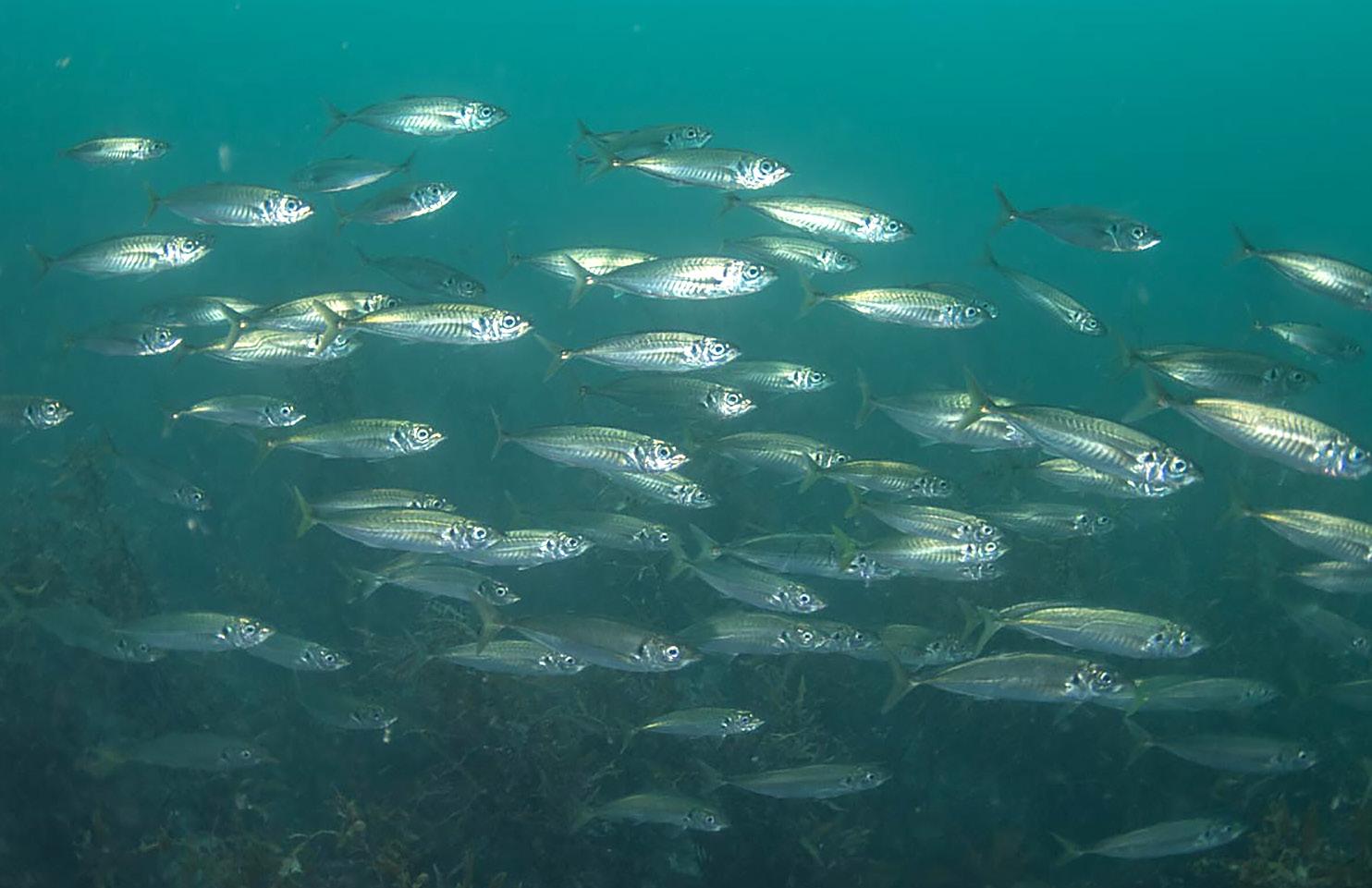
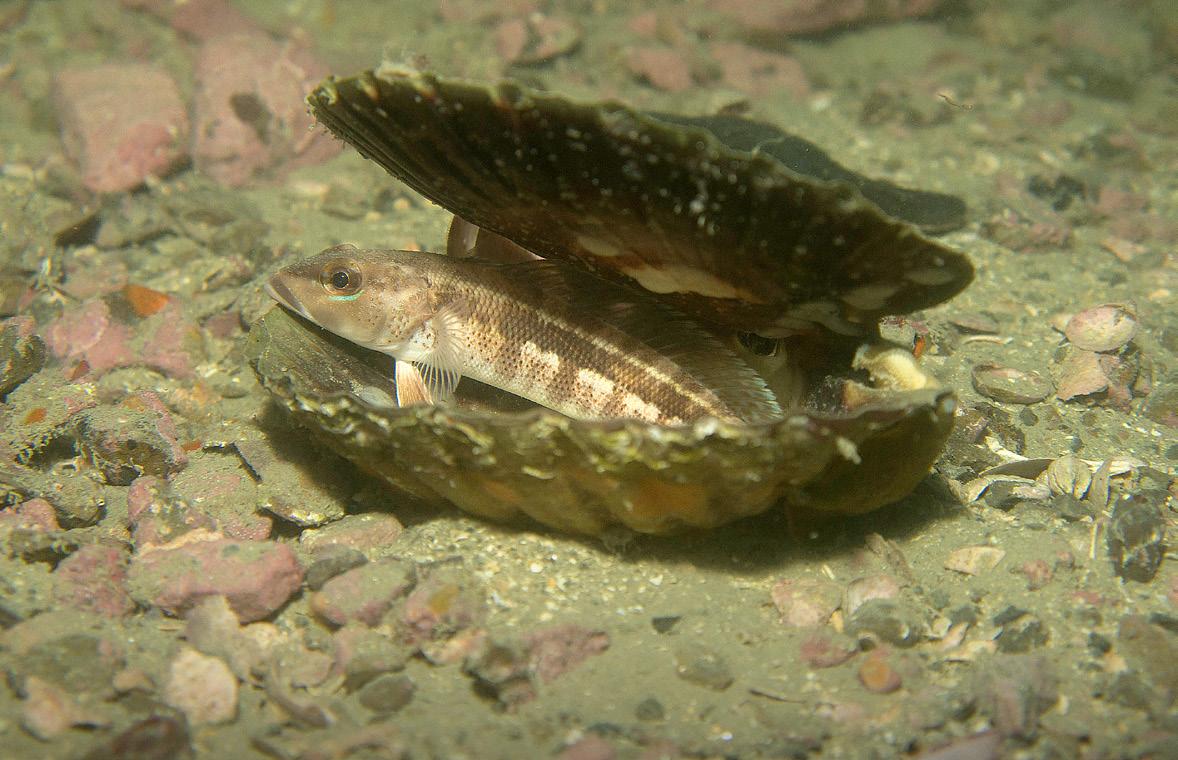
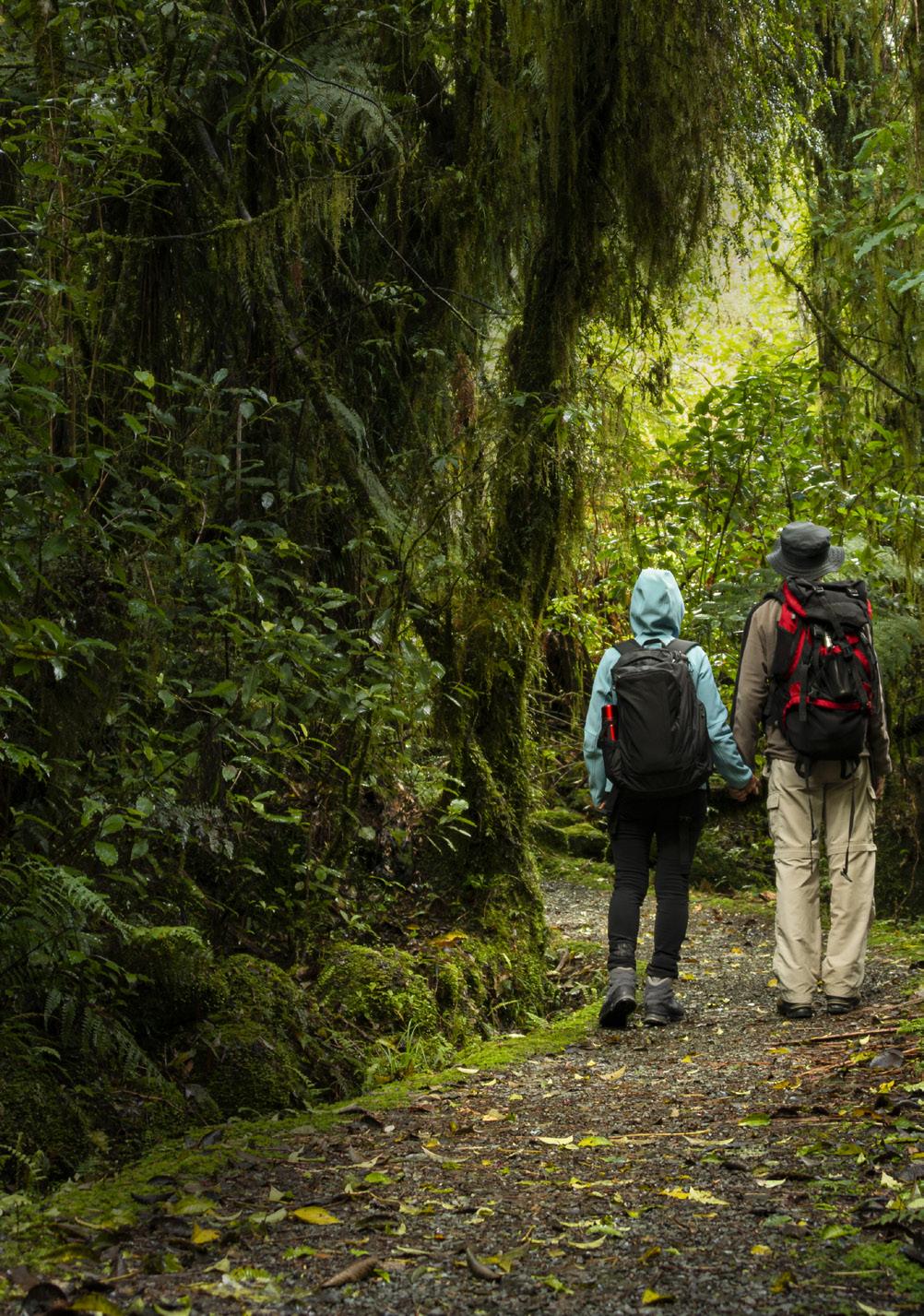 Juvenile blue cod hiding in scallop shell, Wellington Harbour. Pink coralline algae covers surrounding gravel.
45 Winter 2024 | Find a path to ethical investing • Independently-researched portfolios • 2022 & 2023 Mindful Money Best Ethical Financial Adviser • Expert advice Call 09 337 0997 to talk to one of our advisers or find out more at ethicalinvesting.nz
Schools of jack mackerel are common in Wellington Harbour.
Everybirdy
COUNTS
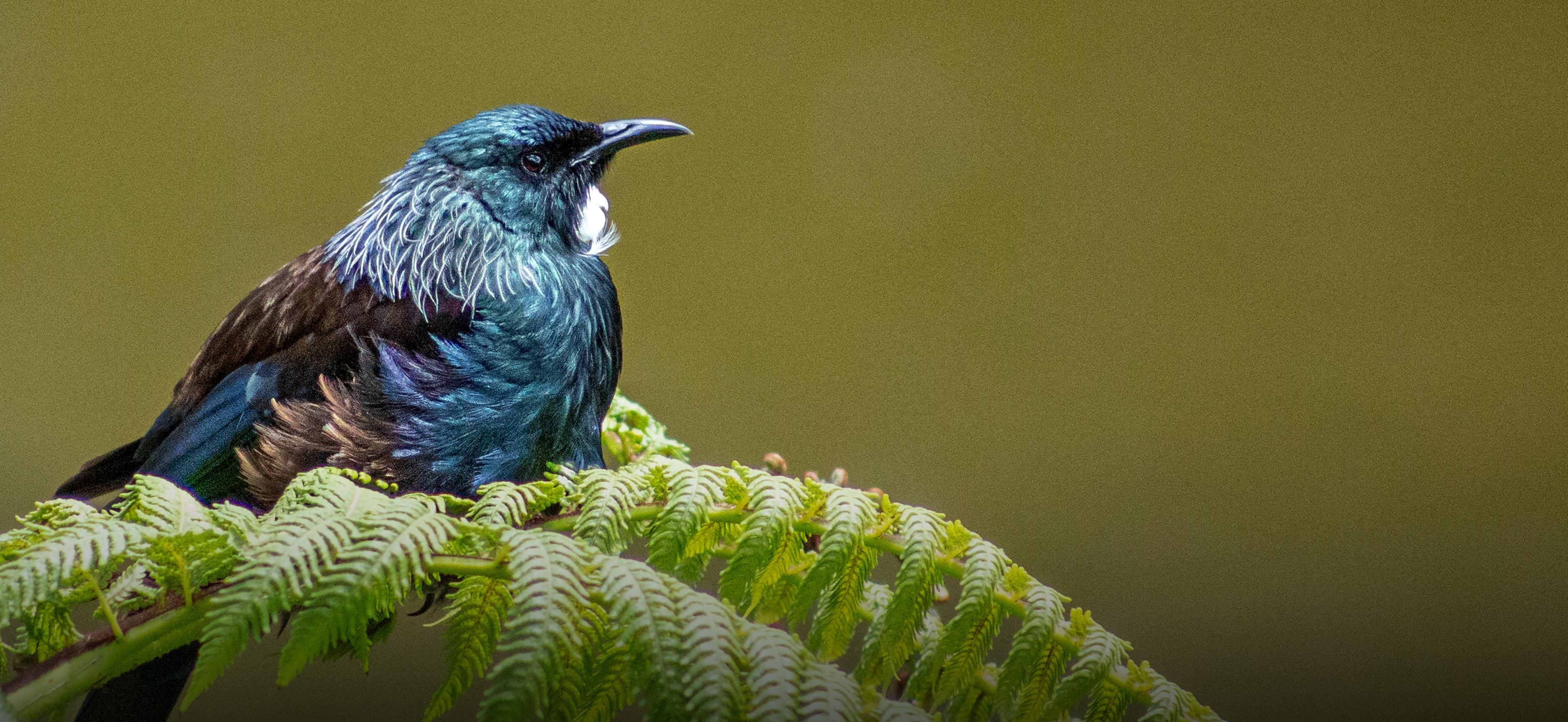
As we ready ourselves for the Garden Bird Survey 2024, Kim Triegaardt reveals last year’s results.
It’s time again to sharpen your pencils, book out your calendar, and brush up on your bird knowledge. Yes, the New Zealand Garden Bird Survey starts on 29 June, and thousands of New Zealanders will be heading into their gardens to make history.
Since 2007, nearly 50,000 people across the country have joined in the country’s longest-running citizen science project by spending one hour in their gardens, local park, or school grounds, counting the numbers of birds that they can see or hear.
The survey provides data that scientists can use to understand the health of garden bird populations and the wider environment by showing how bird counts are changing across Aotearoa over two timeframes – the past five and past 10 years.
Results from the 2023 State of NZ Garden Birds Te Āhua o ngā Manu o te Kāri Aotearoa have just been released, and there’s good news for South Islanders who feel they have been missing out on seeing the boisterous, honey-eating tūī in their gardens. The regional long-term trend shows a rapid increase (210%) in the number of tūī seen in Canterbury.
Across the rest of the motu, tūī numbers show only a shallow increase over 10 years and little to no change over the previous five years.
There are also shallow increases for both kererū and pīwakawaka. The data also show that, after a long period of no change in numbers, there has been a moderate decline in the short term of tauhou silvereye.
When it comes to our introduced species, mynas, a pest species, are continuing their rapid increase in Wellington (126% over 10 years) and increasingly in the ManawatūWhanganui region (30% over five years), but numbers show little to no change nationally.
House sparrow counts showed a decline over both the long and short term for the first time. They were joined by starlings and dunnocks, which both showed shallow declines over 10 years. Goldfinch and chaffinch counts showed a rapid decline (30% for both species) over five years.
Birds are important indicators of the health of New Zealand’s environment, and many perform important ecosystem functions, while others have inherent value as taonga species.
If we see birds begin to decline, that suggests something has changed in their habitat, perhaps an increase in predators or a decrease in available food and shelter, which could also be affecting other species.
Having such robust data sets gives researchers the opportunity to start researching answers for these questions.
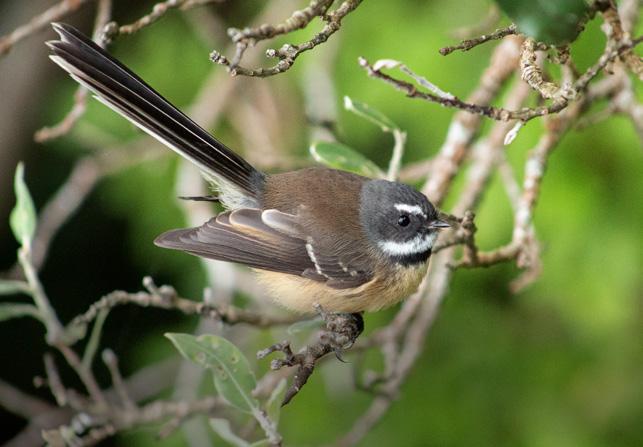
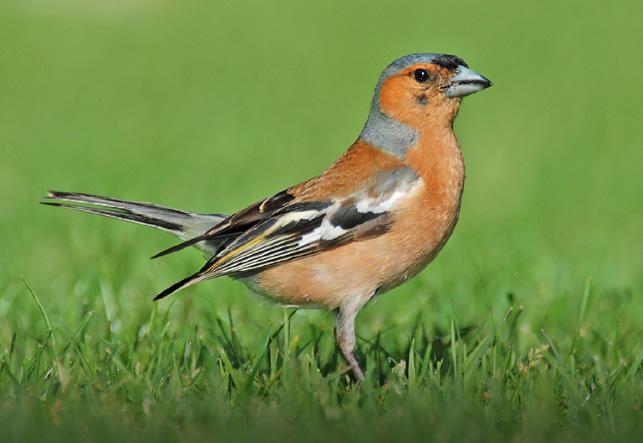
Kim Triegaardt is a senior communications advisor for Manaaki Whenua Landcare Research, which runs the annual Garden Bird Survey.
BIODIVERSITY
Tūī. Annie McDougall
Pīwakawaka fantail. Annie McDougal
| Forest & Bird Te Reo o te Taiao 46
Male chaffinch. Jonathan Harrod
WE NEED TO TALK ABOUT CATS
For the first time in the Garden Bird Survey, people have been talking about cats. Last year, participants were asked: “What more needs to be done to care for birds in New Zealand?” Of the 3684 people who answered the question, 43% mentioned cats in their responses. While the answers of what could be done ranged across a spectrum, from cats wearing bells all the way to outright bans, New Zealanders are acknowledging a conversation about this polarising issue needs to start. This may be in response for calls for a National Cat Management Act by Forest & Bird and other conservation organisations.
INNOVATIVE IDEA
Back in the 2000s, scientist Eric Spurr, of Manaaki Whenua Landcare Research, wanted to establish a national bird survey, something like the UK and USA’s Breeding Bird Surveys. For these monitoring schemes, observers sample all habitats, including forest, farmland, and urban, throughout the country using point counts.
However, this technique required birdwatchers to have some level of training and go to isolated parts of the country. Eric failed to get any financial support for the scheme but had the foresight to realise that long-term data would be valuable in the future, and he was tenacious enough to go it alone.
He set up a simpler scheme, modelled on the UK’s Big Garden Bird Watch, which relies on volunteers (citizen scientists) to survey birds in their own gardens. And so the New Zealand Garden
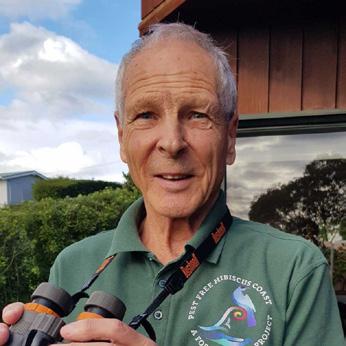
Bird Survey was born, back in 2007. Eric, who has now retired, says he is thrilled that more people are taking part in the survey each year. A total of 1948 gardens were surveyed in 2007 and 5368 last year.
Dr Fiona Carswell, Manaaki Whenua General Manager Science, says the survey allows people of all ages and backgrounds, including children, to actively participate in data collection and analysis.
“After all, science needs more eyes and ears than a scientist has, so using people power makes it easier for scientists to help understand the changing world around us,” she said.
The 2024 NZ Garden Bird Survey runs from 29 June to 7 July. Visit gardenbirdsurvey.nz for details on how to take part.
Eric Spurr
47 Winter 2024 |
our Choose an hour during the survey to count the birds in your backyard and contribute to the largest citizen science event in New Zealand. gardenbirdsurvey.nz
Run by Manaaki Whenua
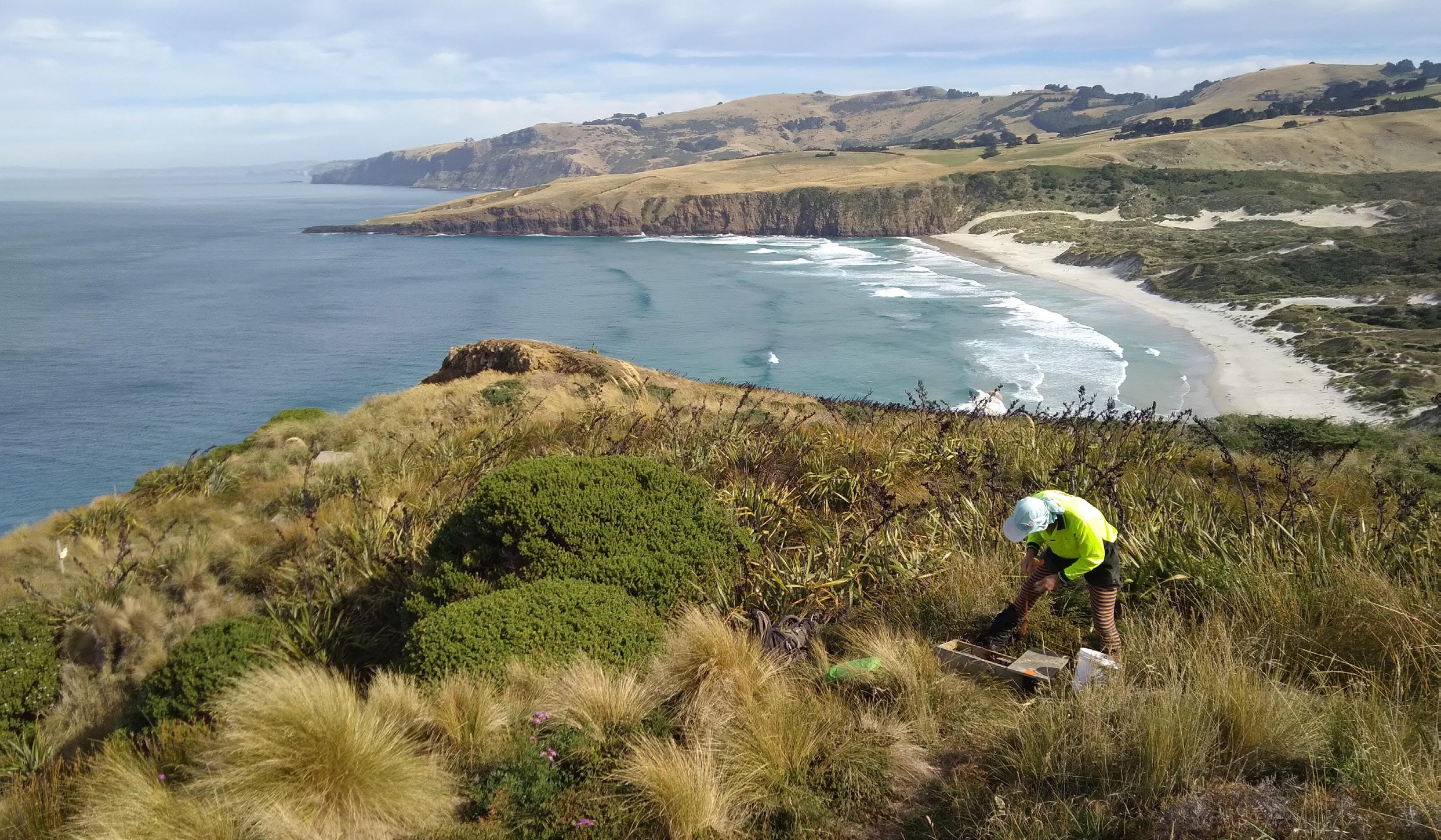
FERRETING
OUT A KILLER
Forest & Bird’s Save our Seabirds team moved quickly to find the culprit when a dead sooty shearwater chick was discovered. Kerrie Waterworth
Four ferrets have caused carnage at Sandfly Bay Wildlife Reserve on the Otago Peninsula since March, killing at least 41 tītī sooty shearwater chicks and seven adults.
They struck when this season’s chicks were about two months old and defenceless in their burrows, waiting for their feathers to grow so they could fledge. Many adults had already set out on their annual migration across the Pacific Ocean.
Forest & Bird manages a Save our Seabirds project on the headland tītī breeding colony, one of the few mainland breeding colonies left in Aotearoa New Zealand.
Chicks that survive will launch themselves off the steep cliffs overlooking the Southern Ocean and head out to sea, returning seven years later to the place they were born to find a mate.
Save our Seabirds project manager Francesca Cunninghame said it was the first time more than
one ferret had been recorded at the Sandfly Bay colony since trail camera monitoring began in 2018.
“As soon as we found the dead chicks and realised ferrets were present, our team activated our intensive trapping response,” she said.
“We caught three ferrets in quick succession, but the fourth ferret surprised us. It navigated its way through the intensive trap network and didn’t interact with any of the traps.”
Even Almo, a Department of Conservation mustelid dog, and his handler Ange Newport could not locate the elusive ferret when they visited the reserve on 7 May.
“But they did identify the travel lines of the ferret around and within the colony, so we are now better informed where to place the traps to try and catch the ferret,” Francesca said.
“Almo also lead us straight to a cache site where the ferret had stashed three unbanded chicks that
we did not know about.”
In 2021 and 2022, more than 100 chicks fledged successfully from the colony, but sadly this breeding season ferrets killed at least 48 tītī (41 chicks, 7 adults), leaving only 13 fledged chicks.
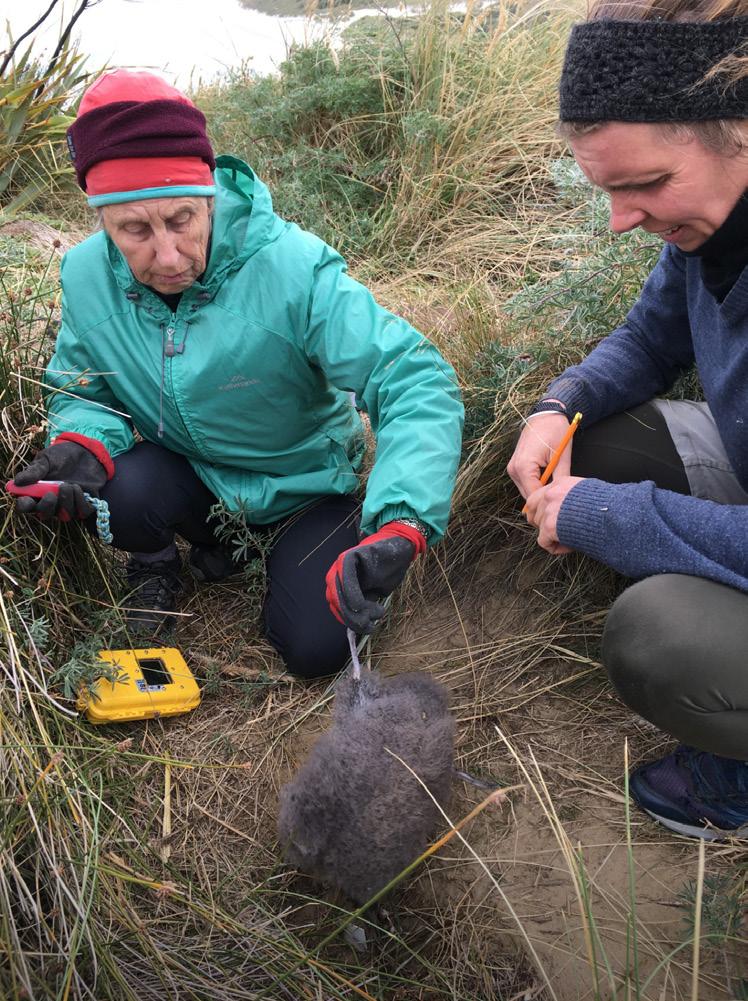
FOREST & BIRD PROJECT
Setting traps at the tītī sooty shearwater breeding colony, Sandfly Bay, Otago Peninsula. Francesca Cunninghame
| Forest & Bird Te Reo o te Taiao 48
Sue Maturin and Francesca Cunninghame remove a dead chick killed in its burrow by a ferret Graeme Loh
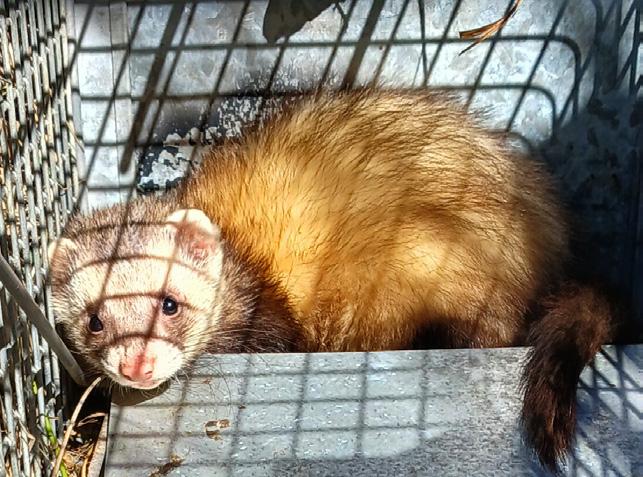
Francesca said they do not know exactly where the ferrets are coming from, but Sandfly Bay Wildlife Reserve is surrounded by farmland with a large rabbit population, and rabbits are the key food source for ferrets.
“Ferrets are capable of travelling a long way and can easily reach the coastal sites all along the Otago Peninsula, where a range of threatened native and endemic seabird species breed,” Francesca added.
Ferrets are not the only threat to tītī trying to breed at Sandfly Bay, one of the few remaining mainland tītī colonies. Rats, mice, possums, cats, stoats, weasels, and even hedgehogs predate on tītī sooty shearwaters, chicks, and eggs.
But a single ferret can kill multiple chicks and even adults in one night and repeat the same
behaviour over successive nights. Tītī sooty shearwaters have one of the longest migrations of any seabird, flying across the Pacific and up the west coast of the United States of America to their North Pacific Ocean feeding grounds.
Breeding pairs arrive back in Otago in October, but it is about seven years before chicks return to breed at the Sandfly Bay colony.
“Our challenge right now is to use all the information we have to work out how best we can target this individual ferret as soon as possible to prevent it reappearing around the colony next breeding season,” added Francesca.
“Close monitoring of this ferret’s behaviour will contribute to the growing pool of knowledge about individual predator behaviours and how this relates to wider scale predator-free ambitions.”
Trail cameras filmed one of the ferrets going into the burrow, dragging out the tītī chick, and killing it. This short video is hard to watch but shows the impact one ferret can have. To download and view, see https:// youtu.be/wH0iOH8d2kU.
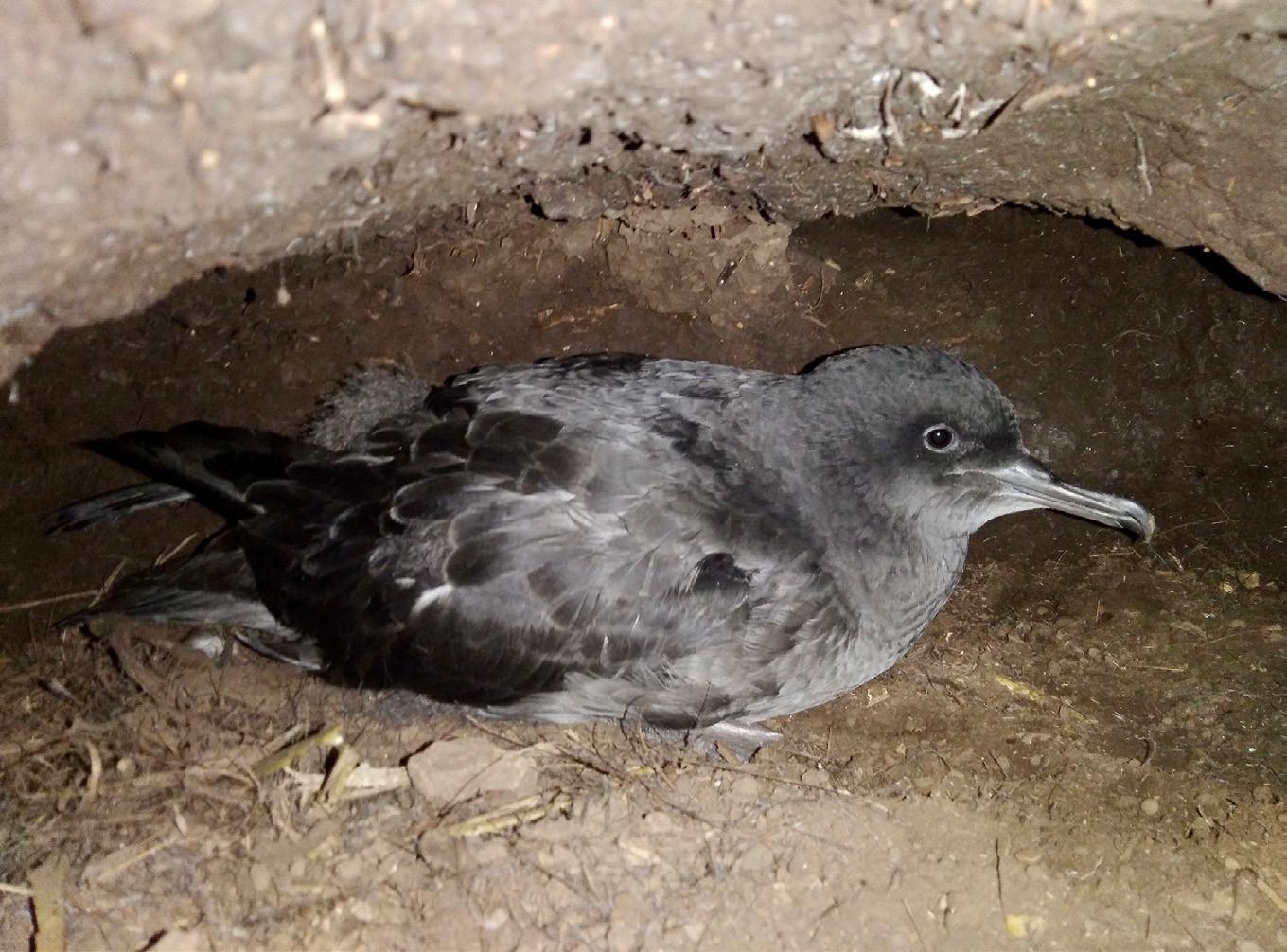
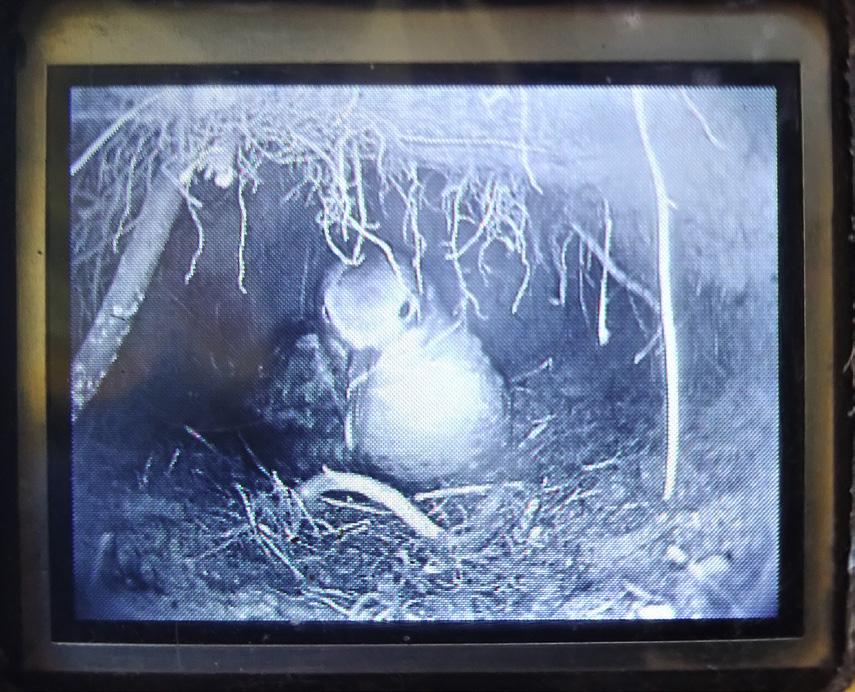
EYE IN THE GROUND
Staff and volunteers at Forest & Bird’s Save our Seabirds projects in Otago are using the latest technology to check on the welfare of tītī chicks.
As well as trail cameras that record intruders outside the burrows, Francesca and her team use a burrowscope to look deep inside them.
These consist of a miniature camera and infrared lights mounted on a 3m length of hose through which images are projected on to a screen at the surface.
“It is challenging to burrowscope the burrows at this site. They are in sandy substrate and can easily be more than 2m long,” explained Francesca
But it’s an invaluable tool to understand the extent of a predation event. During the recent ferret incursion, Franny discovered the majority of chicks had been killed and left inside burrows.
But the team found some survivors too, and they went on to fledge successfully.
If you want to help Francesca and her team of volunteers save our seabirds, please go to forestandbird.org.nz/donate and make a gift for nature today.
The team caught three of the four ferrets that were terrorising the tītī breeding colony Will Perry
Healthy tītī in burrow before fledging. Francesca Cunninghame
49 Winter 2024 |
Burrowscape image of a sooty shearwater chick in its burrow Francesca Cunninghame
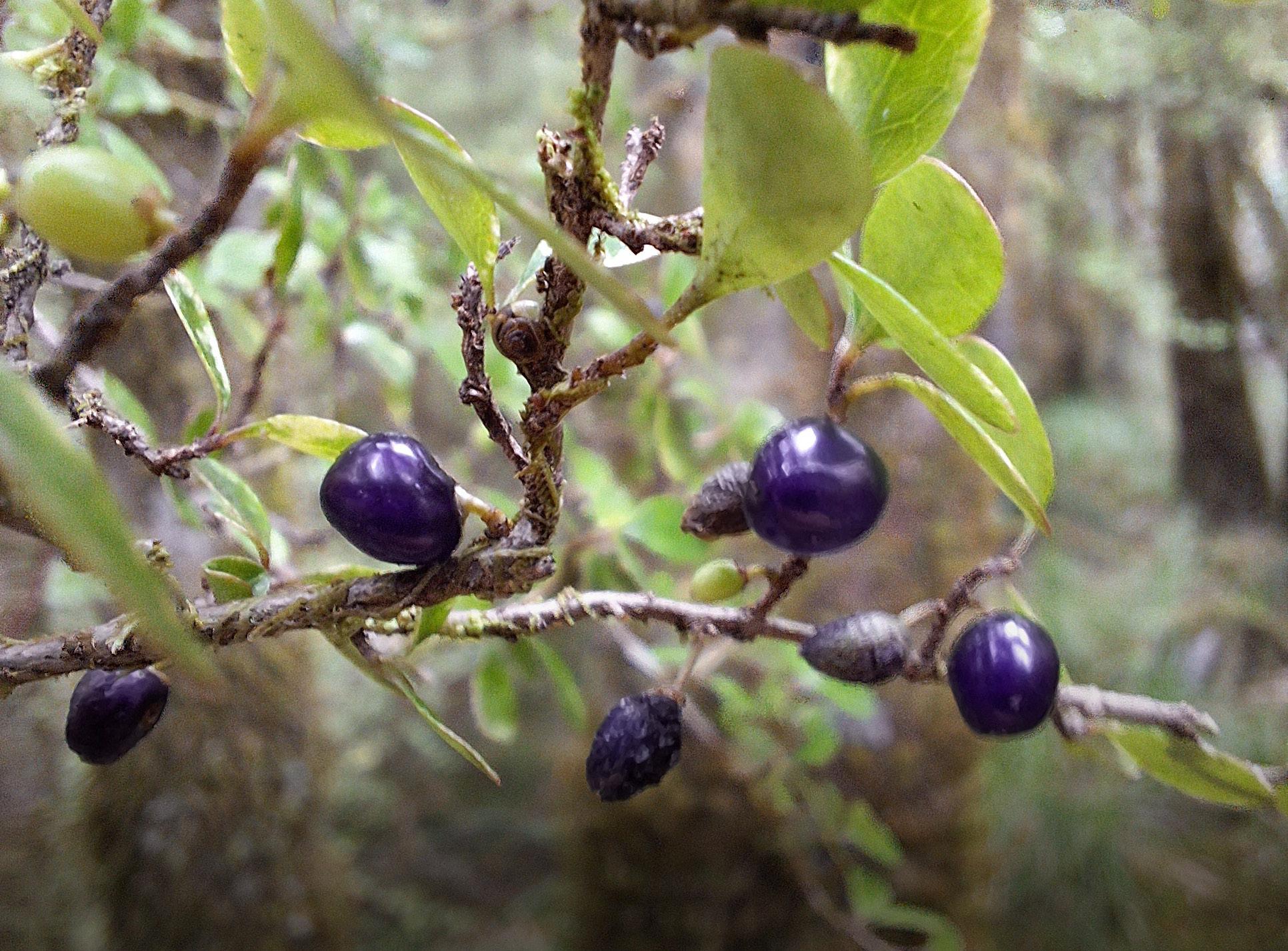
RARE PLANT DISCOVERY
An eagle-eyed ecologist discovered a new species of Coprosma in the Top of the South Island. Stephanie Flores
There are more than 90 species of Coprosma throughout the Pacific and Australasia, half of which can be found in New Zealand. But there was one in particular that ecologist Rowan Hindmarsh-Walls wasn’t expecting to find on a recent stroll through Brown River Scenic Reserve, in the Rai Valley, Marlborough.
He was on an organised trip with the Nelson Botanical Society, and, as he observed the flora of the reserve’s oxbow wetland, his eyes locked onto a single sapling tucked in among the other Coprosmas. It reminded him of the Coprosma pedicellata that he had become familiar with while working around wetlands in Southland and eastern
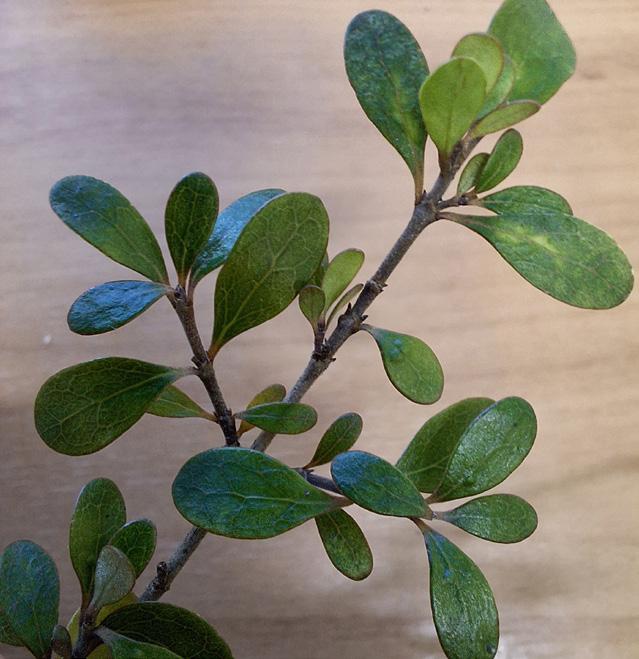
Fiordland with the Department of Conservation.
“I thought to myself, ‘That looks very much like Coprosma pedicellata, but it shouldn’t be here.’ My heart started to race in what can only be described as plant-induced wild excitement,” Rowan said.
Before this discovery, there were no known populations of this wetland species in Te Tauihu Top of the South Island. In fact, the closest known populations in the South Island were thought to be in North Canterbury, south of Amuri Range.
This Coprosma is At-risk Declining, which is one step away from a Threatened status. It’s often restricted to the margins of small oxbow lakes and ponds or former stream channels. According to Rowan, the species is a relic of a bygone era.
“The current scattered distribution is presumed, in part, to be an artefact of major fragmentation and decimation of the species habitat,” he said. “Most of these habitats — old flood channels, oxbow wetlands in forest, and shrubland in lowland valley systems — have been systematically cleared and drained for farming in the past 150 years.”
Rowan describes the Brown River Scenic Reserve as a small but fairly well-preserved piece of lowland podocarp and beech forest, surrounded by exotic forestry and farmland on all sides. It is one of a handful of smaller reserves in Rai Valley that’s managed by DOC.
It’s also where Forest & Bird has previously found pekapeka long-tailed bats in its years of monitoring this threatened native species in the Te Hoiere catchment.
Over the past year, our Te Hoiere bat recovery team has expanded its predator monitoring to this reserve, with 20 tracking tunnels to better understand predators in the area.
“Being next to a highway, the reserve has been extensively botanised, so the last thing on my mind was looking for anything profoundly new,” Rowan added. Nine sub-populations of the species were found at the site, each associated with a different piece of flood channel or wetland. In total, 106 adult plants, 230 saplings, and many thousands of seedlings were counted across the entire site.
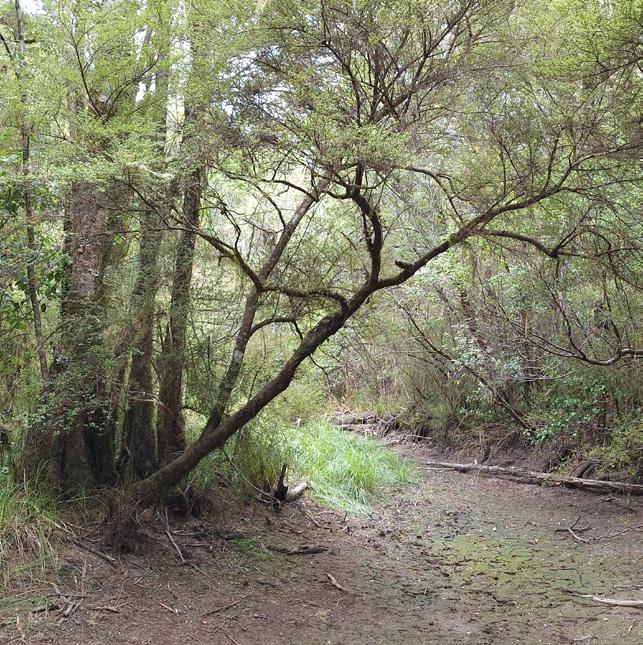
Rowan HindmarshWalls is a supervisor for DOC’s biodiversity team in South Marlborough. You can read a full account of his discovery in Trilepidea, the monthly newsletter for the New Zealand Plant Conservation Network.
FOCUS ON FLORA
| Forest & Bird Te Reo o te Taiao 50
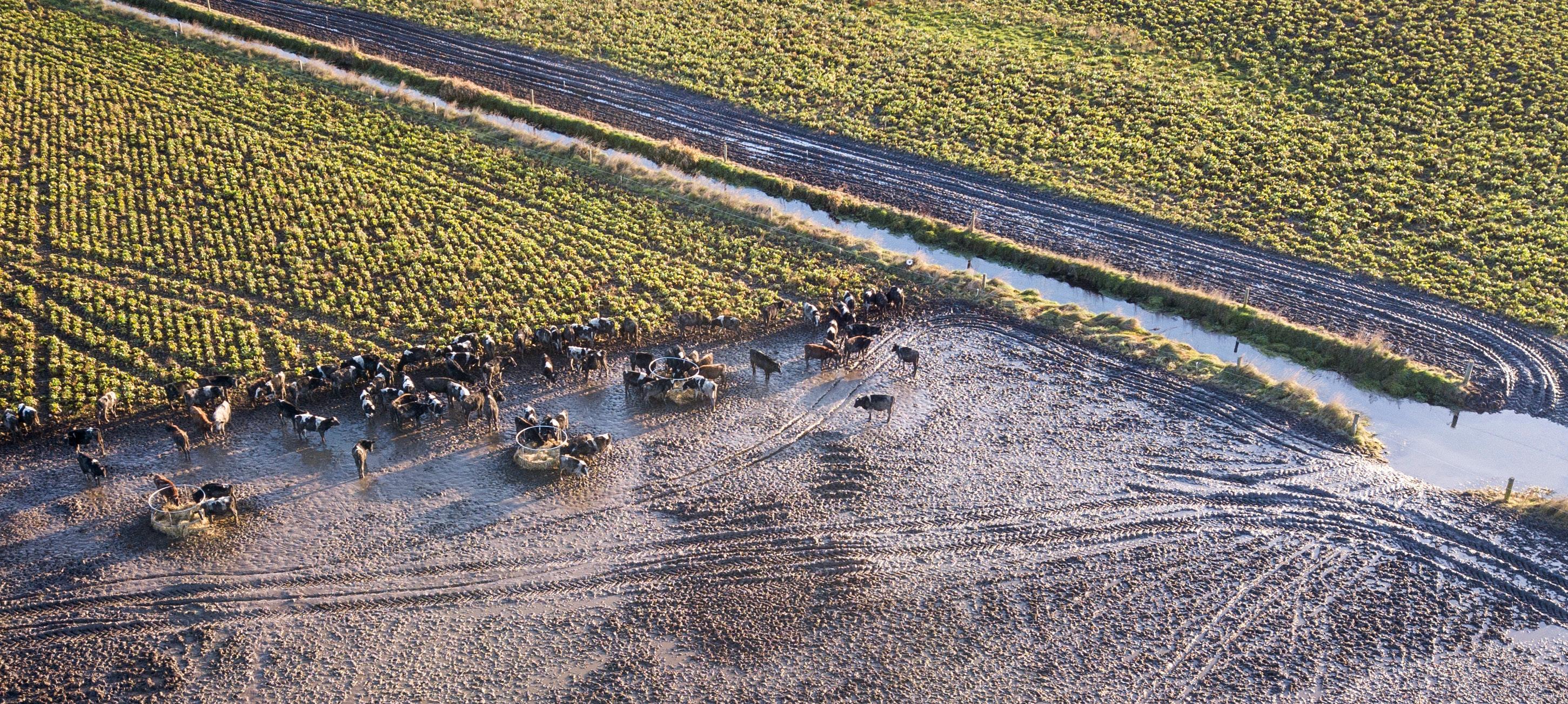
DOUBLE WHAMMY FOR WATERWAYS
Government Ministers have launched an unprecedented assault on freshwater. Cate Hennessy
Regulations intended to boost the health of our rivers, lakes, and wetlands may be rolled back by the most anti-nature government we have seen in many decades.
Meanwhile, the controversial Fast-track Approvals Bill could see the return of environmentally damaging irrigation projects previously turned down by the courts. Only this time around, Forest & Bird may not be allowed to challenge them in law.
Organisations have been invited to submit their nationally and regionally significant development projects via the fast-track process. Many people and groups, including Forest & Bird, are warning this new legislation could wreak havoc on river and wetland ecosystems, and there are fears the proponents of the Ruataniwha scheme may come back for a second go at getting it across the line.
In 2017, Forest & Bird won a landmark Supreme Court decision that stopped the environmentally damaging Ruataniwha irrigation dam from going ahead. “We’ve already seen several organisations whose projects were turned down by the courts invited to submit a fast-track application,” said Forest & Bird’s freshwater advocate Tom Kay.
“Water Holdings Hawkes Bay Ltd and Tukituki Water Security Project, who are now responsible for the Ruataniwha Dam, gave an oral submission to the select committee in favour of the Fast-track Approvals Bill.
“There are other projects, such as the Wakamoekau Dam in the Wairarapa and the Waitaha hydro scheme on the West Coast, that may have applied for fast-track, and we intend keeping a close eye on them.”
The assault on freshwater does not stop there. In May, the government introduced the Resource Management (Freshwater and Other Matters)
Amendment Bill. This Bill removes and undermines existing policies and regulations designed to make our water clean and our rivers safe and swimmable.
Under the proposed amendments, people applying for consents will no longer have to show they are prioritising water health above any commercial gain and profits. Currently, they must do this under the National Policy Statement for Freshwater Management. The amendments will also:
n Weaken the rules around intensive winter grazing –the practice where lots of cows are grazed in a small area, often resulting in muddy paddocks and water pollution.
n Remove and dilute protections that restrict coal mining from destroying wetlands.
n Reduce the requirements for the government to consult on changes to national policy, including freshwater regulations.
“The health of our rivers, lakes, and streams is important to Kiwis, and we should all be proud to have developed the original policies that put the health of the environment and people ahead of corporate profits,” added Tom.
“Now we are seeing the policies we worked so hard to achieve under attack, with Ministers bowing to industry and putting profits ahead of people and planet.
“This is the start of a government-led assault on clean healthy water, and every community is likely to face deteriorating water quality because of it.”
Forest & Bird will be fighting for freshwater and ensuring your voice is heard in Parliament. We will be reminding Ministers how much New Zealanders care about clean, safe drinking water and swimmable rivers. Please make a donation today at www.forestandbird.org.nz/donate.
FRESHWATER
Winter grazing cows in mud
Geoff Reid
51 Winter 2024 |
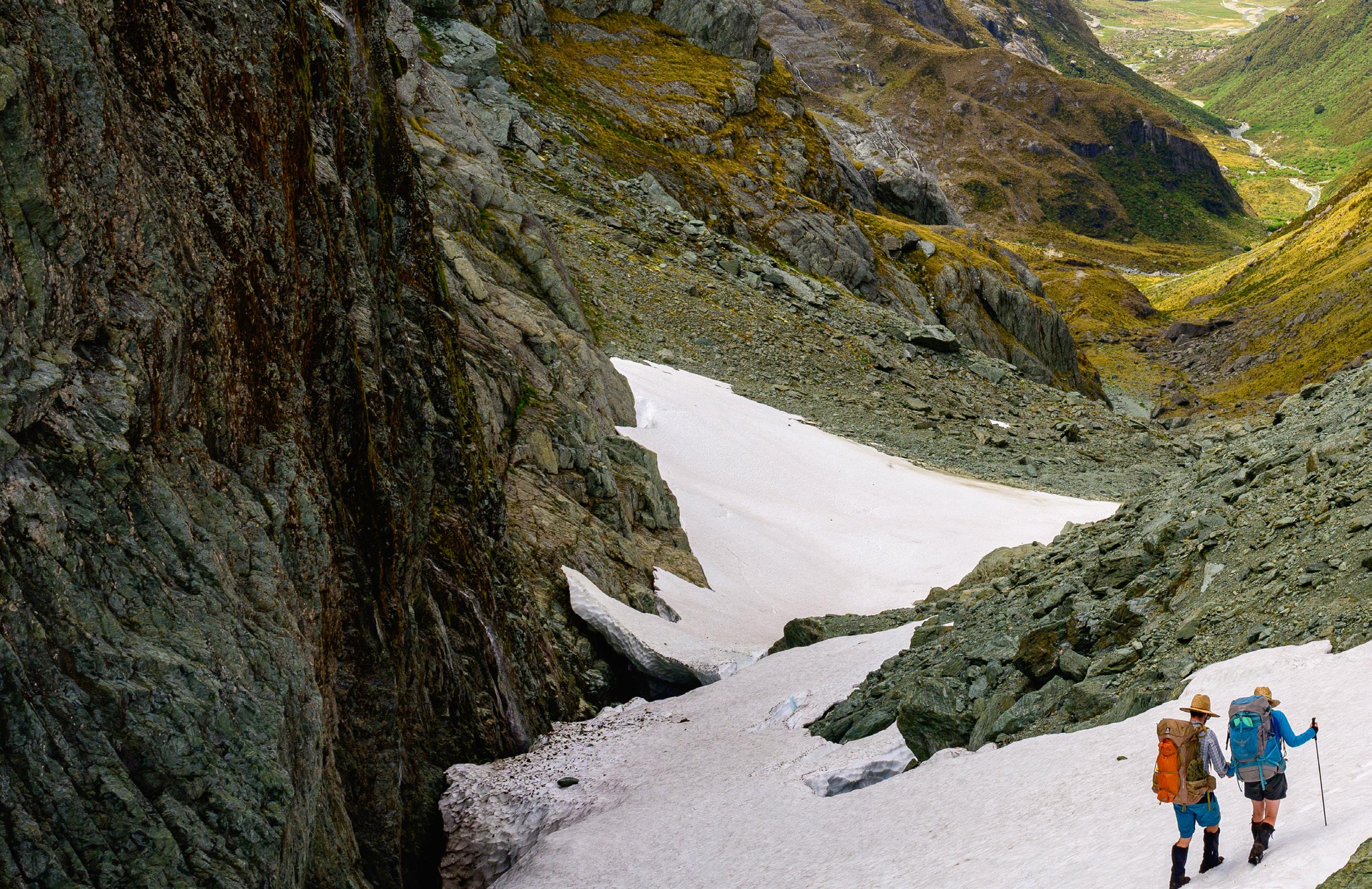
CLIMATE CONUNDRUM
What will it take for people to fight for their kids’ future and take action against global warming? Graham Townsend
Farming, city-states, the use of metals, the industrial revolution all arose during the last 10,000 years or so of the Holocene, a period of relatively equable climate. That is now over. Welcome to the Anthropocene – humans are fast-tracking the globe to temperatures not seen since the Miocene, around 10 million years ago. Does anyone care?
Earth will be just fine; humans won’t. Already, we’re seeing around five million excess deaths per annum and significant economic damage. This is just the start. Without rapid, decisive action, sea-level rise will displace millions; extreme weather events will lead to large-scale crop failures, increasing poverty, and massive disruption to global trade.
Our biggest trading partners, China and Australia, are both particularly vulnerable. One analysis suggests we could see a billion climate-related deaths in the lifetime of today’s children, and several billion people may become climate refugees as their homelands become too hot or humid for human habitation.
So why are we not acting? Some people are genuinely concerned, even choosing not to have kids because they know what’s coming. But most people seem determined to look the other way. Are their
brains simply wired differently?
We seem to be stuck in a vicious circle of public apathy and political cowardice reinforcing each other. Is it possible to break this deadly impasse? What would it take to get people to fight for their kids’ future?
There are five major hurdles to overcome:
Media under-reporting. Imagine living in Kiev but seeing the Russian invasion relegated to the occasional television news snippet or newspaper article on page 4. Our mainstream media coverage of the global climate crisis is equally (and culpably) inadequate. Reporters rarely link the ramping up of deadly floods, storms, and droughts to the cause: our greenhouse gas emissions.
The endless growth cargo-cult. Since the end of World War II, we’ve come to expect that endless GDP growth will lead to ever-rising living standards and the glossy-magazine lifestyle for all. We also tend to assume that there’ll be a tech fix for everything. In reality, the economy is an energy system, not a financial one; money is merely a proxy for access to the resources that energy unlocks. Those resources are finite.
Multiple analyses show that a low-carbon economy will save both lives and money. A lot of money. But in
OPINION
| Forest & Bird Te Reo o te Taiao 52
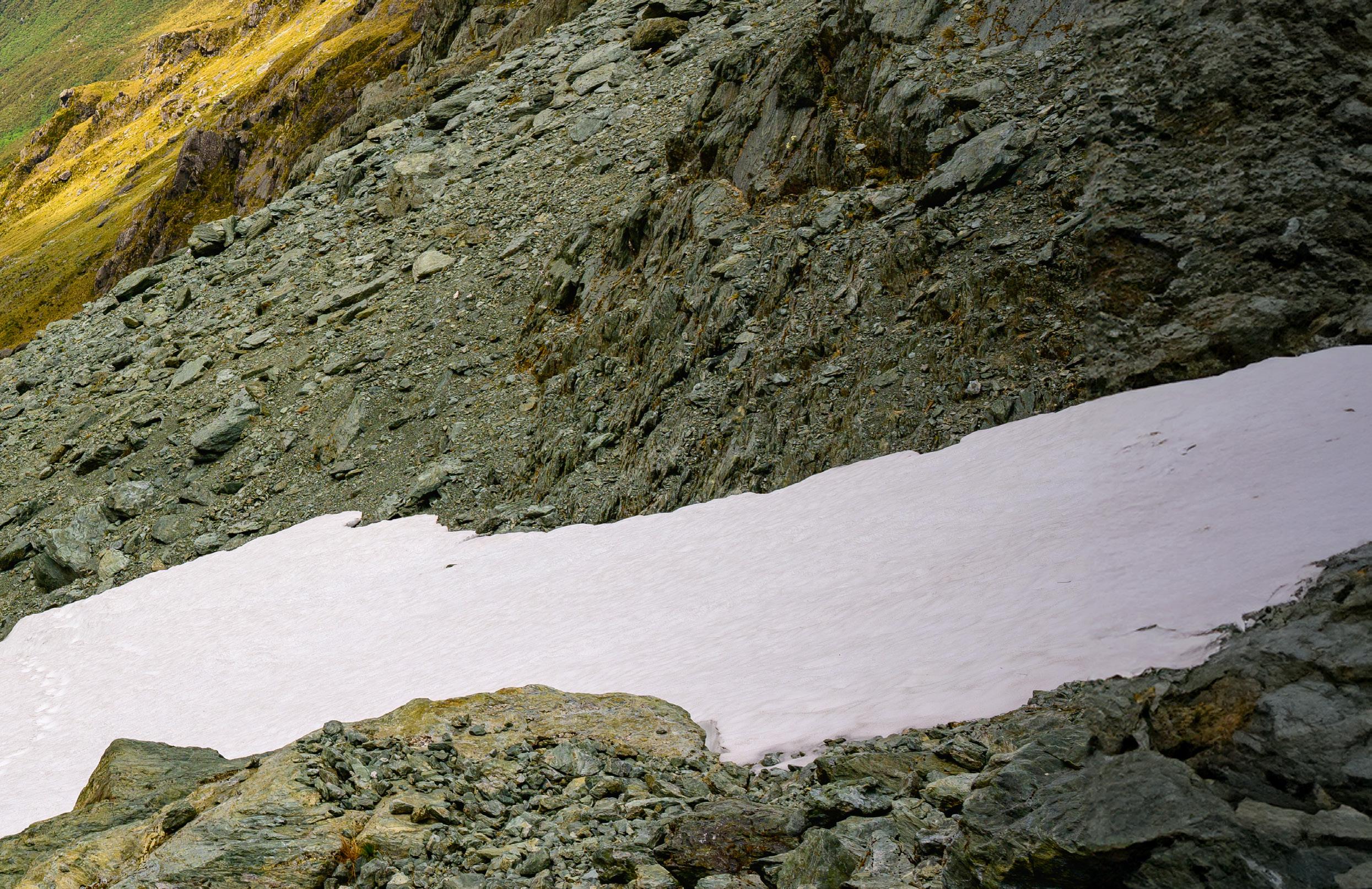
the short term, a nation that goes low-carbon faces restructuring and possible competitive disadvantages vis-à-vis their trading partners. Such is the power of short-term thinking that these obstacles are seen as a major hurdle.
Political issues. Politicians make a living by selling optimism rather than telling the truth; they are also subject to endless corporate lobbying. The adversarial nature of our parliamentary system favours pointscoring and short-termism, so it’s hardly surprising that policy change thus far is totally inadequate.
Societal norms. We take our cue from those around us. Neither the media nor our leaders seem overly concerned. Everything must be fine, surely? Our friends are planning flying holidays or road trips; why shouldn’t we? Hence the bubble of unreality continues.
Personal factors. While families struggling to pay the bills have other priorities, the rest of us have no such excuse. The median per-capita Kiwi carbon footprint is well above what it needs to be if we want a liveable future. Alas, we’re still tribal animals; big cars and an affluent lifestyle are still seen as symbols of success and status. And advertisers know that. Greenhouse gases are invisible; it’s hard to grasp that our lifestyle contributes to present and future hardship and suffering. And it’s so easy to cop out by saying that as an individual – or even as a small
Polls show that a majority of people … believe global warming is a fact, yet somehow they don’t believe it will really affect their lives, and they certainly don’t intend to change their own lives radically to help stop it happening
nation of just five million – what we do hardly matters.
From there, it’s but a short step to saying we’re doomed anyway, so why not have fun now? We’re all somewhere on the selfishness spectrum: an individual who chooses to stop climate-wrecking activities such as flying is taking a major personal lifestyle hit for the sake of people they don’t know and for future generations. Can we actually do that?
The climate crisis fundamentally changes what it means to be a responsible citizen. Our flouting of planetary boundaries demands that we redefine morality. If we fail, how will we face our kids two or three decades hence?
It is still within our power to limit the harm we’re causing. We have the answers: drastically cut our fossilfuelled travel, boycott polluting industries, and get political. The stakes are huge. We’ll only make progress if team spirit and love for our kids drives us to face reality and work together.
When MPs are bombarded by thousands of submissions demanding action, when our studentstrike movement swells to hundreds of thousands of citizens demanding real leadership, there may be grounds for optimism.
Graham Townsend is a retired teacher and climate activist.
Maggie Gee, Seeing Further: The Story of Science, Discovery and the Genius of the Royal Society.
53 Winter 2024 |
Descending from North Col, Humboldt Mountains, Otago Jake Osborne
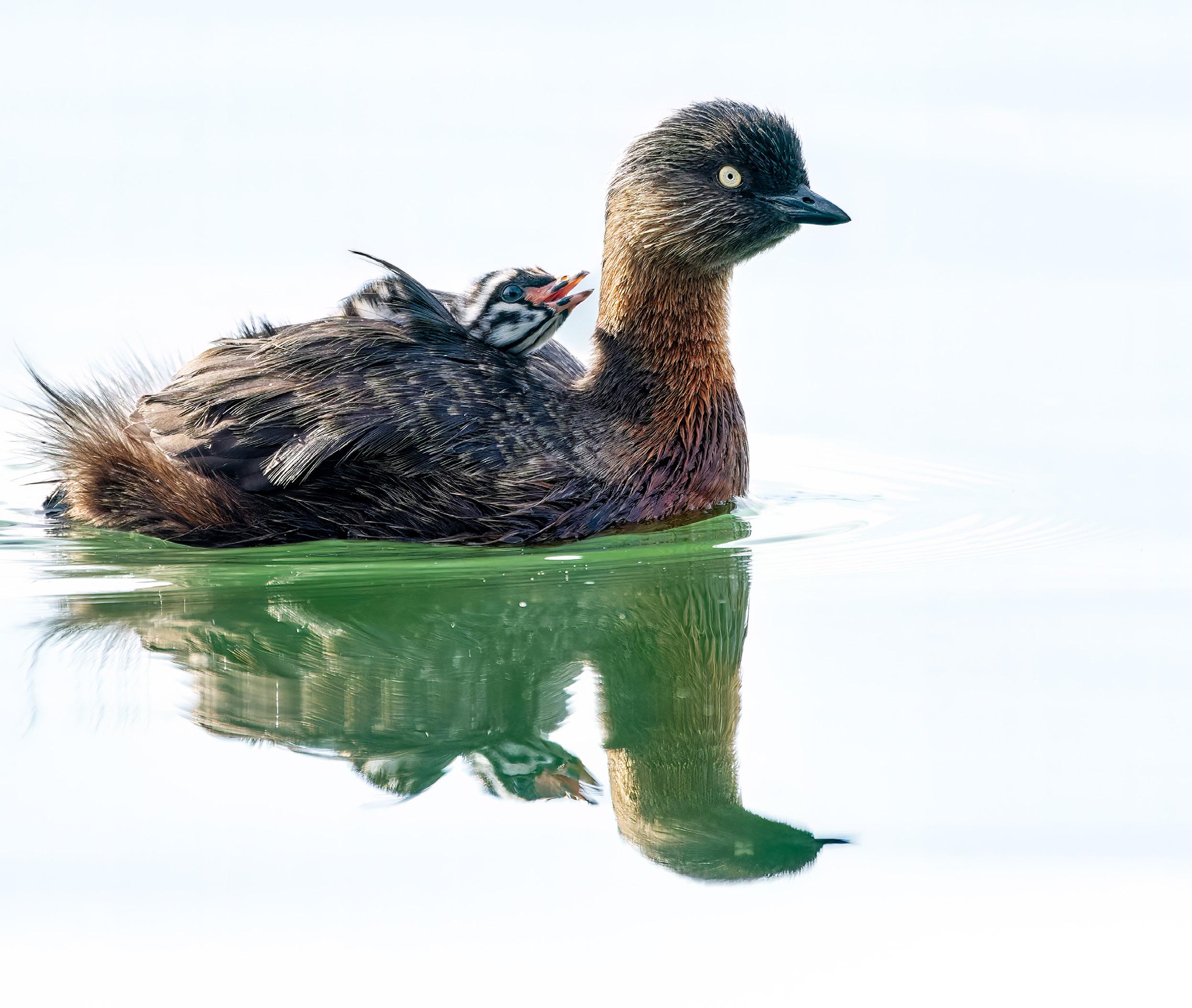
LET’S NOT FORGET WEWEIA
Our quiet little endemic grebe didn’t get a look in during Bird of the Century, but it’s still a winner for Ann Graeme.
Any dinkum Kiwi will tell you that our Australian cousins are just show ponies. This was highlighted by last year’s Bird of the Century winner pūteketeke, the crested grebe, a native selfintroduced bird from Australia. Our endemic grebe, weweia, the dabchick, didn’t get a mention during the competition, much less worldwide attention, so here is their story to redress the balance.
I’m observing a family of weweia, and they are fun to watch. The bird will be feeding, swimming
in spurts, and snatching morsels from the water surface when it will suddenly vanish before your eyes! By squeezing its feathers against its body, it can decompress like a submarine. Then, propelled by its strong lobed feet, it can swim a long way underwater (up to 4m deep), hunting fish and invertebrates, before restoring its buoyancy and popping to the surface, far from the spot you were watching.
They used to be present in the lakes of the lower South Island
but declined rapidly in the 19th century, and the last breeding pair disappeared in 1940. Today’s weweia dabchicks have their stronghold in the lakes of the North Island’s volcanic plateau, while the Australasian crested grebes live in the glacial lakes of the South Island. Smaller than ducks and with a longer neck and bright yellow eyes, weweia are specialised waterbirds. They live around the margins of lakes and ponds, and rarely go on land. They are not built for walking but are superbly designed for swimming and diving.
Dabchicks are devoted parents. The pair I was watching had a chick nestled on its parent’s back and peering out between its wings. The other parent was diving, surfacing with a wiggling fish, and presenting it to its mate, who would turn and feed it to the chick. A few days later, the stripey chick was no longer being piggybacked. It was floating by itself while its parents dived and brought it food. The chick still wanted a ride, and, again and again, it tried to climb on board a parent. But the adults would have none of it and would tip the chick off. It was time to grow up.
My weweia pair had a territory in an inlet in Lake Rotoiti. A pair of Australasian coots lived there too, and they had four chicks. Compared to weweia chicks, coot
IN THE FIELD
Weweia and chick. Bryce McQuillan
| Forest & Bird Te Reo o te Taiao 54
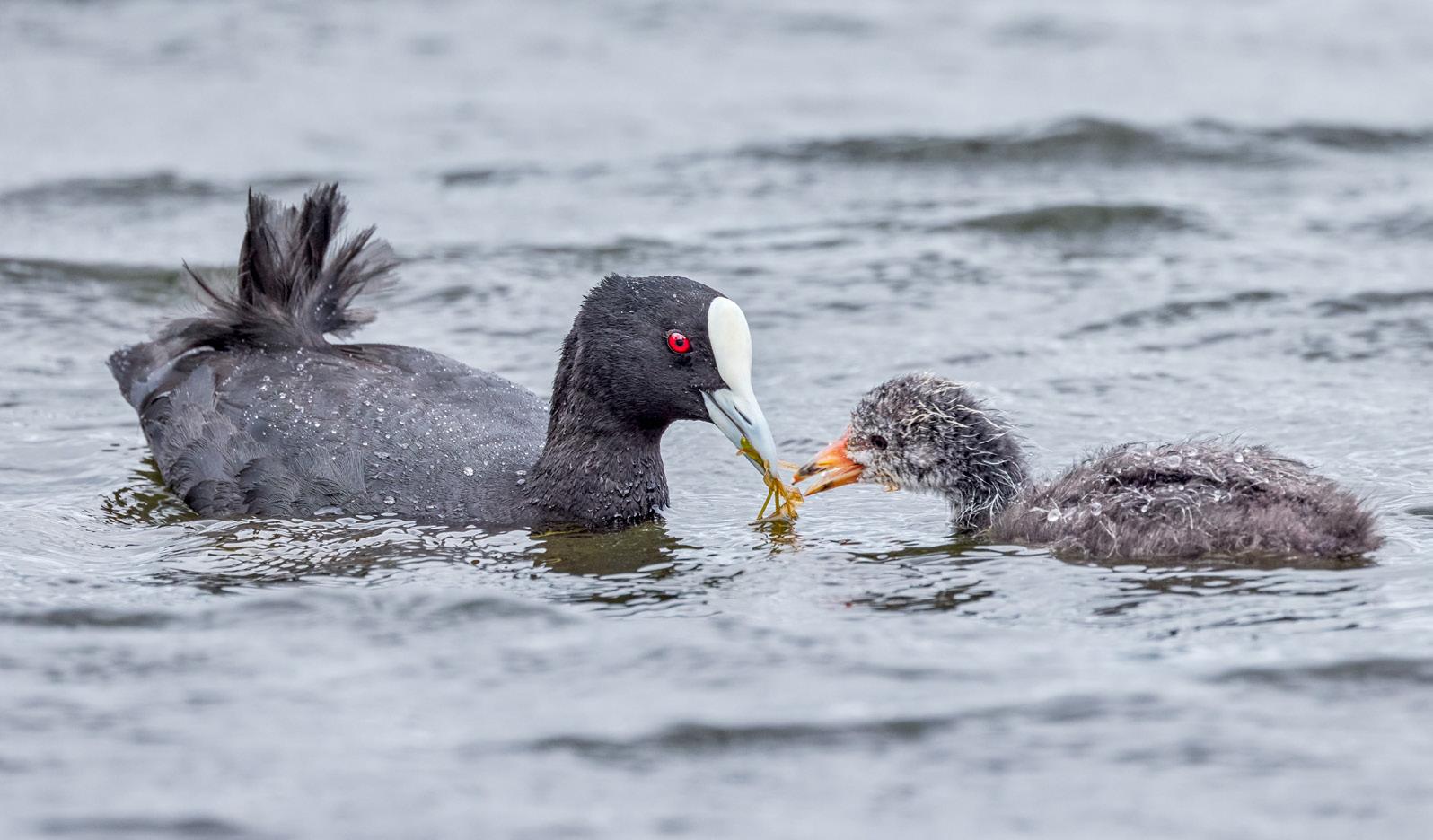
chicks are ugly. A newly hatched coot chick has a naked scarlet head and a fringe of orange fuzz around its beak, like a baby who needs a bib. The chicks bob on the water, squawking raucously, and their parents forage and dive to bring them food.
The self-introduced coots are relative newcomers to New Zealand. Coots have a lot in common with weweia. They share the same inshore waters and both need calm, sheltered margins to anchor their big untidy nests. Coots are aggressive birds and twice as heavy as weweia. Might the newcomers out-compete and drive away the smaller endemic bird?
This does not seem to be happening. Perhaps the difference in food preferences is sufficient to minimise competition. Weweia catches small fish, koura, and invertebrates like mayfly larvae, while the coot mainly plucks water weeds and sometimes grazes ashore.
Not only are weweia and coots co-existing but decades of bird counts show that both populations are increasing. The current dabchick population of about 2000 has led to their status being raised from Threatened to Nationally Increasing. But the birds still face many threats. Norway rats can swim to their floating nests and eat the eggs. A rat control programme
around the shores of Lake Tarawera was followed by a surge in weweia numbers.
Last summer, Forest & Bird initiated a pest control project around the shores of Lake Rotoiti with the Lake Rotoiti Scenic Reserve Board, the Bay of Plenty Regional Council, and DOC. This should benefit weweia as well as possumravaged pōhutukawa and the freshwater mussels, kākahi, another favourite food of diving rats.
Weweia are disturbed by passing boats and jet skis, and their floating nests can be swamped by the wake, yet otherwise the birds seem to co-exist with people. They live in greater numbers around boat sheds and jetties than elsewhere, although this may simply be because both people and birds like sheltered waters.
Whatever the reasons for their success, the population of this charming endemic waterbird is increasing. Presently on the Rotorua lakes, there are about 1000 birds, swimming and diving and pattering across the water in their elegant courtship dance. And even better news, weweia are appearing in ponds and dams beyond their range in Te Ika-a-Māui North Island and as far south as Lake Forsyth in Canterbury, returning to Te Waipounamu South Island where they became extinct last century.
WEWEIA SPA HANGOUT
Sulphur Bay in Lake Rotorua is a hostile landscape. Clouds of steam waft across murky water, fringed by layers of sinter rock with cavities where hot water gurgles and spurts. Signs warn of the danger of straying from the path. Yet this is a favourite place for a host of waterbirds, and weweia dabchicks flock there in autumn. They are probably young birds, the chicks of the summer, grown up and sped on their way by their parents, who stay put on their lakeside patch. Flocking at Sulphur Bay offers a young weweia an opportunity to warm its feet (though the acidity of the water may damage its webs), feed on the wriggly midge larvae that thrive in the warm water, and meet potential mates.
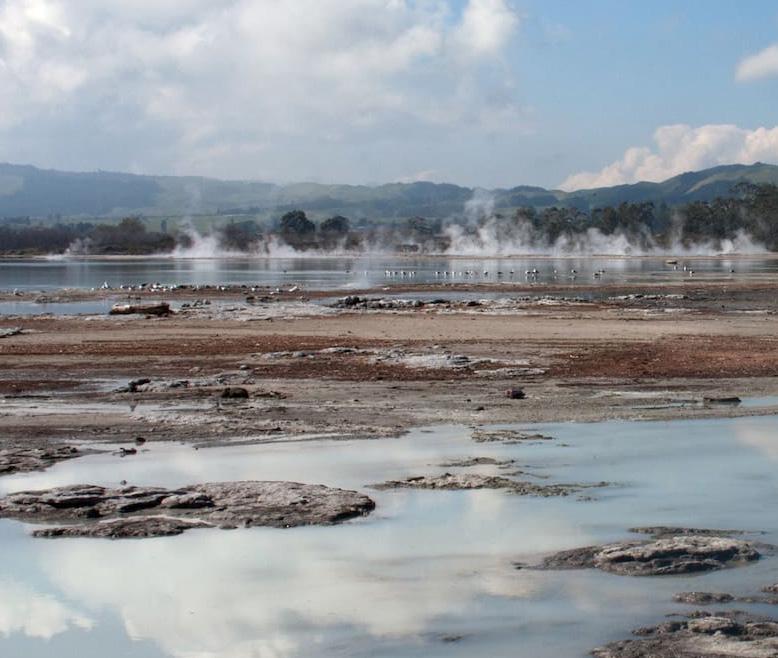
Local volunteers started carrying out weweia dabchick surveys of 18 Rotorua lakes in 1985, and they have been carried out every five years since. Volunteers, DOC, and Fish and Game work together in boats to count and map weweia and all other waterbirds over a few days in late January. This is a fine example of citizen science and collaboration. The data collected provides a wealth of information, and, while presently it shows an encouraging trend in weweia numbers, it would also alert us should the population decline.
Australasian coot feeding chick Bryce Mquillan
55 Winter 2024 |
Sulphur Bay, Rotorua
NATURE ABOUT Wild
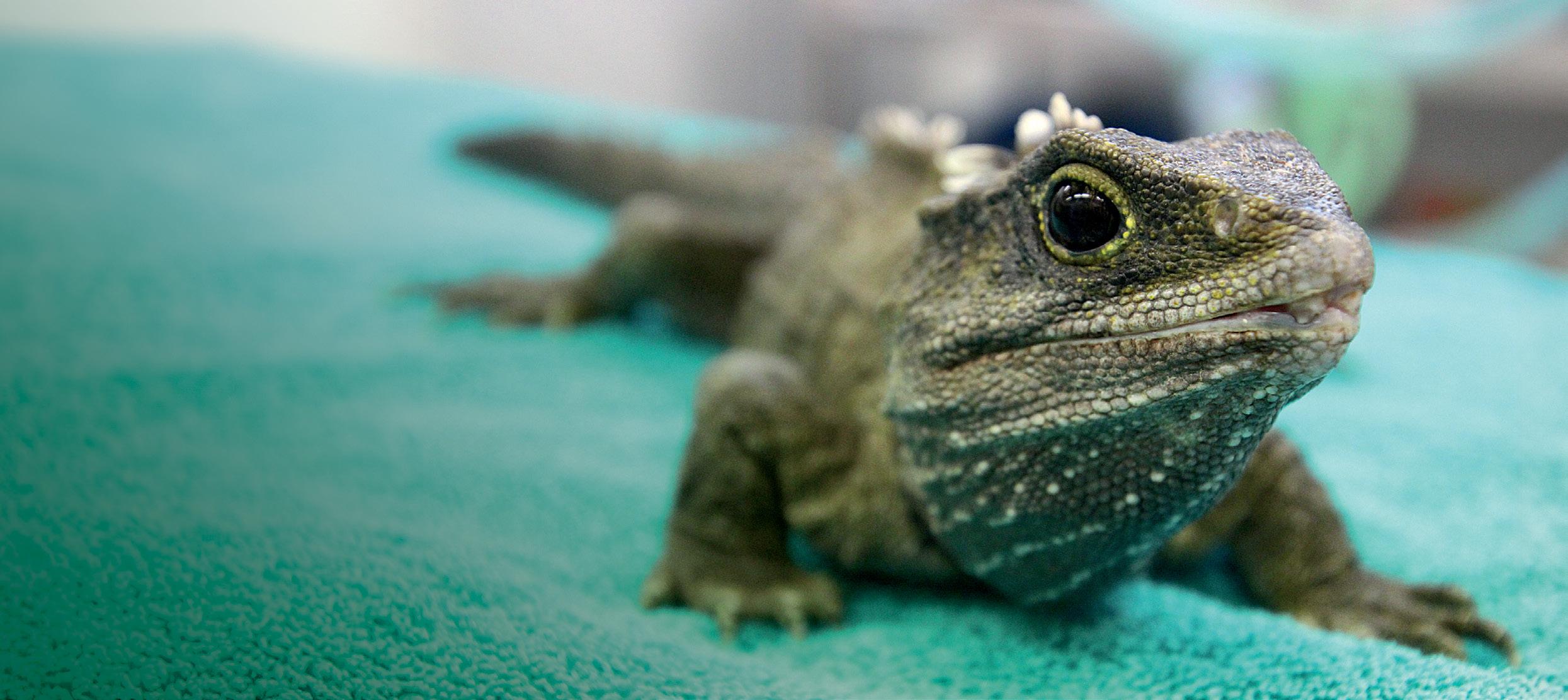
The vets and nurses at Wildbase Hospital have been looking after injured animals for more than two decades. Holly Ann Taylor shares some highlights.
Nearly 7000 patients have been treated at Wildbase Hospital, in the Manawatū, since it opened in 2002.
The hospital’s avian patients have included several species facing the highest risk of extinction, including the tūturuatu shore plover, kākāpō, matukuhūrepo Australasian bittern, Antipodean albatross, kākāriki karaka orange-fronted parakeet, and kōtuku white heron.
The team has also cared for hoiho yellow-eyed penguins, rowi Okarito brown kiwi, kea, and masked booby, with common nationally vulnerable patients including takahē and whio.
Of all the bird species, the most frequent flyer award goes to the kererū, with around 1100 receiving care, followed by kāhu swamp harrier (870), pararā broad-billed prions (607), kiwi-nui North Island brown kiwi (525), tūī (523), ruru morepork (352), and kōtare kingfishers (344).
The hospital, led by academic avian veterinarians Professor Gartrell and Dr Megan Jolly, is based at Massey University’s campus in Palmerston North and also serves as a highly regarded teaching and research facility.
Professor Brett Gartrell said it’s been a privilege to play a role in improving the lives of so many native wildlife.
“It’s a testament to the remarkable work that has only been made possible through significant collaborations and strong partnerships with likeminded organisations, as well as the unwavering dedication of our hospital team,” he said.
“Wildbase is a charitable organisation that relies on donations to help fund our work, so we couldn’t do any of this without the support of the public. Together, we have made a profound impact on the conservation of our unique fauna.”
As Aotearoa has one of the highest proportions of native species facing extinction in the world, the team’s work continues to be of utmost importance.
All patients, whether they be birds, reptiles, bats, or amphibians, require their unique nutrition, physiology, and habitat needs to be met by the team.
Reptiles also make up the patient numbers, with some nationally endangered reptiles treated, including Otago skinks, rough geckos, grand skinks, and
internationally endangered green sea turtles. Tuatara are the most commonly treated reptiles, with more than 133 checked in for treatment so far.
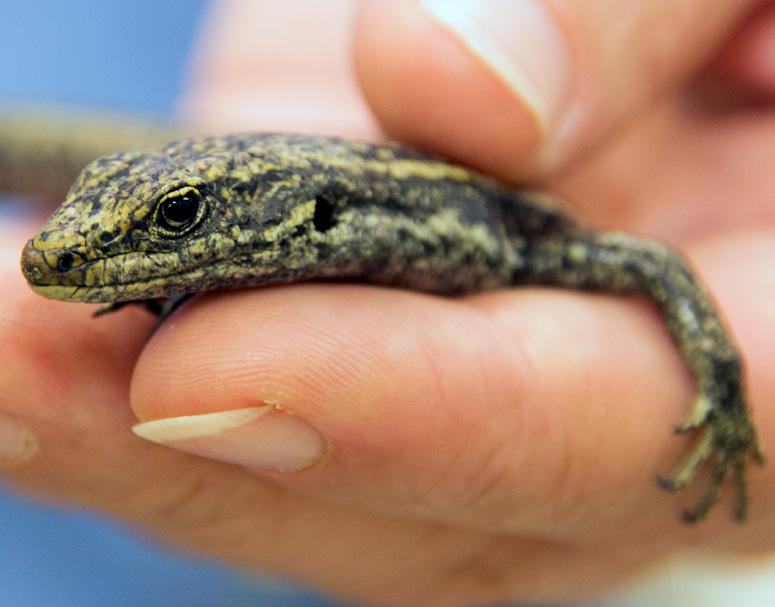
Other patients include starred geckos, Lewis Pass geckos, scree skinks, and the internationally vulnerable olive ridley sea turtles. While more of a rarity, pekapeka bats, both nationally critical long-tail bats and the nationally vulnerable short-tail bats, have also been cared for by the Wildbase team.
As well as providing lifesaving treatment, in some cases, the team has had to trial ground-breaking procedures to provide the best chance of survival. Most notably, in 2019, Wildbase successfully completed a world-first brain surgery on a young kākāpō
COMMUNITY
South Island skink. Wildbase
Tuatara. Wildbase
| Forest & Bird Te Reo o te Taiao 56
chick after it was found to have development issues.
The pioneering surgery adapted surgical techniques used on humans and other mammals to offer the kākāpō, one of only 144 left in the world at that time, a chance at a healthy life.
Other highlights included providing optometrist support for a ruru with a head injury, the removal of an entire plastic spoon, balloon
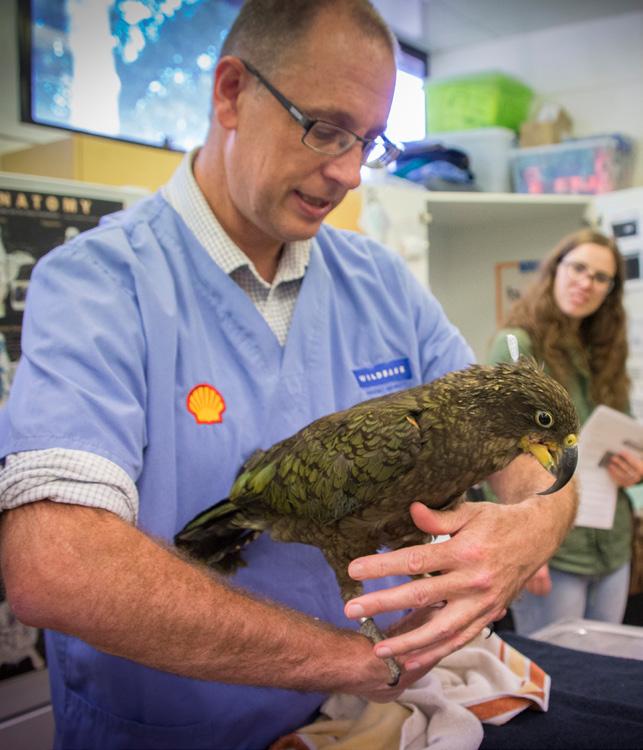
remnants, and other plastics from a giant petrel’s stomach, and successfully extracting a kiwi chick from its shell after hatching complications.
Wildbase Hospital supports several conservation programmes, including the Shore Plover Recovery Programme, Operation Nest Egg, and the Kākāpō Recovery Programme. It also provides handson experience in wildlife medicine and husbandry to assist in the clinical training of Massey vet students, international students, postgraduate veterinarians, and other vet professionals from around the motu.
“It’s incredible to look back and see how much we have been able to achieve,” added Brett.
“Our efforts and our commitment have only strengthened, and we will continue this vital work of providing critical care, ongoing research, and education initiatives to help safeguard our nation’s living taonga for generations to come.”
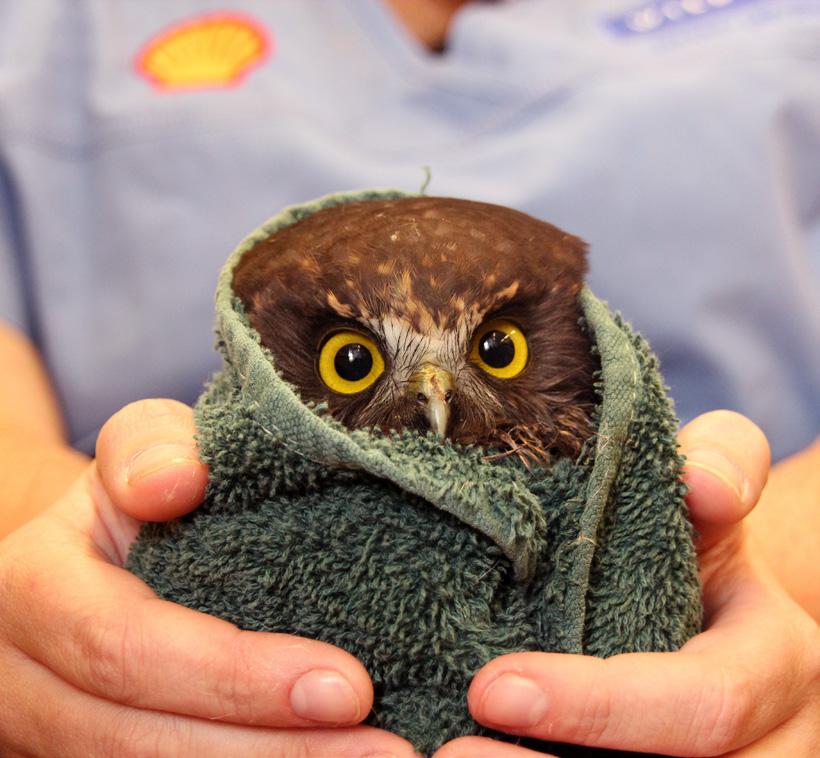
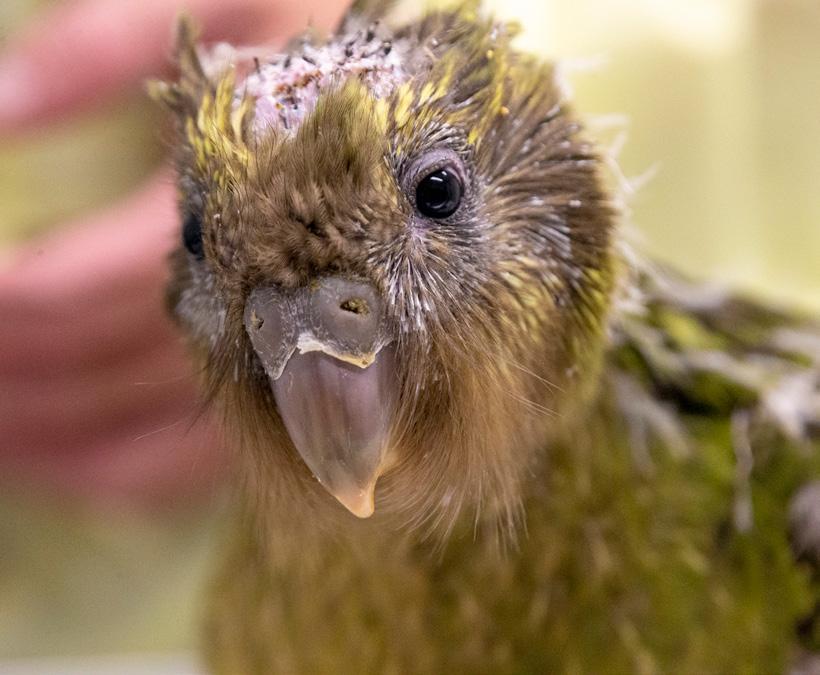
Donate funds to the cause Donate a trap to a specific group
www.giveatrap.co.nz Our birds need you! Be
by 2050.
part of making Aotearoa predator-free
Professor Brett Gartrell with a kea in 2017 Wildbase
This young kākāpō had brain surgery Wildbase
57 Winter 2024 |
Ruru morepork. Wildbase
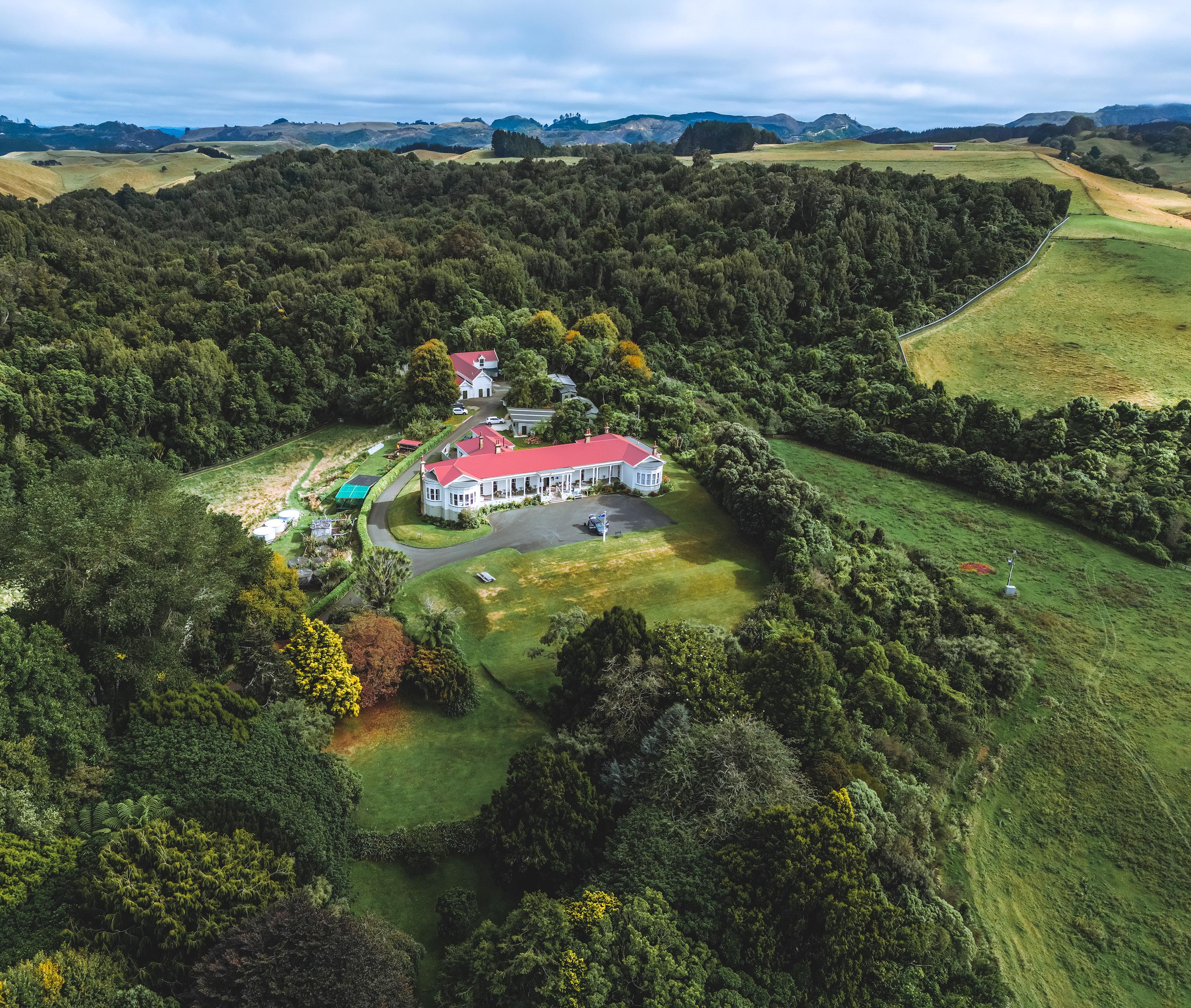
BIRD’S EYE VIEW OF NATURE
There is something for everyone at Bushy Park Tarapuruhi, from friendly native birds and lizards to wetland walks and giant rātā. Caroline Wood
Things have come a long way since Whanganui farmer Frank Moore donated his farm and homestead to Forest & Bird in 1962 and over time it became a nature sanctuary called Bushy Park Tarapuruhi.
In 2005, thanks to some really hard mahi by local volunteers, led by Allan Anderson, funds were raised for a predator-free fence to be built,. This allowed the transfer of hihi and other native bird species, which began to breed.
Tarapuruhi celebrated another big milestone recently. “We are now free of cattle inside the fence and have removed the final paddock fencing in preparation for this winter’s planting,” explained Forest & Bird’s sanctuary manager Mandy Brooke. “We have our plant
nursery full of plants ready to go in the ground and are preparing the site for our first plantings.
“This is a big deal for Bushy Park Tarapuruhi, as it means it is protected from introduced predators, including mouse population managed to low levels. Our current focus is on planting species for hihi foraging and lizard habitat. This is part of a five-year project growing, planting, and caring for new vegetation areas.”
Thank you to our partners Bushy Park Trust and Ngaa Rauru Kiitahi for helping put Tarapuruhi on the map as a nationally important bird sanctuary. Forest & Bird also acknowledges Horizons Regional Council, Whanganui District Council, The Tindall Foundation and Playstation for helping to fund our conservation work.
GOING PLACES
| Forest & Bird Te Reo o te Taiao 58
The lodge, native bush, and predator-free fence at Bushy Park Tarapuruhi. Joe Potter
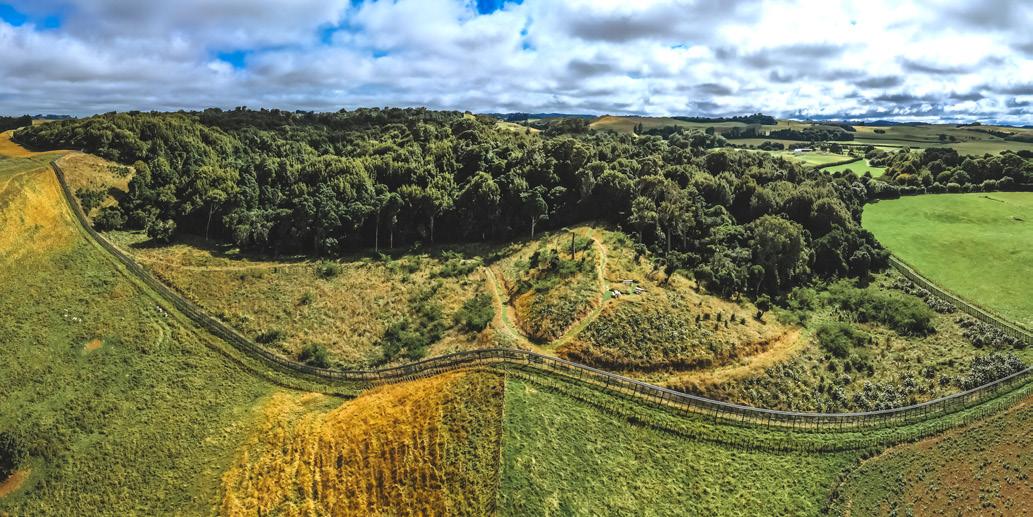
North American volunteer Joe Potter, of Earlham College, recently volunteered at Bushy Park Tarapuruhi and took some incredible new aerial photos of the sanctuary. These offer a bird’s eye view of how the predator-free fence has allowed the remnant forest and wetland to flourish. Thank you to Joe for letting us share them here.
Getting there is easy. The sanctuary is located 25 minutes outside Whanganui. Bushy Park Tarapuruhiis wheelchair and child friendly, so bring the family and friends out for an enjoyable journey of nature discovery. But please help protect this predator-fenced sanctuary by leaving your dogs at home.
FOREST SANCTUARY This is a national Forest & Bird Project. Walk among giant trees and experience rare native wildlife in a stunning ancient forest. Open during daylight hours. Entry is free.
HISTORIC HOMESTEAD Experience the splendour of a grand historic home located within one of New Zealand’s top forest sanctuaries. Available for B&B accommodation, meals, refreshments, and venue hire. Find out more at https://bushypark.nz.
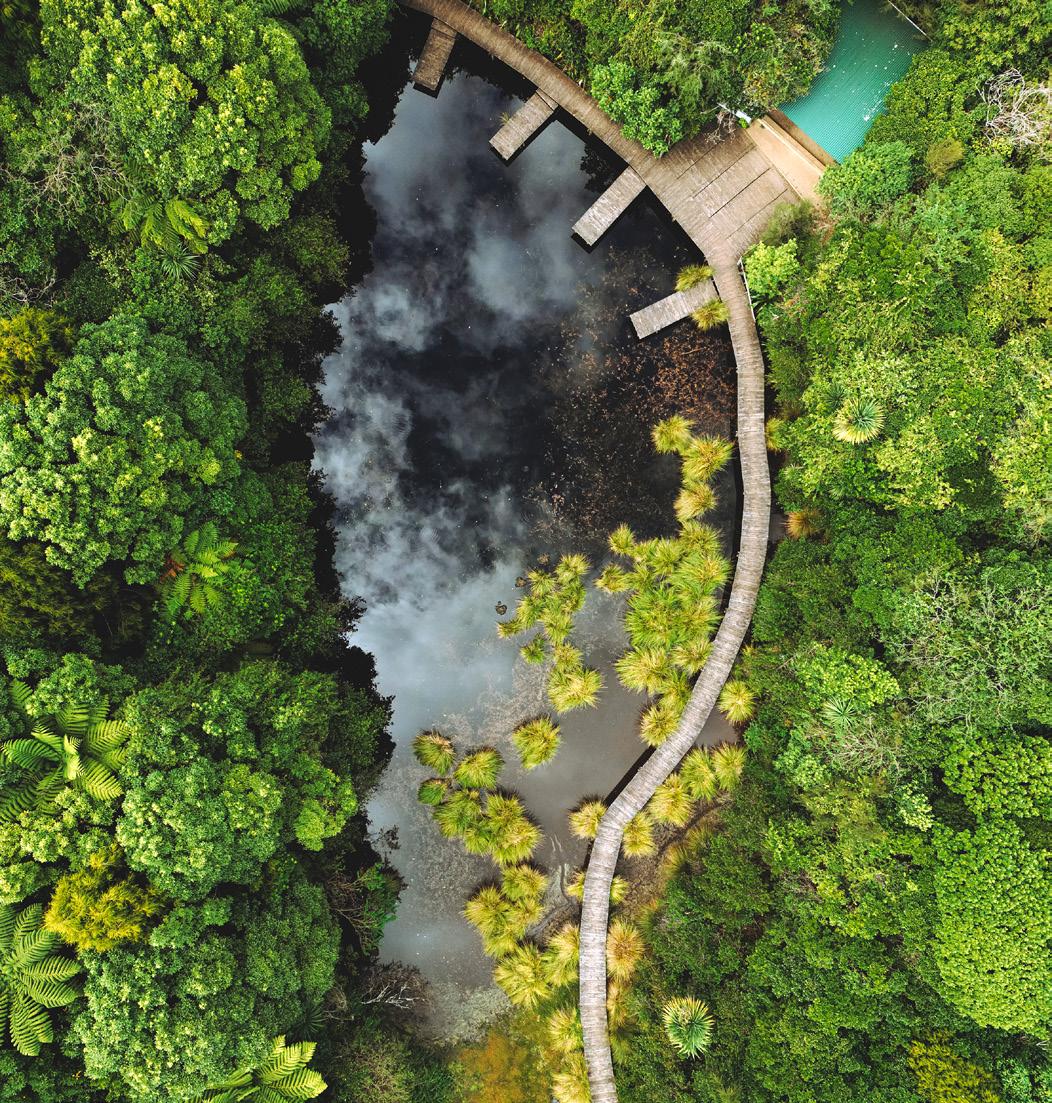
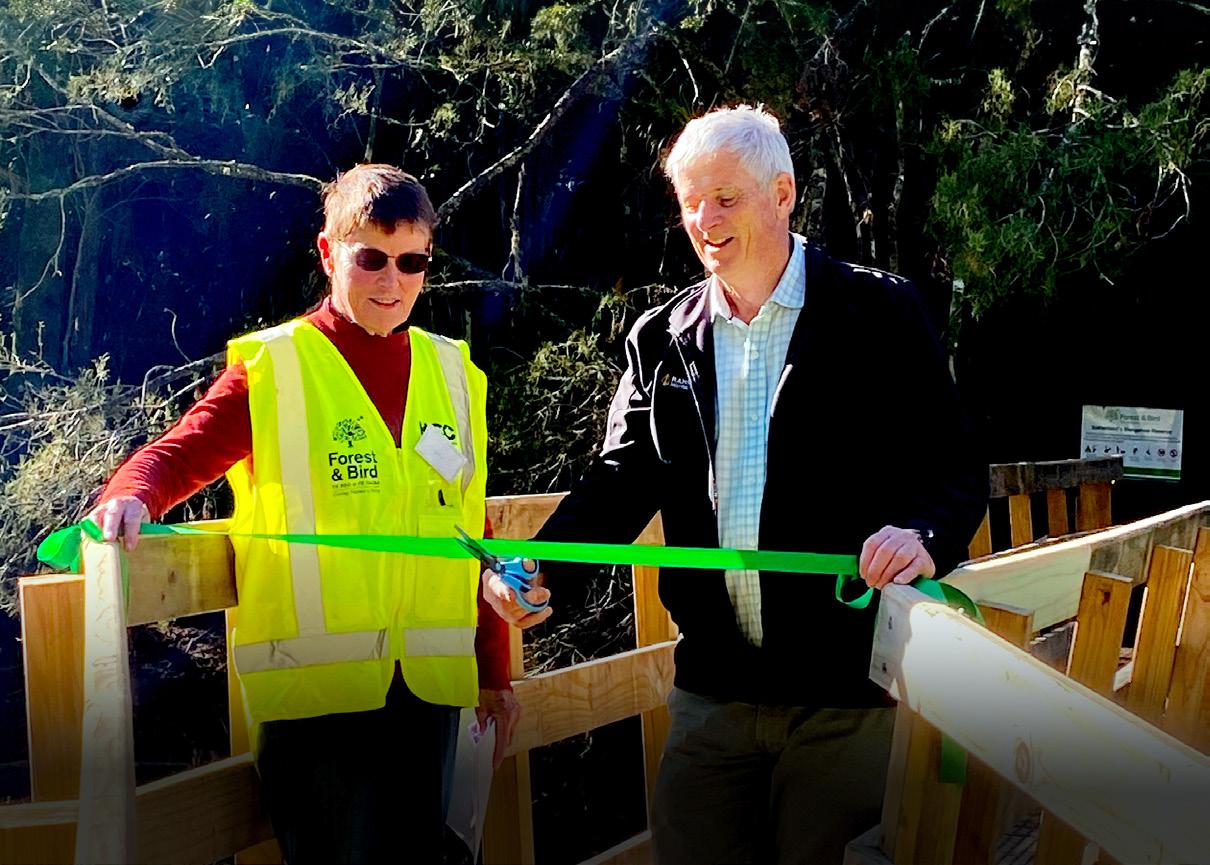
MAKING CONNECTIONS
The Mayor of Rangitīkei Andy Watson paid tribute to local Forest & Bird volunteers during the opening of a new access bridge to one of our reserves.
In May, local volunteers from Forest & Bird together with volunteers from national office hosted an official opening of a new access bridge at Sutherland Mangahoe Bush Reserve. It replaced one swept away by floods in December 2021.
“The bridge was financed and constructed by Forest & Bird, but a huge number of hours have been spent by volunteers rebuilding the tracks,” said Andy Watson, Mayor of Rangitīkei, who attended the ceremony. “I have walked the reserve and it certainly is a special place.”
About 30 people attended the opening, including Rangitikei Environment Group, Horizons Regional Council, and Rangitīkei Signs and Designs, as well as members of Forest & Bird’s branches in Whanganui, Horowhenua, and Rangitikei.
McIntyre Construction built the bridge, which was designed by the Frame Group. The $85,000 project was funded by Forest & Bird’s national office.
The local branch committee has been looking after the bush reserves of Sutherland Mangahoe, Puriri, and Titoki, in the Turakina Valley area, near Hunterville, for more than 45 years.
These reserves were once part of local farmer Archie Sutherland’s property. Following his death in 1967, these areas of native forest were bequeathed to Forest & Bird. The total area gifted was 201 acres (81ha).
Sutherland Mangahoe reserve is primarily kahikatea podocarp forest, including rimu, tōtara, rewarewa, and occasional mataī and miro over an understorey of tawa.
“Native and other bird life frequent the reserve. Unfortunately, so do introduced plant and animal pests,” said branch chair Kate Williams.
“It’s an ongoing challenge to control such intruders and protect this amazing reserve. Thanks to our new bridge, Sutherland Mangahoe is once again open for visitors. It will also make it easier for our members to access the reserve.”
BRANCH PROJECT
Kate Williams and Andy Watson. Forest & Bird
Joe Potter
59 Winter 2024 |
Joe Potter

Books
FIGHT FOR FRESHWATER
By Mike Joy
Bridget Williams Books, $39.99
ENVIRONMENTAL DEFENDERS
by Raewyn Peart
Bateman Books, $79.99
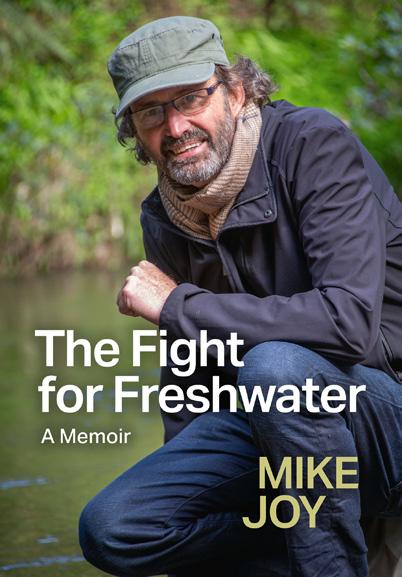
This memoir provides a rare first-hand look at the pressures and challenges faced by those who dare to raise their voices, especially when debating issues as crucial as the health and future of New Zealand’s waterways. Mike Joy is a leading freshwater ecologist and a fervent advocate for the preservation of waterways. However, the journey that led him to these roles is as winding and unique as the rivers he strives to protect. His story is not just about academic success and public profile, but also personal discovery, challenge, and resilience. This vivid autobiographical account is inspiring and illuminating, and offers perceptive commentary on academia’s invaluable role in society.
FORAGING
by Peter
Langlands Penguin, $40
Through a series of captivating stories, featuring many of the major environmental battles of the past half century, Environmental Defenders provides an insider’s account of how a small group of lawyers and scientists, under the banner of the Environmental Defence Society, took on the might of the government and development interests to secure a series of important wins on behalf of the environment. Writer Raewyn Peart has been directly involved in the country’s environmental movement since the 1980s. She draws on extensive interviews with people involved in the profiled cases as well as EDS’s archives. It contains much material that has not previously seen the light of day.
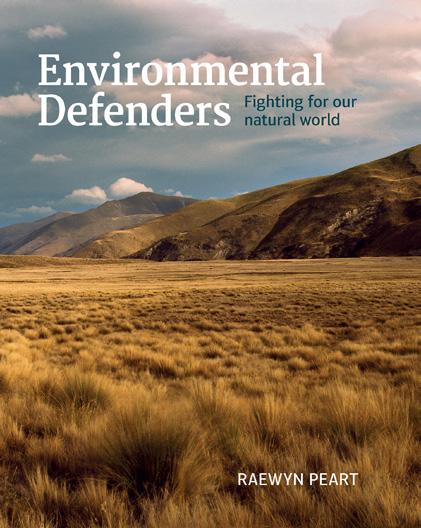
FUNGI OF AOTEAROA
A Curious Forager’s Field Guide
by Liv Sisson Penguin, $45
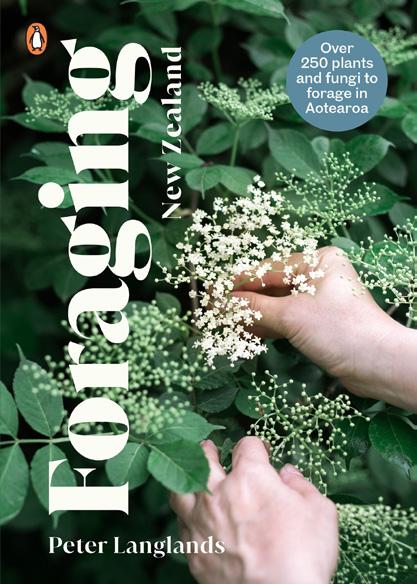
New Zealand is full of incredible edible wild foods — fruit, fungi, and seaweed; berries, herbs, and more — you only need to know where to look and how to do it safely. Foraging New Zealand is the ultimate guide to unearthing more than 250 of our tastiest wild plants. Packed with stunning photography, up-to-date information, and helpful tips, this book will have you venturing into the countryside, viewing urban weeds with fresh eyes, and returning to the larder with zest. Peter Langlands has spent a lifetime compiling Aotearoa’s largest database of wild-foraged species, running workshops, and sourcing wild produce for chefs as one of our only licensed professional foragers.
The complete introduction to finding, identifying, and using mushrooms and other fungi in New Zealand. In this practical and up-to-date guide, forager and fungus enthusiast Liv Sisson shares her top tips and takes the reader on a journey to discover the unique and diverse fungi Aotearoa has to offer. Discover how to identify the best edible varieties, and how to cook with them, how these incredible organisms have shaped the world as we know it, and the role they are playing in modern medical and environmental research. Featuring highly detailed fullcolour photographs, fun facts, and current descriptions of more than 130 species.
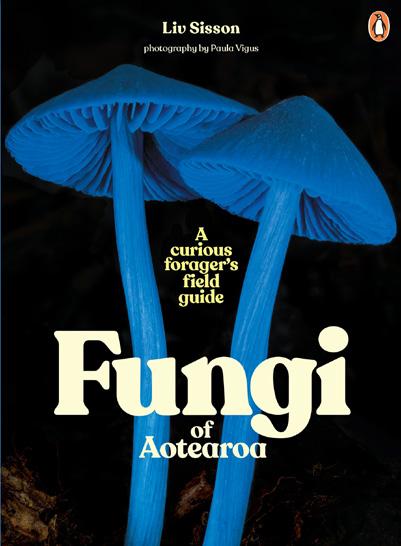
| Forest & Bird Te Reo o te Taiao 60
High country
HEROINE
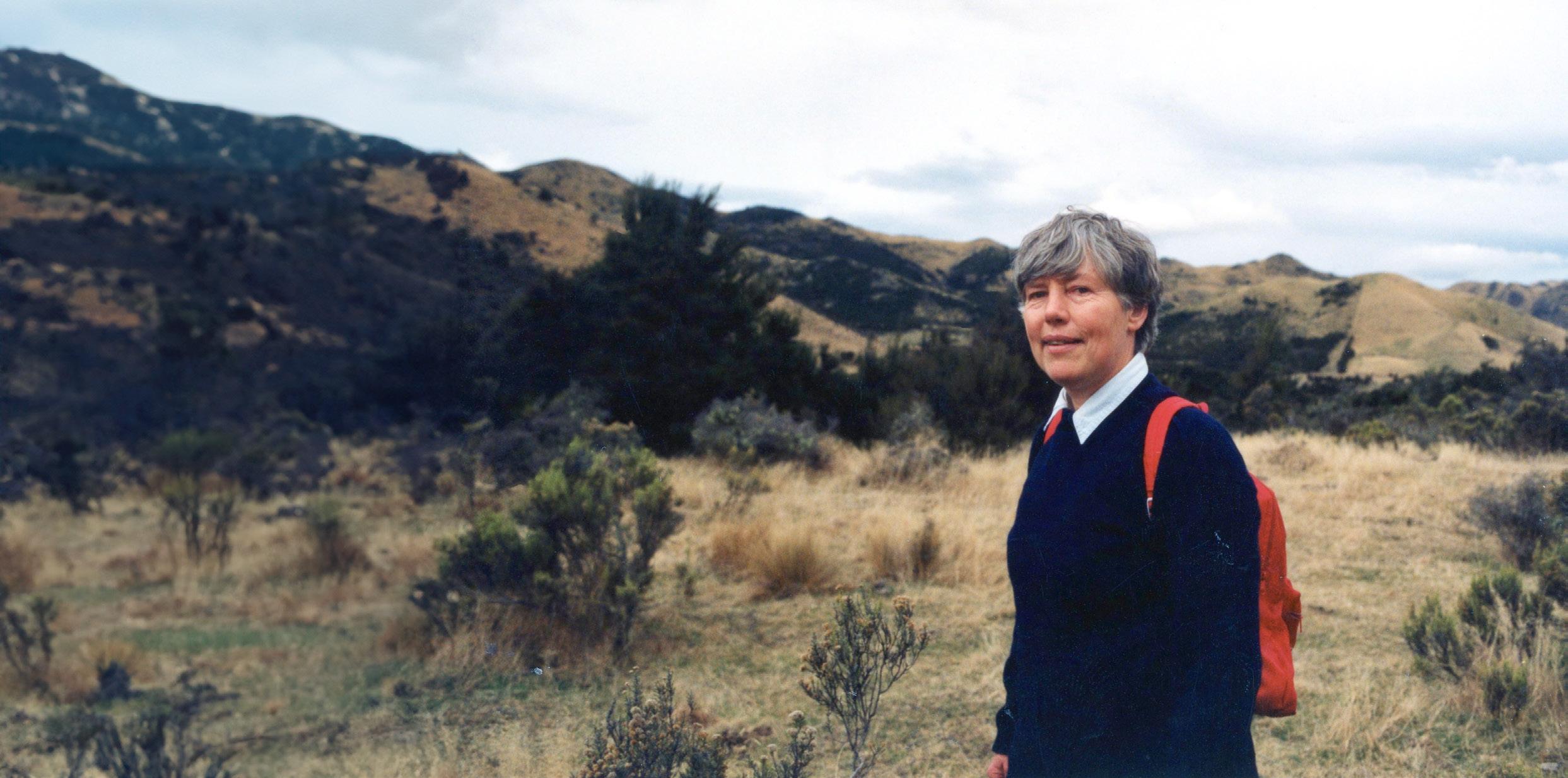
Lesley Shand dedicated her life to the wild – to the sweeping tussock plains, beech forests, and braided rivers of the South Island, and the unique flora and fauna that make them so special.
A tenacious voice for nature, Lesley died in February 2024, aged 82. She is remembered for her inspiring legacy of conservation advocacy and action.
Lesley grew up on Island Hills Station in North Canterbury, developing a deep connection to the land and ecology that sparked a lifelong passion. But it wasn’t until 1980 that her activism awakened, when she was appointed to the North Canterbury Parks and Reserves Board.
Here, she helped create the Lewis Pass Scenic Reserve and played a key role in the Cox-Binser addition to Arthur’s Pass National Park in 1988. She would later help secure 176ha of beech forest and wetland for the national park at Lake Grace.
Not wanting to stretch the Department of Conservation’s tight budget, Lesley would hitchhike between Christchurch and Hokitika to attend meetings for the North
Canterbury Conservation Board, of which she was a member from 1990 to 1996. She also served on the New Zealand Nature Conservation Council for six years from 1984.
Lesley was at the forefront of the fight to end logging of native forests, particularly in Maruia Valley. She helped protect Reid Valley from mauling by chainsaw and galvanised national support to save Terako Downs, where mature rimu, kahikatea, and mataī were being felled by bulldozers.
A prolific letter writer, Lesley’s approach to conservation was persistent and fearless. An avid tramper and horse trekker, she traversed much of the wilderness that she spoke so passionately for.
“It’s just part of me. I love the land and the wild and remote places. If damage occurs to a place I am fond of, it’s just like a body blow,” she told Eugenie Sage in a 1993 profile for Forest & Bird magazine.
Lesley had a talent for drawing in others with her enthusiasm for nature – usually by getting them to experience it for themselves. She spearheaded a kiwi listening
programme and spent many hours physically removing wilding pines.
As a young girl, Lesley was introduced to Forest & Bird by her grandfather, Yeo T Shand, who wrote a powerful environmental pamphlet, The Crime Against the Land, published by the Society in 1942. Lesley was gifted a lifetime Forest & Bird membership by her mother and later became an active member of the North Canterbury branch for many years (including serving as Chair).
She secured Boyle Base at Lewis Pass for Forest & Bird, mobilising members for a pest control programme to protect the surrounding flora and fauna. Lesley received an Old Blue in 1988 and later became a Distinguished Life Member – the Society’s highest award. Her immense contributions were further recognised when she was appointed a Member of the New Zealand Order Merit for services to conservation in 1999.
Lesley’s remarkable efforts have indelibly shaped the wild places and wildlife of the South Island. She will be forever remembered as a champion for the high country.
TRIBUTE
Lesley Shand in 1993. Supplied
Lesley Shand made a remarkable contribution to nature protection in the high country of Te Waipounamu Ellen Rykers
61 Winter 2024 |

• Heaphy Track
• Abel Tasman
• Old Ghost Road
• Cobb Valley
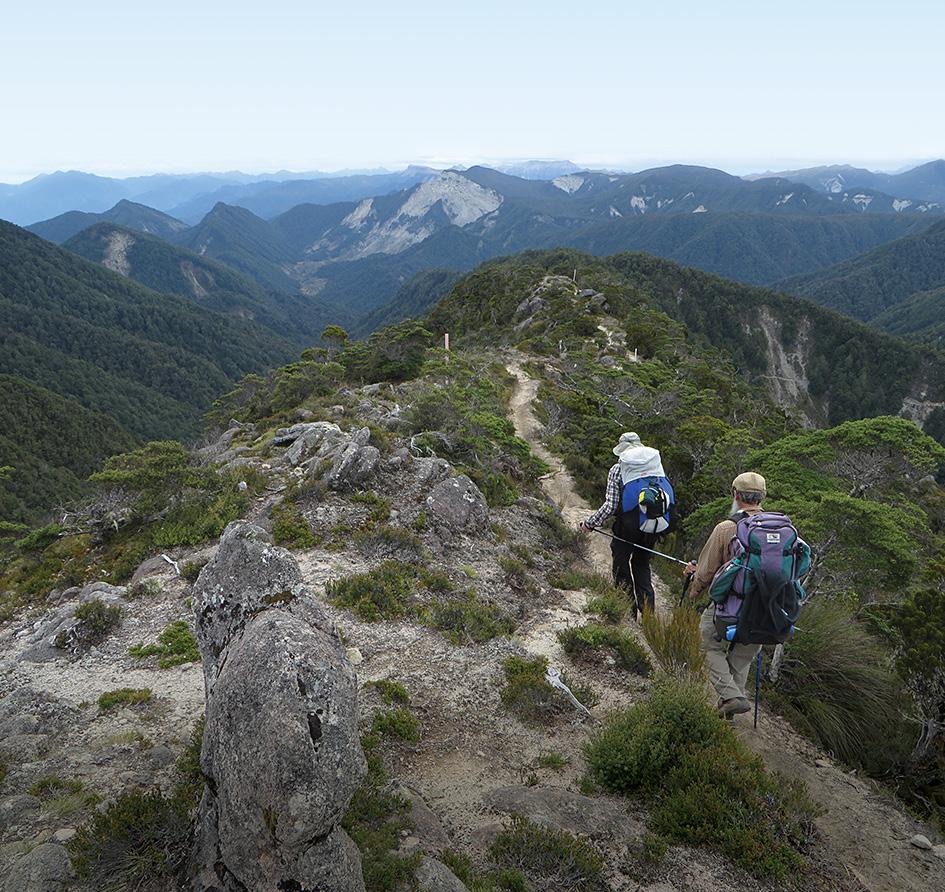
‘Carry less, enjoy more’ Come explore with us!
www.kahurangiwalks.co.nz
Phone: 03 3914120
CONTROL PRODUCTS
WIPE OUT: Possums, Rodents, Mustelids, Rabbits
Standard & Mini Possum Bait Stations & Timms Traps ■ Rodent Bait Stations and Block Baits ■ Rodent Snap Traps ■ Fenn Traps (MK4 & 6) ■ Trap Covers ■ DOC 200 trap and lightweight cover. Also available: Monitoring Tunnels, Flagging Tape, Rabbit Bait Stations.
PHONE 07 859 2943
MOBILE 021 270 5896 PO Box 4385 Hamilton 3247
WEB: www.philproof.co.nz
EMAIL: philproof@gmail.com
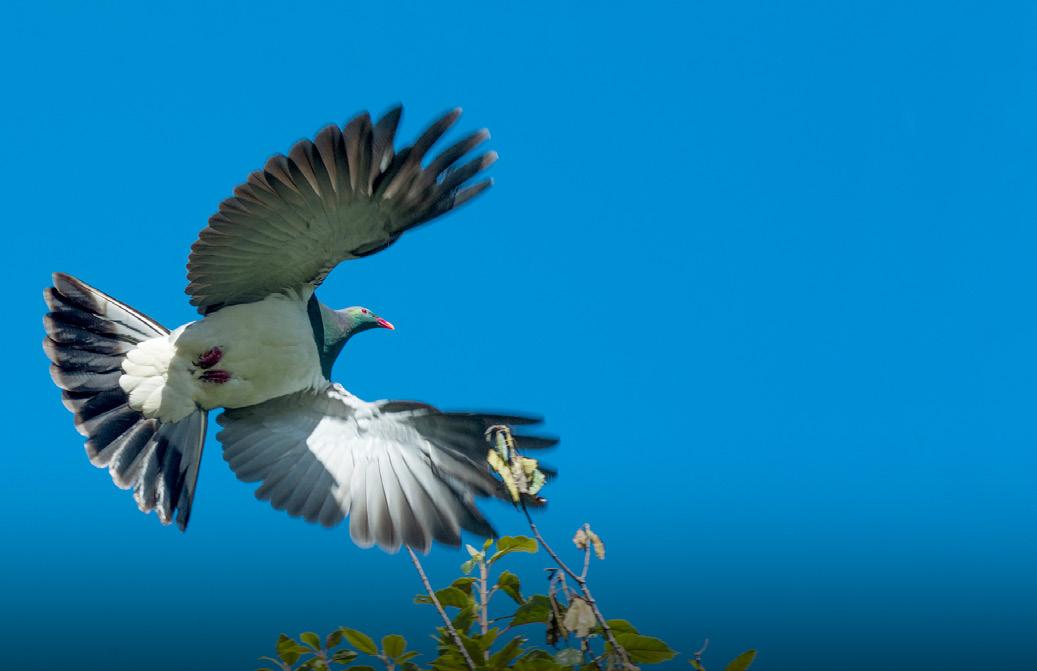
Join our knowledgeable local guides on walking tours in the stunning Glacier Country region.
Learn about glaciology, flora & fauna, geomorphology, geology & history of this world renowned landscape. We cater for all ages & abilities, with 2 hr, half day & full day tours in our small groups, at your pace.

0800 925 586 www.glaciervalley.co.nz
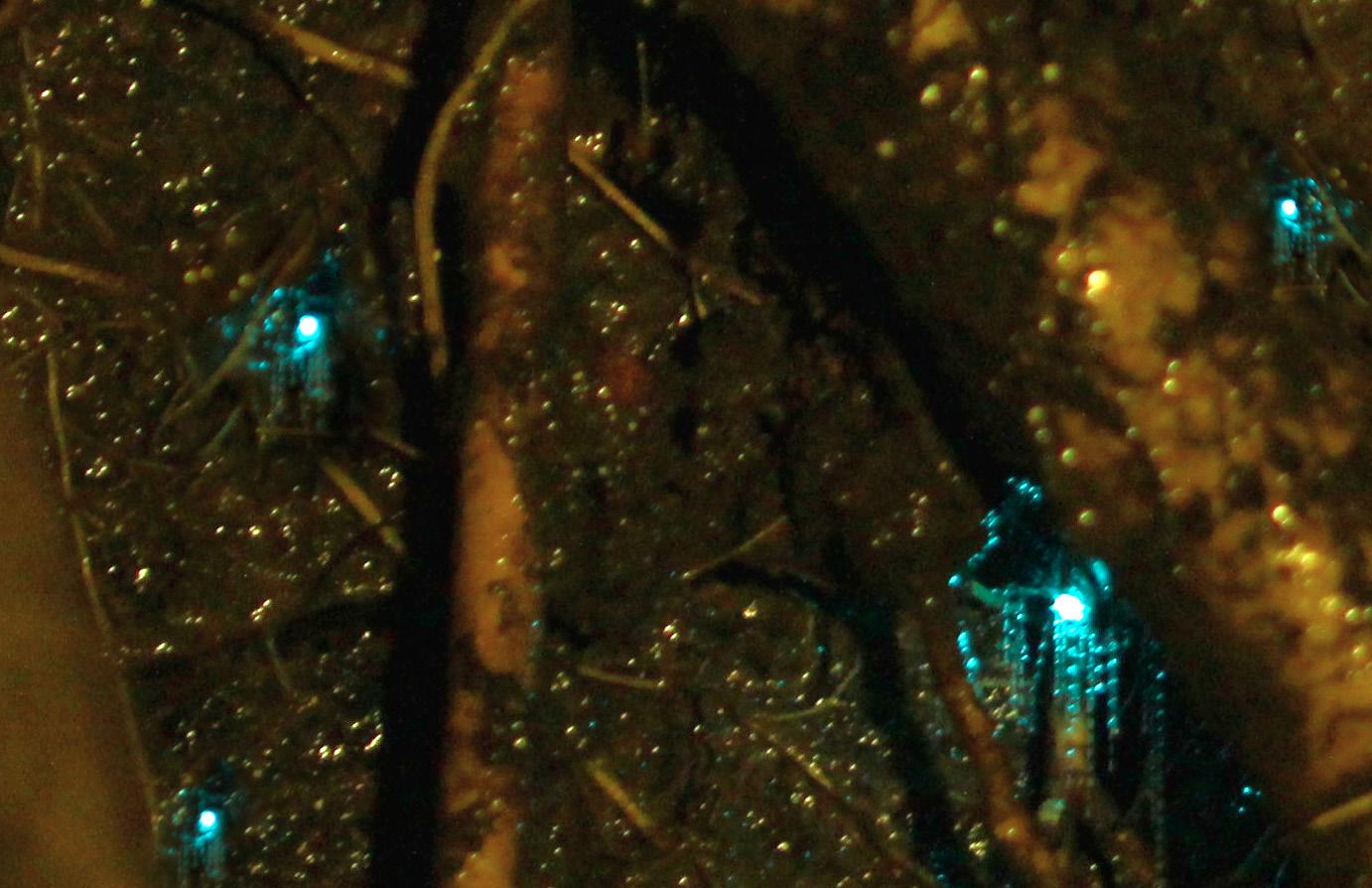
Nature at Night Tour
With Earthlore Tours and Accommodation | Catlins
Encounter long-tailed bats, experience a colony of luminescent glow worms and explore the night time bush.
M 027 385 3182 W www.earthlore.co.nz E earthlore3@gmail.com
FOREST & BIRD’S WILDLIFE LODGES
Arethusa Lodge
Near Pukenui, Northland Sleeps 6 herbit@xtra.co.nz 03 219 1337
Ruapehu Lodge
Whakapapa Village, Tongariro National Park Sleeps 32 office@forestandbird.org.nz 04 385 7374
Mangarākau Swamp Lodge North-west Nelson Sleeps 10 mangarakauswamp@gmail.com 03 524 8266 www.mangarakauswamp.com
Forest & Bird members can book all of these lodges at reasonable rates. Join today and feel good knowing you are making a difference for New Zealand’s nature. See www.forestandbird.org.nz/joinus
Tai Haruru Lodge Piha, West Auckland Sleeps 5+4 hop0018@slingshot.co.nz 09 812 8064
Tautuku Forest Cabins Owaka, Otago Sleeps 16 tautukucabins@gmail.com 0273764120
MARKET PLACE
PHILPROOF PEST
| Forest & Bird Te Reo o te Taiao 62

MENSWEAR
19 O’Connell St, Ak CBD ph: 64 9 309 0600 strangelynormal.com
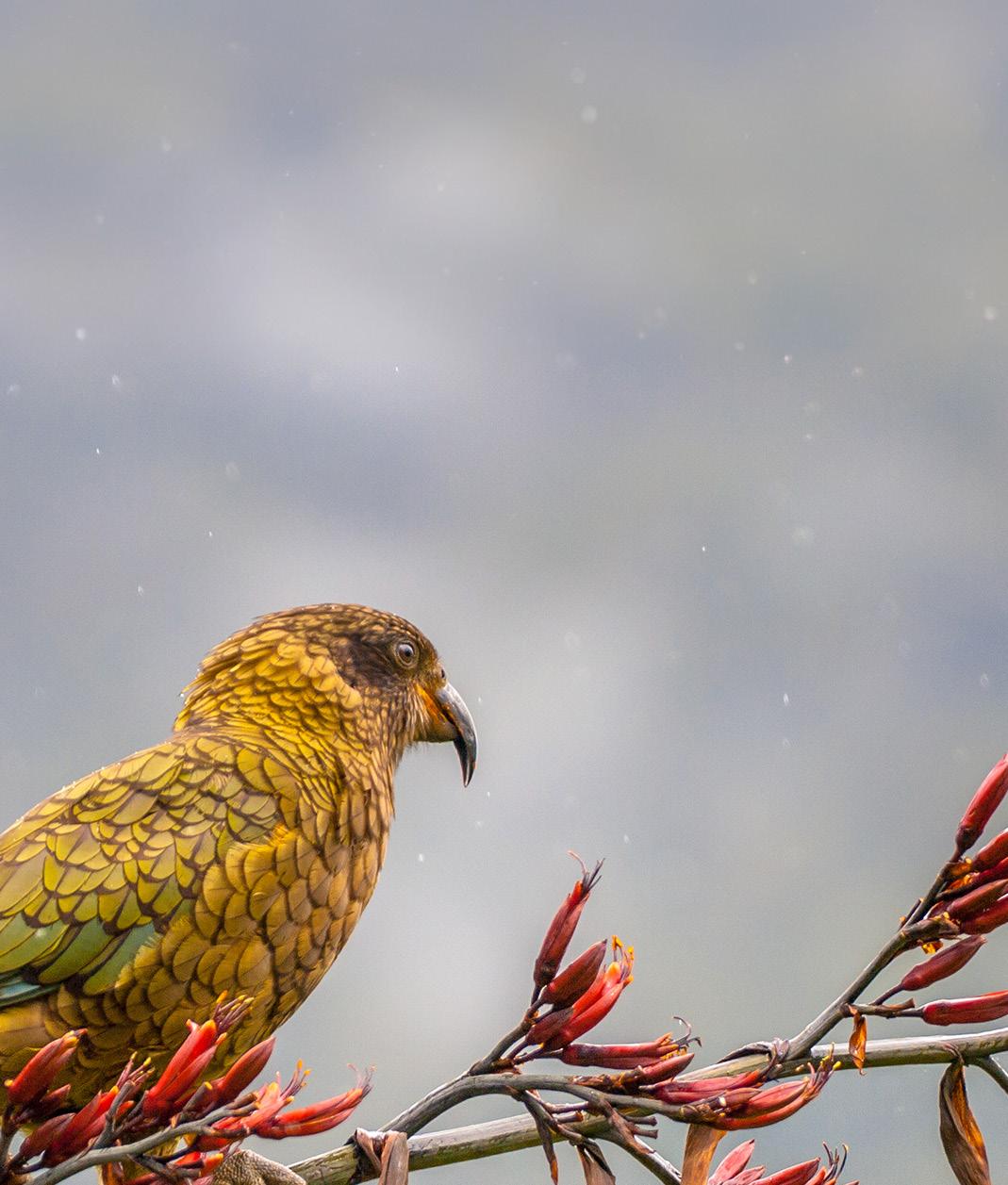
JS WATSON GRANTS
The JS Watson Trust has been giving out grants to support te taiao nature for more than 40 years. Forest & Bird administers the perpetual trust with grants being awarded of up to $5,000 per project. Applications are invited from researchers, organisations, or community groups for conservation projects that enhance the flora, fauna or natural features of New Zealand. Grants are also available for literary contributions, essays, articles, or the general education of the public to better appreciate and cherish the natural world around them.
Quarterly Wild Things magazine | Nationwide KCC adventures | Meet like-minded conservation families | Help cherish our unique wildlife and wild places.
From $24 per annum. Join Forest & Bird’s Kiwi Conservation Club today go to www.kcc.org.nz/join
Great value school, group, and overseas memberships also available.
The trust provides financial support for projects advancing the conservation and protection of New Zealand’s natural resources, particularly flora and fauna, marine life, geology, atmosphere, and waters.
More information is available from the Trust at PO Box 10-359, Wellington. Ron and Edna
Advertise to Forest & Bird readers here
Applications close Friday 26 July. Go to www.forestandbird.org.nz or email Claire Mangan C.Mangan@forestandbird.org.nz for an application form.
Please contact Karen Condon
0275 420 338 EMAIL karen.condon@xtra.co.nz and reach 80,000 people who are passionate about nature and the outdoors.
PHONE
Greenwood
TRUST
Environmental
OF
SHARE THE WONDERS
NATURE
63 Winter 2024 |
At the end of last year, lots of taranui Caspian terns were flying aimlessly around Ōhiwa Harbour, looking for a safe place to nest over the summer. Their previous nesting spot on a sand island opposite the Ōhope Wharf had disappeared underwater in late 2021.
Twelve of them found a site on the west end of the aptly named Whangakopikopiko Tern Island. This tiny island, home of rare kānuka, has been under pest control by the Ōhiwa Reserves Care Group for more than 20 years. It has been a safe haven for nesting for turituriwhatu New Zealand dotterel, torea variable oystercatcher, and mātātā North Island fern birds.
By late December, 50 tara white-fronted terns had joined the Caspians, who had by now also reached 50 nesting adults. In early January, the numbers jumped again, and there were more than 200 white-fronted terns nesting. It was the first time since 2006 that the terns had had a colony here. They were joined by 12 tarāpunga red-billed gulls and 10
HIGHFlying
A good breeding season at Whangakopikopiko, Eastern Bay of Plenty, brings hope to local shorebird lovers. Meg Collins Neil Foster
tarāpuka black-billed gulls.
Whangakopikopiko is designated as a wildlife refuge, and people can easily access it at low tide, so the Ōhiwa Reserves Care Group made up five signs and put them around the entry points to the harbour.
We also notified Upokorehe, the local iwi, and posted on local social media what was happening on the island and asked to the public to keep away and let the birds do their thing.
Over the next eight weeks, we posted weekly photos of the nests, the young chicks, then finally the fledgings. We also gave regular updates on the community notice board. We received good feedback and gathered more than 200 followers.
On the last visit, we spied a young chick going around in circles. It had been tangled up in a long tendril of grass and was stuck. We gently removed the tangled stems from its foot, and it finally ran away with a slight limp, then eventually flew away.
By the end of January, we estimated that there were more
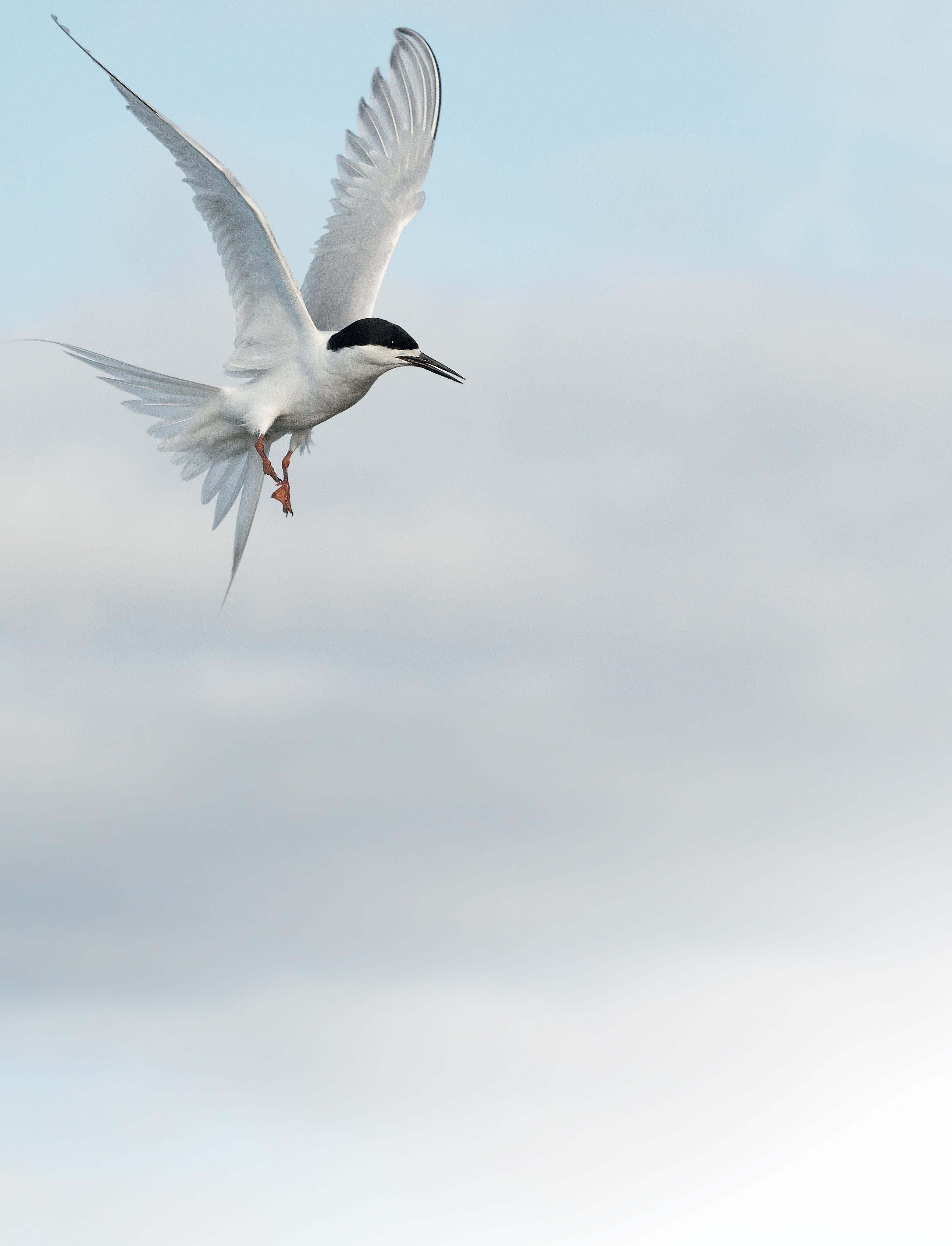
than 100 white-fronted tern chicks, 18 Caspian terns, 20 red-billed gulls, and 12 black-billed gulls who fledged.
The residents around this end of the harbour and the Opotiki community took a great interest in this colony and really helped by staying well away from the nests.
We all hope they will return next year.
Meg Collins is a long-standing member of our Eastern Bay of Plenty Branch and Convenor of the Ōhiwa Reserves Care Group.
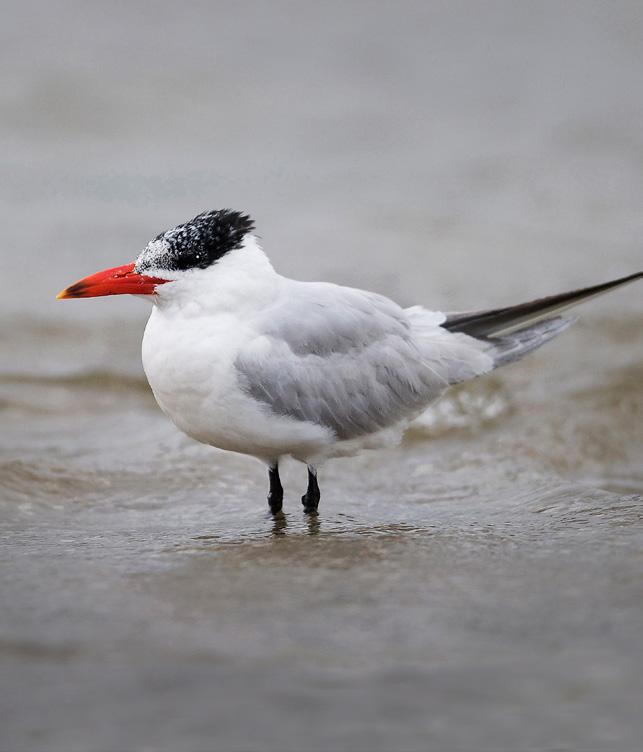 Tara white-fronted
tern Neil Foster
Tara white-fronted
tern Neil Foster
LAST WORD | Forest & Bird Te Reo o te Taiao 64
Taranui Caspian tern. Neil Foster

Parting shot
We set up a winter bird feeder in our garden in Whangaparaoa for our local tūī and tauhou silvereye. I heard quite a lot of chatter one day and went out with my camera to find two tūī having a stand-off about who was going to feed next. The larger one emerged the victor and enjoyed their afternoon drink in peace. It’s amazing how many birds show up in a semisuburban garden if you provide them some space and food.
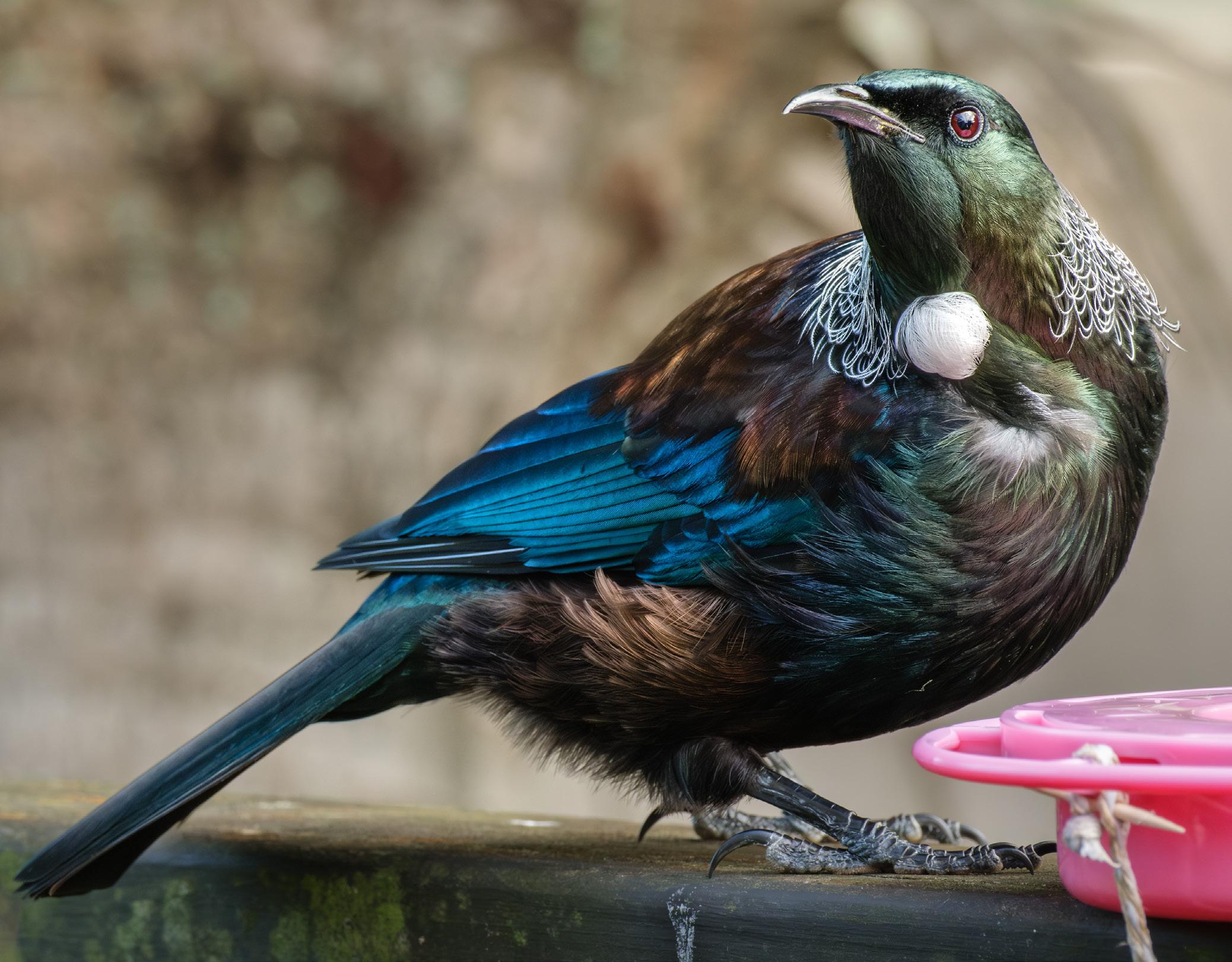
WILD ABOUT NATURE | PHOTO COMPETITION
How to enter: Share your images of native birds, trees, flowers, insects, lizards, marine animals, or natural landscapes, and be in to win. Send your high-res digital file and brief details about your photo to Caroline Wood at editor@ forestandbird.org.nz. The best entry will be published in the next issue of Forest & Bird magazine.
The prize: The winner will receive a Vanguard High Plains 460 Spotting Scope for observing birds, other wildlife or scenic vistas. It is waterproof and fogproof with a 45° angledviewing. This kit is configured with an adjustable tripod for added stability, and a two-way pan head for enhanced versatility. The entire kit can be stored or transported in its dedicated hard carry case.
 Thorsten Castor

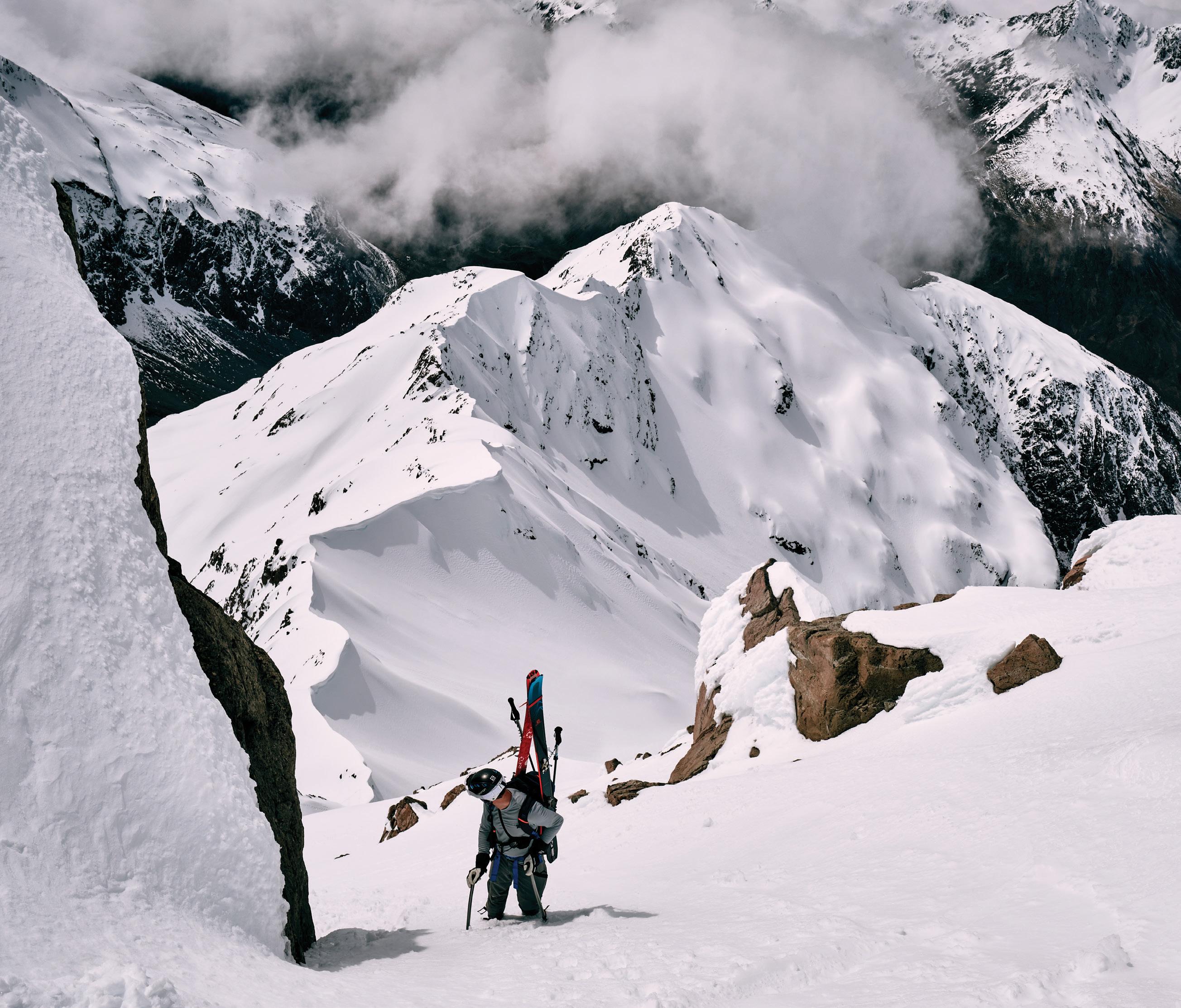
For over thirty years Bivouac Outdoor has been proudly 100% New Zealand owned and committed to providing you with the best outdoor clothing and equipment available in the world. Gear to keep you dry, warm and safe either in-bounds, sidecountry or backcountry this season. Ski, board and gear hire plus full workshop and servicing facilities available this season at our Tower Junction (Christchurch) store.
Earning your turns; about to ski off Mt Rolleston, Arthur’s Pass National Park, New Zealand.
Photo by Tom Hoyle.
Supporting Aotearoa's Backcountry Heritage