Mamdani Marks 100 Days
By ALEENA SIDDIQUI Asst. News Editor
Mayor Zohran Mamdani’s first 100 days in office have brought early policy initiatives and significant challenges amidst extensive media attention. His administration has focused on issues such as housing affordability, transit reform and public services, while grappling with the budget pressures facing the city.
Mamdani has pointed to early progress on affordability, particularly in expanding child care access. In partnership with the state of New York, the mayoral administration has begun to roll out progams for younger children as part of a broader push toward universal child care, supported in part by a $1.2 billion state investment in early childhood education. These efforts remain incomplete, with the administration continuing to seek additional funding and infrastructure to achieve universal coverage.
see MAMDANI page 5
Takes Center Stage
Diamonds in the Rough

By JACK BRUDECKI Fact Checker
With the Major League Baseball season now well underway, I feel it a great opportunity to take a reflective look back on my own love for America’s pastime. Relatedly, I hope to shed light on the ways in which a staple of American popular culture has been — and may be again in the future — utilized for artistic and intellectual pursuits, as the beginning of the end of my undergraduate career has appeared all-too-soon.
The story I often tell of my love for the New York Mets begins with the 2015 postseason, where they reached the World Series for the first time since 2000. And although that team and those of the late 2010’s occupy a special place in my
memory, I think I misplaced the genesis of my fandom.
I trace my early appreciation for the sport I love to moments spent in my grandparents’ home. Littered throughout are countless Mets tchotchkes, and with them lie the images and emotional material I wish to forever hold close: scents of basil and sawdust, iconographies of bicycles and The Beatles, plenty of Yiddish words I understand only partially. Though I’m not sure I realized it explicitly until very recently, the Mets are a team I have tied closely with my family and my childhood, having acquired a sense of nostalgia beyond that which sports franchises already evoke via past championships or players long retired.
By NEHIR CETIN Staff Writer
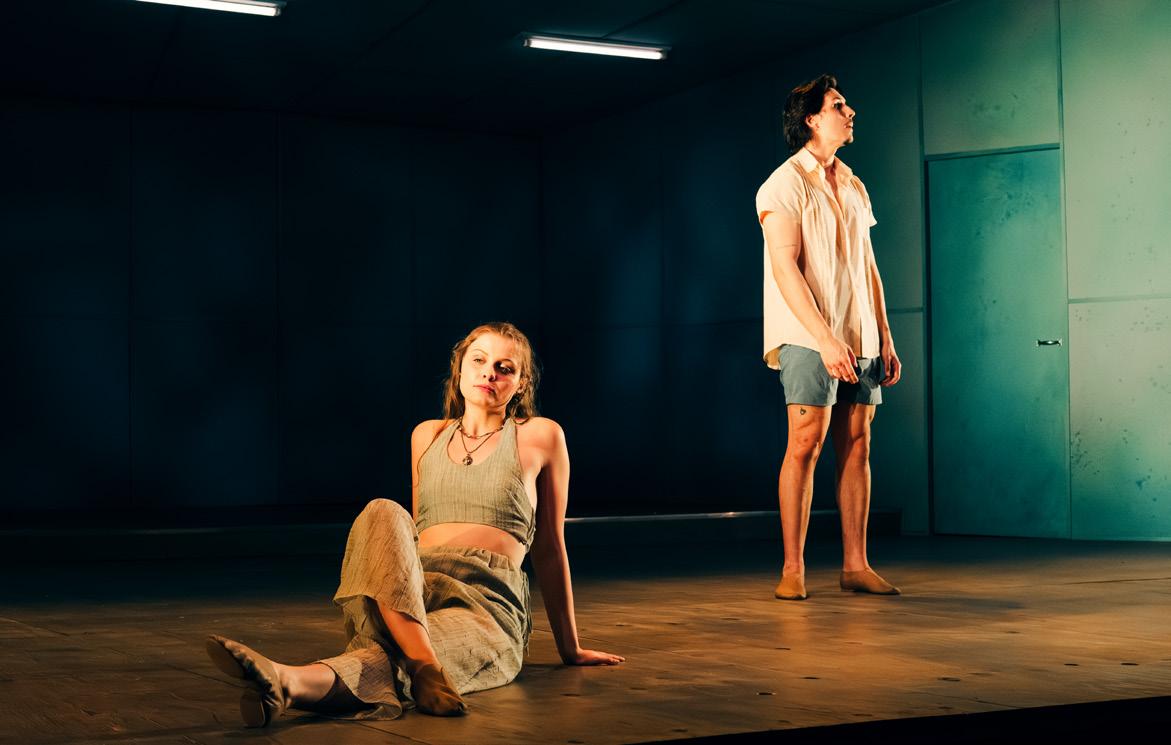
While the popular Broadway musical “Hadestown” focuses on the love story of Orpheus, Fordham University’s Mainstage production of “Eurydice,” written by Sarah Ruhl, spins a well-known Greek myth into a completely different story at the Pope auditorium. The reimagination emphasizes not only Eurydice’s (Katherine Fosmoen, Fordham College at Lincoln Center (FCLC) ’26) experience of love and loss in the underworld, but also her often overlooked relationship with her father (Cade Parker, FCLC ’26).
The play, which was
By CORA COST Managing Editor
With a second place finish in the 2026 Atlantic 10 (A10) Championship Tournament, the Fordham women’s tennis team’s season has come to a close. The top-seeded Fordham Rams were edged out by one match against the Virginia Commonwealth University (VCU) Rams, ending the championship match with a final score of 4-3.
Despite the finals outcome not being the wished for ending for the Fordham Rams, the team had an incredible showing at the A10 Tournament this year.
The Rams went into the weekend as the number one seed at the A10 Championship for the second year in a row. The team touched down in Florida on a nine match winning streak that they added an additional two wins to by the end of tournament
dedicated to Ruhl’s father, redefines what at first glance seems to be a romantic story into something shaped by memory, grief and identity.
“Eurydice” shifts the focus of the classic plot by changing the narrative viewpoint. Rather than looking at the journey of Orpheus alone, played by (Cristian Medeiros, FCLC ’28), the storyline is centered around Eurydice’s confused state, her desires and her reunion with her father in the afterlife, focusing on themes of loss and miscommunication in interpersonal relationships.
By EMAAN EHTASHAM
Asst. Social Editor and Asst. Fun & Games Editor
Fordham students definitely felt the rain on their skin at Rose Hill’s Spring Weekend Concert this past Saturday. Despite the brisk weather outside, Fordham’s Campus Activity Board (CAB) brought the heat with this year’s lineup.
Starting off strong was Fordham’s own winner of Battle of the Bands, Irish Exit. They covered two classics with “Say It Ain’t So” by Weezer and “Toxic” by Britney Spears, as well as a few originals that quickly garnered admiration from the crowd.
Between sets, speakers played tunes ranging from 2013 Lorde to the latest Sombr release. The blasting music made sure everyone, from those saving their spots at the barricade to others lingering around the Lombardi Fieldhouse, could feel the buzzing energy of the venue.
Del Water Gap took the stage next. His set was cinematic and rhythmic, every song drawing the crowd into a steady sway, clap or cheer. By the time he stepped off stage, the crowd was fully settled into the groove and ready to lock in for the main headliner of the concert.
When the trendy TikTok remix playing from the speakers started to quiet down and a thunderous cheer rang through the ever-growing crowd, everyone knew it was time and that Natasha Bedingfield was nearby.

play, rounding out their overall season record to 15-10.
In addition to their hot streak, the team arrived at the tournament with a couple of new accolades. First-year Valerija Kargina, Gabelli School of Business
at Rose Hill (GSBRH) ’29, was named the Under Armour A10 Women’s Tennis Rookie of the Week on April 21, making it her third weekly award of the year.
LUCIEN FISCHER/THE OBSERVER
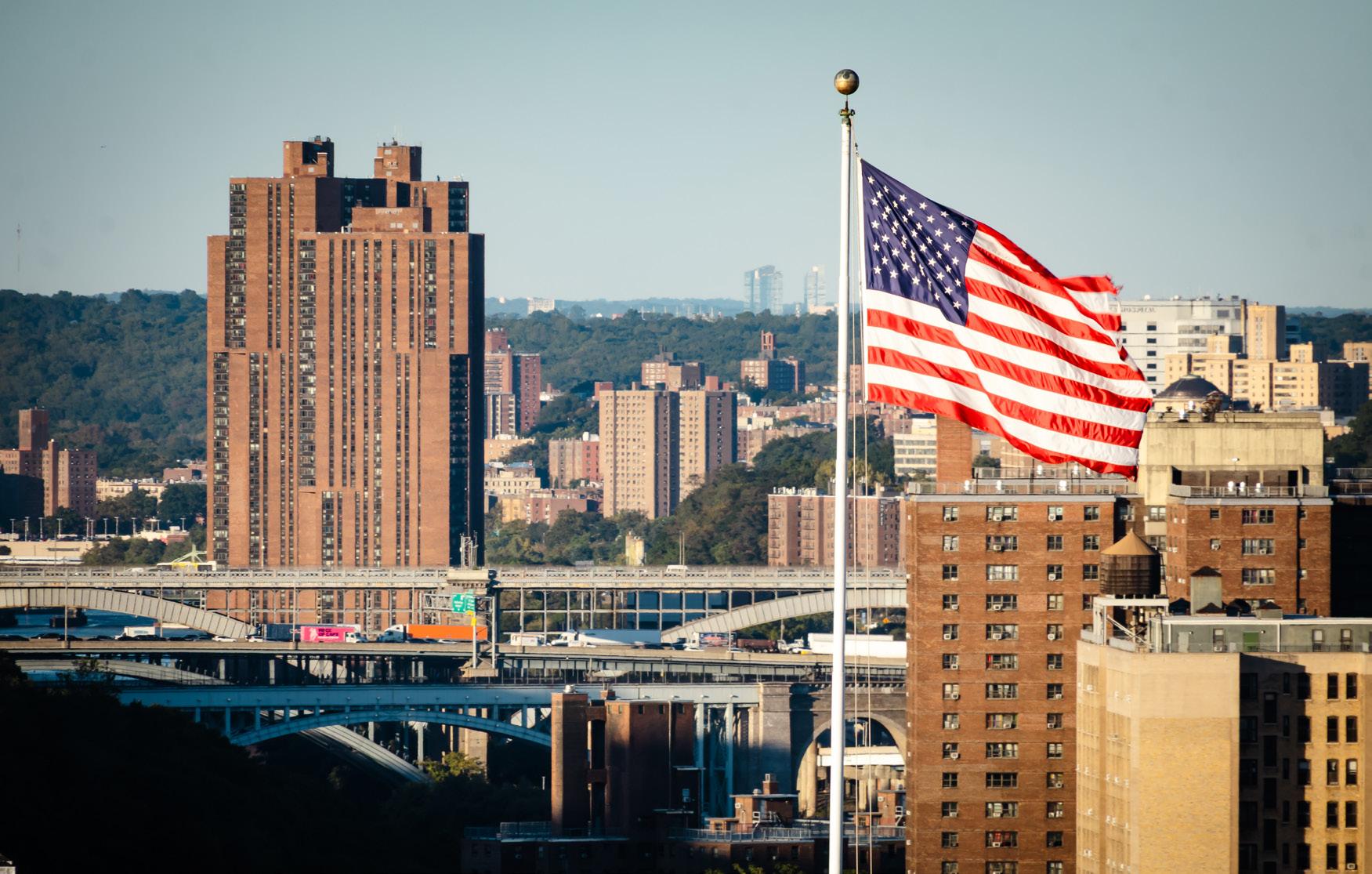
Mamdani has made progress on some of his campaign promises, notably his goal for universal childcare, while others may take more time.
COURTESY OF FORDHAM ATHLETICS
The Fordham women’s tennis team celebrating after they won their match against Davidson College sending them to the A10 Championship
COURTESY OF CASON DOYLE Fordham Theatre’s latest mainstage production, “Eurydice,” discussed themes of grief and memory through Eurydice’s experience in the underworld.
Grad PLUS Loans Eliminated for Class of 2026 Onward
The One Big Beautiful Bill Act’s federal student loan constraints go into effect on July 1, and seniors pursuing graduate studies must now consider alternatives
By KASSIDY DE NOBREGA Staff Writer
The One Big Beautiful Bill Act (OBBBA) was signed into law by President Donald Trump on July 4, 2025 after it passed in the House and Senate. Codifying much of the second Trump administration’s economic policies, one of the most significant policy changes is the elimination of Graduate (Grad) PLUS loans — the only federal loan that covered the entire cost of attendance for eligible graduate and professional students.
The amendments to student loan programs go into effect on July 1 — meaning the class of 2026, many of whom will pursue graduate studies this fall or later, can neither use nor be grandfathered into a Grad PLUS loan plan, an option available to borrowers since 2006.
With only existing unsubsidized loans available, graduate students will be able to borrow no more than $20,500 per year. Professional students (a vague category yet to be delineated), however, will now be able to borrow up to $50,000 per year in unsubsidized loans to compensate for the elimination of Grad PLUS. The aggregate limits now stand at $100,000 for graduate students and $200,000 for professional students — an increase from the $138,500 pre-OBBBA limit on subsidized and unsubsidized loan totals. The bill also introduced a new lifetime limit of $257,500 for all student borrowers, excluding Parent PLUS loans taken out for undergraduate studies.
The Trump administration and advocates of the OBBBA have cited ceilingless university costs of attendance across the nation as their motivation for capping future students’ loans at these institutions. Proponents anticipate a “trickle-down” effect that begins not with the top of the pyramid but the bottom: If students increasingly cannot afford higher education, colleges and universities will have no choice but to lower their high costs of attendance (COA).
Whether or not this prophecy is fulfilled, the class of 2026 and those entering graduate school in the next few years will have to cope during a liminal time between Grad PLUS loans’ withdrawal and optimistically anticipated COA reductions.
Without a stable federal loan program’s full coverage of universities’ costs of attendance, borrowers must now pick between postponing their plans,
canceling them altogether and relying on private lenders.
“The Trump administration has made a system nearly impossible to navigate for those who do not have access to wealth, ripping higher education from thousands. This decision is just one in a slew of actions that have taken away opportunities and rights from thousands of Americans,” Madison Montoya, Fordham College at Lincoln Center (FCLC) ’26, said.
Montoya is a graduating senior pursuing a career in law; the passage of OBBBA informed her decision to take a gap year.
“As someone who has to fund their own path to law school, it’s clear that the cost of attendance certainly isn’t getting any cheaper. It makes the choice to pursue a graduate education even harder when the safer and essential loan resources are no longer available to me,” Montoya said.
Though similarly unsubsidized, private loans differ on many significant points from their public, federal counterparts. One of these is their eligibility for public service loan forgiveness (PSLF). The PSLF program only applies to the federal loans of graduates employed by government or not-for-profit organizations. But the prospect of loan forgiveness has enabled students interested in serving the commonweal to pursue graduate and professional studies with less apprehension about how their future salaries will compare to their current debts.
With costs of attendance exceeding $100,000 per year, a significant percentage of rising first-year graduate and professional students will have to take out substantial private loans. Fewer public interest students’ debts will therefore be eligible for forgiveness.
This watershed, in-between period may not only have implications in the economic makeup of the graduate and professional job markets of the near future, but it also has the potential to further foreground the expected-income factor in students’ decisions to join either the public or private sector.
Emily Strlekar, FCLC ’26, will attend New York Law School (NYLS) this fall in pursuit of a public interest career advocating civil liberties and gender justice.
“Definitely, (the) majority of the reason I chose NYLS is because they offered to cover 75% of the tuition,” Strlekar said when asked whether cost of attendance and financial aid
were the most important factors in her decision.
Some professional schools have long-standing systems in place that are capable of weathering the administrative caprices of the U.S. Department of Education. Fordham Law, for example, is one of many private law schools whose Loan Repayment Assistance Programs (LRAPs) now cover private as well as federal loans (though most require that federal avenues be exhausted first). Institutional LRAPs are income-driven plans wherein the university and the alum, with or without the supplement of the federal PSLF program, repay the alum’s loans over a fixed time period so long as they maintain a career in public interest and earn less than a specified income (maximum salaries vary from $70,000 to $90,000).
Only universities with ample endowments are able to offer such programs to its alumni, whose outcomes, in turn, determine future endowments.
Although the OBBBA has increased competition among private lenders seemingly in borrowers’ favor — private student loan rates are lowering for those with good credit and high expected earnings — dependence on such lenders will likely disadvantage those with relatively poor credit histories who cannot secure a co-signer, unlike federal loan policies.
While federal education loan interest rates, caps and repayment plans remain fixed for all borrowers without an “adverse credit history,” private education loans promise more variable financial investments in higher education based on students’ socioeconomic statuses. The U.S. Department of Education has not yet announced the federal education loan interest rates for postOBBBA borrowers in 2026 and 2027, though the current rate for unsubsidized graduate and professional loans is 7.94%.
How will Fordham approach this shifting landscape of financial aid upending two-decades worth of higher education norms?
The Office of Student Financial Services shared the existing and developing resources with which they are attempting to meet this moment. Brian Ghanoo, associate vice president of student financial services, confirmed that Fordham, too, expects the OBBBA to drive more students toward private loans than in previous years.
The Office has had a preferred private education lender list for years, according to Ghanoo. To prepare for the potential passing of the OBBBA, the office met with a “wide range of private lenders — including large and small, nonprofit and for-profit entities, and state agencies” and conducted a Request for Information process to “gather data on their product and terms.”
“For undergraduate students, we spoke with lenders willing to approve students based on academic merit rather than a cosigner’s credit history, and whose products are reasonably priced,” Ghanoo said. “For graduate students, we spoke with lenders regarding increased approval rates that align more closely with what students previously experienced with the Graduate PLUS Loan.”
The office expects to publish an updated preferred lender list for the upcoming academic year in the coming weeks for both undergraduate (Parent PLUS loans have been capped, too, at $20,000 per year) and graduate students.
As opposed to its intended “trickle down effect,” Ghanoo suggested that the OBBBA may actually be trickling up as universities like Fordham attempt to keep COAs and students’ prospective debt from rising any higher.
“While discussions around COA’s have not materialized at this point, the University has reduced its own discretionary spending, implemented a hiring restriction, and is consistently looking for efficiencies to keep costs as low as possible,” Ghanoo said.
However, even a plateau in the cost of attendance would necessitate reformed substitutes for diminished Grad PLUS federal loan opportunities.
Ghanoo shared that several of Fordham’s graduate schools are responding to this uncertainty by giving students the option to start their coursework this summer instead of the fall.
“This allows them to qualify for the legacy provision, which preserves their eligibility to borrow Graduate PLUS Loans for up to three years. To qualify, they need to have a federal loan disbursed by June 30,” Ghanoo said, referring to the practice of “grandfathering in” incoming students who would not, in former circumstances, have applied for a pre-July loan disbursement.
A more lasting solution lies in the concept of “institutional loans,” internal lending programs that allow students with financial need to borrow directly from the university they are attending. Harvard Law School, Yale Law School, Columbia Law School and Washington University School of Law each offer such need-based programs that mimic the federal subsidized or unsubsidized loan structure — often touting fixed interest rates, grace periods and standard repayment plans.
At Fordham, the supplement of institutional loans to dwindling federal and variable private options is not visible on the horizon.
“Schools that make loans directly to students are subject to New York State Banking Law, which governs licensing, servicing, and compliance requirements. Most universities are not structured or staffed to take that on,” Ghanoo said.
While continuing graduate students are advised to avail themselves of Grad PLUS loans, the Office of Financial Aid recommends that incoming Fordham graduate students leverage savings before borrowing and take advantage of the university’s monthly payment plan. Students are also encouraged to consider Fordham’s forthcoming list of vetted preferred private lenders.
“(Private education) loans often carry lower interest rates than federal loans and do not charge an origination fee, though repayment terms tend to be less flexible,” Ghanoo said.
Student Financial Services has compiled this information and continues to update a webpage tracking the impact of the OBBBA on Fordham undergraduate and graduate students, which includes a section titled “Final Details Awaiting Clarification.” PLUS loans were established in 2006 and endured 20 years. Fordham, established in 1841, has endured nearly 185. In that time, it has welcomed classes of students with diverse economic backgrounds into a service-oriented ivory tower by means of scholarships, grants, and public or private educational loans. The university’s humble philosophy predates PLUS loans, but it has also evolved to accommodate federal provisions. How Fordham evolves now to maintain its educational, service and community values in the face of the OBBBA is but another detail of which we await clarification.
PHOTOS BY LUCIEN FISCHER/THE OBSERVER
The class of 2026 and those entering graduate school in the next few years will be the most affected by the elimination of Grad PLUS loans.
Moral and Political Authorities Clash Over the Iran War
Tensions arose between President Donald Trump and Pope Leo XIV regarding the conflict in the Middle East
By MACKENZIE COOPER & ALEEENA SIDDIQUI News Editor & Asst. News Editor
The United States and Israel launched coordinated airstrikes on Feb. 28 targeting Iranian military and government sites. The attacks, which killed senior officials including Supreme Leader Ali Khamenei, prompted immediate retaliation from Iran in the form of missile and drone strikes on U.S. bases and allied countries across the Middle East.
The conflict has since widened in both scope and consequence, with widespread famine, displacement and casualties spreading throughout the region. According to the United Nations High Commissioner for Refugees, between 600,000 and one million Iranian households are now temporarily displaced as a result of the ongoing conflict.
Scrutiny from Western nations has increased in recent weeks as global economic markets begin to feel the squeeze of rising oil and gas prices. In April, the United States imposed a naval blockade on Iran in the Strait of Hormuz following failed negotiations, intercepting vessels and further escalating tensions in one of the world’s most critical shipping routes.
Taking place in a region that has long been marked by religious disputes and clashes of imperial powers over its oil reserves, the war in Iran has drawn conflicting views from a plethora of religious and secular communities, such as the recent public disagreement between President Donald Trump and Pope Leo XIV. Given Iran’s unique political system as a theocratic republic controlled by an authoritarian regime — marked by recent and repeated state violence against its citizens — the differences between Islamic and Sharia law, religious and nationalist values, and domestic and foreign interests are central to discourses on moral authority with respect to the conflict.
Recent reporting indicates that U.S. military involvement continues to deepen with increased naval presence and threats of further escalation, while diplomatic efforts involving mediators such as Pakistan attempt to revive stalled peace talks. Nonetheless, a rapid end to the conflict (as promised by Trump’s initial announcement of the war) seems unlikely at present.
The Strait of Hormuz, through which roughly one-fifth of global oil supplies pass, has remained a central flashpoint in regional tensions, with repeated disruptions and heightened naval patrols reported by international maritime monitoring groups.
Analysts and international observers have described the broader escalation of a wider regional security breakdown with ongoing concerns about spillover effects into neighboring countries.
The war has also had immediate global consequences. Airspace closures and evacuations across the Middle East disrupted international travel, stranding civilians and forcing governments to organize large-scale evacuations. At the same time, a growing global jet fuel shortage has raised concerns about continued flight disruptions heading into the summer travel season.
The U.S. government provided several varied justifications for the war at various points, from concerns over the possibility of Iran developing nuclear weapons (which have been highly


contested by experts) to a more ideological desire to topple the oppressive regime.
Before the February airstrikes, protests erupted across Iran on Dec. 28 as frustrations over severe economic issues (including the collapse of Iran’s currency in early December), political repression and deteriorating living conditions boiled over. Beginning with strikes by shopkeepers in Tehran’s Grand Bazaar, demonstrations quickly spread nationwide, with protesters calling for fundamental changes and greater respect for human rights.
Iranian authorities responded with large-scale crackdowns.
According to Amnesty International, security forces (including units of the Islamic Revolutionary Guard Corps and national police) used violent force to disperse crowds and opened fire on civilians, resulting in widespread casualties. Between Jan. 8 and 9, as many as 30,000 people were killed on the streets of Iran. The Iranian government previously used lethal force to suppress the 2022 Woman, Life, Freedom uprising and 2019 protests.
Recently, humanitarian organizations and regional monitoring groups have reported worsening displacement, infrastructure damage and strain on food and medical supply chains across affected areas. These disruptions have compounded existing vulnerabilities in parts of the Middle East.
These developments have unfolded alongside the ongoing
Israel-Gaza conflict, where ceasefire negotiations remain uncertain and humanitarian conditions continue to deteriorate. Together, the overlapping crises have heightened global anxiety about the risk of a larger regional war.
Amid this backdrop, an unusual and highly publicized conflict has emerged between President Donald Trump and Pope Leo XIV, highlighting tensions between political and moral authority during wartime.
The dispute intensified after Pope Leo criticized the violence and human cost of the Iran war, urging renewed peace talks and warning against using religion to justify war. Trump, in turn, publicly attacked the pope, accusing him of weakness and misrepresenting his stance.
“I’m not afraid of the Trump administration or of speaking out loudly about the message of the Gospel, which is what the church works for,” Leo said.
David Gibson, director of Fordham’s Center on Religion and Culture, said the clash reflects both the pope’s growing authority and the political pressures that surround him.
“When a pope is elected, the job comes with authority,” Gibson said. “(But) it’s almost a year since his election and he’s really coming into his own.”
Rather than actively seeking conflict, Gibson emphasized that “events have found Leo,” pointing to criticism from political leaders that prompted the pope to respond.
aggression, occupation, war; but often these ideologies overlap.”
Eltantawi also highlighted how that overlap becomes especially visible when examining religious and political justifications for conflict in the region.
“People in the Middle East (and here I mean the Arab world and Iran) do not by and large see themselves as the protagonists of war; in other words, they do not see themselves as starting the wars. … they see themselves as the victims of aggression, attempts at land theft, genocide, ethnic displacement, and forced resource extraction,” Eltantawi said. “Given this, for some who stand on religion to face their circumstances, the question then becomes about how to respond to or resist aggression - and here is where religion can take a form of literal physical resistance.”
What this resistance should look like, of course, is wildly controversial. Eltantawi noted that, under Islamic Law, there are three general potential circumstances for “just war”: self-defense, threat to life and property, and freedom of religion. While the Iranian regime has not typically used this exact language, the principle is emblematic of how war changes the calculus of moral authority.
In the Middle East, Eltantawi explained, the balance of religious and political influences looks different than in the West “because often ‘the political’ … (is) not driving events; it is more a question of construing and utilizing religious sentiment and organization to respond to aggression.”
Gibson described the pope’s approach as a continuation of the legacy of Pope Francis, noting that both leaders have spoken out against war. However, he emphasized that Leo’s American identity and different communication style distinguish him from his predecessor, making his statements more difficult to dismiss domestically.
Gibson said Trump’s attacks could carry political consequences, particularly among Catholic voters.
“For him to deliberately provoke American Catholics … it’s political suicide,” Gibson said.
He added that the dispute could deepen divisions within the Catholic community while simultaneously elevating the Church’s broader public image as “a lot of Americans,” even non-Catholics, are looking to Pope Leo “as the moral voice that we need.”
Sarah Eltantawi, co-director of the International Studies Program and associate professor of theology, explained that understanding the conflict between the United States, Israel and Iran requires moving beyond Western assumptions about divisions between religion and politics.
“In the Middle East, the distinction between ‘the political realm’ and the ‘religious realm’ is not as defined as in the U.S. and certainly in Europe, and again it depends on the country and the conflict,” Eltantawi said. “We can speak broadly about ‘nationalist sentiments’ versus ‘religious sentiments’; as organizing principles for resistance to colonization,
“If you accept my insistence that speaking truth to power in the imperial core (the US, and in the case of the war in Iran and other wars in the MENA region, Israel) is a fundamentally different exercise than thinking about religion and politics from within the MENA region at this time, than what Pope Leo has done is really unique in the twenty-first century,” Eltantawi said.
She went on to further commend Leo’s actions.
“Pope Leo stood before the war machine, to my mind, symbolically placing himself before a tank, and declared, ‘I am not a politician. I speak of the Gospel’ and this made the politicians stop, it made them defensive, and it put them on the backfoot,” Eltantawi said. “It was brilliant and moving. Moreover, I can guarantee you that there are probably millions of Muslims as a result that thought, ‘Yes, excellent, please do speak of the Gospel.’”
In the latest development to emerge amid the ongoing conflict, the United Arab Emirates (UAE) announced on April 28 that the country would be pulling out of the Organization of Petroleum Exporting Countries (OPEC). This decision, which will go into effect on May 1, ends a 58-year membership with the cartel, stopping an economic alliance. Over the years, the Emirati government had clashed with OPEC regarding concerns with the cartel’s price control and oil quotas, viewing the pull-out as the best decision. The UAE is not the first gulf country to leave OPEC; Qatar’s withdrawal in 2019.
A ceasefire between the U.S. and Iran was drafted on April 8 by Pakistan’s Prime Minister Shehbaz Sharif, intended to last until April 21. At the time of publication, the ceasefire is still in place while conversations between the nations continue.
GRAPHIC BY LUCIEN FISCHER
Pope Leo XIV and President Donald Trump have been critical of each other’s differing opinions regarding the war in Iran.
COURTESY OF WIKIMEDIA
The United States and Israel launched organized airstrikes on Feb. 28 on Iran, targeting military and government sites.
A Look Back on USG’s Spring Semester
A
review of United Student Government’s activities and initiatives from this semester
By SOPHIA STEPHAN
Asst. News Editor
As the spring semester comes to a close, Fordham Lincoln Center’s (FLC) United Student Government (USG) reflected on the progression of their fall initiatives. Efforts by this year’s E-board will fuel USG’s ongoing focus on community outreach, publicity and transparency.
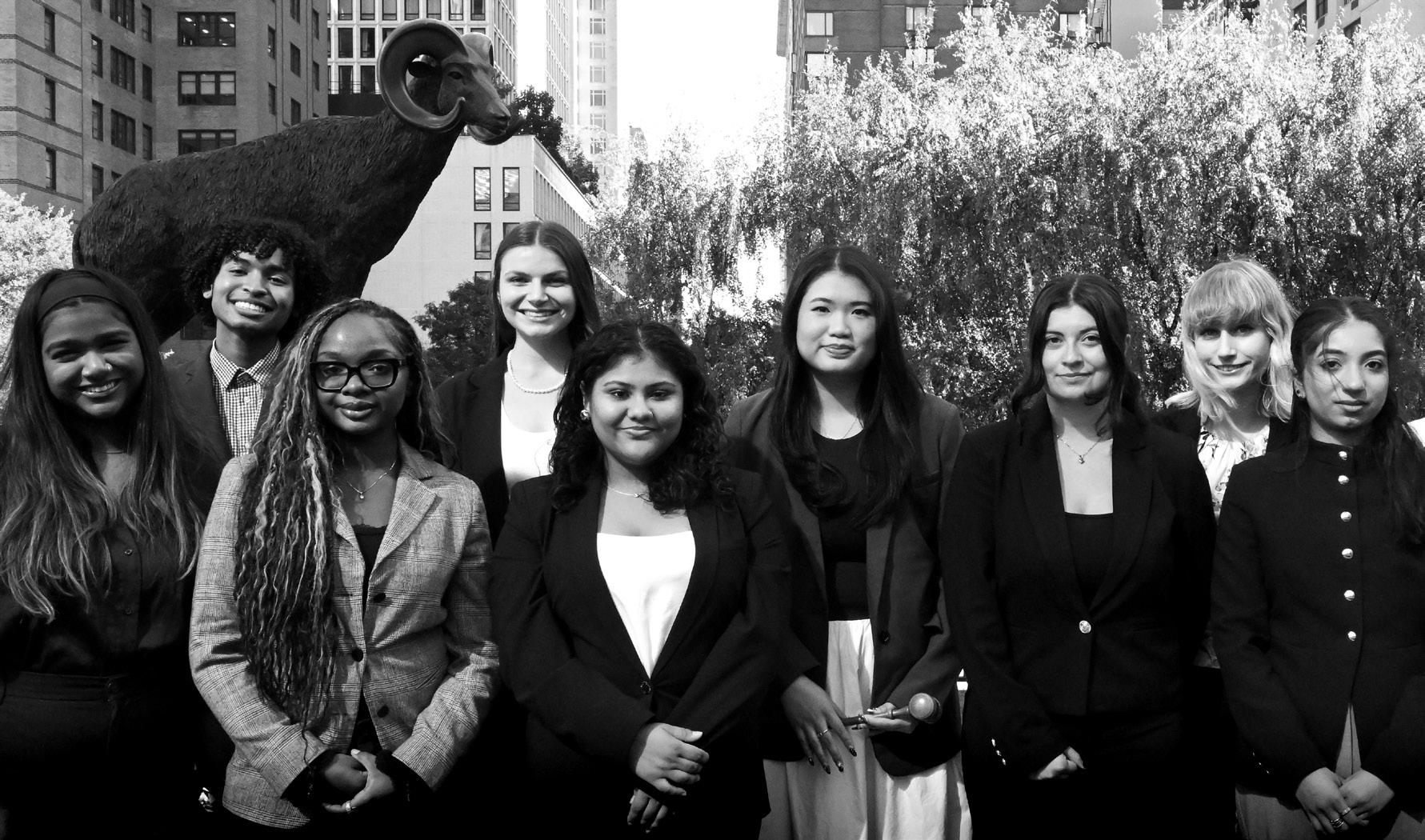
Daphne Mei, Fordham College at Lincoln Center (FCLC) ’26, served as president of USG for the 2025-26 academic year. Mei looked back on her campaign promises and discussed the progress USG made during her final year at Fordham. She was especially excited about the success USG experienced since creating new committees, which allow them to better delegate their responsibilities and foster collaboration.
“There’s a lot of things I’m proud of, but I would say the restructuring of USG was what I’m really proud of because I think students were able to find a sense of community within student government,” Mei said.
Mei pointed to the Club Operations Committee as an example of USG’s recent emphasis on connecting with students. The committee began posting newly approved clubs earlier this spring to promote the various new student groups created under USG’s jurisdiction.
USG has nine executive committees: Media Relations, Club Operations, Facilities, Diversity, Equity and Inclusion, Committee on Sexual Misconduct, Student Affairs, External Outreach and Humanitarian Needs.
Community building drove several of USG’s initiatives this semester. In the fall, USG announced their plans to hold tabling events allowing their class senators to connect with students, establish a Media Relations Committee and create a website to provide more accessible resources to students and student clubs. These first two items have been implemented, while the website is still under construction.
Mia Paolicelli, FCLC ’28, is the chair of USG’s Media Relations Committee, which was created to expand USG’s marketing, ensuring students are aware of the work USG does “behind the scenes.” Paolicelli said the committee allows USG to “focus on how (they) interact with our community” and ensure “that USG is serving the student body as best as (they) can.”
Paolicelli espoused the effectiveness of the new senator tablings, which give students the opportunity to bring feedback directly to their class senators. For example, she noted that a firstyear student inspired the MTA discount initiative (USG’s ongoing
campaign for discounted train fares) when the student brought the affordability issue to their USG class senator.
USG recently issued a survey to students to gauge interest in and need for MTA discounts in order to communicate “to the administration and (to) the higher-ups so that they understand where things are coming from and that this is a real problem to address,” according to Paolicelli.
“It’s been really amazing in the past year under our current leadership to just see how much they care and how much they just want to hear from the student body. That’s always the goal: Do what you do best and put these thoughts into tangible action,” Paolicelli said.
Wattoo also plans on increasing engagement with the surrounding Lincoln Center community and implementing an “angel tree” on campus, which would provide the opportunity for students to donate to children in need.
One tangible example of this goal is the napping pod, which, after a year of talks with Counseling and Psychological Services and the Commuter Students Association, is now approved and underway. Mei hopes that it will be officially established on campus for the coming semester.
Mei and Paolicelli both expressed their enthusiasm for how USG’s has increased their engagement this academic year.
Each particularly noted the success of USG’s Small Business Fair, an event that USG never hosted before. At the event, USG gave away blind boxes and plushies, and raffled products from small businesses in the surrounding Lincoln Center area. They also invited small business owners to attend and promote their work.
The fair was hosted by USG’s new External Outreach Committee, which aims to connect USG with the broader New York City community around FLC. Mei said that they received “a lot of great feedback” and “hope to expand (it) next year.”
Spearheaded by the External Outreach Committee, USG continued to work on their Ram Perks initiative, which has been
in an outreach stage since last semester. USG is currently having a “walkathon” in which members and other student volunteers are going door-to-door asking businesses if they would be willing to participate in the student discount program.
While unable to provide an exact timeline, Paolicelli said that she could “definitely say (that) next year” Ram Perks will provide “quite a bit” of discount options for Fordham students.
Efficiency has been a repeated point of contention for USG. Mei said that, in her experience as president, “things do take a while, unfortunately, with this university.”
Mei expressed that USG has the ability to address the issues students care most about, a key part of USG’s role in improving their experiences.
“I think if we’re going to present the university as a whole, we should show every single aspect of it and also fix the things that we have currently and not just shove it under the rug,” Mei said. “I think as president, you have to do the work to do outreach with the students (and) I got the opportunity to do that this year, which is great.”
USG held their elections for the 2026-27 executive board from April 16 to 17 at 5 p.m. Aleasha Wattoo, FCLC ’27, was elected as president and will begin in the fall. Because Wattoo ran uncontested, USG did not host its usual presidential debate. This past year, Wattoo served as vice president.
“I’ve been in student government since my sophomore year of fall semester, and I’ve grown with it,” Wattoo said. “There’s a lot I love about student government. There’s a lot I would love to improve with student government.”
Wattoo described the direction she feels USG is going in:
“(We’re) trying to push for a new chapter by trying out new events and also leaving old ones behind and trying to adapt to needs that a lot of students have expressed,” Wattoo said.
One of the ideas she promoted in her campaign was to provide “microgrants” to meet student needs.
“We’re at a time in an era where things are very expensive and there are a lot of needs that a lot of people may not be able to meet. …
I’ve had the idea of having microgrants, anywhere from $50 to $500 for students,” Wattoo said. “We would just provide students with a platform or a sort of outlet where they can reach out if they have any financial stresses.”
Along with microgrants, Wattoo highlighted that, as president, she wishes to be “as transparent
as possible about budgets … (as) these budgets are taken directly from students’ tuition.” USG receives its funding primarily from the student activities fee, which is included in students’ yearly tuition. She plans to provide more public information on the status of USG’s budget at the beginning and end of every academic year so that both “students and student leaders know the money they’re engaging with.”
Wattoo also plans on continuing USG’s community-centered action, including shedding light on FLC’s campus history as San Juan Hill. San Juan Hill was the subject of “urban renewal” in the 1950s, which tore down the culturally diverse and largely working-class neighborhood and built the superblocks where FLC, Lincoln Towers and Lincoln Center for the Performing Arts reside.
Wattoo also plans on increasing engagement with the surrounding Lincoln Center community and implementing an “angel tree” on campus, which would provide the opportunity for students to donate to children in need.
Paolicelli and Mei both attributed the club’s recent successes to their prioritization of visibility and “bridging the gap” in their relationship with the student body.
“It’s been really great to see how involved everyone who is a part of USG as an official member is, but then also just how many general members there are and how many people are willing to help the defense or to support the cause,” Paolicelli said.
USG will hold its last event of the semester, the Bash, to celebrate the end of the year with music, food and giveaways in partnership with Campus
ities Board on April 29 on
Activ-
the Outdoor Plaza.
COURTESY OF UNITED STUDENT GOVERNMENT
Aleasha Wattoo was recently elected as president of USG for the coming academic year.
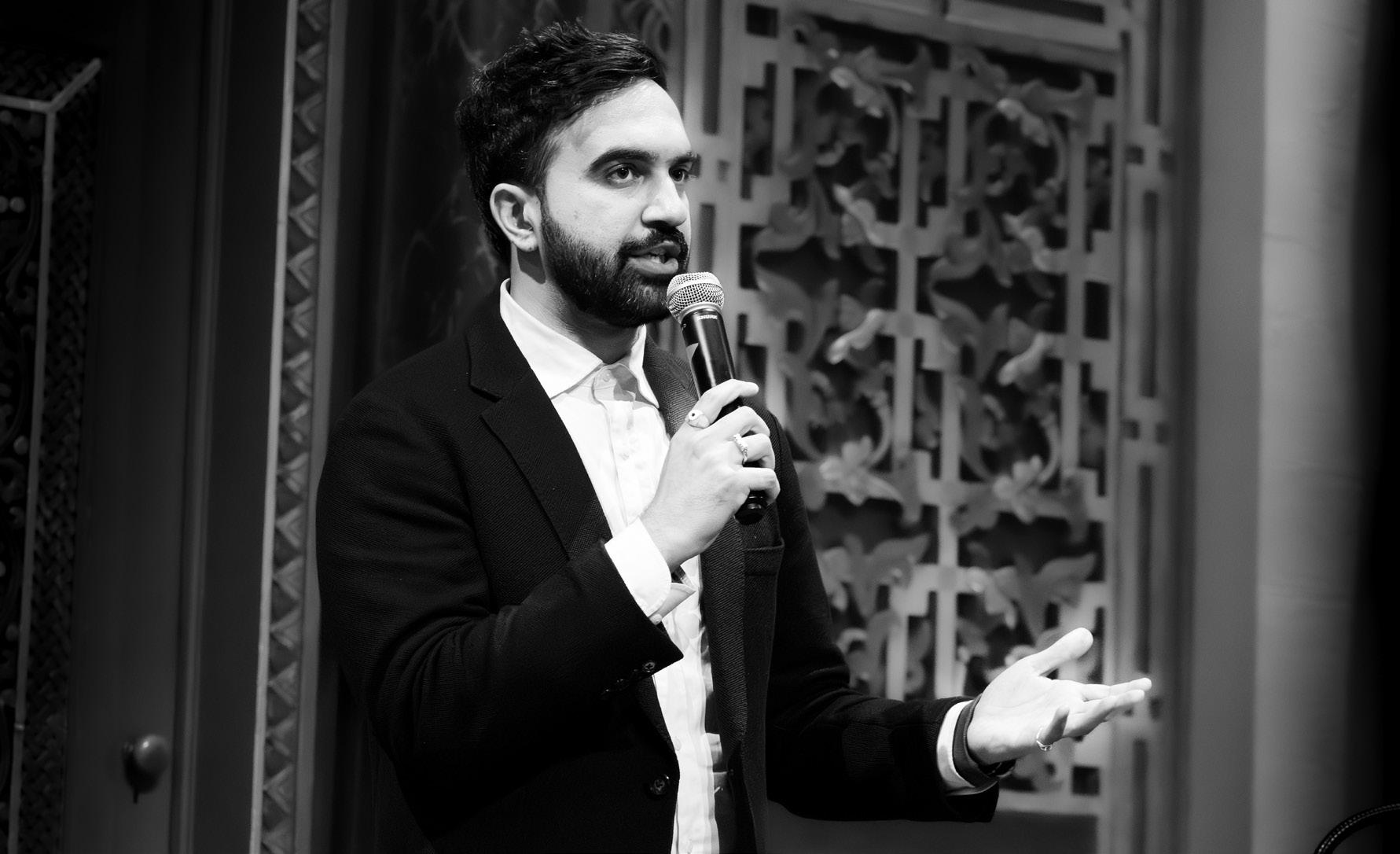
USG is currently working towards implementing their Ram Perks program and discounted train fares to address student concerns about affordability.
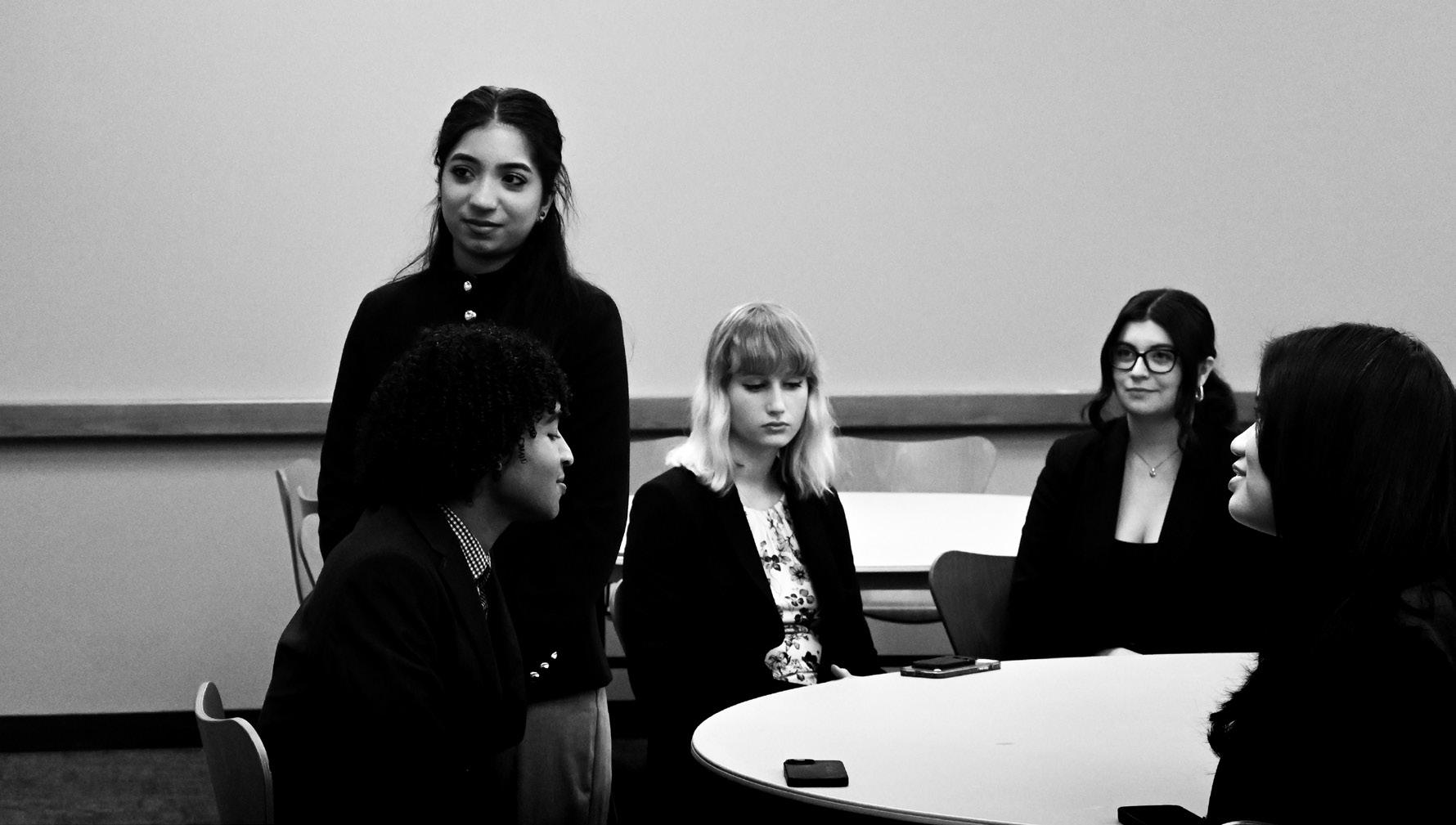
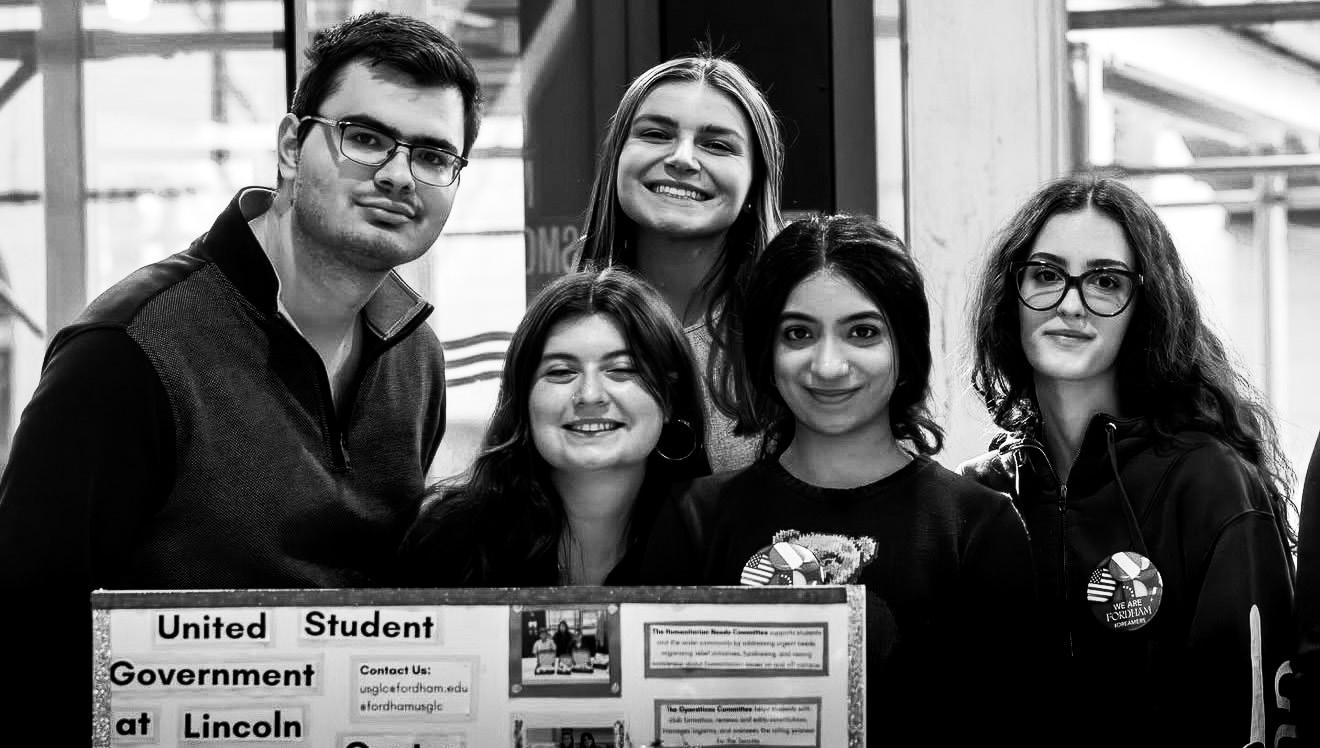
USG has established senator tablings with the intention of increasing visibility and communication between USG class senators and their peers.
The Beginning of Mamdani’s NYC
New York Mayor Zohran Mamdani implemented a diverse set of policies during his first few months in office
By ALEENA SIDDIQUI Asst. News Editor
Mamdani said that fiscal constraints have slowed parts of his policy agenda, citing a budget shortfall inherited from former Mayor Eric Adams. In January, the mayor’s office said the city faced a projected $12 billion gap across fiscal years 2026 and 2027, which it attributed to prior financial management decisions. The administration has since been working to close a multi-billion dollar deficit while weighing options like spending adjustments and raising taxes for those with high incomes. Officials say those budget pressures have complicated efforts to quickly implement some campaign proposals.
Mamdani issued his first veto as mayor on April 25, rejecting a city council bill that would require the New York Police Department (NYPD) to establish “buffer zones” that would restrict protests from occurring near schools and educational institutions.
Mamdani issued his first veto as mayor on April 25, rejecting a city council bill that would require the New York Police Department (NYPD) to establish “buffer zones” that would restrict protests from occurring near schools and educational institutions. Mamdani explained in an interview that he rejected the bill due to its overly broad language, resulting in “constitutional concerns … regarding New Yorkers’ fundamental right to protest.”
“It includes museums, libraries, teaching hospitals, things of that nature. Which is part of the reason why more than a dozen unions raised the alarm,” Mamdani said.
Mamdani allowed a related buffer zone bill to pass on April 24 that would establish protections around houses of worship. Mamdani said he would “allow it to become law,” but did not say whether or not he would sign it. According to the NYC Charter Section 37, legislation passed by the City Council and sent to the mayor’s office can become law within 30 days, even if the mayor takes no action on it by signing or vetoing
“(The bill) is not a narrow public safety measure; it is a piece of legislation that has alarmed much of the labor movement, reproductive rights groups, and immigration advocates, among others, across this city,” Mamdani said.
Another of Mamdani’s campaign promises was the implementation of a Department of Community Safety that would have civilian mental health workers, rather than the police, respond to non-criminal mental health emergencies. The original idea for the agency would cost $1 billion a year.
His initial proposal as mayor is much smaller in scale, consisting of two staff members and plans to change New York City’s approach to 911 calls before later scaling up. Toward this end, the Mamdani administration is looking to expand B-HEARD, an
transportation was
are in
existing dispatch program that connects mental health workers to 911 calls. An office dedicated to community safety unveiled in late March will work toward these goals.
“ I’m absolutely committed to making buses fast and free, and we’re encouraged by the conversations we’re having with the governor and legislative leaders to take action on that in 2026 as a first step. ”
Zohran Mamdani, New York City Mayor
Mamdani also promised further NYPD reform early in his campaign — when he stuck out amongst candidates for his refusal to expand the NYPD — and has since sparked critics on both sides for the way he has handled these promises, though major reforms have not yet been made.
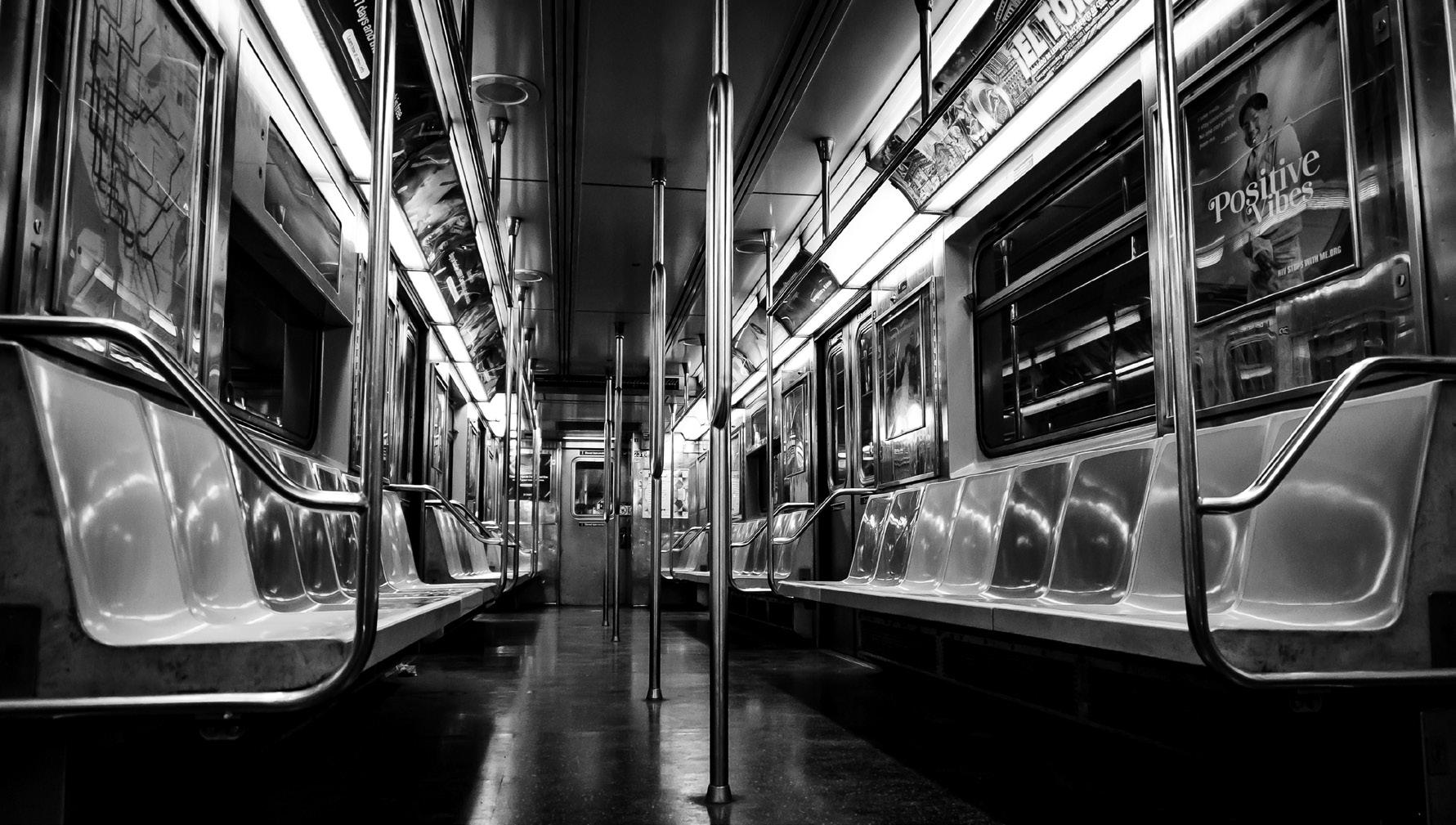
Transportation has also emerged as a major point of discussion. Congestion pricing has been widely accepted as a success, while broader Metropolitan Transportation Authority policy changes like the January fare hike have been met with contention among commuters who have not experienced legitimate improvements to their subway experiences. Officials continue
to weigh the need for infrastructure funding against the financial burden on commuters.
Mamdani’s campaign pushed hard for his vision for free buses across the city. The plan is unlikely to happen in 2026, especially following Governor Kathy Hochul’s unwillingness to include funding for it in state budget proposals in Albany. The two sides are working on rolling out smaller pilot programs.
“Both legislative houses included language within their one-house budget proposals in support of bringing back a freebus pilot program,” Mamdani said in an interview with Politico. “I’m absolutely committed to making buses fast and free, and we’re encouraged by the conversations we’re having with the governor and legislative leaders to take action on that in 2026 as a first step.”
Seventy-four percent of New York City residents believe Mamdani is hard-working, and 56% think the city is moving in the right direction (a significant increase from 2025 polls).
Tensions have also emerged between Mamdani and Gov. Kathy Hochul over how to address the city’s fiscal challenges, particularly on questions of taxation. Mamdani has called for raising
from 2025 polls).
Mamdani also focused on “sewer socialism,” which he described as placing government attention and money into public services. In recent months, Mamdani has balanced broader projects with on-the-ground, structural improvements to the city. His administration is filling over 100,000 potholes across the city, and, in January, Mamdani was at the center of a viral social media moment for personally spreading asphalt over “the bump” — a pit at the edge of the Williamsburg bridge that has frustrated cyclists for years. The gesture symbolized Mamdani’s promise to make streetlevel fixes.
He has also relaunched bike lane initiatives across the city and bus lane projects on 34th Street and Fordham Road in the Bronx that had stagnated, left over from the previous administration. Scaffolding was taken down at various public housing developments and a $4 million plan for new public bathrooms was announced.
At an April 12 rally for his first 100 days, Mamdani announced several new proposals, including increasing garbage containerization to address the city’s notorious issue of garbage bag piles on sidewalks, and the first city-owned grocery store in East Harlem. The larger plan is to have one in each borough, none of which would pay property or rent taxes, to bring down food costs. Skeptics of the plan worry that the city will not be able to effectively compete with chain grocery stores and negotiate with suppliers for low prices, though this remains to be seen.
income and corporate taxes to fund expanded social programs and close budget gaps. The mayor does not have the power to change taxes, but Mamdani has repeatedly expressed his intention to pressure Albany into doing so.
In the three months he has held office, though, Mamdani has been cautious not to alienate Hochul, who has already promised state funding for other projects.
Hochul, whose approval is required for tax changes in New York City, has taken a more wary approach toward the possibility of raising income taxes, emphasizing the need to balance revenue generation with economic competitiveness and warning against policies that could accelerate relocation of high-income taxpayers.
In a somewhat different tactic toward the same goal of closing the budget gap, Mamdani and Hochul announced the proposal of a pied-à-terre tax (the first of its kind in the state) on April 15. The tax would apply to luxury secondary properties valued over $5 million owned by people who have separate primary residences outside of New York City.
A recent Marist poll found that Mamdani currently has an approval rate of 48% among New Yorkers. This is lower than his predecessor Eric Adams’ 60% rating at the same early point in his office, though Adams’ later indictment scandals would cause his approval to tank to a historic low of 20% in March 2025. Seventy-four percent of New York City residents believe Mamdani is hard-working, and 56% think the city is moving in the right direction (a significant increase
Earlier this semester, New York City saw record winter storms with snowfall reaching a total of 43.4 inches, 13.6 inches over average. The first storm in January, and the following deep freeze, saw around 20 casualties across the city, many of whom were homeless. Despite the Mamdani administration opening drop-in “warming centers” and sending out outreach teams to bring people indoors, some said that not enough was done to encourage people to seek shelter. With a second major storm just a few weeks later, the mayor’s office responded more aggressively, focusing on placing people in shelters and hiring emergency snow shovelers to get roads cleared by morning. The mayor’s office reported no deaths.
Mamdani’s first months in office come against the backdrop of intensifying global conflict, friction within the federal government and continued change in New York City.
Mamdani met with President Donald Trump a couple times in February to propose a significant federal investment in affordable housing. Despite the president’s ardent criticism of Mamdani prior to the mayoral election — and Mamdani’s labeling of Trump as a fascist — the meeting appeared to go well, despite the details being kept private.
At the federal level, political dysfunction has further complicated the national landscape. Ongoing disputes over immigration policy and federal spending have brought the government close to partial shutdowns, creating uncertainty around funding and contributing to delays in public services. These disruptions have also had ripple effects on transportation systems, including increased airport wait times and administrative backlogs. Mamdani will continue to have to negotiate with the state and federal government throughout his time as mayor.
LUCIEN FISCHER/THE OBSERVER
Public
central to Mamdani’s campaign, including his plan for free buses across the city; Pilot programs
progress, but the project is unlikely to be completed in 2026.
DURGA DESAI/THE OBSERVER
“Pothole politics” was the name Mamdani gave to the street-level fixes and other on-the-ground improvements being made.
Sports & Health
Gleaning Meaning From and Through America’s Pastime
A literary staple and a national treasure, baseball can teach plenty on the struggles one can face
from page 1
This association of baseball with the forging of bonds is well-documented in literary scholarship, particularly noted for the notion of baseball existing as a religion in the U.S. Professor of comparative religion at the University of Cape Town David Chidester takes note of this idea in a 1996 article on different frameworks of studying religion in American society. Evidencing it through various aspects of the sport, Chidester describes baseball as “a religious institution that maintains the continuity, uniformity, sacred space, and sacred time of American life” such that “baseball does everything we conventionally understand to be done by the institution of the church.”
Be it through its extended history as a centuries-old sport that establishes a community across history, or through the balance of extraordinary moments with the intense structure of the rule book and time itself through the ticking of innings rather than the hour, baseball constitutes much more than a game; it is a far more manifold and perplexing social activity.
Speaking on the intersection between baseball and religion more directly, Paul Christopher Johnson, assistant professor of religious studies at the University of Missouri, Columbia, notes the ways in which certain of the sport’s objects become conduits of memory in his essay “The Fetish and McGwire’s Balls.” Referencing the record-setting home run baseballs of then-St. Louis-Cardinals first baseman Mark McGwire, Johnson aims to “explore the use of set-apart-objects, objects heavy with significance, as they become anchors of memory and history-making.”
He begins his analysis through noting the complexities of memory itself. Rather than locating the faculty directly within the mind, Johnson presents numerous examples of otherwise banal social activities taking on an added dimension of meaning-making based on their congruence with the act of remembering.
Among the most beautiful inclusions in this list is a quotation attributed to French philosopher Gaston Bachelard, who notes of his affinity for wine that “people may think I am drinking: I am remembering.” To Johnson’s list I would add American author John McPhee’s love of cherries, as he says “one of my daughters left a bag of wild cherries here in June, 2023, and set the clock back eighty-five years.”
On the obsession with McGwire’s home run baseballs themselves, Johnson compares this practice with that of religious devotees approaching a saint’s relic.
One approaches the baseball as “to evoke memories of the past, to ‘return’ and thereby recharge our sense of the real in the present.”
The spatial and temporal transformations the world undergoes on the baseball field are among the many stable contradictions examined by psychoanalysis Stephen Seligman in his essay “Baseball Time.” Seligman beautifully articulates the simultaneous chaos and order that characterize the sport, a quality that I find so often invigorates my own passion for it.
“Baseball juxtaposes the quotidian and the beautiful; its gift is to contain apparently contradictory elements without resolving their opposition,” Seligman said. “It blends harmony and stress, time and timelessness, spaciousness and containment.”
The notion of ordinary beauty particularly strikes me as important, on account of the potential to sanctify other aspects of popular culture — especially in a 21st-century world that so often leaves one derelict, stupefied and at a loss for words or direction — to an ameliorated position of meaning-making. What other insights into our current world may we glean from a sport that predates the American Civil War? More particular to my own intellectual interests, how has baseball been utilized as a hermeneutic tool already?
American studies scholar Richard Alan Schwartz tracks the emergence of baseball as a literary motif in the works of postmodern writers like Philip Roth and Robert Coover in his aptly titled 1987 essay “Postmodern Baseball.” Schwartz hypothesizes the attractive richness of baseball as a symbol derives from much the same skepticism of traditional narratives and ideologies which gave rise to modernism — and, for that matter, postmodernism and nearly all movements that have cropped up in time’s march to the present day — as an intellectual tradition.
“In our increasingly secular era, where religious belief also largely fails to provide the stability and community that myth once offered, baseball emerges as at least a partial alternative,” Schwartz wrote.
Schwartz describes Roth’s “The Great American Novel” as “an admonition to remember and learn from history, as well as to be attentive to who is left in charge of history and to who is excluded from it.” Moreover, the literary techniques used in this challenge to remember instruct us to do so in a particular way — with smiles on our faces.
“(The Great American Novel) is an admonishment made through parody, a parody that does not undermine the warning but allows
in daily life

us also to be joyous in the face of it,” Schwartz said.
In presenting a fictional creation with borderline-journalistic sincerity, Roth’s work calls into question how it is we determine whether or not the information that is “left out of history” truly took place.
As Schwartz shows, Coover’s novel “The Universal Baseball Association, Inc., J. Henry Waugh, Prop.” uses baseball as a narrative device in an even more overt manner. The book follows J. Henry Waugh, in his nightly tabletop creation of a fictional baseball league not dissimilar to the beloved statistics-based board game Strat-OMatic. Thinking thematically, the work examines our relationship to history in parable-like fashion.
“Like Roth, he questions the knowability of history; moreover,

he uses the baseball vehicle to ask the big essential questions: why are we here? What does it all mean? Is there a God; if so, is He crazy?” Schwartz says.
I present these somewhat scattered ideas with the hopes of fostering in others a passion for this sport to which I reflexively return so often. Baseball is an escape, yes, but it also has much to tell us about all that from which it offers us reprieve. It is, like many other culturally defined objects in American society, an instance of secular religion. It is also an exploration of how we approach resolving the ordering worldviews we conceive with the untrumpable disorder and randomness of the living universe.
Baseball is also still a topic of limitless potential as a literary device. Or perhaps it’s just full of good stories that stay with me. I am here thinking of a pair of documentaries published on YouTube that have, to my mind, invigorated my love not only for baseball but the possibilities of (re)telling our stories of the otherwise ordinary events and entities that populate our lives.
The first — “The History of the Seattle Mariners” — recounts a massive tale through the moments and figures that brought me an affect of wonder that few other works have impressed upon me. Moments like longtime Mariners broadcaster Dave Niehaus’ breathtaking call of Edgar Martinez’s go-ahead grand slam in the 1995 American League Division Series will forever travel with me thanks to this piece.
The second, however, left me even more touched by the narrative power of baseball. Produced
by the same creators of the Mariners documentary, “Captain Ahab: The Story of Dave Stieb” keeps the former’s captivating visual style but plays out with an even more personal tone on account of its focus on a single player rather than an entire franchise. For fear of embarking on an odyssey of description and butchered retellings of that which a phenomenal piece of artful documentary recounts beyond compare, I’ll choose to limit myself to a single sentence of description.
The tale of Stieb explores, more brilliantly and more fully than any other work I’ve encountered, the ineffable struggles of chasing perfection in any endeavor, and through its eponymous seafaring ballplayer of fortune, reminds me that the stuff worth striving for is that which we craft for ourselves while we wait for others to take notice of what we’ve already got.
I recognize now that I have spent very little time talking about baseball in isolation, instead having chosen to dive through various readings and instances that arise when I think of them. I think I’ll conclude by again choosing not to talk about baseball directly.
I have chosen to present baseball in a rather academic — and thereby, I hope, a rather unathletic, un-jock-like — way as a reminder that kernels of truth lie in facets of popular culture just as much as they do in entities one more readily associates with academia. Baseball, like nearly every other entity in the universe, is a kaleidoscopic, prismatic object; it begs for us to behold it from every angle, dragging out new meanings with every refraction.
GRAPHIC BY LUCIEN FISCHER
Setting aside the abundant literary allusions and the familial connections the sport conjures, the images of baseball also bring me back to little league games long past.
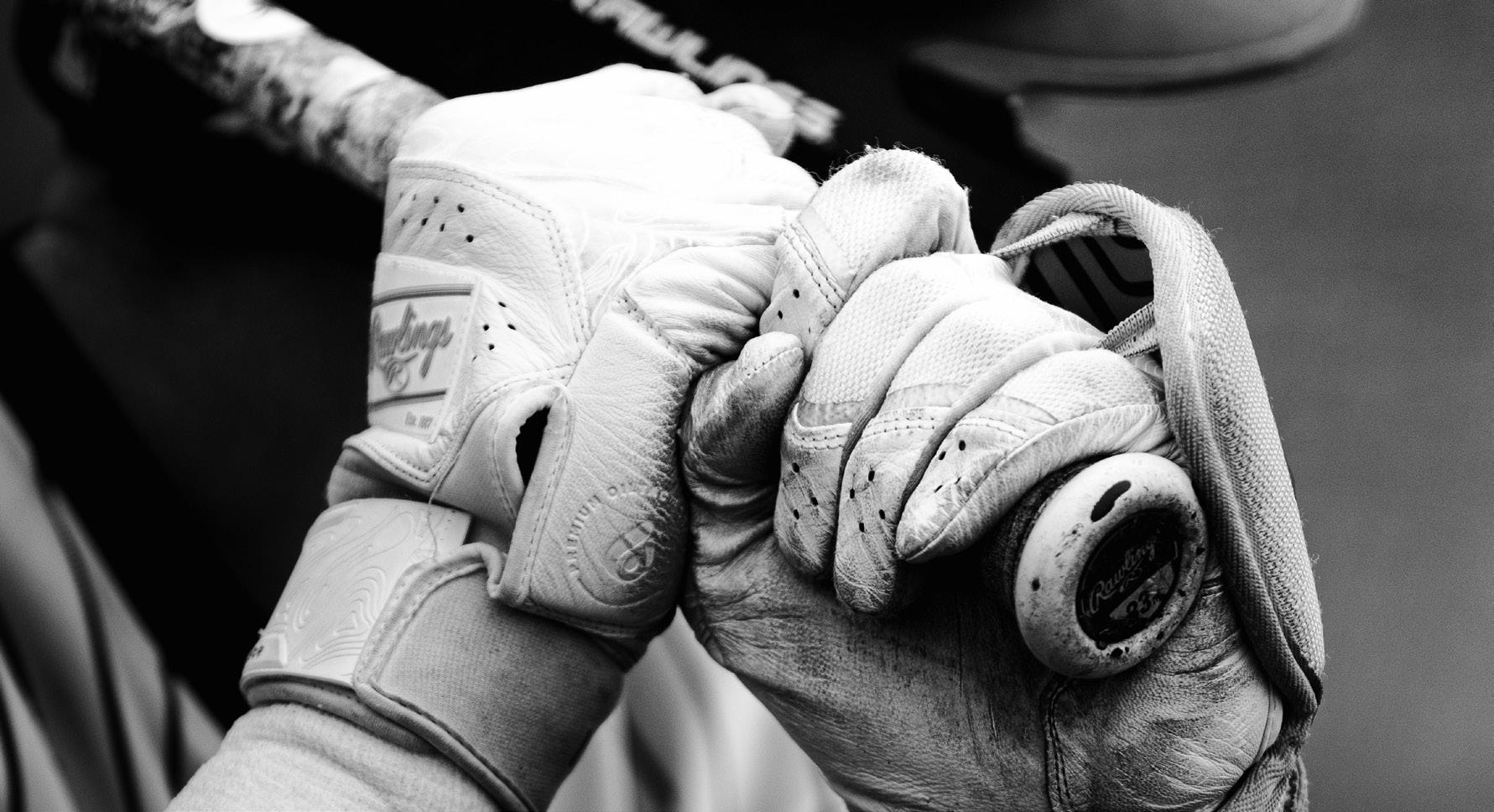
PHOTOS BY LUCIEN FISCHER/THE OBSERVER Baseball is more than a game; it offers a space to examine ourselves, the living world and the relationship between the two.
BASEBALL
Armorclad and awaiting the sacred step up to the plate, the batting challenger aims to conquer the 108-stitch monster.
Fordham Women’s Tennis Falls in Ram Showdown
Fordham women’s tennis lose to Virginia Commonwealth University in Atlantic 10 Championship
Kargina, is not the only Ram who has been recognized for her success on the court this season, senior Nevena Kolarevic, Fordham College at Rose Hill (FCRH) ’26, is the reigning A10 Performer of the Year, was the A10 Master Singles Champions last fall and, alongside her doubles partner Julianne Nguyen, FCRH ’27, became the first Fordham tennis student-athletes to compete at the NCAA Championship last November.
The Rams shut out the Flyers 4-0, rounding out their winning streak to 10 wins.
Tournament play opened up for the Rams with their match against Dayton University at the United States Tennis Association National campus in Orlando, Florida. The Rams shut out the Flyers 4-0, rounding out their winning streak to 10 wins. Fordham secured wins in both completed doubles matches, with a 6-1 win from Kargina and Lily Chitambar, GSBRH ’27, followed by the second doubles pair wins from Catalina Padilla, GSBRH ’28, and Paola Dalmonico, GSBRH ’28, with a 6-1 decision.
The win over Dayton was
secured by the singles matches from Dalmonico, Kargina and Chitmabar, which were won in all straight sets.
The win over the flyers sent the Rams to the semifinals match against Davidson College. Fordham had recently played Davidson at the start of April where they beat the Wildcats with a score of 4-0.
The Championship Finals between Fordham and VCU was not only a Rams showdown, but a battle between the No. 1 and No. 2 seeds of the tournament and a rematch of the 2025 A10 Championship final.
Fordham took the doubles point for the start of the match, followed by Kolarevic, who started the singles off strong with the first win. Their momentum was carried on by Padilla’s victory at the fourth position that put the Rams over 3-0. The first point that Fordham had surrendered in the last 11 matches came with Davidson’s one win at third singles, but Nguyen secured

the Rams’ spot in the championship finals with her win at sixth singles.
The Championship Finals between Fordham and VCU was not only a Rams showdown, but a battle between the No. 1 and No. 2 seeds of the tournament and a rematch of the 2025 A10 Championship final. After VCU took the doubles
point for the match, Kolarevic put up the first Fordham Point with a straight set win. Nguyen was next on the board for Fordham evening the match again to 2-2. Fordham briefly took the lead with Chitambar’s win at fifth singles, but was tied again by VCU with 3-3.
The championship came down to fourth singles in a match,
A Taste of a Japanese Summer
Padilla won the first set over VCU’s Andrea Magallanes, VCU ’28, who took the second set evening the score. The match came to a standstill due to a thunderstorm but when Padilla and Magallanes returned to the court, Magallanes won the third set, 6-2, clinching the match for VCU and securing the Championship title.
Three traditional Japanese recipes to make at home that you may not have seen in a restaurant
By KEI SUGAE
Creative Director Emeritus
Japan as a travel destination has been growing exponentially, with over 40 million visitors in 2025. One of the main appeals of Japan to its visitors is its culinary culture, often ranked among the top cuisines of the world. But while many people may be familiar with Japan’s more famous dishes such as ramen, sushi or onigiri, there are more foods that are staples within the Japanese home meal culture that rarely gain social media fame.
With summer approaching, here are a few dishes that you can make yourself that will give you a taste of Japan at home without the cost of an expensive dinner out.
Before getting into the dishes, it is important to stock your kitchen with staple ingredients used in every Japanese household: dashi, soy sauce, mirin, rice vinegar and miso.
Hiyajiru
Hiyajiru literally means cold soup, and is a form of chilled miso soup perfect for a hot summer day. However, the temperature is not the only thing that differentiates hiyajiru from miso soup. The ingredients of hiyajiru usually utilize more seasonal summer ingredients such as cucumber, shiso and myoga.
The trickiest ingredient to procure for New Yorkers will most likely be myoga, or Japanese ginger. It is not a common ingredient in the U.S. and will most likely only be found in an Asian grocery store or even the slightly more specialized Japanese grocery store. Nonetheless, this is a traditional ingredient, and its ability to bring a strong, refreshing taste to the hiyajiru makes it a vital one.
The other ingredients you will need are dashi, miso, cucumber, myoga, shiso, tofu, sesame seeds and some sort of dried fish. The

quickest and easiest version is to use a can of tuna. This will be the version that we use for this article.
The steps to make it are quite simple. First, prepare your vegetables. Thinly cut your cucumber, myoga and shiso. Lightly salt the cucumber to remove any excess water. Then in a bowl, combine approximately 500 milliliters (16.9 ounces) of dashi and four tablespoons of miso. Whisk this together so that there are no clumps of miso in your soup. Once it is nicely mixed, add your tuna, cucumber slices, myoga and shiso leaves and mix all of it up. Then add tofu and your sesame seeds, and while doing so, crush the seeds between your fingers to sprinkle them on.
To serve, make sure it is properly chilled in the fridge so that it is nice and refreshing. It is commonly served over rice, but it is still just as good on its own.
The next dish is ohitashi, a simple side dish that consists of vegetables that are cooked and marinated in a dashi-based broth. The word “ohitashi” means to soak, and is a reference to the style of dish, so you can use a plethora of vegetables. In the summer, many people make it with summer vegetables such as eggplant, okra, tomato or peppers. Soaking the vegetables is key to making the broth. It is made using dashi, soy sauce and mirin with a ratio of 100 milliliters (3.38 ounces) to one tablespoon of soy sauce to one tablespoon of mirin. Then, you should bring it to a boil in a small pot to burn away the alcohol in the mirin. If you are making a larger portion of vegetables, you should make more broth, maintaining the same ratio of ingredients. Your aim should be for all of your
vegetables to be completely covered by the broth while it is soaking in the fridge.
Now, you can cook your vegetables however you like. For example, using green peppers, you can cut them into larger sections and then fry them in a pan until they are cooked through. It is suggested to not use oils with too intense a flavor, like vegetable or canola oil.
Then put the vegetables in the broth and let it soak for around 30 minutes in the fridge. It will absorb the flavor and will have a subtle and deep flavor that pairs well with many Japanese meals.
Somen
The last dish to cover that is possibly the most quintessential Japanese summer dish is somen. Somen is a very simple Japanese dipping noodle dish that is incredibly easy to make. The noodles are very thin and only take minutes to cook.
The noodles are wheat-based and have a long history in Japan. While there are stories of it originating in Nara prefecture, the most common theory is that its original form came from China in the Nara period (710-784 A.D.), and developed into its current form in the Kamakura period (1183-1333 A.D.). They used to be a luxurious food only accessible to upper-class diners, but now they are commonly enjoyed by all Japanese people. One way that it is served is by dropping clumps of noodles down a carved-out and halved bamboo with water flowing down the stalk. The goal is to try and catch the clump with your chopsticks; this way of eating it is called “nagashi-somen.”
Just like any other noodle, bring a pot of water to a boil and put in your noodles. Boil them for a minute and a half to two minutes, and then strain them in a colander. When doing so, rinse it off with cold water to immediately cool down the noodles and prevent them from sticking to one another. Then you can put the noodles in a bowl with some ice cubes to make sure that they stay cold.
The dipping sauce is easy to buy at an Asian grocery store. You just have to look for a bottle of tsuyu, which is usually sold as a concentrate, so you will need to dilute it accordingly. But if you are looking to use some of your extra dashi, you can make the dipping sauce by combining 50 milliliters (1.69 ounces) of dashi, one tablespoon of soy sauce and one tablespoon of mirin and boiling it in a small pot just like you did for the ohitashi.
Make the dish your own by adding whatever ingredients you like to your dipping sauce. The most common additions are freshgrated ginger or a tiny handful of green onions, but it is also common to use myoga when it is in season.
Ohitashi
KEI SUGAE/THE OBSERVER
Some traditional Japanese foods: green pepper ohitashi on the top, somen noodles on the right and hiyajiru on the left.
LUCIEN FISCHER/THE OBSERVER
Fordham women’s tennis doubles pair on the court this season.
Fordham Professors Getting in Good Trouble
Faculty are answering a call to action embedded within the Jesuit ethos to critically examine systems that perpetuate injustice
BY IKMA INUSAH
Features Editor
Aysha Ames, a professor at Fordham University School of Law (LAW) and a proud Brooklyn native, works to shed light on the dark racial histories that underscore Jesuit universities. She is uniquely driven to this research as her ancestors were forcibly sold with profits used to fund another active Jesuit institution, Georgetown University.
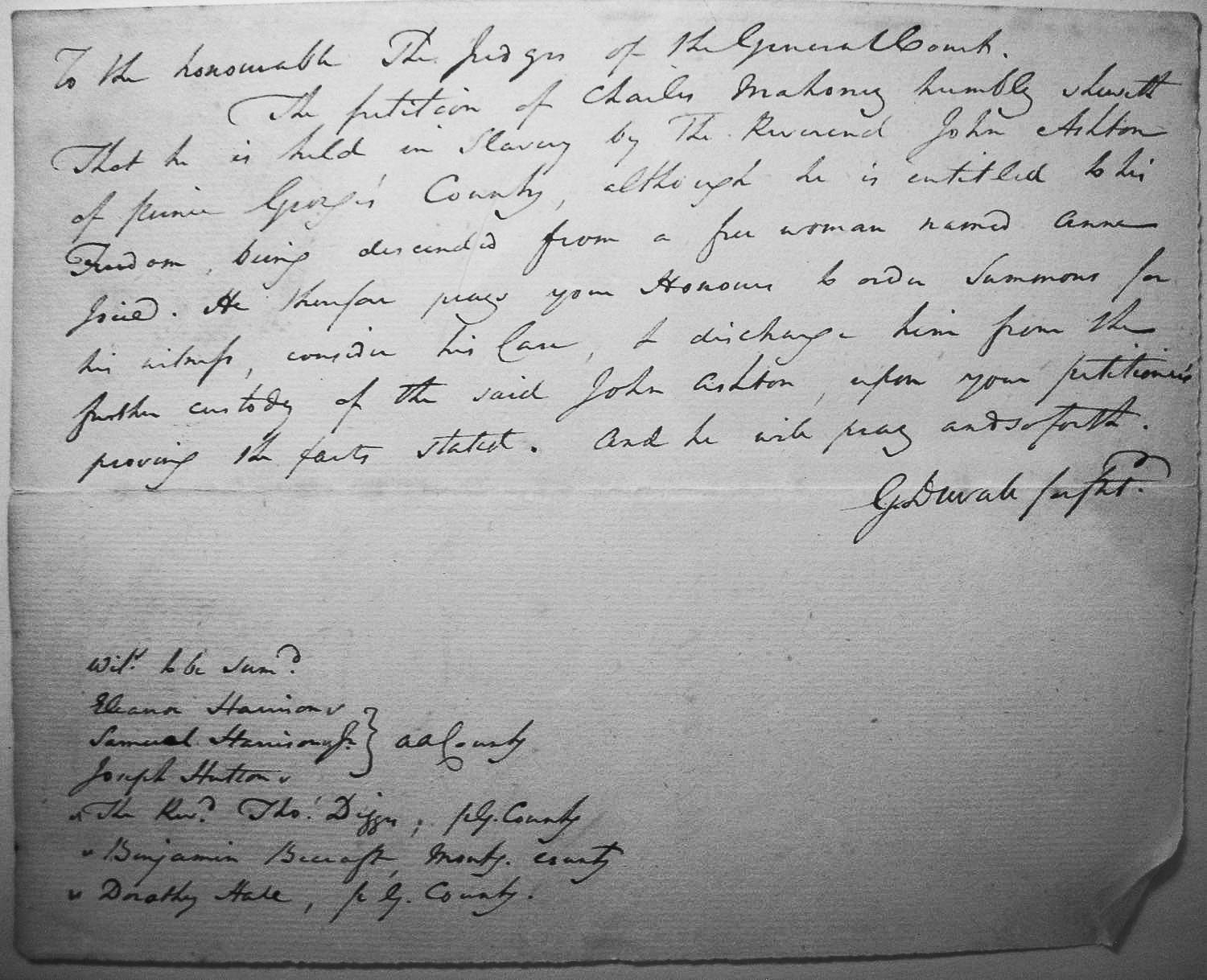
While eventually making their way to Brooklyn, Ames’ ancestors are originally from Barbados. Her great-grandmother, Ann Joice, was brought to colonial Maryland with the third Lord Baltimore. Joice left the island with the understanding that she would work as an indentured servant for seven years and pave her own way in the colonies thereafter. Instead, Lord Baltimore forced her into enslavement. Subsequently, her children were enslaved, along with their children and their children after that.
Her scholarship, under the Fordham umbrella, affords her a degree of academic freedom that is principal in the Jesuit doctrine of education.
Joice told her children the story of her forced enslavement, making sure they knew she was a free woman and that they should be, too. The story of Joice’s true status was preserved, passed down and told from parent to child. With this truth, Joice’s great-grandchildren were able to sue in a court of law and became legally free.
The persistence of Ames’ ancestors in preserving and passing down their history led to their eventual freedom. Knowing this, Ames feels an obligation to tell the stories she uncovers in her research.
Her scholarship, under the Fordham umbrella, affords her a degree of academic freedom that is principal in the Jesuit doctrine of education. Fordham repeatedly advertises that Jesuit education “examines the history of injustices, often subtly embedded within systems and cultures, while also generating hope so that students feel called to address significant world problems,” as per Fordham’s “Living the Mission” webpage.
By allowing this level of curricular freedom, the institution accepts the risk that faculty work may blow back on the school, causing controversy for the institution while simultaneously doing overall positive work for the world.
Solano Is Leveling up With AI
A professor receiving a range of attention is Visual Arts Professor Gabriel Hernandez-Solano, who is working with artificial intelligence
(AI) in his design course, allowing students to produce designs without typical skills. With the permission of his department head, Solano became one of the first Fordham professors to run a fully AI-integrated course. Solano currently teaches the architecture course Ecology for Designers, and this year, he took the once-traditionally taught course and incorporated AI throughout the entire body of coursework. In the newly designed course, Solano is requiring his students to become proficient in a whole host of AI tools to advance the outcome of their work.
“For me, it was a bit natural along the lines of design professions,” Solano said. “You always need to stay up to date with the latest technology. Let’s at least talk about it and let’s at least start exploring and flirting with it so that you guys aren’t completely steamrolled once you leave university.”
Before teaching with AI as a student resource, Solano was an early follower of this new age of tech, frequently using AI in his own work. Seeing the ease with which he could craft high-level projects in his personal life, he realized he had to raise his expectations for his students. In his AI-integrated course, he tasked his design students with creating an architectural portfolio using almost exclusively AI-powered tools and expected them to walk away with first-year architecture intern-level work.
“I think for me, an important part is empowering students and making them realize (that) if you have an idea and you’re willing to explore some of these tools, you can go that much further,” Solano said. “AI is one of the many tools that can do that.”
As an institution, Fordham has allowed professors to engage with AI as they deem fit for their courses. However, most have opted to keep it out of their classes almost entirely. Julianne Welby, a journalism professor, chose a policy that totally banned AI in her classroom, even though she acknowledged its possible benefits.
“There are AI tools that make some journalism easier, such as transcribing audio,” Welby said. “But I am still a blanket absolute ‘no’ on writing or crafting any journalism using AI. I still want our journalism brains to do that.”
While there are critics of AI in the classroom among Fordham faculty, Solano is aware he is an outlier and continues to experiment with his teaching style. After observing the amount of class time he was able to retrofit to address each student’s distinct design issues, he was sold, as these new applications were similar in their interactions with the AI-powered tools and relatively shallow learning curve.
Although his work sets him apart at Fordham, when speaking with Solano about his work with AI, he made
clear that what he was doing was not groundbreaking. He emphasized his belief that this is just another step in the evolution of tech.
“I want to not decouple AI from technology in general. Digital literacy is necessary in today’s world,” he said.
Fordham’s commitment to the constant evolution of educational models aligns with magis, the concept of continually striving for excellence rooted in the Jesuit educational tradition. The adherence forms a foundation prepared to handle Solano’s major demolition of how a university course ought to be taught.
Ames Tells the Stories of Many, Fueled by Her Own
Professor Ames exemplifies Jesuit values — particularly the principles of reflection and discernment — at LAW.
Alongside Dr. Jeannine Hill Fletcher, a theology professor at Fordham, Ames has worked to help uncover the numerous trails of evidence beginning with the sale of enslaved Africans and ending with that same amassed wealth funding the start of Jesuit universities across America.
In April of 2025, Ames and Fletcher led an event hosted by LAW titled “A Conversation on Race and Slavery at Fordham.” The event was an all-day symposium on the topic of their research. Ames spoke about the unique experience of putting on the event, expressing how they are the only two researchers at Fordham studying the topic in an already relatively small field.
“One of the benefits of having such a grassroots event was that we were able to get so many different departments and mentors at the university involved, because we started off with no money,” Ames said. “It really helped us to understand that there are people in the university who support our work, who want to know this history.”
Through her work with
Fletcher, she has been able to bring light to the family histories of many descendants of enslaved people present at the event. Ames spoke about the complex emotional basis she holds for the investigative work as a descendant.
“It feels heartbreaking in many ways; it feels empowering in many ways, and it feels like you have an obligation to tell the stories of people who could not tell their own story,” Ames said. “I think that’s why this work is so important to me.”
The work, being housed under the Fordham name, creates a particular sense of intersectionality because of the university’s assertions denying the exact relation to slavery that Ames publishes about. In 2016, groundbreaking investigative journalism done by New York Times reporter Rachel L. Swarns was published about the link between slavery and Jesuit universities. After an internal investigation, Fordham spokesman Bob Howe denied that Fordham participated in the practice Swarns brought to light. Staff writer for The Tablet, Bill Miller wrote about Fordham’s stance that it had no part in slavery.
“Bob Howe, spokesman for Fordham University, said officials on the Bronx campus determined in 2017 that no direct connection to slavery existed,” Miller wrote.
When asked about the dissension between her research and the 2016 statement, Ames maintained that her work shed light on the questions regarding Fordham’s connections that were left unaddressed. Moreover, she spoke about the freedom she was granted by the university’s culture of not interfering with faculty research.
“One of the good things we can say is that we were given academic freedom,” Ames said. “We got a lot of positive feedback both within the university, but also from other people around the community.”
When Ames and Fletcher held the event after a year of planning, it was in defiance of a national push to sweep difficult histories concerning race under the rug and not contend with the present implications of that troubled past.
“By the time the event rolled around, the event was a form of resistance that we hadn’t thought about the year before,” Ames said.
Chapman Leads With Integrity Alongside Morehouse Men
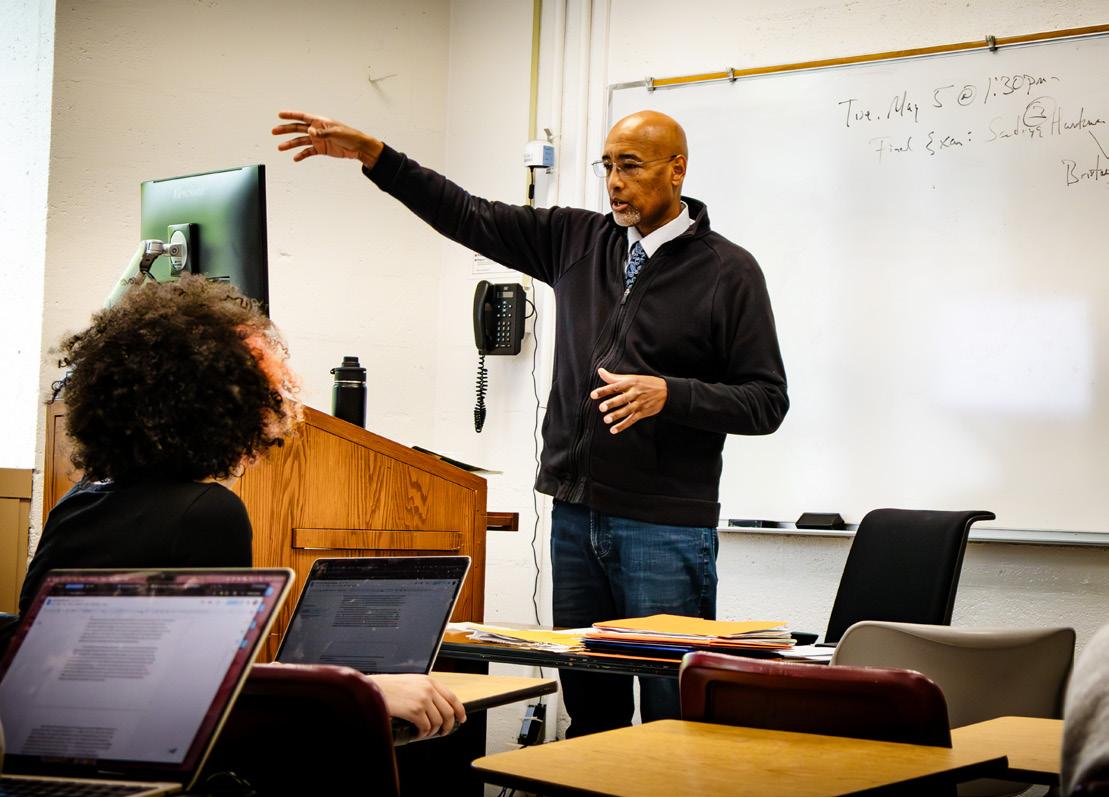
While Solano and Ames are making a difference within the university, Professor Mark L. Chapman, Associate Professor of African and African American Studies at Fordham, is causing a stir outside of Fordham. Chapman is wellknown within the Morehouse College community, a close friend to many faculty members and administrators and a confidant for active students. Chapman caused a huge stir within the community when he took an official stance against controversial actions taken by longtime friend and Dean of the Martin Luther King Jr. International Chapel Lawrence Carter.
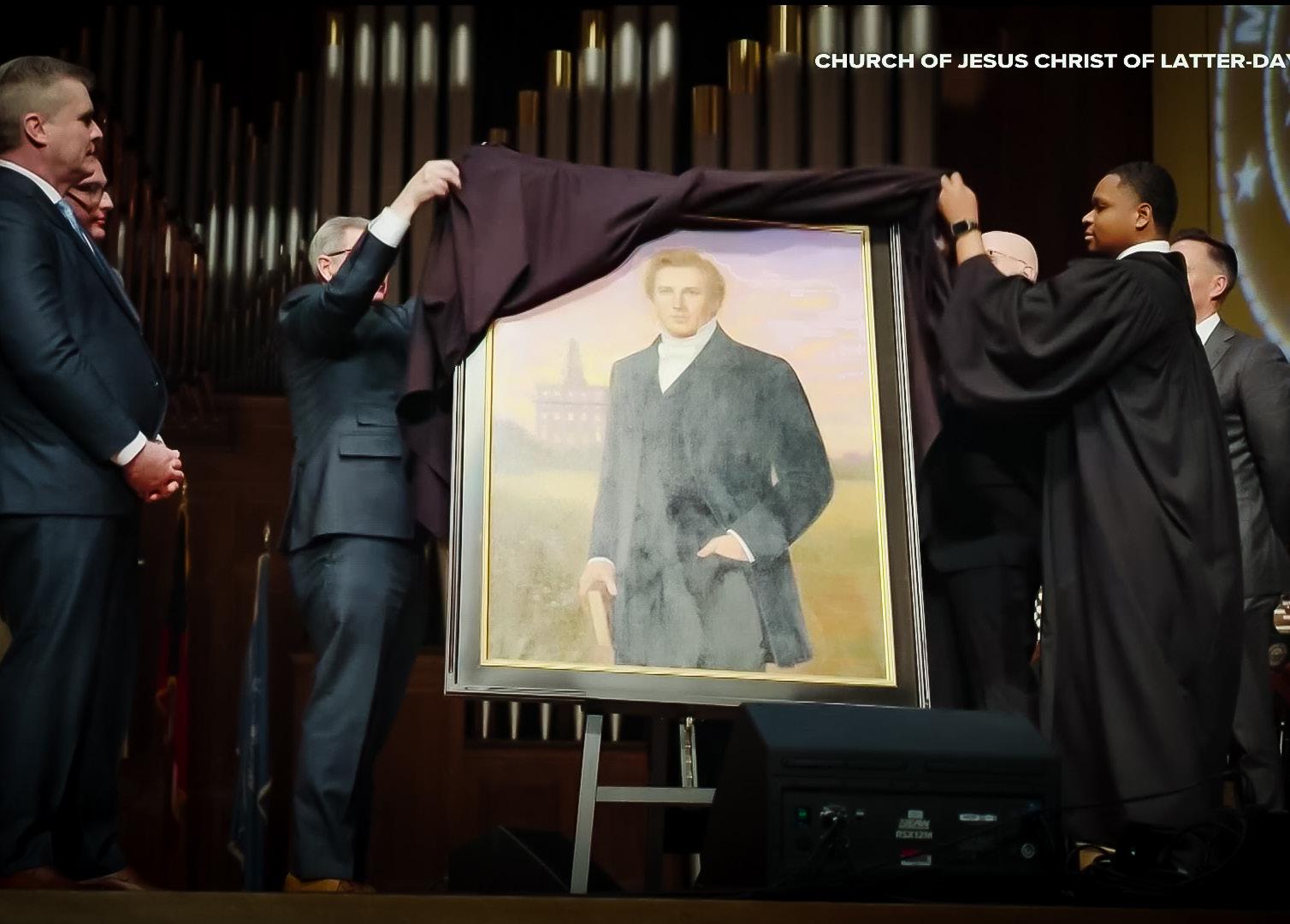
The Morehouse controversy concerned the presence of an honorary oil painting of Joseph Smith, founder of the Church of Jesus Christ of Latter-Day Saints. The portrait unveiling ceremony was held on Feb. 1 to mark Black History Month. The painting is in Morehouse College’s Martin Luther King Jr. International Hall of Honor, a display room within the chapel. It shares the room with champions of civil and human rights like Nelson Mandela and Mahatma Gandhi. Chapman spoke about the immediate shock he felt when he was made aware of what he saw as a buck from tradition.
“Joseph Smith was a polygamist. He had more than 20 wives, some as young as 14 years old. In addition to that, he was pro-slavery,” Chapman
LUCIEN FISCHER/THE OBSERVER
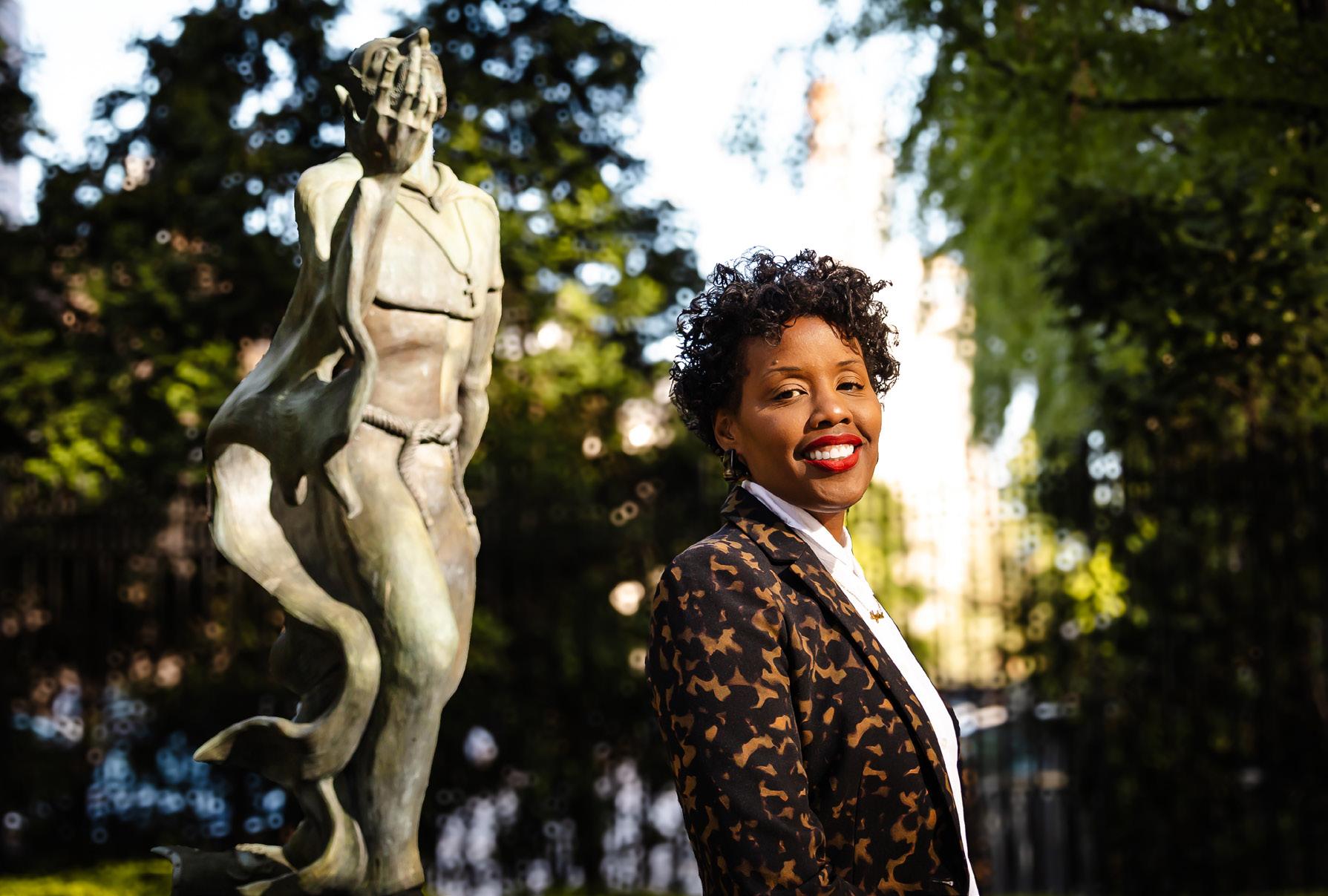
Aysha Ames, professor at Fordham University School of Law, whose work embodies Ignatian values.

said. “He is not a standard bearer of morality who I think is worthy of having a portrait hung in the Martin Luther King chapel.”
Along with two other alumni of the college, C. Vernon Mason Sr. and Rashad Raymond Moore, Chapman penned a sharp opinion against Dean Carter that was published in The Atlanta Journal-Constitution titled “Morehouse should not have honored a man who owned slaves and married children.”
When asked, Chapman expressed a common sentiment, shared by both Solano and Ames, that the personal nature of his work drove him to speak out.
“That’s three generations, and so, we got ourselves together and we drafted that op-ed,” said Chapman. “Our hope was to support the students because there were students at Morehouse who were protesting.”
When asked, Chapman expressed a common sentiment, shared by both Solano and Ames, that the personal nature of his work drove him to speak out. Chapman felt that his friend and mentor was publicly taking actions that were wrong and antithetical to the character of a Morehouse Man, seemingly for monetary gain.
“Dean Carter — who published a book in honor of the legendary Benjamin Mays, titled ‘Walking Integrity’ — for him to accept money from the Mormon Church and lift up Joseph Smith as some pioneering abolitionist who was in favor of Black people, is not only historically inaccurate but it causes me to question Dean Carter’s own integrity,” he said.
However, Chapman made sure to exclaim that the reason he spoke out publicly was to support the current students at Morehouse. He spoke about the history of the original Jesuits and their goal of displaying the teachings of Jesus. Chapman made clear that he stood with the students, in loud opposition of a close friend, because that is what Jesus taught and would have done.
“Commitment to others, especially to the marginalized, the overlooked, and the voiceless, that’s a very important aspect of the Jesuit notion, that you live a life for others, especially those that do not have the support of mainstream society,” Chapman said.
Alvarez Creates Community Through Conversation
Professor Catalina Alvarez, a visual arts professor working in the medium of short film, has created provocative bodies of work with her students for years. For the past several years, Professor Alvarez taught a course titled The Art of the Interview. The course focused on interviewing past residents of the San Juan Hill neighborhood, also referred to as Amsterdam Hill, the residential area that was present before Fordham’s Lincoln Center campus was built. This year, Alvarez focused the interviews on the current and future state of the Lincoln Center community,
while acknowledging the area’s history.
“Students interview elders who recount the history of the Lincoln Square neighborhood, which was demolished in the 1950s to build Lincoln Center,” she said. “This semester, we started more heavily focusing on the present and the future of the neighborhood.”
Alvarez’s choice to hone in on the present has forced an uncomfortable light on the establishment and present existence of the Lincoln Center campus.
Current and past Lincoln Center community members, like Jackie Brown Richardson, spoke with Alvarez’s class about the loss of their neighborhood to gentrification and the construction of a Fordham campus in Manhattan.
Alvarez’s choice to hone in on the present has forced an uncomfortable light on the establishment and present existence of the Lincoln Center campus. Consequently, students have become increasingly aware of the campus’s isolated situation within the Upper West Side, which stands in stark contrast to the formerly interconnected community that previously occupied the space.
The Art of the Interview, alongside Alvarez’s fastidious attention to the integrity of the research, has led her to brainstorm ways in which Fordham could be woven into the local community, fighting the university’s insistence to keep the public out. Alvarez spoke about her thoughts for a campus that was part Fordham, part a public space.
Alvarez said that “if there were several places that are both Fordham and open to the public, where you didn’t have to show ID right at the street level,” to foster a connection
between the local community and members of the campus.
The Fordham Brand of Academics
Across Fordham’s departments and campuses, professors are navigating the tension between being a member of the Fordham community and answering a call to action. Along with the passion they pour into their service, they have faced public contention and friction with the university’s administration.
University professors’ scholarship addressing important social questions is not unique to the work of Fordham faculty members. The values held in Jesuit academia have created a space that provides resources specifically for academics tackling hard debates. As members of Jesuit academia, they have demonstrated how possessing such values allows for a special brand of fortitude in the face of scrutiny.
Professors seeking to hold academia to higher standards of justice have often bristled with the narratives held by the institutions they work within. In spite of those setbacks, the persistence of those willing to question the history and decisions of their home institutions has led to larger conversations about the role of the academic within their workplaces.
Whether through AI-integrated education, fearless research, published opinions or provocative art, completed scholarship from Fordham’s faculty within the past year has displayed the fruits of a Jesuit academic tradition, even when the university’s implemented decisions are occasionally unaligned with its heritage. With both the strength of will that is present in its particular sort of academics and the university’s tendency to buck its touted values, the continued efforts of professors to explore their work despite risking possible controversy for their institutions is a foregone conclusion.
DESIGNED BY DURGA DESAI
KAITLYN SQUYRES/THE OBSERVER
Mark L. Chapman, associate professor of African and African American Studies at Fordham, is pictured in class.
COURTESY OF CHURCH NEWSROOM
The handwritten suit filed by Ames’ ancestor’s lawyer, Gabriel Duvall, resulting in their freedom.
KAITLYN SQUYRES/THE OBSERVER
Catalina Alvarez, a visual arts professor at Fordham, works with her students to explore the past and present stories of members of the Fordham Lincoln Center campus community.
COURTESY OF IMDB
Catalina Alvarez’s 2024 film “Sound Spring” explores the history of Yellow Springs, a small town in Ohio.
COURTESY OF MARYLAND STATE ARCHIVES
The unveiling of the oil painting of Joseph Smith, founder of the Church of Jesus Christ of Latter-Day Saints, at Morehouse College occured on Feb. 1.
Opinions
A Letter From the Editors
The Observer’s 2025-26 editor-in-chief and managing editor say farewell
Dear readers, As the school year comes to a close, so too does our time as the editor-in-chief and managing editor of The Observer. As our final contribution to the paper, we take this opportunity to talk about the importance of journalism, both in general and specifically on college campuses. We hold immense gratitude for the opportunity to have led such a brilliant and dedicated team on such a worthy mission. We are lucky to say that our positions at The Observer are how we understand our roles as students at Fordham.
The press is a pillar of democracy; without it, there is nobody to hold the rich and powerful accountable. As a student newspaper, that mission translates into the objective to inform the school community of what is occurring on their campus that they might otherwise miss. In the past year, we’ve reported on budgetary changes, unionizations, student government legislation, and concerns between faculty and the university administration, as well as city and national news that directly affect the Fordham Lincoln Center community.
Having experienced the power of journalism, admittedly on a more local and microcosmic scale, it has only become more evident to us that we must fervently defend the fourth estate to defend democracy. We must equip ourselves with the skills necessary to build resilient news outlets and teams to forge ahead. The only world in which that is possible is one that includes experienced, seasoned journalists. We are forever fortunate to have had the opportunity to sharpen our journalistic instincts while serving the community we care so much about.
Of course, leadership is not a solo experience. The team at The Observer is a well-oiled machine that requires many moving parts to go to print every other Tuesday night. Our editors stand out because they have volunteered their time outside of class, work and whatever other responsibilities they have in life to meet tight deadlines, make last-minute changes and work with one another to do reporting that sustains our completely student-run publication. Each editor and contributor’s invisible labor to keep the newsroom functional and resilient does not go unnoticed by us.
Leaders are only as great as their teams are, and we are proud to say that our team has made us work hard and be our best selves, both as editors and leaders. We owe all our success to them, as well as our dedicated contributors and staff writers. It has been a privilege to read and publish all their work.
The uncertainty of journalism today ignites a protective feeling. Having led a team of journalists this year, it quickly became clear the extent to which leadership requires advocacy: protecting staff members, defending editorial decisions, getting a foot in the door with sources and establishing trust.
Aside from the important work of spreading truth and holding people in power accountable, journalism — and student journalism, in particular — serves to create a community. The

importance of local journalism cannot be overstated. What else could serve as the launching pad for nascent artists, businesses and community leaders?
As the student voice of Fordham Lincoln Center, we’re proud to have overseen coverage that pays testimony to the character of our beloved, unique campus. Breaking news is not the only part of our job — publishing student profiles, columns and arts and culture coverage, as well as thought-provoking opinions, is also crucial to the maintenance of both a newspaper and a community. It was an honor to oversee such a process. Additionally, in this age of artificial intelligence (AI), it would be remiss not to highlight The Observer’s remarkable position as a bastion of original human creativity. AI can assist in the automation of many rote tasks (what would we be without Slack’s transcription feature?), but what it cannot do is interview a subject in a compassionate and perceptive way.
AI cannot write a story that pays testimony to the real people involved. It cannot capture, in one photo, what a few hundred words serve to explain. It cannot come up with a page layout that does justice to the words and pictures of a story, nor can it record a thought-provoking and delightful podcast or imagine a social media post that perfectly encapsulates and advertises an article.
Only we, as writers, photojournalists and creative editors, can do so.
At the outset of our tenures, we set a clear priority that we have since accomplished: to devote our first semester to rebuilding the foundation of The Observer so that the second semester could be spent pursuing excellence. We are proud to say that we have met that benchmark for ourselves. We are confident that The Observer will only soar to even higher and greater heights in the hands of its new capable upper management and editorial board.
Being a member of The Observer was the most formative experience of our lives. The people who stood at our side are the greatest gift. Though parting with a publication to which you have poured so much into is sad, what comforts us is the lasting friendships we have created, which will continue to testify to the bonding power of journalism. We might not have said so in the moment, but those late Tuesday nights were so worth it if it meant not only publishing quality journalism for our community, but also finding companionship and
solidarity with others.
Thank you to our incredible board of editors: news, arts & culture, opinions, sports & health, fun & games, features, photo, podcast, multimedia, graphics, copy, layout, socials, business … the list goes on. It has been an honor and a privilege to learn from you all.
Thank you to our trusted advisor Richard Rosen, who challenged us by continually asking what more we could do to enhance each story, counseled and supported our editorial and leadership decisions ardently, and imparted to us wisdom from his storied career in journalism. Thank you, Rich — The Observer is better because of your very honest and very sage advice.
Thank you to the Office of Student Involvement, particularly Christina Frankovic-Sepsi and Sandy Vargas. Their guidance from start to finish this year propelled us to achieve our goals and guaranteed the survivability of The Observer.
Thank you to each and every professor, faculty member and administrator who took time out of their busy schedules to sit down with our writers for interviews — on the record or on background. It often takes a village to collect all the sources needed to build a strong journalism story and your insight helped immensely in better informing our community.
Thank you to The Observer alumni who onboarded us and checked in throughout the year to provide support. We lend a special thanks to The Observer Alumni Affinity Chapter, who were a great help with fundraising and organizing our alumni panel event, as well as providing us pizza at our hardest moments — truly a most welcome motivation. We’re thrilled to join such a distinguished group of Fordham graduates!
We most look forward to watching this next group of leaders at The Observer accomplish what we have no doubt they are capable of.
Yours in gratitude, Jane Roche and Ana Winston Editor-in-Chief and Managing Editor, 2025-26

Observer the
GRACE SANTOLI/THE OBSERVER Jane Roche, editor-in-chief, and Ana Winston, managing editor, are signing off on their time at The Observer.
JANE ROCHE AND ANA WINSTON Editor in Chief and Managing Editor Emerita
COURTESY OF THE OBSERVER
This May, 12 of The Observer’s editors will walk at the 181st commencement. Clockwise from top left: Jane Roche, Ana Winston, Kei Sugae, Morgan Johnson, Grace Santoli, Madeleine Signore, Margo Craven, Katie Brosky, Kaitlyn Squyres, Jasmine White, Nora Kinney and Caitlin Lambros.
The Role of Look-Alike Contests in Men’s Fashion
JFK Jr. look-alike contest spurs conversations about menswear, confidence and what authenticity really means

LWriter
ike clockwork, every month, New Yorkers can count on a crowd of men swarming Washington Square Park, lining up for the title of the newest look-alike contest winner. If they aren’t the “man of the month” themselves, look-alikes often step in as perfect substitutes. The internet even has a name for it: “boy shopping.” From coast to coast, people are seizing the opportunity to find their very own Timothée Chalamet or Paul Mescal. However, these contests extend beyond simple recreation; they serve as an outlet for men to experiment with and construct their own identities and relationships with fashion, while still maintaining traditional ideals of masculinity.
In February, the announcement of the John F. Kennedy Jr. look-alike contest spread like wildfire across social media amid the public’s frenzy over Hulu’s “Love Story,” which follows the romance between JFK Jr. and Carolyne Bessette, from their meet-cute to their tragic passing. The show sparked renewed appreciation for ’90s pop culture, particularly among Gen Z audiences, from the resurgence of songs featured in the show like Sade’s “No Ordinary Love” to a growing desire to bring back the era’s iconic fashion.
Viewers, particularly men, have started using JFK Jr. as inspiration for their own Pinterest boards. Online carts are filling up with newsboy caps, and Reddit threads are flooded with questions like, “What’s a newspaper boy cap and how do I wear one?”, or in true Kennedy fashion, “How do I ride a bike?”
The revival of ’90s menswear has been spreading across social media for years, from aesthetic TikTok fit checks to GQ articles. “Love Story” gave the aesthetic a clear face in JFK Jr. Not only is he charismatic, but he is a figure people genuinely adore, given America’s fascination with the Kennedy family.
And really, who better to look to for fashion inspiration than JFK Jr.? It’s worth noting, though, that Kennedy’s look wasn’t entirely his own. Much of his inspiration came from Black style, particularly Harlem fashion in the ’80s, but because of his class, name and whiteness, this wardrobe became known as his personal brand.
Because of the timeless
nature of the style, familiar yet directed, men are investing in fashion experimentation, for more than just the contest’s prize money. It’s the perfect way for them to try on a curated ’90s aesthetic and if it flops entirely? Well, it can be blamed all on good fun. Keep in mind, “good fun” is doing a lot of heavy lifting here. Still, Ryan Murphy, the director of Hulu’s hit drama, gave audiences more than a love story. He gave men a mood board, providing a simple copypaste formula that can be easily applied to an everyday look.
As a result, men have a reason to dress up rather than always defaulting to their favorite sweatshirt. “Love Story” reignited an era of fashion in which men wore suits, loafers and slacks day to day, all while upholding an essence of nonchalance. In an era of Harry Styles and Chalamet look-alikes, Kennedy’s style offers an outlet for expression that keeps one foot firmly planted in what still reads as comfortably masculine.
This was not Murphy’s first rodeo. He has a habit of dressing men onscreen and sending the internet into a frenzy. His Menendez Brothers biopic, “Monsters: The Lyle and Erik Menendez Story,” was no exception. The boys typically dressed head-to-toe in polos, sweater-vests and boat shoes, completing the rich-business Los Angeles aesthetic. Men latched onto the Menendez brothers’ style as if they were waiting their whole lives to live out their very own frat boy dreams.
The JFK Jr. look-alike contest drew people of all ages and backgrounds, including Fordham’s very own “baby face,” as the New York Post calls him, Jack Silane. Silane, Gabelli School of Business at Lincoln Center ’28, attended the contest less as a JFK Jr. wannabe but as someone who takes his own style very seriously, even if it’s only for his financial management class.
For Silane, the contest was less about winning and more about clothes. He and many others have shifted away from seeing JFK Jr. as a costume but towards embodying the ease and minimalism of his look. The goal is not direct imitation, but capturing the sensibility behind it. For many, that means using Kennedy’s style as an entry point: polished but not flashy, intentional yet approachable. Think classic button-downs, light layering and slightly unexpected pairings, outfits that feel authentic without trying too hard,
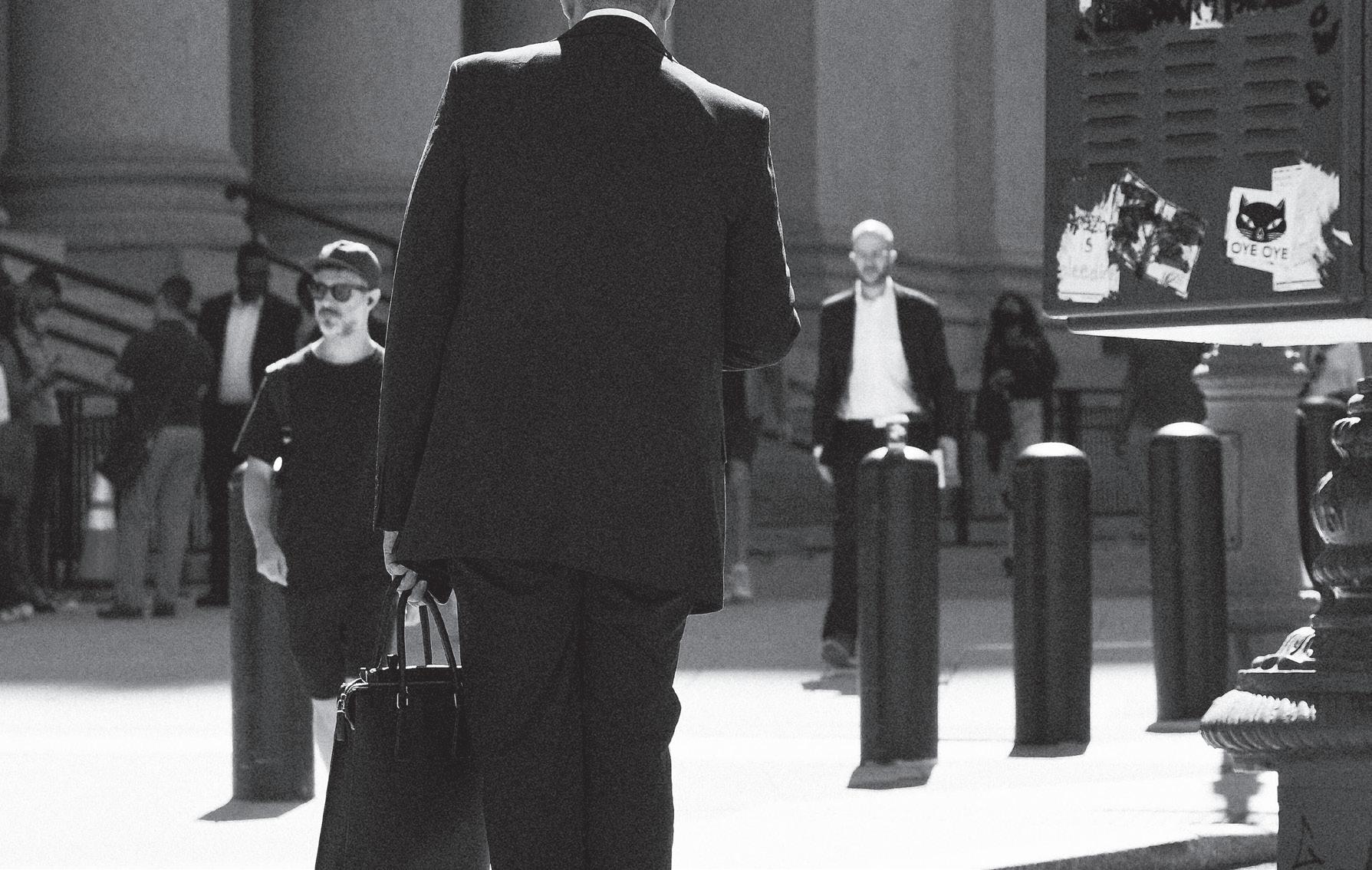
and still sit perfectly within the bounds of the stereotypical masculine dress code.
The change in mindset is a good thing. Men’s fashion is moving away from indifference and towards intention, even if it remains somewhat tentative.
As “old money” trends rise on social media, men are becoming increasingly conscious of their everyday outfits. Still, not everyone is ready to fully commit. Most are picking and choosing, testing the waters rather than diving in.
It can be nerve-racking to know where to start with men’s
fashion in a culture that’s judgmental and performance-driven. A sudden style shift is hard to hide, swap your default hoodie for a cashmere sweater and everyone will notice. This opens the door to potential critiques that make it harder to experiment gradually with fashion.
Back at Washington Square Park, backward newsboy caps and tailored suits with linen shirts rolled up were all you could see for miles. The evaluation of men’s style is enchanting to watch. For one afternoon, men could dress up without sacrificing their masculinity. But even if the look didn’t land, so what? If it did land, they could walk away with something more valuable than a cash prize: a new sense of confidence and conviction.
Fashion has been a medium for building self-identity, a way to mold your own image. It has always been one of the most immediate forms of self-presentation. But once men realize how much attention their outfits draw, experimentation can morph into an ego-fueling tactic, and participating in a look-alike contest can be the perfect stage. If fashion is, at least in part, performative, then it makes sense that spaces have emerged around that idea. Look-alike contests are inherently ego-centric; the whole premise relies on attractiveness and celebrity resemblance. Few would go out of their way to say they resemble someone like Tyriq Withers, the embodiment of perfection, or even seek validation through comparison, without some level
of confidence. Validation is definitely sought, but that doesn’t make all men entirely hollow. The lines are blurry, and that ambiguity is part of the point. For many, especially younger men, these spaces offer a perfect launchpad for experimenting with fashion, as they provide a safe space. There is a tendency to dismiss this type of self-branding as inauthentic or overly performative, and while this may be true in some cases, it overlooks a larger cultural shift that is underway.
Men’s wardrobes have long been defined by hesitation and restraint in engaging with true self-representation. They are now able to find their identity through creative mediums like fashion, even if for some it’s limited to protective spaces like these look-alike contests.
So, let’s lay off the guy who’s trying to figure out whether his personal brand is a JFK-inspired tailored suit or even an oversized windbreaker à la Chalamet. Yes, that includes the dude who looked at Styles’ tiny short-shorts and thought, “Yeah, I could pull that off.” Whatever it may be, fashion is a bundle of experimentation, a trial-and-error process, comprising pieces that can eventually morph into personal authenticity. Society places a lot of pressure on people to present a certain way, and in doing so, people end up conforming. Grace should be given to those who aren’t afraid to step outside the box. No one’s first outfit is their best, but it’s a stepping stone toward finding a style that makes them feel their best.
LUCIEN FISCHER/THE OBSERVER
Jack Silane, Gabelli School of Business at Lincoln Center ’28, dresses like JFK Jr. every day.
DOVE AJMANI Contributing
COURTESY OF MAX GILSENAN
Trendy look-alike contests have recently taken over public spaces like Washington Square Park.
COURTESY OF MAX GILSENAN
You’ve Been Brainwashed to Hate Communism
How
America has terrorized the world and villainized anti-capitalist governance to maintain its economic power

GEORGIA BERNHARD Copy Editor
Americans are taught that the U.S. is a paragon of peaceful prosperity, one that the rest of the world looks upon with either admiration or jealous hatred. With this, Americans are told that the villain to their country’s heroic capitalism is communism and socialism.
However, if we remove the veil placed over our eyes by years of militant pro-American packaging, which posits a firmly diplomatic America fighting against the evils of socialism, it becomes obvious that this version of events is simply a lie.
We must instead recognize the United States for what it is: an empire hell-bent on the expansion of its power. And it’s one that uses aggressive, terroristic tactics, particularly against socialism, to ensure that its global economic reign continues.
To clarify, true communism has never actually occurred. In Marxist theory, communism is a faraway end goal in which there is complete public ownership of the means of production worldwide. Socialism is theoretically understood as the transitional period to this state, undertaken by individual countries that instate policies that ensure that workers contributing their labor to the economy have collective ownership of the means of production, rather than boards of investors hoarding wealth generated by workers’ labor. Therefore the terms are often used interchangeably in common parlance (and will be in this article).
The U.S. has often been a violent, belligerent actor on the world stage, contrary to the view that it sells the American people.
But really, have you ever wondered why America is so direly opposed to the spread of socialism? When I was in school, we were taught that it was because of the U.S.’s loving commitment to freedom and equality, and that socialism was self-evidently the most fearsome system ever conceived by man. We were taught that socialism was the antithesis of freedom, and that it ran counter to the greatest liberty of all: free-range American capitalism.
But this isn’t the case: The U.S. isn’t anti-communist out of principle. The U.S. is against socialism because it threatens its standing as a world economic superpower.
The U.S. has often been a violent, belligerent actor on the world stage, contrary to the view that it sells the American people. The U.S.’s violent retention of power is not executed through traditional colonialism or a Roman-style army. Instead, the U.S. has historically overthrown the governments of developing nations in the Global South, especially those with leftist governments. These are places that the American public is instructed to view as failed states, ones gripped by a fearsome ideology solely focused on the hatred of American freedom. Therefore, Americans frequently are unable to see the problem and, concurrently, just how drastically they are misled about their country’s place
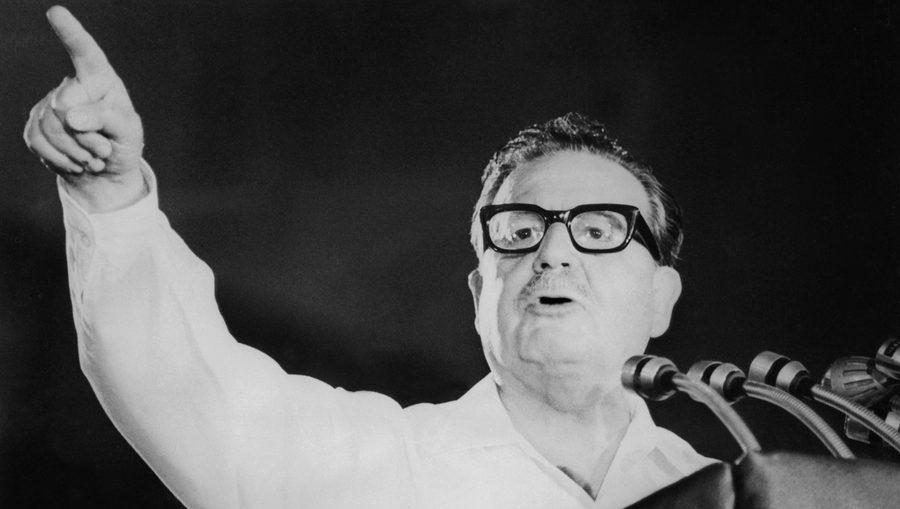
in international relations.
America can’t be the arbiter of the world’s wealth if the wealth is redistributed. It cannot exploit other nations’ resources if these nations exist outside of the global game of capitalism by investing in and distributing its goods among its own people. This turn of events would be disastrous for the U.S., whose power is founded on the exploitation of other nations’ lower positions in the world’s economic hierarchy. The U.S. relies on raw resources such as oil, gas and crops from developing nations, and leverages these resources to fuel the U.S.’s far more expansive and lucrative economic sectors.
For starters, the U.S.’s strategy of destabilizing countries that institute socialist reforms can be seen in the case of several nations in the Middle East. The violence in the region is frequently explained to Americans as solely the result of local unrest and “radical Islamism.”
President George W. Bush notably declared during his presidency, in which he waged the infamous Iraq War for “weapons of mass destruction” that were never found, saying that the region is rife with terrorists who baselessly “hate our freedom.” But this blanket explanation for the recent history of violence in the Middle East is a lazily conceived lie.
The resistance against America in the Middle East is, simply put, America’s doing. Throughout the late 20th century, the CIA backed coups in Syria to overthrow democratically elected leaders in order to prevent the nationalization of their oil, which would have threatened U.S. economic interests. In the early 2000s, the bloody Iraq
War began, waged by the U.S in a ruinous eight-year search in order to find “weapons of mass destruction.” Many critics understand this to be a flimsy cover for the goal of securing, again, U.S. oil interests.
The U.S. is against socialism because it threatens its standing as a world economic superpower.
In addition to the Middle East, the U.S. has forced its way into the affairs of nearly every corner of Latin America. This was also done during roughly the same time as the coups in the Middle East, as a result of the U.S.’s mission to “fight communism.”
In Guatemala in 1954, the U.S. staged a coup to overthrow President Jacobo Árbenz, a democratically elected leader who defied U.S. pressure by unveiling a campaign to redistribute land to the country’s impoverished, resisting the exploitation of the United Fruit Company, an American corporation; decades of violent civil war were precipitated by this action.
America supported the overthrow of a leftist government in Brazil in 1964, fearing its potential alignment with Cuba and the creation of a socialist alliance in the Americas, and backed the 21-year brutal dictatorship that came after. In Chile in 1973, the U.S. partnered with the violent opposition to democratically elected socialist President Salvador Allende, due
of the first major embargoes on the country, dealing a massive blow to Cuba’s economy at the time. President John F. Kennedy expanded the embargoes, banning all trade and financial transactions with Cuba under the Trading with the Enemy Act. President Lyndon B. Johnson extended this even further by pressuring other nations to cut off trade with Cuba. Several presidents somewhat softened these sanctions, until President Ronald Reagan placed new restrictions — including bans on trade between Cuba and U.S. companies worldwide — in retaliation for Cuba’s support of revolutionary movements elsewhere in Latin America.
Though, despite the crushing power the U.S. has displayed in its international actions for decades, its strength still relies on a vital source: the ignorance and apathy of the people.
in large part to his pledge to nationalize the copper industry, which would have dealt a blow to U.S. companies in the country; after, they installed the oppressive, decades-long regime of President Augusto Pinochet.
One of the most widely recognized examples of the U.S.’s attempts to prevent the success of a socialist nation is its decades of diligent interference in Cuba. American actions in the country began long before socialism came to the island, when Cuba was placed under American military occupation as a result of concessions made to the U.S. in the Spanish-American War. The U.S. later had a hand in the formation of the Cuban constitution, pressuring for an amendment to allow for the creation of an American military base on the island, which was then established in Guantanamo Bay.
When former President Fidel Castro came to power in 1959, the U.S. began a campaign to hamper the island’s attempt at a socialist economy that continues to this day. There was the disastrous 1961 Bay of Pigs Invasion, in which U.S. forces aiming to overthrow Cuba’s socialist government slinked away in defeat after less than three full days of fighting. The next year, Operation Mongoose commenced, a multi-faceted, multi-year covert operation by the CIA, in which U.S. forces waged hundreds of assaults on Cuban soil and assassination attempts on Castro. But far more successful than giving poison cigars to Castro were the U.S.’s embargoes on Cuba. When Cuba nationalized various businesses, including oil refineries, distilleries and sugar mills, Eisenhower placed some
American embargoes have long strangled Cuba. They have been condemned by the United Nations since 1992, and are widely blamed for the decades of economic hardship and numerous humanitarian crises, including health crises and the fallout from widespread blackouts experienced on the island. These sanctions stayed in place until President Barack Obama sought to open up relations between the U.S. and Cuba, an attempt that was knocked down by the reversal in diplomatic relations by the Trump administration. Trump has recently said that he would make for “a new dawn for Cuba.” Now, Cuba is experiencing nationwide blackouts largely on account of the energy blockade on the country, causing hospitals to lose power mid-operation, food distribution and public transport to be shut down, and water systems to stop flowing.
Despite its history of incursion into the nation, the U.S. nonetheless chooses to fervently point to Cuba as an example of the inevitable failure of socialism, rather than the years of its dedicated action with the aim to cause this very economic ruin that it simply pins on Cuba’s socialist government. In this, it repeats the steps of the same playbook it’s used on a laundry list of other socialist nations.
We are led to think that communism is something that the U.S. gallantly fights against, because America loves democratic liberty. This isn’t the case. If the U.S. is able to strangle any country that seeks to withdraw from America’s economic clutches and institutes socialist reforms for its people, then America’s place as the world’s hegemonic economic power is maintained.
Though, despite the crushing power the U.S. has displayed in its international actions for decades, its strength still relies on a vital source: the ignorance and apathy of the people. The first step in struggling against America’s years of international terror is seeing the country’s international actions for what they are, and caring about the violence that has been and
to be inflicted on the rest of the globe.
continues
COURTESY OF GETTY IMAGES
Chile’s former socialist President Allende was overthrown in a CIA-backed coup, replaced by a capitalist dictator.
COURTESY OF NEW GEOGRAPHY
The U.S. stands as a global economic empire, relying on belligerent covert operations to retain its power.
Arts & Culture
A24’s “Mother Mary,” starring Anne Hathaway and Michaela Coel, divides critics with its $15 million scale and unexpected turn toward a psychological thriller
By SOFIA CAMMARANO Staff Writer
Warning: This review contains spoilers.
With music by Charli XCX, Jack Antonoff and featured artist FKA Twigs, A24’s “Mother Mary” uniquely immerses audiences into a concert-like atmosphere. Written and directed by David Lowery, the film tackles various themes through its all-woman cast, including friendship and spirituality.
Anne Hathaway plays Mother Mary, a Taylor Swift-esque pop star desperate for a new dress for her comeback performance. Michaela Coel plays Sam Anselm, Mary’s ex-fashion designer with a witty sense of humor, who holds a grudge against Mary for breaking their once-close bond and partnership. Nonetheless, Sam compromises by creating a dress that symbolizes Mother Mary’s true self.
As Sam sorts through a range of textures and fabrics, ranging from dark lace to golden shimmer fabric, none seem quite right, so she suggests the dress incorporate pieces of Mother Mary’s wardrobe history, ultimately transforming into a nude, plain dress. Such efforts would allow Mother Mary to symbolically rip up her past, giving way to a clean slate as the new version of herself is unveiled to the world.
Through intentional monologues, back-and-forth banter and
playful jabs, including Sam admitting to not listening to Mary’s songs for a while, Sam and Mary’s lines allow the audience to flesh out the depth and personality of their minds. These moments also add comedic relief to intense moments, like when Mary practices her dance in silence for Sam, showcasing her authentic vulnerability and a deep tension between obligation and discomfort. Her body clearly hurts, but she pushes through the routine.
The film then shifts to a moment from Sam’s past, when she attends one of Mary’s concerts after their friendship has ended. That night, she sees a red ghost at the foot of her bed that quickly disappears. Later, Mary reveals that she has seen the same figure and believes it has begun to inhabit her body.
Hathaway gives a raw and compelling performance, showing not just the pressures of being a pop star, but the mental and physical toll of never being enough. Recognizing her ex-friend’s exhaustion, Sam decides to cast the spirit out of Mary as a final act of friendship before they both return to their separate lives.
Once it is released, the red spirit turns into luxurious fabric. Mary returns to her life of stardom and Sam uses the spirit fabric to create the dress, even though Mary never ends up wearing it.
As she walks up to perform in an outfit that no longer resembles her image, Mary thinks of
‘Mother Mary’ Misses the Mark Is the Plot Gone?
Sam and rips her dress and halo off, revealing a bare, nude corset underneath. The movie ends with a scene of Sam’s completed red spirit dress, capturing the quietness of a friendship that can no longer be as it once was, and that distant love remains untouched by fame, resentment and the weight of the past.
Although the themes of “Mother Mary” are heartwarming, it is hard to ignore some evident faults in the production. An example of this is that many supporting characters lacked context, like Sam’s assistant Hilda, played by Hunter Schafer, and Mary’s team, including Kaia Gerber and Sian Clifford; these characters are shown on screen but given no background.
The film’s opening hooks viewers into the dynamics of Sam and Mary’s friendship, but once the supernatural spirit forms, they no longer feel as connected to the original plot goal of the “comeback clarity dress.” After 112 minutes, the dress was never even seen or touched by Mary, which was disappointing as a viewer. Why is there no end reward? They are not friends anymore, with no dress and two completely different lives forever. However, it seems as though this was Lowery’s goal. Lowery is known for a mind-racing, medieval feel with both “Mother Mary” and his 2021 film “The Green Knight” using a halo glow around characters to create a sacred feeling, radiating
themes of spirituality and inner struggle. He incorporates minor biblical references to the Christian image of Mary with the golden halos and shades of blue in the costume choices. The effects are electric, which feel like the front row at Swift’s Eras Tour. Throughout the film, fame is portrayed as something almost otherworldly, blurring the line between reality and fantasy. Ultimately, the film raises the question: What if fame starts to feel supernatural? As Lowery contrasts high-intensity crowds with luxury items, there is an undertone of a
darker sacrifice through ghosts and the unknown. It puts forth the idea that high-profile careers carry their own spiritual weight through performance, and that media attention can strip celebrities’ souls from them over time. The women-led ensemble examines how the depth of female friendships can bring someone out of that darkness, even at their lowest point.
Although its storyline can be confusing, “Mother Mary”’s underlying message of fame escalating to supernatural levels creates a compelling conversation about sacrifice and identity.
Four years after “Euphoria” dropped off the earth, it is back for a final season of controversy and problematic themes
By Lainey Collier Arts & Culture Editor
Four years is a long time for any television series to disappear and come back, but for HBO’s “Euphoria,” it feels like a different lifetime. The glitter eyeshadow is gone. The purple haze, bathroom standoffs and high school chaos are gone. Everything that made the show such a cultural phenomenon when it first came out in 2019? Gone.
Three episodes into its third and final season, “Euphoria” is almost unrecognizable, and not in a good way.
The season opens with a fiveyear time jump that pushes Rue Bennett (Zendaya) and her circle out of the fictional California town of East Highland and into adulthood. The friend group that once was tightly bound together (See: “Is this … play about us?”) is now scattered across cities and storylines, loosely connected by Rue’s narration.
Rue’s storyline is the most extreme. Still dealing with the fallout of her opioid addiction, she is now working as a drug mule for her previous supplier Laurie (Martha Kelly), due to the debt Rue owes her for the $13,000 worth of drugs that Rue’s mother flushed down the toilet in season two. This means swallowing balloons of fentanyl to traffic across the Mexican border. It is graphic, unsettling and just plain disturbing to watch. Eventually, she ends up working for a strip club owned by Alamo Brown (Adewale Akinnuoye-Agbaje), a ruthless man with a rehab on speed dial.
At the same time, Rue is exploring Christianity — or at
least the idea of it. She is searching for redemption or some kind of reset, which becomes one of the storylines asking a bigger question: Can someone really reinvent themselves, or are they always tied to who they were? It is the most grounded theme in the show right now despite everything else happening around it (and the fact that Rue considers herself “California sober,” but we will let her have her moment). Outside of Rue, things quickly become a whirlwind of odd dynamics and poor plot meshing.
Maddy Perez (Alexa Demie) and Lexi Howard (Maude Apatow) are both trying to climb
social ladders in Hollywood. Cassie Howard (Sydney Sweeney) has become an OnlyFans entrepreneur, now engaged to Nate Jacobs (Jacob Elordi), who is struggling financially after taking over his father’s real estate business. Their relationship is still horrifyingly toxic, but it is missing that fresh tension which previously made it interesting. Jules Vaughn (Hunter Schafer) is pushed to the side as a sugar baby, reduced more to a topic for gossip than an actual perspective.
That is where the biggest issue starts to come into focus: What is this season actually about?
Earlier seasons of “Euphoria” were chaotic, but they had a point. They said something about adolescence, identity and self-destruction, and opened up larger conversations about the reality of drug and alcohol usage in high school.
Now, the chaos feels more random than intentional. The show jumps between tones — part crime drama, part Western, part industry satire — without ever fully committing to any of them.
It is still visually striking, but the dreamy, stylized look that defined the show has been replaced with something darker. It fits the characters’ transition into
adulthood, but it also strips away a layer of what made “Euphoria” so euphoric in the first place.
And then, there is the teeth-grinding aspect that has followed the show since the beginning: its fixation on sex and female bodies. “Euphoria” has always been hypersexual, but now it is getting old. Nearly every female character is pushed into some form of sex work, and the camera lingers on them in a way that feels unnecessary.
Despite all of this, I am still sat in front of the TV every Sunday night.
Part of that is the performances. Zendaya once again carries the emotional weight of the series. There are small moments where Rue’s exhaustion and vulnerability break through, and in those moments, the show briefly feels like itself again. Priscilla Delgado also deserves accolades, as she plays Angel, a fiery stripper working at Alamo’s club, with an intensity that cannot be matched. At this point, the biggest thing is wondering what this season is going to leave behind. “Euphoria” was once emblematic of a distinct moment in pop culture. It shaped conversations, aesthetics and careers. Now, it feels like it is searching for meaning instead of making a statement. There is still time for it to pull everything together. Rue’s storyline, especially with its focus on faith and redemption, hints at something deeper that could anchor the rest of the season.
And maybe that is what makes it so hard to stop watching. Not because “Euphoria” is at its best, but because there is still a chance that it might get there again.
LUCIEN FISCHER/THE OBSERVER
One thing that will always be found in “Euphoria” is tear-filled drama.
LUCIEN FISCHER/THE OBSERVER
Anne Hathaway delivers a striking performance in “Mother Mary.”
‘Fighting Together’: Dancing to Tell an Immigration Story
At the LaMaMa Moves! Dance Festival, Sun Kim’s “Alien of Extraordinary” tells a powerful, community-based story
By INDIRA BUSH Arts & Culture Editor
Immigration has become a near-constant point of debate in the United States. For those with intimate experience with the process, it is often a source of personal anguish.
In “Alien of Extraordinary,” an immersive dance and theater performance by dancer, writer, director and choreographer Sun Kim, these emotional impacts came to the forefront. Performed as part of the La MaMa Moves! Dance Festival at the Ellen Stewart Theatre on April 23 to 24, the work was a poignant example of the dance community in handling the topics that need to be talked about the most.
Sun specializes in popping, a street-style dance defined by setting intricate muscle movements to a rhythm. She moved to the United States in 2011 with an “Alien of Extraordinary Ability” visa, a designation for applicants who meet the requirement to “demonstrate extraordinary ability in the sciences, arts, education, business or athletics.”
Inspiration for the piece came from this experience, which she says was frustrating and at times made no sense at all.
“Why do they call the immigrants alien? … It already implies that we don’t belong here,” Sun said.
“Alien of Extraordinary” premiered last November after a
residency with Works and Process and the CUNY Dance Initiative, programs that offer funding and rehearsal space for emerging choreographic works. According to Sun, this most recent 35-minute version is a little different — the scripted portions became more central to the work, making it more interactive and mixing in elements of comedy. It also included voice-over actor Erica Diederich and live music from the composer Michael Winograd.
The piece was brought to life by scenic designer Psyril Apacible and lighting designer Amina Alexander. Against the theater space’s dark wood walls were a selection of carefully arranged set pieces: a simple table set, an easy chair, a clear office cubicle and a glowing red door.
Alongside Sun, dancers Jordan Kaya, Adniel Velez and Alice Castro portrayed the emotional uncertainty of trying to gain that “extraordinary ability” status.
In many ways, the power of “Alien of Extraordinary” came from its careful combinations of unlikely artistic choices. The work was a complex arrangement of music, dance and theater that together created a story with an exceptional level of emotional poignancy.
Popping and theater may not feel like a likely combination, but Sun’s work is a powerful unification. She said that as a naturally shy person, popping has always been a way she could find her
voice. According to Sun, because of the addition of theater, the dancing done in the piece may differ from what audiences have seen in the past, but she says audiences can see how she uniquely utilizes it in her body to tell a story.
Similarly, popping is not normally set to a live clarinet, but as Winograd’s accompaniment blended with his simple piano score, it felt just right.
The most impressive blend of all was the emotional range throughout. Comedy came through in Velez’s character: an immigration lawyer. He gave his client a long list of steps and a multi-foot-long paper of expenses for her immigration journey. With a cheerful bounce, he then exited with the line, “It’s actually better if I do all the talking.”
As the piece progressed, the emotional anguish increased. Castro twisted into a backbend to read immigration papers. Kaya slammed her body against the clear doors of the office cubicle, eventually falling frustrated to the ground. The power of Diederich’s voice acting came through in what sounded like a call from a faraway family member offering words of encouragement.
In perhaps the most striking moment of all, the fictional immigration client is told her status was denied — she has 90 days to appeal before she must leave the country. On the ground, Sun cried and sniffled,
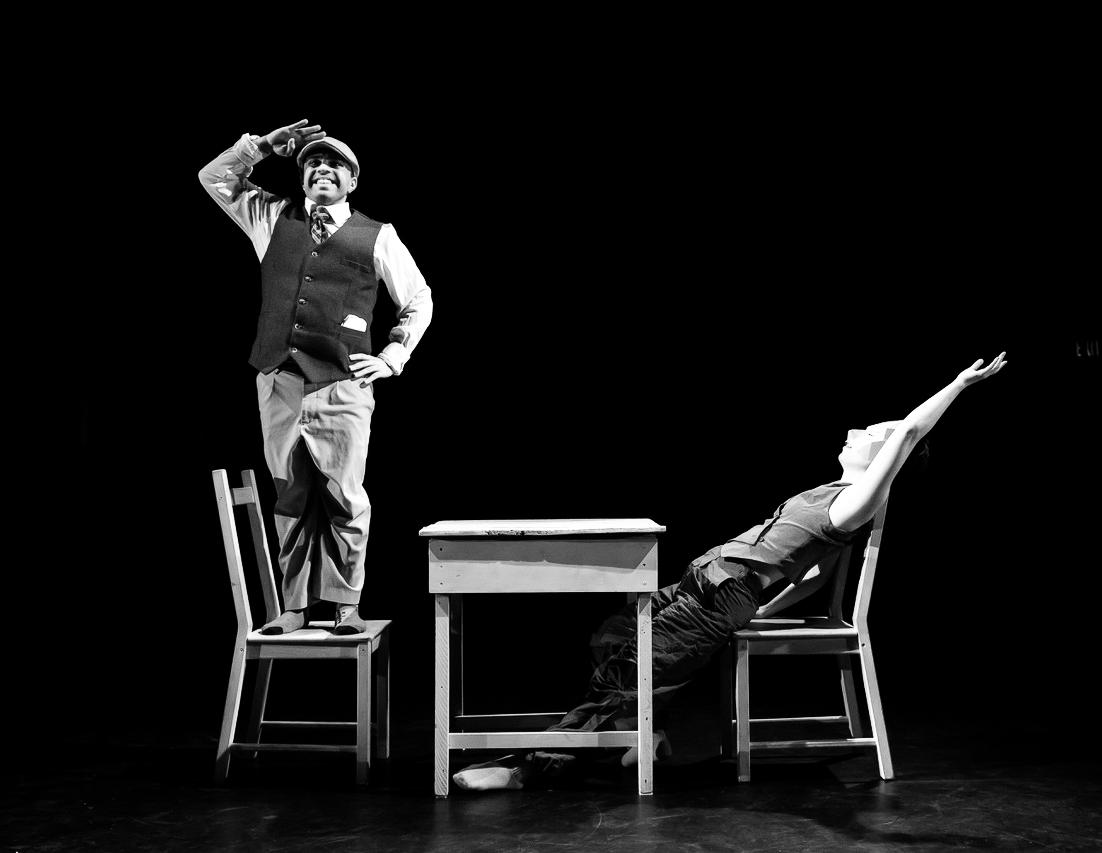
struggling to stand, and audience members were forced to face the agony caused by the immigration system. It can be difficult to witness this kind of vulnerability, but Sun’s performance is potent and important.
For Sun, the dance community played a large part in helping her find her place after the difficult immigration journey. Now, due to the majority of the dancers in her company being immigrants themselves, a goal of the piece was to speak to their collective experience.
“I can’t just keep crying and
then complaining about this, because we have no choice other than just get out of bed, get upout, do the work and make it work,” Sun said.
“Alien of Extraordinary” was proof of that ethos. It had moments of comedy and irony as well as moments of intense suffering, but what lingered was the power of the artistic community.
“We’re fighting together,” Sun said as post-performance.
With loud applause and a standing ovation, it was clear that Sun has a powerful community ready to join that fight.
Try Free Art in Tribeca: A Gallery Walkthrough
A budget-friendly walk through Tribeca’s gallery scene, where one can explore New York City without spending a dime
By BENI CWIAKALA Staff Writer
Stepping outside in New York City is a dangerous game for one’s wallet. From increasing subway fares, pick-me-up coffees and spontaneous purchases, it is easy to doubt the extent of what one can do to have a good time in this city, all for the attractive price of free. For students, it is a craving.
Free art is likely to satisfy this craving. A simple web search will lead to resources like galleriesnow. net, a centralized listing platform for art exhibitions. The site compiles information on current and upcoming shows and is relatively straightforward, though the depth of information may vary between gallery listings. The art exhibitions below were found through this website.
“Fancy Feast” If hungry, pay a visit to “Fancy Feast,” an exhibition by Brent Owens at the Savage Wonderground Tribeca. For Owens, a South Carolina-born artist who works in Queens, N.Y., inspiration for these works came from the gourmet cat food with the same name.
Tucked in on Franklin Street, the exhibit features a 24-foot-long banquet table with a variety of decadent-looking “foods.” Through the bright colors and grandeur of the display, it is shocking to discover that every sculpture is constructed from wood. Visitors’ mouths might start to water at the sight of giant oysters made from holly (labeled “Briny Brunch”) and the oak-baked potato, (“Baked Spud”). As an homage, a chalice of the “Fancy Feast” cat food is also included in the spread.
“Fancy Feast” by Brent Owens features a 24-foot-long display of fake food made entirely out of wood.
The grandeur of the exhibit subtly reflects Owen’s cheeky critique of culture, class and social norms. Along with the food, Owen’s “neon” (wood) works line the walls of the gallery. These elaborate and deceptive fixtures are intentionally left unplugged to showcase the exhibit’s punchline: how the work “falls short” of its expected luminosity. While this food might be some of the priciest — ranging from $1,000 for a slice of the wooden sub sandwich and $8,000 for brineless oysters — viewing the gluttonous display is completely free.
“Pause and Flow”
It’s hard to find a moment to stand still in the city. A visit to
see the melancholic paintings of Youngju Joung is an opportunity to do just that. Born in Seoul in 1970, Joung’s artistry is influenced by both her experience growing up in a small rural village as well as the history of urbanization in South Korea. Her exhibition, “Pause and Flow,” is located in the Tribeca Almine Rech gallery. Visitors can descend to the lower level and are greeted by paintings reminiscent of “dal dong nae,” or “moon villages.”Created in the ’50s and ’60s by working-class residents, these hillside towns outside Seoul were a result of citizens being displaced from their homes due to urban development. Joung’s paintings serve as a memorial to
her childhood and these towns. Her use of “hanji,” a traditional Korean handmade paper, adds a texture to the works that allows the viewer to feel the history of these towns.
The show itself is small, with the exhibit showcasing 11 paintings. The star of the show, however, is a 19-foot work consisting of four connected canvases, each one depicting a village in a different season. The houses start from the leftmost canvas in spring, and the same village complex continues until winter. With the context of the painful history of South Korean urbanization bringing along constant forced migration, Joung’s work does not intend to romanticize; it is an honest
and raw depiction of the passage of time.
“Horns, Holes, Skins, and Branches”
If in the mood to sample garments, try the Klau Von Nichtssagend Gallery, which showcases the works of Joy Curtis, a Brooklyn-based artist who specializes in avant-garde sculptures made from sewn, hand-dyed fabrics. The exhibit, “Horns, Holes, Skins, and Branches,” features sculptures that are either free-standing, hung on the walls or even worn on a person’s body.
Curtis’ sculptures are not meant to be stationary; visitors are encouraged to move the various horns, trunks and branches around, as their ability to change their shape is a key part of the display. For example, the mixed-material sculpture “Holzer 2” includes a detachable beard meant to be held up to the visitor’s face.
In the ecology-themed exhibit, Curtis uses the traditional Japanese technique “Shibori” to dye her fabrics — folding, twisting, binding or stitching fabric to concentrate the dye in certain areas, resulting in intricate patterns in the finished work.
Curtis joins a long lineage of artists who challenge geometrically driven art, aiming to activate both the art and the users through the union brought by interaction.
These exhibitions are a few of hundreds of free art adventures in the city, allowing visitors to charter new artistic perspectives and styles. Check galleriesnow. net for more dates and listings.
And if, after all this art, a sweet treat is needed, spend the $10; it’s deserved.
COURTESY OF STEVEN PISANO Sun’s work combines popping with theater to create an immersive experience highlighting the difficulties of the immigrant journey.
BENI CWIAKALA/THE OBSERVER
‘Eurydice’: An Interesting Take on the Underworld
Fordham Theatre’s Mainstage cast highlights Eurydice’s perspective in the underworld from the famous Orpheus myth
The underworld is portrayed in the scenic design as broken, constantly changing and deeply unpredictable, more similar to memory than a set location.
The design process was based on “the surreal feeling of improvised performance spaces, like a basement nightclub or a high school gym decorated for prom; it doesn’t take much for a simple room to look unsettling or unfamiliar,” set designer Stanley Gagner, FCLC ’26, said.
He uses a mylar rain curtain, which creates a tacky and unnatural feel. As a result, things that seem familiar constantly get changed, creating an unstable world that has a changing emotional state rather than a physical location.
Eurydice’s path functions through emotional buildup. Fosmoen said the production starts off with “lightness and air,” but it soon breaks down into sorrow.
When Eurydice returns after losing Orpheus, the damage serves as “the final nail in her coffin of the fact that she will have to face death forever now,” Fosmoen said.
However, Eurydice’s relationship with her father is much more important to Fosmoen.
“The last thing she’s holding onto is that she will have her father,” Fosmoen said. “They will live together forever.”
In the underworld, that belief crumbles. As Eurydice tries to wake her father, who is long gone, Fosmoen described the moment as representing overpowering grief.
This reasoning is shaped differently through Orpheus.
The father believes that patience is what defines him. Parker compared his role to the process of early childhood development and said it is formed by a kind of basic endurance.
“It reminded me of how parents teach their children to speak for the first time,” said Parker. “The patience and frustrations of communicating, the joy when they say their first words.”
He places the father in a phase of change that is more similar to suspension than death. Despite the character’s belief that he and Eurydice are both dead, they still exist in an unnerving world. Parker called this “a state of limbo,” where love is steady, but existence itself becomes unclear.
Parker’s approach to performance rhythm reflects this
emotional stability. In the underworld, the father alternates between controlled movement and stillness, which he sees as equally significant; the lack of speaking and moving carries emotional burden.
The father is characterized by consistency, but Eurydice is characterized by grief. One relies only on memory, whereas the other falls under it.
The Stones, three unsettling figures who make the rules of the underworld, serve as a structure that repeats both patience and destruction without resolution.
According to the Loud Stone (Gia Sood, FCLC ’27) the trio seems in unison at first, but eventually becomes distinct during rehearsal, which is something she said they worked hard to achieve.
Director Dawn Akemi Saito gave each Stone a unique
emotional frequency in which one is loud and assertive, one quiet and insightful, and one open-hearted and big instead of portraying them solely as “nasty children,” as written in the script.
Sood explained the choreography for the Stones to take inspiration from K-pop rigor and directional motion in the style of Talking Heads frontman David Byrne, emphasizing instability.
“We know when to be in sync … but we know when to also step out of our own choral bounds,” Sood said.
Like the father, the Stones are connected to memory, but they are unable to retain it. All they do is repeat.
A Nasty Interesting Man aka Nim (Salvatore Dilluvio, FCLC ’27) acts as the antagonist, breaking apart rather than repeating. The character exists in three forms over the course of the play: Nim, Child and Lord of the Underworld.
“Nim is the neighbor next door (with) kind of off vibes, then Child is like Chucky and the Lord is the mix of both,” Dilluvio said.
A Nasty Interesting Man embodies identity that is incapable of remaining still, while the Stones stand for memory that is static.
“Eurydice” becomes a study of what remains when identity becomes unstable. As Fosmoen questioned, “How do you say goodbye to yourself?”
The beauty of this production is that it never answers this question. Instead, it blurs the differences between those who break, those who repeat, those who forget and those who persist.
Spring Weekend Concert
Natasha Bedingfield brought a “pocketful of sunshine” to this year’s rainy spring weekend
Del Water Gap took the stage next. His set was cinematic and rhythmic, every song drawing the crowd into a steady sway, clap or cheer. By the time he stepped off stage, the crowd was fully settled into the groove and ready to lock in for the main headliner of the concert.
When the trendy TikTok remix playing from the speakers started to quiet down and a thunderous cheer rang through the ever-growing crowd, everyone knew it was time and that Natasha Bedingfield was nearby.
In a similar fashion to her opener, she arrived in a simple raincoat with the hood up, going right into her set. The energy started off high and stayed there as Bedingfield played hit after hit, engaging the crowd and making sure everyone was enjoying themselves.
Closing out with her hit song “Unwritten” did not disappoint. The crowd was hyped up by the impending excitement the iconic song provided, and it definitely proved to be worth the wait.
With the terror of upcoming finals and cramming in last-minute missing assignments, it makes sense that students clung to lyrics that implored the crowd to “release (their) inhibitions.”
The rain outside was truly the cherry on top of the immersive experience the concert provided.
The atmosphere was bright with the overhead lights on in the back of the fieldhouse and colorful flashing stagelights to light up the performers and audience. They brought a new aura to the venue with every beat drop, either
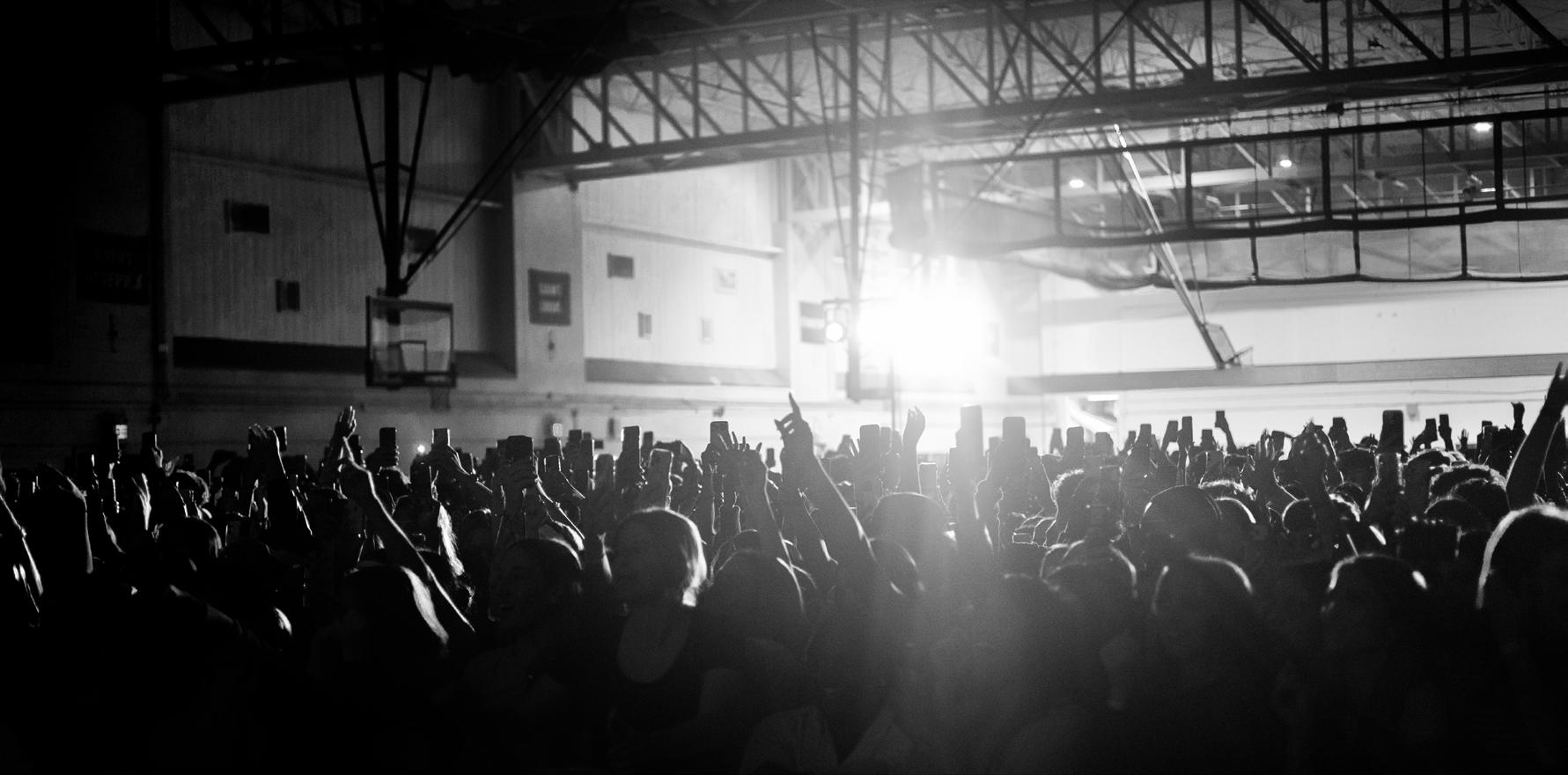
setting the tone for the slower, acoustic vibes or shifting for the upbeat, energizing moments.
The way the Fordham community came together, from swaying back and forth holding up their phone flashlights to clapping their hands slightly off beat to the music, was a truly electric experience. It was special to see the way these kinds of experiences bring the student body together by either reconnecting people with fellow classmates or making new friends with the people screaming along next to them.
Students felt comfortable in the happy and easy vibe of the event, having fun letting go for a few hours in the hectic whirlwind that comes with the end of the year.
There was also buffet-style food offered at the event. CAB’s
Instagram account referenced a free barbecue, and they delivered with options such as make-yourown hot dogs or hamburgers, vegetarian selections and a table for gluten-free alternatives.
A popular menu option was the addictive mac-n-cheese, and a close companion was the refreshing watermelon that seemed to be restocked by the minute. The weather has been getting warmer this past April — even if this day specifically did not reflect it — and with it, fruits have been getting better. If the watermelon was not enough to cool the crowd down after being surrounded by bodies jumping in the crowd during the sets, there was also a wide ice cream selection offered.
Joanna Wang, Fordham College at Lincoln Center ’29, provided an in-depth review of the

By SOFIA LAJE Staff Writer
“ROSE OF
Film at Lincoln Center & IFC Center via 1-2 Special -
June 19
Jenkin returns with a story of a long-vanished vessel that reappears off a coastal town, drawing in two men eager for a change in fortune. Time slips and their identities become entangled with those who came before.
For fans of: folklore, “Twin Peaks,” temporal confusion English
“LEVITICUS” DIR.
Via NEON - Opens June 19
Chiarella’s debut traces the lives of two teenage boys whose bond becomes perilous when an unseen force begins to mirror their desires back at them. As attraction and fear feed into each other, their connection turns volatile.
“Chiarella’s film is small in scope but shattering in emotional range, slowly burrowing under your skin” - Chase Hutchinson, The Wrap
For fans of: queer horror, identity spirals, “Talk to Me” English
“UNCLE BOONMEE WHO CAN RECALL HIS PAST LIVES” DIR. APICHATPONG WEERASETHAKUL (2010)
Museum of the Moving Image on 35mm via Strand ReleasingMay 9 and 10
Winner of the 2010 Cannes Palme d’Or, the film centers on a man nearing death who reflects on earlier existences while surrounded by figures both familiar and otherworldly. The boundaries between life, memory and spirit dissolve, creating an otherworldly atmosphere.
“Magical, baffling, mirthful, sublime—it’s everything it’s cracked up to be.” - Chuck Stephens, Film Comment For fans of: spiritual realism, “Solaris,” slow cinema, Isan, Thai with English Subtitles
“ROMERÍA” DIR. CARLA SIMÓN (2025)
Film Forum via Janus FIlmsOpens June 26
Along the Galician coast, a young woman returns to her family seeking answers, only to encounter evasiveness. As she documents and imagines what she cannot access directly, fragments of history take shape.
“ This is graceful, quietly intelligent filmmaking.” - Stephanie Zacharek, TIME Magazine
variety of flavors to choose from, and put together a plate of desserts ranging from cookiewiches to vanilla ice cream pudding.
“It’s hard to go wrong with ice cream,” she said. Similarly, it is hard to go wrong with free merchandise.
A table to the side featured CAB-designed stickers, visors and a limited collection of free T-shirts. It was little things like this that contributed to the sense of care and planning behind the event, adding to the overall experience.
While the weather may not have cooperated, the success of the event did not depend on it. Through a strong lineup, a lively crowd and thoughtful touches from CAB, Spring Weekend once again proved why it remains one of Fordham’s most anticipated traditions.
For fans of: “The Virgin Suicides,” Chantal Akerman, journaling Spanish, Catalan, and French with English Subtitles
“I LOVE BOOSTERS” DIR. BOOTS RILEY (2026) Via NEON - Opens May 22
Debuting at SXSW, Riley’s latest follows a band of small-time thieves who set their sights on a powerful figure in the fashion world. Questions of value, image and power collide.
“It’s a wickedly clever skewering of the moral rot at the center of the fashion industry.” - Brian Tallerico, RogerEbert. com
For fans of: anti-capitalist ideologies, “The Bling Ring,” “Josie and the Pussycats” English
COURTESY OF CRISTINA STEFANIZZI
Students pack into the fieldhouse as Fordham’s Spring Weekend concert moves indoors.
COURTESY OF CASON DOYLE
Katherine Fosmoen as Eurydice and Cade Parker as Father take over the stage with their father-daughter reunion in Fordham Theatre’s Mainstage.
NEVADA” DIR. MARK JENKIN (2025)
Opens
ADRIAN CHIARELLA (2026)
SPRING WEEKEND from page 1

un & ames
Crossword: It’s Complex

48. John of “Full House”
51. Vergara of “Modern Family”
52. *Mother-lover?
54. Wind blasts
58. *Tie?
62. “Oppenheimer” director Christopher
65. Lego models built by fans (Abbr.)
66. The River S____
67. Say, say
68. Mr. of “Peter Pan”
69. “Star Wars: Episode IV –__ ____ Hope” (2 Wds.)
70. Crazy party, slangily
71. Belonging to a particularly honest president
72. “He was so happy to look a
1. Accumulate
2. Solution to fit an extra body in a car (2 Wds.)
3. Colombian cornmeal food
4. Where Harry sits on Hagrid’s motorbike
5. ____-sci (Abbr.)
6. Milk’s favorite cookie
7. Category in many modern ranking lists
8. Word following “comic” or “Las Vegas”

9. “____ ___ the line” (2 Wds.)
10. ChatGPT and Grok, for two
11. State of matter with the most spread out particles
12. Before, in olden times
13. Took a final exam, say
21. Doesn’t own
22. Uno, due, ____
25. K-pop group with recent comeback album “Arirang”
26. Pale purple flower
27. Use a rubber?
28. Modern ones include two consecutive numbers and a talking toilet
30. The Beatles song: “__ ___ Mine” (2 Wds.)
31. Golf pegs
32. South American mountain range
34. “Don’t ____ ___ surprised!” (2 Wds.)
35. Word after home or tectonic
36. Equally insane (2 Wds.)
37. Former Yankees player Martinez
41. Natasha Bedingfield’s “Pock___ul of Sunshine”
42. Royal’s time
45. Dubai or Qatar, for two
47. “To a sickening degree” expression: “Ad ____”
49. Zara Larsson for Tate McRae in 2025, famously
50. South, in Brazil
53. Gregor of “The Metamorphosis”
55. Viral Kylie Jenner wake-up call: “Rise and ____”
56. Fork prongs
57. Shoots out, like a volcano
59. Mummy’s spot
60. Polar bear-branded slushy
61. Chemistry suffixes for sugars and carbs
62. Between here and there?
63. Pop singer many claim resides in the “Khia Asylum”: Rita ____
64. It comes before behind?