
Fordham Introduces STEM Honors Program
By MACKENZIE COOPER News Editor
Fordham has announced a new science, technology, engineering and math (STEM)-based honors program at Fordham’s Rose Hill (FRH) campus for the 2026–27 school year. This program is just one of the changes the university is making to expand its STEM initiatives.
Last spring, it was announced that Fordham received a $100 million gift from alumni Maurice and Carolyn Dursi Cunnifie to transform the university’s STEM research programs. The donation will fund the new 200,000 square foot integrated science facility to be built at the FRH campus.
In the fall, alumni Peter Zangari made a $1 million contribution to the university to help advance its growing fund for artificial intelligence (AI) research.
The donations came before University President Tania Tetlow addressed questions during an
By KAITLYN SQUYRES Graphics Editor
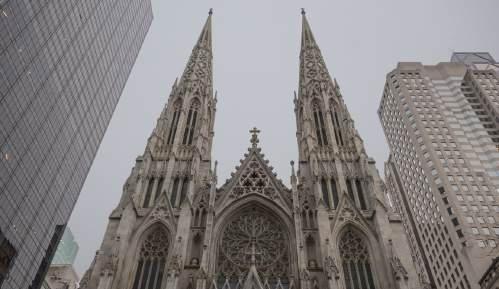
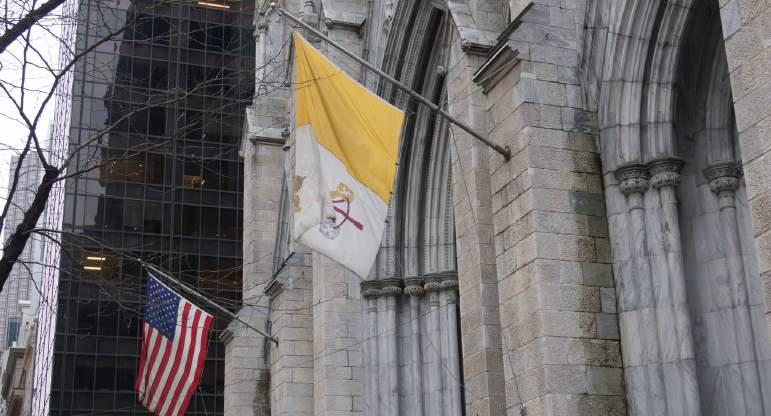
On Feb. 6, Ronald Hicks was installed to the office of archbishop in a Mass at St. Patrick’s Cathedral, following his
By NORA KINNEY Arts & Culture Editor
Five Black creators took the stage at the David Rubenstein Atrium on Feb. 12 for a panel discussion and series of performances exploring the intersection of art and technology. The panelists included digital designer Akil Cooper; multi-disciplinary artist Cleo Reed; experimental musician Kambaba Jasper; artist and producer Akeem; and the comedian Willonius “King Willonius” Hatcher.
“The Future in the Now: Young African-American Creators,” presented by Lincoln Center, is the latest in an ongoing event series titled “The InBETWEEN Music & Tech” fronted by the musical icon, activist and educator Nona Hendryx.
Admission for “The Future
appointment by Pope Leo last December. Several members of the Fordham community see this as a shift in the leadership style of the Archdiocese of New York toward an on-the-ground pastoral presence and firm voice on
key issues like migration. Hicks succeeded Archbishop Emeritus Timothy Cardinal Dolan, who turned 75 (the mandatory age of retirement for bishops) earlier last year.
Hicks now leads the Archdiocese of New York, one of the largest archdioceses in the United States, which includes three boroughs (Manhattan, the Bronx and Staten Island) and seven counties (Dutchess, Orange, Putnam, Rockland, Sullivan, Ulster and Westchester). According to the archdiocese’s website, it serves over 2.5 million Catholics in almost 300 parishes throughout the region.
The role of the archbishop is to be both an administrator and a pastor. He guides the priests and deacons serving in specific parishes in the region, performs sacramental duties and oversees the Archdiocese of New York’s other ministries. These ministries include its Catholic school system, Catholic Charities, ArchCare (its healthcare system) and The Good Newsroom (its in-house digital news platform).
By MADELEINE SIGNORE Asst. Arts & Culture Editor
On a Friday evening, gentle chatter is reverberating through the visual arts complex. In the Susan B. Lipani Gallery, painters mingle with animators, instructors reconnect with former students and artists of the hour Malena Sullivan and Xavier Oyola chat animatedly with family and friends. The pair seems energized, and for good reason; tonight, their senior theses have been presented publicly for the first time.
In keeping with departmental tradition, a handful of student-artists in the class of 2026 are slated to display their work in Senior Thesis Exhibitions, the culmination of many months’ worth of coursework mounted in either the Ildiko Butler or Lipani Galleries. Sullivan and Oyola, both FCRH ’26, are two of the emerging artists who will, in due time, enjoy similar celebrations during the months of March, April and May. (The final event of the season will take the shape of a group show scheduled for commencement weekend, in which all participants are featured.)
Oct. 16 student presser regarding Fordham’s move towards becoming a more STEM-focused institution. With the expansion of STEM programs at Fordham, Tetlow said Fordham is increasing its STEM initiatives in order to appeal to students who want to study STEMbased programs.
According to the Fordham website, the new STEM Honors Program will be a “research-intensive academic experience for outstanding undergraduate students majoring in the sciences, mathematics, and computer science.”
“We do know that something students look to as they’re choosing a school is ‘How selective is that school?’ In the future, as we’re able to build more facilities for STEM, that’s a moment when we might try to grow the undergraduate population because we know that … our applications in STEM are lower than what is typical,” Tetlow said.
in the Now” was free, offered as part of this season’s low or no-cost public programming. Fordham students were invited to attend via Lincoln Center’s connection to the university’s Center for Community Engaged Learning (CCEL).
Following an introduction by Hendryx, Cooper kicked off the event with a presentation about his work as the founder of Triber Cooperative. He spoke about using technology to amplify new perspectives.
“I was so used to technology being a thing that was mostly done by people who don’t look
like me,” Cooper said. “I started getting interested in different experiences and immersive exhibitions that showed that technology could be a little different.”
Early on, Cooper found his stride as a coder by drawing on stories of the past. One project merged garment design with archival research, in which a T-shirt graphic referencing Fire!! Magazine, the Harlem Renaissance-era literary outpost, could be scanned to view a digital version of the publication.
For Lillian Maunsbacher, a senior double majoring in art history and visual art soon to be spotlit in a dual exhibition of her own, Fordham’s storied gallery spaces are a tremendous asset.
“It’s very cool that I get to exhibit in Butler, because that’s a space that everyone at Fordham walks past,” Maunsbacher said. “I’m very honored. And the Susan Lipani Gallery has this amazing history, so every time something gets held there, it’s an homage to her. Fordham deeply cares about its visual art community.” Stephan Apicella-Hitchock, who has long overseen FCLC’s Visual Arts program, cites visits from practicing artists, some of whom are Fordham alumni, as an especially meaningful facet of the program; of particular note was a discussion with Theresa Baker, Fordham College at Lincoln Center (FCLC) ’08, whose practice largely centers around large-format abstraction. Baker has enjoyed an especially exciting few years, having been selected as a participant in the 2026 Whitney Biennial and awarded a Guggenheim Fellowship the year prior.
GRACE SANTOLI/THE OBSERVER
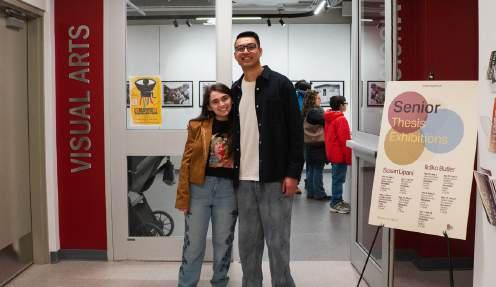
GRACE SANTOLI/THE OBSERVER Pairing the work of two seniors together creates a riveting dialogue within the gallery.
Students Ring in the Year of the Horse
Asian Cultural Exchange’s annual Lunar New Year Celebration gave attendees a space to gather and celebrate the holiday
By ABBIE WONG Staff Writer
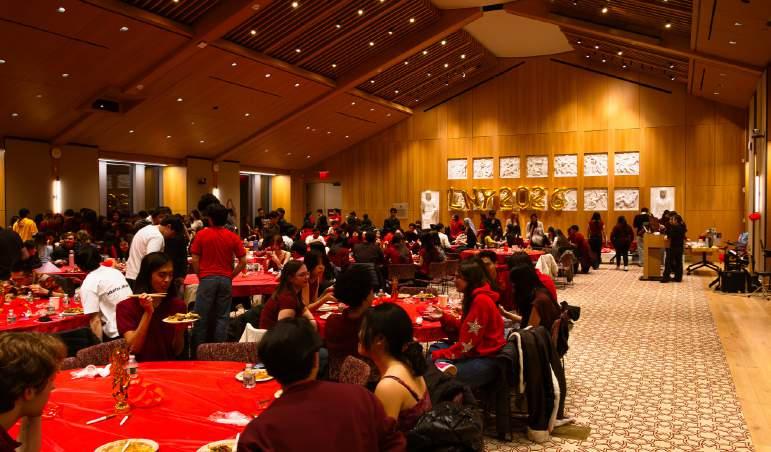
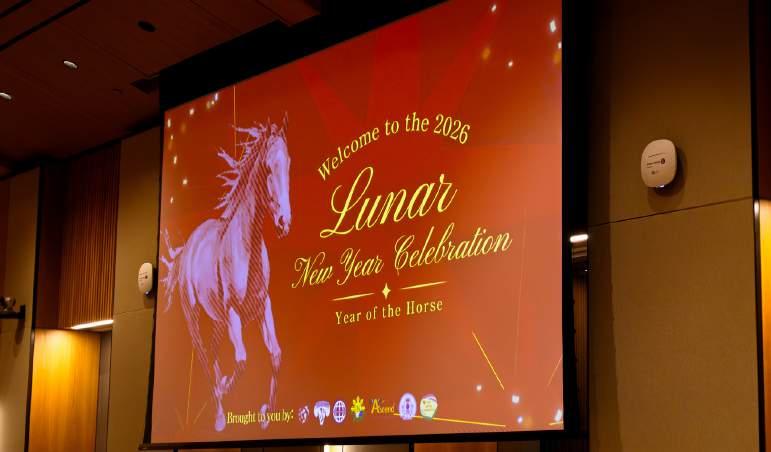
Asian Cultural Exchange (ACE) hosted their annual Lunar New Year Celebration on Feb. 13 in collaboration with six other clubs, featuring food, performances, trivia and more in the Great Hall of the Fordham Rose Hill (FRH) campus. Students across both campuses also began planning their own celebrations with friends and loved ones for the day of Lunar New Year, Feb. 17.
Around 200 students from both campuses gathered to commemorate the holiday, according to Fordham University’s Philippine American Club.
Members of the ACE E-Board kicked off the event by welcoming the multitude of cultures that all celebrate Lunar New Year.
“Thank you everyone for being here tonight to celebrate such a symbolic time for many Asian cultures around the globe,” Eileen Kim, Gabelli School of Business at Rose Hill (GSBRH) ’26 and president of the ACE E-Board, said.
She went on to talk about the importance of the holiday, which she said represents more than just a new calendar year.
“It is more than just a new beginning, it is a time for reunion, renewal and reflection. Families come together to share meals, honor traditions and welcome good health and good fortune for the year ahead,” Kim said.
“ Performing is definitely a big part of how I connect with and share my culture, so it made the celebration feel more personal and special. ”
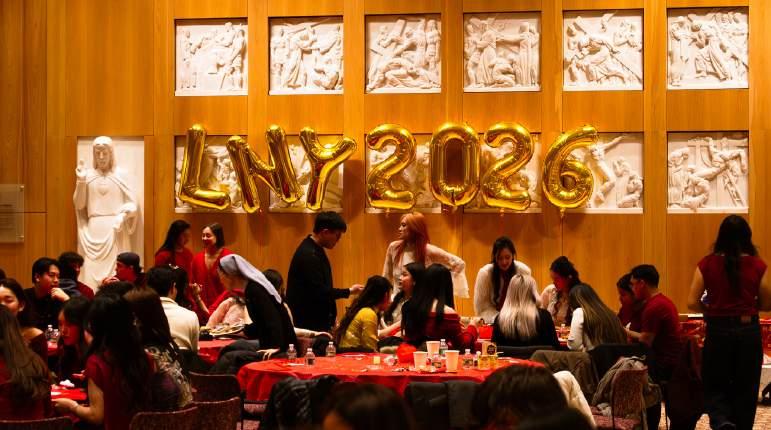
Club leaders decorated the Great Hall with red table cloths, red streamers hanging from the walls and gold balloons spelling “LNY 2026.”
The attendees also contributed to the decor and color themes in their own way. As per the dress code, many wore the colors red and gold — symbols of good luck — while others wore traditional cultural clothing.
A musical performance by the Vietnamese Students Association (VSA) band and a dance set by the South Asian Fusion Dance team Fordham Falak were followed by food from five different Asian
cuisines — Chinese, Filipino, Vietnamese, Thai and Korean — catered by multiple businesses.
The performances and food were a highlight of the event for many students.
VSA band performer Manh Khang Tran, GSBRH ’27, said that being a part of the performance was vital in celebrating and connecting with his culture.
“Performing is definitely a big part of how I connect with and share my culture, so it made the celebration feel more personal and special,” Tran said.
Erin Ki, Gabelli School of Business at Lincoln Center (GSBLC) ’28, shared a similar view of how celebrating Lunar New Year honors cultural heritage.
“I think celebrating with others helps preserve traditions and pass them down to future generations, keeping cultural identity standing for many years,” Ki said.
Ki also emphasized the importance of being with others during the new year.
“I thought (going to the event) would be a fun way to see everyone and celebrate by eating lots of good food/watching performances,” Ki said. “A big part of it is to be with loved ones and having a good time, so having people around you makes it all (the) more enjoyable.”
Carrie Thien, Fordham College at Rose Hill (FCRH) ’28, said the event helped her feel a sense of closeness to her culture and her family.
“Being able to be here and celebrate with people of a similar race makes me really happy, especially because my family is back home in Indonesia and we’re normally celebrating (the) new year together. This feels like home away from home,” Thien said.
While some came to the celebration to recreate traditions from home, others were new to the festivities. Joshua Cheng, FCRH ’29, celebrated Lunar New Year for the first time at ACE’s event and said it was a significant occasion for him.
“I’m Wasian, so I feel very seen and validated in my Asian-ness in a way I don’t really feel normally,” Cheng said. “This is really my first time in my life experiencing a large Asian celebration. It’s very meaningful.”
One Falak performer, Arfa Naveed, FCRH ’28, is also new to Lunar New Year. She shared that attending the celebration has inspired her to want to learn more about the holiday.
“I’m pretty sure I’m going to go home and search up what (Lunar New Year) really means for everyone and the reasons why it’s celebrated,” Naveed said. “I also like how everyone is dressed up, it’s beautiful.”
Several Lunar New Year celebrants shared their own plans for Feb. 17.
Felix Keith, Fordham College at Lincoln Center (FCLC) ’28, said he will be celebrating with his family.
“I’m probably going to have dinner with my mom who is in town for the week (and) just have some Chinese food,” Keith said.
Tran is also celebrating with a meal. As international students, he and many of his friends cannot travel home to spend the holiday with their families, so they organized potlucks to “recreate the feeling of Tết in Vietnam.”
“This year I’m celebrating pot-luck style with my Vietnamese friends here in New York. Since many of us are far from home, we take turns gathering at each other’s apartments and
bringing traditional foods like bánh chư ng, nem, giò and chȃ,” Tran said.
Several students espoused the importance of celebrating the holiday with friends and family. Charlene Tisnabudi, FCLC ’28, shared how her friends are preparing for Lunar New Year celebrations.
“Though I’m not doing this, a lot of my friends usually cut their hair a couple days before or buy new clothes to wear on the day as tradition for the new year,” Tisnabudi said.
Lauren Andriessen, FCLC ’28, said celebrating Lunar New Year is important to her because, although it is not part of her family’s cultural background, the holiday played a major role in her childhood.
“ So to me, it’s important to celebrate to remind me of home, especially since I’m very far away. ”
Lauren Andriessen, FCLC ’28
“My family isn’t ethnically Chinese, but we grew up surrounded by the culture,” Andriessen said. “When we moved to Indonesia, my brother and I attended a Taiwanese school where we got Lunar New Year break instead of Christmas/winter break. And growing up a lot of my friends were Chinese-Indonesian. So to me, it’s important to celebrate to remind me of home, especially since I’m very far away.”
Andriessen added that she plans to celebrate with people close to her.
“This is the first year in a long time I would be celebrating with loved ones. Because it is just me and my brother and some friends, we are just going to make tangyuan and char siu together,” Andriessen said.
Reflecting on ACE’s event and other Lunar New Year celebrations at the university, some students applauded Fordham for supporting cultural representation through such events.
Clayton Leung, GSBLC ’29, said he appreciated how Fordham uplifted the Lunar New Year celebration.
“I think they do a good job,” Leung said. “They allowed the space for the clubs to collaborate with each other to host this event, and that’s really important.”
Other students like Max Chen, GSBRH ’26, attributed the celebrations’ role in fostering inclusivity to the efforts of students.
“I think it exists on its own, and it’s not so much supported by Fordham, but it exists separate from Fordham,” Chen said. “We don’t represent Fordham so much as we represent the Asian community that happens to live at Fordham.”
A few other events for Lunar New Year will be held at Fordham this coming week. The Office of Multicultural Affairs and Ram Hospitality will co-host an event with red envelopes and finger foods on Feb. 17 in the McShane Lobby at FRH and Feb. 19 at the Fordham Lincoln Center Indoor Plaza. The Chinese Cultural Society’s Lunar New Year Banquet, involving performances, games and food will take place on Feb. 20 in Room G76.
PHOTOS BY LUCIEN FISCHER/THE OBSERVER
Fordham clubs co-hosted a Lunar New Year celebration in the Great Hall at Fordham Rose Hill on Feb. 13.
The VSA band and the Fordham Falak dance team performed for students at ACE’s annual event.
Manh Khang Tran, GSBRH ’27
Students were brought closer together in their intersecting identities at the Lunar New Year Celebration.
Extreme Temperatures Cause Leaks at Fordham Lincoln Center
Facilities staff responded to heating system leaks and related maintenance issues in McMahon Hall and the Public Safety office
By ALEENA SIDDIQUI
Contributing Writer
A series of leaks in McMahon Hall at Fordham Lincoln Center led to temporary hallway closures, repairs in student rooms and flooding in a campus office, according to university officials and residents.
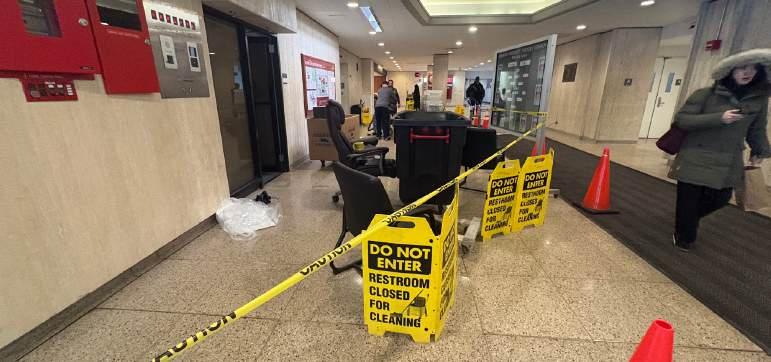
The most visible incident occurred when a hallway near the mail room was closed after a heating system leaked during a recent cold spell. Facilities staff said that unusually low temperatures placed stress on the building’s infrastructure, contributing to several maintenance issues across campus.
In response to projections of consistently below-freezing temperatures, New York City officials issued an “Extreme Cold Warning” for Feb. 7 to 10. Jedd Applebaum, associate director of facilities and chief engineer, said the cold snap was one of the worst in over two decades, forcing heating systems to run continuously and increasing strain on equipment.
Applebaum said that facilities staff identified the problem quickly but delayed a full repair to avoid shutting off heat to student rooms during freezing temperatures. Instead, workers temporarily contained the leak until conditions allowed for a more permanent fix.
“In order to make the repair, we would have had to shut down certain things,” Applebaum said. “The last thing we want to do is
impact the students as long as we can provide heat.”
Facilities crews later completed repairs and reopened the affected hallway. Applebaum said that, while multiple minor leaks occurred across campus during the cold spell, the McMahon incident was the largest. He added that budget constraints did not affect the speed of repairs.
“When it comes to leaks, budget has no bearing on this,” Applebaum said, noting that plumbers, mechanics, a foreman and outside contractors were deployed as needed.
Applebaum said the specific issue in McMahon has been
resolved and is unlikely to recur, though he acknowledged that buildings can experience maintenance problems over time.
A separate leak flooded the Public Safety office in the building after a sewage clog caused water to come through a ceiling line, according to facilities officials. Applebaum said the incident was unrelated to the heating system and was attended to on the same day.
Bob Dineen, assistant vice president of Public Safety, said a pipe broke outside the office and water flooded into the space, causing temporary disruptions while repairs were completed. Facilities
staff removed furniture, restored the sheetrock and repainted the space, Dineen said.
Dineen added that the response time was instantaneous. Public Safety continued operating from another office for about a week while the repairs were being conducted. The department has since moved back into their office space.
Students living in McMahon also reported smaller leaks in individual rooms. Nia Guerrero, Fordham College at Lincoln Center ’29, said she discovered water pooling on the floor near an air-conditioning unit in her dorm on the fourth floor.
New Hire for AI Strategy at Fordham
“I kept coming home and finding a puddle on my floor,” Guerrero said.
She initially believed the cause to be snowmelt from her shoes, but later placed paper towels under the unit to test for moisture. After waking from a nap, she said, her floor was soaked.
Guerrero said she submitted a work order and maintenance staff arrived within 15 to 20 minutes. Workers disassembled the unit and addressed the problem, and she has not experienced additional leaks since the repair.
According to Applebaum, leaks within student rooms were also connected to stress on building systems during the cold weather. He said mechanics responded quickly to maintenance requests, replacing or repairing equipment when necessary.
University officials emphasized that the building’s age was not a primary factor in the incidents, noting that McMahon Hall remains within the expected lifespan for major systems. Applebaum noted that facilities staff continue to monitor infrastructure but do not anticipate additional major problems now that outside temperatures have become more moderate.
While recent incidents required temporary closures and repairs, university officials said systems are now functioning normally and underscored ongoing efforts to maintain building operations and student living conditions.
The university has integrated an Assistant Vice President of Enterprise AI, a new position, to develop a comprehensive AI plan
By MICHELLE WILSON News Editor
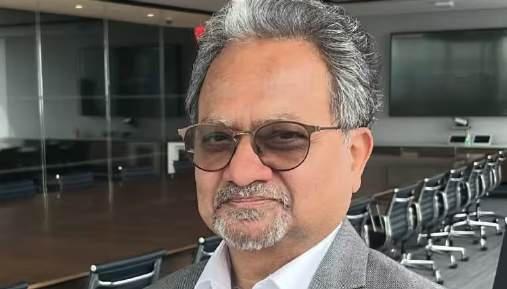
Fordham has appointed career AI strategist Chalapathy Neti into a new Assistant Vice President (AVP) of Enterprise Artificial Intelligence (AI) position, per a university-wide email announcement by the Office of Information Technology (IT) on Feb. 9.
The new AVP will be responsible for creating a unified, comprehensive AI strategy and multi-year plan in line with the university’s goals and principles of ethical governance. Neti will co-design practical AI applications for students, faculty and staff alongside other Fordham experts, faculty and ethics leaders. What these applications will look like specifically remains to be seen.
Neti said that his goal for practical AI applications “focuses on optimizing experiences to best serve our community of students, faculty, and staff,” using the Jesuit principle of cura personalis as a “lens.”
“Ethical AI is synonymous with Responsible AI, and involves ensuring we remain committed to serving our students and community with integrity and thoughtful implementations,” Neti said. “Our goal is to serve our community with systems that are fair, secure, and profoundly human-centric.”
Neti added that he believes AI serves its “highest purpose when applied to the ‘public good,’ namely education and healthcare.” Fordham, he said, is uniquely positioned to establish itself as a leader in AI policies.
“Fordham offers a unique
opportunity to lead by example, demonstrating how a premier institution can implement responsible AI to shape the minds of future leaders who will eventually oversee these technologies in their own careers,” Neti said.
“ Over the coming year, we will transition from isolated AI experiments to a unified institutional strategy. ”
Anand Padmanabhan, VP and chief information officer
Anand Padmanabhan, vice president and chief information officer, said that the position will help cohere what have so far been isolated AI-related initiatives undertaken by the university.
“Over the coming year, we will transition from isolated AI experiments to a unified institutional strategy. Our priorities include establishing a formal governance framework, auditing current projects for scalability, and engaging with campus stakeholders to identify high-impact opportunities that will shape our long-term AI roadmap,” Padmanabhan said.
Some of the other recent initiatives include the $1 million donation for AI research Fordham received from an alumnus last October, which will be disbursed in the next few years.
The university also has an ongoing Faculty AI Interest Group composed of staff from the Office of IT and professors to explore
AI’s applications in education and inform teachers about them.
Next semester, Fordham will begin offering an Advanced Certificate in Ethics and Emerging Technologies dedicated to helping students navigate emerging technical and ethical challenges in the digital age, with a special focus on AI.
Padmanabhan listed three primary reasons for the creation of the AVP role.
One, the university wants to be “prepared with technology that is fast-changing and already impacting everyday life,” “empower students with AI literacy and skills as they enter the workforce after graduation and leverage AI’s ability to improve workflows while keeping ‘humans in the loop,’” Padmanabhan said.
The second advantage Padmanabhan said he projects to see is better organizational coordination thanks to the addition of one centralized role responsible for helping students, staff and faculty take advantage of AI advancements in ways that serve their unique needs.
Third, Padmanabhan reiterated the importance of centralizing the university’s initiatives and strategies regarding AI through the new AVP.
“Regarding AI governance, the university must ensure AI is integrated thoughtfully and ethically through a centralized lens. It’s also critical to create a single focused point of coordination such that we prevent dozens of initiatives from launching in different directions,” Padmanabhan said.
The announcement email stated that, to select an AVP that
would “architect our University’s AI transformation to advance its academic mission and operational excellence,” a search committee conducted interviews before bringing two finalists to campus for further review by university leadership.
Neti said he first heard about the position while working with the Healthcare Innovation Center at the Gabelli School of Business on a project relating to cancer research. He was “immediately compelled” and decided to apply due to his admiration for Fordham’s ethos and confidence that his experience could be used “to create meaningful solutions within higher ed.”
Neti has a lengthy background with AI and has held leadership roles in the healthcare, education and finance industries. He began studying deep learning while obtaining his PhD in biomedical engineering at Johns Hopkins University, and has since been featured in over 75 publications
and received over 25 patents. Before transitioning to his current role as AVP, Neti was the head of the AI Center of Excellence at the Society for Worldwide Interbank Financial Telecommunication, a cooperative of over 11,500 financial institutions that provides a messaging network for international payments. There, he led the development of a new machine learning platform for fraud detection in partnership with Google and Microsoft.
Neti also previously helped develop Watson Tutor (a personalized AI tutoring system) while working as the vice president and director of Healthcare Transformation and, later, Education Transformation at IBM (a global tech giant with its own AI system, IBM Watson).
With a long career at the forefront of new and emerging technologies, Neti hopes to bring this expertise to Fordham to develop AI strategies that will most benefit students, faculty and staff.
KEI SUGAE/THE OBSERVER
The most conspicuous leak sprang in front of Lincoln Center’s mailroom due to extreme cold temperatures weakening McMahon Hall’s infrastructure.
COURTESY OF THE BANKER
Chalapathy Neti has been appointed to the new Assistant Vice President of Enterprise AI position at Fordham.
New Honors Program Reflects Fordham’s STEM Goals
The new program emerges amid a broader push for a stronger STEM focus at Fordham
Joshua Schrier, professor of chemistry and biochemistry and inaugural director of the FRH STEM Honors Program, clarified that the $100 million donation to STEM at Fordham would not be used for the honors program, which is funded through other donors. Schrier is also a Kim B. and Stephen E. Bepler faculty chair member. The professorship was designed to advance Fordham’s commitment to STEM education.
“The advancement office has been in touch with donors who have been very supportive of this program,” Schrier said. “One of the things that we see as really an integral part of this program is funding students to do research during the academic year and especially over the summer, particularly in those first few years that (students) are at Fordham.”
Schrier explained that the new STEM program will be the fourth honors track at Fordham.
“There’s an honors program that runs at Rose Hill, and then there’s a Gabelli honors program, and they’re all organized in slightly different ways,” Schrier said. “This STEM honors program is a fourth honors program added onto this pile.”
“ One of the things that we see as really an integral part of this program is funding students to do research during the academic year and especially over the summer, particularly in those first few years that (students) are at Fordham.”
Joshua Schrier, Inaugural director of the STEM Honors Program
The incoming cohort will be made up of 15 students. According to Schrier, the class of 2029 will also be eligible to join the STEM Honors cohort their sophomore year.
“It’s a new pilot program, so we’re working to recruit the first cohort of incoming first-year students to begin in the fall, but then we are also backfilling the program a bit, by trying to work with
the departments here to identify first-year students who might also be a good fit,” Schrier said.
Schrier added that, to be considered for the program, prospective students need to show a demonstrated interest in STEM-related subjects.
“We’re really looking for students that have two things that are different: One is that they express some form of an interest in doing science or doing research,” Schrier said. “The other thing that we’re looking for is some sort of leadership or entrepreneurship-type experience.”
The program’s curriculum will combine introductory lecture and laboratory classes for STEM subjects. Students will need to be working towards completing a major in biology, biochemistry, chemistry, computer science, environmental science, mathematics, neuroscience or physics.
The website notes, “The program’s strong emphasis on research makes it an excellent fit for research-oriented students, while it may be less aligned with a purely pre-health–focused curriculum.”
Schrier noted that the STEM Honors Program shares similarities with the Gabelli honors program, particularly in terms of its curriculum.
“It’s really a lot like the Gabelli honors program. … With regards to the core, students in the STEM Honors Program take the same undergraduate student core, so there’s really no difference there,” Schrier said. “Additionally, like the Gabelli honors program, students are expected to take a sequence of introductory science courses or business courses through what we’re calling the ‘honors sections.’”
“ The program’s strong emphasis on research makes it an excellent fit for research-oriented students, while it may be less aligned with a purely pre-health–focused curriculum. ”
Program website
According to Schrier, the idea of a STEM Honors Program has been in the works for a while.
“It’s something that has been in the works for over a decade, in fact, I read a committee report that was done, almost a decade

ago, more than a decade ago, exploring this idea,” Schrier said.
Schrier then went on to explain that the program has advanced due to support from Maura Mast, former dean of Fordham College at Rose Hill and Jessica Lang, dean of arts and sciences.
“I mean the idea for this program was really sort of advanced by the former Dean of Fordham College at Rose Hill, Maura Mast, and now is sort of being advocated for by Dean Jessica Lang, who’s the Dean of Arts and Sciences,” Schrier said.
Fordham has also made efforts outside of campus to build STEM initiatives. The University is a member of the Bronx Science Consortium (BSC), a partnership of Bronx-based research and cultural institutions aimed
at promoting scientific research, education and collaboration. Four other institutions also make up the BSC: Albert Einstein College of Medicine, the Bronx Zoo/Wildlife Conservation Society, Montefiore Health System and the New York Botanical Garden. The group collaborates on research initiatives like the annual BSC Poster Symposium, which showcases scientific work in biology, medicine and environmental science.
The Fordham website states, “The Consortium hopes to attract new funding sources and bring more resources to the Bronx – a vibrant but health and economically challenged section of the country.”
Fordham students have the opportunity to intern with these institutions during the school year and summer, and attend special events and symposia, gaining exclusive insights into new scientific research and practices.
There is no designated space yet for the STEM Honors Program at FRH, but Schrier has been working closely with the Office of Residential Life to incorporate the honors program into a Science Integrated Learning Community (SILC) at FRH. The community is open to both freshman and upperclassman students and is located at Martyrs’ Court Jogues residence. It provides “Learning Inside and Outside of the Classroom” opportunities, according to the website.
“We are working with (the Office of) Residential Life to give students in this program the opportunity to live in the science integrated learning community, or SILC, which already exists for other students who are interested in sciences,” Schrier said.
Schrier emphasized that the program is a good opportunity to help increase STEM-based programs and research at Fordham at large, not just for STEM students.
Fordham has also made efforts outside of campus to build STEM initiatives.
The University is a member of the Bronx Science Consortium (BSC), a partnership of Bronx-based research and cultural institutions aimed at promoting scientific research, education and collaboration.
“I think it’s really an opportunity for students that have an interest in research to double down on that, and we really hope, through the way that this has been structured, that it’s also not just a program that benefits a small subset of students at Fordham, but it actually builds the STEM research culture more broadly,” Schrier said. As it stands, the STEM Honors program is located at Rose Hill. Schrier did not mention any plans to expand the program’s facilities to the Lincoln Center campus.
PHOTOS BY GRACE SANTOLI/THE OBSERVER
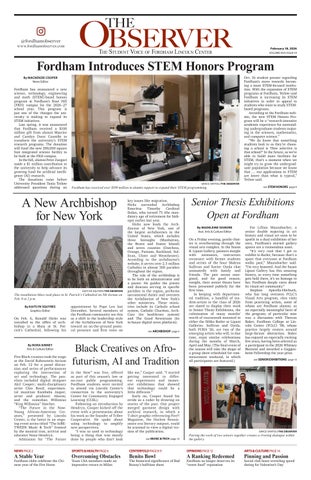
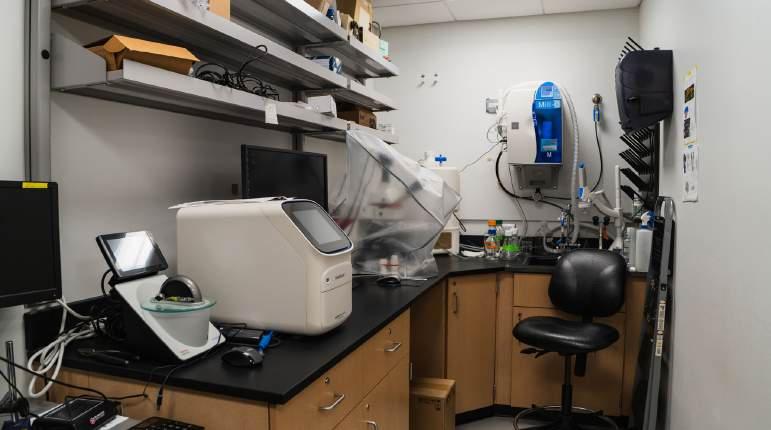
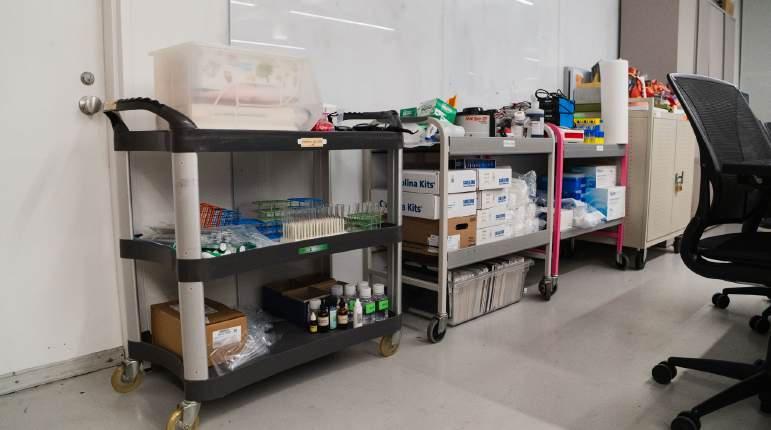
A select group of current and incoming first-year students will be given places in the first STEM Honors Program cohort.
The new STEM Honors Program will be the fourth honors program offered at Fordham.
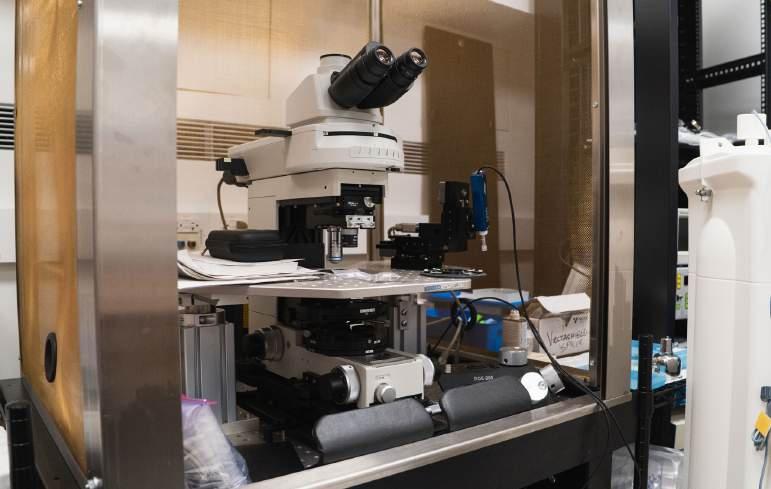
Fordham announced their plans to construct a new integrated science facility at Fordham’s Rose Hill campus in spring 2025.
Archdiocese of New York Inaugurates New Archbishop
Fordham community members expressed hope and interest following Archbishop Hicks’ appointment to the leadership post
Katie Anderson Kuo, director of Catholic Life in the Office of Campus Ministry at Fordham, explained that the Archbishop “sets the tone” for the Archdiocese and serves as “a pastor of all of the people in the Archdiocese.”
“The role of the Archbishop is to listen, to get the pulse of what’s happening at parishes and communities throughout the Archdiocese,” Anderson Kuo said.
Michael Lee, professor of theology and director of the Francis and Ann Curran Center for American Catholic Studies at Fordham, detailed Hicks’ particular pastoral capabilities.
“From what I hear, he’s a good listener, a good administrator. He’s a person who’s not necessarily going to grab the headlines or the spotlight. He’s more focused on service on the ground,” Lee said.
Thomas McCarthy, Fordham College at Rose Hill (FCRH) ’29, attended the installation Mass and echoed this sentiment of pastoral presence. He described how Hicks was “high-fiving one person per pew and going through all of the pews.”
Zander Flint, FCRH ’26, agreed with Lee’s comment that Hicks is quiet, but present with the people.
“I’m looking forward to a leadership style that is more reserved, a little bit more common(ly) pastoral,” Zander said.
Several people have pointed out that this more reserved character is a notable contrast to Dolan, who previously served the archdiocese with a louder personality.
“(Hicks’) personality is less boisterous and loud and exciting,” Zander said.
Lee shared his perspective on the differences in temperament between the two archbishops and how this could yield different priorities.
“I think these will set Hicks’ days differently than they did (for) Cardinal Dolan. Whether you see Dolan’s ministry in a positive light or a negative one, I just think there’s a difference in personality — and we’ll see what that translates (to) in terms of a difference in priorities as well,” Lee said.
Zander shared a similar view and compared Dolan’s reserved demeanor to that of Pope Leo.
“The approach is similar. Even his history is very similar to Pope Leo.
… Other than that, there’s definitely similarities to be drawn, more reserved than Dolan, and still closer to Leo,” Zander said.
One distinct priority of Hicks’ that he has already made clear is his attention to the Spanish-speaking communities in New York and his emphasis on reaching out to the poor and marginalized.
Hicks, speaking in both Spanish and English during his homily at the installation Mass, shared his excitement to minister to the people of New York. He referenced popular New York City-themed songs and thanked those that have influenced his faith before turning to a more serious discussion of the day’s Gospel reading and his hopes for the Church in New York.
“We are called to be a missionary Church that takes care of the poor and the vulnerable, upholds life from conception to natural death, cares for creation, builds bridges, listens synodally, protects children, promotes healing for survivors and for all those

wounded by the Church, and shows respect for all, building unity across cultures and generations,” Hicks said in his homily.
He emphasized that the Church exists to serve all, not just its members. Hicks concluded his homily by encouraging Catholics to be a missionary Church that reaches out to the margins and shares the Gospel widely.
“Brothers and sisters, I believe the world always has and always will need a missionary Church.
A Church that proclaims Jesus Christ clearly and without fear.
A Church that forms missionary disciples, not passive spectators.
A Church that goes out to the peripheries,” Hicks said. Flint said that this more serious discussion of Hicks’ vision of the Church in New York surprised him.
“The tone, when he got more serious, was actually a little bit more proselytizing than I was expecting,” Flint said. “Obviously, he did spend plenty of time thanking people, but I guess I didn’t think he would get as intense as he did, and so I found that kind of interesting.”
Some appreciated this clear intention for a missionary Church and claimed it reflected the strong voice they expected from Hicks.
Lee described Hicks as having “the kind of necessary voice that our society needs today,” comparing his firm tone to that of Oscar Romero, Hicks’ favorite saint, who was martyred in El Salvador for his public criticism of the government and his ministry to the poor.
“If his favorite saint and perhaps model is Archbishop Romero,
Chicago — and the U.S. Conference of Catholic Bishops (USCCB) have publicly criticized the current treatment of migrants in the U.S. In November 2025, the USCCB issued a “special message” condemning the inhumane treatment of migrants in the U.S. and calling for practices that uphold their inherent human dignity. Pope Leo has similarly called out recent anti-migrant measures and expressed his support for the USCCB’s special message.
“ Archbishop Hicks will represent a fidelity to what the tradition of the American Catholic Church has been, say, in its position on human rights, on migrants, on those who are poor and what the duty of the Church is in respect to how it should behave in the American public sphere.”
Michael Lee, professor of theology
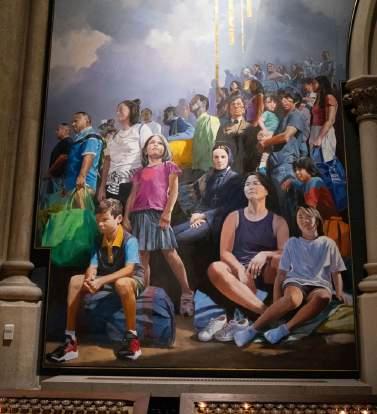
The Church has expressed support for migrants locally in New York as well. In August 2025, St. Patrick’s Cathedral unveiled a mural commissioned by Dolan titled “What’s So Funny About Peace, Love, and Understanding,” which celebrates the rich tradition of immigration to New York City and its contributions to the Catholic Church.
In this context, Lee hopes that Hicks will remain true to what he sees as broader themes in American Catholicism.
“Archbishop Hicks will represent a fidelity to what the tradition of the American Catholic Church has been, say, in its position on human rights, on migrants, on those who are poor and what the duty of the Church is in respect to how it should behave in the American public sphere,” Lee said.
While Hicks brings a new personality to New York, many emphasized that what remains consistent is that the heart of the Church will always be the people.
maybe the circumstances will dictate that we see more boldness that might surprise everyone, just as Romero surprised everyone around him,” Lee said.
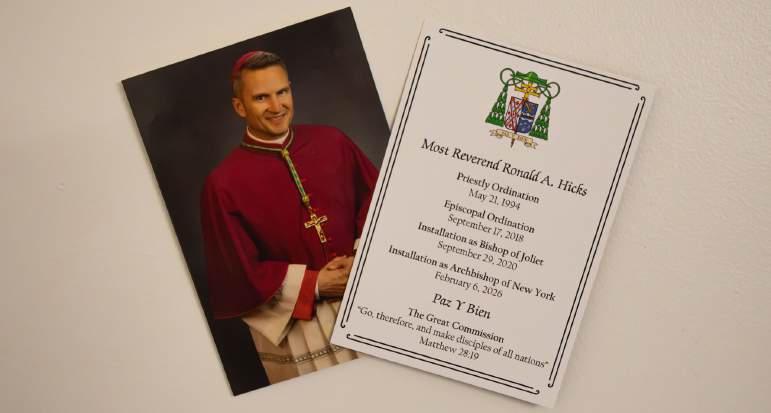
Hicks’ new coat of arms bears a rosemary sprig on the right side, which recognizes Romero and celebrates Hicks’ five years of work in El Salvador. His episcopal motto, depicted at the bottom of his coat of arms, is “paz y bien,” Spanish for “peace and good.”
In an Instagram post to his official account, @apbnewyork, Hicks explained that the rosemary sprig honors Romero, “whose courage inspires me and recalls my ministry in a country close to my heart.”
Hicks’ homily and priorities align with the Church’s recent attention to migrants. Both Pope Leo —who is originally from
“No matter who is the leader, we don’t change, right — we’re still the body of Christ. We are always being called to continue to build up the body of Christ, and to preach the gospel, and to share the good news, and to act on our call to works of mercy,” Anderson Kuo said.
Lee hopes that Hicks will empower the people of New York to be an active Church.
“The Church is the people of God. And when you have a leader in place like Hicks, I think people can also embrace that sense of their own dignity and be Church, not just look to the guy at the top to make (the) Church better, but to feel empowered to be Church in a better way. And I think Hicks has the personality and the pastoral experience and the support, even from Rome, to make that kind of church a reality, and that can be very inspiring,” Lee said.
As Hicks takes the helm, many Catholics are excited to share their local Church life with him and see what he will bring to the city.
PHOTOS BY KAITLYN SQUYRES/THE OBSERVER
Archbishop Hicks’ Coat of Arms includes symbols that represent his ministerial experience in Chicago and El Salvador.
Hicks’ words were set on the backdrop of the 2025 mural “What’s So Funny About Peace, Love, and Understanding,” which celebrates the history of Catholic immigration to the United States.
Pope Leo appointed Hicks to replace Dolan on Dec. 18.
Sports & Health
Road Back to the Podium
Four U.S. women athletes return from physical and mental health breaks for the 2026 Winter Olympic Games
By CATHERINE RAIMONDI Staff Writer
Team USA made a powerful entrance at the 2026 Milano Cortina Winter Olympics opening ceremony on Feb. 6, with a record 232 athletes competing to represent the country.
Leading Team USA was speed skater Erin Jackson, one of the Team USA flag bearers. The athletes are represented across a variety of Winter Olympic Sports. However, for many athletes, including Jackson, these games represent more than just a competition, as many are returning to the Olympic Games with goals of major physical and mental comebacks.
Jackson is a 33-year-old speed skater from Ocala, Florida. Although Milan will be her third Olympics in speed skating, her athletic career began in inline skating, where she is far from unaccomplished — she holds 12 world championship medals. After trying speed skating in 2017, she quickly made it her primary focus in training. She made her Olympic speed skating debut in the PyeongChang 2018 Olympic Winter Games.
Erin Jackson became the first Black woman to win an individual Olympic speed skating gold medal.
After placing 24th in the 500-meter women’s speed skate event in 2018, she returned to the Olympic ice in the Beijing 2022 Olympic Summer Games, where she took home gold. In Beijing, she became the first Black woman to win an individual Olympic speed skating gold medal and set the record in the women’s 500-meter.
However, since becoming an Olympic gold medalist, Jackson has had to undergo several surgeries due to various strenuous injuries and health complications, including herniated discs, uterine fibroids and gastrointestinal issues.
Due to her previous injuries, Jackson’s top priority for the 2026 Winter Olympics was her physical health, which she implemented into her training.
“I’m trying to train smarter versus harder and keep my back
as happy as possible,” Jackson told Women’s Health magazine. Not only did Jackson plan to defend her title in the 500-meter, but she also attempted the 1000meter at the Olympic level for the first time at this year’s games.
Jackson, unfortunately, did not receive the place she had hoped for, coming just short of the podium in the women’s 500-meter on Feb. 15.
“ I just want to enjoy this moment, take it all in and then back to it when I’m feeling ready, but as of now the plan is most definitely to go after a third medal. ”
Chloe Kim, American snowboarder
“I’m obviously disappointed with not getting on the podium, but that’s racing,” Jackson said.
Though she also fell short of the podium in the women’s 1000meter, she does not discount her experience and is happy with her growth.
“That was my second-best finish in the 1000 ever. Last (Olympics), I wasn’t even competing in the 1000. It’s a distance that I’ve had a ton of respect for, and I’ve just been trying to get better and better at it. So, yeah, I couldn’t be happier,” Jackson said. “Well, I could be happier with a medal.”
Jackson was not the only American Olympian looking to defend her title at the games. Two-time gold medalist Chloe Kim, of the American Snowboarding Team, looked to defend her gold in the women’s Snowboarding Halfpipe.
Kim’s snowboarding career started when her parents bought her first board off of eBay at four years old. Her family then began taking long trips from her home in Long Beach, California, to the mountains. By 14 years old, she became the youngest athlete to win a superpipe event at the Winter X Games in 2015.
At 17 years old, Kim made her Olympic debut in the halfpipe at the PyeongChang 2018 Games and won gold, becoming the youngest woman ever to win an Olympic snowboarding title. Adding to her records, Kim was also the first woman ever to land
back-to-back 1080s, 1260 and a cab-double-cork 1080 in halfpipe competition, high-scoring snowboarding tricks.
After taking home gold at the 2022 Olympic Games, Kim took a physical and mental break from snowboarding to ease the intense pressure she was putting on herself.
“I can’t help but have high expectations for myself. I want to be the best snowboarder that I can possibly be and if I can’t do it, it’s frustrating, like I can’t stand it,” Kim told Cheddar News.
During her break, she ensured she was prioritizing her mental health, and only deliberated her return when she felt physically and mentally ready. The 2026 Games mark her comeback to the sport.
“I just want to enjoy this moment, take it all in and then get back to it when I’m feeling ready, but as of now the plan is most definitely to go after a third medal,” Kim said when she announced her break.
When Kim made her return to the halfpipe this year, she attempted to defend her title. Kim gave a great first run, getting 13 feet over the halfpipe edge and showing off a 1080 spin while riding backwards, but unfortunately she fell during her next two runs. Kim came just short of gold, earning silver, second to South Korea’s Choi Gaon whom Kim was proud to congratulate as her former mentor.
Despite not getting the gold, Kim is now the first woman to medal in the halfpipe at three straight Olympic Games. Although it was not the outcome she had hoped for, Kim posted photos of her silver medal to Instagram, including a caption about how proud she was of persevering through the mental stress and pressure she was experiencing and of earning her third Olympic medal.
Chloe Kim is now the first woman to medal in the halfpipe at three straight Olympic Games.
“A month ago, I wasn’t even sure if I’d be able to compete. I was in the darkest space mentally and felt so much fear coming back. To land my run in my first final of the season was the most rewarding and validating thing I’ve ever experienced,” Kim said.
Athletes are not only returning from health breaks, but also from retirement. American figure skater Alysa Liu, for instance, came out of retirement to compete at the Milan games.
20-year-old Liu, from Oakland, California, was the youngest ever U.S. Figure Skating Champion at just 13 years old. At the 2022 Winter Olympics, she placed 6th overall and helped Team USA to bronze. However, soon after the 2022 Winter Games, she chose to retire at just 16 years old.
“I just had to try a bunch of other things, and at the time, I thought the only way for me to do that was to leave because I really felt trapped and stuck,” Liu told Time Magazine.
However, in 2024, Liu found herself back on the rink during a ski trip, recovering her love for the sport. Realizing that mental pressure was what had previously taken her out of the sport, she told her coaches she wanted to return, but this time on her terms.
“ My goal honestly is just to hype people up, give them an experience, whether it’s negative or positive. ”
Alysa Liu, American figure skater
“I get to pick my own program music. I get to help with the creative process of the program,” Liu said. “If I feel like I’m skating too much, I’ll back down. If I feel like I’m not skating enough, I’ll ramp it up. No one’s gonna starve me or tell me what I can and can’t eat.”
At this year’s games, Liu is focused on ensuring that her return to the ice is not driven by additional pressure, but rather by positive energy.
“My goal honestly is just to hype people up, give them an experience, whether it’s negative or positive,” Liu said.
Along with Liu, four-time Olympic alpine skier Lindsey Vonn came out of retirement for the 2026 Games. The Minnesota native began skiing at age 3 and competed in her first Olympic Games at 17 in 2002. Since then, she has won three medals in women’s downhill and set numerous records, including being the only
woman to reach the podium at six world championships.
Vonn has previously been prone to injuries, having torn her ACL in 2013, followed by another injury in 2018 that forced her to retire. However, at 41, she returned to competition after retirement and persevered through her injuries to compete in Italy this year. Despite tearing her ACL again on Jan. 30 during a practice run just before the Winter Olympic Games, she did not back down from the race.
“ Life is too short not to take chances on yourself. Because the only failure in life is not trying.”
“I’m still here. I think I’m still able to fight. I think I’m still able to try. And I will try as long as I have the ability to, I will not go home regretting not trying,” Vonn said.
Vonn was still determined to prove herself and compete at the Olympics. However, on Feb. 8, she took a hard fall in the first women’s downhill event, which ended her campaign at this year’s Games.
Though many skiers respect and admire Vonn’s choice to persevere through her injuries, many people on social media felt that ignoring injuries sent a negative sentiment. Vonn responded to criticism in an Instagram post on Feb. 9, saying that her fall was independent of her injury and she has no regrets. She ended her post with a testament to her mental strength and to her unapologetic choice to compete, as it was the right one for her.
“I hope if you take away anything from my journey it’s that you all have the courage to dare greatly. Life is too short not to take chances on yourself. Because the only failure in life is not trying. I believe in you, just as you believed in me,” Vonn said.
Though Vonn did not accomplish the comeback she had set out for, she prides herself on making the correct choice for her mental health. Likewise, Jackson, Kim and Liu all made similar prioritizations of their mental health to not only enhance their performances, but also their love for the sport they devote their time to.
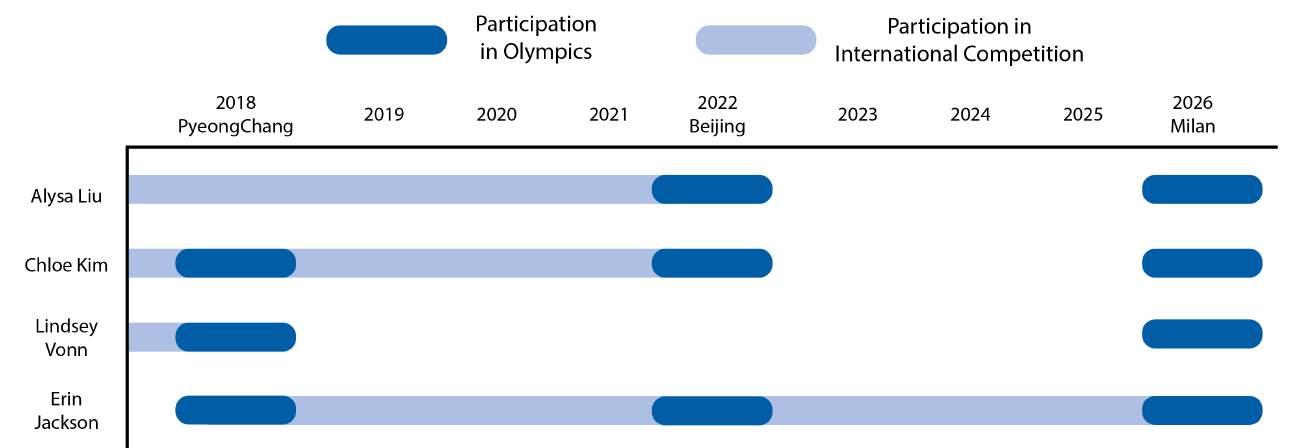
A timeline depicting the Olympic and professional careers of Chloe Kim, Erin Jackson, Alyssa Liu and Lindsey Vonn, including the time taken off for mental and physical health.
Lindsey Vonn, American Alpine ski racer
Students Formalize a Rock Climbing Community
By JANE ROCHE Editor-in-Chief
Rock climbing is an individual sport in practice: One person traverses a boulder and attempts to reach the top. Two blocks from Fordham’s Lincoln Center campus, however, the sport has fostered community among Fordham students and led to the formalization of a rock climbing club on campus.
Ella Salmon, Fordham College at Lincoln Center (FCLC) ’27, began rock climbing nine years ago and grew up on a competitive climbing team. When she moved to New York City, she no longer had her youth team to fall back on for a community climbing experience. That was until she discovered Central Rock Gym at West 60th Street and West End Avenue.
“People go to the climbing gym to just talk and hang out, and a big part of climbing is when you get off the wall, someone can help you try to figure out the climb,” Salmon said. “So when I came to school in New York, I really wanted to keep having that close community.”
The rock climbing club’s formalization process immediately introduced Salmon to a community at Fordham. After she expressed her interest in the formalization to the United Student Government (USG) — the governing body that oversees club approval — Salmon was put in touch with several other students who had previously expressed the same interest.
Ethan Bull, FCLC ’28, was one of those students. Bull picked up
rock climbing as a hobby in high school. He came back to it in his first year at Fordham, also at Central Rock Gym.
“I think I found my place at Fordham, really just based on doing this sport,” Bull said.
Originally from Las Vegas, Bull didn’t know anyone from home at Fordham. After going to Central Rock Gym day after day, he began socializing with the climbers there and realized many of them were also Fordham students.
“I thought a rock climbing (club at Fordham) would be a good way to officiate and extend that feeling of community that I had to other people,” Bull said. “It would be a benefit to everybody
if we knew each other. We could support each other.”
Together, Salmon and Bull are the president and vice president of the Fordham rock climbing club, respectively. The process by which they got there, however, was lengthy.
Kevin Miao, Gabelli School of Business at Lincoln Center ’29, is one of the USG senators who reviewed the club’s proposal, which was announced to Salmon as officially approved on Feb. 9.
According to Miao, the club’s proposed materials — the constitution, budget, advisor and interest form — went through multiple rounds of review and revision. What slowed the rock climbing club’s approval process was
chalked up to safety concerns and club survivability.
Thanks to Salmon’s extensive rock climbing experience, new climbers can rely on her expertise to keep them safe. However, according to Miao, the question for USG then became “how are they going to ensure future presidents and officers have the same experience to ensure that their members stay safe while climbing at gyms.”
The setback was remedied by requiring future presidents to obtain a rock climbing certification that verifies their advanced skill level.
Both Salmon and Bull see the club as a gathering place and a gateway for beginners. One of
The newly approved club at FLC aims to expand access to climbing, growing student community at Fordham American Olympic athletes utilize international media coverage to criticize politics in the United States
their proposed initiatives is discounted climbing days, held once or twice a month, to alleviate the financial barrier that comes with rock climbing. At Central Rock Gym, for example, a day pass for people under the age of 22 is $26, plus $7 for a harness, shoes and chalk. A membership is $150 per month, equipment included. The discount has been secured in conjunction with Central Rock Climbing Gym; however, the discounted funds have not yet been submitted for USG approval.
“There are a ton of things that we are planning to do, specifically easing the financial burden of getting into rock climbing. … When people come together and they take collective action like that, then there are benefits for everybody,” Bull said.
Beyond Fordham, rock climbing has become increasingly popular in New York City. Salmon and Bull attribute this boom to the sport’s accessibility. Salmon said gyms recently offer a larger variety of climbs, including more beginner-friendly routes. Bull said the metropolitan environment of New York City makes sense for climbing gyms spatially.
“It’s a vertical sport, and New York is a vertical city,” Bull said. “It’s really easy to put gyms in place, whereas if you wanted to play soccer or football, you need big open fields.”
As Fordham students continue to discover rock climbing as a way to create community in college, Salmon and Bull hope their newly initiated rock climbing club can provide a pathway to that experience.
Olympians Speak Out Politically at Winter Games
By CORA COST Sports & Health Editor
For many athletes, the Olympics symbolize not only an opportunity to display their feats of athleticism on an international stage but also a chance to use their voices on an international platform. This year, the Winter Olympics stand as a crossroads between sport and spectacle with 26.5 million viewers on NBCUniversal in the first five nights of the network’s American coverage of this year’s games.
Since the games opened in Milan on Feb. 6, several athletes representing the United States have vocalized the complex feelings that have arisen in representing the American flag at the games. American freestyle skier Hunter Hess has been vocal in press interviews about his struggles with representing the United States on an international stage because of the current political climate in the country.
“I think it brings up mixed emotions to represent the U.S. right now,” Hess said. “There’s obviously a lot going on that I’m not the biggest fan of and I think a lot of people aren’t. Just because I’m wearing the flag doesn’t mean I represent everything that’s going on in the U.S.” Hess is not alone within the American delegation in commenting on the current news in the U.S. during press conferences. Richard Ruohonen, a member of the U.S. curling team, denounced the acts of the Trump administration and the Immigration Custom Enforcement which have led to the death of several American citizens in his home state of Minnesota.
“What’s happening in Minnesota is wrong. There’s no shades of gray. It’s clear,” Ruohonen said.

“What the Olympics means is excellence, respect, friendship; … we are playing for the people in Minnesota and around the country who share those same values, that compassion, that love and that respect.”
The comments made by American Olympians have not gone unnoticed by the Trump administration, as President Donald Trump posted a response to Hess on Truth Social.
“U.S. Olympic Skier, Hunter Hess, a real Loser, says he doesn’t represent his Country in the current Winter Olympics,” Trump said. “If that’s the case, he shouldn’t have tried out for the Team, and it’s too bad he’s on it. Very hard to root for someone like this.”
Since the president’s comments, American Olympians have emphasized the importance of unity and respect within the American delegation. This is a sentiment Chloe Kim, three-time Olympic medalist, highlighted when asked about the president’s attacks on her teammate.
“Obviously, my parents being immigrants, this one definitely hits pretty close to home. I think in moments like these, it is important for us to unite and stand up for one another,” Kim said. “We need to lead with love and compassion, and I would love to see some more of that.”
Despite some Olympians harnessing the international media coverage to speak on issues that
hit close to home, political neutrality is ingrained in the Olympic Charter, the document that sets forth the principles, rules and bylaws that must be followed by all Olympic Committees and, subsequently, their athletes.
In 1975, the IOC introduced Rule 50 into the Olympic Charter in hopes of maintaining neutrality by barring certain speech or actions of Olympic athletes. The Olympic Charter states: “No kind of demonstration or political, religious or racial propaganda is permitted in any Olympic sites, venues or other areas.”
It is widely regarded that the IOC ultimately incorporated this rule in the charter in response to demonstrations by American
sprinters Tommie Smith and John Carlos during the 1968 Summer Olympics in Mexico City. Smith and Carlos raised their blackgloved fists during the medals ceremony for the 200-meter race, an ode to the Black power movement active during that time in the U.S. While Smith and Carlos aimed to bring attention to the realities of race relations in the U.S., they were soon confronted by the IOC as they were found in violation of the Games’ ban on demonstrations and suspended from Team USA.
Olympians using the power of the international media coverage during the Olympics is not a phenomenon that began with Smith and Carlos, and evidently has not ceased to occur despite the IOC’s bans. American athletes this year in Milan have utilized the platform created by the Olympic Games to publicize their views.
American skater Amber Glenn, who has notably used her sports platform to speak about LGBTQ+ rights on the professional skating circuit, has been outspoken on how she hopes to use her platform during her first Olympic Games.
“It isn’t the first time we’ve had to come together as a community to try to fight for our human rights,” Glenn said. “I hope that I can use my platform and my voice throughout these Games to try to encourage people to stay strong.”
Despite the IOC’s political neutrality, which shapes its stance on calls for international unity during the Olympic Games, statements by American athletes in Milan highlight how international Olympic coverage creates platforms for athletes to speak to the circumstances in their home nations.
KEI SUGAE /THE OBSERVER
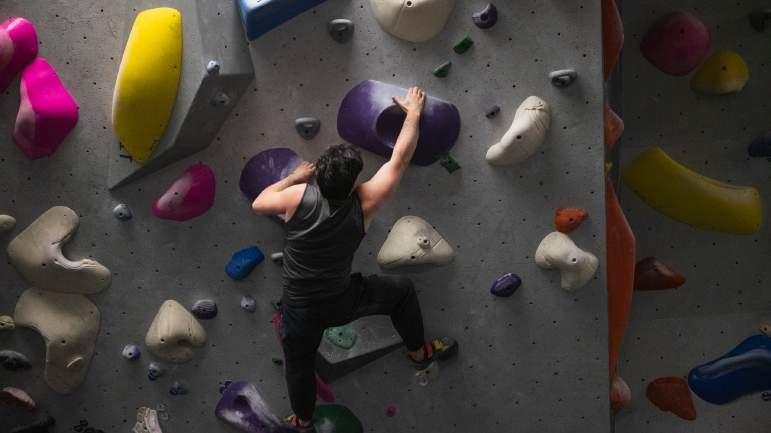
A climber scales a wall at Central Rock Gym, located two blocks from the Lincoln Center campus.
GRAPHIC BY KAITLYN SQUYRES /THE OBSERVER
From left to right, American Olympians who have spoken out about their political beliefs in Milan: Amber Glenn, Hunter Hess, Chloe Kim and Richard Ruohonen.
Bad Bunny: Our America
Bad Bunny: Our America
A deep dive into the historical significance of Bad Bunny’s Super Bowl performance
BY LUCIEN FISCHER
Asst. Photo Editor
Global superstar musician and intermittent professional wrestler, Benito Antonio Martínez Ocasio, known professionally as Bad Bunny, graced the stage of the NFL’s Super Bowl LX Halftime Show to deliver an unforgettable performance. Accompanied by special musical and non-musical guests such as Karol G, Ricky Martin, Lady Gaga, Pedro Pascal and others, Bad Bunny brought on an enthralling 13-minute performance highlighting the power of Latin American culture in a political climate that seemingly aims to repress it.
Some responses to Bad Bunny’s performance are vehemently critical, like that of President Donald Trump, who commented that the halftime show was “an affront to the Greatness of America” and continued with “nobody understands a word this guy is saying.” Others argued against this, claiming that in a show advocating for a unified expression of Latino pride, the president would rather demonize Latin
The show generated endless conversations dissecting all its references to Latin culture, what they mean and why it all matters in the United States of today.
To actively explore all of these ideas, one can start by analyzing how the performance was sequenced.
The show opened in the sugar cane fields of Puerto Rico. This imagery is relevant because when Puerto Rico became a territory of the United States, U.S. sugar companies invested heavily in Puerto Rico’s sugar economy and the exploitation of workers ran rampant. These sugar workers — the ones seen armed with the machete and straw hat behind Bad Bunny — are known as Jíbaros, countryside Puerto Ricans and self-subsistent farmers who are often seen as a proud symbol of the island’s history.
From here, the camera panned out and we saw a coco frío cart — the fresh, icy Puerto Rican coconut water delicacy. After that, the camera continued to pan over, showing some older men playing dominoes. Then, a piragua cart moved into frame. Piragua,
growing up in Washington Heights on 189th Street, I would always see Piragueros and shaved ice ven dors on the block during summer time, and I would always beg my grandma to buy me one every time we passed a new cart. Seeing one on the Super Bowl stage was certainly a welcome addition.
It is also notable to mention that on the yellow wooden piragua cart used in the performance, each of the syrup bottles meant to flavor the pira gua had flags plastered on them. From left to right, the bottles bore the flags of Colombia, Spain, Puerto Rico and Mexico. This is one of the first subtle references Bad Bunny included to show how there are many different “flavors” of being Hispanic, with many having shared cultures and cuisines.
Right after this, the performance delved into even richer cultural references, celebrity cameos, dance breaks and even an actual wedding.
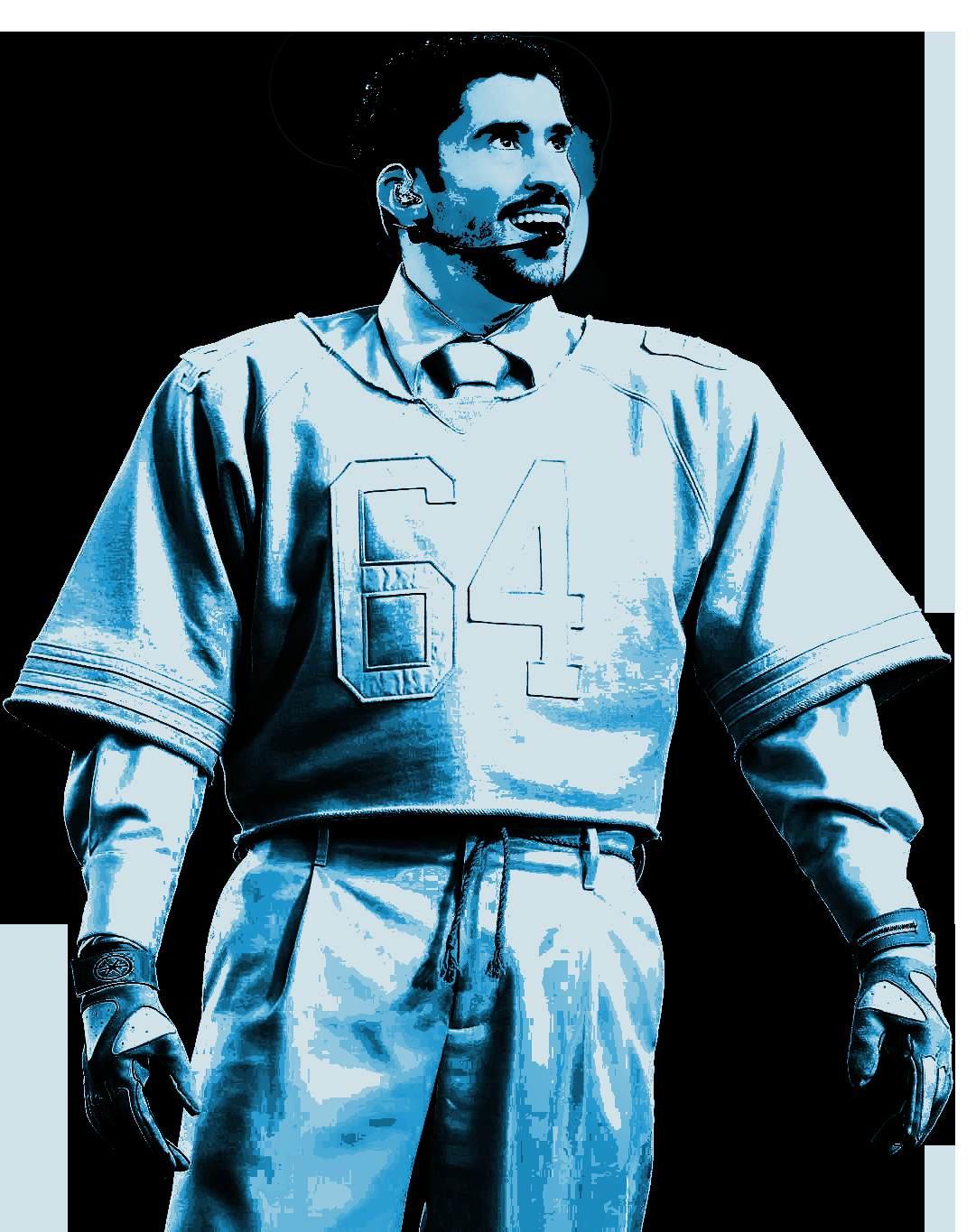

our mother countries; we are special because of the traditions we bring with us and the shared culture and new traditions we can create.
We are special because of the traditions we bring with us and the shared culture and new traditions we can create.
Moving through Bad Bunny’s discography, we arrived at the acclaimed track “NUEVAYol” while the set moved from the sugar cane fields and the Jíbaros of Puerto Rico to the more urban-styled streets of New York City. While New York City may be different from Bad Bunny’s mother country of Puerto Rico, new communities and entire neighborhoods were founded by those who immigrated from their respective countries to create something new and exciting, something special.
We see this in the set design: The yellow
From there, we moved to present-day Bad Bunny giving a Grammy to a much younger self, watching his Grammys acceptance speech onstage — a truly full-circle moment.
After that, we headed back to Puerto Rico, where Ricky Martin belted out a beautiful rendition of “LO QUE LE PASÓ A HAWAii” abruptly interrupted by an exploding transformer on an electrical pole, resulting in a power outage.
The song “El Apagón” then played as workers climbed up the electrical poles and Bad Bunny sang amid the flying sparks and strobing lights of the arena. The word “apagón” translates to “blackout,” and the song protests the unreliable state of Puerto Rico’s electrical infrastructure and the island’s continuing gentrification. As in “LO QUE LE PASÓ A HAWAii,” he laments a future in which Puerto Rico becomes what Hawaii is to the rest of the United States: a hot vacation destination with an incredible overtourism problem and glaring socioeconomic issues that largely remain unresolved.
It would be remiss to not also mention that the symbolism of the electricity poles was especially relevant, as the existing energy crisis was directly





exacerbated by Hurricane Maria in 2017, which tore through the power lines and caused an island-wide blackout. The U.S. Federal Emergency Response Agency was also heavily criticised for completely mismanaging the hurricane’s prevention and response in Puerto Rico, which is why the island’s infrastructure still suffers today.
This is also likely the reason why when Bad Bunny emerged, he brandished a Puerto Rican flag with a sky blue triangle. This flag is most commonly associated with Puerto Rican pro-independence movements and sovereignism from the United States, which is a rejection of the possibility of Puerto Rican statehood.
Towards the end of the performance, the symbolism was evident as Bad Bunny held the Puerto Rican flag, uniting with others who carried different flags of their home countries. It is here where Bad Bunny said arguably the most important sentence of the show:
“God Bless América.”
The acute accent over the “e,” called a tilde in Spanish, is small, yet intentionally powerful.
While the sentence is not at all uncommon at the country’s biggest football game of the year, Bad Bunny is not referring to the United States of America, or at least not only the United States.
The tilde over the “e” alludes not to America but to the Américas. He notes this in his list of the countries that comprise the collective América, including Puerto Rico, Canada, Mexico, Guatemala, Argentina, Ecuador, Brazil, Dominican Republic, the United States, etc.
He doubles down at long last, making a silent yet deafeningly loud statement with the words etched on the football he throws at the endzone: “TOGETHER, WE ARE AMERICA.”
Not only a poignant phrase on its own, one is reminded of Cuban nationalist José Martí’s 1891 writing, “Our América.” Martí wrote “Our América” seven years before the conclusion of the Cuban War of Independence (1868–98), during which he played a prominent role as a writer advocating for Cuban liberation through his essays, poetry and his pro-independence newspaper, “Patria.” Martí was one of the first Latin American figures to visualize a future of national and international unified Latin American pride, speak-
Martí called out this hypocrisy in “Our América,” stating, “These men born in América, ashamed of the mother who raised them because she wears an Indian tunic!” While it’s not clear if Bad Bunny was directly citing Martí in his performance, there seemed to be a clear emphasis on including a variety of dancers with different skin tones to drive home this point. There’s no one version or single story for how Latinos look, act or sound. This representation is an effort to improve how Latinos are traditionally represented in popular media, which traditionally excludes Afro-Latinos and other groups entirely.
“ I feel like Benito is symbolizing a very different and much more powerful narrative, right? … He’s not speaking in English. He’s very proud of being Latino. … I was very moved by it. ”
Yuko Miki, Associate director of Latinx Studies
Martí saw firsthand how Eurocen tric ideals encroached on a colonized Latin America and made Latin Ameri cans reject the very things that made them who they are, like Indigenous or African heritage. Martí said this not to demonize those who hate where they come from but to inspire them to reject the Eurocentric ideals implanted by the colonizer and embrace what makes Latin America, Latin America.
As Martí points out, “Create is the password of this generation. Make wine from plantains. It may be sour, but it is our wine!” He urges those in Latin America to retain a sense of nationalism and tradition and not to accept so easily what is imposed upon them. What did Bad Bunny do in his halftime show? He
present in our stories, in spite of all the adversity overcome, and how that itself is something to be immensely proud of.
Martí’s call for a greater national identity is exactly what Bad Bunny calls on us to do 135 years after “Our América” was written. Upon reading “Our América” again after the Super Bowl performance, I found myself becoming increasingly unsettled by how eerily similar the themes and political messages were regarding how Latin Americans are “un-American,” whether it be through President Trump’s tweets condemning the Super Bowl performance or otherwise.
How depressing was it that the climate around this discourse has still been largely the same for the past 135 years?
To help process and poke at this question, I consulted Professor Yuko Miki, associate director of Latin American and Latinx Studies at Fordham University and an associate professor of history. Miki first introduced Martí to me when I took her Understanding Historical Change: Latin America course last semester, so I was highly anticipating her answer.
“I think it’s an interesting moment where I feel like there’s competing
and I feel like Benito is symbolizing a very different and much more powerful narrative, right? … He’s not speaking in English. He’s very proud of being Latino. … I was very moved by it.”
To this point, there is a very clear and distinct choice in his performance, not just to highlight Puerto Rican culture as an individual, but Latino culture as a whole. During the wedding section of the performance, the image of the child sleeping on the three chairs while the party rages on is not just a Puerto Rican phenomenon; it is a culturally Latino experience. You could be Mexican, Uruguayan or Peruvian and still see that same phenomenon occur.
Bad Bunny did this to highlight the beauty in our shared culture — even though my grandmother is from Santiago in La República Dominicana and your father is from Guayaquil, Ecuador, we can both go to a friend’s quinceañera and feel connected to our culture as Latinos.
We are more similar than our differences may make us seem.
In a political and social climate that seeks to remind us only of the latter, it is important to reiterate Bad Bunny’s words etched on the billboard at the end of the performance: “The only


Opinions
Cultureless Conservatives Are No Match for Bad Bunny
Bad Bunny’s Super Bowl performance displayed cultural vibrancy to a nation full of ignorance

GEORGIA BERNHARD Assistant Copy Editor
Benito Antonio Martínez Ocasio, better known as Bad Bunny, put on a Super Bowl — rather, a Benito Bowl, as many have termed it — halftime performance on Feb. 8 that represented the cultural outpouring of the entire Americas. Accompanied by roughly 300 backup performers, Bad Bunny rapped and sang his lyrics while gliding through scenes representing aspects of both Puerto Rican and larger Latin American culture.
He waltzed past a stand selling piragua, old men playing dominoes and climbed on set pieces resembling utility poles while he sang “El Apagón,” a song about the power outages faced by Puerto Ricans after the privatization of the island’s electrical system. During “NUEVAYoL,” Bad Bunny stopped to take a shot with Toñita, the founder of the Caribbean Social Club that has been central to the Caribbean community in Brooklyn for decades.
His songs were complemented by scores of musicians trumpeting the tones of not only his trademark reggaeton and dembow, but also salsa, traditional bomba and plena. Much of the show centered around a recreation of a classic Puerto Rican casita, while Bad Bunny sang his love for his homeland. This vast tapestry woven on the field (in a mere 13 minutes, no less) by Bad Bunny and company was no small feat in its message or artistry.
However, the performance also had equally massive waves of pushback. This outrage was primarily from the members of the Make America Great Again (MAGA) movement. As a matter of fact, MAGA was angry about the performance before it even happened. The announcement that Bad Bunny, a Spanish-speaking Latino man, would be gracing the field was enough for them to call a foul.
MAGA fanatics have been more than comfortable voicing their anger at the sheer fact that a Puerto Rican man (and therefore, an American man, despite conservative hearsay) was performing at the Super Bowl. Positioning themselves as apparent expert authorities on popular music, conservatives deemed this performance spot certainly wasn’t due to Bad Bunny’s artistic gravitas. He wasn’t rightfully chosen because he’s one of the most popular musical artists worldwide, across any genre. The guy who, as a Spanish-language artist, went No. 1 in China? No, it can’t be that his popularity earned him the spot. You would think Bad Bunny’s success, funneled into an equally massive Super Bowl performance, would epitomize the fantasy of total meritocracy that conservatives usually salivate over. But of course it doesn’t, as Bad Bunny being a Latino and Spanish-speaking artist is enough to condemn him while on the stage he rightfully occupies.
This detrimental thing that MAGA-impressioned white Americans are fearful of, the thing that Bad Bunny represents, is the frightening and unfamiliar concept of culture itself. To white Americans whose only claims to cultural belonging come in the form of American consumerism or group nostalgia for a homogenous (and more openly racist) past, this concept is unsettling and unfathomable. Bad Bunny’s show asserts that yes, there are Americans who have something called culture. Many conservatives see culture as alien, confounding and something that they themselves lack. Therefore, in complement to the unabashed racism that characterizes their outrage, they view it as something that must be silenced.

“The world will dance,” said Bad
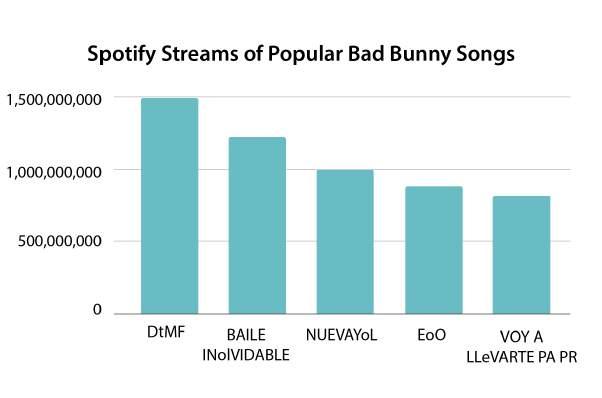
Trump’s culturally bankrupt and aimlessly roaming white voter base does not seem to understand Bad Bunny’s performance, which proudly exhibits intimate features of Puerto Rican and Latin American cultures. Nor can they see the goal of unity behind his calling out a long list of countries in the Americas, many of which one could find plenty of MAGA fans unable to pronounce in their ignorance-branded patriotism.
To detractors of a Spanish-language halftime, English is positioned as a neutral default, only noticed when the sound of another language signals its absence. The Trump administration’s recent executive order declaring English the country’s official language exemplifies the insistence on seeing English in this light. In terms of the other things — food, dress, objects — that comprise a culture, some white Americans seem to receive them from the belly of depersonalized American consumerism rather than from a community. While this isn’t the case for all white people in America, of course, this is a common reality to the extent that something like the MAGA movement can be attractive to a plurality of them.
This dearth of culture could also be seen in the Super Bowl counter-performance put on by right-wing nonprofit organization Turning Point USA, an event solely built on negating the actual halftime show. Between the irony of a conservative white guitarist ripping off (and butchering) Jimi Hendrix’s rendition of the National Anthem, a right-wing country singer rapping over a stock trap beat and another guitarist copying Chuck Berry’s famous duckwalk on stage, the nonexistence of the white-only “all-American” culture seemingly posited by the performance was glaring.
But the lack of cultural identity of many white Americans should come as no surprise. In fact, it was by design to make white Americans a neutral
baseline and to racialize those who did possess cultural identity. Whiteness exists to exclude. It is a category fabricated with racism against those dubbed “other” as its sole purpose. So for those who exist inside of whiteness, there is no actual identity to be found. White Americans, untied to their ethnic roots, are left to scrounge up culture elsewhere. When it comes to some conservatives, they do so through gesturing towards a nostalgia-made fantasy of an old America — that is, a U.S. that never truly existed, instead more resembling magazine advertisements from the 1950s than actual history. Furthermore, they so often do so through clinging to a concept of whiteness that runs on the cheap, corrosive fuel of racist hatred, ultimately empty of being anything in itself. In this, there is no such thing as “white culture” — many conservative whites find a sad excuse for culture in the MAGA movement. They shout in confused rage when they are challenged with actual culture, as they were uncompromised by Bad Bunny’s halftime performance.
Despite the racism and the vitriol in response to Bad Bunny’s performance, there was nonetheless an outpouring of love and joy as a result of his show. Bad Bunny not only showcased his own Puerto Rican culture in his performance, but also used his place as an icon in Latin America to represent the entire Americas. On the one hand, some tuned in on Sunday to become enraged upon hearing poetry in a language that will never be theirs, and see loving references to cultures they will never call their own. However, some of the roughly 41.8 million Americans who speak the language of Bad Bunny’s music understood every word: They heard, “Ama sin miedo.” And as he spiked a football emblazoned with the words “Together, we are America,” they heard, “Seguimos aquí.”
AND PROCEDURES
GRAPHICS BY KAITLYN SQUYRES/THE OBSERVER
Bunny in the teaser for his performance.
Bad Bunny’s performance sparked exuberance in the millions of his fans, both new and old.
Debunking European ‘Rudeness’
Approaching travel with more sensitivity and sincerity can make you a better tourist

As a Fordham Lincoln Center student who has had the privilege of studying abroad in both Rome and London, immersing myself in European life and culture has broadened my horizons in ways I would have never imagined possible. Visiting new cities has not only allowed me to see beautiful places and take breathtaking photographs, but it has also given me the opportunity to understand locals at a deeper level and to experience unique lifestyles.
We are all familiar with the stereotypes that people tend to have about Europeans, such as the French being “rude” and the Germans being “cold,” but the reality is that the continent is rich with incredible types of people from many cultures and simply cannot be generalized in such a fashion. A Reader’s Digest survey showed that 61% of European respondents noted they often find American tourists to be arrogant because they often expect Europeans to know English, while 30% think they dismiss traditional customs. Nevertheless, that same study revealed 64% of Europeans also find Americans to be friendly, and 32% find them to be fun individuals. While unpleasant people will always exist in every crevice of the world, there are ways that, as tourists, we can recognize what we interpret as discourtesy may just be cultural dissonance.
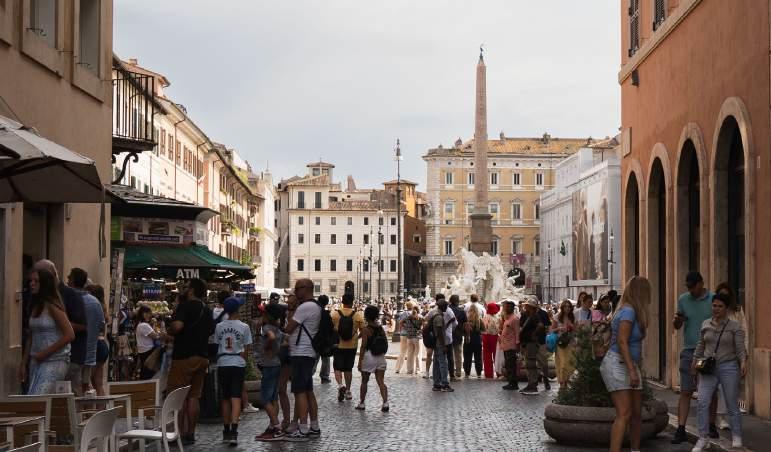
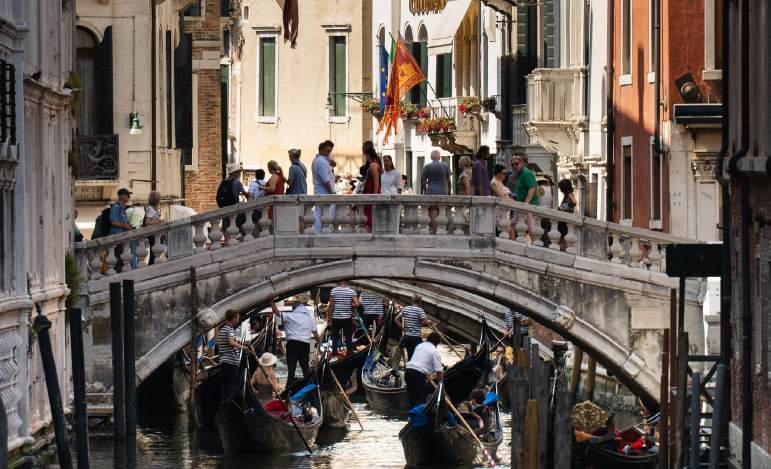
The most important rule of thumb to remember when traveling is that it is better to try and begin a conversation with locals in their native language. A simple, “Ciao, come stai?” interaction with a waiter at an Italian restaurant in Rome had a much more positive impact on my experience studying there than starting with “Hi.” The distinction may seem insignificant, but although English is seen as a universal language, studies show that less than 20% of people worldwide are fluent. It is important to take into account that around 200-300 languages are spoken in Europe, with the EU having 24 official languages. You don’t need to know a foreign language at a professional level in order to communicate with the people who speak it. However, memorizing a few phrases and taking the necessary steps to learn the pronunciation of words before communicating with others will enhance your conversation, along with the listener’s comprehension. Code switching is usually seen as a sign of respect by Europeans, as it can show them you recognize and value their traditions.
Following popular tourist recommendations that they see trending on TikTok or Instagram rather than exploring for themselves is often a major reason why some tourists are displeased with their visits and interactions with locals. One must do their research when it comes to places to visit and restaurants to dine at. Make sure to check Google or
Yelp reviews and translate the ones left by locals to see what they have to say.
It’s easy to fall for the embellished tourist traps that metropolises like Rome and Paris have to offer. However, locally-loved areas are the hidden gems of every city, and will make your ventures around Europe all the more special. You will also get the opportunity to meet and speak to inhabitants and get to know important details such as what dishes they like to eat and what their dining etiquette consists of.
The time at which you eat a meal can also matter in a European city. Authentic Italian restaurants in Rome are open from the morning to around 3:00 p.m. and reopen around
7:30 p.m. until late at night. The majority of Romans tend to eat dinner around 9:30 p.m. Restaurants that stay open all day and have large, ornate menus scattered around the area are usually tourist traps that serve lower-quality food for higher prices.
Europe consists of many walkable cities that hold multiple historical landmarks in close proximity to one another. In Paris, the Eiffel Tower is only a half-hour walk from the Arc de Triomphe du Carrousel, and along the way, you can see the Seine River and many different museums and works of Parisian architecture. The Avenue des Champs-Élysées, close to where you will reach the Arc de Triomphe, is a huge shopping
everywhere, which will allow you to truly get to know all kinds of Europeans.
Before studying abroad, I never thought I would visit Luxembourg City or Kraków, Poland, but they ended up being two of my favorite destinations in Europe. I was able to visit the entirety of Luxembourg City with its free public transportation and was encircled by alluring nature and architecture through my endeavors. In Kraków, I learned a lot about Polish history and culture from the Gothic and Baroque-style historical monuments and buildings stretching across the center.
As Americans, we tend to live very fast-paced lives that consist of small talk with those around us and structured planning. In general, Europeans like to take it easy and prioritize unwinding with their coffee breaks and leisure activities. Even the worklife balance in countries like Spain and Italy allows employees to have a generous amount of free time, as cultural and local events are prevalent and social activities in the workplace are implemented.
A Harvard research article addressed the American Working Conditions Survey, which conveyed that U.S. workers have adapted to the fast-paced, burnout working culture, with approximately half of respondents reporting they face relatively unpleasant and even dangerous working conditions in their daily tasks. This intense approach to working is uncommon among Europeans and differs greatly from their job practices. Learning to appreciate the time a tourist has to themself while in Europe is how one can fully enjoy their stay.
After having spent a semester in Rome and traveling on the weekends, following these rules while now living in London has become much easier and has made my travels more enjoyable. I have learned to value the time I have been given to myself to fully explore where I am and get to know the people around me on a more personal level. Londoners are rather friendly, and politeness is significant in conducting daily interactions. In London, it is absolutely essential to say “thank you,” “I’m sorry” and “please,” with communication often being indirect instead of literal. Grasping these slight variations in dialogue is crucial to truly absorb the environment around you. Doing so continuously has made me absolutely adore London and its people and feel at home.
center filled with various stores and cafés.
If long walks are not preferable to you, European public transportation is convenient for visiting multiple sights at once. The RER C train, which belongs to one of the five lines of Paris’ Regional Express Network, stops at the Eiffel Tower, Notre-Dame de Paris and Château de Versailles all in one line.
One thing that makes traveling around Europe so exciting is the variety of international public transportation that is so easily accessible. From London, Brussels is only two hours away, and from there, Luxembourg City is another two and a half hours away. Exposure to these unique settings will allow you to meet a myriad of people from
Adjusting to a foreign setting can be difficult, but it’s important to recognize the culture shocks and obstacles we may encounter when traveling abroad and learn how to tackle them. Being able to live in more than one European city has given me opportunities to meet so many wonderful people from countless backgrounds and find those that resonate most with me. It has challenged my past perspectives and enriched my mind culturally and educationally, for which I will always be grateful. It’s imperative to give traveling to different areas more than just one chance, as there is so much worth knowing about other regions and their people, just as it is valuable to get to know us Americans. The prejudices that exist about us do not define who we all are. Try to visit countries that people are inclined to stigmatize. You might make lifelong friends in those places that you wouldn’t
have previously expected to.
PHOTOS BY GRACE SANTOLI/THE OBSERVER
Nonverbal communication is just as important as speaking the same language.
Grasping these slight variations in dialogue is crucial to truly absorb the environment around you.
MONA MUCHA Staff Writer
The country where I studied abroad now feels like a second home.
Adjusting to a new setting not only allows for new experiences of the world, but moments of self-discovery.
The Case for Fordham Dining’s Redemption Arc
Outdated rankings no longer accurately reflect the improving quality of Fordham’s cuisine

TUCKER FLYNN Opinions Editor
I still remember the mix of emotions that followed the opening of my Fordham acceptance letter in the fall of 2023. On one hand, I was overwhelmed with excitement at the prospect of spending four years in the greatest city in the world and learning to be independent in an environment that demanded the best of me. On the other hand, I was consumed with a bone-chilling fear of what awaited me at a university reportedly known for having the worst food in the nation.
It seems almost oxymoronic to consider that a city known for its diverse population and outstanding cuisine could house a university unable to shake such a harsh moniker, but alas, at least until recently, providing edible forms of sustenance for students shelling out astronomical sums labeled as “tuition” wasn’t clearing the top 100 on the board of trustees’ to-do list.
However, if one reviews the recently added options, it becomes clear that a concerted effort is being made to improve the long-beleaguered Fordham Dining.
You may have noticed my choice of words “until recently,” because over the past calendar year, Fordham has made great strides in providing students with food options that exceed the quality of the mysterious gray meat on display under the heating lamps in the Ram Café. In other words, the title of worst food should no longer besmirch the Fordham name, at least as far as the Fordham Lincoln Center (FLC) campus is concerned.
To any older Fordham students or alumni, especially those who freed themselves from the shackles of the mandatory meal plan after their first year of college and never looked back, it may come as a surprise to hear this claim being made. However, if one reviews the recently added options, it becomes clear that a concerted effort is being
made to improve the long-beleaguered Fordham Dining. Starting off strong with a staple that arrived at Fordham shortly before I did, the tried and true Rolls and Bowls provides students with a wide variety of made-to-order sushi rolls, nigiri and poke bowls, all thoughtfully paired with an included side of Lays potato chips or pretzels and a fountain drink. Of course, if you find yourself in a particularly adventurous mood, you can utilize a meal swipe (which carries a value of approximately $15 when extrapolated from the cost of the Weekly 15 meal plan) to score yourself a surprisingly tasty but questionably authentic bubble tea. Although you’re putting your faith in a higher power by even entertaining the concept of meal plan sushi, it is hard to deny the enjoyment that I and many other students derive from strolling down West 62nd Street to pay a visit to one of Fordham Dining’s most valuable additions to campus.
Next door, however, is an offering yet to be meaningfully improved. The community dining room, or FLC’s version of a traditional all-you-can-eat dining hall, regrettably remains thoroughly undesirable. Although the area is clean and the employees are friendly, it is difficult to stomach the cost associated with a meal swipe when the only culinary delights that await you are a truly mysterious vegan bolognese, mushy vegetables and dry grilled chicken. You might wonder why people still continue to pay the community dining room frequent visits, especially if conditions are as dire as I claim. I have two theories to explain this discrepancy. First, perhaps a unique form of Stockholm syndrome, where students become attached to the unlimited food available, despite the hostile relationship between it and their stomachs. Second, a unique strategy on the part of the university wherein the only dining option open seven days a week is this hallowed hall, leaving students in a quandary as they deliberate between facing ever-rising Uber Eats delivery fees or a wicked stomach flu.
However, don’t let this small blemish on the roster of Fordham Dining deter you from giving the collective system a second chance, as fall 2025 ushered in astronomical improvements in the Ram Café, and in the Garden Level of the Gabelli School of Business at Lincoln Center (GSBLC), where the widely-loved Argo Tea used to reside.
The aptly named Burgers + Fries (you’ll never guess what they used to serve) found its doors shuttered to make room for Yella’s, a franchise that boldly declares itself to be in possession of the ability to make “food worth screaming about.” While I didn’t scream when I tried their food, menu items like the
Eggplant Milanese sandwich, the Yella’s Burger and their diverse selection of milkshakes all constitute a strong step up from the simultaneously stale and soggy fare that was offered by its predecessor, and a genuinely desirable option for students, as evidenced by lengthy wait times caused by abundant orders.
Also new for this academic year is Saxbys, the student-run experiential learning café serving breakfast, pastries, grilled cheese, and various coffee and tea-based beverages. Although initially controversial (read: “Not Afraid of Saxbys? You Should Be”), Saxbys has established itself as perhaps FLC’s most in-demand dining experience, with extensive wait times throughout the week. Despite the risk associated with hiring outside of the typical barista archetype, it seems as though the rigorous coursework of the GSBLC has enabled its students to excel at preparing my breakfast on a semi-daily basis. It may seem like I’m being sarcastic, but the bagel breakfast sandwich entices me in a way that the well-loved off-campus Broad Nosh Bagels can only dream of, and I can safely say that my early apprehension of Saxbys has been decisively overturned.
Although these selections only constitute a few of the dining options currently available to students, and completely omit
the overflowing abundance that is the Rose Hill Campus Dining experience, the arrival of the majority of these locations within the last two years suggests a concerted effort on the part of University President Tania Tetlow and her administration to raise the standards for how students can fuel themselves to best succeed in their studies.
With dining halls and food options often trending at other colleges on social media and serving as a reliable way to entice prospective students, one can’t help but wonder if this is perhaps the mark of a profit-driven initiative, and a way to justify the inexorable inflation of Fordham’s already gargantuan cost of attendance. However, it is unreasonable to allow this notion to overshadow the Fordham Dining redemption arc, and I can only hope they continue on their current trajectory, with improvements to the community dining room hopefully topping their list of priorities.
All jokes aside, I’m relieved to finally have the opportunity to use my meal swipes and declining balance on things I actually want to eat, the provision of which is something that has left university administrators flummoxed for years. To recognize the strides being made, I hope that college ranking websites like Niche will soon reevaluate their condemnation of Fordham Dining.
PHOTOS BY GRACE SANTOLI/THE OBSERVER
Yella’s Burgers doesn’t just have lunch and dinner, they have great breakfast too.
Rolls and Bowls provides a variety of alternative options to the tried-and-true menus of the average dining hall.
Arts & Culture
Senior Thesis Exhibitions Commence in Fordham’s Lipani and Butler Galleries
Through May, successive presentations will feature work by
With specialties ranging from digital design to photocollage to painting, this year’s graduating cohort comprises 16 students grouped into eight pairs for the exhibition series. Many are double majors, triple majors or otherwise work with an impressive plurality of media. Dynamism, dedication and a proclivity for experimentation are the traits which bind together this collective.
While their fortes are varied, a certain thematic preoccupation appears to underscore the springtime programming. According to Apicella-Hitchcock, the group fell into a steady routine of conversing, eating and, of course, working as a collective. Such cooperation might explain the subtle but perceptible resonances between various artists’ work.
“It’s not programmatic,” Apicella-Hitchock said. “It’s something that organically emerges, and sometimes it’s more opaque than others. But nonetheless, this group as a whole seemed to be very interested in the concept of home and what that might represent in its various interpretations.”
Employing clever witticisms and a psychedelic illustration style inflected by an era past, Sullivan aims to foreground Eve’s agency and tenacity.
There is much to gain from exhibiting in pairs. For one, Lipani and Butler are both decidedly large galleries by New York City standards, more conducive to the presentation of large-format works than that of their small-format counterparts. Thoughtful pairings can account for this fact and negotiate the division of spatial real estate accordingly. But independent of logistical considerations, and perhaps more importantly, a duo show allows for artists working with disparate mediums and subject matters to present alongside each other. Oftentimes, these juxtapositions yield revelatory insights or reveal unexpected commonalities, as in the case of Sullivan and Oyola.
Born and raised in New York City, Sullivan describes herself, first and foremost, as a storyteller. Her skill for translating beloved motifs and narratives — like Eve of biblical fame — into a legible visual language evidences itself in her inventive thesis presentation. Employing clever witticisms and a psychedelic illustration style inflected by an era past, Sullivan aims to foreground Eve’s agency and tenacity.
These photographs, lucid and stunningly beautiful, insist on telling stories which often escape the camera’s gaze.
“‘Eve: Live from Eden’ features a series of large-scale
February 18, 2026 THE O
FCLC’s emerging visual artists
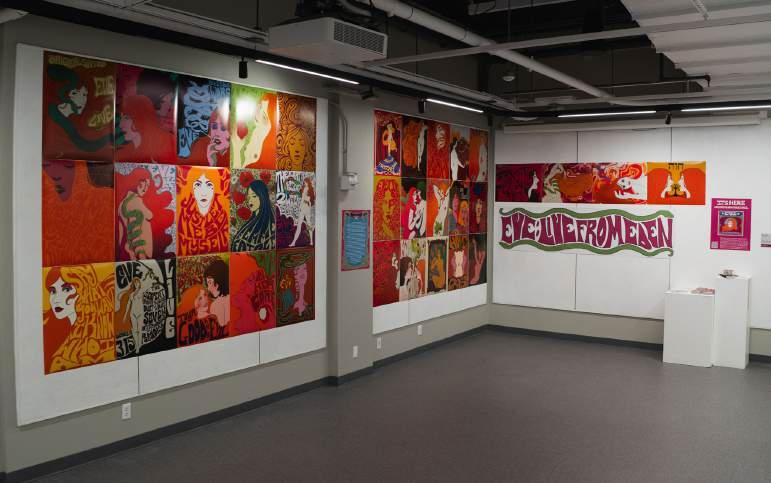
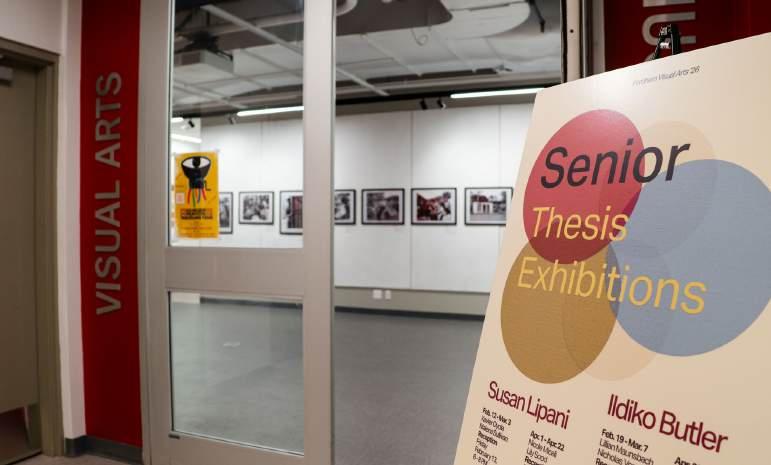
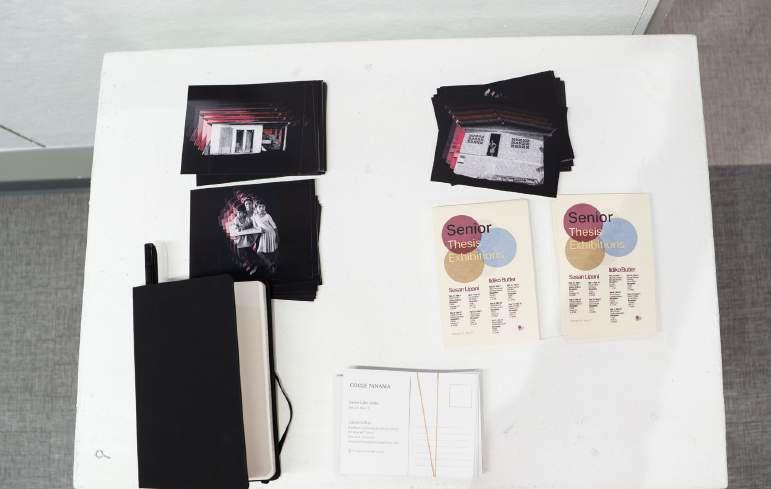
Small-format versions of the artists’ work, including postcards (shown here) and stickers, have been created on the occasion of the exhibition.
posters inspired by 1960s concert flyers reimagining the biblical Eve on a redemption tour to confront her past,” Sullivan said.
“As a symbol for the human experience, Eve is able to act autonomously and engage with the world around her as her authentic self. This project emulates the feeling of the psychedelic ’60s posters and calls attention to the
underrepresented women artists who defined the visual language of the era.”
Apicella-Hitchcock lauded Sullivan’s sensitivity to historical and cultural contexts, which likely has much to do with her multifaceted academic background; a triple major studying classical languages, art history and visual art simultaneously, Sullivan’s
Across the room, a series of black and white photographs by Oyola demand meditative scrutiny. Having spent the summer between his junior and senior years participating in a global outreach program in rural Panama, Oyola documented the patrons and material landscape of local medical clinics, and, in his words, “highlight(ing) the everyday realities of communities facing poverty, economic inequality and limited access to healthcare.”
“ I think both of these artists are following their nose into these territories that people know a little bit less about than the primary story.”
These photographs, lucid and stunningly beautiful, insist on telling stories which often escape the camera’s gaze. One features a seated boy in the moments before a tooth extraction; on his forearm rests the hand of an onlooker, perhaps a family member or healthcare worker. In another, the residents of Calabazo #2, roughly three hours outside Panama City, stand erect and regard the camera with great intensity.
Apicella-Hitchcock described Oyola as “a super talented image maker and … a very likable person, which, if you’re kind of just kind of going into places where you’re not from, sort of making friends and gaining a level of trust, I think is really a part of the skill set. And the images show these different towns in all their specific, rich complexity.”
A biology student with experience in various medical research organizations, Oyola’s academic focus clearly informed the subjects to which his camera gravitated. The vitality of the Panamanian community surges off the prints, while the stakes of medical practice — of triage, of checkups, of the aforementioned dental procedure — feel unignorable.
The chromatic saturation of Sullivan’s posters might seem a world apart from Oyola’s restrained photographs. Still, Apicella-Hitchcock astutely notes that both artists take interest in stories untold and erased histories.
“They’re looking beyond the standard story to find out … what they need to fill in themselves through primary research,” he said. “I think both of these artists are following their nose into these territories that people know a little bit less about than the primary story.”
studies lend nuance to her creative practice. In a nod to the real look of twentieth-century psychedelic music venues, “Eve: Live from Eden” is installed in a grid format spanning the entire wall, which is complemented with a playlist containing rock classics from that era to which Eve might have head-banged had she had the opportunity.
Sullivan echoed that sentiment, writing that “(both projects are) about having conversations that have long been overlooked and dispelling preconceived notions, whether about Eve in religious and secular culture or about healthcare and individuals in other countries. Both shows are about individuals, reclaiming one’s voice, and seeing humanity’s spirit and resilience. While the pairing might seem odd at first, I feel that it is representative of how we got here and who we are.”
Stephan Apicella-Hitchock, Visual Arts Program head
PHOTOS BY GRACE SANTOLI/THE OBSERVER
The rich colors of Sullivan’s posters serve as a counterpoint to Oyola’s chromatically restrained photographs.
SENIOR EXHIBITIONS from page 1
Senior thesis programming will continue throughout the spring semester and culminate in a final group show scheduled for commencement weekend.
Crush Your Date at Speed Dating
Young singles tested their chemistry by stepping into the wrestling ring on Valentine’s Day
By MARGO CRAVEN AND NORA KINNEY Arts & Culture Editors
On Valentine’s Day, over 200 people lined the block around a Greenpoint loft for a chance to get physical with one another. Eager to get it on, they side-eyed potential partners at the check-in station while donning bracelets that indicated their sexual orientation. Many of them had never been to a steamy event like this one before — that is, “Wrestlemania” for singles.
Both a social mixer and sport tournament, the “wrestling speed dating” event invited 18-to 24-yearolds to flirt, choose an opponent and test their physical chemistry on the mat in 60-second rounds.
Attendees could choose between a wrestler ticket, which guaranteed one round of wrestling with a partner of their choice, or a standby ticket, which still gave a chance to step into the ring, but only if picked by a wrestler.
Wrestlers selected a “man-onman,” “woman-on-woman” or “man-on-woman” ticket option, but these options felt limiting for some, especially within a queer-inclusive space.
“I bought a man-on-man ticket, which I thought was a bit reductive in terms of gender and sexuality, but I just discovered as long as you have consent you are allowed to wrestle anyone,” said Manon McCollum, Fordham College at Lincoln Center ’24. “Now that beautiful women are on the table, the world is my oyster.”
One face-off was between Tasneem Sarjoo and Luiz Campos, who met that night.
“I just got out of a relationship, so I’m trying to do more fun things for myself,” Sarjoo said.
For Campos, a Brazilian JiuJitsu fighter, it would not be his first time stepping into a ring that day. He had just come from a tournament where he completed six Jiu-Jitsu fights and won all of them.
Despite her lack of wrestling experience, Sarjoo put up an impressive fight against her partner — gracefully pinning Campos down to the mat — all while wearing a stylish jean skort.
After reconvening for a postgame chat, both Sarjoo and Campos agreed that the experience had made them feel closer to one another. It was clear from their easy rapport that their dynamic had opened up. The two were not exactly friends or lovers yet, but they had found firmer ground to stand on as playpals. They made plans to hang out after the event.
For many of the young singles in attendance, the event was a chance to put themselves out there in a fun and lighthearted way and to mix things up without expectations.
“Why spend Valentine’s Day drinking at a bar like usual when I can watch people wrestle and potentially wrestle them myself?” said Nate, who declined to share his last name. “I’m really just looking to hit a suplex, I think, at the end of the day.”
Several attendees expressed frustration with an app-based dating culture that seldom offers more than short-lived “situationships,” and were excited at the possibility of an in-person meet-cute.
“I’m tired of Hinge,” said Maxim Marshall, who recently
Lincoln
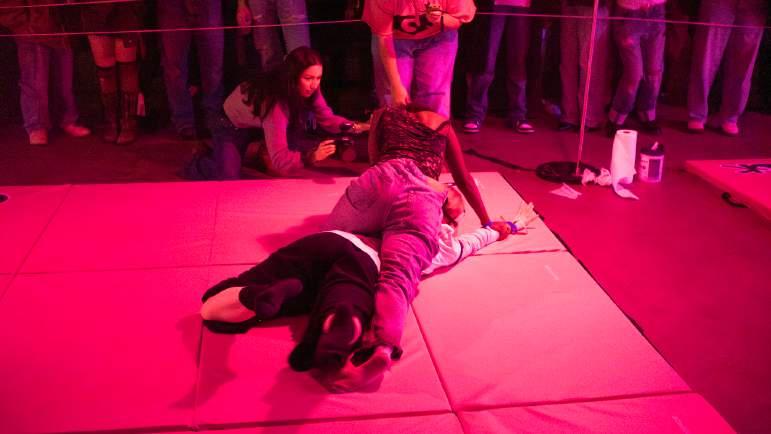
moved to Brooklyn. “It’s kind of killing my soul.”
The night’s host was Grownkid, a Gen-Z social club that organizes play-based community events. While their hammy edge-lord aesthetic might induce some eye-rolling (they previously hosted a “‘Fight Your Evil Situationship’ Boxing Rave”), the club’s underlying ethos is earnest.
“Caring is rebellion,” reads the Grownkid social manifesto on their “about us” page. “Bold people pull the world forward; they make connection possible for everyone around them.”
The event had its hiccups — lulls between wrestling rounds stretched on, and the paper sign-up system (which included blanks to write a
safe word and preferred level of aggression) mostly fell to the wayside in favor of a big line. Some ticketholders felt underwhelmed, despite organizers’ best efforts.
“This event was a perfect showcase of the sexual puritanism and social awkwardness of Generation Z,” McCollum said at the end of the night. “These people seemed incapable of living in the real world and flirting. However, this may … have more to do with the fact that they are all 19.”
Though things certainly got heated in the ring, the wrestlers seemed to be in agreement that the night was about the memories to be made rather than the outcome of the match, echoing the philosophy of Grownkid
Center Hosts Creators to Discuss Afrofuturism,
Art
co-founders Kayla Suarez and Gael Altor that “the meaning of life is play.”
“It’s not about who wins or loses, it’s about the story and the drama,” acting student Andrew Dominguez said after an intense round of grappling that exhilarated the crowd.
Not every wrestling pair felt a romantic connection, but whether or not sparks flew, sparring with a stranger was a foolproof way to break the ice and quickly eliminate any initial awkwardness between new friends.
Grownkid provided Valentine’s Day-themed contact cards on pink cardstock, encouraging event-goers to connect without needing to pull out their phones. For those lucky enough, it might just be a love match.
and Technology
Panelists at the David Rubenstein Atrium discussed making art in a technology-driven world
Cooper’s examples spoke to the evening’s presiding theme: Afrofuturism. The author and scholar Ytasha Womack described Afrofuturism as “a way of looking at the future and alternate realities through a Black cultural lens.”
It is a framework of imagination that has been applied across different creative disciplines, including music, literature, art and filmmaking.
“ I still feel my technological mind moving, even as I’m learning traditions. ”
Multi-disciplinary
The panel fielded questions from Hendryx about Afrofuturist ideas in their respective ventures. While the speakers’ immediate relevance to one another did not always seem entirely clear, they voiced general consensus about the power of technology to reflect on the past and chart the future for Black creatives.
When asked about navigating the tension between traditional crafts and experimental digital spaces, Reed expressed a holistic outlook.
“I never thought of these components of my practice as separate. I think of finger style as a form of technology,” Reed said, referring to the guitar-playing technique common in folk and
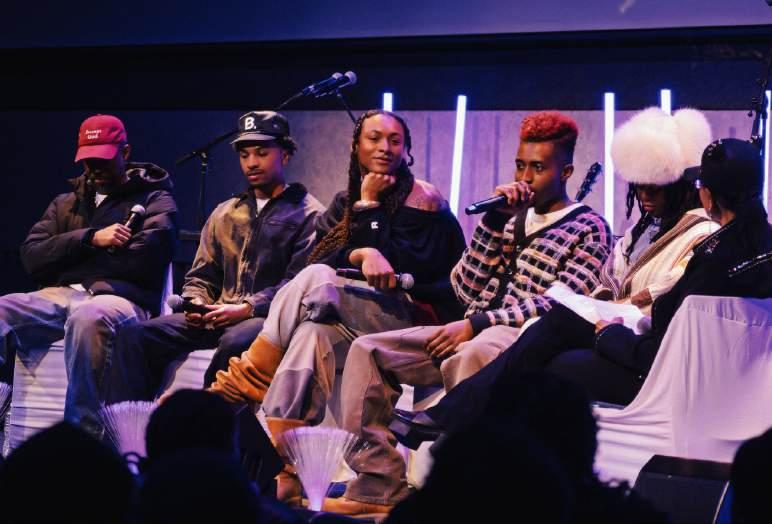
blues music. “I still feel my technological mind moving, even as I’m learning traditions.”
The wildcard of the night was Hatcher, known by his stage name “King Willonious,” who is known for producing — or rather, generating — the viral artificial intelligence (AI) generated song “BBL Drizzy,” a fake-vintage Motown earworm poking fun at Drake.
The song’s success landed Hatcher on Time Magazine’s Top 100 AI Innovators in 2024 and prompted further expansion of what he called the “BBL Drizzyverse.”
The audience got a taste of this fledgling enterprise with a viewing of Hatcher’s AI-generated short film, “Enter the BBL Drizzyverse,” made in partnership with Adobe Firefly.
While not particularly evocative of the song it came from, the film is a feat of AI animation. According to Hatcher, it took just a week to make. But is expediency the goal when it comes to art?
The audience seemed to be stumped on Hatcher. It wasn’t that his efforts were insincere, but that they yielded something
uncanny and artistically questionable — an undeniable challenge to notions of integrity and slow intention that the other panelists raised. If anything, Hatcher’s presence sent a message: Irreverence is probably more helpful to futurists than we would like to believe.
The event closed out with musical performances by Akeem, Jasper and Reed. Akeem’s opening set had the crowd bopping their heads to melodic hip-hop tracks influenced by the musical soundscape of
Chicago’s Northside. A veteran performer, the Nigerian-American artist sang and rapped with breezy confidence.
Jasper’s set transported the audience to a new sonic dimension, layering electronic textures with soaring, reverberant vocals. An accompanying visual showed a live camera angle of Jasper at work, altered to be overly saturated and pixelated, which morphed on screen in successive phases of distortion. Their lyrics avouched the limits of the human condition, at one point confessing, “I have a lot of dreams where I’m flying / No wings, just flesh.”
The last to take the stage was Reed, who performed a medley that included songs from their 2025 album “Cuntry.” Reed’s voice rang out as clear as a bell over their gentle guitar strumming. They used a soundboard to play an AI voice speaking at several moments. In clipped sentences, the voice seemed to emphasize its own disembodiment in the context of Reed’s stirring acoustic performance.
The last song of the night was an unreleased one about rubber, which Reed introduced as a metaphor for Black resilience.
“I’m built to last, I’m Black for life / I’ll bend, I’ll never be broken,” Reed sang, later echoed onstage by the other panelists and Hendryx during an impromptu sing-along.
Intellectually enriching conversations like this one are being offered every week for free, just a street over from campus. Students can visit Lincoln Center’s 2025–26 programming calendar to discover upcoming events.
Cleo Reed,
artist
KEI SUGAE/THE OBSERVER
Before stepping onto the mat, wrestlers had to sign shared consent forms and don pink headgear.
COURTESY OF LAWRENCE SUMOLONG AT LINCOLN CENTER
The featured panelists came from different creative disciplines: music, design and comedy.
Myth Meets Media in ‘Overwater’
Chamberlain Bauman’s play tells a contemporary story of social media addiction and parasocial relationships
By GRACE PAK Staff Writer
Chamberlain Bauman, Fordham College at Lincoln Center (FCLC) ’26, did not set out to write a play when he began drafting songs based on Greek mythology as a journalism major at the University of Missouri four years ago.
“The very first seeds of what would become the play were songs I wrote about the myths of Echo and Galatea, but I wasn’t thinking about playwriting then,” Bauman said.
Bauman’s songs were inspired by paintings he came across on Pinterest — John William Waterhouse’s “Echo and Narcissus” and “Hylas and the Nymphs,” and Jean-Léon Gérôme’s “Pygmalion and Galatea.” These paintings eventually became the grounding visual motifs for “Overwater,” the play with songs Bauman began writing last winter, after he transferred to Fordham and changed his major to theatre.
Exploring the idea of the digital world in playwriting classes, Bauman realized something that united the millennia-old myths he had been singing about with his own digital generation — the stream.
“I feel like how I do my best writing is by connecting two different things to find new meaning in both of them,” Bauman said. “It took me a long time to connect the threads between the Greek myths and the digital world. … Once I started making those connections, it felt like it was writing itself.”
As Narcissus is obsessed with seeing his own reflection in a
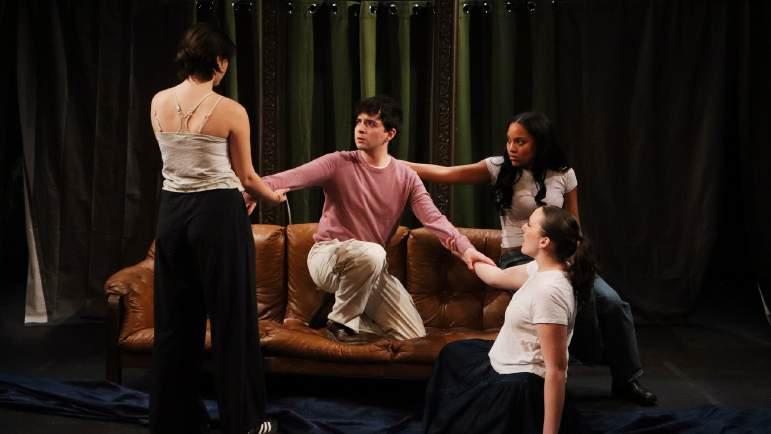
stream, Bauman crafted Nicholas, a self-promoting musician posting videos of himself to TikTok’s stream of content. Adam, a young singer-songwriter with a detrimental social media addiction and parasocial relationship with Nicholas, parallels Echo, the nymph hopelessly in love with Narcissus. The allure of recognition pulls Adam into the stream.
Since the play is set in two different worlds, Bauman and director Elias Bernstein, FCLC ’28, worked to distinguish the settings within the limitations of a repertory show.
“We couldn’t do a lot with the lighting,” Bernstein said. “In a full production, that would be
the thing I would go to to differentiate the two different visual worlds. But with this, we had to be a little more creative with it.”
Bauman and Bernstein could also only use six actors to portray over 10 distinct characters and countless TikTok users.
“I wrote and rewrote and rewrote and rewrote the character breakdown list,” Bauman said. “Once we locked it in, it was really fun to trace the common parts between these characters and their mythological counterparts.”
Alex Vargas, FCLC ’26, portrayed Adam and his counterpart, Echo. He explained that though he played each character in their own world, in some
moments the line between those worlds blurred.
“As Adam starts becoming more afflicted by his addiction to social media, he loses his sense of reality, which then blends into the parallel with Echo,” Vargas said. “In one of the final scenes, where Adam is watching Nicholas perform almost as Narcissus, I think he lets his lovesickness take over him, and his and Echo’s worlds are almost entirely blended.”
Detachment from reality as a result of social media was one of the issues Bauman wanted audiences to consider.
“There’s a danger there that we wanted to unearth,” Bauman said.
“I definitely wanted to expose in an unignorable way some things that I feel like exist in the underbelly of social media, things that … I feel like a lot of people can relate to, but we don’t necessarily talk about.”
“ Social media isn’t what keeps us connected. It’s the human connection behind it that keeps us connected. ”
Sylvia Sonenstein, FCLC
’26
Sylvia Sonenstein, FCLC ’26, who played Nymph One, a figure luring characters from both worlds into their respective streams, is still grappling with her relationship to social media as she explores social media management as a career option.
“I’ve always felt like I needed it,” Sonenstein said. “Otherwise, it’s like I’ll be sort of exiled from the current culture and then that’ll affect my ability to have a career in the field.”
From their work on “Overwater,” the actors took away the importance of showing up in their relationships offline.
“Social media isn’t what keeps us connected,” Sonenstein said. “It’s the human connection behind it that keeps us connected.”
“Overwater” ran in Kehoe Studio Theater Feb. 5 through 7.
Channel 5 Goes Live at Brooklyn Paramount
Journalist Andrew Callaghan kicked off the interactive “C5 Carnival” tour in New York City
By MARGO CRAVEN Arts & Culture Editor
Andrew Callaghan of Channel 5 kicked off the “C5 Carnival” tour on Feb. 13 at Brooklyn Paramount in downtown Brooklyn. The New York City show was the first of 31 tour stops throughout cities in the United States and Canada, and the tour will run until April 26 with a closing show in Albuquerque, New Mexico.
Callaghan discovered his talent for storytelling through documenting the Occupy Seattle movement for his high school newspaper. While attending college, Callaghan worked as a doorman in New Orleans, and began his man-on-the-street style interview series “Quarter Confessions,” now known as “New Orleans Unplugged.”
Named after its location in the French Quarter neighborhood of New Orleans, the series documented the wildness of Bourbon Street, the center of New Orleans’ 24-hour party atmosphere.
In 2019, Callaghan began his YouTube interview series “All Gas No Breaks.” Callaghan traveled around the United States in an RV with his two-man production team, Nic Mosher and Evan Gilbert-Katz, documenting events such as the 2019 Flat Earth Conference in Dallas, Texas.
In 2021, after leaving “All Gas No Breaks” due to contractual issues, Callaghan started Channel 5 alongside Mosher and Gilbert-Katz. Channel 5’s first video, a compilation documenting spring break in Miami during the COVID19 pandemic, quickly went viral amassing over 5 million views.
The “C5 Carnival” was a chance for fans of Channel 5 and “All Gas No Breaks” — which
Callaghan recently bought back the rights to — to experience a live question-and-answer session, documentary screening, talent show and rap battle all in one night. Callaghan kicked off the show with a never before seen screening of his latest documentary, a heartfelt snapshot of the life of Ric Shore, an elderly California man who had recently lost his beloved parrot, Orson. Callaghan met Shore while visiting his mother in Venice Beach, after noticing a flyer Shore had posted in hopes of finding Orson. Despite his best efforts, Callaghan was unable to reunite Shore with Orson. Instead, the Channel 5 crew gifted him a new parrot, named Duncan. As the pair continued to spend time together, Callaghan learned that Shore also had a background in documentary filmmaking, co-directing the 1978
film “Punking Out,” which documents the birthplace of the punk rock scene in New York City.
After the screening, Callaghan transitioned into a rap battle, inviting two audience members onstage to freestyle for a panel of judges that included comedians Willam Banks and Stephanie D’Agostini (known professionally as Stef Dag) and graffiti artist and Channel 5 host Otunba “Polo” Cutty, also known as Sidam.
The rappers, who introduced themselves as Jalon and Julian, performed three two-minute freestyle rounds over classic hiphop instrumentals. After the final round, Jalon was declared the winner, earning him a spot on the judging panel of the talent show that followed.
Audience members lined up for a chance to showcase their talents, and those given a chance to
perform did not disappoint. Contestants whistled, drew portraits of Callaghan in record time, played harmonica, performed stunts and did standup comedy.
Brittany Catalano, an opera singer from Staten Island, gave a show-stopping performance from Mozart’s 1786 four-act opera “The Marriage of Figaro.” Ultimately, the winner was Nick, who did not share his last name, and simultaneously performed two talents: “circular breathing” while jumping over his leg.
Next, Callaghan screened the “All Gas No Breaks” comeback episode, in which Callaghan and his crew document the Adult Baby Diaper Lover (ABDL) subculture — a community of age regressors who find comfort in dressing and acting like babies. Although Callaghan did not shy away from the ridiculousness of the topic, he
approached the ABDL’s featured in the episode with respect and genuine curiosity.
Callaghan ended the night with a question-and-answer session, answering questions and offering advice to aspiring documentary filmmakers.
“Whatever you want to do, just don’t be afraid to fail. Be able to turn ideas into products, even if it’s imperfect,” Callaghan said.
“A lot of people who are really talented sit on amazing raw material for years, obsessed with making the perfect product, so much so that by the time it comes out it’s lost all momentum.”
While discussing the challenges of ethical documentary filmmaking, Callaghan expressed a desire to have existed in a time before cameras as a journalist, because “the presence of a camera modifies everybody’s behavior,” he said.
“You can be having the sickest conversation with somebody, (and) the moment you turn a camera on it’s like they freeze up, they put on a new persona.”
Callaghan also spoke about the distinctions between Channel 5 and “All Gas No Breaks,” noting that owning both platforms allows him to balance in-depth coverage of serious issues with lighter content. He described “All Gas No Breaks” as an “apolitical return to form,” meant to be a reprieve from the “constant panic and fear content,” that inundates social media.
The “C5 Carnival” proved Callaghan’s distinct storytelling and effortless charm holds up in a live setting, effectively walking the line between sincerity and absurdity. If the tour’s opening night is any indication, Channel 5’s next chapter will be bold and boundary-pushing as ever.
PHOTOS COURTESY OF LISA VIRGINIA
Fordham Theatre’s latest studio play uses millennia-old myths to tell the highly contemporary story of a TikTokaddicted musician.
MARGO CRAVEN/THE OBSERVER
Andrew Callaghan screened never-before-seen content from Channel 5 and “All Gas No Breaks” at the first “C5 Carnival” tour stop.

un & ames

Crossword: Horseplay


24. Some Kias
25. Japanese capital?
26. New York City paratransit service (Abbr.)
29. Puts into practice
33. Setting for Aslan and the White Witch
36. The first blank in this phrase: From ____ to ____
38. 33-Across, for one
39. *What the starred clues are all examples of (2 Wds.)
44. Matt, in Hollywood
45. Greek goddess of marriage and childbirth
46. Eventually (2 Wds.)
48. Elmo’s street
52. OB-____ (Abbr.)
53. Mentions, on social media
56. Possible response to “soup or salad?”
58. Synthetic fabric
60. “Parasite” director: Bong ____ ___ (2 Wds.)
62. Beeper
65. “Cheater, cheater, pumpkin ____”
67. Prefix with plunk or plop
68. Physicist Newton
1. Still in the works (Abbr.)
4. Abode, slangily
8. Provide food for a wedding, for example
13. “Super” suffix
14. Lucy’s brother in “Peanuts”
16. Doja Cat’s debut album (and her given name)
17. India’s smallest state by area
18. How one should sign a contract (2 Wds.)
19. Drugstore brand for vibrant hair dyes
20. Festive drink
22. Guitar parts with frets
Horoscopes
BY DIVYA NARAINE
69. Do kickflips, say
70. Some dashes
71. Surprised sounds
72. You are, in Yucatán
73. ____-haw!



Rat (1960, 1972, 1984, 1996, 2008, 2020): Your quick wit is your superpower this year. While the pace may feel like swimming upstream, your ability to take calculated risks will lead to one of your most successful years yet. To stay grounded, use this busy cycle to find balance through a new spiritual practice that speaks to you.
Ox (1961, 1973, 1985, 1997, 2009, 2021): You are being nudged out of your comfort zone in 2026, and the results will be well worth it. Your patient, quiet strength is drawing in people who are ready to help you turn your future plans into reality. Your grounded nature helps you stay firm through the turbulence; use this stability to set big goals and make big strides.
Tiger (1962, 1974, 1986, 1998, 2010, 2022): Harmonious energy is fueling your fearless nature this year, making it the perfect time to try something new. Your luck is at an all-time high, and opportunities and action are sure to follow. Capitalize on this time by seeking activities that expand your imagination and challenge yourself to branch out on your own terms.
Rabbit (1963, 1975, 1987, 1999, 2011, 2023): Your hard work from the last few years is finally blooming into a busy, profitable cycle. Take the reins and turn the year’s high energy toward your biggest goals while freeing your mind to see the world in a whole new way. By leaning into this growth, you’ll learn to tap into new expertise and resources.
Dragon (1964, 1976, 1988, 2000, 2012, 2024): Your mind is bursting with great ideas, and your natural charisma will attract a supportive team to your side that can help you turn small actions into massive results. This year is also about understanding the motivations of those around you, allowing you to build deeper partnerships and open doors to new circles.
Snake (1965, 1977, 1989, 2001, 2013, 2025): The previous year of transformation andpersonal growth has prepared you to step into a cycle of incredible momentum. Your intuition is your greatest guide this year as you navigate social opportunities with finesse. Past difficulties will unravel into long-awaited recognition, and progress will be smoother than ever.
Horse (1966, 1978, 1990, 2002, 2014, 2026): Welcome to your zodiac year, horses! 2026 is filled with fresh trails to explore that are in perfect harmony with your spirit. This is the time to leave old paths behind and follow the lead of those you admire toward a more exciting life. Focus on changing your daily habits to spark a fire that leads to breakthroughs in creativity.
Goat (1967, 1979, 1991, 2003, 2015, 2027): This is a powerful year to focus on planning for the future, as you’ll have the rare ability to see exactly where you’ve been and where you’re going. You are getting in touch with your creative side, whether through music, design or a total style makeover. Your self-expression is ready to shine brightly in the world!
Monkey (1968, 1980, 1992, 2004, 2016, 2028): You’ll find the excitement you crave this year by turning unexpected hiccups into valuable stepping stones. Your ability to stay flexible will pay off in long-term stability. Use this energy to solve the puzzles of your life, whether that means renovating your space, trying a new hobby or traveling the globe.
Rooster (1969, 1981, 1993, 2005, 2017, 2029): 2026 is about polishing your feathers and stepping out of your comfort zone. By tackling challenges head-on with a solid plan, you will gain immense confidence and emerge as a radiant leader. Your mind will be incredibly sharp this year; use that mental edge to turn “sparks” of ideas into profitable opportunities and significant personal growth.
Dog (1970, 1982, 1994, 2006, 2018, 2030): A surge of motivation, paired with steady consistency, will be the catalyst for significant headway this year. Tasks that once felt stalled will suddenly move forward, especially if you trust your instincts and take bold, innovative steps. Remember that others are looking to you for guidance and leadership.
Pig (1971, 1983, 1995, 2007, 2019, 2031): Even though the energy of the year is restless, your honest and intelligent approach to life will attract influential connections. Your natural adaptability is your secret weapon this year, helping you form strong alliances. Focus on working effectively behind the scenes now to prepare for your big debut later in the year.
1. *____ Balm (ointment)
2. Bronx-born rapper: A ____ Wit da Hoodie
3. *Sight in a Lunar New Year parade
4. Advertising award
5. Super Bowl prize
6. Common pasta suffix
7. *Word with Bad or Bugs
8. Poe’s “The ____ of Amontillado”
9. Cranks (up)
10. “¿Qué ____?” (“What’s up?”)
11. K-12 subject (Abbr.)
12. *Snitch
15. ____-Ball (arcade game)
21. Intel branch of 41-Down (Abbr.)
23. Anderson Cooper’s channel (Abbr.)
26. Fastidious to a fault
27. Is out sick, say
28. *Fordham mascot
30. Country of origin for this puzzle’s theme
31. Drink served with dim sum, often
32. Squid’s ink holder
34. “Knives Out” star: Ana de ____


35. Mens ____ (criminal intent)
37. “Well, lah-di-____!”
39. Kooky
40. Spilled salt, to some
41. Pentagon org. (Abbr)
42. Super Mario Bros. console (Abbr.)
43. Wrath
44. *Hound
47. “Yippee!”
49. Blood typing letters
50. *One of five jumping on the bed, in a nursery rhyme
51. Hydrocarbon with the formula C2H4
54. The second blank in this phrase: From ____ to ____
55. *Plumber’s tool
57. *Basketball shooting game
58. “You ___ what you sow”
59. Circle segments
60. Ballet jump
61. Vein contents
62. *____ Latin
63. Simile center (2 Wds.)
64. Hype (up), in slang
66. 2022 film starring Cate Blanchett as a troubled conductor

KenKen®
BY JASMINE WHITE
1. Each row and column of the KenKen puzzle should be filled in with a number from 1-5 exactly once.
2. The bolded lines break the puzzle into multiple sections of 1-4 cells, with each section containing a target number and mathematical operation in the top left. The numbers in each section must be combined using the given operation to create the target number. For example, in the bottom left section made up of two cells and given the rule of 1-, the two cells should be subtracted together (in any order) to get the target number 1.
3. A number can be used more than once in the same section, as long as the first rule is not violated.