EXECUTIVE









EXECUTIVE
MIKUL SHAH
How Mikul Shah steered Nairobi’s dining culture into the fast lane
DUBAI
How Dubai reimagined hospitality for the world
50 RISE OF QSR
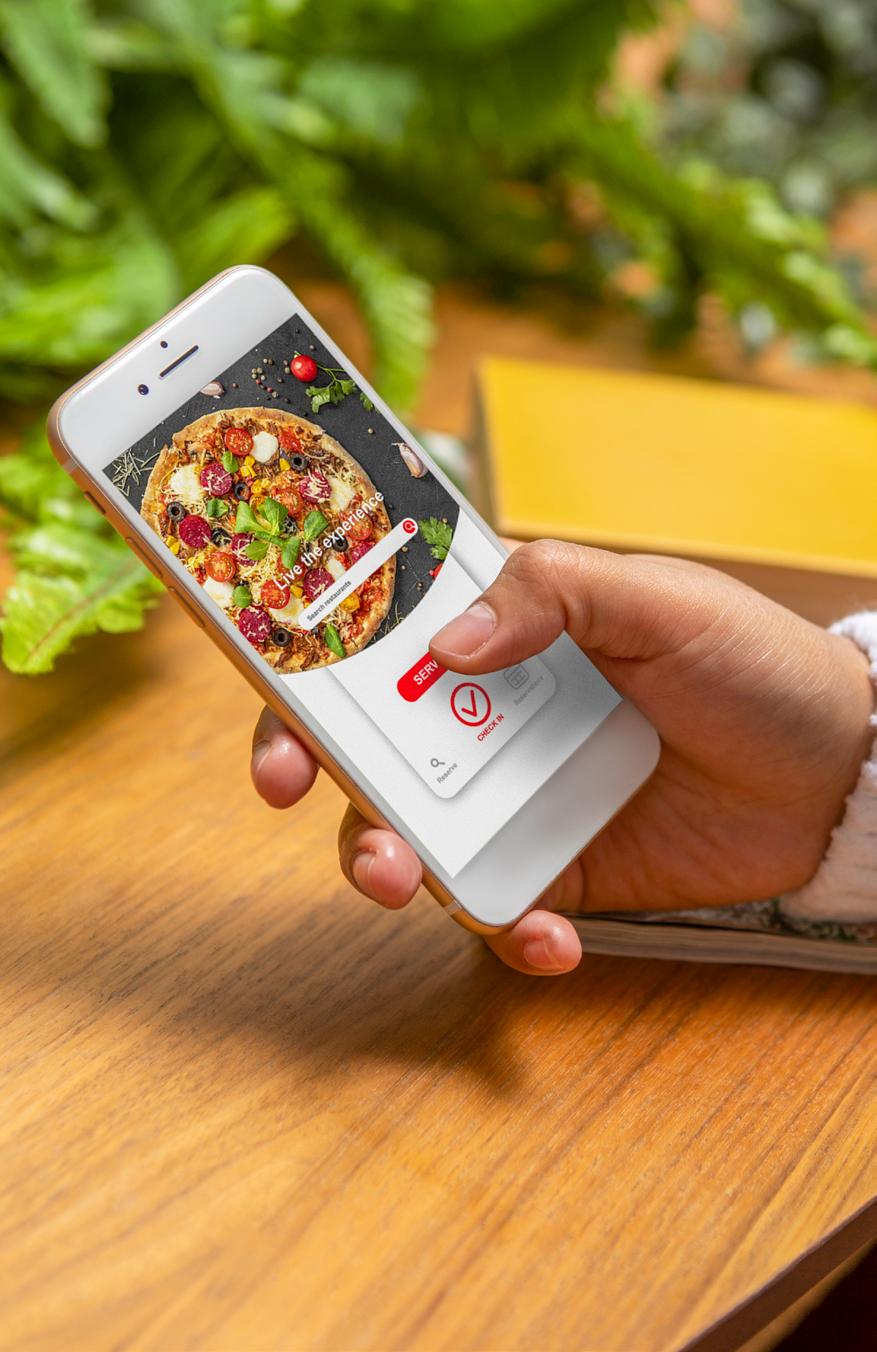
How delivery-first and cloud kitchens are stirring up MEA’s QSR scene

IN MEA HOTELS
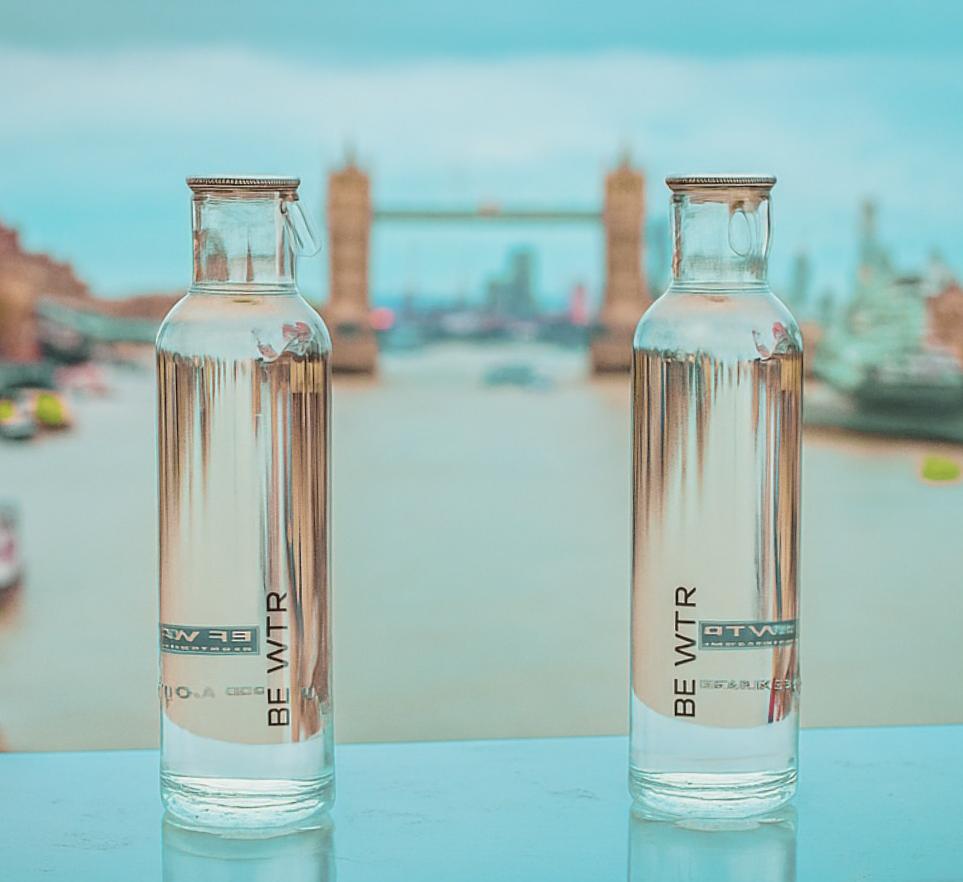
How gulf hotels are declaring independence from single-use packaging
Can tourism repair what tourism damaged? A case of Zanzibar


www.foodbusinessmea.com
www.horecamea.com www.feedbusinessmea.com

www.dairybusinessmea.com


No.1 Trade Shows for Food Service, Hotels & Restaurants Industry in Africa AFRICA Expo
Co-located With:

MAY 6-8, 2026 | Lusaka, Zambia
JULY 15-17, 2026 | Nairobi, Kenya
SEPTEMBER 15-17, 2026 | Lagos, Nigeria




HORECA Equipment, Accessories & Solutions

HORECA Technologies, Systems & Services

HORECA Furniture, Decor, Style & Supplies



Specialty Coffee & Tea




Specialty Wines & Spirits

Laundry Equipment & Supplies; Cleaning, Hygiene & Sanitation Products


Fresh & Packaged Foods & Beverages

Bakery, Food & Beverage Ingredients & Commodities
HORECA Design, Engineering & Construction
Welcome to Issue 3 of HORECA Middle East & Africa, the final, and dare we say, most delicious—edition of the year! As 2025 plates up its final courses, we’re thrilled to serve you a feast of stories, insights, and inspirations from across the region’s hospitality landscape. Consider this your front-row seat to the people, places, and ideas stirring the pot in hotels, restaurants, and bars.
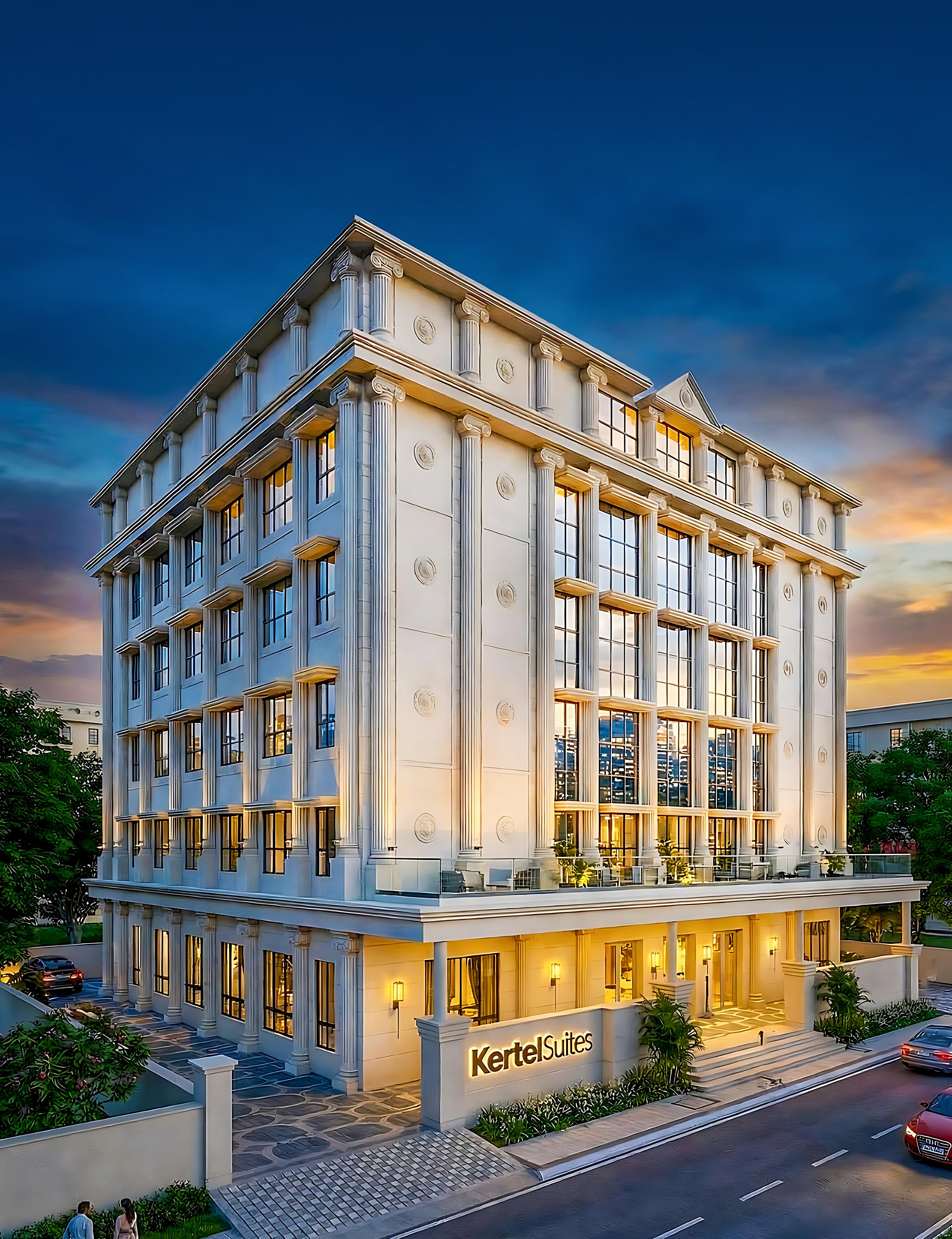
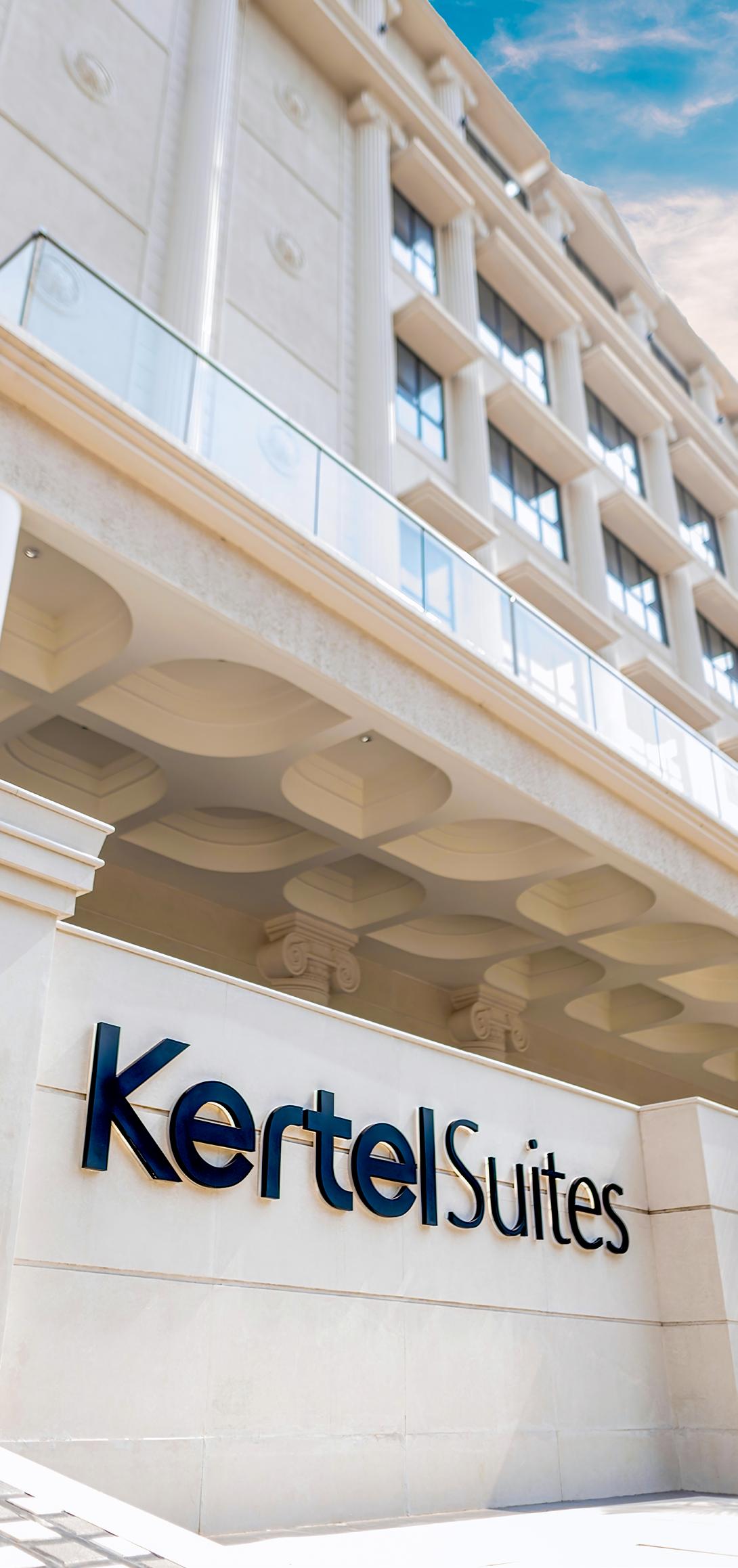
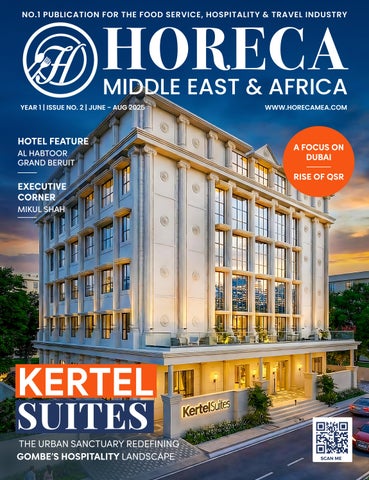
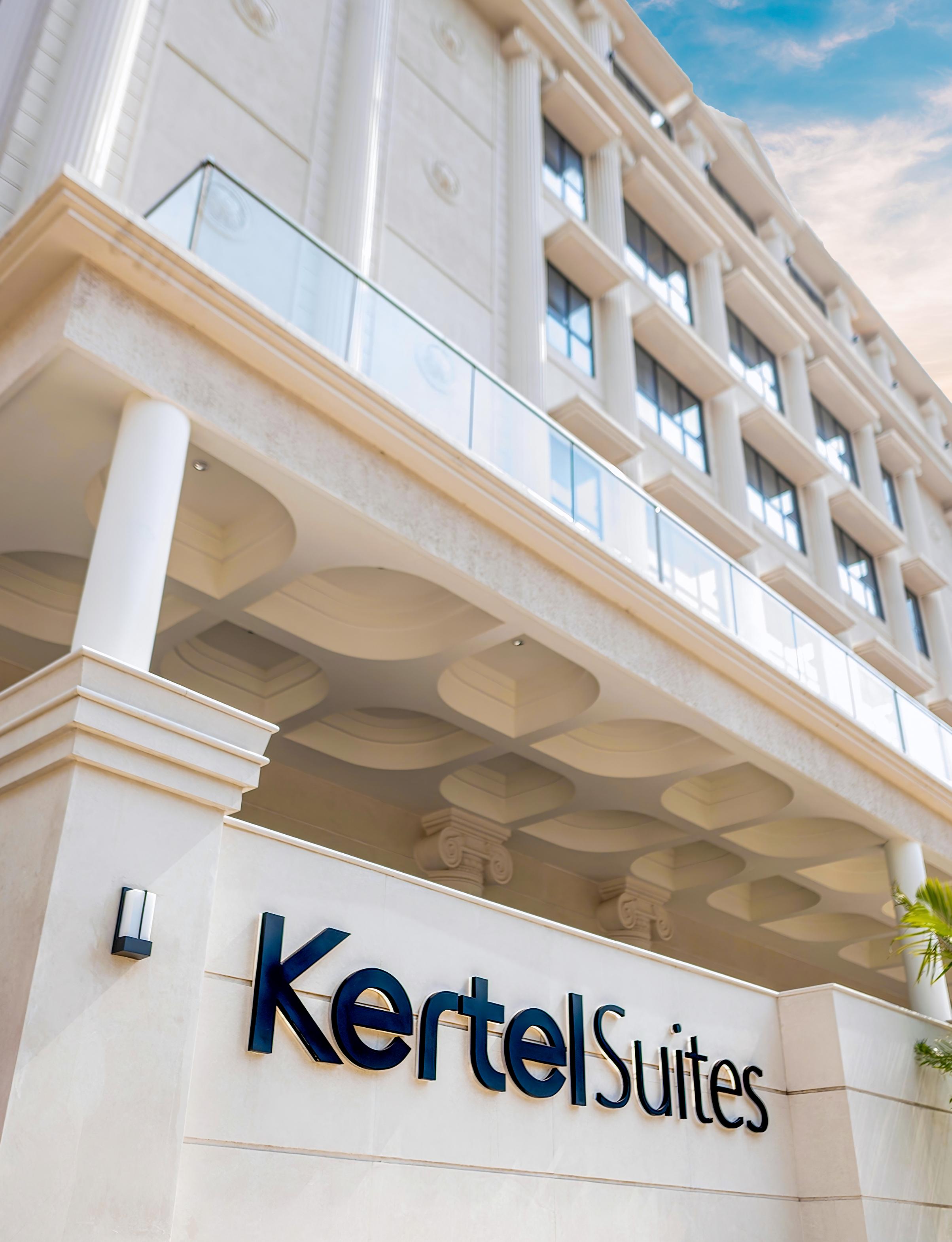
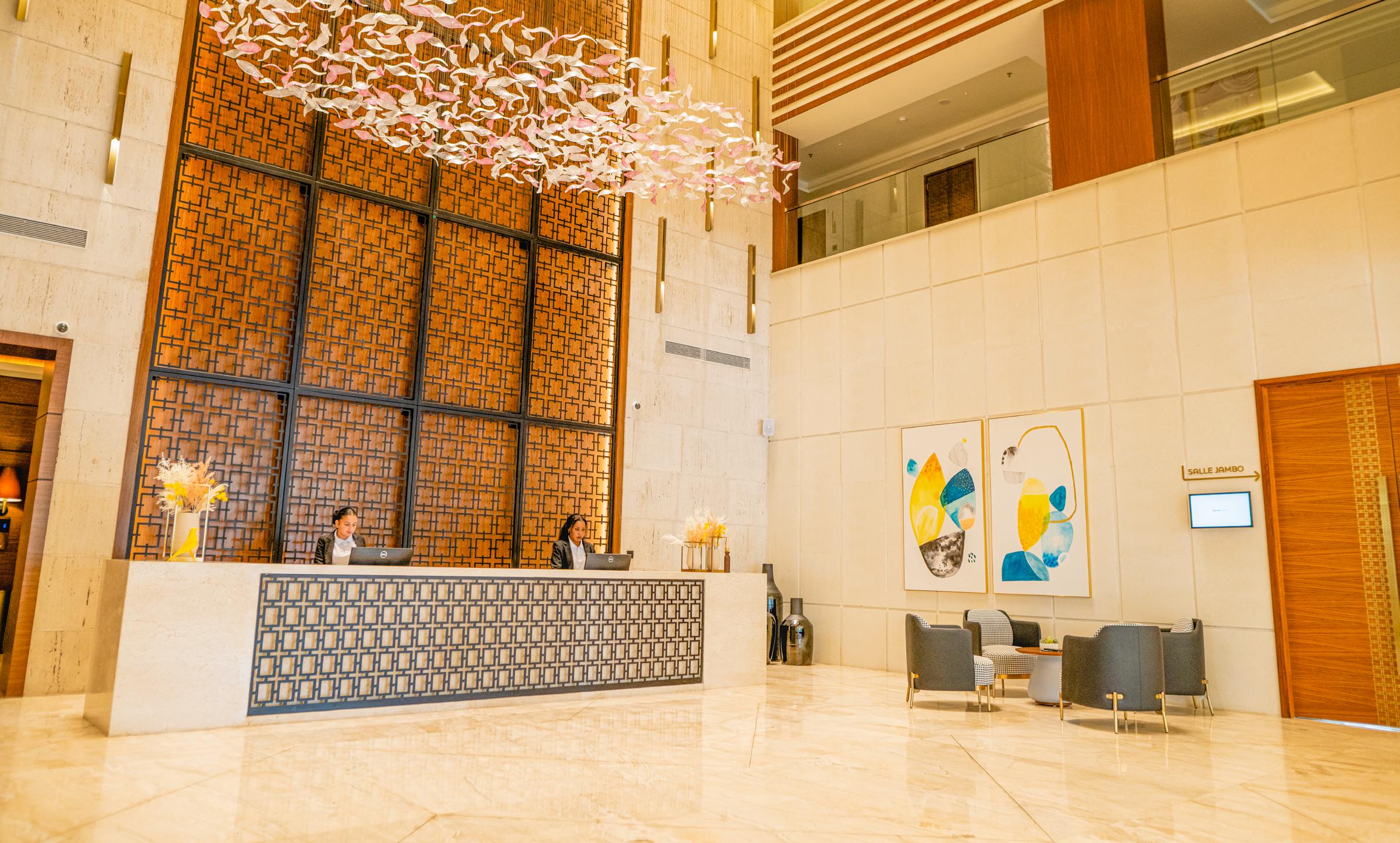
We begin with our main feature at Kertel Suites, the urban sanctuary in Gombe that’s redefining DRC's hospitality scene. With design that whispers “luxury” and service that shouts “welcome home,” Kertel Suites proves that boutique hotels can have a big impact. From curated interiors to community-driven experiences, this property is a masterclass in how thoughtful touches make a stay unforgettable, a true recipe for urban comfort.
Our Market Trends section heats things up by exploring the rise of delivery-first and cloud kitchens across the Middle East and Africa. These agile operations are serving up convenience on a silver platter, redefining the QSR scene for a new generation of diners. With tech-driven workflows and app-savvy customers, these kitchens show that sometimes the secret ingredient to growth isn’t space, but speed.
In our Sustainability Feature, Gulf hotels are taking bold steps to eliminate single-use packaging from banquets, proving that eco-conscious choices can be both chic and practical. From reusable dinnerware to creative waste-reduction strategies,
these hotels are showing that responsible hospitality isn’t a side dish, it’s the main course. Guests leave satisfied, and the planet does too.
Our Travel Focus takes us to Dubai, a city that has transformed hospitality into an experience that begins before check-in and lingers long after checkout. From airport lounges to lifestyle-focused hotels, Dubai blends comfort, style, and spectacle in ways that remind us that travel is about more than just a room, it’s about memories on the move.
Rounding out the issue is an exclusive conversation with Mikul Shah, the culinary maestro behind EatOut. Navigating Nairobi traffic, he shared how his London dining adventures, tech instincts, and love for good food helped shape the city’s vibrant restaurant scene. Mikul’s story is proof that with passion, curiosity, and a pinch of innovation, you can turn a city into a banquet of possibilities.
As we serve the final course of 2025, we raise our glasses to you, the chefs, hoteliers, bar managers, and dreamers who keep the region’s hospitality scene simmering with energy. Here’s to ending the year on a high note and stepping into 2026 ready to cook up even more extraordinary stories.
Enjoy the issue, it’s plated with care!
Victor Atsali Editor HORECA Middle East & Africa
HORECA EXPO Algeria
January 19 – 22, 2026
SAFEX (Ahaggar & Casbah Halls), Algeria www.horecaexpodz.com/en/
India HoReCa Expo
January 20 – 22, 2026
Palace Ground, Bengaluru, India www.indiahorecaexpo.com/index
Mega HORECA Nigeria
February 10–12, 2026
Landmark Centre, Lagos, Nigeria www.megahorecaexpo.com/nigeria
Z-Summit Zanzibar
February 11-12, 2026
Suza University, Tunguu, Zanzibar www.z-summit.com
HOSTEX AFRICA 2026
March 8 - 10, 2026
Sandton Convention Centre, Johannesburg, South Africa www.hostex.co.za
Africa Travel Week
April 13-15, 2026
Cape Town International Convention
Centre, Cape town, South Africa www.atwconnect.com/about-africatravel-week
Arabian Travel Market
May 4 – 7,2026
Dubai World Trade Centre, Dubai, UAE www.wtm.com
The Hotel Show
June 2–4, 2026
Dubai World Trade Centre Dubai, United Arab Emirates www.thehotelshow.com
Hotel & Hospitality Expo Africa
June 10–12, 2026
CTICC, Cape Town, South Africa www.thehotelshowafrica.com
Africa Hotels & Restaurants Expo, Kenya & Eastern Africa edition
July 15–17, 2026
Sarit Expo Center, Nairobi, Kenya www.africahorecaexpo.com/east


The Hotel Expo Kenya
August 19 – 21, 2026
Kenyatta International Convention Centre, Nairobi – Kenya www.hotelexpo.africa
10TH Food & Beverages Africa 2026
August 20-22, 2026
Sarit Expo Center, Nairobi, Kenya www.mxmexhibitions.com/ foodbevKenya
Africa Hotels & Restaurants Expo, Nigeria & Western Africa edition
September 15-17, 2026, Lagos, Nigeria www.africahorecaexpo.com/west/
Hospitality Tech EXPO
September 29 – 30
London ExCel, UK www.hospitalitytechexpo.co.uk
Kenya Tours, Travel & Adventure Expo (KTTA)
October 1-3, 2026
Nairobi, Kenya www.kttaexpo.com
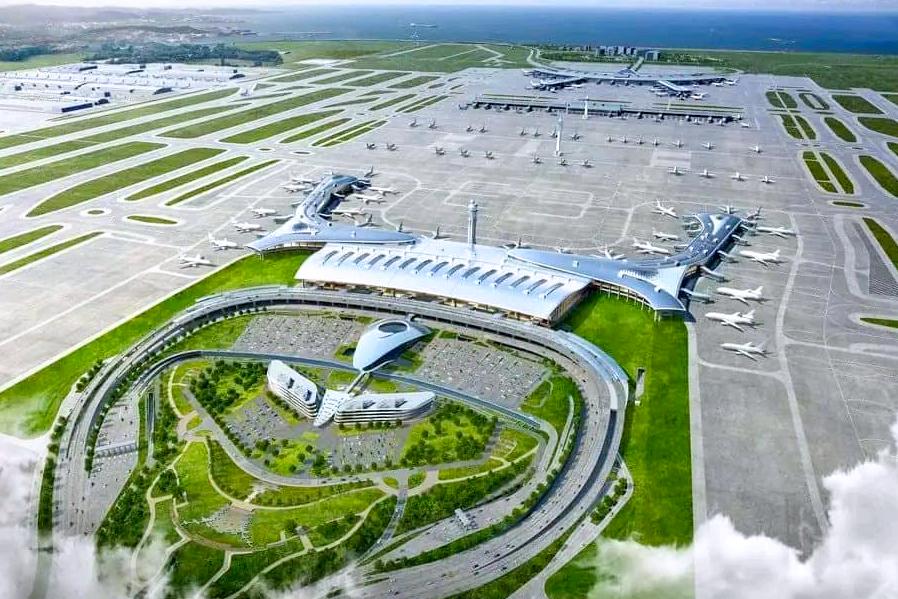
ETHIOPIA – Ethiopian Airlines Group (EAG) has secured a US$500 million investment from a Chinese bank for the construction of Bishoftu International Airport, a US$10 billion project set to become Africa’s largest aviation hub with an eventual capacity of 110 million passengers.
The announcement was made by CEO Mesfin Tasew Bekele at the Africa Investment Forum in Rabat, Morocco.
The African Development Bank (AfDB) has also pledged US$500 million, with private sector financing filling an US$8 billion gap through debt and equity.
Including land acquisition and resettlement, total project costs are expected to reach US$12.5 billion.
Bishoftu Airport, located 40 km from Addis Ababa, will ease congestion at Bole International Airport.
Phase one, targeting 60 million passengers by 2030, will feature three parallel runways and a cargo capacity of 3.73 million tons annually, supporting intra-African trade under the AfCFTA.
The airport city concept integrates hotels, logistics hubs, and residential areas, generating broader economic benefits.
The Chinese funding signals intensifying global competition among financiers, with the US and other regions also backing the project. EAG plans to nearly double its fleet from 145 to 271 aircraft by 2035, expanding from 133 to 207 international destinations.
Upgrades include terminal expansions, enhanced cargo handling, and fuel-efficient aircraft like the Boeing 777-X and Airbus A350 to improve operational efficiency and reduce environmental impact.
Aligned with Ethiopia’s Vision 2035, Bishoftu Airport aims to cement the country as Africa’s aviation gateway, rivaling hubs such as Dubai and Doha.
Investments in crew training, domestic and regional connectivity, and airport infrastructure will further strengthen EAG’s position, using aviation as a catalyst for regional development, international trade, and long-term economic growth.
- Americana Restaurants International PLC delivered strong results for the nine months ending 30 September 2025, posting a 14.4% year-on-year revenue increase to US$1,839.7 million.
Like-for-like sales grew 10.4%, driven by operational improvements, menu innovation, and strengthened digital engagement across the Middle East, North Africa, and Kazakhstan.
EBITDA rose 18.2% to US$414.2 million, reflecting tighter cost control and better operating efficiencies. Net profit attributable to shareholders reached US$135.4 million, up 15.3%, maintaining a 7.4% margin despite a US$11.3 million tax impact in several key markets.
Free cash flow surged 128% to US$128.3 million, supported by stronger working capital management, while the Company continued to operate debt-free with ample liquidity.
In Q3 2025 alone, revenue reached US$622.7 million, representing 12.2% growth. EBITDA climbed 18.6% to US$139.3 million, and net profit increased 14.7% to US$42.9 million, underscoring the resilience of Americana’s business model and its consistent cost discipline.
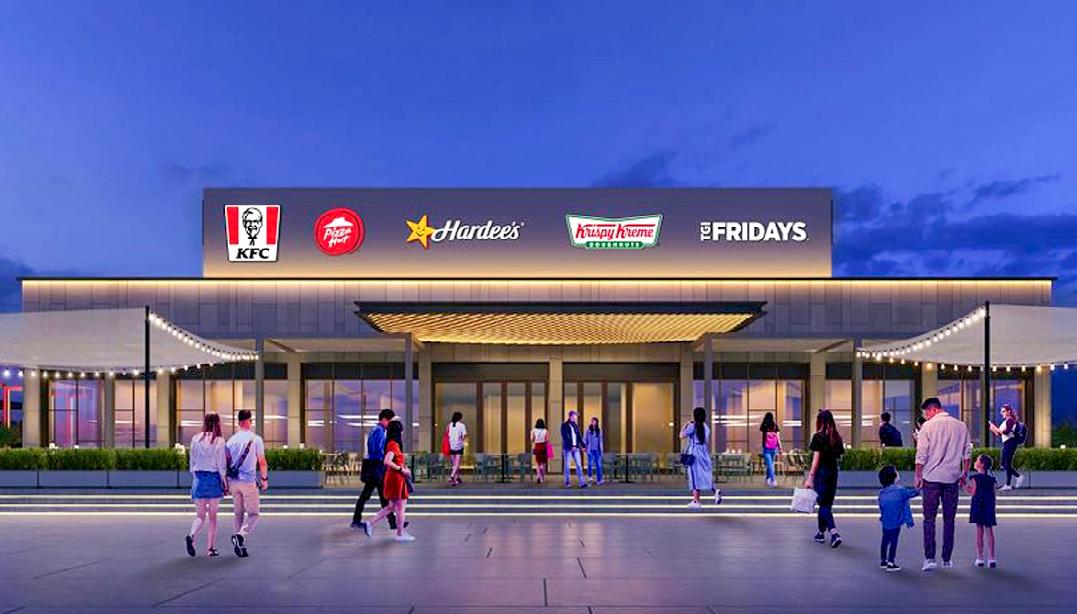
Expansion remained a priority, with 68 new stores opened during the period and 46 Pizza Hut Oman units added to the network.
Americana now operates 2,657 restaurants across 12 countries, following a selective, capital-disciplined growth strategy.
The Company continues to advance its social impact initiatives, including inclusive Pizza Hut stores in the UAE staffed by People of Determination with hearing and speech impairments.
Ongoing digital transformation, enhanced marketing campaigns, and refreshed menus have further strengthened customer engagement and brand performance.
Complementing these efforts, strategic partnerships— such as a franchise agreement for the premium carpo brand in the GCC—provide new avenues for growth. Together, these initiatives reinforce Americana’s leadership in the MENA and Kazakhstan food service industry and position the Company for sustained long-term success.


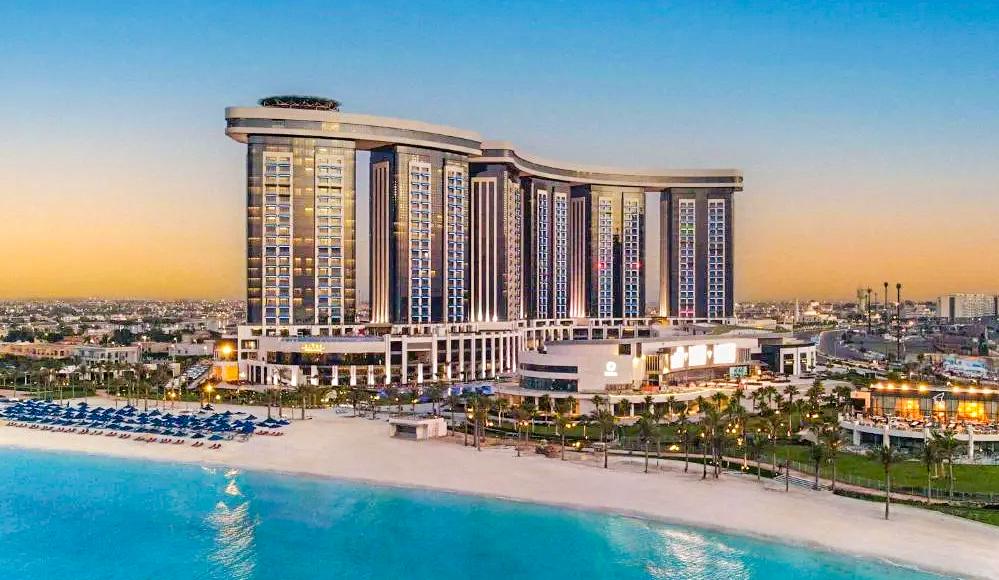
EGYPT – Ministers Ahmed Kouchouk and Sherif Fathy have confirmed a six-month extension of Egypt’s EGP 50 billion (US$1.05 billion) hotel financing initiative, effective 29 October 2025.
The move gives investors additional time to secure subsidized loans aimed at expanding the country’s hotel capacity in response to rising tourism demand.
Launched in July 2024, the financing program supports tourism infrastructure by covering the interest rate differential, thereby incentivizing private sector investment.
The deadline for submitting loan applications and obtaining
bank approvals has now been pushed from 20 October 2025 to 20 April 2026.
The initiative aligns with Egypt’s strategy to boost balanced economic growth by strengthening the tourism and hospitality sectors—key drivers of employment, foreign currency inflows, and broader economic activity.
Beneficiaries will continue to access subsidized interest rates for up to five years from their first disbursement.
To ensure quicker project completion, the government has also introduced a six-month grace period beyond the disbursement stage for investors to finalize operating licenses, extending the deadline to December 2027.
This measure is intended to accelerate the delivery of new hotel rooms to meet surging demand.
Tourism momentum remains strong, with Egypt welcoming 15.8 million visitors in 2024—a 21% rise from pre-pandemic levels. Ongoing developments in Greater Cairo, Luxor, the Red Sea, and other priority destinations support the government’s target of attracting 30 million tourists annually by 2028.
The extension comes amid unprecedented investment activity in 2025. More than 860 new hotel keys were added in Q2 alone, while global operators such as Minor Hotels have announced plans for up to 50 new luxury properties across Egypt, including in Greater Cairo, the North Coast, and the Red Sea.
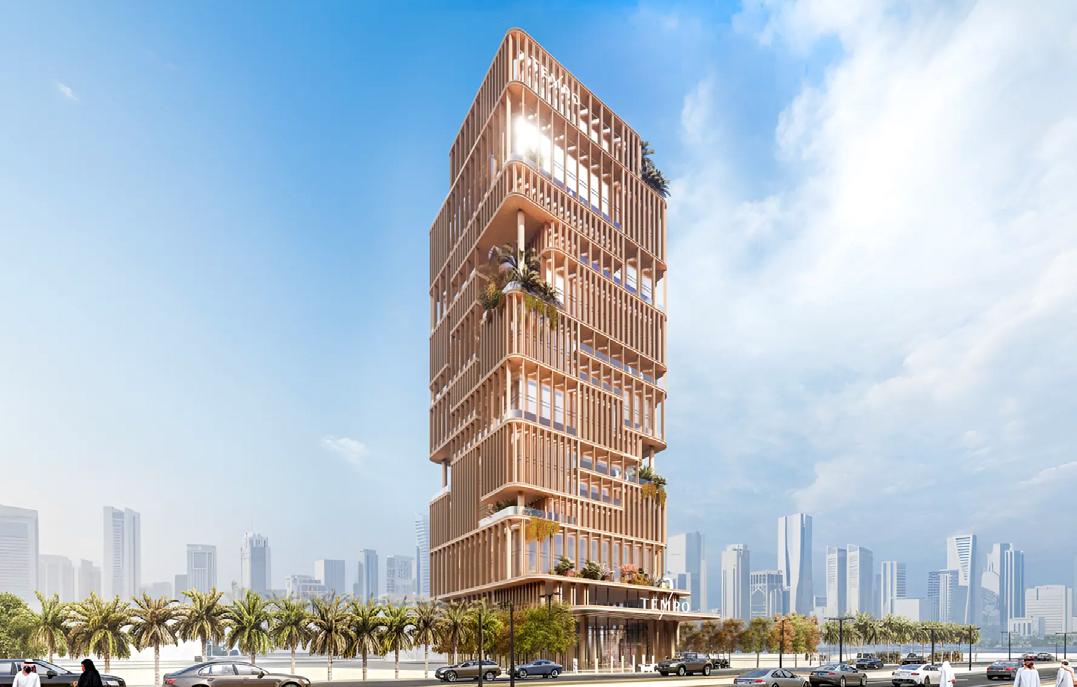
SOUTH AFRICA – Canopy by Hilton has opened its first South African property in Cape Town’s Longkloof District, marking a significant milestone for the lifestyle brand known for blending modern design with authentic local culture.
Catering to both leisure and business travelers, the Canopy by Hilton Cape Town offers a curated, experience-led stay in one of Africa’s most dynamic urban destinations.
The Longkloof location, celebrated for its heritage architecture, eclectic dining, and proximity to the central business district, gives guests easy access to the city’s vibrant cultural and commercial life.
The hotel features locally inspired interiors showcasing regional art, materials, and storytelling, fostering a sense of place that resonates with both visitors and residents.
Amenities include stylish guest rooms, versatile meeting spaces, and curated dining venues, designed to meet the evolving demands of modern travelers.
The launch is part of Hilton’s broader African expansion strategy, reflecting the continent’s rising appeal to global hospitality brands.
Industry observers note that Canopy’s entry reinforces
Cape Town’s reputation as a hub for innovative hospitality concepts that emphasize local connection and immersive experiences.
As the Longkloof District continues its transformation, the new hotel is expected to attract discerning travelers seeking both authenticity and world-class comfort, while contributing to the area’s economic vitality.
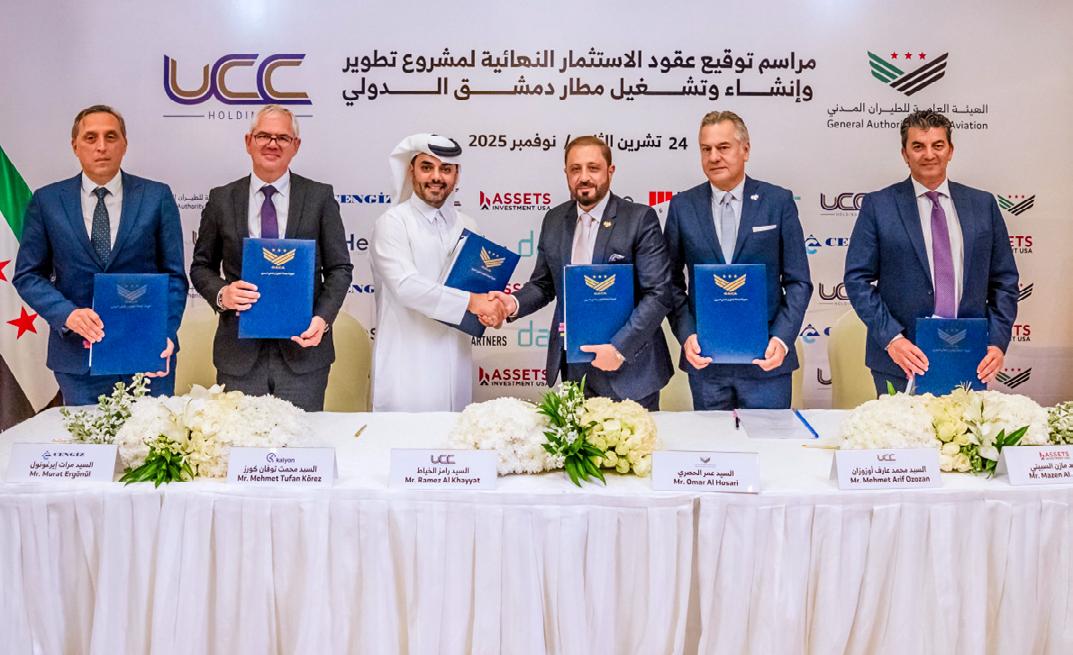
SYRIA - Syria’s civil aviation authority has finalized a US$4 billion concession deal with a consortium led by Qatar’s UCC Holding to reconstruct, expand, and operate Damascus International Airport.
The project marks a historic investment in Syria’s air transport infrastructure, aiming to modernize the facility and increase capacity to 31 million passengers annually.
The consortium includes Urbacon Concessions Investment, Turkish contractors Cengiz İnşaat and Kalyon İnşaat, and USbased Assets Investments.
The agreement, following an August 2025 memorandum, is structured as a long-term Build-Operate-Transfer contract with phased development.
Initial construction focuses on Terminal 2, scheduled to open before the Hajj season in May 2026, raising passenger handling to 6 million annually.
Simultaneously, Terminal 1 will be refurbished, with full upgrades expected by the end of 2026. Subsequent phases include expanding airside infrastructure, cargo facilities, and Terminal 3, designed for 32 gates and a premium duty-free zone featuring global retail and dining brands.
The project, master-planned by Zaha Hadid Architects, also incorporates a five-star hotel and a free trade zone. Engineering services are led by HESCO Hammada, hotel design by Qatar’s H’Collective, and project management by Dar Al-Handasah and DG Jones.
Electronic gates will streamline passenger processing, while a US$250 million fund will support acquiring new aircraft.
The redevelopment is expected to generate over 90,000 jobs across construction, logistics, ground services, and hospitality.
Aligned with Syria’s broader economic reconstruction, the project complements initiatives like new power plants to enhance grid stability.
UCC Holding has expanded its regional infrastructure portfolio in 2025, reinforcing its strategy to deliver largescale, sustainable development projects in aviation, energy, and construction across the Middle East, supporting economic recovery and regional growth.


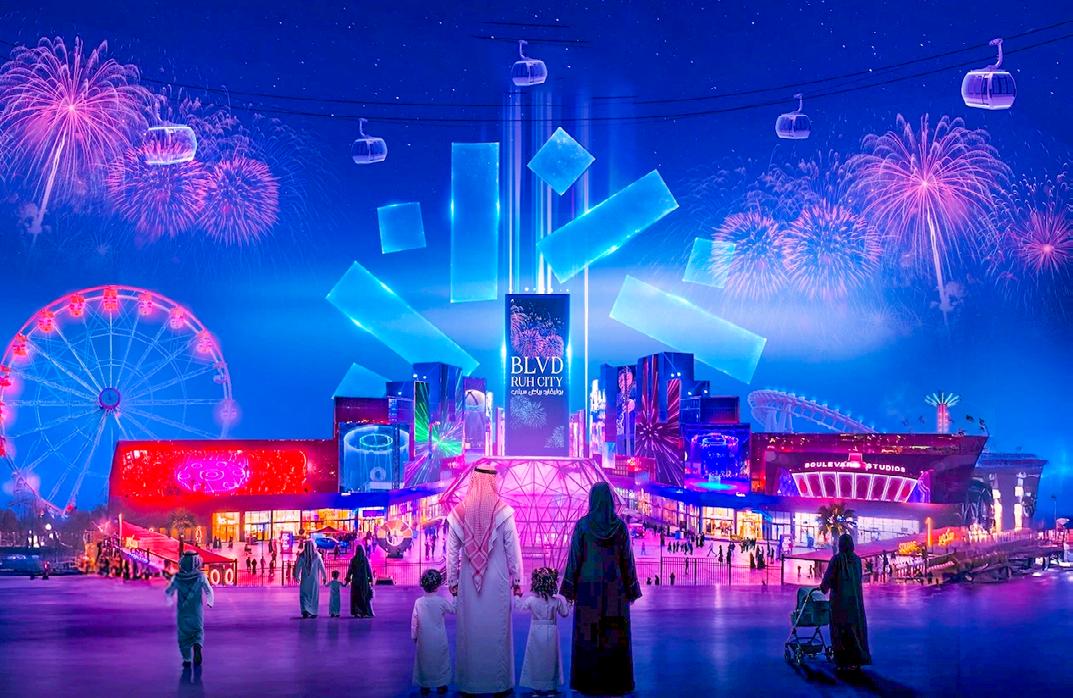
SAUDI ARABIA – Riyadh Season 2025 has welcomed over 3 million visitors in just 35 days since opening on October 11, marking one of the festival’s strongest performances to date.
Launched under the General Entertainment Authority’s Saudi Seasons initiative, the event transforms Riyadh into a global hub for entertainment, culture, and sports, aligning with Saudi Vision 2030 to diversify the economy through tourism and cultural development.
Spanning 13 themed zones over 14 million square meters, the festival offers a wide array of experiences including live entertainment, immersive cultural exhibits, dining, and interactive gaming.
Highlights include the Macy’s Thanksgiving parade, “Poppy Playtime” horror experience, and BLVD City zones celebrating global cultures from Indonesia, South Korea, and Kuwait.
Attractions such as the Funko pop culture exhibit, PUBG Mobile gaming challenge, and BLVD Flowers, featuring over 200 million flowers, floral sculptures, and three Boeing 777 aircraft, enhance visitor engagement.
Riyadh Season also features Flying Over Saudi, an interactive aerial journey promoting domestic tourism, and the MrBeast-backed Beast Land theme park, reflecting the Kingdom’s ambition to create a sustainable, world-class entertainment ecosystem.
Major sporting events include WWE’s Royal Rumble, marking its first occurrence outside the U.S. and Canada, WWE SmackDown, the Six Kings Slam tennis tournament with Novak Djokovic, and The Ring IV boxing event.
The festival hosts the Jewellery Salon 2025, the world’s largest luxury jewelry exhibition, showcasing 600 brands from 50 countries. Media engagement has surged, with over 3,300 media visits recorded, amplifying Riyadh’s global visibility as an entertainment destination.
By combining cultural experiences, international partnerships, and large-scale sporting and leisure events, Riyadh Season 2025 reinforces Saudi Arabia’s Vision 2030 goals, attracting global audiences while positioning Riyadh as a premier hub for tourism, culture, and entertainment.
KENYA – Aleph Hospitality, the largest independent hospitality management company in the Middle East and Africa, has signed a management agreement to operate Kenya’s first Tapestry Collection by Hilton hotel at AVA Hotel Nairobi.
This milestone underscores Aleph’s leadership in Kenya and East Africa, highlighting its strategic expansion in key cities and tourism hubs across the region.
The hotel is located in Nairobi’s upscale Lavington suburb, just minutes from the city centre, and features 91 thoughtfully designed guest rooms, complemented by restaurants, lounges, a rooftop, swimming pool, fitness centre, meeting rooms, and a business centre.
Bani Haddad, Aleph’s Founder and Managing Director, emphasized that the partnership with Hilton aims to deliver exceptional guest experiences, optimize operations, and generate solid returns for the owner.
Carlos Khneisser, Hilton’s Chief Development Officer for Middle East & Africa, noted that the agreement introduces the lifestyle-focused Tapestry Collection brand to Kenya, aligning with Hilton’s plan to nearly triple its African footprint to over 160 hotels while diversifying offerings to meet evolving guest preferences.
The Tapestry Collection features independent hotels with unique, vibrant personalities, while guests enjoy Hilton Honors benefits such as loyalty points, exclusive discounts, free Wi-Fi, Digital Check-in with room selection, and Digital Key access for convenience.
This property marks Aleph Hospitality’s fifth managed hotel in Kenya, reflecting its commitment to operational excellence and regional growth. In 2025, Aleph doubled its African portfolio to 50 properties and secured a landmark deal to manage 26 ONOMO-branded hotels across 14 countries.
Expansion of regional offices, including in Kenya, strengthens local engagement and service quality, solidifying Aleph Hospitality as a major player in East Africa’s rapidly growing hospitality market.
















Tourism grows by 31.9% adding US$247.1B
MIDDLE EAST – The travel and tourism sector in Gulf Cooperation Council (GCC) countries contributed approximately US$247.1 billion to regional GDP in 2024, marking a 31.9 percent increase since 2019, according to the GCC Statistical Center.
This growth highlights tourism’s critical role in economic diversification, social development, and regional integration.
Intra-GCC travel expanded by 52.1 percent compared to 2019, with 19.3 million visitors moving across member states, representing nearly 27 percent of all international arrivals.
Saudi Arabia led the surge, welcoming 30 million international tourists, an 8 percent increase year-on-year, while total tourist numbers, domestic and international, reached 116 million, rising 6 percent.
Travel spending in the Kingdom climbed to SAR 284 billion (US$75.7 billion), an 11 percent growth.
The United Arab Emirates continues its expansion, aiming to host up to 40 million hotel guests by 2031, focusing on luxury tourism, infrastructure, and diversified experiences.
Qatar also benefits from increased connectivity and global events, further boosting hospitality sector growth.
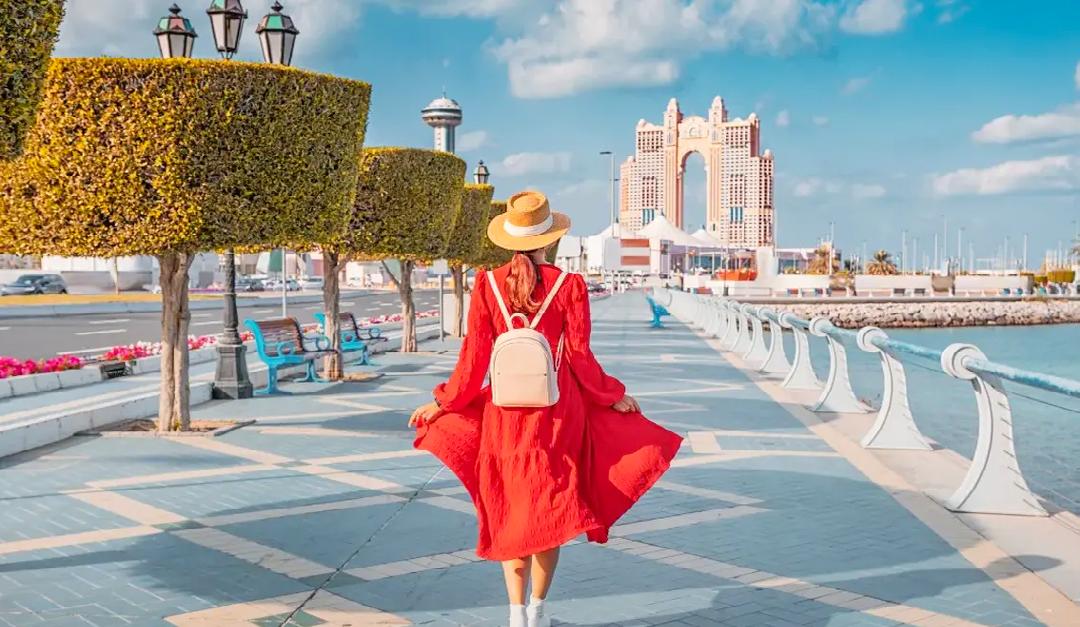
Employment in GCC tourism reached US$4.3 billion in value-added contributions, growing nearly 25 percent since 2019.
By 2034, the sector is expected to generate 1.3 million new jobs, supporting economic resilience and social inclusivity.
Female workforce participation rose 73 percent since 2019, now representing 13 percent of employees, reflecting enhanced opportunities for youth and women.
Sustainability remains a priority, with protected natural reserves expanding to 19 percent of total land and marine areas by 2023, up 7.5 percent from the previous year, supporting ecotourism and environmental stewardship.
GLOBAL – McDonald’s Corporation reported a net income of US$2.27 billion for Q3 2025, a 1% increase from the same period in 2024. Earnings per diluted share rose slightly to US$3.18.
Revenues climbed 3% to US$7.08 billion, with operating income up 5% at US$3.36 billion.
The company posted global comparable sales growth of 3.6%, supported by gains across all divisions: the US segment, International Operated Markets (Australia, Canada, major European countries), and International Developmental Licensed Markets (China, Japan).
Comparable sales increased 2.4% in the US, 4.3% in International Operated Markets, and 4.7% in International Developmental Licensed Markets.
Overall systemwide sales grew 8% (6% in constant currencies), with consolidated operating income rising 5% (3% in constant currencies).
McDonald’s continues a strong franchising model, with 95% of US restaurants and 89–99% of international locations franchised.
The company plans to open around 1,800 new restaurants globally, primarily in the US and International Operated Markets, aiming for over 50,000 outlets by 2027.
Capital expenditures are forecast between US$3–3.5 billion, focused on new unit growth and digital upgrades.
Digital transformation remains a priority, with AI technology deployed in nearly 43,000 stores to enhance order accuracy and kitchen efficiency.
The introduction of new menu promotions, value meals, and delivery services has effectively driven same-store sales growth, which rose by 3.6% worldwide.
Additionally, expanding its customer loyalty program, now serving 175 million users, boosts repeat visits and average spend.







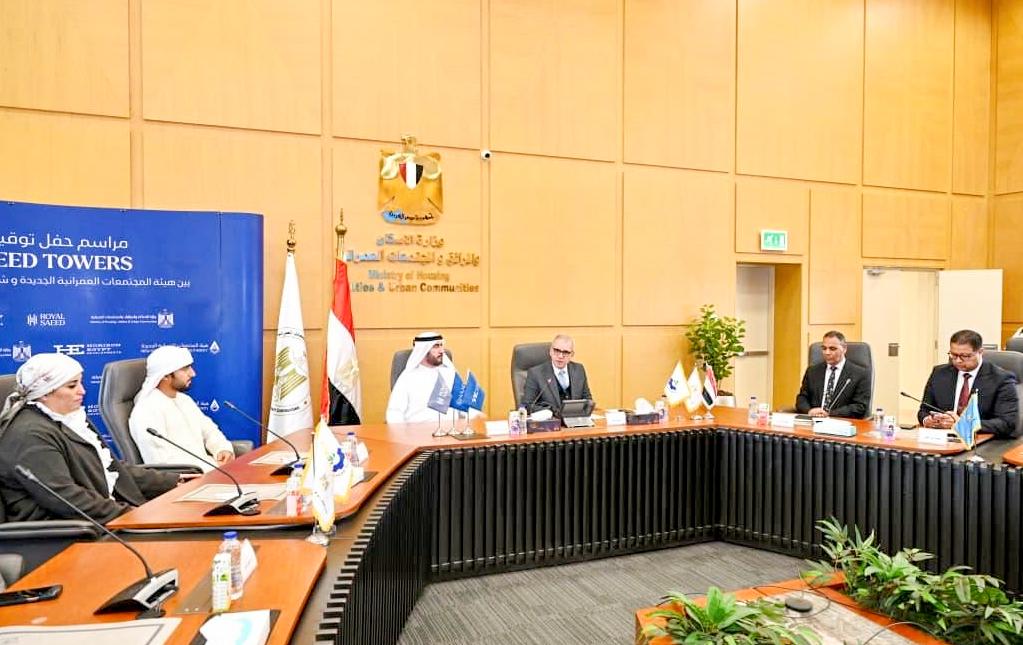
EGYPT – Horizon Egypt Developments has signed a landmark EGP 42 billion (US$881 million) agreement with the New Urban Communities Authority (NUCA) to develop a commercial hotel project on 28 acres in New Cairo.
Valued at EGP 15 billion (US$314.8 million) for the land allocation, the initiative aligns with Egypt Vision 2030, supporting tourism, real estate growth, and sustainable urban development.
The hotel complex will feature luxury accommodations, retail spaces, and conference facilities, targeting both business travelers and tourists while stimulating local economic activity.
Advanced infrastructure ensures energy efficiency and adherence to green building standards, with connectivity to major highways enhancing accessibility for residents and visitors alike.
NUCA officials highlighted New Cairo’s growing appeal for premium hospitality investments. The project is expected to create jobs and promote long-term urban growth in the Fifth Settlement area.
Horizon’s Chairman, Majid bin Saeed bin Rashid Al-Nuaimi, noted that the development supports Egypt’s ambitions for modern cities, financial sustainability, and regional competitiveness.
The project complements Horizon’s Saada New Cairo Compound, a mixed-use development featuring residential villas and apartments, reinforcing the company’s diversified approach to real estate.
Horizon has also expanded its hospitality portfolio through luxury hotel management partnerships to attract international tourists and business travelers, integrating hotels with residential, retail, and recreational facilities.
By combining modern technology, sustainable practices, and strategic location selection, Horizon’s initiatives enhance urban infrastructure, support seamless living experiences, and diversify revenue streams. Collaborations with global hospitality brands provide knowledge transfer and market access.
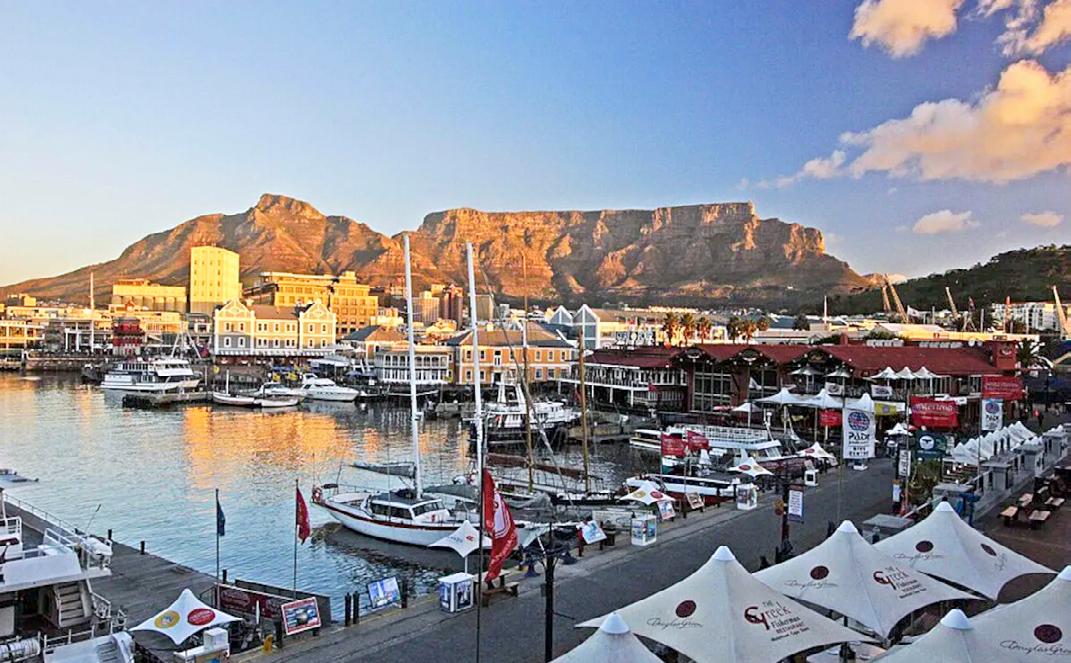
SOUTH AFRICA – The V&A Waterfront in Cape Town has revealed plans to invest R24 billion (US$1.26 billion) in redeveloping Granger Bay, the last undeveloped precinct within this iconic destination.
CEO David Green shared details ahead of the G20 Tourism Investment Summit, highlighting a 15- to 20-year vision to transform the Atlantic-facing area into a vibrant, sustainable waterfront district combining public spaces with residential living.
The project will feature a sheltered bay through new breakwaters, enhancing marine safety and leisure activities.
Plans include tidal pools, pedestrian walkways, water sports facilities, and marine education centres to raise ocean conservation awareness.
Surrounding infrastructure will integrate hotels, serviced apartments, retail, and office spaces, complementing the waterfront lifestyle and boosting tourism appeal.
Following a regenerative sustainability model, the redevelopment aims to generate more natural resources than it consumes, aligning with the V&A Waterfront’s commitment to environmental stewardship.
Rigorous environmental regulations and stakeholder engagement will ensure Cape Town’s coastal ecology is preserved while supporting urban livability.
The project is expected to create thousands of jobs during construction and operations across leisure, hospitality, retail, and marine sectors, strengthening the local economy.
Public access improvements, including promenades and recreational spaces, will enhance community engagement.
Jointly owned by Growthpoint Properties and the South African Government Employees Pension Fund, the V&A Waterfront continues to expand its global competitiveness as one of Africa’s most visited destinations.
Once completed, Granger Bay will offer a harmonious blend of urban convenience, cultural vibrancy, and environmental sustainability, positioning Cape Town as a world-leading sustainable waterfront city.




FRANCE – Sodexo has reported an underlying net profit of €785 million (US$913.82 million) for the fiscal year ending 31 August 2025, reflecting a 3.7% increase at constant exchange rates.
Underlying earnings per share grew to €5.37, supported by steady operational improvements.
The company’s underlying operating margin rose to 4.7%, up 10 basis points on a constant-currency basis, driven by procurement efficiencies and gains from its Global Business Services programs, which helped offset continued growthrelated investments.
Consolidated revenues reached €24.1 billion, an increase of 1.2% year-on-year, fuelled by 3.3% organic growth. Currency fluctuations and portfolio changes from acquisitions and disposals partially offset these gains.
Regionally, North America delivered 2.8% organic growth, Europe expanded 1.7%, and the Rest of the World achieved strong growth of 7.5%, led by India, Brazil, and Australia.
Other operating expenses included restructuring costs and amortization of intangible assets, while free cash flow remained healthy, reflected in a net debt to EBITDA ratio of 1.8x.
Sodexo has proposed a dividend of €2.70 per share, consistent with its payout policy.
The company continues to prioritize operational efficiency, cost discipline, and innovation to drive sustainable growth.
In Europe, Sodexo is strengthening its healthcare and senior living operations through targeted investments in specialized services and digital tools designed to enhance efficiency and guest satisfaction.
Strategic acquisitions and partnerships further support market expansion and service diversification.
In high-growth regions such as India, Brazil, and Australia, Sodexo is broadening its branded food service offerings and deploying technology to elevate the customer experience.
Global tourism surges 5% in 2025, exceeding pre-pandemic levels –World Tourism Barometer

GLOBAL – International tourist arrivals rose 5% in January–September 2025 compared to 2024, reaching 1.1 billion travelers and surpassing 2019 levels by 3%, according to the UN World Tourism Barometer.
Despite inflationary pressures and geopolitical uncertainties, demand remains strong, particularly in Africa and Asia-Pacific, highlighting the sector’s resilience.
Africa led regional growth with a 10% increase in arrivals, including 11% in North Africa and 10% in Sub-Saharan Africa.
Europe welcomed 625 million tourists, up 4% from 2024, with Western Europe growing 5% and Central/Eastern Europe 8%. Asia-Pacific expanded 8%, reaching 90% of pre-pandemic levels, driven by a 17% surge in North-East Asia.
The Americas saw 2% overall growth, with South America performing strongly at 9%, while the Middle East grew 2%, standing 33% above 2019 benchmarks.
Country-level standouts include Brazil (+45%), Vietnam and Egypt (+21%), Ethiopia and Japan (+18%), and South Africa (+17%).
Tourism receipts climbed sharply, with Japan (+21%), Egypt (+18%), and Brazil (+12%) leading the gains, while outbound travel increased from the US (+7%) and Spain (+15%).
Air travel capacity expanded, with IATA reporting 7% RPK growth and 6% ASK increase, and hotel occupancy held at 68% in September 2025.
The World Travel & Tourism Council (WTTC) forecasts the sector’s GDP contribution at US$2.1 trillion, exceeding the pre-pandemic peak of US$1.9 trillion, while employment is projected to rise to 371 million jobs, an increase of 14 million globally.











India’s food services market to surpass US$125B by 2030, driven by
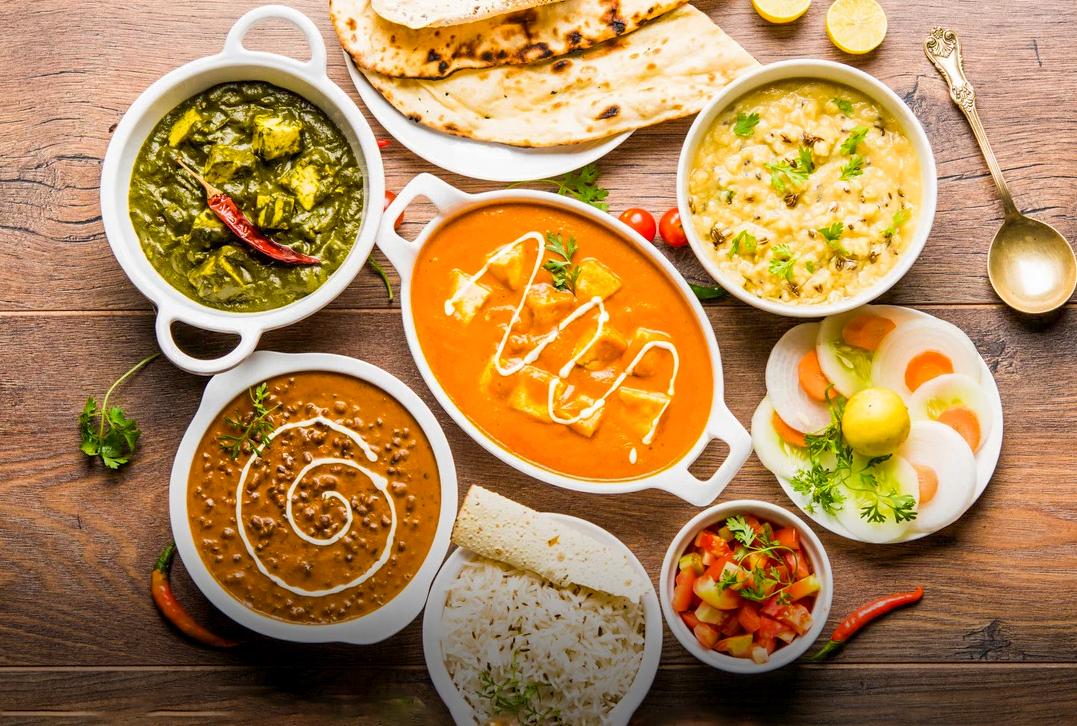
INDIA – India’s food services industry is set to exceed US$125 billion by 2030, fueled by rising incomes, digital adoption, and growing demand for convenience, according to Swiggy’s 2025 How India Eats report with Kearney.
Organized players, including cloud kitchens, quick service restaurants (QSRs), and café chains, are projected to drive over 60% of sector growth, expanding at nearly twice the pace of the unorganized segment.
Currently, organized formats contribute 1.9% of GDP, still below China’s 5% and Brazil’s 6%, but their rapid growth reflects evolving consumer habits.
Urban diners are increasingly adventurous, with restaurant trials up 30% and interest in diverse cuisines rising 20%.
Late-night orders post-11pm have tripled, highlighting urban lifestyle shifts, particularly for pizzas, cakes, and soft drinks.
Health-conscious consumption is on the rise, with “betterfor-you” meals growing 2.3 times faster than average, focusing on protein, calorie control, and reduced sugar, balancing indulgence with wellness.
Regional Indian cuisines, Goan, Bihari, and Pahari, are expanding 2–8 times faster than mainstream dishes, while global trends see Korean, Vietnamese, Mexican, and Peruvian foods entering the everyday diet.
Digitized beverages like tea, buttermilk, and sharbat are also growing rapidly.
Delivery platforms continue to transform the sector. Swiggy’s US$1.25 billion IPO and warehouse expansion, alongside Zomato’s US$500 million financing for Blinkit, are driving rapid growth in online delivery, projected to reach ₹2 trillion (US$23 billion) by 2030, with Zomato holding 58% of the market and Swiggy 42%.
Bolt and Blinkit’s expansion into grocery and electronics further strengthen organized sector dominance, catering to urban consumers’ tech-enabled, convenience-driven preferences.
GLOBAL – Uber, Instacart, Target, and DoorDash are among 11 major companies preparing to integrate their services directly into ChatGPT later this year, marking a significant leap in OpenAI’s strategy to expand its AI-powered ecosystem.
The announcement builds on OpenAI’s recent launch of interactive apps within ChatGPT, allowing users seamless access to third-party platforms through natural language conversations.
The new integrations will enable users to book Uber rides, order groceries through Instacart, shop at Target, request DoorDash deliveries, and access other services without leaving ChatGPT.
This AI-native experience streamlines tasks, enhances personalization, and elevates convenience across commerce, mobility, and everyday services.
The expansion also follows Fidji Simo’s transition from CEO of Instacart to CEO of OpenAI Applications, underscoring OpenAI’s growing focus on commercial partnerships and product innovation.
The company’s partnership network now includes Spotify, Zillow, Booking.com, Canva, Coursera, Expedia, and others, highlighting ChatGPT’s evolution into a multi-service platform for both consumers and enterprises.
In the enterprise space, Salesforce recently deepened its collaboration with OpenAI by integrating its AI CRM, Agentforce 360, into ChatGPT.
This allows users to query sales data, generate visualizations, and access workflows through a conversational interface—an upgrade expected to transform employee productivity and customer engagement.
CEO Sam Altman reiterated OpenAI’s mission, stating that the goal is to make AI tools “more accessible and impactful across everyday and work life,” reinforcing the company’s pivot toward embedded enterprise and consumer applications.
The broader trend reflects AI becoming a core layer of digital commerce. In food delivery, conversational interfaces let users browse menus, place and track orders, and receive tailored recommendations, boosting order frequency and reducing friction.
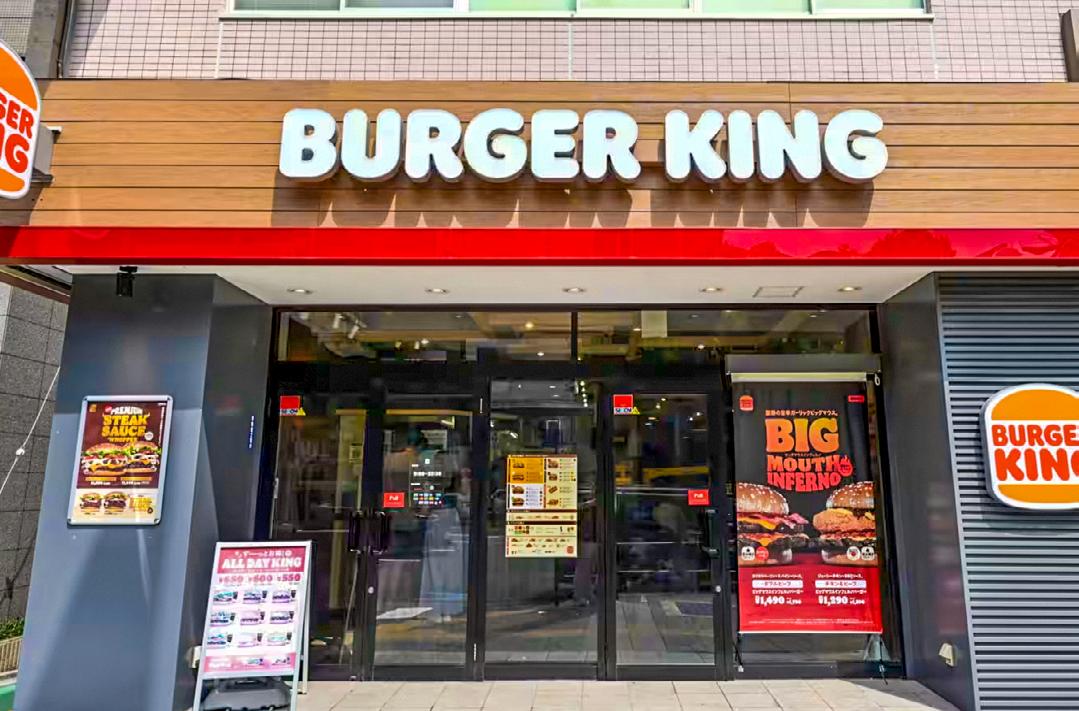
JAPAN – Investment bank Goldman Sachs has secured exclusive rights to negotiate the purchase of Burger King’s operations in Japan in a deal valued at approximately Y70 billion (US$452 million).
The rights were granted by Affinity Equity Partners, a Hong Kong-based private equity firm that has held the Burger King Japan master franchise since 2017.
Under Affinity’s ownership, Burger King Japan has expanded rapidly, growing from eight stores in 2017 to around 310 outlets, with plans to reach 600 locations by 2028.
This growth underscores the brand’s rising popularity and Japan’s dynamic fast food market. Parent company Restaurant Brands International (RBI) reported a 4% year-over-year rise in same-store sales in Q3 2025, with Burger King contributing a 3.1% increase.
A multi-year US$700 million “Reclaim the Flame” investment plan is underway, focusing on advertising, digital engagement, store remodeling, kitchen and infrastructure upgrades, and new restaurant technologies through 2028.
Simultaneously, RBI is pursuing Burger King expansion in China through a joint venture with Chinese private equity firm CPE, which will own 83% of operations, supported by a US$350 million capital infusion for new openings, marketing, menu innovation, and operations.
Goldman Sachs’ acquisition reflects strong investor confidence in Burger King’s growth potential and strategic positioning in Asia.
The bank has actively invested in the quick service restaurant (QSR) sector across the region, including Southeast Asia and India, focusing on portfolio diversification, digital ordering platforms, and technology upgrades.
This strategic move highlights RBI’s commitment to growth via local partnerships while maintaining a largely franchised model, positioning Burger King to capitalize on expanding urban populations, evolving consumer preferences, and the robust demand for fast food across key Asian markets.
Starbucks creates 8,000 new assistant manager roles in North America
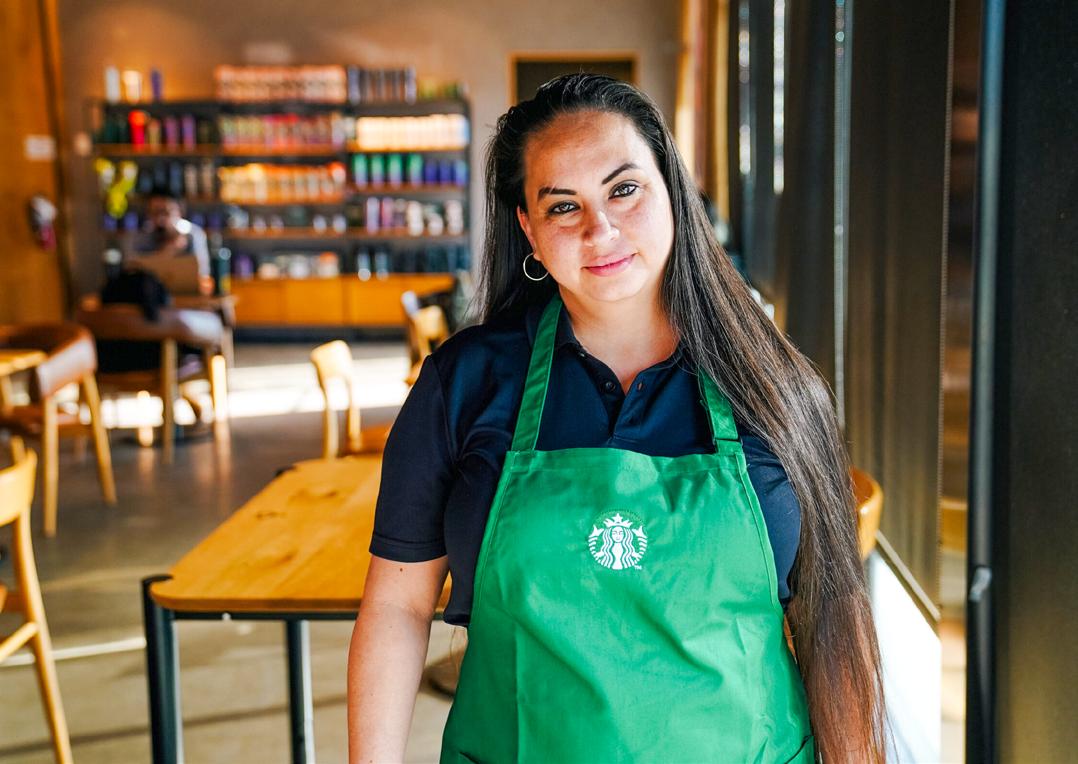
– Starbucks is set to expand its assistant manager role across nearly all U.S. and Canadian locations, with plans to fill as many as 8,000 positions.
The move follows a successful pilot across 62 stores in Texas, Illinois, and California, where 56 assistant managers were promoted internally, underscoring Starbucks’ strong focus on developing talent from within.
Chief Partner Officer Sara Kelly noted that the company aims for 90% of retail leadership roles to come from internal candidates over the next three years.
Until now, only about 20% of Starbucks’ 11,000 North American stores had assistant managers.
The nationwide rollout will significantly increase leadership coverage, giving store managers more capacity to focus on recruiting, scheduling, and higher-level operational planning.
The assistant manager role is designed to strengthen daily operations, elevate team coaching, and enhance the overall customer experience.
Early feedback from the pilot program highlighted improved engagement and performance in stores with more stable leadership structures.
Starbucks plans a full rollout in 2026, refining training and onboarding processes to ensure smooth adoption across the network.
This initiative forms part of the company’s broader “Back to Starbucks” strategy, which centers on partner development, operational excellence, and customer satisfaction.
The expansion comes at a challenging time for Starbucks, which has faced declining same-store sales, rising competition, and customer dissatisfaction over price increases throughout 2025.
As part of a US$1 billion restructuring plan, the company is closing around 400 underperforming stores, about 1% of its North American footprint, and eliminating roughly 900 corporate roles to improve efficiency.
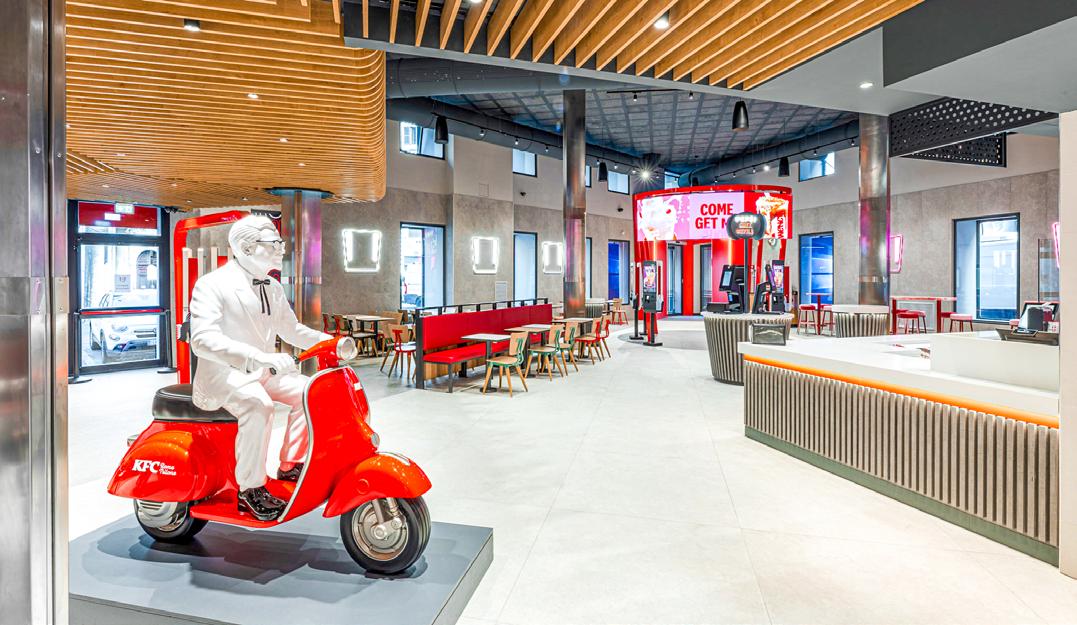
ITALY – KFC has opened its largest and most technologically advanced European flagship restaurant in central Rome, just steps from the Trevi Fountain.
Spanning nearly 1,000 square meters across two floors, the site blends Rome’s historic character with modern, energyefficient design and cutting-edge digital systems.
The flagship also debuts KWENCH by KFC, a new line of specialty beverages created to elevate the guest experience.
Designed as an immersive, digital-first environment, the Rome outlet reflects KFC’s push to redefine quick-service dining by integrating interactive tools and contemporary
ambience.
The launch builds on the momentum of the brand’s recent flagship opening in Prague and forms part of a wider strategy to expand from more than 2,200 to approximately 4,400 outlets across Europe by 2030.
KFC is prioritizing iconic, culturally relevant locations that showcase both local engagement and global innovation.
Dhruv Kaul, Managing Director for KFC Europe, Middle East, and Africa, described the opening as a major milestone that reinforces the company’s ambition to lead the European quick-service sector.
Rome’s blend of global tourism and deep cultural heritage aligns with KFC’s goal of merging historical relevance with modern consumer expectations.
The flagship strategy coincides with KFC’s £1.49 billion (US$2 billion) investment announced for the UK and Ireland in May 2025, including 500 new restaurants by 2034 and 7,000 new jobs.
Funding allocations support new flagship sites, drivethrus, digital upgrades for 200 outlets, and strengthened supplier partnerships with Pilgrim’s Europe, McCormick, and Nature’s Way.
Over 50 UK openings are planned for 2025 as KFC competes in a fast-growing £3.1 billion fried chicken market.
EGYPT – Golden Pillars Developments has launched Swar, an integrated commercial-hospitality project in New Shorouk City, as part of its EGP 15 billion (US$300 million) expansion strategy.
The development features a 10,000 sqm mall and a 150room hotel, with phased handover expected by 2028 and flexible payment plans.
Swar is positioned as New Shorouk’s first mixed-use complex of its kind, meeting rising demand for hotel studios and serviced rentals.
Strategically located near major academic institutions, including the British University in Egypt, the French University, and Shorouk Academy, the project targets steady year-round demand from students, faculty, professionals, and visiting families.
Market research shows Egypt faces a 250,000-room shortage in the next four years, underscoring opportunities in hospitality-led investments.
Chairperson Magdy Saad noted that the site along Suez Road was selected for its strong return potential.
Swar combines retail, dining, and accommodation, backed by international hotel brand management and specialized commercial operators to guarantee high operating standards.
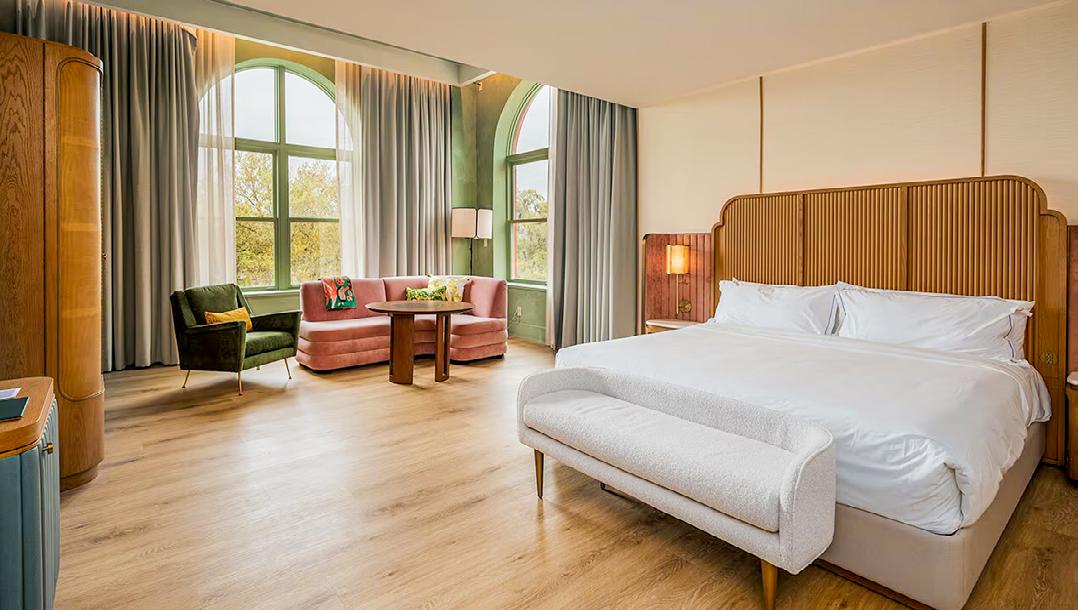
The project aligns with Golden Pillars’ wider portfolio ambitions, which include upcoming medical-hospitality developments and new hotels in New Cairo and Mohandessin.
With more than 18 years of experience across Egypt and the Gulf, the company is leveraging sustainable construction partnerships and expanding its technical workforce to support rapid growth.
Golden Pillars’ business performance doubled in 2025, recording EGP 1.1 billion (US$35 million) in sales driven by developments in New Cairo, Sheikh Zayed, the 6th of October City, and the New Administrative Capital.




Jumeirah names
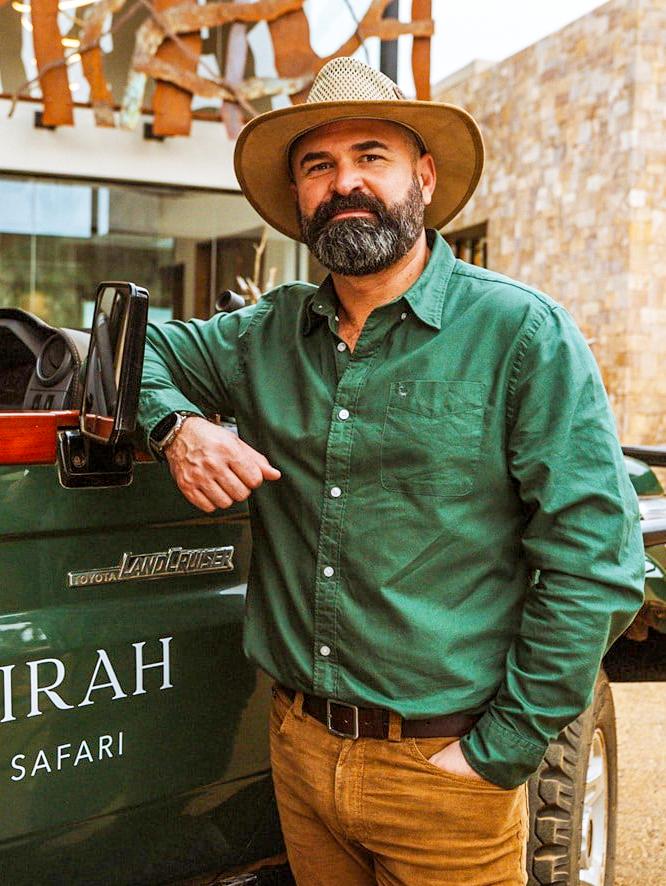
SOUTH AFRICA – Jumeirah has appointed Xander Labuschagne as General Manager of Hospitality at Thanda Safari in KwaZulu-Natal, marking a key step in the brand’s African expansion.
He will lead all hospitality operations with a focus on creating guest experiences that fuse cultural depth, natural beauty, and refined luxury.
With more than 20 years of global experience in high-end hospitality, Xander brings a strong background across luxury hotels, boutique properties, and safari camps in South Africa, Botswana, the UAE, and Europe.
His expertise in operations, guest engagement, procurement, and commercial strategy is expected to drive growth, introduce innovative service concepts, and elevate guest satisfaction at Thanda Safari.
He previously held leadership roles at Atzaro Cape Town and contributed to the success of Atzaro Okavango Camp in Botswana, sharpening his ability to balance efficiency with immersive luxury experiences.
At Jumeirah Thanda Safari, Xander aims to craft meaningful guest journeys that honour the region’s landscapes and cultural heritage while upholding the brand’s high standards.
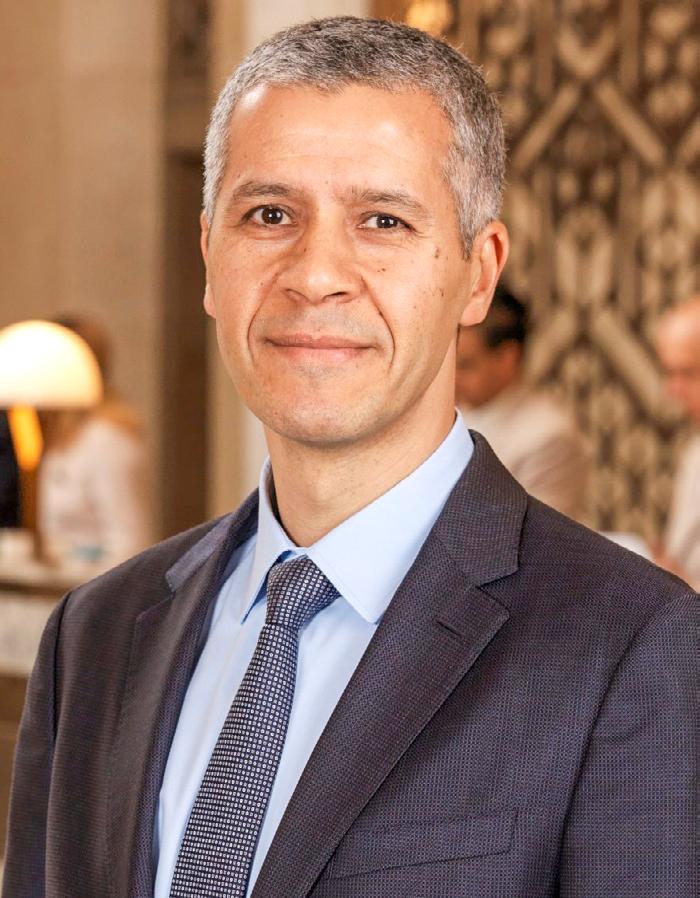
BAHRAIN - Hilton Bahrain City Centre Hotel & Residences has appointed Hassan El Wahidi as General Manager ahead of its December 1, 2025 opening.
With over 35 years of global hospitality experience, El Wahidi has led major Hilton properties across Europe, Africa, and the Middle East, including Hilton Paris Charles de Gaulle, Hilton Mauritius Resort & Spa, Hilton Doha The Pearl, and the large-scale Hilton Salwa Beach Resort & Villas.
He also oversaw a six-year mixeduse development in Dubai, strengthening his expertise in complex lifestyle destinations.
The newly opened Manama property features 594 residential-style studios, suites, and penthouses, each with a fully equipped kitchen.
Guests will enjoy four dining venues, multiple pools, a spa and wellness centre, fitness facilities, and Kids and Teens Clubs.
Positioned in the Seef District near key commercial and leisure hubs, the hotel aims to set a new benchmark for extended-stay and luxury hospitality in Bahrain.
Members of Hilton Honors will benefit from exclusive rewards, digital check-in, and flexible booking options.

Global Hotel Alliance appoints Steve Ayalo as VP IT Governance, Risk &
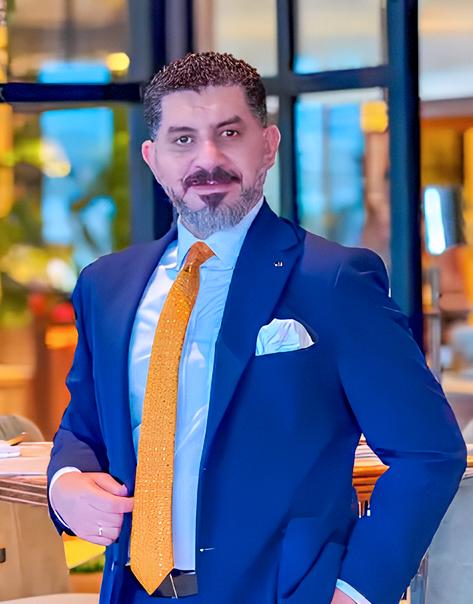
MIDDLE EAST – Global Hotel Alliance (GHA), the world’s largest network of independent hotel brands, has promoted Steve Ayalo to Vice President IT Governance, Risk & Compliance.
His appointment aims to reinforce the organization's commitment to innovation, customer-centricity, and operational excellence.
Steve has built the organization's cybersecurity and compliance frameworks, launched a cybersecurity operations center, and implemented governance around emerging technologies such as AI.
His expertise spans data privacy, regulatory compliance, and cloud security. In his new role, he will oversee ISO certification, guide enterprise IT strategy, manage information security risk, and strengthen cyber resilience across all business units.
Meanwhile, Matthew Lloyd has also been appointed Vice President Marketing Technology & CRM, expanding his role within the marketing function.
Since joining GHA in 2018 after earlier positions at Hilton and Southwest Airlines, he has led global CRM development, advanced datadriven digital innovation, overseen D$ promotions, and helped introduce GHA’s customer data platform.
UAE – Sofitel Dubai Downtown has promoted Ahmed Saleh to Commercial & Marketing Director, following a year in which the hotel delivered recordbreaking sales and revenue results under his leadership as Director of Revenue.
Saleh, who joined the property in 2024, has been credited with driving a sharp upward trajectory in topline performance.
By combining data-driven strategies with commercial foresight, he played a pivotal role in positioning Sofitel Dubai Downtown among the strongest revenue performers in Dubai’s highly competitive luxury hospitality sector.
Reflecting on the milestone, Saleh said, “Every step forward is written by effort, belief, and trust. Success is never just a destination; it’s proof that when you work with passion, stand by your team, and never lose faith in the journey, it will always follow.”
General Manager Mohamed Hawwam praised Saleh’s impact, noting the hotel’s exceptional results in the past year.
“Ahmed’s forward-thinking approach and deep understanding of commercial performance have elevated the hotel’s standing in the market.”
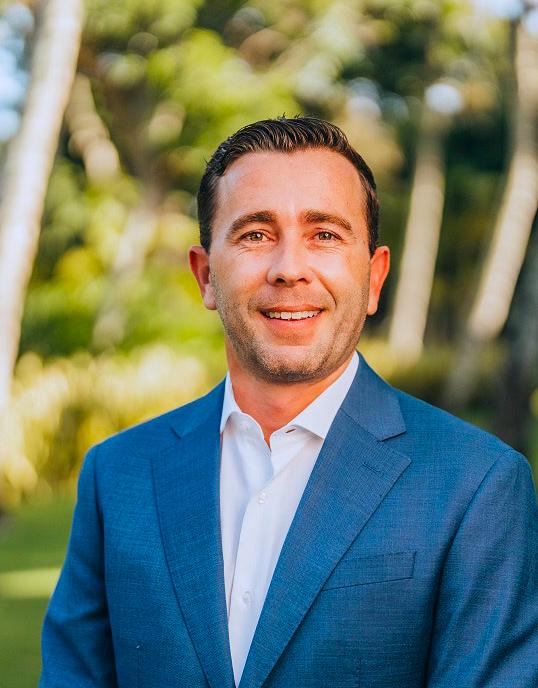
MAURITIUS – Beachcomber Resorts & Hotels has appointed Diego Guerreschi as Hotel Manager of the Royal Palm Beachcomber Luxury in Mauritius, effective September 1, 2025.
Working alongside General Manager Patrice Landrein, he steps into the role as the resort celebrates its fortieth anniversary, an important moment that reaffirms the brand’s commitment to its longstanding heritage of excellence.
Guerreschi brings more than twenty years of experience in luxury hospitality, with a career shaped by leadership roles at some of the world’s most exclusive hotels.
He began at Four Seasons George V in Paris before moving to Le Bristol Paris of the Oetker Collection, refining his expertise in high-level operations and exceptional guest service.
His global journey continued through top-tier resorts in the Seychelles, Saint Barthélemy, and Antigua, giving him deep insight into managing ultra-luxury properties across diverse cultures.
Most recently, he served as Director of Operations at JW Marriott Cannes, where he oversaw all key departments and strengthened his reputation for operational excellence and a guestfocused approach.
as Country General Manager for Iraq, Turkey
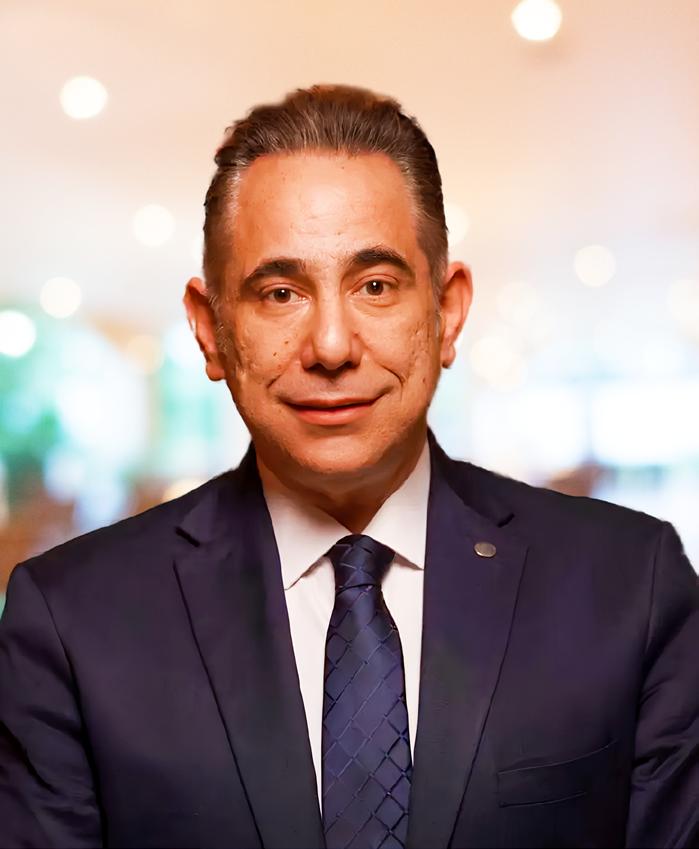
TURKEY – Rotana has appointed Ghassan Dalal as Country General Manager for Iraq and Turkey, while he continues leading Babylon Rotana in Baghdad.
The move reinforces Rotana’s commitment to strengthening leadership in markets with rising tourism investment and long-term hospitality potential.
With 27 years of experience across the Middle East, Africa, North America, and the GCC, Dalal brings extensive expertise managing diverse hotel portfolios in complex environments.
Over his decade with Rotana, he has served as General Manager of Al Salam Rotana Khartoum, Cluster General Manager of Erbil Rotana and Erbil Arjaan, and General Manager of Oryx Rotana Doha.
His accomplishments have earned multiple awards, including Rotana’s General Manager of the Year and the Haute Grandeur Award for Best General Manager in Iraq.
A Cornell University hospitality graduate, he is known for combining operational excellence with a peoplefocused leadership style.
In his expanded role, Dalal will oversee operations across Iraq and Turkey, enhance efficiency, empower teams, and reinforce Rotana’s service culture.
To the uninitiated, Kinshasa can feel like an overwhelming symphony of sound, movement, and energy. But for the discerning traveller—the business executive, the cultural explorer, the hospitality connoisseur—it reveals itself as a city of profound rhythm, resilient spirit, and unexpected respite.
As the administrative and cultural heart of the Democratic Republic of the Congo, Kinshasa is a metropolis that demands a nuanced understanding. The key to unlocking its potential lies not in resisting its vibrant chaos, but in mastering the art of balance: knowing where to find the pulse, and equally, where to find the pause.
This is a city that operates at full volume. The soundtrack is the inimitable Congolese rumba, a UNESCO-recognised Intangible Cultural Heritage that pours from open doorways and buzzing bars long into the humid night. The visual anchor is the Congo River, a vast, silvery expanse that shapes the landscape and the lifeblood of the nation.
For the international visitor, the journey begins in Gombe, the diplomatic and commercial core where skyscrapers house multinational corporations and tree-lined streets conceal discreet embassies. It is here, in this dynamic district, that the narrative of a new, accessible Kinshasa is being written, with establishments like KertelSuites leading the charge in redefining urban hospitality.
To speak of Kinshasa’s culture is to speak of its music. Congolese rumba is far more than entertainment; it is the soul of the city, a historical tapestry woven with threads of resistance, joy, and community. Its inclusion on UNESCO's prestigious list in 2021 was a global affirmation of what locals have always known: this music is a cornerstone of identity.
The guitar lines are complex and nimble, the harmonies lush, and the dance floors are universally welcoming. For business travellers, an evening spent at a live music venue is not merely a night out; it is an invaluable immersion into the social fabric, a place where deals are cemented not in boardrooms but over shared bottles of Primus beer and the universal language of rhythm.
But the city’s cultural offerings extend beyond its legendary nightlife. By day, the Académie des Beaux-Arts stands as a testament to Kinshasa’s vibrant visual arts scene. This renowned academy is not a static museum but a living, breathing institution. Visitors can wander among outdoor sculptures that challenge and inspire, and peer into open-air workshops where the next generation of Congolese artists hones its craft.
This engagement with art provides a crucial counterpoint to the city's commercial hustle, offering a glimpse into the intellectual and creative currents that flow as strongly as the river itself.
No experience of Kinshasa is complete without acknowledging the majestic Congo River. A brief excursion to the riverfront offers a profound sense of perspective. As one of the world's most powerful waterways, it is a constant, quiet force amidst the urban energy.
Boat trips can be arranged, but even a moment spent watching the pirogues glide across the water at sunset provides an essential understanding of the geography and scale that define the nation.
For the business traveller, location is paramount. Gombe district functions as Kinshasa’s undeniable epicentre of commerce and diplomacy. This is where you will find the headquarters of major national and international corporations, government ministries, financial institutions, and the offices of global media outlets.
Staying in Gombe is not just a convenience; it is a strategic decision. It minimizes transit times through the city's notorious traffic, provides proximity to key meeting locations, and offers a sense of security being near diplomatic missions.
However, Gombe is more than just a sterile business district. It is a microcosm of modern Kinshasa, where bustling markets selling vibrant fabrics and fresh fruit exist alongside contemporary cafes and high-end restaurants. It is a place where the city's contrasts are on full display, making it the most logical and rewarding base for any visitor seeking to understand the complex tapestry of the capital.
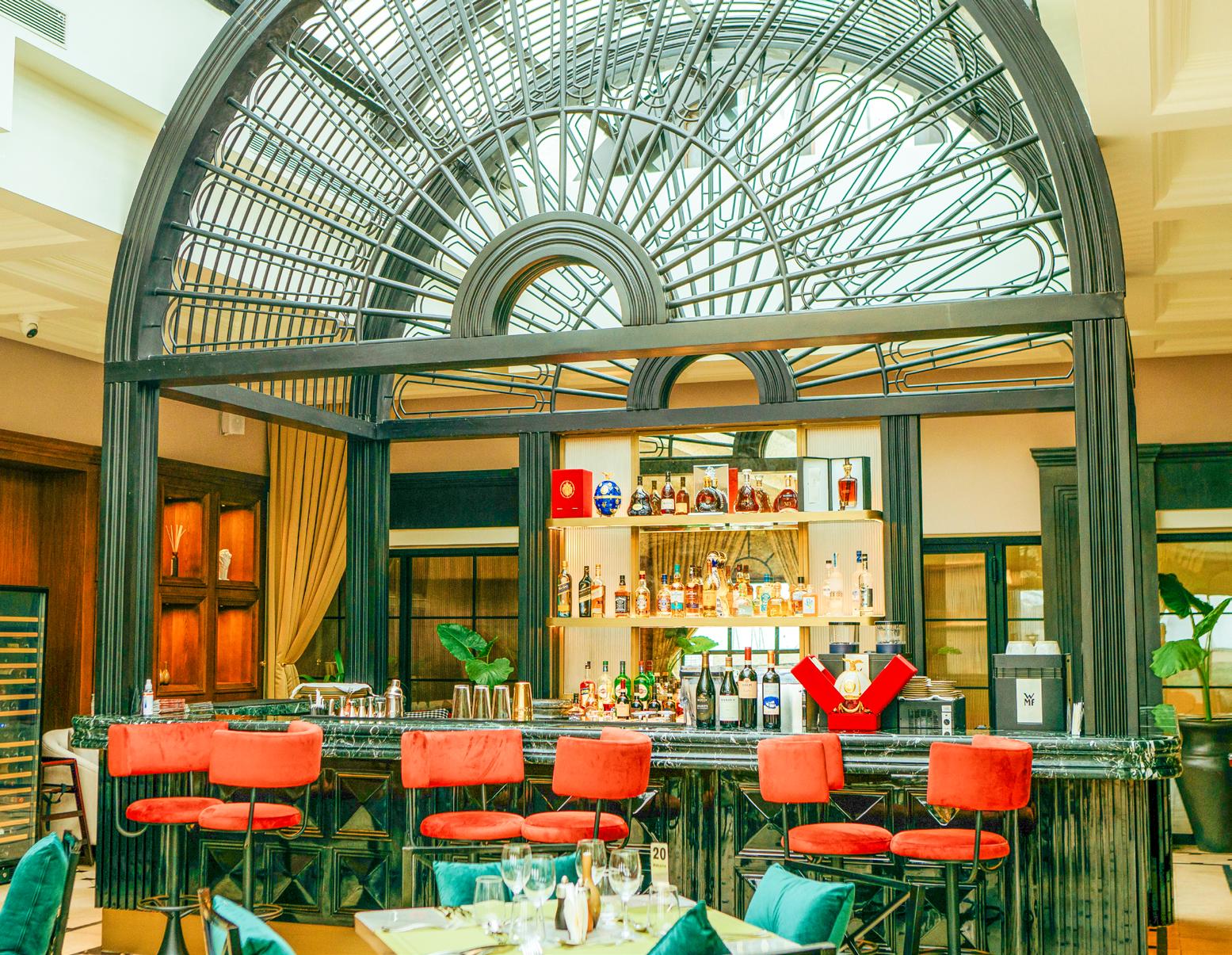
During Gombe’s relentless energy, the concept of a sanctuary becomes not a luxury, but a necessity. KertelSuites, located on Avenue de la Mongala, has been meticulously designed to meet this exact need. It caters to a sophisticated clientele that
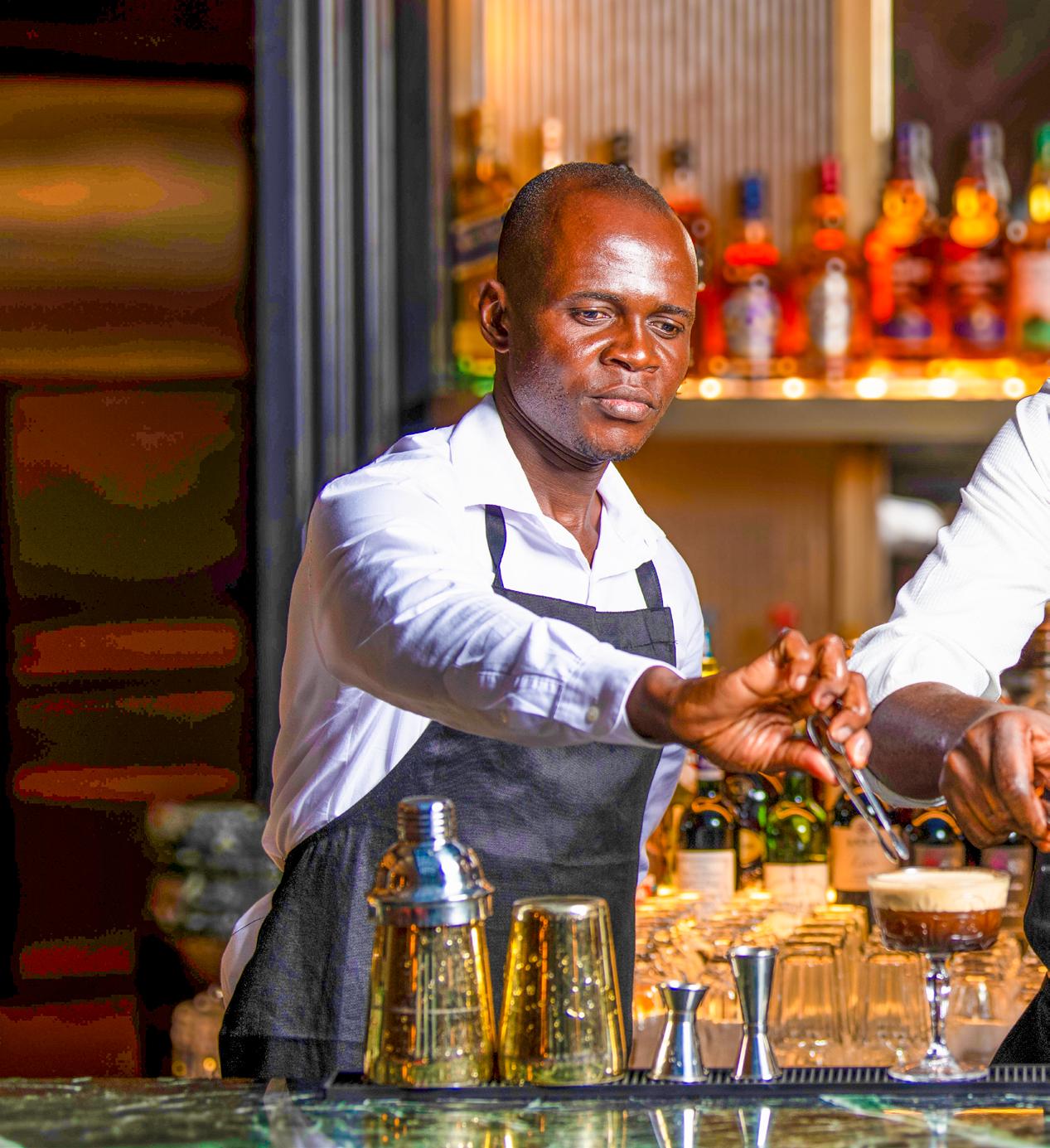
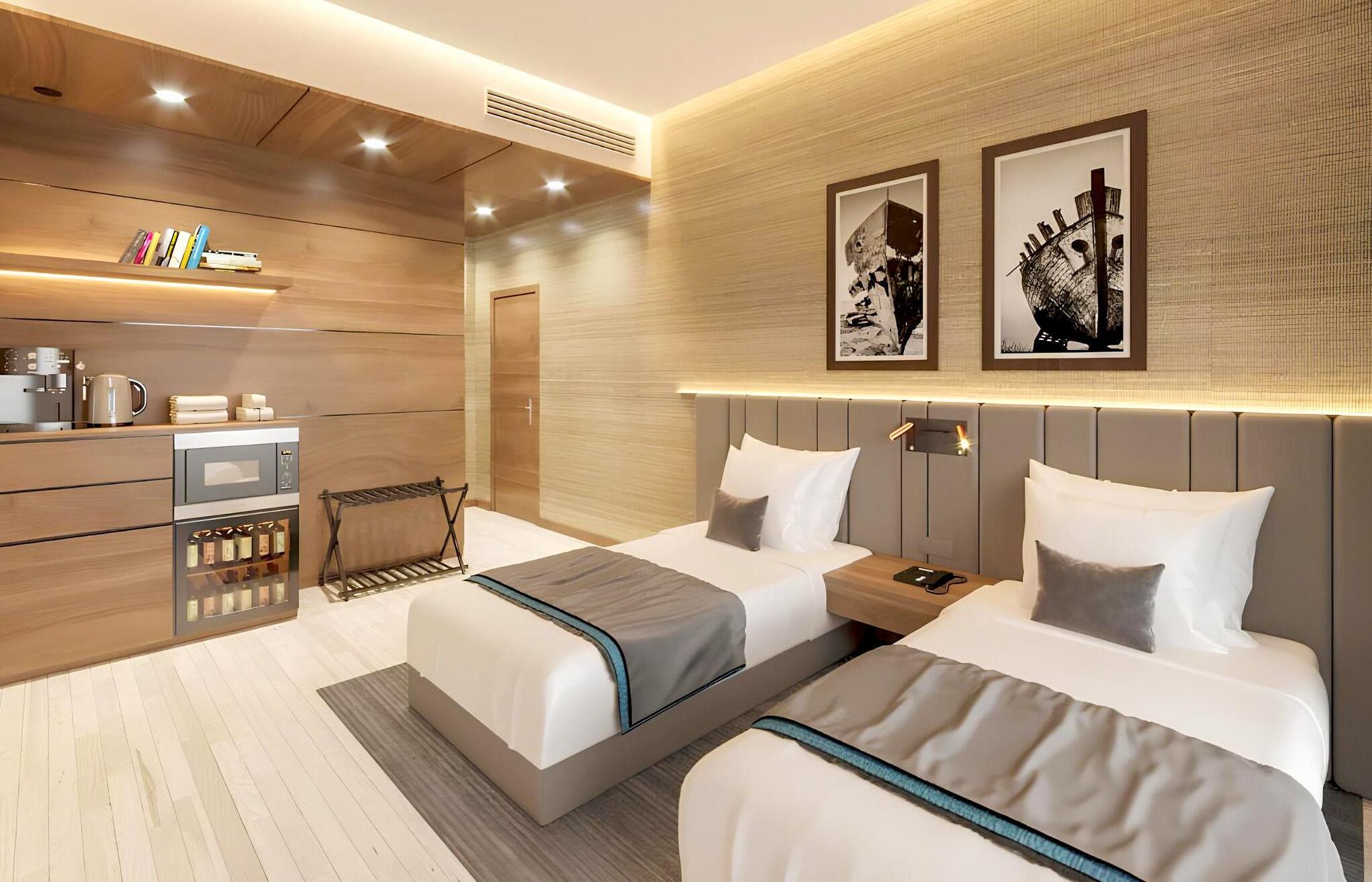
requires both seamless functionality and a genuine space to decompress. The property’s philosophy is built on the understanding that today’s traveller, especially in a demanding market like Kinshasa, requires room to both work and breathe. The accommodation strategy is a masterstroke in practical
luxury. While standard rooms are available, the signature offering is the extensive range of spacious suites. These are not merely larger rooms; they are thoughtfully designed environments with distinct living and sleeping areas. This layout is transformative for a specific type of traveller:
• The Business Executive: The separate living area becomes a private, professional space to host meetings or focus on work without the confines of a standard hotel room.
• The Project Team: Colleagues travelling together can use the suite as a collaborative hub.
• The Long-Stay Visitor: For those on extended assignments, the suite provides a sense of apartment-style living, mitigating the fatigue of long-term hotel stays.
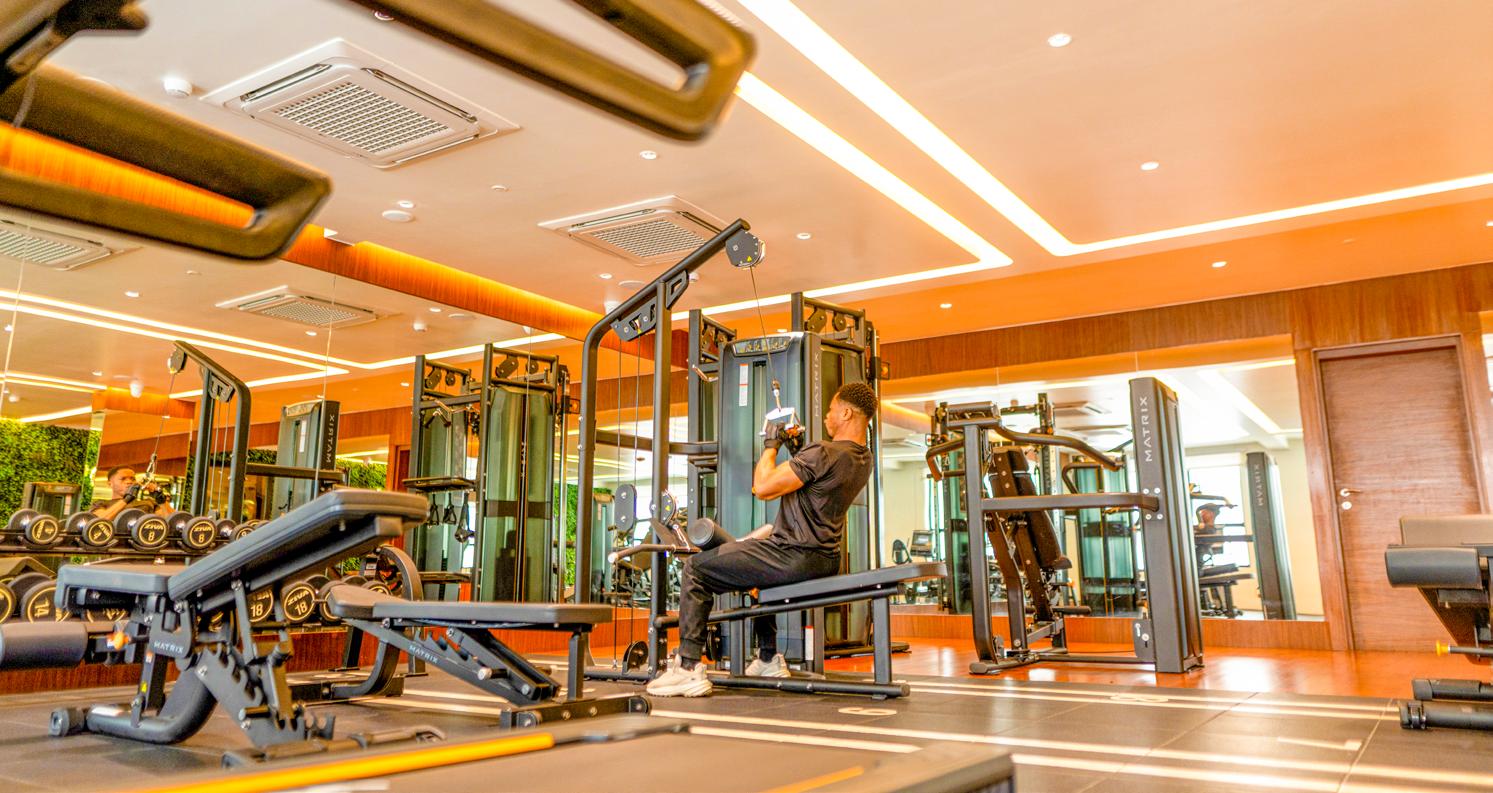
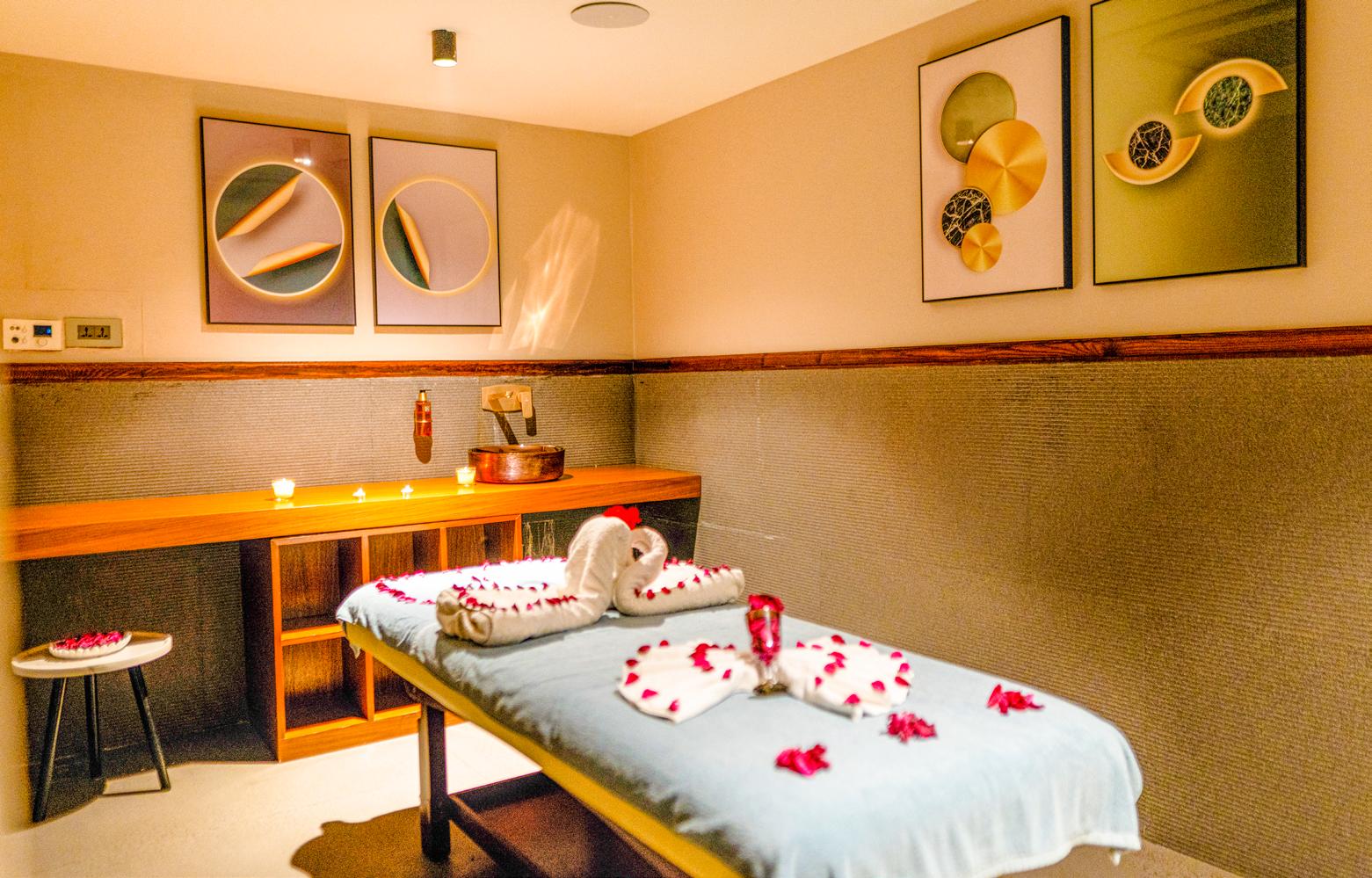
The wellness amenities at KertelSuites are curated to actively combat the strains of travel. The rooftop outdoor pool is not simply a feature; it is a sanctuary, from a place of peace.
The fitness centre allows guests to maintain their routines, while the spa offers a crucial resource for recovery, with treatments designed to alleviate the physical toll of longhaul flights and intense workdays. These facilities are not an afterthought; they are integral to the property’s mission to ensure guests depart feeling better than when they arrived.
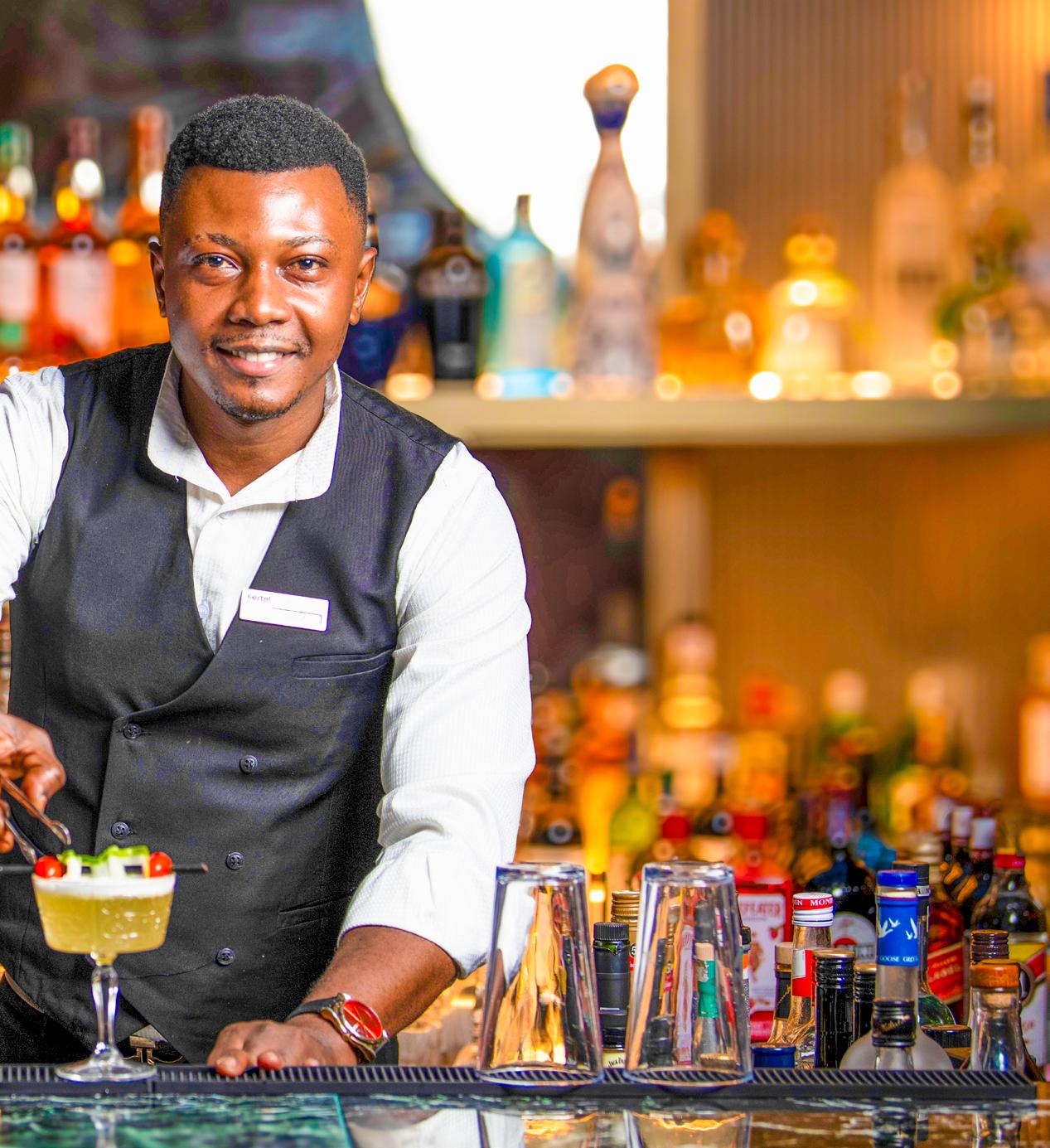
A hallmark of world-class hospitality is the ability to offer exceptional culinary experiences within the confines of the property. KertelSuites excels in this domain with two distinct
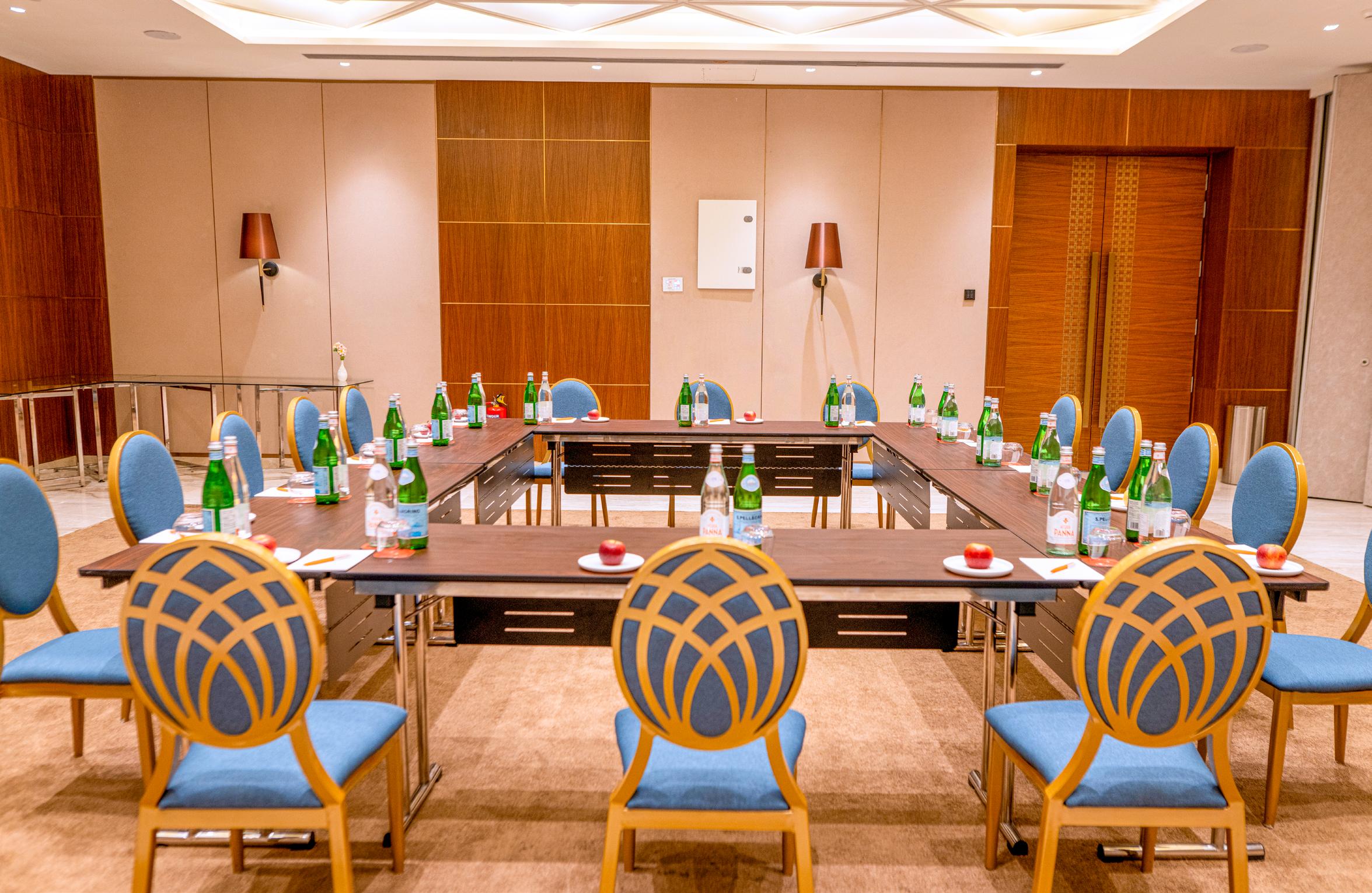
restaurants that eliminate the need to venture out for every meal, a significant advantage on days dominated by back-toback appointments or when security advisories recommend caution after dark.
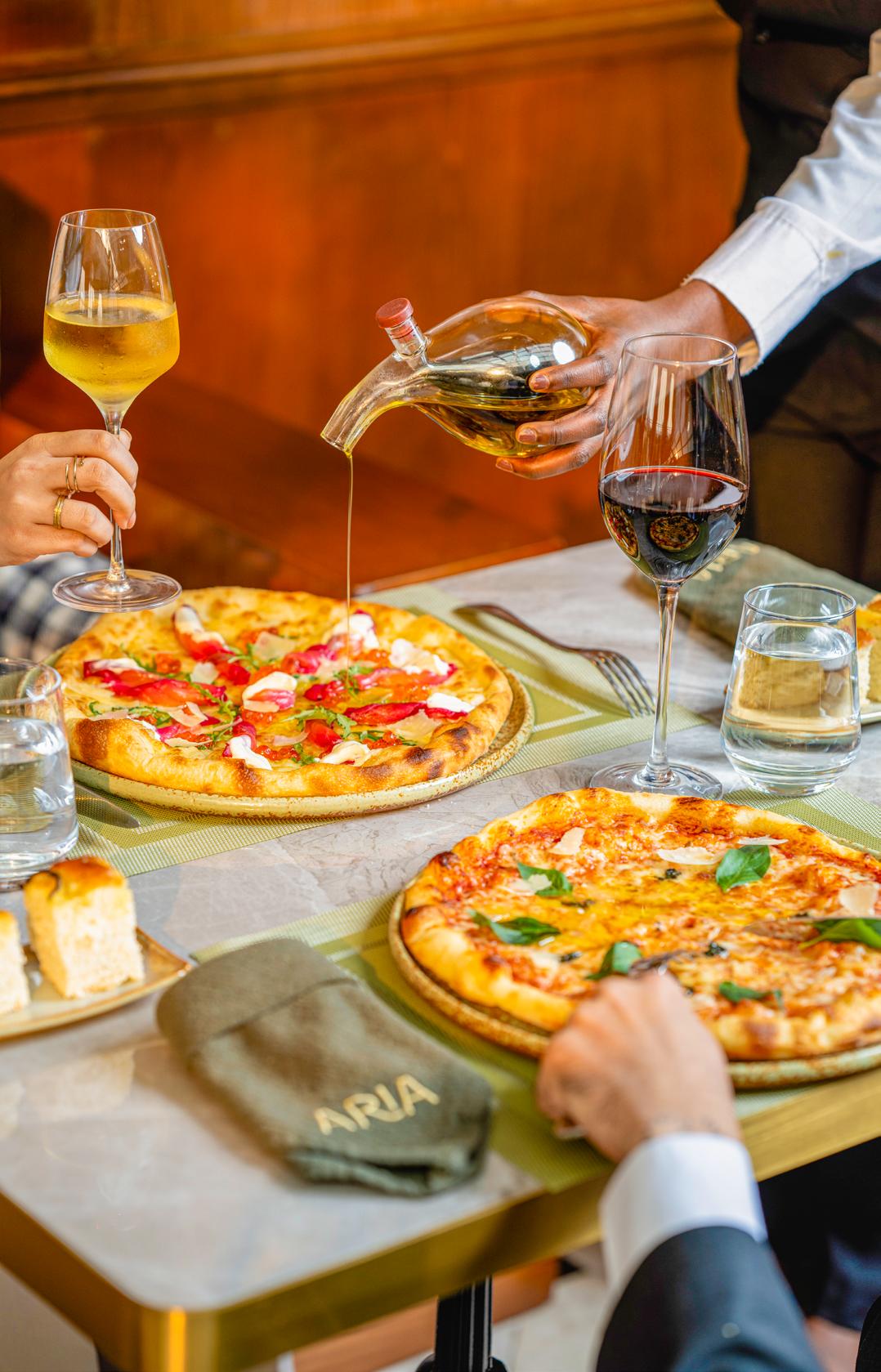
• Aria: This is the hotel’s premium Italian offering, a restaurant that would hold its own in any major international city. The focus here is on authenticity and craft: house-made pasta, slow-cooked sauces that simmer for hours, and the unmistakable aroma of wood-fired breads. Aria provides an atmosphere of understated elegance, perfect for a business dinner that impresses or a quiet, reflective meal at the end of a demanding day.
• Méli-Mélo: Functioning as the all-day dining venue, Méli-Mélo offers a versatile, international menu with a subtle French influence. It is the engine room of the hotel, where breakfast is served with efficiency and style, and the extensive à la carte menu ensures that even long-term residents rarely need to repeat a dish. It’s a space that adapts to the guest’s needs, whether a quick solo lunch or a leisurely group dinner.
Together, these restaurants provide a comprehensive culinary solution, covering a spectrum of tastes and occasions with consistent quality that builds trust and loyalty among guests.
NAVIGATING REALITIES: A PRAGMATIC APPROACH
It would be remiss to ignore the perceptions that often overshadow the DRC. Media narratives can be polarising, but
the on-the-ground reality in Kinshasa, particularly for business travellers in Gombe, is one of layered complexity. While travel advisories rightly emphasise vigilance and due diligence, these are precautions applicable to many major urban centres across the globe.
The savvy traveller adopts a pragmatic approach: monitoring official updates, arranging transportation through the hotel’s vetted drivers, and leveraging the concierge for reservations and local advice. Basing oneself in a reputable establishment in Gombe, with its heightened security and institutional presence, is the single most effective way to mitigate potential challenges. This prudent strategy allows visitors to focus on their purpose— be it business, investment, or cultural exploration—with confidence.
The ultimate success of a trip to Kinshasa hinges on a deliberate rhythm of engagement and withdrawal. The city is best experienced in waves. A morning might be spent in high-level negotiations, followed by an afternoon exploring the Académie des BeauxArts. An evening could involve the exhilarating immersion of a rumba club, followed by a return to the serene calm of KertelSuites for a nightcap by the pool.
This is the formula that KertelSuites facilitates so effectively. It provides the secure, comfortable, and well-appointed base that allows guests to venture out and absorb the full intensity of Kinshasa, knowing that a haven of order, comfort, and culinary excellence awaits their return. It is this powerful pairing—the vibrant, untamed energy of the city with the composed, professional sanctuary of the hotel—that transforms a daunting business trip into an inspiring journey.
For those looking to truly understand and engage with the dynamic heart of Central Africa, Kinshasa, with the right base, is not just a destination to be managed, but an experience to be mastered.
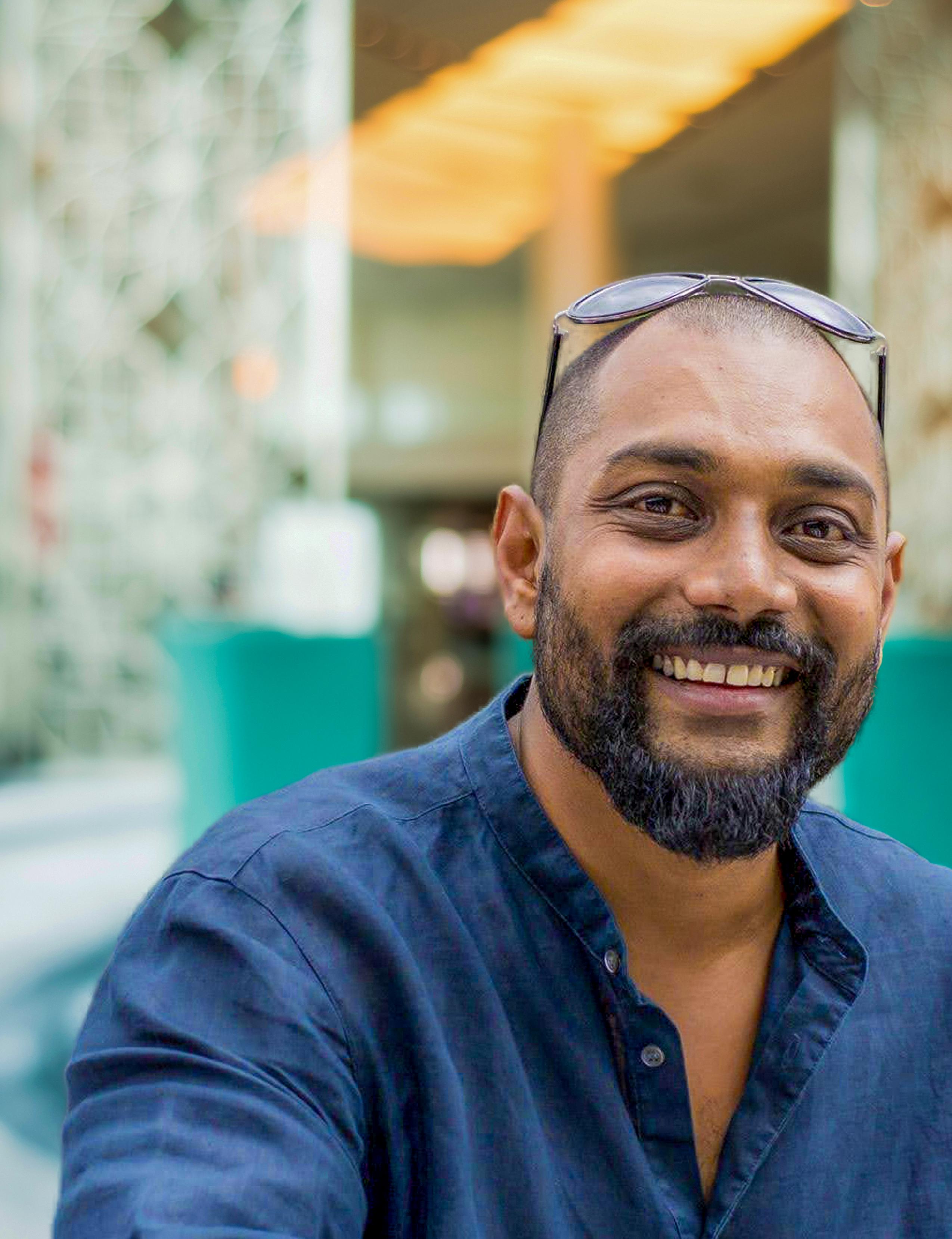



BY VICTOR ATSALI
A
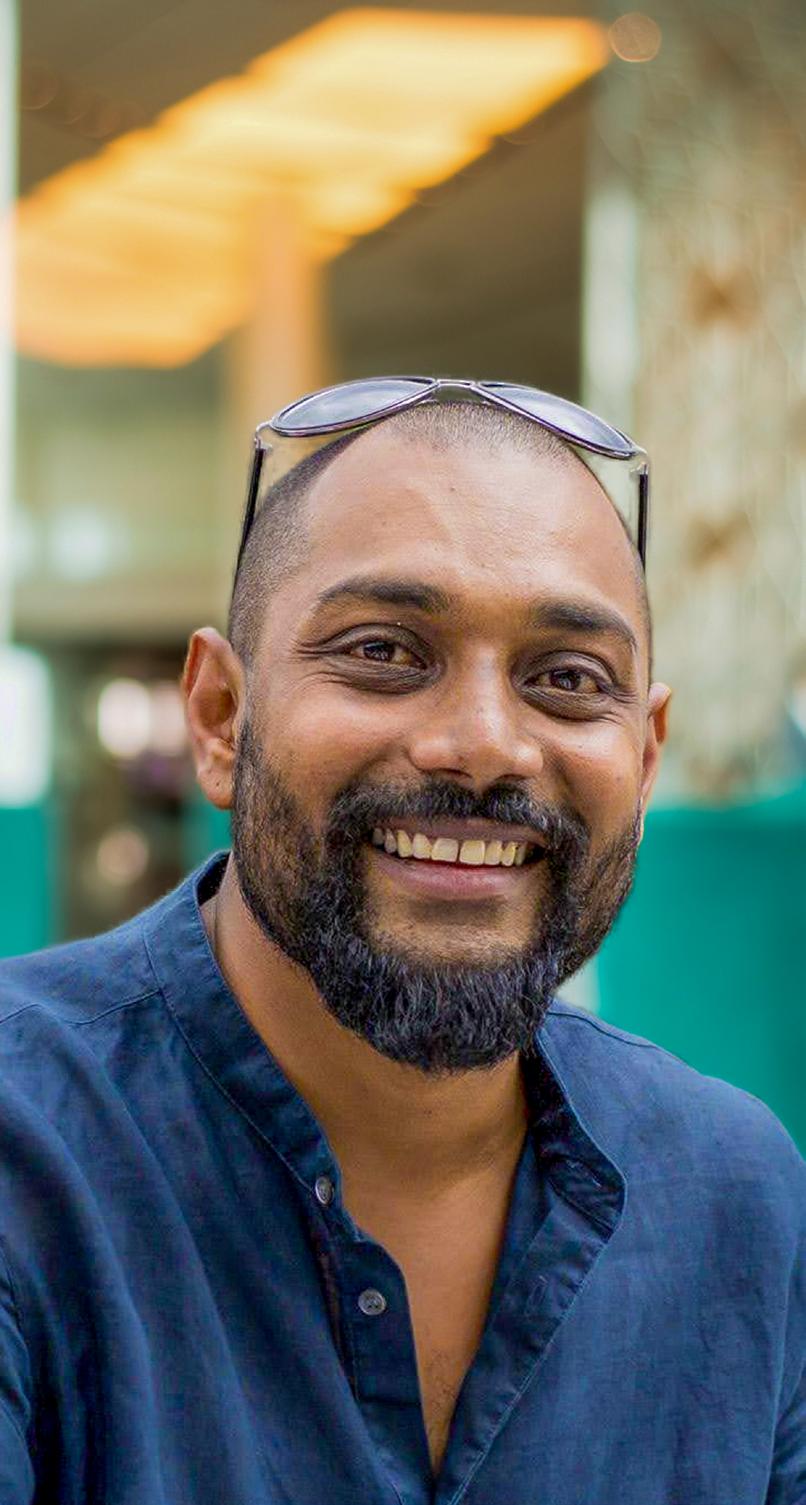
Mikul Shah quite literally joined our conversation mid-journey, navigating Nairobi traffic on his way to a golf tournament, an unintentionally poetic metaphor for a man whose life is a constant balancing act between ideas, ventures, and the hungry crowds he continues to inspire.
As he steered through the city, he began steering us through his story, one that starts far from Tigoni’s serene supper club table and closer to the buzzing heart of central London, a city he describes as a “one of the food capitals of the world” and his personal masterclass in dining culture.
In the UK, he was both consumer and a learning, dining his way across cultures and absorbing the power of food as a connector. Between hunting down restaurant discounts and scrolling through foodie apps, his dual passions, technology and hospitality, began quietly marinating. The degree in computer systems from the University of Manchester sharpened his digital instincts, while the cosmopolitan restaurant scene sharpened his palate. These two ingredients would later blend into the recipe that birthed EatOut.
When he returned to Nairobi, Shah did not expect to build anything in tech; he simply joined his family business. But passion, like a stubborn waiter, kept returning to the table. His background in technology proved impossible to ignore, and when mixed with his growing love for Kenya’s hospitality scene, EatOut emerged as a product of necessity, curiosity, and timing.
It became his first major venture and a platform that reshaped how diners discovered restaurants in the city. EatOut also opened the doors to the startup world, eventually leading him to work with Safaricom’s Spark Fund, Old Mutual and most recently Purple Elephant Ventures, where he explored the experimental, risk-driven world of venture building.
He says that while venture studios thrive on scalability, experimentation, and bold swings, his personal projects follow a simpler north star—profitability and viability from day one. Small businesses, he insists, are the unsung heroes of stability; they aren’t chasing unicorn dreams but building sustainable footprints. Understanding where to place energy, when to hold back, and when to go all in has become his superpower.
This understanding naturally led to the Nairobi Supper Club, a concept Shah is quick to emphasise he did not invent but masterfully reimagined. Supper clubs have existed
SINGLETON DIDN’T JUST PAIR WITH THE FOOD; IT WOVE ITSELF INTO THE NARRATIVE. IT LOOSENED MOODS, HEIGHTENED EXPERIENCES, AND PUSHED CHEFS INTO UNEXPLORED CREATIVE TERRAIN.
everywhere—in New York basements, Mexican rooftops, Moroccan riads, but his version feels distinctly Kenyan, distinctly Tigoni, and distinctly Mikul.
Hosting just one table a month lends an irresistible exclusivity, a “blink and you’ll miss it” charm that keeps guests alert, eager, and ready to book the next edition before dessert even lands. Tigoni provides the dreamlike backdrop: lush, green, refined but relaxed, a place where time slows enough for food to speak louder than the city’s noise.
Years spent working with Kenya’s best restaurants gave him insider knowledge on what makes a dining experience memorable, and his deep network means chefs—local, amateur, and international, rotate through the Supper Club like guest stars in a long-running culinary series.
He credits the Supper Club’s success to three things: outstanding hospitality, ambiance, and a great audience. The exclusivity of only one table, one weekend, one menu, one moment a month—are what make the experience magnetic.
Themes for each edition emerge through a delicious blend of structure and spontaneity. Sometimes it’s anchored in calendar moments like Mother’s Day or cultural celebrations such as Moroccan Independence Day, which once inspired a menu by an amateur Moroccan chef.
Other times, it is the result of chance, conversations, meetings, whispers from traveling chefs passing through Nairobi, or simply the availability of ingredients that spark imagination.
After five years, the Supper Club has become the artistic playground of Nairobi’s dining culture. There is no strict formula, and Mikul prefers it that way; unpredictability keeps it fresh, relevant, and beautifully alive.
The transition from supper club storytelling to the partnership with Singleton unfolds as naturally as a good pairing, because that is precisely what it became. Paul Gachoi, Diageo’s Reserve Brand Ambassador, attended one of the early editions and, moved by the energy, suggested something almost mischievously simple: welcome cocktails.
With guests arriving at different times from Nairobi to Tigoni, offering carefully crafted Singleton cocktails would ease the waiting and spark conversation. A season later, a formal partnership was born, ushering the Supper Club into Season Four with an aromatic splash.
For someone who doesn’t drink heavily, Shah speaks about whisky with a respectful fondness, describing how he prefers
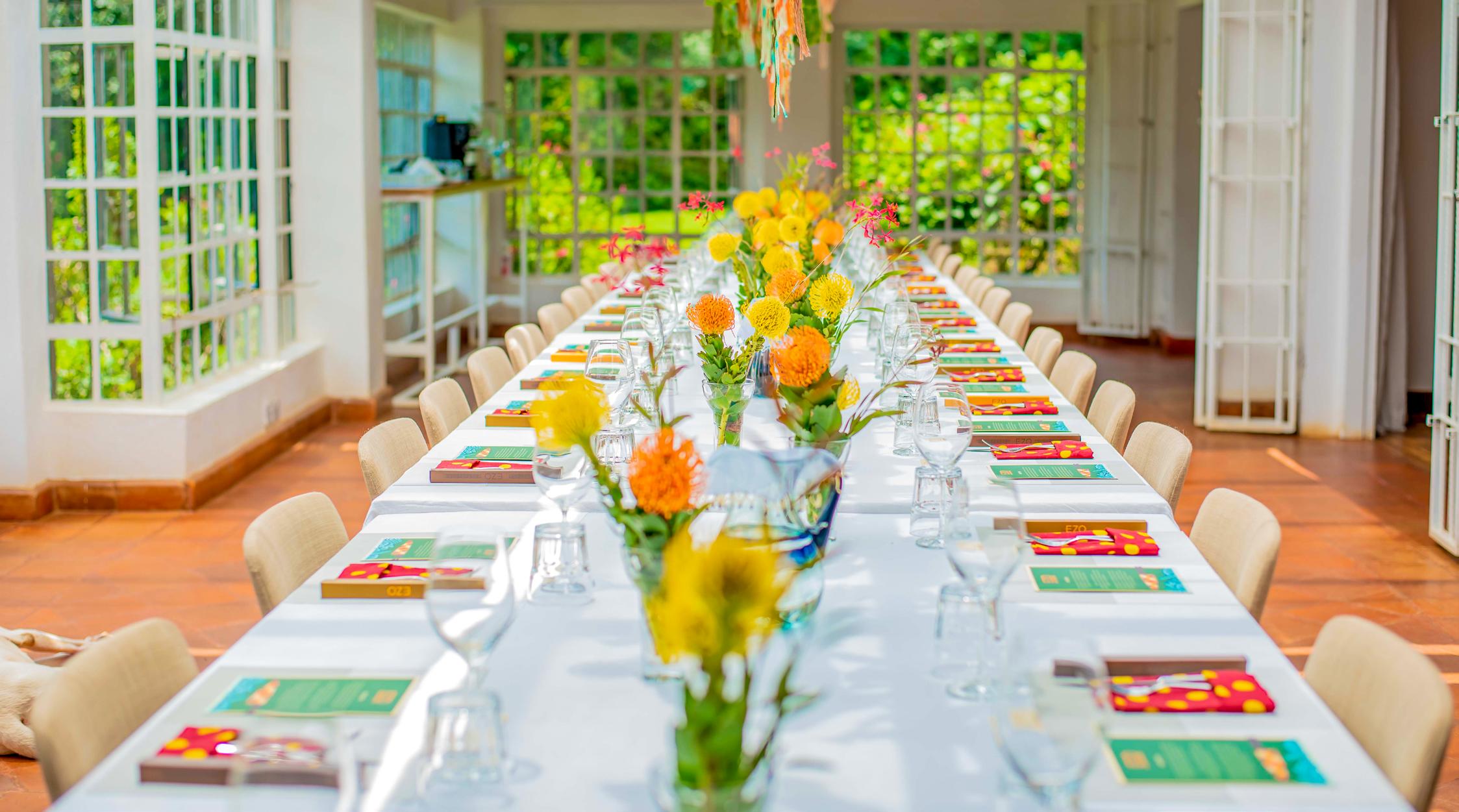
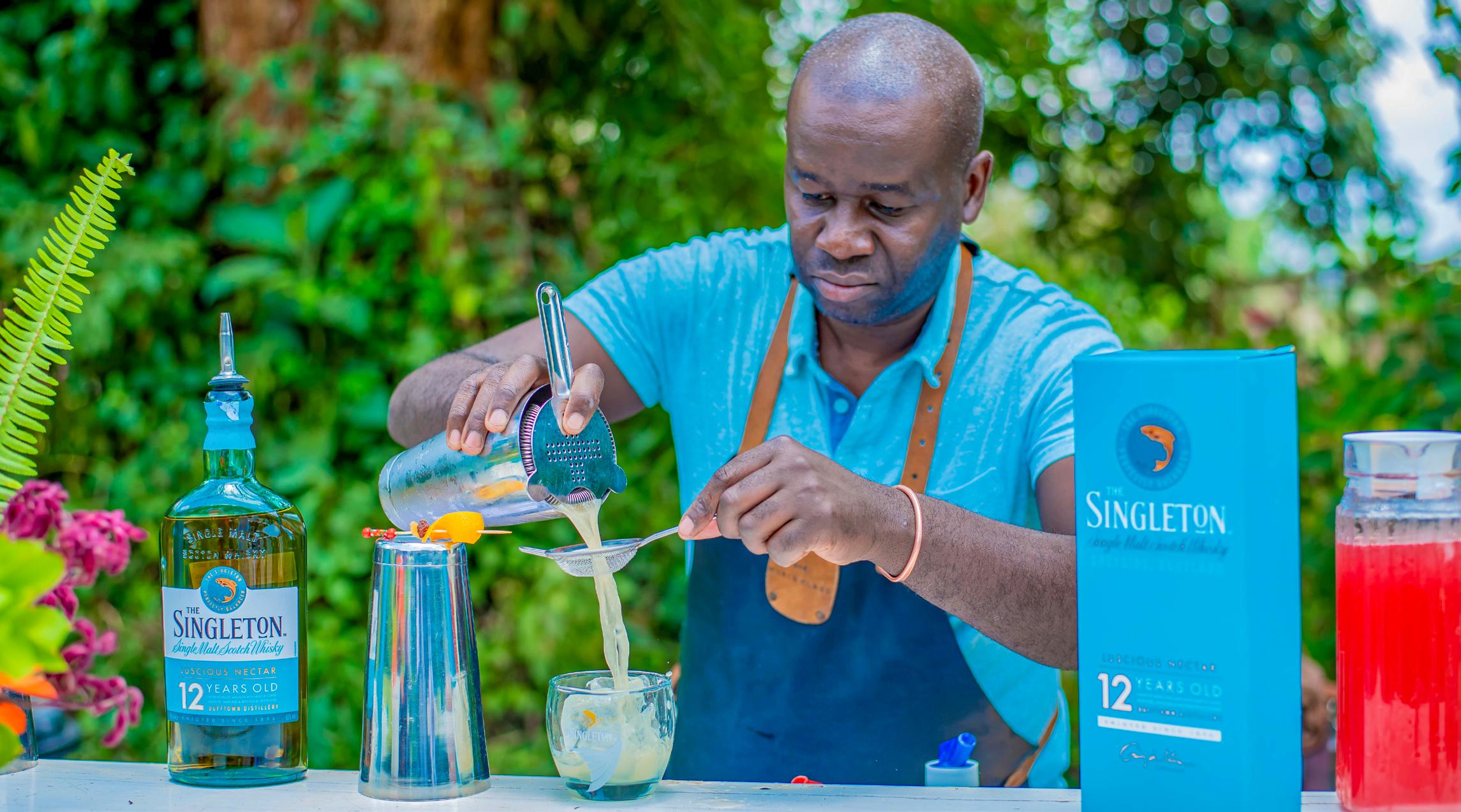
it neat, with a block of ice. But it was Singleton’s culinary challenge that excited him most: cook with the whisky. Incorporate it into the menu. Let chefs bend their creativity around its notes, textures, and personality.
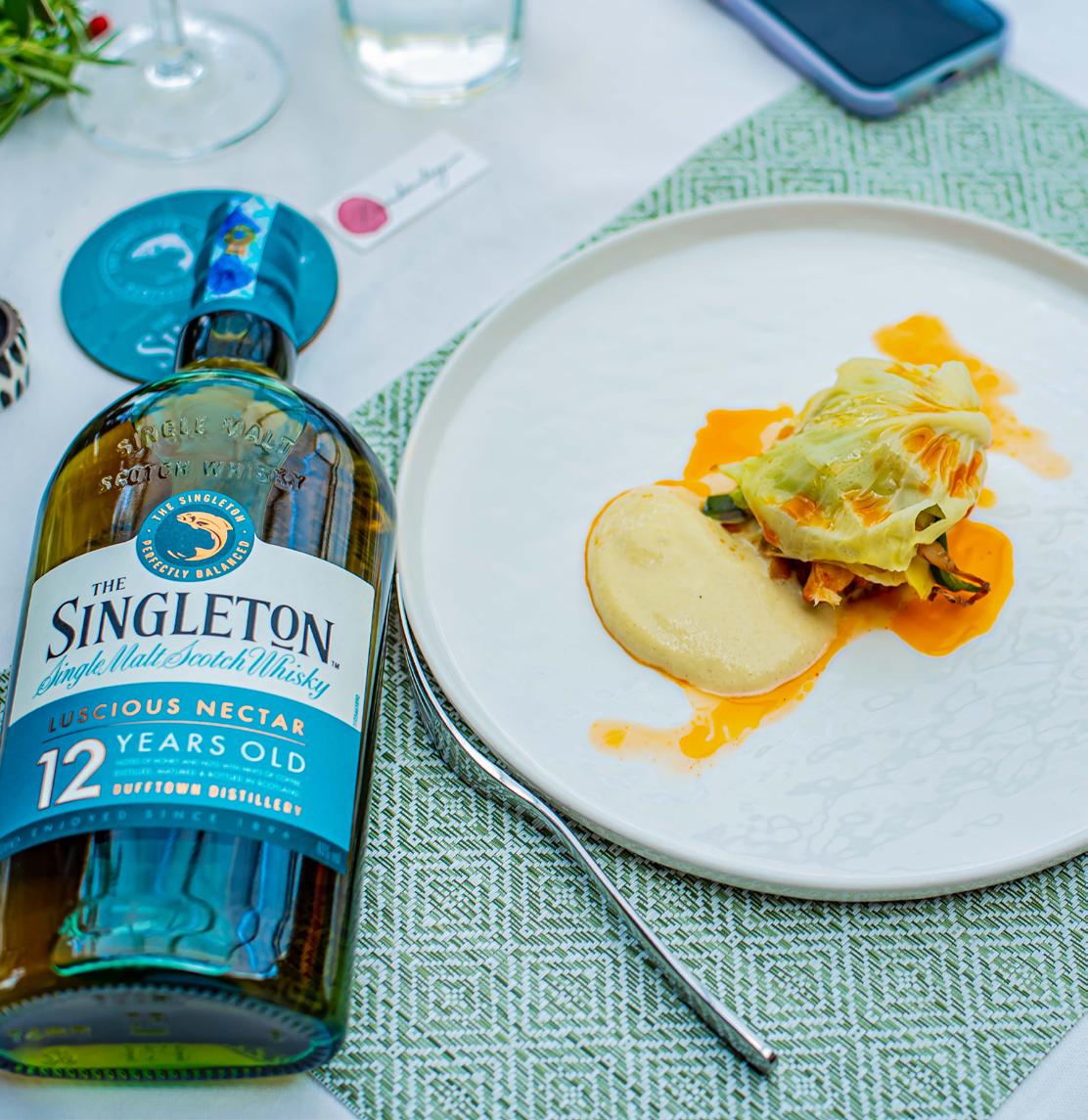
Suddenly, the Supper Club wasn’t just serving whisky; it was cooking, folding, and dancing with it. Chefs received sample bottles and returned with innovations, desserts, glazes, reductions, and the unforgettable Singleton-infused ice cream that has become legend.
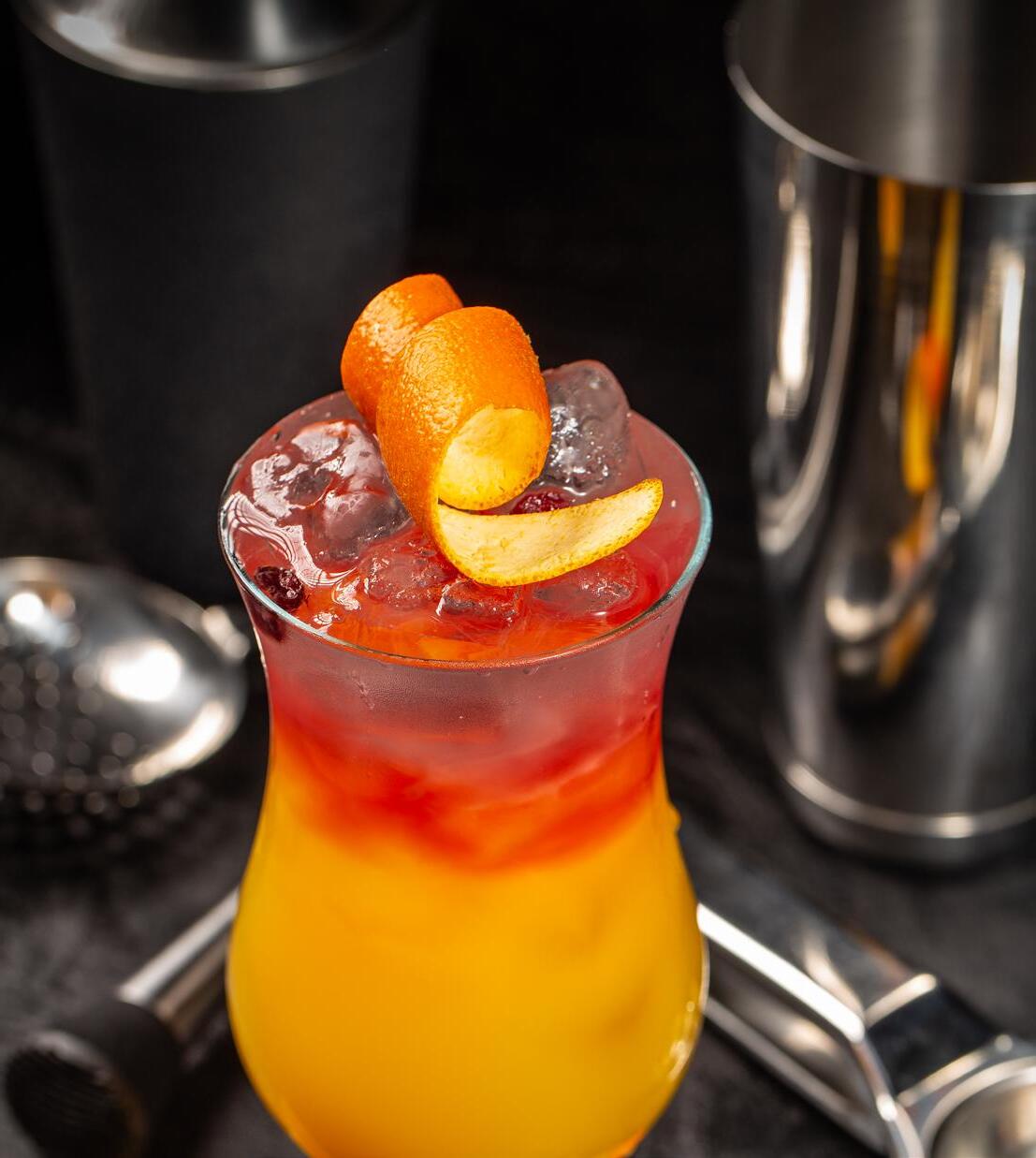
The partnership deepened each month when mixologists were brought in to craft bespoke cocktails inspired by Tigoni’s mist, ambiance, and menu. These intimate masterclasses allowed guests to learn the art behind each sip, elevating the dinner into a multi-sensory performance. Singleton didn’t just pair with the food; it wove itself into the narrative. It loosened moods, heightened experiences, and pushed chefs into unexplored creative terrain.
NAIROBI’S DINING REVOLUTION AND THE CALL FOR CULINARY UNITY
As the conversation returned to the broader Kenyan dining landscape, Shah’s voice carried a mix of pride and urgency. Having tasted hospitality across Europe, Asia, the Americas, and Africa, he now believes what many locals already whisper: Nairobi sits at par with the best of them. Not because of one institution or one visionary, but because hundreds of creatives, chefs, hosts, artists, mixologists, sommeliers, designers, are all pushing the envelope at the same time.
A cultural renaissance, he calls it, stretching far beyond food into music, art, and fashion. His biggest takeaway from years of curating experiences is that Kenya now has abundant talent and ideas; what it needs is collaboration.
Too many restaurant groups and culinary creatives still see each other as competitors instead of co-creators. But with the government leaning heavily into tourism diversification, especially culinary tourism, the opportunity for Kenya to shine
globally has never been brighter. Shah dreams of a united industry, one where Kenyan cuisine travels, evolves, and earns its rightful place on the world stage.
Just as he pulled into the golf club parking lot, apologizing intermittently as he passed through security, Shah dropped one last announcement that felt like a full-circle moment: Nairobi Restaurant Week returns in 2026. One hundred restaurants. One festival. One city hungry to cement its culinary identity.
For someone who has spent years connecting diners to chefs, ideas to opportunities, and now whiskey to menus, Nairobi Restaurant Week feels like the next logical chapter in his ongoing mission to celebrate dining culture, not as an industry, but as a community. HRMEA

BY ALPHONSE OKOTH
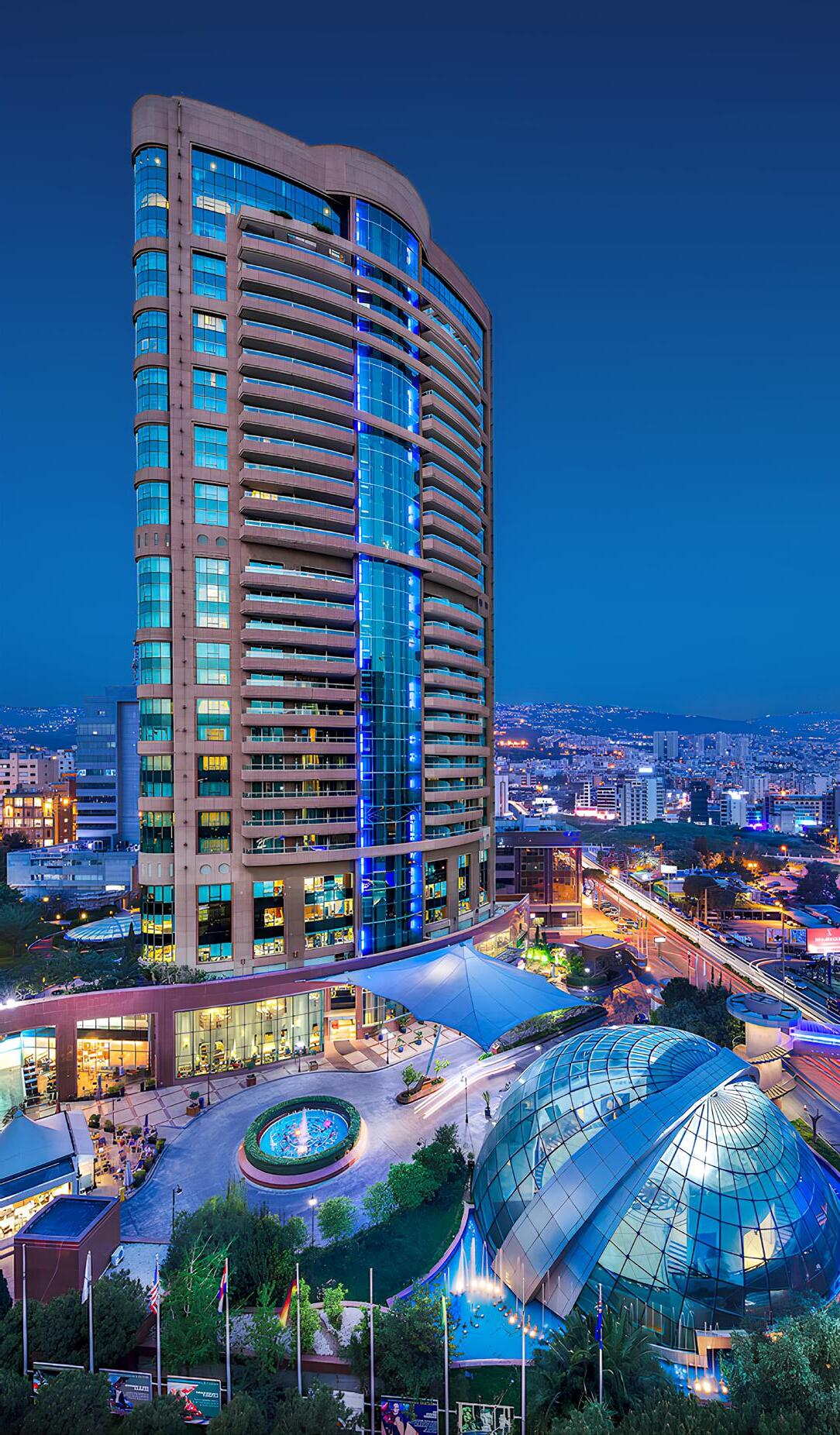
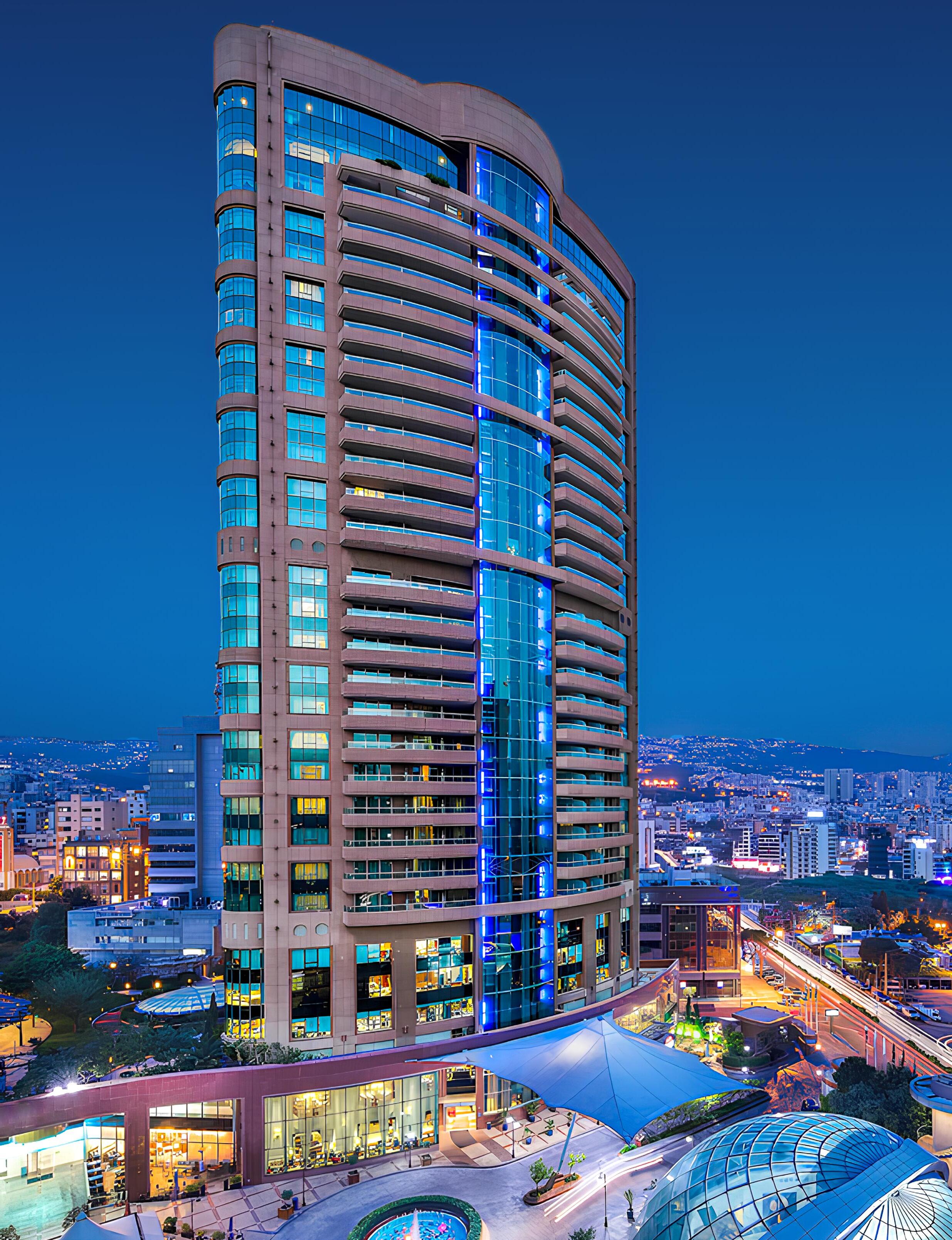
Perched on Charles de Gaulle Street in the verdant heart of Horsh Tabet, Al Habtoor Grand Beirut is more than just a hotel; it is a symbol. Standing tall as a landmark of refined hospitality, it reflects both the glamorous spirit of historic Beirut and a forward-looking vision. The property is part of the Al Habtoor Group’s portfolio and has earned a reputation for blending architectural sophistication with top-tier amenities.
Since it opened (in the mid-2000s), the Grand has acted as a bridge between eras, paying homage to the so-called “Paris of the Middle East” while serving today’s global traveler. Its location is strategic: approximately 15 minutes from Beirut’s airport, making it convenient for both international visitors and business crowds.
The Al Habtoor Group, with deep roots in Middle Eastern hospitality, brought this hotel to life as a tribute to luxury, legacy, and Lebanese resilience. Their vision was not only to build a hotel but to create an institution, one that resonates with Beirut’s storied past while looking ahead to its future.
The architectural design plays on this duality: neo-classical touches, elegant craftsmanship, and modern silhouettes merge seamlessly, giving guests a sense that they are part of something timeless yet very much contemporary. And as one of the largest hospitality venues in the city, its presence reinforces Beirut’s role as a center for business, culture, and social exchange.
The hotel houses 195 rooms and suites, each thoughtfully designed to offer sweeping views of Beirut’s skyline, the Mediterranean Sea, or the surrounding mountains. Elegant and spacious, the accommodation serves as calm sanctuaries in a city that pulses with energy.
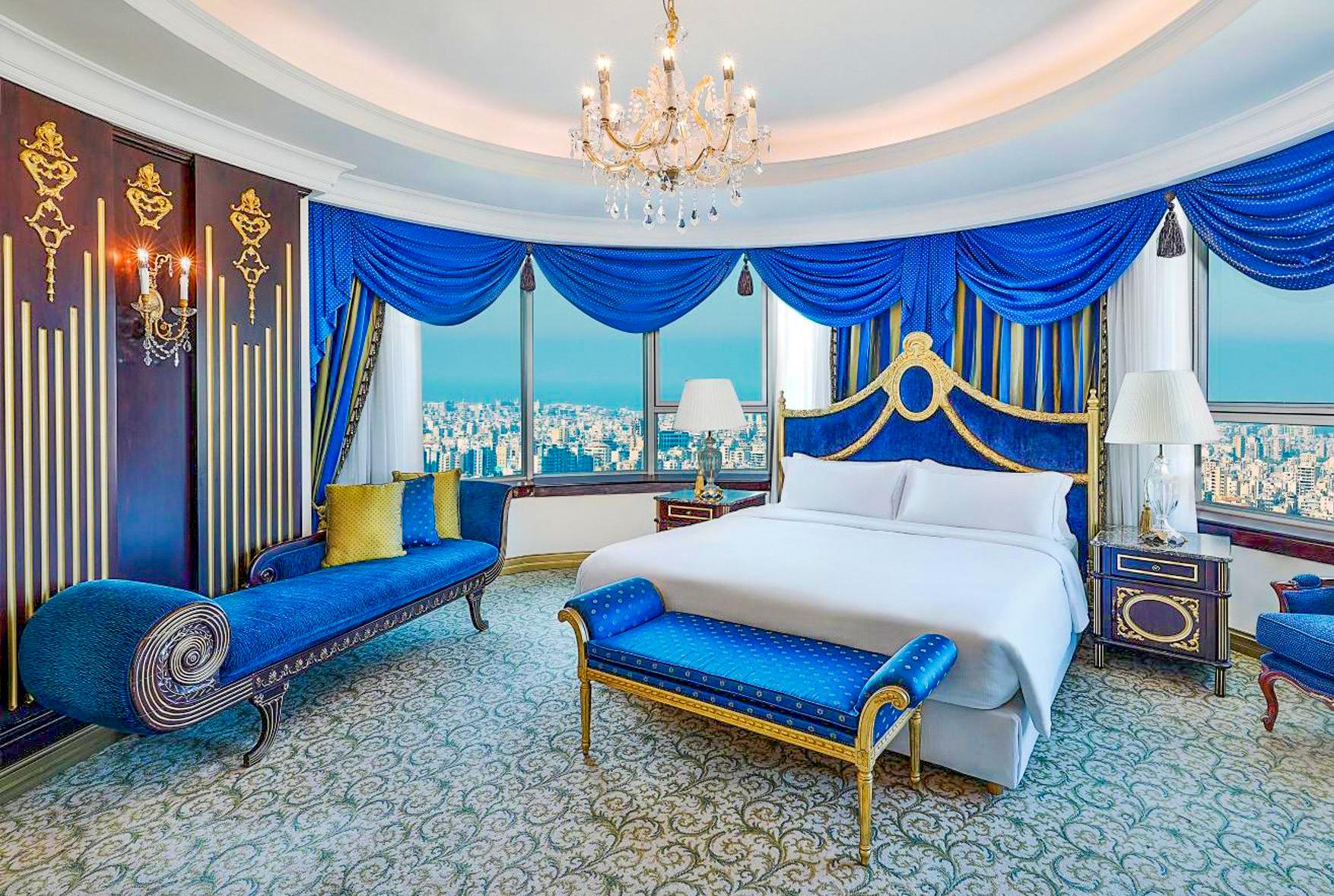
Of particular note are the penthouse suites: two entire floors are dedicated to these luxurious retreats. These penthouses reflect the hotel’s commitment to high-end, bespoke comfort, making them perfect for VIP guests, families, or anyone seeking an elevated stay.
For business travelers, there are Executive Rooms with access to exclusive lounges, and the hotel supports a 24-hour business centre to stay connected at all times.
One of the most compelling features of Al Habtoor Grand is its culinary offering, which masterfully combines fine dining, casual elegance, and sky-high ambiance.
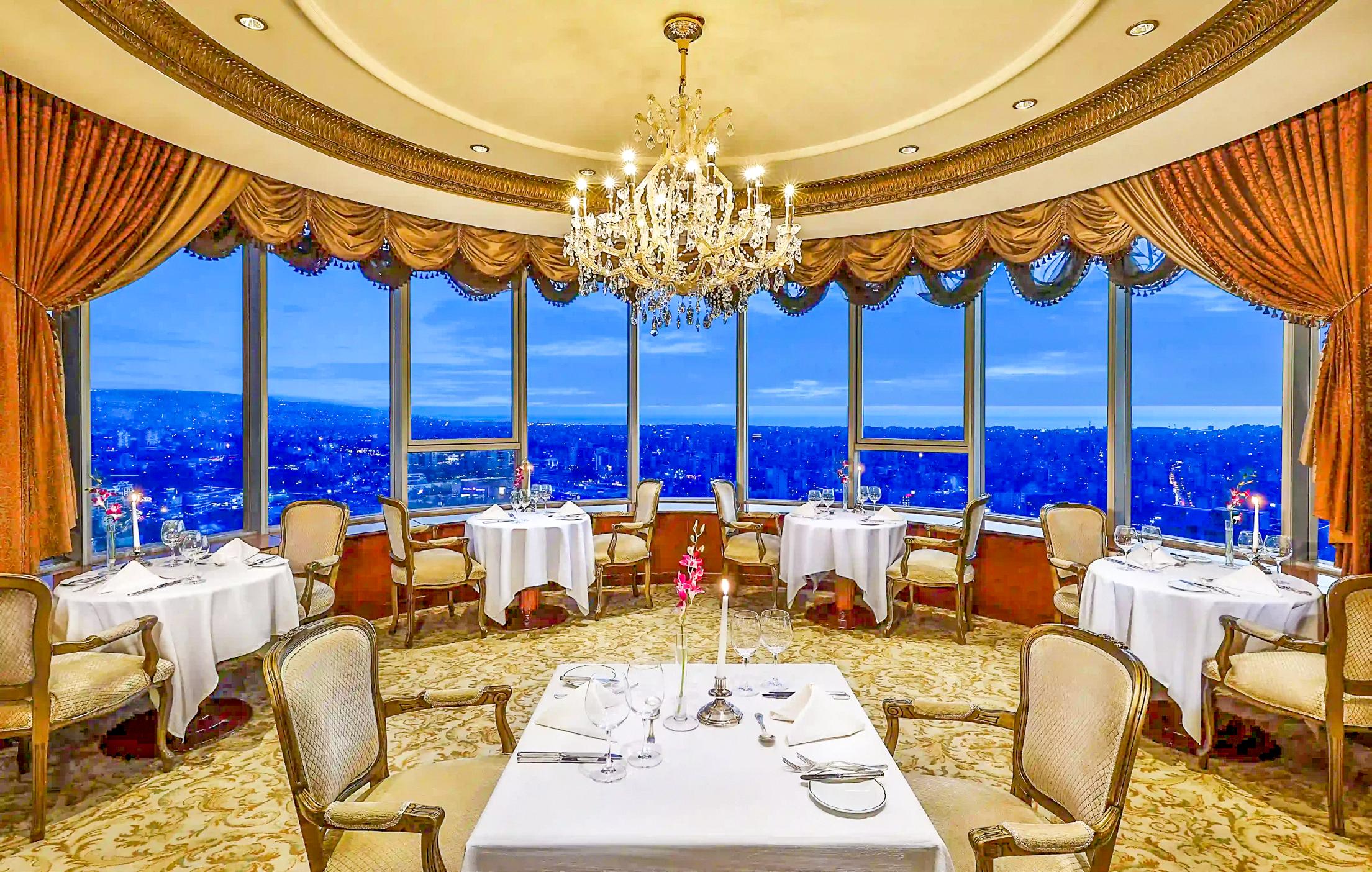
Le Ciel - Located on the 31st floor, Le Ciel serves refined French cuisine against the backdrop of panoramic city views. Its setting is ideal for romantic dinners, corporate evenings, or private celebrations.

Up On 31st - This is Lebanon’s highest bar, perched on the same top floor. Guests can sip signature cocktails, wines, and light international fare while gazing out over the city, a setting that’s as dramatic as it is relaxing.
Oak Lounge - In contrast, the Oak Lounge in the lobby offers a refined but relaxed atmosphere. With its neo-classical design, it’s perfect for light snacks, gourmet coffee or tea, and casual socializing.
These spaces don’t serve only guests; they’ve become part of Beirut’s social fabric, drawing locals and travelers alike who seek memorable moments in beautiful settings.
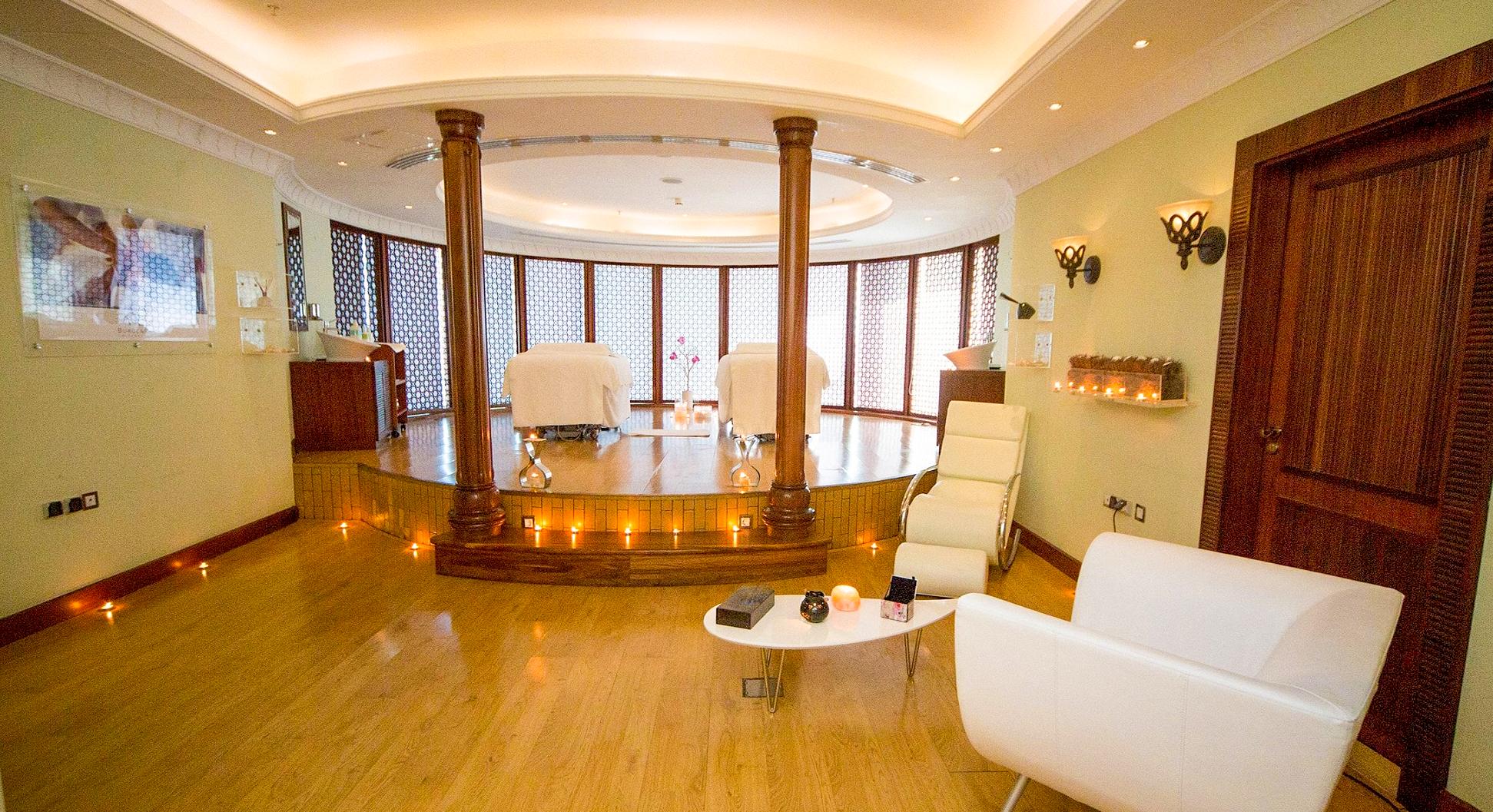
REDEFINED: THE THERAPY SPA & BEYOND Luxury at Al Habtoor Grand Beirut extends far beyond aesthetics; it is deeply intertwined with the concept of wellbeing. Central to this experience is the Therapy Spa, a sanctuary designed to rejuvenate both body and mind. Guests can indulge in a comprehensive range of treatments tailored to refresh, restore, and revitalize. From rejuvenating facials to soothing body scrubs and wraps, each therapy is crafted to provide a transformative experience.
For those seeking advanced treatments, the spa offers Endermolift, a non-invasive skin-firming therapy that enhances circulation and promotes youthful skin. Traditional wellness amenities complement these modern treatments, including steam rooms, volcanic steam baths, and even a snow room, an uncommon and luxurious feature that adds a unique sensory element to the spa journey.
Beyond treatments, the hotel provides a fully equipped
fitness center, enabling guests to maintain an active lifestyle while traveling. Whether decompressing after a long flight or preparing for an important meeting, visitors can strike a balance between relaxation and activity, making wellness an integral part of their stay at Al Habtoor Grand Beirut.
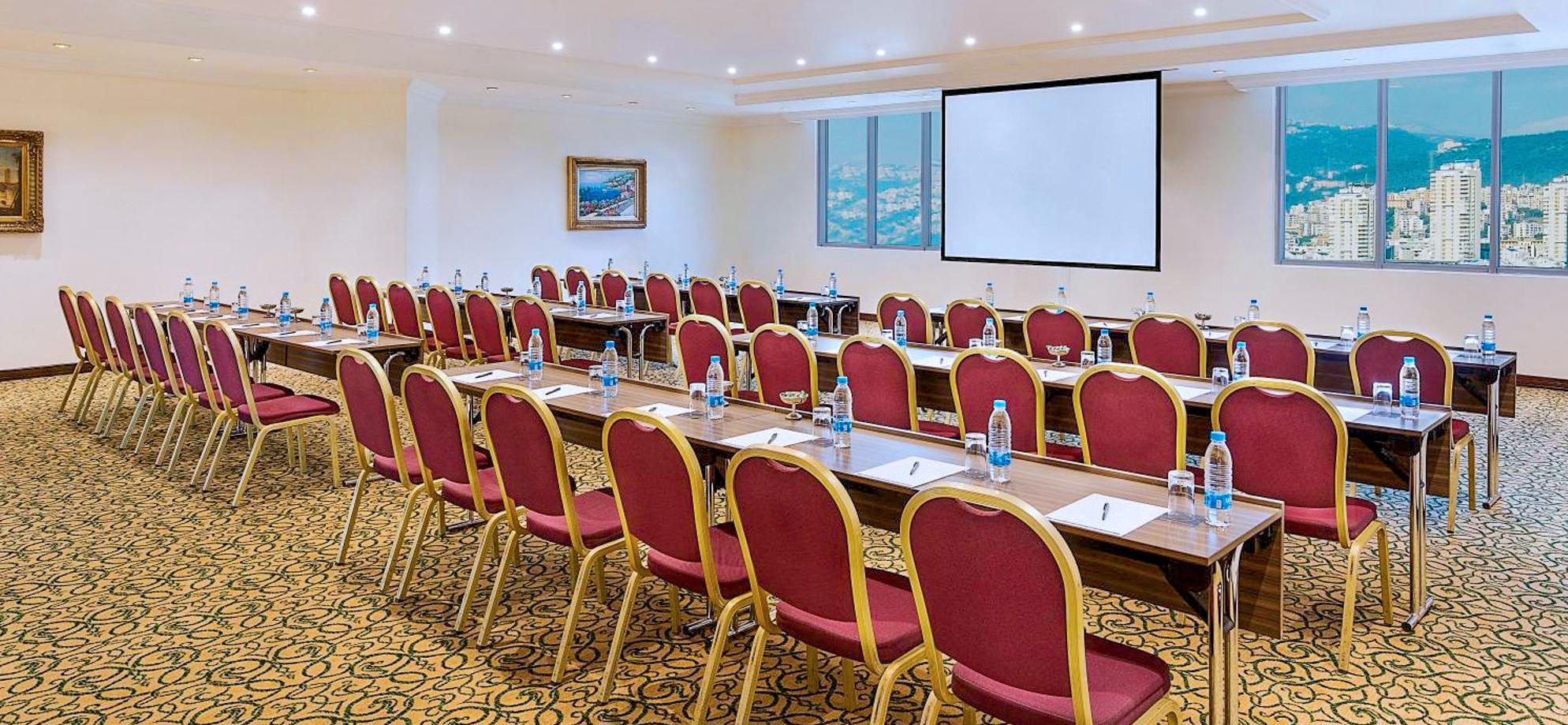
Al Habtoor Grand is not just a place to stay, it's one of Beirut’s premier event destinations. With 10 versatile venues, the hotel can host everything from massive corporate summits to intimate board meetings and elegant weddings.
Its largest ballroom, the Emirates Hall, can accommodate thousands of guests, while smaller function rooms provide flexibility and personalized event planning. The hotel’s event team is experienced, offering tailored catering, advanced A/V support, and event websites to help planners build guest engagement.
This scale and flexibility have made Al Habtoor Grand the go-to for high-profile conferences, corporate retreats, and upscale social gatherings.
The design ethos at Al Habtoor Grand is deeply rooted in Lebanese architectural heritage, marrying traditional craftsmanship with sleek, modern lines. This is not merely a hotel; it is a cultural statement that reflects Beirut's storied past and hopeful future.
Over the years, the hotel has welcomed dignitaries, artists, and international travelers, becoming a gathering place, a stage
where personal stories intersect with the broader narrative of the city. It’s a venue where social and cultural life converge, and events hosted here often go beyond the transactional; they become part of Beirut’s collective memory.
In recent years, Al Habtoor Grand has embarked on a clear path of digital and sustainable transformation. According to its own messaging, the hotel is implementing eco-conscious operations and modern digital guest experiences to align with the expectations of today’s global and responsible traveler.
While specific sustainability certifications are not always highlighted, this commitment suggests initiatives such as energy optimization, waste management, and more digital touchpoints (e.g., online check-in, digital concierge) to minimize the footprint and enhance efficiency.
Operating a luxury hotel in Beirut is complex. Lebanon’s socioeconomic landscape has faced significant headwinds over the past few years. The Al Habtoor Group itself has made headlines: political and economic instability has prompted discussions about its long-term investments in Lebanon.
Still, the Al Habtoor Grand stands as a testament to resilience. Its continued operation and reinvestment reflect greater confidence in Beirut’s potential for revival. Sustaining world-class hospitality sends a signal: Beirut remains a destination for business, tourism, and cultural exchange.
More than two decades since its inception, Al Habtoor Grand Beirut occupies a unique place in the city’s hotel landscape. It is not just a building but a narrative, one that intertwines with Lebanon’s golden era, its challenges, and its hopes for renewal.
For many guests, a stay here is not just an overnight stop; it’s an immersion into a story: a story of elegance, endurance,
and transformation. Whether it's a business traveler arriving for a summit, a couple enjoying a romantic dinner with a skyline view, or a family in one of the penthouse suites, every experience feels personal and anchored in a larger vision.
In 2025, the significance of Al Habtoor Grand Beirut is perhaps greater than ever. The hotel stands as a symbol of resilience, embodying economic and social perseverance amid Lebanon’s ongoing challenges. Its continued operation demonstrates a commitment to stability and confidence in the city’s capacity to recover and thrive.
Beyond resilience, Al Habtoor Grand serves as a cultural hub. Its thoughtfully designed spaces provide a platform for social, artistic, and business gatherings, fostering connections and conversations that extend well beyond the hotel's walls. This dual role as both a hospitality venue and a cultural meeting point underscores its importance within Beirut’s urban and social fabric.
The property also exemplifies modern luxury, seamlessly blending traditional Lebanese elegance with sustainability initiatives and digital innovation. This combination meets the expectations of today’s global traveler, who values both aesthetic refinement and responsible, tech-forward experiences.
Additionally, the hotel wields considerable event power. Boasting some of Beirut’s largest and most flexible event venues, Al Habtoor Grand attracts corporate conferences, large-scale gatherings, and high-profile social events, contributing to the city’s business tourism and event economy.
Ultimately, Al Habtoor Grand Beirut is more than a hotel; it is a living legacy. Its architecture, service, and purpose honor Beirut’s past while reflecting unwavering belief in its future. As the city rebuilds, reinvents, and reconnects with the world, the Grand remains a cornerstone of Lebanese hospitality. In this place, every stay transcends a mere transaction, becoming part of a larger, enduring story.






BY LEAH WAMUYU
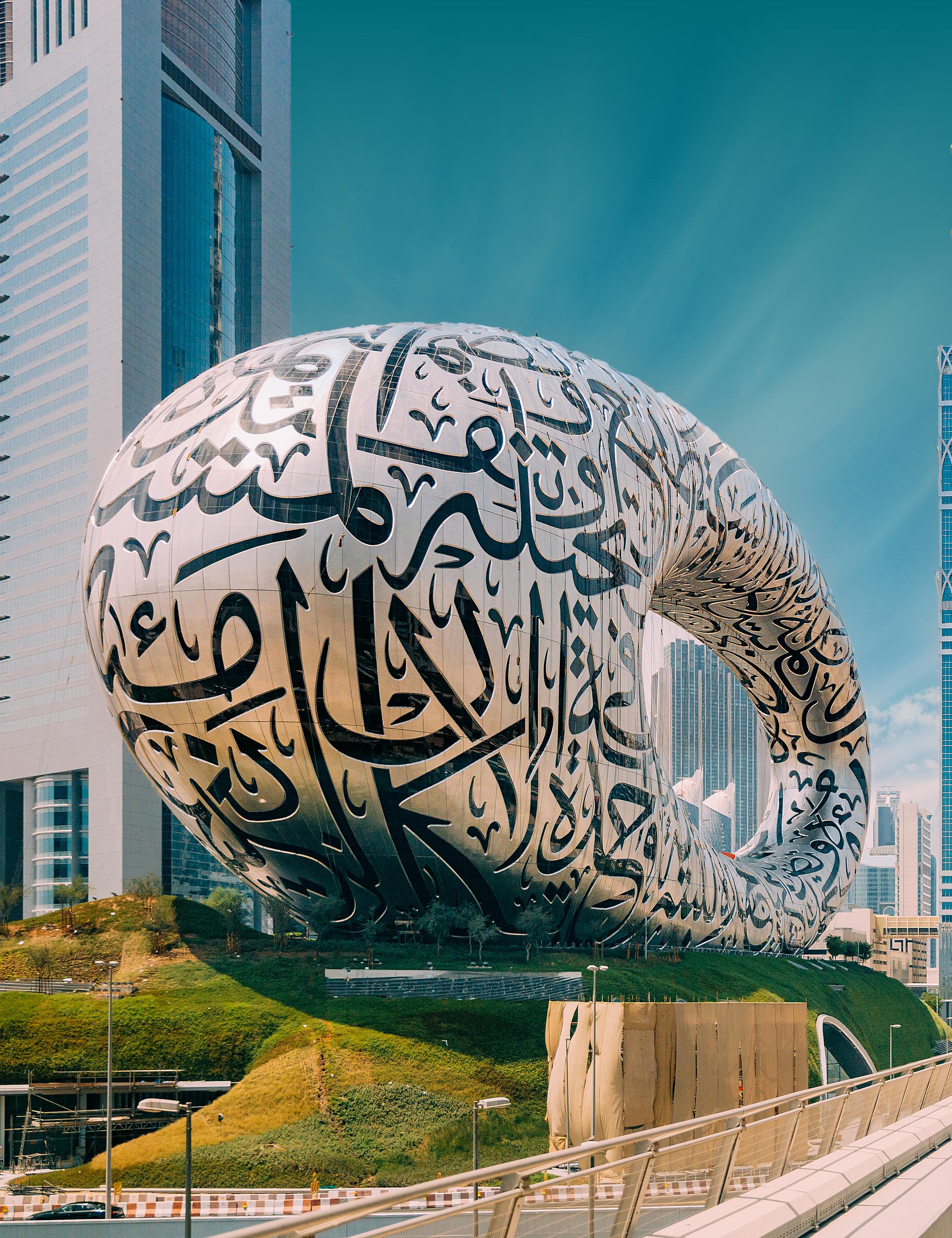
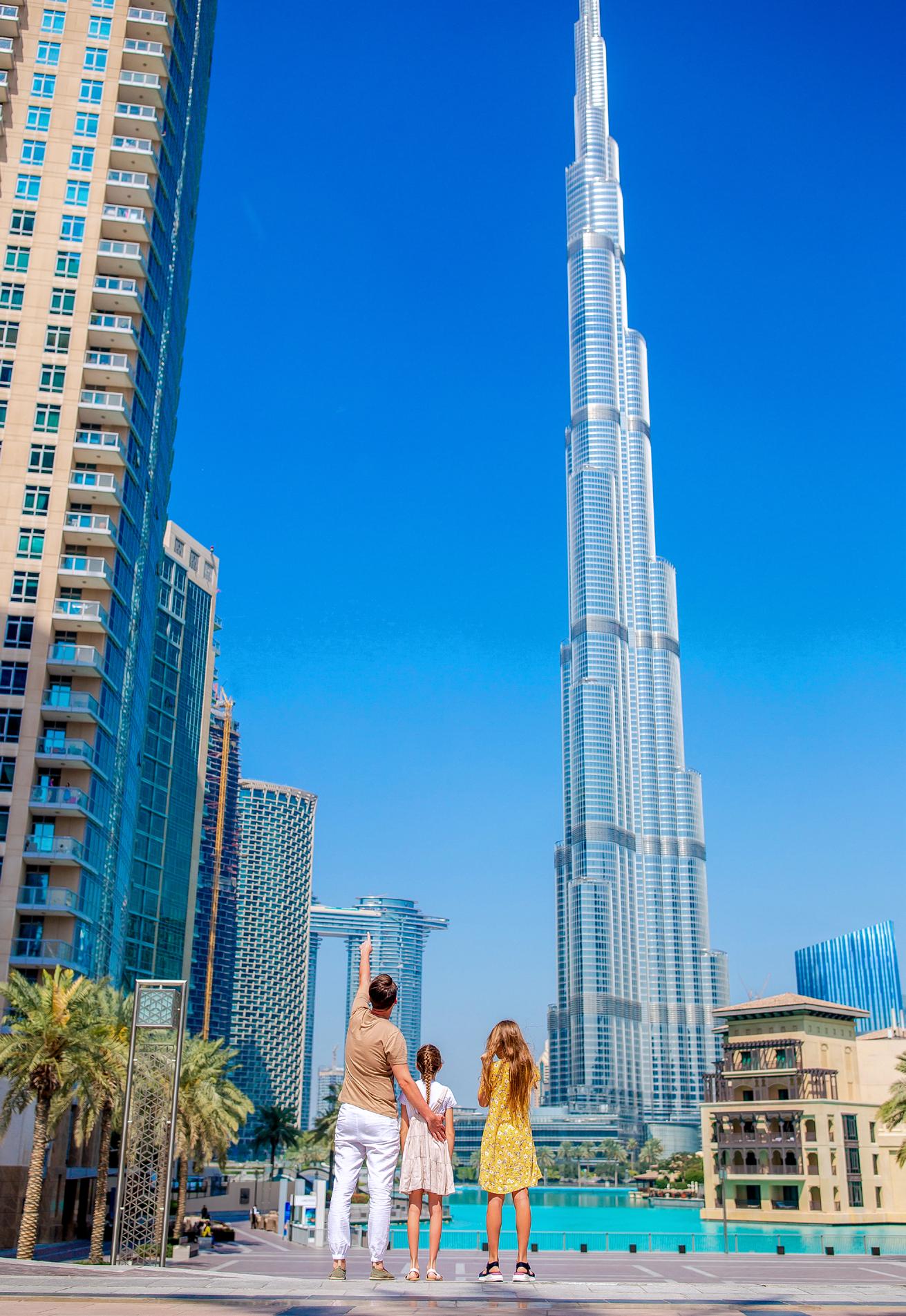
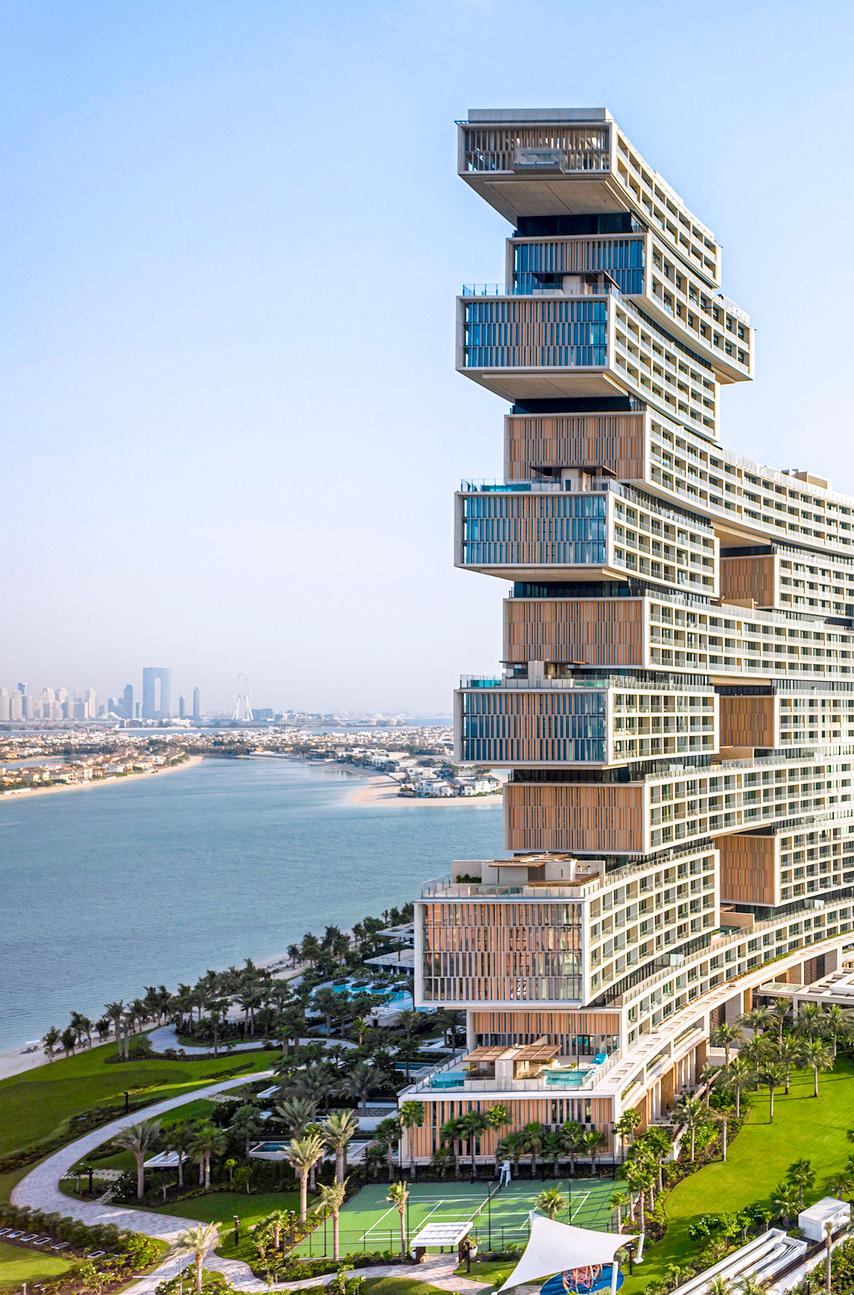
If cities could speak, Dubai’s voice would carry the whisper of desert winds, the hum of relentless ambition, and the soft chime of opportunity. Rising from golden sands into a skyline carved from steel and glass, the city feels like a dialogue between past and future, sometimes gentle, sometimes bold, but always intentional. Travellers who arrive expecting little more than a functional stopover quickly discover a world designed to impress, soothe, surprise, and welcome them, often in just a few hours.
Dubai may be celebrated for its skyscrapers, luxury malls, and headline-grabbing attractions, but its most profound transformation lies elsewhere. Over the past decade, the emirate has redefined hospitality for an increasingly global, curious, and time-constrained world.
No longer just a strategic midpoint between continents, Dubai has become a destination where millions willingly pause, and where even those passing through unintentionally gather stories they never expected to take home.
The scale of this shift is reflected in milestones that map Dubai’s evolution with precision. In 2024 alone, the city welcomed 17.18 million international overnight visitors, a 6% rise over the previous year, according to the Dubai Annual Visitor Report.
This achievement is more than a testament to popularity; it is evidence of an ecosystem meticulously shaped around the modern traveller, experience-driven, convenience-seeking, and often navigating journeys measured in hours rather than days.
In Dubai, hospitality begins long before a traveller steps out of the terminal or checks into a hotel. Even a layover becomes an invitation, a chance to experience something meaningful between arrival and departure. This unique approach has turned what many cities treat merely as transit time into an art of opportunity.
A wider look at the UAE aviation landscape reveals an even more dynamic picture. Total national passenger numbers surged to 148 million, an 11.5% year-on-year rise. Transit passengers accounted for 45% of this total. Abu Dhabi welcomed 30.9 million travellers, Sharjah 15.3 million, Ras Al Khaimah saw a remarkable 88% jump to 640,000, and Fujairah doubled its traffic to 61,120.
IN NUMBERS
NUMBER OF PASSENGERS WHO VISITED DUBAI IN
In most destinations, airports function as gateways that serve their purpose and fade from memory, crowded, functional, and uninspired. Dubai takes a different view. Here, the airport is not a boundary; it is part of the destination itself, designed to elevate every moment a traveller spends within the city’s sphere.
In 2024, Dubai International Airport (DXB) and Al Maktoum International Airport together managed nearly two-thirds of the UAE’s flight activity. The emirate recorded 101 million passengers, a 6.6% increase from 2023, including 43.66 million transit passengers, travellers who may not have planned to visit, yet often end up experiencing Dubai’s offerings in surprising ways.
These figures underline a simple truth: millions arrive in Dubai not to stay, but to pass through. Yet Dubai refuses to waste those moments.
Inside DXB, terminals resemble curated lounges rather than transit corridors. Sleep pods offer respite to exhausted travellers. Premium lounges provide massage therapies, gourmet dining, and private showers. Retail spaces feel more like galleries than duty-free zones, displaying global luxury brands with museumlike sophistication. Even dining outlets have evolved into full-service restaurant experiences. For many visitors, short-stay packages coordinated between airlines and hotels turn a long layover into a mini-holiday. A guest may arrive at dawn, enjoy brunch at a celebrity-chef restaurant, take a desert tour in the afternoon, unwind at a rooftop pool, and return for a
midnight departure feeling as though they’ve lived an entire chapter of travel in a single day.
In Dubai, the message is clear and consistent: however long you are here, you deserve the best of us.
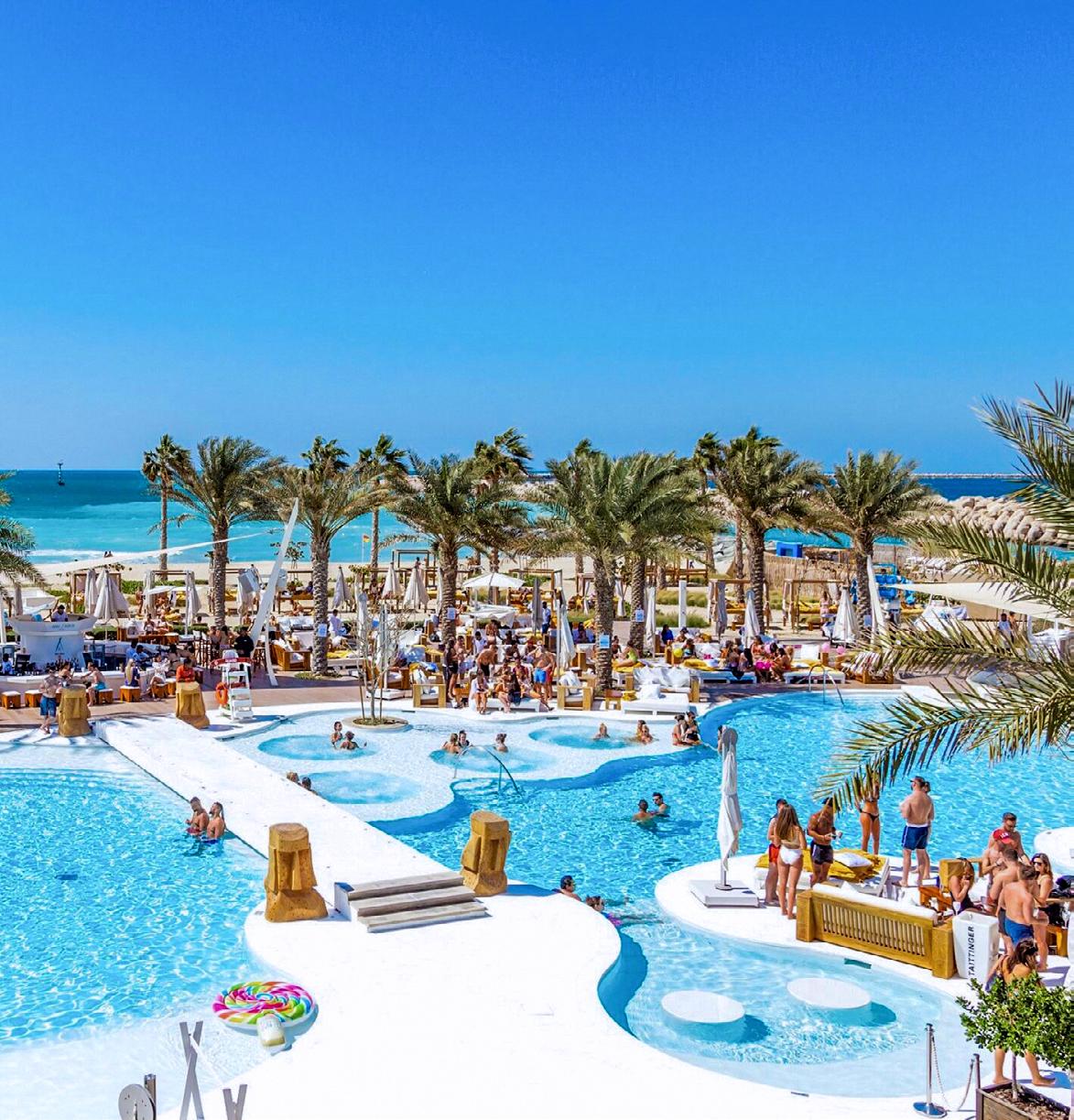
Short stays, once seen as inconveniences, have become part of an emerging global travel lifestyle, high-impact, curated bursts of exploration and indulgence. Dubai has mastered this new rhythm.
A traveller with just 12 hours between long-haul flights can enjoy a meaningful escape. Those with 24 hours before a business meeting can fit in wellness, adventure, or fine dining without a hint of rush. The city has fine-tuned these experiences to feel effortless.
Quick access to beaches, half-day desert tours, and express check-ins at luxury hotels create a seamless flow for timepressed visitors. Rooftop pools overlooking the skyline offer instant relaxation. Wellness centres offer treatments designed explicitly for short-stay guests. Dining by celebrity chefs provides gourmet experiences without lengthy commitments.
This shift in traveller behaviour is supported by a hospitality sector built for scale and excellence. Five-star hotel keys increased from 59,000 in 2021 to more than 66,000 in 2023, an 11% jump. By late 2024, Dubai counted 154,016 rooms across 832 properties. In the first half of 2024 alone, 2,700 new rooms entered the market, 75% of which belonged to the luxury segment. An additional 10,000 rooms are expected by
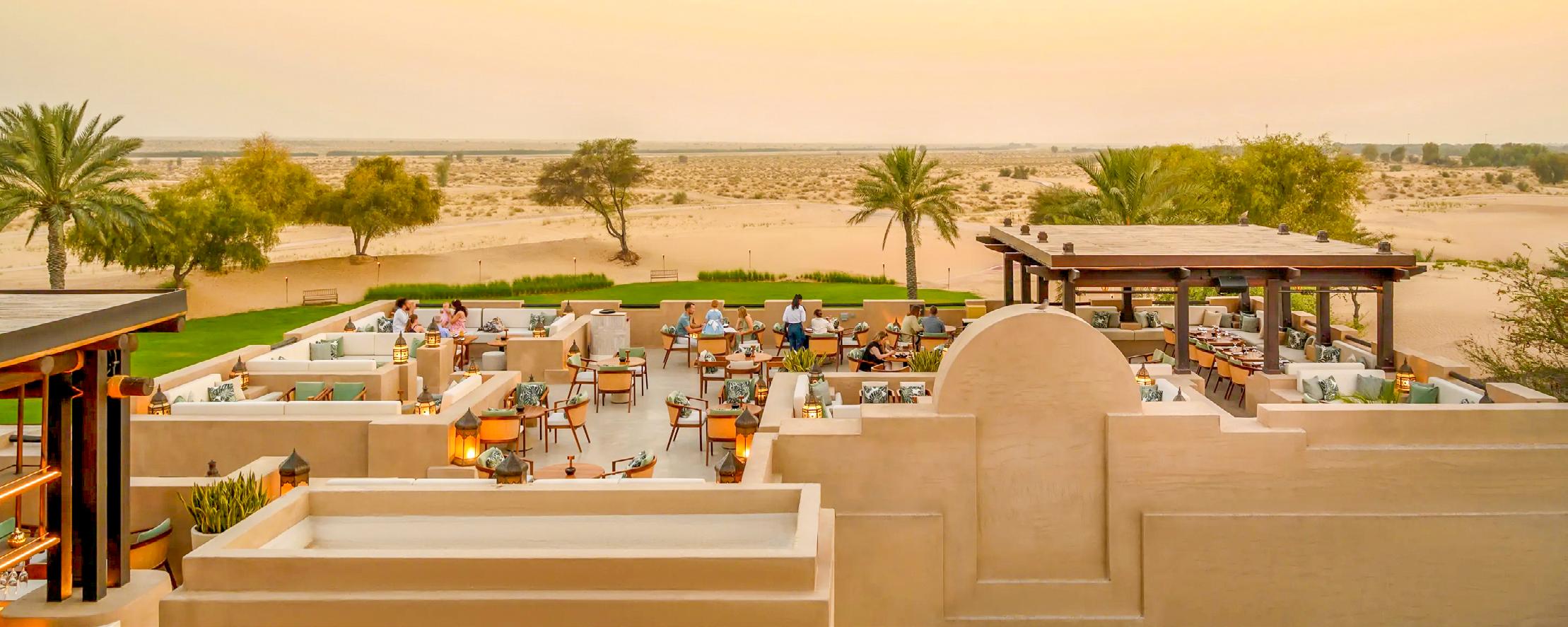
BY LATE 2024, DUBAI COUNTED 154,016 ROOMS ACROSS 832 PROPERTIES. IN THE FIRST HALF OF 2024 ALONE, 2,700 NEW ROOMS ENTERED THE MARKET, 75% OF WHICH BELONGED TO THE LUXURY SEGMENT.
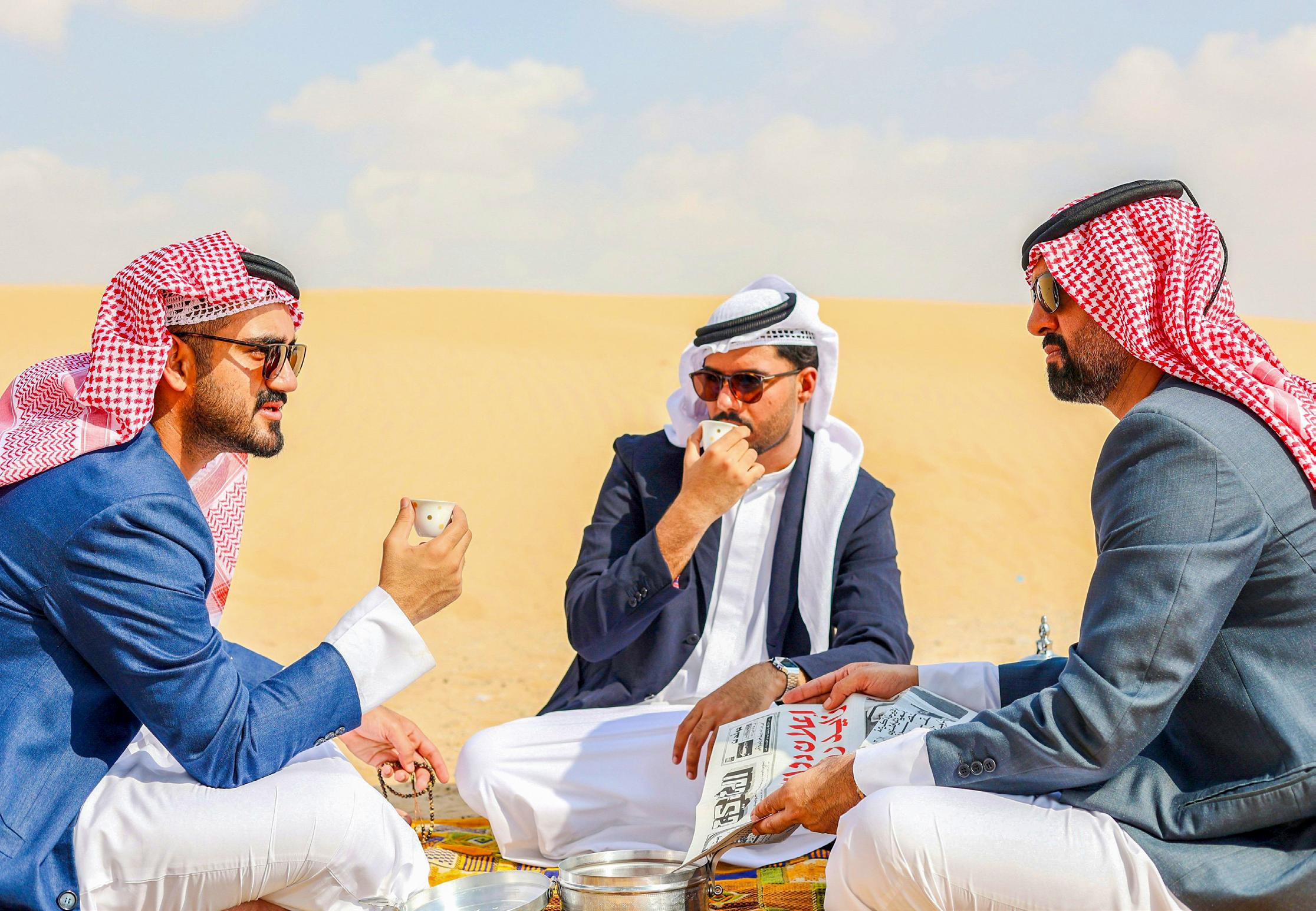
the end of 2025.
Hotels are also elevating their food and beverage offerings, recognizing that dining drives short-stay guests' decisions. Properties such as Atlantis The Royal, Burj Al Arab, and Mandarin Oriental are redefining hotel dining with immersive experiences that blend gastronomy, entertainment, wellness, and sustainability.
In Dubai, a layover guest is treated not as a passerby but as an actual participant in the city’s hospitality story.
Food is one of Dubai’s most expressive storytellers. It greets visitors with aromas, textures, and flavours that reflect the city’s multicultural heartbeat. With over 13,000 restaurants and cafés representing more than 200 nationalities, Dubai has built one of the world’s most diverse dining landscapes.
In 2024, more than 1,200 new restaurant licences were issued, illustrating a sector that expands in step with global tastes.
Inside the airport, gourmet dining begins before travellers even retrieve their luggage. Outside, the culinary map unfolds into a constellation of Michelin-starred restaurants, celebrity-chef venues, buzzing food halls, and Emirati eateries preserving centuries-old recipes.
Dubai’s first Michelin Guide awarded 11 restaurants with stars, solidifying the city’s status as a global gastronomic hub. According to the Dubai Gastronomy Industry Report, diners ate out 2.9 nights per week in 2023, up from 1.8 nights the year before. Fine dining grew nearly 20% year-on-year.
Food festivals such as the Dubai Food Festival, featuring
more than 700 participating restaurants, add yet another layer of vibrance to the city’s culinary scene. For short-stay travellers, a single meal becomes more than dining; it becomes a memory, often the one they carry home most vividly.
Amid the city’s fast pace, Dubai’s cafés serve as pockets of calm. In neighbourhoods like Jumeirah, Alserkal Avenue, and downtown districts, specialty coffee shops offer artisanal brews, creative pastries, and spaces that double as co-working hubs.
At the airport, sleek cafés serve single-origin coffees to entrepreneurs preparing for meetings and travellers easing into their next journey. These spaces form a subtle bridge between the global and the local.
Order a cardamom latte, sit by a window overlooking the marina, or savour an Arabic pastry, and suddenly the city feels personal, even to someone who will leave in a few hours.
Beyond the airport hotels, Dubai reveals a hospitality landscape defined by contrast and character. Desert retreats such as Al Maha and Bab Al Shams offer a deep sense of stillness, where rolling dunes stretch to the horizon, falcons glide at sunrise, and dinners unfold beneath clear, starlit skies.
At the coast, beachfront resorts like Nikki Beach, One&Only Royal Mirage, and Atlantis The Royal blend ocean tranquillity with indulgent luxury. Here, travellers can shift easily between calm waters, curated wellness rituals, and world-class dining.
In Old Dubai, boutique hotels bring Emirati heritage to

life. Wind towers rise above traditional architecture, narrow alleyways guide guests through history, and creekside views offer a gentle reminder of the city’s beginnings.
Move beyond the city centre, and Dubai continues to open itself in chapters, each revealing something different. Dubai Marina offers a vibrant cosmopolitan waterfront. Al Seef brings souks, abra rides, and cultural textures. Hatta invites adventurers with its mountain trails and striking turquoise dams. Al Qudra offers serene desert lakes shaped by nature and imagination. Conservation reserves create rare moments to encounter wildlife in protected landscapes.
Whether dune-bashing at sunset, sharing a meal in the desert, or stargazing beside a quiet campfire, travellers learn something essential: Dubai is not a stopover city. It is a destination that reveals itself quickly, deeply, and beautifully, even within a few precious hours.
Dubai’s appeal extends beyond places to the experiences it hosts. Its event calendar is one of the busiest in the world. From GITEX to Gulfood, from Arab Health to the Dubai Shopping Festival, the city welcomes millions seeking innovation, entertainment, culture, and commerce.
These events transform Dubai into a global meeting point, another reason travellers often extend short stays into meaningful engagements.
Today’s travellers value both comfort and conscience. Dubai is responding with a hospitality sector increasingly aligned with environmental responsibility.
As of early 2025, 153 hotels earned the Dubai Sustainable Tourism (DST) Stamp, a 118% increase from the previous year. Criteria include efficient water use, waste reduction, staff training, and guest engagement.
Gold-tier hotels, Atlantis The Palm, Atlantis The Royal, Jumeirah Al Qasr, and Le Royal Méridien, demonstrate how luxury and sustainability can complement one another.
Green mobility, farm-to-table dining, conservation tourism, and ethical hospitality programs are becoming integrated across the city’s visitor experience.
Dubai’s evolution from transit hub to global hospitality powerhouse is no accident. It is the product of vision, investment, creativity, and an intuitive understanding of modern travel behaviour. People come for countless reasons: meetings, connections, rest, and discovery. Some stay hours, others days. All leave with something meaningful.
In Dubai, hospitality is not a duty; it is a story the city writes through every welcome, every skyline, every meal, and every fleeting moment shared with the world. HRMEA
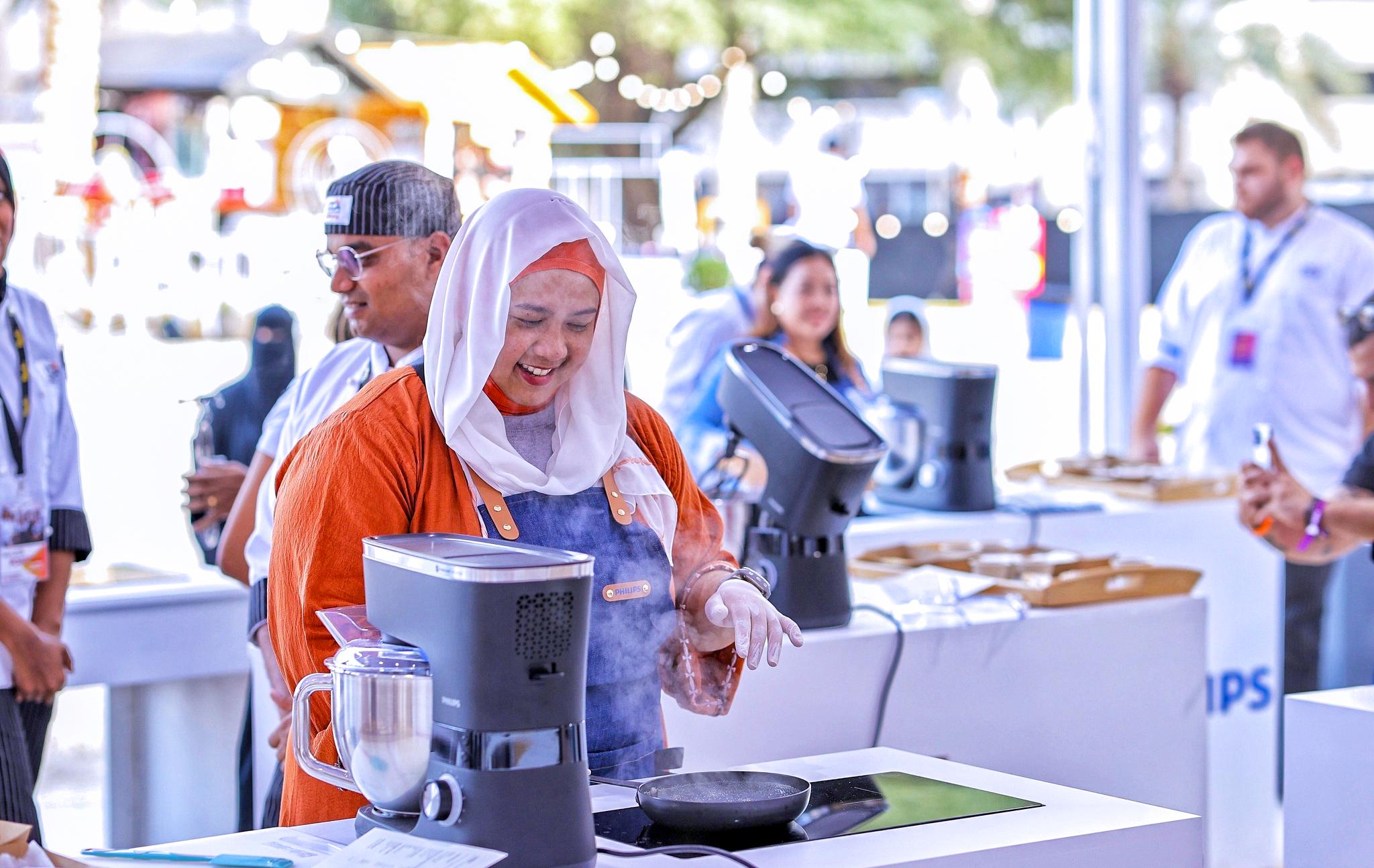
BY VICTOR ATSALI
Delivery-first dining isn’t just a trend sweeping across the Middle East and Africa; it’s a full, blown revolution simmering in real time. Across the GCC and major African cities, cloud kitchens, also known as ghost or dark kitchens, are muscling into the spotlight as one of the most transformative forces in the quick, service restaurant (QSR) sector.
Operators love them, investors are betting heavily on them, and consumers are ordering them in record numbers. With lower real estate costs, rapid scalability, and the undeniable pull of convenience culture, cloud kitchens are cooking their way into dominance. This article unpacks the growth, the mechanics, and the irresistible momentum behind delivery, led operations as they rapidly expand their market share across the region.
BEHIND THE STEAM: WHAT DELIVERY-ONLY AND ‘DARK’ KITCHENS REALLY ARE
Cloud kitchens are deceptively simple in concept but enormously powerful in impact. These delivery-first spaces operate without any dining area, no waiters, no décor budgets, and no prime real estate headaches. The model strips operations down to the essentials: cooking, packaging, and handing off to delivery platforms.
According to Unilever Food Solutions Arabia, the rise of Deliveroo, Talabat, Zomato, and Hunger Station has fueled a new consumer habit of “tap, pay, wait 20 minutes,” positioning cloud kitchens as the perfect fit for the region’s increasingly digital lifestyle.

What makes them even more potent is their ability to house multiple virtual brands under one roof. A single facility might run a fried chicken brand, a poke bowl concept, a vegan burger label, and a shawarma concept simultaneously. This portfolio, style setup allows operators to use data analytics to tweak menus, launch experimental brands overnight, or respond instantly to shifting tastes. Flexibility has never been so scalable, or so profitable.
The MEA region’s cloud kitchen market isn’t just growing, it’s skyrocketing. Market researchers have painted a dramatic picture of expansion, with forecasts showing a compound annual growth rate hovering around 21.9% from 2025 to 2030. Analysts at MarkNtel Advisors and Grand View Research both
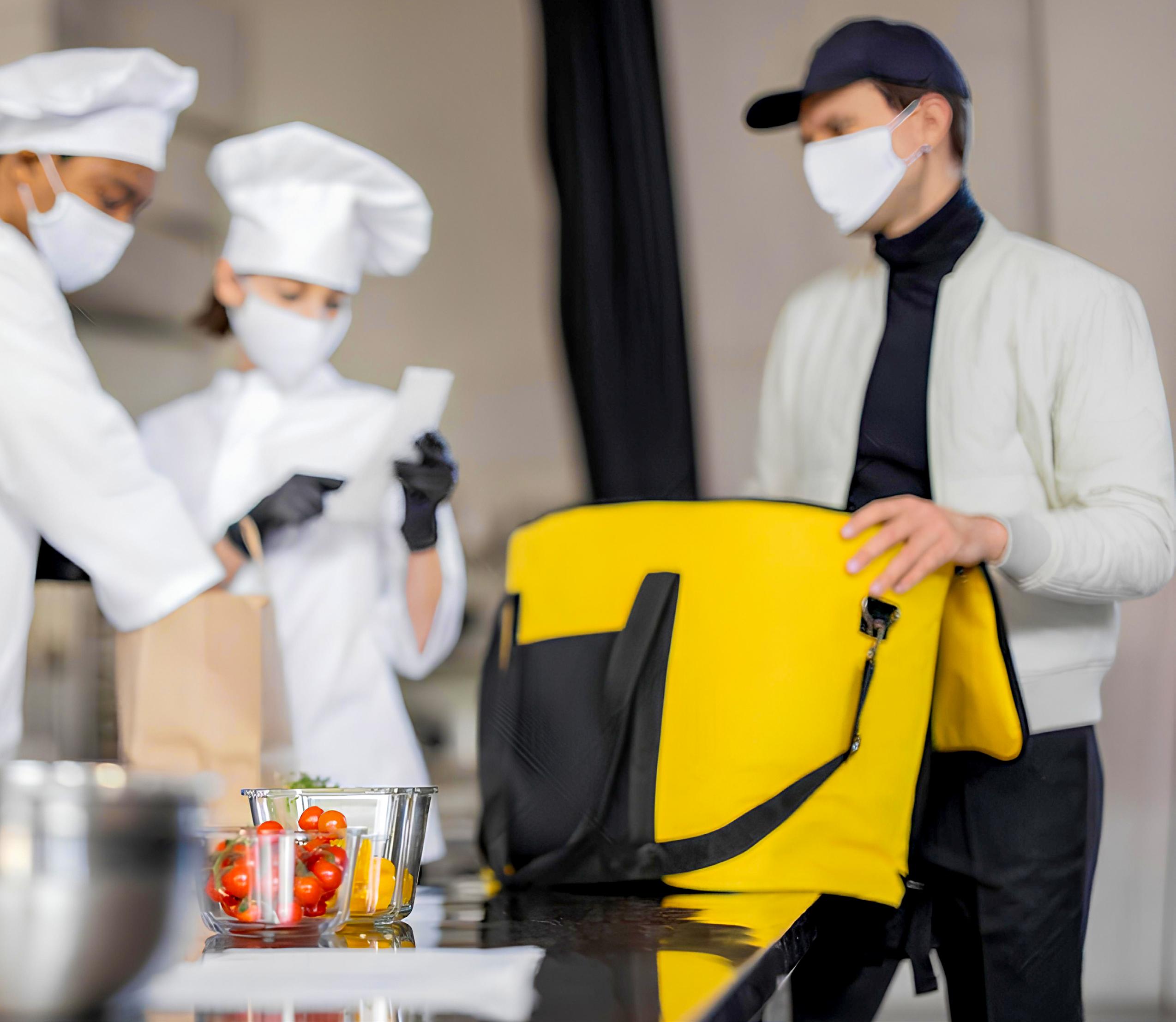
highlight this extraordinary growth trajectory, placing MEA among the fastest, advancing regions in the world.
Delivery, fast-dining culture in the GCC is especially vibrant. The reports reveal that more than 90% of operators are now listed on delivery platforms, a development that has supercharged cloud kitchen activity. Industry numbers show that online food delivery revenue in MENA rose by nearly US$3.8 billion by 2024. Current estimates value the GCC cloud kitchen market at roughly US$3 billion, a figure expanding regularly as new players enter the fray.
The UAE leads the pack with Dubai serving as an innovation hub, benefiting from its multicultural population and appetite for diverse, delivery, friendly cuisines. Meanwhile, South Africa is emerging as a continental leader in Africa, supported by stable urban centers and an infrastructure ready to fuel delivery, based models. With demand rising sharply across both regions, operators are swiftly positioning themselves to
claim the next wave of growth.
The biggest reason QSR operators are flocking to cloud kitchens is simple: efficiency. But the full business case is even more mouthwatering.
Cost efficiency sits at the center of the appeal. Without the need to pay premium rental rates for high, traffic storefronts or invest in dining spaces, operators see dramatic reductions in overhead. According to insights referenced by Unilever Food Solutions Arabia and Coherent Market Insights, this translates into better pricing options, higher margins, and quicker returns on investment.
Equally compelling is operational flexibility. Cloud kitchens allow operators to run multiple brands, adjust menus instantly, and test new concepts without worrying about décor changes
THE GLOBAL CLOUD KITCHEN SECTOR, VALUED AT US$81.94 BILLION IN 2025, IS EXPECTED TO SURGE PAST US$225 BILLION BY 2034, WITH MEA PLAYING A MAJOR ROLE IN DRIVING THAT GROWTH, FUELLED BY SEVERAL CONVERGING TRENDS.
or guest service workflows. This ability to experiment, and to fail cheaply, gives restaurants the agility to stay ahead of consumer trends.
Operators also point to the surge in delivery-first demand, particularly in younger, urban populations across the GCC and Africa. These kitchens are intentionally designed to speed up delivery, improve routing, and tighten service reliability. With delivery increasingly becoming the main revenue driver rather than the side act, speed and efficiency are essential.
Finally, tech integration is becoming a differentiator. As noted in research by Precedence Research, operators are now investing in artificial intelligence, advanced menu modeling, and smart forecasting tools. These help reduce waste, improve preparation accuracy, and enhance overall profitability. The future of fast food may be algorithmic, and cloud kitchens are
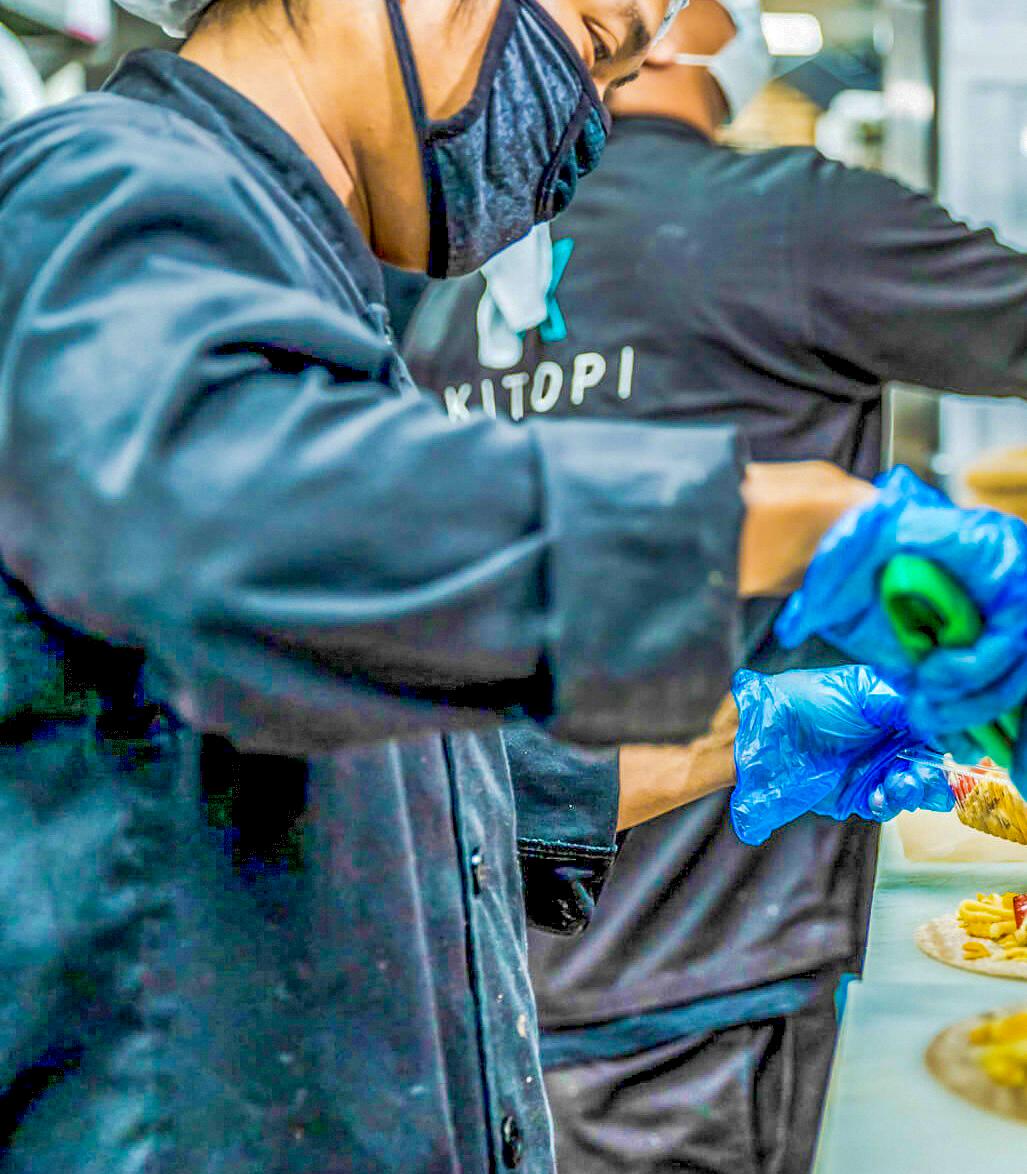
already tapping into the possibilities.
KITCHEN VETERANS AND DELIVERY DISRUPTORS: REAL OPERATORS LEADING THE CHARGE
If cloud kitchens were a music genre, Kitopi would be its
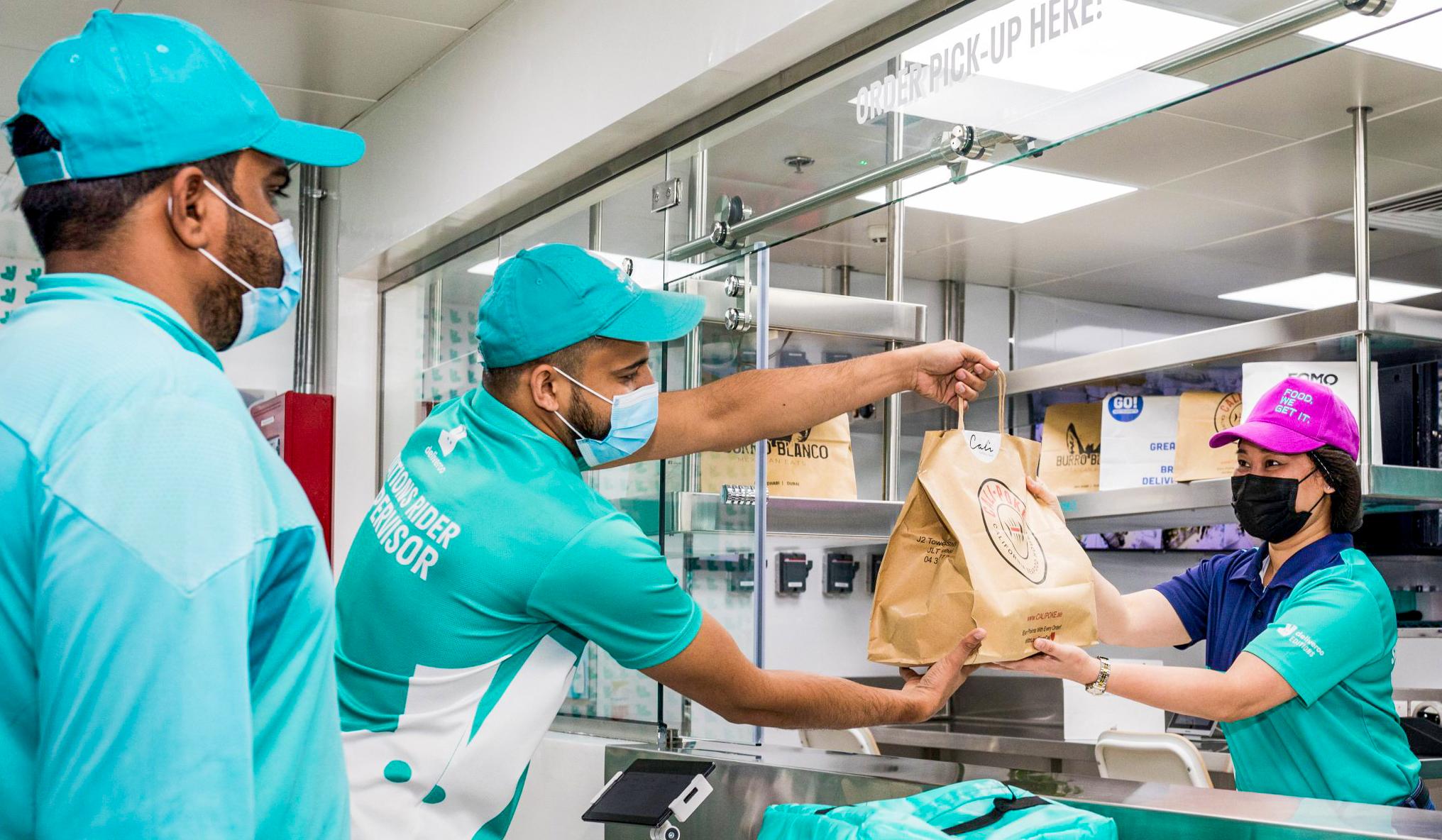
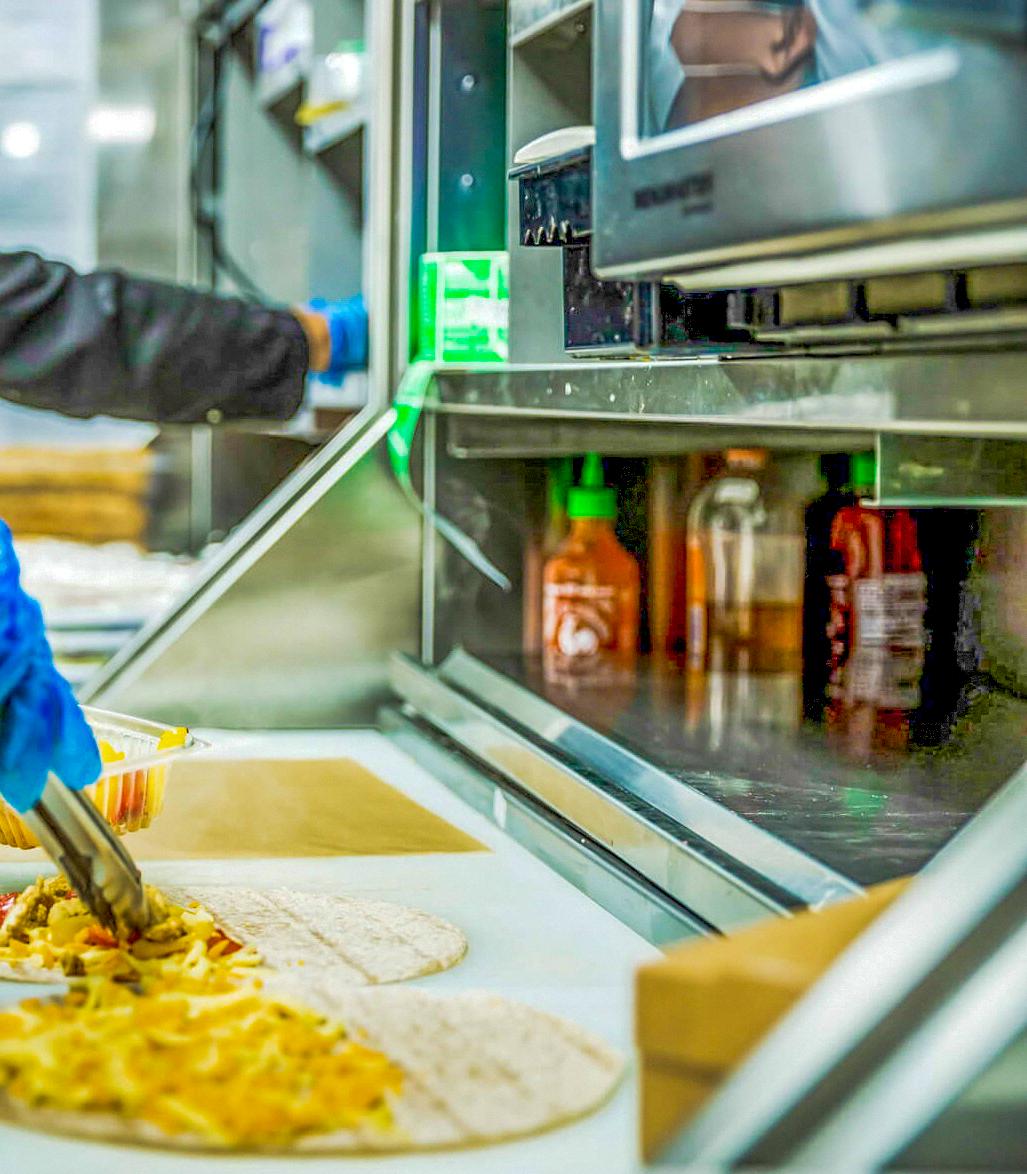
have rising populations but comparatively fewer established delivery options, making them fertile ground for cloud kitchen expansion.
headline act. The Dubai, born operator has rapidly expanded beyond the UAE, building a massive network of deliveryonly spaces that support restaurant brands both large and emerging. By offering what many refer to as a “Kitchen-asa-Service” model, Kitopi provides brands with ready, made operations, allowing them to expand delivery footprints with minimal infrastructure investment.
Delivery platforms have also jumped into the game. Deliveroo and Talabat are launching their own branded kitchen hubs, giving partner restaurants access to shared spaces optimized for speed and delivery efficiency. These hubs are strategically located to reduce delivery times and expand brand reach across busy neighborhoods.
Franchise operators and global QSR giants are also leaning in. According to IMARC Group and further supported by insights from MarkNtel Advisors, well, known fast, food brands have quietly launched virtual brands through cloud kitchens in Dubai, Johannesburg, Cape Town, Riyadh, and Nairobi. Many of these offer halal variations, plant, based lines, or cuisinespecific menus curated for local tastes. The result is a delivery ecosystem that feels tailor-made for the regional palate.
Global forecasts indicate that cloud kitchens are only warming up. Research from Precedence Research and Grand View Research suggests that the global cloud kitchen sector, valued at US$81.94 billion in 2025, is expected to surge past US$225 billion by 2034. MEA will play a major role in driving that growth, fuelled by several converging trends.
One major trend is expansion into suburban and semiurban markets. According to analysts at AIJourn, these areas
Partnerships are also becoming a big part of the story. International chains increasingly collaborate with local operators using the cloud model as a low, risk way to explore new markets. This is especially attractive in Africa, where urbanization is fast, and consumers are adopting digital ordering at unprecedented rates.
Technology investment is expected to accelerate. Operators are allocating budgets toward robotics, automated assembly lines, and AI, driven cooking systems in order to reduce preparation time and maximize accuracy. As highlighted by Precedence Research, these innovations are expected to define the next stage of evolution in the cloud kitchen world.
Despite the high initial cost of equipment and kitchen setup, the long, term economics remain overwhelmingly favorable. Coherent Market Insights points out that by avoiding premium real estate and dine, in labor, operators significantly reduce long, term operational expenditure, making cloud kitchens a sustainable engine for QSR expansion.
Cloud kitchens are no longer just an alternative, they are increasingly becoming the preferred model for QSR expansion across the Middle East and Africa. As consumer behavior shifts decisively toward convenience, driven, delivery, first dining, and as technology reshapes what a “restaurant” even means, cloud kitchens are positioned to take center stage.
With strong growth projections, expanding franchise adoption, and a wave of innovative operators pushing boundaries, delivery and cloud kitchens are set to redefine fast food across the region. MEA’s dining future is being built behind the scenes, in quiet kitchens, without tables, waiters, or storefronts, but with massive potential and unstoppable momentum.
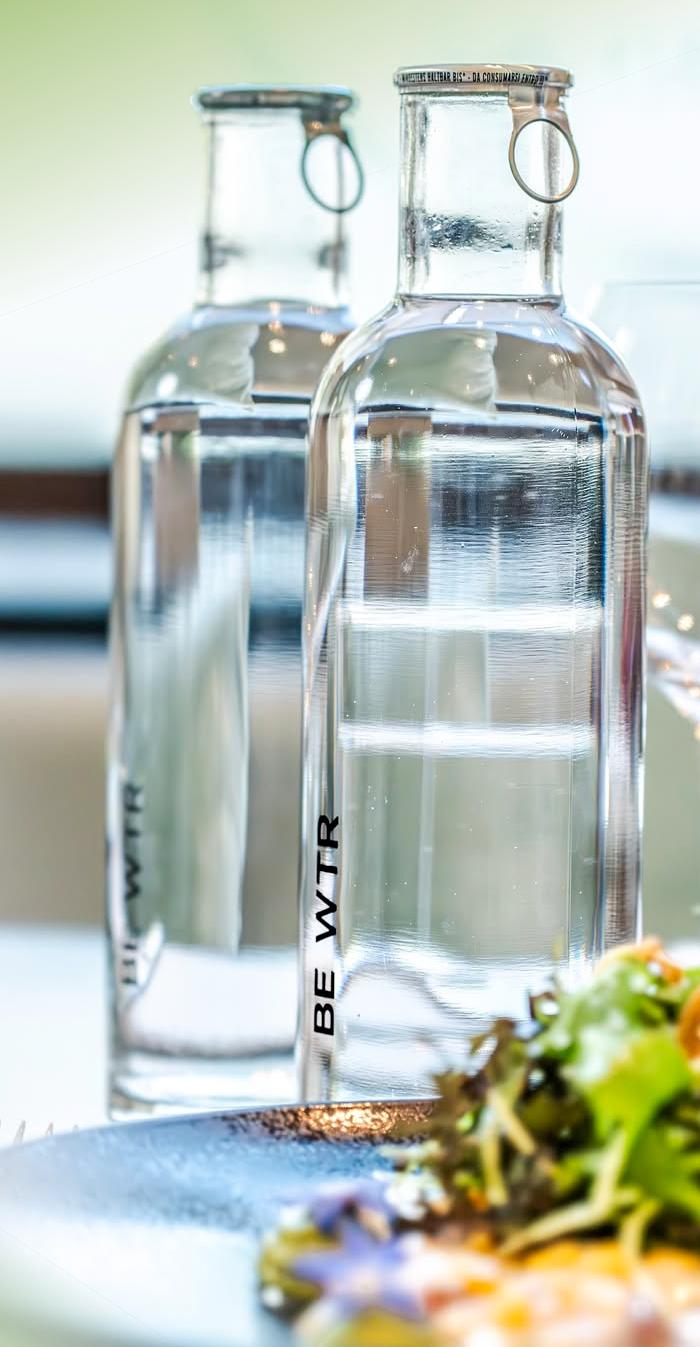



BY VICTOR ATSALI
Aquiet but powerful transformation is sweeping across the Gulf’s hospitality scene, one that is reshaping not just how hotels operate, but how they define luxury itself. For decades, Gulf banquets dazzled with grand layouts, abundant servings, and an ocean of convenient single-use packaging tucked behind the scenes. But now, in an age where environmental impact sits firmly in the global spotlight, these disposable habits are being challenged like never before.
According to Arab News’ 2025 environmental assessment, the Gulf produces close to 10 million tons of plastic waste annually, with a meagre 10% finding its way into recycling channels. The Dubai Waste Report projects that Dubai alone may contribute 2.5 million tons to this figure by 2030. Against this backdrop, the shift from singleuse packaging to zero-use systems has become more than a sustainability trend, it has become a business imperative.
Hotel banquets, with their scale,
visibility, and influence, are emerging as the boldest stage for this transformation.
Step into a modern Gulf banquet operation today and you’ll discover a space buzzing with innovation, where aesthetics, technology, and environmental stewardship blend seamlessly. This is where the battle against single-use packaging is being fought most creatively.
Bulk dispensing systems have become the new heroes of eco-forward hospitality. Instead of thousands of small plastic tubs, sachets, and bottles, hotels are now turning to beautifully designed dispensers and refillable glass bottles. According to insights from Hospitality Insights in 2025, Taj Hotels in the UAE removed staggering amounts of single-use packaging each year after embracing these systems. The transformation
didn’t compromise the guest experience, in fact, it elevated it.
And then there’s the material revolution. From bamboo cutlery to sugarcane-based serving bowls and elegant paper plates, hotels are swapping plastic waste for earth-friendly alternatives that still feel premium. Elite Hospitality’s 2025 sustainability review highlighted the Gulf’s growing interest in plant-based, compostable banquetware as part of a regional shift toward circular economic models.
This new approach doesn’t just tick sustainability boxes, it reimagines what luxury looks like in a world that increasingly values responsibility.
At first glance, adopting zero-use systems might look like an expensive overhaul. But the numbers tell a very different story, one that hotel executives are paying close attention to.
Stocktake Online reported in 2025 that the St. Regis Abu Dhabi cut its food and packaging waste by up to 30% after moving away from single-use banquet materials. Over only six months, that shift resulted in cost savings amounting to roughly AED 480,620, or about US$130,000. For an operation that hosts hundreds of events each year, those savings compound rapidly.
Regional policy is reinforcing the case even further. Governments across the Gulf are pushing aggressive wastereduction strategies. Saudi Arabia and the UAE aim for municipal recycling rates of up to 75% by 2030. According

to the Gulf Petrochemicals and Chemicals Association’s 2025 outlook, hotels that adopt zero-use systems early will gain a regulatory advantage, evading future penalties and administrative disruptions.
Consumers are adding another layer of pressure, and opportunity. Gulf Magazine reported in 2025 that more than three-quarters of global travelers actively seek eco-conscious hospitality brands. For hotels competing for weddings, conferences, and high-profile corporate events, zero-use packaging is quickly becoming a competitive differentiator.
Hospitality Insights also pointed out how luxury hotel groups like the Oetker Collection experienced boosts in brand loyalty and media coverage after eliminating singleuse plastics. In other words, zero-use packaging is not just an operational choice, it’s a marketing superpower.
If hotel managers in the region ever doubted whether the move away from single-use packaging was practical, real-world case studies have erased those concerns.
Cape Town’s Twelve Apostles Hotel offers an inspiring example from the African continent. By replacing plastic straws, cutlery, and wrappers entirely with bamboo and paper alternatives, the hotel drastically lowered its waste footprint without altering the luxury experience guests expected.
In the Gulf, collaborative innovation is taking center stage. Many top-tier hotels are now partnering with local suppliers who specialize in biodegradable banquetware. Elite Hospitality’s 2025 report highlighted these partnerships as essential to strengthening circular economic practices, not to
mention shortening supply chains and reducing procurement costs.
The Taj group’s operations, frequently spotlighted by Hospitality Insights, demonstrate how comprehensive zerouse systems can integrate seamlessly throughout banquet departments. From procurement workflows to event execution, the move away from single-use packaging has led to massive reductions in plastic waste without diminishing service precision or ambiance.
The takeaway? Zero-use isn’t theoretical. It works, beautifully, profitably, and consistently.
Transforming a banquet department from single-use packaging to zero-use systems doesn’t happen overnight, but with the right approach, it becomes a surprisingly smooth evolution.
It begins with a meticulous waste audit. Hotels must first examine how much waste they produce, where it comes from, and which items can be eliminated or replaced. Banquet operations, because of their scale, tend to reveal large, immediate wins during this stage.
Supplier transformation soon follows. Hotels benefit from forming relationships with vendors that offer compostable, biodegradable, or reusable alternatives. Bamboo, bagasse, metal, glass, and high-grade paper products are now widely available across the Gulf, especially from regional suppliers who understand the local market’s needs.
Bulk and refill systems form the backbone of zero-use operations. These systems reduce reliance on single-use

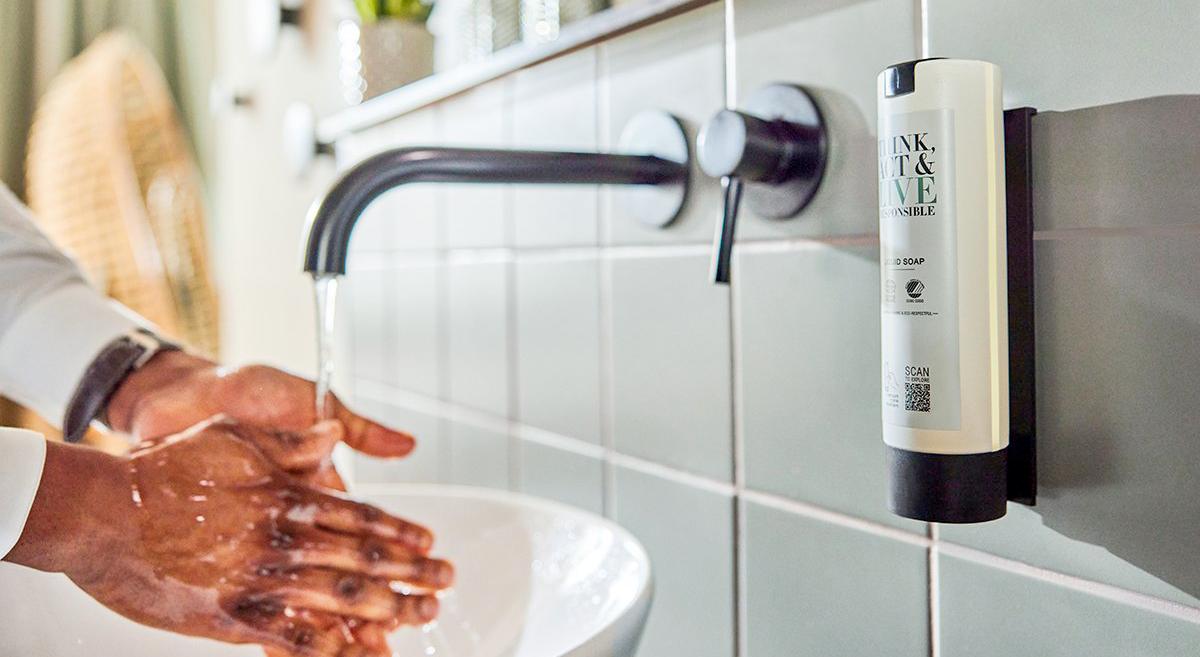
plastics dramatically while also creating a more refined guestfacing aesthetic. Refillable glass bottles and elegantly designed dispensers often feel more luxurious than their disposable counterparts.
Staff training is the invisible engine of change. Teams must know not only how new materials and systems work but why they matter. When employees become advocates rather than passive participants, they help maintain consistency and elevate the guest experience.
Guest engagement ensures the transition is embraced, not resisted. Tasteful communication, discreet signage, and friendly explanations help guests understand and support the hotel’s sustainability vision. Today’s eco-aware travelers often appreciate being part of the solution.
Digital tracking brings clarity and accountability. Hospitality Emporium noted in 2024 that many Gulf hotels now use digital dashboards to monitor waste reduction, cost savings, supplier performance, and inventory efficiency. These tools keep the system agile and transparent.
And finally, communication ties the transformation together. Sharing progress, milestones, and success stories reinforces the hotel’s leadership position and strengthens guest trust and loyalty.
With every phase working together, the shift to zero-use packaging becomes not just feasible, but deeply rewarding.
The Gulf is uniquely positioned to pioneer a future where banquets generate splendour, not waste. With millions of tons of plastic produced each year and recycling systems still

maturing, hotels have an extraordinary opportunity to lead regional sustainability from the front.
By merging innovative materials, creative operational shifts, and smart business strategy, hotels adopting zerouse systems are carving out a new form of luxury, one that celebrates abundance while respecting the planet.
The era of single-use banquet packaging is winding down. In its place rises a smarter, cleaner, more forward-thinking hospitality standard.
The Gulf hospitality sector is not just moving toward zerouse banquets, the industry is redefining what world-class service looks like in a world that demands accountability and innovation.
BY FRIDAH CHEPKOECH
Tourism has long shaped Zanzibar’s economy, bringing jobs and income to the islands. At the same time, it has placed pressure on water supplies, increased waste, and affected cultural sites in Stone Town and surrounding areas. In response, the government introduced the Sustainable Tourism Declaration under the Global Sustainable Tourism Council framework.
The policy sets clear rules for hotels, restaurants, and tour operators, including mandatory staff training in waste management, requirements to work with licensed waste collectors, and standards for environmentally responsible operations. Local communities now participate in decisions about tourism development, ensuring that projects support both the environment and residents’ daily lives while aiming to address the negative effects caused by earlier tourism practices.
Tourism’s boom in Zanzibar has come at a steep price for both nature and local life. Luxury hotels and resorts consume huge volumes of water, often 10 to 15 times more per person than local residents, straining wells and pushing fresh water scarcity. Sewage treatment remains weak in many areas, and untreated wastewater often flows directly into the sea, threatening nearby coral reefs.
On land, waste is piling up with studies showing that hotels and restaurants generate the bulk of solid rubbish, yet only about half of it reaches proper disposal sites. Plastic bottles, food packaging, and singleuse items frequently wash up on beaches. In coastal areas, this litter can poison local ecosystems and reduce the appeal of the very places
tourists come to see.
Zanzibar’s mangroves also face growing pressure linked to coastal development. A growing body of research show tourism infrastructure has removed significant mangrove cover, weakening a vital buffer that protects against erosion and supports fish stocks. A remote-sensing study of Chwaka Bay and Menai Bay found that Zanzibar lost about 2,281 hectares of mangrove between 1973 and 2020, largely due to “urban development and infrastructure” pressure. Meanwhile, coral reefs suffer from pollution and physical damage: untreated sewage brings nutrients that disrupt coral growth, while boat traffic from tourist trips adds stress to fragile reef systems.
These damages do more than hurt the environment. Local people lose access to clean water, and their livelihoods depend on fishing and healthy coastal ecosystems. At the same time, the tourism industry, which depends on natural beauty, risks undermining its own asset base. If beaches erode or reefs die, the very foundation of Zanzibar’s appeal could weaken.
The iCOAST programme leads the current push to change how tourism works on the islands. Funded by the Global Environment Facility and implemented by UNIDO, the six year, five million dollar initiative aims to reduce pollution of water, soil, and air and to strengthen local supply chains for tourism products. The project plans pilot activities that link hotels and restaurants to local farmers and fishers, set clear waste reduction targets, and test small grants for community enterprises.
UNIDO’s launch materials make the project intent clear. The ministry and project partners






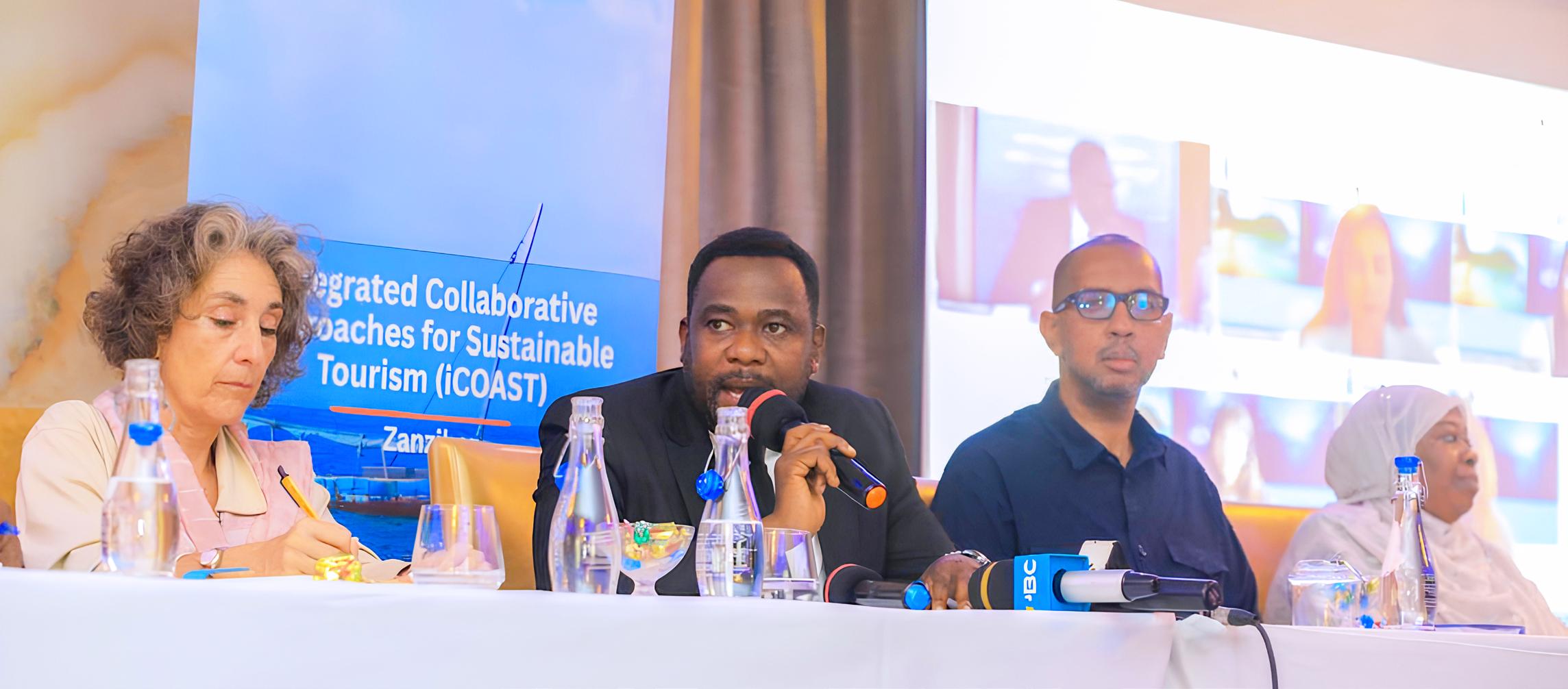
highlight community engagement, technical support for small businesses, and regulatory measures that help tourism meet national standards. As Zanzibar officials describe the work, iCOAST will combine training, infrastructure pilots, and policy advice so that public agencies and private operators follow the same rules.
At the same time, Zanzibar’s Sustainable Tourism Declaration gives the local industry a shared framework. The declaration, promoted at international travel fairs and backed by the tourism commission, asks businesses to commit to better waste handling, forest and marine protection, and sourcing more food from local farms. The declaration does not replace regulation, but it sets common expectations and encourages businesses to pledge concrete steps.
UNESCO has added heritage protection and technical support to the mix. Recent cooperation focuses on Stone Town restoration, skills for local artisans, and links between heritage management and responsible tourism. Those interventions aim to protect historic buildings and to steer tourist flows so that the centre’s fabric and local livelihoods face less pressure.
Private contractors and consultancies now work with government and funders to turn policy into practice. Local firms receive contracts to map waste routes, train staff in hotels, and design farmer-to-hotel supply chains. Those pilots offer a practical test: if hotels buy more local food and manage waste better, the project teams argue, communities will see clearer benefits and the environment will face less pressure. Early work shows coordination across government, international agencies, and business, but scaling these pilots will require steady finance and monitoring.
Small groups across Zanzibar now test new ways to link tourism with care for the environment and respect for culture. Reports from Al Jazeera and Deutsche Welle show that many
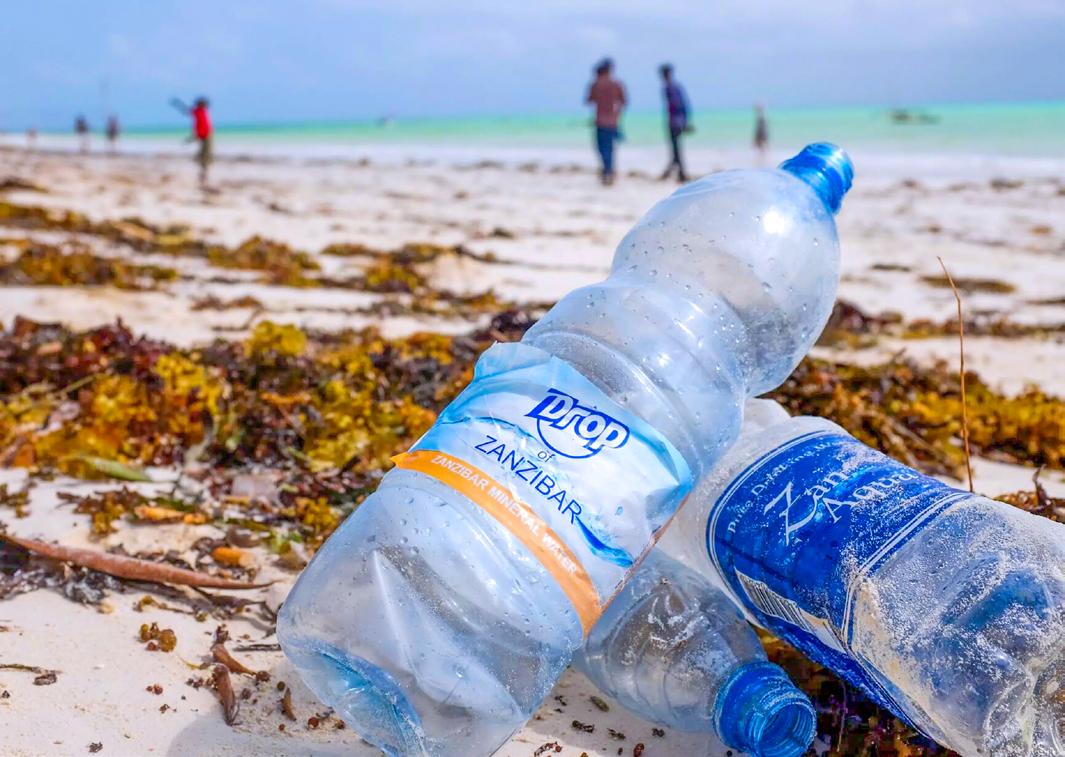
residents want tourism to support local work and protect shared resources. These reports describe how guides, farmers, and youth groups look for fair partnerships with hotels and tour operators.
Along the east coast, community groups run mangrove restoration outings where visitors learn how the trees support fish, slow erosion, and filter water. The groups plant seedlings with volunteers and use the activity to raise money for local schools or women’s savings groups. A German public broadcaster filmed one of these outings and noted that young guides feel proud when visitors understand the value of the mangroves.
Spice farms around Kizimbani and Kinduni now offer visits that include farming lessons and information on soil care. Farmers prepare simple trails, teach visitors how they grow cloves and cardamom, and use the fees to support farm upkeep. Studies on rural tourism in Zanzibar show that these farm visits help families earn steady income without clearing more land.
Stone Town also hosts experiments that link heritage with tourism. UNESCO’s work on building care created space for

local carpenters, plaster workers, and guides to share their skills with visitors. News coverage of the restoration efforts noted that craftspeople see these tours as a way to pass on knowledge while keeping old buildings in better shape.
Across these examples, residents express a clear idea. Tourism should support long term welfare in their communities. They want visitors who respect local rhythm and who help maintain the places that attract them in the first place. These local experiments show how community action can guide the future of tourism in the islands.
Zanzibar still faces clear pressure from high visitor numbers, limited waste systems, and the cost of keeping environmental programs active. In 2025, the islands recorded 743,605 international arrivals by October, already surpassing previous full-year totals. In 2024, the total number of visitors was 736,755, up 15.4% from the 638,498 recorded in 2023. Hotels and community groups often report that they want better coordination with local authorities so they can plan for busy seasons and respond to stress on water and coastal areas. Some projects struggle with steady funding, which slows training programs and delays upgrades to waste handling sites.
Despite these issues, the island offers useful lessons for other destinations in Africa and the Middle East. Strong policies create direction for both public and private actors, and they help set common rules that protect shared resources. Local engagement also proves essential. When residents guide projects, the programs reflect real needs and stand a better chance of lasting. Regular monitoring adds another layer of support because it shows where pressure builds and where improvements take hold.
Zanzibar’s experience suggests that destinations can protect their cultural sites and natural areas when they match policy, community action, and consistent oversight. The
CONSUME HUGE VOLUMES OF WATER, OFTEN 10 TO 15 TIMES MORE PER PERSON THAN LOCAL RESIDENTS, STRAINING WELLS AND PUSHING FRESH WATER SCARCITY.
work remains complex, but the progress shows that steady cooperation can shape a healthier future for tourism.
Tourism brought income to Zanzibar, yet it also strained land, water, and cultural sites. Current efforts show signs of repair as policies, community action, and international support come together in practical ways.
Data suggests that while international arrivals topped 736,000 in 2024, government and community programmes protected over 16,000 hectares of mangroves, reduced environmental degradation, and expanded communitybased tourism. Initiatives under iCOAST and the Sustainable Tourism Declaration show that local engagement, policy frameworks, and international support can create measurable improvements.
The results are not complete, and challenges remain, but the approach demonstrates that tourism can coexist with environmental and cultural protection. Zanzibar’s model offers lessons for other destinations in Africa and the Middle East seeking to manage growth while supporting communities and ecosystems.
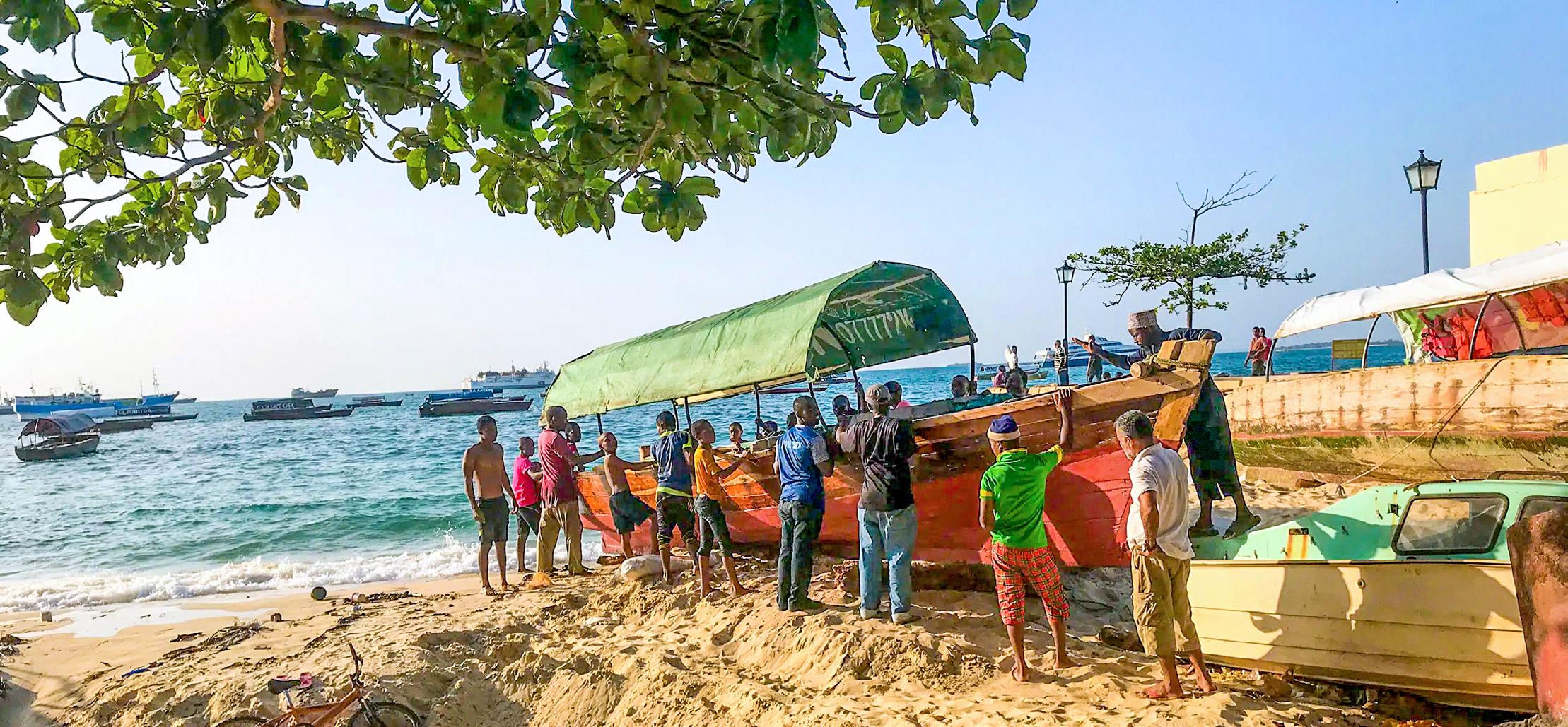
GLOBAL – MarginEdge has integrated its restaurant management platform with Qu, enabling quick-service (QSR) and fast-casual restaurants to track daily profitability in real time by seamlessly connecting point-of-sale and back-office data.
Through this integration, Qu’s POS data now feeds directly into MarginEdge’s AI-powered sales forecasting engine, improving forecast accuracy and empowering operators to make faster, data-driven decisions.
The collaboration also opens access to MarginEdge’s ecosystem of 15 accounting platforms, eliminating the need for alternative financial systems and simplifying multi-unit management.
Restaurants can link Qu to MarginEdge within days, gaining instant visibility into food costs, margins, and operational performance.
Qu’s vice president of strategic partnerships, Ben Pryor, noted that the enhanced data flow delivers meaningful insights that help operators respond quickly to shifting market dynamics.
MarginEdge CEO Bo Davis emphasized that real-time profitability visibility is increasingly essential for modern restaurants, reducing administrative workloads and allowing
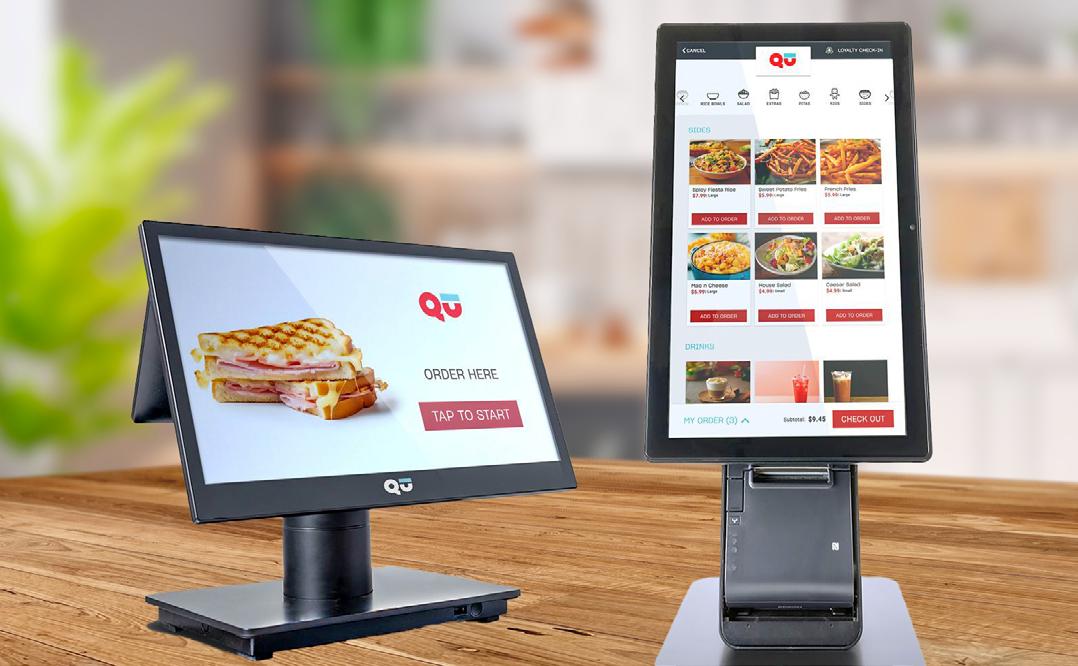
teams to stay focused on guest experience.
MarginEdge continues to strengthen its capabilities through partnerships with FIXE and BlueSnap, supporting automated bookkeeping and subscription payment processing across North America.
Meanwhile, Qu has spent 2025 expanding its unified commerce platform, advancing voice AI ordering, rolling out omnichannel storefronts for branded online orders, and accelerating kiosk adoption, a figure that has risen to 62% of brands, up from 43% previously.
signs US$10M agreement with AWS to accelerate
growth in food, hospitality
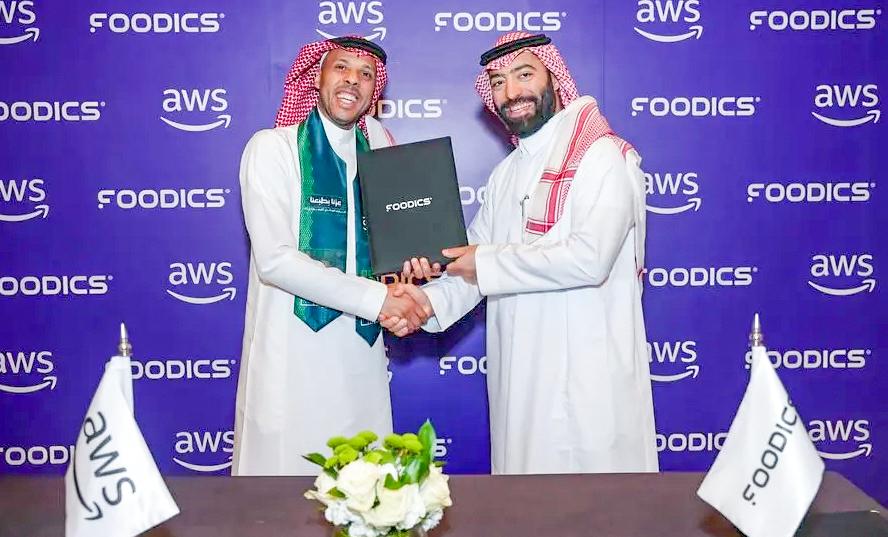
Foodics, the Middle East’s leading cloudbased restaurant operations and financial management platform, has signed a US$10 million strategic commercial agreement with Amazon Web Services (AWS) to accelerate AI-driven innovation and expand its cloud infrastructure.
The partnership enables Foodics to leverage AWS’s secure, scalable cloud backbone to embed advanced artificial intelligence capabilities at the core of its SaaS ecosystem.
Through this collaboration, Foodics will launch a suite of
AI-powered features, including predictive demand forecasting, intelligent inventory management, dynamic pricing models, and personalized recommendations.
These tools aim to help restaurants optimize operations, reduce costs, and improve financial performance.
CEO and co-founder Ahmad AlZaini noted that AWS’s infrastructure will allow Foodics to deepen its predictive analytics capabilities, shifting from basic AI add-ons to fully integrated intelligence that supports real-time decisionmaking across restaurant functions.
Amr Masri, AWS Country Leader for Saudi Arabia, emphasized the transformative impact of cloud computing and AI on the region’s hospitality sector and reaffirmed AWS’s commitment to supporting Foodics in scaling its nextgeneration solutions.
Founded in 2014 and licensed as a fintech by the Saudi Central Bank (SAMA), Foodics serves more than 40,000 merchants across Saudi Arabia, the UAE, and Egypt.
The company integrates POS, payments, and end-to-end operational management and has raised over US$198 million from global investors, including Prosus Ventures.
The partnership strongly aligns with Saudi Arabia’s Vision 2030, which prioritizes digital transformation, fintech adoption, and economic diversification.
ASIA – Full Tech Stainless Steel Engineering Co. has launched a new online platform to transform how food and beverage operators procure equipment and manage operations.
Designed to streamline traditionally time-consuming processes, the platform consolidates instant quoting, e-commerce shopping, customized equipment orders, kitchen engineering services, and emergency repairs into one intuitive digital hub.
Previously, procuring commercial kitchen equipment required multiple back-and-forth quote requests, confirmations, and manual delivery coordination, often causing delays for time-sensitive foodservice businesses.
Full Tech’s new interface enables customers to request quotes instantly, make payments, schedule deliveries, or submit repair reports, significantly shortening decisionmaking and delivery lead times.
A dedicated “Food & Beverage Operations Guide” provides operators with updates on licensing, maintenance practices, repair case studies, and engineering insights, supporting both established brands and new entrants.
The company’s broad product catalog spans refrigeration, electric heating, food processing machines, stainless steel utensils, kitchen supplies, and cleaning tools.
Tailor-made equipment solutions ensure alignment with diverse site layouts and workflow requirements.
Full Tech continues to invest in customized stainless steel craftsmanship and advanced kitchen engineering to meet the specific operational demands of clients.
Beyond equipment sales, it offers restaurant license consultation, kitchen design, engineering services, and expanded emergency repair capabilities.
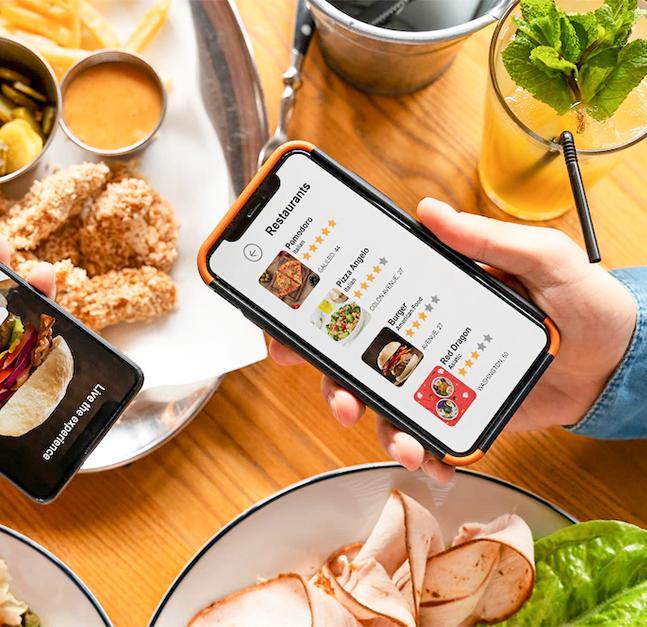
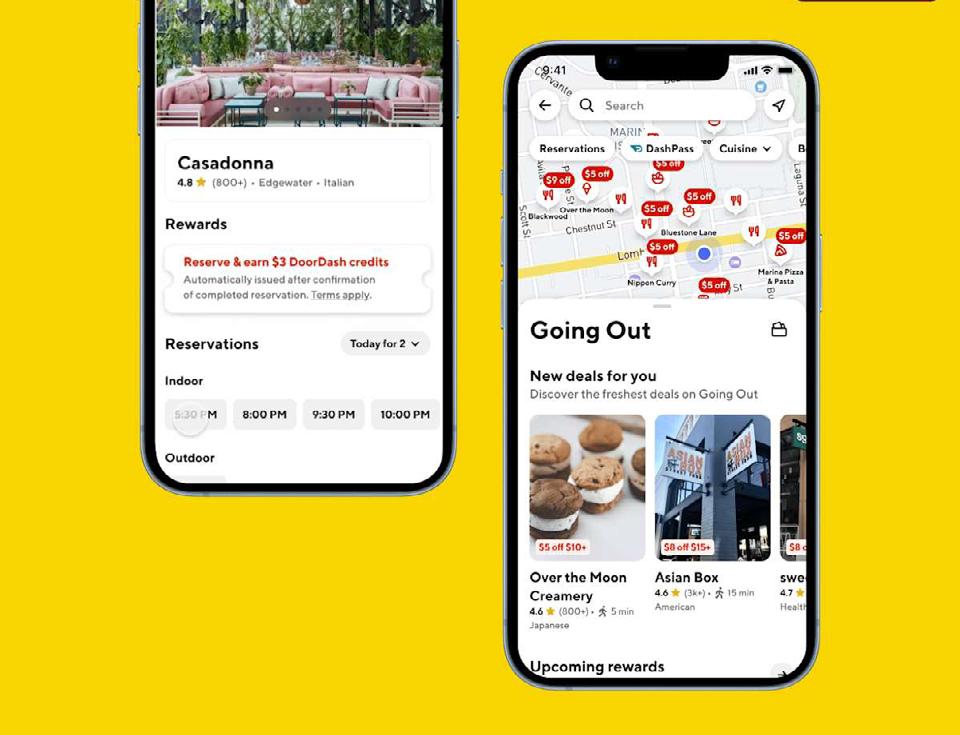
DoorDash launches “Going Out,” enriching dining experiences with reservations
GLOBAL – DoorDash has launched “Going Out,” a new app feature offering DashPass members restaurant reservations, in-store rewards, and exclusive dine-in offers, all consolidated into a single hub.
Announced in September, the feature aims to enrich dining experiences while helping restaurants attract more guests, boost table occupancy, and build loyalty.
With “Going Out,” diners can discover local favorites or explore new restaurants, book tables directly through the DoorDash app, and earn credits redeemable on future orders.
DashPass members receive added perks, including exclusive table access, enhanced rewards, and discounted rides through partners such as Lyft.
The new reservation system is powered by SevenRooms, the hospitality platform DoorDash acquired earlier in 2025 for more than US$1 billion.
The feature debuts in Miami and New York, with broader rollouts planned later in the year. Parisa Sadrzadeh, Vice President of In-Store at DoorDash, noted that the tool helps consumers save time and money while making reservations easier than ever.
She emphasized that “Going Out” strengthens DoorDash’s role as a trusted companion for everyday dining.
Restaurant partners are also optimistic. Eugene Remm of Catch Hospitality Group said the integration with DoorDash and SevenRooms ensures a seamless transition from booking to dining, enhancing guest satisfaction and helping venues reach more customers.
By combining delivery, reservations, in-store rewards, and loyalty-driven incentives, DoorDash is evolving into a comprehensive dining and commerce platform.
The initiative supports restaurants by increasing foot traffic and reinforcing loyalty, while offering users a more convenient, rewarding dining journey.
Beyond restaurant dining, DoorDash continues to expand globally across more than 30 countries, investing in autonomous delivery, grocery and retail expansion, and personalized shopping tools.

EGYPT – Air Taxi Egypt has officially launched as the country’s first aerial mobility service, introduced through a joint venture between Abu Dhabi Aviation Company and TCM Economic Consulting under Prime Group.
Unveiled during a ceremony at the Giza Pyramids in October 2025, the initiative marks a major shift in Egypt’s transport and tourism landscape, offering rapid, premium air travel between key destinations.
The service will operate modern vertical aircraft across Comfort and VIP classes, targeting tourists, corporate travelers, government delegations, and medical transport needs.
Initial routes will link Cairo with the New Administrative Capital, Sheikh Zayed, the North Coast, Siwa, New Valley, Sharm El-Sheikh, Hurghada, Luxor, and Aswan.
Demonstration flights over the Giza Pyramids and Grand Egyptian Museum highlighted the system’s readiness and expansion potential.
Backed by EGP 5 billion (US$104.8 million), the venture reflects confidence in Egypt’s growing luxury travel segment.
TCM Economic Consulting oversees commercial operations, feasibility studies, marketing, and long-term expansion, leveraging local insight alongside Abu Dhabi Aviation’s nearly five decades of regional experience.
The service aims to cut travel times, drastically reducing Cairo-North Coast trips to 60 minutes and Cairo–Siwa journeys to 90 minutes, offering a faster alternative to road congestion.
A dedicated mobile booking app is in development to streamline reservations and integrate with hotels and resorts.
In line with Egypt’s Vision 2030, Air Taxi Egypt aims to boost domestic tourism and enhance access to new urban hubs, such as the NAC and New Alamein.
Fares range from US$200 for city tours to US$1,500 for intercity routes, positioning the service for high-value travelers seeking efficiency and exclusivity.
PAR Technology launches PAR AI Intelligence suite to revolutionize restaurant operations
GLOBAL – PAR Technology has launched the PAR AI intelligence suite, a fully integrated artificial intelligence layer designed to transform restaurant operations across its existing product ecosystem.
A key component of the suite is Coach AI, a smart assistant built for corporate leaders, area coaches, and restaurant managers.
Coach AI delivers real-time insights, clear visualizations, performance indicators, and prioritized recommendations, eliminating the need for manual data analysis or interpretation.
Unlike traditional AI add-ons that require new apps or user training, PAR AI is embedded directly into PAR’s core solutions, including point of sale, drive-through management, loyalty programs, back office operations, and payment systems.
This seamless integration enables restaurant operators to access intelligence within their existing workflows without platform switching.
Coach AI responds instantly to operational questions posed in natural language, drawing on live data from POS systems, inventory levels, labor scheduling, and external files.
By reducing time spent on spreadsheets and manual reporting, the tool allows managers to focus on staff development and customer engagement.
Early adopter Charter Foods reported that Coach AI has eliminated reliance on spreadsheets and is positioned to replace traditional business intelligence platforms by providing intelligent, real-time decision support.
PAR Technology plans to extend its AI capabilities with a marketing intelligence assistant launching in Fall 2025.
Embedded within the PAR Engagement platform, it will convert customer and campaign data into actionable insights, offering real-time analytics on loyalty performance, digital ordering behavior, and overall customer engagement.
The aim is to streamline reporting processes and improve responsiveness to market trends.
The broader PAR AI suite leverages PAR’s unified data infrastructure and more than 650 API-certified integrations to support coordinated, intelligent workflows across restaurant operations.
UK – Uber has partnered with Starship Technologies to roll out autonomous robot food deliveries across the UK beginning December 2025, with initial deployments planned in Leeds and Sheffield.
The service will use Starship’s AI-powered delivery robots, which operate at Level 4 autonomy, enabling them to navigate pavements and complete deliveries of up to two miles in under 30 minutes without human monitoring or intervention.
Starship CEO Ahti Heinla said the collaboration is helping build the infrastructure that will define the future of urban logistics.
Uber, which uses its delivery platform in more than 10,000 cities worldwide, will integrate Starship’s autonomous systems to offer reliable, efficient, and cost-effective last-mile delivery services.
The partnership will expand to additional European markets in 2026, with a US launch expected in 2027.
Starship brings significant experience, operating a fleet of over 2,700 robots and completing more than nine million deliveries across seven countries.
In parallel, Grubhub has expanded its collaboration with US autonomous vehicle startup Avride to pilot robot food deliveries from Wonder’s Jersey City location.
Customers ordering from Wonder through Grubhub can opt for Avride robot delivery if they fall within the service’s coverage area.
Avride’s robots, designed for urban navigation in diverse weather, feature a four-wheel chassis capable of quick 180-degree turns to ensure smooth sidewalk travel.
Wonder provides dishes from more than 20 restaurant concepts, such as Alanza, Tejas Barbecue, and Streetbird by Marcus Samuelsson.
Grubhub and Avride have already completed over 100,000 robot deliveries on US campuses, including Ohio State University, home to the country’s largest single-site robot delivery program.
The pilot signals broader expansion ahead, combining Grubhub’s marketplace reach, Wonder’s culinary model, and Avride’s robotics technology.
Oracle enhances its Simphony Kiosk for efficiency, customer experience across hospitality
GLOBAL – Oracle has unveiled major enhancements to its Oracle Simphony Kiosk, giving hospitality operators greater flexibility and efficiency as customer expectations shift toward faster, more digital service models.
Central to the update is the ability for the Workstation 8 to transition seamlessly from a staff-operated terminal to a customer-facing self-service kiosk.
This dual functionality supports multiple service formats, including grab-and-go, pre-order, and scan-and-go, allowing operators to adapt quickly to fluctuating demand.
The improved Simphony Kiosk streamlines order processing, reduces wait times, and boosts operational productivity across restaurants, hotels, stadiums, casinos, and cruise ships.
Its modern interface integrates directly with Oracle’s POS system, ensuring smooth operations even in high-volume environments.
In stadiums and arenas, the self-service model accelerates order throughput and minimizes manual errors.
Compact countertop versions make it easy to deploy kiosks in tight spaces such as hotel lobbies and quick-service counters without reducing brand visibility.
The dual-purpose Workstation 8 enhances workforce agility by allowing businesses to switch between staff-led and self-service modes during peak and off-peak periods.
According to Alex Alt, Executive Vice President and General Manager at Oracle, agility, speed, and convenience are essential to building customer loyalty, and the enhanced kiosk solution delivers both operational efficiency and improved guest experiences.
The system also supports branded digital touchpoints, enabling businesses to customize interfaces with promotions, upselling messages, and loyalty program integrations to increase average order value and engagement.
Oracle partner Propeller has already developed a tailored kiosk solution using Simphony’s capabilities, optimizing user flows and accessibility.
These upgrades complement Oracle’s broader hospitality ecosystem, including OPERA Cloud, a global property management platform with embedded AI workflows for automation, personalization, and revenue optimization.
EGYPT – Orange Egypt has entered a strategic partnership with Qatar’s Qilaa International Group to develop a fully integrated smart tourism platform that elevates the visitor experience across Egypt.
Announced in November 2025, the collaboration aligns with Egypt’s Vision 2030, aiming to digitize and modernize the country’s tourism ecosystem through innovative technologies and seamless connectivity.
Central to the partnership is Qilaa’s WTOUR app, designed as an all-in-one digital companion for travelers.
The platform enables tourists to plan itineraries, explore attractions, book hotels and restaurants, and unlock exclusive offers powered by Orange Egypt.
By unifying communication, navigation, entertainment, and service access, the app provides a smooth, intuitive experience for both domestic and international visitors.
Qilaa will develop interactive digital content that highlights Egypt’s cultural, historical, and natural heritage, enriching exploration and pre-arrival engagement.
This immersive storytelling approach supports major national projects, particularly the Grand Egyptian Museum, where enhanced digital tools are essential to maximize tourism impact.
Orange Egypt is contributing its advanced connectivity infrastructure to ensure the platform delivers reliable performance and high engagement.
The company has allocated EGP 100 billion (US$2.1bn) in capital expenditure through 2026 to expand nationwide 5G coverage, upgrade fiber networks, and strengthen digital services at key tourism destinations such as Luxor and Sharm El Sheikh.
These upgrades enable technologies like AR/VR museum tours, contactless hotel check-ins, and personalized recommendations.
Orange also supports youth innovation by sponsoring Enactus Egypt 2025, funding tourism-focused startups that enhance sustainable visitor experiences.
The smart tourism platform enhances operational efficiency for service providers while improving travel convenience and engagement.
Magic raises US$10M seed funding to advance AI solutions for restaurants
GLOBAL – Magic, a fast-growing provider of AI-driven technology for the restaurant industry, has secured US$10 million in seed funding to accelerate product development and expand its AI capabilities.
The round was led by Lerer Hippeau, with participation from Bling Capital, Floodgate, and strategic investors including Major Food Group and VCR Group, the hospitality company linked to entrepreneurs Gary Vaynerchuk and David Rodolitz.
Founded by Maggie Tang, Magic is known for its flagship platform, Loyalist, an AI-powered CRM built specifically for restaurants.
Loyalist integrates data from reservation systems, pointof-sale, private events management, and social media to build real-time customer profiles.
This allows restaurants to personalize guest experiences, craft tailored marketing campaigns, and strengthen retention by tracking preferences, dining habits, and visit frequency.
Magic’s technology also supports automated, brand-aligned marketing messages that encourage repeat business.
Its customer base already includes leading hospitality groups such as Major Food Group and acclaimed restaurants like Le Bernardin, Cosme, and Momofuku, underscoring its suitability for high-end operations.
CEO Maggie Tang, drawing on her experience in elite dining establishments, aims to close the technology gap in hospitality, where customer data remains underutilized compared to other sectors.
The new funding will support Magic’s expansion into new markets, deepen its AI innovation, and broaden access to personalized hospitality at scale.
Magic’s growth mirrors a broader global shift toward AIdriven restaurant operations. AI tools are increasingly being used to refine demand forecasting, optimize staffing, automate kitchen processes, and enable contactless ordering, enhancing both efficiency and the customer experience.
Restaurants are also leveraging AI to reduce waste, strengthen supply chain management, and power emerging service models such as ghost kitchens.
Here is a polished, publication-ready rewrite with clearer flow, tighter structure, and improved coherence while retaining all key facts:


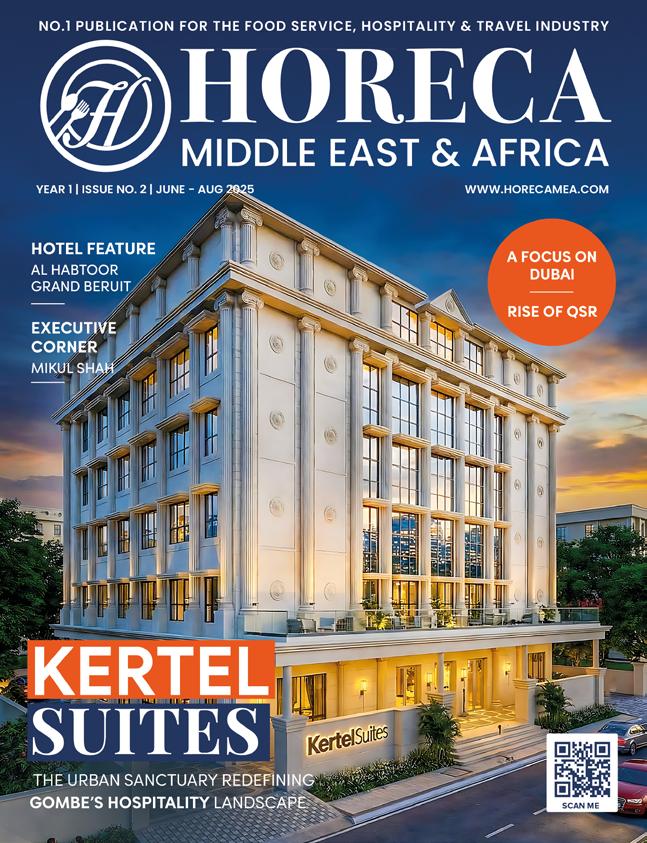
Start-ups and young businesses in sub-Saharan Africa face a myriad of challenges, including lack of access to technology, expertise and networks to grow.
Sales/Marketing Purchasing/Supply
QA/R&D
Others (specify)
At The Nest Africa, we are creating a collaborative facility with new product development labs, production and packaging kitchens and office space for use by start-ups and young companies to facilitate their innovations and growth towards becoming the next big thing. AND WE BELIEVE THAT CONNECTING THEM TO BIG CORPORATES AND FUNDERS IS