

Mothimage courtesy of Dan Mooney
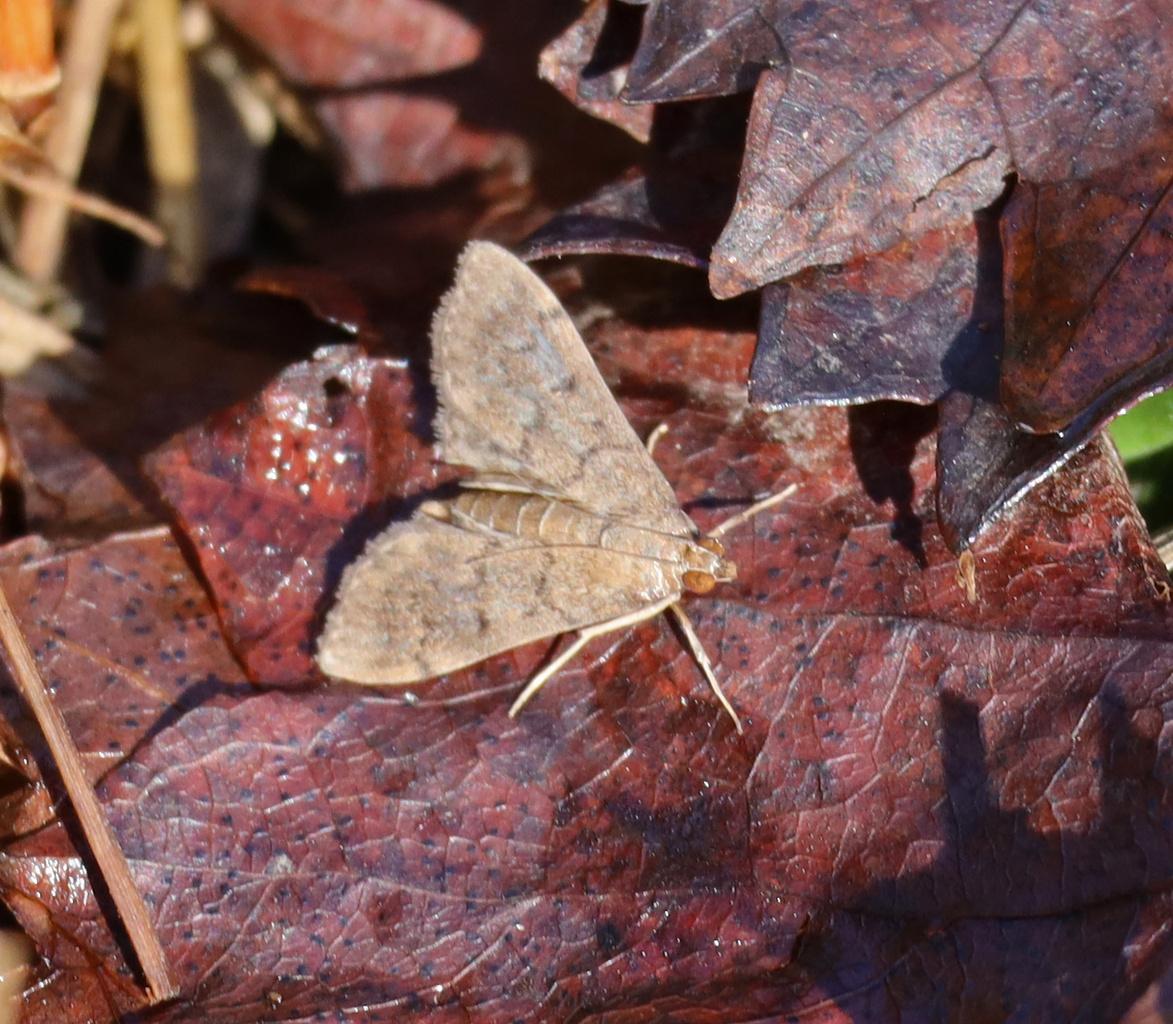
The Tropical sod webworm moth or Dark sod webworm (Herpetogramma phaeopteralis) is a small moth in the Crambidae family with a wingspan of about 10-12 millimeters. It is found in the Americas, from the southern United States to Argentina. The larvae feed on a variety of grasses, and are common sight in lawnscapes.
Sod webworms have a bivoltine life cycle (two generations in a year) with four stages: egg, larva, pupa and imago (adult) They overwinter as larvae in their final or penultimate instar in the lawn thatch or soil. With the coming of warmer weather, the larvae will pupate, and moths will appear in late spring or early summer. Females deposit eggs on grass blades in the evening, and eggs hatch in 3 to 4 days. Tropical sod webworms develop through six larval instars, pre-pupal and pupal stages over 21 to 47 days, depending on temperature. Multiple generations may occur during a year, especially in south Florida where adults can be found year round.
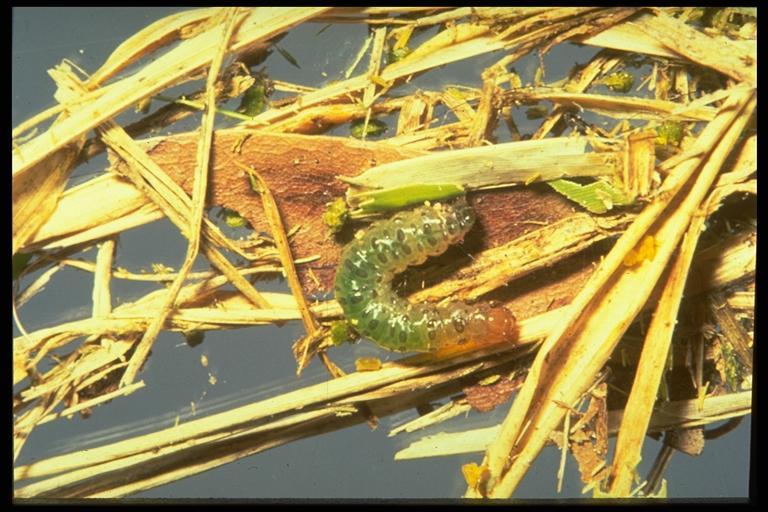
Larvae are cream-colored with brown spots on each segment and a dark, yellowish brown head. Mature caterpillars are ¾ to 1 inch long and grayish-green. The more grass they eat, the greener the caterpillars appear- simply because their abdomens are filled with leaf matter.
In large monocultures of St Augustinegrass, Bermudagrass and Centipedegrass, these moths thrive and cause infestations Over fertilization of lawns is a leading cause of population explosions Numerous lowflying moths hovering above the lawn can be an indication of an outbreak Lawn reduction along with encouraging natural predators such as spiders, lady beetles, big-eyed bugs, syrphid flies, ground beetles, rove beetles, parasitoid wasps, and the application of BT (Bacillus thuringiensis) at dusk as a biological pesticide can be used to control populations of the dark sod webworm moth, but there’s a paucity of documented impact.
"Discover beauty beyond butterflies"- Mark Kateli
Celebrate moth awareness week collaboratively with National Moth Week and Florida Native Plant Society.
Caterpillar image courtesy of Texas A&M University, G. McIlveen, Jr. Adult image courtesy of Dan Mooney
References: Tropical sod webworm- Herpetogramma phaeopteralis:
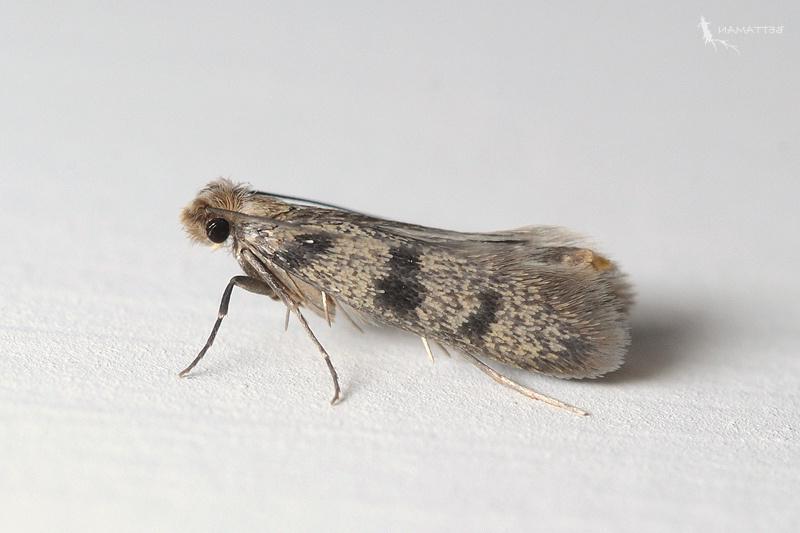
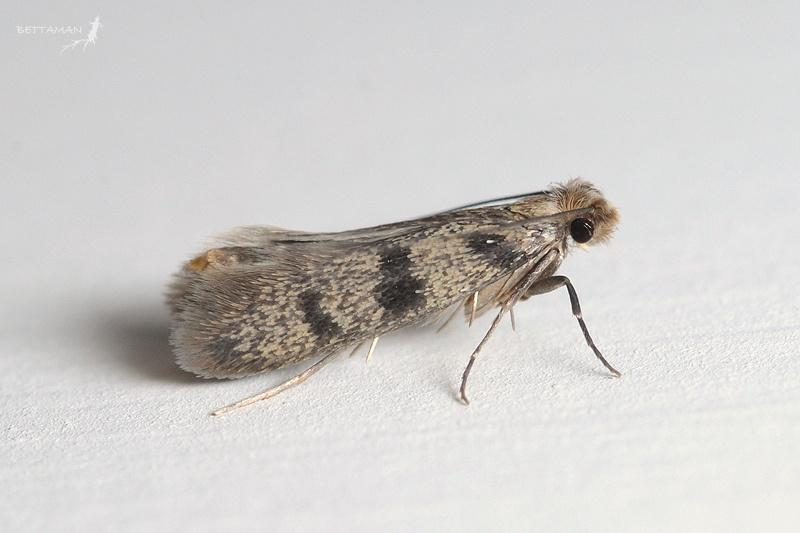
The Household casebearer moth, scientifically known as Phereoeca uterella, belongs to the family Tineidae A very familiar moth, it is commonly found in households in warm, humid areas. The juvenile caterpillar life stage of this moth resembles a worm-like insect hiding and protected within a flat, gray case.

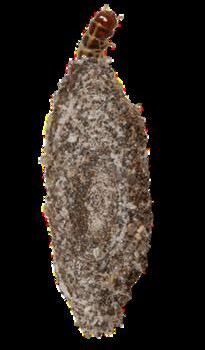
The larvae form a distinctive silk case around themselves for protection and camouflage. The main food source for this species appears to be silk, especially spider webs, but also silk produced by other arthropods including discarded cases from the same species.
Larvae also feed on dander and fallen human hair. Wool (but not cotton) is a favored food and the species can be a household pest due to its food sources found indoors Routine vacuuming and cleaning, utilization of hanging moth traps (glue traps that use pheromones to attract and trap male moths), as well as natural remedies such as a bag filled with fresh garlic cloves near the infested area are known to reduce moth incidences. The author prefers the use of a few drops of lavender oil misted in his closet occasionally to deter them.
Females can produce up to 200 light-blue eggs. Both partners die after mating. The eggs take approximately 10 days or more to hatch. The larvae undergo six or seven instars that require about 50 days to mature. The pupa stage lasts between, on average, 11 to 23 days. A complete cycle from egg to adult takes about two and a half months
As for the well-known case of this moth, it begins with the earliest instar- with each instar, a larger case. The case is created by the secretion of silk into an arch shape, anchored on both ends by a substrate. The arch gradually is extended to form a tunnel, exclusively made of the moth silk from the larvae building it on the inside. The tunnel is then enclosed from the substrate, thereby producing a tube free from attachment and with openings on both ends. The outside of the case, on the other hand, uses various materials ranging from fibers, hair, dirt, and other organic and inorganic materials found nearby
As the larva continues through instars, the case broadens since the larva uses both ends of the case to turn around and emerge from either opening The case is remarkably tough and durable, providing protection to its host. The larva have three pairs of well-developed legs that allow mobility. The pupa stage begins when the larva starts to climb a vertical surface. The case is affixed to the surface with silk and the larva cuts slits on both sides to make the case flatter- it is this stage that is very familiar to observers due to its bowedshaped casing.
After eclosing, adults do not feed and are known to rest on the webs of cobweb spiders ( Theridiid species ). Females have a wingspan of 7-13 millimeters with males being slightly smaller.
"Discover beauty beyond butterflies"- Mark Kateli
Celebrate moth awareness week collaboratively with National Moth Week and Florida Native Plant Society.
Caterpillar image courtesy of University of Florida, Lyle J. Buss
Adult image courtesy of Shipher Wu
References:
University of Florida: https://entnemdept.ufl.edu/creatures/urban/occas/household casebearer.htm
The Common bagworm moth, scientifically known as Thyridopteryx ephemeraeformis, belongs to the family Psychidae. There are around 1,300 species of bagworms. Bagworms are the larval stage of certain moth species that damage evergreen and deciduous trees. The name bagworm comes from the fact that the worm-like larvae emerge from bag-like casings.
The life cycle of Thyridopteryx ephemeraeformis in cooler climates starts when the eggs hatch in the end of May and beginning of June This species emerges earlier in Florida and can be bivolutine (several generations in a year) in southern regions during warmer years.
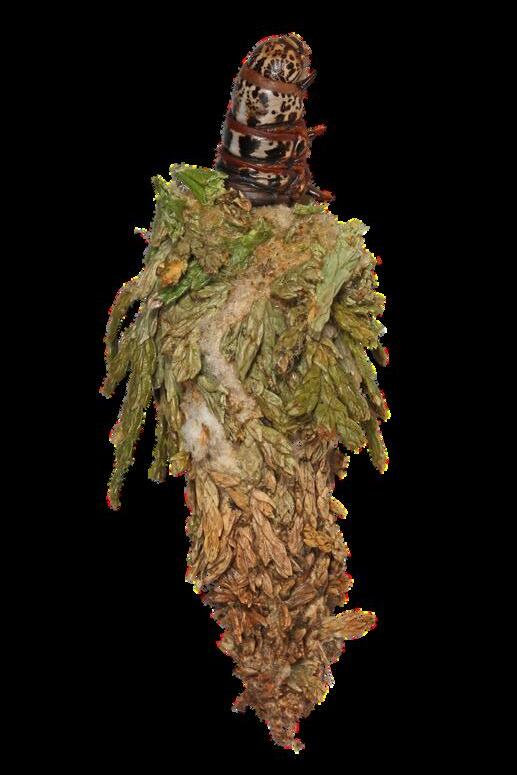
Once the eggs hatch, the larva spins a silk strand that hangs down it. The larva can also be transported to nearby plants by wind. Once the larva finds a host, it starts to make a new protective bag around itself. It remains inside this bag sticking only its head out to eat from the host. The larva continues feeding until it matures by the end of August. It then attaches the bag they are in to a branch with a strand of silk and starts developing into a pupa.
The bagworm moth generally resides and feeds on willow, maple, bald cypress, native roses, black locusts, pines and over 120 other deciduous and evergreen species. Larvae are known to subsist on fruit trees, ornamental trees, perennial flowers and decorative shrubs making the bagworm moth’s diet diverse and adaptable
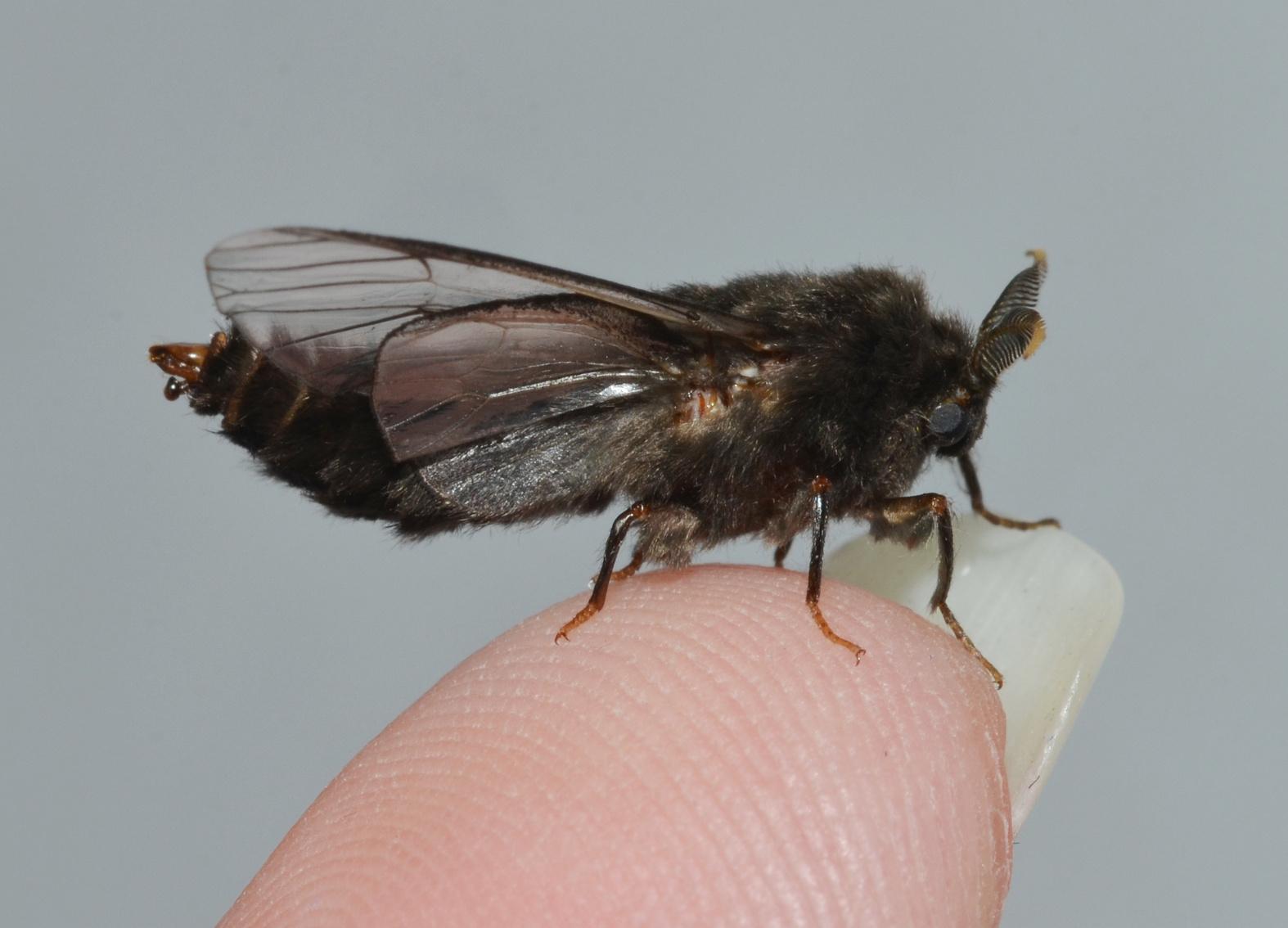
Adult males eclose in early fall with a wingspan of 25 millimeters. These are small, dark moths with fur on their body and transparent wings. Adult bagworm females are wingless. They never leave the protective bag. She remains in her bag for the male to find and mate with her. The female will then produce 500-1000 eggs within her bag and then dies.
In residential landscapes, bagworm moths can be hand-pulled from surfaces in cooler months as some contain the wingless female or her clutch of eggs that will hatch in spring The author recommends BT (Bacillus thuringiensis) spray as a biological control at dusk in spring- when the bag’s size is small and the moth more susceptible. Providing habitat for natural predators such as spiders, syrphid flies, and parasitoid wasps are, as usual, best practices. The bagworm is very common in urban settings and should not cause alarm to the better-informed reader.
"Discover beauty beyond butterflies"- Mark Kateli
Celebrate moth awareness week collaboratively with National Moth Week and Florida Native Plant Society.
Caterpillar image courtesy of Judy Gallagher
Adult image courtesy of Andy Reago and Chrissy McClarren
References:
Iowa State University: https://hortnews.extension.iastate.edu/bagworm?ssp=1&darkschemeovr=1&setlang=enUS&safesearch=moderate
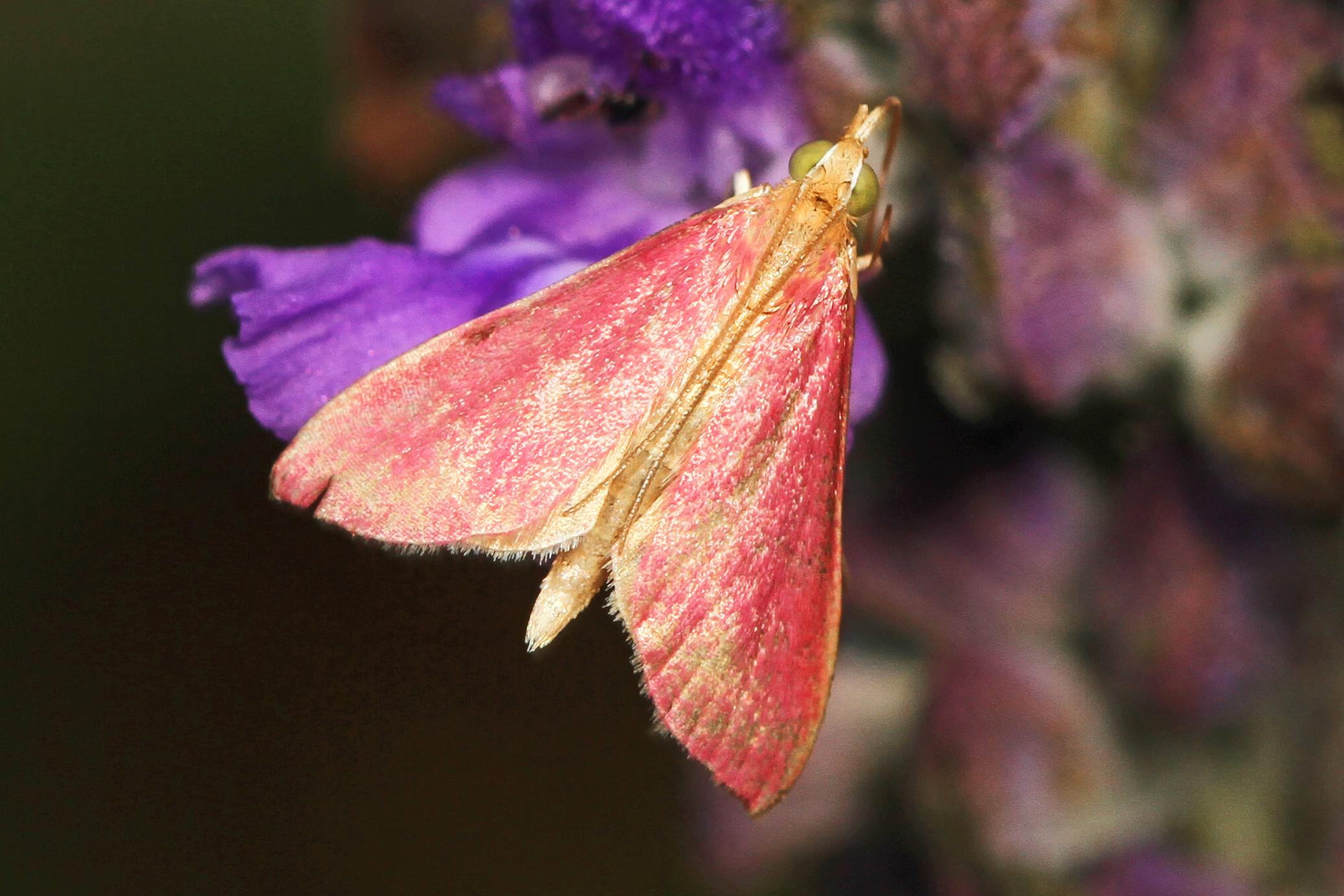
The Inornate pyrausta moth or Southern pink moth, scientifically known as Pyrausta inornatalis, is a species of moth in the family Crambidae. It has a broad distribution in the southern states from Florida to southern California.
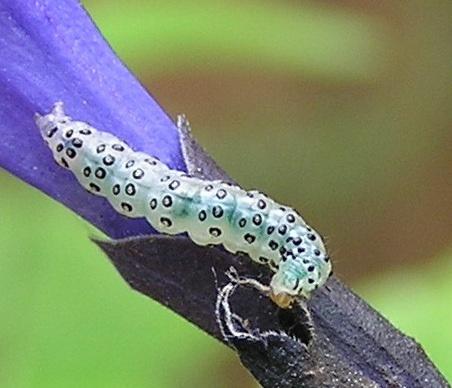
The pretty moth is categorized as a horticultural budworm as they pupate near the buds of flowers. The inornate pyrausta specializes in salvias, a common genus and a favorite of native plant gardeners. Caterpillars are frequently found at the base of flowers boring holes The pupa is a filmy cocoon
With a wingspan of 13 millimeters, the forewings of the adult have a pleasant wine red to reddish pink coloration. Hindwings are fuscous (brownish gray) and fringed. dults are on wing from March to November.
APyraustas are generally known for their alluring pink and yellow colorations However, the inornate pyrausta has no yellow markings, and its pink hue is relatively muted when compared to others in its genus; hence the common name
The Pyrausta genus is speciose- with over 200 known representatives; and there is a great paucity of available information on many of them. For example, the coffee-loving pyrausta moth, Pyrausta tryalis, has the only recorded host plant as Psychotria nervosa, a native species of wild coffee. Since this Florida native plant does not occur throughout the moth’s range (which extends into Venezuela), other host plants for this species remain a mystery.
"Discover beauty beyond butterflies"- Mark Kateli
Celebrate moth awareness week collaboratively with National Moth Week and Florida Native Plant Society.
Caterpillar image courtesy of Oregon State University, Gacko Adult image courtesy of Judy Gallagher
References:
Oregon State University: https://blogs oregonstate edu/mgmetro/2020/09/01/southern-pink-moth-pyraustainornatalis/
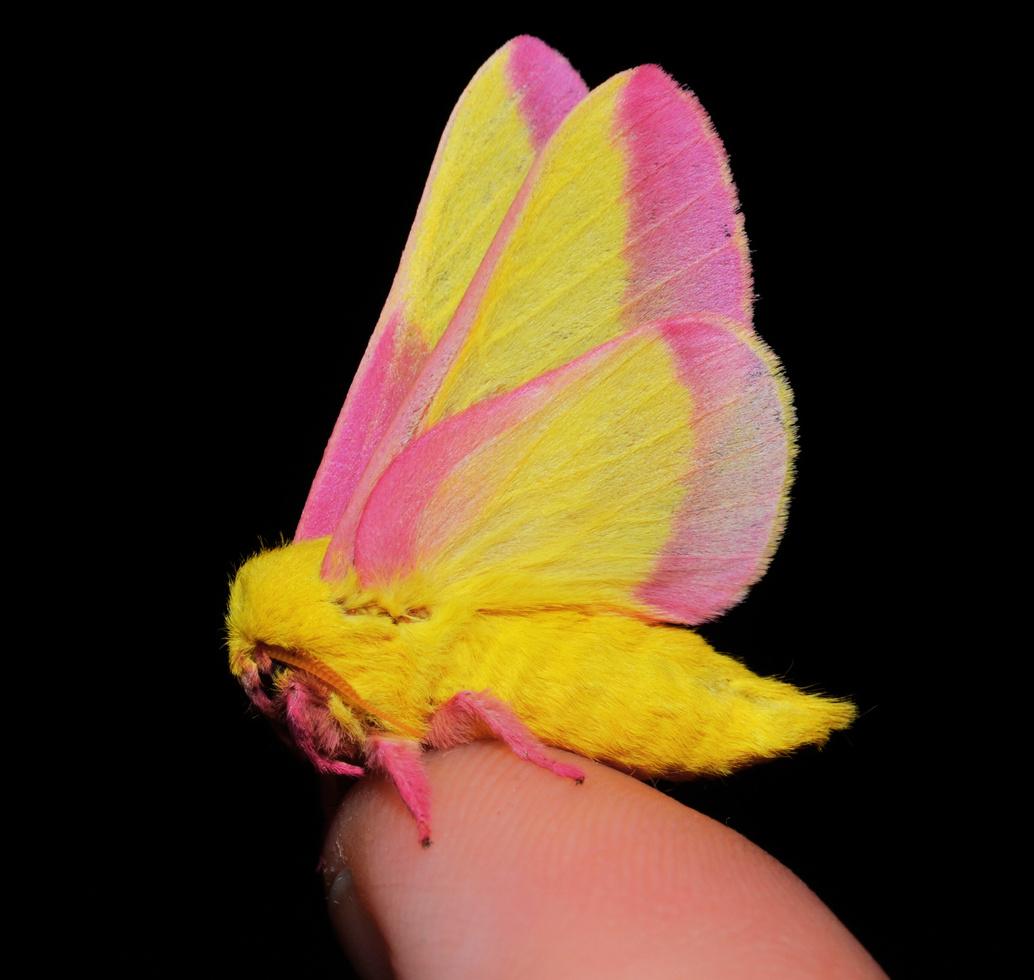
The Rosy maple moth, or Dryocampa rubicunda, is the diminutive member of the North American moth in the family Saturniidae, also known as the great silk moths. The species is known for its captivating cream or white to bright pink or yellow coloration and fuzzy body.
As the common name of the species implies, the preferred host trees are maple trees. Like all other Saturniid moths, the adult moths do not eat: their final metamorphose is to mate Males have a wingspan of 3 2 to 4 4 centimeters (1 25-1 75 inches); females of 3 8 to 5 centimeters (1 5–2 inches) Adult females lay yellow ovular eggs in groups of 10 to 40 on the underside of maple leaves within 24 hours of mating and eggs hatch after two weeks.
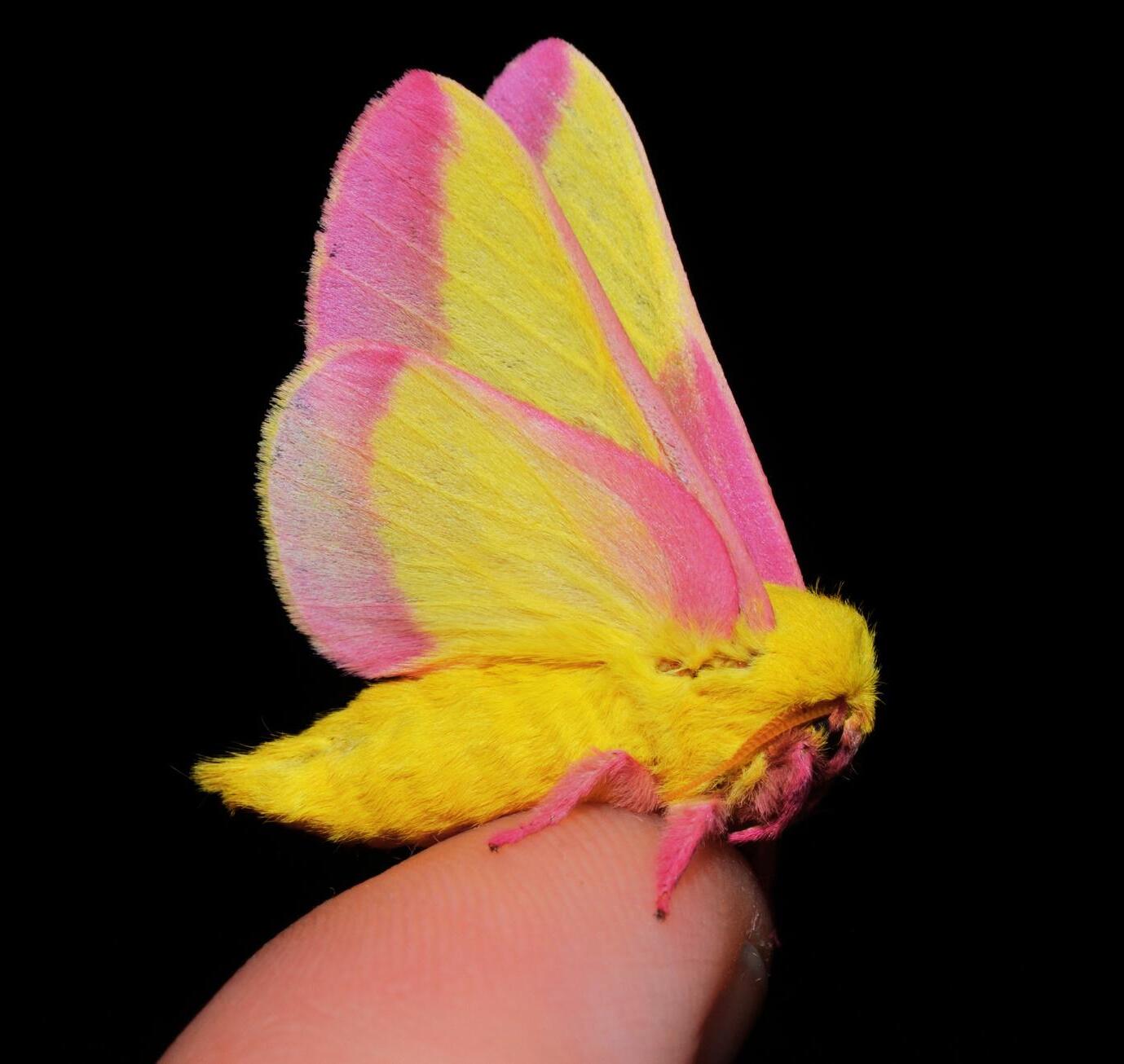
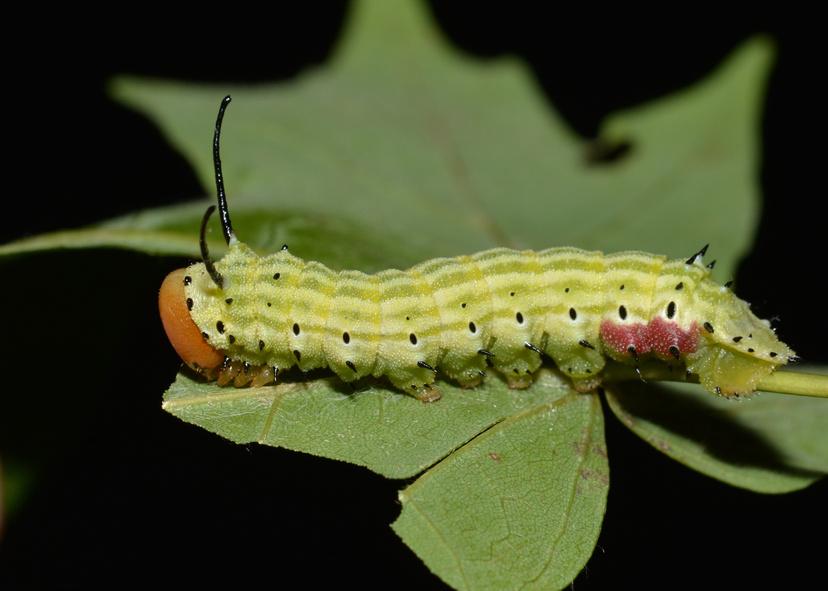

The emerging caterpillars are known as the greenstriped mapleworm- a befitting description since they have a green body striped with greenish-bluish shades. Caterpillars have five instars; earlier stages have larger black-colored heads and pale yellow-green bodies with faint stripes. They mainly feed on the leaves of their host maple trees, particularly red maple (Acer rubrum), silver maple (Acer saccharinum), sugar maple (Acer saccharum), and box elder maples (Acer negundo). All aforementioned maples are Florida native trees. In large numbers, rosy maples can strip entire trees completely of leaves. The author would like to allay any concerns as this is merely a short term cosmetic occurrence that the tree will rebound from.
Rosy maple moths can live for two to nine months, with the higher end spent as overwintering pupae in northern states Rosy maple moths are not harmful to humans They don’t bite, sting, or otherwise cause harm when touched Be confident in identifying any moth or caterpillar before handling as a few are venomous.
"Discover beauty beyond butterflies"- Mark Kateli
Celebrate moth awareness week collaboratively with National Moth Week and Florida Native Plant Society.
Images courtesy of Andy Reago and Chrissy McClarren
References:
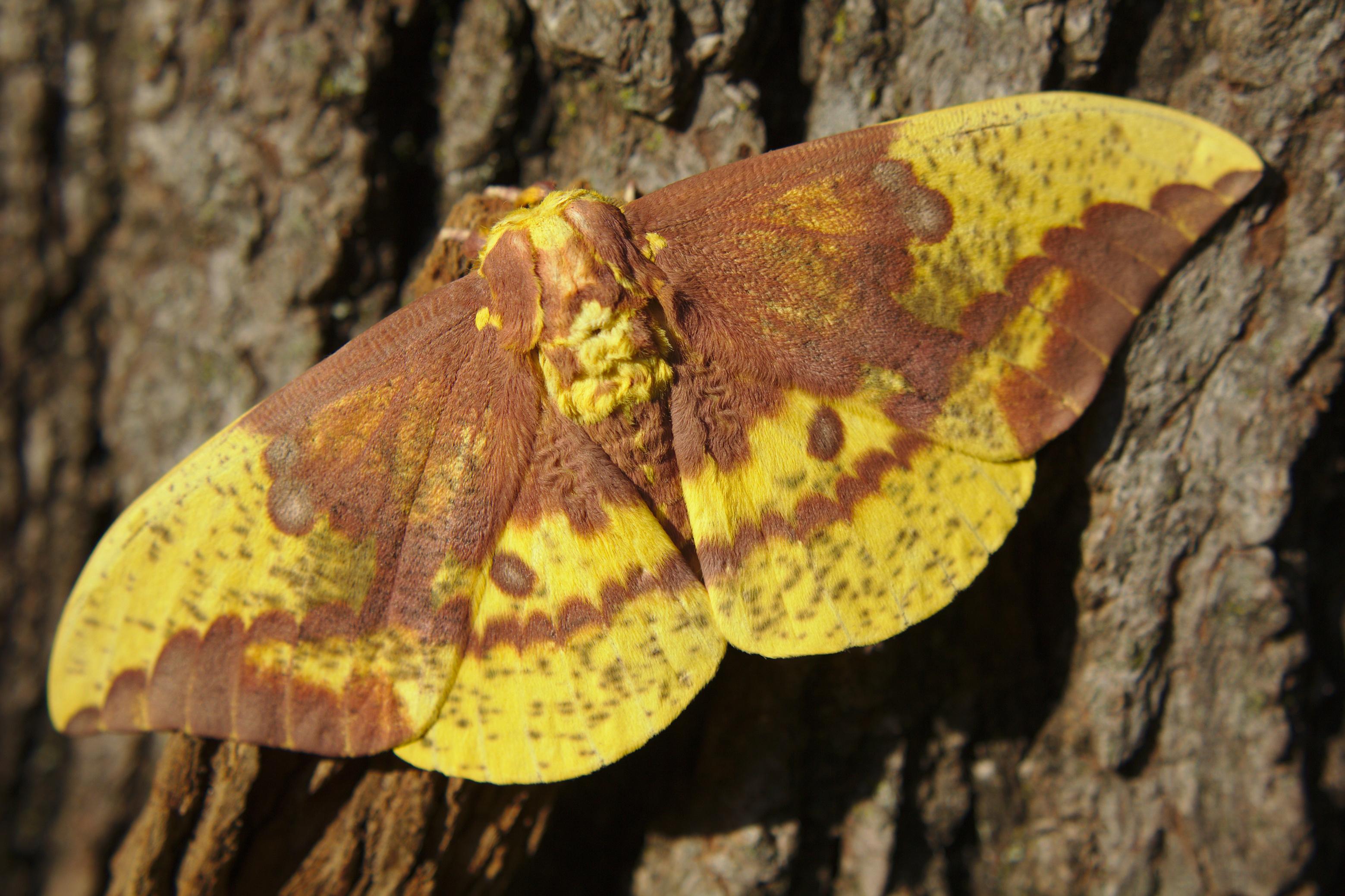
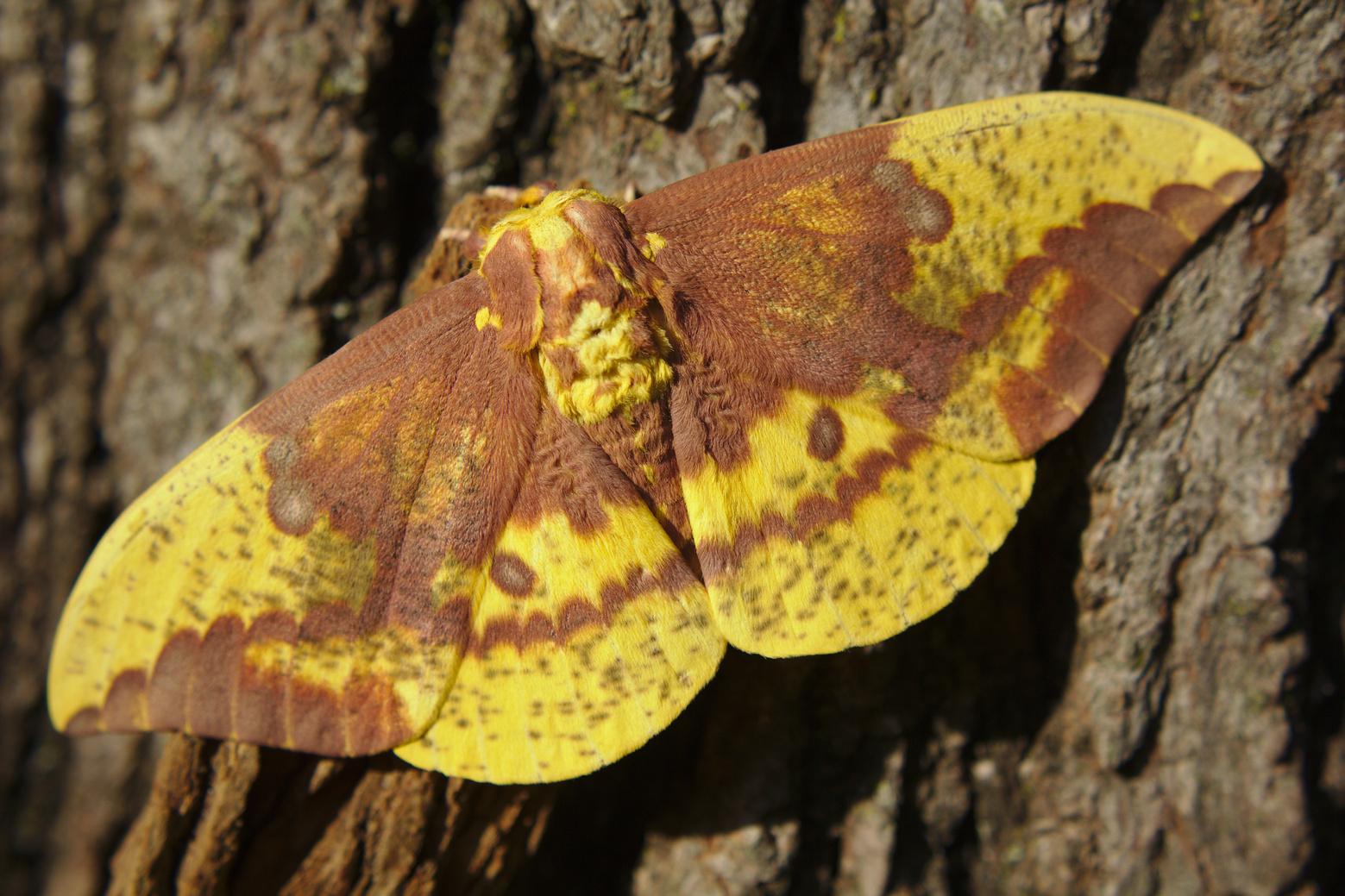
The Imperial moth, Eacles imperialis, is a member of the family Saturniidae and subfamily Ceratocampinae. The subfamily has many genera and is characterized by the antennae of males are quadripectenate (featherlike, with each branch split into two parts) at the basal half or twothirds of the way up the antenna, with the outer portion simple (not featherlike) Eacles imperialis has a very wide distribution ranging from eastern portions of southern Canada to Argentina.
Imperial moths are classified in a section of the giant silkworm family called the royal moths- all of which are brightly colored and native to the New World. Royal moths are robust bodied with lobed wings and hair-like scales. The imperial moth is yellow with spots, lines and splotches of light to dark brown.
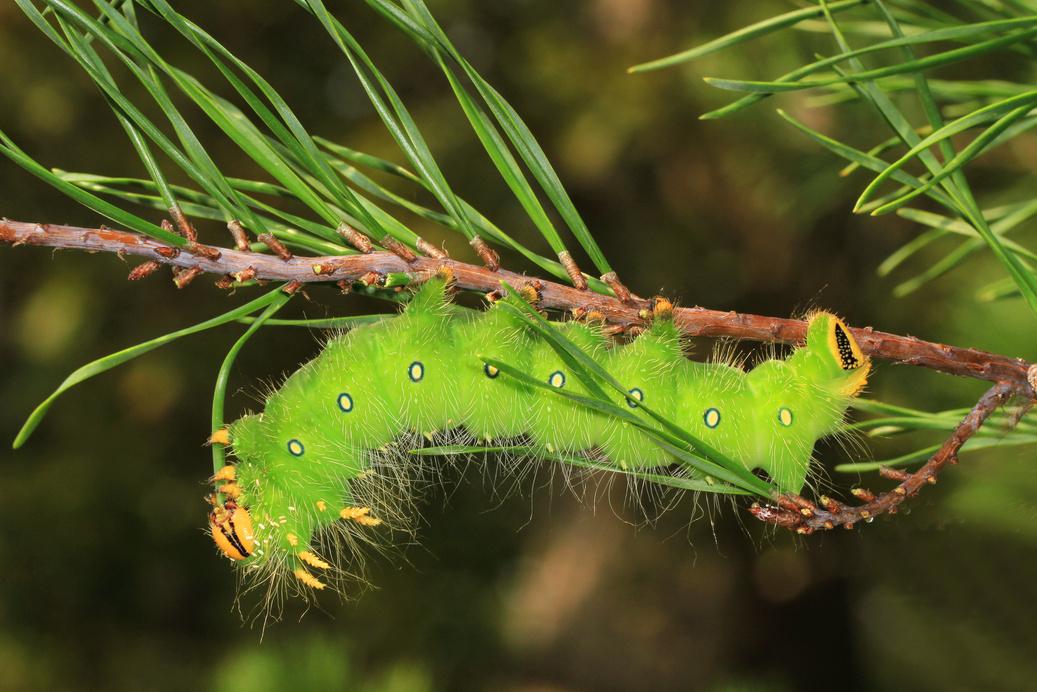
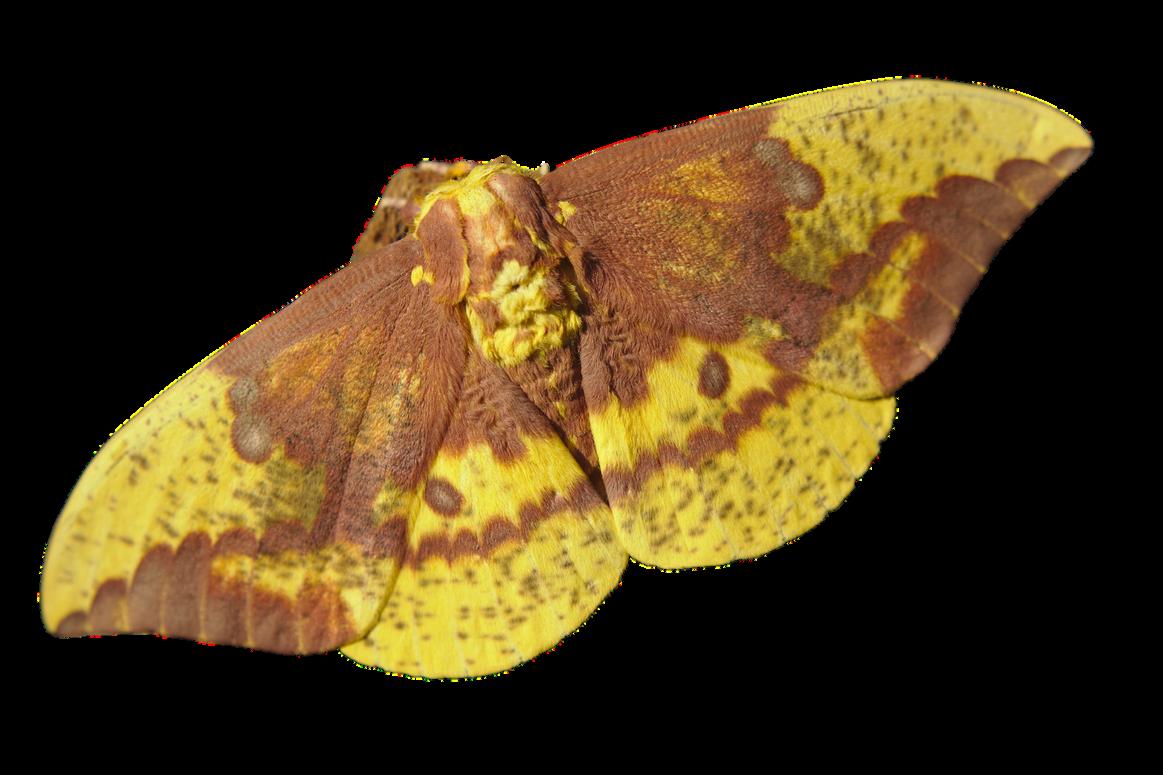
Imperial moths emerge from the soil in late spring to mate and then die. An adult Imperial moth can live typically for 2-4 weeks and sometimes as long as 6 weeks; it does not eat and solely relies on its fat reserve. Males fly longer distances while females choose to stay in the vicinity of the parent plant. Females lay hundreds of eggs on a wide variety of trees. The eggs are flattened spheres almost 1/8 inch across. Hatchling caterpillars are orange and measure almost half inch long with conspicuous black spines.
Imperial moth larvae are polyphagous (capable of eating different types of plants); however, with regional differences in food preferences. The most commonly reported host plants for the imperial moth are pine species, maple species, oak species, sweetgum, and sassafras
Imperial moths are not poisonous, but their larvae do have three long black spines (scoli) tipped with white filaments. Their bodies are covered with hairs as well. This can lead to mild discomfort or rashes if touched. There are five instars- with each instar, the scoli reduce dramatically while the hairs grow thicker and denser. Imperial larvae can be green (usually when consuming pine) or dark brown (other host plants) and are even known to switch colors between instars.
A keen eye can even spot male from female brown cocoons. Males have a pair of miniscule rounded markings on the posterior margin of the fourth abdominal segment (their gonopores). Cocoons have recurved hooks- postulated to free eclosing adults successfully from the fastened cocoon on its substrate.
"Discover beauty beyond butterflies"- Mark Kateli
Celebrate moth awareness week collaboratively with National Moth Week and Florida Native Plant Society.
Caterpillar image courtesy of Lisa Brown
Adult image courtesy of Andy Reago and Chrissy McClarren
References:
North Carolina State Extension: https://content.ces.ncsu.edu/imperial-moth U.S. Fish & Wildlife: https://www.fws.gov/species/ceratocampinae-ceratocampinae University of Florida: https://entnemdept.ufl.edu/creatures/bfly/moth2/imperial moth.htm
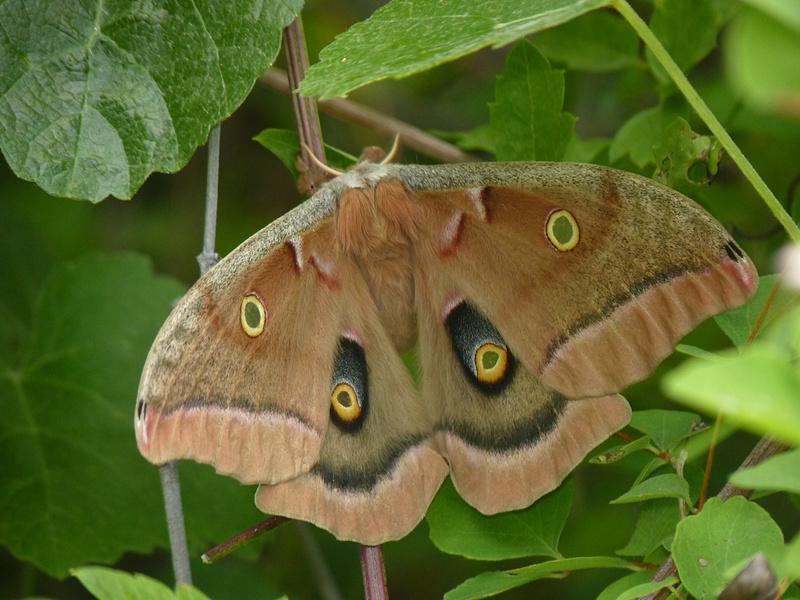
The Polyphemus moth, scientifically known as Antheraea polyphemus, is a North American member of the family Saturniidae, as known as the giant silk moths. It is a tancolored moth, with an average wingspan of 15 cm (6 in). The most notable feature of the moth is its large, purplish eyespots on its two hindwings. The center of the eyespots are transparent. These famous eyespots give it its name–from the Greek myth of the cyclops Polyphemus.
Though part of the Saturniids much like the Imperial moth, Antheraea’s lineage is different. They come from the subfamily Saturniinae (the Imperial’s is Ceratocampinae, or the royal moths) and specifically the Saturniini tribe. Antheraeas form the tussar silk genus- a wild type of silk that has commercial value especially from its Asian representatives
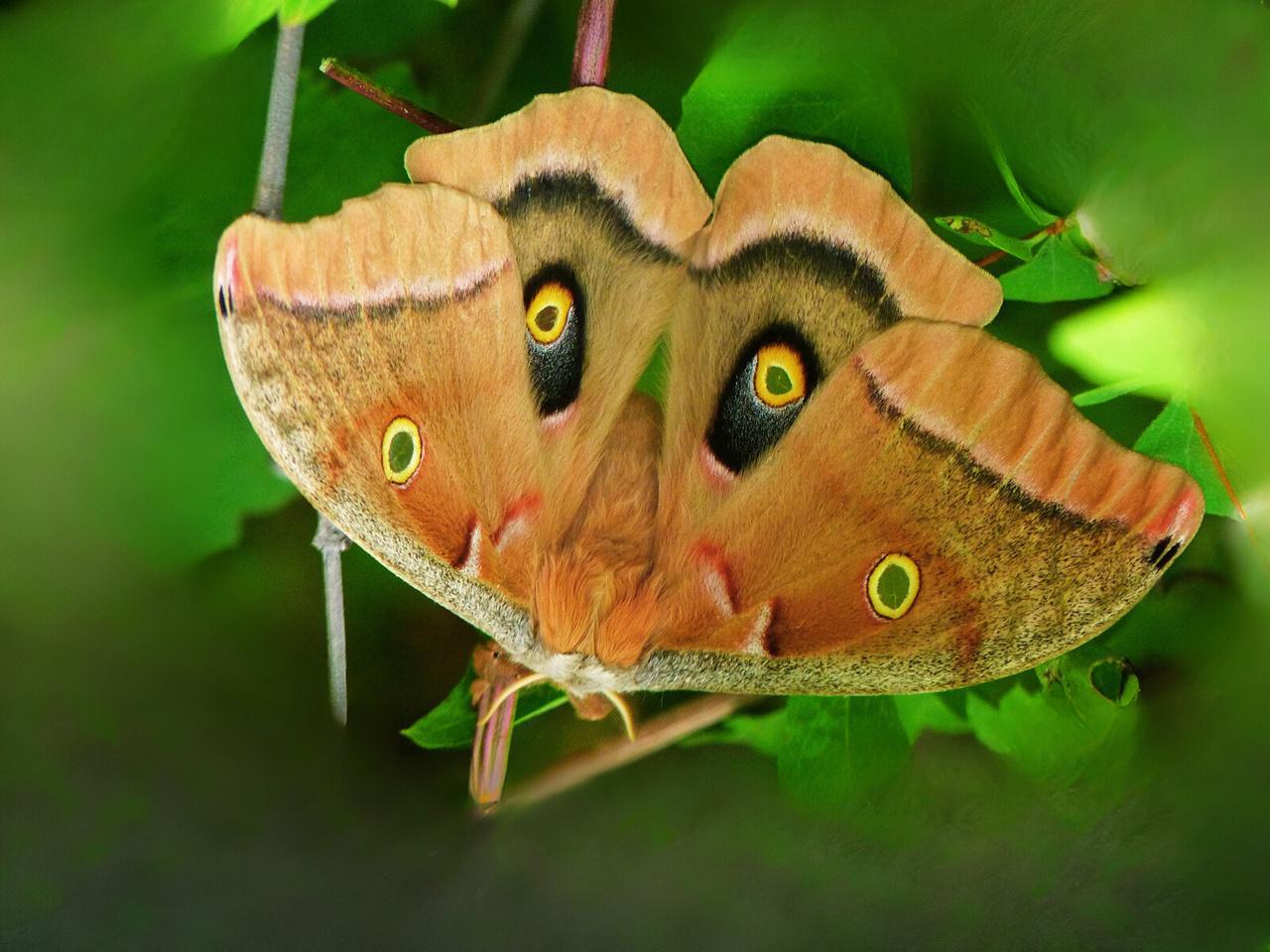
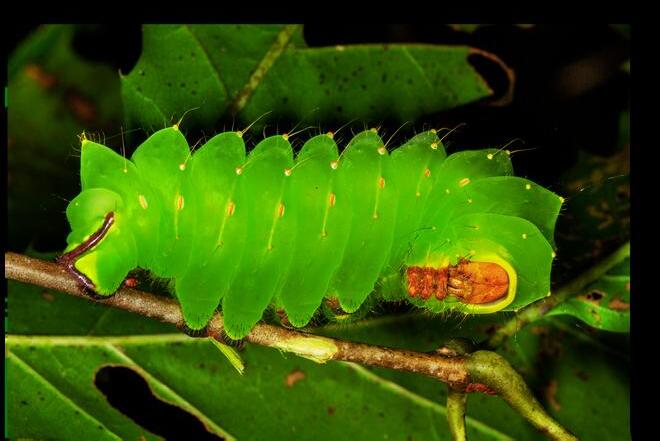
This North American moth has a widespread range all over subarctic Canada and the United States. The caterpillar is renowned for its insatiable appetite and can eat 86,000 times its weight at emergence in a little less than two months. Polyphemus moths are considered to be very polyphagous, meaning they rely on a variety of host plants to assist in their gluttony.
In bitter irony, the adults have vestigial mouths meaning their mouth parts, greatly reduced, are incapable of eating anything at all. Because of this, they only live as adults for less than one week.The eyespots form one of the most distinctive defense mechanisms of the Polyphemus moth- a distraction display to confuse predators on its size, identity, and positioning.
The life cycle of the Polyphemus moth is much like that of any other Saturniidae species. It lays flat, lightbrown eggs on the leaves of a number of host trees, preferring American elm, birch, and willow, but can also survive on other trees such as oak, maple, hickory, beech, honey locust, walnut, pear and quince, plum, peach, apricot, cherry, sassafras, and even citrus When the eggs hatch, small yellow caterpillars emerge Caterpillars feed heavily on their host plant and can grow up to 3–4 inches long
There are five instars with each instar being slightly different. Polyphemus moth caterpillars can greatly resemble luna moth caterpillars. While polyphemus moths have single horizontal lines along each side of the body, luna moths have vertical yellow lines on each segment. Their fifth and final instar, however, is highly indicative as they become bright green with silver spots on their sides. They then spin cocoons of brown silk, usually wrapped in leaves of the host plant.
Two broods generally hatch each year throughout the United States, one in early spring and one in late summer. The females emit pheromones, which the male can detect through his large plumose (feathery)
antennae Males can fly for miles to reach a female After they mate, the female spends the majority of the remainder of her life laying eggs while the male may mate several more times
The North American Polyphemus moth is generally of no economic importance (unlike its Asian tussar silk relatives), although larvae can become occasional pests in plum and hazelnut orchards out west. However, because of their ease of rearing and large size, Polyphemus moths are often reared by amateur enthusiasts and have been used for numerous physiological studies, particularly for studies on molecular mechanisms of sex pheromone action.
"Discover beauty beyond butterflies"- Mark Kateli
Celebrate moth awareness week collaboratively with National Moth Week and Florida Native Plant Society.
Caterpillar image courtesy of Kristoff Zyskowski
Adult image courtesy of Mathesont
References:
Animal Diversity Web: https://animaldiversity org/accounts/Antheraea polyphemus/ Pacific Northwest Moths: http://pnwmoths.biol.wwu.edu/browse/family-saturniidae/subfamilysaturniinae/antheraea/antheraea-polyphemus/. University of Florida: https://entnemdept.ufl.edu/creatures/MISC/MOTHS/polyphemus moth.htm
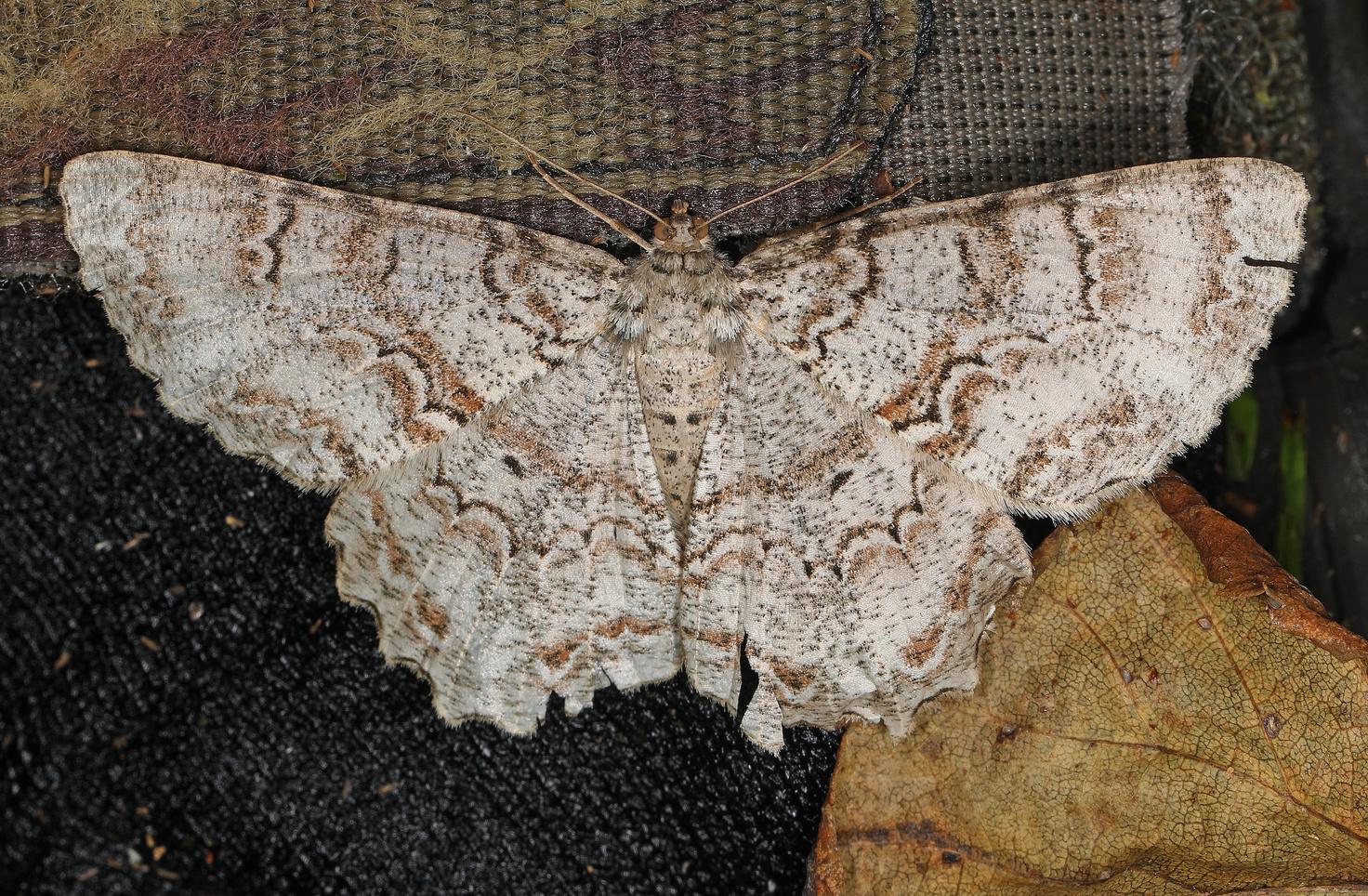
Epimecis hortaria, also known as the Tulip-tree beauty, is one of the largest moth species of the Geometridae genus family. Found in the Ennominae subfamily (also the largest within Geometridae) this moth is predominantly found in eastern North America ranging from southern Canada to Florida and into Texas
The Geometridae are famous for their inchworm caterpillars, some of which are serious agricultural pests. They can be seen flying from late March to early October in northern states; but in Florida, they can be on wing year round. Adults are nocturnal and are highly attracted to lights, much to the same extreme as imperial moths (a significant detriment to their populations in urban landscapes). It has a wingspan of 43–55 millimeters. There
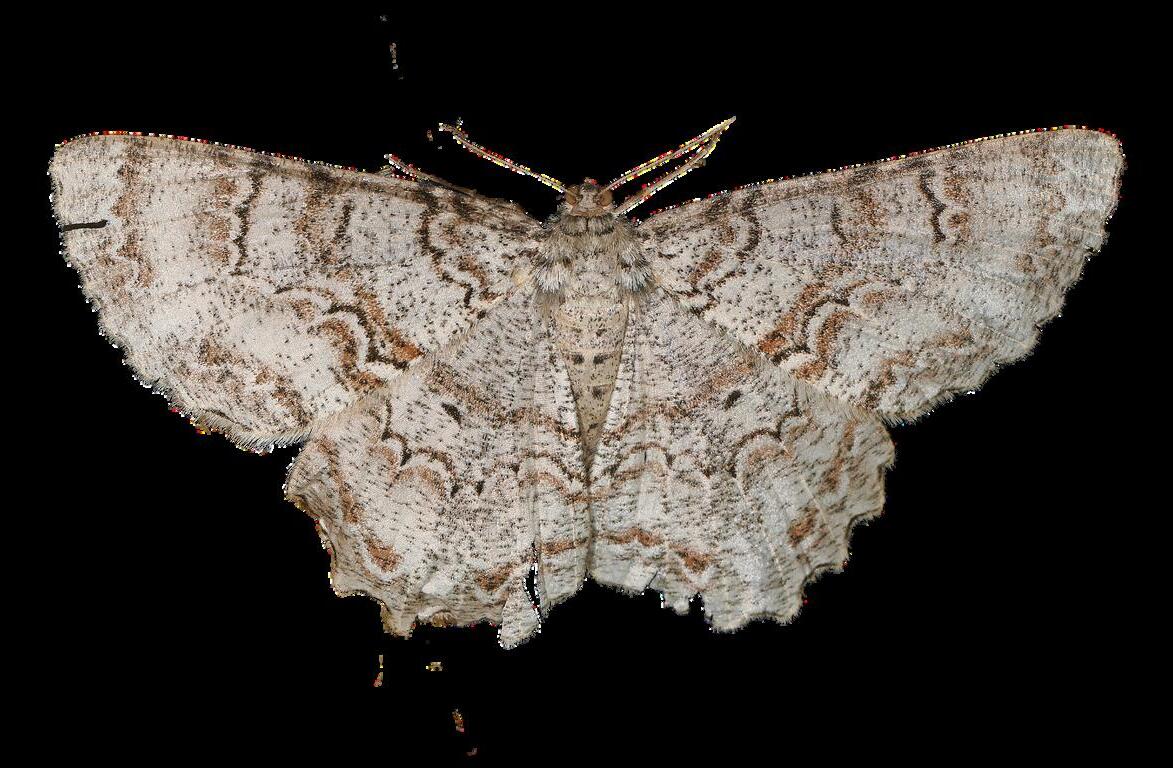
are two forms, one being "Dendraria" and the other being "Carbonaria" which correlate to patterns on their forewings (their subterminal line, specifically)
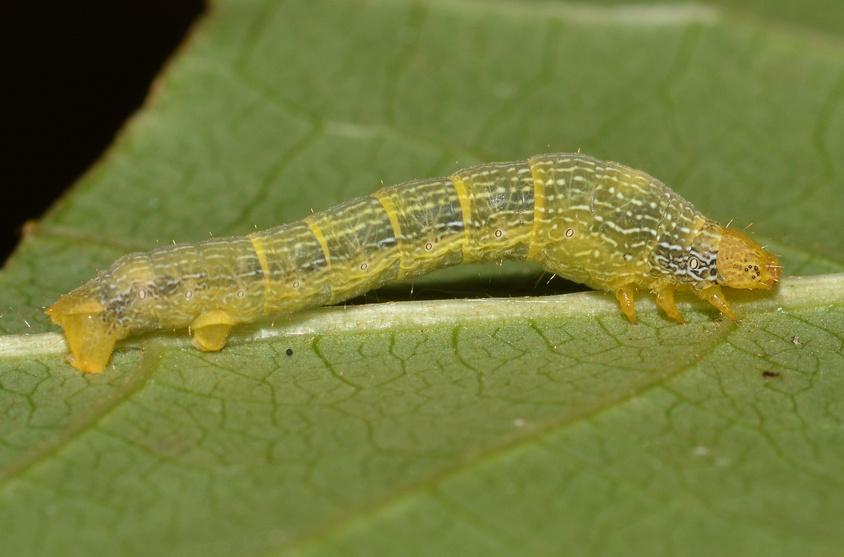
The immature caterpillars can be found feeding on deciduous trees, including Asimina triloba (American pawpaw), Populus (poplar) species, Sassafras albidum (sassafras), Liriodendron (Tulip tree), Lindera benzoin (spicebush), and Magnolia species. Larvae can vary in coloration from dark brown, to dusky orange, and even light green (found on Sassafras) depending on the host plant. The thick bodied caterpillar has a swollen third thoracic segment giving the inchworm a ‘neck hump’ look.
Representatives of Epimecis genus are excellent camouflage specialists, blending perfectly against tree trunks and other backgrounds. They can be hard to spot when resting which leads the author to believe that their superior concealment has contributed to a paucity of available information on the Tulip-tree beauty’s life cycle, and contributing to unfruitful hours towards a more detailed commentary.
"Discover beauty beyond butterflies"- Mark Kateli
Celebrate moth awareness week collaboratively with National Moth Week and Florida Native Plant Society
Caterpillar image courtesy of Andy Reago and Chrissy McClarren
Adult image courtesy of Judy Gallagher
References:
Moth Photographers Group: http://mothphotographersgroup.msstate.edu/species.php?hodges=6599
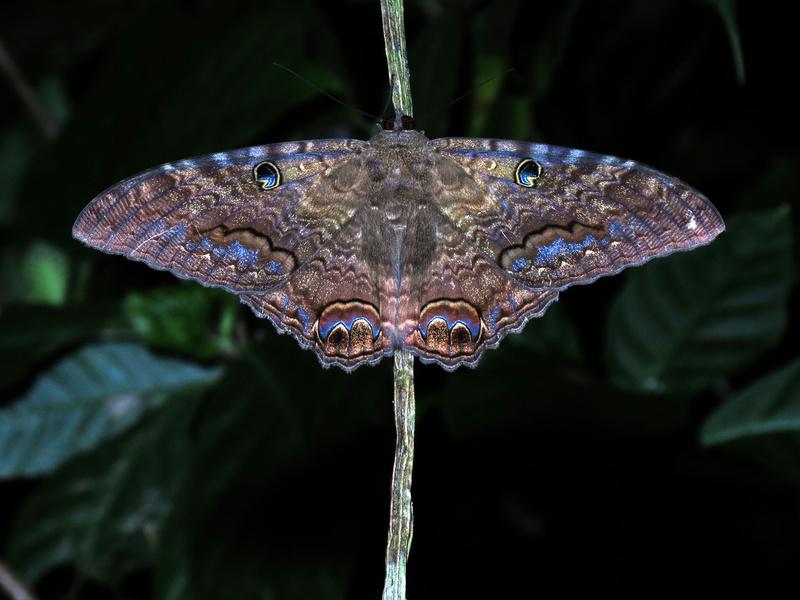
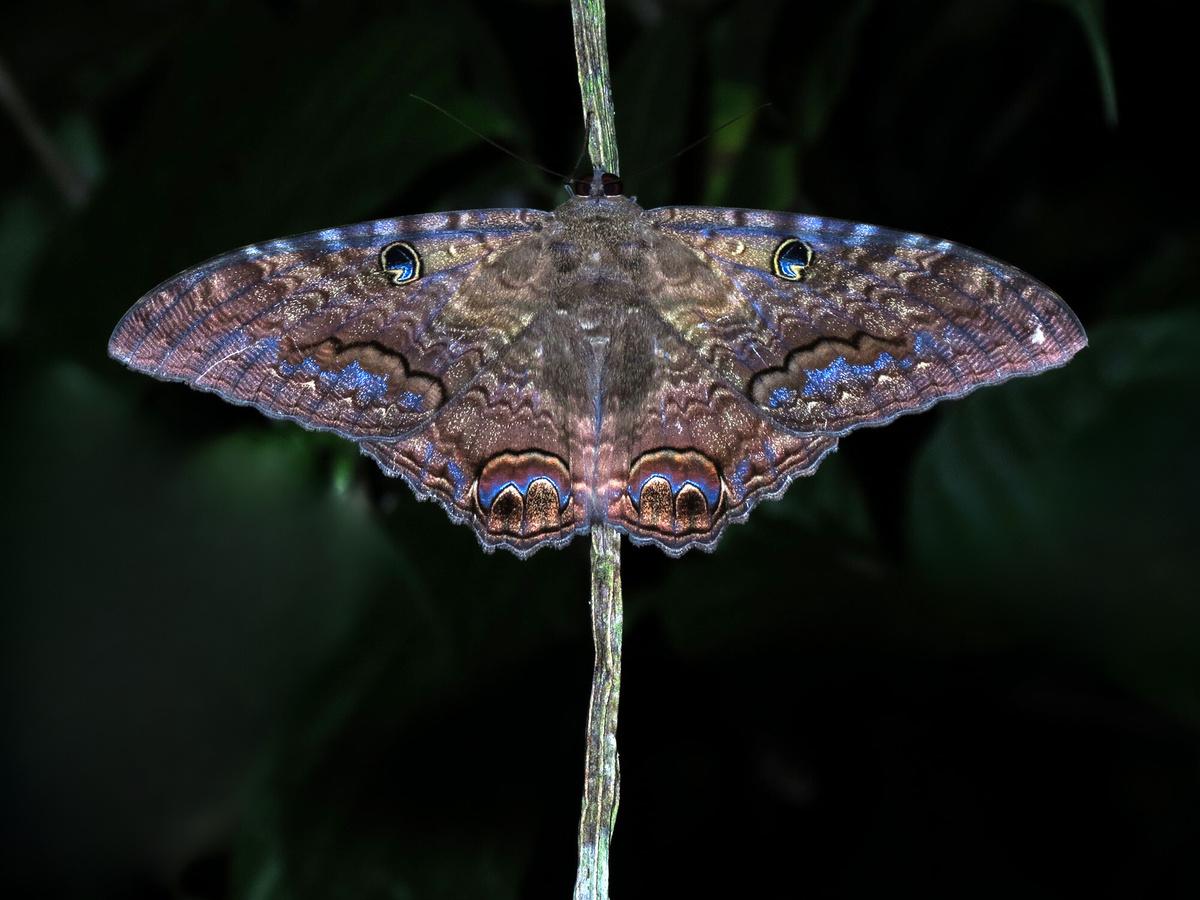
Ascalapha odorata, commonly known as the black witch, is of special significance to the author. A large bat-shaped, dark-colored nocturnal moth, the black witch ranges from the southern United States to Brazil. It is the largest night owl moth, or owlet moth, in the country. The black witch is more common in South Florida than other parts of the United States- chiefly because it favors tropical climates which makes sightings in the U.S. and Canada a rare treat. Adults are capable of flying great distances. They are known to be blown far north, away from their natural range, during severe weather events.
The black witch is a frugivore- a lover of sugar-rich fruit
Adults of Ascalapha odorata feed on overripe rainforest fruit, especially bananas, and larvae consume tender, new
Most of its host plants are legumes (polyphagous on numerous Fabaceae species) It favors Acacia species, Kentucky coffeetree (Gymnocladus dioicus) and Locust trees (Robinia) in summers, and Bird of Paradise shrub species (Caesalpinia) and Candlestick tree (Senna alata) year round in its neotropical range
Female moths can attain a wingspan of 24 centimeters, while males are somewhat smaller, reaching 12 centimeters. Adult females are easy to identify as they have a pearlescent white stripe that runs across their wings (submarginal band). These moths are particularly beautiful under ultraviolet light with parts of their wings fluoresce in indigo and other jewel tones.
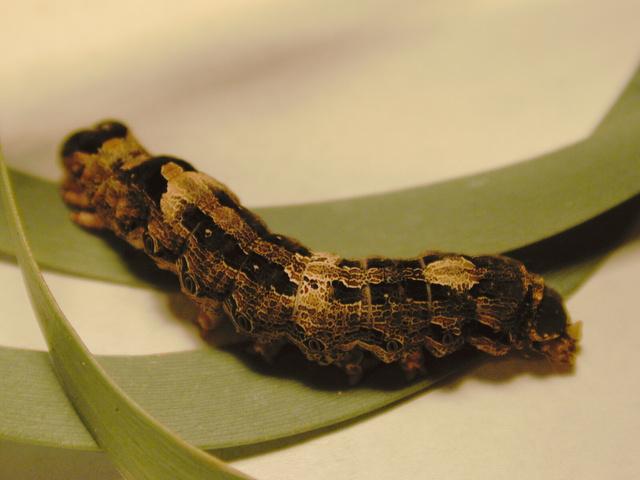
The eggs of Ascalapha odorata are incredibly small (about 2mm), round and gray. They hatch within 4-5 days in ambient temperatures of 25C (77F) or more. Larvae have brown and black colorations and in addition to being excellent animal defecation camouflage, they are nocturnal and descend to the ground to hide in leaf litter during the day. If high in the canopy, they choose to press against the bark only to resume herbivory after dusk. There are five instars. The caterpillar develops its prolegs (a fleshy, stubby structure that functions as leg-like appendages) at its third instar Larvae pupate into dark brown to black cocoons on the ground, covered by leaf litter
On an esoteric note, the black witch harkens omens of fortune or misfortune (depending on the folklore). The author witnessed his first and only black witch (a male) perched by his window for two days. This owl moth sighting coincided with a breeding pair of barred owls training their juvenile in his yard around the time when his term as Florida Native Plant Society President began.
"Discover beauty beyond butterflies"- Mark Kateli
Celebrate moth awareness week collaboratively with National Moth Week and Florida Native Plant Society.
Caterpillar image courtesy of Andy Reago and Chrissy McClarren
Adult image courtesy of Judy Gallagher
References:
Breeding Butterflies: https://breedingbutterflies com/ascalapha-odorata-black-witch-moth-mariposa-bruxa/ University of Colorado: https://www colorado edu/cumuseum/2020/10/28/black-witch-moth
The small-eyed sphinx is a large moth with vivid blue eyespots on its yellow and black hindwings Scientifically known as Paonias myops, it belongs to the Sphingidae (hawk moth) family. It has a broad distribution in North America ranging from southern Canada to almost the west coast. However, the population of this species is best represented in the eastern portion due to its affinity for woodlands. They are widely distributed east of the Cascades in riparian habitats along creeks and rivers at lower elevations, and in mixed hardwood forests at higher elevations.
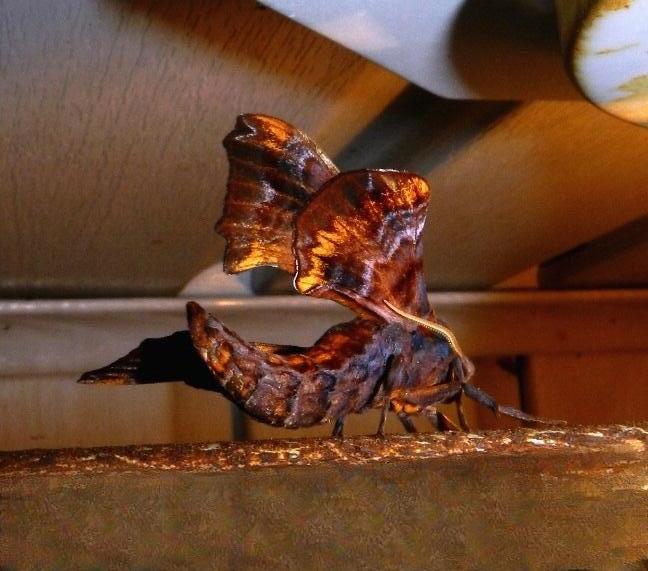
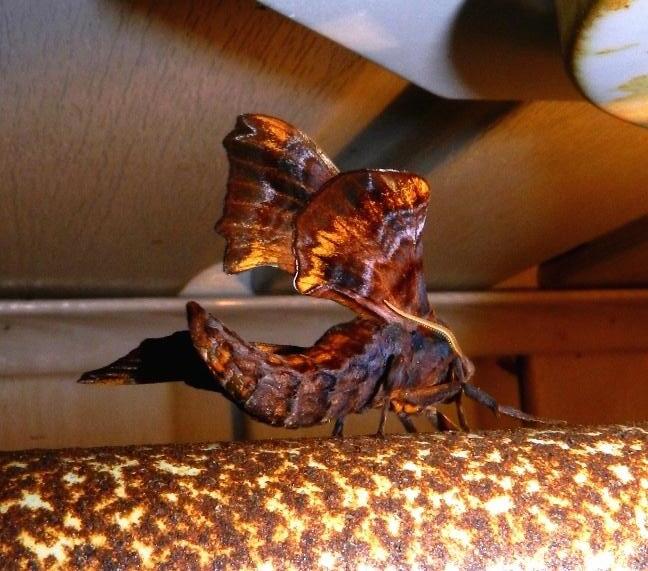
Adults are on wing from June to September in northern states where there are bivoltine (2 generations in a year). In Florida, they are polyvoltine (up to 4) due to warmer conditions Paonias myops belongs to the Smerinthinae subfamily that is distinguished by their unusual resting position- where the hind wings remain visible while stationed under their forewings The main body of the moth also has a pleasing curvature- as demonstrated in the photograph.
Females can average 45 millimeters to 75 millimeters (up to 3 inches) while males are usually smaller. The eyespots on its wings are smaller in comparison to other sphinx moths. These small black and blue eyespots are on each hindwing and they are visible when the wings are opened flat. Its hindwings are yellow and brown with a black and blue eyespot. This species forewings are doubly indented. It is mottled orange-brown to purplish brown with pale lavender transverse lines and dark brown or blackish mottling. Like black witch moths, the small-eyed sphinx fluoresces spectacularly under ultraviolet light.
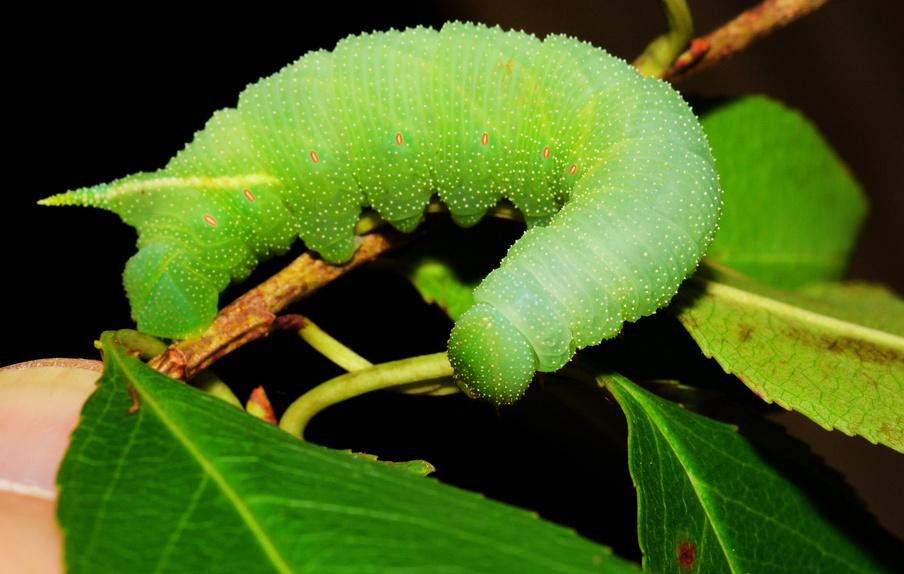
The larvae of Paonias myops are polyphagous and feed on many hardwoods, particularly various Rosaceae and huckleberries (Vaccinium) in the Ericaceae. Other trees and vines include Vitis (grape), Betula (birch), Populus (poplar), Salix (willow), Crataegus (hawthorn), Amelanchier (serviceberry), and Prunus (cherry). The latter two are favored west of the Cascades. There are five instars with the larvae coloration being highly variable The horn (a protuberance found on their posterior end) is granulose and green in color Six faint white abdominal streaks are also found but it's the streak leading to the horn (seventh abdominal) that is most prominent Pupae are dark brown to black cocoons found on the ground, covered by leaf litter and dirt
Sphinx moths are agile fliers. They are the only moth family known to fly in a hover pattern (a remarkable evolutionary trait in the animal kingdom).
"Discover beauty beyond butterflies"- Mark Kateli
Celebrate moth awareness week collaboratively with National Moth Week and Florida Native Plant Society.
Caterpillar image courtesy of Andy Reago and Chrissy McClarren
Adult image courtesy of Nancy Magnusson
References:
Pacific Northwest Moths: http://pnwmoths.biol.wwu.edu/browse/family-sphingidae/subfamilysmerinthinae/paonias/paonias-myops/.
Spingidae of the United States of America: https://www.sphingidae.us/paonias-myops.html
There is life after death, indeed. The Gopher tortoise shell moth (Ceratophaga vicinella) is a species of moth that feeds on the keratin-rich shells of deceased gopher tortoises (Gopherus polyphemus), a keystone species in Florida
Tineid moths are one of the least flashy lepidopteranscomprising a large family of 3,000 species. Their drab appearance is eclipsed by their highly unusual dietary preference- fungus and detritus. Many Tineids feed on keratin, a fibrous protein forming the main structural constituent of hair, feathers, hoofs, claws, horns, and even fingernails. Extraction of nutrients from keratin is difficult and not a popular food source in the animal kingdom. The genus Ceratophaga within the Tineids are the only moths that specialize on hardened, dry keratin.
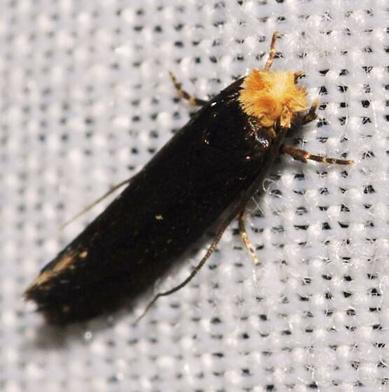

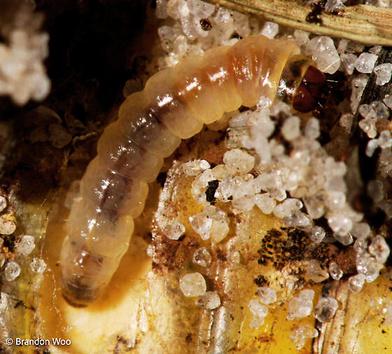
The gopher tortoise shell moth is a fascinating cause for conservation. This species is only known to thrive on dead gopher shells- fewer tortoises mean fewer of this species, too. What’s more, these moths need dead gopher tortoise shells that are found upside down. Larvae are cream colored with brownish heads and can be found on forming a group of burrowing tubes. The ecosystem in which dead gophers are found also matters- sandy substrates that allow these moths to build burrowing tubes deep into the sand that extend into the shell. These tubes help anchor the keratin shell in place. Burrowing between shell and sand mitigates predation as well as dehydration.
Caterpillars gregariously subsist on the tortoise skute until they are ready to pupate- en masse. Predation determent is further enhanced with pupae being lined with feces and sand. For most observers, the only
apparent presence of this species is a decomposing tortoise shell covered with a clump of sandy pupae casings. Adult moths serve only to mate and do not eat.
This species is in decline as the habitat of gophers is drastically changing in Florida. As unique decomposers, the gopher tortoise shell moth helps recycle nutrients back into the ecosystem. The life cycle of the Gopher tortoise moth was only described in 2005 by Mark Deyrup and his research team. The species is unique to all of the Americas, with the remainder of its genus found primarily in Africa.
"Discover beauty beyond butterflies"- Mark Kateli
Celebrate moth awareness week collaboratively with National Moth Week and Florida Native Plant Society.
Caterpillar image courtesy of Brandon Woo and Carol Wolf
Adult image courtesy of Carol Wolf
References:
Earth Archives: https://eartharchives org/articles/meet-the-moth-with-a-taste-for-tortoise/index html
Florida Fish and Wildlife: https://myfwc.com/wildlifehabitats/wildlife/gopher-tortoise/commensals/invertebrates