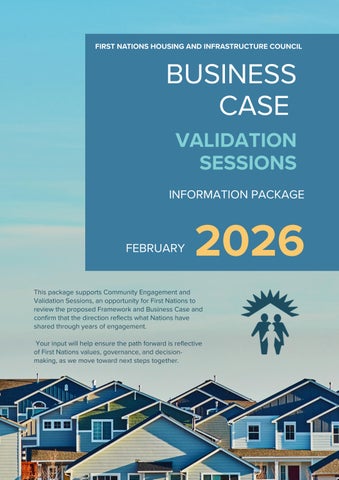
This package supports Community Engagement and Validation Sessions, an opportunity for First Nations to review the proposed Framework and Business Case and confirm that the direction reflects what Nations have shared through years of engagement.
Your input will help ensure the path forward is reflective of First Nations values, governance, and decisionmaking, as we move toward next steps together
Dear First Nations Leadership and Community Members,
The First Nations Housing and Infrastructure Council (FNHIC) is pleased to share this information package as part of our validation engagement with First Nations across British Columbia.
FNHIC is a First Nations-governed, grassroots organization guided by the values and priorities of First Nations communities and working for First Nations people. Our mandate and direction come from First Nations leadership, through the First Nations Leadership Council, to support improved housing and infrastructure outcomes for First Nations in BC. Over several years, FNHIC has engaged extensively with First Nations to understand what Nations want in a housing and infrastructure service delivery organization that is reflective of First Nations values, governance, and decision-making. What we heard through that engagement has directly informed the development of a proposed Framework and Business Case.
We are now entering a validation stage. This validation engagement is intended to both share information openly and confirm that the proposed direction reflects what First Nations have already shared It is also an opportunity to hear how this work resonates with Leadership, community members, and those involved in housing and infrastructure in your Nation, and to understand what must be addressed before moving forward
This package is meant to support transparency and informed discussion It outlines the proposed approach, explains the validation engagement process, and describes the different ways feedback can be shared. Participation is voluntary, and Nations and community members may choose how or if they wish to engage, including individual, regional, virtual, or written options.
Your perspectives at this stage matter Feedback from First Nations will directly influence the final design of the service delivery model, governance and accountability structures, and readiness to move toward an Agreement in Principle
Thank you for taking the time to review and share this information We look forward to hearing your perspectives as we continue this work together in a transparent way that supports self-determination, advances reconciliation, and builds long-term sustainability for First Nations housing and infrastructure across British Columbia
Sincerely,
The First Nations Housing and Infrastructure Council
At a Glance: FNHIC and the Validation Process
What is FNHIC?
The First Nations Housing and Infrastructure Council (FNHIC) is a First Nations-governed, grassroots organization guided by the values and priorities of First Nations communities and working for First Nations people
FNHIC receives its mandate and direction from First Nations leadership, through the First Nations Leadership Council, and is working to support improved housing and infrastructure outcomes for First Nations in British Columbia.
What Are Validation Sessions?
Validation sessions are opportunities to share information openly and confirm that the proposed direction reflects what First Nations have already shared through years of engagement.
During validation sessions, FNHIC is asking: Does this direction feel right for your Nation? Does the proposed Framework and Business Case reflect your expectations? What needs to be addressed before moving forward?
Participation is voluntary, and Nations may choose how they engage, including individual, regional, virtual, or written options
Why Your Input Matters
Feedback shared during the validation process will directly influence:
The final design of the housing and infrastructure
service delivery model
Governance and accountability structures
Readiness to move toward an Agreement in Principle
This input helps ensure the work is grounded in First Nations values, decision-making, and community realities and supports self-determination, reconciliation, and long-term sustainability
Our Commitment to Transparency
The First Nations Housing and Infrastructure Council (FNHIC) is committed to transparency and open information sharing. We believe First Nations leadership and community members should have access to clear, timely information to understand the work underway, discuss it within their communities, and guide decisions in ways that reflect their own priorities and governance processes. This information package is shared in that spirit to ensure communities understand the proposed direction, what is being considered, and how input will be used as this work moves forward
How to Use This Information Package
This package is intended to support open discussion and information sharing within your Nation. It may be used to:
Inform Leadership, housing and infrastructure staff, and community members
Support internal meetings, gatherings, or discussions
Share information broadly within your community
Help guide questions, feedback, and decision-making
There is no expectation that feedback be provided immediately or in a specific way
Participation in the validation engagement is voluntary, and Nations may choose how or if they wish to engage
Engagement options include individual, regional, virtual, or written participation, depending on what works best for your community.
community engagment
developing a business case
A Community-Guided Process
engaging with community to validate that we’re on the right path
developing an agreement in principle with ISC
FNHIC’s work is guided by First Nations direction and grounded in respect for community decision-making Validation engagement is about confirming that the proposed Framework and Business Case reflect what First Nations have already shared, and understanding what needs to be addressed before moving forward
Your perspectives whether shared by Leadership, staff, or community members are important and will help shape next steps in a way that supports self-determination, reconciliation, and long-term sustainability for First Nations housing and infrastructure in British Columbia.
Validation Engagement Details
What the Validation Engagement Involves
The validation engagement is a continuation of the work FNHIC has been doing with First Nations over several years. It is focused on confirming that the proposed Framework and Business Case reflect what First Nations have already shared, and on understanding what must be addressed before moving forward
This stage is not about revisiting past engagement, but about:
Sharing information openly
Checking that the proposed direction feels right for Nations
Identifying conditions, concerns, or changes that need to be addressed
Ways to Participate
Participation in the validation engagement is voluntary. Nations may choose how or if they wish to engage, based on what works best for their community
Engagement options include:
Individual engagement with your Nation
Regional engagement with other Nations
Collective engagement sessions
Virtual or written input
Nations may also choose to opt in or opt out of future stages of this work
There is no one-size-fits-all approach. FNHIC respects that each Nation has its own governance processes, timelines, and decision-making realities
Timing and Next Steps
FNHIC is seeking input through the validation engagement to help guide next steps, including discussions with the federal government and readiness to move toward an Agreement in Principle
To support this work, feedback is requested by (date) where possible This timeline is shared to support planning and transparency, and Nations are encouraged to engage in ways that align with their own processes
COMMUNITY SURVEY
WHY A SURVEY IS BEING USED
FNHIC has developed a survey to gather information from Nations about how they would like to be engaged and what information and tools they need to support decision-making
The survey helps FNHIC understand: Preferred engagement approaches Preferred formats for the Framework and Business Case Decision-support needs around key decision points, implications, and options
WHAT THE SURVEY COVERS HOW TO ACCESS THE SURVEY
The survey asks about: How your Nation would like to participate (individual, regional, collective, phased, etc ) How information should be shared (full documents, summaries, infographics, online portal, etc ) What decision-support is needed, including information, visuals, and additional tools
The intent is to ensure the validation process and materials are designed around community decision-making realities, and that Nations are not asked to respond to a process or set of materials that does not meet their needs.
The survey is available on the FNHIC website and may be completed by Leadership, staff, or others identified by your Nation Participation in the survey is voluntary, and responses will be used to help shape engagement approaches, materials, and next steps
Validation Session Options Sheet
Possible Validation Session Formats
Individual community-based sessions
Regional sessions
Virtual / online sessions
Hybrid approaches
What Works Best for Your Nation?
☐ One-on-one
☐ Regional
☐ Virtual
☐ In-person
☐ Combination
☐ Other (please describe)
Feedback & Preferences Form
This can be fillable PDF + online version.
Questions:
1. How would your Nation prefer to participate in validation sessions?
2. Who should be involved from your Nation?
3. ☐ Leadership ☐ Housing staff ☐ Technical staff ☐ Community members
4. What format(s) would you prefer for the Framework / Business Case?
5. What information do you need to help inform decision-making?
6. What tools or supports would be helpful?
7. Any additional comments or considerations?
FREQUENTLY ASKED QUESTIONS
WHAT IS A VALIDATION SESSION?
A validation session is an opportunity to share information openly and confirm that the proposed Framework and Business Case reflect what First Nations have already shared through years of engagement Validation sessions are also a chance for Nations to raise questions, identify concerns, and highlight what must be addressed before moving forward.
IS PARTICIPATION MANDATORY?
No. Participation in validation sessions and related activities is voluntary. Nations may choose whether or not to participate, and how they wish to engage, based on their own governance processes and community priorities
WHAT DOES OPT-IN / OPT-OUT MEAN?
Opt-in means a Nation chooses to participate in validation sessions or future stages of this work Opt-out means a Nation chooses not to participate at this time Choosing to opt out does not affect a Nation’s relationship with FNHIC and does not prevent participation at a later stage if a Nation chooses to engage
DOES THIS MEAN TRANSFER IS REQUIRED?
No. The validation process does not require Nations to support or participate in a transfer of housing and infrastructure service delivery The purpose of validation is to gather feedback and confirm direction Any future decisions will be guided by First Nations leadership and community direction
HOW WILL FEEDBACK BE USED?
Feedback shared through validation sessions, written submissions, and the survey will be used to:
Refine the proposed Framework and Business Case
Inform governance and accountability structures
Identify conditions or changes needed before moving forward
Support readiness to move toward an Agreement in Principle
Feedback directly informs next steps and helps ensure the work reflects First Nations priorities and decision-making realities.
WHO DO WE CONTACT WITH QUESTIONS?
If you have questions or would like more information, please contact your Regional Service Delivery Coordinator. They are available to support your Nation, provide clarification, and discuss engagement options.
YOU THANK
Questions or Support
If you have questions about this package, the validation engagement, or the survey, Regional Service Delivery Coordinators are available to support your Nation and provide additional information.
Thank you for taking the time to review this information and for sharing your perspectives as this work continues.