Public Policy Guide
A guide to the area’s political and legislative landscape and overview of the Fargo Moorhead West Fargo Chamber’s public policy views and efforts.

A guide to the area’s political and legislative landscape and overview of the Fargo Moorhead West Fargo Chamber’s public policy views and efforts.
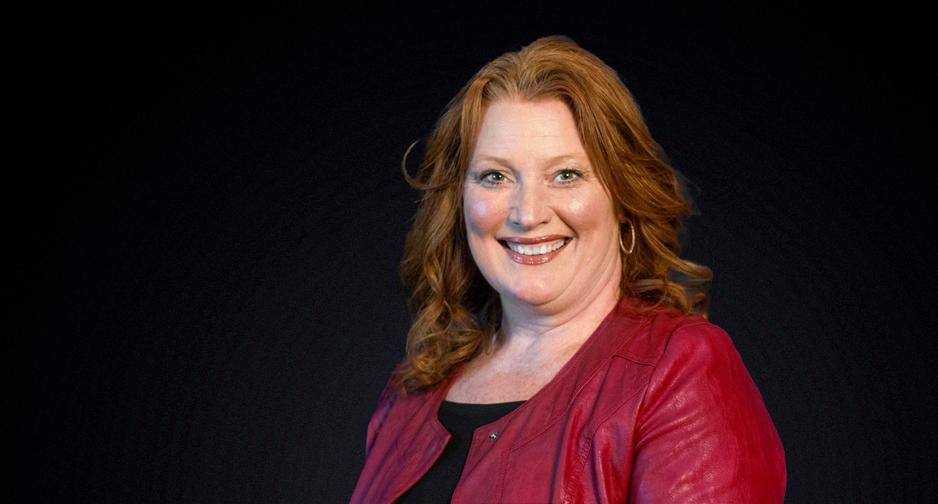
Public policy is central to the work we do at The Chamber and is one of our five major cornerstones. We understand the importance and power of public policy and advocacy, and actively serve as the voice of business to promote a prosperous and vibrant Fargo Moorhead West Fargo metropolitan area for generations to come.
The Chamber has been a long-standing leader in this arena, serving as a fair and balanced voice that has earned the respect and trust of public officials and community leaders. As we continue to build upon this success, we are focused on advocating for sound business policy at the local, state and federal level. This advocacy work includes the cultivation of business-friendly candidates. The Chamber encourages employers to support and embolden their employees to serve in public office in order to increase the pool of business-friendly elected officials. The Chamber isn’t endorsing candidates, but educating leaders on the importance and impact of becoming involved and providing tools for business leaders to support their employees in running.
At the conclusion of the Minnesota and North Dakota 2021 legislative sessions, The Chamber developed a legislative voting report which brings attention to the results of The Chamber’s top legislative priorities in both states, along with the corresponding voting record of our local legislators. As we more publicly hold our elected officials accountable for their votes through this resource, we also intend for it to serve as public appreciation for those who were aligned on so many critical business issues. This report does not constitute an endorsement of any political candidate, party or organization.
The Chamber has also engaged Primacy Strategy Group’s government affairs services to further keep our finger on the pulse of our most pressing issues and to accomplish our major priorities. With Primacy’s partnership, we are highly engaged in policy efforts in Minnesota, North Dakota and Washington, D.C. If you are interested in learning more or joining our advocacy efforts, I encourage you to reach out to our public policy team. Together, our collective voice is strong.
As we head into an election year with many local races, we encourage you to get involved by becoming educated on candidates and issues or becoming a candidate yourself! Watch our website and social media for more information and invitations to get involved. We look forward to partnering with all of you to build upon the great successes of our community.
Shannon Full President/CEO The Chamber

JANUARY 31
Session begins
Session schedule
There is no yearly deadline for introducing legislation. However, each year the legislature establishes deadlines for committee action on bills. Committee deadlines are announced during the first half of the session. For details, check the legislative page at leg.state.mn.us/leg/schedules.
The North Dakota regular session occurs on a biennial basis. For more details, check the legislative website at legis.nd.gov
• December 5-7, 2022
– Organizational Session
• January 3, 2023
– Session Begins
• February 24, 2023
– Crossover
• April 28, 2023
– 80th Legislative Day

The Chamber is a strong advocate for the agriculture industry, focusing especially on Minnesota and North Dakota, and supports initiatives and policies that enhance its vitality. Our region is an epicenter for various agricultural equipment manufacturing, food processing, commodity marketing, extension research, land improvement and conservation efforts. As such, The Chamber supports these existing industries and new initiatives as their existence provides value added synergies toward a strong economy and enhanced food security network locally, nationally and internationally.
The Chamber recognizes the importance of reliable and affordable access to financial capital and supports policies and initiatives that both retain existing and attract additional capital required by our agriculture industries to achieve viability, growth and prosperity. Examples include both traditional and non-traditional types of debt and equity financing. The Chamber also recognizes the need for start-up capital for beginning farmers, ranchers and agri-businesses in the genesis for innovation and sustainability of agriculture.


The Chamber supports predictability in energy markets by opposing burdensome, unnecessary regulations and mandates that increase costs for businesses and consumers. The Chamber supports responsible regulations driven by and in response to local conditions and needs. The Chamber recognizes that energy resources compete in regional markets that are significantly impacted by federal policy as well as state and local interventions. Thus, The Chamber does not support prohibiting energy development or affording advantages to one type of energy resource at the expense of another.
The Chamber supports the development of essential energy infrastructure including transmission lines, power generation facilities and pipelines to produce and transport local energy to regional and national markets. The Chamber encourages increasing refining capabilities to drive additional investment in local energy resources, strengthen the economy and increase the availability of a reliable supply of natural resources.
The Chamber supports the thoughtful development of regional energy resources, as well as local access to a vast array of resources that provides the link to comprehensive energy solutions and promotes energy independence.
The Chamber values our natural environment and encourages responsible stewardship of state water, State Trust Lands, minerals, wildlife and other natural resources. The Chamber supports sound policies and programs that promote both economic and environmental sustainability.


The Chamber supports public policies that increase the availability of affordable, quality, early childhood learning opportunities and career advancement opportunities for professionals in the early childhood industry, to meet the growing demand and critical importance of early childhood education.
The Chamber supports the strategic development of a skilled workforce that aligns with regional employment opportunities and encourages consistent communication between employers, students and educators.
The Chamber supports policies and programs that encourage internships, mentorships and on-thejob training opportunities. The Chamber supports initiatives that increase the understanding of post-secondary education opportunities including costs, employment prospects, and realistic lifetime earning potential in their chosen fields.
The Chamber encourages a curriculum that emphasizes science, technology, engineering, arts and mathematics (STEAM) as well as the acquisition of resources necessary to support the STEAM disciplines. Additionally, The Chamber encourages the modernization of education to incorporate effective new technologies and cutting-edge teaching methods beginning with middle and high school learning.
The Chamber supports an educational and employment environment that embraces a diverse and equitable workforce and capitalizes on unique talents.
The Chamber supports the allocation of financial resources to support student success. Funding should leverage programs that increase retention and on-time graduation, attract and retain the most effective teachers and accurately reflect population growth. Regarding higher education, The Chamber supports increased programs that increase students understanding of postsecondary education including costs, employment prospects and earning potential in their chosen fields. The Chamber recognizes quality career academy and higher education as one of its top priorities that ensures the economic vitality of our region. The Chamber advocates for a funding level that reflects the importance of higher education and the workforce shortage in order to see the continued success of higher education in North Dakota adequately preparing middle and high school, academy and college students for the workforce.
The Chamber advocates for the continuation of the current higher education funding formula in North Dakota and the ability of students to transfer credits they have earned, which lead to timely graduation.
The Chamber advocates for continuous and, if necessary, bold improvements to higher education governance.
The Chamber recognizes the continued need to train, recruit and retain a talented workforce, and encourages an integrated approach to meet the workforce needs of employers and employees. The Chamber supports the development and expansion of public and private outreach efforts to promote local opportunities. The Chamber supports programs that provide access to digital skills training, tailoring our workforce strategy to include highly -skilled immigrants, and the strengthening of career counseling programs to reflect all options and opportunities available to students and graduates during and after high school. Furthermore, The Chamber supports developing quality of life programs and initiatives in order to attract and retain a dynamic workforce. In addition, The Chamber supports efforts to reduce the regulatory burden on occupational licensing and reciprocity.
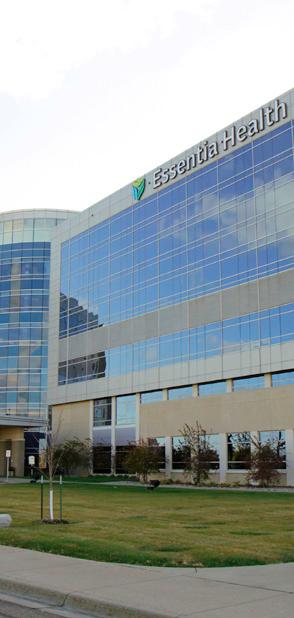
The Chamber supports the confidential exchange of health information, including the secure electronic exchange through updated streamlined systems, to facilitate access to and retrieval of clinical data regardless of the setting of treatment. This exchange of information will reduce the duplication of services, reduce costs and increase the quality and efficiency of care and lessen the administrative burden on providers.
The Chamber supports policies and direct resources that address disparities in health care to ensure continued access to health care services, including behavioral health.
The Chamber supports policies that incentivize individuals to save for their longterm care needs while supporting Medicaid, Medicaid expansion and other public programs that provide support for those who can least afford their own care. The Chamber supports the continuation of rate equalization. Given the projected wave of seniors utilizing long-term care, The Chamber encourages greater participation in information sharing by employers and employees and supports innovation in the delivery of long-term care that promotes consumer choice and reduces costs.
The Chamber supports investments in evidence-based worksite wellness programs that encourages a personal responsibility role in reducing the costs of health care.
The Chamber recognizes the need for affordable health care and supports public policies that address the growing cost of care including: the promotion of wellness programs, the implementation of telehealth, tele-pharmacy and other technological innovations, the review of medical liability laws to ensure they are current and address the needs of citizens, and support for payment methodologies that reward providers for quality, coordinated care and the management of chronic diseases.
Early investment in prevention and intervention will not only reduce expenditures for treatment and recovery, but the individual served earlier can expect to have a better and more productive life. Emphasize the wellness of North Dakotans and Minnesotans by supporting prevention and proven interventions to address behavioral, social, environmental determinants of health, including housing and nutrition and access to high-quality, cost-effective health care. The Chamber supports research, education and training that protects lives and livelihoods.
Healthy living initiatives foster a community that attracts a strong workforce and positive economic impact. The Chamber advocates for the incorporation of healthy living initiatives (e.g., walkability, parks, wellness, trails, etc.) in all aspects of development.
The Chamber supports the continued reduction of taxes while recognizing the need to preserve the viability of necessary services and maintain local control. The Chamber supports a fair and balanced system of taxation.
The Chamber supports border city programs and policies that enable Minnesota cities to be competitive, including Local Government Aid and the Disparity Reduction Credit. The Chamber supports efforts to eliminate business-tobusiness taxes, as well as protect and create new border-city exemptions. The Chamber recognizes the common business market between Cass and Clay counties and supports programs and policies that promote synchrony within it.
The Chamber supports ventures that foster the formation and advancement of business incubators to encourage start-ups, accelerate time to market and increase the rate of longterm success. The Chamber encourages the advancement of programs that provide access to capital or spur capital investment in the private sector to promote and support entrepreneurship.
The Chamber supports efforts to expand fair global trade opportunities for North Dakota and Minnesota businesses by removing trade sanctions and barriers and enforcing existing trade agreements. The Chamber recognizes that foreign trade distortions require a balanced trade policy.
The Chamber supports the viability of tax incentives that support workforce participation, development and diversity.


The Chamber supports permanent flood protection and mitigation efforts to help protect the economic vitality of our region. The Chamber supports the FM Area Diversion project as the best solution to reduce the flood risk and provide protection of lives and property, as well as avoid recuperation costs and ensure economic opportunity.
The Chamber supports the allocation of financial resources for the construction and maintenance of the diversion project from all available local, state and federal partners.
The Chamber recognizes that achieving the necessary flood risk reduction will not come without impacts and encourages sponsors and stakeholders to make every effort to minimize the impact to affected landowners.
The Chamber supports the integration of recreational opportunities into the development of the diversion project to contribute to a healthy and vibrant community.
The Chamber supports a quality, multi-modal transportation system that allows people and goods to move efficiently, conveniently and safely into and around the metropolitan area. The Chamber supports efforts to develop, integrate and maintain rail, air, bus and pedestrian services, including the expansion of services to new growth areas.
The Chamber supports public transportation initiatives, such as MATBUS operations, that promote a cost-effective means to transport residents and the workforce to areas across the metro in a safe and reliable manner
The Chamber supports a strategic and synergetic approach toward community development, which includes the implementation of proven economic tools to promote investments in the greater metropolitan area.
The Chamber supports initiatives that enhance traffic flow and minimize the risk of accidents.
The Chamber supports the continued investment in technology in our communities, including in our rural areas, such as expanding the access to fast, reliable internet.
The Chamber understands the increase in residential, commercial, industrial and agricultural water use places a growing demand on existing water supplies that will be inadequate during periods of drought. The need to supplement the water supply to the Red River Valley has been clearly demonstrated; therefore, The Chamber supports the prioritization and advancement of the Red River Valley Water Supply Project to ensure the availability of a long-term, high-quality water supply.
The Chamber supports the continual investment in community assets to contribute to the improved livability of our region. This may include building a convention center and/or performing arts center, where The Chamber would support first conducting an unbiased study of construction and/or expansion.
The Chamber supports the vitality of air service to ensure sustainable access for commerce. The Chamber also recognizes the importance of quality, predictable and affordable service to support our business in the region.


The Chamber realizes that the nation is facing a major shortage of military and commercial pilots, and thus, advocates for additional programs and efforts, as well as reducing the regulatory burden, in order to encourage pilots training and qualification.
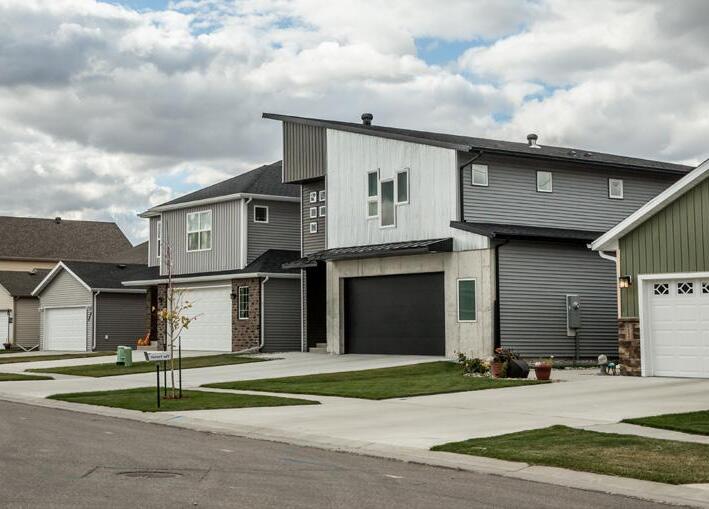
The Chamber supports public and private efforts to provide adequate and attainable housing in the region for all local residents in the form of affordable, safe, and quality housing for purchase or rent. The Chamber supports subdivision and zoning regulations that encourage efficient, orderly development, while allowing flexible and innovative development strategies.
The Chamber continues to support the study of all reasonable options in regard to special assessment reform. The Chamber also supports a community conversation that encompasses a public education effort of its complexities and proposed fixes
The Chamber supports initiatives that promote a balance of diverse housing stock by providing new housing in outlying areas, while revitalizing the cores of our cities through thoughtful infill development.
The Chamber supports an atmosphere friendly to construction of residential and commercial structures to serve local residents. The Chamber supports incentives and codes that bolster and sustain a robust business sector, facilitate homeownership, and the creation of neighborhoods to maintain strong, vibrant communities. The Chamber recognizes that investment in residential/ commercial development has a desirable ripple effect felt throughout a multitude of industries through job creation and consumer spending.
The Chamber supports efforts for consistency among local jurisdictions in regard to residential and commercial building codes, inspections and enforcement.



The Chamber supports the safe integration of autonomous systems that result in lowered infrastructure and labor costs while addressing any security, safety or privacy issues that might arise.
The Chamber supports technological advances that support the security and privacy of business and personal information.
The Chamber supports a reevaluation of the current distribution formula of North Dakota’s oil tax. This includes a review and changes to the tax that can improve the short- and long-term infrastructure backbone in Cass County and across the state.
The Chamber supports programs for recovery efforts from natural disasters or health crises that impact the region
The Chamber acknowledges the detrimental effect of vacated commercial spaces including “big box” buildings with large amounts of unutilized square footage. The Chamber supports efforts of the public and private sectors to determine, promote and activate creative solutions for repurposing of these vacated commercial spaces.
The Chamber supports our local military, especially the Air National Guard, and will continue to advocate that they are not negatively affected by base closures due to the important missions they carry out that are crucial to our nation’s security.
Public policy can be a dynamic, fast- paced process that at times requires swift action in order to support or oppose critical, but unexpected ideas or proposals. The FMWF Chamber President/CEO is authorized to take a position on behalf of The Chamber’s best interests on issue(s) not covered in the Public Policy Guide provided that they have secured approval from the Board of Directors.
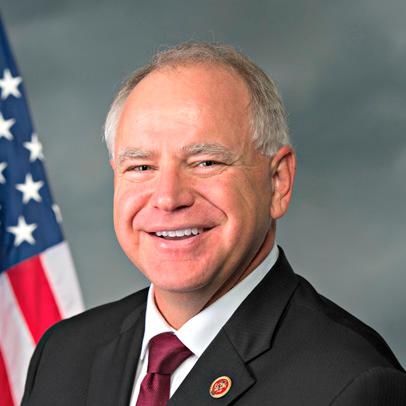
Governor Tim Walz
651 .201 .3400 | mn .gov/governor
Lieutenant Governor
Peggy Flanagan
Attorney General
Keith Ellison
Secretary of State
Steve Simon
State Auditor
Julie Blaha
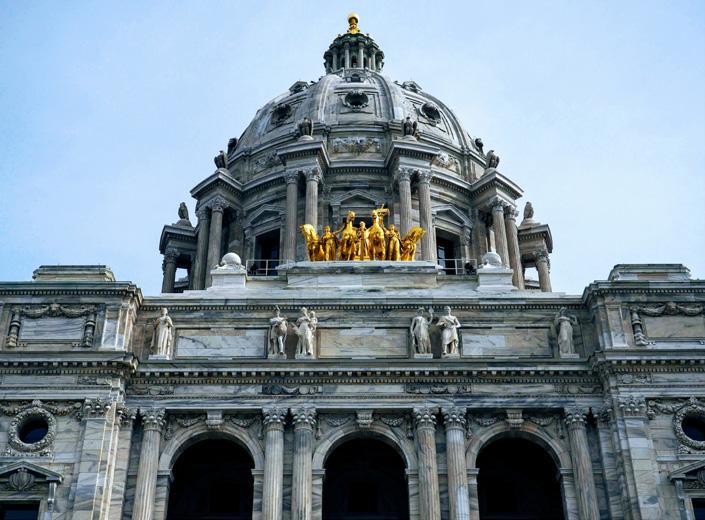
75 Rev. Dr. Martin Luther King Jr. Boulevard Saint Paul, MN 55155 leg . state .mn .us | 651 .296 .8338
* In Minnesota, constitutional officers include the governor/lieutenant governor, attorney general, secretary of state and state auditor. Members of the Governor’s Cabinet and the various commissioners are appointed positions.
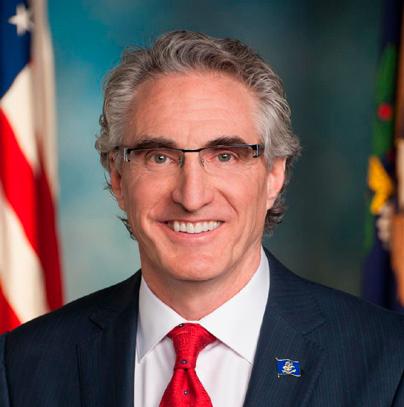
Governor Doug Burgum 701 .328 .2200 | governor .nd .gov
Lieutenant Governor Brent Sanford
Agriculture Commissioner Doug Goehring
Secretary of State Al Jaeger
Attorney General Wayne Stenehjem
Tax Commissioner Brian Kroshus
State Auditor Josh Gallion
State Treasurer
Thomas Beadle
Insurance Commissioner
Jon Godfread
Superintendent of Public Schools
Kirsten Baesler
PUBLIC SERVICE COMMISSION
Chair
Julie Fedorchak
Randy Christmann
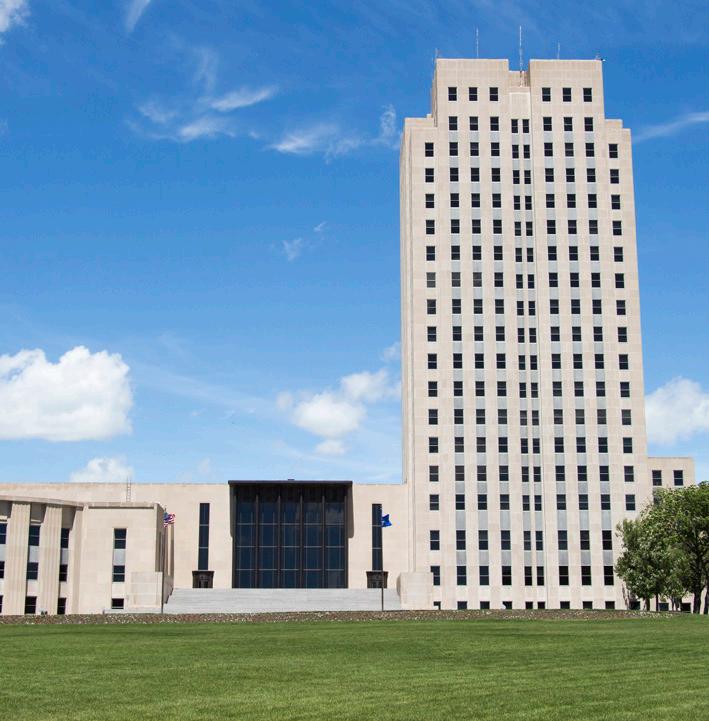
NORTH DAKOTA STATE CAPITOL BUILDING
600 East Boulevard Avenue
Bismarck, ND 58505
legis .nd .gov | 701 .328 .2916
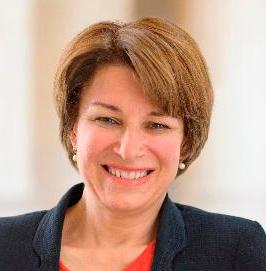
Senator Amy Klobuchar
425 Dirksen Senate Office Building Washington, DC 20510 | 202 .224 .3244
121 Fourth Street South | Moorhead, MN 56560
klobuchar . senate .gov | 218 .287 .2219
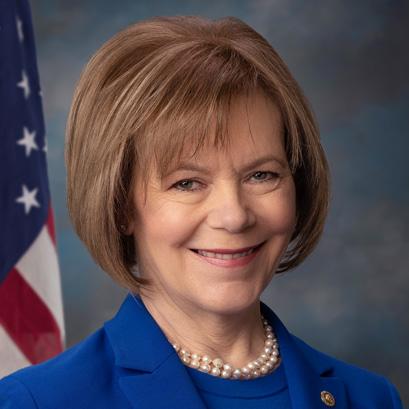
Senator Tina Smith
720 Hart Senate Office Building Washington, DC 20510 | 202 .224 .5641
819 Center Avenue, Suite 2A | Moorhead, MN 56560
tsmith . senate .gov | 218 .284 .8721
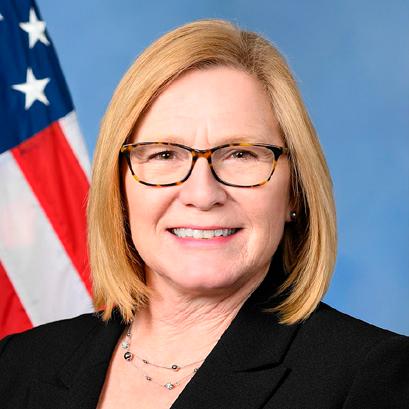
Representative Michelle Fischbach
1237 Longworth House Office Building Washington, D.C. 20515 | 202 .225 .2165
2513 8th Street South | Moorhead, MN 56560
fischbach.house.gov | | 218 .422 .2090
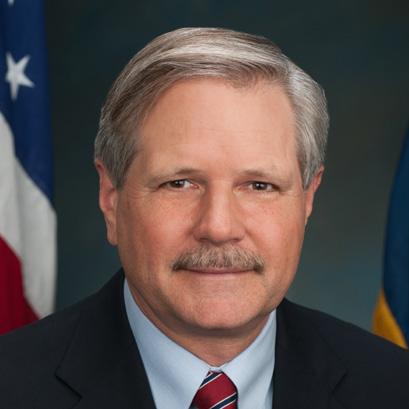
Senator John Hoeven
338 Russell Senate Office Building Washington, DC 20510 | 202 .224 .2551
123 Broadway North, Suite 201 | Fargo, ND 58102
hoeven . senate .gov | 701 .239 .5389
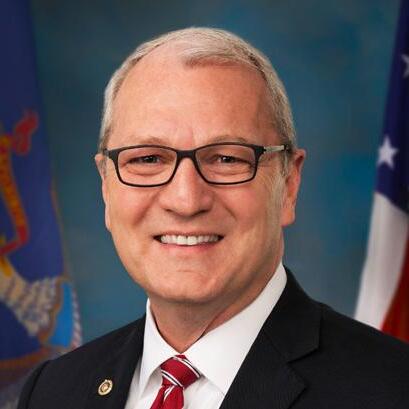
Senator Kevin Cramer
400 Russell Senate Office Building
Washington, DC 20510 | 202 .224 .2043
657 Second Avenue N | Fargo, ND 58102 cramer . senate .gov | 701 .232 .5094
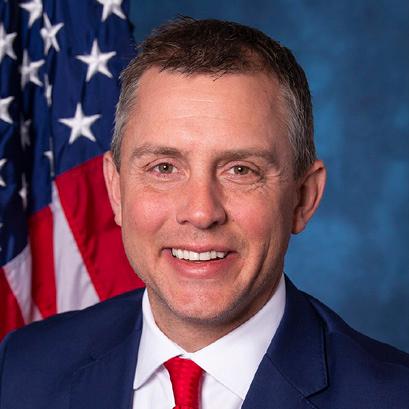
Representative Kelly Armstrong
1740 Longworth House Office Building Washington, DC 20515 | 202 .225 .2611
3217 Fiechtner Dr. Suite B | Fargo, ND 58103 armstrong .house .gov | 701 .353 .6665
LEGISLATOR CONTACTS
Minnesota legislators are assigned offices and a legislative assistant to help coordinate their work and requests –for assistance, you can reach out to the appropriate legislative assistant. For the house, visit house.leg.state.mn.us/members/list. For the senate, visit or senate.mn/members.
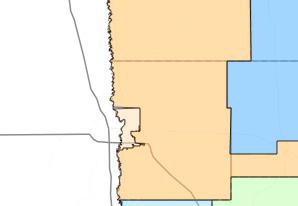
(*In Minnesota, the state legislature has constitutional responsibility for redistricting Minnesota’s Congressional districts, as well as Minnesota Senate and House districts. Currently, the State of Minnesota is undergoing this process for the 2020 redistricting cycle, thus the map provided in this publication does not reflect the 2020-2030 Districts.)
LEGISLATOR CONTACTS
House and Senate majority and minority leaders are the only members assigned to offices and receive assistance from a legislative staff member. The best way to reach legislators during the session are by email, telephone or mail. All legislator contact information may be found at legis.nd.gov/assembly/67-2021/members
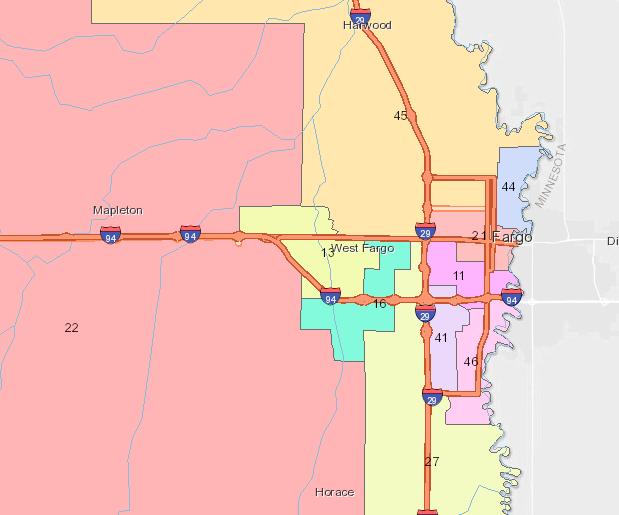
(*In response to the updated population in eastern North Dakota, the North Dakota Legislature created another Legislative District in the Cass County region (District 10). One State Senator and two State Representatives from the newly created Legislative District will be elected in the November 2022 General Election.)

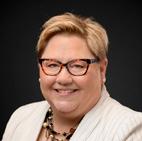
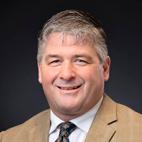
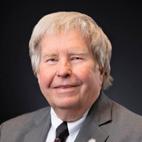
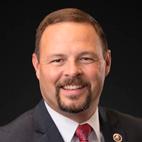
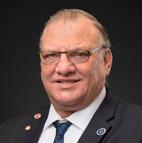
DISTRICT 11
Sen. Tim Mathern tmathern@nd.gov
Rep. Gretchen Dobervich gdobervich@nd.gov
Rep. Ron Guggisberg rguggisberg@nd.gov
DISTRICT 16
Sen. David Clemens dclemens@nd.gov
Rep. Ben Koppelman bkoppelman@nd.gov
Rep. Andrew Marschall amarschall@nd.gov

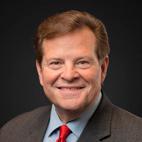

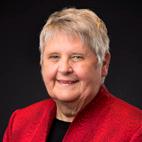
DISTRICT 13
Sen. Judy Lee jlee@nd.gov
Rep. Kim Koppelman kkoppelman@nd.gov
Rep. Austen Schauer aschauer@nd.gov
DISTRICT 21
Sen. Kathy Hogan khogan@nd.gov
Rep. LaurieBeth Hager lbhager@nd.gov
Rep. Mary Schneider mschneider@nd.gov
DISTRICT 4

Sen. Kent Eken 651.296.3205 sen.kent.eken@senate.mn

DISTRICT 4A
Rep. Heather Keeler 651.296.5515 rep.heather.keeler@house.mn
DISTRICT 4B
Rep. Paul Marquart 651.296.6829 rep.paul.marquart@house.mn
A great way to stay up to date on the most important issues your Chamber is advocating for is by receiving our Advocacy in Action email list at: fmwfchamber.com/communication
Also, utilize the state legislative tracking options:


DISTRICT 22
Sen. Mark Weber markweber@nd.gov
Rep. Michael Howe mchowe@nd.gov
Rep. Brandy Pyle bpyle@nd.gov
DISTRICT 41
Sen. Kyle Davison kdavison@nd.gov
Rep. Pamela Anderson pkanderson@nd.gov
Rep. Michelle Strinden mstrinden@nd.gov
DISTRICT 45
Sen. Ronald Sorvaag rsorvaag@nd.gov
Rep. Mary Johnson marycjohnson@nd.gov
Rep. Tom Kading tkading@nd.gov
MINNESOTA: leg.state.mn.us (navigate to MyBills) NORTH DAKOTA: legis.nd.gov/legislative-bill-tracking-system



DISTRICT 27
Sen. Kristin Roers kroers@nd.gov
Rep. Ruth Buffalo rbuffalo@nd.gov
Rep. Greg Stemen gstemen@nd.gov
DISTRICT 44
Sen. Merrill Piepkorn mpeipkorn@nd.gov
Rep. Josh Boschee jboschee@nd.gov
Rep. Karla Rose Hanson krhanson@nd.gov
DISTRICT 46
Sen. Jim Roers jroers@nd.gov
Rep. Jim Kasper jkasper@nd.gov
Rep. Shannon Roers Jones sroersjones@nd.gov
Throughout 2020, the United States, Minnesota and North Dakota will go through the process of redistricting. Following 2020, some of the legislative districts may change.
MOORHEAD CITY COUNCIL
218 .299 .5166 | cityofmoorhead .com
MAYOR
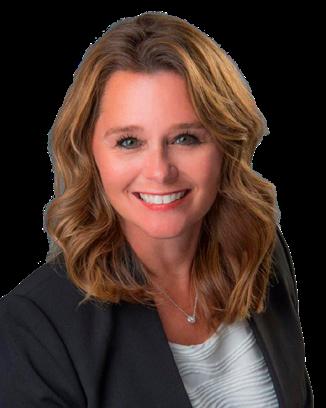
Shelly Carlson | shelly.carlson@ci.moorhead.mn.us
FIRST WARD
Matthew Gilbertson | matt.gilbertson@ci.moorhead.mn.us
Shelly Dahlquist | shelly.dahlquist@ci.moorhead.mn.us
SECOND WARD
Laura Caroon | laura.caroon @ci.moorhead.mn.us
Heather Nesemeier | heather.nesemeier@ci.moorhead.mn.us
THIRD WARD
Deb White | deb.white@ci.moorhead.mn.us
Larry Seljevold | larry.seljevold@ci.moorhead.mn.us
FOURTH WARD
Steve Lindaas | steve.lindaas@ci.moorhead.mn.us
Chuck Hendrickson | chuck.hendrickson@ci.moorhead.mn.us
DILWORTH CITY COUNCIL
218 287 2313 | dilworthcitymn com
MAYOR
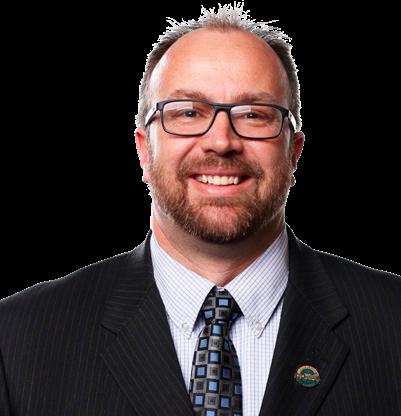
Chad Olson | chad.olson@ci.dilworth.mn.us
ELECTED CITY OFFICIALS OF DILWORTH
Jim Aasness | jim.aasness@ci.dilworth.mn.us
Steven Jesme | steve.jesme@ci.dilworth.mn.us
Julie Nash (Vice Mayor) | julie.nash@ci.dilworth.mn.us
Kevin Peterson | kevin.peterson@ci.dilworth.mn.us
CLAY COUNTY COMMISSION
218 .299 .5002 | claycountymn .gov
DISTRICT 1
Jenna Kahly | 701 799 8929 jenna.kahly@co.clay.mn.us
DISTRICT 2
Frank Gross | 218 2872152 frank.gross@co.clay.mn.us
DISTRICT 3
Jenny Mongeau | 701 .238 .2987 jenny.mongeau@co.clay.mn.us
DISTRICT 4
Kevin Campbell | 701 .318 .0030 kevin.campbell@co.clay.mn.us
DISTRICT 5
David Ebinger | 701 .212 .0383 david.ebinger@co.clay.mn.us
FARGO CITY COMMISSION
701 .241 .1310 | fargond .gov
MAYOR
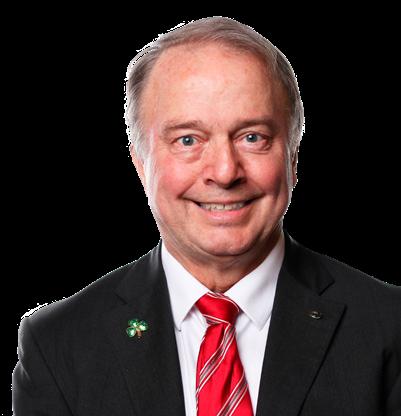
Tim Mahoney | tmahoney@fargond.gov
FARGO CITY COMMISSIONERS
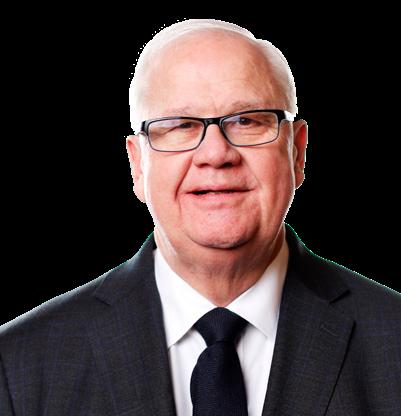
Dave Piepkorn (Deputy Mayor) | 701 .809 .5449 | dpiepkorn@fargond.gov
Tony Gehrig | 701 .893 .8185 | tgehrig@fargond.gov
Arlette Preston | 701 .715 .2862 | apreston@fargond.gov
John Strand | 701 241 1310 | jstrand@fargond.gov
WEST FARGO CITY COMMISSION
701 .433 .5317 | westfargond .gov
MAYOR
Bernie Dardis | 701 .367 .2784 | bernie.dardis@westfargond.gov
WEST FARGO CITY COMMISIONERS
Eric Gjerdevig | eric.gjerdevig@westfargond.gov
Brad Olson (Commission Vice President) | brad.olson@westfargond.gov
Mandy George | Amanda.george@westfargond.gov
Mark Simmons | mark.simmons@westfargond.gov
HORACE CITY COMMISSION
701 .492 .2972 | cityofhorace .com
MAYOR
Kory Peterson | kpeterson@cityofhorace.com
HORACE CITY COMMISIONERS
Jeff Trudeau | jtrudeau@cityofhorace.com
Chelsey Johnson | cjohnson@cityofhorace.com
Sarah Veit | sveit@cityofhorace.com
Naomi Burkland | nburkland@cityofhorace.com
CASS COUNTY COMMISSION
701 .241 .5720 | casscountynd .gov
DISTRICT 1
Chad Peterson | petersonc@casscountynd.gov
DISTRICT 2
Rick Steen | steenr@casscountynd.gov
DISTRICT 3
Jim Kapitan | kapitanj@casscountynd.gov
DISTRICT 4
Duane Breitling | breitlingd@casscountynd.gov
DISTRICT 5
Mary Scherling | scherlingm@casscountynd.gov
As one of the largest chambers in both Minnesota and North Dakota, representing nearly 2,000 members, 109,000 member employees, and the greater community, we understand the importance and power of public policy and advocacy work. Our goals are to actively engage with public officials and advocate for sound business policies on your behalf, ensuring that Fargo Moorhead West Fargo is the best place to do business.
“Advocating for sound business policy” can sound daunting, but don’t let that intimidate you! It really means speaking up and telling your story. Public officials want to hear from business leaders, employees, volunteers, students, you name it. It is crucial that they hear real-world stories of the impact particular policy is making on the lives of their constituents. When we speak as a collective voice through an association like our Chamber, we can do more together and move the needle for positive change.
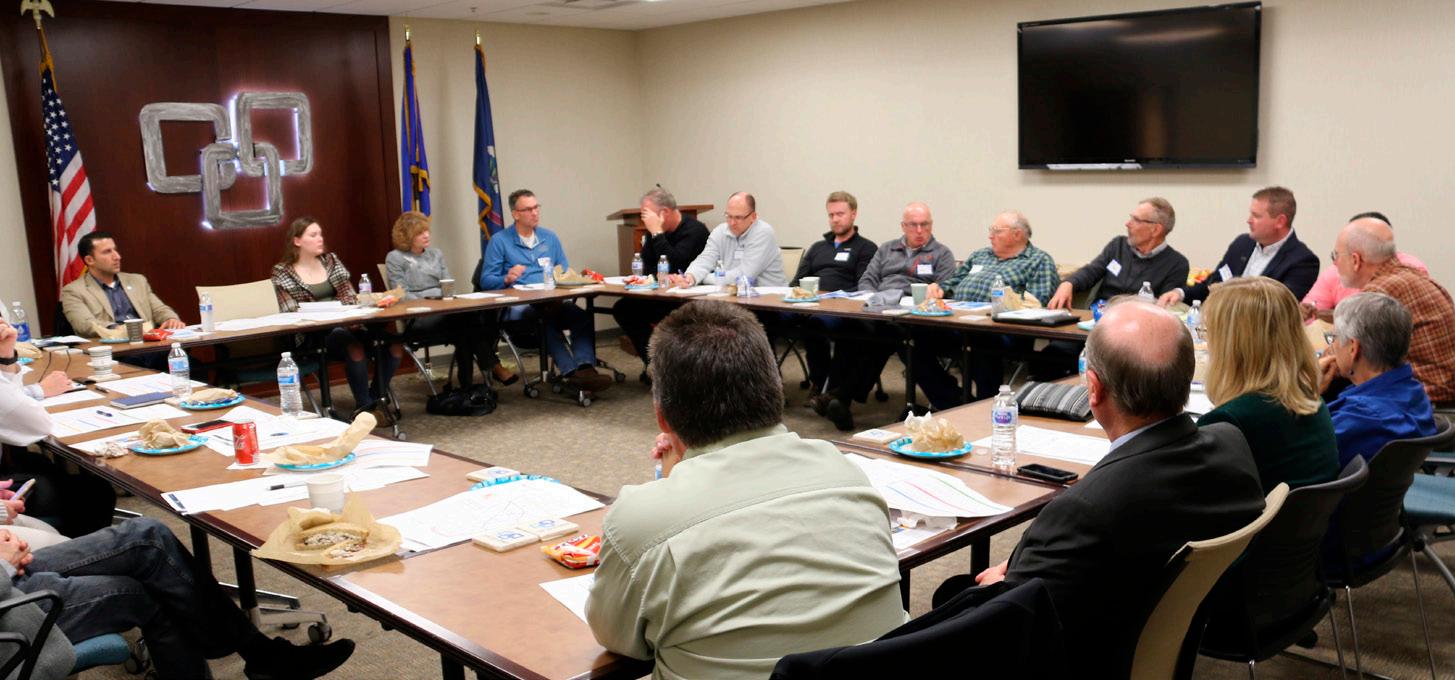
Our Public Policy committee does just this. The committee acts as The Chamber’s advocacy arm, working to advance sound public policy and promote a stable regulatory environment for our business community to thrive. They do this by speaking their voice at meetings, sharing their thoughts directly with public officials and recommending our board take stances on a variety of issues. Recently, the committee has recommended stances on a variety of issues including policy relating to taxes, higher education, regulations and more.
Once our Board of Directors takes a stance regarding an issue, we take action on that issue by educating and advocating. We know that a strong business climate is essential for economic growth and prosperity as a region, so we speak out on the issues that are critical to our members.
2021–22 COMMITTEE CHAIR
Tim Flakoll, Tri-College University
CHAMBER STAFF SUPPORT
Katherine Grindberg, Vice President of Public Policy
For more information about this committee, email Katherine at kgrindberg@fmwfchamber.com.
The two-year period by which North Dakota and Minnesota budgets are set. Unless called into special session, lawmakers in North Dakota meet once during the biennium, while Minnesota lawmakers have a flexible schedule, which means by law, they are not required to meet annually but are authorized to do so.
A proposal calling for a new law, a change in current law, the repeal of current law, or a constitutional amendment is drafted into a bill for consideration by the legislative bodies.
House and Senate members of the same political party or faction meet a “caucus” to elect leadership and discuss priorities.
In Minnesota, identical bills can be introduced in the House and the Senate. The bills can be passed out of both chambers into committees for further action. If both bills return to the House and Senate floor, a conference committee would be appointed to work out the differences. Companion bills are not used in North Dakota as typically a bill is introduced in the House or the Senate, is referred to a committee. Once it returns to the House or Senate floor it is voted on and if passed, sent to the second house. If the bill is amended by the second house, a conference committee ultimately is appointed to work out the differences.
When changes or amendments are made to a proposal, the original body can concur or not concur. Concurrence is an action in which one body approves or adopts a proposal or action taken by the other house.
A group of members from the House and Senate appointed to resolve differences in a proposal passed by both chambers in different forms.
Typically non-controversial bills that are awaiting their second reading.
Fiscal notes are intended to be an objective assessment on the price tag on proposed legislation on the change in expenditures and revenues that will result from a bill.
The months between adjournment of one regular session and the next is referred to as the “interim.” When the legislature is not in session, committees continue to work on assigned studies and often produce legislation to introduce in the following session.
The official records of the House and Senate. Records are recorded and posted on their respective legislative websites.
Lobbyists are individuals who are hired, or act on their own behalf to influence action in a particular manner. Information on how to register as a lobbyist, rules and reporting requirements can be accessed from each state’s Secretary of State office.
Legislatures can refer law making proposals to the voters by passing a referendum. The referendum would be placed on the ballot for a vote.


