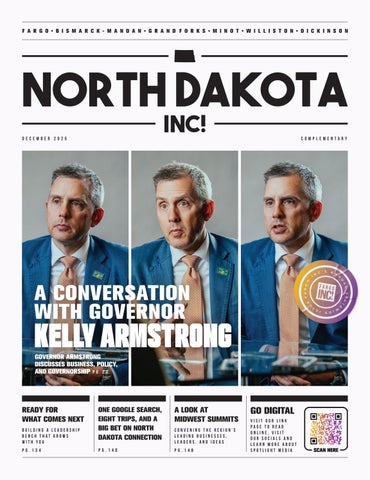
Partner Content: Optimus Payroll Ready For What Comes Next A Big Bet on North Dakota Connection A Look at Midwest Summits
North Dakota INC!
fargoinc@spotlightmediafargo.com
Brady Drake, Fargo INC! Editor
Al
Austin Cuka
AustinCuka@SpotlightMediaFargo.com
Matt
ClientRelations@SpotlightMediaFargo.com
Jessica Ventzke
Missy Roberts
John Stuber
CHECK OUT
SPOTLIGHT MEDIA'S OTHER PUBLICATIONS
We always hear that the people are what make the Fargo-Moorhead community great. So, why not meet them? Each month we cover a different topic led by local voices. We meet advocates, experts, and people just like you!
meetfargo.com /meetfargo @meetfargo @meetfargo
Growth Leaders is one of Spotlight's annual publications dedicated to showcasing our local companies and the services they bring to the Fargo-Moorhead area.
Bison Illustrated is your number one source for all of the behind-the-scenes action inside the North Dakota State University Athletic Department.
You may already be familiar with our Faces of Fargo-Moorhead-West Fargo publication which we publish once per year in order to highlight the faces behind all of the great businesses in the community.
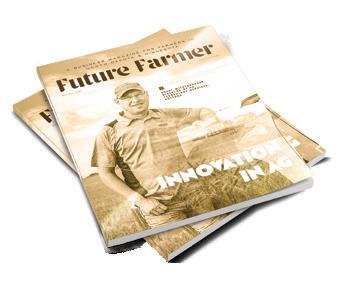
Future Farmer is our farming publication which brings great tech-focused content to readers across North Dakota and Minnesota.
futurefarmermag.com /FutureFarmerMag
Check out all of our publications— past, present, and future—by scanning the QR code! Stay up-to-date with the latest from Fargo INC! and more! All FREE, available to read whenever and wherever.
elcome to the statewide edition of Fargo INC!, where North Dakota’s business communities come together in one place. From Fargo to Williston, BismarckMandan to Grand Forks, and Dickinson to Minot, this issue celebrates the innovation, growth, and entrepreneurial spirit driving our state forward. Inside, you’ll find insights, strategies, and stories from across North Dakota that business leaders can apply in their own markets— plus a spotlight on the people and companies shaping our statewide economy. Whether you’re seeking ideas, connections, or inspiration, this issue is your guide to the best of North Dakota business.
*Please note: These are not exhaustive lists; these businesses were mentioned as unique businesses to be aware of in each community.
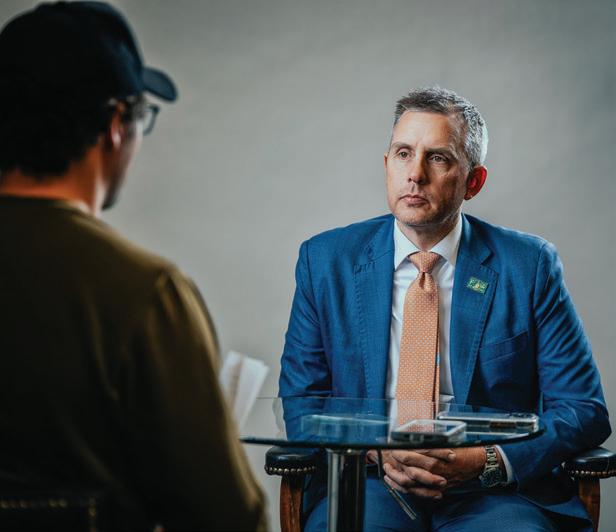
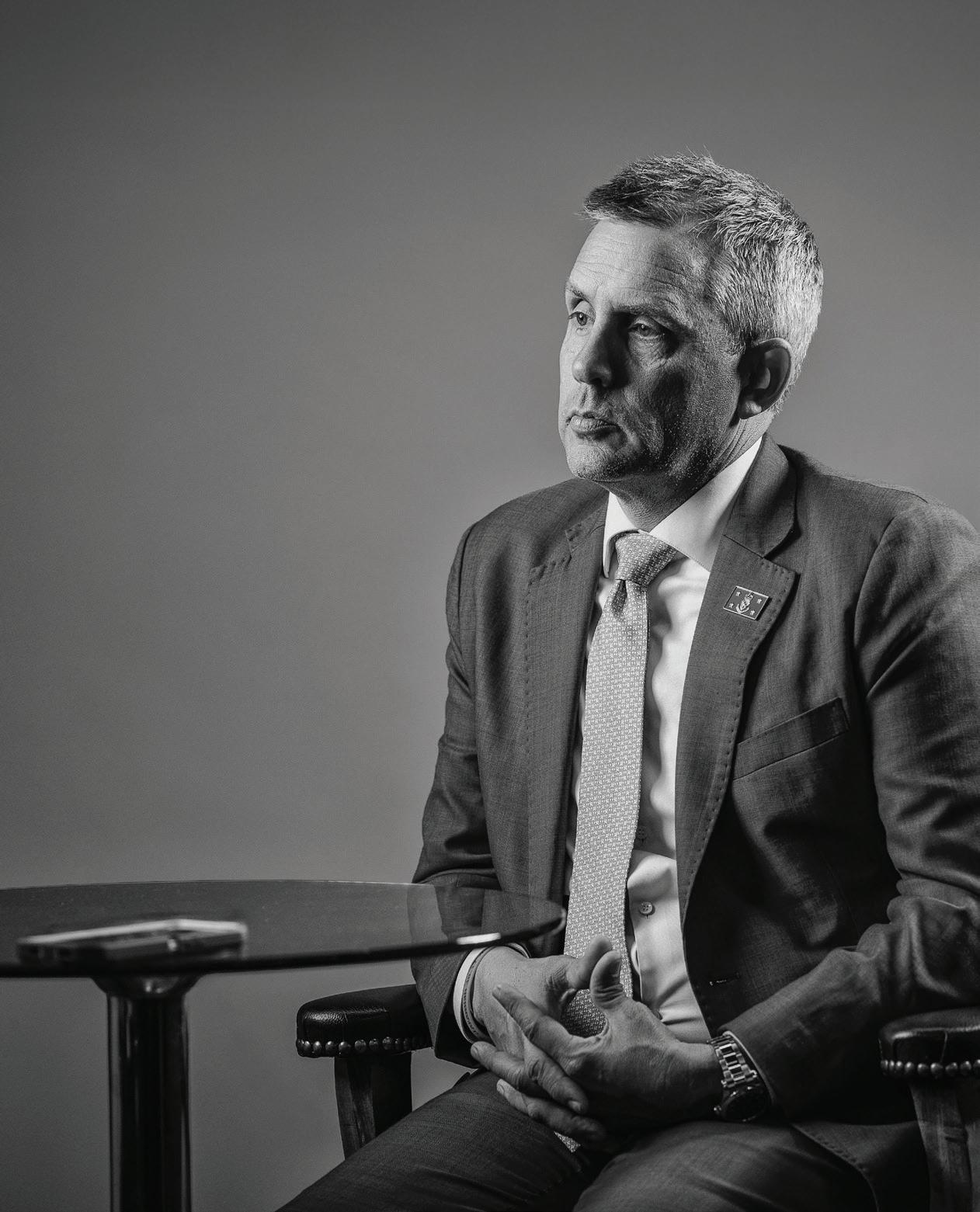
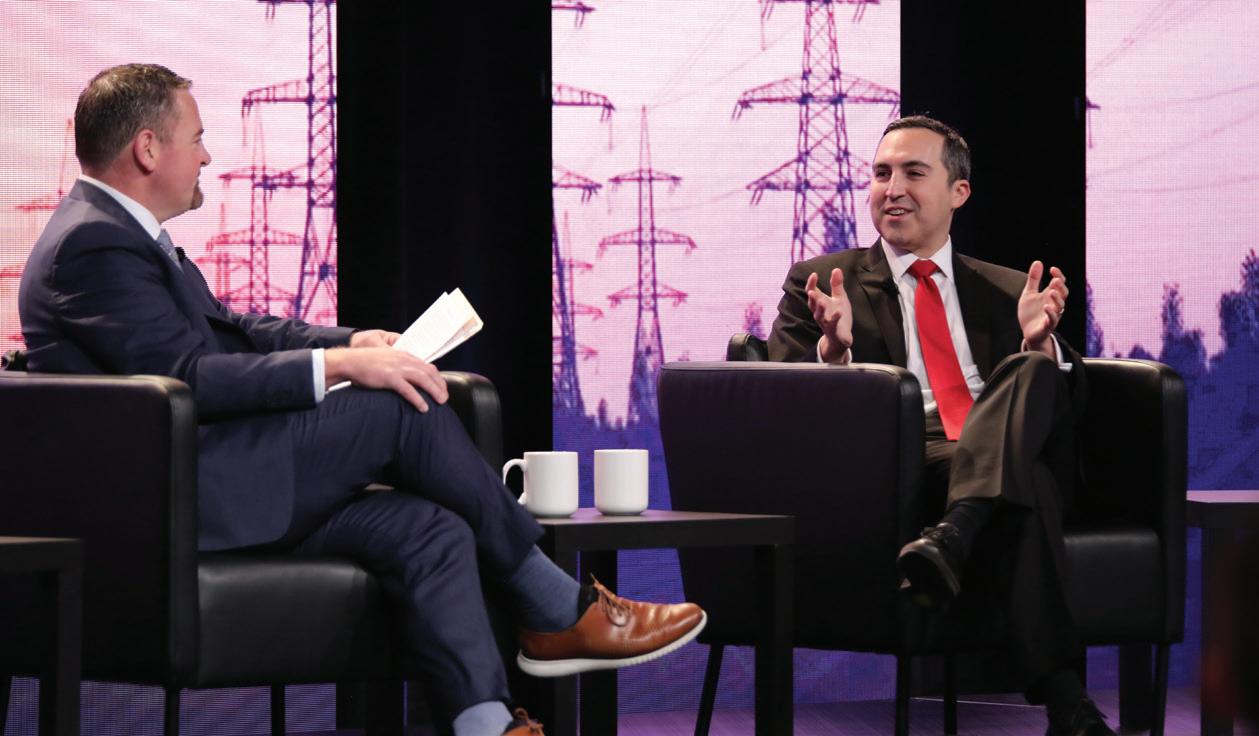
INTERVIEWED BY BRADY DRAKE
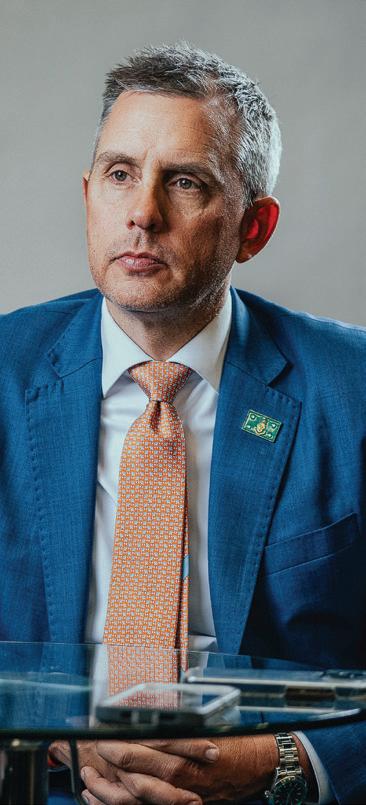
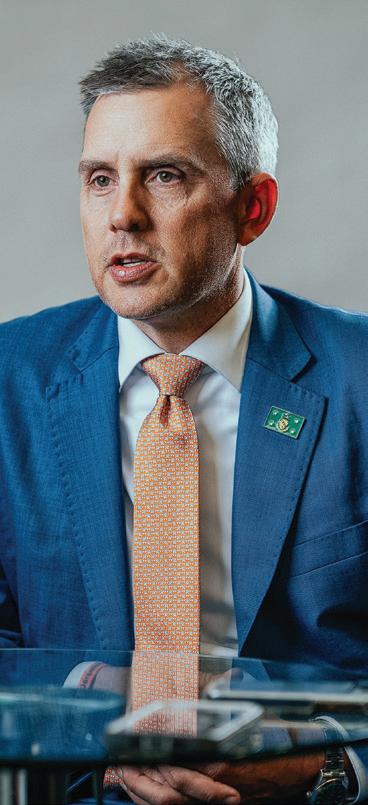
ABOUT KELLY ARMSTRONG
Governor Kelly Armstrong is the 34th governor of North Dakota, taking office on December 15, 2024, after serving nearly six years as the state’s at-large member of the U.S. House. A lifelong North Dakotan from Dickinson, Armstrong is a lawyer by training and previously represented District 36 in the North Dakota Senate and chaired the North Dakota Republican Party before his time in Congress. As governor, he has framed his administration around keeping North Dakota business-friendly and competitive— emphasizing tax relief, workforce development, support for core industries like agriculture and energy, and continued growth in emerging sectors. He has also stressed showing up directly in communities across the state to gather input and build partnerships, positioning his office as a practical, accessible resource for local leaders and employers.
Q: WHAT DO YOU SEE AS THE BIGGEST OPPORTUNITIES FOR GROWTH IN NORTH DAKOTA IN THE NEXT 5 TO 10 YEARS?
A: I think the same things that have always been in North Dakota’s wheelhouse, which is value-added ag, energy, the synergies between the energy industry and the agriculture industry. You know, just today, we were at the Bank of North Dakota talking about the Bakken West to East pipeline, and having the ability to really match up those natural resources with these communities. We spend a lot of time talking about workforce. We spend a lot of time talking about housing. But for every community, big or small, in North Dakota, before you bring in economic development, the two things you have to have are power and water. And we have plenty of those to spare, and we just have to match the right resources with the right communities.
Q: WHAT DO YOU SEE AS SOME OF THE EMERGING INDUSTRIES IN THE STATE?
A: The AI space is really interesting. The data centers require a lot of power. I mean, cold and windy is not usually a really good attribute for recruiting people, but it turns out for data centers and that type of facility, North Dakota’s climate, North Dakota’s business climate, North Dakota’s natural resources are actually exactly what they’re looking for. And I think the other side of that, that we sometimes forget about, is that the next generation of North Dakotans want to work in technology. They want to work on autonomous vehicles. They want to be touching that really cool new emerging technology. So we have the natural resources to do it. We have some of the smartest kids anywhere on the planet. And matching that up also gives us an
opportunity to keep more North Dakota graduates in North Dakota.
Q:
WHAT SPECIFICALLY WOULD YOU SAY TO FUTURE ENTREPRENEURS THAT YOU’RE TRYING TO KEEP IN THE STATE? WHY SHOULD THEY BUILD A BUSINESS HERE INSTEAD OF ELSEWHERE?
A: Well, I think there’s two sides, right? One, there’s keeping them, but the other part of being young is leaving. And, I mean, that happens everywhere, right? Seniors in high school in New York think New York is boring. But we also want to create the environment for them to come back. I think there are a lot of things that are draws here. I think if you love the outdoors, North Dakota is a great place. We've got to create more access to the types of things that North Dakota is really good at.
Once you decide that maybe you don’t need five-star restaurants every night, or Broadway shows, and you want to raise a family, this is as good a place in the world to do that. The communities here will support you. Your state will support you.
Being in DC for six years, the misconceptions about North Dakota are pretty prevalent. Our communities are sophisticated, our entrepreneurs are sophisticated. And more importantly, I think one of the great things is, no matter how big the community you live in, in North Dakota, it still has that small town feel, and that we support each other.
Q: WHAT DO YOU THINK WERE SOME OF THE MISNOMERS ABOUT NORTH
DAKOTA
IN DC?
A: Most people thought of North Dakota farmers and ranchers, as guys wearing overalls with a piece of straw in their mouth. And, you know, our ag producers are some of the most sophisticated small business people anywhere in the world. I mean, inputs are higher, commodity prices are lower. The economies of scale in farming have just changed so dramatically. I used to tell people we’re going to solve autonomous vehicles with a combine in the Red River Valley way before we ever solve it on a highway in Florida.
Q: WHAT DO YOU THINK ARE SOME OF THE UNDERUTILIZED RESOURCES OR PROGRAMS THAT SMALL BUSINESS OWNERS SHOULD BE AWARE OF?
A: It's important to make sure people know about the programs that exist and where they’re at. It's important to know about the Commerce Department, and it's important to know what's available in your community. I think some of the best groups that exist are the young professionals groups. Grand Forks has a really good one. Fargo has a really good one.
I think they're really important for when you graduate from college. In college, you have a social life. However, when you leave, it doesn’t matter if you’re working at a bank or starting your own business—as young professionals, particularly young professionals starting families—it’s hard, especially if you’re moving from Dickinson into Fargo or Bismarck to Minot or wherever it is. It's hard to crack into that social scene. And I think the good young professional groups can do a lot to help recruit and retain workforce.
Q: YOU SPOKE A BIT ABOUT GETTING YOUNG PROFESSIONALS TO COME BACK TO THE STATE. HOW DO WE KEEP THEM HERE IN THE FIRST PLACE?
A: One thing that’s underutilized in North Dakota—though higher ed is starting to move this direction—is stronger synergy between our business community’s workforce needs and our universities and tech schools. If you’ve interned or worked for a company for two or three years while you’re in college or earning a certificate, it’s a lot easier to take that job afterward. You already know your boss, you’ve broken bread with your coworkers, and you feel like part of the company.
And I think we can start that earlier— sometimes as early as high school. Matching industries to students better, sooner, would be really impactful. We’ve done a pretty good job in some areas—the oil boom did that in western North Dakota, and there are really cool things happening with Grand Farm, Grand Sky, and Grand Forks. But there’s always room to improve.
Q: FORGIVE ME FOR NOT KNOWING THIS, BUT HOW INVOLVED ARE YOU WITH THOSE SORTS OF EFFORTS?
A: We talk about them all the time. On both the higher ed side and the K–12 side, we’ve been focused on this. We just brought in a new DPI superintendent, Levi Bachmeier, and our CTE schools are really good at matching kids with skills that employers in their communities need.
Where we’re still not great is communication. Sixteen-year-olds aren’t necessarily going to a website and digging through dashboards to
find programs—even if those programs exist. And if you’re a parent with your first 17-year-old, you don’t always know how to navigate it either. So being able to communicate these options better to high school and college students is where the state can really help.
We talk about it a lot across CTE, K–12, and higher ed. And you can already see how the pieces are in place here. You’ve got the tech park in Fargo and Grand Farm, and that means you’re going to need robotics engineers and robotics technicians. You’ve got NDSU, NDSCS, K–12, CTE programs, and companies like Bobcat, John Deere, and others.
They all want to educate kids in a way that lines up with real employment opportunities. And we’re also trying to retain and retrain North Dakota students and workers. If we combine public sector, private sector, K–12, and higher ed in a more intentional way, everybody has more buy-in—and the whole becomes greater than the sum of its parts.
Q: WHAT PIECES
OF LEGISLATION ARE YOU MOST EXCITED ABOUT IN THE BUSINESS REALM RIGHT NOW?
A: One thing that I think will help— maybe in an unexpected way—is the push to get rid of cell phones in schools. When you look at what employers are seeing, kids score really high on education and technical skills, but fewer and fewer score high on soft skills like dealing with conflict in the workplace, negotiating, selling a product, communicating well.
This might sound silly, but reducing phones in schools helps force eye contact and real interaction. We outsource a lot of communication to those supercomputers in our pockets. A lot of the skills employers want to promote or hire for can be learned
better in an academic setting when everyone isn’t staring at a screen all day.
Q: I APPRECIATE THAT—IT FEELS LIKE A LONG-TERM HEALTH OUTLOOK, TOO.
A: Exactly. There are mental health reasons, academic reasons—lots of reasons to get focused back on education. But one we don’t talk about as much is that kids will naturally learn soft skills just by being in real-life situations like loud lunchrooms, busy hallways, figuring things out face-to-face.
Having to meet people at your locker to plan lunch is different than sending a group text. It takes more organization and problem-solving. Those are skills that carry a long way.
Q: HOW DID THAT LEGISLATION COME TO BE? WAS IT SOMETHING TEACHERS WANTED, OR PARENTS?
A: Teachers wanted it. Principals wanted it. Principals wanted school boards to do it. School boards wanted the legislature to do it. A watereddown version of the bill got amended into something even more watereddown, and with help from legislators from both parties in both chambers, we decided not to wait. We pushed it through quickly and got it done.
It came together because people knew it was the right policy, and there was enough political aggression to move it—plus real buy-in from everyone.
Q: WHAT ABOUT YOUR ROLE AS GOVERNOR HAS SURPRISED YOU IN A POSITIVE WAY?
A: I ran statewide as the only
representative from Congress, so I wasn’t fully prepared for how excited people get when the governor shows up. I went to tons of events as a congressman, but a fourth-grader doesn’t really care that a congressman walked into class. They care that the governor did.
It’s been really cool to see how many people get excited when the governor shows up at regular, everyday activities.
Q: HOW DO YOU THINK ABOUT ATTRACTING NEW BUSINESSES WHILE ALSO SUPPORTING THE ONES ALREADY HERE?
A: I’m the first governor in my lifetime who didn’t campaign on jobs. Every governor I’ve known, from both parties, campaigned on jobs, jobs, jobs. But we’ve got somewhere between 10,000 and 13,000 open jobs in North Dakota right now. That’s not unique, but we’ve been working hard to bring it down.
Since the North Dakota oil boom in 2008, we’ve had a hot job market and a hot economy. So when we recruit businesses now, we take a more holistic approach. If you want to move into a community and create jobs, how are you developing workforce? How are you addressing housing? How are you going to be part of the community?
Because if you move into a small town and create 20 jobs by stealing 20 employees from that town, that’s not sustainable. I don’t want new companies poaching teachers, cops, nurses, and everyone else.
Recruitment really starts locally— chambers, EDCs, local businesses and industries. If they roll out the carpet, we can help close the deal with programs and state tools. But locals bring businesses 80–85% of the way there. We’re always ready to help on that last 15%.
And beyond recruitment, my job is to build infrastructure for everybody. We need high-speed internet, power, water, linear infrastructure, rail and highway connections, strong schools, health care, and law enforcement. If we build that base, communities can attract what they want.
New Rockford has the bisonprocessing facility. Ellendale has Applied Digital. Every community decides what fits. The state’s role is to make resources accessible, not put our thumb on the scale. We want to give communities the chance to recruit what makes sense for them.
Q: HOW CAN BUSINESSES BETTER INTERACT WITH YOU AND THEIR REPRESENTATIVES?
A: A lot of businesses belong to trade organizations, and those groups do good work advocating in Bismarck. But politics has changed. The days of introducing a bill on day one of session and moving it quickly are mostly gone.
So invite your legislators in the off season. People forget that even though the legislature meets for 80 days every two years, there’s no real off season anymore. If you have an idea that matters for your business, industry, or community, you’ll build far more support by working it early with your local legislators and asking who else you should be talking to.
Trade groups like the home builders or Bankers Association are great, depending on your industry—but direct relationships matter. Start early. Contact your local legislators as soon as you can.
Q: ANYTHING YOU WANT TO SAY DIRECTLY TO BUSINESS READERS ACROSS THE STATE?
A: First, let us know what you need. It’s always easy to beat up on federal regulations, and there’s always ways to streamline, but we want to be responsive and find a way to say yes. One frustration I had in DC for six years is that the default answer is almost always no, and then you waste time and money trying to figure out what that really means. We want to get to yes.
Second, take a chance. Take a chance on a kid who isn’t experienced. Take a chance on someone who had addiction issues ten years ago and has been in recovery. Take a chance on someone coming out of jail or DOCR who’s trying to turn their life around.
The people who earn those chances often work the hardest to prove themselves. And if you’re struggling with workforce—and a lot of people are, here and everywhere—there are real ways to solve it if you’re willing to step outside your comfort zone.
Lastly, North Dakota has done a lot of good things. Government doesn’t create jobs—government creates infrastructure and a framework that lets people risk their capital here. Whether you’re in oil, agriculture, or a small tech startup, we want to make sure the state is supportive and that the structure is there to give you the best chance to succeed.
GOVERNOR
KELLY ARMSTRONG
INTERVIEWED
BY
BRADY DRAKE
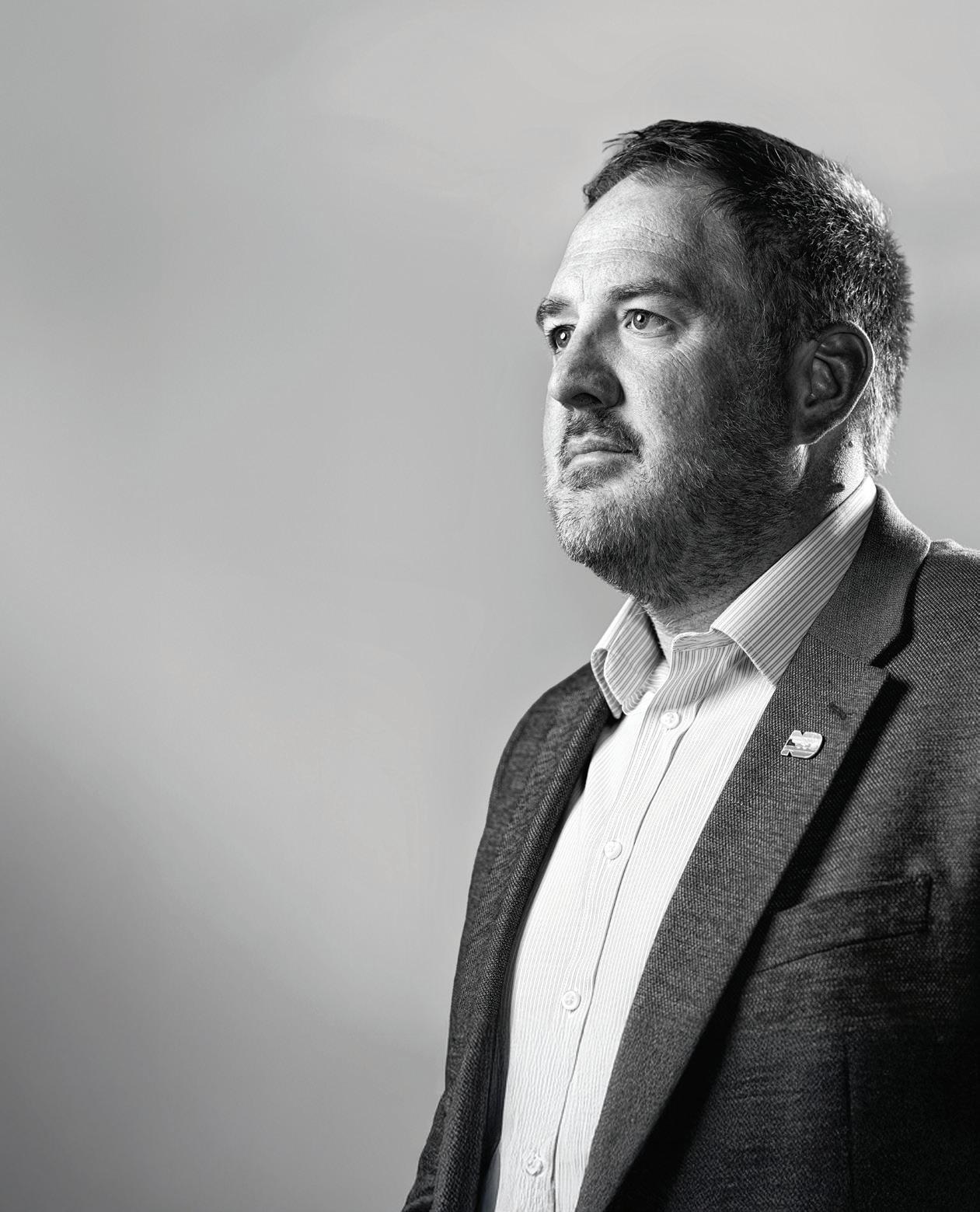
ABOUT CHRIS SCHILKEN
Commerce Commissioner Chris Schilken leads the North Dakota Department of Commerce, serving as the state’s top economic development official under Governor Kelly Armstrong. A North Dakota native from Glenburn, Schilken brings a career rooted in community and business growth, with previous leadership roles in both North Dakota and South Dakota. Before returning to North Dakota for this post, he served as commissioner of South Dakota’s Governor’s Office of Economic Development, where he oversaw more than 200 projects and helped advance initiatives tied to value-added agriculture, advanced manufacturing, infrastructure development, and workforce recruitment. Earlier in his career, he worked directly in local and regional economic development, including as executive director of Forward Devils Lake and leader of the Watertown Development Company. As Commerce Commissioner, Schilken has emphasized practical, community-first economic development—refining programs to make them more effective, showing up in towns across the state, and positioning Commerce as a “first call” resource for businesses and communities looking to grow.
ABOUT THE NORTH DAKOTA DEPARTMENT OF COMMERCE
The North Dakota Department of Commerce is the state’s lead agency for economic development, working to grow North Dakota’s economy and strengthen quality of life in communities statewide. Through its core divisions—Economic Development & Finance, Tourism & Marketing, Workforce Development, and Community Development & Rural Prosperity— Commerce helps attract, retain, and expand businesses; supports entrepreneurs and primary-sector industries with incentives, grants, and financing; promotes North Dakota as a place to visit and a place to build a career; and partners with local leaders to advance housing, infrastructure, and community vitality. Guided by a mission to empower the growth of the North Dakota economy for everyone, Commerce coordinates resources across public and private partners to drive diversification, innovation, and a talented workforce for the future.
Q: FROM AN ECONOMIC STANDPOINT, WHERE IS THE STATE HEADING, AND WHAT’S YOUR VISION?
A: What we’ve really tried to do is shift the Department of Commerce toward being more operational at the state level—not just aspirational. That lets us focus on how our programs and solutions can help communities across North Dakota and truly be a resource for them.
One way we do that is by building repeatable programs and solutions that work statewide, and measuring those through outcomes like metrics, opportunities, and long-term stability for industries that have been here a long time. But we also ask, 'how do we keep growing those industries, and how do we use them to bring in new ones?' That’s been our vision over the last year.
Q: ARE THERE PARTICULAR PROGRAMS WHERE YOU’VE REALLY HONED IN ON IMPROVING THEM OPERATIONALLY?
A: Yes. We’re looking closely at program refinements and figuring out what programs are working well and how to keep strengthening them. At the same time, we’re asking what programs have been around for a long time that might need to be revamped or even shelved, so that funding can be redirected into what’s actually being used successfully by companies and
communities across the state. We’re in that evaluation process right now.
Q: WHICH PROGRAMS ARE THE MOST SUCCESSFUL?
A: The Development Fund has been around for a long time in North Dakota. It provides low-interest loan financing, other kinds of loans, and also equity options. It can provide debt, equity, or even hybrid instruments with triggers that might start as debt and convert to equity. The Development Fund is one of our core tools.
And beyond that, there are programs in other agencies across the state. North Dakota has a big advantage in that we can help almost any industry find a solution to get started here, expand here, and be successful.
Q: WHO CAN USE THE NORTH DAKOTA DEVELOPMENT FUND?
A: Traditionally, it was only for primary-sector companies. During the last legislative session, that changed. Now, non–primary-sector businesses can now access it too, but only up to certain dollar caps. So they allowed some broader access while still keeping limits in place. We saw that as a good win and a good partnership with the legislature.
It also helps rural communities, especially if they aren’t actively doing primary-sector recruitment because now their local businesses can still access some of these tools.
ABOUT THE NORTH DAKOTA DEVELOPMENT FUND
The North Dakota Development Fund (NDDF) is a statewide financing tool run through the North Dakota Department of Commerce that provides flexible “gap” funding to help new or expanding businesses start, grow, or relocate in North Dakota. Designed to complement private lenders rather than replace them, the fund can step in when a project is solid but needs additional capital that banks or investors can’t cover on their own. NDDF support can take several forms— direct or participation loans, subordinated debt, and even equity investments—giving businesses more options than traditional financing alone. While it has historically focused on “primary sector” companies (those bringing new wealth into the state, such as by selling goods or services outside North Dakota), the program’s mission is broadly economic development: backing feasible projects that create jobs, add value to North Dakota industries, and strengthen communities across the state.
Q: OUTSIDE OF OPERATIONAL IMPROVEMENTS, WHAT ARE YOUR PRIORITIES FOR THE NEXT FEW YEARS?
A: A big goal is meeting communities where they are. We’re traveling a lot, going into communities, learning what they want to be, and adjusting to that feedback. It’s been well received because communities don’t have to come to Bismarck. Instead, we come to them. That’s become a strong partnership across the state.
Q: WHAT HAVE YOU LEARNED FROM BEING OUT IN THOSE COMMUNITIES?
A: The most interesting thing—maybe not a surprise, but it reinforced it for us—is the commitment communities have to be better than they were yesterday. They want to move forward and be successful. But every
community is different. Some want rapid growth, others want more moderate growth. We aren’t there telling them what they have to do. We’re asking where they want to be and helping them get there.
Q: HAVE THERE BEEN COMMON THREADS IN WHAT COMMUNITIES SAY THEY’RE STRUGGLING WITH?
A: Yes. Workforce and housing. Every community has its own situation, but those two barriers show up everywhere. So those have become major priorities for us across the board.
Q: WERE THERE ANY NEW BILLS OR PROGRAMS ADDRESSING THOSE ISSUES IN THE LAST LEGISLATIVE SESSION?
A: We proposed a housing bill that would have provided infrastructure relief for new housing, but it didn’t
pass. That’s okay—new programs often take time. There’s potential for new or reworked legislation coming, with stakeholder support, aimed at addressing housing going forward.
Q: YOU MENTIONED EXPANDING INTO NEW INDUSTRIES. ARE THERE PARTICULAR INDUSTRIES THE STATE IS FOCUSING ON?
A: We still have our traditional industries—agriculture, energy, and medical. But on the newer side, you’re seeing more value-added agriculture, like dairy. Two large dairy operations have already been announced in North Dakota. Data centers are another big focus.
What’s exciting about North Dakota is that we’re taking energy produced out west and using it to power other industries that help grow the state—like data centers running on natural gas.
We’re also looking at where bioscience fits in, especially where it complements agriculture. And then UAS, unmanned systems, and autonomous ag—those are major investment areas where North Dakota is leading. Investments at Grand Sky and Grand Farm are a big part of that, and the question is how we leverage those advances statewide.
Q: WHAT ARE YOU MOST EXCITED ABOUT RIGHT NOW IN TERMS OF WHAT’S HAPPENING IN THE STATE?
A: What’s always exciting about North Dakota is how cuttingedge and nimble we are as a state—how quickly we can tackle challenges. That mindset carries into the business climate. Companies see businessfriendly policies, low regulation, innovation, and a willingness to think outside the box. When we can show businesses a real plan to address hurdles they’re facing, that’s exciting.
Q: WHAT SHOULD SMALL TO MEDIUM SIZED BUSINESSES BE AWARE OF THAT THEY MIGHT NOT REALIZE —UNDERUTILIZED PROGRAMS, LEGISLATION, THINGS LIKE THAT?
A: We want Commerce to be your first call. If you call us first, we can help connect the dots. There’s a lot of support for entrepreneurship and small business, but it’s spread across different areas—some under Commerce, some not.
We can connect businesses to the Bank of North Dakota, Small Business Development Centers, regional councils, even local EDCs. If you’re new to a community, you might not know who to talk to. So being the first call saves time and helps people find what they need faster.
Q: WHAT’S THE BEST WAY FOR PEOPLE TO CONTACT THE DEPARTMENT OF COMMERCE?
A: Just call our office, or use the website. That’s the easiest way to start. From there, our business development reps and community development folks can respond and get things moving.
Q: WHAT DO YOU LIKE MOST ABOUT YOUR ROLE?
A: We get a chance to help shape the future of North Dakota—for current generations and future ones. We’re part of the front-line conversations around exciting things happening in the state. Being even a small part of that is really fulfilling.
NORTH DAKOTA DEPARTMENT OF COMMERCE commerce.nd.gov /CommerceND @commercenorthdakota /commercend
FACTS THAT MATTER
• The area’s labour force has grown at roughly three times the national rate over the past 20 years.
• The region reportedly surpassed 25,000 small business enterprises recently.
• The metro is home to 4 major college campuses with over 18,000 students in the 4.
• The Fargo–Moorhead–West Fargo metro has been one of the fastest-growing metros in the Upper Midwest, adding more than 60,000 people since 2000.
• The metro’s GDP now exceeds $16 billion, making it North Dakota’s largest economic engine.
• Fargo routinely ranks among the Top 10 Best Small Cities for Business and Careers (Forbes).
• The region maintains one of the lowest unemployment rates in the country, often hovering around 2–3%.
• Nearly one in three residents is between the ages of 20–34, making it one of the youngest metros in the region.
• 73% Labor Participation Rate
ORGANIZATIONS THAT MATTER
GREATER FARGO MOORHEAD ECONOMIC DEVELOPMENT CORPORATION
The Greater Fargo Moorhead Economic Development Corporation (GFMEDC) is the main regional EDC; they offer site selection, labour market data, and incentive guidance, among other offerings.
gfmedc.com /GFMEDC @gfmedc
NORTH DAKOTA SMALL BUSINESS DEVELOPMENT CENTERS (ND SBDC)
Provides free one-on-one consulting for business plans, financial projections, capital access, market research, and growth strategies. A must-know resource for any entrepreneur or small business owner.
ndsbdc.org /ndsbdc @ndsbdc
FARGO MOORHEAD WEST FARGO CHAMBER OF COMMERCE
Fargo Moorhead West Fargo Chamber of Commerce provides business-networking, member directories, and vendor connection services.
fmwfchamber.com /fmwfchamber @fmwfchamber
EMERGING PRAIRIE
Emerging Prairie is a major driver of the region’s entrepreneurial ecosystem, offering support for startups through events like StartupBrew, the Prairie Capital Summit, and AgTech Week. They also play a key role in startup acceleration and innovation.
A volunteer-run organization offering free mentoring, business workshops, and startup guidance. Strong for early-stage business owners needing guidance from experienced professionals.
score.org
MINNESOTA SMALL BUSINESS DEVELOPMENT CENTER (WEST CENTRAL SBDC)
Based at Minnesota Community and Technical College (M State) in Moorhead, the West Central SBDC provides similar free consulting and financial guidance for Minnesota-based businesses in the metro.
westcentralmnsbdc.com
ORGANIZATIONS THAT MATTER
WEST FARGO ECONOMIC DEVELOPMENT
Supports businesses in West Fargo with site selection, permitting assistance, incentive programs, and localized business support.
Offers Minnesota-side programs like tax increment financing, training incentives, and business loans. Key for companies operating or expanding in Clay County.
cityofmoorhead.com
U.S. SMALL BUSINESS ADMINISTRATION (SBA) – FARGO
The Fargo SBA office connects business owners with federal resources including small-business financing programs, SBA-backed loans, disaster assistance, government contracting opportunities, and export support. They also coordinate with local lenders, SCORE mentors, and the ND SBDC to help entrepreneurs access capital, build business plans, and navigate federal programs that support growth and stability.
sba.gov/district/north-dakota /SBAgov @sbagov
BUSINESSES TO KNOW
FROM THE GREATER FARGO MOORHEAD ECONOMIC DEVELOPMENT CORPORATION
LIVEWIRE
Livewire has earned a reputation as one of the most technically capable and creatively versatile production companies in the Upper Midwest. Based in Fargo, the company specializes in high-end video production, live streaming, event production, and media support. With whatever they do, they deliver work that consistently exceeds what many people expect from a regional firm. Their team handles everything from corporate storytelling and brand films to complex multi-camera live events, concerts, conferences, and statewide broadcasts. What makes Livewire stand out is not just the equipment they bring, but the level of technical direction, creative polish, and logistical excellence they deliver on every project. Within industry circles, they’re known for running productions that look and feel “big-market” while maintaining the agility and accessibility of a North Dakota-based team.
Because of their capabilities, Livewire has become a go-to partner for organizations across the entire state who rely on them to execute projects that require flawless visuals, dependable crews, and high production value. Their work cuts across industries: economic development groups, school districts, energy companies, tech firms, tourism offices, healthcare systems, and statewide associations all tap Livewire when they need to communicate clearly and professionally. For businesses outside of Fargo, Livewire represents the kind of resource the metro quietly excels at producing: a world-class creative and technical services company with the depth, staff, and experience to elevate messaging, events, and brand presence anywhere in North Dakota.
CareerViewXR is a Fargo-built immersive career exploration platform that brings “field trips” and job shadows directly into classrooms and training programs. Developed by Be More Colorful, the platform uses 360-degree web-based tours and companion VR videos to drop students and job seekers into real workplaces across industries like healthcare, skilled trades, energy, construction, education, and more. North Dakota has gone all-in on the tool: CareerViewXR is integrated into RUReady. ND.gov and funded so that every K–12 school in the state can access it at no cost, with at least one VR headset donated to every middle and high school and content still fully usable on laptops, tablets, and phones. With a rapidly growing library of 100+ immersive experiences, it’s becoming a core part of how the state tackles its workforce awareness gap—especially in indemand fields where students can’t easily be brought on-site for safety or distance reasons.
For North Dakota companies, CareerViewXR is both a workforce tool and a branding opportunity. Employers can partner with the platform to film their facilities and feature real employees, turning their shop floor, clinic, jobsite, or control room into a guided “day in the life” experience that’s seen by thousands of students and adult learners across the state and beyond.
That visibility helps companies showcase modern equipment, culture, and career paths to future hires in rural and urban communities alike—whether they’re a manufacturer working with Bismarck State College on XR-based disability-inclusive workforce programs, or a local employer adding a single featured occupation to the statewide library. Businesses can also plug CareerViewXR into their own outreach, career fairs, or recruiting events, using the same immersive experiences to spark interest, answer “what is this job really like?” and position themselves as employers who invest in the next generation of North Dakota talent.
careerviewxr.bemorecolorful.com
/careerviewxr
@careerviewxr
/careerviewxr
GOLDEN PATH SOLUTIONS
Golden Path Solutions is a Fargo-grown company that’s reshaping how employers, schools, and communities think about workforce development. Their software analyzes real skill sets, identifies future workforce needs, and maps out clear career pathways—giving organizations a databacked view of who their ideal candidates are and how to develop them. By turning workforce planning into something measurable and actionable, Golden Path helps companies recruit more strategically, reduce turnover, and build long-term talent pipelines tied directly to their real operational needs.
Importantly for businesses statewide, Golden Path’s tools are easy to adopt and highly adaptable. Companies can use the platform to create customized talent profiles, identify the traits that make their top performers successful, and then work with schools or workforce partners to attract people who match those characteristics. The team has already completed projects across North Dakota, proving that their model works well outside the Fargo area. As one stakeholder noted, “Golden Path Solutions… they’re already doing outreach in the state, but that doesn’t mean businesses know about them.” For employers looking to modernize recruitment and employee development, Golden Path offers a practical, data-driven resource ready to plug into any industry or region in the state.
BUSINESSES TO KNOW
SAGENCY
Sagency is a Fargo-based leadership consulting and talent development firm known for helping organizations strengthen their culture, elevate their leaders, and build high-performing teams. Working with companies across North Dakota and beyond, Sagency specializes in executive coaching, organizational strategy, leadership training, and talent optimization. Their approach centers on aligning people with purpose—helping leaders understand their strengths, identify gaps, and create systems that support meaningful, sustainable growth. For businesses navigating change or scaling quickly, Sagency provides the clarity, tools, and coaching needed to keep teams aligned and moving in the same direction.
For organizations looking to put their people strategy on equal footing with their business strategy, Sagency is designed to be highly hands-on and easy to integrate. Businesses can bring Sagency in to assess team dynamics, coach emerging or senior leaders, design better hiring and onboarding processes, or build customized development plans that strengthen talent from within. With a strong track record in industries ranging from finance to health care to tech, the firm has proven that its methods are effective across sectors and company sizes. And while Sagency is well-established in Fargo, many companies elsewhere in the state are still discovering the value they offer. For employers seeking structured, data-informed leadership development and a healthier, more resilient organizational culture, Sagency is a resource well worth tapping into.
sagencytalent.com /Sagencytalent
LULZBOT
LulzBot, headquartered in Fargo, is widely recognized as one of the most capable and technically advanced 3D printing and additive manufacturing companies in North America. Originally known for developing the awardwinning LulzBot line of professional-grade 3D printers, the company now operates with a dual focus: producing high-precision hardware and providing advanced additive manufacturing services for clients who need rapid prototyping, product development, or custom parts. Their printers are used globally in engineering, aerospace, medical R&D, automotive innovation, and by makers who need industrial-level accuracy. Having a company with this level of innovation and production capability based in Fargo is a major differentiator—not only for the city, but for the entire region.
What many North Dakota businesses may not realize is that they don’t have to work with firms in Minneapolis, Denver, or farther away to experiment with 3D printing or bring new ideas to life. LulzBot offers prototyping, smallbatch production, customized component manufacturing, and technical support that can dramatically shorten development timelines. Whether a business wants to test a new product concept, replace a hard-to-source part, or explore additive manufacturing as a long-term strategy, LulzBot has the equipment and expertise already here in-state. As one participant noted, “That is one of the few 3D printing companies in North America… that’s in Fargo.” For companies looking to innovate, streamline production, or modernize their manufacturing capabilities, LulzBot represents a rare and highly accessible resource sitting right in their backyard.
FBS
FBS (Flexmls) is one of Fargo’s most quietly influential tech success stories—a nationally respected software company serving the real estate industry for more than four decades. Best known for creating Flexmls, one of the most widely adopted Multiple Listing Service (MLS) platforms in the country, FBS powers real estate data, listings, and workflow tools for tens of thousands of agents, brokers, and MLS organizations nationwide. The company is 100% employee-owned, known for its long-term stability, its strong internal culture, and its commitment to continual product innovation. Their work puts Fargo on the map as home to a leading player in real estate technology— something most people in the state don’t realize is happening right here.
For businesses and organizations across North Dakota, FBS offers more than just software—they offer deep expertise in data management, API integration, and large-scale, mission-critical digital systems. Companies looking to understand complex databases, improve user experience, manage sensitive data, or build reliable digital platforms can learn from FBS’s best practices or seek partnership opportunities where appropriate. With a proven track record of supporting clients across the U.S., and with highly specialized technical talent based in Fargo, FBS represents a level of tech capability that many local or regional businesses might assume they’d need to find in larger metro markets. For organizations exploring better ways to manage information, enhance digital tools, or modernize their systems, FBS is a world-class resource operating right in the center of North Dakota.
wearefbs.com
/Flexmls
/fbs-data-systems-inc
BUSINESSES TO KNOW
COMDEL INNOVATION
ComDel Innovation, based in Wahpeton, is one of the region’s most advanced and versatile contract manufacturers—trusted by companies across the Upper Midwest for high-precision, high-volume, and highly complex production work. Founded by former employees of 3M, ComDel has decades of experience in engineering, prototyping, testing, tooling, and full-scale manufacturing for companies in medical devices, electronics, industrial products, and consumer goods. Their capabilities span everything from injection molding and automation to product testing, assembly, and quality validation. Even though they operate outside Fargo, their impact is deeply felt within the city’s business ecosystem: many Fargo companies rely on ComDel as a critical manufacturing partner able to take on intricate, specialized, or large-scale production needs.
For businesses across North Dakota, the key message is simple: world-class contract manufacturing is available right here in the region. ComDel’s breadth of services means companies can test new concepts, refine prototypes, or transition into full production without sending work to Minneapolis, Chicago, or overseas. Their ability to handle complex engineering challenges makes them an ideal partner for firms exploring new product lines or scaling existing ones. As one participant noted, “ComDel… they do a lot of testing and a lot of work and production for other companies.” For any organization looking for precision manufacturing, engineering support, or a reliable long-term production partner, ComDel Innovation stands out as a uniquely capable resource that Fargo businesses already trust—and one that companies statewide can confidently leverage.
comdelinnovation.com /ComDelInnovation
SIGNUM
Signum is a Fargo-based digital product and software development firm known for helping organizations turn complex ideas into polished, scalable digital solutions. With deep expertise in custom software, mobile apps, web platforms, product strategy, and UI/UX design, Signum has built a reputation for tackling projects that require both technical rigor and strategic clarity. Their team works closely with clients to refine concepts, map user journeys, and build digital tools that are intuitive, resilient, and aligned with business goals. Over the years, Signum has supported startups, growing companies, and established enterprises across the region—often serving as the go-to partner when a project demands high-quality engineering paired with thoughtful design.
For businesses across North Dakota, Signum represents a powerful in-state resource for solving digital challenges without needing to hire a large out-of-state agency or build an internal development team from scratch. Companies can work with Signum to prototype new digital products, modernize internal systems, improve user experience, or develop custom tools that streamline operations. Their team’s ability to own the full lifecycle—strategy, design, development, and ongoing refinement—makes them especially valuable for organizations that need a long-term partner rather than a one-off vendor. And because Signum has successfully delivered projects for a wide range of clients, many of them in Fargo, they bring a proven track record of delivering high-quality digital solutions right from within the state. For any business exploring digital transformation or new product innovation, Signum is a resource worth knowing about—and one that’s already helping shape the region’s tech landscape.
ANVIL DESIGN & MANUFACTURING
Anvil Design & Manufacturing is one of Fargo’s most versatile and capable product development and fabrication firms—known for taking ideas from concept to reality with a blend of engineering talent, technical precision, and hands-on craftsmanship. With expertise spanning industrial design, prototyping, machining, fabrication, and small- to mid-scale production, Anvil supports companies across industries such as agriculture, medical technology, manufacturing, and consumer products. Their team excels at solving practical engineering challenges and building functional, durable prototypes that can move seamlessly into production. Over the years, Anvil has become a trusted partner for organizations that need more than just a fabricator—they need a team that understands product design, performance requirements, and manufacturability.
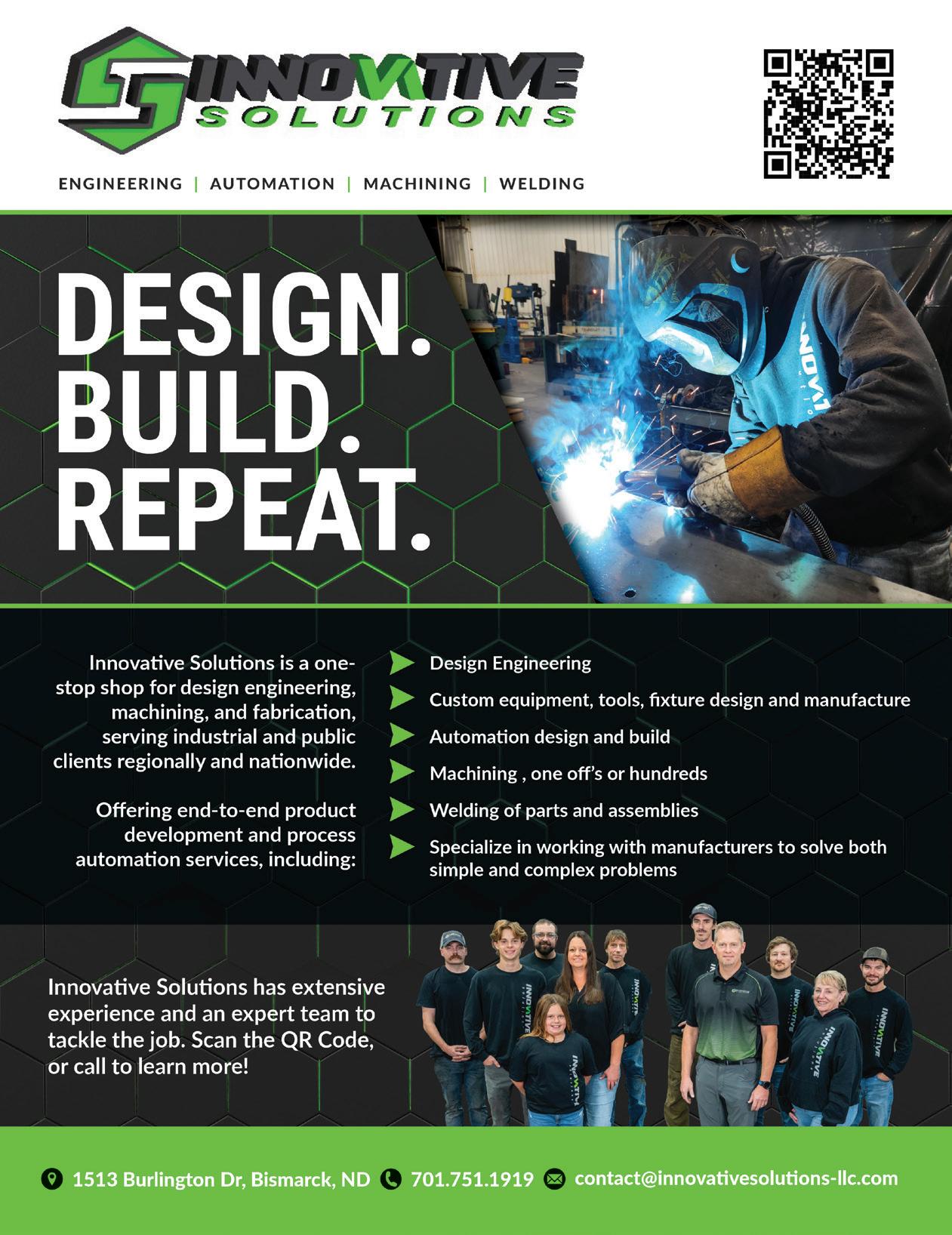
For businesses across North Dakota, Anvil Design & Manufacturing offers an in-state option for developing new products, refining existing ones, or producing specialized components without relying on distant firms or large metropolitan markets. Companies can collaborate with Anvil to design and prototype new equipment, develop custom fixtures or parts, or outsource specialized fabrication work that demands high technical skill. Their comprehensive capabilities—CAD design, machining, welding, finishing, and assembly—allow businesses to streamline development timelines and keep intellectual property close to home. Whether a company is exploring a new product line or needs dependable contract manufacturing to support growth, Anvil represents a highly capable regional partner that many organizations may not realize is available right in Fargo.
MORE BUSINESSES TO KNOW
BYTESPEED
ByteSpeed is one of Fargo’s most successful and nationally recognized technology companies, providing custom computer hardware, networking solutions, and IT services to schools, businesses, government agencies, and healthcare organizations. Since 1999, ByteSpeed has built a reputation for durable hardware, responsive support, and specialized technology built for real-world, high-demand environments. Beyond traditional desktops, laptops, and servers, ByteSpeed is a leader in educational esports—designing, supplying, and supporting competitivegrade gaming PCs, peripherals, and full esports lab setups for school districts across the country. Their partnerships with industry leaders like Intel, NVIDIA, and Microsoft bring enterprise-level performance to classrooms while keeping service and expertise rooted in North Dakota.
For organizations across the state, ByteSpeed offers something rare: a full-spectrum technology partner with deep experience in both academic and professional settings. Schools can turn to ByteSpeed not only for standard devices, VR labs, and secure networking, but also for complete esports programs—from high-performance gaming rigs to team-room layouts, coaching resources, and long-term support. Businesses benefit from the same engineering and customization capabilities, giving them access to reliable hardware and managed IT without relying on out-of-state vendors. Many people don’t realize that a company supplying hundreds of esports programs nationwide is based right in Fargo—but for any school or organization modernizing its technology infrastructure, ByteSpeed is one of the most capable and accessible partners in the region. bytespeed.com
WANZEK CONSTRUCTION (MASTEC INDUSTRIAL)
Wanzek Construction, founded in Fargo in 1971, has evolved from a regional contractor into one of the nation’s premier builders in heavy industrial construction, renewable energy, and large-scale infrastructure. Now headquartered in West Fargo, the company delivers complex projects across the United States, serving energy developers, manufacturers, utilities, and major industrial clients. Over five decades, Wanzek has built a reputation for handling massive, technically demanding projects that require precise planning, large field teams, rigorous safety standards, and the ability to operate in challenging environments. Their work has placed them at the forefront of national growth in wind, solar, manufacturing expansion, and energy infrastructure.
For businesses across North Dakota, Wanzek represents a homegrown construction partner with capabilities that rival major national firms. The company specializes in utility-scale renewable energy projects—including wind farms, solar installations, repowers, and emerging energystorage solutions—along with industrial facilities, power infrastructure, high-voltage substations, and long-term maintenance services for heavy industry. Their ability to mobilize large workforces, manage multifaceted engineering requirements, and deliver high-stakes projects on deadline makes them an invaluable resource for organizations pursuing major capital expansions or energy-related development. Many companies may not realize that a builder operating at this scale is based in West Fargo, but for any business looking to execute complex industrial, energy, or infrastructure projects, Wanzek Construction offers nationally proven expertise rooted right here in North Dakota.
wanzek.com /wanzek
MORE BUSINESSES TO KNOW
DOOSAN BOBCAT NORTH AMERICA
Doosan Bobcat North America is one of the most globally recognized brands ever to come out of North Dakota, and its presence continues to anchor Fargo–Moorhead as a hub for advanced manufacturing, engineering, and heavy equipment innovation. With roots dating back to the original Melroe Company, Bobcat has shaped the global compact equipment industry through its line of skid-steer loaders, compact track loaders, excavators, utility vehicles, and jobsite technologies. From its corporate offices and engineering facilities in West Fargo and Fargo, the company leads product development, testing, digital systems, and strategic operations for markets across North America. Few people realize that many of Bobcat’s global innovations—from control systems to autonomous features to next-generation electric equipment—are designed and engineered right here.
For companies and communities across North Dakota, Bobcat represents more than a major employer—it’s an anchor of world-class engineering and manufacturing talent located in their backyard. Businesses can collaborate with Bobcat on workforce partnerships, training programs, supplier relationships, and technology initiatives tied to advanced manufacturing and emerging equipment technologies. Their growing focus on electrification, automation, connected machines, and smart jobsite solutions also positions Bobcat as a leader in the future of heavy equipment. As one of the region’s largest and most influential industrial companies, Doosan Bobcat North America demonstrates the level of innovation happening in North Dakota and offers a model—and potential partner— for organizations seeking excellence in engineering, production, or workforce development.
Office Sign Company, founded in 2008 in downtown Fargo, has grown from a small online storefront into one of the region’s most recognizable producers of custom signage, branding materials, and architectural décor. What began as a niche e-commerce venture quickly evolved into a full-scale manufacturing and design operation serving businesses, hospitals, schools, and organizations nationwide. Known for its mix of craftsmanship, customer service, and creative problem-solving, the company produces everything from office wayfinding signs and ADA-compliant signage to dimensional lettering, wall graphics, and full interior branding packages. With inhouse designers, engravers, printers, and fabricators, Office Sign Company can deliver highly customized pieces while maintaining the fast turnaround times that modern businesses expect.
For companies across North Dakota, Office Sign Company offers a uniquely local resource for high-quality signage and visual identity work that many assume they’d need to source from regional or national firms. Their investment in advanced equipment—laser and rotary engraving, UV and large-format digital printing, CNC routing, and dimensional fabrication—allows them to handle projects ranging from simple nameplates to multi-floor, buildingwide signage systems. Whether a business needs interior branding, ADA upgrades, event materials, or a complete visual refresh, Office Sign Company provides end-to-end service, including design, production, and installation. Their combination of modern manufacturing technology with the craft sensibilities of a local shop makes them a go-to partner for organizations looking to elevate their spaces with polished, professional signage created right here in Fargo.
MORE BUSINESSES TO KNOW
PACKET DIGITAL / BOTLINK
Packet Digital and its sister company Botlink stand among Fargo’s most forward-thinking technology ventures—two companies built on advanced engineering, intelligent systems, and a deep understanding of real-world demands in aviation, defense, energy, and commercial operations. Founded in 2003, Packet Digital focuses on solving some of the hardest challenges in power management and embedded electronics, developing systems that make devices smarter, more efficient, and more reliable. Their work spans aerospace and defense power systems, custom battery technologies, high-performance circuits, and energy-optimization software used in UAVs, satellites, and mission-critical platforms. Botlink, built on Packet Digital’s engineering foundation, extends that expertise into the drone world—offering cloud-based tools that enable pilots, farmers, surveyors, and emergency responders to manage drone flights, capture real-time imagery, and turn aerial data into actionable insights.
For businesses and industries across North Dakota, Packet Digital and Botlink represent an extraordinary concentration of engineering capability and aviation technology housed right in Fargo—capabilities often assumed to only exist in defense hubs or coastal tech centers. Companies can work with Packet Digital to design custom electronics, optimize power systems, or develop intelligent embedded hardware for demanding environments. Botlink provides fully integrated aerial data workflows for agriculture, construction, surveying, and public safety, enabling users to upload imagery instantly, build automated flight plans, and simplify compliance. Farmers depend on it for rapid NDVI imagery, construction firms for jobsite documentation, engineers for mapping, and responders for real-time situational awareness. Together, Packet Digital and Botlink offer statewide businesses access to cutting-edge engineering and aerial intelligence—delivering global-level technology developed and supported right here in Fargo.
ULTEIG ENGINEERS, INC.
Ulteig, whose origins date back to 1944, has evolved from a small North Dakota engineering practice into a national infrastructure leader with major influence across the U.S. and Canada. With a significant and longstanding presence in Fargo, Ulteig is one of the region’s most impactful engineering employers, offering expertise that touches nearly every aspect of the built environment. The firm plans, designs, and manages infrastructure that millions of people depend on daily—specializing in power systems, water resources, transportation networks, and renewable-energy integration. Their teams work on everything from high-voltage transmission lines and substations to highways, municipal water systems, and large-scale wind and solar projects, positioning Ulteig at the center of some of the most important infrastructure transitions happening today.
For businesses, municipalities, and utilities across North Dakota, Ulteig represents a homegrown partner with national-caliber capabilities. The firm is deeply engaged in modernizing the electrical grid, helping integrate renewable energy, designing battery storage systems, and supporting the shift toward electrification across industries. Their transportation engineers are involved in future-ready roadways and smart mobility, while their water teams handle everything from treatment facilities to stormwater resilience planning. Ulteig’s multidisciplinary expertise allows organizations to take on complex, long-term infrastructure challenges without relying solely on out-ofstate consultants. From clean-energy expansion to climate resiliency to next-generation transportation design, Ulteig provides North Dakota and the region with a forwardlooking engineering resource rooted in more than 80 years of innovation.
FACTS THAT MATTER
• Bismarck-Mandan has a combined Chamber EDC, meaning they can help businesses through their entire lifecycle
• The civilian labor force is ~ 74,100 persons (Aug 2025) in the metro.
• Unemployment rate is ~2.3 % (June 2025)
• Over 94% of adults have a high school diploma; more than 33% hold a bachelor’s degree or higher—strong for a mid-sized metro.
• The Bismarck MSA generates approximately $10–11 billion in annual GDP.
• Bismarck–Mandan consistently exceeds $2.5 billion in annual taxable sales.
ORGANIZATIONS THAT MATTER
NATIVE, INC.
NATIVE, Inc. (Native Community Development, Inc.) is a Native-led nonprofit based in Bismarck that works to build safe, inclusive urban communities for Native Americans across North Dakota through a blend of affordable housing support, cultural programming, education, and workforce/economic services. Founded and led by Lorraine Davis, the organization operates out of 2403 E. Thayer Ave. in Bismarck with an additional presence in Fargo-Moorhead, and positions itself as a wraparound “system of care” for urban Native residents—connecting families to housing stability resources, non-medical transportation, care coordination, peer and family-peer support, and culturally grounded youth and community services.
In recent years NATIVE, Inc. has become a key partner in statewide behavioral-health and recovery efforts, including programs like Free Through Recovery, Community Connect, and Medicaid 1915(i) supports in the Bismarck and Fargo areas, while continuing to expand communitydriven cultural initiatives. The group’s work is also scaling physically: in 2025 it publicly advanced plans for a major Native cultural and healing center in Bismarck designed to combine programming space, ceremonial facilities, and related housing supports—framing the project as both prevention and recovery infrastructure for Indigenous people living off-reservation.
ndnadc.org /ndnativeinc @ndnativeinc
NATIVE AMERICAN DEVELOPMENT CENTER
The Native American Development Center (NADC) is a 501(c)3, Native Community Development Financial Institution (Native CDFI) governed by a nine-member, Native American board of directors that represent the tribal populations being served. Native CDFIs are the national catalyst for providing affordable loan products to Native Americans on or off the reservations. NADC builds consumer wealth and small businesses including Native Artist businesses throughout North Dakota.
Their goal is to revitalize and develop our tribal constituents’ inherent entrepreneurial talent and desire to build credit wealth to obtain lifelong economical dreams.
BISMARCK-MANDAN CHAMBER ECONOMIC DEVELOPMENT CORPORATION
The Bismarck-Mandan Chamber Economic Development Corporation (Chamber EDC) serves as the region’s unified front door for business growth, providing expansion and relocation support, site and building identification, workforce recruitment assistance, and guidance on local and state incentives. With a network of more than 1,200 member businesses, the Chamber EDC also offers robust networking, advocacy, and professional-development opportunities while representing the business community at all levels of government. Through its combined chamber and economic development functions, the organization helps strengthen key industries—ranging from healthcare and energy to professional services, logistics, manufacturing, and technology—cementing its role as a central driver of economic vitality across the BismarckMandan metro.
bismarckmandanedc.com /bismancedc @bismanedc
2403 E Thayer Ave, Bismarck, ND 58501
BILT
Bismarck State College North Dakota's Polytechnic Institution's BILT model is a collaborative leadership model that allows business and industry to offer direct input in the development of college programs. This is an engaging approach to connect college programs to industry leaders.
Programs are advised by industry leaders to ensure the curriculum and hands-on learning students are conducting is exactly what employers need them to know. As a polytechnic, BSC builds the talent so employees and employers can build products and services and be successful together.
This program allows employers to craft the training their future employees receive to ensure they are career ready their first day on the job.
The Growth Fund committee considers applications for assistance and incentives with a focus on developing employment within the area, expanding the local tax base, increasing capital investment and improving the entrepreneurial climate. The committee provides recommendations to the Mandan City Commission for final consideration. Applications must generally be approved prior to construction, building occupancy or the state of business operations, depending upon the program.
cityofmandan.com/growthfund
BISMARCK VISION FUND
The Vision Fund is intended to provide assistance to businesses that desire to expand or locate in the Bismarck Region. The primary purpose of this fund is to encourage and assist in the development of employment within the region by creating new jobs; expanding the regional tax base; increasing capital investment; improving the entrepreneurial climate of the region; and generally expanding the financial base of the region.
bismarcknd.gov/1876/Vision-Fund-Committee
LEWIS AND CLARK DEVELOPMENT GROUP
The Lewis & Clark Development Group is a collaboration of three non-profit organizations that provides programs and loans to support businesses, local governments and individuals. Lewis & Clark Regional Development Council, the Lewis & Clark Certified Development Company and CommunityWorks North Dakota seek to advance economic and community development across North Dakota.
lcdgroup.org /lcdevelopmentgroup
200 1st Ave NW, Mandan, ND 58554
NISC
National Information Solutions Cooperative (NISC) is an information technology company that develops and supports software and hardware solutions for its members across the country. As an industry leader, NISC delivers advanced, integrated tools for billing, accounting, engineering, operations, and other essential business functions.
Businesses across the state can tap into NISC’s expertise by applying the same level of innovation and efficiency in their own operations. Whether it is streamlining billing, improving data management, strengthening cybersecurity, or enhancing customer service, NISC’s approach shows how technology can help organizations of any size work smarter, serve their customers better, and stay competitive in a rapidly changing digital environment.
nisc.coop /niscsolutions
FIRESIDE OFFICE SOLUTIONS
Fireside’s team takes a hands-on approach by asking the right questions, assessing each organization’s needs, and recommending high-quality solutions that adapt as those needs evolve. They partner with customers to become a single source for technology, furniture, service, and office solutions, offering both expertise and long-term value.
Bek Communications is the region’s only authorized AVAYA business partner, specializing in Avaya, Lucent, and AT&T business telephone systems. Their expertise spans voicemail systems, voice and data cabling, network design, Microsoft Windows networking, and MITEL solutions, along with complete nurse call systems for specialized care facilities.
Businesses across the state can look to Bek Communications as a model for how strong communication infrastructure supports reliable, efficient operations. Whether upgrading phone systems, improving network performance, or enhancing safety and responsiveness in care environments, Bek shows how investing in modern communication technology helps organizations stay connected, serve customers effectively, and adapt to growing digital demands.
bek.coop /BEKCommunications /bek-communications
BASIN ELECTRIC POWER COOPERATIVE
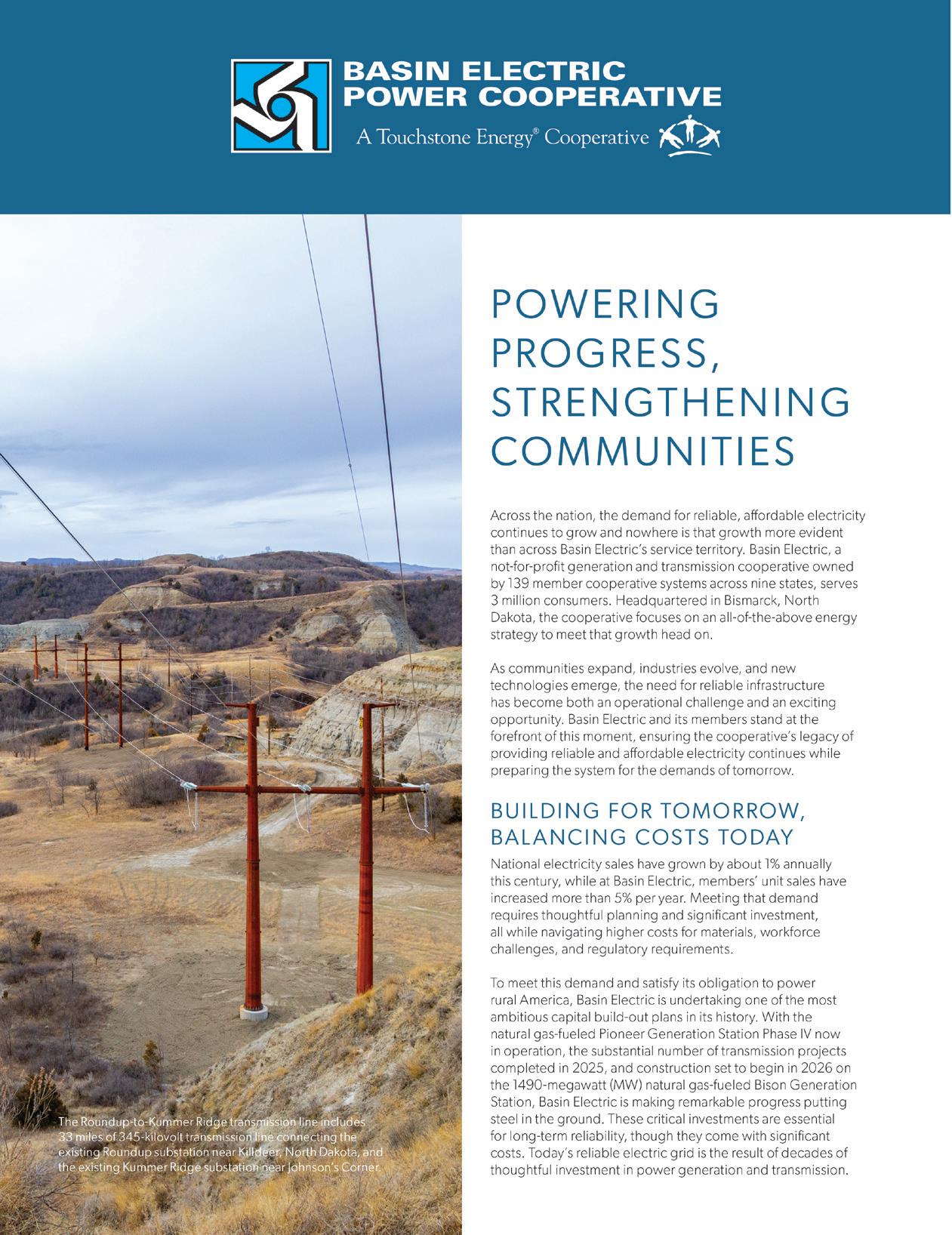
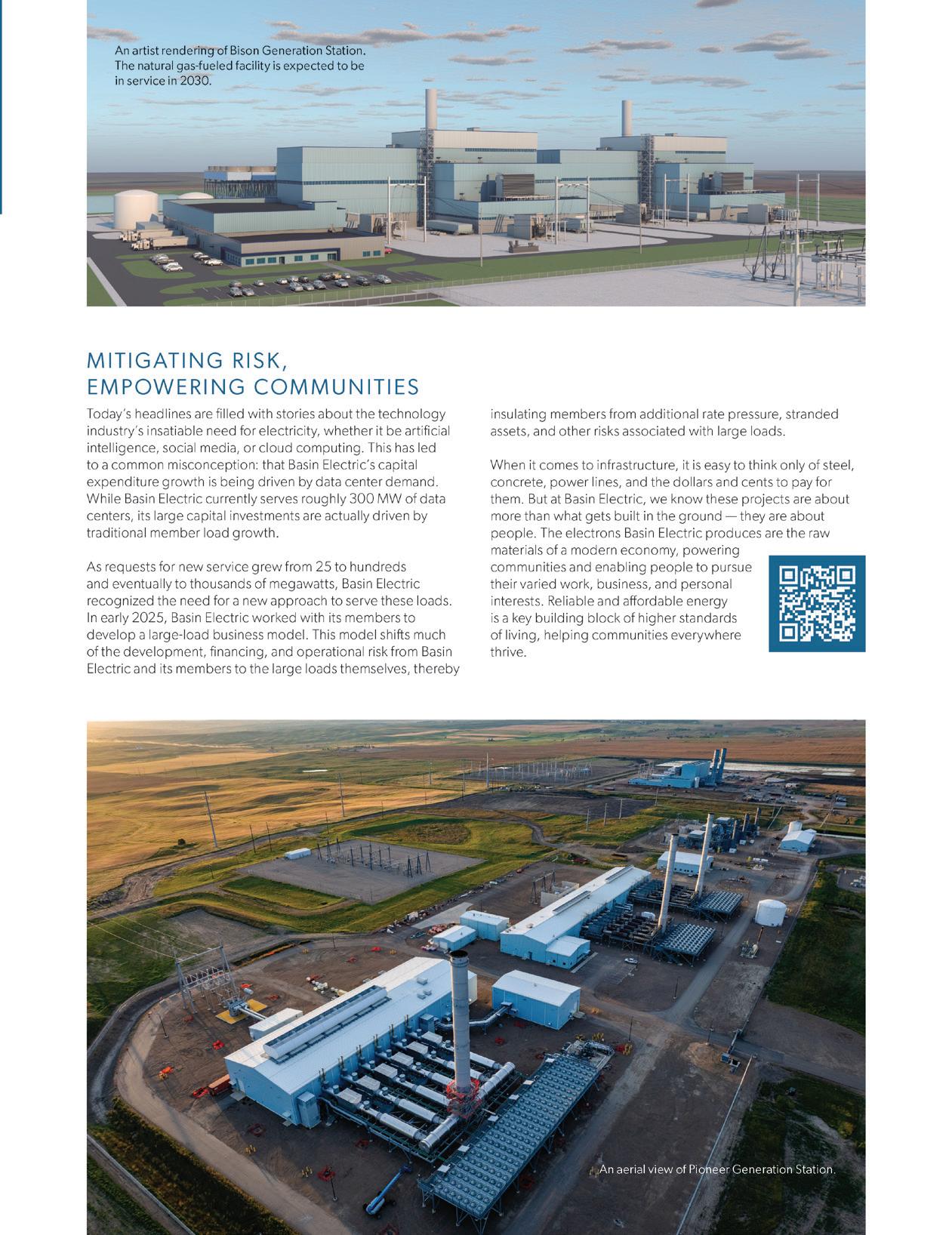
Basin Electric Power Cooperative is a not-for-profit generation and transmission cooperative owned by 139 member systems across nine states and serving more than 3 million consumers. With a commitment to smart, affordable energy, Basin Electric blends the benefits of renewables with the strength of reliable baseload power— ensuring businesses have the stability they need to grow.
Across North Dakota, Basin Electric is more than an energy provider; it’s a strategic resource for businesses of all sizes. Their long-standing investment in dependable infrastructure supports economic development, helps keep operating costs predictable, and gives companies confidence to expand. From powering main-street retailers to supporting major industrial operations, Basin Electric’s reliable energy portfolio strengthens our statewide business climate and keeps communities moving forward.
Knife River is a long-standing construction company specializing in aggregate, ready-mix, asphalt, construction services, asphalt oil, and cement. Since its founding in 1917, it has expanded to physical locations in 15 states, with operations reaching even farther. With more than 7,500 employees and $1.5 billion in annual revenue, Knife River has built a reputation as a trusted, industry-leading provider under the leadership of CEO David C. Barney.
Businesses across the state can look to Knife River as an example of how steady growth, strong leadership, and a commitment to quality can shape long-term success. Their ability to scale while maintaining reliability shows how organizations of any size can invest in skilled teams, adopt efficient processes, and deliver dependable service. Knife River’s longevity and reach demonstrate what is possible when a company stays rooted in its home state while continuing to innovate and expand.
At Advanced Business Methods, the focus is on simplifying technology so businesses can operate with confidence. As an office technology partner, they provide secure IT services, AI-driven tools, advanced print systems, cloud technologies, and other reliable solutions that strengthen day-to-day operations.
Businesses across the state can look to Advanced Business Methods as an example of how adopting the right technology partner can improve security, boost efficiency, and support long-term growth. Their approach shows that when organizations invest in dependable, easy-to-use systems, they can spend less time troubleshooting and more time serving customers and moving their mission forward.
abmnow.com @abmnow.inc /advanced-business-methods
MORE BUSINESSES TO KNOW
NRG TECHNOLOGY SERVICES
NRG Technology Services is a locally based managed IT and data-security partner serving businesses across the Bismarck-Mandan area and wider North Dakota. They focus on keeping small-to-mid-size organizations running smoothly with computer support, network management, cybersecurity, backup/disaster recovery, and ongoing help-desk services. In short, they’re the “call-one-number” tech team for companies that want reliable systems and protection against downtime or data loss.
Family-owned and operating in Bismarck since 1991, Pahlke Steel is a go-to supplier for new steel products for both commercial accounts and walk-in customers. From their Industrial Drive warehouse, they stock a broad mix of structural and fabrication materials—think beams, tubing, angle iron, plate, sheet, bar stock, and more—and offer delivery to job sites around the region. Their roots in oilfield pipe and livestock products evolved into a full-service steel supply house known for practical inventory and hands-on customer service.
pahlkesteel.com /PahlkeSteelInc
MORE BUSINESSES TO KNOW
BISMARCK LUMBER COMPANY
Bismarck Lumber Company is one of the area’s longstanding building-supply anchors, locally owned and serving Bismarck-Mandan since 1939. They support both contractors and DIY homeowners with lumber, panels, roofing, siding, windows/doors, insulation, drywall, decking, pole-building materials, and builder hardware. With sameday local delivery options and a full service yard, they’re built around helping projects move from framing to finish without the scramble.
bismarcklumber.com
SATELLITE SHELTERS, INC.
Satellite Shelters’ Bismarck operation provides fast, flexible modular space for industrial, commercial, and construction needs—everything from mobile offices and job-site trailers to storage containers and larger prefabricated buildings. They’re part of a long-running, family-owned company known nationally for modular and blast-resistant units, but the local branch brings that inventory and design/build support right to energy, infrastructure, and remote-site projects in western North Dakota. If a crew needs space now, Satellite is built for that kind of timeline.
Headquartered in Mandan, Direct Ag Supply works directly with regional producers as a one-stop agronomy and inputs provider. Their lineup includes seed, fertilizer, and crop-protection chemicals, paired with professional custom application services. They serve farms within roughly a 100-mile radius of Bismarck-Mandan and into both Dakotas, positioning themselves as a practical, yield-focused partner for growers who want local expertise and a responsive supply chain..
directagsupply.com /directagsupply
FACTS THAT MATTER
• Grand Forks MSA labor force up ~6.4% since 2004, reaching roughly 57–58k workers in 2025.
• Grand Forks County has about ~2,500 private employer establishments
• Grand Forks MSA population up ~7.0% since 2000, sitting around 104k residents in 2024.
• Unemployment remains very low: about 2–3% through 2024–2025.
ORGANIZATIONS THAT MATTER
THE CHAMBER GRAND FORKS
This is the primary membership/advocacy and networking organization for local employers. It's a connector for statewide businesses looking at partnerships, market entry, or workforce ties in the northeast corner.
gochamber.org /THECHAMBERGFEGF
THE HIVE GRAND FORKS
This is a downtown-anchored entrepreneurship ecosystem with coworking, founder programming, and UAS-focused acceleration through The HIVE.
hivegf.com /thehivegf @thehivegf
UND CENTER FOR INNOVATION
One of the most mature entrepreneurship engines in the state provides incubator space, entrepreneur coaches, commercialization help, SBIR/STTR support, and startup funding programs. It’s a statewide asset even though it’s campus-based.
This is a member-supported downtown business association. It runs district marketing/events, advocates for downtown assets, and coordinates development and storefront support.
downtownforks.com /downtownfork
GRAND FORKS REGION ECONOMIC DEVELOPMENT CORPORATION
The main umbrella economic development group for the metro handles business recruitment/retention, site selection, incentive navigation, workforce pipeline work, and strategic industry growth—especially in UAS/autonomy, manufacturing, and agribusiness.
grandforks.org /GrandForksRegionEDC /gfredc
BUSINESSES TO KNOW
J.R. SIMPLOT COMPANY
One of the metro’s biggest private manufacturers/ agribusiness operators is tied into statewide ag supply chains and value-added processing.
This is a national aftermarket vehicle-accessory manufacturer with strong ND roots and significant scale in Grand Forks.
realtruck.com /RealTruck
@realtruck @RealTruck /realtruckinc
PROBITAS PROMOTIONS
Probitas Promotions is a Grand Forks promotional-products and branding shop that helps organizations translate logos into real-world visibility with apparel, branded merchandise, awards, giveaways, and campaign pieces.
probitaspromo.com /probitaspromo
@probitas_promo /probitaspromotions
INTEGRATED STEEL
Integrated Steel is a Grand Forks–based cold-formed steel framing and fabrication company that designs, engineers, and manufactures building components using FRAMECAD technology. In practical terms, they’re part of the region’s modern construction-manufacturing lane: producing precise, pre-engineered steel framing packages that shorten build timelines, reduce on-site labor, and cut material waste.
integratedsteelinc.com /integrated-steel
STEFFES, LLC
Steffes is a North Dakota-grown manufacturing company with a major facility in Grand Forks, known for large-scale steel fabrication and OEM production serving energy, industrial, and infrastructure markets. Founded in the 1940s and headquartered in Dickinson, Steffes has expanded into a multi-plant operation with deep engineering and lean-manufacturing capability, producing everything from oil-and-gas equipment to custom contract manufacturing builds. For business readers statewide, Steffes is a clear example of export-oriented manufacturing rooted in ND, with Grand Forks playing a key role in its production footprint and skilled-labor demand.
DSG is one of the Upper Midwest’s longest-running, employee-owned distributors, with a Grand Forks branch that supports electrical, mechanical, communications, utility, and automation needs for contractors, municipalities, and industrial clients. Established in 1898, the company functions as an essential “behindthe-scenes” enabler of building and infrastructure work across North Dakota, supplying materials and systems for everything from commercial builds to waterworks and energy projects. Their Grand Forks presence reinforces the metro’s role as a regional service hub while tying directly into construction and maintenance pipelines statewide.
dsgsupply.com /dsgsupply /dsgsupply
AE2S
AE2S (Advanced Engineering and Environmental Services) operates a Grand Forks office as part of a 100% employeeowned consulting firm specializing in water, wastewater, civil, and environmental engineering. Their work ranges from community water systems and stormwater planning to industrial and regional infrastructure projects. AE2S is a consistent partner for municipalities, industries, and developers throughout the state.
PS Industries is a Grand Forks-headquartered manufacturer that has grown from industrial door distribution into a national producer of high-performance industrial doors, safety/fall-protection systems, and flood-barrier products. Founded in 1974, the family-owned company’s patented safety gates and access solutions are used across heavy industry and public infrastructure, and their flood products reflect the Red River Valley’s hard-earned expertise in resilience engineering.
Strata Corporation (founded 1910) was one of North Dakota’s oldest and largest construction-materials and contracting businesses. The company supplied ready-mix concrete, aggregates, asphalt, and contracting services across North Dakota and northwestern Minnesota (including some 28 ready-mix plants, three asphalt plants, and roughly 75 aggregate sites) and employed more than 900 people during peak season. In a transaction announced in December 2024 and completed on March 10, 2025, Strata was acquired by Knife River Corporation for $454 million.
• Workforce is young: median age ~34; ~32% ages 20–39.
ORGANIZATIONS THAT MATTER
MINOT AREA CHAMBER EDC
The Minot Area Chamber Economic Development Corporation is the main umbrella business organization for the region (Chamber + EDC merged in 2021). They handle business recruitment/retention, site selection, incentives guidance, workforce data, and member networking.
MINOT DOWNTOWN BUSINESS & PROFESSIONAL ASSOCIATION
DBPA is the member-supported downtown business association. They advocate for downtown, run events/marketing, support storefront businesses, and coordinate district-focused development and promotions.
downtownminot.com /downtownminot @dtminot
START UP MINOT (VIA MINOT AREA CHAMBER EDC)
Start Up Minot is a local entrepreneurship initiative designed to support new and early-stage businesses with coaching, connections, and a “coalition of support” for founders in the Minot region.
SEVERSON ENTREPRENEURSHIP ACADEMY (MINOT STATE UNIVERSITY)
SEA is Minot State’s entrepreneurship hub/incubator—programming, mentoring, student-startup support, events, and a renovated entrepreneurship center. Even though it’s campus-based, it’s one of the strongest local innovation pipelines in western ND.
minotstateu.edu/sea /minotstateuniversity
SOURIS BASIN PLANNING COUNCIL
SBPC is the regional planning/ economic development council serving Minot and several surrounding counties. A big practical role: revolving loan funds, gap financing, interest buydowns, CDBG support, and business/community development technical help.
The Minot Area Chamber EDC has nearly 700 member investors, including businesses, organizations, and partners with locations in our community, across the state, nationwide, and in some cases, around the world. Featured below are a few unique businesses, each offering goods and services throughout North Dakota."
AGT FOOD AND INGREDIENTS
AGT Food and Ingredients is one of the largest suppliers of value-added pulses, staple foods and food ingredients in the world. They buy lentils, peas, beans, chickpeas, durum wheat and canola from farmers around their 45+ facilities located in the best pulse growing regions, one of those regions being Minot ND. In addition to the pulse processing facility, AGT opened a pasta Extrusion Center of Excellence in 2024, producing innovative plant-based products such as gluten-free pasta, crispy snacks, and meat alternatives.
Town & Country Credit Union has been serving the Minot area since 1939 providing members with convenient access to auto loans, mortgages, checking accounts and everything in-between. Their mission is to positively impact those they serve by providing value to our members through low loan rates, competitive deposit rates and a 1.5% cash back credit card. They are a partner to small businesses, providing loans, checking accounts and online tools that make running the financial side of a business a breeze.
townandcountry.com /townandcountry.org
@townandcountrycu
BRAVERA
An employee- and director-owned company of advisors who help build the financial strength, stability and growth of every community to which we belong. They are driven to serve you, coming together to forge new paths to help you achieve your business and personal goals.
Chevron is one of the world’s leading integrated energy companies. They believe affordable, reliable and evercleaner energy is essential to enabling human progress. Chevron produces crude oil and natural gas; manufactures transportation fuels, lubricants, petrochemicals and additives; and develops technologies that enhance our business and the industry. They aim to grow our oil and gas business, lower the carbon intensity of our operations and grow new businesses in renewable fuels, carbon capture and offsets, hydrogen, power generation for data centers, and emerging technologies.
chevron.com /Chevron @chevron /chevron @Chevron
FIRST INTERNATIONAL BANK & TRUST
First International Bank & Trust (FIBT) is a full-service, family-owned independent community bank built on the bond between our employees and customers.
Since 1964, First Western has proudly served individuals, families, and businesses across our communities. As a trusted financial partner headquartered in Minot, they are committed to providing personalized banking solutions that evolve with your needs. Their blend of local insight and industry expertise allows us to offer innovative, tailored services while our advanced technology keeps us closely connected to you.
Member-owned and local, Gate City Bank has been serving its customers and investing in their communities for a better way of life since 1923, and they’ve been growing to meet all of your financial needs. Today, Gate City Bank offers a variety of checking and savings plans, as well as loans and other convenient financial services.
gatecity.bank /gatecitybank @gate_city_ bank /gatecitybank @GateCityBankk
NORTHROP GRUMMAN
Northrop Grumman is a leading global aerospace and defense technology company, providing innovative systems, products, and solutions to the U.S. government, its allies, and commercial customers worldwide.
SRT is a telecommunications cooperative dedicated to providing innovative technology to rural North Dakota by offering Internet, Security, TV and Phone services that handle the busy lifestyles of its customers. SRT strives to provide technology-driven communication services for local businesses to best serve them, their employees, and customers. With business services ranging from Gig Internet to Security, TV and Phone Systems.
Xcel Energy provides the energy that powers millions of homes and businesses across eight Western and Midwestern states. The company is a major U.S. electric and natural gas provider and a leader in energy-related products and services. In North Dakota, we serve nearly 95,000 customers with electricity and provide natural gas service to more than 55,000 customers. Delivering safe, reliable, clean energy is the core of what we do and we’re committed to the communities they serve.
A member of the Mayo Clinic Care Network, Trinity Health is a nonprofit, integrated healthcare system accredited by the Joint Commission. With a tertiary care hospital in Minot, ten rural health facilities and a long-term care facility, Trinity provides a full complement of healthcare services to communities across North Dakota and Eastern Montana.
Concrete Mobile is a longtime, family-owned Minot company providing ready-mix concrete and aggregate products throughout the region. Operating in the area since 1975, they’ve built a reputation on dependable delivery, quality raw materials, and a customer-first approach for everything from residential pours to major commercial and infrastructure jobs. Their team emphasizes consistent mixes, flexible scheduling, and the ability to meet the tough demands of North Dakota construction seasons.
Concrete Mobile is a longtime, family-owned Minot company providing ready-mix concrete and aggregate products throughout the region. Operating in the area since 1975, they’ve built a reputation on dependable delivery, quality raw materials, and a customer-first approach for everything from residential pours to major commercial and infrastructure jobs. Their team emphasizes consistent mixes, flexible scheduling, and the ability to meet the tough demands of North Dakota construction seasons.
Prairie Engineering PC is a professional consulting engineering firm with a Minot office providing electrical and mechanical design services for commercial, industrial, municipal, and institutional projects. Their team supports clients across the full building-systems spectrum—HVAC and plumbing design, power distribution, lighting, controls, water/wastewater, and facility infrastructure— bringing practical, code-compliant solutions that balance performance, budget, and long-term reliability. Prairie Engineering is known for being hands-on and collaborative, helping projects move smoothly from concept through construction.
North Country Sportswear is a Minot-based promotional products and branded apparel company helping schools, teams, businesses, and organizations bring their logos to life. They offer screen printing, embroidery, and a wide range of customizable gear—from everyday wear and team uniforms to branded giveaways and work apparel—paired with local service and straightforward ordering. Whether it’s a one-time event run or an ongoing corporate program, North Country focuses on clean production and dependable turnaround.
ncssportswear.com
FACTS THAT MATTER
• Williston's trade area reaches up to a 120mile radius, reaching into eastern Montana and southern Saskatchewan
• The Williston Basin International Airport, which opened in 2019, was the first ground-up constructed international airport in the U.S. since Denver in the 1990s
• The City of Williston, Williston Parks and Recreation District, Williston Community Builders, and private donors came together to create a regional attraction, Williston Water World, that has been recognized on the state level and local levels for its community impact and demonstrating a true public-private partnership. It opened in July 2025 and sold nearly 15,000 day-passes in its first—and abbreviated—season.
• The City of Williston has often hosted the Babe Ruth World Series and will host it again in 2025.
• A historic building in downtown Williston, known as the “Old Ford Building,” was reimagined as an elegant event center, Great Northern Events, that opened in October 2025
• Williston State College is set to open its stateof-the-art Healthcare Training Facility for its first semester of classes in January 2026 and will allow the college to nearly double its healthcare course offerings.
• Williston Economic Development, Small Business Development Center, Williston Area Chamber of Commerce, and North Dakota Women’s Business Center came together to create an entrepreneurial network, Brew Your Business, that launched in January 2024 and continues to grow and evolve to better serve our business community.
• Williams County’s civilian labor force was about 10,500 people in 2000 and is now just over 21,000 (Aug 2025), meaning it has roughly doubled (~100% growth).
• The gross domestic product for Williams County (which is essentially the Williston micropolitan economy) was about $7.3 billion in 2023.
• Population 2023: 30,007
• Projected growth of 4.6% in Williston from 20232028; this is on the heels of a staggering 85.4% growth from 2010-2023.
ORGANIZATIONS THAT MATTER
WILLISTON ECONOMIC DEVELOPMENT
Williston Economic Development plays a central role in driving the region’s growth by supporting business recruitment, expansion, and long-term community development. The department works closely with entrepreneurs, existing companies, and regional partners to identify opportunities, remove barriers, and connect businesses with the resources they need to thrive. From guiding new investments to fostering industry diversification, Williston Economic Development helps shape a vibrant, resilient local economy that continues to adapt and grow.
"The largest program in the portfolio is Flex PACE, which is an interest buydown program through the Bank of North Dakota, and while it is available to businesses across the state, they get a little bonus here in Williston. The program does require a community match, and this is where Williston is unique: because of the STAR Fund, we are able to contribute the community match as a grant, so a business does not need to pay back the entirety of the buydown amount, as BND’s portion is a grant, as well. In the 2024-2025 fiscal year alone, the STAR Fund awarded about $2 million in Flex PACE grants, representing about $40 million in private investment in our community."
-Anna
Nelson, Executive Director, Williston Economic Development
bnd.nd.gov/loans/business/flex-pace-program
WILLISTON STAR FUND
The STAR Fund is one of North Dakota’s most innovative local funding mechanisms, reinvesting a portion of city sales tax revenue directly into economic and community development. It provides grants, loans, and targeted programs that fuel entrepreneurship, support small businesses, and strengthen long-term economic vitality.
The voters of the City of Williston approved a 1% city sales tax through June 30, 2030. Of the proceeds, 75% is dedicated to infrastructure debt relief for City of Williston projects with the remaining 25% dedicated to jobs creation and community development. Additionally the STAR Fund sets aside up to $50,000 each year available to City of Williston and regional entities seeking to enhance the quality of life within the region. Since 2010 the jobs creation and community development portion has assisted over 250 startup businesses, retail space, service providers, housing expansion, daycares, manufacturing, industrial facilities and quality of life improvements.
willistondevelopment.com/williston_star_fund
WILLISTON AREA CHAMBER OF COMMERCE
The Williston Area Chamber of Commerce serves as the front-line connector for local businesses. With a strong emphasis on advocacy, networking, and community engagement, the Chamber helps businesses navigate challenges, amplify their voice, and build meaningful relationships. Through events, leadership development, and partnerships with regional stakeholders, the Chamber plays a central role in sustaining a vibrant business climate.
willistonchamber.com
/willistonchamber
@willistonchamber
/williston-area-chamber-of-commerce
ORGANIZATIONS THAT MATTER
TRAINND NORTHWEST
WILLISTON DOWNTOWNERS ASSOCIATION
The Williston Downtowners Association champions the revitalization, beautification, and economic health of downtown Williston. Through events, promotions, and collaborative planning, the organization works to create a welcoming, thriving downtown district. Its efforts support retail, hospitality, and service businesses while preserving the historic heart of the community.
willistondowntown.com
/WillistonDowntownersAssociation
/williston-downtowners-association
WILLISTON COMMUNITY BUILDERS
Williston Community Builders is a grassroots, volunteer-powered organization dedicated to enhancing quality of life throughout the community. They focus on public-space improvements, beautification projects, youth engagement, and initiatives that strengthen civic pride. With a strong emphasis on collaboration, they help spark projects that bring residents, businesses, and local leaders together.
communitybuildersnd.com
/WillistonCommunityBuildersND
WILLISTON STATE COLLEGE (WSC)
Williston State College is the region’s key higher-education institution and workforce driver, offering associate degrees, technical training, dual-credit high-school programs, and industry-aligned certificates. WSC plays a critical role in preparing talent for energy, healthcare, business, trades, and emerging sectors. Its close partnership with local employers ensures that students receive practical, career-ready training.
TrainND Northwest—based at Williston State College—is the area’s premier workforce-training provider, delivering customized, industry-specific instruction for both new and incumbent workers. Known for its expertise in energy, safety, CDL, and technical training, TrainND helps companies upskill employees quickly and efficiently. Its industry partnerships make it a vital link between employers and a ready, capable workforce.
willistonstate.edu/trainnd-northwest
/trainndnorthwest /trainnd-northwest
WILLISTON BASIN SCHOOL DISTRICT #7 / WILLISTON BASIN CTE CENTER
Williston Basin School District #7 provides K–12 education to thousands of students and plays a central role in preparing the region’s future workforce. The Williston Basin Career and Technical Education (CTE) Center expands those opportunities, offering pathways in fields such as welding, construction, healthcare, engineering, cybersecurity, and more. By exposing students to real-world skills early, the district strengthens the local talent pipeline.
willistonschools.org/o/wbctec /wbctec
SMALL BUSINESS DEVELOPMENT CENTER (SBDC) –WILLISTON REGION
The Williston Region SBDC provides no-cost, confidential advising to entrepreneurs and small business owners. From business planning and financial modeling to marketing support and loan packaging, the SBDC is a hands-on resource for startups and growing companies. Its experienced advisors work closely with clients to reduce risk, improve operations, and strengthen access to capital—making it one of the most valuable tools in the area’s entrepreneurship ecosystem.
DAWA SOLUTIONS GROUP
Based in Williston for over two decades, DAWA Solutions Group specializes in custom software development and business-system integrations, serving Western North Dakota and the Bakken region. Their team describes themselves as “computer wizards and business process wonks” who convert operational chaos into softwaredriven order. Originally, the business also included website, marketing and creative services, but in 2023 the firm refocused on its core of application development (notably for oilfield service companies) while spinning out the creative side. Their mission—“help people do business better”—speaks directly to Williston’s fast-moving business climate, especially for service firms that need scalable systems to manage rapid growth.
dawasg.com /DAWASolutions /dawasolutions
COOKS ON MAIN
Located in downtown Williston, Cooks on Main is a specialty kitchen store and culinary education center that caters to everyone from novice cooks to seasoned chefs. Founded in 2010, the store carries a “big-city assortment” of cookware, gadgets, bakeware and “Pride of North Dakota” gourmet products, yet maintains small-town customer service. Beyond retail, it offers cooking classes (date-night, kids, international cuisine themes) and private-event catering. In this way, Cooks on Main serves as both a retail anchor and a community hub for food culture in Williston.
cooksonmain.com /cooksonmain @cooksonmain
*Please note: These are not endorsements, nor is this an exhaustive list, simply a sharing of information and celebrating unique businesses here in Williston.
SPRUCE ROW MARKETING SOLUTIONS
Spruce Row Solutions is a full-service marketing agency in Williston that delivers strategic branding, web and graphic design, social-media management, and commercial photography. Their philosophy emphasizes authentic storytelling—“connection is our priority”—and they focus on helping organizations build meaningful brands that resonate within both business and community contexts. With clients ranging from banks to dental practices, the firm has positioned itself as a creative partner in the region’s economic ecosystem, helping companies differentiate themselves and communicate effectively in a growth environment.
Lilac Lane is a mom-owned children’s boutique situated in downtown Williston that delivers curated styles for newborns through youth size 16, along with “Mommy & Me” sets, accessories, swimwear, pajamas, and gifts. With more than 70 different brands and a focus on quality, enduring purchases, the store emphasizes clothing that not only looks good but gives back. It is positioned as a destination for families seeking thoughtful, one-of-a-kind finds rather than mass-market offerings, reinforcing Williston’s evolving retail scene beyond the energy-driven economy.
Hardscapes Plus offers comprehensive hard-scape and outdoor-living solutions for both commercial and residential clients in Williston and the region. Based on their website, they handle everything from manufactured and real stone veneer, pavers, retaining walls, patios, driveways, fire pits and outdoor kitchens to Jacuzzi hot-tubs and landscaping design. Their showroom on 4th Avenue West is a resource for clients seeking not just materials but full project support—from design through installation. The company’s work on high-profile projects (such as the Theodore Roosevelt Presidential Library project) underscores its capacity and reputation in the region.
GENESIS CLOTHING
Genesis Clothing is a family-owned specialty apparel store in Williston, dedicated to providing customers with a curated retail experience, higher-end selections, and personalized service. While I found less detailed public data compared to some of the others, the descriptor of “committed to delivering a specialty retail experience” aligns with Williston’s broader shift toward diversified lifestyle and service offerings.
shopgenesis.com
/ShopGenesisND @shopgenesisnd
MIDWEST INDUSTRIAL MAINTENANCE
Midwest Industrial Maintenance is an environmental and industrial support firm based in Williston that leans hard into spill response and remediation for oilfield and industrial sites. They work with emergency spill response, hazardous material handling/disposal, tank cleaning, demolition support, and specialized NORM/TENORM (naturally occurring radioactive material) mitigation— work that’s common in mature Bakken operations and remediation projects. They also market confined-space entry, safety, and rescue services, implying they’re a go-to contractor when facilities need both compliance and bootson-the-ground cleanup.
midwestindustrialmaintenance.com
INDUSTRIAL EQUIPMENT SALES & SERVICES INC. (IESS)
Industrial Equipment Sales & Services—often branded simply as IESS—positions itself as a Bakken-focused industrial and oilfield supplier with a strong in-house repair/fabrication angle. Their Williston-basin operation sells oil & gas parts and equipment and also runs an industrial machine shop for machining, motor work, and custom fabrication tied to field needs.
iessinc.com /IESSINC
/industrial-equipment-sales-and-service
TRIANGLE ELECTRIC
Triangle Electric is one of the older industrial electrical contractors working in western North Dakota, with roots going back to the mid-1940s. They specialize in large industrial, commercial, and oil & gas electrical construction—so think power distribution, facility wiring, controls, and field electrical work on production sites.
Basin Concrete Trucking & Rental, an oilfield-services outfit that provides trucking plus crane and equipment rentals across the central plains. Their site highlights crane service, hotshot, hydrovac, and general oilfield hauling, meaning they’re a logistics + heavy-equipment support company more than a traditional ready-mix concrete producer.
basintrucking.com
/basintrucking
WEST DAKOTA WATER
West Dakota Water (WDWND) is a freshwater logistics and delivery provider for energy projects around Williston, moving very high volumes of certified freshwater to drilling and completion sites with an emphasis on year-round reliability and traceability.
wdwnd.com
FACTS THAT MATTER
• In 2023, Dickinson had a population of about 38,107—up roughly 12.6 % from the year before.
• Median household income in 2023 was around $82,133, showing solid growth year-over-year (+4.48 %).
• The local economy employs about 12,700 people (2023 figure) for the city.
DICKINSON STATE UNIVERSITY
Dickinson State University is a public university in Dickinson known for small class sizes, personalized support, and programs shaped around workforce preparation and regional opportunity. DSU offers a broad mix of accredited undergraduate and graduate degrees, with strengths that span education, business, the arts and sciences, and growing technical and professional training tied to its “dual mission” approach. Serving about 1,374 students as of fall 2025, DSU provides an affordable, close-knit campus experience while staying deeply connected to western North Dakota through partnerships, career pathways, and a practical, student-success-focused culture.
The Dickinson Area Chamber of Commerce offers a robust business directory covering manufacturing, suppliers, professional services, logistics, and more.
Though tourism-focused, the CVB is a major economic driver. They support event organizers, promote visitor traffic (which boosts hospitality and retail), and provide helpful demographic and economic materials.
Regional SHRM-affiliated HR association offering workforce insights, training, compliance guidance, and networking.
sahra-nd.shrm.org (varies, some chapters maintain pages)
SOUTHWEST CAREER AND TECHNICAL EDUCATION
Southwest Career and Technical Education, based in Dickinson, is a regional CTE academy built to connect high school students in southwest North Dakota with hands-on, career-ready training. The academy is designed to bridge secondary education to college and industry pathways, offering real-world programs in skilled trades, technology, and applied sciences that line up directly with local workforce needs. With modern facilities and a focus on “upskilling,” SWCTE gives students a chance to explore high-demand fields early, earn relevant credits, and graduate with practical experience that translates into jobs or continued education.
/DickinsonpublicschoolsND @dickinsonpublicschools
BUSINESSES TO KNOW
STEFFES HEATERS
Steffes Heaters is part of Steffes, a Dickinsonheadquartered manufacturer with decades of experience in energy and thermal-storage technology. Best known for electric thermal storage heating systems and loadmanagement solutions, Steffes builds products like room heaters, hydronic and forced-air furnaces, and off-peak heating equipment designed to deliver efficient warmth while helping utilities and customers manage power demand. With lean manufacturing roots and a long track record of innovation, Steffes Heaters remains one of the community’s signature industrial employers and a recognizable North Dakota brand in energy-smart home and commercial heating.
steffes.com /steffesllc
@steffesllc /steffes-corporation
BAKER BOY
Founded in 1955 by North Dakota baker Marvin Moos, Baker Boy has grown from a small-town bake shop into one of the region’s most important food manufacturers. Headquartered in Dickinson, the company operates a large-scale production facility that supplies frozen doughs, donuts, breads, and pastries to customers across the United States and Canada.
bakerboy.com
/bakerboybakeshop
@bakerboyboybakeshop
/bakerboy
FISHER INDUSTRIES
Founded in the 1950s and headquartered in Dickinson, North Dakota, Fisher Industries has grown into one of the most influential heavy-construction and aggregate production companies in the western United States. What started as a small, family-operated gravel business has evolved into a vertically integrated operation serving largescale infrastructure, mining, and industrial projects across the country.
fisherind.com
/FisherSandGCo
@fisherindustries /fisherindustries
TMI SYSTEMS CORPORATION
Founded in 1969 and headquartered in Dickinson, North Dakota, TMI Systems Corporation is one of the nation’s leading manufacturers of laminate casework, cabinets, and architectural woodwork for commercial environments. Over five decades, the company has grown from a regional woodworking shop into a major supplier for healthcare facilities, schools, laboratories, public buildings, and private-sector projects across the United States.
tmisystems.com
/TMISystems /tmi-systems-corporation
BIERSCHBACH EQUIPMENT & SUPPLY
Founded in 1979 and operating locations across the Upper Midwest—including its western North Dakota presence— Bierschbach Equipment & Supply is a leading regional provider of construction equipment, jobsite supplies, and contractor support services. The company has built a strong reputation for serving commercial builders, concrete contractors, and industrial crews with reliable equipment, fast service, and deep product expertise.
Founded in 1987 in Killdeer, North Dakota, Killdeer Mountain Manufacturing has grown into one of the nation’s leading aerospace electronics manufacturers. What began as a small family-owned startup has expanded into a multifacility operation with locations in Killdeer, Dickinson, Regent, and Hettinger, supplying major aerospace and defense contractors around the world.
kmmnorthdakota.com
/killdeermountainmfg
/killdeer-mountain-manufacturing-inc-
BARANKO COMPANIES
Founded in 1967 and headquartered in Dickinson, North Dakota, Baranko Companies is a family-owned heavy civil construction and earthmoving company serving western North Dakota’s energy, municipal, and infrastructure markets. Over nearly six decades, the company has grown from a small local operation into a trusted contractor known for efficiency, reliability, and large-scale capabilities across the Bakken region.
barankocompanies.com
/BarankoCompanies
@barankocompanies
/barankocompanies
TMI SYSTEMS
TMI Systems is a Dickinson manufacturer specializing in commercial casework, architectural woodwork, and countertop solutions. The company operates as a singlesource shop — designing, building, and delivering finished interiors for projects that need durability, function, and clean craftsmanship, such as healthcare, education, hospitality, and office spaces. With production rooted in western North Dakota, TMI/“TIMI” has built its reputation on precision manufacturing and dependable project execution, supporting both regional contractors and broader national partners.
tmisystems.com
/TMISystems /tmi-systems-corporation
ND SMALL BUSINESS DEVELOPMENT CENTERS (ND SBDC)
The North Dakota SBDC provides nocost, confidential one-on-one advising to entrepreneurs and small business owners across the state. Their advisors help with startup planning, financial projections, market research, growth strategy, exporting, cybersecurity, and succession planning. They also offer trainings and a deep bench of templates and tools for businesses in every stage.
Dakota Business Lending is a nonprofit Certified Development Company (504 lender) serving North Dakota and the region. They specialize in helping businesses access SBA 504 financing and other growth capital, and they also host statewide tools like VaultND to connect owners with loan programs, incentives, and resource partners.
VaultND is a free online database and digital library of more than 250 financing programs and 170+ resource providers in North Dakota. It’s designed as a one-stop shop for entrepreneurs to find loans, grants, incentives, technical assistance, and regional contacts based on business type and location. VaultND is hosted by Dakota Business Lending.
vaultnd.com
LAKE AGASSIZ DEVELOPMENT GROUP (LADG)
LADG is a nonprofit economic and community development organization that supports entrepreneurs statewide through small business lending, grant assistance, and development tools. They also work with local governments on infrastructure, planning, and community growth projects, making them a strong partner for rural and regional business expansion.
lakeagassiz.com /lake-agassiz-development-group
INNOVATE ND (ND DEPARTMENT OF COMMERCE)
Innovate ND is the state’s flagship entrepreneur funding and coaching pipeline. It provides voucher-based reimbursements for market research, customer validation, and product development, paired with guidance through ND’s Entrepreneur Centers. Participants may access up to $50,000 in reimbursable expenses as they move through phases.
commerce.nd.gov/finance-programs/innovate-nd
SCORE NORTH DAKOTA (CHAPTERS STATEWIDE)
SCORE is an SBA resource partner that provides free mentoring, advising, and practical workshops led by experienced business professionals. North Dakota owners can access local chapter support plus SCORE’s national library of templates and online learning, making it one of the most approachable first stops for startups.
score.org
VETERANS BUSINESS OUTREACH CENTER (VBOC OF THE DAKOTAS)
Hosted by UND and funded through the SBA, VBOC provides no-cost advising, training, and startup help specifically for veterans, active-duty service members, and military spouses in North Dakota and South Dakota. Their services include business planning, financing prep, operations support, and transition-to-entrepreneurship guidance.
und.edu/dakotasvboc /dakotasvboc
ND APEX ACCELERATOR
ND APEX (formerly PTAC) helps North Dakota businesses pursue government contracts at the federal, state, and local level. They provide training, bid matching, registrations (including ND Bidders List), and hands-on counseling to help companies break into public-sector procurement.
und.edu/ndapex /NDAPEX /ndapex
NORTH DAKOTA TRADE OFFICE (NDTO)
NDTO is a public-private nonprofit that helps ND companies expand through exporting and international trade. They provide market research, trade missions, export education, and hands-on support for product readiness, documentation, and global connections.
ndto.com north-dakota-trade-office
IMPACT DAKOTA
Impact Dakota is the state’s Manufacturing Extension Partnership and a major statewide resource for operational improvement. They support manufacturers and other industries with lean training, leadership development, supply chain support, automation planning, and process modernization—all aimed at helping companies scale sustainably.
PRIDE OF DAKOTA
impactdakota.com /impactdakota
Pride of Dakota is a statewide marketing and business development program run by the ND Department of Agriculture. It helps ND-based product and service companies grow through branding support, promotional events, vendor opportunities, logo licensing, business education, and visibility through statewide retail and tourism channels.
prideofdakota.nd.gov /prideofdakota
ILT ACADEMY
ILT Academy is a statewide entrepreneurship training platform offering virtual, cohort-based programs for early-stage and growing businesses. The academy focuses on practical business-building skills, mentorship, and community, with scholarships often available through regional partners.
iltacademy.io /ILTAcademy1
BANK OF NORTH DAKOTA – BUSINESS PROGRAMS (PACE / FLEX PACE, ETC.)
The Bank of North Dakota is the nation’s only state-owned bank and a major partner in small business finance statewide. Through programs like PACE and Flex PACE, BND works with local lenders and communities to buy down interest rates and expand access to capital for startups, expansions, and community-priority projects.
bnd.nd.gov/loans/business
NORTH DAKOTA DEPARTMENT OF COMMERCE
Commerce coordinates the statewide Entrepreneur Centers (like the UND Center for Innovation, NDSU, and regional hubs), which serve as local access points for Innovate ND, startup coaching, accelerators, and commercialization support. They’re a key connector when someone needs both funding pathways and hands-on coaching.
commerce.nd.gov /commercend
Sheriff Sharma isn’t trying to convince North Dakota to go virtual. He’s pointing out that it already has—and that small businesses here deserve a way to benefit from it.
Sharma, founder of Inclusive Staffing in Bismarck, built his company around the idea that if local owners are drowning in admin work, they should be able to hand it off to skilled remote professionals without taking on full-time payroll costs.
Inclusive Staffing connects businesses with vetted, English-fluent talent based in India who work U.S. hours overnight, handling everything from bookkeeping and payroll to customer service, marketing, and even software engineering.
Sharma moved to the United States in 2009, starting out in California as a nurse. In 2014, he landed in North Dakota to pursue his RN degree and didn’t plan on staying long. Then the state surprised him.
He says the community here reminded him of home because people are close to family, rooted in place, and quick to help. He worked as a travel nurse, moved into leadership roles in healthcare, and eventually spent six
years in medical staffing as director of business development. That job gave him a clear view of a problem he kept seeing across industries, not just healthcare: owners were stuck doing the busywork themselves because hiring locally for support roles was getting too expensive, too slow, or both.
In 2022, he launched Inclusive Staffing. The business became fully operational in 2024, and in February of this year he stepped away from his staffing career to focus on Inclusive full time.
WHAT INCLUSIVE STAFFING DOES
Inclusive Staffing supplies remote professionals to businesses of all sizes, but Sharma is especially focused on small and mid-sized companies—often the ones in smaller towns—who can’t justify another full-time hire yet.
Sharma recruits and manages a team
in India, where he opened a branch and built an onboarding and HR operation. The people Inclusive places are typically in the top tier of applicants— bachelor’s to master’s level, strong communicators, backgroundchecked, and screened for role fit and personality. They work U.S. schedule hours, so for a North Dakota owner, it feels like hiring a remote employee down the road, not across the globe.
“Work on your best. Delegate the rest,” Sharma likes to say.
Inclusive can fill a long list of roles, including:
• admin assistants
• bookkeepers and payroll specialists
• data entry and customer service reps
• medical billing and insurance pre-auth staff
provided by Inclusive Staffing
• social media managers and digital marketers
• recruiters, IT support, project managers
• graphic/web design and software engineers
Pricing starts at $13 an hour Sharma frames it less as “discount labor” and more as a way to help local companies stay focused on growth instead of paperwork.
WHY NORTH DAKOTA NEEDS THIS
Remote staffing isn’t new nationally. States like California, Florida, and Texas have used offshore back-office hiring for years. What’s new is bringing it to a place where the business culture still leans in-person and local-first.
Sharma has been doing a lot of groundwork to change that. He’s active in BNI, the chamber, and local development groups. He also met with the North Dakota Department of Commerce and immigration teams to walk through the model.
VETTING, MATCHING, SUPPORT
One thing Sharma returns to often is trust. India has a reputation problem in some corners of the U.S. business world, thanks to scam calls and low-quality outsourcing stories. He knows that history, and he built Inclusive to be the opposite of it.
He emphasizes three differences:
1. Personality-driven matching
Inclusive doesn’t just match résumés to job descriptions. Sharma wants long-term fits, so
his team looks at communication style and work habits, too. If a client hates micromanaging, he won’t pair them with someone who needs daily direction.
2. Deep screening
Candidates go through background checks, English assessments, and role testing before a client ever sees them. For healthcare clients, that includes HIPAA-aware processes and secure tools.
3. Ongoing involvement
Inclusive stays in the relationship after placement. The company helps clients shape workflows, delegate effectively, onboard smoothly, and check performance. If something doesn’t work, they offer a replacement guarantee.
The goal is to make remote hiring feel structured and low-stress, especially for owners trying it for the first time. The company lays out a seven-step process that starts with consultation and role discovery, moves through delegation coaching, then interviews and onboarding.
Your Complete Custom Graphics, Inc. FAQ Guide
Vehicle Graphics & Wraps
Do you wrap partial vehicles or just full wraps?
A: We offer both partial and full wraps. Our team will help you determine which option best suits your design goals, budget, and marketing needs.
Can wraps be removed later without damaging the paint?
A: When properly installed and removed, high-quality vinyl wraps will not damage your vehicle’s factory paint In fact, they can help protect the paint from UV exposure and minor abrasions.
How long does it take to wrap a vehicle?
A: The timeframe depends on the complexity of the project and the type of wrap. Most installations take between 1-5 days, depending on whether it’s a partial wrap, full wrap, or highly detailed design.
Do you need the vehicle at your shop, or can you come to me?
A: We prefer to complete all wraps at our facility. This allows us to work in a clean, controlled environment with access to our equipment and materials. In special cases, we can perform on-site installations, but we generally recommend in-shop service for the best results.
What’s the best way to clean a wrapped vehicle?
A: We recommend hand washing your wrapped vehicle with mild soap and water. Avoid using high-pressure washers or abrasive materials that could damage the vinyl. Regular cleaning helps maintain the appearance and longevity of the wrap.
Design & Customization
Can you help me design my sign or vehicle wrap from scratch?
A: Yes! Our team of experienced designers can create a completely custom design tailored to your business and branding goals. Whether you have an idea in mind or are starting from scratch, we’ll guide you through the process from concept to completion.
What’s the best size or material for my application?
A: That depends on where and how your project will be used. Our team will discuss your goals, environment, and budget to recommend the ideal size, material, and finish to achieve the best results.
How do I make sure my logo will look sharp when printed large?
A: For best results, we recommend providing vector-based artwork (such as AI, EPS, or PDF files). Vector files can be scaled to any size without losing quality, ensuring crisp, professional results for large-format prints.
Can you recreate my existing sign or logo if I don’t have the original file?
A: Our designers can often recreate your artwork or logo based on photos or printed materials. We’ll work closely with you to match your existing design as closely as possible.
Will I get to see a proof before production begins?
A: We send a digital proof for your review and approval before starting production to ensure everything looks exactly as you expect.
General / Company Information Signs (Indoor & Outdoor)
Are your signs weatherproof or UV-resistant?
A: Yes. Our outdoor signs are made from durable materials and printed with UV-resistant inks to withstand weather and sun exposure for long-lasting performance.
How long do outdoor signs typically last?
A: Lifespan varies based on material, location, and exposure, but most outdoor signs last several years with proper care and maintenance.
Do you handle permits for sign installation?
A: Yes. We typically manage the permit process in-house to ensure compliance with local regulations and make the process as smooth as possible for our clients.
What’s the turnaround time for a sign order?
A: The turnaround time for a standard sign project, from order to installation, is generally 6-8 weeks. This can vary depending on our installation schedule and vendor timelines for larger or custom sign materials.
Can you update an existing sign with new branding?
A: Definitely. We can often reuse the existing sign structure and apply updated graphics, colors, or panels to match your new brand identity.
Do you handle both design and installation?
A: Yes! Our in-house art department manages all design wortk, and our installation team completes the installation of your finished project. By keeping both processes under one roof, we ensure a seamless experience and consistent quality from start to finish.
Can I bring my own design or logo?
A: Absolutely. You’re welcome to provide your own design or logo files. Our design team can also review your artwork to ensure it’s ready for production and will be printed at the highest possible quality.
Do you offer free quotes or estimates?
A: Yes, we provide free quotes and estimates for all projects— no matter the size or complexity.
What file types do you accept for artwork?
A: We accept most major file formats, including AI, EPS, PDF, SVG, and high-resolution PNG or JPG files.
Can you match my company’s colors exactly?
A: Yes, we use Pantone color swatches to ensure accurate and consistent color matching for all printed materials.
NEED AN EVENT EXPERT? ASK LIVEWIRE!
our event isn't just a date on the calendar; it's an investment and a key opportunity to connect, inspire, and celebrate your business or organization. After 26 successful years of helping businesses and individuals produce world-class events—locally, regionally, and around the country—the Livewire Team knows how to turn a simple gathering into an unforgettable experience. We don’t just provide AV equipment; we craft immersive events that leave a lasting impression.
The venue you choose, whether it's a rustic barn, a large convention hall, or an outdoor space, holds untapped and unlimited potential. We excel in venue transformation, using our creative vision to elevate the environment into a clear reflection of your brand and message. We utilize the subtle elegance of strategicallyplaced drape and custom-built scenery alongside the dramatic impact of dynamic lighting systems, projection mapping, and vivid video walls. We make magic happen every day. With over 60 full-time team members, we see what's possible, meet your vision, and have the expertise to bring your event to life!
Impact is nothing without practiced, technical perfection. Your message deserves to resonate with crystalclear, distraction-free audio. We custom-design scalable audio
systems and choose the perfect microphone—the full range, from lavalier to handheld—to ensure every presenter is heard loud and clear.
For visuals, we strategically deploy the latest, high-resolution LED video walls or high-definition projection systems, guaranteeing clarity whether you’re indoors or tackling the bright daylight of an outdoor event.
This dedication to flawless execution extends to comprehensive support. Our Video Technical Directors are at the helm, calling every cue and transition to actively direct your event’s narrative in real-time. This leadership—combined with our experience in essential aspects like power management, safety, and live streaming—ensures a polished production every time, even when the unexpected occurs. Our goal is to seamlessly incorporate all the technical intricacies with precision, allowing you to be laser-focused on your audience and amplifying your message.
When you partner with the team at Livewire, you are investing in peace of mind and a proven track record of ensuring events are extraordinary— down the street, across our region, and in every corner of the country.
Contact Livewire today to ensure your next event is a resounding success!
1. 2. 3. 4.
Kelsey Beauchamp
By Brady Dake
J. Alan Paul Photography
Eric Erdmann
THE FARGO IT TEAM THAT WANTS TO HEAR YOUR PROBLEMS FIRST
INFORMATION MANAGEMENT SYSTEMS
alk into any small business on a given Monday and you’ll find the same dependency on the network. Wi-Fi, printers, security cameras, point-ofsale systems, cloud apps, phones, and laptops all run through one invisible backbone. And when any piece of that backbone snaps, the entire day can wobble.
That’s the world Information Management Systems (IMS) has lived in for 30 years. Founded in 1995 and based in Fargo, IMS is a managed IT and cybersecurity provider focused on small to midsized businesses across the region.
Today, the company is led by cousins Kelsey Beauchamp (CEO) and Eric Erdmann (COO), who officially purchased IMS from founder Rick Johnston in about April 2023 after years of planning and a smooth handoff.
“We like to be in charge of the entire network,” Erdmann said. “Anything that touches online, wireless, or has a physical connection and needs to communicate with the internet or other devices—printers, access points, servers—we manage it.”
That “entire network” mindset is the difference between patching problems and actually owning the system. And for IMS, it starts the rule that if something breaks, call them first.
WHY “CALL US FIRST” SAVES EVERYONE A HEADACHE
Many businesses have multiple vendors. Maybe one company handles managed print, another handles phones, another handles cameras. That’s fine… until something goes sideways.
“What happens a lot is the client calls a vendor first, and they’ll say, ‘Oh, that’s a networking issue,’” Erdmann said. “Then the client has to come back to us and try to relay messages back and forth.”
IMS tries to eliminate that triangle entirely. Their team diagnoses the issue first, identifies whether it’s actually a network problem or a
hardware/vendor problem, and then coordinates the rest behind the scenes.
UNLIMITED HELP DESK SUPPORT
A lot of managed IT models still bill based on incidents. The more problems you have, the more revenue they generate. IMS goes the opposite direction.
“The biggest thing we do that not a lot of other providers include is unlimited help desk support—on site and remote,” Beauchamp said. “If something isn’t working, you call us. We fix it remotely if we can, and if
not, we come out. You never get a bill for that.”
Their goal is preventative, not reactive. They monitor issues early, automate fixes where possible, and keep systems stable enough that your staff stops thinking about IT altogether.
That philosophy matters more now than ever because the security landscape is changing daily.
“Cybersecurity threats evolve constantly. Ransomware, phishing, everything. If this isn’t your field, how do you know you’re set up right to begin with," Erdmann said.
CUSTOMER EXPERIENCE, NOT JUST IT EXPERIENCE
IMS also leans hard into something you don’t always associate with tech companies: hospitality-level service.
IMS is World Class Customer Experience Trained through Dijulius Group, a program used by major service brands like Chick-fil-A and Starbucks. It’s not a badge they toss on a website. It’s a core way they operate. They respond quickly, explain clearly, teach clients as they go, and never make anyone feel dumb for asking.
IMS'S 5 ESSENTIAL TECH TIPS TO STRENGTHEN YOUR SMALL/MEDIUM BUSINESS (SMBS)
1. TRAIN STAFF ON HOW TO SPOT EMAIL SCAMS (IT’S THE #1 THREAT)
Human error causes most data breaches. Short monthly, quarterly, or annual phishing-awareness training sessions dramatically reduce risk and strengthen your company’s first line of defense: your people.
2. TURN ON MFA EVERYWHERE (NO EXCEPTIONS)
Multi-Factor Authentication is still the #1 defense against account compromise. Enable MFA across email, remote access, financial platforms, and any critical business tool. Make it the company standard—and enforce it.
3. REPLACE SHARED PASSWORDS WITH A PASSWORD MANAGER
Shared spreadsheets and reused passwords are an easy way for cybercriminals to gain access. Password manager like 1Password allow:
• Secure credential sharing
• Automatic password updates
• Strong password generation
• Logging and auditing
This dramatically improves security without slowing down staff.
• Malware damage
• Data exposure
It also makes compliance and auditing far easier for growing businesses.
4. REVIEW USER ACCESS WHEN EMPLOYEES JOIN OR LEAVE
Most SMBs forget to remove former employees from systems. A simple onboarding/ offboarding checklist ensures accounts are added and removed properly, reducing the risk of unauthorized access and closing a major security hole.
5. AUTOMATE ONE REPETITIVE WORKFLOW
SMBs often waste hours on routine tasks like invoicing, scheduling, file organization, or customer follow-up. Try automating just one of these process using tools you already have (Microsoft 365, Google Workspace, PSA/CRM, etc.).
That teaching piece is baked into their daily workflow.
“If we fix something, we tell them what we did,” Erdmann said. “If it’s preventable, we show them how. If it’s something we can automate, we let them know we’re monitoring for it going forward.”
PHYSICAL SECURITY AND SMART MONITORING
While most people know IMS for managed networks and cybersecurity, they’ve also expanded into physical security.
They design and support:
• camera systems inside and outside buildings
• access control for restricted rooms
• environmental sensors for temperature, humidity, air quality, even vaping/smoking detection
For many clients, just having clean, reliable exterior video is enough to deter bad behavior, and to provide evidence fast if something happens.
“There’s a lot of use cases,” Erdmann said. “But we think most businesses should at least have exterior cameras now.”
A LOCAL STORY, THIRTY YEARS DEEP
IMS started when Rick Johnston, a former potato farmer who shifted into tech, built a business to help regional companies get more reliable systems and less daily tech stress.
Beauchamp joined IMS in 2009. Erdmann came aboard in 2011, after Johnston asked Beauchamp if she knew anyone graduating with an IT background.
“We’d talked about ownership for years,” Erdmann saie. “Rick floated the idea early on. We knew it was the plan eventually. After COVID we started putting the pieces in place, and then the sale happened.”
Today, IMS is a five-person team with Beauchamp, Erdmann, and three additional staff supporting a client base that stretches well beyond Fargo.
Who all uphold the promise to keep your systems secure, keep your business running, and make technology feel like a tool — not a stressor.
Not sure how healthy or secure your network really is? We’ll evaluate your systems, identify risks, and provide clear recommendations—completely free.
BUILT FOR REAL PEOPLE, BUILT TO LAST
By Brady Drake | J. Alan Paul Photography
a software world that loves shiny trends and churn, Icon Systems Inc. has made a different bet by staying close to the people doing the work, making the tools simple, and letting the power hide under the hood until you need it. It’s a philosophy that has carried the Fargobased company from a single church desktop program in the early ’90s to an all-in-one, cloud platform used by churches, nonprofits, small cities and, for-profit companies.
A FOUNDER WHO CAME FROM THE ACCOUNTING TRENCHES
Icon Systems was founded in 1992 by Robert Gifford, a name that carries weight in the accounting-software world. Before starting Icon, Gifford led research and development at Great Plains Software, where he helped create Great Plains Accounting and Dynamics—systems that became industry standards in the for-profit space and were later aquired by Microsoft.
That background matters. Great Plains was built to handle complexity without punishing the user. When Gifford’s church asked for help managing its own operations, he brought that same mindset into a new arena. The result
was Revelations, a desktop platform designed specifically for church management as a starting point that eventually evolved into today’s webbased IconCMO ecosystem.
“SIMPLE TO USE. POWER TO GROW.”
Icon’s mission statement—“Simple to use. Power to grow.”—sounds like a tagline until you see who it’s for.
A huge share of church and nonprofit administration is done by people who didn’t sign up to be accountants. They are volunteers, office managers, secretaries, part-time treasurers, small-business owners wearing five hats. They need software that doesn’t require a degree, a week of training, or a support ticket every time something changes.
So Icon built the front end for normal humans by having intuitive screens, help on every page, and workflows that match the way churches and nonprofits actually function. But underneath, the system is fully scalable. Organizations can choose modules à la carte, add complexity over time, and assign secure duties to as many users as they need without hitting upcharges for each new login.
A MIDWEST COMPANY IN THE BEST SENSE
The company’s leaders describe Midwestern employees as competitive in the right ways. They are the people who want to succeed personally, but also want the team to win. There’s pride in doing the work well and doing it together.
They also talk about valuing staff as full human beings, not “resources.” In practice, that means treating employees as individuals and as members of families with real lives outside the office.
That culture also comes with a kind of practical resistance to fads. Icon doesn’t chase trends just because the tech world is loud about them. They just want to help churches and nonprofits do their job better.
CLOUD-BASED, BECAUSE MINISTRY DOESN’T HAPPEN AT A DESK
IconCMO is cloud-based, meaning clients can log in securely from anywhere. That solves two growing realities in church and nonprofit life.
First, pastors and staff are mobile. They visit members, lead off-site gatherings,
travel, preach, counsel, and manage ministry from cars, homes, hospitals, and conference centers. They need access to membership data, giving history, calendars, and communication tools wherever they are.
Second, bookkeeping talent is harder to find, especially for fund accounting. Remote access widens the pool: churches or organizations can work with bookkeepers who live far away, share duties across staff, or partner directly with Icon Systems for professional bookkeeping services.
On security, Icon says data is encrypted in transit between user computers and their servers, and they publish a detailed security overview for clients who want the full breakdown.
AUTOMATIC UPDATES, NIGHTLY BACKUPS, LESS STRESS
For many organizations, keeping software current is a low-grade nightmare. Icon removes that burden through automatic updates. Users don’t have to download patches or worry about missing a security fix. If one user reports a bug, Icon can correct it across the system for everyone at once.
Backups help in two ways. System backups run nightly for 30 days, plus monthly archives for a full year. If anything goes wrong, whether it's human error, a corrupted file, a messy import, Icon can restore a database. Users can also create their own backups before making major changes, then roll back if they don’t like the result.
TRUE FUND ACCOUNTING
Lots of platforms handle pieces of church or nonprofit life. One will handle memberships over here, giving over there, bookkeeping in another system entirely. Icon’s pitch is that everything works together in one ecosystem, and that the accounting side is not a rebranded for-profit ledger pretending to be nonprofit-friendly. Their system is true fund accounting,
which is rare even among nonprofit products. In Icon, every dollar is tied to a specific fund.
WHY IT MATTERS
Nonprofits don’t receive money “just because.” They receive money for purposes like youth programs, building repairs, missions, scholarships, outreach, grants, and so on. Fund accounting tracks those buckets separately, so organizations can prove that a donor’s gift was used exactly as promised.
That’s a trust issue, a legal issue, and a spiritual issue for faith-based organizations.
COMPLIANCE WITHOUT THE PAIN
Icon ties fund accounting to compliance in a few practical ways:
• Reversing entries make corrections transparent, so you can see what changed and why.
• Logging tools record transaction activity and edits, creating a clear audit trail.
• Payroll tax updates are monitored and refreshed as regulations change, keeping churches compliant without requiring staff to be tax nerds.
• Funds inside balance-sheet accounts show where money is held and what it’s for—helping meet IRS documentation needs and FASB reporting standards.
For audits, the system can produce Statements of Financial Position and Statements of Activity for specific funds. That makes a huge difference when an organization receives restricted donations in one year and spends them in another. Because fund balances live cleanly on the balance sheet, those dollars don’t “disappear” at year-end the way they do in weaker systems. And since Icon is web-based with unlimited users, auditors and board members can be granted readonly access to pull reports directly.
SCALING A MISSION WITHOUT SCALING OVERHEAD
When churches and nonprofits grow, the first thing to break is usually admin capacity. Icon tries to solve that with a mix of cost control and workflow efficiency.
• Email-based donor statements and thank-yous reduce printing and mailing costs while improving donor communication.
• Unlimited user access lets organizations spread workload across staff and volunteers— pastors, secretaries, youth directors, treasurers, finance teams—without paying per seat.
WHERE THEY’RE HEADED NEXT
Icon Systems isn’t standing still. Their roadmap focuses on practical upgrades that help churches and nonprofits operate better right now:
• improvements to the communications module
• adding a NACHA file option for payroll direct deposit (beyond the current Kotapay partnership)
• a cleaner, more purpose-built mobile app experience for staff workflows
• a new Grant Management feature to track grants from start to finish
• stronger competitiveness with mainstream accounting tools and expanded in-house accounting services
• continued expansion beyond churches into the broader nonprofit and forprofit markets.
HELPS POWER A BIGGER, BETTER NDSU TAILGATE EXPERIENCE
n a fall Saturday in Fargo, you can feel the tailgate before you see it. The air smells like charcoal and burgers. Car stereos and laughter blur together. Kids toss footballs between coolers. Old friends spot each other from half a block away. For Bison fans, a day like this is one of the best days of the week.
And this year, one spot at the tailgate got a serious upgrade.
NDSU’s Bison Corral, the public-facing tented tailgate area at the south end of Thunder Alley, became a true “come one, come all” destination. It's a place for people to stay. To eat. To warm up. To let the kids burn off energy. To watch football shoulder-to-shoulder with people you might’ve met five minutes earlier.
By Brady Drake | provided by Mobile Pro
And at the center of it all is Mobile Pro.
THE CORRAL REIMAGINED
Bison Sports Properties General Manager Josh Hartman has watched game days evolve for years. So, he is aware that plenty of fans love tailgating, but not everyone has a setup.
“The corral is the end of Thunder Alley on game day, where we have a tent,” Hartman said. "It's a great tailgate game day experience for our fans that don’t have their own tailgate setup.”
This season, NDSU took a bigger role in shaping what that area could be after taking over for Teammakers who had run it previously. Their goal was to make the area more complete, and Mobile Pro became a key part of that plan.
“Mobile provides the big screen TV,” he said. Simple on paper. Huge in practice.
If you love college football, you know that the screen is extremely important. What's better than kicking back with a drink in one hand, food in the other, and College Gameday or an early day game being played in front of you on the big screen? Probably not much.
Mobile Pro specializes in helping to create exactly this kind of environment with their mobile LED screens designed for outdoor events, built to stay sharp even in direct sunlight and unpredictable weather.
The screen also runs more than just live football. It carries sponsor ads, game-day messaging, and whatever else NDSU needs in the moment.
The real story isn’t just the screen. It’s what the screen allowed NDSU to build around it.
This year, the Corral included:
Food trucks
Beer sales
Brand activations
A kid zone moved into the Corral Red Bull on site with a DJ booth
An ice cream truck for families
Heated tent walls for coldweather games
In Hartman’s view, the upgrade gave the area balance, and something for everybody.
“It helped elevate that whole area just by having a kids zone and a place for dads to come watch the game and grab a beer. Plus, the food trucks were awesome. It really has been great,” Hartman said. "It has been beneficial for our vendors too… it made it more of an attractive place to go where people were kind of hanging out as opposed to just maybe coming in, grabbing a beer and leaving.”
When you’re planning a tailgate space for thousands of people, reliability is everything. You can’t be troubleshooting cables at 10 a.m. with gates open and fans rolling in. Mobile Pro handles that part cleanly.
According to Hartman, the Mobile Pro team comes in the day before a game to set up, then stays on site through the whole tailgate window.
IT
- JOSH HARTMAN
And if anything needs to change mid-stream, whether it's a different game, different audio, or a sponsor request, Mobile Pro works it out in real time.
That’s the difference between renting equipment and having a partner.
Mobile Pro’s larger business is live event production, which includes screens, audio, lighting, staging, and on-site management. So, they’re used to operating inside highpressure, high-traffic environments.
“What's really great about Mobile Pro is that they’ve always come to us with ideas to kind of elevate those spaces,” he said. "They’re a really good partner in terms of coming to us with creative kind of fan engagement type pieces.”
That matches how Mobile Pro positions itself in general. They help clients use LED screens in smarter ways like
sponsor integration, messaging templates, and audience engagement.
"NDSU tailgating is one of the most welcoming and longlived traditions in the region. Some families have parked in the same spots for decades," Hartman said. "A lot of people have been tailgating for 20, 30 years… there’s just a lot of history with it.”
But traditions only stay strong when more people can access them. The Corral helps do that. It gives first-timers, casual fans, visiting friends, young families, and people without a private setup a place where they still feel part of the day.
By Brady Dake | Submitted by Rice Companies
RICE COMPANIES’ CONSTRUCTING FARGO'S FUTURE
ice Companies doesn’t feel like a newcomer in Fargo so much as a trusted builder that finally decided to plant a permanent flag here. Founded in 1953 in Sauk Rapids, MN, Rice Companies is a third-generation, family-owned construction firm that’s spent more than 70 years shaping commercial and industrial spaces across the Midwest.
A FARGO TEAM BUILT FOR FULL-SERVICE CONSTRUCTION
Rice Companies opened its Fargo branch in 2020 and quickly became a meaningful part of the metro’s construction mix. In 2023, the team moved into a brand-new office and shop facility at 5301 Veterans Blvd. S., just off Veterans Drive in south Fargo because they wanted to make an investment that signals they’re here for the long haul.
What sets the Fargo location apart is its “all-in-house” capability. The team provides architectural design and engineering, full-service commercial construction, facility maintenance, remodeling, and reroofing. That means clients don’t have to stitch together multiple vendors. Rice can take a project from early concept through ribboncutting, and then stay involved for years afterward, helping the building perform the way it should.
The Fargo branch is led by General Manager Shane Stecker and staffed with experienced project managers,
SHANE STECKLER General Manager
architects, field crews, and service technicians. Their bench is built to handle everything from steel and concrete work to follow-up service calls, which is a big reason the office has been growing steadily since launch.
DESIGN-BUILD, THE RICE WAY
Rice’s design-build model is one of their clearest strengths. Their architects, designers, and engineers collaborate directly with the construction team, using tools like
BIM modeling and 3D renderings to troubleshoot early and keep projects on track. The payoff is speed, clarity, and fewer surprises during construction.
They also partner with Butler Manufacturing to deliver preengineered steel systems. For large industrial and distribution builds in particular, Butler systems allow Rice to blend the advantages of pre-engineered speed with the customization of conventional construction.
EXPERIENCE THAT COUNTS
Rice Companies have a proven commitment to excellence. Their relationship driven dedication is reflected by their impressive portpholio and returning clients, and the numbers don't lie. Some of these numbers include:
3,5000 CONSTRUCTION PROJECTS
85%
REPEAT CLIENT BUSINESS
72 YEARS IN BUSINESS
THE BORDER STATES DISTRIBUTION CENTER (NORTH FARGO)
One of the most notable Fargo-area projects in Rice’s current portfolio is the new Border States Distribution Center, a major industrial build that speaks to both the region’s growth and Rice’s capability to scale.
THE MSU MOORHEAD ALUMNI CENTER
Rice’s Fargo team also has a growing track record of education and community-based work. A recent example is the Minnesota State University Moorhead Alumni Center, which is a 16,000 square foot project that was completed in 2024.
A rendering of the Border States Distribution Center, which will be 314,500 square feet!
MEET A FEW OF THE FARGO PROFESSIONALS BEHIND THE BUILDS
Rice’s local momentum comes down to people, and these Fargo-based team members worth knowing.Together, this mix of project leadership and design horsepower is what makes Fargo’s “single-source” promise real. There are over 160 employees designing and building projects across the Midwest, and here in Fargo the team is 30+ strong.
AUDRI LAGGE Project Manager
Audri manages projects from pre-construction planning through final delivery, keeping budgets honest and schedules realistic. She works daily with engineers, architects, subcontractors, suppliers, and clients to make sure every moving part lines up. Audri studied construction management at Minnesota State University Moorhead, has five years of industry experience, and joined Rice in 2025.
BECOME A PART
TOM ASPELUND Architect
Tom leads architectural design from concept through completion, translating client needs into buildable, efficient, good-looking spaces. He earned his master’s in architecture from NDSU, brings six years of experience to the role, and joined Rice in 2024.
CRYSTAL PAVEK Project Architect
Crystal oversees project design and development across all phases, ensuring drawings, documents, and timelines stay tight. She also holds a master’s in architecture from NDSU, has 10 years of experience, and joined Rice in 2024.
By Brady Dake
PRECISION, PROCESS, AND A PROMISE THAT’S RARE IN THE INDUSTRY
OPTIMUS PAYROLL
or most companies, payroll is the definition of “out of sight, out of mind.” As long as employees are paid on time, the system is assumed to be working. But for Kayla and Bobby Lalonde, co-founders of Optimus Payroll, the difference between “working” and “working well” can mean thousands of dollars in hidden costs, hours of preventable rework, and an operational blind spot most businesses don’t even realize they have.
Founded in 2023, Optimus is reinventing how payroll gets done. From a measurable service-quality guarantee to deep expertise across the country’s leading payroll platforms, the Lalondes built a business by believing that payroll should be accurate, efficient, and transparent, every single time.
Their approach is part technical, part strategic, and part personal. As both spouses and business partners, they’ve blended two very different professional backgrounds with Kayla’s hands-on payroll and implementation experience, and Bobby’s systems and process-design expertise into one unified model built for consistency and accountability.
A Service Quality Guarantee— Practically Unheard Of in Payroll
In an industry where errors are common and customer frustration is expected, Optimus offers something Bobby says he’s never seen among regional competitors: a true, written, money-back service quality guarantee. Not a vague satisfaction promise. Not a marketing line.
A guarantee tied to objective, measurable metrics, including:
• Processing payroll on time
• Zero submission errors
• Error rates during data preparation
• Accuracy of final payroll outputs
• Timely tax filing and payment
• Compliance-based reporting, including workers’ comp
If Optimus doesn’t meet its commitments, clients don’t pay for that service.
“It’s extremely rare in outsourcing,” Bobby said. “But we’re confident in our process. If we say we’ll deliver, we will.”
J. Alan Paul Photography
What to Know About the New Federal Overtime Rule
New Tax Break for Overtime Premiums
Starting January 1, 2025, employees can deduct the premium portion of overtime pay (the extra 0.5x) from federal taxable income—up to $12,500 for individuals and $25,000 for joint filers through 2028.
Payroll Systems Must Adapt
Employers need to track and separate straight-time and premium overtime components to comply with reporting requirements and ensure accurate employee tax information.
Reporting Rules Tighten in 2026
While 2025 offers transition relief, W-2s for 2026 must show qualified overtime separately, making early system audits and upgrades critical.
Communication is Key
Employees will expect clear guidance on how these deductions work. Proactive education can prevent confusion and strengthen trust.
Compliance is Non-Negotiable
The law doesn’t affect FICA or state taxes, but failure to prepare could lead to costly errors and penalties. Start planning now to stay ahead!
Kayla Lalonde Co-Owner
Bobby Lalonde Jr. Co-Owner
Depth of Expertise Across Major Payroll Platforms
While many firms in the region offer payroll as one small part of a broader services package, Optimus specializes exclusively in payroll.
The team works inside the platforms most businesses already use, including:
Where other providers restrict clients to proprietary tools, Optimus meets companies where they already are.
“It’s difficult to find expertise across multiple platforms,” Bobby said. “It’s nearly impossible to find that paired with a service guarantee.”
A Best Practice Most Businesses Skip
Every new client relationship begins with something surprisingly uncommon in the payroll world: a full business-process mapping.
Kayla, who has spent years inside corporate payroll departments and implementations, has seen firsthand how often companies rely on informal, undocumented routines.
People “know” the process, but no one’s ever mapped it, measured it, or optimized it.
Optimus changes that by identifying:
• Every required input
• Who provides what information
• The timeline of each step
• Where errors originate
• How long each task actually takes
• Opportunities for automation or simplification
These findings become a clear, structured roadmap for the entire payroll operation.
“Mapping and measurement are core to what we do,”
Kayla said. “It’s the same discipline used in broader operational improvement, but applied directly to payroll.”
From Clean Inputs to Clean Outputs
Optimus tracks correction frequency, a major factor in overall efficiency, and works with businesses to reduce rework, speed up processing time, and reach the goal of zero submission errors.
Their process gives leaders the reporting and visibility they’ve often lacked, including:
• Labor cost dashboards
• Department-level reporting
• Trend monitoring
• Metrics leadership teams can actually use
And when it comes to compliance, Optimus guarantees on-time tax filing and workers’ comp reporting by eliminating one of the most stressful “unknowns” for many businesses.
Payroll Tips You Can Use Today!
Even if a business never partners with Optimus, the Lalondes believe every company can improve payroll by focusing on a few practical fundamentals. These steps don’t require new software or major restructuring — just attention, clarity, and consistency.
Map Your Payroll Inputs Before You Touch the Outputs
Most errors start before processing ever begins. Make a simple list of every data point needed: hours worked, commissions, overtime, PTO, benefits deductions, and identify who owns each one. When ownership is clear, accuracy rises and rework falls.
Document Your Payroll Timeline
Create a one-page schedule outlining:
• When each input must be submitted
• How long the review should take
• When approvals are due
• When payroll actually runs
Track Corrections to Identify Root Causes
Instead of fixing the same issues each cycle, log all corrections. Look for patterns:
• Are timecards always late?
• Does one department consistently have missing data?
• Are employees unclear about PTO submissions?
Review Labor Costs Monthly, Not Annually
Most businesses only look at labor cost when budgets roll around. But pulling monthly department-level snapshots can reveal:
• Overtime trends
• Seasonal variability
• Overstaffing or understaffing
• Inefficiencies in scheduling
Audit Your Time and Attendance System at Least Twice a Year
A stale system leads to inaccurate pay, and unnecessary liability. Review:
• Pay codes
• Overtime rules
• Holiday configurations
• Manual workarounds staff have created
Use Payroll Reporting Tools You Already Have
Workday, ADP, UKG, and QuickBooks all include robust reporting features that most companies never turn on. Dashboards showing labor cost, error rates, or cycle time can improve decision-making immediately without new tools.
These steps help businesses strengthen operations today—whether they manage payroll internally or outsource it entirely.
Building Optimus Together
While Optimus is deeply technical in its methods, the company’s story is decidedly personal.
Kayla and Bobby have known each other most of their lives and have been married for more than a decade. But Optimus is their first time building something professionally, side by side.
“It’s a balance,” Bobby said. “Kayla is the brains of the operation. I’m the systems and process person. We fill in each other’s gaps the same way we do at home.”
Before Optimus, Kayla spent years solving payroll challenges across several local corporations, where she tackled everything from implementations to dayto-day processing. She saw, again and again, how payroll was often an afterthought in companies that invested heavily in sales, technology, or HR.
“Payroll is one of those things that just has to get done,” Kayla said. “Because of that, it rarely gets measured or optimized.”
Bobby, meanwhile, built his career in IT and business process design. When the two compared notes, they realized the same inefficiencies were happening across companies of every size: unclear processes, undocumented workflows, reactive troubleshooting, and preventable costs.
“There was a real opportunity to help companies run payroll the way it should run,” Bobby said. “Accurate, efficient, and data-driven.”
Working together hasn’t just been a business evolution; it has been a personal one. Most people leave their “work selves” at the office and settle into their “home selves” after hours. The Lalondes have learned to blend the two.
“The deep understanding we have of each other as people has helped us tremendously as co-founders,” Bobby said. “We trust each other’s instincts and strengths. And that’s made the business stronger.”
1-25 Employees (Small Business)
Weekly, Bi-weekly, Semi-monthly, Monthly, or other. All payroll services processed within the US and reviewed by a certified payroll professional (CPP).
$349/mo
26-125 Employees (Enterprise)
Weekly, Bi-weekly, Semi-monthly, Monthly, or other. All payrolls processed within the US and reviewed by a certified payroll professional (CPP).
Month-to-Month: $499/mo
126-300 Employees (Corporate)
Weekly, Bi-weekly, Semi-monthly, Monthly, or other. All payrolls processed within the US and reviewed by a certified payroll professional (CPP). Month-to-Month: $999/mo
READY FOR WHAT COMES NEXT
What happens to your business when a key leader steps away? Do you have someone ready to step in, or just someone available?
For many mid-sized companies, the honest answer is: we scramble.
Maybe a founder or CEO gets pulled back into a role they thought they’d outgrown. Maybe a high-potential team member gets thrown into the fire unprepared. Or a promising external hire arrives without enough time or context to succeed.
And sometimes… nothing happens. Momentum fades. Morale dips. Confidence wobbles. People start looking elsewhere.
At Sagency, we’ve seen this story unfold with otherwise healthy and successful companies. Smart teams. Strong values. Ambitions and real
potential for growth. But no real investment in building a leadership bench.
They’re doing a lot right, but they’re vulnerable.
WHY BENCH STRENGTH MATTERS MORE THAN EVER
Right now, more companies are at a crossroads. Baby Boomers are retiring. Talent markets are tight. New generations expect growth and development. The speed of business is increasing, while leadership capacity often remains flat.
If your growth strategy relies on just a few people, you don’t have a strategy. You have a risk.
Bench strength isn’t about job titles or backups. It’s about having people in your organization who are prepared, empowered, and ready to lead through what’s next.
One of our clients, Sandman Structural Engineers, began investing in their leadership bench when they were just a 10-person firm. Today, they’ve grown to a team of 65, made a successful acquisition, and transitioned to an ESOP, all while maintaining a strong, healthy culture. Their early commitment to leadership development created the capacity and resilience needed to grow from the inside out. They are now taking it to the next level.
“We knew from the beginning that if we wanted to grow and stay healthy, we needed to grow leaders too,” said Kurt Sandman, Founder and CEO of Sandman Structural Engineers. “Building our bench gave us the confidence and capability to take on big opportunities without compromising who we are.”
This is what a leadership bench allows you to do. It lets you lead through change, not just survive it.
submitted by Mike Meagher
BUILDING A LEADERSHIP BENCH THAT GROWS WITH YOU
By Mike Meagher and Dr. Matt Skoy, Sagency
Mike Meagher is the founder and CEO of Sagency, where he helps executive teams grow healthy companies by building strategy and leadership systems that scale. Mike is a trusted advisor to owners, boards, and CEOs navigating complexity, growth, and transition. His work centers on aligning people and performance with purpose so organizations can lead through change with clarity and confidence.
Dr. Matt Skoy is a Partner at Sagency and leads the firm’s Leadership Development Practice. He specializes in designing learning journeys that help leaders build the mindsets, skillsets, and systems required for long-term growth. Known for his engaging presence and storytelling, Matt helps organizations turn leadership development into a strategic advantage.
Jon McTaggart is a Senior Advisor at Sagency and a seasoned executive with decades of experience leading growing organizations. As the former CEO of American Public Media Group, Jon now helps boards and leadership teams align around a clear strategy, navigate complex transitions, and build strong cultures of ownership and accountability. Jon brings a thoughtful presence, practical insight, and deep care for people to his work in succession planning, transition navigation, and strategy execution.
FOUR SIMPLE MOVES THAT BUILD A REAL LEADERSHIP BENCH
Based on our work with hundreds of leadership teams, here are four practical moves any organization can make, regardless of size, to start building their bench today.
− What would they need to experience or practice to be ready?
That’s readiness thinking. It’s forward-focused and proactive.
1 2
Shift from Replacement Thinking to Readiness Thinking
Many organizations treat succession planning like a game of musical chairs. Put names under boxes in an org chart and call it a plan.
But roles change. Needs evolve. People move on.
Instead of asking, “Who would replace this person?” ask:
− What capabilities will this role require in the next 12 to 24 months?
− Who’s showing potential to grow into that?
Clarify the Role Before You Develop or Hire for It
You can’t develop someone for a role that’s unclear.
Companies often say they want to grow “leaders,” but haven’t defined what success looks like in each key role. That leads to generic training and missed expectations.
Instead:
− Define the role’s key accountabilities.
− Describe what good performance looks like.
− Align development to real business needs, not just generic competency models.
Development is only as strong as the clarity that anchors it.
Sometimes the best move is to bring in outside leadership with the right experience and perspective.
Strong organizations know how to do both with intention. Getting clear one the role helps with that decision.
3
Develop the Whole Bench, Not Just the Usual Suspects
Too many companies focus on their top 10 percent and forget the next layer down. But strong benches require depth.
Yes, invest in your stars. But also:
− Give stretch assignments to overlooked contributors.
− Build leadership skills before someone gets promoted.
− Use team leads and project owners as leadership incubators.
This kind of system not only strengthens your pipeline. It boosts
engagement and retention across the board.
4
Make Development a Leadership Habit, Not Just an HR Project
Talent development should not be siloed within HR. It needs to be embedded in how your leaders lead.
This means:
− Executives take ownership of growing future leaders.
− Managers give consistent feedback and growth opportunities.
− The organization sees development as part of performance, not a break from it.
HR provides the structure. Culture carries the weight.
SMALL COMPANY? YOU STILL NEED A BENCH
You don’t need a big HR department or Fortune-500 training budget to build one.
In fact, the smaller your team, the more impact a single leadership transition can have.
From small firms to global organizations, we’ve helped leaders build practical, scalable systems for developing talent and planning for what’s next. Those that do become stronger and more confident. They move faster. They lead better. They grow smarter.
Think of your bench like a team on the rise. It needs depth, not just stars. You need people who are developing, not just performing. And you need a system that keeps moving forward even when someone steps away or changes roles.
DO YOU HAVE REAL LEADERSHIP BENCH STRENGTH? QUICK CHECK
ASK YOURSELF: YES NO
If a senior leader exited tomorrow, do you have someone prepared to step in with minimal disruption?
Do you have clearly defined success criteria for each key leadership role?
Are high-potential individuals being intentionally developed through stretch assignments, coaching, and feedback?
Do your managers and team leads understand how they contribute to developing future leaders?
Do you have visibility into who’s ready now, who’s in development, and where your succession gaps are?
Are leadership development conversations happening regularly across the organization and not just during annual reviews?
Is your leadership pipeline aligned with your future business strategy (not just current structure)?
Would you feel confident promoting someone today without “just hoping they’ll figure it out”?
TO SUM THINGS UP
Your bench is either being built or being neglected. There’s no neutral state or idling.
If your business is growing, your team is evolving, or your current leaders are stretched, now is the time to start.
Start small. Get clear. Stay intentional.
You don’t need perfection. But you do need progress.
ABOUT SAGENCY
Sagency partners with leadership teams of mid-sized companies, enterprise nonprofits, ESOPs, and family businesses to align strategy, strengthen leadership, and create the clarity and momentum needed to grow the right way. They call this healthy growth. Learn more at:
sagencytalent.com
/Sagencytalent
/sagency
@SagencyTalent
By Brady Drake
One Google Search, Eight Trips, and a Big Bet on North Dakota Connection
welve weeks ago, Megan Roudebush didn’t know anyone in North Dakota.
Today, she’s working on a statewide grant proposal to connect all 800,000 North Dakotans through a mix of secure tech, in-person experiences, and research-backed content. She’s been to Fargo eight times in twelve weeks, has hosted three “superconnector dinners” and one founderwalk, and is now looking at apartments.
And to hear Roudebush tell it, the whole thing started with a simple impulse.
“I woke up one morning and Googled ‘Fargo innovation ecosystem,’” she said. “I’d heard there were interesting companies being built up here. I wanted to learn more.”
Roudebush is the founder and CEO of keepwith, a Chicago-based startup that is building what she calls “secure relationship tech.” Her background before entrepreneurship was in the investment compliance world. She
served as a chief compliance officer, lived inside the rules of data privacy and security, and learned early how important it is to thoughtfully protect relationships, and the information attached to them.
So when she landed on Emerging Prairie’s annual report after that Google search, she read it like a professional would.
“What stood out was the robustness,” she said. “I was impressed by the diversity of the industries building companies in North Dakota and also the sheer professionalism of the report. I knew nothing about the Fargo ecosystem, and I wanted to learn more.”
She scrolled through the entire report, then did what she always does; she started networking.
“I looked at who was on the board. I was stricken by the caliber of leaders Emerging Prairie had convened,” she said. “Then I asked, ‘Who’s running this place?’ I saw it was Greg Tehven. So I sent him an email.”
Her email wasn’t a pitch. She wasn’t fundraising. She didn’t even link keepwith’s website. She attached her
bio and more or less told Tehven she admired what they were building, and wanted to learn more.
Tehven replied 17 minutes later. At 7:13 a.m.
“He said he’d already sent my bio to three investors,” Roudebush said. “I was like, ‘Thank you, but, I’m not raising right now.’”
That day, Roudebush booked a flight to Fargo for Autonomous Nation, Emerging Prairie’s flagship autonomous tech conference, on an invite from Tehven. She had no formal tie to the industry. She jokes she grew up in New York City and “self-flying airplanes weren’t exactly part of my world.” She came anyway.
What she found was a culture she connected with.
“I immediately learned about the give-first approach that’s inherent to Fargo and North Dakota,” she said. “People are so open to helping each other succeed.”
She met John Machacek, Chief Innovation Officer of the Greater Fargo Moorhead Economic
(Right) Megan Roudebush and John Machacek | provided by Megan Roudebush
About Megan Roudebush
Megan Burke Roudebush is the CEO and founder of keepwith, a company redefining how the world builds relationships more securely, intelligently, and meaningfully. A globally recognized expert on
Development Corporation. She met Patty Post, founder of Checkable® . She met Terri Zimmerman of Packet Digital and Botlink, whose story of turning one federal contract into hundreds of millions in revenue stuck with her. She listened hard. She kept asking the same question she asks everywhere she goes.
“Who do you want to meet?”
Machacek said what stood out immediately was that Roudebush wasn’t sending a random feeler.
“The fact that she was planning to make a trip here to learn more showed her seriousness,” he said. “She specifically mentioned her sole motivation was genuine networking— not raising funds.”
The next morning, Roudebush met Post again at Black Coffee and Waffle. Their original conversation had been interrupted by the flood
strategic networking, meaningful connection, loneliness, and the link between networking and wellness, Megan understands the power of strong, intentional relationships. Through her experience at prominent global professional services firms, she brings deep insight into how strong relationships drive business development.
Passionate about connecting people for the right reasons, she is driven by a commitment to reducing global isolation and loneliness and advancing safer and more secure relationships worldwide, a motivation that ultimately led her to found keepwith. She has written articles and spoken globally as an expert on networking topics.
Before starting keepwith, Megan was a financial services industry leader focused on regulatory compliance, experience which significantly influenced how she built keepwith, prioritizing security, safety, and data
privacy above all else. She received her BA from Bryn Mawr College and her JD/MBA from Albany Law School and Union Graduate College, and has led keepwith through two successful capital raises, including an oversubscribed bridge round ahead of its forthcoming Series A. A member of the Economic Club of Chicago and an AOPi alumna, she grew up in New York City, worked as an AP-trained professional journalist from age 8–18, and now lives in the Chicago suburbs with her ten-year-old daughter, Keira. Her background includes teaching poetry in juvenile detention centers, coaching a special-needs youth hockey team, and singing in the Metropolitan Opera Children’s Chorus with Placido Domingo and Luciano Pavarotti, and she remains passionate about secure technology, entrepreneurship, wellness, and connecting people for the right reasons—plus Peloton, cooking, and exploring restaurants with Keira.
of introductions happening around them in real time, and Megan needed takeaways from her impactful conversation with Patty.
“Patty and I didn’t even finish the first conversation because all these people kept coming into Youngblood Coffee and introducing people to me,” she said. “I was having people write their emails in my notebook because there were too many to capture and I didn’t want to miss any bit of what was happening around me.”
At Black Coffee and Waffle, she bumped into Anthony Molzahn, CEO of Devii Technologies, and UND’s Executive Director of Economic Development, VP Research and Economic Development, Cortnee Jensen. During this happenstance meeting, Roudebush mentioned that she loves hosting dinners of wonderful people when she travels, as a way to bring great people into the same room
with one common goal: authentic connection.
Molzahn instantly texted 23 people. By the next night, Roudebush was hosting her first superconnector dinner at Rosewild. She was visiting Fargo for the first time, and already she was doing what she does best, which is creating rooms where the network effect can spark.
Machacek said the speed didn’t surprise him as much as her reciprocity did. In his role, he’s used to being responsive and introducing people, but he called it “less common” to see a founder match that same pace back, especially this quickly.
As the introductions stacked up, Roudebush kept hearing about the Bush Foundation. At first, she assumed she’d apply for a Bush Fellowship, a $150,000 award she thought could fund a pilot project in Fargo.
About keepwith
keepwith connects people for the right reasons with technology, experiences, and research-backed content, grounded in the belief that human connection is the most powerful data point. Its mission is to redefine how the world builds relationships more securely, intelligently, and meaningfully. keepwith is built to serve enterprise clients, government entities, higher education institutions, membership associations, other groups, and potentially even entire states.
For enterprise, the keepwith networking platform serves as a secure AI-assisted operating system–designed to safely foster authentic, reciprocal, results-driven relationships—a modern technological Rolodex powered by advanced artificial intelligence and genuine human relationship intelligence. keepwith redefines how companies cultivate the right relationships at the right time—more efficiently, profitably, and securely. Deal and sales teams can use keepwith to source, prioritize, and warm-intro targets, track engagement, and accelerate deals by surfacing who to meet, why now, and the warmest path in, while providing signal and prioritization for the enterprise’s highest-impact relationships across selling, talent, investor relations and all other teams.
But on her first call with the foundation, she learned she wasn’t eligible. She doesn’t live here.
“I felt deflated,” she said. “Then they said, ‘But you are eligible for the Community Innovation Grant. And that grant is limitless.’”
Limitless. The word changed the scale.
She went straight to Jensen at UND. Roudebush’s initial thought was still campus-focused.
“I told Courtney, ‘I want to apply for the grant to connect everyone at UND.’”
“No,” Jensen told her. “You should apply for the grant to connect every citizen in North Dakota. I think UND can partner to help make that happen. Our president’s word of the year is ‘community,’ and we’ve just launched a dedicated Office of Economic Development focused on building trusted, meaningful connections.” She later went on to say, "Actually, we have been in touch with our friends at NDSU to see if they want to get involved. I think this would align with their values as well."
From Machacek's perspective, that scale also fits the state. “If there is a state to do this, it makes total sense to start with North Dakota,” he said. “Between being a state of only 800,000 people and our friendly nature, there’s no six degrees of separation here—more like three.”
North Dakota Investor Ties
As serendipitous nodes of the network effect activated over the last three months, Megan realized two North Dakota connections from keepwith’s existing investor base: the first, from an investor very familiar with the ecosystem, Michael McAllister, who started his company The CE Shop, in Fargo in 2005 and now lives in Colorado, and the second from an investor, born and raised in North Dakota who now lives in Chicagoland, Ed McConnell. Michael was pleased to learn of keepwith's new connections to Fargo and helped Megan connect some key dots. Ed reached out to Megan recently and, during the conversation, reminded her that he was from Casselton. When Megan updated Ed about keepwith’s commitment to North
Dakota, Ed replied,” I would not be where I am without North Dakota. It is the perfect fabric of entrepreneurship, social interaction, and people first. It is a community of uplift, where everyone supports each other with a genuine desire to help people succeed.”
What keepwith Actually Is
keepwith is built around the belief that people’s relationships are their most valuable asset, and the current tools meant to manage them are noisy, unsecure, and incentivized in the wrong direction. keepwith’s platform includes products solving the world’s relationship challenges.
Roudebush says most people’s networks are scattered across devices and platforms, including but not limited to phones, holiday card lists, CRMs, inboxes, texts, and WhatsApp threads.
The keepwith networking tool pulls that Rolodex back into one secure place. It is the opposite of social media.
“There’s no spam. No ads. Your data will never be monetized,”
Kelsie Wallner Photography
she said. “The product exists to help you build relationships the right way.”
A key difference is consent. keepwith uses a double opt-in introduction model where both people must agree before being connected.
“It removes the awkwardness and frustration of being introduced without wanting it,” Roudebush said. “And it keeps relationship building respectful.”
The platform’s proprietary features also track “Who I Want to Meet” and “Who My People Want to Meet,” which encourages reciprocal networking. It stores follow-ups, reminders, and networking tasks in one, noise-free, place so relationships don’t fade because you forgot to circle back.
For enterprises, it integrates securely with CRMs like Salesforce. Roudebush says one early client saw sales grow 400% and cut acquisition costs in half in four months after using the system.
“We’re B2B first,” she said. “We are built to serve enterprise clients, government entities, higher education institutions, membership associations, and other
groups. We will eventually expand to become consumer technology. But it’s all with the same goal of helping people connect meaningfully and securely.”
“The opportunity to connect all citizens of an entire state is one that I never imagined, and I am here for it. The fact that a neighboring state is now asking how it can get involved is evidence of the special energy of the network effect in the region, and a sizeable market gap, uniquely positioning us to do our part to solve the global human isolation and loneliness crisis.”
Did You Know?
According to Gallup, 1 in 5 (20%) Americans experiences loneliness daily.
The North Dakota Plan
Roudebush clearly states that she doesn’t want her efforts with the state to have anyone thinking this is just an app rollout.
“This grant is not about unleashing 800,000 licenses,” she said. “It’s about helping a whole state connect. Tech is one piece. But the in-person experiences and the research-backed content are just as important.”
Her vision includes community events, dinners, founderwalks, workforcereadiness programming, campus connection tools, and tailored approaches for communities that interact with technology differently. The grant is still being written and needs to be accepted. However, Roudebush is not waiting for the green light before working with corporate, higher education and community supporters to get specific on what this effort will look like.
She also wants measurable outcomes with clear goals baked into the grant, and reporting that shows how loneliness and isolation are actually being reduced over time.
To keep the project grounded, Roudebush plans a statewide listening tour. A research lap, if you will.
She wants to sit down across North Dakota’s six major regions with citizens, students, business leaders, professors, elders, and community stakeholders.
“I want to ask how people currently connect and what makes it hard,” she said. “Is it geography? Economics? Post-COVID habits? Whatever it is, we need to understand those needs before we start the statewide project.”
Carrying a Weight
There’s another reason Roudebush talks about connection like something weightier than business.
She sent her first email to Tehven on September 5. The next morning, she got a call that shattered her
Megan Roudebush and Patty Post | provided by Megan Roudebush
world. Her 48-year-old sister had died suddenly of a stroke in Singapore.
Roudebush didn’t tell anyone in Fargo. She still came.
She went to meetings. She met people. She hosted dinners. She let the momentum carry her.
Then she’d return to her hotel room and make funeral plans.
“It was a total dichotomy,” she said. “Something terrible happening in parallel to the power of human connection. No one knew what I was carrying, but I was held up by amazing people, whom I had just met, in an environment like nowhere else in the world. I experienced how connecting with others can get you through anything.”
She tells a story that captures her entire philosophy. When her sister died, Roudebush wanted bagpipes at the service in Singapore. She was told it wasn’t possible.
She texted a family friend, a retired NYPD officer, and asked him to activate his network.
Ten minutes later, he had found a former colleague now serving with the Singapore Police Force.
There were bagpipes at the funeral.
“That’s networking,” she said. “Not revenue. Not sales. The power of the network effect to show up when you need it most.”
What She Wants from North Dakota Business Leaders
Roudebush knows this statewide plan won’t happen without support from the same business community that moved her story forward in the first place.
She is looking for pilots, partnerships, and introductions.
“Business leaders can support keepwith by signing on for 90-day pilots,” she said. “Get your superconnectors on it. Use the tech and content. Document successes in a white paper. Become corporate partners in the statewide effort.”
She also wants leaders to be smarter about what relationship platforms they trust.
“Existing relationship tech has serious security risks,” she said. “As a former chief compliance officer, that keeps me up at night. Business leaders should care because the safety of existing relationship tech presents real and systemic enterprise risk. Prioritize real relationship building. Personally, professionally, inside your teams, and with all of your companies’ external stakeholders. That’s not soft stuff. That’s everything.”
Roudebush came to Fargo because she was curious. She stayed because the curiosity got answered fast, generously, and in full color.
“I’m thankful to the whole state for welcoming me,” she said. “To Greg for responding. To Cortnee for pushing me to think big. To Patty for exemplifying friendship daily. To every person I’ve met in North Dakota. I’m humbled by this experience.”
From one Google search to a project aimed at statewide connection, the speed is wild. And now a founder from Chicago, raised in Manhattan, is betting on the idea that the same network effect that caught her can scale to an entire state.
By
he Midwest Summits are a dynamic series of high-impact events where we bring together national and regional experts, business leaders, policymakers, and industry associations to explore four core pillars shaping the future of the Midwest economy: Technology, Agriculture, Energy, and Economic. Each Summit is intentionally crafted to spark meaningful discussion and deliver practical, forward-looking insights across these essential sectors. Together, they give our region a clear view of innovations, challenges, and emerging opportunities influencing long-term economic success. We welcome a diverse group of attendees—from agribusiness professionals and supply-chain leaders to tech executives, energy innovators, economists, and publicpolicy decision-makers—all seeking a deeper understanding of how these interconnected forces will drive growth and resilience across the Midwest.
By convening leaders from across industries, we foster collaboration and spark conversations that lead to innovation, partnerships, and proactive planning. Over the years, we have been honored to host keynote speakers who bring invaluable perspectives, including Matthew W. Finn on economic forecasting, Ylan Kazi on the transformative power of AI, and Tony Clark on the region’s evolving energy landscape. Our most recent Energy Summit continued this tradition with keynote speaker Rich Goldberg offering a national-security lens on the future of energy and its economic impact. Looking ahead, our upcoming Midwest Economic Outlook Summit on February 19, 2026, will feature Neel Kashkari, President of the Federal Reserve Bank of Minneapolis. The packed agenda will give leaders the opportunity to examine emerging economic trends, ask timely questions, and form meaningful connections.
We design the Midwest Summits for a broad audience of leaders who want to stay ahead of industry transformation. Ideal attendees include:
• Executives and business owners navigating growth in a rapidly evolving market
• Economic developers and community leaders shaping regional strategy
• HR and operations professionals focused on talent, security, and technology adoption
• Supply-chain, logistics, and agribusiness stakeholders monitoring shifts in global and regional markets
• Anyone interested in public policy, innovation, and the future economic vitality of the Upper Midwest
the Fargo Moorhead West Fargo Chamber of Commerce
provided by the Fargo Moorhead West Fargo Chamber of Commerce
The 2025 Midwest Energy Summit
As the Midwest continues to evolve, the insights we share through these Summits are more valuable than ever. Whether your organization is preparing for growth, navigating new challenges, or looking to stay ahead of industry change, our Midwest Summits offer a critical opportunity to learn, connect, and lead with confidence.
Each Midwest Summit is livestreamed on the FMWF Chamber and Forum webpages, with an average reach of 7,000 virtual viewers. We invite you to join us virtually or in person with the over 500 individuals who gather here in Fargo each quarter to engage in this timely content. The Chamber also offers sponsorship opportunities for businesses to gain exposure to thousands of viewers. If you are interested in positioning your brand at the forefront of these conversations, reach out to the FMWF Chamber or visit our website for further details.
Join us for our Midwest Economic Summit on February 19 from 8-11 a.m. virtually or in person at the Red River Valley Fairgrounds.
We know that business leaders bring a results-oriented mindset that strengthens the civic fabric of our communities. Their focus on growth, innovation, and accountability is exactly the type of thinking our public institutions need. More and more, employers, executives, and entrepreneurs tell us they want to do more than identify challenges—they want to shape solutions. Through the Center for Civic Engagement, we will provide the structured pathways, mentorship, and practical tools that make civic engagement both achievable and accessible.
We also recognize that many potential candidates hesitate to run for office or serve on civic boards because they’re unsure whether their employer would support that decision. As a Chamber, we believe business involvement can change that by encouraging participation, creating environments where civic engagement is something to be celebrated.
The Center for Civic Engagement will equip employers and employees with the skills, resources, and networks to lead effectively. From city commissions to school boards to the state legislature, we’re building a pipeline of problem-solvers who understand community needs and business realities.
Civic engagement is at a crossroads. Across the nation, and right here in North Dakota, we are facing a pivotal moment. With term limits on the horizon, our state will need more North Dakotans prepared to step up and serve in public roles. Strong communities rely on informed, active residents who are ready to lead, and the need for those leaders is growing. Recognizing this urgency, we at the FMWF Chamber, powered by Innovate28, launched the Center for Civic Engagement (CCE), a first-ofits-kind initiative designed to inspire, empower, and equip business-minded leaders for public service.
We are organizing this work around four core commitments that translate our vision into meaningful action: Encourage and prepare individuals to step into a leadership role, whether serving on a board, running for office, or contributing through volunteer service. Provide resources, training, and opportunities that make civic participation accessible, flexible, and
Scan the QR code to learn more!
rewarding for people of all stages of life and careers.
Build a community where civic involvement is valued and celebrated, ensuring that participation in public life strengthens, not hinders, personal and professional growth.
Share nonpartisan election information, host community discussions, and connect citizens with mentors and pathways into public service so more people feel empowered to participate.
At the FMWF Chamber, we are committed to building a foundation of business-minded, community-focused leaders ready to shape North Dakota’s future. We encourage employers and individuals to explore our CCE program, sign the pledge, nominate emerging leaders, and deepen their commitment to civic participation.
fmwfchamber.com
/fmwfchamber
@fmwfchamber
/fmwfchamber
By Michael Danielson, Veterans Business Outreach Specialist
About the VBOC
The Veterans Business Outreach Center (VBOC) program is designed to provide entrepreneurial development services such as business training, counseling, and resource partner referrals to transitioning service members, veterans, National Guard and Reserve members, and military spouses interested in starting or growing a small business. U.S. Small Business Administration (SBA) has 22 organizations participating in this cooperative agreement and serving as VBOCs.
Remembering 2025 Successes and Building Momentum for 2026 AS
2025 ends, it is once again time to pause and reflect on what we’ve accomplished, what we’ve learned, and where we are headed next. At the Veterans Business Outreach Center (VBOC) of the Dakotas, this reflection is not just about numbers or milestones; it is about people. It is about the veterans, service members, and military spouses who have chosen a new mission after service, the mission of entrepreneurship.
Photo Courtesy of VBOC of the Dakotas
This year has been one of remarkable growth and renewed energy across our two states. From Fargo to Rapid City and beyond, the entrepreneurial spirit among our militaryconnected community continues to thrive. The VBOC of the Dakotas remains steadfast in its mission: to empower veterans, active-duty service members, National Guard and Reserve members, and military spouses to start, grow, and sustain small businesses. Through education, mentorship, and collaboration with our many partners, we are helping transform ideas into enterprises, and determination into opportunity.
One of the most impactful ways we do this is through the U.S. Small Business Administration’s Boots to Business program, which serves as the foundation of our entrepreneurship training. In 2025, the VBOC of the Dakotas conducted a dozen Boots to Business workshops at installations across both states, from Ellsworth Air Force Base in South Dakota and Minot and Grand Forks Air Force bases in North Dakota. Each workshop introduced transitioning service members and their spouses to the fundamentals of business ownership.
This year, over 150 service members, spouses, and family members took part in these sessions. Many came with nothing more than an idea, and by the end of the course, they left with a roadmap and a support network ready to guide them forward. We’ve seen veterans start construction companies, purchase grocery stores, open motorcycle repair shops, and everything in-between. These success stories remind us that when veterans apply the leadership, adaptability, and resilience developed during their service, they become exceptional business owners.
For veterans who have already transitioned out of the military but are still searching for a pathway into entrepreneurship, the Boots to Business Reboot program provides that opportunity. In 2025, we expanded this community-based version of the course across both North and South Dakota. We worked with universities, SBA resource partners and chambers of commerce to host events in communities like Spearfish, Rapid City, Bismarck, and Fargo. These events brought the same energy and purpose as our on-base sessions but reached a broader audience, including retired service members, reservists and military spouses eager to contribute to their local economies.
This comprehensive approach would not be possible without collaboration. One of the most rewarding aspects of 2025 has been strengthening our partnerships with SBA Resource Partners. The VBOC of the Dakotas worked closely with Small Business Development Centers, Women’s Business Centers, APEX Accelerators, and SCORE mentors to ensure that our clients received seamless, coordinated support. Together, we hosted workshops on marketing, financial planning, and operations management while facilitating hundreds of referrals to subject matter experts. In total, our joint efforts with SBA partners helped more than 400 veteran entrepreneurs receive targeted assistance this year. These partnerships are a cornerstone of our success, ensuring that veterans can access the full range of SBA resources without barriers or confusion.
Education and skill development are essential to any entrepreneur’s success. That’s why we placed renewed emphasis in 2025 on Entrepreneurial Training Programs, or ETPs. Working alongside the SBA, local universities, and economic development organizations, we delivered a variety of specialized training opportunities from financial literacy and business credit management to advanced seminars on digital marketing, government contracting, and business scalability. To make these resources accessible, we adopted hybrid delivery models that combined virtual learning with in-person coaching. This approach allowed us to reach entrepreneurs in remote areas who might otherwise be left out of traditional training programs.
Participants consistently reported that these programs boosted their confidence, improved their business acumen, and helped them make better financial and strategic decisions. Several graduates have already gone on to secure financing, expand operations, and even hire their first employees. Seeing these outcomes reinforces the value of investing in education as the foundation of business sustainability.
Another major success story of 2025 came from helping veteranowned businesses navigate the MySBA certification process. For many entrepreneurs, obtaining Service-Disabled Veteran-Owned Small Business or Veteran-Owned Small Business certification can open doors to lucrative federal contracting opportunities. However, the process can be complicated and time-consuming. The VBOC of the Dakotas provided hands-on assistance through workshops and one-on-one coaching sessions, guiding clients through the MySBA portal and helping them prepare the necessary documentation.
Of course, none of these ambitions are possible without capital. Access to funding remains one of the most significant challenges faced by new entrepreneurs, and the VBOC of the Dakotas has made this issue a top priority. In 2025, we worked closely with SBA lenders, Community Development Financial Institutions, and local banks to help clients secure startup and expansion financing. Through programs like the SBA 7(a), 504, and Microloan programs, as well as local and regional loan initiatives, our clients secured needed capital to start, operate, and scale their entrepreneurial ventures.
Beyond facilitating loans, we focused on financial education by helping clients understand the full range of capital options available, including grants, crowdfunding, and equity investment. Our goal has always been to help veterans access funding and ensure they are financially prepared to use it effectively and responsibly.
The strength of our work also depends on the network of interagency partners with whom we collaborate. In 2025, we deepened relationships with the Department of Veterans Affairs, the Department of Defense Transition Assistance Offices, state-level veterans affairs departments, and local workforce development agencies. These partnerships are vital to ensuring that transitioning service members and veterans can easily connect with business support resources without unnecessary duplication or gaps.
Together, we hosted several successful outreach events this year, including the Veteran Small Business Expo and Business Builders webinars across North and South Dakota. These events brought together hundreds of participants, showcasing the power of collaboration and demonstrating the shared commitment among agencies to support the
success of our nation’s veterans and their families.
Looking ahead to 2026, we are building on the momentum of this year’s accomplishments with ambitious new goals. One of our top priorities will be expanding the reach of Boots to Business Reboot curriculum. We plan to make this program more accessible to service members in remote Guard and Reserve units as well as communities where tradition Boots to Business classes are not taught. We are also working with universities and technical colleges to create pathways for veterans to access additional entrepreneurship training.
Access to capital will remain a core priority. In 2026, we will launch a Financial Readiness Seminar Series, a new initiative designed to help entrepreneurs become fundingready through in-depth training on personal and business financial planning, credit, and loan packaging.
We will also continue to focus on helping veteran entrepreneurs succeed in the federal marketplace.
Our goal for 2026 is to increase the number of certified SDVOSB and VOSB firms across the Dakotas. To achieve this, we will work closely with APEX Accelerators to provide training and consulting in government contracting, capability statement writing, and market research to help veterans not only obtain certification but also compete successfully for contracts.
At its core, entrepreneurship is an act of service. It is a way to continue contributing, to build community, and to create opportunity. The veterans and military spouses we work with every day embody that spirit of service in everything they do.
In 2025, we saw incredible examples of courage and determination. Veterans started agri-businesses, roofing companies, photography LLCs, etc. that are making positive economic impacts in large and rural communities across the Dakotas. We also helped military spouses launch creative ventures that are building online markets and supporting families.
As we prepare for 2026, we carry those stories with us as both inspiration and a call to action. At the Veterans Business Outreach Center of the Dakotas, our mission remains to help veterans, and their families build not just businesses, but legacies that support their families and communities. Together with our partners, we look forward to another year of empowering those who have served and ensuring that their next mission, in business and in life, is a successful one.
VBOC of the Dakotas
701-738-4850 und.edu/dakotasvboc /dakotasvboc @DakotasVBOC 4200 James Ray Dr Grand Forks, ND
10 Questions
10
Questions
ohn Machacek, Chief Innovation Officer for the Greater Fargo Moorhead Economic Development Corporation, has worked with countless startups throughout our community over the years. He knows their ups, and their downs, but most of all, he knows the questions to ask them. Here are John Machacek’s 10 questions for Mason Ware, Co-founder, Ware Software.
By John Machacek
Photo provided by Kayla Deitch
(left to right) Bryan Ware, Mason Ware, and Danny Ware
01
Will you please tell me your elevator pitch for Ware Software?
Our main goal is to eliminate the friction businesses often feel online. You can't just slap up a site anymore; you have to deliver a powerful digital experience. We handle that entire journey. That includes everything from building high-performance websites and mobile apps to creating entirely custom software, things like specific client portals, proprietary CRMs, or unique internal management tools. We design a solution that works perfectly, we build it to be highperformance, and we continually tweak it until it’s driving the results the client needs. It's about getting the digital experience exactly right, whatever their needs are.
02
I believe Ware Software was formally created about a year ago. What have been your sweet spots, or hopeful sweet spots, as far as what the business is working on?
That’s right, it’s been about a year since we formalized Ware Software. But you could say the company started years ago when my brothers and I would brainstorm AI software ideas while playing PUBG together! After years of discussions, we finally decided to pull the trigger and dedicate ourselves to building software. The
foundation is truly built on passion for technology, and the decades of tech experience all four of us brothers share. Specifically, my brother Bryan, a gifted full-stack developer with a real passion for coding, helped us establish the initial base of web design and hosting. Now, our sweet spot is quickly evolving toward custom software development. We love solving those highly specific needs that off-theshelf products just can’t address. We’re also heavily invested in developing our own products; it keeps us innovative, and that effort has led to fantastic networking and support in the FM area, especially through PixilAI.
03
Will you explain more about PixilAI as well as briefly share what some of those other internally developed products are?
Well, we actually showcase several products on the Ware Software site that came directly from my brother Bryan’s personal passion over the years. The most notable is PixilArt, which is an online drawing application and social platform where users can go to create and share art. It’s been incredible to watch Bryan grow that—it now has over 2.5 million users creating more than 750,000 new drawings a month. He’s truly combined his passion for coding and art there. Some other notable products he has created include Resite.Link, PixilNumber, and Ware AI.
The internal products officially developed under the Ware Software umbrella are slightly different. Our first project was the 1915(i) Provider
Connect Portal. This allowed me to perfectly combine my passion for technology with my drive to help others. We identified a real problem with information lag in the 1915(i) program for behavioral health services. By working with the State of North Dakota, we launched this portal to better connect clients to providers. Since its launch, we've successfully connected over 200 clients to the help they need, which is a great milestone.
Next, we produced ChatBuddi. This is an incredibly easy-to-use, no-code AI agent designed to enhance any website or custom portal. It’s very slick: you just upload the knowledge base, insert the script, and you’re running a powerful AI chat. We primarily built this as an added value for our web hosting clients.
Our most recent product, and the one we’re most excited about, is PixilAI. This is an online EdTech tool that provides safe, engaging AI chatbots, allowing students to have conversations with historical, influential, and fictional figures. It’s designed entirely with education in mind, blending interactive learning with trustworthy AI safeguards, where educators and parents have the ability to monitor chats and receive alerts if chats become unsafe and inappropriate. This ensures that students can explore ideas and gain deeper insights in a safe environment. It’s a main focus for us right now. We recently soft-launched and we’re consistently refining it based on feedback from users and educators.
10 Questions
04
I’ve used Resite.Link for several years now for my email signature and LinkedIn profile. I remember this from when we first met for coffee a couple of months ago. You said the inspiration for PixilAI came after you were at a counseling conference for your work with Better Together North Dakota. One of the speakers shared information about young people using AI chatbots for conversations and relationships, and how it is not always safely and appropriately used or may lead to worse mental health. Will you share more about that problem you learned about?
That's exactly right. I was in virtual training for North Dakota Counseling Association, and the speaker, who I believe was a professor from somewhere in Florida, was sharing concerns with how youth were interacting with AI. Young people were using general AI chatbots for conversations, sometimes even forming a kind of pseudorelationship with them. After the training, I discussed these concerns with my brothers and we did some further market research and found there were a lot of AI products, like
Talkie, that encourage young people to develop relationships and have conversations with AI. This type of product can obviously be harmful to kids and also hurt the adoption of AI. While I believe there can be a temporary benefit as a coping mechanism, it’s often not healthy for long-term mental well-being, and some of the conversations can quickly stray into inappropriate or non-ageappropriate territory.
Our take is that AI should be viewed as a tool, not a relationship. We wanted to create an AI tool that would teach young people how to use AI as a tool, specifically as a resource for knowledge, and at the same time, we wanted to make the tool fun to use; so that’s how the idea of PixilAI was created. Like I mentioned earlier, users will be able to have fun and engaging conversations with historical, influential, and fictional figures. And we have designed strong guardrails with a clear educational focus so young people simply cannot have inappropriate conversations with the AI bots. They get to learn about figures like George Washington in an engaging way, but they also learn how to use AI responsibly as a powerful learning aid.
05
The website for PixilAI looks great, by the way. When I was looking at it, I could see that there would be various perspectives from a user or paid subscriber. Such as the child or educator or parent.
Can you share a bit more on those perspectives on how they may view PixilAI?
In regard to the perspective of the users, for the youth user, the value is the fun component. We've developed over 600 characters so far, mostly historical, but also some fun, fictional ones. It’s interactive, and characters like George Washington will stick to their historical domain and always follow up with questions that drive the user to learn more. For the parents, it’s all about monitoring and safety. They can monitor chats to ensure the conversations are productive, that nothing inappropriate is happening, and they can even get a glimpse into what their child is genuinely interested and curious about, which is great for understanding their emotional state.
We are currently running three subscription plans for PixilAI all of which have the guardrail features built into the chatbots and you only need an email to register for the plans. The first subscription plan is the Free plan which has limits on how many chats and characters creation, and may contain ads in the feature. The second plan is PixilAI+ where users will have the ability to create unlimited characters and chats with no ads. The third plan is the Educator+ plan. The Educator+ plan has an educator dashboard for educators and parents to monitor their students or child's chats and get an overview of the type of conversations that occur with our sentiment analysis feature. Such as whether sad, frustrated, happy, curious, etc. The educator dashboard also allows users to
create classrooms, lesson plans, and assignments for specific characters or eras. This feature is still a work in progress as we're talking to a lot of teachers right now. The vision is an education dashboard where they can easily build lesson plans, assign specific characters, and utilize gamification features for motivation and retention. The challenge in the EdTech space is to balance those core lessons with the fun and engagement factor, and that's what we're working hard to validate and refine with their feedback.
06
It was great to see you and your brothers at the Prairie Capital Summit this fall; and all with PixilAI swag on too! If I may ask, what were some of your main goals and/or biggest takeaways of attending the event?
That was a fantastic day, and yes, we were proudly repping PixilAI swag. Our main goal in attending
both StartupBREW Fargo and the Prairie Capital Summit was to embed ourselves deeper into the regional ecosystem. For us, this means two things, first was validating PixilAI. We were looking for crucial conversations with investors, potential advisors, and fellow entrepreneurs to get objective feedback on our pitch and product roadmap. We had a lot of great conversations with people that resulted in some great feedback, some of which we have implemented on the website since.
The second piece was making connections. You can read articles all day, but nothing beats the rapidfire, high-value introductions and spontaneous conversations you get at events like StartupBREW and Prairie Capital Summit. It really highlights the incredible value and support that exists in the FM area for new ventures. We had a lot of great conversations with people that resulted in some great feedback, some of which we have implemented on the website since the event.
07
Since this is an entrepreneurship interview, I wanted to make sure to also ask about Better Together North Dakota, which you co-founded. This correlates to the 1915 (i) Connect Portal that was mentioned earlier. I guess this will be like a repeat of my first elevator pitch question, but how would you describe what Better Together ND is and does?
Absolutely, I love talking about Better Together ND. My business partner, Marie Knodel, and I officially launched the organization in June of 2022. The short story is we both share a passion for helping people, and we felt that more providers were needed to address the mental health and addiction increases we were seeing, particularly in the FM area. That passion was really sparked when Marie and I were both working as probation officers. We saw the need firsthand and felt our combined knowledge and experience could truly make a difference in filling those gaps.
What we do at Better Together ND is provide Care Coordination and Peer Support services through key programs like Free Through Recovery, Community Connect, and the 1915(i) program. We started right here in Fargo, and because the need
10 Questions
has been so great, we've experienced significant growth over these last couple of years. We've since expanded our services to Bismarck, Grand Forks, and Wahpeton, and we'll be starting in Dickinson this month.
We've been able to help a significant number of people throughout North Dakota. A huge part of that success comes from our emphasis on providing high-quality services, our strong collaboration with local organizations, and frankly, the incredible staff we have. Our team members are deeply passionate about the work they do, and that dedication truly shows in all the great work they achieve with our clients. I'm incredibly grateful for our staff.
08
With one of these final questions, I dug into your LinkedIn profile a bit. Knowing that the Ware family has been working in technology for a while and then also seeing your past work experience as a highway patrol state trooper and as a probation officer, like you just mentioned, I guess it would make sense that you may be driven to use systems and tools to enhance the physical and mental wellbeing of others. However, it is one thing to want to better
help people, but another to have the agency to execute on that. Can you pinpoint any particular traits or experiences that helped you move forward on starting these companies, as opposed to just dreaming about them from the sidelines?
You know, the actual leap to entrepreneurship was less a sudden jump and more a gradual buildup of confidence. I've always had an inventive mindset. I was constantly questioning processes, asking, “Why hasn't it been done this way?”. That likely drove my previous employers crazy. But it wasn't until I saw my brothers, Bryan and Danny, actually build their own businesses, like Ware Repair and PixilArt, that I started seriously thinking, maybe I should turn my dreams into reality.
I wasn't a natural risk-taker and had zero business background, so I took more of a sympathetic approach in my entrepreneurial journey. I earned my MBA to build the knowledge base, which then gave me the confidence I needed. I actively sought out mentors, got involved in my brothers' businesses, and even started a small handyman business to learn the fundamentals of starting a business. This systematic approach, which I think comes directly from my time as a state trooper and probation officer, allowed me to build the confidence I needed to eventually lead to co-founding Better Together ND in a field I knew intimately.
So, if I had to pinpoint the two major catalysts for my journey, they would be my brothers' initiative to start their own businesses and my own systematic approach to becoming an entrepreneur.
09
If you could visit Mason in the past, what kind of hindsight advice would you
give yourself as it pertains to your entrepreneurial life?
My entrepreneurial journey just began five years ago and I’ve enjoyed it so far, so I don’t know if I would have too much advice besides take the leap earlier and start networking sooner. The amount of support, feedback, and crucial early introductions that exist in the Fargo Moorhead community is immense. I wasted time trying to figure things out alone. The key is just getting out there and connecting, because the people here genuinely want to help you figure it out.
10
Last question. What can we do as a community to help you and Ware Software succeed; or I guess even the PixilAI product and your Better Together ND organization too, if you like?
That’s a great way to close. We have a few key asks for the community:
For Ware Software, the best help is referrals. If a business needs a new high-performance website, mobile app, or a specialized custom portal, let them know we’re here to help them build it right.
For PixilAI, it's still in the earliest stages and we need to get it in the hands of the people it's designed for. We would love introductions to educators and school administrators in the region who can try the platform and give us feedback so we can continue to refine it into the best EdTech tool possible.
For Better Together North Dakota, the need is always awareness. If you know someone struggling with mental health and addiction, let them know we are here to help. We are also always looking for great people to join the Better Together team, so if you know anyone that wants to help please send them our way.