How Resource Auction and AcrePro Help Farmers Navigate Change
By Brady Drake | provided by Resource Auction and AcrePro
agriculture, change is constant.
Markets shift. Equipment evolves. Farms grow larger, consolidate, or transition to the next generation. And for many producers, the biggest financial decisions they will ever make involve land and equipment.
That’s where businesses like Resource Auction and AcrePro come in.
Together, the two companies provide farmers with expertise in both farmland and equipment transactions under one roof. They help with buying land, selling machinery, transitioning into retirement, or figuring out what to do with inherited farmland. The partnership between auction veteran Dennis Biliske and farmland specialist David Gorder gives clients a one-stop shop.
But the story behind these businesses begins decades earlier.
A 17-Year-Old Auctioneer
Dennis Biliske didn’t just grow up around auctions. He practically lived at them.
“As a kid,” Biliske said, “I was a passenger on a voyage to every auction within 200 miles.”
He accompanied his father to cattle sales, farm liquidations, and equipment auctions across the region. On the drive home, the real education began.
“He would tell me everything that went right and everything that went wrong that day,” Biliske said. “How the auctioneer handled things, what could have been done better, what worked.”
After years of watching and listening, those lessons stuck.
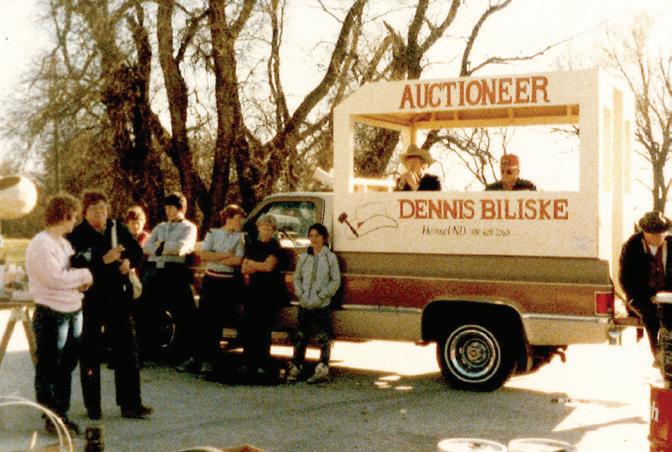
By 1985, at just 17 years old, Biliske started building what would eventually become Resource Auction—over the past 40 years, Biliske has operated with “numerous alliances and affiliations” before founding Resource Auction.
The timing was challenging. Agriculture was entering one of its most difficult economic periods in decades. Farms were consolidating, and many producers were forced to liquidate equipment or leave farming entirely.
But where others saw hardship, Biliske saw opportunity.
“The harder you worked, the luckier you got,” he said.
From the beginning, his approach was different.
Instead of simply showing up on auction day, Biliske focused on presentation and preparation. Equipment was washed and cleaned. Machinery was carefully lined up and displayed. Marketing lists were built and expanded. Even early computer clerking was adopted well before many competitors.
When we leave a farm after an auction, we want those people to feel like we did everything we could for them."
At the time, those ideas were uncommon.
“Back then, you’d go to an auction, and the equipment might still be in its working clothes," Biliske said. “We thought, if you’re selling something valuable, shouldn’t it look the part?”
The attention to detail paid off quickly.
By his early twenties, Biliske had built a thriving auction business serving farmers across multiple states.
A Philosophy Built on Teamwork
Biliske emphasizes he never saw the business as a solo effort. Employees, partners, and collaborators were always
considered part of a shared effort.
“I never say people work for us,” Biliske said. “They work with us.”
That team mentality helped Biliske grow rapidly, particularly during the busy spring auction season.
At one point, the company conducted daily auctions for weeks at a time, moving from farm to farm across the region.
“It wasn’t unusual to do auctions every day from late February through April,” Biliske said. “Those were long days. But, when you enjoy what you’re doing, it doesn’t really feel like work,” he says.
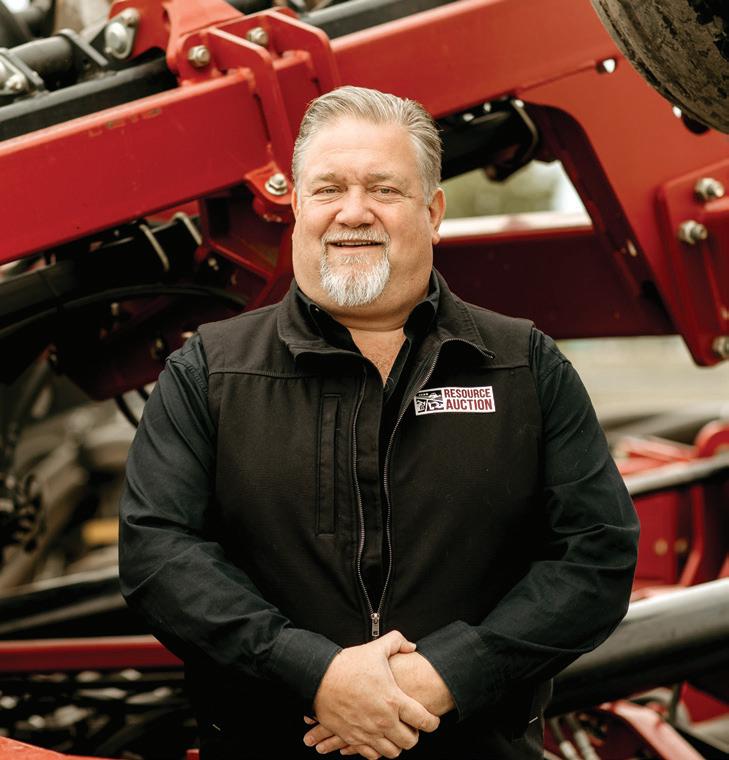
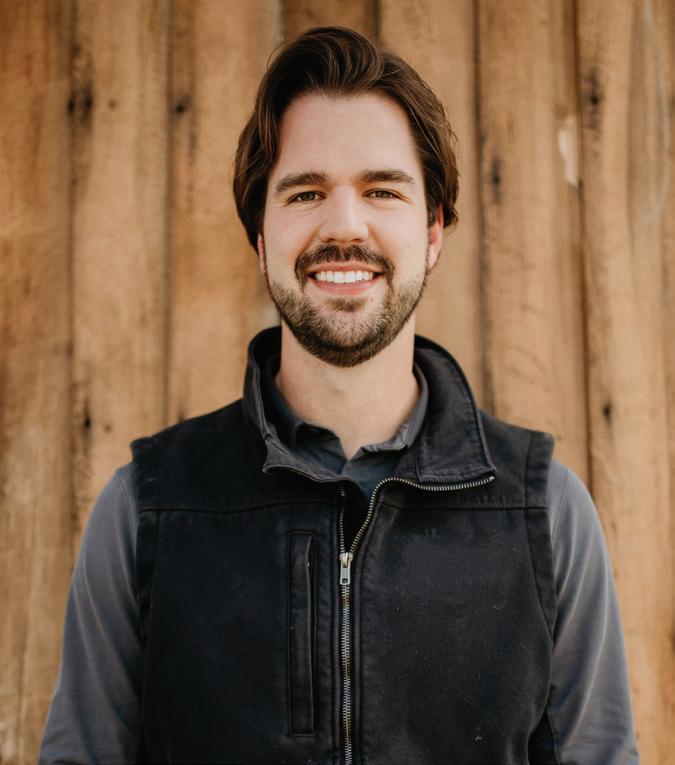
Dennis Biliske
Lessons From Around the World
Biliske’s career eventually took him far beyond the Midwest.
Beginning in 1999, he began working overseas as a lead auctioneer for an Asian company, conducting equipment auctions throughout Southeast Asia, including the Philippines, Japan, and Indonesia.
The experience proved transformative.
“It changed the way I looked at communication,” Biliske said.
Working with buyers who spoke limited English forced him to slow down and ensure everyone understood the details of every transaction.
“We had to be clear and precise,” he said. “You had to make sure everybody understood the deal.”
Those lessons carried back into his work in North America and improved how he communicated with both buyers and sellers.
The international travel also left a deeper impression.
“It opened my eyes to how people live in other parts of the world,” he said. “You realize how fortunate we are here.”
Enter AcrePro
While Resource Auction was expanding in the equipment world, another agricultural business was taking shape.
In 2018, David Gorder and his wife Annie launched a farmland brokerage focused entirely on agricultural real estate.
Today that business operates as AcrePro, specializing in farmland sales, buyer representation, and land management for absentee landowners.
“I’m passionate about land and farming,” he said. “That’s what I know.”
Many of the clients AcrePro worked with were farmers approaching retirement or families inheriting farmland. Their situations were rarely simple.
Some wanted to sell land. Others wanted to keep the land but no longer manage it. Many had equipment to sell but weren’t sure where to start.
That overlap between land transitions and equipment sales eventually created a natural connection between Gorder and Biliske.
A Partnership Built on Trust
Long before the two businesses officially joined forces, Dennis Biliske and David Gorder had already crossed paths.
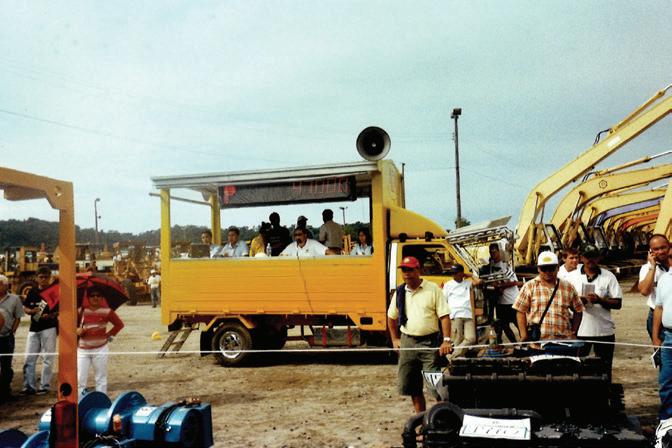
Biliske conducting an auction in Asia.
Biliske's very first auction circa 1985.
David Gorder
“I’m passionate about land and farming. That’s what I know.”
Gorder remembers the moment clearly.
He was preparing for his first land auction, and the pressure was building.
“It was about two weeks away,” Gorder said. “I was nervous. I kept checking everything, every detail, just making sure I wasn’t missing something.”
A friend offered a simple suggestion.
“Call Dennis Biliske.”
At the time, Biliske was already a well-established figure in the auction industry. Gorder wasn’t sure what to expect, but he picked up the phone anyway.
They ended up talking for more than an hour.
“He was reassuring and encouraging,” Gorder said. “He asked questions about what I was planning and talked through the process with me.”
“I could tell he was serious,” Biliske said. “He was asking questions. People who ask questions want to learn.”
That first call established a level of respect between the two men. Years later, it would also lay the foundation for a partnership.
The two eventually joined forces about five years ago, combining their strengths in a way that made sense for farmers navigating major transitions.
Biliske brought decades of experience in equipment auctions and asset sales. AcrePro brought deep expertise in farmland transactions and land management. Together, they could help clients address the full picture.
“A lot of our clients have both land and equipment,” Gorder said. “But those are two completely different processes.”
For farmers approaching retirement, the decisions can be complex. Some may want to sell everything. Others want to keep farmland in the family while liquidating equipment. Still others inherit land and need help managing or leasing it.
By working together, the companies help clients build a strategy that fits their specific situation.
“We really try to be trusted advisors,” Gorder said. “There’s no cookie-cutter approach.”
Instead, the team spends time understanding each client’s goals before recommending a plan.
“Every situation is different,” he said.
The Emotional Side of Auctions
While auctions are often seen as financial transactions, they can also carry deep emotional weight.
For many farmers, an auction represents the closing chapter of a lifetime spent working the land.
Biliske understands that personally.
Early in his life, his own family experienced a farm auction after his father passed away. Later, after farming for a few years himself, he held another auction to transition away from that operation.
“You wake up the next day and the sheds are empty,” he said. “Your yard
is empty. All your treasures are gone. And then you think about what the heck you're going to do."
For farmers without a succession plan, that moment can be difficult.
“A lot of people think they’re ready for it,” Biliske said. “But emotionally, they’re not.”
That’s why communication and preparation are such important parts of the process.
The team works closely with sellers long before the auction takes place to help them understand the timeline, expectations, and possible outcomes.
“We spend a lot of time making sure people know what’s going to happen,” Biliske said. “When we leave a farm after an auction, we want those people to feel like we did everything we could for them."
A Business Transformed by Technology
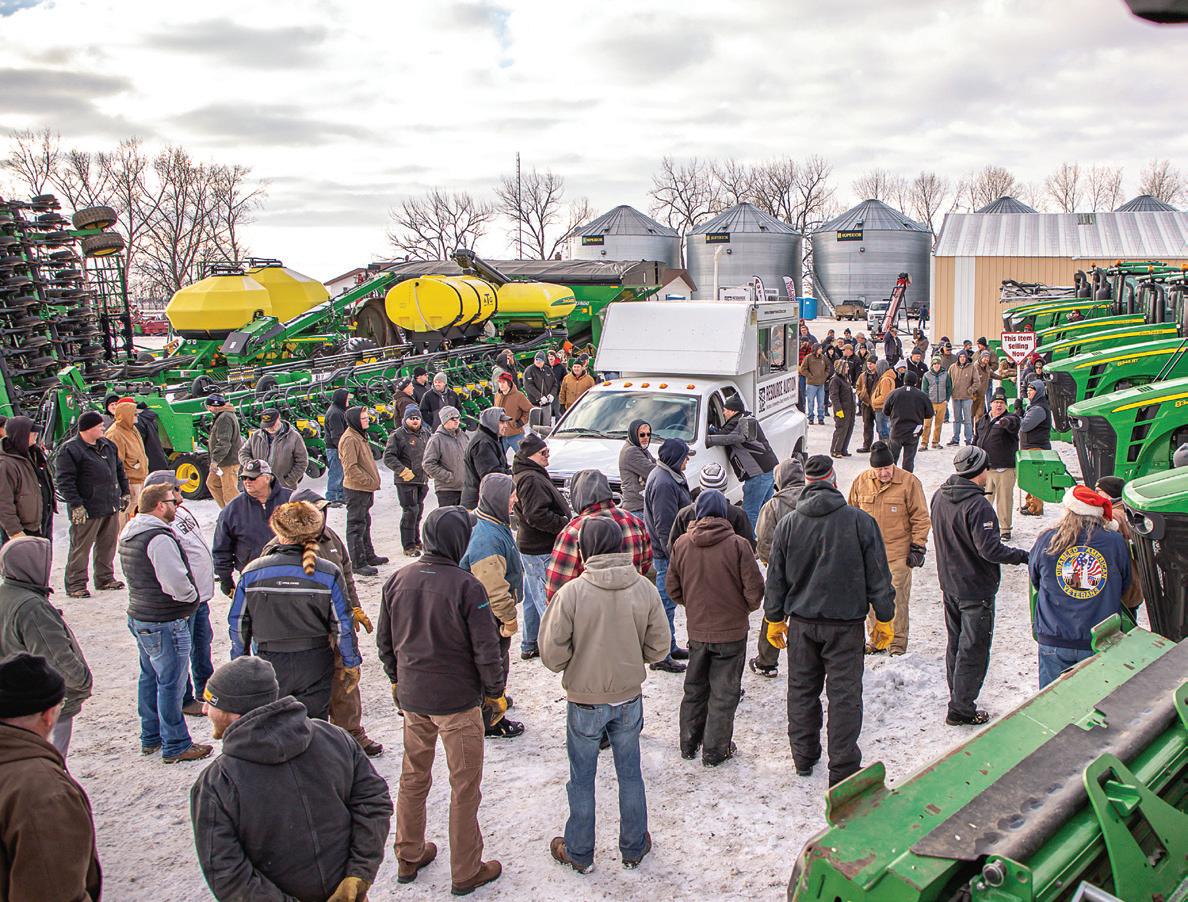
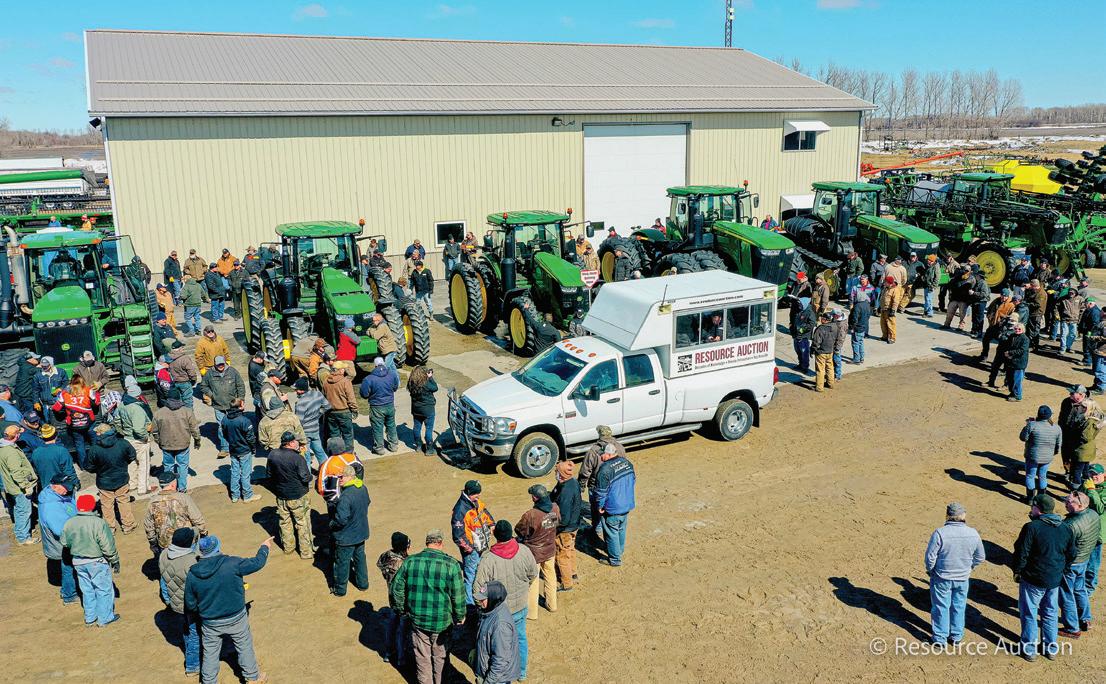
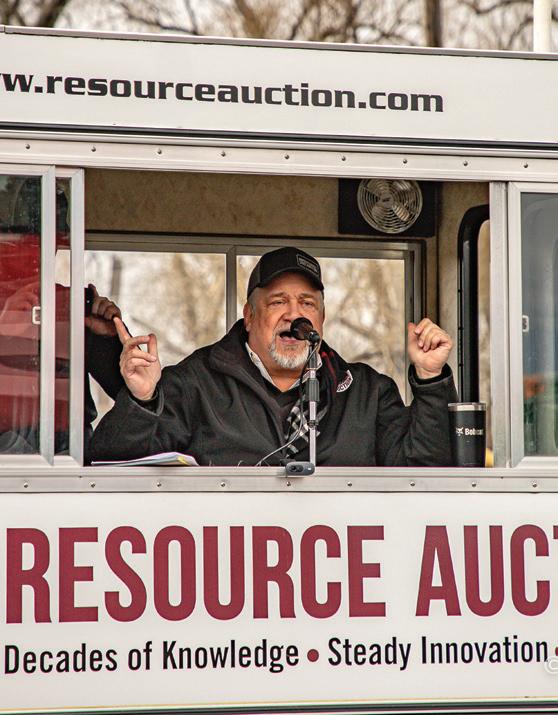
For decades, when an auction took place, farmers and neighbors gathered in a yard or equipment lot. An auctioneer stood on a trailer or platform. Buyers raised their hands to bid.
But in recent years, technology has dramatically changed how auctions operate.
Biliske began experimenting with online bidding and simulcast auctions long before many competitors adopted the technology. That early investment proved critical when the world changed almost overnight in 2020.
When the COVID-19 pandemic halted public
gatherings, traditional auctions suddenly became impossible.
“We had done hundreds of online auctions before that,” Biliske says. "We were ready. The hardest part wasn’t the technology. It was the social side.”
For generations of farmers, the auction day itself had been a milestone event.
Neighbors gathered. Friends stopped by. It was a moment of recognition for decades of work.
When auctions moved online, that tradition disappeared.
Still, the benefits of digital bidding are evident.
Instead of a few hundred people standing in a farmyard, online auctions opened the door to thousands of potential buyers.
Auctions could run continuously for days instead of just a few hours.
And bidders could participate from anywhere.
“Now the auction is open 24 hours a day,” Biliske said. “Seven days a week.”
The Power of Reach
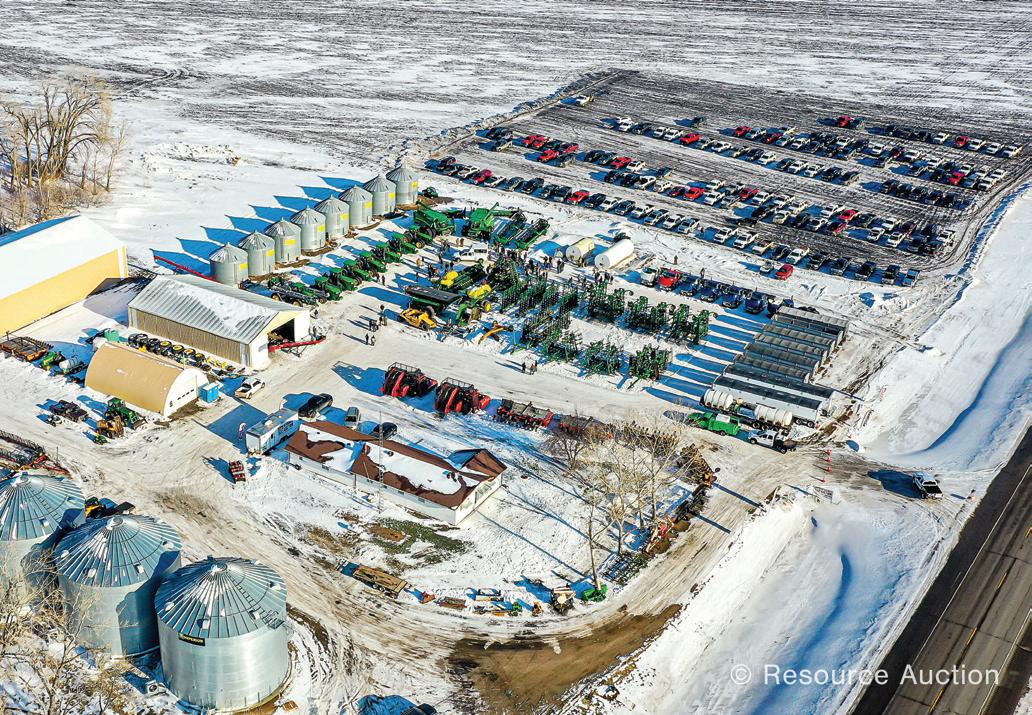
One of the biggest advantages Resource Auction offers sellers is its large and active bidder network.
With the advent of online auctions, the company has built a following of tens of thousands of registered bidders who regularily participate in its auctions.
That audience is the result of consistent marketing and communication.
“When you’re selling equipment online, photos and information become everything,” Biliske said.
Buyers may never see the equipment in person. Instead, they rely on detailed listings, high-quality photography, and accurate descriptions.
That’s where strong marketing becomes essential.
The company’s marketing efforts are led by Kristi Lefebvre, who oversees marketing and promotion for the company’s auctions—an effort that includes everything from digital listings to print materials and industry marketing programs.
Her work has earned awards from both state and national auctioneering associations.
And more importantly, it helps ensure sellers receive maximum exposure.
“If people can’t see what you’re selling, they’re not going to bid on it,” Biliske said.
A great deal of coordination happens behind the scenes at the companies, where many individuals play a role in creating a smooth and well-executed experience for clients.
"It takes a village," Biliske said. "We work with excellent sales and account reps, auction coordinators, data entry staff, photographers, set up people, admin staff, collections people, and so many others that I'm thankful for."
Helping Farmers Plan the Next Chapter
At the center of both businesses is the goal to help farmers navigate major financial decisions.
For some clients, that means selling equipment.
For others, it means buying or selling farmland.
Often, it involves both.
“Land and equipment go hand in hand,” Gorder said. “And we’re able to help people with both sides of that.”
The combined expertise of AcrePro and Resource Auction allows the team to guide clients through transitions that might otherwise feel overwhelming. It also allows them to approach those decisions with a long-term perspective.
That philosophy has helped the partnership grow while maintaining the same principles that built the original auction business decades ago. Hard work, honesty, and respect for the people they serve are still at the center of everything.
And even after over forty years in the auction industry, Biliske still finds the work rewarding.
“At the end of the day,” he said, “you’re helping people move forward.”
POWERING IDEAS THAT FEED THE WORLD
By Gretchen Dobervich MPH LBSW, Communications Manager, NSF AgTech Engine in North Dakota
the rolling plains of North Dakota, where horizons stretch wide and fields of crops whisper with the wind, investments in agricultural technology are underway, guided by the farmers who feed the world.
The engine driving all of this forward is the NSF AgTech Engine, an innovation ecosystem that blends use-inspired technology innovation with workforce development to address one of humanity’s most urgent challenges, food security.
THE BIRTH OF A VISION
Agriculture has been the backbone of North Dakota’s economy for generations. Yet despite this legacy, the industry faces pressing challenges like climate resiliency, workforce shortages, global competition, and uneven access to advanced agriculture technologies across rural and Indigenous communities.
This is where the NSF AgTech Engine in North Dakota, formerly known as the AgTech Engine for Food Systems Adapted for Resiliency and Maximized Security (FARMS), comes into play. This initiative emerged from a competitive national process led by the U.S. National Science Foundation’s Regional Innovation Engines program, a federal effort designed to build regional innovation ecosystems that address national challenges while driving long-term economic growth.
In 2024, North Dakota State University (NDSU) was named the lead institution for the agriculture-focused Engine, securing a $15 million initial award with the potential for up to $160 million over ten years. It was one of only nine Engines selected from 188 proposals nationwide, and the sole project focused on agriculture.
This historic investment signaled confidence in North Dakota’s potential to become a global hub for agricultural technology research, workforce development, and rural economic growth. To guide the effort, a state-wide ecosystem of farmers, universities, Tribal colleges, industry partners, economic development organizations, and community leaders came together with a shared mission to transform how food is grown, monitored, and delivered in the 21st Century.
AN ECOSYSTEM WITH A PURPOSE
The AgTech Engine is not a single facility or organization; it’s a coordinated ecosystem spanning rural communities, Tribal Nations, academia, industry, and government. The AgTech Engine brings together expertise in agriculture, engineering, data science, genomics, climate modeling, artificial intelligence, and community engagement to develop solutions.
Leadership is housed at NDSU, a land-grant university, but the Engine’s strength lies in its partners: Tribal Institutions such as Nueta Hidatsa Sahnish College and United Tribes Technical College; higher education partners including NDSU, University of North Dakota, the University of NebraskaLincoln, and the University of Illinois Urbana-Champaign; on-farm innovation networks; economic development organizations; and private-sector collaborators.
At the helm is CEO Dr. Hollie Mackey, a citizen of the Northern Cheyenne Nation, whose leadership integrates community engagement, policy, education, and innovation. Her team includes specialists in financial analysis, technology translation, workforce integration, scalable solutions, and research and development—all focused on strengthening America’s agricultural future.
WHAT THEY DO
The work of the AgTech Engine is broad, but its mission is tobuild resilient food systems through research, partnership, and grower-driven innovation.
• Driving Cutting-Edge Research and Development
The Engine supports research that connects advanced technologies with real agricultural needs—from genomics and climate modeling to AI-enabled analytics and edge computing. These tools help farmers better understand crop growth conditions, optimize resources, and make more informed decisions. Through ecosystem partnerships, insights that save time, water, and costs are moving from concept toward real-world use.
• Building Innovation Testbeds
Working farms serve as living laboratories where technologies are tested under real field conditions. Farmers play a direct role in shaping development, ensuring solutions address practical challenges and supporting adoption.
• Advancing Workforce Development
Technology is only effective when people are prepared to use it. The Engine invests heavily in workforce pathways by expanding STEM and agricultural education, supporting educators, and upskilling current workers. Community minigrant programs, such as the GROW Community Innovation Awards, provide funding for locally driven efforts that build AgTech awareness and career pathways.
• Strengthening Community and Tribal Partnerships
A defining feature of the Engine is its intentional engagement with historically underrepresented communities. Partners such as Wozu on the Standing Rock Sioux Reservation help integrate Indigenous knowledge with advanced technologies—supporting regenerative practices, food sovereignty, and culturally grounded innovation.
• Translating Innovation into Economic Growth
Long-term economic impact is central to the Engine’s purpose. By supporting farmers, entrepreneurs, and startups in bringing new technologies to market, from mapping tools to AI diagnostics, or autonomous systems, the Engine aims to create new jobs and expand rural economic opportunity.
WHERE THEY OPERATE
While headquartered in Fargo, the AgTech Engine operates statewide from university laboratories to rural test sites and Tribal lands. Its geographic reach reflects North Dakota’s agricultural diversity and ensures innovation is tested where it matters most, in real farming environments.
This distribution model ensures the Engine’s work does not remain confined to research settings. It is embedded in the landscapes that produce food for millions, connecting farmers, students, and technology developers across the region.
CURRENT PROJECTS
• White Water Project
A soil moisture and irrigation insight system that combines satellite technology and AI to help farmers optimize water use. This technology is being tested in multiple fields across North Dakota, with the potential to scale nationwide.
• Bison Guard
A pioneering project that uses robotics and AI to improve bison herd management in collaboration with Tribal Partners, demonstrating how technology can serve ecological health and traditional ways of knowing.
• Farmer Focused AgTech Adoption
The AgTech Engine is engaging growers to learn more about the factors that influence farm AgTech adoption. This direct user insight assists in the development, research, and commercialization of technology developed through the AgTech Engine.
• Beet Balls
North Dakota soybean producers lose $100 million per year to spoilage. This technology reads heat and moisture from deep within the harvested beet piles and transmits it out to identify locations in the pile to pull from next for processing to reduce spoilage.
• Education and Workforce Development
Collaborations with NDSU Extension and NDSU’s Agriculture Education Program continue to expand hands-on agtech and STEM opportunities in K-12 education to introduce students to careers in agriculture. Educators are able to access training and curriculum specifically designed to bring expanded agriculture education into the classroom.
• Partnership Expansion
Strategic alliances with groups like AgLaunch, which bring farmer-centric commercialization pipelines to the region, help ensure innovations are grounded in real agricultural experience and positioned for market success.
HOW TO ENGAGE
Whether you are a farmer, educator, student, entrepreneur, community leader, or researcher, the AgTech Engine offers multiple opportunities to get involved.
• Follow Online and Social Platforms
Quarterly newsletters, research papers, and updates can be found on their website, farmsfeedstheworld. com. Their social channels, LinkedIn, Facebook, X, and Instagram keep stakeholders informed about project milestones, opportunities, and success stories.
• Attend Events
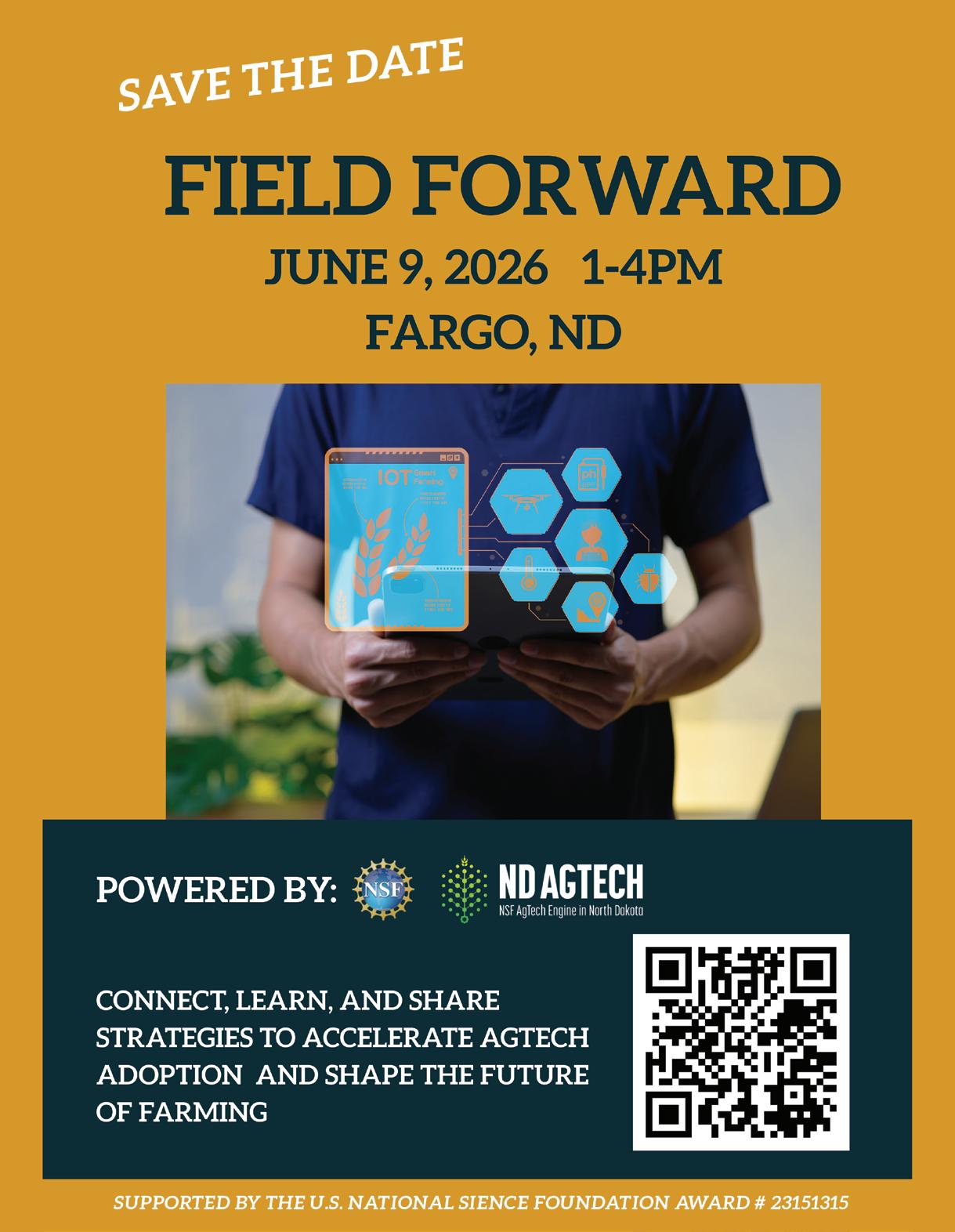
Field Forward, one of the AgTech Engine’s signature events, will be held on the afternoon of June 9, 2026, during AgTech Week in Fargo, ND. This event brings
together farmers, agtech researchers, and innovators to connect, learn, and share strategies to accelerate the adoption of new technologies and shape the future of farming.
• Join Innovation Projects and Collaborate with Research
Growers and rural communities can participate in on-farm testbeds, pilot projects, and field trials that help refine agtech tools under real conditions. Scholars and technologists interested in agricultural genomics, AI, climate modeling, and other agtech opportunities can explore partnerships within the AgTech Engine’s ecosystem.
Sign up to learn more about opportunities!
A FUTURE ROOTED IN INNOVATION TO FEED THE WORLD
The AgTech Engine represents what is possible when community priorities, technology, and collaboration come together. It is not simply about new tools, it is about strengthening rural economies, supporting farmers and building resilient food systems.
By combining Indigenous knowledge with advanced analytics, community engagement with scientific research, and local insight with global challenges, the AgTech Engine offers a model for regional innovation that is locally driven and globally relevant.
@NDAgTechEngine
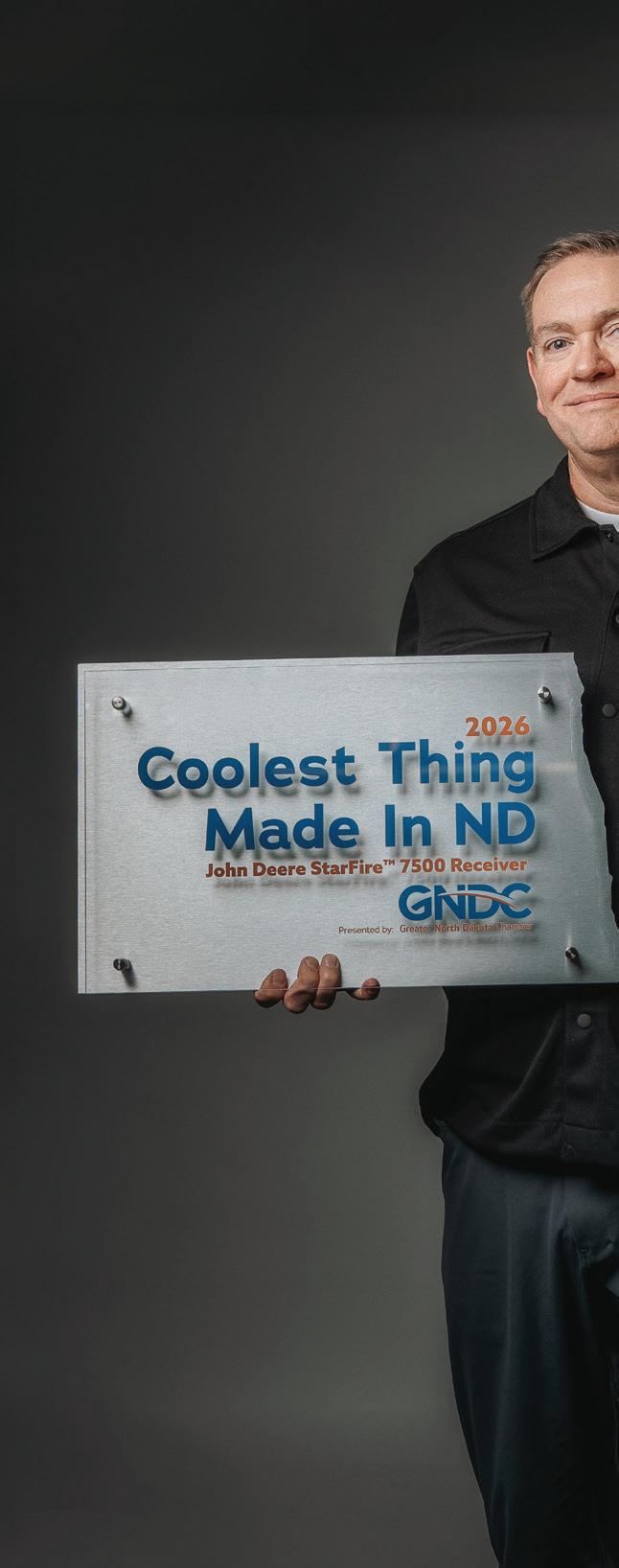
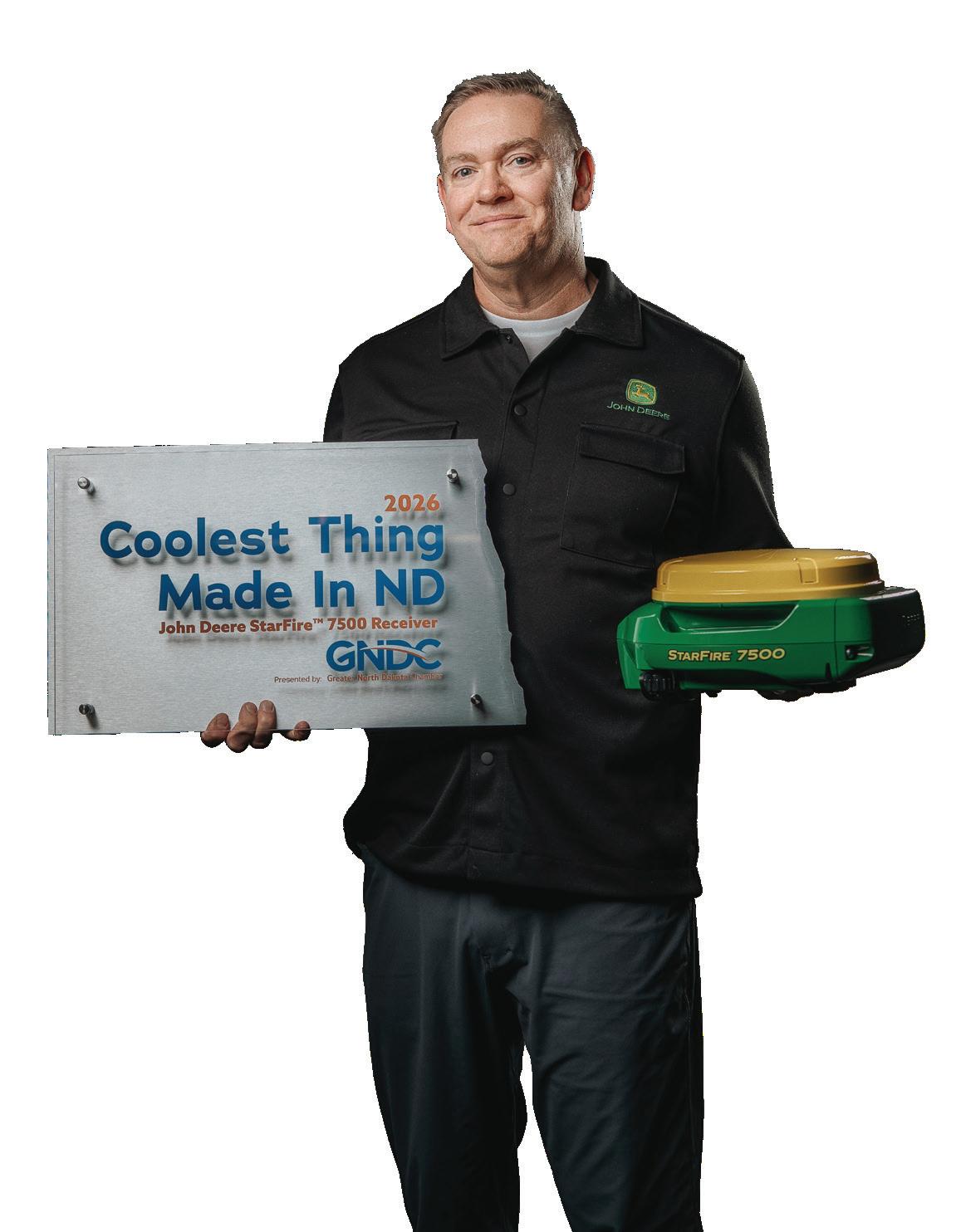
ABOUT THE COOLEST THING MADE IN ND AWARD
The Greater North Dakota Chamber’s Coolest Thing Made in ND Showcase is a statewide celebration of North Dakota’s manufacturing sector, highlighting innovative, high-quality products made by local companies and the workforce behind them. Hosted by the GNDC Foundation in partnership with Walmart, the showcase is part of the broader “Coolest Thing Made in North Dakota” contest, which uses an online product gallery and public voting to spotlight the strength and diversity of manufacturers across the state.
of
MATT POTTER
Director
Engineering, John Deere
By Brady Drake | J. Alan Paul Photography
THE SIGNAL FROM FARGO
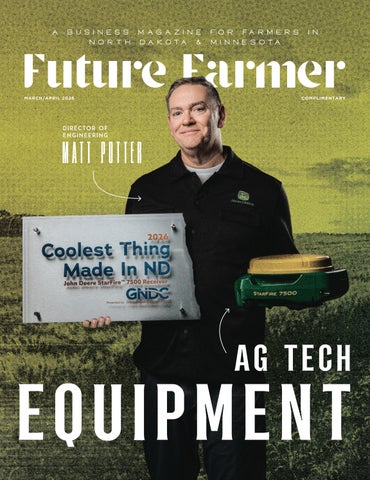
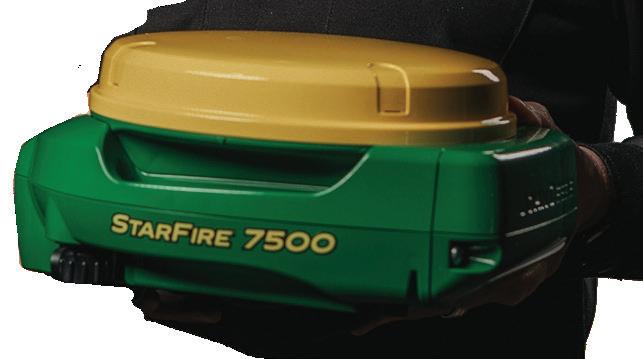
How John Deere’s StarFire 7500 Became the Coolest Thing Made in North
rom a distance, it looks deceptively simple.
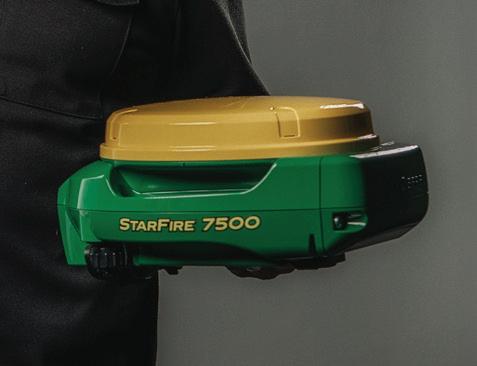
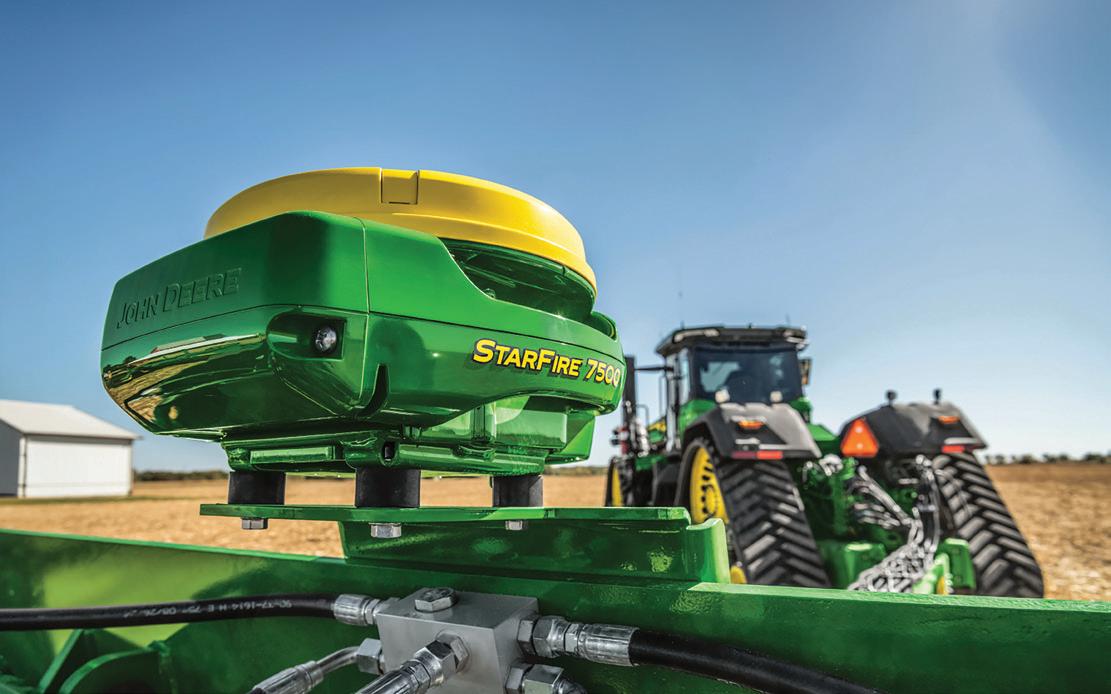
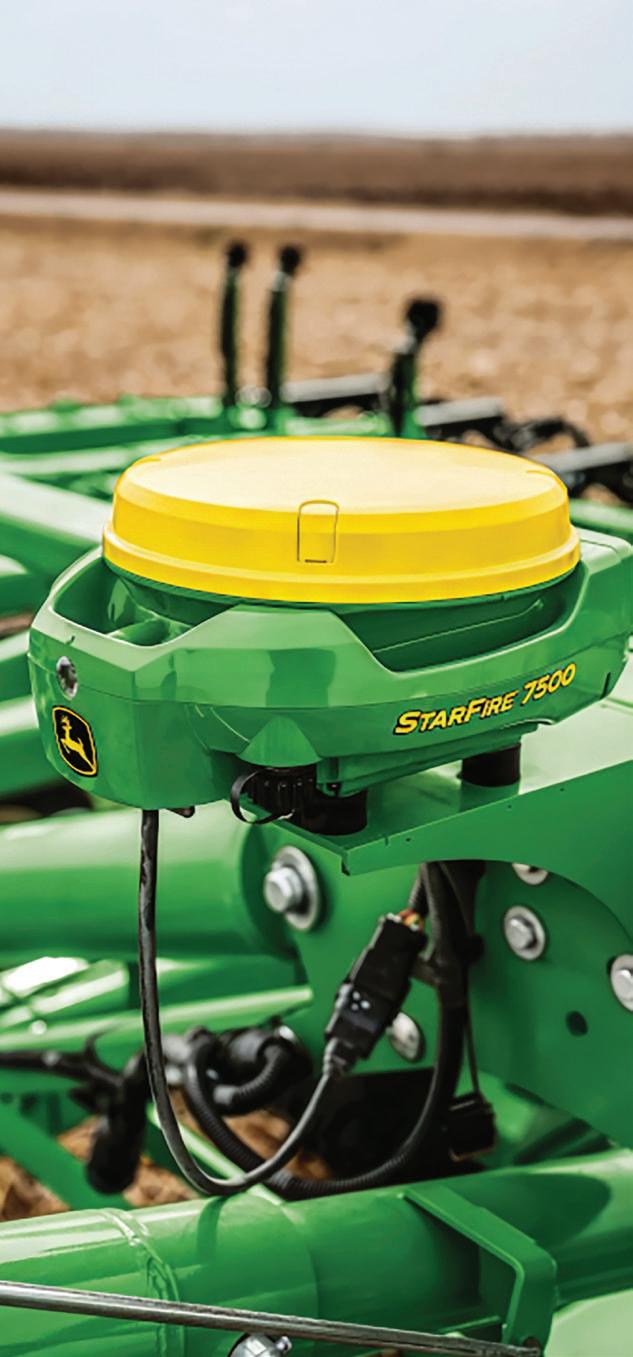
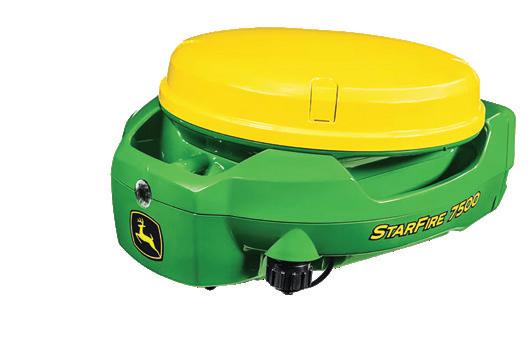
A smooth green-and-yellow dome sits atop the cab of a tractor or combine, quietly riding along as the machine moves through acres of farmland. Most people driving past a field might never notice it. Farmers certainly do.
Inside that dome is one of the most advanced positioning systems in agriculture. It's a device capable of determining a machine’s location on Earth with sub-inch accuracy using signals from satellites thousands of miles above the planet.
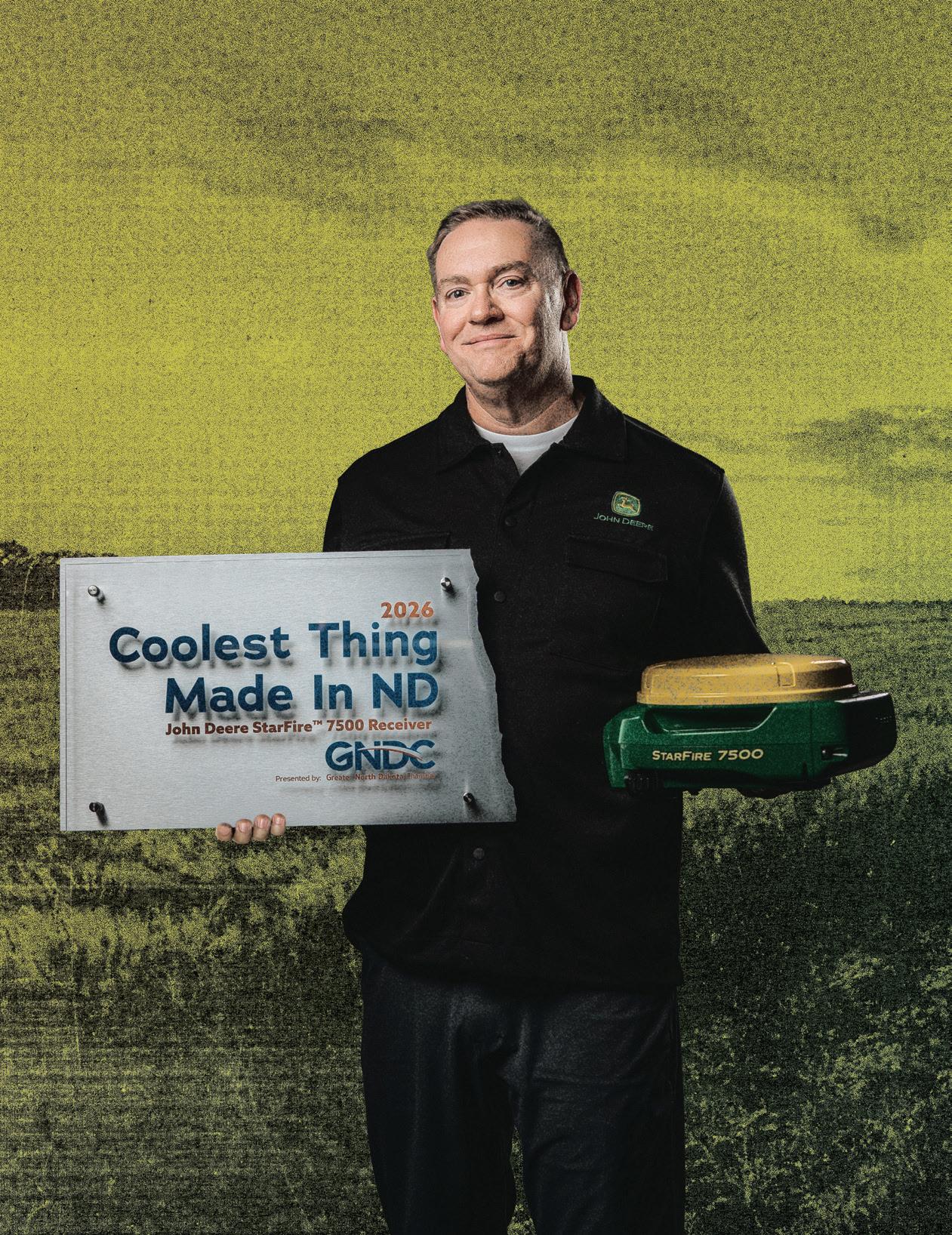
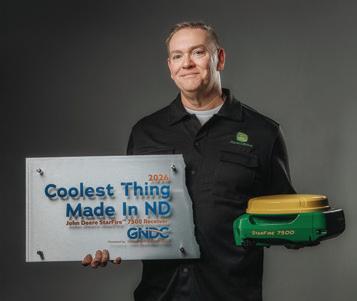
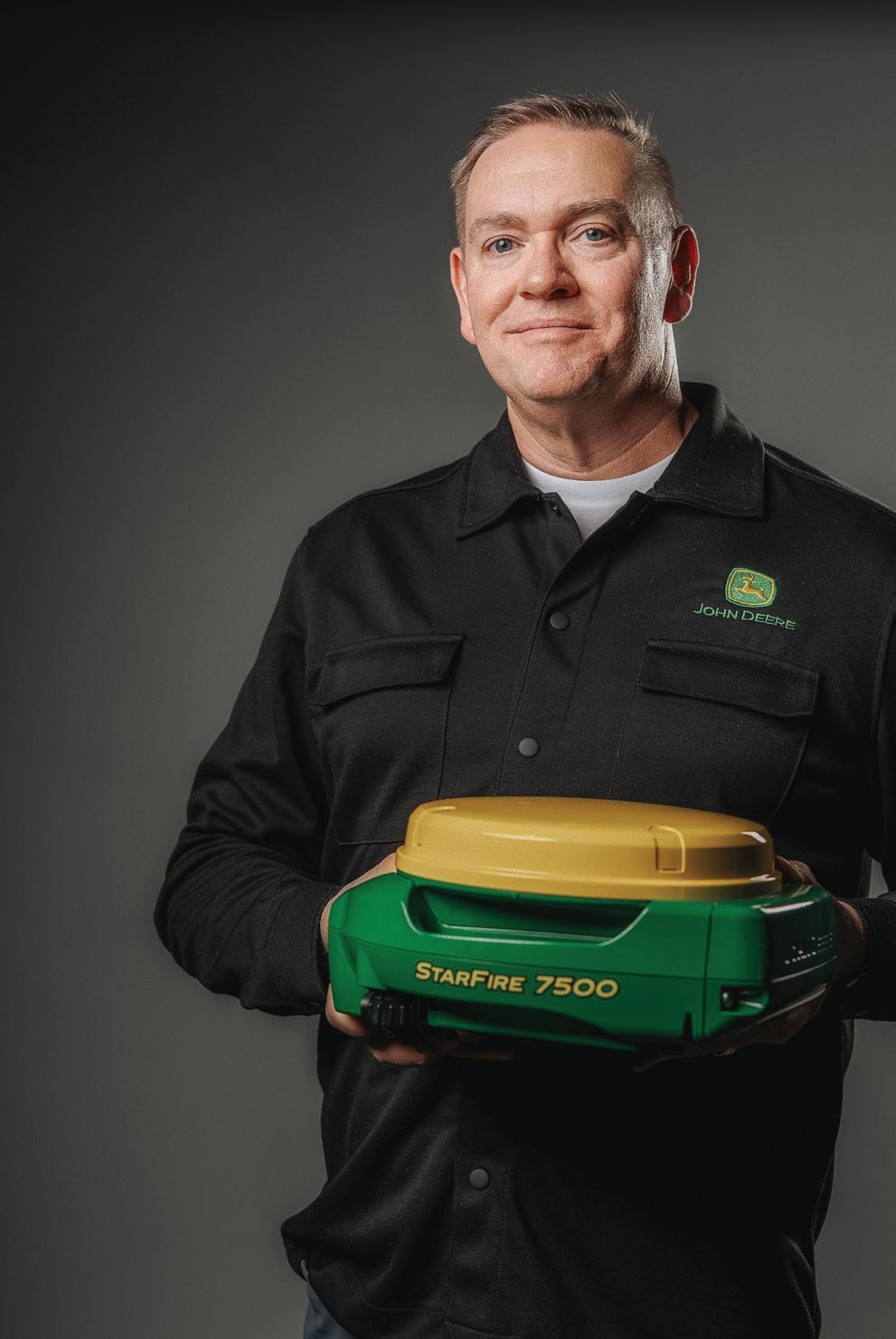
The technology is called the StarFire 7500, and it was recently recognized as the inaugural winner of the “Coolest Thing Made in North Dakota” award.
For John Deere's Director of Engineering Matt Potter, the recognition was both exciting and meaningful.
Dakota
“I mean, it was really exciting,” he said. “We do a lot of things in technology here in Fargo, but getting recognized by the state for this one—‘the coolest thing made in North Dakota’— that says it all.”
More than anything, for Potter, the award reflects the work of hundreds of engineers, designers, and manufacturing teams who developed and built the technology locally.
“It’s great recognition for the engineering teams that design it and the manufacturing teams that produce it,” he said. “It was a great honor.”
But what makes the award even more remarkable is that the device isn’t just used in North Dakota or even the United States. It’s used everywhere.
“We’ve got these StarFire 7500s on all seven continents,” Potter said. “Hundreds of thousands of them have been produced, and they go all over the world.”
provided by John Deere
THE TECHNOLOGY THAT GUIDES MODERN AGRICULTURE
The StarFire 7500 is part of a category of technology known as Global Navigation Satellite System receivers (GNSS receivers). Most people know the concept by a simpler name, GPS.
But GPS is actually only one piece of a much larger network.
“There are multiple satellite constellations,” Matt said. “The United States has GPS satellites, but there are others as well. The European Union, China, and Russia. All of them have positioning satellites orbiting the Earth.”
Each constellation consists of dozens of satellites circling the planet in what’s known as mid-Earth orbit, roughly 12,000 miles above the surface. Those satellites continuously
broadcast radio signals.
The StarFire receiver listens to them.
By measuring tiny differences in the time it takes those signals to arrive, the system can calculate a machine’s position on Earth with astonishing precision.
“Sub-inch accuracy anywhere in the world,” Matt said.
In agriculture, that level of precision is a big deal.
It enables technologies like AutoTrac, John Deere’s automated steering system, which allows tractors and combines to follow perfectly straight paths across fields. It ensures rows are spaced precisely, inputs are applied exactly where needed, and equipment doesn’t overlap areas already covered.
The result is better yields, lower costs, and less wasted fertilizer, seed, and chemicals.
But achieving that level of accuracy isn’t simple. In fact, the challenge begins with the signals themselves.
YOU’RE DOING VERY PRECISE ELECTRONICS WHILE TRYING TO RESOLVE VERY DIFFICULT SIGNALS, AND YOU HAVE TO DO IT IN AN ENVIRONMENT THAT’S INCREDIBLY RUGGED.”
LISTENING FOR WHISPERS IN A STADIUM
Satellite signals may travel thousands of miles, but by the time they reach Earth, they’re incredibly faint.
To explain the difficulty, Potter uses an analogy that anyone in Fargo can appreciate.
“Imagine you and I are sitting in the FargoDome during an NDSU Bison game,” he said.
The stadium is roaring with tens of thousands of fans.
Now imagine trying to hear someone whisper across the room.
“That’s basically what these signals are like,” Matt said. “They’re incredibly faint, buried in noise.”
The receiver must isolate those signals, interpret them, and calculate a position with extreme precision in real time. And it has to do it while mounted on equipment operating in one of the harshest environments imaginable. Agricultural machinery endures dust, heat, rain, snow, constant vibration, and rough terrain. Yet the receiver must remain accurate and reliable through it all.
“You’re doing very precise electronics while trying to resolve very difficult signals,” Matt said. “And you have to do it in an environment that’s incredibly rugged.”
Even more challenging, the technology has to remain affordable for farmers. Unlike industries where expensive hardware might be acceptable, agricultural technology must deliver real economic value.
“We have to do this cost effectively,” Potter said. “Farmers need to get the value out of the technology.”
That combination of precision, durability, and affordability is what makes designing systems like the StarFire 7500 so complex.
A MULTI-YEAR LEAP FORWARD
The StarFire 7500 didn’t appear overnight. Like most advanced technologies at John Deere, it followed a multi-year development cycle, building on earlier versions.
“You can even tell by the name,” Potter said. “This is the 7500. There was a version before it, and a version before that.”
Each generation improves on the last.
Interestingly, the biggest leap in the newest model isn’t necessarily the ultimate level of accuracy. Previous generations were already capable of sub-inch precision. The real improvement lies in how quickly and reliably the system reaches that accuracy.
When a machine enters the field, the receiver begins calculating its position using satellite signals. The time it takes to reach full precision is known as “pull-in time.”
Faster pull-in times mean machines can begin operating precisely almost immediately, reducing delays and improving efficiency during critical field operations.
The 7500 also improves signal reliability and maintains accuracy even in challenging conditions.
Another major advancement comes from the receiver’s ability to listen to more satellite signals than previous generations.
As more positioning satellites are launched globally, receivers can tap into additional data sources, improving both accuracy and stability.
“That’s how we improve performance,” Potter said. “By listening to more signals coming from space.”
But even with better satellites and improved hardware, the technology only works because of the people behind it.
And many of them are based right here in North Dakota.
FARGO TO THE WORLD
One of the most surprising aspects of the StarFire 7500 isn’t just the technology itself. It’s where it’s built.
For many people, Fargo isn’t the first place that comes to mind when they think about advanced robotics, satellite navigation systems, or precision engineering.
But inside John Deere’s Fargo operations, teams of engineers are designing and manufacturing technologies that guide machines across millions of acres around the world.
“The designs are done within John Deere,” Potter said. “We have a really strong model of vertical integration. We design the hardware, the software, and we manufacture it within the company.”
That approach allows the company to tightly control performance, cost, and reliability.
A CAREER IN ROBOTICS— APPLIED TO AGRICULTURE
Matt didn’t grow up on a farm.
But he did grow up in the Midwest, surrounded by agriculture and aware of its importance.
His path into the industry came through another passion of his, robotics.
“What I’ve done my whole career is robotics and technology,” he said.
Over time, he found that agriculture offered one of the most meaningful applications of those technologies. Automation, sensors, and intelligent systems could help farmers work more efficiently, sustainably, and profitably.
“I’ve worked in other industries before,” Potter said. “But this is by far my favorite. When we do a good job, it helps farmers be more productive. It helps them run their operations better.”
And ultimately, that impacts everyone.
“We all benefit every day from the food that gets grown,” he said. “The fiber in our clothing, the infrastructure that gets built. Being able to serve the people who do that work is really motivating.”
FEEDING THE FUTURE
The challenges facing global agriculture are enormous.
By some estimates, the world will need to produce 70 percent more food by 2050 to meet growing population demands. At the same time, farmers are working with limited land, rising costs, environmental pressures, and an increasingly tight labor market.
And that’s exactly where companies like John Deere are focusing their efforts.
“We can continue to incorporate more technology into agricultural production,” Potter said. “There are still a lot of opportunities.”
Those opportunities revolve around three key areas:
• Data
• Automation
• Autonomy
Data-driven farming is already transforming how producers plan their operations. Sensors, satellite imagery, and field-level analytics help farmers make decisions based on measurable conditions rather than guesswork.
Automation reduces the manual workload required to operate large machinery across thousands of acres.
And autonomym, the ability for machines to operate independently, is increasingly becoming a realistic possibility.
Together, these technologies aim to help farmers accomplish more with fewer resources.
“Labor scarcity is a real challenge,” Potter said. “But we also need to increase productivity. Technology will help close that gap.”
And as those capabilities continue to evolve, positioning technology like the StarFire receiver remains a critical foundation.
Without knowing exactly where a machine is located, none of those systems can function.
LEARN MORE BY VISITING
Where Innovation Meets the Modern Farm
By Madi Simpson, Director of Marketing, Emerging Prairie
cross the Upper Midwest, agriculture has always evolved through adaptation. Today, that pace of change is accelerating as precision technology, automation, data tools, and new business models reshape how farms operate.
AgTech Week 2026
From June 8–12, AgTech Week 2026 will bring farmers, agribusiness leaders, researchers, startups, and innovators together in FargoMoorhead for a week dedicated to advancing the future of agriculture. For growers across North Dakota, Minnesota, and the surrounding region, the value lies in direct exposure to technologies, partnerships, and conversations that can influence operations today.
The Upper Midwest continues to gain recognition as a global hub for agricultural innovation, and AgTech Week showcases how collaboration across the industry is driving progress throughout the region.
The future of agriculture isn’t shaped by one group. It is a collaboration between those who grow, those who build, those who innovate, those who research, those who support through policy, and those who believe and invest. AgTech Week is a designated time where those conversations can happen, collaborations take shape, and ideas turn into action.”
-
Andrew Jason, Ecosystem Director of Grand Farm
The Flagship Events Driving the Week
AgTech Week is anchored by several signature events that each approach innovation from a different angle, including policy, business operations, technology development, and communication.
Midwest Agriculture Summit
June 9
Hosted by the Fargo Moorhead West Fargo Chamber of Commerce, the Midwest Agriculture Summit brings together industry leaders and regional stakeholders to discuss the economic and operational trends shaping agriculture.
Bushel Buddy Seat Conference
June 10–11
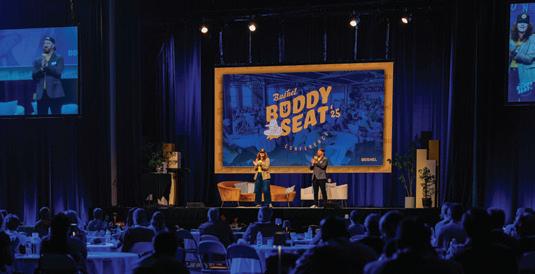
Hosted by Bushel, Designed with agribusiness professionals in mind, the Buddy Seat Conference focuses on practical innovation inside grain handling, ag retail, and customer engagement.
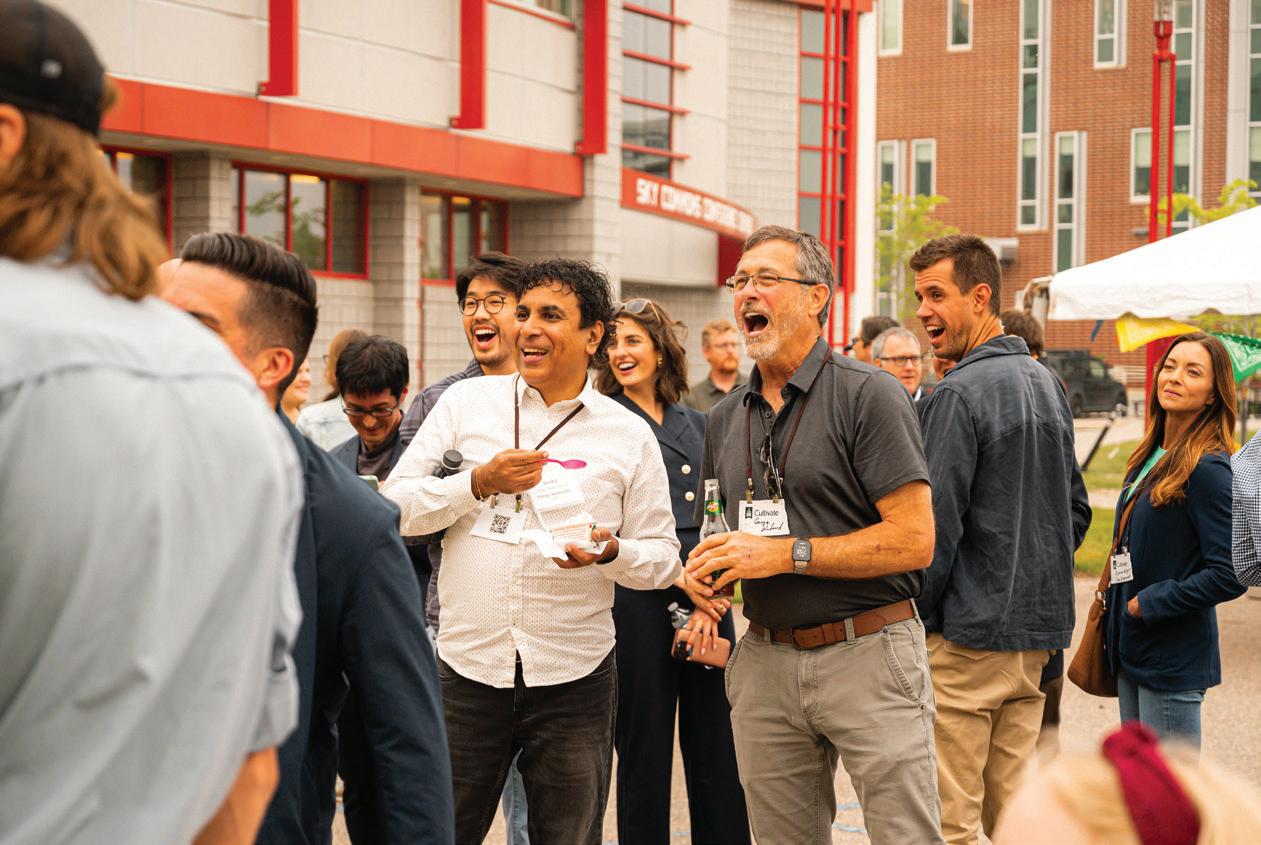
Cultivate Conference
June 11
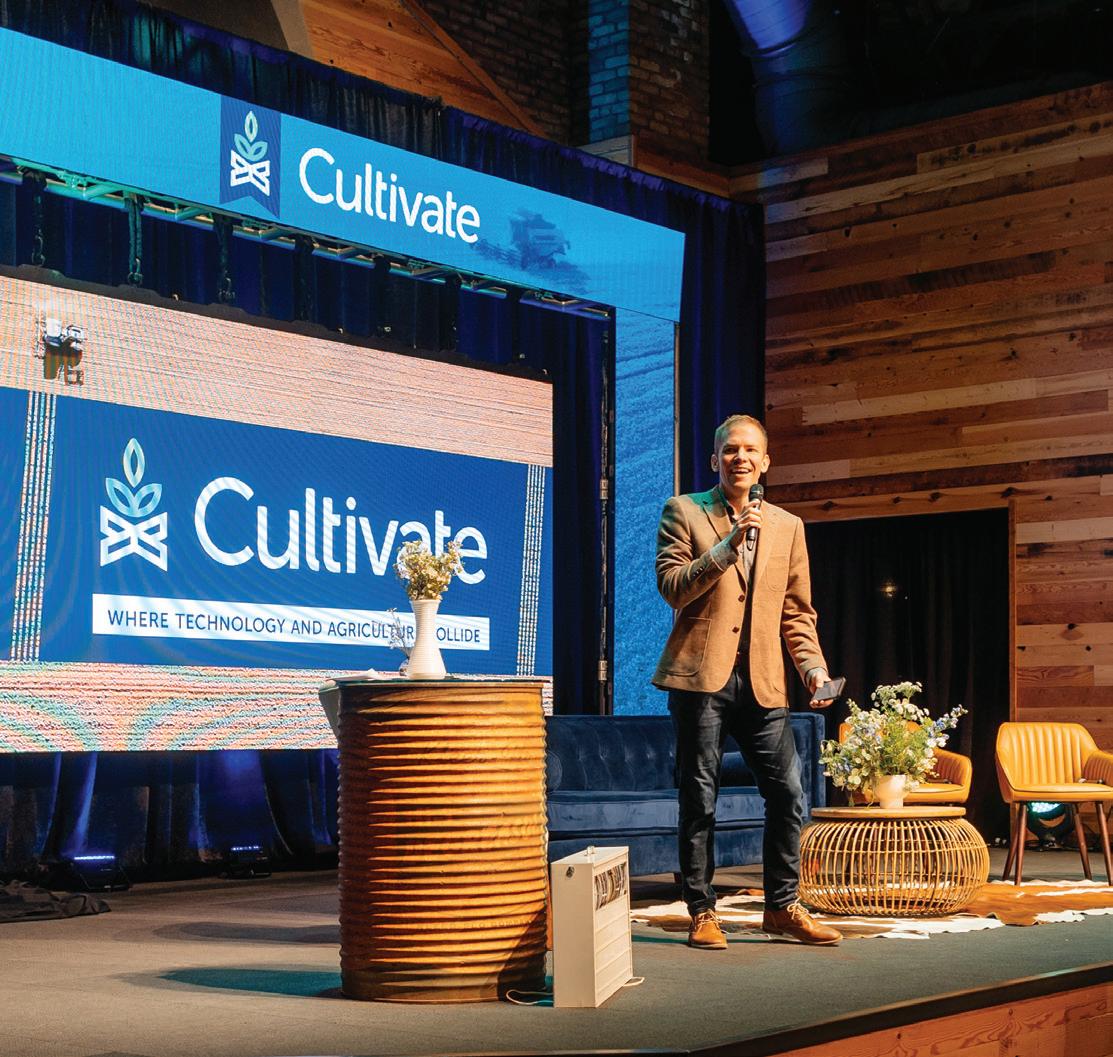
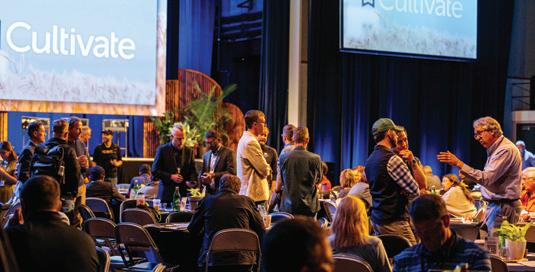
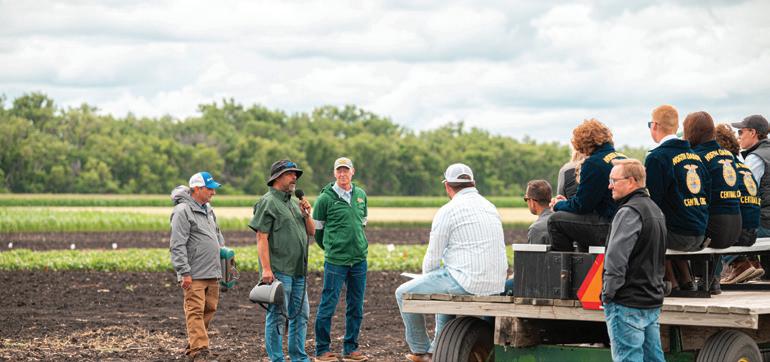
Hosted by Grand Farm, Cultivate highlights applied agricultural technology through demonstrations and collaborative discussions.
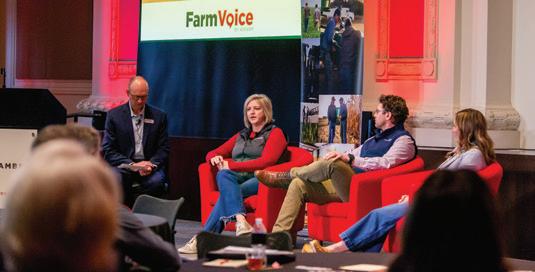
Farm Voice by AdFarm
June 11
Hosted by AdFarm, Farm Voice explores how producers, brands, and agribusinesses can better tell agriculture’s story while strengthening trust between farms and the communities they serve.
A Week Built Around Real Agriculture
What makes AgTech Week different from traditional conferences is its community-driven structure. Alongside flagship events, organizations throughout the region host dozens of complementary gatherings, including:
• Farm and facility tours
• Equipment and technology showcases
• Customer and partner meetings
• Workshops and pitch sessions
• Networking events and industry meetups
These smaller events allow attendees to explore specific areas of interest while building relationships that often extend well beyond the week itself.
How You Can Participate
AgTech Week is designed for participation at every level.
Attend and Explore
Attendees can join individual sessions or multiple events based on operational interests, from technology adoption to business strategy and market insight.
Host an Event
Agribusinesses, cooperatives, startups, and organizations are encouraged to host their own events within the Fargo–Moorhead area. Hosting provides an opportunity to showcase innovation, connect with customers, and position organizations as leaders within the AgTech ecosystem.
Build Connections
Even informal participation, such as meeting industry peers, exploring demonstrations, or joining networking events, can lead to new collaborations, pilot projects, or business opportunities.
Investing Time in the Future of Farming
For most farmers, stepping away from daily operations is never easy. AgTech Week offers a rare opportunity to see where agriculture is heading while learning from others facing the same challenges. The conversations happening during the week, including autonomy, data integration, and farm profitability, reflect the realities shaping modern agriculture across the Upper Midwest.
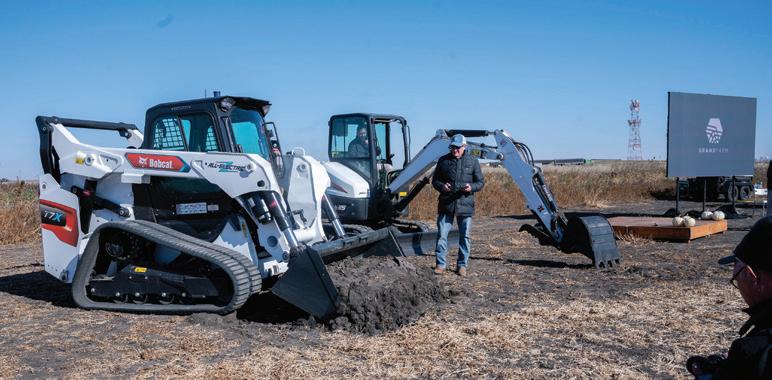
Grand Farm Innovation Campus Enters Phase II
With Increased Capacity, Acreage, and Investment
A Foundation Built in Phase I
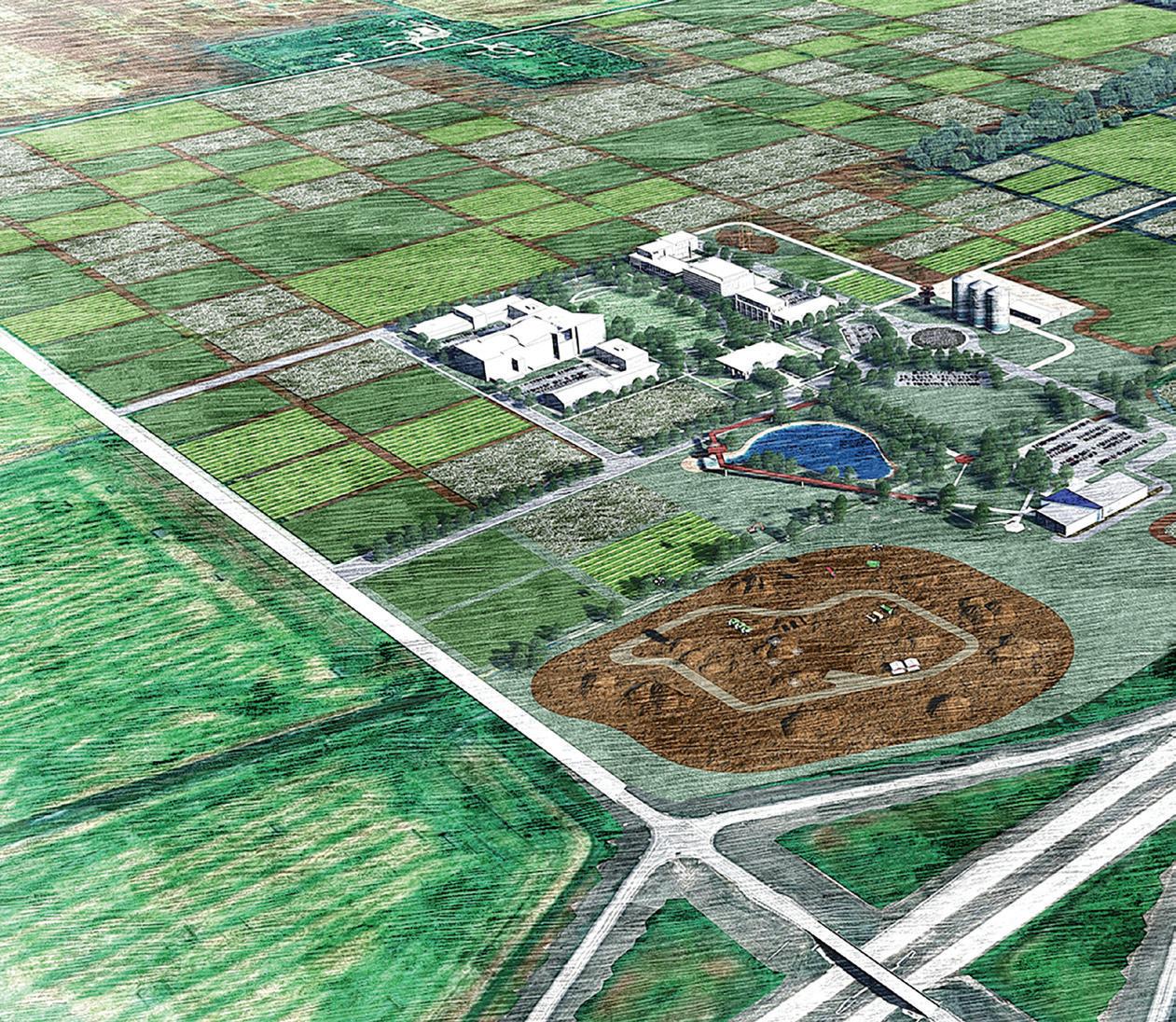
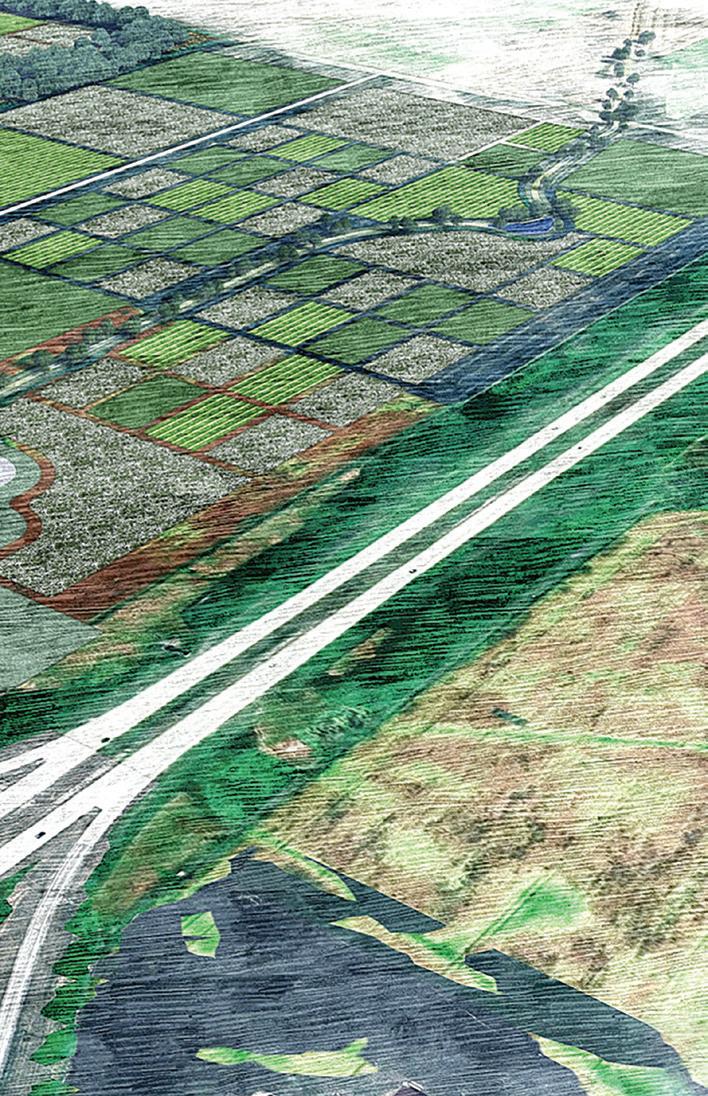
The master plan rendering
About Grand Farm
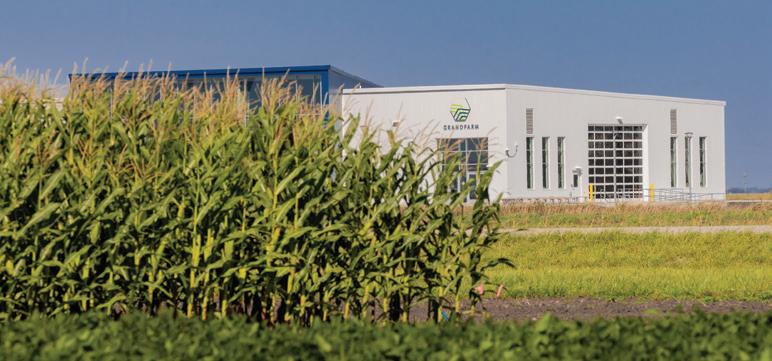
Grand Farm is a network of growers, corporations, startups, investors, government, and educators working together to solve problems in agriculture with applied technology. Grand Farm creates events, conferences, and workshops to accelerate problem-solving, and works directly with innovation teams to help them apply innovative thinking within their organizations and provide field management and innovation-as-a-service. Grand Farm also operates a 590-acre Innovation Campus near Casselton, ND, that serves as a space for collaboration, research, and demonstration in developing solutions for farming in the fourth agricultural revolution.
When Grand Farm broke ground on land just west of Casselton, the idea was simple: create a neutral proving ground where growers, startups, corporations, researchers, and government partners could work side-by-side on real challenges facing agriculture. Phase I turned that idea into a physical home: the Grand Farm Innovation Campus.
Since opening in June 2024:
• 25,000 square foot Innovation Shop opened with over 200+ groups hosted
• Nearly 80 field trials with 70+ partners
• 5,000+ visitors, including growers, international delegations, students, and partners
Phase II: An Expanded Campus and New Capabilities
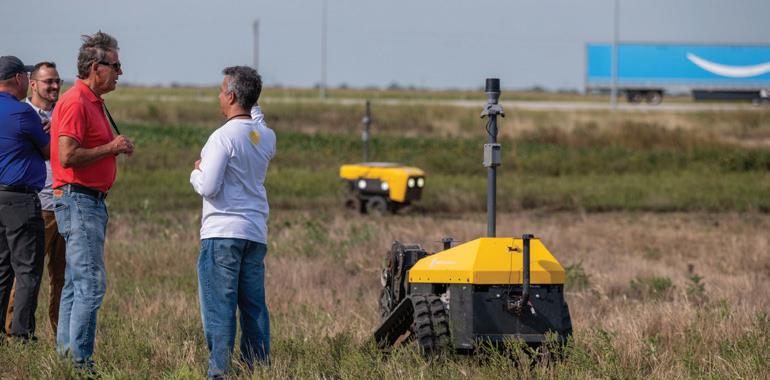
Now the Grand Farm Innovation Campus is entering Phase II of its expansion, and the scale of the vision has grown along with it. The campus footprint has already expanded from 140 acres to 590 acres, including 450 newly acquired acres that open up room for larger trials and deeper research capabilities. AGCO’s Precision Technology Institute North Dakota (PTI ND) has become the anchor tenant on 300 acres, transforming part of the site into a living laboratory for equipment testing and precision farming research.
A new master plan, shaped by input from growers, industry leaders, startups, educators, and community voices, maps out how this expanded landscape will gradually take shape. It envisions a campus designed not only for field trials, but for conversations, workshops, demonstrations, and collaborations that feel grounded in the realities of agriculture.
Looking Ahead
Get Involved
Host an Event:
Book a spot at the Innovation Campus for meetings, workshops, or community gatherings that connect people across our region.
Visit the Campus:
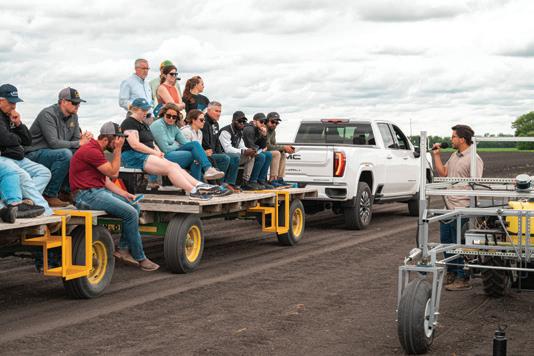
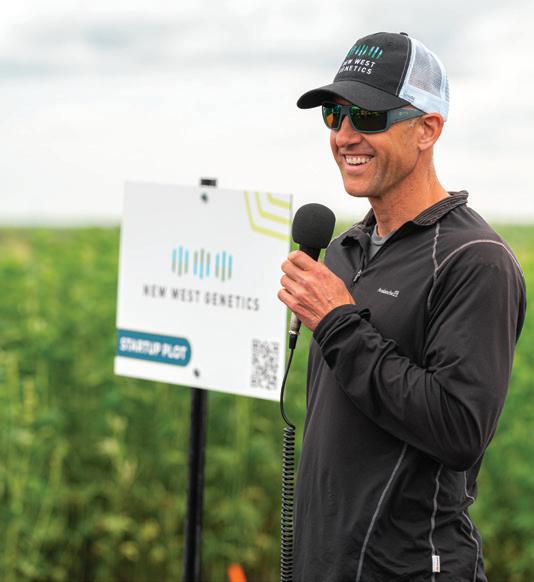
Attend a flagship conference or join a field tour next summer to see trials, startup plots, and the work Grand Farm partners are executing on Red River Valley soil.
Support Phase II
Become a partner or donor to help expand the campus and strengthen the resources available to growers, startups, industry leaders, and researchers.
Grand Farm recently earned further investment for the Innovation Campus from the State of North Dakota, providing momentum for the next phase and expanding infrastructure, testing capacity, and collaboration opportunities. This support aligns with growing federal momentum advanced through Senator Hoeven’s work to secure funding in the FY2026 Agriculture Appropriations process for the AgTech Cooperative Agreement with Grand Farm, NDSU, and USDA ARS, including support to establish an ARS worksite on the campus. Together, these state and federal investments reinforce and expand upon the original public and private commitments, positioning Grand Farm as a national leader in agricultural innovation and establishing a platform where future investments can build on one another.
Ag Tech Equipment Guide
In‑Cab Displays and GNSS Receivers
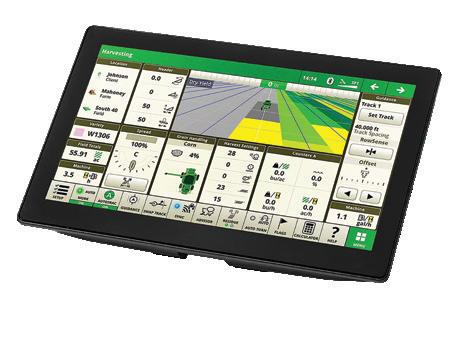
John Deere G5Plus Display + StarFire 7500 Receiver
If you’re already running within the John Deere ecosystem, this pairing offers a highly integrated path into precision agriculture. The G5Plus Display is Deere’s currentgeneration universal display platform, designed to manage guidance, machine control, and precision workflows from a single interface. Paired with the StarFire 7500 Receiver—Deere’s latest GNSS receiver supporting multiple satellite constellations and Deere correction signals—this combination connects seamlessly with Deere technologies like AutoTrac, JDLink, and Operations Center. It’s a setup commonly chosen by operations that prioritize tight OEM integration, strong dealer support, and a consistent operator experience across the fleet.
Visit deere.com
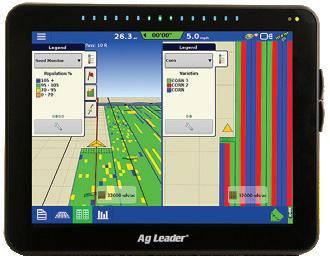
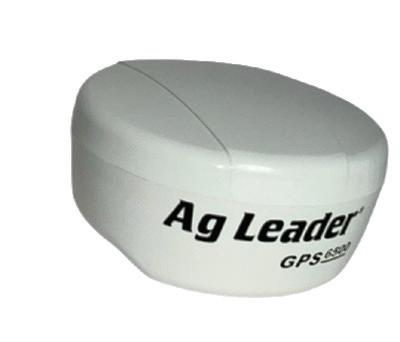
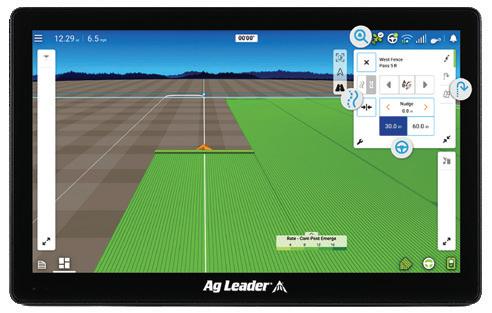
Ag Leader InCommand 1200 Display + GPS 6500 Receiver
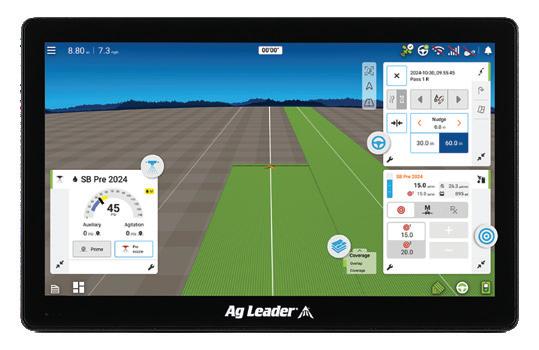
Ag Leader’s InCommand 1200 display paired with the GPS 6500 receiver provides a flexible precision platform designed to work across a wide range of equipment brands. The InCommand 1200 serves as the central interface for guidance, planting, application control, and data management, allowing operations to build a precision system that grows over time. Combined with the GPS 6500 receiver for positioning and guidance, this setup is especially appealing to farms running mixed equipment (“mixed iron”) that want a consistent display environment without committing to a single OEM ecosystem.
Visit agleader.com
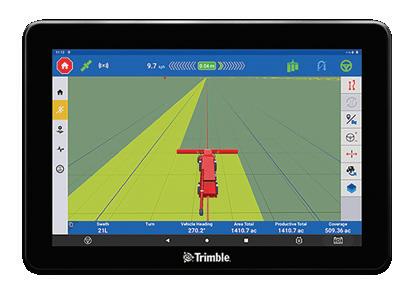
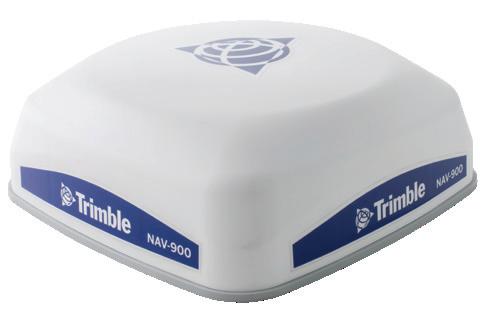
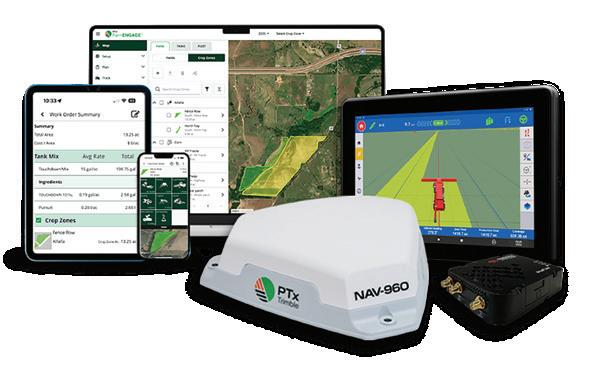
Trimble GFX-1260 Display + NAV-900 Receiver
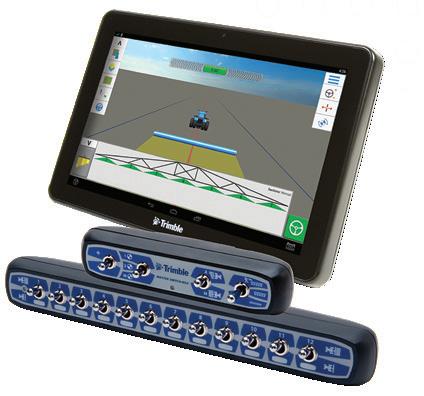
For mixed fleets or growers looking for a powerful aftermarket solution, Trimble’s GFX-1260 display paired with the NAV-900 guidance controller/receiver is a widely used option. The 12-inch GFX-1260 runs Trimble’s Precision-IQ platform, which manages guidance, steering, and field applications through a modern touchscreen interface. The NAV-900 integrates GNSS positioning with vehicle guidance control, supporting Trimble correction services and automated steering systems. This package is often selected for its flexibility across equipment brands, scalable upgrade options, and the extensive global network of Trimble resellers and support partners.
Visit trimble.com
Autosteer Systems and Steering Retrofits
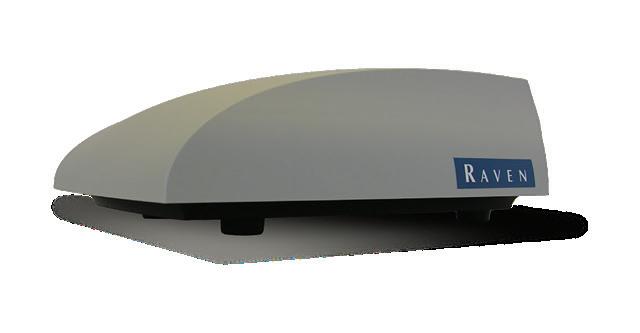
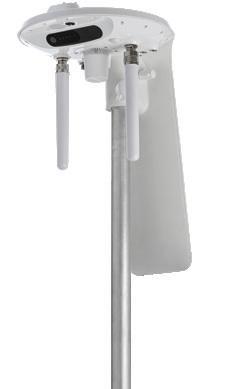
Raven RS1 Steering System
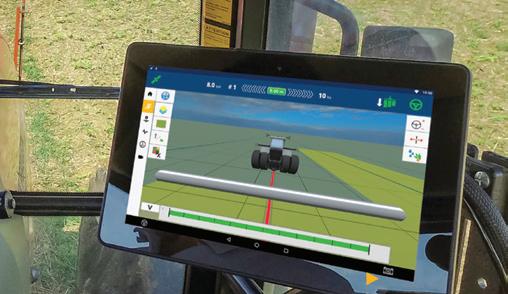
The Raven RS1 steering system is known for integrating multiple guidance and steering components—such as the GNSS receiver, modem, and steering controller—into a single roof-mounted unit. This consolidated design simplifies installation compared with systems that rely on several separate modules throughout the cab and machine. The RS1 is commonly used as a retrofit solution on a wide range of equipment and is often chosen by growers looking for a relatively streamlined install while maintaining compatibility with Raven guidance displays and precision agriculture workflows.
Visit ravenind.com
Ag Leader SteerCommand Z2
Ag Leader’s SteerCommand Z2 is an integrated steering controller designed to work directly with Ag Leader displays such as the InCommand series. The system supports hydraulic steering control and connects tightly with Ag Leader’s guidance, mapping, and machine control features through a single display interface. It is commonly selected by farms already using Ag Leader technology that want steering integrated into the same precision platform rather than managing multiple displays or software environments.
Visit agleader.com
Trimble EZ-Pilot Pro
Trimble EZ-Pilot Pro is designed for operations that want reliable assisted or automated steering on tractors that may not have been factory-equipped with integrated guidance. The system uses an electric motor integrated into the steering column to provide automated steering control while maintaining compatibility with Trimble guidance displays such as the GFX series. EZ-Pilot Pro fits within Trimble’s broader precision ecosystem, allowing farms to pair it with different receivers, correction services, and field application workflows as their guidance needs evolve.
Visit trimble.com
Implement Guidance
John Deere Active Implement Guidance
John Deere Active Implement Guidance is designed for operations where the implement must follow the intended path—not just the tractor. Using an additional receiver mounted on the implement, the system monitors the implement’s position relative to the guidance line and automatically adjusts steering to keep it on track. It is commonly used for operations such as strip-till, planting, and other row-sensitive fieldwork where implement drift can reduce the benefits of high-accuracy GNSS guidance, particularly on sidehills or in variable soil conditions.
Visit deere.com
Trimble TrueTracker
Trimble TrueTracker addresses the same challenge—keeping the implement aligned with the guidance line—within Trimble’s precision agriculture ecosystem. The system uses an implement-mounted GNSS receiver and steering components to actively guide the implement itself, helping maintain alignment with the intended path during field operations. TrueTracker is often adopted by farms already running Trimble displays and receivers that want to improve implement accuracy while keeping their guidance and precision workflows within a single platform.
Headland Management and Turn Automation
John Deere Active Implement Guidance
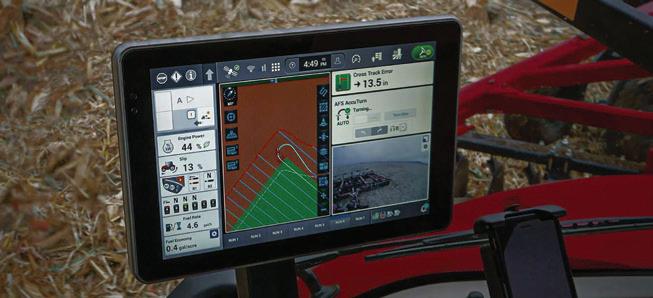
John Deere AutoTrac Turn Automation is designed to automate end-of-row turning for supported machines and operations, helping reduce operator workload and improve consistency during headland passes. Working alongside Deere’s AutoTrac guidance system, the feature can automatically initiate and execute a turn sequence at the end of a pass when conditions and equipment compatibility allow. It is commonly used in row-crop operations such as planting, spraying, and tillage where repeatable headland turns help maintain consistent coverage and reduce operator fatigue during long field days.
Visit deere.com
Case IH AccuTurn Pro
Case IH AccuTurn Pro automates headland turns for compatible Case IH tractors and implements, helping maintain consistent end-of-row maneuvers during field operations. Integrated within the Case IH guidance and automation platform, the system can manage steering and certain implement functions as the machine completes a turn and lines up for the next pass. AccuTurn Pro is typically used by operations running Case IH precision systems that want more consistent turns across operators while improving efficiency during time-sensitive activities like planting, spraying, and field application work.
Visit cahseih.com
Application Control Platforms (Rate + Section Control Core)
Ag Leader DirectCommand
Trimble Field-IQ
Trimble Field-IQ is a control platform used to manage crop input application tasks such as section control, rate control, and implement monitoring for sprayers, spreaders, and other application equipment. Integrated with Trimble displays running Precision-IQ, Field-IQ helps operators manage application rates and coverage while reducing overlap and input waste. It is commonly used by farms already operating within Trimble’s precision ecosystem that want an integrated system capable of supporting multiple implements and seasonal application workflows.
Visit trimble.com
Ag Leader DirectCommand is an application control system designed to manage liquid rate control, section control, and related application functions through Ag Leader displays such as the InCommand series. The system allows operators to control product application while integrating with Ag Leader’s broader precision platform for guidance, mapping, and data management. DirectCommand is commonly used by farms running mixed equipment brands that want a consistent display environment for application control and other precision agriculture tasks throughout the season.
Visit agleader.com
PWM and Individual
Nozzle Control
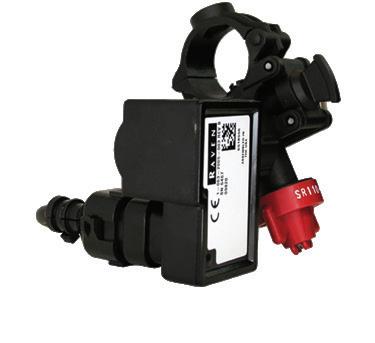
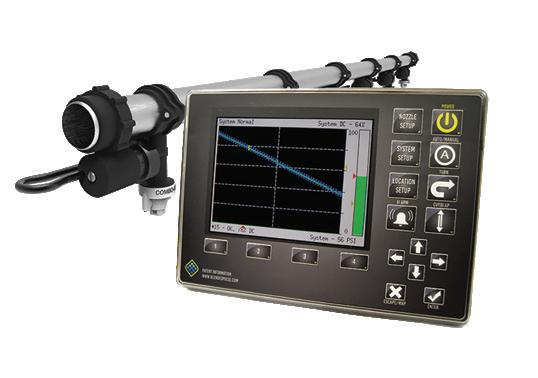
Raven Hawkeye 2
Raven Hawkeye 2 is a pulse-width modulation (PWM) spray control system designed to manage flow at the nozzle level while maintaining consistent droplet size across changing speeds. By rapidly pulsing each nozzle, the system can adjust application rate without relying solely on pressure changes, helping maintain more consistent spray performance in real-world field conditions. Hawkeye 2 is commonly adopted by applicators looking for greater control over spray rate, coverage, and overlap while operating across varying field speeds and terrain.
Visit ravenind.com
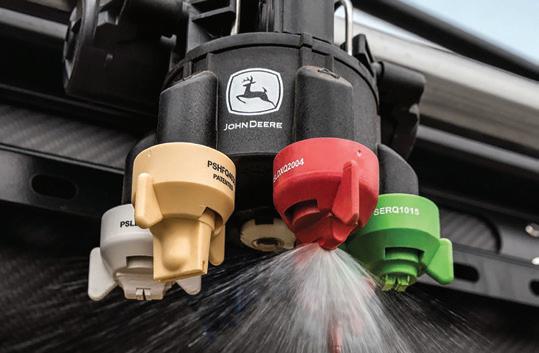
John Deere ExactApply
John Deere ExactApply is an integrated spray control system available on compatible John Deere sprayers that provides advanced nozzle-level control and application automation. The system supports features such as individual nozzle control and pulsing to help manage application rate, overlap, and droplet consistency during spraying operations. ExactApply is commonly selected by operators running Deere sprayers who want advanced spray control while maintaining full integration with the Deere precision agriculture platform and dealer support network.
Visit deere.com
CapstanAG PinPoint II
Capstan PinPoint II is a pulse-width modulation (PWM) spray control system that allows operators to adjust application rate while maintaining more consistent droplet characteristics. By controlling flow at each nozzle through rapid pulsing, the system helps maintain spray performance as ground speed changes, reducing the need for large pressure adjustments. PinPoint II is widely used on high-acre sprayers where maintaining consistent coverage and application rate across varying field conditions is a priority.
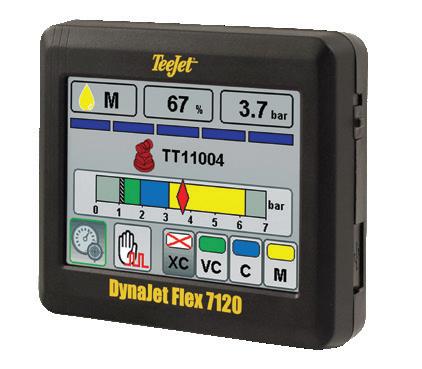
TeeJet Technologies DynaJet Flex 714A
TeeJet DynaJet Flex 714A is a pulse-width modulation (PWM) spray control system designed to improve application precision by controlling flow at the nozzle level. By pulsing each nozzle rapidly, the system can maintain more stable droplet characteristics while adjusting application rates across changing speeds. DynaJet Flex systems are often used as retrofit solutions on existing sprayers, making them a common choice for operations that want advanced spray control without replacing current equipment or committing to a single sprayer manufacturer ecosystem.
Planter Monitoring and Planting Control
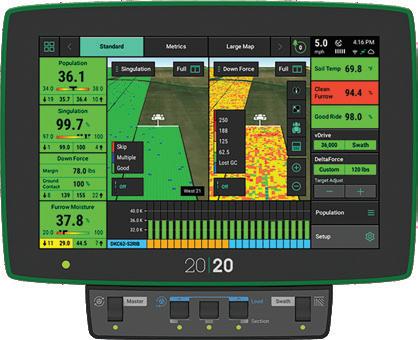
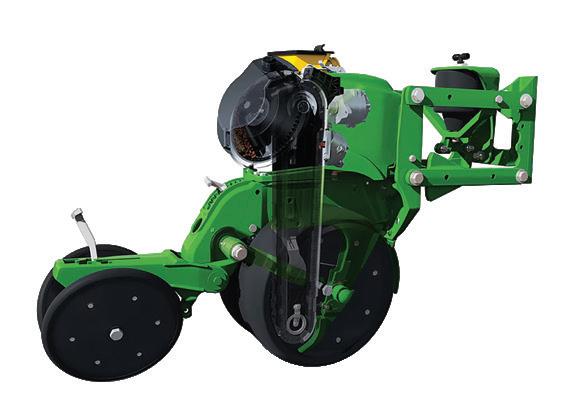
Precision Planting 20|20
Precision Planting’s 20|20 monitor is widely used for planter monitoring and performance analysis, providing row-by-row visibility into planting metrics such as spacing, singulation, and population. The system collects detailed planting data in real time, helping operators identify performance issues as they occur and make adjustments during planting rather than after emergence. It is commonly adopted by growers who want deeper insight into planter performance and more consistent planting outcomes across fields and operators.
Visit precisionplanting.com
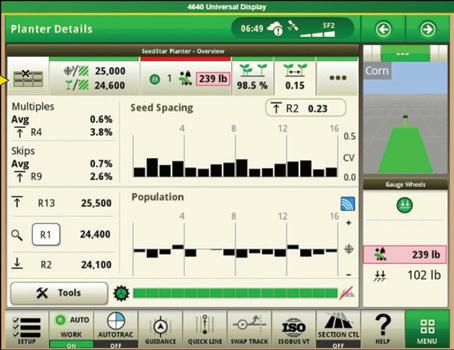
John Deere SeedStar 4HP
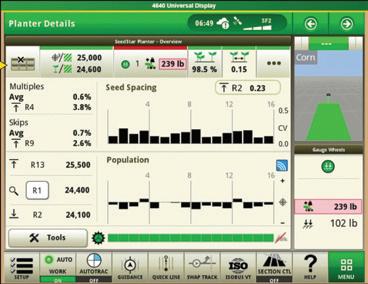
John Deere SeedStar 4HP is Deere’s planter monitoring and control system designed for compatible John Deere planters and displays. The platform provides real-time visibility into planting metrics such as population, singulation, and row performance, while integrating directly with Deere precision agriculture tools like AutoTrac and Operations Center. It is typically used by operations running Deere planters and displays that want planter setup, monitoring, and data management integrated within the same Deere precision platform.
Visit deere.com
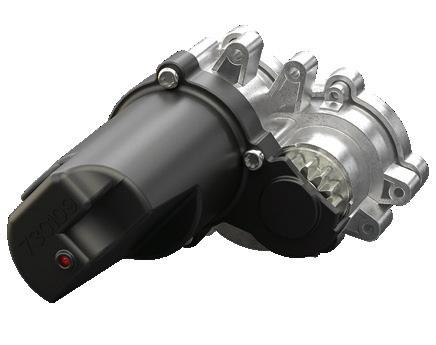
Precision Planting vDrive
Precision Planting vDrive is an electric drive system that replaces traditional mechanical drives on planters, allowing seed meters to be controlled independently on each row. By eliminating chains, sprockets, and grounddriven transmissions, the system enables precise population control and supports variable-rate prescriptions and row-by-row shutoff. vDrive is commonly adopted by growers looking to modernize planter drive systems and integrate row-level control within Precision Planting’s planter performance ecosystem.
John Deere ExactEmerge
John Deere ExactEmerge is Deere’s high-speed planting system available on compatible John Deere planters. The system uses an electric drive and brush-belt delivery system to move seeds from the meter to the trench while helping maintain consistent spacing at higher planting speeds. ExactEmerge is typically used by operations running Deere planters that want to increase planting productivity while maintaining accurate seed placement and integration with Deere’s precision agriculture platform.
Visit deere.com
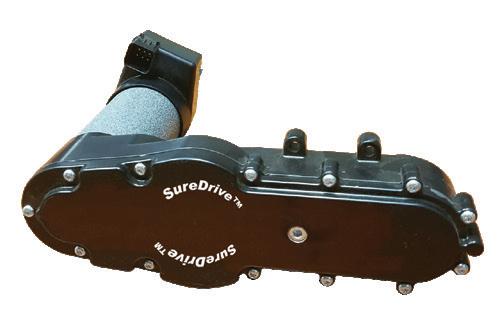
Ag Leader SureDrive
Ag Leader SureDrive is an electric drive system designed to replace mechanical planter drives and provide row-by-row population control. Integrated with Ag Leader displays and planting systems such as SeedCommand, SureDrive supports variable-rate seeding, row shutoff, and prescription-based planting. It is commonly used by operations running Ag Leader precision technology that want electric drive capability while maintaining compatibility across different planter brands and equipment setups.
Visit agleader.com
On‑Farm Weather Stations and Microclimate Monitoring
Arable Mark 3
Arable Mark 3 is a multi-sensor field station designed to collect environmental and crop-related data in a single device. The system measures variables such as rainfall, temperature, humidity, solar radiation, and crop canopy conditions, providing field-level data that can support irrigation planning, disease risk modeling, and other agronomic decisions. It is commonly used by growers, agronomists, and research teams that want localized weather and crop environment measurements rather than relying solely on data from distant public weather stations.
Visit arable.com
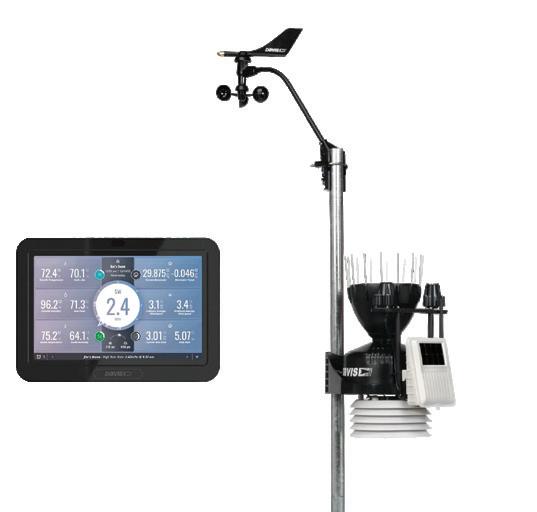
Davis Vantage Pro2
Davis Vantage Pro2 is a long-established weather station platform used in both agricultural and general weather monitoring applications. The station measures conditions such as temperature, rainfall, wind, humidity, and barometric pressure, providing on-site weather data for operational decision-making. Many farms use Vantage Pro2 systems as a practical way to monitor local weather conditions and maintain their own historical weather records for field planning and seasonal analysis.
Visit davisinstruments.com
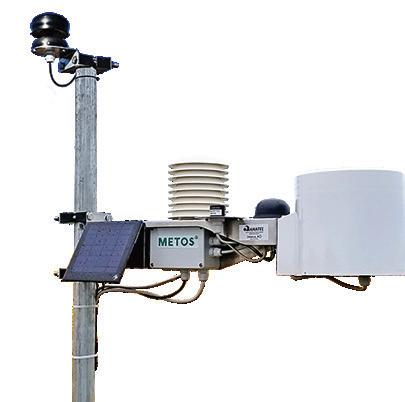
Pessl Instruments iMETOS
Pessl iMETOS weather stations are widely used in agriculture to provide localized environmental monitoring that supports crop management decisions. The stations collect weather data such as temperature, humidity, rainfall, and leaf wetness, which can be used in disease forecasting models, irrigation management, and spray planning. iMETOS systems are commonly deployed in orchards, vineyards, and field crops where site-specific weather conditions influence crop protection and input timing.
Visit metos.global/en/
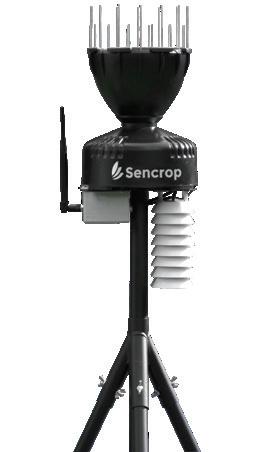
Sencrop Connected Weather Stations
Sencrop provides connected agricultural weather stations designed to collect localized environmental data and share it through a networked platform. Stations measure conditions such as rainfall, wind, temperature, and humidity, allowing growers to monitor weather patterns across multiple locations within a farming area. The system is often used by farms and agronomy groups that want distributed weather monitoring to better understand microclimate variation across fields.
Visit sencrop.com
Soil Moisture Monitoring
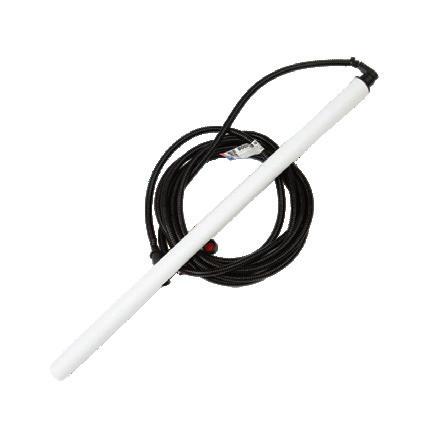
Sentek Technologies Drill & Drop
Sentek Technologies Drill & Drop soil moisture probes are designed to monitor moisture levels at multiple depths within the soil profile. Installed vertically in the ground, the probes measure volumetric water content at several points through the root zone, providing a clearer picture of how water moves through the soil over time. These systems are commonly used in irrigated agriculture and research settings where understanding soil moisture dynamics across the profile helps inform irrigation scheduling and crop water management decisions.
Visit sentektechnologies.com
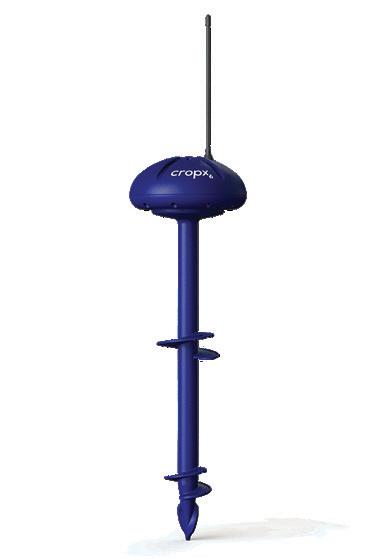
CropX Soil Sensor Platform
CropX is a soil sensing and data platform that combines infield soil moisture sensors with cloud-based analytics. The system collects data such as soil moisture, temperature, and electrical conductivity, then delivers insights through a digital platform designed to support irrigation management and field monitoring. CropX is often adopted by farms looking to monitor soil conditions across multiple fields while integrating sensor data into a centralized decision-support system.
Visit cropx.com
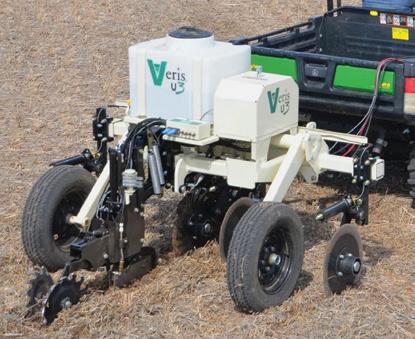
Veris Technologies MSP3 / On-the-Go Soil Mapping
Veris MSP3 is a soil mapping system designed to collect multiple soil measurements across a field while the unit is pulled through the soil. The platform measures properties such as soil electrical conductivity, organic matter, and pH to generate spatial soil variability maps. These maps are commonly used to help define management zones and guide targeted soil sampling or variablerate decisions such as lime, seeding, and nutrient applications. Veris systems are often used when the goal is to capture soil variability across an entire field rather than relying solely on traditional grid sampling.
Visit veristech.com
SoilOptix Soil Mapping
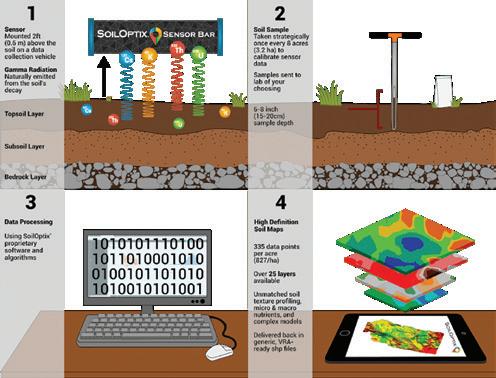
SoilOptix is a soil mapping and analysis system that combines gamma radiation sensing with soil sampling and laboratory analysis to create high-resolution maps of soil properties. The system is used to generate detailed spatial layers for soil characteristics such as organic matter, nutrients, and texture. These maps can support management decisions including variable-rate nutrient applications, soil amendment planning, and management zone development. SoilOptix is typically adopted by operations looking for detailed soil characterization to guide precision agriculture decisions across fields.
Visit soiloptix.com
Crop Canopy and Nutrient Sensing
Trimble GreenSeeker (Handheld Crop Sensor)
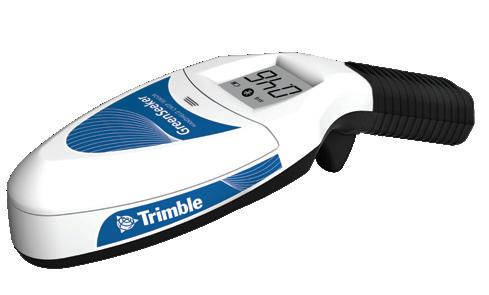
Trimble GreenSeeker is a handheld optical crop sensor used to measure crop vigor by detecting reflected light from plant canopies. The sensor generates vegetation index readings—commonly NDVI—that can help agronomists and growers assess crop health and variability within a field. These readings are often used to support nitrogen management decisions, guide in-season scouting, or help create variable-rate fertilizer application plans. GreenSeeker is widely used as a practical in-field sensing tool for collecting objective crop condition data rather than relying solely on visual assessment.
Visit trimble.com
Yara International N-Sensor
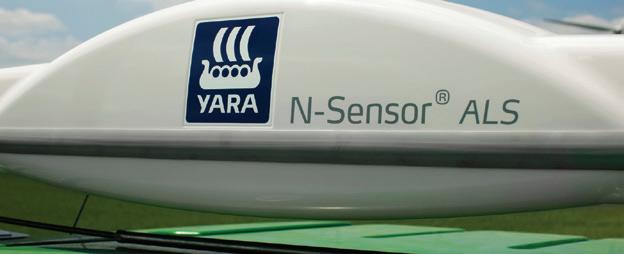
Yara N-Sensor is a canopy sensing system designed to measure crop nitrogen status in real time and adjust nitrogen application rates as equipment moves across the field. Mounted on the tractor cab, the sensor evaluates crop canopy reflectance and sends data to a controller that can modify fertilizer rates during application. The system is commonly used in cereal production and other cropping systems where in-season nitrogen management plays a major role in optimizing crop performance and input efficiency.
Topcon Positioning Systems CropSpec
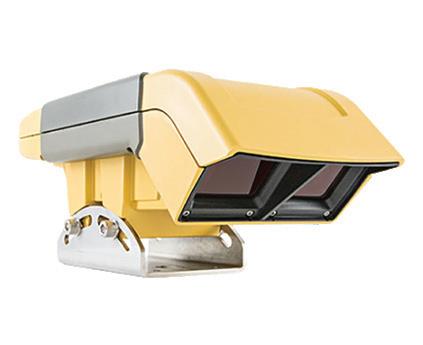
Topcon Positioning Systems CropSpec is a canopy sensing system that monitors crop variability using optical sensors mounted on the machine cab. The system measures crop reflectance to estimate plant vigor and nitrogen status, allowing operators to generate maps or support variable-rate fertilizer applications. CropSpec integrates with Topcon precision agriculture consoles, making it a common option for operations already using Topcon guidance and application control systems.
Visit topconpositioning.com
Scouting and Mapping Drones
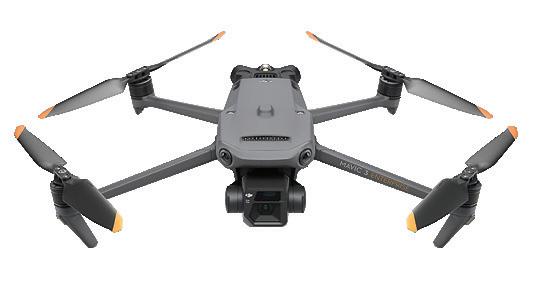
DJI Mavic 3 Enterprise (M3E)
DJI Mavic 3 Enterprise (M3E) is a compact commercial drone designed for mapping, inspection, and surveying workflows. Equipped with a mechanical-shutter camera and optional RTK positioning, the aircraft can capture imagery suitable for photogrammetry and field mapping. Its small form factor and automated mission planning make it a practical option for agronomy teams and farms conducting frequent field scouting or mapping flights. The M3E is commonly used for quick field assessments, crop monitoring, and generating aerial maps of agricultural areas.
Visit dji.com
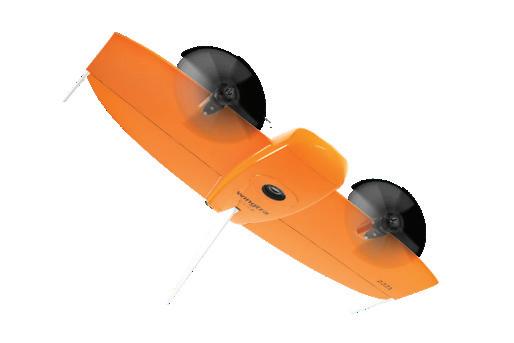
Wingtra WingtraOne GEN II
WingtraOne GEN II is a fixed-wing vertical takeoff and landing (VTOL) drone designed for high-efficiency aerial mapping over large areas. The aircraft combines long flight endurance with survey-grade positioning through PPK workflows, allowing operators to collect high-resolution imagery across extensive acreages in fewer flights than typical multirotor drones. WingtraOne systems are commonly used by mapping professionals, service providers, and large operations that require repeatable, high-accuracy aerial data for surveying and agricultural analysis.
Visit wingtra.com
Last-Acre Connectivity: The Infrastructure Behind the Next Era of Farming
By Dr. William Aderholdt, Executive Director, Grand Farm
ver the last decade, rural broadband has changed agriculture in meaningful ways.
Last-mile connectivity brought reliable internet to the farmstead. It allowed farms to move records to the cloud, adopt precision tools, manage agronomic data more efficiently, and operate in a modern digital environment. It made software practical. It made realtime markets accessible. It allowed data to move.
That investment built the foundation we are standing on today.
Now agriculture is entering a new phase. Equipment is becoming more autonomous. Decision systems are becoming more datadriven. Machines are increasingly designed to communicate with each other, with service providers, and with operators in real time.
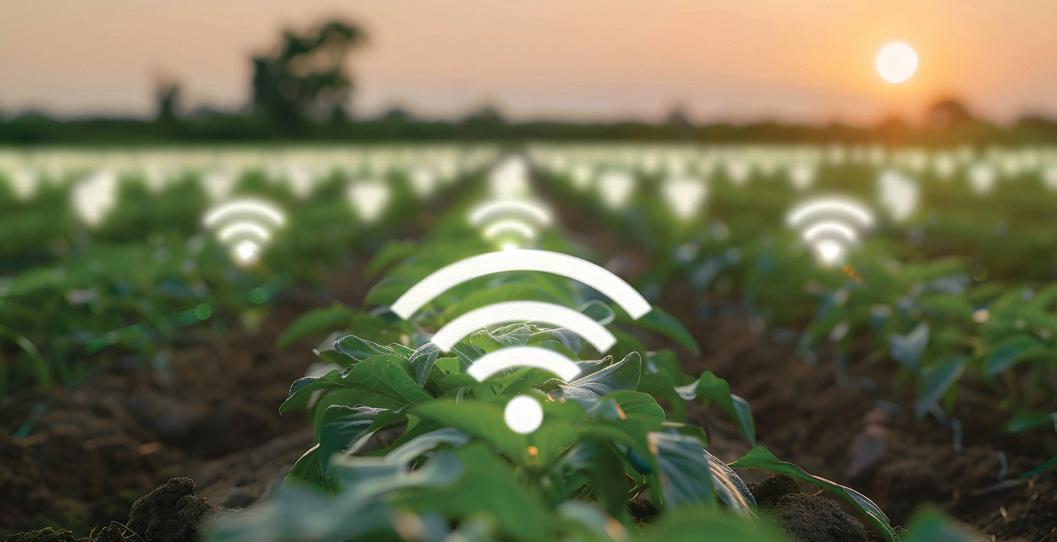
As that shift accelerates, connectivity cannot stop at the shop. It has to extend across every acre.
Last Mile vs. Last Acre
Last mile connects the farmstead to the broader network. It ensures that the home, office, and shop can access reliable broadband.
Last acre connects the land itself. That distinction may seem subtle, but it is becoming operationally significant. Modern equipment is no longer just mechanical - it is computational. It depends on steady, consistent connectivity in the field for:
• GPS correction signals
• Real-time machine telemetry
• Variable-rate execution
• Remote diagnostics and troubleshooting
• Software and firmware updates
• Machine-to-machine coordination
When signal drops in the field, the impact is not abstract. Guidance accuracy can degrade. Data may fail to sync. Service teams may not be able to log in remotely. Autonomous functions may pause or require manual intervention.
Short interruptions may seem minor, but during planting and harvest, small inefficiencies compound quickly. If autonomy is going to scale beyond demonstrations and controlled
environments, last-acre connectivity becomes a requirement rather than a convenience.
From Mechanical Systems to Connected Systems
Agriculture has always been built around reliable machinery. Fuel quality, preventative maintenance, and timing have determined performance. Now connectivity is becoming part of that same equation.
Manufacturers increasingly support equipment remotely. A technician can often log into a machine, diagnose an issue, and in some cases resolve it without ever stepping onto the farm. That changes downtime economics during critical windows.
In the near term, tele-supported operations will likely expand. During seasonal peaks, remote oversight or support may help farms manage labor constraints. Service centers may monitor fleets across regions. Software adjustments may be deployed quickly across multiple machines.
All of that depends on one thing: signal reliability where the work is actually happening. Connectivity is no
longer just about transferring files after the day is done. It is becoming part of the operating system of the farm itself.
The Reality of Movement
Farming does not happen in one square boundary. Equipment moves between fields. Custom operators cross county and state lines. Grain trucks travel township roads, county highways, and interstates. Inputs move in, and commodities move out.
As machinery becomes more automated and more integrated with data systems, connectivity must remain stable during those transitions. A system that works perfectly in one coverage area but loses reliability when crossing into another creates operational friction.
Last-acre connectivity recognizes that production happens across geography, not at a single point. It reflects how farms actually operate.
Reliability Over Raw Speed
There is often a focus on speed. Higher bandwidth, faster downloads, larger data transfers. In the field, reliability matters more. Autonomous and connected systems require:
• Stable latency
• Low signal interruption
• Minimal packet loss
• Predictable performance across terrain
A moderate-speed connection that remains consistent through changing weather, terrain shifts, crop canopy density, and distance from infrastructure is more valuable than a faster connection that drops unexpectedly. For connected equipment, reliability translates into:
• Stable guidance lines
• Continuous telemetry
• Accurate performance monitoring
About
Dr. William
Aderholdt,
Executive Director, Grand Farm
Dr. William Aderholdt is the Executive Director of Grand Farm, leading a nonprofit innovation ecosystem focused on solving agriculture’s biggest challenges. Under his leadership, Grand Farm has played key roles in major federal innovation programs and continues to expand its work through its Innovation Campus near Casselton and new teams in Georgia and Montana. William is passionate about the process of innovation and how collaboration leads to real-world solutions. William holds a PhD and a Master's in Education, along with a B.S. in Cell Biology and Neuroscience from Montana State University.
By Dr. William Aderholdt, Executive Director, Grand Farm
• Reduced operational disruptions
As systems become more integrated, signal stability becomes as important as calibration and maintenance.
Scaling Decision-Making
Agriculture is increasingly moving toward scaling decision-making across acres. Data from multiple machines feeds into shared platforms. Field-level performance informs next-pass decisions. Diagnostics are centralized. Updates are deployed fleet-wide.
When connectivity exists only at the farmstead, the decision loop slows down. Data must wait. Updates are delayed. Insights are fragmented.
When connectivity extends across the land, the decision loop tightens. Information moves in real time. Adjustments can be made quickly. Service providers can intervene before minor issues become major downtime events.
Last-acre connectivity shortens the distance between observation and action. That has practical implications for efficiency and uptime.
Preparing for What Comes Next
Autonomous tractors, robotic weeders, drone fleets, and AI-driven agronomic systems receive attention because they are visible. They represent the next generation of tools.
Connectivity is not visible. It sits beneath the equipment, quietly supporting everything. But as more capability is built into machines, more dependency is built into signal.
The question is not whether agriculture will become more connected. That trend is already underway. The question is whether connectivity across the land will keep pace with the capability of the machines operating on it.
Last-mile broadband brought agriculture into the digital economy.
Last-acre connectivity extends that digital reliability across the production landscape itself. As operations become more automated and more data-driven, connectivity shifts from being a utility to being infrastructure. In practical terms, it becomes something farms depend on daily.
The next era of farming will not be defined only by better hardware or smarter software. It will be defined by whether those systems remain reliably connected wherever they operate. When signal holds, technology performs as designed. When it does not, even the best equipment reaches its limits.
10 Questions
Questions 10
ohn Machacek, Chief Innovation Officer for the Greater Fargo Moorhead Economic Development Corporation, has worked with countless startups throughout our community over the years. He knows their ups, and their downs, but most of all, he knows the questions to ask them. Here are John Machacek’s 10 questions for Ryan Raguse, CEO and Organizing Founder, Acre Almanac.
By John Machacek
Photo provided by Acre Almanac
01
Will you please tell me your elevator pitch to describe Acre Almanac?
Acre Almanac is part farm BS meter, part generational asset. We combine the long-range history of a farm with deep analytics to create a private almanac that belongs to that farmer alone. Over time, it becomes a living record of what actually worked, what didn’t, and why. Farmers who keep good information will have a longterm competitive advantage over those who don’t. Acre Almanac is built to unlock that advantage.
02
I recall seeing an online post where you described how you’re building Acre Almanac as a serious tool for serious farmers as compared to other AgTech tools that may be more about hyped up dashboards. Will you please elaborate a bit more on that, which should help both me and the readers better comprehend what your company is doing?
There was a wave of AgTech products built around dashboards and maps that looked impressive but didn’t actually answer anything. No real analytics. No decisions.
That turned a lot of farmers off, and rightfully so. There’s also a group of farmers who have no interest in changing how they operate. Acre Almanac isn’t for them. It’s for the farmers who are constantly trying to get better. The ones asking “why” after every season. We built a serious tool for serious farmers. Not something to look at but instead, something to learn from.
03
Being that you manage your family farm, that obviously gives you a closer and different perspective, compared to a tech founder that doesn’t have that firsthand lens. I guess you’d also be in a spot to
“eat
your own dog food," to use the phrase of a company using its own product. Am I correct in those assumptions?
Absolutely. And managing my own family farm gives me a very different perspective than you get from an ag business or even an agronomist. Ask five agronomists the same question and you’ll get five different answers. And product claims are hard to trust universally because every farm is different. There are too many variables to isolate what actually made the difference.
Crop yields are the result of hundreds of variables: weather, timing, soil, drainage, inputs, equipment, disease, and more. What Acre Almanac allows me to do is run those variables through a statistical
model on my own farm. I can test changes, measure impact, and start to separate signal from noise over time. It’s not magic. It’s math, applied consistently over years of real data. And as that dataset grows, it becomes even more powerful when paired with machine learning..
With this being a newly launched offering, what are your strategies for getting the word out and in front of customers?
We’re being pretty deliberate about where we spend our time and energy. Right now, we’re not trying to do everything. Instead, we’re focusing on what actually works based upon our learned experiences.
That means leaning into earned media, tapping into our network across agriculture, and investing in content that builds credibility. We’re spending time with publications farmers already trust, having real conversations with people in the industry, and creating material that holds up. That looks like long-form content, educational videos, white papers, and thoughtful social media posts.
For what we’re building right now, credibility matters more than expansive reach. Serious farmers and agronomists don’t make decisions off a promoted post they pay attention to substance. So that’s where we’re putting our effort.
10 Questions
05
With your years at Bushel and Myriad Mobile, as well as your Virtual Farm Manager company back in your early 20’s, you have delved into ag technology. When did the plan for Acre Almanac start formulating?
The genesis honestly goes back to college. I was already thinking about regression analysis with spreadsheets for farming. I thought it would be incredibly valuable, but I wasn't sure on the how or when. I didn't even think of it as a software tool back then. If anything, I imagined it more as a consulting or advisory model and using analytics to help farms make better decisions.
Then life gets busy and you go on to different ventures.
I came back to the idea recently, driven by what's happened with software development and machine learning. The math itself has been around for a long time. But now, when you layer in today's technology and AI capabilities, it becomes something you can actually build and deliver. I couldn't have done this costeffectively five years ago but now the technology has caught up.
And now that you can build software at a fraction of the cost and time it took even a few years ago, you can afford to be extra narrow and tailored. You don't need to build at massive scale to make it work. Single-use software, built specifically for one type of farmer or one type of problem is finally attainable.
06 Were there any particular AgTech software startup learnings from cofounding Bushel; or if
that was a bit more of apples and oranges, are there some broader learnings from being a more seasoned entrepreneur?
There are a lot of lessons especially in the broader sense of what it means to build a startup. Corporate governance. Product development. Not being too married to your initial pricing and initial positioning because that will likely change.
This time I formed a Delaware C-Corp right away instead of starting as an LLC. I've also learned a lot about structuring ownership partnerships thoughtfully. One specific example: we developed a reverse vesting schedule for the team, where we need to hit milestones to retain our shares. There are real tax and accounting ramifications to that structure, and it's nuanced, but it protects everyone. There are a thousand examples like that one. Having those experiences behind me and the founding team means I can bring them all in from the start and skip a lot of pain down the road.
07
Thinking about your partners in this, from your initial Acre Almanac
launch LinkedIn post from a few months ago, I recognized the names of those you mentioned that helped you co-found this, as people who have worked for various tech startups. Such as Nick Horob, Camille Grade, James Dravitz, and Jed Bonjtes. What roles did they play?
Camille often uses a phrase I love: "You can go fast alone, but you can go far together." That's exactly what this team is. Everyone brings different strengths.
Jed is a true software developer. He was there in the early days of Myriad Devices and is a foundational part of building what Acre Almanac actually is under the hood. James is a total operations guy. He helps get things done, keeps tasks moving, and makes sure the machine runs. Camille is exceptional at marketing and is a wonderful human to work alongside. And Nick brings an ideasforward mindset with real credibility and a great following in ag. He and I are similar in that we're both like kids in a candy store with everything happening right now in tech, development, and AI.
The other thing I appreciate about this moment in time is that the access to modern dev tools means you don't need a massive capital or outside investors to build something real. Everyone on the team can balance other interests while contributing, including me still farming. We can grow into what this thing needs at a pace that makes sense.
08
In knowing you for probably 12-13 years now, I would describe you a bit of a Renaissance Man in that you have a lot of various hobbies and activities outside of being a tech entrepreneur. We’ve already discussed farming, but I recall things like dirt bikes, car racing, EDM & DJ’ing, hiking and probably a bunch more. Are some of these things intentional actions and creative pursuits to find balance from tech/work life, or maybe are you just wired this way?
Honestly, I just like doing things. There’s no profound answer there. And there’s no better way to learn the “thing” than by doing the “thing.” I also might be a little addicted to adrenaline, whether that's the fast pace of motocross, EDM, or a startup.
They're not that different from each other in some ways.
It's not an intentional strategy, but it's genuinely beneficial for me to not be in front of a screen. I'm a tinkerer by nature, so I could always be tinkering on something on the computer. Getting away from business life and burning off some energy is healthy. Over the last couple of years, I've gotten back into hockey, created a paintball team—which is something I hadn't done in a long time, and done some serious mountain hiking over the last decade, including trips to Peru, Patagonia, Kilimanjaro, and Norway. Those kinds of experiences reset you in a way that another hour of work never will.
09
If you could back in time to visit with a younger version of Ryan, what kind of hindsight advice would you give yourself as an entrepreneur?
I'd tell myself to take the full picture seriously at every stage, not just the vision of where things could go, but what's actually in front of you at any
given moment. It's natural to always be looking toward the next milestone, and that optimism is honestly part of what drives you forward. But when meaningful opportunities present themselves along the way, whether that's a partnership, an offer, or a pivotal decision, give them the weight they deserve. The path forward isn't always a straight line, and sometimes the smartest move isn't the one that felt most obvious in the moment.
10 What can we do as a community to help you and Acre Almanac succeed? Tell as many farmers as possible. Acre Almanac acrealmanac.com
About
John
John Machacek has been helping local startups with the Greater Fargo Moorhead Economic Development Corporation for over a decade. Before joining the GFMEDC ream, John's career path has varied in areas such as banking, accounting, and management in the nonprofit, food & retail sectors.